BRIDGEPOINT SUBACUTE AND REHAB CAPITOL HILL
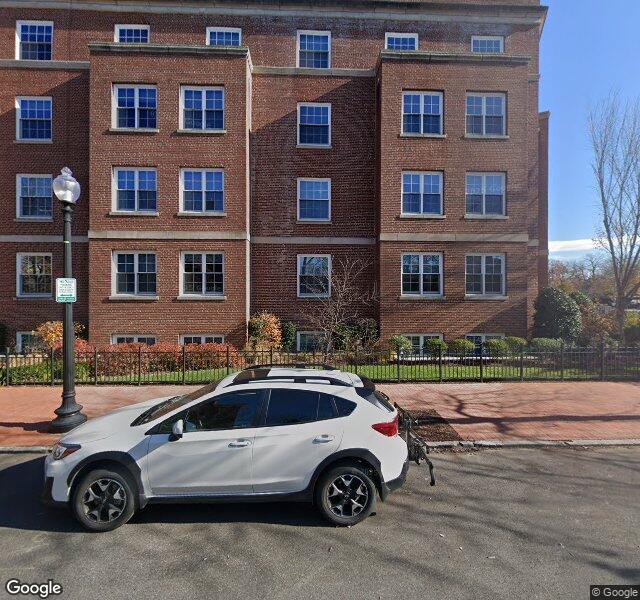
223 7TH STREET NE, WASHINGTON, DC 20002 (202) 546-5700
For profit - Corporation 117 Beds Independent Data: November 2025 3 Immediate Jeopardy citations
Trust Grade
0/100
#8 of 17 in DC
Last Inspection: January 2024

Within standard 12-15 month inspection cycle. Federal law requires annual inspections.

Overview

Bridgepoint Subacute and Rehab Capitol Hill has received a Trust Grade of F, indicating significant concerns about the quality of care provided. They are ranked #8 out of 17 facilities in Washington, D.C., placing them in the top half, but this is still troubling given the overall poor grading. The facility's performance is worsening, with issues increasing from 9 in 2024 to 31 in 2025, and they face high fines totaling $95,118, which is more than 76% of other facilities in the area. Staffing is a mixed bag; while they have good RN coverage, their staff turnover rate is concerning at 50%, significantly above the district average. Specific incidents include a failure to provide residents with a specialized call system for assistance and inadequate follow-up on injuries that could indicate abuse or neglect, which raises serious red flags for potential safety and compliance issues.

Trust Score
F
0/100
In District of Columbia
#8/17
Top 47%
Safety Record
High Risk
Review needed
Inspections
Getting Worse
9 → 31 violations
Staff Stability
⚠ Watch
50% turnover. Above average. Higher turnover means staff may not know residents' routines.
Penalties
○ Average
$95,118 in fines. Higher than 53% of District of Columbia facilities. Some compliance issues.
Skilled Nurses
✓ Good
Each resident gets 128 minutes of Registered Nurse (RN) attention daily — more than 97% of District of Columbia nursing homes. RNs are the most trained staff who catch health problems before they become serious.
Violations
⚠ Watch
98 deficiencies on record. Higher than average. Multiple issues found across inspections.
★★★☆☆
3.0
Overall Rating
★★★☆☆
3.0
Staff Levels
★★★★★
5.0
Care Quality
★★☆☆☆
2.0
Inspection Score
Stable
2024: 9 issues
2025: 31 issues

The Good

  • 5-Star Quality Measures · Strong clinical quality outcomes
  • Full Sprinkler Coverage · Fire safety systems throughout facility
  • No fines on record

Facility shows strength in quality measures, fire safety.

The Bad

3-Star Overall Rating

Near District of Columbia average (3.2)

Meets federal standards, typical of most facilities

Staff Turnover: 50%

Near District of Columbia avg (46%)

Higher turnover may affect care consistency

Federal Fines: $95,118

Well above median ($33,413)

Moderate penalties - review what triggered them

The Ugly 98 deficiencies on record

3 life-threatening 2 actual harm
May 2025 31 deficiencies 1 IJ (1 affecting multiple)
CRITICAL (K) 📢 Someone Reported This

A family member, employee, or ombudsman was alarmed enough to file a formal complaint

Immediate Jeopardy (IJ) - the most serious Medicare violation

Accident Prevention (Tag F0689)

Someone could have died · This affected multiple residents

**NOTE- TERMS IN BRACKETS HAVE BEEN EDITED TO PROTECT CONFIDENTIALITY** 2. A policy titled, Smoking Policy with a review date of 12/2024 instructed in part, To protect the health, safety, and comfort ...

Read full inspector narrative →
**NOTE- TERMS IN BRACKETS HAVE BEEN EDITED TO PROTECT CONFIDENTIALITY** 2. A policy titled, Smoking Policy with a review date of 12/2024 instructed in part, To protect the health, safety, and comfort of our residents, visitors, medical staff and employees . Bridge Point is a smoke free facility. Smoking may not occur with the facility. This policy is applicable to all employees, staff, visitors, and residents, both smokers and non-smokers. The information in this policy will be reviewed with all staff during orientation and on an annual basis .Residents receive information regarding policy during the admission process .Residents and visitor compliance with the policy is a shared responsibility of all Bridge Point employees and staff .The nursing facility acts to minimize the smoke (sp) to the greatest extent possible. The nursing facility will provide smoking jackets for resident use for safety . 2a. Resident #80 was admitted on [DATE] with multiple diagnoses including Chronic Respiratory Failure, Muscle Weakness, and Difficulty Walking. A quarterly Minimum Data Set assessment dated [DATE] documented in part, Brief Interview for Mental Status summary score of 15 indicating that the resident had an intact cognitive status. The resident was coded for having impaired bilateral lower extremities and requiring partial to maximum assistance from staff with activities of daily living. A review of a list of residents in the facility who smoke on 04/15/25 at approximately 3:45 PM, revealed Resident #10 and Resident #92 were identified by staff as smokers. At the time of review, Employee #1 (Administrator) and Employee #2 (DON) stated that they were a Non-Smoking Facility. Staff do not provide residents with assistance with smoking. The facility does not have a designated area for smoking. And all residents who smoke go outside and up the street away from the building when they smoke. On 04/15/25 starting at approximately 3PM, the State Survey Team conducted a tour of the facility that included observations, resident interviews, and staff interviews. The tour revealed that the facility had two additional residents who smoke (Residents #46 and #80). An observation on 04/15/25 at 3:45 PM revealed a designed smoking area sign posted on the wall to the left of the facility's main entrance door. At the time of the observation, Employee #1 (Administrator) stated the sign was an old sign, and that the area was not a designated smoking area. During an observation on 04/15/25 at approximately 4:45 PM, Resident #80 was lying in bed, alert and orientated to name, time, place, and situation. At the time of the observation, the resident stated that he started smoking again a few weeks ago. He said that he smokes daily outside of the building near the wheelchair ramp that's close to the entry door. Additionally, the resident said, I would never smoke in the building. It is a hospital, and everyone knows you don't smoke in a hospital. When asked if he had access to cigarettes and matches, the resident showed the surveyors an opened pack of cigarettes and a green butane lighter. Also, the resident said he was not provided with information about the facility's smoking policy. A review of Resident #80's medical record on 04/15/25 at approximately lacked documented evidence of a care plan addressing the resident smoking. During a face-to-face interview on 04/15/25 at approximately 5:30 PM, Employee #10 (RN/Nursing Supervisor) stated that Resident #80 was identified by staff as a smoker. The facility's protocol is that all residents who smoke have a care plan in place to address the resident smoking. The employee then said she reviewed Resident #80's medical record and did not see a smoking care plan. Additionally, the employee said that a smoking assessment would not be done unless the resident triggers for new behavior of smoking. During a face-to-face interview on 04/17/25 at approximately 9 AM, Employee #11 (assigned CNA) stated that she was not aware that Resident #80 was a smoker. Additionally, the employee said she did not know if residents were allowed to keep cigarettes and lighters in their person or in their rooms. And that she was not aware of the facility's smoking policy. During a face-to-face interview on 04/17/25 at approximately 9:15 AM, Employee #12 (assigned LPN) stated that Resident #80 is a smoker. The resident lets staff know when he is going out to smoke. Staff do not assist him with smoking. And she was not aware of the facility's policy with residents keeping their cigarettes, matches, or lighter on their person or in their room. She believed that Resident #80 is allowed to keep his cigarettes and lighter with him. 2b. Resident #46 was admitted on [DATE] with multiple diagnoses to include Chronic Obstructive Pulmonary Disease, History of Falls, Generalized Muscle Weakness, Schizophrenia, Bipolar and Anxiety. A Smoke-Safety Screen dated 12/04/23 documented in part, Resident had cognitive loss, visual deficits and dexterity problems. The resident smokes 2-2.5 cigarettes daily .has received cigarettes from other residents, possible new behavior .safe to smoke with supervision .unsafe for resident to smoke related to impaired decision making and limited mobility . Please note review of the resident medical record to include assessments and progress notes from 01/01/25 to 04/14/25 lacked documented evidence that the facility's staff monitored the resident for receiving cigarettes from other residents. A review of an annual Minimum Data Set (MDS) assessment dated [DATE] documented a Brief Interview for Mental Status summary score of 12 indicating that the resident had a moderately intact cognitive status. Additionally, the resident was not coded for using tobacco products. A care plan with a revision date of 01/16/25 documented in part, Focus- [Resident #46] has a history of smoking related to lifestyle .Interventions - [Resident #46] was educated about the facility policy on smoking. The facility non-smoking facility and she verbalized understanding. Notify charge nurse immediately if it suspected that resident has violated facility smoking policy. Smoking cessation was offered. A quarterly MDS assessment dated [DATE] documented in part that the resident had a Brief Interview for Mental Status summary score of 11 indicating the resident had a moderately impaired cognitive status. Also, the resident was coded for requiring supervision to maximum assistance from staff with activities of daily living and independently using a manual wheelchair for mobility. During a face-to-face interview on 04/15/25 at approximately 4:50 PM, Resident #46 stated that she smokes outside the building near the wheelchair ramp. She also keeps her cigarettes or black and mild (cigar) on her person. She will ask residents who are outside smoking with her for a lighter or match. The resident stated that, I'm grown. I don't need no one to supervise me while I'm smoking. The resident also stated that when she goes outside, she does not announce that she is going out to smoke. During a face-to-face interview on 04/15/25 at approximately 5:30 PM, Employee #10 (RN/Nursing Supervisor) stated that Resident #46 was identified by staff as a smoker. Additionally, the employee stated that she had reviewed the resident record it did not see that the resident was being monitored for the behavior of asking other residents for cigarettes, as indicated on the smoking evaluation dated 12/04/23. During a face-to-face interview on 04/17/25 at approximately 9:30 AM, Employee #11 (assigned CNA) stated that Resident #46 was a smoker. She informs the nurses when the resident wants to smoke. She pushes the resident in her wheelchair outside (in front of the building) to smoke. Additionally, the employee said that she does not assist the resident with lighting light her cigarettes. And she does not know where the resident keeps her cigarettes, lighters or matches. Additionally, the employee said that she was not aware of the facility's smoking policy. During a face-to-face interview on 04/17/25 at approximately 9:40 AM, Employee #12 (assigned LPN) stated that Resident #46 is a smoker. The CNA accompanies her while she smokes. Also, the CNA is responsible for lighting the resident's #46's cigarette because the resident was not safe to do that task. 2c. Resident #92 was admitted on [DATE] with multiple diagnoses including Paraplegia, Muscle Weakness, Depression, Bipolar, and Anxiety. A review of the resident's medical record lacked documented evidence of a smoking care plan. A quarterly Minimum Data Set assessment dated [DATE] documented that the resident had a Brief Interview for Mental Status summary score of 15 indicating the resident had an intact cognitive status. The resident was also coded for impairment of upper extremities (both sides), impairment of lower extremities (both sides), requiring partial to maximum staff assistance with activities of daily living, and independently using a motorize wheelchair for mobility. During a face-to-face interview on 04/15/25 at approximately 5:30 PM, Employee #10 (RN/Nursing Supervisor) stated that Resident #80 was identified by staff as a smoker. The facility's protocol is that all residents who smoke should have a smoking care plan in their medical record. The employee then said she reviewed Resident #92's medical record and did not see a smoking care plan. Additionally, the employee said that the resident would not have a smoking assessment unless they trigger for a new behavior of smoking. During a face-to-face interview on 04/17/25 at approximately 10 AM, Resident #92 stated that he was a smoker and goes outside and to the street to the corner to smoke. The resident was asked if he had any smoking paraphernalia such as cigarettes and a lighter on his person and the resident stated, No, I don't have nothing [anything] on me, and my lighter is broke. When asked how he would light his cigarettes if he didn't have a lighter, the resident stated, I would just get a light from somebody else that's outside smoking. During a face-to-face interview on 04/17/25 at 10:20 AM, Employee #33 (CNA) stated that she was not aware of any residents that smoke. The employee also said that she was not aware where residents store their smoking paraphernalia. 2d. Resident #10 was admitted on [DATE] with multiple diagnoses including Nicotine Dependence, Paraplegia, Epilepsy, Lack of Coordination, Muscle Weakness, and Bipolar. A review of a care dated 01/04/24 documented in part, Focus - [Resident #10] is a cigarette smoker and does not wish to stop during the hospital stay .Interventions: Explore smoking apron, Educated about the facility policy on smoking. The Facility Non-smoking Facility and he verbalized understanding, Offer a nicotine patch. Offer smoking cessation classes. Resident able to smoke unsupervised per the smoking assessment. Resident smokes off [the] Facility premises. An annual Minimum Data Set (MDS) assessment dated [DATE] documented that the Brief Interview for Mental Status (BIMS) summary score of 15 Brief Interview for Mental Status (BIMS) summary score of 15 indicating that the resident had an intact cognitive status. Additionally, the resident was coded for having an impairment of the upper extremity (one-side), impairment of lower extremities (both sides), requiring set-up to partial staff assistance from staff with activities of daily living, independent with using his motorized wheelchair, and using tobacco products . A quarterly Smoking Safety Screen assessment dated [DATE] documented that the resident had a score of 1.0 indicating that the resident was safe to smoke without supervision. The assessment also documented in part, Smokes 5- 10 cigarettes per day, Can light his own cigarettes, Does not need the facility to store lighters and cigarettes, Adaptative equipment needed - cigarette holder, Safe to smoke independently . A quarterly Smoking Safety Screen assessment dated [DATE] documented that the resident had a score of 1.0 indicating that the resident was safe to smoke without supervision. The assessment also documented in part, Smokes 5- 10 cigarettes per day, Can light his own cigarettes, Does not need the facility to store lighters and cigarettes, Adaptative equipment needed - smoking apron and cigarette holder, Safe to smoke without supervision. A quarterly MDS assessment dated [DATE] documented that the resident had a Brief Interview for Mental Status (BIMS) summary score of 15 indicating that the resident had an intact cognitive status. Additionally, the resident was coded for having an impairment of the upper extremity (one-side), bilateral impairment of lower extremities, requiring set-up to partial staff assistance with activities of daily living, and independent with using motorized wheelchair. During a face-to-face interview on 04/17/25 at 9:50 AM, Resident #10 stated, I go smoke my cigarettes around the corner. I never got no smoking apron or cigarette holder. I would like to have a smoking apron. When asked where he stores his smoking paraphernalia (cigarettes and lighter), the resident stated, I get it from someone I know outside. When asked about the facility's smoking policy or smoking contract, Resident #10 stated, I don't know nothing about a policy or contract, they just tell us don't smoke. During a face-to-face interview on 04/17/25 at 11:33AM, Employee #31 (assigned LPN) stated that she did not know Resident #10 was a smoker. I have never seen cigarettes on him. I know the resident goes downstairs but I don't know what he does there. When asked about the facility's smoking policy the employee stated, I don't know the specifics. I know that the residents are not allowed to smoke. During a face-to-face interview on 04/17/25 at 11:35 AM, Employee #32 (assigned CNA) stated, I am not aware if [Resident #10] is a smoker. I have never found or seen any smoking materials in his possession. When asked about the facility's smoking policy, the employee stated that she was not aware of one. During a face-to-face interview on 04/17/25 at approximately 12:00 PM, Employee #2 (DON) acknowledged that Resident #10 is a known cigarette smoker and that facility staff failed to ensure that he was smoking safely as evidenced by not providing the resident with the required adaptative equipment needed (smoking apron and cigarette holder). These findings resulted in an Immediate Jeopardy being called on 04/17/25 at 3:36 PM. On 04/17/25 at 8:28 PM, the facility's Administrator provided the State Agency Survey Team with an acceptable Plan of Removal that addressed the immediate concerns with residents' smoking. The plan included the following interventions: Resident-Specific Interventions - Resident #10: Will be reassessed using smoking safety assessment; smoking apron and /or any identified smoking aid will be offered; care plan will be updated to reflect supervision needs and proper storage of paraphernalia. The residents will be educated on the revised smoking policy. This will be started on 4/18/25 - Resident #46: Will be reassessed using smoking safety assessment; smoking apron and /or any identified smoking aid will be offered; care plan will be updated to reflect supervision needs and proper storage of paraphernalia. The residents will be educated on the revised smoking policy. This will be started on 4/18/25 - Resident #80: Will be reassessed using smoking safety assessment; smoking apron and /or any identified smoking aid will be offered; care plan will be updated to reflect supervision needs and proper storage of paraphernalia. The residents will be educated on the revised smoking policy. This will be started on 4/18/25 - Resident #92: Will be reassessed using smoking safety assessment; smoking apron and /or any identified smoking aid will be offered; care plan will be updated to reflect supervision needs and proper storage of paraphernalia. The residents will be educated on the revised smoking policy. This will be started on 4/18/25 - Resident #48: Will be reassessed using smoking safety assessment; smoking apron and /or any identified smoking aid will be offered; care plan will be updated to reflect supervision needs and proper storage of paraphernalia. The residents will be educated on the revised smoking policy. This will be started on 4/18/25 Facility-Wide Interventions - We will conduct a facility-wide audit of all residents to identify active smokers starting 4/18/25. Smoking Policy will be revised as of 4/18/25. - We will complete the Smoking Safety Assessment on all identified smokers starting 4/18/25. We will update and individualize the care plans for each smoker to reflect supervision needs, location, and supplies needed to assure safe smoking based on their assessment findings starting 4/18/25. If smoking paraphernalia is found, we will immediately attempt to confiscate all smoking paraphernalia. If unable to confiscate the smoking materials, social services, recreation services, ombudsman and/or the police will be involved. All items confiscated will be labeled and logged. - We will reinforce the prohibition of smoking materials in resident rooms or on persons with residents and staff. This will be started 4/18/25. - Residents identified as smokers will be educated starting 4/18/25 on the updated smoking policy, smoking process and a smoking contract. Staff Education and Competency Validation - 70 percent of current staff (clinical, non-clinical, and agency staff) will receive in-service training on the smoking policy, safe smoking practices, resident supervision, and emergency response protocols starting 4/18/25. The goal will be 100% of staff to receive training. - Training will include the revised smoking policy and procedure. Nursing staff or designee will be assigned to monitor known smokers in the designated smoking area - Smoking binders will be placed on all floors and the security desk to help identify residents who smoke. Implementation of Systems and Monitoring Processes - We will develop a daily room audit tool that includes permission to inspect for smoking paraphernalia (lighter, cigarettes, etc.). This will be completed by nurse aide or designee. - We will establish and enforce a smoking materials storage protocol; only designated staff will have access. - We will create a resident smoking log and supervision documentation tool that includes time in/out, safe smoking supplies offered/accepted or declined. - We will assign a designated Smoking Safety Supervisor per shift. - We will complete monthly audits added to the QAPI Committee agenda for compliance tracking. Designated Smoking Area Protocols - We will enforce the use of a designated smoking area (outside to the left of the main entrance on the ground level)- Smoking area will include a fire extinguisher (in close proximity), fire blanket, will post no-smoking signage, and will have locked cart for smoking materials at the security desk). - All residents who smoke will have to sign in/out and will be supervised by a nursing assistant or other clinical staff. - Smoking aprons will be offered and documented on the smoking log. Return of smoking materials will also be documented on the log. - Residents will only be able to access smoking materials during scheduled supervised times. (10am,1 pm, 4pm, 7pm and 10pm). Completion date for Immediate Jeopardy Compliance - 4/21/25 After the plan was verified, the IJ was removed on April 24, 2025, at 1:50 PM while the survey team was onsite. Based on observations, record reviews and staff interviews, for six (6) of 49 sampled residents, facility staff failed to ensure that resident environments were free of accident hazards as evidenced by: (1) Four portable space heaters observed in Residents' #10, #48, #87, and 92 rooms; and (2) Inadequate supervision and unsafe smoking practices for Residents' #10, #46, #80, and #92 who were identified by staff as smokers. An Immediate Jeopardy, related to space heaters in resident rooms, was identified on 04/13/25 at 1:34 PM. The facility provided a plan of action to address the immediacy on 04/13/25 at 5:04 PM that was accepted. After the plan was verified, the IJ related to space heaters was removed on 04/22/25 at 9:34 AM, while the survey team was onsite. After the removal of immediacy, the deficient practice remained at a scope and severity of E. An Immediate Jeopardy, related to inadequate supervision and unsafe smoking practices were identified on 04/17/25 at 3:36 PM, The facility provided an acceptable Plan of Removal to address the immediate concerns on 04/17/25 at 8:28 PM. While on site the State Survey Team, verified that the facility's Plan of Removal interventions for inadequate supervision and unsafe smoking practices were implemented. The IJ was then removed on 04/24/25 at 1:50 PM. After removal of the immediate concerns, the deficient practice remained at a scope and severity of D. The findings included: 1. Review of the facility's Electrical Appliances policy dated 05/24/24 documented: Portable space heaters are not allowed in resident areas. 1a. Resident #87 was admitted to the facility on [DATE] with multiple diagnoses that included: Chronic Respiratory Failure with Hypoxia and Hypercapnia, Asthma, and Muscle Weakness. Review of the resident's medical record revealed a Quarterly Minimum Data Set (MDS) assessment dated [DATE] which showed that facility staff coded: a Brief Interview for Mental Status (BIMS) summary score of 11, indicating mild cognitive impairment. There was no functional impairment in range of motion and in upper extremities that was noted. During a unit tour of the 5th floor on 04/13/25 at 6:50 AM, a portable space heater was observed in use and blowing hot air on Resident #87. The space heater was noted to be approximately less than one foot away from the resident's bed, on top of a gray, plastic wash basin, that was sitting on top of the bedside drawer. During a face-to-face interview at the time of the observation, Employee #5 (assigned Licensed Practical Nurse/LPN) was asked why there was a space heater in the resident's room. The employee responded, [Resident #87] was transferred to this room with the space heater about three (3) days ago. She gets cold. I think her family bought it for her. When asked if she was aware that space heaters were not permitted in resident care areas, the employee did not respond. During subsequent observations of all resident rooms, on all floors, portable space heaters were noted plugged in for use on the fourth and fifth floors respectively for the following residents: #92, #10, and #48. 1b. Resident #10 was admitted to the facility on [DATE] with multiple diagnoses that included: Muscle Weakness, Paraplegia, and Nicotine Dependence. Review of the resident's medical record revealed the following a Quarterly Minimum Data Set (MDS) assessment dated [DATE] that showed facility staff coded: a Brief Interview for Mental Status (BIMS) summary score of 15, indicating intact cognition and had functional limitation impairment in range of motion on one side for upper extremities. 1c. Resident #92 was admitted to the facility on [DATE] with multiple diagnoses that included: Paraplegia, Polyneuropathy, Generalized Muscle Weakness, and Need for Assistance with Personal Care. Review of the resident's medical record revealed the following a Quarterly Minimum Data Set (MDS) assessment dated [DATE] that showed facility staff coded: a BIMS summary score of 15, and functional limitation impairment in range of motion on both upper extremities. 1d. Resident #48 was admitted to the facility on [DATE] with diagnoses that included Quadriplegic C5-C7 and Vascular Myelopathy. Review of Resident #48's medical record revealed the following a Quarterly Minimum Data Set (MDS) assessment dated [DATE] that showed facility staff coded a BIMS summary score of, 15, and impairments in functional limitations in range of motion impairment on both sides for upper and lower extremities. It should be noted that Residents' #87, #48, #84, #10 were non-ambulatory. A face-to-face interview was conducted on 04/13/25 at 10:22 AM with Employees #3 (Registered Nurse/RN Supervisor) and Employee #4 (Plant Operations Supervisor). Employee #3 stated that she was not aware that space heaters were not allowed in resident rooms. Employee #4 acknowledged the findings and stated that space heaters are not allowed in resident rooms. These findings resulted in determination of Immediate Jeopardy on 04/13/25 at 1:34 PM. The facility's Administrator provided a plan of action to address the immediacy on 04/13/25 at 5:04 PM that was accepted and included: 1. Immediate Removal of Hazard Facility staff will be sent to each unit simultaneously to the rooms identified by surveyors to remove the portable space heaters within 15 minutes of notification of the Immediate Jeopardy. All other resident rooms will be checked and any portable space heaters found will be removed immediately on 04/13/25. 2. Environmental Sweep A facility-wide sweep will be conducted by the Maintenance Director and Administrator within 1 hour to identify any other unauthorized electrical appliances or hazards. Documentation of the sweep, including date, time, and rooms assessed, will be completed and placed in the IJ response binder on 04/13/25. Any additional hazards found will be removed immediately, and residents will be educated as needed. 3. Policy Enforcement The facility's Electrical Appliances policy will be reviewed and updated to explicitly prohibit portable space heaters in all patient care areas on 04/13/2025. 4. Resident and Family Education All residents and their responsible parties will be provided with written and/or verbal education on prohibited appliances, including portable space heaters, starting on 4/13/2025. A robo call will be sent to every family member/POA on 04/13/25 regarding the prohibition of portable space heaters. 5. Staff Education All staff present here today on 04/13/25 including housekeeping, maintenance, dietary, nursing, and respiratory therapy will be educated on identifying and reporting unsafe resident practices and prohibited electrical appliances as of 4/13/2025. All other staff will be educated upon arrival before the start of their next shift on prohibited electrical appliances to include portable space heaters starting on 04/13/2025. We will complete at least 80% compliance by Wednesday, April 16, 2025, with a goal of 100%. 6. Date of Compliance April 16, 2025 The Survey Team verified that the plan of action to address the immediacy was in place. The Immediate Jeopardy related to space heaters in resident rooms was lifted on 04/22/25 at 9:34 AM while the survey team was onsite.
SERIOUS (G) 📢 Someone Reported This

A family member, employee, or ombudsman was alarmed enough to file a formal complaint

Actual Harm - a resident was hurt due to facility failures

Pressure Ulcer Prevention (Tag F0686)

A resident was harmed · This affected 1 resident

**NOTE- TERMS IN BRACKETS HAVE BEEN EDITED TO PROTECT CONFIDENTIALITY** Based on observation, record reviews and staff interviews for one (1) of 39 sampled residents, facility staff failed to consiste...

Read full inspector narrative →
**NOTE- TERMS IN BRACKETS HAVE BEEN EDITED TO PROTECT CONFIDENTIALITY** Based on observation, record reviews and staff interviews for one (1) of 39 sampled residents, facility staff failed to consistently assess and document changes in the skin of Resident #47 who developed an in-house, acquired pressure injury/ulcer that was first identified at an advanced stage (Stage 3). (Resident #47) These failures resulted in actual harm to Resident #47. The findings include: A policy titled, Prevention of Pressure Ulcers/Injuries with a revision date of 05/24/24 instructed staff to, Inspect the skin on a daily basis when performing or assisting with personal care or ADLs (activities of daily living); Identify any signs of developing pressure injuries (i.e., non-blanchable erythema). For darkly pigmented skin, inspect for changes in skin tone, temperature, and consistency; Inspect pressure points (sacrum, heels, buttocks, coccyx, elbows, ischium, trochanter, etc.) .Moisturize dry skin daily; and Reposition resident as indicated on the care plan . 1. Resident #47 was admitted to the facility on [DATE] with multiple diagnoses including Quadriplegia, Encephalopathy, Chronic Respiratory Failure (Hypoxia) and Muscle Weakness. A quarterly Minimum Data Set assessment dated [DATE] documented that the Brief Interview for Mental Status summary score was blank indicating that the resident did not respond to the test questions. The resident was coded for bilateral impairment of upper and lower extremities and being totally dependent on staff for all activities of daily living, being at risk for developing pressure ulcers, being on a turning and repositioning program, and using a pressure reducing bed. Also, the resident's height was documented as 74 inches [6.1 feet] and weight was 176 pounds. A physician order dated 11/06/24 instructed, Aquaphor External Ointment (Emollient) apply to bilateral lower extremities topically two times a day for wound care. Off-load bilateral heel with off-loading device every shift for pressure redistribution .Turn and reposition every two hours using wedges or pillows for pressure redistribution every shift. A care plan with a review date of 11/07/24 documented in part, Focus- [Resident #47] is activity of daily living dependent secondary to Quadriplegia with incontinence of bladder and bowel with inability to communicate needs .Interventions - assess, record, report and treat for any abnormality to skin during incontinent care, dependent on 2 staff to provide bath/shower and turning and repositioning every 2 hours and as necessary .totally dependent on 1 staff for personal hygiene . A physician order dated 11/08/24 instructed, Perform skin assessments on shower days twice a week and notify MD of any new changes every Tuesday and Friday. A quarterly Braden Scale for Predicting Pressure Score Risk dated 11/21/24 documented that the resident had a score of 15 indicating that the resident was at risk for developing pressure ulcers. Progress notes dated 11/22/24 to 01/07/25, lacked documented evidence of an alteration in the skin integrity of Resident #47's left foot. Treatment Administration Records dated 11/22/24 to 01/07/25, licensed nursing staff documented that the following tasks were performed for the resident: Skin assessments (head-to-toe) conducted by licensed staff twice a week on shower days; Aquaphor ointment was applied to bilateral lower extremities twice a day; Turned and repositioned daily, every two hours; Bilateral heels were off loaded (elevated) with off-loading devices (wedges/pillows) daily, every shift. However, the facility staff failed to identify the resident's left foot pressure ulcer until 01/08/25 when it was an advanced stage (Stage 3). A Situation, Background, Assessment, Request (SBAR) form dated 01/08/25 at 7:29 PM signed by Employee #14 (LPN) documented in part, Discovery of wound on left lateral aspect of the left foot started on 01/08/25 . resident properly repositioned and turned every 2 hours for purpose of proper weight distribution and prevention of further skin injury. Nurse Practitioner notified of wound and wound consult placed and order obtained for treatment of wound . A wound care nurse practitioner progress note dated 01/09/25 at 7:23 PM documented in part, Reason for visit: new skin and wound consult .Patient with new stage 3 pressure injury to the left lateral distal foot . Lower Extremity Exam .Texture: dry, flaky, thickened, Perfusion: diminished pedal pulses, left foot cool to touch, Sensation: Bilateral lower extremity insensate, Associated Findings: generalized dryness . Wound Status: Odor Post Cleansing: None, Size: 1 cm (centimeters) x 0.8 cm x 0.2 cm. Calculated area is 0.8 sq (square) cm, Wound Base: 20% epithelial , 70% granulation , 10% slough , 0% eschar, Wound Edges: Attached Periwound: Fragile, Callous, Exposed Tissues: Subcutaneous, Exudate: Moderate amount of Serosanguineous .Treatment- cleanse wound with wound cleanser, apply Iodosorb (topical antiseptic ointment) to base of wound, secure with boarder gauze, change daily . An observation with the wound nurse on 04/22/25 at approximately 12:30 PM showed the resident lying in bed, awake, non-verbal, and well groomed. The resident had a dressing to the left foot. The dressing was dry and intact. When the wound nurse practitioner removed the dressing, the wound had no smell, was approximately 1 inch in width and no depth, red tissue in center with pink surrounding tissue. During a face-to-face interview on 04/22/25 at approximately 12:30 PM, Employee #35 (Nurse Practitioner - Wound Specialist) stated that staff informed him on 01/08/25 that the resident had a new wound on his left foot. On 01/09/25, he assessed the resident and determined that he had a Stage 3 pressure wound to the left lateral foot. Also, Employee #35 said that he requested a longer bed for the resident because the resident's left foot was pressing against the bed's footboard which likely contributed to pressure at the site of the pressure injury. As a result, Resident #47 subsequently was issued a new bed with an extended footboard. During a face-to-face interview on 04/30/25 at approximately 3 PM, Employee #14 (assigned LPN) stated that he should have documented the characteristics of the resident's wound (size, depth, color, odor) on the SBAR dated 01/08/25. Additionally, the employee said that he conducts head-to-toe-assessments skin assessments twice a week and as needed. And he ensures that the resident is turned and reposition every-two-hours daily and heels are always elevated off the mattress to prevent pressure. During a face-to-face interview on 04/30/25 at approximately 3:30 PM, Employee #10 (RN/Nurse Supervisor) reviewed the resident's medical record and said that she did not see documentation of a skin integrity issue with the resident's left foot before 01/08/25. During a face-to-face interview on 05/01/25 around 3:30 PM, Employee #36 (Central Supply Technician) indicated that he had received an electronic work order for a longer bed for Resident #47. According to the employee, he did not keep a copy of the work order and could not recall the exact date when he received it. However, he remembered that he provided the resident with a bed that extended at the foot portion on 02/18/25. Cross reference 22B DCMR Sec.3211.1(b)
CONCERN (D) 📢 Someone Reported This

A family member, employee, or ombudsman was alarmed enough to file a formal complaint

Potential for Harm - no one hurt, but risky conditions existed

Deficiency F0554 (Tag F0554)

Could have caused harm · This affected 1 resident

**NOTE- TERMS IN BRACKETS HAVE BEEN EDITED TO PROTECT CONFIDENTIALITY** Based on observation, record review and resident and staff interview, the Interdisciplinary Team (IDT) failed ensure a resident ...

Read full inspector narrative →
**NOTE- TERMS IN BRACKETS HAVE BEEN EDITED TO PROTECT CONFIDENTIALITY** Based on observation, record review and resident and staff interview, the Interdisciplinary Team (IDT) failed ensure a resident was safe to self-administer an Albuterol inhaler for one (1) of 1 sampled resident who self-administer medicine. (Resident #46). The findings included: Resident #46 was admitted on [DATE] with multiple diagnoses including Pulmonary Chronic Obstructive Disease, Bipolar, Schizophrenia, and Anxiety. A policy titled, Self-Administering Medications with a review date of 05/24/24 instructed, Residents have the right to self-administer medications if the interdispilinary team has determined that it is clincally appropiate and safe for the resident to do so . The staff and practitioner will assess each resident's mental and physical abilities to determine whether self-administering medication is clincally appropiate for the resident .the nursing staff will determine who will be responsible (the resident or nursing staff) for document that medications were taken .medications must be stored in a safe and secure place, which is not accessible by other residents . A physician order dated 02/21/25 instructed, Albuterol -Budesonide Inhalation Aerosol 90-80 micrograms/actuation give 2 puffs by mouth every hour hours as need for shortness of breath. A quarterly Minimum Date Set assessment dated [DATE] documented that the resident had a Brief Interview for Mental Status summary score of 11 indicating that the resident had a moderately impaired cognitive status. The resident was also coded for requiring supervision from staff with activities of daily living and having a diagnosis of Chronic Obstructive Pulmonary Disease. During an observation on 04/14/25 at approximately 2:30 PM, the resident was observed sitting up in bed watching tv. At the time of the observation, the resident showed the surveyors an Albuterol inhaler that she had in her purse. The employee then stated that she uses her Albuterol inhaler at least 2 times a day (2 puffs) daily for shortness of breath. The resident said, I can take my own medicine like I did at home. I don't want to answer any more questions. A review of the April 2025 Medication Administration Record (MAR) lacked documented evidence that the resident used her Albuterol inhaler from 04/01/15 to 04/14/15. During a face-to-face interview on 04/15/25 at approximately 9AM, Employee #38 (assigned LPN) stated that the resident keeps her Albuterol at the bedside, so she can administer it herself. The employee said that the resident used to complain a lot that she wanted to keep her Albuterol at the bedside like she did when she was home. When asked who documents in the MAR when it is administered, the employee failed to provide an answer. During a face-to-face interview on 04/15/25 at approximately 10 AM, Employee #2 (DON) stated that the resident had not been assessed by the IDT to self-administer medication. The employee said she will ensure the Albuterol is removed from the resident's room.
CONCERN (D) 📢 Someone Reported This

A family member, employee, or ombudsman was alarmed enough to file a formal complaint

Potential for Harm - no one hurt, but risky conditions existed

Free from Abuse/Neglect (Tag F0600)

Could have caused harm · This affected 1 resident

**NOTE- TERMS IN BRACKETS HAVE BEEN EDITED TO PROTECT CONFIDENTIALITY** Based on record reviews and staff and family interviews, the facility failed to have documented evidence that verbal abuse of re...

Read full inspector narrative →
**NOTE- TERMS IN BRACKETS HAVE BEEN EDITED TO PROTECT CONFIDENTIALITY** Based on record reviews and staff and family interviews, the facility failed to have documented evidence that verbal abuse of resident did not occur after receiving an allegation of staff-to-resident verbal abuse for one (1) of 1 sampled residents. (Resident #158) The findings included: Resident #158 was admitted on [DATE] with multiple diagnoses including Altered Mental Status, Muscle Weakness, and Psychotic Disorder. During a telephone interview related to different concern (Complaint DC~12827) on 04/25/25 at approximately 10 AM, the resident daughter (complainant) stated that Employee #39 (CNA) said, My mom was pistol in front of my mom. After the employee said my mom was afraid and wanted to go home. The resident's daughter then said, I told her [Employee #39] that I would not tolerate any mistreatment of my mom. And then the employee said that she could tell I was from the streets. Additionally, the resident's daughter said that she made the Administrator aware and she never saw Employee #39 again. It should be noted that the resident's daughter could not remember the specific date of the incident. On 04/24/25 at approximately 11 AM, a review of Resident #158's medical record and the facility's incident binder lacked documented evidence of alleged incident of verbal abuse. During a face-to-face interview on 04/29/25 at 6:20 AM, Employee #39 stated that the Administrator and Human Resource Director called her into a few months. The meeting was held because Resident #158's daughter said, I verbally abused her and her mom. The employee stated that she did not verbally abuse anyone. She was suspended for 2 day during the investigation and moved to a different floor when she returned to work. During a face-to-face interview on 04/29/25 at approximately 10 AM, Employee #1 (Administrator) stated that he remembered the incident. The employee said that they conducted an investigation and could not substantiate that staff-to-resident verbal abuse occurred. However, the employee said that the Human Resource's Director who no longer works for the facility had the investigation documents. And he was not able to locate them. Additonally, the employee said that Empployee #39 (CNA) was suspended while the investgation was conducted, and she was moved to another floor when she returned to work.
CONCERN (D) 📢 Someone Reported This

A family member, employee, or ombudsman was alarmed enough to file a formal complaint

Potential for Harm - no one hurt, but risky conditions existed

Deficiency F0604 (Tag F0604)

Could have caused harm · This affected 1 resident

**NOTE- TERMS IN BRACKETS HAVE BEEN EDITED TO PROTECT CONFIDENTIALITY** Based on observations, record reviews and staff interviews for one (1) of 49 sampled residents, facility staff failed to provide...

Read full inspector narrative →
**NOTE- TERMS IN BRACKETS HAVE BEEN EDITED TO PROTECT CONFIDENTIALITY** Based on observations, record reviews and staff interviews for one (1) of 49 sampled residents, facility staff failed to provide documented evidence that one resident's bedrails were not being used as a restraint for a non-ambulatory, cognitively impaired resident who required extensive assistance with bed mobility and transfers. Resident #308. The findings included: A facility document titled 'Physical Restraint Application' with a review date of October 2010 documented the following: Definition - Physical restraints are defined by the Centers for Medicare and Medicaid Services (CMS) as any manual method or physical or mechanical device, material, or equipment attached or adjacent to the resident's body that the individual cannot remove easily which restricts freedom of movement or normal access to one's body Documentation - The following information should be recorded in the resident's medical record: 1. The date and time the restraint was applied. 2. The name and title of the individual(s) who applied the restraint. 3. The type of physical restraint applied. 4. The specific reason the restraint was applied. 5. The length of time the restraint will be used. 6. Each time the device is released for resident exercise, toileting, and position change. 7. Each time the resident is monitored, per facility policy. 8. All assessment data (e.g., bruises, rashes, sores, etc.) observed during the procedure. 9. If and how the resident participated in the procedure or any changes in the resident's ability to participate in the procedure. 10. Any problems or complaints made by the resident related to the restraint application. 11. If the resident refused the treatment and the reason(s) why. 12. The signature and title of the person recording the data. A review of Resident #308's medical record revealed: A siderail assessment dated [DATE] documented, Yes - Involuntary or voluntary movement where it is observed that body parts are able to touch or roll into side rails with a 2 person turn and reposition; Yes - Resident unable to maintain positioning in bed as placed by staff with the use of regular pillows. A physician's order dated 02/12/25 documented, SIDE RAILS 1/4 (one quarter) EVERY SHIFT AS ENABLER TO PROMOTE BED MOBILITY every shift. A Quarterly Minimum Data Set (MDS) assessment dated [DATE] documented: facility staff marked No that indicated that they were unable to conduct the brief interview for mental status. It should also be noted that the MDS revealed that the resident had impairment on both sides to upper and lower extremities; was dependent on staff for rolling left and right; and required 2+ person assist for bed mobility, transfers, and toileting. During an observation conducted of the resident's room on 04/13/25 at approximately 9:00 AM, the resident was observed lying in bed with all four (4) bedrails in the upward position. During a subsequent observation conducted on 04/22/25 at approximately 12:00 PM, the resident was observed lying in bed with all four (4) bedrails in the upward position. It should be noted that there was no documented evidence in Resident #308's medical record stating that the resident should have all four (4) bedrails in use and in the upward position. During a face-to-face interview conducted on 04/23/25 at approximately 8:45 AM, Employees' #1 (Administrator) and #2 (Director of Nursing) both acknowledged the findings. Employee #1 stated, We don't have a bedrail policy, because the standard is that we only use two (2) siderails up for all of the beds, otherwise it is entrapment and also a restraint and Employee #2 stated, He was transferred here from LTACH (Long-Term Acute Care Hospital) in that bed to accommodate his size, but he shouldn't have the two (2) siderails at the bottom because four (4) siderails would be a restraint. He doesn't get up all, he can't move.
CONCERN (D) 📢 Someone Reported This

A family member, employee, or ombudsman was alarmed enough to file a formal complaint

Potential for Harm - no one hurt, but risky conditions existed

Report Alleged Abuse (Tag F0609)

Could have caused harm · This affected 1 resident

**NOTE- TERMS IN BRACKETS HAVE BEEN EDITED TO PROTECT CONFIDENTIALITY** Based on record reviews and staff interviews for two (2) of 49 sampled residents, facility staff failed to report an incident of...

Read full inspector narrative →
**NOTE- TERMS IN BRACKETS HAVE BEEN EDITED TO PROTECT CONFIDENTIALITY** Based on record reviews and staff interviews for two (2) of 49 sampled residents, facility staff failed to report an incident of alleged staff-to-resident verbal abuse to the administrator of the facility and to other officials (including to the State Survey Agency and adult protective services where state law provides for jurisdiction in long-term care facilities) in accordance with State law through established procedures. Residents #62 and #40 The findings included: A facility policy titled 'Abuse Investigation and Reporting' with a review date of 05/24/24 documented the following: Policy Statement - All reports of resident abuse, neglect, exploitation, misappropriation of resident property, mistreatment and/or injuries of unknown source (abuse) shall be promptly reported to local, state and federal agencies (as defined by current regulations) and thoroughly investigated by facility management. Findings of abuse investigations will also be reported. Reporting - 2. An alleged violation of abuse, neglect, exploitation or mistreatment (including injuries of unknown source and misappropriation of resident property) will be reported immediately, but no later than: a. Two (2) hours if the alleged violation involves abuse OR has resulted in serious bodily injury; or b. Twenty-four (24) hours if the alleged violation does not involve abuse AND has not resulted in serious bodily injury. 1.Resident #62 was admitted to the facility on [DATE] with diagnoses that included: Chronic Respiratory Failure with Hypoxia, Atrial Fibrillation, Morbid (Severe) Obesity, Type 2 Diabetes Mellitus, Acute Kidney Failure, Anxiety Disorder and Schizophrenia. A review of Resident #62's medical record revealed: A PASRR (Pre-admission Screen/Resident Review) Level II determination letter dated 01/19/24 that justified the resident's nursing home placement in the facility. A significant change minimum data set (MDS) assessment dated [DATE] that documented that the Resident had a Brief Interview for Mental Status (BIMS) of, 11 indicating that the Resident had moderately impaired cognition. In addition, the assessment documented that the Resident experienced hallucinations, displayed verbal behavioral symptoms directed towards others (e.g., threatening others, screaming at others, cursing at others) for 1 to 3 days, rejected care daily, was independent with most ADLs (activities of daily living), was occasionally incontinent and received supplemental oxygen. A review of physician's orders dated 02/12/25 that directed: Please document exact behavior exhibited under behavior note. every shift, and Psych Consult and PRN. A Psych Progress Note dated 02/19/25 that documented: 1. Mood and behavior: Upon today's evaluation in my opinion his symptoms of irritability and frustration tolerance are due to underlying anxiety and depression associated with poor self-control declined health, and long hospital stay. The patient is exhibiting episodic flares of depression and anxiety. Denies active passive SI (suicidal ideation). He is future-oriented and wants to get better. A review of a care plan initiated on 02/12/24 that documented: Focus: [Name of Resident # 62]:is dependent on staff etc, for meeting emotional, intellectual, physical, and social needs r/t (if dependent) Physical Limitations; Interventions included: All staff to converse with resident while providing care. A review of a care plan initiated on 02/16/24 that documented: Focus: [Name of Resident # 62] is/has potential to be verbally aggressive r/t (related to) ineffective coping skills; Goal: [Name of Resident # 62] will verbalize understanding of need to control verbally abusive behavior through the review date. Interventions . When the resident becomes agitated: Intervene before agitation escalates; Guide away from source of distress; Engage calmly in conversation; If response is aggressive, staff to walk calmly away, and approach later. A review of a care plan initiated on 02/16/24 that documented: Focus: [Name of Resident # 62] is resistive to care r/t (related to) non adherent to medication and refusal of care; Goal: [Name of Resident # 62] will cooperate with care through next review date; Interventions: . Give clear explanation of all care activities prior to an as they occur during each contact.; Praise the resident when behavior is appropriate. A review of a facility reported incident (DC~13626) dated 04/22/25 that documented: . A review of the facility's investigation packet for the incident revealed the following: written statement by Employee #32/Certified Nurse Aide: The CNA [Employee #28] was passing trays, [Resident #62's Room #] came to the door. The CNA said, 'Oh you scared me. The resident said, I didn't do anything. The CNA said you crazy you talk to yourself. The resident said, yes, that's why I take medicine.' She [CNA/Employee #28] laughed and the resident said if it's a problem, don't come back to my room. The CNA 's name is [Name of Employee #28]. The resident's name is [Name of Resident #62]. A further review of the facility's investigative documents showed no documented evidence per the facility's policy that Employee#32 reported the alleged incident of verbal abuse immediately to the Administrator, DON, or a nurse or nursing supervisor in her department. Knowledge of the incident came as a result of the facility's ongoing investigation of a separate incident of alleged verbal abuse between Employee #28 and another resident on the unit. During telephone interview on 04/28/25 02:14 PM, Employee #32 stated: I was passing meal trays with the CNA who was training me. Resident #62 was standing at his door, Employee #28 said something like, Oh you scared me, you were talking to yourself. You're crazy. It was my first day and I was just trying to learn and do my job. I had received abuse training during orientation before I was allowed to work on to the unit, but I didn't think to report the incident with Resident #62 until I was questioned about an incident that involved Employee #28 and another resident. After the incident I never saw the CNA on the floor again, and I was told that I should not report to work until I was notified by my supervisor. During a face-to-face interview on 04/28/25 at 9:44 AM, Employee #2 Director of Nursing, she acknowledged the finding and stated that Employee #32 had been given a written and verbal warning for not reporting the alleged incident of staff-to-resident verbal abuse. 2. Resident #40 was admitted to the facility on [DATE] with multiple diagnoses that included: Dementia, Encephalopathy, Hemiplegia and Hemiparesis Following Cerebral Infarction Affecting Left Non-Dominant Side, Anoxic Brain Damage and Epilepsy. A review of Resident #40's medical record revealed: A Quarterly Minimum Data Set (MDS) assessment dated [DATE] documented: facility staff coded a Brief Interview for Mental Status (BIMS) summary score of '01,' indicating the resident was severely impaired. Functional abilities that documented the resident required 1+ person assist with bed mobility and 2+ person assist with transfers and toilet use. During a review of Employee #28's (Certified Nursing Assistant, CNA) employment file, it revealed an 'Employee Warning Notice' dated 04/17/25 that documented, Removed from Schedule pending investigation 4/19/25, 4/20/25, 4/22/25 and On 4/17/25, in [room number] the RP (Responsible Party) for Resident #81 alleged that the person that brought her mother's tray called her a [expletive]. Employee #28 was assigned to the resident's room and was responsible for delivering the tray. [The] Employee was suspended pending investigation. A facility reported incident dated 04/22/25 at 6:32 PM documented, During an ongoing abuse investigation on 4/22/25 at about 12:25 PM it was discovered that Employee #29 (CNA) alleged that she witnessed [Employee #28's name] verbally abused [Resident #40's name]. A care plan dated 04/22/25 documented, Focus: A CNA alleged that [Resident #40's name] was verbally abused by another CNA on 04/22/25. Goal: Resident will be safe through the review date. Intervention: Resident will be treated with respect and dignity that he deserves during care. A review of Employee #29's (CNA) employment file showed an 'Employee Warning Notice' dated 04/22/25 that documented, Removed from schedule pending investigation and Violation of Policy/Procedure (Reference Policy HR (human resources) 401) and During the course of an abuse investigation [Employee #29's name] stated that she witnessed the alleged verbal abuse but failed to report it. The investigation is ongoing. During a face-to-face interview conducted on 04/24/25 at approximately 2:41 PM, Employee #3 (Nurse Supervisor) acknowledged the findings and stated, It didn't happen that day (04/22/25). We were investigating an incident with [Resident #81's name]. There was a new CNA, [Employee #29's name], we were just asking the staff about any issues of abuse with residents, and she stated she saw [Resident #40's name] being verbally abused by [Employee #28's name], but she said that it had happened a long time ago. We educated her on reporting right away and she should not wait even if she is a new employee. I don't know how long she has worked here or when she was hired. So that's being investigated to try to figure out when that happened. I don't know when that (verbal abuse) happened. During a telephone interview conducted on 04/25/25 at approximately 10:14 AM, Employee #29 stated, I just started at this job, and [Employee #28's name] was training me. On my last week of two (2) week orientation, I witnessed her talking to [Resident #40's name]. He can be disrespectful, but I don't pay him know mind. He said, 'Get the [expletive] away, leave me the [expletive] alone, leave me alone I'mma (I'm going to) [expletive] you up.' Then [Employee #28's name] said to '[Resident #40's name] if you touch me I'mma (I'm going to) [expletive] you up, I don't have time for this.' Employee #29 further stated that, They (facility staff) have me under her training me and this is what they have me trained under. They came to me with a paper; it was a paper with questions about if I have ever witnessed [Employee #28's name] and I said Yes and that's when I told them what I witnessed. I have talked to [other staff] people in the workspace, and they just say things like 'I don't see nothing, I don't know nothing.' They don't care about the residents here. I was afraid of retaliation if I said anything and the [other staff] people here going against me, it's not confidential. Everybody was watching me, it was so uncomfortable because everyone knew what I [had] reported. During a Face-to-face interview conducted on 04/28/25 at approximately 11:40 AM, Employee #28 stated, There was an incident with the 'B' [expletive] word. I was passing the trays I went to [Resident #81's name] room first. I had worked with her before, and she would use the 'B' word, but I didn't call her that. Employee #28 was asked about her interaction with Resident #40 and she stated, Yes, I've worked with him before. He gets agitated when he's really wet or wants to eat. He has always said the 'B' word to me, but I have never been abusive to him. During a telephone interview conducted on 05/01/25 at approximately 2: 49 PM, Employee #30 (Nurse Educator) acknowledged the findings and stated, If there is a report of abuse allegation, the staff are informed to contact the charge nurse who will reach out to the nurse supervisor immediately. If the allegation is about an employee and the employee is working with the resident, then the employee will be sent home. It's repeated during my education and the facility's [Abuse] policy is also included in the education. What I say to the staff is if a resident reports abuse, even if you believe it's true or not, it must be reported within two (2) hours. The expectation if it's witnessed by another staff, they should tell the charge nurse and nurse supervisor and provide a statement before they leave for the day.
CONCERN (D) 📢 Someone Reported This

A family member, employee, or ombudsman was alarmed enough to file a formal complaint

Potential for Harm - no one hurt, but risky conditions existed

Investigate Abuse (Tag F0610)

Could have caused harm · This affected 1 resident

**NOTE- TERMS IN BRACKETS HAVE BEEN EDITED TO PROTECT CONFIDENTIALITY** Based on record review and staff interviews, for two (2) of 49 residents sampled, facility staff failed to have documented evide...

Read full inspector narrative →
**NOTE- TERMS IN BRACKETS HAVE BEEN EDITED TO PROTECT CONFIDENTIALITY** Based on record review and staff interviews, for two (2) of 49 residents sampled, facility staff failed to have documented evidence that they conducted thorough investigations for one resident's missing cellphone and one resident's allegation of staff-to resident verbal abuse. Residents #87 and #81. The findings included: Review of the facility's Abuse Investigation and Reporting policy dated 05/24/24 documented: -All reports of resident abuse, neglect, exploitation, misappropriation of resident property, mistreatment and/or injuries of unknown source (abuse) shall be promptly reported to local, state and federal agencies (as defined by current regulations) and thoroughly investigated by facility management. -The role of the investigator includes interviewing staff members (on all shifts) who have had contact with the resident during the period of the alleged incident. 1. Facility staff failed to conduct a thorough investigation for Resident #87's missing cellphone. Resident #87 was admitted to the facility on [DATE] with multiple diagnoses that included: Encephalopathy, Chronic Respiratory Failure with Hypoxia and Hypercapnia, Asthma, Muscle Weakness. Review of the resident's medical record revealed the following: A Significant Change Minimum Data Set (MDS) assessment dated [DATE] showed that facility staff coded: clear speech; makes self understood; clear comprehension of others; adequate vision; a Brief Interview for Mental Status (BIMS) summary score of 12, indicating mild cognitive impairment; no behavioral symptoms; and no functional impairment in range of motion in upper extremities. A Facility Reported Incident (FRI), DC~13314, submitted to the State Agency on 12/03/24 documented, -On December 2nd, 2024, at approximately 4:30 PM, [Resident #87] complained that she could not find her Samsung cell phone when she woke up from sleep at around 4:00 PM. A follow-up to FRI DC~13314, submitted to the State Agency on 12/09/24 documented: -This is the conclusion of the self-report that was sent on 12/03/2024. -During the investigation, staff were interviewed. -Based on the facility investigation, facility was unable to substantiate how the cell phone went missing. Review of the facility's investigation documents on 04/23/25 showed that not all the staff listed on the 5th floor assignment on the date of the incident (12/02/24) were interviewed or provided a statement, to include housekeeping and activities personnel, as part of the facility's investigation. The evidence showed that the facility staff failed to conduct a thorough investigation of Resident #87's missing cellphone. During a face-to-face interview on 04/23/25 at 11:44 AM, Employee #1 (Administrator/Abuse Coordinator) and Employee #2 (Director of Nursing/DON) reviewed the investigation documents and acknowledged the findings. Cross Reference 22B DCMR Sec. 3232.2 2. Resident #81 was admitted to the facility on [DATE] with diagnoses that included: Cerebral Infarction, Hemiplegia and Hemiparesis, Facial Weakness, Aphasia, Epilepsy, Chronic Respiratory Failure, Tracheostomy Status, Gastrostomy Status, Altered Mental Status, and Anxiety. A review of Resident #81's medical record revealed: A Quarterly minimum data set (MDS) assessment dated [DATE] that documented that the Resident had a Brief Interview for Mental Status (BIMS) of, 07 indicating that the Resident had severely impaired cognition. A physician's order dated 03/10/25 that directed: Psych Consult and PRN one time only for Evaluation/ Reassessment for 3 Days A Psych Progress Note dated 03/12/25 that documented: 1. Mood, and behavior: the patient is not a good historian and exhibits a combination of thought blocking and confusion. Given memory impairment, she remains vulnerable to agitation and care issues. No exacerbation of agitation was noted. The precipitating and perpetuating factors are a decline in health and memory. No evidence of active or passive SI (suicidal ideation) was noted. The patient denied overt s/s (signs and symptoms) of depression or psychosis. No evidence of mania or psychosis was noted . A physician's order dated 03/16/25 at 7: 00 AM that directed: Behaviors - Monitor for the following: itching, picking at skin, restlessness (agitation), hitting, increase in complaints, biting, kicking, spitting, cussing, racial slurs, elopement, stealing, delusions, hallucinations, psychosis, aggression, refusing care. Document: 'Y' if monitored and none of the above observed. 'N' if monitored and any of the above was observed, select chart code 'Other/ See Nurses Notes' and progress note findings every shift. A physician's order dated 03/17/25 at 9:00 PM that directed: Trazodone HCl Oral Tablet 50 mg (milligrams). Give 1 tablet by mouth at bedtime for anxiety and difficulty sleeping. A physician's order dated 03/25/25 at 1:00 PM that documented: Clonazepam Oral Tablet 0.5 mg. Give 1 tablet by mouth three times a day for anxiety for 15 days. A review of a facility reported incident (DC~13619) dated 04/17/25 that documented: Initial report: At approximately 7:25 PM, Resident son in [Resident 381's room] stated that while using the bathroom in the patient('s) room that he heard someone used the word [expletive] on his mother. investigation is ongoing . A follow-up report dated 04/23/25 documented; This is the follow-up of the self-report that was submitted on 04/17/2025. On 04/17/2025, at around 07:25 PM, [Resident # 81's son] reported that while he was in (his) mother (s) bathroom, A nurse came in to bring my/his mom her food, the nurse called her a girl, and my mom said she wasn't a girl and rejected her food. The nurse then called her [expletive] and walked out . Staff were interviewed, and statements were obtained . Her son, who initially reported the incident, confirmed that he overheard the comment from the bathroom but was unable to identify the specific staff member involved. During a follow-up on April 20, 2025, he maintained that he could not confirm who made the comment. Based on the statements and staff interviewed, none of the staff reported witnessing or hearing anyone referring to the resident using derogatory language on 04/17/2025. Based on interviews and documentation, the investigation did not yield sufficient evidence to substantiate the allegation of abuse .This is the final report. A review of the facility's investigation packet included the written statements of two CNAs, in response to the question: Was there any incident at all that you witnessed a staff member named [Employee #28/alleged perpetrator] (Nursing Assistant) treated any of the residents in any way that may indicate any form of abuse. Example: involuntary seclusion, financial, neglect physical, verbal, sexual, mental, or emotional abuse? 1) Employee #32 written statement response to the question dated 04/21/25 was: Answer: Yes Comments: The CNA was passing trays, [Room of alleged victim/resident] came to the door. The CNA said, 'Oh you scared me. The resident said, I didn't do anything. The CNA said you crazy you talk to yourself. The resident said, yes, that's why I take medicine.' She laughed and the resident said if it's a problem, don't come back to my room. The CNA 's name is [Name of Employee #28/alleged perpetrator]. 2) Employee #29's written statement/response: dated 04/22/25 was: Answer: Yes. Comments: I overheard her talk to {Name of alleged victim/resident] any kind of way. The words were. 'I don't have time [expletive], [Name of alleged victim/resident]. I will [expletive] you up if you touch me. The facility's final report was submitted to the state agency on 04/23/25 and concluded, .Based on interviews and documentation, the investigation did not yield sufficient evidence to substantiate the allegation of abuse .This is the final report. The facility's investigation lacked documented evidence that all alleged violations of the incident were thoroughly investigated. The two CNA statements dated 04/21/25 and 04/22/25 respectively, were new findings of alleged verbal abuse toward two other residents by Employee #28 , that were not documented in the final report of the incident. During a face-to-face interview on 04/28/25 at 9:44 AM, Employee #2/ Director of Nursing stated that the facility was in receipt of the two CNA responses which alleged that Employee #28 , had verbally abused two other residents before submitting the final report of the alleged incident of verbal abuse between Employee #28 and Resident #81 to the State agency on 04/23/25. Employee #2 further stated that as a result of the CNA statements, two new investigations alleging that Employee #28 had verbally abused two other residents were initiated. Employee #2, then acknowledged that although the facility stated that .Based on interviews and documentation, the investigation did not yield sufficient evidence to substantiate the allegation of abuse .,on 04/26/25 the facility initiated two new investigations of Employee #28's alleged verbal abuse toward two other residents. Employee #2 then acknowledged that final report of the alleged incident of verbal abuse between Employee #28 and Resident #81, was not complete, and should have included the fact that two new investigations of Employee #28's alleged verbal abuse toward two other residents were initiated. Cross Reference 22B DCMR Sec. 3232.2
CONCERN (D) 📢 Someone Reported This

A family member, employee, or ombudsman was alarmed enough to file a formal complaint

Potential for Harm - no one hurt, but risky conditions existed

Deficiency F0657 (Tag F0657)

Could have caused harm · This affected 1 resident

**NOTE- TERMS IN BRACKETS HAVE BEEN EDITED TO PROTECT CONFIDENTIALITY** Based on record reviews and staff interviews, for one (1) of 49 sampled residents, the facility staff failed to review the compr...

Read full inspector narrative →
**NOTE- TERMS IN BRACKETS HAVE BEEN EDITED TO PROTECT CONFIDENTIALITY** Based on record reviews and staff interviews, for one (1) of 49 sampled residents, the facility staff failed to review the comprehensive person-centered care plan as required. (Resident #38) The findings included: Resident #38 was admitted on [DATE] with multiple medical diagnoses that included Dysphagia following Cerebral Infarction, Hemiplegia and Oropharyngeal Disease. A review of medical records for Resident #38 revealed that there were no care plans reviewed and implemented after MDS assessments were completed on the following dates: 04/01/24 (Quarterly), 07/02/24 (Annual) and 11/29/24 (Quarterly). During a face-to-face interview on 04/24/25 at approximately 2:50pm, Employee #18 (Director of Social Work) stated that the resident's care plans were not reviewed by the Inter-Disciplinary Team (IDT) after the quarterly MDS dated [DATE] and 11/29/24, the annual MDS dated [DATE]. Cross Reference 22B DCMR Section 3210.4
CONCERN (D) 📢 Someone Reported This

A family member, employee, or ombudsman was alarmed enough to file a formal complaint

Potential for Harm - no one hurt, but risky conditions existed

ADL Care (Tag F0677)

Could have caused harm · This affected 1 resident

**NOTE- TERMS IN BRACKETS HAVE BEEN EDITED TO PROTECT CONFIDENTIALITY** Based on observations, record reviews and staff interviews, for two (2) of 49 residents sampled, facility staff failed to ensure...

Read full inspector narrative →
**NOTE- TERMS IN BRACKETS HAVE BEEN EDITED TO PROTECT CONFIDENTIALITY** Based on observations, record reviews and staff interviews, for two (2) of 49 residents sampled, facility staff failed to ensure that residents, who are unable to carry out activities of daily living, received the necessary services to maintain good grooming and personal hygiene. Residents #87, and #86. The findings included: Review of the facility's Activities of Daily Living (ADLs), Supporting policy dated 05/24/24 documented: - Residents who are unable to carry out activities of daily living independently will receive the services necessary to maintain good nutrition, grooming and personal and oral hygiene. - Appropriate care and services will be provided for residents who are unable to carry out ADLs independently, with the consent of the resident and in accordance with the plan of care, including appropriate support and assistance with: hygiene (bathing, dressing, grooming, and oral care). 1. Facility staff failed to ensure that Resident #87, who is unable to carry out activities of daily living, received the necessary services to maintain good grooming and personal hygiene. Resident #87 was admitted to the facility on [DATE] with multiple diagnoses that included: Encephalopathy, Chronic Respiratory Failure with Hypoxia and Hypercapnia, and Muscle Weakness. Review of the resident's medical record revealed the following: A Quarterly Minimum Data Set (MDS) assessment dated [DATE] showed that facility staff coded: clear speech and comprehension of others; a Brief Interview for Mental Status (BIMS) summary score of 11, indicating mild cognitive impairment; no functional impairment in range of motion in upper extremities; and required extensive assistance of one person physical assist for ADLs. A care plan focus area last revised on 03/17/25 documented: [Resident #87] has an ADL self-care performance deficit with interventions that included to check nail length and trim and clean on bath day and as necessary, report any changes to the nurse. During an observation on 04/13/25 at 6:50 AM, Resident #87 was observed lying in bed. The resident's fingernails were noted to be long and appeared dirty, with a brown substance underneath seven out of 10 nailbeds. The resident stated, I have asked for them (fingernails) to be cut. During a face-to-face interview at the time of the observation, Employee #5 (Licensed Practical Nurse/LPN) was asked about Resident #87's fingernails. The employee admitted that she had noticed the resident's nails prior to this observation. However, when asked why she did not clean and trim Resident #87's nails, Employee #5 did not provide an answer. The evidence showed that facility staff failed to ensure that Resident #87, who is unable to carry out ADLs, received the necessary services to maintain good grooming and personal hygiene. 2. Facility staff failed to ensure that Resident #86, who is unable to carry out activities of daily living, received the necessary services to maintain good grooming and personal hygiene. Resident #86 was admitted to the facility on [DATE] with multiple diagnoses that included: Need for Assistance with Personal Care, Encephalopathy, and Chronic Respiratory Failure with Hypoxia. A physician's order dated 02/10/25 documented, Podiatry Consult and PRN (as needed). A Significant Change Minimum Data Set (MDS) assessment dated [DATE] documented: facility staff coded a Brief Interview for Mental Status (BIMS) summary score of 'No' for the question, 'Should Brief Interview for Mental Status (C0200-C0500) be Conducted?' that indicated the resident was severely impaired. Functional abilities that documented that the resident was dependent on staff for all ADL (Activities of Daily Living) care. During an observation conducted of the resident's room on 04/13/25 at approximately 9:30 AM, the resident was observed lying in bed and an observation of the resident's feet revealed that Resident #86 had long toenails. During a subsequent observation conducted on 04/30/25 at approximately 10:00 AM, the resident was observed lying in bed and an observation of the resident's feet revealed that Resident #86's toenails had not been addressed by facility staff. During a face-to-face interview conducted on 04/30/25 at approximately 11:38 AM, Employee #10 (Nurse Supervisor) stated that she entered the verbal order for a podiatry consult on 02/10/25 and further stated, If [it's a]podiatry consult you can call them in the morning or depending on the situation if urgent, we call right away because podiatry is in-house. If [it's a] verbal order then I put [the] order in PCC (Point Click Care-facility's electronic health record system) then call the consult doctor. The consult[ing] doctor will let us know what date he can make it to assess the resident. If there is a delay, then we call the primary doctor to see if another consult[ing] provider is available sooner. The same day the order is given by the primary doctor you [are] supposed to reach out to the Podiatrist. We have a book that list[s] the Podiatrist; it's just one Podiatrist that covers all three (3) floors, four (4), five (5) and six (6). A general progress note should be written whenever the consult[ing] provider is notified. The names of [the] residents are entered in[to] the [Podiatry] book by the nurse who puts the order in PCC, or the unit secretary if she is aware of the consult order. It's the unit manager's job to make sure that the consult[ation] is done; it's also on 24-hr (hour) report and there's a step-down meeting as well. During an observation conducted on the sixth-floor unit on 04/30/25 at approximately 12:13 PM, it revealed a [NAME] binder labeled 'Podiatry Book' and inside the Podiatry book it documented, You must place a Podiatry Consult Order in PCC for anyone you add to this list. It should read: Podiatry Consult for Nail Care one time only and print the order and place it in this book. All Care Foot and Ankle. It should be noted that for the months of February 2025 through April 2025, there was no documented evidence of Resident #86's name listed in the Podiatry book for a Podiatry consult or documented evidence that the resident was seen by the Podiatrist. During a telephone interview conducted on 04/30/25 at approximately 12:28 PM, Employee #27 (Facility's Podiatrist) stated, I've never seen that patient and There's a [Podiatry] book on each floor, the staff write down the names of the residents that need to be seen and I will see them, or they can call the office. That number is listed on the book as well and they can leave a message or speak with someone at my office if a resident has a consult [order] to be seen by me. I know of the [Podiatry] consults by checking the Podiatry consult book on each floor. I have never seen that resident and not aware of a [Podiatry] consult for that resident. During a face-to-face interview conducted on 04/30/25 at approximately 1:03 PM, Employee #2 (Director of Nursing) acknowledged the findings and stated, The Podiatrist comes into the building. We put the consult[ation] order in the [Podiatry] book and Podiatry [the Podiatrist] goes to each floor. The Podiatrist will look in the book to ensure the resident is seen. I don't know how a resident would not get seen by Podiatry if there's an order because the name should be in the book.
CONCERN (D) 📢 Someone Reported This

A family member, employee, or ombudsman was alarmed enough to file a formal complaint

Potential for Harm - no one hurt, but risky conditions existed

Quality of Care (Tag F0684)

Could have caused harm · This affected 1 resident

**NOTE- TERMS IN BRACKETS HAVE BEEN EDITED TO PROTECT CONFIDENTIALITY** Based on observation, record review and staff interview, for two (2) of 49 sampled resident's the facility's staff failed to fol...

Read full inspector narrative →
**NOTE- TERMS IN BRACKETS HAVE BEEN EDITED TO PROTECT CONFIDENTIALITY** Based on observation, record review and staff interview, for two (2) of 49 sampled resident's the facility's staff failed to follow: (1) Professional Standards of Practice when preparing to administer a subcutaneous injection as evidenced by Employee #16 prepared who a Heparin [anticoagulant] injection using an intramuscular (IM) gauge and length needle instead of a subcutaneous (SQ) gauge and length needle. It should be noted that the surveyor intervened before Employee #16 administered Heparin with the IM gauge and length needle. And (2) failure to follow physician's orders and care plan for turning and repositioning Resident #74 every two (2) hours. The Findings included: Resident # 75 was admitted on [DATE]. The resident had a history of Deep Vein Thrombosis (DVT). According to Pfizer medication information leaflet titled, Heparin Sodium Injection, Solution Hospira, Inc. with a revision date of 05/2021 documented in part, Administer Heparin Sodium Injection by intermittent intravenous injection, intravenous infusion, or deep subcutaneous (intrafat, i.e., above the iliac crest or abdominal fat layer) injection. Do not administer Heparin Sodium Injection by intramuscular injection because of the risk of hematoma at the injection site . https://labeling.pfizer.com/ShowLabeling.aspx?id=4313 A policy titled, Subcutaneous Injections with a review date of 05/24/24 documented in part, The following equipment .will be necessary when performing this procedure .Needle (25 to 27 guage, 3/8 to 5/8 inch) . A policy tilted, Intramuscular Injections with a review date of 05/24/24 documented in part, The following equipment .will be necessary when performing this procedure .Needle (19 to 23 guage, 1 to 1 ½ inch) . A physician order dated 04/20/25 instructed, Heparin Sodium [anticoagulant] Injection Solution 5000 units/milliter. Inject 1 ml subcutaneously every 8 hours for DVT. A review of the employee's personnel file revealed the employee date of hire was 01/10/25. The employee received a training titled, Anticoagulant Therapy and Risk Reduction on 01/22/25. During a medication administration observation on 04/18/25 starting at 8:55 AM, Employee #16 (RN) revealed the employee aspirated Heparin Sodium Injection Solution 5000 units per one (1) milliter into a syringe. The employee aspirated the medication using a 1 inch, 1 guage needle. After aspirating the medication, the employee capped the needle and took the medication into the resident's room to administer. When the employee was preparing to administer Heparin, the surveyor asked what site she was administering Heparin? The employee said subcutaneously at the left lower abdomen. The surveyor intervened and asked the employee not to administer the Heparin and step outside the resident's room. The employee was then asked what was the appropriate needle for administering a subcutaneous injection? The employee failed to provide an answer. At the time of the interview, Employee #6 (RN/Unit manager) stated that the employee should use a tuberculin (28 guage, ½ inch - equivalate to 4/8 of an inch) syringe to administer the Heparin. The needle that the employee had was for IM injections. It should be noted the employee was later observed by the surveyor administering Heparin using the tuberculin syringe. 2.Resident #74 was admitted to the facility on [DATE], with multiple diagnoses that included: Anoxic Brain Injury, Chronic Respiratory Failure with Hypoxia and Type 2 Diabetes Mellitus. Review of the resident's medical record revealed the following: A face sheet that listed the resident's daughter was her Responsible Party/RP, care conference person and emergency contact #1. A physician's order dated 02/10/25 that directed, Turn and repositioning every two hours using wedges or pillows for pressure redistribution every shift. A Quarterly MDS assessment dated [DATE] showed that facility staff coded: functional limitations in range of motion on both sides for upper and lower extremities and was totally dependent on staff for all activities of daily living (ADLs). A care plan focus area revised on 04/07/25 documented, [Resident #74] has an ADL self-care performance deficit, and had interventions that included, The resident is totally dependent on 2 staff for repositioning and turning in bed Q2H (every two hours) and as necessary. During a face-to-face interview on 04/13/25 at 7:28 AM, Resident #74's daughter/RP stated, The staff are not turning my mother when I am not here, leaving her soiled for long periods of time. During an observation on the 6th floor on 04/24/25 starting at 11:30 AM, Resident #74 was observed lying in bed, positioned on her left side, with pillows on the right side of her body for pressure redistribution. During a second observation on the 6th floor on 04/24/25 at 1:31 PM, Resident #74 was observed lying in bed, positioned on her left side, with pillows on the right side of her body for pressure redistribution. During a third observation on the 6th floor on 04/24/25 at 2:33 PM, Resident #74 was observed lying in bed, still positioned on her left side, with pillows on the right side of her body for pressure redistribution. A face-to-face interview was conducted on 04/24/25 at 2:35 PM, at Resident #74's bedside with Employee #23 (her assigned Certified Nurse Aide/CNA) and Employee #6 (6th floor Unit Manager). When asked, Employee #23 stated that she repositioned Resident #74 at 1:30 PM. Employee #23 was further asked why Resident #74 was still positioned on the same side (the left) as when first observed by the surveyor at 11:30 AM (three hours prior), if she in fact had repositioned the resident. The employee did not respond and proceeded to reposition Resident #74 on her right side, with pillows on the left side of her body for pressure redistribution, with help from Employee #6. The evidence showed that for three hours, facility staff failed to turn and reposition Resident #74 as instructed by the physician's order and her comprehensive care plan.
CONCERN (D) 📢 Someone Reported This

A family member, employee, or ombudsman was alarmed enough to file a formal complaint

Potential for Harm - no one hurt, but risky conditions existed

Tube Feeding (Tag F0693)

Could have caused harm · This affected 1 resident

**NOTE- TERMS IN BRACKETS HAVE BEEN EDITED TO PROTECT CONFIDENTIALITY** Based on observations, record reviews and staff interviews, the facility staff failed to provide a resident with water flushes v...

Read full inspector narrative →
**NOTE- TERMS IN BRACKETS HAVE BEEN EDITED TO PROTECT CONFIDENTIALITY** Based on observations, record reviews and staff interviews, the facility staff failed to provide a resident with water flushes via Percutaneous Endoscopic Gastrostomy (PEG) tube as prescribed for one (1) of 49 sampled residents. (Resident #38) The findings included: Resident #38 was admitted on [DATE] with multiple medical diagnoses that included Dysphagia following Cerebral Infarction and Gastrostomy Tube. A care plan with a review date of 09/13/24 documented in part, Focus - [Reside#38] requires tube feeding related to Dysphagia .Interventions -The resident is dependent with [gastrostomy] tube feeding and water flushes . A physician order dated 02/12/25 instructed, hydration water flushes 300 milliliters every four (4) hours via gastrostomy tube. A quarterly Minimum Data Set (MDS) assessment dated [DATE] documented in part that the resident had a Brief Interview for Mental Status (BIMS) summary score of 01, indicating that the resident cognitive status was severely impaired. The resident was also coded for using a feeding tube. During an observation on 04/18/25 at approximately 11:00 AM, Resident #38 was lying in bed, alert and oriented to name. The resident was receiving enteral water flush hydration via gastrostomy tube. The resident's feeding pump for water flushes was set at 300 milliliters every six (6) hours. During a face-to-face interview with on 4/18/25 at approximately 11:00 am, Employee #14 (assigned LPN) stated that the feeding pump's water flush frequency setting of every six hours was incorrect. The resident has a order for water flushes every (4) hours. The employee immediateley changes the setting to every four (4) hours. When asked, did he check the tube feeding setting when he started his shift, the employee stated, No.
CONCERN (D) 📢 Someone Reported This

A family member, employee, or ombudsman was alarmed enough to file a formal complaint

Potential for Harm - no one hurt, but risky conditions existed

Deficiency F0694 (Tag F0694)

Could have caused harm · This affected 1 resident

**NOTE- TERMS IN BRACKETS HAVE BEEN EDITED TO PROTECT CONFIDENTIALITY** Based on observations, record reviews and staff interviews, for two (2) of 49 residents sampled, facility staff failed to ensure...

Read full inspector narrative →
**NOTE- TERMS IN BRACKETS HAVE BEEN EDITED TO PROTECT CONFIDENTIALITY** Based on observations, record reviews and staff interviews, for two (2) of 49 residents sampled, facility staff failed to ensure that the residents received care and services, consistent with professional standards of practice, for their central intravenous (IV) lines. Residents' #91 and #53. The findings included: Review of the facility's Central Venous Catheter Dressing Changes dated 05/24/24 documented: - The purpose of this procedure is to prevent catheter-related infections - After the original insertion of CVAD (central venous access device), change transparent semi-permeable membrane (TSM) dressings at least every 5-7 days and PRN (as needed). According to the National Institute of Health (NIH): - Per Centers for Disease Control (CDC) guidelines and nursing standards of practice, central line dressings should be changed at a minimum of every seven (7) days and as needed. - Label the dressing with the date, time, and your initials, as well as the date the dressing should be changed again. - Labeling is a quality measure to promote ongoing adherence to agency policies and recommendations. https://www.ncbi.nlm.nih.gov/books/NBK594495/ 1. Resident #91 was admitted to the facility on [DATE] with multiple diagnoses that included: Interstitial Pulmonary Disease, Type 2 Diabetes Mellitus and Chronic Respiratory Failure. Review of the resident's medical record revealed the following: An admission Minimum Data Set (MDS) assessment dated [DATE] showed that facility staff coded a Brief Interview for Mental Status (BIMS) summary score of 13, indicating intact cognitive response. Physician's orders dated 02/10/15 directed, Established [central] line - Change dressing Q (every) 7 days, every night shift every Monday for IV-line Care; Change dressing as needed if not intact or soiled as needed for IV care; Observe insertion site every shift for redness, warmth, swelling, drainage, coldness or irritation, every shift for IV care. Review of the April 2025 Treatment Administration Record (TAR) showed that on 04/07/25, facility staff documented a check mark and their initials to indicate that the resident's central IV-line dressing was changed during the night shift. During an observation on 04/13/25 at 2:28 PM, Resident #91 was noted with a left upper arm peripheral inserted central catheter (type of CVAD) with a dressing that was dated 04/03/25. During a face-to-face interview at the time of the observation, Employee #16 (Registered Nurse/RN) acknowledged that the central line dressing had not been changed in over seven days, and that the facility's policy is to change the dressing at least every seven days. The evidence showed that facility staff failed to ensure that Resident #91 received care and services, consistent with professional standards of practice for her left upper arm peripheral inserted central catheter IV site. 2. Resident #53 was admitted to the facility on [DATE] with multiple diagnoses that included: Hemiplegia and Hemiparesis Following Cerebral Infarction Affecting Right Dominant Side, and Anoxic Brain Injury. Review of the resident's medical record revealed: A Quarterly MDS assessment dated [DATE] showed that facility staff coded that the resident had an IV access. A physician's order dated 04/15/25 directed, Established [central] line, change dressing every 7 days, every night shift, every Sunday for midline dressing change. Review of the TAR for April 2025 showed that facility staff documented a check mark and their initials to indicate that the resident's midline central IV site dressing was completed on 04/26/25. During an observation on 04/28/25 at 10:00 AM, Resident #53 was observed lying in bed, the dressing on his midline IV site was noted with a transparent dressing that had no date on it to show when the central line catheter dressing was last changed. During a face-to-face interview at the time of the observation, the Employee #6 (6th Floor Unit Manager) acknowledged the finding and stated, There's no date visible to say when the dressing was changed so it will get changed today.
CONCERN (D) 📢 Someone Reported This

A family member, employee, or ombudsman was alarmed enough to file a formal complaint

Potential for Harm - no one hurt, but risky conditions existed

Deficiency F0711 (Tag F0711)

Could have caused harm · This affected 1 resident

**NOTE- TERMS IN BRACKETS HAVE BEEN EDITED TO PROTECT CONFIDENTIALITY** Based on record review and staff interviews, for one (1) of 49 residents sampled, facility staff failed to ensure that Resident ...

Read full inspector narrative →
**NOTE- TERMS IN BRACKETS HAVE BEEN EDITED TO PROTECT CONFIDENTIALITY** Based on record review and staff interviews, for one (1) of 49 residents sampled, facility staff failed to ensure that Resident #53's attending physician evaluated his total program of care as evidenced by failing to have documented evidence that the physician reviewed the pharmacist recommendations for four (4) months. The findings included: Review of the facility's Medication Regimen Review policy dated 06/21/17 documented: - The pharmacist must report any irregularities to the attending physician, the facility's Medical Director, and Director of Nursing (DON), and these reports must be acted upon in a manner that meets the needs of the residents. - For non-urgent recommendations, the facility, and attending physician must address the recommendation(s) in a timely manner, no later than their next routine visit. Resident #53 was admitted to the facility on [DATE] with multiple diagnoses that included: Chronic Pain, Schizophrenia, Anxiety Disorder, and Anoxic Brain Injury. Review of the resident's medical record revealed the following: Physician's orders dated 10/29/24 that directed, Lidocaine External Patch (topical pain reliever) 4% (Lidocaine), apply to left lower leg topically one time a day for leg pain; Olanzapine (Antipsychotic medication) oral tablet 2.5 MG (milligrams), give 2.5 mg via G (gastrostomy) -tube two times a day; Quetiapine Fumarate (Antipsychotic medication) oral tablet 150 MG, give 150 mg via G-tube every 12 hours; and Acetaminophen (pain reliever) oral tablet, give 650 mg via G-tube every 6 hours as needed (PRN) for Pain. A physician's order dated 11/20/24 that directed, Oxycodone (narcotic pain reliever) HCl (hydrochloride) oral tablet 5 MG, give 1 tablet enterally every 4 hours as needed for Pain. It should be noted that this medication was discontinued (d/c) on 01/30/25. 11/21/24 at 5:50 PM Pharmacy Progress Note: - Consultant pharmacist medication regimen review (MRR) report. - Acetaminophen 325 mg, give 650 mg via G - tube every 6 hours for pain; Oxycodone 5mg, give 1 tablet enterally every 4 hours PRN for pain. There is high scrutiny with opioid drug utilization. PRN opioid pain medication orders must include clearly defined circumstances for use. To provide appropriate treatment, kindly clarify and add pain scale number parameters to distinguish each PRN pain regimen: i.e. PRN mild pain (1-3), PRN moderate pain (4-6) or PRN severe pain (7-10). - Olanzapine 2.5 mg, give via G-tube two times a day for antipsychotic; Quetiapine Fumarate 150mg, give via G-tube every 12 hours for antipsychotic. Because there is a high level of scrutiny from CMS (Centers for Medicare and Medicaid) with antipsychotic drug utilization, recommend review and clarify indication. - Lidocaine Patch 4%, apply to left lower leg topically one time a day for leg pain at 9:00 AM. Patch can be applied for up to 12 hours. There shall be a drug-free period of 12 hours. To avoid medication administration errors, clarify directions with prescriber to include 12 hours on and 12 hours off. Kindly update PointClickCare (PCC/facility's electronic) and document lidocaine patch removal at 9:00 PM on the Medication Administration Record (MAR). Review of the MRR for November 2024 and Resident #53's medical record showed no documented evidence that this report was reviewed by the resident's primary care doctor or that the identified irregularities were acted upon. 12/19/24 at 1:41 PM Pharmacy Progress Note: - Consultant pharmacist medication regimen review report. - Acetaminophen 325 mg, give 650 mg via G (gastrostomy) - tube every 6 hours for pain; Oxycodone 5mg, give 1 tablet enterally every 4 hours PRN for pain, neuropathic for pain. There is high scrutiny with opioid drug utilization. PRN opioid pain medication orders must include clearly defined circumstances for use. To provide appropriate treatment, kindly clarify and add pain scale number parameters to distinguish each PRN pain regimen: i.e. PRN mild pain (1-3), PRN moderate pain (4-6) or PRN severe pain (7-10). Review of the MRR for December 2024 and Resident #53's medical record showed no documented evidence that this report was reviewed by the resident's primary care doctor or that the identified irregularities were acted upon. 01/22/25 at 3:45 PM Pharmacy Progress Note: - Consultant pharmacist medication regimen review report. - Acetaminophen 325 mg, give 650 mg via G - tube every 6 hours for pain; Oxycodone 5mg, give 1 tablet enterally every 4 hours PRN for pain, neuropathic for pain. There is high scrutiny with opioid drug utilization. PRN pain orders must include clearly defined circumstances for the use of opioid. To provide appropriate treatment, kindly clarify and add pain scale number parameters to distinguish each PRN pain regimen: i.e. PRN mild pain (1-3), PRN moderate pain (4-6) or PRN severe pain (7-10). - Olanzapine 2.5 mg, give via g-tube two times a day for antipsychotic; Quetiapine Fumarate 150mg, give via g-tube every 12 hours for antipsychotic. Because there is a high level of scrutiny from CMS with antipsychotic drug utilization, recommend review and clarify indication with an appropriate indication. A physician's order dated 01/30/25 that directed, Oxycodone HCl oral tablet 5 MG, give 1 tablet enterally every 6 hours as needed for Pain. Review of the MRR for January 2025 and Resident #53's medical record showed no documented evidence that this report was reviewed by the resident's primary care doctor or that the identified irregularities were acted upon. 02/16/2025 at 7:15 PM Pharmacy Progress Note: - Consultant pharmacist medication regimen review report. - Acetaminophen 325 mg, give 650 mg via G - tube every 6 hours for pain; Oxycodone 5mg, give 1 tablet enterally every 4 hours PRN for pain, neuropathic for pain. There is high scrutiny with opioid drug utilization. PRN pain orders must include clearly defined circumstances for the use of opioid. To provide appropriate treatment, kindly clarify and add pain scale number parameters to distinguish each PRN pain regimen: i.e. PRN mild pain (1-3), PRN moderate pain (4-6) or PRN severe pain (7-10). - Olanzapine 2.5 mg, give via g-tube two times a day for antipsychotic; Quetiapine Fumarate 150mg, give via g-tube every 12 hours for antipsychotic. Because there is a high level of scrutiny from CMS with antipsychotic drug utilization, recommend review and clarify indication with an appropriate indication. Review of the MRR for February 2025 and Resident #53's medical record showed no documented evidence that this report was reviewed by the resident's primary care doctor or that the identified irregularities were acted upon. 03/12/25 at 11:05 AM Care Conference Note: - [Resident #53] had a care conference held on 03/11/25 with the interdisciplinary team (IDT) team and niece to discuss the plan of care. - The plan of care was reviewed and will continue. A care plan focus area, reviewed on 03/11/25, documented, [Resident #53] is at risk for adverse reaction r/t (related to) polypharmacy with interventions that included, Request physician to review and evaluate medications; review pharmacy consult recommendations, and follow up as indicated. Review of Resident #53's physician's orders showed that on 03/25/25 is when the resident's primary care doctor reviewed and acted upon the consultant pharmacist's recommendations and identified irregularities from November 2024, December 2024, January 2025 and February 2025. The evidence showed no documented evidence that from November 2024 through February 2025, four (4) months, the physician reviewed Resident #53's total program of care, to include medication management, as evidenced by the consultant pharmacist's identified irregularities and recommendations not being acted upon. During a face-to-face interview on 04/28/25 at 2:55 PM, Employee #2 (DON) was asked why Resident #53's medication regimen reviews were not reviewed or acted upon from November 2024 - February 2025. Employee #2 stated, [Resident #53's] primary doctor was also the medical director, who left abruptly, without notice on 01/27/25. Her residents were then picked up by [Physician's name], who also became the Medical Director. Once reviewed and acted upon, the forms are given back to the clinical team to file. I am not sure why the doctors did not review the MRRs for [Resident #53] for those months. Cross Reference 22B DCMR Sec. 3207.10
CONCERN (D) 📢 Someone Reported This

A family member, employee, or ombudsman was alarmed enough to file a formal complaint

Potential for Harm - no one hurt, but risky conditions existed

Deficiency F0726 (Tag F0726)

Could have caused harm · This affected 1 resident

**NOTE- TERMS IN BRACKETS HAVE BEEN EDITED TO PROTECT CONFIDENTIALITY** Based on observations, record reviews and staff interviews, for two (2) of 49 residents, sampled, facility staff failed to demon...

Read full inspector narrative →
**NOTE- TERMS IN BRACKETS HAVE BEEN EDITED TO PROTECT CONFIDENTIALITY** Based on observations, record reviews and staff interviews, for two (2) of 49 residents, sampled, facility staff failed to demonstrate appropriate competencies and skills sets to provide safe nursing services. Residents #73 and #209. The findings included: Review of the facility's Change in a Resident's Condition or Status policy dated 05/24/24 documented: - The nurse will notify the resident's attending physician or physician on call when there has been a(an): significant change in the resident's physical/emotional/mental condition; need to alter the resident's medical treatment significantly; need to transfer the resident to a hospital/treatment center. - Prior to notifying the physician or healthcare provider, the nurse will make detailed observations and gather relevant and pertinent information for the provider, including (for example) information prompted by the SBAR Communication Form. 1. Resident #73 was admitted to the facility on [DATE] with multiple diagnoses that included: Encounter for Attention Gastrostomy, Anoxic Brain Injury, and Adult Failure to Thrive. Review of the resident's medical record revealed the following: A physician's order dated 03/05/25 directed, Enteral feed order every shift for dysphagia, Glucerna 1.5 at 46 ml (milliliters)/hr(hour) X 24 hours via PEG (Percutaneous Endoscopic Gastrostomy). An Annual Minimum Data Set (MDS) assessment dated [DATE] showed that facility staff coded that the resident received nutrition via a feeding tube. During an observation on 04/13/25 at 8:50 AM, Resident #73 was observed lying in bed. The machine with the resident's tube feeding was alarming with the following error message, Flow error. Clog in line down stream of pump. The surveyor pushed the resident's call light in order to alert the staff. At 9:19 AM, Employee #8 (Certified Nurse Aide/CNA) entered the room. The employee performed hand hygiene, donned gloves, and proceeded to push the restart button on the machine. When asked if he's been trained in the care of gastrostomy tubes, the employee stated, No. CNAs are not trained to troubleshoot G (gastrostomy)- tubes. During a face-to-face interview on 04/13/25 at approximately 9:30 AM, Employee #2 (Director of Nursing/DON) was made aware of the observation and stated, If the G-tube is alarming, the CNA should've made the nurse aware, they are not to restart it themselves. 2. Resident #209 was admitted to the facility on [DATE] with multiple diagnoses that included: Chronic Respiratory Failure, Anoxic Brain Injury, and Metabolic Encephalopathy. Review of the resident's medical record revealed the following: A Situation Background Assessment and Request (SBAR) Communication Form completed by Employee #34 (assigned Registered Nurse/RN) 04/21/25 at 5:59 PM documented: - Situation - Tachycardia with a pulse of 135 and an oxygen saturation of 85%. - This started on: 04/21/25 at 9:00 AM. - Most Recent Vital signs: blood pressure: 108/73 - date: 04/21/25 at 1:36 AM; respiration: 18.0 (Breaths/min) date - 04/21/25 at 1:36 AM; temperature: 98.3 (°F) date - 04/21/25 at 1:36 AM, route: axillary. - Comments: In the morning the resident had a pulse of 135 and his oxygen saturation was 85%, I informed Nurse Practitioner (NP), and she said to call 9-1-1, the resident was transferred via Emergency Medical Services to [Hospital name]. Review of the SBAR form and the progress notes showed that the nurse failed to gather all relevant and pertinent information for the provider prompted by the SBAR Communication Form as evidenced by the lack of documentation that Resident #209's blood pressure, respirations or temperature were assessed at the time of his change in condition. A face-to-face interview was conducted on 04/23/25 at 4:15 PM, with Employee #34 and Employee #2 (DON). Employee #34 stated, There was a lot going on at the time. I saw that he [Resident #209] was tachycardic and his saturations were low, so I called the doctor, who said to transfer the resident to the hospital. He left the facility around 9:00 AM. Employee #2 stated, The protocol is to do a complete assessment, including all vital signs, when there is a change in condition and document them in the SBAR form to relay to the doctor.
CONCERN (D) 📢 Someone Reported This

A family member, employee, or ombudsman was alarmed enough to file a formal complaint

Potential for Harm - no one hurt, but risky conditions existed

Pharmacy Services (Tag F0755)

Could have caused harm · This affected 1 resident

**NOTE- TERMS IN BRACKETS HAVE BEEN EDITED TO PROTECT CONFIDENTIALITY** Based on observation, record review, and staff interview, the facility's staff failed to ensure a resident's medication recently...

Read full inspector narrative →
**NOTE- TERMS IN BRACKETS HAVE BEEN EDITED TO PROTECT CONFIDENTIALITY** Based on observation, record review, and staff interview, the facility's staff failed to ensure a resident's medication recently received from pharmacy was available for administration for one (1) of 49 sampled residents. (Resident #75) The findings included: Resident #75 was admitted on [DATE] with multiple diagnoses including Epilepsy, Spastic Quadriplegia, Ventilator Dependent and Gastrostomy Tube. A policy titled, Medication Ordering and Receipt with a review date of 01/03/25 instructed, The nurse .will sign the packing slip .indicating the correct medication has been delivered to the correct medication cart . A physician's order dated 03/31/25 instructed, Levetiriacetam (anti-epileptic drug) 100 milligrams/milliters solution administer 10 millitiers (1000 milligrams) via gastrostomy tube every 12 hours to prevent seizures. A pharmacy request form dated 04/11/25 revealed that the facility reordered Resident #75's Levetiracetam 100mg/ml solution on 04/11/25 and it was delivered to the facility on that same day. A medication observation on 04/18/25 at approximately 9:30 AM, Employee #16 (RN) was unable to locate Resident #75's Levetiracetam after looking on all three (3) medication carts and the medication room. When the employee attempted to use another resident's Keppra (10 milliters) to administer to Resident # 75, the surveyor intervened. During a face-to-face interview on 04/18/25 at approximately 9:40 PM, Employee #16 stated that she was using another resident's Levetiracetam because she could not find Resident #75's medication. When asked, is it the facility's policy to use another resident's medication? The employee said, No and then said she would make the nurse practitioner aware, so she could an order to administer the tablet (crush) form that they had on hand as stock medication. During a face-to-face interview on 04/18/25 at approximately 10 AM, Employee #6 (RN/Unit Manager) stated that an employee signed a pharmacy slip indicating that Resident #75's Levetiracetam was delivered on 04/11/25. The employee said that facility's protocol is that when the nurse signs for the medication they then put on the correct medication cart. Additionally, the employee said she could not explain why the medication was not available. Also, the employee stated that Employee #16 should not have used another resident's Levetiracetam for Resident #75.
CONCERN (D) 📢 Someone Reported This

A family member, employee, or ombudsman was alarmed enough to file a formal complaint

Potential for Harm - no one hurt, but risky conditions existed

Drug Regimen Review (Tag F0756)

Could have caused harm · This affected 1 resident

**NOTE- TERMS IN BRACKETS HAVE BEEN EDITED TO PROTECT CONFIDENTIALITY** Based on record review and staff interviews, for one (1) of 49 residents sampled, facility staff failed to have documented evide...

Read full inspector narrative →
**NOTE- TERMS IN BRACKETS HAVE BEEN EDITED TO PROTECT CONFIDENTIALITY** Based on record review and staff interviews, for one (1) of 49 residents sampled, facility staff failed to have documented evidence that the attending physician reviewed and acted upon identified irregularities noted by the pharmacist. Resident #53. The findings included: Review of the facility's Medication Regimen Review policy dated 06/21/17 documented: - The pharmacist must report any irregularities to the attending physician, the facility's Medical Director, and Director of Nursing (DON), and these reports must be acted upon in a manner that meets the needs of the residents. - For non-urgent recommendations, the facility, and attending physician must address the recommendation(s) in a timely manner, no later than their next routine visit. Resident #53 was admitted to the facility on [DATE] with multiple diagnoses that included: Chronic Pain, Schizophrenia, Anxiety Disorder, and Anoxic Brain Injury. Review of the resident's medical record revealed the following: Physician's orders dated 10/29/24 that directed, Lidocaine External Patch (topical pain reliever) 4% (Lidocaine), apply to left lower leg topically one time a day for leg pain; Olanzapine (Antipsychotic medication) oral tablet 2.5 MG (milligrams), give 2.5 mg via G (gastrostomy)-tube two times a day; Quetiapine Fumarate (Antipsychotic medication) oral tablet 150 MG, give 150 mg via G-Tube every 12 hours; and Acetaminophen (pain reliever) oral tablet, give 650 mg via G-Tube every 6 hours as needed (PRN) for Pain. A physician's order dated 11/20/24 that directed, Oxycodone (narcotic pain reliever) HCl (hydrochloride) oral tablet 5 MG, give 1 tablet enterally every 4 hours as needed for Pain. It should be noted that this medication was discontinued (d/c) on 01/30/25. 11/21/24 at 5:50 PM Pharmacy Progress Note: - Consultant pharmacist medication regimen review (MRR) report. - Acetaminophen 325 mg, give 650 mg via G - tube every 6 hours for pain; Oxycodone 5mg, give 1 tablet enterally every 4 hours PRN for pain. There is high scrutiny with opioid drug utilization. PRN opioid pain medication orders must include clearly defined circumstances for use. To provide appropriate treatment, kindly clarify and add pain scale number parameters to distinguish each PRN pain regimen: i.e. PRN mild pain (1-3), PRN moderate pain (4-6) or PRN severe pain (7-10). - Olanzapine 2.5 mg, give via G-tube two times a day for antipsychotic; Quetiapine Fumarate 150mg, give via G-tube every 12 hours for antipsychotic. Because there is a high level of scrutiny from CMS (Centers for Medicare and Medicaid) with antipsychotic drug utilization, recommend review and clarify indication. - Lidocaine Patch 4%, apply to left lower leg topically one time a day for leg pain at 9:00 AM. Patch can be applied for up to 12 hours. There shall be a drug-free period of 12 hours. To avoid medication administration errors, clarify directions with prescriber to include 12 hours on and 12 hours off. Kindly update PointClickCare (PCC/facility's electronic) and document lidocaine patch removal at 9:00 PM on the Medication Administration Record (MAR). Review of the MRR for November 2024 and Resident #53's medical record showed no documented evidence that this report was reviewed by the resident's primary care doctor or that the identified irregularities were acted upon. 12/19/24 at 1:41 PM Pharmacy Progress Note: - Consultant pharmacist medication regimen review report. - Acetaminophen 325 mg, give 650 mg via G (gastrostomy) - tube every 6 hours for pain; Oxycodone 5mg, give 1 tablet enterally every 4 hours PRN for pain, neuropathic for pain. There is high scrutiny with opioid drug utilization. PRN opioid pain medication orders must include clearly defined circumstances for use. To provide appropriate treatment, kindly clarify and add pain scale number parameters to distinguish each PRN pain regimen: i.e. PRN mild pain (1-3), PRN moderate pain (4-6) or PRN severe pain (7-10). Review of the MRR for December 2024 and Resident #53's medical record showed no documented evidence that this report was reviewed by the resident's primary care doctor or that the identified irregularities were acted upon. 01/22/25 at 3:45 PM Pharmacy Progress Note: - Consultant pharmacist medication regimen review report. - Acetaminophen 325 mg, give 650 mg via G - tube every 6 hours for pain; Oxycodone 5mg, give 1 tablet enterally every 4 hours PRN for pain, neuropathic for pain. There is high scrutiny with opioid drug utilization. PRN pain orders must include clearly defined circumstances for the use of opioid. To provide appropriate treatment, kindly clarify and add pain scale number parameters to distinguish each PRN pain regimen: i.e. PRN mild pain (1-3), PRN moderate pain (4-6) or PRN severe pain (7-10). - Olanzapine 2.5 mg, give via g-tube two times a day for antipsychotic; Quetiapine Fumarate 150mg, give via g-tube every 12 hours for antipsychotic. Because there is a high level of scrutiny from CMS with antipsychotic drug utilization, recommend review and clarify indication with an appropriate indication. A physician's order dated 01/30/25 that directed, Oxycodone HCl oral tablet 5 MG, give 1 tablet enterally every 6 hours as needed for Pain. Review of the MRR for January 2025 and Resident #53's medical record showed no documented evidence that this report was reviewed by the resident's primary care doctor or that the identified irregularities were acted upon. 02/16/2025 at 7:15 PM Pharmacy Progress Note: - Consultant pharmacist medication regimen review report. - Acetaminophen 325 mg, give 650 mg via G - tube every 6 hours for pain; Oxycodone 5mg, give 1 tablet enterally every 4 hours PRN for pain, neuropathic for pain. There is high scrutiny with opioid drug utilization. PRN pain orders must include clearly defined circumstances for the use of opioid. To provide appropriate treatment, kindly clarify and add pain scale number parameters to distinguish each PRN pain regimen: i.e. PRN mild pain (1-3), PRN moderate pain (4-6) or PRN severe pain (7-10). - Olanzapine 2.5 mg, give via g-tube two times a day for antipsychotic; Quetiapine Fumarate 150mg, give via g-tube every 12 hours for antipsychotic. Because there is a high level of scrutiny from CMS with antipsychotic drug utilization, recommend review and clarify indication with an appropriate indication. Review of the MRR for February 2025 and Resident #53's medical record showed no documented evidence that this report was reviewed by the resident's primary care doctor or that the identified irregularities were acted upon. 03/12/25 at 11:05 AM Care Conference Note: - [Resident #53] had a care conference held on 03/11/25 with the interdisciplinary team (IDT) team and niece to discuss the plan of care. - The plan of care was reviewed and will continue. A care plan focus area, reviewed on 03/11/25, documented, [Resident #53] is at risk for adverse reaction r/t (related to) polypharmacy with interventions that included, Request physician to review and evaluate medications; review pharmacy consult recommendations, and follow up as indicated. Review of Resident #53's physician's orders showed that on 03/25/25 is when the resident's primary care doctor reviewed and acted upon the consultant pharmacist's recommendations and identified irregularities from November 2024, December 2024, January 2025 and February 2025. The evidence showed that from November 2024 through February 2025, four (4) months, identified irregularities for Resident #53 were not reviewed or acted upon by the resident's attending physician. During a face-to-face interview on 04/28/25 at 2:55 PM, Employee #2 (DON) was asked why Resident #53's medication regimen reviews were not reviewed or acted upon from November 2024 - February 2025. Employee #2 stated, [Resident #53's] primary doctor was also the medical director, who left abruptly, without notice on 01/27/25. Her residents were then picked up by [Physician's name], who also became the Medical Director. Once reviewed and acted upon, the forms are given back to the clinical team to file. I am not sure why the doctors did not review the MRRs for those months.
CONCERN (D) 📢 Someone Reported This

A family member, employee, or ombudsman was alarmed enough to file a formal complaint

Potential for Harm - no one hurt, but risky conditions existed

Unnecessary Medications (Tag F0759)

Could have caused harm · This affected 1 resident

Based on observations and staff interview, facility staff failed to ensure that the medication error rate was 5% or less. Subsequently, the facility had a 16% medication error rate. The findings incl...

Read full inspector narrative →
Based on observations and staff interview, facility staff failed to ensure that the medication error rate was 5% or less. Subsequently, the facility had a 16% medication error rate. The findings included: During eight (8) medication administration observations conducted from 04/15/25 through 04/25/25 showed (4) errors out 25 opportunities. The medication error rate was 16%. During a face-to-face interview on 04/25/25 at approximately 3PM, Employee #2 stated that staff are provided with education on medication administration and medication management. She will ensure they receive additional education. Cross Reference F554, F684, F755, F761, and F880
CONCERN (D) 📢 Someone Reported This

A family member, employee, or ombudsman was alarmed enough to file a formal complaint

Potential for Harm - no one hurt, but risky conditions existed

Deficiency F0761 (Tag F0761)

Could have caused harm · This affected 1 resident

**NOTE- TERMS IN BRACKETS HAVE BEEN EDITED TO PROTECT CONFIDENTIALITY** Based on observations, record reviews and staff interviews, facility staff failed to ensure safe and secure storage of residents...

Read full inspector narrative →
**NOTE- TERMS IN BRACKETS HAVE BEEN EDITED TO PROTECT CONFIDENTIALITY** Based on observations, record reviews and staff interviews, facility staff failed to ensure safe and secure storage of residents' medications as evidenced by storing: three (3) opened and undated vials of insulin for three residents in the medication refrigerator, two, opened, expired insulin vials for two (2) residents in the medication refrigerator, and by failing to remove one Resident's insulin pen from the medication refrigerator after the Resident was discharged from the facility. Residents #9, # 64, #77, #209, and #259. The findings included: 1.On 04/23/25 at 12:03 PM, during an observation of the 5th Floor Medication Storage Room, one opened, expired vial of Humalog Mix 75/25 insulin for Resident #9 was observed in the medication room refrigerator. A handwritten date was observed in the box that the vial of insulin came in, indicating that the insulin vial had been opened on 03/20/25. Per manufacturers' ([NAME] Lilly) the guidelines for Humalog Mix 75/25 (https://uspl.lilly.com/humalog7525.html#ug), stated, Opened Humalog mix 75/25 vials, prefilled pens, and cartridges must be thrown away 28 days after first use, even if they still contain insulin. this applies whether the vial is stored in the refrigerator or at room temperature. A review of Resident #9's medication record revealed the following: Resident #9 was admitted to the facility on [DATE] with diagnoses that included: Diabetes Mellitus, Atrial Fibrillation; Heart Failure; Hypothyroidism; and Gastroesophageal Reflux Disease (GERD). A physician's order dated 04/09/25 that directed: Humalog Mix 75/25 Suspension (75-25) 100 units/ml, (units per milliliter) (Insulin Lispro Protamine and Lispro) Inject 20 units subcutaneously in the morning for diabetes AC (before a meal) Breakfast. An April 2025 medication administration record (MAR) which documented that facility staff administered expired Humalog Mix 75/25 insulin to the Resident from 04/21/25 to 04/22/25. A review of Resident #9's blood sugar readings from 04/21/25 to 04/23/25 showed: 4/24/2025 08:47 88.0 mg/dL (milligram per deciliter) 4/23/2025 23:33 133.0 mg/dL 4/23/2025 16:52 127.0 mg/dL 4/23/2025 14:23 126.0 mg/dL 4/23/2025 14:18 89.0 mg/dL 4/23/2025 04:12 120.0 mg/dL 4/22/2025 15:43 83.0 mg/dL 4/22/2025 11:33 99.0 mg/dL 4/22/2025 08:30 94.0 mg/dL 4/21/2025 22:57 135.0 mg/dL 4/21/2025 15:19 198.0 mg/dL 4/21/2025 12:28 200.0 mg/dL 4/21/2025 10:14 245.0 mg/dL During a face-to-face interview on 04/09/25 with Employee # 45, a Licensed Practical Nurse assigned to Resident #9, he stated that he had not noticed that Resident #9's insulin expired. He further said that he had not removed the insulin from the refrigerator and did not administer insulin to the Resident on 04/24/25 because his blood sugar before breakfast was 88 mg/dl. During a face-to-face interview with Employee #3/5th floor Unit Manager/Registered Nurse, she stated, I take the responsibility for checking the refrigerator for expired medications. She then acknowledged the finding and said that she would discard the expired Humalog Mix 75/25 insulin from the refrigerator and order a new vial of insulin for Resident #9. 2. On 04/24/25 at 12:48 PM during an observation of the 6th Floor Medication Storage Room, in the medication refrigerator, the following was observed: one(1) vial of Aspart (Novolog) insulin opened on 03/17/25 with no expiration date for Resident #64; one opened vial of Lantus insulin with no date for Resident #209; one opened vial of Lantus insulin with no date for Resident #77, and one opened Lantus insulin pen that showed approximately 20 units had been used with no date on it for Resident #259, who was discharged from the facility on 02/28/25. A. Resident #64 was re-admitted to the facility on [DATE] with diagnoses that included: Metabolic Encephalopathy; Type 2 Diabetes Mellitus; End-Stage Renal Disease; Seizures, and Encounter for Gastostomy. A review of Resident #64's medication record showed the following: A physician's order dated 02/10/25 that directed: Check Blood Sugar one time a day *Use Per Sliding Scale and Inject Subq (subcutaneously) * 1-150=0 units; 151-200=1 units; 201-250=2 units; 251-300=3 units; 301-350=4 units; 351-400=5 units; Call Physician (for) Blood Sugar greater than 400 for Diabetes Mellitus. The order was discontinued on 02/17/25. A physician's order dated 02/18/25 that directed: Insulin Aspart Injection Solution (Insulin Aspart) Inject as per sliding scale: if 1 - 150 = 0 unit; 151 - 200 = 1 unit; 201 - 250 = 2 units; 251 - 300 = 3 units; 301 - 350 = 4 units; 351 - 400 = 5 units BS>400, Call MD (Physician), subcutaneously one time a day for diabetes, The order was discontinued on 02/18/25 and was never renewed. Per manufacturers' (Novo Nordisk) guidelines for Novolog (insulin Aspart injection), (https://www.novolog.com/taking-novolog.html), opened vials of Novolog should be disposed after 28 days, even if there is insulin left in the pen or vial. A review of Resident #64's February 2025 medication administration records showed that facility staff had not administered Aspart to Resident #64 after 02/18/25. B. Resident #209 was admitted to the facility on [DATE] with diagnoses that included: Anoxic Brain Damage, Not Elsewhere Classified Metabolic Encephalopathy. Epilepsy and Type 2 Diabetes Mellitus Without Complications. A review of Resident #209's medical record showed: A physician's order dated 04/15/25 that documented: Insulin Glargine Solution 100/ml. Inject 40 units subcutaneously two times a day for hyperglycemia. The physician discontinued the order on 04/22/24 and did not renew it. On 04/24/25, the Resident was discharged to the hospital and did not return to the facility. Two days later, the insulin was observed in the medication refrigerator. Per manufacturers' (Sanofi) the guidelines for Lantus (insulin glargine injection) (https://products.sanofi.us/lantus/lantus.html), stated, In-use (opened) Lantus vials or pens can be used for 28 days whether stored in the refrigerator or at room temperature. A review of Resident#209's April 2025 medication administration records showed that facility staff administered Lantus insulin to the Resident from 04/15/25 to 04/22/25. Of note, the Resident's vial of Lantus insulin had no date indicating when it was opened or expired during this period. C. Resident #77 was admitted to the facility on [DATE] with diagnoses that included: Metabolic Encephalopathy; Type 2 Diabetes Mellitus Without Complications; Obstructive Hydrocephalus and Chronic Respiratory Failure. A review of Resident #77's medical record showed: A physician's order dated 03/23/25 that documented: Lantus 100 unit/ml Solution. Inject 20 units subcutaneously two times a Day for Diabetes Mellitus. Per manufacturers' (Sanofi) the guidelines for Lantus (insulin glargine injection) (https://products.sanofi.us/lantus/lantus.html), stated, In-use (opened) Lantus vials can be used for 28 days whether stored in the refrigerator or at room temperature. A review of Resident #77's March and April 2025 medication administration records showed that facility staff administered Lantus insulin to the Resident from 03/23/25 to 04/24/25. Resident #77's vial of Lantus insulin was observed on 04/24/25 stored in the medication refrigerator with no date indicating when facility staff opened it or when it expired. D. Resident #259 was admitted to the facility on [DATE] with diagnoses that included: Quadraplegia; Type 2 Diabetes Mellitus Without Complication; Chronic Respiratory Failure; Anemia, Dysphagia, and Depression. A review of Resident #259's medical record showed: A physician's order dated 02/10/25 that documented: Lantus SoloStar 100 UNIT/ML Solution pen-injector Inject 15 units subcutaneously one time a day at bedtime for Diabetes Mellitus Type 2, Per manufacturers' (Sanofi) the guidelines for Lantus (insulin glargine injection) (https://products.sanofi.us/lantus/lantus.html), stated, In-use (opened) Lantus Solostar pens should be used for 28 days, even if there is still insulin left in the pen. On 02/28/25, the Resident was transferred to the hospital and did not return to the facility. Approximately 57 days later, on 04/24/25, the Resident's insulin was observed in the medication refrigerator. During a face-to-face interview on 04/24/25 at 1:55 PM, Employee #6, 6th Floor Unit Manager was made aware of the open, undated, and expired insulin stored in the medication refrigerator in the Medication Storage Room. The Employee commented that each nurse is responsible for ensuring that all medications are in date before removing them from the medication refrigerator and certainly before administering the medication to the Resident. She added that the nurses are also responsible for ensuring that all medications for residents who have been discharged from the facility are removed from the medication refrigerator and sent back to the pharmacy immediately. She further commented that if the nurse observes no date on an opened insulin vial or pen, the nurse is responsible for discarding the insulin and ordering a new vial or pen. The Employee then acknowledged the findings and stated that they would have an in-service meeting with the nurses on the unit about medication storage immediately after the interview. Cross reference 22B DCMR Sec 3227.12
CONCERN (D) 📢 Someone Reported This

A family member, employee, or ombudsman was alarmed enough to file a formal complaint

Potential for Harm - no one hurt, but risky conditions existed

Deficiency F0805 (Tag F0805)

Could have caused harm · This affected 1 resident

**NOTE- TERMS IN BRACKETS HAVE BEEN EDITED TO PROTECT CONFIDENTIALITY** Based on observation, record reviews, and staff interviews, the facility staff failed to ensure that food was prepared in a form...

Read full inspector narrative →
**NOTE- TERMS IN BRACKETS HAVE BEEN EDITED TO PROTECT CONFIDENTIALITY** Based on observation, record reviews, and staff interviews, the facility staff failed to ensure that food was prepared in a form designed to meet the individual needs for one (1) of six (6) sampled residents who was prescribed a mechanically altered diet. Subsequently, Resident #38 was served roast beef that was not mechanically altered to bite size as prescribed. (Resident #38) The findings included: Resident #38 was admitted on [DATE] with multiple medical diagnoses that included Dysphagia following Cerebral Infarction, Oropharyngeal Disease, Gastrostomy Tube, Gastro-Espohgeal Reflux, and Loss of Teeth. A physician's order dated 02/12/25 instructed Pleasure diet -soft and bite sized texture .upright 90-degree positioning, assist feed, small bites/sips, slow rate . Please note: This is a pleasure diet, the resident received gastrostomy tube feeding daily to meet nutritional needs, per physician order. A quarterly Minimum Data Set, dated [DATE] documented in part that the resident had a Brief Interview for Mental Status summary score was blank indicating the resident did not answer the test questions. Also, the resident was coded for impairment of bilateral upper extremities, required maximum assistance with eating, required assistance with oral hygiene, received enteral bolus tube feedings for nutrition and hydration, and received an altered diet. A speech therapy evaluation and plan of treatment dated 03/31/25 - 04/29/25 documented in part, Treatment of swallowing dysfunction .evaluation of oral and pharyngeal swallowing function . Goal-Patient will consume soft/bite sized solids .Risk Factors-due to physical impairment and associated functional deficits, without skilled therapeutic intervention, the patient is at risk for aspiration . During an observation on 04/22/25 at approximately 1:30 PM, Resident #38 was observed awake, sitting in bed with head of bed elevated at a 90-degree angle. A bedside table with a lunch tray was positioned directly in front of the resident. The lunch tray consisted of a small bowl of roast beef chunks in gravy and one cup of juice. At the time of the observation, Employee # 11 (assigned CNA) was standing to the left of the resident's bed stating that she was getting ready to feed the resident. When asked, was the roast beef the appropriate diet for the resident, the employee failed to answer. The surveyor asked the employee not to feed the resident until Employee #15 (Speech Pathologist) could view the tray. Also noted during the observation was Feeding Protocol that was posted on the left wall of the resident's bed. The Feeding Proctol documented in part, Soft and bite-sized pleasure diet .maintain upright posture (90-degree angle) during po (by mouth) intake . During a face-to-face interview conducted outside in the resident's room [ROOM NUMBER]/22/25 at approximately 1:35 PM, Employee #15 (Speech Pathologist) viewed the lunch tray and stated that the roast beef appeared to be larger than bite sized. The employee then stated, This is unsafe for the resident. Bite sized is no larger than 1.5 centimeters. I will go down and talk to dietary. During a face-to-face interview on 04/22/25 at approximately 1:40 PM, Employee #17 (Dietician) stated that she was not sure if the roast beef was bite sized. She would talk with dietary staff to find out. During a face-to-face interview on 04/23/25 at approximately 9 AM, Employee #37 (Director of Food and Nutrition) stated that her staff made an error with the resident's lunch tray on 04/22/25. The employee then said, They sent the resident a regular diet instead of bite sized.
CONCERN (D) 📢 Someone Reported This

A family member, employee, or ombudsman was alarmed enough to file a formal complaint

Potential for Harm - no one hurt, but risky conditions existed

Food Safety (Tag F0812)

Could have caused harm · This affected 1 resident

Based on observations and interview, during a tour of the kitchen on April 13, 2025, at approximately 6:30 AM, facility staff failed to store and distribute food under sanitary condition as evidenced ...

Read full inspector narrative →
Based on observations and interview, during a tour of the kitchen on April 13, 2025, at approximately 6:30 AM, facility staff failed to store and distribute food under sanitary condition as evidenced by one (1) of one (1) open bag of shredded carrots that was stored in the walk-in freezer undated, two (2) of five (5) torn air/strip curtains in one (1) of one (1) walk-in refrigerator/freezer unit, six (6) of six (6) ceiling lights above the three-compartment sink that were soiled with dust, one (1) of two (2) open eyewash solution bottle that was stored by the tray line for use, one (1) of two (2) garbage disposals that was inoperative , two (2) of two steamers with an 'out of service since May 8, 2023' sign, one (1) of two food warmers that has been inoperative since June 1, 2023. In the dry storage room, one (1) of five (5) 33.8 fluid ounces of Twocal, calorie & protein nutritional drink expired as of April 1, 2025, three (3) of 18 celling lights were missing a light bulb tube guard, and a ceiling tile that had been removed, needed to be replaced. The findings included: 1. An open bag of shredded carrots was stored in one (1) of one (1) refrigerator/freezer unit with no label to indicate when it was opened. 2. Two (2) of five (5) air/strip curtains in one (1) of one (1) walk-in refrigerator/freezer unit, were torn. 3. Six (6) of six (6) ceiling light covers above the three-compartment sink were soiled with dust. 4. One (1) of two (2) bottles of eyewash solution stored for use near the tray line, was stored open, with a broken sterility seal, and needed to be discarded. 5. One (1) of two (2) garbage disposal units was inoperative. 6. Two (2) of two (2) steamers have been out of service since May 8, 2023. 7. One (1) of two (2) food warmers has been out of service since June 1, 2023. 8. In the dry storage room, one (1) of five (5) 33.8 fluid ounces of Twocal, calorie & protein nutritional drink expired as of April 1, 2025, three (3) of 18 celling lights did not have a light bulb tube guard, and a ceiling tile that had been removed, needed to be replaced. Employee #37 acknowledged the findings during a face-to-face interview on April 17, 2025, at approximately 3:00 PM.
CONCERN (D) 📢 Someone Reported This

A family member, employee, or ombudsman was alarmed enough to file a formal complaint

Potential for Harm - no one hurt, but risky conditions existed

Deficiency F0836 (Tag F0836)

Could have caused harm · This affected 1 resident

Based on a review of the facility's records and a staff interview, the facility failed to comply with the State Regulation (22B DCMR sect. 3211.5) for daily staffing ratios, as evidenced by not provid...

Read full inspector narrative →
Based on a review of the facility's records and a staff interview, the facility failed to comply with the State Regulation (22B DCMR sect. 3211.5) for daily staffing ratios, as evidenced by not providing the minimum daily average of four and one tenth (4.1) hours of direct nursing care per resident per day, with at least six tenths (0.6) hours being provided by a registered nurse for seven (7) of 35 sampled days. The findings included: A review of the facility's daily staffing sheets revealed the following: On 10/19/24 the facility's resident census was 110. In addition, residents received 3.9 hours of direct nursing care. On 11/24/24 the facility's resident census was 105. In addition, residents received 3.8 hours of direct nursing care. On 12/21/24 the facility's resident census was 110. In addition, residents received 3.3 hours of direct nursing care with 0.50 of those hours being provided by a registered nurse. On 12/22/24 the facility's resident census was 110. In addition, residents received 3.6 hours of direct nursing care. On 12/29/24 the facility's resident census was 109. In addition, residents received 4.0 hours of direct nursing care. On 04/18/25 the facility's resident census was 106. In addition, residents received 3.9 hours of direct nursing care. On 04/26/25 the facility's resident census was 104. In addition, residents received 4.0 hours of direct nursing care. During a face-to-face interview on 05/05/25 at approximately 10:00 AM, Employee #22 (Staffing Coordinator) stated that they were short of staff on the previously mentioned days because they were in the process of hiring additional staff. Additionally, the employee said that she was not aware of the staffing requirements.
CONCERN (D) 📢 Someone Reported This

A family member, employee, or ombudsman was alarmed enough to file a formal complaint

Potential for Harm - no one hurt, but risky conditions existed

Medical Records (Tag F0842)

Could have caused harm · This affected 1 resident

**NOTE- TERMS IN BRACKETS HAVE BEEN EDITED TO PROTECT CONFIDENTIALITY** Based on record review and staff interview for one (1) of 49 residents sampled, facility staff failed to have accurate documenta...

Read full inspector narrative →
**NOTE- TERMS IN BRACKETS HAVE BEEN EDITED TO PROTECT CONFIDENTIALITY** Based on record review and staff interview for one (1) of 49 residents sampled, facility staff failed to have accurate documentation in Resident #209's medical record. The findings included: Resident #209 was admitted to the facility on [DATE] with multiple diagnoses that included: Chronic Respiratory Failure, Anoxic Brain Injury, and Metabolic Encephalopathy. Review of the resident's medical record revealed the following: 04/21/25 at 5:59 PM Situation Background Assessment and Request (SBAR): - Situation - Tachycardia with a pulse of 135 and an oxygen saturation of 85% - Comments: In the morning the resident had a pulse of 135 and his oxygen saturation was 85%, I informed Nurse Practitioner (NP), and she said to call 9-1-1, the resident was transferred via Emergency Medical Services to [Hospital name]. A physician's order dated 04/21/25 directed, Transfer to hospital. Review of the Medication and Treatment Administration Record for April 2025 showed that on 04/21/25, night shift (7:00 PM - 7:00 AM), the nurse documented a check mark and their initials to indicate that they took vital signs (including a blood glucose level), administered medications and treatments to Resident #209, who was no longer in the facility. During a face-to-face interview on 04/23/25 at 4:15 PM, with Employee #34 (assigned RN on 04/21/25) stated that Resident #209 left the facility around 9:00 AM on 04/21/25. The evidence showed that facility staff failed to have accurate documentation in Resident #209's medical record. During a face-to-face interview on 04/23/25 at 4:20 PM, Employee #2 (DON) reviewed Resident 209's medical record and acknowledged the findings. Cross Reference 22B DCMR Sec. 3231.11
CONCERN (D) 📢 Someone Reported This

A family member, employee, or ombudsman was alarmed enough to file a formal complaint

Potential for Harm - no one hurt, but risky conditions existed

Infection Control (Tag F0880)

Could have caused harm · This affected 1 resident

**NOTE- TERMS IN BRACKETS HAVE BEEN EDITED TO PROTECT CONFIDENTIALITY** Based on observation and staff interview, for one (1) of two (2) sampled residents that were administered insulin, the facility'...

Read full inspector narrative →
**NOTE- TERMS IN BRACKETS HAVE BEEN EDITED TO PROTECT CONFIDENTIALITY** Based on observation and staff interview, for one (1) of two (2) sampled residents that were administered insulin, the facility's staff failed to follow acceptable Infection Control practices. As a result Employee #47 (RN) failed to perform hand hygiene after administering insulin. (Resident #38) Resident #38 was admitted on [DATE] with multiple diagnoses including Type 2 Diabetes Mellitus. A policy titled, Subcutaneous Injections with a review dated of 05/24/24 instructed on part, Put on gloves .Select appropriate injection site . slowly inject medications .with drawn needle quickly .discard equipment .remove gloves .perform hand antiseptic [hand hygiene] . A physician order dated 02/12/25 instructed, Humalog 100 UNIT/ML (Insulin Lispro) Inject as per sliding scale: if 0 - 150 = 2unit; 151 - 200 = 4unit; 201 - 250 = 6unit; 251 - 300 = 8unit; 301 - 350 = 10unit; 351 - 400 = 12unit Call Md If Blood sugar is less than 60mg/dl (milligram per deciliter) or more than 400mg/dl, subcutaneously every 6 hours for Type 2 Diabetes Mellitus. During a medication administration observation on 04/22/24 starting at 6:30 AM, showed Employee #47 performing a fingerstick glucose test for the resident. The resident's blood sugar level was 194 mg/dl. Additionally, Employee #47 administered the resident Humalog Insulin 4 units subcutaneously, per sliding scale. After administering insulin, the employee removed and discarded her gloves in the trash can, walked out of the resident's room, and started documenting on the electronic health record. During a face-to-face interview on 04/22/25 at approximately 6:40 AM, Employee #47 stated that she should have performed hand hygiene after removing her glove. The employee said that she was nervous and forgot. Based on observation, record reviews and staff interviews, for three (3) of 49 sampled residents the facility staff failed to: (1) provide a safe, sanitary and comfortable environment; (2) follow acceptable standards of precautions of Resident #78's Enhanced Barrier Precautions; and (3) follow acceptable standards of precautions for Resident #38's Enhanced Barrier Precautions and failed to follow acceptable Infection Control practices by not performing hand hygiene after administering Resident #38's insulin. (Residents #20, #78, and #38) The findings included: 1) Resident #20 was admitted to the facility on [DATE] with diagnoses that included: Metabolic Encephalopathy; Hemiplegia And Hemiparesis Following Cerebral Infarction Affecting Left Non-Dominant Side; Dysphagia; Chronic Obstructive Pulmonary Disease, Unspecified and Colostomy Status. During an initial tour on 04/13/25 at 6:49 AM, an Enhanced Barrier Precaution sign was observed, posted on the wall to the left of Resident #20 room door. The sign directed all visitors to wash/sanitize their hands before entering and exiting the resident's room and directed providers and staff to put on new gloves and a new gown when performing high-contact Resident care activities (i.e. personal hygiene, changing briefs or assisting with toileting, device care use: central line, urinary catheter feeding tube, tracheostomy, wound care, etc.) for the Resident. The Resident was observed resting in bed lying on his back. On the left side of the resident's bedrail was an ileostomy drainage container. Employee #43 Registered Nurse assigned to the Resident entered the Resident room and stated, I was just about to empty his (ileostomy) container. It gets emptied every 4-8 hours. The Employee then went to the sink in the resident's room, washed her hands, applied a new pair of gloves, and but failed to put on a gown before emptying the resident's ileostomy container. The Employee emptied the bag, removed her gloves, and washed her hands in the sink before exiting the room. During a face-to-face interview immediately after the observation, when asked what Enhanced Barrier Precautions means, She stated that you wash your hands, apply gloves and a gown if you are within close contact to the Resident. When asked what stopped her from putting a gown on, the Employee replied I don't know. I was just trying to empty the Resident's ileostomy container. The Employee then acknowledged that a gown should have been worn when she changed the resident's colostomy and made no further comment. 2) Resident #78 was admitted to the facility on [DATE] with diagnoses that included: Intraspinal Abscess and Granuloma; Metabolic Encephalopathy; Resistance to Multiple Antimicrobial Drugs; Chronic Respiratory Failure, Functional Quadriplegia, and Dependence on Respirator [Ventilator] Status. During an initial tour on 04/13/25 at 07:05 AM an Enhanced Barrier Precaution sign was observed, posted on the wall to the left of Resident #78's room door. The sign directed all visitors to wash/sanitize their hands before entering and exiting the resident's room, and directed providers and staff to put on new gloves and a new gown when performing high -contact Resident care activities (i.e. personal hygiene, changing briefs or assisting with toileting, device care use: central line, urinary catheter feeding tube, tracheostomy, wound care, etc.) for the Resident. The Resident was observed asleep, lying in bed on his back. On the right side of the resident's bedrail was a urinary catheter drainage container. Employee #44 Certified Nurse Aide/CNA assigned to the Resident#78 entered the Resident's room, washed her hands., and applied a new pair of gloves. The Employee did not put on a gown before emptying the resident's urinary catheter container. The Employee emptied the urinary container, removed her gloves, and washed her hands in the sink before exiting the room. During a face-to-face interview immediately after the observation, when asked what Enhanced Barrier Precautions means, She stated that it means you wash your hands, apply gloves and a gown. When asked what stopped her from putting a gown on, the Employee replied I don't know. I always put on a gown I forgot this time. The Employee then acknowledged the finding. 2. Resident #38 was admitted on [DATE] with multiple medical diagnoses that included Gastrostomy tube. A physician order dated 2/12/25 instructed Glucerna 1.5 bolus 220 milliliters every 4 hours via gastrostomy tube. A quarterly Minimum Data Set (MDS) assessment dated [DATE] documented in part that the resident had a Brief Interview for Mental Status (BIMS) summary score of 01, indicating that the resident cognitive status was severely impaired. The resident was also coded for using a feeding tube. During observation of Unit 4 on 04/21/25 at approximately 2:45 PM showed a Enhanced Barrier Precautions (EBP) sign posted on Resident #38's door. The signage included the following directives: STOP - ENHANCED BARRIER PRECAUTIONS EVERYONE MUST: Clean their hands, before entering and when leaving the room . At the time of the observation, Employee #14, (Licensed Practical Nurse/LPN), was observed entering Resident #38's room and troubleshot a sounding error alarm on display panel for the feeding tube pump alarm. The employee did this task without performing proper hand hygiene before entering and after exiting the resident's room. During a face-to-face interview on 04/21/25 at 2:45 PM, Employee #14 (LPN) stated that because the resident was on EBP, he should have performed hand hygiene before entering and exiting the Resident #38's room . However, the employee stated, I forgot.
CONCERN (D) 📢 Someone Reported This

A family member, employee, or ombudsman was alarmed enough to file a formal complaint

Potential for Harm - no one hurt, but risky conditions existed

Deficiency F0925 (Tag F0925)

Could have caused harm · This affected 1 resident

Based on observations, and interview, facility staff failed to ensure that the environment remains free of pest as evidenced by three (3) of three (3) mouse traps that were observed around the cook li...

Read full inspector narrative →
Based on observations, and interview, facility staff failed to ensure that the environment remains free of pest as evidenced by three (3) of three (3) mouse traps that were observed around the cook line, one (1) of one (1)mouse trap and mouse droppings in the dishwashing machine room, and flying pest in the three-compartment sink area. The findings included: 1. Three (3) of three (3) mouse traps were observed around the cook line, behind one (1) of one (1) grill and one (1) of one (1) gas stove, and one (1) of one (1) mouse trap and mouse droppings were seen in a corner area of the dishwashing machine room. 2. Flying insects that appear to be gnats were observed in the area where the three-compartment sink is located, and sporadically throughout the kitchen. Employee #37 acknowledged the findings during a face-to-face interview on April 17, 2025, at approximately 3:00 PM.
CONCERN (E) 📢 Someone Reported This

A family member, employee, or ombudsman was alarmed enough to file a formal complaint

Potential for Harm - no one hurt, but risky conditions existed

Deficiency F0578 (Tag F0578)

Could have caused harm · This affected multiple residents

**NOTE- TERMS IN BRACKETS HAVE BEEN EDITED TO PROTECT CONFIDENTIALITY** Based on record review and staff interview, five (5) of 49 residents sampled, facility staff failed to have documented evidence...

Read full inspector narrative →
**NOTE- TERMS IN BRACKETS HAVE BEEN EDITED TO PROTECT CONFIDENTIALITY** Based on record review and staff interview, five (5) of 49 residents sampled, facility staff failed to have documented evidence that they provided information to the residents and/or their representatives (RP) regarding their right to formulate or refuse an advanced directive. Residents #87, #56, #91, #74, and #73. The findings included: Review of the facility's Advanced Directives policy dated 05/24/24 documented: - Upon admission, the resident will be provided with written information concerning the right to refuse or accept medical or surgical treatment and to formulate an advanced directive if he or she chooses to do so. - If the resident is incapacitated and unable to receive information about his or her right to formulate an advance directive, the information may be provided to the resident's legal representative. - Information about whether or not the resident has executed an advance directive shall be displayed prominently in the medical record. - If the resident indicates that he or she has not established advanced directives, the facility staff will offer assistance in establishing advanced directives. 1. Resident #87 was admitted to the facility on [DATE] with multiple diagnoses that included: Encephalopathy, Chronic Respiratory Failure with Hypoxia and Hypercapnia. Review of the resident's medical record revealed the following: A face sheet that showed that listed the resident's daughter as her responsible party (RP), care conference person, emergency contact #1 and next of kin. A care plan focus area, last revised on 03/11/25 documented: [Resident #87] end of life wishes to remain a full code. Goal(s): Interdisciplinary team (IDT) team will honor [Resident #87's] wishes for end-of-life care. Interventions: Assist with pre-burial needs upon request; Honor spiritual and cultural wishes Inform resident of memorial services within the facility via flyer; Offer 5 Wishes (the facility's advanced directives form) quarterly. Review of Resident #87's medical record on 04/14/25 showed no documented evidence that the facility staff offered Resident #87's RP information to formulate or refuse to formulate an Advanced Directive. 2. Resident #56 was readmitted to the facility on [DATE] with multiple diagnoses that included: Amyotrophic Lateral Sclerosis (ALS) and Chronic Respiratory Failure with Hypoxia. Review of the resident's medical record revealed the following: A face sheet that listed the resident's sister listed as her RP, care conference person and emergency contact #1. 01/14/25 at 12:20 PM Care Conference Note: - Care plan meeting was held for the resident. - The resident is alert, oriented, and communicates using an assistive device. - The resident's sister participated by phone. - Will remain full code. - Five Wishes were offered to resident and placed in her room per her request. A care plan focus area last revised on 03/14/25 documented: [Resident #56] end of life wishes are to remain a full code. Goal(s): IDT team will honor [Resident #56's] wishes for end-of-life care. Interventions: Honor spiritual and cultural wishes; Offer 5 Wishes quarterly. Review of Resident #56's medical record on 04/14/25 showed no documented evidence that the facility staff offered Resident #56 or her RP information to formulate or refuse to formulate an Advanced Directive. 3. Resident #91 was admitted to the facility on [DATE] with multiple diagnoses that included: Interstitial Pulmonary Disease, Type 2 Diabetes Mellitus and Chronic Respiratory Failure. Review of the resident's medical record revealed the following: A face sheet that showed that she was her on responsible party. An admission Minimum Data Set (MDS) assessment dated [DATE] showed that facility staff coded: adequate hearing; clear speech; makes self-understood; understands others; and a Brief Interview for Mental Status (BIMS) summary score of 13, indicating intact cognitive response. A care plan focus area revised on 03/17/25, [Resident #91] end of life wishes to be a full code, had interventions that included: assist with pre-burial needs upon request; honor spiritual and cultural wishes; and offer 5 Wishes quarterly. Review of the resident's medical record on 04/14/25 showed no documented evidence that the facility staff offered Resident #91 information to formulate or refuse to formulate an Advanced Directive. 4. Resident #74 was admitted to the facility on [DATE] with multiple diagnoses that included: Anoxic Brain Injury, Chronic Respiratory Failure with Hypoxia and Type 2 Diabetes Mellitus. Review of the resident's medical record revealed the following: A face sheet that listed the resident's daughter as her RP, care conference person and emergency contact #1. A care plan focus area revised on 04/07/25 documented: Family wishes for [Resident #74] to be a do not resuscitate (DNR). Goal: IDT team will honor family end of life wishes as a communicated by family. Interventions: Provide advanced care planning information to family; Provide spiritual care in accordance with family's faith; Review 5 Wishes with resident and family quarterly. Review of the resident's medical record on 04/14/25 showed no documented evidence that facility staff offered Resident #74's RP information to formulate or refuse to formulate an Advanced Directive. 5. Resident #73 was admitted to the facility on [DATE] with multiple diagnoses that included: Anoxic Brain Injury, Chronic Respiratory Failure, and Adult Failure to Thrive. Review of the resident's medical record revealed the following: A face sheet that listed that she had a had a legal guardian who is her RP and emergency contact #1. A care plan focus area, last revised on 0317/25 documented: Guardian end of life wishes for the resident to remain a full code. Goal: IDT team will honor the wishes for end of life care. Interventions: Honor spiritual and cultural wishes; Offer 5 Wishes quarterly. Review of Resident #73's medical record on 04/14/25 showed no documented evidence that the facility staff offered the resident's guardian information to formulate or refuse to formulate an Advanced Directive. During a face-to-face interview on 04/14/25 at 12:17 PM, Employee #18 (Director of Social Services) acknowledged the findings and stated, I leave the advanced directive form (5 wishes) in the room for the resident or their RP. Once it's filled out, the resident or the family will give us (Social Services Department) a call to come get it. When asked who follows up if the advanced directive is not returned to the Social Services Department, Employee #XX stated that there is no follow-up done by him or anyone else in the Social Services Department if the Advanced Directive forms are not completed by the resident or their family/representative. Cross Reference 22B DCMR Sec. 3231.12
CONCERN (E) 📢 Someone Reported This

A family member, employee, or ombudsman was alarmed enough to file a formal complaint

Potential for Harm - no one hurt, but risky conditions existed

Comprehensive Care Plan (Tag F0656)

Could have caused harm · This affected multiple residents

**NOTE- TERMS IN BRACKETS HAVE BEEN EDITED TO PROTECT CONFIDENTIALITY** 5. Resident #91 was admitted to the facility on [DATE] with multiple diagnoses that included: Interstitial Pulmonary Disease, Ty...

Read full inspector narrative →
**NOTE- TERMS IN BRACKETS HAVE BEEN EDITED TO PROTECT CONFIDENTIALITY** 5. Resident #91 was admitted to the facility on [DATE] with multiple diagnoses that included: Interstitial Pulmonary Disease, Type 2 Diabetes Mellitus and Chronic Respiratory Failure. Review of the resident's medical record revealed the following: An admission Minimum Data Set (MDS) assessment dated [DATE] showed that facility staff coded a Brief Interview for Mental Status (BIMS) summary score of 13, indicating intact cognitive response. Physician's orders dated 02/10/15 directed, Established [central] line - Change dressing Q (every) 7 days, every night shift every Monday for IV-line care; Change dressing as needed if not intact or soiled as needed for IV care; Observe insertion site every shift for redness, warmth, swelling, drainage, coldness or irritation, every shift for IV care. Review of the April 2025 Treatment Administration Record (TAR) showed that on 04/07/25, facility staff documented a check mark and their initials to indicate that the resident's central IV-line dressing was changed during the night shift. During an observation on 04/13/25 at 2:28 PM, Resident #91 was noted with a left upper arm central IV line with a dressing that was dated 04/03/25. Review of the resident's medical record on 04/18/25 showed no documented evidence that facility staff developed a care plan with goals and interventions to address Resident #91's use of a left upper arm central IV line. During a face-to-face interview on 04/18/25 at 11:32 AM, Employee #6 (6th Floor Unit Manager) reviewed the resident's medical record, acknowledged the findings and stated that a care plan address Resident #91's use of a left upper arm central IV line will be developed. Cross reference 22B DCMR Sec. 3210.4(a) 2. Resident #65 was admitted to the facility on [DATE] with diagnoses that included: Traumatic Brain Injury with Loss of Consciousness of Unspecified Duration, Chronic Respiratory Failure; Traumatic Spinal Cord Dysfunction; ) Quadriplegia, Contracture of the Knee (Unspecified), Contracture of the Foot (Unspecified); Neuromuscular Dysfunction Of Bladder; Urinary Tract Infection; Encounter for Attention to Gastrostomy; Encounter for Attention to Tracheostomy, Anxiety Disorder and Depression. A review of Resident #48's medical record revealed: An admission MDS (Minimal Data Set) assessment dated [DATE] that documented the Resident had a Brief Interview for mental Status (BIMS) summary score of, 14 indicating that the Resident had intact cognition. In addition, the resident was coded for: impairment status on both sides to the upper and lower extremities; dependent status on for all (activities of daily living skills (ADLs) including turning and repositioning, having a fall in the last month prior to admission, having recent spinal surgery, having a gastrostomy tube, having a tracheostomy, and receiving speech and occupational therapies. An SBAR dated 01/02/25 that documented: Situation: Rt (Right) plantar foot swollen. Order for X-Ray of Rt plantar foot; Assessment (Registered Nurse/RN) or Appearance (Licensed Practical Nurse/LPN): Swollen Rt plantar foot; Request/Nursing Notes: Order given by NP (Nurse Practitioner) on duty for X-ray of the right plantar foot to rule out fracture. Resident aware, RP/Friend [Name of resident representative] notified . An X ray Report dated 01/02/25 that documented: Clinical History: [Resident] presents for fracture. Technique: 3 views of the right foot Comparison: None. Findings: Diffuse soft tissue swelling about the right foot. Diffuse osteopenia. Cannot exclude an acute fracture on this . A General Progress Note dated 01/03/25 at 6:57 PM that documented: Resident lab result received findings stated 'Diffuse osteopenia. Cannot exclude an acute fracture on this limited osteopenic study. Suggestion of a fracture of the distal fibula. No dislocation.' [Name of Medical Director] was called by the 4th floor unit manager . She stated 'We need to send him to orthopedics. I don't think that is acute. [An] elective consultation arrangement will be made. I will contact [Rehab Director's Name] to put a boot on it. A care plan initiated on 01/03/25 that documented:: [Name of Resident #68] has Diffuse osteopenia. Cannot exclude an acute fracture on this limited osteopenic study . No dislocation. Goal: Resident will verbalized reduction of pain by the next review date. Interventions initiated 01/04/25: Elective consultation arrangement will be made by MD ; Log roll resident during transfer and observe foot precaution; MD will follow up with rehab for boot . A revised care plan dated 01/03/25 that documented: [[Name of Resident #68] has diffuse osteopenia and at risk for fracture r/t x-tray of the right foot dated 01/03/2025 Date Intervention included: .Orthopedic consult; Provide with pillows, etc. to help maintain comfortable position; PT (Physical Therapy) evaluation and treatment as ordered. 01/06/25 physician's order that directed: PT (Physical Therapy) Consult and prn (as needed), right foot boot for immobilization, distal fibula fracture. A Physical Therapy Encounter Note dated 01/09/25 that documented: . Pt was seen in room and was given foot brace to wear to immobilize ankle. 01/09/25 Physical Therapy Encounter Note: . Pt (Patient) was seen in room and was given foot brace to wear to immobilize ankle. Pt tolerated foot brace well and NP (Nurse Practitioner) also said it was good for patient . A further review of Resident# 65's comprehensive care plan showed no documented evidence that facility developed or implemented a care plan with a focus, goals or interventions for the resident's right foot boot for immobilization. During a face-to-face interview on Employee #21, Director of Rehab stated that the Resident was given the immobilization boot on 01/09/25 from phyiscal therapy, and a care plan for the boot should have been implemented then. During a face-to-face interview on 05/01/25 at 1:25 PM Employee #2 Director of Nursing (DON) stated that the Unit supervisors, unit managers, and the DON and all members of the disciplinary team were responsible for implementing the care plans. She further commented that since the fourth floor had currently had no unit Manager, implementing and updating resident care plans was primarily her responsibility. The Employee then acknowledged that a care plan for Resident # 65's right foot immobilization boot should have been implemented. 3. Resident #68 was admitted to the facility on [DATE] with diagnoses that included: History of Falling; Acute Respiratory Failure; Displaced Intertrochanteric Fracture of Right Femur, Atrial Fibrillation; Chronic Hepatitis, Orthostatic Hypotension, Restlessness and Agitation. A review of Resident #68's medical record revealed: An admission annual MDS (Minimal Data Set) assessment dated MDS 03-11-24 which documented that the Resident had a Brief Interview for mental Status (BIMS) summary score of, 05 indicating that the Resident had severely impaired cognition. In addition the assessment documented that Resident's preferred language was Spanish and the Resident needed and wanted an interpreter to communicate with a doctor or health care staff. An annual MDS (Minimal Data Set) assessment dated MDS 02-28-25 which documented that the Resident had a Brief Interview for mental Status (BIMS) summary score of, 13 indicating that the Resident had intact cognition. In addition, the assessment documented that Resident's preferred language was Spanish and the Resident needed and wanted an interpreter to communicate with a doctor or health care staff. During an initial tour of the 4th floor unit on 04/13/25 at 8:09 AM, a face-to-face interview was conducted with Resident #68 and a Spanish speaking interpreter (via the facility's language interpreter phone line service), the Resident stated he spoke very little English and he preferred to speak Spanish. The resident added that he could communicate with the staff, but sometimes he didn't understand what the staff and he was not sure if they could understand him. When asked if facility staff offered use of via Spanish interpreter via the language line he said, No, not so much. My brother speaks English, so if something happens I let my brother know. He talks to the facility staff. During an initial tour of the 4th floor unit on 04/13/25 at 8:25 AM, a face-to-face interview was conducted with Employee #46 /Licensed Practical Nurse assigned to Resident #68. When asked if the Employee used the language line to communicate with the Resident, she stated, No. The Resident is Spanish, but he understands and speaks English. A review of Resident #68's comprehensive care plan lacked documented evidence that facility staff implemented a care plan for the resident's preference to use a Spanish speaking interpreter when communicating with a doctor or health care staff. During a face-to-face interview on 05/01/25 at 1:25 PM Employee #2 stated since the fourth floor had currently had no unit Manager, she was primarily responsible for implementing and updating resident care plans. The Employee then stated and acknowledged that although Resident #68 understands and speaks some English, a care plan for the Resident's preference to use an interpreter when communicating with a doctor or health care staff should have been developed, implemented and included in the resident's person-centered comprehensive care plan. 4. Resident #84 was admitted to the facility with the following diagnoses: Metabolic Encephalopathy; Quadriplegia;Traumatic Spinal Cord Dysfunction; Chronic Respiratory Failure; Dependence On Respirator [Ventilator] Status; Encounter for Attention to Tracheostomy; Dysphagia; Encounter for Attention to Gastrostomy, Anxiety Disorder and Depression. A Quarterly Minimum Data Set (MDS) assessment dated [DATE] documented that Resident #84 had a Brief Interview for Mental Status (BIMS) of, 15 indicating that the Resident had intact cognition. In addition, the resident was coded as having impairment s on both sides for the upper and lower extremities, limited range of motion; was dependent on staff for all ADLs (activities of daily living) including, had an indwelling urinary catheter, had a urinary tract infection within past 30 days of the assessment and had received antibiotic treatment. An SBAR Communication Form dated 01/02/25 that documented: Situation: Resident was noted with blood in Foley bag .Request/Nursing Notes: Patient was noted with blood in Foley bag, he denied pain or discomfort on the lower abdomen, abdomen soft, non-distended, temp of 98.0. MD (Medical Director) notified, after assessment, new order for UA (urinalysis) C/S (culture and specimen). RP (Representative) at the bedside made aware A physician's order dated 01/04/25 that directed: Bactrim DS Oral Tablet 800-160 MG (Sulfamethoxazole-Trimethoprim) Give 1 tablet via PEG-Tube (percutaneous endoscopic gastrostomy) every 12 hours for UTI (urinary tract infection)for 7 Days. A physician's order dated 01/07/25 that directed: Change 18Fr Foley catheter, tubing and drainage bag monthly. every night shift starting on the 7th and ending on the 7th every month. A physician's order dated 02/10/25 that directed: Foley catheter care q shift and record out put. every shift. An SBAR Communication Form dated 02/11/25 that documented: Situation: Sediments in urine .Request/Nursing Notes: Sediment noted in the urine bag, resident denied pain or abdominal discomfort. NP notified, order for Urinalysis Complete, urine culture. A review of Resident #84's comprehensive care plan lacked documented evidence that facility staff developed and implemented a comprehensive patient centered care planned that included a focus, goal, and interventions for the Resident's indwelling urinary catheter. During a face-to-face interview on 05/01/25 at 1:25 PM Employee #2 stated since the fourth floor had currently had no unit Manager, she was primarily responsible for implementing and updating resident care plans. The Employee then acknowledged that a care plan for the Resident #84's indwelling urinary catheter care should have been developed, implemented, and included in the resident's person-centered comprehensive care plan. Based on observations, interviews, and record reviews, for five (5) of 49 sampled residents, the facility staff failed to develop and/or implement care plans with goals and interventions to address: (1) Resident 38's use of a mechanically altered diet; (2) Resident#65's use of an orthotic foot brace for immobilization after the resident fractured his right foot; (3). Resident #68's preference to use an interpreter when communicating with a doctor or health care staff; 4) Resident #84's use of an indwelling urinary catheter; and (5) Resident # Resident #91's use of a left upper arm central intravenous (IV) line. (Residents #38, #65, # 68, #84, and #91) The findings included: 1. Resident #38 was readmitted to the facility on [DATE] with multiple medical diagnoses that included Dysphagia following Cerebral Infarction, Hemiplegia, Oropharyngeal Disease. Physician order dated 02/12/24 for Resident #38 instructed, Pleasure Feed Diet-Soft and Bite-Sized Texture (mechanically altered diet) .Assist feed, small bites/sips, slow rate intake, alternating consistencies. A Quarterly Minimum Data Set (MDS) assessment dated [DATE] documented in part that the resident has a Brief Interview for Mental Status (BIMS) summary score of 01, indicating that the resident cognitive status was severely impaired. Review of resident's care plans lacked documented evidence that the facility's staff developed a care plan to address the resident's mechanically altered diet and instruction for feeding assistance from staff. During an observation on 04/22/25 at approximately 11:30 AM, Resident #38 was sitting in bed at a 90- degree with a lunch tray in front of him on a bedside table. Additionally, Employee # 11 (assigned CNA) was standing by the side of the resident's bed preparing to feed the resident. During a face-to-face interview on 04/22/25 at approximately 11:30 AM, Employee #10 (RN/Nursing Supervisor) stated that she did not see that a care plan had been developed to address the resident's mechanically altered diet.
CONCERN (F) 📢 Someone Reported This

A family member, employee, or ombudsman was alarmed enough to file a formal complaint

Potential for Harm - no one hurt, but risky conditions existed

Deficiency F0942 (Tag F0942)

Could have caused harm · This affected most or all residents

Based on record reviews and staff interviews, facility staff failed to ensure that staff members were educated on the resident's rights and the facility's responsibilities to properly care for its res...

Read full inspector narrative →
Based on record reviews and staff interviews, facility staff failed to ensure that staff members were educated on the resident's rights and the facility's responsibilities to properly care for its residents, as set forth at §483.10, respectively. The findings included: A review of the Facility's Assessment updated 12/03/24, that documented: .Section 3.4 Staff Training/Education and Competencies. We only hire individuals that are eligible to work in The District of Columbia, currently using temporary nursing assistant(s). Department and job specific competencies are completed during orientation and reviewed annually. Competencies follow a pattern of requirements for certification and licensure renewal and trends of events within the facility and industry as a whole .List of competencies include- tracheostomy, ventilator, Enteral Tube feeding, ostomy, IVs (intravenous), TPN, (total parenteral nutrition) vital signs, weight taking, height measuring, oxygen, suctioning, systems assessment, turning and repositioning, SBAR (Situation, Background, Assessment, Request) Communication Forms, Care plan, change in condition communications, computer documentation and changes in condition and reporting, complaint management, drains, referrals, appointment making, assistance with ADLs (activities of daily living skills), wound care, IDT (interdisciplinary team) assessments and isolation. A review of the facility's policy entitled, Resident Rights, (revised 05/24/24 ) documented .Orientation and in-service training programs are conducted quarterly to assist our employees in understanding our residents' rights. On 05/05/25, the facility's education and training records for Residents' Rights were reviewed as part of an extended survey. The facility provided a binder from the educator that included the education and training records for staff in the facility for review. Inside of the binder was a table of education topics with the heading, 2024 SNF (Shared Nursing Facility) Skills Fair Training. In the first column of the table was a list of several training topics including Resident Rights and Facility Responsibilities. In the column next to Residents Rights were the comments, Review and packet and HealthStream. Attached to the Skills Fair Training document was a September 19-20-2024, 24-page sign-in sheet with the signatures of some staff who attended the skills fair training, however there was no documented evidence that showed what the HealthStream education/training for Residents Rights consisted of and there was no documented evidence to show that the educator provided a review and packet for Resident Rights to facility staff as part of their education and training. In addition, there was no documented evidence that staff who were not present for the September 19-20, 2024, skills fair, received the training. The facility's educators were not available for interview on 05/05/25 to answer questions about the facility's education and training records. During a face-to-face interview on 05/05/25 at 9:15 AM, Employee #48/Regional Director of Operation stated, All staff receive education and training on Residents Rights that they during orientation before they are assigned to the floor and as part of the staff skills fair training annually. Employee #48 then reviewed the facility's staff education and training binder, and the facility's administrative records, and stated that all she could find was the list of training topics for the 2024 SNF Specific Skills Fair Training and the sign-in sheets. She commented further that she could not substantiate what specific information the staff educator provided for review or in the education packet for Resident Rights. During a face-to-face interview on 05/05/25 at 11:36 AM with members of the QAA Committee Employee #1/Administrator, The staff is not getting the education to the extent needed; the Director of Nursing and myself (Administrator) provide some of the education PRN (as needed). A new facility educator was hired. The Employee has been here a few weeks and has done some training, but only remotely. We need to do a better job with our education of staff, and we need more availability of the training from the educator. We will look back into having an Educator onsite and meeting the needs of the facility to address it. Cross reference 22B DCMR Sec 3214.4
CONCERN (F) 📢 Someone Reported This

A family member, employee, or ombudsman was alarmed enough to file a formal complaint

Potential for Harm - no one hurt, but risky conditions existed

Deficiency F0944 (Tag F0944)

Could have caused harm · This affected most or all residents

Based on record reviews and staff interviews, facility staff failed to provide training that outlined and informed staff of the elements and goals of the facility's QAPI program. The findings included...

Read full inspector narrative →
Based on record reviews and staff interviews, facility staff failed to provide training that outlined and informed staff of the elements and goals of the facility's QAPI program. The findings included: On 05/05/25, the facility's education and training records were reviewed as part of an extended survey. The facility provided a binder from the educator that included the education and training records for staff in the facility for review. Inside of the binder was a table of education topics with the heading, 2024 SNF (Shared Nursing Facility) Skills Fair Training. In the first column of the table was a list of several training topics including QAPI (Quality Assurance and Performance Improvement Plan and Participation. In the column next to QAPI were the comments, Review and packet. Attached to the Skills Fair Training document was a September 19-20-2024, 24-page sign-in sheet with the signatures of some staff who attended the skills fair training, however there was no documented evidence to show that the educator provided a review or a packet for QAPI to facility staff as part of their education and training. In addition, there was no documentation to show that staff who were not present for the September 19-20, 2024, skills fair, received QAPI training. The facility's educators were not available for interview on 05/05/25 to answer questions about the facility's education and training records for staff. During a face-to-face interview on 05/05/25 at 9:15 AM, Employee #48/Regional Director of Operations, stated that, All staff are required to receive QAPI training. QAPI training is usually completed during staff orientation and as part of the staff skills fair training that the facility has annually. Employee #48 then reviewed the facility's staff education and training binder, and the facility's administrative records, and stated all she could find was the list of training topics for the 2024 SNF Specific Skills Fair Training and the sign-in sheets for QAPI training. She commented further that she could not substantiate that the staff educator provided training that outlined and informed staff of the elements and goals of the facility's QAPI program, or how to facility staff could communicate concerns, problems or opportunities for improvement to the facility's QAA (Quality Assessment and Assurance Committee). During a face-to-face interview on 05/05/25 at 11:36 AM with members of the QAA Committee Employee #1/Administrator, stated: The staff is not getting the education to the extent needed. The Director of Nursing (DON) and myself [Administrator] provide some of the education prn (as needed). A new facility educator was hired. The Employee has been here a few weeks and has done some training, but only remotely. We need to do a better job with our education of staff, and we need more availability of the training from the educator. We will look back into having an Educator onsite and meeting the needs of the facility to address it.
CONCERN (F) 📢 Someone Reported This

A family member, employee, or ombudsman was alarmed enough to file a formal complaint

Potential for Harm - no one hurt, but risky conditions existed

Deficiency F0946 (Tag F0946)

Could have caused harm · This affected most or all residents

Based on record reviews and staff interviews, facility staff failed to provide a training program or another practical manner to effectively communicate the standards, policies, and procedures of the ...

Read full inspector narrative →
Based on record reviews and staff interviews, facility staff failed to provide a training program or another practical manner to effectively communicate the standards, policies, and procedures of the compliance and ethics program to its entire staff. The findings included: On 05/05/25, the facility's education and training records for its Compliance and Ethics program were reviewed as part of an extended survey. The facility provided a binder from the educator that included the education and training records for staff in the facility for review. Inside of the binder was a table of education topics with the heading, 2024 SNF (Shared Nursing Facility) Skills Fair Training. In the first column of the table was a list of several training topics including Compliance and Ethics. In the column next to Compliance and Ethics, were the comments, Review and packet. Attached to the Skills Fair Training document was a September 19-20-2024, 24-page sign-in sheet with the signatures of some staff who attended the skills fair training, however there was no documented evidence to show that the educator provided a training program or another practical manner to effectively communicate the standards, policies, and procedures of the compliance and ethics program to its entire staff. In addition, there was no documentation to show that staff who were not present for the September 19-20, 2024, skills fair, received education and training for the facility's Compliance and Ethics program. The facility's educators were not available for interview on 05/05/25 to answer questions about the facility's education and training records. During a face-to-face interview on 05/05/25 at 9:15 AM, Employee#48/ Regional Director of Operations stated that The Compliance and Ethics training is usually completed during staff orientation and as part of the staff skills fair training that the facility has annually. Employee #48 then reviewed the facility's staff education and training binder, and the facility's administrative records, and stated that all she could find was the list of training topics for the 2024 SNF Specific Skills Fair Training and the sign-in sheets for Compliance and Ethics training. She commented further that she could not substantiate that the staff educator provided training on the facility's Compliance and Ethics program. During a face-to-face interview on 05/05/25 at 11:36 AM with members of the QAA Committee Employee #1/Administrator stated, The staff is not getting the education to the extent needed; The Director of Nursing (DON)and myself [Administrator] provide some of the education prn (as needed). A new facility educator was hired. The Employee has been here a few weeks and has done some training, but only remotely. We need to do a better job with our education of staff, and we need more availability of the training from the educator. We will look back into having an Educator onsite and meeting the needs of the facility to address it.
CONCERN (F) 📢 Someone Reported This

A family member, employee, or ombudsman was alarmed enough to file a formal complaint

Potential for Harm - no one hurt, but risky conditions existed

Deficiency F0947 (Tag F0947)

Could have caused harm · This affected most or all residents

Based on record reviews and staff interviews, facility staff failed to show documented evidence of its Required In-Service Training for Nurse Aides. The findings included: A review of the Facility's A...

Read full inspector narrative →
Based on record reviews and staff interviews, facility staff failed to show documented evidence of its Required In-Service Training for Nurse Aides. The findings included: A review of the Facility's Assessment updated 12/03/24, that documented: .Section 3.4 Staff Training/Education and Competencies. We only hire individuals that are eligible to work in The District of Columbia, currently using temporary nursing assistant(s). Department and job specific competencies are completed during orientation and reviewed annually . On 05/05/25, the facility's education and training records for the required in-service training for Nurse Aides were reviewed as part of an extended survey. The facility provided a binder from the educator that included the education and training records for staff in the facility for review. The binder contained the following education and training provided by the educator for the facility's Certified Nurse Aides (CNAs) in 2024: 1)Documentation news article and monthly test; No staff sign-in sheet was attached: (June); 2) Reporting to the Nurse, news article and monthly test; No staff sign-in sheet was attached (July); and, 3) Skin and Wound Observation news article and monthly test; No staff sign-in sheet was attached (August). Of note, the facility's education and training binder showed documented evidence of its required in-service training for Nurse Aides for only three (3) months out of 12. The facility's educators were not available for interview on 05/05/25 to answer questions about the facility's education and training records. During a face-to-face interview on 05/05/25 at 9:15 AM, Employee# 48/Regional Director of Operations stated, The the CNAs receive the required in-service training during staff orientation before they are assigned to the floor and annually at the SNF Specific Skills Fair. Employee #48 then reviewed the staff education and training binder, and the facility's administrative records, and stated that all she could find was the training that the educator provided for June, July and August, 2024. She commented further that she could not substantiate that the staff educator provided all of the required in-service training for the CNAs. During a face-to-face interview on 05/05/25 at 11:36 AM with members of the QAA Committee Employee #1 stated, The staff is not getting the education to the extent needed; The Director of Nursing and the Administrator provide some of the education prn (as needed). A new facility educator was hired. The Employee has been here a few weeks and has done some training, but only remotely. We need to do a better job with our education of staff, and we need more availability of the training from the educator. We will look back into having an Educator onsite and meeting the needs of the facility to address it.
CONCERN (F) 📢 Someone Reported This

A family member, employee, or ombudsman was alarmed enough to file a formal complaint

Potential for Harm - no one hurt, but risky conditions existed

Deficiency F0949 (Tag F0949)

Could have caused harm · This affected most or all residents

Based on record reviews and staff interviews, facility staff failed to show documented evidence of an effective training program for all staff, which includes, at a minimum, training on behavioral hea...

Read full inspector narrative →
Based on record reviews and staff interviews, facility staff failed to show documented evidence of an effective training program for all staff, which includes, at a minimum, training on behavioral health care and services for its residents. The findings included: On 05/05/25, the facility's education and training records for were reviewed as part of an extended survey. The facility provided a binder from the educator that included the education and training records for staff in the facility for review. The binder showed no documented evidence of an effective training program for all staff, which included, at a minimum, training on behavioral health care and services for its residents. During a face-to-face interview on 05/05/25 at 9:15 AM, Employee #48/ Regional Director of Operations, stated that the behavioral health care and services for residents is usually completed during staff orientation and as part of the staff skills fair training that the facility has annually. Employee #48, then reviewed the facility's staff education and training binder, and the facility's administrative records, and stated that she did not see where the behavioral health care and services for residents was included as part of the annual SNF Specific Skills Fair. She commented further that she could not substantiate the staff educator provided education and training on the behavioral health care and services for its residents. During a face-to-face interview on 05/05/25 at 11:36 AM with members of the QAA Committee Employee #1 stated: The staff is not getting the education to the extent needed; The Director of Nursing and the Administrator provide some of the education prn (as needed). A new facility educator was hired. The Employee has been here a few weeks and has done some training, but only remotely. We need to do a better job with our education of staff, and we need more availability of the training from the educator. We will look back into having an Educator onsite and meeting the needs of the facility to address it.
Jan 2024 9 deficiencies
CONCERN (D) 📢 Someone Reported This

A family member, employee, or ombudsman was alarmed enough to file a formal complaint

Potential for Harm - no one hurt, but risky conditions existed

Abuse Prevention Policies (Tag F0607)

Could have caused harm · This affected 1 resident

**NOTE- TERMS IN BRACKETS HAVE BEEN EDITED TO PROTECT CONFIDENTIALITY** 2. Facility staff failed to remove the alleged perpetrator (facility staff) from the facility to protect the alleged victim (res...

Read full inspector narrative →
**NOTE- TERMS IN BRACKETS HAVE BEEN EDITED TO PROTECT CONFIDENTIALITY** 2. Facility staff failed to remove the alleged perpetrator (facility staff) from the facility to protect the alleged victim (resident) from further abuse pending an investigation. A review of the facility' policy entitled, Abuse Investigation and Reporting, revised on 04/14/23 documented: Policy Interpretation and Implementation, Role of the Administrator .4. The Administrator will suspend immediately any employee who has been accused of resident abuse, pending the outcome of the investigation . A review of the facility's policy entitled, Abuse Policy: Prevention/Recognizing Signs of Abuse and Neglect, revised on 04/23/24 documented, .Protection 1. Once an allegation of abuse is made the alleged abuser will be escorted from the premises by the supervisor to ensure the protection and safety of the resident. Resident #31 was admitted to the facility on [DATE] 19 with diagnoses that included the following: Hemiplegia, Chronic Respiratory Failure, Muscle Wasting, Major Depressive Disorder, Generalized Anxiety Disorder, Dysphasia, Paranoid Personality Disorder and Vascular Dementia. A Quarterly Minimum Data Set assessment dated [DATE] documented that facility staff coded the Resident as having a Brief Interview for Mental Status Summary (BIMS) score of 15 indicating intact cognition, being totally dependent for all ADL (assisted daily living) skills including eating and receiving anti-anxiety antidepressant and anti-psychotic medications for seven (7) days of the assessment. A Facility Reported Incident (FRI), DC~12366, submitted to the State Agency on 10/12/2023 documented: On 10/12/2023, [Resident #31] reported that on 10/09/2023, Employee #14, the day shift CNA assigned to her, allegedly said to her, You are pathetic, This is an initial report, investigation is on-going. DC police department was informed. CNA was removed from the unit. MD (Medical Director) was notified, [Name of Resident's] daughter] was notified, RP (Representative) is aware. During initial tour of the facility on 01/11/24 at 10:37 AM, Resident #31 was observed in bed watching TV. During an interview at the same time as the observation, the Resident stated that the incident occurred during the daytime shift. The CNA assigned to me was very combative --- every little thing I'd say she had to get the last word in. I can't remember exactly what she was assisting me with at the time, but she told me I was pathetic. Facility staff initiated an investigation of the incident between Resident #31 and Employee #14 on 10/12/23. A review of the facility's investigative documents for the incident revealed the following: A Resident Concern/Complaint Form dated 10/12/23 documented that facility staff received Resident #31's complaint that on 10/09/23, Employee #14 (Resident's assigned CNA) called the Resident pathetic. A review of a care plan initiated on 10/12/2023 documented: Focus: Allegation of verbal abuse on 10/9/2023 reported by a resident on 10/12/2023, Goal: [Name of Resident #31] will feel safe through the review date with the target date of 03/14/2024. Interventions: Employees will continue to communicate with [Name of Resident #31] respectfully and treat her with dignity; [Name of Physician] was notified 10/12/2023. Rep (representative)/daughter were notified on 10/12/2023. Investigation is ongoing; Initial DOH (Department of Health) self-report done 10/12/2023; DC Police Department was notified 10/12/2023 . A written statement dated 10/12/23 from Employee #14 documented, (Every time) I enter Resident # 31's room she verbally abuses me. I simply say ' Hi, I am your aide. This is the task I'm here for. She then proceeds with rude comments which I simply ignore and go tell the RN (Registered Nurse). Had to notify Employee #15 (Registered Nurse assigned to Resident #31) and Employee #16 (Licensed Practical Nurse) that this happens every day. A written statement dated 10/12/23 from Employee #15 documented, On 10/09/23 assigned CNA working with Resident #31 complained that the resident was shouting at her while giving ADL care. Writer went to resident's room and educated not to shout while CNA giving care and resident verbalized understanding and would not do it anymore. A typed telephone statement from Employee #14 documented on 10/16/23: What was your interaction with Resident #1 when you provided care for her? Response: When I went into Resident #31's room. I introduced myself as her CNA today. Resident #31 replied I don't have time for your [expletive] today. I immediately left the room and reported the incident to Employee #15. I and Employee #15 returned to Resident #31's room, Employee #15 then explained to Resident #31 that I was there to take care of [pronoun] and assist with meals and that [pronoun] should be nice to me. Resident #31 agreed for me to take care of her. Resident #31 has always been rude to me. I will always ignore her comments and just do my job. During a telephone interview conducted on 01/19/24 at 12:16 PM, Employee #14 stated, I told management that Resident #31 was always nasty towards me. The Resident would cuss at me every day and I would tell the nurse. This occurred every single day for four months. The day of the incident she was verbally abusive to me. She said I don't want you to feed me [expletive]. I told the Nurse and Management, but they never switched my team. I told the Administrator about this. He asked Employee #15 if I ever complained about the Resident. She stated, Yes, I had. He then asked why would you keep her assigned to the Resident if you knew there were problems. She stated she went to speak with the Resident who then agreed that I could feed her, so the assignment was not changed. The Employee also stated, I continued to work with the Resident the rest of her shift and over the next 2-3 days and when she returned to the facility after the investigation was over, she was assigned to the 5th floor. A review of Employee #14's timecard showed that the Employee continued to work at the facility from 10/12/23 through 10/14/23. She returned to work on 10/18/23 and worked until 10/20/23. During a telephone interview conducted on 01/24/24 at 12:00 PM, Employee #15 stated, When there is a big concern or when an allegation of resident abuse involving staff occurs, the staff should be removed from assisting the Resident. The day of the incident I remember going with the CNA to the resident's room. I asked the Resident to allow the CNA to assist with feeding and the Resident agreed. I should have re-assigned the CNA since there was an allegation of abuse. The evidence showed that the facility staff failed to remove or suspend Employee #14 (alleged perpetrator) from the schedule from 10/12/23 to 10/14/23 to ensure the protection and safety of Resident #31 (alleged victim), during an investigation of abuse per the facility's policies. Based on record review and staff interviews, for two (2) of 42 sampled residents, facility staff failed to implement its policy as evidenced by: 1) not having documented evidence they conducted a background check or that an employee received abuse education and 2) not removing the alleged perpetrator (facility staff) from the facility to protect the alleged victim (resident) from further abuse pending an investigation. Residents' #70 and #31. The findings included: Review of the facility policy Abuse Prevention Program revised on 12/01/22 documented: - As part of the resident abuse prevention, the administration will conduct employee background checks - Require staff training/orientation programs that include such topics as abuse preventions, identification, and reporting abuse 1. Facility staff failed to implement its policy by not having documented evidence they conducted a background check or that an employee received abuse education. Resident #70 was admitted to the facility on [DATE] with multiple diagnoses that included: Quadriplegia, Spinal Stenosis and Muscle Weakness. An admission Minimum Data Set (MDS) assessment dated [DATE] showed facility staff coded a Brief Interview for Mental Status (BIMS) summary score of 15, indicating intact cognition. A Facility Reported Incident (FRI), DC~11412, submitted to the State Agency on 12/27/22 documented: - [Resident #70] reported to the nursing supervisor that the assigned RN (Registered Nurse/Employee #20) screamed at him because he refused to be turned. During an onsite investigation and review of the facility's investigation documents on 01/22/24 at approximately 9:30 AM, the surveyor asked to see the human resources (HR)/administrave record for Employee #20, Employee #1 (Administrator) and Employee #3 (Director of Human Resources) stated that they both looked but there is no file for that employee and would keep looking. During a face-to-face interview on 01/22/24 at 1:20 PM, Employee #3 stated, She (Employee #20) is an agency nurse. We don't have a file or any documentation for her. [RN/alleged perpetrator] worked at the facility from January 2021 to December 2022. I am not sure if there are any previous allegations of abuse made against this employee or any disciplinary actions. It appears that she was terminated in December 2022 after the alleged incident with [Resident #70]. Since I started working here in March 2023, I have made sure that all employees, agency or not, have a file with HR that includes all the required information. The evidence showed that facility staff failed to have documented evidence of a background check or that Employee #20received training/orientation that included such topics as abuse preventions, identification, and reporting abuse.
CONCERN (D) 📢 Someone Reported This

A family member, employee, or ombudsman was alarmed enough to file a formal complaint

Potential for Harm - no one hurt, but risky conditions existed

Deficiency F0625 (Tag F0625)

Could have caused harm · This affected 1 resident

**NOTE- TERMS IN BRACKETS HAVE BEEN EDITED TO PROTECT CONFIDENTIALITY** 2. Resident #310 was admitted to facility on 01/21/23 with multiple diagnoses that included: Atrial Fibrillation, Heart Failure,...

Read full inspector narrative →
**NOTE- TERMS IN BRACKETS HAVE BEEN EDITED TO PROTECT CONFIDENTIALITY** 2. Resident #310 was admitted to facility on 01/21/23 with multiple diagnoses that included: Atrial Fibrillation, Heart Failure, Hypertension, End Stage Renal Disease, Arthritis and Other Fracture. An admission Minimum Data Set (MDS) assessment dated [DATE] showed the resident had a Brief Interview for Mental Status (BIMS) summary score of '15,' indicating the resident was cognitively intact. A review of Resident #310's face sheet documented that the resident was his own representative. A Physician note dated 02/15/23 at 19:27 (7:27 PM) documented, Resident is alert and oriented x 4 able to make needs known. At 17:30 pm (5:30 pm) resident was observed lying on the floor in his room close to his bed, face down. When asked, resident stated that, he was coming back from the bathroom when he felt dizzy and loss his balance and fell. He was observed with a deep cut underneath his chin and a cut on the lower lip. Further review of the progress note dated 02/15/23 showed, [Doctor's name] made aware at 5.40 pm. Order given to transfer resident to the ER for further evaluation. Resident left the facility to [Hospital's name] via stretcher at 18:40 pm (6:40 pm). A Physician order dated 02/15/23 documented, Transfer resident to the nearest ER due to bleeding from the chin as a result Fall. During a face-to-face interview conducted on 01/18/24 at 3:26 PM Employee #8 (Social Worker) stated, We do the 6-108's if the 6-108 is not in the electronic record, we have a book that we keep it in. I'll go see if I can find it. Employee #8 returned with a book labeled 6-108 and the document was not found for the resident's transfer to the hospital on [DATE]. During a face-to-face interview conducted on 01/19/24 at 2:53 PM Employee #4 (Director of Social Services) stated, We have a book for the 6-108, .I know you had requested documents from prior dates, and we didn't have it [the 6-108]. Cross Reference 22B DCMR Sec. 3270.1 Based on record review and staff interview for three (3) out of 42 sampled residents, the facility staff failed to provide written information to the resident or resident representative that stated the duration of the State Agency's bed-hold policy before the facility transferred the Resident to the hospital. Residents' #2, #310, and #34. The findings included: 1. Resident #2 was admitted to the facility on [DATE] with diagnoses that included: Metabolic Encephalopathy, Apraxia, Contracture of the Left Hand, Presence of an Artificial Eye, and Obsessive Compulsive Disorder. A review of Resident #2's medical record revealed: Resident #2's face sheet indicated that her primary Payor was Medicaid. A Quarterly Minimum Data Set (MDS) assessment dated [DATE] documented that the facility staff coded the Resident in the following manner: Brief Interview for Mental Status (BIMS) score of, 02, indicating severely impaired cognition. An SBAR (Situation, Background, Assessment and Recommendation/Request) Communication Form and Progress Note dated 07/03/23 at 8:45 PM, documented: Situation: Charge nurse found resident on the floor, 911 was called and resident was transferred to the hospital . The charge nurse assessed the resident, [pronoun] was alert and oriented x 2, B/P (Blood Pressure) 130/98, Heart rate 118, Respiration 20, Oxygen 98% on room air, Temperature 98.0. Resident sustain(ed) injury to the right eye. The injury was clean and a 4 x 4 dressing applied. EMS (Emergency Medical System) transferred Resident to [Name of local hospital]. A review of a Department of Health (DOH) Complaint/Incident Report Form dated 07/04/23 at 2:26 AM documented: On July 3, 2023, at approximately 8.30 PM, Charge nurse was making rounds to [Resident#2 's Room] and met patient on the floor faced down. patient sustained injury to the right upper eye, no change in mental status compared to [pronoun] baseline. [Physician's Name] was called, order given to transfer resident to the nearest hospital via 911, Patient was picked up by 911 crew at approximately 9.07 pm to [Name of Local Hospital] Family member [Name of Resident's representative] was notified, Investigation is in progress. A review of a DOH Notice of Discharge Transfer or Relocation Form dated 07/05/23 at 9:35 AM documented; .(1)The proposed action is: a) Transfer- Hospital/Rehab facility /Nursing home; Transfer type: Hospital; (2) Must list specific reason for this action: Transferred to hospital .(3) You are scheduled to be discharged , transferred or relocated on or by date: July 03, 2023 . Of note the facility staff submitted the Notice of Discharge Transfer or Relocation Form on 07/05/23, two days after the resident ' s discharge to the hospital. A review of the resident's medical record lacked documented evidence that the facility staff provided Resident #2's representative with written notice of the resident's bed hold days before the resident transferred to the hospital on [DATE]. During a face-to-face interview on 01/23/24 at 1:51 PM Employee #17 (Social Worker) stated I filled out the notice of transfer form when I first came (to the facility). The Resident had bed hold days left and was allowed to come back to the facility, to the same room. I should have completed the form the same day as the Resident's transfer, and I should have included the number of the Resident's bed hold days. Cross Reference 22B DCMR Sec. 3270.1 3. Resident #34 was admitted to the facility on [DATE] with diagnoses that included: Cognitive Communication Disorder, Urinary Incontinence and Muscle Wasting and Atrophy. Review of Resident #34's medical record revealed the following: A face sheet that showed that the resident is her own representative. A Quarterly Minimum Data Set (MDS) assessment dated [DATE] showed facility staff coded: clear speech, makes self understood and able understand others; a Brief interview for Mental Status (BIMS) summary score of 15, indicating intact cognition. A physician's order dated 12/30/23 that directed, Transfer resident to nearest hospital via 911 due c/o (complaint of) chest pain A Progress Note dated 12/30/23 at 8:40 AM: - Around 4:15 AM, resident called 911 that she was feeling shortness of breath - Emergency team arrived and took her to [Hospital name] A Progress Note dated 01/05/24 at 6:26 AM: - Resident was readmitted alert and responsive from [Hospital name] A Social Services Progress Note dated 01/05/24 at 7:35 AM documented: 6-108 form was completed and faxed to the ombudsman office for the transfer to the hospital that occurred on 12-3-23 [12/30/23]. Review of the Notice of Discharge, Transfer or Relocation Form dated 01/05/24 showed facility staff documented: - This proposed action is a transfer - Type- hospital - You are scheduled to be transferred on 12/30/23 - Your available number of bed hold days - 18 The evidence showed that facility staff failed to provide Resident #34 with written information that specified the duration of the state bed-hold days before or within 24 hours of transfer to the hospital. The evidence further showed that this notice was provided upon being readmitted back to the facility on [DATE]. During a face-to-face interview on 01/22/24 at 9:39 AM, Employee #4 (Director of Social Services) stated, Notice of transfer forms should be done as soon as possible or within a day (24 hours) after the resident goes to the hospital. This one (Resident #34's) was done late. I don't know what happened; it was around the New Year's holiday. Cross Reference 22B DCMR Sec. 3270.1
CONCERN (D) 📢 Someone Reported This

A family member, employee, or ombudsman was alarmed enough to file a formal complaint

Potential for Harm - no one hurt, but risky conditions existed

Comprehensive Care Plan (Tag F0656)

Could have caused harm · This affected 1 resident

**NOTE- TERMS IN BRACKETS HAVE BEEN EDITED TO PROTECT CONFIDENTIALITY** Based on record review, and staff interview for one (1) of 42 sampled residents, the facility staff failed to develop a resident...

Read full inspector narrative →
**NOTE- TERMS IN BRACKETS HAVE BEEN EDITED TO PROTECT CONFIDENTIALITY** Based on record review, and staff interview for one (1) of 42 sampled residents, the facility staff failed to develop a resident's person-centered comprehensive care plan with goals and approaches for the use of an indwelling Foley catheter. Resident #54. The findings included: Resident #54 was admitted to the facility on [DATE]. The resident had a history of Cerebral Palsy, Asthma, Seizure, Anemia, Atrial Fibrillation, and Sepsis. A review of a physician's order dated 11/27/23 at 1900 [7:00 PM] directed: Foley catheter care q shift every shift. A review of an admission Minimum Data Set (MDS) assessment dated [DATE] revealed that facility staff coded Resident #54 had a severe cognitive impairment. The resident was dependent on staff for bed mobility, transfers, toilet use and the resident had an indwelling catheter. A review of Resident #54's comprehensive care plans lacked documented evidence that the facility staff developed a care plan with goals and approaches for his use of an indwelling urinary catheter. During a face-to-face interview on 01/24/24 at approximately 1:00 PM, Employee #2 (Director of Nursing) reviewed Resident #54's care plan and stated that she did not see a care plan to address the resident's use of an indwelling urinary catheter.
CONCERN (D) 📢 Someone Reported This

A family member, employee, or ombudsman was alarmed enough to file a formal complaint

Potential for Harm - no one hurt, but risky conditions existed

Incontinence Care (Tag F0690)

Could have caused harm · This affected 1 resident

**NOTE- TERMS IN BRACKETS HAVE BEEN EDITED TO PROTECT CONFIDENTIALITY** Resident #362 was admitted to the facility on [DATE] with multiple diagnoses including Functional Quadriplegia, Neuromuscular Dy...

Read full inspector narrative →
**NOTE- TERMS IN BRACKETS HAVE BEEN EDITED TO PROTECT CONFIDENTIALITY** Resident #362 was admitted to the facility on [DATE] with multiple diagnoses including Functional Quadriplegia, Neuromuscular Dysfunctional Bladder, Urogenital Implants, and Calculus Ureter. It should be noted the resident was discharged home on [DATE]. A review of a care plan dated 08/29/22 documented the following but not limited to: Focus Area - [Resident's name] has an indwelling suprapubic catheter (Neurogenic bladder). Goal - [Resident's name] will be free from catheter-related trauma through review date. Interventions -Catheter: [Resident's name] has 24fr indwelling suprapubic Catheter. Position catheter bag and tubing below the level of the bladder and away from entrance room door. -Check tubing for kinks each shift. -Monitor and document intake and output as per facility policy. A review of a physician order dated 12/07/22 instructed, Suprapubic cateter r/t (related to) neurogenic bladder every shift. A Situation, Background, Assessment, Request Form dated 12/21/22 at 5:30 AM documented, Writer was called to room [ROOM NUMBER] by resident 'sitter regarding resident suprapubic catheter at 0515 (5:15 AM). Upon assessing resident, his suprapubic catheter was noted dislodged out of his bladder and intact with small bleeding at stoma site. Resident sitter stated that pt's (patient's) suprapubic catheter got dislodged while care was being rendered by assigned CNA (Certified Nurse's Aide). Resident denied pain upon assessment, new suprapubic catheter 24fr (French)/10cc (millimeters) available was inserted aseptically per facility guideline, procedure well tolerated and suprapubic catheter draining expectedly. A Root Cause Analysis and Action Plan dated 12/21/22 at 5:45 AM documented the following but not limited to, Root Cause Analysis findings as possible improper handling of the catheter. A review of a State Survey Agency Intake Form (DC~11405) dated 12/28/23 documented, Suprapubic catheter dislodge at 0515 (5:15 AM) during morning (sic) care. Upon assessing resident, suprapubic catheter noted out of his bladder and intact with small bleeding at stoma site. Resident 'sitter stated that pt's suprapubic catheter got dislodged while care was being rendered by assigned CNA. Resident denied pain upon assessment, new suprapubic catheter 24fr/10cc available was inserted aseptically per facility guideline, procedure well tolerated and suprapubic catheter draining expectedly. Mother called and informed at 0645 (6:45 AM). MD called and gave order for urology consult. During a face-to-face interview on 01/16/24 at 1:39 PM, the Director of Nursing (DON) stated that the resident's catheter should not have been dislodged during care. Additionally, the employee said that the Certified Nursing Assistant involved was re-inserviced on handling durable medical equipment gently when providing care at the time of the incident. In addition, the employee stated that staff are always instructed to handle durable medical equipment gently. Based on record review, and staff interviews, for one (1) of 42 sampled residents, the facility's staff failed to ensure Resident #362 was provided appropriate care to prevent the resident's suprapubic catheter from becoming dislodged during care. Resident #362. The findings included:
CONCERN (D) 📢 Someone Reported This

A family member, employee, or ombudsman was alarmed enough to file a formal complaint

Potential for Harm - no one hurt, but risky conditions existed

Deficiency F0697 (Tag F0697)

Could have caused harm · This affected 1 resident

**NOTE- TERMS IN BRACKETS HAVE BEEN EDITED TO PROTECT CONFIDENTIALITY** Based on record review, resident and staff interview, for one (1) of 42 sampled residents, Employee #5 (Licensed Practical Nurse...

Read full inspector narrative →
**NOTE- TERMS IN BRACKETS HAVE BEEN EDITED TO PROTECT CONFIDENTIALITY** Based on record review, resident and staff interview, for one (1) of 42 sampled residents, Employee #5 (Licensed Practical Nurse/LPN), failed to ensure that Resident #46 received effective pain management in accordance with the physician's orders and the comprehensive care plan. The findings included: Resident #46 was admitted to the facility on [DATE] with diagnoses that included: Chronic Pain Syndrome, Chronic Obstructive Pulmonary Disease (COPD) and Retention of Urine. A physician's order dated 11/02/23 that directed, Acetaminophen (pain reliever) Tablet 325 MG (milligrams), give 2 tablets by mouth every 6 hours as needed for pain, do not exceed 3-4gm (grams) in 24 hours. A care plan focus area: [Resident #46] has acute pain r/t (related to) medical procedure abdominal surgical site. Date Initiated: 11/02/2023. Interventions included: - Administer analgesia medication as per orders - Give 1/2 (half) hour before treatments or care - Anticipate the resident's need for pain relief and respond immediately to any complaint of pain A physician's order dated 11/06/23 that directed, Vital signs every shift An admission Minimum Data Set (MDS) assessment dated [DATE] showed facility staff coded: a Brief Interview for Mental Status (BIMS) summary score of 15, indicating intact cognition; received PRN pain medications; experienced pain almost constantly; and that pain almost constantly interfered with therapy and day-to-day activities. Resident #46's vital signs and Medication Administration Record (MAR) showed the following: - 01/01/24 at 12:33 PM, staff documented pain level 9 on the numerical scale - 01/01/24 at 4:35 PM, staff documented pain level 9 on the numerical scale However, the MAR and progress notes lacked documented evidence that the resident was medicated for pain for the previously mentioned dates and times. It should be noted that the resident's next documented pain assessment was 0 on 01/01/24 at 6:23 PM. Resident #46's vital signs and Medication Administration Record (MAR) on 01/08/24 showed the following: - 01/08/24 at 12:22 PM, staff documented pain level 10 on the numerical scale - 01/08/24 at 3:24 PM, staff documented pain level 10 on the numerical scale - 01/08/24 at 6:20 PM, staff documented pain level 9 on the numerical scale However, the MAR and progress notes lacked documented evidence that the resident was medicated for pain for the previously mentioned dates and times. It should be noted that the resident's next documented pain assessment was 0 at 11:23 PM on 01/08/24. Review of the progress notes dated on 01/01/24 and 01/08/24 showed no documented refusal of Acetaminophen by Resident #46. Review of the 5th floor nursing assignment sheet showed that Employee #5 (Licensed Practical Nurse/LPN), was the nurse assigned to Resident #46 on the dates 01/01/24 and 01/08/24, day shift (7:00 AM - 7:00 PM). During a face-to-face interview on 01/16/24 at 9:45 AM, Employee #5 stated, When a resident reports pain, I have to assess where the pain is and use the 1 to 10 scale to get the level. Then, whatever PRN (as needed) or regular medication they can get at that time, I would give it to them and then reassess half an hour later. If a resident refuses medications, I would let the doctor know and document it in PCC (Point Click Care, facility's electronic health record system). The employee was shown Resident #46's vital signs record, MAR and progress notes for January 2024 and asked where was the documented evidence that the resident either received or was offered and refused pain medications on 01/01/24 and 01/08/24 when he reported numerical pain levels of 9 and 10. The employee replied, I did give him [Resident #46] the PRN medication. I don't know why it didn't show up on the MAR. The evidence showed that on 01/01/24 and 01/08/24 during the day shift, 7:00 AM - 7:00 PM, Employee #5 failed to provide Resident #46 with effective pain management that was consistent with the physician's orders and the comprehensive care plan. Cross Reference 22B DCMR Sec. 3211.1
CONCERN (D) 📢 Someone Reported This

A family member, employee, or ombudsman was alarmed enough to file a formal complaint

Potential for Harm - no one hurt, but risky conditions existed

Deficiency F0726 (Tag F0726)

Could have caused harm · This affected 1 resident

Based on one (1) of five (5) observations and staff interview, facility staff failed to demonstrate competency to provide appropriate nursing services to assure resident safety. The findings included...

Read full inspector narrative →
Based on one (1) of five (5) observations and staff interview, facility staff failed to demonstrate competency to provide appropriate nursing services to assure resident safety. The findings included: According to the National Library of Medicine- National Center for Biotechnology Information, - If multiple medications must be administered enterally, they should be administered separately, ideally after flushing the feeding tube with 5-10 mL of water, due to the unpredictable stability and compatibility of crushed drug mixtures and the potential for serious drug-drug interactions - Guidance documents from CMS (Centers for Medicare and Medicaid Services) state that the crushed medications should not be combined and given all at once via feeding tube https://www.ncbi.nlm.nih.gov/pmc/articles/PMC10511598/ According to the Long-Term Care Nursing: Medication Pass, - Do not, under any circumstances, try to pre-pour medications to save time - Pre-pouring medications are against regulations - In addition, it increases the risk of making mistakes https://ceufast.com/course/long-term-care-nursing-medication-pass#:~:text=More%20specifically%2C%20do%20NOT%2C%20under,the%20risk%20of%20making%20mistakes. During an observation on 01/10/24 at 9:25 AM of Medication Cart C on the 4th floor with Employee #5 (Licensed Practical Nurse/LPN), the surveyor noted plastic cups with a substance that appeared to be crushed medications in water in the medication compartments for residents in rooms #4146, #4153, #4156, #4155 and #4150 (5 in total). When asked about the cups, Employee #5 stated that those were resident medications in the cups. I checked the medications against the [physician] orders first but I have not signed them off. I will sign them off once I give the resident their medications. I did that to let the medications soak so the G-tube (gastrostomy) tubes don't get clogged. When asked is that the standard of practice for medication administration, Employee #5 stated No. During a face-to-face interview on 01/10/24 at 9:34 AM, Employee #6 (4th floor Unit Manager) stated that medications are not to be crushed or pre-poured ahead of time. We are supposed to go to each resident, administer the medications as ordered and then sign off. The evidence showed that Employee #5 failed to demonstrate competency to provide appropriate nursing services to assure resident safety. Cross Reference 22B DCMR Sec. 3226.4
CONCERN (D) 📢 Someone Reported This

A family member, employee, or ombudsman was alarmed enough to file a formal complaint

Potential for Harm - no one hurt, but risky conditions existed

Pharmacy Services (Tag F0755)

Could have caused harm · This affected 1 resident

Based on one (1) of five (5) observations, record review and staff interviews, facility staff failed to ensure that the system to account for the reconciliation of controlled medications was followed....

Read full inspector narrative →
Based on one (1) of five (5) observations, record review and staff interviews, facility staff failed to ensure that the system to account for the reconciliation of controlled medications was followed. The findings included: During an observation on 01/11/24 at 8:44 AM of Medication Cart B on the 5th Floor with Employee #7 (Licensed Practical Nurse/LPN) the following was noted on the January 2024 Controlled Medication Shift Change Log: - 01/01/24 - 7:00 AM count correct- left blank; signature off-going nurse- left blank; signature on-coming nurse- left blank - 01/01/24 - 7:00 PM count correct- left blank; signature off-going nurse- left blank; - 01/02/24 - 7:00 AM count correct- left blank; signature off-going nurse- left blank; - 01/06/24 - 7:00 AM - 7:00 PM count correct- left blank - No entry for 01/06/24 7:00 PM - 7:00 AM - 01/07/24 - 7:00 AM - 7:00 PM count correct- left blank - 01/07/24 - 7:00 PM - 7:00 AM count correct- left blank - 01/08/24 - 7:00 AM - 7:00 PM count correct- left blank; signature on-coming nurse- left blank - 01/08/24 - 7:00 PM - 7:00 AM count correct- left blank; signature off-going nurse- left blank; - 01/09/24 - 7:00 AM - 7:00 PM count correct- left blank; signature on-coming nurse- left blank - 01/09/24 - 7:00 PM - 7:00 AM count correct- left blank; signature off-going nurse- left blank; signature on-coming nurse- left blank - 01/10/24 - 7:00 AM - 7:00 PM count correct- left blank; signature off-going nurse- left blank; signature on-coming nurse- left blank - 01/10/24 - 7:00 PM - 7:00 AM count correct- left blank; signature on-coming nurse- left blank; - 01/11/24 - 7:00 AM - 7:00 PM count correct- left blank; signature off-going nurse- left blank. When asked about the narcotic count from this morning (01/11/24 at 7:00 AM - 7:00 PM) where there was no documentation of if the reconciliation was count was correct and was missing the signature of the off-going nurse, Employee #7 stated, I did [narcotic] count with the off-going nurse and it was correct, I forgot to circle 'yes' on the sheet. I'm not sure why she (off-going nurse) did not sign out. During a face-to-face interview on 01/11/24 at 9:12 AM, Employee #2 (Director of Nursing/DON) was shown the 5th floor January 2024 Controlled Medication Shift Change Log. The employee acknowledged the findings and stated, Out-going and in-coming nurses are supposed to do [narcotic] count and make sure it is correct by circling yes or no and signing their name, that is the process. The evidence showed that facility staff failed to ensure that the system to account for the reconciliation of controlled medications was followed. Cross Reference 22B DCMR Sec. 3224.3 (d)
CONCERN (D) 📢 Someone Reported This

A family member, employee, or ombudsman was alarmed enough to file a formal complaint

Potential for Harm - no one hurt, but risky conditions existed

Food Safety (Tag F0812)

Could have caused harm · This affected 1 resident

Based on observations and staff interview, the facility failed to serve cold food (pineapples and pears) at or below 41 degrees Fahrenheit for two (2) of 2 opportunities. The findings included: On 0...

Read full inspector narrative →
Based on observations and staff interview, the facility failed to serve cold food (pineapples and pears) at or below 41 degrees Fahrenheit for two (2) of 2 opportunities. The findings included: On 01/11/24 at 1:19 PM, a test tray on the 4th floor revealed a cup of pineapples that had a temperature of 51 degrees Fahrenheit. During a face-to-face interview on 01/11/24 at 1:20 PM, Employee #18 (Chef) acknowledged the findings. On 01/12/24 at 12:59PM, a test tray on the 4th floor revealed a cup of pears that had a temperature of 53 degrees Fahrenheit. During a face-to-face interview on 01/12/24 at 1:00 PM, Employee #18 acknowledged the findings. During a face-to-face interview on 01/12/24 at 1:30 PM, Employee #19 (Food Service Director) stated that moving forward they will order cooling bowls with lids to serve cold food.
CONCERN (D) 📢 Someone Reported This

A family member, employee, or ombudsman was alarmed enough to file a formal complaint

Potential for Harm - no one hurt, but risky conditions existed

Deficiency F0836 (Tag F0836)

Could have caused harm · This affected 1 resident

**NOTE- TERMS IN BRACKETS HAVE BEEN EDITED TO PROTECT CONFIDENTIALITY** Based on record review and staff interview, for one (1) of 42 sampled residents, facility staff failed to operate and provide se...

Read full inspector narrative →
**NOTE- TERMS IN BRACKETS HAVE BEEN EDITED TO PROTECT CONFIDENTIALITY** Based on record review and staff interview, for one (1) of 42 sampled residents, facility staff failed to operate and provide services in compliance with applicable State regulations regarding professionals providing services in the facility. Resident #70. The findings included: According to 22B DCMR sec. 3203.7, Each administrative record shall be retained for at least five (5) years from the date of creation. Resident #70 was admitted to the facility on [DATE] with multiple diagnoses that included: Quadriplegia, Spinal Stenosis and Muscle Weakness. An admission Minimum Data Set (MDS) assessment dated [DATE] showed facility staff coded a Brief Interview for Mental Status (BIMS) summary score of 15, indicating intact cognition. A Facility Reported Incident (FRI), DC~11412, submitted to the State Agency on 12/27/22 documented: [Resident #70] reported to the nursing supervisor that the assigned RN (Registered Nurse) screamed at him because he refused to be turned. During an onsite investigation and review of the facility's investigation documents on 01/22/24 at approximately 9:30 AM, the surveyor asked to see the human resources (HR)/administrave record for the RN/alleged perpetrator, Employee #1 (Administrator) and Employee #3 (Director of Human Resources) stated that they both looked but there is no file for that employee and would keep looking. During a face-to-face interview on 01/22/24 at 1:20 PM, Employee #3 stated, She (Employee #20) is an agency nurse. We don't have a file or any documentation for her. [RN/alleged perpetrator] worked at the facility from January 2021 to December 2022. I am not sure if there are any previous allegations of abuse made against this employee or any disciplinary actions. It appears that she was terminated in December 2022 after the alleged incident with [Resident #70]. Since I started working here in March 2023, I have made sure that all employees, agency or not, have a file with HR that includes all the required information. This showed that facility staff failed to have documented evidence that an administrative record was created or retained for at least five (5) years for Employee #20, who was providing services in the facility. Cross Reference 22B DCMR sec. 3203.7
Oct 2023 3 deficiencies
CONCERN (D) 📢 Someone Reported This

A family member, employee, or ombudsman was alarmed enough to file a formal complaint

Potential for Harm - no one hurt, but risky conditions existed

Report Alleged Abuse (Tag F0609)

Could have caused harm · This affected 1 resident

**NOTE- TERMS IN BRACKETS HAVE BEEN EDITED TO PROTECT CONFIDENTIALITY** Based on record reviews and staff interviews, for one of eleven (11) sampled residents, facility staff failed to report the resu...

Read full inspector narrative →
**NOTE- TERMS IN BRACKETS HAVE BEEN EDITED TO PROTECT CONFIDENTIALITY** Based on record reviews and staff interviews, for one of eleven (11) sampled residents, facility staff failed to report the results of its investigation for an incident involving resident-to-resident verbal abuse to the State agency within five (5) working days of the incident. Residents #3 and #5. The findings included: Review of the facility's policy entitled Abuse Investigation and Reportingdocumented: The Administrator or his/her designee will provide the appropriate agencies or individual .with a written report of the findings of the investigation within five (5) working days of the occurrence of the incident. 1. Resident #5 was admitted to the facility on [DATE] with diagnoses including Metabolic Encephalopathy, Chronic Respiratory Failure, Hemiplegia, Muscle Weakness, Adjustment Disorder with Mixed Anxiety and Depressed Mood. Review of Resident #5's medical record revealed the following: A physician's order dated 08/18/22 directed: Quetiapine Fumarate 25 mg. Give 0.5 mg tablet by mouth every 12 hours for Psychosis. A physician's order dated 04/14/23 directed: Psych consult for anxiety. A Quarterly Minimum Data Set (MDS) assessment dated [DATE] showed that facility staff coded the Resident as having a Brief Interview for Mental Status (BIMS) Summary Score of 12, indicating the Resident had mildly impaired cognition and the Resident had no indicators of psychosis or behavioral symptoms. A care plan initiated on 05/08/23 documented: Focus Verbal aggression received from [Resident #3] on 05/07/2023. Goal: [Pronoun] will feel save (safe) through the review date. Interventions: [Pronoun] was educated to talk to staff if [Pronoun]has any concern; [Pronoun] verbalized understanding . 2.Resident #3 was admitted to the facility on [DATE] with diagnoses including Chronic Respiratory Failure, Encounter for Attention to Gastrostomy, Perforation of Esophagus, Esophageal Obstruction, and Pyothorax Without Fistula. Review of Resident #3's medical record revealed the following: A Quarterly Minimum Data Set (MDS) assessment dated [DATE] showed that facility staff coded the Resident as having a Brief Interview for Mental Status (BIMS) Summary Score of 15, indicating the Resident had intact cognition. In addition, Resident #3 was coded as having no indicators of psychosis or behavioral symptoms and used no mobility device to ambulate. A care plan initiated revised on 05/10/23 documented: Focus: [Resident #3] is/has potential to be verbally aggressive r/t (related to) poor impulse control . Interventions: [Resident #3] had a verbal altercation with another resident [Resident #5] on the 5th floor . A Department of Health (DOH) Complaint/Incident Report # 11870 Form dated 05/08/23 at 4:57 PM documented: The Charge Nurse heard Resident #3 screaming at Resident #5 in the hallway, stating '[expletive], shut up. 'Upon interview with Resident #3, [Pronoun] explained that Resident #5 was sitting on the couch in front of the elevator saying the F word to no one. When Resident #5 saw Resident #3, [Pronoun] followed [Pronoun] to come sit down on the couch. Resident#3 then said to Resident #5, 'Leave me alone.' Resident #3 denied cursing at Resident #5. The charge nurse separated them. Resident #3 was assured of safety and informed of [other] Resident's rights to move around the facility. [Resident #3] was also educated to refrain from using profanity and to talk to staff if [Pronoun] has any concerns .The couch was removed. [Physician' Name], the Psychiatrist made aware of Resident #3's verbal altercation with another resident . A review of the facility's investigation packet of the incident revealed the following: A written statement from a Resident in a nearby room who witnessed the incident documented: [Name of Resident #3] approached [Name of Resident #5] who was sitting on the couch close to the elevator about [Pronoun] laughing. This seemed to bother [Pronoun], and the Resident was not happy, especially since [Name of Resident #5] was sitting on the couch that [Resident #3] is always sitting on. This ended up with them cursing each other. A written statement of Employee # 7/Registered Nurse that documented: I was by the medicine cart crushing meds when I heard [Resident #3] screaming at [Resident #5] using the word '[expletive], Shut up.' I walked [Pronoun] away from [Resident #3] and called the Supervisor. A written statement of an interview with [Resident #5] that documented: [Resident #5] reported that today, 5/7/23, [Pronoun] was sitting at the front elevator on the 5th-floor seat. While waiting for [pronoun] mother and sister, [Resident #3] said to [Resident #5], 'You know that's where I sit, and everyone knows that [expletive]. Shut up.' [Resident 35] got up and offered [Resident #3] the seat. [Resident #3] walked away and said [expletive]. [Resident#5] followed [Pronoun] to apologize [Resident #3] and said to [Pronoun] 'Leave me alone . Resident #5 was discharged home at the time of the survey and was unavailable for interview. Resident # 3 who still resides in the facility was available for interview. During a face-to-face interview on 10/20/23 at 12: 42 PM, when asked about the incident, Resident #3 stated that the Resident was with [pronoun] sister, who was also a resident at the facility. Resident #5 and the Resident's sister often laughed at Resident #3, when the Resident walked by. I used to sit on the bench in front of the elevator to watch my movies and everyone knows that. On the day of the incident, when I was walking toward the bench, I noticed Resident #5 was sitting on the bench, so I kept walking. Resident #5 saw me and followed me, asking me to come and sit down next to [pronoun] on the bench. I told [pronoun] to 'Get away from me.' Resident #5 then cussed at me first and I cussed back at the Resident. The Administrator then moved the bench in front of the elevator and said he would return it when either I or Resident #7 was discharged . Review of Residents #3's and #5's medical records and review of the facility's investigation records of the verbal altercation between Residents #3 and #5 lacked documented evidence that facility staff reported its findings to the State agency within five (5) working days of the incident. During a face-to-face interview on 10/20/23 at 2:40 PM, Employee #1, Administrator, stated that the facility reported the incident to the State agency, took verbal statements from the residents, and witnesses moved the couch from in front of the elevator, so no other incident like that one would happen between the Residents, and completed their investigation of the incident. There were no other incidents over the bench since then, so the facility thought that was the end of that concern. Employee #1 acknowledged that the facility did not send a final report of its findings to the State agency within five (5) days of the incident.
CONCERN (D) 📢 Someone Reported This

A family member, employee, or ombudsman was alarmed enough to file a formal complaint

Potential for Harm - no one hurt, but risky conditions existed

Deficiency F0657 (Tag F0657)

Could have caused harm · This affected 1 resident

**NOTE- TERMS IN BRACKETS HAVE BEEN EDITED TO PROTECT CONFIDENTIALITY** Based on record review and staff and resident interviews for (1) of eleven sampled residents, facility staff failed to update Re...

Read full inspector narrative →
**NOTE- TERMS IN BRACKETS HAVE BEEN EDITED TO PROTECT CONFIDENTIALITY** Based on record review and staff and resident interviews for (1) of eleven sampled residents, facility staff failed to update Resident #3's care plan interventions after the Resident had another verbal altercation with a second resident (Resident #5). The findings included: 1.Resident #7 and Resident #3 had a verbal altercation on 04/09/23. A. Resident #7 was admitted to the facility on [DATE] with diagnoses including Cerebral Palsy, Type 2 Diabetes Mellitus, Chronic Respiratory Failure, Tracheostomy, Gastrostomy, Psychotic Disorder, Depression, Anxiety, and Bipolar Disorder. Review of Resident #7's medical record revealed the following: An admission Minimum Data Set (MDS) assessment dated [DATE] showed that facility staff coded the Resident as having a Brief Interview for Mental Status (BIMS) Summary Score of, 8, indicating the Resident had moderately impaired cognition. In addition, facility staff coded the Resident as rejecting care and having verbal behavioral symptoms directed toward others (e.g., threatening others, screaming at others, cursing at others) for 1-3 days of the assessment. The Resident was coded as totally dependent on staff for mobility, requiring extensive assistance for all other ADLs (assisted daily living skills - grooming, dressing, personal hygiene, transfer. A physician's order dated 02/14/23 at 9:00 PM directed: Diphenhydramine HCl Capsule 25 mg. Give one (1) capsule by mouth at bedtime for Anxiety. A physician's order dated 03/02/23 at 9:00 PM, directed: Quetiapine Fumarate Tablet 25 mg. Give 25 mg by mouth two times a day for Bipolar D/o (disorder). A Psych Progress Note dated 03/07/23 documented: Chief complaint: follow-up on medication changes, mood, and behavior: 1. Seroquel started last week due to agitation, and mom reported Bipolar hx (history). 2. off Olanzapine x 2 weeks r/t (related to) possible adverse effects . B. Resident #3 was admitted to the facility on [DATE] with diagnoses including Chronic Respiratory Failure, Encounter for Attention to Gastrostomy, Perforation of Esophagus, Esophageal Obstruction, and Pyothorax Without Fistula. Review of Resident #3's medical record revealed the following: A physician's order dated 12/19/22 at 12:00 AM directed Dilaudid Tablet 2 MG (Hydromorphone HCl). Give two (2) tablets via G-Tube every 4 hours for pain. A physician's order dated 03/12/23 directed: Trazadone HCl Oral Tablet 50 MG (Trazodone HCl) Give 1 tablet via G-Tube at bedtime for Depression and insomnia. A Quarterly Minimum Data Set (MDS) assessment dated [DATE] showed that facility staff coded the Resident as having a Brief Interview for Mental Status (BIMS) Summary Score of 15, indicating the Resident had intact cognition. In addition, Resident #3 was coded as having no indicators of psychosis or behavioral symptoms and used no mobility device to ambulate. A Department of Health (DOH) Complaint/Incident Report Form dated 04/10/23 at 7:56 PM documented: At approximately 4:00 PM on 04/10/23, Resident [Name of Resident who witnessed incident] reported to the 5th Floor Unit Manager that on April 9th, 2023, at around midafternoon that [pronoun] witnessed [Resident #3] verbally abusing [Resident #7]. [Pronoun] heard [Resident #3] using the word, 'what the F- is wrong with you, no gives(s) an F- about you and nobody cares about you'. It was also reported by [Resident who witnessed incident] that [Resident #7] started talking to herself and appeared distressed. Dr. Fritzner was made aware at 6:17 pm, new order for Psych consults for both patients . A care plan initiated on 04/10/23 documented: Focus [Resident #3] is/has potential to be verbally aggressive r/t (related to) poor impulse control. Goal: [Resident #3] will demonstrate effective coping skills through the review date. Interventions: Analyze of key times, places, circumstances, triggers, and what de-escalates behavior and document; [Resident #3] was educated to keep a distance from [Resident #7] and refrain from using profanity towards resident/other resident; [Resident #3] 's triggers for verbal aggression are (another residents behavior); [Resident #3] 's behavior is de-escalated by him walking away; Psychiatric consult as indicated; When [Resident #3] becomes agitated: Intervene before agitation escalates; Guide away from source of distress; Engage calmly in conversation; If response is aggressive, staff to walk calmly away, and approach later. A Department of Health (DOH) Complaint/Incident Report Form dated 04/14/23 at 1:26 PM documented: This is a follow-up on the report, submitted on 04/10/2023 regarding witnessed Resident-to-Resident Verbal Abuse .Based on staff and resident interview, and eyewitness account of [Resident who witnessed incident]. [Resident #7] and [Resident #3] did have a verbal altercation. Investigation was able to substantiate a verbal altercation between two residents. [Resident #3] was educated to refrain from using profanity and informed to keep a distance from [Resident #7] during [pronoun] episodes of verbal outbursts. [Resident #3] was also encouraged to notify staff if [pronoun] had any concerns with other residents or staff . 2. Residents #5 and # 3 had a verbal altercation on 05/08/23. A. Resident #5 was admitted to the facility on [DATE] with diagnoses including Metabolic Encephalopathy, Chronic Respiratory Failure, Hemiplegia, Muscle Weakness, Adjustment Disorder with Mixed Anxiety and Depressed Mood. Review of Resident #5's medical record revealed the following: A physician's order dated 08/18/22 directed: Quetiapine Fumarate 25 mg. Give 0.5 mg tablet by mouth every 12 hours for Psychosis. A physician's order dated 04/14/23 directed: Psych consult for anxiety. A Quarterly Minimum Data Set (MDS) assessment dated [DATE] showed that facility staff coded the Resident as having a Brief Interview for Mental Status (BIMS) Summary Score of 12, indicating the Resident had mildly impaired cognition and the Resident had no indicators of psychosis or behavioral symptoms. A care plan initiated on 05/08/23 documented: Focus - Verbal aggression received from [Resident #3] on 05/07/2023. Goal: [Pronoun] will feel save (safe) through the review date. Interventions: - [Pronoun] was educated to talk to staff if [Pronoun]has any concern; [Pronoun] verbalized understanding; B. Resident #3 was admitted to the facility on [DATE] with diagnoses including Chronic Respiratory Failure, Encounter for Attention to Gastrostomy, Perforation of Esophagus, Esophageal Obstruction, and Pyothorax Without Fistula. Review of Resident #3's medical record revealed the following: A physician's order dated 12/19/22 at 12:00 AM directed Dilaudid Tablet 2 MG (Hydromorphone HCl). Give two (2) tablets via G-Tube every 4 hours for pain. A physician's order dated 03/12/23 directed: Trazadone HCl Oral Tablet 50 MG (Trazodone HCl) Give 1 tablet via G-Tube at bedtime for Depression and insomnia. A Quarterly Minimum Data Set (MDS) assessment dated [DATE] showed that facility staff coded the Resident as having a Brief Interview for Mental Status (BIMS) Summary Score of 15, indicating the Resident had intact cognition. In addition, Resident #3 was coded as having no indicators of psychosis or behavioral symptoms and used no mobility device to ambulate. A Department of Health (DOH) Complaint/Incident Report #11870 Form dated 05/08/23 at 4:57 PM documented: The Charge Nurse heard Resident #3 screaming at Resident #5 in the hallway, stating '[expletive], shut up. 'Upon interview with Resident #3, [Pronoun] explained that Resident #5 was sitting on the couch in front of the elevator saying the F word to no one. When Resident #5 saw Resident #3, [Pronoun] followed [Pronoun] to come sit down on the couch. Resident#3 then said to Resident #5, 'Leave me alone.' Resident #3 denied cursing at Resident #5. The charge nurse separated them. Resident #3 was assured of safety and informed of [other] Resident's rights to move around the facility. [Resident #3] was also educated to refrain from using profanity and to talk to staff if [Pronoun] has any concerns .The couch was removed. [Physician' Name], the Psychiatrist made aware of Resident #3's verbal altercation with another resident . A Revised Care plan dated 05/08/23 documented: .Interventions: [Resident # 3] had a verbal altercation with another resident on the 5th floor on 05/07/2023; [Psychiatrist Name] made aware of [Resident #3] 's verbal altercation with another resident. Presently [pronoun] is on Psych case load due to diagnoses of Anxiety Disorder, Depression, and History of Psychoactive Substance Abuse; [Physician Name] made aware on 05/08/2023. [Resident #3] is responsible for self; Analyze of key times, places, circumstances, triggers, and what de-escalates behavior and document; [Resident #3] 's triggers for verbal aggression are (another residents behavior); [Resident #3] 's behavior is de-escalated by him walking away; Psychiatric consult as indicated; When [Resident #3] becomes agitated: Intervene before agitation escalates; Guide away from source of distress; Engage calmly in conversation; If response is aggressive, staff to walk calmly away, and approach later. Review of Resident #3's medical record lacked documented evidence that facility staff updated the Resident's care plan interventions after the Resident had a second verbal altercation. During a face-to-face interview on 10/20/23 at 12:45 PM, when asked about updating Resident #3's care plan after the second verbal altercation with a resident, Employee #2 /Director of Nursing stated, We may have missed it, and she acknowledged the finding. [Cross-over DCMR 3210.4 (c)]
CONCERN (D) 📢 Someone Reported This

A family member, employee, or ombudsman was alarmed enough to file a formal complaint

Potential for Harm - no one hurt, but risky conditions existed

Respiratory Care (Tag F0695)

Could have caused harm · This affected 1 resident

**NOTE- TERMS IN BRACKETS HAVE BEEN EDITED TO PROTECT CONFIDENTIALITY** Based on observation, record review and staff interviews of (1) of eleven sampled residents, facility staff sat at the nurse's s...

Read full inspector narrative →
**NOTE- TERMS IN BRACKETS HAVE BEEN EDITED TO PROTECT CONFIDENTIALITY** Based on observation, record review and staff interviews of (1) of eleven sampled residents, facility staff sat at the nurse's station and failed to respond to a resident's room while the ventilator alarmed continuously to alert staff of a ventilator emergency when the HME (heat moisture exchange) tubing had dislodged from the resident's tracheostomy collar for longer than one minute. (Resident #8). The findings included: Resident #8 was admitted to the facility on [DATE] with multiple diagnoses that included: Chronic Respiratory Failure, Tracheostomy, Ventilator Dependent, Dementia, Anxiety, Cerebral Vascular Accident with Left Hemiparesis, Sigmoid Volvulus, Bowel Resection, Gastrostomy, Congestive Heart Failure and Morbid Obesity. A Physician order dated 02/11/21 documented, Trach (tracheostomy) care and suctioning q (every) shift and PRN (as needed) by Nursing/RT (Respiratory Therapist). A Care Plan focus area dated 09/07/21 documented, [Resident's name] has an ADL self-care performance, incontinence deficit r/t (related to) Dementia, Hemiplegia, Impaired balance. An Annual Minimum Data Set (MDS) assessment dated [DATE] documented, the facility staff coded a Brief Interview for Mental Status (BIMS) score of '15,' indicating the resident was cognitively intact and functional status documented, 2-person assistance for bed mobility, transfer and toilet use. A Complaint # 11263 dated 11/28/22 AT 12:31 PM documented, [Resident's name] is a resident at [Facility's name] and On 11/25/22, says that she rang the call light several times and it went unanswered for several hours. A Call Bell Assessment Questionnaire dated 09/29/23 documented, Is the resident oriented to person? Yes; Is the resident oriented to environment? Yes; Is the resident able to verbalize their needs? No; Is the resident able to reach call bell system? Yes; Is the resident able to use call bell device on command? Yes. A Physician order dated 09/30/23 documented, Vent (ventilator) settings: tv (tidal volume) 450 - fio2 (fraction of inspired oxygen) 30% - rate 15 - peep (positive end-expiratory pressure) 5 every shift for resp (respiratory) failure. During an observation conducted on 10/19/23 AT 10:35 AM, Resident #8, a ventilator-dependent resident, was lying in bed watching TV, tracheostomy intact and collar in place and was self-suctioning oral secretions. On 10/19/23 AT 2:55 PM the State Surveyor returned to Resident #8's room and asked the resident to activate the call bell device to observe the staff's response for assistance. At 3:03 PM there was still no response to the call for help. The State Surveyor then checked to see if the call light above the resident's room door was illuminated and found that the [NAME] call light was on. At approximately 3:05 PM, the resident's head turned to look down to grab the oral suctioning tubing, and then the HME (heat moisture exchange) tubing dislodged from tracheostomy collar and the ventilator unit alarmed then stopped. When that happened, the State Surveyor went back to the door to look for nursing staff or respiratory staff and approximately 15-20 seconds later, the ventilator unit started to alarm continuously. The call light above the resident's room door had started flashing Red and the ventilator alarm could be heard in the hallway. The State Surveyor looked out in the hall again to find facility staff and there were no staff seen in the hallway. The State Surveyor proceeded to walk approximately 20 feet to the front desk/nurse's station and observed Employee #5 (CNA, Certified Nursing Assistant) sitting at the desk in front of the Resident call bell notification device that indicated Resident #8's room number and Vent Assistance flashing Red. The State Surveyor explained what happened and asked Employee #5 if [pronoun] was aware that the resident needed assistance. Employee #5 stated, I will go find the nurse then walked away from the nurse's station to find the assigned nurse. The State Surveyor turned to walk with Employee #5 and saw two nursing staff, Employee #3 (RN, Registered Nurse) and Employee #4 (RN, Registered Nurse), walking from the other end of the hallway towards the nurse's station where the State Surveyor was standing. They did not go to the room where the light was flashing Red to assess why there was a continuous high-pitched alarm. They went to an area behind the nurse's station, sat down at a desk and started to talk amongst themselves. The State Surveyor approached them at approximately 3:09 PM, explained what happened and asked if they would assist the resident. At that point, they stood back up and walked toward the resident's room to help. At approximately 3:12 PM, Employees #3 and #4 exited Resident's #8's room and the ventilator alarm was no longer activated. The call bell light above the resident's room was off and Employee #3 stated, the resident was fine, and I reattached the tubing to the trach [tracheostomy] collar. At approximately 3:15 PM, Employee #5 returned with the nurse assigned to the resident. A face-to-face interview was conducted on 10/19/23 AT 3:16 PM immediately after Employees #3 and #4 exited Resident #8's room. Employees #3, #4 and #5 were asked why there was no response to the initial call for assistance. Employee #5, who was found seated at the nurse's station when the call bell was activated, stated, I went to find the nurse then walked away. Employees #3 and #4 both stated, we were in another resident's room. They were then asked why they did not respond to the high-pitched ventilator alarm as they walked toward the nurse's station instead of going to sit at the table behind the nurse's station and they both stated, sometimes it quickly alarms and then stops when they are getting trach (tracheostomy) care, or they may be doing something else that makes it (ventilator) go off. When asked how would they know if tracheostomy care is being provided to the resident if they didn't go to assess why the ventilator alarm was ringing? Employee #3 stated, it always ring, but if it keeps ringing we go in to see what is wrong. Employee #3 was asked why there was no response when the alarm was continuously ringing? Employee #3 stated, I went there as soon as you told me what happened. When asked why there was no urgency to go straight to the room instead of going to sit down at the table behind the nurse's station and Employees #3 and #4 had no response. Employees #3 and #4 were asked what the Red call light means, and they both stated, it's urgent for someone to go in the room right away. A face-to-face interview was conducted on 10/20/23 AT 10:45 AM with Employee #6 (RT, Respiratory Therapist) who stated, We (Respiratory Therapists) secure the HME (heat moisture exchange) with a string tied around the tubing that attaches to the tracheostomy. It's really no other way to make the connection snug due to the way the manufacturer makes the HME. The moisture from the Resident's secretions makes the HME slide on the tubing and the connection can become loose. The HME is changed as needed. We change the tubing every shift. It is a part of the resident's regular [respiratory] care. The RT's [Respiratory Therapists] are always on the floor with other residents or in the office. Answering the alarms is a joint effort from the RT's and the nurses. The machines are sensitive to movement from the resident, and they beep a lot, but most of the time they will stop. If the machine [ventilator] beeps once for 30 seconds to 1 minute we may not come right away, but if the machine beeps more than once or for longer than a minute, we respond right away. A face-to-face interview was conducted on 10/20/23 AT 11:40AM with Employee #2 (DON, Director of Nursing) who stated, Everybody can respond to a call light including EVS (Environmental Service) staff and based on the need, if the person who initially responded is not qualified to assist, then they get the appropriate staff to assist the resident. If it's suctioning the RT or RN can suction, but not the CNA or EVS. The Red light means it's an emergency and any staff who sees or hears the alarm must go in the room immediately to assess the resident, to see what's needed and tell someone else if they can't do it. I give ongoing education on answering the call light, they all should know it.
Sept 2023 7 deficiencies
CONCERN (D) 📢 Someone Reported This

A family member, employee, or ombudsman was alarmed enough to file a formal complaint

Potential for Harm - no one hurt, but risky conditions existed

Report Alleged Abuse (Tag F0609)

Could have caused harm · This affected 1 resident

**NOTE- TERMS IN BRACKETS HAVE BEEN EDITED TO PROTECT CONFIDENTIALITY** Based on record review and staff interview, for one (1) of nine (9) sampled residents, facility staff failed to immediately (wit...

Read full inspector narrative →
**NOTE- TERMS IN BRACKETS HAVE BEEN EDITED TO PROTECT CONFIDENTIALITY** Based on record review and staff interview, for one (1) of nine (9) sampled residents, facility staff failed to immediately (within 2 hours) report an allegation of employee-to-resident physical abuse to the State Agency. Resident #7. The findings included: Review of the facility policy Abuse Investigation and Reporting documented: -All reports of resident abuse shall be promptly reported to local and state agencies. Resident #7 was admitted to the facility on [DATE] with diagnoses that included: Encephalopathy, Acute Lymphoblastic Leukemia and Chronic Pain Syndrome. Review of Resident #7's medical record revealed the following: An Annual Minimum Data Set assessment dated [DATE] showed facility staff coded: clear speech, understands others and able to make self understood; a Brief Interview for Mental Status (BIMS) summary score of 15, indicating intact cognition; no indicators of psychosis, rejection of care or behavioral symptoms. A physician's order dated 02/09/23 directed, CBC (complete blood count); Basic Metabolic Panel A General Progress Note dated 02/10/23 at 1:45 PM: At 9:30 am lab lady came to the unit to draw patient lab, patient refused after multiple attempts. Lab technician also reported that patient stated someone slap her on her head during routine nursing care. Unit manager and writer went to assessed and talk to resident. Patient was asked what had happened, she was unable to tell instead she was explaining about something not related to what she told the lab technician. Patient denied pain on her head no evidence of any respiratory distress noted. Patient continue to verbalized her needs to the staff . A Facility Reported Incident (FRI), DC~11748 received by the State Agency on 03/09/23 documented: -Allegation of abuse was made on 02/10/2023 by resident. -Investigation was initiated but self report and investigation were not completed During a face-to-face interview conducted on 09/14/23 at 9:35 AM, Employee #9 (Licensed Practical Nurse/LPN) stated, That day (02/10/23) the resident had labs ordered. The phlebotomist came to me and told me that [Resident #7] said someone grabbed her or something like that. So, me, the unit manager and the phlebotomist went into the room and talked to [Resident #7]. [Resident #7] reported the same thing that the phlebotomist had said that someone grabbed or hit her. The resident was not able to tell us exactly who it was. I did an assessment of the resident, then completed an incident report on the computer and wrote a statement. I am not sure who did the investigation. Employee #9 was not able to provide any documented evidence of the incident report that was completed on the computer on the day Resident #7 made the allegation. During a face-to-face interview on 09/14/23 at 11:50 AM with Employee #1 (Administrator) and Employee #2 (Director of Nursing/DON), Employee #1 stated, The unit manager never reported it to us (administration). When we realized an allegation of abuse had been made and it was not reported, we immediately reported it to DOH (Department of Health) and started the investigation. The evidence showed that Resident #7 made an allegation of employee-to-resident abuse on 02/10/23. This allegation was not reported to the State Agency until 03/09/23, 30 days later. Cross Reference 22B DCMR Sec. 3232.4
CONCERN (D) 📢 Someone Reported This

A family member, employee, or ombudsman was alarmed enough to file a formal complaint

Potential for Harm - no one hurt, but risky conditions existed

Investigate Abuse (Tag F0610)

Could have caused harm · This affected 1 resident

**NOTE- TERMS IN BRACKETS HAVE BEEN EDITED TO PROTECT CONFIDENTIALITY** Based on record review and staff interview, for one (1) of nine (9) sampled residents, facility staff failed to have documented ...

Read full inspector narrative →
**NOTE- TERMS IN BRACKETS HAVE BEEN EDITED TO PROTECT CONFIDENTIALITY** Based on record review and staff interview, for one (1) of nine (9) sampled residents, facility staff failed to have documented evidence that an allegation of employee abuse was thoroughly investigated at the time when staff first had knowledge of the allegation. Resident #7. The findings included: Review of the policy Abuse Investigation and Reporting documented: -All reports of resident abuse shall be promptly and thoroughly investigated by facility management. Resident #7 was admitted to the facility on [DATE] with diagnoses that included: Encephalopathy, Acute Lymphoblastic Leukemia and Chronic Pain Syndrome. Review of Resident #7's medical record revealed the following: An Annual Minimum Data Set assessment dated [DATE] showed facility staff coded: clear speech, understands others and able to make self understood; a Brief Interview for Mental Status (BIMS) summary score of 15, indicating intact cognition; no indicators of psychosis, rejection of care or behavioral symptoms. A physician's order dated 02/09/23 directed, CBC (complete blood count); Basic Metabolic Panel A General Progress Note dated 02/10/23 at 1:45 PM: At 9:30 am lab lady came to the unit to draw patient lab, patient refused after multiple attempts. Lab technician also reported that patient stated someone slap her on her head during routine nursing care. Unit manager and writer went to assessed and talk to resident. Patient was asked what had happened, she was unable to tell instead she was explaining about something not related to what she told the lab technician. Patient denied pain on her head no evidence of any respiratory distress noted. Patient continue to verbalized her needs to the staff . A Facility Reported Incident (FRI), DC~11748 received by the State Agency on 03/09/23 documented: -Allegation of abuse was made on 02/10/2023 by resident. Investigation was initiated but self report and investigation were not completed -A follow up on the self-report that was submitted on 03/13/23 regarding [Resident #7]'s allegation that the tech slapped her on her head -Based on the statements from the staff and investigation conducted, facility was not able to substantiate the allegation of abuse. Review of the facility's investigation documents on 09/14/23 showed that an investigation was not initiated until 03/09/23, 30 days later, even though Employee #9 and the unit manger had knowledge of Resident #7's allegation of employee physical abuse on 02/09/23. During a face-to-face interview conducted on 09/14/23 at 9:35 AM, Employee #9 (Licensed Practical Nurse/LPN) stated, That day (02/10/23) the resident had labs ordered. The phlebotomist came to me and told me that [Resident #7] said someone grabbed her or something like that. So, me, the unit manager and the phlebotomist went into the room and talked to [Resident #7]. [Resident #7] reported the same thing that the phlebotomist had said that someone grabbed or hit her. The resident was not able to tell us exactly who it was. I did an assessment of the resident, then completed an incident report on the computer and wrote a statement. I am not sure who did the investigation. During a face-to-face interview on 09/14/23 at 11:50 AM with Employee #1 (Administrator) and Employee #2 (Director of Nursing/DON), Employee #1 stated, The unit manager never reported it to us (administration). When we realized an allegation of abuse had been made and it was not reported, we immediately reported it to DOH (Department of Health) and started the investigation. Cross Reference 22B DCMR Sec. 3232.2
CONCERN (D) 📢 Someone Reported This

A family member, employee, or ombudsman was alarmed enough to file a formal complaint

Potential for Harm - no one hurt, but risky conditions existed

Assessment Accuracy (Tag F0641)

Could have caused harm · This affected 1 resident

**NOTE- TERMS IN BRACKETS HAVE BEEN EDITED TO PROTECT CONFIDENTIALITY** Based on record review and staff interview, for one (1) on nine (9) sampled residents, facility staff failed to accurately code ...

Read full inspector narrative →
**NOTE- TERMS IN BRACKETS HAVE BEEN EDITED TO PROTECT CONFIDENTIALITY** Based on record review and staff interview, for one (1) on nine (9) sampled residents, facility staff failed to accurately code Resident #5's resident's admission Minimum Data Set (MDS) assessment for a deep tissue injury on the sacrum. The findings included: Resident #5 was admitted to the facility on [DATE] with multiple diagnoses that included: Severe Protein- Calorie Malnutrition and Long Term use of Anticoagulants. A Skin and Wound Evaluation dated 11/03/22 at 7:51 AM documented that a pressure, deep tissue injury (DTI) on the sacrum was present on admission that measured 5.7 cm (centimeters) in length by 9.7 cm wide. An admission MDS assessment date 11/09/22 showed that in Section M (Skin Conditions), facility staff failed to code Resident #5's deep tissue injury as evidenced by the area that asked current number of deep tissue injury being left blank. A FRI, DC~11535, received by the State Agency on 01/20/23 documented that an allegation of neglect was received on 01/18/23 from Resident #5's daughter. During a face-to-face interview conducted on 09/14/23 at 9:19 AM, Employee #5 (MDS Nurse) acknowledged the finding and stated, I can't explain what happened. It [deep tissue injury] was not coded. I will make the correction. Cross Reference 22B DCMR Sec. 3231.12
CONCERN (D) 📢 Someone Reported This

A family member, employee, or ombudsman was alarmed enough to file a formal complaint

Potential for Harm - no one hurt, but risky conditions existed

Deficiency F0657 (Tag F0657)

Could have caused harm · This affected 1 resident

**NOTE- TERMS IN BRACKETS HAVE BEEN EDITED TO PROTECT CONFIDENTIALITY** Based on record review and staff interview, for one (1) of nine (9) sampled residents, facility staff failed to revise one (1) r...

Read full inspector narrative →
**NOTE- TERMS IN BRACKETS HAVE BEEN EDITED TO PROTECT CONFIDENTIALITY** Based on record review and staff interview, for one (1) of nine (9) sampled residents, facility staff failed to revise one (1) resident's care plan to include use of an arm sling for immobilization for a right shoulder fracture. Resident #3. The findings included: Review of the facility policy Care Planning/Meeting - Interdisciplinary Team documented that the facility's Care Planning/Interdisciplinary Team is responsible for the development of an individualized comprehensive care plan for each resident. Resident #3 was admitted to the facility on [DATE] with multiple diagnoses that included: Hemiplegia and Hemiparesis and Contracture of Muscle, Left Upper Arm. Review of Resident #3's medical record revealed the following: A Quarterly Minimum Data Set (MDS) assessment dated [DATE] showed facility staff coded: totally dependent with two persons physical assist for bed mobility, transfer and had functional impairment in range of motion on both sides for upper and lower extremities. A Situation Background Assessment Request (SBAR) Communication Form and Progress Note dated 10/22/22 at 6:34 PM documented: -Situation, minimally displaced and impacted fracture of the surgical neck of the Humerus -New order, transfer to the nearest ER (emergency room) on 10/23/22 for further evaluation. A care plan focus area [Resident #3] has an alteration in musculoskeletal status (fracture) r/t (related to) minimal displaced and impacted fracture of the of the surgical neck of the Humerus, was initiated on 10/22/22 that had the interventions of: Give analgesics as ordered by the physician. Monitor and document for side effects and effectiveness. In service in progress for staff to use draw sheet with two person assist for bed mobility and during turning and repositioning at all times. Monitor for any side effects to NSAIDS (non-steroidal anti-inflammatory drugs) such as GI (gastrointestinal) bleeding or renal impairment. Transfer to ER [DATE] for further evaluation. Two staff with adl care. Two staff with bed mobility. Use draw sheet. A Facility Reported Incident (FRI), DC~11083, received by the State Agency on 10/22/22 documented: -On 10/22/22, X-Ray of the right shoulder was done due to swelling. X-ray results received, and conclusion says : Minimally displaced and impacted fracture of the surgical neck of the Humerus -Medical doctor made aware, order given for non-emergency transfer to nearest ER -Resident #7 went to the hospital on [DATE] for confirmation radiographs and returned from the ER on [DATE] with confirmed fracture to the right shoulder. A Hospital Discharge summary dated [DATE] at 10:25 AM documented: -Humerus fracture treated with immobilization -A broken Humerus is often treated by wearing a cast splint or sling. This holds the broken pieces in place (immobilization) so they can heal. A Complaint, DC~11128, received by the State Agency on 10/31/22 documented: -This office received a telephone call from the emergency department physician, [Resident #3] presented to the hospital with significant right shoulder/arm swelling and tenderness -Upon further examination, it was confirmed [Resident #3] sustained a proximal Humerus fracture -An orthopedic consult recommended a conservative non-operative treatment plan consisting of a right shoulder sling. Review of Resident #3's alteration in musculoskeletal status care plan that was initiated on 10/22/22 showed no documented evidence that facility staff revised the care plan to include the new intervention of an arm sling for immobilization of the right shoulder fracture. During a face-to-face interview on 09/12/23 at 11:27 AM, Employee #6 (4th floor Unit Manager) acknowledged the finding and stated that care plans are reviewed and revised by her as needed and the IDT. Cross Reference 22B DCMR Sec. 3210.4
CONCERN (D) 📢 Someone Reported This

A family member, employee, or ombudsman was alarmed enough to file a formal complaint

Potential for Harm - no one hurt, but risky conditions existed

ADL Care (Tag F0677)

Could have caused harm · This affected 1 resident

**NOTE- TERMS IN BRACKETS HAVE BEEN EDITED TO PROTECT CONFIDENTIALITY** Based on record review and staff interview, for one (1) of nine (9) sampled residents, facility staff failed to ensure that a re...

Read full inspector narrative →
**NOTE- TERMS IN BRACKETS HAVE BEEN EDITED TO PROTECT CONFIDENTIALITY** Based on record review and staff interview, for one (1) of nine (9) sampled residents, facility staff failed to ensure that a resident who was unable to carry out activities of daily living received the necessary care and services to maintain grooming and personal hygiene. Resident #6. The findings included: Review of the facility policy Activities of Daily Living (ADLs), Supporting documented that residents who are unable to carry out activities of daily living independently will receive the services necessary to maintain good grooming and personal hygiene (bathing, dressing grooming and oral care). Resident #6 was admitted to the facility on [DATE] with diagnoses that included: Urinary Incontinence, Cognitive Communication Disorder, and Muscle Wasting and Atrophy. Review of Resident #6's medical record revealed the following: A care plan focus area [Resident #6] has an ADL self-care performance deficit that was initiated on 03/07/22 had interventions that included: provide sponge bath when a full bath or shower cannot be tolerated; [Resident #6] is totally dependent on 1 staff to provide bath/shower. A Quarterly MDS assessment dated [DATE] showed facility staff coded: a Brief interview for Mental Status (BIMS) summary score of 15, indicating intact cognition; no rejection of care behaviors; totally dependent with 1 persons assist for dressing, toilet use and personal hygiene; and always incontinent of bowel and bladder. Review of the 5th floor shower schedule showed that Resident #6 (room [ROOM NUMBER]) was scheduled to receive a shower on day shift, every Wednesday and Saturday. Review of Resident #6's February 2023 progress notes showed no documented evidence that the resident refused a shower/bath or any other ADL care. Review of the February 2023 CNA (Certified Nurse Aide) documentation showed the following: -On 02/01/23, 02/08/23, 02/09/23/ and 02/12/23 to 02/14/23, a total of 6 days, the area ADL- personal hygiene was left blank -On 02/15/23, 02/16/23, 02/19/23, 02/20/23, 02/23/23, 02/26/23 and 02/27/23, a total of 7days, facility staff documented X in the area ADL - bathing/shower. Review of Resident #6's March 2023 progress notes from 03/01/23 to 03/07/23, showed no documented evidence that the resident refused a shower/bath or any other ADL care. Review of the March 2023 CNA documentation showed the following: -On 03/01/23, 03/02/23, 03/05/23 and 03/06/23, a total of 4 days, facility staff documented X in the area ADL - bathing/shower. A Complaint, DC~11743, received by the State Agency on 03/07/23 documented that [Resident #6] says that she goes long periods without being changed and that nurses do not assist in ADL care. During a face-to-face interview on 09/14/23 at 11:15 AM, Employee #2 (Director of Nursing/DON) stated that an area left blank and an X in the CNA documentation meant the task was not provided or given. Employee #2 reviewed Resident #6's CNA documentation for February and March 2023 and acknowledged that there was documented evidence that a shower or bath was provided to the resident for 13 days in February 2023 and for 4 days from 03/01/23 to 03/07/23. It should also be noted that Employee #2 stated that the facility uses shower sheets for every resident that are to be completed on scheduled shower days. When asked to provide the shower sheets for Resident #6, Employee #2 stated, We do not have any shower sheets for [Resident #6]. The evidence showed that facility staff failed to ensure that Resident #6, who was unable to carry out activities of daily living, received the necessary care and services to maintain grooming and personal hygiene. Cross Reference 22B DCMR Sec. 3211.1
CONCERN (D) 📢 Someone Reported This

A family member, employee, or ombudsman was alarmed enough to file a formal complaint

Potential for Harm - no one hurt, but risky conditions existed

Tube Feeding (Tag F0693)

Could have caused harm · This affected 1 resident

**NOTE- TERMS IN BRACKETS HAVE BEEN EDITED TO PROTECT CONFIDENTIALITY** Based on observation, record review and staff interview, for one (1) of nine sampled residents, facility staff failed to ensure ...

Read full inspector narrative →
**NOTE- TERMS IN BRACKETS HAVE BEEN EDITED TO PROTECT CONFIDENTIALITY** Based on observation, record review and staff interview, for one (1) of nine sampled residents, facility staff failed to ensure one (1) resident received appropriate care and services to prevent potential complications (contamination and infection) of enteral feedings. Resident #3. The findings included: Review of the facility's policy Enteral Feedings - Safety Precautions documented: -The facility will remain current and follow accepted best practices enteral nutrition -On the formula label document initials, date and time formula was hung. According to the National Institute of Health (NIH): -Hanging time is another factor on which safety of enteral feeding depends on -Closed containers are discarded after 24 hours due to current manufacturer recommendations -Besides the feed, even the feeding delivery sets can be a source of contamination. Hence, they also need to be replaced every 24 hours. https://www.ncbi.nlm.nih.gov/pmc/articles/PMC7519612/ Resident #3 was admitted to the facility on [DATE] with multiple diagnoses that included: Attention for Gastrostomy, Hemiplegia and Hemiparesis. Review of Resident #3's medical record revealed the following: A physician's order dated 09/02/22 directed, Change feeding syringe daily and PRN (as needed) every night shift A physician's order dated 03/17/23 directed, Enteral feed every shift for nutrition; Enteral feeding: TF (tube feeding) rate Jevity 1.5 at 65ml/hr (milliliters per hour) x 24hrs (hours) A Quarterly Minimum Data Set assessment dated [DATE] showed facility staff coded: totally dependent with one person physical assist for eating and nutritional approach was by a feeding tube. During an observation of Resident #3 on 09/11/23 at 10:20 AM, the resident was observed in bed with a bottle of tube feeding infusing that was not labeled with initials, date or time of when the formula was hung. A syringe was also observed hanging for use that was dated 9/9/23. The evidence showed that facility staff failed to ensure Resident #3 received the appropriate care and services to prevent complications (contamination and infection) of the enteral feedings. During a face-to-face interview conducted on 09/11/23 at 10:22 AM, Employee #4 (Registered Nurse) stated that she could not say when the feeding bottle and tubing were hung or why the syringe dated 09/09/23 was still hanging for use. Employee #4 acknowledged the findings and further stated that she would change the whole set-up. Cross Reference 22B DCMR Sec. 3211.1
CONCERN (E) 📢 Someone Reported This

A family member, employee, or ombudsman was alarmed enough to file a formal complaint

Potential for Harm - no one hurt, but risky conditions existed

Deficiency F0625 (Tag F0625)

Could have caused harm · This affected multiple residents

**NOTE- TERMS IN BRACKETS HAVE BEEN EDITED TO PROTECT CONFIDENTIALITY** Based on record reviews and staff interview, for four (4) of nine (9) sampled residents, facility staff failed to provide the re...

Read full inspector narrative →
**NOTE- TERMS IN BRACKETS HAVE BEEN EDITED TO PROTECT CONFIDENTIALITY** Based on record reviews and staff interview, for four (4) of nine (9) sampled residents, facility staff failed to provide the residents, or their representatives, with written information that specified the duration of the state bed-hold policy before transfer to the hospital. Residents' #2, #3, #5 and #9. The findings included: Review of the facility's Bed-Holds and Return Policy documented that prior to transfers and therapeutic leaves, residents or resident representatives will be informed in writing of the bed-hold and return policy. 1. Resident #2 admitted to the facility on [DATE] with multiple diagnoses that included: Muscle Wasting and Atrophy, Amyotrophic Lateral Sclerosis, Respiratory Failure and Dependence on Respirator (Ventilator). Review of Resident #2's medical record revealed the following: A face sheet that documented the resident's spouse as their responsible party. An admission Minimum Data Set (MDS) assessment dated [DATE] showed facility staff coded: a Brief Interview for Mental Status (BIMS) summary score of 15, indicating intact cognitive response. A physician's order dated 08/01/22 at 3:44 AM that directed, Transfer to hospital by 911 for AMS (altered mental status) A Complaint, DC~10991, received by the State Agency on 09/13/22 documented that Resident #2 was sent to the hospital on [DATE]. There was no documented evidence that facility staff provided Resident #2 or their responsible party with written information that specified the duration of the state bed-hold policy before transfer to the hospital on [DATE]. During a face-to-face interview on 09/11/23 at 4:06 PM, Employee #3 (Social Worker) acknowledged the finding and stated that the nurses are to provide the bed-hold policy during off shifts. 2. Resident #3 was admitted to the facility on [DATE] with multiple diagnoses that included: Hemiplegia and Hemiparesis and Contracture of Muscle, Left Upper Arm. Review of Resident #3's medical record revealed the following: A face sheet that documented the resident's sister as Care conference person, emergency contact #1. A Quarterly MDS assessment dated [DATE] showed facility staff coded: persistent vegetative state/no discernable consciousness. A Situation Background Assessment Request (SBAR) Communication Form and Progress Note dated 10/22/22 at 6:34 PM documented: -Situation, minimally displaced and impacted fracture of the surgical neck of the Humerus -New order, transfer to the nearest ER on [DATE] for further evaluation -Responsible person [Resident #3's sister] called at 6:20 PM and made aware. A Facility Reported Incident (FRI), DC~11083, received by the State Agency on 10/22/22 documented: -On 10/22/22, X-Ray of the right shoulder was done due to swelling. X-ray results received, and conclusion says : Minimally displaced and impacted fracture of the surgical neck of the Humerus -Medical doctor made aware, order given for non-emergency transfer to nearest ER -Responsible person [Resident #3's sister] was called and made aware -Resident #7 went to the hospital on [DATE] for confirmation radiographs. A Complaint, DC~11128, received by the State Agency on 10/31/22 documented: -This office received a telephone call from the emergency department physician, [Resident #3] presented to the hospital on [DATE] with significant right shoulder/arm swelling and tenderness. There was no documented evidence that facility staff provided Resident #3's representative with written information that specified the duration of the state bed-hold policy before transfer to the hospital on [DATE]/22. During a face-to-face interview on 09/11/23 at 4:06 PM, Employee #3 acknowledged the finding and stated that no written information that specified the duration of the state bed-hold policy was provided for Resident #3. 3. Resident #5 was admitted to the facility on [DATE] with multiple diagnoses that included: Anoxic Brain Damage, Severe Protein- Calorie Malnutrition and Attention to Gastrostomy. Review of Resident #5's medical record revealed the following: A face sheet that documented Resident #5's daughter as responsible party, care conference person, emergency contact #1. An admission MDS assessment date 11/09/22 showed facility staff coded: severely impaired cognitive skills for decision making. A physician's order dated 01/13/23 that directed, Transfer to [hospital name] for anemia/worsening sepsis; Pick up by [transportation company name] at 3pm on 1/15/23. A General Progress Note dated 01/15/23 at 4:12 PM documented that Resident #5 was transported to emergency room around 3:40 PM. A FRI, DC~11535, received by the State Agency on 01/20/23 documented that an allegation of neglect of Resident #5 was received on 01/18/23 from Resident #5's daughter. There was no documented evidence that facility staff provided Resident #5's responsible party with written information that specified the duration of the state bed-hold policy before transfer to the hospital on [DATE]. During a face-to-face interview on 09/11/23 at 4:06 PM, Employee #3 acknowledged the finding and stated that no written information that specified the duration of the state bed-hold policy was provided for Resident #5. 4. Resident #9 was admitted to the facility on [DATE] with diagnoses that included: Chronic Respiratory Failure, Hemiplegia and Hemiparesis and Pressure-Induced Deep Tissue Damage of Left Hip. Review of Resident #9's medical record revealed the following: A face sheet that documented Resident #9's daughter as responsible party, care conference person, emergency contact #1. An admission MDS assessment dated [DATE] showed facility staff coded: rarely/never makes self understood; rarely/never understands others. A physician's order dated 04/14/23 directed, Transfer resident to the nearest ER for further evaluation via 911 DX (diagnosis) Respiratory Distress A Complaint, DC~11883, received by the State Agency on 04/14/23 documented that an allegation of neglect of Resident #9 and misappropriation of the resident's property. There was no documented evidence that facility staff provided Resident #9's responsible party with written information that specified the duration of the state bed-hold policy before transfer to the hospital on [DATE]. During a face-to-face interview on 09/11/23 at 4:06 PM, Employee #3 acknowledged the finding and stated that no written information that specified the duration of the state bed-hold policy was provided for Resident #9. Cross Reference 22B DCMR Sec. 3270.1
Jul 2023 1 deficiency
CONCERN (D) 📢 Someone Reported This

A family member, employee, or ombudsman was alarmed enough to file a formal complaint

Potential for Harm - no one hurt, but risky conditions existed

Safe Environment (Tag F0584)

Could have caused harm · This affected 1 resident

**NOTE- TERMS IN BRACKETS HAVE BEEN EDITED TO PROTECT CONFIDENTIALITY** Based on observations, and interview, it was determined that facility staff failed to provide a safe and comfortable environment...

Read full inspector narrative →
**NOTE- TERMS IN BRACKETS HAVE BEEN EDITED TO PROTECT CONFIDENTIALITY** Based on observations, and interview, it was determined that facility staff failed to provide a safe and comfortable environment as evidenced by ambient temperatures that were above 81 degrees Fahrenheit in one (1) resident room. The findings include: The ambient temperature in resident room [ROOM NUMBER] measured 82.5 degrees Fahrenheit on July 14, 2023, at approximately 2:15 PM, and presented an uncomfortable environment for one (1) of one (1) resident. Temperatures were assessed on the sixth, fifth, and fourth floor of the facility. There were no concerns noted as the temperature range on these units were 74.6 degrees Fahrenheit to 78.9 degrees Fahrenheit. The findings were acknowledged by the facility administrator and the director of engineering at approximately 3:30 PM, on July 14, 2023.
Mar 2022 22 deficiencies 1 Harm
SERIOUS (G)

Actual Harm - a resident was hurt due to facility failures

Free from Abuse/Neglect (Tag F0600)

A resident was harmed · This affected 1 resident

**NOTE- TERMS IN BRACKETS HAVE BEEN EDITED TO PROTECT CONFIDENTIALITY** Based on observations, record review, staff, and resident interviews, for one (1) of 53 sampled residents, facility staff failed...

Read full inspector narrative →
**NOTE- TERMS IN BRACKETS HAVE BEEN EDITED TO PROTECT CONFIDENTIALITY** Based on observations, record review, staff, and resident interviews, for one (1) of 53 sampled residents, facility staff failed to ensure that Resident #266 was free from mental abuse and rough handling/physical abuse by a licensed practical nurse employed by the facility. These failures resulted in psychosocial harm to Resident #266. The findings include: Facility policy entitled Abuse Policy revised 07/2017 stipulates, Definitions .1.Abuse . the willful infliction of injury, unreasoned confinement, intimidation or punishment with resulting physical harm, pain or mental anguish .Includes verbal abuse, sexual abuse, physical abuse, and mental abuse including abuse facilitated or enabled through the use of technology. Treatment/Management .the facility management and staff will institute measures to address the needs of residents and minimize the possibility of abuse and neglect . Resident #266 was initially admitted to the facility on [DATE], with multiple diagnoses that included: Traumatic Subarachnoid Hemorrhage without Loss of Consciousness, Traumatic Hemorrhage of Cerebrum, Unspecified with Loss of Consciousness, Multiple Fractures of Pelvis without Disruption of Pelvic Ring, Fracture Left Lower Leg, Fracture of Orbit Unspecified, encounter for Attention to Gastrostomy, Chronic Respiratory Failure with Hypoxia, Encounter for Attention to Tracheostomy, Encounter for Attention to Gastrostomy and Pedestrian injured in Traffic Accident Involving Unspecified Motor Vehicles. A review of Resident #266's medical record revealed physicians' orders documenting the following: -02/25/22 Trach (tracheostomy) care q (every) shift for Trach care; -03/01/22 Patient has Spanish/English communication binder in room. Review of the admission Minimum Data Set (MDS) assessment dated [DATE], revealed that facility staff coded the following: -In section A (Identification Information): A1100 Language .Preferred Language Spanish; -In section C (Cognitive Patterns): Should a brief Interview for Mental Status Conducted? no. -The Brief Interview for Mental Status (BIMS) summary score section was Blank. -In Section G (Functional Status): Bed mobility, Transfer and Toilet use were all coded as Total Dependence requiring Two-person physical assist -Bathing total dependence -Functional Limitation in Range of motion, Upper Extremity No impairment Lower extremity Impairment on both sides -In section J (Health Conditions): Pain Management, Received scheduled pain medication regimen No -In section N (Medications): Medications received Opioid -In section O (Special Treatments, Procedures, and Programs): Respiratory Treatments Oxygen Therapy, Suctioning and Tracheostomy Care. During a face-to-face interview on 03/17/2022 at approximately 3:30 PM Employee #1 informed the survey team that there was an alleged allegation of emotional abuse that involved a staff member and [Resident #266] .the resident's daughter has the video tape of the staff emotionally abusing the resident .this supposedly happened on yesterday (03/16/2022) .we just reviewed the video . A face-to-face interview was conducted on 03/17/22 at approximately 5:00 PM with Resident #266's daughter-in-law who stated that yesterday her mom (Resident #266) told her please take me home there is a lot of mean people. At the time of this interview Resident #266's relatives provided the survey team with a video recording from a private device that they indicated was recorded the previous evening (03/16/22) in Resident #266's room on a private device. A review of the video revealed the following: -Two staff in Resident #266's room were identified as Employee #13 (Licensed Practical Nurse) and Employee #14 (Certified Nurse Aide). -While providing personal care for Resident #266, Employee #13 was observed handling the resident roughly [pulling the resident by the arm and pushing her body to roll her]. The employee was also heard yelling, what did you eat tacos and tequila? .I'm telling you, you crazy f***k Why does she move like that? Does she have worms in her butt? Girl are you part of a human being . The employee continued to taunt the resident by calling the resident's daughter's name multiple times and saying, come and get your mama. -Further observation of the video showed Employee #13 changing the resident's incontinent brief, repositioning resident # 266 in the bed, and suctioning the resident while the resident was lying flat in the bed. -During this time, Resident #266 could be heard speaking Spanish loudly stating the following: .Oh Father help me nobody wants to listen to me .This foot hurts .I have such pain .That's the hand that hurts. Further review of the video showed that Employees #13 and #14 failed to ask Resident #266 if she was in pain while they performed care. During a face-to-face interview on 03/17/22 at 4:34 PM, Employee #13 (LPN) was questioned by the writer regarding the care she provided for Resident #266 on 03/16/22 during the 3-11 PM shift. Employee #13 stated, while we were changing the resident she said, P***a (Spanish expletive). Then I repeated back what she said. I think there is an English barrier, but I think she understands. I said turnover and she understood what I said. Then I said nothing else and the CNA [Certified Nurse Aide] said nothing else. Then the resident tried to take the trach out. A general progress note dated 03/17/22 at 10:22 PM documented, Resident is alert, oriented x3 and verbally responsive. Trach collar intact and suctioned prn with clear moderate sections noted. O2 at 5/L (liters) per min via tracheostomy tube 28% Fio2 (fraction of inspired oxygen) for respiratory support. Seen by NP [name] on unit and assess the patient. New order given to transfer resident to the [Hospital Name] for further evaluation due to chest pain and knee. No acute distress noted .Resident was transferred to ER (emergency room) at 5:57 PM . During a face-to-face interview on 03/18/22 at 4:44 PM, Employee #14 (CNA - Agency Staff) was questioned by the writer regarding the care she provided to Resident #266 on 03/16/2022 during the 3-11 PM shift. Employee #14 stated, While I was in the room, she [Resident #266] gets a fear on her face. The charge nurse (Employee #13) likes to work with her CNAs, she does the work. I try to go in rooms by myself .she picks the rooms she wants to do .She does the work; The surveyor asked Employee #14 to explain how she and Employee #13 work together and Employee #14 stated, I just stand waiting for her to turn the resident .This is the same thing that happens all the time. Nothing different. She washes the resident's face very roughly. Employee #13 pulls her (Resident #266) with her arm, we should use the sheet to pull them over. The resident likes to come to the middle of the bed and that upsets [Employee #13]. The lady (Resident #266) started saying P***a so [Employee #13] started calling her a B***h. If the lady (Resident #266) tried to tell her something it made her angry. She yanks them around and she does it to everybody . When asked if she has reported any of her observations or what she shared, she stated, I have not reported this. I'm' not full-time here. I am not fearful of her [Employee #13] . I don't want hostility. None of the other nurses do anything . A physician's order dated 03/19/22 was also noted in the medical record that requested, Pain assessment Q (Every) shift. During a face-to-face interview on 03/23/22 at approximately 3:03 PM with Employee #2, (Administration Representative) and Employee #15 (Social Worker) Employee #2 stated, Through our investigation, we have bumped up the concern from verbal abuse to physical abuse because of the way [Employee #13] handled the resident.
CONCERN (D)

Potential for Harm - no one hurt, but risky conditions existed

Deficiency F0578 (Tag F0578)

Could have caused harm · This affected 1 resident

**NOTE- TERMS IN BRACKETS HAVE BEEN EDITED TO PROTECT CONFIDENTIALITY** Based on record review and staff interview, the facility's staff failed to provide Advance Directive information to incapacitate...

Read full inspector narrative →
**NOTE- TERMS IN BRACKETS HAVE BEEN EDITED TO PROTECT CONFIDENTIALITY** Based on record review and staff interview, the facility's staff failed to provide Advance Directive information to incapacitated resident or their representatives; and to offer a resident or their representative the opportunity to formulate an Advance Directive for three (3) of 53 sampled residents (Residents' #30, #96 and #26). The findings include: 1. Resident #30 was admitted to the facility on [DATE] with multiple diagnoses, including Respiratory Failure, Brain Stem Stroke Syndrome, and Atrial Fibrillation. Review of a Quarterly Minimum Data Set (MDS) dated [DATE] revealed that the Resident was coded for having memory problems with short-term and long-term memory and severely impaired cognitive skills for decision making. Review of the Resident #30's face sheet shows the resident had a representative (daughter). Review of the resident's medical record showed the resident was a Full Code. However, the record lacked documented evidence the Resident #30's representative was provided information about Advance Directives. 2. Resident #96 was admitted to the facility on [DATE] with multiple diagnoses, including Anoxic Brain Damage, Dependence of Respiratory [Ventilator], and Tracheostomy. Review of an admission Minimum Data Set (MDS) dated [DATE] revealed that section C (Cognitive Pattern) was blank, indicating that the staff did not conduct a Brief Interview for Mental Status for the resident. Review of the Resident #96's face sheet shows the resident had a representative (daughter). Review of the resident's medical record showed the Resident was a Full Code. However, the record lacked documented evidence the Resident's representative was provided information about Advance Directives. During a face-to-face interview on 03/15/22 at approximately 9:30 AM, Employee #2 (Administration Representative) stated that residents representatives are provided written information about Advance Directive when they sign the admission contract. However, Residents #30 and #96 did not have signed admission contracts. 3.Facility staff failed to offer Resident #26 or their representative the opportunity to formulate an Advance Directive. Resident #26 was admitted on [DATE] to the facility with the following diagnosis, including Hemiplegia And Hemiparesis Following Cerebral Infarction Affecting Left Non-Dominant Side, Congestive Heart Failure, Type 2 Diabetes Mellitus, and Non-Alzheimer's Dementia Cerebrovascular Disease, Unspecified A Quarterly Minimum Data Set (MDS) dated [DATE] showed in Section C (Cognitive Patterns) that facility staff documented the resident as having a Brief Interview For Mental Status Summary Score (BIMS) of 15, indicating intact cognition A review of Resident #26 's clinical record revealed: 02/11/21 [Physician's Order]: Full Code. There was no documented evidence that facility staff offered Resident #26 or their representative the opportunity to formulate an Advance Directive. During a face-to-face interview on 03/15/22 at 4:21 PM, Employee # 4 (Social Worker) acknowledged that there was no Advance Directive in Resident #26's medical record.
CONCERN (D)

Potential for Harm - no one hurt, but risky conditions existed

Notification of Changes (Tag F0580)

Could have caused harm · This affected 1 resident

**NOTE- TERMS IN BRACKETS HAVE BEEN EDITED TO PROTECT CONFIDENTIALITY** Based on record review and staff and resident's representative interview, the facility's staff failed to notify a resident's rep...

Read full inspector narrative →
**NOTE- TERMS IN BRACKETS HAVE BEEN EDITED TO PROTECT CONFIDENTIALITY** Based on record review and staff and resident's representative interview, the facility's staff failed to notify a resident's representative of a resident's change in status (self-decannulation), which resulted in the resident being transferred to the emergency room for re-insertion of a tracheostomy tube for one (1) of 53 sampled residents (Resident #102). The finding included: Review of a complaint received by the DC Department of Health on 02/28/21 documented, He [the complainant] received a call at 3:35 AM from [hospital's name] because his sister .trach [tracheostomy tube] came out or she pulled it out .he never received a call from the facility indicating his sister was being transferred. Resident #102 was admitted to the facility on [DATE] with multiple diagnoses, including Chronic Respiratory Failure, Tracheostomy, and Spastic Diplegic Cerebral Palsy. On 03/17/22 at approximately 9:30 AM, Resident #102 was observed lying in bed with a tracheostomy tube and trach collar at 28% FiO2[fraction of inspired oxygen]. Review of an admission Minimum Data Set, dated [DATE] showed the resident had a Brief Interview for Mental Status summary score of 00 indicating Resident #102's cognition was severely impaired. Further review of the MDS showed that the resident was not coded for behaviors symptoms or rejection of care. Additionally, the resident was coded for needing oxygen therapy, suctioning, tracheostomy care, and respiratory therapy services. Review of the medical record revealed the following: 01/21/22[physician order] - trach size #6.5. 01/21/22[physician order] - trach-collar at 28% [FiO2] every shift for respiratory failure. 02/02/22[nursing progress note] at 10:22 PM, documented, Writer was told that the resident had decannulated [change in condition] herself. Respiratory therapist was with her when she remove[sp] there [her] trach. [Physician's name] was notified and ordered to send her to the nearest ER (emergency room) for trach replacement. (11 [911] was called and resident was send [sent] to [hospital's name]. 02/02/22 [physician order] - Send resident to nearest ER (emergency room) for trach replacement one time only for trach decannulation. 02/02/22 [resident concern/complaint form], revealed, On 02/02/22 [resident's name] decannulated self and she was transferred to the ER (emergency room). The nurse assigned failed to call and notify the responsible party of the change in status and ER transfer. 02/03/22 [nursing progress note] at 1:07 PM, documented, Resident came back to the floor .with a replaced trach intact with no discomfort noted .R (respirations) 18, SPO2 (oxygen saturation) 99% on trach collar. Review of Resident #102's comprehensive care plan with a start date of 02/02/22 showed the following: Focus Area - [resident's name] is at risk for self-decannulation r/t (related to) .self-decannulation. Interventions o Ensure that trach ties are secured at all times. o Monitor [resident's name] for any attempt to pull out her trach and follow up with MD (medical doctor). During a telephone interview on 03/17/22 starting at 9:00 AM, the complainant stated that the hospital called him and informed him that the resident was there because she had pulled out her trach (tracheostomy tube). He then said that he had a meeting with the facility, and the Administrator (Employee #1) apologized for the nurse not notifying him when his sister (Resident #102) was sent to the hospital. During a face-to-face meeting on 03/17/22 at approximately 3:00 PM, Employee #1 (Administrator) stated that the team had a virtual meeting with the complainant. And she apologized for the nurse not notifying him when his sister was transferred to the hospital.
CONCERN (D)

Potential for Harm - no one hurt, but risky conditions existed

Deficiency F0655 (Tag F0655)

Could have caused harm · This affected 1 resident

**NOTE- TERMS IN BRACKETS HAVE BEEN EDITED TO PROTECT CONFIDENTIALITY** Based on record review and staff interviews, for one (1) of 53 sampled residents, facility staff failed to provide documented ev...

Read full inspector narrative →
**NOTE- TERMS IN BRACKETS HAVE BEEN EDITED TO PROTECT CONFIDENTIALITY** Based on record review and staff interviews, for one (1) of 53 sampled residents, facility staff failed to provide documented evidence that a baseline care plan was provided to a resident or his representative within 48 hours of readmission into the facility. Resident #63 The findings include: Resident #63 was readmitted to the facility on [DATE] with diagnoses including Chronic Respiratory Failure, Cerebrovascular Accident (CVA), Encounter For Attention To Gastrostomy, Encephalopathy and Urinary Tract Infection. Review of the Quarterly Minimum Data Set, dated [DATE], facility staff documented that Resident #63 had a Brief Interview Mental Status Summary Score (BIMS) of 00 indicating the resident, had severe cognitive impairment. In addition, facility staff documented the resident: was totally dependent, for bed mobility, transfers dressing, and eating; was always incontinent for bowel and bladder and had an indwelling urinary catheter, and the resident has a nasogastric or abdominal feeding tube percutaneous endoscopic gastrostomy (PEG). Review of Resident #63's medical record showed: 12/22/21 (History and Physical/Type - Readmission) .Chief Compliant: intracerebral hemorrhage 2. History of Present Illness (HPI) . multiple cerebellar strokes, resp.(respiratory) failure s/p (status pos) PEG 2/16 .Assessment and Plan: Cont. (continue) tube feeds . cont. supportive care for ADLs (assisted daily living skills) UTI (urinary tract infection: cont. meropenem (antibiotic) for 7 (seven) more days. 12/22/2021 (48 Hour Baseline Care Plan) .A. Nursing Resident and Representative made aware of summary of initial care plan goals and updated comprehensive care plan based on current medical diagnosis, ADL care, medications, code status, advanced directives .F. Signatures: [All areas were left blank] .G. Notification [All areas were left blank] . There was no documented evidence that facility staff provided Resident #63's or his representative a 48-hour baseline care plan when the resident was readmitted back into the facility on [DATE]. During a face-to-face interview on 03/15/22 at 2:45 PM , Employee #6 (Unit Manager) acknowledged that Section F: Signatures and Section G: Notifications of Resident #63's baseline care plan were left blank.
CONCERN (D)

Potential for Harm - no one hurt, but risky conditions existed

Pressure Ulcer Prevention (Tag F0686)

Could have caused harm · This affected 1 resident

**NOTE- TERMS IN BRACKETS HAVE BEEN EDITED TO PROTECT CONFIDENTIALITY** Based on record review and staff interview for one (1) of 53 sampled residents, facility staff failed to accurately record the l...

Read full inspector narrative →
**NOTE- TERMS IN BRACKETS HAVE BEEN EDITED TO PROTECT CONFIDENTIALITY** Based on record review and staff interview for one (1) of 53 sampled residents, facility staff failed to accurately record the location and status of a wound Resident #261's. The findings include: Resident #261 was admitted to the facility on [DATE] with diagnosis that included Epilepsy, Hypertension, Retention of Urine, Malignant Neoplasm of Prostate and Chronic Vascular Disorders of Intestine. Review of the clinical record showed the following: 08/25/21 [Situation Background Assessment Request (SBAR) Situation - Open Blister on the left buttocks (no measurements recorded) . Resident alert and responsive, during morning care the open blister was noted on his left buttock .Order given to clean with wound cleanser pat dry and apply xeroform daily. 08/26/21 [Skin and Wound Evaluation] Location: Sacrum; Describe: Pressure, Unstageable: Obscured full-thickness and tissue loss, slough and/or eschar; In house- acquired on 0825/2021; wound measurements: 4.1 cm (centimeter) x 4.0 cm x 0.2 cm; Granulation 6.50% would filled slough. There evidence showed that facility staff failed to accurately record the location of Resident #261's wound. During a face-to-face interview on 03/25/22 at approximately 7:00 PM, Employee #3 (Director of Nursing) and Employee #21 (Wound Nurse) acknowledged the findings and stated that it was found at a stage 3. Employee #21 further stated, I documented the incorrect location of the wound. It should have been the left buttocks. It's the same area (left buttocks and sacrum); and there was no slough.
CONCERN (D)

Potential for Harm - no one hurt, but risky conditions existed

Accident Prevention (Tag F0689)

Could have caused harm · This affected 1 resident

2. Facility staff failed to ensure that a space heater was not used to heat Resident #1's room. According to NFPA (National Fire Protection Association) 101 (Life Safety Code), 1985 edition, Section 1...

Read full inspector narrative →
2. Facility staff failed to ensure that a space heater was not used to heat Resident #1's room. According to NFPA (National Fire Protection Association) 101 (Life Safety Code), 1985 edition, Section 13-5, paragraph 13-5.2.2, Portable space heating devices shall be prohibited in all health care occupancies . On 03/15/22 at approximately 10:50 AM, a space heater was observed on a dresser in Resident #1's room. The space heater was plugged into a surge protector power strip that was plugged into the wall outlet. At the time of the observation, Resident #1 stated, [Employee #1 (Administrator)] gave it to me in December [2021]. It is hers, it was suppose to be a temporary solution. As far as I know, nothing else has been done. During a face-to-face interview on 03/15/22 at 11:22 AM Employee #1stated, Yes, I gave it (space heater] to her (Resident #1). I didn't want her to get cold. Th evidence showed that facility staff failed to ensure that a space heater was not used as a heating source in Resident #'1 room. Based on record review and staff interview, for two (2) of 53 sampled residents, the facility's staff failed to (1)provide supervison during activities of daily living (ADL) care which resulted in Resident #29's midline (intravenous line) being dislodged and (2) ensure that a space heater was not used to heat Resident #1's room. The findings included: 1. Facility staff failed to provide activities of daily living in a manner that prevented Resident #29's midline from being dislodged. Resident #29 was admitted to facility on 12/27/21. The resident had a history of Multiple Sclerosis, Quadriplegia, and Sepsis. On 03/21/22 at approximately 2:15 PM, an observation showed Resident #29 lying in bed with a double lumen midline in the right upper extremity. The mid-line's transparent dressing was dry and intact. Further observation showed the midline insertion site had no drainage, redness, or swelling. The resident was wearing a hospital gown with snaps. And the resident's bilateral upper extremities were contracted. Review of Resident #29's medical record showed the following: 03/02/22 at 2:01 AM [physician's order] replace left upper arm midline dsg (dressing) weekly and prn (as needed) every night shift every 7 day(s). prn 03/08/22 at 11:38 PM [Situation, Background, Assessment, and Request (SBAR)] Patient on Sodium Chloride 0.9% .for sepsis, patient midline came out, MD (medical doctor) made aware, IV (intravenous) line to re replaced .no acute distress noted 03/09/22 at 6:30 AM [late entry nursing progress note] Post midline dislocation, attempt X2 made unsuccessfully for peripheral line and resident scheduled to have midline reinserted for IVF (intravenous fluid) normal [saline] 0.9 % therapy. Vascular tech (technician) .informed and is expected this am (morning) 03/09/22 at 7:31 AM [physician's order] Insert midline for IVF normal saline therapy Review of Resident #29's comprehensive care plans revealed the following: Focus Area- [Resident's name] has a midline for IV (intravenous) medications (start date 02/28/22). Interventions: Change dressing and record observations of the site every shift. Monitor midline site for redness, swelling, irritation, or drainage. Report any negative findings to the physician. Focus Area- [Resident's name] has a midline to her LUE (left upper extremity) for antibiotic therapy (03/10/22). Interventions: Change midline every week and as needed. Change midline to LUE for patency and flush every shift and as needed. Monitor midline site for redness, swelling, irritation, or drainage. Report any negative findings to the physician. Further review of the resident's comprehensive care plans failed to include interventions to prevent dislodgement of Resident #29's midline during activities of daily living. Further review of the resident's comprehensive care plans failed to outline how the staff were to provide supervision during ADL care to prevent the dislodgement of Resident #29's midline. During a face-to-face interview on 03/21/22 at approximately 4:00 PM, Employee #3 (Director of Nursing) stated that she believed that when the Certified Nurse Aide (CNA) was providing pm (evening) care (activities of daily living, e.g., bathing), Resident #29's midline became dislodged. The employee then said the midline dislodgement was noted by staff during the shift change.
CONCERN (D)

Potential for Harm - no one hurt, but risky conditions existed

Deficiency F0692 (Tag F0692)

Could have caused harm · This affected 1 resident

**NOTE- TERMS IN BRACKETS HAVE BEEN EDITED TO PROTECT CONFIDENTIALITY** 2.Facility staff failed to ensure that a resident maintained acceptable parameters of nutritional status, such as usual body wei...

Read full inspector narrative →
**NOTE- TERMS IN BRACKETS HAVE BEEN EDITED TO PROTECT CONFIDENTIALITY** 2.Facility staff failed to ensure that a resident maintained acceptable parameters of nutritional status, such as usual body weight for one resident. Resident #63. Resident #63 was admitted to the facility on [DATE] with diagnoses including, Cerebrovascular Accident (CVA), Encephalopathy, Dysphagia, and Encounter For Attention To Gastrostomy, Pressure Ulcer Of Other Site Stage 4, and Pressure Ulcer Of Sacral Region, Stage 4. Review of the Quarterly Minimum Data Set, dated [DATE], facility staff documented that Resident #63 had a Brief Interview Mental Status Summary Score (BIMS) of 00 indicating the resident, had severe cognitive impairment. In addition, facility staff documented: the resident: was totally dependent, for ADL care , had, two Stage 4 pressure ulcers that were present upon admission/entry or reentry, had a nasogastric or gastrostomy tube and weighed 129 pounds on admission. Review of Resident #63's medical record revealed: 09/15/21 at 8:49 PM [Weight Summary Report]: 130.5 lbs. (Bed) - admission weight 09/21/21 at 3:41 PM [Weight Summary Report]: 130 lbs. (Mechanical Lift) 09/22/21 at 2:24 PM, [Nutrition/Dietary Note]: . Ht (height): 62 inches Weight: 130.0 # (lbs), BMI ( body mass index): 23.7 kg /m2 (kilograms/per meter squared)- normal. Goal of weight maintenance being met at this time. 09/27/21 at 11:40 AM [Weight Summary Report]: 130.4 lbs. (Mechanical Lift) 09/28/21 at 3:08 PM, [Nutrition/Dietary Note]: . Weight: 130.4 # (9/27/0, 130. # (9/21), 130.5 # (9/15) BMI : 23.8 kg /m2- normal. Goal of weight maintenance of CBW (current body weight) 130 lbs. ( +/- plus or minus 3%) through review date. 10/01/21 at 8:07 AM [Weight Summary Report]: 125.8 lbs. (Mechanical Lift) 10/16/21 at 4:01 AM [Weight Summary Report]: 125 lbs. (Mechanical Lift) 10/23/21 at 3:37 AM [Weight Summary Report]: 125 lbs (Mechanical Lift) 10/24/21 at 3:38 AM [Weight Summary Report]: 125 lbs. (Mechanical Lift) 11/05/21 at 10:15 AM [Weight Summary Report]: 129.2 lbs. 11/12/21 at 3:11 PM, [Nutrition/Dietary Note]: . Weight: 129.2 # (11/5) BMI : 23.6 kg /m2- normal . 12/22/21 at 9:55 PM [Weight Summary Report]: 129 lbs. (Bed) 12/24/21 at 10:27 AM, [Nutrition/Dietary Note]: . Weight: 129.0 # (12/22) BMI : 23.6 kg /m2 - normal. Goal of weight maintenance of CBW 130 lbs . 12/28/21 at 1:50 PM, [Nutrition/Dietary Note]: . Weight: 129.0 # (12/22) .Weight trends : Stable . 12/30/21 [Physician's Order]: Weekly weigh x 4, one time a day every Thu (Thursday) 4 weeks. 01/05/22 at 2:11 PM [Weight Summary Report]: 115.4 lbs. 01/31/22 at 1:04 [Nutrition/Dietary Note]: .Weight: 115.4# (11/5) BMI : 21.1 kg /m2-normal. Goal of weight maintenance of 1-2 # per month towards CBW130# (+/-3%) through review date .Recommendations: 1. Re-weigh . 02/02/22 at 2:00 PM [Nutrition/Dietary Note]: . CBW: 115# (1/5) Weight trends, weight loss x 30 days, 30d (days): 129# = (-10.8 %), 90 days = 125.8# (-8.58%) . Noted significant weight loss of 10.5% x 30 days. 02/05/22 at 2:41 PM [Weight Summary Report]: 117.2 lbs. 02/11/22 at 12:11 PM: [Nutrition/Dietary Note]: .Weight: 115.4# (1/5) BMI : 21.1 kg /m2-normal. Goal of weight maintenance of 1-2 # per month towards UBW (usual body weight) . 03/11/22 at 2:48 PM [Nutrition/Dietary Note]: .Weight: 117.2# (2/5) BMI : 21.4 kg /m^2-normal. Goal of weight maintenance of 1-2 # per month towards UBW .Recommendations: monthly weight 03/15/22 at 2:11 PM [Weight Summary Report]: 123.8 lbs. Resident #63's medical record revealed that when the resident was admitted on [DATE] he weighed 130.5 lbs. On 01/05/22 his recorded weight was 115.4 lbs. Five months from his admission Resident #63's weight was 13.3 lbs from his usual body weight. During a face-to-face interview on 03/24/22 at 3:27 PM, Employee #20 stated that Resident #63 had been in the hospital. She stated that she requested a re-weight for Resident #63, because she thought the resident's weight was incorrect. She added, the usual protocol is for her to notify the physician and to call the nurse. The reweight should be by done by the next week and is recorded on the weekly weight reports on the unit. She reported she requested the re-weight for Resident #63 on 01/05/22 and then she did not see another weight for the resident until 02/02/22. Employee # was not able to provide documented evidence that she notified the physician or the nurse she spoke with when she requested that Resident #63 get re-weighed. In addition, and she could not provide a weekly weight report to show that the resident was re-weighed within a week of her request. Based on record review and staff interview, for two (2) of 53 sampled residents, facility's staff failed to address an unusual weight for a resident; and failed to ensure that a resident maintained acceptable parameters of nutritional status, such as usual body weight. Residents' #30 and #63. The findings included: Review of the Nutritional Assessment policy dated 11/02/21documented that the dietitian, in conjunction with the nursing staff and healthcare practitioners, will conduct a nutritional assessment for each resident .as indicated by a change in conditions that places the resident at risk for impaired nutrition .The assessment will be conducted by the multidisciplinary team and shall at least include the following components .nursing[will assess]unusual weight .dietitian[will determine] whether the resident's current intake is adequate to meet his or her nutritional needs. Review of the Weight Assessment and Intervention policy dated 11/09/21 documented that the nursing staff will measure residents' weights .monthly .any weight change of 5% or more since last assessment will be retaken the next day for confirmation. 1.Facility's staff failed to address an unusual weight for Resident #30. Resident #30 was admitted to the facility on [DATE] with multiple diagnoses, including Dysphagia, Gastrostomy, Brain Stem Stroke Syndrome, and Gastro-Esophageal Reflux. Review of a quarterly Minimum Data Set (MDS) dated [DATE] showed the resident was coded for having memory problems with short-term and long-term memory and severely impaired cognitive skills for decision making. Further review of the MDS showed Resident #30 was totally dependent on the physical assistance of one staff member for the intake of other nourishments [tube feeding]. The resident was not coded for swallowing disorders or weight loss of 5% in the last month or 10% in the last six months. Additionally, the resident was coded as having a weight of 141 pounds, using tube feeding, and receiving 51% or more proportion calories and 501cubic centimeters per day of average fluid intake through tube feeding. Review of medical record showed the following: 10/06/21 [physician order]- Vital (tube feeding)1.55 at 55 milliliters per hour for 24 hours via GT (gastrostomy tube). 02/17/22 [physician progress note] - No reports of recent vomiting, diarrhea .No changes in bowel habits. Pt (patient) tolerating tube feeds at goal. 03/22/22 at 13:03 [dietary progress note] - CBW (current body weight): 141.9 (pounds), 30-day 124.2 (pounds) . Resident continues on TF (tube feeding) regimen w/ (with)no N/V/C/D (nausea, vomiting, constipation or diarrhea) reported per nursing. TF Provides: 1980 kcal (kilocalorie), 89 g (gram) Pro (protein), 1003 ml (milliters)free water, 2203 ml total water .Triggering for significant weight gain x 30 days- permissible as to resident baseline. Recommendations: Weight x1 Review of a comprehensive care plan dated 10/05/21 showed the following: Focus Area - [resident's name] requires tube feeding r/t (related to) Dysphagia. Goals - [resident's name] will have weight maintenance . Interventions o RD (Registered Dietician) evaluates quarterly and prn (as needed), monitors caloric intake, estimates needs, and makes recommendations for change to tube feeding as needed. o The resident is dependent on tube feeding and water flushes. Review of Resident #30's weight log showed the following: -01/24/22 142.6 pounds -02/05/22 124.2 pounds -03/04/22 141.9 pounds -03/22/22 141.2 pounds During a face-to-face interview on 03/22/22 starting at 12:10 PM, Employee #21 (Dietician) was asked how she addressed Resident #30's weight loss of 15.5 % from 01/24/22 to 02/05/22? The employee stated that she was not aware of the resident's February weight (124.2 pounds). The employee then said that the nursing staff is responsible for weighing residents, and she views residents' weights every month from the 1st to the 5th. Additionally, Employee #21 said that she believed the February weight was an error because the resident was at his baseline weight. It should be noted the resident had a 30-day weight loss of 15.05 % weight loss from 01/24/22 to 02/05/22. However, Employee #21 documented on her 03/22/22 progress note that the resident triggered for a significant weight gain from 02/05/22 to 03/04/22. During a face-to-face interview on 03/22/22 at approximately 4:00 PM, Employee #6 (RN) stated, I put his (Resident #30) February weight (124.2 pounds) in the system (electronic medical record), and the system did not alert me that there was a significant change (5% or more) in the resident's weight. The employee said that when the system alerts of a significant change, staff will re-weigh the resident, and she would make the Dietician aware of the significant change.
CONCERN (D)

Potential for Harm - no one hurt, but risky conditions existed

Deficiency F0694 (Tag F0694)

Could have caused harm · This affected 1 resident

**NOTE- TERMS IN BRACKETS HAVE BEEN EDITED TO PROTECT CONFIDENTIALITY** Based on record review and staff interview for three (3) of 53 sampled residents, facility staff failed to ensure the residents ...

Read full inspector narrative →
**NOTE- TERMS IN BRACKETS HAVE BEEN EDITED TO PROTECT CONFIDENTIALITY** Based on record review and staff interview for three (3) of 53 sampled residents, facility staff failed to ensure the residents with Midlines (A catheter that is inserted in a peripheral vein and ends near the upper arm use for intravenous therapy) were assess for complications at the insertion site during the therapy and post removal or dislodgement of the catheter. (Residents' #55, #93, and #63.) The findings include: 1.Failed to assess Resident #55's Midline insertion site post removal or dislodgement; and failed to document the discontinue of the residents Midline. Resident #55 was readmitted to the facility on [DATE] with diagnoses that included Diffuse Traumatic Brain Injury with Loss of Consciousness, Dysphagia, Anxiety Disorder, Anoxic Brain Damage, Hypertension, Clostridium Difficile (C-Diff), and Urinary Tract Infection (UTI). Review of the Quarterly MDS dated [DATE] showed Resident #55 was coded as follows: Section C (Cognitive Pattern) his Brief Interview for Mental Status (BIMS) the resident is coded as rarely/never understood Section G (Functional Status), coded for needing total dependence with one/wo-person assistance for bed mobility, transfers, dressing, eating, toilet use and personal hygiene. The resident has functional limitation/impairment to both upper and lower extremities. Section H (Bladder and Bowel) the facility coded the resident as being always incontinent of urine. Section O Special Treatments and Programs was coded as the resident receiving Respiratory Treatments (tracheostomy care and ventilator). Care Plans: Review of the care plan revised on initiated on 08/25/2021 and revised on 12/29/2021- Focus area, .has a midline left upper extremity for antibiotic therapy .Interventions: Change midline dressing to the LUE Q [every week] Check site for redness, swelling, irritation, or drainage and report any negative findings to the Physician. Review of the care plan revised on 03/14/2022-Focus area, .has a midline left upper arm .Interventions: Flush LUA (left upper arm) midline for patency as ordered. Monitor/document/report PRN s/sx (signs and symptoms) of infection at the site (LUA): drainage, inflammation, swelling, redness, warmth. Review of the medical record showed the following: 12/01/2021 (physician's order) directed, Place midline for IV (intravenous) fluids 12/02/2021 (Nursing Progress Note), Resident's lab results reviewed by MD, gave new order to start Meropenem 1 gm IV BID x 7 days for UTI. 12/02/2021 (Vascular Company Name form), .Right upper arm extended dwelling PIV (midline) place w/o (without) complications. Pos (positive) blood return. Easy flush . Review of the Medication Administration Record December 2021 showed that on 12/02, 12/3 the resident received Meropenem 1 gm intravenously as ordered. 12/04/2021 (Nursing Progress Note) PIV discontinued. Midline to be placed by IV nurse today . Review of the clinical record lacks evidence that when facility staff noted the midline to be discontinued that the nurse performed an assessment of the resident left arm/IV site. 12/09/2021 (physician's order) directed, Place midline 12/09/2021 (Nursing Progress Note), .New IV line in right upper arm, old line not flushing this am . Review of the PICC/Midline Insertion Record dated 12/9/2021 showed the a midline was placed in the residents LUE. Review of the SBAR dated 12/09/2021 showed, Midline D/C'd .midline left upper arm was out. New line left upper arm. Review of the clinical record lacks evidence that when facility staff noted the midline to be out that the nurse performed an assessment, such as the catheter length, drainage, inflammation reddens or warmth at the left arm/IV site. 02/17/2022 (physician's order) directed, Midline STAT Review of the PICC/Midline Insertion Record dated 02/17/2022 showed a midline was placed in the residents RUE (right upper extremity). Review of the clinical record lacks evidence that when facility staff noted the midline to be removed and that the nurse performed an assessment, such as the catheter length, drainage, inflammation reddens or warmth at the right arm/IV site. Review of the progress notes and sbars - lack evidence of what happened to the midline (dislodgement/removal) and there were no nurse assessments of the residents IV site post removal of the midline catheter. During a face-to-face interview with Employee #26 (Infusion Nurse) on 03/16/2022 at 3:00 PM. She was asked, How are you notified to place a midline? She stated, They call me if somebody needs line. I get the reason. I know this patient. she is rubbing her upper arms (demonstrated the resident's movement). She [Resident #55] is very contracted. I secure the line with stat lock and I use skin prep. I ask that they (nursing staff) cover the arm with a sleeve to cover the dressing. I use an ultrasound machine that shows the artery and vein. I check the vessel when the line is in. I check for blood return. Ultrasound confirmation is not recorded on the form. The form is used as the note/progress note when I place a line and it [the form] is placed in the chart. During a face-to-face interview on 03/22/2022 at 3:11 PM with Employee #3 (Director of Nursing), she acknowledged the findings. 2. Facility staff failed to monitor Resident #93's left arm midline site for signs and symptoms of infection. Resident #93 was admitted to the facility on 1/14/2022 with diagnoses that included Pulmonary Fibrosis, Chronic Respiratory Failure with hypoxia or hypercapnia, Tracheostomy, Gastrostomy, and Pulmonary Hypertension. Review of the physician orders showed the following: 1/15/2022 at 1500 directed, Flush left arm midline with 10cc NS (normal saline) every shift for keep patency) 1/21/2022 at 2300 directed, Change left arm midline dressing weekly every night shift Care plan initiated 1/15/2022 with focus area: .midline to her LUE (left upper extremity) .interventions: Change midline dressing Q week and as needed; Check and monitor midline site Q shift and as needed. Monitor for redness, swelling, irritation or drainage. Report any negative findings to the physician Review of the February 2022 Treatment Administration Record showed the nursing staff were signing that they were flushing the left arm midline as ordered. However, through review of the clinical record there was no evidence that facility staff were monitoring and recording their assessment of Resident #93's left arm midline site for infection (redness, swelling, irritation or drainage). During a face-to-face interview on 03/22/2022 at 03:15 AM with Employee #3 (Director of Nursing), she acknowledged the findings. 3. Resident #63 was admitted to the facility on [DATE] with diagnoses including Chronic Respiratory Failure, Urinary Tract Infection (UTI), Cerebrovascular Accident (CVA), Encounter For Attention To Gastrostomy, and Encephalopathy. Review of the Quarterly Minimum Data Set, dated [DATE], facility staff documented that Resident #63 had a Brief Interview Mental Status Summary Score (BIMS) of 00 indicating the resident, had severe cognitive impairment. In addition, facility staff documented the resident: was totally dependent, for bed mobility, transfers dressing, and eating; and required physical assistance with two or more staff. Review of Resident #63's medical record showed : 09/17/21 [Physician's Order]: Change midline dressing every week every night shift every Fri (Friday), measure external catheter with every dressing change and document findings . End Date: 11/04/21. 10/08/21 [Physician's Order]: Midline dressing change on left arm every 7 days. every night shift every 7 day(s) for midline care. 10/08/21 [Physician's Order]: Flush midline on left upper arm with 10 cc (cubic centimeters) NS (normal saline) syringe every shift. every shift for Midline care for patency. End Date10/26/2021. 10/17/2021 at 4:30 AM, [Nurse Progress Note]: . Midline intact and patent no sign of infection or infiltration noted . 10/26/2021 4:20 PM [Nurse Progress Note/Administration Note]: Catheter not in use -Flush midline with 5 ml (milliliters) NS q (every) 12 hours every day and evening shift for patency. 10/27/21 at 6:27 PM, [Nurse Progress Note]: .(IDT) Interdisciplinary Team meeting via telephone with [Name of Resident Representative] today @ (at) 2pm. Education given r/t (related to) policy and procedures regarding midline/ IV access care [ Name of Resident Representative] instructed not to perform invasive treatments, midline care/removal on patient unless it is cleared by DON (Director of Nursing)/Admin (administrator)/ and MD (Medical Director) with education and return demonstration of procedure witnessed and approved by a member of the Clinical team Review of resident #63's treatment administration record (TAR), from 10/08/21 through 10/28/21 October showed that facility staff marked they were administering the following treatments: Change midline dressing every week ., Measure external catheter with every dressing change, and document findings, . The TAR lacked evidence that facility staff's documented findings and measurements for the external catheter with weekly midline dressing changes. 10/28/21 at 3:27 PM, [Facility-Reported Incident (FRI)] documented: .Midline line was initially dangling on the patient left upper arm, .family member at the bedside suggested. she could take it out, but the nurse told her no .went to seek the unit manger .before the charge [nurse] could return .midline was completely out indicating the desire by the family member intention of taking midline out . 10/28/21 at 9:06 PM [Nurse Progress Note]: Midline catheter discontinued. 11/04/21 [ Physicians Order]: Place midline for IV (intravenous) fluids. 11/04/21 [ Physicians Order]: Change LUE (left upper extremity) midline transparent dressing, needless (needleless) head connector and securement device weekly and as needed every day shift every Thu (Thursday) for line [ midline] care. 11/04/21 [ Physicians Order]: Patient has left upper extremity midline catheter. Midline catheter .dual lumen .expires 10/31/22. 4FR(French) basilic vein 20.5 cm (centimeter) internal length . 11/30/21 at 11: 27 PM, [Situation, Background, Assessment ,and Request (SBAR) Progress Note]: Situation: .Midline came out during care .Background: Medication alerts: Changes in the last week .Assessment . On abt (antibiotic) .for UTI . Request .Nursing Notes: .at 9 pm went to give patient his antibiotic .via midline .noted the midline was out. Catheter measured .no evidence of fragment at site, site remain intact with no bleeding .MD made aware .Patient responsible party [Name of Resident Representative] made aware . Review of resident #63's treatment administration record (TAR), from 11/04/21 through 11/30/21 showed that facility staff marked they were administering the following treatments: Change midline dressing needleless head connector and securement device every day shift every Thu (Thursday) for line [ midline] care.Measure the external catheter with every dressing change, and document findings . The TAR lacked evidence of the facility staff's documented findings and measurements for the external catheter with weekly midline dressing changes. On 10/28/21 and again on 11/30/21 Resident #63's midline was dislodged. A review of Resident #63's medical records showed there was no documented evidence that facility staff noted their findings of the resident's midline and recorded measurements for the midline's external catheter with every dressing change. In addition. there were no measurements of the resident's midline catheters to ensure they were complete out of the resident's arm, when the midlines became dislodged on 10/28/21 and 11/30/21. During a face-to-face interview on 03/15/22 at 2:45 PM with Employee # 6 (Unit Manager), when asked about the resident midline dislodgement on 10/27/21 she stated, the daughter took it out . It [the midline] had migrated a little .I told her I would get the vascular nurse. I left the room. I called the doctor and he wanted to keep it in. When I got back to the room the line was out. Employee #6 made no comment about the dislodgement of the resident's midline on 11/30/21 and she acknowledged that Resident #63's TAR lacked the facility's staff observations of the resident's midline and had no measurements for the external catheter.
CONCERN (D)

Potential for Harm - no one hurt, but risky conditions existed

Respiratory Care (Tag F0695)

Could have caused harm · This affected 1 resident

**NOTE- TERMS IN BRACKETS HAVE BEEN EDITED TO PROTECT CONFIDENTIALITY** Based on observation, record review and staff interviews for (1) one of 53 sampled residents, facility staff failed to provide r...

Read full inspector narrative →
**NOTE- TERMS IN BRACKETS HAVE BEEN EDITED TO PROTECT CONFIDENTIALITY** Based on observation, record review and staff interviews for (1) one of 53 sampled residents, facility staff failed to provide respiratory care that is consistent with professional standards of practice for one resident who was receiving humidified oxygen. Resident #34. The findings include: Resident #34 was admitted to the facility on [DATE] with diagnoses including, Chronic Respiratory Failure , Unspecified, Dysphagia, Shortness of Breath, and Dependence on Supplemental Oxygen. Review of the Quarterly Minimum Data Set, dated [DATE], facility staff documented that Resident #34 had a Brief Interview Mental Status Summary Score (BIMS) of 10 indicating the resident, had mild cognitive impairment. In addition, facility staff documented: the resident: was totally dependent and required assistance from one person for all ADL(assisted daily living) care, and was always incontinent for bladder. Review of Resident #34's medical record revealed: 10/02/21 (Physician's Order): Change Nasal Cannula Tubing/Mask and Humidifier bottler weekly on Wednesdays ' every night shift every Wed. 10/06/22 (Physician's Order): O2 (Oxygen) at 2 L/Min (2 liter/minute) via N/C (nasal cannula) for SOB (shortness of breath) every shift for . Review of Resident #34's treatment administration record for March 2022, revealed that facility staff marked that they were changing the resident's nasal cannula tubing, mask and humidifier bottle every Wednesday. During an observation on 03/15/22 at 12:23 PM, Resident # 34 was observed resting in her bed. She was receiving 2.0 liters of humidified oxygen via a nasal cannula The humidification bottle had no date, time or initials to indicate when it had been changed by facility staff. During a face-to-face interview on 03/15/22 at 12:30 PM, Employee #24 (Respiratory Therapist), stated that the humidifier bottles should be dated and initialed when they are changed. The Respiratory Therapist changes the humidifier bottles on the 6th floor. The nurses change the humidifier bottles for residents on the 4th and 5th floors. During a face-to-face interview on 03/15/22 at 12:35 PM, Employee #25 (Licensed Practical Nurse/Agency), stated there should be a date on the humidifier bottle. Night shift usually changes them. She then walked to Resident #34's room, observed there was no date on the humidifier bottle connected to the resident's oxygen, and acknowledged the finding.
CONCERN (D)

Potential for Harm - no one hurt, but risky conditions existed

Deficiency F0744 (Tag F0744)

Could have caused harm · This affected 1 resident

**NOTE- TERMS IN BRACKETS HAVE BEEN EDITED TO PROTECT CONFIDENTIALITY** Based on record review and staff interview for one (1) out of 53 sampled residents, facility staff failed to provide treatment, ...

Read full inspector narrative →
**NOTE- TERMS IN BRACKETS HAVE BEEN EDITED TO PROTECT CONFIDENTIALITY** Based on record review and staff interview for one (1) out of 53 sampled residents, facility staff failed to provide treatment, services, and develop a plan of care for Resident #2's diagnosis of dementia. Resident #2 The findings include: Resident #2 was admitted to the facility on [DATE], with multiple diagnoses that included: Unspecified Dementia with Behavioral Disturbance, Major Depressive Disorder, and Psychotic Disorder with Hallucinations due to Known Physiological Condition. Review of the Quarterly Minimum Data Set (MDS) dated [DATE], revealed that the facility staff coded the following: In section C (Cognitive Patterns): Brief Interview for Mental Status (BIMS) Summary Score 10 indicating moderately impaired cognition. In section I (Active Diagnoses): Neurological, Non-Alzheimer's Dementia Review of the medical record revealed that there was no documented evidence of a dementia care plan with goals that were achievable and interventions that were person-centered to address care needs of the resident. A face-to-face interview was conducted on 03/21/22, at approximately 11:00 AM with Employee #6 (Unit Manager Registered Nurse) stated We do the care plan as a team Employee #6 acknowledged the findings.
CONCERN (D)

Potential for Harm - no one hurt, but risky conditions existed

Deficiency F0761 (Tag F0761)

Could have caused harm · This affected 1 resident

**NOTE- TERMS IN BRACKETS HAVE BEEN EDITED TO PROTECT CONFIDENTIALITY** Based on observation and staff interviews, facility staff failed to ensure one (1) expired vial of influenza vaccine and one (1)...

Read full inspector narrative →
**NOTE- TERMS IN BRACKETS HAVE BEEN EDITED TO PROTECT CONFIDENTIALITY** Based on observation and staff interviews, facility staff failed to ensure one (1) expired vial of influenza vaccine and one (1) vial of tuberculin Purified Protein Derivative, PPD injection, were discarded and not stored for use in two (2) of three (3) medication refrigerators observed. The findings include: According to the manufactures speciation's for the Influenza Vaccine stipulated, 16.2 Storage and Handling .Once the stopper of the mulit-dose vial has been pierced the vial must be discarded within 28 days. https://www.fda.gov/media/117022/download According to the manufactures speciation's for the Tuberculin Purified Protein Derivative, stipulated, Storage .A vial of Tubersol [Tuberculin Purified Protein Derivative] which has been entered and in use for 30 days should be discarded. https://www.fda.gov/media/74866/download 1.On [DATE] at 3:18 PM an observation of the 4th floor medication storage room refrigerator was conducted. Observed stored was a vial of Afluria 2021-2022 Quadrivalent (Influenza Vaccine) with a fill date of [DATE]. The open date on the vial was recorded as [DATE]. 2.On [DATE] at approximately 3:45 PM an observation of the 5th floor medication storage room refrigerator was conducted. Observed stored for use was a vial of tuberculin Purified Protein Derivative, PPD injection 5 unit/0.1ml. The open date on the vial was recorded as [DATE]. There is no evidence that facility staff discarded the vials of influenza vaccine and tuberculin Purified Protein Derivative, PPD injection when they were opened beyond the use dates. At the time of the observation, Employee #9 (Licensed Practical Nurse), stated-we don't even use it. We use the ones from the 6th floor and acknowledged the findings.
CONCERN (D)

Potential for Harm - no one hurt, but risky conditions existed

Deficiency F0773 (Tag F0773)

Could have caused harm · This affected 1 resident

**NOTE- TERMS IN BRACKETS HAVE BEEN EDITED TO PROTECT CONFIDENTIALITY** Based on record review and staff interviw for two (2) of 53 sampled residents, facility staff failed to ensure Resident #78 rece...

Read full inspector narrative →
**NOTE- TERMS IN BRACKETS HAVE BEEN EDITED TO PROTECT CONFIDENTIALITY** Based on record review and staff interviw for two (2) of 53 sampled residents, facility staff failed to ensure Resident #78 received the appropriate treatment when he/she complained of pain during urination; and failed to obtain labs in accordance with the physician's order for Resident #81. The findings include: 1. Facility staff failed to ensure Resident #78 received the appropriate treatment when he/she complained of pain during urination. Resident #78 was admitted to the facility on [DATE] with diagnoses that included Neuralgia and Neuritis, Muscle weakness, anxiety disorder, and Lymphedema Review of the Quarterly MDS dated [DATE] showed the following: Section C (Cognitive Patterns), facility staff coded Resident #78 with a Brief Interview for Mental Status (BIMS) summary score of 13, indicating intact cognitive response. Section G (Functional Status), Resident #78 was coded for needing extensive supervision with two person assistance for bed mobility, transfers, toilet use, personal hygiene. Section H (Bladder and Bowel) the facility coded the resident as frequently incontinent for urine and always incontinent of bowel. Interview with Resident #78 on 03/14/2022 at 11:06 AM he stated, I experienced pain upon urination on the Saturday before the Super Bowl (02/12/2022). I told the nurse. They didn't treat me until Monday (02/14/2022). 02/14/2022 at 23:23 (Nursing Progress Note) .c/o (complaint of pain while urinated, MD notified, order for Bactrim DS 800 mg for 5 days and Lab: UA/C&S given, .Started on ABT this evening . Review of the physician orders directed: On 02/14/2022 at 2100, Bactrim DS 800-160 mg 1 tablet orally every 12 hours for UTI prophylaxis for 5 days . On 02/14/2022 at 2308, UA/C&S (Urinalysis/Culture and Sensitivity) tomorrow .02/15/2022 Review of the care plan initiated 2/14/2022, Focus area, on abx (antibiotic) therapy r/t (related to) Possible Urinary Tract Infection .Interventions .monitor/record/report to MD for s/sx (signs and symptoms) UTI (Urinary Tract infection) .obtain and monitor lab/diagnostic work as ordered. Report results to MD and follow up as indicated. Review of the Treatment Administration Record for February 2022 showed the UA/C&S was done on 02/15/2022. Lab Results Report Dated: 02/16/2022 showed, Culture, Urine- Result- Random three or more mixed flora. Possible contamination. Please recollect. Status -Final. Review of the Medication Administration Record for February 2022 showed that Bactrim DS was administered to Resident #78 on 02/14 at 2100, 02/15, 02/16, 02/17 and 02/18 at 0900 and 2100. Review of the physician orders on 02/20/2022 at 2300, directed, Repeat UA/C&S on Monday at 6 AM . Review of the Treatment Administration Record for February 2022 - The repeat UA/C&S was done on 02/20/2022 Review of the progress notes showed the following: 02/15/2022 at 15:14 (Nursing Progress Note) .continue on ABT (antibiotic) Bactrim [DS] 800 mg BID day 2/5 . 02/15/2022 at 17:56 (Nursing Progress Note) Lab result reviewed by MD, no new order given resident is currently on abt. 02/19/2022 at 15:21 (Nursing Progress Note) S/P (status post) abt for UTI .UA, C&S results received and addressed by NP (Nurse Practitioner), order to repeat UA, C&S on Monday. Review of the facility's investigation/incident report showed the resident reported that he had a concern related to care on 02/16/2022 . 1) [Resident #78] experienced pain upon urination the day of February 12, [2022] between 7:00 and 8:00 PM. He states that he reported the issue to [Name of CNA] .2) .reporting, the burning upon urination lasted over the course of the weekend until treatment was given on February 14, 2022. 5) when asked why he did not alert the nurses of his symptoms, he stated, I assumed that the CNAs would report it. Interventions: 4) staff interviewed and in-serviced with education given related to reporting of patient issues/symptoms. There was no evidence that facility staff act timely to the resident's complaint of pain upon urination for two days and to the lab note to Please recollect the resident's urine for five days. During a face-to-face interview with Employee #6 on 03/25/2022 at 9:54 AM, she acknowledged the findings. 2. Facility staff failed to obtain labs in accordance with the physician's order for Resident #81. Resident #81 was admitted to the facility on [DATE] with diagnoses that included Amyotrophic Lateral Sclerosis (ALS), Quadriplegia, Chronic Respiratory Failure with Hypercapnia, Retention of Urine, Tracheostomy and Gastrostomy Review of the Quarterly admission MDS dated [DATE] showed Resident #81 was coded as follows: Section C (Cognitive Pattern) his Brief Interview for Mental Status (BIMS) summary score was 15, indicating intact cognitive response. Section G (Functional Status), coded for needing total dependence with two-person assistance for bed mobility, transfers, dressing, eating, toilet use and personal hygiene. Section H (Bladder and Bowel) the facility coded the resident as having an indwelling catheter. Section O Special Treatments and Programs was coded as the resident receiving Respiratory Treatments and IV (intravenous) Medications. Review of the care plan-Focus area, Indwelling Catheter r/t (related to) Neurogenic Bladder and ALS .Interventions .monitor/record/report to MD for s/sx (signs and symptoms) UTI (Urinary Tract infection) . Review of the physician orders on 02/11/2022 at 23:59, .UA/C/S (Urinalysis/Culture and Sensitivity) one time only until 2/11/2022 Lab Results Report Dated: 02/12/2022 showed, Culture, Urine- Result- Random three or more mixed flora. Possible contamination. Please recollect. Status-Final. 02/12/2022 at 14:12 (Progress Note) .lab result came back stating that Micro Culture Result Three or more mixed flora. Possible contamination. Please recollect. MD made aware; order given to repeat urine culture on Monday . 02/13/2022 at 22:27 (Progress Note) .Patient denied any pain or discomfort, urine collected and put in the specimen refrigerator on the first floor for p/u (pick up) in AM. Review of the physician orders on 02/14/2022 at 06:59, directed, Repeat urine culture on Monday . Review of the Resident's record lacked evidence that lab results were received/obtain from the 2/14/2022 order to repeat the culture. Also there was no evidence that facility staff follow up with the lab to determine the status of the specimen. During a face-to-face interview on 3/22/2022 at 10:00 AM with Employee # 3 (Director of Nursing), she stated, I cannot confirm that the lab was done.
CONCERN (E)

Potential for Harm - no one hurt, but risky conditions existed

Abuse Prevention Policies (Tag F0607)

Could have caused harm · This affected multiple residents

**NOTE- TERMS IN BRACKETS HAVE BEEN EDITED TO PROTECT CONFIDENTIALITY** 5. The facility's staff failed to investigate the dislodgement of Residents #105's gastrostomy tube. On 03/17/22, a facility-re...

Read full inspector narrative →
**NOTE- TERMS IN BRACKETS HAVE BEEN EDITED TO PROTECT CONFIDENTIALITY** 5. The facility's staff failed to investigate the dislodgement of Residents #105's gastrostomy tube. On 03/17/22, a facility-reported incident (FRI) was provided to the state agency that documented: .at about 11:50 AM. It was noted the resident's G-tube (gastrostomy tube) site was leaking .Staff noted the balloon was burging [bulging] out of the skin . Resident #105 was admitted to the facility on [DATE] with multiple diagnoses including Encounter For Attention To Gastrostomy. Review of the admission Minimum Data Set (MDS) dated [DATE] documented that facility staff coded the resident as having a Brief Interview for Mental Status Summary Score (BIMS) of 00, indicating that: the resident was severely cognitively impaired. Facility staff also coded the resident as having a nasogatric or abdominal feeding tube (PEG - percutaneous endoscopic gastrostomy). During a face-to-face interview on 03/21/22 at 3:12 PM, Employee #8 (Registered Nurse) stated, I notified my Nursing Supervisor about the incident. During a face-to-face on 03/21/22 at 10:54 AM, Employee #3 (Director of Nursing), stated she would check for the facility's investigation documents for the incident. It should be noted that the DON did not provide the surveyor with the request documents. 6. The facility's staff failed to investigate the dislodgement of Residents #207's midline (intrvavenous line). On 03/14/22, a facility-reported incident (FRI) was provided to the state agency documented: .CNA (Certified Nurse Aide) stated that she noticed the midline dislodge[d] while giving resident care .Midline insertion site intact, no bleeding noted .No injuries observed at time of incident. Resident #207 was admitted to the facility on [DATE] with diagnoses multiple diagnoses including Chronic Respiratory Failure, Pneunomia, and Urinary Tract Infection. Review of the admission Minimum Data Set, dated [DATE], facility staff documented that Resident # 207 was rarely or never understood; therefore, no Brief Interview Mental Status Summary Score (BIMS) was done. Facility staff also coded the resident as totally dependent and requiring physical assistance by two or more staff for bed mobility, transfers, dressing, and personal hygiene. During a telephone interview on 03/22/22 at 12:36 PM, Employee # 12 (Certified Nurse Aide/CNA), who was present when Resident #207's midline became dislodged, stated on Tuesday (the day after the incident), I had to write an incident report. During a face-to-face on 03/21/22 at 10:54 AM, Employee #3 (Director of Nursing), stated she would check for the facility's investigation documents for the incident. It should be noted that the DON did not provide the surveyor with the request documents. 3.The facility's staff failed investigate Resident #79's witnessed fall with injury on 03/03/22. Resident #79 was admitted to the facility on [DATE], with multiple diagnoses that included: Encephalopathy, Traumatic Subdural Hemorrhage with Loss of Consciousness of 30 Minutes or Less, Heart Failure Unspecified, Muscle Weakness, and History of Falling. Review of the Quarterly Minimum Data Set (MDS) dated [DATE], revealed that facility staff coded the following: In section C (Cognitive Patterns) Brief Interview for Mental Status (BIMS) Summary Score of 06 Indicating severe cognitive impairment In section G (Functional Status) Bed mobility was coded Extensive assistance requiring Two- persons physical assist Transfer Extensive assistance requiring Two-person physical assist Walk in room was coded activity did not occur Functional Limitation in Range of Motion: Upper extremity was coded Impairment on both sides Lower extremity was coded Impairment both sides In Section O (Special Treatments, Procedures, and Programs) Physical Therapy is coded with a start date of 10/21/21 and there was no end date coded. Review of the physician's orders revealed the following: 01/12/22 Fall Precaution Q (every) shift every shift . 03/01/22 Patient is d/c'd (discharged ) from PT (Physical Therapy) and is now on restorative therapy program . 03/11/22 Pt (Patient) will receive restorative nursing services 5x/wk 12 wks (five times per week for 12 weeks) for ther (Therapy) exer (Exercise) and ambulation . Review of the care plan with a focus area [resident's name] has had an actual fall with Minor injury r/t (related to) mobility /gait and Hx. (history) of Encephalopathy date initiated 03/03/22, revealed the following interventions: Monitor /document /report PRN (as needed) X (times) 72h (hours) to MD (Medical Doctor) for s/sx (signs and symptoms): Pain bruises, Change in mental status, New onset : confusion, inability to maintain posture, agitation. Neurochecks Q (every) shift X 3 days, Patient education, PT (physical therapy)/OT (Occupational Therapy) /Restorative nursing, Treatment of minor injury as ordered by MD (medical doctor) Review of the nursing progress notes revealed the following: 03/03/22 at 12:17 PM, Patient had a fall today [at] 11am. Shift nurse assessed patient with minor skin abrasion and redness to right posterior arm. Treatment applied as ordered. Per patient report, Patient stated that he was walking with the walker and he turned back and acquired the fall. Patient was with Restorative assistant at time of fall. Per restorative assistant report, the Restorative assistant was walking with patient when patient worried about his cell phone not charging, the assistant turned away to get phone and that is when the patient had fallen. Patient was found sitting on floor in room by staff along with the Restorative assistant. 03/03/22 at 3:30 PM, .writer heard the noise from the patient room, rushed in the room and found the patient sitting on the floor and the physical therapy staff standing beside the patient The patient stated that he lost he (his) balance while trying to look back. Physical Therapy staff stated that the patient asked him to plug his phone, he bow down to plug the phone, the patient fell . The surveyor asked Employee #6 (Unit Manager) for the incident investigation for Resident #79's witnessed fall with injury that occurred on 03/03/22. Employee #6 failed to provide the surveyor with an investigation, however, she provided the following: a document titled 1914 witnessed fall dated 03/03/22 11:00 AM and a documented titled SBAR Communication Form Progress Note which was reviewed by the surveyor. During a face-to-face interview on 03/16/22 at 4:23 PM, Employee #7 (Physical Therapist) stated He fell while in therapy. During a face-to-face interview on 03/16/22 at 3:15 PM, Employee #6 acknowledged that there was no documented evidence of a completed falls incident (and potential neglect) investigation and made no further comments. 4. The facility's staff failed investigate Resident #263's unwitnessed fall without injury on 03/12/22. Resident #263's date of birth is 05/19/1920 and he was admitted to the facility 02/28/22, with multiple diagnoses that included: Unspecified Dementia without Behavioral Disturbance, Paroxysmal Atrial Fibrillation, Benign Prostatic Hyperplasia Without Urinary Tract Symptoms, and Muscle Weakness. Review of the admission Minimum Data Set (MDS) dated [DATE], revealed that the facility staff coded the following: In section C (Cognitive Patterns): Brief interview for Mental Status (BIMS) Summery score of 08 indicating moderately impaired cognition. In section G (Functional Status): Bed mobility Total dependence requiring Two-person physical assist Transfer Total dependence requiring One-person physical assistWalk in room Activity did not occurToilet use Total dependence requiring Two-person physical assist Review of a general progress note dated 03/12/22 at 4:12 PM documented At 1:55PM, CNA (certified nurse aide) assigned reported to the writer that resident had a fall in his room and was assisted back to his bed. On assessment resident was found lying on his left side, denied pain. No distress noted. Floor mat in place . Review of the care plan with a focus area (resident's name) has had an actual fall with no injury on 03/12/22 r/t (related to) poor safety awareness, Dementia date initiated 03/14/22 had the following interventions, Continue interventions on the at-risk plan, Floor mat at left bed side for safety, Monitor/document /report .change in mental status . Neuro checks, vital signs . On 03/21/22, the surveyor asked Employee #6 (Unit Manager) for the incident investigation for Resident #263's unwitnessed fall without injury that occurred on 03/12/22. Employee #6 failed to provide the surveyor with an investigation, however, she provided the following: a document titled 1925 un-witnessed fall, a Morse Fall Scale, and a document titled SBAR Communication Form Progress Note which was reviewed by the surveyor. During a face-to-face interview on 03/21/22 at 11:15 AM, Employee #6 (Unit Manager) stated Its (falls incident investigation) supposed to be done at the time of the incident Employee #6 acknowledged that the falls incident investigation was not completed. Based on observations, record review, and staff interviews, the facility failed to implement its Abuse Investigation and Reporting policy by not investigating the following incidents: (1) a resident who had an unwitnessed fall with injury resulting in the resident being transferred to the hospital for evaluation; (2) a resident who sustained a minor injury after a portable fan fell on the resident; (3) a resident who had a witnessed fall with a minor injury; (4) a resident who had an unwitnessed fall without injury; (5) a resident whose gastrostomy tube was dislodged; and (6) a residents whose midlines were dislodged. Residents' #30, #32, #79, #263, #105 and #207. The findings include: Review of the facility's policy titled, Abuse and Neglect- Clinical Protocol, dated 11/01/21, defined neglect as the failure of the facility, its employees, or service providers to provide goods and services to a resident that are necessary to avoid physical harm, pain, mental anguish, or emotional distress. Review of the facility's policy titled Abuse Investigation and Reporting dated 11/09/21 documented, if an incident or suspected incident of resident abuse, mistreatment, neglect or injury of unknown source is reported, the Administrator will assign the investigation to an appropriate individual. 1.The facility's staff failed to investigate Resident #30's unwitnessed fall with injury resulting in the resident being transferred to the hospital for evaluation. Resident #30 was admitted to the facility on [DATE] with multiple diagnoses, including Respiratory Failure, Brain Stem Stroke Syndrome, and Atrial Fibrillation. Review of a facility-reported incident (FRI) received by the DC Department of Health on 01/11/22 documented that on 01/08/22 at 11:00 PM, the resident (Resident #30) was observed on the floor laying on his back .with a medium-size laceration to left side eyebrow. Multiple observations from 03/10/22 to 03/17/22 from 9:00 AM to 6:00 PM showed that Resident #30 was in bed with the bed in the low position, quarter side rails up, and floor mats next to the bed. Review of Resident #30's medical record showed the following: 10/15/21[Quarterly Minimum Data Set ] revealed that the resident was coded for having memory problems with short-term and long-term memory and severely impaired cognitive skills for decision making. Further review of the MDS showed Resident #30 was totally dependent on the physical assistance of two or more staff members for bed mobility and transfers. The MDS also revealed the resident was not coded for behaviors or falls. 01/08/22 at 11:15 PM [nursing progress note] - Writer was doing last rounds for the shift at 2300 (11 PM) and observers (sp) resident on the floor by the bedside laying on his back . resident was noted with blood on the floor and medium size laceration on the left size (sp) eyebrows, first aid provided to stop the bleeding .RP (responsible party) and MD (medical doctor)notified and ordered to send resident out to the nearest ER for further evaluation. 01/08/22 [physician order] instructed, transfer resident to the nearest ER (emergency room) for evaluation following unwitnessed fall with left eyebrows(sp) laceration. 01/09/22 at 6:47 AM [nursing]- Resident returned back from the ER at 0530 (5:30 AM) via ambulance . CT scans did not show any new brain injury or broken bones. The cut was repaired with sutures that are absorbable . continues on neuro check, floor mat in place, bed in low position. Resident was given 1x does Tylenol for generalized pain. Will continue to monitor. Review of Resident #30's comprehensive care plan dated 01/08/22 showed the following: Focus Area [Resident's name] has had an actual fall with injury on 01/08/22 r/t (related to) unaware of safety needs, jerking movement while coughing. Interventions o Place floor mats on sides of the bed at all times while in bed for injury precautions. o Assess left eyebrow swelling for any change every shift. o Left eyebrow laceration wound evaluation by wound nurse o Monitor/document /report PRN x 72h to MD for s/sx: Pain, bruises, Change in mental status, new-onset: confusion, sleepiness, agitation. o Neuro-checks x 72 hour. o Proper positioning when in the bed or chair. o PT/OT (physical therapy/occupation therapy) eval. s/p (status post) fall. During a telephone interview on 03/10/22 starting at approximately 1:00 PM, the resident's responsible party stated that the facility called her and made her aware that her dad had a little accident of a fall and was being transferred to the hospital. The representative said the staff told her the aide left the side rail down, and thats how he (Resident #30) fell out the bed. The representative then said when she visited with the resident the next day, his face was so swollen and bruised that she took pictures because she was so upset. During a telephone interview on 03/17/22 starting at 11:00 AM, Employee #18 (RN) stated that she observed the resident (Resident #30) on the floor when she made her rounds. When asked to describe what she saw, Employee #18 said, The resident was lying on his back on the left side of his bed, the resident had a laceration to his brow, and the bed was in a low position with the side (quarter) side rails up. When asked how did the resident fall? The employee stated that the respiratory therapist told her that some residents could cough so hard that they could fall out of the bed. During a face-to-face interview on 03/17/22 at 11:33 AM, Employee #19(Medical Director) stated that he was aware of the incident. The employee then said that residents with Brain Stem injuries could have coughing episodes that cause their whole body to violently jerk. During a face-to-face interview on 03/17/22 at approximately 2:00 PM, Employee #2 (Director of Nursing) stated that she could not find documented evidence that an investigation was conducted for Resident #30's fall on 01/08/22. 2. The facility's staff fail to investiagate an incient of a minor injury after a portable fan fell on Resident #32. Resident #32 was admitted to the facility on [DATE] with multiple diagnoses, including Respiratory Failure, Systemic Lupus, Ventilator Dependent, and Generalized Muscle Weakness. Review of a facility reported incident (FRI) received by the DC Department of Health on 06/28/21 documented that on 06/27/21 at 8:30 AM, the resident (Resident #32) sustained a small skin tear to the upper right braw [brow] measuring 0.5 inches after a small portable hand fan fell on the resident. During an observation on 03/10/22 at approximately 1:30 PM, a white portable fan was noted clipped to the IV pole on the right side of the resident's bed. Review of Resident #32's medical record showed the following: 06/05/21[Quarterly Minimum Date Set -MDS] documented that Resident #32 was in a persistent vegetative state with no discernible consciousness. Further review of the MDS showed that the resident was coded for being totally dependent and required the physical assistance of two or more people for bed mobility. 06/27/21 at 2:49 PM [nursing progress note] revealed, Nurse was called at 8:30 am by the CNA (certified nursing assistant) and notified that while giving care to resident, the small portable handheld .plastic fan that was clamped to the headboard, popped off and fell on resident and [Resident #32] sustained a small skin tear to the upper right eye braw [brow] measuring 0.5inches .MD called and made aware, gave new order to apply bacitracin ointment to skin tear daily x 7 days. 06/27/21 [physician order] directed, Bacitracin ointment 500 units/gm (gram) apply to right upper eye topically one time a day for open wound for 7 days. Further review of Resident #32's medical record lacked documented evidence that the facility staff investigated the incident of the resident sustaining a minor injury (skin tear) to the resident's right eyebrow on 06/27/21. During a face-to-face interview on 03/23/22 at approximately 4:00 PM, Employee #3 (Director of Nursing) stated, I didn't do an investigation for that incident.
CONCERN (E)

Potential for Harm - no one hurt, but risky conditions existed

Deficiency F0620 (Tag F0620)

Could have caused harm · This affected multiple residents

**NOTE- TERMS IN BRACKETS HAVE BEEN EDITED TO PROTECT CONFIDENTIALITY** Based on record review and staff interview for one (1) of 53 sampled residents, facility staff failed to have an admissions poli...

Read full inspector narrative →
**NOTE- TERMS IN BRACKETS HAVE BEEN EDITED TO PROTECT CONFIDENTIALITY** Based on record review and staff interview for one (1) of 53 sampled residents, facility staff failed to have an admissions policy in place; and failed to ensure residents and or their responsible party reviewed and signed an admission contract, informing them of the facility's approach to finances, residents' rights, care, treatment and services, and advance directives. Resident #95. The findings include: Facilty staff failed to ensure Resident #95 and or their responsible party reviewed and signed an admission contract. Resident #95 was admitted on [DATE] with diagnoses that included Chronic Respiratory Failure with Hypoxia or Hypercapnia, Cerebral Palsy, Pressure Ulcer Stage 4, Tracheostomy and Gastrostomy Review of the Resident's contract on 03/17/2022 dated showed that it was not dated and signed by the resident's responsible party. There is no evidence that Resident #95 or his responsible party was made aware of or provided notice regarding: Statement of Services and Charges, the Representatives' Rights and Responsibilities, Policies and Procedures concerning Personal Funds and Personal Property, Residents' Rights and Responsibilities, Information about how to apply for and use Medicaid Benefits, A list of physicians that practice at the facility, a list of services provided by outside health care providers, Consent of my personal funds, Photo Release, Resident Funds, Beauty and Barber Consent Form, Notice of Privacy Practices, Legal rights of District of Columbians to decide about future medical treatment and Advance Directives. During a telephone interview with Employee #10 (Business Office Manager) on 3/17/2022 at 3:10 PM she acknowledged the Resident's admission packet has not been signed. On 03/17/2022 at 10:45 AM, during a face-to-face interview with Employee #1, the writer requested a copy of the facility's admission policy and when the admission Contracts had to be signed. Employee #1 stated, within 30 days from admission the contract must be signed; and did not provide the policy.
CONCERN (E)

Potential for Harm - no one hurt, but risky conditions existed

Comprehensive Care Plan (Tag F0656)

Could have caused harm · This affected multiple residents

**NOTE- TERMS IN BRACKETS HAVE BEEN EDITED TO PROTECT CONFIDENTIALITY** 3. Facility staff failed to include and develop a restorative nursing care plan in residents plan of care. Resident #79 Resident...

Read full inspector narrative →
**NOTE- TERMS IN BRACKETS HAVE BEEN EDITED TO PROTECT CONFIDENTIALITY** 3. Facility staff failed to include and develop a restorative nursing care plan in residents plan of care. Resident #79 Resident #79 was admitted to the facility on [DATE], with multiple diagnoses that included: Traumatic Subdural Hemorrhage with Loss of Consciousness of 30 Minutes or Less, Heart Failure Unspecified, Muscle Weakness, and History of Falling. Review of the Quarterly Minimum Data Set (MDS) dated [DATE], revealed that facility staff coded the following: In section C (cognitive Patterns) Brief Interview for Mental Status (BIMS) Summary Score of 06 Indicating severe cognitive impairment In section G (Functional Status) Bed mobility was coded Extensive assistance requiring Two- persons physical assist Transfer Extensive assistance requiring Two-person physical assist Walk in room was coded activity did not occur G0400 Functional Limitation in Range of Motion: Upper extremity was coded Impairment on both sides Lower extremity was coded Impairment both sides In Section O (Special Treatments, Procedures, and Programs) Physical Therapy is coded with a start date of 10/21/21 and there is no end date coded. Review of the physician's orders revealed the following: 03/11/22 Pt (Patient) will receive restorative nursing services 5x/wk -12 wks for ther (Therapy) exer (Exercise) and ambulation . Review of the medical record showed that there was no documented evidence of a restorative nursing care plan. A face-to-face interview was conducted on 03/16/22 at 3:15 PM with Employee #6 (Unit manager Registered Nurse) stated Restorative nursing is an extension of rehab once they reach baseline they want to maintain strengthening, so they won't have a decrease in functioning . Employee #6 acknowledged that there was no documented evidence in the care plan about the resident receiving restorative nursing. 4. Failed to develop a dementia care plan to address Resident #2's diagnosis of dementia. Resident #2 was admitted to the facility on [DATE] with multiple diagnoses that included: Unspecified Dementia with Behavioral Disturbance, Major Depressive Disorder, and Psychotic Disorder with Hallucinations due to Known Physiological Condition. Review of the Quarterly Minimum Data Set (MDS) dated [DATE], revealed that the facility staff coded the following: In section C (Cognitive Patterns): Brief Interview for Mental Status (BIMS) Summary Score 10 indicating moderately impaired cognition. In section I (Active Diagnoses): Neurological, Non-Alzheimer's Dementia Review of the medical record revealed that there was no documented evidence of a dementia care plan. A face-to-face interview was conducted on 03/21/22 at approximately 11:00 AM with Employee #6 (Unit Manager Registered Nurse) stated We do the care plan as a team Employee #6 acknowledged the findings. 5. Failed to develop and implement a care plan to include residents elevated white blood cell count and use of antibiotics. Resident #262 Resident #262 was admitted to the facility on [DATE], with multiple diagnoses that included: Traumatic Subarachnoid Hemorrhage with Loss of Consciousness, Elevated [NAME] Blood Cell Count Unspecified, and Pneumonia Unspecified Organism. Review of the admission Minimum Data Set (MDS) dated [DATE], showed that facility staff coded the following: In section C (Cognitive Patterns) Brief Interview for Mental Status (BIMS) Summary Score 00 indicating severe impairment. In section G (Functional status) for Bed mobility, transfer, dressing, toilet use, and personal hygiene resident was coded as total dependence requiring one or more staff assist Review of the white blood cell count lab values showed the following: 03/08/22, [NAME] blood cell count 15.8 H (High) 03/12/22, [NAME] blood cell count 15.0 H (High) 03/20/22, [NAME] blood cell count 15.3 H (High) Reference range (normal values) 3.8-10.8 Review of the physicians' orders revealed the following: 03/07/22 Levaquin (antibiotic) Tablet 750 MG . Give 1 tablet via PEC-tube one time a day for pneumonia . 03/19/22 Meropenem Solution Reconstituted 1 GM Use 1 gram intravenously two times a day . Review of the document titled Progress Note- MD (medical doctor)/DO (doctor of osteopathic medicine)/PA (physician assistant)/NP (nurse practitioner) revealed, 03/08/22 at 9:00 AM in section E. Assessment plan: . WBC 15; cont. IV fluids . The medical record lacked documented evidence of a care plan that addressed residents prescribed antibiotics and elevated white blood cell count. A face-to-face interview was conducted on 03/23/22 at 5:40 PM, with Employee #3 (Director of nursing, unit manager) stated, It's not there (plan of care for resident #262's elevated white blood cell count and use of antibiotics) Employee #3, acknowledged the findings. 6. Facility staff failed to develop and implement the at risk plan following residents fall as instructed by residents care plan. Resident # 263 Resident #263's was admitted to the facility 02/28/22 with multiple diagnoses that included: Unspecified Dementia Without Behavioral Disturbance, Paroxysmal Atrial Fibrillation, Benign Prostatic Hyperplasia Without Urinary Tract Symptoms, and Muscle Weakness. Review of the admission Minimum Data Set (MDS) dated [DATE], revealed that the facility staff coded the following: In section C (Cognitive Patterns): Brief interview for Mental Status (BIMS) Summery score of 08 indicating moderately impaired cognition. Review of the physician's orders revealed the following: 03/14/22 Fall mat to left side of bed during periods of rest . Review of the General progress note showed the following, 03/12/22 at 4:12 PM At 1:55 PM, CNA (certified nurse aide) assigned reported to the writer that resident had a fall in his room and was assisted back to his bed. On assessment resident was found lying on his left side, denied pain. No distress noted. Floor mat in place . Review of the care plan with a focus area of (Resident # 263) has had an actual fall with no injury on 03/12/22, r/t (related to) poor safety awareness, Dementia initiated on 03/14/22 had the following intervention Continue interventions on the at-risk plan There is no documented evidence in the medical record that facility staff developed or implemented an at-risk plan following Resident #263's fall. A face-to-face interview was conducted on 03/21/22 at 3:00 PM, Employee #6 (unit manager registered nurse) stated The at-risk plan is determined by the IDT (interdisciplinary team) team Employee #6 explained there was no at-risk plan documented in the medical record and acknowledged the findings. Based on observations, record reviews, and staff interviews, for six (6) of 53 sampled residents, the facility's staff failed to develop a care plan with goals and approaches to address: the use of a portable fan; monitoring a resident for signs and symptoms of Depression; and restorative nursing for a residents; Dementia care for a resident; the use of antibotics for a resident and to implement the interventions for a resident at risk for falls. (Residents' #32, #96, #79, #2, #262, and #263) The findings include: 1.The facility's staff failed to develop a care plan to address Resident #32's use of a portable fan. Resident #32 was admitted to the facility on [DATE] with multiple diagnoses, including Respiratory Failure, Systemic Lupus, Ventilator Dependent, and Generalized Muscle Weakness. Review of a facility reported incident (FRI) received by the DC Department of Health on 06/28/21 documented that on 06/27/21 at 8;30 AM, the resident (Resident #32) sustained a small skin tear to the upper right braw [brow] measuring 0.5 inches, after a small portable hand fan fell on the resident. During an observation on 03/10/22 at approximately 1:30 PM, a white portable fan was noted clipped to the IV pole at the head of the bed towards the right side. Review of Resident #32's medical record showed the following: 06/05/21 (Quarterly Minimum Date Set) documented that she was in a persistent vegetative state with no discernible consciousness. Further review of the MDS showed that the resident was coded for total dependent and required the physical assistance of two or more people for bed mobility. 06/27/21 at 14:49 (nursing progress note) revealed, Nurse was called at 8:30 am by the CNA and notified that while giving care to resident, the small portable handheld .plastic fan that was clamped to the headboard, popped off and fell on resident and [she] sustained a small skin tear to the upper right eye braw [brow] measuring 0.5 inches .MD called and made aware, gave new order to apply bacitracin ointment to skin tear daily x 7 days. 06/27/21 (physician order) directed, Bacitracin ointment 500 units/gm (gram) apply to right upper eye topically one time a day for open wound for 7 days. Review of Resident #32's comprehensive care plans lacked documented evidence of interventions to address the resident's use of a portable fan. During a telephone conference on 03/23/22 at approximately 12:30 PM, Employee #3(RN) stated that the CNA called her into the resident's room and informed her that fan had fallen. When she entered the room, she observed that the resident had a small bump on her brow. She rendered first aid and informed the physician and the resident's family of the incident. During a face-to-face interview on 03/23/22 at 5:46 PM, Employee #2 (DON) stated that the facility supplied and implemented the use of a portable fan for Resident #32 because she (the resident) gets hot. When asked if Resident #32 had a care plan to address the resident's use of the portable fan, Employee #2 said, I'll look for it. It should be noted Employee #2 did not provide the surveyor with a care plan to address Resident #32's use of a portable fan. 2. The facility's staff failed to implement a care plan's intervention to monitor Resident #96 for signs and symptoms of Depression. Resident #96 was admitted to the facility on [DATE] with multiple diagnoses, including Depression. Multiple observations from 03/10/22 to 03/17/22, starting at approximately 9:00 AM to 6:00 PM, showed Resident #96 was observed sleeping, awake, watching television, or following simple staff commands. Review of an admission Minimum Data Set (MDS) dated [DATE] revealed that section C (Cognitive Pattern) was blank, indicating that the staff did not conduct a Brief Interview for Mental Status for the resident. Further review of the MDS revealed the resident was not coded for feeling depressed, appearing down, or rejecting care. Additionally, Resident #96 was coded for receiving anti-depressant and anti-psychotic medications. Review of the resident's medical record revealed the following: 01/06/22 (physician order) instructed, Aripiprazole (anti-psychotic drug) 5mg (milligrams) give 3 tablets via G-tube (gastrostomy tube) in the evening for Depression. 01/06/22 (physician order) instructed, Mirtazapine (anti-depressant drug) 30 mg give 1 tablet g-tube at bedtime for Depression. 01/06/22 (care plan) Focus Area- [Resident's name] has an altered mood [related to] depression, anxiety on psych (psychiatric) medication. Goal - will be monitored for symptoms not managed on current regime . Interventions: o Assess for s/sx (signs/symptoms) of depression and agitation. Notify MD (medical director), if current regime doesn't manage symptoms . o Medicate as ordered o Psych (psychiatric) eval (evaluate) and treat as indicated. Review of nursing progress notes, medication administration records (MAR), and treatment administration records (TAR) from 01/06/22 to 03/16/22 lacked documented evidence staff monitored Resident #30 for s/sx of Depression. During a face-to-face interview on 03/17/22 at 1:10 PM, Employee #2 (DON) stated that nurses document their monitoring of residents for signs and symptoms of Depression on MARs or TARs. The employee reviewed Resident #96's MARs and TARs from 01/06/22 to 03/16/22 and said that she did not see documented evidence that staff monitored the resident for signs and symptoms of Depression.
CONCERN (E)

Potential for Harm - no one hurt, but risky conditions existed

Quality of Care (Tag F0684)

Could have caused harm · This affected multiple residents

**NOTE- TERMS IN BRACKETS HAVE BEEN EDITED TO PROTECT CONFIDENTIALITY** 4. Facility staff failed to obtain orders to treat a resident with a noted rash on the perineum and legs. Resident #92 Resident ...

Read full inspector narrative →
**NOTE- TERMS IN BRACKETS HAVE BEEN EDITED TO PROTECT CONFIDENTIALITY** 4. Facility staff failed to obtain orders to treat a resident with a noted rash on the perineum and legs. Resident #92 Resident #92 was admitted to the facility on [DATE], with multiple diagnoses that included: Morbid (Severe) Obesity Due to Excess Calories, Prediabetes, Rash and Other Nonspecific Skin Eruption, and Candidiasis Unspecified. Review of the Quarterly Minimum Data Set (MDS) dated [DATE], revealed that the facility staff coded the following: In section C (Cognitive Patterns) Brief Interview for Mental Status (BIMS) Summary Score of 15 indicating intact cognition In Section G (Functional Status) Bed Mobility Extensive assistance requiring One-person physical assist Transfer Extensive assistance requiring One-person physical assist Toilet use Extensive assistance requiring One-person physical assist Functional Limitation in Range of Motion, Upper extremity No Impairment Lower extremity Impairment both sides Section M (Skin Conditions): Determination of pressure ulcer risk Clinical assessment Risk of pressure/ulcer Injuries, Yes Skin and Ulcer /Injury treatments Pressure reducing device for bed and Applications of ointments/medications Review of the physicians' orders revealed the following: 11/08/21 Skill Nursing assessment every shift daily . 01/17/22 Skin assessment on shower days every day shift . 03/08/22 Nystatin -Triamcinolone cream 10000-0.1 Unit/GM % Apply to groin and perineal areas topically two times a day for fungal infection clean areas with soap and water . Review of the care plan with a focus area of (Resident #92) has a rash of the perineal and groin areas r/t (related to) contact dermatitis with an initiated date of 03/08/22, revealed the following interventions Monitor skin rashes for increased spread or signs of infection, seek medical attention if skin becomes bloody or infected, treatment per order Review of the form titled Skin Monitoring Comprehensive shower /Bed -bath Review dated 02/25/22 through 03/15/22, all documented that Resident #92 had no skin impairment and skin was intact. Each form was signed by a certified nurse aide and a licensed nurse. Review of the electronic health record section titled monitor skin observations revealed from 03/09/22 through 03/18/22 facility staff documented none of the above observed meaning no skin impairment issues were observed. Review of a restorative program note revealed, 03/15/22 at 12:11 PM Patient has good range of motion in upper extremities but does not feel comfortable with moving lower extremities due to an untreated sore on her legs. The surveyor received 2 printed emails form Employee #15 (Social worker) on 03/21/22 at 1:30 PM, which documents communication between the social worker and the wound nurse about Resident #92. Review of the email dated 03/07/22 at 1:40 PM, documents .Resident asked me about the status of a rash she has . Review of email dated 03/17/22 at 1:15 PM documents .Resident though (sp) you would f/u (follow up) with her to reassess her skin /rash . An Observation and interview were conducted on 03/21/22 at 10:30 AM, with Resident #92, stated I told every nurse, tech, head nurse and caseworker (about rash on thighs and perineum) and I have not been checked. The surveyor observed a large red raised rash covering both residents' thighs. A face-to-face interview was conducted on 03/21/22 at 10:35 AM, with Employee #21 (Wound Nurse) stated Staff did not follow directions Employee #21 acknowledged that Resident #92 had an untreated rash and that the skin assessments were not accurate. A face-to-face interview was conducted on 03/21/22, at 1:08 PM with Employee #15 (Social Worker) stated, The last complaint she (Resident #92) shared with me was about a rash and I passed this on to the wound nurse I will get you the email Based on observations, record reviews and staff interviews, for four (4) of 53 sampled residents, facility staff failed to ensure that residents receive treatment and care in accordance with professional standards of practice, the comprehensive person-centered care plan as evidenced by failure to: (1) provide activities of daily living (ADL) in a manner that prevented a Resident #29's midline (intravenous line) from being dislodged; (2) administer Vancomycin (antibiotic) liquid to Resident #55 by the incorrect route; (3) administer Midodrine (increases blood pressure) to Resident #81 in accordance with the physician's order; and (4) obtain orders to treat Resident #92's noted rash on the perineum and legs. The findings include: 1. Facility staff failed to provide activities of daily living in a manner that prevented Resident #29's midline from being dislodged. Resident #29 was admitted to facility on 12/27/21. The resident had a history of Multiple Sclerosis, Quadriplegia, and Sepsis. On 03/21/22 at approximately 2:15 PM, an observation showed Resident #29 lying in bed with a double lumen midline in the right upper extremity. The mid-line's transparent dressing was dry and intact. Further observation showed the midline insertion site had no drainage, redness, or swelling. The resident was wearing a hospital gown with snaps. And the resident's bilateral upper extremities were contracted. Review of Resident #29's medical record showed the following: 03/02/22 at 2:01 AM [physician's order] replace left upper arm midline dsg (dressing) weekly and prn (as needed) every night shift every 7 day(s). prn 03/08/22 at 11:38 PM [Situation, Background, Assessment, and Request (SBAR)] Patient on Sodium Chloride 0.9% .for sepsis, patient midline came out, MD (medical doctor) made aware, IV (intravenous) line to re replaced .no acute distress noted 03/09/22 at 6:30 AM [late entry nursing progress note] Post midline dislocation, attempt X2 made unsuccessfully for peripheral line and resident scheduled to have midline reinserted for IVF (intravenous fluid) normal [saline] 0.9 % therapy. Vascular tech (technician) .informed and is expected this am (morning) 03/09/22 at 7:31 AM [physician's order] Insert midline for IVF normal saline therapy Review of Resident #29's comprehensive care plans revealed the following: Focus Area- [Resident's name] has a midline for IV (intravenous) medications (start date 02/28/22). Interventions: Change dressing and record observations of the site every shift. Monitor midline site for redness, swelling, irritation, or drainage. Report any negative findings to the physician. Focus Area- [Resident's name] has a midline to her LUE (left upper extremity) for antibiotic therapy (03/10/22). Interventions: Change midline every week and as needed. Change midline to LUE for patency and flush every shift and as needed. Monitor midline site for redness, swelling, irritation, or drainage. Report any negative findings to the physician. Further review of the resident's comprehensive care plans failed to include interventions to prevent dislodgement of Resident #29's midline during activities of daily living. There was no evidence that facility staff implemented measures or interventions to prevent the dislodgement of Resident #29's midline. During a face-to-face interview on 03/21/22 at approximately 4:00 PM, Employee #3 (Director of Nursing) stated that she believed that when the Certified Nurse Aide (CNA) was providing pm (evening) care (activities of daily living, e.g., bathing), Resident #29's midline became dislodged. The employee then said the midline dislodgement was noted by staff during the shift change. 2. Facility staff failed to administer Vancomycin liquid to Resident #55 by the correct route. Institute for Healthcare Improvement, states, One of the recommendations to reduce medication errors and harm is to use the five rights: the right patient, the right drug, the right dose, the right route, and the right time. http://www.ihi.org/resources/Pages/ImprovementStories/FiveRightsofMedicationAdministration.aspx#:~:text=One%20of%20the%20recommendations%20to,route%2C%20and%20the%20right%20time Resident #55 was readmitted to the facility on [DATE] with diagnoses that included Diffuse Traumatic Brain Injury with Loss of Consciousness, Dysphagia, Anxiety Disorder, Anoxic Brain Damage, Hypertension, Clostridium Difficile (C-Diff), and Urinary Tract Infection (UTI). Review of the facility's incident report dated 03/06/22 documented: On 6th of March 2022 at approximately I inadvertently administered Vancomycin IV instead of Vancomycin syrup via gt (gastrostomy tube), no adverse reaction noted, MD (medical doctor) made aware at 3/6/22 at 12.30 pm, NNO (no new order) given. Family member made aware of medication error on 3/6/22 at 1pm, to continue to monitor. v/s (vital signs) 118/67 (blood pressure),18 (respirations), 66 (pulse), 97.6 (temperature), pox (pulse ox) 99% 9 (percent of oxygen in the resident's blood). Review of Resident #55's medical record revealed the following: 02/24/22 [Physician's order] Vancomycin HCL (hydrochloride) solution 25 mg (milligram)/ml (milliliter) give 10 ml via peg-tube every 6 hours for c-diff for 14 days March 2022 Medication Administration Record (MAR) for Resident #55 showed that Employee #23(Registered Nurse, Agency Staff) signed that she gave Vancomycin HCL solution 25 mg via peg-tube on 3/6/2022 at 1200 PM to Resident #55. 03/06/22 at 2:31 PM [General Progress Note] ABT (antibiotic) Vancomycin in progress for C-Diff. IVF (intravenous fluid) NS (normal saline) via left arm midline at 100 ml/hr (hour) for hydration . Physician's order for Resident #62: Resident #62's record showed a physician's order dated 03/03/2022 that directed, Vancomycin HCI in NaCl Solution 1.25-0.9 gm/250 ml% . use 250 ml intravenously two times a day for sacral osteomyelitis . Employee #23 (Registered Nurse, Agency Staff) gave Resident #62's ordered Vancomycin HCL in NaCl Solution intravenously to Resident #55, even though Resident #55's order directed for Vancomycin HCL solution to be given a via peg-tube. The evidence showed that Employee #23 filed to follow the professional standards when administering medications to Resident #55, resulting in her receiving another resident's medication via the wrong route. During a face-to-face interview on 03/16/22 at 10:56 AM with Employee #3 (Director of Nursing), she acknowledged the finding and stated, I called the nurse, she admitted that she gave it and I sent her to education. 3. Facility staff failed to administer Midodrine to Resident #81 in accordance with the physician's order. Resident #81 was admitted to the facility on [DATE] with diagnoses that included Amyotrophic Lateral Sclerosis (ALS), Quadriplegia, Chronic Respiratory Failure with Hypercapnia, Retention of Urine, Tracheostomy and Gastrostomy. Review of the physician's order dated 03/14/22 directed, Midodrine HCl Tablet 10 MG give 1 tablet via peg tube every 8 hours as needed for hypotension hold for blood pressure greater than 120 (systolic/top number on you reading). Review of the Medication Administration Record for March 2022 showed Resident #81's blood pressure was documented as such: 80/50 on 03/14/22; 87/54 on 3/15/22 and 99/61 on 03/16/22. On the aforementioned dates, Midodrine was not administered to the resident although the blood pressures were lower than 120. The evidence showed that facility staff failed to administer Midodrine in accordance with the physician's order. During a face-to-face interview with Employee #3 (Director of Nursing) on 03/22/22 at 10:22 AM, she acknowledged the findings. 4. Facility staff failed to obtain orders to treat Resident #92's noted rash on the perineum and legs. Resident #92 was admitted to the facility on [DATE], with multiple diagnoses that included: Morbid (Severe) Obesity Due to Excess Calories, Prediabetes, Rash and Other Nonspecific Skin Eruption, and Candidiasis Unspecified. Review of the Quarterly Minimum Data Set (MDS) dated [DATE], revealed that the facility staff coded the following: intact cognitive response, extensive assistance requiring one-person physical assist for bed mobility, transfers and toilet use, lower extremities had impairment on both sides, at risk for pressure/ulcer Injuries and applications of ointments/medications for skin and ulcer /injury treatments. Review of the physicians' orders revealed: 11/08/21 Skill Nursing assessment every shift daily . 01/17/22 Skin assessment on shower days every day shift . 03/08/22 Nystatin -Triamcinolone cream (antifungal) 10000-0.1 Unit/GM(gram) % Apply to groin and perineal areas topically two times a day for fungal infection clean areas with soap and water . Review of the care plan with a focus area of, (Resident #92) has a rash of the perineal and groin areas r/t (related to) contact dermatitis initiated on 03/08/22, revealed the following intervention: Monitor skin rashes for increased spread or signs of infection, seek medical attention if skin becomes bloody or infected, treatment per order. Review of the form titled Skin Monitoring Comprehensive shower /Bed-bath Review dated 02/25/22 through 03/15/22, all documented that Resident #92 had no skin impairment and skin was intact. Each form was signed by a Certified Nurse Aide and a licensed nurse. Review of the electronic health record section titled Monitor Skin Observations revealed that from 03/09/22 through 03/18/22 facility staff documented none of the above observed indicating that no skin impairment issues were observed. Review of a restorative program note revealed, 03/15/22 at 12:11 PM Patient has good range of motion in upper extremities but does not feel comfortable with moving lower extremities due to an untreated sore on her legs . During an observation and interview conducted on 03/21/22 at 10:30 AM, Resident #92 stated, I told every nurse, tech, head nurse and caseworker [about rash on thighs and perineum] and I have not been checked. The surveyor observed a large, red, raised rash covering both of Resident #92's thighs. The surveyor received 2 printed emails from Employee #15 (Social worker) on 03/21/22 at 1:30 PM, which documented communication between the social worker and the wound nurse about Resident #92. Review of the email dated 03/07/22 at 1:40 PM, documented, .Resident asked me about the status of a rash she has . Review of email dated 03/17/22 at 1:15 PM documented .Resident though (sp) you would f/u (follow up) with her to reassess her skin /rash . During a face-to-face interview conducted on 03/21/22 at 10:35 AM, Employee #21 (Wound Nurse) acknowledged that Resident #92's had an untreated rash, that the skin assessments were not accurate and stated, Staff did not follow directions. Based on observations, record reviews, and staff interviews for four (4) of 53 sampled residents, facility staff failed to ensure that residents receive treatment and care in accordance with professional standards of practice, the comprehensive person-centered care plan as evidenced by failure to: administer midodrine to a resident in accordance with the physician's order; provide activites of daily living in a manner that prevented a resident's midline (intravenous line) from being dislodged; and administer vancomycin liquid to a resident by the incorrect route; and to obtain orders to treat a resident with a noted rash on the perineum and legs. (Residents' #81, #29, #55 and #92) The findings include: 1.Facility staff failed to administer midodrine to Resident #81 in accordance with the physician's order. Resident #81 was admitted to the facility on [DATE] with diagnoses that included Amyotrophic Lateral Sclerosis (ALS), Quadriplegia, Chronic Respiratory Failure with Hypercapnia, Retention of Urine, Tracheostomy and Gastrostomy Review of the physician's order dated 03/14/2022 directed, Midodrine HCl Tablet 10 MG give 1 tablet via peg tube every 8 hours as needed for hypotension hold for blood pressure grater the 120 (systolic/top number on you reading). Review of the Medication Administration Record for March 2022 showed the resident s blood pressure on the following days: 80/50 on 03/14/2022; 87/54 on 3/15/2022 and 99/61 on 3/16/2022 On the aforementioned dates the Midodrine was not given when the residents blood pressure was lower than 120. There was no evidence that facility staff administered Midodrine in accordance with the physician's order. During a face-to-face interview with Employee #3 (Director of Nursing) on 03/22/2022 at 10:22 AM, she acknowledged the findings. 2. The facility's staff failed to provide activites of daily living in a manner that prevented Resident #29's midline from being dislodged. Resident #29 was admitted to facility on 12/27/21. The resident had a history of Multiple Sclerosis, Quadriplegia, and Sepsis. On 03/21/22 at approximately 2:15 PM, an observation showed Resident #29 lying in bed with a double lumen midline in the right upper extremity. The mid-line transparent dressing was dry and intact. Further observation showed the midline insertion site had no drainage, redness, or swelling. The resident was wearing a hospital gown with snaps. And the resident's bilateral upper extremities were contracted. Review of the resident's medical record showed the following: 03/02/22 at 2:01 AM [physician order] instructed, replace left upper arm midline dsg (dressing) weekly and prn (as needed) every night shift every 7 day(s). prn. 03/08/22 at 11:38 PM [SBAR -Situation, Background, Assessment, and Request] documented, Patient on Sodium Chloride 0.9% .for sepsis, patient midline came out, MD (medical doctor) made aware, IV (intravenous) line to re replaced .no acute distress noted. 03/09/22 at 6:30 AM [late entry nursing progress note] documented, Post midline dislocation, attempt X2 made unsuccessfully for peripheral line and resident scheduled to have midline reinserted for IVF (intravenous fluid) normal [saline] 0.9 % therapy. Vascular tech .informed and is expected this am. 03/09/22 at 7:31 AM [physician order] instructed, Insert midline for IVF normal saline therapy. Review of Resident #29's comprehensive care plans revealed the following: Focus Area- [Resident's name] has a midline for IV (intravenous) medications (start date 02/28/22). Interventions: o Change dressing and record observations of the site every shift. o Monitor midline site for redness, swelling, irritation, or drainage. Report any negative findings to the physician. Focus Area- [Resident's name] has a midline to her LUE (left upper extremity) for antibiotic therapy (03/10/22). Interventions: o Change midline every week and as needed. o Change midline to LUE for patency and flush every shift and as needed. o Monitor midline site for redness, swelling, irritation, or drainage. Report any negative findings to the physician. Further review of the resident's comprehensive care plans failed to include interventions to prevent dislodgement of Resident #29's midline during activities of daily living. There was no evidence that facility staff implemented measures or interventions to prevent the dislodgement of the Resident's midline. During a face-to-face interview on 03/21/22 at approximately 4:00 PM, Employee #3 (Director of Nursing) stated that she believed that when the certified nursing assistant was providing pm care (activities of daily living, e.g., bathing), the resident's midline became dislodged. The employee then said the midline dislodgement was noted by staff during the shift change. 3. Facility staff failed to administer vancomycin liquid to Resident #55 by the incorrect route. Institute for Healthcare Improvement, states, One of the recommendations to reduce medication errors and harm is to use the five rights: the right patient, the right drug, the right dose, the right route, and the right time. http://www.ihi.org/resources/Pages/ImprovementStories/FiveRightsofMedicationAdministration.aspx#:~:text=One%20of%20the%20recommendations%20to,route%2C%20and%20the%20right%20time Resident #55 was readmitted to the facility on [DATE] with diagnoses that included Diffuse Traumatic Brain Injury with Loss of Consciousness, Dysphagia, Anxiety Disorder, Anoxic Brain Damage, Hypertension, Clostridium Difficile (C-Diff), and Urinary Tract Infection (UTI). Review of the facility's incident report dated 03/06/2022 revealed the following: On 6th of March 2022 at approximately I inadvertently administered vancomycin IV instead of vancomycin syrup via gt [gastrostomy tube], no adverse reaction noted, MD[medical doctor] made aware at 3/6/22 at 12.30 pm, NNO [no new order] given. family member made aware of medication error on 3/6/22 at 1pm, to continue to monitor. v/s (vital signs) 118/67 (blood pressure),18 (respirations), 66 (pulse), 97.6 (temperature), pox (pulse ox) 99% 9 (percent of oxygen in the resident's blood). Physician's order for Resident #55: Dated- 02/24/2022, Vancomycin HCL (used to treat infections caused by bacteria) solution 25 mg/ml give 10 ml via peg-tube every 6 hours for c-diff for 14 days. Physician's order for Resident #62: Resident #62's record showed he had a physician's order dated 03/03/2022 that directed, Vancomycin HCI in NaCl Solution 1.25-0.9 gm/250 ml% . use 250 ml intravenously two times a day for sacral osteomyelitis . Review of the March 2022 Medication Administration Record for Resident #55 showed that Employee #23 signed that she gave Vancomycin HCL solution 25 mg via peg-tube on 3/6/2022 at 1200 to Resident #55. Review of the General Progress Note for Resident #55 showed 03/06/2022 at 14:31 [2:31 PM] showed, ABT (antibiotic) Vancomycin in progress for C-Diff. IVF (intravenous fluid) NS (normal saline) via left arm midline at 100 ml/hr for hydration . Employee #23 (RN, Agency Staff) gave Resident #62's Vancomycin HCL in NaCl Solution intravenously to Resident #55, although Resident #55's order directs for vancomycin HCL solution to be given a via peg-tube. There was no evidence that Employee #23 followed professional standards when administering medication to Resident #55 resulting in her receiving another resident's medication via the wrong route. During a face-to-face interview on 03/16/2022 at 10:56 AM with Employee #3 (Director of Nursing), she acknowledged the findings and stated I called the nurse she admitted that she gave it and I sent her to education.
CONCERN (E)

Potential for Harm - no one hurt, but risky conditions existed

Infection Control (Tag F0880)

Could have caused harm · This affected multiple residents

**NOTE- TERMS IN BRACKETS HAVE BEEN EDITED TO PROTECT CONFIDENTIALITY** Based on observation and interview, for two (2) of 53 sampled residents, the facility's staff failed to maintain Standards of In...

Read full inspector narrative →
**NOTE- TERMS IN BRACKETS HAVE BEEN EDITED TO PROTECT CONFIDENTIALITY** Based on observation and interview, for two (2) of 53 sampled residents, the facility's staff failed to maintain Standards of Infection Control Practices when providing tracheostomy care for Resident #103 and when suctioning Resident #81. The findings include: 1.The facility's staff failed to maintain Infection Control Standards when providing tracheostomy care for Resident #103. Resident #103 was admitted to the facility on [DATE] with multiple diagnoses including Tracheostomy, Respiratory Failure, and Dependence on Respiratory Ventilator. On 03/15/22 at 10:11 AM, Employee #11 (Respiratory Therapist) was observed setting up a sterile field with equipment to provide trach care for Resident #103. After setting up the sterile field, Employee #11 performed hand hygiene and put on sterile gloves. The employee was noted contaminating her sterile gloves when she touched a pack of 4X4s lying on an uncleaned bedside table. The employee then touched the resident's inner cannula tracheostomy tube with her uncleaned sterile gloves. The surveyor stopped Employee #11 and requested that she change her gloves and the sterile field before providing trach care services for the resident. Review of an admission Minimum Data Set (MDS) dated [DATE] showed the resident was coded for memory problems with short-term and long-term memory problems and severely impaired cognitive decision-making skills. Further review of the MDS revealed the resident was coded for respiratory treatments, including oxygen therapy, suctioning, tracheostomy care, and invasive mechanical ventilator (ventilator or respirator). Review of Resident #103's medical record showed the following: 02/03/22 [physician's order] trach size 7.0 . 02/03/22 [physician's order] tracheostomy care every shift and prn (as needed) every shift Review of the resident comprehensive care plan started on 02/05/22 showed the following: Focus Area- [Resident's name] is ventilator dependent r/t (related to) respiratory failure. Interventions: Routine trach change by respiratory care. Maintain ventilator setting as ordered. During a face-to-face interview on 03/15/22 at approximately 10:20 AM, Employee #1 was asked if the Standard of Infection Control Practices was to touch the resident's tracheostomy inner cannula with uncleaned (contaminated) gloves? The employee stated, No, I normally open all packages with other (non-sterile) gloves and then I use sterile gloves to provide trach care. 2. The facility's staff failed to maintain Infection Control Standards when suctioning Resident #81. According to the Center for Disease Control and Prevention, Put on a face shield over the N95 . to provide additional protection to the front and sides of the face, including skin and eyes .hold on to the face shield with both hands, expand the elastic with your thumbs and place elastic behind your head, so that foam rest on the forehead. Once the shield is situated, check to make sure it covers the front and sides of the face, and no areas are left uncovered. https://www.cdc.gov/vhf/ebola/hcp/ppe-training/n95respirator_gown/donning_13.html According to the Center for Disease Control and Prevention, Enhanced Barrier Precautions expand the use of PPE (personal protective equipment) beyond situations in which exposure to blood and body fluids is anticipated and refer to the use of gown and gloves during high-contact resident care activities that provide opportunities for transfer of MDROs to staff hands and clothing .Face protection may also be needed if performing an activity with risk of splash or spray. https://www.cdc.gov/hai/containment/PPE-Nursing-Homes.html Resident #81 was admitted to the facility on [DATE] with multiple diagnoses including Pneumonia, Dependence on Respiratory Ventilator), Chronic Respiratory Failure with Hypoxia, Tracheostomy, Quadriplegic, and Amyotrophic Lateral Sclerosis (ALS). On 03/16/22 at approximately 11:30 AM, Employee #22 (Registered Nurse) was observed wearing a face shield inappropriately while suctioning Resident #81. The employee's face shield was pointed upward, which failed to cover the employee's eyes, face, and face mask. Further observation revealed a sign that indicated Resident #81 was on Enhanced Barrier Precautions. Review of a re-admission history physical dated 03/16/22 documented, Pt. (patient) . s/p (status post) recent hypercapnic resp. (respiratory) failure induced by ALS leadking (sp) to swallowing dysfunction and pneumonia .cont. (continue) Zosyn (antibiotic) until 03/26. Review of a comprehensive care plans with a revision date of 03/14/22 showed the following: Focus Area - [Resident's name] is ventilator dependent r/t (related to) Respiratory Failure and ALS. Goals - [Resident's name] will be monitored for [NAME] (Ventilator-Associated Pneumonia) through the next review date. Interventions: Monitor/document/report PRN (as needed) any s/sx (signs and symptoms) of .pneumonia . Focus Area - [Resident's name] has a tracheostomy r/t (related to) impaired breathing and ALS. Goals - [Resident's name] will be monitored for s/sx of infection through the next review period. Interventions: Suction as necessary. During a face-to-face interview on 03/16/22 at approximately 11:45 AM, Employee #22 aknowledged the finding and stated that she forgot to push her face shield down so it could cover her eyes, face and face mask before providing suction care to Resident #81.
CONCERN (E)

Potential for Harm - no one hurt, but risky conditions existed

Deficiency F0883 (Tag F0883)

Could have caused harm · This affected multiple residents

**NOTE- TERMS IN BRACKETS HAVE BEEN EDITED TO PROTECT CONFIDENTIALITY** Based on record review and staff interview, for three (3) of 53 sampled residents, facility staff failed to ensure that there wa...

Read full inspector narrative →
**NOTE- TERMS IN BRACKETS HAVE BEEN EDITED TO PROTECT CONFIDENTIALITY** Based on record review and staff interview, for three (3) of 53 sampled residents, facility staff failed to ensure that there was documentation in the resident's medical record of the information/education provided regarding the benefits and risks of immunization, the administration or the refusal of or medical contraindications to the vaccine(s). Residents' #6, #262 and #263. The findings include: 1. Resident #6 was readmitted to the facility on [DATE] with diagnoses that included Chronic Respiratory Failure, Anemia and Hypertension. Review of the Resident #6's Significant Change Minimum Data Set (MDS) dated [DATE] showed the resident was coded as not receiving the Influenza and Pneumococcal vaccinations and the stated reason was - offered and declined. Review of Resident #6's medical record (electronic and paper) lacked documented evidence that facility staff provided information/education to the resident or their representative regarding the benefits and risks of the influenza and pneumococcal immunization or the refusal of the vaccine(s). 2. Resident #262 was admitted to the facility on [DATE], with diagnoses that included: Traumatic Subarachnoid Hemorrhage with Loss of Consciousness, Elevated [NAME] Blood Cell Count Unspecified, and Pneumonia Unspecified Organism. Review of the Resident #262's admission MDS dated [DATE] showed the resident was coded as not receiving the Influenza and pneumococcal vaccination and the stated reason was not offered. There was no evidence that facility staff provided information/education to the resident or their representative(s) regarding the benefits and risks of the influenza and pneumococcal immunization or the refusal of the vaccine(s). 3. Resident #263 was admitted to the facility 02/28/22 with diagnoses that included: Unspecified Dementia Without Behavioral Disturbance, Paroxysmal Atrial Fibrillation, Benign Prostatic Hyperplasia Without Urinary Tract Symptoms, and Muscle Weakness. Review of the Resident #263's admission MDS dated [DATE] showed the resident was coded as not receiving the Influenza and pneumococcal vaccinations and the stated reason was not offered. There was no evidence that facility staff offered the resident or their representative the influenza and pneumococcal immunization. During a face-to-face interview on 03/23/22 at 10:38 AM Employee #29 (Infection Preventionist) reviewed Resident #6's and #262's documentation and acknowledged the findings.
CONCERN (E)

Potential for Harm - no one hurt, but risky conditions existed

Deficiency F0887 (Tag F0887)

Could have caused harm · This affected multiple residents

**NOTE- TERMS IN BRACKETS HAVE BEEN EDITED TO PROTECT CONFIDENTIALITY** Based on record review and staff interview, facility staff failed to ensure that one (1) staff member was in compliance with rec...

Read full inspector narrative →
**NOTE- TERMS IN BRACKETS HAVE BEEN EDITED TO PROTECT CONFIDENTIALITY** Based on record review and staff interview, facility staff failed to ensure that one (1) staff member was in compliance with receiving the COVID-19 vaccination series. The resident census on the first day of survey was 110. The findings include: According to the Centers for Disease (CDC) The number of doses needed depends on which vaccine you receive. To get the most protection: Two (2) Pfizer-BioNTech vaccine doses should be given 3 weeks (21 days) apart, two (2) Moderna vaccine doses should be given 1 month (28 days) apart and Johnson & Johnsons [NAME] COVID-19 vaccine requires only one dose. https://www.cdc.gov/coronavirus/2019-ncov/vaccines/faq.html#:~:text=The%20number%20of%20doses%20needed,than%20the%20recommended%20interval. According to the District of Columbia Department of Health (DC DOH), All licensees in the District of Columbia are required to be fully vaccinated against COVID-19. Licensees must have the single dose [NAME] COVID-19 vaccine, or at least one dose of either the Pfizer or Moderna COVID-19 vaccine . with the second dose of said vaccines obtained within the recommended time frames. Failure to do so may result in disciplinary action against your license, including but not limited to suspension, revocation, or non-renewal of said license. https://dchealth.dc.gov/node/1556816 During a review of the facility's line listing of staff who were vaccinated showed that one (1) facility staff (Certified Nurse Aide) had not completed the two-dose requirement for COVID-19 immunizations for the Moderna vaccine. Employee #27 (Certified Nurse Aide) was administered the Moderna COVID-19 vaccine first dose on 09/30/21. Twenty-one days later, on 10/21/21, there was no documented evidence that a second dose was received/administered. The Employee continued to work at the facility from 10/21/21 through 03/23/22, without receiving the second dose as mandated and required by DC DOH, the CDC and manufactures guidelines. During the face-to-face meeting with Employee #29 (Infection Control Preventionist) on 03/23/22 at approximately 5:00 PM, stated, She (Employee #27) should have been removed from the schedule.
CONCERN (F)

Potential for Harm - no one hurt, but risky conditions existed

Deficiency F0888 (Tag F0888)

Could have caused harm · This affected most or all residents

Based on record review and staff interview, facility staff failed to updated their COVID-19 policies and procedures to include contingency plans for staff who are not fully vaccinated. The resident ce...

Read full inspector narrative →
Based on record review and staff interview, facility staff failed to updated their COVID-19 policies and procedures to include contingency plans for staff who are not fully vaccinated. The resident census on the first day of survey was 110. The findings include: Review of the facility's line listing of staff who were vaccinated showed that six (6) staff had not received the vaccine and applied for an exemption with the State Agency. It was further noted that two (2) of the staff members worked in non-resident areas; and four (4) of the staff members performed direct resident care. During the face-to-face meeting with Employee #29 (Infection Control Preventionist) on 03/23/22 at approximately 4:45 PM, an Infection Control interview and review of the facility's infection control policies and procedures was done. It was noted that the policy did not address a contingency plan for staff who are not fully vaccinated due to a pending request for an exemption or that have been granted exemptions. Employee #29 stated that all of the employees had filed to be exempt with the State Agency and the requests were pending, and the staff are tested weekly. At the time of the review, Employee #29 acknowledged that the facility's infection control policies and procedures were not updated to include contingency plans for staff who are not fully vaccinated.
MINOR (B)

Minor Issue - procedural, no safety impact

Food Safety (Tag F0812)

Minor procedural issue · This affected multiple residents

Based on observations and interview, facility staff failed to store foods under sanitary conditions as evidenced by two (2 of six (6) slats in the main freezer that were torn throughout. The findings ...

Read full inspector narrative →
Based on observations and interview, facility staff failed to store foods under sanitary conditions as evidenced by two (2 of six (6) slats in the main freezer that were torn throughout. The findings include: During a walkthrough of dietary services on March 17, 2022, at approximately 10:00 AM, two (2) of six (6) slats from the walk-in freezer were torn with missing pieces. Employee #16 acknowledged the findings during a face-to-face interview on March 17, 2022, at approximately 10:30 AM.
MINOR (C)

Minor Issue - procedural, no safety impact

Deficiency F0577 (Tag F0577)

Minor procedural issue · This affected most or all residents

Based on observation and staff interview, facility staff failed to ensure that survey results were placed in a readily accessible location where residents and visitors wishing to examine them could do...

Read full inspector narrative →
Based on observation and staff interview, facility staff failed to ensure that survey results were placed in a readily accessible location where residents and visitors wishing to examine them could do so without having to ask staff to see them. The census on the first day of survey was 110. The findings include: During a tour of the main lobby on 03/22/22 at approximately 3:20 PM, the past survey results were not visibly available to residents and visitors for review. When asked the security guard sitting behind the front desk reached under the desk and produced a binder with the past survey results. Facility staff failed to ensure that survey results were visibly accessible to residents and visitors. During a face-to-face interview Employee #2 acknowledged the finding at the time of the observation.
Aug 2019 25 deficiencies 2 IJ
CRITICAL (J)

Immediate Jeopardy (IJ) - the most serious Medicare violation

Deficiency F0558 (Tag F0558)

Someone could have died · This affected 1 resident

**NOTE- TERMS IN BRACKETS HAVE BEEN EDITED TO PROTECT CONFIDENTIALITY** Based on observation, medical record review and interviews with residents and staff for four (4) of 59 sampled residents, facili...

Read full inspector narrative →
**NOTE- TERMS IN BRACKETS HAVE BEEN EDITED TO PROTECT CONFIDENTIALITY** Based on observation, medical record review and interviews with residents and staff for four (4) of 59 sampled residents, facility staff failed to provide resident with a specialized call system to allow resident to call for assistance if in distress, and/or to make their needs known without waiting for staff to make rounds into the resident's room. Residents' #49, #56, #115 and # 366. Findings include . On August 7, 2019, at 5:00 PM an Immediate Jeopardy (IJ)-J was identified at 42 CFR §483.10(e)(3), F558- Reasonable Accommodations Needs/preferences. On August 17, 2019, at 9:00 AM, the facility's Administrator provided a letter to the State Agency Survey team documenting the corrective action plan which included the following: On 8/5/19 Resident #115 was provided a Breath Call System; on 8/6/19, Resident #49 was positioned to use Breath Call System while in his recliner chair or bed; and on 8/6/19 Resident #366 was given Breath Call System. Nursing Supervisors of the facility were to review all residents to ensure their current call system was appropriate for their use by reviewed all 8/7/19. On 8/8/19 by 3:00 PM an in-service to show the types of call system devices available, location of call system devices and education on how each device works will be done .An assessment tool on types of devices available and how to determine the residents needs/appropriateness will be shared with the staff at the time of the in-service . 8/8/19 and ongoing- all admissions and transfer documents will be reviewed for special communication needs so expected admissions can have the needed call devices available at the time of admission . 8/8/19 by 5:00 PM, each resident will have a communication care plan done at the time of admission and those with needs for special call light devices will have an intervention stating the type of device needed and this intervention will appear daily forcing the staff to sign off the intervention of what device is needed and available to the resident. All current residents will have a care plan reviewed and reported to QAPI (Quality Assurance and Performance Improvement). The residents identified with a newly needed special communication call light device will be reviewed by-weekly at the resident care and safety meeting . The IJ was abated after the team verified that the plan of correction was in place on August 22, 2019 at 5:41 PM, the Immediate Jeopardy was removed. Consequently, the State Agency amended the scope and severity of the deficient practice to a D. 1. On August 5, 2019 at approximately 11:00 AM, Resident #49 was observed in a Geri chair in his room. The surveyor observed that a call bell was clipped to the sheet on the Geri chair. However, Resident #49 was noted to have contractures to both arms and fingers. When asked if he could push the button to call for assistance the resident responded, No; and when asked how he received assistance if he needs it, he said that he has to wait until someone comes to the room. Employee #11 (Charge nurse) was called to the room and asked whether the resident is able to use the call bell. She responded No and added that the call bell was not in use and she was not sure why it was still in the room. At this time, this writer observed a disconnected touch pad on the floor near the head of the resident's bed and pointed to it. The employee stated, That's not the one. It's the other one over there and pointed to another call system device (Breath Call) which was also disconnected. The employee further stated, I will get the engineer to fix the device right away. The surveyor asked Employee #4 (Unit Manager) to come to the room. Employee #4 and Employee #11 both acknowledged that they failed to provide the resident with a call device that he could use to call for assistance when needed. A follow up visit was made to the room on 8/5/19 at approximately 3:00 PM. The resident was observed resting comfortably in bed. The Breath Call was correctly positioned and the resident demonstrated being able to use the machine. During a face-to-face interview on 8/5/19 at 12:00 PM, Employee #5 acknowledged the findings. 2. Observation of Resident #56's room on 08/07/19 at 10:15 AM, showed the resident lying in bed in supine position noted to have physical limitations and a tracheostomy with oxygen being delivered at 5 liters per minute by way of a tracheal mask was in place. The resident was also noted to have a specialized call system near his face that he could not reach to access. When the resident was asked by the surveyor to demonstrate how he used the specialized call system, the resident raised his head to reach the mouth piece of the call system, but he was unsuccessful. Resident #56 then stated, I breathe into it to call the nurse. I can't reach it right now, but I'm ok because I don't need anything. During a face-to-face interview at the resident's bedside on 08/07/19 at 10:20 AM, the Unit Manager, stated that when staff provides care for the resident, they forget to put the call system within reach for the resident. The Unit Manager then placed the call light within reach for the resident, and the resident was then able to demonstrate how he uses the call light to alert staff when he needs assistance. Review of Resident #56's current medical record showed that the resident had multiple diagnoses including: Quadriplegia, Tracheostomy, and Chronic Respiratory Failure. Continued review of the resident's current medical record revealed an annual Minimum Data Set (MDS) dated [DATE] that documented under Section G0110 (Functional Status- Activities of Daily Living)- the resident was coded as a 4, which indicated that Resident #56 is totally dependent on staff for all activities of daily living. Further review of the previously mentioned MDS also revealed that under Section G0400 (Functional Status- Limitation of Range of Motion) the resident was coded as a 2, which indicated that the resident had impairment of both upper and lower extremities. A second observation on 08/08/19 at 10:40 AM showed Resident #56 lying in bed in the supine position with a specialized call system near his face. The resident, however, was unable to access the call system at the time of this observation. When the resident was asked if he could use the call light, he stated, I can't reach it. Resident #56 also said that when the facility changed his bed about a year ago, the call light no longer fit on the side rail of his bed. During a face-to-face interview at Resident #56's bedside on 08/08/19 at 10:50 AM, the Unit Manager/Employee #5 stated, The call light falls out of place sometimes, so we need to put some paper towels under it to keep it in place. Another observation on the same day (8/8/19) at 11:00 AM showed Resident # 56's call light was attached to the bed rail (left side) with multiple paper towels wedged beneath it. At the time of this observation, the resident was able to access the specialized call system. During a face-to-face interview on 8/8/19 at 11:30 AM, Employee ##5 acknowledged the findings. 3. Resident #115 was admitted to the facility on [DATE] with diagnoses which include: Orthostatic Hypotension, Quadriplegia, Anxiety Disorder and Respiratory Failure. Review of the Comprehensive Minimum Data Set (MDS) dated [DATE] showed a Brief Interview for Mental Status (BIMS) score of 10 to indicate moderately impaired cognition. Section G [Functional Status] resident is coded as 4 total dependence on staff for dressing, personal hygiene (combing hair, brushing teeth, shaving). G0400 [Functional Limitation in Range of Motion] resident is coded as 1 to indicate upper extremity (impairment on one side) and coded as 2 to indicate impairment on both sides for lower extremities. Observation on 8/5/19 at 11:00 AM showed resident lying in bed and unable to use the call light. The resident was asked can you use the call light. The resident's daughter (present in the room) responded the call bell is in the box on top of the cooling system, it is not able to fit on the wall, they tried but it doesn't fit. The resident then stated, I can't use the call light and they know this, my daughter has to get someone, or I just have to wait until someone comes in the room. Writer observed a specialized call system in a box labeled Breath Call model [X-XXX] placed on top of the HVAC (heating, ventilation, and air conditioning) system in the resident's room. During an interview on 8/6/19 at approximately 11:00 AM Employee # 3 was asked to tell me about Resident's call light, Employee #3 responded, We know that she is not able to use the call light so we have an hourly monitoring system in place, here are the monitoring sheets, staff check her hourly. Review of the resident's care plan initiated on 7/16/19, failed to include the resident's method of communication. Review of document titled 1 Hour Monitoring Tool showed staff did not consistently record monitoring the resident, staff was unable to provide evidence of monitoring sheets for the following dates: 7/15-7/19/19 7/27-7/29/19 7/31-8/7/19 During an interview on 8/6/19 at approximately 11:30 AM, Employee # 9 stated, We ran out of the monitoring sheets so we do not have any sheets to give you. Employee #3 (Unit Manager -present during the interview) was unable to verify and or confirm that staff were monitoring the resident hourly. Review of the medical record showed no harm to the resident. Facility staff failed to provide resident with a specialized call system to allow the resident to call if in distress, or to make their needs known without waiting for staff to make rounds in to the resident's room. During a face-to-face interview on 8/6/19 at approximately 11:30 AM, Employee #3 acknowledged the finding. 4. Resident #366 was readmitted to the facility on [DATE] with diagnoses which include: Orthostatic Hypotension, Quadriplegia, Dysphagia and Respiratory Failure. Review of the Comprehensive Minimum Data Set (MDS) dated [DATE] showed a Brief Interview for Mental Status (BIMS) score of 14 to indicate cognition intact. Section G [Functional Status] resident is coded as 4 total dependence on staff for dressing, personal hygiene (combing hair, brushing teeth, shaving,). G0400 [Functional Limitation in Range of Motion] resident is coded as 2 for upper and lower extremity which indicates impairment on both sides. During an interview on 8/6/19 at approximately 3:00 PM, the surveyor asked Resident #366 where is your call bell? The Resident responded, I don't have a call bell. Resident was asked: How do you call for assistance? Resident then began to make a clicking sound with his mouth and stated, If they can hear me making the sound then they come into the room otherwise I have to wait until someone comes into the room. Observation of the room did not show a call bell system in place. The resident's mother was also present in the room and stated, Since coming back to a new room from the hospital (on 7/29/19) he has not had a call light. Employee #3, Unit Manager, was called to the room and her immediate response was Where is your call light (speaking to the resident), the resident stated, I don't' have one [Breath Call] since I came back [to the facility] in this new room, they never hooked it up [Breath Call] it must be in my old room. Observation on 8/6/19 at 3:00 PM failed to show a call system in place for the resident to use to call if in distress and or to make his needs known to staff. Review of the medical record showed no harm to the resident. Facility staff failed to provide Residents' #49, #56, #115 and # 366 with specialized call systems to allow residents to call for assistance if in distress, and/or to make their needs known without waiting for staff to make rounds into the resident's room. During a face-to-face interview on 8/6/19 at 3:00 PM, Employee #3 acknowledged the findings.
CRITICAL (J)

Immediate Jeopardy (IJ) - the most serious Medicare violation

Free from Abuse/Neglect (Tag F0600)

Someone could have died · This affected 1 resident

**NOTE- TERMS IN BRACKETS HAVE BEEN EDITED TO PROTECT CONFIDENTIALITY** Based on observations, record reviews family and staff interviews for two (2) of 59 sampled residents facility's staff failed to...

Read full inspector narrative →
**NOTE- TERMS IN BRACKETS HAVE BEEN EDITED TO PROTECT CONFIDENTIALITY** Based on observations, record reviews family and staff interviews for two (2) of 59 sampled residents facility's staff failed to follow-up on injuries of unknown origin with the potential for abuse or neglect by failing to: (1) investigate a bruise to the left eye of Resident #58 who was totally dependent on staff for all activities of daily living; and (2) thoroughly investigate fractures sustained to the sacral and pubic areas of Resident #80 (who is Hispanic and English is her second language). Findings included . On August 14, 2019, at 6:25 PM an Immediate Jeopardy (IJ)-K was identified at 42 CFR §483.12 F600, Freedom from Abuse, Neglect, and Exploitation. On August 15, 2019, at 1:00 PM, the facility's Administrator provided a letter to the State Agency's Survey team documenting the corrective action plan which included the following: Resident #58 - On 8/14/19 Resident #58 was given an x-ray of the left orbit where the bruise was located, and on her left hand where the second bruise was noted and on her left knee where scrape was noted. X-ray of left hand and left knee are both negative. However, the x-ray of the left orbit shows a possible fracture that must be confirmed by CT-scan [computerized tomography] due to poor visualization of the orbit by x-ray. The resident will be sent to ER on [DATE] to accomplish the CT expeditiously. 8/15/19 - Residents on the fourth floor where [Resident #58] is located will be interviewed to determine if there are any other falls previously unreported or any new pain via pain assessment. Resident #80- 8/14/19- X-ray result received on 6/24/19 showed unremarkable for the left hip. However, a subsequent MRI [magnetic resonance imaging] done on 8/2/19 showed two displaced and two non-displaced fractures. An Orthopedic appointment was held on 8/09/19 with recommendations from the orthopedic doctor to continue physical therapy and all previous orders were continued for Rehab. On 8/13/19 Rounds and interview conducted by Social Worker on all residents on the fourth floor with no indications or concerns of mistreatment. 8/13/19 Rounds conducted by RCC [Resident Care Coordinator] and assigned CNA [Certified Nurse Aid] to verify no other residents are affected by the deficient practice. 8/15/19 and ongoing In-service will be provided to licensed staff on assessments to include injuries of unknown origin. All clinical staff will be educated on proper pathways of communication methods to facilitate proper assessments and follow up to non-English speaking residents as they receive information from families, visitors and other disciplines. 8/15/19 and ongoing- All staff will be in-serviced on language line use whether or not the family is present for interpretation. All staff will be in-serviced on the BridgePoint Abuse and Neglect Prevention Policy to include injury and or abuses of unknown origin. All licensed staff will be in-serviced on situations requiring incident reports and DOH [Department of Health] notifications. Managers and supervisors will be in-serviced on appropriate rounding methods. 8/15/19 Daily rounding will occur by one of the above-named department heads based on the created schedules, every day on the fourth floor with results matched with the 24-hour reconciliation report. This data will be shared with the Administrator and the DON [Director of Nursing]. 8/19/19 and ongoing- Clinical and non-clinical staff who enter a resident's room will be in-serviced on the two forms of communication when they notice injury or other change in condition or comfort by: a) Verbalizing to a nurse on a same shift and providing a written note (similar to a stop and watch program). The IJ was abated after the team verified that the plan of correction was in place on August 22, 2019 at 5:40 PM, the Immediate Jeopardy was removed. Consequently, the State Agency amended the scope and severity of the deficient practice to an H. 1.Facility staff failed to follow-up on injuries of unknown origin with the potential for abuse or neglect by failing to investigate a bruise to the left eye of Resident #58 who was totally dependent on staff for all activities of daily living. Definition: Bruise (per Taber's Dictionary): A traumatic injury (usually to the skin but sometimes to internal organs) in which blood vessels are broken but tissue surfaces remain intact. Discoloration, swelling, inflammation, and pain are typical signs and symptoms. Fresh bruises on the skin are often red or purple. Older bruises may turn green and then yellow or brown, as the blood products within them age and are reabsorbed, but gauging the age of a bruise by its color is imprecise, at best. Bruising in infants may suggest occult child abuse. Bruising in older adults is more often an indication of the use of anticoagulant drugs than of physical mistreatment. https://www.tabers.com/tabersonline/view/Tabers-Dictionary/767873/all/bruise Observation of Resident #58's room on 08/13/19 at 9:28 AM showed the resident lying in bed on her right side with a purple-yellowish bruise under her left eye. Continued observation revealed that the resident had limited physical ability, and was tracheostomy dependent with oxygen being delivered at 5 liters per minute by way of a tracheal mask. During a face-to-face interview on 08/13/19 at 9:30 AM, Employee #19 (RN), who was assigned to the resident, stated that when she conducted rounds at the beginning of her shift, she observed the resident with a bruise under her left eye. Employee #19, said that she did not know when the resident acquired the bruise, nor did she ask the off-going nurse about it. Additionally, Employee #19, RN, stated, I haven't worked on this floor in two months. I was floated to this floor today. Employee #19, RN, regularly works on another unit. On 08/13/19 at 9:40 AM, during an interview, Employee #22 (CNA) assigned to the resident stated, I saw the bruise under the resident's left eye last Thursday [08/08/19], and I told the nurse (Employee #22- RN). On 08/13/19 at approximately 9:45 AM, the surveyors Called the Administrator, Unit Manager (Employee #5), and Director of Nursing, to Resident # 58's room to observe the bruise under the resident's left eye. During a face-to-face interview at the resident's bedside, they all stated that before this observation, they were not aware of the bruise under Resident # 58's left eye. Continued interview revealed they would start an investigation. During a face-to-face interview on 08/13/19 at 2:25 PM, the Administrator, stated, While during our investigation, we pulled her (Resident # 58) up in bed, and noticed the way she's positioned [her body] hits the side rail where her bruises were. The Administrator then said that the resident had a history of seizures and padded rails are now in place, as an intervention. Review of the nursing notes dated from 01/02/19 through 08/13/19 showed there was no documented evidence that Resident #58 had seizure activity during that period. Additionally, a review of the Plan of Care initiated on 12/08/18 lacked documented evidence of how the staff was to manage or monitor Resident #58 for seizure activity. On 08/13/19 at 3:05 PM, during an interview, Employee #23, CNA, stated that she provided care for Resident #58 during the evening shift on 08/08/19. When asked, while working with the resident on 08/08/19, did she notice anything different with the resident, she stated, Yes, she had a bruise under her left eye, and I called the charge nurse (Employee #21- LPN) into the room to see the resident. After the LPN left the room, I continued providing care. During a face-to-face interview on 08/13/19 at 4:40 PM, Employee #21 (LPN), stated that she had worked with Resident #58 on 08/08/19 during the evening shift. Employee #21, LPN, also said, I did not notice a bruise under the resident's eye. When asked, if Employee #23, CNA, made her aware about anything different with the resident, Employee #21, LPN, stated, No, she did not. During a face-to-face interview on 08/14/19 at 11:26 AM, RN #2 stated, I worked with the resident last week, and I did not see anything different with the resident. When asked, if anyone made her aware of a bruise under Resident #58's left eye, she stated, No, they did not. Review of the staffing sheets revealed Employee #20, RN, worked with Resident #58 during the day shift on 08/05, 08/06, 08/08, 08/09 and 08/10/19. On 08/14/19 at 1:15 PM, during an interview, Employee #24, CNA, stated, When I worked last week (dayshift-08/10/19), I saw a bruise under the resident's left eye, and I told the nurse (Employee #20, RN). On 08/14/19 at 1:30 PM, during an interview, the Respiratory Therapist stated, I worked with the resident (Resident #58) last week (08/06/19), and I didn't notice anything different with her. Review of Resident #58's current medical record on 08/13/19, starting at 12:00 PM showed a physician' assessment dated [DATE] at 11:00 AM. The physician documented that the resident had a history of anoxic brain injury, chronic respiratory failure, trach dependent, and seizures due to brain injury. The physician also documented, [Resident's name] noted to have contusion below the left eye and dorsal aspect [of] left hand. Further review of the record revealed a Skin & Wound evaluation dated 08/13/14 at 11:04 AM that showed the following wound assessments: 1. Left eye- purplish-gray discoloration under-eye discoloration appears to be dissipating with the following measurements: area 5.3 centimeters, length 3.7 centimeters, and width 2.0 centimeters. The injury was acquired in-house on the exact date of 08/13/19. 2.Left knee- dry abrasion with reddish color with the following measurements: area 1.2 centimeters, length 1.5 centimeters, and width 1.1 centimeters. The injury was acquired in-house on the exact date of 08/13/19. 3.Left hand- purple discoloration on the dorsum aspect with the following measurements: area 1.9 centimeters, length 2.0 centimeters, and width 1.3 centimeters. The injury was acquired in-house on the exact date of 08/13/19. Continued review of the resident's current medical record revealed nursing notes dated from 08/01/19 to 08/12/19 that lacked documented evidence that Resident #58 had a bruise below her left eye, a left knee abrasion, or a bruise on the dorsal aspect her left hand. Further review of the medical record revealed medication administration records that failed to show evidence that the resident had been assessed or medicated for pain from 08/01/19 to 08/12/19. The medication administration record also showed that the resident was not on anticoagulant therapy. Review of certified nursing assistants Task Sheets dated from 08/01/19 to 08/12/19 revealed that the certified nursing assistants were to monitor Resident# 58's skin and documented any changes every shift. The task sheets, however, lacked documented evidence of changes to the resident's skin to include left eye bruise, left knee abrasion or left-hand bruise. Review of the Respiratory Therapist's note dated 08/06/19 lacked documented evidence Resident #58 had skin injuries to include left eye bruise, left knee abrasion, or left-hand bruise. Review of the Nursing Reconciliation Reports/24 Hour Report (used to monitor all issues or concerns with residents) for the dates of 08/01/19, 08/05/19, 08/06/19, 08/07/19, 08/08/19, 08/09/19, and 08/12/19 lacked document evidence of Resident #58's left eye bruise, left knee abrasion or left-hand bruise. Review of the Care Plan with a revision date of 03/02/17 documented, [resident's name] requires skin inspection every 2 [hours] observe for redness, open areas, scratches, cuts, bruises and report changes to the nurse. The resident's current clinical medical record and certified nursing assistant's task sheets (from 08/01/19 to 08/12/19) lacked documented evidence that the resident's skin was assessed every two hours. The annual Minimum Data Set, dated [DATE] showed in section G (Functional Status) the resident was coded as total dependence and required two (2) person assist with bed mobility. During interviews with Employees #22, #23, #24 (certified nursing assistants), however, they all stated that they provided bed mobility (turning and repositioning) for Resident #58 without the assistance of a second person. Review of an Orbital X-ray dated 08/14/19 documented the following conclusion, Radiographic suggestion of acute minimally displaced fracture at the left orbital medial wall. This can be further evaluated with CT (computed tomography) examination of the facial bones. Review of Computed Tomography Scan (Axial scans through the brain and facial bones without contrast) dated 08/15/19 revealed the following impression: No acute intracranial process. Extensive encephalomalacia in the bilateral cerebral and cerebellar hemispheres is new since prior exam. Depressed left nasal bone fracture. Old right orbital floor fracture. Facility's staff failed to follow-up on injuries of unknown origin as the potential for abuse or neglect for Resident #58 who was totally dependent on staff for all activities of daily living. During a face-to-face interview with Employees' #1, #2 and #5, on August 14, 2019 at 6:25 PM, they acknowledged the findings. 2. Facility's staff failed to follow-up on injuries of unknown origin with the potential for abuse or neglect by failing to thoroughly investigate fractures sustained to the sacral and pubic areas of Resident #80 (who is Hispanic and English is her second language). According to the Minimum Data Set (MDS) the Resident lacks capacity to make decisions (Secondary to the removal of a brain tumor) and needs extensive assistance from staff for all activities of daily living. During a telephone call with Resident #80's family member on 8/12/19 at 1:45 PM she stated, While visiting my mother on 6/22/19 at around 11:00 - 11:30 AM, she complained of pain to the left hip and told her, she had fallen. I informed the charge nurse of the fall on 6/22/19. (I don't recall her name). The charge nurse stated that no one had reported a fall. On 6/23/19 I told RN #10 [assigned to the resident] my mother fell and showed her the bruise. On 6/24 I spoke with RN #10 again and requested an X-ray because my mother continued to complain of pain and did not want to go to therapy. I also spoke with the physician and he said he would do the X-ray. The X-ray was done and it was negative but my mother still had pain. According to a Physical Therapist's progress note dated 6/24/19, Resident #80 had a bruise to the left elbow. According to the incident report dated 6/27/19, the resident had an alleged fall on 6/22/19 . the facility was informed by the resident's daughter during a care plan meeting on 6/27/19. Review of the X-ray report of Resident #80's left hip joint dated 6/24/19 revealed an unremarkable examination of the left hip joint. Review of the Nursing notes dated 6/22 through 8/2/19 showed Resident #80 complained of pain and was medicated for left hip and leg pain on nine (9) occasions. Review of the facility's incident report dated 8/7/19 showed, on 6/27/19, the facility reported the incident to DOH [Department of Health] on [6/22/19]. Due to complaints of pain an X-ray was done which was negative. Further report of pain prompted an MRI that shows two non-displaced fractures and two displaced fractures. Resident #80 received an MRI of left hip on 8/2/19 (six weeks after the initial complaint). The MRI showed the following injuries. 1. Acute fracture of the left sacral ala. 2. Acute non-displaced fracture of the anterior column of left acetabulum. Intact femur. 3. Acute non-displaced fracture of the left pubic bone. 4. Acute displaced fracture of the left inferior pubic ramus. During a face-to-face interview with the Employee #5 (unit manager) she stated that she became aware of the fall during the care planning meeting on 6/27/19. Through interview with the charge nurse assigned to the resident on 6/23/19 she denied any knowledge of the fall or the bruise. However, through interview with the physical therapist on 8/12/19, she confirmed that she saw the bruise on the Resident's left elbow on 6/24/19. There is no evidence that the facility staff thoroughly investigated the family member's concern regarding her mother stating that she fell and failed to investigate how the resident sustained a bruise of unknown origin to the left elbow. The resident continued to complain of pain, subsequently an MRI was done and revealed that Resident #80 had multiple fractures (acute fracture of the left sacral ala, acute nondisplaced fracture of the anterior column of the left acetabulum, acute nondisplaced fracture of the left pubic bone and acute displaced fracture of the left inferior pubic ramus). Facility's staff failed to follow-up on injuries of unknown origin with the potential for abuse or neglect by failing to thoroughly investigate fractures sustained to the sacral and pubic areas of Resident #80 (who is Hispanic and English is her second language). During a face-to-face interview with Employees' #1, #2 and #5, on August 14, 2019 at 6:25 PM, they acknowledged the findings.
CONCERN (D)

Potential for Harm - no one hurt, but risky conditions existed

Deficiency F0568 (Tag F0568)

Could have caused harm · This affected 1 resident

**NOTE- TERMS IN BRACKETS HAVE BEEN EDITED TO PROTECT CONFIDENTIALITY** Based on record review and staff interview, for one (1) of 59 sampled residents, facility staff failed to ensure resident inform...

Read full inspector narrative →
**NOTE- TERMS IN BRACKETS HAVE BEEN EDITED TO PROTECT CONFIDENTIALITY** Based on record review and staff interview, for one (1) of 59 sampled residents, facility staff failed to ensure resident information (name of facility and address) was accurate with the Social Security Administration (SSA) to ensure Resident #48 would receive her monthly allowance. Findings included . A review of the facility's Trial Balance record dated August 8, 2019, showed Resident # 48 had an account balance of $0.63 and a monthly allowance of $70.00. A review of her personal funds account history showed that Resident # 48's Supplemental Security Income (SSI) had stopped as of June 2018. Review of a letter sent from the Social Security Administration dated April 20, 2018 that stated, .we have decided that Supplemental Security Income payments for [Resident #48] will be paid directly to her .you may have saved some money for her. If you have, you should return it to us unless you have already made other plans with us for handling it . There was no evidence that from June 2018 to present that facility staff returned the $0.63 to the SSA and no further action, follow up or account activity has taken place. During a face-to-face interview with Employee #15 on 8/8/19 at approximately 1:00 PM. The writer asked, when it was noted that the resident did not receive funds what was done? Employee # 15 stated, We filed for Rep Payee (representative payee), however Social Security [sent] a letter stating that the payments would be sent directly to her. No checks ever came to the facility. On 8/9/19 at approximately 1:30 PM Employee # 15 provided the writer with a written statement that read, .Call Social Security and spoke with [Name of Representative] she indicated that [Resident #48 has no Rep Payee on file and her money is in suspense due to incorrect address. Address on their file is 700 Constitution Avenue, advised her that address is currently 223 7th Street, NE [NAME], DC 20002. She agreed to update the system. She will release $1050.00 for June 2018 to current and projected that it should be received by next week. Effective September [2019] her funds will be reinstated. According to the facility, the address changed on March 1, 2017 from, 700 Constitution Avenue, NE to 223 7th Street, NE [NAME], DC 20002. There was no evidence that facility staff notified the Social Security Administration of the change, therefore Resident #48 did not receive her Supplemental Security Income from June 2018 to present. During a face-to-face and a telephone interview on 8/12/19 at 12:10 PM with the facility's Administrative staff, Employee #1 acknowledged the findings.
CONCERN (D)

Potential for Harm - no one hurt, but risky conditions existed

Deficiency F0569 (Tag F0569)

Could have caused harm · This affected 1 resident

**NOTE- TERMS IN BRACKETS HAVE BEEN EDITED TO PROTECT CONFIDENTIALITY** Based on record review and staff interview for one (1) of three (3) sampled residents who expired, facility staff failed to conv...

Read full inspector narrative →
**NOTE- TERMS IN BRACKETS HAVE BEEN EDITED TO PROTECT CONFIDENTIALITY** Based on record review and staff interview for one (1) of three (3) sampled residents who expired, facility staff failed to convey within 30 days of the resident's death a final accounting of funds. Resident # T1. Findings included . Resident #T1 was admitted to the facility on [DATE] and expired in the facility on [DATE]. A review of the facility Trial Balance record dated [DATE], showed a pending balance of $960.83 for Resident #T1. Facility staff failed to convey Resident #T1's, funds and provide a final accounting within 30 days of the resident's death. During a face-to-face interview on [DATE], at approximately 4:00 PM with Employee # 7, Business Office Representative, she acknowledged that the resident's funds were not conveyed.
CONCERN (D)

Potential for Harm - no one hurt, but risky conditions existed

Deficiency F0583 (Tag F0583)

Could have caused harm · This affected 1 resident

Based on an observation and staff interview for one (1) of 59 sampled residents, an employee failed to respect one (1) resident's privacy when she entered the resident's room without obtaining permiss...

Read full inspector narrative →
Based on an observation and staff interview for one (1) of 59 sampled residents, an employee failed to respect one (1) resident's privacy when she entered the resident's room without obtaining permission. Resident #96. Findings include . On August 6, 2019 at approximately 12:04 PM, while this writer was conducting an interview with the resident, Employee #8 pushed the door and entered the resident's room. The employee failed to knock on the door and wait to obtain permission from the resident before entering the room. Employee #8, said excuse me and attempted to leave the room. This writer stopped the employee and asked her why she had not knocked on the door before entering the room. The employee responded, I forgot. That is why I said I was sorry. I usually always knock before I open the door. A face-to-face interview was conducted with Employee #4 at approximately 3:00 PM. The employee acknowledged the finding that Employee #8 failed to respect Resident # 96' privacy.
CONCERN (D)

Potential for Harm - no one hurt, but risky conditions existed

Safe Environment (Tag F0584)

Could have caused harm · This affected 1 resident

Based on observations and interview, facility staff failed to provide housekeeping services necessary to maintain a safe, clean, comfortable environment as evidenced by soiled exhaust vents in two (2)...

Read full inspector narrative →
Based on observations and interview, facility staff failed to provide housekeeping services necessary to maintain a safe, clean, comfortable environment as evidenced by soiled exhaust vents in two (2) of 17 residents' rooms on the sixth floor, and resident wheelchairs in need of repair in three (3) of 46 residents' rooms. During an environmental walkthrough of the facility on August 5, August 6, and on August 7, 2019, between 2:30 PM and 4:00 PM, the following were observed: 1. Exhaust vents were soiled on the inside with dust in two (2) of 17 resident's rooms on the sixth floor (#6128 and #6133). 2. Wheelchairs were observed in a state of disrepair in the following residents' rooms: #4104: The left armrest was missing. #5104: Both armrests were torn. #5147: The brakes did not lock the wheels and both armrests were torn. Employee #16 and/or Employee #17 acknowledged the above findings during a face-to-face interview on August 7, 2019 at approximately 4:00 PM.
CONCERN (D)

Potential for Harm - no one hurt, but risky conditions existed

Transfer Requirements (Tag F0622)

Could have caused harm · This affected 1 resident

**NOTE- TERMS IN BRACKETS HAVE BEEN EDITED TO PROTECT CONFIDENTIALITY** Based on medical record review and staff interview for one (1) of 59 sampled residents, the facility staff failed to ensure that...

Read full inspector narrative →
**NOTE- TERMS IN BRACKETS HAVE BEEN EDITED TO PROTECT CONFIDENTIALITY** Based on medical record review and staff interview for one (1) of 59 sampled residents, the facility staff failed to ensure that transfer information documented on the 'Patient Transfer Form' to communicate the resident status was sent to the receiving health care provider. Resident #17 Findings included . Resident #17 was admitted to the facility on [DATE], with diagnoses to include Diabetes Mellitus, Heart Failure, Bipolar Disorder, Hypertension, Seizures, Cerebrovascular, Gastroesophageal reflux disease (GERD) A review of the Quarterly Minimum Data Set [MDS] dated 8/6/19, showed Section C [Cognition Patterns] C1000 Cognitive skills for daily decision making were recorded as 3 which indicates severely impaired (never/rarely made decision). A review of the medical record on 8/9/19 at 10:00 AM showed Resident #17 was transferred to the hospital on 6/6/19. A review of the nurses' progress note dated 6/6/19 at 18:38 PM showed Resident condition remains stable . pick up by Lifestar transportation at 5:30 pm to [hospital] for g-tube replacement. A review of the resident's medical record showed there was no transfer form dated 6/6/19 on the medical record for Resident #17's transfer to an area hospital. During a-face-to-face Interview with Employee#3 [charge nurse] on 8/9/19 at approximately 10:10 AM the employee presented a complete Nursing Home to Hospital Transfer Form dated 6/2/19 that showed Sent to [hospital name]. Employee #3 stated the resident transferred 6/6/19 to [hospital name]. Review of the [hospital name] final report form dated 6/7/2019 at 8:56 AM showed Patient is nonverbal with minimal documentation provided by [facility] . her son (son's name and phone number) knows little information about her medical conditions. So, it was challenging to obtain information about her PMH (past medical history). The evidence showed that the facility failed to complete and send the transfer form to convey all pertinent information (the contact information of the practitioner responsible for care, resident representative contact information, physician in charge at the time of transfer, name and address of facility transferring from, diagnosis at time of transfer, vital signs at the time of transfer, advance directives, code status, and all information necessary to address the resident's behavioral needs and mental status) to the receiving provider (area hospital). A face-to-face interview was conducted on 8/15/19 at approximately 10:00 AM with Employee#3 [charge Nurse]. She acknowledged the finding.
CONCERN (D)

Potential for Harm - no one hurt, but risky conditions existed

Assessment Accuracy (Tag F0641)

Could have caused harm · This affected 1 resident

**NOTE- TERMS IN BRACKETS HAVE BEEN EDITED TO PROTECT CONFIDENTIALITY** Based on observation, record review and staff interview for two (2) of 59 sampled residents, facility staff failed to accurately...

Read full inspector narrative →
**NOTE- TERMS IN BRACKETS HAVE BEEN EDITED TO PROTECT CONFIDENTIALITY** Based on observation, record review and staff interview for two (2) of 59 sampled residents, facility staff failed to accurately assess and code the Minimum Data Sets (MDS) of one (1) resident who was not coded as edentulous under Section L (Dental Status), and of one (1) resident's diagnosis for Chronic Kidney Disease. Residents' #96 and #216. Findings include . 1 . Facility staff failed to accurately code the annual MDS for Resident #96 who is edentulous. During a face-to-face interview with Resident #96 on August 7, 2019 the resident stated that she could not have dentures because she has no bone. The writer then observed the resident opened her mouth, point to her gums and stated, See, no teeth but I can chew anything. A review of the annual MDS which was completed on January 7, 2019 showed that under Section L0200 (Dental Status) the resident was not identified under Item B (No natural teeth or tooth fragments) (edentulous). Instead, the resident was identified under Item Z (None of the above were present), which was an indication that the resident had no dental issues. A face-to-face interview was conducted on August 6, 2019 at 12:04 PM with Employee #6 regarding the coding of the Dental Section on the resident's MDS. The employee acknowledged that the resident has no teeth and that Section L (Dental Status) issues was coded incorrectly. 2.Facility staff failed to accurately code Resident 216's Minimum Data Set for Chronic Kidney Disease. Resident #216 was admitted to the facility on [DATE], with diagnoses to include Chronic Respiratory Failure, Dysphagia, Chronic Kidney Disease and Type 2 Diabetes Mellitus, A review of the admission Minimum Data Set [MDS] dated 8/5/19 showed Section B [Hearing, Speech, and Vision] B0100 Comatose coded yes indicating Persistent vegetative state/no discernible consciousness. Section I Active Diagnosis, under I8000 Additional active diagnoses, Chronic Kidney disease with ICD code was not entered indicating, Not done. A review of the admission summary dated [DATE] showed, Diagnoses . Hypertensive chronic kidney Disease with stage 1 through stage 4 . Type 2 Diabetes Mellitus with Diabetic Chronic Kidney Disease . There was no evidence that facility staff coded the MDS to include the Resident's diagnosis of Chronic Kidney Disease. During a face-to-face interview on August 15, 2019, at approximately 1:00 PM with Employees' #6 and #7. They acknowledged the finding.
CONCERN (D)

Potential for Harm - no one hurt, but risky conditions existed

Deficiency F0657 (Tag F0657)

Could have caused harm · This affected 1 resident

**NOTE- TERMS IN BRACKETS HAVE BEEN EDITED TO PROTECT CONFIDENTIALITY** Based on observations, record reviews, and interviews, the facility's staff failed to review and revise Care Plans to address th...

Read full inspector narrative →
**NOTE- TERMS IN BRACKETS HAVE BEEN EDITED TO PROTECT CONFIDENTIALITY** Based on observations, record reviews, and interviews, the facility's staff failed to review and revise Care Plans to address the one (1) resident with a gastrostomy tube and for one (1) resident's use of a specialized call system for two (2) of 59 sampled residents (Residents' #14 and #56). Findings include . 1. Facility staff failed to update/revise the care plan with resident-centered goals and approaches to address the care of Resident #14's percutaneous endoscopic gastrostomy (PEG) tube. Resident #14 was admitted to the facility on [DATE] with diagnoses which include: Heart Failure, Hypertension, Type II Diabetes Mellitus and Seizure Disorder. Review of the Quarterly Minimum Data Set (MDS) dated [DATE] showed resident Brief Interview for Mental Status (BIMS) is coded as 6 to indicate moderately impaired cognition. Further review of the MDS showed Section K [Swallowing/Nutritional Status] Nutrition Approach resident is coded as having a feeding tube. Review of the physician orders dated 8/7/19 showed enteral feed order every shift Glucerna 1.5 @ 60/ml/hr X 24 hours via G-tube; check G-tube for placement prior to each feeding On 8/7/19 at 3:00 PM review of the care plan failed to show goals and approaches for care of Resident #14 percutaneous endoscopic gastrostomy (PEG) tube. During an interview on 8/7/19 at 3:00 PM, Employee #3 acknowledged the findings. 2. Facility staff failed to update/revise the care plan with resident-centered goals and approaches to address Resident #56's use of a specialized call system. Review of Resident #56's current medical record on 08/08/19 at 11: 40 AM showed that the resident had multiple diagnoses, including quadriplegia, tracheostomy, and chronic respiratory failure. An observation on 08/07/19 at 10:15 AM showed Resident #56 had physical limitations and a tracheostomy with oxygen being delivered at 5 liters per minute by way of a tracheal mask. Continued observation also showed that the resident had a specialized call system attached to the bed's side rail (left side). During an interview on 08/07/19 at 10:20 AM, the resident stated that he had been using the specialized call system for a few years, but he could not remember the exact date when he started using the specialized call system. A second observation on 08/08/19 at 10:40 AM showed Resident #56 had physical limitations and a tracheostomy with oxygen being delivered at 5 liters per minute by way of a tracheal mask. Continued observation also showed that the resident had a specialized call system attached to the bed's side rail (left side). Continued review of the current medical record revealed a care plan with an initiated date of 08/08/19, in which, the Communication Section outlined that, The resident requires Breath Call System to communicate . Resident will be positioned .to facility the ability to utilize call system. During a face-to-face interview on 08/08/19 at 2:00 PM, the Employee #3/Unit Manager, stated that she had updated Resident #56's care plan today (08/08/19) to include the resident's use of the Breath Call system. When asked, why the resident's care plan was not updated when the resident started using the specialized call system, the unit manager, stated, It was an oversight.
CONCERN (D)

Potential for Harm - no one hurt, but risky conditions existed

ADL Care (Tag F0677)

Could have caused harm · This affected 1 resident

**NOTE- TERMS IN BRACKETS HAVE BEEN EDITED TO PROTECT CONFIDENTIALITY** Based on observation, record review and interview facility staff failed to provide the necessary care and services to maintain g...

Read full inspector narrative →
**NOTE- TERMS IN BRACKETS HAVE BEEN EDITED TO PROTECT CONFIDENTIALITY** Based on observation, record review and interview facility staff failed to provide the necessary care and services to maintain grooming for one (1) of 59 sampled residents. Resident #115. Findings included . Resident #115 was admitted to the facility with diagnoses which include: Orthostatic Hypotension, Quadriplegia, Anxiety Disorder and Respiratory Failure. Review of the Comprehensive Minimum Data Set (MDS) dated [DATE] showed a Brief Interview for Mental Status (BIMS) score of 10 to indicate moderately impaired cognition. Section G [Functional Status] resident is coded as 4 total dependence on staff for dressing, personal hygiene (combing hair, brushing teeth, shaving,). G0400 [Functional Limitation in Range of Motion] resident is coded as upper extremity (impairment on one side) and impairment on both sides for lower extremities'. On 8/5/19 at 10:30 AM resident was observed lying in bed with her daughter at the bedside. Resident was observed to have white flakes in her hair, and the hair was matted. Daughter stated she has not had her hair washed since she was admitted . The resident was asked if she would like her hair washed, resident responded yes. Review of the care plan initiated on 7/16/19 showed Focus: resident has an Activities of Daily Living (ADL) self-care performance related to Quadriplegia; Interventions: the resident is totally dependent on (2) staff to provide bath/shower and as necessary. Subsequent observation on 8/6/19 at 11:00 AM showed resident lying in bed with hair matted and white flakes in her hair. At the time of the observation Employee #3 was also present in the room and the Employee stated I see her hair, it needs to be washed I will get the CNA to wash her hair. During a face-to-face interview on 8/6/19 at 11:00 AM Employee #3 acknowledged the finding.
CONCERN (D)

Potential for Harm - no one hurt, but risky conditions existed

Staffing Information (Tag F0732)

Could have caused harm · This affected 1 resident

Based on observation and staff interview for three (3) of three (3) nursing units between the hours of 10:00 and 11:00 AM the facility failed to post staffing information to include the identification...

Read full inspector narrative →
Based on observation and staff interview for three (3) of three (3) nursing units between the hours of 10:00 and 11:00 AM the facility failed to post staffing information to include the identification, classification and assignment of all staff on duty on a daily basis. Findings include . On August 5, 2019 between the hours of 11:00 AM and 12:30 PM there was no posting of the staff on duty on either the fourth, fifth or sixth floor. Due to the failed practice, lack of posting of the staffing information; resident's family members and visitors were unable to determine the names, classifications and assignments of the staff that were on duty. During a face-to-face interview with Employee #2 at approximately 2:00 PM on August 6, 2019 the employee acknowledged that the facility failed to post the daily nurse staffing information.
CONCERN (D)

Potential for Harm - no one hurt, but risky conditions existed

Deficiency F0757 (Tag F0757)

Could have caused harm · This affected 1 resident

**NOTE- TERMS IN BRACKETS HAVE BEEN EDITED TO PROTECT CONFIDENTIALITY** Based on record review and staff interview for two (2) of 59 sampled residents, facility staff failed to monitor the resident's ...

Read full inspector narrative →
**NOTE- TERMS IN BRACKETS HAVE BEEN EDITED TO PROTECT CONFIDENTIALITY** Based on record review and staff interview for two (2) of 59 sampled residents, facility staff failed to monitor the resident's behavior while he was receiving an antidepressant. Physician specifically recommended monitoring of Resident #49's behavior; and failed to ensure the physician followed the pharmacist recommendations to review the dose limit for a prescribed medication for Resident #97. Findings include . 1. Facility staff failed to monitor the resident's behavior while he was receiving an antidepressant as the Physician specifically recommended monitoring of Resident #49's behavior Review of Section I (Active Diagnoses) of the quarterly Minimum Data Set, dated [DATE] showed the resident has a diagnosis of Depression. Review of Section N410 (Medications Received) shows the resident receives an Antidepressant. Resident currently receives Citalopram (Celexa) 10mg 1 PO daily for Depression. Last seen for Psychiatric evaluation and medication review on May 16, 2019. At that time the Psychiatrist documented the following, GDR [Gradual Dose Reduction not indicated at this time give comorbidities and poor quality of living, he continues to remain at risk for depression. Recommendation; Please continue to monitor for worsening of low mood, anxiety and agitation. Review of the clinical record and the Medication Administration Record (MAR) failed to show any evidence that the resident's behavior was being monitored as recommended by the Psychiatrist. A face-to-face interview was conducted with Employee #4 at approximately 4:00 PM on August 14, 2019. The employee acknowledged that facility staff failed to monitor the resident's behavior as recommended by the Psychiatrist. 2. Facility staff failed to ensure the physician followed the pharmacist recommendations to review the dose limit for a prescribed medication. Resident #97. Resident #97 was admitted to the facility on [DATE] with diagnoses which include: Chronic Respiratory Failure, Cardiomegaly, Hypertension, Quadriplegia and Chronic Pain Syndrome. Review of the Comprehensive Minimum Data Set, dated [DATE] showed Section C [Cognitive Patterns] Brief Interview for Mental Status is score as 14 to indicate cognition is intact. Review of the medical record failed to show the Medication Regimen Review form. Employee # 6 was asked where are the Medication Regimen Review forms and she replied they are kept in a folder at the nursing station. On 8/15/19 at 1:00 PM a review of the folder showed a Consultant's Pharmacist Medication Regimen Review form dated 8/4/19 which reads recommendation: Lidocaine Patch 5% Apply to Neck one time a day for Pain, Please update directions: 12 hours on and 12 hours off; nursing must document patch removal on medication record after 12 hours. Further review of the pharmacist recommendation showed: Pregabalin Capsule 100 mg give 2 capsules via PEG (percutaneous endoscopic gastrostomy) tube in the morning for pain. Pregabalin capsule 75 mg give 2 capsules via PEG tube in the afternoon for pain. Pregabalin capsule 75 mg give 2 capsules via PEG tube in the evening for pain. Resident # 97 is on a total daily dose of Pregabalin 500mg/day. The recommended maximum daily dose is 300mg/day and doses greater than 450 mg is not recommended. With higher doses, it may increase the risk of dose dependent adverse reactions. Kindly review and use with care. Recommendation status reads Pending. Review of the Physicians' Orders fail to show documentation to support the physician reviewed the Medication Drug Regimen Review. During a telephone conversation with Employee #10, Physician states typically the nurses give me the forms and I review and sign it. Facility staff failed to provide evidence the dose limit of the prescribed medication was reviewed by the physician in accordance with the pharmacist recommendations. Review of the medical record showed there was no evidence of harm to the resident. During a face-to-face interview on 8/15/19 at 1:00 PM Employee #6 reviewed the record and acknowledged the finding.
CONCERN (D)

Potential for Harm - no one hurt, but risky conditions existed

Deficiency F0761 (Tag F0761)

Could have caused harm · This affected 1 resident

Based on record review, and staff interviews, facility staff failed to ensure that the Medication Refrigerator thermometer on one (1) unit was functional and the Medication temperature Log Protocol on...

Read full inspector narrative →
Based on record review, and staff interviews, facility staff failed to ensure that the Medication Refrigerator thermometer on one (1) unit was functional and the Medication temperature Log Protocol on two (2) units were followed as planned for safe medication storage. Findings included . 1. During the medication storage review on 8/8/19, the refrigerator thermometer on unit #6 was observed to fall apart and the surveyor was not able to observe the medication refrigerator temperature. There was no information as to when the last time the thermometer was serviced or replaced. The facility staff called the maintenance department. The evidence showed that the thermometer in the medication refrigerator on unit 6 was not functional at the time of the medication review on the aforementioned date. 2. During Medication storage review on 8/8/19 the Medication Refrigerator log for Unit 6 showed the following: On Unit 6, 7/28/19, 7/29/19, 7/30/19, and 7/31/19 the box allotted for recording refrigerator temperature was blank indicating not done. According to the facility Protocol for Medication Refrigerator Temperature Log, Record Temp every day, desirable temp Range 36-41, if above or below call Maintenance Dept [department]. The evidence showed that facility staff did not ensure facility protocol for medication refrigerator temperature logs were being followed aforementioned dates were left blank indicating not done. A face-to-face interview was conducted with Employee #3 at approximately 12:00 PM on 8/7/19. The employee acknowledged the findings that there was no documented evidence on the reported action taken.
CONCERN (D)

Potential for Harm - no one hurt, but risky conditions existed

Deficiency F0868 (Tag F0868)

Could have caused harm · This affected 1 resident

Based on record review and staff interviews, the facility staff failed to develop and implement an effective comprehensive quality assurance and performance improvement (QAPI) program to identify and ...

Read full inspector narrative →
Based on record review and staff interviews, the facility staff failed to develop and implement an effective comprehensive quality assurance and performance improvement (QAPI) program to identify and correct quality deficiencies that was inclusive of all areas of resident care by failing to implement systems to identify residents who need a specialized call system which allows them to call for assistance if in distress and or to make their needs known without waiting for staff to make rounds into the resident's room. Also, to ensue facility staff followed-up on injuries of unknown origin that had the potential to be abuse or neglect and (2) thoroughly investigate resident who sustain fractures. The census on the first day of survey was 115. Findings include . During the interview on August 15, 2019 at 10:50 AM, a review of the facility's quality assurance and performance improvement (QAPI) program was conducted with Employee #13. The surveyor asked, did the quality assurance assessment committee identify concerns with residents not being able to use their call lights and residents with bruises of unknown origin. Employee #13 stated, We looked at falls and how the nursing document falls. Nursing documentation assessments are not part of QA. Bruises of unknown origin was not a problem for and not part of QA, the facility felt it [assessments] were being done. The review of the program showed the facility staff failed to identify concerns, and develop and implement actions plans to correct identified areas of deficient practice in the area of 42 CFR §483.10(e)(3), F558- Reasonable Accommodations Needs/preferences and the area of 42 CFR §483.12, F600, Freedom from Abuse, Neglect, and Exploitation. 1.On August 7, 2019, at 5:00 PM an Immediate Jeopardy (IJ)-J was identified at 42 CFR §483.10(e)(3), F558- Reasonable Accommodations Needs/preferences for failure ensure facility staff provided residents with a specialized call system to allow resident(s) to call for assistance if in distress and or to make their needs known without waiting for staff to make rounds into the resident's room. 2. On August 14, 2019, at 6:25 PM an Immediate Jeopardy (IJ)-K was identified at 42 CFR §483.12, F600, Freedom from Abuse, Neglect, and Exploitation for failure to ensure that facility staff followed-up on injuries of unknown origin that had the potential to be abuse or neglect by failing to: (1) investigate a bruise to the left eye for one (1) resident who was totally dependent on staff for all activities of daily living; and (2) thoroughly investigate fractures sustained to the sacral and pubic areas of one (1) resident (who is Hispanic and English is her second language). During a face-to-face interview with Employee #13 on August 15, 2019, at 10:50 AM, she acknowledged the findings. Cross reference 42 CFR §483.10(e)(3), F558- Reasonable Accommodations Needs/preferences; and Cross reference 42 CFR §483.12 F600, Freedom from Abuse, Neglect, and Exploitation
CONCERN (D)

Potential for Harm - no one hurt, but risky conditions existed

Room Equipment (Tag F0908)

Could have caused harm · This affected 1 resident

Based on observations and staff interview, the facility failed to maintain essential equipment in safe condition as evidenced by a torn and worn door gasket from one (1) of one (1) produce cooler in D...

Read full inspector narrative →
Based on observations and staff interview, the facility failed to maintain essential equipment in safe condition as evidenced by a torn and worn door gasket from one (1) of one (1) produce cooler in Dietary Services. Findings included . During a walkthrough of the kitchen on August 5, 2019, at approximately 9:35 AM, a door gasket to one (1) of one (1) produce cooler was torn off the door and needed to be replaced. Employee #15 acknowledged the above findings during a face-to-face interview on July 26, 2019, at approximately 11:00 AM.
CONCERN (E)

Potential for Harm - no one hurt, but risky conditions existed

Deficiency F0567 (Tag F0567)

Could have caused harm · This affected multiple residents

Based on record review and staff interview for 22 of 69 sampled residents with a resident funds account, facility staff failed to show written authorization for the facility to manage the residents' p...

Read full inspector narrative →
Based on record review and staff interview for 22 of 69 sampled residents with a resident funds account, facility staff failed to show written authorization for the facility to manage the residents' personal funds. Findings include . The facility's policy Opening a Resident Fund Account [no date of initiation/revision and no signature] was provided to the State Agency and stipulated: .Written statements are issued to the resident or designated representative on a quarterly basis Resident Fund is based upon FTag F159 Management of Personal Funds, F160 Conveyance upon Death, F161 Assurance of Financial Security and F162 Limitations on Charges to Personal Funds .If a resident wants Bridgepoint Healthcare to handle his or her personal funds, he or she fills out a Resident Fund Management Service Agreement Authorization Form authorizing the Company to do so . Review of the facilities trial balance as of August 8, 2019, showed the following residents had asterisk (*) next to their names indicating that the resident's, that had transferring accounts (automatic transfer of care cost payments due the facility) were missing an application: Resident # 30 Resident #80 Resident # 54 Resident # 63 Resident # 15 Resident # 46 Resident # 32 Resident # 8 Resident # 108 Resident # 11 Resident # 26 Resident # 59 Resident # T13 Resident # 7 Resident # 94 Resident # 55 Resident # 72 Resident # 66 Resident # 18 Resident # 111 Resident # 88 Resident # 83 There was no evidence that facility staff ensured that 22 of the 69 resident accounts had applications authorizing the facility to manage their funds. Employees' representing the business office were asked to provide proof that the 22 residents had given the facility authorization to manage their funds. Employee #9, stated the applications (authorizing the facility to manage the aforementioned resident funds) cannot be located at this time and acknowledged the findings, during a face-to-face interview on 8/14/19 at 2:00 PM. Facility staff failed to show written authorization for the facility to manage 22 residents' personal funds.
CONCERN (E)

Potential for Harm - no one hurt, but risky conditions existed

Comprehensive Care Plan (Tag F0656)

Could have caused harm · This affected multiple residents

**NOTE- TERMS IN BRACKETS HAVE BEEN EDITED TO PROTECT CONFIDENTIALITY** Based on record review and staff interview for four (4) of 59 sampled residents, facility staff failed to initiate a person cent...

Read full inspector narrative →
**NOTE- TERMS IN BRACKETS HAVE BEEN EDITED TO PROTECT CONFIDENTIALITY** Based on record review and staff interview for four (4) of 59 sampled residents, facility staff failed to initiate a person centered care plan for one (1) resident's use of Intravenous Fluid and G-tube (gastrostomy tube) placement post-hospitalization, for one (1) resident's use of a special device [Breath Call] that he uses to request assistance from staff, for one (1) resident's midline catheter care and, for one (1) resident's treatment for G-tube. Residents' #17, #49 #216 and #217. Findings include . 1A. Facility staff failed to develop a care plan for Resident #17's use of intravenous fluid. Resident #17 was admitted to the facility on [DATE], with diagnoses to include Diabetes Mellitus, Heart Failure, Bipolar Disorder, Hypothyroidism, Hypertension, Seizures, Cerebrovascular, GERD and UTI A review of the Quarterly Minimum Data Set [MDS] dated 8/6/19 showed Section C [Cognition Patterns] C1000 Cognitive skills for daily decision making were recorded as 3 which indicates severely impaired (never/rarely made decision). A review of the nurse's progress notes showed the dates the resident received intravenous fluids: 6/3/19 Resident NPO till further notice, order Dextrose solution 5% (D5) at 75ml/hrs until transfer, .the PM . the supervisor was able to put a line in and IV fluid was initiated 6/4/19 . the resident is receiving IVF (intravenous fluids) of D5 at 75ml/hr via left hand and tolerating well 6/5/19 . continues on Dextrose 5% @75ml per hour via left-hand peripheral line . 6/6/19 Resident condition remains stable . pick up by life star transportation at 5:30 PM . to [hospital name] for g-tube replacement .continue on dextrose 5% . A review of the care plans on the clinical record failed to address care with person-centered goals and interventions to address the resident's use of Intravenous Fluid. 1B. Facility staff failed to develop a care plan for Resident #17's G-tube (gastrostomy tube) placement post-hospitalization. Resident #17 was admitted to the facility on [DATE], with diagnoses to include Diabetes Mellitus, Heart Failure, Bipolar Disorder, Hypothyroidism, Hypertension, Seizures, Cerebrovascular, GERD, and UTI. Review of the Quarterly Minimum Data Set [MDS] dated 8/6/19 showed, Section [Cognition Patterns] C1000 Cognitive skills for daily decision making were recorded as 3 which indicates severely impaired (never/rarely made decision). A review of the nurse's progress notes showed the dates the resident was hospitalized and readmitted to the facility: 6/6/19 Resident condition remains stable . pick up by life star transportation, at 5:30 pm to [hospital name] for G-tube replacement . no apparent distress at the time of transfer. 6/11/19 Resident readmitted at [facility name] from [hospital name] on 6/11/19 post G-tube placement . A review of the care plans on the clinical record failed to address care with person-centered goals and interventions to address the resident's g-tube placement post-hospitalization. A face-to-face interview was conducted with Employee #3 [charge nurse] at approximately 2:00 PM on 8/15/19. The employee acknowledged the findings. 2. Facility staff failed to care plan Resident #49's use of a special device [Breath Call] that he uses to request assistance from the staff. Review of Resident #49's most recent quarterly Minimum Data Set, dated [DATE] shows that the resident is dependent on staff for all activities of daily living. The resident needs extensive assistance from one (1) person for eating, dressing and personal hygiene and is totally dependent on two (2) staff for bathing, bed mobility, toilet use and transfer. The resident is unable to use his hands and fingers due to contractures. Due to lack of ability to touch a call button to call staff when he needs assistance; he uses a special device (Breath Call) to request assistance. The tube for the Breath call is placed adjacent to the resident's mouth and he breathes into it to call for assistance. A review of the resident's care plans with updates dated August 12, 2019 showed no evidence that a care plan was ever initiated for the resident's use of the Breath call device. A face-to-face interview was conducted with Employee #4 on August 12, 2019 at approximately 3:00 PM The employee reviewed the care plans and acknowledged that no care plan was initiated for use of the Breath Call device. 3. Failed to develop a care plan for Resident #216's midline catheter in the right upper arm. Resident #216 was admitted to the facility on [DATE], with diagnoses to include Chronic Respiratory Failure, Dysphagia, Chronic Kidney Disease, Type 2 Diabetes Mellitus, GERD, Hyperlipidemia, Encephalopathy, Vascular Dementia, and Anemia A review of the admission Minimum Data Set [MDS] dated 8/5/19 showed Section B [Hearing, Speech, and Vision] B0100 Comatose coded yes indicating Persistent vegetative state/no discernible consciousness. A review of the admission summary dated [DATE] showed, . midline on RUA [right upper arm] inserted on 7/16/19 . A review of the Physician order sheet showed: 7/29/19 Flush midline with 5ml NSS [normal saline solution] every shift for patency every shift 8/1/19 Assess RUE [right upper extremities] midline in place every shift 8/5/19 Midline dressing change weekly every night shift every 7days A review of the care plans on the clinical record failed to address care with person-centered goals and interventions to address the resident's midline catheter. A face-to-face interview was conducted with Employee #3 at approximately 2:00 PM on 8/15/19. The employee acknowledged the findings. 4. Failed to develop a care plan for Resident #217's G- tube treatment. Resident #217 was admitted to the facility on [DATE], with diagnoses to include Chronic Respiratory Failure, Anemia, Dysphagia, and Hypertension, Review of the admission Minimum Data Set [MDS] dated 7/27/19 showed, Section [Cognition Patterns] C1000 Cognitive skills for daily decision making were recorded as 3 which indicates severely impaired (never/rarely made decision). A review of the admission summary notes dated 7/20/19 showed . transferred . from [hospital name] for comfort care . status post peg tube . A review of the Physician order sheet showed: 7/29/19 Enteral Feed order every shift Jevity1.5@42ml/hrx24hrs 7/29/19 Enteral Feed order every 4 hrs H2O [water] flush of 125ml H2OQ4hrs 7/21/19 Check for residual Q8H (every 8 hours) if 100 mls or over hold feeding for 1 hour and recheck if 100mls or over notify MD [medical doctor] document amount of MLS [milliliters] every shift 7/21/19 Flush tube with 30 ml of water before and after each medication pass, flush the tube with 5mls of water between each medication every shift A review of the care plans on the clinical record failed to address care with person-centered goals and interventions to address the resident's G-tube [gastrostomy] treatment. A face-to-face interview was conducted with Employee #3 at approximately 2:00 PM on 8/15/19. The employee acknowledged the findings.
CONCERN (E)

Potential for Harm - no one hurt, but risky conditions existed

Deficiency F0658 (Tag F0658)

Could have caused harm · This affected multiple residents

**NOTE- TERMS IN BRACKETS HAVE BEEN EDITED TO PROTECT CONFIDENTIALITY** Based on observation, record review and staff interview for four (4) of 59 sampled residents, the facility staff failed to provi...

Read full inspector narrative →
**NOTE- TERMS IN BRACKETS HAVE BEEN EDITED TO PROTECT CONFIDENTIALITY** Based on observation, record review and staff interview for four (4) of 59 sampled residents, the facility staff failed to provide care in accordance with professional nursing standards as evidenced by the gauze dressings on the G-tube (gastrostomy tube) sites were not dated and initial to account for when the dressing was changed. Residents' #17, #61, #77 and #217. Findings included . Standard of Practice After dressing changes, document the appearance of any drainage on the old dressing and indicate the degree of dressing saturation. If you find drainage on only one part of the dressing, note where. This may help determine if the drainage reflects a problem, such as pressure or bleeding, in one segment of the wound. Indicate how you cleaned the wound and what materials you used to dress the site. Document the patient's response to wound care and the dressing change. Write the date, time, and your initials on the dressing itself so the next nurse knows when you changed it. 2003, [NAME] & [NAME], Inc. 1. An observation made of Resident #17's G-tube on 8/5/19 at approximately 12:05 PM showed the insertion site was covered with a gauze dressing. The nurse pulled off the gauze dressing from around the insertion site, the areas around the insertion site began to bleed bright red blood, the nurse applied pressure with the gauze as she wipes the blood away. The gauze dressing contained areas of dark brown crusty substance and areas of bright red blood. The gauze was not dated and had no nurse signature to account for when it was last changed. The evidence showed facility staff failed to provide care in accordance with professional standards of care when the G-tube site gauze dressing has not been, dated, time, and initial on the dressing itself so the next licensed healthcare professional (attending physician, nurse) knows when the dressing was changed. A face-to-face interview was conducted on August 6, 2019, at approximately 12:15 PM, with Employee #3. She acknowledged the findings 2. An observation made of Resident #61's G-tube on 8/8/19 at approximately 10:40 AM showed the insertion site was covered with a gauze dressing. The nurse pulled the old gauze dressing off and the gauze dressing contained dark brown drainage substance that crusted. There was no date and no nurse signature to account for when it was last changed. The evidence showed facility staff failed to provide care in accordance with professional standards of care when the G-tube site gauze dressing has not been, dated, time, and initial on the dressing itself so the next licensed healthcare professional (attending physician, nurse) knows when the dressing was changed. A face-to-face interview was conducted on August 6, 2019, at approximately 12:15 PM, with Employee #3. She acknowledged the findings 3. An observation made of Resident #77's G-tube on 8/8/19 at approximately 10:50 AM showed the insertion site was covered with a gauze dressing with no drainage noted on it. There was no date, time and initials on the dressing itself. The evidence showed facility staff failed to provide care in accordance with professional standards of care when the G-tube site gauze dressing has not been, dated, time, and initial on the dressing itself so the next licensed healthcare professional (attending physician, nurse) knows when the dressing was changed A face-to-face interview was conducted on August 6, 2019, at approximately 12:15 PM, with Employee #3. She acknowledged the findings 4. An observation made of Resident #217's G-tube on 8/8/19 at approximately 10:55 AM showed the insertion site was covered with a gauze dressing with no drainage noted on it. There was no date, time and initials on the dressing itself. The evidence showed facility staff failed to provide care in accordance with professional standards of care when the G-tube site gauze dressing has not been, dated, time, and initial on the dressing itself so the next licensed healthcare professional (attending physician, nurse) knows when the dressing was changed. A face-to-face interview was conducted on August 6, 2019, at approximately 12:15 PM, with Employee #3. She acknowledged the findings
CONCERN (E)

Potential for Harm - no one hurt, but risky conditions existed

Accident Prevention (Tag F0689)

Could have caused harm · This affected multiple residents

**NOTE- TERMS IN BRACKETS HAVE BEEN EDITED TO PROTECT CONFIDENTIALITY** Based on observations and interview, the facility failed to provide an environment free from accident hazards as evidenced by w...

Read full inspector narrative →
**NOTE- TERMS IN BRACKETS HAVE BEEN EDITED TO PROTECT CONFIDENTIALITY** Based on observations and interview, the facility failed to provide an environment free from accident hazards as evidenced by water temperatures that were above 110 degrees Fahrenheit in 12 of 46 resident's rooms and electrical outlets with no cover plate on one (1) of three (3) resident care units. 1. During an environmental walkthrough of the facility on August 5, August 6, and on August 7, 2019, between 2:30 PM and 4:00 PM, water temperatures were above 110 degrees Fahrenheit (F) in 12 of 46 resident's rooms. Water temperatures were adjusted and were at less than 110 degrees F when retested. 2. The cover plate to an electrical outlet located above the resident's bed in room [ROOM NUMBER] and the cover plate to an electrical outlet located in the hallway next to resident room [ROOM NUMBER] were missing. As a result, electrical wires attached to the outlet were exposed and accessible and presented an electrical safety hazard to residents, staff and visitors. Employee #16 and/or Employee #17 acknowledged the above findings during a face-to-face interview on August 7, 2019 at approximately 4:00 PM.
CONCERN (E)

Potential for Harm - no one hurt, but risky conditions existed

Tube Feeding (Tag F0693)

Could have caused harm · This affected multiple residents

Based on observation, record review and interview for one (4) of 59 sampled residents, the facility staff failed to ensure staff assessed four resident g-tube by examining and cleaning the insertion s...

Read full inspector narrative →
Based on observation, record review and interview for one (4) of 59 sampled residents, the facility staff failed to ensure staff assessed four resident g-tube by examining and cleaning the insertion site in order to identify, lessen or resolve possible skin irritation and local infection care in accordance with professional nursing standards as evidenced by the gauze dressings on the G-tube (gastrostomy tube) sites were not dated and initial to account for when the dressing was changed. Residents' #17, #61, #77 and #217. Findings included . According to the American Society for Gastrointestinal Endoscopy (ASGE): A dressing will be placed on the PEG[Percutaneous endoscopic gastrostomy] site following the procedure. This dressing is usually removed after one or two days. After that, you should clean the site once a day with diluted soap and water and keep the site dry between cleansings. No special dressing or covering is needed. https://www.asge.org/home/for-patients/patient-information/understanding-peg A review of the facility policy Enteral Feedings - Safety Precautions Level 111 (revised November 2018), Title: Preventing skin breakdown. Keep the skin around the exit site clean, dry and lubricated (as necessary). Assess for leaking around the gastrostomy or jejunostomy frequently during the first 48 hours after tube insertion and then with each feeding or medication administration. Observe for signs of skin break down. 1. An observation made of Resident #17's G-tube on 8/5/19 at approximately 12:05 PM showed the insertion site was covered with a gauze dressing. The nurse pulled off the gauze dressing from around the insertion site, the areas around the insertion site began to bleed bright red blood, the nurse applied pressure with the gauze as she wipes the blood away. The gauze dressing contained areas of dark brown crusty substance and areas of bright red blood. The gauze was not dated and had no nurse signature to account for when it was last changed. A review of the physician order sheet for August 2019 showed there was no order provided for site care at the time of the observation. The evidence showed facility staff failed obtained a physician order to ensure cleanliness at the G-Tube insertion site. A face-to-face interview was conducted on August 6, 2019, at approximately 12:15 PM, with Employee #3. She acknowledged the findings and presented a physician order dated 8/6/19 that directed, cleanse PEG [Percutaneous endoscopic gastrostomy] tube site with soap and water. Pat dry and apply 4x4 gauze daily and when needed. 2. An observation made of Resident #61's G-tube on 8/8/19 at approximately 10:40 AM showed the insertion site was covered with a gauze dressing. The nurse pulled the old gauze dressing off and the gauze dressing contained dark brown drainage substance that crusted There was no date and no nurse signature to account for when it was last changed. A review of the physician order sheet for August 2019 showed there was no order provided for site care at the time of the observation. The evidence showed facility staff failed obtained a physician order to ensure cleanliness at the G-Tube insertion site. A face-to-face interview was conducted on August 6, 2019, at approximately 12:15 PM, with Employee #3. She acknowledged the findings 3. An observation made of Resident #77's G-tube on 8/8/19 at approximately 10:50 AM showed the insertion site was covered with a gauze dressing. There was no date and no nurse signature to account for when it was last changed. A review of the physician order sheet for August 2019 showed there was no order provided for site care at the time of the observation. The evidence showed facility staff failed obtained a physician order to ensure cleanliness at the G-Tube insertion site. A face-to-face interview was conducted on August 6, 2019, at approximately 12:15 PM, with Employee #3. She acknowledged the findings. 4. An observation made of Resident # 217's G-tube on 8/8/19 at approximately 10:55 AM showed the insertion site was covered with a gauze dressing. There was no date and no nurse signature to account for when it was last changed. A review of the physician order sheet for August 2019 showed there was no order provided for site care at the time of the observation. The evidence showed facility staff failed obtained a physician order to ensure cleanliness at the G-Tube insertion site. A face-to-face interview was conducted on August 6, 2019, at approximately 12:15 PM, with Employee #3. She acknowledged the findings.
CONCERN (E)

Potential for Harm - no one hurt, but risky conditions existed

Medical Records (Tag F0842)

Could have caused harm · This affected multiple residents

**NOTE- TERMS IN BRACKETS HAVE BEEN EDITED TO PROTECT CONFIDENTIALITY** Based on record review and staff interview for five (5) of 59 sampled residents facility staff failed to accurately document the...

Read full inspector narrative →
**NOTE- TERMS IN BRACKETS HAVE BEEN EDITED TO PROTECT CONFIDENTIALITY** Based on record review and staff interview for five (5) of 59 sampled residents facility staff failed to accurately document the administration of medications and treatments for one (1) residents and to document in the spaces allotted for the administration of medications and treatments for four (4) residents. Residents' #61, #101, #115, #216 and #217. Findings included . 1. Resident #61 was admitted to the facility on [DATE] with diagnoses which include Chronic Respiratory Failure, Dysphagia, Encephalopathy, Hypertension, Atrial Fibrillation, Peripheral Vascular Disease, Cerebral Infarction, Cerebrovascular Disease, Epilepsy, Hyperlipidemia, Diabetes Mellitus 2, Anemia, Dementia, Gastroesophageal Reflux Disease, and Chronic Kidney Disease. A review of the Significant change in status Minimum Data Set [MDS] dated 6/10/19 showed Section [Cognition Patterns] C1000 Cognitive skills for daily decision making was recorded as 3 which indicates severely impaired (never/rarely made decision). A review of Resident #61 Medication and Treatment Administration Record for July 2019 showed that on the dates mentioned the evening shift left the spaces allotted to document medication and treatment were blank indicating not done: 7/14/19 day shift Elevate both left and right heel on pillow every shift 7/14/19 day shift Monitor bowel and bladder pattern q shift every shift 7/14/19 day shift Skin assessment daily q shift every shift 7/14/19 day shift Turn and Reposition q2hrs and as needed every shift 7/14/19 day shift Air mattress for wound prevention every shift for skin protection 7/14/19 day shift Anticoagulant medication monitor for discolored urine, black tarry stools, sudden severe headache, nausea, and vomiting diarrhea, muscle joint pain, lethargy, bruising, sudden changes in mental status and or v/s, sob. Nose bleed. 7/14/19 day shift Calmoseptine Ointment 0.44-20.625%(Menthol-Zinc Oxide) apply to perineal topically every shift for diaper rash 7/14/19 day shift Left-hand mitten every shift to prevent self decannulation. Remove every 2 hours x 15 minutes and PRN to assess skin integrity and circulation every shift 7/14/19 day shift Mouth care Q-shift every shift 7/14/19 day shift Nasal/oral care every shift 7/14/19 day shift Suction as needed every shift 7/14/19 day shift Vital signs Q shift every shift The evidence showed that facility staff failed to maintain a complete and accurate record by not documenting in spaces allotted for signing off the care and treatments were completed. During a face-to-face interview on 8/13/19 at 2:00 PM, Employee #3 acknowledged the finding at the time of the review. 2. Resident# 101 was admitted to the facility on [DATE] with diagnoses which include Encephalopathy, Chronic Atrial Fibrillation, Chronic Respiratory Failure, Dysphagia, Legal blindness, Hypertension, Thrombocytopenia, Atherosclerotic Heart Ds, Epilepsy, and Anemia A review of the Significant change in status Minimum Data Set [MDS] dated 4/19/19 showed Section [Cognition Patterns] C1000 Cognitive skills for daily decision making were recorded as 3 which indicates severely impaired (never/rarely made decision. A review of Resident#101 Medication and Treatment Administration Records July 2019, showed that on the dates mentioned the evening shift left the spaces allotted to document medication and treatment were blank indicating not done: 7/1/19 2100 Heparin Sodium solution 5000unit/ml inject 5000unit subcutaneously every 12 hours for clotting prevention 7/1/19 2100 Keppra tablet 1000mg give 10 ml via g-tube two times a day for a seizure disorder 7/1/19 2100 Lactobacillus capsule give 1 capsule via G-tube two times a day for probiotic 7/1/19 2100 Lactulose solution 10gm/15ml give 30ml via g-tube two times constipation 7/1/19 2100 Ranitadine HCl tablet 150mg give 1 tablet via g-tube two times a day for GERD 7/1/19 evening Enteral feed order every shift check peg tube for placement q 8hrs and prn 7/1/19 evening Enteral feed order every shift flush tube with 30ml of water before and after each medication administration. 7/1/19 evening Enteral feed order every shift two CAL HN@38ml/hr x24 hours via GT 7/1/19 evening off load bilateral heels with the off-loading device every shift for pressure redistribution every shift 7/1/19 evening Skin assessment Q shift q day every shift for assessment 7/1/19 1800 Enteral feed order every 6 hours water flushed 145 ml q6hr 7/4/19 and 7/12/19 evening shift Mouth care every shift for hygiene 7/4/19 and 7/12/19 evening shift Oral/nasal care every shift 7/4/19 and 7/12/19 evening shift Resident at high risk for aspiration every shift 7/4/19 and 7/12/19 evening shift Turn and reposition q2hrs and as needed every shift to prevent aspiration 7/4/19 and 7/12/19 evening shift Turn and reposition every two hours while in bed for pressure redistribution on the sacral area every shift 7/4/19 and 7/12/19 evening shift Vital signs Q shift every shift for monitoring 7/16/19 day shift Vital signs Q shift every shift for monitoring The evidence showed that facility staff failed to maintain a complete and accurate record by not documenting in spaces allotted for signing off the care and treatments were completed. During a face-to-face interview on 8/13/19 at 2:00 PM, Employee #3 acknowledged the finding at the time of the review. 3. Resident #115 was admitted to the facility on [DATE] with diagnoses which include: Orthostatic Hypotension, Quadriplegia, Anxiety Disorder, and Respiratory Failure. Review of the Comprehensive Minimum Data Set (MDS) dated [DATE] showed a Brief Interview for Mental Status (BIMS) score of 10 to indicate moderately impaired cognition. Review of the Medication and Administration Record (MAR) for August 2019, showed the following medications: Enoxaparin Sodium inject 40 mg subcutaneously one time a day to prevent blood clotting Ascorbic Acid tablet 500 mg 1 tablet via G-tube two times a day for a supplement Famotidine Tablet 20 mg give 1 tablet via G-tube two times a day for acid ingestion Baclofen Tablet 10 mg give 3 tablets via G-tube every 8 hours for Muscle Spasm A further review of the MAR showed for dates 8/1-8/5/19, Employee #14 initials and the #2 was in the same box to indicate the medications (listed above) were administered. However, a review of the chart codes on the MAR showed #2= drug refused. During an interview on 8/6/19 at 3:00 PM, Employee #3 stated this is a systems problem they are working to correct the coding, however, we verified the medication was administered to the resident here is the pharmacy requisition. Review of the medical record showed no harm to the resident. Facility staff failed to ensure the medication record accurately reflects the administration of scheduled medications. During an interview on 8/6/19 at 3:00 PM, Employee #3 acknowledged the finding. 4. Resident #216 was admitted to the facility on [DATE], with diagnoses to include Chronic Respiratory Failure, Dysphagia, Chronic Kidney Disease, Type 2 Diabetes Mellitus, GERD, Hyperlipidemia, Encephalopathy, Vascular Dementia, and Anemia A review of the admission Minimum Data Set [MDS] dated 8/5/19 showed Section B [Hearing, Speech, and Vision] B0100 Comatose coded yes indicating Persistent vegetative state/no discernible consciousness. A review of Resident #216 Medication and Treatment Administration Records for August, 2019 showed that on the date mentioned the evening shift left the spaces allotted to document medication and treatment were blank indicating not done. 8/6/19 1800 Novolin R Solution 9Insulin regular Human) Inject per sliding scale If 150-199 =1unit, 200-249=2units, 250-299 =3 units, 300-349 =4 units, Greater than 349mg/dl give % unit and notify MD, give subcutaneously before meals and at bedtime for diabetes The evidence showed that facility staff failed to maintain a complete and accurate record by not documenting in spaces allotted for signing off the care and treatment were completed. During a face-to-face interview on 8/13/19 at 2:00 PM, Employee#3 acknowledged the finding at the time of the review. 5. Resident #217 was admitted to the facility on [DATE], with diagnoses to include Chronic Respiratory Failure, Anemia, Dysphagia, and Hypertension, Review of the admission Minimum Data Set [MDS] dated 7/27/19 showed, Section [Cognition Patterns] C1000 Cognitive skills for daily decision making were recorded as 3 which indicates severely impaired (never/rarely made decision). A review of Resident#217 Medication and Treatment Administration Record for July, 2019 showed that on the dates mentioned the evening shift left the spaces allotted to document medication and treatment were blank indicating not done: 7/30/19 2100 Senna Tablet 8.6 mg give 8.6 mg enterally two times a day for bowel regimen 7/30/19 evening Enteral feed order every shift Jevity 1.5 @ 42ml/hr x24hrs 7/30/19 1600 Enteral feed order every 4 hours H2O flush of 125ml H2OQhhrs 7/30/19 2000 Enteral feed order every 4 hours H2O flush of 125ml H2OQhhrs 7/3119 evening mouth care q shift every shift 7/31/19 'Check for residual Q8h if 100mls or over hold feeding for 1 hour and recheck if 100ml or over notify MD document amount of MLS every shift 7/31/19 evening shift Complete Foley cath care every shift for Foley catheter care 7/31/ 19 evening shift Flush G-tube with 30mls of water before and after each medication pass every shift 7/31/19 evening shift Flush tube with 5mls of water between each medication every shift 7/31/19 evening shift Skin assessment q shift every shift 7/31/19 evening shift Suction and trach care q shift every shift The evidence showed that facility staff failed to maintain a complete and accurate record by not documenting in spaces allotted for signing off the care and treatment were completed. During a face-to-face interview on 8/13/19 at 2:00 PM Employee #3 acknowledged the finding at the time of the review.
CONCERN (E)

Potential for Harm - no one hurt, but risky conditions existed

Deficiency F0919 (Tag F0919)

Could have caused harm · This affected multiple residents

Based on observations and staff interview, facility staff failed to maintain the call bell system in good working condition as evidenced by a call bell in two (2) of 46 resident's rooms that failed to...

Read full inspector narrative →
Based on observations and staff interview, facility staff failed to maintain the call bell system in good working condition as evidenced by a call bell in two (2) of 46 resident's rooms that failed to alarm when tested. Findings included . During an environmental walkthrough of the facility on August 5, August 6, and on August 7, 2019, between 2:30 PM and 4:00 PM, the call bell in resident rooms #6129 and #4119 did not alarm when activated, two (2) of 46 resident's rooms. This breakdown could prevent or delay care to residents in an emergency. Employee #16 and/or Employee #17 acknowledged the above findings during a face-to-face interview on August 7, 2019 at approximately 4:00 PM.
CONCERN (F)

Potential for Harm - no one hurt, but risky conditions existed

Administration (Tag F0835)

Could have caused harm · This affected most or all residents

Based on staff interview, Administration failed to ensure that action plans were developed and implemented to ensure that: (1) Facility staff provided residents with a specialized call system to allow...

Read full inspector narrative →
Based on staff interview, Administration failed to ensure that action plans were developed and implemented to ensure that: (1) Facility staff provided residents with a specialized call system to allow resident(s) to call for assistance if in distress and or to make their needs known without waiting for staff to make rounds into the resident's room. (2) Facility staff followed-up on injuries of unknown origin that had the potential to be abuse or neglect by failing to (1) investigate a bruise to the left eye for one (1) resident who was totally dependent on staff for all activities of daily living; and (2) thoroughly investigate fractures sustained to the sacral and pubic areas of one (1) resident (who is Hispanic and English is her second language). The census on the first day of survey was 115. Findings included . 1.In the area of 42 CFR §483.10(e)(3), F558- Reasonable Accommodations Needs/preferences. Administration failed to ensure facility staff provided residents with a specialized call system to allow resident(s) to call for assistance if in distress and or to make their needs known without waiting for staff to make rounds into the resident's room. On August 7, 2019, at 5:00 PM an Immediate Jeopardy (IJ)-J was identified at 42 CFR §483.10(e)(3), F558- Reasonable Accommodations Needs/preferences. During a face-to-face interview on 8/5/19 at 12:00 PM, Employee #5 acknowledged the findings. Cross reference 42 CFR §483.10(e)(3), F558- Reasonable Accommodations Needs/preferences 2. In the area of 42 CFR §483.12, F600, Freedom from Abuse, Neglect, and Exploitation, Administration failed to ensure that facility staff followed-up on injuries of unknown origin that had the potential to be abuse or neglect by failing to: (1) investigate a bruise to the left eye for one (1) resident who was totally dependent on staff for all activities of daily living; and (2) thoroughly investigate fractures sustained to the sacral and pubic areas of one (1) resident (who is Hispanic and English is her second language). On August 14, 2019, at 6:25 PM an Immediate Jeopardy (IJ)-K was identified at 42 CFR §483.12, F600, Freedom from Abuse, Neglect, and Exploitation. During a face-to-face interview with Employees' #1, #2 and #5, on August 14, 2019 at 6:25 PM, they acknowledged the findings. Cross reference 42 CFR §483.12 F600, Freedom from Abuse, Neglect, and Exploitation
CONCERN (F)

Potential for Harm - no one hurt, but risky conditions existed

Deficiency F0837 (Tag F0837)

Could have caused harm · This affected most or all residents

Based on staff interview, Governing Body failed to ensure that action plans were developed and implemented to ensure that: (1) Facility staff provided residents with a specialized call system to allow...

Read full inspector narrative →
Based on staff interview, Governing Body failed to ensure that action plans were developed and implemented to ensure that: (1) Facility staff provided residents with a specialized call system to allow resident(s) to call for assistance if in distress and or to make their needs known without waiting for staff to make rounds into the resident's room. (2) Facility staff followed-up on injuries of unknown origin that had the potential to be abuse or neglect by failing to (1) investigate a bruise to the left eye for one (1) resident who was totally dependent on staff for all activities of daily living; and (2) thoroughly investigate fractures sustained to the sacral and pubic areas of one (1) resident (who is Hispanic and English is her second language). The census on the first day of survey was 115. Findings included . 1.In the area of 42 CFR §483.10(e)(3), F558- Reasonable Accommodations Needs/preferences. The Governing Body failed to ensure facility staff provided residents with a specialized call system to allow resident(s) to call for assistance if in distress and or to make their needs known without waiting for staff to make rounds into the resident's room. On August 7, 2019, at 5:00 PM an Immediate Jeopardy (IJ)-J was identified at 42 CFR §483.10(e)(3), F558- Reasonable Accommodations Needs/preferences. During a face-to-face interview on 8/5/19 at 12:00 PM, Employee #5 acknowledged the findings. Cross reference 42 CFR §483.10(e)(3), F558- Reasonable Accommodations Needs/preferences 2. In the area of 42 CFR §483.12, F600, Freedom from Abuse, Neglect, and Exploitation. The Governing Body failed to ensure that facility staff followed-up on injuries of unknown origin that had the potential to be abuse or neglect by failing to (1) investigate a bruise to the left eye for one (1) resident who was totally dependent on staff for all activities of daily living; and (2) thoroughly investigate fractures sustained to the sacral and pubic areas of one (1) resident (who is Hispanic and English is her second language). On August 14, 2019, at 6:25 PM an Immediate Jeopardy (IJ)-K was identified at 42 CFR §483.12, F600, Freedom from Abuse, Neglect, and Exploitation. During a face-to-face interview with Employees' #1, #2 and #5, on August 14, 2019 at 6:25 PM, they acknowledged the findings. Cross reference 42 CFR §483.12, F600, Freedom from Abuse, Neglect, and Exploitation
CONCERN (F)

Potential for Harm - no one hurt, but risky conditions existed

Infection Control (Tag F0880)

Could have caused harm · This affected most or all residents

Based on observations, interview and record review facility staff failed to implement a water management program with policies and procedures specific to its water system that identifies areas where L...

Read full inspector narrative →
Based on observations, interview and record review facility staff failed to implement a water management program with policies and procedures specific to its water system that identifies areas where Legionella and other waterborne pathogens could grow and multiply and failed to maintain a safe, sanitary environment as evidenced by two (2) of two (2) portable electric fans in use in the kitchen that were soiled with dust. In addition, Based facility failed to show evidence of how the surveillance data was used to ensure that staff minimized the spread of infection or communicable disease within the facility. The facility census on the first day of survey 115. Findings included . 1. The facility's water management program did not include a risk assessment specific to the facility that identifies where water borne pathogens such as legionella could grow, spread and multiply. 2.During a walkthrough of the facility's dietary services on August 5, 2019, at approximately 9:30 AM, two (2) of two (2) portable electric fans, one (1) of which was in use across from the tray line, were soiled with dust particles. This deficient practice could potentially contaminate food items to be consumed by residents throughout the facility. Employee #17 and Employee #15 acknowledged the findings during a face-to-face interview on on August 12, 2019, at approximately 3:00 PM and on August 5, 2019, at approximately 10:00 AM. 3.The facility staff failed to show evidence of how the surveillance data was used to ensure that staff minimized the spread of infection or communicable diseases within the facility. On August 12, 2019, at approximately 2:20 PM a review of the facilities infection prevention and control program was conducted. At this time, it was noted that the surveillance documentation presented for the months of May and June 2019. The documentation revealed that in May 2019, 21 residents were identified with infections and in June, 2019 26 residents were identified to have infections. There was no evidence that facility staff recorded if the infection was community or facility acquired for each resident identified. Also, there was no evidence that for May and June 2019, the infectious surveillance data collected was used for staff education to help minimize the spread of the infection (e.g., staff education and competency assessment). Employee #13 acknowledged the findings during a face-to-face interview on August 12, 2019 at approximately 2:20 PM.
Understanding Severity Codes (click to expand)
Life-Threatening (Immediate Jeopardy)
J - Isolated K - Pattern L - Widespread
Actual Harm
G - Isolated H - Pattern I - Widespread
Potential for Harm
D - Isolated E - Pattern F - Widespread
No Harm (Minor)
A - Isolated B - Pattern C - Widespread

Questions to Ask on Your Visit

  • "What changes have you made since the serious inspection findings?"
  • "What safeguards are in place to prevent abuse and neglect?"
  • "Can I speak with families of current residents?"
  • "What's your RN coverage like on weekends and overnight?"

Our Honest Assessment

Strengths
  • • Licensed and certified facility. Meets minimum state requirements.
Concerns
  • • Multiple safety concerns identified: Federal abuse finding, 3 life-threatening violation(s), 2 harm violation(s), $95,118 in fines. Review inspection reports carefully.
  • • 98 deficiencies on record, including 3 critical (life-threatening) violations. These warrant careful review before choosing this facility.
  • • $95,118 in fines. Extremely high, among the most fined facilities in District of Columbia. Major compliance failures.
  • • Grade F (0/100). Below average facility with significant concerns.
Bottom line: This facility has a substantiated abuse finding. Extreme caution advised. Explore alternatives.

About This Facility

What is Bridgepoint Subacute And Rehab Capitol Hill's CMS Rating?

CMS assigns BRIDGEPOINT SUBACUTE AND REHAB CAPITOL HILL an overall rating of 3 out of 5 stars, which is considered average nationally. Within District of Columbia, this rating places the facility higher than 0% of the state's 100 nursing homes. This mid-range rating indicates the facility meets federal standards but may have areas for improvement.

How is Bridgepoint Subacute And Rehab Capitol Hill Staffed?

CMS rates BRIDGEPOINT SUBACUTE AND REHAB CAPITOL HILL's staffing level at 3 out of 5 stars, which is average compared to other nursing homes. Staff turnover is 50%, compared to the District of Columbia average of 46%.

What Have Inspectors Found at Bridgepoint Subacute And Rehab Capitol Hill?

State health inspectors documented 98 deficiencies at BRIDGEPOINT SUBACUTE AND REHAB CAPITOL HILL during 2019 to 2025. These included: 3 Immediate Jeopardy (the most serious level, indicating potential for serious harm or death), 2 that caused actual resident harm, 91 with potential for harm, and 2 minor or isolated issues. Immediate Jeopardy findings are rare and represent the most serious regulatory concerns. They require immediate corrective action.

Who Owns and Operates Bridgepoint Subacute And Rehab Capitol Hill?

BRIDGEPOINT SUBACUTE AND REHAB CAPITOL HILL is owned by a for-profit company. For-profit facilities operate as businesses with obligations to shareholders or private owners. The facility operates independently rather than as part of a larger chain. With 117 certified beds and approximately 101 residents (about 86% occupancy), it is a mid-sized facility located in WASHINGTON, District of Columbia.

How Does Bridgepoint Subacute And Rehab Capitol Hill Compare to Other District of Columbia Nursing Homes?

Compared to the 100 nursing homes in District of Columbia, BRIDGEPOINT SUBACUTE AND REHAB CAPITOL HILL's overall rating (3 stars) is below the state average of 3.2, staff turnover (50%) is near the state average of 46%, and health inspection rating (2 stars) is below the national benchmark.

What Should Families Ask When Visiting Bridgepoint Subacute And Rehab Capitol Hill?

Based on this facility's data, families visiting should ask: "What changes have been made since the serious inspection findings, and how are you preventing similar issues?" "What safeguards and monitoring systems are in place to protect residents from abuse or neglect?" "Can I visit during a mealtime to observe dining assistance and food quality?" "How do you handle medical emergencies, and what is your hospital transfer rate?" These questions are particularly relevant given the facility's Immediate Jeopardy citations and the substantiated abuse finding on record.

Is Bridgepoint Subacute And Rehab Capitol Hill Safe?

Based on CMS inspection data, BRIDGEPOINT SUBACUTE AND REHAB CAPITOL HILL has documented safety concerns. The facility has 1 substantiated abuse finding (meaning confirmed case of resident harm by staff or other residents). Inspectors have issued 3 Immediate Jeopardy citations (the most serious violation level indicating risk of serious injury or death). The facility has a 3-star overall rating and ranks #100 of 100 nursing homes in District of Columbia. Families considering this facility should ask detailed questions about what corrective actions have been taken since these incidents.

Do Nurses at Bridgepoint Subacute And Rehab Capitol Hill Stick Around?

BRIDGEPOINT SUBACUTE AND REHAB CAPITOL HILL has a staff turnover rate of 50%, which is about average for District of Columbia nursing homes (state average: 46%). Moderate turnover is common in nursing homes, but families should still ask about staff tenure and how the facility maintains care continuity when employees leave.

Was Bridgepoint Subacute And Rehab Capitol Hill Ever Fined?

BRIDGEPOINT SUBACUTE AND REHAB CAPITOL HILL has been fined $95,118 across 1 penalty action. This is above the District of Columbia average of $34,030. Fines in this range indicate compliance issues significant enough for CMS to impose meaningful financial consequences. Common causes include delayed correction of deficiencies, repeat violations, or care failures affecting resident safety. Families should ask facility leadership what changes have been made since these penalties.

Is Bridgepoint Subacute And Rehab Capitol Hill on Any Federal Watch List?

BRIDGEPOINT SUBACUTE AND REHAB CAPITOL HILL is not on any federal watch list. The most significant is the Special Focus Facility (SFF) program, which identifies the bottom 1% of nursing homes nationally based on persistent, serious quality problems. Not being on this list means the facility has avoided the pattern of deficiencies that triggers enhanced federal oversight. This is a positive indicator, though families should still review the facility's inspection history directly.