CAPITOL CITY REHAB AND HEALTHCARE CENTER
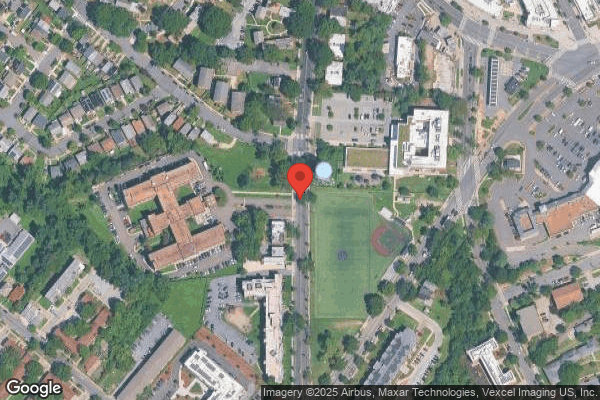

2425 25TH STREET SE, WASHINGTON, DC 20020 (202) 889-3600
For profit - Limited Liability company 360 Beds PRESTIGE HEALTHCARE ADMINISTRATIVE SERVICES Data: November 2025 9 Immediate Jeopardy citations
Trust Grade
0/100
#16 of 17 in DC
Last Inspection: March 2023

Over 2 years since last inspection. Current conditions may differ from available data.

Overview

Capitol City Rehab and Healthcare Center has received a Trust Grade of F, indicating significant concerns about the quality of care provided. It ranks #16 out of 17 facilities in Washington, D.C., placing it in the bottom half for local options. While the facility is improving, having reduced critical issues from 19 in 2024 to just 2 in 2025, it still has alarming staffing turnover at 46%, which is above the state average. The nursing home has been fined $508,646, the highest in the district, suggesting ongoing compliance problems. Recent inspections revealed serious issues, including administering expired medications and a failure to protect residents from physical abuse, highlighting both the facility's critical weaknesses and the need for families to weigh these factors carefully.

Trust Score
F
0/100
In District of Columbia
#16/17
Bottom 6%
Safety Record
High Risk
Review needed
Inspections
Getting Better
19 → 2 violations
Staff Stability
⚠ Watch
46% turnover. Above average. Higher turnover means staff may not know residents' routines.
Penalties
✓ Good
$508,646 in fines. Lower than most District of Columbia facilities. Relatively clean record.
Skilled Nurses
✓ Good
Each resident gets 51 minutes of Registered Nurse (RN) attention daily — more than average for District of Columbia. RNs are trained to catch health problems early.
Violations
⚠ Watch
135 deficiencies on record. Higher than average. Multiple issues found across inspections.
★☆☆☆☆
1.0
Overall Rating
★★★★☆
4.0
Staff Levels
★★★★☆
4.0
Care Quality
★☆☆☆☆
1.0
Inspection Score
Stable
2024: 19 issues
2025: 2 issues

The Good

  • 4-Star Staffing Rating · Above-average nurse staffing levels
  • 4-Star Quality Measures · Strong clinical quality outcomes
  • Full Sprinkler Coverage · Fire safety systems throughout facility
  • No fines on record

Facility shows strength in staffing levels, quality measures, fire safety.

The Bad

1-Star Overall Rating

Below District of Columbia average (3.2)

Significant quality concerns identified by CMS

Staff Turnover: 46%

Near District of Columbia avg (46%)

Higher turnover may affect care consistency

Federal Fines: $508,646

Well above median ($33,413)

Significant penalties indicating serious issues

Chain: PRESTIGE HEALTHCARE ADMINISTRATIVE

Part of a multi-facility chain

Ask about local staffing decisions and management

The Ugly 135 deficiencies on record

9 life-threatening 4 actual harm
Apr 2025 2 deficiencies
CONCERN (D) 📢 Someone Reported This

A family member, employee, or ombudsman was alarmed enough to file a formal complaint

Potential for Harm - no one hurt, but risky conditions existed

Report Alleged Abuse (Tag F0609)

Could have caused harm · This affected 1 resident

**NOTE- TERMS IN BRACKETS HAVE BEEN EDITED TO PROTECT CONFIDENTIALITY** Based on record reviews and staff interviews for one (1) of three (3) sampled residents, the facility staff failed to notify the...

Read full inspector narrative →
**NOTE- TERMS IN BRACKETS HAVE BEEN EDITED TO PROTECT CONFIDENTIALITY** Based on record reviews and staff interviews for one (1) of three (3) sampled residents, the facility staff failed to notify the State Agency of an allegation of abuse/neglect or injury of unknown origin within 24 hours of an incident involving Resident #1 who was found by staff with bloodied bed linens and with cuts to his right wrist from a disposable razor on [DATE]. The findings included: A review of the facility's policy titled Abuse, Neglect and Exploitation dated revised on [DATE] documented the following: Reporting of all alleged violations to the Administrator, state agency, adult protective services and to all other required agencies (e.g., law enforcement when applicable) within specified time frames: Immediately, but not later than 2 hours after the allegation is made, If the events that cause the allegation involve abuse or result in serious bodily injury or Not later than 24 hours if the events that cause the allegation do not involve abuse and do not result in serious bodily injury. Resident #1 was admitted to the facility on [DATE] with multiple diagnoses that included the following: Paranoid Personality Disorder, Personal History of Transient Ischemic Attack (TIA) and Cerebral Infarction Without Residual Deficits, Adult Failure to Thrive and Hereditary Ataxia. A review of a Facility Reported Incident (FRI) DC00013591, submitted to the State Agency on [DATE] at 1:19 PM documented the following: (Resident name) was observed with lacerations on his wrist. Resident sustained laceration from his disposable shaving razor. Resident was assessed by the licensed nurse. Resident expressed suicidal ideation and was transferred to the hospital for further assessment. Investigation initiated. It is noted that at the time of this investigation Resident #1 remained hospitalized . A review of Resident #1's medical record revealed the following: A nursing progress note dated [DATE] at 6:24 PM documented Late Entry Resident was noted with self-inflicted multiple laceration on the right wrist. Suicidal. When asked, resident stated that I'm depressed and suicidal Resident was found with multiple self-inflicted lacerations on right wrist using a disposable shaving razor. DNP (Doctor of Nursing Practice) (Employee Name) gave one time order wound care and to send resident via 911 for suicidal ideation. Resident was transferred to (Hospital Name) at 7:05 PM. Resident and RP (Resident Representative) made aware. A nursing progress note dated [DATE] at 10:44 PM documented Hospital Transfer: 3 officers arrived first before EMS (emergency medical services) arrived at approximately 6:40 PM, lead by officer (officer name) with badge ID #4115. The following transfer documentation was sent with the resident: Face sheet, H&P (history and physical), MOST (Medical Orders for Scope of Treatment Form), Medication list, care plan goals, DNP (Doctor of Nursing Practice) order to transfer resident to hospital and transfer location. It is noted that the incident in which staff observed the resident with cuts to his wrist occurred on [DATE] sometime before 7:05 PM, however the facility staff did not report the incident to the State Agency until [DATE] at 1:19 PM. During a telephone interview conducted on [DATE] at approximately 1:00 PM with Employee #8 stated that the nurse told them there was blood on the bed and upon assessment the resident was bleeding from his wrist and the resident had a disposable razor and told the nurse he wanted to die. During a face-to-face interview conducted on [DATE] at approximately 12:40 PM, Employee #3 (Director of Nursing) acknowledged the findings and stated that the facility leadership submitted the incident when they returned on Monday ([DATE]) following the incident and the weekend staff have been receiving on-going training.
CONCERN (D) 📢 Someone Reported This

A family member, employee, or ombudsman was alarmed enough to file a formal complaint

Potential for Harm - no one hurt, but risky conditions existed

Comprehensive Care Plan (Tag F0656)

Could have caused harm · This affected 1 resident

**NOTE- TERMS IN BRACKETS HAVE BEEN EDITED TO PROTECT CONFIDENTIALITY** Based on record reviews and staff interviews for one (1) of three (3) sampled residents, the facility staff failed to develop a ...

Read full inspector narrative →
**NOTE- TERMS IN BRACKETS HAVE BEEN EDITED TO PROTECT CONFIDENTIALITY** Based on record reviews and staff interviews for one (1) of three (3) sampled residents, the facility staff failed to develop a comprehensive, person-centered care plan that documented the residents' use of a communication aid which the resident needed in order to communicate with others. The findings included: Resident #1 was admitted to the facility on [DATE] with multiple diagnoses that included the following: Paranoid Personality Disorder, Personal History of Transient Ischemic Attack (TIA) and Cerebral Infarction Without Residual Deficits, Adult Failure to Thrive and Hereditary Ataxia. A review of Resident #1's medical record revealed the following: A review of a document titled Speech Therapy SLP (speech language pathology) Discharge Summary date of service 04/25/24-07/10/24 documented the following LTG (long term goal) #1.0 Met on 06/04/24, Pt (patient) will increase communicative effectiveness from severely impaired to moderately impaired with use of trained strategies and use of aids. A review of the care plan focus area (Resident #1) presents with cognitive and/or communication deficit r/t (related to) a diagnosis of ataxia dated revised on 01/22/25 had the following interventions: Communication: Identify yourself at each interaction. Face the resident when speaking and make eye contact. Reduce any distractions- turn off TV (television), radio, close door etc. (Resident name) responds best to consistent, simple, directive sentences; provide resident with necessary cues. During a face-to-face interview conducted on 04/17/25 at 11:15 AM, Employee #7 (Speech Therapist) stated that the resident has declined based on her observations, and he is less motivated to use his communication aid. Employee #7 went on to explain that the communication aid consists of laminated pages with words and letters on it so that the resident can communicate with others. The resident is cognitively intact, but he has trouble communicating verbally due to the ataxia and it takes a long time for him to get his words out. During a face-to-face interview conducted on 04/17/25 at 12:41 PM, with Employee #6 (Unit Manager 3 South) stated that they go over the resident's general well-being and care during the Interdisciplinary team meetings and acknowledged that the care plan did not include the use of a communication aid to promote the resident's ability to communicate. It is noted that there is no documented evidence in the resident's care plan of the communication aid that the speech pathologist recommends for the resident to use in order to communicate with others. Cross Reference 22B DCMR Sec. 3210.4 (a)(c)
Jun 2024 5 deficiencies 1 IJ
CRITICAL (J) 📢 Someone Reported This

A family member, employee, or ombudsman was alarmed enough to file a formal complaint

Immediate Jeopardy (IJ) - the most serious Medicare violation

Free from Abuse/Neglect (Tag F0600)

Someone could have died · This affected 1 resident

**NOTE- TERMS IN BRACKETS HAVE BEEN EDITED TO PROTECT CONFIDENTIALITY** Based on observations, record reviews, staff interviews and a resident's interview, for three (3) of nine (9) sampled residents,...

Read full inspector narrative →
**NOTE- TERMS IN BRACKETS HAVE BEEN EDITED TO PROTECT CONFIDENTIALITY** Based on observations, record reviews, staff interviews and a resident's interview, for three (3) of nine (9) sampled residents, the facility failed to ensure residents were free from physical abuse as evidenced by: (1) The Administrative staff making the decision to place Resident #2 (new admission), who was known for physical aggressive behaviors toward other residents, in a room with Resident #1, who was also known for physical aggression against other residents and staff and sexual misconduct. Subsequently, on 06/08/24, Resident #1 and Resident #2 were involved in a physical altercation which resulted in Resident #2 sustaining a stab wound to his left leg; and (2) An altercation on 06/15/24 between Employee #9 and Resident #4 led to the employee throwing lemonade and ice in the resident's face. Residents' #1, #2, and #4. Due to these failures, an Immediate Jeopardy (IJ) was identified at 42 CFR §483.12 Freedom from Abuse, Neglect, and Exploitation (F600) on June 18, 2024, at 10:31 AM. The facility provided a plan of corrective action to address the immediate concerns on June 18, 2024, at 5:44 PM and it was accepted by the State Agency's survey team. After the plan was verified, the IJ was removed on June 20, 2024, at 5:25 PM while the survey team was onsite. After the removal of the immediacy, the deficient practice remained at actual harm at the scope and severity of a G. These failures resulted in actual harm to Resident #2 on 06/08/24, a stab wound to his left leg, that required stitches. The findings included: A review of the facility's Abuse, Neglect and Exploitation policy dated 01/04/24 documented, It is the policy of this facility to provide protections for the health, welfare and rights of each resident by developing and implementing written procedures that prohibits and prevent abuse and neglect of residents .The facility will make efforts to ensure all residents are protected from physical and psychosocial harm, as well as additional abuse. 1. Facility staff failed to ensure Residents #1 and #2 were free from physical. Background information for Resident #2: Resident #2 was previously admitted to the facility on [DATE] with multiple diagnoses that included: Schizophrenia, Metabolic Encephalopathy and Muscle Weakness. A nursing progress note dated 10/01/23 at 6:30 AM documented, At about 6:30 AM, [Resident #2] pushed [Resident #3] in the hallway and slapped him on the right side of jaw. The charge nurse rushed and separated both residents. [Resident #2] noncompliant and non-cooperative, refused to open his door to speak to the police officer. Nurse Practitioner notified and recommendation for psych consult given for resident with aggressive behavior. A behavior progress note dated 02/19/24 at 11:17 AM documented, Writer observed resident walked into [Resident #3 s] room, opened the window curtain, set the room temperature to 80 degrees and took a pair of [Resident #3's] shoes back to his room. Writer called other staff for assistance, but resident refused to give back the shoes. [Resident #2] was cursing at multiple staff members and became very hostile and intimidating. Resident #2 stated, I don't know why he [Resident #3] is still alive. Resident repeated the statement more than two times. A behavior progress note dated 02/21/24 at 11:43 PM documented, Resident asked for a razor blades at around 10:55 PM, writer told him just to shave in the morning so CNA (Certified Nurse Aide) can assist or help him, but he said, I know where the razors are, I will get some. He went to the supply room, pushed the door and grabbed razors, nobody can stop him. A nursing progress note dated 03/04/24 at 9:59 AM documented, Writer was informed that [Resident #2] pushed [Resident #3] out of his wheelchair causing the resident to fall on the floor in the hallway. Police and Crisis support were informed. A physician's order dated 03/04/24 directed, Transfer resident to the nearest psych hospital for evaluation. Resident #2 was transferred out of the facility via FD-12 (application form used for the emergency admission of an individual in need of immediate psychiatric evaluation) on 03/05/24. Review of the medical record showed that Resident #2 was re-admitted to the facility on [DATE] to unit 2 south, room [ROOM NUMBER] bed A. Background information for Resident #1: Resident #1 was admitted to the facility on [DATE], with multiple diagnoses that included Anxiety, Schizophrenia, and Depression. The facility's census tracking form showed that Resident #1 resided on unit 2 south, room [ROOM NUMBER] bed B since 09/06/23. A care plan revised on 12/27/23 documented, [Resident #1] is on 1:1 monitoring for allegations of inappropriate touching of a female resident. Interventions included provide 1:1 monitoring every shift. A Quarterly Minimum Data Set (MDS) assessment dated [DATE] revealed the resident had a Brief Interview for Mental Status (BIMS) summary score of 15 indicating that had an intact cognitive function. Also, the resident was coded for physical behavioral symptoms (e.g., hitting, kicking, pushing, scratching, grabbing, abusing others sexually) directed towards others, verbal behavioral symptoms (e.g., threatening others, screaming at others, cursing at others) directed towards others, rejection of care behaviors, and receiving antipsychotic medications on a routine basis. A physician ' s order dated 05/01/24 directed, Psych consult for aggressive behavior. A care plan dated 05/02/24, documented in part, Focus- Alleged physical aggression towards another resident while both residents were on LOA (leave of absence) on 05/01/24 . Interventions- continue with 1:1 monitoring .psych[iatric] consult to evaluate . A Psychiatric Mental Health Nurse Practitioner (PMHNP) note dated 05/03/24 at 2:01 PM documented, Date of Service: 5/3/24, Consultation Alleged Physical Aggression/Assault to Another Resident. The patient was seen in his room, 1:1 monitoring staff sitting by the door. He stated, While I was on LOA, I saw her (The alleged victim) at the bus stop and both of us were talking, and this led to a heated argument, and she started yelling and cursing me out and I cursed her out as well. I never touched her, she told me that she is going to teach me a lesson, and they [the facility ' s staff] called the police, and I was arrested. A care plan dated 05/16/24 documented in part, Focus- verbal aggression towards nursing staff, going around nursing station, attempted to pick up the hole puncher .Interventions - continue with 1:1 monitoring, staff de-escalated the situation . A PMHNP note dated 05/17/24 at 11:14 AM documented, Date of Service: 5/16/24: Consultation Alleged Verbal Altercation Aggression/Outburst, attempt to hit a facility staff and exposure/fondling his [male genitalia] sitting on the floor in the room. - The patient was seen in his room, 1:1 monitoring staff sitting by the door. He stated, I was standing by the door of my room and the staff came and was trying to force herself into my room and I told her she could not come in and she forced herself through anyway and went to my bathroom to check if I was smoking in the bathroom and she found nothing. I cursed her out because she was not listening and she should not have come into my room for any reason, I don't like her. He denied any attempt to hit the staff. The provider further asked him about being naked, sitting on the floor, and fondling his [male genitalia]. He stated I was in my room I took the diaper off because my [gonads] feel hot sometimes and I was not fondling with my [male genitalia]. He further endorsed sitting on the floor. Sequence of events: An admission Summary for Resident #2 dated 06/06/24 at 10:37 PM documented: [Resident #2] readmitted [to unit 2 south, room [ROOM NUMBER], bed A] today from [Psychiatric Hospital Name]. Resident came into the facility ambulating at about 3:45 PM with his personal belongings. Resident refused complete physical assessment and skin assessment, refused weight and inventory of his personal belongings on admission. A care plan for Resident #2 dated 06/06/24 documented but not limited to, Focus - [Resident #2] had an episode of physical aggression towards another resident on 10/01/23. [Resident #2] had an additional episode of physical aggression against another resident on 03/04/24 .Interventions - hourly monitoring for 72 hours. Review of unit 2 south's Hourly Monitoring binder showed no documented evidence that Resident #2 was being monitored hourly from 06/06/24 to 06/09/24. A Nursing Progress Note for Resident #2 dated 06/08/24 at 10:57 PM documented, Resident to Resident Altercation: At about 6:45 pm a report was received from staff stating that this resident [Resident #2] was actively having a physical altercation with another resident [Resident #1]. When this writer arrived at the unit, [Resident #2] was observed in the hallway trying to go after [Resident #1] and a staff member was in front of him trying to talk him down from moving forward. At some point, the staff talked him down, and he went back to his room and closed the door. DC (District of Columbia) Metropolitan Police were called at 6:50 pm and the police, including EMS (emergency medical services), arrived at the unit at about 6:55 pm and [Resident #2] was in his room with the door closed. Police knocked at the door and brought [Resident #2] into the hallway and interviewed both residents separately. Resident (#2) was noted bleeding from his left leg but was unsure of where the bleeding was coming from. When paramedics found where the bleeding was coming from, he was quickly 6 transported to [Hospital Name] for evaluation and treatment . A Facility Reported Incident (FRI) for Resident #1, DC~12873, submitted to the State Agency on 06/08/24 documented, There was a physical altercation between [Resident #1] and [Resident #2]. DC Metropolitan police were called. [Resident #2] was taken to the hospital while [Resident #1] was arrested. Investigation was initiated. A FRI for Resident #2, DC~12874, submitted to the State Agency on 06/08/24 documented, There was a physical altercation between [Resident #1] and [Resident #2]. DC Metropolitan police were called. [Resident #2] was taken to the hospital while [Resident #1] was arrested. Investigation was initiated. A Hospital Discharge Summary for Resident #2 dated 06/08/24 documented: Seen today for stab wound of leg, laceration. A Nursing Note for Resident #2 dated 06/09/24 at 1:45 AM documented, Received a call from [Hospital Name] at 8:45 PM and was informed that the resident has 3 stiches underneath his left knee. At about 10:50 PM, the resident was brought in via stretcher. Resident refused nursing assessment. During a face-to-face interview on 06/12/24 at 2:50 PM, Employee #4 (PMHNP) stated that she has been providing psych services to Resident #1 monthly and as needed (after altercations). Resident #1 was on 1:1 for behavior issues and was not safe to be roommates with another resident who had behaviors issues. On 06/06/24, she came to assess Resident #2 in room [ROOM NUMBER] A and saw that his roommate was Resident #1. She had safety concerns about Resident #1 and #2 being roommates. After evaluating Resident #2, she asked [Employee #7/ Unit 2 South's Unit Manager] why those two residents were put in the room. At which time, the unit manager informed her that she had nothing to do with the resident ' s room assignment, that decision was made by the Administration. During a face-to-face interview on 06/12/24 at 3:40 PM, Employee #8 (External Marketing Liaison/Admissions Department) stated that she was not a nurse, nor did she have a clinical background. She has been covering for the Admission's Director for the last 3 to 4 months. The resident ' s placement to a room is based on the facility ' s availability of beds and on clinical compatibility, such as isolation. She makes the determination of the resident's room placement. This was the first time that she was not a part of a resident's admission. However, she was aware that the Administrator and DON were discussing Resident #2's return to the facility. On 06/06/24, the facility had two male beds available. During a face-to-face interview on 06/13/24 at 9:45 AM, Employee #5 (CNA) stated that around 6:45 PM, during dinner, he was in another room when he heard a staff member yelling for help. He ran towards the screams for help and when he got to room [ROOM NUMBER], he saw that Residents #1 and #2 were fighting. He saw Resident #2 with a meal tray in his hand, hitting Resident #1 over the head three times then the meal tray broke into two pieces. He got in the middle of them, and the other staff pulled Resident #1 to the nurse ' s station. Resident #2 went back inside the room and then came out of the room holding a knife in his right hand and one of Resident #1 ' s shoes. Resident #2 held the show up against the wall and stabbed it until in tore into shredded pieces and fell on the floor. Resident #2 went back into the room and blocked anyone from being able to enter. The police came and were able to enter the room after multiple attempts, talked to Resident #2, and found a knife. During a telephone interview on 06/13/24 at 10:54 AM, Employee #6 (assigned 1:1 CNA) stated that Resident #2 was observed laying in his bed, when Resident #1 returned from LOA. She was sitting outside the room, with the door cracked and could only visualize the upper part of Resident #2 ' s body. The room was quiet until screaming was heard coming from Resident #2 who yelled out, Leave me alone! Leave me alone! She pushed the door open and saw Resident #1 standing over Resident #2 (who was in bed) holding a knife with a black handle. She called for help, when the other staff came, Resident #2 pushed Resident #1 out the room, into the hallway, and closed the door. Resident #1 opened the door and spat on Resident #2. Resident #2 then came out of the room with a meal tray, hitting Resident #1 over the head three times. A male CNA (Employee #5) came and separated the two residents. She helped escort Resident #1 to the nurse ' s station. Employee #5 stayed with Resident #2 until the police arrived. During a face-to-face interview on 06/13/24 at 11:49 AM, Employee #7 (Unit 2 South's Unit Manager) stated that Employee #3 (DON) spoke with her on 06/06/24 about Resident #1 and Resident #2 not being compatible roommates due to both of their history of physically aggressive behaviors. She also had the same concern, that she brought to the DON's attention during the daily afternoon clinical administration meeting (stand-down) on 06/06/24 and during the daily administrative morning meeting (stand-up) on 06/07/24. However, she was informed by the DON that room [ROOM NUMBER] bed A was the only bed available in the facility to admit Resident #2. During a face-to-face interview on 06/13/24 at 5:17 PM, Employee #3 (Director of Nursing/DON) stated that Resident #1 has behavior problems, indecent exposure issues, and can be violent with staff and residents. Resident #1 has attacked him before with his power. He said that Resident #2 resided was on unit 3 south. The resident was territorial and didn't want anyone coming into his space. He had a roommate initially, but we never put anyone else in the room with him after the last roommate was discharged . Resident #2 had not had a roommate since I came back to work in June 2023. Facility staff couldn't even get into the room to get it ready for another admission. - Resident #2 did have a physical altercation with another resident which led to Resident #2 being FD12 by the facility ' s psychiatric team on 03/05/24. He was admitted to a local psychiatric hospital from [DATE] until 06/06/24 (90 days). According to Employee #3, the facility was unaware that the resident was returning to the facility on [DATE]. Resident #2 showed up to the facility lobby, getting out of a taxi. Earlier that same day, however, he, the Administrator, Department of Behavioral Health, the Ombudsman, and a representative from a local psychiatric hospital had a telephone conversation discussing Resident #2's return to the facility. The Psychiatric hospital personnel said the resident was stable to return. Employee #3 admitted that he questioned the resident's return after 90 days since the local psychiatric hospital didn't discuss the resident's medical management or provide any clinical background during his 90-day treatment course while at the psychiatric hospital. Employee #2 further stated that he received information about available beds from the Admissions Department. He was informed by the Admissions Department that room [ROOM NUMBER] bed A was available. The employee also stated that he did not think room [ROOM NUMBER] bed A was suitable for Resident #2 because of Resident #1's (room [ROOM NUMBER] bed B) unpredictable behaviors. However, he said he was temporarily placing Resident #2 in that room until he was able to find another room. Additionally, he informed the Administrator of his concerns. A review of the facility's resident census report dated 06/05/24 and 06/06/24 showed that room [ROOM NUMBER] bed B was available at the time of Resident #2's admission. However, Employee #3 stated that the Admissions Department did not make him aware that room [ROOM NUMBER] bed B was available, and that room would have been a better fit for Resident #1. Based on these findings, June 18, 2024, at 10:31 AM an Immediate Jeopardy (IJ) situation was identified. On June 18, 2024, at 5:45 PM, the facility's Administrator provided a corrective action plan to the State Agency Survey Team that was accepted. The plan included: The Administrator or designee immediately ensured the safety and well-being of the resident(s) by the following: - Resident (1) was taken into police custody on 6/8/2024; still in police custody - Resident (2) was sent to ER for medical evaluation for bleeding from the left leg on 6/8/2024. Resident (2) returned to room [ROOM NUMBER]A around 10:45 p.m. on 6/8/2024 with sutures to the left leg. - Resident (2) was placed on hourly monitoring upon return from ER; to be re evaluated on 6/18/2024. Resident (2) will remain in 220 without a roommate and re evaluated every 90 days. - Resident (2) was offered emotional and psych support by social services and Arising Psych Services on 6/10/2024. Resident declined both services. Care plan for refusals of care was revised on 6/14/2024 to include the resident's refusal of those services. Pysch services will continue monthly and as needed. - The Administrator/designee reviewed and revised the current process for bed assignments for new admissions, readmissions and room relocations in order to protect residents from potential abuse on 6/18/2024. The facility took the following actions to prevent an adverse outcome from reoccurring. (Completion Date: 6/19/24) - Administrator, Assistant Administrator, DON, ADON, Unit Managers, Nursing Supervisors, Social Services and Guest Services will be educated by Regional Clinical Consultant/Designee on resident compatibility/agreement, to include documented aggressive behaviors, to ensure that room placements are appropriate and residents are protected from physical, psychosocial harm as well as additional abuse. New Admissions personnel will be educated on resident compatibility/agreement during orientation. - The Administrator/designee will conduct a review of current residents to determine if there are any documented complaints or grievances within the last 30 days related to roommate combability/agreement. Alternative options within residents rights, as related to F559, will be offered. - New, readmissions and current residents will be reviewed by Unit Manager's/Designee for compatibility/agreement, with considerations from F559, daily x5 then weekly x 4 then monthly x 4 or until compliance is sustained. - The Regional Director of Operations will visit the facility 6/19/2024 to provide oversight and additional training to Administration and Nursing Leadership based on compatibility/agreement audit findings. Corrective action completion date: 6/19/24 2. Facility staff failed to ensure Resident #4 was free from physical abuse by Employee #9. Resident #4 was admitted to the facility on [DATE] with multiple diagnoses including Left Side Hemiplegia and Hemiparesis following Cerebral Infarction, Muscle Weakness, Major Depressive Disorder, Restlessness and Agitation, Brief Psychotic Disorder, and Schizoaffective Disorder. A care plan revised on 03/14/24 documented in part, Focus- [Resident #4] was allegedly throwing stuff at another resident on 03/13/24 during a verbal interaction with another resident. Goal- [Resident #4] will have no episode of physical interaction towards another resident through the next review date x 90 days. Interventions- [Resident #4] was educated to report problems to staff instead of taking [matters] into his own hands. He verbalized understanding. Psych[iatric] consult to evaluate aggressive behavior. Referred to group therapy for coping skills . A care plan revised on 04/02/24 documented in part, Focus- [Resident #4] has a behavior problem r/t (related to) cursing, yelling and using profane language on staff and residents, physically abusive to staff .Interventions: Analyze of key times, places, circumstances, triggers, and what de-escalates behavior and document. Assess resident's understanding of the situation. Allow time for the resident to express self and feelings towards the situation. Intervene as necessary to protect the rights and safety of others. Approach/Speak in a calm manner. Divert attention. Remove from situation and take to alternate location as needed. Psychiatric/Psychogeriatric consult as indicated. When [Resident #4] becomes agitated: Intervene before agitation escalates; Guide away from source of distress; Engage calmly in conversation; If response is aggressive, staff to walk calmly away, and approach later . A Quarterly Minimum Data Set (MDS) dated [DATE] documented in part, the resident had a Brief Interview for Mental Status summary score of 06 indicating the resident was had severely impaired cognitive status. The resident was also coded for: verbal behavioral symptoms directed towards others (threatening others, screaming at others, and curing at others), rejection of care, and taking antipsychotic medications. A nursing supervisor nursing note dated 06/15/24 at 1PM documented, Late Entry: Note Text: The resident, [Resident #4] reported that his assigned CNA [Employee #4] had brought him a cup of Lemonade juice and try to take the other cup of juice that was on his table. [Resident #4] said leave it alone I just got that juice the staff said she left the cup of juice and on her attempting to leave the room, [Resident #4] picked one of the cup of juice and threw it at her. The CNA turned around as [Resident #4] was attempting to throw the second cup of juice, and she grabbed the cup of juice from him and threw it on him. DC Metropolitan police was called and [officer's name and badge #] and [officer's name and badge] came to the facility at 12:35pm. Spoke to the staff . The police then said we should follow through with the facility policy. [Primary Medical Doctor/PMD] notified. Resident refused assessment and vital signs from writer nor his nurse. Resident's guardian [guardian's name] made aware. Will continue to encourage and redirect resident to report any concerns to the supervisor or his nurse. A FRI, DC~12888, received by the State Agency on 06/17/24 at 9:01 AM documented in part, [Resident #4] .reported that [Employe #8, CNA] hit me on my forehead and scratched me in the process. She had on rings on her hands. She threw a cup of ice with juice on me. The investigation is still in progress . An observation on 06/17/24 at approximately 11:20 AM revealed Resident #4 sitting in his room in his motorized wheelchair. He was alert, dressed, wearing glasses, and was able to understand his name, the time, the place, and the situation. He had left side hemiplegia and a left above-the-knee amputation. Additionally, the resident had three small scratches and redness on his forehead. At the time of the observation, he stated that Employee #9 (assigned CNA) hit him in the face and his glasses came off during their altercation on 06/15/24. He also claimed that the employee was wearing rings at the time, and they may have scratched his skin during the altercation. In the resident's account, the altercation began when Employee #4 was passing water and ice outside his room door. When he asked her to move, she cursed out and became upset. In addition, she threw lemonade and juice at him. However, he denied hitting Employee #9 or throwing lemonade at her. During a face-to-face interview on 06/17/24 at 5:10 PM, Employee #10 (assigned LPN) reported seeing Employee #9 (assigned CNA) at the resident's door. She heard Employee #9 say stop throwing ice on me. On the floor of the resident's room, she observed ice and water. Further, she noticed scratches on the resident's forehead that weren't there at the start of her shift. He refused to talk to her or allow her to assess him. During a face-to-face interview on 06/18/24 at 8:15 AM, Employee #11 (RN/Supervisor) stated that Employee #9 (assigned CNA) admitted to throwing water and lemonade at Resident #4 after the resident attempted to throw a second cup of lemonade and ice at her. When he observed the resident, he noticed the resident had scratches on his forehead and his shirt was wet. Additionally, the resident was upset and cursing. The resident was also unwilling to talk or be assessed. Following the incident, the resident left the floor and was unavailable to speak with police. During a telephone interview on 06/18/24 at 1:13 PM, Employee #9 (assigned CNA involved in the incident) stated that Resident #4 became upset when she tried to give him a second cup of lemonade with ice. She placed the lemonade on his table in front of him and said I just came to give you a cup of juice. When she was leaving the room, the resident threw a cup of lemonade at her. As she turned around, she noticed that he was attempting to throw a second cup of juice, so she grabbed a cup of lemonade off her cart and threw it at the resident. She believes it may have hit the resident in the face. However, as far as she could recall, neither she nor the resident hit one another, and she did not notice scratches on the resident's forehead. Additionally, she said she had attended many in-services related to managing residents with challenging behaviors, and she had learned to leave the room when an altercation or incident occurred and report it to a nurse or supervisor. Cross Reference 22B DCMR Sec. 3269.1l
CONCERN (D) 📢 Someone Reported This

A family member, employee, or ombudsman was alarmed enough to file a formal complaint

Potential for Harm - no one hurt, but risky conditions existed

Deficiency F0558 (Tag F0558)

Could have caused harm · This affected 1 resident

**NOTE- TERMS IN BRACKETS HAVE BEEN EDITED TO PROTECT CONFIDENTIALITY** Based on record reviews and staff interviews, for one (1) of nine (9) sampled residents, facility staff failed to ensure that re...

Read full inspector narrative →
**NOTE- TERMS IN BRACKETS HAVE BEEN EDITED TO PROTECT CONFIDENTIALITY** Based on record reviews and staff interviews, for one (1) of nine (9) sampled residents, facility staff failed to ensure that reasonable accommodations for a room assignment was provided for a resident that did not endanger his health or safety as evidenced by placing Resident #2 (new admission), with a known history of physically aggressive behaviors toward other residents, in a room with Resident #1, also with a known history of physical aggression towards other residents and staff. The findings included: Resident #2 Background: Resident #2 was previously admitted to the facility on [DATE] with multiple diagnoses that included: Schizophrenia, Metabolic Encephalopathy and Muscle Weakness. Review of the resident's medical record showed the following: A census tracking sheet that showed he resided on unit 3 south, room [ROOM NUMBER] bed B since 02/14/22. A Nursing Note dated 03/04/24 at 9:59 AM that documented: - Writer was informed that [Resident #2] pushed Resident #3 out of his wheelchair causing the resident to fall on the floor in the hallway. - Police and Crisis support were informed. A physician's order dated 03/04/24 directed, Transfer resident to the nearest psych[iatric] hospital for evaluation. Resident #2 was transferred out of the facility via FD-12 (application form used for the emergency admission of an individual in need of immediate psychiatric evaluation) on 03/05/24. Resident #1 Background: Resident #1 was admitted to the facility on [DATE] with multiple diagnoses that included Anxiety, Schizophrenia, and Depression. Review of the resident's medical record revealed: Resident #1 was admitted to the facility on [DATE] with multiple diagnoses that included Anxiety, Schizophrenia, and Depression. A care plan initiated on 05/02/24, documented in part Focus area- On 5/1/2024 - Alleged physical aggression towards another resident while both residents were on LOA (leave of absence) .Interventions - Continue with 1:1 monitoring; Psych consult to evaluate. Sequence of events: An admission summary dated [DATE] at 10:37 PM documented: - [Resident #2] readmitted [to unit 2 south, room ###, bed #] today from [Psychiatric Hospital Name]. - Resident came into the facility ambulating at about 3:45 PM with his personal belongings. - Resident refused complete physical assessment and skin assessment, refused weight and inventory of his personal belongings on admission. A care plan focus area initiated on 06/06/24 documented, [Resident #2] had an episode of physical aggression towards another resident on 10/01/23. [Resident #2] had an additional episode of physical aggression against another resident on 03/04/24 had interventions that included but not limited to: hourly monitoring for 72 hours. A Nurses Note dated 06/8/24 at 10:57 PM documented, Resident to Resident Altercation: At about 6:45 pm a report was received from staff stating that this resident [Resident #2] was actively having a physical altercation with another resident (resident's roommate/[Resident #1]) . DC (District of Columbia) Metropolitan Police were called at 6:50 pm and the police, including EMS (emergency medical services), arrived at the unit at about 6:55 pm . Resident (#2) was noted bleeding from his left leg but was unsure of where the bleeding was coming from. When paramedics found where the bleeding was coming from, he was quickly transported to [Hospital Name] for evaluation and treatment . The Hospital Discharge Summary for Resident #2 dated 06/08/24 documented: - Seen today for stab wound of leg, laceration. A Nursing Note for Resident #2 dated 06/09/24 at 1:45 AM documented: - Received a call from [Hospital Name] at 8:45 PM and was informed that the resident has 3 stiches underneath his left knee. - At about 10:50 PM, the resident was brought in via stretcher. During a face-to-face interview on 06/12/24 at 3:40 PM, Employee #7 (External Marketing Liaison/Admissions Department) stated that: - She is not a nurse, nor does she have a clinical background. - She has been covering for the Admission's Director for the last 3 to 4 months. -The resident's placement to a room is based off the facility's availability of beds and on clinical compatibility, such as isolation. - She makes the determination of the resident's room placement. - This is the first time that she was not a part of a resident's admission. However, she was aware that the Administrator and DON (Director of Nursing) were discussing Resident #2's return to the facility. - On 06/06/24, the facility had only two male beds available. During a face-to-face interview on 06/13/24 at 5:17 PM with Employee #2 (Director of Nursing/DON) stated on 06/06/24, he received information about available beds from the Admissions Department. He was informed by the Admissions Department that [room [ROOM NUMBER] Bed A] was available. The employee also stated that he did not think the room was suitable for Resident #2 because of the roomate's [Resident #1] unpredictable behaviors. However, he said he was temporarily placing Resident #2 in that room until he was able to find a more suitable room. Additionally, he informed the Administrator of his concerns. At the time of the interview, the surveyor showed Employee #2 the facility's resident census reports dated 06/05/24 and 06/06/24, which showed another room [room [ROOM NUMBER] Bed B] was available when Resident #2 was admitted . According to the employee, the Admissions Department did not notify him that room [ROOM NUMBER] Bed B was available. The employee was then asked if room [ROOM NUMBER] Bed B would have been a more suitable choice for the resident? Employee #2 answered, Yes. The evidence showed that the facility staff failed to ensure that reasonable accommodations for a room assignment was provided for Resident #2's health or safety. Subsequently, on 06/08/24 at approximately 6:45 PM, Resident #1 and Resident #2, were involved in a physical altercation, that resulted in Resident #2 sustaining a stab wound on his left leg that required medical intervention (stiches).
CONCERN (D) 📢 Someone Reported This

A family member, employee, or ombudsman was alarmed enough to file a formal complaint

Potential for Harm - no one hurt, but risky conditions existed

Deficiency F0559 (Tag F0559)

Could have caused harm · This affected 1 resident

**NOTE- TERMS IN BRACKETS HAVE BEEN EDITED TO PROTECT CONFIDENTIALITY** Based on record review and staff interview, for one (1) of nine (9) sampled residents, the facility's staff failed to provide a ...

Read full inspector narrative →
**NOTE- TERMS IN BRACKETS HAVE BEEN EDITED TO PROTECT CONFIDENTIALITY** Based on record review and staff interview, for one (1) of nine (9) sampled residents, the facility's staff failed to provide a resident with written notice that a new roommate had been assigned to his room on 06/06/24. (Resident #1). The findings included: Resident #1 was admitted to the facility on [DATE] with multiple diagnoses including Schizoaffective Disorder, Anxiety, and Depression. A quarterly Minimum Data Set, dated [DATE] documented in part, the resident had a Brief Interview for Mental Status summary score of 15 indicating that the resident's cognitive status was intact. The resident was coded for having physical behaviors (e.g., hitting, kicking, pushing, scratching, grabbing, abusing others sexually) directed toward others, verbal behaviors (e.g., threatening others, screaming at others, cursing at others) directed toward other, and rejection of care. Also, the resident was coded for using anti-psychotic medications on a routine basis. A care plan dated 05/01/24 documented in part, Focus area- alleged physical aggression towards another resident of [Room #] while both residents were on LOA (leave of absence) .Interventions-Psych[iatric] consult .continue 1:1 monitoring .resident was arrested . A care plan dated 05/16/24 documented in part, Focus area - verbal aggression towards nursing staff, going around nursing station, attempted to pick up the hole puncher. Interventions- 911 was called .no arrest was made .continue with 1:1 monitoring .staff de-escalated the situation . A review of the resident's medical record lacked documented evidence that facility staff provided him with written notification that he was getting a new roommate [Resident #2]. During a face-to-face interview on 06/17/24 at approximately 3:30 PM, Employee #2 (DON) stated that Resident #1 was not notified in writing that he was getting a new roommate [Resident #2]. However, he did verbally inform Resident #1 about his new roommate after he returned from leave of absence. It should be noted a Leave of Absence sign-out sheet dated 06/06/24 revealed that Resident #1 left the facility at 2:08 PM and returned at 6:55 PM.
CONCERN (D) 📢 Someone Reported This

A family member, employee, or ombudsman was alarmed enough to file a formal complaint

Potential for Harm - no one hurt, but risky conditions existed

Tube Feeding (Tag F0693)

Could have caused harm · This affected 1 resident

**NOTE- TERMS IN BRACKETS HAVE BEEN EDITED TO PROTECT CONFIDENTIALITY** Based on record review and staff interviews, for one (1) of nine (9) sampled residents, the facility failed to ensure that Resid...

Read full inspector narrative →
**NOTE- TERMS IN BRACKETS HAVE BEEN EDITED TO PROTECT CONFIDENTIALITY** Based on record review and staff interviews, for one (1) of nine (9) sampled residents, the facility failed to ensure that Resident #8 received appropriate treatment, services, care and management related to complications (clog) of his enteral feeding tube. The findings included: According to the National Institute of Health (NIH) - Gastrostomy tube (G-tube) malfunction is commonly encountered by nurses, physician assistants, nurse practitioners, and physicians in clinical practice. The team should have a working knowledge of how to handle G-tube problems and provide appropriate intervention and assistance in resolving the dysfunction. https://www.ncbi.nlm.nih.gov/books/NBK482422/ According to the Gastrointestinal Endoscopy Journal: - A common post Percutaneous Endoscopy Gastrostomy (PEG) complication is a clogged tube. - Occasionally, a clogged PEG tube can be opened with the administration of warm water, a canned carbonated beverage, or pancreatic enzymes. - We do not recommend the use of wires or brushes because these instruments, when used blindly, can injure the posterior wall of the stomach. - Once a PEG tube becomes clogged, the best option is replacement. https://www.giejournal.org/article/S0016-5107(06)02538-7/fulltext#:~:text=In%20our%20experience%2C%20once%20a%20PEG%20tube,PEG%20tube%20is%20replaced%20for%20this%20reason%2C Resident #8 was admitted to the facility on [DATE] with multiple diagnoses that included: Gastrostomy Status, Type 2 Diabetes Mellitus, Cerebral Infarction, and Dementia. Review of the resident's medical record revealed the following: A physician's orders dated 01/10/24 that directed, Enteral feed, every shift, check feeding tube placement with auscultation Q (every) shift and as needed before feedings, flushes, and medication administration. A Quarterly Minimum Data Set (MDS) assessment dated [DATE] showed that facility staff coded: severely impaired cognitive skills for decision making; totally dependent on staff for assistance with eating; and received nutrition via a feeding tube. A physician's order dated 04/08/24 that directed, Enteral feed one time a day, Jevity 1.5 via PEG (Percutaneous Endoscopy Gastrostomy) at 85 ml (milliliters)/hr (hour) to provide 1530 total volume, 2295 kcal (kilocalories), 98 gm (grams) protein & 1162 ml (milliliters) free water, up at 6 PM, down when total volume infused . A care plan focus area: [Resident #8] nutritional r/t (related to) TF (tube feeding) as sole nutrition source last reviewed on 05/10/24 had interventions that included: Check for tube placement and gastric contents/residual volume per facility protocol and record; make recommendations for changes to tube feeding as needed; discuss with [Resident #8]/family/caregivers any concerns about tube feeding; monitor/document/report to MD (medical doctor) PRN (as needed) - tube dislodged, tube dysfunction or malfunction. A Nursing Progress Note dated 06/16/24 at 7:28 AM documented: - G (gastrostomy)-tube feeding: Jevity 1.5 and water flushes currently in progress and being well tolerated. A Nursing Progress Note dated 06/16/24 at 12:27 PM documented: - PEG Tube: Resident tolerated all due med via patent peg tube, no nausea or vomiting. A physician's order dated 06/16/24 that directed, GI (gastrointestinal) consult for evaluation of peg tube placement. A Nursing Progress Note dated 06/17/24 at 7:58 AM documented: - G-tube feeding: Resident remains stable and alert. - Jevity 1.5 and water flushes are currently in progress and being well tolerated. A Nursing Progress Note dated 06/17/24 at 1:11 PM documented, Peg Tube: resident tolerated all due med (medications) via patent peg tube, no nausea or vomiting, turn and position Q (every) 2 hours, incontinent care given as needed. No non-verbal signs of pain. Scopolamine patch replaced, resident resting comfortable. A Nursing Progress Note dated 6/17/24 at 11:50 PM documented: - PEG Tube: resident is stable, G tube in place and patent, feeding continues with Jevity 1.5 at 85cc (milliliters)/hr, water flushes of 300cc q (every) 4 hrs (hours), up time at 6:00 PM. A Nursing Progress Note dated 06/18/24 at 7:12 AM documented: - Jevity 1.5 and water flushes are currently in progress and being well tolerated. A Nursing Progress Note dated 06/18/24 at 2:17 PM documented, ER (emergency room) transfer: Resident given order to transfer to closest ER for Peg tube replacement, RP [Representative's name] was called but was not reached, message left to call facility. A Nursing Progress Note dated 06/18/24 at 2:27 PM documented: - PEG Tube: Resident tolerated all due med via patent peg tube, no signs of distress noted. A Nursing Progress Note dated 06/18/24 at 3:50 PM documented, Transportation was arranged, pick up time between 4 and 5 'clock. Next shift will follow up. A Nursing Progress Note dated 06/18/24 at 8:56 PM documented, .Received report from day shift nurse that DNP (Doctor of Nurse Practitioner) gave order to transfer resident to ER for PEG tube replacement - malfunction . ambulance came at 3:55 PM and left with resident at 4:10 PM. RP was notified . A Situation Background Assessment Request (SBAR) Communication Tool dated 06/18/24 at 9:06 PM documented: - Situation: PEG tube malfunction - [RP's name] contacted on 06/18/24 at 4:45 PM by phone; [DNP's name] contacted at 2:30 PM. - Resident was sent to [Hospital name], report given to [ER nurse] at 5: 00 PM. A Nursing Progress Note dated 06/18/24 at 11:06 PM documented: - The writer called [Hospital name] ER to F/U (follow/up) on resident's status; was informed that resident is admitted due to PEG tube dysfunction. - DNP made aware. RP was called but did not pick up, message was left to call back the unit. A Complaint, DC~12902, received by the State Agency on 06/20/24 documented: - On Tuesday, 06/18/24, the G-Tube was cut very short, clogged, and sent to the hospital for replacement. Review of the facility's resident census and a tour of unit 3 north on 06/20/24 at 1:20 PM, Resident #8 was noted to be out of the facility and on hospital leave. The nursing assignment for unit 3 north showed that Employee #12 (Registered Nurse/RN) was assigned to Resident #8 on the day shift (7:00 AM - 3:00 PM) on 06/16/24, 06/17/24 and on 06/18/24. During a face-to-face interview on 06/20/24 at 1:22 PM, Employee #13 (Registered Nurse/RN) stated, She (Employee #12/RN) came to me (on 06/16/24, day shift) and told me that the resident's (Resident #8) g -tube was clogged and that she couldn't unclog it. His tube was really long and the DeClogger (device used achieve patency of gastric tubes) was not long enough and could not reach where the clog was. We then tried using a syringe of water to flush it and that's when the G - tube burst. [Employee #12] cut the tube below where it burst and where the clog was. The tube flushed after that, and she (Employee #12) attached the resident's feeding back. During a telephone interview on 06/20/24 at 1:57 PM, Employee #12 (RN) stated, When I took over the shift on Sunday morning (06/16/24, day shift) I went to flush it (Resident #8's G-tube) and it did not flush. Myself and a colleague (Employee #13) tried for an hour to unclog the tube. Then all of a sudden, water started spewing out of the tube, indicating there was a hole. The G -tube was long so using scissors, I cut below where the hole was. After cutting it (the G- tube), the tube worked just fine, it flushed, and I administered [Resident #8's] medications and feeding. I called the MD, and she gave an order for a GI consult to send the patient to the ER after I let her (MD) know that the G-tube malfunctioned. When asked where she documented that there were issues with Resident #8's G-tube and that she had informed the MD, Employee #12 stated, I did not document that the G-tube had malfunctioned or that I had cut it. The employee was further asked if cutting a resident's G-tube was the standard of practice for managing a malfunction, Employee #12 stated, No. The evidence showed that Resident #8's G-tube had malfunctioned on 06/16/24 at approximately 8:00 AM and Employee #12 (assigned RN) failed to document the malfunction (tube being clogged then bursting, then being cut by staff). Resident #8 was not sent to the ER until 06/18/24, at approximately 4:00 PM (56 hours later), to get his G-tube replaced. During a face-to-face interview on 06/20/24 at 3:30 PM, Employee #14 (Assistant Director of Nursing/ADON) stated, Cutting a resident's G- tube is absolutely not our process for managing a clog or any other issues. I was not aware that was what happened. The documentation said malfunction on 06/18/24 and he was sent to the ER. There was no documentation prior to 06/18/24 to indicate that there had been anything wrong with [Resident #8's] tube. The resident should have been sent out to the ER immediately on that day (06/16/24) for replacement of his G-tube. We will be providing education to all the licensed nursing staff on the process and protocols for managing a G-tube.
CONCERN (D) 📢 Someone Reported This

A family member, employee, or ombudsman was alarmed enough to file a formal complaint

Potential for Harm - no one hurt, but risky conditions existed

Deficiency F0726 (Tag F0726)

Could have caused harm · This affected 1 resident

**NOTE- TERMS IN BRACKETS HAVE BEEN EDITED TO PROTECT CONFIDENTIALITY** Based on record review and staff interviews, for one (1) of nine (9) sampled residents, the licensed nursing staff failed to dem...

Read full inspector narrative →
**NOTE- TERMS IN BRACKETS HAVE BEEN EDITED TO PROTECT CONFIDENTIALITY** Based on record review and staff interviews, for one (1) of nine (9) sampled residents, the licensed nursing staff failed to demonstrate the appropriate competencies and skill sets to provide nursing services to assure resident safety and well-being of each resident. Resident #8. The findings included: According to the National Institute of Health (NIH) - Gastrostomy tube (G-tube) malfunction is commonly encountered by nurses, physician assistants, nurse practitioners, and physicians in clinical practice. The team should have a working knowledge of how to handle G-tube problems and provide appropriate intervention and assistance in resolving the dysfunction. https://www.ncbi.nlm.nih.gov/books/NBK482422/ According to the Gastrointestinal Endoscopy Journal: - A common post Percutaneous Endoscopy Gastrostomy (PEG) complication is a clogged tube. - Occasionally, a clogged PEG tube can be opened with the administration of warm water, a canned carbonated beverage, or pancreatic enzymes. - We do not recommend the use of wires or brushes because these instruments, when used blindly, can injure the posterior wall of the stomach. - Once a PEG tube becomes clogged, the best option is replacement. https://www.giejournal.org/article/S0016-5107(06)02538-7/fulltext#:~:text=In%20our%20experience%2C%20once%20a%20PEG%20tube,PEG%20tube%20is%20replaced%20for%20this%20reason%2C Resident #8 was admitted to the facility on [DATE] with multiple diagnoses that included: Gastrostomy Status, Type 2 Diabetes Mellitus, Cerebral Infarction, and Dementia. Review of the resident's medical record revealed the following: A physician's orders dated 01/10/24 that directed, Enteral feed, every shift, check feeding tube placement with auscultation Q (every) shift and as needed before feedings, flushes, and medication administration. A Quarterly Minimum Data Set (MDS) assessment dated [DATE] showed that facility staff coded: severely impaired cognitive skills for decision making; totally dependent on staff for assistance with eating; and received nutrition via a feeding tube. A physician's order dated 04/08/24 that directed, Enteral feed one time a day, Jevity 1.5 via PEG (Percutaneous Endoscopy Gastrostomy) at 85 ml (milliliters)/hr (hour) to provide 1530 total volume, 2295 kcal (kilocalories), 98 gm (grams) protein & 1162 ml (milliliters) free water, up at 6 PM, down when total volume infused . A care plan focus area: [Resident #8] nutritional r/t (related to) TF (tube feeding) as sole nutrition source last reviewed on 05/10/24 had interventions that included: Check for tube placement and gastric contents/residual volume per facility protocol and record; make recommendations for changes to tube feeding as needed; discuss with [Resident #8]/family/caregivers any concerns about tube feeding; monitor/document/report to MD (medical doctor) PRN (as needed) - tube dislodged, tube dysfunction or malfunction. A Nursing Progress Note dated 06/16/24 at 7:28 AM documented: - G (gastrostomy)-tube feeding: Jevity 1.5 and water flushes currently in progress and being well tolerated. A Nursing Progress Note dated 06/16/24 at 12:27 PM documented: - PEG Tube: Resident tolerated all due med via patent peg tube, no nausea or vomiting. A physician's order dated 06/16/24 that directed, GI (gastrointestinal) consult for evaluation of peg tube placement. A Nursing Progress Note dated 06/17/24 at 7:58 AM documented: - G-tube feeding: Resident remains stable and alert. - Jevity 1.5 and water flushes are currently in progress and being well tolerated. A Nursing Progress Note dated 06/17/24 at 1:11 PM documented, Peg Tube: resident tolerated all due med (medications) via patent peg tube, no nausea or vomiting, turn and position Q (every) 2 hours, incontinent care given as needed. No non-verbal signs of pain. Scopolamine patch replaced, resident resting comfortable. A Nursing Progress Note dated 6/17/24 at 11:50 PM documented: - PEG Tube: resident is stable, G tube in place and patent, feeding continues with Jevity 1.5 at 85cc (milliliters)/hr, water flushes of 300cc q (every) 4 hrs (hours), up time at 6:00 PM. A Nursing Progress Note dated 06/18/24 at 7:12 AM documented: - Jevity 1.5 and water flushes are currently in progress and being well tolerated. A Nursing Progress Note dated 06/18/24 at 2:17 PM documented, ER (emergency room) transfer: Resident given order to transfer to closest ER for Peg tube replacement, RP [Representative's name] was called but was not reached, message left to call facility. A Nursing Progress Note dated 06/18/24 at 2:27 PM documented: - PEG Tube: Resident tolerated all due med via patent peg tube, no signs of distress noted. A Nursing Progress Note dated 06/18/24 at 3:50 PM documented, Transportation was arranged, pick up time between 4 and 5 'clock. Next shift will follow up. A Nursing Progress Note dated 06/18/24 at 8:56 PM documented, .Received report from day shift nurse that DNP (Doctor of Nurse Practitioner) gave order to transfer resident to ER for PEG tube replacement - malfunction . ambulance came at 3:55 PM and left with resident at 4:10 PM. RP was notified . A Situation Background Assessment Request (SBAR) Communication Tool dated 06/18/24 at 9:06 PM documented: - Situation: PEG tube malfunction - [RP's name] contacted on 06/18/24 at 4:45 PM by phone; [DNP's name] contacted at 2:30 PM. - Resident was sent to [Hospital name], report given to [ER nurse] at 5: 00 PM. A Nursing Progress Note dated 06/18/24 at 11:06 PM documented: - The writer called [Hospital name] ER to F/U (follow/up) on resident's status; was informed that resident is admitted due to PEG tube dysfunction. - DNP made aware. RP was called but did not pick up, message was left to call back the unit. A Complaint, DC~12902, received by the State Agency on 06/20/24 documented: - On Tuesday, 06/18/24, the G-Tube was cut very short, clogged, and sent to the hospital for replacement. Review of the facility's resident census and a tour of unit 3 north on 06/20/24 at 1:20 PM, Resident #8 was noted to be out of the facility and on hospital leave. The nursing assignment for unit 3 north showed that Employee #12 (Registered Nurse/RN) was assigned to Resident #8 on the day shift (7:00 AM - 3:00 PM) on 06/16/24, 06/17/24 and on 06/18/24. During a face-to-face interview on 06/20/24 at 1:22 PM, Employee #13 (Registered Nurse/RN) stated, She (Employee #12/RN) came to me (on 06/16/24, day shift) and told me that the resident's (Resident #8) g -tube was clogged and that she couldn't unclog it. His tube was really long and the DeClogger (device used achieve patency of gastric tubes) was not long enough and could not reach where the clog was. We then tried using a syringe of water to flush it and that's when the G - tube burst. [Employee #12] cut the tube below where it burst and where the clog was. The tube flushed after that, and she (Employee #12) attached the resident's feeding back. During a telephone interview on 06/20/24 at 1:57 PM, Employee #12 (RN) stated, When I took over the shift on Sunday morning (06/16/24, day shift) I went to flush it (Resident #8's G-tube) and it did not flush. Myself and a colleague (Employee #13) tried for an hour to unclog the tube. Then all of a sudden, water started spewing out of the tube, indicating there was a hole. The G -tube was long so using scissors, I cut below where the hole was. After cutting it (the G- tube), the tube worked just fine, it flushed, and I administered [Resident #8's] medications and feeding. I called the MD, and she gave an order for a GI consult to send the patient to the ER after I let her (MD) know that the G-tube malfunctioned. When asked where she documented that there were issues with Resident #8's G-tube and that she had informed the MD, Employee #12 stated, I did not document that the G-tube had malfunctioned or that I had cut it. The employee was further asked if cutting a resident's G-tube was the standard of practice for managing a malfunction, Employee #12 stated, No. The evidence showed that Resident #8's G-tube had malfunctioned on 06/16/24 at approximately 8:00 AM and Employee #12 (assigned RN) failed to document the malfunction (tube being clogged then bursting, then being cut by staff). Resident #8 was not sent to the ER until 06/18/24, at approximately 4:00 PM (56 hours later), to get his G-tube replaced. During a face-to-face interview on 06/20/24 at 3:30 PM, Employee #14 (Assistant Director of Nursing/ADON) stated, Cutting a resident's G- tube is absolutely not our process for managing a clog or any other issues. I was not aware that was what happened. The documentation said malfunction on 06/18/24 and he was sent to the ER. There was no documentation prior to 06/18/24 to indicate that there had been anything wrong with [Resident #8's] tube. The resident should have been sent out to the ER immediately on that day (06/16/24) for replacement of his G-tube. We will be providing education to all the licensed nursing staff on the process and protocols for managing a G-tube.
May 2024 14 deficiencies 1 IJ
CRITICAL (J) 📢 Someone Reported This

A family member, employee, or ombudsman was alarmed enough to file a formal complaint

Immediate Jeopardy (IJ) - the most serious Medicare violation

Accident Prevention (Tag F0689)

Someone could have died · This affected 1 resident

**NOTE- TERMS IN BRACKETS HAVE BEEN EDITED TO PROTECT CONFIDENTIALITY** Based on observations, record reviews, resident and staff interviews, for five (5) of 16 sampled residents, the facility's staff...

Read full inspector narrative →
**NOTE- TERMS IN BRACKETS HAVE BEEN EDITED TO PROTECT CONFIDENTIALITY** Based on observations, record reviews, resident and staff interviews, for five (5) of 16 sampled residents, the facility's staff failed to: (1) implement safety measures to prevent Resident #1 from having access to a lighter. As a result, Resident #1 lit Resident #2's bedsheets and mattress on fire with the lighter at approximately 11:25 PM on 04/20/24. (2) Ensure Resident #8's safety by providing adequate supervision to prevent her from wandering into other residents' rooms, resulting in Resident #8 sustaining a head laceration when Resident #6 hit her in the head with a cane for wandering into his room on 02/08/24. (3) Ensure Resident #6 was adequately supervised while possessing a cane following an incident where he used it as a weapon on 02/08/24. Subsequently, forty-six days later (03/26/24), Resident #6 used the cane again to strike Resident #7 during an incident, and in the process Resident #6 fell and suffered a severe head injury. Additionally, Resident #7 was struck in the shoulder with the cane. These failures resulted in an immediate jeopardy situation. The immediate jeopardy was identified on April 25, 2024, at 12:41 PM. The facility provided a plan of action to address the immediacy on April 25, 2024, at 10:41 PM and it was accepted. After the plan was verified the IJ was removed on May 2, 2024, at 5:08 PM while the survey team was onsite. After the removal of immediacy, the deficient practice remained for the potential for minimal harm, with the scope and severity of G. These failures also resulted in actual harm to Resident #8 on 02/08/24 and Residents' #6 and #7 on 03/26/24. The findings included: 1. Resident #1 was admitted to the facility on [DATE]. The resident had multiple active diagnoses that included Schizophrenia, Bipolar Disorder, and Psychosis. A review of the Resident Smoking contract signed by Resident #1 and verbally acknowledged by the resident's responsible party on 02/02/23 documented in part, smoking material of residents requiring supervision with smoking should be maintained by staff. It should be noted the resident was not given a new contract after the smoking policy was revised on 08/30/23. A review of the Smoking policy dated 8/30/23, revealed the following policy statement: It is the policy of the facility to provide reasonable accommodations to residents who smoke, while maintaining a safe environment for all residents, visitors, and staff. Residents are not permitted to possess their own cigarettes or other smoking material. All smoking materials will be kept secure by the facility. If at any time it becomes known by facility staff that a resident is in possession of smoking materials and/or has smoked in an unauthorized area, the resident will be asked to turn such material over to the facility staff. It should be noted that when the policy was updated the resident did not sign a new smoking contract. Resident #1's medical record failed to reveal a subsequent smoking contract after the revision of the facility's smoking policy on 8/30/23. A physician's order dated 09/19/23 instructed, Resident to voluntarily submit to search for smoking paraphernalia on resident and in resident's room each shift and upon return from any outing/LOA (Leave of Absence) from the facility. Remove smoking paraphernalia if found. Every shift for safe smoking policy enforcement. A care plan with a revision date of 10/14/23 documented, Focus- Resident #1 is a dependent smoker and will not be able to carry either tobacco or incendiary devices at any time. Resident #1 was caught with a cigarette in her mouth and would not give it up. She is supplied with cigarettes three times a week. Goal- Resident #1 will practice safe smoking while in the facility by abiding [by] facility smoking policies through next review period. Intervention- Resident #1 will allow searches every shift on herself and her room for smoking paraphernalia and removal of such paraphernalia when found. Searches will be signed off by the nursing staff on the Treatment Administration Record. A review of the resident's Quarterly MDS dated [DATE] revealed a Brief Interview for Mental Status summary score of 11 indicating that the resident had moderate cognitive impairment. The resident was also coded for verbal behaviors (threatening others, screaming at others, cursing at others) toward others, other behavioral symptoms not directed towards others (physical symptoms such as hitting or scratching self, pacing, rummaging, public sexual acts, disrobing in public, throwing or smearing food or bodily wastes, or verbal/vocal symptoms like screaming, disruptive sounds) and using anti-psychotic medications. A review of Resident #1's 03/19/24 Smoking Evaluation documented in part, Resident is safe to smoke with supervision and protective smoking equipment. Resident is safe to light own cigarette with staff supervision. A review of the April 2024 Treatment Administration Record (TAR) revealed the following physician order, Resident to voluntarily submit to a search for smoking paraphernalia on resident and in resident's room each shift and upon return from any outing/LOA from the facility. Remove smoking paraphernalia if found. every shift for safe smoking policy enforcement. The TAR showed that staff signed their initials from 04/01/24 to 04/19/24 for day shift (7AM - 3 PM), evening shift (3 PM to 11 PM), and night shift (11 PM - 7AM) indicating that they searched the resident and her room for smoking paraphernalia. Additionally, on 04/20/24 the licensed practical nurse (LPN; Employee #6) signed her initials for dayshift and evening shift indicating that she searched the resident and the resident's room for smoking materials. A review of a 04/20/24 Cigarette Count Sheet for 3PM to 11PM documented that the resident was provided one cigarette by staff between 3:00 PM and 8:30 PM. A nursing progress note for Resident #1 dated 04/21/24 at 3:43 AM documented in part, Note Text: Allege fire: Around 11:25pm writer heard a call for help for [room#] and on entering the room, writer notice that left side of B-bed is on fire. When asked what happen resident said, The boy and the girl have been together for a long time and the girl does not want to be with him anymore and he want to kill her Writer direct resident to area of safety and fire was immediately extinguish. Resident refuse skin assessment and also refuse writer from searching her or her bag for any inflammable object like lighter. resident's room was search and no lighter found. 911 was call .7th district came to the unit around 11:45pm, report was taken and [report #] was assigned to the incident and the police called DC fire investigator and officer . came to the unit [and] report was taken. NP [nurse practitioner] made aware and order to transfer resident for emergency psychological evaluation via 911 due to setting the roommate's bed on fire. DC fire Marsal left with resident in a stretcher to [hospital's name] around 1:23am. Resident #2 was admitted to the facility on [DATE] with multiple diagnoses including Major Depression, Schizophrenia, Dementia, and Difficulty Walking. A review of an Annual Minimum Data Set, dated [DATE] documented in part the resident had a Brief Interview for Mental Status summary score of 11 indicating that the resident's cognitive status was moderately impaired. Also, the resident was coded for tobacco use. A nursing note for Resident #2 dated 04/21/24 at 4:13 AM documented in part: Note Text: Bed On Fire: Around 11:25pm writer heard a call for help for [room #] and on entering the room writer notice that left side of B-bed is on fire. When asked what happen resident [Resident #2] said I was sitting in bed when my roommate [Resident #1] light my bed on fire and I quickly get in the chair and leave the room Writer direct resident to area of safety and fire was immediately extinguish. Upon assessment no burn injury noted, no bleeding or redness noted. resident denies pain. [Resident #2] agree to voluntary search and no inflammable object like lighter found. 911 was call and [two officers names and badge numbers] of 7th district came to the unit around 11:45pm, report was taken and [report#] was assigned to the incident and the police called DC fire investigator and [officer's name] came to the unit report was taken no arrest or charges file . BP(blood pressure) 121/69, T (temperature) 97.7, P (pulse) 83, R (respiration) 20, SPO2 (oxygen saturation) 99%RA (room air). A State Agency Facility Reported Incident DC~12656 dated 04/22/24 at 6:29 PM documented, It was reported by a resident [Resident #2] that the side of her mattress had a fire staff immediately went to the room and extinguished it by throwing a cup of water over it. No residents were negatively affected. Metropolitan Police Department and the District of Columbia Fire department did arrive post incident, and no interventions were needed. Resident was provided a mattress. During an end of day survey meeting on Monday 04/22/24 at approximately 4:30 PM, with Employee #1 (Administrator) and Employee #2 (Director of Nursing; DON), Employee #1 asked if they should report an incident related to Resident #1 allegedly setting Resident #2's mattress on fire on Sunday [04/21/24] The Administrator stated there were no flames and the mattress was just melting a little bit. The Administrator also stated that a nurse put the fire out with a cup of water. He then said no residents were harmed, and Resident #1 was sent to the hospital for psychiatric evaluation. The surveyor asked to see the mattress and was told the mattress had been thrown away and was not available for observation. An observation of Residents #1's and #2's on 04/23/24 at approximately 10:00 AM revealed no smell of smoke or evidence of a burned mattress. Additionally, Resident #2 was observed lying awake in Bed B. According to the resident, she was lying in bed when her roommate (Resident #1) set fire to her mattress with a red lighter. Then, she stated that she was in her wheelchair when her mattress was set on fire. She admitted that she hadn't fought or argued with Resident #1 before the incident. Furthermore, she denied any injuries, saying, I am fine, and I don't want to move. During a face-to-face interview on 04/23/24 at approximately 10:15 AM, Resident #3 who resided in the room to the left of Resident #1 and #2's 's room, stated that around 11:00 PM on Saturday 4/20/24 he heard Resident #1 and Resident #2 arguing and bumping up against the wall. As he was going to their room, he saw Resident #2 rolling in her w/c towards the nursing station. He reported that when he got to Resident #1 and #2's room, he saw Resident #1 leaning over from her bed and she lit Resident #2's bed on fire. The resident also said that when he saw flames he yelled HELP, and no one came. So, he then yelled FIRE, FIRE and the nurses came running and said yes, we can smell it. According to him, a nurse put out the flames with a cup of water. During a face-to-face interview on 04/23/24 at 2:45 PM, Employee #6 (LPN) stated that she was the assigned nurse for Residents #1 and #2 on 04/20/24 between 7AM and 11PM. Following her report to the on-coming night shift nurse, she saw Employee #4 (RN) and Employee #5 (RN) heading for [Residents #1 and 2's room] and heard FIRE, FIRE, so she ran there too. The employee stated that when she got to the room, she didn't see fire, but she smelled heavy smoke. According to the employee, although she signed the Treatment Administration Record indicating that she physically searched Resident #1 and her room for smoking materials on 4/20/24, she does not routinely physically search residents for smoking materials. She indicated that she will ask for consent to search if she suspects that they may have smoking material. Additionally, she reported that Resident #1 will not allow anyone to physically search her because she will scratch and bite you. However, the employee stated that she did search Resident #1's room and found no smoking materials. It should be noted that Employee #6 signed her initials on the April 2024 TAR seven times between 04/06/24 and 04/18/24 indicating that she physically searched Resident #1 and her room for smoking materials. During a telephone interview on 04/23/24 at 3:42 PM, Employee #4 RN (assigned night nurse) stated that she was at the nurse's station when Resident #3 call for help. He was pointing to [Residents #1 and #2's room] When she and Employee #5 (RN) went in the room bed B was on fire with flames. I got a cup of water from the sink. I pour it on the fire and it went off. While she was putting the fire out, another employee moved the residents who were sitting at the doorway to safety. The employee said Resident #1 could not explain what happened, and Resident #2 said, she was sitting on the bed when Resident #1 light the bed up, so she had to get out the room. The employee said that the left side of the mattress was on fire. Resident #1 refused to be searched. Resident #2 was searched and no lighter or matches were found. The nursing staff also searched the room after Resident #1 was sent to the hospital. They did not find a lighter, matches, or cigarettes. When asked about the order on the TAR to search the resident and the resident's room for smoking material, the employee said that she searches the resident's room for smoking material when she leaves, and she searches the resident's bag when the resident is sleep . The employee said during her searches she has never found any smoking material. Furthermore, the employee said that Resident #1 would not allow her to physically search her, but she has never documented that the resident refused to be searched. It should be noted that Employee #4 signed her initials on the April 2024 TAR ten times between 04/06/24 and 04/18/24 indicating that she searched physically Resident #1 and her room for smoking materials. During a face-to-face interview on 04/23/24 at 4:34 PM, Employee #8 (Unit Manager/RN) stated that staff do not physically search Resident #1 for smoking material. Staff will ask the resident if she was smoking if they observe smoking material. If she gives permission, they will search the resident's room in her presence. Employee #8 also reported staff should document the resident's refusal to have her room searched. Please note, a review of progress notes from 04/01/24 to 04/23/24 lacked documented evidence that Resident #1 refused to be searched or have her room searched for smoking materials. Based on these findings, on April 25, 2024, at 12:41 PM, an Immediate Jeopardy (IJ) situation was identified. On April 25, 2024, at 10:41 PM, the facility's Administrator provided a corrective action plan to the State Agency Survey Team that was accepted. The plan included: o Rl [Resident #1] was transferred to hospital for evaluation on 4/20/2024 under FD-12. On 4/24/2024 DBH was contacted in efforts to facilitate a collaborative effort in identifying an appropriate plan of care for the resident. On 4/25 there was a meeting with Chaka Curtis and hospital social workers to further discuss appropriate placement of Rl based on her mental health needs. When resident does return, resident will be placed on hourly visual check. The Department of Behavioral Health nursing home Liaison, Chaka Curtis, will follow and assist with identifying resources for managing Rl 'scare. o R2's [Resident #2] damaged mattress was replaced on 4/21. Social Work followed up on 4/23/2024 for emotional support post incident. R2 was alert + oriented 3x, and acknowledged she was recovering well despite recent trauma. SW validated her feelings and encouraged her to share any concerns she has with her clinical team and social work staff. Resident was encouraged to participate in psychotherapy in regard to processing her thoughts and feelings. SW completed a psych referral on referral on 4/23/2024 and will be followed up on 4/26/2024. o The facility has determined that all residents have the potential to be affected. Of those 283 residents, 83 residents were identified as smokers through the review of all resident smoking assessments. 83 of 83 identified smokers are considered safe to smoke with supervision and protective smoking equipment. All cigarettes are lit by staff. o The facility smoking policy was reviewed and revised by 4/25/24. Number 5 was edited. See attached. o In-services will be initiated for facility staff on the revised smoking policy upon review by the Quality Assurance Committee on 4/25/24 and completed by 4/29/2024. Education will be ongoing until all staff have been educated. Staff will not be allowed to work until education is completed. o CNA's will supervise smoking times (8:30am- 11 :OOam and 1:30pm- 4pm. and 6:00p.m.- 8:00 p.m.) to ensure there is adequate supervision and ensure that all smoking materials not used are returned to the secure area to help prevent smoking related incidents. o During unit rounds, every 2 hours, facility clinical staff (Nurses and CNAs), will visually observe that residents do not have possession of smoking paraphernalia to help ensure safety of residents. Any violations will be reported to the Administration/Designee including supervisors immediately. o If there is suspicion of unusual occurrences related to smoking concerns or violation of the smoking policy/contract the facility will request permission to search room/personal property. If a resident refuses, a violation form will be issued. Smoking contracts will be reviewed with residents and representatives for re-education on this policy by 04/26/2024. o An ad-hoc meeting will be held with residents on 4/26/2024 addressing the revised policy. The facility assigned ombudsman will attend the resident council meeting scheduled for 5/02/2024 to provide support in explaining the importance of adhering to the facility smoking policy. o Starting 4/26/2024, as a safety precaution, a smoking log will be implemented and maintained by the DON/designee to document and track unwarranted movement of smoking paraphernalia by residents. Staff are to notify DON/designee of occurrences. o Starting 4/26/2024 the NHA/designee will complete a smoking log during visual observational rounds at designated smoking times to ensure adherence to facility policy. o Starting 4/26/2024 the Director of Nursing/designee will complete a smoking log during random visual observations of residents who smoke to ensure that residents do not possess observable smoking paraphernalia throughout the facility. o If any resident is noted in violation of the facility smoking policy next steps may include: o Information and education on smoking cessation in collaboration with the physician and/or alternative placement from the facility if behaviors present a danger to self or others. Corrective action completion date: 4/29/2024 Verification of the removal of the immediacy was performed by the survey team onsite on May 2, 2024, at 5:02 PM. Cross reference 483.12 Freedom from Abuse, Neglect, and Exploitation (F607 and F609); and 22B District of Columbia Municipal Regulations (DCMR) - Nursing Personnel and Required Staffing Levels (sect. 3211.1d). 2. Resident #6 was admitted to the facility on [DATE]. The resident had a history of Schizoaffective Disorder, Bipolar Disorder, Major Depressive Disorder, Unspecified Psychosis Disorder, Generalized Anxiety, Unspecified Intracranial Injury with Loss of Consciousness, and Disorder of Brain. A physician order dated 11/16/22 instructed, Monitor for specific behaviors: verbal [abuse], physical abuse, refusal of care. A care plan with a start date of 12/07/23 documented in part the following: Focus - [Resident #6] pushed another resident to the wall causing that resident to fall to the floor on 12/06/23 at 1:50 PM due to poor impulse control. Goal-[Resident #6] will have no episodes of physical aggression to staff and residents .Interventions-Analyze key times, places, circumstances, triggers, and what de-escalate behavior and document. Assess and anticipate resident's needs, food, thirst, toileting needs, comfort level, body positioning, pain etc. Assess resident's coping skills and support system. Assess resident's understanding of the situation. Allow time for the resident to express self and feelings toward the situation, Evaluate for side effects of medications. Monitor and document observed behavior and attempted interventions in behavior log. Psych (psychiatric)/Psychogeriatric consult as indicated. DOH, Police depart. (department) and OMB notified. Schedule a Behavior Care Plan meeting to discuss other methods/strategies to better address [Resident #6's] needs. An Annual Minimum Data Set, dated [DATE] revealed the resident had a Brief Interview for Mental Status summary score of 13 indicating the resident was cognitively intact. And the resident was coded for: no impairments with upper and lower extremities, being independent with walking in room, set-up or clean up assistance with ambulation, and his resident's personal belongings and having a place to store them as being very important to him. 2a. Resident #8 was admitted to the facility on [DATE] with multiple diagnoses including Anoxic Brain Damage, Vascular Dementia, Psychotic Disorder with Delusions due to known Psychological Conditions. A review of a physician orders revealed an order to discontinue, 1:1 staff monitoring for safety every shift on 01/10/24. It should be noted that this order started on 07/19/23. A Quarterly Minimum Data Set assessment dated [DATE] revealed the resident's Brief Interview for Mental Status summary score was 03, indicating severe cognitive impairment. And the resident was coded for verbal behavioral symptoms directed towards others (e.g., threatening others, screaming at others, cursing at others), rejection of care, and wandering. A review of a physician order dated 01/11/24 instructed, Hourly monitoring for resident for seizure. The nursing progress note dated 01/14/24 at 8:08 AM documented, Resident has been wandering from the hallway to other residents' room there by agitating them which in most cases leads to heated arguments and intervention from the staffs. So far she has always been redirected and guided to her room but it's not effective since she does not have any aide staying with her and directing her as to where to go but most importantly guide her from dangers of been beating by resident she freely walks into their room. A review of nursing progress notes revealed that on four separate occasions from 01/15/24 to 01/19/24, staff had to re-direct Resident #8 after she wandered into other residents' rooms. A review of Resident #8's care plans with a revision date of 01/22/24 documented the following but not limited to Focus- [Resident #8] has Seizure disorder. Goal-[Resident #8] will be/remain free of seizure activity through review date. Intervention- Give seizure medication as ordered by doctor. Obtain and monitor lab/diagnostic work as ordered. Report results to MD and follow up as indicated. It should be noted that although the care plan was revised on 01/22/24 it lacked documented that the intervention for Hourly monitoring for resident for seizure., as ordered on 01/11/24. Focus- [Resident #8]-has an elopement risk/wanderer AEB (as evidenced by) impaired safety awareness. Interventions included a psychiatric consult with [provider's name] services and staff will continue to redirect [Resident #8] back to his [her] room . There was no documented evidence of a care plan with approaches and goals to address the resident's hourly monitoring order dated 01/11/24. Further record review revealed Resident #8 wandered into other residents' rooms eight (8) more times between from 01/22/24 to 02/06/24. Review of Resident #6's medical record revealed a nursing supervisor note dated 02/08/24 at 9:19 PM documented Physical Aggression Initiated: At about 4pm it was reported that the resident stated that he hit one female. Resident was asked if he hit someone? Resident said, Yes I hit her because she comes to my room to steal my stuff. She thinks I am playing with her and I am not. I hit her with my cane so that she would not come again to my room. Resident was educated on not to hit other residents. Resident said, I will not do it except if someone comes to my room and touch my belongings, I stay at this corner, I don't bother anyone'. [Officer's name and badge #] told the resident that he can be arrested for hitting other residents. Resident said, Okay arrest me now do you think I care. [Officer's name] gave [report #]. No arrest was made. [Officer's name] is waiting for warranty (sp) of arrest for simple assault. [Doctor of Nursing Practice name] notified gave order for Psych (psychiatric) consult and to monitor resident q (every) hourly (sp) x 72 hrs (hours). R/R [responsible party/guardian/family member] name left a message when incident happened, however she called back at 8:41pm and was notified the incident happened. [Emergency Contact #1's name] notified. OMB [Ombudsman] left a message. Will continue with current plan of care. A nursing progress note dated 02/08/24 at 10:11 PM for Resident #8 documented, Physical Aggression Received: At about 3:40pm staff reported that resident was observed walking towards the nursing station from another floor bleeding from her head. Resident is unable to state what happened. Resident is alert and oriented x 1. On assessment resident is noted with a laceration on the head with small amount of blood. No signs of pain noted. Resident stated she is ok when asked if she was in pain. V/S BP 131/94 P69, T98.6, R18. Pressure was immediately applied by staff to stop the bleeding and [MD] made aware with new order to transfer resident to the nearest ER for further evaluation. 911 and Police officers were called. EMS responded at 4:15pm and police officer spoke to both residents . [Resident #8] was transported to [hospital's name] at about 4:57pm. Resident's [responsible party] daughter was present at the time of the incident and is aware. A review of Resident #8's nursing progress note dated 02/09/24 at 3:50 AM documented in part Resident returned back from [hospital's name] ER at 2 am .Left side of the head has 5 staples with no active bleeding noted . Left parietal scalp laceration without evidence of acute displaced fracture . CT spine cervical w/o (without) contrast. Impression: No CT evidence of acute displaced fracture involving the cervical spine . Resident #8's physician order dated 02/09/24 instructed, 1:1 observation for seizures AMS (Altered Mental Status). An additional nursing progress note for Resident #8 dated 02/14/24 at 11:08 AM documented, Note Text: IDT (Interdisciplinary Team) met and discussed allerged [alleged] aggrassion [aggression] resident received from another [Resident #6] which resulted in resident sustaining a cut on the left upper scalp area .a 1:1 staff has been assigned to resident upon resident's return from the hospital . A State Agency Facility Report Final Intake form (DC~12693) dated 02/13/24 documented in part, On February 8, 2024, at approximately 4:00 PM, and alleged resident to resident physical altercation was reported. It was communicated that [Resident #6] allegedly struck [Resident #8] on the head with his cane . [Resident #8] had a laceration on the left side of her head with small bleeding .[Resident #8]was transferred to the emergency room for further treatment and evaluation .After a full investigation, the facility substantiates .[Resident #6] struck [Resident #8] in the head with a cane . During a face-to-face interview on 04/30/24 at 3:43 PM, Employee #9 (Nursing Supervisor) stated that when Resident #8 came from Unit 3 North, staff observed blood on the back of her head near her ear. According to the employee, staff informed her that [Resident #6] reported hitting someone. He said that he didn't want to see her [Resident #8] on his side [3North]. When asked if Resident #6 used a cane for ambulation, she stated that she was not sure because she works with the residents on the south side of the building and Resident #6 was on the north (3 North) side of the building. During a face-to-face interview on 04/30/24 at 4:15 PM, Employee #10 (Registered Nurse; RN) stated that [Resident #6] was assigned to her during the evening shift on 02/08/24. She said [Resident #6] told her that he hit someone, but he didn't say who or how. She was informed later that evening that [Resident #8's] head was bleeding after she left Unit 3 North. This is when she informed her supervisor that Resident #6 had hit someone. The employee also stated that she did not observe Resident #8 on Unit 3 North, nor did she hear any arguments. Furthermore, the employee said that she has worked with Resident #6 for a few years and has never seen him use a cane to walk. During a face-to-face interview on 04/30/24 at 4:36 PM, Employee #11 (Nursing Supervisor) stated that when she was called to Unit 3 South, she noticed Resident #8's head was bleeding, so she applied a pressure bandage. The staff informed her that the resident had bleeding on her head when she returned from Unit 3 North. She called 3 North and spoke with Employee #10 (RN), who informed her that Resident #6 told her that he hit someone, but he could not tell her who it was. According to the employee, Resident #8 was sent to the ER (emergency room) for evaluation and the police were called. After the police arrived, she and the police spoke with Resident #6. The resident was angry and said he hit Resident #8 with a cane because she came to steal his things. The resident demonstrated what happened to the police. In his demonstration, Resident #8 was standing at the sink when Resident #6 struck her on the left side of the head with a cane. He refused to give the cane to the police when they asked for it. In addition, the employee reported that she has never seen Resident #6 use a cane to walk. A nursing note dated 02/08/24 at 9:19 PM for Resident #6 documented, Physical Aggresssion Initated: At about 4pm it was reported that the resident stated that he hit one female. Resident was asked if he hit someone? Resident said, Yes I hit her because she comes to my room to steal my stuff. She thinks I am playing with her and I am not. I hit her with my cane so that she would not come again to my room. Resident was educated on not to hit other residents. Resident said, I will not do it except if someone comes to my room and touch my belongings, I stay at this corner ,I don't bother anyone' .[Officer's name] told the resident that he can be arrested for hitting other residents. Resident said ,Okay arrest me now do you think I care . No arrest was made . [DNP's name]notified gave order for Psych consult and to monitor resident q hourly x 72 hrs . A care plan dated 02/08/24 documented, Focus- [Resident # 6] had a physical aggression towards another resident 2/8/24. Goal- [Resident #6] will have fewer episodes of aggression towards another resident through the next review date x 90 days. Interventions- Hourly monitor x 72 hours. MD/NP notified. Police [report #] given with no arrest was made. DOH (Department of Health) online portal reporting done. OMB (Ombudsman) notified via voicemail. Psych consult to evaluate aggressive behavior towards another resident. Continued review of the resident's care plan lacked documented evidence of a care plan to address goals and approaches to address the resident to safely use of a cane (used to aid with minor balance and steadiness issues) for its intended purpose. A document for Resident[TRUNCATED]
CONCERN (D) 📢 Someone Reported This

A family member, employee, or ombudsman was alarmed enough to file a formal complaint

Potential for Harm - no one hurt, but risky conditions existed

Notification of Changes (Tag F0580)

Could have caused harm · This affected 1 resident

**NOTE- TERMS IN BRACKETS HAVE BEEN EDITED TO PROTECT CONFIDENTIALITY** Based on record review and staff interview, the facility's staff failed to have documented evidence that a physician was notifie...

Read full inspector narrative →
**NOTE- TERMS IN BRACKETS HAVE BEEN EDITED TO PROTECT CONFIDENTIALITY** Based on record review and staff interview, the facility's staff failed to have documented evidence that a physician was notified of a safety concern with an order for hourly monitoring for one (1) of 16 sampled residents. (Resident # 8) The findings included: Resident #8 was admitted to the facility on [DATE] with multiple diagnoses including Anoxic Brain Damage, Vascular Dementia, Psychotic Disorder with Delusions due to known Psychological Conditions. A Quarterly Minimum Data Set, dated [DATE] documented in part that the resident's Brief Interview for Mental Status summary score was 03, indicating severe cognitive impairment. The resident was coded for verbal behavioral symptoms directed towards others (e.g., threatening others, screaming at others, cursing at others), rejection of care, and wandering. A review of physician dated 01/11/24 instructed, Hourly monitoring for resident for seizure. A nursing progress note dated 01/14/24 at 8:08 AM documented, Resident has been wandering from the hallway to other residents' room there by agitating them which in most cases leads to heated arguments and intervention from the staffs. So far she has always been redirected and guided to her room but it's not effective since she does not have any aide staying with her and directing her as to where to go but most importantly guide her from dangers of been beating by resident she freely walks into their room. The resident wandered into other residents' rooms five times from 01/14/24 to 01/22/24, requiring staff to re-direct her. A review of care plans with a revision date of 01/22/24 documented in part, Focus- [Resident #8] has Seizure disorder. Intervention- failed to include hourly monitoring, as ordered 01/11/24 . Focus- [Resident #8]-has an elopement risk/wanderer AEB (as evidenced by) impaired safety awareness. Interventions included a psychiatric consult with [provider's name] services and staff will continue to redirect [Resident #8] back to his [her] room . A nursing note dated 02/06/23 at 11:08 PM documented, Hourly Monitoring: Resident has been since the beginning of the shift walking around entering other residents room staff tries to re-direct resident but she still insisting, saying she knows what she is doing. Hourly monitoring still in progress. The resident wandered into other residents' rooms five times from 01/22/24 to 02/06/24, requiring staff to re-direct her. A nursing progress note dated 02/08/24 at 10:11 PM documented in part, Physical Aggression Received: At about 3:40pm staff reported that resident was observed walking towards the nursing station from another floor bleeding from her head. Resident is unable to state what happened. Resident is alert and oriented x 1. On assessment resident is noted with a laceration on the head with small amount of blood . Pressure was immediately applied by staff to stop the bleeding . Police and 911 called .Resident was transported to [hospital's name] at about 4:57pm . A nursing progress note dated 02/09/24 at 3:50 AM documented in part Resident returned back from [hospital's name] ER at 2 am .Left side of the head has 5 staples with no active bleeding noted . A nursing progress note dated 02/14/24 at 11:08 AM documented in part, Note Text: IDT (Interdisciplinary Team) met and discussed allerged [alleged] aggrassion [aggression] resident received from another [Resident #6] which resulted in resident sustaining a cut on the left upper scalp area . The resident's medical record lacked documented evidence that staff informed the resident's physician that the resident had to be frequently redirected after she wandered to other resident's room. And Resident # 8's wandering behavior was upsetting some residents. During a face-to-face interview on 04/29/24 at 4:14 PM, Employee #19 (CNA/Unit 3 South) stated that Resident #6 was on 1 to 1 monitoring due to wandering. Then the order was changed to hourly monitoring, but the resident continued to wander in other residents' rooms. As a result, staff kept redirecting her and returning her to her room. During a face-to-face interview on 04/30/24 at 4:36 PM, Employee #11 (Nursing Supervisor) reported that Unit 3 South's staff informed her that Resident #8 was bleeding from her head after wandering back to the unit from Unit 3 North. Furthermore, Employee #10 (RN/3 North) informed her that Resident #6 reported hitting someone, but he did not know who it was. The employee accompanied the police when they interviewed Resident #6. The resident confessed and demonstrated to police that he struck Resident #8 in the head with his cane because she came to his room to steal his things. During a face-to-face interview on 05/06/24 at 10:00 AM, Employee #20 (RN) stated that Resident #8 was on hourly monitoring. And staff had to frequently re-direct her when she wandered into other residents' rooms because sometimes the other residents got upset when she wandered in their rooms. Additionally, staff would document the resident's location on the hourly monitoring sheet. During a face-to-face interview on 05/06/24 at 10:40 AM, Employee #3 (ADON) stated that she did not see documented evidence in the resident's medical record that nurses informed Resident #8's physician, the unit manager or the DON about their concerns with the resident wandering in other residents' rooms.
CONCERN (D) 📢 Someone Reported This

A family member, employee, or ombudsman was alarmed enough to file a formal complaint

Potential for Harm - no one hurt, but risky conditions existed

Deficiency F0583 (Tag F0583)

Could have caused harm · This affected 1 resident

**NOTE- TERMS IN BRACKETS HAVE BEEN EDITED TO PROTECT CONFIDENTIALITY** Based on record review and staff interviews for one (1) of 16 sampled residents, facility staff failed to respect Resident #1's ...

Read full inspector narrative →
**NOTE- TERMS IN BRACKETS HAVE BEEN EDITED TO PROTECT CONFIDENTIALITY** Based on record review and staff interviews for one (1) of 16 sampled residents, facility staff failed to respect Resident #1's right to personal privacy when they searched her room and personal belongings without getting her permission to do so. The findings included: Resident #1 was admitted to the facility on [DATE]. The resident had multiple active diagnoses that included Schizophrenia, Bipolar Disorder, and Psychosis. A review of the Resident Smoking contract signed by Resident #1 and verbally acknowledged by the resident's responsible party on 02/02/23 documented in part, smoking material of residents requiring supervision with smoking should be maintained by staff. It should be noted the resident was not given a new contract after the smoking policy was revised on 08/30/23. A review of the Smoking policy dated 8/30/23, revealed the following policy statement: It is the policy of the facility to provide reasonable accommodations to residents who smoke, while maintaining a safe environment for all residents, visitors, and staff. Residents are not permitted to possess their own cigarettes or other smoking material. All smoking materials will be kept secure by the facility. If at any time it becomes known by facility staff that a resident is in possession of smoking materials and/or has smoked in an unauthorized area, the resident will be asked to turn such material over to the facility staff. It should be noted that when the policy was updated the resident did not sign a new smoking contract. Resident #1's medical record failed to reveal a subsequent smoking contract after the revision of the facility's smoking policy on 8/30/23. A physician's order dated 09/19/23 instructed, Resident to voluntarily submit to search for smoking paraphernalia on resident and in resident's room each shift and upon return from any outing/LOA (Leave of Absence) from the facility. Remove smoking paraphernalia if found. Every shift for safe smoking policy enforcement. A care plan with a revision date of 10/14/23 documented, Focus- Resident #1 is a dependent smoker and will not be able to carry either tobacco or incendiary devices at any time. Resident #1 was caught with a cigarette in her mouth and would not give it up. She is supplied with cigarettes three times a week. Goal- Resident #1 will practice safe smoking while in the facility by abiding [by] facility smoking policies through next review period. Intervention- Resident #1 will allow searches every shift on herself and her room for smoking paraphernalia and removal of such paraphernalia when found. Searches will be signed off by the nursing staff on the Treatment Administration Record. Please note that there is no evidence that Resident #1 or her responsible party agreed/consented to the physician's order for a voluntary search of her person or room for smoking material or paraphernalia. A review of the resident's Quarterly MDS dated [DATE] revealed a Brief Interview for Mental Status summary score of 11 indicating that the resident had moderate cognitive impairment. The resident was also coded for verbal behaviors (threatening others, screaming at others, cursing at others) toward others, other behavioral symptoms not directed towards others (physical symptoms such as hitting or scratching self, pacing, rummaging, public sexual acts, disrobing in public, throwing or smearing food or bodily wastes, or verbal/vocal symptoms like screaming, disruptive sounds) . A review of Resident #1's 03/19/24 Smoking Evaluation documented in part, Resident is safe to smoke with supervision and protective smoking equipment. Resident is safe to light own cigarette with staff supervision. A review of the April 2024 Treatment Administration Record (TAR) revealed the following physician order, Resident to voluntarily submit to a search for smoking paraphernalia on resident and in resident's room each shift and upon return from any outing/LOA from the facility. Remove smoking paraphernalia if found. Every shift for safe smoking policy enforcement. The TAR showed that staff signed their initials from 04/01/24 to 04/19/24 for day shift (7AM - 3 PM), evening shift (3 PM to 11 PM), and night shift (11 PM - 7AM) indicating that they searched the resident and her room for smoking paraphernalia. Additionally, on 04/20/24 the licensed practical nurse (LPN; Employee #6) signed her initials for dayshift and evening shift indicating that she searched the resident and the resident's room for smoking. During a face-to-face interview on 04/23/24 at 2:45 PM, Employee #6 (LPN) stated . although she signed the Treatment Administration Record indicating that she physically searched Resident #1 and her room for smoking materials on 4/20/24, she does not routinely physically search residents for smoking materials. She indicated that she will ask for consent to search if she suspects that they may have smoking material. Additionally, she reported that Resident #1 will not allow anyone to physically search her because she will scratch and bite you. However, the employee stated that she did search Resident #1's room and found no smoking materials. It should be noted that Employee #6 signed her initials on the April 2024 TAR seven times between 04/06/24 and 04/18/24 indicating that she physically searched Resident #1 and her room for smoking materials. During a telephone interview on 04/23/24 at 3:42 PM, Employee #4 RN (assigned night nurse) stated Resident #1 refused to be searched. Resident #2 was searched and no lighter or matches were found. The nursing staff also searched the room after Resident #1 was sent to the hospital. They did not find a lighter, matches, or cigarettes. When asked about the order on the TAR to search the resident and the resident's room for smoking material, the employee said that she searches the resident's room for smoking material when she leaves, and she searches the resident's bag when the resident is sleep. The employee said during her searches she has never found any smoking material. Furthermore, the employee said that Resident #1 would not allow her to physically search her, but she has never documented that the resident refused to be searched. It should be noted that Employee #4 signed her initials on the April 2024 TAR ten times between 04/06/24 and 04/18/24 indicating that she searched physically Resident #1 and her room for smoking materials. During a face-to-face interview on 04/23/24 at 4:34 PM, Employee #8 (Unit Manager/RN) stated that staff do not physically search Resident #1 for smoking material. Staff will ask the resident if she was smoking if they observe smoking material. If she gives permission, they will search the resident's room in her presence. Employee #8 also reported staff should document the resident's refusal to have her room searched. Please note, a review of progress notes from 04/01/24 to 04/23/24 lacked documented evidence that Resident #1 refused to be searched or have her room searched for smoking materials. There is no documented evidence that staff respected Resident #1's right to personal privacy when they searched her room and personal belongings without getting her permission to do so.
CONCERN (D) 📢 Someone Reported This

A family member, employee, or ombudsman was alarmed enough to file a formal complaint

Potential for Harm - no one hurt, but risky conditions existed

Abuse Prevention Policies (Tag F0607)

Could have caused harm · This affected 1 resident

**NOTE- TERMS IN BRACKETS HAVE BEEN EDITED TO PROTECT CONFIDENTIALITY** Based on the record review and staff interview, for one (2) of 16 sampled residents, the facility's staff failed to follow the A...

Read full inspector narrative →
**NOTE- TERMS IN BRACKETS HAVE BEEN EDITED TO PROTECT CONFIDENTIALITY** Based on the record review and staff interview, for one (2) of 16 sampled residents, the facility's staff failed to follow the Abuse policy by not: (1) reporting an incident of resident-to-resident abuse (fire incident) immediately but not later than 2 hours to the Administrator or the State Survey Agency. This is evidenced by the Administrator stating that he received notification of a residents mattress being lit by another resident on the following Monday 04/22/24 at 9:00 AM, 34 hours after the incident. In addition, the State Survey Agency was notified of the incident approximately 46 hours later; And (2) Interviewing all who might have knowledge of the allegation of resident-to-resident abuse. (Resident #1 and Resident #6) The findings included: Review of the facility's Abuse, Neglect, and Exploitation policy last revised, 01/04/2024, stipulated, immediately but not later than 2 hours after the allegation is made, if the events that cause the allegation involve abuse or result in serious bodily injury . 1. The facility staff failed to report an incident of resident-to-resident abuse (fire incident) immediately but not later than 2 hours to the Administrator or State Survey Agency. This is evidenced by the Administrator receiving notification approximately 34 hours after the incident. In addition, the State Survey Agency was notified approximately 46 hours after the incident. Resident #1 was admitted to the facility on [DATE] and had a medical history that included Schizophrenia, Bipolar Disorder, and Psychosis. A nursing progress note dated 04/21/24 at 3:43 AM documented in part, Note Text: Allege fire: Around 11:25 pm writer heard a call for help for 146 and on entering the room, writer notice that left side of B-bed is on fire. When asked what happen [Resident #1] said, The boy and the girl have been together for a long time and the girl does not want to be with him anymore and he want to kill her Writer direct resident to area of safety and fire was immediately extinguish . 911 was call . NP made aware and order to transfer [Resident #1]for emergency psychological evaluation via 911 due to setting the roommate's [Resident #2] bed on fire . A State Agency Facility Reported Incident dated 04/22/24 at 6:29 PM (46 hours after the incident) documented in part, It was reported by a resident that the side of her mattress had fire staff immediately went to the room and extinguished it by throwing a cup of water over it. No residents were negatively affected. Metropolitan Police Department and District [NAME] Fire department did arrive post incident, and no interventions were needed. Resident was provided a new mattress. During an end of day survey meeting with Employee #1 (Administrator) and Employee #2 (DON) on Monday 04/22/24 at approximately 4:30 PM, Employee #1 asked the wrtier if they (the facilty) should report an incident related to Resident #1 allegedly setting Resident #2's mattress on fire on Sunday (04/21/24) [Per the FRI, the incident occurred on Saturday 04/20/24]. The Administrator stated there were no flames and mattress was just melting a little bit. The Administrator also stated that a nurse put the fire out with a cup of water. During a face-to-face interview on 04/24/24 at 11:01 AM, Employee #2 (DON) stated that he received a phone call at midnight on 04/20/24. The nursing supervisor informed him that Resident #1 ignited her roommate's [Resident #2] mattress. He instructed the supervisor to call 911. He asked the supervisor what the fire size was, and she said she would call him back. The supervisor never called back, and he fell back to sleep. Additionally, the employee reported that he didn't remember the incident until he saw the incident report in his work mailbox Monday morning (04/22/24) around 9:00 AM. When the employee recalled the incident on Monday 04/22/24, he informed the Administrator. During a face-to-face interview on 04/24/24 at 12:00 PM, Employee #1 stated that he Employee #1 (DON) informed him of Resident #1-to-Resident #2 abuse (fire incident) on 04/22/24 at approximately 9:00 AM. Afterward, the employee said that the policy has been changed to notify three administrative employees of incidents going forward. It is important to note that Employee #2 (DON) notified the Administrator approximately 34 hours after the incident occurred. 2. The facility staff failed to interview all who might have knowledge of the incident of Resident #1 to Resident #2 abuse (fire incident), Resident #6 to Resident #8 physical abuse, and Resident #8 to Resident #7 physical abuse. 2a. Resident #1 was admitted to the facility on [DATE] and had a medical history that included Schizophrenia, Bipolar Disorder, and Psychosis. A nursing progress note dated 04/21/24 at 3:43 AM documented in part, Note Text: Allege fire: Around 11:25pm writer heard a call for help for [room #] and on entering the room, writer notice that left side of B-bed is on fire. When asked what happen [Resident #1] said, The boy and the girl have been together for a long time and the girl does not want to be with him anymore and he want to kill her Writer direct resident to area of safety and fire was immediately extinguish . 911 was call . NP made aware and order to transfer [Resident #1] emergency psychological evaluation via 911 due to setting the roommate's [Resident #2] bed on fire . A State Agency Facility Reported Incident dated 04/22/24 at 6:29 PM (46 hours after the incident) documented in part, It was reported by a resident that the side of her mattress had fire staff immediately went to the room and extinguished it by throwing a cup of water over it. No residents were negatively affected. Metropolitan Police Department and District [NAME] Fire department did arrive post incident, and no interventions were needed. Resident was provided a new mattress. It is important to note that this notification was submitted by Employee #2 (DON) approximately 46 hours after the incident occurred. According to the assignment sheet for Unit 1 South night shift on 04/20/24, six staff members (4 CNAs and 2 nurses) were assigned. However, review of the facility's investigation of the incident lacked documented evidence that 2 CNAs and 1 nurse were interviewed to inquire about knowledge of the incident. During a face-to-face interview on 05/02/24 at approximately 11:00AM, Employee #17 (Quality Nurse) was asked were employees who worked night shift on 04/20/24 interviewed about possible knowledge of the incident. The employee said no. 2b. Resident #6 was admitted to the facility on [DATE]. The resident had a history of Schizoaffective Disorder, Bipolar Disorder, Major Depressive Disorder, Unspecified Psychosis Disorder, Generalized Anxiety, Unspecified Intracranial Injury with Loss of Consciousness, and Disorder of Brain. A nursing supervisor note dated 02/08/24 at 9:19 PM documented in part, Physical Aggression Initiated: At about 4pm it was reported that the resident stated that he hit one female. Resident was asked if he hit someone? Resident said, Yes I hit her because she comes to my room to steal my stuff. She thinks I am playing with her and I am not. I hit her with my cane so that she would not come again to my room. Resident was educated on not to hit other residents. Resident said, I will not do it except if someone comes to my room and touch my belongings, I stay at this corner, I don't bother anyone'. [Officer's name and badge #] told the resident that he can be arrested for hitting other residents. Resident said, Okay arrest me now do you think I care. [Officer's name] gave [report #]. No arrest was made. [Officer's name] is waiting for warranty (sp) of arrest for simple assault. DNP . notified gave order for Psych (psychiatric) consult and to monitor resident q (every) hourly (sp) x 72 hrs (hours). R/R [responsible party/guardian/family member] left a message when incident happened, however she called back at 8:41pm and was notified the incident happened .Will continue with current plan of care. A State Agency Facility Report Intake form dated 02/09/24 at 9:37 AM documented in part, On February 8, 2024, at approximately 4:00 PM, and alleged resident to resident physical altercation was reported. It was communicated that [Resident #6] allegedly struck [Resident #8] on the head with his cane . [Resident #8] had a laceration on the left side of her head with small bleeding .[Resident #8] [was transferred to the emergency room for further treatment and evaluation .After a full investigation, the facility substantiates .[Resident #6] struck [Resident #8] in the head with a cane . According to the assignment sheet for Unit 3 North evening shift on 02/08/24, eleven staff members (8 CNAs and 3 nurses) were assigned. However, review of the facility's investigation of the incident lacked documented evidence that 8 CNAs and 2 nurses were interviewed to inquire about knowledge of the incident. Please note: The staff on 3 South (Resident 8's unit) wrote statements, but the incident took place on 3 North (Resident 6's unit). During a face-to-face interview on 05/02/24 at approximately 11:00 AM, Employee #17 (Quality Nurse) stated that all statements and interviews for the investigation were included in the packet. 2c. Resident #6 was admitted to the facility on [DATE]. The resident had a history of Schizoaffective Disorder, Bipolar Disorder, Major Depressive Disorder, Unspecified Psychosis Disorder, Generalized Anxiety, Unspecified Intracranial Injury with Loss of Consciousness, and Disorder of Brain. A nursing note dated 03/26/24 at 3:42 PM documented in part, Note Text: Resident to Resident Interaction at 10:50 am, writer and another nurse head some one screem [scream] at the hallway G wing writer and the other nurse ran to the hall way, saw [Resident #6] laying on the floor in supine position, blood running from the back of his head, assessment was done, pressure placed on the back of the head and after a while bleeding stooped [stopped], when asked what happened [Resident #6] could not tell, [Employee #13 assigned CNA]at the scene of the incident said that [Resident #7] was asking another resident in [room#] for something, and [Resident #6] in [room #] came out of his room and went in front of [room #] and started telling [Resident #7] to get out and go back to his own side, [Resident #6] went to his room and bring his cane and try to hit [Resident #7]. [Resident #7] took the chair in [room#] to block himself from being hit by [Resident #6]. [Resident #6] fell and hit his head to the floor while trying to hit [Resident #7] . A State Agency Facility Report Intake form DC~12693 dated 03/26/24 at 11:22 AM documented in part, On March 26, 2024, an alleged resident to resident altercation .[Resident #6] and [Resident #7] argued while in the 3 North hallway .[Resident #7] retrieved his cane to hit .[Resident #7] .[Resdient #7] grabbed a chair to block .[Resident #6] fell to the ground . According to the assignment sheet for Unit 3 North evening shift on 02/08/24, eleven staff members (eight (8) CNAs and three (3) nurses) were assigned. However, review of the facility's investigation of the incident lacked documented evidence that eight (8) CNAs and three (3) nurses were interviewed to inquire about knowledge of the incident. During a face-to-face interview on 05/02/24 at approximately 11:00 AM, Employee #17 (Quality Nurse) stated that all statements and interviews for the investigation were included in the packet.
CONCERN (D) 📢 Someone Reported This

A family member, employee, or ombudsman was alarmed enough to file a formal complaint

Potential for Harm - no one hurt, but risky conditions existed

Report Alleged Abuse (Tag F0609)

Could have caused harm · This affected 1 resident

**NOTE- TERMS IN BRACKETS HAVE BEEN EDITED TO PROTECT CONFIDENTIALITY** Based on the record review and staff interview, for one (2) of 16 sampled residents, the facility's staff failed to follow the A...

Read full inspector narrative →
**NOTE- TERMS IN BRACKETS HAVE BEEN EDITED TO PROTECT CONFIDENTIALITY** Based on the record review and staff interview, for one (2) of 16 sampled residents, the facility's staff failed to follow the Abuse policy by not: (1) reporting an incident of resident-to-resident abuse (fire incident) that had the potential to affect all residents immediately but no later than 2 hours after the allegation to the Administrator and the State Survey Agency. And (2) Interviewing all who might have knowledge of the allegation of resident-to-resident abuse. (Resident #1 and Resident #6) The findings included: Review of the facility's Abuse, Neglect, and Exploitation policy last revised, 01/04/2024, stipulated, immediately but not later than 2 hours after the allegation is made, if the events that cause the allegation involve abuse or result in serious bodily injury . 1. The facility staff failed to report an incident of resident-to-resident abuse (fire incident) immediately to the Administrator or State Survey Agency. This is evidenced by the Administrator receiving notification approximately 34 hours after the incident. In addition, the State Survey Agency was notified approximately 46 hours after the incident. Resident #1 was admitted to the facility on [DATE] and had a medical history that included Schizophrenia, Bipolar Disorder, and Psychosis. A nursing progress note dated 04/21/24 at 3:43 AM documented in part, Note Text: Allege fire: Around 11:25pm writer heard a call for help for [room#] and on entering the room, writer notice that left side of B-bed is on fire. When asked what happen [Resident #1] said, The boy and the girl have been together for a long time and the girl does not want to be with him anymore and he want to kill her Writer direct resident to area of safety and fire was immediately extinguish . 911 was call . NP made aware and order to transfer [Resident #1] for emergency psychological evaluation via 911 due to setting the roommate's [Resident #2] bed on fire . A State Agency Facility Reported Incident dated 04/22/24 at 6:29 PM (46 hours after the incident) documented in part, It was reported by a resident that the side of her mattress had fire staff immediately went to the room and extinguished it by throwing a cup of water over it. No residents were negatively affected. Metropolitan Police Department and District [NAME] Fire department did arrive post incident, and no interventions were needed. Resident was provided a new mattress. It is important to note that this notification was submitted by Employee #2 (DON) approximately 46 hours after the incident occurred. On April 20, 2024, staff heard someone yell fire, fire near [Room #]. Staff responded and saw flames coming from [the] left side of [Resident #2's] mattress. The fire was extinguished by staff [Employee #4/RN] with a cup of water. There were no resident injuries .[Resident #2] stated that she was in bed and her roommate [Resident #1] lit her bed on fire. She got in her [wheel] chair and left the room . During an end of day survey meeting with Employee #1 (Administrator) and Employee #2 (DON) on Monday 04/22/24 at approximately 4:30 PM, Employee #1 asked if they should report an incident related to Resident #1 allegedly setting Resident #2's mattress on fire on Sunday (04/21/24) [Per the FRI, the incident occurred on Saturday 04/20/24]. The Administrator stated there were no flames and mattress was just melting a little bit. The Administrator also stated that a nurse put the fire out with a cup of water. During a face-to-face interview on 04/24/24 at 11:01 AM, Employee #2 (DON) stated that he received a phone call at midnight on 04/20/24. The nursing supervisor informed him that Resident #1 ignited her roommate's [Resident #2] mattress. He instructed the supervisor to call 911. He asked the supervisor what the fire size was, and she said she would call him back. The supervisor never called back, and he fell back to sleep. Additionally, the employee reported that he didn't remember the incident until he saw the incident report in his work mailbox Monday morning (04/22/24) around 9:00 AM. When the employee recalled the incident on Monday 04/22/24, he informed the Administrator. During a face-to-face interview on 04/24/24 at 12:00 PM, Employee #1 stated that he Employee #1 (DON) informed him of Resident #1-to-Resident #2 abuse (fire incident) on 04/22/24 at approximately 9 AM. Afterward, the employee said that the policy has been changed to notify three administrative employees of incidents going forward. It is important to note that Employee #2 (DON) notified the Administrator approximately 34 hours after the incident occurred. 2. The facility staff failed to interview all who might have knowledge of the incident of Resident #1 to Resident #2 abuse (fire incident), Resident #6 to Resident #8 physical abuse, and Resident #8 to Resident #7 physical abuse. 2a. Resident #1 was admitted to the facility on [DATE] and had a medical history that included Schizophrenia, Bipolar Disorder, and Psychosis. A nursing progress note dated 04/21/24 at 3:43 AM documented in part, Note Text: Allege fire: Around 11:25pm writer heard a call for help for [room #] and on entering the room, writer notice that left side of B-bed is on fire. When asked what happen [Resident #1] said, The boy and the girl have been together for a long time and the girl does not want to be with him anymore and he want to kill her Writer direct resident to area of safety and fire was immediately extinguish . 911 was call . NP made aware and order to transfer [Resident #1] for emergency psychological evaluation via 911 due to setting the roommate's [Resident #2] bed on fire . A State Agency Facility Reported Incident dated 04/22/24 at 6:29 PM (46 hours after the incident) documented in part, It was reported by a resident that the side of her mattress had fire staff immediately went to the room and extinguished it by throwing a cup of water over it. No residents were negatively affected. Metropolitan Police Department and District [NAME] Fire department did arrive post incident, and no interventions were needed. Resident was provided a new mattress. It is important to note that this notification was submitted by Employee #2 (DON) approximately 46 hours after the incident occurred. According to the assignment sheet for Unit 1 South night shift on 04/20/24, six staff members (4 CNAs and 2 nurses) were assigned. However, review of the facility's investigation of the incident lacked documented evidence that 2 CNAs and 1 nurse were interviewed to inquire about knowledge of the incident. During a face-to-face interview on 05/02/24 at approximately 11:00 AM, Employee #17 (Quality Nurse) was asked were employees who worked night shift on 04/20/24 interviewed about possible knowledge of the incident. The employee said no. 2b. Resident #6 was admitted to the facility on [DATE]. The resident had a history of Schizoaffective Disorder, Bipolar Disorder, Major Depressive Disorder, Unspecified Psychosis Disorder, Generalized Anxiety, Unspecified Intracranial Injury with Loss of Consciousness, and Disorder of Brain. A nursing supervisor note dated 02/08/24 at 9:19 PM documented in part, Physical Aggression Initiated: At about 4pm it was reported that the resident stated that he hit one female. Resident was asked if he hit someone? Resident said, Yes I hit her because she comes to my room to steal my stuff. She thinks I am playing with her and I am not. I hit her with my cane so that she would not come again to my room. Resident was educated on not to hit other residents. Resident said, I will not do it except if someone comes to my room and touch my belongings, I stay at this corner, I don't bother anyone'. [Officer's name and badge #] told the resident that he can be arrested for hitting other residents. Resident said, Okay arrest me now do you think I care. [Officer's name] gave [report #]. No arrest was made. [Officer's name] is waiting for warranty (sp) of arrest for simple assault. DNP . notified gave order for Psych (psychiatric) consult and to monitor resident q (every) hourly (sp) x 72 hrs (hours). R/R [responsible party/guardian/family member] left a message when incident happened, however she called back at 8:41pm and was notified the incident happened .Will continue with current plan of care. A State Agency Facility Report Intake form dated 02/09/24 at 9:37 AM documented in part, On February 8, 2024, at approximately 4:00 PM, and alleged resident to resident physical altercation was reported. It was communicated that [Resident #6] allegedly struck [Resident #8] on the head with his cane . [Resident #8] had a laceration on the left side of her head with small bleeding .[Resident #8] was transferred to the emergency room for further treatment and evaluation .After a full investigation, the facility substantiates .[Resident #6] struck [Resident #8] in the head with a cane . According to the assignment sheet for Unit 3 North evening shift on 02/08/24, eleven staff members (8 CNAs and 3 nurses) were assigned. However, review of the facility's investigation of the incident lacked documented evidence that 8 CNAs and 2 nurses were interviewed to inquire about knowledge of the incident. Please note: The staff on 3 South (Resident 8's unit) wrote statements, but the incident took place on 3 North (Resident 6's unit). During a face-to-face interview on 05/02/24 at approximately 11:00 AM, Employee #17 (Quality Nurse) stated that all statements and interviews for the investigation were included in the packet. 2c. Resident #6 was admitted to the facility on [DATE]. The resident had a history of Schizoaffective Disorder, Bipolar Disorder, Major Depressive Disorder, Unspecified Psychosis Disorder, Generalized Anxiety, Unspecified Intracranial Injury with Loss of Consciousness, and Disorder of Brain. A nursing note dated 03/26/24 at 3:42 PM documented in part, Note Text: Resident to Resident Interaction at 10:50am, writer and another nurse head some one screem [scream] at the hallway G wing writer and the other nurse ran to the hall way, saw [Resident #6] laying on the floor in supine position, blood running from the back of his head, assessment was done, pressure placed on the back of the head and after a while bleeding stooped [stopped], when asked what happened [Resident #6] could not tell, [Employee #13 assigned CNA] at the scene of the incident said that [Resident #7] was asking another resident in [room#] for something, and [Resident #6] in room [ROOM NUMBER] came out of his room and went in front of [room #] and started telling [Resident #7] to get out and go back to his own side, [Resident #6] went to his room and bring his cane and try to hit [Resident #7]. [Resident #7] took the chair in [room#] to block himself from being hit by [Resident #6]. [Resident #6] fell and hit his head to the floor while trying to hit [Resident #7] . A State Agency Facility Report Intake form DC~12693 dated 03/26/24 at 11:22 AM documented in part, On March 26, 2024, an alleged resident to resident altercation .[Resident #6] and [Resident #7] argued while in the 3 North hallway .[Resident #7] retrieved his cane to hit .[Resident #7] .[Resdient #7] grabbed a chair to block .[Resident #6] fell to the ground . During a face-to-face interview on 05/02/24 at approximately 11:00 AM, Employee #17 (Quality Nurse) stated that all statements and interviews for the investigation were included in the packet.
CONCERN (D) 📢 Someone Reported This

A family member, employee, or ombudsman was alarmed enough to file a formal complaint

Potential for Harm - no one hurt, but risky conditions existed

Investigate Abuse (Tag F0610)

Could have caused harm · This affected 1 resident

**NOTE- TERMS IN BRACKETS HAVE BEEN EDITED TO PROTECT CONFIDENTIALITY** Based on record review and staff interview, for one (1) of 16 sampled residents, the facility staff failed to take appropriate c...

Read full inspector narrative →
**NOTE- TERMS IN BRACKETS HAVE BEEN EDITED TO PROTECT CONFIDENTIALITY** Based on record review and staff interview, for one (1) of 16 sampled residents, the facility staff failed to take appropriate corrective action after Resident #6 used his cane to assault Resident #8 on 02/08/24. As a result, Resident #6 used his cane again to assault Resident #7 on 03/26/24. The findings included: Resident #6 was admitted to the facility on [DATE]. The resident had a history of Schizoaffective Disorder, Bipolar Disorder, Major Depressive Disorder, Unspecified Psychosis Disorder, Generalized Anxiety, Unspecified Intracranial Injury with Loss of Consciousness, and Disorder of Brain. A nursing note dated 02/08/24 at 9:19 PM documented, Physical Aggresssion Initated: At about 4pm it was reported that the resident stated that he hit one female. Resident was asked if he hit someone? Resident said, Yes I hit her because she comes to my room to steal my stuff. She thinks I am playing with her and I am not. I hit her with my cane so that she would not come again to my room. Resident was educated on not to hit other residents. Resident said, I will not do it except if someone comes to my room and touch my belongings, I stay at this corner ,I don't bother anyone' .[Officer's name] told the resident that he can be arrested for hitting other residents. Resident said ,Okay arrest me now do you think I care . No arrest was made . [DNP's name]notified gave order for Psych consult and to monitor resident q hourly x 72 hrs . A care plan dated 02/08/24 documented, Focus- [Resident # 6] had a physical aggression towards another resident 2/8/24. Goal- [Resident #6] will have fewer episodes of aggression towards another resident through the next review date x 90 days. Interventions- Hourly monitor x 72 hours. MD/NP notified. Police [report #] given with no arrest was made. DOH (Department of Health) online portal reporting done. OMB (Ombudsman) notified via voicemail. Psych consult to evaluate aggressive behavior towards another resident. Continued review of the resident's care plan lacked documented evidence of a care plan to address goals and approaches to address the resident to safely use of a cane (used to aid with minor balance and steadiness issues) for its intended purpose. A document titled Provider Psychotherapy Meeting dated 02/14/24 revealed that multiple care areas were discussed. The summary documented in part, Other issues: 1. Difficulty to determine when a note is completed by psychiatry .2. Require additional services from psychiatry for residents who have ongoing issues and have failed pervious interventions. a. identified resident will be discussed during the monthly meeting to problem solve and develop interventions. b. psych group will reinitiate group therapy. c. a new psychotherapist will be added to the group in the next few weeks. d. psych (psychiatric) group will provide facility staff training with to assist with resident redirection and intervention reinforcement. Please Note: The resident or his legal guardian was not present at this meeting. In addition, the facility's administration did not provide evidence of training provided by the psychiatric group to staff following the provider psychotherapy meeting on 02/14/24. A Quality Assaurance and Performance Improvement (QAPI) progress note dated 02/29/24 at 1:00 PM documented, IDT team discussed [Resident #6] and what assistance he may require regarding his verbal and physical altercations with other residents. He will begin psychotherapy to assist him with anger management and coping mechanisms. It was discussed that he sometimes feels threatened when others enter his personal space. The goal of therapy is socialization. He will also be referred to activities for individual and social activities. Please Note: The resident or his legal guardian was not present at this meeting. An outline titled, Agenda Psychotherapy Meeting dated 03/14/24 documented, 1. Group Therapy, 2. Debriefing -Resident FD 12, 3. Resident behavior discussion, 4. Appropriate diagnosis for antipsychotics, 5. Next Meeting March 28 [2024] . Please Note: The agenda did not include note include notes from the previously mentioned meeting. Also, the resident or his legal guardian was not present at this meeting. A nursing note dated 03/26/24 at 3:42 PM documented in part, Note Text: Resident to Resident Interaction at 10:50am, writer and another nurse head some one screem [scream] at the hallway G wing writer and the other nurse ran to the hall way, saw [Resident #6] laying on the floor in supine position, blood running from the back of his head, assessment was done, pressure placed on the back of the head and after a while bleeding stooped [stopped], when asked what happened [Resident #6] could not tell, [Employee #13 assigned CNA] at the scene of the incident said that [Resident #7] was asking another resident in [room#] for something, and [Resident #6] in [room #] came out of his room and went in front of [room #] and started telling [Resident #7] to get out and go back to his own side, [Resident #6] went to his room and bring his cane and try to hit [Resident #7]. [Resident #7] took the chair in [room#] to block himself from being hit by [Resident #6]. [Resident #6] fell and hit his head to the floor while trying to hit [Resident #7] . The resident's medical record lacked documented evidence that staff assessed Resident #6's ability safely possess a cane, training the resident was provided to ensure that he used a cane for its intended purpose, or interventions that were developed and implemented to prevent the resident from striking others with his cane. During a face-to-face interview on 04/30/24 at approximately 4:45 PM, Employee #1 (Administrator) and Employee #2 (DON) stated that the resident refused to give his cane to staff or police. The surveyor then asked what measures were taken to ensure the resident, after the incident on 02/08/24, could continue processing a cane safely? The resident was seen for psychiatric services and the IDT had several psychotherapy meetings. Additionally, Employee #2 stated that he believed the resident needed the cane for walking, but he would check into it. Employee #2 returned and said that he spoke with staff and reviewed the resident's record and found that the resident did not need a cane to assist with walking. Please cross reference 483.25 Quality of Care (F689)
CONCERN (D) 📢 Someone Reported This

A family member, employee, or ombudsman was alarmed enough to file a formal complaint

Potential for Harm - no one hurt, but risky conditions existed

Comprehensive Care Plan (Tag F0656)

Could have caused harm · This affected 1 resident

**NOTE- TERMS IN BRACKETS HAVE BEEN EDITED TO PROTECT CONFIDENTIALITY** Based on record review and interview, for three (3) of 16 sampled residents, the facility staff failed to develop a comprehensiv...

Read full inspector narrative →
**NOTE- TERMS IN BRACKETS HAVE BEEN EDITED TO PROTECT CONFIDENTIALITY** Based on record review and interview, for three (3) of 16 sampled residents, the facility staff failed to develop a comprehensive care plan that (1) addressed safety measures for Resident #6 who used a cane inappropriately in the past. (2) addressed Resident #8's order for hourly monitoring (3) included Resident 5's physician orders for up in chair as tolerated and out of bed as tolerated in the care plan interventions. (Residents' #5 , #6, and #8) The findings included: 1. Resident #6 was admitted to the facility on [DATE]. The resident had a history of Schizoaffective Disorder, Bipolar Disorder, Major Depressive Disorder, Unspecified Psychosis Disorder, Generalized Anxiety, Unspecified Intracranial Injury with Loss of Consciousness, and Disorder of Brain. An Annual Minimum Data Set, dated [DATE] documented in part the resident had a Brief Interview for Mental Status summary score of 13 indicating the resident was cognitively intact. The resident was coded for: no impairments with upper and lower extremities, being independent with walking in room, set-up or clean up assistance with ambulation. Additionally, the resident was not coded for using a cane. A nursing note dated 02/08/24 at 9:19 PM documented, Physical Aggresssion Initated: I [Resident #6] hit her [Resident #8] with my cane so that she would not come again to my room. [Resident #6] was educated on not to hit other residents. Resident said, I will not do it except if someone comes to my room and touch my belongings . [DNP's name] notified gave order for Psych consult and to monitor resident q hourly x 72 hrs . A care plan dated 02/08/24 documented, Focus- [Resident # 6] had a physical aggression towards another resident 2/8/24. Goal- [Resident #6] will have fewer episodes of aggression towards another resident through the next review date x 90 days. Interventions- Hourly monitor x 72 hours. MD/NP notified .Psych consult to evaluate aggressive behavior towards another resident. Continued review of the resident's care plan lacked documented evidence of measurable objectives or timeframes to ensure the resident's safety with possessing a cane. During a face-to-face interview on 04/26/24 at 4:17 PM, Employee #12 (Rehab. Director) stated that the last time Resident #6 received rehab services was in 2021. The employee then said that the resident did not need any durable equipment (cane) to aid with walking. During a face-to-face interview on 04/29/24 at 11:51 AM, Employee #16 (Director of Social Services) stated that during the provider behavior meetings on 02/14/24, 02/29/24 and 03/14/24 interventions were developed to address the resident's safety that should have been incorporated into the care plan for the resident. Please cross reference 483.25 (F689 -Sections 2 and 3) 2. Resident #8 was admitted to the facility on [DATE] with multiple diagnoses including Seizures and Anoxic Brain Injury. A Quarterly Minimum Data Set, dated [DATE] documented in part that the resident's Brief Interview for Mental Status summary score was 03, indicating severe cognitive impairment. The resident was coded for the resident for having a diagnosis of seizure. A review of a physician order dated 01/11/24 instructed, Hourly monitoring for resident for seizure. A review of a care plan dated 12/30/22 documented in part, Focus-[Resident #8] an altercation in neurological status r/t (related to) Anoxic Brain Injury Dx. Seizure. However, the care plan lacked documented evidence of the intervention to monitor the resident hourly for seizures as ordered on 01/11/24. During a face-to-face interview on 05/06/24 at approximately 3:00 PM, Employee #3 (ADON) reviewed Resident #5's care plan and stated that she did not see that the interventions were included in the resident's care plans. 3.Resident #5 was admitted to the facility on [DATE] with multiple diagnoses including Muscle Weakness, Lack of Coordination, and Abnormalities of Gait and Mobility. Physician orders dated 04/23/23 directed, out of bed as tolerated and up in chair as tolerated. A Quarterly MDS dated [DATE] documented in part, the resident had a Brief Interview of Mental Status summary score of 6, indicating the resident had a severely impaired cognitive status. The resident was coded for being dependent on staff for activities of daily living, impairment on one side of upper and lower extremities, and using a wheelchair. A review of Resident #5's comprehensive care plans lacked documented evidence that physician orders out of bed as tolerated and up in chair as tolerated' were included in the resident's interventions. During a face-to-face interview on 05/06/24 at approximately 3:00 PM, Employee #3 (ADON) reviewed Resident #5's care plan and stated that she did not see that the interventions were included in the resident's care plans.
CONCERN (D) 📢 Someone Reported This

A family member, employee, or ombudsman was alarmed enough to file a formal complaint

Potential for Harm - no one hurt, but risky conditions existed

Administration (Tag F0835)

Could have caused harm · This affected 1 resident

**NOTE- TERMS IN BRACKETS HAVE BEEN EDITED TO PROTECT CONFIDENTIALITY** Based on a record review and staff interview, the administration failed to effectively and efficiently maintain a safe environme...

Read full inspector narrative →
**NOTE- TERMS IN BRACKETS HAVE BEEN EDITED TO PROTECT CONFIDENTIALITY** Based on a record review and staff interview, the administration failed to effectively and efficiently maintain a safe environment for all residents. This is evidenced by: (1) The staff to include the DON not reporting a fire incident immediately, but not later than 2 hours to the Survey State Agency or the Administrator. (2)Resident #7 not protected from an altercation with Resident #8 following an investigation of a similar incident involving Resident #8 on 02/08/24. The facility's census on the first day of the survey was 287. The findings included: 1. The administration failed to effectively and efficiently maintain a safe environment for all residents. As evidenced by staff to include the DON (Employee #2) not reporting a fire incident immediately, but not later than 2 hours to the Survey State Agency or the Facility Administrator. Resident #1 was admitted to the facility on [DATE] and had a medical history that included Schizophrenia, Bipolar Disorder, and Psychosis. A review of the facility's Abuse, Neglect, and Exploitation Policy dated 01/04/24 instructed in part, Reporting of all alleged violations to the State Agency .within specified timeframes .immediately, but not later than 2 hours .if the events that caused the allegation involve abuse . A nursing progress note dated 04/21/24 at 3:43 AM documented in part, Note Text: Alleged fire: Around 11:25pm [on 04/20/24] writer heard a call for help for [room #]1 and on entering the room, writer notice that left side of B-bed is on fire . NP made aware and order to transfer [Resident #1] for emergency psychological evaluation via 911 due to setting the roommate's [Resident #2] bed on fire . A State Agency Facility Reported Incident (DC~12656) dated 04/22/24 at 6:29 PM [approximately 46 hours after the incident] documented in part, It was reported by a resident that the side of her mattress had fire staff immediately went to the room and extinguished it by throwing a cup of water over it. No residents were negatively affected. Metropolitan Police Department and District [NAME] Fire department did arrive post incident, and no interventions were needed. Resident was provided a new mattress. During an end of day survey meeting with Employee #1 (Administrator) and Employee #2 (DON) on Monday 04/22/24 at approximately 4:30 PM, Employee #1 asked if they should report an incident related to Resident #1 allegedly setting Resident #2's mattress on fire on Sunday (04/21/24) [Per nursing note, the incident happened on 04/20/24]. The Administrator stated there were no flames and mattress was just melting a little bit. The Administrator also stated that a nurse put the fire out with a cup of water. During a face-to-face interview on 04/24/24 at 11:01 AM, Employee #2 (DON) stated that he received a phone call at midnight on 04/20/24. The nursing supervisor informed him that Resident #1 ignited her roommate's [Resident #2] mattress. He instructed the supervisor to call 911. He asked the supervisor what the fire size was, and she said she would call him back. Additionally, the employee reported that he didn't remember the incident until he saw the incident report in his work mailbox Monday morning (04/22/24) around 9:00 AM. When the employee recalled the incident on Monday 04/22/24. During a face-to-face interview on 04/24/24 at 12 PM, Employee #1(Administrator) stated that he Employee #2 (DON) informed him of Resident#1-to-Resident #2 abuse (fire incident) on 04/22/24 at approximately 9 AM. Afterward, Employee #1 said that the policy has been changed to notify three administrative employees of incidents going forward. Please note: Employee #2 (DON) notified Employee #1 (Administrator) approximately 34 hours after the incident occurred. 2. The administration failed to effectively and efficiently maintain a safe environment for all residents. As evidenced by Resident #7 not being protected from an altercation with Resident #8, following an investigation of a similar incident involving Resident #8 on 02/08/24. Resident #6 was admitted to the facility on [DATE]. The resident had a history of Schizoaffective Disorder, Bipolar Disorder, Major Depressive Disorder, Unspecified Psychosis Disorder, Generalized Anxiety, Unspecified Intracranial Injury with Loss of Consciousness, and Disorder of Brain. A nursing note dated 02/08/24 at 9:19 PM documented, Physical Aggresssion Initated: At about 4pm it was reported that the resident stated that he hit one female. Resident was asked if he hit someone? Resident said, Yes I hit her [Resident #8] because she comes to my room to steal my stuff. She thinks I am playing with her and I am not. I hit her with my cane so that she would not come again to my room. Resident was educated on not to hit other residents. Resident said, I will not do it except if someone comes to my room and touch my belongings, I stay at this corner. I don't bother anyone .[Officer's name] told the resident that he can be arrested for hitting other residents. Resident said ,Okay arrest me now do you think I care . No arrest was made . [DNP's name] notified gave order for Psych consult and to monitor resident q hourly x 72 hrs . According to an investigation packet, the facility staff investigated the altercation between Resident #6 and Resident #8 from 02/08/24 to 02/13/24. The packet lacked documented evidence about how the facility would protect other residents from Resident #8 who continued to have possession fn a cane after the incident on 02/08/24. A nursing progress note dated 03/26/24 at 10:50 AM documented in part, Approximately around 10:30 AM .[Resident #7] said that [Resident #6] attacked him with a cane (hit in the shoulder X2), so he went into the room nearby and got a chair to block the force of the cane. [Resident #7] said that [Resident #6] fell backwards onto the floor hitting his head in the progress . During a face-to-face interview on 04/30/24 at approximately 4:45 PM, Employee #1 (Administrator) and Employee #2 (DON) stated that the resident refused to give staff or the police his cane. When asked how did staff ensure the resident was safe to process a cane after the incident on 02/08/24? Employee #2 stated that he believed the resident needed the cane for walking, but he would check into it. Employee #2 then said after he spoke with staff and reviewed the resident's record, he found the resident did not need a cane to assist with walking. Please cross reference 483.25 Quality Care (F689)
CONCERN (D) 📢 Someone Reported This

A family member, employee, or ombudsman was alarmed enough to file a formal complaint

Potential for Harm - no one hurt, but risky conditions existed

Deficiency F0837 (Tag F0837)

Could have caused harm · This affected 1 resident

**NOTE- TERMS IN BRACKETS HAVE BEEN EDITED TO PROTECT CONFIDENTIALITY** Based on a record review and staff interview, the governing body failed to ensure that the Abuse, Neglect, and Exploitation Poli...

Read full inspector narrative →
**NOTE- TERMS IN BRACKETS HAVE BEEN EDITED TO PROTECT CONFIDENTIALITY** Based on a record review and staff interview, the governing body failed to ensure that the Abuse, Neglect, and Exploitation Policy was implemented. This is evidenced by: (1)The staff to include the DON not reporting a fire incident immediately, but not later than 2 hours to the Survey State Agency or the Administrator. (2) Resident 6's two resident-to-resident abuse investigations not including interviews with all who might had knowledge of the incidents. (3) Resident #7 not being protected against abuse from Resident #8 following an investigation of a similar incident involving Resident #8 on 02/08/24. The facility's census on the first day of the survey was 287. The findings included: 1. The governing body failed to ensure that the Abuse, Neglect, and Exploitation Policy was implemented by the staff to include Employee #2 (DON) not reporting a fire incident immediately, but not later than 2 hours to the Survey State Agency or the Administrator. Resident #1 was admitted to the facility on [DATE] and had a medical history that included Schizophrenia, Bipolar Disorder, and Psychosis. A review of the facility's Abuse, Neglect, and Exploitation Policy dated 01/04/24 instructed in part, Reporting of all alleged violations to the State Agency .within specified timeframes .immediately, but not later than 2 hours .if the events that caused the allegation involve abuse . A nursing progress note dated 04/21/24 at 3:43 AM documented in part, Note Text: Alleged fire: Around 11:25pm [on 04/20/24] writer heard a call for help for [room #] and on entering the room, writer notice that left side of B-bed is on fire . NP made aware and order to transfer [Resident #1] for emergency psychological evaluation via 911 due to setting the roommate's [Resident #2] bed on fire . A State Agency Facility Reported Incident (DC~12656) dated 04/22/24 at 6:29 PM [approximately 46 hours after the incident] documented in part, It was reported by a resident that the side of her mattress had fire staff immediately went to the room and extinguished it by throwing a cup of water over it. No residents were negatively affected. Metropolitan Police Department and District [NAME] Fire department did arrive post incident, and no interventions were needed. Resident was provided a new mattress. During an end of day survey meeting with Employee #1 (Administrator) and Employee #2 (DON) on Monday 04/22/24 at approximately 4:30 PM, Employee #1 asked if they should report an incident related to Resident #1 allegedly setting Resident #2's mattress on fire on Sunday (04/21/24) [Per nursing note, the incident happened on 04/20/24]. The Administrator stated there were no flames and mattress was just melting a little bit. The Administrator also stated that a nurse put the fire out with a cup of water. During a face-to-face interview on 04/24/24 at 11:01 AM, Employee #2 (DON) stated that he received a phone call at midnight on 04/20/24. The nursing supervisor informed him that Resident #1 ignited her roommate's [Resident #2] mattress. He instructed the supervisor to call 911. He asked the supervisor what the fire size was, and she said she would call him back. Additionally, the employee reported that he didn't remember the incident until he saw the incident report in his work mailbox Monday morning (04/22/24) around 9:00 AM. When the employee recalled the incident on Monday 04/22/24. During a face-to-face interview on 04/24/24 at 12 PM, Employee #1(Administrator) stated that he Employee #2 (DON) informed him of Resident#1-to-Resident #2 abuse (fire incident) on 04/22/24 at approximately 9 AM. Afterward, Employee #1 said that the policy has been changed to notify three administrative employees of incidents going forward. Please note: Employee #2 (DON) notified Employee #1 (Administrator) approximately 34 hours after the incident occurred. 2. The governing body failed to ensure that the Abuse, Neglect, and Exploitation Policy was implemented. This is evidenced by two resident-to-resident abuse investigations (02/08/24 and 03/26/24) involving Resident #6 did not include interviews with all those who may have had knowledge of these incidents. Resident #6 was admitted to the facility on [DATE]. The resident had a history of Schizoaffective Disorder, Bipolar Disorder, Major Depressive Disorder, Unspecified Psychosis Disorder, Generalized Anxiety, Unspecified Intracranial Injury with Loss of Consciousness, and Disorder of Brain. A review of the facility's Abuse, Neglect, and Exploitation Policy dated 01/04/24 instructed in part, Investigation of Alleged Abuse, Neglect and Exploitation .Identifying and interviewing all involved persons, including the alleged victim, alleged perpetrator, witnesses, and others who might have knowledge of the allegations . 2a. A nursing supervisor note dated 02/08/24 at 9:19 PM documented in part, Physical Aggression Initiated: At about 4pm it was reported that the resident stated that he hit one female. Resident was asked if he hit someone? Resident said, Yes I hit her because she comes to my room to steal my stuff. She thinks I am playing with her and I am not. I hit her with my cane so that she would not come again to my room. Resident was educated on not to hit other residents. Resident said, I will not do it except if someone comes to my room and touch my belongings, I stay at this corner, I don't bother anyone'. [Officer's name and badge #] told the resident that he can be arrested for hitting other residents. Resident said, Okay arrest me now do you think I care. [Officer's name] gave [report #]. No arrest was made. [Officer's name] is waiting for warranty (sp) of arrest for simple assault. DNP . notified gave order for Psych (psychiatric) consult and to monitor resident q (every) hourly (sp) x 72 hrs (hours). R/R [responsible party/guardian/family member] left a message when incident happened, however she called back at 8:41pm and was notified the incident happened .Will continue with current plan of care. A State Agency Facility Report Intake form (DC~12565) dated 02/09/24 at 9:37 AM documented in part, On February 8, 2024, at approximately 4:00 PM, and alleged resident to resident physical altercation was reported. It was communicated that [Resident #6] allegedly struck [Resident #8] on the head with his cane . [Resident #8] had a laceration on the left side of her head with small bleeding .[Resident #8]was transferred to the emergency room for further treatment and evaluation .After a full investigation, the facility substantiates .[Resident #6] struck [Resident #8] in the head with a cane . According to the assignment sheet for Unit 3 Nouth evening shift on 02/08/24, eleven staff members (8 CNAs and 3 nurses) were assigned. However, review of the facility's investigation packet of the incident lacked documented evidence that 8 CNAs and 2 nurses were interviewed to inquire about possible knowledge of the incident. Please note: The staff on 3 South (Resident 8's unit) wrote statements, but the incident took place on 3 North (Resident 6's unit). During a face-to-face interview at approximately 11AM on 05/02/24, Employee #17 (Quality Nurse) was asked how she ensured that staff didn't have knowledge of the incident if they weren't interviewed. The employee stated that the packet contained all the statements and interviews for the investigation. 2b. A nursing note dated 03/26/24 at 3:42 PM documented in part, Note Text: Resident to Resident Interaction at 10:50am, writer and another nurse head some one screem [scream] at the hallway G wing writer and the other nurse ran to the hall way, saw [Resident #6] laying on the floor in supine position, blood running from the back of his head, assessment was done, pressure placed on the back of the head and after a while bleeding stooped [stopped], when asked what happened [Resident #6] could not tell, [Employee #13 assigned CNA]at the scene of the incident said that [Resident #7] was asking another resident in [room#] for something, and [Resident #6] in [room #] came out of his room and went in front of [room #] and started telling [Resident #7] to get out and go back to his own side, [Resident #6] went to his room and bring his cane and try to hit [Resident #7]. [Resident #7] took the chair in [room#] to block himself from being hit by [Resident #6]. [Resident #6] fell and hit his head to the floor while trying to hit [Resident #7] . A State Agency Facility Report Intake form (DC~12693) dated 03/26/24 at 11:22 AM documented in part, On March 26, 2024, an alleged resident to resident altercation .[Resident #6] and [Resident #7] argued while in the 3 North hallway .[Resident #7] retrieved his cane to hit .[Resident #7] .[Resdient #7] grabbed a chair to block .[Resident #6] fell to the ground . According to the assignment sheet for Unit 3 North shift on 03/26/24, ten staff members (7 CNAs and 3 nurses) were assigned. However, review of the facility's investigation packet of the incident lacked documented evidence that 6 CNAs were interviewed to inquire about possible knowledge of the incident. During a face-to-face interview at approximately 11AM on 05/02/24, Employee #17 (Quality Nurse) was asked how she ensured that staff didn't have knowledge of the incident if they weren't interviewed. The employee stated that the packet contained all the statements and interviews for the investigation. 3. Resident #7 not being protected against abuse from Resident #8 following an investigation of a similar incident involving Resident #8 on 02/08/24. Resident #6 was admitted to the facility on [DATE]. The resident had a history of Schizoaffective Disorder, Bipolar Disorder, Major Depressive Disorder, Unspecified Psychosis Disorder, Generalized Anxiety, Unspecified Intracranial Injury with Loss of Consciousness, and Disorder of Brain. A nursing note dated 02/08/24 at 9:19 PM documented, Physical Aggresssion Initated: At about 4pm it was reported that the resident stated that he hit one female. Resident was asked if he hit someone? Resident said, Yes I hit her [Resident #8] because she comes to my room to steal my stuff. She thinks I am playing with her and I am not. I hit her with my cane so that she would not come again to my room. Resident was educated on not to hit other residents. Resident said, I will not do it except if someone comes to my room and touch my belongings, I stay at this corner. I don't bother anyone .[Officer's name] told the resident that he can be arrested for hitting other residents. Resident said ,Okay arrest me now do you think I care . No arrest was made . [DNP's name] notified gave order for Psych consult and to monitor resident q hourly x 72 hrs . According to an investigation packet, the facility staff investigated the altercation between Resident #6 and Resident #8 from 02/08/24 to 02/13/24. The packet lacked documented evidence about how the facility would protect other residents from resident #8 who continued to have possession fn a cane after the incident on 02/08/24. A nursing progress note dated 03/26/24 at 10:50 AM documented in part, Approximately around 10:30 AM .[Resident #7] said that [Resident #6] attacked him with a cane (hit in the shoulder X2), so he went into the room nearby and got a chair to block the force of the cane. [Resident #7] said that [Resident #6] fell backwards onto the floor hitting his head in the progress . During a face-to-face interview on 04/30/24 at approximately 4:45 PM, Employee #1 (Administrator) and Employee #2 (DON) stated that the resident refused to give staff or the police his cane. When asked how did staff ensure the resident was safe to process a cane after the incident on 02/08/24? Employee #2 stated that he believed the resident needed the cane for walking, but he would check into it. Employee #2 then said after he spoke with staff and reviewed the resident's record, he found the resident did not need a cane to assist with walking. Please cross reference 483.25 Quality Care (F689)
CONCERN (D) 📢 Someone Reported This

A family member, employee, or ombudsman was alarmed enough to file a formal complaint

Potential for Harm - no one hurt, but risky conditions existed

Deficiency F0838 (Tag F0838)

Could have caused harm · This affected 1 resident

**NOTE- TERMS IN BRACKETS HAVE BEEN EDITED TO PROTECT CONFIDENTIALITY** Based on a record review and staff interview, the Administration staff failed to ensure that their current Facility assessment d...

Read full inspector narrative →
**NOTE- TERMS IN BRACKETS HAVE BEEN EDITED TO PROTECT CONFIDENTIALITY** Based on a record review and staff interview, the Administration staff failed to ensure that their current Facility assessment dated [DATE] included services to competently care for residents who are smokers. The facility's census on the first day of the survey was 287. The findings included: A review of the smoking policy dated 08/30/23 documented in part, It is the policy of the facility to provide reasonable accommodations to residents who smoke, while maintaining a safe environment for all residents, visitors, and staff . A review of the Facility's Assessment date 02/01/24 revealed under section General Services they indicated that they would Identify Hazard and risk for Residents. The document, however, failed to identify what hazards and risk they were referring to. Additionally, the facility's assessment failed to include services provided to ensure the safety and well-being of smokers, other residents, staff, and the facility. A Master Smoking List dated 04.29.24 showed 86 residents that reside in the facility were identified as smokers. During a face-to-face interview on 04/30/24 at approximately 10:00 AM, Employee #1 (Administrator) and Employee #17 (Quality Improvement Director) stated that they were unaware services related to smoking safety are part of the facility's assessment. Please cross reference 483.25 Quality of Care F689 (Section 1).
CONCERN (D) 📢 Someone Reported This

A family member, employee, or ombudsman was alarmed enough to file a formal complaint

Potential for Harm - no one hurt, but risky conditions existed

Medical Records (Tag F0842)

Could have caused harm · This affected 1 resident

**NOTE- TERMS IN BRACKETS HAVE BEEN EDITED TO PROTECT CONFIDENTIALITY** Based on record review and staff interview, for two (2) of 16 samples residents, the facility staff failed to ensure: Resident 5...

Read full inspector narrative →
**NOTE- TERMS IN BRACKETS HAVE BEEN EDITED TO PROTECT CONFIDENTIALITY** Based on record review and staff interview, for two (2) of 16 samples residents, the facility staff failed to ensure: Resident 5's Medication Administration Record showed what the resident received and Resident #8's care plan contained accurate information. The findings included: 1.Resident #5 was admitted to the facility on [DATE] with multiple diagnoses including Schizophrenia and Muscle Weakness. 1a. A physician order dated 10/28/23 directed, Abilify Maintena Intramuscular Prefilled Syringe 400 milligrams inject 2 milliliters intramuscular 400 milligrams one time a day on the 28th day of month. A review of the October 2023 Medication Administration Record revealed on 10/28/24 at 9:00 AM a nurse signed her initials indicating that she administered Abilify. A physician order dated 01/08/24 directed, Abilify Maintena Intramuscular Prefilled Syringe 400 milligrams inject 2 milliliters intramuscular 400 milligrams one time a day starting on the 8th of every month for Schizophrenia. A physician order dated 02/24/24 directed, Abilify Maintena Intramuscular Prefilled Syringe 400 milligrams inject 2 milliliters intramuscular 400 milligrams one time a day. A review of Resident #5's Febuary 2023 Medication Administration Record revealed on 02/08/24 and 02/22/24 at 9:00 AM nurses signed their initials indicating that they administered Abilify on the previously mentioned dates. A review of a medication dispensing history from pharmacy dated 05/03/24 showed that Abilify was delivered to the facility on [DATE], 01/05/24, and 02/08/24. During a face-to-face interview on 05/06/24 at approximately 1:00 PM, Employee #3 (ADON) stated the staff documented in error. Abilify was not administered to the resident in October 2023. The resident's physician was informed, and a new order was given for Abilify to be administered on 11/01/23. Additionally, the resident received Abilify once in February 2024 on 02/08/24 because it's only given every 28 days. 1b. A review of Resident #5's care plan dated 06/16/22 documented in part, Focus-[Resident #5] has limited physical mobility related to other abnormalities of gait and mobility .Interventions - Ambulation [Resident #5] requires extensive assistance by (1) staff to walk . A review of Resident #5's medical record revealed a physician's order dated 04/23/23 that instructed, Up in chair as tolerated. The resident was also observed to have contracture of both upper and lower extremities. A review of a quarterly MDS dated [DATE] revealed the resident had a Brief Interview for Mental Status Summary score of 6 indicating severe impaired cognitive function. The resident was also coded as having an impairment of the upper and lower extremities, being dependent on staff for all activities of daily living, using a wheelchair for mobility, and was unable to walk. Multiple observations of Resident #5's from 04/18/24 to 05/06/24 showed the resident was sitting in his wheelchair once in his room and once at the nurse station. During a face-to-face interview on 05/02/24 at 3:15 PM, Employee #21 (assigned CNA) stated that she has never witnessed Resident #5 walking (as stated in the care plan). Staff will sit the resident in his wheelchair three-times-a-week if he doesn't refuse. During a face-to-face interview on 05/06/24 at approximately 1 PM, Employee #3 (ADON) explained that Resident #5 cannot walk, and that the care plan will be modified accordingly.
CONCERN (D) 📢 Someone Reported This

A family member, employee, or ombudsman was alarmed enough to file a formal complaint

Potential for Harm - no one hurt, but risky conditions existed

Deficiency F0865 (Tag F0865)

Could have caused harm · This affected 1 resident

Based on record review and staff interview, the facility's staff failed to have an effective Quality Assurance and Performance Improvement Plan (QAPI). This is evident by the plan's failure to address...

Read full inspector narrative →
Based on record review and staff interview, the facility's staff failed to have an effective Quality Assurance and Performance Improvement Plan (QAPI). This is evident by the plan's failure to address residents with behaviors or outline safety measures for staff to follow to ensure residents did not possess smoking paraphernalia outside of the designated smoking area. The facility's census on the first day of the survey was 287. The findings included: During the QAPI plan interview conducted on 05/02/24 at approximately 10:00 AM , the plan dated 01/26/23 documented in part, Plan - Smoking Patio Monitoring .Goal- residents will be monitored on smoking patio facility standards .Active Plan- resident will be reminded in residents council meeting that no resident is to have a lighter in their possession . Addition the QAPI binder lacked documented evidence of a plan to address residents with challenging behaviors. During a face-to-face interview on 05/02/24 at 10:34 AM, Employee # 1 (Administrator) and Employee # 17 (QAPI Nurse) reviewed the plan and stated that it was the current plan. QAPI Employee #1 was confused as to why the meeting (plan) notes did not mention the staff's efforts to monitor residents for smoking paraphernalia. The employee then asked Employee #17 if she had included interventions for monitoring residents for smoking paraphernalia. Employee #17 said No. Additionally, Employee #17 stated that the QAPI Team met to discuss challenging behaviors among residents. As she reviewed the QAPI binder, she could not find or provide documented evidence of the facility's QAPI plan to address challenging behaviors among residents. Please cross reference 483.25 Quality of Care F689.
CONCERN (D) 📢 Someone Reported This

A family member, employee, or ombudsman was alarmed enough to file a formal complaint

Potential for Harm - no one hurt, but risky conditions existed

Room Equipment (Tag F0908)

Could have caused harm · This affected 1 resident

Based on observation, staff interview and family interview, the facility staff failed to ensure a resident's bed control did not have exposed encased wires for one (1) of 16 sampled residents. (Reside...

Read full inspector narrative →
Based on observation, staff interview and family interview, the facility staff failed to ensure a resident's bed control did not have exposed encased wires for one (1) of 16 sampled residents. (Resident #11) The findings included: A State Agency Compliant Intake Form DC~12694 dated 04/09/24 documented in part, The control to the bed has exposed wires is often on the floor . An observation on 04/29/24 at approximately 10:00 AM showed Resident # 11's handheld bed controller was wrapped around the resident's left side bedrail. Wires encased in different color lining were observed coming from the bottom of the controller. The controller was operational, and no exposed wires were visible. During a face-to-face interview on 04/29/24 at 11:00 AM, Employee #22 Interim Maintenance Supervisor stated that after the surveyor informed him of the resident's bed control, he immediately changed it. According to the employee, nurses had not notified him about the bed controller.
CONCERN (E) 📢 Someone Reported This

A family member, employee, or ombudsman was alarmed enough to file a formal complaint

Potential for Harm - no one hurt, but risky conditions existed

Deficiency F0657 (Tag F0657)

Could have caused harm · This affected multiple residents

**NOTE- TERMS IN BRACKETS HAVE BEEN EDITED TO PROTECT CONFIDENTIALITY** Based on record review and staff interview, the facility staff failed to have documented evidence that residents care plans (wit...

Read full inspector narrative →
**NOTE- TERMS IN BRACKETS HAVE BEEN EDITED TO PROTECT CONFIDENTIALITY** Based on record review and staff interview, the facility staff failed to have documented evidence that residents care plans (with goals and approaches to address resident needs) were reviewed for effectiveness and revised following each MDS assessment for 10 of 16 sampled residents. Residents' #1, #2, #4, #5, #6, #7, #8, #9, #11 and #12 The findings included: 1.Resident # 1 was admitted to the facility on [DATE] with multiple diagnoses including Schizophrenia, Bipolar, and Psychosis. An Interdisciplinary Care Conference document revealed that the last care conference meeting was held on 05/18/23. A MDS transmittal sheet showed staff completed two assessments: an annual on 11/09/23 and a quarterly on 02/09/24. Resident #1's medical record, however, revealed that there was no documented evidence that the Interdisciplinary Team reviewed and revised the resident's care plan following the previously mentioned assessments. 2.Resident # 2 was admitted to the facility on [DATE] with multiple diagnoses including Dementia, Schizophrenia, Major Depression and Obsessive Compulsive Disorder. An Interdisciplinary Care Conference document revealed that the last care conference meeting was held on 05/11/23. A MDS transmittal sheet showed staff completed four assessments: a quarterly on 08/04/23, a quarterly on11/04/23, a quarterly on 02/04/24, and an annual on 05/04/24. Resident #2's medical record, however, revealed that there was no documented evidence that the Interdisciplinary Team reviewed and revised the resident's care plan following the previously mentioned assessments. 3. Resident #4 was admitted to the facility on [DATE] with multiple diagnoses including Obesity, Muscle Weakness, Abnormal Gait, and Osteoarthritis of Knees. An Interdisciplinary Care Conference document revealed that the last care conference meeting was held on 03/06/24. A MDS transmittal sheet showed staff completed a quarterly assessment on 04/30/24. Resident #4's medical record, however, revealed that there was no documented evidence that the Interdisciplinary Team reviewed and revised the resident's care plan following the previously mentioned assessment. 4. Resident #5 was admitted to the facility on [DATE] with multiple diagnoses including Schizophrenia, Metabolic Encephalopathy, and Muscle Weakness. An Interdisciplinary Care Conference document revealed that the last care conference meeting was held on 10/04/23. A MDS transmittal sheet showed staff completed two assessments: a quarterly on a quarterly on 02/29/24, and an annual on 05/23/24. Resident #5's medical record, however, revealed that there was no documented evidence that the Interdisciplinary Team reviewed and revised the resident's care plan following the previously mentioned assessments. 5. Resident #6 was admitted to the facility on [DATE] with multiple diagnoses including Nontraumatic Subarachnoid Hemorrhage, Schizophrenia, Bipolar, and Major Depression. An Interdisciplinary Care Conference document revealed that the last care conference meeting was held on 12/28/23. A MDS transmittal sheet showed staff completed an annual assessment on 01/20/24. Resident #6's medical record, however, revealed that there was no documented evidence that the Interdisciplinary Team reviewed and revised the resident's care plan following the previously mentioned assessment. 6. Resident #7 was admitted to the facility on [DATE] with multiple diagnoses including Schizophrenia, Major Depression, and Psychotic Disorder. An Interdisciplinary Care Conference document revealed that the last care conference meeting was held on 04/26/23. A MDS transmittal sheet showed staff completed four assessments: a quarterly on 07/19/23, an annual on 10/19/23, a quarterly on 01/19/24, and a quarterly on 03/21/24. Resident #7's medical record, however, revealed that there was no documented evidence that the Interdisciplinary Team reviewed and revised the resident's care plan following the previously mentioned assessments. 7. Resident #8 was admitted to the facility on [DATE] with multiple diagnoses including Vascular Dementia, Psychotic Disorder, Seizures, and Anoxic Brain Disorder. An Interdisciplinary Care Conference document revealed that the last care conference meeting was held on 02/07/23 A MDS transmittal sheet showed staff completed three assessments: a quarterly on 10/11/23, a quarterly on 01/11/24, and a quarterly on 4/11/24. Resident #8's medical record, however, revealed that there was no documented evidence that the Interdisciplinary Team reviewed and revised the resident's care plan following the previously mentioned assessments. 8. Resident #9 was admitted to the facility on [DATE] with multiple diagnoses including End Stage Renal Disease, Legal Blindness, and Muscle Weakness. An Interdisciplinary Care Conference document revealed that the IDT last meeting with Resident #9 was on 06/08/22. A MDS transmittal sheet showed staff completed five assessments: a quarterly on 05/16/23, a quarterly on 07/26/23, an annual on 10/26/23, a quarterly on 01/26/24, and a quarterly on 04/26/24. Resident #9's medical record, however, revealed that there was no documented evidence that the Interdisciplinary Team reviewed and revised the resident's care plan following the previously mentioned assessments. 9. Resident #11 was admitted to the facility on [DATE] with multiple diagnoses including Cerebral Infarct, Major Depression, and Dysphagia. A review of the resident's face sheet showed the resident had a responsible party. An Interdisciplinary Care Conference document revealed that the IDT's last met with Resident #11's responsible party to discuss the resident's assessments on 02/17/22. A MDS transmittal sheet showed staff completed five (5) assessments: 04/07/23, 07/07/23, 10/06/23, 01/16/24, and 04/05/24. Resident #11's medical record, however, lacked documented evidence that the Interdisciplinary Team reviewed or revised the resident's care plan. 10. Resident #12 was admitted to the facility on [DATE] with multiple diagnoses including Cerebral Infarct, Major Depression, and Dysphagia. A review of the resident's face sheet revealed the resident had a responsible party. An Interdisciplinary Care Conference document revealed that the IDT's last met on 02/17/22 to review and revise Resident #12's assessment. It should be noted that there was no documented evidence that the resident or his responsible party participated in the meeting. A review of the resident's medical revealed a MDS transmittal sheet that documented facility's staff completed five (5) assessments on the following dates 4/07/23, 07/07/23, 10/06/23, 01/16/24, and 04/05/24. However, there was no documented evidence that the Interdisciplinary Team reviewed or revised the resident's care plan. During a face-to-face interview on 04/29/24 at 11:51 PM, Employee #16 (Director of Social Service) stated that Residents' #1, #2, #4, #5, #6, #7, #8, #9, #11 and #12 care plans were not reviewed following each assessment, but staff were working on ensuring that care plans were reviewed timely.
Aug 2023 9 deficiencies 2 IJ
CRITICAL (J) 📢 Someone Reported This

A family member, employee, or ombudsman was alarmed enough to file a formal complaint

Immediate Jeopardy (IJ) - the most serious Medicare violation

Investigate Abuse (Tag F0610)

Someone could have died · This affected 1 resident

**NOTE- TERMS IN BRACKETS HAVE BEEN EDITED TO PROTECT CONFIDENTIALITY** Based on record review and staff interviews, for two (2) of 12 sampled residents, facility staff failed to implement corrective ...

Read full inspector narrative →
**NOTE- TERMS IN BRACKETS HAVE BEEN EDITED TO PROTECT CONFIDENTIALITY** Based on record review and staff interviews, for two (2) of 12 sampled residents, facility staff failed to implement corrective actions to prevent further potential abuse or mistreatment of Resident #12 while the investigation is in progress and failed to conduct a thorough investigation of Resident #2's allegation of employee abuse. Residents' #12 and #2. The findings included: Review of the facility policy Abuse, Neglect and Exploitation last reviewed on 05/19/23 documented, .Investigations of alleged abuse .include . identifying and interviewing all involved persons, including . others who might have knowledge of the allegations .The facility will make all efforts to ensure all residents are protected from physical and psychosocial harm, as well as additional abuse, during and after the investigation. Examples include . room or staffing changes, if necessary, to protect the resident(s) from the alleged perpetrator . 1. Facility staff failed to implement corrective actions to prevent further potential abuse or mistreatment of Resident #12 while the investigation is in progress for an allegation of physical abuse. Resident #12 was admitted to the facility on [DATE] with multiple diagnoses that included: Schizophrenia and Bipolar Disorder. Review of Resident #12's medical record revealed the following: A Quarterly Minimum Data Set (MDS) dated [DATE] showed facility staff coded: a Brief Interview for Mental Status (BIMS) score of 08, indicating mildly impaired cognitive status; no indicators of psychosis or behaviors towards others; no functional impairment in range of motion; and received antipsychotic medications on a regular basis. A Nurse's Note dated 07/06/23 at 8:35 AM: Assume care of resident, resident can be heard screaming in hall for nurse. Entered room. Resident guarding left wrist, visibly upset, states she is in pain. Per resident her wrist was twisted by a GNA (Graduate Nurse Aide) during the night shift, She reported incident to a White Male nurse She ask for the police to be called and she wanted to go to the hospital. Resident states nothing was done. Resident stating she herself has just called 911 and is requesting immediate actions be taken. Resident assessed for injury, sustained Unit Manager notified. A Situation Background Assessment Request (SBR) Communication Tool dated 07/06/23 at 8:45 AM: Situation, [Resident #12] reported allegation _ female CNA (Certified Nurse Aide) twisted her wrist and hit it on the side rails and hit her face .c/p (complained of) pain on her left wrist/ slightly swollen .left hand/ wrist was slightly swollen with slight discoloration complaint of pain in scale of 7/10 .Provider visit ( . Identify who and when): [Nurse Practitioner's name] . X- ray of the hand /wrist . Physician's orders dated 07/06/23 directed, Xray left wrist/hand STAT for Left Wrist Pain/Swelling and orthopedic consult to evaluate left wrist/hand . A Facility Reported Incident (FRI), DC~12072, received by the State Agency on 07/06/23 documented, Resident alleged that a female CNA grabbed her left wrist this morning and hit it on the side rails/enabler twice and hit her on the left face . A Radiology Report dated 07/06/23: . Procedure, left hand, 2 views . findings: There is hand arthritis, periarticular demineralization . Hand arthritis. No evidence of fracture . A follow-up from the facility received from the State Agency on 07/11/23 documented, On July 06, 2023 . an alleged employee to resident physical altercation was reported. [Resident #12] communicated that CNA, [Employee #14] grabbed her left wrist and hit it against the bed enabler . the facility substantiates the alleged employee to resident physical altercation . [Employee #14] was suspended pending full investigation . An Incident Note dated 07/13/23 at 1:17 PM: IDT (interdisciplinary) Summary; Allegation of abuse dated 7/6/23. IDT team had a discussion today regarding the Allegation of Abuse dated 7/6/23 .it was concluded that the root cause is Allegation of abuse. Following intervention in place: Police was called in the building .Psych consult for evaluation was provided with Comfort and assurance for her safety . A Complaint, DC~12202, received by the State Agency on 08/16/23 documented, .I received a call . [Resident #12] sated to staff that an unknown nursing staff had injured her by twisting her arm . During a face-to-face interview conducted on 08/23/23 at 3:52 PM, Employee #14 (CNA/alleged perpetrator) stated, It was time to go provide care for her [Resident #12]. She said she wanted a male not a female. I went and got another female colleague and went in, the resident still refused. I reported it to [Employee #7/male Licensed Practical Nurse/LPN]. He took two other CNA's with him to provide her care, not me. The resident did not report any issues to them or me. We all went home and later on, I got a call about the allegation that was made. When I came to work later that day (07/07/23 for the evening shift ), [Employee #15/ Unit 3 South Manager] took me to [Resident #12's] room and asked the resident if it was me who twisted her wrist. She (Employee #15) asked [Resident #12] three times and each time the resident said no, it was not me. I worked my shift and then worked that Thursday (07/06/23), Friday (07/07/23), Saturday (07/08/23) and Sunday (07/09/23) on 3 south. When I came back on Monday, 07/10/23, I heard that the State was in the building and that's when I was told that they (Administration) needed to suspend me due to protocol. When I came back to work after the suspension, they had moved me to another floor. Review of the unit 3 south assignment sheets showed that Employee #14 worked on unit south from 07/06/23 to 07/09/23 (4 days) and on 07/09/23, night shift (11:00 PM to 7:00 AM), Employee #14 was assigned to Resident #12. The evidence showed that facility staff failed to prevent further potential abuse or mistreatment of Resident #12 while the investigation is in progress. A face-to-face conference was conducted on 08/23/23 at 4:13 PM with Employee #1 (Administrator), Employee #2 (Director of Nursing/DON), Employee #3 (Clinical Manager) and Employee #15. Employee #15 stated, The resident was not able to give a name of who twisted her arm but she gave a description. Under the direction of Employee #3, I was instructed to bring in all the staff and present them to [Resident #12] for identification. I brought [Employee #14] to the resident to make a positive identification but the resident stated three times that it was not [Employee #14] who twisted her arm. She couldn't identify any of the staff that was presented to her. When asked who made the decision to suspend Employee #14 and not anyone else, Employee #2 stated, The employee had a previous allegation made where a resident said their arm was twisted. [Employee #14] was suspended based on our investigation. Employee #1 stated that he was not aware that Employee #3 had instructed Employee #15 to bring staff to Resident #12 for identification. When asked why is Employee #14 is still allowed to work in the facility if their investigation substantiated the allegation of physical abuse, none of the employee's mentioned above provided a response. On 08/23/23 at 4:13 PM Employee #1 acknowledged the finding that facility staff failed to prevent further potential abuse or mistreatment of Resident #12 while their investigation was in progress and made to further comments. Cross Reference 22B DCMR - Sec. 3232.2 2. Facility staff failed to conduct a thorough investigation of Resident #2's allegation of employee abuse as evidenced by not having interviews/statements from all staff that might have knowledge of the incident. Resident #2 was admitted to the facility on [DATE] with multiple diagnoses that included: Type 2 Diabetes, Urinary Tract Infection, Muscle Weakness, and Paraplegia. Review of the resident's medical record showed the following: A Quarterly Minimum Data Set (MDS) dated [DATE] showed facility staff coded a Brief Interview for Mental Status (BIMS) summary score of 15, indicating intact cognition; no potential indicators of psychosis and no rejection of care behaviors exhibited. A Facility Reported Incident (FRI), DC12155, received by the State Agency on 08/01/23 documented, On Tuesday August 1, 2023, at approximately 3:00 PM, an alleged employee to resident altercation was reported. It was communicated that [Resident #2] reported that sometime On May 28, 2023, [Alleged perpetrator/Registered Nurse] twisted his left wrist when removed medications from [Resident #2's] hand . Review of the facility's investigation documents on 08/21/23 showed that they failed to conduct a thorough investigation as evidenced by not interviewing all persons who might have knowledge of the allegation. There was no interview of the Certified Nurse Aide (CNA) who was assigned to Resident #2 on the date of the alleged incident (05/28/23). A conference was held on 08/21/23 at 4:03 PM with Employees #1 (Administrator), #2 (Director of Nursing/DON), #3 (Clinical Director) and #4 (Quality Nurse). When asked if they interviewed all staff with possible knowledge of the alleged incident, to include the staff assigned to Resident #2 on 05/28/23, Employee #1 stated, No.
CRITICAL (J) 📢 Someone Reported This

A family member, employee, or ombudsman was alarmed enough to file a formal complaint

Immediate Jeopardy (IJ) - the most serious Medicare violation

Deficiency F0745 (Tag F0745)

Someone could have died · This affected 1 resident

Based on record reviews and staff interviews, facility staff failed to provide appropriate social services to meet resident's needs as evidenced by failing to advocate and assist one (1) of 17 sampled...

Read full inspector narrative →
Based on record reviews and staff interviews, facility staff failed to provide appropriate social services to meet resident's needs as evidenced by failing to advocate and assist one (1) of 17 sampled residents in the assertion of their rights within the facility, and to have immediate, direct supervision of Licensed Graduate Social Workers (LGSW) by a Licensed Independent Clinical Social Worker (LICSW). This failure had the potential to affect all residents of the facility. The census on the first day of the survey was 294. Due to these failures, an Immediate Jeopardy (IJ) was identified on November 15, 2023, at 5:27 PM. The facility's Administrator provided a corrective action plan to the Survey Team on November 15, 2023, at 8:46 PM, while the team was on site and the plan was accepted. Verification of the removal of the immediacy was performed by the survey team onsite on November 17, 2023, at 1:53 PM. After removal of the immediacy, the deficient practice remained with the potential for more than minimal harm for all remaining residents at the scope and severity of F. The findings included: Review of the facility's Social Services policy dated 07/26/23 documented: - The facility will provide medically related social services to each resident, to attain or maintain the resident's highest practicable physical, mental and psychosocial well-being. - Services to meet resident's needs may include: advocating for residents and assisting them in assertion of their rights within the facility; assisting residents in voicing and obtaining resolutions to grievances. Review of a Resident Interview/Assessment form dated 11/10/23 at 3:13 PM documented the following: - Resident #1's name - Has any resident touched you or tried to kiss you without your consent - Yes - If the response is yes to other question, please describe: [Resident #2] (dark skin) on the 3rd floor tried to touch her about a week ago in between her legs; heard he has done this to other people before; does not feel comfortable riding the elevator with [Resident #2] - Employee #6's (Social Worker) name, indicating that she was the person conducting the resident interview/assessment During a face-to- face conference on 11/14/23 at 12:48 PM, Employee #1 (Administrator), Employee #3 (Clinical Director) and Employee #4 (Regional Clinical Director), Employee #5 (Quality Nurse) were shown the Resident Interview/Assessment Form and asked what was done about Resident #1's allegation of sexual abuse. All four employees reviewed the form and all four stated that they were not aware that Resident #1 had made an allegation of abuse until just now, when the form was presented to them. Resident #1 reported to Employee #6 on 11/10/23 an allegation of sexual and four days after the incident was reported, the incident still had not been reported to facility administration or the State Agency. During a face-to-face interview on 11/14/23 at 1:00 PM, Employee #6 stated that when a resident reports an allegation of abuse to her, she then reports it to her supervisor. When asked if she reported Resident #1's allegation of abuse to her supervisor, Employee #6 stated, No. I don't have a direct supervisor right now to report to. I did the interview of the resident and handed the form, along with other resident interview forms to [Employee #5; Quality Nurse]. When asked if she made Employee #5 aware of the allegation made by Resident #1 when she handed her the form on 11/10/23, Employee #6 stated, No. During a review of employee human resource files on 11/15/23, it was noted that Employee #6, #7 (Social Worker) and #8 (Social Worker) had active Licensed Graduate Social Work (LGSW) licenses for the District of Columbia (DC). During a face-to-face interview on 11/15/23 at 9:48 AM, Employee #7 stated that she reported to the Director of Nursing (DON), Employee #2. The employee further stated, [Employee #2] supervises my work as well as the other social workers. During a face-to-face interview on 11/15/23 at 10:10 AM, Employee #8 (Social Worker) stated that she officially started last week, is in orientation, and still learning about the facility policies and procedures. The employee also stated, I report to the DON. That is what I was told during my initial training. A face-to-face conference was conducted on 11/15/23 at 12:06 PM, with Employees #1 (Administrator), #2 (Director of Nursing), and #4 (Regional Clinical Director). Employee #1 stated that the facility currently has three (3) social workers who report to and are being supervised Employee #2. Employee #1 stated that since 10/09/23, there has been no LICSW in the building to oversee or supervise the three LGSWs that are working in the facility. Employee #1 further stated, The previous LICSW was [officially] terminated on 10/19/23. We tried to contract out a LICSW and were unsuccessful. They had hired one as permanent staff but, last minute, that person decided to not take the job. Someone was hired as of yesterday, and that person is going through the background check and pre-employment process. When asked who supervises the work of the facility's three social workers, Employee #1 stated, They (Social Workers) report to [Employee #2], the DON. When asked if Employee #2 holds an active Licensed Independent Clinical Social Work (LICSW) license, both Employees #1 and #2 stated, No. Review of an Employee Discipline Report dated 10/19/23 documented: - [Name of former LICSW] - Current Action - Termination - Signature of Human Resources and Employee #1 both dated 10/19/23. The evidence showed that from 10/19/23 to 11/15/23, 27 days, there was no documented evidence that the facility employed a full time Licensed Independent Clinical Social Worker (LICSW) to provide oversight and supervision of the Licensed Graduate Social Workers. These failures resulted in an Immediate Jeopardy (IJ) being identified on November 15, 2023, at 5:27 PM. The facility's Administrator provided a corrective action plan to the Survey Team that was accepted on November 15, 2023, at 8:46 PM. The plan included: 1. Identification of Residents Affected or Likely to be Affected: The facility took the following actions to address the citation and prevent any additional residents from suffering an adverse outcome. The Administrator has received a contract for Licensed Independent Clinical Social Worker (LICSW) on 11/15/23 who will be starting on 11/16/2023. The LGSW's in the facility were educated by the Administrator on reporting, investigating, protecting, and implementing timely plans of action to mitigate the likelihood of potential further sexual abuse or adverse events. Education provided on 11/15/2023. 2. Actions to Prevent Occurrence/Recurrence: The facility took the following actions to prevent an adverse outcome from reoccurring. LGSW's will be educated on 11/16/2023 by contracted consultant regarding meeting the resident's behavioral health needs by advocating and assisting residents in the assertion of their rights within the facility in accordance with 483.12, Freedom from Abuse, Neglect, and Exploitation. The facility has contracted with a Licensed Independent Clinical Social Worker (LICSW) on 11/15/2023 who will make facility visits and provide oversight, supervision of the LGSW starting on 11/16/2023. A checklist has been developed to ensure that all abuse investigation documents are reviewed daily from initiation to completion of the investigation. The (LICSW) will conduct random interviews of 10% of current residents to assess whether they have been assisted with advocating their rights within the facility related to being free from Abuse, Neglect, and Exploitation. Audits will be done weekly x 4 weeks then monthly x 2 months. Any findings will be addressed immediately. The Regional Social Services consultant or designee will review the audit results, and findings monthly and will be reported at the monthly QAPI meeting. Verification of the removal of the immediacy was performed by the survey team onsite on November 17, 2023, at 1:53 PM. Cross Reference 22B DCMR Sec. 3229.1
SERIOUS (G) 📢 Someone Reported This

A family member, employee, or ombudsman was alarmed enough to file a formal complaint

Actual Harm - a resident was hurt due to facility failures

Deficiency F0760 (Tag F0760)

A resident was harmed · This affected 1 resident

**NOTE- TERMS IN BRACKETS HAVE BEEN EDITED TO PROTECT CONFIDENTIALITY** Based on record review and staff interview, for one (1) of 12 sampled residents, facility staff failed to ensure that Resident #...

Read full inspector narrative →
**NOTE- TERMS IN BRACKETS HAVE BEEN EDITED TO PROTECT CONFIDENTIALITY** Based on record review and staff interview, for one (1) of 12 sampled residents, facility staff failed to ensure that Resident #8 was free of a significant medication error. This failure resulted in actual harm to Resident #8 on July 19, 2023. The findings included: Review of the facility policy Medication Administration last revised on 05/10/23 documented, .Medications are administered by licenses nurses . as ordered by the physician and in accordance with the professional standards of practice, in a manner to prevent contamination or infection . obtain and record vital signs, when applicable or per physician orders. When applicable hold medication for those vital sounds outside the physician prescribed parameters . Review MAR (medication administration record to identify medication to be administered . Compare medication source (bubble pack, vial, etc.) with MAR to verify resident name medication name form dose route and time. If other than PO (by mouth) route, administer in accordance with facility policy for the relevant route of administration (i.e., injection, eye, ear, rectal, etc.) . Review of the facility's Plan of Correction for the March 9, 2023 recertification survey, with a compliance date of 06/09/23 stipulated, .Licensed professional nursing staff are being educated on the seven rights of medication administration . Random observations will be conducted by unit manager/designee of Licensed professional nursing staff including agency staff to assure that staff is following the seven rights of medication administration . Observations will be weekly x4, then monthly x3 or until compliance is achieved. Any findings and results will be corrected immediately and reviewed by the QA and performance committee. According the Debrox website warning, .When using this product avoid contact with the eyes . https://www.debrox.com/products/debrox-earwax-removal-aid According to the National Institute of Health (NIH), .Nurses have a unique role and responsibility in medication administration . Right drug - ensuring that the medication to be administered is identical to the drug name that was prescribed . Right Route- Medications can be given to patients in many different ways, all of which vary in the time it takes to absorb the chemical, time it takes for the drug to act, and potential side-effects based on the mode of administration . https://www.ncbi.nlm.nih.gov/books/NBK560654/ Resident #8 was admitted to the facility on [DATE] with diagnoses that included: Type 2 Diabetes Mellitus, Hypertension, Lymphedema and Anemia. A Quarterly Minimum Data Set (MDS) assessment dated [DATE] showed facility staff coded the resident as having clear speech, able to make self-understood, and with a Brief Interview for Mental Status (BIMS) summary score of 15, indicating intact cognition. Review of Resident #8's medical record revealed a physician's order dated 04/07/23 that directed, Artificial Tears Ophthalmic Solution 0.2-0.2-1 % . Instill 2 drop in both eyes two times a day for dry eyes. A physician's order dated 07/17/23 documented, Debrox Otic Solution 6.5 % (Carbamide Peroxide). Instill 4 drop in both ears two times a day for Cerumen Impaction for 5 Days. A Situation Background Assessment and Request (SBR) Communication Tool dated 07/19/23 at 11:58 PM: Situation, at about 10:30pm the nurse reported that she accidentally administered ear drop to right eye of the resident . Flushed eyes with normal saline . Assessment: Redness to right eye . Request: ER (emergency room) transfer . Comments: At about 10:30pm the nurse reported that she accidentally administered ear drop to right eye of the resident .Right eye was red. She complained of burning sensation to right eye. Resident agreed to eye flushing. Both eyes were flushed with normal saline . [Employee #6/Physician] was notified and order was given to transfer resident to the nearest ER (emergency room) for further evaluation to eyes by ophthalmologist . An Incident Note dated 07/19/23 at 11:59 PM documented: Medication Error: At about 10:30pm the nurse reported that she accidentally administered ear drop to right eye of the resident (Resident #8). Resident refused to talk to this writer. She said, I am upset right now and I don't want to say anything to any of you. Righteye was red. She complained of burning sensation to right eye. Resident agreed to eye flushing .Both eyes were flushed with normal saline. She complained of burning sensation to right. [Primary Medical Doctor's name] was notified and order was given to transfer resident to the nearest ER for further evaluation to eyes by ophthalmologist. 911 was called and resident was transferred to [Hospital name] at 12:05am . A Facility Reported Incident (FRI), DC~12099, received by the state agency on 07/19/23 documented, At about 10:30pm on 7/19/2023 the nurse reported that she accidentally administered ear drop to right eye of [Resident #8]. Eye flushed. PMD (primary medical doctor) gave order to transfer resident to the nearest ER for further eye evaluation by Ophthalmologist. A Hospital Discharge summary dated [DATE] documented: -Patient visit information: You were seen today for: Chemical burn due to acid, conjunctiva, right. -Patient instructions reviewed: chemical eye burns, conjunctivitis, Erythromycin (ointment to treat eye infections), Prednisolone Acetate 1% drops (drops to treat mild to moderate non-infectious eye allergies and inflammation, including damage caused by chemicals). -Additional instructions please follow up with an ophthalmologist within 24 hours. A Nurse Practitioner Progress Note dated 07/21/23 at 10:52 AM documented, Was asked to see pt (patient) for eval (evaluation) of right eye secondary to administration of ear gtts (drops) to right eye. Pt s/p (status post) ER visit - erythromycin ointment and prednisone gtts recommended for right eye chemical burn. Right eye with no erythema, no tearing. Pt denies pain or burning. 'It is better'. No vision loss noted or reported . An Ophthalmology Consult Note dated 07/21/23 documented: -This is a [AGE] year-old female who is being seen for a chief complaint of an itchy eye involving the right eye. -The itching eye is intermittent and new in associated with blurred vision and irritation. -The itching eye is mild in severity right eye worse than left eye. -patient received ear drops in OD (right eye) causing itchiness, but no pain. -Impression/Plan: chemical conjunctivitis OU (both eyes) now resolved. -Continue the following treatment(s): Preservative Free Artificial tears 3 to 4 times a day. -Discontinue the following treatment(s): Erythromycin and Prednisolone Acetate The final facility reported incident received from the facility on 7/24/23 documented the following: On July 19, 2023, at approximately 10:30 pm, an alleged medication error was reported. The nurse, [Employee #9/Registered Nurse], [license number], communicated that she inadvertently administered ear drops in [Resident #8]'s right eye. [Resident #8]'s eye was immediately flushed, and an investigation was initiated. [Resident #8] is a [AGE] year-old female with a BIMs score of 15. Her medical history includes asthma, morbid obesity, DM2 (Diabetes Mellitus), and other comorbidities. [Resident #8] declined to be interviewed. An assessment was completed. [Resident #8]'s right eye was red, and she complained of a burning sensation. Her eye was immediately flushed with saline. The provider was notified. Orders were given to transfer [Resident #8] to the emergency room for additional evaluation and treatment. [Employee #9] was interviewed. She stated that she had ear and eye drops together on the table prior to administering them to [Resident #8]. She admitted that she did not read the label carefully prior to administering the drops to [Resident #8]'s eye. When [Resident #8] complained of a burning sensation, she immediately checked the bottle and discovered the error. She flushed [Resident #8]'s eye with normal saline and contacted the provider. No other witnesses saw [Employee #9] administer medications to [Resident #8]. Nor did they note anything out of the ordinary. Based on the full investigation and witness statements, the facility substantiates that [Resident #8] was administered incorrect medication in her right eye. Follow-up interventions were implemented per facility standards. An initial report was made to the Department of Health via the online portal. The Ombudsman was notified. The provider for [Resident #8] was notified. [Resident #8] was transferred to the emergency room for further treatment and evaluation. [Resident #8] returned on July 19, 2023, with orders to administer ophthalmic steroids and antibiotics. She had no sight loss and denied pain. [Resident #8] followed up with the ophthalmologist on July 21, 2023. No new orders were provided. Per the physician report, her eye showed improvement. [Resident #8] is her own representative and was updated on the plan of care. [Employee #9] was reeducated and counseled for failure to follow the 7 rights of medication administration. A competency check was completed to include an observation of medication administration to verify her understanding and ability to perform the 7 rights per facility standards. She was also given a pre and posttest quiz regarding medication administration. During a telephone interview conducted on 08/24/23 at 9:55 AM, Employee #9 (Registered Nurse/RN) stated that when she went to administer Resident #8's eyedrops, she grabbed the bag that was labeled Artificial Tears Ophthalmic Solution, took out the bottle that was inside and did not check the medication bottle itself prior to instilling it into the resident's right eye. When the resident said that her eye was burning, I checked the bottle and saw that it was the eardrops that were in the eyedrop bag. When asked what the standards of practice are and the facility policy for administration of any medications, Employee #9 stated, I should've have checked the [medication] bottle. It should be noted that a signature representing Employee #9's name was noted on the F760 Residents are free of significant med (medication) errors education sign in sheet dated 5/25/23 that noted, Ensure seven (7) rights of medication administration are followed when administering medication, ensure proper storage of insulin and the process for obtaining medications for medication administration when medication are not available are followed. During a face-to-face interview on 08/24/23 at 10:45 AM with Employee's #1 (Administrator), #2 (Director of Nursing/DON), #3 (Clinical Director), #4 (Quality Nurse), #10 (Educator), they all acknowledged the findings with Employee #10 stating, We will provide more education. Prior to the start of the survey on 08/21/23, the facility took the following steps to correct the identified deficiency: - Employee #9 was educated on 07/20/23 and counseled on the 7 Rights of Medication Administration - Audits of the medication cart starting on 07/2023 to ensure that all residents with an order for ear drops had their proper bag/container with clear markings/directions for their intended use. Cross Reference 22B DCMR Sec 3211.1
CONCERN (D) 📢 Someone Reported This

A family member, employee, or ombudsman was alarmed enough to file a formal complaint

Potential for Harm - no one hurt, but risky conditions existed

Deficiency F0625 (Tag F0625)

Could have caused harm · This affected 1 resident

**NOTE- TERMS IN BRACKETS HAVE BEEN EDITED TO PROTECT CONFIDENTIALITY** Based on record review and staff interview, for one (1) of 12 sampled residents, facility staff failed to provide Resident #4's ...

Read full inspector narrative →
**NOTE- TERMS IN BRACKETS HAVE BEEN EDITED TO PROTECT CONFIDENTIALITY** Based on record review and staff interview, for one (1) of 12 sampled residents, facility staff failed to provide Resident #4's representative written information that specified the state bed-hold policy to include the number of bed hold days. The findings included: Review of the facility policy Bed hold Notice for Hospital Transfer . documented, .Upon an acute transfer to the hospital, it is out policy to contact the resident/agent as soon as possible to discuss bed holds and duration . Resident #4 was admitted to the facility on [DATE] with diagnoses that included: Mixed Receptive-Expressive Language Disorder, Dysphagia and Contractures. Review of Resident #4's medical record revealed a face sheet that showed Resident #4 had a responsible party (RP)/guardian. An Annual Minimum Data Set (MDS) dated [DATE] showed facility staff coded: rarely/never makes self understood and rarely/never understood others; severely impaired cognitive skills for decision making; required extensive assistance of two persons for bed mobility; had functional limitations in range of motion in both upper and lower extremities; A Nurse's Note dated 08/02/23 at 9:15 PM: Alleged Inappropriate Sexual Touching: At about 7:40pm today report received from staff stating that [Resident #4] was inappropriately touched on the breast by a male resident . [Resident #4] is unable to state what happened. Head to toe assessment done, resident is alert and non-verbal, no skin injury noted. No signs of pain observed, No bruises, scrapes, swelling or bleeding noted . [Employee #6/Physician] made aware. Police was called and 4 police officers . responded with [case number] issued. [Guardian's name] was notified . A Facility Reported Incident (FRI), DC~12163, received by the State Agency on 08/02/23 documented, At about 7:40pm today 08/02/23 report received from staff stating that [Resident #4] was inappropriately touched on the breast by a male resident .[Employee #6] has been notified. Police was called and investigation is in progress . A Situation Background Assessment Request (SBAR) Communication Tool dated 08/02/23 at 11:03 PM: Situation: Resident was allegedly touched inappropriately on her breast by a male resident . Describe changes to skin condition . na (not applicate) .Provider visit ( . Identify who and when): [Employee #6]. It should be noted that the section new orders on the SBAR was left blank. A physician's order dated 08/03/23 directed, Transfer resident to [Hospital name] for a suspected sexual abuse A Nurse's Note dated 08/03/23 at 4:31 PM: Hospital Transfer: Resident is alert and stable. New order from [Employee #6] to transfer resident to [Hospital name] for a suspected sexual abuse. Resident was pick-up from the facility on a stretchers in a stable condition at 4:18 pm .with the following documents: a copy of bed hold per policy . RP (representative) .made aware . When asked to provide evidence of the bed hold policy, to include the number of bed hold days, that was sent with Resident #4 upon transfer to the hospital or provided to the resident's RP on 08/03/23, facility staff was unable to provide documented evidence. During a face-to-face interview on 08/22/23 at 2:00 PM, Employee #5 (Director of Social Services) stated, After hours, the nursing staff are responsible for giving the bed hold policy to the residents/representatives. If there's not one for [Resident #4], then it probably was not done. Cross Reference 22 B DCMR - Sec. 3270.1
CONCERN (D) 📢 Someone Reported This

A family member, employee, or ombudsman was alarmed enough to file a formal complaint

Potential for Harm - no one hurt, but risky conditions existed

Quality of Care (Tag F0684)

Could have caused harm · This affected 1 resident

**NOTE- TERMS IN BRACKETS HAVE BEEN EDITED TO PROTECT CONFIDENTIALITY** Based on record review and staff interview, for three (3) of 12 sampled residents, facility staff failed to ensure that 1. Resid...

Read full inspector narrative →
**NOTE- TERMS IN BRACKETS HAVE BEEN EDITED TO PROTECT CONFIDENTIALITY** Based on record review and staff interview, for three (3) of 12 sampled residents, facility staff failed to ensure that 1. Resident #8 received medications as ordered by the physician, 2. Resident #4 received treatment and care in a timely manner in accordance with professional standards of practice after a sexual assault by Resident #3, and 3. Resident #10's hospital discharge instructions were followed. (Residents' #8, #4, and #10) The findings included: Review of the facility policy Medication Administration last revised on 05/10/23 documented, .Medications are administered by licenses nurses . as ordered by the physician and in accordance with the professional standards of practice, in a manner to prevent contamination or infection . obtain and record vital signs, when applicable or per physician orders. When applicable hold medication for those vital sounds outside the physician prescribed parameters . 1. Resident #8 was admitted to the facility on [DATE] with diagnoses that included: Hypertension, Type 2 Diabetes Mellitus, Lymphedema and Anemia. Review of Resident #8's medical record revealed a Quarterly Minimum Data Set (MDS) assessment dated [DATE] documenting facility staff coded the resident as having clear speech, able to make self-understood, and a Brief Interview for Mental Status (BIMS) summary score of 15, indicating intact cognition. A physician's order dated 10/25/22 directed, Carvedilol (reduces blood pressure) tablet 6.25 MG (milligrams), give 1 tablet by mouth two times a day for HTN (Hypertension), hold for SBP (systolic blood pressure) less than 110 or HR (heart rate) less than 80. \Resident #8's MAR for July 2023 showed that on 25 out of 31 days, facility staff initialed to indicated that Resident #8 was administered Carvedilol 6.25 MG when her rate was documented at less than 80. On three (3) of those 25 days, the resident's heart rate was documented at less than 60. It should be noted that on the 3 days where the heart rate was less than 60, it was Employee #11 who initiated to indicate that he administered the medication. During a medication administration observation on 08/24/23 at 9:12 AM, Employee #11 (Licenses Practical Nurse/LPN) took Resident #8's blood pressure and heart rate which was 131/80 and 68. The nurse verified the medications, read the parameters out loud and went to administer Resident #8's morning mediations. The employee was stopped by the surveyor before he could administer Resident #8 Carvedilol. The employee was asked why he did not hold the medication as ordered in the parameters. Employee #11 was not able to provide an answer. It should be noted that Employee #11 signed her name to indicate that she received education on Residents are free of significant med (medication) errors on 05/25/23 that covered, seven rights of medication administration are followed when administering medication . During a face-to-face interview on 08/24/23 at 10:45 AM with Employee's #1 (Administrator), #2 (Director of Nursing/DON), #3 (Assistant DON), #4 (Quality Nurse), #10 (Educator), they all acknowledged the findings with Employee #10 stating, We will provide more education. 2. According to RAINN (Rape, Abuse & Incest National Network), .After sexual assault, a medical exam can check for help check for injuries, even those you may not be able to see . if you can, it's best to avoid showering or bathing before arrival [to the emergency room] . In addition to receiving medical attention, you may wish to have a sexual assault forensic exam . [by] someone specially trained to perform this exam, such as Sexual Assault Nurse Examiner (SANE) . https://www.rainn.org/articles/receiving-medical-attention Resident #3 was admitted to the facility on [DATE] with multiple diagnoses that included: Schizoaffective Disorder, Anxiety, Major Depression and Anemia. An Annual Minimum Data Set (MDS) assessment dated [DATE] showed facility staff coded the resident as having no behavioral symptoms directed towards others, no functional limitations in range of motion in upper extremities, supervision for locomotion on and off the unit, wheelchair use for mobility, and a Brief Interview for Mental Status (BIMS) summary score of 15, indicating intact cognition. Resident #4 was admitted to the facility on [DATE] with diagnoses that included: Mixed Receptive-Expressive Language Disorder, Dysphagia and Contractures. Review of Resident #4's medical record revealed a face sheet hat that showed Resident #4 had a guardian. An Annual Minimum Data Set (MDS) assessment dated [DATE] showed facility staff coded Resident #4 as rarely/never makes self-understood and rarely/never understood others, severely impaired cognitive skills for decision making, required extensive assistance of two persons for bed mobility, and had functional limitations in range of motion in both upper and lower extremities. A Nurse's Note dated 08/02/23 at 9:15 PM documented: Alleged Inappropriate Sexual Touching: At about 7:40pm today report received from staff stating that [Resident #4] was inappropriately touched on the breast by a male resident . [Resident #4] is unable to state what happened. Head to toe assessment done, resident is alert and non-verbal, no skin injury noted. No signs of pain observed, No bruises, scrapes, swelling or bleeding noted . [Employee #6/Physician] made aware. Police was called and 4 police officers . responded with [case number] issued. [Guardian's name] was notified . A Facility Reported Incident (FRI), DC~12163, received by the State Agency on 08/02/23 documented, At about 7:40pm today 08/02/23 report received from staff stating that [Resident #4] was inappropriately touched on the breast by a male resident . [Employee #6] has been notified. Police was called and investigation is in progress . A Situation Background Assessment Request (SBAR) Communication Tool dated 08/02/23 at 11:03 PM: Situation: Resident was allegedly touched inappropriately on her breast by a male resident . Describe changes to skin condition . na (not applicable) .Provider visit ( .Identify who and when): [Employee #6]. It should be noted that the section new orders on the SBAR was left blank. A physician's order dated 08/03/23 directed, Transfer resident to [Hospital name] for a suspected sexual abuse. A Nurse's Note dated 08/03/23 at 4:31 PM: Hospital Transfer: Resident is alert and stable. New order from [Employee #6] to transfer resident to [Hospital name] for a suspected sexual abuse . Resident was pick-up from the facility on a stretchers in a stable condition at 4:18 pm . RP (representative) .made aware . An Emergency Department Clinical Summary dated 08/04/23 documented, . Stated complaint: sexual assault of adult; sexual abuse . per nursing home staff report, someone was found touching the resident's breast at around 7:40 PM last night. It is unclear if there is any other further abuse .There was minimal abrasion to the middle of the breast area without any bleeding or evidence of significant skin breakdown. At this time, patient can be discharged back . During a telephone interview conducted on 08/22/23 at 1:17 PM, Employee #7 (Licensed Practical Nurse/LPN) stated, I was at the nurse's station talking to someone on the phone. I saw [Resident #3] rushing by in his wheelchair. The resident stopped in front of the room, looked around to see if anyone was looking and went inside (Resident #4's room). I immediately went in the room after him and saw the top sheet was pulled down off [Resident #4] and he was touching her breast. I yelled and said 'Hey, what are you doing?' [Resident #3] immediately stopped and said, 'She's, my friend. We are just talking.' I told him to leave and called the supervisor to report it. The police were called, and [Resident #3] was arrested. I did not assess the resident. The resident does not talk or move. I thought it would be best for a female staff to assess her. During a telephone interview on 08/22/23 at 1:24 PM, Employee #8 (Registered Nurse/Supervisor) stated, That day (08/02/23) around 7 something [in the evening] the nurse assigned (Employee #7) reported to me that he saw [Resident #3] touching [Resident #4]. I went to [Resident #4's] room and did an assessment for bruising and pain. I then notified the DON (Director of Nursing) and called the doctor. When asked why Resident #4 was not immediately to the emergency room (ER) for further examination, Employee #8 stated, I did not send the resident to the emergency room because the doctor did not ask me to. The doctor did not give any new orders. He said to just to call the police. Employee #8 further stated that she is not trained in, nor has she received any special education on sexual assault examinations. During a face-to-face conference on 08/22/23 at 2:00 PM, Employee #1 (Administrator), #2 (Director of Nursing/DON), #3 (Clinical Director) and #4 (Quality Nurse) were asked why there was a delay in care in getting Resident #4 further evaluation after a sexual assault by Resident #3. Employee #2 stated, The next day (on 08/03/23) when the team discussed the incident, the determination was made that since we didn't know if this had happened before and to what extent, we called [Employee #6] and he said to send [Resident #4] out for further evaluation. [Employee #6] was notified immediately when the incident happened (on 08/02/23), but [Employee #6] did not order the transfer until the next day (08/03/23). During a telephone interview on 08/24/23 at 4:27 PM, Employee #6 (Physician/Medical Director) stated, I gave the nurse a verbal (telephone) order to transfer the resident to the hospital via non-emergency transport that same evening when I was made aware of the incident. When asked if he has any documentation of the order given via telephone and the name of who he spoke to on the evening of 08/02/23, Employee #6 stated, I don't keep a record of telephone orders and that he did not recall the name of the staff he spoke to. During a face-to-face interview conducted on 08/25/23 at 3:00 PM, Employee #1 acknowledged the findings. 3. Resident #10 was admitted to the facility on [DATE] with diagnoses that included: Heart Failure, Morbid Obesity, Muscle Weakness and Encephalopathy. Review of Resident #10's medical record revealed an Annual Minimum Data Set (MDS) assessment dated [DATE] showed facility staff coded a BIMS score of 15, indicating intact cognition. A Nurse's Noted dated 06/26/23 at 4:52 PM: Writer walked into the resident room to check on her, writer notified by resident that she called 911 so that she can be taken to the hospital . Resident asked to be assessed. Resident assessed, mild audible wheezing is noted .Resident taken to the nearest ER. A Nurse's Note dated 06/27/23 at 7:09 AM documented, Writer followed up with resident's status and was informed by the ER nurse .that resident had been admitted for shortness of breath . A Hospital Discharge summary dated [DATE] documented, .Follow up in instructions: follow up with endocrinologist . follow up with cardiologist . discharge instructions medication changes made: Bumex (diuretic medication) 2 milligram twice a day; Metformin (blood sugar medication) discontinued and started on Insulin .6 units Glargine at night along with medium dose sliding scale insulin to fine tune requirement . A Nurse Practitioner Progress Note dated 07/10/23 at 2:26 AM documented, readmission . a readmit back from [Hospital name] where she was transferred on 6/26 [2023] .readmitted back to the facility for continuation of medical management. Patient is seen at the bedside alert and verbal cooperative . Will continue with care per discharge summary . A Complaint, DC~12136, received by the State Agency on 07/24/23 documented, I am reaching out to request your assistance on the case of [Resident #10] .care plan hasn't been revised to reflect recent hospitalization recommendations. It includes follow up with the cardiologist for an appointment . A Nurse's Note dated 07/25/23 at 11:31 AM: Resident has Endocrinology appointment scheduled for 8/28/23 at 8am . For Cardiology appointment, resident will be seen by inhouse Cardiologist . Physician's orders dated 07/25/23 directed, Cardiology consult as follow up from hospital stay; Endocrinology Consult for f/u (follow-up) DM (Diabetes Mellitus) management on 8/28/2023 at 8am . The evidence showed that from 07/05/23 to 07/25/23, 25 days, facility staff failed to ensure that Resident #10's hospital discharge instructions were followed regarding a follow-up with an endocrinologist and a cardiologist. A face-to-face interview was conducted on 08/25/23 at 2:22 PM with Employee #2 (Director or Nursing/DON) and Employee #3 (Clinical Director). Both employees acknowledged the findings with Employee #2 stating, The admitting nurse reviews the discharge instructions with the physician. Based on what the orders are from the hospital we make adjustments and then the orders get placed into PCC (Point Click Care, the facility's electronic health record system). When Resident #10's guardian informed us that these should have been scheduled (endocrinology and cardiology appointments). We made the arrangements that same day. Cross Reference 22B DCMR Sec 3211.1
CONCERN (E) 📢 Someone Reported This

A family member, employee, or ombudsman was alarmed enough to file a formal complaint

Potential for Harm - no one hurt, but risky conditions existed

Deficiency F0836 (Tag F0836)

Could have caused harm · This affected multiple residents

Based on record reviews and staff interviews, facility staff failed to operate and provide services in compliance with applicable Federal and State regulations as evidenced by failing to have a Licens...

Read full inspector narrative →
Based on record reviews and staff interviews, facility staff failed to operate and provide services in compliance with applicable Federal and State regulations as evidenced by failing to have a Licensed Independent Clinical Social Worker (LICSW) to provide direct supervision of Licensed Graduate Social Workers (LGSW). The census on the first day of the survey was 294. The findings included: Under 22B DCMR 3229.1, The facility shall provide social services to attain and maintain the highest practicable physical, mental and psychosocial well-being of each resident. During a face-to-face interview on 11/14/23 at 1:00 PM, Employee #6 stated that when a resident reports an allegation of abuse to her, she then reports it to her supervisor. When asked if she reported Resident #1's allegation of abuse to her supervisor, Employee #6 stated, No. I don't have a direct supervisor right now to report to. During a review of the Social Services department human resource files on 11/15/23, it was noted that Employee #6, #7 (Social Worker) and #8 (Social Worker) had active Licensed Graduate Social Work (LGSW) licenses for the District of Columbia (DC). Review of an Employee Discipline Report dated 10/19/23 documented: - [Name of former LICSW] - Current Action - Termination - Signature of Human Resources and Employee #1 both dated 10/19/23. A face-to-face conference was conducted on 11/15/23 at 12:06 PM, with Employees #1 (Administrator), #2 (Director of Nursing), and #4 (Regional Clinical Director). Employee #1 stated that the facility currently has three (3) social workers who report to and are being supervised Employee #2. Employee #1 stated that since 10/09/23, there has been no LICSW in the building to oversee or supervise the three LGSWs that are working in the facility. Employee #1 further stated, The previous LICSW was [officially] terminated on 10/19/23. We tried to contract out a LICSW and were unsuccessful. They had hired one as permanent staff but, last minute, that person decided to not take the job. Someone was hired as of yesterday, and that person is going through the background check and pre-employment process. When asked who supervises the work of the facility's three social workers, Employee #1 stated, They (Social Workers) report to [Employee #2], the DON. When asked if Employee #2 holds an active Licensed Independent Clinical Social Work (LICSW) license, both Employees #1 and #2 stated, No. The evidence showed that from 10/19/23 to 11/15/23, a total of 27 days, there was no documented evidence that the facility employed a full time Licensed Independent Clinical Social Worker (LICSW) to provide oversight and supervision of the Licensed Graduate Social Workers in the facility. At the time of the face-to-face conference, Employees #1 acknowledged the finding and stated that he was working on getting a contract with a Licensed Independent Clinical Social Worker (LICSW).
CONCERN (F) 📢 Someone Reported This

A family member, employee, or ombudsman was alarmed enough to file a formal complaint

Potential for Harm - no one hurt, but risky conditions existed

Administration (Tag F0835)

Could have caused harm · This affected most or all residents

Based on record reviews, policy reviews and staff interviews, the Administrative staff's actions, inactions, and decisions contributed to deficient practices as evidenced by failure to ensure that est...

Read full inspector narrative →
Based on record reviews, policy reviews and staff interviews, the Administrative staff's actions, inactions, and decisions contributed to deficient practices as evidenced by failure to ensure that established policies and procedures were implemented. The resident census on the first day of the survey was 287. The findings included: 1. In the area of 42 CFR§ 483.45, Pharmacy Services, the Administration staff failed to ensure that Resident #8 was free of a significant medication error. On 07/19/23, a significant medication error occurred when Employee #9 (Registered Nurse/RN), administered ear drops to right eye of Resident #8, resulting in a chemical burn. Cross Reference 42 CFR§ 483.45, Pharmacy Services, F760. 2. In the area of 42 CFR§ 483.25, Quality of Care, the Administration failed to ensure that: Resident #8 received medications as ordered by the physician; Resident #4 received treatment and care in a timely manner in accordance with professional standards of practice after a sexual assault by Resident #3; and that Resident #10's hospital discharge instructions were followed. 2A. Resident #8 had a physician's order dated 10/25/22 that directed, Carvedilol (reduces blood pressure) tablet 6.25 MG (milligrams), give 1 tablet by mouth two times a day for HTN (Hypertension), hold for SBP (systolic blood pressure) less than 110 or HR (heart rate) less than 80. During the month of July 2023, for 25 out of 31 days, facility staff administered the Carvedilol to Resident #8 when her heart rate was documented at less than 80. On three (3) of those 25 days, the resident's heart rate was documented at less than 60. 2B. On 07/05/23, Resident #10 was readmitted back to the facility with hospital discharge instructions for follow up with endocrinologist for Diabetes Management and cardiologist for Heart Failure management. From 07/05/23 to 07/25/23, 25 days, facility staff failed to have any documented evidence that these instructions were followed or that they attempted to schedule Resident #10 for these follow-up appointments, causing a delay in treatment. 2C. On 08/02/23 at 7:40 PM, Resident #4 was observed being inappropriately touched another resident. Facility staff delayed Resident #4 getting further evaluation and treatment as evidenced by not sending the resident to the emergency room until 08/03/23 at 4:18 PM, approximately 12 hours after the incident. Cross reference 42 CFR§ 483.25, Quality of Care, F684. During a face-to-face interview on 08/25/23 at 3:05 PM, Employees #1 (Administrator), #2 (Director of Nursing/DON), #3 (Clinical Director), #4 (Quality Nurse) and #16 (Regional Clinical Consultant/Governing Body) were made aware of the findings.
CONCERN (F) 📢 Someone Reported This

A family member, employee, or ombudsman was alarmed enough to file a formal complaint

Potential for Harm - no one hurt, but risky conditions existed

Deficiency F0837 (Tag F0837)

Could have caused harm · This affected most or all residents

Based on observation, record review and staff interview, the Governing Body failed to ensure that established policies regarding the management and operation of the facility were followed and implemen...

Read full inspector narrative →
Based on observation, record review and staff interview, the Governing Body failed to ensure that established policies regarding the management and operation of the facility were followed and implemented related to: Quality of Care and Significant Medication Errors. The resident census on the first day of the survey was 287. The findings included: 1. In the area of 42 CFR§ 483.45, Pharmacy Services, facility staff failed to ensure that Resident #8 was free of a significant medication error. This failure resulted in actual harm to Resident #8 on July 19, 2023. Cross Reference 42 CFR§ 483.45, Pharmacy Services, F760. 2. In the area of 42 CFR§ 483.25, Quality of Care, facility staff failed to ensure that: Resident #8 received medications as ordered by the physician; Resident #4 received treatment and care in a timely manner in accordance with professional standards of practice after a sexual assault by Resident #3; and that Resident #10's hospital discharge instructions were followed. Cross reference 42 CFR§ 483.25, Quality of Care, F684. During a face-to-face interview on 08/25/23 at 3:05 PM, Employees #1 (Administrator), #2 (Director of Nursing/DON), #3 (Clinical Director), #4 (Quality Nurse) and #16 (Regional Clinical Consultant/Governing Body) were made aware of the findings. Cross Reference 22B DCMR Sec 3203.5(k)
CONCERN (F) 📢 Someone Reported This

A family member, employee, or ombudsman was alarmed enough to file a formal complaint

Potential for Harm - no one hurt, but risky conditions existed

QAPI Program (Tag F0867)

Could have caused harm · This affected most or all residents

Based on record reviews, and staff interviews, the facility failed to ensure that the comprehensive Quality Assurance and Performance Improvement (QAPI) plan was implemented to correct identified defi...

Read full inspector narrative →
Based on record reviews, and staff interviews, the facility failed to ensure that the comprehensive Quality Assurance and Performance Improvement (QAPI) plan was implemented to correct identified deficiencies related to quality of care and significant medication errors. The resident census on the first day of the survey was 287. The findings included: 1. Review of the facility's most recent Recertification Survey that ended on 03/10/23 showed that the facility was cited for the following deficiencies: F684 - Quality of Care and F760 - Residents Are Free of Significant Medication Errors. An onsite revisit survey was conducted on 06/16/23 to determine compliance for the deficiencies cited during the 03/10/23 survey due to the facility alleging compliance as of 06/09/23. The onsite revisit determined the facility remained out of compliance. The facility submitted a plan of correction for the 06/16/23 revisit survey and alleged compliance as of 07/06/23. The facility's accepted plan of correction for F760 included the following: -Licensed nurses (RN/LPN) will be educated by nurse educator or designee on the importance of following manufacture specifications. -Review of the deficient areas will be done by Director of Quality Improvement/designee to assure sustained compliance. -Reviews will be done weekly x 4 then monthly times 3 or until compliance is attained. Any identified issues will be corrected. On 07/19/23, a significant medication error occurred when Employee #9 (Registered Nurse/RN), administered ear drops to right eye of Resident #8, resulting in a chemical burn. According to Employee #4 (Quality Nurse), the QAPI team last met on 07/26/23. Cross reference: 42 CFR§ 483.45, Pharmacy Services, F760. 2. While the facility was previously cited for F684, Quality of Care, and alleged compliance as of 7/6/23, the plan of correction did not collectively address physician's orders. The plan of correction that was implemented the facility addressed physician orders related to the use of straws only. A. Resident #8 had a physician's order dated 10/25/22 that directed, Carvedilol (reduces blood pressure) tablet 6.25 MG (milligrams), give 1 tablet by mouth two times a day for HTN (Hypertension), hold for SBP (systolic blood pressure) less than 110 or HR (heart rate) less than 80. During the month of July 2023, for 25 out of 31 days, facility staff administered the Carvedilol to Resident #8 when the heart rate was documented at less than 80. On three (3) of those 25 days, the resident's heart rate was documented at less than 60. B. On 07/05/23, Resident #10 was readmitted back to the facility with hospital discharge instructions for follow up with endocrinologist for Diabetes management and cardiologist for Heart Failure management. From 07/05/23 to 07/25/23, 25 days, facility staff failed to have any documented evidence that these instructions were followed or that they attempted to schedule Resident #10 for these follow-up appointments, causing a delay in care/treatment. C. On 08/02/23 at 7:40 PM, Resident #4 was observed being inappropriately touched another resident. Facility staff delayed Resident #4 getting further evaluation, care and treatment as evidenced by not sending the resident to the emergency room until 08/03/23 at 4:18 PM, approximately 12 hours after the incident. During a face-to-face interview on 08/25/23 at 3:05 PM, Employees #1 (Administrator), #2 (Director of Nursing/DON), #3 (Clinical Director), #4 (Quality Nurse) and #16 (Regional Clinical Consultant/Governing Body) were made aware of the findings. Cross reference: 42 CFR§ 483.25, Quality of Care, F684
Mar 2023 3 deficiencies 1 IJ
CRITICAL (J) 📢 Someone Reported This

A family member, employee, or ombudsman was alarmed enough to file a formal complaint

Immediate Jeopardy (IJ) - the most serious Medicare violation

Accident Prevention (Tag F0689)

Someone could have died · This affected 1 resident

**NOTE- TERMS IN BRACKETS HAVE BEEN EDITED TO PROTECT CONFIDENTIALITY** Based on observations, interviews, and record reviews, for one (1) of ten (10) sampled residents (Resident #2), facility staff f...

Read full inspector narrative →
**NOTE- TERMS IN BRACKETS HAVE BEEN EDITED TO PROTECT CONFIDENTIALITY** Based on observations, interviews, and record reviews, for one (1) of ten (10) sampled residents (Resident #2), facility staff failed to provide adequate supervision and monitoring as evidenced by one resident who left the facility without staff knowledge on 03/19/23 at 3:27 PM, and not ensuring that the wander-guard alarm system was fully functional at all designated doors. An Immediate Jeopardy (IJ) situation was identified on March 22, 2023 at 1:32 PM. On March 22, 2023, at 8:13 PM, the facility provided a corrective action plan that was accepted. On March 23, 2023, at 3:56 PM, the facility provided a revised corrective action plan that was accepted and the immediacy was removed on March 24, 2023 at 4:17 PM. After removal of the immediacy, the deficient practice remained for the potential for more than minimal harm at a scope and severity of D. The findings included: Review of the facility policy titled Elopements and Wandering Residents dated 02/01/22 documented, This facility ensures that residents who exhibit wandering behavior and/or are at risk for elopement receive adequate supervision to prevent accidents .alarms are not a replacement for necessary supervision. Staff are to be vigilant in responding to alarms in a timely manner .Monitoring and managing residents at risk for elopement . interventions to increase staff awareness of resident's risk . adequate supervision should be provided . 1a. Resident #2 was admitted to the facility on [DATE] with diagnoses that included Schizophrenia, Adjustment Disorder with Mixed Anxiety and Depression, Psychosis and Psychoactive Substance Abuse. Review of Resident #2's medical record revealed physician's orders dated 03/25/20 documenting, Place wander-guard on resident. Resident is at risk for elopement every shift, and Charge nurse to document every shift on elopement monitoring. A physician's order dated 08/11/22 instructed staff to, Check wander-guard functionality every evening shift for Elopement. Resident #3's care plan focus area that was last revised on 8/11/22 documented, [Resident #2] is at risk for elopement and the interventions included: check wander guard functioning every evening by the nursing supervisor . document [Resident #2's] attempts to leave the facility. Provide [Resident #2] with picture ID (identification) and place in elopement binder at the front desk. A Quarterly Elopement Risk Evaluation dated 01/23/23 documented, Score - 2.0 .Resident is at risk for elopement (Please proceed to care-plan for elopement and add interventions per facility policy . Resident #2's Quarterly Minimum Data Set (MDS) assessment dated [DATE] showed facility staff coded Resident #2 as having adequate hearing, clear speech, and Brief Interview for Mental Status (BIMS) summary score of 10, indicating moderately impaired cognition. There were no indicators of psychosis or presence of behavioral symptoms and no wandering behaviors exhibited. The resident was noted to be independent with locomotion on and off the unit, no functional impairment in range of motion, no use of mobility devices. The assessment also noted that Resident #2 had received antipsychotic medications on a routine basis and that a wander/elopement alarm was used daily. Situation Background Assessment and Request (SBR) Communication Tool dated 03/19/23 at 8:30 PM documented, Situation: [Resident #2] unable to locate within the facility area at 8:00 pm . According to Weather Underground, the weather on 03/19/23 between 2:42 PM and 3:52 PM in the District of Columbia was 41 to 42 degrees Fahrenheit with wind gust between 22 to 30 miles per hour (mph). However, at 11:52 PM, temperatures were noted to have dropped to 32 degrees. A Facility Reported Incident (FRI) received by the State Agency on 03/20/23 at 12:36 AM reported, At about 8pm on 03/19/23 resident was observed to be missing from his room and around the unit. Police has been notified and investigation is on- going. Review of the facility's video footage on 03/21/23 at 9:30 AM showed on 03/19/23 at 3:27 PM, Resident #2, wearing a gray, hooded sweatshirt, walked past the wander-guard sensor/alarm device (located on both sides of the hallway, near the glass doors) and through the glass door, which was adjacent to the security reception desk. A female employee [Employee #7/Nursing Supervisor] is seen coming to the wander-guard sensor/alarm device on the left side of the hallway and entering a code. The resident is then seen looking and saying something in the direction of the employee sitting at the front desk [Employee #6/Security Reception Desk Staff], however, the employee was looking down and then he turned to talk to another employee who was behind him, never looking in the direction of the resident or at the main entrance/exit door to see who was entering or leaving. Resident #2 was then seen walking out the main entrance door, veering left, towards 25th Street Southeast, until he was out of view of the camera. Nursing progress note dated 03/20/2023 at 2:11 AM documented, Eloped: At the start of the shift, resident was not in the room as he normally do [every day] like he was sitting on the chair at the first floor [dining] room or by the elevator together with some residents. During medication time writer looks for the resident, and at around 8pm, writer went downstairs to pick him up but [cannot] be found anywhere in first floor dining area, smoking area and in front by the receiving area. Writer asked Costumer service staff [Employee #6] if [Resident #2] left the building and he stated that he did not left. Nursing Supervisor made aware, several staffs went room to room inside the facility but cannot be found. 911 was called . and Police .came to the unit and reports was given, and staffs helped the police to search the facility. Review of the facility's elopement binder, located at the security reception desk on 03/21/23 at approximately 9:15 AM, showed that Resident #2's face sheet, which has his picture, was in the book to alert the reception desk staff that he is an elopement risk. During a telephone interview conducted on 03/21/23 at 11:33 AM, Employee #5 (Registered Nurse assigned on 03/19/23 for 3:00 PM - 11:00 PM shift) stated, When I came in at 3:00 PM, I did my rounds. He (Resident #2) was not in the room. I know him to usually be in the smoking area on the first floor around this time so I was not worried. He is up and down. He would come up for dinner and then go back to the smoking area. I started passing medications at 4:00 PM. Around 8:00 PM, when I went to give him his evening medications, I saw his dinner tray still at the bedside and he was not in the room. I then went downstairs to check the dining and smoking area on the first floor and he was not there either. I asked the front desk if they saw him leave, he [Employee #6] said no. I went to the supervisor and reported that [Resident #2] was missing. We did a room-by-room search and all the closets and floors then notified the Director of Nursing. During a telephone interview conducted on 03/21/23 at 12:01 PM, Employee #6 (Security Reception Desk staff who worked on 03/19/23 from 3:00 PM- 11:00 PM) stated, I worked on Sunday (03/19/23). The [wander-guard] alarm goes off all the time. No one really reacts to it because it's constantly going off. I don't remember the alarm going off, seeing or speaking to [Resident #2] at 3:27 PM. I don't know him or what he looks like. 3 -3:30 [PM] is the change of shift and there's a lot going on at that time. During a telephone interview conducted on 03/21/23 at 2:55 PM, Employee #7 (Nurse Supervisor/employee who silenced the alarm) stated, I had punched in but then needed to go move my car. I heard the [wander-guard] alarm go off as I was walking out. I silenced it. The residents in the smoking area are always walking by and setting off the alarm. I saw [Resident #3 - who also has a wander-guard)] in the hallway and thought it was him that had set off the alarm. I did not check the reception area to see if any residents were there. After I silenced the alarm, I walked outside to move my car. I don't remember seeing any residents walking outside. I am not familiar with [Resident #2]. I am fairly new and don't know who all the wanderers are. 1b. On 03/22/23 at 10:58 AM, a systems check was conducted with Employee #8 (Maintenance Director) of the five (5) wander-guard alarms, all located on the first floor. The system was set-up to alarm (beep) and light up on the two panels (one located at the security reception desk and one at the 1 North nurse's station) show the location of the alarm. It was determined that the system was not fully operational as evidenced by: -When the 1 North, G wing wander-guard alarm was set off, the panel located at the 1 North nurse's station failed to alarm (beep). -When the 1 South, C wing wander-guard alarm was set off, the panel located on the 1 North nurse's station failed to indicate the location of the alarm. It should be noted that during these noted door failures, there were 25 residents deemed at risk for elopement still in the facility, of which 18 wore a wander-guard alarm. During a face-to-face interview conducted on 03/22/23 at 12:14 PM, Employee #2 (Director of Nursing) stated, There is no protocol in place for if a wander-guard alarm is going off for extended period [over 1 minute]. I am not sure if it is written in the policy, but we tell the reception staff that when the wander-guard alarm at the reception desk goes off, they are to immediately lock the main entrance/exit door. Based on these findings, on March 22, 2023, at 1:32 PM, an Immediate Jeopardy (IJ) situation was identified. On March 22, 2023, at 8:13 PM, the facility's Administrator provided a corrective action plan to the State Agency Survey Team with a completion date of 3/22/23, which included: 1. Elopement and wandering residents policy and protocol was reviewed/revised. 2. The DON (Director of Nursing) or designee will audit new admissions for elopement risk and ensure appropriate interventions are in place. 3. Maintenance Department will check total of 8 delay egress and wander guard door and also 2 enunciator panels daily. 4. A Quality Assurance Performance Improvement (QAPI) Performance Improvement Project (PIP) was implemented to review and interpret all audit findings. All findings will be discussed at the monthly QAA meeting for a minimum of three months or until the pattern of compliance is maintained. 5. Facility will assign total of two staff every shift until upgraded wanderguard system is fully functional and tested for the front reception area, to monitor phone lines and doorways (entrance/exit). One to monitor the phones, the other to monitor entrance and exits to and from facility. 6. All staff will visualize pictures in elopement book daily to familiarize themselves with residents at risk of elopement. 7. New monitoring system (camera) for front hallway to increase monitoring of residents, visitors, and staff. The State Agency Survey Team returned to the facility on March 23, 2023, to verify that the plan of correction was in place. During a face-to-face interview conducted on 03/23/23 at 1:33 PM, Employee #1 (Administrator) stated, Through implementation of the action plan, it was not feasible to ensure that 'All staff will visualize pictures in elopement book daily.' The action plan submitted on March 22, 2023, at 8:13 PM will need to be revised. On March 23, 2023, at 3:56 PM, the facility's Administrator provided a revised corrective action plan which included: Completion date: 3/23/23 . [Numbers 1-5 and 7 were not revised] 6. Receptionist staff will visualize pictures in elopement book daily to familiarize themselves with residents at risk of elopement. All staff will visualize pictures in elopement book monthly to familiarize themselves with residents at risk of elopement. On March 24, 2023, at 4:17 PM, the State Agency Survey Team verified that the plan of correction was in place and had been implemented. The Immediate Jeopardy was lifted at that time. Cross Reference: 22 B- DCMR sec. 3211.1
CONCERN (F) 📢 Someone Reported This

A family member, employee, or ombudsman was alarmed enough to file a formal complaint

Potential for Harm - no one hurt, but risky conditions existed

Administration (Tag F0835)

Could have caused harm · This affected most or all residents

Based on observations, record reviews and staff interviews, the facility's Administration staff failed to use its resources effectively and efficiently to attain the highest practicable physical, ment...

Read full inspector narrative →
Based on observations, record reviews and staff interviews, the facility's Administration staff failed to use its resources effectively and efficiently to attain the highest practicable physical, mental, and psychosocial well-being of each resident as evidenced by failure to ensure that staff implemented policies, procedures and interventions put in place for residents at risk for elopement/wandering. The census on the first day of survey was 301. The findings included: Review of the facility's Plan of Corrections, with a compliance date of 05/09/23, in response to the statement of deficiencies from the Complaints/Facility Reported Incidents survey that ended on 03/24/23 stipulated, .The Nurse Educator or designee will in-service facility staff on elopement policies and procedures . The Director of Nursing or designee will conduct audits to ensure staff are following elopement policies and procedures. Audits will be conducted weekly x4 . Issues discovered due to internal monitoring will be corrected immediately . Results of the audits will be submitted to the Quality Assurance and Performance Committee. The Committee will determine the need for further audits and/or action plans. In the area of 42 CFR§ 483.25, Quality of Care, Administration failed to ensure: Resident #2 was provided with adequate supervision and monitoring (hourly rounding) and ensure that staff were following elopement policies and procedures. During the face-to-face interview on 05/25/23, at 5:30 PM, Employees' #1 (Administrator) and #2 (Interim Director of Nursing/DON) were made aware of the findings. Cross reference F689. Cross Reference - 22B DCMR Sec. 3206.4.
CONCERN (F) 📢 Someone Reported This

A family member, employee, or ombudsman was alarmed enough to file a formal complaint

Potential for Harm - no one hurt, but risky conditions existed

QAPI Program (Tag F0867)

Could have caused harm · This affected most or all residents

Based on observations, record reviews, and staff interviews, the facility failed to ensure that the comprehensive Quality Assurance and Performance Improvement (QAPI) plan was implemented to correct i...

Read full inspector narrative →
Based on observations, record reviews, and staff interviews, the facility failed to ensure that the comprehensive Quality Assurance and Performance Improvement (QAPI) plan was implemented to correct identified deficiencies related to: adequate supervision of Resident #2, who eloped from the facility on 03/19/23; and ensuring that staff were following elopement policies and procedures. The resident census on the first day of the survey was 301. The findings included: A review of the facility's previous survey dated 03/21/22 to 03/24/23 showed that the facility was cited at F689 (Free of Accidents Hazards/Supervision/Devices). At the time of this onsite revisit survey, it was determined that the facility remained out of compliance for this area as the accepted plan of correction had not been fully implemented and followed by the facility staff. Review of the facility's Plan of Corrections, with a compliance date of 05/09/23, in response to the statement of deficiencies from the Complaints/Facility Reported Incidents survey that ended on 03/24/23 stipulated, .The Nurse Educator or designee will in-service facility staff on elopement policies and procedures . The Director of Nursing or designee will conduct audits to ensure staff are following elopement policies and procedures. Audits will be conducted weekly x4 . Issues discovered due to internal monitoring will be corrected immediately . Results of the audits will be submitted to the Quality Assurance and Performance Committee. The Committee will determine the need for further audits and/or action plans. According to Employee #7 (Quality), the QAPI team last met on 04/26/23. The plan of correction that was accepted by the State Agency was submitted on May 1, 2023. During the face-to-face interview on 05/25/23, at 5:30 PM, Employees #1 (Administrator) and #2 (Interim Director of Nursing/DON) were made aware of the findings. Cross Reference F689.
Mar 2023 31 deficiencies 4 IJ (2 affecting multiple)
CRITICAL (J) 📢 Someone Reported This

A family member, employee, or ombudsman was alarmed enough to file a formal complaint

Immediate Jeopardy (IJ) - the most serious Medicare violation

Deficiency F0624 (Tag F0624)

Someone could have died · This affected 1 resident

**NOTE- TERMS IN BRACKETS HAVE BEEN EDITED TO PROTECT CONFIDENTIALITY** Based on review of medical records, administrative records, facility documentation/policies, and family and staff interviews, fo...

Read full inspector narrative →
**NOTE- TERMS IN BRACKETS HAVE BEEN EDITED TO PROTECT CONFIDENTIALITY** Based on review of medical records, administrative records, facility documentation/policies, and family and staff interviews, for three (3) of 3 sampled discharged residents, the facility's staff failed to ensure residents were safely discharged as evidenced by not providing Residents #332, #585, and #586 with written instructions for discharge medications. In addition, Resident #332 was discharged with Resident #27's Lisinopril (hypertensive medication). These failures have the potential to affect any resident who is discharged from the facility. Due to these failures, an Immediate Jeopardy situation was identified on February 17, 2023, at 4:17 PM. The facility submitted a Plan of Action to the survey team that was on onsite at 2:21 AM on February 18, 2023, and the plan was accepted. The survey team returned on February 21, 2023, to validate the facility's plan, and the Immediate Jeopardy was lifted on February 21, 2023, at 5:45 PM. After removal of the immediacy, the deficient practice remained at a potential for harm and the scope and severity was lowered to a F. Findings included: Review of a policy titled, Discharge summary dated [DATE], documented, A final summary of the resident's status which includes . for residents discharged to their home, the medical record should contain documentation that written discharge instruction were given to the resident and if applicable, the resident representative. These instructions must be discussed with the resident and resident representative and conveyed in language and manner they will understand . Review of Resident #332's medical record revealed Resident #332 was discharged from a local hospital to the facility on [DATE]. The discharge summary revealed diagnoses, including Hypertension, Heart Failure, and Pulmonary Embolism. Discharge medications included acetaminophen, apixaban, atorvastatin, cyclobenzaprine, furosemide, hydralazine, lidocaine topical, losartan, melatonin, metoprolol, pregabalin, and sennosides-docusate. The discharge summary also noted the following allergies: Active and Proposed Allergies Only) aspirin and metformin. Resident #332's monthly Physician Order Sheet for 12/21/22 to 12/30/22 documented the following medications were ordered: -Atorvastatin Calcium (statin) 40 mg (milligrams) give 1 tablet by mouth at bedtime. -Eliquis (anticoagulant) 0.5 mg give 1 tablet by mouth two times a day. -Furosemide (diuretic) 40 mg give 1 tablet by mouth one time a day. -Hydralazine Hydrochloride (vasodilator) 50 mg give 1 tablet by mouth three times a day. -Lidocaine Patch (local anesthesia) 5% apply to left flank area topically every dayshift. -Losartan Potassium (angiotensin receptor blocker)25 mg give 1 tablet by mouth one time a day. -Melatonin (biogenic [NAME]) Capsule 5 mg give 1 capsule by mouth at bedtime. -Metoprolol Succinate (beta blocker) Extended Release 24 hour 50 mg give 1 tablet one time a day. -Pregabalin (anticonvulsants) Capsule 25 mg give 1 capsule by mouth one time a day. -Senna Plus (stimulant laxative) Tablet 8.6-50 mg give 1 tablet by mouth two times a day. -Cyclobenzaprine Hydrochloride (skeletal muscle relaxants) 10 mg give 0.5 tablet by mouth every 8 hours as needed . -Robitussin (antitussive) 12 hour Cough Suspension Extended Release 30 mg/ml (milliliters) give 5mg/ml by mouth every 6 hours as needed . In addition, the physician's order sheet documented the resident had the following allergies: Aspirin and Metformin. A History and Physical assessment dated [DATE] documented that Resident #322 had the following allergies: Metformin and Aspirin. A 5-day minimum data set (MDS) assessment dated [DATE] showed Resident #332's Brief Interview for Mental Status (Bims) summary score was 15, indicating the resident had an intact cognitive status. A 12/29/22 at 3:08 PM Nurse Practitioner Note read, Ask to make patient's prescriptions and Rx (medical prescription) for outpatient PT/OT (physical therapy/occupational therapy) @ (at) [Rehabilitation Hospital's name]. by social services. As per Social service, patient is going to [be] discharge home on [DATE]. Prescriptions for 30-day medication supply and RX for outpatient PT/OT sent to 2N (north) unit secretary email. A Discharge Nursing Summary Note dated 12/30/22 at 12:59 PM read, Resident discharged home from the facility at 10:30 am. She is alert and oriented X4 (person, place, time, and situation). Oxygenation saturation at 98% on RA (room air), blood pressure 122/69, respiration 18, pulse 85, temperature 98.1 .She ambulates with a walker. She left with her leftover medication in the chart. After care instructions were provided and explained. She verbalized complete understanding . She is self-responsible. The facility's Discharge Planning/Summary Process dated 12/29/22 at 1:07 PM, included, . Level of Consciousness - Alert/fully conscious. Orientation - person, place, time, situation . Nursing Instructions Regarding Discharge - [Resident's name] has been educated on her discharge instructions. [Pro-[NAME]] verbalized complete understanding . Medication Instructions - Printed/written directions have been provided for each of the medications being taken out of the facility. Yes. However, continued review of the medical record lacked documented evidence of the printed/written directions provided to the resident or resident's family. Review of the facility's investigation, revealed the following: The discharging nurse's statement dated 01/04/23 documented, . I explained to [resident and family] who were at the bedside . the aftercare instructions which include (sp) the time and when to take each medication and treatment per doctor's orders. I also her gave [resident's name] all her leftover medications that were in the medication cart per protocol. [Resident's name] and her daughter verbalized understanding of discharge instructions. [Resident's name] told me she used to work here . as a RN. I then provided her with 2 copies of her discharge instructions and told her to go thoroughly through instructions, read it and if she has any questions, I'll provide an answer .I went [back] to her room and asked . if they had any questions. [Resident's name] said, No . A Letter from the Administrator to Resident #332's family dated 01/04/23 read, On January 23, 2023, your [pro-[NAME]] made us aware of a protected health information data breach involving a resident at Capitol City. It seems that when [Resident] was discharged from the facility provided another resident's medication card along with [Resident] medication cards. I apologize for the inconvenience. Please return the medication card to the facility, as it is the property of another resident. If returning to the facility poses a hardship, please shred the portion of the medication card which details the resident name and medication and dispose of the medication . Again, my apologies for the inconvenience. Review of complaint received by the State Agency dated 01/26/23 (DC- 11567) read, On December 13, 2022 . [Resident #332] was released from the nursing home on December 30 [2022], She was given medication (lisinopril) that had been prescribed for someone else (Resident #27). She had an immediate and sever allergic reaction to this medicine . [Resident #332] still remains in the hospital and was in a comatose state for at least a week . In addition, . it was noted in [pro-[NAME]] medical file, that under NO circumstances should [pro-[NAME]] be given this medicine [lisinopril]. [Resident #332] was immediately rushed to [a local hospital]. When I notified the staff at the nursing home of their mistake and [Resident #322's] resultant reaction instead of an apology or show remorse, I was told that it was my responsibility to check the medication and make sure it was not [Resident #322's] and they were not accountable . still remains in the hospital and was in a comatose state for at least a week . During a telephone interview on 02/10/23 starting at 1:30 PM, Resident #332's family members stated that the resident was provided another resident's Lisinopril medication when the resident was discharged on 12/30/22. They reported that when they went to pick up the resident for discharge, Employee #4 (LPN; Discharging Nurse) did not meet with them. Instead, the employee gave them paperwork to sign and provided them with a bag of Resident #332's medications. The family members reported, after returning home, they noticed the resident's tongue was swollen after the resident asked if her tongue was swollen. They took Resident #332 to the hospital immediately and was told by hospital staff that she was having an allergic reaction to Lisinopril. The resident's family stated she ended up in ICU, on a ventilator, and in a coma for one week after taking the Lisinopril. The family was asked who administered the resident's medication while at home? They stated that the resident administered her own medication like she did prior to being admitted to the facility. In addition, while speaking with the family members, the resident could be heard in the background answering questions that family members were asking. The surveyor asked if she could speak with the resident, but the resident refused to talk with the surveyor. During a telephone interview on 02/10/23 at 5:17 PM, Employee #4 (LPN) stated that he discharged Resident #332 home with family in December of 2022. The employee stated he verbally explained the discharge instructions including the medication and times when to take the medications to the resident and resident's family. The only written instruction he provided for medication was a copy of the prescriptions. Further interview revealed that Employee #4 gave Resident #332 all her left-over medications in the cart. The employee was asked if he used the prescriptions to check the medications that he gave the family. He stated, Yes, we went one-by-one. The employee was then asked, if he went one-by-one with the prescriptions and medications, how did Resident #332 get another resident's (Resident #27) lisinopril? He stated, I can't explain. The medication was stuck to one of her own medications. My guess it was stuck to her medicine. Also, the employee said it was the facility's protocol to provide resident's being discharged with their medication from the medication cart. The employee was asked if he was aware of the resident's allergies? He said, I can't remember any allergies at this time. During a face-to-face interview on 02/10/23 starting at approximately 5:30 PM, Employee #3 (DON) stated that Employee #4 gave Resident #332 another resident's Lisinopril. Additionally, the DON reported Employee #4 failed to follow the discharge protocol by not asking the supervisor to be involved in discharging the resident. The employee also said the resident should have been provided with written instruction on how to safely administer the prescribed discharge medications at home During a face-to-face interview on 02/13/23 at 3:39 PM, Employee #1 (Administrator) stated that the discharging nurse discharged Resident #332 with Lisinopril that belonged to another resident. He reported that during the first week in January the family made Employee #5 (Quality Assurance) aware that they had another resident's medication card (blister pack) for Lisinopril. Employee #1 stated that he spoke with the family about their concerns and gave them a letter that outlined how to destroy personal health information and medication. When asked, if he was aware the resident was intubated and in ICU, he stated, I don't recall if she was in ICU or on a ventilator. During a telephone interview on 02/13/23 at 2:26 PM, Employee #10 (Medical Director/Resident's #332 Primary Physician) stated that he did not order the resident Lisinopril during her stay at the facility. The Medical Director stated that he was informed that the discharging nurse mixed up another resident's Lisinopril medication with Resident #332's medication. Additionally, the Medical Director stated he was not aware of the resident having an allergy to Lisinopril. He stated he gets allergy information from hospital records. During a face-to-face interview on 02/14/23 at 11:55 AM, Employee #5 (Quality Assurance) stated that on January 2, 2023, Resident #332's two daughters came to the facility and made her aware that the resident was discharged with another resident's Lisinopril. They said the resident was allergic to Lisinopril and they believe she took it. They said that the resident was hospitalized because was she was allergic Lisinopril. Additionally, Employee #5 stated, They (resident's daughters) said [pro-[NAME]] was very ill and they showed me a picture of her and she looked like she was intubated. Additionally, the employee stated that the family showed her the blister packet that belonged to the other resident, and it looked like three (3) of 30 pills were missing from the blister pack. 2. Resident #586 was admitted to the facility on [DATE] with diagnoses that included: Metabolic Encephalopathy, Hyperlipidemia, Acute Kidney Failure, Fracture of Right Femur, and Cognitive Communication Deficit. Review of the resident's medical record revealed a Quarterly Minimum Data Set (MDS) assessment dated [DATE] which included a Brief Interview for Mental Status (Bims) summary score of 12, indicating the resident was cognitively intact. A Nursing Progress Note dated 12/27/22 at 9:30 AM read, Resident went home with an escort via Uber, a copy of discharge summary was handed to him with all his belongings . A Discharge Planning Summary/Process dated 12/27/22 at 1:24 PM documented, .Resident is alert and ready to be discharged all due meds given and well tolerated, teaching done and resident understand how to take his meds (medication) . Further review of Resident #586's medical record showed there was no documented evidence that the resident was provided written instructions on how to safely administer the medications that were given to take home at discharge. During a face-to-face interview on 02/16/23 at 03:30 PM, Employee #3 (DON)was asked about the facility's policy pertaining to resident discharges, instructions, and medications. Employee #3 stated that the resident should receive discharge instructions in writing which includes the medication list and any special instruction for medication i.e. taking blood pressure before taking antihypertensive medication. 3. Resident #585 was admitted to the facility on [DATE] with diagnoses that included: Cognitive Communication Deficit, Cerebral Infarction, Dysphagia, Hypertensive Urgency, and Muscle Weakness, Review of Resident #585's medical record revealed a Quarterly Minimum Data Set (MDS) assessment dated [DATE] which included a Brief Interview for Mental Status (Bims) summary score of 03, indicating the resident was severely impaired. The Discharge Planning Summary/Process] dated 01/11/23 at 11:27 AM documented .Resident was educated that pharmacy will send [pronoun] medication to [pronoun] house, and how to take it too .Required education & acknowledgement of education: Medication Instructions: Printed/written directions provided for each of the medications being taken out of the facility .a) Yes . A Nursing Progress Note dated 01/11/2023 at 4:32 PM read, Resident was discharged home this morning at 10:45am in stable condition, tolerated due meds, was discharged with [pronoun] belongings, discharge papers, pharmacy will send [pronoun] medication to [pronoun] house, left with RR (responsible representative) who signed the discharge papers. Further review of the resident's medical record showed there was no documented evidence that the resident's representative was provided with written instructions on how to safely administer the medications ordered to be taken at home at time of discharge. During a face-to-face interview on 02/16/23 at 03:30 PM, Employee #3 (DON) was asked about the facility policy pertaining to resident discharges, instructions, and medications. Employee #3 stated that the resident should receive discharge instructions in writing which includes the medication list . Based on these findings, on February 17, 2023, at 4:17 PM, an Immediate Jeopardy (IJ)-J situation was identified. On February 18, 2023, at 2:21 AM, the facility's Clinical Executive Director provided a corrective action plan to the State Agency Survey Team that was accepted. The plan included: -Resident #1 discharged from the facility on 12/30/22. -Resident #9 discharged from the facility on 1/11/23. -Resident #10 discharged from the facility on 12/27/22. -The facility didn't receive any reports from the residents who discharged on 1/11/23 to 2/17/23 regarding their medications and/or discharge instructions. -The Director of Nursing or other clinical leaders will ensure residents who are scheduled for discharges 2/18-2/20/23 will be at audited to ensure the resident and/or their representative have the correct prescriptions per the provider's order, special instructions for medications for potential complications, side effects and drug interactions. The information will be shared via the medication administration instructions per the titled form, Drug Information Sheets from our electronic health record software. -The discharging nurse will be responsible to ensure that resident teaching regarding medication administration is shared in a manner that is easily understood using the provided, Drug Information Sheets. The discharging nurse will ask the family to express their understanding and/or questions after receiving the teaching via the provided Drug Information Sheets. Audits will be on-going and will be completed by the clinical leaders which will include; but not limited to, the Director of Nursing, the Assistant Directors of Nursing, Unit Managers and other licensed nursing personnel per the auditing schedule. Audits will be completed on the residents' discharge date ; including but not limited to, the weekends and holidays. Education -The Nursing Administration, licensed nurses responsible for discharging residents and social service personnel; including but not limited to, the Director of Discharge Planning, will be educated on the revised discharge protocol which will be to: 1. Ensure the resident and/or their representative has the correct medication prescriptions per the providers' orders. 2. Provide the resident and/or their representative with the physician orders. 3. Give their medication administration instructions to the resident and/or their representative per the Drug Information Sheet from Point Click Care. 4. The discharging nurse will ensure teaching is done in a manner that the resident and/or their representative will easily understand. The discharging nurse will ask the resident and/or their representative if there's any questions about their discharge medication per their prescriptions. The discharging nurse will attempt to answer their questions to the best of their ability. The provider will be contacted if the nurse's answers aren't sufficient. 5. Education was initiated on 1/25/23 and ongoing to the licensed nurses about the facility's discharge protocol revisions. The discharge protocol summary noted, Nurses must review the discharge instructions to ensure follow up information such as appointments, wound care/wound care supplies, current medication list with administration times, acknowledgement of discharge instructions with wet signatures. Discharge protocol will be revised and education given to the licensed nurses to note the systematic changes as of 2/17/23. 6. Education to weekend staff to be provided by either shift supervisor, staff development, a clinical leader and/or the Director of Nursing. Education will be provided either in-person or via phone calls and/or the facility's electronic SMS communication tool. The nursing staff who works in the facility on 2/18, 2/19 and 2/20 will have onsite in-servicing to reinforce the education sent on 2/17/23 via SMS communication tool. There are no scheduled discharged 2/18, 2/19 or 2/20/23. Staff will not be allowed to work until they have received the required training. System Change -The facility will revise our discharge practices via our discharge protocol that will only send residents home with the physician prescriptions, orders, medication administration instructions via the Drug Information Sheets which includes the content that the licensed nurse can use to provide easily understood teaching. If questions and/or concerns arise, the nurse will attempt to answer the questions. If the answers are not sufficient, the provider will be contacted. Monitoring -The Director of Nursing or designee will audit all discharging residents to ensure that they have the correct medication prescriptions, physician orders, medication administration instructions via the Drug Information Sheets, ensure that resident teaching regarding medication administration is shared in an easily understood manner and questions are answered by the nurse and/or provider weekly x 4, then monthly x 3. Results of the audits will be submitted to the Quality Assurance and Performance Committee. The Committee will determine the need for further and/or action plans. Date of compliance: 2/23/23 Verification of the removal of the immediacy was performed by the survey team onsite on February 21, 2023, at 5:45 PM Cross reference 22B DCMR sect. 3270.3
CRITICAL (J) 📢 Someone Reported This

A family member, employee, or ombudsman was alarmed enough to file a formal complaint

Immediate Jeopardy (IJ) - the most serious Medicare violation

Menu Adequacy (Tag F0803)

Someone could have died · This affected 1 resident

**NOTE- TERMS IN BRACKETS HAVE BEEN EDITED TO PROTECT CONFIDENTIALITY** Based on observations, record reviews, resident, and staff interviews, for one (1) of 98 sampled residents, the facility's staff...

Read full inspector narrative →
**NOTE- TERMS IN BRACKETS HAVE BEEN EDITED TO PROTECT CONFIDENTIALITY** Based on observations, record reviews, resident, and staff interviews, for one (1) of 98 sampled residents, the facility's staff failed to ensure Resident #255's menu was followed, as evidenced by not providing a pureed diet on 02/17/22. Subsequently, after eating approximately 10% of a biscuit that was provided by facility staff on 02/17/22, the resident complained of feeling the biscuit in his throat. Due to these failures, an Immediate Jeopardy situation was identified on February 17, 2023, at approximately 5:30 PM. The facility submitted a Plan of Action to the survey team that was on onsite at 2:21 AM on February 18, 2023, and the plan was accepted. The survey team verified implementation of the plan on February 21 - 22 2023. The Immediate Jeopardy was lifted on February 22, 2023, at 6:40 PM. After removal of the immediacy, the deficient practice remained at potential for more than minimal harm that is not immediate jeopardy for all remaining residents, at a scope and severity of D. The findings included: Resident #255 was re-admitted to the facility on [DATE]. The resident had a history of diagnoses including dysphagia following cerebral infarction, dysphagia oropharyngeal phase, gastro-esophageal reflux disease, acute gastric ulcer without hemorrhage or perforation, dysphonia, and Parkinson disease. 1a. Review of Resident #255's Physician Orders revealed an order dated 01/25/23 documenting, Aspiration precautions every shift. A Nutrition assessment dated [DATE] at 1:07 PM documented, .Puree diet, resident tolerating well, however, prefers upgrade, rec (recommend) slp (speech therapy) screen as needed . A Speech Therapy Note dated 01/30/23 at 4:36 PM documented, Patient seen for skilled dysphagia intervention during lunch . An admission minimum data set with an assessment date of 01/31/23 documented that the resident was coded for coughing or choking during meals or when swallowing medications and complaints of difficulty or pain with swallowing. Resident #255's care plan dated 02/01/23 documented, Focus Area- [Resident's name] has GERD (gastro-esophageal reflux disease) .Interventions - monitor/document/report to MD (medical doctor) PRN (as needed) s/sx (signs/symptoms) of GERD: Belching, coughing/choking when lying down, heartburn, dyspepsia, N/V (Nausea/vomiting) indigestion, regurgitation, increased salivation, swallowing problems, bitter taste in mouth, dysphagia, substernal chest pain, increased gag response. A Speech Therapy Note dated 02/04/23 at 2:52 PM [Speech Therapy Note] documented, Patient seen for skilled dysphagia intervention during lunch. Patient received mechanical soft lunch meal; however, most meal items more consistent with regular texture (rice, chopped chicken, and beans). No sauce or gravy present on tray despite SLP (speech therapy) order on meal ticket. Patient requesting downgrade to puree texture .SLP provided education to nursing on downgrade and will follow up with kitchen management and dieticians . A physician order dated 02/04/23 documented, Regular diet, pureed texture, thin consistency, extra sauce/gravy for all meals including breakfast to moisten food for dysphagia (swallowing difficulties). In addition, on 2/6/23 the physician ordered the following: Follow-up with GI (gastroenterologist) at [hospital's name] oropharyngeal dysphagia . A Speech Therapy Note signed on 02/16/23 at 7:47 AM, documented, Patient seen for skilled ST (speech therapy) services targeting dysphagia .nurse caregiverse (sp) reporting patient complaints of difficulty swallowing .recommend follow-up with GI (gastroenterologist) for further investigation . On 02/17/23 at approximately 8:40 AM, Resident #255 was observed sitting in a chair with a bedside table in front of him. The table had a covered breakfast tray on it. When asked, if he enjoyed his breakfast, he stated, No, I can't eat it because it's not pureed. The resident allowed the surveyor to uncover the tray. The tray included one (1) uneaten hard-boiled egg, one (1) partially (approximately 10%) eaten biscuit, and one (1) carton of 2% white milk approximately 90% consumed. The resident was asked if he ate the biscuit, and he stated, Yes, and I feel like it's stuck in my throat. I've been drinking the milk to push it down, But I still feel it. Review of the tray card that was on the tray documented the resident was to receive a Regular Pureed diet with 2xsmall cups sauce or gravy daily on the side. There was no gravy noted on the resident's meal tray. Employee #2 (DON) was called to the bedside. She reviewed the tray card and said the resident should not have received this diet because it is a regular texture and not pureed texture, as indicated on the tray card. Employee #16 (Dietician) was called to the bedside and asked if the meal the resident had in front of him was safe for him, and she stated, This is not an appropriate diet for a pureed diet. He is being followed by speech therapy. During a face-to-face interview on 02/17/23 at 10:00 AM, Employee #12 (Speech Therapist Clinical Fellow) stated that the breakfast of a hardboiled egg and a biscuit served on 02/17/23 was unsafe for the resident since the resident needed a pureed diet due to a dysphagia diagnosis. 1b. Review of Resident #255's physician orders revealed an order dated 02/04/23 that documented, Regular diet, pureed texture, thin consistency, extra sauce/gravy for all meals including breakfast to moisten food for dysphagia (swallowing difficulties). On 02/21/23 at approximately 8:45 AM, Resident #255 was observed eating breakfast. The texture was pureed however the meal did not have gravy/sauce. Employee #3 (DON), Employee #11 (Dietician), Employee #12 (Speech Therapist Clinical Fellow) were called to the resident's room. They all reviewed the resident's diet order and stated that the resident was to be given gravy or sauce for all meals, including breakfast. However, Employee #13 (Dietary Director) stated that her staff did not add gravy or sauce to Resident 255's breakfast because she thought the order for gravy/sauce on breakfast was an error. Based on these findings, on February 17, 2023, at 4:17 PM, an Immediate Jeopardy (IJ)-J situation was identified. On February 18, 2023, at 2:21 AM, the facility's Clinical Executive Director provided a corrective action plan to the State Agency Survey Team, which was accepted. The plan included: 1. Identification of Residents Affected or Likely to be Affected: The facility took the following actions to address the citation and prevent any additional residents from suffering an adverse outcome. a. All residents that have pureed diets were assessed for any s/s of aspiration and for correct meal consistency by the clinical leadership team. No other reports of residents receiving incorrect diet consistency. b. Administrator and Dietary Leadership team validated all lunch tray consistencies ordered were accurate on meal trays. c. Education was initiated with all nursing and dietary staff in facility per SMS messaging to ensure that the meal tray tickets, and the residents' plates matched. Education will be validated for understanding by onsite education on meal tray and residents' plates matching. (Completion Date: 2/20/23) 2. The Registered Dietitian or clinical leader personnel will conduct an audit to ensure all dietary orders and recommendations are accurate in the medical record and match the dietary department's tray card information for each resident per MD orders by 2/20/23. 3. Actions to Prevent Occurrence/Recurrence: The facility took the following actions to prevent an adverse outcome from reoccurring. (Completion Date: 2/23/23) -Meal tray distribution and practices and practices reviewed/revised. -Education was initiated with dietary and nursing staff by the Clinical Leadership and Dietary Manager/designee regarding applicable facility processes related to meal tray preparation (i.e.: meal ticket and plates match) and distribution, compliance with resident specific dietary interventions, and food preparation consistency with each residents' diet orders. Two nursing staff will check trays prior to deliver to the residents in order to ensure accuracy. -Activities will check PCC for diet order and consistency. Nursing staff ensure will that snacks have a label present that's includes resident name, diet, and consistency. -The Dietary Manager/designee and clinical management leaders will audit new admissions for 3 months to ensure the dietary orders/recommendations/ recommendations/documentation are accurate in the medical record and match the dietary department's tray card information for that resident. -The Dietary Manager or designee will monitor food preparation at all three meals, and compare the meal being prepared to the physician order/documentation for that resident's dietary needs. Monitoring/auditing will continue daily x 2 weeks and weekly x 2 and then monthly x 3. -The DON or designee will monitor food service at all three meals, and compare the meal being served to the physician order/documentation for that resident's dietary needs. Monitoring/ auditing daily x 2 weeks and weekly x 2 and then monthly x 3. -The Administrator or designee implemented a QAPI PIP as a means to gather and process information from the audits/monitoring processes. Findings will be reported at the monthly QAPI meeting for a minimum of 3 months. Date Facility Asserts Likelihood for Serious Harm No Longer Exists: 2/18/23. The survey team verified implementation of the plan and lifted the immediate jeopardy on February 22, 2023, at 6:40 PM. Cross reference 22B DCMR sect. 3211.1(a)
CRITICAL (K) 📢 Someone Reported This

A family member, employee, or ombudsman was alarmed enough to file a formal complaint

Immediate Jeopardy (IJ) - the most serious Medicare violation

Deficiency F0760 (Tag F0760)

Someone could have died · This affected multiple residents

**NOTE- TERMS IN BRACKETS HAVE BEEN EDITED TO PROTECT CONFIDENTIALITY** Based on review of a facility reported incident, medical records, facility documentation, and interviews with family members and...

Read full inspector narrative →
**NOTE- TERMS IN BRACKETS HAVE BEEN EDITED TO PROTECT CONFIDENTIALITY** Based on review of a facility reported incident, medical records, facility documentation, and interviews with family members and staff, for four (4) of 101 sampled residents, the facility's staff failed to 1. safely administer medications in accordance with Standard of Practice or Manufactures Specifications as evidenced by (1) Employee #22 (Agency Registered Nurse; RN) administered one unit of Novolog R insulin to Resident #313 without a physician's order on 02/10/23, (2) Employee # 25 (Agency RN) signed that he administered medication to Resident #494 who had no medication in the facility, (3) Employee #11 (RN) administered Resident #5 a deceased resident's (Resident #488) medication (Gabapentin), and (4) storing and administering expired Humalog (Lispro) insulin medication to Resident # 7. Due to these failures, an Immediate Jeopardy situation was identified on February 17, 2023, at 4:17 PM. The facility submitted a Plan of Action to the survey team that was on onsite at 2:21 AM on February 18, 2023, and the plan was accepted. The survey team returned on February 21, 2023, to validate the facility's plan, and the Immediate Jeopardy was lifted on February 22, 2023, at 6:40 PM. After removal of the immediacy, the deficient practice remained at a potential for harm and the scope and severity was lowered to an E. The findings included: 1. As per the National Institute of Health, Nursing Rights of Medication administration [Last updated on 09/05/22], documented, Nurses have a unique role and responsibility in medication administration, in that they are frequently the final person to check to see that the medication is correctly prescribed and dispensed before administration.it is standard during nursing education to receive instruction on a guide to clinical medication administration and upholding patient safety known as the 'five rights' or 'five R's' . The five traditional rights of medications administration included: Right patient - ascertaining that a patient being treated is, in fact, the correct recipient for whom medication was prescribed. Right drug - ensuring that the medication to be administered is identical to the drug name that was prescribed. Right Route - Medications can be given to patients in many different ways, all of which vary in the time it takes to absorb the chemical, time it takes for the drug to act, and potential side-effects based on the mode of administration. Right time - administering medications at a time that was intended by the prescriber. Often, certain drugs have specific intervals or window periods during which another dose should be given to maintain a therapeutic effect or level. Right dose - Incorrect dosage, conversion of units, and incorrect substance concentration are prevalent modalities of medication administration error. https://www.ncbi.nlm.nih.gov/books/NBK560654/ A review of the facility's policy titled, Medication Administration dated 02/01/22 revealed the staff was to Identify residents by photo in the MAR (Medication Administration Record) .review MAR to identify medication to be administered .compare medication source (bubble pack, vial, etc.) with MAR (Medication Administration Record) to verify resident name, medication name, form, dose , route, and time .administer medication as ordered .sign MAR after administered . correct any discrepancies and report to the nurse manager . As per NovoLog fact sheet, NovoLog is a man-made insulin used to control high blood sugar in adults and children with diabetes mellitus. https://www.mynovoinsulin.com/insulin-products/novolog/home.html#:~:text=NovoLog%C2%AE%20is%20a%20rapid,with%20a%20long%2Dacting%20insulin. Resident #313 was admitted on [DATE]. A review of the resident's medical record revealed the resident had the following diagnoses: Parkinson's Disease, Neurocognitive Disorder with Lewy Body, Adjustment Disorder with Anxiety, Dementia, Aftercare following Surgery of Skin and Subcutaneous Tissue, Dysphagia-Oropharyngeal Phase, Cognitive Communication Deficit, Difficulty Walking, Generalized Muscle Weakness, Unspecified Elevated [NAME] Blood Cell Count, Unspecified Thrombocytosis, Essential Primary Hypertension, Constipation, Bradycardia, Pressure Ulcer of Sacral Region (Stage 4). The medical record lacked documented evidence that the resident had a diagnosis or history of Diabetes Mellitus. Review of the resident's medication orders from 11/01/22 to 02/10/23 showed the following (active) medications were ordered for the resident: Active Medications -Percocet tablet 5-325 - give 1 tablet by mouth every 8 hours as needed for chronic sever pain (7-10) (start date 11/11/22). -A-1000 (Vitamin A) capsule 3 mg (milligrams)- give 1 capsule by mouth one time a day for supplement (start date 11/12/22). -Amlodipine Besylate tablet 10 mg - give 1 tablet by mouth one time a day for hypertension (start date 11/12/22). -Ascorbic Acid tablet 500 mg - give 1 tablet by mouth two times a day for Parkinson's Disease (start date 11/12/22). -Carbidopa-Levodopa tablet 10-100 mg - give 1 tablet by mouth three times a day for Parkinson's Disease (start date 11/12/22). -Rivastigmine Patch 24-hour 4.6 MG/24HR (hour)- apply 1 patch transdermally one time a day for Dementia (start date 11/12/22). -Vitamin E capsule 180 mg (400 unit) - give 1 capsule by mouth one time a day for supplements (start date 11/12/22). -Mirtazapine tablet 7.5 mg - give 1 tablet by mouth at bedtime for appetite stimulant (start date 02/07/23). -Dextrose with Sodium Chloride Solution 5-0.45% times 3 liters every shift (02/10/23). A Facility Reported Incident (FRI) dated 02/10/23 (DC00011664) documented, On February 10, 2023, at approximately 7:46 PM an alleged medication error was reported. It was communicated that agency (contracted staff) nurse [Employee #22] obtained [Resident #313's] blood sugar level and administered 1 unit of Novolog R [insulin] without a doctor's order .A nurse completed a full assessment. There was no evidence of hypoglycemia .The provider was notified. New orders were given to check [Resident's name blood sugars every 6hrs (hours) and obtain vital signs every 4hrs for two days. Prior to the incident, [Resident #313] was receiving D5 1/2 at 75cc/hr (cubic centimeter/ hour) due to poor intake. [Resident 313] has not shown any signs or symptoms of hypoglycemia since the incident occurred. Nor has she shown any other negative outcomes as a result of insulin administration . Based on the full investigation and witness statement the facility substantiates that a medication error occurred . A review of Employee #22's (RN) written Witness statement signed on 02/10/23 documented, Writer checked FS (fingerstick) of resident (Resident #313) and result was 163 mg/dl (milligram per deciliter). 1 unit of insulin given. The daughter was in the room at the time of the incident. She started questioning when her mother started getting insulin. Writer checked the PCC (Point Click Care - Electronic Medical Record) there was no order [for Novolog R insulin] . During a face-to-face interview on 02/13/22 at approximately 9:30 AM, Employee #2 (Director of Nursing; DON) stated that Employee #22 administered 1 unit of Novolog R insulin to Resident #313 on 02/10/23 without a physician order. The DON said Employee #22 was removed from the unit. And the resident was assessed and there were no ill effects from the insulin. In addition, the DON stated that she went to the resident's bedside and apologized to the daughter on 02/10/23. During a telephone interview conducted starting at 9:50 AM on 02/15/23, the resident's daughter stated, The nurse (Employee #22) came into the room and pricked my mom's finger. I asked the nurse why she pricked my mom's finger. The nurse said she was checking my mother's blood sugar level. When she checked my mom's blood sugar, she said it was 163, which was slightly high. My friend who was with me said to the nurse that my mom just finished eating, that's why her blood sugar was high. The nurse said it wouldn't affect her because she's only getting 1. I can't remember if the nurse informed me, she gave 1 milligram or 1 unit. 2. On 02/10/23, for Resident #494, Employee #9 (Agency RN) failed to safely administer medications as evidenced by not following: special instructions (hold for diastolic blood pressure less than 60 millimeters of mercury) when administering Hydralazine and Carvedilol; Standards of Practice by not ensuring Resident #494 received the prescribed dose of Hydralazine (anti-hypertensive medication); and Standards of Practice by documenting medications as being administered that were not administered. As per the National Institute of Health, Quality Indicators for Safe Medication Preparation and Administration. A Systemic Review [Published on 04/17/15] documented, To ensure safe medication preparation and administration, nurses are trained to practice the 7 rights of medication administration: right patient, right drug, right dose, right time, right route, right reason, and right documentation. However, adhering to these 7 rights is not just the responsibility of the individual nurse, but also of the health care organization . https://www.ncbi.nlm.nih.gov/pmc/articles/PMC4401721/#:~:text=To%20ensure%20safe%20medication%20preparation,documentation%20%5B12%2C%2013%5D. Resident #494 was readmitted to the facility on [DATE]. The resident had multiple diagnoses including Essential Hypertension, Cerebral Infarctions without Residual Deficit, Alcohol Abuse, and Anemia. 2a. Employee #25 (Agency RN) failed to follow special instructions (hold for diastolic blood pressure less than 60 millimeters of mercury) when administering Hydralazine and Carvedilol for Resident #494. On 02/10/23 at approximately 10:00 AM, a review of Resident #494's electronic Medication Administration Record (MAR) revealed Employee #25 administered Resident #494 Hydralazine 25 mg (milligrams) and Carvedilol 6.25 mg at 8:00 AM. Further review of the MAR revealed the resident's diastolic blood pressure was 56. Review of the resident's medical record revealed the following physician orders, Hydralazine 25 mg -give 1 tablet by mouth every 8 hours for HTN (hypertension). Hold for SBP (systolic blood pressure) < 110 mm/HG (millimeters of mercury) - DB/P (diastolic blood pressure) < 60 mm/HG. Carvedilol 6.25 mg - give 1 tablet by mouth two times a day for heart attack prevention Hold for SBP (systolic blood pressure) < 110 mm/HG (millimeters of mercury) - DB/P (diastolic blood pressure) < 60 mm/HG. During a face-to-face interview on 02/10/23 at approximately 10:30 AM, The surveyor asked Employee #25 why did he administer the resident Hydralazine 25 mg (milligrams) and Carvedilol 6.25 mg when his diastolic blood pressure was less than 60? Employee #25 failed to provide an answer. On February 10, 2023, at approximately 10:40 AM, Resident #494 was observed in his room lying in bed. The resident was alert and oriented to name, date, and place. A review of Resident #494's vital signs sheet revealed the resident's diastolic blood pressure ranged from 56mm/HG to 78 mm/HG on 02/10/23 from 8:56 AM to 9:59 PM. 2b. Employee #25 (Agency RN) failed to Follow Standards of Practice as evidenced by not ensuring Resident #494 received the prescribed dose of Hydralazine (anti-hypertensive medication). An observation of Unit 2 North's Team III's medication cart 02/10/23 starting at approximately 10:00 AM revealed Resident #494's section did not have any medications. At the time of the observation, the surveyor reviewed the resident's electronic Medication Administration Record that showed Employee #25 administered Hydralazine 25 mg on 02/10/23 at 8:00 AM. Employee #25 was asked by the surveyor, how he administered Hydralazine to Resident #494 if there were no medications in the resident's section of the cart. Employee #25 stated, I use another resident's Hydralazine. The employee then showed the surveyor the other resident's blister pack of Hydralazine 50 mg. The surveyor asked Employee #25 did he administer 50 mg of Hydralazine because 25 mg was ordered. The employee said, No, I gave 25mg. The employee then proceeded to remove an unscored hydralazine 50 mg tablet (that was not scored with a mark indicating where to split it) from the other resident's blister pack. Employee #25 used his hands to break the tablet into two pieces. The tablet was not broken evenly. The surveyor asked, how did he ensure the resident received the prescribed dose, if the pieces of the tablet were not broken evenly. Employee #25 failed to provide an answer. In addition, Employee #25 was asked if he could have retrieved the Hydralazine from the facility's stock medication system. Employee #25 stated, Yes, but because I'm an agency nurse I don't have a code to use the system. I must ask the supervisor, unit manager or a staff nurse to get the medication for me. Review of the resident's medical record revealed the following a physician order, Hydralazine 25 mg -give 1 tablet by mouth every 8 hours for HTN (hypertension). Hold for SBP (systolic blood pressure) < 110 mm/HG (millimeters of mercury) - DB/P (diastolic blood pressure) < 60 mm/HG. Per the Food and Drug Administration, Best Practices for Tablet Splitting, documented, When considering whether to split a tablet, you and your healthcare professional should bear in mind the following: If a tablet is FDA-approved to be split, this information will be printed in the HOW SUPPLIED section of the professional label insert and in the patient package insert. Also, the tablet will be scored with a mark indicating where to split it. If a tablet does not include such information in the label, FDA has not evaluated it to ensure that the two halves of a split tablet are the same in weight or drug content or work the same way in the body as the whole tablet. You should discuss with your healthcare professional whether to split this type of tablet. https://www.fda.gov/drugs/ensuring-safe-use-medicine/best-practices-tablet-splitting Review of the HOW SUPPLIED section of the professional label insert for Hydralazine Hydrochloride lacked documented evidence on how to split Hydralazine tablets. https://www.accessdata.fda.gov/drugsatfda_docs/label/1996/008303s068lbl.pdf An observation of Unit 2 North's Omnicell on 02/10/23 at approximately 10:30 AM revealed the system contained Hydralazine 25mg tablets. However, the system failed to show the medication was removed for Resident #494. During a face-to-face interview on 02/10/23 at approximately 10:35 AM, Employee #24 (RN/ Unit Manager) stated that Employee # 25 was not given Resident #494 another resident's medication. He should have asked her or the supervisor to remove it from the Omnicell. 2c. Employee #9 (Agency RN) failed to follow Standards of Practice for Resident #494 on 02/10/23 as evidenced by documenting medications as being administered that were not administered. An observation of Unit 2 North's Team III's medication cart on 02/10/23 starting at approximately 10:00 AM revealed Resident #494's section was empty. During a face-to- face interview at the time of the observation, Employee #24 (RN-Unit Manager) stated that the resident was re-admitted on afternoon of 02/09/23. The resident medication had been ordered from the pharmacy, but the medication had not been delivered to the facility. A review of the resident's electronic Medication Administration Record at the time of the observation revealed Employee #25 (Agency RN) initialed several medications indicating that he had administered the medications listed below as followed: Aspirin [non-steroidal anti-inflammatory drug] 81 mg (milligrams) one tablet, Multivitamin [vitamin] adult one tablet, Nifedipine ER (extended release) 30 mg one tablet, Potassium Chloride [electrolyte supplement] ER 20 MEQ (milliequivalents) one tablet, Thiamine [vitamin] HCI (hydrochloride) 100 mg one tablet, Valsartan [angiotensin II receptor blocker] 80 mg one tablet, Carvedilol [beta blocker]6.25 mg one tablet, Heparin Sodium[anticoagulant] 5000 unit/ml (milliliter) one vial intramuscularly, and Hydralazine [vasodilator] HCI 25 mg one tablet. During a face-to-face interview on 02/10/23 at 10:50 AM, Employee #25 stated that he only administered Hydralazine and Carvedilol. When asked, how did he give the resident blood pressure if the resident did not have medication in the cart, Employee #25 stated, I used other residents' medications because the resident asked for [pro-[NAME]] blood pressure medication. When asked, why did he initial that he had administered the other medications, he said, I signed in error, but I only gave Hydralazine and Carvedilol. 3. The facility's staff failed to ensure Resident #224 did not receive a deceased resident's [Resident #488] medication. Resident #224 was admitted to the facility on [DATE] with multiple diagnoses that included: Neuralgia and Neuritis, Hypertension, Muscle Weakness, Seizures, Major Depressive Disorder and Acute Kidney Failure. A review of Resident #224's medical record revealed a Physician's Order dated 03/24/21 that documented Gabapentin Capsule 300 MG (milligrams) Give 1 capsule by mouth one time a day for Neuropathic Pain. A review of Residents #224's February 2023 Medication Administration Record (MAR) revealed the following order, Gabapentin Capsule 300 MG (milligrams) - give 1 capsule by mouth one time a day for Neuropathic Pain at 9:00 AM. Continued review of the MAR showed staff initials from 02/01/23 to 02/12/23 (why not 02/10/23) indicating Resident #224 was administered Gabapentin at 9:00 AM on the aforementioned dates. An observation on 02/10/23 at 10:16 AM of Unit 2 South's Team 1's medication cart revealed Resident #224's assigned section contained Resident #488's blister pack of Gabapentin 300 milligrams. During a face-to-face interview on 02/10/23 at 10:16 AM, Employee #34 (RN) was asked why Resident #488's Gabapentin blister pack was in Resident #224's assigned medications section. The employee stated, I'm not sure, but I know that it's his [medication]. The employee was then asked did she administer Resident #224's Gabapentin 300 milligrams on this date, 02/10/23, at 9:00 AM, and Employee #34 said, Yes. During a face-to-face interview on 03/10/23 at 6:20 PM, Employee #27 (ADON) was asked what processes are in place for nursing staff to ensure there are no medication errors. The employee stated, Beginning of shift change, the nursing staff check all medication carts to make sure medications aren't mixed with other residents. 4. The facility's staff failed to follow Manufactures specifications for storing and administering expired Humalog (Lispro) insulin medication for Resident #7. Review of the manufacturer's specifications for Humalog (Lispro), section Storage and Handling, documented, Do not use after the expiration date . In-use insulin Lispro vials . must be used within 28 days or be discarded, even if they still contain insulin . https://pi.lilly.com/us/insulin-lispro-uspi.pdf Review of the facility's policy entitled, Medication Errors, dated 02/02/22, documented, .The facility shall ensure medications will be administered as follows .Per manufacturer's specifications regarding the preparing, and administration of the biological . In accordance with accepted standards and principles . Review of Resident #7's medical record revealed that the Resident was admitted to the facility on [DATE] with diagnoses including: Type 2 Diabetes Mellitus, Hemiplegia and Hemiparesis, Traumatic Brain Injury, and Generalized Muscle Weakness. A Physician's Order dated 11/09/22 at 11:00 AM directed: Insulin Lispro Solution 100 unit/ml, inject as per sliding scale: If 151-200 =1 unit; 201-250 = 2 units; 251-300 = 3 units; 301-350 = 4 units; 351-400 = 5 units, Call MD/NP (Medical Doctor/Nurse Practitioner. If blood sugar is less than 60 or over 400, subcutaneously before meals and at bedtime for DM@ (Type 2 Diabetes Mellitus). Review of the Resident's medical record revealed a Quarterly Minimum Data Set (MDS) with an assessment dated [DATE] which documented the resident had a Brief Mental Status (BIMS) Summary Score of, 15, indicating the Resident had intact cognition. The resident was also coded for using insulin. Review of the Resident #7's Medication Administration Record (MAR) for February 2023 showed that staff administered the resident expired insulin on nine (9) occasions after the expiration date of 02/16/23, as follows: On 02/17/23 at 8:00 AM - 1 unit of insulin was administered for a blood sugar of 186 mg/dl. On 02/17/23 at 11:00 AM - 1 unit of insulin was administered for a blood sugar of 167 mg/dl. On 02/17/23 at 6:00 PM - 2 units of insulin were administered for a blood sugar of 244 mg/dl. On 02/17/23 at 9:00 PM - 2 units of insulin were administered for a blood sugar of 244 mg/dl. On 02/18/23 at 6:00 PM - 1 unit of insulin was administered for a blood sugar of 199 mg/dl. On 02/19/23 at 6:00 PM - 1 unit of insulin was administered for a blood sugar of 167 mg/dl. On 02/20/23 at 6:00 PM - 1 unit of insulin was administered for a blood sugar of 162 mg/dl. On 02/20/23 at 9:00 PM - 1 unit of insulin was administered for a blood sugar of 162 mg/dl. On 02/21/23 at 8:00 AM - 1 unit of insulin was administered for a blood sugar of 167 mg/dl. It should be noted Resident #7's medical record lacked documented evidence that the resident had any adverse effects from receiving insulin during this period. An observation on 02/22/23 at 4:38 PM on Unit 1 South showed that inside the top drawer of the medication cart labeled Team 1 contained a vial of expired Humalog (insulin) 100 unit/ml (milliliters) that was marked with Resident #7's name. Written on the vial of insulin was an open date of 01/19/23 and an expiration date of 02/16/23. During a face-to-face interview at the time of the observation, Employee # 9 (Registered Nurse) stated that the last time Resident#7 received Humalog (Lispro) insulin was at 8:00 AM on 02/21/23 for a blood sugar of 167 mg/dL (milligrams per deciliter). During a face-to-face interview on 02/21/23 at 4:57 PM, Employee #9 (Registered Nurse) stated most insulin vials are used for 28 days once they are opened; unopened insulin vials are stored in the medication refrigerator. When insulin vials are first opened, the Nurse writes the open and expiration dates along with their initials on the bottle. When asked about the vial of insulin labeled with Resident #7's name, the Employee stated, I inspected the medication cart yesterday, and the vial of expired insulin was not there. Employee #9 then searched the unit's medication storage room, the medication refrigerator, and the two other medication carts and did not locate any additional vials of insulin for Resident #7. During a face-to-face interview on 02/21/23 at approximately 5:00 PM, Employee #23 (1South Unit Manager) stated that one to two (1-2) days before a resident's insulin expires, the Nurse reorders a new vial of insulin from the pharmacy. Employee#23 searched the medication refrigerator in the medication storage room for 1 South and did not locate any new or unopened vials of insulin for Resident #7. The Employee reviewed the Resident's February MAR and acknowledged that the nursing staff had documented that insulin was administered to the Resident after 02/16/23. The Employee did not provide evidence that a new vial of insulin was reordered for the Resident after 02/16/23 and made no further comments. Based on these findings, on February 17, 2023, at 4:17 PM, an Immediate Jeopardy (IJ)-J situation was identified. On February 18, 2023, at 2:21 AM, the facility's Clinical Executive Director provided a corrective action plan to the State Agency Survey Team, which was accepted. The plan included: 1. Identification of Residents Affected or Likely to be Affected: The facility took the following actions to address the citation and prevent any additional residents from suffering an adverse outcome. (Completion Date: 2/20/23). a). Resident R2 [Resident #313] who received the insulin medication was immediately monitored with no adverse effects noted. Resident remained stable. Employee #8 [Employee #22] was educated on the spot on 02/10/23 for administering insulin without physician order and on the 7 Rights of Medication Administration. Employee #8 [Employee #22] was removed from schedule and facility. Employee #8 [Employee #22] was placed on the Do Not Return List. b). Resident R3 [Resident #494] was evaluated and no negative effect was noted. E9 [Employee #25] was educated on 02/10/23 about medication administration and Omnicell availability for meds. c). Resident R5 [Resident #224] did not have any adverse effect from med administration; E11 [Employee #34] was- educated on the spot regarding appropriate process for medication not available - for administration and not utilizing medications from a deceased resident. 2. Actions to Prevent Occurrence/Recurrence: The facility took the following actions to prevent any adverse outcome from occurring. (Completions date: 2/20/23). -All applicable facility practices related to medication administration, medication storage and/or ordering medications for new admissions were reviewed/revised. -The DON or designee re-educated licensed nurses on facility practices regarding medication administration, medication storage and/or ordering and reordering medications for new admissions and reconciliation guidelines. Education initiated for nurses beginning 2/18 through compliance date. -The DON or designee will complete corrective action or one-to-one education on above listed topics with licensed nurse(s) identified as being deficient in their practice resulting in this citation. The DON or designee will educate all licensed and contractual nurses who work on 2/18 through compliance of this plan, on medication administration, ordering medications and reordering medication and disposition of medication guidelines. The DON or designee audited all residents by to identify if any other residents were administered insulin without a physician order and all new admission residents had medications in the cart that was ordered by 2/12/23. All deceased residents' medications were return to pharmacy. 3.The audit will continue until compliance can be maintained for 3 consecutive months. 4.The Administrator or designee implemented a QAPI PIP as a means to gather and process information from the audit. Findings will be reported at the monthly QAPI meeting for a minimum of 3 months. Date Facility Asserts Likelihood for Serious Harm no Longer Exists: 2/20/23 The survey team verified implementation of the plan and the immediate jeopardy was lifted on February 22, 2023 at 6:40 PM. Cross refernece 22B sect. 3211.1(a)
CRITICAL (K) 📢 Someone Reported This

A family member, employee, or ombudsman was alarmed enough to file a formal complaint

Immediate Jeopardy (IJ) - the most serious Medicare violation

Deficiency F0761 (Tag F0761)

Someone could have died · This affected multiple residents

**NOTE- TERMS IN BRACKETS HAVE BEEN EDITED TO PROTECT CONFIDENTIALITY** Based on review of a facility reported incident, medical records, facility documentation, and family and staff interviews, for s...

Read full inspector narrative →
**NOTE- TERMS IN BRACKETS HAVE BEEN EDITED TO PROTECT CONFIDENTIALITY** Based on review of a facility reported incident, medical records, facility documentation, and family and staff interviews, for six (6) of 104 sampled residents, the facility's staff failed properly store medications in accordance with Standards of Practice or Medication Manufacturer's Specifications as evidenced by: (1) not ensuring Resident #7's individual medication compartment did not contain expired Humalog (Lispro) insulin. Subsequently, the resident was administered expired Humalog (Lispro) insulin, (2) Employee #34 failed to ensure Resident #224's individual medication compartment did not contain a deceased resident's [Resident #488] medication, Subsequently the resident was administered the deceased resident's medication [Gabapentin], (3) Employee #35 stored Resident #147's Novolog insulin in her uniform pocket, (4). Employee #15 failed to ensure Resident #155's individual medication compartment did not contain Resident #232's medication. (5) Employee #16 failed to ensure Resident #219's individual medication compartment did not contain Resident #95's medication, (6) Employee #17 failed to ensure Resident #6's individual medication compartment contained Resident #116's medication. Due to these failures, an Immediate Jeopardy situation was identified on February 17, 2023, at 4:17 PM. The facility submitted a Plan of Action to the survey team that was on onsite at 2:21 AM on February 18, 2023, and the plan was accepted. The survey team verified implementation of the plan on February 24, 2023, at 12:40 PM and at the immediate jeopardy was lifted. After removal of the immediacy, the deficient practice remained at a potential for harm and the scope and severity was lowered to a E. The findings included: 1. Review of Resident #7's medical record revealed that the Resident was admitted to the facility on [DATE] with diagnoses including Type 2 Diabetes Mellitus, Hemiplegia and Hemiparesis, Traumatic Brain Injury, and Generalized Muscle Weakness. Review of the manufacturer's specifications for Humalog (Lispro), section Storage and Handling, documented, Do not use after the expiration date . In-use insulin Lispro vials . must be used within 28 days or be discarded, even if they still contain insulin . (https://pi.lilly.com/us/insulin-lispro-uspi.pdf) A review of physician's orders dated [DATE] at 11:00 AM directed: Insulin Lispro Solution 100 unit/ml, inject as per sliding scale: If 151-200 =1 unit; 201-250 = 2 units; 251-300 = 3 units; 301-350 = 4 units; 351-400 = 5 units, Call MD/NP (Medical Doctor/Nurse Practitioner. If blood sugar is less than 60 or over 400, subcutaneously before meals and at bedtime for DM@ (Type 2 Diabetes Mellitus). During a face-to-face interview on [DATE] at 4:57 PM, Employee #9 (RN) stated that insulin vials are used for 28 days once they are opened. When insulin vials are first opened, the Nurse writes the opened and expiration dates along with their initials on the bottle. When asked about the vial of insulin labeled with Resident #7's name, Employee #9 stated, I inspected the medication cart yesterday ([DATE]), and the vial of expired insulin was not there. Employee #9 then searched the unit's medication storage room, the medication refrigerator, and the two other medication carts and did not locate any additional vials of insulin for Resident #7. An observation on [DATE] at 4:38 PM of Unit 1 South Team 1's medication cart revealed a vial of expired Humalog (insulin) 100 unit/ml (milliliters) that was marked with Resident #7's name. Written on the vial of insulin was an opened date of [DATE] and an expiration date of [DATE]. Cross reference F760. 2. Resident #5 was re-admitted to the facility on [DATE] with multiple diagnoses including neuralgia and neuritis. Review of Resident #5's physician's order revealed an order dated [DATE] documenting, Gabapentin 300 mg (milligrams) by mouth one time a day for neuropathic pain. An observation of Team 2's medication cart on Unit 2 south on [DATE] at approximately 10:00 AM revealed Resident #224's medication section included a blister pack of Gabapentin 300 mg belonging to Resident #488. The medication cart lacked evidence of Gabapentin for Resident #224 at the time of the observation. A review of Residents #224's February 2023 Medication Administration Record (MAR) revealed the following order, Gabapentin Capsule 300 MG (milligrams) - give 1 capsule by mouth one time a day for Neuropathic Pain at 9:00 AM. Continued review of the MAR showed Employee #34 initialed that she administered Resident #224 Gabapentin on [DATE] at 9:00 AM. During a face-to-face interview on [DATE] at 10:16 AM, Employee #34 (RN), was asked why Resident #488's Gabapentin blister pack was in Resident #224's assigned medications section. The employee stated, I'm not sure, but I know that it's his. The employee was then asked did she administer Resident #224's Gabapentin 300 milligrams on this date, [DATE], at 9:00 AM. Employee #34 said, Yes. It should be noted Resident #488 was discharged from the facility in December of 2022. Cross reference F 760. 3. Resident #79 was admitted to the facility on [DATE] with multiple diagnoses that included Hyperlipidemia, Hypertension, Type 2 Diabetes, and Morbid Obesity. Review of Resident #79's medical record revealed a physician's order dated [DATE] that documented, Lipitor Tablet 40 MG (milligrams)- give 1 tablet orally at bedtime for Hyperlipidemia. An observation on [DATE] at 10:48 AM of Unit 2 South Team 1's medication cart revealed Resident #79's individual medication section contained Resident #488's opened blister pack of Atorvastatin [lipid-lowering agent] 40 milligrams with five 5 of 30 tablets remaining in the blister pack. During a face-to-face interview on [DATE] at 10:51 AM, Employee #33 (Agency Licensed Practical Nurse; LPN) was asked if she knew why Resident #79's individual medication section contained Resident #488's Atorvastatin. Employee #33 stated, No, I don't know why; I didn't notice it. I didn't give it, I work the day shift, she gets it at night. Employee #33 then reported that Resident #488 was discharged in December [2022] to the hospital, and she believed the resident passed while in the hospital. In addition, the employee could not explain why Resident #488's medication was still in the medication cart on [DATE], and stated, It should not be there. During a face-to-face interview on [DATE] at 6:20 PM, Employee #27 (Assistant Director of Nursing; ADON) was asked what processes were in place for nursing staff to ensure there were no medication errors. Employee #27 reported, Beginning of shift change, they check all medication carts to make sure medications aren't mixed with other residents. 4. Resident #147 was admitted to the facility on [DATE] with multiple diagnoses including Type 2 Diabetes Mellitus. A review of the resident's medical record revealed a physician's order dated [DATE] that instructed, Novolog 100 units/milliliters inject per sliding scale .subcutaneously before meals and at bedtime. An observation on [DATE] at approximately 11:00 AM revealed Unit 2 South's Team #1, Team #2, and Team #3 medication carts did not contain Novolog R insulin for Resident #147. Also, observation of the unit's medication refrigerator lacked evidence of Novolog R insulin for Resident #147. At the time of the observation, Employee #28 (Unit Manger/RN) stated that she did not see Novolog R insulin for Resident #147 in the medication carts or the medication refrigerator. At approximately 11:30 AM on [DATE], Employee #28 came to the conference room and showed the surveyor an open vial of Novolog R insulin for Resident #147. The employee stated, The nurse [Employee #35] had it in her pocket. The nurse said after she administered insulin to the resident, she forgot to put it back in the medication cart. During a face-to-face interview on [DATE] at approximately 4:00 PM, Employee #35 (RN) was asked if it was the Standard of Practice to store insulin in her uniform pocket. The employee stated, No, I just forgot to put it back in the cart. I was so busy. 5. Employee #15 (LPN) failed to ensure Resident #155's individual medication compartment did not contain Resident #232's Sevelamer Carbonate (phosphate binder) medication. On [DATE] at approximately 4:00 PM, an observation of Unit 3 North's Team 2's medication cart revealed Resident #155's individual medication compartment contained Resident #232's blister pack of Sevelamer Carbonate 800 milligrams. At the time of the observation, Employee #15 stated that the medication Sevelamer Carbonate was in the wrong resident's section. 6. Employee #16 (LPN) failed to ensure Resident #219's individual medication compartment did not contain Resident #95's Donepezil (cognition-enhancing) medication. On [DATE] at approximately 4:40 PM, an observation of Unit 3 North's Team 1's medication cart revealed Resident #219's individual medication compartment contained Resident #95's blister pack of Donepezil 5mg. At the time of the observation, Employee #16 stated that they have residents with similar names and that the facility needed to do name alerts. 7. Employee #17 failed to ensure Resident #6's individual medication compartment did not contain Resident #116's Loperamide (anti-diarrheal) medication. On [DATE] at approximately 10:00 AM, an observation of Unit 3 North Team 1's medication cart revealed that Resident #6's individual medication compartment contained Resident #116's Loperamide (anti-diarrhea) 2 mg medication. At the time of the observation, Employee 17 (Agency Licensed Practical Nurse; LPN) stated that that medication Loperamide might have fallen from the top drawer into the wrong resident's section. Based on these findings, on February 17, 2023, at 4:17 PM, an Immediate Jeopardy situation was identified. On February 18, 2023, at 1:00 AM, the facility's Clinical Executive Director provided a corrective action plan to the State Agency Survey Team that was accepted. The plan included: 1. Immediate action(s) taken for the resident(s) found to have been affected include: The medication/Novolog R insulin for Resident #147 was not stored properly and a new vial was obtained from the freezer in medication room. Employee #35 was educated on proper storage of medications and not to share or borrow medication from other residents. Resident #224's, Gabapentin was ordered STAT from pharmacy on [DATE] with a limited quantity and reordered [DATE]. Resident #488 was returned to the pharmacy. 2. Identification of other residents having the potential to be affected was accomplished by: The facility has determined that all residents receiving insulin and Gabapentin medications have the potential to be affected. discharged residents will be reviewed for disposition of medications. 3. Actions taken/systems put into place to reduce the risk of future occurrence include: An in-service education program will be initiated by the Director of Nursing or designee with staff and contractual staff (agency) nurses who are working in the facility from [DATE] to [DATE] to address the facility practices regarding the proper storage of medications, obtaining medications from Pharmacy based on MD orders and disposition of medications upon discharge. 4. How the corrective action(s) will be monitored to ensure the practice will not recur: Unit managers or designee will inspect all medication carts and medication refrigerators daily X 2 weeks, then weekly X 2 weeks, then monthly X 3 for all medication: including insulin and Gabapentin medication, to ensure appropriate storage on an on-going basis. Unit Managers or designee will check medications cart to ensure that residents' medications are available based on MD orders and discharged medications are not in the carts. Findings of this audit will be discussed with the clinical IDT during clinical stand down meetings. This plan of correction will be monitored at the monthly Quality Assurance meeting until such time consistent substantial compliance has been met. Corrective action completion date:[DATE]. On February 22, 2023, the facility's Clinical Executive Director provided additional steps of the corrective action plan to the State Agency Survey Team, which included: On [DATE], the facility has taken the fooling addition steps to remove the IJ for F761: -Nurses, including contractual nurses, who haven't received the in-services in person, continues to receive the education when they are onsite. -Clinical Executive Director, Director of Nursing and QA Nurse discussed the in-services' content to detailed in the Plan of Correction/Allegation of Compliance forms to formulate a competency posttest to test for retention of education provided. -Clinical Executive Director developed the competency test. -QA Nurse or designee is leading the effort to ensure that all licensed nurses who are scheduled to provide direct nursing care on 7-3 and 3-11 completes the test. -Education will be given by a clinical leader and/or Staff Development Coordinator for any questions that were answered incorrectly. -Competency test will continue to be given until 100% of licenses nurses are completed, including Nursing Administrative leaders and support staff (i.e.: MDS nurses). Date of Compliance: [DATE] On February 23, 2023, the facility's Clinical Executive Director provided additional steps of the corrective action plan to the State Agency Survey Team, which included: -On [DATE], the facility has taken the following additional steps to remove the IJ for the F761 citation observed during the evening hours of [DATE] [23]. -Administrator, Director of Nursing and Clinical Executive Director had an ad hoc meeting to discuss issues found and the root cause of issues. -All med carts were immediately audited to ensure medications were stored in the correct spaces by the clinical management team. -Director of Nursing initiated an investigation with staff members involved. Staff were interviewed. Statements will be obtained. -Facility leadership team developed a new process wherein nurses will validate, at the beginning of their shift, that all residents' medications are stored in the correct section of the cart (i.e., a residents' medication will be placed in their section only). The verification will be documented on the Medication Verification Form. Further, nurses will verify via the Medication Verification Form that medications received from the pharmacy have been placed in the appropriate section in the med cart. The verification form completion will start 3-11 on [DATE]. -Inservice was initiated on the 3-11 shift on [DATE] to advise the staff nurses of the new medication verification process and being mindful of where the medication is stored on the cart going forward via SMS communication. Education will be ongoing when the nurses are onsite, on all shifts. -Unit Clerks will be reminded that they must ensure that a name alert sticker is placed on the residents' door name plate and chart to increase the awareness of the staff. Unit Clerks were educated per SMS communication and will continue onsite when they work. -DON contacted the pharmacy to see if there are name alert stickers for the medication blister packs on [DATE]. Pharmacy stated they were not. LNHA is researching other options to achieve this goal. Date of Compliance: [DATE] The survey team verified implementation of the plan while onsite on February 24, 2023, at 12:40 PM and the immediate jeopardy was lifted. Cross reference 22B DCMR sect. 3227.12 and 3227.13
SERIOUS (G) 📢 Someone Reported This

A family member, employee, or ombudsman was alarmed enough to file a formal complaint

Actual Harm - a resident was hurt due to facility failures

Free from Abuse/Neglect (Tag F0600)

A resident was harmed · This affected 1 resident

**NOTE- TERMS IN BRACKETS HAVE BEEN EDITED TO PROTECT CONFIDENTIALITY** 4. Facility staff failed to prevent the non-consensual contact of one resident (Resident #146) towards another resident (Residen...

Read full inspector narrative →
**NOTE- TERMS IN BRACKETS HAVE BEEN EDITED TO PROTECT CONFIDENTIALITY** 4. Facility staff failed to prevent the non-consensual contact of one resident (Resident #146) towards another resident (Resident #163). A. Review of Resident #163's medical record revealed the Resident was admitted to the facility on [DATE] with diagnoses including: Cerebrovascular Accident, Hemiplegia, Type 2 Diabetes Mellitus, Depression, and Anxiety. A Care Plan dated 06/06/22 revealed: Focus: [Resident #163] has been accused of alleged sexual abuse (accuser). Goal: [Resident #163] will not be involved in alleged sexual abuse through the next review date x 90 days. Interventions: Hourly monitoring till seen by psych .[Resident #163] moved from 307A to 201B .Psych consult due to alleged abuse. Resident #163's medical record revealed a Quarterly Minimum Data Set (MDS) assessment dated [DATE] documenting a Brief Interview for Mental Status (BIMS) summary score of 15, indicating that the Resident had intact cognition. In addition, the MDS assessment noted that the Resident had lower extremity impairment on one side, used a wheelchair for mobility, and required supervision (oversight, encouragement, and cueing), by facility staff for locomotion on and off the unit. B. A review of Resident #146's medical record revealed that the Resident was admitted to the facility on [DATE] with diagnoses including: Schizoaffective Disorder, Alcohol Abuse, Anxiety Disorder Unspecified, and Dementia. A Care Plan dated 09/17/18 documented: Focus: Resident have (has) a behavior of scratching /touching [pronoun] private area in public r/t (related to) impaired cognition Goal: Resident #146 will be redirected and reoriented .Interventions: Anticipate and meet [Resident #163] 's needs. If reasonable, discuss behavior. Explain /reinforce why (the) behavior is inappropriate .Provide a program of activities that is of interest .Psych consult initiated for indecent exposure A Psychiatric Progress Note dated 09/08/22 at 12:30 PM documented: .staff reported that [Resident] (had) been exposing [self] inappropriately to .peers .Counseling was given, discussed consequences if [pronoun] continues to act inappropriately . Treatment Plan Recommendations: .Continue with behavioral monitoring. Review of the Resident's medical record revealed a Quarterly Minimum Data Set (MDS) assessment dated [DATE], which documented a Brief Interview for Mental Status (BIMS) summary score of 03, indicating that the Resident had severely impaired cognition. In addition, the MDS assessment noted that the Resident showed wandering behavior, physical behaviors (e.g., scratching, grabbing, abusing others sexually), and verbal behaviors towards others (e.g., threatening others, cursing at others). The MDS also showed that the Resident could ambulate without staff assistance or the use of an assistive device, and was not on antipsychotic medications. A Physician's Order dated 01/19/23 at 9:05 PM directed: Hourly monitoring due to resident's exhibiting indecent sexual behavior every shift. Discontinued 02/21/23 at 11:38 PM. A Psychiatric Progress Note dated 01/23/23 at 12:00 PM documented: .requested to assess (the) patient for 1:1 placement and for possible discontinuation .Stated, 'I did not do anything to anybody' . Treatment Plan Recommendations: .D/V (direct vision) 1:1 line of sight. Start closed observation for behavior, Supportive therapy provided, Continue with behavioral monitoring, F/U (follow-up) as needed Review of a Facility Reported Incident (FRI) (DC00011688) dated 02/21/23 at 9:29 PM documented, At about 9 PM on 02/21/23 [Resident #163] came and reported to this writer that [Resident #146] touch(ed) [pronoun] on [pronoun] chest while on the first-floor dining (sp.) (dining) room and [pronoun] does not like that. There was no injury reported or noted on [Resident #163]. (The) Investigation is in progress . A Physician's Order dated 02/21/23 at 9:38 PM directed: 1:1 monitoring due to resident's exhibiting indecent sexual behavior every shift. A Psychiatric Progress Note dated 02/22/23 at 10:00 AM documented: .asked to evaluation (evaluate) patient for exhibiting high libido by exposing [self ]to female peers .Denied allegation and stated, 'I don't know what you are talking about .Collateral information received from staff, staff report patient exposing [self] to women peers .Chart and medication reviewed . A Care Plan revised on 02/24/23 documented: Focus: 02/20/23 [Resident #163] exposed [pronoun] private part in public - Inappropriate sexual behavior/inappropriate sexual touching; Goal: Resident #163 will not expose [pronoun] private part in public area; Interventions: .Redirect resident whenever [pronoun] is scratching /touching [pronoun] private area in public . Review of a summary update to the FRI (DC00011688) submitted on 02/26/23 at 8:04 PM documented, .[Resident #163] reported that [Resident #146] touched [pronoun] chest without [pronoun] consent while they were in the first-floor dining room .full assessment was completed .[Resident #163] had no evidence of injury .denied pain or any additional concern .[Resident #146] was interviewed by the clinical manager. When [pronoun] was asked about what occurred [pronoun] stated, 'I don't know. What are you talking about?' .According to witness statements, [Resident #146] touched [Resident #163] 's shoulder and said, Excuse me, then asked [pronoun] for a cigarette.[Resident #163] was not seen touching [Resident 163] 's chest. Based on a full investigation and review of witness statements, the facility was not able to substantiate the alleged sexual assault .provider for both residents was made aware . Metropolitan Police were informed .no arrests and no charges filed . [Resident #163 was encouraged to stay away from [Resident #146]. A 02/27/23 at 10:AM [Psychiatric Progress Note] documented: .asked to evaluation (evaluate) patient for exhibiting high libido and by touching [pronoun] female peer inappropriately . Denied allegation and stated, 'You all are lying on me.' .was counseled but patient not receptive to counseling. Collateral information received from staff, report patient exposing [self] to peers. Review of a Nurses Note on 02/27/23 at 5:30 PM documented: Investigation was reviewed again due to the need for clarification of statements. Based on clarification of statements the allegation was substantiated. Resident will be seen by Psych for appropriate interventions .resident is currently on 1:1 monitoring. Team will assign male staff as much as possible. Continue POC (plan of care). Review of an addendum to the Facility Reported Incident (FRI) (DC00011688), submitted on 02/28/23 at 9:41 PM documented: ' .After further investigation, the facility substantiates the resident to resident alleged sexual assault reported by [Resident #163] at 9 PM on February 21, 2023. An eyewitness saw [Resident #146] touch [Resident #163] 's chest just before [pronoun] touched [pronoun] shoulder and asked[pronoun] for a cigarette .Staff will continue to redirect [Resident 146] . will remain on constant monitoring until further notice. During a face-to-face interview on 02/23/23 at 04:54 PM, Resident #163, stated that We were in the cafeteria. I was in my wheelchair, and Resident #146 was walking past me. The Certified Nurse's Aide (CNA), walking with Resident #146 was not paying attention; the CNA turned away from Resident #146 and was talking to another resident. As we were passing each other, Resident #146 said, 'Hey don't I know you? Come here, and [pronoun] reached down and touched my chest. They (the facility) called the police and asked me questions, but they do nothing about this resident. This was not the first time [pronoun] touched me. Another time when we were passing each other in the hallway, the Resident said to me, 'Come to my room,, let's go .' After that I was moved to the first floor. A time before that when I was on the third floor, another resident said that while I was asleep, [pronoun] saw the Resident masturbating outside the doorway in front of my room. The facility knew about the Resident's behavior because [pronoun] was asking everyone [other residents] to perform an oral sex act. Resident #163 could not recall the specific dates that the other two incidences with Resident #146 occurred. During a face-to-face interview on 02/27/23 at approximately 11:30 AM when asked about the incident where [pronoun] touched Resident #146's chest, Resident #163 stated, 'I would like to do that, but didn't know anything about that incident.' During a face-to-face interview on 02/27/23 at approximately 11:30 AM, Employee #20 (CNA/ 1:1 Monitor assigned to Resident #163] from 02/25, 02/26, and 02/27/23, stated the for the past three days, the Resident kept asking the Employee to get [pronoun] a woman. During a telephone interview on 03/10/23, Employee #21 (CNA/1:1 Monitor for Resident #146 on 02/21/23) stated that [pronoun] was walking shoulder to shoulder with Resident #146 in the first-floor dining room. As Resident #146 was walking past other residents, he was asking for a cigarette. When Resident #146 walked past Resident #163, [pronoun] asked [Resident #163] for a cigarette. Resident #163 said, 'No. and [Resident #146] touched [Resident # 163] on the shoulder. Resident #146 never touched Resident #163's breast. When asked if the facility offered the CNA any formal training on 1:1 monitoring of residents, the CNA responded, I never received specific training on 1:1 monitoring from the facility. I had been a 1:1 monitor for other residents in the facility but had never been assigned to Resident # 146 before the day of the incident. I had seen the CNA assigned to Resident #163 the shift before me, walking around the facility with the Resident, so I did what I had seen that CNA do. Review of this evidence showed that facility staff had knowledge and documentation of Resident #146's sexual behaviors towards other residents in the facility before the incident on 02/21/23 with Resident #164. Cross Reference 22B DCMR sect. 3269.1 (l) Based on observations, record reviews, and staff interviews for six (6) of 105 sampled residents, the facility staff failed to ensure residents were free from abuse. (Residents #146, #163, #254, #70, #131 and #169.) Actual harm was determined to be present for Residents #169, and #131. The findings included: A review of a policy titled Abuse, Neglect and Exploitation revised on 09/20/22, documented .The facility will make efforts to ensure all residents are protected from physical and psychosocial harm, as well as additional abuse during and after the investigation. Examples include but are not limited to: Responding immediately to protect the alleged victim and integrity of the investigation. Examining the alleged victim for any sign of injury, including a physical examination or psychosocial assessment if needed: Increased supervision of the alleged victim and residents .Revision of the resident's care plan if the resident's medical, nursing, physical, mental, or psychosocial needs or preferences change as a result of an incident of abuse .Protection of Resident The facility will make efforts to ensure all residents are protected from physical and psychosocial harm as well as additional abuse, during and after the investigation .Taking all necessary actions as a result if (sp) the investigation, which may include but are not limited to, the following: Analyzing the occurrence (s) to determine why abuse, neglect, misappropriation of resident property or exploitation occurred, and what changes are needed to prevent further occurrences; Defining how care provision will be changed and or improved to protect residents receiving services; .Identification of staff responsible for implementation of corrective actions; 1. Facility staff failed to prevent Resident #169 from repeated episodes of abuse due to inadequate supervision which resulted in physical altercations. Resident #169 was admitted to the facility on [DATE] with multiple diagnoses that included Tobacco Use, Unspecified Dementia, and Altered Mental Status. Review of Resident #169's medical record revealed a care plan initiated on 05/25/22 with a focus area of .[Resident #169] has exhibit (ed) (sp) aggressive behavior while in the smoking patio due to dx (diagnosis) of dementia with behavior disturbance . had the following interventions Monitor for aggressive behavior .psych (psychiatry) consult for medication review . [SBAR (situation background assessment recommendation) -Physician/NP (Nurse Practitioner)/PA (Physician Assistant) Communication Tool] dated 06/21/22 at 9:06 PM .It was reported to this writer that resident grabbed CNA (certified nurse aide) staff's shoulder at about 6:25 PM .resident was separated and was redirected. On assessment resident was unable to remember what exactly transpired in the dining room on first floor . There was no documented evidence in the medical record that the facility provided interventions in the care plan to address the residents' symptoms of Dementia. A review of the Quarterly Minimum Data Set (MDS) assessment dated [DATE] showed that the facility staff coded the following: severe cognitive impairment, physical behavioral symptoms directed towards others (e.g., kicking pushing, scratching, grabbing, abusing others sexually) that occurred in 1 to 3 days. The Resident was also coded as having verbal behavioral symptoms directed toward others (e.g. threatening others, screaming at others, cursing at others) occurred in 1 to 3 days. The identified symptoms put the resident at significant risk for physical illness or injury, interfered with the resident's care, put others at significant risk for physical injury, and significantly disrupted care or living environment. The facility staff coded the resident as having no impairment in the upper or lower extremity. Further review of Resident #169's medical record revealed a situation background assessment recommendation (SBAR) -Physician/NP (Nurse Practitioner)/PA (Physician Assistant) Communication Tool] dated 09/17/22 at 4:54 PM documenting, .It was reported to this nurse that resident hit his roommate [ .] on the head with his walking cane at about 11:45 am. Resident denied hitting his roommate with his cane. Resident refused assessment . An SBAR -Physician/NP (Nurse Practitioner)/PA (Physician Assistant) Communication Tool] dated 10/02/22 at 9:37 AM documented, .[Resident #169] initiated a physical altercation with one of the resident . while in the smoking patio, when he tried to snatch cigarette . A [Nurses Note] dated 10/24/22 at 12:38 PM documented, .Seen [Resident #169] sitting in the chair in the first floor closed (sp) to elevator when ( .) started hitting him in his face and (Resident #169) got up and swung back at him and she redirected [Resident #169] to get on elevator .Assessment was done. No redness or bruise noted on [Resident #169] was noted with a bump on his right left forehead, he complaint (sp) of pain during assessment in scale 4/10. Review of a care plan date initiated 10/24/22, with a focus area of [Resident #169] had resident to resident interaction with (Resident name) 10/24/22 had the following interventions Administer Tylenol (analgesic) 325 mg (milligrams) 2 tabs po (by mouth) prn (as needed) for pain .Apply ice compress x (times) 10 minutes on his forehead every shift x 24 hours .Police was called, no file case was made .Psych (Psychiatry) consult to evaluate . A nursing progress note dated 01/19/23 at 5:02 PM documented, Report received around 2:50 PM resident was involved in a physical interaction with another male resident. Resident sustained minor injury to his right forehead, and right lower leg . A facility-reported incident (FRI) dated 1/19/23 indicated Resident #169 sustained a skin tear to his right lower leg, and abrasion to his right forehead. An additional progress note dated 01/19/23 at 6:51 PM documented, .[Provider Name] was notified and order given as follows , Right forehead abrasion-Cleanse with NSS (Normal Saline Solution) pat dry apply bacitracin (Topical antibiotic ointment ) leave open to air. Right lower leg skin tear- cleanse with NSS (Normal Saline Solution) pat dry .[Resident #169] was interviewed, he stated that the guy punch him on his face and he did not know he hit him and stated that he hit back A FRI submitted to the State Agency on 02/21/23, documented, .On February 16, 2023 at approximately 1:00 PM, an alleged resident to resident physical altercation was reported. It was communicated that residents (Resident #131 and Resident #169) had a heated exchange which resulted in a scuffle while they were out on the smoking patio. The residents were immediately separated. Nursing progress note dated 02/16/23 at 12:26 PM noted, Around 10:49 AM this morning, writer heard loud voices and went towards the voices. On approaching the first floor Dining room, writer observed [Resident #169] on the floor near the vending machine towards the rear of the Dining Room, with [Resident #131] astride him. The residents were separated. There was no apparent injury upon assessment . Review of a care plan revised on 02/18/23, revealed the following focus area: [Resident #169] has a behavior r/t (related to) wandering on the hallways, attempting to enter other resident's rooms/staff offices, invading in roommates space/privacy .has behavior of picking cigarette butt in the smoking patio .Behavior of begging for cigarette from other resident while in smoking patio. The following interventions were noted, administer medications as ordered, anticipate and meet needs, hourly monitoring for safety, Intervene as necessary to protect the rights and safety of others. Approach/speak in a calm manner. Divert attention. Remove from situation and take to alternate location as needed. Review of a document provided by the facility titled smoking monitors dated 02/23/23, listed Resident #169's name and six other Residents' names stating, When these residents are on the smoking patio or waiting to enter the smoking patio, please monitor them to ensure they do not interact negatively with other residents. During a face-to-face interview conducted on 02/28/23 at 12:55 PM, Employee #18 (Unit Manager 3 South) acknowledged the findings and stated, (Resident #169) was actually asking everyone for a puff of their cigarette. They started tussling (fighting) and ended up on the floor. I asked [Resident #169] what happened, and he had no memory of the altercation .I spoke with the family about the issues. 2. Facility staff failed to prevent an episode of abuse in which Resident #70 and Resident #169 were engaged in a physical altercation. Resident #70 was admitted to the facility on [DATE] with multiple diagnoses that included the following: Disorder of the Brain, Bipolar Disorder, Restlessness and Agitation, Schizoaffective Disorder, and Difficulty Walking. A review the Quarterly Minimum Data set (MDS) dated [DATE] revealed that the facility staff coded the resident as having moderately impaired cognition. Facility staff coded that the resident did not present any symptoms of psychosis or behavioral symptoms and the resident had no impairment of the upper or lower extremity. A Nursing Progress Note dated 10/24/22 at 3:45 PM documented, .[Resident #70] hit another resident while in the hallway. Resident noted with open area to right hand knuckle. When asked what happened resident said he got into an altercation with another resident and punched him. Resident was taken to his unit for assessment. Hand assessed and resident denied pain at site . A review of a Facility Reported Incident (FRI) submitted to the State Agency on 10/24/22 documented .Report received that this morning around 8.40 AM, resident hit another male resident [Resident #169]. [Resident #169] refused assessment. It in (is) unknow (sp) where [Resident #169] was hit as [Resident #70] did not disclose. Observed [Resident #70] with open area to his right knuckle area. [Resident #70] admitted to hitting [Resident #169] because [Resident #169] sat in a chair belonging to another resident . A Psychiatric Progress Note with Therapy Services 10/24/22 at 8:00 PM noted, .seen s/p (status post) Physical interaction with peer, He was seen in his room sitting in his chair, calm, cooperative, easily engaged, during inquiry of that transpired with the incident with his peer, he stated that I was protecting the other resident, one resident was sitting on the chair then went out to use the bathroom, then the resident from 3rd floor came over and sat on the chair, I was telling the guy to got (get) up and he push me 3X (times), and I hit him on his face . The medical record lacked any documented evidence that the facility provided adequate supervision to prevent an altercation between Resident #70 and Resident #169. During a face-to-face interview conducted on 02/28/23 at approximately 1:15 PM, Employee #3 (Director of Nursing) stated that when there is a resident-to-resident physical altercation, staff separate them. 3. Facility staff failed to prevent Resident #131 from repeated episodes of abuse due to inadequate supervision which resulted in physical altercations with Resident #254 and Resident #169. Resident #131 was admitted to the facility on [DATE] with multiple diagnoses that included the following: Dementia, Bipolar Disorder, and Alcohol Abuse. A review of a Facility Reported Incident (FRI) DC00010890 submitted to the State Agency on 07/25/22 documented the following: .At about 4:05 pm report received that [Resident #131] . and [Resident #254] were involved in a physical altercation and [Resident #131] sustain a laceration on the left upper cheek. [Resident #131] was transported to the (Hospital name) . A review of a Facility Reported Incident (FRI) submitted to the state agency on 01/19/23 documented the following: Report received that resident [Resident #131] was involved in a physical altercation with resident [Resident #169] today at 2:50 pm, as he entered the first-floor dining room. Allegedly [Resident #131] was hit by [Resident #169] in the face and a fight ensued . A review of a Facility Reported Incident (FRI) submitted to the state agency on 02/16/23 documented the following: Around 10.49 am this morning, writer heard loud voices and went toward the voices. On approaching the first-floor dining room writer observed [Resident #131] astride [Resident #169] .on the floor near the vending machine towards the rear of dining room. The residents were separated. There was no apparent injury . A review of the medical record revealed the following: [Physician Order] 10/20/21 Monitor for: Specify behaviors yelling, screaming, resisting care, applying soap to his body, anxious document in progress notes every shift . A review of Resident #131's Quarterly Minimum Data Set (MDS) dated [DATE], revealed that the facility staff coded the resident as having a moderate cognitive impairment and no impairment in the upper or lower extremity. The facility staff coded the resident as having no symptoms of psychosis and no behavioral symptoms. [Physician Order] 07/02/22 Monitor for any behaviors. Resident is prescribed a psychotropic medication . [Nurse Practitioner Progress Note] 7/25/2022 at 8:46 PM The nursing staff reported that the patient had a physical Altercation with another in-house patient [Resident #254] and sustained an injury to his left cheek. Plan: The patient was transferred to ER for continuity of care. [Nurses Note] 7/26/2022 at 2:59 PM S/P (status post) ER transfer: Resident returned to unit @1:30pm from hospital transfer. Resident has hematoma of the left eye as well as a laceration above left eye that he received stitches. Resident denies any pain at this time. Residents vitals were 154/90, (p) 74,(r) 22, and (t) 97.6 ax Resident was encouraged to take a shower, but declined. Was able to get resident to change from bloody clothing and perform am care to himself at the bedside. Resident has new orders for Keflex 500mg 2 times a day. Resident did not verbalize any concerns for nurse. [Treatment Administration Record (TAR)] 07/27/22, .Left below eye laceration repaired site: Apply Bacitracin (topical antibacterial) to site every day shift. [Psychological Services Supportive Care progress note] 07/28/22 at 8:21 AM .Met with patient today at the request of the facility after he was assaulted by another resident .Asked patient what happened between he and the other resident. Patient stated I don't remember anything Patient doesn't remembe3r (sp) being taken to the ED for treatment or anything else that happened . [Nursing Progress Note] 01/19/23 at 5:31 PM Report received that at 2.50 pm, resident was involved in a physical interaction with another male resident. [Resident #131] did not sustain any injuries . [Nursing Progress Note] 01/19/23 at 7:39 PM .[Resident #131] was seen to follow up regarding the incident that was reported while in the smoking patio. Mr. [Resident #131] don't have any recollection of any involvement in the smoking patio. Assessment was made, no any bruise or redness on his hand, no sign of any injury noted, he stated that he is fine . [Care Plan] initiated on 1/19/23, Focus :[Resident #131] has a physical aggression with other resident [Resident #169] while in a smoking patio Interventions: Police was called no arrest was made. Psych (psychiatry) consult to evaluate.emphasize to [Resident #131] to refrain from any physical aggression towards other resident while in the smoking patio. [Physicians Order] 02/01/23 Hourly check to know residents where (sp) about due to noncompliance with wearing wander guard or keeping it in place post placement every shift. [Treatment Administration Record] 02/01/23- 02/18/23, Hourly check to know residents where about due to non-compliance with wearing wander guard or keeping it in place post placement Review of the (Treatment Administration Record) TAR from 02/01/23 through 02/18/23 shows that the facility staff checked off one time for one of three shifts (Day, Evening, Night). There was no documented evidence in the medical showing that staff monitored Resident #131's hourly where abouts on or off the unit. [Nursing Progress Note] 02/16/23 at 12:32 PM Around 10.49 am this morning, writer heard loud voices and went towards the voices. On approaching the first floor dining room, writer observed Mr. [Resident #131] on the floor near the vending machine towards the rear of the dining room, astride Mr. [Resident #169]. The residents were separated. There was no apparent injury . [Care Plan] initiated on 02/16/23, Focus: [Resident #131] had a resident to resident interaction with [Resident #169] while in the first dining room Interventions: Emphasize to [Resident #131] to stay away from [Resident #169], Encourage [Resident #131] to report issue and concern to staff Encourage to refrain from being aggressive towards other residents and report any disagreement he has with other residents to staff . [Incident Note] 02/18/23 at 12:37 AM .IDT (interdisciplinary team) had a meeting regarding Mr. [Resident #131] interaction with [Resident #169] 2/16/23 .it was concluded that the root cause is due to poor impulse control and h/o (history of) of aggression. Following intervention in place: Encourage to refrain from being aggressive towards other resident and report any disagreement he has with other resident to staff. Psych (Psychiatry) consult for evaluation. Encourage {Resident #131] to stay away from [Resident #169]. Police was called no arrest was made. Nursing staff will continue to monitor . The facility staff provided the Surveyor with a document dated 2/23/23 titled Smoking Monitors which was reviewed and it stated When these residents are on the smoking patio or waiting to enter the smoking patio, please monitor them to ensure they do not interact negatively with other residents: [Resident #169] [Resident #131] .(other residents names were listed and the total number was seven (7) residents named on the list. Resident #131's medical record lacked documented evidence that the facility staff provided adequate supervision to prevent Resident #131's multiple resident to resident altercations. During a face-to-face interview conducted on 02/28/23 at 12:55 PM, Employee #18 (Unit Manager 3 South) stated that Resident #131 started fighting with Resident #169 after he asked him for a puff of his cigarette in the designated smoking area. After the incident when questioning Resident #131 about the physical altercation that occurred Resident #131 had no memory of it. During a face-to-face interview conducted on 02/28/23 at 2:11 PM, Employee #40 (Smoke Monitor) stated that the altercation started outside after [Resident #169] asked [Resident #131] for a puff of his cigarette then more words were exchanged, and the residents started to fight.
CONCERN (D) 📢 Someone Reported This

A family member, employee, or ombudsman was alarmed enough to file a formal complaint

Potential for Harm - no one hurt, but risky conditions existed

Deficiency F0552 (Tag F0552)

Could have caused harm · This affected 1 resident

**NOTE- TERMS IN BRACKETS HAVE BEEN EDITED TO PROTECT CONFIDENTIALITY** Based on record review, family interview, and staff interview, for one (1) of 105 sampled residents, the facility's staff failed...

Read full inspector narrative →
**NOTE- TERMS IN BRACKETS HAVE BEEN EDITED TO PROTECT CONFIDENTIALITY** Based on record review, family interview, and staff interview, for one (1) of 105 sampled residents, the facility's staff failed to notify a resident's family regarding use of medications (Depakote and Exelon). (Resident #74.) The findings included: Resident #74 was admitted to the facility with multiple diagnoses including Paranoid Schizophrenia, Anxiety and Dementia with other Behavioral Disturbances. Review of Resident #74's medical record revealed the following: A physician's order dated 11/29/22 directed, Depakote Delayed Released 50 MG (milligrams) - give 1 tablet via g-tube (gastrostomy tube) two times a day for mood disorder. An Annual Minimum Data Set, dated [DATE] showed facility staff coded: short-term and long-term memory problems, unable to recall the current season, location of room, staff name and faces; received anti-anxiety medications. Physician's orders dated 01/10/23 directed: Depakote Delayed Released 50 MG (milligrams) - give 1 tablet via g-tube two times a day for mood disorder Exelon Patch 24 Hour 4.6 MG/24 HR - apply 1 patch transdermally every 24 hours for Dementia . Review of the Medication Administration Records (MAR) dated from 11/29/22 through 02/02/23 revealed the resident was administered Depakote 500 mg via G-tube daily from 11/29/22 to 12/31/22 and from 01/10/23 to 02/02/23; and was administered Exelon Patch 24 Hour 4.6 MG/HR, 1 patch transdermally every 24 hours from 11/29/22 to 12/09/22 and from 01/10/23 to 02/02/23. Review of Resident #74's medical record including progress notes dated from 11/29/22 to 02/02/23 lacked documented evidence that the facility's staff notified the resident's family (responsible party) that Resident #74 was started on Depakote and Exelon. During an on-site compliant investigation on 02/13/23 at approximately 5:00 PM, the daughter of Resident #74 (responsible party) reported during an interview that the facility staff had not informed her that they started Resident #74 on medications Depakote and Exelon. During a face-to-face interview on 02/15/23 at approximately 11:00 AM, Employee #24 (RN/Unit Manager) stated that staff should have documented in the resident's record when family members were informed of a new medication.
CONCERN (D) 📢 Someone Reported This

A family member, employee, or ombudsman was alarmed enough to file a formal complaint

Potential for Harm - no one hurt, but risky conditions existed

Deficiency F0564 (Tag F0564)

Could have caused harm · This affected 1 resident

**NOTE- TERMS IN BRACKETS HAVE BEEN EDITED TO PROTECT CONFIDENTIALITY** Based on record review and staff interview, for one (1) of 105 sampled residents, the facility failed to ensure a resident's fam...

Read full inspector narrative →
**NOTE- TERMS IN BRACKETS HAVE BEEN EDITED TO PROTECT CONFIDENTIALITY** Based on record review and staff interview, for one (1) of 105 sampled residents, the facility failed to ensure a resident's family was provided information to schedule zoom calls for virtual visitation from 11/31/22 to 03/09/23 (Resident #60). The findings included: Resident #60 was re-admitted to the facility on [DATE] with multiple diagnoses including Hemiplegia, Cerebral Infarction, and Morbid Obesity. A review of two documents titled Resident Virtual Visit Schedule revealed virtual visits were conducted at 11:00 AM on 07/15/22 and 11:00 AM on 11/30/22. The visit on 7/25/22 documented it was conducted with the complainant, and that they were present. A review of a complaint received by the state agency (DC-11471) on 1/09/23, .I live in North Carolina and I'm unable to see [pro-[NAME]] on a daily basis, but I used to be able to video chat with [pro-[NAME]] regularly. The last time I saw [pro-[NAME]] on video was October 21, 2022, through Skpe [sp] .Every time I call the recreational department to set up a Skype video call, they do not answer the phone, and if they do, they say that they will have to call me back .This has been the case for several months. During a face-to-face interview on 03/08/23 at 12:34 PM, Employee #56 (Director of Recreation Therapy) stated that the recreation aides in the units were responsible for scheduling remote visits via Zoom. The employee stated that there had not been a recreation aide in the unit where Resident #60 lived for many months. Employee #56 also said she would contact the complainant (responsible party) after this interview to schedule a Zoom meeting as soon as possible.
CONCERN (D) 📢 Someone Reported This

A family member, employee, or ombudsman was alarmed enough to file a formal complaint

Potential for Harm - no one hurt, but risky conditions existed

Notification of Changes (Tag F0580)

Could have caused harm · This affected 1 resident

**NOTE- TERMS IN BRACKETS HAVE BEEN EDITED TO PROTECT CONFIDENTIALITY** Based on record reviews, family interviews, and staff interview for one (1) of 104 sampled residents, the facility's staff faile...

Read full inspector narrative →
**NOTE- TERMS IN BRACKETS HAVE BEEN EDITED TO PROTECT CONFIDENTIALITY** Based on record reviews, family interviews, and staff interview for one (1) of 104 sampled residents, the facility's staff failed to notify a resident's family of the resident's significant unplanned weight loss of 5.2 percent from 11/12/22 to 12/21/22 [40 Days]. The findings included: Resident #313 was admitted on [DATE] with multiple diagnoses including Dysphasia, Lewy Body Dementia, Parkinson's Disease, and Stage 4 Sacral Pressure Ulcer. A review of a nutritional assessment dated [DATE] documented, Resident new admit . wt. (weight) 105 LBS (pounds) at lower end of norm[normal] for bmi (body mass index), resident has puree diet. Rec (recommend) SLP (speech therapy) for best consistency .currently beinf [being] fed by staff] . Review of an admission Minimum Data (MDS) assessment dated [DATE] documented, under the Cognitive Skills for Daily Decision-Making section, the resident was coded as 3 indicating the resident was severely impaired (never/rarely made decisions). Additionally, the resident was coded for requiring the physical assistance of one staff member for eating. A review of a document titled, Weights and Vitals Summary, documented the resident's weights from 12/21/22 to 03/02/23 as follows: 11/12/22 - 105 pounds and 12/21/22 - 99.5 pounds. Review of a dietician progress note dated 12/30/22 at 12:40 PM, documented, .compare to weight on 11/12 (105# [pounds]) lost 5.5 Lbs (pounds) (-5.2%). BMI 17.6 indicates underweight. Resident continue on mechanical soft texture diet, tolerating meal with fair to poor po (by mouth) intake 25 - 75% . A review of a complaint received by the State Agency (DC-11687) dated 02/22/23 at 4:28 PM documented, .My sister is nonverbal with [NAME] (sp) signs of onsite dementia; and unable to make decisions for herself. When it's time to eat she says she not hungry mainly because she is unfamiliar with the staff . The food is awful, and they [staff] don't care if the food is cold .They [staff] rush through her feeding window . Poor communication by staff .[resident] weights about 80 pounds . A review of Resident #313 medical record, including progress notes and nutrition assessments from 12/21/22 to 03/06/23 lacked documented evidence that facility's staff made the resident's family aware of the resident 5.2% significant weight loss. During a face-to-face interview on 03/06/23 at 10:14 AM, Employee #11 (Dietician) stated that the resident's family should have been informed of her significant weight loss of 5.2%. During a telephone interview on 03/06/23 at 11:51 AM, the complainant (resident's sister) stated that the resident was not eating because she didn't like the pureed diet, the food was cold, and staff did not take the time needed to feed the resident. In addition, the complainant said that the family was not made aware of the resident's weight loss. Cross Reference F692, and 22B DCMR sect. 3210.4
CONCERN (D) 📢 Someone Reported This

A family member, employee, or ombudsman was alarmed enough to file a formal complaint

Potential for Harm - no one hurt, but risky conditions existed

Abuse Prevention Policies (Tag F0607)

Could have caused harm · This affected 1 resident

**NOTE- TERMS IN BRACKETS HAVE BEEN EDITED TO PROTECT CONFIDENTIALITY** Based on record reviews and staff interviews for one (1) of 105 sampled residents, facility staff failed to implement its polici...

Read full inspector narrative →
**NOTE- TERMS IN BRACKETS HAVE BEEN EDITED TO PROTECT CONFIDENTIALITY** Based on record reviews and staff interviews for one (1) of 105 sampled residents, facility staff failed to implement its policies and procedures for investigating allegations of abuse, neglect, and injuries of an unknown source. (Resident #237) The findings included: A review of the facility's policy titled Abuse Neglect and Exploitation with a revision date of 09/20/22, documented .An immediate investigation is warranted when suspicion of abuse, neglect or exploitation, or reports of abuse, neglect or exploitation occur. Written procedures for investigations include .focusing the investigation on determining if abuse, neglect, exploitation and or mistreatment has occurred, the extent and cause and providing complete and thorough documentation of the investigation .Reporting/Response The facility will have written procedures that include reporting of all alleged violations to the Administrator, state agency and to all other required agencies .within specified timeframes . 1. Facility staff failed to report Resident #237's fall that the resident reported to staff that occurred when the resident was walking back to the facility from the community. Resident #237 was admitted to the facility on [DATE] with multiple diagnoses that included the following: Asthma, Heart Failure Unspecified, and Other Abnormalities of Gait and Mobility. A review of the Quarterly Minimum Data Set (MDS) dated [DATE], showed that the facility staff coded that the resident is cognitively intact, needing supervision and a one-person physical assist for locomotion on and off the unit, and having no impairment in the upper or lower extremity. Review of Resident #237's medical record revealed: -[Nursing Progress Note] 09/16/22 at 9:29 PM, reident (sp) (Resident) returned from LOA (Leave of Absence) around 9 pm. upon arrival pt (patient) alert and oriented X (times) 4 (person, place, time, situation) but appeared to be tiered (sp) (tired). she complained left shoulder pain. Pt ststed (sp) (stated) I tripped on something on my way back to the facility and stained my left shoulder while I tried to prevent from falling RN (registered nurse) assessed resident and no sign of dislocation or fracture noted. Possible muscle strain due to putting her weight on her arm and her walker. Pt stated only her left knee touch the floor. No injury to bilateral knees. Pain medication administered and encourage to take rest . SBP (systolic blood pressure) elevated 171. possibly because resident did not take her BP (blood pressure) medication on time . -[Nursing Progress Note] 09/16/22 at 11:22 PM BP (blood pressure) rechecked and it was 150/85. Resident her pain is almost the same 5/10. we will continue to monitor resident. -[SBAR (Situation Background Assessment Recommendation) -Physician/NP (Nurse Practitioner)/PA (Physician Assistant) Note] 09/19/22 at 12:11 PM .The resident complaints (sp) of fall 2 days ago, no injury sustained as per patient report and on assessment no physical injury noted on examination . -[Incident Note] 09/19/22 at 2:41 A follow-up was made with resident regarding complain of left shoulder pain on 9/16/2022, after returning from LOA. When asked what happened, resident stated that she tripped on a brick while coming down the hill located in front of the facility entrance and landed on her right knee and then fell on her left side. Upon assessment, denies hitting her head, denied that left shoulder was what was hurting her, right knee slightly swollen compared to left knee. Left back/flank area noted with bruising/discoloration measuring 1.5 cm (centimeters) x (times) 1 cm .enquired as to what she was wearing in terms of footwear and she showed by a slipper/slide on which is inappropriate for outside terrain .DNP (Doctor Nurse Practitioner) made aware and she gave an order for thoracic/lumbar x-ray (x-radiation) alongside right knee x-ray to rule out fracture . -[Care Plan] date initiated 09/19/22 Focus-[Resident #237] had a fall incident on 9/16/22 which was reported on 9/19/22 During a face-to-face interview conducted on 03/10/23 at 1:22 PM, Employee #3 (Director of Nursing) stated that there was a delay in submitting the fall incident to the Department of Health, and the involved employee was educated. Cross Reference 22B DCMR sect. 3232.2
CONCERN (D) 📢 Someone Reported This

A family member, employee, or ombudsman was alarmed enough to file a formal complaint

Potential for Harm - no one hurt, but risky conditions existed

Report Alleged Abuse (Tag F0609)

Could have caused harm · This affected 1 resident

**NOTE- TERMS IN BRACKETS HAVE BEEN EDITED TO PROTECT CONFIDENTIALITY** Based on record reviews and staff interviews for one (1) of 105 sampled residents, facility staff failed to report an injury of ...

Read full inspector narrative →
**NOTE- TERMS IN BRACKETS HAVE BEEN EDITED TO PROTECT CONFIDENTIALITY** Based on record reviews and staff interviews for one (1) of 105 sampled residents, facility staff failed to report an injury of an unknown source timely to the State Agency per its policies and procedures. (Resident #237) The findings included: A review of the facility's policy titled Abuse Neglect and Exploitation with a revision date of 09/20/22, documented .An immediate investigation is warranted when suspicion of abuse, neglect or exploitation, or reports of abuse, neglect or exploitation occur. Written procedures for investigations include .focusing the investigation on determining if abuse, neglect, exploitation and or mistreatment has occurred, the extent and cause and providing complete and thorough documentation of the investigation .Reporting/Response The facility will have written procedures that include reporting of all alleged violations to the Administrator, state agency and to all other required agencies .within specified timeframes . Resident #237 was admitted to the facility on [DATE] with multiple diagnoses that included the following: Asthma, Heart Failure Unspecified, and Other Abnormalities of Gait and Mobility. A review of the medical record revealed a Quarterly Minimum Data Set (MDS) assessment dated [DATE], showing that the facility staff coded the resident as cognitively intact, needing supervision and a one-person physical assist for locomotion on and off the unit, and having no impairment in the upper or lower extremity. A nursing progress note dated 09/16/22 at 9:29 PM documented, reident (sp) returned from LOA (Leave of Absence) around 9 pm. upon arrival pt (patient) alert and oriented X (times) 4 (person, place, time, situation) but appeared to be tiered (sp) (tired). she complained left shoulder pain. Pt ststed (sp) (stated) I tripped on something on my way back to the facility and stained my left shoulder while I tried to prevent from falling, RN (registered nurse) assessed resident and no sign of dislocation or fracture noted. Possible muscle strain due to putting her weight on her arm and her walker. Pt stated only her left knee touch the floor. No injury to bilateral knees. Pain medication administered and encourage to take rest . SBP (systolic blood pressure) elevated 171. possibly because resident did not take her BP (blood pressure) medication on time . Further review of the medical record revealed a nursing progress note dated 09/16/22 at 11:22 PM documenting, BP (blood pressure) rechecked and it was 150/85. Resident her pain is almost the same 5/10. we will continue to monitor resident. A Situation Background Assessment Recommendation (SBAR) -Physician/NP (Nurse Practitioner)/PA (Physician Assistant) Note dated 09/19/22 at 12:11 PM documented, .The resident complaints (sp) of fall 2 days ago, no injury sustained as per patient report and on assessment no physical injury noted on examination . An Incident Note dated 09/19/22 at 2:41 documented A follow-up was made with resident regarding complain of left shoulder pain on 9/16/2022, after returning from LOA. When asked what happened, resident stated that she tripped on a brick while coming down the hill located in front of the facility entrance and landed on her right knee and then fell on her left side. Upon assessment, denies hitting her head, denied that left shoulder was what was hurting her, right knee slightly swollen compared to left knee. Left back/flank area noted with bruising/discoloration measuring 1.5 cm (centimeters) x (times) 1 cm .enquired as to what she was wearing in terms of footwear and she showed by a slipper/slide on which is inappropriate for outside terrain .DNP (Doctor Nurse Practitioner) made aware and she gave an order for thoracic/lumbar x-ray (x-radiation) alongside right knee x-ray to rule out fracture . A care plan initiated on 09/19/22 contained a Focus of-[Resident #237] had a fall incident on 9/16/22 which was reported on 9/19/22 The medical record lacked documented evidence that the facility followed its policies and procedures to investigate and report Resident #237's fall to the State Agency. During a face-to-face interview conducted on 03/10/23 at 1:22 PM, Employee #3 (Director of Nursing) stated that there was a delay in submitting the fall incident to the Department of Health, and the involved employee was educated. Cross Reference 22B DCMR 3232.4
CONCERN (D) 📢 Someone Reported This

A family member, employee, or ombudsman was alarmed enough to file a formal complaint

Potential for Harm - no one hurt, but risky conditions existed

Deficiency F0655 (Tag F0655)

Could have caused harm · This affected 1 resident

**NOTE- TERMS IN BRACKETS HAVE BEEN EDITED TO PROTECT CONFIDENTIALITY** Based on record review, family interview, and staff interview, for one (1) of 104 sampled residents, the facility's staff failed...

Read full inspector narrative →
**NOTE- TERMS IN BRACKETS HAVE BEEN EDITED TO PROTECT CONFIDENTIALITY** Based on record review, family interview, and staff interview, for one (1) of 104 sampled residents, the facility's staff failed to develop a baseline care plan for Resident #74. The finding included: Resident #74 was admitted on [DATE] with multiple diagnoses including Anemia Muscle Weakness, and Dysphagia. A review of the resident's medical record including progress notes, care plans and assessments lacked documented evidence that staff developed a baseline care plan for Resident #74. A review of a document titled, Interdisciplinary Care Conferences lacked documented evidence a care plan conference meeting was held 48 hours after Resident #74's admission date of 11/28/22. According to the document, the first care plan conference was held on 01/31/23, and the resident's daughter signed the document to indicate she attended. During an interview with Resident #74's daughter (responsible party) on 2/13/23 at 5:00 PM, she reported that the facility staff did not inform her what care was being provided for her mother during her first week of admission (admitted on [DATE]). When asked, did she have a baseline care meeting within 48 hours of admission, she said No, my first care plan meeting was held on 01/31/23. During a face-to-face interview on 03/10/23 at approximately 5:00 PM, Employee #27 (Assistant Director of Nursing) stated that she did not see in the record that a base line plan was developed for the resident's admission on [DATE]. Cross reference 22B sec 3210.4
CONCERN (D) 📢 Someone Reported This

A family member, employee, or ombudsman was alarmed enough to file a formal complaint

Potential for Harm - no one hurt, but risky conditions existed

Comprehensive Care Plan (Tag F0656)

Could have caused harm · This affected 1 resident

**NOTE- TERMS IN BRACKETS HAVE BEEN EDITED TO PROTECT CONFIDENTIALITY** 2. Facility staff failed to implement a polypharmacy care plan Resident #53 who was prescribed nine or more medications. Review...

Read full inspector narrative →
**NOTE- TERMS IN BRACKETS HAVE BEEN EDITED TO PROTECT CONFIDENTIALITY** 2. Facility staff failed to implement a polypharmacy care plan Resident #53 who was prescribed nine or more medications. Review of Resident #53's medical record showed that the Resident was admitted to the facility on [DATE] with diagnoses including: Major Depressive Disorder, Paranoid Schizophrenia, Bipolar Disorder, Dementia, Epilepsy, Peripheral Vascular Disease, and Generalized Muscle Weakness. Resident #53's medical record revealed the following physician's orders: -Physician's Order dated 12/16/20 directed: Tylenol Tablet 325 mg (Acetominophen) Give 2 (two) tablet(s) by mouth two times a day for leg pain. -Physician's Order dated 02/08/21 directed: Losartan Potassium Tablet 100 mg. Give one tablet by mouth one time a day for HTN (Hypertension). Hold for SBP ( systolic blood pressure) <110 and DBP (diastolic blood pressure ) < 60. -Physician's Order dated 03/30/21 read: Labetalol HCL (hydrochloride) Tablet 300 mg, Give 300 mg by mouth two times a day for HTN (Hypertension). Hold for SBP<110 and DBP < 60. -Physician's Order dated 04/27/21 directed: Elliquis Tablet 2.5 mg (Apixaban), Give 1 (one) tablet by mouth two times a day for DVT (deep vein thrombosis) prophylaxis. -Physician's Order dated 05/18/21 read: Diltiazem HCL ER Coated Beads Capsule Extended-Release 24 hour 360 mg, Give 1 (one) capsule by mouth one time a day for HTN. Hold if SBP<110 or DBP < 60. -Physician's Order dated 09/14/21 directed: Cardura Tablet 4 mg. Give 1 (one) tablet by mouth one time a day for Hypertension. Hold meds for SBP <110 or DBP < 60. -Physician's Order dated 09/14/21 directed: Depakote Tablet Delayed-Release 500 mg, Give 1 (one) tablet by mouth two times a day for Mood Disorder. -Physician's Order dated 08/31/22 directed: Aricept Tablet 10 mg (Donepezil HCL), Give 1 (one) tablet by mouth at bedtime for Dementia. -Physician's Order dated 10/04/22 directed: Haloperidol Decanoate Solution 100 mg/ml. Inject 100 mg intramuscularly every evening shift starting on the 8th and ending on the 8th every month for Schizophrenia. Review of an annual Minimum Data Set (MDS) assessment dated [DATE] documented a Brief Interview for Mental Status (BIMS) summary score of 05, indicating that the Resident had severely impaired cognition. In addition, the Resident was noted as displaying fluctuating inattention and was administered an anticoagulant and an opioid within the last seven days of the assessment. Review of an Annual History and Physical Assessment for Resident #53 dated 12/29/22 at 1:00 PM revealed: Current Medications: Losartan Potassium Tablet 100 mg (milligrams), Labetalol HCL (hydrochloride) Tablet 300 mg, Elliquis Tablet 2.5 mg, Diltiazem HCL ER (extended-release) Coated Beads Capsule Extended-Release 24 hour 360 mg, Cardura Tablet 4 mg, Tramadol HCL Tablet 50 mg, Depakote Tablet Delayed-Release 500 mg, Aricept Tablet 10 mg, and Haloperidol Decanoate Solution 100 mg/ml (milligrams/milliliter) . Review of resident #53's comprehensive patient-centered care plan lacked documented evidence that facility staff included a polypharmacy care plan to address the Resident's potential for adverse reactions related to taking nine or more routine medications. During a face-to-face interview on 03/09/23 at 1:05 PM, Employee #38 (1 North Unit Manager) stated that the nurse managers were responsible for updating the Residents' care plans. After reviewing Resident #53's comprehensive care plan, the Employee acknowledged that there was no polypharmacy care plan to address the Resident's potential risks associated with taking nine or more routine medications. Cross reference 22B DCMR sect. 3210.4(a) Based on observations, record reviews, and staff interviews, facility staff failed to develop/implement care plans for (2) of 105 sampled residents. (Residents #131 and #53) The findings included: 1. Facility staff failed to develop a care plan that addressed Resident #131's short-term memory deficit. Resident #131 was admitted to the facility on [DATE] with multiple diagnoses that included the following: Dementia, Bipolar Disorder, and Alcohol Abuse. A Review of Resident #131's Quarterly Minimum Data Set (MDS) assessment dated [DATE] revealed that the facility staff coded the resident as having a moderate cognitive impairment and no impairment in the upper or lower extremity. The facility staff coded the resident as having no behavioral symptoms. A Psychological Services Supportive Care progress note dated 07/28/22 at 8:21 AM documented, .Met with patient today at the request of the facility after he was assaulted by another resident .Asked patient what happened between he and the other resident. Patient stated I don't remember anything Patient doesn't remembe3r (sp) being taken to the ED for treatment or anything else that happened . A review of a Facility Reported Incident (FRI) submitted to the state agency on 01/19/23 documented the following: Report received that resident [Resident #131] was involved in a physical altercation with resident [Resident #169] today at 2:50 pm, as he entered the first-floor dining room. Allegedly [Resident #131] was hit by [Resident #169] in the face and a fight ensued . A nursing progress note dated 01/19/23 at 7:39 PM documented, .[Resident #131] was seen to follow up regarding the incident that was reported while in the smoking patio. Mr. [Resident #131] don't have any recollection of any involvement in the smoking patio. Assessment was made, no any bruise or redness on his hand, no sign of any injury noted, he stated that he is fine . A review of a Facility Reported Incident (FRI) submitted to the state agency on 02/16/23 documented the following: Around 10.49 am this morning, writer heard loud voices and went toward the voices. On approaching the first-floor dining room writer observed [Resident #131] astride [Resident #169] .on the floor near the vending machine towards the rear of dining room. The residents were separated. There was no apparent injury . [Care Plan] initiated on 02/16/23, Focus: [Resident #131] had a resident-to-resident interaction with [Resident #169] while in the first dining room Interventions: Emphasize to [Resident #131} to stay away from [Resident #169], Encourage [Resident #131] to report issue and concern to staff Encourage to refrain from being aggressive towards other residents and report any disagreement he has with other residents to staff . A review of the comprehensive care plan that was initiated on 02/16/23 lacked documented evidence that the facility staff developed a care plan to address the resident's short-term memory deficit that affected the resident's ability to remember to come to staff to prevent an altercation with peers or remember any of the staff's instructions. During a face-to-face interview conducted on 02/28/23 at approximately 1:30 PM, Employee #18 (Unit Manager 3 South) stated that Resident #131 has no short-term memory and after each incident she assessed the resident, and he had no memory of the encounter with a peer that is why she used the words encourage and emphasize instead of educate in the care plan.
CONCERN (D) 📢 Someone Reported This

A family member, employee, or ombudsman was alarmed enough to file a formal complaint

Potential for Harm - no one hurt, but risky conditions existed

Pressure Ulcer Prevention (Tag F0686)

Could have caused harm · This affected 1 resident

**NOTE- TERMS IN BRACKETS HAVE BEEN EDITED TO PROTECT CONFIDENTIALITY** Based on observation, record review and staff interview for one (1) of 105 sampled residents (231), facility staff failed to fol...

Read full inspector narrative →
**NOTE- TERMS IN BRACKETS HAVE BEEN EDITED TO PROTECT CONFIDENTIALITY** Based on observation, record review and staff interview for one (1) of 105 sampled residents (231), facility staff failed to follow physician's orders to provide weekly skin assessments for a resident who is bedridden and totally dependent of care as evidenced by a pressure ulcer to the sacrum that facility staff first discovered and documented at an unstageable level. The findings included: Resident #231 was admitted to the facility on [DATE] with multiple diagnoses that included: Vascular Dementia, Cognitive Communication Deficit, Muscle Weakness, End Stage Renal Disease, Malignant Neoplasm of Lung, Heart Failure, Cerebral Infarction, Dysphagia and Type 2 Diabetes. Review of Resident #231's medical record revealed a Care Plan dated 12/24/21 that documented Focus - [Resident's name] has actual impairment to skin integrity r/t multiple wounds . Interventions/Tasks - Monitor/document location, size and treatment of skin injury. Report abnormalities, failure to heal, s/sx (signs and symptoms) of infection, maceration etc. to MD .Turn and reposition every 2 hours and PRN (as needed). A Braden Scale dated 12/24/21 revealed a Braden Score of 11 indicating the Resident was a High Risk for skin impairment. An Admission/readmission Screener dated 12/24/21 revealed Skin Integrity: Color-Normal, Temperature-Warm/Dry, Turgor-Normal, Location-sacral pressure. A Care Plan dated 12/24/21 documented: -Focus - [Resident's name] has limited physical mobility, Goal - [Resident's name] will remain free of complications related to immobility, including . skin-breakdown through the next review date in 90 days, Interventions/Tasks - Monitor/document/report to MD (medical doctor) PRN (as needed) s/sx (signs and symptoms) of immobility: contractures forming or worsening, skin-breakdown . -Focus - [Resident's name] has an ADL (Activities of Daily Living) self-care deficit needing assistance with ADL's r/t (related to) history of stroke, seizures, vascular dementia, AMS (altered mental status) .Intervention/Tasks - Skin Inspection: [Resident's name] requires SKIN inspection as ordered. Observe for redness, open areas, scratches, cuts, bruises and report changes to the Nurse. Review of Resident #231's medical record revealed the following: -physician's orders dated 01/12/22 at 2345 (11:45 PM) that documented weekly skin checks by licensed nurse and notify MD/NP (medical doctor/nurse practitioner) of any abnormality every evening shift every Mon (Monday). -an SBAR (Situation, Background, Assessment/Appearance, Request) - Physician/NP (nurse practitioner)/PA (physician assistant) Communication Tool dated 11/22/22 at 13:00 (1:00 PM) that documented 1. Describe the problem/symptom: Resident was noted with reopen wound on coccyx; 2. Date problem or symptom started: 11/22/2022; 3. Identify whether the problem/symptom has gotten worse/better/stayed the same since it started: Worse. -a Nurses Progress Note dated 11/22/2022 at 13:55 (1:55 PM), that documented Resident was noted with re-open wound on coccyx during am (morning) care. Resident is non-verbal. Wound team was call, came and assess wound, NP (nurse practitioner) was call, order given to cleanse wound with normal saline, pat dry and apply silver alginate, and cover with 4x4. RP (responsible party) was call and updated. -a Care Plan dated 11/22/22 that documented Focus - [Resident's name] was noted sacrum wound on 11/22/22 .Goal - will be free from complication related to healing through next review date x 90 days .Intervention/Tasks - Treatment as ordered, wound consult, continue with at risk skin care plan interventions. An Order Summary Report in the resident's record dated: -11/23/22: Cleanse wound with NS - pat dry, apply silver alginate and cover with 4x4 gauze until healed two times a day for wound healing; -11/23/22: Clean with normal saline, pat dry apply silver alginate and cover with dry dressing every day shift for wound care. Start Date 11/24/2022, indicating no site was specified on the previous Order Summary Report. Review of Resident #231's medical record, revealed a document titled Tissue Analytics (wound evaluation) dated 11/30/2022 at 09:38 AM that documented, Measurements-Length: 5.14 cm (centimeter) (+4.8) Width: 6.36 cm (+52.5); Date Wound Acquired: 11/22/22; % granulation: 60.00, % slough/eschar: 40.00, Depth (cm): 0.10; Wound Status: New; Acquired in House?: Yes; Etiology: Pressure Ulcer - Unstageable; Pressure Reduction/Offloading: Ensure compliance with turning protocol, Wedge/foam cushion for offloading, Wheelchair Cushion, Specialty Bed; Dressings: Hydrogel; Secondary Dressing: Bordered foam; PUSH [Pressure Ulcer Scale for Healing-ranges from 0 (healed) to 17 (most severe wound)] score 14 indicating the Resident had a deteriorating wound. Additional review of Resident #231's medical record revealed a 12/14/22 Discharge Summary from a local hospital that noted the Resident was discharged from the dialysis facility on 12/02/22 and was brought sent to the local ED (emergency department) due to syncopal episode which occurred during dialysis. At admission, patient found to have elevated WBC (white blood count), right pleural effusion on CXR (chest x-ray), sacral ulcer wound stage III, and right heel ulcer .Patient is s/p (status post) sacral wound debridement on 12/5/22 and wound cultures grew proteus (susceptible to meropenem) and e. faecalis (susceptible to vancomycin). Patient was treated with IV (intravenous) Meropenem 0.5g (grams) daily and Vancomycin dosed with dialysis - start date 12/2/22. Patient was seen by wound care during her hospital stay. Review of Resident #231's medical record revealed an Order Summary Report dated 12/30/22 that documented Skin Assessment on admission, on first bath/shower day of the week & PRN (as needed) one time a day every Tue (Tuesday), Start Date 01/03/2023. On 02/22/23 at 04:54 PM during a face to face interview, the RP (responsible party) of Resident #231, stated, developed a pressure ulcer while at the facility a couple months ago on her buttocks, lower back and heels, [pronoun] been lying on her back for about a month so I've asked if they've been turning her often. During a face-to-face interview on 03/10/23 at 9:00 AM Employee #27, stated No one told me about the sacrum . Employee #27 was asked if the staff were doing regular skin assessments and responded, We were doing skin checks, but it's been a while since they were done, for some months now. The charge nurse is supposed to do skin sweeps (checks) during showers, but not sure if being done. During a face-to-face interview on 03/10/23 at 11:32 AM Employee #3, was told that the ADON was not aware of the new sacral wound for the Resident on the unit and the employee stated [ADON] might not have been here for the IDT (Interdisciplinary Team) Meeting that's why they probably weren't aware. Employee #3 was asked if they have access to wound care reports and responded, We see the same thing in the record that you see, we get the report from [wound care staff] and make recommendations from there. We spoke with them because it seems as though she had a DTI (deep tissue injury), but opened up to a Stage 3, but I acknowledge that there was no documentation of assessments being done starting at a DTI before it progressed to that point of Unstageable pressure ulcer. Follow-up interview with Employee #27 to clarify treatment orders when the new sacrum pressure ulcer was first noted. Employee #27 stated, It didn't have the site for the first order then it was corrected to add the site at the Sacrum from the time we first saw it, this is the date of the order [11/23/2022].
CONCERN (D) 📢 Someone Reported This

A family member, employee, or ombudsman was alarmed enough to file a formal complaint

Potential for Harm - no one hurt, but risky conditions existed

Accident Prevention (Tag F0689)

Could have caused harm · This affected 1 resident

**NOTE- TERMS IN BRACKETS HAVE BEEN EDITED TO PROTECT CONFIDENTIALITY** Based on observations, record reviews, resident and staff interviews for one (1) of 105 sampled residents, the facility's staff ...

Read full inspector narrative →
**NOTE- TERMS IN BRACKETS HAVE BEEN EDITED TO PROTECT CONFIDENTIALITY** Based on observations, record reviews, resident and staff interviews for one (1) of 105 sampled residents, the facility's staff failed to ensure that Resident #51's environment was free of accident hazards by 1. not removing drinking straws from the resident's meal tray, 2. having two portable space heaters in the clean linen area of the facility, and several cracks from the concrete driveway and sidewalk, located at the entrance of the facility, that presented a tripping hazard. The findings included: 1. Review of Resident #51's medical record revealed that the Resident was admitted to the facility on [DATE] with diagnoses including: Dysphagia (difficulty swallowing), Neuroleptic Induced Parkinsonism, Cerebral Infarct, Seizures, and Dementia. Review of a physician's order dated 01/05/23 documented, Regular diet, pureed texture, nectar thick consistency, No straws. Review of a Speech Language Pathology (SLP) Evaluation and Plan of Treatment dated 01/06/23 documented: .Thin Liquids -Straw - .Mild, clinical s/s (signs and symptoms) of dysphagia (difficulty swallowing); .patient with silent aspiration (accidentally inhaling food, or thin liquid into the trachea without knowing it) of thin liquids Review of the Resident's medical record revealed a Quarterly Minimum Data Set (MDS) assessment dated [DATE] documenting a Brief Interview for Mental Status (BIMS) summary score of 05, indicating that the Resident had severely impaired cognition. In addition, the Resident was noted as having a swallowing disorder (holding food in mouth/cheeks .coughing or choking during meals), requiring a mechanically altered diet (e.g., pureed food, thickened liquid), and extensive assistance from staff when eating. During an initial tour observation on 02/17/23 at 12:45 PM, Resident #51 was observed lying on [pronoun] back in bed with the head of the bed raised. The Resident's uncovered lunch tray and two unwrapped drinking straws were placed on the bedside table directly in front of the Resident and within the Resident's reach. Above the Resident's bed were two signs; one that read: No straws, please feed/give pt (patient) sips from the cup, and another sign that read, Patient is on a puree and nectar thick liquid upright position w (with/ intake, good oral care no thin liquids or ice cream. At 12:49 PM, Employee #36 (Certified Nurse's Aide; CNA), entered the room. The surveyor asked if Resident #51 was supposed to have straws on her tray, the CNA looked at the sign above the Resident's bed, removed the straws and discarded them in the trash. The Employee then stated that Resident #51 was safe because we (facility staff) always assist [pronoun] with meals. Review of Resident #51's medical record showed that on the Documentation Survey Report for February 2023, facility staff assisted the Resident with setting up the meal tray and feeding the Resident. During an observation on 03/02/23 at 12:30 PM, Employee #37 (CNA) was observed at Resident #51's bedside. The Resident was in bed with the head of the bed raised. The Resident's bedside table was positioned across the Resident's bed, in front of the Resident. On top of the bedside table was the Resident's lunch tray, two unwrapped straws, and the Resident's meal ticket. The meal ticket did not indicate that the Resident was to have no straws. Employee #37 was feeding the Resident. When asked about the straws on the Resident's lunch tray, the Employee reported that staff never use the straws when feeding or assisting the Resident with meals, and the Employee removed the straws. During a face-to-face interview on 03/02/23 at 12:39 PM with Employee #38 (1 North Unit Manager), was asked what type of assistance the Resident required with meals, and stated: The Resident can feed herself a little. She wants to be as independent as possible, so first, we let the Resident feed herself. If we see that the tray has been sitting there for a while and the Resident hasn't eaten much, then we assist her. When asked if facility staff check meal trays before handing them out to the Residents, Employee #38 responded, Yes, the CNAs and nurses check the trays. In response to Resident #51 having straws on her meal tray, the Employee stated that the CNAs who assisted the Resident know not to use the straws. The surveyor pointed out that the Resident is sometimes left unsupervised with the straws on the meal tray. The Employee replied that the Resident was safe because the Resident could not open the drinking straws without assistance. The surveyor also pointed out that the Resident had an order for No Straws. Employee #38 acknowledged that facility staff should have checked Resident #51's meal tray more carefully and removed the straws. 2. Observations made on February 21, 2023, and February 22, 2023, at approximately 9:30 AM, of the following: -Two (2) of two (2) portable space heaters were seen in the clean linen area of laundry services. The heaters were not in operation at the time of the observation. -Numerous cracks were noted in the concrete driveway and sidewalks, at the front of the facility,that presented a tripping hazard to residents. These findings were acknowledged by Employee #6 on February 22, 2023, at approximately 11:00 AM.
CONCERN (D) 📢 Someone Reported This

A family member, employee, or ombudsman was alarmed enough to file a formal complaint

Potential for Harm - no one hurt, but risky conditions existed

Deficiency F0692 (Tag F0692)

Could have caused harm · This affected 1 resident

**NOTE- TERMS IN BRACKETS HAVE BEEN EDITED TO PROTECT CONFIDENTIALITY** Based on observation, record reviews, family interview and staff interviews, for one (2) of 104 sampled residents, the facility'...

Read full inspector narrative →
**NOTE- TERMS IN BRACKETS HAVE BEEN EDITED TO PROTECT CONFIDENTIALITY** Based on observation, record reviews, family interview and staff interviews, for one (2) of 104 sampled residents, the facility's staff failed to adequately monitor a resident's nutritional status and obtain after admission and at least monthly thereafter to help identify and document potential weight loss or weight gain. (Residents #313 and #60) The findings included: A review of the policy titled, Weight Monitoring dated 02/01/22, instructed, A weight monitoring schedule will be developed upon admission for all residents: weights should be recorded at the time of obtained . newly admitted residents -monitored weekly for 4 weeks. Resident with weight loss- monitor weight weekly . All others- monitor weight monthly .A significant change in weight is defined as 5% in weight in 1 month (30 days) . Resident #313 was admitted on [DATE] with multiple diagnoses including Dysphagia, Lewy Body Dementia, Parkinson Disease, and Stage 4 Sacral Pressure Ulcer. A review of a care plan with an initial date of 11/11/22 documented, Focus - [Resident's name] has an ADL (activity of daily living) self-care deficit need assistance with ADLs r/t (related to) Altered Mental Status, Dementia Associated with Parkinson's disease .Intervention - Eating: [Resident's name] is totally dependent on (1) staff for eating. A review of a physician order dated 11/12/22 instructed, Regular diet, pureed texture, thin consistency. A review of a document titled, Weights and Vitals Summary, documented the resident's weight on 11/12/22 as 105 pounds. A review of an admission Minimum Data Set, dated [DATE] documented, under the Cognitive Skills for Daily Decision-Making section, the resident was coded as 3 indicating that the resident was severely impaired (never/rarely made decisions). A review of a physician order dated 12/06/22 instructed, Regular diet, mechanical soft, thin consistency. A review of a care plan dated 12/14/22 documented: Focus Area- [resident's name] needs mechanically altered diet r/t [related to] dysphagia, increased to caloric needs r/t (related) suboptimal intake, [and] wound healing. Intervention .monitor wts (weights) . A review of a document titled, Weights and Vitals Summary, documented the resident's weight on 12/21/22 as 99.5 pounds. A review of a document titled, Weights and Vital Summary revealed that the facility's lacked documented evidence that the facility's staff weighed the resident for 3 weeks after admission from 11/12/22 to 12/03/22. A review of progress notes, medication administration records, and treatment administration records lacked documented evidence that the facility's staff weighed Resident #313 for three (3) weeks from 11/13/22 to 12/03/22. In addition, the record lacked documented evidence that the resident refused to be weighed during that time frame. A review of progress notes, medication administration records, and treatment administration records lacked documented evidence that the facility's staff weighed Resident #313 from 11/12/22 to 12/21/22. In addition, the record lacked documented evidence that the resident refused to be weighed during that time frame. A review of a document titled, Weights and Vital Summary lacked documented evidence that the facility's staff weighed the resident in January 2023 and February 2023. A review of a physician order dated 02/03/23 instructed, Regular diet, pureed diet, thin consistency. A review of progress notes, medication administration records, and treatment administration records lacked documented evidence that the facility's staff weighed Resident #313 for three (3) weeks from 01/01/23 to 02/28/23. In addition, the record lacked documented evidence that the resident refused to be weighed during that time frame. Multiple observations were conducted between 02/13/23 and 03/03/23, from approximately 8:30 AM to 4:00 PM, and showed Resident #313 lying in bed with eyes open, but not responding to verbal stimuli. In addition, the family was observed feeding home-cooked meals to the resident on two occasions. During a face-to-face interview on 03/03/23 at approximately 4:00 PM, Employee #28 (Unit Manager/RN) stated that the facility's policy is to weigh newly admitted residents weekly for 4 weeks after admission. The employee said after the staff weighed the resident, she documents the resident's weight in the resident's medical record. When asked, was there a reason why the resident did not have weights for three weeks from 11/12/22 to 12/03/22, Employee #28 said that perhaps the resident refused but she could not explain why. When asked, how could the resident refuse when the resident appears to be confused (to name, time, and place), the employee failed to provide an answer. In addition, she could not explain why the resident did not have weights for January 2023 and February 2023. It should be noted after the interview, the surveyor was provided a revised care plan dated 03/03/23 for Resident #313's that documented, Focus Area- [Resident's name] has a behavior problem r/t (related to) refusal of monthly weights. Goal- [resident's name] will have fewer episodes of refusal of monthly [weights]. Intervention - monitor behavior episodes and attempt to determine underline cause . During a face-to-face interview on 03/06/23 at 10:14 AM, Employee #11 (Dietician) stated that the resident should have been weighted weekly after the significant weight loss 5.2 percent on 12/21/22. 2. Resident #60 was admitted to the facility on [DATE] with multiple diagnoses including Dysphagia, Gastrostomy Status, and Hemiplegia. Review of a document titled Weights and Vitals Summary documented the resident's weight was 269 pounds on 02/11/22. A review of a physician order dated 02/11/22, instructed, NPO diet . A review of an admission nursing note date 02/11/22 at 10:57 PM, documented, .Resident is NPO (nothing by mouth) with G Tube (gastrostomy tube) for nutrition. Started Jevity 1.5, 1 can Q (every) 4 hours . A review of a physician order dated 02/11/22 instructed, Thiamine HCI 100 MG - give 1 tablet via G-tube one time a day for supplement. A review of a physician order dated 02/12/22, instructed, Jevity 1.5 1 can Q 4 hours via G-tube for enteral feeding. A review of a physician order dated 02/14/22, instructed, Pleasure feeding diet. Pureed texture . A review of a physician order dated 02/16/22 instructed, Enteral Feeding Order' one time a day continuous Jevity 1.5 at 75ml/hr (ml/hr) X 18 hrs=1350 ml (2025 calorie = 18 gm protein). A review of a nutrition assessment dated [DATE] at 11:26 AM documented, Tube feeding .Jevity 1.5 at 75ml/hr (ml/hr) X 18 hrs=1350 ml, 2025 kcal (calorie), 86 gmpro (grams of protein) .Resident new admit . with dx (diagnosis) Dysphagia .slp (speech) screen rec (recommended) start puree pleasure feeding. Wt. (weight) 269 lbs (pounds), stable above norm for bmi (body mass index), however closer to usual wt . A review of a care plan dated 02/16/22 documented, Focus area- [Resident #60] requires tube feeding r/t (related to) Dysphagia needed to meet nutrition and hydration needs daily .Goal [Resident #60] will maintain adequate nutritional and hydration status .Intervention .provide pleasure foods, resident dependent with tube feeding and water flushes .RD (registered dietician) to evaluate .PRN (as needed). Monitor caloric intake, estimate needs. Make recommendations for changes to tube feeding as needed . A review of Resident #60's admission Minimum Data Set (MDS) dated [DATE] revealed the resident was coded as having short-term and long-term memory problems and being severely impaired with daily decision-making. The MDS documented the resident's weight as 269 pounds, height 6 feet 4 inch, receiving tube feeding, and receiving 51% or more calories from tube feeding. A review of a nurses note dated 02/23/22 at 1:41 PM, documented, Resident peg tube [percutaneous endoscopic gastrostomy tube] was out lying on bed beside him when I walked in his room around 8:00 AM. He is stable. No apparent distress . NP (nurse practitioner) was on the floor and assess resident with order to transfer to ER for Peg tube replacement . A review of a nurses note dated 02/28/22 at 10:40 PM, documented, .re-admission to the facility .receiving feeding Jevity 1.5 [at]40 ml/hr X 18 hours via [pro-[NAME]] PEG tube. At this time he is in stable condition . A review of a physician order dated 02/28/22 instructed, Enteral Feeding Order one time a day continuous Jevity 1.5 at 75ml/hr (ml/hr) X 18 hrs=1350 ml (2025 calorie = 18 gm protein). Thiamine HCI 100 MG - give 1 tablet via G-tube one time a day for supplement. A review of a nurse practitioner note dated 02/28/22 at 9:06 PM documented, Pt. (patient) readmitted from [hospital name], where he was transferred for PEG dislodgement. PEG was replaced. Hospital course uncomplicated .well nourished, alert and oriented X1 (to name) .abd [abdomen] soft, NT (non-tender), ND (non-distended), +bs X 4 (positive bowel sounds in all four quadrants), PEG site dry and clean A review of Medication Administration Records from 02/12/22 to 03/07/22 revealed the resident was administered tube feeding as ordered. Review of a document titled Weights and Vitals Summary revealed a weight of 229 pounds on 03/07/22, which was a significant weight loss of 14.87 percent (40 pounds) since 02/11/22 (twenty-eight days). Resident #60's medical record lacked documented evidence that the facility's staff implemented interventions to address the resident's 40-pound weight variance from 02/11/22 to 03/07/22. In addition, the Weights and Vitals Summary also noted Resident #60 was not weighed in April 2022. A review of State Agency complaint intake form #DC00011471 dated 01/09/23 at 1:18 PM documented, .The nursing staff is not feeding [Resident #60] properly .There is a significant difference in his current BMI in comparison to when he was initially placed at the facility . An observation on 02/13/23 at approximately 10:00 AM Resident #60 was observed lying in bed with an empty breakfast tray in the bedside table. When asked if he enjoyed breakfast, the resident shook his head indicating yes. The resident appeared to be non-verbal. An observation on 02/17/23 at approximately 1:30 PM, noted the resident was observed lying in bed with an empty lunch tray on the bedside table. An observation on 02/21/23 at approximately 6:00 PM, noted the resident was observed eating dinner. According to Resident #60's Weights and Vitals Summary between 05/02/22 and 03/03/23, his weight ranged between 220 pounds and 229 pounds. During a face-to-face interview on 03/08/23 at 4:22 PM, Employee #57 (Dietician) was asked how she addressed variance in the resident's weight as recorded on the Weight and Vitals sheet. The employee stated that she believed the admission weight was incorrect. She informed the unit manager, so the unit manager could inform the physician. Also, Employee #57 reported that the resident no longer received tube feedings and was eating double portions of a regular texture diet. Additionally, his BMI was in the normal range. During a face-to-face interview on 03/10/23 at approximately 4:00 PM, the resident's physician (medical director) stated that the facility informed him about Resident #60's 40-pound weight loss from 02/11/22 to 03/07/22. The physician stated he believed the resident's weight was inaccurate because the nurse practitioner had seen him several times during that period, and he had not displayed any other symptoms of weight loss. Cross reference 22B DCMR sect. 3211.1(a)
CONCERN (D) 📢 Someone Reported This

A family member, employee, or ombudsman was alarmed enough to file a formal complaint

Potential for Harm - no one hurt, but risky conditions existed

Deficiency F0712 (Tag F0712)

Could have caused harm · This affected 1 resident

**NOTE- TERMS IN BRACKETS HAVE BEEN EDITED TO PROTECT CONFIDENTIALITY** Based on review of medical record and staff interview, for one (1) of 102 sampled residents, the facility's staff failed to ensu...

Read full inspector narrative →
**NOTE- TERMS IN BRACKETS HAVE BEEN EDITED TO PROTECT CONFIDENTIALITY** Based on review of medical record and staff interview, for one (1) of 102 sampled residents, the facility's staff failed to ensure Resident #313 was seen by a physician or nurse practitioner at least once every 30 days for the first 90 days after admission. The findings included: Resident #313 was admitted to the facility on [DATE] with multiple diagnoses including: Dementia, Stage 4 Sacral Pressure Ulcer, Hypertension, Muscle Weakness, and Bradycardia. A review of an admission Minimum Data Set, dated [DATE] documented the resident had an entry [admission] date of 11/11/22. A review of Resident #313's physician progress notes, nurse practitioner progress notes, and history and physical dated from 11/11/22 to 01/31/23 revealed there was no documented evidence that a physician or nurse practitioner saw the resident in December of 2022. During a face-to-face interview on 03/06/23 at approximately 12:45 PM, Employee #39 (Nurse Practitioner) stated that Resident #313's was assigned to her caseload. The employee explained that the resident should have been seen by a physician or nurse practitioner in December 2022 but the assessment was not conducted due to an oversight. Cross reference 22B DCMR sect. 3207.10
CONCERN (D) 📢 Someone Reported This

A family member, employee, or ombudsman was alarmed enough to file a formal complaint

Potential for Harm - no one hurt, but risky conditions existed

Drug Regimen Review (Tag F0756)

Could have caused harm · This affected 1 resident

**NOTE- TERMS IN BRACKETS HAVE BEEN EDITED TO PROTECT CONFIDENTIALITY** Based on record review and staff interview for one (1) of 105 sampled residents, facility staff failed to show documented eviden...

Read full inspector narrative →
**NOTE- TERMS IN BRACKETS HAVE BEEN EDITED TO PROTECT CONFIDENTIALITY** Based on record review and staff interview for one (1) of 105 sampled residents, facility staff failed to show documented evidence that a pharmacist performed a monthly medication review for Resident #150, from 01/23/23 through 02/23/23. (Resident #150) The findings included: Review of the facility policy titled Medication Regimen Review with a revision date of 02/01/22 documented, .The pharmacist shall document either manually or electronically, that each medication regimen review has been completed. The pharmacist shall document either that no irregularity was identified or the nature of any identified irregularities .Written communications from the pharmacist shall become a permanent part of the resident's medical record . 1. Resident #150 was admitted to the facility on [DATE], with multiple diagnoses that included the following: Hemiplegia and Hemiparesis Following Cerebral Infarction Affecting Left Non-Dominant Side, and Unspecified Dementia. A review of the medical record revealed an Minimum Data Set (MDS) assessment dated [DATE] showing that the facility staff coded Resident #150 as having moderately impaired cognition. The facility staff coded that the resident received antidepressant medication. The medical record lacked documented evidence that the pharmacist performed a monthly medication review during the months of January and February 2023. During a face-to-face interview conducted on 03/09/23 at approximately 1:00 PM, Employee #52 (Assistant Director of Nursing) stated that she prints out the monthly medication reviews each month and there is not one for the resident for January and February 2023. Cross Reference 22B DCMR sect. 3224.3 (a)
CONCERN (D)

Potential for Harm - no one hurt, but risky conditions existed

Deficiency F0919 (Tag F0919)

Could have caused harm · This affected 1 resident

Based on observations and interview, it was determined that facility staff failed to maintain resident call system in good working condition as evidenced by the failure of the call bell system to oper...

Read full inspector narrative →
Based on observations and interview, it was determined that facility staff failed to maintain resident call system in good working condition as evidenced by the failure of the call bell system to operate correctly in two (2) of 52 resident rooms. The findings include . During an environmental walkthrough of the facility on February 23, 2023, between 1:30 PM and 4:00 PM, and on February 24, 2023, between 10:35 AM and 12:00 PM, call bells in two (2) of 52 resident's rooms (#244 and #338) did not initiate an alarm when tested. These findings were acknowledged by Employee #6 on February 23, 2023, at approximately 4:00 PM.
CONCERN (E) 📢 Someone Reported This

A family member, employee, or ombudsman was alarmed enough to file a formal complaint

Potential for Harm - no one hurt, but risky conditions existed

Deficiency F0568 (Tag F0568)

Could have caused harm · This affected multiple residents

**NOTE- TERMS IN BRACKETS HAVE BEEN EDITED TO PROTECT CONFIDENTIALITY** Based on observation, record review, resident interview, and staff interview, for one (1) of 19 sampled residents whose personal...

Read full inspector narrative →
**NOTE- TERMS IN BRACKETS HAVE BEEN EDITED TO PROTECT CONFIDENTIALITY** Based on observation, record review, resident interview, and staff interview, for one (1) of 19 sampled residents whose personal funds are managed by the facility, the facility's staff failed to adhere to generally accepted accounting principles when acting as a manager (representative payee) for the resident's personal funds (social security benefits). (Resident #229). The findings included: Resident #229 was admitted to the facility on [DATE] with diagnoses that included Chronic Obstructive Pulmonary Disease, [NAME] Cardia, and Muscle Weakness. A review of Resident #229's electronic medical record revealed a business office general note dated 11/22/22 at 11:57 that documented, Presented resident with NOMNC (Notice of Medicare Non-Coverage). Explained to the resident how her Medicaid benefits work in LTC (long term care) facility. She stated she does not want her money coming to the facility and refused to sign the direct deposit form. It was explained to her the facility will apply to be rep [representative] payee . A review of a document titled Physician's/Medical Officer's Statement of Patient's Capability to Manage Benefits dated 11/28/22 revealed the facility's staff answered the questions listed below, as follows: 2. Do you believe the patient is capable of managing or directing the management of benefits in his or own best interest? No. 3. Do you expect the patient to be able to manage funds in the future (for example the patient is temporarily unconscious)? No. Further review of the document showed Employee #53 (Business Office Manager) signed as the applicant applying for representative payee for Resident #229. A review letter for the Social Security Administrator dated 02/16/23 documented, We are writing you about [Resident's name] Social Security benefits .as you requested on or about 02/09/23 we changed [Resident's name} direct deposit information. We will send her Social Security payments to the new financial institution or account you selected . A review of a document titled, Resident Statement Landscape showed the facility received Resident #229's social security benefits twice on 02/07/23 and 03/03/23 after applying for rep-payee status. During an observation on 03/07/23 at approximately 10:00 AM, Resident #229 was noted to be sitting on the side of the bed, leaning on the bedside table, looking down. When asked if everything was okay, the resident stated, No, I don't have any money. They took my money, and I didn't sign papers for them to do that. When asked, who took her check, the resident stated it was the business office staff. During a face-to-face interview on 03/07/23 at approximately 1:00 PM, Employee #53 stated, I explained to the resident on 11/22/22 that if she refused to sign over her [social security] check, I would have to apply for the facility to be rep - payee. When asked, if she had a policy related to that practice, she stated, No, the corporate office told me to do that. When asked, if the facility's Administrator also told her to implement that practice when applying for rep-payee, she stated, No. During a telephone interview on 03/07/23 at 1:20 PM, Employee #1 (Administrator) stated, Under no circumstance should she (Employee #53) apply for rep-payee if the resident refuses for us the be rep-payee. Cross reference 22B DCMR sect. 3269.1(c)
CONCERN (E) 📢 Someone Reported This

A family member, employee, or ombudsman was alarmed enough to file a formal complaint

Potential for Harm - no one hurt, but risky conditions existed

Deficiency F0578 (Tag F0578)

Could have caused harm · This affected multiple residents

**NOTE- TERMS IN BRACKETS HAVE BEEN EDITED TO PROTECT CONFIDENTIALITY** 6. Resident #10 was admitted to the facility on [DATE] with diagnoses including: Acute Respiratory Failure, Congestive Heart Fai...

Read full inspector narrative →
**NOTE- TERMS IN BRACKETS HAVE BEEN EDITED TO PROTECT CONFIDENTIALITY** 6. Resident #10 was admitted to the facility on [DATE] with diagnoses including: Acute Respiratory Failure, Congestive Heart Failure, Type 2 Diabetes Mellitus, Acquired Absence of Left Leg Below Knee, Acquired Absence of Right Leg Below Knee, and Bipolar Disorder. A review of the medical record revealed a face sheet showing that Resident #10 had a court-ordered representative. A MOST (Medical Orders for Scope of Treatment) form that was signed by the court-appointed guardian on [DATE]. The MOST form indicated that the Resident was to be given CPR (cardiopulmonary resuscitation) and receive full treatment in an emergency. The following instructions were on the second page of the MOST form: The MOST is a set of medical orders. The MOST does not replace an advance directive An advance directive is encouraged for all competent adults .An advance directive allows a person to document in detail his/her future health care instructions . A baseline care plan dated [DATE] under Section E. Advance Directive/Code Status? showed the words Advance Directive and contained no other information. A Physician's Order dated [DATE] read: CPR (Full Code). A Quarterly Minimum Data Set (MDS) assessment dated [DATE] documented a Brief Interview for Mental Status (BIMS) summary score of 12, indicating that the Resident had moderately impaired cognition. Review of Resident #10's medical record lacked documented evidence that the facility's staff offered the Resident an opportunity to formulate an advance directive. The Resident had a MOST form's care plan simply stated the words Advance Directive, but provided no additional information. 7. Resident #53 was admitted to the facility on [DATE] with diagnoses including: Major Depressive Disorder, Paranoid Schizophrenia, Bipolar Disorder, Dementia, Epilepsy, Peripheral Vascular Disease, and Generalized Muscle Weakness. A review of the medical record revealed the following: -A Letter of Guardianship, dated [DATE], and a face sheet showed that Resident #53 had a court-appointed guardian who was the Resident's representative. Annual Minimum Data Set (MDS) assessment dated [DATE] documented a Brief Interview for Mental Status (BIMS) summary score of 05, indicating that the Resident had severely impaired cognition. In addition, the Resident was noted as displaying fluctuating inattention. A Care Plan revised on [DATE] documented: [Resident #53] has Advance Directive .[Resident #53] has decided to remain Full Code . A MOLST (Maryland Medical Orders for Life-Sustaining Treatment) form that included the guardian's informed consent and was signed by a physician on [DATE] (the Resident's date of admission into the facility). The MOLST form indicated that the Resident was to be given CPR (cardiopulmonary resuscitation) in an emergency. A Physician's Order dated [DATE] read: CPR (Full Code). Review of Resident #53's medical record lacked documented evidence of a current advance directive or that facility staff provided the Resident or the Representative information to formulate or refuse to formulate an advance directive. Resident#53's care plan documented that the Resident had an Advance Directive as of [DATE]. The MOLST form in the Resident's medical record clearly stated, is valid in all health care facilities and programs throughout Maryland The form did not indicate validity in any other state, and the form was dated three years ago, on [DATE]. During a face-to-face interview on [DATE] at 12:18 PM, Employee #51 (Social Worker) stated that advance directives were offered to residents upon admission, quarterly throughout the year, and when there was a significant change in the Resident's health. During a face-to-face interview on [DATE] at 5:00 PM, Employee #29 (Director of Social Services) stated that if a resident has no Advance Directive, then upon admission, we offer a MOST (DC Medical Orders for Scope of Treatment) form and an Advance Directive to the Resident or their representative. For Resident #53, the Employee stated that she knew the Resident had a MOLST form. The Employee added, I emailed the MOST form to the Resident's representative, and the representative said [pronoun] would get it to me. For right now, the Resident is considered a Full Code. 8. Resident #247 was admitted from a local hospital to the facility on [DATE] with diagnoses including: Quadriplegia, Respiratory Failure, Atrial Fibrillation, Epileptic Seizures, Anxiety, and Depression. A Review of Resident #247's medical record revealed: A blank copy of a MOST (DC Medical Orders for Scope of Treatment) form that was not filled in or signed. A face sheet showed that Resident #247 was their own representative. A Care Plan revised on [DATE] documented: [Resident #247] wishes to be a Full Code .Interventions: Offer [Resident #247] information on advance directives, allow the Resident to formulate an advance directive if desired A Physician's Order dated [DATE] read: CPR (Full Code). Review of Resident #247's medical record revealed a Quarterly Minimum Data Set (MDS) assessment dated [DATE] documented a Brief Interview for Mental Status (BIMS) summary score of 11, indicating that the Resident had moderately impaired cognition. During a face-to-face interview on [DATE] at 11:27 AM, Employee #29 stated the MOST and the Advance Directive forms are left with the Resident. We don't go into detail with them; we just provide it to them because that's a medical order .we explain we're not Attorneys .no one in this building can sign as a witness, and we provide suggestions for a notary The advance directive is also included in the Resident's baseline or comprehensive care plans. Review of Resident #247's medical record on [DATE] at 4:10 PM lacked documented evidence that facility staff provided the Resident information to formulate or refuse to formulate an advanced directive. The Resident's comprehensive care plan included the Resident's code status but provided no evidence that staff allowed the Resident to formulate an advanced directive if desired, as stated in the interventions on the care plan. In addition, the Resident's MOST (DC Medical Orders for Scope of Treatment) form was not completed or signed. 3. Resident #101 was admitted to the facility on [DATE], with multiple diagnoses that included the following: Dementia with Behavioral Disturbance, Alcohol Abuse with Intoxication, and Other Reduced Mobility. It was noted on Resident #101's face sheet that the resident was his own responsible party and that he is a full code. A review of the Quarterly Minimum Data Set (MDS) dated [DATE] revealed that the facility staff coded that a Brief Interview for Mental status should not be conducted, and that the resident had both a short-term and long-term memory problem. Resident #101's medical record lacked documented evidence that the facility's staff offered the resident an opportunity to formulate an advanced directive. During a face-to-face interview conducted on [DATE] at 2:50 PM Employee #18 (Unit Manager 3 South) stated that the residents are offered an opportunity to form an advanced directive on admission and that Resident #101 was admitted years ago when another company owned the facility. 4. Resident #272 was admitted to the facility on [DATE] with multiple diagnoses that included the following: Heart Failure, Chronic Atrial Fibrillation, and Sleep Apnea. A review of the medical record revealed a face sheet noting the resident as their own responsible party and that they are a full code. A review of the Annual Minimum Data Set (MDS) dated [DATE] showed that the facility staff coded the resident as being cognitively intact. Resident #272's medical record lacked documented evidence that the facility's staff offered the resident an opportunity to formulate an advanced directive. During a face-to-face interview conducted on [DATE] at approximately 4:00 PM, Employee #14 (unit Manager 3 South) stated that the resident's MOST (Medical Orders for Scope of Treatment) form in the chart was the advanced directive. The surveyor showed Employee #14 a notation on the MOST form that indicated it was not an Advanced Directive. 5. Resident #29 was admitted to the facility on [DATE] with multiple diagnoses that included Schizophrenia, Acquired Absence of Right Leg Below Knee, and Acute Kidney Failure. A review of the medical record revealed the resident's face sheet indicated the resident had a responsible party and the resident was a full code. A review of the Quarterly Minimum Data Set (MDS) assessment dated [DATE], showed that the facility staff coded the resident as having severe cognitive impairment. Resident #29's medical record lacked documented evidence that the facility's staff offered the resident an opportunity to formulate an advanced directive. During a face-to-face interview conducted on [DATE] Employee #14 (Unit Manager 3 South) stated she did not know where the paperwork (Offer of Advanced Directive) was but it should be in the chart. 2. Resident #158 was admitted to the facility on [DATE] with multiple diagnoses including Type 2 Diabetes Mellitus and Chronic Kidney Disease. A review of an admission Minimum Data Set, dated [DATE] documented the resident had a Brief Interview for Mental Status summary score of 15 indicating the resident had an intact cognitive status. A review of the resident medical record lacked documented evidence that the resident was provided written information regarding the right to formulate an Advanced Directive. An observation on [DATE] at approximately 11:00 AM showed the resident was in bed watching television. The resident was asked if the facility's staff provided [pro-[NAME]] with written information regarding formulating an Advanced Directive, and the resident stated, No. During a face-to-face interview on [DATE] at 2:00 PM, Employee #29 (Director of Social Work) gave the surveyor a document titled, Advance Directives. The employee then stated that the social work department provides all residents with a copy of the document on admission. However, when the surveyor showed the resident the Advance Directives document on the same day at approximately 2:10 PM, the resident stated, I did not get a copy of this document. Cross reference 22B DCMR sect. 3231.12(r) Based on observation, record review, and staff interviews for 8 of 105 sampled residents, facility staff failed to: 1. ensure that residents or their family members were provided information to formulate an Advance Directive and 2. ensure that current copies of the Advance Directives were in the resident's medical record. (Residents' #286, #101, #272, #29, #158, #10, #53, and #247). The findings included: 1. Resident #286 was admitted to the facility on [DATE] with multiple diagnoses that included Paraplegia, Morbid Obesity, Hypertension, Type 2 Diabetes, Peripheral Neuropathy and Muscle Weakness. A Quarterly Minimum Data Set (MDS) assessment dated [DATE] documented Resident #286 had a Brief Interview for Mental Status score of 11 indicating the resident had a moderately impaired cognitive status and Functional Status for Activities of Daily Living indicating 2-person physical assistance for bed mobility, transfer, locomotion on and off unit, dressing, toilet use and personal hygiene. Review of Resident #286's medical record on [DATE] at 10:00 AM, revealed a blank MOST (Medical Orders for Scope of Treatment) form that stated, .The MOST does not replace an advanced directive .An advance directive is encouraged for all competent adults regardless of their health status . During a face-to-face interview conducted at the time of the observation on [DATE] at 10:16 AM, Employee #26 and Employee #27 acknowledged the MOST Form in the resident's record was blank. Employee #26 then stated, This is supposed to be filled out by the Social Worker after talking with the family, [Resident #286] is a full code though. When asked how someone would know the code status looking at the blank form in the resident's current medical record, Employee #26 replied, I know because [pronoun] told me. Employee #27 had no comment and stated [pronoun] would look into it. During a face-to-face interview on [DATE] at 11:08 AM with Resident #286, the resident was asked about receiving an advance directive. The resident replied What's that? Can you tell me what that is? The writer explained to the resident what an advance directive is and the purpose of it and the resident replied, Oh no, nobody talked to me about that. During a face-to-face interview on [DATE] at 12:08 PM with Employee #28, when asked to confirm where the writer would be able locate the advance directive in Resident #286's medical record, Employee #28 responded, Are you looking for the code status?. This is what we send out for their code status, (pointing to the blank MOST form in the physical chart), Yes, this is the form, but it's not filled out yet, the SW(Social Workers) usually do it. During a face-to-face interview on [DATE] at 2:48 PM, Employee #29 and Employee #30 were shown the blank MOST Form in Resident #286's medical record and asked if they were familiar with that form and why the MOST Form was not completed since the resident's admission 130 days prior to this interview. Employee #30 responded, My understanding, that it is a MOST form to be given to the resident and Employee #29 interjected and stated, It's a voluntary form offered to them on admission, if have power of attorney, what we offer is both forms, MOST and the Advance Directive is left with the Resident if they have Responsible Party or guardian will inform them of what it is. We don't go into detail with them we just provide it to them because that's a medical order. We explain we're not Attorney's in event you're deemed incompetent it will be a longer process so best to get this done now; no one in this building is able to sign as a witness, we provide suggestions for a notary.
CONCERN (E) 📢 Someone Reported This

A family member, employee, or ombudsman was alarmed enough to file a formal complaint

Potential for Harm - no one hurt, but risky conditions existed

Safe Environment (Tag F0584)

Could have caused harm · This affected multiple residents

**NOTE- TERMS IN BRACKETS HAVE BEEN EDITED TO PROTECT CONFIDENTIALITY** Based on observations and interviews, it was determined that facility staff failed to provide the housekeeping services necessar...

Read full inspector narrative →
**NOTE- TERMS IN BRACKETS HAVE BEEN EDITED TO PROTECT CONFIDENTIALITY** Based on observations and interviews, it was determined that facility staff failed to provide the housekeeping services necessary to maintain a safe, clean, and comfortable environment, as evidenced by 1. torn privacy curtains in eight (8) of 52 resident's rooms, 2. soiled exhaust vents in 15 of 52 resident's rooms, 3. trash thrown throughout the facility parking lot between February 21 and [DATE], 4. two (2) of two (2) overly packed trash cans in the facility parking lot, and 5. expired dental items in the dental office. The findings include: During an environmental walk-through of the facility on February 23, 2023, between 1:30 PM, and 4:00 PM, and on February 24, 2023, between 10:35 AM and 12:00 PM the following were observed: 1. Privacy curtains in resident rooms #106, #147, #158, #159, #160, #257, #307, and #330 were observed torn. 2. Exhaust vents were noted to be soiled in the bathroom of resident rooms #143, #152, #159, #217, #227, #228, #250, #308, #315, #329, #333, #337, #348, #351, and #352. 3. Throughout the facility parking lot on February 21, 2023, to [DATE], observations were made of trash scattered throughout the facility parking lot. The items included: used gloves, used face masks, used face shields, empty plastic containers, and various debris. 4. Two (2) of two (2) trash receptacles located in the facility parking lot were excessively filled with trash on various occasions during observations from February 21, 2023 to [DATE]. 5. Several items used in the dental office were expired. These items included: -Two (2) of two (2) unopened boxes (60 tablets per box) of Polident Denture cleanser expired as of [DATE]. -Two (2) of (2) open boxes of Polident Denture cleanser expired as of [DATE] and [DATE]. -One-third full one-gallon container of Cavicide Surface disinfectant cleaner expired as of [DATE]. -One (1) of one (1) 305 ml container of Impression Material Putty expired as of [DATE]. -One (1) of one (1) 305 ml container of Impression Material Putty with expiration label torn. -One (1) of one (1) 800 grams container of Vac Attak High Proficiency Evacuation System cleaner expired as of 7/2018. These findings were acknowledged by Employee #3 on [DATE], at approximately 8:00 PM
CONCERN (E) 📢 Someone Reported This

A family member, employee, or ombudsman was alarmed enough to file a formal complaint

Potential for Harm - no one hurt, but risky conditions existed

Grievances (Tag F0585)

Could have caused harm · This affected multiple residents

Based on observations, record review, resident interview and staff interview, the facility's staff failed to ensure residents were able to file grievances anonymously and receive written decisions reg...

Read full inspector narrative →
Based on observations, record review, resident interview and staff interview, the facility's staff failed to ensure residents were able to file grievances anonymously and receive written decisions regarding their grievances. The findings included: Review of a policy tilted, Resident and Family Grievances dated 02/02/22 documented, .A grievance may be filed anonymously .In accordance with the resident's right to obtain a written decision regarding his or her grievance, the Grievance Official will issue a written decision on the grievance to the resident or representative at the conclusion of the investigation. Multiple observations of the facility including six units, common areas, and dining areas from 02/10/23 to 03/02/23, revealed there were no physical mechanisms (for example, a drop box) for residents to anonymously file a grievance. A review of the facility's Grievance Book revealed a document titled Compliant Tracking Log for February 2023. There were ten (10) grievances listed in the grievance log. According to the log, eight (8) of the 10 grievances had been resolved. However, review of the eight individual grievances revealed there was no documented evidence that the complainant was provided with a written decision related to their grievances. During a face-to-face interview on 02/16/23 starting at 6:32 PM, Resident #272 stated he had filed many grievances, but he had not received a written decision. The resident was asked if he could file his grievance anonymously. He stated he had to provide his complaint in writing to the nursing staff and hoped they would submit it. During the Residents Council Meeting on 02/28/23 at 2:30 PM, residents reported having to submit their complaints to the nursing staff, who then sent them to the Grievance Officer. Additionally, residents said that when they submit grievances, they do not receive any response in writing from the facility. During a face-to-face interview on 03/02/23 at 12:30 PM, Employee #60 (Grievance Officer) stated that nursing staff submitted resident grievances to her mailbox. When asked if residents could anonymously submit their grievances, the employee said that residents could place grievances under the locked doors of the administration office. Employee #60 was asked if she was the only one who could see the grievance in that area, and Employee #60 stated, No. Additionally, she stated that she responded to residents' grievances verbally and was not aware of documentation requirements. Cross reference 22B DCMR sect. 3233.4
CONCERN (E) 📢 Someone Reported This

A family member, employee, or ombudsman was alarmed enough to file a formal complaint

Potential for Harm - no one hurt, but risky conditions existed

Deficiency F0657 (Tag F0657)

Could have caused harm · This affected multiple residents

**NOTE- TERMS IN BRACKETS HAVE BEEN EDITED TO PROTECT CONFIDENTIALITY** Based on record review and staff interviews, for (3) of 105 sampled residents, the Inter Disciplinary Team (IDT) failed to condu...

Read full inspector narrative →
**NOTE- TERMS IN BRACKETS HAVE BEEN EDITED TO PROTECT CONFIDENTIALITY** Based on record review and staff interviews, for (3) of 105 sampled residents, the Inter Disciplinary Team (IDT) failed to conduct quarterly care planning conferences for Residents #29, #150, and #60. 1. Resident #29 was admitted to the facility on [DATE] with multiple diagnoses that included the following: Schizophrenia, Acquired Absence of Right Leg Below Knee, and Acute Kidney Failure. A review of the medical record revealed the face sheet noting Resident #29 was his/her own responsible party. The following care plan meeting notes were noted: -02/10/22 at 11:17 AM, IDT (Interdisciplinary Team) reviewed plan of care, goals and interventions up to date for [Resident #29] Representative ( .) invited but unable to attend. -04/14/22 at 1:19 PM, IDT reviewed plan of care goals and interventions up to date with [Resident #29]. [Resident #29] is alert and oriented to self, place and time with intermittent confusion. He is incontinent of both bladder and bowel he needs 1 staff limit assist with ADL (Activities of Daily Living) care and transfers. He uses a manual wheelchair to move around independently. Skin remains intact. He remains a full code, currently does not have any placement in the community . -04/14/22 at 1:37 PM, Family joined IDT meeting via phone A review of the Quarterly Minimum Data Set (MDS) assessment dated [DATE], showed that the facility staff coded the resident as having severe cognitive impairment. A subsequent Care Plan Meeting Note dated 02/09/23 at 1:55 PM noted, IDT met and reviewed plan of care, goals and interventions . During an observation and face-to-face interview conducted on 02/22/23 at approximately 1:15 PM, Resident #29 stated that he just wants to go home, and he is not sure who his social worker is. A review of the medical record revealed that there was no documented evidence of there being any quarterly interdisciplinary team meetings from 04/15/22 until 02/08/23. During a face-to-face interview conducted on 03/09/23 at approximately 3:00 PM, Employee #50 (Social Worker) stated that she just had an Interdisciplinary team meeting with Resident #29 and she cannot explain why they were not done quarterly prior to 02/09/23 because she just started working at the facility. 2. Resident #150 was admitted to the facility on [DATE], with multiple diagnoses that included the following: Hemiplegia and Hemiparesis Following Cerebral Infarction Affecting Left Non-Dominant Side, and Unspecified Dementia. A review of the medical record revealed the face sheet noting Resident #150 is his own responsible party. A care plan initiated 02/28/18, documented the following: Focus- Resident's term stay is indefinite until further notice; Goal- Residents' discharge status will be assessed quarterly. Interventions- Writer will assist resident with obtaining ( .) services and durable medical equipment upon discharge if needed. A Care Plan Meeting Note dated 09/15/22, at 3:55 PM documented, IDT meeting held today with all the discipline and resident participate himself. Resident is alert and oriented X (times) 3 (person place time) is able to make his own decision .Remain on long term care. Continue plan of care. A review of the Annual Minimum Data Set (MDS) assessment dated [DATE] showed that the facility staff coded Resident #150 as having moderately impaired cognition. During a face-to-face interview was conducted on 02/22/23 at approximately 12:30 PM Resident #150 stated that he has not met with a social worker, and he has not had any meetings. During a face-to-face interview conducted on 02/22/23 at approximately 12:45 PM, Employee #14 (Unit Manager 3 North) acknowledged the findings and made no comment. 3. Resident #60 was re-admitted to the facility on [DATE] with multiple diagnoses including Hemiplegia, Cerebral Infarction, and Morbid Obesity. A review of an IDT conference sign-in sheet revealed two conferences had been conducted. The first took place on 02/17/22, and the second on 05/24/22. A review of the resident's medical record lacked documented evidence the IDT conducted care planning conferences were conducted after 05/24/22. A review of Resident #60's Minimum Data Set showed quarterly assessments had been conducted on 07/14/22 and 10/11/22 and an annual assessment had been conducted on 01/11/23. During a face-to-face interview on 03/10/23 at approximately 4:00 PM, Employee #27 stated that the IDT should have conducted quarterly care planning conferences. Cross reference 22B DCMR sect. 3210.4
CONCERN (E) 📢 Someone Reported This

A family member, employee, or ombudsman was alarmed enough to file a formal complaint

Potential for Harm - no one hurt, but risky conditions existed

Quality of Care (Tag F0684)

Could have caused harm · This affected multiple residents

**NOTE- TERMS IN BRACKETS HAVE BEEN EDITED TO PROTECT CONFIDENTIALITY** Based on observations, record reviews and staff interviews, for five (5) of 104 sampled residents, the facility's staff failed t...

Read full inspector narrative →
**NOTE- TERMS IN BRACKETS HAVE BEEN EDITED TO PROTECT CONFIDENTIALITY** Based on observations, record reviews and staff interviews, for five (5) of 104 sampled residents, the facility's staff failed to follow physician orders or acceptable standards of practice evidenced by failing to 1. provide Resident #56's daily mouth care, resulting in extensive oral thrush (yeast infection), 2. provide Resident #130's two-person assistance with incontinent care, 3. provide Resident #493's left-hand wound treatment, 4. ensure straws were not provided to Resident #51 as ordered, and 5. offload Resident #113's bilateral heals per physician's order. (Residents #56, #51 #130, #493, and #113). The findings included: 1. Review of Resident #56's medical record showed that Resident #56 was admitted to the facility on [DATE] with diagnoses including: Tracheostomy, Chronic Respiratory Failure, Gastrostomy Status, Anoxic Encephalopathy, Traumatic Brain History and Persistent Vegetative State. Further review revealed a Quarterly Minimum Data Set (MDS) assessment dated [DATE] documented a Brief Interview for Mental Status (BIMS) summary score of 00, indicating that the Resident had severely impaired cognition. In addition, the MDS assessment noted that the Resident was on enteral feeds, had a tracheostomy, had bilateral lower and upper extremity impairments on both sides, and was totally dependent on facility staff for all assisted daily living (ADL) care (bathing, oral hygiene, personal hygiene, bed mobility, and transfers). Review of a History and Physical assessment dated [DATE] at 7:18 PM revealed: . Resident with non-communicating encephalopathic .alert, but non-communicative. Patient with chronic tracheostomy .at baseline .no acute distress . Review of the following Physicians Orders dated 04/17/22 showed: Assist with bathing, dressing, eating, mobility, and continence. Mouth care every shift. Suction as needed. Review of the Certified Nurse's Aide (CNA) Documentation Report for Resident #56 from February 1, 2023, to March 6, 2023, showed that the CNAs documented that they provided personal hygiene daily. Review of Resident #56's Treatment Administration Record (TAR) for February 1, 2023, to March 6, 2023, showed that the nurses documented that they provided mouth care every shift. During a tour and observation of the 1 North Unit on 03/06/23 at 1:09 PM, Resident #56's representative asked to speak with a surveyor in the Resident's room. Upon entering the room, the Resident's representative, and Employee #23 (1 South Unit Manager) were at the Resident's bedside. The surveyor observed Resident #56 lying in the bed positioned on his/her back. The Resident was wearing a gown from the facility and had a hand towel across the left shoulder and chest. The Resident's Representative was very upset because the staff had not cleaned the Resident adequately or provided proper mouth care. The Representative said that due to sickness, she had not been able to come to visit the Resident as frequently, so today, when she walked in, she noticed a thick coating on the Resident's tongue that looked like thrush. Thrush is a yeast infection seen in individuals with suppressed immune systems that can be caused by poor oral hygiene. (https://www.mayoclinic.org/diseases-conditions/oral-thrush/symptoms-causes/syc-20353533 www.mayoclinic.com). In addition, the Representative stated that a bump on the Resident's top right gum looked like an abscess. The Representative then lifted the Resident's top lip to reveal a bump on the Resident's top right gum. The bump was pale pink and brown and was not bleeding. The surveyor also observed a thick white coating on the Resident's tongue. The Representative stated that the white coating on the Resident's tongue and the bump on the Resident's gum were not there the last time she visited the Resident. The family member stated, I am very frustrated and concerned .[Resident #56] is totally dependent, and the staff does the bare minimum when I am not here. [Resident #56] already has a weakened immune system. If it were to spread, an infection in [pronoun] mouth could cause serious harm like sepsis The family member then told the Unit Manager to contact only the Medical Director to assess the Resident's mouth. Review of a Nurse's Note on 03/06/23 at 2:24 PM documented: [Resident's mother] visits today with resident at the same time complained to the state surveyor during trach care/suctioning that resident has oral thrush and abscess in the mouth. In addition, RP [responsible party] reported resident wills [sp] needs to see the dentist. RP requested only [Medical Director] to do oral assessment specifically to abscess and thrush. [Medical Director] made aware with new order for Diflucan 100 mg via G tube for 5 (five) days, and [Medical Director] stated will see resident around 3pm for oral assessment. [Physician name] also made aware of dental consult for oral abscess and routing cleaning, and he will see resident on Thursday for oral examination and [physician] stated further that if the needs be, resident may have to be transfer to hospital for follow up depending on what the examination revealed, due to aspiration and swallowing precaution of Tracheostomy and gastrostomy status which is usually done in the hospital settings. Resident's RP made aware that [Medical Director] ordered Diflucan x 5 days. Further assessment will follow by [Medical Director]. During a face-to-face interview on 03/06/23 at 4:30 PM, Employee #10, (Medical Director) stated, [Resident #56] did not have an abscess, but did have extensive thrush (yeast infection) throughout [pronoun] mouth. During a face-to-face interview on 03/06/23 at 5:16 PM, Employee #47 (Licensed Practical Nurse assigned to Resident #56) stated, Mouth care did not occur. Today was fast-paced, and we were short-staffed. The other nurse came late, and I was the only nurse on the unit. I know the Resident's mouth care is the nurse's responsibility. Review of a Nurse's Note on 03/06/23 5:27 PM documented: MD Visit: Resident was seen at (the) bedside by [Physician's Name] stated there is no abscess . Facility staff documented that they provided mouth care to Resident #56 on the MAR and CNA report; however, the evidence (observation and staff interviews) showed that the Resident was not receiving mouth care every shift daily, per the physician's order. 2. Facility staff failed to ensure that per physician's order, no straws were provided to Resident #51, who had dysphasia and was at risk for choking. A Review of Resident #51's medical record revealed that the Resident was admitted to the facility on [DATE] with diagnoses including: Dysphagia (difficulty swallowing), Neuroleptic Induced Parkinsonism, Cerebral Infarct, Seizures, and Dementia. Review of a physician's order dated 01/05/23 documented: Regular diet, pureed texture, nectar thick consistency, No straws. Review of a Speech Language Pathology (SLP) Evaluation and Plan of Treatment dated 01/06/23 documented: .Thin Liquids -Straw - .Mild, clinical s/s (signs and symptoms) of dysphasia (difficulty swallowing); .patient with silent aspiration (accidentally inhaling food, or thin liquid into the trachea without knowing it) of thin liquids A review of the Resident's medical record revealed a Quarterly Minimum Data Set (MDS) assessment dated [DATE] documented a Brief Interview for Mental Status (BIMS) summary score of 05, indicating that the Resident had severely impaired cognition. In addition, the Resident was noted as having a swallowing disorder (holding food in mouth/cheeks .coughing or choking during meals), requiring a mechanically altered diet (e.g., pureed food, thickened liquid), and extensive assistance from staff when eating. Review of Resident #51's medical record showed that in the Documentation Survey Report for February 2023, facility staff assisted the Resident with setting up the meal tray and feeding the Resident. During an initial tour observation on 02/17/23 at 12:45 PM, Resident #51 was observed lying on [pronoun] back in bed with the head of the bed raised. The Resident's uncovered lunch tray and two unwrapped drinking straws were placed on the bedside table directly in front of the Resident and within the Resident's reach. At 12:49 PM, Employee #36 (Certified Nurse Aide; CNA) entered the room. The surveyor asked if Resident # 51 was supposed to have straws on her tray. The CNA looked at the sign above the Resident, removed the straws, and discarded them in the trash. During an observation on 03/02/23 at 12:30 PM, Employee #37 (CNA) was observed at Resident #51's bedside. The Resident was in bed with the head of the bed raised. The Resident's bedside table was positioned across the Resident's bed, in front of the Resident. On top of the bedside table were the Resident's lunch tray, two unwrapped straws, and the Resident's meal ticket. The meal ticket did not indicate that the Resident was to have no straws. Employee #37 was feeding the Resident. When asked about the straws on the Resident's lunch tray, the Employee stated, We never use the straws when feeding or assisting the Resident with meals, and the Employee removed the straws. During a face-to-face interview on 03/02/23 at 12:39 PM, Employee #38 (1 North Unit Manager), when asked if facility staff check meal trays before handing them out to the Residents, responded, Yes, the CNAs and nurses check the trays. The surveyor showed the Employee the physician's order which stated, .No Straws. Employee #38 acknowledged that facility staff should have checked Resident #51's meal to ensure no straws were on the Resident's tray. Cross reference 22B DCMR sect. 3211.1(i) 5. The facility's staff failed to follow Resident #113's physician's order to offload [pro-[NAME]] bilateral heels. Resident #113 was admitted to the facility on [DATE], with multiple diagnoses that included the following: Encephalopathy, Gastrostomy Status, and Contracture of Muscle Multiple Sites. During a resident observation conducted on 03/03/23 at approximately 11:45 AM, Resident #113 was observed laying on an air mattress with the head of the bed raised approximately 45 degrees. Resident #113's heels were observed on the mattress, and they were not offloaded. A review of the medical record revealed the following: [Physician Order] 08/10/22 Offload bilateral heels every shift A review of the Quarterly Minimum Data Set (MDS) dated [DATE] showed that the facility staff coded that the resident was unable to complete a Brief Interview for Mental Status and that the resident has no speech and is rarely/never understood and rarely/never understands others. The facility staff coded that the resident needs extensive assistance and requires 2 persons to assist with bed mobility transfers and dressing. The facility staff coded the resident as having impairment on both sides in the upper and lower extremities, and the resident is at risk for developing pressure ulcers/injuries. A review of the Treatment Administrative Record (TAR) dated 03/03/23, in the section titled Offload bilateral heels every shift shows that staff documented a check mark for the day shift indicating the task was completed. During a face-to-face interview conducted on 03/03/23 at approximately 12:00 PM, Employee #18 (Unit Manager 3 South) acknowledged the findings and stated, It was left out by the CNA (certified nurse aide). 4. The facility's staff failed to provide Resident #493 wound care to the left-hand as ordered by the physician. Resident #493 was admitted to the facility on [DATE] with multiple diagnoses including Bullous Disorder, Anemia, and Protein-Calorie Malnutrition. A review of the resident's medical record revealed two physician treatment orders for the resident's left-hand dated 02/17/23. The first order instructed, Left dorsal hand with multiple bullae scars: Cleanse with NSS (normal saline) and pat dry. Apply Aquaphor, cover with abd (abdominal) pad and wrap with kerlix, secure with kerlix, secure with tape Q [every] MWF [Monday, Wednesday, Friday] for wound care. And the second order documented, Left palm with improving bulla: Cleanse with NSS, pat dry. Apply skin prep, then cover with abd pad and wrap with Kerli, secure with tape Q MWF every day shift every MWF. The treatment administration record (TAR) revealed a nurse's initials indicating that wound care was provided for the resident on Monday, 02/20/23. A review of the resident's Treatment Administration Record (TAR) showed the following day shift orders: -Left dorsal hand with multiple bullae scars: Cleanse with NSS (normal saline) and pat dry. Apply Aquaphor, cover with abd (abdominal) pad and wrap with kerlix, secure with kerlix, secure with tape Q [every] MWF [Monday, Wednesday, Friday] for wound care. -Left palm with improving bulla: Cleanse with NSS, pat dry. Apply skin prep, then cover with abd pad and wrap with Kerli, secure with tape Q MWF every day shift every MWF. An observation was made at approximately 1:25 PM on 02/21/23 (Tuesday), showing the resident sitting in bed, gazing out the window. On the resident's left hand was a white dressing with a small yellowish stain. In addition, written on the dressing was the date 02/18/23. Employee #27 (ADON) stated on 02/21/23 at approximately 3:00 PM that wound care was not provided to Resident #493 on Monday 02/20/23. A review of an admission Minimum Data Set assessment dated [DATE] revealed that Resident #493 received a Brief Interview for Mental Status summary score of 1, which indicates severe cognitive impairment. In addition, the resident was coded as having open lesions. 3. The facility's staff failed to provide Resident #130 with two-person assistance during toileting as ordered by the physician. Resident #130 was admitted to the facility on [DATE] with multiple diagnoses that included: Paraplegia, Morbid Obesity, Spondylosis of Lumbar region, Weakness, and Low Back Pain. Review of Resident 130's medical record revealed a Care Plan dated 11/04/20 that documented Focus - [Resident's name] has an ADL (Activities of Daily Living) self-care deficit needing assistance with ADL's r/t (related to) generalized weakness, lumbar stenosis, lower extremity numbness, morbid obesity, bilateral thigh swelling, functional paraplegia-likely multifactorial, spondylosis, epidural, lipomatosis, debilitation; Intervention/Tasks - Bed Mobility: [Resident's name] requires extensive assistance by (2) staff to turn and reposition in bed .Toilet Use: [Resident's name] requires extensive assistance by (2) staff for toileting. A physician's order dated 12/10/20 documented 2-staffs assist with ADL (Activities of Daily Living) every shift. A Quarterly Minimum Data Set (MDS) assessment dated [DATE] documented Resident #130 had a Brief Interview for Mental Status summary score of 15 indicating the resident had an intact cognitive status and Functional Status for Activities of Daily Living indicating 2-person physical assistance for bed mobility, transfer, dressing, toilet use, and personal hygiene. Review of the Treatment Administration Record dated 02/01/23 - 02/28/23 revealed documented evidence that facility staff signed off to completing assistance by two staff with ADL care each shift per physician order. During a face-to-face interview with Resident #130 on 02/24/23 at 2:14 PM, the resident stated Employee #31 entered the room to provide care because he/she had a bowel movement. The resident stated the certified nursing assistant (CNA) began cleaning her but she had to give instructions because she still felt dirty and still feel the stool on buttocks. The resident stated, I grabbed a wipe (disposable cleaning cloth) and reached back to clean myself, then showed the CNA the stool that was wiped from my buttocks. The resident stated she had some sensitive areas on her buttocks and asked the CNA to be gentle when wiping her. The resident then stated the CNA was, wiping me hard and didn't clean me well so I asked the CNA to stop and go get the Nurse. When the CNA didn't stop, the resident stated, I grabbed her hand to make the CNA stop, told the CNA to stop touching me and go get the nurse, then the CNA left the room. A telephone interview of Employee #31 on 03/09/23 at 08:48 AM revealed the employee worked the night shift (11:00 PM on 01/15/23 to 07:00 AM on 01/16/23) and was assigned to assist Resident #130 with ADL (activities of daily living) care. Employee #31 stated the morning of 01/16/23 at approximately 2:00 AM, the resident called (pressed her call bell) because she needed to be changed, I went to the room, she told me she don't need soap so I used water and a wipe, placed the wipe and wiped up then down, then I finished cleaning her front private area . Then the resident said stop it go call the nurse. I said let me turn you back, I can't leave you or you will fall .I went to call the staff nurse . Employee #31 stated the resident told the staff nurse that I refused to clean her . I said Ma'am that didn't happen . Employee #31 stated when the nursing supervisor arrived, she asked why didn't anybody tell you there were issues with the resident; have someone go to the resident's room with you; always send two people to the resident's room not just one person. I told her there were two other staff that wasn't allowed to go in her room and they didn't tell me. A telephone interview of Employee #32 on 03/10/23 at 10:04 AM, it was reported the CNA had gone to work with Resident #130 alone. Employee #32 asked the CNA if orientation on how to wash the resident's perineal area and how to attend to the resident because Resident #130 is a 2-person assist, was provided and the CNA said no. Employee #32 stated the CNA was substituted with other staff because the resident didn't want [Employee #31] to take care of her anymore. Employee #32 further stated, I sent 2 other staff who went to clean the resident, requires 2 people because she a bariatric patient and has preference on who she wants to work with her; the resident is difficult to work with when the person is new to her, she likes regular staff. Employee #32 further added normally, the Nurse for the team would have oriented the CNAs on the resident's preference, the resident has an order that for 2-person assist. Employee #32 was asked if Resident #130 had mentioned being abused, and [pronoun] stated No, she never mentioned being abused, she said that the CNA didn't clean her well because she felt like she was still dirty. During a face-to-face interview with Employee #3 on 03/10/23 at 04:51 PM, the employee acknowledged Resident #130's Physician Order, Treatment Administration Record and Care Plan for 2-person assist for ADL's (Activities of Daily Living).
CONCERN (E) 📢 Someone Reported This

A family member, employee, or ombudsman was alarmed enough to file a formal complaint

Potential for Harm - no one hurt, but risky conditions existed

Deficiency F0804 (Tag F0804)

Could have caused harm · This affected multiple residents

**NOTE- TERMS IN BRACKETS HAVE BEEN EDITED TO PROTECT CONFIDENTIALITY** Based on observation, record review, resident and staff interview for five (5) of 105 sampled residents, facility staff failed t...

Read full inspector narrative →
**NOTE- TERMS IN BRACKETS HAVE BEEN EDITED TO PROTECT CONFIDENTIALITY** Based on observation, record review, resident and staff interview for five (5) of 105 sampled residents, facility staff failed to provide food at appropriate temperatures for consumption, and that met residents preferences (Residents #143, #251, #79, #197, and #231, The findings included: 1. Resident #143 was admitted to the facility on [DATE] with multiple diagnoses that included: Cerebral Infarction, Muscle Weakness, Hypertension, Hyperlipidemia, Anemia and Gastro-Esophageal Reflux Disease. Review of Resident #143's medical record revealed a Care Plan dated 11/23/18 that documented Interventions/Tasks - Update food preferences PRN (as needed). Review of Resident #143's medical record revealed a Care Plan dated 03/13/19 that documented Interventions/Tasks - Diet: Regular. A Quarterly Minimum Data Set (MDS) assessment dated [DATE] documented Resident #143 had a Brief Interview for Mental Status score of 15 indicating the resident had an intact cognitive status and a Functional Status for Activities of Daily Living indicating Extensive Assistance for bed mobility, transfer, dressing, toilet use, personal hygiene. During a face-to-face interview with Resident #143 on 02/23/23 at 3:41 PM, the resident stated, the food is horrible, I had suggested that they get a menu of different food items that the residents can choose from, but they told me they can't do that. During a face-to-face interview with Employee #11 on 03/06/2023 at 3:35 PM, the employee was asked what processes are in place to ensure Resident #143 receives meals that are acceptable for her consumption and according to her preferences, Employee #11 responded, She calls and updates me with her preferences and I update her preferences. We told her we don't have a selective menu for her, but she can call me and I will put it on her ticket. Then it's reprinted to go to dietary immediately. This has been in effect for the past few months however, her preferences change regularly. During the same interview, Employee #11 was asked what happens when the resident doesn't receive her preferences and the employee stated, When they forget something on the resident's tray she calls me and I let the kitchen know. It doesn't happen often, but just happened last week. Then she calls me when she gets the item. She is very good at letting me know. I remember one time I brought it up myself because it's faster that way, but she changes her mind often . 2. Resident #251 was admitted to the facility on [DATE] with multiple diagnoses that included: Blindness, Left Sided Hemiplegia and Hemiparesis Following Cerebral Infarction, End Stage Renal Disease-Dialysis Dependent, Type 2 Diabetes and Hypertension. Review of Resident #251's medical record revealed a Care Plan dated 08/09/21 that documented [Resident #251] has an ADL (activities of daily living) self-care deficit needing assistance with ADL's .Interventions/Tasks - Eating: [Resident #251] requires set up assistance by (1) staff to eat. A Quarterly Minimum Data Set (MDS) assessment dated [DATE] documented a Brief Interview for Mental Status score of 15 indicating the resident had an intact cognitive status and a Functional Status for Activities of Daily Living indicating Extensive Assistance for transfer, locomotion, dressing, toilet use, personal hygiene and supervision with eating. Review of Resident #251's medical record revealed a Care Plan dated 12/22/22 that documented, Focus - [Resident #251] at risk for impaired nutrition r/t (related to) therapeutic diet . Interventions/Tasks - Diet: NCS (no concentrated sweets), double portions .Encourage adequate po intake .Monitor meal intake .Update food preferences PRN (as needed). During a face-to-face interview with Resident #251 at 1:36 PM, the resident stated, The food is nasty. It's always cold at breakfast, lunch and dinner. When you ask them to warm up your food, they get an attitude like they don't want to help you. Every now and then the food is warm. The only time my food was hot was yesterday. During a face-to-face interview with Employee #11 on 03/06/23 at 3:45 PM, the employee stated, We don't have a selective menu for the residents; their preferences change regularly. 3. Resident #79 was admitted to the facility on [DATE] with multiple diagnoses that included: Hyperlipidemia, Hypertension, Type 2 Diabetes, Morbid Obesity, Muscle Weakness, Pain in legs, Anemia and Adult Failure to Thrive. Review of Resident #79's medical record revealed a Care Plan dated 07/26/21 that documented [Resident #79] in need of therapeutic diet due to dx [diagnosis] DM [Diabetes Mellitus], HTN [Hypertension], obesity & high A1C [measurement of glucose (sugar) in the blood] .Diet as ordered: NCS [no concentrated sweets]. Snack BID [twice a day]. Assess need for snack/supplement as needed, updated food pref. [preference] as needed. A review of Resident #79's medical record revealed Registered Dietitian notes dated 9/6/22, 9/7/22 and 12/6/22 that documented, resident updated her meal dislikes. A Quarterly Minimum Data Set (MDS) assessment dated [DATE] revealed a Brief Interview for Mental Status score of 15 indicating the resident is cognitively intact and a Functional Status for Activities of Daily Living indicating Total Dependence for transfer, locomotion on unit and toilet use. During a face-to-face interview on 02/23/23 at 3:41 PM, Resident #79 stated, The food is not good. The portion is child size, but the portions are larger since ya'll been in the building. I don't like grilled cheese sandwiches. The food service is horrible. The food is not served hot, most times we have to ask to heat it up. During a face-to-face interview with Employee #11 (Registered Dietitian) on 03/06/2023 at 3:35 PM, the employee was asked what processes are in place to ensure Resident #79 receives meals that are acceptable for consumption and according to personal preferences, and Employee #11 stated, We don't have a selective menu for residents. We update preferences and they change regularly. 4. Resident #197 was admitted to facility on 02/05/2020 with multiple diagnoses that included: Benign Prostatic Hyperplasia, Muscle Weakness, Hyperlipidemia, Vitamin D Deficiency, Anemia, Major Depressive Disorder and Unilateral Primary Osteoarthritis. A Quarterly Minimum Data Set (MDS) assessment dated [DATE] revealed a Brief Interview for Mental Status score of 15 indicating the resident is cognitively intact and a Functional Status for Activities of Daily Living indicating Limited Assistance for Bed mobility, transfer, dressing and toilet use. During a face-to-face interview on 02/24/23 09:33 AM, Resident #197 stated the food is sometimes cold when I get it. During a face-to-face interview with Employee #11 (Registered Dietitian) on 03/06/2023 at 3:35 PM, the employee was asked what processes are in place to ensure Resident #197 receives meals that are acceptable for consumption and according to personal preferences, Employee #11 stated, We don't have a selective menu for residents. We update preferences and they change regularly. 5. Resident #231 was admitted to the facility on [DATE] with multiple diagnoses that included: Vascular Dementia, Cognitive Communication Deficit, Muscle Weakness, End Stage Renal Disease, Malignant Neoplasm of Lung, Heart Failure, Cerebral Infarction, Dysphagia and Type 2 Diabetes. Review of Resident #231's medical record revealed a Care Plan dated 12/24/21 that documented Focus - [Resident's name] has an ADL (Activities of Daily Living) self-care deficit needing assistance with ADL's r/t (related to) history of stroke, seizures, vascular dementia, AMS (altered mental status) . Intervention/Tasks - Eating: [Resident's name] is totally dependent on (1) staff for eating. (feeder). Review of Resident #231's medical record revealed an Order Summary Report dated 12/24/21 that documented, Liberal Renal diet Regular texture, No Concentrated Sweet. A 5-day minimum data set (MDS) assessment dated [DATE] documented Resident #231 had a Brief Interview for Mental Status score of 00 indicating the Resident had a severely impaired cognitive status and a documented Functional Status for Activities of Daily Living indicating (ADL) indicating Total Dependence of ADL care - Bed mobility, Transfer, Locomotion, Dressing, Eating, Toilet use and Personal hygiene. Review of Resident #231's medical record revealed a Dietitian Progress Note dated 02/17/22 that documented Met with resident today, meal preferences updated Will follow up with resident as needed. Review of Resident #231's medical record revealed a Dietitian note dated 07/17/22 at 19:44 (7:44 PM) that documented Quarterly review: [Resident #231] consumes about 50-75% average Liberal Renal NCS (no concentrated sweets) diet supplemented with Nepro 1 can BID (twice a day). Review of Resident #231's medical record revealed Order Summary Report dated: -11/28/22 documenting, Prosource one time a day 60 ml (milliliter) for protein supplement. -12/14/22 documenting, Nepro three times a day Diet supplement due to poor PO (oral) intake and weight loss; Liberal Renal diet Pureed texture, Nectar Thick consistency, No Concentrated Sweet; and Multivitamin Tablet (Multiple Vitamin) Give 1 tablet by mouth one time a day for supplement. -12/15/22 documenting, ST (speech therapy): patient downgraded to puree/nectar thick liquid for safety concerns . the following swallow strategies are recommended: slow rate, small bites/sips, upright positioning, intermittent liquid wash. -12/30/22 documenting, Aspiration Precaution every shift. During a face-to-face interview with Resident #231's responsible party on 02/22/23 at 4:54 PM, he/she stated, She doesn't like pureed food. She was recently switched from chopped food because [the facility's staff] said she had a swallowing issue, but she eats the food we bring. We just chop it up and make sure she is sitting up in bed and she eats really good. I also think the taste of the food she does not like, but definitely not Pureed because she don't like the consistency. Review of Resident #231's medical record revealed a History and Physical assessment dated [DATE] at 9:15 AM that documented [Pronoun] did not answer questions today-just looked at me. This is baseline, where sometimes [Resident #231] respond and other times not. Staff report that [Resident #231] is eating well. Asked for food the last time I saw her. During a face-to-face interview with Employee #11 (Registered Dietitian) on 03/06/2023 at 3:35 PM, the employee was asked what processes are in place to ensure residents receive meals that are acceptable for consumption and according to personal preferences. Employee #11 stated, We don't have a selective menu for residents. We update the resident's preferences. Cross Reference 22B DCMR sec 3219.1
CONCERN (E) 📢 Someone Reported This

A family member, employee, or ombudsman was alarmed enough to file a formal complaint

Potential for Harm - no one hurt, but risky conditions existed

Food Safety (Tag F0812)

Could have caused harm · This affected multiple residents

Based on observations and staff interview, facility staff failed to distribute and serve foods under sanitary conditions as evidenced by foods such as puree Salisbury Steak, puree peas, and from the r...

Read full inspector narrative →
Based on observations and staff interview, facility staff failed to distribute and serve foods under sanitary conditions as evidenced by foods such as puree Salisbury Steak, puree peas, and from the regular menu, mashed potatoes that tested below 135 degrees Fahrenheit (F). The findings include: Lunch food temperatures were inadequate and failed to test at 135 degrees Fahrenheit (F) or more during a food tray test on January 4, 2023, at approximately 1:00 PM, on three (3) of five (5) observations. Pureed menu Salisbury steak tested at 133.3 degrees Fahrenheit (F), and pureed peas tested at 131.3 degrees. Regular menu Salisbury steak tested at 135 degrees F, Mashed potatoes tested at 134 degrees F and peas tested at 137.8°F. Employee #7 acknowledged the findings on February 21, 2023, at approximately 1:45 PM
CONCERN (E) 📢 Someone Reported This

A family member, employee, or ombudsman was alarmed enough to file a formal complaint

Potential for Harm - no one hurt, but risky conditions existed

Medical Records (Tag F0842)

Could have caused harm · This affected multiple residents

**NOTE- TERMS IN BRACKETS HAVE BEEN EDITED TO PROTECT CONFIDENTIALITY** 3. The facility's staff failed to ensure Resident #93, who had a left arm dialysis AV fistula, had accurate blood pressure acces...

Read full inspector narrative →
**NOTE- TERMS IN BRACKETS HAVE BEEN EDITED TO PROTECT CONFIDENTIALITY** 3. The facility's staff failed to ensure Resident #93, who had a left arm dialysis AV fistula, had accurate blood pressure access sites documented on her Blood Pressure Summary sheet from 02/02/23 to 02/27/23. Review of Resident #93's medical record showed that the Resident was admitted to the facility on [DATE] with diagnoses that included: End Stage Renal Disease, Dependence on Renal Dialysis, Type 2 Diabetes Mellitus, and Generalized Muscle Weakness. Review of a Physician Orders dated 03/22/19 directed: Monitor dialysis access site on left upper arm for signs and symptoms of infection every shift. Check dialysis access site q (every) shift for positive bruit and thrill on left upper arm AV graft every shift. Review of the facility ' s Hemodialysis policy, implemented on 02/01/22, stated: Compliance Guidance .The Resident will not receive blood pressure or laboratory sticks on the arm where the dialysis access device is located Review of the Resident's medical record revealed a Quarterly Minimum Data Set assessment dated [DATE] that documented a Brief Interview for Mental Status (BIMS) summary score of 14, indicating that the Resident had intact cognition and was on dialysis. Review of Resident #93's Blood Pressure Summary for February 2023 showed the following: 02/02/23 12:11 PM 127/76 mmHg (Lying l-left/arm) 02/02/23 5:29 PM 128/72 mmHg (Sitting l/arm) 02/02/23 11:14 PM 132/67 mmHg (Lying l/arm) 02/03/23 7:11 PM 128/73 mmHg (Sitting l/arm) 02/05/23 4:19 PM 136/70 mmHg (Sitting l/arm) 02/05/23 8:00 PM 133/66 mmHg (Sitting l/arm) 02/06/23 8:21 PM 137/76 mmHg (Sitting l/arm) 02/07/23 9:03 PM 127/74 mmHg (Sitting l/arm) 02/08/23 9:36 PM 132/74 mmHg (Sitting l/arm) 02/09/23 11:57 PM 137/78 mmHg (Lying l/arm) 02/12/23 11:15 PM 132/74 mmHg (Sitting l/arm) 02/14/23 11:34 PM 127/74 mmHg (Sitting l/arm) 02/16/23 12:51 PM 128/72 mmHg (Sitting l/arm) 02/16/23 9:51 PM 127/74 mmHg (Sitting l/arm) 02/17/23 8:03 PM 137/72 mmHg (Sitting l/arm) 02/18/23 8:00 PM 128/70 mmHg (Sitting l/arm) 02/19/23 11:16 AM 135/70 mmHg (Sitting l/arm) 02/20/23 10:20 PM 129/76 mmHg (Sitting l/arm) 02/21/23 5:54 PM 127/72 mmHg (Sitting l/arm) 02/22/23 11:42 PM 123/72 mmHg (Sitting l/arm) 02/23/23 11:23 AM 126/74 mmHg (Sitting l/arm) 02/23/23 11:15 PM 124/76 mmHg (Sitting l/arm) 02/25/23 7:56 PM 128/76 mmHg (Lying l/arm) 02/25/23 5:54 PM 127/72 mmHg (Sitting l/arm) 02/27/23 7:04 PM 169/66 mmHg (Sitting l/arm) According to the Resident ' s Blood Pressure Summary for February 2023, facility staff documented that they took blood pressure in Resident #93's left arm (the dialysis access arm) twenty-five (25) times. During an observation on 03/01/23 at 11:00 AM Resident #93 was observed sitting in her wheelchair in her room. The resident had a dry bandage wrapped around her upper left arm. During a face-to-face interview on 03/01/23 at 11:00 AM with Resident #93, when asked which arm facility staff used to measure blood pressure, the Resident stated, They always use the right arm. I make sure they do. I've had this site for a long time and don't want anything to happen to it. During a face-to-face interview on 03/21/23 at 11:05 AM, Employee #23 (1 South Unit Manager) reviewed the Resident's Blood Pressure Summary Report and stated, It is mainly the night shift. I am sure they are taking the blood pressure in the correct arm but are documenting it incorrectly . The Employee then acknowledged the finding and made no further comment. 4. The facility staff failed to ensure that documentation contained in the treatment administration record accurately documented Resident #101's altercation and behavioral outbursts that were documented in the progress notes. Resident #101 was admitted to the facility on [DATE], with multiple diagnoses that included the following: Dementia with Behavioral Disturbance, Alcohol Abuse with Intoxication, and Other Reduced Mobility. [Behavior Note] 07/06/22 at 3:01 PM, [Resident #101] was heard yelling and screaming loud, verbally aggressive towards charge nurse, he stood up from his wheelchair close to the nursing station and attempted to swung (sp) to the charge nurse and keep saying and yelling .he continue(ed) (sp) to be verbally aggressive and keep swinging on the air .DNP was in house and she witnessed [Resident #101] behavior and order to give Ativan (anti-anxiety) 2 mg (milligrams)/ml (milliliters) X (times) 1 dose A review of the Treatment Administration Record dated 07/06/22 in the section titled Monitor for any behaviors Resident is prescribed psychotropic medications every shift showed that the facility staff documented No for the day evening and night shifts. A review of the Treatment Administration Record dated 07/06/22 in the section titled Monitor for: Specify behaviors verbally abusive showed that the facility staff documented No for the day, evening and night shift. [Nursing Progress Note] 07/12/22 at 4:16 PM, .[Resident #101] was involved in physical altercation with other resident .in the first floor near the elevator. [Resident #101] was asked what happened he stated that he was passing by in the first-floor hallway near the elevator when he heard that [Resident #121] said something he don't like it, he added that he smack the ( .) out of him .Assessment was done, smell of alcohol was noted when he was talking . A review of the Treatment Administration Record dated 07/12/22 in the section titled Monitor for any behaviors Resident is prescribed psychotropic medications every shift showed that the facility staff documented No for the day evening and night shifts. A review of the Treatment Administration Record dated 07/12/22 in the section titled Monitor for: Specify behaviors verbally abusive showed that the facility staff documented No for the day, evening, and night shifts. A review of the Quarterly Minimum Data Set (MDS) dated [DATE] revealed that the facility staff coded that a Brief Interview for Mental status should not be conducted and that the resident has both a short-term and long-term memory problem During a face-to-face interview conducted on 03/06/23 at 12:43 PM, Employee #18 (Unit Manager 3 South) stated that staff should have documented the behaviors in the Treatment Administration Record. 5. Facility staff failed to accurately document Resident #492's Annual Minimum Data set (MDS) dated [DATE] as evidenced by staff documenting the resident as being on a prescribed weight loss regimen when there were no orders for a weight loss dietary regimen. Resident #492 was admitted to the facility on [DATE] with multiple diagnoses that included the following: Malignant Neoplasm of the Right Female Breast, Abscess of the Breast and Nipple, Cerebral Infarction, Dysphagia Following Cerebral Infarction, and Heart Failure. A review of the Annual Minimum Data Set (MDS) dated [DATE] revealed that the facility staff coded the resident as the resident's height was coded as 63 inches and weight as 133 lbs. The facility staff coded the resident as having weight loss of 5% or more in the last month or 10% or more in the last 6 months and that the resident was on a physician-prescribed weight-loss regimen. A review of a Complaint submitted by the Residents responsible party to the State Agency on 07/14/22, documented .My mother is very thin and frail, she was 230 pounds when she first arrived in 2020. She doesn't appear to be clean. Her hair looks like a nest for birds. her soap is missing, her shampoo has not been used. Testimony from her roommate that she does not get snacks and goes hungry. My mother stated that a CNA took her egg and she was saving that because she is not get her snacks. She has an abscess on her chest that is not healing . The medical record lacks any documented evidence of physician's orders for a weight loss program. During a face-to-face interview conducted on 03/10/23 at approximately 2:30 PM, Employee #18 (Unit Manager 3 South) stated that the resident lost significant weight while in the facility and acknowledged the findings. 6. Facility staff failed to maintain medical records that were accurate and in accordance with accepted professional standards as evidenced by the facility staff creating care plans for Resident #492 one month after the resident was deceased . Resident #492 was admitted to the facility on [DATE] with multiple diagnoses that included the following: Malignant Neoplasm of the Right Female Breast, Abscess of the Breast and Nipple, Cerebral Infarction, Dysphagia Following Cerebral Infarction, and Heart Failure. A review of the Annual Minimum Data Set (MDS) dated [DATE] revealed that the facility staff coded the resident as having moderate cognitive impairment. Resident #492's medical record revealed the following: [Nurse's Progress Note] 11/17/22 .(Resident #492) is unresponsive. During assessment unable to respond to verbal command .911 staff terminated CPR (cardiopulmonary resuscitation) since (resident #492) is asystole and irreversible. Dr. ( .) pronounce the time of death at 2:45 Pm, .Post-mortem care was given . [Care Plan] initiated on 12/14/22 focus- (Resident #492) at nutritional risk r/t (related to) slightly low BMI for age and altered skin integrity. Interventions initiated on 12/14/22 .Diet Regular, snack BID (twice daily), Encourage adequate PO (by mouth) intake and hydration, MD (medical doctor)/NP (nurse practitioner) to assess as needed medication as ordered, Medpass as ordered, monitor wts (sp) (weights), labs, skin status, and meal intake . [Care Plan] initiated on 12/14/22, Focus- (Resident #492) has potential impairment to skin integrity r/t (related to) decreased mobility. Interventions initiated on 12/14/22 .Educate (Resident #492)/ family/caregivers of causative factors and measures to prevent skin injury. Elevate heels off bed, encourage good nutrition and hydration in order to promote healthier skin . It is noted that the above-mentioned care plans were initiated by the facility staff 27 days after Resident #492 was deceased . During a face-to-face interview conducted on 03/10/23 at approximately 2:30 PM, Employee #18 (Unit Manager 3 South) stated that Resident #492 passed away in the facility on 11/17/22 and gave no explanation as to why the care plans were initiated on 12/14/22. Cross Reference 22B DCMR sect. 3231.11 Based on observations, record reviews, resident interview, and staff interviews for six (6) of 104 sampled residents, the facility's staff failed to ensure resident's records contained accurate documentation. (Residents #132, #93, #101, #313, and #492.) The findings included: 1. The facility's staff failed to ensure Resident #313's Nutritional Intake Summary forms dated 02/07/23 to 02/09/23 accurately documented foods consumed or not consumed by the resident. Resident #313 was admitted to the facility with multiple diagnoses including: Dementia, Parkinson, Stage 4 Sacral Pressure Ulcer, and Anxiety. A review of the resident's medical record revealed a nurse practitioner's progress note dated 02/06/23 at 1:36 PM that documented, Was asked to see pt (patient) for slight wt (weight loss), poor po intake. She does not open her mouth at times and sometimes holds food in mouth . Plan .obtain a 3 day food diary .will evaluate after food diary review. Will discuss with family regarding PEG if po (by mouth) intake not sufficient meet nutritional needs. It should be noted that review of the resident's Weights and Vital Summary sheet lacked documented evidence staff weighted Resident #313 from 12/21/22 to 03/02/23. A physician order dated 02/06/23 instructed Food Diary X (times) 3 days for weight loss. A review of a document titled, Nutritional Intake Summary dated from 02/07/23 to 02/09/23 revealed the lunch section for 02/07/23 and 02/08/23 was incomplete. The 02/07/23 the facility failed to document the resident's intake of meat, starch, bread/roll, vegetable, dessert and other. On 02/08/23 the facility's staff failed to document the resident's intake of milk, meat, starch, bread/roll, vegetable, dessert and other. During a face-to-face interview on 03/06/23 at approximately 10:14 AM, Employee #11 (Dietician) reviewed the Nutritional Intake Summary dated from 02/07/23 to 02/09/23 and stated that the documented was not accurate or complete because staff did not document the resident's intake in all sections of the form. Employee #11 then said that if the resident did not eat foods listed in the individual section staff were to document 0%. During a face-to-face interview on 03/06/23 at approximately 12:45 PM, Employee #39 (Nurse Practitioner) stated that she started the 3-day food log because staff informed that the resident had a poor intake with meals. After reviewing the food log, the employee said the log was not accurate or complete because the staff did not complete all sections. 2. The facility's staff failed to ensure Resident #132's Admission/re-admission Screener dated 01/08/23 contained accurate information related to the resident's skin integrity status. Resident #132 was admitted to the facility on [DATE] with multiple diagnoses including Malignant Pancreas and Aftercare Following Surgery on Digestive System. A review of a titled, Admission/re-admission Screener dated 01/08/23 at 10:29 PM lacked documented evidence of the resident's surgical wound. A review of a history and physical dated 01/10/23 at 4:00 PM, documented, [Resident #132] presented to [hospital's name] . diagnosed with Pancreatic Adenocarcinoma . s/p (status-post) laparoscopic pancreatectomy and splenectomy and liver biopsy on 12/15/22 .skin warm, dry, surgical incision line extends from just below xiphoid process to just above umbilicus - sterri strips intact A review of the resident's admission Minimum Data Set, dated [DATE], documented Resident #132's had a Brief Interview of Mental Status summary score of 8 indicating the resident had a moderately impaired cognitive status. In addition, the resident was coded for having a surgical wound. During an observation on 02/13/23 at approximately 1:00 PM, Resident #132 was observed in his room lying in bed reading a bible. The resident stated that he was waiting for the nurse to bring his cancer medication (Megace). The resident said he had his pancreas, spleen and part of his liver removed before being admitted to the facility. The resident admitted he had a surgical wound on admission, but the wound was healed at this time. During a face-to-face interview on 02/13/23 at approximately 2:00 PM, Employee #24 (RN/2 North's Unit Manager) stated that the nurse should have documented Resident #132's surgical wound.
CONCERN (E) 📢 Someone Reported This

A family member, employee, or ombudsman was alarmed enough to file a formal complaint

Potential for Harm - no one hurt, but risky conditions existed

Infection Control (Tag F0880)

Could have caused harm · This affected multiple residents

**NOTE- TERMS IN BRACKETS HAVE BEEN EDITED TO PROTECT CONFIDENTIALITY** Based on record review and staff interview, for four (4) of 105 sampled residents, the facility's staff failed to maintain Infec...

Read full inspector narrative →
**NOTE- TERMS IN BRACKETS HAVE BEEN EDITED TO PROTECT CONFIDENTIALITY** Based on record review and staff interview, for four (4) of 105 sampled residents, the facility's staff failed to maintain Infection Control and Prevention Practices during wound care, dressing changes, and medication administration. (Residents #587, #76, #75, and #313. In addition, the facility failed to ensure trash and used personal protective equipment was disposed of properly. The findings include: 1. Resident #587 was admitted to the facility on [DATE] with multiple diagnoses including: Third Degree Burns of Trunk and Surgical Aftercare following Surgery on the Skin. A review of a care plan dated 02/08/23 documented, Focus area- Actual skin impairment r/t (related to) second and third degree burn to bilateral lower extremities (Left/right). The care plan listed several interventions including monitor for s/s (signs and symptoms) of infections .treatment as the affected side as ordered . A review of a physician order dated 02/09/23 documented, Aquaphor Advanced Therapy External Ointment . cleanse wound with soap and water, pat dry, apply Aquaphor ointment and leave to air . A review of a physician order dated 02/09/23 documented, Aquaphor Advanced Therapy External Ointment (Emollient) apply to scrotum topically every day and evening shift for wound care. A review of an admission Minimum Data Set, dated [DATE] revealed the resident had a Brief Interview for Mental Status summary score of 14 indicating the resident had an intact cognitive status. The resident was also coded for having surgical wounds and second or third-degree burns. During an observation on 03/07/23 starting at approximately 11:00 AM, Employee #55 provided wound care for Resident #587's as follows: -The resident was observed lying in bed on top of a blood-stained gown. -Employee #55 (LPN-wound care nurse) cleaned the bedside table and set-up wound care supplies. -She used hand sanitizer and put on gloves. -The employee cleansed and pat dry multiple closed and open wounds on the resident's thighs. -She removed her gloves but failed to perform hand hygiene before opening a drawer in the resident's nightstand. -The employee removed a container of Aquaphor Advanced Therapy External Ointment from the drawer. -After removing the container, she placed it on the bedside side table, and put on a new pair of gloves. Again, she failed to perform hand-hygiene before putting on a new pair of gloves. -She used her gloved hands to scoop the ointment from the container and applied the ointment to the resident's wounds both open and closed. When applying the ointment to the resident's wounds, the employee failed to use a clean applicator such as a q-tip, clean tongue blade, or clean 4X4. Instead, she used her gloved hands to apply the ointment. In addition, she failed to change her gloves in-between applying ointment to the open wounds (cross-contaminated) During the observation, Resident #587 stated to the surveyor, I see you writing everything down. Don't tell her [Employee #55] she's doing a bad job. She's doing a good job with my wounds. During a face-to-face interview on 03/07/23 at approximately 11:45 AM, Employee #55 stated that she should not have performed wound care while the resident laid on top of a blood-stained gown, she should have performed hand hygiene between gloves changes, and to avoid touching the resident's wound, she should have used an applicator to apply the ointment to the wounds. The employee was asked how she ensures the ointment is cleaned if the resident uses it at the bedside. She said that she would get a container of ointment for the wound cart, so she won't have to use the ointment that's at the bedside. 2. Resident #313 was admitted on [DATE] with multiple diagnoses including Stage 4 Sacral Pressure. A review of care plan dated 11/11/22 documented, Focus area- [Resident's name] has potential/actual impairment to skin integrity r/t (related to) multiple wounds. Interventions- follow facility protocols for treatment for treatment of injury . A review of a nursing progress note dated 11/12/22 at 3:28 PM, documented, Focus new admit skin re-check assessment . Resident observed with sacrum wound .see physician orders for details . A review of a physician order dated 11/12/22 instructed, Sacral wound cleanse with Dakin's Solutions, apply wet to dry dressing gauze, cover with dry dressing every day. An observation on 03/07/23 starting at approximately 10:50 AM, showed Employee #48 performed the following actions: -Gathered supplies at the bedside to provide sacral wound care. -Performed hand hygiene. -Put on gloves. -Assisted Employee#49 (CNA) with repositioning the resident to the right side. -Used the incontinent pad to remove stool from the resident's buttocks. -Wrapped the stool in the incontinent pad and tucked it under the resident. -Removed dirty gloves, performed hand hygiene, put on clean gloves. The employee failed to replace the stool contaminated incontinent pad with a clean field before performing wound care. A review of a minimum data set assessment dated [DATE], documented the resident had a Brief Interview Mental Status summary score of 99 indicating the resident was unable to complete the interview. The resident was also coded for requiring extensive assistance from two staff members for bed mobility, always having urinary and bowel incontinence, and having one unhealed stage 4 pressure ulcer. During a face-to-face interview on 03/07/23 at approximately 11:20 AM, Employee #48 stated that the stool-contaminated incontinent pad was not replaced because the stool was covered by the pad and tucked under the resident. She considered that a clean field. During a face-to-face interview on 03/08/22 at approximately 3:00 PM, Employee #3 (Director of Nursing; DON) stated that Employee #48 should have removed the contaminated pad and replaced it with a clean field before providing wound care. 3. Resident was admitted to the facility on [DATE]. The resident had a history of multiple diagnoses including Sepsis, Local Skin Infections, Stage 3 Pressure Ulcer and Stage 4 Pressure Ulcer. An observation on 02/21/23 at 1:10 PM revealed Resident #75 lying in bed with a PICC line in the right upper arm. The dressing on the PICC line was dated 01/09/23. At the time of the observation Employee #24 (Unit Manager/RN) stated that nursing staff were to change the resident's PICC line dressings weekly. She could not explain why the PICC line dressing had not been changed from 01/09/23 to 02/21/23. A review of progress notes, Medication Administration Records, and Treatment Administration Records lacked documented evidence facility's staff changed Resident #75's PICC line dressing from 01/09/23 to 02/21/23. A review of a physician order dated 02/21/23 documented, D/C (discontinue) PICC Line . 4. Resident #76 was admitted to the facility on [DATE] with multiple diagnoses including hypertension. A review of a physician order dated 09/20/22 instructed, Carvedilol tablet 6.25 MG (milligrams) -give 1 tablet by mouth two times a day for HTN (hypertension) . During an observation on 03/03/23 at approximately 8:30 AM, Employee #48 was observed in the hallway standing at the medication cart putting a white tablet in a clear medication cup. The employee punched the medication in the palm of ungloved hand. The employee was asked she was doing, and she stated that she was preparing Resident #76's medication for administration. When asked, why did she put the resident's medication in the palm of her hand before putting it in the medication cup, she stated, 'I didn't realize I did that. The surveyor instructed the employee to discard the tablet and start over. During a face-to-face interview on 03/03/23 at approximately 9:00 AM, Employee #3 (Director of Nursing; DON) stated that the employee should not have touched the resident's medication with her bare hands. The employee said she'll provide the employee education on Infection Control during Medication Pass. Cross reference 22B DCMR sect. 3217.1 5. Observations from February 21, 2023 - March 10, 2023, revealed -trash such as used gloves, used face masks, and used face shields, scattered throughout the facility parking; and -one (1) of two (2) trash receptacles located in the facility parking lot was excessively filled on numerous occasions. These findings were acknowledged by Employee #3 on March 10, 2023, at approximately 8:00 PM.
CONCERN (E) 📢 Someone Reported This

A family member, employee, or ombudsman was alarmed enough to file a formal complaint

Potential for Harm - no one hurt, but risky conditions existed

Deficiency F0883 (Tag F0883)

Could have caused harm · This affected multiple residents

**NOTE- TERMS IN BRACKETS HAVE BEEN EDITED TO PROTECT CONFIDENTIALITY** Based on record review and staff interview, for six (6) of 98 sampled residents, facility staff failed to ensure that residents ...

Read full inspector narrative →
**NOTE- TERMS IN BRACKETS HAVE BEEN EDITED TO PROTECT CONFIDENTIALITY** Based on record review and staff interview, for six (6) of 98 sampled residents, facility staff failed to ensure that residents were offered influenza and pneumococcal immunizations. Resident #73, #132, #184, #248, #311 and #324 The findings include . All adults need immunizations to help them prevent getting and spreading serious diseases that could result in poor health, missed work, medical bills, and not being able to care for family. All adults need a seasonal flu (influenza) vaccine every year. Flu vaccine is especially important for people with chronic health conditions, . and older adults. Additionally, over 60 percent of seasonal flu-related hospitalizations occur in people 65 years and older. As we get older, our immune systems tend to weaken over time, putting us at higher risk for certain diseases. This is why, in addition to the seasonal flu (influenza) vaccine and Td or Tdap vaccine (tetanus, diphtheria, and pertussis), you should also get .Pneumococcal conjugate vaccine (PCV15 or PCV20), which protects against serious pneumococcal disease and pneumonia (recommended for all adults 65 years or older who have never received a pneumococcal conjugate vaccine); if PCV15 is used, it should be followed by a dose of pneumococcal polysaccharide vaccine (PPSV23), which also protects against serious pneumococcal disease. www.cdc.gov/vaccines/adults/rec-vac/index.html 1. Resident #73 was admitted to the facility on [DATE], with multiple diagnoses that included Chronic Kidney Disease, Peripheral Vascular Disease, Hypertension, and Diabetes Mellitus. Review of the 5-day Minimum Data Set (MDS) assessment dated [DATE], revealed that the facility staff coded the resident as follows: -In Section C (Cognitive Patterns), Blank indicates not completed. -In Section O (Special Treatments, Procedures, and Programs), Did the resident receive the influenza vaccine in this facility for this year's Influenza vaccination season? Facility staff documented No, -If influenza vaccine not received, state reason facility staff documented, received outside of this facility; Is the resident's Pneumococcal vaccination up to date? facility staff documented, No, If pneumococcal vaccination not received, state reason facility staff documented, Not offered. Continued review of Resident #73's electronic and paper health records lacked documented evidence that facility staff provided the resident/ resident's representative with information regarding the benefits and risks of immunizations or the opportunity to receive immunizations. 2. Resident #132 was readmitted to the facility on [DATE], with multiple diagnoses that included: Atrial Fibrillation, Diabetes Mellitus, Hypertension, Chronic Viral Hepatitis C, and Malignant Neoplasm of the pancreas and Prostate. Review of the admission Minimum Data Set (MDS) dated [DATE], revealed that the facility staff coded the resident as follows: -Section C (Cognitive Patterns), 8 - Moderately [cognitively] impaired -Section O (Special Treatments, Procedures and Programs), Did the resident receive the influenza vaccine in this facility for this year's Influenza vaccination season? Facility staff documented No. If influenza vaccine not received, state reason facility staff documented, Not offered, Is the resident's Pneumococcal vaccination up to date? facility staff documented, No, If pneumococcal vaccination not received, state reason facility staff documented, Not offered. Continued review of Resident #132's electronic and paper health record lacked documented evidence that facility staff provided the resident's representative with information regarding the benefits and risks of immunizations or the opportunity to receive immunizations. 3. Resident #184 was admitted to the facility on [DATE] with multiple diagnoses that included: Chronic Kidney Disease, Diabetes Mellitus, Hyperlipidemia, and Hypertension. Review of the admission Minimum Data Set (MDS) dated [DATE] revealed facility staff coded the following: -Section C (Brief Interview for Mental Status), 10 - Moderately cognitively impaired -Section O (Special Treatments, Procedures and Programs), Did the resident receive the influenza vaccine in this facility for this year's Influenza vaccination season? facility staff documented yes. Continued review of Resident #95's electronic and paper health records lacked documented evidence that facility staff provided the resident/ resident's representative with information regarding the benefits and risks of immunizations or the opportunity to receive immunizations. 4. Resident #248 was admitted to the facility on [DATE] with multiple diagnoses that included: Hypertension, Diabetes Mellitus, Hyperlipidemia, and Cerebral Infarct. Review of the Quarterly Minimum Data Set (MDS) dated [DATE] revealed facility staff coded the following: -Section C (Brief Interview for Mental Status) summary score of No, the Resident is rarely/never understood. -Section O (Special Treatments, Procedures and Programs), Did the resident receive the influenza vaccine in this facility for this year's Influenza vaccination season? Facility staff documented No. If influenza vaccine not received, state reason facility staff documented, Not offered; . Is the resident's Pneumococcal vaccination up to date? facility staff documented, No, If pneumococcal vaccination not received, state reason facility staff documented, Not offered. Continued review of Resident #248's electronic and paper health records lacked documented evidence that facility staff provided the resident/resident representatives with information regarding the benefits and risks of immunizations or the opportunity to receive immunizations. 5. Resident #311 was admitted to the facility on [DATE] with multiple diagnoses that included: Chronic Kidney Disease, Atrial Fibrillation, Rhabdomyolysis, and Metabolic Encephalopathy. Review of the Quarterly Minimum Data Set (MDS) dated [DATE] revealed facility staff coded the following: -Section C (Brief Interview for Mental Status) summary score of 8 -Moderately impaired. -Section O (Special Treatments, Procedures, and Programs), Did the resident receive the influenza vaccine in this facility for this year's Influenza vaccination season? Facility staff documented No. If influenza vaccine not received, state reason facility staff documented, offered and declined. . Is the resident's Pneumococcal vaccination up to date? facility staff documented, No, If pneumococcal vaccination not received, state reason facility staff documented, Not offered. Continued review of Resident #311's electronic and paper health records lacked documented evidence that facility staff provided the resident /resident representative with information regarding the benefits and risks of immunizations or the opportunity to receive immunizations. 6. Resident #324 was admitted to the facility on [DATE] with multiple diagnoses that included: Diabetes Mellitus, Hypertension, and Muscle Weakness. Review of the admission MDS dated [DATE] revealed facility staff coded the following: In Section C (Brief Interview for Mental Status) summary score of 15 indicates intact cognitive response. In Section O (Special Treatments, Procedures, and Programs), Did the resident receive the influenza vaccine in this facility for this year's Influenza vaccination season? Facility staff documented No. If influenza vaccine not received, state reason facility staff documented, Not offered, . Is the resident's Pneumococcal vaccination up to date? facility staff documented, No, If pneumococcal vaccination not received, state reason facility staff documented, Not offered. Continued review of Resident #324's electronic and paper health records lacked documented evidence that facility staff provided the resident/resident's representative with information regarding the benefits and risks of immunizations or the opportunity to receive immunizations. During a face-to-face interview conducted on 03/07/2023 at 3:00 PM, Employee #19 (Infection Control Preventionist) acknowledged the findings.
CONCERN (E)

Potential for Harm - no one hurt, but risky conditions existed

Deficiency F0887 (Tag F0887)

Could have caused harm · This affected multiple residents

**NOTE- TERMS IN BRACKETS HAVE BEEN EDITED TO PROTECT CONFIDENTIALITY** Based on record review and staff interview, for ten (10) of 98 sampled residents, facility staff failed to ensure the residents ...

Read full inspector narrative →
**NOTE- TERMS IN BRACKETS HAVE BEEN EDITED TO PROTECT CONFIDENTIALITY** Based on record review and staff interview, for ten (10) of 98 sampled residents, facility staff failed to ensure the residents were provided COVID-19 immunization according to the Centers for Disease Control (CDC) recommendation and manufacturer specifications as appropriate (Residents #55, #73, #76, #77, #184, #248, #291, #311, #324 and #327). The findings included: Guidance from the Centers for Disease Control (CDC) titled: The Benefit Of Getting COVID-19 Vaccine, last updated 12/22/2022, documented: -Vaccine consent or assent for a COVID-19 vaccine is given by LTC [long-term care] residents (or people appointed to make medical decisions on their behalf, called a medical proxy) and documented in their charts per the provider's standard practice. Residents who receive a COVID-19 vaccine (or their medical proxy) also receive a fact sheet before vaccination. The fact sheet explains the risks and benefits of COVID-19 vaccination. There are many benefits of getting vaccinated against COVID-19. Prevents serious illness: COVID-19 vaccines available in the United States are safe and effective at protecting people from getting seriously ill, being hospitalized , and dying. A safer way to build protection: Getting a COVID-19 vaccine is a safer, more reliable way to build protection than getting sick with COVID-1Offers added protection: COVID-19 vaccines can offer added protection to people who had COVID-19, including protection against being hospitalized from a new infection. How to be best protected: As with vaccines for other diseases, people are best protected when they stay up to date with the recommended number of doses, including bivalent boosters, when eligible. Residents (or their medical proxies) get a vaccination card or printout that tells them which COVID-19 vaccine they received and the date they received it. If their vaccine card is full, the vaccine provider can give them another card. This should also be recorded in their medical chart. www.cdc.gov/coronavirus/2019-ncov/vaccines/recommendations/LTCF-residents.html -The number of doses needed depends on which vaccine you receive. To get the most protection: Two (2) Pfizer-BioNTech vaccine doses should be given 3 weeks (21 days) apart, two (2) Moderna vaccine doses should be given 1 month (28 days) apart, and Johnson & Johnsons [NAME] COVID-19 vaccine requires only one dose. www.cdc.gov/coronavirus/2019-ncov/vaccines/. Facility staff failed to ensure the residents were provided COVID-19 immunization according to the Centers for Disease Control (CDC) recommendation and manufacturer specifications as appropriate for resident for nine (9) residents. 1. Resident #55 was admitted to the facility on [DATE] with multiple diagnoses that included: End Stage Renal Disease, Cerebral Infarct, Hypertension, Diabetes Mellitus, and Epilepsy. Review of Resident #55's immunization information in the electronic and paper health record revealed, consent was confirmed, but no follow up COVID-19 vaccine dose was documented as being given. 2. Resident #73 was admitted to the facility on [DATE] with multiple diagnoses that included: Chronic Kidney Disease, Peripheral Vascular Disease, Hypertension, and Diabetes Mellitus. Review of Resident #73's immunization information in the electronic and paper health record revealed, No consent confirmed, and no COVID-19 vaccine documented as given . 3. Resident #76 was admitted to the facility on [DATE] with multiple diagnoses that included: Hyperlipidemia, Acute Respiratory Distress, Hypertension, and Diabetes Mellitus. Review of Resident #76's immunization information in the electronic and paper health record revealed, No consent confirmed, and no COVID-19 vaccine documented as given . 4. Resident #77 was admitted to the facility on [DATE] with multiple diagnoses that included: Chronic Obstructive Pulmonary Disease, Hyperlipidemia, Hypertension, and Diabetes Mellitus. Review of Resident #77's immunization information in the electronic and paper health record revealed, No consent confirmed, and no COVID-19 vaccine documented as given . 5. Resident #184 was admitted to the facility on [DATE] with multiple diagnoses that included: Chronic Kidney Disease, Diabetes Mellitus, Hyperlipidemia, and Hypertension. Review of Resident #184's immunization information in the electronic and paper health record revealed, No consent confirmed, and no COVID-19 vaccine documented as given . 6. Resident #248 was admitted to the facility on [DATE] with multiple diagnoses that included: Hypertension, Diabetes Mellitus, Hyperlipidemia, and Cerebral Infarct. Review of Resident #248's immunization information in the electronic and paper health record revealed, No consent confirmed, and no COVID-19 vaccine documented as given . 7. Resident #291 was admitted to the facility on [DATE] with multiple diagnoses that included: Chronic Kidney Disease, Diabetes Mellitus, Hyperlipidemia, and Heart Failure. Review of Resident #291's immunization information in the electronic and paper health record revealed, No consent confirmed, and no COVID-19 vaccine documented as given . 8. Resident #311 was admitted to the facility on [DATE] with multiple diagnoses that included: Chronic Kidney Disease, Atrial Fibrillation, Rhabdomyolysis, and Metabolic Encephalopathy. Review of Resident #311's immunization information in the electronic and paper health record revealed, No consent confirmed, and no COVID-19 vaccine documented as given . 9. Resident #324 was admitted to the facility on [DATE] with multiple diagnoses that included: Diabetes Mellitus, Hypertension, and Muscle Weakness. Review of Resident #324's immunization information in the electronic and paper health record revealed, No consent confirmed, and no COVID-19 vaccine documented as given . 10. Resident #327 was admitted to the facility on [DATE] with multiple diagnoses that included: Atrial Fibrillation, Hyperlipidemia, Hypertension, and Diabetes Mellitus. Review of Resident #327's immunization information in the electronic and paper health record revealed that a first dose of the Pfizer COVID-19 vaccine was given on 1/10/2023 at [Hospital name] per discharge summary. Further review revealed that there was No follow-up of a second dose of COVID-19 vaccine documented as given . During a face-to-face interview conducted on 03/07/2023 at 3:00 PM, Employee #19 (Infection Preventionist) acknowledged the findings.
CONCERN (F) 📢 Someone Reported This

A family member, employee, or ombudsman was alarmed enough to file a formal complaint

Potential for Harm - no one hurt, but risky conditions existed

Deficiency F0865 (Tag F0865)

Could have caused harm · This affected most or all residents

Based on staff interview, the facility failed to maintain and implement an effective, comprehensive quality assurance and performance improvement (QAPI) program inclusive of all systems as evidenced b...

Read full inspector narrative →
Based on staff interview, the facility failed to maintain and implement an effective, comprehensive quality assurance and performance improvement (QAPI) program inclusive of all systems as evidenced by failure to identify areas for improvement and to develop and implement corrective and preventive actions. The resident census during the survey was 343. The findings included: Facility staff failed to identify areas for improvement and to develop and implement corrective and preventive actions for the deficiencies as follows: Under§483.10, F 584 Safe/clean/comfortable/ Homelike Environment Under §483.12, F600 Freedom from Abuse, Neglect, and Exploitation Under §483.25(b)(1) F686Treatment/Services to Prevent/Heal Pressure Ulcers Under §483.25(d)(2), F689 Free of Accident Hazards/ Supervision/Devices Under §483.45 F 760 Residents Free of Significant Med Errors On 3/10/23 at approximately 2:30 PM, a face-to-face interview was conducted with Employee #5 (Director of Quality Improvement) regarding Quality Assurance and Performance Improvement (QAPI). Employee #5 stated, The committee met every month except March, April, May, June, and July in 2022. Since 2023, the QAPI committee has met in January and February. All department heads and some direct care staff participate. At the time of the Quality Assessment and Assurance (QAA) interview. Employee #5 was asked if the facility identified environment services (facility cleanness), resident-to-resident abuse and altercations, resident behaviors, pressure ulcers, supervision and monitoring, and medication errors as concerns. Employee #5 reported, the facility was aware that the facility was not as clean as it should be, we that there were leaders on each unit to ensure its clean. Regarding resident-to-resident altercations, Employee #5 stated the facility keeps residents apart, transfer residents to different units, ensures that the smoking patio is monitored, educates residents to speak with staff not take matters into their own hands, and involves psych for a medication alteration. For pressure ulcers, Employee #5 reported that they are looked at monthly on Fridays and they talk to the wound nurse. They report out the number of wounds each month and [agency name] comes in to do a head-to-toe assessment and create a plan. Employee #5 stated medications are looked at often and are in the electronic medication administration record (E-MAR) and that medications are available. The employee also stated the Pharmacy comes to look at the medication carts. In addition, it was reported that medications are given based on the presenter. It was also noted during the QAPI review that there was a monthly audit for food textures and menus to ensure residents receive appropriate diet. Through an interview with Employee #5 at the time of the QAPI review, it was determined that the Quality Assurance committee/facility staff failed to identify areas for improvement, develop and implement corrective and preventive actions.
Feb 2023 1 deficiency
CONCERN (F) 📢 Someone Reported This

A family member, employee, or ombudsman was alarmed enough to file a formal complaint

Potential for Harm - no one hurt, but risky conditions existed

Food Safety (Tag F0812)

Could have caused harm · This affected most or all residents

Based on observations and staff interview, facility staff failed to store, serve, and distribute foods under sanitary conditions. The findings included: 1. Cooking equipment such as two (2) of two (2)...

Read full inspector narrative →
Based on observations and staff interview, facility staff failed to store, serve, and distribute foods under sanitary conditions. The findings included: 1. Cooking equipment such as two (2) of two (2) convection ovens, one (1) of one (1) gas range oven including the burners (4), two (2) of two (2) grease fryers, and one (1) of one (1) flat top grill, were soiled throughout. 2. The kitchen floor, specifically in the food preparation area, was soiled throughout with debris. 3. Lunch food temperatures were inadequate and failed to test above 135 degrees Fahrenheit (F) or more during food trays assessment on February 2, 2023, at approximately 1:30 PM. Hot foods such as pepper steak with white rice (132°F), green peas (127°F), from the regular menu, and pepper steak (107°F), mashed potatoes (122°F) and peas (112°F) from the puree menu tested below 135°F. The Food Service Director acknowledged the findings during a face-to-face interview on February 2, 2023, at approximately 2:00 PM.
Dec 2021 42 deficiencies
CONCERN (D)

Potential for Harm - no one hurt, but risky conditions existed

Resident Rights (Tag F0550)

Could have caused harm · This affected 1 resident

**NOTE- TERMS IN BRACKETS HAVE BEEN EDITED TO PROTECT CONFIDENTIALITY** Based on observation, record review and staff interviews, for one (1) of 82 sampled residents, the facility staff failed to prov...

Read full inspector narrative →
**NOTE- TERMS IN BRACKETS HAVE BEEN EDITED TO PROTECT CONFIDENTIALITY** Based on observation, record review and staff interviews, for one (1) of 82 sampled residents, the facility staff failed to provide a resident with dignity by not covering the resident's urinary catheter collection bag. Resident #249. The findings included: Resident #249 was admitted to the facility on [DATE] with multiple diagnoses including: History of Prostate Cancer, Benign Prostatic Hyperplasia, Catheter -Associated Urinary Tract Infection and Stage 3 Sacral Wound. A review of Resident #249's Quarterly Minimum Data Set (MDS) dated [DATE] revealed that facility staff coded the following: In Section C (Cognitive Patterns), a Brief Interview for Mental Status summary score of 12, indicating mild cognitive impairment. In Section H (Bladder and Bowel), A, indicating the presence of an indwelling urine catheter. A review of the physician's orders directed the following: 11/01/2021, Change Foley catheter bag weekly one time a day every 14 days. 11/02/2021, Empty urine bag when 1/3 to 1/2 full and record amount. A review of the treatment administration record for December 1-14, 2021, documented that facility staff was checking and recording urine output every shift. On 12/10/2021, at approximately 10:30 AM, Resident #249 was observed in his room, lying in bed. The resident's urine collection bag was hanging on the lower right side of the bed frame uncovered and could be seen by other residents and visitors entering the room. On 12/14/2021 at approximately 12:00 PM, Resident #249 was observed in his room sitting in a wheelchair. The resident's urine collection bag uncovered and attached to the lower right side of the wheel chair. During a face-to-face interview on 12/14/2021 at approximately 12:30 PM, Employee #28 (3 South Unit Manager), she stated, We do have privacy covers on the unit. I know yesterday I brought in the blue one (referring to a urinary bag with an attached blue privacy cover). I am not sure what happened. I will get him (Resident #249) another one now.
CONCERN (D)

Potential for Harm - no one hurt, but risky conditions existed

Deficiency F0558 (Tag F0558)

Could have caused harm · This affected 1 resident

**NOTE- TERMS IN BRACKETS HAVE BEEN EDITED TO PROTECT CONFIDENTIALITY** Based on observation, record review and family and staff interview for two (2) of 82 sampled residents, facility staff failed to...

Read full inspector narrative →
**NOTE- TERMS IN BRACKETS HAVE BEEN EDITED TO PROTECT CONFIDENTIALITY** Based on observation, record review and family and staff interview for two (2) of 82 sampled residents, facility staff failed to provide one (1) resident with safe and appropriate transportation for a doctor's visit; and provide a one (1) resident with an operable cell phone that was replaced by the facility. Residents' #24 and #283. The findings included: 1. The facility staff failed to provide Resident #24 with an operable cell phone that was replaced by the facility. Resident #24 was admitted to the facility on [DATE] with multiple diagnoses including: Acute Kidney Failure and Dependence on Renal Dialysis. Review of the resident's medical record revealed the following: A Quarterly Minimum Data Set (MDS) dated [DATE] that coded the following: In Section C (Cognitive Status), a Brief Interview for Mental Status summary score of 14, indicating the resident was intact cognitively. In Section I (Active Diagnoses), the resident was coded for Renal Insufficiency, Renal Failure or End-Stage Renal Disease . In section O (Special Treatments, Procedures, and Programs) - Resident #24 was coded for receiving dialysis services while a resident. During an observation on [DATE] at approximately 10:00 AM, Resident #24 showed the surveyor a cell phone that was unable to make phone calls. The resident stated that the facility replaced the cell phone about a month ago after she reported that an employee had stolen her previous phone. Resident #24 further stated said that she needed the cell phone to operable for her to be a part of the Kidney Transplant list. [DATE] [physician's order] Resident is on hemodialysis on Monday, Wednesday, Friday and prn (as needed) . [DATE] [Grievance Form] Resident (#24) is reporting a missing iPhone .it went missing between the hour of 11AM to 7AM . replacement phone ordered [DATE] and [resident] received [replacement cell phone on] [DATE] . During a face-to-face interview on [DATE] at 11:49 AM, Employee #50 (Clinical Operations Manager) stated that the facility replaced the resident's (Resident #24) missing cell phone on [DATE]. The employee then said the replaced iPhone did not work because they were waiting for a [NAME] (Subscriber Identification Module) card from the Philippines because the resident's original phone was a government issued phone. When asked if she was aware of the resident's desire to be on the transplant list, Employee #50 stated, I just found out yesterday. I will give the resident a loaner cell phone until her [NAME] card comes in from the Philippines. 2. The facility's staff failed provided Resident #283 with safe and appropriate transportation for a doctor's visit scheduled for [DATE]. Resident #283 was admitted to the facility on [DATE]with multiple diagnoses including: Persistent Vegetative State, Personal History of Tracheostomy, Contracture of Multiple Muscles, Traumatic Brain Injury and Encephalopathy . During a face-to-face interview on [DATE] at 8:30 AM, Resident #283's representative stated, This minivan that they wanted to transfer my daughter for a doctor's visit is not safe. If the nurse that's going with her needs to do CPR (cardiopulmonary resuscitation), he does not have enough room. They have been transferring her by an ambulance since she admitted back in 2012. My daughter needs an ambulance because she has a trach (tracheostomy), needs to be suction a lot and she's contracted. An observation of the transportation vehicle on [DATE] at 8:41 AM showed a minivan. The space directly behind the driver was equipped for a stretcher and on the right of the van directly behind the passenger side, was a seat for the nurse who was accompanying Resident #283 to her appointment. Review of the medical record showed the following: [DATE] [physician's order] - IR (Interventional Radiology) consult at [name of hospital] for right nephrostomy tube placement XXX[DATE] at 8:00AM. [DATE] at 12:58 AM [nursing progress note] - Resident appointment was cancel by the mother . Mom cancelled appointment . During a face-to-face interview on [DATE] at 9:57 AM, Employee #48 (Unit Clerk) stated that was her first-time scheduling with that transportation company. The Employee said that she made the transportation company aware that Resident #283's required a stretcher, oxygen, and a nurse to accompany her. Employee #48 then stated, Mom (of Resident #283) told me the day of the incident ([DATE]) that she preferred an ambulance. During a face-to-face interview [DATE] at 11:53 AM, Employee #51 (accompanying Licensed Practical Nurse) stated that he agreed with the resident's mom that the minivan was too small to perform CPR and suctioning for the resident. He also agreed that the appointment should've been rescheduled.
CONCERN (D)

Potential for Harm - no one hurt, but risky conditions existed

Deficiency F0576 (Tag F0576)

Could have caused harm · This affected 1 resident

**NOTE- TERMS IN BRACKETS HAVE BEEN EDITED TO PROTECT CONFIDENTIALITY** Based on record review and staff interviews, for one (1) of 82 sampled residents, the facility's contracted Behavioral Facilitat...

Read full inspector narrative →
**NOTE- TERMS IN BRACKETS HAVE BEEN EDITED TO PROTECT CONFIDENTIALITY** Based on record review and staff interviews, for one (1) of 82 sampled residents, the facility's contracted Behavioral Facilitator failed to provide privacy for a resident receiving telehealth psychological (counseling) services. Resident #24. The findings included: Resident #24 was admitted to the facility on [DATE] with multiple diagnoses including Major Depressive Disorder. Review of the Quarterly Minimum Data Set, dated [DATE] revealed the following: In Section C (Cognitive Status), a Brief Interview for Mental Status summary score of 14, indicating the resident was intact cognitively. Review of the medical record showed the following: A service agreement with the contracted company providing psychological services dated 03/01/2021 that lacked documented evidence what services were to be provided by the Behavior Facilitator. 03/06/2021 [physician's order] - Psych (psychiatric) consult and treat 11/01/2021 [Nurse Practitioner Progress Note] Report resident refused most of her medication and scheduled dialysis today .known MDD (Major Depressive Disorder) and Anxiety Disorder with Behavioral Disturbance .psychiatric F/U (follow-up) as planned . 11/09/2021 [Psychological Service Supportive Care progress note] . dx (diagnosis) Depression .poor support system .therapeutic goals worked on this session- anger management . disposition/rational for continued treatment - symptoms require more attention .patient upset about breakfast. Offered emotional support . Due to Covid-19 outbreak: This session was performed via TeleHealth. The progress note lacked documented evidence telehealth services were provided privately for Resident #24. 11/30/2021 [Psychological Service Supportive Care progress note] . dx (diagnosis) Major Depression .poor support system .therapeutic goals worked on this session- anger management . disposition/rational for continued treatment - symptoms require more attention .Due to Covid-19 outbreak: This session was performed via TeleHealth. The progress note lacked documented evidence telehealth services were provided privately for Resident #24. Review of the comprehensive care plan with an initial date of 10/19/2018 failed to outline how the behavioral health facilitator was to assist Resident #24 with her psychological services (telehealth, to include providing privacy. Review of Employee #47's (Behavioral Facilitator) personnel file showed that the employee worked part-time as contracted Behavioral Facilitator. The personnel file lacked documented evidence of a signed job description for the Behavioral Facilitator. However, the file contained an undated offer letter for Behavioral Facilitator. During a face-to-face interview with Resident #24 on 12/14/2021 at 11:00 AM, the resident stated, I do not feel comfortable with [Behavioral Facilitator Name] in the room when I am receiving counseling services. The resident then said that because she does not have privacy during her sessions, she doesn't discuss everything with the therapist. During a face-to-face interview with the Behavioral Facilitator on 12/14/2021 at 12:20 PM, she stated that she stays with residents during their counseling session because she helps them with the iPad. When asked, how she ensures privacy for the resident during their counseling session, she stated, I will leave the room if they request privacy. Employee #47 stated, [Resident's name] never told me she wanted privacy. When asked, what did her Behavior Facilitator job description say about providing privacy, the employee stated, I never received a job description.
CONCERN (D)

Potential for Harm - no one hurt, but risky conditions existed

Deficiency F0578 (Tag F0578)

Could have caused harm · This affected 1 resident

**NOTE- TERMS IN BRACKETS HAVE BEEN EDITED TO PROTECT CONFIDENTIALITY** Based on record review and staff interview, for three (3) of 82 sampled residents, facility staff failed to show evidence that ...

Read full inspector narrative →
**NOTE- TERMS IN BRACKETS HAVE BEEN EDITED TO PROTECT CONFIDENTIALITY** Based on record review and staff interview, for three (3) of 82 sampled residents, facility staff failed to show evidence that residents or their representatives were able to formulate an advance directive. Residents' #1, #249 and #298. The findings included: 1. Resident #1 was admitted to the facility on [DATE] with the following diagnoses: Hypertension, Peripheral Vascular Disease, Major Depressive Disorder, Anxiety and Seizure Disorder. A review of Resident #1's Quarterly Minimum Data Set (MDS) dated [DATE] revealed that facility staff coded the following: In Section C (Cognitive Patterns), a Brief Interview for Mental Status (BIMS) summary score of 99, indicating resident was unable to complete the interview. Review of the electronic and paper health record lacked documented that facility staff provided Resident #1's representative (guardian) with an opportunity to formulate an advances directive. During a face-to-face interview on 12/13/2021 at 1:45 PM, Employee #7 (1 North Unit Social Worker), acknowledged that Resident #1 did not have an Advanced Directive in her paper medical record and stated, I have to ask her guardian [about the advance directive]. 2. Resident #249 was admitted to the facility on [DATE] with multiple diagnoses including: History of Prostate Cancer Anxiety and Depression. A review of Resident #249's Quarterly MDS dated [DATE] revealed that facility staff coded the following: In Section C (Cognitive Patterns), a BIMS summary score of 12, indicating mild cognitive impairment. On 12/13/2021, during a record review, there was no documented evidence in the electronic or paper health record that Resident #249 or their representative were provided an opportunity to formulate an Advanced Directive. During a face-to face interview on 12/13/2021 at 10:45 AM, conducted with Employee #29 (Unit 3 North Social Worker), she acknowledged that Resident #249 did not have an Advanced Directive in his electronic or paper medical record and could not provide evidence that the resident or their representative were offered the opportunity to formulate an Advanced Directive. Employee #29 then stated, I will revisit that, I had planned to ask the question again. 3. Resident #298 was admitted to the facility on [DATE] with diagnoses which included: Age Related Debility, Malignant Neoplasm of Temporal Lobe, and Morbid Obesity. Review of care plan dated 10/15/2021 showed the focus area, [Resident #298's Name] wishes to be a Full Code . had the following interventions, . offer [Resident's Name] information on advanced directives, allow the resident to formulate an advanced directive if desired. Review code status and AD (Advance Directive) . upon each readmit to the facility and at any change of condition . Review of a Quarterly MDS dated [DATE] showed the following: In section C (Brief Interview for Mental Status) - the resident had a summary score of 15, indicating that the resident was intact cognitively. There was no documented evidence of an Advanced Directive or evidence that the Advanced Directive was offered to Resident #298 on admission or thereafter. During a face-to-face interview on 12/10/2021 at 12:00 PM with Employee #8 (Social Services Director) he stated, She (Resident #298) did not have one. We just did one. [Name of Physician] just went over it with her (Resident #298).
CONCERN (D)

Potential for Harm - no one hurt, but risky conditions existed

Free from Abuse/Neglect (Tag F0600)

Could have caused harm · This affected 1 resident

**NOTE- TERMS IN BRACKETS HAVE BEEN EDITED TO PROTECT CONFIDENTIALITY** Based on record review and interview, for one (1) of 82 sampled residents, the facility's staff failed to ensure a resident was ...

Read full inspector narrative →
**NOTE- TERMS IN BRACKETS HAVE BEEN EDITED TO PROTECT CONFIDENTIALITY** Based on record review and interview, for one (1) of 82 sampled residents, the facility's staff failed to ensure a resident was free from physical abuse from an employee. Resident #230. The findings included: Resident #230 was admitted to the facility on [DATE] with multiple diagnoses including: Nicotine Dependence, Unspecified Psychosis, Adjustment Disorder with Disturbance of Conduct, Anxiety, Lumbar Spondylolysis, Lack of Coordination, Obesity . Review of the Quarterly Minimum Data Set, dated [DATE] revealed the following: In section C (Brief Interview for Mental Status) - revealed a summary score of 13 indicating the resident was cognitively intact. In section E (Behavior) the resident was coded as a 1, indicating that Resident #230 exhibited verbal behavioral symptoms toward others e.g. threating, screaming or cursing for one (1) to three (3) days during this assessment period. In section I (Active Behaviors) - the resident was coded for Anxiety Disorder, Depression, and Psychotic Disorder (other than Schizophrenia). In section J (Staff Assessment of Pain), the section was blank indicating that the resident had no non-verbal or verbal assessments of pain. In section J (Fall Since Admission)- the resident was coded as 0 indicating Resident #230 did not have fall since admission. During a face-to-face interview on 12/20/2021 at approximately 10:00 AM, Resident #230 stated that an employee threw him from his wheelchair in November 2021. The resident said, Look at the camera. It will show you. I didn't deserve that. When asked, if he had any injuries from the incident, Resident #230 said, Yes, I still have pain in my neck and back. When asked if he received pain medication? Resident #230 said, Yes, but it does not last long. The resident also stated that his pain had been as high as a 9 on a pain scale from 1 to 10. Observation of a facility's video on 12/20/2021 at approximately 2:00 PM, showed the following: - Resident #230 was sitting in wheelchair in the dining room on the 1st floor attempting to go to the outside patio to smoke. - Employee #52, (Customer Service Staff) was blocking the outside door and appeared to be arguing with Resident #230. - The employee pushed the resident and his wheelchair moved backwards (slightly), the resident then attempted to go out the door again. - Employee #52 then forcefully pushed the resident's wheelchair a second time causing the resident and his wheelchair to fall to the floor. The resident fell on his right side. - Another resident was seen trying to assist the resident to get off the floor and back into his wheelchair. Review of the resident's medical record showed the following: 09/27/2021 - [physician's order] Acetaminophen-Codeine tablet 300-30 mg (milligram) give 2 tablets by mouth every 4 hours as needed for moderate to severe pain (#4-10). 11/29/2021 [physician's order] - x-ray of the C (cervical) -spine, T (thoracic)-spine, L/S (lumbar sacral) spine and pelvis one time only for S/P (status post) fall . 11/29/2021 [physician's order] - neuro check X 72 hrs (hours) every shift for 3 Days. 11/29/2021 at 15:05 (3:05 PM) [Nurse practitioner note], documented, asked to evaluate resident who [was] observed on the floor this morning .c/o (complained of) back of neck and back pain, buttocks pain .Xray of C -spine, T -spine, L/S (lumbosacral)- spine and pelvis. Continue prn (as needed) Tylenol #3 use for pain management . 11/29/2021 at 15:11 (3:11 PM) - [Situation, Background, Assessment and Recommendation Note] documented, Situation - resident pushed to the floor by staff, Date .11/29/21, Resident decline hospital transfer . 11/29/2021 at 16:09 (4:09 PM) [nursing progress note] - documented, Alleged abuse - report received that resident was pushed by an employee. Resident stated, He pushed me and I fell out of my wheelchair and fell to the floor. I got up from the floor and went to my room and called the police .Resident medicated with Tylenol for neck pain and right wrist pain .Employee involved in incident was suspended pending investigation. Abuse protocol was immediately initiated . 11/30/2021 at 10:30 AM [Director of Nursing Note] documented, Follow-up .post injury. Resident stated that he was fine. No visible change in condition noted. X-rays were complete and results were negative for injury . 12/03/2021 at 13:48 (1:48 PM) [Nurse Practitioner Psychiatric Progress Note] documented, Chief Complaint Comments: [Resident's name] is a [AGE] year-old male asked to be seen today for alleged assault . He stated, I went to the dining room where we usually .smoke, While I was there, He let all my peers that where there wit(h) me into the place and when I tried to go in, He said no. I asked him what I did but he refuse to say. Me and him got into verbal altercation and he turned and threw me out of my wheelchair to the floor. If you douth (sp) what I am telling, watch the camera.Plan: . Psychiatric team will monitor mood and behavior, Continue Current Meds, Tapering meds is not indicated . For now, the patient appears to be stable and medications continued. Redirect as needed. POC (plan of care) discussed with his nursing staff. Follow up in 4 weeks. Review of the Medication Administration Records 11/29/2021 to 12/20/2021 [Medication Administration Records] showed the resident ' s pain level ranged from 3 to 7 (for pain scale of 1 to 10). The facility's nursing staff administered Acetaminophen-Codeine (Tylenol #3) two (2) tablets every four (4) hours as needed. 11/29/2021 to 12/20/2021 [nursing progress notes]- revealed that the resident's post medication pain levels were documented as 0 after all administration of Tylenol #3. Review of Resident #230's care plan revealed the following: Focus- [resident's name] has demonstrated and has potential for more verbally abuse and threatening behavior r/t (related to) ineffective coping skills, poor impulse control, and dx (diagnosis) of Psychosis dated 05/10/2021. Goals- [resident's name] will have fewer episodes of verbal abusive and threatening behavior . Interventions: Redirect [resident's name] before behavior escalates, anticipates and meets [resident's name] needs and assess [resident's name] understanding of the situation. Allow the resident to express self and feelings towards the situation. Focus- [resident's name] reported an alleged abuse by staff that he was pushed from his wheelchair and fell to the floor on 11/29/2021 Goals - [resident's name] will feel safe . Interventions: PRN (as needed) Tylenol #3 use of pain management, psych (psychiatric) consult due to alleged abuse, staff involved immediately suspended pending investigation. Focus- [resident's name] is a dependent smoker and will not be able to carry either tobacco or incendiary devices at any time. Goal- [resident's name] will practice safe smoking while in the facility . Intervention: smoking paraphernalia .will be made available to him [resident] by assigned staff at the designated smoking area . Review of a document entitled, Department of Health Compliant /Incident Report submitted by the facility on 12/03/2021 at 4:16 PM documented the following: On November 29, 2021, at approximately 9:00 am, resident .alleged that a staff member pushed him from his wheelchair while attempting to enter smoke patio. [Resident's name] was interviewed by the Director of Nursing. He stated the guy who does the smoking pushed him and he fell out of his chair to the ground. The employee, [employee's name] a smoking aide, was interviewed. He stated [resident ' s name] attempted to enter the smoking patio in wheelchair. [Employee ' s name] turned [resident ' s name] around [resident ' s name] fell out the wheelchair. Based on statements of the resident and resident witness the facility found the allegation substantiated. Review of the Employee #52 personnel file showed the following: - Resume revealed the employee had experience in customer service, medical assistant-certified nursing assistance, and housekeeping - An offer letter dated 01/14/2020 for a full time, Customer Service Representative (Receptionist) with a contingent start date of 01/27/2021. - A signed partial job description for a Receptionist dated 02/15/2021. The only page of the job description in the employee's file was page 3 of 3 (the acknowledgement section). It should be noted the facility's job description for a Receptionist failed to outline the duties of the employee when working as a smoke aide. Additionally, the personnel record revealed the employee received the following education: - Resident Rights and Abuse and Neglect (Hand-in-Hand - A Training Series for Nursing Homes-Module 5: Preventing and Responding to Abuse) during his orientation on 02/24/2021. In the orientation video entitled, Hand-in-Hand - A Training Series for Nursing Homes-Module 5: Preventing and Responding to Abuse from The Center for Medicare and Medicaid, which included the following approaches: -Step into their world - accepting what Resident #230 was saying and allowing him to smoke. -Tag out - removing himself from the situation when he met his limit with the resident; or -Take a breath - taking a breath and composing himself before continuing to deal with Resident #230. -Abuse, Neglect, Exploitation and Misappropriation of Property on 07/19/2021. There was no evidence that Employee #52 was provided education on the Elder Justice Act as outlined on the New Employee Orientation Agenda- Day #1. During a face-to-face interview 12/20/2021 at 2:21 PM, Employee #2 (Director of Nursing) stated, [Employee's name] was terminated for abuse on 12/17/2021. Employee #2 then stated that the resident allegedly touched the employee (Employee #52) to go outside to smoke. The employee (Employee #52) then pushed the resident (Resident #230) twice. The first time the resident's wheelchair spun around. The second time the resident fell out of the wheelchair. Employee #2 then said, I saw it on the camera. During a face-to-face interview on 12/19/2021 at approximately 2:30 PM, Employee #15 (Director of Human Resources) stated that part of Employee #52's responsibilities as Receptionist included smoking aide duties which included putting on smoking aprons for residents, giving residents cigarettes, lighting residents cigarettes, allowing residents to go to the smoking patio and monitoring residents while they smoked. When asked, why were the smoking aide duties not outlined in the employee's Receptionist job description, Employee #15 failed to provide an answer. During an interview with the Employee #41 (Staff Development) on 12/20/21 at approximately 4:00 PM, the employee was asked, how does the facility ensure staff are competent with training provided? Employee #41stated that staff are asked questions after an in-service is provided and the staff are allowed to asked questions. The employee also stated that she could not find evidence that Employee #52 was provided in-service on how to handle residents with difficult behaviors. Although Employee #52's personnel record shows that he received abuse training, he failed to implement the approaches to prevent abuse that was covered during his orientation training on 02/24/2021.
CONCERN (D)

Potential for Harm - no one hurt, but risky conditions existed

Abuse Prevention Policies (Tag F0607)

Could have caused harm · This affected 1 resident

**NOTE- TERMS IN BRACKETS HAVE BEEN EDITED TO PROTECT CONFIDENTIALITY** Based on record review and staff interviews, for three (3) of 82 sampled residents, the facility staff failed to implement their...

Read full inspector narrative →
**NOTE- TERMS IN BRACKETS HAVE BEEN EDITED TO PROTECT CONFIDENTIALITY** Based on record review and staff interviews, for three (3) of 82 sampled residents, the facility staff failed to implement their written policies and procedures on abuse and neglect of residents by failure to report allegations and actual abuse of residents immediately and to conduct thorough investigations for allegations. Residents' #1, #205 and #230. The findings included: Review of the facility's Abuse Investigation and Reporting Policy with a revision date of 07/2017 documented the under the Reporting section, . All alleged violations involving abuse .will be reported by the facility Administrator, or his/her designee to the following .agencies .Adult Protective Services (where state law provides jurisdiction in long-term care) . The facility's Abuse Policy revised on 12/10/2018 documented, . It is the policy of this facility to immediately report and thoroughly investigate all allegations of mistreatment, neglect, abuse . All alleged incidents involving abuse, neglect and exploitation or mistreatment .will be reported immediately to the facility Administrator .Appropriate state survey agencies and other officials in accordance with state law, will be notified within 5 working days of the incident by the facility Administrator or his/her designee . Written statements from all staff present during and/or involved in the incident will be submitted to the nursing supervisor before change of shift. These statements will be submitted with the supervisor's written summation of the incident . It is the Administrators ultimate responsibility to assure that all alleged abuses are reported, investigated immediately, and policy and procedures are followed. 1.Facility staff failed to get written statements from all staff present during and/or involved in an incident with Resident #1. Resident #1 was admitted to the facility on [DATE] with the following diagnoses: Hemiplegia or Hemiparesis following Cerebral Infarction Affecting Left Non-Dominant Side, Muscle Wasting and Atrophy Not Elsewhere Classified Right Upper Arm, Vascular Dementia with Behavioral Disturbance and Pressure Ulcer of Sacral Region Stage 4. A review of Resident #1's Quarterly Minimum Data Set (MDS) dated [DATE] revealed that facility staff coded the following: Section C (Cognitive Patterns), a Brief Interview for Mental Status (BIMS) summary score of 99, indicating resident was unable to complete the interview. On 11/04/2021 at 10:21 AM, the Department of Health received a complaint documented the following: Date of Alleged Event: 11/01/2021. Standard Notes: The description of the incident states the following: I wanted to reach out to you regarding LTC (long-term care) patient with [Name of facility], [Name of Resident #1] who is currently being treated here at [Local Hospital]. Resident #1 was admitted to the hospital after dislodging her G-tube and transferred to our unit on the morning of 11/01/21. Upon arriving on our unit, the nursing team noticed that [Name of Resident #1], had a strong odor, and appeared unusually dirty, as if it had been some time since she was last washed .the nursing team noticed that [Name of Resident# 1]'s hair was badly matted and very dirty. The nursing team ultimately had to shave parts of [Name of Resident]'s head where her hair was so matted that it could not be detangled and cleaned through normal means. This morning, when [Resident#1]'s nurses asked if she was for cared for at her facility, she shrugged her shoulders, and when asked if her caregivers at her facility were ever rough with her, she nodded yes, becoming tearful afterwards. Of further note, [Resident #1's Name] has a stage four pressure wound. Given this information, I am concerned that [Resident #1's Name] may be experiencing neglect, and wanted to bring this to your immediate attention . A review of the facility's documentation for complaint investigation included the following: A written statement dated 11/15/2021 from Employee #9 (1 North Unit Manager) documented, [Resident #1's name] was groomed and cleaned prior to being sent to the hospital. In fact, [Employee #9's Name] checked [Resident #1's name] grooming because [Resident #1's Name] had an upcoming G (gastrostomy)-tube replacement appt (appointment0; however, [Resident #1's Name) tube became dislodged, and she was sent to the Ed (emergency department) . [Employee #9's Name] recalls that nail care was provided as needed and the resident appeared groomed Calls placed to guardian for in-person meeting.11/30/21 Meeting with Representative, SW (Social Worker), DON (Director of Nursing). [Resident #1's Representative Name] was concerned only with future care, that ensures grooming. IDT (interdisciplinary team) promised to make frequent checks on resident. A review of the staffing report for 10/31/2021 (date of alleged incident) shows that in addition to the Unit Manager who cared for Resident #1, there were three (3) Certified Nurse Aides (CNA) and three (3) nurses that were assigned to care for Resident #1 for the three shifts (7:00 AM-3:00 PM; 3:00 PM -11:00 PM and 11:00 PM -7:00 AM). A review of the facility's investigation documentations lacked documented evidence of written statements from the 3 CNA's and 3 nurses that cared for Resident #1 on the day of the alleged incident 10/31/2021. During a face-to-face interview on 12/16/2021 at approximately 11:00 AM with Employee #2 (Director of Nursing), she acknowledged that the facility failed to get written statements from all staff present during and/or involved in the incident. 2. Facility staff failed to ensure that alleged violations involving abuse, neglect, exploitation, or mistreatment, were reported immediately for Residents' #205 and #230. A. Resident #205 was admitted to the facility on [DATE] with multiple diagnoses that included: Contracture of Muscles, Quadriplegia, Morbid Obesity and Unspecified Psychosis. A nursing progress note dated 07/13/2021 at 8:38 PM documented, Alleged Abuse: Resident reported that two weeks ago assigned CNA (Certified Nurse Aide) staff removed splints by force without her permission . Review of a Facility Reported Incident (FRI) to the State Agency dated 07/22/2021, documented, . incident reported by [Resident #205's Name] on 07/13 at 1800 (6:00 PM) . it was not the employee's intent to be forceful with resident's splint removal . Facility did not substantiate abuse . Review of the incident investigation revealed that facility staff reported the allegation of abuse to the State Agency nine (9) days after the incident occurred. B. Resident #230 was admitted to the facility on [DATE] with multiple diagnoses including Nicotine Dependence, Adjustment Disorder with Disturbance of Conduct, Anxiety, Lumbar Spondylolysis, Lack of Coordination, Obesity . Review of the Resident's medical record showed the following: 11/29/2021 at 15:11 (3:11 PM) - [Situation, Background, assessment, and Recommendation Note] documented, Situation - resident pushed to the floor by staff, Date .11/29/21, Resident decline hospital transfer . 11/29/2021 at 16:09 (4:09 PM) [nursing progress note] - documented, Alleged abuse - report received that resident was pushed by an employee. Resident stated, He pushed me and I fell out of my wheelchair and fell to the floor. I got up from the floor and went to my room and called the police .Resident medicated with Tylenol for neck pain and right wrist pain .Employee involved in incident was suspended pending investigation. Abuse protocol was immediately initiated . Review of the facility's investigation documents showed that the incident was reported via voicemail to the State Agency 11/29/2021 at 11:45 AM. However, the State Agency has no record of the voicemail message being left by the facility. During a face-to-face interview on 12/16/2021 at approximately 10:00 AM, Resident #230 stated that an employee threw him from his wheelchair in November [2021]. The resident said, Look at the camera. It will show you. I did not deserve that. When asked, if he had any injuries from the incident, Resident #230 said, Yes, I still have pain in my neck and my back. During a face-to-face interview conducted on 12/09/2021 at 2:37 PM, Employee #6 (Assistant Director of Nursing), was asked about the facility's process for reporting incidents. The Employee stated, The way we had been doing it was leaving voicemails to the State Agency. We were recently made aware that this was causing a delay in the incidents getting reported to the State Agency. We have recently changed the reporting process to DOH (Department of Health).
CONCERN (D)

Potential for Harm - no one hurt, but risky conditions existed

Report Alleged Abuse (Tag F0609)

Could have caused harm · This affected 1 resident

**NOTE- TERMS IN BRACKETS HAVE BEEN EDITED TO PROTECT CONFIDENTIALITY** Based on observation, record review and staff interviews, the facility staff failed to ensure that alleged violations involving...

Read full inspector narrative →
**NOTE- TERMS IN BRACKETS HAVE BEEN EDITED TO PROTECT CONFIDENTIALITY** Based on observation, record review and staff interviews, the facility staff failed to ensure that alleged violations involving abuse and neglect or mistreatment, were reported immediately for two (2) of 82 sampled residents. Residents' #205 and #230 The findings included: Review of the facility's Abuse Investigation and Reporting Policy with a revision date of 07/2017 documented the under the Reporting section, . All alleged violations involving abuse .will be reported by the facility Administrator, or his/her designee to the following .agencies .Adult Protective Services (where state law provides jurisdiction in long-term care) . The facility's Abuse Policy revised on 12/10/2018 documented, . It is the policy of this facility to immediately report and thoroughly investigate all allegations of mistreatment, neglect, abuse . All alleged incidents involving abuse, neglect and exploitation or mistreatment .will be reported immediately to the facility Administrator .Appropriate state survey agencies and other officials in accordance with state law, will be notified within 5 working days of the incident by the facility Administrator or his/her designee . Written statements from all staff present during and/or involved in the incident will be submitted to the nursing supervisor before change of shift. These statements will be submitted with the supervisor's written summation of the incident . It is the Administrators ultimate responsibility to assure that all alleged abuses are reported, investigated immediately, and policy and procedures are followed. 1. Resident #205 was admitted to the facility on [DATE] with multiple diagnoses that included: Contracture of Muscles, Quadriplegia, Morbid Obesity and Unspecified Psychosis. A nursing progress note dated 07/13/2021 at 8:38 PM documented, Alleged Abuse: Resident reported that two weeks ago assigned CNA (Certified Nurse Aide) staff removed splints by force without her permission . Review of a Facility Reported Incident (FRI) to the State Agency dated 07/22/2021, documented, . incident reported by [Resident #205's Name] on 07/13 at 1800 (6:00 PM) . it was not the employee's intent to be forceful with resident's splint removal . Facility did not substantiate abuse . Review of the incident investigation revealed that facility staff reported the allegation of abuse to the State Agency nine (9) days after the incident occurred. 2. Resident #230 was admitted to the facility on [DATE] with multiple diagnoses including Nicotine Dependence, Adjustment Disorder with Disturbance of Conduct, Anxiety, Lumbar Spondylolysis, Lack of Coordination and Obesity . Review of the Resident's medical record showed the following: 11/29/2021 at 15:11 (3:11 PM) - [Situation, Background, assessment, and Recommendation Note] documented, Situation - resident pushed to the floor by staff, Date .11/29/21, Resident decline hospital transfer . 11/29/2021 at 16:09 (4:09 PM) [nursing progress note] - documented, Alleged abuse - report received that resident was pushed by an employee. Resident stated, He pushed me and I fell out of my wheelchair and fell to the floor. I got up from the floor and went to my room and called the police .Resident medicated with Tylenol for neck pain and right wrist pain .Employee involved in incident was suspended pending investigation. Abuse protocol was immediately initiated . Review of the facility's investigation documents showed that the incident was reported via voicemail to the State Agency 11/29/2021 at 11:45 AM. However, the State Agency has no record of the voicemail message being left by the facility. During a face-to-face interview on 12/16/2021 at approximately 10:00 AM, Resident #230 stated that an employee threw him from his wheelchair in November [2021]. The resident said, Look at the camera. It will show you. I did not deserve that. When asked, if he had any injuries from the incident, Resident #230 said, Yes, I still have pain in my neck and my back. During a face-to-face interview conducted on 12/09/2021 at 2:37 PM, Employee #6 (Assistant Director of Nursing), was asked about the facility's process for reporting incidents. The Employee stated, The way we had been doing it was leaving voicemails to the State Agency. We were recently made aware that this was causing a delay in the incidents getting reported to the State Agency. We have recently changed the reporting process to DOH (Department of Health).
CONCERN (D)

Potential for Harm - no one hurt, but risky conditions existed

Investigate Abuse (Tag F0610)

Could have caused harm · This affected 1 resident

**NOTE- TERMS IN BRACKETS HAVE BEEN EDITED TO PROTECT CONFIDENTIALITY** Based on record review and staff interviews for one (1) of 82 sampled residents, the facility staff failed to ensure a thorough ...

Read full inspector narrative →
**NOTE- TERMS IN BRACKETS HAVE BEEN EDITED TO PROTECT CONFIDENTIALITY** Based on record review and staff interviews for one (1) of 82 sampled residents, the facility staff failed to ensure a thorough investigation was conducted of an allegation of neglect. Resident #1. The findings included: A review of the facility's abuse policy revised on 12/20/2018 states the following: . Investigation Written statements from all staff present during and/or involved in the incident will be submitted to the nursing supervisor before change of shift. These statements will be submitted with the supervisor's written summation of the incident . It is the Administrators ultimate responsibility to assure that all alleged abuses are reported, investigated immediately, and policy and procedures are followed. Resident #1 was admitted to the facility on [DATE] with the following diagnoses: Hemiplegia or Hemiparesis following Cerebral Infarction Affecting Left Non-Dominant Side, Muscle Wasting and Atrophy Not Elsewhere Classified Right Upper Arm, Vascular Dementia with Behavioral Disturbance and Pressure Ulcer of Sacral Region Stage 4. A review of the Quarterly Minimum Data Set (MDS) dated [DATE] revealed that facility staff coded the following: Section C (Cognitive Patterns), a Brief Interview for Mental Status (BIMS) summary score of 99, indicating resident was unable to complete the interview. On 11/04/2021 at 10:21 AM, the Department of Health received a complaint documented the following: Date of Alleged Event: 11/01/2021. Standard Notes: The description of the incident states the following: I wanted to reach out to you regarding LTC (long-term care) patient with [Name of facility], [Name of Resident #1] who is currently being treated here at [Local Hospital]. Resident #1 was admitted to the hospital after dislodging her G-tube and transferred to our unit on the morning of 11/01/21. Upon arriving on our unit, the nursing team noticed that [Name of Resident #1], had a strong odor, and appeared unusually dirty, as if it had been some time since she was last washed .the nursing team noticed that [Name of Resident# 1]'s hair was badly matted and very dirty. The nursing team ultimately had to shave parts of [Name of Resident]'s head where her hair was so matted that it could not be detangled and cleaned through normal means. This morning, when [Resident#1]'s nurses asked if she was for cared for at her facility, she shrugged her shoulders, and when asked if her caregivers at her facility were ever rough with her, she nodded yes, becoming tearful afterwards. Of further note, [Resident #1's Name] has a stage four pressure wound. Given this information, I am concerned that [Resident #1's Name] may be experiencing neglect, and wanted to bring this to your immediate attention . A review of the facility's documentation for complaint investigation included the following: A written statement dated 11/15/2021 from Employee #9 (1 North Unit Manager) documented, [Resident #1's name] was groomed and cleaned prior to being sent to the hospital. In fact, [Employee #9's Name] checked [Resident #1's name] grooming because [Resident #1's Name] had an upcoming G (gastrostomy)-tube replacement appt (appointment0; however, [Resident #1's Name) tube became dislodged, and she was sent to the Ed (emergency department) . [Employee #9's Name] recalls that nail care was provided as needed and the resident appeared groomed Calls placed to guardian for in-person meeting.11/30/21 Meeting with Representative, SW (Social Worker), DON (Director of Nursing). [Resident #1's Representative Name] was concerned only with future care, that ensures grooming. IDT (interdisciplinary team) promised to make frequent checks on resident. A review of the staffing report for 10/31/2021 (date of alleged incident) shows that in addition to the Unit Manager who cared for Resident #1, there were three (3) Certified Nurse Aides (CNA) and three (3) nurses that were assigned to care for Resident #1 for the three shifts (7:00 AM-3:00 PM; 3:00 PM -11:00 PM and 11:00 PM -7:00 AM). A review of the facility's investigation documentations lacked documented evidence of written statements from the 3 CNA's and 3 nurses that cared for Resident #1 on the day of the alleged incident 10/31/2021. During a face-to-face interview on 12/16/2021 at approximately 11:00 AM with Employee #2 (Director of Nursing), she acknowledged that the facility failed to get written statements from all staff present during and/or involved in the incident.
CONCERN (D)

Potential for Harm - no one hurt, but risky conditions existed

Transfer Requirements (Tag F0622)

Could have caused harm · This affected 1 resident

**NOTE- TERMS IN BRACKETS HAVE BEEN EDITED TO PROTECT CONFIDENTIALITY** Based on record review and interview, for one (1) of 82 sampled residents, the facility's staff failed to provide the hospital w...

Read full inspector narrative →
**NOTE- TERMS IN BRACKETS HAVE BEEN EDITED TO PROTECT CONFIDENTIALITY** Based on record review and interview, for one (1) of 82 sampled residents, the facility's staff failed to provide the hospital with required documentation when transferring a resident. Resident #283. The finding included: Review of the facility's, Hospital Transfer Checklist documented, These forms must accompany all hospital transfers and must be documented in transfer progress note individually . care plan . Resident #283 was admitted to the facility on [DATE] with multiple diagnoses including: Persistent Vegetative State, Personal History of Tracheostomy, Contracture of Multiple Muscles, Traumatic Brain Injury, Encephalopathy . Review of the medical record revealed a nursing progress note dated 10/26/2021 at 9:19 AM that documented, Resident was notes early this morning at about 7:25 AM with rapid breathing, vital signs O2 (oxygen) 98%, temperature 106.1, HR (heart rate) 62 to 190, respiration 45, B/p (blood pressure) 155/55 .NP (Nurse Practitioner) ordered .neb (nebulizer) treatment .at 8:30 AM resident situation did not change .NP ordered to call 911. Resident .transferred to [hospital's name] with the following, recent lab, transfer order, bed hold form, face sheet, med (medications) order . The medical record lacked documented evidence that Resident #283's care plan goals were sent to the receiving provider. During a face-to-face interview on 12/13/2021 at 2:39 PM, Employee #27 (Unit Manager) stated that he did not see in the resident #283's medical record that the care plan goals were sent to the emergency room when the Resident was transferred on 10/26/2021.
CONCERN (D)

Potential for Harm - no one hurt, but risky conditions existed

Transfer Notice (Tag F0623)

Could have caused harm · This affected 1 resident

**NOTE- TERMS IN BRACKETS HAVE BEEN EDITED TO PROTECT CONFIDENTIALITY** Based on observation, record review and staff interview, for one (1) of 82 sampled residents, the facility staff failed to noti...

Read full inspector narrative →
**NOTE- TERMS IN BRACKETS HAVE BEEN EDITED TO PROTECT CONFIDENTIALITY** Based on observation, record review and staff interview, for one (1) of 82 sampled residents, the facility staff failed to notify a resident and their representative of the transfer/discharge and the reasons for the move in writing. Resident #290. The findings included: Resident was admitted to the facility on [DATE] with diagnoses that included: Hemiplegia and Hemiparesis following Cerebral Infarction Affecting Left Non-Dominant Side, Major Depressive Disorder, Hypertension, Neuralgia and Neuritis, Unspecified Mood Disorder . Review of the Quarterly Minimum Data Set (MDS) dated [DATE] Under Section C (Cognitive Patterns), a Brief Interview for Mental Status (BIMS) summary score of 08, indicating resident had moderate cognitive impairment. A review of the Nurses Progress note dated 7/16/2021 at 22:12 showed Resident #290 had a fall on 07/16/2021. Dr [name] was made aware with new order given to transfer the resident to the nearest ER (emergency room) via 911 for further evaluation status post fall with head injury . Resident was picked up from the unit by [Ambulance name] at 4:30 PM and transferred to [hospital name] . A review of the Social Services notes dated 07/19/2021, at 7:57 AM showed, 6-108 Form was completed and faxed to the Ombudsman office and e-mailed to the department of health for the transfer to the hospital that occurred on 7-16-21 Guardian nephew was notified. A face-to-face interview was conducted on 12/14/2021 at 11:00 AM with Employee #8 (Social Services Director)to ask if this surveyor could see a copy of the 6-108. He stated, It is not on the chart. I will look for it. During face-to-face interview was conducted on 12/17/2021 at 1:00 PM with Employee #25 (Clinical Executive Director), he was sked to provide Resident #290's 6-108 for the hospital transfer on 07/16/2021. Employee #25 went away and came back to report it was documented as completed but failed to provide a copy of the 6-108 for the surveyor to review. The evidence showed that facility staff failed to notify the resident and the resident's representative of the transfer or discharge and the reasons for the move in writing. During a face-to-face interview conducted on 12/17/2021, at 1:30 PM with Employee #2 (Director of Nursing), she acknowledged that facility staff did not complete the 6-108 for Resident #290 on 07/16/2021.
CONCERN (D)

Potential for Harm - no one hurt, but risky conditions existed

Deficiency F0625 (Tag F0625)

Could have caused harm · This affected 1 resident

**NOTE- TERMS IN BRACKETS HAVE BEEN EDITED TO PROTECT CONFIDENTIALITY** Based on record review, and staff interviews, for three (3) of 82 sampled residents, the facility staff failed to provide infor...

Read full inspector narrative →
**NOTE- TERMS IN BRACKETS HAVE BEEN EDITED TO PROTECT CONFIDENTIALITY** Based on record review, and staff interviews, for three (3) of 82 sampled residents, the facility staff failed to provide information about the facility's bed hold policy. Residents' #1, #117 and #283. The findings included: 1. Resident #1 was admitted to the facility on [DATE] with the following diagnoses: Hypertension, Peripheral Vascular Disease, Hemiplegia or Hemiparesis following Cerebral Infarction Affecting Left Non-Dominant Side. Review of the Quarterly Minimum Data Set (MDS) dated [DATE] that facility staff coded the resident in the following manner: Section C (Cognitive Patterns), a Brief Interview for Mental Status (BIMS) summary score of 99, indicating resident was unable to complete the interview. A physician's order on 10/31/2021 directed: N.P. [Nurse Practitioner's name] transfer resident to [Name of local hospital] for a dislodged PEG-tube. A nurse's progress on 10/31/2021 at 6:49 AM revealed, During routine rounds @ 11 pm, resident peg-tube was observed lying on the floor . N.P ordered Transfer resident to hospital via non-emergency transfer for Peg tube re-insertion .writer called RP [Representative's name]. Unable to reach. Emergency contact 1&2 writer left messages .Report given to incoming shift to follow up with RPS (representatives). A social work progress note, on 11/5/2021 documented: 6-108 form was completed and faxed to the ombudsman and emailed to the department of health for hospital transfer that occurred on 10-31-21. Responsible party was made aware. A copy of a facility document entitled, Notice of Facility Transfer or Relocation and Bed hold Notice dated 11/05/2021, showed that the signature block for the Resident's representative, unable to sign. During a face-to-face interview conducted on 12/14/2021 at approximately 1:55 PM with Employee #29 (Social Worker), she admitted that she had no documented evidence that the Notice of Facility Transfer or Relocation and Bed hold, was updated, signed, or sent to Resident #1's representative. 2. Resident #117 was admitted to the facility on [DATE] with multiple diagnoses that included: Dysphagia, Hypertension and Bipolar Disorder. Review of the medical record revealed: A Significant Change Minimum Data Set (MDS) dated [DATE] where facility staff coded in Section C (Cognitive Status), a Brief Interview for Mental Status (BIMS) summary score of 13, indicating intact cognition. Physician's Order: 08/31/2021 Transfer resident to the nearest ER (emergency room) due to AMS (altered Mental Status)/Hypotension. Progress Note: 8/31/2021 at 2:43 AM (Nurses Note) . resident was observed with abnormal breathing . order was given to transfer resident to the ER for further evaluation and treatment . Resident went with the following documents, a copy of the face/transfer sheet, transfer order with recent vital signs, H&P (history and physical), Advance directive, lists of current medication, comprehensive care plan, recent Labs and bed Hold policy. Writer called and spoke to [Representatives Name] (guardian) . Review of the transfer packet paperwork sent with Resident #117 on 12/14/2021, lacked documented evidence that facility staff provided the written notice of the bed hold policy to the resident or their representative although it was documented in the progress note. A face-to- face interview was conducted with Employee #7 (Social Worker) on 12/14/2021 at 11:06 AM. When asked to provide a copy of the written notice of the facility's bed hold policy that staff documented they sent with Resident #117 (on 08/31/2021), Employee #7 stated, We don't have a copy which means it was not provided. 3. Resident #283 was admitted to the facility on [DATE]. The resident has multiple diagnoses including Persistent Vegetative State, Traumatic Brain Injury, Encephalopathy, Personal History of Tracheostomy and Contracture of Multiple Muscles. Review of the medical record revealed a nursing progress note dated 10/26/21 at 9:19 AM that documented the following: Resident was noted early this morning at about 7:25 AM with rapid breathing, vital signs O2 (oxygen) 98%, temperature 106.1, HR (heart rate) 62 to 190, respiration 45, B/p (blood pressure) 155/55 .NP (Nurse Practitioner) ordered .neb (nebulizer) treatment .at 8:30 AM resident situation did not change .NP ordered to call 911. Resident .transferred to [hospital's name] with the following [documents], recent lab, transfer order, bed hold form, face sheet, med (medications) order . The medical record lacked documented evidence Resident #283's representative (mother) was provided written notification of the bed hold policy. During a face-to-face interview on 12/14/2021 at approximately 12:00 PM, the Resident's mother stated, They did not send me information about the bed hold policy when she (Resident #283) was transferred in October [10/26/2021]. During a face-to-face on 12/14/2021 at approximately 2:00 PM, Employee #7 (Social Worker) stated, We don't document that the bed hold policy was mailed to the resident's representative. I don't know if it (bed hold policy) was mailed to the resident's mother because the employee who would have mailed it no longer works here.
CONCERN (D)

Potential for Harm - no one hurt, but risky conditions existed

Assessment Accuracy (Tag F0641)

Could have caused harm · This affected 1 resident

**NOTE- TERMS IN BRACKETS HAVE BEEN EDITED TO PROTECT CONFIDENTIALITY** Based on record review and staff interview, for one (1) out of 82 sampled residents, facility staff failed to accurate code the ...

Read full inspector narrative →
**NOTE- TERMS IN BRACKETS HAVE BEEN EDITED TO PROTECT CONFIDENTIALITY** Based on record review and staff interview, for one (1) out of 82 sampled residents, facility staff failed to accurate code the Minimum Data Set (MDS) assessment for Resident #161. The findings included: Resident #161 was admitted to the facility on [DATE] with the following diagnoses: Human Immunodeficiency Virus (HIV), Unspecified Protein-Calorie Malnutrition, Hemiplegia and Hemiparesis following Cerebral Infarction and Dysphagia. Review of the Quarterly (MDS) Minimum Data Set, dated [DATE], revealed that facility staff coded the following: In Section C (Cognitive Patterns), a Brief Interview for Mental Status (BIMS) summary score of 08, indicating moderately impaired cognition. In Section G (Functional Status), upper extremity and lower extremity was coded as, 2 indicating impairment both on sides. In Section J (Health Conditions) J1800 Has the resident had any falls since admission/entry or reentry or the prior assessment is coded as 0 indicating no. Review of the nursing progress note dated 07/03/2021 at 4:50 PM, documents .CNA (Certified Nurse Aide) called for help when she heard a bang coming from residents' room from nursing station. Staff checked in on resident and found him lying on the floor on his right side in a fetal position bleeding from his right eyebrow .he was assisted back to his bed with staff assistance . The MDS lacked documented evidence that the facility staff accurately coded the MDS to reflect that Resident #161 had a fall. During a face-to-face interview conducted on 12/14/2021 at 3:40 PM, Employee #16 (MDS Coordinator) stated I cannot answer for the person who did this [MDS assessment].
CONCERN (D)

Potential for Harm - no one hurt, but risky conditions existed

Deficiency F0645 (Tag F0645)

Could have caused harm · This affected 1 resident

**NOTE- TERMS IN BRACKETS HAVE BEEN EDITED TO PROTECT CONFIDENTIALITY** Based on record review and staff interview, for one (1) of 82 sampled residents, facility staff failed to conduct a Pre-admissio...

Read full inspector narrative →
**NOTE- TERMS IN BRACKETS HAVE BEEN EDITED TO PROTECT CONFIDENTIALITY** Based on record review and staff interview, for one (1) of 82 sampled residents, facility staff failed to conduct a Pre-admission Screening and Resident Review (PASARR) for Resident #251. The findings included: Resident #251 was admitted to the facility on [DATE] with multiple diagnoses that included: Unspecified Psychosis, Anxiety Disorder and Mild Cognitive Impairment. Review of Resident #251's electronic and paper health record on 12/13/2021 lacked documented evidence that the facility staff conducted a PASARR. During a face-to-face interview conducted on 12/13/2021 at 10:34 AM, Employee #8 (Social Services Director) acknowledged the finding and stated, The PASARR is done on admission. I talked to the admissions coordinator and they don't seem to have one for him (Resident #251). I will do one for him today.
CONCERN (D)

Potential for Harm - no one hurt, but risky conditions existed

Deficiency F0657 (Tag F0657)

Could have caused harm · This affected 1 resident

**NOTE- TERMS IN BRACKETS HAVE BEEN EDITED TO PROTECT CONFIDENTIALITY** Based on record reviews and staff interviews, for two (2) of 82 sampled residents, the facility staff failed to: (1) update the...

Read full inspector narrative →
**NOTE- TERMS IN BRACKETS HAVE BEEN EDITED TO PROTECT CONFIDENTIALITY** Based on record reviews and staff interviews, for two (2) of 82 sampled residents, the facility staff failed to: (1) update the care plan to address a resident calling 911 and (2) update a residents care plan to include goals and approaches to address pressure ulcer/injury. Residents' #205 and #400. Findings included: 1. Facility staff failed to update Resident #205's care plan after she called 911. Resident #205 was admitted to the facility on [DATE] with diagnoses that included: Unspecified Psychosis, Contracture of Muscles, Quadriplegia, and Morbid Obesity. Review of the comprehensive Care Plan revealed: Focus area, [Resident Name] has behavioral issues calls 911 . called 911 on 12/2/19, 12/25/19 and 1/7/19, last revised on 06/29/2021. 11/04/2021 at 8:01 PM (Nurses Note) . Resident called 911 herself without informing the nurse. 911 crew arrived around 5:45 pm. Resident left the facility around 6:03 pm to [Hospital Name] . 11/05/2021 (Physician's Order) Resident transfer to [Hospital Name] due to resident called 911 Review of the Quarterly Minimum Data Set (MDS) dated [DATE] showed that facility staff coded the following: In Section C (Cognitive Patterns), a Brief Interview for Mental Status (BIMS) summary score of 15, indicating intact cognitive response. In Section E (Potential Indicators of Psychosis), Hallucinations (perceptual experiences in the absence of real external sensory stimuli) In Section I (Active Diagnoses), Psychotic Disorder The facility's IDT (interdisciplinary team) failed to revise Resident #205's care plan after the 11/24/2021 Quarterly assessment to include that the resident called 911 on 11/04/2021. During a face-to-face interview conducted on 12/10/2021 at 9:43 AM with Employee #9 (1 North Unit Manager) she stated, I update the care plans. Updates are done every 90 days or as needed for different issues. I will update it (care plan) now. 2. Facility staff failed to update Resident #400's care plan to include goals and approaches that address his pressure ulcer/injury. Resident #400 was admitted to the facility on [DATE], with diagnoses to included: Peripheral Vascular Disease, Anemia, Respiratory Failure, Hypertensive Heart Disease, and Heart Failure. A review of the medical record revealed the following: A review of care plans showed a focus area, Actual Impairment to skin integrity last revised on 12/20/2020. The Quarterly Minimum Data Set, dated [DATE] in Section C (Cognitive Patterns), a Brief Interview for Mental Status (BIMS) summary score of 11 indicating, moderate cognitive impairment. Under Section G (Functional Status) - Bed Mobility and Personal Hygiene the resident was coded as requiring limited assistance with one person physical assistance from facility staff. Under Section M1040 (Other Problems) the resident was coded as being at risk of pressure ulcers, having surgical wounds, skin tears and moisture associated skin damage (MASD). 08/22/2021 at 1:20 PM (Nurses Note), During wound treatment writer observed a drainage on the wedge pillow under the resident's left leg . observed open area on left lower lateral leg measures 2.0 cm (centimeter) x 5.0 cm x 0.1cm with 50% eschar, 40% granulation, 10% slough and small SS fluid. A physician's orders dated 8/22/2021 showed the following, Left lower lateral leg cleanse with normal saline solution pat dry apply Silver Alginate then wrap kerlix QD (every day) shift. There was no documented evidence that facility staff updated Resident #400's plan to reflect the open area found on 08/22/2021. During a face-to-face interview conducted on 12/14/2021, at approximately 9:00 AM with Employee #25 (Clinical Executive Director), he reviewed the care plan and acknowledged the finding.
CONCERN (D)

Potential for Harm - no one hurt, but risky conditions existed

Deficiency F0660 (Tag F0660)

Could have caused harm · This affected 1 resident

**NOTE- TERMS IN BRACKETS HAVE BEEN EDITED TO PROTECT CONFIDENTIALITY** Based on record review and staff interview, for one (1) of 82, sampled residents, facility staff failed to record the residents ...

Read full inspector narrative →
**NOTE- TERMS IN BRACKETS HAVE BEEN EDITED TO PROTECT CONFIDENTIALITY** Based on record review and staff interview, for one (1) of 82, sampled residents, facility staff failed to record the residents discharge plan in the active clinical record for Resident #194. The findings included: Resident #194 was readmitted to the facility on [DATE] with diagnoses that include, Hypertension, Diabetes Mellitus, Aphasia, Cerebrovascular Accident (CVA), Hemiplegia, Cerebral Edema, and Encounter for Attention to Gastrostomy. The admission Minimum Data Set, dated [DATE] in Section C (Cognitive Patterns), a Brief Interview for Mental Status (BIMS) summary score was left blank. However, the resident was coded as moderately impaired under Section C1000, Cognitive Skills for Daily Decision Making. In Section Q (Participation in Assessment and Goal Setting) Q0100 Participation in Assessment was coded as yes for family or significant other participated in assessment. Q0300 Resident's Overall Expectation is coded as resident expects to be discharged to the community. Q0400 Discharge Plan is coded as an active discharge plan is already occurring for the resident to return to the community. Under Q0600 Referral the resident was coded as yes referral made to the Local Contact Agency. Review of the Social Work Quarterly note dated 08/01/2021 at 3:55 PM showed, BIMS/cognitive status:: alert but does not understand nor is able to speak in complete sentences .Discharge plan: Family wants to take her home but will need assistance . Review of the care plan last updated 08/01/2021, with a focus area of .Family wants her here for short term to return home with assistance Interventions/tasks- maintain IDT (interdisciplinary team) communication for identification and coordination of services to meet [Resident #194's] discharge needs; Provide education and referral to community resources if appropriate; Identify [Resident #194's] representative d/c (discharge) plan, goals and treatment preferences. Further review of the clinical record revealed that there was no recorded update/re-evaluation of the residents discharge status after 10/20/2021 when the resident was readmitted to the facility. During a face-to-face interview with Employee #8 (Social Services Director) on 12/15/2021 at approximately 4:00 PM, he stated that there has been conversation with the resident's mother. The Employee further stated, There is an issue in regards to [Resident #194's] home and she will need to apply for long term Medicaid. We are going to start the process for guardianship. Employee #8 also acknowledged that the discharge plan or changes to the plan were not documented in the clinical record.
CONCERN (D)

Potential for Harm - no one hurt, but risky conditions existed

ADL Care (Tag F0677)

Could have caused harm · This affected 1 resident

**NOTE- TERMS IN BRACKETS HAVE BEEN EDITED TO PROTECT CONFIDENTIALITY** Based on observations, interviews and record reviews, the facility's staff failed to ensure a resident who is totally dependent ...

Read full inspector narrative →
**NOTE- TERMS IN BRACKETS HAVE BEEN EDITED TO PROTECT CONFIDENTIALITY** Based on observations, interviews and record reviews, the facility's staff failed to ensure a resident who is totally dependent on staff received services to maintain good grooming and personal hygiene for one (1) of 82 sampled residents. Resident #283. The findings included: Resident #283 was admitted to the facility on [DATE] with multiple diagnoses including Traumatic Brain Injury, Persistent Vegetative State, Contracture of Muscle and Anoxic Encephalopathy . Review of a Quarterly Minimum Data Set, dated [DATE] showed the following: In section C (Cognitive Patterns), the Brief Interview for Mental Status summary score was blank In Section G (Functional Status) - the resident was coded for being totally dependent on the physical assistance of one staff member for personal hygiene. In section I (Active Diagnoses) - the resident was coded for Chronic Respiratory Failure, Personal History of Traumatic Brain Injury, and Encephalopathy . Review of the Activities of Daily Living (ADLs), Supporting policy with a revision date of 09/2008 documented, Residents who are unable to carry out activities of daily living independently will receive the services necessary to maintain .grooming and personal .hygiene. During a face-to-face interview on 12/06/2021 at approximately 9:00 AM, the Resident #283's mother stated, They don't wash my daughter's hair. Last Saturday [12/04/2021], my daughter's hair was so dirty and matted it took me a long time to comb and wash it. Review of the medical record showed the following: Review of the care plan dated 10/16/2020 showed the following: Focus [Resident's name] has an ADL self-care deficit r/t (related to) needing assistance with ADLs (Activities of Daily Living). Interventions- Bathing/showering: The resident is totally dependent on (2) staff to provide bath/shower . bedfast: the resident is bedfast most or all of the time. Personal hygiene: [Resident's Name] requires total assistance with personal hygiene care. 11/10/2021 [physician's order] - instructed, assist with bathing, dressing, eating, mobility, and continence. 12/13/2021 [annual history and physical] at 5:45 PM - documented, Current history: Resident with multiple medical problems required long term for total care .P (Plan) continue current tx (treatment) . Review of Unit 1 South's shower sheet revealed Resident #283's shower days were Tuesdays and Saturdays on the evening shift (3:00 PM to 11:00 PM). Review of the Activities of Daily Living sheets from 12/01/2021 to 12/14/2021 showed under the Personal Hygiene: Support Provided section, staff recorded combing the resident's hair; however, the form lacked documented evidence of staff washing Resident #283's hair. A face-to-face interview was on 12/17/2021 at approximately 5:00 PM, Employee #43 (Certified Nurse Aide), who was assigned to the resident and works evening shifts. Employee #43 was asked does the resident get showers, Employee #43, stated she only gave the resident bed baths because the resident is bed bound. When asked, how does she wash the resident's hair in bed, the employee stated, I haven't washed her hair (Resident #283) since I've been worked with in the last three (3) months. Her mom likes to wash her hair. During a face-to-face on 12/17/2021 at approximately 5:15 PM, Employee #45 (Certified Nurse Aide), who works the evening shifts, stated that she had worked with Resident #283 in the past, but she has never washed the resident's hair. During a face-to-face interview 12/17/2021 at approximately 5:30 PM, Employee #46 (Certified Nurse Aide), who works the evening shift, stated that she has worked with Resident #283 in the past. The employee then said, I don't do anything with her (Resident #283) hair. During a face-to-face interview on 12/20/2021 at approximately 2:00 PM, Employee #2 (Director of Nursing) stated that the facility's protocol is a resident's hair is washed during their shower days or as needed.
CONCERN (D)

Potential for Harm - no one hurt, but risky conditions existed

Deficiency F0685 (Tag F0685)

Could have caused harm · This affected 1 resident

**NOTE- TERMS IN BRACKETS HAVE BEEN EDITED TO PROTECT CONFIDENTIALITY** Based on record review, resident and staff interview, for one (1) of 82 sampled residents, the facility's staff failed to ensure...

Read full inspector narrative →
**NOTE- TERMS IN BRACKETS HAVE BEEN EDITED TO PROTECT CONFIDENTIALITY** Based on record review, resident and staff interview, for one (1) of 82 sampled residents, the facility's staff failed to ensure a resident received an optometry assessment and an assistive device to maintain vision. Resident #210. The findings included: Resident #210 was admitted to the facility on [DATE] with multiple diagnoses that include: Acquired Absence of Right Leg above the Knee, Acquired Absence Left Leg above the Knee, and Diabetes Mellitus Type 2. Review of the Quarterly Minimum Data Set, dated [DATE], showed in Section C (Cognitive Patterns), a Brief Interview for Mental Status summary score of 15, indicating intact cognition. During a face-to-face interview conducted on 12/07/2021 with Resident #210, the Resident stated, I had glasses, but they were lost .I told the staff. Review of medical record revealed an Optometry Consult dated 11/20/2020 which documented in the section entitled Chief complaint decreased vision was circled and lost readers The section entitled Assessment and Plan documented Presbyopia (gradual loss of your eyes' ability to focus on nearby objects) -released +2.00 to patient. Review of the physician's orders showed the following, 08/09/2021 Optometry/Ophthalmology consult as needed . Review of the care plan with a focus area of [Resident] has impaired visual function r/t (related to) preshyepid (sp) (glasses) date initiated 08/16/2021 showed multiple interventions which included, . arrange consultation with eye practitioner as required. During a face-to-face interview conducted on 12/20/2021 at 9:30 AM, Employee #17 (Unit Manager) acknowledged that the resident's glasses have been lost for a while and stated, She (Resident #210) says she lost them (reading glasses). No explanation was given as to why a follow up optometry consult was not completed.
CONCERN (D)

Potential for Harm - no one hurt, but risky conditions existed

Incontinence Care (Tag F0690)

Could have caused harm · This affected 1 resident

**NOTE- TERMS IN BRACKETS HAVE BEEN EDITED TO PROTECT CONFIDENTIALITY** Based on observations, record review and staff interview, for one (1) of 82 sampled residents, facility staff failed to ensure a...

Read full inspector narrative →
**NOTE- TERMS IN BRACKETS HAVE BEEN EDITED TO PROTECT CONFIDENTIALITY** Based on observations, record review and staff interview, for one (1) of 82 sampled residents, facility staff failed to ensure a resident's supra-pubic catheter drainage bag was positioned below the level of the bladder. Resident #211. The findings included: Review of the policy, Urinary Catheter Care Policy with a revision date of September 2014 instructed staff to, . position the urinary bag below the bladder at all times to prevent the urine in the tubing and drainage bag from flowing back into the urinary bladder. Resident #211 was re-admitted to facility on 04/09/2021 with a history Neuromuscular Dysfunction of Bladder. During three (3) observations on 12/06/2021 from 10:43 AM to 1:35 PM, Resident #211 was observed lying in bed with her supra-pubic indwelling catheter drainage bag positioned at the same level of her bladder. The tubing was observed collecting urine and not draining into the drainage bag. Review of the medical showed the following: 04/09/2021 [physician's order] - Foley catheter care every shift 05/19/2021- [physician's order]- Foley catheter 16 Fr (French) care every shift A care plan with the focus area, [Resident's Name] has indwelling Foley catheter due to neurogenic bladder . revised on 07/23/2021, had the following intervention, . Position catheter bag and tubing below the level of the bladder . 08/13/2021 [physician's order] - Foley catheter use .monitor resident for .kinks .due to use of indwelling catheter. A Quarterly Minimum Data Set (MDS) dated [DATE] coded the following: In section H (Bladder and Bowel) - the resident was coded for an indwelling catheter. During a face-to-face interview on 12/06/2021 at approximately 1:35 PM, Employee #42 (Registered Nurse) stated, The [drainage] bag should be below the resident's bladder. The Employee then repositioned the drainage bag below the level of Resident #211's bladder.
CONCERN (D)

Potential for Harm - no one hurt, but risky conditions existed

Deficiency F0692 (Tag F0692)

Could have caused harm · This affected 1 resident

**NOTE- TERMS IN BRACKETS HAVE BEEN EDITED TO PROTECT CONFIDENTIALITY** Based on observation, record review and staff interview, for one (1) of 82 sampled residents, facility staff failed to ensure a ...

Read full inspector narrative →
**NOTE- TERMS IN BRACKETS HAVE BEEN EDITED TO PROTECT CONFIDENTIALITY** Based on observation, record review and staff interview, for one (1) of 82 sampled residents, facility staff failed to ensure a resident received their prescribed diet of pureed texture. Resident #161. The findings included: Resident #161 was admitted to the facility on [DATE] with the following diagnoses: Dysphagia, Unspecified Protein-Calorie Malnutrition and Human Immunodeficiency Virus (HIV). Review of the care plan revealed a focus area, [Resident Name] needs a therapeutic diet . initiated on 06/22/2021 had the following intervention, Diet as ordered .Puree. Review of the physician's order dated 09/14/2021 directed, . Pureed texture diet Review of the Quarterly (MDS) Minimum Data Set, dated [DATE], revealed that facility staff coded the following: In Section C (Cognitive Patterns), Brief Interview for Mental Status summary score of 08, indicating moderately impaired cognition. In Section G (Functional Status), Eating is coded as extensive assistance and one-person physical assist In Section K (Swallowing/Nutritional Status), Mechanically altered diet and Therapeutic diet During an observation on 12/16/2021 at approximately 12:00 PM, Resident #161 was observed in his room, lying in bed, with a table next to him that contained five (5) bags of potato chips and a box of glazed donuts. Also observed, was a dietary tray with pureed food items and a menu ticket that documented, puree on it. At the time, The Resident was offered the puree food items on his tray but refused and said, Give me (prefer) a donut. I don't the pudding, yogurt. Then, Employee #6 (Assistant Director of Nursing) was observed attempting to give Resident #161 a donut from the container. The surveyor stopped Employee #6 before she could give Resident #161 the donut. During a face-to-face interview conducted on at the same time of the observation with Employee #6, she was asked if Resident #161 was prescribed a puree diet, she stated, I will check the chart. During a face-to-face interview conducted on 12/16/2021 at 2:20 PM with Employee #17, regarding the residents receiving foods that are not pureed. She stated I had a conversation with the Dietician today, and acknowledged the findings.
CONCERN (D)

Potential for Harm - no one hurt, but risky conditions existed

Respiratory Care (Tag F0695)

Could have caused harm · This affected 1 resident

**NOTE- TERMS IN BRACKETS HAVE BEEN EDITED TO PROTECT CONFIDENTIALITY** Based on observation, record review and staff interview, two (2) of 82 sampled residents, the facility's staff failed to: ensur...

Read full inspector narrative →
**NOTE- TERMS IN BRACKETS HAVE BEEN EDITED TO PROTECT CONFIDENTIALITY** Based on observation, record review and staff interview, two (2) of 82 sampled residents, the facility's staff failed to: ensure an ambu [artificial manual breathing unit] bag (used to deliver positive pressure ventilation to any patient with insufficient or ineffective breaths) was easily accessible for a resident; and to follow physician's orders to show of titrating/monitoring a residents oxygen saturation. Residents' #283 and #298. The findings included: 1.Resident #283 was readmitted to the facility on [DATE] with multiple diagnoses including: Chronic Respiratory Failure, Tracheostomy, Personal History of Traumatic Brain Injury, Contracture of Multiple Muscle . Review of the Quarterly Minimum Data Set, dated [DATE] showed the following: In section C (Cognitive Pattern) - this section was blank In section I (Active Diagnoses) - Chronic Respiratory Failure, Personal History of Traumatic brain Injury, Encephalopathy . In section O (Special Treatment, Procedures and Programs)- the resident was coded for receiving the oxygen therapy, suctioning and tracheostomy care while not a resident and while a resident. Review of the care plan with a revision date of 09/03/2020 showed the following: Focus - [Resident's Name] exhibits or is at risk for respiratory complication due to: tracheostomy. Interventions: Respiratory care with Respiratory Therapist Suction q (every) shift and as needed 11/01/2021 [physician's order] suction as needed 12/13/2021 [History and Physical] at 17:45 (5:45 PM) Resident with multiple medical problems required long term care for total care. PMH (past medical history) .Chronic Respiratory Failure, S/P (status post) Tracheostomy, Anoxic Encephalopathy .non ambulatory weakness of all extremities .Continue current treatment. During an observation on 12/07/2021 at 2:57 PM, Resident #283's Ambu bag did not appear to be easily accessible to staff. The Ambu bag was noted in a clear plastic bag, closed with a white string, on the bottom of a black metal cart with respiratory supplies that was located against the wall on the left side of Resident #283's bed. During a face-to- face interview on 12/07/2021 at 2:57 PM, Employee #27 (Unit Manger) was asked if the resident's Ambu bag was easily accessible, he stated, Yes. However, when the employee attempted to remove the Ambu bag from the bottom of the cart he was unsuccessful. The string of the plastic bag containing the Ambu bag was stuck to the back wheel of the black metal cart. Employee #27 then removed the cart from the wall and disconnected the string from the wheel and placed the clear plastic bag with the Ambu bag on the left side of Resident #283's bed, making the device more accessible. 2. Facility staff failed to record the oxygen saturation in the designated area of the Medication Administration Record for Resident #298. Resident #298 was admitted to the facility on [DATE] with diagnoses which included: Age Related Debility, Malignant Neoplasm of Temporal Lobe, and Morbid Obesity . Review of the physician's order dated 9/23/2021 directed, Oxygen @ 2l/min (at 2 liters per minute) via NC (nasal cannula) PRN (as needed), titrate to keep O2 (oxygen) sat (saturation) equal and or great than 92% every 24 hours as needed for SOB (short of breath). Review of the Medication Administration Record and progress notes for November and December 2021 lacked documented evidence that facility staff documented Resident #298's oxygen saturation levels in the designated area on the following dates: 11/01/2021 11/02/2021 11/03/2021 11/05/2021 11/06/2021 11/07/2021 11/12/2021 11/14/2021 11/15/2021 11/20/2021 11/21/2021 11/22/2021 11/24/2021 11/26/2021 11/28/2021 11/30/2021 12/03/2021 12/06/2021 During a face-to-face interview conducted on 12/17/2021 at 1:39 PM with Employee #2 (Director of Nursing) she acknowledged the physician's order, the medication administration record and progress notes and stated, I see the confusion. The order should be separate.
CONCERN (D)

Potential for Harm - no one hurt, but risky conditions existed

Pharmacy Services (Tag F0755)

Could have caused harm · This affected 1 resident

Based on record review and staff interview, facility staff failed to reconcile narcotics in two (2) of two (2) occurrences. The findings included: 1. During an observation on 12/06/2021 at 8:52 AM of...

Read full inspector narrative →
Based on record review and staff interview, facility staff failed to reconcile narcotics in two (2) of two (2) occurrences. The findings included: 1. During an observation on 12/06/2021 at 8:52 AM of Unit 1 North, Team 1 Medication Cart, review of the facility's document entitled, Controlled Drug Count Verification form revealed that on the date 12/06/2021 at 7:00 AM, only one nurse signed to performing the shift count for reconciling narcotics (the off going nurse did not sign). During a face-to-face interview at the time of the observation, Employee #9 (1 North Unit Manager) stated, She (the off going nurse) had an emergency and had to leave. 2. During an observation on 12/08/2021 8:45 AM of unit 1 North, Team 1 Medication Cart, review of the facility's document entitled, Controlled Drug Count Verification form revealed that on the date 12/07/2021 at 11:00 PM, only one nurse signed to performing the shift count for reconciling narcotics (the off going nurse did not sign). During a face-to-face interview at the time of the observation, Employee #9 (1 North Unit Manager) acknowledged the finding and made no comment.
CONCERN (D)

Potential for Harm - no one hurt, but risky conditions existed

Deficiency F0761 (Tag F0761)

Could have caused harm · This affected 1 resident

Based on observation and staff interview, facility staff failed to: (1) discard of expired medications and dietary supplements and (2) initial and date medications after opening. The findings include...

Read full inspector narrative →
Based on observation and staff interview, facility staff failed to: (1) discard of expired medications and dietary supplements and (2) initial and date medications after opening. The findings included: 1. Facility staff failed to discard of expired medications and dietary supplements. A. During an observation on 12/08/2021 at 8:55 AM, on unit 1 North, Team 1 Medication Cart, the following was observed: one (1) Insulin vial with the expiration date of 11/21/2021. During a face-to-face interview conducted at the time of the observation, Employee #9 (1 North Unit Manager), acknowledged the findings and stated that she would discard the item. B. During an observation on 12/08/2021 at 11:45 AM of unit 1 North's Medication Storage Room, the following was observed: four (4) intravenous (IV) bags of medication with the expiration date of 11/21/2021, one (1) IV start kit with the expiration date of 05/31/2021; and four (4) sterile dressing change kits with the expiration date of 10/31/2021. During a face-to-face interview conducted at the time of the observation, Employee #9 (1 North Unit Manager) acknowledged the findings and stated that she would discard the items. C. During an observation on 12/10/2021 at approximately 9:15 AM, the medication refrigerator on Unit 3 South contained two (2) opened expired medication including Omeprazole with a use by date of 11/11/2021 and Lansoprazole Powder with a use by date of 11/20/2021. Additionally, the medication room on Unit 3 South contained five (5) eight (8) ounce cans of Jevity (dietary supplement) with the following expiration dates: One (1), 03/01/2021 Two (2), 07/01/2021 Two (2), 08/01/2021 During a face-to-face interview on 12/10/2021 at approximately 9:30 AM, Employee #2 (Director of Nursing) stated, I will throw the expired cans [of Jevity] away. During a telephone interview on 12/10/2021 at approximately 12:30 PM, Employee #38 (Pharmacist), stated that the nurses should've disposed of the expired (use by date) medications. The Employee then said that the use-by-dates are written on the bottles by pharmacy to alert staff when to dispose of medications. 2. The facility staff failed to initial and date medications after opening. A. During an observation on 12/08/2021 at 8:55 AM, on unit 1 North, Team 1 Medication Cart, the following was noted: four (4) vials of opened Insulin with no date opened or use by date. During a face-to-face interview conducted at the time of the observation, Employee #9 (1 North Unit Manager) acknowledged the findings and stated that she would discard the items. B. During an observation on 12/08/2021 at approximately 11:00 AM, on Unit 1 South, medication cart 2, 11 opened medications were observed not to have the date the medications were opened and the initials of the staff that opened them. During a face-to-face interview on 12/08/2021, at the time of the observation, Employee #39 (Registered Nurse), stated that the facility's protocol is that opened medications need to have the date they were opened and the initials of the staff member who opened them.
CONCERN (D)

Potential for Harm - no one hurt, but risky conditions existed

Deficiency F0804 (Tag F0804)

Could have caused harm · This affected 1 resident

Based on observations and staff and resident interview, facility staff failed to serve foods under sanitary conditions as evidenced by hot foods temperatures that were below 135 degrees Fahrenheit (F)...

Read full inspector narrative →
Based on observations and staff and resident interview, facility staff failed to serve foods under sanitary conditions as evidenced by hot foods temperatures that were below 135 degrees Fahrenheit (F) on three (3) of six (6) observations. The findings included: During a food test tray assessment on 12/07/2021, at approximately 1:45 PM, hot foods such as ham (116 degrees Fahrenheit), cabbage (133 degrees Fahrenheit), and roasted potatoes (134 degrees Fahrenheit), tested below the minimum required temperature of 135 degrees Fahrenheit (F). During a face-to-face interview with Resident #124 on 12/08/2021 at 11:30 AM, she stated the food is cold and is not good. During a face-to-face meeting with Resident Council members on 12/13/2021 at 2:00 PM, the residents stated, The meals are cold, the food does represent community preferences, we get cereal with no milk and tea bags with no hot water. These observations were acknowledged by Employee #4 (Dietary Supervisor) during a face-to-face interview on 12/22/2021, at approximately 9:30 AM.
CONCERN (D)

Potential for Harm - no one hurt, but risky conditions existed

Deficiency F0825 (Tag F0825)

Could have caused harm · This affected 1 resident

**NOTE- TERMS IN BRACKETS HAVE BEEN EDITED TO PROTECT CONFIDENTIALITY** Based on observation, record review, and staff interviews, for one (1) of 82 sampled residents, the facility staff failed to pro...

Read full inspector narrative →
**NOTE- TERMS IN BRACKETS HAVE BEEN EDITED TO PROTECT CONFIDENTIALITY** Based on observation, record review, and staff interviews, for one (1) of 82 sampled residents, the facility staff failed to provide a resident with occupational therapy. Resident #1. The findings included: Resident #1 was admitted to the facility on [DATE] with the following diagnoses: Hemiplegia or Hemiparesis following Cerebral Infarction Affecting Left Non-Dominant Side, Muscle Wasting, and Atrophy Not Elsewhere Classified Right Upper Arm. Review of the medical record revealed: Physician's Orders: 11/29/2021 Consult: PT/OT/SLP (physical therapy/occupational therapy/speech therapy), may treat and evaluate as needed. 11/29/2021 Occupational therapy eval (evaluate) and treat as needed. A review of Resident #1's medical record lacked documented evidence that the facility provided the resident with occupational therapy after her re-admission to the facility on [DATE]. During a face-to-face interview conducted on 12/22/2021 at 12:25 PM, Employee #14 (Acting Director of Rehabilitative Services), stated, Everyone who leaves the facility and comes back is screened, evaluated and assessed for therapy. I am going to have her looked at and assessed today.
CONCERN (D)

Potential for Harm - no one hurt, but risky conditions existed

Deficiency F0886 (Tag F0886)

Could have caused harm · This affected 1 resident

**NOTE- TERMS IN BRACKETS HAVE BEEN EDITED TO PROTECT CONFIDENTIALITY** Based on record review and staff interview, for one (1) of 82 sampled residents, facility staff failed to conduct COVID-19 testi...

Read full inspector narrative →
**NOTE- TERMS IN BRACKETS HAVE BEEN EDITED TO PROTECT CONFIDENTIALITY** Based on record review and staff interview, for one (1) of 82 sampled residents, facility staff failed to conduct COVID-19 testing for a resident exposed to COVID-19 who subsequently tested positive for COVID-19 as well. Resident #GG1. The findings included: . Residents with close contact with someone with SARS-CoV-2 infection, regardless of vaccination status, should have a series of two viral tests for SARS-CoV-2 infection. In these situations, testing is recommended immediately . https://www.cdc.gov/coronavirus/2019-ncov/hcp/long-term-care.html#anchor_1631031062858 During a face-to-face interview conducted on 12/20/2021 at 9:46 AM with Employee #3 (Infection Preventionist), he revealed that the resident in room [ROOM NUMBER] bed B had been transferred to the emergency room (ER) on 12/18/2021 for seizures. Upon testing at the ER, that resident was found to be COVID-19 positive. Resident #GG1 (350 bed A) was placed on droplet/contact isolation on 12/18/2021 for exposure to COVID-19. When asked if Resident #GG1 was tested for COVID-19, Employee #3 stated, No, we only test if a resident is having symptoms. We put Resident #GG1 on PUI (person under investigation) in her room and have been monitoring her. I do not see any reason to test her but I will get an order for a COVID-19 test today. Resident #GG1 was admitted to the facility on [DATE] with diagnoses that included: Peripheral Vascular Disease, Tinea Unguium and Psychosis. Review of the medical record revealed the following: Physician's Orders: 04/16/2020 May be tested for COVID-19 Progress Notes: 12/18/2021 at 3:00 PM (Nurses Note) Resident placed on droplet/contact isolation for exposure to COVID-19. Resident's room-mate tested positive on transfer to hospital. 12/20/2021 at 6:10 PM (Nurses Note) [Resident Name] swab today for COVID-19 due to possible exposure . 12/22/2021 10:47 PM (Nurses Note) . On contact/droplet isolation precaution due to COVID- 19 positive . Facility staff failed to conduct testing in a manner consistent with established best practices for COVID-19 testing. During a follow-up face-to-face interview conducted on 12/22/2021 at 1:36 PM with Employee #3 (Infection Preventionist), he acknowledged the finding.
CONCERN (D)

Potential for Harm - no one hurt, but risky conditions existed

Room Equipment (Tag F0908)

Could have caused harm · This affected 1 resident

Based on observations and staff interview, facility staff failed to maintain essential equipment in safe condition as evidenced by: kitchen hood baffles that were not securely attached, three (3) of t...

Read full inspector narrative →
Based on observations and staff interview, facility staff failed to maintain essential equipment in safe condition as evidenced by: kitchen hood baffles that were not securely attached, three (3) of three (3) drainpipes from the three-compartment sink that extended into a floor drain, one (1) of one (1) walk-in refrigerator and walk-in freezer with missing slats, and a plumber's snake that was stuck in a drain located near the three-compartment sink. The findings included: 1. Kitchen hood baffle filters were loose and were not firmly secured. 2. Three (3) of three (3) drainpipes from the three-compartment sink extended into the drain with no air gap. 3. One (1) of one (1) walk-in refrigerator was missing two (2) slats and one (1) of one (1) walk-in freezer was missing one (1) slat. 4. A plumber's snake (used to unclog drains) was observed stuck into a drain located next to the three-compartment sink. These observations were acknowledged by Employee #4 during a face-to-face interview on 12/22/2021, at approximately 9:30 AM.
CONCERN (D)

Potential for Harm - no one hurt, but risky conditions existed

Deficiency F0919 (Tag F0919)

Could have caused harm · This affected 1 resident

Based on observations and staff interview, facility staff failed to maintain the call bell system in good working condition as evidenced by call bells in three (3) of 58 resident's rooms that did not ...

Read full inspector narrative →
Based on observations and staff interview, facility staff failed to maintain the call bell system in good working condition as evidenced by call bells in three (3) of 58 resident's rooms that did not emit an alarm when tested. The findings included: During an environmental walkthrough of the facility on 12/15/2021, at approximately 11:00 AM, call bells in three (3) of 58 resident's rooms failed to alarm when tested (resident's room #'s 255, #258 and #236). These observations were acknowledged by Employee #5 during a face-to-face interview on 12/22/2021, at approximately 9:30 AM.
CONCERN (E)

Potential for Harm - no one hurt, but risky conditions existed

Safe Environment (Tag F0584)

Could have caused harm · This affected multiple residents

Based on observations and interview, facility staff failed to provide housekeeping services necessary to maintain a safe, clean, comfortable environment as evidenced by six (6) of six (6) resident sho...

Read full inspector narrative →
Based on observations and interview, facility staff failed to provide housekeeping services necessary to maintain a safe, clean, comfortable environment as evidenced by six (6) of six (6) resident shower rooms throughout the facility with marred floors. The findings included: During an environmental walkthrough of the facility on December 15, 2021, at approximately 11:00 AM, the floor in six (6) of six (6) resident's shower rooms were marred in several areas on the following units: 1 North, 1 South, 2 North, 2 South, 3 North and 3 South. These observations were acknowledged by Employee #5 during a face-to-face interview on 12/22/2021, at approximately 9:30 AM.
CONCERN (E)

Potential for Harm - no one hurt, but risky conditions existed

Comprehensive Care Plan (Tag F0656)

Could have caused harm · This affected multiple residents

**NOTE- TERMS IN BRACKETS HAVE BEEN EDITED TO PROTECT CONFIDENTIALITY** Based on observation, record review and staff interview, for five (5) of 82 sampled residents, facility staff failed to develop...

Read full inspector narrative →
**NOTE- TERMS IN BRACKETS HAVE BEEN EDITED TO PROTECT CONFIDENTIALITY** Based on observation, record review and staff interview, for five (5) of 82 sampled residents, facility staff failed to develop care plans with goals and approaches to address: one (1) resident's use of behavioral health services; one (1) resident's use of a perm-a-cath; and one (1) resident who sustained a fall; additionally, facility's staff failed to implement care plan interventions for one (1) resident's use of a scoop mattress and one (1) resident's use of psychoactive medications. Residents' #24, #161 #205, #229 and #290. The findings included: 1. Facility staff failed to develop care plans with goals and approaches for Resident's #24, #229, and #290. A. Resident #24 was admitted to the facility on [DATE] with multiple diagnoses including Major Depressive Disorder. Review of the physician's order dated 03/06/2021 instructed, Psych (psychiatric) consult and treat. Review of the Quarterly Minimum Data Set (MDS) dated [DATE] revealed the following: In section C (Brief Interview for Mental Status) - the resident had a score of 14 indicating the resident was intact cognitively. In section E (Behaviors) - was coded as 0, indicating that the resident did not have behaviors that impacted her or other residents. In section I (Active Diagnoses), the resident was coded for Depression. During an observation 12/08/2021 at approximately 11:00 AM, Resident #24 stated that she received telehealth [psychological] counseling services weekly. Review of a Nurse Practitioner Progress Note dated 11/01/2021documented, Report resident refused most of her medication and scheduled dialysis today .known MDD (Major Depressive Disorder) and anxiety disorder with behavioral disturbance .psychiatric F/U (follow-up) as planned . Review of a Psychological Service Supportive Care progress note dated 11/30/2021 documented, . dx (diagnosis) Major Depression .poor support system .therapeutic goals worked on this session- anger management . disposition/rational for continued treatment - symptoms require more attention .Due to Covid-19 outbreak: This session was performed via Telehealth. Review of Resident #24's care plan lacked documented evidence that the facility's staff developed a care plan that included the resident's use of telehealth psychiatric services to address her diagnoses of Major Depression. During a face-to-face interview on 12/14/2021 at 10:54 AM with Employee #47 (contracted Behavior Facilitator), she stated that she assists Resident #24 with the iPad to receive weekly telehealth psychological counseling services. During a face-to-face interview with Employee #27 (Unit Manager), he stated that he was not aware of Resident #24 receiving weekly telehealth counseling services. The Employee then said, The residents care plan did not include weekly psychological (telehealth)services . B. On 12/17/2021 at approximately 1:00 PM Resident #229 was observed to have an internal catheter with two (2) lumens in his right upper chest area. Resident #229 was admitted to the facility on [DATE] with diagnosis that included: Dependence of Renal Dialysis, Hemiplegia and Hemiparesis and Cerebral Infarction. Review of the Discharge Instruction Post-Procedure Dialysis Catheter (Removal and/or Placement) Procedure form dated 11/18/2021 showed that Resident #229 had a RIJ (right internal jugular) Catheter (dialysis access method used for hemodialysis) placed. The instructions included, Do not lie flat for the next 3-6 hours, and if needed, rest in reclining chair or keep you head and chest elevated with a pillow if lying in bed. Do apply pressure directly to the access site if any, bleeding, oozing or swelling occurs. Do use Tylenol for pain . Review of the comprehensive care plan lacked documented evidence that facility staff developed a person-centered care plan with goals and approaches to address post procedural care for Resident #229 who had a RIJ catheter inserted for dialysis. During a face-to-face interview on 12/17/2021 at 1:57 PM, Employee #2 (Director of Nursing), reviewed the previously mentioned information and acknowledged the finding. C. Resident #290 was admitted to the facility on [DATE], with diagnoses which included Peripheral Vascular Disease, Hypertension, Cerebral Infarction and Major Depressive Disorder. A review of progress notes dated from 07/01/2021 through 12/15/2021 showed Resident #290 had a fall on 07/16/2021. [Doctor's Name] was made aware with new order given to transfer the resident to the nearest ER (emergency room) via 911 for further evaluation status post fall with head injury . Resident was picked up from the unit by [name of ambulance] at 4:30 PM and transferred to [hospital name] . A review of the comprehensive care plan on 12/14/2021, at 12:48 PM lacked documented evidence that a care plan was developed for Resident #290 who had an actual fall with a hospital visit. During a face-to-face interview on 12/14/2021 at 12:46 PM, Employee #49 (Assistant Director of Nursing), acknowledged the findings. 2. Facility staff failed to implement the interventions specified in Resident #161's and #205's comprehensive care plans. A. Resident #161 was admitted to the facility on [DATE] with the following diagnoses: Human Immunodeficiency Virus (HIV), Unspecified Protein-Calorie Malnutrition, Hemiplegia and Hemiparesis following Cerebral Infarction and Dysphagia. Review of the Quarterly MDS dated [DATE], revealed that facility staff coded the following: In Section C (Cognitive Patterns), a BIMS summary score of 08, indicating moderately impaired cognition. In Section G (Functional Status), Upper extremity was coded 2, indicating impairment both sides and lower extremity was coded 2, impairment both sides. Review of the physician's orders dated 07/06/2021 directed, Scoop mattress (air mattress for safety and for pressure redistribution) to bed every shift for fall prevention . Review of the care plan revealed a focus area [Resident Name] had an actual fall . revised on 07/03/2021 had the intervention, . Scoop mattress and check on [Resident Name] to ensure he is centered in bed. Facility staff failed to implement the scoop mattress for Resident #161. During an observation on 12/16/2021 at 12:30 PM, Resident #161 was observed laying on the edge of bed. The mattress did not have raised sides. During a face-to-face interview conducted on 12/16/2021at 12:00 PM with Employee #6 (Assistant Director of Nursing), when asked about the scoop mattress, she stated, The scoop mattress is defective. B. Resident #205 was admitted to the facility on [DATE] with diagnoses that included: Unspecified Psychosis, Contracture of Muscles and Quadriplegia. Review of the Quarterly Minimum Data Set (MDS) dated [DATE] showed that facility staff coded the following: In Section C (Cognitive Patterns), a Brief Interview for Mental Status (BIMS) summary score of 15, indicating intact cognitive response. In Section D (Mood): Total Severity Score 00, indicating, no symptom presence and no symptom frequency of depression over the last two weeks. In Section E (Behavior): E0100. Potential Indicators of Psychosis, Hallucinations (perceptual experiences in the absence of real external sensory stimuli), Yes E0200. Verbal behavioral symptoms directed towards others (e.g., threatening others, screaming at others, cursing at others) behavior not exhibited E0800. Rejection of Care - behavior not exhibited In Section N (Medications): N0410. Medications Received in the last 7 (seven) days - Antianxiety 3, Antidepressant 7, Physician's Orders: 11/18/2021 Escitalopram Oxalate (antianxiety) Tablet . Give 20 mg (milligrams) by mouth two times a day for depression 11/19/2021 Diazepam (antianxiety) Tablet 5 mg Give 2 tablet by mouth every 8 hours as needed for anxiety Review of the Medication Administration Record (MAR) for December 2021 revealed that Diazepam 5 mg tablet was administered on the following dates: 12/05/2021 at 9:30 AM 12/06/2021 at 9:30 PM 12/07/2021 at 9:17 AM 12/08/2021 at 10:26 AM 12/09/2021 at 8:58 AM 12/10/2021 at 5:37 AM Review of the comprehensive care plan revealed the following: Focus area, [Resident name] is on 9+ (plus) medications and at risk for adverse reaction r/t (related to) polypharmacy, last revised on 11/18/2021 had the intervention, . Monitor for possible signs and symptoms of adverse drug reaction . Focus area, [Resident Name] uses anti-anxiety medications (Diazepam) r/t muscle spasm, last revised on 11/18/2021 had the following intervention, . Give anti-anxiety medications (Diazepam) as ordered by physician. Monitor/document side effects and effectiveness . Review of the electronic and paper health record lacked documented evidence that facility staff implemented monitoring Resident #205 for adverse side effects of psychoactive medications. During a face-to-face interview conducted on 12/10/2021 at 12:05 PM with Employee #9 (1 North Unit Manager) acknowledged the findings and stated, I do not see that we are monitoring for side effects.
CONCERN (E)

Potential for Harm - no one hurt, but risky conditions existed

Quality of Care (Tag F0684)

Could have caused harm · This affected multiple residents

**NOTE- TERMS IN BRACKETS HAVE BEEN EDITED TO PROTECT CONFIDENTIALITY** Based on observation, record review, resident and staff interviews, for three (3) of 82 sampled residents, facility staff faile...

Read full inspector narrative →
**NOTE- TERMS IN BRACKETS HAVE BEEN EDITED TO PROTECT CONFIDENTIALITY** Based on observation, record review, resident and staff interviews, for three (3) of 82 sampled residents, facility staff failed to: (1) administer Midodrine (used to treat low blood pressure) to a resident in accordance with the physician's order, (2) follow a consult receive/obtain pumps to treat a resident with lymphedema, (3) ensure a resident received reading glasses as prescribed. Residents' #98, #174 and #210. The findings included: 1. Facility staff failed to administer Midodrine (used to treat low blood pressure) to Resident #98 in accordance with the physician's order. Review of the Physician's order directed, Midodrine HCI 5 mg give 1 tablet by mouth two times a day for Hypotension hold for SBP (systolic blood pressure) greater than 110 & DBP (diastolic blood pressure) greater than 60 Review of the Medication Administration Record for November 2021 revealed that the facility's licensed nursing staff signed in the designated location to indicate that Resident #98 received Midodrine on the following days: 11/04/2021 at 4:00 PM - blood pressure measurement 139/87 11/07/2021 at 4:00 PM - blood pressure measurement 116/77 11/12/2021 at 4:00 PM - blood pressure measurement 118/75 11/15/2021 at 4:00 PM - blood pressure measurement 118/67 11/16/2021 at 4:00 PM - blood pressure measurement 124/76 11/20/2021 at 4:00 PM - blood pressure measurement 125/71 11/25/2021 at 4:00 PM - blood pressure measurement 111/72 Review of the Medication Administration Record for December 2021 the facility nursing staff signed in the designated location to indicate that Resident #98 received Midodrine on the following days: 12/02/2021 at 8:00 AM - blood pressure measurement 135/81 12/03/2021 at 4:00 PM - blood pressure measurement 128/76 12/04/2021 at 4:00 PM - blood pressure measurement 125/65 12/06/2021 at 4:00 PM - blood pressure measurement 118/76 12/07/2021 at 4:00 PM - blood pressure measurement 115/62 12/08/2021 at 4:00 PM - blood pressure measurement 130/65 12/11/2021 at 4:00 PM - blood pressure measurement 128/76 12/12/2021 at 8:00 AM - blood pressure measurement 132/74 12/12/2021 at 4:00 PM - blood pressure measurement 123/65 12/14/2021 at 4:00 PM - blood pressure measurement 127/65 12/16/2021 at 8:00 AM- blood pressure measurement 113/76 Facility staff failed to administer Midodrine in accordance with the physician's orders. During a face-to-face interview with the Employee #2 (Director of Nursing) on 12/17/2021 at approximately 4:25 PM, she reviewed the documentation and acknowledged that the resident was not receiving the Midodrine as ordered. 2. Facility staff failed to follow up on a consult for Resident #174 to receive/obtain pumps to treat lymphedema. During a face-to-face interview with Resident #174 on 12/20/2021 at 11:25 AM, she stated, They (the facility) were going to follow up with [Hospital Name]. I have not received the pumps to treat my lymphedema. Resident # 174 was admitted to the facility on [DATE] with diagnoses that include: Lymphedema, Peripheral Vascular Disease and Obstructive Sleep Apnea . Review of the Annual Minimum Data Set (MDS) dated [DATE] revealed the following: In section C (Cognitive Patterns), a Brief Interview for Mental Status Summary Score of 15 indicating that the resident is cognitively intact. In section G (Functional Status) the resident was coded as a4 indicating that the resident was totally dependent on the staff for bed mobility, transfers, dressing, and personal hygiene. Under section G0400 Functional Limitation in Range of Motion the resident was coded as having impairment to lower extremity-on one side. Review of the document, [Facility Name] Report of Consultation dated 08/31/2021 revealed, . Report requested regarding: Evaluation of Lymphedema; Diagnosis: Lymphedema; recommendation: Tactile lymphedema pumps for each lower and upper extremity for 1 hour a day (each); Return to clinic-yes- 3-6 months March 15, 2022 10 AM. Nursing Progress Note on 08/31/2021 at 6:45 PM showed, Resident returned to unit at 6:45 PM from vascular appointment .Recommendation: Tactile Lymphedema pumps for each lower and upper extremity for 1 hour a day (each). NP (Nurse Practitioner) made aware. During a face-to-face interview on 12/20/2021 at 11:30 AM with Employee #27 (Unit Manager), she stated, The recommendation was not followed. It was not done (pumps obtained to treat the resident for lymphedema. 3. Facility staff failed to ensure Resident #210 was given appropriate treatment and services to maintain their ability to carry out activities of daily living by ensuring resident was assessed by an ophthalmologist and received prescribed eyeglasses. During a face-to-face interview conducted on 12/07/2021 with Resident #210, the Resident stated, I had glasses, but they were lost .I told the staff. Resident #210 was admitted to the facility on [DATE] with multiple diagnoses that include: Acquired Absence of Right Leg above the Knee, Acquired Absence Left Leg above the Knee, and Diabetes Mellitus Type 2. Review of medical record revealed an Optometry Consult dated 11/20/2020 which documented in the section entitled Chief complaint decreased vision was circled and lost readers The section entitled Assessment and Plan documented Presbyopia (gradual loss of your eyes' ability to focus on nearby objects) -released +2.00 to patient. Review of the physician's orders showed the following, 08/09/2021 Optometry/Ophthalmology consult as needed . Review of the care plan with a focus area of [Resident] has impaired visual function r/t (related to) preshyepid (sp) (glasses) date initiated 08/16/2021 showed multiple interventions which included, . arrange consultation with eye practitioner as required. Review of the Quarterly Minimum Data Set, dated [DATE], showed in Section C (Cognitive Patterns), a Brief Interview for Mental Status summary score of 15, indicating intact cognition. During a face-to-face interview conducted on 12/20/2021 at 9:30 AM, Employee #17 (Unit Manager) acknowledged that the resident's glasses have been lost for a while and stated, She (Resident #210) says she lost them (reading glasses). No explanation was given as to why a follow up optometry consult was not completed.
CONCERN (E)

Potential for Harm - no one hurt, but risky conditions existed

Pressure Ulcer Prevention (Tag F0686)

Could have caused harm · This affected multiple residents

**NOTE- TERMS IN BRACKETS HAVE BEEN EDITED TO PROTECT CONFIDENTIALITY** Based on record review and staff interview, for two (2) of 82 sampled residents, facility staff failed to ensure one (1) reside...

Read full inspector narrative →
**NOTE- TERMS IN BRACKETS HAVE BEEN EDITED TO PROTECT CONFIDENTIALITY** Based on record review and staff interview, for two (2) of 82 sampled residents, facility staff failed to ensure one (1) resident had an physician's order in place to treat a pressure ulcer located on the resident's right buttock and failed to follow physician orders for a Stage 4 (sacral) pressure ulcer for one (1) Resident. Residents' #211 and #229. The findings included: 1. Facility's staff failed to follow physician's orders for Resident #211's Stage 4 (sacral) pressure ulcer. Resident #211 was re-admitted to facility on 04/09/2021 with multiple diagnoses including Stage 3 Pressure Ulcer in Sacral Region, Stage 4 Pressure of Left Buttocks, Unspecified Open Wound at Abdominal Wall .The resident also has a history of Generalized Muscle Weakness, Kidney Failure, Hypertension . Review of a Quarterly MDS dated [DATE] showed the following: In section C (Brief Interview for Mental Status) - the resident had a summary score of 13 indicating that the resident was intact cognitively. In section I (Active Diagnoses) - Resident #24 was coded for a Stage 4 Pressure ulcer (sacral region) In section M (Skin Condition) the resident was coded for one Stage 4 pressure ulcer that was present on admission. During an observation on 12/16/2021 at approximately 10:00 AM, Resident #211 sacral wound dressing was dated 12/15/2021 with Employee #34 (wound nurse initials). Additionally, the resident was observed lying on a flat (non-air) mattress. However, Resident #211 had an order for a scoop mattress (specialized mattress with raised sides for safety and pressure redistribution). Review of the medical record showed the following: A care plan with the focus- [Resident's name] has actual for pressure ulcer development r/t (related to) limited mobility had the following interventions (revision date of 07/21/2021): Air mattress for pressure redistribution. Pump settings is #2 for air mattress . Sacroguteal ulcer: cleanse with Dakins solution, apply dressing. 07/22/2021 [Physician's Order] - Scoop air mattress for safety and for pressure redistribution Pump setting is #2 every shift. 10/13/2021 [Braden Scale] - the resident had a score of 13 indicating that Resident #211 had a moderate risk for developing pressure ulcer. 10/20/2021 [Physician's Order] - Sacrogluteal: Cleanse wound with 1/2 strength Dakin's, pat dry apply calcium alginate and cover with dry dressing every shift for wound care. 12/09/2021 at 3:00 PM [nursing progress note] documented, Resident transfer to room [ROOM NUMBER]B, resident came with medication and personal belongings will continue with plan of care. 12/15/2021 [Tissue Analytic] -documented, Location - Sacrum, [Size] - length 2.24 centimeters, width 1.51 centimeters, depth 1.50 centimeters, and [Appearance]- red 2.57 centimeters, pink 0.11 centimeters, Status-improving, Drainage - moderate, serosanguineous, no odor . 12/16/21 at 12:48 AM [Nurse Practitioner's note] - documented, Visit reason .comprehensive skin and wound evaluation for sacral pressure [ulcer] continue . recommended nursing plan of care. Review of the December 2021 Treatment Administration Record showed the following: Sacrogluteal: Cleanse wound with 1/2 strength Dakin's, pat dry apply calcium alginate and cover with dry dressing every shift for wound care, with nurses initials for day, evening and night shift, indicating that the facility's nurses provided wound care on three different occasions on 12/15/2021. During a face-to-face on 12/16/2021 at approximately 10:15 AM Employee #35 (Director of Wound Care) stated that the initials dated 12/15/2021 on the sacral dressing was from the dayshift wound nurse. When asked if the sacral wound care was provided on evening and night shift on 12/15/21? She stated, I can't say. We saw the same initials [which were from the day shift wound nurse on 12/15/2021]. During a face-to-face interview on 12/16/2021 at approximately 3:00 PM, Employee #2 (Director of Nursing) stated that when the resident was transferred [12/09/2021] the scoop mattress did not come with the resident. When asked, if the mattress was still in the previously room? The Employee stated, No, I think the staff gave it to someone else. I will order her a new [scoop air] mattress. 2. Facility staff failed to ensure that a treatment was ordered to treat the pressure ulcer located on Resident #229's right buttock. Resident #229 was admitted to the facility on [DATE] with diagnosis that included Dependence of Renal Dialysis, Hemiplegia and Hemiparesis, Multiple Pressure Ulcers and Cerebral Infarction. Review of the Tissue Analytics form dated 11/02/2021 showed, Wound 58712 Evaluation (11/02/2021); Location: Right buttocks, measurements- length 2.86 cm (centimeter), width 1.57 cm, depth 0.10 cm- date wound acquired 11/3/2021; Wound status - Present on Admission, Pressure Ulcer-Stage 2; Cleanse wound with normal saline; Dressing-Medihoney . 11/09/2021 - length 0.68 cm, width .52 cm, depth 0.10 cm; Pressure ulcer -Stage 2 11/17/2021 -length 2.15 cm, width 1.42 cm, depth 0.10 cm; Pressure ulcer -Stage 2 11/23/2021 -length 0.55 cm, width 0.53 cm, depth 0.10 cm; Pressure ulcer - Stage 12/01/2021- length 0.00 cm, width 0.00cm, depth -none cm; healed 12/08/2021- length 1.46 cm, width 1.44 cm, depth 0.10 cm; reopened - Pressure ulcer Stage 2 cleanse wound with normal saline; other apply calazime ointment daily, .Secondary dressing bordered gauze. Review of the physician's order did not show an active order to treat the pressure ulcer to Resident #229's right buttock. Review of the Treatment Administration Record for November and December 2021 failed to show that nursing staff initial/signed in the designated location to indicate that any treatment was provided to the resident's right buttock. During a face-to-face interview with the Employee #36 (Wound Care Nurse) on 12/15/2021 at 2:07 PM the skin sheets and physician's orders were reviewed and the findings acknowledged. Employee #36 stated that the wound was being treated and it's healing.
CONCERN (E)

Potential for Harm - no one hurt, but risky conditions existed

Deficiency F0688 (Tag F0688)

Could have caused harm · This affected multiple residents

**NOTE- TERMS IN BRACKETS HAVE BEEN EDITED TO PROTECT CONFIDENTIALITY** Based on record review and staff interview, for one (1) of 82 sampled residents, facility staff failed to ensure that one (1) r...

Read full inspector narrative →
**NOTE- TERMS IN BRACKETS HAVE BEEN EDITED TO PROTECT CONFIDENTIALITY** Based on record review and staff interview, for one (1) of 82 sampled residents, facility staff failed to ensure that one (1) resident with limited mobility received restorative nursing services as needed to help promote optimal safety and independence and in accordance with their comprehensive person-centered care plans. Residents' #124 The findings included: Review of the policy entitled, Restorative Nursing Services, revised 07/2020 documented, Residents will receive restorative nursing care as needed to help promote optimal safety and independence . Resident #124 was admitted to the facility on [DATE] with diagnoses that included: Arthritis, Pressure Ulcer of Left Heel, Heart Failure, Hypertension, Peripheral Vascular Disease and Renal Insufficiency Review of the admission Minimum Data Set (MDS) dated [DATE] showed the resident was coded with a Brief Interview for Mental Status (BIMS) summary score of 14 indicating she was cognitively intact. Under Section G (Functional Status), the resident required extensive assistance in bed mobility, transfers, dressing, toilet use and personal hygiene; the resident required supervision for eating. Under Section G0300 - Balance during transitions and walking, the resident was coded as not steady, only able to stabilize with staff assistance. Under section G0400 - Functional Limitation in Range of Motion, the resident was coded as having no impairment. Under Section G0900 Functional Rehabilitation Potential the resident was coded as - the direct care staff believe the resident was capable of increased independence in at least some ADLs (Activities of Daily Living) During an observation and face-to-face interview on 12/08/2021 at 11:30 AM with Resident #124, she stated, They (facility staff) told me therapy stopped because my insurance stopped. The facility is telling me they are not going to continue with therapy. I was supposed to get another type of therapy but nothing has happened. Review of the Resident's Medical Record revealed: 11/24/2021 Physical Therapy Discharge Summary directed, . Discharge Recommendations: FMP (functional maintenance program)/RNP (restorative nursing program) . To facilitate patient maintaining current level of performance and in order to prevent decline, development of and instruction in the following RNPs has been completed with the IDT (interdisciplinary team): ROM (active) and transfers . 11/24/2021 Occupational Therapy Discharge Summary directed, . Discharge Status and Recommendations: RNP (restorative nursing program) To facilitate patient maintaining current level of performance and in order to prevent decline, development of and instruction in the following RNPs has been completed with the IDT (interdisciplinary): ROM (active) and transfers .
CONCERN (E)

Potential for Harm - no one hurt, but risky conditions existed

Accident Prevention (Tag F0689)

Could have caused harm · This affected multiple residents

**NOTE- TERMS IN BRACKETS HAVE BEEN EDITED TO PROTECT CONFIDENTIALITY** Based on observation, record review, and staff interviews, for three (3) of 82 sampled residents, the facility staff failed to:...

Read full inspector narrative →
**NOTE- TERMS IN BRACKETS HAVE BEEN EDITED TO PROTECT CONFIDENTIALITY** Based on observation, record review, and staff interviews, for three (3) of 82 sampled residents, the facility staff failed to: (1) ensure that a resident's environment was free of accidents, (2) implement interventions to reduce hazard and risk to prevent a resident from accidental falls and (3) provide adequate supervision in accordance with the plan of care. Residents' #61, #249 and #402. The findings included: 1. Facility staff failed to ensure Resident #61's environment was free of accidents/hazards by not providing adequate supervision as evidenced by failure to have 2 persons assist with toileting and bed mobility as directed in the plan of care. Resident #61 was admitted to the facility on [DATE] with diagnoses that included: Repeated Falls, Mild Cognitive Impairment, , Muscle Weakness, And Morbid Obesity. Review of the Quarterly Minimum Data Set (MDS) dated [DATE] revealed in Section C (Cognitive Patterns) facility staff coded resident as having a Brief Interview for Mental Status (BIMS) summary score of 09, indicating moderate cognitive impairment. In Section G (Functional Status), for bed mobility, transfer and toilet use resident was coded as needing a two-person physical assist. Review of the care plan revealed a focus area of: [Resident's Name] had a fall without injury during ADL (Activities of Daily Living) care 10/20/2021 due to staff not following plan of care by herself instead of a 2 person assist revised on 10/21/2021. Interventions included, Re-enforce with staff that resident requires 2 staff assist with ADL care date initiated 10/21/2021. Review of the nursing progress note dated 10/20/2021 11:30 AM documented .Assigned CNA (Certified Nurse Aide) reported to writer while she was given care she turn resident on his side, resident let go the rail and slide off bed on the floor. Resident was observed on floor lying in prone position beside his bed in room .resident was transferred with hoyer lift with the assistance of four staffs to bed . During a face-to-face interview conducted on 12/20/2021 at 9:30 AM, Employee #17 (Unit Manager) stated, Resident is required to have two staff during care that day (10/20/2021) it was only one. There was no evidence that 2 staff members assisted with turning (bed mobility) Resident #61, subsequently the resident sustained a fall with no injury. 2A. Facility staff failed to ensure that Resident #249's bed fully locked to prevent it from moving/sliding. Resident #249 was admitted to the facility on [DATE] with multiple diagnoses including Catheter-Associated Urinary Tract Infection, Osteoarthritis, Disorder of the Bone, Muscle Spasm, Stage 3 sacral wound, Neuralgia and Neuritis, and Anxiety and Depression. A review of Resident #249's Quarterly MDS dated [DATE] revealed that facility staff coded the following: In Section C (Cognitive Patterns), a BIMS summary score of 12, indicating mild cognitive impairment. In Section G (Functional Status), the resident was coded as requiring total assistance for transfers and toilet use, and extensive assistance with one-person physical assist for bathing, personal hygiene, and dressing. In Section G0600 (Mobility Devices), resident was coded as using a wheelchair for mobility. On 10/11/2021, a social services progress note documented: SW (Social Worker) met with [Resident Name] who reports needing a new mattress. He reports that the mattress has an odor to it and sinks in the middle. He also reports that his footboard is loose. SW informed the clinical nurse of [Resident Name] complaint and submitted a ticket through Reqqer. On 10/18/2021, a nurses' progress note authored by Employee #2 (Director of Nursing), documented that the resident's mattress was changed, and he expressed satisfaction for the comfort. During an observation on 12/14/2021 at 10:48 AM, Resident #249 was observed sitting in his wheelchair bedside his bed and the resident ' s bed was in its lowest position. At this time, Resident #249 stated that he had fallen that morning around 5:00 AM. He reported while waiting for staff to help him get back into his bed, he tried to transfer himself; the bed rolled moved, and he fell on the floor. He stated that he landed on his buttocks and was not hurt. He added, two staff came to help put him in his bed, but he did not want the bed to roll again, so they left him in his wheelchair. During a face-to-face interview with Employee #28 (3 South Unit Manager) on 12/14/2021 at approximately 11:20 AM when asked about Resident #249's alleged fall, she stated that she was unaware that Resident #249 had fallen, and no report of the resident falling had been given to her by the prior nursing shift. During an observation on 12/14/2021 at approximately 12:00 pm, Resident #249 was observed sitting in his wheelchair beside his bed. Employee #8 was observed inspecting Resident #249 ' s bed. She looked under the bed and using her foot she pressed down on the bed to lock the wheels. Using the bed's control panel on the side bed panel, she moved the bed up and then down. She noted that when the bed was in its lowest position, it rolled and the brakes on the bed would not fully lock. She stated that she would put in an order to change the bed frame. On 12/14/2021 at 3:13 PM a nurses' progress note documented: DOH Surveyor reported to me that Resident #249 had a fall incident last night .Bed frame was change[d] with break-in lock position to prevent moving. On 12/14/2021 at approximately 1:00 pm, Resident #249 was observed resting in his bed with a new bedframe. At approximately 4:10 pm, Employee #28 stated that Resident 249's bedframe had been replaced, and the bed was locked to prevent the bed from moving. Facility staff failed to ensure that Resident #249's bed would fully lock to prevent it from moving/sliding. 2B. Facility staff failed used the adequate number of staff support to physically assist with bed mobility and transfer of Resident #402. Resident #402 was admitted to the facility on [DATE], with diagnoses which included Malignant Neoplasm of the Uterus, Gastroesophageal Reflux Disease, Heart Failure, Duodenal, and Gastric Ulcer, Schizophrenia and Post Traumatic Stress Syndrome. According to the Admissions Minimum Data Set, dated [DATE] revealed in Section C (Cognitive Patterns) facility staff coded resident as having a Brief Interview for Mental Status (BIMS) summary score was left blank, however under Section C1000 (Cognitive skills for Daily Decision Making), the resident was coded as being severely impaired. In Section G (Functional Status), the resident was coded as requiring extensive assistance in bed mobility [how resident moves to and from lying position, turns side to side and positions body while in bed] and transfer [how resident moves between surfaces including to or from: bed, chair, wheelchair, standing position] with a two (2) plus persons physical assist under Section G0110 (Activities of Daily Living Assistance). G0300 (Balance During Transitions and Walking) the resident is coded as not steady, only able to stabilize with staff for moving from seated to standing position. G0400 Functional Limitation in Range of Motion the resident was coded as having no impairment to her lower extremities. In Section J (Health Conditions . Falls)-J1800 - Any Falls Since Admission/Entry or Reentry or Prior Assessment, the resident was coded as having no fall. J1900 - Any Falls Since Admission/Entry or Reentry or Prior Assessment, the resident was coded as having no fall. A review of the progress notes showed Resident #402 had the following fall with injury: Nurses Note dated 09/24/2021 at 3:16 PM, Around 1:30 PM assigned CNA (Certified Nurse Aide) reported to writer while she was given care, she turns resident on her side, resident fell to the floor. Resident was observed on the floor lying on her right side beside her bed in the room. Upon assessment resident is alert and verbally responsive . A review of the care plan dated 09/24/2021, showed a focus area, Fall with no injury, Interventions with goals and approaches that included, Re-enforce staff with staff, two staff assist with turning and repositioning indicating the resident needed two (2) plus person physical assist to prevent accidents. Interdisciplinary Team (IDT) note dated 09/27/2021 at 1:55 PM, IDT team met discussed about resident fall with no injury on 9/24/21. The root cause for that fall was due to poor body alignment. Interventions put in place are Neuro check x 72 hrs (hours), re-evaluate low air loss mattress, Educate staff to be mindful with turning and reposition, Re-enforce with staff [to have] two staff assist with turning and repositioning Resident guardian [Guardian's Name] called and made aware about the fall. During a face-to-face interview on 12/20/2021 at 2:36 PM with Employee #40 (CNA) assigned to the resident on the day of the fall, she acknowledged the fall occurred. When quired concerning what happened the day of the fall, she stated, I was by myself changing resident when she fell off the bed, she fell off the bed while I was turning her. When asked about staff support needed when physically working with the resident, Employee #40 stated, I did not know how much staff was needed. There was no evidence to show that facility staff used the adequate number of staff support to physically assist with bed mobility and transfer of Resident #402.
CONCERN (E)

Potential for Harm - no one hurt, but risky conditions existed

Deficiency F0697 (Tag F0697)

Could have caused harm · This affected multiple residents

**NOTE- TERMS IN BRACKETS HAVE BEEN EDITED TO PROTECT CONFIDENTIALITY** Based on record review and staff interview, for one (1) of 82 sampled residents, facility staff failed to establish parameters ...

Read full inspector narrative →
**NOTE- TERMS IN BRACKETS HAVE BEEN EDITED TO PROTECT CONFIDENTIALITY** Based on record review and staff interview, for one (1) of 82 sampled residents, facility staff failed to establish parameters to determine when to administer pain medications to Resident #98. The findings included: Resident #98 was admitted to the facility on [DATE] with multiple diagnoses that included: Osteomyelitis of Vertebra, Sacral and Sacrococcygeal Region, Multiple Pressure Ulcers. Review of the Physician's order directed: 09/24/2021 Oxycodone (narcotic used to treat pain) HCI (hydrochloride) 5 mg (milligram) give 1 tablet by mouth every 6 hours for pain and multiple wound 10/01/2021 Tylenol Extra Strength 500 mg give 2 tablet by mouth every 8 hours for pain 10/13/2021 Tylenol 325 mg give two tablets by mouth every day and evening shift for Pain management give 30 minutes prior to wound dressing According to the Medication Administration Record for October 13- 31 2021 the facility nursing staff signed in the designated area indicating that Resident #98 received Tylenol extra strength 500 mg, Tylenol 325 mg and Oxycodone HCI 5 mg for pain daily. According to the Medication Administration Record for November 1- 30, 2021 the facility nursing staff signed in the designated location that Resident #98 received Tylenol Extra Strength 500 mg , Tylenol 325 mg and Oxycodone HCI 5 mg for pain daily. According to the Medication Administration Record for December 1- 17, 2021 the facility nursing staff signed in the designated location indicating that Resident #98 received Tylenol Extra Strength 500 mg, Tylenol 325 mg and Oxycodone HCI 5 mg for pain daily. There were no parameters for use to determine when the nurse is to administer Tylenol Extra Strength 500 mg for pain or when to administer Oxycodone 5 mg for pain (for example for mild or moderate pain levels). During a face-to-face interview conducted on 12/17/2021 at approximately 4:25 PM with Employee #2 (Director of Nursing), she reviewed the documentation and acknowledged the findings.
CONCERN (E)

Potential for Harm - no one hurt, but risky conditions existed

Deficiency F0757 (Tag F0757)

Could have caused harm · This affected multiple residents

**NOTE- TERMS IN BRACKETS HAVE BEEN EDITED TO PROTECT CONFIDENTIALITY** Based on record review and staff interview, for one (1) of 82 sampled residents, facility staff failed to ensure that a resident...

Read full inspector narrative →
**NOTE- TERMS IN BRACKETS HAVE BEEN EDITED TO PROTECT CONFIDENTIALITY** Based on record review and staff interview, for one (1) of 82 sampled residents, facility staff failed to ensure that a resident did not receive Tylenol (pain reliever) in excessive doses and failed to ensure that a resident did not receive Midodrine (low blood pressure medication) in accordance with the physician's order. Resident #98. The findings included: According to the Tylenol for health care professional- manufactures specifications, Professional Discretionary Dosing: To help encourage the safe use of acetaminophen, in 2011, the makers of Tylenol ® lowered the labeled maximum daily dose for single-ingredient Tylenol ® Extra Strength (acetaminophen) products sold in the US from 8 pills/day (4000 mg) to 6 pills/day (3000 mg). The dosage interval also changed from 2 pills every 4 to 6 hours to 2 pills every 6 hours. If pain or fever persists at the total labeled daily dose, healthcare professionals may exercise their discretion and recommend up to 4000 mg/day. https://www.tylenolprofessional.com/adult-dosage 1. Facility staff failed to administer Tylenol (acetaminophen) in accordance with professional standards/ manufactures dosing specification for Resident #98. Resident #98 was admitted to the facility on [DATE] with multiple diagnoses that included: Osteomyelitis of Vertebra, Sacral and Sacrococcygeal Region, Multiple Pressure Ulcers. Review of the Physician's order directed: 09/24/2021 Oxycodone (narcotic used to treat pain) HCI (hydrochloride) 5 mg (milligram) give 1 tablet by mouth every 6 hours for pain and multiple wound 10/01/2021 Tylenol Extra Strength 500 mg give 2 tablet by mouth every 8 hours for pain 10/13/2021 Tylenol 325 mg give two tablets by mouth every day and evening shift for Pain management give 30 minutes prior to wound dressing According to the Medication Administration Record for October 13-31, 2021, November 1- 30, 2021, and December 1-17, 2021, the facility's licensed nursing staff signed the record, indicating that Resident #98 received Tylenol Extra Strength (1000 mg) and regular Tylenol (650 mg) as ordered daily (total of 4,300 mg), exceeding the daily recommended dosage (4000 mg). Resident #98 received 4300 mg of Tylenol (Acetaminophen) daily for approximately 60 days. During a face-to-face interview with the Employee #2 (Director of Nursing) on 12/17/2021 at approximately 4:25 PM, she reviewed the documentation and acknowledged the finding that the resident was receiving greater than 4000 mg of Tylenol daily. 2. Facility staff failed to ensure that Resident #98 received Midodrine in accordance with the physician's order. Review of the Physician's order directed, Midodrine HCI 5 mg give 1 tablet by mouth two times a day for Hypotension hold for SBP (systolic blood pressure) greater than 110 & DBP (diastolic blood pressure) greater than 60 Review of the Medication Administration Record for November 2021 revealed that the facility's licensed nursing staff signed in the designated location to indicate that Resident #98 received Midodrine on the following days: 11/04/2021 at 4:00 PM - blood pressure measurement 139/87 11/07/2021 at 4:00 PM - blood pressure measurement 116/77 11/12/2021 at 4:00 PM - blood pressure measurement 118/75 11/15/2021 at 4:00 PM - blood pressure measurement 118/67 11/16/2021 at 4:00 PM - blood pressure measurement 124/76 11/20/2021 at 4:00 PM - blood pressure measurement 125/71 11/25/2021 at 4:00 PM - blood pressure measurement 111/72 Review of the Medication Administration Record for December 2021 the facility nursing staff signed in the designated location to indicate that Resident #98 received Midodrine on the following days: 12/02/2021 at 8:00 AM - blood pressure measurement 135/81 12/03/2021 at 4:00 PM - blood pressure measurement 128/76 12/04/2021 at 4:00 PM - blood pressure measurement 125/65 12/06/2021 at 4:00 PM - blood pressure measurement 118/76 12/07/2021 at 4:00 PM - blood pressure measurement 115/62 12/08/2021 at 4:00 PM - blood pressure measurement 130/65 12/11/2021 at 4:00 PM - blood pressure measurement 128/76 12/12/2021 at 8:00 AM - blood pressure measurement 132/74 12/12/2021 at 4:00 PM - blood pressure measurement 123/65 12/14/2021 at 4:00 PM - blood pressure measurement 127/65 12/16/2021 at 8:00 AM- blood pressure measurement 113/76 Facility staff failed to administer Midodrine in accordance with the physician's orders. During a face-to-face interview with the Employee #2 (Director of Nursing) on 12/17/2021 at approximately 4:25 PM, she reviewed the documentation and acknowledged that the resident was not receiving the Midodrine as ordered.
CONCERN (E)

Potential for Harm - no one hurt, but risky conditions existed

Deficiency F0790 (Tag F0790)

Could have caused harm · This affected multiple residents

**NOTE- TERMS IN BRACKETS HAVE BEEN EDITED TO PROTECT CONFIDENTIALITY** Based on record review, resident and staff interview, for one (1) of 82 sampled residents, facility staff failed to provide an o...

Read full inspector narrative →
**NOTE- TERMS IN BRACKETS HAVE BEEN EDITED TO PROTECT CONFIDENTIALITY** Based on record review, resident and staff interview, for one (1) of 82 sampled residents, facility staff failed to provide an outside resource for routine dental services to meet a resident's needs. Resident #205. The findings included: Review of the policy entitled, Dental Services revised 12/2006 documented, Routine and 24-hour emergency dental services are provided to our residents through: . referral to community dentist or referral to other health care organizations that provide dental services . Resident #205 was admitted to the facility on [DATE] with diagnoses that included: Contracture of Muscles, Quadriplegia, Morbid Obesity and Unspecified Psychosis. Review of the Quarterly Minimum Data Set (MDS) dated [DATE], showed that facility staff coded the following: In Section C (Cognitive Patterns), a Brief Interview for Mental Status summary score of 15, indicating intact cognitive response. In Section L (Oral/Dental Status): mouth or facial pain, discomfort or difficulty with chewing, no. During a face-to-face interview with Resident #205 on 12/06/2021 at 11:49 AM, she stated, I have been trying to see the dentist for a while now. Review of the Resident's Clinical Record revealed: Review of the comprehensive Care Plan revealed - A focus area, [Resident Name] has dental issues r/t (related to) carious teeth revised on 02/25/2020 had the following interventions, . Coordinate arrangements for dental care, transportation as needed/as ordered . 06/30/2021 at 12:18 PM (Dental Note) 06/29/21 took full set of xrays on pt (patient) remaining broken root tips under gingival, pt wants sedation for extractions. Will send pt to [Hospital Name] for extractions under sedation. 07/01/2021 (Physician's Order) Scheduled pt [patient] at [Hospital Name] oral surgery clinic to remove root tips in upper arch . 07/01/2021 at 4:05 PM (Nursing Note) Received order . the dentist who gave order to scheduled patient at [Hospital Name] for . oral surgery clinic to remove [NAME] (sp) tips in upper arch (upper gums) . 08/05/2021 at 3:50 PM (Nursing Note) Resident referred to [Hospital Name] Oral surgery . Still awaiting time and date of appointment. Review of the electronic and paper health record from 08/05/2021 to 12/09/2021 (four months) lacked documented evidence that facility staff made the dental appointment/arrangements for Resident #205 to obtain the needed dental care services. During a face-to-face interview conducted on 12/09/2021 at 3:39 PM, Employee #13 (Unit Secretary) stated, I make the appointments. Once I get the referral, I will call and schedule the resident for their appointments. I am not sure what happened with [Resident's Name]. I will reach back out to the oral surgery office and see what's going on. It should be noted that the facility staff made the dental appointment and transportation for Resident #205 that same day, 12/09/2021.
CONCERN (E)

Potential for Harm - no one hurt, but risky conditions existed

Food Safety (Tag F0812)

Could have caused harm · This affected multiple residents

Based on observations and staff interview, facility staff failed to prepare and serve foods under sanitary conditions as evidenced by dietary staff in the kitchen with no hair net and no beard net, 40...

Read full inspector narrative →
Based on observations and staff interview, facility staff failed to prepare and serve foods under sanitary conditions as evidenced by dietary staff in the kitchen with no hair net and no beard net, 400 of 400 food serving trays that were soiled and/or damaged, and one (1) of one (1) soiled tilt skillet. The findings included: During a walkthrough of dietary services on 12/06/2021, at approximately 8:30 AM, the following were observed: 1. A dietary staff was observed with no hair net and no beard net. 2. Approximately 400 of 400 food serving trays were soiled and/or damaged. 3. One of one tilt skillet was soiled with cooked food residue. These observations were acknowledged by Employee #4 during a face-to-face interview on 12/22/2021, at approximately 9:30 AM.
CONCERN (E)

Potential for Harm - no one hurt, but risky conditions existed

Medical Records (Tag F0842)

Could have caused harm · This affected multiple residents

**NOTE- TERMS IN BRACKETS HAVE BEEN EDITED TO PROTECT CONFIDENTIALITY** Based on record review and staff interview, for four (4) of 82 sampled residents, facility staff failed to maintain medical reco...

Read full inspector narrative →
**NOTE- TERMS IN BRACKETS HAVE BEEN EDITED TO PROTECT CONFIDENTIALITY** Based on record review and staff interview, for four (4) of 82 sampled residents, facility staff failed to maintain medical records on each resident that were complete and accurately documented. Residents' #1, #126, #290 and #298. The findings included: 1. Facility staff failed to accurately document in on Resident #1's medical in two (2) of two (2) occurrences. Resident #1 was re-admitted to the facility on [DATE] with the following diagnoses: Muscle Wasting, Atrophy Not Elsewhere Classified Right Upper Arm and Pressure Ulcer of Sacral Region Stage 4, Vascular Dementia with Behavioral Disturbance, Hemiplegia or Hemiparesis following Cerebral Infarction Affecting Left Non-Dominant Side, Aphasia, and Seizure Disorder. A. Review of the most recent Admission/readmission Screener dated 11/29/2021 for Resident #1, lacked documented evidence that facility staff completed the musculoskeletal and skin integrity sections of the form. B. Review of the Quarterly Minimum Data Set (MDS) dated [DATE] revealed that facility staff coded Resident #1's Brief Interview for Mental Status (BIMS) summary score as 99, indicating resident was unable to complete the interview. Review of the Quarterly MDS dated [DATE]; In Section C (Cognitive Patterns), a Brief Interview for Mental Status (BIMS) summary score was left blank. However, under section C1000, (cognitive skills for decision making), the resident was coded as severely impaired, never/rarely makes decisions. Review of the baseline care plan implemented on 11/29/2021, revealed under Section B. Level of Consciousness/Cognition facility staff documented, Cognitive status: cognitively intact. There was no evidence that facility staff accurately documented the residents cognitive staff on the baseline care plan. During a face-to-face interview conducted on 12/22/2021 at 4:18 PM with Employee #6 (Assistant Director of Nursing), she acknowledged that the Admission/readmission Screener was incomplete and stated, I can see where that could be a problem. When asked about the baseline care plan, Employee #6 stated, I have to correct it (baseline care plan). 2. Facility staff failed to document the correct x-ray result in Resident #126's medical record. Resident #126 was admitted to the facility on [DATE], with diagnoses that included: Cerebral Ischemia, Hypertension, Hyperlipidemia, Gastroesophageal Reflux Disease, Chronic Kidney Disease and Major Depression. Review of the Preventive Diagnostics radiologist report dated 10/15/2021, showed Left elbow x-ray . Findings. There is no radiographic evidence of acute fracture or dislocation . Review of a nursing progress note dated 10/16/2021 at 7:56 AM documented, Focus left elbow x-ray Resident result came back . Findings. There is radiographic evidence of acute fracture or dislocation . The evidence showed that the nursing progress note documented Resident #126's x-ray results inaccurately. During a face-to-face interview conducted on 12/20/2021 at 11:35 AM, Employee #27 (Unit Manager) acknowledged the findings and made no comments. 3. Facility staff failed to maintain a copy of the 6-108 in Resident #290's medical record. Resident #290 was admitted to the facility on [DATE], with diagnoses that included: Peripheral Vascular Disease, Hypertension, Cerebral Infarction, and Major Depressive Disorder. A review of the Social Services note dated 07/19/2021, at 7:57 AM showed, 6-108 Form was completed and faxed to the Ombudsman office and e-mailed to the department of health for the transfer to the hospital that occurred on 7-16-21 Guardian nephew was notified. During a face-to-face interview conducted on 12/14/2021 at 11:00 AM with Employee #8 (Director of Social Services), when asked to provide a copy of the 6-108 for Resident #290, he stated, It is not in the chart, I will look for it. During a face-to-face interview conducted on 12/17/2021 at 1:00 PM with Employee #25 (Clinical Executive Director), he reported that the 6-108 was documented as completed by the facility staff but he was not able to locate a copy and that were looking for the 6-108. There was no evidence that a copy of the 6-108 was maintained in Resident #290's medical record nor was a copy provided the surveyor for the hospital transfer on date 07/16/2021. 4. Facility staff failed to record the oxygen saturation in the designated area of the Medication Administration Record for Resident #298. Resident #298 was admitted to the facility on [DATE] with diagnoses which included: Age Related Debility, Malignant Neoplasm of Temporal Lobe, and Morbid Obesity . Review of the physician's order dated 9/23/2021 directed, Oxygen @ 2l/min (at 2 liters per minute) via NC (nasal cannula) PRN (as needed), titrate to keep O2 (oxygen) sat (saturation) equal and or great than 92% every 24 hours as needed for SOB (short of breath). Review of the Medication Administration Record for November and December 2021 lacked documented evidence that facility staff documented Resident #298's oxygen saturation levels in the designated area on the following dates: 11/01/2021 11/02/2021 11/03/2021 11/05/2021 11/06/2021 11/07/2021 11/12/2021 11/14/2021 11/15/2021 11/20/2021 11/21/2021 11/22/2021 11/24/2021 11/26/2021 11/28/2021 11/30/2021 12/03/2021 12/06/2021 During a face-to-face interview conducted on 12/17/2021 at 1:39 PM with Employee #2 (Director of Nursing) she acknowledged the finding.
CONCERN (E)

Potential for Harm - no one hurt, but risky conditions existed

Deficiency F0887 (Tag F0887)

Could have caused harm · This affected multiple residents

**NOTE- TERMS IN BRACKETS HAVE BEEN EDITED TO PROTECT CONFIDENTIALITY** Based on record review and staff interview, for one (1) of 82 sampled residents and three (3) employees, facility staff failed t...

Read full inspector narrative →
**NOTE- TERMS IN BRACKETS HAVE BEEN EDITED TO PROTECT CONFIDENTIALITY** Based on record review and staff interview, for one (1) of 82 sampled residents and three (3) employees, facility staff failed to provide COVID-19 immunization per regulations and manufactures specifications and failed to maintain compliance requirements for COVID-19 vaccination employees. Resident #GG2. The findings included: The number of doses needed depends on which vaccine you receive. To get the most protection: Two (2) Pfizer-BioNTech vaccine doses should be given 3 weeks (21 days) apart, two (2) Moderna vaccine doses should be given 1 month (28 days) apart and Johnson & Johnsons [NAME] COVID-19 vaccine requires only one dose. https://www.cdc.gov/coronavirus/2019-ncov/vaccines/faq.html#:~:text=The%20number%20of%20doses%20needed,than%20the%20recommended%20interval. 1. Facility staff failed to administer COVID-19 immunization as required for Resident #GG2 in accordance with Centers for Disease Control (CDC) and manufacturer guidelines. Resident GG#2 was admitted to the facility on [DATE] with multiple diagnoses that included: Cerebral Vascular Disease, Convulsions, and Hyperlipidemia. Review of Resident #GG2's immunizations in the electronic and paper health record revealed, 1st dose COVID-19 Moderna 6/23/2021 . Further review revealed that there was no documented evidence that a second dose of the Moderna COVID-19 vaccine was administered. During a face-to-face interview conducted 12/20/2021 at 9:46 AM, Employee #3 (Infection Preventionist) stated, I am not sure how his (Resident #GG2) second dose was missed. We will restart his COVID-19 immunization once we talk to his representatives. 2. Facility staff failed to maintain compliance requirements for COVID-19 vaccination for three (3) employees. During a review of the facility's document entitled Staff COVID-19 Vaccinations on 12/20/2021, it was noted that three (3) facility staff [two (2) Certified Nurse Aides and one (1) receptionist] had not completed the two-dose requirement for COVID-19 immunizations for the Pfizer and Moderna vaccines. A. Employee #22 (Certified Nurse Aide) was administered the Pfizer COVID-19 vaccine first dose on 09/30/2021. Twenty-one days later, from 10/21/2021, there was no documented evidence that a second dose was received. The Employee continued to work at the facility from 10/21/2021 through 12/17/2021, without receiving the second dose as mandated and required by the CDC and manufactures guidelines. Employee #22 was removed from the working schedule on 12/17/2021 due to noncompliance with the vaccine immunization. B. Employee #23 (Certified Nurse Aide) was administered the first dose of Moderna COVID-19 vaccine on 10/29/2021. Thirty days later, rom 11/28/2021 there was no documented evidence that a second dose was received. The Employee continued to work at the facility from 11/28/2021 to 12/17/2021, at which time she tested positive for COVID-19. C. Employee #24 (Receptionist) was administered the first dose of Moderna COVID-19 vaccine on 08/31/2021. Thirty days later, 09/30/2021, there was no documented evidence that a second dose was received. The Employee continued to work at the facility from 09/30/2021 to 12/13/2021, at which time she was removed from the working schedule due to noncompliance with CDC and manufactures guidelines. Facility staff failed to maintain COVID-19 vaccine compliance requirements for employees. During a face-to-face interview conducted on 12/20/2021 at 3:57 PM with Employee #3, he stated, Myself and HR (human resources) keep track on the COVID-19 vaccine information for the staff. I've asked for proof of their second doses but they did not provide it. We started testing the partially vaccinated and exempted staff twice a week as a precaution. We have removed the staffs that are noncompliant with the vaccine requirements from the schedule.
CONCERN (F)

Potential for Harm - no one hurt, but risky conditions existed

Drug Regimen Review (Tag F0756)

Could have caused harm · This affected most or all residents

**NOTE- TERMS IN BRACKETS HAVE BEEN EDITED TO PROTECT CONFIDENTIALITY** Based on record review and staff interview, facility staff failed to ensure: (1) Medication Regimen Reviews were conducted at l...

Read full inspector narrative →
**NOTE- TERMS IN BRACKETS HAVE BEEN EDITED TO PROTECT CONFIDENTIALITY** Based on record review and staff interview, facility staff failed to ensure: (1) Medication Regimen Reviews were conducted at least once a month by a licensed pharmacist for seven (7) of 82 sampled residents; and (2) failed to ensure a licensed pharmacist included a resident's complete medical record when conducting the drug regimen review for one (1) of 82 sampled residents. Residents' #5, #77, #98, #205, #210, #211, #244, and #283. The findings included: 1. Facility staff failed to conduct a monthly Medication Regimen Review (MRR) for Residents' #5, #98, #205, #210, #211, #244 and #283. A. Resident #5 was admitted to the facility on [DATE] with multiple diagnoses that included: Bipolar Disorder and Major Depressive Disorder. Review of the comprehensive care plan revealed the following: A focus area, [Resident Name] is on 9+ (plus) medications and at risk for adverse reaction r/t (related to) polypharmacy revised on 03/11/2021 had the following interventions, Review resident's medications with MD (medical doctor)/consulting pharmacist for: duplicate medications or prescriptions, proper dosing, timing and frequency of administration, adverse reactions, supporting diagnosis . Review of the electronic and paper health record showed that from 03/2020 to 10/2021 (22 consecutive months), there was no documented evidence a consultant pharmacist conducted the monthly MRR for Resident #5. B. Resident #98 was admitted to the facility on [DATE] with multiple diagnoses that included: Osteomyelitis of Vertebra, Sacral and Sacrococcygeal Region, Multiple Pressure Ulcers. Review of Resident #98's paper and electronic health record revealed that the pharmacist failed to conduct a drug regime review for Resident #98 for October 2021 and December 2021. C. Resident #205 was admitted to the facility on [DATE] with diagnoses that included: Contracture of Muscles, Quadriplegia, Morbid Obesity and Unspecified Psychosis. A focus area, [Resident Name] is on 9+ medications and at risk for adverse reaction r/t polypharmacy revised on 07/01/2021 had the following interventions, Review resident's medications with MD/consulting pharmacist for: duplicate medications or prescriptions, proper dosing, timing and frequency of administration, adverse reactions, supporting diagnosis . Review of the electronic and paper health record showed that from 03/2020 to 11/2020 (9 consecutive months) and from 01/2021 to 10/2021 (10 consecutive months), there was no documented evidence a consultant pharmacist conducted the monthly MRR for Resident #205. D. Resident #210 was admitted to the facility on [DATE] with multiple diagnosis that include Anxiety Disorder, Insomnia, Acquired Absence of Right Leg above the Knee, Acquired Absence Left Leg above the Knee, and Diabetes Mellitus Type 2. Review of Resident #210's medical record lacked documented evidence that a pharmacist reviewed the resident's medication for the following months in 2021: January, February, March, April, May and June. E. Resident #211 was admitted to the facility on [DATE] with multiple diagnoses including Hypertension, Anemia, Acute Kidney Failure, Stage 4 Sacral Pressure Ulcer, and Neuromuscular Dysfunction of Bladder. Review of the resident's medical record lacked documented evidence the pharmacist conducted a monthly MRR for Resident #211 for the following months in 2021: March, May, June, July, October and November. F. Resident #244 was admitted to the facility on [DATE] with multiple diagnoses that included: Convulsions, Thrombocytopenia, and Viral Hepatitis. Review of the comprehensive care plan revealed: A focus area, [Resident Name] is on 9+ medications and at risk for adverse reaction r/t (related to) polypharmacy revised on 11/20/2021 had the following interventions, Review resident's medications with MD consulting pharmacist for: duplicate medications or prescriptions, proper dosing, timing and frequency of administration, adverse reactions, supporting diagnosis . Review of the electronic and paper health record showed that from 03/2020 to 10/2021, revealed no documented evidence the consultant pharmacist conducted the monthly MRR for Resident #244. G. Resident #283 was admitted to the facility on [DATE] with multiple diagnoses including: Chronic Respiratory Failure, Tracheostomy, Personal History of Traumatic Brain Injury and Contracture of Multiple Muscle . Review of the resident's medical record lacked documented evidence a consultant pharmacist reviewed Resident #283's medication for the following months in 2021: January, February, March and August. During a telephone interview on 12/17/20 at 12:16 PM, Employee #12 (Consultant Pharmacist) stated that his company has been conducting the monthly medication regimen reviews for all residents' since November 2020. The employee further stated, I perform monthly medication regimen review for all the residents. It (medication regimen review) is emailed to the Director of Nursing, Assistant Director of Nursing, the Unit Managers and the Administrator. During a face-to-face interview conducted on 12/17/2021 at 1:34 PM with Employee #6 (Assistant Director of Nursing), she was asked to provide documented evidence of the MRRs conducted during the time frame of 03/2020 to 10/2021 for Resident's #5, #205 and #244. Employee #6 was only able to provide one MRR dated 11/30/2021 for Resident #5 and stated, This is all we have. He (consultant pharmacist) doesn't always send a monthly medication regimen review. During a face-to-face interview on 12/20/2021 at approximately 1:30 PM, Employee #27 (Unit Manager) stated that he checked with the Director of Nursing for missing medication regimen reviews, but she did not have any additional pharmacy reviews for Residents' #211 and #283. 2. Facility staff failed to ensure that the Pharmacist reviewed the Resident #77's complete medical record (electronic and paper health records) when conducting the monthly Drug Regimen Review. Resident #77 was admitted to the facility on [DATE], with diagnoses that included: Cerebrovascular Disease, Hypertension, Hyperlipidemia, Benign Neoplasm of Prostate, Anxiety, and Parkinson's Disease. During a telephone phone interview conducted on 12/17/2021 at 11:40 AM, Employee #12 (Consultant Pharmacist) stated that he has only been reviewing the resident's electronic health records remotely and that he does not have access to the resident's entire medical record (paper chart) when working from home.
CONCERN (F)

Potential for Harm - no one hurt, but risky conditions existed

Deficiency F0838 (Tag F0838)

Could have caused harm · This affected most or all residents

Based on record review and staff interview, facility staff failed to update the Facility Assessment to reflect the facility's current operations. The resident census on the first day of survey was 315...

Read full inspector narrative →
Based on record review and staff interview, facility staff failed to update the Facility Assessment to reflect the facility's current operations. The resident census on the first day of survey was 315. The findings included: The resident alpha census on the first day of survey, 12/06/2021, revealed that 315 residents were in the facility. The facility has a licensed bed capacity of 360 residents. Review of the Facility Assessment 2020 document revealed the following: On page 28 of 29, Person involved in completing assessment listed: Name of the former Licensed Nursing Home Administrator, last date at the facility 10/19/2020 and former Chief Operating Officer Name, last day of operations 08/31/2020. Upon request of an updated facility assessment, the surveyor was provided a copy of the Facility Assessment Review and Update 2021. Review of this document showed the following: Staff type (page 6) showed, Type of Staff: Administration -6 Business Office - 2 Medical Records - 2 Admissions - 2 Nursing- as needed to accommodate occupancy Dining Services- contracted Rehabilitation - contracted Maintenance - 6 Social Services - 4 Beautician/Barber - 1 Although the facility recorded the number of staff required for seven (7) departments, the facility failed to update the assessment to include the number of Certified Nurse Aides, Licensed Practical Nurses and Registered Nurses needed to care for the residents at bed capacity and level of care/acuity. Also, the facility staff failed to update the facility assessment to reflect the current Licensed Nursing Home Administrator. During a face-to-face interview on 12/23/2021 at 9:50 AM, with Employees' #1 (Administrator), #2 (Director of Nursing) and #25 (Clinical Executive Director), Employee #1 acknowledged the findings.
CONCERN (F)

Potential for Harm - no one hurt, but risky conditions existed

Infection Control (Tag F0880)

Could have caused harm · This affected most or all residents

**NOTE- TERMS IN BRACKETS HAVE BEEN EDITED TO PROTECT CONFIDENTIALITY** Based on observation, record review and staff interviews, facility staff failed to maintain infection prevention and control to...

Read full inspector narrative →
**NOTE- TERMS IN BRACKETS HAVE BEEN EDITED TO PROTECT CONFIDENTIALITY** Based on observation, record review and staff interviews, facility staff failed to maintain infection prevention and control to prevent the transmission of communicable diseases and infections as evidenced by: (1) not preparing and serving foods under sanitary conditions, (2) not wearing personal protective equipment (PPE) properly, (3) to follow clean technique when suctioning one (1) of 82 sampled residents and (4) ensure the medication room on Unit 3 South was kept in sanitary manner and (5) improper hand hygiene during medication administration. Resident #283. The findings included: Review of the policy entitled, Coronavirus Disease (COVID-19) - Infection Prevention and Control Measures revised 07/2020 documented, . While in the building, personnel are required to strictly adhere to established infection prevention and control policies, including . appropriate use of PPE (personal protective equipment) . staff wear facemasks at all times while in the facility . staff wear eye protection during any resident care encounters or procedures . Wearing face masks or cloth face coverings helps prevent the spread of COVID-19. For masks to work, they have to be worn properly . completely covers your mouth and nose and fits snugly against the sides of your face, leaving no gaps . https://medlineplus.gov/ency/imagepages/19946.htm 1. Facility staff failed to prepare and serve foods under sanitary conditions. During a walkthrough of dietary services on 12/06/2021, at approximately 8:30 AM, the following were observed: 1. A dietary staff was observed with no hair net and no beard net. 2. Approximately 400 of 400 food serving trays were soiled and/or damaged. 3. One of one tilt skillet was soiled with cooked food residue. These observations were acknowledged by Employee #4 during a face-to-face interview on 12/22/2021, at approximately 9:30 AM. 2. Facility staff failed to wear PPE appropriately. During an observation on 12/06/2021 at 1:14 PM, Employee #22 (Certified Nurse Aide) was observed wearing her surgical face mask below her chin, not covering her nose or mouth, not wearing eye protection (goggles or face shield), standing less than six (6) feet away, while providing personal hygiene care to a resident. During a face-to-face interview conducted at the time of the observation, Employee #22 stated, I only pulled down my mask for a quick second. My goggles are in the locker, I forgot to grab them. Further review of Employee #22's personnel record on 12/20/2021, revealed that the Employee did not complete two-dose requirement for COVID-19 immunization. 3. Employee #37 (Respiratory Therapist) failed to follow clean technique when suctioning Resident #283. Resident #283 was readmitted to the facility on [DATE] with multiple diagnoses including: Chronic Respiratory Failure, Tracheostomy, Personal History of Traumatic Brain Injury and Contracture of Multiple Muscle . During an observation on 12/07/2021 at 9:51 AM, Employee #37 (Respiratory Therapist) was at Resident #283 bedside providing care for the resident. The employee was observed pulling an uncovered Yankauer Suction Tip device (used to clear the airway) from under the resident's pillow. Employee #37 then provided oral (mouth) suctioning for Resident #283. Review of the Resident's medical record showed the following: Review of the care plan with a revision date of 09/3/2020 showed the following: Focus - [Resident's Name] exhibits or is at risk for respiratory complication due to: tracheostomy. Interventions: Respiratory care with Respiratory Therapist Suction q (every) shift and as needed 11/01/2021 [physician's order] suction as needed 12/13/2021 [History and Physical] at 17:45 (5:45 PM) Resident with multiple medical problems required long term care for total care. PMH (past medical history) .Chronic Respiratory Failure, S/P (status post) Tracheostomy, Anoxic Encephalopathy .non ambulatory weakness of all extremities .Continue current treatment. Review of the Quarterly Minimum Data Set, dated [DATE] showed the following: In section C (Cognitive Pattern) - this section was blank In section I (Active Diagnoses) - Chronic Respiratory Failure, Personal History of Traumatic brain Injury, Encephalopathy . In section O (Special Treatment, Procedures and Programs)- the resident was coded for receiving the oxygen therapy, suctioning and tracheostomy care while not a resident and while a resident. During a face-to-face interview at the time of the observation, Employee #37stated that the Yankauer Suction Tip should always be covered before using it to suction a resident. The employee then said that she should not have placed the Yankauer Suction Tip under the resident's pillow but it made it easier for her to suction the resident. 4. Facility staff failed to ensure the medication room on Unit 3 South was kept in a sanitary manner. During an observation of Unit 3 South's medication room on 12/10/2021 at 9:53 AM, a wad of used chewing gum was observed on the top of a three-drawer storage container that contained syringes. During a face-to-face interview on 12/10/2021 at 10:00 AM, Employee #28 (Unit Manager) stated, The gum should not be there. I will remove it. 5. Facility staff failed to wash their hands with soap prior to administering medication to Resident #SS1. Resident #SS1 was admitted to the facility on [DATE], with multiple diagnoses including Dysphagia, Muscle Weakness and Essential Hypertension. Review of the Quarterly Minimum Data Set (MDS) dated [DATE] staff coded the following, in Section C (Cognitive Patterns), a Brief Interview for Mental Status summary score (BIMS) of 10, indicating moderate cognitive impairment. During a medication observation on 12/14/2021 at 10:04 AM, Employee #44 (Licensed Practical Nurse) brought Resident #SS1's medication into the room, place the medications on the residents over-the-bed table. The Employee then went to wash her hands at the sink located in the resident's room. Employee #44 turned on the faucet and placed her hands under the running water and rubbed them together, not using soap or hand sanitizer. The Employee then turned to grab paper towels to dry her hands. When Employee #44 was questioned about not using soap to wash her hands, she then picked up Resident's personal body wash bottle which was sitting on the counter next to the sink, and proceeded to wash her hands again. During a face-to-face interview conducted at the time of observation, Employee #44 acknowledged knowing the facility's hand hygiene policy but gave no explanation for why she washed her hands with no soap.
Feb 2020 28 deficiencies 2 Harm
SERIOUS (G)

Actual Harm - a resident was hurt due to facility failures

Free from Abuse/Neglect (Tag F0600)

A resident was harmed · This affected 1 resident

**NOTE- TERMS IN BRACKETS HAVE BEEN EDITED TO PROTECT CONFIDENTIALITY** Based on record review, resident and staff interview for one (1) of 75 sampled residents, facility staff failed to consistently ...

Read full inspector narrative →
**NOTE- TERMS IN BRACKETS HAVE BEEN EDITED TO PROTECT CONFIDENTIALITY** Based on record review, resident and staff interview for one (1) of 75 sampled residents, facility staff failed to consistently monitor Resident #274 with sexually aggressive behavior from inappropriately touching female residents. Findings included . Resident #274 was admitted to the facility on [DATE] with diagnoses that included, unspecified Dementia without behavioral disturbance, Alcohol Abuse, Mood Affective Disorder, Major Neurocognitive Disorder Unspecified, without behavioral disturbance. The Annual Minimum Data Set, dated [DATE], showed Resident #274 had a Brief Interview for Mental Status (BIMS) score of 13 which is an indication that the resident is cognitively intact and able to make decisions. Under Section G0110 Activities of Daily Living (Functional Status), the resident had no impairment of his upper extremities and used a wheelchair for mobility. Review of Resident #274's record showed a Social Worker note dated, 9/25/2019 at 15:00, Social worker was made aware by nursing that a CNA observed [Resident #274] in a female resident's room with his hand on the female resident private area. At 9:26 AM SW [social worker and Assist Director of Nursing] met with resident to interview him regarding the report from the CNA. During the interview, resident stated, 'I went to the room, nothing happened, I saw she had no draws, I looked but I did't touch her. I know it was wrong going in there and I came out of the room by myself.' Nursing called the police . A review of a care plan initiated 9/26/19 showed Resident #274 was placed on 1:1 monitoring s/p [status post] inappropriately touching a female resident. The 1:1 monitoring was discontinued on 10/1/19. A review of PsychoGeriatric Services, LLC Late entry note for 10/1/19 generated on 10/2/19 showed Chief complaint: Patient seen to evaluate mental status and adjust medications for behavioral disturbance. Chief Complaint: C/O [Complaint of ) of sexual abuse . he was evaluated d/t (due to) report of inappropriate sexual conduct with another female resident. Patient initially denied entering into the patient's room or touched her vaginal, Though after cues was able to answer the question admitting the claim and did not volunteer any further information. It appears that this patient has engaged in this type of behavior in the past. Noted that he was doing well while on Paxil and Risperdal but both were discontinued apprentice and not sure why . Chart reviewed, no report of agitation or aggression. Patient was counseled and he verbalized understanding. Currently on 1:1 . for safety per facility protocol. Diagnosis: F10.10 [Alcohol Abuse], F39 [Mood Affective Disorder], F06.Major Neurocognitive DisorderUnspecified, without behavioral disturbance - F03.90. Treatment plan/recommendations Plan: Supportive therapy provided. Reviewed SE [side effects] and Risk/ Benefits analysis, Psychiatric team will monitor mood and behavior, Patient encouraged to participate in activities on the unit. Will d/c [discontinue] 1:1 . Start Paxil 10mg qd [every day] for mood disorder. Nursing staff to maintain close monitoring of patient every shift, and redirect promptly if necessary. SW [Social Worker] note dated 12/19/2019 at 10:02 AM showed, SW met with met with resident at 8:39 AM today s/p alleged inappropriate touching of female resident on 12/18/2019. Upon interview resident stated, I stuck my hand in her pants. I made a mistake, the police told me I will go to jail for doing that. SW counseled resident re the behavior and he expressed understanding. Resident is currently on 1:1 montioring . A review of another care plan initiated 12/18/19 showed Resident #274 was placed on 1:1 monitoring s/p [status post] inappropriately touching a female resident. A face-to-face interview was conducted with Resident #274 on 2/12/20 at approximately 3:00 PM concerning him inappropriately touching female residents' vaginal area. The Resident responded, Yes I want to touch the P____y . The resident was asked where were staff when this happened? The resident responded, I don't know. Transition Healthcare Hourly Resident Monitoring Log showed the following: 9/26/19 to 9/30/19 - showed continuous monitoring of Resident's behavior was checked at the allotted space. 10/1/19 - showed 1:1 started at midnight and discontinued at 8:00 AM. 12/18/19 to 2/14/20 - showed 1:1 started at 12/18/19 4:00 PM and was continuous through this time period. A face-to-face interview was conducted on 2/13/20 at approximately 4:14 PM with Employee #8 concerning the Psych Recommendation on 10/2/20 for Nursing staff to maintain close monitoring of patient every shift, and redirect promptly if necessary. Employee #8 stated, The resident was on 1:1 for a month and that was discontinued on 10/2/19. Prior to the incident on 12/18/19, the resident was being watched by staff and redirected when necessary. There was no monitoring log presented for the Resident's close monitoring from 10/2/19 to 12/17/19. There was no documented evidence to show that facility staff proteceted Resident #233 from being touched in a sexual manner by Resident #274. Resident #274 was not monitored every shift from 10/2/19 to 12/18/19 to prevent him from further inappropriately touching of female resident's vaginal area. On February 13, 2020, approximately at 4:14 PM, Employee #8 acknowledged the findings.
SERIOUS (G)

Actual Harm - a resident was hurt due to facility failures

Accident Prevention (Tag F0689)

A resident was harmed · This affected 1 resident

**NOTE- TERMS IN BRACKETS HAVE BEEN EDITED TO PROTECT CONFIDENTIALITY** Based on record review and interviews for five (5) of 75 sampled residents, the facility's staff failed to: (1) ensure 1 to 1 mo...

Read full inspector narrative →
**NOTE- TERMS IN BRACKETS HAVE BEEN EDITED TO PROTECT CONFIDENTIALITY** Based on record review and interviews for five (5) of 75 sampled residents, the facility's staff failed to: (1) ensure 1 to 1 monitoring (supervision) was provided for one resident; (2) ensure two (2) residents, who were asssessed as fall risks, recieved adequate supervision; and (3) supervise two (2) residents when placing them in a ride share car (Uber). for two (2) of 75 sampled residents (Residents' #56, #187, #226, #235, and #305). Findings included . (1) The facility's staff failed to ensure Resident #235 recieved 1 to 1 monitoring (supervision), as perscibed. Review of Resident # 235's current medical record on 02/19/20, starting at 1:00 PM, showed that the resident was admitted on [DATE] with multiple diagnoses, including Alteration in Neurological Status related to Closed head Injury, Seizures, Muscle Weakness, and Adjustment Disorder with Mixed Anxiety and Depressed Mood. Continued review of the record revealed a physician order dated 01/21/20, which ordered 1:1 monitoring for safety. Further review of Resident # 235's medical record revealed a nursing note dated 01/27/20 that documented, At about 6:05 PM, Resident was noted standing up in the lounge .bleeding from .left eyebrow measuring 0.5cm (centimeter) X 0.5 cm. Resident stated .I was making a move forward when I fell and hit my left eye. The nursing note also documented that the resident was transferred by 911 to the nearest emergency room for further evaluation on that same day at 7:18 PM. However, the nursing note lacked documented evidence that the staff was provided 1:1 monitoring for safety prior to Resident # 235's fall on 01/27/20. Further review of the medical record showed a discharge instruction from a local hospital dated 01/27/20 that documented the resident was seen for Facial laceration [and] Fall. The discharge instructions indicated that the resident's laceration was at the left lateral near temple. Continued review of the discharge instructions revealed that Resident # 235's wound was closed with 4 sutures. Review of the Care Plan dated 12/24/19 lacked documented evidence of the staff's responsibility when providing 1:1 monitoring for the safety of Resident #235. During an interview on 02/19/20 at 3:00 PM, Employee #2 (DON) and Employee # 7 (Unit Manager) acknowledged the finding. Employee #2 then stated that Employee #18 Cetified Nursing Assistant (CNA) left the resident without waiting for her relief. When asked if Employee #18 received training on 1:1 monitoring for safety, Employee #2 and Employee #7 stated, Yes However, the facility had no documented evidence of Employee # 18's training or competency on 1:1 monitoring for safety. Further interview with Employee #2 and Employee #7 revealed that the facility did not have a policy on 1:1 Monitoring for Safety. The facility's staff failed to provide 1 to 1 monitoring (supervision)for Resident #235 on 01/27/20. (2). The facility staff failed to ensure Resident #56 and Resident #305, who were asssessed as fall risk(s), received adequate supervision. A. Resident #56 was admitted to the facility on [DATE], with diagnoses that included Hypertension, Peripheral Vascular Disease, Seizure, Hypercholesterolemia, Anxiety and Major Depressive Disorder. Review of Resident's #56's medical record showed that on 02/07/20 at 9: 00 AM, the resident was found in front of the nursing station lying face down bedside her wheelchair. Review of the resident's Quarterly Minimum Data Set (MDS) dated [DATE], showed Section C [Cognitive Patterns] a Brief Interview for Mental Status (BIMS) with a score of 13 which indicated that the resident had moderate cognitive impairment. Section G (Functional Status) resident is coded as 3 extensive assistance with two (2) persons physical assist for bed mobility and transfer and coded 7 activity occurred only once or twice for locomotion on the unit and locomotion off the unit. Section G 0400 Functional Limitation in Range of motion code 0 indicates No impairment. Section J I700 Fall History on Admission/entry was coded as0 to indicate that the resident had no fall 2 - 6 months prior to his admission to the facility. Review of the Care Plan initiated on 12/01/16 showed Resident at risk for falling r/t [related to] dx [diagnoses] of Catatonia and Epileptic Seizure Disorder. However, the Care Plan lacked documented evidence that the staff was to monitor Resident #56 while in her wheelchair. Continued review of Resident #56's medical record revealed a nursing note dated 02/07/20 at 13:42 that showed Resident was noted lying face down by her wheelchair in front of the nursing station. On assessment resident was noted with a swelling to the right frontal part of head active ROM (range of motion) to both upper and lower extremities done, resident obeys commands, and respond to question spontaneously. LOC (level of conciousness) was within normal, alert verbal responsive. neuro check initiated, ice pack applied to swelling on the frontal part of the head [doctor name] . gave order to transfer resident to hospital ER (emergency room) for evaluation of swelling to the head post fall . During a face to face interview on 2/13/20 at 2:55 PM, Employee #21 stated, Resident was at the nursing station waiting to be picked up for an appointment to the urologist doctor, I placed her there and then went to attend to another resident. During a face-to-face interview on 02/13/20 at 1:44 PM, Employee #8, Unit Manager acknowledged the findings and stated, No one witnessed the resident's fall. The staff assigned to the resident left the resident at the nursing station and went to attend to another resident. The facility's staff failed to supervise Resident #56 on 02/07/20 while she was sitting in her wheelchair at the nursing station. B. Resident #305 was admitted to the facility on [DATE], with several diagnoses that included Hypertension, Gastroesophageal Reflux Disease, Anemia, Hyperlipidemia, Benign Prostatic Hyperplasia, and Anxiety Disorder. Review of Resident #305's medical records revealed a nursing note dated 02/08/20 at 9: 00 AM that showed The resident was found on the floor, beside his bed and sitting on his buttocks Review of Resident #305's Quarterly Minimum Data Set (MDS) dated [DATE] showed Section C [Cognitive Patterns] a Brief Interview for Mental Status (BIMS) with a score of 13 which indicates the resident had moderate cognitive impairment. Section G [Functional Status] resident is coded as 3 extensive assistance with one (1) person physical assist for bed mobility, transfer, locomotion on the unit, and is coded 1 supervision, oversight, encouragement or cueing for locomotion off the unit. Section G 0400 Functional Limitation in Range of motion code 0 indicates No impairment. Section J I700 Fall History on Admission/entry was coded as0 to indicate that the resident had no fall 2 - 6 months prior to his admission to the facility. Review of the Care Plan initiated on 01/20/15 showed Resident at risk for falls r/t [related] gait/balance problems, non-adherence to calling for assistance. The Care Plan lacked documented evidence how staff supervise resident while he was in his room unattended. Continued review of Resident #305's medical record showed a nursing note dated 2/8/20 at 21:20 that showed, Around 3:10 PM resident was noted sitting on his buttock on floor. Beside his bed in his room. The resident stated he was trying to sit in his w/c [wheelchair]. Upon assessment .denied hitting his head. No bruise or injury noted this time. Neuro check initiated. The resident was educated to use the call light for assistance. During a face-to-face on 2/18/20 at 12:24 PM, Employee #9, Unit Manager, acknowledged the finding. Employee #9 then stated Resident has consistent falls. He is non-adherent to the education staff gives him. We ask him to call for help, but he still tries to walk and transfer by himself. The facility's staff failed to provide supervision for Resident #305. (3). The facility's staff failed to supervise Resident #187 and Resident #226 after placing them in a ride share car (Uber). A. Review of Resident #187's medical record showed that she was admitted to the facility on [DATE] with several diagnoses including Hypertension and End-Stage Renal Disease. Review of the admission Minimum Data Set (MDS) dated [DATE], showed Section C (Cognition Patterns) C1000 Cognitive Skills for daily decision making was scored as 15 which indicated that the resident was cognitively intact. Under Section G0300 the resident was coded as not steady, but able to stabilize without human assistance, and requires supervision with transfers, locomotion off the unit with one person physical assistance. During a face-to-face interview with Resident #187, on 02/10/20 at approximately 11:00 AM, she stated, I went out with another resident, far out in Maryland to look at an Assisted Living Facility about 3-4 weeks ago. I only went because I was told that if I didn't pick a place I would be discharged to a shelter. Resident #187 then said, I chose not to rent a room at the Assisted Living facility because my dialysis center is far from the facility, and I have limited income. B. Review of Resident # 226's medical record showed that he was admitted to the facility on [DATE], with several diagnoses including Cerebral Vascular Accident (CVA), Hypertension and Diabetes Mellitus. Review of the admission Minimum Data Set (MDS) dated [DATE], showed Section C (Cognition Patterns) C1000 Cognitive skills for daily decision making wAS recorded as 13, which indicated that the resident was cognitively intact. Under Section G the resident was coded as requiring supervision to transfers, locomotion off the unit with one person physical assistance, not steady, but able to stabilize without human assistance; Additionally, the resident was coded as having impairment on one side of his upper extremities and using a wheel chair. Through observation on 02/19/20 at 5:35 PM, the resident was observed using a rollator walker to assisst with ambulation. During a face-to-face interview on 02/19/20 at 5:35 PM, Resident #226 explained that on 01/24/20 (Friday), Employee #29, Social Worker, called an Uber to drive him along with another resident (Resident #187) to look at some rooms that were available for rent in [NAME], Maryland, approximately 15 miles away. Continued interview the resident stated, It felt scary for me to be in a car and have no idea where I was going. The resident then stated that the Uber driver dropped him and other resident (Resident #187) off in front of a private home where he met a male (the renter) and a female. Further interview with Resident #226, revealed that the home had available rooms for rent upstairs and downstairs (basement). The resident stated, I was unable to observe the rooms upstairs because I could not go up the steps with my walker and the stairs did not have (hand) rails. Continued interview with Resident #226 revealed that when he made the renter aware he was unable to safely navigate the stairs, the renter told him to go outside to the back of the house, so that he could access the basement from an outside door. The resident indicated that he refused to go to the back of the house because he was not interested in moving so far away from DC. Resident #226 then said, I called the nursing home and informed the social worker (Employee #29) that I did not like the room and needed someone to pick us up. During a face to face interview on 02/19/20 at 5:30 PM, Employee #29, Social Worker, acknowledged the finding. Employee #29 then stated The two residents (Residents #187 and #226) went together in an Uber to [NAME], Maryland. We (the facility) paid for the Uber. It was early in the day. Employee #29 was asked, is this your practice? She replied, I didn't think this was an issue because the gentlemen that owns the Assisted Living is familiar with us [the facility]. During a face-to-face interview on 02/19/20 at 5:32 PM, Employee #1, Adminstrator, stated We have a transportation system that has 10 escorts to take residents back and forth to appointments. The facility's staff failed to provide adequate supervision to Residents' #187 and #226 when they sent them without a facility escort to visit an Assisted Living facility in [NAME] Maryland, approximately 15 miles away from the nursing home. Through interview with one resident he stated, It felt scary for me to be in a car and have no idea where I was going. and once the resident entered the Assissted Living facility, they did not have hand rails to aid in the resident's safe navigation of the stairs within the home.
CONCERN (D)

Potential for Harm - no one hurt, but risky conditions existed

Resident Rights (Tag F0550)

Could have caused harm · This affected 1 resident

**NOTE- TERMS IN BRACKETS HAVE BEEN EDITED TO PROTECT CONFIDENTIALITY** Based on observation, record review, and interviews for two (2) of 75 sampled residents, the facilty's staff failed to treat res...

Read full inspector narrative →
**NOTE- TERMS IN BRACKETS HAVE BEEN EDITED TO PROTECT CONFIDENTIALITY** Based on observation, record review, and interviews for two (2) of 75 sampled residents, the facilty's staff failed to treat residents with respect and dignity, as evidenced by: allowing one (1) resident to lay on soiled linen until the change of shift, and by not providing incontinent care and not removing facial hair for one (1) resident. Residents # 169 and #197 Findings include . 1. The facilty staff failed to treat Resident #169 with dignity and respect by allowing her to lay in bed on soiled bed linen (a fitted sheet) until the change of shift. Resident #169 was admitted to the facility on [DATE] with diagnoses with included Hypertension, Diabetes Mellitus, Depression, and Anxiety Disorder. According to the Quarterly Minimum Data Set completed on 12/18/2019, Resident #169 had a Brief Interview for Mental Status (BIMS) score of 15 which is an indication that the resident is cognitively intact and able to make decisions. Under Section G0110 Activities of Daily Living (Functional Status), the resident required extensive assistance with 2 person physical assistance with transfer and toilet use, and one person physical assistance with personal hygiene and bed mobility. Under Section H Bowel and Bladder the resident was coded as having occasional urinary incontinent and frequently incontinent of bowel. During a face-to-face interview with Resident #169 on 2/19/2020 at approximately 10:30 AM. The resident stated that she called for assistance to use the bedpan. The CNA instructed her to use her incontinent brief. Continued interview revealed that the CNA eventually helped her use the bedpan, after arguing with her. Further interview revealed that after the CNA Employee #32 helped her use the bedpan, the CNA Employee #32 made her aware that there was a brown stain on her fitted sheet. When queried about the brown stain, the resident said It was stool because I had an upset stomach all that day. The resident then stated, I asked the CNA to change the fitted sheet, but the CNA said, No, I'll change it before I leave in the morning. According to Employee #2, DON, on 02/19/19 at 4:00 PM, the CNA Employee #32 was suspended because she allowed Resident #169 to lay on soiled linen until the change of shift. Facility staff failed to provide Resident #169 with dignity when she was left to lay on soiled bed linen. 2A. The facility's staff failed to treat Resident #197 with dignity and respect by not providing incontinent care. Observation on 02/09/20 at 7:10 AM showed Resident #197 sitting on a bare mattress naked and holding pajama in front of her body. Also noted was a fluid soaked fitted sheet lying on the bed. This writer informed Employee #11 at 7:15 AM that the resident was naked, her bed was soiled and she needed to be changed. The employee stated, she was going to send someone to the room to take care of the resident. According to Section H0300 (Urinary Continence) of the quarterly Minimum Data Set (MDS) dated [DATE] the resident is coded for occasional incontinence. During a face-to-face interview on February 09, 2020 at approximately 10:30AM. Employee #10 acknowledged the finding. 2B. The facility's staff failed to provide Resident #197 with dignity and respect by not removing facial hair. On February 20, 2020 at approximately 11:00 AM Resident #197 was observed sitting on the seat of her rollator (walker) across from the Nurses' Station. While speaking to the resident this writer observed thick facial hair around the resident's mouth and chin. The resident was asked whether she wanted the hair around her mouth and on her chin and she responded, No. I need somebody to take it off. Employee #10 was asked to observe the resident's face immediately after the aforementioned observation. The employee observed the resident's face and asked the resident, Do you want it (hair) off? While pointing to the hair on the Resident#197's face. The resident said, Yes. The employee then stated, I will get someone to take it (hair) off right away. During a face-to-face interview with Employee #10 on February 20, 2020 at approximately 11:30 AM, the employee acknowledged that the staff failed to respect Resident #197's dignity by not removing the resident facial hair.
CONCERN (D)

Potential for Harm - no one hurt, but risky conditions existed

Deficiency F0558 (Tag F0558)

Could have caused harm · This affected 1 resident

**NOTE- TERMS IN BRACKETS HAVE BEEN EDITED TO PROTECT CONFIDENTIALITY** Based on observation, record review and interview for two (2) of 75 sampled residents the facility's staff failed to ensure that...

Read full inspector narrative →
**NOTE- TERMS IN BRACKETS HAVE BEEN EDITED TO PROTECT CONFIDENTIALITY** Based on observation, record review and interview for two (2) of 75 sampled residents the facility's staff failed to ensure that one (1) resident was provided with a Bariatric bed to promote safety with bed mobility, and to ensure one (1) resident was clothed, cleaned and dry. (Residents' #23 and #197). Findings include . 1. The facility's staff failed to ensure that Resident#23 was provided a Bariatric bed to promote safety with bed mobility. Observation of Resident #23's room on 02/10/20 at 10:00 AM showed the resident lying in bed. When asked if he had any concerns, the resident pointed to his bed and stated, Yes, I weigh 337 pounds, and this bed is too small for me. I'm scared to move over in the bed. Continued observation revealed that Resident #23 attempted to pull himself to the left side of the bed. However, he was unsuccessful because the bed did not have room for him to change position in the bed safely. Review of the resident's current medical record on 02/10/20 starting at 2:00 PM showed that the resident was admitted on [DATE] with multiple diagnoses including Morbid Obesity. Continued review of the medical record lacked documented evidence Resident #23 had been assessed for the use of a bariatric bed for safety and bed mobility. During a face to face interview on 02/10/20 at 3:00 PM, Employee #2(DON) and Employee #7 (Unit Manager) acknowledged the finding. The facility's staff failed to assess Resident #23 for the need of a Bariatric bed to ensure safety with bed mobility. 2. The facility staff failed to ensure Resident#197 was clothed, cleaned and dry. Observation on 02/09/20 at 7:10 AM showed Resident #197 sitting on a bare mattress naked and holding pajama in front of her body. Also noted was a fluid soaked fitted sheet lying on the bed. This writer informed Employee #11 at 7:15 AM that the resident was naked, her bed was soiled and she needed to be changed. The employee stated, she was going to send someone to the room to take care of the resident. However, at 7:30 AM the resident was still unchanged. According to Section H0300 (Urinary Continence) of the quarterly Minimum Data Set (MDS) dated [DATE] the resident is coded for occasional incontinence. During a face-to-face interview on February 09, 2020 at approximately 10:30 AM. Employee #10 acknowledged the finding.
CONCERN (D)

Potential for Harm - no one hurt, but risky conditions existed

Deficiency F0578 (Tag F0578)

Could have caused harm · This affected 1 resident

**NOTE- TERMS IN BRACKETS HAVE BEEN EDITED TO PROTECT CONFIDENTIALITY** Based on observation, record review and staff interview for one (1) of 75 sampled residents, the facility staff failed to comple...

Read full inspector narrative →
**NOTE- TERMS IN BRACKETS HAVE BEEN EDITED TO PROTECT CONFIDENTIALITY** Based on observation, record review and staff interview for one (1) of 75 sampled residents, the facility staff failed to complete an Advance Directive for Resident #222. Findings Include . Review of the resident's clinical record showed that the resident was admitted to the facility on [DATE]. The record lacked documented evidence of a completed Advance Directive on the resident's record. Review of Section I (Active Diagnoses) of the annual Minimum Data Set (MDS) dated [DATE] showed diagnoses which include Hypertension, Renal Insufficiency, Diabetes Mellitus, Hyperlipidemia, Parkinson's Disease and Schizophrenia. Review of Section C (Cognitive Patterns) showed a Summary Score of 10 for C0500 Brief Interview of Mental Status (BIMS). A summary Score of 10 is an indication that the resident's cognition is moderately impaired and therefore he may be unable to make some decisions. A face-to-face interview was conducted with Employee #12 on February 11, 2020 at 12:30 PM. The employee was queried regarding the resident's Advance Directive. The employee responded He [the resident] may not have one because of his BIMS. The employee was then asked if the resident did not have a Responsible Party (RP). She responded, No and said that she would look through the computer to see if there was any documentation. At 12:50 PM (same day) Employee #12 stated, I spoke with the RP who was out of town but he will follow up to make sure that the form [Advance Directive] is signed. and she acknowledged the finding.
CONCERN (D)

Potential for Harm - no one hurt, but risky conditions existed

Abuse Prevention Policies (Tag F0607)

Could have caused harm · This affected 1 resident

Based on review of the facility's Abuse policy and staff interviews, the facility failed to instruct staff to report allegations of abuse immediately but not later than two hours in their abuse policy...

Read full inspector narrative →
Based on review of the facility's Abuse policy and staff interviews, the facility failed to instruct staff to report allegations of abuse immediately but not later than two hours in their abuse policy. The census on the first day of survey was 346. Findings include . Policy Title: OPS-346 Abuse, Neglect, Mistreatment, Exploitation, and Misappropriation of Resident Property Revised 12/10/18 stipulates: VII. Reporting/Response A. All alleged incidents involving abuse, neglect, exploitation or mistreatment, including injures of unknown origin and misappropriation of resident's property will be reported immediately to the facility administrator .Appropriate state survey agencies and other officials in accordance with state law will be notified within 5 working days of the incident by the facility administrator or his/her designee . Facility staff failed to develop and implement an abuse policy that includes reporting immediately, but not later than 2 hours after forming the suspicion, if the events that cause the suspicion result in serious bodily injury, or not later than 24 hours if the events that cause the suspicion do not result in serious bodily injury. During a face-to-face interview on 2/10/2020 at 12:29 PM, Employees #2 and #28 acknowledged the findings.
CONCERN (D)

Potential for Harm - no one hurt, but risky conditions existed

Investigate Abuse (Tag F0610)

Could have caused harm · This affected 1 resident

Based on review of the facility's incident report and staff interviews, one (1) of 75 sampled resident, the facility staff failed to thoroughly investigate an allegation of sexual abuse to one (1) fem...

Read full inspector narrative →
Based on review of the facility's incident report and staff interviews, one (1) of 75 sampled resident, the facility staff failed to thoroughly investigate an allegation of sexual abuse to one (1) female resident. Resident # 99. Findings include . An incident report dated May 14, 2019 at 19:15. Titled, Alleged Abuse .report to the charge nurse . incident description [Resident #99] sister reported to charge nurse that she thinks her sister had been sexually abuse. She said that Resident who is nonverbal had been demonstrating with her hands and head that she has been abused sexually by putting her fingers in her mouth pointing towards her vagina and the door . Immediate Action: police department is notified . [Officer] arrived . [Physician] notified . statements are being collected from staff that worked on that floor from Sunday night 5/12//19 to this evening (5/14/2019), investigation is ongoing. Review of the facility's investigation failed to show that the resident roommate was included in the investigative process to get her account or information related to the allegation. Facility staff closed the investigation as unsubstantiated. There was not enough evidence (such as, a documented interview with the resident's roommate) to show that the incident was thoroughly investigated. On 2/20/2020, approximately at 11:15 AM, Employee #2 acknowledged the findings.
CONCERN (D)

Potential for Harm - no one hurt, but risky conditions existed

Comprehensive Care Plan (Tag F0656)

Could have caused harm · This affected 1 resident

**NOTE- TERMS IN BRACKETS HAVE BEEN EDITED TO PROTECT CONFIDENTIALITY** Based on record review and staff interview, for three (3) of 75 sampled residents, the facility's staff failed to develop patie...

Read full inspector narrative →
**NOTE- TERMS IN BRACKETS HAVE BEEN EDITED TO PROTECT CONFIDENTIALITY** Based on record review and staff interview, for three (3) of 75 sampled residents, the facility's staff failed to develop patient-centered Care Plans for: (1) the use of oxygen for one (1) resident; (2) the resistant /refusal of ADL [activity of daily living] care for one (1) resident; and (3) the diagnosis of Adjustment Disorder with Anxiety and Depressed Mood for one (1) resident (Residents' #106, #220 and #235). Findings include . 1. The facility failed to develop a patient-centered Care Plan for Resident #106 use of Oxygen. Review of a physician's order for the resident dated September 18, 2019, showed that the resident has an order for O2 (Oxygen) at 2 liters continuously for SOB (Shortness of Breath). According to the Annual Minimum Data Set, dated [DATE], the resident was coded for receiving Oxygen Therapy. However, review of the comprehensive care plans failed to show a comprehensive person-centered care plan for the resident's continuous use of Oxygen. A face-to-face interview was conducted with Employee #4 at approximately 3:00 PM on February 20, 2020. The employee reviewed the care plans and acknowledged that the facility staff failed to develop a patient-centered Care Plan for Resident # 106's continuous use of Oxygen. 2. The facility failed to develop a patient-centered Care Plan for Resident #220 use of Oxygen. Resident #220 was admitted to the facility on [DATE], with diagnoses that included Quadriplegia, Hypertension, Peripheral Vascular Disease, and Anxiety disorder. A review of Section C400 of the quarterly Minimum Data Set (MDS) dated [DATE], showed a Brief Interview for Mental Status (BIMS) score of 15 which is an indication that the resident is cognitively intact and able to make decisions. Under Section G0110 Activities of Daily Living (Functional Status), the resident is totally dependent on physical assistance from two or more persons for all aspects of care: bed mobility, transfer, dressing, toilet use, personal hygiene, and bathing. The resident was observed lying in bed on February 10, 2020, at 2:37 PM when she stated to the surveyor, I need to talk with you, my absorbent brief is only changed once every 8 hours. Interview conducted on February 12, 2020, at 1:30 PM with Employee #19 concerning Resident #220 absorbent brief changed only once a shift. The employees stated, The resident's absorbent brief is changed when the resident request to be changed. She refuses when CNA [Certified Nursing Assistant] goes to change her. Interview conducted on February 12, 2020, at 1:40 PM with Employee #20 concerning Resident #220 absorbent brief being changed only once a shift. The employee stated, The resident [will] refuse or ask that staff to come at a given time for her brief to be changed. I am her CNA I go back to her several times for the day for her to verbalize [when] she is ready to be changed. A review of Resident # 220's Care Plans showed there was documented evidence of goals and interventions to address the resident's resistant /refusal of activity of daily living care. A face-to-face interview was conducted with Employee #19 at approximately 2:00 PM on February 12, 2020. When asked about the care plan that shows resident resistant /refusal of ADL care plan, Employee #19 reviewed the record and acknowledged the findings. 3. The facility failed to develop a patient-centered Care Plan to address Resident # 235's diagnosis of Adjustment Disorder with Anxiety and Depressed Mood. Review of Resident # 235's current medical record on 02/19/20 at 1:00 PM showed that the resident was admitted on [DATE] with several diagnoses including Adjustment Disorder with Anxiety and Depressed Mood. Continued review of the medical record showed a Care Plan dated 12/24/19 that failed to outline how the staff provided care to address Resident # 235's diagnosis of Adjustment Disorder with Anxiety and Depressed Mood. During a face-to-face interview on 02/19/20 at 3:00 PM, Employee #7, Unit Manager, acknowledged the finding.
CONCERN (D)

Potential for Harm - no one hurt, but risky conditions existed

Quality of Care (Tag F0684)

Could have caused harm · This affected 1 resident

**NOTE- TERMS IN BRACKETS HAVE BEEN EDITED TO PROTECT CONFIDENTIALITY** Based on observation, record review, and interviews, for three (3) of 75 sampled residents, the facility's staff failed to: (1) ...

Read full inspector narrative →
**NOTE- TERMS IN BRACKETS HAVE BEEN EDITED TO PROTECT CONFIDENTIALITY** Based on observation, record review, and interviews, for three (3) of 75 sampled residents, the facility's staff failed to: (1) provide care per the person-centered Care Plan for one (1) resident; (2) provide medication per professional standards and as prescribed by the physician for one (1) resident; and (3) failed to obtain a physician's order to release the resident's body to the DC Medical Examiner for one (1) resident. (Residents' #23, #295, and #TF) Findings included . (1) The facility's staff failed to provide Resident #23 with care per his person-centered Care Plan. During an interview on [DATE] at 11:00 AM, Resident #23 stated that the nursing staff failed to administer his hypertension medications for [DATE]. Continued interview revealed that the nurses take his blood pressure daily, and he always requests his readings. Resident #23 said that once his blood pressure reached 189/111, he asked to see the nurse practitioner, who informed him that his blood pressure medication had been left off the list. The resident also stated, The last time my blood pressure was that high (189/111). I had a stroke. Review of Resident # 23's current medical record on [DATE] starting at 2:00 PM showed that the resident had an initial admission date of [DATE] with multiple diagnoses that included: Essential Hypertension, Cerebral Infarction, and Acute Kidney Failure. Continued review of Resident # 23's medical record revealed a Quarterly Minimum Data Set (MDS) dated [DATE]. The MDS data showed the following: Section C (Cognitive Pattern) the resident had a score of 15, which indicated that the resident's cognitive response was intact; and Section I (Active Diagnoses) - the resident had several active diagnoses, including Hypertension and Cerebrovascular Accident. Further review of Resident # 23's medical record showed a Care Plan with an initiation date of [DATE] with the following focus areas and interventions: Focus Area- Hypertension related to lifestyle, Intervention- give antihypertensive medications as ordered .Amlodipine Besylate tablet 10 milligrams by mouth one time a day; and Focus Area- Acute Renal Failure Superimposed on Chronic Kidney Disease, Intervention - give medications as ordered by a physician. Further review of the resident's record revealed a [DATE] Medication Administration Record (MAR) that showed the following: Amlodipine Besylate (Norvasc) Tablet 10 mg (milligrams) give one tablet by mouth one time a day for HTN (Hypertension) with a start date of [DATE] and a discontinue date of [DATE]. Lasix (Furosemide) Tablet 40 mg (milligram) give one tablet by mouth one time a day for edema with a start date of [DATE] and a discontinue date of [DATE]. Continued review of the [DATE] MAR showed that the facility's staff failed to administer Amlodipine Besylate (Norvasc) Tablet 10 mg (milligrams) 1 tablet by mouth one time a day for HTN (Hypertension) and Lasix (Furosemide) Tablet 40 mg (milligram) 1 tablet by mouth one time a day for edema for 19 days starting on [DATE] to [DATE]. However, further review of Resident # 23's medical record showed that there was no documented evidence of a physician's order to discontinue the previously mentioned Norvasc or Lasix on [DATE]. Continued review of Resident # 23's medical record showed a nurse practitioner note dated [DATE] that documented Was asked to see pt (patient) for elevated BP (Blood pressure) . Meds (medications) reviewed. No antihypertensive noted on profile-pt (patient) was previously on Norvasc. During a face to face interview on [DATE] at 3:00 PM, Employee #2 (DON) and Employee #7 (Unit Manager) acknowledged the findings. The facility's nursing staff failed to implement the care plan for the administration of hypertensive and diuretic medications for Resident #23. 2. The facility's staff failed to ensure Resident #295 received medication per professional standards. The manufacture instructions stipulate, Once a bottle is opened for use, it may be stored at room temperature up to 25°C (77°F) for 6 weeks. https://www.accessdata.fda.gov/drugsatfda_docs/label/2012/020597s044lbl.pdf Observation of Unit 2 North on [DATE] at 8:15 AM, showed a medication cart that contained one (1) bottle of Latanoprost 0.005% with an open date of [DATE] written on the bottle, which was a total of nine (9) weeks. Continued observation revealed that the facility's staff failed to follow the manufactures specified storage time of 6 weeks to store Latanoprost 0.005%. Resident #295 was admitted to the facility on [DATE] with multiple diagnoses, including Open-Angle Glaucoma. Review of the current physician's order directed, Latanoprost 0.005% instill one drop in both eyes for Open-Angle Glaucoma. During a face-to-face interview on [DATE] at 8:20 AM, Employee #31 (the charge nurse on duty) acknowledged the finding. 2B. The facility's staff failed to ensure Resident #295 received medication as ordered by the physician. Review of the resident's February 2020 Medication Administration Record (MAR) showed that Resident #295 refused the Latanoprost 0.005% eye drops on [DATE] at 8:00 PM. A second observation of Unit 2 North on [DATE] at approximately 9:20 AM, revealed a medication cart that lacked evidence of Resident # 295's prescribed medication of Latanoprost 0.005%. However, continued observation showed that the previously mentioned medication was stored on the unit unopened in the medication room. During a face-to-face interview with Resident #295 on [DATE] at approximately 11:30 AM, she stated, I did not get my eye drops last night .I never refuse my eye drops. However, an interview with the staff nurse on [DATE] at approximately 9:30 AM revealed that the resident's Latanoprost 0.005% was not delivered by pharmacy until 3:00 AM on [DATE]. During a face-to-face interview on [DATE] at approximately 11:00 AM, Employee # 6, Unit Manager, acknowledged the findings. The facility staff failed to ensure that Resident # 295's Latanoprost 0.005% eye drops were available for administration on [DATE] at 8:00 PM. Also, the facility's staff inaccurately recorded that Resident #295 refused the previously mentioned medication on [DATE] at 8:00 PM. 3. The facility's staff failed to obtain a physician's order to release Resident TF's body to the DC Medical Examiner. Resident #TF was admitted to the facility on [DATE], with diagnoses that included Dementia, End-Stage Renal Disease, Hypertension, and Anemia Chronic Kidney Disease. The resident expired at the facility on [DATE]. Review of the nurse's notes dated [DATE] revealed, At about 9:20 AM . [Medical Director] was made aware . cause of death as ASCVD (Atherosclerotic Cardiovascular Disease), ESRD (End-Stage Renal Disease), DM (Diabetes Mellitus), HTN (Hypertension), Osteomyelitis Left Foot .Medical Examiner was called by police .[Family member] call back and stated that let the facility have the medical examiners office pick up the body and they will have [Funeral Home] pick up the body form the DC Medical Examiner's office . Review of Resident TF's medical record lacked evidence that the facility's staff obtained a physician's order to release the resident's body to the medical examiner. During a face-to-face interview with on [DATE] at 4:23 PM, Employee #2 acknowledged the findings.
CONCERN (D)

Potential for Harm - no one hurt, but risky conditions existed

Incontinence Care (Tag F0690)

Could have caused harm · This affected 1 resident

**NOTE- TERMS IN BRACKETS HAVE BEEN EDITED TO PROTECT CONFIDENTIALITY** Based on record review and interview, the facility's staff failed to provide incontinent care in a timely manner for one (1) of ...

Read full inspector narrative →
**NOTE- TERMS IN BRACKETS HAVE BEEN EDITED TO PROTECT CONFIDENTIALITY** Based on record review and interview, the facility's staff failed to provide incontinent care in a timely manner for one (1) of 75 sampled residents (Resident #23). Findings included . During an interview with Resident #23 on 02/14/20 at 10:00 AM, the resident stated that the dayshift staff did not provide incontinent care for him on 02/12/20 at 2:00 PM when he returned from his doctor's appointment. The resident then said, I was sitting in my wheelchair, wet all the way down to my feet. Continued interview revealed that staff answered his call light several times but did not provide the care until 4:00 PM when the next shift (evening shift) came to work. When queried, why staff didn't provide incontinent care? Resident #23 stated that he was told his assigned certified nursing assistant was providing one to one care for another resident. During an interview on 02/14/20 at 11:00 AM, Employee #22, the person who arranges residents' appointments, stated that Resident #23 returned from his appointment on 02/12/20 at 1:45 PM. Review of the Resident # 23's current medical record on 02/14/20 at 2:00 PM showed that the resident was initially admitted on [DATE] with several diagnoses including Morbid Obesity and Cerebral Infarct. Continued review of the resident's medical record revealed a Quarterly Minimum Data set (MDS) dated [DATE]. The MDS data showed the following: Section G0110 (1A) Toilet Use - the resident, was coded as 3 indicating that the resident needed extensive assistance from two (2) staff members with this activity of daily living; Section G0300 (E) Surface to Surface Transfers - the resident was coded as 2, indicating that the resident was not steady and needed staff assistance with stabilizing when transferring from one to surface to another; and Section G0600 (C) Mobility Devices - the resident was coded as wheelchair, indicating that the resident normally used a wheelchair. Further review of Resident # 23's medical record showed a Care Plan with an initiation date of 07/30/19 that revealed a Focus area of Incontinent Bladder with an Intervention that instructed the staff to Check [resident's name] every 2 hrs [hours] and as required for incontinence. During an interview on 02/15/20 at 3:00 PM, Employee #2 (DON) and Employee #7 acknowledged the finding. The facility's staff failed to provide Resident #23 with incontinent care, although he asked for help several times on 02/12/20.
CONCERN (D)

Potential for Harm - no one hurt, but risky conditions existed

Deficiency F0692 (Tag F0692)

Could have caused harm · This affected 1 resident

Based on observation, record review and staff interview for one (1) of 75 sampled residents, facility staff failed to administer Resident #148's enteral feeding as directed by the physician. Findings ...

Read full inspector narrative →
Based on observation, record review and staff interview for one (1) of 75 sampled residents, facility staff failed to administer Resident #148's enteral feeding as directed by the physician. Findings included . Review of physician's order showed resident with newly inserted Gastrostomy tube (Inserted 2/7) and enteral feeding with Jevity 1.5 at 40ml/hr. x 18 hours. Feeding to be hung at 12:00 PM and to run until 6:00 AM; plus water flushes of 200ml every 6 hours. During an observation of Resident #148's room at 1:20 PM on February 11, 2020 the resident was observed lying in bed on his right side. A pole was on the right side of the bed but no enteral feeding was noted hanging on the pole or in the room. Employee #5 was taken to the room and asked to verify the time that the feeding should be hung. The employee checked the order and acknowledged that the feeding was scheduled to be hung at 12:00 PM one hour and twenty minutes earlier. Employee #5 acknowledged the finding; that the facility staff failed to administer Resident #148's enteral feeding as directed by the physician.
CONCERN (D)

Potential for Harm - no one hurt, but risky conditions existed

Tube Feeding (Tag F0693)

Could have caused harm · This affected 1 resident

**NOTE- TERMS IN BRACKETS HAVE BEEN EDITED TO PROTECT CONFIDENTIALITY** Based on observation, record review, and staff interview for one (1) of 75 sampled residents, the facility's staff failed to pro...

Read full inspector narrative →
**NOTE- TERMS IN BRACKETS HAVE BEEN EDITED TO PROTECT CONFIDENTIALITY** Based on observation, record review, and staff interview for one (1) of 75 sampled residents, the facility's staff failed to provide appropriate care to the Percutaneous Endoscopic Gastrostomy tube (PEG-tube) site for one (1) resident. (Resident #233). Findings included . According to the Nursing Times Journal, It is vital that nurses are aware of the complications that may arise when caring for a patient with a PEG [percutaneous endoscopic gastronomy] tube (g-tube) .The most common complication is an infection at and around the insertion site . Infection can present as inflammation around the site, coupled with discharge and pain or discomfort . Nurses should follow their local dressing policy for cleaning wounds . The number of times per day that sites need to be cleaned will depend on the amount of leakage; a dressing may be required to absorb any moisture from the wound. https://www.nursingtimes.net/clinical-archive/nutrition/peg-tubes-dealing-with-complications-31-10-2014/ Review of the facility's policy Enteral Feedings - Safety Precautions Level 111 (revised November 2018), Title: Preventing Skin Breakdown. Instructed the staff to: Keep the skin around the exit site clean, dry, and lubricated (as necessary). Assess for leaking around the gastrostomy with each feeding or medication administration . Observe for signs of skin break down. Observation of Resident #233's PEG-tube site on 02/13/20 at approximately 1:30 PM showed that the insertion site was covered with a white gauze dated and time 02/13/20 6 AM. Further observation of the gauze revealed that the gauze appeared to have a moderate amount of brownish colored drainage. After Employee #8, staff nurse, was queried about the brownish colored drainage on the dressing, he changed the dressing. A review of the physician order sheet for February 2020 showed an order dated 01/24/20 that directed, Every night shift cleanse site [G-tube] with soap and water unless otherwise prescribed. If drainage noted, may cover with aviant [[NAME]] drain sponge or similar every night shift for G-tube site care. The evidence showed facility staff failed to ensure Resident#233's G-tube site was examine and cleaned at the insertion site to identify, lessen or resolve possible skin irritation and local infection as evidence by the gauze dressing removed from around the G-tube insertion site was observed to be saturated with brownish drainage. During a face-to-face interview on 02/13.20, at approximately1:35 PM, Employee #8 acknowledged the finding.
CONCERN (D)

Potential for Harm - no one hurt, but risky conditions existed

Respiratory Care (Tag F0695)

Could have caused harm · This affected 1 resident

**NOTE- TERMS IN BRACKETS HAVE BEEN EDITED TO PROTECT CONFIDENTIALITY** Based on record review and interview, the facility staff failed to ensure that they followed a physician order for oxygen therap...

Read full inspector narrative →
**NOTE- TERMS IN BRACKETS HAVE BEEN EDITED TO PROTECT CONFIDENTIALITY** Based on record review and interview, the facility staff failed to ensure that they followed a physician order for oxygen therapy for one (1) of 75 sampled residents (Resident #215). Finding included . Observation on 02/09/20 at 8:00 AM of Resident #215's room showed the resident sitting in bed receiving oxygen at a flow rate of 7 liters per nasal cannula by way of an oxygen concentrator. Review of the resident's current medical record on 02/09/20 at 8:15 AM showed that Resident #215 was admitted on [DATE] with several diagnoses including Restrictive Lung Disease, Chronic Obstructive Pulmonary Disease, Sarcoidosis of Lungs, Acute Respiratory Failure, and Dyspnea. Further review of the record revealed a physician order dated 12/26/19 that ordered: Continuous Oxygen @ (at) 6L (liter) via nasal cannula r/t (related to) history of restrictive lung disease. During a face to face interview at the resident's bedside on 02/09/20 at 8:20 AM, Employee #17 (RN) observed Resident #215's oxygen concentrator and acknowledged the finding. Employee #17(RN) stated that the resident was ordered 6 liters of oxygen and not 7 liters, as set on the concentrator. Employee #17 (RN) then decreased the oxygen flow rate from 7 liters to 6 liters. The facility's staff failed to ensure Resident #215 received oxygen therapy as ordered.
CONCERN (D)

Potential for Harm - no one hurt, but risky conditions existed

Deficiency F0698 (Tag F0698)

Could have caused harm · This affected 1 resident

**NOTE- TERMS IN BRACKETS HAVE BEEN EDITED TO PROTECT CONFIDENTIALITY** Based on observation, record review and staff interview for one (1) of 75 sampled residents, facility staff failed to ensure the...

Read full inspector narrative →
**NOTE- TERMS IN BRACKETS HAVE BEEN EDITED TO PROTECT CONFIDENTIALITY** Based on observation, record review and staff interview for one (1) of 75 sampled residents, facility staff failed to ensure the dialysis communication form used to reflect ongoing collaboration between the facility and dialysis staff was included in the medical record for Resident #322. Findings included . Facility staff failed to ensure the dialysis communication form used to reflect ongoing collaboration between the facility staff and dialysis staff was included in Resident #322's medical record. Resident #322 was admitted to the facility on [DATE], with diagnoses to include Hypotension, Hyperlipidemia, End-stage renal disease, Dementia, Diabetes Mellitus, Major Depression, and Cataract. Review of Resident #322's medical records from 1/25/20 to 2/3/20, showed that the resident goes to Dialysis on Tuesdays, Thursdays, and Saturdays. The resident's dialysis record for communication between the dialysis center and the facility was not included as part of the resident's medical record. Observation made on 2/13/20, at approximately 4:14 PM of the resident's dialysis communication record and the medical record showed that they were maintained in a separate binder and not as a part of the resident's active clinical record. A face-to-face interview was conducted with Employee #8 on 2/13/20, at approximately 4:16 PM. He acknowledged the finding.
CONCERN (D)

Potential for Harm - no one hurt, but risky conditions existed

Deficiency F0726 (Tag F0726)

Could have caused harm · This affected 1 resident

**NOTE- TERMS IN BRACKETS HAVE BEEN EDITED TO PROTECT CONFIDENTIALITY** Based on record review and staff interview, the facility failed to ensure a nursing assistant had the skill to safely provide 1:...

Read full inspector narrative →
**NOTE- TERMS IN BRACKETS HAVE BEEN EDITED TO PROTECT CONFIDENTIALITY** Based on record review and staff interview, the facility failed to ensure a nursing assistant had the skill to safely provide 1:1 care for one (1) of 75 residents in the sample (Resident #235). Findings included . Review of Resident # 235's current medical record on 02/19/20, starting at 1:00 PM, showed that the resident was admitted on [DATE] with multiple diagnoses, including Alteration in Neurological Status related to Closed head Injury, Seizures, Muscle Weakness, and Adjustment Disorder with Mixed Anxiety and Depressed Mood. Continued review of the record revealed a physician order dated 01/21/20, which ordered 1:1 monitoring for safety. Further review of Resident # 235's medical record revealed a nursing note dated 01/27/20 that documented, At about 6:05 PM, Resident was noted standing up in the lounge .bleeding from .left eyebrow measuring 0.5cm (centimeter) X 0.5 cm. Resident stated .I was making a move forward when I fell and hit my left eye. The nursing note also documented that the resident was transferred by 911 to the nearest emergency room for further evaluation on that same day at 7:18 PM. However, the nursing note lacked documented evidence that the staff was providing 1 to 1 monitoring for safety before Resident # 235's fall. Further review of the medical record showed a discharge instruction from a local hospital dated 01/27/20 that documented the resident was seen for Facial laceration [and] Fall. The discharge instructions indicated that the resident's laceration was at the left lateral near temple. Continued review of the discharge instructions revealed that Resident # 235's wound was closed with 4 sutures. Review of the Care Plan dated 12/24/19 lacked documented evidence of the staff's responsibility when providing 1 to 1 monitoring for the safety of Resident #235. During an interview on 02/19/20 at 3:00 PM, Employee #2 (DON) and Employee # 7 (Unit Manager) acknowledged the finding and stated that Employee #18 Cetified Nursing Assistant (CNA) left the resident without waiting for her relief. When asked if Employee #18 received training on 1 to 1 monitoring for safety, Employee #2 and Employee #7 stated, Yes. However, the facility had no documented evidence of Employee # 18's training or competency on 1 to 1 monitoring for safety. Further interview with Employee #2 and Employee #7 revealed that the facility did not have a policy on 1 to 1 Monitoring for Safety. The facility failed to ensure that Employee #18 (CNA) was competent to provide 1 to 1 monitoring for the safety of Resident #235.
CONCERN (D)

Potential for Harm - no one hurt, but risky conditions existed

Staffing Information (Tag F0732)

Could have caused harm · This affected 1 resident

Based on observation and staff interview, facility staff failed to post daily nurse staffing information in a readily accessible location. The resident census on the first day of the survey was 346. F...

Read full inspector narrative →
Based on observation and staff interview, facility staff failed to post daily nurse staffing information in a readily accessible location. The resident census on the first day of the survey was 346. Findings included . On February 9, 2020 at approximately 7:10 AM there was no posting of the staff information on Units One (1) North, One (1) South, Two (2) North, Two (2) South, Three (3) North and Three (3) South. Upon arrival on the units between 7:00 AM and 7:10 AM Surveyors observed staff erasing information from all of the grease boards directly across from the nurses' stations. It was later determined that they were erasing the staffing information from the prior shift (11 PM on 11/8 through 7 AM on 11/9/2020.) In addition, facility staffing information was not observed in readily accessible locations within the facility. During a face-to-face interview on February 14, 2020, at approximately 10:00 AM Employee #2 stated, the daily staffing is posted on the door in the supervisors' office. The writer stated, that this is not a location where residents and visitors can view the form as they would have to enter the supervisors' office because the door is always open. The door has been observed open during our visit (2/9/2020 - 2/14/2020) not allowing me to see the form without first entering the supervisors' office. Therefore, the form has not been readily available for residents and visitors to review at any given time. Employee #2 acknowledged the finding.
CONCERN (D)

Potential for Harm - no one hurt, but risky conditions existed

Drug Regimen Review (Tag F0756)

Could have caused harm · This affected 1 resident

**NOTE- TERMS IN BRACKETS HAVE BEEN EDITED TO PROTECT CONFIDENTIALITY** Based on record review and interview, for two (2) of 75 sampled residents, the facility's pharmacist failed to identify a medica...

Read full inspector narrative →
**NOTE- TERMS IN BRACKETS HAVE BEEN EDITED TO PROTECT CONFIDENTIALITY** Based on record review and interview, for two (2) of 75 sampled residents, the facility's pharmacist failed to identify a medication error (Omission of Antihypertensive medications ) during the January 2020's Drug Regimen Review for one (1 resident; and to ensure the pharmacist completed The Pharmacist's Chronological Record of Medication Regimen Review for 2 months (August 2019 and Jaqnuary 2020) for one (1) resident. (Residents #23 and #220). Findings include . 1. During an interview on 02/10/20 at 11:00 AM, Resident #23 stated that the nursing staff failed to administer his hypertension medications for January 2020. Review of Resident #23's current medical record on 02/13/20 starting at 2:00 PM showed that the resident had an initial admission date of 07/30/19 with multiple diagnoses including Essential Hypertension, Cerebral Infarction, and Acute Kidney Failure. Further review of the resident's record revealed a January 2020 Medication Administration Record (MAR) that showed the following: Amlodipine Besylate (Norvasc) Tablet 10 mg (milligrams) give 1 tablet by mouth one time a day for HTN (Hypertension) with a start date of 08/20/19 and a discontinued date of 01/01/20. Lasix (Furosemide) Tablet 40 mg (milligram) give 1 tablet by mouth one time a day for edema with a start date of 08/20/19 and a discontinue date of 01/01/20. Continued review of the January 2020 MAR showed that the facility's staff failed to administer Amlodipine Besylate (Norvasc) Tablet 10 mg (milligrams) 1 tablet by mouth one time a day for HTN (Hypertension) and Lasix (Furosemide) Tablet 40 mg (milligram) 1 tablet by mouth one time a day for edema from 01/02/20 to 01/20/20 (for a total of 19 days). Further review of Resident #23's medical record showed no evidence of a physician's order to discontinue the Norvasc or Lasix on 01/20/20. Continued review of Resident #23's medical record showed a document entitled, Pharmacist's Chronological Record of Medication Regimen Review dated 01/27/20. The review lacked documented evidence that the pharmacist captured the medication error that the facility's staff did not administer Resident #23's physician ordered Norvasc or Lasix for 19 days from 01/02/20 to 01/20/20. However, the pharmacist documented NI (indicating no irregularities). During a face-to-face interview with Employee #4 at approximately 9:00 AM on February 20, 2020, the employee acknowledged that the pharmacist failed to identfy a medication error (Omission of Antihypertensive medications) during the January 2020's Drug Regimen Review. 2.The facility staff failed to ensure the pharmacist completed The Pharmacist's Chronological Record of Medication Regimen Review for 2 months (8/2019 and 1/2020) for Resident #220. Resident #220 was admitted to the facility on [DATE], with diagnoses which include Quadriplegia, Hypertension, Peripheral Vascular Disease, and Anxiety disorder. A review of Section C400 of the Quarterly Minimum Data Set (MDS) dated [DATE], showed a Brief Interview for Mental Status (BIMS) score of 15 which is an indication that the resident is cognitively intact and able to make decisions. A review of the medical record showed The Pharmacist's Chronological Record of Medication Regimen Review was available on the record. The Medication Regimen Review was documented on the record from February 2019 through February of 2020. However, there was no documentation to show that the review was completed for August of 2019 and January 2020. A face-to-face interview was conducted with Employee #4 on 2/18/20 at approximately 1:00 PM concerning omission of the the two-months Medication Regimen Review by the Pharmacist without a reason as to why the review was not available in the resident's record. Employee #4 stated, I will check to see if the resident was hospitalized . The employee later reported, The resident was in the facility. I do not know what happened. will check and let you know Employee #4 acknowledged the finding, during the aforementioned interview.
CONCERN (D)

Potential for Harm - no one hurt, but risky conditions existed

Medication Errors (Tag F0758)

Could have caused harm · This affected 1 resident

**NOTE- TERMS IN BRACKETS HAVE BEEN EDITED TO PROTECT CONFIDENTIALITY** Based on record review and staff interview for one (1) of 75 sampled residents, the facility's staff failed to respond to the ph...

Read full inspector narrative →
**NOTE- TERMS IN BRACKETS HAVE BEEN EDITED TO PROTECT CONFIDENTIALITY** Based on record review and staff interview for one (1) of 75 sampled residents, the facility's staff failed to respond to the pharmacist's recommendation for dosage reduction for one resident who receives Remeron. (Antidepressant). Resident #56 Findings included . Resident #56 was admitted to the facility on [DATE], with diagnoses that included Hypertension, Peripheral Vascular Disease, Seizure, Hypercholesterolemia, Anxiety and Major Depressive Disorder. A review of the Pharmacist's Medication Regimen Review showed that on 08/15/19 the Pharmacist documented, RMP [Recommendation made to Physician] decrease Remeron. Continue review of Resident #56's medical record lacked documented evidence the physician responded in writing to the Pharmacist reccommendations. A face-to-face interview was conducted on 02/14/20 at 2:00 PM with Employee#4 concerning the physician response to the Pharmacist Recommendation dated 08/15/19. She stated,I will look for it. A face-to-face interview was conducted on 02/18/20, at approximately 1:00 PM with Employee #4, she acknowledged the findings. The phyisican failed to responded to the pharmacist's recommendation for a dosage reduction of Remeron (Antidepressant) on 08/15/19 for Resident #56.
CONCERN (D)

Potential for Harm - no one hurt, but risky conditions existed

Deficiency F0804 (Tag F0804)

Could have caused harm · This affected 1 resident

Based on observation resident and staff interview for one (1) of 75 sampled residents, the facility's staff failed to ensure the food prepared for the resident was attractive refers to the appearance ...

Read full inspector narrative →
Based on observation resident and staff interview for one (1) of 75 sampled residents, the facility's staff failed to ensure the food prepared for the resident was attractive refers to the appearance of the food when served to residents. (Resident #246). Findings included . During a face-to-face interview with Resident #246 on 02/12/20 at 10:38 AM, she stated, I don't like the food here . I get food from the grocery store .I need food to take my meds (medication). During dining on 02/12/20 at approximately 1:30 PM (the lunch meal), the resident came to the writer upset about the salad that was served for her to eat. Resident #246 stated, I can't eat this food, look at it [pointing to the plate of food]. The writer observed the resident with a plate of salad that appeared to have withered lettuce. The resident stated, She asked for an alternate meal a half smoke, and was told she could only have chicken or a cold cut sandwich. The resident siad, I'm tired of eating chicken and cold cuts. I asked for a half smoke The resident became tearful and said she could not eat the food. The writer informed Employee #1, Administrator, of the concern at the time of the occurrence, and he acknowledged the findings on 02/12/20 at 1:45 PM.
CONCERN (D)

Potential for Harm - no one hurt, but risky conditions existed

QAPI Program (Tag F0867)

Could have caused harm · This affected 1 resident

Based on observations, record review, resident and staff interview, the facility failed to maintain and implement an effective, comprehensive quality assurance and performance improvement (QAPI) progr...

Read full inspector narrative →
Based on observations, record review, resident and staff interview, the facility failed to maintain and implement an effective, comprehensive quality assurance and performance improvement (QAPI) program inclusive of all systems; as evidenced by failing to ensure that they developed plans of action to identify quality deficiencies. The resident census during the survey was 346. Findings included . A review of the facility's previous survey dated December 18, 2018 showed that the facility was cited for the following deficiencies: F558 Reasonable Accommodations Needs/Preferences F584 Safe/Clean/Comfortable/Homelike Environment F656 Develop/Implement Comprehensive Care Plan F600 Free from Abuse and Neglect F607 Develop/Implement Abuse/Neglect Policies F610 Investigate/Prevent/Correct Alleged Violation F656 Develop/Implement Comprehensive Care Plan F657 Care Plan Timing and Revision F684 Quality of Care F689 Free of Accident Hazards/Supervisions/Devices F812 Food Procurement, Store/Prepare/Serve-Sanitary F865 QAPI/QAA Improvement Activities F880 Infection Control Program F908 Essential Equipment, Safe Operating Condition F919 Resident Call System The aforementioned deficiencies were again cited in this current survey of February 20, 2020. Based on the repeated deficiencies, there is no evidence that the facility staff continuously monitored their deficient practices from the prior survey and implemented the corrective actions as they indicated in their Plan of Correction from the recertification survey of 12/14/2018 with a compliance date of 2/7/2019. In addition, the facility failed to: Develop and implement appropriate plans of action to correct identified quality deficiencies Failed to develop and implement a policy for providing 1:1 care to residents and Failed to thoroughly investigate and provide corrective action for one male resident who was accused of abusing several female residents. A face-to-face interview was conducted with Employee #1 at approximately 2/20/2020 at 4:20 PM. The employee acknowledged the findings.
CONCERN (E)

Potential for Harm - no one hurt, but risky conditions existed

Deficiency F0568 (Tag F0568)

Could have caused harm · This affected multiple residents

**NOTE- TERMS IN BRACKETS HAVE BEEN EDITED TO PROTECT CONFIDENTIALITY** Based on observation, record review, and interview for five (5) of 11 sampled residents, whose personal funds are managed by the...

Read full inspector narrative →
**NOTE- TERMS IN BRACKETS HAVE BEEN EDITED TO PROTECT CONFIDENTIALITY** Based on observation, record review, and interview for five (5) of 11 sampled residents, whose personal funds are managed by the facility, the facility's staff failed to follow generally accepted accounting principles when depositing a money order made out to one (1) resident and to ensure five (5) residents who have Resident Fund Management System (RFMS) accounts gave the facility staff authorization to manage their funds. Residents' #187, #112, #116, #181 and #238 Findings include . 1. Review of the medical record for Resident #187 showed that she was admitted to the facility on [DATE] with diagnoses that included Hypertension and End-Stage Renal Disease. A review of the admission Minimum Data Set [MDS] dated 9/23/2019, showed Section C [Cognition Patterns] C1000 Cognitive skills for daily decision making were recorded as 15 which indicated that the resident was cognitively intact. During a face-to-face interview with Resident #187, on February 10, 2020, at 2:58 PM, she stated that the facility cashed a money order that was sent to her as a Christmas gift. The resident also said, the money order was addressed to me, but the facility staff cashed it and applied the money to my balance without my consent. The Resident further stated that she requested a refund from the business office but was unsuccessful. A face-to-face interview was conducted with the Business Office staff (Employees # 1, #25 and #26) on 2/13/2020 at approximately 4:00 PM. The group shared that the Resident#187 money order came in an envelope addressed to the facility via U.S. Mail from the Resident's niece. The envelope was opened and the money order for $100.00 was then scanned and applied to the resident's balance owed to the facility in error. Employee #1 then stated, It was an honest mistake and the facility will refund the resident her money. The writer was provided a copy of the scanned money order. The money order was addressed to Resident #187 and lack documented evidence that the resident signed it over to the facility. A face-to-face interview was conducted with Employee #27 on 2/14/2020 at approximately 11:45 AM. The employee provided the writer with a copy of a receipt showing that the facility had refunded the resident her money with interest ($100.03). The facility staff failed to follow generally accepted accounting principles by depositings a money order made out to Resident#187. 2. Facility staff failed to ensure four (4) residents who have Resident Fund Management System (RFMS) accounts gave the facility staff authorization to manage their funds. Residents' #112, #116, #181 and #238 Review of the facilities trial balance as of January 31, 2020, and February 16, 2020, showed the previously mentioned residents had asterisk (*) next to their names indicating that the residents had transferring accounts (automatic transfer of care cost payments due to the facility) that were missing signatures on the application and authorization form (s). Review of the residents business office file showed the following: Resident #112 -RFMS Authorization and Agreement to Handle Resident Funds form was signed by the resident, however, there was no date to convey when the form was signed and there were no witness signatures. Resident #116 -RFMS Authorization and Agreement to Handle Resident Funds form was signed by the resident, however, there was no date to convey when the form was signed and there were no witness signatures. Resident #181-RFMS Authorization and Agreement to Handle Resident Funds form was signed by the resident, however, there was no date to convey when the form was signed and there were no witness signatures. Resident #238- RFMS Authorization and Agreement to Handle Resident Funds form was not signed by the resident, there was no date or witness signatures. There was no evidence that facility staff ensured that four (4) of the 11 sampled resident accounts had signed authorization and agreement forms properly completed giving the facility permission to manage their funds. During a face-to-face interview with Employee # 27 on 2/16/2020 at approximately 10:30 AM, he acknowledged the findings.
CONCERN (E)

Potential for Harm - no one hurt, but risky conditions existed

Safe Environment (Tag F0584)

Could have caused harm · This affected multiple residents

**NOTE- TERMS IN BRACKETS HAVE BEEN EDITED TO PROTECT CONFIDENTIALITY** Based on observations and interview, facility staff failed to provide housekeeping services necessary to maintain a safe, clean,...

Read full inspector narrative →
**NOTE- TERMS IN BRACKETS HAVE BEEN EDITED TO PROTECT CONFIDENTIALITY** Based on observations and interview, facility staff failed to provide housekeeping services necessary to maintain a safe, clean, comfortable environment as evidenced by stained ceiling tiles in nine (9) of 60 resident's rooms, soiled exhaust vents in six (6) of 60 resident's rooms, broken door closures in three (3) of 180 resident's rooms and a bed bumper board observed on the floor in one (1) of 60 resident rooms. Findings included . During an environmental walkthrough of the facility on February 10, 2020, between 10:35 AM and 3:30 PM the following were observed: 1. Ceiling tiles were stained in nine (9) of 60 resident's rooms including rooms #104, #120, #136, #202, #205, #208, #210, #235, #243. 2. Exhaust vents were soiled with dust in resident room ##209, #251, #305, #349, #355, #359, six (6) of 60 resident's rooms. 3. Door closures to the entrance door in resident rooms #104, #204 and #249 failed to function as intended and a trash bag was used to keep the door in place, three (3) of 180 resident's rooms. 4. One (1) bed bumper board was observed loose, detached from the wall, on the floor behind the head bed in room [ROOM NUMBER]. Facility staff acknowledged the finding at the time of the observation on February 19, 2020, at approximately 2:00 PM. These findings were acknowledged by Employee #14 on February 10, 2020, at approximately 3:30 PM.
CONCERN (E)

Potential for Harm - no one hurt, but risky conditions existed

Deficiency F0657 (Tag F0657)

Could have caused harm · This affected multiple residents

**NOTE- TERMS IN BRACKETS HAVE BEEN EDITED TO PROTECT CONFIDENTIALITY** Based on record review and interview, for five (5) of 75 sampled residents, the facility's staff failed to update Care Plans for...

Read full inspector narrative →
**NOTE- TERMS IN BRACKETS HAVE BEEN EDITED TO PROTECT CONFIDENTIALITY** Based on record review and interview, for five (5) of 75 sampled residents, the facility's staff failed to update Care Plans for : (1) one (1) resident, who fell during care; (2) 1 to 1 monitoring for safety for one (1) resident; (3) two (2) residents, who had a resident-to-resident verbal interaction; and (4) one (1) resident's dialysis information (Residents' #81, #235, #246, #297 and #322). Finding include . 1.The facility's staff failed to update Resident # 81's Care Plan after he fell during care. Resident #81 admitted to the facility on [DATE], with diagnoses that included: Diabetes Mellitus, Hypertension, Hyperlipidemia, Cerebral Infarction, and Major Depressive Disorder. Review of the resident's current medical record showed that while the facility's staff was providing care for Resident #81, he pulled down the left side rails of his bed and fell. Continued review of the medical revealed that the resident had no apparent injuries from the fall on 02/12/20. Review of Resident # 81's Annual Minimum Data Set (MDS) dated [DATE] showed Section C (Cognitive Patterns) a Brief Interview for Mental Status (BIMS) resident was coded with a score of 15 which indicated the resident was cognitively intact. Section G (Functional Status) resident was coded as 4 which indicated the resident was totally dependent on staff for locomotion on and off the unit. Section J1800 (Falls) the resident was coded as 1 which indicated the resident had a fall since admission, entry, or reentry, whichever is more recent. Review of the previously mentioned resident's Care Plan showed a Focus Area for Falls that lacked documented evidence that the facility's staff updated the Care Plan with goals, approaches, and interventions to address the fall that occurred on 02/12/20. During a face-to-face interview conducted on 2/14/20, at approximately 11:00 AM, Employee #9 reviewed Resident # 81's Care Plan and acknowledged the finding. 2. The facility's staff failed to update Resident # 235's Care Plan to include goals and interventions to address 1 to 1 monitoring for safety. Review of Resident # 235's current medical record on 02/19/20 starting at 1:00 PM showed that the resident was admitted on [DATE] with several diagnoses including Adjustment Disorder with Mixed Anxiety. Continued review of the medical record revealed a physician order dated 01/21/20, which instructed the staff to provide 1 to 1 monitoring for safety. Further review of the medical record revealed a Care Plan dated 12/24/20 that lacked documented evidence that the facility staff failed to revise the previously mentioned Care Plan to include goals and interventions to address the 1 to 1 safety monitoring for Resident #235. The facility staff failed to revise Resident #235 Care Plan to include goals and interventions for 1 to 1 monitoring for safety. The facility's staff failed to update Resident # 235's Care Plan to include goals and interventions to address 1 to 1 monitoring for safety. 3. The facility's staff failed to update Residents' #246 and #297 Care Plan to address a resident-to-resident verbal interaction. Resident #246 was admitted to the facility on [DATE] with diagnoses that included Cerebral Infarction, Asthma, and Major Depressive Disorder. During a face-to-face interview on 02/12/20 at 10:32 AM, Resident #245 was asked about an incident that occurred between her and another resident (Resident #297). Resident #245 stated [Resident # 297] threaten me .disrespected me. He pushed his walker behind me and went behind me. He went off on me . I had protection with me, a short cheese knife. I don't have it anymore. They (the facility) took it. I used to cut cheese with it. There was no physical altercation between us. Resident #297 was admitted to the facility on [DATE] with diagnoses that included Diabetes Mellitus, Hypertension, Hepatitis C, Alcohol Abuse, and Cannabis Abuse. On 02/20/20, at approximately 1:00 PM, Resident #297 decline to be interviewed by the State Agency Representative. During a face-to-face interview with Employee #6 on 2/20/20 at 11:17 AM, she stated, They [the residents] are on the same unit. They use to be friends. We keep them away from each other. They both know that they have to stay away. They don't smoke at the same time. Whoever gets to the smoking area first, the other one has to wait. Customer Service is aware of this. Review of Resident # 246's and # 297's Care Plan(s) showed that the facility's staff failed to update the previously mentioned residents' Care Plans with goals, approaches, and interventions to address the resident-to-resident altercation that occurred on 10/24/19. During a face-to-face interview on 02/20/20 at 11:17 AM, Employee #6, Unit Manager, acknowledged the finding. 4. The facility staff failed to update Resident # 322's Care Plan with the Dialysis Center information. Resident #322 was admitted to the facility on [DATE], with diagnoses that included End-Stage Renal Disease, Hypertension, Diabetes Mellitus, Hyperlipidemia, Anemia, Sarcoidosis, Cerebrovascular Disease, and History of Falling. Review Resident # 322's Quarterly Minimum Data Set (MDS) dated [DATE] showed Section C (Cognitive Patterns) a Brief Interview for Mental Status (BIMS) the resident was coded with a score of 09 which indicated that the resident was not cognitively intact. Section I (Active Diagnoses) the resident was coded as I1500 End-Stage Renal Disease and I8000 Other Dependence on Renal Dialysis. Section O0100 [Special treatments, Procedures, and Programs] the resident was coded as J indicating the resident received Dialysis treatments. Review of the resident's Care Plan showed a Focus Area of Renal Failure related to End-Stage Disease. However, the Care Plan lacked documented evidence of the name, location, and contact personnel at the dialysis center. A face-to-face interview conducted on 02/13/20, at approximately 1:00 PM, Employee #8 stated, We did not include the Dialysis Center information, but we will include the information immediately.
CONCERN (E)

Potential for Harm - no one hurt, but risky conditions existed

Deficiency F0760 (Tag F0760)

Could have caused harm · This affected multiple residents

**NOTE- TERMS IN BRACKETS HAVE BEEN EDITED TO PROTECT CONFIDENTIALITY** Based on record review and interview, the facility staff failed to ensure a resident was free from a significant medication erro...

Read full inspector narrative →
**NOTE- TERMS IN BRACKETS HAVE BEEN EDITED TO PROTECT CONFIDENTIALITY** Based on record review and interview, the facility staff failed to ensure a resident was free from a significant medication error for one (1) of 75 sampled residents (Resident #23). Findings included . During an interview on 02/10/20 at 11:00 AM, Resident #23 stated that the nursing staff failed to administer his antihypertensive medications for January 2020. Continued interview revealed that the nurses take his blood pressure daily, and he always requests his readings. Resident #23 said once his blood pressure reached 189/111, he asked to see the nurse practitioner, who informed him that his blood pressure medication had been left off the list. The resident also stated, The last time my blood pressure was that high (189/111). I had a stroke. Review of Resident #23's current medical record on 02/13/20 starting at 2:00 PM showed that the resident had an initial admission date of 07/30/19 with multiple diagnoses including Essential Hypertension, Cerebral Infarction, and Acute Kidney Failure. Continued review of Resident #23's medical record revealed a Quarterly Minimum Data Set (MDS) dated [DATE]. The MDS data showed the following: Section C (Cognitive Pattern) the resident had a score of 15 (cognitive response intact); and Section I (Active Diagnoses) - the resident had several active diagnoses, including Hypertension and Cerebrovascular Accident. Further review of Resident #23's medical record showed a Care Plan with an initiation date of 07/31/19 with the following focus area and interventions: Focus area- Hypertension related to lifestyle, Intervention- antihypertensive medications as ordered .Amlodipine Besylate tablet 10 milligrams by mouth one time a day; and Focus area- Acute renal failure superimposed on chronic kidney disease, Intervention - give medications as ordered by a physician. Further review of the resident's record revealed a January 2020 Medication Administration Record (MAR) that showed the following: Amlodipine Besylate (Norvasc) Tablet 10 mg (milligrams) give 1 tablet by mouth one time a day for HTN (Hypertension) with a start date of 08/20/19 and a discontinue date of 01/01/20. Lasix (Furosemide) Tablet 40 mg (milligram) give 1 tablet by mouth one time a day for edema with a start date of 08/20/19 and a discontinue date of 01/01/20. Continued review of the January 2020 MAR showed that the facility's staff failed to administer Amlodipine Besylate (Norvasc) Tablet 10 mg (milligrams) 1 tablet by mouth one time a day for HTN (Hypertension) and Lasix (Furosemide) Tablet 40 mg (milligram) 1 tablet by mouth one time a day for edema from 01/02/20 to 01/20/20 (for a total of 19 days). Further review of Resident #23's medical record showed that there was no evidence of a physician's order to discontinue the Norvasc or Lasix on 01/20/20. Continued review of Resident #23's medical record showed a nurse practitioner's note dated 01/20/20 that documented Was asked to see pt (patient) for elevated BP (Blood pressure) . Meds (medications) reviewed. No antihypertensive noted on profile-pt (patient) was previously on Norvasc. During a face to face interview on 02/13/20 at 3:00 PM, Employee #2 (DON) and Employee #7 (Unit Manager) acknowledged the findings. The facility's nursing staff failed to administer Resident #23's ordered medications Norvasc and Lasix for 19 days from 01/02/20 to 01/20/20.
CONCERN (E)

Potential for Harm - no one hurt, but risky conditions existed

Infection Control (Tag F0880)

Could have caused harm · This affected multiple residents

Based on observation and interview, facility staff failed to provide a safe, sanitary environment to help prevent the expansion and transmission of communicable diseases and infections as evidenced by...

Read full inspector narrative →
Based on observation and interview, facility staff failed to provide a safe, sanitary environment to help prevent the expansion and transmission of communicable diseases and infections as evidenced by one (1) of one (1) heater blower in use, that was soiled with dust in the laundry room and the lack of a water management program with a risk assessment to identify where Legionella and other waterborne pathogens could grow in the facility's water system. Findings included . 1. During a walkthrough of the facility's laundry area on February 19, 2020, at approximately 11:07 AM, one (1) of one (1) heater blower, hanging down from the ceiling in the washing machine room, was soiled with dust. This deficient practice consistently exposes resident clean, personal clothing and linen to dust contamination. 2. A comprehensive water management plan to include a complete description of all potable and non-potable water systems in the building and a facility risk assessment to identify where Legionella and other water borne pathogens could grow and spread in the facility's water system was not available for review on February 14, 2020, at approximately 9:15 A.M. These findings were acknowledged by Employee #15 on February 18, 2020, at approximately 1:00 PM.
CONCERN (E)

Potential for Harm - no one hurt, but risky conditions existed

Room Equipment (Tag F0908)

Could have caused harm · This affected multiple residents

Based on observations, record review and staff interview, facility staff failed to: (I) maintain essential equipment in a safe condition as evidenced by a high internal temperature in one (1) of one (...

Read full inspector narrative →
Based on observations, record review and staff interview, facility staff failed to: (I) maintain essential equipment in a safe condition as evidenced by a high internal temperature in one (1) of one (1) walk-in freezer, a broken temperature gauge in one (1) of five (5) reach-in refrigerators and one (1) of five (5) slats from one (1) of one (1) walk-in refrigerator that was completely torn off; and (II) ensure a New Life Intensity Oxygen Concentrator was operating in a safe condition for one (1) of 75 sampled residents (Resident #215). Findings included . (I). The facility's staff failed to maintain essential equipment in a safe condition as evidenced by a high internal temperature in one (1) of one (1) walk-in freezer, a broken temperature gauge in one (1) of five (5) reach-in refrigerators and one (1) of five (5) slats from one (1) of one (1) walk-in refrigerator that was completely torn off. a. Internal temperatures in one (1) of one (1) walk-in freezer fluctuated between 30 degrees Fahrenheit (F) and 38 degrees F between 7:22 AM and 9:30 AM and food items were not frozen solid as required. b. The outer temperature gauge to reach-in refrigerator #5 was broken, one (1) of five (5) reach-in refrigerators. c. One (1) of five (5) slats was torn off in one (1) of one (1) walk-in refrigerator. d. The top, protective plastic cover to remote bed controller cords were torn throughout in resident's rooms #104, #141 and #325, three (3) of 60 resident's rooms. These observations were acknowledged by Employee #13 during a face-to-face interview on February 9, 2020, at approximately 9:30 AM. (II). The facility's staff failed to ensure a New Life Intensity Oxygen Concentrator was operating in a safe condition for one (1) of 67 sampled residents (Resident #215). According to the New Life Intensity Oxygen Concentrator Service Manual under Section 4.1.1 Air Intake Gross Particle Filter/GPF - The external air intake gross particle filter is located on the back of the unit. You can easily remove it by hand. Instruct the patient to clean this filter weekly. Observation on 02/09/20 at 8:00 AM of Resident #215's room showed that the resident was sitting in bed, receiving oxygen at a flow rate of 7 liters per nasal cannula being delivered by an oxygen concentrator. Continued observation of the back of the oxygen concentrator revealed that the concentrator had a serial number of CBB0117250050 and an inspection sticker dated 06/17/17. Further observation showed that the concentrator did not have an Air Intake Gross Particle Filter, and dust particles were collected in the filter area. It should be noted that Resident #215 did not appear to have any respiratory distress, and her oxygen saturation was 95% on oxygen at 7 liters per nasal cannula. Review of the facility's Preventive Maintenance Log revealed preventive maintenance service for equipment was conducted on 08/07/19. Continued review of the log lacked documented evidence that Resident #215 oxygen concentrator #CBB0117250050 was inspected on 08/07/19. During a face to face interview on 02/10/20 at 10:00 AM, Employee #16, Director of Environmental Services and Supplies, acknowledged the finding. Employee #16 stated that he was not aware that Resident #215's oxygen concentrator #CBB0117250050 had not been inspected during the preventive maintenance services on 08/07/19. He also said that he was not aware that oxygen concentrator #CBB0117250050 did not have a filter. Continued interview with Employee #16 revealed that oxygen concentrators are inspected by a company every six (6) months. However, he did not have documented evidence on when oxygen concentrators were inspected before 08/07/19. When asked if he knew what residents were assigned to each oxygen concentrator, Employee #16 stated, No, I'm new to the job. I would have to go to the floors and look at the serial numbers on each resident's concentrator. The facility failed to ensure Resident #215's oxygen concentrator was maintained in a safe operating condition.
CONCERN (E)

Potential for Harm - no one hurt, but risky conditions existed

Deficiency F0919 (Tag F0919)

Could have caused harm · This affected multiple residents

**NOTE- TERMS IN BRACKETS HAVE BEEN EDITED TO PROTECT CONFIDENTIALITY** Based on observations and staff interview, facility staff failed to maintain the call bell system in good working condition as e...

Read full inspector narrative →
**NOTE- TERMS IN BRACKETS HAVE BEEN EDITED TO PROTECT CONFIDENTIALITY** Based on observations and staff interview, facility staff failed to maintain the call bell system in good working condition as evidenced by call bells in two (2) of 60 resident's rooms that failed to alarm when tested, torn protective call bells cord cover in five (5) of 60 observations and a broken reset button from one (1) of 60 resident call bell housing. Findings included . During an environmental walkthrough of the facility on February 10, 2020, between 10:35 AM and 3:30 PM: 1. Call bells in resident's rooms #332 and #355 did not alarm when tested, two (2) of 60 resident's rooms. This breakdown could prevent or delay care to residents in an emergency. 2. The top, protective plastic cover to call bell cords in resident's room's #124A, #205A, #214A, #235 and #332 was torn, five (5) of 60 resident's rooms. 3. The reset push-button to the call bell housing, attached to the wall in resident room [ROOM NUMBER] was broken, one (1) of 60 resident's rooms. These findings were acknowledged by Employee #14 on February 10, 2020, at approximately 3:30 PM.
CONCERN (F)

Potential for Harm - no one hurt, but risky conditions existed

Food Safety (Tag F0812)

Could have caused harm · This affected most or all residents

Based on observations and staff interview, facility staff failed to store and prepare foods under sanitary conditions as evidenced by inadequate internal temperatures in one (1) of one (1) walk-in fre...

Read full inspector narrative →
Based on observations and staff interview, facility staff failed to store and prepare foods under sanitary conditions as evidenced by inadequate internal temperatures in one (1) of one (1) walk-in freezer, four (4) of four (4) soiled convection ovens, one (1) of five (5) missing slat in one (1) of one (1) walk-in refrigerator and a broken outer temperature gauge in one (1) of three (3) reach-in refrigerator. Findings included . During a walkthrough of dietary services on February 9, 2020, at approximately 7:20 AM, the following were observed: 1. Internal temperatures in one (1) of one (1) walk-in freezer fluctuated between 30 degrees Fahrenheit (F) and 38 degrees F between 7:22 AM and 9:30 AM. Food items such as mixed vegetables and French fries were still frozen but approximately 15 of 15 one-serving containers of ice cream were melted and discarded. No other foods were affected as the walk-in freezer was repaired soon thereafter. 2. Four (4) of four (4) convection ovens were soiled throughout with burnt food deposits. 3. One (1) of five (5) slats was torn off in one (1) of one (1) walk-in refrigerator. 4. The outer temperature gauge to reach-in refrigerator #5 was broken, one (1) of three (3) reach-in refrigerators in the kitchen. These observations were acknowledged by Employee #13 during a face-to-face interview on February 9, 2020, at approximately 9:30 AM.
Understanding Severity Codes (click to expand)
Life-Threatening (Immediate Jeopardy)
J - Isolated K - Pattern L - Widespread
Actual Harm
G - Isolated H - Pattern I - Widespread
Potential for Harm
D - Isolated E - Pattern F - Widespread
No Harm (Minor)
A - Isolated B - Pattern C - Widespread

Questions to Ask on Your Visit

  • "What changes have you made since the serious inspection findings?"
  • "What safeguards are in place to prevent abuse and neglect?"
  • "Can I speak with families of current residents?"
  • "What's your RN coverage like on weekends and overnight?"

Our Honest Assessment

Strengths
  • • Licensed and certified facility. Meets minimum state requirements.
Concerns
  • • Multiple safety concerns identified: Federal abuse finding, 9 life-threatening violation(s), 4 harm violation(s), $508,646 in fines, Payment denial on record. Review inspection reports carefully.
  • • 135 deficiencies on record, including 9 critical (life-threatening) violations. These warrant careful review before choosing this facility.
  • • $508,646 in fines. Extremely high, among the most fined facilities in District of Columbia. Major compliance failures.
  • • Grade F (0/100). Below average facility with significant concerns.
Bottom line: This facility has a substantiated abuse finding. Extreme caution advised. Explore alternatives.

About This Facility

What is Capitol City Rehab And Healthcare Center's CMS Rating?

CMS assigns CAPITOL CITY REHAB AND HEALTHCARE CENTER an overall rating of 1 out of 5 stars, which is considered much below average nationally. Within District of Columbia, this rating places the facility higher than 0% of the state's 100 nursing homes. A rating at this level reflects concerns identified through health inspections, staffing assessments, or quality measures that families should carefully consider.

How is Capitol City Rehab And Healthcare Center Staffed?

CMS rates CAPITOL CITY REHAB AND HEALTHCARE CENTER's staffing level at 4 out of 5 stars, which is above average compared to other nursing homes. Staff turnover is 46%, compared to the District of Columbia average of 46%. This relatively stable workforce can support continuity of care.

What Have Inspectors Found at Capitol City Rehab And Healthcare Center?

State health inspectors documented 135 deficiencies at CAPITOL CITY REHAB AND HEALTHCARE CENTER during 2020 to 2025. These included: 9 Immediate Jeopardy (the most serious level, indicating potential for serious harm or death), 4 that caused actual resident harm, and 122 with potential for harm. Immediate Jeopardy findings are rare and represent the most serious regulatory concerns. They require immediate corrective action.
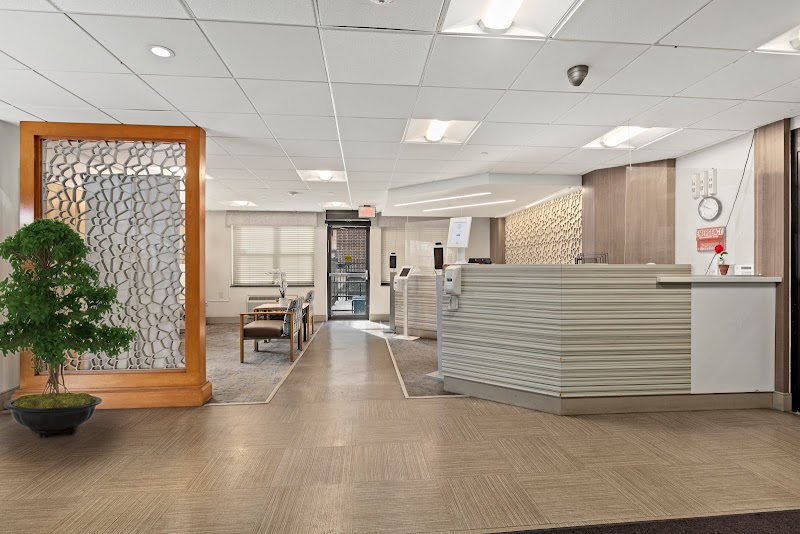
Who Owns and Operates Capitol City Rehab And Healthcare Center?

CAPITOL CITY REHAB AND HEALTHCARE CENTER is owned by a for-profit company. For-profit facilities operate as businesses with obligations to shareholders or private owners. The facility is operated by PRESTIGE HEALTHCARE ADMINISTRATIVE SERVICES, a chain that manages multiple nursing homes. With 360 certified beds and approximately 286 residents (about 79% occupancy), it is a large facility located in WASHINGTON, District of Columbia.
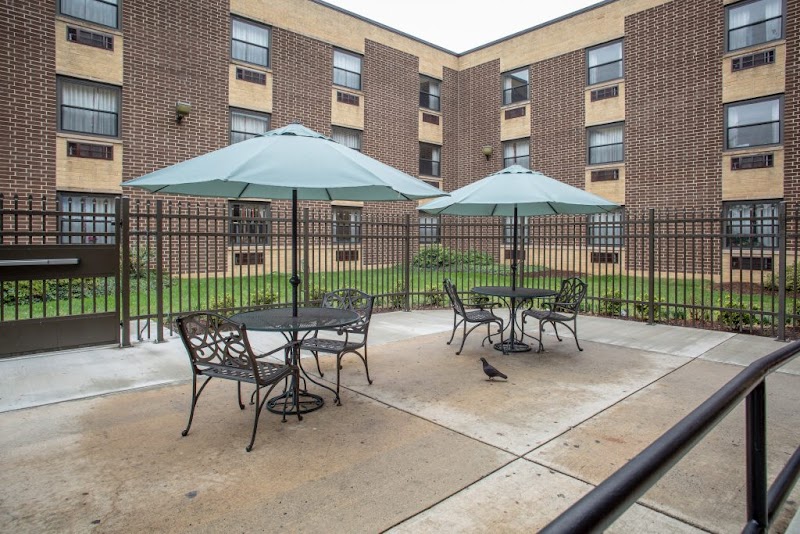
How Does Capitol City Rehab And Healthcare Center Compare to Other District of Columbia Nursing Homes?

Compared to the 100 nursing homes in District of Columbia, CAPITOL CITY REHAB AND HEALTHCARE CENTER's overall rating (1 stars) is below the state average of 3.2, staff turnover (46%) is near the state average of 46%, and health inspection rating (1 stars) is much below the national benchmark.

What Should Families Ask When Visiting Capitol City Rehab And Healthcare Center?

Based on this facility's data, families visiting should ask: "What changes have been made since the serious inspection findings, and how are you preventing similar issues?" "What safeguards and monitoring systems are in place to protect residents from abuse or neglect?" "Can I visit during a mealtime to observe dining assistance and food quality?" "How do you handle medical emergencies, and what is your hospital transfer rate?" These questions are particularly relevant given the facility's Immediate Jeopardy citations and the substantiated abuse finding on record.

Is Capitol City Rehab And Healthcare Center Safe?

Based on CMS inspection data, CAPITOL CITY REHAB AND HEALTHCARE CENTER has documented safety concerns. The facility has 1 substantiated abuse finding (meaning confirmed case of resident harm by staff or other residents). Inspectors have issued 9 Immediate Jeopardy citations (the most serious violation level indicating risk of serious injury or death). The facility has a 1-star overall rating and ranks #100 of 100 nursing homes in District of Columbia. Families considering this facility should ask detailed questions about what corrective actions have been taken since these incidents.

Do Nurses at Capitol City Rehab And Healthcare Center Stick Around?

CAPITOL CITY REHAB AND HEALTHCARE CENTER has a staff turnover rate of 46%, which is about average for District of Columbia nursing homes (state average: 46%). Moderate turnover is common in nursing homes, but families should still ask about staff tenure and how the facility maintains care continuity when employees leave.

Was Capitol City Rehab And Healthcare Center Ever Fined?

CAPITOL CITY REHAB AND HEALTHCARE CENTER has been fined $508,646 across 4 penalty actions. This is 13.3x the District of Columbia average of $38,165. Fines at this level are uncommon and typically indicate a pattern of serious deficiencies, repeated violations, or failure to correct problems promptly. CMS reserves penalties of this magnitude for facilities that pose significant, documented risk to resident health or safety. Families should request specific documentation of what issues led to these fines and what systemic changes have been implemented.

Is Capitol City Rehab And Healthcare Center on Any Federal Watch List?

CAPITOL CITY REHAB AND HEALTHCARE CENTER is not on any federal watch list. The most significant is the Special Focus Facility (SFF) program, which identifies the bottom 1% of nursing homes nationally based on persistent, serious quality problems. Not being on this list means the facility has avoided the pattern of deficiencies that triggers enhanced federal oversight. This is a positive indicator, though families should still review the facility's inspection history directly.