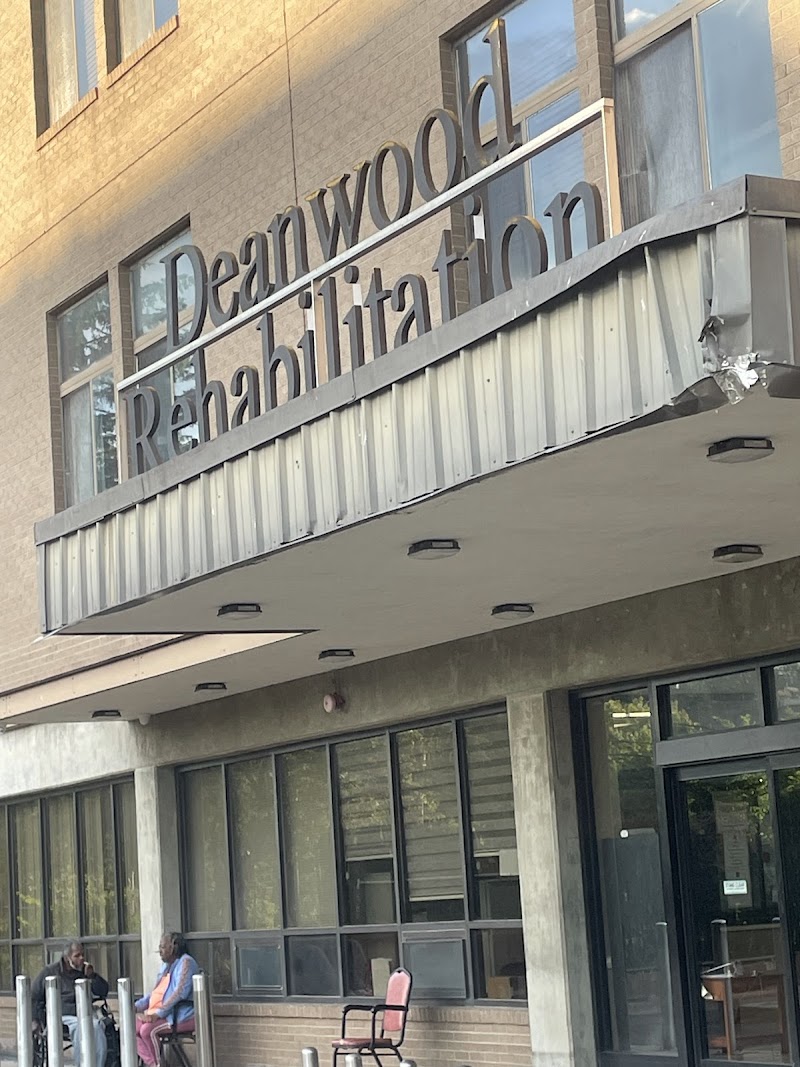
DEANWOOD REHABILITATION AND WELLNESS CENTER

5000 NANNIE HELEN BURROUGHS AVE. NE, WASHINGTON, DC 20019 (202) 399-7504
For profit - Corporation 296 Beds Independent Data: November 2025 2 Immediate Jeopardy citations
Trust Grade
0/100
#14 of 17 in DC
Last Inspection: April 2022

Over 2 years since last inspection. Current conditions may differ from available data.

Overview

Deanwood Rehabilitation and Wellness Center receives a Trust Grade of F, indicating significant concerns about the quality of care provided. Ranking #14 out of 17 facilities in the District of Columbia places them in the bottom half, showing that there are many better options available. Though the facility's issues have decreased significantly from 24 in 2024 to just 5 in 2025, this improvement cannot overshadow the critical incidents reported, including a resident eloping from the facility and others suffering falls due to inadequate supervision. Staffing is a strong point with a 5/5 star rating and a turnover rate of 34%, which is in line with the state average, suggesting that the staff is stable and familiar with the residents. However, the facility has accumulated $348,881 in fines, which is concerning and indicates repeated compliance problems. Additionally, while RN coverage is average, it is essential for addressing potential issues that may be overlooked by other staff.

Trust Score
F
0/100
In District of Columbia
#14/17
Bottom 18%
Safety Record
High Risk
Review needed
Inspections
Getting Better
24 → 5 violations
Staff Stability
○ Average
34% turnover. Near District of Columbia's 48% average. Typical for the industry.
Penalties
✓ Good
$348,881 in fines. Lower than most District of Columbia facilities. Relatively clean record.
Skilled Nurses
✓ Good
Each resident gets 54 minutes of Registered Nurse (RN) attention daily — more than average for District of Columbia. RNs are trained to catch health problems early.
Violations
⚠ Watch
117 deficiencies on record. Higher than average. Multiple issues found across inspections.
★★☆☆☆
2.0
Overall Rating
★★★★★
5.0
Staff Levels
★★★★☆
4.0
Care Quality
★☆☆☆☆
1.0
Inspection Score
Stable
2024: 24 issues
2025: 5 issues

The Good

  • 5-Star Staffing Rating · Excellent nurse staffing levels
  • 4-Star Quality Measures · Strong clinical quality outcomes
  • Full Sprinkler Coverage · Fire safety systems throughout facility
  • No fines on record
  • Staff turnover below average (34%)

    14 points below District of Columbia average of 48%

Facility shows strength in staffing levels, quality measures, fire safety.

The Bad

2-Star Overall Rating

Below District of Columbia average (3.2)

Below average - review inspection findings carefully

Staff Turnover: 34%

12pts below District of Columbia avg (46%)

Typical for the industry

Federal Fines: $348,881

Well above median ($33,413)

Significant penalties indicating serious issues

The Ugly 117 deficiencies on record

2 life-threatening 4 actual harm
Aug 2025 3 deficiencies
CONCERN (D) 📢 Someone Reported This

A family member, employee, or ombudsman was alarmed enough to file a formal complaint

Potential for Harm - no one hurt, but risky conditions existed

Quality of Care (Tag F0684)

Could have caused harm · This affected 1 resident

**NOTE- TERMS IN BRACKETS HAVE BEEN EDITED TO PROTECT CONFIDENTIALITY** Based on observation, record review and staff interview, for one (1) of six (6) sampled residents, facility staff failed to ensu...

Read full inspector narrative →
**NOTE- TERMS IN BRACKETS HAVE BEEN EDITED TO PROTECT CONFIDENTIALITY** Based on observation, record review and staff interview, for one (1) of six (6) sampled residents, facility staff failed to ensure that Resident #1 had the correct Trazadone (antidepressant medication) dose available for administration and failed to ensure that the resident received the correct dose of 50 MG (milligrams) for five (5) days.The findings included:A facility policy titled Administering Medications dated 01/2025 documented:- Medications are administered in accordance with prescriber's orders.- The individual administering the medication checks the label to verify the right medication, right dose, right time and right method (route).Resident #1 was admitted to the facility on [DATE] with multiple diagnoses that included: Major Depressive Disorder, Adjustment Disorder, Unspecified Dementia, and Metabolic Encephalopathy.Review of the resident's medical record showed the following: A physician's order dated 08/04/25 that directed, Trazodone HCl (Hydrochloride) oral tablet 50 MG (milligrams), give 1 tablet by mouth at bedtime for Depression. It should be noted that this order was discontinued on 08/08/25.A care plan focus area: [Resident #1] uses antidepressant medication, initiated on 08/06/25 had interventions that included: Administer antidepressant medications as ordered by physician. A physician's order dated 08/08/25 directed, Trazodone HCl oral tablet 50 MG, give 0.5 tablet by mouth at bedtime for Depression. An admission Minimum Date Set (MDS) assessment dated [DATE] showed that facility staff coded: a Brief Interview for Mental Status (BIMS) summary score of 02 indicating severely impaired cognitive function; total mood severity score of 10, indicating moderate depression; and received antidepressant medications.08/12/25 at 6:10 PM Nurses Note: - At 5:30 PM, observed 911 on the floor heading towards the resident's room. - Per 911 crew, they were called by family who stated that the resident has been sleeping and will not wake up. - Observed the resident in room sleeping and lethargic but responded when called. - Resident left facility with 911 crew at 6:20 PM, accompanied by family.08/13/25 at 6:50 PM Nurses Note: - Resident returned to the facility from hospital in a stretcher at approximately 6:45 PM.08/14/25 at 7:00 PM Physician's Progress Note: - Patient seen earlier. She had gone to the emergency room (ER) for altered mental status and evaluated with no new findings.A physician's order dated 08/14/25 directed, Trazodone HCl oral tablet 50 MG, give 1 tablet by mouth at bedtime for Depression.During an initial observation of the 2 south medication cart 2 on 08/19/25 at 10:25 AM, it showed a blister packet with Resident #1's name labeled, Trazadone 50 MG tab[let]. Give 0.5 tablet by mouth at bedtime for Depression. The tablets were noted to be white and were in half tablet form (25 MG). Review of the Resident #1's Medication Administration Record (MAR) for August 2025 showed that facility staff documented a check mark and their initials to indicate that the resident received Trazodone HCl oral tablet 50 MG, 1 tablet by mouth at bedtime for Depression on 08/14/25, 08/15/25, 08/16/25, 08/17/25 and 08/18/25.During a face-to-face interview on 08/19/25 at approximately 3:00 PM Employee #2 (Assistant Director of Nursing/ADON), was asked how they were ensuring that Resident #1 was receiving Trazadone 50 MG, 1 tablet when the resident only had available 25 MG tablets. Employee #2 stated, A prudent nurse would know to give two of the half tablets to equal the 50 MG, but I don't have a way of knowing if that is what was being done.The evidence showed that facility staff failed to ensure that Resident #1 had the correct dose of Trazadone 50 MG available for administration and failed to ensure that the resident had received the correct dose 08/14/25, 08/15/25, 08/16/25, 08/17/25 and 08/18/25 (five days).It should be noted that Resident #1 did not suffer any negative outcomes from this deficient practice.Cross reference 22B DCMR Sec. 3211.1(a)
CONCERN (D) 📢 Someone Reported This

A family member, employee, or ombudsman was alarmed enough to file a formal complaint

Potential for Harm - no one hurt, but risky conditions existed

Deficiency F0726 (Tag F0726)

Could have caused harm · This affected 1 resident

**NOTE- TERMS IN BRACKETS HAVE BEEN EDITED TO PROTECT CONFIDENTIALITY** Based on observations, record reviews and staff interviews, for one (1) of six (6) sampled residents, facility nursing staff fai...

Read full inspector narrative →
**NOTE- TERMS IN BRACKETS HAVE BEEN EDITED TO PROTECT CONFIDENTIALITY** Based on observations, record reviews and staff interviews, for one (1) of six (6) sampled residents, facility nursing staff failed to ensure that one resident received care and services according to accepted standards of clinical nursing practice as evidenced by no documented evidence that the physician was notified prior to a licensed registered nurse altering a resident's medication order label. Resident #1.The findings included:According to the National Institute of Health (NIH)- The standard of practice for registered nurses (RNs) is that they do not have the authority to prescribe medication independently.- Advanced Practice Registered Nurses (APRNs), specifically nurse practitioners (NPs), do, with their authority determined by state Nurse Practice Acts. https://www.ncbi.nlm.nih.gov/books/NBK574557/A facility policy titled Administering Medications dated 01/2025 documented:- Medications are administered in accordance with prescriber's orders.- If a dosage is believed to be inappropriate or excessive for a resident, the person preparing or administering the medication will contact the resident's attending physician to discuss the concerns.A facility policy titled Physician Medication Orders dated 01/2025 documented:- Medications shall be administered only upon the written order of a person duly licensed and authorized to prescribe such medications in this state.- All drug orders shall be entered into the electronic medical record, dated and signed by the person lawfully authorized to give such an order. Resident #1 was admitted to the facility on [DATE] with multiple diagnoses that included: Major Depressive Disorder, Adjustment Disorder, Unspecified Dementia, and Metabolic Encephalopathy.Review of the resident's medical record showed the following: A physician's order dated 08/08/25 directed, Trazodone HCl (Hydrochloride) oral tablet 50 MG (milligrams), give 0.5 tablet by mouth at bedtime for Depression. This order was discontinued on 08/14/25.An admission Minimum Date Set (MDS) assessment dated [DATE] showed that facility staff coded: a Brief Interview for Mental Status (BIMS) summary score of 02 indicating severely impaired cognitive function; total mood severity score of 10, indicating moderate depression; and received antidepressant medications.A physician's order dated 08/14/25 directed, Trazodone HCl oral tablet 50 MG, give 1 tablet by mouth at bedtime for Depression.During an initial observation of the 2 south medication cart 2 on 08/19/25 at 10:25 AM, it showed a blister packet with Resident #1's name labeled, Trazadone 50 MG tab[let]. Give 0.5 tablet by mouth at bedtime for Depression. The tablets were noted to be white and were in half tablet form (25 MG). It should be noted that the surveyor took a photo of the blister packet at the time of the observation. During a second observation of the 2 south medication cart 2 on 08/19/25 at 2:42 PM it showed that the same blister packet with Resident #1's name labeled, Trazadone 50 mg tab[let] had been altered by a facility staff. Facility staff crossed out 0.5 and wrote in 2 so that the label now documented, Give 2 tablet by mouth at bedtime for Depression 8/14/25. During a face-to-face interview at the time of the observation, Employee #4 (2 south Unit Manager) was asked who was responsible for altering the label and physician's order on the blister packet, the employee stated, I don't know.Review of Resident #1's progress notes from 08/14/25 to the time of the second observation on 08/19/25 at 2:42 PM showed no documented evidence that any facility staff had made the physician aware that Resident #1 had only Trazadone 25 MG tablets available for administration. During a face-to-face interview on 08/19/25 at approximately 3:00 PM, the findings were brought to the attention of Employee #2 (Assistant Director of Nursing/ADON). The employee acknowledged that the pharmacy label for Resident #1's Trazadone blister packet had been altered and stated, An audit was done by the PRN (as needed) nurse after you looked at the medication cart and he found that the order did not match what was in the cart. When asked who gave the PRN nurse the order medication order on the blister packet label, Employee #2 stated, Trazadone is not a narcotic, so the nurses are allowed to use their own judgement and make adjustments in order for the resident to receive the correct dose. When asked if that is within the scope and practice of a licensed registered nurse to make medication prescription order adjustments, Employee #2 stated, That's what a prudent nurse would do.The evidence showed that a licensed nurse, who did not have prescribing authority, made medication prescription order changes to Resident #1's Trazadone medication order label with no evidence that the resident's physician was made aware. Cross reference 22B DCMR Sec. 3227.11
CONCERN (D) 📢 Someone Reported This

A family member, employee, or ombudsman was alarmed enough to file a formal complaint

Potential for Harm - no one hurt, but risky conditions existed

Medical Records (Tag F0842)

Could have caused harm · This affected 1 resident

**NOTE- TERMS IN BRACKETS HAVE BEEN EDITED TO PROTECT CONFIDENTIALITY** Based on observation, record review and staff interview, for one (1) of six sampled residents, facility staff inaccurately docum...

Read full inspector narrative →
**NOTE- TERMS IN BRACKETS HAVE BEEN EDITED TO PROTECT CONFIDENTIALITY** Based on observation, record review and staff interview, for one (1) of six sampled residents, facility staff inaccurately documented that they administered Trazadone (antidepressant medication) 50 MG (milligrams), one tablet to Resident #1.The findings included: A facility policy titled Administering Medications dated 01/2025 documented:- Medications are administered in accordance with prescriber's orders.- The individual administering the medication checks the label to verify the right medication, right dose, right time and right method (route).Resident #1 was admitted to the facility on [DATE] with multiple diagnoses that included: Major Depressive Disorder, Adjustment Disorder, Unspecified Dementia, and Metabolic Encephalopathy.Review of the resident's medical record showed the following: An admission Minimum Date Set (MDS) assessment dated [DATE] showed that facility staff coded: a Brief Interview for Mental Status (BIMS) summary score of 02 indicating severely impaired cognitive function; total mood severity score of 10, indicating moderate depression; and received antidepressant medications.A physician's order dated 08/14/25 directed, Trazodone HCl oral tablet 50 MG, give 1 tablet by mouth at bedtime for Depression.Review of the Resident #1's Medication Administration Record (MAR) for August 2025 showed that facility staff documented a check mark and their initials to indicate that the resident received Trazodone HCl oral tablet 50 MG, 1 tablet by mouth at bedtime for Depression on 08/14/25, 08/15/25, 08/16/25, 08/17/25 and 08/18/25.During an observation of the 2 south medication cart 2 on 08/19/25 at 10:25 AM, it showed a blister packet with Resident #1's name labeled, Trazadone 50 MG tab[let]. Give 0.5 tablet by mouth at bedtime for Depression. The tablets were noted to be white and were in half tablet form (25 MG). The evidence showed that Resident #1 only had Trazadone 25 MG (50 MG half tablets) available for administration however, facility staff documented that they administered Trazodone 50 MG, 1 tablet by mouth at bedtime on 08/14/25, 08/15/25, 08/16/25, 08/17/25 and 08/18/25.During a face-to-face interview on 08/19/25 at approximately 3:00 PM Employee #2 (Assistant Director of Nursing/ADON), acknowledged the findings and was asked how they were ensuring that Resident #1 was receiving Trazadone 50 MG, 1 tablet when the resident only had available 25 MG tablets. Employee #2 stated, A prudent nurse would know to give two of the half tablets to equal the 50 MG, but I don't have a way of knowing if that is what was being done.Cross reference 22B DCMR Sec. 3231.10
Jan 2025 2 deficiencies
CONCERN (D) 📢 Someone Reported This

A family member, employee, or ombudsman was alarmed enough to file a formal complaint

Potential for Harm - no one hurt, but risky conditions existed

Deficiency F0557 (Tag F0557)

Could have caused harm · This affected 1 resident

**NOTE- TERMS IN BRACKETS HAVE BEEN EDITED TO PROTECT CONFIDENTIALITY** Based on observation and staff and resident interviews, the facility staff failed to provide respect to a resident when the resi...

Read full inspector narrative →
**NOTE- TERMS IN BRACKETS HAVE BEEN EDITED TO PROTECT CONFIDENTIALITY** Based on observation and staff and resident interviews, the facility staff failed to provide respect to a resident when the resident spoke about a concern with her television for one (1) of 10 sampled residents (Resident # 2). The findings included: Resident #2 was admitted on [DATE] with multiple diagnoses including Hemiplegia, Cervical Disk Disorder and Morbid Obesity. A quarterly Minimum Date Set assessment dated [DATE] documented that the resident had a Brief Interview for Mental Status summary score of 10 indicating that the resident's cognitive status was moderately impaired. During an observation with Employee #2 (DON) and Employee #4 (Assigned RN) on 01/24/25 at approximately 10 AM, Resident #2 was noted in her room lying in bed, well groomed, alert, oriented to person, place, time, and situation. At the time of the observation, the resident stated that she prefers to stay in bed and watch tv, but her tv had not worked for approximately a week. As the resident was speaking, Employee #4 interrupted and stated, That's not true. Her tv was working the other day. During a face-to-face interview on 01/24/25 at approximately 12 PM, Resident #2 stated that she felt disrespected when Employee #4 interrupted her during our earlier conversation. The resident said that the employee tried to make it seem that she didn't know what was going on with her tv. During a face-to-face interview on 01/24/25 at approximately 1PM, Employee #4 stated that she was not trying to be disrespectful with the resident. She interrupted because the resident has periods of confusion, and she wanted to inform the resident that she observed her tv working earlier in the week. During a face-to-face interview on 01/24/25 at approximately 2 PM, Employee #1 (Administrator) stated that the facility was in the process of changing to a new cable provider, and there may have been some interruptions with service. The Administrator also said that residents and families were informed about the possible disruption in cable service prior to the change. Additionally, the Administrator stated that she would have maintenance to check Resident #2's tv.
CONCERN (D) 📢 Someone Reported This

A family member, employee, or ombudsman was alarmed enough to file a formal complaint

Potential for Harm - no one hurt, but risky conditions existed

Safe Environment (Tag F0584)

Could have caused harm · This affected 1 resident

**NOTE- TERMS IN BRACKETS HAVE BEEN EDITED TO PROTECT CONFIDENTIALITY** Based on observations, and resident and staff interview, the facility failed to maintain the required comfortable air temperatur...

Read full inspector narrative →
**NOTE- TERMS IN BRACKETS HAVE BEEN EDITED TO PROTECT CONFIDENTIALITY** Based on observations, and resident and staff interview, the facility failed to maintain the required comfortable air temperature range of 71°F to 81°F for one for one (1) of 10 sampled residents. (Resident #2) The findings included: Resident #2 was admitted to the facility on [DATE] with multiple diagnoses including Hemiplegia, Cervical Disk Disorder and Morbid Obesity. A quarterly Minimum Data Set assessment dated [DATE] documented that the resident had a Brief Interview for Mental Status summary score of 10 indicating that the resident's cognitive status was moderately impaired. During an observation on 1/23/2025 at 10:45am, the resident was observed lying in bed alert, oriented to name, place and time. At the time of observation, the resident was lying in bed with a heavy blanket covering her, stating that her room has been cold for the past week. The resident further stated that her room gets colder at night. The resident added that she informed the nursing staff her room was cold, but she couldn't recall the nurse's name. At the time of observation, the resident's room air temperature was measured to be at 66 °F. During a second observation on 1/23/2025 at 2:45pm, the resident room air temperature was measured to be at 68 °F at the time of observation. The resident was observed still lying in bed in her room with a heavy blanket covering her, saying that that her room was still cold. During a face-to-face interview on 1/23/2025 at 2:45pm, Employee #3 (Maintenance Director) and Employee #1 (Adminstrator) stated that they were unaware of Resident #2's room temperature not meeting the required temperature range of 71 to 81°F. Additionally, they stated that residents' room temperatures are monitored daily, but they do not keep a record of it. They further stated that there is an electronic system called Reqqer to log maintenance job requests and record tasks that are completed, but the system is hardly used. Employee #3 added that most of the maintenance jobs are completed as they are reported in person to the maintenance team. During an observation on 1/24/2025 at approximately 9:50am, room air temperatures were measured in 24 rooms located in different spaces across the 2nd, 3rd, 4th and 5th floors. Resident #2's room temperature was also measured at this time and was 73 °F. At the time of the observation, Resident #2 was observed in her room lying in bed with a heavy blanket covering her, again stating that her room was cold, and colder at night.
Nov 2024 2 deficiencies
CONCERN (D) 📢 Someone Reported This

A family member, employee, or ombudsman was alarmed enough to file a formal complaint

Potential for Harm - no one hurt, but risky conditions existed

Deficiency F0578 (Tag F0578)

Could have caused harm · This affected 1 resident

**NOTE- TERMS IN BRACKETS HAVE BEEN EDITED TO PROTECT CONFIDENTIALITY** Based on record review and interview, the facility failed to implement their Advanced Directive (5 Wishes) policy for one (1) of...

Read full inspector narrative →
**NOTE- TERMS IN BRACKETS HAVE BEEN EDITED TO PROTECT CONFIDENTIALITY** Based on record review and interview, the facility failed to implement their Advanced Directive (5 Wishes) policy for one (1) of three (3) sample residents. (Resident #1) The findings included: Resident #1 was admitted to the facility on [DATE] with multiple diagnoses including pneumonia and acute respiratory failure. A physician order dated [DATE] instructed, No, CPR (Cardiopulmonary Resuscitation) palliative and supportive care. A review a policy tilted, End of Life Planning Policy-Five Wishes dated 01/2023 documented in part, The policy applies to all residents upon admission and throughout their stay, with assessments and updates conducted by the social worker and the Interdisciplinary Team The social worker will complete the Advanced Life Care Planning Assessment with 48 to 72 hours of admission .The Interdisciplinary Care Planning Team will review M.O.S.T [and] Advanced Directives [5 wishes] with the resident during quarterly care planning session to determine if the resident wishes to make changes in such directives . A review of a document titled, Advanced Life Care Planning Five Elements/Wishes form documented in part, Form completed by: Employee # 4 [Social Service Assistant] .The kind of treatment I want .DNR (Do Not Resuscitate). Additionally, the form lacked documented evidence that it was completed by a social worker. A care plan dated [DATE] documented in part, Problem- Advanced Life Care Planning: I have made the following decisions regarding end-of-life care: Do Not Resuscitate. Interventions .DNR (Do Not Resuscitate) . During a face-to-face interview on [DATE] at 11:41 AM, Employee #3 (Lead Social Worker) stated that the social service assistant will complete the 5-wishes form, and the social worker will review and sign it. He could not explain why the social worker did not sign the form.
CONCERN (D) 📢 Someone Reported This

A family member, employee, or ombudsman was alarmed enough to file a formal complaint

Potential for Harm - no one hurt, but risky conditions existed

Deficiency F0655 (Tag F0655)

Could have caused harm · This affected 1 resident

**NOTE- TERMS IN BRACKETS HAVE BEEN EDITED TO PROTECT CONFIDENTIALITY** Based on record review and interview, the facility failed to have documented evidence that the resident or the resident represen...

Read full inspector narrative →
**NOTE- TERMS IN BRACKETS HAVE BEEN EDITED TO PROTECT CONFIDENTIALITY** Based on record review and interview, the facility failed to have documented evidence that the resident or the resident representative was provided with a written copy of the base line care plan. The findings included: Resident #1 was admitted to the facility on [DATE] with multiple diagnoses including pneumonia and acute respiratory failure. A review of the resident's Base Line Care Plan dated 10/14/23 documented in part, Initial Baseline Care Plan meeting held today for [Resident #1] 10/14/2023 in the resident's room with all the team members present. Resident responsible party] joined via telephone conference. The care plan lacked documented evidence, a written copy was provided to the resident or resident's party responsible. A review of the progress notes dated from 10/14/23 to 10/31/23 lacked documented evidence that a written copy of the Base Line Care Plan was provided to the resident or the resident's representative. An admission Minimum Date Set assessment dated [DATE] revealed resident had a brief Interview for Mental Status summary score of 7 indicating the resident cognitive status was severely impaired. Past Non-compliance Information: During a face-to-face interview on 11/12/24 at approximately 1 PM, Employee #2 (DON) the DON stated that the facility identified early last year that the Base Line Care Plan process needed to be update to ensure that the residents and residents' representatives were provided a copy. As a result, the Base Line Care Plan was modified to include a section for staff to document the date and who was provided with a copy. - On January 7, 2024, the facility identified a gap in verifying that residents or their representatives had received the Baseline Care Plan. The following corrective actions were taken: - On January 10, 2024, the QA Regional Consultant provided education to the social workers, unit managers, DON, ADON, and Administrator. This training aimed to ensure accurate completion of the Baseline Care Plan assessment and confirm that the document is sent to the resident and/or their representative. - The QAPI team was informed by the Regional QA Consultant on January 25, 2024, about upcoming updates to the Baseline Care Plan assessment to ensure that the document is provided to residents and/or their representatives as per policy. - Based on the recommendation of the QAPI team the existing Baseline Care Plan was retired and the new template for the Baseline Care Plan was created on February 13, 2024 to ensure compliance per policy. - On February 13, 2024, the Baseline Care Plan was implemented to specify the format in which the Baseline Care Plan was prepare. The previously mentioned interventions were implemented before the State Agency's on-site visit of 11/08/24.
May 2024 22 deficiencies 1 IJ
CRITICAL (J) 📢 Someone Reported This

A family member, employee, or ombudsman was alarmed enough to file a formal complaint

Immediate Jeopardy (IJ) - the most serious Medicare violation

Accident Prevention (Tag F0689)

Someone could have died · This affected 1 resident

**NOTE- TERMS IN BRACKETS HAVE BEEN EDITED TO PROTECT CONFIDENTIALITY** Based on observations, record reviews, resident and staff interviews, for three (3) of 94 sampled residents, facility staff fail...

Read full inspector narrative →
**NOTE- TERMS IN BRACKETS HAVE BEEN EDITED TO PROTECT CONFIDENTIALITY** Based on observations, record reviews, resident and staff interviews, for three (3) of 94 sampled residents, facility staff failed to provide adequate supervision for residents as evidenced by: 1. Resident #120, who uses a wheelchair for locomotion and requires medications to treat multiple diagnoses, eloped from the facility on 04/29/24; 2. Resident #64 having an unwitnessed fall from her wheelchair; and 3. Resident #79 having multiple falls with injury. The facility's census on 04/29/24 was 265. Due to this failure, an Immediate Jeopardy was identified on May 2, 2024, at 11:30 AM related to the elopement of Resident #120. The facility's Administrator submitted a corrective action plan to the Survey Team that was accepted on May 3, 2024, at 12:18 AM. The Survey Team verified implementation of the corrective plan while onsite and the Immediate Jeopardy was lifted on May 8, 2024, at 4:36 PM. After removal of the immediacy, the deficient practice remained at actual harm and the scope and severity of a G. The findings included: 1. Facility staff failed to provide adequate supervision of the main entrance lobby and parking lot areas as evidenced by Resident #120, who uses a wheelchair for locomotion and requires medications to treat multiple diagnoses, eloped from the facility on 04/29/24. Per the facility's plan of correction from their last Recertification Survey, with a compliance date of 08/24/22, the facility stipulated that: Supervisory lobby employee will ensure that residents sitting outside are supervised. Findings will be reported to the front desk who will call the unit for the nurse to come and address the issue immediately. Review of the facility's policy titled Routine Resident Checks/Supervision/Rounding with a revision date of 01/2024 documented the following: For alert, oriented residents that do not have any recent change in condition and prefer to leave the unit for fresh air or to move around the facility or to smoke (but are not at risk for elopement) may be rounded on once every 4 hours. Documentation for this rounding is not required unless an abnormality is found, or the resident cannot be located. Review of the facility's policy titled Elopement/Missing Resident Policy with a revision date of 01/2024 documented the following: If a resident is missing. Initiate the elopement/missing resident emergency procedure: a. Determine if the resident is out on an unauthorized leave or pass or discharged against medical advice. b. If the resident was not authorized, call a code for the missing resident. [CODE PINK] Resident #120 was admitted to the facility on [DATE] with diagnoses that included, Type 2 Diabetes Mellitus, Hypertension, Atrial Fibrillation, Seizure Disorder, Schizoaffective Disorder, and Gait Abnormality. Review of the resident's medical record revealed the following: A Quarterly Minimum Data Set (MDS) assessment dated [DATE] showed facility staff coded the resident as having a BIMS (Brief Interview for Mental Status) summary score of, 09, indicating the resident had moderately impaired cognition and used a wheelchair for locomotion. The MDS assessment showed no documented behaviors for elopement or wandering. Per the care plan for Resident #120, initiated on 07/26/23 and last updated on 03/05/24 showed focus statement [resident name] has Seizure Disorder. 9/11/23 resident found on the floor unresponsive. 3/4/24 Resident had a seizure activity that lasted for 3 minutes. Review of Resident #120's Wandering/Elopement Assessment prior to the resident's elopement showed he was not an elopement risk on the following dates: 07/24/23, 09/18/23, 10/25/23, 12/12/23 and 03/11/24. Observation of the facility at the start of the survey on April 18, 2024, revealed pedestrian and car gates located at the main entrance to the facility that were always safeguarded by a security guard. Per World Weather, the weather forecast listed the following for [NAME], DC: on 04/29/24: Day- 86 degrees Night - 68 degrees on 04/30/24: Day- 84 degrees Night - 70 degrees https://worldweather. info/forecast/usa/washington_4/29-april/ and; Review of Resident #120's April 2024 Medication Administration Record documented that the resident was to receive the following medications on 04/29/24 at 9:00 PM: Melatonin 3 mg (milligrams) tablet by mouth (for sleep), Atorvastatin 20 mg tablet by mouth (for cholesterol), Trazadone HCL 50 mg tablet by mouth (Schizoaffective Disorder), Propranolol HCL 40 mg tablet by mouth (for tremors), and Depakote 500 mg delayed release tablet by mouth (for mood stabilization). During a face-to-face interview on 04/30/2024 at 5:30 PM with Employee #4, the assigned Certified Nurse Assistant (CNA) stated that when he came to work at 3:00 PM (on 04/29/24) he saw Resident #120 at 3:30 PM. The next time I saw the resident was after 4:00 PM, talking with the charge nurse, asking to go out for a fresh air break. He went downstairs. The CNA stated that he went to Resident #120's room at 9:00 PM to check if he needed any help. He was not back, and his dinner was not eaten. I was worried that he did not eat his food. This was after 9:00 PM. I went downstairs to the front of the building and could not find the resident. I talked with security (evening shift front desk security guard) about the resident, and they said they did not see him. The resident usually goes out and comes back with no issues. I then reached out to the charge nurse and let him know that I could not find the resident. During a face-to-face interview on 04/30/24, at 5:59 PM with Employee #5, Licensed Nurse who was assigned to care for Resident #120 on 04/29/2024 the evening shift (3PM -11 PM), stated that he saw the resident at the start of his shift around 3:15 PM and then again at 4:55 PM to administer the resident's 5:00 PM medications. At that time, Resident #120 stated to the nurse that he was going to go outside to get some fresh air. The assigned nurse further stated that he did not look for the resident until approximately 9:00 PM in preparation to administer his 9:00 PM medications. It was at this time that the assigned nurse realized that the resident's whereabouts were not known. During a telephone interview conducted on 05/01/24 at approximately 10:00 AM, Employee #6, the Night Shift (10:00 PM-6:00 AM) Gate Security Officer, stated that he leaves the car, and the pedestrian gates open from 11:00 PM to about 11:30 PM for the change of shift, but he did not see any resident leave through either of the gates on 04/29/24. During a telephone interview conducted on 05/01/24 at approximately 10:15 AM, with Employee #7, the Security Supervisor, stated that, The front gate was 'acting up,' [malfunctioning] on 04/29/24. He further stated that he believes the resident left the facility after 10:00 PM. During a telephone interview conducted on 05/01/24 at 10:40 AM with Employee #8, the Night Shift Desk Security Officer (located inside the building) stated that she worked on 04/29/24 on the shift that starts at 10:00 PM and ends at 6:00 AM, and she did not see (Resident #120) during her shift. She further stated that a CNA called and stated that the resident was missing. At 12:22 AM [on 04/30/2024] the Security Officer called a Code Pink/ (Missing Resident). During a telephone interview conducted on 05/01/24 at 11:00 AM, Employee #9, the Evening Shift Security Guard, stated he worked from 2:00 PM to 10:00 PM on 04/29/24, and he saw Resident #120 sitting in front of the building at the end of his shift at approximately 10:00 PM and he greeted the resident as he left the facility. It should be noted that Resident #120's assigned nurse and CNA both stated that it was at approximately 9:00 PM when they both noted that the resident was not on the unit or in the front of the building. A review of the facility's investigation documents showed the following on 04/30/24: 12:15 AM- Administrator and the Director of Nursing were alerted. 12:17 AM - A Code Pink (Missing Resident) was called. It should be noted that this Code Pink was called 3 hours after nursing staff first realized that the resident was missing at approximately 9:00 PM on 04/29/24. 12:25 AM - Metropolitan Police Department was called. The facility submitted an incident report to the State Agency on 04/30/24 at 3:21 AM which documented, [Resident #120] BIMS 09 was admitted to [Facility name] since 7/24/2023. Resident was last seen talking to other residents in the courtyard around approximately 8pm. During routine checks, the resident was not in his room, search was expanded to other areas of the facility, as resident is often socializing with multiple residents. Code Pink initiated. Resident not found in the facility; police called, search and investigation is ongoing. Guardian notified. During a face-to-face interview conducted on 04/30/24 at 1:21 PM Employee #1, (Administrator) stated that the facility's staff drove to 14th and U Street, NW and they were able to locate the resident sitting in his wheelchair on the sidewalk. The resident initially refused to get in the car with staff, the police were called and helped to put the resident in the staff member's car. The resident and staff returned to the facility. The resident was then assessed by the nurse and the physician and guardian were notified at 1:15 PM on 04/30/24. During a face-to-face interview with Employee #2, the Director of Nursing on 05/01/24 at 11:20 AM, she stated that the expectation is for licensed staff to physically see their assigned patients every 2-4 hours. It should be noted that approximately 14 hours, after Resident #120 was missing from the facility he was found on 04/30/24 at 11:00 AM in the community at 14th and U Streets, NW which is approximately a 20-30-minute drive from the facility. A review of a Physician's Progress Note dated 04/30/24 at 4:04 PM documented: The patient seen awake in bed with smell of alcohol in room, he reports feeling well and have (had) been drinking. No visit injury. Vital signs obtained by nursing. An Immediate Jeopardy was identified on May 2, 2024, at 11:30 AM, related to the elopement of Resident #120. The facility's Administrator submitted a corrective action plan to the Survey Team that was accepted on May 3, 2024, at 12:18 AM and included the following: -Regarding the concern, resident #120 was found by facility staff at 14th and U street NW at 11:11am on 4/30/24 and returned to the facility on 4/30/24 at around 1pm EST. A head-to-toe assessment was done for the resident by the licensed nurse on 4/30/24 with no new issues noted. -Resident #120's elopement risk assessment was updated by the licensed nurse on 4/30/24 to ensure the resident received proper interventions and prevent future incidences. Resident #120's picture was added in the elopement binder in all locations (front desk, all nursing units and security booth) to ensure that staff are aware of his elopement risk and ensure its safety. The resident was given a Wanderguard and placed on 1:1 for the period of 72 hours to identify any new exit seeking behaviors. -Resident #'s care plan was modified for elopement on 4/30/24 to ensure there are interventions for elopement in place and ensure resident's safety to prevent further elopement incidences. The two Security guards that worked on 4/29/24 for the shift of 2pm to 10pm and the shift of 10pm to 6am at the gate were suspended pending investigation, effective 4/30/24. The identified security guard that left the gate open was terminated effective 5/2/24. The gates inspection and maintenance were completed on 4/30/24 by [Name of Company]. The maintenance Department will complete weekly gates inspection. Any negative findings will be immediately corrected. If unable to correct immediately, security will be enhanced in the interim. -The CNA and Nurse assigned to the resident received 1:1 in-service by the Staff Educator/Development on 5/1/24 for elopement, supervising residents, documentation, and notification to the supervisor when a resident is identified as missing. The assigned CNA was suspended on 5/2/24. The CNA resumed duty after 3 days of suspension without pay. The assigned Nurse was terminated on 5/2/24. -All residents can be affected by the alleged deficiency. A head count was done for all residents on 4/30/24 and all residents were accounted for within the facility. All residents were assessed for risk of elopement. This assessment was completed between 4/30/24 and 5/2/24 by licensed nursing personnel. The Unit Managers have verified the EMR [electronic medical record] that residents that triggered for Elopement risk had effective interventions in place. This was completed on 5/2/24. -Education was provided by the Staff Educator/Development on 5/1/24 with the security staff on security protocols to prevent resident elopement. Security protocol includes documenting when residents' leave the facility, rounding all exits at least every 4 hours, and gates are closed at all times. -All staff will be educated on Elopement Prevention, Elopement Protocols and the facility's Policy and Procedures on Elopement Prevention by the Staff Educator/Development. This education was implemented on 5/1/24 and will be completed by 5/4/24. The Staff Educator/Development will ensure that any staff that has not received their education by 5/4/24 will receive it before resuming work. -Deanwood's staff shall make a routine resident check at least every 2 hours. The licensed nurse makes the determination if the resident needs more frequent monitoring and will communicate any new change with the care team. Documentation of this will be maintained every shift in the Electronic Medical Record. Related policies will be revised to reflect the plan of action and updated periodically. Current staff will be trained each shift as they come in. -Licensed nurses will be educated by the Staff Educator/Development on ensuring all residents with interventions for monitoring are implemented as outlined in the Routine Resident Check/Supervision/Rounding Policy. This education was implemented on 5/2/24 and will be completed by 5/4/24. The Staff Educator/Development will ensure that any staff that has not received their education by 5/4/24 will receive it before resuming work. -The security staff will supervise residents in the parking lot area at least every 4 hours to ensure residents' safety. A log is maintained by the security staff for this supervision. Any issues found will be reported to the Nursing Supervisor immediately. Audit of this log on a weekly basis will be done by the QA [Quality Assurance] Nurse for the period of one month. -A new audit was implemented on 5/2/24 to ensure that security guards are monitoring the gates, and the gates are not left unattended. This audit will be completed by the front desk staff/night supervisor. This audit will be done at least every shift for one week. Any new issues will be addressed immediately. -An ongoing audit of the Security Gate Protocol will be done by the Administration to ensure that the Security Gate Protocol is followed by security staff. This audit will be conducted daily x 1 week, weekly x4, monthly x3. Any issues found will be addressed immediately upon discovery and will be reported to the QAPI [Quality Assurance Performance Improvement] committee. If negative patterns are found, the length of audit will be extended. -The results of the monitoring and care plan review completed under this action plan are submitted to the QA/QI [Quality Assurance Quality Improvement] Committee for review and follow-up monthly. -Date of compliance will be 5/6/24. The Survey Team verified implementation of the corrective plan while onsite and the Immediate Jeopardy was lifted on May 8, 2024, at 4:36 PM 2. Facility staff failed to provide adequate supervision to prevent accidents, as a result, Residents' #64 and #79 had unwitnessed falls. A review of the facility's policy titled Fall and Fall Management with a revision date of 01/2024, revealed the following: Based on previous evaluations and current data, the staff will identify interventions related to the resident's specific risks and causes to try to prevent the resident from falling and to try to minimize complications from falling. Resident -Centered Approaches to Managing Falls and Fall Risk -The staff with the input of the interdisciplinary team will implement a resident-centered fall prevention plan to reduce the specific risk factor(s) of falls for each resident at risk or with a history of falls. If falling recurs despite initial interventions, staff will implement additional or different interventions, or indicate why the current approach remains relevant. If underlying causes cannot be readily identified or corrected, staff will try various interventions, based on assessment of the nature or category of falling, until falling is reduced or stopped, or until the reason for the continuation of the falling is identified as unavoidable. In conjunction with the attending physician and interdisciplinary team, the staff will identify and implement relevant interventions to try to minimize serious consequences of falling. 2A. Resident #64 was admitted to the facility on [DATE] with multiple diagnoses that included: Monoplegia of Left Upper Limb following Cerebrovascular Accident (CVA) and Muscle Weakness. A facility policy Use of Assistive Devices and Equipment with a review date of 01/2024 documented: 4. The following factors are addressed to the extent possible to decrease the risk of avoidable accidents associated with devices and equipment. a. Appropriateness for resident condition - the resident is assessed for lower extremity strength, range of motion, balance and cognitive abilities when determining the safest use of devices and equipment. A care plan dated 9/20/23 documented, Focus [Resident #64] had an actual fall with no injury r/t (related to) sliding off the wheelchair. Interventions: Continue interventions on the at-risk plan; For no apparent acute injury, determine and address causative factors of the fall, Therapy referral for wheelchair positioning and management 9/21/23. A Falls Risk assessment dated [DATE] documented, Quarterly - Falls risk score 11.0 Moderate Risk; Exhibits loss of balance while standing. Uses an assistive device, e.g. (such as) cane, walker, etc. (etcetera). A physical therapy Discharge summary dated [DATE] documented, Discharge Recommendations: Pt continues to require supervision for safe use of power W/C due to limitations in problem solving, visual field deficits, and memory/attention. A quarterly Minimum Data Set (MDS) assessment dated [DATE] documented that the resident had a Brief Interview for Mental Status (BIMS) summary score of 15 indicating the resident was cognitively intact. The resident was also coded for being dependent on staff assistance for activities of daily living, chair/bed-to-chair transfers, and sitting to lying/lying to sitting on side of bed transfers. A nursing progress note dated 02/21/24, 10:10 PM documented, At 2200 (10:00pm), resident requested to go to bed. Resident went to room and a CNA (Certified Nursing Assistant) went to retrieve Hoyer lift to transfer resident. Upon CNA return resident was observed on the floor. Resident replied, I was trying to put my arm on the arm rest and fell out of the wheelchair. Head to toe assessment performed: Resident is alert and verbally responsive. Resident oriented to person, place, time, and situation. A SBAR (Situation, Background, Assessment, Response) note dated 02/21/24, 10:10 PM documented, Resident was observed on the floor; right shin and right knee abrasions; alert, and oriented to person, place, and time. A Facility Reported Incident (FRI), DC~12617, received by the State Agency on 02/23/24 documented, Resident had a fall on 2/21/24 without visible injury on assessment. The resident was observed on the floor in her room. The resident's wheelchair was evaluated by the maintenance team and found to be fully functional. During a face-to-face interview on 04/29/24 at 1:27 PM, Resident #64 stated, I was in my wheelchair and the CNA [Employee #31] was putting me in the bed and in the midst of putting me in the bed he took my seatbelt off. Then, he left the room to get the Lift. I tried to put my right arm on the arm rest, but it was not there. He had raised it up on that side, so I fell out of the chair and onto the floor on my right side. He came back about 5 to10 minutes later. He's not a regular on this floor, he floats here. The CNA's and Nurses, all got me up off the floor and back in bed. When they asked me what happened I told them, and they said I did it on purpose. During a face-to-face interview on 05/03/24 at 2:26pm, Employee #16 (Director of Rehab) stated, She has a power chair with a seat belt, and she has a hard time with the seat belt. If we put it on her she is not able to take it off, so someone has to be with her to take it off for her. She has a tilt where she leans to one side, and the seat belt is there for safety. During a face-to-face interview conducted on 05/03/24 at 4:00pm, Employee #31 (Certified Nursing Assistant, CNA) stated, I work another floor, but I float sometimes. I remember the incident when she fell, she rolled herself in her wheelchair to her room and I went with her then she backed herself up to the side of the bed, then I told her to wait here so I could get help because I can't transfer her by myself. I brought the Lift to the room and found her on the floor about 5 minutes later. During a face-to-face interview on 05/03/24 at 4:30pm, Employee #32 (Licensed Practical Nurse, LPN) stated, The CNA called me because [resident's name] wanted to go to bed. She was sitting in her wheelchair, and he (Employee #31) went to get help and when he went back, she was on the floor. She has a motorized wheelchair, and she goes around [the facility] by herself and she can go downstairs by herself, she goes and smoke. She only needs help to get in the wheelchair and out of the wheelchair. During a face-to-face interview on 05/07/24 at 3:38pm, Employee #2 (Director of Nursing) acknowledged the findings and stated, [Resident's name] know what she's doing, she will sometimes make herself fall out the wheelchair for attention, she's very manipulative. It should be noted that review of the resident's care plans lacked documented evidence of a care plan with goals and interventions to address the resident's behavior of falling out the wheelchair for attention. 2B. Resident #79 was admitted to the facility on [DATE] with multiple diagnoses that included: History of Falling, Personal History of Transient Ischemic Attack, and Dementia. Review of the resident's medical record revealed the following: A SBAR Note dated 03/31/24, documented the following, Describe the problem/symptom: Resident observed sitting on the floor at bedside . A care plan with a focus area of Fall with injury transfer to (Hospital name) ER with a date of revision of 03/31/24 documented the following interventions: Frequent monitoring of resident while in bed for fall prevention, keep routinely used items with reach for the resident. A Facility Reported Incident (FRI), DC~12611, submitted to the State Agency on 03/31/24 documented, Resident was observed by staff sitting on the floor at bedside with laceration on left side of head, slight bleeding, no hematoma .order given to transfer to nearest hospital ER for evaluation. A physician's order dated 04/09/24 directed, Send resident to the nearest ER (emergency room) due to fall and for CT (computed tomography) scan of the skull with head trauma. A Quarterly Minimum Data Set (MDS) assessment dated [DATE], revealed that the facility staff coded Resident #79 as having severely impaired cognition; no impairment of the upper or lower extremities; used a wheelchair for mobility; and had two or more falls with injury since the last admission or prior MDS assessment. A SBAR Note dated 04/13/24 documented, Fall . 04/09/24. Resident was noted sitting on floor, he was seen lying comfortably in bed during routine rounds at approximately 7:30 am. Upon assessment, moderate amount of blood with laceration to left scalp of head observed. Pressure applied and wound team alert. Order given to send Resident to the ER for head scan to evaluate for internal bleeding A SBAR Note dated 05/06/24 documented, Resident observed by staff sitting on the floor beside his bed. Head to toe assessment done and observed with skin tear to left leg of the shin. During a face-to-face interview conducted on 05/14/24 at 1:09 PM, Employee #26 (5 South Unit Manager) was asked to provide documented evidence of the frequent monitoring that was being conducted of Resident #79 while in bed, for fall prevention. The employee was unable to provide this surveyor with that information. Employee #26 stated that Certified Nurse Aide (CNA) do thirty-minute watch. When asked to provide documented evidence of the thirty-minute watch, employee #26 stated that there was no documentation. Employee #26 was further asked how they are ensuring that adequate supervision (frequent monitoring) of Resident #79 is being provided if there is no documentation, the employee did not answer. The evidence showed that facility staff failed to have documented evidence that they conducted frequent monitoring of Resident #79 after a fall with injury (laceration on left side of head) on 03/31/24. Subsequently, Resident #79 sustained two more falls with injury on 04/09/24 (laceration to left scalp) and on 05/06/24 (skin tear to shin of left leg).
SERIOUS (G) 📢 Someone Reported This

A family member, employee, or ombudsman was alarmed enough to file a formal complaint

Actual Harm - a resident was hurt due to facility failures

Quality of Care (Tag F0684)

A resident was harmed · This affected 1 resident

**NOTE- TERMS IN BRACKETS HAVE BEEN EDITED TO PROTECT CONFIDENTIALITY** Based on record review and staff interviews, for one (1) of 94 sampled residents, facility staff failed to ensure that Resident ...

Read full inspector narrative →
**NOTE- TERMS IN BRACKETS HAVE BEEN EDITED TO PROTECT CONFIDENTIALITY** Based on record review and staff interviews, for one (1) of 94 sampled residents, facility staff failed to ensure that Resident #463 received timely treatment and care after an unwitnessed fall with documented pain and swelling in her left arm. Subsequently, 23 hours lapsed before an order for x-ray was obtained that determined that the resident sustained a fracture to her left arm; and she was sent to the hospital 2 days later. These failures resulted in actual harm to Resident #463 who had unresolved pain for a minimum of 23 hours post fall. The findings included: Resident #463 was admitted to the facility on [DATE] with diagnoses that included: End Stage Renal Disease, Anemia and Hyperlipidemia. Review of the resident's medical record a physician's order dated 10/30/23 that directed, Assess resident for pain every shift on a scale from 0 to 10; Dialysis Tuesday, Thursday and Saturday; bed to the lowest position when resident is in bed every shift; call light and all commonly use articles within resident reach at all times, every shift. A physician's orders dated 10/31/23 directed, Evaluate for new onset or increase in edema every day, every shift for Congestive Heart Failure (CHF); Assess dialysis AV (arteriovenous) graft site on left upper arm for bleeding, redness, tenderness, and swelling every shift. A Quarterly Fall Risk Assessment/Evaluation dated 02/28/24 documented Moderate fall risk, score: 11.0. A care plan focus area: [Resident #463] is at risk for falls characterized by multiple risk factors related to unstable health condition reviewed 03/15/24 had interventions that included: Call bell pinned to gown when in bed; encourage resident to use handrails or assistive devices properly; ensure environment is free of clutter; have commonly used articles within easy reach; transfer and change positions slowly. A care plan focus area: [Resident #463] has a history of CVA (Cerebral Vascular Accident) with residual right-sided weakness reviewed on 03/15/24 had interventions that included: Assess fingers and toes for warmth and color. A care plan focus area: [Resident #463] has alteration in musculoskeletal status r/t (related to) history of Hand Steal Syndrome, Contracture (Left Hand) reviewed on 03/15/24 had interventions that included: Anticipate and meet needs; be sure call light is within reach and respond promptly to all requests for assistance; give analgesics as ordered by the physician; monitor/document/report to MD (medical doctor) PRN (as needed) s/sx (signs and symptoms) or complications related to arthritis such as joint pain, joint stiffness, swelling, decline in mobility, and pain after exercise or weight bearing. A Quarterly Minimum Data Set (MDS) assessment dated [DATE] showed that facility staff coded the resident as makes self-understood; able to understand verbal content; a Brief Interview for Mental Status (BIMS) summary score of 11, indicating moderately impaired cognition; no rejection of care; required extensive assistant of one person for bed mobility and toilet use; required total dependence of two persons for transfer; limitation in range of motion on one side for upper and lower extremity; no falls since admission/entry or reentry or the prior assessment. A physician's order dated 03/25/24 documented, Tylenol (pain medication) Oral Tablet 325 MG (milligrams), give 2 tablets by mouth every 6 hours as needed for pain. A Situation Background Assessment Request (SBAR) Communication Form created on 04/01/24 at 8:00 AM by Employee #20 (assigned Licensed Practical Nurse/LPN) documented: - Situation: Resident fell. - No reports or non-verbal indicators of pain. - During rounds, the resident was observed sitting on the floor by her bed in her room. Resident stated that she fell from the bed while trying to get out of the bed. - Head to toe assessment done no redness, bruises or open area noted. - MD notified; no new orders given at this time. A Fall Risk Assessment/Evaluation dated 04/01/24 at 8:24 AM documented: - Moderate fall risk, score: 11.0. A Post-Fall Huddle Form dated 04/01/24 at 8:27 AM documented: - Description of fall: Resident observed sitting by the side of her bed. - All fall precautions were in place at the time of the fall. - Recommendations/new interventions: will continue to remind the resident to use call light for assistance. A Nursing Progress Note dated 04/01/24 at 12:05 PM, created by Employee #21 (4 North Unit Manager) documented: - During rounds, the resident was observed sitting on the floor by her bed in her room. Resident stated that she fell from the bed, while trying to get out of the bed. Head to toe assessment done no redness, bruises or open area noted, neuro checks WNL (within normal limits). - Left AV graft site clean and dry intact no bleeding noted. - Resident denies pain, was assisted back to bed. Resident is non-ambulatory, observed bed in low position, call bell within reach. - Resident is non-compliant with the use of call light. Education provided for resident to call for assistance at all times, resident verbalized understanding. A SBAR Communication Form created on 04/01/24 at 12:37 PM by Employee #21 documented: - Situation: Slightly swollen left arm. - Pertinent medical history: recent fall. - Resident reports pain: yes. Location: left arm pain 3/10. - [Employee #22 (Resident #463's MD)] contacted on 04/01/24 at 12:38 PM; new orders to elevated left arm on pillow and to monitor and report any changes. - Resident has edema/slightly swollen of left arm [dialysis arm] with a pain score of 3/10 upon assessment, Tylenol given, and reassessment done within one-hour, resident verbalized effectiveness 0/10. - Assessment of left arm: no bruises, discoloration, or redness noted. - Per MD, continue to monitor or notify if there is any worsening of the condition. - Left arm immobilized and elevated on pillow. Review of the April 2024 Medication Administration Record (MAR) showed no documented evidence that Resident #463 was medicated for pain at the time the SBAR indicated. A care plan focus area: [Resident #463] has Alteration in musculoskeletal status r/t history of Hand Steal Syndrome, Contracture (Left Hand), swollen left arm on 04/01/24 revised on 04/01/24 had interventions that included: Elevate left [arm] as ordered. A Nursing Progress Note dated 04/01/24 at 11:17 PM documented, Resident has swollen left upper arm, and it is elevated on a pillow. [Medical Doctor's name] was notified and is due to visit to assess resident. Resident denies pain. A physician's orders dated 04/02/24 at 11:30 AM directed, X-Ray of the left upper [arm]; Immobilize left arm/shoulder every shift; Assess resident for pain every shift; Tylenol 325 MG, give 2 tablets by mouth every 8 hours for pain for 7 days. Please note that Resident #463 was documented as having pain and swelling in her left arm area four hours after an unwitnessed fall, however, an x-ray was not ordered until 04/02/24 at 11:30 AM, 23 and a half hours later, when facility staff documented that the resident was now unable to move her left arm. A SBAR Communication Form dated 04/02/24 at 2:26 PM documented: - Situation: Resident complain of left upper arm pain, unable to move arm, arm swollen. - Resident reports and has non-verbal indicators of pain in the left upper arm, 3/10. - Physician contacted on 04/02/24 at 11:00 AM; order given for X-Ray. X-Ray has been done, results pending. Tylenol 325mg PO (by mouth) given as per PRN order with relief. Radiology Results Report dated 04/02/24 at 4:23 AM documented: - Procedure: X-ray, humerus, minimum of 2 views. - Findings: There is a complete fracture of the humerus surgical neck with mild displacement of the shift with extension of the fracture into the greater tuberosity. A SBAR Communication Form dated 04/03/24 at 8:55 AM documented: - Situation: X-ray result received Acute humeral neck and greater tuberosity fractures, with mild displacement, Mild degree of Osteopenia. Moderate osteoarthritis. - Resident reports pain in left arm. - Physician notified on 04/03/24 at 8:00 AM; new orders to immobilize the left hand. Review of the April 2024 MAR showed no documented evidence that Resident #463 was medicated for pain on 04/03/24 when facility staff documented that the resident reported pain on the SBAR, even though staff had knowledge that the resident had multiple fractures in her left arm. A Nursing Progress Note dated 04/03/24 at 9:00 AM documented, Resident was observed [in] a sitting position on the floor beside her bed on 4/1/24. The resident stated she was trying to get out of bed, and she fell. Bed was in lowest position, call bell on the bed within reach. No discoloration, swelling, abrasion or skin tear was noted. The resident denied pain at the time. On 4/2/24, the resident complained of pain and swelling noted to the left arm. An X-ray of the left Humerus ordered. X-ray result received this morning with impression of acute humeral neck and greater tuberosity fractures with mild displacement. Mild degree of osteopenia. Moderate osteoarthritis. Fall precautions in place. Care plan updated. An investigation is in progress. The resident transferred to the ER for further evaluation. A physician's order dated 04/03/24 directed, Transfer resident to the nearest hospital ER (emergency room) via 911 for splinting and orthopedic for humeral neck greater tuberosity fractures. A SBAR Communication Form dated 04/03/24 at 11:00 AM documented: - Situation: Transfer to [Hospital name] ER for complete fracture of the humerus surgical neck with mild displacement. - Physician notified on 04/03/24 at 10:00 AM; new orders - send resident to the hospital. - Resident left the unit at 9:52 AM via 911 to ER. A Facility Reported Incident (FRI), DC~12612, submitted to the State Agency on 04/03/24 documented: - The resident was observed in a sitting position on the floor beside her bed on 04/01/24. - No discoloration, swelling, abrasion or skin tear was noted. The resident denied pain at the time. - On 04/02/24, the resident complained of pain and swelling noted to the left arm. - An Xray of the left Humerus was ordered. X-ray result received this morning with impression of Acute humeral neck and greater tuberosity fractures with mild displacement. - Care plan updated. An investigation is in progress. The resident transferred to the ER for further evaluation. A Nurses Note dated 04/03/24 at 9:57 PM documented: - The writer called the [Hospital Name] emergency department at 9:50 PM, was informed that the resident will be admitted . A Complaint, DC~12609, received by the State Agency on 04/08/24 documented: - [Resident #463] has been staying at [Facility name], receiving dialysis for over a year, recently went to [Hospital name] on 04/02/24 with multiple broken bones in her leg and arm. I visit [Resident #463] weekly with her granddaughter, she is very weak and unable to walk independently. - We are unable to find out what happened to put her in the hospital. When we went to the hospital, the doctors there did not even know what had happened and were asking us for information. - I am concerned about the quality of care she is receiving at this facility. I think an injury this extreme needs to be followed up on. The Hospital Discharge summary dated [DATE] documented: - admission date 04/03/24. - Discharge diagnoses and treatment plan: Left Coronoid Process (elbow) fracture, left proximal Humeral Fracture, present on admission. Manage non-operatively, removeable splint, apply ice pack and keep extremity elevated. Left distal femur fracture. Manage non-operatively, long leg splint, non-weight bearing, apply ice pack and keep extremity elevated. During a face-to-face interview on 04/19/24 at 2:10 PM, Employee #20 (assigned LPN) stated, [On 04/01/24] I made rounds after I started my shift and observed the resident on the floor. The resident stated, 'I fell from the bed.' I called for help. The Unit Manager (Employee #21) came, and we put her (Resident #463) back in bed. A head-to-toe assessment was done, and no injury was noted at the time. I called the doctor, and no new orders were given. The next day, there was complaints of pain in the left arm. I called the MD, and he ordered x-rays. The results came back and showed a fracture. MD was called with the results and gave order to send [Resident #463] to the hospital. When asked if she medicated Resident #463 on 04/01/24 for pain, the employee stated that she did not remember. During a face-to-face interview on 04/19/24 at 3:01 PM, Employee #21 (4 north Unit Manager) stated, [Employee #20] found the resident on the floor during rounds. I assisted to get her (Resident #463) back in the bed. A head-to-toe assessment was done by myself and Employee #20. [Resident #463] did not complain of pain in the left arm or in the legs. The doctor was called. The x-ray was ordered on the next day (04/02/24). When asked who medicated Resident #463 on 04/01/224 at 12:37 PM as documented in the SBAR that she created and signed, Employee #21 stated, The assigned nurse (Employee #20) was responsible for medicating the resident. During a face-to-face interview on 05/03/24 at 10:00 AM, Employee #22 (Primary Care Physician) was asked his expectations for treatment of a resident who has documented pain and swelling of a limb after an unwitnessed fall. The employee stated, In elderly patients who fall, there's a great risk of a fracture. X-rays should be done immediately. When asked why x-rays were not ordered for Resident #463 when facility staff reported that the resident had pain and swelling of a limb after an unwitnessed fall, the employee stated, There must've been some miscommunication in this case because an x-ray should've been done immediately. During a face-to-face interview on 05/16/24 at 3:30 PM, the findings were brought to the attention of Employee #2 (Director of Nursing/DON) and Employee #3 (Medical Director). Employee #3 stated, Whether the x-ray was done right after the fall or the next day, it wouldn't have made a difference in the management of her care, it would not have changed. I see no problem that the x-ray was done the next day. (over 24 hours after the resident's unwitnessed fall with documented pain and swelling in her left arm). The Medical Director (Employee #3) was then informed that because the management of Resident #463's care changed when she was transferred to the emergency room for further evaluation, it was then discovered that the resident also sustained a fracture to her left femur as a result of the fall on 04/01/24, which required a hard cast. Employee #3 responded, [Resident #463] is a dialysis patient, which automatically makes her a fall and fracture risk. It's expected that a dialysis site would have some swelling and tenderness. It (getting an xray on 04/01/24 after the fall occurred and the resident complained of pain and had observed swelling) wouldn't have changed the management of care for the patient. I feel that the staff did what a reasonable person should've have done.
CONCERN (D) 📢 Someone Reported This

A family member, employee, or ombudsman was alarmed enough to file a formal complaint

Potential for Harm - no one hurt, but risky conditions existed

Resident Rights (Tag F0550)

Could have caused harm · This affected 1 resident

**NOTE- TERMS IN BRACKETS HAVE BEEN EDITED TO PROTECT CONFIDENTIALITY** Based on observations, record review and staff interviews, for one (1) of 94 sampled residents, facility staff failed to treat R...

Read full inspector narrative →
**NOTE- TERMS IN BRACKETS HAVE BEEN EDITED TO PROTECT CONFIDENTIALITY** Based on observations, record review and staff interviews, for one (1) of 94 sampled residents, facility staff failed to treat Resident #68 with dignity and respect. The findings included: Review of the resident Admissions Packet provided to the survey team on 04/19/24 documented: - Your rights and protections as a nursing home resident: You have the right to be treated with respect and dignity. Resident #68 was admitted to the facility on [DATE] with multiple diagnoses that included: Huntington's Disease, Multiple Sclerosis, Lack of Coordination and Fall. Review of the resident's medical record revealed the following: A physician's order dated 09/14/23 directed, Admit to skilled level of care. The resident requires SNF (skilled nursing facility) covered care on a daily basis. A physician's order dated 09/15/23 directed, Provide incontinent care every shift. A Quarterly Minimum Data Set (MDS) assessment dated [DATE] showed that facility staff coded: clear speech, usually understood others and usually makes self understood; a Brief Interview for Mental Status (BIMS) summary score of 10, indicating moderately impaired cognitive status; required extensive assistance of one person for toilet use and personal hygiene; functional limitations in range of motion on both sides for upper and lower extremities; and was frequently incontinent of bowel and bladder. A care plan focus area: [Resident #68] has an activities of daily living (ADL) self-care performance deficit related to (r/t) Huntington; s Disease with involuntary movement), revised on 04/03/24 had interventions that included: the resident requires 1 staff participation with personal hygiene and oral care. During an observation on unit 3 south, in room [ROOM NUMBER] on 04/25/24, the following was noted: - at 2:01 PM: The surveyor walked into room [ROOM NUMBER] and Resident #68, in bed A, closest to the door, stated, I need my pamper changed. The resident was instructed to put on her call light, and she did. The surveyor proceeded to sit at the bedside of the resident in bed B, who had her curtain pulled. - at 2:23 PM: Employee #12 (assigned Certified Nurse's Aide/CNA) entered the room. Resident #68 stated to the employee, I need to be changed. The employee did not respond or acknowledge the resident. The employee walked to the head of the bed, turned off the call light and exited the room. - at 2:24 PM: Resident #68 put on her call light. - 2:26 PM: An Environmental Services (EVS) employee entered the room, turned off the call light, stated to Resident #68, The nurse is coming, she's helping someone next door and exited the room. - at 2:35 PM: Resident #68 put on her call light, again. - at 2:37 PM: The same EVS employee entered the room, turned off the call light and stated to Resident #68, Your CNA took someone to dialysis; she'll be right back to see you when she's done and exited the room. - at 2:46 PM: Resident #68 put on her call light. - at 2:47 PM: Employee #12 entered the room and yelled at Resident #68, You are not my only patient! I have five other people to take care of! I just had to take someone to dialysis! You are going to have to wait! The employee turned off the call light and started to walk out of the room when the surveyor stopped her. During a face-to-face interview at 2:47 PM, Employee #12 stated, I am sorry, I didn't mean to talk to her (Resident #68) like that. I can't ask for help around here because they won't help me. I will change her now. The evidence also showed that Employee #12 failed to treat Resident #68 with dignity and respect. During a face-to-face interview on 04/25/24 at 2:55 PM, the findings were brought to the attention of and acknowledged by Employee #2 (Director of Nursing/DON) and Employee #13 (3 south Unit Manager). Employee #2 stated, I will address the issue with the CNA. Cross Reference 22B DCMR Sec. 3269.1(d)
CONCERN (D) 📢 Someone Reported This

A family member, employee, or ombudsman was alarmed enough to file a formal complaint

Potential for Harm - no one hurt, but risky conditions existed

Deficiency F0578 (Tag F0578)

Could have caused harm · This affected 1 resident

**NOTE- TERMS IN BRACKETS HAVE BEEN EDITED TO PROTECT CONFIDENTIALITY** Based on record review and staff interviews, for one (1) of 94 sampled residents, the physician failed to follow the resident's/...

Read full inspector narrative →
**NOTE- TERMS IN BRACKETS HAVE BEEN EDITED TO PROTECT CONFIDENTIALITY** Based on record review and staff interviews, for one (1) of 94 sampled residents, the physician failed to follow the resident's/resident representatives (RP) Advanced Directives wishes. Resident #109. The findings included: Resident #109 was admitted to the facility on [DATE] with multiple diagnoses that included Cerebral Infarct, Hemiplegia Affecting Right Dominant Side, and Aphasia. Review of the resident's medical record revealed the following: A face sheet that documented [Resident #109's daughter's name] as the representative (RP). An Advanced Life Care Planning Five Elements/Wishes Form signed on [DATE] by the resident's RP and facility staff that documented: - The person I want to make care decisions for me when I cannot, [Daughter's name]. - The kind of treatment I want, Full Code. A Quarterly Minimum Data Set (MDS) assessment dated [DATE] showed facility staff coded the following: a Brief Interview for Mental Status (BIMS) summary score of 00, indicating severely impaired cognitive status. A physician's order dated [DATE] directed, DNR (do not resuscitate)/DNI (do not intubate). A care plan focus area: Advance life care planning revised on [DATE] had a goal of My wishes will be known and honored through next review date. Interventions for this care plan included, Attempt CPR (Cardiopulmonary Resuscitation). The evidence showed that the active physician failed to follow the Resident #109's Advanced Directives wishes of being a full code as evidenced by having an active DNR/DNI order. During a face-to-face interview on [DATE] at 4:14 PM, Employee #14 (Social Worker) acknowledged the finding and stated, There is a conflict between the Advanced Life Care Planning Five Elements/Wishes Form and the care plan with the physician's order. I called the family, the daughter, who is the RP, and she wants him to be a full code. His son wants DNR/DNI. I called [Resident #109's primacy physician] and moving forward, he will be treated as full code. The order will be changed. Cross Reference 22B DCMR Sec. 3231.12(r).
CONCERN (D) 📢 Someone Reported This

A family member, employee, or ombudsman was alarmed enough to file a formal complaint

Potential for Harm - no one hurt, but risky conditions existed

Deficiency F0582 (Tag F0582)

Could have caused harm · This affected 1 resident

**NOTE- TERMS IN BRACKETS HAVE BEEN EDITED TO PROTECT CONFIDENTIALITY** Based on record review and staff interview, for one (1) of 94 sampled residents, facility staff failed to have documented eviden...

Read full inspector narrative →
**NOTE- TERMS IN BRACKETS HAVE BEEN EDITED TO PROTECT CONFIDENTIALITY** Based on record review and staff interview, for one (1) of 94 sampled residents, facility staff failed to have documented evidence that they provided Resident #216 or their representative with Notice of Medicare Non-Coverage (NOMNC). The findings included: Resident #216 was re-admitted to the facility with Medicare Part A services on 01/10/24 with multiple diagnoses that included: Morbid Obesity, Type 2 Diabetes Mellitus, Heart Failure and Atrial Fibrillation. Review of the resident's medical record showed the following: A face sheet that showed the resident had a guardian that waws also her Resident Representative (RP), care conference person and emergency contact #1. A physician's order dated 01/10/24 directed, Admit to skilled level of care. The resident requires SNF (skilled nursing facility) covered care on a daily basis. A Quarterly/Medicare - 5 Day Minimum Data Set (MDS) assessment dated [DATE] showed that facility staff documented: - Medicare Part A services started on 01/10/24 and had a Brief Interview for Mental Status (BIMS) summary score of 11, indicating moderately impaired cognitive status. A Quarterly - End of PPS (Prospective Payment System) Part A Stay MDS assessment dated [DATE] showed facility staff documented: - End date of most recent Medicare stay, 02/26/24. A Beneficiary Notice list of residents discharged from a Medicare Part A service within the last six months, was provided to the survey team on 04/22/24 by the facility. Review of this list showed that facility staff documented that Resident #216's Medicare Part A services ended on 02/26/24 and that the resident remained in the facility. On 04/23/24, this surveyor asked the Social Services department to provide a copy of the NOMNC that was provided to Resident #216 or their guardian for the most recent Medicare Part A discharge. During a face-to-face interview on 04/23/24 at 3:06 PM, Employee #14 (Social Worker) stated, I was not able to find any documentation that a NOMNC was provided to the resident or their representative. We have started a PIP (Performance Improvement Plan) and a NOMNC tracker is part of that PIP to ensure we are providing them, and that they are within the timeframes specified. The evidence showed that facility staff failed to have documented evidence that they provided Resident #216 or their representative with Notice of Medicare Non-Coverage (NOMNC).
CONCERN (D) 📢 Someone Reported This

A family member, employee, or ombudsman was alarmed enough to file a formal complaint

Potential for Harm - no one hurt, but risky conditions existed

Safe Environment (Tag F0584)

Could have caused harm · This affected 1 resident

Based on observations and interview, facility staff failed to provide housekeeping services necessary to maintain a safe, clean, orderly environment as evidenced by two (2) of two (2) storage rooms th...

Read full inspector narrative →
Based on observations and interview, facility staff failed to provide housekeeping services necessary to maintain a safe, clean, orderly environment as evidenced by two (2) of two (2) storage rooms that were filled with miscellaneous items that were scattered throughout. The findings include: During an environmental walkthrough of the facility on May 1, 2024, at approximately 2:00 pm, one (1) of one (1) storage room on unit 2 South, and one (1) of one (1) storage room on unit 4 South, were filled with clothing items that were stored on the floor, in multiple storage bins. These observations were acknowledged by Employee #11 during a face-to-face interview on May 2, 2024, at approximately 4:00 pm.
CONCERN (D) 📢 Someone Reported This

A family member, employee, or ombudsman was alarmed enough to file a formal complaint

Potential for Harm - no one hurt, but risky conditions existed

Report Alleged Abuse (Tag F0609)

Could have caused harm · This affected 1 resident

**NOTE- TERMS IN BRACKETS HAVE BEEN EDITED TO PROTECT CONFIDENTIALITY** Based on record reviews and staff interviews, for two (2) of 94 sampled residents, facility staff failed to report Resident #120...

Read full inspector narrative →
**NOTE- TERMS IN BRACKETS HAVE BEEN EDITED TO PROTECT CONFIDENTIALITY** Based on record reviews and staff interviews, for two (2) of 94 sampled residents, facility staff failed to report Resident #120's incident of elopement to the State Agency in a timely manner (within 2 hours); and failed to have documented evidence that they reported an unusual incident in which Resident #127 had a psychiatric emergency and broke her bedroom window to the State Agency. The findings included: 1. Facility staff failed to report Resident #120's incident of elopement to the State Agency in a timely manner (within 2 hours). Resident #120 was admitted to the facility on [DATE] with diagnoses that included Schizoaffective Disorder, Type 2 Diabetes Mellitus, Hypertension, Atrial Fibrillation, Seizure Disorder, and Gait Abnormality. Review of the resident's medical record revealed the following: A Quarterly Minimum Data Set (MDS) assessment dated [DATE] showed facility staff coded: Brief Interview for Mental Status (BIMS) summary score of 09, indicating moderately impaired cognition; used a wheelchair for locomotion and no documented behaviors for elopement or wandering. Resident #120's April 2024 Medication Administration Record documented that the resident was to receive the following medications on 04/29/24 at 9:00 PM: Melatonin 3 mg (milligrams) tablet by mouth (for sleep), Atorvastatin 20 mg tablet by mouth (for cholesterol), Trazadone HCL 50 mg tablet by mouth (Schizoaffective Disorder), Propranolol HCL 40 mg tablet by mouth (for tremors), and Depakote 500 mg delayed release tablet by mouth (for mood stabilization). An incident report submitted to the State Agency on 04/30/24 at 3:21 AM which documented, [Resident #120] BIMS 09 was admitted to [Facility name] since 7/24/2023. Resident was last seen talking to other residents in the courtyard around approximately 8pm. During routine checks, the resident was not in his room, search was expanded to other areas of the facility, as resident is often socializing with multiple residents. Code Pink initiated. Resident not found in the facility; police called, search and investigation is ongoing. Guardian notified. A review of the facility's investigation documents on 04/30/24 at approximately 9:00 AM showed the following: - 04/30/24 at 12:15 AM- Administrator and the Director of Nursing were alerted. - 04/30/24 at 12:17 AM - A Code Pink (Missing Resident) was called. - 04/30/24 at 12:25 AM - Metropolitan Police Department was called. The evidence showed that facility staff failed to immediately (within 2 hours) report Resident #120's elopement to the State Agency. Facility staff did not report the incident until 04/30/24 at 3:21 AM, approximately six (6) hours after staff first had knowledge that the resident was missing. During a face-to-face interview on 04/30/24 at approximately 1:00 PM, Employee #1 (Administrator) and Employee #2 (Director of Nursing/DON) acknowledged the findings. 2. Facility staff failed to have documented evidence that they reported an unusual incident in which Resident #127 had a psychiatric emergency and broke her bedroom window to the State Agency. Resident #127 was admitted to the facility on [DATE] with multiple diagnoses that included: Unspecified Psychosis, Major Depressive Disorder, and Seizures. Review of the resident's medical record revealed the following: A Nursing Progress Note dated 03/09/23 at 1:47 PM, documented, Resident observed [talking] to herself, screaming and later on a loud noise heard from her room, she hit the window with the back brush washer and [broke] it. Back brush washer, coffee pot taken away from her and [Niece's name] notified. maintenance notified. A Social Work Progress Note dated 03/09/23 at 2:29 PM, documented, The writer reached out to the resident Responsible Party who also doubles as resident niece and notified her that [Resident #127] broke the window in her room. This writer informed her that I tried to persuade [Resident #127] to transfer to another room to enable staff to clean her room and possibly board the window, until the window is replaced, but she refused to transfer. The writer informed her that staff will continue to explore other options to ensure that [Resident #127] is safely maintained. [Resident Relative Name] suggested that we can board the window and allow [Resident #127] to remain in her room to guide against her getting triggered considering her behavioral history. A Maintenance Request dated 03/09/23 at 4:34 PM, documented, Area 5S (South), location 531A, item - resident windows, type - routine [Maintenance], priority - normal, due date 03/09/2023; maintenance notified, fix window. During a telephone interview conducted on 05/17/24 at 12:05 PM, Employee #37 (Licensed Clinical Therapist) stated that Resident #127 had delusional behaviors in March 2023 and was not taking her medications. The resident was talking about hurting herself and jumping out the window. The facility staff failed to have documented evidence that they reported this unusual incident in which Resident #127 had a psychiatric emergency and broke their bedroom window to the State Agency. During a face-to-face interview conducted on 05/23/24 at 4:14 PM, Employee #2 (Director of Nursing/DON) acknowledged the findings. Cross Reference 22B DCMR Sec. 3232.4
CONCERN (D) 📢 Someone Reported This

A family member, employee, or ombudsman was alarmed enough to file a formal complaint

Potential for Harm - no one hurt, but risky conditions existed

Investigate Abuse (Tag F0610)

Could have caused harm · This affected 1 resident

**NOTE- TERMS IN BRACKETS HAVE BEEN EDITED TO PROTECT CONFIDENTIALITY** Based on observation, record reviews and staff interviews, for three (3) of 94 sampled residents, facility staff failed to: foll...

Read full inspector narrative →
**NOTE- TERMS IN BRACKETS HAVE BEEN EDITED TO PROTECT CONFIDENTIALITY** Based on observation, record reviews and staff interviews, for three (3) of 94 sampled residents, facility staff failed to: follow their corrective actions of ensuring a resident's safety after Resident #313's allegation of abuse by a male caregiver; follow their corrective actions of ensuring Resident #43's safety from further potential abuse and retaliation by staff after an allegation of abuse; and have documented evidence that Resident #466's injury of unknown origin was thoroughly investigated. Residents' #313, #43 and #466. The findings included: Review of the facility's Abuse, Neglect, Exploitation or Misappropriation - Reporting and Investigating policy with a review date of 01/2024 documented: - All reports of resident abuse, including injuries of unknown origin, are reported to local, state and federal agencies (as required by current regulations) and thoroughly investigated by facility management. Findings of all investigations are documented and reported. - Cause identification: Appropriate steps will be taken to eliminate the cause or source. - Investigating allegations: The Administrator ensures that the resident and the person(s) reporting the suspected violation are protected from retaliation or reprisal by the alleged perpetrator, or by anyone associated with the facility. - Corrective action: The [alleged] employee will not be allowed to work with the suspected victim to prevent retaliation. - An injury should be classified as an injury of unknown source when all of the following criteria are met: the source of the injury was not observed by any person; the source of the injury could not be explained by the resident; and the injury is suspicious because of the extent of the injury or the location of the injury (e.g., the injury is located in an area not generally vulnerable to trauma) or the number of injuries observed at one particular point in time or the incidence of injuries over time. - The individual conducting the investigation ensures the investigation is thorough and complete with statements and interviews from all applicable staff and residents or witnesses, following facility guidelines and documents completely and thoroughly. - Within five (5) business days of the incident, the Administrator will provide a follow-up investigation report. - The follow-up investigation report will provide sufficient information to describe the results of the investigation, and indicate any corrective actions taken if the allegation was verified. - The follow-up investigation report will provide as much information as possible at the time of submission of the report. 1. Facility staff failed to follow their corrective actions of ensuring a resident's safety after Resident #313's allegation of abuse by a male caregiver. Resident #313 was admitted to the facility on [DATE] with multiple diagnoses that included: Cognitive Impairment, Cerebral Edema, Hemorrhagic Stroke and Left-sided Weakness. Review of Resident #313's medical record revealed: An admission Minimum Data Set (MDS) assessment dated [DATE] showed facility staff coded a Brief Interview for Mental Status (BIMS) summary score of '11,' indicating moderately impaired cognition. A Situation, Background, Assessment, Request (SBAR) dated 08/18/23 documented: -Situation: Alleged sexual abuse; resident alleged to speech language pathologist during session that a male from here (facility) was in my bed and he said he works here, and he is here now, The patient said the male was in her room for sex. A Nursing Note dated 08/18/23 documented, Writer received order from resident's PMD (Primary Medical Doctor), [Doctor's name], to transfer resident to the ER (emergency room) for GYN (Gynecological) evaluation S/P (status post) sexual abuse allegation. A physician order dated 08/20/23 documented, No male CNA (Certified Nursing Assistant) to provide care to the resident, every shift. A care plan focus area dated 08/22/23 documented, [Resident #313] is at risk for negative feelings regarding self and social relationships had interventions that included: No male staff to provide care to the resident. Review of the Daily Staffing Assignment from 08/20/23 to 09/30/23 showed that male employees were assigned to and provided care to Resident #313 on the following dates: 08/20/23 - Day Shift, 7:00 AM to 3:00 PM 08/20/23 - Night Shift, 11:00 PM to 7:00 AM 08/30/23 - Day Shift, 7:00 AM to 3:00 PM 09/01/23 - Night Shift, 11:00 PM to 7:00 AM 09/10/23 - Night Shift, 11:00 PM to 7:00 AM 09/11/23 - Evening Shift, 3:00 PM to 11:00 PM 09/13/23 - Evening Shift, 3:00 PM to 11:00 PM 09/14/23 - Evening Shift, 3:00 PM to 11:00 PM 09/15/23 - Evening Shift, 3:00 PM to 11:00pm 09/23/23 - Night Shift, 11:00 PM to 7:00 AM 09/24/23 - Night Shift, 11:00 PM to 7:00 AM 09/27/23 - Day Shift, 7:00 AM to 3:00 PM 09/30/23 - Night Shift, 11:00 PM to 7:00 AM The evidence showed that facility staff failed to implement the corrective actions of ensuring that no male caregivers were assigned to/provided care for Resident #313. During a face-to-face interview conducted on 05/16/24 at 1:38pm Employee #2 (Director of Nursing/DON) acknowledged the findings and stated, The corrective action is indefinite, she (Resident #313) should have no male employees caring for her, even after the conclusion of the investigation. 2. Facility staff failed to follow their corrective actions of ensuring Resident #43's safety from further potential abuse and retaliation by staff after an allegation of abuse. Resident #43 was admitted to the facility on [DATE] with multiple diagnoses that included: Muscle Weakness, Difficulty Walking, Seizures, Anxiety Disorder, and Unspecified Psychosis. A Quarterly Minimum Data Set (MDS) assessment dated [DATE] showed facility staff coded: a Brief Interview for Mental Status (BIMS) summary score of 09, indicating moderately impaired cognition; verbal behavioral symptoms directed toward others (threatening others, screaming at others, cursing at others) occurred 4 to 6 days, but less than daily; required supervision to walk in room, walk in corridor, locomotion on and off unit; and used a wheelchair mobility device. A care plan focus area dated 04/17/23 documented, [Resident #43] has exhibited inappropriate physical behavior (Throwing a tennis ball from his walker at the forehead of CNA (Certified Nursing Assistant) and pushed the CNA with the walker) related to cognitive impairment. Interventions included: the CNA immediately removed from the resident's assignment. A Facility Reported Incident (FRI), DC~11888, received by the State Agency on 04/18/23 documented, report from assigned CNA at 0900 (9:00am) that resident removed the tennis ball from his walker and threw it at her forehead. The CNA also said the resident pushed her several times with his walker. The CNA said she asked [the] resident if she can provide him with incontinent care before resident eaves for the smoking patio. Resident became upset and threw the tennis ball at her . The CNA was immediately removed from resident's assignment. A Nursing Progress Note dated 04/20/23 at 3:05 PM documented, Conclusion of physical aggression initiated by resident towards CNA reported 4/17/23. Staff was immediately removed from resident's assignment. Review of the Daily Staffing Assignment for April 2023 revealed that the CNA who reported that Resident #43 threw a tennis ball at her and pushed her with his walker, was either still assigned to work with Resident #43 or on the same unit where Resident #43 resided on the following dates and time after the allegation on 04/18/23: 04/19/23 - Day Shift, 7:00 AM to 3:00 PM 04/19/23 - Evening Shift, 3:00 PM to 11:00 PM 04/22/23 - Day Shift, 7:00 AM to 3:00 PM 04/22/23 - Evening Shift, 3:00 PM to 11:00 PM 04/23/23 - Day Shift, 7:00 AM to 3:00 PM 04/23/23 - Evening Shift, 3:00 PM to 11:00 PM 04/24/23 - Day Shift, 7:00 AM to 3:00 PM 04/27/23 - Day Shift, 7:00 AM to 3:00 PM 04/28/23 - Day Shift, 7:00 AM to 3:00 PM During a face-to-face interview conducted on 05/16/24 at 3:40 PM, Employee #2 (DON) acknowledged the findings and stated, For any resident-to-staff abuse allegations, we move the staff indefinitely to another unit to prevent retaliation. 3. Facility staff failed to have documented evidence that Resident #466's injury of unknown origin was thoroughly investigated. Resident #466 was admitted to the facility on [DATE] with multiple diagnoses that included: Adult Failure to Thrive and Cognitive Communication Disorder. Review of the resident's medical record revealed the following: An Annual Minimum Data Set (MDS) assessment dated [DATE] showed that facility staff coded: a BIMS summary score of 03, indicating severe cognitive impairment. A Situation Background Assessment Request (SBAR) Communication tool dated 03/09/23 at 1:31 PM documented: - Situation: Pain - Location: Bilateral hip. - Functional status: deteriorated, resident is unable to walk. - Assessment: Resident was grimacing in bed. - New orders: Bilateral Hip X-Ray. - Additional comments: Resident was noted screaming during incontinent change. Writer did Head to toe assessment on her and she was screaming when touch her hips and thighs. The writer also called [Physician's Assistant/PA)] via phone, and he ordered bilateral hip x-ray to be done on her. Resident is made comfortable in bed with call light within reach. A SBAR Communication tool dated 03/09/23 at 10:42 PM documented: - Situation: left hip fracture. - Additional comments: Xray result findings - fracture of the superior pubic ramus medially is noted. [PA] notified; order given to transfer resident to ER (emergency room) for left hip fracture. A Facility Reported Incident (FRI), DC~11749, submitted to the State Agency on 03/10/23 at 1:34 AM documented: - On 030/9/23 at 10:12 PM, writer was given report by charge nurse that the resident's radiology result returned showing a fracture of the left superior pubic ramus medially. - PA made aware, order given to send resident to nearest hospital for further evaluation and treatment. - At 11:19 PM, the resident left the facility in stable condition. - Investigation in progress. A conclusion submitted to the State Agency on 03/13/23 at 6:10 PM documented: - Conclusion of fracture of the left superior pubic ramus reported on 03/09/23. - The Facility concluded its investigation and there was no neglect or abuse noted. Review of the facility's investigation documents on 04/29/24 showed that they concluded their investigation and sent notification to the State Agency on 03/13/23 at 6:10 PM, three days later. However, employee statements related to the investigation of Resident #466's injury of unknown origin that were signed dated after the conclusion date: one statement 03/17/23, four statements dated 03/20/23, one statement dated 03/21/23, and one statement dated 03/24/23. This evidence showed that facility staff failed thoroughly investigate Resident #466's injury of unknown origin. During a face-to-face interview on 04/29/24 at 11:32 AM, Employee #2 (Director of Nursing/DON) reviewed the facility's investigation documents with this surveyor and acknowledged the findings. Cross Reference 22B DCMR Sec. 3232.2
CONCERN (D) 📢 Someone Reported This

A family member, employee, or ombudsman was alarmed enough to file a formal complaint

Potential for Harm - no one hurt, but risky conditions existed

Deficiency F0625 (Tag F0625)

Could have caused harm · This affected 1 resident

**NOTE- TERMS IN BRACKETS HAVE BEEN EDITED TO PROTECT CONFIDENTIALITY** Based on record reviews and staff interviews, for four (4) of 94 sampled residents, facility staff failed to provide documented ...

Read full inspector narrative →
**NOTE- TERMS IN BRACKETS HAVE BEEN EDITED TO PROTECT CONFIDENTIALITY** Based on record reviews and staff interviews, for four (4) of 94 sampled residents, facility staff failed to provide documented evidence that the resident or resident's representative was provided with written notification that specified the duration of the state bed hold policy to include notification of when the resident is permitted to return to the facility and resume residence in the nursing home. Resident's #3, #79, #414, and #419. The findings included: Review of the facility policy entitled, Transfer or Discharge, Emergency Care dated 03/2022 documented: - The Social Worker/Designee during hospital transfer will ensure that the resident and responsible party is notified verbally or by telephone or in writing of how many bed hold days the resident has. 1. Resident #3 was admitted to the facility on [DATE] with diagnoses including: Urinary Tract Infection, Severe Sepsis without Septic Shock, and Chronic Diastolic Congestive Heart Failure. Review of Resident #3's medical record revealed the following: A face sheet which showed that Resident#3 was her own representative. Annual Minimum Data Set (MDS) assessment for Resident #3 dated 02/29/24, revealed that facility staff coded the resident with a Brief Interview for Mental Status (BIMS) Summary Score was 15, indicating that the resident had intact cognition. Resident # 3's census tracking record showed that the resident had no hospital transfers or admissions from 09/30/23 to 03/01/24. A Situation Background Assessment Recommendation (SBAR) Communication Tool dated 03/01/24 at 6:00 AM documented: - Situation: Resident was noted with profuse bleeding from the vagina during activity assisted daily living (ADL) care at 5:00 AM. - Order to transfer resident to the nearest ER (Emergency Room). After assessment, [Name of Transport Company] was called, and resident was transferred to [Hospital name] with all the papers as per facility protocol. Resident is self-representative (RP). A DOH (Department of Health) Notification of Discharge, Transfer or Relocation Form dated 03/01/24 at 2:20 PM documented that the resident was transferred to a local hospital and the number of bed hold days was N/A (not applicable). A Social Services Note dated 03/04/24 at 12:22 PM that documented: - Resident transferred to the hospital on [DATE]. 6-108 (State bed hold notification and policy) process completed. The evidence showed that facility staff failed to provide Resident #3 with the number of bed hold days available when she was transferred to the hospital on [DATE]. During a face-to-face interview on 05/23/24 at 12:49 PM, Employee #24 (Director of Social Work) acknowledged the finding and stated, Every resident has eighteen (18) bed hold days for each fiscal year starting [DATE]th of that year. Employee #24 further stated, Any hospitalizations should have been included in the resident's number of bed hold days, as long as the prior hospital stays did not exceed 18 days. Resident #3 had not used all the bed hold days. 2. Resident #79 was admitted to the facility on [DATE] with multiple diagnoses that included: Personal History of Transient Ischemic Attack, Dementia and History of Falling. Review of Resident #79's medical record revealed the following: A physician's order dated 04/09/24 that directed, Send resident to the nearest ER (emergency room) due to fall and for CT (Computed Tomography) scan of the skull with head trauma. A SBAR Communication Tool dated 04/13/24 documented: - Situation: Resident fall; date problem or symptom started: 04/09/24. - Resident was noted sitting on floor, he was seen lying comfortably in bed during routine rounds at approximately 7:30 am. Upon assessment, moderate amount of blood with laceration to left scalp of head observed. Pressure applied and wound team alert. - Order given to send resident to the ER for head scan to evaluate for internal bleeding. A DOH Notice of Discharge Transfer or Relocation Form submitted to the State Agency on 04/10/24 at 12:30 PM, showed that the section designated for the number of bed-hold days documented, n/a. The evidence showed that facility staff failed to provide Resident #79 or their RP with the number of bed hold days available when he was transferred to the hospital on [DATE]. During a face-to-face interview conducted on 05/06/24 at 11:38 AM, Employee #24 acknowledged the findings and stated that the charge nurse can and should have filled out the notification of bed hold policy form for Resident #79. 3. Resident #414 was admitted to the facility on [DATE] with multiple diagnoses that included End Stage Renal Disease and Cognitive Communication Deficit. Review of Resident #414's medical record revealed the following: A Change in Resident Condition Progress Note dated 03/26/24 at 9:03 PM documented, Time of observation 7:15 PM, Type of change in condition: discoloration [to] right arm and raised area to forehead. At 7:15 PM, during ADL care, resident was observed with raised areas and discoloration to her right arm and forehead. Upon assessment, resident complained of pain on a scale of 5 when arm was palpated . [Physician] was notified and gave orders to transfer resident to hospital for further evaluation. A Social Work Progress Note dated 03/27/24 at 7:08 AM, documented, Resident sent out via 911 to the ER for medical evaluation on 03/26/24, 6-108 completed and sent to niece and uploaded into [electronic health record]. A DOH Notice of Discharge Transfer or Relocation Form submitted to the State Agency on 03/27/24 at 7:05 AM showed that the section designated for the number of bed-hold days documented n/a. A Facility Reported Incident (FRI), DC~12603, submitted to the State Agency on 03/27/24 at 11:42 AM, documented the following: At 7:15 PM during ADL (activities of daily living) care resident was observed with raised areas and discoloration to her right arm and forehead. The resident complained of pain and was medicated with (Acetaminophen) with good effect. The resident was transferred to [Hospital name] for further treatment. The resident left the facility at 9:28 PM via nonemergency 911. A Complaint, DC~12602, submitted to the State Agency on 04/11/24 documented the following: [Resident Family Member] stated when she arrived in the evening to see her sister at the nursing facility, she noted her sister restrained in a chair and pushed under the table so that she couldn't move. In addition to the restraints, she said her sister had red bruising on her arm and head, and no one in the facility knew where the bruising had come from. [Resident #414] was later transported to [Hospital Name] where it was noted that [Resident #414] had a broken wrist. The evidence showed that facility staff failed to provide Resident #414 or their RP with the number of bed hold days available when they transferred to the hospital on [DATE]. During a face-to-face interview conducted on 05/06/24 at 11:38 AM, Employee #24 acknowledged the findings and stated that the charge nurse can and should have filled out the notification of bed hold policy form for Resident #414. 4. Resident #419 was admitted to the facility on [DATE], with multiple diagnoses that included Secondary Malignant Neoplasm of Unspecified Lung and Adult Failure to Thrive. Review of Resident #419's medical record revealed the following: A Nursing Progress Note dated 05/21/23 at 7:13 AM, documented, Pt (patient) alert and oriented with no sign of distress was noted with low blood sugar at 0400 (4:00 AM). Glucose oral Gel 40% was given but after 30 min (minutes), but BS (blood sugar) remain low. Glucagon (used to treat severe hypoglycemia) 1mg (milligram) IM (Intramuscular) was give but BS still remain low after 15 min (minutes). [Physician's Name] was notify and Pt was sent via 911 (emergency services) to [Hospital Name) at 5:30 AM for further evaluation. [RP name] @ [at] [phone number] was notified phone rings but unable to leave a message. A DOH Notice of Discharge Transfer or Relocation Form submitted to the State Agency on 05/21/23 at 7:24 AM showed that the section designated for the number of bed-hold days documented, n/a. The evidence showed that facility staff failed to provide Resident #419 or their RP with the number of bed hold days available when they transferred to the hospital on [DATE]. During a face-to-face interview conducted on 05/06/24 at 11:38 AM, Employee #24 acknowledged the findings and stated that the charge nurse can and should have filled out the notification of bed hold policy form for Resident #419. Cross Reference 22B DCMR Sec. 3270.1
CONCERN (D) 📢 Someone Reported This

A family member, employee, or ombudsman was alarmed enough to file a formal complaint

Potential for Harm - no one hurt, but risky conditions existed

Assessment Accuracy (Tag F0641)

Could have caused harm · This affected 1 resident

**NOTE- TERMS IN BRACKETS HAVE BEEN EDITED TO PROTECT CONFIDENTIALITY** Based on record review and staff interview, for one (1) of 94 sampled residents, facility staff failed to accurately code Reside...

Read full inspector narrative →
**NOTE- TERMS IN BRACKETS HAVE BEEN EDITED TO PROTECT CONFIDENTIALITY** Based on record review and staff interview, for one (1) of 94 sampled residents, facility staff failed to accurately code Resident #79's falls history on the Quarterly Minimum Data Set (MDS) assessment. The findings included: Resident #79 was admitted to the facility on [DATE] with multiple diagnoses that included: History of Falling, Personal History of Transient Ischemic Attack, and Dementia. Review of Resident #79's medical record revealed the following: A Nursing Progress Note dated 03/31/24 at 10:05 AM, documented: - At 8:45 AM, resident was observed by staff sitting on the floor at bedside with laceration on left side of head measured 5.0 cm (centimeters)x (times) 0.5cm(centimeters) x (times) 0.1cm (centimeters) slight bleeding, no hematoma. A Facility Reported Incident (FRI), DC~12611, was submitted to the State Agency on 03/31/24 documented, [Resident #79] was observed by staff sitting on the floor at bedside with laceration on left side of head, slight bleeding, no hematoma. RP (resident representative) and MD aware with order given to transfer to nearest hospital ER for evaluation. A Quarterly (MDS) assessment dated [DATE] showed that in the section titled, Health Conditions, facility staff coded that the resident did not have any falls since admission, entry, reentry or the prior MDS assessment; and the section that asked about the number falls with or without injury was left blank. The evidence showed that facility staff failed to accurately code Resident #79's Quarterly MDS assessment for falls. During a face-to-face interview conducted on 05/14/24 at 3:08 PM, Employee #28 (MDS Coordinator) acknowledged the finding and stated, We will do a modification to accurately reflect the residents fall history.
CONCERN (D) 📢 Someone Reported This

A family member, employee, or ombudsman was alarmed enough to file a formal complaint

Potential for Harm - no one hurt, but risky conditions existed

Comprehensive Care Plan (Tag F0656)

Could have caused harm · This affected 1 resident

**NOTE- TERMS IN BRACKETS HAVE BEEN EDITED TO PROTECT CONFIDENTIALITY** Based on observations, record reviews, resident, and staff interviews, for two (2) of 94 sampled residents, facility staff faile...

Read full inspector narrative →
**NOTE- TERMS IN BRACKETS HAVE BEEN EDITED TO PROTECT CONFIDENTIALITY** Based on observations, record reviews, resident, and staff interviews, for two (2) of 94 sampled residents, facility staff failed to implement care plan interventions as indicated in the resident's comprehensive care plan. Residents' #79 and #189. The findings included: Review of the facility's Care Plan Meeting policy, dated January 2024, documented: - The care plan must be customized to each individual patient's preferences and needs. - Comprehensive, person-centered care plans are based on resident assessments and developed by an interdisciplinary team (IDT). 1. Resident #79 was admitted to the facility on [DATE] with multiple diagnoses that included: History of Falling, Personal History of Transient Ischemic Attack and Cerebral Infarction Without Residual Deficits, and Dementia. Review of Resident #79's medical record revealed the following: A Nursing Progress Note dated 03/31/24 at 10:05 AM, documented: - At 8:45 AM, the resident was observed by staff sitting on the floor at bedside with laceration on left side of head measured 5.0 cm (centimeters)x (times) 0.5cm(centimeters) x (times) 0.1cm (centimeters) slight bleeding, no hematoma. A care plan with a focus area of Fall with injury . with a date of revision of 03/31/24 documented the following interventions that included: frequent monitoring of resident while in bed for fall prevention, keep routinely used items within reach for the resident. A Facility Reported Incident (FRI), DC~12611, was submitted to the State Agency on 03/31/24 documented, [Resident #79] was observed by staff sitting on the floor at bedside with laceration on left side of head, slight bleeding, no hematoma. RP (resident representative) and MD aware with order given to transfer to nearest hospital ER for evaluation. During a face-to-face interview and observation on 05/13/24 at 3:30 PM, Resident #79 was observed in bed and the call light was not within reach of the resident. The Surveyor alerted the unit staff of this finding. When asked to provide this Surveyor with documented evidence of frequent monitoring of Resident #79 for fall prevention, facility staff was unable to. The evidence showed that facility staff failed to have Resident #79's routinely used items (call light) within reach and failed to have documented evidence that frequent monitoring for fall safety was being conducted. During a face-to-face interview on 05/13/24 at approximately 3:35 PM, Employee #2 (Director of Nursing) acknowledged the findings and placed the residents call light within reach. 2. Resident #189 was admitted to the facility on [DATE] with diagnoses that included: Muscle Weakness, End Stage Renal Disease, and Type 2 Diabetes Mellitus. Review of Resident #189's medical record revealed the following: An Annual Minimum Data Set (MDS) assessment dated [DATE] showed that facility coded: a Brief Interview for Mental Status (BIMS) summary score of 10, indicating moderately impaired cognitive status; functional limitation in range of motion on both sides for upper and lower extremities; used a wheelchair for mobility; and received physical therapy (PT) services from 01/16/24 to 03/15/24. A PT Discharge summary dated and signed on 03/15/24 documented: - Dates of Service 01/16/24 to 03/15/24. - Discharge recommendations and status: Restorative range of motion program; active assisted range of motion of bilateral lower extremities of 5 repetitions of knee/flexion, hip abductor/adductor, ankle, and hip flexion. A care plan focus area: [Resident #189] is on Restorative Nursing Program (RNP) last reviewed on 03/20/24, had interventions that included: ambulation of 100 feet with 4 wheeled walker and stand by assist for 6 days/week for 15 minutes; active range of motion of bilateral lower extremity in sitting with 3 pounds ankle weights 2 sets of 10 repetitions for knee extension, ankle pumps, hip abduction/adduction, hip flexion, sit to stand for 6 days/week for 15 minutes; and Restorative Aide staff will assist resident with this program. During an observation and interview on unit 3 south on 04/19/24 at 11:44 AM, Resident #189 was observed sitting in a black, manual wheelchair. The resident stated, I need more therapy so I can move around better. I have not been getting any (therapy) for a while. During a face-to-face interview on 04/26/24 at 10:03 AM, Employee #15 (Restorative Aide for the 2nd and 3rd floor) stated, [Resident #189] is not on my [restorative] list right now. Therapy gives us a list of the residents who are on restorative nursing. As of now (04/19/24), he is not in therapy or getting restorative nursing from what I can see from this list. Residents come to restorative case load after they finish therapy downstairs. Review of a Daily Restorative form provided to this surveyor on 04/26/24 at 10:09 AM showed that Resident #189 was not on the list to receive restorative nursing. During a face-to-face interview conducted on 04/26/24 at 11:30 AM, Employee #16 (Director of Rehab Services) stated, For restorative nursing, we have a communication form that is filled out by the rehabilitation department. We keep a copy, and another copy is handed off to the restorative nursing program team. Communication to the nursing staff is done through the communication form that's completed by rehab department and provided to the RNP manager. When asked to provide this Surveyor with a copy of the RNP communication form for Resident #189, the Employee #16 stated, I am not sure if a communication form was completed for [Resident #189]. I will check and get back to you. During a face-to-face interview on 04/26/24 at 12:01 PM, Employee #17 (RNP Manager) stated, I get the communication form from therapy, indicating the specific program, then I put it in the system. Meaning, putting in an order and initiating the care plan. [Rehab] give the therapy aide responsible for the resident an in-service education on the resident's restorative needs to ensure that the aides know how to perform the restorative care for the resident. The employee showed the surveyor the facility's Restorative Orders for 2024 binder which listed all the RNP communication forms for residents, in alphabetical order. At this time, this surveyor reviewed the binder and there was no RNP communication form for Resident #189. Employee #17 further stated, I didn't receive a communication form from therapy and that restorative care plan (reviewed on 03/20/24) was not done by me. I will find out what happened and get on the RNP case load. The evidence showed that from 03/20/24 to 04/26/24, a total of 37 days, facility staff failed to implement Resident #189's care plan of restorative nursing care services. Cross reference 22B DCMR Sec. 3210.4(a)
CONCERN (D) 📢 Someone Reported This

A family member, employee, or ombudsman was alarmed enough to file a formal complaint

Potential for Harm - no one hurt, but risky conditions existed

Deficiency F0676 (Tag F0676)

Could have caused harm · This affected 1 resident

**NOTE- TERMS IN BRACKETS HAVE BEEN EDITED TO PROTECT CONFIDENTIALITY** Based on record review, resident, and staff interviews, for one (1) of 94 sampled residents, facility staff failed to provide Re...

Read full inspector narrative →
**NOTE- TERMS IN BRACKETS HAVE BEEN EDITED TO PROTECT CONFIDENTIALITY** Based on record review, resident, and staff interviews, for one (1) of 94 sampled residents, facility staff failed to provide Resident #189 with the necessary restorative nursing treatment, care, and services to maintain or improve ability to carry out the activities of daily living (mobility and ambulation) based on the comprehensive assessment of the resident and consistent with the resident's care plan. The findings included: Review of the facility's Restorative Nursing Care policy, dated January 2024, documented: - Residents will receive restorative nursing care as needed to help promote optimal safety and independence. - Restorative goals and objectives are individualized and resident-centered and are outlined in the resident's plan of care. Resident #189 was admitted to the facility on [DATE] with diagnoses that included: Muscle Weakness, End Stage Renal Disease, Type 2 Diabetes Mellitus, Fluid Overload, and Hyperlipidemia. An Annual Minimum Data Set (MDS) assessment dated [DATE] showed that facility coded: a Brief Interview for Mental Status (BIMS) summary score of 10, indicating moderately impaired cognitive status; required extensive assistance of one person for bed mobility and toilet use; required extensive assistance of 2 persons for transfers; independent for eating; had functional limitation in range of motion on both sides for upper and lower extremities; used a wheelchair for mobility; and received physical therapy (PT) services from 01/16/24 to 03/15/24. A PT Discharge summary dated and signed on 03/15/24 documented: - Dates of Service 01/16/24 to 03/15/24. - Discharge recommendations and status: Restorative range of motion program; active assisted range of motion of bilateral lower extremities of 5 repetitions of knee/flexion, hip abductor/adductor, ankle, and hip flexion. A care plan focus area: [Resident #189] is on Restorative Nursing Program (RNP) last reviewed on 03/20/24, had interventions that included: ambulation of 100 feet with 4 wheeled walker and stand by assist for 6 days/week for 15 minutes; active range of motion of bilateral lower extremity in sitting with 3 pounds ankle weights 2 sets of 10 repetitions for knee extension, ankle pumps, hip abduction/adduction, hip flexion, sit to stand for 6 days/week for 15 minutes; and Restorative Aide staff will assist resident with this program. During an observation on unit 3 south on 04/19/24 at 11:44 AM, Resident #189 was observed sitting in a black, manual wheelchair. The resident stated, I need more therapy so I can move around better. I have not been getting any for a while. During a face-to-face interview on 04/26/24 at 10:03 AM, Employee #15, Restorative Aide for the 2nd and 3rd floor stated, [Resident #189] is not on my [restorative] list right now. Therapy gives us a list of the residents who are on restorative. As of now (04/19/24), he is not in therapy or getting restorative nursing from what I can see, from this list. Residents come to restorative case load after they finish therapy downstairs. Review of a Daily Restorative form provided to this surveyor on 04/26/24 at 10:09 AM showed that Resident #189 was not on the list to receive restorative nursing. During a face-to-face interview conducted on 04/26/24 at 11:30 AM, Employee #16 (Director of Rehab Services) stated, For restorative nursing, we have a communication form that is filled out by rehabilitation department. We keep a copy, and another copy is handed off to the restorative nursing program team. Communication to the nursing staff is done through the communication form that's completed by rehab department and provided to the RNP manager. When asked to provide this surveyor with a copy of the RNP communication form for Resident #189, the employee stated, I am not sure if a communication form was completed for [Resident #189]. I will check and get back to you. During a face-to-face interview on 04/26/24 at 12:01 PM, Employee #17 (RNP Manager) stated, I get the communication form from therapy, indicating the specific program, then I put it in the system. Meaning, putting in an order and initiating the care plan. [Rehab] give the therapy aide responsible for the resident an in-service education on the resident's restorative needs to ensure that the aides know how to perform the restorative care for the resident. The employee showed the surveyor the facility's Restorative Orders for 2024 binder which listed all the RNP communication forms for residents, in alphabetical order. At this time, this surveyor reviewed the binder and there was no RNP communication form for Resident #189. Employee #17 further stated, I didn't receive a communication form from therapy and that restorative care plan (last reviewed on 03/20/24) was not done by me. The evidence showed that from 03/20/24 to 04/26/24, a total of 37 days, facility staff failed to provide Resident #189 with the necessary restorative nursing treatment, care, and services to maintain or improve ability to carry out the activities of daily living (mobility and ambulation). Cross reference 22B DCMR Sec. 3213.1
CONCERN (D) 📢 Someone Reported This

A family member, employee, or ombudsman was alarmed enough to file a formal complaint

Potential for Harm - no one hurt, but risky conditions existed

ADL Care (Tag F0677)

Could have caused harm · This affected 1 resident

**NOTE- TERMS IN BRACKETS HAVE BEEN EDITED TO PROTECT CONFIDENTIALITY** Based on observation, record review and staff interviews, for two (2) of 94 sampled residents, facility staff failed to ensure t...

Read full inspector narrative →
**NOTE- TERMS IN BRACKETS HAVE BEEN EDITED TO PROTECT CONFIDENTIALITY** Based on observation, record review and staff interviews, for two (2) of 94 sampled residents, facility staff failed to ensure that residents who were unable to carry out activities of daily living, received the necessary services to maintain good grooming and personal hygiene. Residents' #68 and #107. The findings included: 1. Facility staff failed to ensure Resident #68 received personal hygiene care in a timely manner. Resident #68 was admitted to the facility on [DATE] with multiple diagnoses that included: Huntington's Disease, Multiple Sclerosis, Lack of Coordination and Fall. Review of the resident's medical record revealed the following: A physician's order dated 09/14/23 directed, Admit to skilled level of care. The resident requires SNF (skilled nursing facility) covered care on a daily basis. A physician's order dated 09/15/23 directed, Provide incontinent care every shift. A Quarterly Minimum Data Set (MDS) assessment dated [DATE] showed that facility staff coded: clear speech, usually understood others and usually makes self understood; a Brief Interview for Mental Status (BIMS) summary score of 10, indicating moderately impaired cognitive status; required extensive assistance of one person for toilet use and personal hygiene; functional limitations in range of motion on both sides for upper and lower extremities; and was frequently incontinent of bowel and bladder. A care plan focus area: [Resident #68] has an activities of daily living (ADL) self-care performance deficit related to (r/t) Huntington's Disease with involuntary movement, revised on 04/03/24 had interventions that included: the resident requires 1 staff participation with personal hygiene and oral care. During an observation on unit 3 south, in room [ROOM NUMBER] on 04/25/24, the following was noted: - at 2:01 PM: The surveyor walked into room [ROOM NUMBER] and Resident #68, in bed A, closest to the door, stated, I need my pamper changed. The resident was instructed to put on her call light, and she did. The surveyor proceeded to sit at the bedside of the resident in bed B, who had her curtain pulled. - at 2:23 PM: Employee #12 (assigned Certified Nurse's Aide/CNA) entered the room. Resident #68 stated to the employee, I need to be changed. The employee did not respond or acknowledge the resident. The employee walked to the head of the bed, turned off the call light and exited the room. - at 2:24 PM: Resident #68 put on her call light. - 2:26 PM: An Environmental Services (EVS) employee entered the room, turned off the call light, stated to Resident #68, The nurse is coming, she's helping someone next door and exited the room. - at 2:35 PM: Resident #68 put on her call light, again. - at 2:37 PM: The same EVS employee entered the room, turned off the call light and stated to Resident #68, Your CNA took someone to dialysis; she'll be right back to see you when she's done and exited the room. - at 2:46 PM: Resident #68 put on her call light. - at 2:47 PM: Employee #12 entered the room and yelled at Resident #68, You are not my only patient! I have five other people to take care of! I just had to take someone to dialysis! You are going to have to wait! The employee turned off the call light and started to walk out of the room when the surveyor stopped her. During a face-to-face interview at 2:47 PM, Employee #12 stated, I am sorry, I didn't mean to talk to her (Resident #68) like that. I can't ask for help around here because they won't help me. I will change her now. During a face-to-face interview on 04/25/24 at 2:55 PM, the findings were brought to the attention of and acknowledged by Employee #2 (Director of Nursing/DON) and Employee #13 (3 South Unit Manager). Employee #2 stated, Call lights are to be answered by any staff walking by and sees it. This surveyor pointed out that even though the call light was answered, the resident's need for ADL care was not addressed in a timely manner. The evidence showed that Resident #68 initially put on her call light at 2:01 PM. A total of 46 minutes passed before the resident was assisted with ADL care of getting her incontinence brief changed. 2. Facility staff failed to ensure that Resident #107, who was unable to carry out activities of daily living, received the necessary services to maintain good grooming and personal hygiene. Resident #107 was admitted to the facility on [DATE] with multiple diagnoses that included: Cerebrovascular Disease, Type 2 Diabetes Mellitus and Dysphagia. Review of the resident's medical record showed the following: An Annual Minimum Data Set (MDS) assessment dated [DATE] showed that facility staff documented the following: a Brief Interview for Mental Status (BIMS) summary score of 04 indicating severe cognitive impairment; no rejection of care behaviors; required extensive assistance of one person physical for bed mobility; was totally dependent with two persons physical assist for transfers; was totally dependent with one person physical assist for toilet use; used a wheelchair mobility device and always incontinent of bowel and bladder. A care plan focus area: [Resident #107] has ADL (activities of daily living) self-care deficit as evidenced by right sided weakness r/t (related to) CVA (cerebrovascular accident), last reviewed 03/24/24, had interventions that included: Assist to bathe/shower as needed; assist with daily hygiene and grooming; check for incontinence frequently and provide incontinent care as needed; encourage and/or assist to reposition frequently every 2 hours. During an observation on unit 4 south on 04/22/24, the following was noted: - At 8:25 AM, Resident #107 was observed at a table, sitting in a manual wheelchair, in the 4 south dayroom. The resident's fingernails were long with blackish/brown substance under every nailbed. The resident was alert but non-interviewable. - This surveyor then proceeded to observe Resident #107 from the nurse's station. - From 8:25 AM to 10:40 AM, over 2 hours, multiple facility staff were observed walking past the resident, multiple times but not one checked to see if he needed water or to be changed. During a face-to-face interview on 04/22/24 at 10:41 AM, this finding was brought to the attention of Employee #18 (4 south Unit Manager). The employee acknowledged the finding and stated, All residents are supposed to get checked on every two hours. It doesn't matter if they are in bed or sitting in the chair, they need to have their depends (incontinence brief) checked and position changed every two hours. Regarding the resident's nails, Employee #18 stated, I will take care of it now. During a second observation of Resident #107 on 05/02/24 at 1:03 PM, the resident was noted in bed, with blackish/brown substance under every nailbed. During a face-to-face interview on 05/02/24 at 1:20 PM, Employee #19 (assigned CNA), acknowledged the finding, and stated, I did give him a bed bath already but no, I did not clean his nails. The evidence showed that facility staff failed to ensure that Resident #107, who was unable to carry out activities of daily living on his own, received the necessary services to maintain good grooming and personal hygiene.
CONCERN (D) 📢 Someone Reported This

A family member, employee, or ombudsman was alarmed enough to file a formal complaint

Potential for Harm - no one hurt, but risky conditions existed

Pressure Ulcer Prevention (Tag F0686)

Could have caused harm · This affected 1 resident

**NOTE- TERMS IN BRACKETS HAVE BEEN EDITED TO PROTECT CONFIDENTIALITY** Based on record review and staff interviews, for one (1) of 94 sampled residents, facility staff failed to have documented evide...

Read full inspector narrative →
**NOTE- TERMS IN BRACKETS HAVE BEEN EDITED TO PROTECT CONFIDENTIALITY** Based on record review and staff interviews, for one (1) of 94 sampled residents, facility staff failed to have documented evidence of any skin changes on Resident #466's sacrum prior a deep tissue injury being found that measured 5 centimeters (cm) by 5 cm. The findings included: Review of the facility's Wounds and Skin Assessments policy dated January 2024, documented: - Upon readmission, the resident's skin will be evaluated head-to-toe by a licensed nurse and documentation will be maintained in the resident's Electronic Medical Record (EMR). - Daily, during routine care and showers, the Certified Nursing Assistant (CNA) will observe the resident's skin. When abnormalities are noted, this will be communicated to the licensed nurse and the licensed nurse will proceed to complete an assessment and appropriate documentation. - The wound team, wound physician/NP (Nurse Practitioner) or wound nurse, captures the measurements and evaluation of existing wounds for the resident. - Residents that are admitted or readmitted with wounds from the hospital will have their care plan updated and preventative interventions will be initiated to prevent further decline and prevent new wounds. Resident #466 was admitted to the facility on [DATE] with multiple diagnoses that included: Adult Failure to Thrive and Cognitive Communication Disorder. Review of the resident's medical record revealed the following: A physician's order dated 02/28/21 that directed, Nurse to complete full body skin evaluation on shower days 2 x a week on Wednesdays and Saturdays - initial & code appropriately: 0=No Skin Impairment, 1=Pre-Existing Area, 2=New Area (proceed to wound assessment if pressure ulcer/non-pressure ulcer) in the evening; and A and D ointment to sacrum, buttocks and perineal area after each incontinent episode, every shift. A physician's orders dated 03/01/21 that directed, Encourage and assist resident to turn and reposition every 2 hours and as needed when in bed; Monitor bony prominences for pain, discoloration and any other abnormalities during care, every shift for pressure injuries, report abnormalities to the physician/NP. A care plan focus area: [Resident #466] is risk of developing pressure injuries related to Failure Thrive, Dementia, last reviewed on 12/29/22 had interventions included: Apply A and D ointment to entire body with care and to bilateral buttocks and perineal with incontinent brief change; monitor bony prominences for pain, discoloration, and any other abnormalities during care. A care plan focus area: [Resident #466] is at risk for alteration in skin integrity related to fragile skin, incontinence, last reviewed on 12/29/22, had interventions included: Administer preventive treatment as ordered by physician; apply skin moisturizers to skin as needed; barrier cream to peri area/buttocks q (every) shift and prn; notify physician and significant other of any change in skin condition; observe skin condition with ADL care daily; and report abnormalities. An Annual Minimum Data Set (MDS) assessment dated [DATE] showed that facility staff coded: a Brief Interview for Mental Status (BIMS) summary score of 03, indicating severe cognitive impairment; required limited assistance of one person for personal hygiene; required extensive assistance of one person for toilet use; frequently incontinent of bowel and bladder; at risk for pressure ulcers; and did not have any unhealed ulcers, wounds, skin tears, moisture associated skin dermatitis or any other skin problems. Review of the March 2023 Treatment Administration Record (TAR) showed that facility staff documented the following on 03/08/23: - 0 (no skin impairment), a check mark and their initials in the area that directed, Nurse to complete full body skin evaluation on shower days 2 times a week on Wednesdays and Saturdays to indicate that the task was completed and that no skin issues were noted/observed. A Nursing Progress Note dated 03/09/23 at 6:43 AM documented: - Writer was called by the assigned staff at 5:20 AM, who went to answer the call light noted the resident was unable to go the bathroom instead was sitting at the foot of the bed and holding the bathroom door. - Head to toe assessment done; bilateral range of motion done, and resident was able to move all extremities. No bruises, swelling noted. A Situation Background Assessment Request (SBAR) Communication tool dated 03/09/23 at 10:42 PM documented: - Situation: left hip fracture. - Additional comments: Xray result findings - fracture of the superior pubic ramus medially is noted. [PA] notified; order given to transfer resident to ER (emergency room) for left hip fracture. A Nursing Progress Note dated 03/09/23 at 11:38 PM documented: - At 10:12 PM, writer was given report by charge nurse that resident's radiology result returned with fracture of the left superior pubic ramus medially. - Physician's Assistant (PA) made aware, order given to send resident to nearest hospital for further evaluation and treatment. - Head to toe assessment performed. - At 11:18 PM, the resident left facility in stable condition to be transferred to [Hospital name]. A Skin Observation Tool dated 03/09/23 at 11:45 PM documented: - No redness, no skin breakdown, no swelling noted. A Hospital Discharge summary dated [DATE] documented: - Patient found to have left superior Aramus fracture, reconfirmed on imaging here at [Hospital Name]. - Skin, warm, dry, pink intact, normal for ethnicity. - Fracture is stable, no surgery or other special treatment will be needed. Review of the March 2023 TAR showed that facility staff documented the following on Friday, 03/10/23 at 9:00 AM: - A check mark and their initials in the area that directed, Head to toe skin assessment by the license nurse; notify supervisor, MD, clinical team if any new skin issues to indicate that the task was completed by a licensed nurse. - No skin issues were noted/observed. A Nursing Progress Note dated 03/10/23 at 11:30 AM documented: - Resident returned from [Hospital name] at 10:30 AM. - Resident assessed. No swelling or erythema observed on bilateral hip or pelvic region. The evidence showed that Resident #466 was gone from the facility for a total of eleven (11) hours and twelve minutes. Review of the March 2023 Treatment Administration Record (TAR) from 03/01/23 to 03/10/23 showed that facility staff documented a check mark and their initials to indicate that the following treatment orders were completed: 1. Monitored the bony prominences for pain, discoloration and any other abnormalities during care, every shift for pressure injuries. 2. Applied A and D ointment to sacrum, buttocks and perineal area after each incontinent episode, every shift. Review of the progress notes from 03/01/23 to 03/10/23 showed no documented evidence that facility staff observed any skin issues on Resident #466. A Skin/Wound Note dated 03/11/23 at 2:08 PM documented: - Head-to-toe skin assessment done by the wound care team and the following skin condition observed: Sacrogluteal 5.0 centimeters (cm) x 5.0 cm, deep tissue pressure injury (DTI), 100% intact, deep purple, no exudate noted at this time. The evidence showed that from the time of readmission on [DATE] at 10:30 AM, to the time of the wound care team skin assessment on 03/11/23 at 2:08 PM (approximately 28 hours later), facility staff failed to have documented evidence that they observed any skin changes on Resident #466's sacrum. As a result, Resident #466 was first observed with a sacrogluteal DTI that measured 5.0 cm x 5.0 cm. A Facility Reported Incident (FRI), DC~11749 (linked), submitted to the State Agency on 03/13/23 at 3:09 PM documented: - [Resident #466] was re-admitted on [DATE] (at 10:30 AM) from hospital visit. - Head to toe skin assessment was done (on 03/11/23 at 2:08 PM) by the wound care team and the following skin condition observed: Sacrogluteal 5.0 centimeters (cm) x 5.0 cm, deep tissue pressure injury, 100% intact, deep purple, no exudate noted at this time. - [Resident #466] is at risk of developing pressure injuries and other wounds due to predisposing diagnosis of Generalized Muscle Weakness and x-ray result of acute looking fracture left medial superior pubic ramus. During a face-to-face interview on 04/29/24 at 10:36 AM, Employee #23 (Wound-Care Nurse) stated, [Resident #466] started on my caseload on March 11th (2023). Prior to that, she did not have any skin issues that I knew of. The wound team does a full body assessment on all readmissions and new admissions. A DTI comes from inside the skin after being in the same position for a prolonged period of time. DTIs can develop within 2 -3 hours. When asked if a DTI can be noticed before it gets to the measurement of 5 cm by 5 cm, the employee stated, Yes. During a face-to-face interview on 04/29/24 at 11:32 AM, Employee #2 (Director of Nursing/DON) acknowledged the findings.
CONCERN (D) 📢 Someone Reported This

A family member, employee, or ombudsman was alarmed enough to file a formal complaint

Potential for Harm - no one hurt, but risky conditions existed

Deficiency F0697 (Tag F0697)

Could have caused harm · This affected 1 resident

**NOTE- TERMS IN BRACKETS HAVE BEEN EDITED TO PROTECT CONFIDENTIALITY** Based on observations, record reviews and staff interviews, for two (2) of 94 sampled residents, the facility staff failed to pr...

Read full inspector narrative →
**NOTE- TERMS IN BRACKETS HAVE BEEN EDITED TO PROTECT CONFIDENTIALITY** Based on observations, record reviews and staff interviews, for two (2) of 94 sampled residents, the facility staff failed to provide pain management services that were consistent with professional standards and in accordance with the resident's care plan. Residents' #463 and #68. The findings included: Review of the facility's Pain Assessment and Management policy revised in January 2024 documented: - Pain management is defined as the process of alleviating the resident's pain based on his or her clinical condition and established treatment goals. - Review the resident's clinical record to identify conditions or situations that may predispose the resident to pain. - Review the resident's treatment record or recent nurses' notes to identify any situations or interventions where an increase in the resident's pain may be anticipated. - Implement the medication regimen as ordered, carefully documenting the results of the interventions. - Document the resident's reported level of pain with adequate detail (i.e., enough information to gauge the status of pain and the effectiveness of interventions for pain) as necessary and in accordance with the pain management program. - Upon completion of the pain assessment, the person conducting the assessment shall record the information obtained from the assessment in the resident's medical record. According to National Institute of Health (NIH): - Assessment of pain is a critical step to providing good pain management. - Nurses working with patients with acute pain must select the appropriate elements of assessment for the current clinical situation. - The most critical aspect of pain assessment is that it is done on a regular basis (e.g., once a shift, every 2 hours) using a standard format. The assessment parameters should be explicitly directed. - To meet the patients' needs, pain should be reassessed after each intervention to evaluate the effect and determine whether modification is needed. The time frame for reassessment also should be directed. - Pain assessment should include intensity, location, and quality. - Pain assessment should be ongoing (occurring at regular intervals), individualized, and documented so that all involved in the patients care understand the pain problem. - A patient's statement, I have pain is not descriptive enough to inform a health care professional about pain type. - The ability to quantify the intensity of pain is essential when caring for persons with acute and chronic pain. https://www.ncbi.nlm.nih.gov/books/NBK2658/ 1. Facility staff failed to have documented evidence that Resident #463 received effective pain assessments and management after sustaining a fall on 04/01/24 and later after it was known that the resident sustained a left arm fracture from the fall. Resident #463 was admitted to the facility on [DATE] with diagnoses that included: End Stage Renal Disease, Anemia and Hyperlipidemia. Review of the resident's medical record revealed the following: A physician's order dated 10/30/2 3that directed, Assess resident for pain every shift on a scale from 0 to 10. A care plan focus area: [Resident #463] has alteration in musculoskeletal status r/t (related to) history of Hand Steal Syndrome, Contracture (Left Hand) reviewed on 03/15/24 had interventions that included: Anticipate and meet needs; be sure call light is within reach and respond promptly to all requests for assistance; give analgesics as ordered by the physician; monitor/document/report to MD (medical doctor) PRN (as needed) s/sx (signs and symptoms) or complications related to arthritis such as joint pain, joint stiffness, swelling, decline in mobility, and pain after exercise or weight bearing. A Quarterly Minimum Data Set (MDS) assessment dated [DATE] showed that facility staff coded: makes self-understood; able to understand verbal content; a Brief Interview for Mental Status (BIMS) summary score of 11, indicating moderately impaired cognition; no rejection of care; was not ordered any scheduled or PRN (as needed) pain medications; and had no indication of pain in the last 5 days. A physician's order dated 03/25/24 directed, Tylenol (pain medication) Oral Tablet 325 MG (milligrams), give 2 tablets by mouth every 6 hours as needed for pain. A SBAR Communication Form created on 04/01/24 at 12:37 PM by Employee #21 (4 north Unit Manager) documented: - Situation: Slightly swollen left arm. - Pertinent medical history: recent fall. - Resident reports pain: yes. Location: left arm pain 3/10. - Physician contacted on 04/01/24 at 12:38 PM; new orders to elevated left arm on pillow and to monitor and report any changes. - Resident has edema/slightly swollen of left arm [dialysis arm] with a pain score of 3/10 upon assessment, Tylenol given, and reassessment done within one-hour, resident verbalized effectiveness 0/10. - Assessment of left arm: no bruises, discoloration, or redness noted. - Per MD, continue to monitor or notify if there is any worsening of the condition. - Left arm immobilized and elevated on pillow. Review of the April 2024 Medication Administration Record (MAR) showed no documented evidence that Resident #463 was medicated for pain at the time that the above SBAR indicated. A SBAR Communication Form dated 04/02/24 at 2:26 PM documented: - Situation: Resident complain of left upper arm pain, unable to move arm, arm swollen. - Resident reports and has non-verbal indicators of pain in the left upper arm, 3/10. - Physician contacted on 04/02/24 at 11:00 AM; order given for X-Ray. X-Ray has been done, results pending. Tylenol 325mg PO (by mouth) given as per PRN order with relief. A physician's orders dated 04/02/24 directed, X-Ray of the left upper [arm]; Immobilize left arm/shoulder every shift; Assess resident for pain every shift; Tylenol 325 MG, give 2 tablets by mouth every 8 hours for pain for 7 days. Radiology Results Report dated 04/02/24 at 4:23 AM documented: - Procedure: X-ray, humerus, minimum of 2 views. - Findings: There is a complete fracture of the humerus surgical neck with mild displacement of the shift with extension of the fracture into the greater tuberosity. A SBAR Communication Form dated 04/03/24 at 8:55 AM documented: - Situation: X-ray result received Acute humeral neck and greater tuberosity fractures, with mild displacement, Mild degree of Osteopenia. Moderate osteoarthritis. - Resident reports pain in left arm. - Physician notified on 04/03/24 at 8:00 AM; new orders to immobilize the left hand. Review of the April 2024 MAR showed no documented evidence that Resident #463 was medicated for pain on 04/03/24 when facility staff documented that the resident reported pain, even though staff had knowledge that the resident had multiple fractures in her left arm. A Facility Reported Incident (FRI), DC~12612, submitted to the State Agency on 04/03/2umented: - The resident was observed in a sitting position on the floor beside her bed on 04/01/24. - No discoloration, swelling, abrasion or skin tear was noted. The resident denied pain at the time. - On 04/02/24, the resident complained of pain and swelling noted to the left arm. - An Xray of the left Humerus was ordered. X-ray result received this morning with impression of Acute humeral neck and greater tuberosity fractures with mild displacement. - Care plan updated. An investigation is in progress. The resident transferred to the ER for further evaluation. A Complaint, DC~12609, received by the State Agency on 04/08/24 documented: - [Resident #463] has been staying at [Facility name], receiving dialysis for over a year, recently went to [Hospital name] on 04/02/24 with multiple broken bones in her leg and arm. I visit [Resident #463] weekly with her granddaughter, she is very weak and unable to walk independently. - I am concerned about the quality of care she is receiving at this facility. I think an injury this extreme needs to be followed up on. During a face-to-face interview on 04/19/24 at 2:10 PM, Employee #20 (LPN) stated, [On 04/01/24] I made rounds after I started my shift and observed the resident on the floor. The resident stated, 'I fell from the bed.' I called for help. The Unit Manager (Employee #21) came, and we put her back in bed. A head-to-toe assessment was done, and no injury was noted at the time. I called the doctor, and no new orders were given. The next day, there were complaints of pain in the left arm. I called the MD, and he ordered x-rays. The results came back and showed a fracture. MD was called with the results and gave order to send [Resident #463] to the hospital. When asked if she medicated Resident #463 on 04/01/24 for pain, the employee stated that she did not remember. During a face-to-face interview on 04/19/24 at 3:01 PM, Employee #21 (4 north Unit Manager) was asked who medicated the Resident #463 on 04/01/224 at 12:37 PM as documented in the SBAR that she created and signed. Employee #21 stated, The assigned nurse (Employee #20) was responsible for medicating the resident. The evidence showed that facility staff failed to have documented evidence that Resident #463 received effective pain assessments and management. 2. Facility staff failed to perform a pain assessment for Resident #68 prior to administering pain medications. Resident #68 was admitted to the facility on [DATE] with multiple diagnoses that included the following: Huntington's Disease, Multiple Sclerosis, and Multiple Fractures of Ribs. Review of Resident #68's medical record revealed the following: A care plan with a focus area of (Resident #68) has potential for alteration in comfort/pain related to fracture, immobility was initiated on 09/15/23 and had the following interventions: Administer pain medication as per MD (Medical Doctor) orders and note the effectiveness, Assess effects of pain on patient such as accompanying symptoms, sleep appetite, physical activity, relationships with others, emotions, ability to concentrate, etc. (et cetera/ and other similar things), Evaluate for and report pain signs/symptoms i.e. (that is) exact location, character, severity Evaluate pain characteristics: intensity, location, precipitating/relieving factors, give PRN (as needed) medications for breakthrough pain as per MD (Medical Doctor) orders and note the effectiveness. A physician's order dated 09/15/23 that directed, Assess resident for pain every shift on a scale from 0 to 10 every shift. A physician's order dated 09/15/23 that directed, Encourage/Assist resident with turning and repositioning per protocol and as needed as tolerated. A Quarterly Minimum Data Set (MDS) assessment dated [DATE] showed that the facility staff coded: moderate cognitive impairment and was on scheduled pain medications. A physician's order dated 05/15/24 that directed, Acetaminophen (pain medication), oral tablet 325 mg (milligrams), give 2 tablets by mouth every 8 hours as needed for mild pain (1-3); Do not exceed 3 grams/24 hours. During a medication administration observation on 05/15/24 at 9:13 AM, the surveyor observed Resident #68's vital signs be taken and medications administered by Employee #36 (Licensed Practical Nurse/LPN). Resident #68 stated that she was in pain and wanted pain medication. Employee #36 acknowledged what the resident stated and explained that she needed to get the residents vitals first and the resident agreed. The surveyor observed Employee #36 administer the Acetaminophen to the resident. It should be noted that at no time during the observation did Employee #36 assess or evaluate Resident #68's pain to include exact location, character, severity, or intensity. During a face-to-face interview conducted on 05/15/24 at approximately 9:20 AM, Employee #36 stated that the resident's pain was assessed on another shift, before the surveyor got there. During a face-to-face interview conducted on 05/15/24 at approximately 10:30 AM, Employee #13 (3 South Unit Manager) acknowledged the findings and stated training on pain assessments will be provided. Cross Reference 22B DCMR Sec. 3226.2
CONCERN (D) 📢 Someone Reported This

A family member, employee, or ombudsman was alarmed enough to file a formal complaint

Potential for Harm - no one hurt, but risky conditions existed

Deficiency F0710 (Tag F0710)

Could have caused harm · This affected 1 resident

**NOTE- TERMS IN BRACKETS HAVE BEEN EDITED TO PROTECT CONFIDENTIALITY** Based on record reviews and staff interviews, for one (1) of 94 sampled residents, the nurse practitioner failed to timely addre...

Read full inspector narrative →
**NOTE- TERMS IN BRACKETS HAVE BEEN EDITED TO PROTECT CONFIDENTIALITY** Based on record reviews and staff interviews, for one (1) of 94 sampled residents, the nurse practitioner failed to timely address a resident's known subtherapeutic Valporic Acid (anitconvulsant medication) level. Resident #120. The findings included: According to the National Institute of Health (NIH), Valproic Acid (VPA) is a medication used to treat neurological and psychiatric disorders. The therapeutic uses of VPA include epilepsy treatment across different seizure types, bipolar disorder management, and migraine. The therapeutic range for total valproate in epilepsy is 50 to 100 mcg (micrograms)/ml (milliliters), and in mania, it is 50 to 125 mcg/ml . https://www.ncbi.nlm.nih.gov/books/NBK559112/#:~:text=Valproic%20acid%20(VPA)%20ia%20as,disorder%20management%2C%20and%20migraine%20prophylaxis. Resident #120 was admitted to the facility on [DATE] with multiple diagnoses including Seizure Disorder. A physician's order dated 09/12/23 directed, Diazepam Rectal Gel 10 MG (Diazepam Anticonvulsant), insert 1 applicator rectally as needed for seizure . A Quarterly Minimum Data Set (MDS) assessment dated [DATE], facility staff coded: a Brief Interview for Mental Status (BIMS) summary score of 09, indicating moderately impaired cognition status. In addition, the resident was coded for an active diagnosis of seizure disorder or epilepsy. A physician's order dated 04/04/24 directed, Depakote Tablet (Valproic Acid) Delayed Release 250 mg (milligrams), give 1 tablet by mouth two times a day for mood stabilization. A physician's order dated 04/10/24 directed, Depakote Tablet (Valproic Acid) Delayed Release 500 mg (milligrams), give 1 tablet by mouth every morning and at bedtime for mood stabilization. According to the resident's April 2024 and May 2024 Medication Administration records, the resident was administered Valporic Acid 49 times between 04/05/24 and 05/02/24. A laboratory report dated 05/02/24 at 2:19 PM showed Valproic Acid result 12 ug (microgram)/ml; reference range 50 - 100; flag L (low). A laboratory progress note dated 05/02/24 at 3:03 PM documented, Results Valproic Acid (Depakote), name and time medical provider notified: [NP name] at 2:00 PM. Actions/new orders: no new orders . A nursing progress note dated 05/02/24 at 7:19 PM documented, Resident had a seizure activity while he was at the entrance of the facility, he was seated in his wheelchair. Staff stayed with him ensuring safety while he was seizing. The seizure lasted for less than 5 minutes and then the resident fell asleep. He was placed on oxygen at 2 liters via nasal cannula. He was wheeled by facility staff to the rehab gym and placed in bed and was positioned on his left side. 911 was called and reported to the gym at 16:50 [4:50 PM]. Resident left at 17:02 [5:02 pm] for [Hospital name]. MD and RP made aware. During a telephone interview on 05/02/24 at approximately 7:20 PM , Employee #39 (Nurse Practitioner) stated, I was just now looking through [Resident #120's] labs now. Yes, I was notified earlier told them [assigned nurse] no new orders and would address it once I looked at the whole picture first, I am looking through his chart now. I saw [Resident #120] when he came back (after elopement). He was alert and oriented and there were no clinical indications to send him to the ER (emergency room) at that time. I ordered labs and to monitor his vital signs. During a face-to-face interview on 05/02/24 at approximately 7:30 PM, Employee #22 (Medical Doctor) stated that the best practice for a low Valproic Acid level would be to increase the dose immediately to act as quickly as possible. During a face-to-face interview on 05/17/24 at 6:33 PM, Employee #2 (Director of Nursing) acknowledged the findings and stated, [Resident's name] was on Depakote for a mood disorder, not seizures.
CONCERN (D) 📢 Someone Reported This

A family member, employee, or ombudsman was alarmed enough to file a formal complaint

Potential for Harm - no one hurt, but risky conditions existed

Deficiency F0711 (Tag F0711)

Could have caused harm · This affected 1 resident

**NOTE- TERMS IN BRACKETS HAVE BEEN EDITED TO PROTECT CONFIDENTIALITY** Based on record review and staff Interview of one (1) of 94 sampled resident, the physician staff failed to review Resident #177...

Read full inspector narrative →
**NOTE- TERMS IN BRACKETS HAVE BEEN EDITED TO PROTECT CONFIDENTIALITY** Based on record review and staff Interview of one (1) of 94 sampled resident, the physician staff failed to review Resident #177's total program of care to include documented reports of critical lab values. The findings included: According to the American Diabetes Association (ADA), the following is ranges a guide for normal blood glucose levels: - Fasting: 80 -180 mg (milligrams)/dL (deciliters). - Pre-prandial (before meals): 100 -180 mg/dL. - Postprandial (one to two hours after eating): Less than 180 mg/dL. - Bedtime: 110-200 mg/dL. - If you experience high blood sugar levels or low blood glucose levels compared to this range you should speak to your doctor. https://diabeticme.org/learning-center/health-guides/what-are-normal-blood-sugar-levels/ Resident #177 was admitted to facility on 05/14/22 with diagnoses of Pituitary Gland Disorder, Anemia, Hypertension, Cerebral Infarction, and Viral Hepatitis. Review of the resident's medical record revealed the following: An Annual Minimum Data Set (MDS) assessment dated [DATE] showed facility staff coded: a Brief Interview for Mental Status (BIMS) summary score of, 05, indicating severely impaired cognition and no documented Diabetes Mellitus condition. A Nurses Note dated 04/12/24 at 4:12 PM documented, Late Entry: Resident was assisted with meal and fluid intake throughout the day. He tolerated about 25-30% of meal intake for b/fast (breakfast) and lunch but he tolerated oral fluids especially ice water and a bottle of regular milk. Writer received a call from [Laboratory Technician's name] . critical result of 46 glucose and sodium 154 around 2:40 PM. Writer placed a call to [Nurse Practitioner's name] for critical lab result. [Nurse Practitioner/NP] will be in the building this evening to see his residents and will then address the resident's lab result. Writer continued to push oral fluids frequently, especially orange juice which was mixed with 2 equal sweeteners. He also tolerated frequent sips of water with ice chips every two-three hours. Safety/fall precaution maintained, call light is placed within reach, HOB [head of bed] elevated at 25 degrees, bed kept in low locked position. A Physician's Progress Note dated 04/12/24 at 7:31 PM documented, Pt's (patients) nurse reported that Pt continues to eat poorly, and care-plan was negative for Peg tube. I called the Guardian as was requested and left voicemail. Pt seen at the bedside remains stable. Pt denies any concern and continues to tolerate treatment and care very well. Pt continues to eat poorly, sleeps well, and has regular bowel movement. Vitals: [blood pressure] 130/65 mmHg (millimeters of Mercury), [heart rate] 80 bpm (beats per minute), [respiration] 20 breaths/[minute], [temperature] 97.6 F (Fahrenheit), Wt. (weight) 228.9 Lbs (pounds), BS (blood sugar) 0 mg/dl, O2 (oxygen) 98 % RA (room air) No new Lab. Plan: Continue with current treatment plan and level of care . Continue with pain medication regimen. Continue with nutritional supplements . Do we have a copy of the laboratory report? It should be noted that Resident #177 had no diagnoses of Diabetes Mellitus on his medical record. The critical lab report for glucose level of 46 that was reported on 04/12/24 was not assessed by the physician/NP during their visit of the resident also on 04/12/24. It should also be noted that the physician's progress note on 04/12/24 documented Resident #177's blood sugar level to be 0 mg/dl. The evidence showed that the physician failed to review Resident #177's total program of care to include reported critical lab values. During a face-to-face interview conducted on 05/17/24 at 1:33 PM Employee #1 (Administrator) and Employee #2 (Director of Nursing/DON) acknowledged the findings.
CONCERN (D) 📢 Someone Reported This

A family member, employee, or ombudsman was alarmed enough to file a formal complaint

Potential for Harm - no one hurt, but risky conditions existed

Deficiency F0726 (Tag F0726)

Could have caused harm · This affected 1 resident

**NOTE- TERMS IN BRACKETS HAVE BEEN EDITED TO PROTECT CONFIDENTIALITY** Based on observations record reviews and staff interviews for, two (2) of 94 sampled residents, the facility staff failed to hav...

Read full inspector narrative →
**NOTE- TERMS IN BRACKETS HAVE BEEN EDITED TO PROTECT CONFIDENTIALITY** Based on observations record reviews and staff interviews for, two (2) of 94 sampled residents, the facility staff failed to have nursing staff with the appropriate skill sets to care for residents needs as identified in the residents plan of care as evidenced by a Licensed Practical Nurse documenting Resident #417's blood glucose reading as 1 in the medical record on multiple dates, and a Licensed Practical Nurse who was observed administering pain medication for Resident #68 without doing a pain assessment and after Resident #68 complained of pain and for also failing to reposition Resident #68 who asked repeatedly to be repositioned for comfort. Residents' #417 and #68. The findings included: 1. The facility staff failed to ensure that nursing staff with the appropriate skill sets to care for residents needs as identified in the resident's plan of care as evidenced by a Licensed Practical Nurse documenting a residents Blood glucose reading as 1 in the medical record on multiple dates for Resident #417. Resident #417 was admitted to the facility on [DATE] with multiple diagnoses that included the following: Type 2 Diabetes Mellitus with Diabetic Nephropathy, Paroxysmal Atrial Fibrillation, and Personal History of Sudden Cardiac Arrest. A review of a Facility Reported Incident (FRI) DC#00012452 submitted to the State Agency, documented the following: At about 10:50 pm, Resident was noted on the floor in a sitting position. She said that she was trying to go the bathroom and missed her step. Call bell was within reach to her, Bed was in a lowest position. Resident sustained a hematoma on her left forehead. Cold compress was applied on her left forehead. A review of Resident #417's medical record revealed the following: A care plan with a focus area of (Resident #417) has Diabetes Mellitus type 2 was initiated on 07/15/23, had the following interventions: Monitor/document/report to MD (Medical Doctor) PRN (as needed) s/sx (signs and symptoms) of hypoglycemia: Sweating, Tremor, Increased heart rate (Tachycardia), pallor, nervousness, confusion, slurred speech lack of coordination, staggering gait. Monitor/document/report to MD (Medical Doctor) for s/sx (signs and symptoms) of hyperglycemia. [Physician Order] dated 10/11/23 documented Hyperglycemic protocol if blood glucose level is 400 mg/ml and above follow the physician's parameter and administer the insulin unit ordered if there is no ordered parameter, or blood glucose is above the parameter, call the physician and follow the physician order. [Physician Order] dated 10/11/23 documented Hypoglycemic Lo If blood glucose monitoring system is flashing ?Lo? It means the Blood Glucose result is less than 20mg/dl or there may be a problem with the strip. Repeat the blood glucose again with a new strip. If it flashes ?LO? again calibrate the glucometer and repeat the blood glucose again. If the same problem display on the display window again after calibration, call the physician and follow the physician order. as needed. [Physician Order] dated 10/11/23 Insulin Glargine Subcutaneous Solution Pen injector 100 Unit/ml (Insulin Glargine) Inject 10 unit subcutaneously at bedtime for DM2 (Diabetes Mellitus type 2) [Physician Order] dated 10/12/23 Insulin Lispro Subcutaneous solution pen-injector 200 unit/ml (Insulin Lispro) Inject 3 unit subcutaneously with meals A review of the vital signs in the electronic health record showed that a Blood glucose value of 1 mg/dl was documented on the following dates: 11/29/2023, 09/29/23, 9/20/2023, 7/23/23, and 07/24/23. It is noted that the Blood glucose value of 1 was documented twice on 09/20/2023, at 4:35 PM and 9:05 PM. During a face-to-face interview conducted on 05/22/24 at 4:09 PM, Employee #38 (Licensed Practical Nurse) acknowledged documenting 1 blood glucose level for Resident #417, on multiple occasions and stated that she documented a 1 because the resident was not available, and the system would not allow her to leave the area blank. The surveyor asked if there were any other notes or documentation that explained that the 1 was not an actual reading and Employee #38 said she there was not. During a face-to-face interview conducted on 05/23/24 at 4:14 PM, Employee #2 (Director of Nursing) acknowledged the findings. 2. The facility staff failed to ensure that nursing staff with the appropriate skill sets to care for residents needs as identified in the Resident's plan of care as evidenced by a Licensed Practical Nurse who was observed administering pain medication for Resident #68 without doing a pain assessment and after Resident #68 complained of pain and also failing to reposition Resident #68 who asked repeatedly to be repositioned for comfort. Resident #68 was admitted to the facility on [DATE] with multiple diagnoses that included the following: Huntington's Disease, Multiple Sclerosis, and Multiple Fractures of Ribs. A review of Resident #68's medical record revealed the following: A care plan with a focus area of [Resident #68] has potential for alteration in comfort/pain related to fracture, immobility was initiated on 09/15/23 and had the following interventions: Administer pain medication as per MD (Medical Doctor) orders and note the effectiveness, Assess effects of pain on patient such as accompanying symptoms, sleep appetite, physical activity, relationships with others, emotions, ability to concentrate, etc., Evaluate for and report pain signs/symptoms i.e. exact location, character, severity Evaluate pain characteristics: intensity, location, precipitating/relieving factors, give PRN (as needed) medications for breakthrough pain as per MD (Medical Doctor) orders and note the effectiveness. [Physician Order] dated 09/15/23 Assess resident for pain every shift on a scale from 0 to 10 every shift. [Physician Order] dated 09/15/23 Encourage/Assist resident with turning and repositioning per protocol and as needed as tolerated A review of Resident #68's Quarterly Minimum Data Set (MDS) assessment dated [DATE] showed that the facility staff coded the resident as having moderate cognitive impairment, impairment on both sides of the upper and lower extremities. The facility staff coded Resident #68 as being dependent on staff for toileting, eating, and personal hygiene. The resident was also coded as being on scheduled pain medications and being unable to answer the pain assessment interview questions. [Physician Order] dated 05/13/24 Lidocaine (Anesthetic) Pain Relief 4% Patch Apply to Both knees topically one time a day for Pain and remove per schedule. [Physician Order] dated 05/15/24 Acetaminophen (Analgesic pain reliever and antipyretic fever reducer) Oral Tablet 325 mg (milligram) (acetaminophen) Give 2 tablets by mouth every 8 hours as needed for mild pain (1-3) Do not exceed 3 grams (Brand Name)/24hours On 05/15/24 at approximately 9:13 AM, the surveyor observed Resident #68's vital signs being taken and having medications administered by Employee #36 (Licensed Practical Nurse). Employee #36 was observed going into Resident #68's room and after requesting to take Resident #68's vitals, Resident #68 stated that she was in pain and wanted pain medication. Employee #36 acknowledged what the resident stated and explained that she needed to get the residents vitals first and the resident agreed. Employee #36 raised the head of bed and took Resident #68's vitals. Employee #36 then informed the resident she would return with pain medication and exited the room. As Employee #36 was exiting the room the resident asked that the head of the bed be lowered and asked again for pain medication. Employee #36 said she would be back and asked the resident to wait. Resident #68 continued to ask for the head of the bed to be lowered and Employee #36 called a CNA (Certified Nurse Aide) who was in the hallway and asked them to come help Resident #68. Employee #36 went to the 4th floor to get Resident #68's Acetaminophen 325mg 2 Tablets. The surveyor observed Employee #36 administer the acetaminophen to the resident as well as remove the lidocaine patches from the resident's knees and place new Lidocaine patches on the resident's knee's. It is noted that at no time during the observation did Employee #36 assess the resident's pain or ask the location of the pain. During a face-to-face interview conducted on 05/15/24 at approximately 10:00 AM, Employee #36 stated that the resident's pain was assessed on another shift before the surveyor got there. During a face-to-face interview conducted on 05/15/24 at approximately 10:30 AM, Employee #13 (3 South Unit Manager) Acknowledged the findings and stated training on pain assessments will be provided.
CONCERN (D) 📢 Someone Reported This

A family member, employee, or ombudsman was alarmed enough to file a formal complaint

Potential for Harm - no one hurt, but risky conditions existed

Deficiency F0761 (Tag F0761)

Could have caused harm · This affected 1 resident

**NOTE- TERMS IN BRACKETS HAVE BEEN EDITED TO PROTECT CONFIDENTIALITY** Based on observations, record reviews, and staff interviews for three (3) of 94 sampled residents, the facility staff failed to ...

Read full inspector narrative →
**NOTE- TERMS IN BRACKETS HAVE BEEN EDITED TO PROTECT CONFIDENTIALITY** Based on observations, record reviews, and staff interviews for three (3) of 94 sampled residents, the facility staff failed to ensure that the residents' medications were labeled and stored in accordance with currently accepted professional principles. As evidenced by multiple loose and unwrapped pills noted in two (2) residents' sections in the medication cart. Also, noted was a resident's expired Acetaminophen-Codeine 300-30 mg tablets in a locked narcotic box which contained other residents' current medications. The findings included: A review of the facility's policy titled Medication Storage revised on 01/2024 documented the following: The facility stores all drugs and biologicals in a safe, secure and orderly manner. Drugs and biologicals are stored in the packaging, containers or other dispensing systems in which they are received. Only the issuing pharmacy is authorized to transfer medications between containers. The nursing staff is responsible for maintaining medication storage and preparation areas in a clean, safe and sanitary manner. Discontinued, outdated, or deteriorated drugs or biologicals are returned to the dispensing pharmacy or destroyed. 1A. Resident #155 was admitted to the facility on [DATE] with multiple diagnoses that included the following: Unspecified Dementia, Paranoid Schizophrenia, and Other Seizures. On 05/17/24 at 11:05 AM, an observation of Unit 4 North's medication cart #1 revealed one loose oval shaped yellow pill and multiple round white pills under Resident #155's packaged medications. 1B. Resident #5 was admitted to the facility on [DATE] with multiple diagnoses that included the following: Paraplegia, Schizoaffective Disorder Bipolar Type and Personal History of Traumatic Brain Injury. On 05/17/24 at 11:20 AM, an observation of Unit 4 North's medication cart #2 revealed two loose and unwrapped round white pills in Resident #5's packaged medications. At the time of the previously mentioned observations, Employee #21 (4 North's Unit Manager) stated that because the medication packages are so tightly stored in the cart, pills might fall out when the nurse removes them from the cart. During a face-to-face interview on 05/17/24 at 11:37 AM, Employee #2 (Director of Nursing) stated that she instructed staff to remove the loose pills from the medication cart. 2. Resident #67 was admitted to the facility on [DATE] with multiple diagnoses that included the following: Unspecified Systolic Congestive Heart Failure, and Presence of Automatic Implantable Cardiac Defibrillator. On 05/15/24 at approximately 11:00 AM, an observation of Unit 3 North's medication carts including the narcotic storage box revealed Resident #67's blister pack of Acetaminophen-Codeine 300-30 mg containing seven pills. According to the label on the package, the medication expired on 04/24. In addition, the narcotic administration record indicated that the medication was last administered on 04/23/23. At the time of the observation, Employee #2 (Director of Nursing) stated that she would destroy the resident's expired medication (Acetaminophen-Codeine 300-30 mg).
CONCERN (D) 📢 Someone Reported This

A family member, employee, or ombudsman was alarmed enough to file a formal complaint

Potential for Harm - no one hurt, but risky conditions existed

Deficiency F0836 (Tag F0836)

Could have caused harm · This affected 1 resident

**NOTE- TERMS IN BRACKETS HAVE BEEN EDITED TO PROTECT CONFIDENTIALITY** Based on record review and staff interviews, for one (1) of 94 sampled residents, facility staff failed to provide services in c...

Read full inspector narrative →
**NOTE- TERMS IN BRACKETS HAVE BEEN EDITED TO PROTECT CONFIDENTIALITY** Based on record review and staff interviews, for one (1) of 94 sampled residents, facility staff failed to provide services in compliance with all applicable Federal and State regulations in the facility as evidenced by failing to conduct quarterly care plan meetings for Resident #107. The findings included: Review of the facility's Care Plan Meeting policy, dated January 2024 documented, It is the policy of the facility to arrange for an interdisciplinary team care plan meeting on a quarterly basis/on a significant change and as needed. Documentation for the care plan meeting is maintained in the Electronic Medical Record. Resident #107 was admitted to the facility on [DATE] with multiple diagnoses that included: Cerebrovascular Disease, Type 2 Diabetes Mellitus and Dysphagia. A face sheet that listed the resident's sister as emergency contact number #1. An IDT Care Plan Meeting summary dated 09/28/23 documented, Quarterly IDT meeting was held today. The Responsible Party was notified by mail and by phone to no avail. A quarterly Minimum Data Set (MDS) assessment dated [DATE] showed that facility staff documented the following: a Brief Interview for Mental Status (BIMS) summary score of 04, indicating severe cognitive impairment. An Annual Minimum Data Set (MDS) assessment dated [DATE] showed that facility staff documented the following: a Brief Interview for Mental Status (BIMS) summary score of 04, indicating severe cognitive impairment. A social service progress note dated 03/20/24 at 9:19 AM documented, RP participated in IDT meeting by phone. The evidence showed that from 09/28/23 to 03/20/24, approximately six (6) months, facility staff failed to conduct a quarterly care plan meeting for Resident #107. During a face-to-face interview conducted on 05/02/24 at 2:15 PM Employee #24 (Social Worker) acknowledged the finding and stated, stated, I thought we had one every quarter (every 3 months). Whenever it 'pops up', we schedule it. 'Pop-up' means the dates for the care plan meeting would populate in (the facility's electronic health record system) and sends out an alert when they are due. If it didn't populate, I wouldn't necessarily know to schedule a care plan meeting. They (care plan meetings) should be done around the same time as the MDS assessments.
CONCERN (E) 📢 Someone Reported This

A family member, employee, or ombudsman was alarmed enough to file a formal complaint

Potential for Harm - no one hurt, but risky conditions existed

Grievances (Tag F0585)

Could have caused harm · This affected multiple residents

Based on observations, residents and staff interviews, facility staff failed to make information on how to file grievances available to the residents. The census on the first day of the survey was 265...

Read full inspector narrative →
Based on observations, residents and staff interviews, facility staff failed to make information on how to file grievances available to the residents. The census on the first day of the survey was 265. The findings included: Review of the facility's Resident Grievance/Concerns policies and procedures dated January 2024 documented: - The facility must make information on how to file a grievance or complaint available to the resident. During observations on 04/19/24, 04/22/24 and on 04/23/24 on the second, third, fourth and fifth floors, the following was noted: - Each floor had a black lock box, with a small opening labeled Grievance Box; there was a compartment behind the box that was noted to be empty. During a Resident Council Meeting on 04/24/24 at 2:00 PM, multiple residents stated that grievance forms were not readily available to them and were not sure of where to find them. During a face-to-face interview on 04/25/24 at 12:00 PM with the Social Services Department, the surveyor asked them where the grievance forms are kept/located. Employee #14 (Social Worker) stated that the Social Workers are the keepers of the grievance forms and that the forms supposed to be in the compartment right behind the grievance box, by the elevator, on each unit. The employee further stated that the Social Services Department is responsible for ensuring that grievance forms are always available at the grievance box locations. It was brought to the attention of the Social Services Department that during observations of each unit, on three different dates, there were no grievance forms observed. The Social Services Department acknowledged the findings and Employee #14 stated that the social workers would ensure that the grievance box on each floor has grievance forms. The evidence showed that facility staff failed to make information on how to file a grievance or complaint available to the residents. Cross Reference 22B DCMR Sec. 3233.2
CONCERN (E) 📢 Someone Reported This

A family member, employee, or ombudsman was alarmed enough to file a formal complaint

Potential for Harm - no one hurt, but risky conditions existed

Medical Records (Tag F0842)

Could have caused harm · This affected multiple residents

**NOTE- TERMS IN BRACKETS HAVE BEEN EDITED TO PROTECT CONFIDENTIALITY** Based on record reviews and staff interviews, for four (4) of 94 sampled residents, facility staff failed to maintain accurate m...

Read full inspector narrative →
**NOTE- TERMS IN BRACKETS HAVE BEEN EDITED TO PROTECT CONFIDENTIALITY** Based on record reviews and staff interviews, for four (4) of 94 sampled residents, facility staff failed to maintain accurate medical records. (Residents' #365, #417, #464, and #467). The findings included: A review of the facility's Clinical Documentation/Record' policy dated [DATE], documented, Clinical documentation is required to record pertinent facts, findings, and observations about resident's health history including past and present illnesses, examinations, tests, treatments, and outcomes. 1. Resident #365 was admitted to the facility on [DATE] with diagnoses that included Diabetes Mellitus Type 2, End-Stage Renal Disease, and Hemodialysis. A review of Resident #365's medial record revealed the following: A Quarterly MDS (Minimum Data Set) assessment dated [DATE] that revealed that the resident had a Brief Interview for Mental Status (BIMS) summary score was 15, indicating that the resident had intact cognition. The resident was also coded for had taking insulin and being on dialysis. A physician's order dated [DATE] directed: Insulin Lispro Solution 100 units/ml (milliliter). Inject as per sliding scale . A review of Resident # 365's Blood Glucose Report from [DATE] to [DATE] showed that the resident had a blood sugar reading of 1 mg/dl 20 times, as listed below: [DATE] at 10:31 AM, [DATE] at 11:57 AM, [DATE] at 12:50 PM, [DATE] at 12:51 PM, [DATE] at 10:52 AM, [DATE] at 11:18 AM, and [DATE] at 11:12 AM. [DATE] at 11:04 AM, [DATE] at 10:33 AM, [DATE] at 12:52 PM, [DATE] at 11:07 AM, [DATE] at 12:38 PM, [DATE] at 2 PM, [DATE] at 12:35 PM, [DATE] at 2:05 PM, [DATE] at 11:12 AM, [DATE] at 11:31 AM, and [DATE] at 3:21 PM. [DATE] at 10:58 AM and [DATE] at 10:35 AM. A review of progress notes dated from [DATE] to [DATE], lacked documented evidence that the resident experienced a critically low blood glucose level of 1mg/dl. During a face-to-face interview on [DATE] at 11:19 AM, Employee #38 (LPN) stated that despite documenting Resident #365's glucose level being 1 mg/dL on [DATE], [DATE], [DATE], [DATE], and [DATE], the resident was in dialysis at the time. So, she entered 1 to proceed to the next task on the computer. In addition, the employee failed to explain why she recorded the resident's glucose level as 1 mg/dL on [DATE], [DATE], and [DATE] (non-dialysis days). 2. Resident #417 was admitted to the facility on [DATE] with multiple diagnoses including Type 2 Diabetes Mellitus. According to a vital signs sheet, the resident's blood glucose level was 1 mg/dl on [DATE], [DATE], [DATE], and [DATE]. Additionally, the resident's blood glucose level was documented as 1 mg/dl twice on [DATE] at 4:35 PM and 9:05 PM. During a face-to-face interview on [DATE] at 4:09 PM, Employee #38 (Licensed Practical Nurse) stated that she when she worked with the resident she documented a 1 because the resident was not available, and the system would not allow her to leave the area blank. During a face-to-face interview conducted on [DATE] at 4:14 PM, Employee #2 (Director of Nursing) acknowledged the findings. 3. Resident #464 was admitted to the facility on [DATE] with multiple diagnoses that included: Chronic Obstructive Pulmonary Disease (COPD), Shortness of Breath, Acute Bronchospasms, and Atrial Fibrillation. A District of Columbia (DC) Medical Orders for Scope of Treatment (MOST) form dated and signed by the resident and medical doctor on [DATE] documented, Attempt resuscitation/CPR (cardiopulmonary resuscitation). Full treatment - primary goal of prolonging life by all medically effective means. A physician's orders dated [DATE] directed, Do vital signs every shift. A Quarterly Minimum Data Set (MDS) assessment dated [DATE] showed facility staff coded: a Brief Interview for Mental Status (BIMS) summary score of 11, indicating moderately impaired cognitive status. A nursing progress note dated [DATE] at 11:29 PM documented, At about 10:05 PM, resident observed lying in his bed unable to respond to verbal, and or tactile stimuli. Cold blue announced, CPR initiated, 911 called simultaneously. DC emergency crew arrived and took over control of CPR at about 10:20 PM. A nursing progress Note dated [DATE] at 11:56 PM documented. At 10:52 PM, resident pronounced resident dead. A nursing progress note dated [DATE] at 1:15 AM documented, Resident's remains picked up by [Funeral home] at 12:30 AM. However, review of the resident's vital signs sheet dated [DATE] at 3:10 AM, (approximately 5 hours after Resident #464 was pronounced dead) documented the resident's vital signs as follows, blood pressure - 134/71; heart rate 72; respirations 18; O2 sat 96% on room air. During a face-to-face interview on [DATE] at 11:40 AM, Employee #13 (3 South's Unit Manager) stated that the vital signs documented for [DATE] at 3:10 AM were incorrect. Additionally, she would provide education to the nurse who incorrectly documented the vital signs. 4. Resident #467 was admitted to the facility on [DATE] with multiple diagnoses including Type 2 Diabetes (DM) Mellitus. A physician's order dated [DATE] directed, Basaglar KwikPen 100 units/ml (milliliters) Solution pen-injector, inject 20 units subcutaneously at bedtime for DM (Diabetes Mellitus) . Review of the [DATE] Medication Administration Record (MAR) and blood glucose readings showed that Employee #25 (Licensed Practical Nurse/LPN) documented the following: [DATE] at 9:00 PM, 20 units of Basaglar KwikPen Insulin were administered for blood glucose level of 2099 mg/dL. During a face-to-face interview on [DATE] at 2:17 PM, Employee #25 stated, Blood sugar results have to be typed into the system (Electronic Health Record). That's an error, that was not [Resident #467's] blood sugar. It might have been 209 or 299 but it was not 2,099. The machine doesn't give blood sugars numbers that high. It was a mistake. Cross Reference 22B DCMR 3231.11
May 2023 1 deficiency
CONCERN (D) 📢 Someone Reported This

A family member, employee, or ombudsman was alarmed enough to file a formal complaint

Potential for Harm - no one hurt, but risky conditions existed

Comprehensive Care Plan (Tag F0656)

Could have caused harm · This affected 1 resident

**NOTE- TERMS IN BRACKETS HAVE BEEN EDITED TO PROTECT CONFIDENTIALITY** Based on record review and staff interviews, for one (1) of three (3) sampled residents, facility staff failed to have documente...

Read full inspector narrative →
**NOTE- TERMS IN BRACKETS HAVE BEEN EDITED TO PROTECT CONFIDENTIALITY** Based on record review and staff interviews, for one (1) of three (3) sampled residents, facility staff failed to have documented evidence that they implemented Resident #1's care plan intervention to monitor for decompensation related to missed dialysis sessions. The findings included: According to Fresenius Kidney Care, The Importance of Removing Excess Fluid . If you have kidney failure at end stage renal disease (ESRD), you can manage your fluid levels by doing dialysis treatments as prescribed . If fluid is not controlled and builds up too much between dialysis sessions, you may experience fluid overload . a serious health risk . It can also make your blood pressure go up, causing your heart to work harder to pump blood . The most common fluid overload symptoms are: headaches .swelling in your face, waist, hands and feet, trouble breathing .high blood pressure . If you miss a treatment, your fluid levels will increase until you go for dialysis .So it's important to complete every dialysis session exactly as prescribed . https://www.freseniuskidneycare.com/thrive-central/removing-excess-fluid Resident #1 was admitted to the facility on [DATE] with multiple diagnoses that included: End Stage Renal Disease (ESRD), Dependence on Renal Dialysis, Hypertension, Type 2 Diabetes Mellitus with Diabetic Chronic Kidney Disease, Peripheral Vascular Disease, and Nicotine Dependence. Review of Resident #1's medical record revealed the following physician orders: -[DATE]: Dialysis Monday, Wednesday and Friday, one time a day every Mon (Monday), Wed (Wednesday), Fri (Friday), -[DATE]: Full Code. A Social Work Progress Note dated [DATE] at 10:00 AM documented, .The Clinical team was in attendance .team expressed to [Resident #1] the need for her to comply with her Dialysis schedule as is a important part of her medical treatments . The Care Plan focus area revised on [DATE] documented: [Resident #1] has problematic manner in which resident acts characterized by inappropriate behavior; resistive to treatment/care . had interventions that included, .Elicit family input for best approaches .Staff to monitor resident every shift for AMS (altered mental status), congestion, wheezing, generalized edema, sob (shortness of breath) and to be transferred to the ER (emergency room) if she decompensates . Review of a Quarterly Minimum Data Set (MDS) assessment dated [DATE], showed facility staff coded the resident as having a Brief Interview for Mental Status (BIMS) summary score of 13, indicating intact cognitive response; rejection of care behavior occurred 1 to 3 days; and received dialysis while a resident. A lab report dated [DATE] at 2:54 PM documented, BUN (Blood Urea Nitrogen) 86 mg/dl (milligram per deciliter) CRITICAL HIGH (reference range 6-20); Creatinine 9.56 mg/dl CRITICAL HIGH (reference range 0.76-1.27); Potassium NP (not processed) .Potassium results not available due to questionable test results/specimen integrity. Redraw suggested. Laboratory Note Results dated [DATE] at 8:39 PM documented, Name and time medical provider notified: [Physician Assistant's name]. Actions/new orders: No new orders .Critical Lab received. Creatinine 9.56 mg/dL. Resident is on dialysis, continue dialysis as scheduled . A Nursing Progress Note dated [DATE] at 5:38 PM reported, Resident refused to go for her vascular appointment . MD and RP (responsible party) notified . condition stable. Resident #1's care plan was revised on [DATE] for the focus area: [Resident #1] has a left arm AV (arteriovenous) fistula use for dialysis, non-compliant with dialysis refused dialysis . on [DATE]; on [DATE] refused to go to dialysis and appointment had interventions that included, .Check for bruit and thrill .Encourage resident to go for the scheduled dialysis appointments. Resident receives dialysis Mondays, Wednesdays and Fridays . The Physician's Progress Note dated [DATE] at 10:44 PM noted, Patient refusing dialysis again and vascular appointment. I have appealed to her and she agrees to go .Smoking continues and counseling provide[d] .VS (vital signs) stable. A Nursing Progress Note date [DATE] at 1:47 PM documented, Resident refused to go to dialysis, PA (Physician Assistant) notified he ordered to call him back if resident decompensate. On [DATE] the physician ordered, Notify MD (medical doctor) or PA (Physician Assistant) if resident decompensate related to refusing dialysis treatment. A Nursing Progress Note dated [DATE] at 1:42 PM noted, Pt (patient) refused to go to dialysis, PA notified, will continue to monitor. On [DATE] from 11:00 PM to 7:00 AM on [DATE], Resident #1's vital signs record and nursing progress notes showed no documented evidence of monitoring or assessment for decompensation. A situation background assessment request (SBAR) communication tool dated [DATE] at 7:30 AM documented, .Situation: Resident expired . Most Recent: Temperature: 97.6 (degrees Fahrenheit) Date: [DATE] 11:38 PM; Pulse: 85 Date: [DATE] 5:36 PM; Respiration: 16.0 (Breaths/minute) Date: [DATE] 6:23 AM; Blood Pressure: 136/78 Date: [DATE] 5:36 PM; [Oxygen saturation] 97.0 (%) Date: [DATE] 6:23 AM . At the beginning of shift, at about 11pm, resident was in bed sleeping, breathing even and unlabored with no distress observed. At about 2:30am, during rounds, resident requested to go downstairs to smoke, writer explained to resident that the smoking patio is closed and will be open at 8am. Resident stated okay and went back to sleep. At 3:30am, resident was still in bed sleeping with no acute distress noted. At about 5:20am, writer went to resident's room to administer routine med, writer found resident unresponsive. Writer assessed resident, resident did not answer to name, no vitals, no pulse. Writer initiated CPR (cardiopulmonary resuscitation). Supervisor notified. A Nursing Progress Note dated [DATE] at 7:36 AM documented, .At about 5:20 Am charge nurse went to the room to give early medications and resident was not responding. Charge nurse assessed resident, resident did not answer for name calling, no vitals and no pulse. Charge nurse initiated CPR, supervisors Notified, Code blue as well as 911 was called. Resident was re-assessed by supervisors resident remained pulseless and CPR continued. PA .called and was notified about the resident change in condition . Blood sugar was checked and reading was low, glucagon 1mg administered. CPR continued by staff until 911 arrived at the facility at about 5:35am .EMS (emergency medical service) crew .assessed resident and continued CPR . continued CPR for 30 minutes. At 6:16Am EMS called [Medical doctor's name) . to terminate the CPR . Pronounced [dead] resident at 6:16 am. [Representative's name] called back to the unit at 7:20 AM and was informed . The Physician's Discharge Summary date [DATE] at 09:38 AM documented, Patient had rehab and several hospitalizations. She was noncompliant with dialysis and continued to smoke .she was found unresponsive on the day of demise and died from myocardial infarction due to ASHD (Atherosclerotic Heart Disease). Review of a Facility Reported Incident (FRI), DC00011947, received by the State Agency on [DATE] at 6:27 PM documented, .At about 1 am hours resident was still in bed; breathing was easy and unlabored no complaints or no acute distress noted. At about 2:30am resident was awake and requested staff to let her go down stairs for smoking; staff explained to the resident that the smoking patio closed at the time and it will be open at 8am. Resident agreed and went back to sleep. At about 3:30 rounds resident was sleeping comfortably. At about 5:20 Am charge nurse went to the room to give early medications and resident was not responding. Charge nurse assessed resident, resident did not answer for name calling, no vitals and no pulse. Charge nurse initiated CPR, supervisors Notified, Code blue as well as 911 was called. Resident was re-assessed by supervisors resident remained pulseless and CPR continued. [PA name] called and was notified about the resident change in condition . Blood sugar was checked and reading was low, glucagon 1mg administered. CPR continued by staff until 911 arrived at the facility at about 5:35am. EMS [emergency medical service name] crew assessed resident and continued CPR . EMS continued CPR for 30 minutes. At 6:16 Am EMS called [physician and hospital name] to terminate the CPR and Pronounced resident at 6:16 am . During a face-to-face interview conducted on [DATE] at 3:11 PM, Employee #3 (Licensed Practical Nurse/LPN on the night of [DATE] from 11:00 PM - 7:00 AM) stated, I do rounds every 2 hours and as needed on the residents. I saw the resident last at around 3:30 AM, I observed her chest rising, I called her name and she answered. When I went in to do administer meds around 5:20 AM, I called her name and didn't get a response. I went over to her and saw that her pupils were fixed and I didn't feel a pulse. I started CPR and yelled for the CNA (Certified Nurse Aide) to get the supervisors. Employee #3 was asked if she was aware that Resident #1 had missed two back to back sessions of dialysis, she answered, Yes. Employee #3 was asked, how did she assess and monitor Resident #1 for decompensation, she responded, I assessed her breathing and took vital signs when I did rounds at the start of my shift. When asked where she documented the vital signs or any other assessment data of the resident, Employee #3 stated that she forgot to document her assessment notes. Employee #3 was shown the SBAR document that she signed to indicate that she was the one who completed the form dated [DATE] at 7:30 AM. Employee #3 was asked why she did not input the vital signs and other assessment data she had obtained on the resident on the form. Employee #3 reviewed the form and did not provide a response. During a face-to-face interview conducted on [DATE] at 3:40 PM, Employee #2 (Director of Nursing) was asked what is the facility's process for when resident's refuse dialysis. Employee #2 stated, Once they refuse or miss dialysis three times in a row, even if they are stable, we send to the hospital. We bring in the medical doctor, do a psych consult, get the family involved and provide education to the resident. This is not a new behavior for [Resident #1]. Her family was aware as well as social services. She (Resident #1) was hospitalized in February [2023] because she missed three dialysis sessions in a row. When asked how does the facility ensure that rounding and assessments are being done if there is no supporting documents, Employee #2 stated, I know it gets done, it's standard of practice to round on and assess the residents every two hours. Employee #2 was asked what assessment information should be documented when monitoring for decomposition, the employee stated, There should at least be vital signs; mental status; looking at the skin for changes, such as sweating. Employee #2 was shown the vital signs record and progress notes for Resident #1 as well as the unit's (4 south) 24-hour report document for [DATE] from 11:00 PM to 7:00 AM that showed no documentation to support that Resident #1 was monitored for decompensation. Employee #2 reviewed the documents, acknowledged the findings and stated, I know the nurses look at their residents every two and observe for change. It's the nurse's responsibility to ensure that it gets done. Cross Reference - 22B DCMR Sec. 3210.4 and 3211.1
Jan 2023 6 deficiencies 1 IJ
CRITICAL (J) 📢 Someone Reported This

A family member, employee, or ombudsman was alarmed enough to file a formal complaint

Immediate Jeopardy (IJ) - the most serious Medicare violation

Free from Abuse/Neglect (Tag F0600)

Someone could have died · This affected 1 resident

**NOTE- TERMS IN BRACKETS HAVE BEEN EDITED TO PROTECT CONFIDENTIALITY** Based on review of facility reported incidents, medical records, facility documentation/policies, resident, and staff interviews...

Read full inspector narrative →
**NOTE- TERMS IN BRACKETS HAVE BEEN EDITED TO PROTECT CONFIDENTIALITY** Based on review of facility reported incidents, medical records, facility documentation/policies, resident, and staff interviews, for two (2) of three (3) sampled residents, facility staff failed to implement safeguards to protect and prevent further potential abuse of residents by Employee #3 (Maintenance Worker/alleged perpetrator) as evidenced by allowing ongoing, unrestricted, and unsupervised access to residents by the alleged perpetrator. Residents' #1 and #2. Due to these failures, an Immediate Jeopardy situation was identified on January 12, 2023, at 10:00 AM. The facility submitted a Plan of Action to the survey team that was on onsite at 8:14 PM on January 12, 2023, and the plan was accepted. The survey team returned on January 17, 2023, to validate the facility's plan, and the Immediate Jeopardy was lifted on January 18, 2023, at 4:39 PM. After removal of the immediacy, the deficient practice remained at a potential for harm and the scope and severity was lowered to a D. The findings included: Review of the policy Prohibition of Abuse (not dated) showed, .depending on the facts of the investigation, appropriate action will be taken against the offender and documents relevant to the offense and action taken will be appropriately filed . all records shall be retained for 5 years under the safekeeping of the Administrator . Review of the policy Investigation Process (not dated), showed, [Facility name] will continue to ensure the safety of our residents .procedures and implementation .if allegation of wrongdoing is found to be unsubstantiated/substantiate (depending on the type of allegation) the staff will be transferred from the floor/unit where the allegation occurred to another floor/unit to prevent recurrence of allegation . The Human Resource Director/Designee will file both initial and outcome of investigation document that involve employees in their files. Background information: Allegation #1: Employee #3 and Resident #2: Resident #2 was admitted to the facility on [DATE] with multiple diagnoses that included: Schizophrenia, Human Immunodeficiency Virus (HIV) and Anemia. Review of Resident #2's record revealed the following: Resident #2 resided on Unit 5 South, room [ROOM NUMBER]-B as of 03/04/22 to the start of this survey. The Quarterly Minimum Data Set (MDS) dated [DATE] showed facility staff coded: a Brief Interview for Mental Status (BIMS) summary score of 15, indicating intact cognitive response; no potential indicators of psychosis; no behavioral symptoms or refusal of care; required limited assistance with one person physical assist for bed mobility, transfer, walking in room, toilet use and personal hygiene; required supervision for walking in the corridor and off the unit; no impairment in range of motion; and received antipsychotic medications. A Facility Reported Incident (FRI), DC00010928; received by the State Agency on 08/08/22, showed that Employee #3 (Maintenance Worker/Alleged Perpetrator) was involved in an alleged employee-to-resident incident of inappropriate touching. The incident documented, Resident (#2, female) alleged that she was touched inappropriately by one of the facility employees (Employee #3's name), with maintenance department . facility investigation was completed with the following .The alleged employee file was pulled from HR (human resources) and reviewed, no history of any kind of abuse was found in his file. Therefore, facility investigation was unable to substantiate the allegation of inappropriate touching of [Resident #2] by the employee, however the employee will be sent to staff development for a refresher training on sexual harassment prior to returning to work. Review of Employee #3's Time and Labor Time Card for August 2022 showed that on 08/08/22, the employee was in at 8:15 AM and out at 1:00 PM. The next documented time in was 08/25/22 at 5:15 AM. A review of Employee #3's (Maintenance Worker/Alleged Perpetrator) HR file was conducted on 12/01/22 at 10:00 AM that showed: 1. One Employee Discipline Report dated 11/25/22 that documented, Level of offense - Group III Offense, Type of offense left blank, Current action - suspension pending termination, . Employee is suspended pending investigation alleged (sp) resident abuse, Previous warnings left blank, a check mark where it stated, Employee declined to sign this form, Employee, Supervisor, Administrator signature left blank, HR signature [Employee #18] followed by the date 11/25/22 2. There was no documented evidence related to the allegation of sexual abuse/inappropriate touching made on 08/08/22 3. No documented evidence that Employee #3 was provided a refresher training on sexual harassment prior to returning to work as per the incident report sent to the State Agency 4. No documented evidence that corrective measures were implemented to prevent recurrence of the allegation During a face-to-face interview conducted on 12/01/22 at 10:29 AM, Employee #1 (Former Administrator), Employee #4 (Regional Director of Human Resources) both acknowledged the findings from review of Employee #3's personnel record. Employee #1 stated, The previous Maintenance Director [at the time of this survey, was no longer employed by the facility] was made aware that the plan was for Employee #3 to not be alone in any resident rooms. He [Employee #3] was supposed to always be supervised. When asked how Employee #3, the Maintenance Director, other department heads and unit staff were made aware of this plan, Employee #1 stated, This was discussed in our daily morning meetings with all the department heads. They were made aware and were to relay the information to their staff. Myself, the previous Maintenance Director and Employee #3 signed a document that said that. When asked to provide this document, Employee #1 stated, I am not sure where it is. It was given to the previous Maintenance Director and I am not sure what he did with it. When asked why there was not an Employee Discipline Report from the 08/08/22 allegation in Employee #3's personnel record, Employee #4 stated, I was not involved with this, I am not sure. On 12/01/22 at 5:09 PM, Employee #2 (Director of Nursing/DON) handed this surveyor two forms. The first form was an Employee Discipline Report for Employee #3 dated 08/08/22 that documented, Level of offense left blank; Type of offense left blank; Current Action - suspension; a check mark where it stated, I disagree with the employer's description of the violation; Previous warnings left blank; a check mark where it stated, Employee declined to sign this form. The second form was an Educational Consult Referral dated 08/24/22 that documented, . alleged resident abuse/sexual inappropriateness . Referred by [DON's name] .8/24/22 . Employee was educated on all the various types of abuse and sexual inappropriateness/harassment .[Employee #3's signature] 8/24/22 [Employee #15's (Educator) signature] 8/24/2022. Employee #2 was asked why these documents were in his possession and not filed in Employee #3's personnel record. Employee #2 stated, I keep some stuff in my office and that neither Employee #1 (Former Administrator) or Employee #4 (Regional Director of HR) were aware of this. Allegation #2: Employee #3 and Resident #1: Resident #1 was admitted to the facility on [DATE] with multiple diagnoses that included: Dementia, Hypertension, and Muscle Weakness. Review of Resident #1's medical record revealed the following: Since 09/07/22 to present, Resident #1 has resided on Unit 5 South, room [ROOM NUMBER]-A. From the aforementioned date to the start of this survey (3 months), no other resident has resided in that room other than Resident #1. A Quarterly MDS dated [DATE] showed facility staff coded: a Brief Interview for Mental Status (BIMS) summary score of 03, indicating severe cognitive impairment; no potential indicators of psychosis; no behavioral symptoms; required limited assistance with one person physical assist for bed mobility, transfer, walking in room, dressing, and personal hygiene; no impairment in range of motion; frequently incontinent of urine and occasionally incontinent of bowel. Care plan focus area, [Resident #1] exhibits the following behavior symptoms as evidenced by falsely alleging that she was assaulted related to confusion/Dementia initiated on 07/02/20 and revised on 11/07/22 had interventions of, . Observe for changes in behavior/side effects .Assess physical and/or environmental changes that may precipitate behavioral changes . Psych referral as needed . Care plan focus area, [Resident #1] has impaired cognitive function or impaired thought processes r/t (related to) Dementia revised on 11/07/22 had an intervention of, . Keep [Resident #1's] routine consistent and try to provide consistent care givers as much as possible in order to decrease confusion . Care plan focus area, [Resident #1] has ADL (activities of daily living) self-care deficit as evidenced by inability to care for self related to Dementia revised on 11/07/22 had an intervention of, Assist with daily hygiene, grooming, dressing, oral care and eating as needed . Care plan focus area, [Resident #2] needs for communications AEB (as evidenced by) inability to express emotion, listen and share information due to decline in cognitive status revised on 11/07/22 had an intervention of, .Provide reassurance and patience when communicating with resident. A FRI, DC00011266, submitted to the State Agency on 11/25/22 documented, Today at about 11:30 am we received allegation from CNA (Certified Nurse Aide): 'I went to walk into [Resident #1's] room wanting to take her vitals. I witness the maintenance man (Employee #3/Alleged Perpetrator) coming up off his knees in front of [Resident #1]. Then act like he was doing something to the curtain in front of her . Maintenance staff was interviewed and said he went to resident room the repair bottom drawer. On his way out, he met the CNA at the door. Maintenance staff denies touching resident inappropriately or sexually abuse her .Resident has been transfer to ER (emergency room) for further evaluation related to the allegation . Submitted On: [DATE], 05:58PM EST (Eastern Standard Time) . Facility initiated investigation into the issue, and based on statements, interviews on both residents and employees, facility was unable to substantiate the allegation of sexual abuse . Review of the Quality Assurance and Performance Improvement 24 Hours Report Audit form dated 11/23/22 showed, . [Room number] 525 A Broken cabinet . Although, the form showed there was a broken cabinet in room [ROOM NUMBER]A, there was no evidence provided by the facility to indicate that this repair had been assigned or completed by Employee #3. On 11/25/22, the Time and Labor Time Card for Employee #3 showed, in - 5:45 AM .out - 9:15 AM . 11/25/22 at 11:49 AM [Situation Background Assessment Request (SBAR) Communication Tool] .Situation: It was alleged that a male staff members was found in a suspicious position alone with resident in resident's room .Alleged staff has been suspended pending investigation. 11/25/22 at 4:48 PM [Social Work Progress Note] This social worker spoke to [Resident's representative] and shared with her that there has been an allegation of abuse toward her sister. This social worker informed her that her sister will be transferred to the hospital, and a staff member may contact her again this evening. She was grateful for the information .care plan meeting has been scheduled for Monday 11/28/22 at 12pm. 11/25/22 at 5:19 PM [Nurses Note] 911 left the facility at 5:17pm 11/25/22 at 9:45 PM [Hospital Discharge Summary] .The forensic nurse examiner's (examine prospective victims of all ages who have suffered abuse, neglect, sexual assault, trauma, or any other crime-related injuries as part of the investigation) did see you in the ER . 11/26/2022 at 1:45 AM [Nurses Note] Resident is back from the hospital to the unit [at] 11:40pm. Report given on the phone . there was no signs and symptoms regarding to the resident's complained . During an observation and interview of Resident #1 on 12/01/22 at 10:51 AM, the resident was noted standing in the doorway of room [ROOM NUMBER]. Resident #1 appeared well groomed, wearing a red tee-shirt with gray pants. The resident was not able to tell the surveyor the time or place. The resident was asked if she could show me her bed area. Resident #1 stated, Yes and walked with the surveyor inside the room. Resident #1 sat on the bed closest to the door (bed A). The bed was locked and in the lowest position, the bedside curtain was clean, no damage or missing rods were noted, the floor area around her bed was clean and intact. No broken drawers or cabinets noted. It should be noted that room [ROOM NUMBER] bed B was unoccupied. Resident #1 was asked if anyone comes inside her room, to which she replied, The people who work here always come in and out. The resident was then asked had any staff ever touched her inappropriately or attempted to have any kind sexual contact with her. Resident #1 was unable to recall and stated, I don't think so. Face-to-face staff interviews: 12/01/22 at 11:18 AM, Employee #7 (CNA who reported) stated, I came on my shift [7:00 AM - 3:00 PM] and around 7:15 AM, I did rounds and then started to take the vital signs. I walked by [room [ROOM NUMBER]] and saw the maintenance (Employee #3/Alleged Perpetrator) fixing the door [of Resident #1's room]. I walked by again and saw him messing with the drawer. I thought that was odd because the drawer had already been fixed. A couple of minutes later, I walked into room [ROOM NUMBER] with the vital signs machine and saw him (Employee #3) on his knees, in front of the resident (#1), as she was pulling her shirt down. It's the same red shirt she is wearing today. The vital signs machine made a sound that startled him and he began to nervously mess with the floor area in front of where the resident was sitting. I asked him what he was doing and he said 'I was just fixing something' and left the room very quickly. After he left, the resident said to me, 'I don't have on any underwear; I don't have on any underwear.' I left and went to tell another CNA what I just saw. I also told the charge nurse (Employee #13/Licensed Practical Nurse). I am not sure what he did after I told him which was around 7:25 [AM]. I was very shaken up by what I saw and it really bothered me. Around 10:30 [AM], when I realized nothing had been done to address what I reported, I went to HR and spoke to [Employee #18/HR Director), reported it and that's when the ball started rolling. Employee #3 (Maintenance Worker/Alleged Perpetrator) was called by this surveyor on 12/01/22 at approximately 12:15 PM; however, he did not answer the phone or return the call. On 12/02/22 at 10:00 AM, a face-to-face interview was held with Employees #1 (Former Administrator), #2 (Director of Nursing/DON), #4 (Regional Director of HR), #5 (Regional Director of Maintenance), #6 (new Maintenance Director), #13 (Charge Nurse/LPN from unit 5 south), #14 (Social Worker), #16 (Social Services Director), #17 (Quality Assurance/QA) and #18 (HR Director). The following statements were made by the interviewees: Employee #1 (Former Administrator) was asked about what actions were implemented from the 08/08/22 allegation against Employee #3, the employee stated, [Employee #3] was supposed to be supervised when in resident's rooms. Employee #1 was again asked to provide documented evidence of said plan to which she responded, I don't have it. I am still looking through the documents of the previous maintenance director. It was discussed in our morning meetings for the department heads to pass that information to their staff. Employee's #4 and #18 were asked to detail the facility's process after a resident makes an allegation against an employee. Employee #4 stated, Once nursing makes HR aware, the employee involved is asked to write a statement and HR fills out the form [Employee Discipline Report]. 'Current action' is what the facility does based on the type of offense [attendance, performance, discipline, other]. The employee either agrees or disagrees; any previous warnings are also documented to include the date, type of warning (attendance, performance, discipline, other), the level of warning (oral/written/suspension/other), and any and all actions taken as a result. Employees' #4 and #18 were shown the Employee Discipline Report dated 11/25/22 that was sent to the State Agency by the facility on 11/29/22 at 5:58 PM as part of the facility's conclusion to the investigation regarding Resident #1and Employee #3 (Maintenance Worker/Alleged Perpetrator). Employee #18 was asked why this Employee Discipline Report dated 11/25/22, that she completed, failed to document any previous warning when Employee #3 had an allegation on 08/08/22. Employee #18 reviewed the form and made no comment. Employee #4 then stated, She (Employee #18) is on orientation and does not know how to complete the form. Employee #4 was then shown the Employee Discipline Form dated 08/08/22 for Employee #3 that was completed and signed by Employee #18, attesting to being the HR representative who completed that form. Employees' #4 and #18 reviewed the Employee Discipline Report dated 08/08/22 and made no comments. Both Employees' #4 and #18 acknowledged that Employee #3's personnel file failed to have: no documentation of the previous offense [08/08/22] or the safeguards/corrective actions implemented. Employee #6 (Maintenance Director) was asked if he was aware or had any knowledge that Employee #3 was not allowed to be in any resident's room unsupervised. The employee stated, No. I was not aware of this from August [2022] until now. This is the first I've heard of this. Employee #6 was then asked how the maintenance workers whereabouts get tracked in the facility. The employee stated, We don't track where they work in the facility. The work orders are not assigned. We have an electronic system where things get reported that need fixing but most tasks that we do don't get reported in the system. The nurses will report it directly to the maintenance [worker] that they see on the unit and that worker fixes the problem. Employee #6 was asked about the broken cabinet in room [ROOM NUMBER] A that was reported on the 24 hours report on 11/23/22. Employee #2 interjected to say that the cabinet had been fixed. Employee #6 explained, I can't tell you which maintenance worker fixed it or on what date. Employee #5 (Regional Director of Maintenance) was asked what his role was in the implementation of any measures that were taken or put in place to prevent recurrence of the allegation of Employee #3. The employee stated, I am not involved in the day-to-day operations. I knew he [Employee #3] was being dealt with. [Employee #3] wasn't supposed to be in anyone's room. [Previous Maintenance Director's name] reported to me that he talked to his staff about this. Employee #1 interjected to say, We monitored for compliance during rounds and told the department heads to do so as well. The other staff should've been made aware by them [department heads]. On 12/02/22 at 10:25 AM, the surveyor asked the employees who were present in the conference room if they were aware or had knowledge that Employee #3 was not supposed to be any resident rooms or unsupervised in resident's rooms: Employee #13 (LPN/Charge Nurse, unit 5 South), Employee #14 (Social Worker) and Employee #16 (Social Services Director). All three employees denied ever being informed by their department head, managers/supervisors, or anyone in administration that Employee #3 was not allowed to be alone and unsupervised in resident's rooms. During a face-to-face interview conducted on 12/02/22 at 11:08 AM, Employee #12 (Housekeeping Supervisor) stated, I attend the morning rounds with the other department heads and sometimes the maintenance workers round with us. I've never heard of Employee #3 not being allowed to enter or be alone in a resident's room. During a face-to-face interview conducted on 12/02/22 at approximately 11:30 AM, Employee's #1 and #2 acknowledged that from 08/08/22, the facility failed to have any safeguards implemented to protect and prevent further potential sexual abuse/inappropriate touching of residents by Employee #3 (Maintenance Worker/alleged perpetrator). Follow-up interview with Employee #7: During a follow-up face-to-face interview on 01/10/23 at 10:30 AM, Employee #7 stated, [Resident #1] was seated on the bed when she was pulling her shirt down from her thigh area. I could not see that she didn't have on any underwear. Employee #7 was asked could she see the resident's private parts/area. She was unable to validate if the resident had on underwear. During a face-to-face to face interview on 01/12/23 at 9:35 AM with Employee #1 (Former Administrator) stated, He was the only painter. His primary job was to paint. He never had an assigned floor, he worked all over the building. Through observations, record reviews, and staff interviews, it was determined that the facility failed to: 1. Establish a tracking/monitoring system for Employee #3's whereabouts in the facility after the allegation on 08/08/22. Subsequently, on 11/25/22, Employee #3 was observed on unit 5 South, putting Resident #2 (room [ROOM NUMBER] bed B) at an increased risk for the likelihood of recurrence of allegation (inappropriate touching). 2. Have Employee #3 supervised while in resident's rooms. Subsequently, on 11/25/22, another employee observed Employee #3 alone and unsupervised in Resident #1's room, on his knees, directly in front of the resident, who was sitting on her bed. 3. Have documented evidence that the employee received the refresher training on sexual harassment prior to returning to work on 08/25/22 or any time thereafter. 4. Provide documentation to support a rationale for Employee #3 being in Resident #1's room unsupervised. Additionally, the facility's failure to transfer Employee #3 to another unit/floor after the 08/08/22 allegation from Resident #2, allowing him to have continued, unrestricted access to the resident and gave way to the likelihood for further abuse from her alleged perpetrator; and 5. When the facility's Administration was aware of the first allegation against Employee #3 (08/08/22), there was no documented evidence that they implemented any systematic changes or completed a plan of action to protect Resident #2 or address the allegation against Employee #3, or that they followed their policy that outlined that the employee would be transferred from the floor/unit where the allegation occurred to another floor/unit to prevent recurrence of allegation . Based on these findings, on January 12, 2023, at 10:00 AM, an Immediate Jeopardy (IJ)-J situation was identified. On January 12, 2023, at 8:14 PM the facility's Administrator provided a corrective action plan to the State Agency Survey Team, which included: 1. The incident was reported on 11.25.22. Employee#3 was suspended on 11.25.22 and has not worked since 11/25/22. A head-to-toe assessment was done for Resident #1 by the licensed nurse on 11.25.22 with no visual signs of abuse, no discoloration, or bruising noted. Resident#1 was also interviewed by the ADON, Clinical Coordinator and Unit Manager .Resident#1 was sent to the ER for further evaluation and returned to the center the same day. No signs of potential physical or sexual abuse were noted per the hospital records. The Police were notified about the sexual allegation immediately and began their investigation. The facility has provided all documents to the Police for the investigation. 2. Employee#3 has been suspended immediately until and unless he is cleared of the sexual allegation by both internal (facility) and external agency (Police). In the event that the employee#3 is cleared by both internal (facility) and external agency (Police), of the alleged abuse, the employee will no longer be allowed to work on the unit of the 5th floor in which the resident resides . 3. A house wide audit was done by the Administrator on 1.12.23 for any sexual allegations in the past 3 months (9.1.22 to 1.12.23). There were no other allegations of sexual abuse found from this audit. 4. Education will be done for the Administrator and Director of Nursing by the Governing body who in turn will educate all the Department heads (Managers, Directors and Supervisors) who will then ensure that all staff are educated on Abuse which would include but not limited to sexual abuse, how to interpret sexual abuse, report timely and measures to be taken to prevent sexual abuse as per facility's Abuse policy. 5. All department heads and supervisors will be notified during the daily clinical meeting if there is a particular staff that should not work on a particular unit or with a particular resident due to an abuse allegation. The department head/supervisor will be responsible to supervise the alleged employee to ensure that they are not within the complainant resident's room. Documentation of this notification during the clinical meeting will be maintained by the QA Director. 6. For allegations of abuse, the alleged employee involved in the incident. will be notified immediately in writing by the HR (Human Resource) manager/designee of work restrictions [which include but is not limited to: not working with a particular resident that has the allegation towards them, or a change to another unit (as applicable to the allegation or the employee's position)]. A copy of this notification to the employee will be placed in the employee's personnel file. 7. Maintenance Director will be educated by the Administrator to ensure that when an employee has an abuse allegation against them by a resident, the employee will no longer work with that resident or in that resident's room. 8. Maintenance Director will also be educated by the Administrator to ensure that if an employee is suspended, completed paperwork (suspension, termination or targeted education) is submitted to HR with all sections of the paperwork filled out. 9. A representative from the governing body will provide education to the HR Manager to ensure that the employee's personnel file will have completed disciplinary documents with all sections properly filled out, to include but limited to suspension, termination, and targeted education for the employees. The education to the HR Manager will include ensuring all employee personnel files are stored within the HR department appropriately in a specified designated area and are accessible at all times. 10. In the event that an employee is accused/suspected of sexual abuse the employee will be suspended immediately. The Department head/scheduler will ensure that an employee that had an abuse allegation would not be scheduled to work directly with the resident or in that resident's room that had any abuse allegation toward the employee. 11. An audit will be done by the HR Manager for (1) the alleged employee's personnel file, to ensure that for any abuse allegation toward an employee, there has been evidence of written communication with that employee regarding work restrictions and (2) evidence of communication with the Department heads, scheduler and supervisors to ensure that the alleged employee will no longer work with the resident In question and (3) for employee files that have suspension, termination or targeted education to ensure that all the paperwork has been completed in its entirety. 12. These three audits mentioned will be done weekly for four (4) weeks and monthly for three (3) months to ensure that the facility's systemic failure thoroughly investigates, implements timely plans of action to mitigate the likelihood of further abuse or adverse event. And will prevent to place other residents at risk for abuse as per facility policy. Any negative findings will be addressed immediately. Results of finding will be forward to QA Committee for review and recommendations. Date of Compliance: 01/16/2023. The State Agency Survey Team returned to the facility on January 17, 2023, to verify that the plan of correction was in place. On 01/18/2023, at 4:39 PM, the Immediate Jeopardy was removed. DCMR - 3269.1(l)
CONCERN (E) 📢 Someone Reported This

A family member, employee, or ombudsman was alarmed enough to file a formal complaint

Potential for Harm - no one hurt, but risky conditions existed

Abuse Prevention Policies (Tag F0607)

Could have caused harm · This affected multiple residents

**NOTE- TERMS IN BRACKETS HAVE BEEN EDITED TO PROTECT CONFIDENTIALITY** Based on review of facility reported incidents, medical records, facility documentation/policies, and resident and staff intervi...

Read full inspector narrative →
**NOTE- TERMS IN BRACKETS HAVE BEEN EDITED TO PROTECT CONFIDENTIALITY** Based on review of facility reported incidents, medical records, facility documentation/policies, and resident and staff interviews, for two (2) of three (3) sampled residents, facility staff failed to implement their abuse and investigation policies as evidenced by failure to have documents relevant to previous offenses (allegation of abuse/inappropriate touching) and the safeguards implemented filed in Employee #3's human resources (HR) personnel file. Residents' #1 and #2. The findings included: Review of the policy Prohibition of Abuse (not dated) showed, .depending on the facts of the investigation, appropriate action will be taken against the offender and documents relevant to the offense and action taken will be appropriately filed . all records shall be retained for 5 years under the safekeeping of the Administrator . Review of the policy Investigation Process (not dated), showed, [Facility name] will continue to ensure the safety of our residents .procedures and implementation .if allegation of wrongdoing is found to be unsubstantiated/substantiate (depending on the type of allegation) the staff will be transferred from the floor/unit where the allegation occurred to another floor/unit to prevent recurrence of allegation . The Human Resource Director/Designee will file both initial and outcome of investigation document that involve employees in their files. Allegation #1: Employee #3 and Resident #2. A Facility Reported Incident (FRI), DC00010928; received by the State Agency on 08/08/22, showed that Employee #3 (Maintenance Worker/Alleged Perpetrator) was involved in an alleged employee-to-resident incident of inappropriate touching. The incident documented, Resident (#2, female) alleged that she was touched inappropriately by one of the facility employees (Employee #3's name), with maintenance department . facility investigation was completed with the following .The alleged employee file was pulled from HR (human resources) and reviewed, no history of any kind of abuse was found in his file. Therefore, facility investigation was unable to substantiate the allegation of inappropriate touching of [Resident #2] by the employee, however the employee will be sent to staff development for a refresher training on sexual harassment prior to returning to work. Review of Employee #3's Time and Labor Time Card for August 2022 showed that on 08/08/22, the employee was in at 8:15 AM and out at 1:00 PM. The next documented time in was 08/25/22 at 5:15 AM. A review of Employee #3's (Maintenance Worker/Alleged Perpetrator) HR file was conducted on 12/01/22 at 10:00 AM that showed: 1. One Employee Discipline Report dated 11/25/22 that documented, Level of offense - Group III Offense, Type of offense left blank, Current action - suspension pending termination, . Employee is suspended pending investigation aleged (sp) resident abuse, Previous warnings left blank, a check mark where it stated, Employee declined to sign this form, Employee, Supervisor, Administrator signature left blank, HR signature [Employee #18] followed by the date 11/25/22 2. No documented evidence related to the allegation of sexual abuse/inappropriate touching made on 08/08/22 3. No documented evidence that Employee #3 was provided a refresher training on sexual harassment prior to returning to work as per of the incident report sent to the State Agency 4. No documented evidence of safeguards or corrective measures implemented to prevent recurrence of allegation Allegation #2: Employee #3 and Resident #1 Review of the Quality Assurance and Performance Improvement 24 Hours Report Audit form dated 11/23/22 showed, . [Room number] 525 A Broken cabinet . Although, the form showed there was a broken cabinet in room [ROOM NUMBER]A, there was no evidence provided by the facility to indicate that this repair had been assigned or completed by Employee #3. On 11/25/22, the Time and Labor Time Card for Employee #3 showed, in - 5:45 AM .out - 9:15 AM . A FRI, DC00011266, submitted to the State Agency on 11/25/22 documented, Today at about 11:30 am we received allegation from CNA (Certified Nurse Aide): 'I went to walk into [Resident #1's] room wanting to take her vitals. I witness the maintenance man (Employee #3/Alleged Perpetrator) coming up off his knees in front of [Resident #1]. Then act like he was doing something to the curtain in front of her . Maintenance staff was interviewed and said he went to resident room the repair bottom drawer. On his way out, he met the CNA at the door. Maintenance staff denies touching resident inappropriately or sexually abuse her .Resident has been transfer to ER (emergency room) for further evaluation related to the allegation . Submitted On: [DATE], 05:58PM EST (Eastern Standard Time) . Facility initiated investigation into the issue, and based on statements, interviews on both residents and employees, facility was unable to substantiate the allegation of sexual abuse . During a face-to-face interview conducted on 12/01/22 at 10:29 AM, Employee #1 (Former Administrator), Employee #4 (Regional Director of Human Resources) both acknowledged the findings from review of Employee #3's personnel record. Employee #1 stated, The previous Maintenance Director [no longer employed by the facility] was made aware that the plan was for Employee #3 to not be alone in any resident rooms. He [Employee #3] was supposed to always be supervised. When asked how Employee #3, the Maintenance Director, other department heads and unit staff were made aware of this plan, Employee #1 stated, This was discussed in our daily morning meetings with all the department heads. They were made aware and were to relay the information to their staff. Myself, the previous Maintenance Director and Employee #3 signed a document that said that. When asked to provide this document, Employee #1 stated, I am not sure where it is. It was given to the previous Maintenance Director and I am not sure what he did with it. When asked why there was not an Employee Discipline Report from the 08/08/22 allegation in Employee #3's personnel record, Employee #4 stated, I was not involved with this, I am not sure. On 12/01/22 at 5:09 PM, Employee #2 (Director of Nursing/DON) handed this surveyor two forms. The first form was an Employee Discipline Report for Employee #3 dated 08/08/22 that documented, Level of offense left blank; Type of offense left blank; Current Action - suspension; a check mark where it stated I disagree with the employer's description of the violation; Previous warnings left blank; a check mark where it stated, Employee declined to sign this form. The second form was an Educational Consult Referral dated 08/24/22 that documented, . alleged resident abuse/sexual inappropriateness . Referred by [DON's name] .8/24/22 . Employee was educated on all the various types of abuse and sexual inappropriateness/harassment .[Employee #3's signature] 8/24/22 [Employee #15's (Educator) signature] 8/24/2022. Employee #2 was asked why these documents were in his possession and not filed in Employee #3's personnel record. Employee #2 stated, I keep some stuff in my office and that neither Employee #1 (Former Administrator) or Employee #4 (Regional Director of HR) were aware of this. On 12/02/22 at 10:00 AM, a conference was held that included Employees #1 (Former Administrator), #2 (Director of Nursing/DON), #4 (Regional Director of HR), #5 (Regional Director of Maintenance), #6 (new Maintenance Director), #13 (Charge Nurse/LPN from unit 5 south), #14 (Social Worker), #16 (Social Services Director), #17 (Quality Assurance/QA) and #18 (HR Director). Employee #1 (Former Administrator) was asked about what actions were implemented from the 08/08/22 allegation against Employee #3, the employee stated, [Employee #3] was supposed to be supervised when in resident's rooms. Employee #1 was again asked to provide documented evidence of said plan to which she responded, I don't have it. I am still looking through the documents of the previous maintenance director. It was discussed in our morning meetings for the department heads to pass that information to their staff. Employee's #4 and #18 were asked to detail the facility's process after a resident makes an allegation against an employee. Employee #4 stated, Once nursing makes HR aware, the employee involved is asked to write a statement and HR fills out the form [Employee Discipline Report]. 'Current action' is what the facility does based on the type of offense [attendance, performance, discipline, other]. The employee either agrees or disagrees; any previous warnings are also documented to include the date, type of warning (attendance, performance, discipline, other), the level of warning (oral/written/suspension/other), and any and all actions taken as a result. Employees' #4 and #18 were shown the Employee Discipline Report dated 11/25/22 that was sent to the State Agency by the facility on 11/29/22 at 5:58 PM as part of the facility's conclusion to the investigation regarding Resident #1and Employee #3 (Maintenance Worker/Alleged Perpetrator). Employee #18 was asked why this Employee Discipline Report dated 11/25/22, that she completed, failed to document any previous warning when Employee #3 had an allegation on 08/08/22. Employee #18 reviewed the form and made no comment. Employee #4 then stated, She (Employee #18) is on orientation and does not know how to complete the form. Employee #4 was then shown the Employee Discipline Form dated 08/08/22 for Employee #3 that was completed and signed by Employee #18, attesting to being the HR representative who completed that form. Employees' #4 and #18 reviewed the Employee Discipline Report dated 08/08/22 and made no comments. Both Employees' #4 and #18 acknowledged that Employee #3's personnel file failed to have: no documentation of the previous offense [08/08/22] or the safeguards/corrective actions implemented. Employee #6 (Maintenance Director) was asked if he was aware or had any knowledge that Employee #3 was not allowed to be in any resident's room unsupervised. The employee stated, No. I was not aware of this from August [2022] until now. This is the first I've heard of this. Employee #6 was then asked how the maintenance workers whereabouts get tracked in the facility. The employee stated, We don't track where they work in the facility. The work orders are not assigned. We have an electronic system where things get reported that need fixing but most tasks that we do don't get reported in the system. The nurses will report it directly to the maintenance [worker] that they see on the unit and that worker fixes the problem. Employee #6 was asked about the broken cabinet in room [ROOM NUMBER] A that was reported on the 24 hours report on 11/23/22. Employee #2 interjected to say that the cabinet had been fixed. Employee #6 explained, I can't tell you which maintenance worker fixed it or on what date. Employee #5 (Regional Director of Maintenance) was asked what his role was in the implementation of any measures that were taken or put in place to prevent recurrence of the allegation of Employee #3. The employee stated, I am not involved in the day-to-day operations. I knew he [Employee #3] was being dealt with. [Employee #3] wasn't supposed to be in anyone's room. [Previous Maintenance Director's name] reported to me that he talked to his staff about this. Employee #1 interjected to say, We monitored for compliance during rounds and told the department heads to do so as well. The other staff should've been made aware by them [department heads]. At this point, approximately 10:25 AM on 12/02/22, the surveyor asked the following employees who were present in the conference room if they made aware or had knowledge that Employee #3 was not supposed to be any resident rooms or unsupervised in resident's rooms: Employee #13 (LPN/Charge Nurse, unit 5 South), Employee #14 (Social Worker) and Employee #16 (Social Services Director). All three employees denied ever being informed by their department head, managers/supervisors or anyone in administration that Employee #3 was not allowed to be alone and unsupervised in resident's rooms. During a face-to-face interview conducted on 12/02/22 at 11:08 AM, Employee #12 (Housekeeping Supervisor) stated, I attend the morning rounds with the other department heads and sometimes the maintenance workers round with us. I've never heard of Employee #3 not being allowed to enter or be alone in a resident's room. During a face-to-face to face interview on 01/12/23 at 9:35 AM with Employee #1 (Former Administator) stated, He was the only painter. His primary job was to paint. He never had an assisgned floor, he worked all over the building. Through observations, record reviews, and staff interviews, it was determined that the facility failed to: 1. Establish a tracking/monitoring system for Employee #3's whereabouts in the facility after the allegation on 08/08/22. Subsequently, on 11/25/22, Employee #3 was observed on unit 5 South, putting Resident #2 (room [ROOM NUMBER] bed B) at an increased risk for the likelihood of recurrence of allegation (inappropriate touching). 2. Have Employee #3 supervised while in resident's rooms. Subsequently, on 11/25/22, another employee observed Employee #3 alone and unsupervised in Resident #1's room, on his knees, directly in front of the resident, who was sitting on her bed. 3. Have documented evidence that the employee received the refresher training on sexual harassment prior to returning to work on 08/25/22 or any time thereafter. 4. Provide documentation to support a rationale for Employee #3 being in Resident #1's room unsupervised. Additionally, the facility's failure to transfer Employee #3 to another unit/floor after the 08/08/22 allegation from Resident #2, allowing him to have continued, unrestricted access to the resident and gave way to the likelihood for further abuse from her alleged perpetrator; and 5. When the facility's Administration was aware of the first allegation against Employee #3 (08/08/22), there was no documented evidence that they implemented any systematic changes or completed a plan of action to protect Resident #2 or address the allegation against Employee #3, or that they followed their policy that outlined that the employee would be transferred from the floor/unit where the allegation occurred to another floor/unit to prevent recurrence of allegation . During a face-to-face interview conducted on 12/02/22 at approximately 11:30 AM and on 01/12/23 at 10:00 AM, Employee #1 (Former Administrator) acknowledged the findings.
CONCERN (E) 📢 Someone Reported This

A family member, employee, or ombudsman was alarmed enough to file a formal complaint

Potential for Harm - no one hurt, but risky conditions existed

Investigate Abuse (Tag F0610)

Could have caused harm · This affected multiple residents

**NOTE- TERMS IN BRACKETS HAVE BEEN EDITED TO PROTECT CONFIDENTIALITY** Based on record review, resident and staff interviews, for two (2) of three (3) sampled residents, facility staff failed to impl...

Read full inspector narrative →
**NOTE- TERMS IN BRACKETS HAVE BEEN EDITED TO PROTECT CONFIDENTIALITY** Based on record review, resident and staff interviews, for two (2) of three (3) sampled residents, facility staff failed to implement safeguards and take appropriate corrective actions to protect and prevent further potential abuse of residents by Employee #3 (Maintenance Worker/alleged perpetrator) as evidenced by allowing ongoing, unrestricted and unsupervised access resident(s) by the alleged perpetrator. Residents' #1 and #2. The findings included: Review of the policy Prohibition of Abuse (not dated) showed, .depending on the facts of the investigation, appropriate action will be taken against the offender and documents relevant to the offense and action taken will be appropriately filed . all records shall be retained for 5 years under the safekeeping of the Administrator . Review of the policy Investigation Process (not dated), showed, [Facility name] will continue to ensure the safety of our residents .procedures and implementation .if allegation of wrongdoing is found to be unsubstantiated/substantiate (depending on the type of allegation) the staff will be transferred from the floor/unit where the allegation occurred to another floor/unit to prevent recurrence of allegation . The Human Resource Director/Designee will file both initial and outcome of investigation document that involve employees in their files. Background information: Allegation #1: Employee #3 and Resident #2 Resident #2 was admitted to the facility on [DATE] with multiple diagnoses that included: Schizophrenia, Human Immunodeficiency Virus (HIV) and Anemia. Review of Resident #2's record revealed the following: Resident #2 resided on Unit 5 South, room [ROOM NUMBER]-B as of 03/04/22 to the start of this survey. A Quarterly Minimum Data Set (MDS) dated [DATE] showed facility staff coded: a Brief Interview for Mental Status (BIMS) summary score of 15, indicating intact cognitive response; no potential indicators of psychosis; no behavioral symptoms or refusal of care; required limited assistance with one person physical assist for bed mobility, transfer, walking in room, toilet use and personal hygiene; required supervision for walking in the corridor and off the unit; no impairment in range of motion; and received antipsychotic medications. A Facility Reported Incident (FRI), DC00010928; received by the State Agency on 08/08/22, showed that Employee #3 (Maintenance Worker/Alleged Perpetrator) was involved in an alleged employee-to-resident incident of inappropriate touching. The incident documented, Resident (#2, female) alleged that she was touched inappropriately by one of the facility employees (Employee #3's name), with maintenance department . facility investigation was completed with the following .The alleged employee file was pulled from HR (human resources) and reviewed, no history of any kind of abuse was found in his file. Therefore, facility investigation was unable to substantiate the allegation of inappropriate touching of [Resident #2] by the employee, however the employee will be sent to staff development for a refresher training on sexual harassment prior to returning to work. Review of Employee #3's Time and Labor Time Card for August 2022 showed that on 08/08/22, the employee was in at 8:15 AM and out at 1:00 PM. The next documented time in was 08/25/22 at 5:15 AM. A review of Employee #3's (Maintenance Worker/Alleged Perpetrator) HR file was conducted on 12/01/22 at 10:00 AM that showed: 1. One Employee Discipline Report dated 11/25/22 that documented, Level of offense - Group III Offense, Type of offense left blank, Current action - suspension pending termination, . Employee is suspended pending investigation aleged (sp) resident abuse, Previous warnings left blank, a check mark where it stated, Employee declined to sign this form, Employee, Supervisor, Administrator signature left blank, HR signature [Employee #18] followed by the date 11/25/22 2. No documented evidence related to the allegation of sexual abuse/inappropriate touching made on 08/08/22 3. No documented evidence that Employee #3 was provided a refresher training on sexual harassment prior to returning to work as per of the incident report sent to the State Agency 4. No documented evidence of any corrective measures that were implemented to prevent recurrence of the allegation During a face-to-face interview conducted on 12/01/22 at 10:29 AM, Employee #1 (Former Administrator), Employee #4 (Regional Director of Human Resources) both acknowledged the findings from review of Employee #3's personnel record. Employee #1 stated, The previous Maintenance Director [no longer employed by the facility] was made aware that the plan was for Employee #3 to not be alone in any resident rooms. He [Employee #3] was supposed to always be supervised. When asked how Employee #3, the Maintenance Director, other department heads and unit staff were made aware of this plan, Employee #1 stated, This was discussed in our daily morning meetings with all the department heads. They were made aware and were to relay the information to their staff. Myself, the previous Maintenance Director and Employee #3 signed a document that said that. When asked to provide this document, Employee #1 stated, I am not sure where it is. It was given to the previous Maintenance Director and I am not sure what he did with it. When asked why there was not an Employee Discipline Report from the 08/08/22 allegation in Employee #3's personnel record, Employee #4 stated, I was not involved with this, I am not sure. On 12/01/22 at 5:09 PM, Employee #2 (Director of Nursing/DON) handed this surveyor two forms. The first form was an Employee Discipline Report for Employee #3 dated 08/08/22 that documented, Level of offense left blank; Type of offense left blank; Current Action - suspension; a check mark where it stated I disagree with the employer's description of the violation; Previous warnings left blank; a check mark where it stated, Employee declined to sign this form. The second form was an Educational Consult Referral dated 08/24/22 that documented, . alleged resident abuse/sexual inappropriateness . Referred by [DON's name] .8/24/22 . Employee was educated on all the various types of abuse and sexual inappropriateness/harassment .[Employee #3's signature] 8/24/22 [Employee #15's (Educator) signature] 8/24/2022. Employee #2 was asked why these documents were in his possession and not filed in Employee #3's personnel record. Employee #2 stated, I keep some stuff in my office and that neither Employee #1 (Former Administrator) or Employee #4 (Regional Director of HR) were aware of this. - Facility staff failed to implement safeguards to protect and prevent further potential abuse of Resident #1 and #2 by Employee #3 (Maintenance Worker/alleged perpetrator) as evidenced by allowing him ongoing, unrestricted and unsupervised access throughout the facility. Allegation #2: Employee #3 and Resident #1 Resident #1 was admitted to the facility on [DATE] with multiple diagnoses that included: Dementia, Hypertension, and Muscle Weakness. Review of Resident #1's medical record revealed the following: Resident #1 has resided on Unit 5 South, room [ROOM NUMBER]-A as of 09/07/22. From the aforementioned date to the start of this survey (3 months), no other resident has resided in that room other than Resident #1. A Quarterly MDS dated [DATE] showed facility staff coded: a Brief Interview for Mental Status (BIMS) summary score of 03, indicating severe cognitive impairment; no potential indicators of psychosis; no behavioral symptoms; required limited assistance with one person physical assist for bed mobility, transfer, walking in room, dressing, and personal hygiene; no impairment in range of motion; frequently incontinent of urine and occasionally incontinent of bowel. Care plan focus area, [Resident #1] exhibits the following behavior symptoms as evidenced by falsely alleging that she was assaulted related to confusion/Dementia initiated on 07/02/20 and revised on 11/07/22 had interventions of, . Observe for changes in behavior/side effects .Assess physical and/or environmental changes that may precipitate behavioral changes . Psych referral as needed . Care plan focus area, [Resident #1] has impaired cognitive function or impaired thought processes r/t (related to) Dementia revised on 11/07/22 had an intervention of, . Keep [Resident #1's] routine consistent and try to provide consistent care givers as much as possible in order to decrease confusion . Care plan focus area, [Resident #1] has ADL (activities of daily living) self-care deficit as evidenced by inability to care for self related to Dementia revised on 11/07/22 had an intervention of, Assist with daily hygiene, grooming, dressing, oral care and eating as needed . Care plan focus area, [Resident #2] needs for communications AEB (as evidenced by) inability to express emotion, listen and share information due to decline in cognitive status revised on 11/07/22 had an intervention of, .Provide reassurance and patience when communicating with resident. Review of the Quality Assurance and Performance Improvement 24 Hours Report Audit form dated 11/23/22 showed, . [Room number] 525 A Broken cabinet . Although, the form showed there was a broken cabinet in room [ROOM NUMBER]A, there was no evidence provided by the facility to indicate that this repair had been assigned or completed by Employee #3. On 11/25/22, the Time and Labor Time Card for Employee #3 showed, in - 5:45 AM .out - 9:15 AM . A FRI, DC00011266, submitted to the State Agency on 11/25/22 documented, Today at about 11:30 am we received allegation from CNA (Certified Nurse Aide): 'I went to walk into [Resident #1's] room wanting to take her vitals. I witness the maintenance man (Employee #3/Alleged Perpetrator) coming up off his knees in front of [Resident #1]. Then act like he was doing something to the curtain in front of her . Maintenance staff was interviewed and said he went to resident room the repair bottom drawer. On his way out, he met the CNA at the door. Maintenance staff denies touching resident inappropriately or sexually abuse her .Resident has been transfer to ER (emergency room) for further evaluation related to the allegation . Submitted On: [DATE], 05:58PM EST (Eastern Standard Time) . Facility initiated investigation into the issue, and based on statements, interviews on both residents and employees, facility was unable to substantiate the allegation of sexual abuse . 11/25/22 at 11:49 AM [Situation Background Assessment Request (SBAR) Communication Tool] .Situation: It was alleged that a male staff members was found in a suspicious position alone with resident in resident's room .Alleged staff has been suspended pending investigation. 11/25/22 at 4:48 PM [Social Work Progress Note] This social worker spoke to [Resident's representative] and shared with her that there has been an allegation of abuse toward her sister. This social worker informed her that her sister will be transferred to the hospital, and a staff member may contact her again this evening. She was grateful for the information .care plan meeting has been scheduled for Monday 11/28/22 at 12pm. 11/25/22 at 5:19 PM [Nurses Note] 911 left the facility at 5:17pm 11/25/22 at 9:45 PM [Hospital Discharge Summary] .The forensic nurse examiner's (examine prospective victims of all ages who have suffered abuse, neglect, sexual assault, trauma, or any other crime-related injuries as part of the investigation) did see you in the ER . 11/26/2022 at 1:45 AM [Nurses Note] Resident is back from the hospital to the unit [at] 1140pm. Report given on the phone . there was no signs and symptoms regarding to the resident's complained . During an observation and interview of Resident #1 on 12/01/22 at 10:51 AM, the resident was noted standing in the doorway of room [ROOM NUMBER]. Resident #1 appeared well groomed, wearing a red tee-shirt with gray pants. The resident was not able to tell the surveyor the time or place. The resident was asked if she could she show me her bed area. Resident #1 stated, Yes and walked with the surveyor inside the room. Resident #1 sat on the bed closest to the door (bed A). The bed was locked and in the lowest position, the bedside curtain was clean, no damage or missing rods were noted, the floor area around her bed was clean and intact. No broken drawers or cabinets noted. It should be noted that room [ROOM NUMBER] bed B was unoccupied. Resident #1 was asked if anyone comes inside her room, to which she replied, The people who work here always come in and out. The resident was then asked had any staff ever touched her inappropriately or attempted to have any kind sexual contact with her. Resident #1 was unable to recall and stated, I don't think so. Face-to-face staff interviews: 12/01/22 at 11:18 AM, Employee #7 (CNA who reported) stated, I came on my shift [7:00 AM - 3:00 PM] and around 7:15 AM, I did rounds and then started to take the vital signs. I walked by [room [ROOM NUMBER]] and saw the maintenance (Employee #3/Alleged Perpetrator) fixing the door [of Resident #1's room]. I walked by again and saw him messing with the drawer. I thought that was odd because the drawer had already been fixed. A couple of minutes later, I walked into room [ROOM NUMBER] with the vital signs machine and saw him (Employee #3) on his knees, in front of the resident (#1), as she was pulling her shirt down. It's the same red shirt she is wearing today. The vital signs machine made a sound that startled him and he began to nervously mess with the floor area in front of where the resident was sitting. I asked him what he was doing and he said 'I was just fixing something' and left the room very quickly. After he left, the resident said to me, 'I don't have on any underwear; I don't have on any underwear.' I left and went to tell another CNA what I just saw. I also told the charge nurse (Employee #13/Licensed Practical Nurse). I am not sure what he did after I told him which was around 7:25 [AM]. I was very shaken up by what I saw and it really bothered me. Around 10:30 [AM], when I realized nothing had been done to address what I reported, I went to HR and spoke to [Employee #18/HR Director), reported it and that's when the ball started rolling. Employee #3 (Maintenance Worker/Alleged Perpetrator) was called by this surveyor on 12/01/22 at approximately 12:15 PM; however, he did not answer the phone or return the call. On 12/02/22 at 10:00 AM, a conference was held that included Employees #1 (Former Administrator), #2 (Director of Nursing/DON), #4 (Regional Director of HR), #5 (Regional Director of Maintenance), #6 (new Maintenance Director), #13 (Charge Nurse/LPN from unit 5 south), #14 (Social Worker), #16 (Social Services Director), #17 (Quality Assurance/QA) and #18 (HR Director). Employee #1 (Former Administrator) was asked about what actions were implemented from the 08/08/22 allegation against Employee #3, the employee stated, [Employee #3] was supposed to be supervised when in resident's rooms. Employee #1 was again asked to provide documented evidence of said plan to which she responded, I don't have it. I am still looking through the documents of the previous maintenance director. It was discussed in our morning meetings for the department heads to pass that information to their staff. Employee's #4 and #18 were asked to detail the facility's process after a resident makes an allegation against an employee. Employee #4 stated, Once nursing makes HR aware, the employee involved is asked to write a statement and HR fills out the form [Employee Discipline Report]. 'Current action' is what the facility does based on the type of offense [attendance, performance, discipline, other]. The employee either agrees or disagrees; any previous warnings are also documented to include the date, type of warning (attendance, performance, discipline, other), the level of warning (oral/written/suspension/other), and any and all actions taken as a result. Employees' #4 and #18 were shown the Employee Discipline Report dated 11/25/22 that was sent to the State Agency by the facility on 11/29/22 at 5:58 PM as part of the facility's conclusion to the investigation regarding Resident #1and Employee #3 (Maintenance Worker/Alleged Perpetrator). Employee #18 was asked why this Employee Discipline Report dated 11/25/22, that she completed, failed to document any previous warning when Employee #3 had an allegation on 08/08/22. Employee #18 reviewed the form and made no comment. Employee #4 then stated, She (Employee #18) is on orientation and does not know how to complete the form. Employee #4 was then shown the Employee Discipline Form dated 08/08/22 for Employee #3 that was completed and signed by Employee #18, attesting to being the HR representative who completed that form. Employees' #4 and #18 reviewed the Employee Discipline Report dated 08/08/22 and made no comments. Both Employees' #4 and #18 acknowledged that Employee #3's personnel file failed to have: no documentation of the previous offense [08/08/22] or the safeguards/corrective actions implemented. Employee #6 (Maintenance Director) was asked if he was aware or had any knowledge that Employee #3 was not allowed to be in any resident's room unsupervised. The employee stated, No. I was not aware of this from August [2022] until now. This is the first I've heard of this. Employee #6 was then asked how the maintenance workers whereabouts get tracked in the facility. The employee stated, We don't track where they work in the facility. The work orders are not assigned. We have an electronic system where things get reported that need fixing but most tasks that we do don't get reported in the system. The nurses will report it directly to the maintenance [worker] that they see on the unit and that worker fixes the problem. Employee #6 was asked about the broken cabinet in room [ROOM NUMBER] A that was reported on the 24 hours report on 11/23/22. Employee #2 interjected to say that the cabinet had been fixed. Employee #6 explained, I can't tell you which maintenance worker fixed it or on what date. Employee #5 (Regional Director of Maintenance) was asked what his role was in the implementation of any measures that were taken or put in place to prevent recurrence of the allegation of Employee #3. The employee stated, I am not involved in the day-to-day operations. I knew he [Employee #3] was being dealt with. [Employee #3] wasn't supposed to be in anyone's room. [Previous Maintenance Director's name] reported to me that he talked to his staff about this. Employee #1 interjected to say, We monitored for compliance during rounds and told the department heads to do so as well. The other staff should've been made aware by them [department heads]. At this point, approximately 10:25 AM on 12/02/22, the surveyor asked the following employees who were present in the conference room if they made aware or had knowledge that Employee #3 was not supposed to be any resident rooms or unsupervised in resident's rooms: Employee #13 (LPN/Charge Nurse, unit 5 South), Employee #14 (Social Worker) and Employee #16 (Social Services Director). All three employees denied ever being informed by their department head, managers/supervisors or anyone in administration that Employee #3 was not allowed to be alone and unsupervised in resident's rooms. During a face-to-face interview conducted on 12/02/22 at 11:08 AM, Employee #12 (Housekeeping Supervisor) stated, I attend the morning rounds with the other department heads and sometimes the maintenance workers round with us. I've never heard of Employee #3 not being allowed to enter or be alone in a resident's room. During a face-to-face interview conducted on 12/02/22 at 11:08 AM, Employee #12 (Housekeeping Supervisor) stated, I attend the morning rounds with the other department heads and sometimes the maintenance workers round with us. I've never heard of Employee #3 not being allowed to enter or be alone in a resident's room. During a face-to-face to face interview on 01/12/23 at 9:35 AM with Employee #1 (Former Administator) stated, He was the only painter. His primary job was to paint. He never had an assisgned floor, he worked all over the building. Through observations, record reviews, and staff interviews, it was determined that the facility failed to: 1. Establish a tracking/monitoring system for Employee #3's whereabouts in the facility after the allegation on 08/08/22. Subsequently, on 11/25/22, Employee #3 was observed on unit 5 South, putting Resident #2 (room [ROOM NUMBER] bed B) at an increased risk for the likelihood of recurrence of allegation (inappropriate touching). 2. Have Employee #3 supervised while in resident's rooms. Subsequently, on 11/25/22, another employee observed Employee #3 alone and unsupervised in Resident #1's room, on his knees, directly in front of the resident, who was sitting on her bed. 3. Have documented evidence that the employee received the refresher training on sexual harassment prior to returning to work on 08/25/22 or any time thereafter. 4. Provide documentation to support a rationale for Employee #3 being in Resident #1's room unsupervised. Additionally, the facility's failure to transfer Employee #3 to another unit/floor after the 08/08/22 allegation from Resident #2, allowing him to have continued, unrestricted access to the resident and gave way to the likelihood for further abuse from her alleged perpetrator; and 5. When the facility's Administration was aware of the first allegation against Employee #3 (08/08/22), there was no documented evidence that they implemented any systematic changes or completed a plan of action to protect Resident #2 or address the allegation against Employee #3, or that they followed their policy that outlined that the employee would be transferred from the floor/unit where the allegation occurred to another floor/unit to prevent recurrence of allegation . During a face-to-face interview conducted on 12/02/22 at approximately 11:30 AM and on 01/12/23 at 10:00 AM, Employee #1 (Former Administrator) acknowledged the findings. DCMR - 3232.2
CONCERN (E) 📢 Someone Reported This

A family member, employee, or ombudsman was alarmed enough to file a formal complaint

Potential for Harm - no one hurt, but risky conditions existed

Administration (Tag F0835)

Could have caused harm · This affected multiple residents

**NOTE- TERMS IN BRACKETS HAVE BEEN EDITED TO PROTECT CONFIDENTIALITY** Based on record review, resident and staff interviews, for two (2) of three (3) sampled residents, the facility's Administration...

Read full inspector narrative →
**NOTE- TERMS IN BRACKETS HAVE BEEN EDITED TO PROTECT CONFIDENTIALITY** Based on record review, resident and staff interviews, for two (2) of three (3) sampled residents, the facility's Administration failed to implement their abuse and investigation policies as evidenced by failure to: have the relevant documents of previous offenses (alleged resident abuse) and the actions taken appropriately filed in Employee #3's (Maintenance Worker/Alleged Perpetrator) personnel record; verify that actions put in place to prevent recurrence were being implemented; and prevent and protect female residents from the likelihood of sexual abuse by Employee #3. Residents' #1 and #2. The resident census during the survey was 229. The findings included: Through observations, record reviews, and staff interviews, it was determined that n the area of 42 CFR§ 483.12, Freedom from Abuse, Neglect, and Exploitation, the facility's Administration failed to: 1. Establish a tracking/monitoring system for Employee #3's whereabouts in the facility after the allegation on 08/08/22. Subsequently, on 11/25/22, Employee #3 was observed on unit 5 South, putting Resident #2 (room [ROOM NUMBER] bed B) at an increased risk for the likelihood of recurrence of allegation (inappropriate touching). 2. Have Employee #3 supervised while in resident's rooms. Subsequently, on 11/25/22, another employee observed Employee #3 alone and unsupervised in Resident #1's room, on his knees, directly in front of the resident, who was sitting on her bed. 3. Have documented evidence that the employee received the refresher training on sexual harassment prior to returning to work on 08/25/22 or any time thereafter. 4. Provide documentation to support a rationale for Employee #3 being in Resident #1's room unsupervised. Additionally, the facility's failure to transfer Employee #3 to another unit/floor after the 08/08/22 allegation from Resident #2, allowing him to have continued, unrestricted access to the resident and gave way to the likelihood for further abuse from her alleged perpetrator; and 5. When the facility's Administration was aware of the first allegation against Employee #3 (08/08/22), there was no documented evidence that they implemented any systematic changes or completed a plan of action to protect Resident #2 or address the allegation against Employee #3, or that they followed their policy that outlined that the employee would be transferred from the floor/unit where the allegation occurred to another floor/unit to prevent recurrence of allegation . Cross reference 42 CFR§ 483.12, F600, F607 and F610, Freedom from Abuse, Neglect, and Exploitation During a face-to-face interview conducted on 12/02/22 at approximately 11:30 AM and on 01/12/23 at 10:00 AM, Employee #1 (Former Administrator) acknowledged the findings.
CONCERN (E) 📢 Someone Reported This

A family member, employee, or ombudsman was alarmed enough to file a formal complaint

Potential for Harm - no one hurt, but risky conditions existed

Deficiency F0837 (Tag F0837)

Could have caused harm · This affected multiple residents

**NOTE- TERMS IN BRACKETS HAVE BEEN EDITED TO PROTECT CONFIDENTIALITY** Based on observation, record review and staff interview, the Governing Body failed to ensure that the established policies and p...

Read full inspector narrative →
**NOTE- TERMS IN BRACKETS HAVE BEEN EDITED TO PROTECT CONFIDENTIALITY** Based on observation, record review and staff interview, the Governing Body failed to ensure that the established policies and procedures regarding the management and operation of the facility were followed and that their Plan of Corrections were implemented to ensure the administrative staff maintained the integrity of facility records (Employee #3's personnel file). The census on the first day of survey was 229. The findings included: Review of the facility's Plan of Corrections with a compliance date of 08/24/22 documented, . Rytes Compliance Consulting Group will provide in service to the Administration on the importance of maintaining the integrity of incident reports and facility records are maintained . Review of the policy Prohibition of Abuse (not dated) showed, .depending on the facts of the investigation, appropriate action will be taken against the offender and documents relevant to the offense and action taken will be appropriately filed . all records shall be retained for 5 years under the safekeeping of the Administrator . Review of the policy Investigation Process (not dated), showed, [Facility name] will continue to ensure the safety of our residents .procedures and implementation .if allegation of wrongdoing is found to be unsubstantiated/substantiate (depending on the type of allegation) the staff will be transferred from the floor/unit where the allegation occurred to another floor/unit to prevent recurrence of allegation . The Human Resource Director/Designee will file both initial and outcome of investigation document that involve employees in their files. Cross reference 42 CFR§ 483.12, F600, F607 and F610, Freedom from Abuse, Neglect, and Exploitation A Facility Reported Incident (FRI), DC00010928; received by the State Agency on 08/08/22, showed that Employee #3 (Maintenance Worker/Alleged Perpetrator) was involved in an alleged employee-to-resident incident of inappropriate touching. The incident documented, Resident (#2, female) alleged that she was touched inappropriately by one of the facility employees (Employee #3's name), with maintenance department . facility investigation was completed with the following .The alleged employee file was pulled from HR (human resources) and reviewed, no history of any kind of abuse was found in his file. Therefore, facility investigation was unable to substantiate the allegation of inappropriate touching of [Resident #2] by the employee, however the employee will be sent to staff development for a refresher training on sexual harassment prior to returning to work. A FRI, DC00011266, submitted to the State Agency on 11/25/22 documented, Today at about 11:30 am we received allegation from CNA (Certified Nurse Aide): 'I went to walk into [Resident #1's] room wanting to take her vitals. I witness the maintenance man (Employee #3/Alleged Perpetrator) coming up off his knees in front of [Resident #1] . Maintenance staff was interviewed and said he went to resident room the repair bottom drawer. On his way out, he met the CNA at the door. Maintenance staff denies touching resident inappropriately or sexually abuse her .Resident has been transfer to ER (emergency room) for further evaluation related to the allegation . Submitted On: [DATE], 05:58PM EST (Eastern Standard Time) . Facility initiated investigation into the issue, and based on statements, interviews on both residents and employees, facility was unable to substantiate the allegation of sexual abuse . A review of Employee #3's (Maintenance Worker/Alleged Perpetrator) HR file was conducted on 12/01/22 at 10:00 AM that showed: 1. One Employee Discipline Report dated 11/25/22 that documented, Level of offense - Group III Offense, Type of offense left blank, Current action - suspension pending termination, . Employee is suspended pending investigation aleged (sp) resident abuse, Previous warnings left blank, a check mark where it stated, Employee declined to sign this form, Employee, Supervisor, Administrator signature left blank, HR signature [Employee #18] followed by the date 11/25/22 2. No documented evidence related to the allegation of sexual abuse/inappropriate touching made on 08/08/22 3. No documented evidence that Employee #3 was provided a refresher training on sexual harassment prior to returning to work as per of the incident report sent to the State Agency 4. No documented evidence of safeguards or corrective measures implemented to prevent recurrence of allegation During a face-to-face interview conducted on 12/01/22 at 10:29 AM, Employee #1 (Former Administrator), Employee #4 (Regional Director of Human Resources) both acknowledged the findings from review of Employee #3's personnel record. Employee #1 stated, The previous Maintenance Director [no longer employed by the facility] was made aware that the plan was for Employee #3 to not be alone in any resident rooms. He [Employee #3] was supposed to always be supervised. When asked how Employee #3, the Maintenance Director, other department heads and unit staff were made aware of this plan, Employee #1 stated, This was discussed in our daily morning meetings with all the department heads. They were made aware and were to relay the information to their staff. Myself, the previous Maintenance Director and Employee #3 signed a document that said that. When asked to provide this document, Employee #1 stated, I am not sure where it is. It was given to the previous Maintenance Director and I am not sure what he did with it. When asked why there was not an Employee Discipline Report from the 08/08/22 allegation in Employee #3's personnel record, Employee #4 stated, I was not involved with this, I am not sure. On 12/01/22 at 5:09 PM, Employee #2 (Director of Nursing/DON) handed this surveyor two forms. The first form was an Employee Discipline Report for Employee #3 dated 08/08/22 that documented, Level of offense left blank; Type of offense left blank; Current Action - suspension; a check mark where it stated I disagree with the employer's description of the violation; Previous warnings left blank; a check mark where it stated, Employee declined to sign this form. The second form was an Educational Consult Referral dated 08/24/22 that documented, . alleged resident abuse/sexual inappropriateness . Referred by [DON's name] .8/24/22 . Employee was educated on all the various types of abuse and sexual inappropriateness/harassment .[Employee #3's signature] 8/24/22 [Employee #15's (Educator) signature] 8/24/2022. Employee #2 was asked why these documents were in his possession and not filed in Employee #3's personnel record. Employee #2 stated, I keep some stuff in my office and that neither Employee #1 (Former Administrator) or Employee #4 (Regional Director of HR) were aware of this. On 12/02/22 at 10:00 AM, a conference was held with the facility's Administrative staff and department heads. Employee's #4 and #18 were asked to detail the facility's process after a resident makes an allegation against an employee. Employee #4 stated, Once nursing makes HR aware, the employee involved is asked to write a statement and HR fills out the form [Employee Discipline Report]. 'Current action' is what the facility does based on the type of offense [attendance, performance, discipline, other]. The employee either agrees or disagrees; any previous warnings are also documented to include the date, type of warning (attendance, performance, discipline, other), the level of warning (oral/written/suspension/other), and any and all actions taken as a result. Employees' #4 and #18 were shown the Employee Discipline Report dated 11/25/22 that was sent to the State Agency by the facility on 11/29/22 at 5:58 PM as part of the facility's conclusion to the investigation regarding Resident #1and Employee #3 (Maintenance Worker/Alleged Perpetrator). Employee #18 was asked why this Employee Discipline Report dated 11/25/22, that she completed, failed to document any previous warning when Employee #3 had an allegation on 08/08/22. Employee #18 reviewed the form and made no comment. Employee #4 then stated, She (Employee #18) is on orientation and does not know how to complete the form. Employee #4 was then shown the Employee Discipline Form dated 08/08/22 for Employee #3 that was completed and signed by Employee #18, attesting to being the HR representative who completed that form. Employees' #4 and #18 reviewed the Employee Discipline Report dated 08/08/22 and made no comments. Both Employees' #4 and #18 acknowledged that Employee #3's personnel file failed to have: no documentation of the previous offense [08/08/22] or the safeguards/corrective actions implemented. During a follow-up face-to-face interview conducted on 01/17/23 at 2:04 PM with Employee #18, Employee #3's (Maintenance Worker/Alleged Perpetrator) personnel file was reviewed. The Employee Discipline Report dated 11/25/22 was noted with no documentation regarding the alleged incident on 08/08/22. Employee #18 was asked why there was still no documentation regarding the 08/08/22 alleged incident to which she stated, We are waiting for the current investigation to be completed to update his file. The employee continued to say, I actually wasn't aware of the first incident [08/08/22] until November 25th [2022] when the second thing happened. I was on vacation, out of the country then [08/08/22]. It was never reported to me. I was asked to complete and sign that other disciplinary form dated 8/8/22 by [Employee #2/Director of Nursing] after the incident happened with Resident #1 [11/25/22]. The interview was paused. The surveyor proceeded to ask for Employee #18's punch card for August 2022. Upon receiving Employee #18's Time and Labor Time Card for August 2022, it showed, 08/01/22 in at 1:15 PM, out at 5:30 PM. The next documented time in was 08/15/22 at 7:45 AM. On 01/17/23 at approximately 3:00 PM, a conference was held that included Employee's #19 (New Administrator), #2 (Director of Nursing), #4 (Regional Director of HR), and #18 (HR Director). The employees were shown Employee #18's Time and Labor Time Card for August 2022 and the Employee Discipline Report for Employee #3 dated 8/8/22 that was handed to the surveyor by Employee #2 on 12/01/22. They were asked to explain how Employee #18 was able to complete, sign and date a form on 08/08/22 when her time card indicated that she was not working in the facility on that day. Employee #4 turned and asked Employee #18, Did you come in and complete the form? Employee #18 stated, No. I was on vacation at that time [08/08/22]. Employee #4 reviewed the forms and stated, Maybe the [former] Administrator filled it out and left it for her [Employee #18] to sign. Employee #4 was asked if this is the facility's process to have staff sign and put dates on forms that don't reflect when they actually signed the forms. Employee #4 stated, No. that is not our process. Employee #18 was asked if the hand writing on all the filled out sections of the Employee Discipline Report form dated 8/8/22 belonged to her, she stated, Yes. I was the one who filled out the form. That is all my handwriting. The employee further stated, It was my mistake. I shouldn't have done it. I wasn't here when this happened [08/08/22]. Employee #2 (DON) asked me to do the form in November [2022] and I did. They all were aware of it. The employee was asked to clarify who they were that was aware. Employee #18 stated, [Employee #1's name] and the DON. We all signed and dated the form 8/8/22 in November [2022] after what happened with [Resident #1]. I gave that form (employee discipline report 8/8/22) back to [Employee #2] and don't know what happened to it. The evidence showed that Employee #18 failed to maintain the integrity of facility records (Employee #3's personnel file) evidenced by her Time and Labor Time Card and her verbal admission. DCMR - 3203.5k
CONCERN (F) 📢 Someone Reported This

A family member, employee, or ombudsman was alarmed enough to file a formal complaint

Potential for Harm - no one hurt, but risky conditions existed

QAPI Program (Tag F0867)

Could have caused harm · This affected most or all residents

Based on record review and staff interview, the facility failed to maintain and implement an effective, comprehensive quality assurance and performance improvement (QAPI) program inclusive of all syst...

Read full inspector narrative →
Based on record review and staff interview, the facility failed to maintain and implement an effective, comprehensive quality assurance and performance improvement (QAPI) program inclusive of all systems as evidenced by failing to ensure that they developed plans of action to identify quality deficiencies. The resident census during the survey was 229. The findings included: A review of the facility's previous survey dated 03/26/22 to 04/20/22 showed that the facility was cited for the following deficiencies: Under §483.12, F 600 (IJ-J), F607 and F610, Freedom from Abuse, Neglect, and Exploitation Under §483.70, F835, F 837, Administration Under §483.75, F867, Quality Assurance and Performance Improvement (QAPI) Of the aforementioned deficiencies, F867 was cited again during the Revisit Survey that ended on 08/31/22. Review of the facility's Plan of Correction with a compliance date of 09/12/22 documented, .corrective actions and planned audits will be monitored, tracked and trended by the QA (Quality Assurance) Director and discussed with the IDT (interdisciplinary team) during QAPI meeting to improve systems and processes. Continued deficient practice identified will be corrected immediately and placed on a performance improvement plan . During a face-to-face interview conducted on 12/02/22 at 10:00 AM, Employee #17 (Quality Assurance) stated that Facility Reported Incidents are reviewed as part of the monthly QAPI meeting and the weekly At Risk Meetings. We go through each incident investigation to see what is missing and follow up as needed. Employee #17 was then asked if QAPI reviews the FRIs for follow-up such as any actions taken or implemented such as moving an employee off a unit after an alleged (substantiated or unsubstantiated) incidents, the employee stated, No. According to Employee #1 (Former Administrator), the QAPI team last met on 10/27/22. During a face-to-face interview conducted on 12/02/22 at approximately 11:30 AM and on 01/12/23 at 10:00 AM, Employee #1 acknowledged the findings.
Jan 2023 6 deficiencies
CONCERN (D) 📢 Someone Reported This

A family member, employee, or ombudsman was alarmed enough to file a formal complaint

Potential for Harm - no one hurt, but risky conditions existed

Deficiency F0558 (Tag F0558)

Could have caused harm · This affected 1 resident

**NOTE- TERMS IN BRACKETS HAVE BEEN EDITED TO PROTECT CONFIDENTIALITY** Based on observation, record review, staff and resident interview, the facility failed to ensure that Resident #2 received incon...

Read full inspector narrative →
**NOTE- TERMS IN BRACKETS HAVE BEEN EDITED TO PROTECT CONFIDENTIALITY** Based on observation, record review, staff and resident interview, the facility failed to ensure that Resident #2 received incontinent care in a timely manner for one (1) of six (6) sampled residents. The findings included: Resident #2 was admitted to the facility on [DATE]. The resident had a history of multiple diagnoses including type 2 diabetes mellitus, morbid obesity, chronic pain, and major depression. Review of the District of Columbia's complaint intake #DC00011462 documented, .my mother has endured . being left uncleaned for multiple instances of 12 + hours or more During an observation on 01/10/23 around 11:00 AM. Resident #2 was seen brushing her teeth while sitting in bed. The resident was asked how did she like the care provided by staff? She stated that staff take a long to provide incontinent care when she has a bowel movement. When asked if she could remember when that happened? She stated, It happens all the time. Yesterday (01/09/22), I had to wait 2 hours and 15 minutes to be changes. I told them at 9:15 AM and they came at 11:30 AM. When asked if she had to wait longer than 2 hours and 15 minutes prior to 01/09/22? Resident stated, Yes, I waited overnight one time, but I can't remember the date. Review of the Resident #2's medical record revealed the following: 07/19/22 [physician order] instructed, Incontinent care by 2 persons every shift. 11/13/22 (revision date) Care Plans documented: Focus area- [Resident's name] had bladder and bowel incontinence r/t (related to uncontrol urges, morbid obesity and physical limitations. Interventions: Check the resident every 2 hours and as required for incontinence. [Resident's name] cannot participate in toileting and requires total assistance with incontinence care/management at this time . Focus area - [Resident's name] has an ADL (activity of daily living) self-care performance deficit r/t (related to) limited ROM (range of motion), limited mobility, morbid obesity and she is a 2 person assist. Interventions- 2 staff to sign ADL form, [Resident's name] most (sp) be assisted by 2 persons at all times . 12/17/22 [Quarterly Minimum Data Set] documented, Resident #2 had a Brief Interview for Mental Status summary score of 15 indicating the resident had an intact cognitive status. The resident was coded for frequently incontinent of stool, always incontinent of urine, and being totally dependent of two or staff members for toilet use. 01/09/23 [Resident Care Monitoring] Log documented that incontinent care was provided at 10:40 AM. During a face-to-face interview on 01/10/23 at approximately 11:30 AM, Employee #10 (Certified Nursing Assistant - CNA) reported that the resident informed her around 8:30 AM that she needed incontinent care. According to the employee, she did not provide care at 8:30 AM because she had to feed residents, prepare two residents for dialysis, and wait until another certified nursing assistant could assist her. Employee #10 then reported that she provided incontinent care a few hours later. During a face-to-face interview on 01/10/22 at 12:15 PM, Employee #11 (Unit Manager) stated that she was made aware of the delay in staff providing incontinent care. According to her, she asked the certified nursing assistant why it took 2 hours to provide incontinent care for Resident #2. She was told by the certified nursing assistant that she had to feed residents, prepare two residents for dialysis, and wait for another nursing assistant to assist Resident #2. Employee #11 was asked which was the highest priority for her staff, changing an incontinent resident or making sure a resident was ready for dialysis. She said, Get residents ready for dialysis.
CONCERN (D) 📢 Someone Reported This

A family member, employee, or ombudsman was alarmed enough to file a formal complaint

Potential for Harm - no one hurt, but risky conditions existed

Assessment Accuracy (Tag F0641)

Could have caused harm · This affected 1 resident

**NOTE- TERMS IN BRACKETS HAVE BEEN EDITED TO PROTECT CONFIDENTIALITY** Based on record review and staff interviews, facility staff failed to ensure that Resident #2's Minimum Data Set (MDS) assessmen...

Read full inspector narrative →
**NOTE- TERMS IN BRACKETS HAVE BEEN EDITED TO PROTECT CONFIDENTIALITY** Based on record review and staff interviews, facility staff failed to ensure that Resident #2's Minimum Data Set (MDS) assessment was coded to reflect her current dental status at the time of the assessment for one (1) of six (6) sampled residents. The findings included: Resident #2 was admitted to the facility on [DATE]. The resident had a history of multiple diagnoses including type 2 diabetes mellitus, morbid obesity, and hypertension. Review of the Dental Consult dated 04/06/22 documented, . fractured .[teeth] #19, #20, and # 30 .pt (patient) referral to [hospital's name] for treatment. Review of Resident #2's Annual MDS dated [DATE] documented, The resident had a Brief Interview for Mental Status summary score of 15 indicating that the resident had an intact cognitive status. The resident was also coded for obvious or likely cavity or broken natural teeth. Review of the resident's Quarterly MDS dated [DATE] revealed the resident was not coded for dental issues including broken teeth. During a face-to-face interview on 01/12/22 at 2:05 PM, Employee #7 (MDS Director) stated that if the resident had broken teeth at the time of the assessment on 09/19/22, it should have been recorded. He then said he would assess the resident and correct the MDS.
CONCERN (D) 📢 Someone Reported This

A family member, employee, or ombudsman was alarmed enough to file a formal complaint

Potential for Harm - no one hurt, but risky conditions existed

Comprehensive Care Plan (Tag F0656)

Could have caused harm · This affected 1 resident

**NOTE- TERMS IN BRACKETS HAVE BEEN EDITED TO PROTECT CONFIDENTIALITY** Based on observation, record review and resident and staff interview, the facility failed to develop a care plan to with goals a...

Read full inspector narrative →
**NOTE- TERMS IN BRACKETS HAVE BEEN EDITED TO PROTECT CONFIDENTIALITY** Based on observation, record review and resident and staff interview, the facility failed to develop a care plan to with goals and approaches to address Resident #2's dietary preference (no gravy on food) for one (1) of six (6) sampled residents. The findings included: Review of the District of Columbia's complaint intake #DC00011462 submitted to the State Agency on 01/09/23 documented, .my mother has endured . [Staff] ignoring dietary request . Resident #2 was admitted to the facility on [DATE]. The resident had a history of multiple diagnoses including type 2 diabetes mellitus, morbid obesity, and hypertension. During an observation on 01/11/23, at approximately 10:30 AM, Resident #2 was sitting in her bed watching television. The resident was asked, how she liked the food served in the facility? She stated, They put gravy on everything, and I've told the dietician (Employee #13) that I don't like gravy on my food several times. He said he would make dietary aware, but I keep getting gravy on my food. It just happened 2 days ago (01/09/23). Review of the resident's medical record showed the following: 10/28/21 [Physician Order] instructed, No added salt, consistent carbohydrate, regular texture, thin consistency diet . 12/17/22 [Quarterly Minimum Data Set] documented, Resident #2 had a Brief Interview for Mental Status summary score of 15 indicating the resident had an intact cognitive status. And the resident was coded for receiving a therapeutic diet. Resident #2's current and resolved care plans failed to address her preference not to have gravy added to her meals. A review of the resident's menu located in the facility's dietary department lacked documented evidence of the resident's preference to not have gravy on her food. During a face-to-face interview on 01/11/23, at approximately 2:00 PM, Employee #13 (Dietician) stated that he doesn't include residents' dietary preferences in their care plan. Because the resident's preferences are reflected on the resident's menu in the dietary department. During a face-to-face interview on 01/11/23 at approximately 3:00 PM, Employee #14 (Food Service Director) stated he was not aware that Resident #2 did not want gravy added to her foods. He said he would update her menu located in the dietary department to include her preference. The employee was asked if gravy was served on 01/09/23? He stated, Yes.
CONCERN (D) 📢 Someone Reported This

A family member, employee, or ombudsman was alarmed enough to file a formal complaint

Potential for Harm - no one hurt, but risky conditions existed

Accident Prevention (Tag F0689)

Could have caused harm · This affected 1 resident

**NOTE- TERMS IN BRACKETS HAVE BEEN EDITED TO PROTECT CONFIDENTIALITY** Based on record reviews, staff interviews, and interviews with staff at a local clinic, for one (1) of the six (6) sampled resid...

Read full inspector narrative →
**NOTE- TERMS IN BRACKETS HAVE BEEN EDITED TO PROTECT CONFIDENTIALITY** Based on record reviews, staff interviews, and interviews with staff at a local clinic, for one (1) of the six (6) sampled residents, the facility staff failed to provide adequate supervision for a resident during a staff-escorted visit to a local orthopedic clinic. Subsequently, Resident #1 eloped on 12/29/22 and had not been located by the close of this survey on 01/12/23. The findings included: Resident #1 was admitted to the facility on [DATE] with multiple diagnoses including peripheral vascular disease, alcohol abuse, and a history of falling. Review of DC Intake Form # DC00011427 submitted to the State Agency on 12/29/22 at 6:46 PM documented, Resident is [AGE] years old male who left the facility this AM [12/29/22] at about 8:00 AM for orthopedic appointment .with escort [Employee #4's name]. Call received from [Employee #3] at about 1:00 PM [stating] that the resident left the clinic while the escort went to use the restroom . [Employee #4] said he came outside looking for the resident, but he could not find the resident. 8 staff members [from the nursing home] .immediately drove to the appointment address. [Conducted] a 20-block radius search .Resident could not be found .DC police department were notified at about 3:48 PM. Review of the Resident #1's medical record the following: Review of Resident #1's Quarterly Minimum Data Set, dated [DATE] revealed the following: Section C (Cognitive [NAME]) the resident had a Brief Interview for Mental Status summary score of 9 indicating Resident #1 had moderately impaired cognitive functioning. Section E (Behavior) - the resident was not coded for rejection of care or wandering. Section G (Functional Status) the resident was coded for requiring the supervision of one person for walking in the room, walking in the corridor, locomotion on the unit, and locomotion off the unit. Section P (Restraints and Alarms) the resident was not coded for using restraints or alarms. 12/29/22 at 6:34 PM [Nursing Note] documented, [Resident #1] . left the facility this AM at about 8:00 AM for orthopedic appointment . with escort [Employee #4, Certified Nursing Assistant] . Call received from [Employee #4] at about 1:00 PM that [Resident #1] left [orthopedic] clinic while [Employee #4] went to use the restroom . [Employee #4] reported that when he came out of the restroom, he could not find the resident . [Employee #4] said he [went] outside to looking for the [Resident #1], but could not find [him] . 12/29/22 at 7:35 PM [Social Worker's Note] documented, . [Two Detectives names listed] have been assigned to this case from the Missing's Person's Division . the incident number is 22-189-228. 12/30/22 [Situation, Background, Assessment, and Request Form] documented, Resident left the doctor's office after [an] orthopedic appointment while the escort was in the restroom .[on] 12/29/22 .The escort reported that when he came out of the restroom, he could not find the resident . It should be noted that this document had an effective date of 12/29/22 at 4:35 PM. 12/30/22 at 10:50 PM [Social Worker's Note] documented, . [Detective's name] .shared that upon his visit to the [orthopedic clinic] front desk attendant .shares that [Employee #4] was previously sleeping and was using their desk phone to call [facility's] transportation .[Resident #1] created a follow-up appointment . then proceeded to walk out of the office .[Employee #4] yelled, hey, hey twice to [resident's name] . [Employee #4] quickly abandoned the effort [to locate the resident] and returned [to the orthopedic office] to call for transportation . [Employee #4 left] when transportation arrived .The detective also shared that he followed up with [Employee #4] and informed him that he knew that he was being dishonest about his claim of using the restroom when the resident eloped . 01/04/23 at 5:12 PM [Social Worker's Note] documented, .[Detective's name] . stated that has requested for social workers at the Department of Human Services to check the local shelters . in addition, officers have been calling hospitals daily . This social worker shared with [detective] that she and a group of staff members have canvased Washington DC on 01/04/23 in an effort to locate [resident's name] . [Detective's name] also shared that will be making referrals to APS [Adult Protective Services] and the governing body that houses [Employee #4's] certified nursing assistant license . 01/06/23 at 4:14 PM [Social Worker's Note] documented, This social worker spoke with [detective's name] at 3:29 PM. He shared that the Metropolitan Police Department has yet to find [resident's name]. He shared that APS informed him that [Employee #4] being terminated is sufficient action to satisfy any investigation they would conduct. He also shared that he filed a formal compliant with DOH [Department of Health] Board of Nursing against [Employee #4] . He shared that his contact a DHS (Department of Human Services) stated that [Resident #1] has not signed into any shelters, and the morgue has not reported anyone matching his description . DHS has passed out flyers to all of the men's shelters in the District. 1/12/23 at 10:03 PM [Social Worker's Note] documented, This social worker spoke with [detective' name]. The detective asked this social worker for a dental consult of [resident's name]. The social worker provided him the assessment via email. Review of Resident #1's current and resolved care plans lacked documented evidence the resident was an elopement risk or wander from 02/02/22 to 12/28/22. Review of the facility's investigation notes revealed the following: 12/29/22 at 11:00 AM [Employee #5's (Driver) written statement] documented, On 12/29/22 I took [resident's name out to an appointment .along with has (sp) escort [Employee #4's name] After dropping [resident's name and Employee #4's name] off at his appointment. A hour later [Employee #4's name] called and [said] he was [ready to be picked up]. After [Employee #4's name] got on the bus. I asked him [where] was you client [resident] at and he [said] he walked away from him, he and I then roded (sp) around looking for him, and we couldn't find him. 12/29/22 at 2:15 PM [Employee #4's written statement] documented, I was on escort with [resident's name] at [orthopedic clinic's name]. After his consultation we sat at the waiting room of the clinic waiting for driver [transportation] . to come take us back. I went to the restroom . but on returning I didn't find the resident. The receptionist told me he just stepped out. I went out and searched around the building but couldn't find him. I called Deanwood to report it, but it fell on the answering machine. The driver came at about 1:30 PM and we left for [Deanwood]. Review of administrative record Employee #4's personnel file revealed the employee received new-hire orientation training on 06/02/22 that included an in-service titled, Resident Safety while on Medical Appointment. The employee scored 100 percent on the post-test. Review of the teaching material included a memorandum dated 01/26/22 from the Transportation Director that instructed escorts, . never to leave the resident un-attended. If you must go to the restroom, ask the nurse or attendant if they can keep an eye on the resident for you. You cannot under any circumstance leave the resident alone . During a face-to-face interview on 12/30/22 at approximately 5:30 PM, Employee #2 (Previous DON) stated that Employee #4 was terminated following the elopement incident because he should never have left the resident unattended. And after speaking with the police and clinic staff, they determined that the employee was not honest about what happened when the resident eloped. During a face-to-face interview on 01/03/23 at approximately 11:15 AM, Employee #5 (Driver/Transportation) stated that an hour after he dropped Resident #1 and Employee #4 to the clinic, Employee #4 called him to tell him he was ready to be picked up. Employee #5 said that when Employee #4 boarded the bus he noticed the resident was not with him, so he asked where the resident was. Employee #4 told him the resident had walked away. After he was informed the resident had walked away, they drove around the area looking for the resident, but they could not find him. Employee #5 stated that they left the area to pick up another resident. However, they returned to the area to look for Resident #1 again after being instructed to do so by his supervisor (Employee #6). They were still not able to find the resident, so they drove back to the facility. After returning to the facility, he picked up eight employees and took them to the clinic to continue looking for the resident. During a telephone interview on 01/03/22 starting at 3:47 PM, Employee #4 stated that he took Resident #1 to an orthopedic appointment on 12/29/22. The employee said after the resident was seen by the staff, the resident was sitting in the lobby, so he went to the bathroom. And when he came back to the lobby, he saw the resident rushing out the door. He then ran after the resident and told him to come back but the resident refused. Employee #4 was asked did he physically try to stop the resident? The employee stated, No, I was told in a training not to touch residents when they refuse and not to force them. Employee #4 was also asked did he ask the clinic staff to keep an eye on the resident while he went to the bathroom? The employee said, No, I told the resident. Additionally, the employee stated, I called the facility and got the answering machine. I left a message about the resident walking away and then he called the driver and told him I can't find my patient come quickly. During a face-to-face interview on 01/09/23 at 1:56 PM, clinic staff stated that the aide (Employee #4) slept and was on the phone while the resident was in the office. Clinic staff stated that the resident left the office after he made his follow-up appointment. Clinic staff was asked where was the aide when the resident made his follow-up appointment? She said that he was using the desk phone. Following the resident's exit, the aide ran behind him and returned to the office five minutes later without the resident. Clinic staff said that when the aide returned, he did not tell them that the resident had walked away. As he waited for transportation to arrive, the aide fell asleep in the lobby for approximately 40 minutes before he was picked up. When asked if the aide used the bathroom while he was in the clinic? She said, No. There was no evidence that facility staff provided adequate supervision for a Resident #1 during a staff-escorted visit to a local orthopedic clinic appointment.
CONCERN (D) 📢 Someone Reported This

A family member, employee, or ombudsman was alarmed enough to file a formal complaint

Potential for Harm - no one hurt, but risky conditions existed

Deficiency F0726 (Tag F0726)

Could have caused harm · This affected 1 resident

**NOTE- TERMS IN BRACKETS HAVE BEEN EDITED TO PROTECT CONFIDENTIALITY** Based on observation and resident and staff interview, the facility's staff failed to follow standard of practice when administe...

Read full inspector narrative →
**NOTE- TERMS IN BRACKETS HAVE BEEN EDITED TO PROTECT CONFIDENTIALITY** Based on observation and resident and staff interview, the facility's staff failed to follow standard of practice when administering medications for one (1) of six (6) sampled residents (Resident #2). The findings included: Resident #2 was admitted to the facility on [DATE]. The resident had a history of multiple diagnoses including hypertension, osteoarthritis, major depressive disorder, and chronic pain. During an observation on 01/11/23 at approximately 10:30 AM, Resident #2 was sitting in her bed watching television. There were multiple pills inside a plastic medicine cup located on the bedside table positioned in front of the resident. According to Resident #2, she wasn't ready to take the pills when the nurse administered them earlier. The resident then proceeded to take her medication. Review of the resident's medical record revealed the following: 11/13/22(revision date) [Care Plan] documented, Focus area- [Resident's name] receives 9 or . medications .Interventions - administer medications as ordered . 12/17/22 [Quarterly Minimum Data Set] documented, the resident had a Brief Interview for Mental Status summary score of 15 indicating the resident had intact cognitive function. The resident was coded for refusal of care 1-3 days during this assessment period. Employee #12 signed the [Electronic Medication Administration Record] on 01/11/23, indicating she administered the following medications at 10:00 AM: Prozac 10 mg (milligrams), Bupropion 300 mg, Percocet 5-325 mg, Odefsey 200/25-25 mg, Norvasc 5 mg, Metoprolol 5 mg, Calcium D 600-400 mg, Thiamine 100 mg, and Folic Acid 1 mg. During a face-to-face interview on 01/11/22 at approximately 10:40 AM, Employee #12 (Licensed Practical Nurse) stated that she left the resident's morning medications on the bedside table since the resident didn't want them at the time she was administering medications When asked, is it standard practice for staff to leave medications unattended on a resident's bedside table? Employee #12 said, No, I should have taken the medication with me.
CONCERN (E) 📢 Someone Reported This

A family member, employee, or ombudsman was alarmed enough to file a formal complaint

Potential for Harm - no one hurt, but risky conditions existed

Dental Services (Tag F0791)

Could have caused harm · This affected multiple residents

**NOTE- TERMS IN BRACKETS HAVE BEEN EDITED TO PROTECT CONFIDENTIALITY** Based on observation, record review, staff interview and resident interview, the facility failed to ensure that Resident #2 rece...

Read full inspector narrative →
**NOTE- TERMS IN BRACKETS HAVE BEEN EDITED TO PROTECT CONFIDENTIALITY** Based on observation, record review, staff interview and resident interview, the facility failed to ensure that Resident #2 received dental services in a timely manner for one (1) of six (6) sampled residents. The findings included: Resident #2 was admitted to the facility on [DATE]. The resident had a history of multiple diagnoses including type 2 diabetes mellitus, morbid obesity, chronic pain, and major depression. Review of the District of Columbia's complaint intake #DC00011462 submitted to the State Agency on 01/09/23 documented, .my mother has endured . [Staff] not taking a dental condition seriously to the point now that my mother is losing teeth . During an observation on 01/10/22 around 11:00 AM. Resident #2 was seen brushing her teeth while sitting in bed. She was asked if she had any concerns regarding her teeth. The resident said one of her lower left side teeth cracked in November [2022] when she was flossing. Three to four weeks later, she saw a dentist who advised her to have the tooth extracted. The resident was then asked had she seen a dentist prior to December 2022. She stated that she had but could not remember the date. Review of the Resident #2's medical record revealed the following: 04/06/22 [Dental Consult] documented, . fractured .[teeth] #19, #20, and # 30 .pt (patient) referral to [hospital's name] for treatment. 09/19/22 [Quarterly Minimum Data Set] documented, The resident had a Brief Interview for Mental Status summary score of 15 indicating that the resident had an intact cognitive status. The resident was not coded for dental issues including broken teeth. 11/01/22 to 12/01/22 - review of nursing and physician progress notes lacked documented evidence of the resident complaining of broken teeth or dental pain. 12/02/22 at 6:23 AM [Nursing Note] documented, Resident wants to go out to see a dentist or a dentist should come see here because one of her tooth that needs refill broke yesterday night . she denies pain but confirm a little sore. 12/16/22 at 12:14 PM (14 days later) [Physician order] instructed, Schedule dental appointment for tooth extraction at [hospitals name] . please ask the unit secretary to schedule this appointment ASAP (as soon as possible). 12/16/22 at 2:18 PM [Nursing Note] documented, [Dentist name] gave instruction to schedule resident for tooth extraction at [hospital's name] dentistry. Resident's son notified and was told he will be informed when we have the actual date of appointment. Resident denies pain at this time . 12/19/22 [Dental Consult] documented, . recommendations ext (extractions) [of teeth] #19, #20, #30. 12/23/22 [Consult and/or Appointment] form showed the facility staff made an appointment for treatment on 02/02/23 at 2:00 PM. It should be noted that the appointment to have the resident seen for her dental treatment was scheduled 10 months after the initial referral on 04/26/22. During a face-to-face interview on 01/11/23 at approximately 11:00 AM, the dentist stated that she examined Resident #2's teeth on 04/06/22. Following the resident's dental exam, a referral was written for staff to send the resident to a local hospital for treatment. On 12/16/22, Employee #8 (Clinical Coordinator) contacted her and requested another dentist to send the resident to since the local hospital was unable to accommodate them. When asked if she was aware of the resident's dental concern on 12/02/22, the dentist replied that she was not made aware until 12/19/22. That's when she came to examine the resident again. However, the dentist explained that when Employee #8 (Clinical Coordinator) called her on 12/16/22, he didn't mention the most recent concern. When Employee #8 called, she thought he was discussing her referral of 04/06/22. During a face-to-face on 01/11/23 at 2:50 PM, Employee #9 (Unit Secretary) stated that she did not schedule the appointment on the referral dated 04/06/22 because no one told her. According to her, nursing staff or the clinical coordinator informs her when to schedule appointments for residents. During a face-to-face interview on 01/11/23 at approximately 3:00 PM, Employee #8 (Clinical Coordinator) stated that the dentist did not document the referral (04/06/22) on the appropriate paperwork, so the appointment was not scheduled.
Dec 2022 3 deficiencies
CONCERN (D)

Potential for Harm - no one hurt, but risky conditions existed

Deficiency F0885 (Tag F0885)

Could have caused harm · This affected 1 resident

Based on record reviews and staff interviews, after a single confirmed occurrence of COVID-19 on 11/29/22, the facility's staff failed to notify residents, their representatives, and families by 5 PM ...

Read full inspector narrative →
Based on record reviews and staff interviews, after a single confirmed occurrence of COVID-19 on 11/29/22, the facility's staff failed to notify residents, their representatives, and families by 5 PM the next calendar day (11/30/22). The findings included: During a face-to-face interview at the entrance conference on 12/14/22 at 9:24 AM, Employee #3 (Infection Preventionist), stated that the first recent occurrence of a single confirmed COVID-19 infection in the facility was on 11/29/22. Additionally, when asked how residents and resident representatives are made aware of COVID-19 occurrences in the facility Employee #2 (Director of Nursing) stated we send letters and do robocalls. Review of the facility's administrative records lacked documented evidence that the facility informed residents, resident representatives and families of the confirmed occurrence of COVID-19 by 5 PM on 11/30/22. Instead, the facility sent a letter 10 days later on 12/09/22 which documented: .We would like to inform you that 20 of our residents tested positive for COVID-19 this week .7 of our employees tested positive for COVID-19 this week . In addition, review of the transcript for a robocall detailing the confirmed COVID-19 cases in the facility revealed that the call was made 14 days later on 12/14/22 at 11:05 AM. During a face-to-face interview on 12/14/22 at approximately 3:00 PM, Employee #1 (Administrator) acknowledged that the 12/09/22 letter was the first correspondence sent to notify residents, resident representatives and families about the recent outbreak of COVID-19 in the facility.
CONCERN (D)

Potential for Harm - no one hurt, but risky conditions existed

Deficiency F0887 (Tag F0887)

Could have caused harm · This affected 1 resident

**NOTE- TERMS IN BRACKETS HAVE BEEN EDITED TO PROTECT CONFIDENTIALITY** 2b. Resident #6 was re-admitted to the facility on [DATE] with multiple diagnoses, including Epilepsy, Type 2 Diabetes Mellitus,...

Read full inspector narrative →
**NOTE- TERMS IN BRACKETS HAVE BEEN EDITED TO PROTECT CONFIDENTIALITY** 2b. Resident #6 was re-admitted to the facility on [DATE] with multiple diagnoses, including Epilepsy, Type 2 Diabetes Mellitus, Paranoid Schizophrenia, and Dementia. In addition, the Resident was diagnosed with COVID-19 on 12/12/22. 09/15/22 [Face Sheet] documented that the resident had a responsible party/guardian. A review of Resident #6's medical record revealed: 12/08/22 [Annual Minimum Data Set] documented that Resident #6 had a Brief Interview for Mental Status summary score of 08, indicating moderately impaired cognition. 11/29/22 at 6:30 PM [Default Progress Note for eMAR (Electronic Medication Administration Record]: Moderna (COVID-19) Bivalent Booster Suspension 50 mcg (micrograms)/0.5 ml (milliliters). Inject 0.5[ml] intramuscularly every day shift for COVID-19 Bivalent Booster vaccine until 11/29/2022 11:59 PM .Resident refused, attempted three times, did not take. A review of progress notes from 11/01/22 to 12/15/22 lacked documented evidence that the resident or the resident's representative received education regarding the benefits, risks, and potential side effects of the COVID-19 vaccine (Bivalent Booster). During a face-to-face interview on 12/15/22 at approximately 3:00 pm, Employee #2 (Director of Nursing) was asked where could I locate the education that Residents' #1 and #6 or their respresentatives received on the benefits, risks, and possible side effects associated with the COVID-19 vaccine (Bivalent Booster)? After viewing the resident's electronic medical record on the surveyor's laptop, the employee asked to search for the education on his computer. He returned a few minutes later and stated that he did not see the education provided to the residents or the resident's' representatives. Based on record reviews and a staff interview, the facility's staff failed to ensure a resident's medical record included documented evidence that the resident or the resident's representative received education regarding the benefits, risk, and potential side effects associated with the COVID-19 vaccine (Bivalent Booster) for two (2) of nine (9) sampled residents (Residents' #1 and #6). The findings included: 1.Resident #1 was re-admitted to the facility on [DATE] with multiple diagnoses including Chronic Obstructive Pulmonary Disease, Shortness of Breath, Hypertension. Additionally, on 12/22/22, the resident had a new diagnosis of COVID-19. Review of Resident #1's medical record showed the following: 06/24/22 [Face Sheet] documented, the resident had a family member as a responsible party. 11/01/22 [Annual Minimum Data Set] documented the resident had a Brief Interview for Mental Status summary score of 15 indicating the resident cognitive status was intact. Review of the resident's immunization record showed the resident refused SARS-COV-2 (COVID-19) Bivalent booster vaccination. Review of progress notes from 11/08/22 to 12/15/22 lacked documented evidence the resident or the resident representative received education regarding the benefits, risk, and potential side effects associated with the COVID-19 vaccine (Bivalent Booster).
CONCERN (E)

Potential for Harm - no one hurt, but risky conditions existed

Medical Records (Tag F0842)

Could have caused harm · This affected multiple residents

Based on a record review and staff interviews, the facility staff failed provide readily accessible documentation to show staff vaccination-Bivalent Booster status. The findings included: During the ...

Read full inspector narrative →
Based on a record review and staff interviews, the facility staff failed provide readily accessible documentation to show staff vaccination-Bivalent Booster status. The findings included: During the entrance conference on 12/14/22, Employee #2 (DON) stated that the facility had their first staff Bivalent Booster Clinic on 12/13/22 at which time 54 (of 348) staff received the bivalent booster. However, review of the facility's staff vaccination line listing revealed there was no documented evidence of staff who received the Bivalent booster on 12/13/22. During a face-to-face interview on 12/14/22 at approximately 1:00 PM, Employee #3 (Infection Preventionist) stated that the staff Bivalent Booster vaccination status was not captured on the line listing, but she would provide the surveyor with the list of staff who received the Bivalent Booster on 12/13/22. It should be noted that Employee #3 did not provide the surveyor with the list for review.
Apr 2022 40 deficiencies 3 Harm
SERIOUS (H)

Actual Harm - a resident was hurt due to facility failures

Free from Abuse/Neglect (Tag F0600)

A resident was harmed · This affected multiple residents

**NOTE- TERMS IN BRACKETS HAVE BEEN EDITED TO PROTECT CONFIDENTIALITY** Based on observation, record review, resident and staff interviews, for seven (7) of 105 sampled residents, facility staff faile...

Read full inspector narrative →
**NOTE- TERMS IN BRACKETS HAVE BEEN EDITED TO PROTECT CONFIDENTIALITY** Based on observation, record review, resident and staff interviews, for seven (7) of 105 sampled residents, facility staff failed to ensure residents were free from abuse (willful infliction of injury) and neglect as evidenced by: failure to prevent the willful infliction of serious injury of Resident #404 by Resident #82; failure to implement person center care measures for Resident #151 who had incidences of aggressive behavior towards Resident #71 and willful infliction of injury to Resident #67; failure to ensure staff received training to provide person-centered care to Resident #409 post hip replacement, subsequently the resident sustained a dislocated hip; failure to ensure Resident #3's airway (stoma) was not occluded by a medical device Heat Moisture Exchanger (HME) subsequently, the resident to be transferred to the emergency room (ER) for dislodgment; and failure to have available [NAME]-tube and HME (medical equipment) for treatment and care of Resident #3's stoma subsequently, the resident was transferred to the ER a second time for replacement of the [NAME]-tube. Actual harm was determined to be present for Residents #404, #71, #67, #409, and #3. The findings include: Review of the facility policy entitled, Prohibition of Abuse [not dated], documented, Abuse is the willful infliction of injury . resulting in physical harm, pain or mental anguish . Willful, as used in this definition of abuse, means the individual must have acted deliberately, not that the individual must have intended to inflict injury or harm . Neglect, is failure of the facility, its employees or service providers to provide goods and services to a resident that are necessary to avoid physical harm, pain, mental anguish or emotional distress . Review the facility policy entitled, Resident-to-Resident Altercation/Incidents revised on 01/2022 documented, . When a resident is observed or identified as being aggressive to having aggressive behavior or has the potential for abusing other residents, an assessment of strategies to prevent such incidents from occurring will be provided by the Interdisciplinary Team (IDT) . Review the facility policy entitled, Your Rights and Protections as a Nursing Home Resident revised on 03/2022 documented, .You have the right to be free from verbal, sexual, physical, and mental abuse . 1. Facility staff failed to prevent the willful infliction of serious injury of Resident #404 by Resident #82 evidenced by failure to adjust Resident #404's plan of care resulting in a resident-to-resident altercation. Review of a Facility Reported Incident (FRI) dated [DATE], documented, .The charge nurse observed [Resident 404] sitting on the floor besides his roommate's . bed #420A; the charge nurse noticed blood on [Resident #404's] left ear and mouth. The nurse assessed [Resident #404's] left ear and mouth and there was no skin tear or abrasion including his face . [Resident #82] was interviewed he said, that man keeps coming over to my bed side and when I asked him to go back to his side of the bed, he punched me on my stomach and chest and I punched him on the chin and he fell . Review of a Complaint dated [DATE] documented, .family is hoping for answers after they say their father was brutally beaten at a nursing home in the District. [Representative's Name] . in an interview that his father [Resident #404] was attacked while living at the [Facility Name]. [Resident #404] died from his injuries on [DATE] (2022) . Review of a Complaint dated [DATE] documented, .Avoidable death. Comments: Patient assaulted in nursing home. Beneficiary was assaulted [DATE] in skilled nursing facility by another resident. He sustained blunt head trauma with bleeding noted on his left ear and mouth. He was transferred to an acute hospital and later died . Resident Background Information: A. Resident #82 was admitted to the facility on [DATE]with multiple diagnoses that included: Schizophrenia, End Stage Renal Disease and Sensorineural Hearing Loss. Resident #82's Quarterly Minimum Data Set (MDS) dated [DATE] showed that facility staff coded: a Brief Interview for Mental Status (BIMS) summary score of 14, indicating intact cognitive response, no physical or behavior symptoms directed towards others, required supervision with one person physical assist for activities of daily living (ADLs), used a walker for mobility and received antipsychotic medications. B. Resident #404 was admitted to the facility on [DATE] with diagnoses that included: Unspecified Dementia without Behavioral Disturbances, Vascular Dementia without Behavioral Disturbances and Transient Cerebral Ischemic Attack. Review of Resident #404's medical record revealed the following: [DATE] [Quarterly MDS] showed facility staff coded a BIMS summary score of 03, indicating severe cognitive impairment. In Section E (Behavior), no potential indicators of psychosis, no physical behavioral symptoms directed towards others (e.g., hitting, kicking, pushing, scratching, grabbing, abusing others sexually), verbal behavioral symptoms directed towards others (e.g., threatening others, screaming at others, cursing at others) occurred 1 to 3 days, wandering behaviors occurred daily In Section G (Functional Status), walk in room (how resident walks between locations in his/her room), Supervision with one person physical assist and no functional limitation in range of motion In Section P (Restraints and Alarms), wander/elopement alarm, Used daily Care Plan: [DATE] (Revision date) [Resident #404] is at risk for Elopement: cognitive impairment, dementia . Observed wondering at the adjacent unit on [DATE]. Wandering to the adjacent unit on [DATE]. Redirected easily. Wandering to the adjacent unit on [DATE]. Easily redirected. Wondering on [DATE]. Redirected. Wondering to the adjacent unit [DATE], Easily redirected . Avoid leaving unattended or unobserved for long periods of time. Hourly elopement/wandering monitoring and location. Review of the Daily Behavior Documentation showed the following: [DATE] at 2:12 PM . Elopement attempts. Wandering sleeping in other people's bed . Behaviors are constant. [DATE] at 1:12 PM . sleeping in other people bed. Behaviors are constant. [DATE] at 1:52 PM . sleeping in other people's bed. Behaviors are constant. [DATE] at 1:47 PM .sleeping in other peoples bed. Behaviors are constant. [DATE] at 12:17 PM .sleeping in other peoples bed .Behaviors are constant. [DATE] at 11:16 AM . sleeping in other people bed. Behaviors are constant. [DATE] at 12:32 PM .sleeping on other peoples bed .Behaviors are constant. [DATE] at 2:10 PM .sleeping on other peoples bed .Behaviors are constant. [DATE] at 1:28 PM .sleeping on other peoples bed .Behaviors are constant. [DATE] at 2:19 PM .sleeping on other people's bed .Behaviors are constant. [DATE] at 1:18 PM .sleeping on other peoples bed .Behaviors are constant. [DATE] at 12:23 PM .sleeping on other peoples bed .Behaviors are constant. Skin Observation Tool dated [DATE] at 2:40 AM documented, Observations . face . Blood was coming from his mouth, we managed to stop it by applying cold compress and ice . Situation Background Assessment Request (SBAR) dated [DATE] at 4:00 AM showed, Situation . The resident got hit by his roommate . Background: Altered mental status . Resident Reports Pain? 'No'. Non-verbal indicators of pain evident? 'No'. Functional Status unchanged . Skin/Wound Status- (area was left blank) . Assessment . (area was left blank) . Additional comments . At approximately 02:30 am . The writer observed [Resident #404] sitting on the floor near roommate's bed (420 bed A) with blood coming out of his left ear, face. The writer immediately notify the supervisor and called 911. DC (District of Columbia) police. I saw [Resident #82] also sitting on his walker facing [Resident #404]. The writer asked [Resident #82] what happened, resident stated 'I hit him because he came to my bed.' DC fire department arrived at the unit at 3:10 am and left with [Resident #404] in a stretcher accompanied by two ambulance attendants to [Hospital Name]. [Physician Name] and RP (representative) was made aware. [DATE] at 4:16 AM [Nursing Supervisor Progress Note] The Charge Nurse reported that While making routine rounds, Resident [#404] was observed sitting on the floor beside room [ROOM NUMBER] A. Resident was noted with some blood on the left side of his face, a quick assessment was made, he was assessed for pain and discomfort. Resident could not describe what happened. This is his base line. A quick assessment was done, Range of motion exercise was done, ice was applied to the left side of the face, vital signs was monitored T. (temperature) 96.5, P. (pulse) 82, R. (respirations) 18, B.P. (blood pressure) 140/90, Spoe (sp) (oxygen saturation) 97% on Room Air. [DATE] at 1:43 PM [Nurses Note] A call was placed to [Hospital Name] to know about the status of the resident [#404] in the ER, spoke with nurse [Registered Nurse's Name] who stated Resident (#404) is critically ill, he has been intubated and about to be transferred to ICU (intensive care unit). RP . made aware. During a tour conducted on [DATE] at approximately 3:00 PM of unit 4 south, a facility document was observed taped to a partition at the nurses station that stated, . Updated on [DATE] 4 South List of Residents for Daily Behavior Documentation. room [ROOM NUMBER]D [Resident #404] Common behavioral traits confusion, wondering, elopement, sleeping in other peoples bed . Review of this evidence showed that facility staff had knowledge of and documented Resident #404's intrusive behavior of going into other resident's rooms and sleeping in other resident's beds. a. Although the facility had a care plan in place to address Resident #404's wandering on to other resident units; there was no evidence that the care plan was updated/revised to address the residents intrusive behavior (wandering into other resident rooms and sleeping in their beds). b. Facility staff failed to document the names, room numbers of residents who were affected by Resident #404's behavior; and failed to assess how Resident #404's behavior impacted other residents such as putting himself or others at risk for physical injury, intrusion on their privacy or activity, upset that he in their room and sleeping in their bed. c. Although the staff record that Resident #404 was being monitored hourly, he was still found wandering into other resident rooms and sleeping in their beds. There is no evidence that monitoring the resident was readjusted to manage the residents behavior. During a face-to-face interview conducted on [DATE] at 12:48 PM, Employee #7 (Clinical Coordinator) stated, I am responsible for care plan updates, creating and updating interventions. During care plan reviews, I do a 30-day look back at orders, nurse's notes, psych notes and make updates as needed. When asked if he was aware that Resident #404 had documented behaviors of going into other resident's rooms and sleeping in other resident's beds, Employee #7 stated, I was never made aware by the nurses on the unit. I knew him [Resident #404] as a wanderer, I was not aware that he was going into rooms or else his [Resident #404] care plan would have been updated to reflect that behavior and have specific interventions. When asked about the, 4 South List of Residents for Daily Behavior Documentation . that stated Resident #404's behavior, Employee #7 stated, I didn't see it. 2. Facility staff failed to provide adequate supervision and implement the plan of care interventions for Resident #151 to protect and prevent Residents #71 and #67 from incidences of aggressive behavior (resident-to-resident altercations) and willful infliction on injury. Review of Facility Reported Incidences showed the following altercations involving Resident #151: Review of the FRI dated [DATE] documented, . At 0730AM, the security officer . observed [Resident #151] assaulting another resident [Resident #71] at the front of the building . Review of the FRI dated [DATE] documented, .At 2030 on [DATE] ([DATE]), [Resident #67] alleged to the receptionist that [Resident #151] hit him on his chest x 2 in the lobby . Resident Background Information for Residents' A.Resident #151 was admitted to the facility on [DATE] with multiple diagnoses that included: Unspecified Psychosis, Epileptic Syndrome and Benign Prostatic Hyperplasia. Review of Resident #151's medical record revealed: [DATE] [admission MDS], facility staff coded a BIMS summary score of 07, indicting severe cognitive impairment. In Section E (Behavior): E0100. Potential Indicators of Psychosis - Delusions (misconceptions or beliefs that are firmly held, contrary to reality) - yes E0200. Behavioral Symptoms: Physical behavioral symptoms directed towards others (e.g., hitting, kicking, pushing, scratching, grabbing, abusing others sexually) - Behavior of this type occurred 1 to 3 days, verbal behavioral symptoms directed towards others (e.g., threatening others, screaming at others, cursing at others) - Behavior of this type occurred 4 to 6 days, Impact on Resident . Put the resident at significant risk for physical illness or injury? yes; impact on others . put others at significant risk of physical injury? yes; significantly intrude on the privacy or activity of others? yes; significantly disrupt care or living environment? yes In Section G (Functional Status): Activities of Daily Living (ADL) Assistance - bed mobility, transfer, walk in room, walk in corridor, locomotion on unit, locomotion off unit, Resident #151 required supervision and one person physical assist Review of the Care Plan revealed: [DATE] (Revision date) As evidenced by a positive PASARR (Preadmission Screening and Resident Review) Level I screen and Level II evaluation, it was determined that the resident needs Specialized Services while in the Nursing Facility. Related to: schizophrenia .Inform the MD (medical doctor) if the Individual has a serious health decline and services previously agreed to may need to be modified or deleted. Inform the MD of any significant changes may require additional evaluation to add, modify or remove services . [DATE] (Revision date) [Resident #151] at risk for changes in behavior problems related to: agitation . [DATE] (Revision date) [Resident #151] has problematic manner in which resident acts characterized by inappropriate behavior; resistive to treatment/care related to: Cognitive Impairment (Dementia, Schizophrenia). Non compliant with taking medications, non compliant with vital signs, non compliant with shaving and showers. Non compliant with Wader guard placement kicking and hitting . [DATE] (Revision date) [Resident #151] has impaired cognitive function or impaired thought processes r/t (related to) Dementia . [DATE] (Revision date) [Resident #151] uses psychotropic medications r/t behavior management, Paranoid Schizophrenia . Monitor/record occurrence of for target behavior symptoms . violence/aggression towards staff/others) and document per facility protocol . [DATE] (Revision date) Resident #151] has behavior problem r/t (Combative, Spilling water on the entire floor, disrobing) r/t Schizophrenia. Non-compliant letting roommate into the room, moving chair into another room and refusing to stop . Combative, agitation, hitting multiple staff members, trying to break down doors in the Administration area and rolling on the floor . 1:1 staff monitoring for safety until seen by psych or sitter is available . B. Resident #71 was admitted to the facility on [DATE] with multiple diagnoses that included Schizoaffective Disorder, Unspecified Dementia without Behavioral Disturbance and Hypertension. Review of Resident #71's medical revealed, a Quarterly MDS dated [DATE]where facility staff coded a BIMS summary score of 09, indicating moderate cognitive impairment, no potential indicators of psychosis and no physical or verbal behavioral symptoms, limited assistance with one person physical assist for ADLs, no limitations in range of motion and no skin conditions. C. Resident #67 was admitted to the facility on [DATE] with multiple diagnoses that included Unspecified Intellectual Disabilities, Psychotic Disorder with Hallucinations, and Unspecified Dementia without Behavioral Disturbance. Review of Resident #67's medical revealed, a Quarterly MDS dated [DATE] where facility staff coded a BIMS summary score of 14, indicating intact cognitive response, no potential indicators of psychosis, no physical or verbal behavioral symptoms, limited to extensive assistance with one person physical assist for ADLs and no limitations in range of motion. Altercation #1 involving Residents #151 and #71: [DATE] at 11:18 AM [Nurses Note] . At 0730AM, the [Security Officer's Name] and the [Receptionist's Name] observed resident [#151] assaulting another resident [Resident #71] at the front of the building. The security officer and the receptionist ran to the residents and separated both residents . [Resident #71] was interviewed. He said, 'the man jumped on me in front of the building for no reason. I have never spoken to him. I don't know where this came from today' . asked [Resident #151] why he assaulted [Resident #71]. He said, 'he raped my daughter' . The MPD (Metropolitan Police Department) was called . took [Resident #151] because of his aggressive behavior and transported him to [Hospital Name] at 0809 (AM) for evaluation. [Resident #71] was assessed and small scratch mark observed on the back of his left hand . Altercation #2 involving Residents #151 and #67: [DATE] at 11:30 AM [Nurses Note] . At 2030 (8:30 PM) on [DATE] ([DATE]) , Resident #67] alleged to the receptionist that [Resident #151] hit him on his chest x 2 in the lobby; the receptionist notified the supervisor; the supervisor assessed [Resident #67] and he denied any pain . At 2040 (8:40 PM) [Resident #151] was observed at the gate trying to exit. He was redirected back to the building . stood by the building entrance trying to grab and hit staff exiting the building . will not let staff exit or enter the building. The DC Police Department was called and notified at 2340 (11:50 PM). 2 MPD . responded at 2345 (11:45 PM). During interview with [Resident #151], he was not cooperating; he made attempts to hit one of the Police Officers. [Resident #151] was taken into custody . [Resident #67] . was assessed this AM (morning). He alleged being hit on the lateral abdomen over his previous surgical site. No swelling, discoloration or open area observed during assessment. He denied pain . Review of Resident #151's medical record showed documented aggressive behaviors and a resident-to-resident altercation on [DATE]. There was no documented evidence that facility staff revised Resident #151's plan of care to protect other residents; and then on [DATE], Resident #151 attacked another resident at the facility. In both instances the resident was removed from the facility due to his aggressive behaviors towards other residents. During a face-to-face interview conducted on [DATE], Employee #7 (Clinical Coordinator) acknowledged the findings and stated that Resident #151 has been on 1:1 since he was admitted back to the facility in 01/2022 and has not had any resident-to-resident altercations. 3. Facility staff failed to ensure staff received training to provide person centered care (related to hip precautions) for Resident #409 after she had left hip surgery. Review of an intake form for a complaint received by the State agency on [DATE] documented .after having hip surgery on [DATE], was observed two days later on [DATE] with leg positioned like the letter 'K' Resident #409 was sent to the hospital for a dislocated hip and hip surgery. Resident #409 was admitted to the facility on [DATE] with diagnoses that included: Encounter for Orthopedic Aftercare, Presence of Left Artificial Hip Joint, Alzheimer's Disease (Unspecified), Repeated Falls, Muscle Weakness (Generalized), and Other Abnormalities of Gait and Mobility. Review of Resident #409's medical record revealed the following: A Quarterly Minimum Data Set (MDS) for Resident #409 dated [DATE] revealed that facility staff coded the following: In Section C (Cognitive Patterns), the Brief Interview for Mental Status (BIMS) Summary Score was 99, indicating severe impaired cognition. In Section G (Functional Status), ADL assistance: for transfers, toilet use, and personal hygiene, the resident was totally dependent and required two or more person's physical assistance from two or more staff. For bed mobility, the resident required limited physical assistance from one staff member. For dressing, the resident required extensive physical assistance from one staff member. In Section H (Bowel and Bladder) - Always incontinent for bladder and bowel In Section J (Health Conditions), Yes to: resident have a fall any time in the last month prior to admission /entry or reentry; resident have fracture related to a fall in the last 6 months prior to admission /entry or reentry; resident have major surgery during the 100 days prior to admission; resident have a major surgical procedure during the prior inpatient hospital stay that requires active care during the SNF stay. In Section O (Special Treatments, Procedures, and Programs), start date for Occupational and Physical Therapy [DATE]. [DATE] at 12:10 PM [Hospital Discharge Summary] .Hospital Course Patient presented with left hip fracture; status post Arthroplasty (hip replacement). With no postoperative complications .Discharge Procedure Orders .Weight Bearing as Tolerated (WBAT); Laterally; Left .Restrictions as follows: Posterior hip precautions . [DATE] at 8:29 PM [admission Note] .Resident was admitted from [Name of Local Hospital] for rehabilitation post left hip Arthroplasty .Resident has hip abduction with pillow and WBAT. Fall and safety precautions initiated: resident location close to nurses' station with close monitoring, call light and commonly used items within close reach . [DATE] (3:00 PM-11:00 PM) [CNA Documentation], facility staff documented that Resident #409 was given a bath, assisted with bed mobility and provided incontinent care for bowel and bladder. [DATE] [Physician's Order] Left hip: monitor left hip for inflammation, pain, and drainage. [DATE] at 2:18 PM [Physical Therapy Evaluation and Plan of Treatment Note] .referred to skilled therapy after having a L (left) hip hemiarthroplasty that resulted from a fall . Precautions . (no flexion past 90 degrees, abduction past midline, or internal rotation, WBAT . [DATE] (7:00 AM-3:00 PM) [CNA Documentation], facility staff documented that Resident #409 received a bath/shower and assistance with dressing, assistance with bed mobility, and provided incontinent care for bowel and bladder. [DATE] (3:00 PM - 11:00 PM) [CNA Documentation], facility staff documented that Resident #409 received assistance with bed mobility, and provided incontinent care for bowel and bladder. [DATE] (11:00 PM-7:00 AM) [CNA Documentation], facility staff documented that Resident #409 received assistance with bed mobility, and provided incontinent care for bowel and bladder. [DATE] [Physician's Order] Place a pillow between lower extremities after care, turn and reposition when resident is in bed. [DATE] [Physician's Order] Wedge resident appropriately after care, turn and reposition when [the] resident is in bed. [DATE] (7:00 AM-3:00 PM) [Treatment Administration Record (TAR)], showed that facility staff documented that they placed a pillow between Resident #409's lower extremities after care, and wedged resident appropriately turning and repositioning when the resident was in bed. [DATE] (7:00-3:00 PM) [CNA Documentation], facility staff documented that Resident #409 received a bath/shower and assistance with dressing and bed mobility. [DATE] at 3:29 PM [Physician's Progress Note] Patient seen at the request of Nurse Manager and the family. Patient reportedly has increasing pain at the site of surgery, worse with movement .added oxycodone (narcotic pain reliever) prn (as needed) for 14 days for breakthrough pain . [DATE] at 5:40 PM [SBAR] .Resident transfer to [Hospital Name] . Date problem or symptom started: [DATE] . Background . S/P (status post) left hip Arthroplasty done on [DATE] . A-Assessment . Resident is alert and verbally responsive, no apparent distress noted. No change in mental status noted .R-Request - Person contacted: [Name of Resident Representative] was at bedside. Communicated in person. Notes: She [Representative] requested her mom to be transfer[ed] to the Hospital . [DATE] at 6:20 PM [Nurses Note] .Family was at bedside visiting today from 11:45 AM Resident was seen by the medical director at 12:30 PM, . At about 4 PM daughter requested that she (Resident #409) needed an X-ray to be done because she want[ed] to make sure her mothers' leg was not dislocated. Writer explains[ed] to the daughter that [the] resident has been seen by the doctor in her present (sp) just a few hours ago. If there was any concern note[d] the doctor would have order[ed] an X-ray. She insisted that she want[ed] her mom to be sent to the hospital immediately because she need[ed] an X-ray to be done and read right [away]. Writer told her that an X-ray can be gotten from the doctor, but it will take b/n (between) 2-4 hours for the X-ray to be done .[Physician's Name] was notified and the doctor said an X-ray will take about 4-6 hours to be done so the resident should be transfer[red] to the hospital via non-emergency transport for further evaluation per family request .Resident was taken out from the facility at 5:50 [PM] to [Hospital Name]. [DATE] at 6:34 PM [Hospital Discharge Summary] The patient presents from [Name of Facility], where she has been staying for the past few days . Her daughter and son-in-law went to visit her . looked under her covers, and found that her left leg was significantly inwardly rotated. They were concerned something is going wrong with the surgery at the left hip, and they requested transportation to the hospital ED (Emergency Department) Course/Critical Care .2:30 AM: The patient's hip was reduced (a procedure for treating a hip dislocation without surgery) .tolerated the procedure well .Narratives: 02:27 PM . plan to discharge back to [Name of Facility]. 03:51 PM . cleared for discharge. Request knee immobilizer for discharge . A review of the Resident #409's medical record lacked documented evidence that the facility staff that cared for Resident #409 from [DATE] to [DATE], provided her with adequate supervision, assistance and hip precautions to ensure that Resident #490's hip was not dislocated. During a telephone interview conducted on [DATE], at approximately 12:30 PM, Resident #409's daughter/representative stated, On [DATE], I noticed that my mother looked out of it and flinched when I pulled back the cover to see what was wrong. I didn't see the knee immobilizer on her leg. Her leg was positioned like the letter 'K'. I spoke with the unit manager and told her I wanted to see the doctor. They finally brought in the doctor, who said he wasn't my mother's primary doctor, and he ordered oxycodone for pain. I insisted that my mother get an X-ray for her hip. I was told the X-ray would take a long time (4-6 hours), so I asked the nurse to call 911. She told me she did not have a doctor's order, and I can call 911, so I did. 911 showed up and said it wasn't a medical emergency, so they [911] called a non-emergency vehicle, and my mother was transported to [Hospital Name]. During a face-to-face interview on [DATE], at approximately 3:30 PM, Employee #4 (Educator) stated, I told the daughter how long it would take (x-ray). She insisted we call 911 to have [Resident #409's] hip X-rayed and evaluated at the hospital. Per the daughter's request, with the doctor's permission, a non-emergency ambulance was called. The resident [ was transferred out to [Hospital Name]. I did an SBAR of the incident. During a face-to-face interview on [DATE] at approximately 4:00 PM, Employee #8 (2nd Floor Unit Manager) stated that training for residents with hip precautions usually occurs with physical therapy or by the unit managers when the resident is admitted . For [Resident #409], Employee #8 stated, I did the impromptu training in the resident's room. I trained the 2-3 CNAs and two (2) nurses who worked the day and evening shifts on this unit. I reviewed how to put the pillow/wedge between the resident's legs, how to put the hip immobilizer on the resident, and how to roll the resident on her side to prevent her from crossing midline. I reminded staff to keep the bed in the lowest position and keep the call light near the resident. Employee #8 was not able to provide a copy of the impromptu training sign in sheet or the handouts that he said were provided to the staff. There was no evidence that facility staff provided the necessary staff training and staff supervision to meet Resident #409's needs status post hip surgery. 4. The facility's staff failed to ensure Resident #3's airway (stoma) was not occluded by a medical device Heat Moisture Exchanger (HME) subsequently, causing the resident to be transferred to the emergency room (ER) for dislodgment, keep a supply of respiratory medical equipment in the facility that was necessary to care for and treat Resident #3's laryngectomy and stoma subsequently, the resident had to be transferred to the ER for a replacement; and obtain/provide Resident #3's with HMEs. These failures resulted in actual harm to Resident #3. 4A.Review of a complaint received by the DC Department of Health on [DATE] from the resident's family member alleged that Resident #3 was rushed to the ER on [DATE], which could have been fatal .because there was an HME put into his (Resident #3) neck stoma (airway). According to John Hopkins Medicine, HME is a humidifying filter that fits onto the end of the trach tube and comes in several shapes and sizes. Also known by several other terms including: Thermal Humidifying Filters, Swedish nose, Artificial nose, Filter, Thermovent T. https://www.hopkinsmedicine.org/tracheostomy/resources/glossary.html#Tracheotomy Resident #3 was admitted to the facility on [DATE] with multiple diagnoses including Malignant Neoplasm of Larynx, Carcinoma of Larynx, Acquired Absence of Larynx, and Tracheostomy Status. The resident was discharged to the hospital on [DATE]. Review of an admission Minimum Data Set, dated [DATE] revealed that the Brief Interview Mental Summary Score[TRUNCATED]
SERIOUS (H)

Actual Harm - a resident was hurt due to facility failures

Accident Prevention (Tag F0689)

A resident was harmed · This affected multiple residents

**NOTE- TERMS IN BRACKETS HAVE BEEN EDITED TO PROTECT CONFIDENTIALITY** Based on observation, record review, resident, family and staff interviews, for 11 of 105 sampled residents, the facility's staf...

Read full inspector narrative →
**NOTE- TERMS IN BRACKETS HAVE BEEN EDITED TO PROTECT CONFIDENTIALITY** Based on observation, record review, resident, family and staff interviews, for 11 of 105 sampled residents, the facility's staff failed to ensure that residents received adequate supervision as evidenced by failure to 1. ensure that Resident #404 received adequate supervision to prevent an altercation with Resident #82, resulting in serious injury, 2. provide adequate supervision for Resident #56 who sustained a fall outside in front of the facility resulting in serious injury, 3. provide Resident #409 who was status post hip surgery with adequate supervision to prevent an injury of unknown origin (dislocated hip), 4. provide adequate supervision of Resident #151 to prevent altercations with Residents #71 and #67, 5. properly secure Resident #183's wheelchair during a van transport, resulting in a fall with injury, 6. provide adequate supervision of Resident #61 to prevent multiple falls with an injury, and 7. provide adequate supervision and monitoring of Resident #72 to prevent an altercation with Resident #188. Actual harm was determined for residents #404, #56, #409, #67, and #183. The findings include: Review of the facility policy entitled, Resident-to-Resident Altercation/Incidents revised in 01/2022 documented, . When a resident is observed or identified as being aggressive to having aggressive behavior or has the potential for abusing other residents, an assessment of strategies to prevent such incidents from occurring will be provided by the Interdisciplinary Team (IDT) . These immediate actions may include . monitor and adjust care to reduce negative outcomes . aggressor placed on 1:1 monitoring . the care plan will be updated with the interventions in place to prevent and deescalate behaviors by the licensed nurses/manager . 1. Facility staff failed to ensure Resident #404 received adequate supervision to prevent an altercation with Resident #82, resulting in serious injury. Review of a Facility Reported Incident (FRI) dated [DATE], documented, .The charge nurse observed [Resident 404] sitting on the floor besides his roommate's . bed #420A; the charge nurse noticed blood on [Resident #404's] left ear and mouth. The nurse assessed [Resident #404's] left ear and mouth and there was no skin tear or abrasion including his face . [Resident #82] was interviewed he said, that man keeps coming over to my bed side and when I asked him to go back to his side of the bed, he punched me on my stomach and chest and I punched him on the chin and he fell . Review of a Complaint dated [DATE] documented, .family is hoping for answers after they say their father was brutally beaten at a nursing home in the District. [Representative's Name] . in an interview that his father [Resident #404] was attacked while living at the [Facility Name]. [Resident #404] died from his injuries on [DATE] (2022) . Review of a Complaint dated [DATE] documented, .Avoidable death. Comments: Patient assaulted in nursing home. Beneficiary was assaulted [DATE] in skilled nursing facility by another resident. He sustained blunt head trauma with bleeding noted on his left ear and mouth. He was transferred to an acute hospital and later died . Resident Background Information: A. Resident #82 was admitted to the facility on [DATE] with multiple diagnoses that included: Schizophrenia, End Stage Renal Disease and Sensorineural Hearing Loss. Resident #82's Quarterly Minimum Data Set (MDS) dated [DATE] showed that facility staff coded: a Brief Interview for Mental Status (BIMS) summary score of 14, indicating intact cognitive response, no physical or behavior symptoms directed towards others, required supervision with one person physical assist for activities of daily living (ADLs), used a walker for mobility and received antipsychotic medications. B. Resident #404 was admitted to the facility on [DATE] with diagnoses that included: Unspecified Dementia without Behavioral Disturbances, Vascular Dementia without Behavioral Disturbances and Transient Cerebral Ischemic Attack. Review of Resident #404's medical record revealed the following: [DATE] [Quarterly MDS] showed facility staff coded a BIMS summary score of 03, indicating severe cognitive impairment. In Section E (Behavior), no potential indicators of psychosis, no physical behavioral symptoms directed towards others (e.g., hitting, kicking, pushing, scratching, grabbing, abusing others sexually), verbal behavioral symptoms directed towards others (e.g., threatening others, screaming at others, cursing at others) occurred 1 to 3 days, wandering behaviors occurred daily In Section G (Functional Status), walk in room (how resident walks between locations in his/her room), Supervision with one person physical assist and no functional limitation in range of motion In Section P (Restraints and Alarms), wander/elopement alarm, Used daily Care Plan: [DATE] (Revision date) [Resident #404 is at risk for Elopement: cognitive impairment, dementia . Observed wondering at the adjacent unit on [DATE]. Wandering to the adjacent unit on [DATE]. Redirected easily. Wandering to the adjacent unit on [DATE]. Easily redirected. Wondering on [DATE]. Redirected. Wondering to the adjacent unit [DATE], Easily redirected . Avoid leaving unattended or unobserved for long periods of time. Hourly elopement/wandering monitoring and location. Review of the Daily Behavior Documentation showed the following: [DATE] at 2:12 PM . Elopement attempts. Wandering sleeping in other people's bed . Behaviors are constant. [DATE] at 1:12 PM . sleeping in other people bed. Behaviors are constant. [DATE] at 1:52 PM . sleeping in other people's bed. Behaviors are constant. [DATE] at 1:47 PM .sleeping in other peoples bed. Behaviors are constant. [DATE] at 12:17 PM .sleeping in other peoples bed .Behaviors are constant. [DATE] at 11:16 AM . sleeping in other people bed. Behaviors are constant. [DATE] at 12:32 PM .sleeping on other peoples bed .Behaviors are constant. [DATE] at 2:10 PM .sleeping on other peoples bed .Behaviors are constant. [DATE] at 1:28 PM .sleeping on other peoples bed .Behaviors are constant. [DATE] at 2:19 PM .sleeping on other people's bed .Behaviors are constant. [DATE] at 1:18 PM .sleeping on other peoples bed .Behaviors are constant. [DATE] at 12:23 PM .sleeping on other peoples bed .Behaviors are constant. Skin Observation Tool dated [DATE] at 2:40 AM documented, Observations . face . Blood was coming from his mouth, we managed to stop it by applying cold compress and ice . Situation Background Assessment Request (SBAR) dated [DATE] at 4:00 AM showed, Situation . The resident got hit by his roommate . Background: Altered mental status . Resident Reports Pain? 'No'. Non-verbal indicators of pain evident? 'No'. Functional Status unchanged . Skin/Wound Status- (area was left blank) . Assessment . (area was left blank) . Additional comments . At approximately 02:30 am . The writer observed [Resident #404] sitting on the floor near roommate's bed (420 bed A) with blood coming out of his left ear, face. The writer immediately notify the supervisor and called 911. DC (District of Columbia) police. I saw [Resident #82] also sitting on his walker facing [Resident #404]. The writer asked [Resident #82] what happened, resident stated 'I hit him because he came to my bed.' DC fire department arrived at the unit at 3:10 am and left with [Resident #404] in a stretcher accompanied by two ambulance attendants to [Hospital Name]. [Physician Name] and RP (representative) was made aware. [DATE] at 4:16 AM [Nursing Supervisor Progress Note] The Charge Nurse reported that While making routine rounds, Resident [#404] was observed sitting on the floor beside room [ROOM NUMBER] A. Resident was noted with some blood on the left side of his face, a quick assessment was made, he was assessed for pain and discomfort. Resident could not describe what happened. This is his base line. A quick assessment was done, Range of motion exercise was done, ice was applied to the left side of the face, vital signs was monitored T. (temperature) 96.5, P. (pulse) 82, R. (respirations) 18, B.P. (blood pressure) 140/90, Spoe (sp) (oxygen saturation) 97% on Room Air. [DATE] at 1:43 PM [Nurses Note] A call was placed to [Hospital Name] to know about the status of the resident [#404] in the ER, spoke with nurse [Registered Nurse's Name] who stated resident (#404) is critically ill, he has been intubated and about to be transferred to ICU (intensive care unit). RP . made aware. During a tour conducted on [DATE] at approximately 3:00 PM of unit 4 south, a facility document was observed taped to a partition at the nurses station that stated, . Updated on [DATE] 4 South List of Residents for Daily Behavior Documentation. room [ROOM NUMBER]D [Resident #404] Common behavioral traits confusion, wondering, elopement, sleeping in other peoples bed . This evidence showed that facility staff had knowledge of and documented Resident #404's intrusive behavior of going into other residents rooms and sleeping in other resident's beds. a. Although the facility had a care plan in place to address Resident #404's wandering on to other resident units; there was no evidence that the care plan was updated/revised to address the residents intrusive behavior (wandering into other resident rooms and sleeping in their beds). b. Facility staff failed to document the names, room numbers of residents who were affected by Resident #404's behavior; and failed to assess how Resident #404's behavior impacted other residents such as putting himself or others at risk for physical injury, intrusion on their privacy or activity, upset that he in their room and sleeping in their bed. c. Although the staff record that Resident #404 was being monitored hourly, he was still found wandering into other resident rooms and sleeping in their beds. There is no evidence that monitoring the resident was readjusted to manage the residents behavior. During a face-to-face interview conducted on [DATE] at 12:48 PM, Employee #7 (Clinical Coordinator) stated, I am responsible for care plan updates, creating and updating interventions. During care plan reviews, I do a 30-day look back at orders, nurse's notes, psych notes and make updates as needed. When asked if he was aware that Resident #404 had documented behaviors of going into other resident's rooms and sleeping in other resident's beds, Employee #7 stated, I was never made aware by the nurses on the unit. I knew him [Resident #404] as a wanderer, I was not aware that he was going into rooms or else his [Resident #404] care plan would have been updated to reflect that behavior and have specific interventions. When asked about the, 4 South List of Residents for Daily Behavior Documentation . that stated Resident #404's behavior, Employee #7 stated, I didn't see it. 2. Facility staff failed to provide adequate supervision for Resident #56 while in the front of the building in the non-smoking area, resulting in injury. Review of the facility incident report submitted to DC Department of Health dated [DATE] read as follows: [Resident Name] .with a BIMS score of 15 who presents with COPD, Diabetes, Heart Failure, [Hypertension], and [End Stage Renal Disease]. On [DATE], around 17:15, resident was observed outside, in the parking lot, and on the floor. Upon the initial assessment, resident was observed with a hematoma to the left side of her forehead. When asked what occurred, she informed the staff that she was attempting to get something off the floor and slid out of her wheelchair. She was assessed and did not have any complaints of pain. She was then assisted back into the wheelchair and taken up to her room for further interventions and assessments. Neuro check was conducted, and everything was within normal limits .CRNP (Certified Registered Nurse Practitioner) was made aware of the fall and an order was obtained to transfer the resident to the hospital for further evaluation. 911 was called .arrived at the facility .to take the resident to the hospital. Resident was transferred to [Name of Hospital] .Care plan updated for resident to seek assistance with retrieving items from the floor while in the wheelchair and she was educated on the importance of not bending over while in the chair for safety . Resident #56 was admitted to the facility on [DATE] with diagnoses which included End Stage Renal Disease, Hypertension, Type 2 Diabetes Mellitus, Chronic Obstructive Pulmonary Disease (COPD), Heart Failure, Acquired Absence of Right and Left Leg Below the Knee. The Quarterly MDS dated [DATE] under section C0500 BIMS Score showed Resident #56 was coded as a 15 indicating that she was cognitively intact. Under Section E Behavior, the resident was coded as no behaviors exhibited. Under Section G Functional Status, the resident was coded as requiring extensive assistance with one-person physical assist under bed mobility, locomotion on and off unit, dressing and personal hygiene. Under Section G0400 Functional Limitation in range of motion, the resident was coded as having impairment on both sides of lower extremities. Under G0600 Mobility Devices, the resident was coded as using a wheelchair. Review of the nursing progress notes read as follows: [DATE] at 12:19 PM . [Employee #22 (Activities Aide)] was coming from the patio when she observed resident's wheelchair suddenly rolling into the parking lot. The Security chased after the wheelchair and resident, but resident ran into a car and fell. Resident said during interview, 'My wheelchair suddenly started rolling from the building into the parking lot, I was unable to stop it and into a car and hit my head. Head to toe assessment done; A hematoma was observed on the left forehead. No skin tear, no bleeding, no discoloration observed. Denied pain .NP (Nurse Practitioner) .was notified and she gave an order to transfer to the nearest ER . [DATE] at 11:04 AM [Nurse Practitioner Progress Note] .seen today for assessment s/p fall and f/u (follow up) ER visit .While in the ER, she had a negative head scan and negative right knee X-R (Xray), and she was sent back to the facility this morning to continue rehab and acute care. [DATE] at 11:40 AM Resident returned from [Hospital Name] at 10:15 AM in stable condition S/P (status post) fall. On assessment, swelling remains on left forehead with discoloration noted. Nose bleeding observed. Resident is alert and responsive. Denied pain. Able to communicate. Per hospital transfer records, a head CAT (computed tomography) Scan was don which demonstrated no evidence of brain injury. A face-to-face interview with Resident #56 was conducted on [DATE], at approximately 10:30 AM. She stated that someone from Activities Department was helping her outside (pushing her wheelchair). The staff member did not put the brakes on the wheelchair. The wheelchair rolled down and she hit her head on the concrete after the wheelchair hit a car and she fell over. During a face-to-face interview with Employee #22 (Activities Aide) on [DATE], at approximately 2:15 PM. He stated, I am the staff member who helped [Resident #56] with her wheelchair on [DATE] (date of the incident). Employee #22 and I (writer) proceeded outside the facility, and he showed me where he left [Resident #56], on the day of the incident ([DATE]). Employee #22 and I turned left at the front door of the facility and walked a few steps past the guardrails, towards the smoking area. He stopped between the fourth and fifth guardrail and pointed to an area with a yellow arrow on the ground and identified it as the spot where le left the resident. He said that the resident told him she had it from there. He left and went inside and within minutes, he turned around and saw [Resident #56's] wheelchair rolling down the parking lot. He ran to try to catch her and her wheelchair, but it was too late. [Resident #56's] wheelchair hit a car that was parked at the far-right corner (third row of the parking lot), and she fell out of the chair onto the concrete. During an interview with Resident #56 on [DATE] at 11:30 AM, she stated, I can lock and unlock the wheelchair. I can roll myself outside. I was coming from Bingo. I asked to go outside. They pushed me outside in front of the building. He (Employee #22) did not put the locks on the wheelchair, and he took his hands off the wheelchair. He did not push me when he let go of the wheelchair. I know how to put the locks on the wheelchair. I was outside when the incident happened. During an interview with Resident #56 on [DATE] at 11:40 AM, she stated, I did not turn the wheelchair around after the staff member left. During an interview on [DATE] at 12:20 PM, Employee #22 said that he normally locks the wheelchair before he leaves a resident but did not lock [Resident #56's] wheelchair on [DATE], because she was heading to the smoking area, they had not gotten to that area when she told him . I got it from here. He said that he thinks [Resident #56] turned her wheelchair around after he left her to head to the other side of the building where her friend [Resident #80] was. At the time of the incident, there was no evidence that facility staff provided adequate supervision for Resident #56 and other residents who were in the front of the building in the non-smoking area. Subsequently, Resident #56 was observed seated in her wheelchair, rolling through the parking lot, hit a parked car (approximately 40 feet away from the sloped sidewalk at the entrance of the building), fell out of her wheelchair and sustained a hematoma to the left side of her head. Additionally, there was no evidence that facility assessed the seating device (wheelchair) used by Resident #56 to determine if it was personal fit and safe for the resident to use. Lastly, although the facility staff states that Resident #56 is a smoker, she was not identified as a smoker and there was no smoking assessment or care plan in place to address the resident smoking. During a face-to-face interview with Employee #30 (Director of Rehabilitation Department) on [DATE], at 2:20 PM, she confirmed a wheelchair assessment was not completed for Resident #56 and provided documentation to show that a wheelchair referral was initiated on [DATE]. During a face-to-face interview with Employee #7 on [DATE] at 10:28 AM, he stated, Prior to this incident, Resident #56 was not assessed for a wheelchair. Prior to this there was no escort. I didn't know she was going outside and the facility staff said they didn't know she was going outside. The resident is free to go outside. So we put interventions in place so this doesn't happen again. During a face-to-face interview with Employee #2 (Director of Nursing) on [DATE] at 10:28 AM, she stated, She [Resident #56] was wheeling herself to smoke. He [Employee #22] was trying to wheel her to go smoke. When she turned around to go back she loss control of her wheelchair. He [Employee #22] saw her two minutes later and chased after her. 3. Facility staff failed to provide adequate supervision as specified in Resident #61's care plan resulting in the resident having multiple falls. Review of the FRI received on [DATE] documented, Writer was notified at 1405 (2:05 PM) by the receptionist at the front desk that resident is observed lying face down at the entrance of the facility . Resident reported to writer that 'I hit the wheel of my wheelchair against a surface and fell off my wheelchair and hit my head on the ground and my head hurts.right side of his forehead noted with an abrasion with no bleeding/swelling observed at this time . transfer resident to the nearest ER via 911 for further assessment . Resident #61 was admitted on [DATE] with multiple diagnoses including Diabetes Mellitus, Chronic Obstructive Pulmonary Disease, Anemia, Hypertension, Acute Kidney failure, Systemic Inflammatory Response Syndrome and Anxiety. Review of Resident #61's medical record revealed the following: A Quarterly Minimum Data Set (MDS), with an Assessment Reference dated [DATE] that documented the following: In Section C (Cognitive Patterns), a Brief Interview for Mental Status (BIMS) summary score of 09, indicating moderate cognitive impairment. In Section E (Behavior), no indicators of psychosis, rejection of care, or wandering. In Section G (Functional Status), supervision with the assistance of one person for locomotion on the unit (how the resident moves, between locations in his/her room and an adjacent corridor on the same floor. If in a wheelchair, self-sufficiency once in the chair) and locomotion off the unit (how the resident moves to and returns from off unit locations (e.g. areas set aside for dining, activities, or treatments). In Section J (Health Conditions), one (1) fall with injury (skin tears, abrasions, lacerations. Superficial bruises, hematomas, and sprains; or any fall-related injury that causes the resident to complain of pain) since admission/entry/reentry ([DATE]). A care plan with a start date of [DATE] showed, At risk for fall due to history of falls, unsteady gait, cognitive impairment, unstable health condition, pain, poor coordination, Diseased process .and impaired balance. Goal: Resident will remain free of injury from falls through the next review date. Interventions: Assess for fall risk on admission quarterly and as needed. Bed in low position. [DATE] at 7:11 PM [Progress Note] Writer was notified at 1405 (2:05 PM) by the receptionist at the front desk that resident is observed lying face down at the entrance of the facility. Writer rushed outside and observe resident lying face down. Resident is alert and verbally responsive. Resident reported to writer that 'I hit the wheel of my wheelchair against a surface and fell off my wheelchair and hit my head on the ground and my head hurts. Resident denies any other distress at this time .resident verbalized pain on his head on a scale of (1-10) 9/10 . resident's right side of his forehead noted with an abrasion with no bleeding/swelling observed . MD (medical doctor) made aware . transfer resident to the nearest ER (emergency room) via 911 for further assessment. [DATE] at 11:36 PM [Nurses Note] At about 10:10 pm staff heard a loud noise at the hall in front of room [ROOM NUMBER]. When staff went to check, they observed resident on the floor in laying position on his left side in front of his wheelchair . Resident c/o (complained of) of having severe pain to the left [side of] forehead, no discoloration or swelling noted to the site . DC (District of Columbia) EMS (emergency medical services) called non-emergency ambulance to transport resident . [DATE](Revision date) [Care Plan with focus area] Actual fall on [DATE] with a right forehead abrasion, [DATE] fall with no injury, [DATE] fall with no injury at the front lobby. Goal: Resident will not speed when moving around in his wheelchair through the next review date. Interventions: Staff will make frequent rounds to resident's room to constantly remind resident to use the call button to call staff for assistance. Increased staff supervision with intensity based on residents' needs. Bed alarm in place. PT (physical therapy) consult for strength and mobility. Provide activities that promote exercise and strength building where possible. Provide 1:1 activities if bed-bound . [DATE] at 1:55 PM [Nurses Note] Resident alert and verbally responsive. He returned from ER . at 1:35pm (1:35PM) in stable condition . Resident denied pain. CT (computed tomography) scan of the head and face indicated no acute fracture . Review of Resident #61's the medical record from [DATE], through [DATE], showed there was no documented evidence that there was an increase in staff supervision with intensity based on residents' needs as directed in the care plan (created dated [DATE]). Resident #61 sustained another fall on [DATE] with minor injury. During a face-to-face interview conducted on [DATE] at 9:30 AM, with Employee #8 (2nd Floor Unit Manager) acknowledged the finding and stated, He [Resident #61] is not supervised or monitored. He [Resident #61] goes off the unit by himself and always returned with no problem. 4. Facility staff failed to provide adequate supervision and monitoring of Resident #72's location, resulting in a resident-to-resident altercation with Resident #188. Review of a facility reported incident dated [DATE] documented, .according to the Charge nurse on the unit and the CNA, When the two of the residents got close to each other,[Resident #72] punched [Resident #188] in his face with his right hand ., Subsequently [Resident #188] fell to the floor . no injuries were noted . Resident Background Information A. Resident #72 was admitted to the facility on [DATE] with the following diagnoses: Non-Alzheimer's Dementia, Ventricular Tachycardia, Chronic Kidney Disease, Depression, and Generalized Muscle Weakness. A review of the Quarterly Minimum Data Set (MDS) for Resident #72 dated [DATE] revealed that facility staff coded the following: In Section C (Cognitive Patterns), a Brief Interview for Mental Status (BIMS) Summary Score was 99, indicating that the resident had severely impaired cognition. In Section E (Behavior), Wandering - Presence and Frequency. For the question, Has the resident wandered. Staff answered, Behavior of this type occurred 4 to 6 days, but less than daily. B. Resident #188 was admitted to the facility on [DATE] with the following diagnoses: Non-Alzheimer's Dementia, Altered Mental Status, Visual Hallucinations, Restlessness and Agitation. A review of the Quarterly Minimum Data Set (MDS) for Resident #188 dated [DATE] revealed that facility staff coded a Brief Interview for Mental Status (BIMS) Summary Score was 99, indicating that the resident had severely impaired cognition and wandering that occurred daily. During a tour conducted on [DATE] at approximately 9:52 AM of unit 4 south, a facility document was observed taped to a partition at the nurses station that stated, . Updated on [DATE] 4 South List of Residents for Daily Behavior Documentation. room [ROOM NUMBER] [Resident #72] Common behavioral traits, wondering, elopement, med., test refusal . Resident-to-resident altercation #1 [DATE] [Physician's Progress Note]: Patient seen because of altercation with another resident. Patient not injured. He is confused and he was separated from the other resident. He needs redirection as the other resident is in a room he used to occupy . Resident-to-resident altercation #2 [DATE] at 6:13 PM [Situational, Background, Assessment and Request (SBAR) Communication Tool]: . Resident #72 then punched Resident #188. 2. Date problem or symptom started: [DATE] .Psych consult and initiate behavior monitoring . Additional Comments. [Resident #72] was walking in the hall and [Resident #188] was walking in the hall as well. When the two of them were close, [Resident #72] then punched Resident #188 in his face with his right hand, to the left side of face. Subsequently, [Resident #188] fell to the floor as a result of the punch. The charge nurse saw the incident and then went to separate the residents immediately. [Resident #72] has been placed on 1 on 1 monitoring at this time. The mobile crisis center was updated and will be out to evaluate the resident .MD aware . Resident's care plan has been updated to reflect the incident. RP .made aware of the incident as well. [DATE] to [DATE] [Daily Behavior Documentation] showed that facility staff documented, Resident exhibits the following: Going through other people. Elopement attempts. Wandering . Behaviors are constant. Behavior problems led to issues with care 16 times in Resident #72's medical record. [DATE] [Physician's Order]: Psych (Psychiatric) consult secondary to resident-to-resident altercation. [DATE] [Physician's Order]: Provide resident with 1 on 1 sitter until cleared by psych Prior to [DATE], there was no evidence of an active care plan to address Resident #72's physically aggressive behavior. The evidence showed that the facility's staff failed to revise Resident #72's plan of care to address his aggressive behaviors resulting in another altercation with Resident #188 resulting in minor injury. During a face-to-face interview [DATE] at approximately 3:30 PM, Employee #7 acknowledged the finding and stated that Resident #72 was no longer a wanderer. 5. Facility staff failed to provide adequate supervision of Resident #151 to protect and prevent two residents (Residents' #71 and #67) from incidences of aggressive behavior (resident-to-resident altercations). Review of the FRI dated [DATE] documented, . At 0730AM, the security officer . observed [Resident #151] assaulting another resident [Resident #71] at the front of the building . Review of the FRI dated [DATE] documented, .At 2030 on [DATE] ([DATE]), [Resident #67] alleged to the receptionist that [Resident #151] hit him on his chest x 2 in the lobby . Resident Background Information A. Resident #151 was admitted to the facility on [DATE] with multiple diagnoses that included: Unspecified Psychosis, Epileptic Syndrome and Benign Prostatic Hyperplasia. Review of Resident #151's medical record revealed: [DATE] [admission MDS], facility staff coded a BIMS summary score of 07, indicting severe cognitive impairment. In Section E (Behavior): E0100. Potential Indicators of Psychosis - Delusions (misconceptions or beliefs that are firmly held, contrary to reality) - yes E0200. Behavioral Symptoms: Physical behavioral symptoms directed towards others (e.g., hitting, kicking, pushing, scratching, grabbing, abusing others sexually) - Behavior of this type occurred 1 to 3 days, verbal behavioral symptoms directed towards others (e.g., threatening others, screaming at others, cursing at others) - Behavior of this type occurred 4 to 6 days, Impact on Resident . Put the resident at significant risk for physical illness or injury? yes; impact on others . put others at significant risk of physical injury? yes; significantly intrude on the privacy or activity of others? yes; significantly disrupt care or living environment? yes In Section G (Functional Status): Activities of Daily Living (ADL) Assistance - bed mobility, transfer, walk in room, walk in corridor, locomotion on unit, locomotion off unit, Resident #151 required supervision and one person physical assist Review of the Care Plan revealed: [DATE] (Revision date) As evidenced by a positive PASARR (Preadmission Screening and Resident Review) Level I screen and Level II evaluation, it was determined that the resident needs Specialized Services while in the Nursing Facility. Related to: schizophrenia .Inform the MD ([TRUNCATED]
SERIOUS (H)

Actual Harm - a resident was hurt due to facility failures

Respiratory Care (Tag F0695)

A resident was harmed · This affected multiple residents

**NOTE- TERMS IN BRACKETS HAVE BEEN EDITED TO PROTECT CONFIDENTIALITY** Based on observation, record review and staff and family interviews, for two (2) of two (2) sampled residents with laryngectomie...

Read full inspector narrative →
**NOTE- TERMS IN BRACKETS HAVE BEEN EDITED TO PROTECT CONFIDENTIALITY** Based on observation, record review and staff and family interviews, for two (2) of two (2) sampled residents with laryngectomies, the facility's staff failed to: 1. ensure Resident #3's airway (stoma) was not occluded by a medical device Heat Moisture Exchanger (HME) subsequently, the resident to be transferred to the emergency room (ER) for dislodgment, 2. keep a supply of respiratory medical equipment in the facility that was necessary to care for and treat Resident #3's laryngectomy and stoma, resulting in the resident being transferred to the ER for a replacement 3. obtain/provide Resident #3 with HMEs, 4. change and clean respiratory equipment in accordance with the physician's orders for Resident #304, and 4. obtain an order for the use of a button (HME) for Resident #304 with a Tracheostomy. These failures resulted in actual harm for Resident #3, example #1. The findings include: 1. The facility's staff failed to ensure Resident #3's airway (stoma) was not occluded by a medical device HME subsequently, causing the resident to be transferred to the emergency room (ER) for dislodgment. According to John Hopkins Medicine (https://www.hopkinsmedicine.org/tracheostomy/resources/glossary.html#Tracheotomy) a HME is a humidifying filter that fits onto the end of the trach tube and comes in several shapes and sizes. It is also known by several other terms including Thermal Humidifying Filters, Swedish nose, Artificial nose, Filter, Thermovent T. Resident #3 was admitted to the facility on [DATE] with multiple diagnoses including Malignant Neoplasm of Larynx, Carcinoma of Larynx, Acquired Absence of Larynx, and Tracheostomy Status. Review of an admission Minimum Data Set (MDS) assessment dated [DATE] revealed that the Brief Interview Mental Summary Score section was blank, indicating the resident had not been assessed. Additionally, the resident was coded for receiving Tracheostomy care and speech therapy services. A continued review showed that Resident #3 was not coded for receiving respiratory therapy services. Review of the resident's medical record revealed the following: -12/01/21 at 19:54 [admission nursing progress note]- Resident underwent awake tracheostomy with direct laryngoscopy and biopsy on 10/27/27 .upon assessment, resident alert and oriented to person and place.Resident has a [NAME] tube with cap [HME] in place . -12/01/21 at 20:29 [physician assistant physician progress note]- Pt. (patient) seen at bedside appears alert and stable .Pt. also has tracheostomy and doing well .vitals: 126/81 (blood pressure), 86 (pulse, 18 (respiration), 97.6 (temperature), 95% RA (oxygen saturation rate on room air) . -12/02/21 [physician order]- Change HME daily day shift. -12/02/21 at 13:15 [respiratory therapy assessment]- Type- initial assessment, Resident was alert and oriented with [NAME] tube and holder in place with an HME. [NAME] tube cleaned, tube holder changed. HME changed. Pre-treatment assessment respiratory rate 18, SPO2 98% [on] room air, lung sounds clear . Post-treatment assessment respiratory rate 18, SPO2 (peripheral capillary oxygen saturation) 99% on room air, lung sounds clear . -12/03/21 [physician order] - transfer resident to the nearest ER (emergency room) for further evaluation related to stuck HME in stoma. -12/03/21 at 14:42 [nursing progress note] - The respiratory therapist notified writer that resident has an HME stuck in the stoma (airway). Resident has a [NAME]-tube. Resident was assessed and no respiratory distress noted. Resident denied pain. No bleeding noted. O2 (oxygen) Sat (saturation) checked immediately and was 99% RA (room air). [Doctor's name] notified. He gave instruction to transfer resident to nearest ER (emergency room) for further evaluation. Resident's granddaughter notified and wanted to know what happened. The respiratory therapist explained .when she did care for [NAME]-tube and changed HME on yesterday 12/2/21, the stoma (airway) was clear but today she observed that there was an HME stuck in the stoma. The therapist explained to the granddaughter that maybe the HME initially stuck down in stoma (airway) and the resident coughed it up .Resident's daughter .called and spoke with Respiratory Therapist .wanted to find out if resident was alive, in distress or pain and asked .how she determine that since resident is non-verbal . 911 called at 1345 and they arrived at 1400 . v/s (vital signs): 121/80 (blood pressure), 63 (pulse), 18 (respirations), 97.8 (temperature), O2 Sat (saturation) 99% RA (room air). -12/04/21 [hospital discharge summary]- Diagnosis-tracheostomy malfunction. Diagnostic radiology XR (x-ray) neck soft tissue, XR chest PA (posterior-anterior) and LAT (lateral) 2 view. Call for follow-up appointment with physician within 2 to 4 days [provided education tool] for How to Clean a Tracheostomy Tube, Adult. -12/04/21 at 07:54 [nursing progress note] - Resident came back from the hospital .on arrival 129/89 (blood pressure), 18 (respiratory rate) 98% (oxygen saturation rate) on room air. -12/04/21 [physician order] - Do not occlude stoma in neck. The [patient] is an obligate neck breather. -12/06/21 at 16:13 [physician assistant progress note] - re-admission follow-up, pt (patient) was hospitalized for tracheostomy malfunction. Pt. seen at the bedside appears alert and stable .vitals: 130/67 (blood pressure), 71 (pulse), 17 (respirations), 97% RA (oxygen saturation rate on room air) .resp (respiration): lung CTA (Clear to auscultate), BL (bilaterally). However, further review of progress notes lacked documented evidence that Employee #31 (Respiratory Therapist) assessed or provided care for Resident #3 from 12/03/21 to 12/06/21 (post being sent to the emergency room). Review of the December 2021 Treatment Administration Record showed the following: Change HME daily day shift (start date 12/03/21). The facility's nurse initialed on 12/03/21 indicating that she changed Resident #3's HME on dayshift Review of the comprehensive care plan with an initial date of 12/04/21 showed the following: Focus Area- [resident's name] has [NAME] tube r/t (related to) laryngeal cancer. Goal- [resident's name] will have no abnormal drainage around trachea site through the review date. Will have no s/sx (signs/symptoms) of infection through the review date. Interventions- [NAME]-tube care daily, change HME daily, assist with cough as needed . Further review of Resident#3's comprehensive care plans lacked documented evidence of interventions to address care for Resident #3's use of a [NAME]-tube and HME from 12/01/22 to 12/03/22. Review of a complaint received by the DC Department of Health on 01/26/22 from alleged that Resident #3 was rushed to the ER on [DATE], because there was an HME put into his (Resident #3) neck stoma (airway). Resident #3 was unable to be interviewed at the time of the survey because he was discharged to the hospital on [DATE]. During a telephone interview on 04/12/22 at 11:35 AM, the resident's responsible party (granddaughter) stated that the clinical coordinator and the respiratory therapist called her informing her that the HME was stuck in her grandfather's stoma. When asked if they informed her what happened, she said, No, neither one of them could explain, but [name of clinical coordinator] said sometimes there are things that happened that we can't explain. During a face-to-face interview on 04/12/22 at approximately 5:00 PM, Employee #32 (LPN) stated, I cleaned something in his neck two times a shift. Respiratory sees him (Resident #3) all the time. I had training from respiratory, but I don't remember when. The employee also stated, I don't remember the resident (Resident #3) using a HME. During a face-to-face interview on 04/13/22 at 2:25 PM, Employee #7 (Clinical Coordinator) reported that when the respiratory therapist informed him that an HME was stuck in the resident's stoma (airway), he had Resident #3 transferred to the emergency room for evaluation. The employee then shared that Resident #3 was not in any distress when the HME was lodged in his stoma (airway). When asked if an investigation was conducted to determine how the incident of the HME being lodged in Resident #3's stoma (airway) happened, Employee #7 stated, No. The employee also said the respiratory therapist was responsible for changing the resident's HME. During a telephone interview on 04/14/22 at 2:35 PM, Employee #31 (Respiratory Therapist) stated that she informed the staff that Resident #3's HME was stuck in his stoma (airway). I'm not sure how the HME got stuck in his stoma. If he (Resident #3) did not get the HME out of his stoma it would have been detrimental. The employee stated that she worked three to four days a week, and on the days, she was not in the facility nursing staff was responsible for cleaning Resident #3's [NAME]-tube and changing the HME. Also, Employee #31 said that she provided nursing staff education on how to care for Resident #3's [NAME]-tube and HME and documented the training on a clipboard in her office. The employee also said she required nursing staff to do a return demonstration to ensure competency. During a face-to-face interview on 04/14/22 at approximately 3:00 PM, Employee #33 (RN) stated that respiratory therapy provided her with training on tracheostomy care, but they did not provide education on laryngectomy's, [NAME]-tubes, or HMEs. The employee said that although she regularly worked on the floor where Resident #3 resided, she could not remember working with him. A review of in-service training documents lacked documented evidence that staff was provided education on the [NAME]-tubes or HMEs. During a face-to-face interview on 04/14/22 at approximately 3:30 PM, Employee #4 (Educator) stated that the respiratory therapist was responsible for providing staff education on the [NAME] tube and HME. The employee said that the respiratory therapist was to provide her with written documentation of education provided to staff. However, she said, I don't have any records of education provided by the respiratory therapist. There was no evidence that facility staff developed a person-centered approach to care for and provide necessary services to Resident #3 who had a laryngectomy. Subsequently, Resident #3's airway (stoma) was occluded by a medical device HME, causing him to be transferred to the ER for dislodgment of the device. 2. The facility failed to keep a supply of respiratory medical equipment in the facility that was necessary to care for and treat Resident #3's laryngectomy ([NAME]-tube) and stoma (airway). Subsequently, the resident had to be transferred to the ER for a replacement. According to the University of Arkansas for Medical Science, a [NAME] tube is a flexible silicone tube designed to maintain the stoma right after the laryngectomy surgery. A [NAME] tube is used to maintain the airway and can be following a laryngectomy. (https://patientslearn.uams.edu/wp-content/uploads/sites/95/2018/03/Lary_Tube_Care.pdf) Review of Employee #31's (Respiratory Therapist) signed and dated 06/03/19 job description, showed that she was responsible for providing necessary material and equipment for resident (sp) to perform required therapy. Review of an admission MDS assessment dated [DATE] revealed that the Brief Interview Mental Summary Score section was blank, indicating the resident was not assessed. Additionally, the resident was coded for receiving Tracheostomy care and speech therapy services. Review of the resident's medical record revealed a physician's order dated 12/02/21that stated, Cleanse [NAME]-tube daily on day shift. Further review of Resident #3's medical record revealed the following nursing progress notes: -01/07/22 at 4:51 PM: It was observed today that resident Laryn [[NAME]] tube is out. He was assessed by the respiratory therapist and recommended to send resident out to the ER for laryn [[NAME]] tube replacement. 911 arrived .left at 4:40 PM. -01/07/22 at 6:10 PM: [MD's Name] called from [Name of Hospital] need to know the size laryngectomy tube. RT (respiratory therapy) note said size was gathered at admission. -01/08/22 at 6:32 AM: Resident returned from [Name of Hospital] at 2:30 AM in stable condition . O2 SAT (oxygen saturation) 95% RA (room air).; and -01/08/22 at 4:02 PM: Resident alert and oriented .Resident observed with difficult breathing with the new [NAME] tube placed from hospital 1/7/22. Resident's family took him to [Name of Hospital] for follow-up and possible change of [NAME] tube .resident . O2 sat (oxygen saturation) 98. Review of the comprehensive care plan with an initial date of 12/04/21 and revision date of 1/7/22 showed the following: Focus Area- [resident's name] has [NAME] tube r/t (related to) laryngeal cancer, 01/07/22 sent out for laryn (sp) tube placement, taken to ER for laryn (sp) tube replacement. Goal- [resident's name] will have no abnormal drainage around trachea site through the review date. Will have no s/sx (signs/symptoms) of infection through the review date. Interventions- [NAME]-tube care daily, change HME daily, assist with cough as needed . Review of a respiratory therapy assessment/infection screener progress note lacked documented evidence the respiratory therapist assessed or provided care for Resident #3 from 01/05/22 to 01/12/22. Review of complaint #DC00010525 showed the complainant alleged that Resident #3 was sent to the ER on [DATE] for a [NAME] tube replacement due to facility throwing out the one ([NAME]-tube) he had. During a telephone interview on 04/12/22 at 11:35 AM, the resident's granddaughter stated that the facility made her aware of the [NAME]-tube missing. She stated, I told them that my grandfather's [NAME] tube was missing when I visited him 5 days prior. I asked them why it took them so long to get his [NAME]-tube replaced. During a telephone interview on 04/14/22 at 2:35 PM, Employee #31 (Respiratory Therapist) stated that when the resident's [NAME] tube was misplaced (01/07/22) she had the resident sent out the ER for replacement. The employee then reported that while Resident #3 was in the emergency room the emergency room staff called her to inquire about the size of the resident's [NAME]-tube, but she could not give the physician the size because she did not know the size of the resident's [NAME]- tube. When asked if it was her responsibility to order respiratory supplies, Employee #31 said, Yes but she could not order Resident #3's [NAME]-tube because she did not know the size. When asked if she made the resident's physician or medical director aware, the employee stated, No, I don't talk the doctors. I made [Administrator's name] and [Clinical Director's name] aware several times. Through interview with Employee #31 there was no evidence that facility staff knew the size of Resident #3's [NAME] Tube to order replacements, therefore, none were available in the facility for use. Subsequently, Resident #3 was sent to the emergency room for replacement of the [NAME] tube. 3. Facility staff failed to obtain/provide Resident #3 with HMEs that were necessary to help reduce mucus production and coughing by humidifying and filtering the air breathed through his stoma from 01/08/22 to 03/02/22. According to [NAME] University Hospital, it is important to keep your mucus thin so that it is easy to cough up [mucous]. You should always wear a stoma protector such as a .Heat Moisture Exchange (HME: baseplate and cassette). These are available on prescription and will moisten mucous . https://www.ouh.nhs.uk/patient-guide/leaflets/files/11587Pstoma.pdf Review of complaint #DC00010525 revealed allegations that the facility did not have [NAME]-tubes and HMEs for Resident #3. Review of Resident #3's medical record showed the following Physician's orders: 12/02/21 [Physician's Order] Change HME daily Day shift. 12/02/21 [Physician's Order] Change [NAME]-Tube daily Day shift. The medical record also contained the following nursing notes: 01/07/22 at 4:51 PM [nursing progress note]- It was observed today that resident larynx tube is out. He was assessed by the respiratory therapist and recommended to send resident out to the ER for larynx tube replacement. 911 arrived .left at 4:40 PM. However, review of respiratory therapy assessment / infection screener progress notes lacked documented evidence the respiratory therapist assessed or provided care for Resident #3 from 01/05/22 to 01/12/2022. -01/07/22 at 6:10 PM [nursing progress note] - [MD's Name] called from HUH ([NAME] University Hospital) need to know the size laryngectomy tube. RT (respiratory therapy) note said size was gathered at admission. -01/08/22 at 6:32 AM [nursing progress note] - Resident returned from HUH at 2:30 AM in stable condition .vs (vital signs): 144/75 (blood pressure), 18 (respiration), 70 (pulse), 96.8 (temperature), O2 SAT (oxygen saturation) 95% RA (room air). -01/08/22 at 4:02 PM [nursing progress note] - Resident alert and oriented. Resident tolerated -feeding and all medications. Resident observed with difficult breathing with the new [NAME] tube placed from hospital 1/7/21. Resident's family took him to [Name of Hospital] for follow-up and possible change of [NAME] [laryngectomy] tube .resident .O2 sat (oxygen saturation) 98. Review of Treatment Administration Records from 01/08/22 to 03/02/22 showed that the facility's nurses initialed they changed Resident #3's HME daily on dayshift. However, it should be noted that per the respiratory therapist (Employee #31) the HME could not be changed from 01/08/22 to 03/02/22 because the facility did not have HMEs compatible to connect with Resident #3's [NAME]-tube. Review of the comprehensive care plan with an initial date of 12/04/21 showed the following: Focus Area- [resident's name] has [NAME] tube r/t (related to) laryngeal cancer, 01/07/22 sent out for laryn (sp) tube placement, taken to ER for laryn (sp) tube replacement. Goal- [resident's name] will have no abnormal drainage around trachea site through the review date. Will have no s/sx (signs/symptoms) of infection through the review date. Interventions- [NAME]-tube care daily, change HME daily, assist with cough as needed . Further review of Resident#3's comprehensive care plans lacked documented evidence of interventions to address care for Resident #3's use of a [NAME]-tube and HME from 12/01/22 to 12/03/22. Review of the of an invoice dated 03/02/22 showed the facility ordered one box of 30 cassette HMEs and 1 laryngectomy ([NAME]) tube. Further review of the invoice showed handwritten entry received [on] 03/03/22. Review of emails from Resident #3's responsible party to Employee #11 (Social Worker) showed the following: 02/22/22 at 9:30 AM -On February 7th and February 8th, I emailed [Employee #31's name- respiratory therapist] in reference to Resident #3's name [NAME]-tubes and HME's being ordered. In prior conversation she (Employee #31) stated that she needed to know the size of tube so that she (Employee #31) could order his (Resident #3) supplies. I gave her the information on the 7th (02/07/22). Checked back with her the following Monday 02/14/22) and she stated she order the belonging ([NAME]-tubes and HMEs) .She (Employee #31) has the information and the items ([NAME]-tubes and HMEs) need to ordered ASAP. 03/07/22 at 12:54 PM- Has anyone looked into his (Resident #3) [NAME] tubes and HMEs being ordered. I gave the needed information, and he still hasn't received those supplies that [Employee #31's name- respiratory therapist] ordered on February 7th of 2022. She stated that she would get back with me and never did. Theses supplies are important necessities to his current state he is in. 03/25/22 at 12:47 PM -It was told to me that the HME's and [NAME]-tubes were ordered for [Resident #3's name] back in February. Medicaid is requesting the invoices for said orders .Can you send me any and all documentation in reference to these invoices? During a telephone interview on 04/12/22 at 11:35 AM, the resident's emergency contact (granddaughter) stated, He was without a [NAME]-tube several times and they ([NAME]-tube) had to be replaced by the treatment (chemo infusion center) center. She further stated, I emailed [Employee #31; respiratory therapist] on 02/07/22 and 02/08/22 size for supplies ([NAME]-tube, collar, and straps) but she never responded. I called her (Employee #31) a week later (02/14/22) and she said [Employee #7-Clinical Coordinator] approved the supplies and she (Employee #31) ordered them. During a face-to-face interview on 04/13/22 at 2:25 PM, Employee #7 (Clinical Coordinator) stated, We had a problem with supplies one time, and I told the respiratory therapist (Employee #31) and she ordered them. During a face-to-face interview on 04/14/22 at approximately 2:00 PM, Employee #11 (Social Worker) stated that Resident #3's granddaughter emailed him on 02/22/22, 03/22, and 03/29/22 inquiring about order for supplies (HMEs and [NAME]-tubes). During a telephone interview on 04/14/22 at 2:35 PM, Employee #31 (Respiratory Therapist) stated that Resident # 3 did not a have HME to connect to his [NAME]-tube from 01/08/22 to until they were ordered and received by the facility [03/03/22]. When asked why it took so long for Resident #3 to get the HME, Employee #31 said I did not know the size of the resident's [NAME]-tube. And the HMEs we had in house was not compatible with the [NAME]-tube his family provided on 01/08/22. The employee then said she reached out to the granddaughter on 01/12/22 or 01/13/22 to get the name of the [NAME]-tube so she could order an HME, but the granddaughter said, The doctor told me (granddaughter) that the HME is not important, and she did not send me the size of the [NAME]-tube until 02/07/22. Employee #31 said that she did call the resident's physician once to get the size of his [NAME]-tube once, but he did not call her back. However, she made Employee #1 (Administrator) and Employee #7 (Clinical Coordinator) aware multiple times that Resident #3 did not have HMEs. It should be noted that nursing staff documented in Treatment Administration Records that they changed the resident's HME on the following dates: 01/09/22 to 01/25/22 01/27/22 to 02/02/22, 02/04/22 to 02/08/22, 02/11/22 to 02/14/22, 02/18/22 to 02/22/22 02/24/22 to 03/01/22. However, it should be noted the invoiced provide by the facility with an order date of 03/02/22 showed the facility did not receive HMEs until 03/03/22, at which time they received 30. During a face-to-face interview on 04/20/22 at approximately 2:00 PM, Employee #44 (admission Director) stated that newly admitted residents' medical supplies are ordered and in the facility before the resident's admission. When asked if Resident #3's [NAME]-tubes and HME were ordered and in the facility before his admission [DATE]), she stated, I don't know because I was not in the facility at that the time he was admitted . It should be noted that the one (1) invoice the facility provided to the surveyor had a date of 03/02/22, which documented that the facility received one (1) [NAME]-tube and 30 HMEs on 03/03/22. 4. Facility staff failed to change and clean respiratory equipment in accordance with the physician's orders and failed to obtain an order for the use of a button (HME) for Tracheostomy Status and failed to develop a care plan with goals and approaches to address the use of an HME for Resident #304. Resident #304 was admitted to the facility on [DATE] with diagnoses that included: Tracheostomy Status, Personal History of Malignant Neoplasm of Larynx, Peripheral Vascular Disease, Muscle Weakness (Generalized), and Other Abnormalities of Gait and Mobility. A Quarterly Minimum Data Set (MDS) dated [DATE] revealed the resident was coded as follows: Section C (Cognitive Patterns), the Brief Interview for Mental Status (BIMS) Summary Score was 15, indicating that the resident was cognitively intact. Section G (Functional Status) G0110 Activities of Daily Living (ADL) Assistance: for bed mobility, transfers, and personal hygiene, the resident required extensive physical assistance from one staff member; and for eating the resident required limited physical assistance from one staff member. Section O (Special Treatments, Procedures, and Programs): O0100 Special Treatments. Respiratory Treatments resident receives oxygen therapy, suctioning, and tracheostomy care. The number of days this therapy was administered for at least 15 minutes a day in the last seven days was 0. A review of Resident #304's medical record revealed: 10/17/2019 [Hospital Discharge Summary]: .PMH (past medical history) of laryngeal cancer with laryngectomy with permanent tracheostomy (15 years ago) . Laryngeal Cancer: stable. s/p (status post) laryngectomy with trach (2004). Does not need O2 (oxygen) at baseline but needs humidification of the stoma. SpO2 (oxygen level) goal >90%. SLP (speech-language pathologist) was consulted about a replacement speaking valve. 11/30/2019 [Physician Orders]: .Ensure tracheostomy kit is at resident bedside at all times. 01/17/2020 [Physician's Order]: Oxygen at 3L/min continuously via trach mask every shift. 11/30/2020 [Physician's Order]: Change trach set-up weekly every Monday & PRN . Change O2 tubing and humidifier bottle weekly & PRN one time a day every [Monday] 02/18/2022 [Respiratory Therapy Assessment]: . Resident alert and oriented in no distress on trach collar. Humidification set-up changed and dated. Voice prosthesis cleaned. Small tan secretion expectorated. 02/14/2022 [Physician's Order]: .Clean concentrator and air compressor filters weekly and PRN as needed.' 04/04/2022 [Physician's Order]: Check Spo2 every shift to maintain above 92%. Notify MD (medical doctor/RP (representative) if noted below (2% every shift. According to the March 2022 Treatment Administration Record, facility staff were signing in the designated spaces to indicate that they: Changed the O2 tubing and humidifier bottle weekly and PRN one time a day every [Monday] on 3/7/2022, 3/14/2022, 3/21/2022 and 3/28/2022.; and they cleaned [oxygen] concentrator and air compressor filters weekly and PRN as needed on 3/07/2022, 3/14/2022, 3/21/2022 and 3/28/2022. According to the April 2022 Treatment Administration Record, facility staff were signing in the designated spaces to indicate that they: Changed the O2 tubing and humidifier bottle weekly and PRN one time a day every [Monday] on 04/04/2022 and 04/11/2022; and they cleaned [oxygen] concentrator and air compressor filters weekly 04/04/2022 and 04/11/2022. During a second-floor tour on 04/04/2022 at 12:31 AM, Resident #304 was observed in his room lying on his bed and watching television. He was receiving humidified oxygen via corrugated tubing connected to his trach collar on one end and connected to a humidifier bottle of sterile water that had oxygen filtered into it on the other end. The corrugated tubing had no label to indicate when facility staff last changed it, and the sterile water bottle had a label dated 03/06/2022. On 04/04/2022 at 3:30 PM, during a face-to-face interview with Employee #2, Director of Nursing (DON), she stated that usually, the nurses and the respiratory therapist are responsible for providing care to the residents, but the facility currently had no respiratory therapist. She reported that the facility had a part-time respiratory therapist (RT) who stopped showing up after the last shift on 3/20/2022, from 7: 00 AM to 4:30 PM. When asked if the nurses were trained to order tracheostomy supplies, suctioning equipment, adjust settings on CPAP (Continuous positive airway pressure), etc. She said, No, that was done by the respiratory therapist in the past. She reported that she was in the process of contacting an agency RT and should have one confirmed by the end of the day. She also stated that she would check Resident #304 and make sure the resident's tubing and humidification bottle were changed and dated. During observation and interview on 04/07/2022 at 4:18 PM, Resident #304 was observed lying in his bed. The resident was wearing a trach collar and was receiving humidified oxygen. The oxygen tubing and the humidified oxygen bottle had labels dated 04/05/2022. When asked who is responsible for suctioning and providing his trach care, the resident stated, I do not get suctioned. I cough up sputum myself. I do not have a trach; I have a laryngectomy with a valve. I use humidified oxygen to keep my stoma moist and help me breathe. The respiratory therapist used to come in once a week to clean my stoma and change out everything, but I haven't seen the RT in a few weeks. There was no evidence of a tracheostomy kit at the resident's bedside per the physician's orders and no evidence of the resident's button that he uses to breathe outside of the facility. During a second-floor tour on 04/18/2022 at 9:23 AM, Resident #304 was observed wearing his trach collar and was receiving humidified oxygen. The oxygen tubing and the humidifier bottle had labels from 04/05/2022 on them. The oxygen concentrator was beside the resident's bed. The concentrator and the air filters to the concentrator were dirty. On 04/18/2022 at 9:30 AM, during a face-to-face interview with Employee #39 (Registered Nurse), she stated that Resident #304 does not have a tracheostomy and does not require suctioning. She added that she had recently provided him with stoma care (cleaned the stoma), but the respiratory therapist changed the trach set-up (trach collar, tubing, and humidification bottles). She also knew nothing about the resident's button. On 4/18/22 at 9:49 AM, Employee #8 (Unit Manager/Registered Nurse), present at the time of the observation, when asked who was responsible for cleaning the concentrator at the resident's bedside, he responded the nurses were responsible. He acknowledged the resident's dirty oxygen concentrator and air filters and said he would clean them. During a face-to-face interview on 04/18/2022 at 11:30 AM with Employee #42 (Newly hired Respiratory Therapist), he stated he was contract staff for the facility, and he had just started yesterday. He said he was not provided an orientation to the facility and had just met the residents requiring respiratory care. He said he would have to schedule a meeting with the DON to determine what supplies were needed. He explained that the clear button Resident #304 referred to is an HME like a nose; it helps the resident breathe. He noted that Resident #304 could not find his HME and stated he would follow up. Through observation, review of Resident #304's medical record, review of facility documents, and resident and staff interviews, facility staff documented that they were changing the O2 tubing and humidifier bottle weekly and cleaning the concentrator and air compressor filters weekly, however through observation and staff interview it was noted that it did not occur. Also, through review of Resident #304's medical record did not show an order for the use of an HME for the resident, and no care plan with goals and approaches to address the use of an HME for the resident.
CONCERN (D)

Potential for Harm - no one hurt, but risky conditions existed

Resident Rights (Tag F0550)

Could have caused harm · This affected 1 resident

**NOTE- TERMS IN BRACKETS HAVE BEEN EDITED TO PROTECT CONFIDENTIALITY** Based on record reviews and staff interviews, for one (1) of 105 sampled residents, facility staff failed to ensure that Residen...

Read full inspector narrative →
**NOTE- TERMS IN BRACKETS HAVE BEEN EDITED TO PROTECT CONFIDENTIALITY** Based on record reviews and staff interviews, for one (1) of 105 sampled residents, facility staff failed to ensure that Resident #64 was treated with respect and dignity evidenced by failure to provide an environment that enhances the resident's quality of life, was based on his individuality and medical condition. The findings include: Resident #64 was admitted to the facility on [DATE] with diagnoses that included: Acquired Absence of Unspecified Leg below Knee, Pathological Fracture, Unspecified Femur, Initial Encounter for Fracture, Muscle Weakness (Generalized), Spinal Stenosis, Site Unspecified. According to the quarterly Minimum Data Set, dated [DATE], the resident was coded as 15 under Section C0500 BIMS Score indicating that he is cognitively intact. Under Section G0110 Functional Status, the resident was coded as 3, indicating he required extensive assistance for toilet use, with one-person physical assist. Under Section G0110 Functional Status, the resident was coded as 3, indicating he required extensive assistance for personal hygiene, with one-person physical assist. Under Section H (Bladder and Bowel) the resident was coded as such: H0200 (Urinary Toileting Program) = No H0300 (Urinary Incontinence) = 2, indicating he was frequently incontinent H0400 (Bowel Continence) = 2, indicating he was frequently incontinent H0500 (Bowel Toileting Program) = No During an environmental tour on 03/30/22, at approximately 4:00 PM, a strong urine odor was present in the bathroom that services the residents in room [ROOM NUMBER] and #516 on unit 5 North. Resident #64, in room [ROOM NUMBER], complained that Resident #180, in room [ROOM NUMBER] frequently urinates on the bathroom floor, and smears the bathroom with feces. He said that although he would like to use the toilet, he does not, because of the smell. This, he said, has been going on since Resident #180, in room [ROOM NUMBER], moved in sometime last year. Resident #64 said, as a grown man, he is embarrassed to have staff clean him and change his diaper, but he has no choice. Staff is aware he said, and staff has even seen Resident #180 urinate on the floor. When asked if he would like to move, Resident #64 said he was not moving because of Resident #180's behavior, and he was told a long time ago that the resident who complains is the one who should move. Face-to-face interviews were conducted on 04/07/22, between 1:15 PM and 2:00 PM: Employee #51 (RN on 5 North) confirmed that Resident #180 often urinates on the floor, in his room and in the bathroom. He also gets feces on his hand and under his nails. Staff is aware of these behaviors and clean his hands and nails regularly. Employee #51 said that Resident #64 will sometimes ask for help to go to the bathroom but mostly uses diapers. Employee #52 (CNA) said that Resident #180 sometimes urinates on the floor in his room and in the bathroom, and his hands must be cleaned every time he goes to the bathroom because he gets feces on his hand. Staff is aware of Resident #180 behavior, and he documents it. Employee #52 further stated, Resident #64 uses a diaper and does not get up. Employee #50 (CNA) said that Resident #180 pees on the floor, gets poop on his hands and messes up the bathroom. Resident #64, she said, uses the diapers. Employee #53 (CNA) has worked on 5 North for 5 years. She also said that Resident #180 pees on the floor and gets feces on his fingers when he tries to wipe himself. Nursing staff is aware, and she documents it. Employee #53 stated that Resident #180 used to go to the toilet but . stopped using the toilet because it ' s always messy. A review of Resident #64's medical records on 04/08/22 at approximately 10:00 AM on show a care plan for Bowel Irregularity with specific interventions to encourage resident to sit on toilet to evacuate bowels if possible. However, through resident and staff interviews, there were no indications that Resident #64 is urged by staff to use the toilet. Employee #54 alternates as a RN between 5 North and 5 South. During a face-to-face interview on 04/08/22, at 10:35 AM, he revealed that Resident #64 uses diapers only and acknowledged the findings.
CONCERN (D)

Potential for Harm - no one hurt, but risky conditions existed

Deficiency F0558 (Tag F0558)

Could have caused harm · This affected 1 resident

**NOTE- TERMS IN BRACKETS HAVE BEEN EDITED TO PROTECT CONFIDENTIALITY** Based on observation and resident and staff interview, for one (1) of 105 sampled residents, the facility's staff failed to prov...

Read full inspector narrative →
**NOTE- TERMS IN BRACKETS HAVE BEEN EDITED TO PROTECT CONFIDENTIALITY** Based on observation and resident and staff interview, for one (1) of 105 sampled residents, the facility's staff failed to provide Resident #113 access to the bathroom and an elevated toilet seat causing the resident to be dependent on staff to use the bathroom. The findings include: During an observation on 03/29/22 at approximately 11:30AM, Resident #113's bathroom was locked, and the surveyor had to access the bathroom from the neighbor's side. It was also observed that the bathroom did not have an elevated toilet seat. Resident #113 was admitted to the facility on [DATE]. The resident has a history of General Muscle Weakness, Generalized Arthritis, Difficulty Walking, and Osteoporosis. Review of a Quarterly Minimum Date Set dated 02/09/22 showed Resident #113 had a BIMs summary score of 15, indicating the resident had intact cognition. Further review of the MDS revealed Resident #113 was coded for needing supervision and requiring the physical assistance of one person for toilet use, not moving on and off the toilet during this assessment period, not being steady and requiring staff assistance for stability during surface-to-surface transfers, and using a wheelchair. Additionally, the resident was coded for occasional urinary incontinence and frequent incontinence of bowel. Review of physician's orders from 06/19/14 to 04/12/22 lacked documented evidence of an order for an elevated toilet seat. Review of a care plans showed the following: Focus Area- [resident's name] has occasionally urinary incontinence related to loss of bladder muscle tone (revision date of 12/03/19). Interventions: -Brief use: the resident uses disposable briefs. Change when wet and prn (as needed). -Check for incontinence frequently and provide incontinent care as needed. Focus Area -[resident's name] has an ADL (Activity of Daily Living) self-care performance deficit r/t (related to) disease process CVA (Cerebral Vascular Accident). Goal- [resident's name] will improve current level of function in transfer and personal hygiene. Intervention-toilet resident upon arising, after meals and at bedtime. Review of an invoice dated 11/11/21 showed that the facility ordered a Bariatric Commode [an elevated toilet seat that's placed over a toilet]. During a face-to-face interview on 03/29/22 at approximately 2:00 PM, Resident #113 stated that her next-door neighbor, who she shares a bathroom with, keeps the bathroom door locked, so she cannot access the bathroom. The resident also said that not having access to the bathroom was ok because the toilet is too low, and she can not independently transfer from the toilet to her wheelchair. When asked how she uses the bathroom, Resident #113 said that she uses the brief (incontinent pad), cleans herself up, and calls staff to remove the used brief. During a face-to-face interview on 04/12/22 at 2:59 PM, Employee #59 (Restorative Aide) stated that she had not worked with the resident on transferring from the toilet to the wheelchair because the resident needed an elevated toilet seat. During a face-to-face interview on 04/12/22 at 3:40 PM, Employee #55 (Occupational Therapist) stated, We ordered her an elevated toilet seat, but it never came in. The employee said that she made her supervisor aware the resident's elevated toilet seat had not been delivered. During a face-to-face interview on 04/12/22 at 3:15 PM, Employee #56 (Certified Nursing Assistant) stated that she had worked with the resident for about a year, and the resident does not call for assistance for the bathroom. The employee stated that the resident changes herself when she soils her brief. Employee #56 then said that when Resident #113 changes her soiled brief, she puts it in a trash bag and calls the desk saying, Come get the trash.
CONCERN (D)

Potential for Harm - no one hurt, but risky conditions existed

Deficiency F0561 (Tag F0561)

Could have caused harm · This affected 1 resident

**NOTE- TERMS IN BRACKETS HAVE BEEN EDITED TO PROTECT CONFIDENTIALITY** Based on observation, record review, and interviews for one (1) out of 105 sampled residents, facility staff failed to offer a r...

Read full inspector narrative →
**NOTE- TERMS IN BRACKETS HAVE BEEN EDITED TO PROTECT CONFIDENTIALITY** Based on observation, record review, and interviews for one (1) out of 105 sampled residents, facility staff failed to offer a resident who had been moved due to a COVID-19 outbreak, the opportunity to move back to her previous room or previous unit once COVID-19 precautions were lifted. Resident #233. The findings include: Resident #233 was admitted to the facility on [DATE] with diagnoses including Diabetes Mellitus with Diabetic Neuropathy, Chronic Kidney Disease, Stage 4, and Cerebral Infarction Due to Unspecified Occlusion or a Stenosis of Unspecified Cerebellar Artery. Quarterly Minimum Data Set, dated [DATE] facility staff coded Resident #233 in the following manner: Section C (Cognitive Patterns) Brief Interview for Mental Status Summary Score was 15, indicating that the resident was cognitively intact. A review of Resident #233's medical record revealed: 01/01/22 at 9:53 AM [Activities Note -In-house Transfer]: [Resident #233's Name] was relocated from room [ROOM NUMBER]B to room [ROOM NUMBER]A as a precautionary measure related to Covid-19. During an observation on 03/31/22 at 11:30 AM, the writer observed Resident #233 in her room resting in her bed. On the bedside table was one trash bag with some of the Resident's belongings in them. Another trash bag with the Resident's belongings was sitting in a chair adjacent to the resident's bed. During a face-to-face interview with the resident at the same time as the observation, she explained there was no place to put her clothes because the closet was locked and still had the former male resident's belongings in it. She further expressed that she wanted to go back to her old room on the second floor. She said when she was first moved to the fifth floor, she was told the move was temporary, but the facility staff hadn't said anything since. The resident then asked the writer to speak with her Representative about concerns with the room. During a telephone interview on 04/01/22 at 12:07 PM with Resident #233's representative/daughter she voiced the following concerns: In early January 2022, my mother was moved due to a COVID outbreak in the facility. I am not sure how that was decided or what criteria they used. She was doing fine in a room with one roommate and was put in a room with three other residents. They put her in a room with no tv, no phone, and no place to put her clothes. We thought the move was only going to be temporary . During a face-to-face interview on 04/06/22 at 12:51 PM Employee #13 (Social Worker), stated that she was aware of Resident's #233's room transfer from the second to the fifth floor. When asked if anyone had offered the resident the opportunity to move back to her old room or unit, she responded, The resident never told me that she wanted to move back. During a face-to-face interview on 04/06/22 at 12:51 PM, Employee #44 (Admissions Director), stated, When a resident wants to transfer to another room, the resident usually lets the social worker or nurse know, and then I let the social worker or nurse know what room(s) are available. With Resident #233, I had been speaking with her daughter/representative. The last time I spoke with her was back at the beginning of February. There were no rooms available on the resident's old unit at that time. Rooms on the resident's old unit [second floor] became available mid-February. I have 9-10 rooms available now. I was going to call her representative today and let her know the resident's old unit, has rooms available. After the COVID-19 outbreak, there was no documented evidence that facility staff offered Resident #233 the opportunity to return to her original room or unit.
CONCERN (D)

Potential for Harm - no one hurt, but risky conditions existed

Deficiency F0582 (Tag F0582)

Could have caused harm · This affected 1 resident

**NOTE- TERMS IN BRACKETS HAVE BEEN EDITED TO PROTECT CONFIDENTIALITY** Based on record review and staff interview, for two (2) of 105 sampled residents, facility staff failed to ensure that two (2) r...

Read full inspector narrative →
**NOTE- TERMS IN BRACKETS HAVE BEEN EDITED TO PROTECT CONFIDENTIALITY** Based on record review and staff interview, for two (2) of 105 sampled residents, facility staff failed to ensure that two (2) residents or their representative was provided the NOMNC form no later than noon of the day before the effective date indicated/date listed as discontinuance of skilled services. Residents' #209 and #553. The findings include: The Notice of Medicare Non-Coverage form stipulates that every Medicare resident in a facility has the right to appeal the decision of non-coverage to the Quality Improvement Organization .The Quality Improvement Organization will notify you of its decision as soon as possible, generally no later than two days after the effective date of the notice if you are in Original Medicare . 1. Resident #209 was admitted to the facility on [DATE], with diagnoses that included Chronic Obstructive Pulmonary Disease, Anemia, Hypertension, and Vertebral Sacral Fracture. According to the NOMNC form, Resident #209's last day of coverage for Skilled Nursing Services was March 21, 2022 .Explained NOMNC and appeal rights. Made aware of effective date- 03/21/22 and the resident financial liability beginning date was 03/22/2022. Facility staff failed to ensure that Resident #209 or their representative was provided the NOMNC form no later than noon of the day before the effective date indicated/date listed as discontinuance of skilled services. 2. Resident #553 was admitted to the facility on [DATE], with diagnoses that included Kidney Transplant Status, Type 2 Diabetes Mellitus, Chronic Obstructive Pulmonary Disease, Asthma, End Stage Renal Disease and Heart Failure. According to the NOMNC form, Resident #553's last day of coverage for Skilled Nursing Services was 01/18/22 .Explained NOMNC and appeal rights. Made aware of effective date- 01/18/2022 and the resident financial liability beginning date was 01/19/22. Facility staff failed to ensure that Resident #553 or their representative was provided the Notice of Non-Coverage no later than noon of the day before the effective date indicated/date listed as discontinuance of skilled services. During a face-to- face interview on 04/20/22 at 10:33 AM, Employee #10 (Director of Social Services) reviewed Resident #209's and #553's documents and acknowledged the findings.
CONCERN (D)

Potential for Harm - no one hurt, but risky conditions existed

Report Alleged Abuse (Tag F0609)

Could have caused harm · This affected 1 resident

**NOTE- TERMS IN BRACKETS HAVE BEEN EDITED TO PROTECT CONFIDENTIALITY** Based on record review and staff interview, for three (3) of 105 sampled residents, facility staff failed to: (1) report the unu...

Read full inspector narrative →
**NOTE- TERMS IN BRACKETS HAVE BEEN EDITED TO PROTECT CONFIDENTIALITY** Based on record review and staff interview, for three (3) of 105 sampled residents, facility staff failed to: (1) report the unusual occurrences for Resident #3 and Resident #409 and (2) report the results of the investigation for Resident #408's injury of unknown origin. The findings include: Review of the facility's policy titled, Prohibition of Abuse with a revision date of 02/22, showed neglect was defined as the failure of the facility, its employees or service providers to provide goods and services to a resident that are necessary to avoid physical harm, pain, mental anguish, or emotional distress. The policy revealed that staff are to, complete an incident/accident form for any unusual occurrences and submit it to the Director of Nursing or designee .A final report of the investigation will be reported and signed by the Administrator. 1. Facility staff failed to report Resident #3's heat and moisture exchanger (HME) being stuck in his stoma (unusual occurrence) and Resident #409's dislocated hip (unusual occurrence) to the state agency. A. Resident #3 was admitted to the facility on [DATE] with multiple diagnoses including Malignant Neoplasm of Larynx, Carcinoma of Larynx, Acquired Absence of Larynx, and Tracheostomy Status. Review of an intake form for a complaint received by the DC Department of Health, Health Care Regulation and Licensing Administration on 01/26/22 showed the complainant [granddaughter] alleged that Resident #3 was rushed to the ER on [DATE], which could have been fatal .because there was an HME put into his (Resident #3) neck stoma (airway). Review of an admission Minimum Data Set (MDS) dated [DATE] showed that facility staff left Brief Interview Mental Summary Score section blank. In Section I (Active Diagnoses), Cancer, Malignant Neoplasm of Laynx, Surgical Aftercare Following Surgery of Respiratory system, Weakness, Tracheostomy Status and Malignant Neoplasm of Supraglottis. In Section O (Special Treatment, Procedures, and Programs), the resident was coded for receiving tracheostomy care and speech therapy services. The resident was not coded for respiratory therapy services. Review of the resident's medical record revealed the following: Physician's Orders: 12/02/21 Change HME daily day shift 12/03/21 Transfer resident to the nearest ER for further evaluation related to stuck HME in stoma 12/04/21 Do not occlude stoma in neck. The oatient [patient] is an obligate neck breather Progress Notes: 12/01/21 at 8:29 PM [Physician Assistant Progress Note] Pt. (patient) seen at bedside appears alert and stable .Pt. also has tracheostomy and doing well .vitals: 126/81 (blood pressure), 86 (pulse, 18 (respiration), 97.6 (temperature), 95% RA (oxygen saturation rate on room air) . 12/02/21 at 1:15 PM [Respiratory Therapy Assessment] Type- initial assessment, Resident was alert and oriented with [NAME] tube and holder in place with an HME. [NAME] tube cleaned, tube holder changed. HME changed. Pre-treatment assessment respiratory rate 18, SPO2 98% [on] room air, lung sounds clear . Post-treatment assessment respiratory rate 18, SPO2 (peripheral capillary oxygen saturation) 99% on room air, lung sounds clear . 12/03/21 at 2:42 PM [Nursing Progress Note] The respiratory therapist notified writer that resident has an HME stuck in the stoma (airway). Resident has a [NAME]-tube. Resident was assessed and no respiratory distress noted. Resident denied pain. No bleeding noted. O2 (oxygen) Sat (saturation) checked immediately and was 99% RA (room air). [Doctor's name] notified. He gave instruction to transfer resident to nearest ER (emergency room) for further evaluation. Resident's granddaughter notified and wanted to know what happened. The respiratory therapist explained .when she did care for [NAME]-tube and changed HME on yesterday 12/2/21, the stoma was clear but today she observed that there was an HME stuck in the stoma. The therapist explained to the granddaughter that maybe the HME [was] initially stuck down in stoma (airway) and the resident coughed it up .911 called at 1345 (1:45 PM) and they arrived at 1400 (2:00 PM). However, review of respiratory therapy assessments / infection screener notes] lacked documented evidence that the respiratory therapist assessed or provided care for Resident #3 from 12/02/21 to 12/06/21. 12/04/21 [Hospital Discharge Summary] Diagnosis-tracheostomy malfunction. Diagnostic radiology XR (xray) neck soft tissue, XR chest PA (posterior-anterior) and LAT (lateral) 2 view. Call for follow-up appointment with physician within 2 to 4 days [provided education tool] for How to Clean a Tracheostomy Tube, Adult. 12/06/21 at 4:13 PM [Physician Assistant Progress Note] re-admission follow-up, pt (patient) was hospitalized for tracheostomy malfunction. Pt. seen at the bedside appears alert and stable .vitals: 130/67 (blood pressure), 71 (pulse), 17 (respirations) , 97% RA (oxygen saturation rate on room air) .resp (respiration): lung CTA (Clear to auscultate), BL (bilaterally). During a telephone interview on 04/14/22 at 2:35 PM, Employee #31 (Respiratory Therapist) stated that she informed the staff that Resident #3's HME was stuck in his stoma (airway). I'm not sure how the HME got stuck in his stoma. During a face-to-face interview on 04/18/22 at 11:24 AM, Employee #2 (Director of Nursing) was asked when, per the Abuse Policy, during the unusual occurrence when Resident #3's HME was stuck in his stoma should staff have investigated to ensure the resident was not neglected by staff? The employee stated, I don't know the situation to give you an accurate answer. B. Review of an intake form for a complaint received by the State agency on 12/06/21 documented .after having hip surgery on 07/08/21, was observed two days later on 07/10/21 with leg positioned like the letter 'K' Resident #409 was sent to the hospital for a dislocated hip and hip surgery. Resident #409 was admitted to the facility on [DATE] with diagnoses that included: Encounter for Orthopedic Aftercare, Presence of Left Artificial Hip Joint, Alzheimer's Disease (Unspecified), Repeated Falls, Muscle Weakness (Generalized), and Other Abnormalities of Gait and Mobility. A review of the Quarterly MDS for Resident #409 dated 07/11/21 revealed that facility staff coded the following: In Section C (Cognitive Patterns), a BIMS summary score of 99, indicating that the resident had severely impaired cognition. 07/08/21 at 8:29 PM [admission Note] .Resident was admitted from [Name of Local Hospital] for rehabilitation post left hip Arthroplasty .Resident has hip abduction with pillow and WBAT (weight bearing as tolerated). Fall and safety precautions initiated: resident location close to nurses' station with close monitoring, call light and commonly used items within close reach . 07/10/21 at 3:29 PM [Physician's Progress Note] Patient seen at the request of Nurse Manager and the family. Patient reportedly has increasing pain at the site of surgery, worse with movement .added oxycodone (narcotic pain reliever) prn (as needed) for 14 days for breakthrough pain . 07/10/21 at 5:40 PM [Situational, Background Assessment Request (SBAR) Communication Tool] .Resident transfer to [Hospital Name] . Date problem or symptom started: 07/10/2021 . Background . S/P (status post) left hip Arthroplasty done on 7/5/2021 . A-Assessment . Resident is alert and verbally responsive, no apparent distress noted. No change in mental status noted .R-Request - Person contacted: [Name of Resident Representative] was at bedside. Communicated in person. Notes: She requested her mom to be transfer[ed] to the Hospital . 07/10/21 at 6:20 PM [Nurses Note-Late Entry] .Family was at bedside visiting today from 11:45 AM Resident was seen by the medical director at 12:30 PM . At about 4 PM [the] daughter requested that she needed an X-ray to be done because she want[ed] to make sure her mothers' leg was not dislocated. Writer explains[ed] to the daughter that [the] resident has been seen by the doctor in her presen[ce] just a few hours ago. If there was any concern note[d] the doctor would have order[ed] an X-ray. She insisted that she want[ed] her mom to be sent to the hospital immediately because she need[ed] an X-ray to be done and read right [away]. Writer told her that an X-ray can be gotten from the doctor, but it will take b/n (between) 2-4 hours for the X-ray to be done .[Physician's Name] was notified and the doctor said an X-ray will take about 4-6 hours to be done so the resident should be transfer[red] to the hospital via non-emergency transport for further evaluation per family request .Resident was taken out from the facility at 5:50 [PM] to [Hospital's Name]. 07/12/21 at 6:34 PM [Hospital Discharge Summary] The patient presents from [Name of Facility], where she has been staying for the past few days . Her daughter and son-in-law went to visit her . looked under her covers and found that her left leg was significantly inwardly rotated. They were concerned something is going wrong with the surgery at the left hip, and they requested transportation to the hospital . Procedure -joint reduction: closed joint reduction (procedure for treating a hip dislocation without surgery, using manipulation of thigh bone (femur) to put the hip back in place) ED (Emergency Department) Course/Critical Care .2:30 AM: The patient's hip was reduced .she tolerated the procedure well however did take 4 tries to get the hip in .Narratives: 02:27 PM . plan to discharge back to [Name of Facility]. 03:51 PM . cleared for discharge. Request knee immobilizer for discharge . A review of Resident #409's medical record revealed no documented evidence that facility staff reported this unusual occurence to the Department of Health. During a face-to-face interview with Employee #8 (Unit Manager/Registered Nurse) on 04/20/22 at approximately 4:00 PM, he stated, The incident happened on a weekend, when I was not here. I am not sure why the facility did not investigate or file a report. The incident was documented in the progress notes and in an SBAR. 2. Facility staff failed to report the results of the investigation for Resident #408's injury of unknown origin. Review of the FRI dated 02/22/22 documented, .Resident complained of right knee pain yesterday 2/16/22 and she was assessed by NP (Nurse Practitioner) . X-ray report received this morning with impression of Acute fracture of the left distal femur, Acute hairline fracture of the right lateral femoral condyle . All staff who worked with resident from 2/9/22 to 2/16/22 all shifts will be interviewed to determine if resident had a fall or if resident had reported fallen to anyone . Resident #408 was admitted to the facility on [DATE] with multiple diagnoses that included: Hemiplegia and Hemiparesis, Hypocalcemia, Muscle Weakness and Lack of Coordination. Review of Resident #408's medical record revealed the following: 01/04/22 [Quarterly MDS], facility staff coded the following: a BIMS summary score 04, indicating severe cognitive impairment, extensive assistance to total dependence with two plus persons physical assist for transfers, mobility and personal hygiene and no impairment in range of motion. 02/16/22 at 2:27 PM [Nurse Practitioner (NP) Progress Note] Assessment and f/u (follow up) knee pain . seen today for assessment due to c/o (complain of) pain on both knees. She admits to moderate pain in her knees, dull and affecting her sleep . Plan [x-ray] on both knees . 02/17/22 at 7:38 AM [Nurses Note] Resident's X-ray of the both knees (Positive) for LT (left) knee: There is a fracture of the distal femur with displacement . RT (right) Knee: There is irregularity and impaction and a cortical hairline fracture of the distal lateral femoral metaphysis which is impacted . A call placed to the NP . 02/17/22 at 12:05 PM [Nurses Note] . Resident complained of right knee pain yesterday 2/16/22 and she was assessed by NP . NP ordered X-rays of bilateral knees. X-ray report received this morning with impression of acute fracture of the left distal femur, acute hairline fracture of the right lateral femoral condyle in normal alignment . All staff who worked with resident from 2/9/22 to 2/16/22 all shifts will be interviewed to determine if resident had a fall or if resident had reported fallen to anyone. [Physician's Name] notified and she gave order to send resident to the ER for 2nd opinion . Review of the facility's investigation documents provided to the surveyor on 04/18/22 at 10:36 AM revealed the facility staff failed to report the results of Resident #408's investigation of an injury of unknown origin to the state agency. During a face-to-face interview conducted on 04/18/22 at approximately 1:00 PM, Employee #7 (Clinical Coordinator) acknowledged the finding and stated, The investigation was not concluded. The resident was sent immediately to the hospital. She did not come back to the facility for us to conclude the investigation.
CONCERN (D)

Potential for Harm - no one hurt, but risky conditions existed

Transfer Requirements (Tag F0622)

Could have caused harm · This affected 1 resident

**NOTE- TERMS IN BRACKETS HAVE BEEN EDITED TO PROTECT CONFIDENTIALITY** Based on record review and staff interview for three (3) of 105 sampled residents, the facility's staff failed to ensure: (1) Re...

Read full inspector narrative →
**NOTE- TERMS IN BRACKETS HAVE BEEN EDITED TO PROTECT CONFIDENTIALITY** Based on record review and staff interview for three (3) of 105 sampled residents, the facility's staff failed to ensure: (1) Resident #3's discharge, transfer, or relocation form dated 12/03/21 included accurate information and (2) Resident #126's and #155's care plan goals were sent to the receiving hospital. The findings include: 1. The facility's staff failed to ensure Resident #3's discharge, transfer, or relocation form dated 12/03/21 included the accurate information. Resident #3 was admitted to the facility on [DATE] with multiple diagnoses including Malignant Neoplasm of Larynx, Carcinoma of Larynx, Acquired Absence of Larynx, and Tracheostomy Status. Review of the Resident #3's medical record showed a physician's order dated 12/03/21 that instructed, transfer resident to the nearest ER (emergency room) for further evaluation related to stuck HME in stoma. 12/03/21 at 2:42 PM [Nursing Progress Note] The respiratory therapist notified writer that resident has an HME stuck in the stoma (airway). Resident has a [NAME]-tube. Resident was assessed and no respiratory distress noted. Resident denied pain. No bleeding noted. O2 (oxygen) Sat (saturation) checked immediately and was 99% RA (room air). [Doctor's name] notified. He gave instruction to transfer resident to nearest ER (emergency room) for further evaluation. Resident's granddaughter notified and wanted to know what happened. The respiratory therapist explained .when she did care for [NAME]-tube and changed HME on yesterday 12/2/21, the stoma was clear but today she observed that there was an HME stuck in the stoma. The therapist explained to the granddaughter that maybe the HME initially stuck down in stoma (airway) and the resident coughed it up .911 called at 1345 and they arrived at 1400. However, review of respiratory therapy assessments / infection screener notes] lacked documented evidence that the respiratory therapist assessed or provided care for Resident #3 from 12/02/21 to 12/06/21. Review of a Department of Health Notice of Discharge, Transfer or Relocation Form dated 12/03/21 from the facility documented, .Transfer - Hospital . [resident's name] went to an appointment [and] [was] admitted . During a face-to-face interview on 04/18/22 at 11:32 AM, Employee #11 (Director of Social Services) stated that it was an error, and she got the information that Resident #3 was transferred to the hospital from an appointment from the facility's census. 2. The facility's staff failed to ensure Residents #126's and #155's care plan goals were sent to the receiving hospital(s) when the residents were transferred out. A. Resident #126 was admitted to the facility on [DATE] with multiple diagnoses including Heart Failure Unspecified, Presence of Right Artificial Knee Joint, Chronic Kidney Disease, Stage 4 (Severe), and Other Lack of Coordination. Review of Resident #126's medical record revealed: A Quarterly Minimum Data Set (MDS) dated [DATE], revealed that the facility staff coded a Brief Interview for Mental Status (BIMS) summary score 09, indicating moderately impaired cognition. 03/29/22 at 3:59 PM [Nurses Progress Note] Resident was observed with swelling around the right knee surgical area and the NP (Nurse Practitioner) .was made aware and she order to send resident out to [Hospital Name] for Orthopedic to evaluate right knee surgical area with possible Abcess (sp) infection . There was no documented evidence to show that facility staff included Resident #126's care plan goals in the transfer packet provided to the receiving hospital. B. Resident #155 was admitted to the facility on [DATE], with multiple diagnoses that included: Essential (Primary) Hypertension, Dysphagia, Oropharyngeal Phase, Unspecified Lack of Coordination, Hemiplegia and Hemiparesis Following Unspecified Cerebrovascular Disease Affecting Left Dominant Side. A Quarterly MDS dated [DATE], showed that facility staff coded Resident #155 with a BIMS summary score of 05, indicating severe cognitive impairment. Review of the document titled, Situation Background Assessment Request (SBAR) . Communication Tool showed, 03/30/22 at 6:40 PM, Resident is alert and verbally responsive Resident complaint of chest pain radiating to the abdomen. NP . ordered to be transferred to the hospital for further evaluation. Writer called 911 at 3:15 PM, arrived at 3:23 PM and left with resident at 4:04 PM to [Hospital name]. Resident left with the following documents: Doctors ordered (sp) to be transferred, physician progress notes, medication list, full code, face sheet, labs result, immunization record, bed hold policy . Facility staff was unable to provide the writer with evidence that Resident #155's care plan goals were part of the transfer packet provided to the receiving hospital. During a face-to-face interview conducted on 04/18/22 at 11:43 AM, Employee #2 (Director of Nursing) acknowledged that the facility did not send Resident #126's or Resident #155's care plan goals to the receiving provider.
CONCERN (D)

Potential for Harm - no one hurt, but risky conditions existed

Deficiency F0625 (Tag F0625)

Could have caused harm · This affected 1 resident

**NOTE- TERMS IN BRACKETS HAVE BEEN EDITED TO PROTECT CONFIDENTIALITY** Based on record review and staff interview, for two (2) of 105 sampled residents, facility staff failed to provide Resident #132...

Read full inspector narrative →
**NOTE- TERMS IN BRACKETS HAVE BEEN EDITED TO PROTECT CONFIDENTIALITY** Based on record review and staff interview, for two (2) of 105 sampled residents, facility staff failed to provide Resident #132 and Resident #151 or their representative(s) with written information that specified the bed-hold policy. The findings include: Review of the facility policy entitled, Transfer or Discharge, Emergency Care dated 03/2022 documented, .The Social Worker/Designee during hospital transfer .will ensure that the resident and responsible party is notified verbally or by telephone or in writing of how many bed hold days the resident has . 1. Resident #132 was readmitted on [DATE] from a [Local hospital] with diagnoses that included: Urinary Tract Infection (UTI), Alzheimer's, Dementia, Epilepsy and Muscle Weakness (Generalized). A review of the Quarterly Minimum Data Set (MDS) for Resident #132 dated 02/17/22 revealed that facility staff coded the resident with a Brief Interview for Mental Status (BIMS) Summary Score was 99, indicating that the resident had severely impaired cognition. A review of Resident #132's medical record revealed: 02/02/22 11:44 AM [Nurses Notes]: At 10.15 AM resident was noted with crackles, chest congestion, labored breathing and SOB with sat at 88% . 911 called and arrived to the unit at 10.40 AM. After assessment. EMS left with resident at 11.05 AM and to the nearest ER (Emergency Room). The following documents were sent with resident; face sheet, medication and treatment list, bed hold policy, recent lab results, physician progress note, code status, Report given to ER nurse . RP (resident representative) notified . 02/02/22 at 1:24 PM [Nurses Note]: Follow up placed call to [Name of Local Hospital] regarding resident sent out to the ER earlier today, writer spoke to ER staff and was informed that resident will be admitted and just waiting for a bed. RP (resident representative] and MD [Medical doctor] updated. 02/03/22 at 7:00 AM [Social Work Progress Note] Late Entry: [Resident #132] was transferred to Acute Care Hospital .bed hold and fair hearing forms attached. Review of the medical record lacked documented evidence that Resident #132 or their representative(s) were notified verbally, by telephone or in writing of how many bed hold days the resident had when the resident was transferred to the ER on [DATE]. During a face-to-face interview on 04/11/22 at 2:45 PM, Employee #10 (Director of Social Services) acknowledged the finding and stated, When a resident is transferred to the hospital, we contact the family by phone, we complete a notice of transfer and bed hold policy and give it to the resident and or/resident's representative . It should be noted that Employee #10 was not able to provide documented evidence that Resident #132's representative(s) was provided a written copy of the bed hold days the resident had when the resident was transferred to the ER on [DATE]. 2. Resident #151 was admitted to the facility on [DATE], with multiple diagnoses that included: Unspecified Psychosis, Epileptic Syndrome and Benign Prostatic Hyperplasia. An admission Minimum Data Set, dated [DATE], showed that facility staff coded Resident #151 with a Brief Interview for Mental Status summary score of 07, indicting severe cognitive impairment. A progress note dated 12/30/21 at 6:04 AM [Nursing Supervisor Note] documented, . At approximately 12:00 AM . writer was called by staff to go to the Lobby as police was requesting some demographic information on the resident . The resident attempted to hit one of the officers while they were attempting to talk to him. The officers then handcuffed resident and took him to . emergency psychiatric [hospital] evaluation and triage . Review of Resident #151's medical record lacked documented evidence to show he or his legal guardian were notified verbally, by telephone or in writing of how many bed hold days the resident had when the resident was transferred to the ER on [DATE]. During a face-to-face interview conducted on 04/14/22 at 1:30 PM, Employee #11 (4th Floor Social Worker) acknowledged the finding and stated that no notice of bed-hold was provided.
CONCERN (D)

Potential for Harm - no one hurt, but risky conditions existed

Deficiency F0638 (Tag F0638)

Could have caused harm · This affected 1 resident

**NOTE- TERMS IN BRACKETS HAVE BEEN EDITED TO PROTECT CONFIDENTIALITY** Based on record review and staff interview, for 2 (two) of 105 sampled residents, the facility's staff failed to ensure that Res...

Read full inspector narrative →
**NOTE- TERMS IN BRACKETS HAVE BEEN EDITED TO PROTECT CONFIDENTIALITY** Based on record review and staff interview, for 2 (two) of 105 sampled residents, the facility's staff failed to ensure that Resident #181's Quarterly Minimum Data Set (MDS) dated [DATE] and Resident #188's Quarterly Minimum Data Set (MDS) dated [DATE] were completed 14 days after the assessment reference date. The findings include: 1. Resident #181 was admitted to the facility on [DATE] with multiple diagnoses including Chronic Obstructive Pulmonary Disease, Asthma, Heart Failure, and End Stage Renal Disease. Review of the resident's Quarterly MDS dated [DATE] showed Resident #181 had an assessment reference date of 03/01/22, which made the MDS required completion date 03/15/22. Sections G (Functional Status), GG (Functional Abilities and Goals) and Z (Assessment Administration) showed that Employee #19 (Regional MDS Coordinator) completed these sections on 03/22/22. Additionally, Section Z0500, RN Assessment Coordinator's Signature and Date to verify completion was left blank. 2. Resident #188 was admitted to the facility on [DATE] with the following diagnoses: Diabetes Mellitus, Cerebrovascular Accident (CVA), Non-Alzheimer's Dementia, Altered Mental Status, Visual Hallucinations, Restlessness and Agitation, Syncope and Collapse Review of Resident #188's Quarterly Minimum Data Set (MDS) dated [DATE] revealed an assessment reference date of 03/05/22. Based on the MDS assessment reference date, the required completion date for the MDS was 03/17/22. Section Z0500, RN Assessment Coordinator's Signature and Date to verify completion was left blank. The evidence showed that facility staff failed to complete the MDS within the required 14 days (03/17/22). During a face-to-face interview on 04/11/22 at 12:49 PM, Employee #19 (Regional MDS Coordinator) acknowledged the findings and stated that she did not sign the MDS completion dates for Residents #181 and #188.
CONCERN (D)

Potential for Harm - no one hurt, but risky conditions existed

Deficiency F0655 (Tag F0655)

Could have caused harm · This affected 1 resident

**NOTE- TERMS IN BRACKETS HAVE BEEN EDITED TO PROTECT CONFIDENTIALITY** Based on record review, family interview, and staff interview, for one (1) of 105 sampled residents, facility staff failed to pr...

Read full inspector narrative →
**NOTE- TERMS IN BRACKETS HAVE BEEN EDITED TO PROTECT CONFIDENTIALITY** Based on record review, family interview, and staff interview, for one (1) of 105 sampled residents, facility staff failed to provide Resident #3's representative with a summary of the baseline care plan. The findings include: Facility staff failed to provide Resident #3's representative with a summary of the baseline care plan. Resident #3 was admitted to the facility on [DATE] with multiple diagnoses including Malignant Neoplasm of Larynx, Carcinoma of Larynx, Acquired Absence of Larynx, and Tracheostomy Status. Review of the Resident #3's medical record lacked documented evidence that the summary of the base-line care plan was provided to Resident #3's representative(s). During a telephone interview on 04/12/22 starting at 11:35 AM, the resident's granddaughter stated that neither she nor her mother (responsible party) ever received a copy of the baseline a care plan or attended a care plan meeting for Resident #3. During a face-to-face interview on 04/13/22 at 11:47 AM, Employee #11 (4th Floor Social Worker) stated that Resident #3's representative did not receive a summary of his base-line care plan and had not had a care plan meeting since his admission on [DATE].
CONCERN (D)

Potential for Harm - no one hurt, but risky conditions existed

Deficiency F0676 (Tag F0676)

Could have caused harm · This affected 1 resident

**NOTE- TERMS IN BRACKETS HAVE BEEN EDITED TO PROTECT CONFIDENTIALITY** Based on observation, record review, resident and staff interview, for two (2) of 105 sampled residents, facility staff failed t...

Read full inspector narrative →
**NOTE- TERMS IN BRACKETS HAVE BEEN EDITED TO PROTECT CONFIDENTIALITY** Based on observation, record review, resident and staff interview, for two (2) of 105 sampled residents, facility staff failed to: 1) assist a resident with applying her dentures before meals; and 2) failed to ensure one (1) resident was seen by audiology to address his ability to hear when communicating with others. Residents' #204 and #82. The findings include: 1. Facility staff failed to assist Resident #204 with applying her dentures before meals. During an observation on 03/30/22 at approximately 1:30 PM, Resident #204 the resident was observed with her lunch tray. When asked if she liked the food at the facility, the resident reported that the food in the facility was okay, but she wanted to wear her dentures when she eats. The writer asked if her dentures were with her in the facility and she stated, Yes. Resident #204 was admitted to the facility on [DATE] with diagnoses including Cerebral Vascular Accident (CVA), Human Immuno-Deficiency Virus (HIV), Diabetes Mellitus, and Cognitive Communication Deficit. A review of the Quarterly Minimum Data Set (MDS) for Resident #204 dated 03/06/22 revealed that facility staff coded the resident in the following manner: In Section C (Cognitive Patterns), the Brief Interview for Mental Status (BIMS) Summary Score was 03, indicating that the resident had severely impaired cognition. In Section G (Functional Status), ADL assistance: for personal hygiene, the resident was totally dependent and required physical assistance from one staff person. For eating/meals, the resident required limited assistance from one staff person. A review of Resident #204's medical record revealed: 08/23/18 (Date initiated) [Care Plan focus area]: [Resident #204] at risk for ADL Self-care deficit as evidenced by weakness to right side related to CVA. Interventions included: Assist with daily hygiene, grooming, dressing, oral care, and eating as needed .Encourage to participate in self-care . Focus: [Resident #204] at risk for dental or oral cavity health problem related to health condition (CVA). [Resident #81] is edentulous. Interventions included assist with oral hygiene as needed . 09/02/21[Denture Quality Assurance Checklist] documented: 1) Patient is satisfied with fit, 2) Patient is satisfied with esthetics, 3) Name is in the denture, 4) Denture kit given . 09/02/2021 [Dentist Note]: .Patient satisfied with fit and esthetics . 10/29/21 at 8:00 AM [Physician's Order]: ST (Speech Therapy) Strategies sit upright, alternate small bites/sips at slow rate, reduce distractions, check for pocketing, assist with cutting up meat, clear to cough/throat clear. 02/06/22 at 7:52 PM [Physician's Order]: CHO (Consistent Carbohydrate Diet) regular texture, thin liquid consistency. During a second observation on 04/01/22 at 1:45 PM, Resident #204 was seen with her lunch tray. The resident was not wearing her dentures. When asked about the dentures, Resident #204 stated, No one put them in for me. The evidence showed that facility staff filed to offer Resident #204 assistance with putting in her dentures at mealtimes. During a face-to-face interview on 04/01/22 at 1:51 PM, Employee #2 (Director of Nursing/DON) acknowledged that Resident #204's comprehensive care plan did not include assisting the resident with putting in her dentures at mealtimes and that she would update the care plan. 2. Facility staff failed to ensure Resident #82 was seen by audiology to address his ability to hear when communicating with others. During a face-to-face interview conducted on 03/29/2022 at approximately 10:00 AM, Resident #82 stated, I can't hear. You have to come closer. No hearing assistive devices were observed on the resident or in his room. Resident #82 was admitted to the facility on [DATE] with multiple diagnoses that included: Sensorineural Hearing Loss, Schizophrenia and End Stage Renal Disease. Review of Resident #82's medical record revealed: A Quarterly MDS dated [DATE] that showed facility staff coded a BIMS summary score, 14, indicating intact cognitive response. 09/21/21 [Physician's Orders] Referral for Audiology consult 2/2 (secondary to) to pt (patient) reports of bilateral hearing loss impacting communication and quality of life 30 days 09/21/21 (Created date) [Care Plan] [Resident #82] has, impaired hearing function . Arrange consultation with ear care practitioner as required . Review of Resident #82's electronic and paper health record lacked documented evidence that the facility staff ever scheduled the resident for his audiology consult thus, impacting communication and quality of life. During a face-to-face interview conducted on 04/05/22 at 2:59 PM, Employee #7 (Clinical Coordinator) acknowledged the finding and stated that Resident #82 was never scheduled for the audiology consult appointment.
CONCERN (D)

Potential for Harm - no one hurt, but risky conditions existed

ADL Care (Tag F0677)

Could have caused harm · This affected 1 resident

**NOTE- TERMS IN BRACKETS HAVE BEEN EDITED TO PROTECT CONFIDENTIALITY** Based on record review, resident interview, and staff interview, for one (1) of 105 sampled residents, the facility's staff fail...

Read full inspector narrative →
**NOTE- TERMS IN BRACKETS HAVE BEEN EDITED TO PROTECT CONFIDENTIALITY** Based on record review, resident interview, and staff interview, for one (1) of 105 sampled residents, the facility's staff failed to provide Resident #113 showers. The findings include: During an observation on 03/29/22 at approximately 11:30 AM, Resident #113 was in bed and a certified nurse aide (CNA) had just finished providing am care. The resident was asked, how often does she receive showers, Resident #113 said, I don't get showers. I just wash myself up in my bed. Resident #113 was admitted to the facility on [DATE]. The resident has a history of General Muscle Weakness, Generalized Arthritis, Difficulty Walking, and Osteoporosis. Review of a Quarterly Minimum Date Set dated 02/09/22 showed the following: In section C (Cognitive Pattern) - the resident had a Brief Interview for Mental Status Summary Score of 15, indicating the resident had intact cognition. In section G (Functional Status) - Resident #113 was coded as needing supervision and set-up assistance with bathing, not steady and only able to stabilize with staff assistance during surface-to-surface transfers and using a mobility device (wheelchair). In section I (Active Diagnoses) the resident was coded for Generalized Muscle Weakness, Difficulty in Walking, and Chronic Obstructive Pulmonary Disease. Review of a care plan with a revision date of 12/09/19 showed the following: Focus Area - [Resident #113] has an ADL (Activity of Daily Living) self-care performance deficit r/t (related to) disease process CVA (Cerebral Vascular Accident). Interventions: provide [Resident #113] with basin and bathing supplies to promote independence, [Resident #113] supervision personal hygiene and oral care. Review of the shower schedule revealed the resident's scheduled shower days were on Tuesdays and Fridays on evening shift. Review of Skin Sweep Observation Sheets revealed the following: 04/01/22 (Friday) - the resident provided a bed bath 04/05/22 (Tuesday) - the resident provided a shower 04/07/22 (Friday) - the resident provided a shower During a face-to-face interview 04/12/22 at approximately 3:00 PM, Resident #113 stated that she was recently relocated to the unit, and she has not had a shower since her relocation last year. When asked if she had a shower on 04/05/22 and not know where the shower room was located. When asked if she had a shower on 04/05/22 or 04/07/22 as document on skin sweep observation sheets? The resident said Whoever that is lying bring them to me so I can tell them they are lying. I have not had a shower. The resident stated, I would love a shower. During a face-to-face interview on 04/12/22 at approximately 3:15 PM, Employee #56 (Certified Nursing Assistant -CNA) stated that she worked with Resident #113 on the evening shift for about a year and she had never given the resident a shower. The employee said that she set the resident supplies up for the resident to give her own bed bath. During a face-to-face interview on 04/12/22 at approximately 3:30 PM, Employee #57 (CNA) stated that she worked the resident for about 8 months on the evening shift. The employee said, She (Resident #113) doesn't take shower. The employee was then asked how does get her scheduled showers? The employee said, I put hot water in a bowl for her.
CONCERN (D)

Potential for Harm - no one hurt, but risky conditions existed

Deficiency F0685 (Tag F0685)

Could have caused harm · This affected 1 resident

**NOTE- TERMS IN BRACKETS HAVE BEEN EDITED TO PROTECT CONFIDENTIALITY** Based on observation, record review, resident and staff interviews, for one (1) of 105 sampled residents, facility staff failed ...

Read full inspector narrative →
**NOTE- TERMS IN BRACKETS HAVE BEEN EDITED TO PROTECT CONFIDENTIALITY** Based on observation, record review, resident and staff interviews, for one (1) of 105 sampled residents, facility staff failed to ensure that Resident #82 received assistive devices to maintain hearing ability. The findings include: During a face-to-face interview conducted on 03/29/22 at approximately 10:00 AM, Resident #82 stated, I can't hear. You have to come closer. No hearing assistive devices were observed in the resident ' s ear or in his room. Resident #82 was admitted to the facility on [DATE]with multiple diagnoses that included: Sensorineural Hearing Loss and Schizophrenia. Review of Resident #82's medical record revealed: A Quarterly Minimum Data Set (MDS) dated [DATE] that showed facility staff coded a Brief Minimum Interview for Mental Status (BIMS) summary score, 14, indicating intact cognitive response. 09/21/21 [Physician's Orders] Referral for Audiology consult 2/2 (secondary to) to pt (patient) reports of bilateral hearing loss impacting communication and quality of life 30 days 09/21/21 (Created date) [Care Plan] [Resident #82] has impaired hearing function . Arrange consultation with ear care practitioner as required . Review of Resident #82's medical record lacked documented evidence that the facility staff ever scheduled the resident for his audiology consult thus, impacting communication and quality of life. During a face-to-face interview conducted on 04/05/22 at 2:59 PM, Employee #7 (Clinical Coordinator) acknowledged the finding and stated that Resident #82 was never scheduled for the audiology consult appointment.
CONCERN (D)

Potential for Harm - no one hurt, but risky conditions existed

Deficiency F0697 (Tag F0697)

Could have caused harm · This affected 1 resident

**NOTE- TERMS IN BRACKETS HAVE BEEN EDITED TO PROTECT CONFIDENTIALITY** Based on record review and staff interview, for two (2) of 105 sampled residents, facility staff failed to administer pain medic...

Read full inspector narrative →
**NOTE- TERMS IN BRACKETS HAVE BEEN EDITED TO PROTECT CONFIDENTIALITY** Based on record review and staff interview, for two (2) of 105 sampled residents, facility staff failed to administer pain medication to Resident #118 in accordance with the physician's order; and failed to assess Resident #236's pain before administering Tylenol (pain reliever). The findings include: Review of the facilities policy titled Pain Management revised March 2022, showed: .The relief of pain in resident becomes a priority. It is also our duty to monitor and assess for signs and symptoms of pain, advocate for pain management and meet our goal of keeping resident as comfortable as possible.Meeting resident need for pain management; nursing staff will proceed as follows: -Assess for signs and symptoms of pain which include verbal and nonverbal gestures. - Vital signs if appropriate -note the type of pain -Location of pain -Characteristics of the pain (sharp, stabbing and throbbing etc.) -Rating of Pin numerically on a scale od 0-10 or use of facial expression chart to determine pain severity. -Provide non pharmacologic approach as needed or as requested by resident. -Medicate for pain -Monitor the effectiveness of pain medication through reassessment. -Document nursing assessment, nursing intervention, behavior of resident during pain assessment; and resident response to interventions. 1. Facility staff failed to administer pain medication to Resident #118 in accordance with the physician's order. Resident #118 was admitted to the facility on [DATE] with diagnoses that included, Insomnia, Alcohol Dependence, Hypertension, Displaced Intertorchanteric Fracture of Left Femur, Tobacco Use and History of Falling. According to the Quarterly Minimum Data Set, dated [DATE], Under Section C0500 BIMS Score showed Resident #118 was coded as a 15 indicating that she was cognitively intact. Under Section E Behavior, the resident was coded as no behaviors exhibited. Under Section J Health Conditions, the resident was coded for Pain and receiving pain medication; Under Section J0600 the resident's pain intensity was 05. According to the physician's orders the resident receives Oxycodone hcl 5mg (medication is used to help relieve moderate to severe pain) 1 tab by mouth every 4 hours as needed for moderate to serve pain (4-10). Review of the February 2022 Medication Administration Record showed Resident #118's pain level when he was administered the medication on the following dates: 02/04/22 at 14:30- Pain Level = 1; 02/09/22 at 14:48 - Pain Level =1; 02/14/22 at 04:39 - Pain Level =2; 02/16/22 at 09:00 - Pain Level=1; 02/18/22 at 10:30 - Pain Level =3; 02/19/22 at 11:30 - Pain Level =3; 02/26/22 at 08:58 - Pain Level =0; 02/27/22 at 08:01 - Pain Level =0; Review of the March 2022 Medication Administration Record showed Resident #118's pain level when he was administered the medication on the following dates: 03/01/22 at 08:05- Pain Level = 2; 03/03/22 at 08:07 - Pain Level =2; 03/04/22 at 08:06 - Pain Level =2; 03/12/22 at 10:59 - Pain Level=3; 03/26/22 at 00:06 - Pain Level =0; Review of the April 2022 Medication Administration Record showed Resident #118's pain level when he was administered the medication on the following dates: 04/05/22 at 07:15- Pain Level = 0; There was no evidence that on the aforementioned dates, facility staff administered Oxycodone hcl 5mg to Resident #118 within the perimeters as directed by the physician. During a face-to-face interview with Employee #7 on 04/11/22 at approximately 1:30 PM, He stated, I believe the nurses were documenting the effectiveness of the pain medication and forgot to document the initial pain level. 2. Facility staff failed to assess Resident # 236's pain before administering Tylenol. Resident #236 was admitted to the facility on [DATE], with the following diagnoses: Unspecified Cirrhosis of Liver, Fusion of Spine, Cervical Region, Other Chronic Pain, and Other Displaced Fracture of Sixth Cervical Vertebra, and Sequela. Review of the Quarterly Minimum Data Set (MDS) dated [DATE] revealed: In section C (Cognitive Patterns) Brief Interview for Mental Status Summary Score of 15 was coded by facility staff and indicates intact cognition. In section J (Health Conditions): J0100 Pain Management At any time in the last 5 days has the resident? Received scheduled pain medication regimen? Facility staff coded 0 No Received PRN pain medication or was offered and declined? Facility staff coded 0 No. J0200 Should a pain assessment interview be conducted? Facility staff coded 1 Yes. J0300 Pain Presence .Have you had pain or hurting at anytime in the last 5 days? Facility staff coded 0 No. Review of the care plan with a focus area of: . potential for alteration in comfort/pain related to immobility, neck and bilateral shoulder pain revised on 10/05/21, . interventions: Administer pain medication as per MD (medical doctor) orders and note the effectiveness. Assess effects of pain on patient such as accompanying symptoms, sleep, appetite, physical activity, relationships with others, emotion's ability to concentrate etc. Evaluate for and report pain signs/symptoms i.e. exact location, character, severity, contributing factors . Evaluate pain characteristics intensity, location, precipitating /relieving factor. Give PRN medications for breakthrough pain as per MD orders and note the effectiveness. Review of the physician's orders revealed the following: 03/14/22- Tylenol Tablet 325 mg Give 2 tablets by mouth every 6 hours as needed for mild pain (1-3) . 03/14/22- Pain relief maximum strength patch 4% Lidocaine Apply to left deltoid topically in the morning for pain for 15 days and remove after 12 hours. During an observation and interview on 03/29/22 at approximately 12:20 PM, Employee #37 (Registered Nurse) was administering medications to Resident #236 when he asked the Employee for something for pain. Employee #37 administered the Acetaminophen but did not assess the resident's pain level (such as mild, moderate, severe). The surveyor asked Employee #37 why she did not assess the residents pain level. The Emplpoyee acknpwleded that she did nto assess Resident #236's pain level and stated, No, I didn't ask.
CONCERN (D)

Potential for Harm - no one hurt, but risky conditions existed

Deficiency F0726 (Tag F0726)

Could have caused harm · This affected 1 resident

**NOTE- TERMS IN BRACKETS HAVE BEEN EDITED TO PROTECT CONFIDENTIALITY** Based on observations, record reviews and staff interviews, the facility staff failed to have sufficient nursing staff with the ...

Read full inspector narrative →
**NOTE- TERMS IN BRACKETS HAVE BEEN EDITED TO PROTECT CONFIDENTIALITY** Based on observations, record reviews and staff interviews, the facility staff failed to have sufficient nursing staff with the appropriate competencies and skills sets to provide nursing and related services to assure resident safety as evidence by failure to: (1) follow facility policy to make changes in Resident #56's active clinical record; (2) ensure the facility's nurse was competent on how to administer Tiotropium Bromide Aerosol Inhaler for Resident #181; and (3) address Resident #404's intrusive behavior which led to a resident-to resident altercation resulting in serious injury to Resident #404. The resident census on the first day of survey was 255. The findings include: Policy Title: Correction in Resident Medical Records revised 03/2022 documented, .Procedure and Implementation- Whenever there is an error or multiple errors observed in resident(s) medical records or clinical chart. The facility will proceed as follows: The medical staff or clinical staff that made error in the resident electronic medical record must strike the error in documentation, and then document the reason why the documentation in being strike and sign and save. After striking the error in the electronic medical record of the resident, the medical staff or clinical staff will right an addendum for correct documentation if it is needed or appropriate. If the error in documentation occurred in resident(s) paper medical chart, the medical staff or clinical staff who made error will draw a line across the error, the staff will add his/her initial to the correction and add the date the error is crossed out. After the paper error has been corrected as above, the medical staff or clinical staff will write an addendum for correct documentation if it is needed or appropriate. 1. Facility staff failed to follow facility policy to make changes in the Resident #56's active clinical record. During a review of the chart on [DATE] at approximately 5:35 PM, the nursing progress notes dated [DATE] at 18:37 recorded Resident was observed outside, in the parking lot, and on the floor. Upon the initial assessment, resident was observed with a hematoma to the left side of her forehead. When asked what occurred, she informed the staff that she was attempting to get something off the floor and slid out of her wheelchair . However, upon review of the nursing progress notes on [DATE] at 9:56 AM the following information related to the resident's incident was recorded, On [DATE] at 18:37 read, .The Security [Employee #46] was coming from the patio when she observed resident's wheelchair suddenly rolling into the parking lot. The Security chased after the wheelchair and resident, but resident ran into a car and fell. Resident said during interview, 'My wheelchair suddenly started rolling from the building into the parking lot, I was unable to stop it and into a car and hit my head. During a face-to-face interview with Employee #7 on [DATE] at 10:28 AM, he stated, with the documentation, I was trying to document what actually happened. I was trying to document the actual occurrence. There was no evidence that when facility staff changed/altered the documentation in Resident #56's active clinical record that it was done in accordance with the facility policy. 2. Facility staff failed to ensure the facility's nurse was competent on how to administer Tiotropium Bromide Aerosol Inhaler for to one (1) resident. Resident # 181. Resident #181 was admitted to the facility on [DATE] with multiple diagnoses including Chronic Obstructive Pulmonary Disease, Asthma, Heart Failure, and End Stage Renal Disease. During a medication administration observation on [DATE] starting at 11:24 AM, Employee #45 (RN) was observed administering medications to Resident #181. When asked why she did not administer the resident's Tiotropium Bromide Aerosol Inhaler. The employee stated, I'm waiting for the unit manager (Employee #43) to come and show me how to do it. I don't know how to administer that type of inhaler. Employee #43 (RN-Unit Manager) came to the unit and instructed Employee #45 how to administer the inhaler for Resident #181. It should be noted the resident received the medication (inhaler) in the presence of the unit manager and surveyor. Review of a physician order dated [DATE] instructed, Tiotropium Bromide Monohydrate Aerosol Solution 2.5mcg(microgram)/act 2 spay inhale orally one time a day for COPD (Chronic Obstructive Pulmonary Disease). Review of the Medication Administration Record for [DATE] revealed that the following: Tiotropium Bromide Monohydrate Aerosol Solution 2.5mcg(microgram)/act 2 spay inhale orally one time a day (9:00 AM) for COPD (Chronic Obstructive Pulmonary Disease) start date [DATE]. Employee #45 signed her initials indicating that she administered Resident #181 Tiotropium Bromide Monohydrate Aerosol Solution 2.5mcg(microgram)/act 2 spay inhale orally at 9:00 AM on [DATE], [DATE]-[DATE], and [DATE] - [DATE]. Review of Treatment Administration Record and Vital Summary sheet documented that Resident #181's oxygen saturation rate ranged from 96-98% on room air from [DATE] to [DATE] and respiration rate ranged from 17 to 20 breaths per minute from [DATE] to [DATE]. During a face-to-face interview on [DATE] at approximately 11:45 AM, Employee #45 stated that [DATE] was the first time she administered Tiotropium Bromide Monohydrate Aerosol inhaler because she did not know how to administer it. When ask why did she initial that she administered prior to [DATE]? She said, It was an error. The employee also stated that she did not make anyone aware she did not know how to administer that type of inhaler. 3. Facility staff failed to demonstrate competent nursing skills sets to assure resident safety as evidenced by failure to address Resident #404's intrusive behavior which led to an altercation that resulted in serious injury to Resident #404. Review of a Facility Reported Incident (FRI) dated [DATE], documented, .The charge nurse observed [Resident 404] sitting on the floor besides his roommate's . bed #420A; the charge nurse noticed blood on [Resident #404's] left ear and mouth. The nurse assessed [Resident #404's] left ear and mouth and there was no skin tear or abrasion including his face . [Resident #82] was interviewed he said, that man keeps coming over to my bed side and when I asked him to go back to his side of the bed, he punched me on my stomach and chest and I punched him on the chin and he fell . Review of a Complaint dated [DATE] documented, .family is hoping for answers after they say their father was brutally beaten at a nursing home in the District. [Representative's Name] . in an interview that his father [Resident #404] was attacked while living at the [Facility Name]. [Resident #404] died from his injuries on [DATE] (2022) . Review of a Complaint dated [DATE] documented, .Avoidable death. Comments: Patient assaulted in nursing home. Beneficiary was assaulted [DATE] in skilled nursing facility by another resident. He sustained blunt head trauma with bleeding noted on his left ear and mouth. He was transferred to an acute hospital and later died . Resident #404 was admitted to the facility on [DATE] with diagnoses that included: Unspecified Dementia without Behavioral Disturbances, Vascular Dementia without Behavioral Disturbances and Transient Cerebral Ischemic Attack. During a tour conducted on [DATE] at approximately 3:00 PM of unit 4 south, a facility document was observed taped to a partition at the nurses station that stated, . Updated on [DATE] 4 South List of Residents for Daily Behavior Documentation. room [ROOM NUMBER]D [Resident #404] Common behavioral traits confusion, wondering, elopement, sleeping in other peoples bed . Review of Resident #404's medical record revealed the following: [DATE] [Quarterly MDS] showed facility staff coded a BIMS summary score of 03, indicating severe cognitive impairment. In Section E (Behavior), no potential indicators of psychosis, no physical behavioral symptoms directed towards others (e.g., hitting, kicking, pushing, scratching, grabbing, abusing others sexually), verbal behavioral symptoms directed towards others (e.g., threatening others, screaming at others, cursing at others) occurred 1 to 3 days, wandering behaviors occurred daily In Section G (Functional Status), walk in room (how resident walks between locations in his/her room), Supervision with one person physical assist and no functional limitation in range of motion In Section P (Restraints and Alarms), wander/elopement alarm, Used daily Care Plan: [DATE] (Revision date) [Resident #404 is at risk for Elopement: cognitive impairment, dementia . Observed wondering at the adjacent unit on [DATE]. Wandering to the adjacent unit on [DATE]. Redirected easily. Wandering to the adjacent unit on [DATE]. Easily redirected. Wondering on [DATE]. Redirected. Wondering to the adjacent unit [DATE], Easily redirected . Avoid leaving unattended or unobserved for long periods of time. Hourly elopement/wandering monitoring and location. Review of the Daily Behavior Documentation showed the following: [DATE] at 2:12 PM . Elopement attempts. Wandering sleeping in other people's bed . Behaviors are constant. [DATE] at 1:12 PM . sleeping in other people bed. Behaviors are constant. [DATE] at 1:52 PM . sleeping in other people's bed. Behaviors are constant. [DATE] at 1:47 PM .sleeping in other peoples bed. Behaviors are constant. [DATE] at 12:17 PM .sleeping in other peoples bed .Behaviors are constant. [DATE] at 11:16 AM . sleeping in other people bed. Behaviors are constant. [DATE] at 12:32 PM .sleeping on other peoples bed .Behaviors are constant. [DATE] at 2:10 PM .sleeping on other peoples bed .Behaviors are constant. [DATE] at 1:28 PM .sleeping on other peoples bed .Behaviors are constant. [DATE] at 2:19 PM .sleeping on other people's bed .Behaviors are constant. [DATE] at 1:18 PM .sleeping on other peoples bed .Behaviors are constant. [DATE] at 12:23 PM .sleeping on other peoples bed .Behaviors are constant. Situation Background Assessment Request (SBAR): [DATE] at 4:00 AM Situation . The resident got hit by his roommate .The writer observed [Resident #404] sitting on the floor near roommate's bed (420 bed A) with blood coming out of his left ear, face .The writer asked [Resident #82] what happened, resident stated 'I hit him because he came to my bed.' DC fire department arrived at the unit at 3:10 am and left with [Resident #404] in a stretcher accompanied by two ambulance attendants to [Hospital Name]. [Physician Name] and RP (representative) was made aware. This evidence showed: a. Although the facility had a care plan in place to address Resident #404's wandering on to other resident units; there was no evidence that the care plan was updated/revised to address the residents intrusive behavior (wandering into other resident rooms and sleeping in their beds). b. Facility staff failed to document the names, room numbers of residents who were affected by Resident #404's behavior; and failed to assess how Resident #404's behavior impacted other residents such as putting himself or others at risk for physical injury, intrusion on their privacy or activity, upset that he in their room and sleeping in their bed. c. Although the staff record that Resident #404 was being monitored hourly, he was still found wandering into other resident rooms and sleeping in their beds. There is no evidence that monitoring the resident was readjusted to manage the residents behavior. During a face-to-face interview conducted on [DATE] at 12:48 PM, Employee #7 (Clinical Coordinator) stated, I am responsible for care plan updates, creating and updating interventions. During care plan reviews, I do a 30-day look back at orders, nurse's notes, psych notes and make updates as needed. When asked if he was aware that Resident #404 had documented behaviors of going into other resident's rooms and sleeping in other resident's beds, Employee #7 stated, I was never made aware by the nurses on the unit. I knew him [Resident #404] as a wanderer, I was not aware that he was going into rooms or else his [Resident #404] care plan would have been updated to reflect that behavior and have specific interventions. When asked about the, 4 South List of Residents for Daily Behavior Documentation . that stated Resident #404's behavior, Employee #7 stated, I didn't see it.
CONCERN (D)

Potential for Harm - no one hurt, but risky conditions existed

Deficiency F0741 (Tag F0741)

Could have caused harm · This affected 1 resident

**NOTE- TERMS IN BRACKETS HAVE BEEN EDITED TO PROTECT CONFIDENTIALITY** Based on observation, record review and staff interview, for one (1) of 105 sampled residents, facility staff failed to: monitor...

Read full inspector narrative →
**NOTE- TERMS IN BRACKETS HAVE BEEN EDITED TO PROTECT CONFIDENTIALITY** Based on observation, record review and staff interview, for one (1) of 105 sampled residents, facility staff failed to: monitor and provide ongoing assessment of the effectiveness of interventions for a resident with a mental or psychosocial disorder; and demonstrate reasonable attempts were made to implement approaches to help meet the behavioral health needs to assure resident safety. Resident #404. The findings include: Review of a Facility Reported Incident (FRI) dated [DATE], documented, .The charge nurse observed [Resident 404] sitting on the floor besides his roommate's . bed #420A; the charge nurse noticed blood on [Resident #404's] left ear and mouth. The nurse assessed [Resident #404's] left ear and mouth and there was no skin tear or abrasion including his face . [Resident #82] was interviewed he said, that man keeps coming over to my bed side and when I asked him to go back to his side of the bed, he punched me on my stomach and chest and I punched him on the chin and he fell . Review of a Complaint dated [DATE] documented, .family is hoping for answers after they say their father was brutally beaten at a nursing home in the District. [Representative's Name] . in an interview that his father [Resident #404] was attacked while living at the [Facility Name]. [Resident #404] died from his injuries on [DATE] (2022) . Review of a Complaint dated [DATE] documented, .Avoidable death. Comments: Patient assaulted in nursing home. Beneficiary was assaulted [DATE] in skilled nursing facility by another resident. He sustained blunt head trauma with bleeding noted on his left ear and mouth. He was transferred to an acute hospital and later died . Resident #404 was admitted to the facility on [DATE] with diagnoses that included: Unspecified Dementia without Behavioral Disturbances, Vascular Dementia without Behavioral Disturbances and Transient Cerebral Ischemic Attack. During a tour conducted on [DATE] at approximately 3:00 PM of unit 4 south, a facility document was observed taped to a partition at the nurses station that stated, . Updated on [DATE] 4 South List of Residents for Daily Behavior Documentation. room [ROOM NUMBER]D [Resident #404] Common behavioral traits confusion, wondering, elopement, sleeping in other peoples bed . Review of Resident #404's medical record revealed the following: [DATE] [Quarterly MDS] showed facility staff coded a BIMS summary score of 03, indicating severe cognitive impairment. In Section E (Behavior), no potential indicators of psychosis, no physical behavioral symptoms directed towards others (e.g., hitting, kicking, pushing, scratching, grabbing, abusing others sexually), verbal behavioral symptoms directed towards others (e.g., threatening others, screaming at others, cursing at others) occurred 1 to 3 days, wandering behaviors occurred daily In Section G (Functional Status), walk in room (how resident walks between locations in his/her room), Supervision with one person physical assist and no functional limitation in range of motion In Section P (Restraints and Alarms), wander/elopement alarm, Used daily Care Plan: [DATE] (Revision date) [Resident #404 is at risk for Elopement: cognitive impairment, dementia . Observed wondering at the adjacent unit on [DATE]. Wandering to the adjacent unit on [DATE]. Redirected easily. Wandering to the adjacent unit on [DATE]. Easily redirected. Wondering on [DATE]. Redirected. Wondering to the adjacent unit [DATE], Easily redirected . Avoid leaving unattended or unobserved for long periods of time. Hourly elopement/wandering monitoring and location. Review of the Daily Behavior Documentation showed the following: [DATE] at 2:12 PM . Elopement attempts. Wandering sleeping in other people's bed . Behaviors are constant. [DATE] at 1:12 PM . sleeping in other people bed. Behaviors are constant. [DATE] at 1:52 PM . sleeping in other people's bed. Behaviors are constant. [DATE] at 1:47 PM .sleeping in other peoples bed. Behaviors are constant. [DATE] at 12:17 PM .sleeping in other peoples bed .Behaviors are constant. [DATE] at 11:16 AM . sleeping in other people bed. Behaviors are constant. [DATE] at 12:32 PM .sleeping on other peoples bed .Behaviors are constant. [DATE] at 2:10 PM .sleeping on other peoples bed .Behaviors are constant. [DATE] at 1:28 PM .sleeping on other peoples bed .Behaviors are constant. [DATE] at 2:19 PM .sleeping on other people's bed .Behaviors are constant. [DATE] at 1:18 PM .sleeping on other peoples bed .Behaviors are constant. [DATE] at 12:23 PM .sleeping on other peoples bed .Behaviors are constant. Situation Background Assessment Request (SBAR): [DATE] at 4:00 AM Situation . The resident got hit by his roommate .The writer observed [Resident #404] sitting on the floor near roommate's bed (420 bed A) with blood coming out of his left ear, face .The writer asked [Resident #82] what happened, resident stated 'I hit him because he came to my bed.' DC fire department arrived at the unit at 3:10 am and left with [Resident #404] in a stretcher accompanied by two ambulance attendants to [Hospital Name]. [Physician Name] and RP (representative) was made aware. This evidence showed: a. Although the facility had a care plan in place to address Resident #404's wandering on to other resident units; there was no evidence that the care plan was updated/revised to address the residents intrusive behavior (wandering into other resident rooms and sleeping in their beds). b. Although the staff record that Resident #404 was being monitored hourly, he was still found wandering into other resident rooms and sleeping in their beds. There is no evidence that monitoring the resident was readjusted to manage the residents behavior. During a face-to-face interview conducted on [DATE] at 12:48 PM, Employee #7 (Clinical Coordinator) stated, I am responsible for care plan updates, creating and updating interventions. During care plan reviews, I do a 30-day look back at orders, nurse's notes, psych notes and make updates as needed. When asked if he was aware that Resident #404 had documented behaviors of going into other resident's rooms and sleeping in other resident's beds, Employee #7 stated, I was never made aware by the nurses on the unit. I knew him [Resident #404] as a wanderer, I was not aware that he was going into rooms or else his [Resident #404] care plan would have been updated to reflect that behavior and have specific interventions. When asked about the, 4 South List of Residents for Daily Behavior Documentation . that stated Resident #404's behavior, Employee #7 stated, I didn't see it.
CONCERN (D)

Potential for Harm - no one hurt, but risky conditions existed

Deficiency F0761 (Tag F0761)

Could have caused harm · This affected 1 resident

Based on observations and staff interviews, facility staff failed to ensure that medications and biologicals were properly labeled and stored for three (3) of 16 medication carts. The findings includ...

Read full inspector narrative →
Based on observations and staff interviews, facility staff failed to ensure that medications and biologicals were properly labeled and stored for three (3) of 16 medication carts. The findings include: The facility's policy and procedures for storage of medications revised on 08/2020 stated, .Medications and biologicals are stored safely, securely, and properly following manufacturer's recommendations or those of the supplier . Procedures: III. Expiration Dating (Beyond-Use Dating) . When the original seal of a manufacturer's container or vial is initially broken, the container or vial will be dated . The nurse shall place a date opened sticker on the medication and record the date opened, and the new date of expiration. The expiration date of the vial or container will be 30 days from opening unless the manufacturer recommends another date . If a vial or container is found without a stated date opened, the date opened will automatically default to the date dispensed, and the expiration date will be calculated accordingly .All expired medications will be removed from the active supply and destroyed in accordance with facility policy, regardless of the amount remaining . 1. Facility staff failed to accurately label and safely store medications. A. During a tour and observation on the 2 South unit on 03/29/22 at approximately 12:00 PM of Medication Cart #1, the following was noted: one (1) Lantus Insulin pen with no date of when it was first opened, was stored for use; one resident's Humalog Insulin pen was observed stored in a bag labeled Glargine (Lantus) 100 units per ml pen and one (1) vial of Lispro Insulin with no date indicating when it was opened. During a face-to-face interview with Employee #41 (Registered Nurse) on 03/29/22 at approximately 12:00 PM, she acknowledged that the Insulin pens and Insulin vial were not stored correctly and discarded the items. 2. B. During an observation on 03/30/22 at 11:11 AM on Unit 4 South, Medication Cart #1, the following was noted: three (3) vials of Insulin stored for use that had expiration dates of 2/22/22, 2/27/2022 and 3/25/22, three (3) open vials of Insulin with no date opened or expiration date, one (1) and two (2) blister packets of Lorazepam (antianxiety) 1 MG for a resident who was discharged on 03/15/22. During a face-to-face interview conducted at the time of the observation, Employee #47 (LPN) acknowledged the findings and stated, This isn't my usual floor. I work upstairs. During a face-to-face interview conducted on 04/19/22 at 10:55 AM, Employee #23 (Consultant Pharmacist) stated, Narcotic medications that have been discontinued or if the patient is discharged , have to be returned to the pharmacy or be destroyed by 2 licensed staff. They are not to be stored in the medication cart or medication storage room. C. During an observation on 03/31/22 at 10:18 AM on Unit 4 North, Medication Cart 1, the following was noted: three (3) vials of Insulin stored for use that had expiration dates of 2/210/22, 2/10/2022 and 2/22/22, three (3) Insulin pens and one (1) vial no date opened or expiration date. During a face-to-face interview at the time of the observation, Employee #48 (LPN) acknowledged the findings and stated that licensed staff are provided education on putting dates when they open a new Insulin vial or pen.
CONCERN (E)

Potential for Harm - no one hurt, but risky conditions existed

Safe Environment (Tag F0584)

Could have caused harm · This affected multiple residents

**NOTE- TERMS IN BRACKETS HAVE BEEN EDITED TO PROTECT CONFIDENTIALITY** Based on observations and staff interview, facility staff failed to provide housekeeping services necessary to maintain a safe, ...

Read full inspector narrative →
**NOTE- TERMS IN BRACKETS HAVE BEEN EDITED TO PROTECT CONFIDENTIALITY** Based on observations and staff interview, facility staff failed to provide housekeeping services necessary to maintain a safe, clean, comfortable environment as evidenced by damaged privacy curtains in six (6) of 76 resident's rooms, soiled bathroom vents in five (5) of 76 resident's rooms, a foul, offensive odor in (5) of 76 resident's rooms and malfunctioning packaged terminal air conditioner (PTAC) units in three (3) of 76 resident rooms. The findings include: During an environmental walkthrough of the facility on 03/30/22, at approximately 4:00 PM, and on 04/04/22, between 10:00 AM and 3:45 PM, the following was observed: 1. Privacy curtains were torn and separated from the rails in six (6) of 76 resident's rooms including rooms #211, #308, #309, #310, #311, and #329. 2. Bathroom vents were soiled with dust in five (5) of 76 resident's rooms specifically rooms #401, #405, #428, #420, and #529. 3. A strong urine odor was evident in resident room [ROOM NUMBER], #428, #502, #516, and #524, five (5) of 76 resident's rooms surveyed. 4. PTAC units did not function as intended and failed to reach set temperatures in three (3) of 76 resident rooms (#209, #508 and #524). During a face-to-face interview on 04/04/22, at approximately 4:00 PM, these findings were acknowledged by Employee #16 (Maintenance Director) and Employee #17 (Environmental Services Director).
CONCERN (E)

Potential for Harm - no one hurt, but risky conditions existed

Abuse Prevention Policies (Tag F0607)

Could have caused harm · This affected multiple residents

**NOTE- TERMS IN BRACKETS HAVE BEEN EDITED TO PROTECT CONFIDENTIALITY** Based on record review and staff interview, for eight (8) of 105 sampled residents, facility staff failed to implement its polic...

Read full inspector narrative →
**NOTE- TERMS IN BRACKETS HAVE BEEN EDITED TO PROTECT CONFIDENTIALITY** Based on record review and staff interview, for eight (8) of 105 sampled residents, facility staff failed to implement its policies and procedures for investigating allegations of abuse, neglect and injuries of unknown source. Residents' #11, #50, #67, #71, #151, #221, #408 and #409. The findings include: Review of the facility policy entitled, Prohibition of Abuse (not dated), documented, . Reports on abuse are reviewed and investigation conducted by the director of nursing . within 24 hours following the incident .If suspected abuse/inappropriate behavior are between two residents, residents will be immediately separated from each other and monitored until appropriate interventions are implemented .All employees will sign a memo attesting, their understanding and compliance to abuse standards . Review of the facility's policy also showed that neglect was defined as the failure of the facility, its employees or service providers to provide goods and services to a resident that are necessary to avoid physical harm, pain, mental anguish, or emotional distress . The policy revealed that staff are to complete an incident/accident form for any unusual occurrences and submit it to the Director of Nursing or designee .A final report of the investigation will be reported and signed by the Administrator. Review of the facility policy entitled, Investigation Process dated 02/2022 showed, .The facility will ensure thorough investigation during an incident or occurrences that may involve our residents, employees, volunteers, and visitors . interview and/or obtain statement from victim/resident . interview and/or obtain statements from alleged perpetrators, interview and or obtain statements from potential witnesses . [Facility Name] will use the following . components to eliminate and/or minimize the risk associated with resident abuse: screening, training, prevention, identification, protection, and reporting response . 1. Facility staff failed to interview and/or obtain statements from all staff involved in Resident #11's care in an allegation of neglect. Resident #11 was admitted to the facility on [DATE] with diagnoses that included: Bipolar Disorder, Anxiety Disorder, Major Depressive Disorder and Convulsions. Review of Resident #11's medical record revealed: 12/17/21 [Quarterly Minimum Data Set (MDS)] where staff coded, a Brief Interview for Mental Status (BIMS) summary score of 03, indicating severe cognitive impairment, total dependence with one person physical assist for personal hygiene and frequently incontinent for urinary and bowel continence. Review of Facility Reported Incident (FRI) dated 03/18/22 showed, . [Resident #11's] daughter wrote a grievance on 03/14/22 stating that her father had not been changed since 03/12/22 during the night shift until 03/13/22 at 18:30 (6:30 PM). She stated that her father was soaked in urine and had feces when she came in to visit . Review of the facility's investigation documents provided to the writer on 04/12/22 revealed that the facility staff failed to follow its policy for investigating allegations of neglect evidenced by failure to interview and/or obtain statements from all staff that took care of Resident #11 from 11:00 PM on 03/12/22 to 11:00 PM on 03/13/22. During a face-to-face interview conducted on 04/12/22 at 2:39 PM, Employee #2 (Director of Nursing) acknowledged the finding and stated, I was not able to get everyone's statements. 2. Facility staff failed to investigate two incidences of resident-to-resident altercations involving Residents' #71, #67 and #151. Review of the FRI dated 12/09/21 documented, . At 0730AM, the security officer . observed [Resident #151] assaulting another resident [Resident #71] at the front of the building . Review of the FRI dated 01/02/22 documented, .At 2030 on 12/29/2 (12/29/21), [Resident #67] alleged to the receptionist that [Resident #151] hit him on his chest x 2 in the lobby . Resident Background Information A. Resident #151 was admitted to the facility on [DATE] with multiple diagnoses that included: Unspecified Psychosis, Epileptic Syndrome and Benign Prostatic Hyperplasia. Review of Resident #151's medical record revealed: 12/08/21 [admission MDS], facility staff coded a BIMS summary score of 07, indicting severe cognitive impairment. In Section E (Behavior): E0100. Potential Indicators of Psychosis - Delusions (misconceptions or beliefs that are firmly held, contrary to reality) - yes E0200. Behavioral Symptoms: Physical behavioral symptoms directed towards others (e.g., hitting, kicking, pushing, scratching, grabbing, abusing others sexually) - Behavior of this type occurred 1 to 3 days, verbal behavioral symptoms directed towards others (e.g., threatening others, screaming at others, cursing at others) - Behavior of this type occurred 4 to 6 days, Impact on Resident . Put the resident at significant risk for physical illness or injury? yes; impact on others . put others at significant risk of physical injury? yes; significantly intrude on the privacy or activity of others? yes; significantly disrupt care or living environment? yes In Section G (Functional Status): Activities of Daily Living (ADL) Assistance - bed mobility, transfer, walk in room, walk in corridor, locomotion on unit, locomotion off unit, Resident #151 required supervision and one person physical assist Review of the Care Plan revealed: 07/27/21 (Revision date) As evidenced by a positive PASARR (Preadmission Screening and Resident Review) Level I screen and Level II evaluation, it was determined that the resident needs Specialized Services while in the Nursing Facility. Related to: schizophrenia .Inform the MD (medical doctor) if the Individual has a serious health decline and services previously agreed to may need to be modified or deleted. Inform the MD of any significant changes may require additional evaluation to add, modify or remove services . 07/27/21 (Revision date) [Resident #151] at risk for changes in behavior problems related to: agitation . 10/18/21 (Revision date) [Resident #151] has problematic manner in which resident acts characterized by inappropriate behavior; resistive to treatment/care related to: Cognitive Impairment (Dementia, Schizophrenia). Non compliant with taking medications, non compliant with vital signs, non compliant with shaving and showers. Non compliant with Wader guard placement kicking and hitting . 10/20/21 (Revision date) [Resident #151] has impaired cognitive function or impaired thought processes r/t (related to) Dementia . 10/20/21 (Revision date) [Resident #151] uses psychotropic medications r/t behavior management, Paranoid Schizophrenia . Monitor/record occurrence of for target behavior symptoms . violence/aggression towards staff/others) and document per facility protocol . 10/22/21 (Revision date) Resident #151] has behavior problem r/t (Combative, Spilling water on the entire floor, disrobing) r/t Schizophrenia. Non-compliant letting roommate into the room, moving chair into another room and refusing to stop . Combative, agitation, hitting multiple staff members, trying to break down doors in the Administration area and rolling on the floor . 1:1 staff monitoring for safety until seen by psych or sitter is available . B. Resident #71 was admitted to the facility on [DATE] with multiple diagnoses that included Schizoaffective Disorder, Unspecified Dementia without Behavioral Disturbance and Hypertension. Review of Resident #71's medical revealed, a Quarterly MDS dated [DATE]where facility staff coded a BIMS summary score of 09, indicating moderate cognitive impairment, no potential indicators of psychosis and no physical or verbal behavioral symptoms, limited assistance with one person physical assist for ADLs, no limitations in range of motion and no skin conditions. C. Resident #67 was admitted to the facility on [DATE] with multiple diagnoses that included Unspecified Intellectual Disabilities, Psychotic Disorder with Hallucinations, and Unspecified Dementia without Behavioral Disturbance. Review of Resident #67's medical revealed, a Quarterly MDS dated [DATE] where facility staff coded a BIMS summary score of 14, indicating intact cognitive response, no potential indicators of psychosis, no physical or verbal behavioral symptoms, limited to extensive assistance with one person physical assist for ADLs and no limitations in range of motion. Altercation #1 involving Residents #151 and #71: 12/08/21 at 11:18 AM [Nurses Note] . At 0730AM, the [Security Officer's Name] and the [Receptionist's Name] observed resident [#151] assaulting another resident [Resident #71] at the front of the building. The security officer and the receptionist ran to the residents and separated both residents . [Resident #71] was interviewed. He said, 'the man jumped on me in front of the building for no reason. I have never spoken to him. I don't know where this came from today' . asked [Resident #151] why he assaulted [Resident #71]. He said, 'he raped my daughter' . The MPD (Metropolitan Police Department) was called . took [Resident #151] because of his aggressive behavior and transported him to [Hospital Name] at 0809 (AM) for evaluation. [Resident #71] was assessed and small scratch mark observed on the back of his left hand . Altercation #2 involving Residents #151 and #67: 12/30/21 at 11:30 AM [Nurses Note] . At 2030 (8:30 PM) on 12/29/2 (12/29/21) , Resident #67] alleged to the receptionist that [Resident #151] hit him on his chest x 2 in the lobby; the receptionist notified the supervisor; the supervisor assessed [Resident #67] and he denied any pain . At 2040 (8:40 PM) [Resident #151] was observed at the gate trying to exit. He was redirected back to the building . stood by the building entrance trying to grab and hit staff exiting the building . will not let staff exit or enter the building. The DC Police Department was called and notified at 2340 (11:50 PM). 2 MPD . responded at 2345 (11:45 PM). During interview with [Resident #151], he was not cooperating; he made attempts to hit one of the Police Officers. [Resident #151] was taken into custody . [Resident #67] . was assessed this AM (morning). He alleged being hit on the lateral abdomen over his previous surgical site. No swelling, discoloration or open area observed during assessment. He denied pain . Review of Resident #151's medical record showed documented aggressive behaviors and a resident-to-resident altercation on 12/08/21. There was no documented evidence that facility staff revised Resident #151's plan of care to protect other residents.On 12/29/21, Resident #151 attacked another resident at the facility. During a face-to-face interview conducted on 04/14/22, Employee #7 (Clinical Coordinator) acknowledged the findings and stated that Resident #151 has been on 1:1 since he was admitted back to the facility in 01/2022 and has not had any resident-to-resident altercations. 3. Facility staff failed to implement their written policies and procedures on abuse as evidenced by failure to thoroughly investigate an alleged resident-to-resident threat of violence by Resident #221. Review of the FRI (Facility Reported Incident) dated 03/29/22, documented .resident explained to the charge nurse that he did not like rooming with his roommate. He stated that if he were to continue to be in that room that one day we will find the roommate hurt . Resident #221 was re-admitted to the facility on [DATE] with multiple diagnoses including, Cognitive Communication Deficit, Hemiplegia and Hemiparesis Following Cerebral Infarction Affecting Left Non-Dominant Side, Paraplegia Unspecified and Paranoid Schizophrenia. Review of the Quarterly MDS dated [DATE] revealed that the facility staff coded the following: In section C (Cognitive Patterns), a BIMS Summary Score 15, indicating intact cognition. Review of the document titled SBAR (Situation Background Assessment Recommendation)-physician /NP (Nurse Practitioner)/PA (Physician Assistant) Communication Tool dated 03/28/22 at 12:27 PM, showed .Today, resident explained to the charge nurse that he did not like rooming with his roommate. He stated that if he were to continue to be in that room that one day, we will find the roommate in a pool of blood. A nurse stayed by the resident's side until the resident could be transferred to another room. Prior to being transferred to the room he was introduced to the new potential roommate and stated that the change would be fine . Review of the facility's incident investigation documentation that was signed and dated on 03/28/22, consisted of the following: two handwritten employee statements, a copy of a resident face sheet, a form titled Incident/Accident report, a form titled Quality Assurance and Performance Improvement Employee /Resident investigation report, a SBAR note, a form titled Pain evaluation for cognitively impaired & Intact. The facilities investigative report lacked documented evidence of the following: an interview or assessment of Resident #221's roommate, interviews with all staff that may have knowledge of the incident, resident and staff education/training related to care approaches following the resident-to-resident incident. During a face-to-face interview conducted on 04/18/22 at approximately 1:00 PM, Employee #2 (Director of Nursing) acknowledged the findings. 4. Facility staff failed to interview and/or obtain statements from all staff involved in Resident #408's care the day an injury of unknown origin was discovered. Review of the FRI dated 02/22/22 documented, .Resident complained of right knee pain yesterday 2/16/22 and she was assessed by NP (Nurse Practitioner) . X-ray report received this morning with impression of Acute fracture of the left distal femur, Acute hairline fracture of the right lateral femoral condyle . All staff who worked with resident from 2/9/22 to 2/16/22 all shifts will be interviewed to determine if resident had a fall or if resident had reported fallen to anyone . Resident #408 was admitted to the facility on [DATE] with multiple diagnoses that included: Hemiplegia and Hemiparesis, Hypocalcemia, Muscle Weakness and Lack of Coordination. Review of Resident #408's medical record revealed the following: 01/04/22 [Quarterly MDS], facility staff coded the following: a BIMS summary score 04, indicating severe cognitive impairment, extensive assistance to total dependence with two plus persons physical assist for transfers , mobility and personal hygiene, no impairment in range of motion. 02/16/22 at 2:27 PM [Nurse Practitioner (NP) Progress Note] Assessment and f/u knee pain . seen today for assessment due to c/o pain on both knees. She admits to moderate pain in her knees, dull and affecting her sleep . Plan [x-ray] on both knees . 02/17/22 at 7:38 AM [Nurses Note] Resident's X-ray of the both knees (Positive) for LT (left) knee: There is a fracture of the distal femur with displacement . RT (right) Knee: There is irregularity and impaction and a cortical hairline fracture of the distal lateral femoral metaphysis which is impacted . A call placed to the NP . 02/17/22 12:05 PM [Nurses Note] . Resident complained of right knee pain yesterday 2/16/22 and she was assessed by NP . NP ordered X-rays of bilateral knees. X-ray report received this morning with impression of acute fracture of the left distal femur, acute hairline fracture of the right lateral femoral condyle in normal alignment . All staff who worked with resident from 2/9/22 to 2/16/22 all shifts will be interviewed to determine if resident had a fall or if resident had reported fallen to anyone. [Physician's Name] notified and she gave order to send resident to the ER for 2nd opinion . Review of the facility's investigation documents provided to the surveyor on 04/18/22 at 10:36 AM revealed that facility staff failed to interview and/or obtain a statement from the licensed staff assigned to Resident #408 on 02/16/22 during the day shift (7:00 AM - 3:00 PM). During a face-to-face interview conducted on 04/18/22 at approximately 1:30 PM with Employee #43 (3rd Floor Unit Manager), she acknowledged the finding and made no further comments. 5. Facility staff failed to implement its written policies and procedures for abuse and neglect evidenced by failure to identify and investigate the unusual occurrence of Residents #409's dislocated hip. Review of an intake form for a complaint received by the State agency on 12/06/21 documented .after having hip surgery on 07/08/21, was observed two days later on 07/10/21 with leg positioned like the letter 'K' Resident #409 was sent to the hospital for a dislocated hip and hip surgery. Resident #409 was admitted to the facility on [DATE] with diagnoses that included: Encounter for Orthopedic Aftercare, Presence of Left Artificial Hip Joint, Alzheimer's Disease (Unspecified), Repeated Falls, Muscle Weakness (Generalized), and Other Abnormalities of Gait and Mobility. A review of the Quarterly MDS for Resident #409 dated 07/11/21 revealed that facility staff coded the following: In Section C (Cognitive Patterns), a BIMS summary score of 99, indicating that the resident had severely impaired cognition. In Section G (Functional Status), ADL assistance: for transfers, toilet use, and personal hygiene, the resident was totally dependent and required two or more person's physical assistance from two or more staff. For bed mobility, the resident required limited physical assistance from one staff member. For dressing the resident required extensive physical assistance from one staff member In Section J (Health Conditions), Yes to: resident have a fall any time in the last month prior to admission .had a fracture related to a fall in the last 6 months prior to admission . and had major surgery during the 100 days prior to admission . In Section O (Special Treatments, Procedures, and Programs), start date for Occupational and Physical Therapy 07/09/2021. Review of Resident #409's medical record revealed the following: 07/08/21 at 8:29 PM [admission Note] .Resident was admitted from [Name of Local Hospital] for rehabilitation post left hip Arthroplasty .Resident has hip abduction with pillow and WBAT (weight bearing as tolerated). Fall and safety precautions initiated: resident location close to nurses' station with close monitoring, call light and commonly used items within close reach . 07/10/21 at 3:29 PM [Physician's Progress Note] Patient seen at the request of Nurse Manager and the family. Patient reportedly has increasing pain at the site of surgery, worse with movement .added oxycodone (narcotic pain reliever) prn (as needed) for 14 days for breakthrough pain . 07/10/21 at 5:40 PM [SBAR] .Resident transfer to [Hospital's Name] . Date problem or symptom started: 07/10/2021 . Background . S/P (status post) left hip Arthroplasty done on 7/5/2021 . A-Assessment . Resident is alert and verbally responsive, no apparent distress noted. No change in mental status noted .R-Request - Person contacted: [Name of Resident Representative] was at bedside. Communicated in person. Notes: She requested her mom to be transfer[ed] to the Hospital . 07/10/21 at 6:20 PM [Nurses Note-Late Entry] .Family was at bedside visiting today from 11:45 AM Resident was seen by the medical director at 12:30 PM, . At about 4 PM [the] daughter requested that she needed an X-ray to be done because she want[ed] to make sure her mothers' leg was not dislocated. Writer explains[ed] to the daughter that [the] resident has been seen by the doctor in her presen[ce] just a few hours ago. If there was any concern note[d] the doctor would have order[ed] an X-ray. She insisted that she want[ed] her mom to be sent to the hospital immediately because she need[ed] an X-ray to be done and read right [away]. Writer told her that an X-ray can be gotten from the doctor, but it will take b/n (between) 2-4 hours for the X-ray to be done .[Physician's Name] was notified and the doctor said an X-ray will take about 4-6 hours to be done so the resident should be transfer[red] to the hospital via non-emergency transport for further evaluation per family request .Resident was taken out from the facility at 5:50 [PM] to [Hospital's Name]. 07/12/21 at 6:34 PM [Hospital Discharge Summary] The patient presents from [Name of Facility], where she has been staying for the past few days . Her daughter and son-in-law went to visit her . looked under her covers and found that her left leg was significantly inwardly rotated. They were concerned something is going wrong with the surgery at the left hip, and they requested transportation to the hospital . Procedure -joint reduction: closed joint reduction (procedure for treating a hip dislocation without surgery, using manipulation of thigh bone (femur) to put the hip back in place) ED (Emergency Department) Course/Critical Care .2:30 AM: The patient's hip was reduced .she tolerated the procedure well however did take 4 tries to get the hip in .Narratives: 02:27 PM . plan to discharge back to [Name of Facility]. 03:51 PM . cleared for discharge. Request knee immobilizer for discharge . A review of Resident #409's medical record revealed no documented evidence that facility staff identified or investigated the resident's injury (dislocated hip) as an unusual occurrence. During a face-to-face interview on 04/20/22 at approximately 4:00 PM, Employee #8 (Unit Manager), stated, The incident happened on a weekend, when I was not here. I am not sure why the facility did not investigate or file a report. The incident was documented in the progress notes and in an SBAR.
CONCERN (E)

Potential for Harm - no one hurt, but risky conditions existed

Investigate Abuse (Tag F0610)

Could have caused harm · This affected multiple residents

**NOTE- TERMS IN BRACKETS HAVE BEEN EDITED TO PROTECT CONFIDENTIALITY** Based on record review and staff interview, for six (6) of 105 sampled residents, facility staff failed to: (1) conduct investig...

Read full inspector narrative →
**NOTE- TERMS IN BRACKETS HAVE BEEN EDITED TO PROTECT CONFIDENTIALITY** Based on record review and staff interview, for six (6) of 105 sampled residents, facility staff failed to: (1) conduct investigations for unusual occurrences for Residents' #3 and #409; (2) conduct investigations of resident-to-resident altercations with Residents' #67, #71 and #151; and (3) conduct a thorough investigation of Resident #221's threat of violence against his roommate. The findings include: Review of the facility's policy titled, Prohibition of Abuse with a revision date of 02/2022, showed neglect was defined as the failure of the facility, its employees or service providers to provide goods and services to a resident that are necessary to avoid physical harm, pain, mental anguish, or emotional distress. The policy revealed that staff are to complete an incident/accident form for any unusual occurrences and submit it to the Director of Nursing or designee .A final report of the investigation will be reported and signed by the Administrator .If suspected abuse/inappropriate behavior are between two residents, residents will be immediately separated from each other and monitored until appropriate interventions are implemented . All employees will sign a memo attesting, their understanding and compliance to abuse standards . 1.Facility staff failed to conduct investigations for Resident #3's heat and moisture exchanger (HME) being stuck in his stoma (unusual occurrence) and Resident #409's dislocated hip (unusual occurrence). A. Resident #3 was admitted to the facility on [DATE] with multiple diagnoses including Malignant Neoplasm of Larynx, Carcinoma of Larynx, Acquired Absence of Larynx, and Tracheostomy Status. Review of an intake form for a complaint received by the DC Department of Health, Health Care Regulation and Licensing Administration on 01/26/22 showed the complainant [granddaughter] alleged that Resident #3 was rushed to the ER on [DATE], which could have been fatal .because there was an HME put into his (Resident #3) neck stoma (airway). Review of an admission Minimum Data Set (MDS) dated [DATE] showed that facility staff left Brief Interview Mental Summary Score section blank. In Section I (Active Diagnoses), Cancer, Malignant Neoplasm of Laynx, Surgical Aftercare Following Surgery of Respiratory system, Weakness, Tracheostomy Status and Malignant Neoplasm of Supraglottis. In Section O (Special Treatment, Procedures, and Programs), the resident was coded for receiving tracheostomy care and speech therapy services. The resident was not coded for respiratory therapy services. Review of the resident's medical record revealed the following: Physician's Orders: 12/02/21 Change HME daily day shift 12/03/21 Transfer resident to the nearest ER for further evaluation related to stuck HME in stoma 12/04/21 Do not occlude stoma in neck. The oatient [patient] is an obligate neck breather Progress Notes: 12/01/21 at 8:29 PM [Physician Assistant Progress Note] Pt. (patient) seen at bedside appears alert and stable .Pt. also has tracheostomy and doing well .vitals: 126/81 (blood pressure), 86 (pulse, 18 (respiration), 97.6 (temperature), 95% RA (oxygen saturation rate on room air) . 12/02/21 at 1:15 PM [Respiratory Therapy Assessment] Type- initial assessment, Resident was alert and oriented with [NAME] tube and holder in place with an HME. [NAME] tube cleaned, tube holder changed. HME changed. Pre-treatment assessment respiratory rate 18, SPO2 98% [on] room air, lung sounds clear . Post-treatment assessment respiratory rate 18, SPO2 (peripheral capillary oxygen saturation) 99% on room air, lung sounds clear . 12/03/21 at 2:42 PM [Nursing Progress Note] The respiratory therapist notified writer that resident has an HME stuck in the stoma (airway). Resident has a [NAME]-tube. Resident was assessed and no respiratory distress noted. Resident denied pain. No bleeding noted. O2 (oxygen) Sat (saturation) checked immediately and was 99% RA (room air). [Doctor's name] notified. He gave instruction to transfer resident to nearest ER (emergency room) for further evaluation. Resident's granddaughter notified and wanted to know what happened. The respiratory therapist explained .when she did care for [NAME]-tube and changed HME on yesterday 12/2/21, the stoma was clear but today she observed that there was an HME stuck in the stoma. The therapist explained to the granddaughter that maybe the HME [was] initially stuck down in stoma (airway) and the resident coughed it up .911 called at 1345 (1:45 PM) and they arrived at 1400 (2:00 PM). However, review of respiratory therapy assessments / infection screener notes] lacked documented evidence that the respiratory therapist assessed or provided care for Resident #3 from 12/02/21 to 12/06/21. 12/04/21 [Hospital Discharge Summary] Diagnosis-tracheostomy malfunction. Diagnostic radiology XR (xray) neck soft tissue, XR chest PA (posterior-anterior) and LAT (lateral) 2 view. Call for follow-up appointment with physician within 2 to 4 days [provided education tool] for How to Clean a Tracheostomy Tube, Adult. 12/06/21 at 4:13 PM [Physician Assistant Progress Note] re-admission follow-up, pt (patient) was hospitalized for tracheostomy malfunction. Pt. seen at the bedside appears alert and stable .vitals: 130/67 (blood pressure), 71 (pulse), 17 (respirations), 97% RA (oxygen saturation rate on room air) .resp (respiration): lung CTA (Clear to auscultate), BL (bilaterally). During a telephone interview on 04/14/22 at 2:35 PM, Employee #31 (Respiratory Therapist) stated that she informed the staff that Resident #3's HME was stuck in his stoma (airway). I'm not sure how the HME got stuck in his stoma. During a face-to-face interview on 04/18/22 at 11:24 AM, Employee #2 (Director of Nursing) was asked when, per the Abuse Policy, during the unusual occurrence when Resident #3's HME was stuck in his stoma should staff have investigated to ensure the resident was not neglected by staff? The employee stated, I don't know the situation to give you an accurate answer. B. Resident #409 was admitted to the facility on [DATE] with diagnoses that included: Encounter for Orthopedic Aftercare, Presence of Left Artificial Hip Joint, Alzheimer's Disease (Unspecified), Repeated Falls, Muscle Weakness (Generalized), and Other Abnormalities of Gait and Mobility. Review of an intake form for a complaint received by the State agency on 12/06/21 documented .after having hip surgery on 07/08/21, was observed two days later on 07/10/21 with leg positioned like the letter 'K' Resident #409 was sent to the hospital for a dislocated hip and hip surgery. A review of the Quarterly MDS for Resident #409 dated 07/11/21 revealed that facility staff coded the following: In Section C (Cognitive Patterns), a BIMS summary score of 99, indicating that the resident had severely impaired cognition. 07/08/21 at 8:29 PM [admission Note] .Resident was admitted from [Name of Local Hospital] for rehabilitation post left hip Arthroplasty .Resident has hip abduction with pillow and WBAT (weight bearing as tolerated). Fall and safety precautions initiated: resident location close to nurses' station with close monitoring, call light and commonly used items within close reach . 07/10/21 at 3:29 PM [Physician's Progress Note] Patient seen at the request of Nurse Manager and the family. Patient reportedly has increasing pain at the site of surgery, worse with movement .added oxycodone (narcotic pain reliever) prn (as needed) for 14 days for breakthrough pain . 07/10/21 at 5:40 PM [Situational, Background Assessment Request (SBAR) Communication Tool] .Resident transfer to [Hospital Name] . Date problem or symptom started: 07/10/2021 . Background . S/P (status post) left hip Arthroplasty done on 7/5/2021 . A-Assessment . Resident is alert and verbally responsive, no apparent distress noted. No change in mental status noted .R-Request - Person contacted: [Name of Resident Representative] was at bedside. Communicated in person. Notes: She requested her mom to be transfer[ed] to the Hospital . 07/10/21 at 6:20 PM [Nurses Note-Late Entry] .Family was at bedside visiting today from 11:45 AM Resident was seen by the medical director at 12:30 PM . At about 4 PM [the] daughter requested that she needed an X-ray to be done because she want[ed] to make sure her mothers' leg was not dislocated. Writer explains[ed] to the daughter that [the] resident has been seen by the doctor in her presen[ce] just a few hours ago. If there was any concern note[d] the doctor would have order[ed] an X-ray. She insisted that she want[ed] her mom to be sent to the hospital immediately because she need[ed] an X-ray to be done and read right [away]. Writer told her that an X-ray can be gotten from the doctor, but it will take b/n (between) 2-4 hours for the X-ray to be done .[Physician's Name] was notified and the doctor said an X-ray will take about 4-6 hours to be done so the resident should be transfer[red] to the hospital via non-emergency transport for further evaluation per family request .Resident was taken out from the facility at 5:50 [PM] to [Hospital's Name]. 07/12/21 at 6:34 PM [Hospital Discharge Summary] The patient presents from [Name of Facility], where she has been staying for the past few days . Her daughter and son-in-law went to visit her . looked under her covers and found that her left leg was significantly inwardly rotated. They were concerned something is going wrong with the surgery at the left hip, and they requested transportation to the hospital . Procedure -joint reduction: closed joint reduction (procedure for treating a hip dislocation without surgery, using manipulation of thigh bone (femur) to put the hip back in place) ED (Emergency Department) Course/Critical Care .2:30 AM: The patient's hip was reduced .she tolerated the procedure well however did take 4 tries to get the hip in .Narratives: 02:27 PM . plan to discharge back to [Name of Facility]. 03:51 PM . cleared for discharge. Request knee immobilizer for discharge . A review of Resident #409's medical record revealed no documented evidence that facility staff identified or investigated the resident's injury (dislocated hip) as an unusual occurrence and failed to conduct an investigation. During a face-to-face interview on 04/20/22 at approximately 4:00 PM, Employee #8 (Unit Manager) stated, The incident happened on a weekend, when I was not here. I am not sure why the facility did not investigate or file a report. The incident was documented in the progress notes and in an SBAR. 2. Facility staff failed to investigate two incidences of resident-to-resident altercations involving Residents' #71, #67 and #151. Review of the Facility Reported Incident (FRI) dated 12/09/21 documented, . At 0730 AM, the security officer . observed [Resident #151] assaulting another resident [Resident #71] at the front of the building . Review of the FRI dated 01/02/22 documented, .At 2030 on 12/29/2 (12/29/21), [Resident #67] alleged to the receptionist that [Resident #151] hit him on his chest x 2 in the lobby . Resident Background Information A. Resident #151 was admitted to the facility on [DATE] with multiple diagnoses that included: Unspecified Psychosis, Epileptic Syndrome and Benign Prostatic Hyperplasia. Review of Resident #151's medical record revealed: 12/08/21 [admission MDS], facility staff coded a BIMS summary score of 07, indicting severe cognitive impairment. In Section E (Behavior): E0100. Potential Indicators of Psychosis - Delusions (misconceptions or beliefs that are firmly held, contrary to reality) - yes E0200. Behavioral Symptoms: Physical behavioral symptoms directed towards others (e.g., hitting, kicking, pushing, scratching, grabbing, abusing others sexually) - Behavior of this type occurred 1 to 3 days, verbal behavioral symptoms directed towards others (e.g., threatening others, screaming at others, cursing at others) - Behavior of this type occurred 4 to 6 days, Impact on Resident . Put the resident at significant risk for physical illness or injury? yes; impact on others . put others at significant risk of physical injury? yes; significantly intrude on the privacy or activity of others? yes; significantly disrupt care or living environment? yes In Section G (Functional Status): Activities of Daily Living (ADL) Assistance - bed mobility, transfer, walk in room, walk in corridor, locomotion on unit, locomotion off unit, Resident #151 required supervision and one person physical assist Review of the Care Plan revealed: 07/27/21 (Revision date) As evidenced by a positive PASARR (Preadmission Screening and Resident Review) Level I screen and Level II evaluation, it was determined that the resident needs Specialized Services while in the Nursing Facility. Related to: schizophrenia .Inform the MD (medical doctor) if the Individual has a serious health decline and services previously agreed to may need to be modified or deleted. Inform the MD of any significant changes may require additional evaluation to add, modify or remove services . 07/27/21 (Revision date) [Resident #151] at risk for changes in behavior problems related to: agitation . 10/18/21 (Revision date) [Resident #151] has problematic manner in which resident acts characterized by inappropriate behavior; resistive to treatment/care related to: Cognitive Impairment (Dementia, Schizophrenia). Non compliant with taking medications, non compliant with vital signs, non compliant with shaving and showers. Non compliant with Wader guard placement kicking and hitting . 10/20/21 (Revision date) [Resident #151] has impaired cognitive function or impaired thought processes r/t (related to) Dementia . 10/20/21 (Revision date) [Resident #151] uses psychotropic medications r/t behavior management, Paranoid Schizophrenia . Monitor/record occurrence of for target behavior symptoms . violence/aggression towards staff/others) and document per facility protocol . 10/22/21 (Revision date) Resident #151] has behavior problem r/t (Combative, Spilling water on the entire floor, disrobing) r/t Schizophrenia. Non-compliant letting roommate into the room, moving chair into another room and refusing to stop . Combative, agitation, hitting multiple staff members, trying to break down doors in the Administration area and rolling on the floor . 1:1 staff monitoring for safety until seen by psych or sitter is available . B. Resident #71 was admitted to the facility on [DATE] with multiple diagnoses that included Schizoaffective Disorder, Unspecified Dementia without Behavioral Disturbance and Hypertension. Review of Resident #71's medical revealed, a Quarterly MDS dated [DATE]where facility staff coded a BIMS summary score of 09, indicating moderate cognitive impairment, no potential indicators of psychosis and no physical or verbal behavioral symptoms, limited assistance with one person physical assist for ADLs, no limitations in range of motion and no skin conditions. C. Resident #67 was admitted to the facility on [DATE] with multiple diagnoses that included Unspecified Intellectual Disabilities, Psychotic Disorder with Hallucinations, and Unspecified Dementia without Behavioral Disturbance. Review of Resident #67's medical revealed, a Quarterly MDS dated [DATE] where facility staff coded a BIMS summary score of 14, indicating intact cognitive response, no potential indicators of psychosis, no physical or verbal behavioral symptoms, limited to extensive assistance with one person physical assist for ADLs and no limitations in range of motion. Altercation #1 involving Residents #151 and #71: 12/08/21 at 11:18 AM [Nurses Note] . At 0730AM, the [Security Officer's Name] and the [Receptionist's Name] observed resident [#151] assaulting another resident [Resident #71] at the front of the building. The security officer and the receptionist ran to the residents and separated both residents . [Resident #71] was interviewed. He said, 'the man jumped on me in front of the building for no reason. I have never spoken to him. I don't know where this came from today' . asked [Resident #151] why he assaulted [Resident #71]. He said, 'he raped my daughter' . The MPD (Metropolitan Police Department) was called . took [Resident #151] because of his aggressive behavior and transported him to [Hospital Name] at 0809 (AM) for evaluation. [Resident #71] was assessed and small scratch mark observed on the back of his left hand . Altercation #2 involving Residents #151 and #67: 12/30/21 at 11:30 AM [Nurses Note] . At 2030 (8:30 PM) on 12/29/2 (12/29/21) , Resident #67] alleged to the receptionist that [Resident #151] hit him on his chest x 2 in the lobby; the receptionist notified the supervisor; the supervisor assessed [Resident #67] and he denied any pain . At 2040 (8:40 PM) [Resident #151] was observed at the gate trying to exit. He was redirected back to the building . stood by the building entrance trying to grab and hit staff exiting the building . will not let staff exit or enter the building. The DC Police Department was called and notified at 2340 (11:50 PM). 2 MPD . responded at 2345 (11:45 PM). During interview with [Resident #151], he was not cooperating; he made attempts to hit one of the Police Officers. [Resident #151] was taken into custody . [Resident #67] . was assessed this AM (morning). He alleged being hit on the lateral abdomen over his previous surgical site. No swelling, discoloration or open area observed during assessment. He denied pain . During a face-to-face interview conducted on 04/14/22 at 2:45 PM, Employee #6 (Administrator in Training) was asked to provide the facility's investigation documents related to the two incidences of resident-to-resident altercations involving Residents #71, #67 and #151. The Employee stated, It was reported to DOH (Department of Health) but no investigations were done. The evidence showed that facility staff failed to implement its written policies and procedures for investigations evidenced by failure to conduct an investigation of two resident-to-resident altercations. 2. Facility staff failed to thoroughly investigate an alleged threat of violence by Resident #221. Review of the FRI (Facility Reported Incident) dated 03/29/22, documented .resident explained to the charge nurse that he did not like rooming with his roommate. He stated that if he were to continue to be in that room that one day we will find the roommate hurt . Resident #221 was re-admitted to the facility on [DATE] with multiple diagnoses including, Cognitive Communication Deficit, Hemiplegia and Hemiparesis Following Cerebral Infarction Affecting Left Non-Dominant Side, Paraplegia Unspecified and Paranoid Schizophrenia. Review of the Quarterly MDS dated [DATE] revealed that the facility staff coded the following: In section C (Cognitive Patterns), a BIMS) Summary Score 15, indicating intact cognition. Review of the document titled SBAR (Situation Background Assessment Request)-physician /NP (Nurse Practitioner)/PA (Physician Assistant) Communication Tool dated 03/28/22 at 12:27 PM, showed .Today, resident explained to the charge nurse that he did not like rooming with his roommate. He stated that if he were to continue to be in that room that one day, we will find the roommate in a pool of blood. A nurse stayed by the resident's side until the resident could be transferred to another room. Prior to being transferred to the room he was introduced to the new potential roommate and stated that the change would be fine. Review of the facility's incident investigation documentation that was signed and dated on 03/28/22, consisted of the following: two handwritten employee statements, a copy of a resident face sheet, a form titled Incident/Accident report, a form titled Quality Assurance and Performance Improvement Employee /Resident investigation report, a SBAR note, a form titled Pain evaluation for cognitively impaired & Intact. Review of the facility's incident investigation documentation that was signed and dated on 03/28/22, consisted of the following: two handwritten employee statements, a copy of a resident face sheet, a form titled Incident/Accident report, a form titled Quality Assurance and Performance Improvement Employee /Resident investigation report, a SBAR note, a form titled Pain evaluation for cognitively impaired & Intact. The facilities investigative report lacked documented evidence of the following: an interview or assessment of Resident #221's roommate, interviews with all staff that had knowledge of the incident and resident and staff education/training related to care approaches following the resident-to-resident incident. During a face-to-face interview conducted on 04/18/22 at approximately 1:00 PM, Employee #2 (Director of Nursing) acknowledged the findings. 4. Facility staff failed to thoroughly investigate Resident #408's injury of unknown origin interview evidenced by failure to interview and/or obtain statements from all staff involved in Resident #408's care. Review of the FRI dated 02/22/22 documented, .Resident complained of right knee pain yesterday 2/16/22 and she was assessed by NP (Nurse Practitioner) . X-ray report received this morning with impression of Acute fracture of the left distal femur, Acute hairline fracture of the right lateral femoral condyle . All staff who worked with resident from 2/9/22 to 2/16/22 all shifts will be interviewed to determine if resident had a fall or if resident had reported fallen to anyone . Resident #408 was admitted to the facility on [DATE] with multiple diagnoses that included: Hemiplegia and Hemiparesis, Hypocalcemia, Muscle Weakness and Lack of Coordination. Review of Resident #408's medical record revealed the following: 01/04/22 [Quarterly MDS], facility staff coded the following: a BIMS summary score 04, indicating severe cognitive impairment, extensive assistance to total dependence with two plus persons physical assist for transfers , mobility and personal hygiene, no impairment in range of motion. 02/16/22 at 2:27 PM [Nurse Practitioner (NP) Progress Note] Assessment and f/u knee pain . seen today for assessment due to c/o pain on both knees. She admits to moderate pain in her knees, dull and affecting her sleep . Plan [x-ray] on both knees . 02/17/22 at 7:38 AM [Nurses Note] Resident's X-ray of the both knees (Positive) for LT (left) knee: There is a fracture of the distal femur with displacement . RT (right) Knee: There is irregularity and impaction and a cortical hairline fracture of the distal lateral femoral metaphysis which is impacted . A call placed to the NP . 02/17/22 12:05 PM [Nurses Note] . Resident complained of right knee pain yesterday 2/16/22 and she was assessed by NP . NP ordered X-rays of bilateral knees. X-ray report received this morning with impression of acute fracture of the left distal femur, acute hairline fracture of the right lateral femoral condyle in normal alignment . All staff who worked with resident from 2/9/22 to 2/16/22 all shifts will be interviewed to determine if resident had a fall or if resident had reported fallen to anyone. [Physician's Name] notified and she gave order to send resident to the ER for 2nd opinion . Review of the facility's investigation documents provided to the surveyor on 04/18/22 at 10:36 AM revealed the facility staff failed to report the results of Resident #408's investigation of an injury of unknown origin. During a face-to-face interview conducted on 04/18/22 at approximately 1:00 PM with Employee #7(Clinical Coordinator), he acknowledged the finding and stated, The investigation was not concluded. The resident was sent immediately to the hospital. She did not come back to the facility for us to conclude the investigation. Review of the facility's investigation documents provided to the surveyor on 04/18/22 at 10:36 AM revealed the facility staff failed to interview and/or obtain a statement from the licensed staff assigned to Resident #408 on 02/16/22 during the day shift (7:00 AM - 3:00 PM). During a face-to-face interview conducted on 04/18/2022 at approximately 1:30 PM with Employee #43 (2nd Floor Unit Manager), she acknowledged the finding and made no further comments.
CONCERN (E)

Potential for Harm - no one hurt, but risky conditions existed

Transfer Notice (Tag F0623)

Could have caused harm · This affected multiple residents

**NOTE- TERMS IN BRACKETS HAVE BEEN EDITED TO PROTECT CONFIDENTIALITY** Based on record review and staff interview, for six (6) of 105 sampled residents, the facility staff failed to: (1) notify Resid...

Read full inspector narrative →
**NOTE- TERMS IN BRACKETS HAVE BEEN EDITED TO PROTECT CONFIDENTIALITY** Based on record review and staff interview, for six (6) of 105 sampled residents, the facility staff failed to: (1) notify Resident #3's, #132's and #406's representative(s) in writing the reason for the resident's transfer to a hospital and (2) provide written notification to Resident #82's, #233's and #404's representatives of room relocation. The findings include: 1.Facility staff failed to: (1) notify Resident #3's, #132's and #406's representative(s) in writing the reason for the resident's transfer to a hospital. 1A. Resident #3 was admitted to the facility on [DATE] with multiple diagnoses including Malignant Neoplasm of Larynx, Carcinoma of Larynx, Acquired Absence of Larynx, and Tracheostomy Status. Review of the Resident #3's medical record showed a physician's order dated 12/03/21 that instructed, Transfer resident to the nearest ER (emergency room) for further evaluation related to stuck humified moisture exchange (HME) in stoma. 12/03/21 at 2:42 PM [Nursing Progress Note] The respiratory therapist notified writer that resident has an HME stuck in the stoma (airway). Resident has a [NAME]-tube. Resident was assessed and no respiratory distress noted. Resident denied pain. No bleeding noted. O2 (oxygen) Sat (saturation) checked immediately and was 99% RA (room air). [Doctor's name] notified. He gave instruction to transfer resident to nearest ER (emergency room) for further evaluation. Resident's granddaughter notified and wanted to know what happened. The respiratory therapist explained .when she did care for [NAME]-tube and changed HME on yesterday 12/2/21, the stoma was clear but today she observed that there was an HME stuck in the stoma. The therapist explained to the granddaughter that maybe the HME initially stuck down in stoma (airway) and the resident coughed it up .911 called at 1345 and they arrived at 1400. However, review of respiratory therapy assessments / infection screener notes] lacked documented evidence that the respiratory therapist assessed or provided care for Resident #3 from 12/02/21 to 12/06/21. Review of a Department of Health Notice of Discharge, Transfer or Relocation Form dated 12/03/2021 from the facility lacked documented evidence the resident's representative was made aware in writing Resident #3's reason for transfer to the emergency room on [DATE]. During a face-to-face interview on 04/18/22 at 11:32 AM, Employee #11 (Director of Social Services) stated that she did not notify in writing Resident #3's representative of the reason for his transfer to the ER on [DATE]. 1B. Resident #132 was readmitted to the facility on [DATE] with diagnoses that included: Urinary Tract Infection, Alzheimer's, Dementia, Epilepsy and Muscle Weakness (Generalized). A review of the Quarterly MDS dated [DATE] revealed that facility staff coded Resident #132 with a BIMS Summary Score of 99, indicating that the resident had severely impaired cognition. 02/02/22 11:44 AM [Nurses Note]: At 10.15 AM resident was noted with crackles, chest congestion, labored breathing and SOB (shortness of breath) with sat (saturation) at 88% . 911 called and arrived to the unit at 10.40 am. After assessment. EMS (emergency medical service) left with resident at 11.05 am and to the nearest ER (Emergency Room). The following documents were sent with resident; face sheet, medication and treatment list, bed hold policy, recent lab results, physician progress note, code status, Report given to ER nurse . RP (representative) notified . 02/02/22 at 7:00 AM [Social Work Progress Note] Late Entry: [Resident #132] was transferred to Acute Care Hospital .with the bed hold and fair hearing forms attached. During a face-to-face interview on 04/11/22 at 2:45 PM with Employee #10 (Director of Social Services), she stated, When a resident is transferred to the hospital we contact the family by phone, we complete a notice of transfer and give it to the resident's representative. We also send the forms to the Ombudsman. It should be noted that Employee #10 was not able to provide documented evidence that Resident #132's representative(s) was provided a written copy of the reason of transfer on 02/22/22. 1C. Resident #406 was admitted to the facility on [DATE] with multiple diagnoses including, End Stage Renal Disease, Alcohol Abuse Uncomplicated and Hemiplegia and Hemiparesis Following Cerebral Infarction. Review of Resident #406's medical record revealed, an admission MDS dated [DATE], where facility staff coded a BIMS summary score of 15, indicating intact cognition. 02/10/22 at 8:13 AM [Social Work Progress Note] [Resident #406] was transferred to [hospital name] . The medical record lacked documented evidence that Resident #406 or their representative(s) were provided a written copy of the reason of transfer on 02/10/22. During a face-to-face interview conducted on 04/12/22 at 10:54 AM, Employee #10 (Director of Social Work) she acknowledged the finding. 2. Facility staff failed to provide written notification to Resident #82's, #233's and #404's representative(s) of room relocation. 2A. Resident #82 was admitted to the facility on [DATE]with multiple diagnoses that included: Schizophrenia, End Stage Renal Disease and Sensorineural Hearing Loss. Review of Resident #82's medical record revealed: A Quarterly Minimum Data Set (MDS) dated [DATE] that showed facility staff coded a Brief Interview for Mental Status (BIMS) summary score, 00, indicating severe cognitive impairment. 01/27/22 [Physician's Orders] Relocate resident to room [ROOM NUMBER]A Review of Resident #82's electronic and paper health record lacked documented evidence to show that Resident #82's representative(s) were provided written notification of or the reasons for the relocation. During a face-to-face interview conducted on 04/04/22 at 12:14 PM, Employee #11 (4th Floor Social Worker) acknowledged the finding and stated, I don't see any other written notice for the move to room [ROOM NUMBER] A. 2B. Resident #233 was admitted to the facility on [DATE] with diagnoses including Diabetes Mellitus with Diabetic Neuropathy, Chronic Kidney Disease Stage 4, and Cerebral Infarction Due to Unspecified Occlusion or a Stenosis of Unspecified Cerebellar Artery. A Quarterly Minimum Data Set, dated [DATE] facility staff coded Resident #233 with Brief Interview for Mental Status Summary Score of 15, indicating that the resident was cognitively intact. A review of Resident #233's medical record revealed: 01/01/22 at 9:53 AM [Activities Note -In-house Transfer]: [Resident #233's] was relocated from room [insert room #] to [room on the fifth floor] as a precautionary measure related to Covid-19. Review of Resident #233's medical record lacked documented evidence to show that Resident #233 or their representative(s) were provided written notification of the reasons for the relocation. During a face-to-face interview on 04/06/22 at 12:51 PM, Employee #13 (Social Worker) acknowledged the finding. 2C. Resident #404 was admitted to the facility on [DATE] with diagnoses that included: Unspecified Dementia without Behavioral Disturbances, Vascular Dementia without Behavioral Disturbances and Transient Cerebral Ischemic Attack. Review of Resident #404's medical record revealed, a Quarterly MDS dated [DATE] that showed facility staff coded a BIMS summary score of 03, indicating severe cognitive impairment. 01/10/22 [Physician's Order] Relocate resident to room [ROOM NUMBER]D . Review of Resident #404's medical record lacked documented evidence to show that Resident #404's representative(s) was provided written notification of or the reasons for the relocation. During a face-to-face interview conducted on 04/04/22 at 12:14 PM, Employee #11 (4th Floor Social Worker) acknowledged the finding and made no further comment.
CONCERN (E)

Potential for Harm - no one hurt, but risky conditions existed

Assessment Accuracy (Tag F0641)

Could have caused harm · This affected multiple residents

**NOTE- TERMS IN BRACKETS HAVE BEEN EDITED TO PROTECT CONFIDENTIALITY** Based on record review and staff interview, for five (5) of 105 sampled residents, facility staff failed to accurately code the ...

Read full inspector narrative →
**NOTE- TERMS IN BRACKETS HAVE BEEN EDITED TO PROTECT CONFIDENTIALITY** Based on record review and staff interview, for five (5) of 105 sampled residents, facility staff failed to accurately code the Minimum Data Set (MDS). Residents' #50, #155, #160, #183 and #502. The findings include: 1. Facility staff failed to code Resident #50's MDS to reflect the need of 2 person's physical assist. Resident #50 was admitted to the facility on [DATE] with multiple diagnoses that included: Morbid Obesity, Anxiety Disorder, Mood Affective Disorder and Major Depressive Disorder. Review of Resident #50's medical record revealed the following: 01/30/20 (Revision date) [Care Plan] [Resident #50] has an ADL (activities of daily living) self-care performance deficit r/t (related to) limited ROM (range of motion), limited mobility, morbid obesity . the resident requires 2 staff participation to reposition and turn in bed, the resident requires total assistance with personal hygiene care . 11/16/20 (Creation Date) [Care Plan] Alleged abuse . 2 CNAs (Certified Nurse Aides) to provide ADL care all shift . 11/17/20 [Physician's Order] 2 CNAs to provide ADL care all shift Review of Resident #50's Quarterly MDS dated [DATE] showed that facility staff coded one person physical assist for ADL assistance with personal hygiene. During a face-to-face interview conducted on 04/19/22 at 12:26 PM with Employee #19 (Regional MDS Coordinator), she acknowledged the finding and made no further comment. 2. Facility staff failed to accurately code Resident #155's MDS to reflect his desire to return to the community. Resident #155 was admitted to the facility on [DATE], with multiple diagnoses that included: Dysphagia, Oropharyngeal Phase, Unspecified Lack of Coordination, Hemiplegia and Hemiparesis Following Unspecified Cerebrovascular Disease Affecting Left Dominant Side. Review of the Quarterly Minimum Data Set (MDS) dated [DATE], showed that facility staff coded a (Brief Interview for Mental Status (BIMS) Summary Score 05, indicating severe cognitive impairment. In Section Q (Participation in Assessment and Goal Setting), Resident participated in assessment 1 meaning yes Q0400 (Discharge Plan): Is active discharge planning already occurring for the resident to return to the community? No. Does the residents clinical record document a request that this question be asked only on comprehensive assessments? No Q0500 (Return to Community), Do you want to talk to someone about the possibility of leaving this facility and returning to live and receive services in the community? No Q0500 (Resident's preference to Avoid being asked question Q0500B again) Does the resident want to be asked about returning to the community on all assessments? Yes Q0600 (Referral), Has a referral been made to the local contact agency? No Review of Care Plan meeting note on 03/04/20 at 12:13 PM showed, .care plan meeting was held today 3/4/2020. [Resident #155] and his .RP (representative) was present at the meeting. SW [social worker] reported that he is a full code and long-term care status. The SW is working with [Name] to locate appropriate housing for him but until that time he will remain in long term care. Review of the Social Work Progress Notes revealed the following: 06/16/21 at 7:18 AM, Information sent to the Office on aging for [Resident #155] to be considered for transition back to the community. The social worker will follow up with the family 06/16/21 at 8:42 PM, The care plan/IDT (Interdisciplinary team) meeting was held today for [Resident #155]. His new RP [Representative] soon to be Power of Attorney and mother of his child . was present at meeting . 07/23/21 at 2:50 PM, The SW return [Resident Representative] call concerning [Resident #155] She stated that he called her and was asking to leave here because he was tired of being here . 12/29/21 at 5:11 PM, . the Ombudsman called the SW and the Supervisory SW stated that [Resident's sister] felt as if the SW and the transition worker were holding up the process towards [Resident #155] going into [Name of Assisted Living Facility]. The evidence showed that Resident #155 expressed a wish to be discharged to the community, however, facility staff failed to accurately code the MDS to reflect this desire. During a face-to-face interview conducted on 04/18/22 at 1:30 PM, with Employee #18 (MDS Coordinator) she stated, The social services fills out that section (Section Q). During a face-to-face interview conducted on 04/18/22 at 3:00 PM with Employee #13 (5th Floor Social Worker), she acknowledged that the MDS for Resident #155 was not accurately coded and stated, I fill out the section based on what the team has agreed. This is a systemic issue. 3. Facility staff failed to accurately code the MDS to reflect Resident #160's rejection of care. Resident #160 was admitted to the facility 02/20/12, with multiple diagnoses that included: Morbid Obesity, Diabetes Mellitus, Major Depressive Disorder and Anxiety. Review of Resident #160's medical record revealed the following: 02/25/22 at 12:08 PM [Daily Behavior Documentation] Resident exhibits the following . Refuses Medications. Refuses ADL Care. Refuses Treatment. Refuses Therapeutic Activities. Behaviors are constant. Behavior problems leads to issues with care. 02/25/2022 at 12:54 PM [Care Plan Meeting Note] Care conference with resident's daughter via phone . At times she is noncompliant with medications . 02/26/22 at 2:44 PM [Daily Behavior Documentation] Resident exhibits the following . Refuses Treatment. Refuses Therapeutic Activities. Behaviors are constant. Behavior problems leads to issues with care. A 5-day MDS dated [DATE] showed facility staff coded a BIMS summary score 06, indicating severe cognitive impairment and in Section E (Behavior) that no rejection of care behaviors occurred. During a face-to-face interview conducted on 04/11/22 at 10:03 AM, Employee #18 (MDS Coordinator) acknowledged the finding and stated, Section E (Behavior) is completed by social services. 4. Facility staff failed to ensure Resident #183's MDS was accurately coded to reflect the resident's history of falls. Review of a Facility Reported Incident dated 10/14/21 documented, . fall was in the facility van . Resident 183 was admitted to the facility on [DATE] with diagnoses that included Diabetes Mellitus Type 2, End Stage Renal Disease, and Acquired Absence of Left Leg Below Knee. Review of the physician's orders showed the following: 10/21/21 Yellow star fall program (yellow star indicates resident is a high risk for falls) . Review of the care plan revised on 10/19/2021 with a focus area of, [Resident #183] had an actual fall with no injury unsteady gait on 4/1/2019, 6/4/2019 . had a fall with injury to the left knee . 7/14/2020 had a fall without injury, fell on [DATE] on the van without injury. Review of the Quarterly MDS dated [DATE], revealed in section J (Health Conditions) facility staff coded the following: J1700 - Fall History on Admission/Entry or Reentry was left blank Review of the Quarterly MDS) dated [DATE], revealed in section J (Health Conditions), facility staff coded: J1700 - Did the resident have a fall anytime in the last month prior to admission/entry or reentry, facility staff coded 0, indicating no; Did the resident have a fall any time in the last 2-6 months prior to admission/entry or reentry?, facility staff coded 0, indicating no J1800- Has the resident had any falls since admission/entry or reentry or the prior assessment .whichever is most recent?, facility staff coded 0, indicating no. The evidence showed that facility staff failed to accurately code Resident #183's MDS on 11/22/21 and on 02/22/22. During a face-to-face interview conducted on 04/08/22 at 12:35 PM, Employee #18 (MDS Coordinator) acknowledged the finding and stated, I did not understand the questions being asked. 5. Facility staff failed to accurately code Resident #502's MDS for dialysis. Resident #502 was admitted to the facility on [DATE] with multiple diagnoses including End-Stage Renal Disease, Anemia, Chronic Pancreatitis, Chronic Viral Hepatitis C, Hypertension, Peripheral Vascular Disease and Hyperlipidemia. Review of Resident #502's medical record revealed the following: 03/17/22 [Physician's Order] Dialysis: Tuesday, Thursday, Saturday . 03/17/22 [Quarterly MDS], showed that facility staff coded the following: In Section C (Cognitive Patterns), a Brief Interview for Mental Status (BIMS) summary score of 15, indicating intact cognitively. In Section O (Special, Treatments Procedures and Programs), O0100 under other . Dialysis, facility staff coded 1 . indicating not on Dialysis. The evidence showed that facility staff failed to accurately code Resident #502's MDS to reflect that Resident #502 was on Dialysis. During a face-to-face interview conducted on 04/19/22 at 1:40 PM, Employee #19 (MDS Coordinator) acknowledged the finding and stated, I will review this (MDS assessment).
CONCERN (E)

Potential for Harm - no one hurt, but risky conditions existed

Comprehensive Care Plan (Tag F0656)

Could have caused harm · This affected multiple residents

**NOTE- TERMS IN BRACKETS HAVE BEEN EDITED TO PROTECT CONFIDENTIALITY** Based on record review and staff interview, for eight (8) of 105 sampled residents, facility staff failed to develop and/or comp...

Read full inspector narrative →
**NOTE- TERMS IN BRACKETS HAVE BEEN EDITED TO PROTECT CONFIDENTIALITY** Based on record review and staff interview, for eight (8) of 105 sampled residents, facility staff failed to develop and/or comprehensive care plans with measurable goals, timeframes and approaches to address resident care concerns (Stoma Site Care, 2 CNAs for ADL care, assistance with dentures, indwelling urinary catheter, speech deficit, new diagnosis of chest pain, behavior of urinating on the bathroom floor, refusal of care and complaints of chest pain. Residents' #3, #50, #204, #126, #132, #155, #180 and #403. The findings include: Review the facility's policy entitled, Interdisciplinary Team Meeting (Care Plan Meeting) revised 03/2022 documented, . It is the policy of [Facility Name] to develop and implement person-centered care plan for each resident that includes the instructions needed to provide effective and person-centered care that meet professional standards of quality care . 1. Facility staff failed to include interventions to care of Resident #3's stoma site. Resident #3 was admitted to the facility on [DATE] with multiple diagnoses including Malignant Neoplasm of Larynx, Carcinoma of Larynx, Acquired Absence of Larynx, and Tracheostomy Status. An admission Minimum Data Set (MDS) dated [DATE] showed that facility staff coded the following: In Section I (Active Diagnoses), cancer, malignant neoplasm of laynx (sp), surgical aftercare following surgery of respiratory system, tracheostomy status and malignant neoplasm of supraglottis. In Section O (Special Treatment, Procedures, and Programs) - the resident was coded for receiving tracheostomy care and speech therapy services. The resident was not coded for respiratory therapy services. Review of Resident #3's medical record revealed the following: 11/30/21 [Hospital Discharge Summary] documented, laryngeal cancer s/p (status post) total laryngectomy, laryngectomy tube 10/27/21 .Do not occlude stoma in neck, the patient is a neck breather . 12/02/21 at 3:31 PM [physician progress note] documented, He was recently hospitalized secondary to laryngeal cancer with tracheostomy requirement .Past medical history .large laryngeal mass, status post total laryngectomies . 12/04/21 [physician's order] instructed, Do not occlude stoma in neck. The [patient] is neck breather. 02/07/22 [Physician's order] instructed, Please clean and remove crusting from in and around to stoma BID (two-times-a day) with moist gauze and sterile (stoma should not be covered). Review of the comprehensive care plan with an initial date of 12/04/21 showed the following: Focus Area-[resident's name] has [NAME] tube r/t (related to) laryngeal cancer. Goal-[resident's name] will have no abnormal drainage around trachea site through the review date. Will have no s/sx (signs/symptoms) of infection through the review date. Interventions- [NAME]-tube care daily, change HME daily, assist with cough as needed . Further review of Resident#3's comprehensive care plans lacked documented evidence of interventions to address care for Resident #3's use of a [NAME]-tube and HME from 12/01/22 to 12/03/22. During a face-to-face interview on 04/13/22 at 2:25 PM, Employee #7 (Clinical Coordinator) stated that he included interventions to address Resident #3's use of a [NAME]-tube, but he did not include interventions to address the resident's stoma site care. 2. Facility staff failed to implement the care plan intervention of having two (2) CNAs (Certified Nurse Aides) for activities of daily living assistance (ADL) for Resident #50. Review of a Facility Reported Incident (FRI) received on 11/22/21, documented, .allegation made by [Resident #50] on 11/15/21 that at 11:30 AM, a CNA . hit her 6 times on her left knee with a bar of soap wrapped in a towel . The CNA .was interviewed; she said she went to resident's room at 9:20PM and asked her if she was ready to be changed and Resident #50 said yes. The CNA said she called the nurse to come and assist her because resident is two persons assist, but resident refused two persons to provide care to her; the CNA then said she proceeded to provide incontinent care to resident . Resident #50 was admitted to the facility on [DATE] with multiple diagnoses that included: Morbid Obesity, Anxiety Disorder, Mood Affective Disorder and Major Depressive Disorder. Review of Resident #50's medical record revealed the following: A Quarterly MDS dated [DATE] showed that facility staff coded the following: a Brief Interview for Mental Status (BIMS) summary score of 13, indicating intact cognition. 01/30/20 (Revision date) [Care Plan] [Resident #50] has an ADL self-care performance deficit r/t (related to) limited ROM (range of motion), limited mobility, morbid obesity . the resident requires 2 staff participation to reposition and turn in bed, the resident requires total assistance with personal hygiene care . 11/16/20 (Creation Date) [Care Plan] Alleged abuse . 2 CNAs to provide ADL care all shift . 11/17/20 [Physician's Order] 2 CNAs to provide ADL care all shift 11/16/21 at 9:40 AM [Nurses Note] At around 9.30 PM (11/15/2021), the CNA . called the writer to room [ROOM NUMBER] B because [Resident #50] was refusing her to finishing cleaning her. Upon entering the room, the writer found [Resident #50] shouting, cursing the CNA alleging that the CNA hit her on the thigh. The writer assessed the resident and there were no signs of hitting nor was she in any pain or distress .The writer released the CNA and called CNA . to help finish cleaning the resident . The evidence showed that facility staff failed to implement the care plan intervention of having two CNAs perform for ADL care of Resident #50 on 11/15/21 during the evening shift (3:00 PM to 11:00 PM). During a face-to-face interview conducted on 04/12/22 at 10:00 AM, Employee #7 (Clinical Coordinator) acknowledged the finding and made no further comment. 3. Facility staff failed to develop a care plan to address Resident #204's include assisting Resident #204 with applying her dentures at mealtimes. During an observation on 03/30/22 at approximately 1:30 PM, Resident #204 the resident was observed with her lunch tray. When asked if she liked the food at the facility, the resident reported that the food in the facility was okay, but she wanted to wear her dentures when she eats. The writer asked if her dentures were with her in the facility and she stated, Yes. Resident #204 was admitted to the facility on [DATE] with diagnoses including Cerebral Vascular Accident (CVA), Human Immuno-Deficiency Virus (HIV), Diabetes Mellitus, and Cognitive Communication Deficit. A review of the Quarterly Minimum Data Set (MDS) for Resident #204 dated 03/06/22 revealed that facility staff coded the resident in the following manner: In Section C (Cognitive Patterns), the Brief Interview for Mental Status (BIMS) Summary Score was 03, indicating that the resident had severely impaired cognition. In Section G (Functional Status), ADL assistance: for personal hygiene, the resident was totally dependent and required physical assistance from one staff person. For eating/meals, the resident required limited assistance from one staff person. A review of Resident #204's medical record revealed: 08/23/18 (Date initiated) [Care Plan focus area]: [Resident #204] at risk for ADL Self-care deficit as evidenced by weakness to right side related to CVA. Interventions included: Assist with daily hygiene, grooming, dressing, oral care, and eating as needed .Encourage to participate in self-care Focus: [Resident #204] at risk for dental or oral cavity health problem related to health condition (CVA). [Resident #81] is edentulous. Interventions included assist with oral hygiene as needed 09/02/21[Denture Quality Assurance Checklist] documented: 1) Patient is satisfied with fit, 2) Patient is satisfied with esthetics, 3) Name is in the denture, 4) Denture kit given . signed by Unit Nurse and Dentist. 09/02/2021 [Dentist Note]: .Patient satisfied with fit and esthetics . 10/29/21 at 8:00 AM [Physician's Order]: ST (Speech Therapy) Strategies sit upright, alternate small bites/sips at slow rate, reduce distractions, check for pocketing, assist with cutting up meat, clear to cough/throat clear. 02/06/22 at 7:52 PM [Physician's Order]: CHO (Consistent Carbohydrate Diet) regular texture, thin liquid consistency. During a second observation on 04/01/22 at 1:45 PM, Resident #204 was seen with her lunch tray. The resident was not wearing her dentures. When asked about the dentures, Resident #204 stated, No one put them in for me. Review of the comprehensive care plan lacked documented evidence that facility staff included an intervention to assist Resident #204 with putting in her dentures including at mealtimes. During a face-to-face interview on 04/01/22 at 1:51 PM, Employee #2 (Director of Nursing/DON) acknowledged that Resident #204's comprehensive care plan did not include assisting the resident with putting in her dentures at mealtimes and that she would update the care plan. 4. Facility staff failed to develop a care plan to address Resident #126's needing 2 person physicl assist with tranfers. Review of the FRI (Facility Reported Incident) dated 12/27/21 documented .During a transfer from wheelchair to bed by two staff, resident suddenly sway her right leg and the leg scratched against the 1/4 side rail; resident sustained a laceration on the upper lateral right leg; resident scratched her right leg at the edge of the 1/4 side rail. Writer was made aware of the incident; writer assessed the wound Resident #126 was admitted to the facility on [DATE] with multiple diagnoses including Heart Failure, Presence of Right Artificial Knee Joint, and Other Lack of Coordination. Review of the admission Minimum Data Set (MDS) dated [DATE], revealed that the facility staff coded the following: In Section C (Cognitive Patterns): Brief Interview for Mental Status (BIMS) Summary Score 11, indicating moderately impaired cognition. In Section G (Functional Status): Transfer Extensive assistance requiring Two-person physical assist Review of the nursing progress note dated 12/23/21 at 11:50 AM documented, .During a transfer from wheelchair to bed by two staff, resident suddenly sway her right leg and the leg scratched against the ¼ side rail . Review of Resident #126's care plan revealed that facility staff failed to develop a comprehensive care plan to address the resident ' s need for two-person physical assist with transfers. During a face-to-face interview conducted on 04/20/22 at 10:45 AM, Employee #58 (Certified Nurse Aide) stated, It was just me who transferred her [Resident #126] to the bed (on 12/23/21). Nobody was there, only me. 5. Facility staff failed to develop a comprehensive care plan to address Resident #132's use of an indwelling urinary catheter. During an observation on 04/07/22 at approximately 3:45 PM, Resident #132 was observed with an indwelling urinary catheter with a urine collection bag. Resident #132 was readmitted to the facility on [DATE] with diagnoses that included: Urinary Tract Infection, Alzheimer's, Dementia, Epilepsy and Muscle Weakness (Generalized). A review of the Quarterly Minimum Data Set (MDS) for Resident #132 dated 02/17/22 revealed that facility staff coded the resident in the following manner: In Section C (Cognitive Patterns), the Brief Interview for Mental Status (BIMS) Summary Score was 99, indicating that the resident had severely impaired cognition. In Section H (Bowel and Bladder) H0100 Appliances: Indwelling catheter A review of Resident #132's medical record revealed: 01/06/22 (Date initiated) [Care Plan focus area]: [Resident #132] has urinary incontinence related to dementia, impaired mobility 02/11/22 at 11:11 PM [Nurses Note - Late Entry]: .resident, readmitted in evening Head-to-toe assessment done: Skin is warm to touch, and patient noted with Foley catheter .Resident is stable. 04/04/22 at 2:48 PM [Nurses Note]: .Foley catheter intact and draining clear urine. Further review of Resident #132's medical record lacked documented evidence that facility staff developed a comprehensive care plan to address the resident's use of an indwelling urinary catheter. During a face-to-face interview on 04/07/22 at 3:48 PM with Employee #47 (Licensed Practicing Nurse/LPN), she acknowledged that Resident #132's comprehensive patient-centered plan did not include the resident's indwelling urinary catheter care, and she would make sure the care plan was updated. 6. Facility staff failed to develop a comprehensive person-centered care plan that addressed Resident #155's speech deficit and the resident's complaint of chest pains which resulted in an emergency room visit. Resident #155 was admitted to the facility on [DATE], with multiple diagnoses that included: Dysphagia, Oropharyngeal Phase, Unspecified Lack of Coordination, Hemiplegia and Hemiparesis Following Unspecified Cerebrovascular Disease Affecting Left Dominant Side. Review of the Quarterly Minimum Data Set (MDS) dated [DATE], showed that facility staff coded the following: In section B (Hearing, Speech, and Vision), Speech Clarity 1 Unclear Speech Makes self-understood 1-Usually understood-difficulty communicating some words or finishing thoughts but is able if prompted or given time. Ability to understand others 1- Usually understands In Section C (Cognitive Patterns) BIMS (Brief Interview for Mental Status) Summary Score 05 indicating severe cognitive impairment. A.Review of the document titled Speech Therapy SLP Evaluation and Plan of Treatment dated 11/02/21 and signed by the residents' providers, revealed the following: In the section titled Diagnoses Cognitive communication deficit, Dysphagia, Oropharyngeal phase In the section titled Receptive/Expressive Language & Communication Abilities Verbal Expression =50% .making needs known= 50%, Conversation = 50%, Functional speech characteristics = Non-Fluent Review of Residents #155's care plan lacked any documented evidence that the facility staff developed a comprehensive person-centered care plan that addressed the resident's communication deficit. During a face-to-face interview conducted on 04/14/22 at approximately 1:00 PM, Employee #2 (Director of Nursing) stated, He has slurred speech and he gets frustrated quickly. Employee #2 reviewed the care plan and acknowledged the findings. B. Review of the document titled Situation, Background, Assessment and Request (SBAR) . communication tool dated 03/30/22 at 6:40 PM, Resident is alert and verbally responsive Resident complaint of chest pain radiating to the abdomen. NP (Nurse Practitioner) . ordered to be transferred to the hospital for further evaluation. Writer called 911 at 3:15 PM, arrived at 3:23 PM and left with resident at 4:04 PM to [Hospital name]. Review of a Discharge summary dated [DATE] showed, Resident was admitted on [DATE] and discharged on 3/31/22. He [Resident #155] is being discharged hemodynamically stable to follow up with a cardiologist as outpatient. He will also need an echo outpatient. Resident #155's care plan lacked documented evidence that the facility's staff developed a comprehensive person-centered care plan that addressed the resident's complaint of chest pains and the follow up care required. During a face-to-face interview conducted on 04/18/22 at 11:43 AM, with Employee #2 (Director of Nursing) stated, The care plan was not updated, we will have to educate everyone. 7. Facility staff failed to develop a comprehensive care plan to address Resident #180's behavior of frequently urinating on the bathroom floor, smearing the bathroom with feces. Resident #180 was admitted to the facility on [DATE] with the following diagnoses: Unspecified Dementia Without Behavioral Disturbance, Parkinson's Disease and Anxiety Disorder. According to the Quarterly Minimum Data Set, dated [DATE], the resident was coded 15 under Section C (Cognitive Patterns), a BIMS Score, indicating that he was cognitively intact. Under Section E0200 (Behavior), the resident was coded as 0 indicating that no behavior symptoms were exhibited. Under Section G0110 Functional Status, the resident was coded as 1, indicating he required supervision for toilet use, with one-person physical assist. Under Section H (Bladder and Bowel) the resident was coded as such: H0200 (Urinary Toileting Program) = No H0300 (Urinary Incontinence) = 2, indicating he was frequently incontinent H0400 (Bowel Continence) = 2, indicating he was frequently incontinent H0500 (Bowel Toileting Program) = No During an environmental tour of the facility on 03/30/22 at approximately 4:00 PM, a urine odor was noted in the bathroom that services the resident in room [ROOM NUMBER] and #516 on unit 5 North. Resident #64, in room [ROOM NUMBER], complained that Resident #180 in room [ROOM NUMBER], frequently urinates on the bathroom floor, and smears the bathroom with feces. This, he said, has been going on since the resident moved in sometime last year. Resident #64 also stated that staff are aware and have even seen Resident #180 urinate on the bathroom floor. Face-to-face interviews were conducted on 04/07/22, between 1:15 PM and 2:00 PM with the following employees: Employee #51 (Registered Nurse) confirmed that Resident #180 often urinates on the floor, in his room and in the bathroom. Employee #52 (CNA) said that Resident #180 sometimes urinates on the floor in his room and in the bathroom, and his hands must be cleaned every time he goes to the bathroom because he gets feces on his hand. Staff are aware of Resident #180's behavior and it is documented. Employee #50 (CNA) said that Resident #180 urinates on the floor, gets feces on his hands and messes up the bathroom. Employee #53 (CNA) has worked on 5 North for 5 years. She stated that Resident #180 urinates on the floor and gets feces on his fingers when he tries to wipe himself. Nursing staff is aware, and it is documented. During a review of Resident #180's clinical records on 04/11/2022 at 10:25 AM with Employee #4 (Educator), she confirmed the finding and was not able to provide documented evidence that facility staff developed a comprehensive care plan with goals and interventions to address Resident #180's behavior of frequently urinating on the bathroom floor, smearing the bathroom with feces. 8. Facility staff failed to implement Resident #403's refusal care plan. Review of the FRI (Facility Reported Incident) dated 03/21/22, documented .At 10:45 AM resident was observed in her room bathroom sitting the commode and was unresponsive. Large amount of BM (Bowel Movement) was observed on floor. On assessment, resident has no vital signs. She was transferred to her bed and CPR initiated. Resident #403 was re-admitted to the facility on [DATE], with multiple diagnoses including Respiratory Failure with Hypercapnia, Chronic Obstructive Pulmonary Disease, Unspecified, Tracheostomy Status and Right Heart Failure Due to Left Heart Failure. Review of the admission Minimum Data Set (MDS) dated [DATE], revealed that facility staff coded the following: In Section C (Cognitive Patterns): a Brief Interview for Mental Status (BIMS) Summary score 08, indicating moderately impaired cognition In Section E (Behavior) E0100 Potential indicators of psychosis None of the above E08000 Rejection of Care -Presence & Frequency 0- Behavior not exhibited In Section G (Functional Status): Bed mobility Limited assistance requiring Two-person physical assist; Transfer Extensive assistance requiring Two-person physical assist; Walk in room Limited assistance requiring One-person physical assist; Toilet use Extensive assistance requiring One-person physical assist; Personal hygiene Limited assistance requiring One-person physical assist In Section O (Special Treatments, Procedures, and Programs) O0100 Respiratory Treatments Oxygen Therapy, Suctioning and Tracheostomy care was coded by facility staff. Review of the physician's orders revealed the following: 02/11/22 NPO (Nothing by mouth) diet NPO texture NPO for Bolus via PEG (percutaneous endoscopic gastrostomy) tube Review of the care plan with a focus area of [Resident #403] is resistive/noncompliant with treatment/care (Refusing ADL's, Shower, Trach mask, g-tube feeding .) related to disease .Resident is NPO (Nothing by mouth) Daughter is feeding resident regular food despite education revised date 02/16/22 . If resists care, leave and return later, provide education to patient and family, Psych (Psychiatry) consult as ordered . Review of the nursing progress notes revealed the following: 03/09/22 at 11:24 PM Resident refused all medications . 03/10/22 at 11:15 AM Change Inner Cannula Every Shift every 4 hours Refused 03/11/22 at 11:12 AM Suction Trach Every 4 Hours and as Needed every 4 hours Refused 03/18/22 at 9:15 AM .sitting on the bed refused oxygen via trach (Tracheostomy) mask no sign of resp (respiratory) distress noted .Resident refused trach care, suction and neb (nebulizer) Tx (treatment) . There was no documented evidence in the medical record showing that facility staff followed the refusal of care plan to leave and return later when care is refused and provide education to the resident and family. During a face-to-face interview conducted on 04/13/22 at 11:20 AM, Employee #9 (Registered Nurse) acknowledged the finding and stated, When she (Resident #403) first came, we did trach care and then she started refusing .Sometimes I would teach.
CONCERN (E)

Potential for Harm - no one hurt, but risky conditions existed

Deficiency F0657 (Tag F0657)

Could have caused harm · This affected multiple residents

**NOTE- TERMS IN BRACKETS HAVE BEEN EDITED TO PROTECT CONFIDENTIALITY** Based on record review and staff interview for 11 of 105 sampled residents, the facility staff failed to update the comprehensiv...

Read full inspector narrative →
**NOTE- TERMS IN BRACKETS HAVE BEEN EDITED TO PROTECT CONFIDENTIALITY** Based on record review and staff interview for 11 of 105 sampled residents, the facility staff failed to update the comprehensive care plan with goals and approaches that address one (1) resident's visit to the dentist for actual tooth extractions, one (1) resident with a right upper arm fistula access site post-dialysis care, three (3) residents with a PermaCath; and three (3) resident exhibiting behaviors and failed to update one (1) residents care plan to address their need to have two (2) person physical assist. Residents' #27, #61, #82, #95, #126, #151,#71, #67, #182, #404 and #502. The findings included: Review the facility policy entitled, Interdisciplinary Team Meeting (Care Plan Meeting) revised 03/2022 documented, . A comprehensive, individualized care plan will . be reviewed and revised by the interdisciplinary team . Review the facility policy entitled, Resident-To-Resident Altercation/Incidents revised 01/2022 documented, . When a resident is observed or identified as being aggressive to having aggressive behavior or has the potential for abusing other residents, an assessment of strategies to prevent such incidents from occurring will be provided by the Interdisciplinary Team (IDT) . These immediate actions may include . monitor and adjust care to reduce negative outcomes . aggressor placed on 1:1 monitoring . the care plan will be updated with the interventions in place to prevent and deescalate behaviors by the licensed nurses/manager . 1. Facility staff failed to revise Resident #27's care plan to include visit to the dentist and plans for the care for actual teeth extraction. Resident #27 was admitted to the facility on [DATE] with the following diagnoses: Sickle cell Trait, Anemia, Heart failure, Hypertension, Diabetes, End-stage Renal failure dependence on renal dialysis, and major depressive disorder. Reviewed Progress note dated 03/16/22 that showed Resident was seen by the dentist [dentist name] during the shift and had tooth extraction .Has been advised not to suck on candies or through a straw, not to drink hot or carbonated drinks to avoid spicy foods. Secondly, order to hold Apixaban medication [To prevent blood clotting] on Friday (03/18/22) A review of Resident #27's comprehensive care plan showed a focus area, [Resident Name] has potential for Dental or oral cavity health problem related carious teeth, poor oral hygiene initiated 05/06/20, with goals and intervention. Goal: Maintain oral hygiene as evidenced by moist mucus membranes fresh smelling breath. Interventions: Assist with oral hygiene as needed. Observe for report any changes in the oral cavity, chewing ability, signs, and symptoms of oral pain, OT evaluation, and treatment as ordered. Refer to the dentist for evaluation and recommendation per PHY.[physician] orders. During a face-to-face interview conducted on 04/16/22, at approximately 1:15 PM with Employee #8 (Nurse Manager), He acknowledged the findings. 2. Facility staff ailed to revise the care plan to include Resident #61 with a right upper arm fistula access site post-dialysis care. Resident #61 was admitted to the facility on [DATE] with multiple diagnoses including Diabetes Mellitus, Chronic Obstructive Pulmonary Disease, Chronic Viral Hepatitis C, Anemia, Hypertension, Peripheral Vascular Disease, Acute Kidney failure, Systemic Inflammatory response syndrome, and Anxiety. Reviewed of hospital discharged information (Preliminary report) dated 03/23/22 showed (resident) When asked why he did not want dialysis he said the needle prick hurt him. (resident) showed me the location of his fistula on the right upper arm. A review of Resident #61's comprehensive care plan showed a focus area, [Resident Name] needs dialysis hemo/t renal failure on Tuesday, Thursday, and Saturdays. was initiated on 11/09/20 with goals and interventions. Goal: will have no s/sx [signs and symptoms] of complications from dialysis ., Interventions: Check and change dressing daily at access site., Do not draw blood or take B/P [blood pressure] in the right arm with graft. Encouraged resident to go for the scheduled dialysis appointment. Reviewed of the Physician order dated as followed: 03/28/22 showed Dialysis emergency kit at bedside at all times, check every shift for ESRD (End-stage renal disease). 03/31/22 showed Dialysis: Tuesday, Thursday, Saturdays, every day shift every Tue [Tuesday], Thur [Thursday], Sat. [Saturday] Continued review revealed that facility staff failed to review and revise this focus area with goals and interventions to address Resident #61's post dialysis treatment to include the emergency kit at the bedside, to remove access site dressing 2- 4 hours post dialysis, to assess daily for bruit and Thrill, to assess for pain, to monitor fluid intake due to resident fluid restriction, and the dialysis center contact information. During a face-to-face interview conducted on 04/16/22, at approximately 1:15 PM with Employee #8 (Nurse Manager), He acknowledged the findings. 3. Facility staff failed to revise the behavior care plan Resident #82 to include physically aggressive behavior towards other resident (Resident #404) after he was involved in a resident-to-resident altercation. Review of a Facility Reported Incident (FRI) dated 02/23/22, documented, .The charge nurse observed [Resident 404] sitting on the floor besides his roommate's . bed #420A; the charge nurse noticed blood on [Resident #404's] left ear and mouth. The nurse assessed [Resident #404's] left ear and mouth and there was no skin tear or abrasion including his face . [Resident #82] was interviewed he said, that man keeps coming over to my bed side and when I asked him to go back to his side of the bed, he punched me on my stomach and chest and I punched him on the chin and he fell . Review of a Complaint dated 03/26/22 documented, .family is hoping for answers after they say their father was brutally beaten at a nursing home in the District. [Representative's Name] told [news outlet] in an interview that his father [Resident #404] was attacked while living at the [Facility Name]. [Resident #404] died from his injuries on March 20 (2022) . Review of a Complaint dated 03/31/22 documented, .Avoidable death. Comments: Patient assaulted in nursing home. Beneficiary was assaulted 02/22/22 in skilled nursing facility by another resident. He sustained blunt head trauma with bleeding noted on his left ear and mouth. He was transferred to an acute hospital and later died . Resident #82 was admitted to the facility on [DATE]with multiple diagnoses that included: Schizophrenia, End Stage Renal Disease and Sensorineural Hearing Loss. Review of Resident #82's medical record revealed: A Quarterly MDS dated [DATE] that showed facility staff coded the following: a BIMS summary score, 14, indicating intact cognitive response and no physical or behavior symptoms directed towards others. 02/18/22 (Created date) [Care Plan] [Resident #82] is verbal abusive to staff using profanities related to: cognitive impairment . Provide privacy/remove to private area. Provide supervision in social gatherings/recreation . Psych consult . Remain calm and avoid angry reactions if exhibits behavior. Set limits for acceptable behavior. 02/22/22 at 2:20 PM [Nurses Note] Resident #82] . told the charge nurse I hit him (Resident #404) because he came to my bed to bother me . that man keeps coming over to my bed side and when I asked him to go back to his side of the bed, he punched me on my stomach and chest and I punched him on the chin and he fell Review of the comprehensive care plan on 04/05/22 lacked documented evidence to show facility staff revised Resident #82's behavior care plan to include physically aggressive behavior towards another resident (Resident #404). During a face-to-face interview conducted on 04/05/22 at 2:59 PM, Employee #7 acknowledged the finding and made no comment. 4. Failed to update care plan to include Resident #95 with a PermaCath on the right chest area access site post-dialysis care. Resident #95 was admitted to the facility on [DATE] with multiple diagnoses including End-stage Renal Disease, Anemia, Hypertension, Hyperlipidemia, Gastroesophageal Reflux Disease, Major Depressive Disorder, and Anxiety. A review of Resident #95's comprehensive care plan showed a focus area, [Resident Name] needs hemodialysis on Monday, Wednesday, and Friday's r/t ESRD. was initiated on 02/14/22 with goals and interventions. Goal: will have no s/sx [signs and symptoms] of complications from dialysis ., Interventions: Encouraged resident to go for the scheduled dialysis appointment. (Resident receives dialysis (3 times a week). Reviewed of the physician's orders dated as followed: 02/11/22 showed Assess dialysis PermaCath site on Right chest for bleeding, redness, tenderness, and swelling every shift. (no B/P [blood pressure] and no blood draw on this arm every shift. Dialysis emergency kit at the bedside at all times, check every shift. 02/14/22 showed Dialysis: Monday, Wednesday, Fridays, every day shift every ., Check dialysis right chest PermaCath site upon return from dialysis center for bleeding, redness, swelling and tenderness. Every evening shifts every mon. [Monday], wed. [Wednesday], fri. [Friday], Continued review revealed that facility staff failed to revise this focus area with goals and interventions to address Resident #95's post-dialysis care to include checking the resident's right chest PermaCath site upon return from dialysis center for bleeding, redness, swelling, and tenderness. Keep PermaCath dressing dry, no dressing change (done only in dialysis), Dialysis emergency kit at the bedside at all times, and is checked every shift. Dialysis center contact information. During a face-to-face interview conducted on 04/16/22, at approximately 1:15 PM with Employee #8 (Nurse Manager), He acknowledged the findings. 5. Facility staff failed to revise Resident #126's care plan after completion of the Minimum Data Set (MDS) assessment which required resident to have two (2) person physical assist when transferring between areas. Resident #126 was admitted to the facility on [DATE] with multiple diagnoses including Heart Failure Unspecified, Presence of Right Artificial Knee Joint, Chronic Kidney Disease, Stage 4 (Severe), Pressure Ulcer Sacral Region Unstageable, and Other Lack of Coordination. Review of the admission Minimum Data Set (MDS) dated [DATE], revealed that the facility staff coded the following: In Section C (Cognitive Patterns): Brief Interview for Mental Status (BIMS) Summary Score 11 Indicating moderately impaired cognition. In Section G (Functional Status): Transfer Extensive assistance requiring Two-person physical assist Review of the nursing progress note dated 12/23/21 at 11:50 AM documented, .During a transfer from wheelchair to bed by two staff, resident suddenly sway her right leg and the leg scratched against the ¼ side rail . Resident #126's care plan revealed that it failed to address the residents need for a two-person physical assist when being transferred. During a face-to-face interview conducted on 04/20/22 at 10:45 AM with Employee #58 (Certified Nurse Aide) stated It was just me who transferred her [Resident #126] to the bed. Nobody was there only me. Employee # 58 was responding to questions about the incident with Resident #126 that occurred n 12/23/2021 in which staff was transferring resident from the wheelchair to the bed. During a face-to-face interview conducted on 04/20/22 at 1:38 PM with Employee #7 acknowledged the finding and stated, Usually when I put a two person assist its for a Hoyer (mechanaical lift). 6. Facility staff failed to revise the care plan interventions for Resident #151 who was involved in two (2) resident-to-resident altercations (Resident's #71 and #67). Review of the FRI dated 12/09/21 documented, . At 0730AM, the security officer . observed [Resident #151] assaulting another resident [Resident #71] at the front of the building . Review of the FRI dated 01/02/22 documented, .At 2030 on 12/29/2 (12/29/21), [Resident #67] alleged to the receptionist that [Resident #151] hit him on his chest x 2 in the lobby . Resident Background Information A. Resident #151 was admitted to the facility on [DATE] with multiple diagnoses that included: Unspecified Psychosis, Epileptic Syndrome and Benign Prostatic Hyperplasia. Review of Resident #151's medical record revealed: 12/08/2021 [admission MDS], facility staff coded a BIMS summary score of 07, indicting severe cognitive impairment. In Section E (Behavior): E0100. Potential Indicators of Psychosis - Delusions (misconceptions or beliefs that are firmly held, contrary to reality) - yes E0200. Behavioral Symptoms: Physical behavioral symptoms directed towards others (e.g., hitting, kicking, pushing, scratching, grabbing, abusing others sexually) - Behavior of this type occurred 1 to 3 days, verbal behavioral symptoms directed towards others (e.g., threatening others, screaming at others, cursing at others) - Behavior of this type occurred 4 to 6 days, Impact on Resident . Put the resident at significant risk for physical illness or injury? yes; impact on others . put others at significant risk of physical injury? yes; significantly intrude on the privacy or activity of others? yes; significantly disrupt care or living environment? yes In Section G (Functional Status): Activities of Daily Living (ADL) Assistance - bed mobility, transfer, walk in room, walk in corridor, locomotion on unit, locomotion off unit, Resident #151 required supervision and one person physical assist Review of the Care Plan revealed: 07/27/21 (Revision date) As evidenced by a positive PASARR (Preadmission Screening and Resident Review) Level I screen and Level II evaluation, it was determined that the resident needs Specialized Services while in the Nursing Facility. Related to: schizophrenia .Inform the MD (medical doctor) if the Individual has a serious health decline and services previously agreed to may need to be modified or deleted. Inform the MD of any significant changes may require additional evaluation to add, modify or remove services . 07/27/21 (Revision date) [Resident #151] at risk for changes in behavior problems related to: agitation . 10/18/21 (Revision date) [Resident #151] has problematic manner in which resident acts characterized by inappropriate behavior; resistive to treatment/care related to: Cognitive Impairment (Dementia, Schizophrenia). Non compliant with taking medications, non compliant with vital signs, non compliant with shaving and showers. Non compliant with Wader guard placement kicking and hitting . 10/20/21 (Revision date) [Resident #151] has impaired cognitive function or impaired thought processes r/t (related to) Dementia . 10/20/21 (Revision date) [Resident #151] uses psychotropic medications r/t behavior management, Paranoid Schizophrenia . Monitor/record occurrence of for target behavior symptoms . violence/aggression towards staff/others) and document per facility protocol . 10/22/21 (Revision date) Resident #151] has behavior problem r/t (Combative, Spilling water on the entire floor, disrobing) r/t Schizophrenia. Non-compliant letting roommate into the room, moving chair into another room and refusing to stop . Combative, agitation, hitting multiple staff members, trying to break down doors in the Administration area and rolling on the floor . 1:1 staff monitoring for safety until seen by psych or sitter is available . B. Resident #71 was admitted to the facility on [DATE] with multiple diagnoses that included Schizoaffective Disorder, Unspecified Dementia without Behavioral Disturbance and Hypertension. Review of Resident #71's medical revealed, a Quarterly MDS dated [DATE]where facility staff coded a BIMS summary score of 09, indicating moderate cognitive impairment, no potential indicators of psychosis and no physical or verbal behavioral symptoms, limited assistance with one person physical assist for ADLs, no limitations in range of motion and no skin conditions. C. Resident #67 was admitted to the facility on [DATE] with multiple diagnoses that included Unspecified Intellectual Disabilities, Psychotic Disorder with Hallucinations, and Unspecified Dementia without Behavioral Disturbance. Review of Resident #67's medical revealed, a Quarterly MDS dated [DATE] where facility staff coded a BIMS summary score of 14, indicating intact cognitive response, no potential indicators of psychosis, no physical or verbal behavioral symptoms, limited to extensive assistance with one person physical assist for ADLs and no limitations in range of motion. Altercation #1 involving Residents' #151 and #71: 12/08/21 at 11:18 AM [Nurses Note] . At 0730AM, the [Security Officer's Name] and the [Receptionist's Name] observed resident [#151] assaulting another resident [Resident #71] at the front of the building. The security officer and the receptionist ran to the residents and separated both residents . [Resident #71] was interviewed. He said, 'the man jumped on me in front of the building for no reason. I have never spoken to him. I don't know where this came from today' . asked [Resident #151] why he assaulted [Resident #71]. He said, 'he raped my daughter' . The MPD (Metropolitan Police Department) was called . took [Resident #151] because of his aggressive behavior and transported him to [Hospital Name] at 0809 (AM) for evaluation. [Resident #71] was assessed and small scratch mark observed on the back of his left hand . Altercation #2 involving Residents' #151 and #67: 12/30/21 at 11:30 AM [Nurses Note] . At 2030 (8:30 PM) on 12/29/2 (12/29/21) , Resident #67] alleged to the receptionist that [Resident #151] hit him on his chest x 2 in the lobby; the receptionist notified the supervisor; the supervisor assessed [Resident #67] and he denied any pain . At 2040 (8:40 PM) [Resident #151] was observed at the gate trying to exit. He was redirected back to the building . stood by the building entrance trying to grab and hit staff exiting the building . will not let staff exit or enter the building. The DC Police Department was called and notified at 2340 (11:50 PM). 2 MPD . responded at 2345 (11:45 PM). During interview with [Resident #151], he was not cooperating; he made attempts to hit one of the Police Officers. [Resident #151] was taken into custody . [Resident #67] . was assessed this AM (morning). He alleged being hit on the lateral abdomen over his previous surgical site. No swelling, discoloration or open area observed during assessment. He denied pain . The evidence showed that despite documented aggressive behaviors toward Resident #71 on 10/08/2021, facility staff failed to revise Resident #151's care plan with interventions to protect other residents. Subsequently, Resident #151 attacked another resident (Resident #67) on 12/29/2021. During a face-to-face interview conducted on 04/05/2022 at 2:59 PM, Employee #7 acknowledged the finding and stated, [Resident #151] was put on 1:1 and has had no further incidences of resident-to-resident altercations. 7. Facility staff failed to update the care plan to include Resident #182's PermaCath site on the right chest access site post-dialysis care. Resident #182 was admitted to the facility on [DATE] with multiple diagnoses including Diabetes Mellitus, Hyperlipidemia, Chronic Viral Hepatitis C, Anemia, Hypertension, and Heart Failure. A review of Resident #182's comprehensive care plan showed a focus area, [Resident Name] needs dialysis hemo/t renal failure on Tuesday, Thursday, and Saturdays. was initiated on 11/09/2020 with goals and interventions. Goal: will have no s/sx [signs and symptoms] of complications from dialysis ., Interventions: Check and change dressing daily at access site., Do not draw blood or take B/P [blood pressure] in the right arm with graft. Encouraged resident to go for the scheduled dialysis appointment. Review of the physician's order dated 2/22/22 showed Dialysis: Tuesday, Thursday, Saturdays, every day shift every ., Check dialysis right chest PermaCath site upon return from dialysis center for bleeding, redness, swelling and tenderness. Every evening shift every Tuesday, Thursday, and Saturday, Dialysis emergency kit at the bedside at all times, check every shift. Assess dialysis PermaCath site on right chest permaCath for bleeding, redness, tenderness and swelling every shift. (no B/P and no blood draw on this arm) every shift. There was no evidence that facility staff revised this focus area with goals and interventions to address Resident #182's post dialysis care to include assessing/checking the resident's right chest PermaCath site upon return from dialysis center for bleeding, redness, swelling and tenderness. Keep PermaCath dressing dry, dressing change done in dialysis, Dialysis emergency kit at bedside at all times, check every shift. Dialysis center contact information. During a face-to-face interview conducted on 04/14/2022, at approximately 1:15 PM with Employee # 8 (Nurse Manager), He acknowledged the findings. 8. Facility staff failed to review Resident #404's care plan interventions for effectiveness and failed to revise and implement new interventions to address behavior of sleeping in other resident's beds resulting in serious injury. Review of a Facility Reported Incident (FRI) dated 02/23/22, documented, .The charge nurse observed [Resident 404] sitting on the floor besides his roommate's . bed #420A; the charge nurse noticed blood on [Resident #404's] left ear and mouth. The nurse assessed [Resident #404's] left ear and mouth and there was no skin tear or abrasion including his face . [Resident #82] was interviewed he said, that man keeps coming over to my bed side and when I asked him to go back to his side of the bed, he punched me on my stomach and chest and I punched him on the chin and he fell . Review of a Complaint dated 03/26/22 documented, .family is hoping for answers after they say their father was brutally beaten at a nursing home in the District. [Representative's Name] . in an interview that his father [Resident #404] was attacked while living at the [Facility Name]. [Resident #404] died from his injuries on March 20 (2022) . Review of a Complaint dated 03/31/2022 documented, .Avoidable death. Comments: Patient assaulted in nursing home. Beneficiary was assaulted 02/22/2022 in skilled nursing facility by another resident. He sustained blunt head trauma with bleeding noted on his left ear and mouth. He was transferred to an acute hospital and later died . Resident #404 was admitted to the facility on [DATE] with diagnoses that included: Unspecified Dementia without Behavioral Disturbances, Vascular Dementia without Behavioral Disturbances and Transient Cerebral Ischemic Attack. Review of Resident #404's medical record revealed the following: 12/16/21 [Quarterly MDS] showed facility staff coded a BIMS summary score of 03, indicating severe cognitive impairment. In Section E (Behavior), no potential indicators of psychosis, no physical behavioral symptoms directed towards others (e.g., hitting, kicking, pushing, scratching, grabbing, abusing others sexually), verbal behavioral symptoms directed towards others (e.g., threatening others, screaming at others, cursing at others) occurred 1 to 3 days, wandering behaviors occurred daily In Section G (Functional Status), walk in room (how resident walks between locations in his/her room), Supervision with one person physical assist and no functional limitation in range of motion In Section P (Restraints and Alarms), wander/elopement alarm, Used daily Care Plan: 07/27/21 (Revision date) [Resident #404 is at risk for Elopement: cognitive impairment, dementia . Observed wondering at the adjacent unit on 5/28/2021. Wandering to the adjacent unit on 7/3/21. Redirected easily. Wandering to the adjacent unit on 6/8/2021. Easily redirected. Wondering on 7/11/2021. Redirected. Wondering to the adjacent unit 7/27/2021, Easily redirected . Avoid leaving unattended or unobserved for long periods of time. Hourly elopement/wandering monitoring and location. Review of the Daily Behavior Documentation showed the following: 02/02/22 at 2:12 PM . Elopement attempts. Wandering sleeping in other people's bed . Behaviors are constant. 02/03/22 at 1:12 PM . sleeping in other people bed. Behaviors are constant. 02/07/22 at 1:52 PM . sleeping in other people's bed. Behaviors are constant. 02/09/22 at 1:47 PM .sleeping in other peoples bed. Behaviors are constant. 02/10/22 at 12:17 PM .sleeping in other peoples bed .Behaviors are constant. 02/11/22 at 11:16 AM . sleeping in other people bed. Behaviors are constant. 02/13/22 at 12:32 PM .sleeping on other peoples bed .Behaviors are constant. 02/14/22 at 2:10 PM .sleeping on other peoples bed .Behaviors are constant. 02/16/22 at 1:28 PM .sleeping on other peoples bed .Behaviors are constant. 02/18/22 at 2:19 PM .sleeping on other people's bed .Behaviors are constant. 02/19/22 at 1:18 PM .sleeping on other peoples bed .Behaviors are constant. 02/20/22 at 12:23 PM .sleeping on other peoples bed .Behaviors are constant. Skin Observation Tool: 02/21/22 at 2:40 AM Observations . face . Blood was coming from his mouth, we managed to stop it by applying cold compress and ice . Situation Background Assessment Request (SBAR): 02/21/22 at 4:00 AM Situation . The resident got hit by his roommate . Background: Altered mental status . Resident Reports Pain? 'No'. Non-verbal indicators of pain evident? 'No'. Functional Status unchanged . Skin/Wound Status- (area was left blank) . Assessment . (area was left blank) . Additional comments . At approximately 02:30 am . The writer observed [Resident #404] sitting on the floor near roommate's bed (420 bed A) with blood coming out of his left ear, face. The writer immediately notify the supervisor and called 911. DC (District of Columbia) police. I saw [Resident #82] also sitting on his walker facing [Resident #404]. The writer asked [Resident #82] what happened, resident stated 'I hit him because he came to my bed.' DC fire department arrived at the unit at 3:10 am and left with [Resident #404] in a stretcher accompanied by two ambulance attendants to [Hospital Name]. [Physician Name] and RP (representative) was made aware. 02/21/22 at 4:16 AM [Nursing Supervisor Progress Note] The Charge Nurse reported that While making routine rounds, Resident [#404] was observed sitting on the floor beside room [ROOM NUMBER] A. Resident was noted with some blood on the left side of his face, a quick assessment was made, he was assessed for pain and discomfort. Resident could not describe what happened. This is his base line. A quick assessment was done, Range of motion exercise was done, ice was applied to the left side of the face, vital signs was monitored T. (temperature) 96.5, P. (pulse) 82, R. (respirations) 18, B.P. (blood pressure) 140/90, Spoe (sp) (oxygen saturation) 97% on Room Air. 02/21/22 at 1:43 PM [Nurses Note] A call was placed to [Hospital Name] to know about the status of the resident [#404] in the ER, spoke with nurse [Registered Nurse's Name] who stated resident (#404) is critically ill, he has been intubated and about to be transferred to ICU (intensive care unit). RP . made aware. During a tour conducted on 03/28/22 at approximately 3:00 PM of unit 4 south, a facility document was observed taped to a partition at the nurses station that stated, . Updated on 08/10/2021 4 South List of Residents for Daily Behavior Documentation. room [ROOM NUMBER]D [Resident #404] Common behavioral traits confusion, wondering, elopement, sleeping in other peoples bed . This evidence showed: a. Although the facility had a care plan in place to address Resident #404's wandering on to other resident units; there was no evidence that the care plan was updated/revise to address the residents intrusive behavior (wandering into resident rooms and sleeping in their beds). b. Facility staff failed to document the names, room numbers of residents who were affected by Resident #404's behavior; and failed to assess how Resident #404's behavior caused other residents to feel (i.e. upset that someone is in their room, sleeping in their bed). c. Although the staff record that the resident was being monitored hourly, he was still found wandering into other resident rooms and sleeping in their beds. There is no evidence that monitoring the resident was increased. During a face-to-face interview conducted on 04/04/22 at 12:48 PM, Employee #7 (Clinical Coordinator) stated, I am responsible for care plan updates, creating and updating interventions. During care plan reviews, I do a 30-day look back at orders, nurse's notes, psych notes and make updates as needed. When asked if he was aware that Resident #404 had documented behaviors of going into other resident's rooms and sleeping in other resident's beds, Employee #7 stated, I was never made aware by the nurses on the unit. I knew him [Resident #404] as a wanderer, I was not aware that he was going into rooms or else his [Resident #404] care plan would have been updated to reflect that behavior and have specific interventions. When asked about the, 4 South List of Residents for Daily Behavior Documentation . that stated Resident #404's behavior, Employee #7 stated, I didn't see it. 9. Failed to update care plan to include Resident #502 with a PermaCath on the left chest area access site post-dialysis care. Resident #502 was admitted to the facility on [DATE] with multiple diagnoses including End-stage Renal Disease, Anemia, Chronic Pancreatitis, Chronic Viral Hep-C, Hypertension, Peripheral Vascular Disease, Hyperlipidemia, and Cirrhosis of the liver. A review of Resident #502's comprehensive care plan showed a focus area, [Resident Name] has renal insufficiency r/t Chronic kidney disease, Hep-c, Chronic pancreatic disease was initiated 03/22/22 with goals and interventions. Goal: will have no s/sx [signs and symptoms] of complications related to fluid deficit. Interventions: Monitor and report changes in mental status . reviews/sx that should be reported to medical team such as difficulty breathing, increased fatigue, confusion edema, weight gain, . The importance of compliance with treatment plan, fluid restrictions, dietary restrictions, and energy conservation, The importance of compliance with medications and dialysis treatment. Review of the physician's order dated 03/17/22 showed Dialysis: Tuesday, Thursday, Saturdays, every day shift every ., Check dialysis PermaCath site upon return from dialysis center for bleeding, redness, swelling[TRUNCATED]
CONCERN (E)

Potential for Harm - no one hurt, but risky conditions existed

Deficiency F0660 (Tag F0660)

Could have caused harm · This affected multiple residents

**NOTE- TERMS IN BRACKETS HAVE BEEN EDITED TO PROTECT CONFIDENTIALITY** Based on record review and staff interview, for six (6) of 105 sampled residents, facility staff failed to: (1) have a discharge...

Read full inspector narrative →
**NOTE- TERMS IN BRACKETS HAVE BEEN EDITED TO PROTECT CONFIDENTIALITY** Based on record review and staff interview, for six (6) of 105 sampled residents, facility staff failed to: (1) have a discharge plan for one resident; (2) record/document information related to the resident's discharge plan to the community in the clinical record;(3) ensure the residents discharge needs were adequately identified and the results developed into a discharge plan. Residents' #155, #170, #227, #237, #406 and #412. The findings include: 1. Facility staff failed to update Resident #155's discharge plan and avoid unnecessary delays in the discharge process. Resident #155 was admitted to the facility on [DATE], with multiple diagnoses including, Dysphagia, Oropharyngeal Phase, Unspecified Lack of Coordination, Hemiplegia and Hemiparesis Following Unspecified Cerebrovascular Disease Affecting Left Dominant Side. Review of the Quarterly Minimum Data Set (MDS) dated [DATE], showed that facility staff coded the following: In section C (Cognitive Patterns) BIMS (Brief Interview for Mental Status) Summary Score 05 indicating severe cognitive impairment. In section Q (Participation in Assessment and Goal Setting), yes Resident participated in the assessment and that no family or representative participated Q0400 (Discharge Plan): Is active discharge planning already occurring for the resident to return to the community? - No Q0500 (Return to Community) Ask the resident .Do you want to talk to someone about the possibility of leaving this facility and returning to live and receive services in the community? - No Review of the care plan meeting notes revealed the following: 01/13/22 at 1:59 PM .They (Residents family) talked about things they felt like the facility and the SW were not doing .They are not happy with the care at [facility] and they wanted him (Resident) moved to another facility . Review of the social work progress notes revealed the following: 11/29/21 at 4:17 PM [Resident Representative] informed the social worker that she is trying to get him into . assisted living. She stated that she needed certain documents to get him into the facility . The SW (Social Worker) has called and requested for the social security income statement. They were supposed to fax it but there were some problems. The SW (Social Worker) also requested they mailed it . In addition, the SW will meet her at the DMV (Department of Motor Vehicles) for [Resident #155] to get his ID (identification) . 12/29/21 at 5:11 PM, . [name of staff in ombudsman office] the Ombudsman called the SW (Social Worker) and the Supervisory SW [name] stated that [Resident's sister] felt as if the SW and the transition worker were holding up the process towards [Resident #155] going into [Assisted Living Facility] 01/06/22 at 3:18 PM, The SW called [Assisted Living SW] . [and] . She asked him what could she do to assist with the process of getting [Resident #155] into . assisted living facility . 03/29/22 at 1:05 PM, .supervisor with ADRC (Aging and Disability Resource Center) sent an email out to the family and SW stating as follows .I was able to contact . at [assisted living facility] regarding the assessment that was completed for [Resident #155]. [Assisted Living SW] is currently looking into and will be sending it to me. In the event he cannot access the assessment he is willing to have another nurse come out and re-do the assessment. Further review of the medical record lacked documented evidence of a discharge plan for Resident #155. During a face-to -face interview conducted on 04/14/2022 at 3:44 PM, Employee #13 (Social Worker) acknowledged the finding and stated, We started talking about other placements. The man from [assisted living facility] is coming back out to do another assessment . this is a systemic issue. 2. Facility staff failed to record/document information related to the resident's discharge plan to the community in the clinical record for Residents #170 and #227. 2A. Resident #170 was admitted to the facility on [DATE], with diagnoses which included, Type 2 Diabetes Mellitus with Diabetic Chronic Kidney Disease, Cirrhosis of Liver, Chronic Obstructive Pulmonary Disease, Congestive Heart Failure, Muscle Weakness, Dependence on Renal Dialysis, and Hemiparesis. According to the Quarterly Minimum Data Set, dated [DATE], Under Section C0500 BIMS Score showed Resident #170 was coded as 15, indicating that she was cognitively intact. Under Section E Behavior, the resident was coded as no behaviors exhibited. Under Section G (Functional Status), the resident was coded as requiring supervision with set up under bed mobility, locomotion on and off unit, transferring, dressing, toilet use, and personal hygiene. Under Section G0400 Functional Limitation in range of motion, the resident was coded as having no impairment of upper and lower extremity. Under G0600 Mobility Devices the resident was coded as not using mobility devices. Under Section Q, the resident was coded as participating in the discharge plan, having An active discharge plan is already occurring for the resident to return to the community; and has been referred to the local contact agency. Care Plan last updated on 04/07/21, Focus area, Goal and Expectation for discharge is to go home .Interventions, Assess future placement setting to determine if resident's needs can be met .review progress toward discharge during discharge meetings. Social Work Progress Note dated 03/11/22 at 7:02 AM, read, The SW (social worker) sat with [Resident #170] and assisted her in filling out the application for [Name of Assisted Living-LS], provided to her [Name of Transition Worker] .The SW left a message in the presence of [Resident #170] and will attempt to call her again today regarding the completion of the packet so that it can be submitted with the proper documentation ASAP (as soon as possible). During a face-to-face interview with Employee #13 (Social Worker) on 04/11/22 at 3:20 PM she stated, .We transitioned from [Name of Organization] to [Name of Organization]. We kept checking back with [Name of Case Manager], we are now working with [Name of Organization] and [Name of Case Manager] to get her (Resident #170) into another Assisted Living .We will try [Name of Assisted Living] again to see if they are taking dialysis patients again, because that was months ago. [Name of Organization] is based of mental health and they have no openings for placement at this time .I have the application for [Name of Assisted Living]. We are still in the process of submitting it and the resident has to have an interview. Through interview with Employee #13 it was determined that the actions taken toward discharge planning for Resident #170 have not been documented in her active clinical record. Also, from 03/10/22 to present, there was no evidence of an outcome from Employee #13's follow up with the [Transition Worker] regarding the status of the application. 2B. Resident #227 was admitted to the facility on [DATE] with diagnoses which included, Cognitive Communication Deficit, Cerebral Infraction, Chronic Obstructive Pulmonary Disease, Emphysema, Hypertension, Multiple Fractures of Ribs, and Non-Pressure Chronic Ulcer of Right Lower Leg with Necrosis of Muscle. According to the admission Minimum Data Set, dated [DATE], Under Section C0500 BIMS Score showed Resident #227 was coded as a 12, indicating that he was cognitively intact. Under Section E (Behavior), the resident was coded as no behaviors exhibited. Under Section G (Functional Status), the resident was coded as requiring Supervision with one-person physical assist under bed mobility and locomotion on and off unit; He required limited assistance with one-person physical assistance for transferring, dressing, toilet use, and personal hygiene. Under Section G0400, Functional Limitation in range of motion, the resident was coded as having impairment on one side of upper and lower extremity. Under G0600, Mobility Devices the resident was coded as using a walker. Under Section Q, the resident was coded as, Expects to be discharged to the community; An active discharge plan is already occurring for the resident to return to the community. Review of the focus care plan Resident shows potential for discharge and resident, relative, or representative expresses wish for discharge home .Interventions: Arrange transportation family will transport [Resident #227]. Assess future placement setting to determine if resident's needs can be met at home. Review of the Social Work Progress Note dated 04/01/22 at 12:42 PM showed, [Resident #227 D/C (discharged ) home. Upon discharge this writer contact APS (Adult Protective Services) to file an APS report. [Resident #227] seemed puzzled upon discharge however this writer provided the son with his care navigator number and information .Son stated that he will contact his case manager and follow up with her . During a face-to-face interview with Employee #12 on 04/07/22 at 4:45 PM he stated, We were told that he had a caseworker in the community through his insurance .He has an assessment from Liberty . in the system. The resident didn't want to wait to be discharged . He was irritated to be here. He wanted to go home .I did not want him to go AMA (against medical advice). I called the case worker and left several messages and provided the number to the family. I was worried about the resident because he was not calm. That's why I call APS adult protective services. He was adamant about leaving. The son and resident told me that he had an aid. The son came (to the facility) with someone who said she was going to care for him. I didn't feel comfortable about him leaving with her. The resident was adamant about leaving the facility. During a face-to-face interview with Employee #43 on 04/07/22 at 5:11 PM she stated, The resident was supposed to leave on Tuesday 04/05/22. His son didn't come on Tuesday. He [Resident #227] was angry and wanted to go home with someone else. The son came on Friday and got him. The son was off on Friday and picked him up. He kept going to the social workers door saying he wanted to go home. He had a lot of anxiety. There was no evidence that Employee #12 updated Resident #227's clinical record with the status of the liberty assessment and outcome. Employee #12 failed to document the date and time that he left a message for the resident's community case worker to discuss the resident's transitioning back into the community safely. There was no documentation in the clinical record regarding the resident's anxiety and behavior related to being discharged from the facility to the community. Employee #12 acknowledged the findings on 04/05/22 at 4:45 PM; and Employee # 43 acknowledged the findings on 04/05/2022 at 5:11 PM. 3. Facility staff failed to ensure that Resident #237's, #406's and #412's discharge needs were adequately identified and the results developed into a discharge plan. 3A. Resident #237 was admitted to the facility on [DATE], with multiple diagnoses including Gout unspecified, Unspecified Atrial Fibrillation and Essential Hypertension. Review of the Quarterly Minimum Data Set (MDS) dated [DATE] showed that facility staff coded the following: In section Q (Participation in Assessment and Goal Setting) Resident participated in assessment Yes Q0300 Residents overall expectation Section was not coded Q0400 Discharge plan: Is active discharge planning already occurring for the resident to return to the community? Yes Review of the care plan notes revealed the following: 12/7/2021 at 9:11 AM, .[Resident #237] is interested in obtaining his own housing and returning to the community the social worker is working with him towards that goal. He . doesn't have his needed documents and the SW will assist him in obtaining them . Review of the social work progress notes revealed the following: 03/17/2022 at 9:21 AM, The SW (Social Worker) will be going to pick up birth certificates for [Resident #237] and additional residents to begin the process of discharge Further review of the medical record lacked documented evidence of a discharge plan for Resident #237. During a face-to-face interview conducted on 04/07/22 at 1:10 PM, with Employee #13 (Social Worker) acknowledged the finding and stated, It's been difficult for him, he's not disabled, and his income isn't enough where he can get an apartment. The plan is for discharge. 3B. Resident #406 was admitted to the facility on [DATE] with multiple diagnoses including, End Stage Renal Disease, Alcohol Abuse Uncomplicated and Hemiplegia and Hemiparesis Following Cerebral Infarction. Review of the admission Minimum Data Set (MDS) dated [DATE] showed facility staff coded the following: In section C (Cognitive Patterns): Brief Interview for Mental Status (BIMS) Summary Score 15, indicating intact cognition In section G (Functional Status): Bed Mobility Supervision requiring Setup Transfer Limited assistance requiring One-person physical assist Dressing Limited assistance requiring One-person physical assist Toilet use Extensive assistance requiring One-person physical assist Mobility Devices Cane/Crutch Wheelchair In section Q (Participation in Assessment and Goal Setting): Q0100 Resident participated in assessment Yes Q0300, resident's overall goal . Expects to remain in this facility Q0400 Is active discharge planning already occurring for the resident to return to the community? No Q0600 Has a referral been made to the local contact agency? No-referral not needed Review of the social work progress notes revealed the following: 02/04/22 at 4:35 PM .Spoke with [Resident #406] in reference his discharge plan and he stated that he does not have housing now at this time. Prior to his hospitalization he lived in a shelter. Housing resources for males will be explored and the appropriate referrals and recommendations will be implemented. Identification is a issue that need to be resolved in order to apply for housing. The discharge goal for [Resident #406] is to return to the community at some point . Review of the nursing progress notes showed the following: 02/08/22 at 4:16 PM . He was observed on in the lobby with some of his belongings. His nephew was on his way to visited him, and he met resident at the front entrance with some of his belonging and asking his nephew to take him home. A meeting was held with [Resident #406's Relative], SW, admission and the unit manager. Resident attests he did mot (SP) know that he needs to sign a paper to leave AMA (Against Medical Advice). We convivence (sp) [Resdient #406] to stay until Friday coming when he will have a proper discharged (sp). However, he went outside with his [Relative] and all of a sudden he snatched into his case worker car. Resident was removed from the car, and brought inside the facility by his [Relative]. He agreed to wait until Thursday or Friday to be discharge. Psych. consult, and elopement risk initiated for preventive measure. He refused wander guard . 02/10/22 at 8:13 AM [Resident #406] was transferred to [hospital name] . Review of the care plan initiated on 02/07/22, with a focus area of Safe and appropriate discharge. Showed the following interventions .on discharge to community, encourage .to discuss feelings and concerns with impending discharge. Monitor for and address episodes of anxiety fear, distress., The clinical team along with [Resident #406] and . RP (resident representative) will establish a pre-discharge plan with specific needs being discussed and addressed prior to discharge. Further review of Resident #406's medical record lacked documented evidence of any updates, modifications or plans for the resident to safely discharge from the facility. During a face-to-face interview conducted on 04/11/22 at 4:00 PM with Employee #10 (Director of Social Work) acknowledged the finding and stated, He was only here a short time he wanted to leave AMA, it was not safe for him and provided no explanation why there was nothing documented in the discharge plan about Resident #406 wanting to leave the facility against medical advice. 3C. Resident #412 was admitted to the facility on [DATE] with multiple diagnoses including, Hemiplegia Unspecified Affecting Left Nondominant Side, Cervical Disc Disorder With Myelopathy Cervicothoracic Region, and Other Abnormalities of Gait and Mobility. Review of the admission Minimum Data Set (MDS) dated [DATE], showed that facility staff coded the following: In section C (Cognitive Patterns): Brief Interview for Mental Status (BIMS) Summery Score 15 indicating intact cognition. In section Q (Participation in Assessment and Goal Setting): Q0100 Resident participated in assessment Yes Q0300, resident's overall goal, Expects to be discharged to the community Indicated the information source for Q0300A Resident Q0400 Is active discharge planning already occurring for the resident to return to the community? No Review of the social work progress notes revealed the following: 03/01/21 at 12:52 PM, This is an initial care conference meeting with the IDT (Interdisciplinary team) and resident.plans are to discharge home 04/28/21 at 8:46 AM, The Social [Worker] met with [Resident #412's] POA (Power of Attorney) today to begin the discharge process. Family is interested in participating in [agency name] The referral for the Waiver Program was completed . the Clinical Team will meet again to continue discharge plkanning (sp) 05/10/21 at 1:48 PM, [Resident #412] will be assessed for services in the community by [Agency name], 5/14/21 at 11:00 AM. The assigned Nurse will telephone [Resident #412] in his room if there are any additional information or questions sthe (sp) Nurse will consult this Social Worker 05/25/21 at 5:52 PM, . [Resident #412] cou (sp) further benefit from our skilled service program however he has requested to be discharged . [Resident #412] and his Responsible party have put in place a plan of care for the family to follow until the HHA (Home Health Agency) have been identified and put in place .[Resident # 412] will be discharged from [Facility]. Review of the care plan initiated on 03/01/21 revealed a focus area of .Expectation id for the resident to have a safe an appropriate discharge home. Goal The resident will be able to communicate verbal needs and required services to meet needs prior to discharge. Interventions Discharge planning meeting will be held with IDT, resident and family Review of a physician's orders showed on 05/26/21 Discharge resident home with skilled musing (sp) PT (physical therapy)/OT (occupational therapy)/HHA and scripts (prescriptions) on 5/26/21. Further review of Resident #412's medical record lacked documented evidence of any updates, modifications or plans for the resident to safely discharge from the facility. During a face-to-face interview conducted on 04/11/22 at 3:51 PM, Employee #10 (Director of Social services) acknowledged the finding and stated, When he came there was no way he could safely discharge.
CONCERN (E)

Potential for Harm - no one hurt, but risky conditions existed

Quality of Care (Tag F0684)

Could have caused harm · This affected multiple residents

**NOTE- TERMS IN BRACKETS HAVE BEEN EDITED TO PROTECT CONFIDENTIALITY** Based on observation, record review, family interview and staff interview, for four (4) of 105 sampled residents, the facility'...

Read full inspector narrative →
**NOTE- TERMS IN BRACKETS HAVE BEEN EDITED TO PROTECT CONFIDENTIALITY** Based on observation, record review, family interview and staff interview, for four (4) of 105 sampled residents, the facility's staff failed to ensure that residents received treatment and care in accordance to the physicians' order and the comprehensive person-centered care plan as evidenced by: failed to provide stoma site for one (1) resident; failed to schedule one (1) resident for an audiology consult appointment; failed to implement the care plan intervention of having two (2) certified nurse aides (CNAs) for activities of daily living (ADLs) for one (1) resident; and failed to administer nebulizer inhaler as ordered the physician's order for one (1) resident. (Residents' #3, #50, #82 and #181). The findings include: 1. The facility's staff failed to follow standards of practice by not providing stoma care for Resident #3 from 12/01/21 to 02/06/22. Review of an intake form for a complaint received by the DC Department of Health, Health Care Regulation and Licensing Administration on 01/26/22 showed the complainant [granddaughter] alleged that on every visit with Resident #3 she and her mother (residents responsible party) had to clean my grandfather's stoma .no one at the facility does his [stoma] cleaning. The complaint also alleged I have photos of my grandfather's neck with days old, dried secretion and multiple bouts of mucus plugging. According to John Hopkins, . the buildup of mucus and the rubbing of the tracheostomy tube can irritate the skin around the stoma. The skin around the stoma should be cleaned at least twice a day to prevent odor, irritation and infection. If the area appears red, tender or smells badly, stoma cleaning should be performed more frequently . https://www.hopkinsmedicine.org/tracheostomy/living/stoma.html Resident #3 was admitted to the facility on [DATE] with multiple diagnoses including Malignant Neoplasm of Larynx, Carcinoma of Larynx, Acquired Absence of Larynx, and Tracheostomy Status. Review of Resident #3's medical record revealed the following: 12/01/22 - 02/06/22 [nursing progress notes]- lacked documented evidence nursing staff provided stoma site care. 12/01/22 - 02/06/22 [medication administration records] - lacked documented evidence nursing staff provided stoma site care. 12/01/22 - 02/06/22 [treatment administration record] - lacked documented evidence nursing staff provided stoma site care. 12/02/22 [physician's order] instructed, cleanse [NAME] ([NAME])-tube daily on day shift. 02/07/22 [physician's order] instructed, please clean, and remove crusting from in and around the stoma BID (two-times-a day) with moist gauze and sterile . Review of an admission Minimum Data Set, dated [DATE] revealed that the Brief Interview Mental Summary Score section was blank. Additionally, the resident was coded for receiving Tracheostomy care and speech therapy services. Continued review showed that Resident #3 was not coded for receiving respiratory therapy services. Care Plan Review of the comprehensive care plan with an initial date of 12/04/21 showed the following: Focus Area-[resident's name] has [NAME] tube r/t (related to) laryngeal cancer. Goal-[resident's name] will have no abnormal drainage around trachea site through the review date. Will have no s/sx (signs/symptoms) of infection through the review date. Interventions- [NAME]-tube care daily, change HME daily, assist with cough as needed . Further review of Resident #3's comprehensive care plans lacked documented evidence of interventions to address care for stoma site from 12/01/22 to 02/06/22 . During a telephone interview on 04/12/22 at 11:35 AM, the resident's emergency contact (granddaughter) stated that when she visited Resident #3 at the facility, she would often notice his stoma with crusty secretions. She also stated that when she would visit him at the radiation/chemotherapy infusion site Resident #3 stoma site and [NAME]-tube were dirty frequently. She said a few times that the radiation/chemotherapy infusion center had to clean the stoma site and [NAME]-tube before they could render care. The granddaughter then stated that she had multiple pictures as evidence of her concerns. During a face-to-face interview on 04/13/22 at 2:25 PM, Employee #7 (Clinical Coordinator) stated that when staff cleaned Resident #3's [NAME]-tube daily they provided care to the resident's stoma site. Employee #7 then said, I have care for the [NAME]-tube in the care plan. I just didn't add stoma site care. 2. Facility staff failed to implement the care plan intervention of having two (2) CNAs for ADLs for Resident #50. Review of a Facility Reported Incident (FRI) received on 11/22/21, documented, .allegation made by [Resident #50] on 11/15/21 that at 11:30 AM, a CNA . hit her 6 times on her left knee with a bar of soap wrapped in a towel . The CNA .was interviewed; she said she went to resident's room at 9:20PM and asked her if she was ready to be changed and Ms. [NAME] said yes. The CNA said she called the nurse to come and assist her because resident is two persons assist, but resident refused two persons to provide care to her; the CNA then said she proceeded to provide incontinent care to resident . Resident #50 was admitted to the facility on [DATE] with multiple diagnoses that included: Morbid Obesity, Anxiety Disorder, Mood Affective Disorder and Major Depressive Disorder. Review of Resident #50's medical record revealed the following: Review of Resident #50's Quarterly MDS dated [DATE] showed that facility staff coded the following: a Brief Interview for Mental Status (BIMS) summary score of 13, indicating intact cognition. 01/30/20 (Revision date) [Care Plan] [Resident #50] has an ADL (activities if daily living) self care performance deficit r/t (related to) limited ROM (range of motion), limited mobility, morbid obesity . the resident requires 2 staff participation to reposition and turn in bed, the resident requires total assistance with personal hygiene care . 11/16/20 (Creation Date) Alleged abuse . 2 CNAs (Certified Nurse Aides) to provide ADL care all shift . 11/17/2020 [Physician's Order] 2 CNAs to provide ADL care all shift 03/01/21 (Revision date) [Care Plan] [Resident #50] is resistive/noncompliant with treatment/care . Allow for flexibility in ADL routine to accommodate mood, preferences, and customary routine . 11/16/21 at 9:40 AM [Nurses Note] At around 9.30 PM (11/15/2021),the CNA . called the writer to room [ROOM NUMBER] B because [Resident #50] was refusing her to finishing cleaning her. Upon entering the room, the writer found [Resident #50] shouting, cursing the CNA alleging that the CNA hit her on the thigh. The writer assessed the resident and there were no signs of hitting nor was she in any pain or distress .The writer released the CNA and called CNA . to help finish cleaning the resident . The evidence showed that facility staff failed to follow the care plan interventions of having two CNAs for ADL care of Resident #50 on the evening shift (3:00 PM to 11:00 PM) on 11/15/21. During a face-to-face interview conducted on 04/12/22 at 10:00 AM, Employee #7 (Clinical Coordinator) acknowledged the finding and made no comment. 3.Facility staff failed to implement the care plan intervention of scheduling Resident #82 for an audiology consult appointment. Resident #82 was admitted to the facility on [DATE] with multiple diagnoses that included: Schizophrenia, End Stage Renal Disease and Sensorineural Hearing Loss. Review of Resident #82's medical record revealed: A Quarterly MDS dated [DATE] that showed facility staff coded a BIMS summary score, 14, indicating intact cognitive response. 09/21/21 [Physician's Orders] Referral for Audiology consult 2/2 (secondary to) to pt (patient) reports of bilateral hearing loss impacting communication and quality of life 30 days 09/21/21 (Created date) [Care Plan] [Resident #82] has, impaired hearing function . Arrange consultation with ear care practitioner as required . Review of Resident #82's electronic and paper health record lacked documented evidence that the facility staff ever scheduled the resident for his audiology consult. During a face-to-face interview conducted on 04/05/22 at 2:59 PM, Employee #7 acknowledged the finding and stated that Resident #82 was never scheduled for the audiology consult appointment. 4. Facility staff failed to administer Resident #181's Tiotropium Bromide Monohydrate (Spiriva) Aerosol Inhaler as ordered and per standards of practice. Resident #181 was admitted to the facility on [DATE] with multiple diagnoses including Chronic Obstructive Pulmonary Disease, Asthma, Heart Failure, and End Stage Renal Disease. A. During a medication administration observation on 03/29/22 starting at 11:24 AM, Employee #45 (RN) was observed administering medications to Resident #181. When asked why she did not administer the resident's Tiotropium Bromide Aerosol Inhaler. The employee stated, I'm waiting for the unit manager (Employee #43) to come and show me how to do it. I don't know how to administer that type of inhaler. Employee #43 (RN-Unit Manager) came to the unit and instructed Employee #45 how to administer the inhaler for Resident #181. It should be noted the resident received the medication (inhaler) in the presence of the unit manager and surveyor. Review of a physician's order dated 03/18/22 instructed, Tiotropium Bromide Monohydrate Aerosol Solution 2.5mcg(microgram)/act 2 spay inhaler orally one time a day for COPD (Chronic Obstructive Pulmonary Disease). Employee #45 signed her initials indicating that she administered Resident #181 Tiotropium Bromide Monohydrate Aerosol Solution 2.5mcg(microgram)/act 2 spay inhale orally at 9:00 AM on 03/18/22, 03/21/22-3/24/22, and 03/26/22 - 03/28/22. Subsequently, Resident #181 did not receive 8 of 12 doses of Tiotropium Bromide Monohydrate Aerosol Solution inhaler since it was ordered on 03/18/22. Employee #45 signed her initials indicating that she administered Resident #181 Tiotropium Bromide Monohydrate Aerosol Solution 2.5mcg(microgram)/act 2 spay inhale orally at 9:00 AM on 03/18/22, 03/21/22-3/24/22, and 03/26/22 - 03/28/22. Subsequently, causing Resident #181 to miss 8 of 12 doses of the medication since it was ordered on 03/18/22. Review of Treatment Administration Record and Vital Summary sheet documented that Resident #181's oxygen saturation rate ranged from 96-98% on room air from 03/18/22 to 03/21/22 and respiration rate ranged from 17 to 20 breaths per minute from 03/18/22 to 03/24/22. During a face-to-face interview on 03/29/22 at approximately 11:45 AM, Employee #45 stated that 03/29/22 was the first time she administered Tiotropium Bromide Monohydrate Aerosol inhaler because she did not know how to administer it. When ask why did she initial that she administered prior to 03/29/22? She said, It was an error. The employee also said that she did not make anyone aware she did not know how to administer that type of inhaler. Employee #45 failed to administer Resident #181 Tiotropium Bromide Monohydrate Aerosol inhaler as ordered from 03/18/22 to 03/24/22. B. During a medication administration observation on 03/29/22 starting at 11:24 AM, Employee #45 (RN) was observed administering Resident #181 Symbicort inhaler two puffs and Tiotropium inhaler two spays inhaler without having the resident rinse her mouth after administration. According to the manufacture, Symbicort may cause serious side effects, including Fungal infection in your mouth or throat (thrush). Rinse your mouth with water without swallowing after using Symbicort to help reduce your chance of getting thrush https://www.mysymbicort.com/asthma/side-effects.html According to Medline, . after using your inhaler, rinse your mouth with water, gargle, and spit. Do not swallow the water. This helps reduce side effects from your medicine . https://medlineplus.gov/ency/patientinstructions/000041.htm Review of a physician orders revealed the following: 03/18/22 - Budesonide-Formoterol Fumarate (Symbicort)Aerosol 160-4.5 mg/ACT 2 puff inhale orally two times a day for COPD (Chronic Obstructive Pulmonary Disorder) 03/18/22 - Tiotropium Bromide Monohydrate (Spiriva) Aerosol Solution 2.5mcg(microgram)/act 2 spay inhale orally one time a day for COPD (Chronic Obstructive Pulmonary Disease). During a face-to-face interview on 03/29/22 at approximately 11:45 AM, Employee #45 stated that she forgot to have the resident rinse her mouth after using each inhaler. Employee #45 failed to follow standards of practice when administering metered dose inhalers for Resident #181.
CONCERN (E)

Potential for Harm - no one hurt, but risky conditions existed

Deficiency F0698 (Tag F0698)

Could have caused harm · This affected multiple residents

**NOTE- TERMS IN BRACKETS HAVE BEEN EDITED TO PROTECT CONFIDENTIALITY** Based on observation, record review and staff interview for five (5) of 105 sampled residents, facility staff failed to: (1) ens...

Read full inspector narrative →
**NOTE- TERMS IN BRACKETS HAVE BEEN EDITED TO PROTECT CONFIDENTIALITY** Based on observation, record review and staff interview for five (5) of 105 sampled residents, facility staff failed to: (1) ensure the dialysis communication form (used to reflect ongoing collaboration between the facility and dialysis staff contained pertinent information that reflected the resident care) was completed and included in the medical record as part of the record and (2) have an emergency kit (pressure bandage) at bedside of a resident who had an arteriovenous graft dialysis access site. Residents' #61, #95, #181, #182 and #502. The findings include: 1. Facility staff failed to ensure the dialysis communication form used to reflect ongoing collaboration between the facility staff and dialysis staff was included as part of Resident #61's medical record. Resident #61 was admitted to the facility on [DATE] with multiple diagnoses including Diabetes Mellitus, Chronic Obstructive Pulmonary Disease, Chronic Viral Hepatitis C, Anemia, Hypertension, Peripheral Vascular Disease, Acute Kidney failure, Systemic Inflammatory response syndrome, and Anxiety. Physician orders dated 03/28/22 directed, Dialysis days remain the same Tuesday, Thursday, and Saturday everyday shift for ESRD Dialysis appointment . A review of Resident #61's medical records from January 1, 2022, to March 23, 2022, showed that the resident dialysis record for communication between the dialysis center and the facility was not included as part of the resident medical record. Observation made on 04/14/22, at 9:10 AM of the dialysis communication record is that it was in a folder that contained all the residents that go to dialysis communication records. All communication records for all dialysis residents for the second-floor units were observed to be placed in the same binder indicating that both records [medical and communication] mentioned were being maintained separately [not contained in the resident's medical record]. The evidence showed that the dialysis communication form was not included in resident#61's medical record but was maintained in a separate binder along with all the other resident that goes to dialysis information. During a face-to-face interview conducted on 04/14/22, at approximately 1:15 PM with Employee # 8 (Nurse Manager), He acknowledged the findings 2. Facility staff failed to ensure that the dialysis communication form used to reflect ongoing collaboration between the facility and dialysis staff was completed with pertinent information for the resident's care and placed in Resident #95's medical record as a part of the record. Resident #95 was admitted to the facility on [DATE] with multiple diagnoses including End-stage Renal Disease, Anemia, Hypertension, Hyperlipidemia, Gastroesophageal Reflux Disease, Major Depressive Disorder, and Anxiety. Review of the Physician order dated 02/14/22 directed Dialysis: Monday, Wednesday, Fridays, every day shift every . A review of Resident #95's medical records from March 1, 2022, to April 5, 2022, showed that the resident dialysis record for communication between the dialysis center and the facility was not included as part of the resident medical record. Observation made on 04/14/22, at 9:15 AM of the dialysis communication record is that it was in a folder that contained all the residents that go to dialysis communication records. All communication records for all dialysis residents for the second-floor units were observed to be placed in the same binder indicating that both records [medical and communication] mentioned were being maintained separately [not contained in the resident's medical record]. Further review of the communication records showed that the following documentation of pertinent information for the resident care was left blank on the date mentioned in the communication record. Date on communication record and Predialysis assessment time, and time the resident eats before dialysis 03/02/22, 03/04/22, 03/07/22 Predialysis assessment time, and time the resident eats before dialysis 03/09/22, time the resident eats before dialysis 03/11/22, 03/14/22, 03/16/22 Predialysis assessment time, and time the resident eats before dialysis 03/21/22, Predialysis and Post assessment time, and time the resident eats before dialysis 03/23/22, code status, was medication given the day of dialysis 03/25/22 was medication given the day of dialysis, Predialysis assessment time, time resident eats before dialysis 03/28/22 Postdialysis time and completion assessment vital signs 03/30/22, time the resident eats before dialysis, and post-dialysis assessment vital signs time 04/01/22 was medication given the day of dialysis, post-dialysis assessment time 04/04/22 was medication given the day of dialysis, Predialysis assessment time, time resident eats before dialysis The evidence showed that the facility staff failed to ensure that the dialysis communication forms were being completed and placed in the resident's medical record as part of the record. During a face-to-face interview conducted on 04/14/22, at approximately 1:15 PM with Employee # 8 (Nurse Manager), He acknowledged the findings 3. Facility staff failed to have an emergency kit at the bedside of Resident #181 who has an arteriovenous (AV) graft used for hemodialysis graft site. On 03/29/21 at approximately 4:00 PM, observation of Resident #181's nightstand, bedside table, closet, and dresser revealed that the resident did not have an emergency kit (pressure bandage) at her bedside. Resident #181 was admitted to the facility on [DATE] with multiple diagnoses including End Stage Renal Disease. Review of a physician order dated 12/27/21 instructed, Assess dialysis AV graft site for bruit & thrill every shift . Review of a Modification of Medicare 5-Day Minimum Data Set, dated [DATE] showed the following: Section C (Brief Interview Mental Summary Score)- the resident had a summary score of 99 indicating the resident was unable to finish the interview. Section I (Active Diagnoses) The resident was coded for Renal Insufficiency, Renal Failure or End-Stage Renal Disease Section O (Special Treatment, Procedures, and Programs) - the resident was coded for receiving dialysis while not a resident and while a resident. Review of care plan with a revision date of 05/31/21 showed the following: Focus Area-[resident's name] need dialysis (hemodialysis) r/t (related to) ESRD (end-stage renal disease) 3 times/week on Tuesdays, Thursdays, and Saturdays. During a face-to-face interview on 03/29/22 at approximately 4:05 PM, Employee #32 (LPN) stated that the resident recently moved to the room and the kit might have been left in the old room. It should be noted the surveyor and Employee #32 observed the resident's previous room and no kit was found. 4. Facility staff failed to ensure that the dialysis communication form used to reflect ongoing collaboration between the facility and dialysis staff was completed with pertinent information for the resident's care and placed in Resident #182 medical record as a part of the record. Resident #182 was admitted to the facility on [DATE] with multiple diagnoses including Diabetes Mellitus, Hyperlipidemia, Chronic Viral Hepatitis C, Anemia, Hypertension, and Heart Failure. Reviewed physician order dated 02/22/22 directed, Dialysis: Tuesday, Thursday, Saturdays, every day shift every . A review of Resident #182's medical records from March 1, 2022, to April 1, 2022, showed that the resident dialysis record for communication between the dialysis center and the facility was not included as part of the resident medical record. Observation made on 04/14/22, at 9:25 AM of the dialysis communication record is that it was in a folder that contained all the residents that go to dialysis communication records. All communication records for all dialysis residents for the second-floor units were observed to be placed in the same binder indicating that both records [medical and communication] mentioned were being maintained separately [not contained in the resident's medical record]. Further review of the communication records showed that the following documentation of pertinent information for the resident care was left blank on the date mentioned in the communication record. Date on communication record and Predialysis assessment time, and time the resident eats before dialysis 03/03/22 was medication given the day of dialysis, Predialysis assessment vital sign and time, access location, post-dialysis assessment time 03/05/22 was medication given the day of dialysis, Predialysis assessment time 03/07/22 access location 03/11/22 Predialysis assessment time, time the resident eats before dialysis, post-dialysis assessment time 03/12/22 was medication given the day of dialysis, Predialysis assessment time, Problem noted or resident complaint 03/15/22 was medication given the day of dialysis, Predialysis assessment vital signs and time, access location, time the resident eats before dialysis, current diet and supplements, Problem noted or resident complaint 03/19/22 was medication given the day of dialysis, Predialysis assessment and time, time the resident eats before dialysis, Problem noted or resident complaint, post-dialysis assessment time, nurse signature 03/22/22 was medication given the day of dialysis, Predialysis Vital signs and assessment time, time resident eats before dialysis, Post dialysis assessment and time , nurse signature 03/23/22 was medication given the day of dialysis, Predialysis Vital signs and assessment time, time resident eats before dialysis, Post dialysis assessment and time , nurse signature 03/26/22, time the resident eats before dialysis, Problem noted or resident complaint and post-dialysis assessment vital signs time The evidence showed that the facility staff failed to ensure that the dialysis communication forms were being completed and placed in the resident's medical record as part of the record. During a face-to-face interview conducted on 04/14/22, at approximately 1:15 PM with Employee # 8 (Nurse Manager), he acknowledged the findings 4. Facility staff failed to ensure that the dialysis communication form used to reflect ongoing collaboration between the facility and dialysis staff was completed and placed in Resident #502's medical record as a part of the record. Resident #502 was admitted to the facility on [DATE] with multiple diagnoses including End-stage Renal Disease, Anemia, Chronic Pancreatitis, Chronic Viral Hep-C, Hypertension, Peripheral Vascular Disease, Hyperlipidemia, and Cirrhosis of the Liver. Review of the Physician order dated 03/17/22 directed, Dialysis: Tuesday, Thursday, Saturday, every day shift every . A review of Resident #502's medical records from March 1, 2022, to April 1, 2022, showed that the resident dialysis record for communication between the dialysis center and the facility was not included as part of the resident medical record. Observation made on April 14, 2022, at 9:35 AM of the dialysis communication record is that it was in a folder that contained all the residents that go to dialysis communication records. All communication records for all dialysis residents for the second-floor units were observed to be placed in the same binder indicating that both records [medical and communication] mentioned were being maintained separately [not contained in the resident's medical record]. Further review of the communication records showed that the following documentation of pertinent information for the resident care was left blank on the date mentioned in the communication record. 03/19/22 Predialysis assessment time, access location, and time the resident eats before dialysis 03/24/22 was medication given the day of dialysis, Predialysis assessment time and Post dialysis assessment, nurses signature 03/26/22 was medication given the day of dialysis, Predialysis assessment time 03/29/22 Postdialysis assessment time returned and resident status 03/31/22 was medication given the day of dialysis, Predialysis assessment time, Post dialysis assessment time The evidence showed that the facility staff failed to ensure that the dialysis communication forms were being completed and placed in the resident's medical record as part of the record. During a face-to-face interview conducted on 04/14/22, at approximately 1:15 PM with Employee #8 (Nurse Manager), He acknowledged the findings.
CONCERN (E)

Potential for Harm - no one hurt, but risky conditions existed

Pharmacy Services (Tag F0755)

Could have caused harm · This affected multiple residents

Based on record review and staff interviews, facility staff failed to ensure that the system used for the reconciliation of controlled medications was followed; and failed to accurately reconcile cont...

Read full inspector narrative →
Based on record review and staff interviews, facility staff failed to ensure that the system used for the reconciliation of controlled medications was followed; and failed to accurately reconcile controlled medications for three (3) of 16 records reviewed. The findings include: The facility's policy and procedures for the storage of controlled substances revised on 08/2020 stated: Policy: Medications classified by the Drug Enforcement Administration (DEA) as controlled substances are subject to special handling, storage, disposal, and recordkeeping in the facility in accordance with federal, state, and other applicable laws and regulations .Procedures: .Unless otherwise indicated .the following will be performed . At each shift change, or when keys are transferred, a physical inventory of all controlled substances, including refrigerated items, is conducted by two licensed personnel and is documented . Controlled substance inventory is regularly reconciled to the Medication Administration Record (MAR) and documented on a Control Count Sheet (or similar form) or in accordance with facility policy . 1. Facility staff failed to have a system of medication records that enables accurate reconciliation and accounting for all controlled medications. During an observation on 03/31/22 at 11:02 AM of Medication Cart 2 on unit 4 South, there was two (2) residents (Residents' #151 and #188) with ordered Diazepam (antianxiety) 10 MG (milligram) rectal gel. The package was observed with two (2) doses (20 MG in total) however, the narcotic book showed, amount received 1. On 03/31/22, starting at 11:18 AM, observation medication cart #1 (narcotic box) revealed two (2) residents with Diazepam rectal gel kits. Each kit contained two (2) gel syringes of Diazepam 10 milligrams each. However, the staff reconciled the two syringes as one (1) kit on the Controlled Drug Administration Record. During a face-to-face interview on 03/31/22 at 11:44 AM, Employee #61 (Registerd Nurse) stated that the syringes are counted as one (1) and the 2nd syringes is destroyed if not used. Further review of the Controlled Drug Administration Record revealed a physician order that directed, Insert 10 mg (milligrams) rectally as needed for seizure. Administer 1 with initial seizure, then repeat in 4 hrs. (hours) once call MD (medical doctor) if ineffective. During a face-to-face interview conducted on 03/31/22 at 12:02 PM with Employee #2 (DON), she stated, I spoke to the pharmacist and asked about the Diazepam, she stated they are counting just the kit as 1 not the number of doses. When asked how the facility accounts for the other dose once one dose is administered, Employee #2 stated that she wasn't sure. During a telephone interview, the facility's contracted pharmacist on 03/31/22 at 3:18 PM stated that the two syringes in the Diazepam kit are counted as one because the manufacturer denotes the kit as one (1). 2. The facility staff failed to ensure that the system used for the reconciliation of controlled medications was followed on three (3) occurences. 2A. During a tour on the 2 South unit of the facility on 03/29/22 at approximately 12:00 PM, a review of the narcotic card count sheets for Medication Cart #1 revealed the following: On 02/26/22, 03/05/22, 03/08/22, 03/15/22, 03/17/22, and 03/19/22 (6 days), the same licensed nurse signed off as Nurse #1 and Nurse #2, instead of two different nurses signing off that the narcotic card count sheets were correct. On 03/06/22, only one licensed nurse (Nurse #1) signed off. The space for the second licensed nurse to sign (Nurse #2) to sign was left blank. On 03/07/22, only one licensed nurse (Nurse #2) signed off. The space for Nurse #1 to sign was left blank. During a face-to-face interview with Employee #2 (DON) on 03/29/22 at 12:30 AM, she stated that when the nurses worked a double shift, the same nurse signed as Nurse #1 and Nurse #2 on the narcotic card count sheets. I can see how the form (narcotic card count document) is confusing. I am going to be making changes to that. 2B. During a tour on the 5 North unit on 03/31/22 at approximately 10:00 AM, a review of the controlled drugs shift-to-shift count record for Medication Carts #1and #2 revealed the following: Medication Cart #1: On 03/05/22, 03/06/22, 03/18/22, and 03/19/22, one licensed nurse signed the controlled drugs shift-to-shift count record for two shifts 7:00 AM-3:30 PM and 3:00 PM-11:30 PM. Medication Cart #2: On 03/06/22, 03/11/22, 03/12/22,03/19/22, 03/26/22, and 03/27/22, one licensed nurse signed the controlled drugs shift-to-shift count record for two shifts 7:00 AM-3:30 PM and 3:00 PM-11:30 PM. During a face-to-face interview with Employee #2 (DON) on 03/31/22 at 10:35 AM, the employee reviewed the controlled drug shift to shift count record. She then stated, The only problem that I can see is that they (licensed nurses) may have asked another nurse to count with them and I'm not sure where they are documenting that. She could not provide documented evidence that two licensed nurses conducted a physical inventory of all controlled substances and documented it at each shift change, as stated in the facility's policy. 2C. The facility staff failed to ensure that the system used for the reconciliation of controlled medications was followed. *A review of the Shift count Narcotic records on Unit 2 North was completed on 04/12/22, at approximately 10:00 AM. The review showed that on April 1 - 12, 2022, the Shift count Narcotic sheet had one nurse's signature was placed in the spaces allotted for one nurse going off duty and one nurse coming on duty to reconcile the Narcotics together for the 7:30 AM to 3:30 PM shift, and 3 PM - 11:30 PM. *A review of the Shift count Narcotic records on Unit 2 South was completed on 04/12/22, at approximately 10:10 AM. The review showed that on April 1, 2022, 3p-11:30P and 11P -7:30A shift, and on April 4, 2022, 7A -3:30P Shift count Narcotic sheet had one nurse signature in the spaces allotted to the nurses going off duty and coming on duty to reconcile the Narcotics together. A review of the Shift Verification of Accuracy of Controlled Drug Record to the Actual Narcotic Count [Reconciliation Controlled Drug Count Verification Form] directed, Shift count sheet for Narcotics balance must be verified by the nurse coming on duty and nurse going off duty at each change of shift The evidence showed only on nurse's signature was found signing off duty and on duty on unit 2 north on April 1 -12, 2022 and Unit 2 South on April 1, 2022, and April 4, 2022, indicating that the system's use for an acceptable standard of practice to account for the receipt, usage, disposition, and reconciliation of controlled medications were not followed. A face-to-face interview was conducted with Employee #8 on 04/12/22, at approximately 11:10 AM. After a review of the documentation, he acknowledged the findings.
CONCERN (E)

Potential for Harm - no one hurt, but risky conditions existed

Drug Regimen Review (Tag F0756)

Could have caused harm · This affected multiple residents

**NOTE- TERMS IN BRACKETS HAVE BEEN EDITED TO PROTECT CONFIDENTIALITY** Based on record review and staff interview, for six (6) of 105 sampled residents, facility staff failed to: (1) show documented ...

Read full inspector narrative →
**NOTE- TERMS IN BRACKETS HAVE BEEN EDITED TO PROTECT CONFIDENTIALITY** Based on record review and staff interview, for six (6) of 105 sampled residents, facility staff failed to: (1) show documented evidence that the attending physician or designee reviewed the monthly medication regimen review and that they acted upon the pharmacists' recommendations. Residents' #16, #22, #61, #167, #190, #238 The findings include: Review of the facility policy entitled, Medication Regimen Review, dated 08/2020 documented, . Recommendations are acted upon and documented by the facility staff and/or prescriber. The prescriber accepts and acts upon recommendation or rejects provides an explanation for disagreeing . The Director of Nursing or designated licensed nurse address and document recommendations that do not require a physician intervention, e.g., monitor blood pressure . 1. Facility staff failed to act upon the pharmacist recommendation to Please eval Risperdal for a GDR (gradual dose reduction) . for Resident #16. Resident #16 was admitted to the facility on [DATE], with multiple diagnoses that included: Type 2 Diabetes Mellitus with Hyperglycemia, Heart Failure, Major Depressive Disorder Recurrent Severe Without Psychotic Features, and Dementia in Other Diseases Classified Elsewhere Without Behavioral Disturbance. Review of the Quarterly Minimum Data Set (MDS) dated [DATE], revealed: In Section C (Cognitive Patterns) C0100 Should Brief Interview for Mental Status . be Conducted? Facility staff coded 0 No. In Section N (Medications): N0410 Indicate the number of days the resident received the following medications by pharmacological classification, not how it is used, during the last 7 days or since admission/entry or reentry if less than 7 days. Facility staff coded Resident #16 as receiving Antipsychotic, Antidepressant, Anticoagulant and Diuretic during the last 7 days. N0450 Did the resident receive antipsychotic medications since admission/entry or reentry or the prior OBRA assessment whichever is more recent? Facility staff coded 1 No Has a gradual dose reduction (GDR) been attempted? Facility staff coded 0 No. Physician documented GDR as clinically contraindicated Facility staff coded 0 No. N2001 Drug Regiment Review This section was blank. Review of the physician's orders revealed the following: 05/21/20, Escitalopram Oxalate Tablet 20 MG give 1 tablet orally one time a day for depression 06/23/21, Risperdal tablet 1 MG (risperidone) give 1 tablet by mouth two times a day for psychotic disorder. Review of Resident # 16's Electronic Health Record revealed a pharmacy drug regimen review was conducted on 12/19/21, 01/18/22, 02/14/22, 03/15/22. On these assessments an oval was marked that stated Recommendations given to the IDT (Inter-disciplinary team). The pharmacy drug regimen review dated 12/19/21, recommendations are Please eval Risperdal for a GDR especially with a psychotic dx. There is no documented evidence in the medical record of the physician responding to this recommendation. During a telephone interview conducted on 04/19/22 at 10:49 AM, with Employee #23 (Consultant Pharmacist) stated, Once we submit a report, we give a page to each doctor to respond. During a face-to-face interview conducted on 04/19/22 at 1:11 PM, with Employee #2 (Director of Nursing) stated, I didn't see a note. Employee #2 acknowledged there was no documented evidence that a physician reviewed or responded to the pharmacist recommendation. 2. Facility staff failed to show documentation that the attending physician or designee reviewed the monthly medication regimen review and act on the recommendations for Residents' #22, #61, #167, #190 and #238 2A. Resident #22 was admitted to the facility on [DATE] with multiple diagnoses that included Hypertension, Anemia and Hyperlipidemia. Review of Resident #22's medical record revealed: An Annual Minimum Data Set (MDS) dated [DATE] showed that facility staff coded a Brief Interview for Mental Status (BIMS) summary score of 10, indicating moderate cognitive impairment. 02/04/20 (Revision date) [Care Plan] [Resident #22] is, at risk for adverse reaction r/t (related to) polypharmacy . Review Pharmacy consult recommendations and follow up as indicated. 02/04/20 (Revision date) [Care Plan] [Resident #22] receives 9 or more different medications and is at risk for adverse drug interactions . Clinical pharmacist medication review monthly and prn. Inform physician of recommendations . MRR form for December 2021 read,Every three (3) months labs overdue. There was no evidence that the physician or designee signed the medication review form to indicate that it was reviewed. MRR form for January 2022 read, month (every month) Keppra (antiseizure) overdue. There was no evidence that the physician or designee signed the medication review form to indicate that it was reviewed. 2B. Resident #61 was admitted to the facility on [DATE] with multiple diagnoses including Diabetes Mellitus, Chronic Obstructive Pulmonary Disease, Chronic Viral Hepatitis C, Anemia, Hypertension, Peripheral Vascular Disease, Acute Kidney failure, Systemic Inflammatory response syndrome, and Anxiety. A review of Resident #61's medical record showed that from July 2021 to February 2022, the monthly MRR's lacked documented evidence that the attending physician or designee reviewed the monthly medication regimen review and acted on the recommendations. The Physician/Prescriber response box [agree/disagree/other], allotted for the physician's signature and the date and response area, were left blank, indicating it was not reviewed. 2C. Resident #167was admitted to the facility on [DATE] with multiple diagnoses including end-stage Renal Disease, Anemia, Hyperlipidemia, Hypertension, Chronic Obstructive Pulmonary Disease, Major Depressive Disorder, and anxiety. A review of Resident #167's medical record showed that from June 2021 to February 2022, the monthly MRR's lacked documented evidence that the attending physician or designee reviewed the monthly medication regimen review and acted on the recommendations. The Physician/Prescriber response box [agree/disagree/other], allotted for the physician's signature and the date and response area, were left blank, indicating it was not reviewed. 2D. Resident #190 was admitted to the facility on [DATE] diagnoses that included: End Stage Renal Disease, Hypertensive Emergency, Pressure Induced Deep Tissue Damage of the Sacral Region, Diabetes Mellitus and Anxiety. Review of Resident #190's medical record revealed: MRR form for December 2021, read . could 80mg (milligram) Atorvastatin (cholesterol reducer) be reduced? There was no evidence that the physician or designee signed the medication review form to indicate that it was reviewed. MRR form for February 2022, read . suggest Darbopoetin (antiplatelet) state 'give at HD (hemodialysis) clinic. There was no evidence that the physician or designee signed the medication review form to indicate that it was reviewed. MRR form for March 2022 read, Please eval (evaluate) Buspar (antianxiety) . for serotonin effects . There was no evidence that the physician or designee signed the medication review form to indicate that it was reviewed. 2E. Resident #238 was admitted to the facility on [DATE] with the following diagnoses: Diabetes Mellitus, Hypertension, Cirrhosis of the Liver, Hyperlipidemia, Gastro-esophageal Reflux Disease, Chronic Hepatitis, Cerebral Infarction and Dysphagia, Dementia with behavioral. A review of Resident #238's medical record showed that from October 2021 to March 2022, the monthly MRR's lacked documented evidence that the attending physician or designee reviewed the monthly medication regimen review and acted on the recommendations. The Physician/Prescriber response box [agree/disagree/other], allotted for the physician's signature and the date and response area, were left blank, indicating it was not reviewed. During a telephone interview conducted on 04/19/22 at 10:55 AM, Employee #23 (Consultant Pharmacist) was asked about the MRRs for each of the aforementioned residents, to which she stated, The MRR report forms are submitted to the Administrator, Director of Nursing (DON) and the Unit Managers. They are distributed to the appropriate physician or Nurse Practitioner (NP). Once a response is provided (agree, disagree, other) it goes into the patients chart as part of their permanent record. During a face-to-face interview conducted on 04/19/22 at 1:11 PM, Employee #2 (DON) acknowledged the findings that Resident #22's, #167's, #190's and #238's MRR were not reviewed. Employee #2 further stated, At this time, I review the MRRs. They are printed out and given to the assigned Unit Manager who notify the MD (medical doctor) or NP (Nurse Practitioner). Sometimes the recommendations don't require any action. Once they (MD/NP) review and sign the MRR form, it is filed. When asked why facility staff failed to document agree, disagree, or other and why there was no physician or designee signature on the medication review form to indicated that it was reviewed, Employee #2 stated, There is no specific time frame for the reviews to be done, but we try to get them done as soon as possible.
CONCERN (E)

Potential for Harm - no one hurt, but risky conditions existed

Food Safety (Tag F0812)

Could have caused harm · This affected multiple residents

**NOTE- TERMS IN BRACKETS HAVE BEEN EDITED TO PROTECT CONFIDENTIALITY** Based on observation and staff interview, facility staff failed to serve and distribute foods in accordance with professional st...

Read full inspector narrative →
**NOTE- TERMS IN BRACKETS HAVE BEEN EDITED TO PROTECT CONFIDENTIALITY** Based on observation and staff interview, facility staff failed to serve and distribute foods in accordance with professional standards of practice for food services safety as evidenced by hot food temperatures that tested at less than 135° Fahrenheit (F) during a food tray assessment on April 12, 2022. The findings include: Hot foods temperatures were inconsistent during a test tray assessment on April 12, 2022. Hot foods from the regular diet, such as fried fish ([NAME]), green beans, and rice, tested under 135° Fahrenheit (F), while mechanical and pureed foods were above required temperature. Fried Fish (regular diet) = 132° F White [NAME] (regular diet) = 132° F Green Beans (regular diet)) = 129° F Mixed Vegetables (mechanical) = 138° F Fried Fish (mechanical) = 147° F White rice (mechanical) = 142° F Fried Fish (puree) = 150° F Mixed Vegetables (puree) = 148° F Mashed Potatoes = 150° F These findings were acknowledged by Employee #15, during a face-to-face interview on April 12, 2022, at 3:45 PM.
CONCERN (E)

Potential for Harm - no one hurt, but risky conditions existed

Administration (Tag F0835)

Could have caused harm · This affected multiple residents

**NOTE- TERMS IN BRACKETS HAVE BEEN EDITED TO PROTECT CONFIDENTIALITY** Based on observation, record review and staff interview, Administration failed to use its resources effectively and efficiently ...

Read full inspector narrative →
**NOTE- TERMS IN BRACKETS HAVE BEEN EDITED TO PROTECT CONFIDENTIALITY** Based on observation, record review and staff interview, Administration failed to use its resources effectively and efficiently to attain or maintain the highest practicable physical, mental, and psychosocial well-being of each resident as evidenced by failure to ensure that: staff implemented measures to prevent resident-to-resident abuse and altercations for six (6) residents; adequate supervision was provided to one (1) resident who sustain a dislocated hip of unknown origin; to adequately supervise one (1) resident who sustained a fall with injury; ensure the appropriate respiratory medical supplies were on hand for care and treatment, and to ensure staff were trained on how to care for two (2) residents with a laryngectomies. The census on the first day of survey was 255. The findings include: 1. In the area of 42 CFR§ 483.12, Freedom from Abuse, Neglect, and Exploitation, Administration failed to ensure residents were free from abuse (willful infliction of injury) and neglect as evidenced by: failure to prevent the willful infliction of serious injury of Resident #404 by Resident #82; failure to implement person center care measures for Resident #151 who had incidences of aggressive behavior towards one (1) resident and willful infliction of injury to one (1) resident; and failed to ensure staff received training to provide person centered care to one (1) resident post hip replacement. Subsequently, the resident sustained a dislocated hip. During the face-to-face interview on 04/20/22 approximately at 6:01 PM, Employees' #63 and #2 were made aware of the findings. Cross reference 42 CFR§ 483.12, F600, Freedom from Abuse, Neglect, and Exploitation 2. In the area of 42 CFR 483.25(d)(1)(2), F689 Free of Accident Hazards/Supervision/Devices, the Administration failed to ensure that each resident receives adequate supervision and assistance devices to prevent accidents as evidenced by: resident-to-resident altercation resulting in serious injury to one (1) resident; resident-to-resident altercation resulting in harm to one (1) resident; failure to supervise one (1) resident while seated in a wheelchair outside in front of the facility and subsequently sustained a fall resulting in harm; failed to implement resident-centered interventions (assistive devices) for one (1) resident status post left hip replacement, who subsequently sustained a dislocated hip of unknown origin; failed to secure one (1) residents wheelchair during a van transport; failed to implement care plan interventions to help prevent one (1) resident with a history of falls. During the face-to-face interview on 04/20/22 approximately at 6:01 PM, Employees' #63 and #2 were made aware of the findings. Cross Reference 42 CFR 483.25(d)(1)(2), F689 Free of Accident Hazards/Supervision/Devices 3. In the area of 42 CFR 483.25(i), F695 Respiratory Care, the Administration failed to ensure Resident #3's airway (stoma) was not occluded by a medical device (Heat Moisture Exchanger (HME) subsequently, causing the resident to be transferred to the emergency room (ER) for dislodgment;(2) keep a supply of respiratory medical equipment in the facility that was necessary to care for and treat Resident #3's laryngectomy ([NAME]-tube) and stoma (airway) subsequently, the resident had to be transferred to the ER for a replacement; (3) Obtain/provide Resident #3 with HMEs; (4) failed to change and clean respiratory equipment in accordance with the physician's orders; failed to obtain an order for the use of a button (HME) for Tracheostomy Status for one (1) resident. Residents' #3 and Resident #304. Cross Reference 42 CFR 483.25(i), F695 Respiratory Care During the face-to-face interview on 04/20/22 approximately at 6:01 PM, Employees' #63 and #2 were made aware of the findings.
CONCERN (E)

Potential for Harm - no one hurt, but risky conditions existed

Deficiency F0837 (Tag F0837)

Could have caused harm · This affected multiple residents

**NOTE- TERMS IN BRACKETS HAVE BEEN EDITED TO PROTECT CONFIDENTIALITY** Based on observation, record review and staff interview, Governing body failed to ensure that established and implemented polici...

Read full inspector narrative →
**NOTE- TERMS IN BRACKETS HAVE BEEN EDITED TO PROTECT CONFIDENTIALITY** Based on observation, record review and staff interview, Governing body failed to ensure that established and implemented policies regarding the management and operation of the facility were followed and action plans were developed and implemented to: prevent resident-to-resident abuse and altercations for six (6) residents; ensure adequate supervision was provided to one (1) resident who sustain a dislocated hip of unknown origin; adequately supervise one (1) resident who sustained a fall with injury; ensure the appropriate respiratory medical supplies were on hand for care and treatment; ensure staff were trained on how to care for two (2) residents with a laryngectomies; and to ensure the administrative staff maintained the integrity of an Incident/Accident Report (investigative report) for one (1) resident. The census on the first day of survey was 255. The findings include: 1. In the area of 42 CFR§ 483.12, Freedom from Abuse, Neglect, and Exploitation, Administration failed to ensure residents were free from abuse (willful infliction of injury) and neglect as evidenced by: failure to prevent the willful infliction of serious injury of Resident #404 by Resident #82; failure to implement person center care measures for Resident #151 who had incidences of aggressive behavior towards one (1) resident and willful infliction of injury to one (1) resident; and failed to ensure staff received training to provide person centered care to one (1) resident post hip replacement. Subsequently, the resident sustained a dislocated hip. During the face-to-face interview on 04/20/22 approximately at 6:01 PM, Employees' #63 and #2 were made aware of the findings. Cross reference 42 CFR§ 483.12, F600, Freedom from Abuse, Neglect, and Exploitation 2. In the area of 42 CFR 483.25(d)(1)(2), F689 Free of Accident Hazards/Supervision/Devices, the Administration failed to ensure that each resident receives adequate supervision and assistance devices to prevent accidents as evidenced by: resident-to-resident altercation resulting in serious injury to one (1) resident; resident-to-resident altercation resulting in harm to one (1) resident; failure to supervise one (1) resident while seated in a wheelchair outside in front of the facility and subsequently sustained a fall resulting in harm; failed to implement resident-centered interventions (assistive devices) for one (1) resident status post left hip replacement, who subsequently sustained a dislocated hip of unknown origin; failed to secure one (1) residents wheelchair during a van transport; failed to implement care plan interventions to help prevent one (1) resident with a history of falls. During the face-to-face interview on 04/20/22 approximately at 6:01 PM, Employees' #63 and #2 were made aware of the findings. Cross Reference 42 CFR 483.25(d)(1)(2), F689 Free of Accident Hazards/Supervision/Devices 3. In the area of 42 CFR 483.25(i), F695 Respiratory Care, the Administration failed to ensure Resident #3's airway (stoma) was not occluded by a medical device (Heat Moisture Exchanger (HME) subsequently, causing the resident to be transferred to the emergency room (ER) for dislodgment;(2) keep a supply of respiratory medical equipment in the facility that was necessary to care for and treat Resident #3's laryngectomy ([NAME]-tube) and stoma (airway) subsequently, the resident had to be transferred to the ER for a replacement; (3) Obtain/provide Resident #3 with HMEs; (4) failed to change and clean respiratory equipment in accordance with the physician's orders; failed to obtain an order for the use of a button (HME) for Tracheostomy Status for one (1) resident. Residents' #3 and Resident #304. Cross Reference 42 CFR 483.25(i), F695 Respiratory Care During the face-to-face interview on 04/20/2022 approximately at 6:01 PM, Employees' #63 and #2 were made aware of the findings. 4. In the areas of 42 CFR 483.70(i) Medical records and 483.70(i)(1) In accordance with accepted professional standards and practices, the facility must maintain medical records on each resident .the governing body failed to ensure a resident's record contained accurate information as evidenced by failure to: accurately record information on a Treatment administration record for one (1) resident; maintain the integrity of an Incident/Accident Report related to a resident-to-resident altercation resulting in serious injury to the resident; and ensure resident's medical record were accurately documented for three (3) residents. Residents' #3, #126, #164, #404, and #408. Cross Reference 42 CFR 483.70 (i) Medical records and 483.70(i)(1) In accordance with accepted professional standards and practices, the facility must maintain medical records on each resident . F842 During the face-to-face interview on 04/20/22 approximately at 6:01 PM, Employees' #63 and #2 were made aware of the findings.
CONCERN (E)

Potential for Harm - no one hurt, but risky conditions existed

Medical Records (Tag F0842)

Could have caused harm · This affected multiple residents

**NOTE- TERMS IN BRACKETS HAVE BEEN EDITED TO PROTECT CONFIDENTIALITY** Based on record review and staff interview, for five (5) of 105 sampled residents, the facility's staff failed to ensure a resid...

Read full inspector narrative →
**NOTE- TERMS IN BRACKETS HAVE BEEN EDITED TO PROTECT CONFIDENTIALITY** Based on record review and staff interview, for five (5) of 105 sampled residents, the facility's staff failed to ensure a resident's record contained accurate information as evidenced by failure to: accurately record information on a Treatment administration record for one (1) resident; maintain the integrity of an Incident/Accident Report related to a resident-to-resident altercation resulting in serious injury to the resident; and ensure resident's medical record were accurately documented for three (3) residents. Residents' #3, #126, #164, #404, and #408. The findings include: Review of the facility policy entitled, Clinical Documentation/Record dated 03/2022 revealed, It is the policy of [Facility Name] to ensure accurate documentation of important elements contributing tote high quality care of our residents . Clinical documentation is required to record pertinent facts, findings and observations about resident's health . 1. The facility staff failed to ensure Resident #3's Treatment Administration Record for 01/08/22 to 02/07/22 contained accurate information. Resident #3 was admitted to the facility on [DATE] with multiple diagnoses including Malignant Neoplasm of Larynx, Carcinoma of Larynx, Acquired Absence of Larynx, and Tracheostomy Status. Review of a physician's order dated 12/02/21 [physician order] instructed stated staff to, Change HME (Heat Moisture Exchanger) daily Day shift. Review of Treatment Administration Records from 01/08/22 to 02/07/22 showed that the facility's nurses initialed that they changed Resident #3's HME daily on dayshift. However, during a telephone interview on 04/14/22 at 2:35 PM, Employee #31 (Respiratory Therapist) stated that Resident #3 did not have HMEs to connect to his [NAME]-tube from 01/08/22 to 02/07/22. When asked why it took so long for Resident #3 to get HMEs, Employee #31 said, I did not know the size of the resident's [NAME]-tube. And the HMEs we had in house was not compatible with the [NAME]-tube his family provided on 01/08/22. 2. Facility staff failed to accurately document the findings of Resident #126's incident investigation on the report. Review of the FRI (Facility Reported Incident) dated 12/27/21 documented .During a transfer from wheelchair to bed by two staff, resident suddenly sway her right leg and the leg scratched against the 1/4 side rail; resident sustained a laceration on the upper lateral right leg; resident scratched her right leg at the edge of the 1/4 side rail. Writer was made aware of the incident; writer assessed the wound. Resident #126 was admitted to the facility on [DATE] with multiple diagnoses including Heart Failure Unspecified, Presence of Right Artificial Knee Joint, Chronic Kidney Disease, Stage 4 (Severe), and Other Lack of Coordination. Review of the admission Minimum Data Set (MDS) dated [DATE], revealed that the facility staff coded the following: In section C (Cognitive Patterns): Brief Interview for Mental Status (BIMS) Summary Score 11, indicating moderately impaired cognition. In section G (Functional Status): Transfer Extensive assistance requiring Two-person physical assist Review of the Facility Reported Incident that was submitted to the Department of Health on 12/23/21 at 6:47 PM showed, .During a transfer from wheelchair to bed by two staff residents suddenly sway her leg scratched against the ¼ side rail .writer was made aware of incident; writer assessed the wound . Review of the nursing progress note dated 12/23/2021 at 11:50 AM documented, .During a transfer from wheelchair to bed by two staff, resident suddenly sway her right leg and the leg scratched against the ¼ side rail . Review of the facility's investigation of the incident revealed a handwritten statement by the certified nurse aide who was involved in the incident dated 12/22/2021 at 5:15 PM showed, On 12/22/21, I floated to 3N to work at approximately 5:15 PM [Resident #126] asked me to put her in bed. I took her to her room in transferring her I notice the leg was bleeding. When I got her on the bed, I called the nurse to come and have a look at it. The handwritten nurse's statement which was signed and dated 12/22/21 was reviewed and it lacked any mention of any additional staff being interviewed regarding the incident. During a face-to-face interview conducted on 04/20/2022 at 10:45 AM with Employee #58 (Certified Nurse Aide) stated It was just me who transferred her [Resident #126] to the bed. Nobody was there only me. Employee # 58 was responding to questions about the incident with Resident #126 that documented on 12/23/2021 in which staff was transferring resident from the wheelchair to the bed. During a face-to-face interview conducted on 04/20/2022 at 1:38 PM with Employee #7 (Clinical Coordinator) Employee #7 acknowledged the findings. 3. Facility staff failed to accurately document the site where they obtained Resident #164's blood pressure. Resident #164 was admitted to the facility on [DATE] with multiple diagnoses that included: End Stage Renal Disease, Type 2 Diabetes Mellitus, and Hyperlipidemia. Review of Resident #164's medical record revealed the following: 03/04/2022 [Quarterly MDS], facility staff coded a BIMS summary score of 15, indicating intact cognitive response and yes to dialysis in Section O (Special Treatments, Procedures, and Programs). 04/07/2022 [Physician's Order] Assess dialysis AV (arteriovenous) graft site on left upper arm for bleeding, redness, tenderness, and swelling every shift, (No B/P (blood pressure) and no blood draws on this arm) every shift 03/18/2022 (Revision date) [Care Plan] [Resident #164] has Left arm site used for dialysis .Do not take blood pressure or blood specimens from left arm . Review of the vital signs documentation from 03/18/22 to 04/10/22 showed that facility documented: 03/18/22 at 8:05 PM 136/87 mmHg (millimeters of mercury) Lying l/arm (left arm) 03/22/22 at 9:39 PM 130/74 mmHg Lying l/arm 03/25/22 at 11:11 PM 128/74 mmHg Lying l/arm 03/26/22 at 8:40 PM 128/72 mmHg Lying l/arm 03/27/22 at 11:29 AM 139/74 mmHg Lying l/arm 03/27/22 at 10:41 PM 128/72 mmHg Lying l/arm 03/28/22 at 11:38 PM 130/74 mmHg Lying l/arm 03/31/22 at 6:41 PM 128/74 mmHg Lying l/arm 04/09/22 at 1:51 PM 138/76 mmHg Lying l/arm 04/09/22 at 7:35 PM 128/72 mmHg Lying l/arm 04/10/22 at 11:50 AM 120/71 mmHg Lying l/arm The evidence showed that facility staff failed to accurately document the site where they were obtaining Resident #164's blood pressure. During a face-to-face interview conducted on 04/20/22 at 10:36 AM, Employee #2 (Director of Nursing) acknowledged the finding ad stated, This is an identified issue and a PIP (performance improvement plan) is in place to address the issues of documentation. 4.Facility staff documented completing tasks on Resident #404 while he was out of the facility (hospitalized ) and recreated an Incident/Accident Report related to a resident-to-resident altercation resulting in serious injury to the resident. A. Review of a Facility Reported Incident (FRI) dated 02/23/22, documented, .The charge nurse observed [Resident 404] sitting on the floor besides his roommate's . bed #420A; the charge nurse noticed blood on [Resident #404's] left ear and mouth. The nurse assessed [Resident #404's] left ear and mouth and there was no skin tear or abrasion including his face . [Resident #82] was interviewed he said, that man keeps coming over to my bed side and when I asked him to go back to his side of the bed, he punched me on my stomach and chest and I punched him on the chin and he fell . Resident #404 was admitted to the facility on [DATE] with diagnoses that included: Unspecified Dementia without Behavioral Disturbances, Vascular Dementia without Behavioral Disturbances and Transient Cerebral Ischemic Attack. Review of Resident #404's medical record showed the following: 09/29/21 [Physician's Order] Hourly elopement/wandering monitoring and location. every hour . 02/21/22 [Treatment Administration Record] revealed a check mark and licensed staff initials for the evening shift (3:00 PM- 11:00 PM) in the sections, Nurse to complete full body skin evaluation on shower days .on Monday .; Check wonder guard functioning and placement on left ankle every shift, hours .; Apply . ointment to entire body .; Assess skin around and behind ear and ear lobe for irritation .; Monitor for sign of COVID- 19 ., indicating that the task was completed. The TAR further revealed that facility staff documented a temperature of 97.7 (degrees Fahrenheit) on 12/21/22 for the evening shift. Continued review showed that from 02/21/22 at 4:00 PM to 02/26/22 at 3:00 AM, facility staff documented 14 times that Resident #404 was In room (IRM) in the section, Hourly elopement/wandering monitoring and location. every hour . 02/21/22 at 4:57 AM [Nursing Supervisor Progress Note] . The Ambulance left with the Resident at 3:15 AM to [Hospital Name]. They were handed over the Resident's face sheet, order summary, Code status, Recent Physical, labs, and order to transfer. 02/21/22 at 1:43 PM [Nurse's Progress Note] A call was paced to [Hospital Name] to know about the status of the resident in the ER, spoke with nurse [Registered Nurse's Name] who stated resident is critically ill, he has been intubated and about to be transferred to ICU (intensive care unit). RP (representative) . made aware During a face-to-face interview conducted on 04/18/22 at approximately 1:00 PM, Employee #7 (Clinical Coordinator) acknowledged the findings and made no further comments. B. Facility staff failed to maintain the integrity of an Incident/Accident Report related to a resident-to-resident altercation resulting in serious injury to the resident. During a face-to-face interview conducted on 03/30/22 at 12:15 PM, Employee #1 (Administrator) provided the survey team with a copy of the facility's investigation documents of the resident-to-resident altercation. The documents revealed an Incident/Accident Report with Resident #404's name dated 2/22/22 that showed the following: An anatomical depiction with no markings to reflect that Resident #404 had no injuries, for type of injury, swelling was checked and the words left face written next to it, no in the section asking if person taken to the hospital, name and signature of Employee #7 (Clinical Coordinator) as the person preparing report, name and signature of Employee #6 (Administrator in Training) in the section, Director of Nursing, the name and signature of Employee #1 in the section Administrator. The documents also revealed written statements from Employee's #25 (Registered Nurse), #26 (CNA), #27 (CNA), #28 (Nursing Supervisor) and #29 (CNA). An email correspondence was received by the survey team from Employee #1 on 03/30/22 at 8:53 PM. This correspondence revealed a second copy of the facility's investigation documents of the resident-to-resident altercation. This document was an Incident/Accident Report with Resident #404's name on it dated 2/21/22 that revealed the following: An anatomical depiction with markings to showed areas of injury on the right side of the face, for type of injury, Other (specify) had bleeding from the mouth and left ear written next to it, yes in the section asking if person taken to the hospital and [Hospital's Name] next to it, the name and signature of Employee #7 (Clinical Coordinator) as the person preparing report, name and signature of Director of Nursing was blank, the name and signature of Employee #1 in the section Administrator. The documents also revealed written statements from Employee's #25 (Registered Nurse), #28 (Nursing Supervisor), #29 (CNA) and a typed statement with the name and signature of Resident #82, absent of date and time. During a face-to-face interview conducted on 03/31/22 at 3:30 PM, Employee #1, was asked why there are two versions of the facility's investigation report. She stated, I couldn't find it (the original) on Saturday (03/26/22). I redid the report and had the employees rewrite their statements. Employee #1 also stated that she completed the incident/accident report form with dated 02/22/22, wrote in and signed Employee #7's name and signature on the report because he was out of the country at the time. Employee #1 continued to say, Employee #6 (Administrator in Training) found the original documents (dated 2/21/22) in the shred box and those were the documents that were emailed [on 03/30/22]. During a face-to -face interview conducted on 04/04/22 at 12:48 PM, Employee #7 (Clinical Coordinator) Employee #7 was asked about the incident/accident report that was provided to the survey team on 03/30/22 as part of the facility's investigation documents. Employee #7 stated that he completed the incident/accident form and submitted it to Employee #1 (Administrator) on 02/21/22. When showed a copy of the Incident/Accident Report document dated 02/22/22 with his name and signature, Employee #7 stated, That is not my writing. This is not the incident report that I filled out and provided to the Administrator. During a face-to-face interview conducted on 04/11/22 at 5:49 PM with Employee #6, she stated, I was not part of the original incident report. I got involved in the part of the process at the point when we couldn't find it (original investigation documents). The original incident report was done by [Employee #7]. When we couldn't find it, I filled out the incident/accident report forms [to include writing in Employee #7's name on the signature line]. That's my handwriting. She [Employee #1] just signed it [the form on the administrator signature line]. During a face-to-face interview conducted on 04/11/22 at 5:49 PM, Employee #6 (Administrator in Training) acknowledged and admitted to recreating the Incident/Accident Report related to resident-to-resident altercation resulting in serious injury to Resident #404. 5. Facility staff inaccurately documented to doing assessments on Resident #408 who has hospitalized . Review of the FRI dated 02/22/22 documented, .Resident complained of right knee pain yesterday 2/16/22 and she was assessed by NP (Nurse Practitioner) . X-ray report received this morning with impression of Acute fracture of the left distal femur, Acute hairline fracture of the right lateral femoral condyle . All staff who worked with resident from 2/9/22 to 2/16/22 all shifts will be interviewed to determine if resident had a fall or if resident had reported fallen to anyone . Resident #408 was admitted to the facility on [DATE] with multiple diagnoses that included: Hemiplegia and Hemiparesis, Hypocalcemia, Muscle Weakness and Lack of Coordination. Review of Resident #408's medical record revealed the following: 01/04/22 [Quarterly MDS], facility staff coded the following: a BIMS summary score 04, indicating severe cognitive impairment. 02/17/22 at 11:29 AM [Social Work Progress Note] [Resident #408] was transferred to [Hospital Name] . 02/17/2022 12:05 PM [Nurses Note] . Resident complained of right knee pain yesterday 2/16/22 and she was assessed by NP . NP ordered X-rays of bilateral knees. X-ray report received this morning with impression of acute fracture of the left distal femur, acute hairline fracture of the right lateral femoral condyle . [Physician's Name] notified and she gave order to send resident to the ER (emergency room) for 2nd opinion . 02/17/2022 at 5:02 PM [Social Work Progress Note] Resident was sent to the hospital. The 6-108 was completed and forwarded to Ombudsman . Review of Resident #408's electronic medical record revealed that despite the resident being hospitalized , facility documented to completing the following resident assessments: 02/27/2022 at 9:14 AM Safe Smoker 02/27/2022 at 10:20 AM Dental/Oral 02/28/2022 at 12:17 PM Elopement Risk 02/28/2022 at 12:18 PM Use of Side Rail(s) 02/28/2022 at 12:19 Bladder and Bowel. During a face-to-face interview conducted on 04/18/22 at approximately 1:00 PM, Employee #7 (Clinical Coordinator) acknowledged the findings and stated, The assessments automatically pop up if they are still in the system even though the resident maybe out of the facility.
CONCERN (E)

Potential for Harm - no one hurt, but risky conditions existed

Deficiency F0883 (Tag F0883)

Could have caused harm · This affected multiple residents

**NOTE- TERMS IN BRACKETS HAVE BEEN EDITED TO PROTECT CONFIDENTIALITY** Based on record review and staff interview, for two (2) of 105 sampled residents, facility staff failed to ensure that there was...

Read full inspector narrative →
**NOTE- TERMS IN BRACKETS HAVE BEEN EDITED TO PROTECT CONFIDENTIALITY** Based on record review and staff interview, for two (2) of 105 sampled residents, facility staff failed to ensure that there was documentation in the resident's medical record of the information/education provided regarding the benefits and risks of immunization, the administration or the refusal of or medical contraindications to the vaccine(s). Residents' #182 and #603. The findings include: Review of the policy entitled, Pneumococcal Policy and Procedure (not dated) documented, It is the policy of [facility Name] to offer to all residents pneumococcal upon admission and administer in accordance with the recommendations of the Centers of Disease Control (CDC) and the facility Medical Director . 1. Resident #182 was admitted to the facility on [DATE] with diagnoses that included Hypertension, Heart Failure, Type 1 Diabetes Mellitus and Anemia in Chronic Kidney Disease. According the Quarterly Minimum Data Set (MDS) dated [DATE], facility staff coded Resident #182 with a Brief Interview for Mental Status (BIMS) score of 14, indicating intact cognitive response. Review of Resident #182's electronic and paper health record lacked documented evidence that facility staff provided information/education to the resident or their representative regarding the benefits and risks of the influenza and pneumococcal immunization or the refusal of the vaccine(s). 2. Resident #603 was admitted to the facility on [DATE] with diagnoses that included: Unspecified Fracture of Left Patella and Upper End of Right Humerus, Seizures and Anemia. According the admission MDS dated [DATE], in Section C (Cognitive Status), facility staff coded Resident #603 as resident is rarely/never understood. Review of Resident #603's electronic and paper health record lacked documented evidence that facility staff provided information/education to the resident or their representative(s) regarding the benefits and risks of the influenza and pneumococcal immunization or the refusal of the vaccine(s). During a face-to-face interview conducted on 04/13/22 at 10:03 AM, Employee #5 (Infection Preventionist) acknowledged the findings for Resident #182 and #603 and stated, Vaccine administration consent or refusal is documented in Point Click Care (PCC). I will look and see if I can find it. It should be noted that Employee #5 was not able provide the survey team with any documentation for Residents' #182 or #603 vaccine(s) education, consent or refusal.
CONCERN (F)

Potential for Harm - no one hurt, but risky conditions existed

QAPI Program (Tag F0867)

Could have caused harm · This affected most or all residents

Based on staff interview, the facility failed to maintain and implement an effective, comprehensive quality assurance and performance improvement (QAPI) program inclusive of all systems as evidenced b...

Read full inspector narrative →
Based on staff interview, the facility failed to maintain and implement an effective, comprehensive quality assurance and performance improvement (QAPI) program inclusive of all systems as evidenced by failing to ensure that they developed plans of action to identify quality deficiencies. The resident census during the survey was 255. The findings include: Facility staff failed to develop and implement appropriate plans of action to correct identified quality deficiencies as follows: Under §483.12, F600 Freedom from Abuse, Neglect, and Exploitation Under §483.25(d)(2), F689 adequate supervision and assistance devices to prevent accidents Under § 483.25(i), F695 Respiratory care Under §483.25(k) F697 Pain Management During a face-to-face interview was conducted with Employee #2 and Employee #5 on 04/20/22 at approximately 12:00 PM, at the time of the Quality Assessment and Assurance (QAA) interview. They were asked if the facility identified resident-to-resident abuse and altercations, resident behaviors, residents wandering, activities of daily living (ADL) care, Respiratory/Tracheostomy Care and Pain management, in their review and if so how was each area addressed? The stated: [Resident-to-resident abuse and resident behaviors]- In QA we don't address behaviors. We review them in the At Risk Meeting, its only escalated to QA when it's a systemic problem. We have a safety committee meeting, we look at the hazards for month, the interventions, and what was the root cause. The resident-to-resident altercations are discussed at the At risk meeting, it's only discussed at QA when its systemic or widespread. Employee #2 further stated, We do not discuss behaviors in QA we are supposed to discuss behaviors. We will be bringing behaviors to QA moving forward. We have not looked at residents who wander in QA. We look at ADLs. We do a weekly quality of life meeting, we discuss residents' functional performance (Showers, feeders) and issues with that are discussed at the At Risk Meeting. Respiratory/Tracheostomy Care and Pain management is not discussed at QA. Following the physician orders is reviewed at the morning Clinical Meeting. Through interview with Employee #2 and Employee #5 at the time of the QAA review, it was determined that Quality Assurance committed/facility staff failed to develop and implement action plans to correct identified quality deficiencies related to resident-to-resident abuse, resident behaviors, ADL care, respiratory/tracheostomy care and pain management.
CONCERN (F)

Potential for Harm - no one hurt, but risky conditions existed

Infection Control (Tag F0880)

Could have caused harm · This affected most or all residents

**NOTE- TERMS IN BRACKETS HAVE BEEN EDITED TO PROTECT CONFIDENTIALITY** Based on observation and staff interview, facility staff failed to: (1) ensure Resident #132's urine collection bag was not rest...

Read full inspector narrative →
**NOTE- TERMS IN BRACKETS HAVE BEEN EDITED TO PROTECT CONFIDENTIALITY** Based on observation and staff interview, facility staff failed to: (1) ensure Resident #132's urine collection bag was not resting on the floor and (2) maintain infection control and prevention practices to help prevent the development and transmission of communicable diseases and infections. The census on the first day of survey was 255. The findings include: 1. Facility staff failed to provide ensure Resident #132's urine collection bag was not resting on the floor. According to the Center for Disease Control (CDC) guidelines for prevention of catheter associated urinary tract infections (CAUTI) includes: . Keep the collecting bag below the level of the bladder at all times. Do not rest the bag on the floor. (https://www.cdc.gov/hicpac/pdf/CAUTI/CAUTIguideline2009final.pdf) On 04/07/22 at approximately 3: 45 PM, Resident #132 was observed resident lying in bed with his urine collection bag resting lying on the floor. Resident #132 was readmitted to the facility on [DATE] with diagnoses that included: Urinary Tract Infection, Alzheimer's, Dementia, Epilepsy and Muscle Weakness (Generalized). A review of the Quarterly Minimum Data Set (MDS) for dated 02/17/22 revealed that facility staff coded the following: In Section C (Cognitive Patterns), the Brief Interview for Mental Status (BIMS) Summary Score of 99, indicating severely impaired cognition. During a face-to-face interview on 04/07/22 at 3:48 PM, Employee #47 (Licensed Practicing Nurse/LPN), acknowledged that the catheter bag was on the floor and stated, It is because his bed is in its lowest position. I attached it up high this morning. I will explain to my CNA (Certified Nurse's Aide) that the bag should not be on the floor. 2. Facility staff failed to wear the required PPE while in a resident care area on three (3) of three (3) occurrences. A. During tour of unit 4 south on 04/06/22 at 6:16 AM, Employee #29 (CNA) was observed less than 6 feet apart from a resident, providing ADL care and did not have on a face shield. During a face-to-face interview conducted at the time of the observation, Employee #29 acknowledged the finding and stated that she was aware of the facility's policy to wear face shields at all times in the facility. 32. Facility staff failed to wear PPE while in a resident care area. B. During a tour of unit 4 north on 04/06/22 at 6:21 AM, Employee #49 (CNA) was observed coming out of a resident's room wearing a face mask but did not have on a face shield. During a face-to-face interview conducted at the time of the observation, Employee #49 acknowledged that she knew the facility's PPE policy and stated, I just took it off, and I needed a little air. C. Facility staff failed to wear a face shield when providing for Resident #55. On 04/06/22 at 6:10 AM, Employee #26 (Certified Nursing Assistant) was observed providing am care (bed bath) for Resident #55 without wearing a face shield. During a face-to-face interview on 04/06/22 at 6:20 AM, Employee #26 stated that the facility's protocol is to always wear a face shield. She just forgot to put it (face shield) on.
MINOR (C)

Minor Issue - procedural, no safety impact

Staffing Information (Tag F0732)

Minor procedural issue · This affected most or all residents

Based on observation, record review and staff interviews, the facility staff failed to record the total number of staff worked and the hours per patient day for one day on the Report of Nursing Staff ...

Read full inspector narrative →
Based on observation, record review and staff interviews, the facility staff failed to record the total number of staff worked and the hours per patient day for one day on the Report of Nursing Staff Directly Responsible for Resident Care form; and failed to maintain 18 months of the posted daily nurse staffing data. The resident census on 04/14/22 was 245. The findings include: Review of the Report of Nursing Staff Directly Responsible for Resident Care form dated 04/14/22 showed the following: Total Census: 245 Number of RN (Registered Nurses) for 7 AM - 3:30 PM - 6 Number of RNs for 3 PM -11:30 PM - 4 Number of RNs for 11 PM -7:30 AM - 3 Number of LPNS (Licensed Practical Nurses) for 7 AM - 3:30 PM - 6 Number of LPNs for 3 PM -11:30 PM - 5 Number of LPNs for 11 PM -7:30 AM - 4 Number of CNA (Certified Nurse Aides) for 7 AM - 3:30 PM - 22 Number of CNAs for 3 PM -11:30 PM - 24 Number of CNAs for 11 PM -7:30 AM - 20 Actual Hours (the total) was left blank; and there were numbers entered for hours per patient day (PPD). The facility's Nursing Staff Directly Responsible for Resident Care report list the number of hours the RNs, LPNs and CNAs worked, but failed to record the total number of disciplines under the actual hours and record the PPD. During a face -to-face interview conducted on 04/14/22 at approximately 3:43 PM, Employee #20 stated that she reviewed the form and acknowledged the findings. The Writer asked to see proof that the facility maintained 18 months of the posted nurse staffing data. Employee #20 stated the facility was unable to showed proof that they maintained the forms.
MINOR (C)

Minor Issue - procedural, no safety impact

Deficiency F0838 (Tag F0838)

Minor procedural issue · This affected most or all residents

**NOTE- TERMS IN BRACKETS HAVE BEEN EDITED TO PROTECT CONFIDENTIALITY** Based on record review and staff interview, facility staff failed to update the Facility Assessment to reflect the facility's cu...

Read full inspector narrative →
**NOTE- TERMS IN BRACKETS HAVE BEEN EDITED TO PROTECT CONFIDENTIALITY** Based on record review and staff interview, facility staff failed to update the Facility Assessment to reflect the facility's current operations. The resident census on the first day of survey was 255. The findings included: The resident alpha census on the first day of survey, 03/26/22, revealed that 255 residents were in the facility. The facility has a licensed bed capacity of 296 residents. Review of the Facility Assessment document last updated 02/24/22 revealed the following: Part 2: Services and Care We Offer Based on our Resident Needs Page 5 Management of Medical Conditions stipulated, The DON (Director of Nursing) with the Admissions department reviews all admission referrals to ensure that resources are available to accommodate all cases. If additional resources are needed in the case of complex referrals, in-service are conducted for nursing staff to meet the particular needs of the referral prior to admission. However, through observation3, record review staff and family interviews, it was determined that facility staff failed to maintain or have in the facility Resident #3's medical equipment, a [NAME] Tube (used to maintain the opening of the tracheostoma) subsequently, the resident had to be transferred to the ER for a replacement. Under, Other special care needs - the facility lists ventilator care as a service offered. During a face-to-face interview with Employee #2 and Employee #5 on 04/20/22 at approximately 11:15 AM (during the Quality Assurance Interview) they stated the facility does not accept resident on ventilators.
Jul 2020 8 deficiencies
CONCERN (D)

Potential for Harm - no one hurt, but risky conditions existed

Resident Rights (Tag F0550)

Could have caused harm · This affected 1 resident

**NOTE- TERMS IN BRACKETS HAVE BEEN EDITED TO PROTECT CONFIDENTIALITY** Based on observations and staff interview, the facility failed to protect the resident's dignity during one (1) of two (2) dress...

Read full inspector narrative →
**NOTE- TERMS IN BRACKETS HAVE BEEN EDITED TO PROTECT CONFIDENTIALITY** Based on observations and staff interview, the facility failed to protect the resident's dignity during one (1) of two (2) dressing change observations. Findings include . Resident #135 was admitted to the facility on [DATE] with medical diagnoses of Cerebrovascular Disease, Hypertension, Hyperlipidemia, Type 2 Diabetes Mellitus, Cognitive Communication Deficit, Retention of urine, Pressure Induced Deep Tissue Damage of Sacral Region, Pressure Induced Deep Tissue Damage of Left Heel, Pressure Induced Deep Tissue Damage of Right Heel, Pressure ulcer of Left Elbow, Bacteremia, and Sepsis. During a tour of Unit 5 south on 7/28/2020 at 10:30 AM, the surveyor observed the following: Employee #14 was in the process of changing the dressing to Resident #135's sacral wound. During this time Employee #14 removed the resident's adult brief and sacral wound dressing with gloved hands. Employee #14 then removed the gloves and proceeded to wash his hands. After washing his hands, Employee #14 stated, There are no paper towels to dry my hands, and walked out of the resident's room, leaving the resident's buttocks and genital area uncovered and exposed. Employee #14 returned to the resident's room approximately two (2) minutes later and applied another pair of gloves. The facility staff failed to cover the resident's buttocks and genital area prior to leaving the room to retrieve paper towels to dry his hands. During a face-to-face interview, Employee #14 acknowledged the findings on 7/28/20 at 11:15 AM.
CONCERN (D)

Potential for Harm - no one hurt, but risky conditions existed

Deficiency F0578 (Tag F0578)

Could have caused harm · This affected 1 resident

**NOTE- TERMS IN BRACKETS HAVE BEEN EDITED TO PROTECT CONFIDENTIALITY** Based on record review and staff interview for one (1) of 66 sampled residents, the facility staff failed to ensure the physicia...

Read full inspector narrative →
**NOTE- TERMS IN BRACKETS HAVE BEEN EDITED TO PROTECT CONFIDENTIALITY** Based on record review and staff interview for one (1) of 66 sampled residents, the facility staff failed to ensure the physician's order for the resident's code status was reflective of Resident #196 wishes to be a DNR (do not resuscitate). Findings included . Policy: Advance Directives will be respected in accordance with state law and facility policy. Updated 7/1/2020. Procedure #4 The Unit Manager or designee will notify Physician or Nurse Practitioner of advance directives so that appropriate orders can be documented/updated in the resident's medical record. Resident #196 was admitted to the facility on [DATE] with diagnoses, which included Hypertension, Hyperlipidemia, Degenerative Joint Disease, Closed left Humeral Fracture, Alzheimer's, and Dementia. A review of the Social Worker's progress note dated 6/23/2020 at 17:33 showed, This worker assisted (resident's name) to call her son .Contacted the son back and discussed resident's status and progress. Confirmed that son is the POA/responsible party. He informed this worker that (Resident's name) will be a long-term care resident. She no longer has the apartment that she had before. We reviewed the assessment and made updates. Son reported that his mother is DNR and that she was always clear about that. He doesn't have email so requested this worker mail the documents that need signing to him in NC [North Carolina]. This worker confirmed his address. Care plan was discussed and agreed upon. The Physician's order dated 7/15/2020 showed Full Code Facility staff failed to ensure that the physician's order for the resident's code status was updated to reflect Resident #196's wishes to be a DNR. During a face-to-face interview conducted on 7/24/2020 at 10:43 AM with Employee #5, he/she acknowledged the finding.
CONCERN (D)

Potential for Harm - no one hurt, but risky conditions existed

Assessment Accuracy (Tag F0641)

Could have caused harm · This affected 1 resident

**NOTE- TERMS IN BRACKETS HAVE BEEN EDITED TO PROTECT CONFIDENTIALITY** Based on record review and interview, facility staff failed to code accurately the Minimum Data Set (MDS) for one (1) of 66 samp...

Read full inspector narrative →
**NOTE- TERMS IN BRACKETS HAVE BEEN EDITED TO PROTECT CONFIDENTIALITY** Based on record review and interview, facility staff failed to code accurately the Minimum Data Set (MDS) for one (1) of 66 sampled residents (Resident #231). Findings included . Resident #231 admitted to the nursing home on [DATE] with diagnoses to include Cerebral Vascular Accident (CVA), Debility due to Acute CVA, hypertension, urinary tract infection (UTI), muscle weakness, major depression, cognitive deficit UTI and thromboembolic stroke. On 08/03/20 at 12:00 PM, review of the Physician's Discharge Summary note dated 5/8/20 at 17:54:05, showed that Resident #231 was admitted on [DATE] and discharged on 5/11/20; Disposition: discharged home; and Rehabilitation Potential: Good. Nursing Note (5/11/20 at 22:21:44) Resident was discharged home today in stable condition at 1:15 pm. He was escorted by staff to the gate to meet with family. Medications were reviewed with family and were encouraged to assess residents [blood pressure] prior administering meds. They had no questions regarding the medications reviewed. Prescription slips, transition booklets to independent, and discharge medication list were handed to family. The family were encouraged to call facility for any concern or question . Social work note (5/12/20 at 07:21:49) Resident discharged home 5/11/20. His daughter provided transportation. PCA [personal care assistant] services arranged with [home health agency] and wheelchair ordered thru [medical supply company]. 6-108 process completed. However, review of Resident #231's Discharge MDS dated [DATE] showed code as 03 Acute Hospital in Section (A2100 Discharge Status) indicating that the resident was discharged to a hospital. During a telephone interview on 08/03/20 at 1:25 PM, Employee #19 acknowledged the finding. At the time of the survey, facility staff failed to ensure accurately coded MDS for Resident #231.
CONCERN (D)

Potential for Harm - no one hurt, but risky conditions existed

Comprehensive Care Plan (Tag F0656)

Could have caused harm · This affected 1 resident

**NOTE- TERMS IN BRACKETS HAVE BEEN EDITED TO PROTECT CONFIDENTIALITY** Based on record review and staff interview for one (1) of 66 sampled residents the facility staff failed to develop a care plan ...

Read full inspector narrative →
**NOTE- TERMS IN BRACKETS HAVE BEEN EDITED TO PROTECT CONFIDENTIALITY** Based on record review and staff interview for one (1) of 66 sampled residents the facility staff failed to develop a care plan to address Resident #196's code status. Findings include . Resident #196 was admitted to the facility on [DATE] with diagnoses, which included Hypertension, Hyperlipidemia, Degenerative Joint Disease, Closed left Humeral Fracture, Alzheimer's, and Dementia. A review of the Social Worker's progress note dated 6/23/2020 at 17:33 showed, This worker assisted (resident's name) to call her son .Contacted the son back and discussed resident's status and progress. Confirmed that son is the POA/responsible party. He informed this worker that (Resident's name) will be a long-term care resident. She no longer has the apartment that she had before. We reviewed the assessment and made updates. Son reported that his mother is DNR and that she was always clear about that. He doesn't have email so requested this worker mail the documents that need signing to him in NC [North Carolina]. This worker confirmed his address. Care plan was discussed and agreed upon. A review of the physician's order dated 7/15/2020 showed Full Code A review of the resident medical record 7/22/2020 at 10:27AM showed there was no Advance Directive or a care plan developed to address the Resident's code status. During a face-to-face interview conducted on 7/24/2020, at 10:43AM with Employee #5, he/she acknowledged the finding.
CONCERN (D)

Potential for Harm - no one hurt, but risky conditions existed

Deficiency F0657 (Tag F0657)

Could have caused harm · This affected 1 resident

**NOTE- TERMS IN BRACKETS HAVE BEEN EDITED TO PROTECT CONFIDENTIALITY** Based on record review and staff interview the facility failed to update two residents care plans to include the actions and int...

Read full inspector narrative →
**NOTE- TERMS IN BRACKETS HAVE BEEN EDITED TO PROTECT CONFIDENTIALITY** Based on record review and staff interview the facility failed to update two residents care plans to include the actions and interventions related to preparing one (1) resident for discharge and the code status for one (1) resident in two of 66 sampled residents. Residents' #43 and #159. Findings include . 1.The facility's staff failed to update Resident #43's Care Plan with person centered discharge planning approaches/interventions. Resident #43 was admitted to the facility on [DATE] with diagnoses of anemia, heart failure, hypertension, diabetes mellitus, hyperlipidemia, asthma, chronic obstructive pulmonary disease. Review of the progress note dated 3/25/2020 at 17:07 - Social Work Progress: Resident #43 asked the [social worker] to assist him with locating appropriate housing. The [social worker] stated that she would assist him in exploring that option if it is feasible. The initial step is getting assistance in the community . He will need a new [level of care] for the community and a referral to [community agency] for assistance with transitioning to the community. The [social worker] has begun that process. The nurse has scheduled an appt. to come out on 3/30/2020 to assess Resident #43 is pleased with the discharge planning process. Review of Resident #43's most recent care plan dated 4/14/2020 showed the resident had a care plan that stated Resident 43 does not show potential for discharge . Review of the Resident #43's current medical record showed that while the social worker started the discharge process, the care plan was not reviewed or revised by the interdisciplinary team. Facility staff failed to revise Resident #43's previous care plan with goals, approaches, and interventions to address the resident being discharged to the community. During a face-to-face interview conducted with Employee #17 on 07/27/2020 at 11:53 AM she acknowledged the finding. 2.The facility staff failed to update Resident # 159's current advance life care planning wishes. Resident #159 was admitted to the facility on [DATE], with diagnoses which include muscle weakness, unspecified kidney failure, essential hypertension, type 2 diabetes mellitus, and gout. Review of the care plan meeting note dated 6/26/2020 at 13:20 noted, Special care plan meeting was held today in presence of [interdisciplinary team and resident's [representative]/daughter who participated over the phone. Patient remain alert and responsive with episode of confusion; ., adult failure to thrive; patient has had a generalized decline in condition/health needing more/total assistance with ADL's, [activities of daily living], incontinent to bowel and bladder, food texture has been downgraded to pureed diet, patient needs assistance with feeding; patient has History of noncompliance with plan of care; patient has refused to be transferred to the hospital for further evaluation due to worsening in condition; as per Resident 159's daughter, looking at her father decline, she wishes to change her father code status from full code to DNR/DNI/DNH [do not resuscitate, do not intubate, do not hospitalize]; Education was provided to resident's daughter what it means to be DNR/DNI/DNH and she verbalized understanding; .[doctor] and [nurse practitioner] made aware; care plan has been reviewed, evaluated and it is appropriate for the resident's at this time; will continue with current plan of care. Review of the attending physician's order on date 6/26/2020 stated, DNR/DNI/DNH. Review of Resident #159's care plan in section Advance Life Care Planning noted: I have not chosen to make any decisions regarding end of life care. I understand I will be treated as a full code and am accepting of CPR [Cardiopulmonary resuscitation]. This care plan was last updated 01/20/2020. There was no evidence that facility staff updated the Advance Life Care Plan for Resident #159 to reflect his/her current code status or end of life wishes. During face-to-face interview with Employee #17 on 7/27/2020 at 11:53 AM, she acknowledged the findings.
CONCERN (E)

Potential for Harm - no one hurt, but risky conditions existed

Food Safety (Tag F0812)

Could have caused harm · This affected multiple residents

Based on observations and staff interview, facility staff failed to prepare foods under sanitary conditions as evidenced by missing ceiling tiles in the main kitchen, a dusty electric fan in use in th...

Read full inspector narrative →
Based on observations and staff interview, facility staff failed to prepare foods under sanitary conditions as evidenced by missing ceiling tiles in the main kitchen, a dusty electric fan in use in the food preparation area, two (2) of four (4) dietary staff members who failed to wear gloves while clearing off breakfast food trays, and erroneous documentation of dishwashing machine final rinse temperatures. Findings included . During a walk through of dietary services on July 20, 2020, at approximately 9:15 AM, and on July 21, 2020, at approximately 9:30 AM, the following were observed: 1. Ceiling tiles were missing from an area located by the dishwashing machine. 2. A fan, soiled with dust, was observed in use, in the food preparation and service area. 3. Two (2) of four (4) staff members failed to wear gloves while clearing off food trays. 4. During a review of the Dish Machine Temp Log from January 2020, to present, it was noted that the dish machine final rinse temperatures were recorded at less than the minimum, required temperature of 180 degrees Fahrenheit on several occasions. When asked if the dish machine had been inoperative during those days when the final rinse temperatures were documented at less than 180 degrees Fahrenheit, Employee #11 states, The dish machine had been operating fine with no issues and staff may be documenting dish machine temperatures during initial start-up, before allowing the machine to warm up. During a face-to-face interview on July 24, 2020, at approximately 11:40 AM, Employee #13, confirmed that the dish machine had been operating well throughout the year. However, a review of the Dish Machine Temp Log showed that final rinse temperatures, which are recorded twice a day by dietary staff, were documented at less than 180 degrees Fahrenheit as followed: 28 out of 62 occasions in January 2020 Five (5) of 62 occasions in March 2020 13 out of 60 occasions in April 2020 17 out of 62 occasions in May 2020 20 out of 60 occasions in June 2020 Three (3) out of 41 occasions in July 2020. There were no corrective actions documented during the times the dish machine final rinse temperatures were recorded at less than 180 degrees Fahrenheit. During the survey the dish machine temperature reached 180 degrees Fahrenheit greater than 10 times on July 20, 2020 at approximately 9:30 AM. Employee #11 on July 20, 2020 and on July 21, 2020 at approximately 11:30 AM, acknowledged these findings.
CONCERN (E)

Potential for Harm - no one hurt, but risky conditions existed

Infection Control (Tag F0880)

Could have caused harm · This affected multiple residents

**NOTE- TERMS IN BRACKETS HAVE BEEN EDITED TO PROTECT CONFIDENTIALITY** Based on observations and staff interview, facility staff failed to have adequate trash receptacles to dispose of used personal ...

Read full inspector narrative →
**NOTE- TERMS IN BRACKETS HAVE BEEN EDITED TO PROTECT CONFIDENTIALITY** Based on observations and staff interview, facility staff failed to have adequate trash receptacles to dispose of used personal protective equipment (PPE) on the Person Under Investigation (PUI) and COVID-19 Unit; follow acceptable infection control standards to prevent the spread of infection in one (1) of two (2) dressing change observations; and follow acceptable standards to prevent the spread of infection between residents while using a glucose meter. Findings include . 1. The facility failed to have adequate trash receptacles to dispose of used personal protective equipment on the Person Under Investigation (PUI) and COVID-19 Unit. On 7/21/20 at approximately 2:00 PM, observation of rooms [ROOM NUMBER] revealed each room contained a white laundry basket with multiple holes. Three (3) of three (3) of the previously mentioned laundry baskets were lined with red plastic bags and contained used PPEs. The facility staff failed to ensure that used PPE were being properly discarded in the rooms of PUI and COVID positive residents. During a face-to-face interview on 7/21/20 at 2:30 PM, Employee #4 acknowledged the finding. 2. The facility failed to follow acceptable standards as to prevent the spread of infection during a dressing change observation. Resident #14 admitted to the facility on [DATE] with medical diagnoses that include; Cerebrovascular Disease, Hypertension, Hyperlipidemia, Type 2 Diabetes Mellitus, Cognitive Communication Deficit, and Retention of urine, Pressure Induced Deep Tissue Damage of Sacral Region, Pressure Induced Deep Tissue Damage of Left Heel, Pressure Induced Deep Tissue Damage of Right Heel, Pressure ulcer of Left Elbow, Bacteremia, and Sepsis. During a tour of Unit 5 South on 7/28/2020 at 10:30 AM, the surveyor observed the following: Employee #14 was in the process of changing the sacral wound dressing of Resident #135. During this time, Employee #14 removed the resident's adult brief and sacral wound dressing with gloved hands. Employee #14 then removed the gloves and proceeded to wash his hands. After washing his hands, Employee #14 stated, There are no paper towels to dry my hands. and walked out of the resident's room. Employee #14 then left the resident's room, returning to approximately two (2) minutes later and applied another pair of gloves. Employee #15 then entered the room with towels and cleaning supplies to wash the resident. Employee #14 told the Employee #15 to comeback. Employee #15 walked out of the room. Employee #14 proceeded to spray sacral wound with wound cleanser. At this time, the resident observed to be incontinent with feces. The feces was located directly under the sacral wound. Employee #14 wiped the feces with 4x4 gauze and proceeded to wipe around sacral wound using the same gauze without providing incontinence care first. Resident was then asked if he was in pain, and he replied, It stings. Employee #14 stopped cleaning the wound to address resident's pain level. During a face-to-face interview on 7/28/2020 at 11:05 AM, Employee #15 confirmed Employee #14 asked her to come back later to wash the resident. During a face-to-face interview on 7/28/20 at approximately 11: 08 AM Employee #14 acknowledged findings. 3. The facility staff failed to follow acceptable infection control standards to prevent the spread of infection between residents while using a glucose meter. According to Centers for Prevention and Disease Control . Whenever possible, blood glucose meters should be assigned to an individual person and not be shared. If blood glucose meters must be shared, the device should be cleaned and disinfected after every use, per manufacturer's instructions, to prevent carry-over of blood and infectious agents. If the manufacturer does not specify how the device should be cleaned and disinfected, then it should not be shared. https://www.cdc.gov/injectionsafety/blood-glucose-monitoring.html On 07/20/2020 at 12:50 PM, the surveyor observed Employee #16 checking Resident #135's blood glucose level. Employee #16 then started to proceed to go check the blood glucose level of Resident #43. As Employee #16 prepared him/herself to check the blood glucose level of Resident #43, the surveyor told the Employee to stop and first clean the glucose meter before checking the blood glucose level of Resident #43 At the time of the observation, Employee #16 acknowledged that he/she did not clean the glucose meter between residents and then proceeded to clean the blood glucose meter as specified by the manufacturer.
MINOR (C)

Minor Issue - procedural, no safety impact

Safe Environment (Tag F0584)

Minor procedural issue · This affected most or all residents

Based on observations made on July 22, 2020, at approximately 1:20 PM, and on July 23, 2020, at approximately 1:20 PM, facility staff failed to provide housekeeping services necessary to maintain a cl...

Read full inspector narrative →
Based on observations made on July 22, 2020, at approximately 1:20 PM, and on July 23, 2020, at approximately 1:20 PM, facility staff failed to provide housekeeping services necessary to maintain a clean area evidenced by several surgical masks, plastic bottles, and debris that were observed in the staff parking lot area and in areas surrounding the emergency generator and the chiller, and a plastic container full of water and other debris that was stored in the loading dock area. Findings included . 1. Observed 15 surgical masks, empty plastic bottles, and other debris discarded on the facility grounds surrounding the staff parking lot, the emergency generator, and the chiller. 2. One (1) of one (1) plastic container, observed in the loading dock area filled with water and other debris and presented as a harborage site for insects. These observations were acknowledged on July 22, 2020, at approximately 1:30 PM, by Employee #13 and on July 23, 2020, at approximately 1:20 PM by Employee #12.
Mar 2019 24 deficiencies
CONCERN (D)

Potential for Harm - no one hurt, but risky conditions existed

Deficiency F0554 (Tag F0554)

Could have caused harm · This affected 1 resident

**NOTE- TERMS IN BRACKETS HAVE BEEN EDITED TO PROTECT CONFIDENTIALITY** Based on an observation, record review, resident and staff interview for one (1) of 68 sampled residents, facility staff failed ...

Read full inspector narrative →
**NOTE- TERMS IN BRACKETS HAVE BEEN EDITED TO PROTECT CONFIDENTIALITY** Based on an observation, record review, resident and staff interview for one (1) of 68 sampled residents, facility staff failed to ensure that one resident who was observed with medications at her bedside was cleared by the Interdisciplinary Team (IDT) to self-administer her medications. Resident #248 Findings included. Resident #248 was admitted to the facility on [DATE] with diagnoses which include Generalized Muscle Weakness, Type 2 Diabetes without complications, Essential (Primary) Hypertension, Cerebral Infarction Unspecified, Alcohol Abuse Uncomplicated, Drug Abuse Counseling and Surveillance of Drug Abuser and Acquired Absence of Right leg below knee. Review of Section C (Cognitive Patterns) of the admission Minimum Data Set (MDS) dated [DATE] and the last quarterly MDS dated [DATE] both show the resident with a BIMS (Brief Interview for Mental Status) score of 15; which indicates that the resident's cognitive ability is intact and she is able to make her own decisions. The resident is coded as a one (1) indicating that she functions independently except for cueing and support under Section G (Functional Status). Activities of Daily Living. On March 19, 2019 at approximately 10:55 AM this surveyor entered Resident #248's room and observed two (2) white tablets on the resident's over-the-bed table. The resident was asked what the tablets were and why they were on her table. She responded that they were Tylenol's and that the nurse had left them for her to take before she went to therapy. The resident then placed the two tablets in her mouth and swallowed them with some water. The resident then added, He [the nurse caring for the resident] knows that I like to take the Tylenol's just before I go to therapy. Employee #16 was not available for questioning. However, during a face-to-face interview on March 25, 2019 at 2:40 PM Employee #10 (the Unit Manager) acknowledged that Resident #248 was not identified by the Interdisciplinary Team as being able to administer her own medications and acknowledged the finding.
CONCERN (D)

Potential for Harm - no one hurt, but risky conditions existed

Deficiency F0568 (Tag F0568)

Could have caused harm · This affected 1 resident

**NOTE- TERMS IN BRACKETS HAVE BEEN EDITED TO PROTECT CONFIDENTIALITY** Based on resident and staff interviews and facility document review for one (1) of 68 sampled residents, the facility staff fail...

Read full inspector narrative →
**NOTE- TERMS IN BRACKETS HAVE BEEN EDITED TO PROTECT CONFIDENTIALITY** Based on resident and staff interviews and facility document review for one (1) of 68 sampled residents, the facility staff failed to provide Resident #7 with quarterly statements within 30 days after the end of the quarter and/or upon request. Findings included . Resident #7 was admitted to the facility on [DATE] with diagnoses which include: Hypertension, Diabetes Mellitus, Hyperlipidemia and Chronic Obstructive Pulmonary Disease. Review of the Quarterly Minimum Data Set 12/4/18 showed Section C-Cognitive Patterns: Brief Interview for Mental Status scored as 15 which indicates cognitively intact. During an interview with Resident #7 on 3/18/19 at approximately 11:30 AM, he was asked, do you get a quarterly statements from the facility? Resident #7 responded, I don't get my monthly statements. During an interview on 3/18/19 at 2:00 PM with Employee #3, he stated, yes, the residents are supposed to get their statements but some residents throw them away. I don't have anything to show you that I have given the statements to the residents. I have not given the residents their statements. Facility staff failed to ensure that residents or their representative received their quarterly statements in writing within 30 days after the end of the quarter, and upon request. During a face-to-face interview on 3/18/19 at 2:00 PM Employee #3 acknowledged the findings.
CONCERN (D)

Potential for Harm - no one hurt, but risky conditions existed

Deficiency F0583 (Tag F0583)

Could have caused harm · This affected 1 resident

**NOTE- TERMS IN BRACKETS HAVE BEEN EDITED TO PROTECT CONFIDENTIALITY** Based on an observation, record review and staff and resident interview for one (1) of 68 sampled resident's, the facility staff...

Read full inspector narrative →
**NOTE- TERMS IN BRACKETS HAVE BEEN EDITED TO PROTECT CONFIDENTIALITY** Based on an observation, record review and staff and resident interview for one (1) of 68 sampled resident's, the facility staff failed to respect Resident #96's privacy by failing to knock on the resident's door and entering the resident's room without receiving permission to enter. Findings included . Resident #96 was admitted to the facility on [DATE], with diagnoses which included Arthritis, Depression, Hypertension, Atrial Fibrillation, Heart Failure and Renal Insufficiency as recorded in Section I of the annual Minimum Data Set, dated [DATE]. Review of Section G (Functional Status) shows that the resident requires extensive assistance and support from one person for all activities of daily living except transfer and eating. The resident requires assistance from two persons for transfer and only requires cueing and/or oversight for eating. Review of the Brief Interview for Mental Status BIMS in Section C (Cognitive Patterns) showed a score of 15 which indicated that the resident was cognitively intact and able to make his own decisions. During an interview with Resident #96 at approximately 11:00AM on March 19, 2019, someone pushed the door and entered the room without knocking on the door and/or waiting to receive permission to enter the room. The employee who entered the room tried to leave the room but I asked him to come into the room. I also asked the employee why he did not knock on the door before entering the room. The employee paused and said, I am sorry. I should have knocked. During a face-to-face interview at 3:00 PM on March 25, 2019 Employee #10 acknowledged that the employee should have knocked on the door and waited for permission to enter the room and acknowledged the finding.
CONCERN (D)

Potential for Harm - no one hurt, but risky conditions existed

Free from Abuse/Neglect (Tag F0600)

Could have caused harm · This affected 1 resident

**NOTE- TERMS IN BRACKETS HAVE BEEN EDITED TO PROTECT CONFIDENTIALITY** Based on observation, medical record review and staff interview for one (1) of 68 sampled resident facility staff failed to ensu...

Read full inspector narrative →
**NOTE- TERMS IN BRACKETS HAVE BEEN EDITED TO PROTECT CONFIDENTIALITY** Based on observation, medical record review and staff interview for one (1) of 68 sampled resident facility staff failed to ensure Resident #186 was free from neglect by failing to assess the resident's care needs after the resident repeatedly called a Certified Nursing Assistants (CNA) for assistance. Resident #186. Findings included . Record review of the facility's policy titled Prohibition of Abuse Administration with a revision date of 1/19, showed Neglect- is the failure of the facility, its employees or service providers to provide goods and services to a resident that are necessary to avoid physical harm, pain, mental anguish, or emotional distress. Resident #186 was admitted to the facility on [DATE] with diagnoses which include; Anemia, Heart Failure, Hypertension, Alzheimer Disease, Cerebrovascular Accident and Peripheral Vascular Disease. Review of the Quarterly Minimum Data Set [MDS] dated 2/8/19 showed Section C-Cognitive Patterns. Brief Interview for Mental Status [BIMS] is scored as 12 which indicates cognition is moderately impaired. Section G-Functional Status [Activities of Daily Living] resident is scored as 3 extensive assistance (resident involved in activity, staff providing weight-bearing support) for dressing, eating, toileting, and personal hygiene. G0600-Mobility devices the space is marked for wheelchair to indicate the mobility device normally used by the resident. Observation on 3/19/19 at 2:50 PM showed Resident #186 sitting in a wheelchair at the dining table in the day area (resident's chair was positioned at a 45 degree angle from the dining table). Writer was sitting at the nurse's station and heard Resident #186 repeatedly call for the assistance of Employee #29,Certified Nursing Assistant, the resident was heard saying are you coming, when are you coming, how long will it take, are you coming now.? Employee #29, CNA was approximately 25 feet away from Resident #186 and the resident was in her direct sight, Employee #29 was observed entering information into a wall computer. There was other staff observed in the dining area along with other residents seated throughout the dining area/day room. Writer was seated at the nurses station and the unit manager was also seated at the nurses station at the time the resident was calling for the assistance of Employee #29. After repeated calls for assistance the writer approached Resident #186, seated in a wheelchair and the resident stated, my diaper is too tight and it is paining me that is why I am calling. Writer approached Employee #29, who was standing at the wall computer and asked, did you hear the Resident #186 calling you? Employee #29 responded yes, I was going to go to her, but we have a certain time to get our charting done and I had to chart. Employee #29 was told the resident is complaining of pain because her diaper is too tight. Writer then told the unit manager of the incident and the unit manager along with Employee #30 took the resident to her room. The writer followed, and resident restated the diaper was too tight. Writer left the room for care to be rendered by staff (Employee #7 and Employee #30). After Employees #7 and #30 left the room, writer returned to the room and asked Resident #186 if she was in any pain the resident stated, no not now, the diaper is okay.' During an interview on 3/19/19 at 3:15 PM, Employee #29 stated I was working with the Resident #186 all morning, I should have gone over to her, I heard her calling me but we have a time limit to get our charting done so I was trying to enter my data. I wheeled her back to the day room and pushed the wheel chair toward the dining table, but I could see her from where I was standing at the wall computer, other staff where there too. During an interview on 3/19/19 at 3:20 PM Employee #7 stated I did not hear the resident but there were other staff in the dining area/day room. We have staff there to monitor the residents in the dining/day area. Employee #7 provided the names of two staff that were present in the dining area/day room at the time Resident #186 was calling for assistance. Facility staff failed to assess and provide timely care (repeated calls for assistance) for a Resident complaining of pain from a tight-fitting adult brief. At the time of the observation on 3/19/19 at 3:40 PM during a face-to-face interview Employees #7 and # 29 acknowledged the finding.
CONCERN (D)

Potential for Harm - no one hurt, but risky conditions existed

Investigate Abuse (Tag F0610)

Could have caused harm · This affected 1 resident

**NOTE- TERMS IN BRACKETS HAVE BEEN EDITED TO PROTECT CONFIDENTIALITY** Based on observation, investigative documents, medical record review and staff interview of one (1) of 68 sampled residents faci...

Read full inspector narrative →
**NOTE- TERMS IN BRACKETS HAVE BEEN EDITED TO PROTECT CONFIDENTIALITY** Based on observation, investigative documents, medical record review and staff interview of one (1) of 68 sampled residents facility staff failed to conduct a thorough investigation involving an incident of neglect. Resident# 186. Findings included Record review of the facility's policy titled Prohibition of Abuse Administration with a revision date of 1/19, showed Neglect- is the failure of the facility, its employees or service providers to provide goods and services to a resident that are necessary to avoid physical harm, pain, mental anguish, or emotional distress. Resident# 186 was admitted to the facility on [DATE] with diagnoses which include; Anemia, Heart Failure, Hypertension, Alzheimer Disease, Cerebrovascular Accident and Peripheral Vascular Disease. Review of the Quarterly Minimum Data Set [MDS] dated 2/8/19 showed Section C-Cognitive Patterns. Brief Interview for Mental Status [BIMS] is scored as 12 which indicates cognition is moderately impaired. Section G-Functional Status [Activities of Daily Living] resident is scored as 3 extensive assistance (resident involved in activity, staff providing weight-bearing support) for dressing, eating, toileting, and personal hygiene. G0600-Mobility devices the space is marked for wheelchair to indicate the mobility device normally used by the resident. Observation on 3/19 at 2:50 PM showed Resident #186 sitting in a wheelchair at the dining table in the day area (resident's chair was positioned at a 45 degree angle from the dining table). Writer was sitting at the nurse's station and heard Resident #186 repeatedly call for the assistance of Employee #29,Certified Nursing Assistant, the resident was heard saying Are you coming, when are you coming, how long will it take, are you coming now? Employee #29, CNA was approximately 25 feet away from Resident #186 and the resident was in her direct sight. Employee #29 was observed entering information into a wall computer. There was other staff observed in the dining area along with other residents seated throughout the dining area/day room. Writer was seated at the nurses' station and the unit manager was also seated at the nurses' station at the time the resident was calling for the assistance of Employee #29. After repeated calls for assistance the writer approached Resident #186, seated in a wheelchair and the resident stated,my diaper is too tight and it is paining me that is why I am calling Employee #29. Writer approached Employee #29, who was standing at the wall computer and asked, did you hear the resident calling you? Employee #29 responded, yes, I was going to go to her, but we have a certain time to get our charting done and I had to chart. Employee #29 was told the resident is complaining of pain because her diaper is too tight. Writer then told the unit manager of the incident and the unit manager along with Employee# 30 took the resident to her room, the writer followed, and resident restated the diaper was too tight. Writer left the room for care to be rendered by Employee #7 and Employee #30. After the staff left the room, writer returned to the room and asked resident if she was in any pain the resident stated, no not now, the diaper is okay. During an interview on 3/19/19 at 3:15 PM, Employee #29 stated, I was working with the resident all morning, I should have gone over to her, I heard her calling me but we have a time limit to get our charting done so I was trying to enter my data in the computer, I wheeled her back to the day room and pushed the wheel chair toward the dining table, but I could see her from where I was standing at the wall computer, other staff were there too. During an interview on 3/19/19 at 3:20 PM Employee #7 stated I did not hear the resident but there were other staff in dining area/day room, we have to have staff there to monitor the residents in the dining/day area. Employee # 7 provided the names of two staff (Employees) that were present in the dining area/day room at the time Resident #186 was calling for the assistance. During a face-to-face interview on 3/19/19 at 4:00 PM Employee #2, stated here is the completed investigation, here it is. The investigating documents failed to show interviews of the Employees (staff) present in the dining room/day area at the time Resident #186 was calling for assistance. There was no evidence Employee #2 interviewed all of the Employees in the dining/day area at the time Resident #186 was calling for assistance. During a face-to-face interview on 3/19/19 at 4:00 PM Employee #2 acknowledged the finding.
CONCERN (D)

Potential for Harm - no one hurt, but risky conditions existed

Transfer Requirements (Tag F0622)

Could have caused harm · This affected 1 resident

**NOTE- TERMS IN BRACKETS HAVE BEEN EDITED TO PROTECT CONFIDENTIALITY** Based on record review and staff interview for three (3) of 68 sampled residents, the facility staff failed to document the info...

Read full inspector narrative →
**NOTE- TERMS IN BRACKETS HAVE BEEN EDITED TO PROTECT CONFIDENTIALITY** Based on record review and staff interview for three (3) of 68 sampled residents, the facility staff failed to document the information communicated to the receiving health care institution for Residents' #126, # 215 and #247. Findings included . 1. The facility staff failed to document the information communicated to the receiving health care institution for Resident #126. Resident #126 was admitted to the facility on [DATE], with diagnoses to include Anemia, Hypertension, Hyperlipidemia, Osteoporosis, End Stage Renal Disease, Alzheimer's and Major Depressive Disorder. A review of the Significant Change in Status Minimum Data Set [MDS] dated January 21, 2018. Section C [Cognition Patterns] C1000 Cognitive Skills for Daily Decision Making coded 3 Severely impaired which indicates, Resident never/rarely made decisions. A review of the physicians' order dated December 28, 2018, showed, Transfer to the hospital for poor PO intake (unable to swallow) GI consult for G-Tube placement (family agreed to G-tube placement). A review of the Patient Transfer notes dated December 28, 2018 showed a lack of the following documented information: contact information of the practitioner responsible for the care of the resident, the resident's representative contact information, the comprehensive care plan goals, detailed information on resident's diagnosis at time of transfer, vital signs (temperature, pulse, respirations and blood pressure) at the time of transfer, advance directives, code status, and all pertinent information necessary to address the resident's behavioral needs and mental status. The facility staff failed to ensure all information mentioned above was communicated to the receiving healthcare facility as evidenced by the medical record's lack of documented evidence to show that the information was sent with Resident #126 to the emergency room on December 28, 2018. During a face-to-face interview conducted on March 25, 2019, at approximately 10:00 AM with Employee#10. He acknowledged the finding. 2. The facility staff failed to document the information communicated to the receiving health care institution for Resident #215. Resident #215 was admitted to the facility on [DATE], with diagnoses which include Anemia, End Stage Renal Disease, Hypertension, Pneumonia, Diabetes Mellitus, Depression and Muscle Weakness. On March 25, 2019 at 10:00 AM, a review of the medical record showed the Resident was hospitalized on [DATE] for wound debridement. According to the nurses note dated January 3, 2019 Resident left unit via [ambulance company name] along with escort at 3:30 PM in a stable condition all due paperwork was sent to the hospital with the Resident, medical diagnosis and care plan goal face sheet included report was given to [name of hospital] admitting nurse . The medical record lacked documentation to support the facility communicated the name of the practitioner who is responsible for the care of the resident, resident's representative contact information, advance directive information, special instructions and precautions, and comprehensive care plan goals to the receiving health care institution for the transfer that occurred 1/3/19. On March 25, 2019 at 10:30 AM, during a face-to-face interview Employee #12 acknowledged the finding. 3. The facility staff failed to document the information communicated to the receiving health care institution for Resident #247. Resident #247 was admitted to the facility on [DATE], with diagnoses to include Hypertension, End Stage Renal Disease, Anemia, Schizophrenia, Hepatitis B, Pneumonia, Heart Failure, Liver Carcinoma and Major Depressive Disorder, A review of the Quarterly Minimum Data Set [MDS] dated October 3, 2019. Section C [Cognition Patterns] Brief Interview for Mental Status [BIMS] was recorded as 14 which indicates resident is cognitively intact. A review of a nurse's progress note dated January 25, 2019, showed Hospital for coffee ground emesis, to [named hospital] for treatment due to abdominal pain, Nausea, and vomiting, he was admitted to hospital . A review of the Patient Transfer notes dated January 25, 2019, lacked the following documented information: Contact information of the practitioner responsible for the care of the resident, the resident's representative contact information, the comprehensive care plan goals, detailed information on resident diagnosis at time of transfer, vital signs (temperature, pulse, respirations and blood pressure) at the time of transfer, advance directives, code status, and all pertinent information necessary to address the resident's behavioral needs and mental status The facility staff failed to ensure all information mentioned above was communicated to the receiving healthcare facility as evidenced by the medical record's lack of documented evidence to show that the information was sent with Resident #247 to the emergency room on January 25, 2019. During a face-to-face interview conducted on March 25, 2019, at approximately 10:00 AM with Employee#10, he acknowledged the finding.
CONCERN (D)

Potential for Harm - no one hurt, but risky conditions existed

Transfer Notice (Tag F0623)

Could have caused harm · This affected 1 resident

**NOTE- TERMS IN BRACKETS HAVE BEEN EDITED TO PROTECT CONFIDENTIALITY** Based on record review and staff interview, the facility failed to notify one (1) of 68 residents of the reason for transfer fro...

Read full inspector narrative →
**NOTE- TERMS IN BRACKETS HAVE BEEN EDITED TO PROTECT CONFIDENTIALITY** Based on record review and staff interview, the facility failed to notify one (1) of 68 residents of the reason for transfer from the facility to the hospital. Resident #215. Findings included . Resident #215 was admitted to the facility on [DATE], with diagnoses which include Anemia, End Stage Renal Disease, Hypertension, Pneumonia, Diabetes Mellitus, Depression and Muscle Weakness. A review of the resident's record on March 19, 2018 at 11:00 AM showed he was transferred to hospital from the facility on January 3, 2019. Review of Resident #215's nurse's notes and social work progress note on March 24, 2019 at 9:00 AM showed there was no documentation indicating that the resident and the resident's representative were notified in writing or verbally of the transfer and the reasons for the move in writing. The medical record lacked documentation to support the facility communicated the name of the practitioner who is responsible for the care of the resident, resident's representative contact information, advance directive information, special instructions and precautions, and comprehensive care plan goals to the receiving health care institution for the transfer that occurred 1/3/19. During a face-to-face interview on March 25, 2018, at approximately 12:00 PM, Employee #12 acknowledged findings.
CONCERN (D)

Potential for Harm - no one hurt, but risky conditions existed

Assessment Accuracy (Tag F0641)

Could have caused harm · This affected 1 resident

**NOTE- TERMS IN BRACKETS HAVE BEEN EDITED TO PROTECT CONFIDENTIALITY** Based on record review and staff interviews of three (3) of 68 sampled residents, the facility staff failed to accurately code t...

Read full inspector narrative →
**NOTE- TERMS IN BRACKETS HAVE BEEN EDITED TO PROTECT CONFIDENTIALITY** Based on record review and staff interviews of three (3) of 68 sampled residents, the facility staff failed to accurately code the Minimum Data Set (MDS) for one (1) Resident's Discharge to home, for one (1) Resident's use of psychotropic medications and for one (1) resident with a behavioral indicator for psychosis. Residents' #70, #198 and #258. Findings included . 1. Resident #70 admitted to the facility on [DATE], with diagnoses which include: Opioid Use unspecified, Encephalopathy, unspecified, Pressure Ulcer of Sacral Region (Unstageable), Right Heel (Unstageable) and Left Heel (Unstageable). Review of the Physician Order dated 1/29/19 showed discharge patient to home on 1/31/19 scripts done. Review of the physicians Discharge summary dated [DATE] discharge date : [DATE], disposition: home. Review on the Nursing Home Discharge Minimum Data Set [MDS] dated 2/1/19 showed Cognitive Patterns: Brief Interview for Mental Status scored as 13 which indicate cognitively intact. Review of Identification Information [Discharge Status] is coded as 3 which indicated the resident was discharged to an acute hospital. Facility staff failed to accurately code the MDS to reflect the resident's discharge status as discharged to home (not to an acute hospital). During a face-to-face interview on 3/26/19 at 2:00 PM, Employee #4 stated I see the error he was discharged to home not to an acute hospital. At the time of the interview the employee acknowledged the finding. 2. Resident #198 was admitted to the facility on [DATE] with diagnoses that included Schizophrenia, Major Depressive Disorder, and Dementia. A review of the physician's orders on 3/25/19 at 9:00 AM showed the resident was to receive, Haldol (anti-psychotic) 0.5 ml po (by mouth) BID (twice a day) for the month of February 2019. A Review of the February 2019 Medication Administration Record 3/25/19 at 9:15 AM showed the facility staff administered Haldol 0.5 ml po to the resident twice a day and were monitoring the resident for aggressive behaviors and the side effects of medication. A Review of the Annual MDS on 3/25/19 at 9:15 AM showed that under Section C0500 (Brief Interview for Mental Status (BIMS) Summary Score)- resident had a BIMS score of 5 (indicating the resident has severe cognitive impairment. Under Section E0100 Potential Indication for Psychosis- the resident was coded as yes for delusions. Under Section E0200 Behavioral Symptoms- the resident was coded as having physical symptoms directed towards others. Under Section E0800 Rejection of Care- the resident was coded as yes as occurring. Under Section E0900 Wandering Presence & Frequency - the resident was coded as having a behavior of this type wandering occurring within 4 to 6 days. Under Section N0410 Medications- the resident was not coded as receiving an anti-psychotic medication. There was no evidence that facility staff coded the Annual MDS for the Resident receiving anti-psychotic medication. During a face-to-face interview on 03/25/19 at 10:29 AM , Employee # 4, acknowledged the findings. 3. Resident# 258 was admitted to the facility on [DATE], a review of the admission record showed the following diagnoses: Anemia Unspecified, Dementia in Other Diseases Classified without Behavioral Disturbance, Delusional Disorders, Unspecified Psychosis not due to a Substance, and Heart Failure. Review of the Comprehensive Nursing Home Minimum Data Set [MDS] dated 2/18/19, showed Section C-Cognitive Patterns: Brief Interview for Mental Status resident was scored as 99 which indicate the resident was not able to complete the interview. Section D [0100]- Mood was coded a 0 to indicate resident's mood interview was not conducted (resident is rarely/never understood). Section E [0100] Potential indicators of psychosis allocated box is marked X none of the above to indicate no behaviors of psychosis exist (hallucinations or delusions). Review of the Nurse Practitioner's admission Assessment and Medication Review note dated 2/12/19 showed admitted from [hospital name], seen today for assessment and medication review. Assessment; Risk for Fall, Altered Mental Status (AMS), Uncontrolled Hypertension .Dementia/Delirium. Review of the Physician's Progress Note dated 2/12/19 showed Patient has no history of mental illness but is on Risperidone and Lorazepam for agitations and behavioral problems with periods of Delirium. Review of the Nurse Practitioner's Assessment Status Post Hospital Discharge Note dated 2/16/19 showed Assessment: Risk for Fall, AMS, Uncontrolled Hypertension .Dementia/Delirium. Review of the Medication Administration Record for February 2019 showed, monitor resident for aggressive behavior and restlessness every day and evening shift; monitor resident for agitation every day and evening shift. Further review of the Comprehensive Nursing Home Minimum Data Set, dated [DATE] showed Section E: Behavior [E0100. Potential for Psychosis], check all that apply A. Hallucinations (perceptual experiences in the absence of real external sensory stimuli), B. Delusions (misconceptions or beliefs that are firmly held, contrary to reality). None of the above box was marked with an X to indicate the resident did not exhibit those behaviors. During an interview with Employee #4 on 3/26/19 at 3:30 PM, the employee was asked what sources were used to complete the MDS, the employee replied I use the doctor's and nurse practitioner progress note, hospital discharge summary, nurses notes, charted notes by the certified nurse assistants and observations to complete the MDS. Employee# 4 continued by saying the day the MDS was completed the resident was not exhibiting the behavior. Facility staff failed to accurately code Resident# 258 for a potential indicator for psychosis. During a face-to-face interview on 3/26/19 at 3: 30 PM, Employee# 4 acknowledged the finding.
CONCERN (D)

Potential for Harm - no one hurt, but risky conditions existed

Deficiency F0645 (Tag F0645)

Could have caused harm · This affected 1 resident

Based on record review and staff interview for one (1) of 68 sampled residents, it was determined that facility staff failed to ensure that the Level II Pre-admission Screen/Resident Review for Mental...

Read full inspector narrative →
Based on record review and staff interview for one (1) of 68 sampled residents, it was determined that facility staff failed to ensure that the Level II Pre-admission Screen/Resident Review for Mental Illness and or Mental Retardation screening was completed for Resident #262. Findings included . A review of the Pre-admission Screening/Resident Review for Mental Illness and or Mental Retardation Level I [PASRR] screen, signed as completed by the facility staff on January 9, 2019, revealed that Resident #262 was identified as positive for major mental disorder Schizophrenia, and a Level II screen is required. There is no evidence that the facility staff completed the Level II Pre-admission Screening/Resident Review as indicated from the level I screening. Facility staff failed to ensure that the Level 2 Pre-admission Screen/Resident Review for Mental Illness and or Mental Retardation was completed for Resident #262 who had a diagnosis of Schizophrenia. A face-to-face interview was conducted with Employee #22 on 3/25/2019 at 9:00 AM after a review of the findings she acknowledged that the level II screening was not done.
CONCERN (D)

Potential for Harm - no one hurt, but risky conditions existed

Deficiency F0655 (Tag F0655)

Could have caused harm · This affected 1 resident

**NOTE- TERMS IN BRACKETS HAVE BEEN EDITED TO PROTECT CONFIDENTIALITY** Based on medical record review and staff interview for one (1) of 68 sampled residents, the facility staff failed to provide the...

Read full inspector narrative →
**NOTE- TERMS IN BRACKETS HAVE BEEN EDITED TO PROTECT CONFIDENTIALITY** Based on medical record review and staff interview for one (1) of 68 sampled residents, the facility staff failed to provide the resident and or the resident's representative with a written summary of the baseline care plan within 48 hours after the resident's admission to the facility. Resident #591. Findings included Review of the medical record on 3/21/19 at 12:00 PM showed Resident # 591 admitted to the facility on [DATE] with diagnoses to include: Diabetes Mellitus, End Stage Renal Disease, Urinary Tract Infection, and Malignant Neoplasm of Prostate. Review of Resident #591 Face Sheet showed two Primary Contacts listed. A further review of the medical record showed an unsigned baseline care plan dated 3/18/19 the signature line for the resident, the resident's representative, and the facility's designee was blank (the signature indicates that the resident and/or the resident's representative was made aware of the initial goals and approaches to address the resident's care needs and services.) During an interview on 3/21/19 at 1:00 PM, Employee #27 stated, The resident has a son, the baseline care plan is in the medical record but it's not signed. Also, Enployee #27 stated that she was unable to provide insight if the resident or the resident's representative was informed of the initial plan for delivery of care and services. There was no evidence that facility staff provided the resident and or resident representative with a written summary of the baseline care plan within 48 hours after the resident's admission to the facility. During a face-to-face interview on 3/21/19 at 1:00 PM Employee# 27 acknowledged the findings.
CONCERN (D)

Potential for Harm - no one hurt, but risky conditions existed

Deficiency F0657 (Tag F0657)

Could have caused harm · This affected 1 resident

**NOTE- TERMS IN BRACKETS HAVE BEEN EDITED TO PROTECT CONFIDENTIALITY** Based on record review and staff interview for one (1) of 68 sampled residents facility staff failed to revise/update the care p...

Read full inspector narrative →
**NOTE- TERMS IN BRACKETS HAVE BEEN EDITED TO PROTECT CONFIDENTIALITY** Based on record review and staff interview for one (1) of 68 sampled residents facility staff failed to revise/update the care plan after Resident #215's hospitalization. Findings included . Resident #215 was admitted to the facility on [DATE], with diagnoses which include Anemia, End Stage Renal Disease, Hypertension, Pneumonia, Diabetes Mellitus, Depression, and Muscle Weakness. On 3 /25/19, at 10:00 AM a review of Resident #215's quarterly Minimum Data Set [MDS] dated 2/24/19, showed Section C [Cognitive Patterns] a Brief Interview for Mental Status [BIMS] with a score of 15 which indicated the resident was cognitively intact. Section G [Functional Status] resident is coded as 1 supervision (oversight, encouragement or cueing) for locomotion on and off the unit. A further review of Resident #215's medical record on 3/25/2019 at 2:00 PM showed the Care Plan was not updated when the resident was hospitalized on 1/3/ 2019. There was no evidence facility staff revised/updated the care plan with goals and approaches to reflect the Resident's hospitalization. The findings were acknowledged during a face- to- face interview with Employee #12 on 3/25/19, at 3:15 PM.
CONCERN (D)

Potential for Harm - no one hurt, but risky conditions existed

ADL Care (Tag F0677)

Could have caused harm · This affected 1 resident

**NOTE- TERMS IN BRACKETS HAVE BEEN EDITED TO PROTECT CONFIDENTIALITY** Based on observation, record review, resident and staff interviews for one (1) of 68 sampled residents, facility staff failed to...

Read full inspector narrative →
**NOTE- TERMS IN BRACKETS HAVE BEEN EDITED TO PROTECT CONFIDENTIALITY** Based on observation, record review, resident and staff interviews for one (1) of 68 sampled residents, facility staff failed to provide necessary services to maintain good grooming (Removal of facial hair from chin) and Activities of Daily Living for Resident #223. Findings included . Resident #223 was admitted to the facility on [DATE]. Review of Section I (Active Diagnoses) of the annual assessment dated [DATE] shows diagnoses which include Anemia, Heart Failure, Hypertension, Gastroesophageal Reflux Disease (GERD), Renal Insufficiency, Viral Hepatitis and Diabetes Mellitus. Review of Section C (Cognitive Patterns) of the quarterly Minimum Data Set (MDS) dated [DATE], show the resident with a BIMS (Brief Interview for Mental Status) score of 15, which indicated the resident was cognitively intact and able to make her own decisions. And, under Section G (Functional Status) - Activities of Daily Living (ADL) the resident was coded as a three (3), which indicated the resident required extensive assistance from staff with ADLs. On March 19, 2019 at approximately 1:21 PM the resident was observed with thick facial hair on her chin. The resident was asked whether she wanted the hair on her chin and she responded, No. The resident was asked whether she had asked anyone to remove the hair. The resident responded that she did not ask anyone to remove the hair. During a face-to-face interview with Employees' #10 and 25 on March 25, 2019 at approximately 2:30 PM both employees stated that the resident was non-compliant with care and said she wanted to keep the facial hair. However, there was no documented evidence that Resident #223's facial hair was addressed in the care plans or the progress notes. Employee #10 acknowledged the finding.
CONCERN (D)

Potential for Harm - no one hurt, but risky conditions existed

Deficiency F0679 (Tag F0679)

Could have caused harm · This affected 1 resident

**NOTE- TERMS IN BRACKETS HAVE BEEN EDITED TO PROTECT CONFIDENTIALITY** Based on observation, medical record review, family and staff interviews for one (1) of 68 sampled residents facility staff fail...

Read full inspector narrative →
**NOTE- TERMS IN BRACKETS HAVE BEEN EDITED TO PROTECT CONFIDENTIALITY** Based on observation, medical record review, family and staff interviews for one (1) of 68 sampled residents facility staff failed to honor the resident's preferences and choice of activities to support her psychosocial well-being. Resident # 201. Findings included . Resident #201was admitted to the facility on [DATE] with diagnoses which included: Acute Pancreatitis, Contracture of Muscle, Unspecified Atrial Fibrillation, Chronic Kidney Disease, and Dependent on Renal Disease. Review of the admission Record showed the husband listed as the Resident Representative and Emergency Contact # 1 and the resident's daughter is listed as the Emergency Contact #2. Review of the Comprehensive Minimum Data Set [MDS] dated 2/6/19, showed Section A1100 [Language] preferred language Spanish, which indicates Spanish is resident's preferred language. A1200. Marital Status in the allocated space the code entered is 2 which indicates the resident is married. Section C [Cognitive Patterns]; Brief Interview for Mental Status resident is coded as 99 which indicates resident was unable to complete the interview. Section F [Preferences for Customary Routine and Activities, resident prefers (check all that apply) family or significant other involvement in care discussions and listening to music are selected. Observation on 3/21/19 at 1:00 PM showed the posted calendar in the resident's room was in English, additionally the television in the resident's room was on and showing an English speaking channel. Review of Resident # 201's care plan showed Focus: Frailty indicates the need for soothing bedside programs limited to subtle (visual/auditory/tactile stimulation), provide a daily chronicle in Spanish with list of scheduled activities, location and current events .all participation will be care tracked and reviewed quarterly. During a family interview on 3/21/19 at 1:30 PM, the writer used interpreter phone services to communicate with the resident's daughter. The daughter was asked if the resident received the daily chronicle in Spanish and if the television had access to Spanish channels or music. The daughter responded, No, I never see a Spanish paper or anything, and the TV is English ask my father, is always here, and he will be here later today. During a family interview on 03/21/19 at 4:00 PM, the writer used interpreter phone services to communicate with the resident's husband. The husband stated, Everything is in English. I told them the television stopped showing Spanish TV. They don't give us anything in Spanish. Additionally, the resident's husband was shown the Spanish Chronicle and he stated, Never saw that before. During an interview on 3/21/19 at 4:20 PM, Employee# 6 was shown the posted calendar that was in English and he was asked about the daily Spanish Chronicle. Employee #6 stated, My assistant gives the Spanish Chronicle to the resident every day here is a copy, and they should have the Spanish television package. Although Employee #6 was present during the interview with Resident #210's husband, he could not offer any additional insight into the matter. On 3/21/19 at 4:30 PM Employee #28, Engineer, came to the room and he was observed to go through all the television channels multiple times and stated, There must be a problem. No, I don't see a Spanish channel. I will go and correct the problem. Facility staff failed to honor resident's preferences and choice of activities to support the resident's psychosocial well-being. During a face-to-face interview on 3/21/19 at 4:20 PM Employee# 6 acknowledged the findings.
CONCERN (D)

Potential for Harm - no one hurt, but risky conditions existed

Quality of Care (Tag F0684)

Could have caused harm · This affected 1 resident

**NOTE- TERMS IN BRACKETS HAVE BEEN EDITED TO PROTECT CONFIDENTIALITY** Based on observation, record review and interview, the facility staff failed to administer oxygen in accordance with the physici...

Read full inspector narrative →
**NOTE- TERMS IN BRACKETS HAVE BEEN EDITED TO PROTECT CONFIDENTIALITY** Based on observation, record review and interview, the facility staff failed to administer oxygen in accordance with the physician's order for one (1) of 68 sampled residents. Resident #53. Findings included . Resident #53 was admitted to the facility on [DATE], with diagnoses that included Chronic Obstructive Pulmonary Disease, Heart Failure, Hypertension, and Atrial Fibrillation. During an observation on 03/20/19 at approximately 10:40 AM, the dial on Resident # 53's oxygen concentrator was observed to be set at 3 liters. Review of the March 2019 physician's order on 03/20/19 at 10:45 AM showed Resident #53 was to receive Oxygen at 2 liters via nasal cannula. During a face-to-face interview on 03/20/19 at 10:50 AM, Employee #23 acknowledged the finding.
CONCERN (D)

Potential for Harm - no one hurt, but risky conditions existed

Accident Prevention (Tag F0689)

Could have caused harm · This affected 1 resident

**NOTE- TERMS IN BRACKETS HAVE BEEN EDITED TO PROTECT CONFIDENTIALITY** Based on observations and interview, facility staff failed to provide an environment free from accident hazards as evidenced by ...

Read full inspector narrative →
**NOTE- TERMS IN BRACKETS HAVE BEEN EDITED TO PROTECT CONFIDENTIALITY** Based on observations and interview, facility staff failed to provide an environment free from accident hazards as evidenced by privacy curtains that were attached to an electrical power cord in one (1) of 56 resident's rooms. Findings included . During an environmental tour of the facility on March 19, 2019, between 9:07 AM and 2:30 PM, Privacy curtains to Bed (A) and Bed (B) in resident room [ROOM NUMBER] were tied to the power cord to Bed (B) with strands of cloth, one (1) of 56 resident's rooms surveyed. This practice presented an electrical safety hazard to residents, staff and visitors. During a face-to-face interview on March 20, 2019, at approximately 11:30 AM, Employee #14 and Employee #15 acknowledged these findings.
CONCERN (D)

Potential for Harm - no one hurt, but risky conditions existed

Respiratory Care (Tag F0695)

Could have caused harm · This affected 1 resident

**NOTE- TERMS IN BRACKETS HAVE BEEN EDITED TO PROTECT CONFIDENTIALITY** Based on observation, record review and staff interview,the facility staff failed to ensure the filter of an oxygen concentrator...

Read full inspector narrative →
**NOTE- TERMS IN BRACKETS HAVE BEEN EDITED TO PROTECT CONFIDENTIALITY** Based on observation, record review and staff interview,the facility staff failed to ensure the filter of an oxygen concentrator was free of dust for one (1) of 68 sampled residents. Resident #53. Findings included . Resident #53 was admitted to the facility on [DATE], with diagnoses that included Chronic Obstructive Pulmonary Disease, Heart Failure, Hypertension and Atrial Fibrillation. On 03/20/19 at 10:40 AM, during an observation of Resident #53, it was noted that the resident's oxygen concentrator filter was covered with dust. A review of the physician's order on 03/20/19 at 10:45 AM showed Resident #53 was to receive oxygen at 2 liters per minute via nasal cannula continuously for short[sic] of breath .rinse O2 (oxygen) filter with H20 (water), pat dry and replace. During a face-to-face interview on 03/20/19 at 10:50 AM, Employee #23 acknowledged the finding.
CONCERN (D)

Potential for Harm - no one hurt, but risky conditions existed

Deficiency F0740 (Tag F0740)

Could have caused harm · This affected 1 resident

**NOTE- TERMS IN BRACKETS HAVE BEEN EDITED TO PROTECT CONFIDENTIALITY** Based on medical record review and staff interview for one (1) of 68 sampled residents, facility staff failed to monitor and con...

Read full inspector narrative →
**NOTE- TERMS IN BRACKETS HAVE BEEN EDITED TO PROTECT CONFIDENTIALITY** Based on medical record review and staff interview for one (1) of 68 sampled residents, facility staff failed to monitor and consistently document Resident# 258's aggressive/delusional behavior and to obtain necessary services to address the resident's behavioral health care needs. Findings included . Resident# 258 was admitted to the facility on [DATE], a review of the admission record showed the following diagnoses Anemia Unspecified, Dementia in Other Diseases Classified without Behavioral Disturbance, Delusional Disorders, Unspecified Psychosis and, Heart Failure. Review of the Comprehensive Nursing Home Minimum Data Set [MDS] dated 2/18/19, showed Section C-Cognitive Patterns: Brief Interview for Mental Status [BIMS] resident was scored as 99 which indicate the resident was not able to complete the interview. Section D [0100]- Mood was coded a 0 to indicate resident's mood interview was not conducted (resident is rarely/never understood). Section E [0100] Potential indicators of psychosis allocated box is marked X none of the above to indicate no behaviors of psychosis exist (hallucinations or delusions). Review of the physician's progress note dated 2/19/19, showed, Patient has no history of mental illness but is on Risperidone and Lorazepam for agitations and behavioral problems with periods of delirium. Review of the nurse's note dated 2/25/19 showed Interdisciplinary team met, resident has a history of Dementia with behavioral disturbance, history of agitation and resident made a statement that he will punch them if they touch him resident will be on behavior monitor list for aggressive behavior to know the number of daily occurrences .as care plan was revised and reviewed and it is appropriate at this time. Review of the nurse practitioner progress note dated 2/25/19 nurse reported that patient was in the dining room yesterday very agitated delusions, agitation and dementia, recently seen by psychiatrist and started on Risperdal (antipsychotic medication), on Ativan 0.5 mg that was increased to 1mg. Review of the physician's progress note dated 2/26/19 resident has been seen for another evaluation since he is still out of control toward staff delusional as well as not being able ale to sleep at night, recently resident has been quite combative .Altered Mental Status and delusions still present with aggressive behavior. Review of physician's note date 3/14/19, showed resident was seen for another evaluation he is still out of control aggressive toward staff and delusional .according to staff he is very delusional, resident states yesterday he was on his way home he was mugged by two men they wanted money and he had to fight, stated he had to knock one out of the cloud, Altered Mental Status and delusions still present with aggressive behavior. Review of the March 2019 Treatment Administration Record (TAR) showed staff documented no to indicate resident did not display aggressive or agitated behaviors. On 3/25/19 at 2:00 PM a review of the resident's care plan with an initiation date of 3/25/19 showed problematic manner in which resident acts characterized by ineffective coping agitation .Intervention: behavior monitor and daily documentation, behavior monitoring every shift, initiate Behavior Management Consult. During an interview on 3/25/19 at 3:00 PM, Employee #7 was asked for the daily behavior monitoring sheets and for the behavioral consult. Employee responded I don't have any sheets to show you, and I will put in the referral now for the behavioral management consult. Facility staff failed to monitor and document resident's behavior daily and to initiate a behavioral management consult for a resident with aggressive and delusional behaviors. During a face-to-face interview on 3/25/19 at 3:00 PM Employee #7 acknowledged the findings.
CONCERN (D)

Potential for Harm - no one hurt, but risky conditions existed

Pharmacy Services (Tag F0755)

Could have caused harm · This affected 1 resident

**NOTE- TERMS IN BRACKETS HAVE BEEN EDITED TO PROTECT CONFIDENTIALITY** Based on observation, record review, staff and resident interview for one (1) of 68 sampled residents, facility staff failed to ...

Read full inspector narrative →
**NOTE- TERMS IN BRACKETS HAVE BEEN EDITED TO PROTECT CONFIDENTIALITY** Based on observation, record review, staff and resident interview for one (1) of 68 sampled residents, facility staff failed to have Resident #166's routine medication available for her use when she requested it. Findings included . Resident #166 was admitted to the facility on [DATE], with diagnoses which include Coronary Artery Disease (CAD), Deep Vein Thrombosis (DVT), Hypertension, Schizophrenia, Post Traumatic Stress Disorder (PTSD) and Asthma. Review of the annual Minimum Data Set (MDS) dated [DATE] shows the resident with a score of 15/15 on the Brief Interview for Mental Status in Section C (Cognitive Pattern). According to the MDS 3.0 User's Manual, page C-14, a score of '13-15 suggests that the resident is cognitively intact. According to Section G of the MDS (Functional Status) Activities of Daily Living, the resident is assessed as requiring supervision for bed mobility, transfers, ambulation, eating, toilet use and personal hygiene and totally independent for bathing. On March 25, 2019 at approximately 3:30 PM Resident #166 informed this writer that she did not receive her Hydroxyzine when she requested it at around 10:00 PM last night (March 24, 2019). A review of the current physician 's orders show Hydroxyzine HCL tablet 50mg one tablet to be administered by mouth in the evening for Insomnia. Initial order date of medication May 9, 2018. Review of the Medication Administration Record (MAR) for March 2019 showed that the resident received the medication March 01, through March 23, 2019. The resident did not receive the medication on March 24, 2019. According to the resident's account she usually requests and receives 50mg of Hydroxyzine around 10:00 PM every night. On last night March 24 she requested the medication but did not receive it. Employee #17 told her there was no Hydroxyzine in her medication drawer, but she would get her a dose of the medication from upstairs (the Omnicell-an automatic medication dispenser. It is used to store medications that can be used in an emergency). According to the resident the nurse told her she would get her a dose of the Hydroxyzine and went upstairs to get 50mg of Hydroxyzine from the Omnicell. Upon her return the nurse gave her a pill that she did not recognize and she did not take it. A review of the Resident's electronic medical record showed the following list of the medications administered to the resident between 9:00 and 10:00 PM on March 24, 2019. The medications were provided by Employee #16 and reconciled with the medications that the resident received (according to the Medication Administration Record (MAR). The medications that were administered to the resident were: Prosource 600 ml Albuterol Sulfate Nebulization Benzotropine 1mg Oxycodone HCL 10mg Metoprolol 25mg Senna - Docusate Aricept 10mg Seroquel 100 mg Gabapentin Lyrica 200 mg Hydroxyzine was charted as two (2) in the designated box (which according to the Follow up Codes is an indication that the medication was refused). At approximately 11:30 AM on March 25, 2019 a review of Resident #166's medication drawer on the medication cart did not show any 50mg doses of Hydroxyzine. However, a single 25mg Hydroxyzine tablet was noted in an unidentified upper drawer on the cart that was not assigned to a resident. A face-to-face interview was conducted with Employee #10 at the time of the observation 11:30 AM on March 25, 2019. Employee #10 stated that they kept the 25mg of Hydroxyzine on the unit in case the resident decided to take it. The employee also added that the medication has been reordered and will be in the facility by this evening. A face-to-face interview was conducted with Employee #17 at approximately 10:00 AM on March 26, 2019. The employee stated that she was not aware that the resident did not have any Hydroxyzine until the resident requested it and she went to administer it. The employee added that she reordered the medication before she left the facility at 8:00 AM on 3/25/19. Facility's policy titled Medication Ordering and Prescribing Reorders Policy 4.2 Page 1 of 2 (no date documented) was reviewed on March 25, 2019. Under the heading of Procedure: Reorder of Routine Medication, item number 1 states Nurse will examine supply of remaining medication to ascertain when a reorder/ refill is needed for the resident. As a guideline, reorder medications when a four-day supply remains. A review of the drawer that contains Hydroxyzine on the Omnicell was empty (contained no Hydroxyzine). During an interview on March 25, 2019 at approximately 12:00 PM (following the observation) with Employee #18 he acknowledged that there was no Hydroxyzine on the Omnicell and that the Pharmacy only refills the Omnicell on Fridays. Employee #18 added that the last 50mg dose was removed during the evening on March 24, 2019 for Resident #166. Facility staff failed to have Resident #166' routine medication available to be administered when the resident requested it. Employee #10 acknowledged the finding during a face-to-face interview at 10:30 AM on March 26, 2019.
CONCERN (D)

Potential for Harm - no one hurt, but risky conditions existed

Drug Regimen Review (Tag F0756)

Could have caused harm · This affected 1 resident

**NOTE- TERMS IN BRACKETS HAVE BEEN EDITED TO PROTECT CONFIDENTIALITY** Based on record review and staff interview for two (2) of 68 sampled residents, facility staff failed to respond to a request fr...

Read full inspector narrative →
**NOTE- TERMS IN BRACKETS HAVE BEEN EDITED TO PROTECT CONFIDENTIALITY** Based on record review and staff interview for two (2) of 68 sampled residents, facility staff failed to respond to a request from the pharmacist to evaluate one (1) resident's Trazadone and Seroquel and one (1) resident's Zoloft medication for a gradual dose reduction (GDR). Residents' #105 and #173. Findings included . 1. Facility staff failed to respond to a request from the pharmacist to evaluate Resident #105's Trazadone (used to treat bedtime insomnia) and Seroquel medication for a gradual dose reduction (GDR). Resident #105 was admitted to the facility on [DATE], with diagnoses, which included Chronic Pancreatitis, Diabetes Mellitus, Hypertension, Hyperlipidemia, and Depression Disorder. A review of the Quarterly Minimum Data Set [MDS] dated 1/4/19 showed Section C: Cognition; Brief Interview for Mental Status [BIMS] scored as 15 which indicates the resident is cognitively intact . A review of the physician's orders and the Medication Administration Records from January 2019 to present showed that Resident #105 was ordered and received Trazadone (used to treat bedtime insomnia) 150mg one time a day (since 9/7/18), Trazodone increased to 300mg for bedtime insomnia on 2/12/19. Seroquel 25mg at bedtime for insomnia (since 1/4/19 to present). A review of the Pharmacy Consultant drug regimen review documentation from October 11, 2018, to present, showed the following, please evaluate hs (bedtime) trazodone for GDR (dated 10/11/18), Please clarify Seroquel insomnia decrease (dated 2/1/19), and Trazadone increased to 300mg please evaluate increased dose and Seroquel use (dated 3/6/19). A review of the Medication record from October 2018 to present, lacked evidence that the drug regimen review related to the use of antipsychotic, antidepressant and antidepressant/sedative medications for Resident #105 requested by the pharmacy for consideration of gradual dose reduction was not responded to by the facility. Facility staff failed to respond to and act on the Pharmacy consultant's drug regimen review irregularities for October 11, 2018, November 2, 2018, and February 1, 2019, mentioned above with the documented rationale for not reducing the dosage of the medications or stipulated why doing so would be detrimental to the resident's well-being. A face-to-face interview was conducted on March 26, 2019, with Employee #20 at approximately 9:30 AM. He acknowledged the findings and stated, we do not always receive the pharmacy reviews. 2. Facility staff failed to respond to a request from the pharmacist to evaluate resident #173's Zoloft medication for a gradual dose reduction (GDR). Resident #173 was admitted to the facility on [DATE] with diagnoses which include: Heart Failure, Hypertension, Depression, Viral Hepatitis, Diabetes Mellitus and Seizure Disorder. Quarterly Minimum Data Set [MDS] dated 1/31/19 showed Section C: Cognition; Brief Interview for Mental Status [BIMS] scored as 11 which indicates moderate cognitive impairment. The resident was receiving medications to include Sertraline (Zoloft) HCl tablet 100mg one time a day for depression. Review of the March Medication Record showed Sertraline HCl tablet 100mg give one tablet by mouth one time a day for Depression. The pharmacist reviewed the resident medications on 1/7/19 and wrote the following Please evaluate Zoloft for a GDR (gradual dose reduction) . Review of the medical record failed to show evidence of the physician's review of the pharmacist recommendation. During an interview on 3/26/19 at 3:30 PM Employee# 2 stated here is the form (presented a blank form without the pharmacist recommendation) I have it, no I did not send it to the doctor, yet. Facility staff failed to provide evidence of the physician's review of the pharmacist recommendation to evaluate Zoloft for a GDR. During a face-to-face interview on 3/26/19 at 3:30 PM Employee# 2 acknowledged the finding.
CONCERN (D)

Potential for Harm - no one hurt, but risky conditions existed

Deficiency F0761 (Tag F0761)

Could have caused harm · This affected 1 resident

**NOTE- TERMS IN BRACKETS HAVE BEEN EDITED TO PROTECT CONFIDENTIALITY** Based on observation, and interview the facility's staff failed to ensure metered dose inhalers Pulmicort (treatment of lung dis...

Read full inspector narrative →
**NOTE- TERMS IN BRACKETS HAVE BEEN EDITED TO PROTECT CONFIDENTIALITY** Based on observation, and interview the facility's staff failed to ensure metered dose inhalers Pulmicort (treatment of lung disease) and Spiriva Respimat (treatment of lung disease) were safely stored for one (1) of 68 sampled residents Resident #53. Findings included . Resident #53 was admitted to the facility on [DATE] with diagnoses that included Chronic Obstructive Pulmonary Disease, Heart Failure, Hypertension and Atrial Fibrillation. On 03/20/19 at 10:45AM, Employee # 23 was observed administering the medication to Resident #53. During the observation, it was noted that Pulmicort 180 mcg inhaler was stored in a manufacturers box labeled as Spiriva Respimat 2.5 mcg inhaler and Spiriva Respimat 2.5 mcg inhaler was stored in the manufacturers box labeled as Pulmicort 180 mcg inhaler. The facility's staff failed to ensure Resident #53's metered dose inhalers were safely stored in their appropriate manufacturers boxes. During a face-to-face interview on 03/20/19 at 11:30 AM, Employee # 23 acknowledged the findings.
CONCERN (E)

Potential for Harm - no one hurt, but risky conditions existed

Food Safety (Tag F0812)

Could have caused harm · This affected multiple residents

Based on observations and staff interview, facility staff failed to store, prepare, distribute and serve foods under sanitary conditions as evidenced by fifteen of nineteen nine-inch sheet pans that w...

Read full inspector narrative →
Based on observations and staff interview, facility staff failed to store, prepare, distribute and serve foods under sanitary conditions as evidenced by fifteen of nineteen nine-inch sheet pans that were stored wet and ready for use, one (1) of one (1) case of evaporated milk with a Best By date of February 2017, stored for use as emergency food, and three (3) of four (4) puree food dishes that tested at less than 135 degrees Fahrenheit (F) from the test tray. Findings included . 1. Fifteen of nineteen nine-inch sheet pans were stored wet, on a ready-for-use shelf. 2. One (1) of one (1) case of evaporated milk with a Best By date of February 28, 2017, was stored for use as an emergency food item. 3. Puree food dishes such as beef (129 degrees F), vegetables (119 degrees F), and bread (117 degrees F) were below 135 degrees F during a test tray assessment on March 19, 2019, at approximately 2:00 PM. During a face-to-face interview on March 18, 2019, at approximately 11:00 AM, Employee #13 acknowledged these findings.
CONCERN (E)

Potential for Harm - no one hurt, but risky conditions existed

Infection Control (Tag F0880)

Could have caused harm · This affected multiple residents

**NOTE- TERMS IN BRACKETS HAVE BEEN EDITED TO PROTECT CONFIDENTIALITY** Based on observation, medical record review and staff interview for one (1) of 68 sampled residents facility staff failed to mai...

Read full inspector narrative →
**NOTE- TERMS IN BRACKETS HAVE BEEN EDITED TO PROTECT CONFIDENTIALITY** Based on observation, medical record review and staff interview for one (1) of 68 sampled residents facility staff failed to maintain infection control standard of practicice by failing to use approriate personnel protective equipment (PPE) when providing Foley catheter care for Resident # 591 with Vancomycin-Resistant Enterococcus (VRE) in the urine and to ensure that laundry items are handled, stored, and processed in a sanitary manner as evidenced by two (2) of two (2) soiled electrical fans, in use in the clean laundry area, four (4) of four (4) soiled exhaust vents, and fifteen of nineteen nine-inch sheet pans that were stored wet and ready for use. Findings included . According to the Center for Disease Control [CDC] Guidelines for preventing spread of VRE Precautions should wear a gown and gloves for all interactions that may involve contact with the patient or potentially contaminated areas in the patient's environment. Donning gown and gloves upon room entry and discarding before exiting the patient room is done to contain pathogens, especially those that have been implicated in transmission through environmental contamination. Retrieved from: https://www.cdc.gov/infectioncontrol/guidelines/mdro/prevention-control.html 1. Resident # 591 admitted to the facility on [DATE] with diagnoses which include: Malignant Neoplasm of the Prostate, End Stage Renal Disease, and Urinary Tract Infection. Review of the medical record nurse practitioner note dated 3/21/19 showed resident was admitted to the facility with a diagnosis of VRE in the urine, completed Fosfomycin (antibiotic) but hospital faxed new orders on 3/21/19 that treatment was not sensitive to Fosfomycin and to start patient on Zyvox (antibiotic) patient has Foley catheter. Review of nurse administration order note dated 3/25/19 showed empty drainage bag every shift as needed (record amount on Treatment Administration Record every shift). Review of the care plan dated 3/18/19 showed focus; use of indwelling urinary catheter due to disease process, interventions catheter care as medical doctor orders, provide and change as needed dignity bag for collection bag. Observation on 3/25/19 at 11:30 AM showed resident lying in bed with a Foley catheter bag concealed with a light blue covering and the bag was attached to the lower end of the resident' s bed. Upon entering the resident's room writer did not observe a PPE station, or evidence gowns were being worn by staff providing care. During an interview on 3/25/19 at 1:00 PM, Employee# 7 was asked about the resident testing positive for VRE in the urine and how the staff provides Foley catheter care for the resident. Employee# 7 stated the staff wear gloves empty the Foley bag, document the output, clean the catheter tubing and wash their hands, should they do something else? Employee #7 stated, no the staff do not wear gowns when they are providing Foley catheter care. Facility staff failed to maintain infection control practices by failing to wear PPE when providing Foley catheter care to a resident with VRE in the urine. During a face-to-face interview on 3/25/19 at 1:00 PM, Employee# 7 acknowledged the findings. 2. During observations in the laundry room on March 20, 2019, at approximately 11:00 AM, blade guards to two (2) of two (2) electrical fans, in use in the clean laundry area, were soiled with dust throughout. This could potentially expose clean laundry, including resident's personal clothing, to scattered dust particles. 3. Four (4) of four (4) exhaust vents located in the clean area of the laundry room were soiled with dust. 4. During a walkthrough of the kitchen on March 18, 2019, at approximately 9:00 AM, Fifteen of nineteen nine-inch sheet pans were stored wet, on a ready-for-use shelf. This practice could lead to bacterial growth on the surfaces of the sheet pans, potentially subjecting resident's meals to contamination. During a face-to-face interview on March 20, 2019, at approximately 11:30 AM, Employee #14 acknowledged these findings.
CONCERN (E)

Potential for Harm - no one hurt, but risky conditions existed

Room Equipment (Tag F0908)

Could have caused harm · This affected multiple residents

Based on observations and staff interview, facility staff failed to maintain essential equipment in safe condition as evidenced by torn and worn door gaskets from two (2) of two (2) steamers in Dietar...

Read full inspector narrative →
Based on observations and staff interview, facility staff failed to maintain essential equipment in safe condition as evidenced by torn and worn door gaskets from two (2) of two (2) steamers in Dietary Services. Findings included . During a walkthrough of the kitchen on March 20, 2019, at approximately 9:00 AM, door gaskets to two (2) of two (2) steamers were worn, torn, and damaged. During a face-to-face interview on March 20, 2019, at approximately 11:30 AM, Employee #13 and/or Employee #14 acknowledged these findings.
MINOR (B)

Minor Issue - procedural, no safety impact

Safe Environment (Tag F0584)

Minor procedural issue · This affected multiple residents

**NOTE- TERMS IN BRACKETS HAVE BEEN EDITED TO PROTECT CONFIDENTIALITY** Based on observations and interview, facility staff failed to provide housekeeping services necessary to maintain a safe, clean,...

Read full inspector narrative →
**NOTE- TERMS IN BRACKETS HAVE BEEN EDITED TO PROTECT CONFIDENTIALITY** Based on observations and interview, facility staff failed to provide housekeeping services necessary to maintain a safe, clean, comfortable environment as evidenced by torn privacy curtains in one (1) of 56 resident's rooms, four (4) of four (4) soiled exhaust vents in the Laundry area, and a stained ceiling tile in one (1) of 56 resident's rooms. Findings included . During an environmental tour of the facility on March 19, 2019, between 9:07 AM and 2:30 PM, and on March 20, 2019, at approximately 11:00 AM, the following were observed: 1. Privacy curtains to Bed (A) and Bed (B) in resident room [ROOM NUMBER] were torn, attached to each other with pieces of cloth and tied to the power cord to Bed (B), one (1) of 56 resident's rooms surveyed. 2. Four (4) of four (4) exhaust vents located on the clean area of the laundry room were soiled with dust. 3. A stained ceiling tile was observed in resident room [ROOM NUMBER], one (1) of 56 resident's rooms surveyed. During a face-to-face interview on March 20, 2019, at approximately 11:30 AM, Employee #14 and /or Employee #15 acknowledged these findings.
Understanding Severity Codes (click to expand)
Life-Threatening (Immediate Jeopardy)
J - Isolated K - Pattern L - Widespread
Actual Harm
G - Isolated H - Pattern I - Widespread
Potential for Harm
D - Isolated E - Pattern F - Widespread
No Harm (Minor)
A - Isolated B - Pattern C - Widespread

Questions to Ask on Your Visit

  • "What changes have you made since the serious inspection findings?"
  • "What safeguards are in place to prevent abuse and neglect?"
  • "Can I speak with families of current residents?"
  • "What's your RN coverage like on weekends and overnight?"

Our Honest Assessment

Strengths
  • • 34% turnover. Below District of Columbia's 48% average. Good staff retention means consistent care.
Concerns
  • • Multiple safety concerns identified: Federal abuse finding, 2 life-threatening violation(s), 4 harm violation(s), $348,881 in fines. Review inspection reports carefully.
  • • 117 deficiencies on record, including 2 critical (life-threatening) violations. These warrant careful review before choosing this facility.
  • • $348,881 in fines. Extremely high, among the most fined facilities in District of Columbia. Major compliance failures.
  • • Grade F (0/100). Below average facility with significant concerns.
Bottom line: This facility has a substantiated abuse finding. Extreme caution advised. Explore alternatives.

About This Facility

What is Deanwood's CMS Rating?

CMS assigns DEANWOOD REHABILITATION AND WELLNESS CENTER an overall rating of 2 out of 5 stars, which is considered below average nationally. Within District of Columbia, this rating places the facility higher than 0% of the state's 100 nursing homes. A rating at this level reflects concerns identified through health inspections, staffing assessments, or quality measures that families should carefully consider.

How is Deanwood Staffed?

CMS rates DEANWOOD REHABILITATION AND WELLNESS CENTER's staffing level at 5 out of 5 stars, which is much above average compared to other nursing homes. Staff turnover is 34%, compared to the District of Columbia average of 46%. This relatively stable workforce can support continuity of care.

What Have Inspectors Found at Deanwood?

State health inspectors documented 117 deficiencies at DEANWOOD REHABILITATION AND WELLNESS CENTER during 2019 to 2025. These included: 2 Immediate Jeopardy (the most serious level, indicating potential for serious harm or death), 4 that caused actual resident harm, 107 with potential for harm, and 4 minor or isolated issues. Immediate Jeopardy findings are rare and represent the most serious regulatory concerns. They require immediate corrective action.

Who Owns and Operates Deanwood?

DEANWOOD REHABILITATION AND WELLNESS CENTER is owned by a for-profit company. For-profit facilities operate as businesses with obligations to shareholders or private owners. The facility operates independently rather than as part of a larger chain. With 296 certified beds and approximately 252 residents (about 85% occupancy), it is a large facility located in WASHINGTON, District of Columbia.

How Does Deanwood Compare to Other District of Columbia Nursing Homes?

Compared to the 100 nursing homes in District of Columbia, DEANWOOD REHABILITATION AND WELLNESS CENTER's overall rating (2 stars) is below the state average of 3.2, staff turnover (34%) is significantly lower than the state average of 46%, and health inspection rating (1 stars) is much below the national benchmark.

What Should Families Ask When Visiting Deanwood?

Based on this facility's data, families visiting should ask: "What changes have been made since the serious inspection findings, and how are you preventing similar issues?" "What safeguards and monitoring systems are in place to protect residents from abuse or neglect?" "Can I visit during a mealtime to observe dining assistance and food quality?" "How do you handle medical emergencies, and what is your hospital transfer rate?" These questions are particularly relevant given the facility's Immediate Jeopardy citations and the substantiated abuse finding on record.

Is Deanwood Safe?

Based on CMS inspection data, DEANWOOD REHABILITATION AND WELLNESS CENTER has documented safety concerns. The facility has 1 substantiated abuse finding (meaning confirmed case of resident harm by staff or other residents). Inspectors have issued 2 Immediate Jeopardy citations (the most serious violation level indicating risk of serious injury or death). The facility has a 2-star overall rating and ranks #100 of 100 nursing homes in District of Columbia. Families considering this facility should ask detailed questions about what corrective actions have been taken since these incidents.

Do Nurses at Deanwood Stick Around?

DEANWOOD REHABILITATION AND WELLNESS CENTER has a staff turnover rate of 34%, which is about average for District of Columbia nursing homes (state average: 46%). Moderate turnover is common in nursing homes, but families should still ask about staff tenure and how the facility maintains care continuity when employees leave.

Was Deanwood Ever Fined?

DEANWOOD REHABILITATION AND WELLNESS CENTER has been fined $348,881 across 2 penalty actions. This is 9.5x the District of Columbia average of $36,568. Fines at this level are uncommon and typically indicate a pattern of serious deficiencies, repeated violations, or failure to correct problems promptly. CMS reserves penalties of this magnitude for facilities that pose significant, documented risk to resident health or safety. Families should request specific documentation of what issues led to these fines and what systemic changes have been implemented.

Is Deanwood on Any Federal Watch List?

DEANWOOD REHABILITATION AND WELLNESS CENTER is not on any federal watch list. The most significant is the Special Focus Facility (SFF) program, which identifies the bottom 1% of nursing homes nationally based on persistent, serious quality problems. Not being on this list means the facility has avoided the pattern of deficiencies that triggers enhanced federal oversight. This is a positive indicator, though families should still review the facility's inspection history directly.