STODDARD BAPTIST NURSING HOME
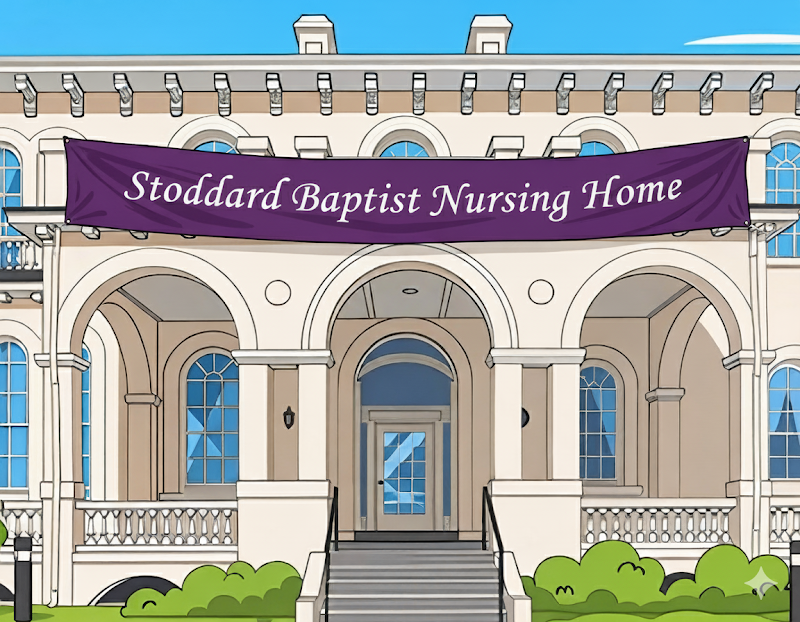
1818 NEWTON ST. NW, WASHINGTON, DC 20010 (202) 328-7400
Non profit - Corporation 164 Beds Independent Data: November 2025
Trust Grade
15/100
#15 of 17 in DC
Last Inspection: March 2024

Within standard 12-15 month inspection cycle. Federal law requires annual inspections.

Overview

Stoddard Baptist Nursing Home has a Trust Grade of F, which means it has significant concerns and is rated poorly overall. It ranks #15 out of 17 facilities in the District of Columbia, placing it in the bottom half of nursing homes in the area. While the facility is improving, with the number of issues dropping from 21 in 2024 to 3 in 2025, it still has a high staff turnover rate of 57%, which is concerning compared to the state average of 34%. The nursing home also received $97,426 in fines, which is average but still raises questions about compliance and care quality. Despite some strengths, such as average RN coverage and good quality measures, there are notable weaknesses. For example, staff failed to provide adequate assistance for a resident's transfer, which resulted in injuries requiring emergency care. Additionally, another resident developed a serious pressure ulcer due to a lack of preventive care, and a third resident did not receive proper pain assessments for a known fracture. These incidents highlight the need for improvements in resident care and oversight.

Trust Score
F
15/100
In District of Columbia
#15/17
Bottom 12%
Safety Record
High Risk
Review needed
Inspections
Getting Better
21 → 3 violations
Staff Stability
⚠ Watch
57% turnover. Above average. Higher turnover means staff may not know residents' routines.
Penalties
✓ Good
$97,426 in fines. Lower than most District of Columbia facilities. Relatively clean record.
Skilled Nurses
○ Average
Each resident gets 34 minutes of Registered Nurse (RN) attention daily — about average for District of Columbia. RNs are the most trained staff who monitor for health changes.
Violations
⚠ Watch
54 deficiencies on record. Higher than average. Multiple issues found across inspections.
★★☆☆☆
2.0
Overall Rating
★☆☆☆☆
1.0
Staff Levels
★★★★☆
4.0
Care Quality
★★★☆☆
3.0
Inspection Score
Stable
2024: 21 issues
2025: 3 issues

The Good

  • 4-Star Quality Measures · Strong clinical quality outcomes
  • Full Sprinkler Coverage · Fire safety systems throughout facility
  • No fines on record

Facility shows strength in quality measures, fire safety.

The Bad

2-Star Overall Rating

Below District of Columbia average (3.2)

Below average - review inspection findings carefully

Staff Turnover: 57%

11pts above District of Columbia avg (46%)

Frequent staff changes - ask about care continuity

Federal Fines: $97,426

Well above median ($33,413)

Moderate penalties - review what triggered them

Staff turnover is elevated (57%)

9 points above District of Columbia average of 48%

The Ugly 54 deficiencies on record

4 actual harm
Apr 2025 3 deficiencies 1 Harm
SERIOUS (G) 📢 Someone Reported This

A family member, employee, or ombudsman was alarmed enough to file a formal complaint

Actual Harm - a resident was hurt due to facility failures

Accident Prevention (Tag F0689)

A resident was harmed · This affected 1 resident

**NOTE- TERMS IN BRACKETS HAVE BEEN EDITED TO PROTECT CONFIDENTIALITY** Based on observations, record reviews and staff interviews for one (1) of seven (7) sampled residents, the facility staff failed...

Read full inspector narrative →
**NOTE- TERMS IN BRACKETS HAVE BEEN EDITED TO PROTECT CONFIDENTIALITY** Based on observations, record reviews and staff interviews for one (1) of seven (7) sampled residents, the facility staff failed to ensure that a resident had adequate assistance while being transferred from the wheelchair to the bed in the resident's room and subsequently the resident sustained injuries and was transferred to the hospital emergency room. Resident #1. The findings included: Resident #1 was admitted to the facility on [DATE] with multiple diagnoses that included the following: Unspecified Dementia, Chronic Atrial Fibrillation and Muscle Weakness. A Facility Reported Incident (FRI) DC~13527 was submitted to the State Agency on 03/14/25 at 10:41 PM, that documented the following: On March 14, 2025, around 21:45 (9:45 PM), Nursing Assistant Ms. (Employee Name) was providing care for resident (Resident Name). After she transferred (Resident Name) on bed, she noted that he had blood coming from his mouth and nose. Once the nursing assistant observed the bleeding, she notified the nurse, nurses attempted to control the bleeding coming from the resident's nose. Nurse (Employee name) performed a complete body and noted a hematoma to (Resident's) right lower leg, which showed no discoloration. A review of Resident #1's medical record revealed the following: A review of the Quarterly Minimum Data Set (MDS) assessment dated [DATE] showed that the facility staff coded the resident as having impairment on one side in the upper extremities and impairment on both sides in the lower extremities. The facility staff coded that the resident was dependent on staff with a helper doing all the effort for toileting, personal hygiene and to transfer from chair (wheelchair) to bed. The facility staff coded that the resident uses a manual wheelchair. A review of the State Minimum Data Set (MDS) assessment dated [DATE] showed that the facility staff coded the resident is sometimes understood- ability is limited to making concrete requests and for Cognitive skills for daily decision-making staff coded the resident as being severely impaired- never/rarely made decisions. The facility staff coded the resident as needing a 2-person physical assist and extensive assistance for Transfers-how resident moves between surfaces including to or from: bed, chair, wheelchair, standing position. The facility staff coded that the resident does not have one or more unhealed pressure ulcers/injuries and as having no venous or arterial ulcers. The facility staff coded that the resident has no other ulcers wounds or skin problems present. It is noted that there was no significant change Minimum Data Set assessment in the resident's medical record dated from 11/25/2024 to 03/14/2025. A review of the documents titled Skin Monitoring: CNA (certified nurse aide) shower report dated 03/03/25 and 03/10/25 both show handwritten documentation that states skin intact and they are both signed by a charge nurse. A review of the document titled Skin Check dated 03/03/25 at 7:29 PM, which is the weekly skin assessment showed that the facility staff did not code any skin issues on either legs or feet for the resident. A review of the document titled Skin Check dated 03/10/25 at 10:08 PM, which is the weekly skin assessment showed that the facility staff marked no skin issues for the resident. It is noted that Resident #1 had no skin issues documented in the medical record in three months prior to 03/14/25. A review of a nursing progress note dated 03/14/25 at 11:44 PM documented the following This writer was called to room [ROOM NUMBER]A by the assigned CNA (certified nursing assistant) reporting resident is bleeding upon assessment resident was observed bleeding from the nose and mouth. Hematoma also noted to his right foot. The write (r) (sp) was unable to control the bleeding. Howevernosebleed (spelling - however nosebleed) was managed with pressure but unresolved. The hematoma to his right leg was swollen but no active bleeding noted. Resident show signs of pain when right foot was touched /moved. No signs of dizziness or distress noted. Breathing is normal. Gentle pressure applied to stop nosebleed (sp). Assessed hematoma for changes in size, color, or pain. right foot elevated and cold compress applied. MD (medical doctor) notified. Order given to transfer resident to the ER for further evaluation. 911 was called and arrived at 22:30 (10:30 PM). Resident was transfer to (hospital name abbreviation) at 23:10 (11:10 PM) via stretcher. RP (Resident Representative) made aware. A review of a nursing progress note dated 03/15/25 at 12:57 AM, documented the following: Observed the resident is sitting in bed without gown and the charge nurse and the CNA (certified nurse aide) at the bedside, assisting Mr. (resident name) and providing care to stop bleeding from the nose and mouth. provide assistance to the resident r/t (related to) nose bleeding by applying gentle pressure nostrils and Ice cubes on the forehead/nose bridge to stop active bleeding for the duration of 5 to 15 mint (minutes) (sp) between 9:30pm to 9: 45pm, able to redirect resident, effective to calm, but unable to stop bleeding. Moderate amount of bleeding from nose and mouth noted via apply 4X4 gaze (gauze) (sp) multiple time. The resident was unable to provide statement regarding. The resident repeated the same word aaaa aaaa aaaa upon assessment observed bump/hematoma to the right lower extremity, no s/s (signs symptoms) of pain or distress noted. Resident was able to move the right leg without any pain, but unable to provide further detail. Provide assistance with incontinent care A physician order dated 03/14/25 documented Transfer to ER (emergency room) A review of a hospital face sheet showed that the resident was admitted to the hospital on [DATE] with an admitting diagnosis of leg hematoma. A review of a hospital document titled Progress Notes-Physician dated 03/17/25 at 2:44 PM, documented the following: presents as Trauma [NAME] (SIC) after being found down. Primary survey revealed no acute life -threatening injury. Secondary survey revealed dried blood over the upper lip, hematoma on the right anterior shin, dried blood bilateral digits. All trauma imaging negative for acute traumatic injury except for a mesentry (mesentery) (sp) contusion on CT (computed tomography). Concerns for elder abuse, so admitted for safe discharge plan. Now w (with) (sp)/ concerns for infection of RLE (right lower extremity) hematoma, plan for OR (operating room) for debridement Wednesday. A review of a hospital document titled Operative Reports dated 03/20/25, documented the following: Indication for surgery RLE (right lower extremity) infected hematoma Operation right lower extremity wound debridement 3X5CM2 (centimeters), wound vac placement, right. Findings superficial necrotic eschar excised, approx (approximately) (sp) 25 cc of old hematoma evacuated, no frank purulence noted. Fibular exposed with intact periosteum. white sponge was attached to black sponge with staple, laid along wound base with white sponge toward exposed fibula. Wound size 3x5 cm (centimeters) at the end of case with some tunneling superiorly. It is noted that the resident was assessed with a right leg wound, identified by facility staff as a hematoma sustained during transfer from wheelchair to bed. The right leg wound was assessed by hospital staff with areas of necrosis and required surgical intervention. An observation was conducted on 04/21/25 at approximately 11:00 AM, Resident #1 was observed in the day room on the first floor sitting in a wheelchair and looking out a large window. Resident #1 responded to his name and made incoherent speech and nodded head but otherwise not interviewable. A review of the facility's incident investigation which contained a typed telephone interview from Resident #1's assigned CNA (Employee #5). The typed telephone interview dated 03/17/25 at 2:15 PM, documented the following: On March 17, 2025, the DON (director of nursing) and ADON (assistant director of nursing) of (facility name) called (Employee #5 (certified nurse aide) to obtain her statement regarding the incident that occurred on March 14, 2025. She (Employee #5) mentioned that Resident #1 started to remove his brief and had feces all over himself and on the floor. Therefore when she transferred (Resident #1), she did not want to get her clothes soiled from the bowel movement. She then put her arms under his quickly transferred him to the bed. She did state that she held the resident a little further away from her body to prevent him from getting bowel movement onto her clothes. When she got to the bed, she placed him on the bed. Unfortunately, she stated that the resident hit his face. When asked what happened to the resident's leg, she mentioned that she forgot to take the foot rest off and that they were still up during transfer. (Employee #5) was asked why she continued to provide care if the resident was agitated and yelling. She stated that she felt she could transfer him to the bed quickly and get assistance to get him cleaned up. (Employee #5) stated that after she saw the resident's face bleeding, she called the nurse and began cleaning the blood noted on the bed. It is noted that Employee #5 attempted to transfer the resident on 03/14/25, without the assistance of at least 1 other staff member as required by the resident's State Minimum Data Set assessment dated [DATE]. Review of Employee #5's human resource record revealed a document titled Review Discussion Form dated 03/21/25 documented the following: Final written warning (performance) date of incident 03/14/25, Date of conversation 03/21/25, Description of incident: Employee transferred a resident from the wheelchair to the bed utilizing unsafe practices. As a result, the resident sustained facial and leg injuries. Because of this incident, the resident was hospitalized and will return to the facility with a wound vac for his leg injury. It is noted that the involved CNA Employee #5 was terminated from the facility on 03/25/25 and the last time Employee #5 clocked into work was 03/14/25 according to the time submission which was reviewed. During a telephone interview conducted on 04/23/25 at approximately 11:30 AM, Employee #9 (LPN licensed practical nurse supervisor) stated that the residents nurse called him to the room, and he saw that the resident was bleeding from his nose, and he had a bruise on his right leg. Employee #9 went on to state that Resident #1 was yelling words he could not understand. The EMS (emergency medical services) would not take the resident until the police got there. During a face-to-face interview conducted on 04/23/25 at 4:07 PM, Employee #1 (Administrator) stated that the CNA (certified nurse aide) (Employee #5) was taken off the unit on 03/14/25 and never returned. Employee #1 went on to state that the employee (Employee #5) was terminated for violation of safety rules. During a face-to-face interview conducted on 04/24/25 at 12:57 PM, Employee #2 (Director of Nursing) stated that the resident did not have any wounds prior to the incident that occurred on 03/14/25 when a CNA attempted to transfer the resident from the wheelchair to the bed. When the surveyor asked about the necrotic tissue debridement that was documented in the hospital documentation Employee #1 stated that They did an evacuation of the hematoma, they opened it (hematoma) in the hospital. He did not have any wounds prior to when he went to the hospital. Cross Reference 22B DCMR Sec. 3211.1 (d) *******************************************************
CONCERN (D) 📢 Someone Reported This

A family member, employee, or ombudsman was alarmed enough to file a formal complaint

Potential for Harm - no one hurt, but risky conditions existed

Report Alleged Abuse (Tag F0609)

Could have caused harm · This affected 1 resident

**NOTE- TERMS IN BRACKETS HAVE BEEN EDITED TO PROTECT CONFIDENTIALITY** Based on record reviews and staff interviews for two (2) of seven (7) sampled residents, the facility staff failed to report an ...

Read full inspector narrative →
**NOTE- TERMS IN BRACKETS HAVE BEEN EDITED TO PROTECT CONFIDENTIALITY** Based on record reviews and staff interviews for two (2) of seven (7) sampled residents, the facility staff failed to report an allegation of abuse to the State agency in the required timeframe as evidenced by an incident involving a resident-to-resident altercation first documented by the facility on 02/25/25 but not reported to the State agency until 03/03/25. Resident #2 and #3. The findings included: A review of the facility policy titled Prohibition of Resident Abuse/Abuse Prevention updated in 2024, documented the following: Abuse means the willful infliction of injury, unreasonable confinement, intimidation, or punishment with resulting physical harm, pain, or mental anguish. 'Willful' means the individual must have acted deliberately, not that he/she [NAME] have intended to inflict injury or harm. Verbal abuse is defined as the use of oral, written, or gestured language that willfully includes disparaging and derogatory terms to residents or their families, or within hearing distance, regardless of their age, ability to comprehend, or disability. Physical abuse includes hitting, slapping, pinching, and kicking. It also includes controlling behavior through corporal punishment. Reporting/Response Anyone who suspects or witnesses an alleged incident of resident abuse (to include resident to resident) is required to report the incident to the Nursing Supervisor or department head immediately, but not less than 2 hours, if the alleged violation involves abuse or results in serious bodily injury. The Nursing Supervisor/department head will immediately initiate an investigation and give an oral report to the administrator. If the findings are substantial, a report will be submitted to the Department of Health Licensing Regulation Administration (DHLRA). 1A. Resident #2 was admitted to the facility on [DATE] with multiple diagnosis that included the following: Unspecified Dementia, Personal History of Traumatic Brain injury, Blindness Left Eye Category 4, Normal Vision Right Eye, Adjustment Disorder, and Age-Related Nuclear Cataract Right Eye. A review of a Facility Reported Incident (FRI) DC ~13500 submitted to the state agency on 03/03/25 at 7:05 PM, documented the following: On February 25, 2025, (Resident #2) was noted with two scratches to his left hand. MD (medical doctor) was notified as week as RP (resident representative). New orders obtained for bacitracin treatment to the areas until resolved. The two areas that were noted on (Resident #2)'s left hand has since resolved and the treatment discontinued. On March 3 2025 (Resident #2) was interviewed regarding the areas noted. Upon being interviewed (Resident #2) stated that he was in a fight and that's how he sustained the scratches to his hand. During this interview (Resident #2) was asked if he had experienced any pain regarding these areas, in which he replied no. Investigation is in progress . On February 25, 2025, around 11:05p.m., (Resident #2) was involved in a verbal altercation with his roommate. (Resident #3), which was overheard by nursing staff. The nursing supervisor noted two scratches on resident's left hand. Initially, when (Resident #2) was asked about the etiology of the scratch, he told the nursing supervisor that he was not sure of how he sustained those scratches. Additionally, (Resident #3) was interviewed on the day of the incident about the scratched noted on Mr. (Resident #2)'s left hand and he stated that 'I don't know nothing'. On March 3, 2025 Mr. (Resident #2) was asked by the Director of Nursing about the two scratches that he has obtained to his left hand. Initially the resident stated that it is 'none of your business'. After continuing to speak to Mr. (Resident #2) he stated that he was in a fight. Mr. (Resident #2) was than asked who he was in a fight with, and he replied that he was in a fight with his previous roommate. Immediate Action(s): The two resident's were immediately separated when the altercation was observed, and Mr. (Resident #3) was transferred to another room. Both residents were interviewed at the time and none of the residents stated that they were in a physical altercation. Scratches on Mr. (Resident #2)'s hand were noted on February 25, 2025. The initial assessment of the scratches was done by the supervisor on duty. The supervisor noted that the scratches were superficial and that no active bleeding was noted .Education was started with staff with a focus on how to deal with resident-to-resident altercations and the reporting process. Currently Mr. (Resident #3) no longer resides at (Facility Name) . A review of Resident #2's medical record revealed the following: A review of a Quarterly Minimum Data Set (MDS) assessment dated [DATE] showed that the facility staff coded the resident as having a Brief Interview for Mental Status (BIMS) summary score of 5 which indicates severe cognitive impairment. The facility staff coded the resident as having no impairment in the upper and lower extremity. A review of a Health Status Progress Note dated 02/25/25 at 11:39 PM, documented the following: At 11:12pm, writer was called to room [ROOM NUMBER] by staff, getting in both (Resident #2) and his room mate were facing each other. Mr. (Resident #2) verbalized go out of his room. Writer tried to calm them down, then noticed scratch from his LT (sp) upper hand, cleanse with NSS (normal saline solution) then said it ok. Refused to be measured. Room mate taken out of the room to the Nurses station. A review of a e-Interact SBAR (Situation Background Assessment Recommendation) Progress noted dated 02/25/25 at 11:46 PM documented the following: Nursing observations, evaluation, and recommendations are: no more bleeding, Primary Care Provider Feedback: Primary Care Provider responded with the following feedback: Recommendations: Cleanse with NSS (normal saline solution), Pat dry and apply bacitracin (antibiotic) ointment BID (twice daily) until resolved. A review of a Health Status Progress Note dated 02/26/25 at 3:05 AM, documented the following: Observed resident has scratch 3cm (centimeters) x(times) 0.1 x(times) 0 cm LT (sp) upper hand, no active bleeding, assess resident, alert and orient x3, verbally responsive, denies pain and discomfort, resident stated 'My roommate coming to my bed making trouble'. Cleanse with normal saline pat and dry, apply bacitracin ointment as Order, MD made aware, on duty nurse was unable to communicate with POA (power of attorney), safety precautions maintained separate both roommate, monitor 1/1, resident remained stayed in 108-B no room change for Mr. (Resident #2), resident verbalized to remain quite and stated 'I do not want MR. (Resident #3) in my room' . staff will continue to provide assistance and support It is noted that the facility reported the incident on 03/03/25 in which resident was observed with scratches on his hand, however this was first documented in the medical record on 02/25/25. A review of a Health Status Progress Note dated 03/03/25 at 1:24 PM documented the following Late Entry Resident verbalized he got he had and altercation with his roommate. A review of a Nursing Progress Note dated 03/03/25 at 5:17 PM, documented the following: Writer went to assess resident's scratches and asked resident how he sustained them. Resident stated that he was in a fight. After resident said he was in a fight, writer asked resident with who in which he replied, none of your business. Writer thenasked (sp) if he was in a fight with the previous roommate and he stated 'yes'. He also stated that the persons name was 'on the door'. MD (medical doctor)/RP (resident representative) updated. An observation was conducted on 04/24/25 at approximately 10:30 AM in which Resident #2 was observed in his assigned single occupancy room sitting in a chair and wearing sweat pants and a sweatshirt. Resident was observed sleeping. 1B. Resident #3 was admitted to the facility on [DATE], with multiple diagnoses that included the following: Alzheimer's Disease with Early Onset, Unspecified Dementia Unspecified Severity, With Other Behavioral Disturbance, and Transient Ischemic Attack (TIA) and Cerebral Infarction Without Residual Deficits. It is noted that Resident #3 was transferred from the facility on 02/26/25 due to a psychiatric emergency and the Resident #3 has not returned to the facility. A review of Resident #3's medical record revealed the following. A review of a Nursing Progress Note dated 02/26/25 at 2:28 AM, documented the following: The writer was called by nursing staff, observed Mr. (Resident #3) is standing in common dining area close to the dietary cart and holding metal bar in hand but quit and the staff standing away close to the elevator and nursing stations. The writer calmly/nicely communicate and able to redirect the resident and able get the metal bar, resident calmly and nicely put the metal bar. redirect the resident to the common area close to the nursing station, upon assessment resident has an argument with roommate, Mr. (Resident #3) 'I will not move out from my bed or room.' Observed Mr. (Resident#3) want to go to room [ROOM NUMBER] A, walked with client to prevent any harm or injury, but his roommate stopping him. The writer was able to redirect both clients and remain stayed between both client not to have any argument, successfully separate both resident nicely and calmly, called Mr. (Resident #3) spouse POA, resident agree to stay in room [ROOM NUMBER] A for the night. A review of a Health Status Progress Note dated 02/26/25 at 2:15 PM, documented: Resident become very aggressive, Agitated, Paranoia, hitting kicking and scratching staffs. Staff were unable to redirect, after multiple times. Resident seeking exit, unit manager wascalled (sp) and also tried to redirect resident but was unsuccessful. Resident continue to swing at staff with on(un) (sp) steady gait. Resident refuse to sit down. Resident become danger to self and other. A review of a Health Status Progress dated 02/26/25 at 3:30 PM, documented the following: Resident was still in the hall way with uncontrolled behavior. Called Ms. (Resident Representative name), explained and informed her regarding resident behavior that earlier staff notified the writer that resident hit and spit on them. Resident was seen by the weiterat (sp) the exit door and tried to redirected to the dining area. called the nurse assigned on him (employee name) on other resident room near the exit door to help the writer redirected, resident was became combative and hit nurse (employee name) to. He keep speaking a different language which identified by the staff as Jamaican patois (sp). Staff and security came and help redirected the resident. Resident follow them at the dining area but unfortunately resident tried to escape again toward the exit doors which couldn't manage anymore that resident start kicking, hitting, scratching staffs and entering other resident room. Several behavioral redirection strategies has been offered, made and unsuccessful. Resident tried to enter room [ROOM NUMBER] DON (Director of Nursing) tried to redirectedthe (sp) resident and resident held pants and arms of DON that was so tight which she couldn't move at the door. Resident behavior couldn't be manage and R/P (resident representative) was informed that MD (medical doctor) made aware to and the recommendation was to sent to ER (emergency room) for further evaluation. 911 has been called as well. R/P verbalized understanding and agreed to sent the resident to the hospital. 2:49PM, 2 EMS (Emergency Medical Services) personnel came and they are awaiting for Police officer to come as well. 3:40PM, police came and they talk to wife to and wife consented them to bring resident to the hospital. resident left the unit at 4PM via stretcher accompanied by 2 EMS and 2 Police personnel. It is noted that the facility did not report Resident #3's combative behavior that is documented in the medical record on 02/26/25 at 3:30 PM, to the State Agency. A review of a Nursing progress Note dated 03/04/25 at 2:46 PM, documented the following: Resident is discharged from the facility. However, writer called wife to inform her of on ongoing investigation regarding the resident and his former roommate. It was mentioned by the other resident in room [ROOM NUMBER]B that he got into a physical altercation with the resident. Wife is aware. Investigation in progress. A review of a physician order dated 02/26/25 documented Transfer to nearest ER (emergency room) for further evaluation. It is noted that an altercation between Resident #3 and Resident #2 was first documented on 02/25/25 and the facility staff did not notify the state agency until 03/03/25 at 7:05 PM. It is also noted that the facility made no separate notifications to the state agency or the ombudsman office of Resident #3's combativeness and exit seeking behaviors documented on 02/26/25. During a face-to-face interview conducted on 04/24/25 at approximately 1:00PM, Employee #2 (Director of Nursing) stated that Do you need to report just a verbal altercation? I did not know that. I interviewed (Resident #2) and that is when I found out that he had an altercation with his roommate. Cross Reference 22B DCMR Sec. 3232.5 ************************************************
CONCERN (D) 📢 Someone Reported This

A family member, employee, or ombudsman was alarmed enough to file a formal complaint

Potential for Harm - no one hurt, but risky conditions existed

Comprehensive Care Plan (Tag F0656)

Could have caused harm · This affected 1 resident

**NOTE- TERMS IN BRACKETS HAVE BEEN EDITED TO PROTECT CONFIDENTIALITY** Based on record reviews and staff interviews for one (1) of seven (7) sampled residents, the facility staff failed to develop a ...

Read full inspector narrative →
**NOTE- TERMS IN BRACKETS HAVE BEEN EDITED TO PROTECT CONFIDENTIALITY** Based on record reviews and staff interviews for one (1) of seven (7) sampled residents, the facility staff failed to develop a care plan for a resident who required a 2-person physical assist when transferring from the wheelchair to the bed. Resident #1. The findings included: Resident #1 was admitted to the facility on [DATE] with multiple diagnoses that included the following: Unspecified Dementia, Chronic Atrial Fibrillation and Muscle Weakness. A Facility Reported Incident (FRI) DC~13527 was submitted to the State Agency on 03/14/25 at 10:41 PM, that documented the following: On March 14, 2025, around 21:45 (9:45 PM), Nursing Assistant Ms. (Employee Name) was providing care for resident (Resident Name). After she transferred (Resident Name) on bed, she noted that he had blood coming from his mouth and nose. Once the nursing assistant observed the bleeding, she notified the nurse, nurses attempted to control the bleeding coming from the residents nose. Nurse (Employee name) performed a complete body and noted a hematoma to (Resident's) right lower leg, which showed no discoloration. A review of Resident #1's medical record revealed the following: A review of the State Minimum Data Set (MDS) assessment dated [DATE] showed that the facility staff coded the resident as needing a 2-person physical assist and extensive assistance for Transfers-how resident moves between surfaces including to or from: bed, chair, wheelchair, standing position. A review of Resident #1's care plan revealed that it lacked documented evidence that the resident required a 2-person physical assist and extensive assistance for transfers from the wheelchair to the bed. During a telephone interview conducted on 04/23/25 at 2:17 PM, with Employee #7 (MDS Coordinator stated that Resident #1's State Minimum Data Set assessment dated [DATE] indicates that the resident needed a 2-person physical assist for transfers from the bed to wheelchair. During a face-to-face interview conducted on 04/23/25 at 4:07 PM, Employee #2 (Director of Nursing) stated that the resident has notes from physical therapy that state he only needs a one person assist. The Surveyor asked Employee #2 if a significant change Minimum Data Set assessment was completed and Employee #2 stated No. Cross Reference 22B DCMR Sec. 3210.4 (a)
Mar 2024 21 deficiencies 2 Harm
SERIOUS (G) 📢 Someone Reported This

A family member, employee, or ombudsman was alarmed enough to file a formal complaint

Actual Harm - a resident was hurt due to facility failures

Pressure Ulcer Prevention (Tag F0686)

A resident was harmed · This affected 1 resident

**NOTE- TERMS IN BRACKETS HAVE BEEN EDITED TO PROTECT CONFIDENTIALITY** Based on record review and staff interviews, for one (1) of 41 sampled residents, facility staff failed to ensure that Resident ...

Read full inspector narrative →
**NOTE- TERMS IN BRACKETS HAVE BEEN EDITED TO PROTECT CONFIDENTIALITY** Based on record review and staff interviews, for one (1) of 41 sampled residents, facility staff failed to ensure that Resident #52 received care to prevent pressure ulcer development that was first observed at a Stage 3. This deficiency resulted in actual harm to Resident #52 on 02/28/2024. The findings included: Review of the facility's Wound Care Consultant Contract dated 09/14/22 documented,The Wound Care Consultant agrees to serve as the Wound Care Consultant to coordinate medical care in the facility and provide clinical guidance and oversight regarding wound care; provide diagnosis and treatment recommendations for wounds; and sign and date all orders, such as medications. Review of the facility's Pressure Ulcers, Prevention and Care policy revised on 11/10/22 documented: - Skin integrity alteration will be reported to the physician for treatment orders. - Classification of pressure ulcers: Stage 2: a partial thickness of skin is lost (epidermal layer has been lost, but dermis is at least partially intact); may present as blistering surrounded by an area of redness and/or indurations. Stage 3; a full thickness of skin is lost, exposing the subcutaneous tissues; present as a shallow crater (unless covered by eschar - thick brown, black or yellow crust); may be draining. There is also depth at this stage. - A specific plan of care must be developed by nursing and the interdisciplinary care team. Review of the Resident Assessment - Pressure Injuries policy revised on 11/10/22 documented, Accurate assessments addressing each resident's skin status will be conducted by qualified staff and correctly documented in the medical record; and a qualified health professional will document the presence, number, stage and pertinent characteristics of any pressure injury on the wound documentation form in the medical record. Resident #52 was admitted to the facility on [DATE] with diagnoses that included: Adult Failure to Thrive, History of Falling, and Muscle Weakness. Review of the resident's medical record revealed the following: A face sheet that showed Resident #52 had listed a legal guardian, substitute decision maker and emergency contact #1. Physician's orders dated 01/19/24 directed: Apply barrier cream to sacrum, buttocks and peri-area every shift for skin protection; weekly skin assessment, every evening shift every Friday; resident to have shower every day shift, every Monday and Thursday, Licensed nurse will validate and ensure skin assessment is completed. A Hospital Discharge summary dated [DATE] documented: - admission on [DATE] at 1:57 PM. - Chief complaint - altered mental status, low oxygen and blood pressure. - Physical exam at discharge - skin: warm and dry. A readmission Note dated 01/27/24 at 9:01 PM documented: - Resident readmitted into the facility. - Warm to touch skin, mass around the mid-arm and in the inguinal area was noted, IV (intravenous) related bruises on bilateral upper arm were noted. A readmission Braden Scale Evaluation dated 01/27/24 documented: - Resident's score 11. - Interpretation of score: 10-12 indicates high risk. - Continue current plan of care. A care plan documented: [Resident #52] has impaired skin integrity related to bilateral upper arm bruises/mass in the mid arm/inguinal area that was initiated on 01/27/24. A Focused Observation Note dated 01/30/24 at 11:21 PM documented, complete bed bath given, no new skin issue noted. A quarterly Braden Scale (a tool used to foster early identification of residents at risk for developing pressure ulcers) dated 02/01/24 at 5:42 PM documented: - Resident's score 11 (interpretation of score: 10-12 indicates high risk). - No referrals necessary. - Continue current plan of care A physician's order dated 02/02/24 directed, Turning and repositioning every 2 hours as tolerated and PRN (as needed) every shift. A Significant Change in Status Minimum Data Set (MDS) assessment dated [DATE] showed that facility staff coded: a Brief Interview for Mental Status (BIMS) summary score of 07 indicating severe cognitive impairment; no rejection of care behaviors; required substantial/maximal assistance for toileting hygiene, shower/bathing; frequently incontinent of bowel and bladder; at risk for pressure ulcers/injuries; and had no unhealed pressure ulcers/injuries, wounds or other skin problems. A [nursing] Skin Observation Tool Assessment on Tuesday, 02/06/24, at 8:20 PM documented, complete bed bath given, no new skin issue noted. A [nursing] Skin Observation Tool Assessment on Tuesday, 02/13/24, at 10:53 PM documented, Complete bed bath given. A Skin Observation Tool Assessment on Friday, 02/16/24, at 11:55 PM documented, complete bed bath given, no new skin issue noted. A [nursing] Skin Observation Tool Assessment on Friday, 02/23/24, at 10:37 PM documented, complete bed bath given, no new skin issue noted. A care plan focus area: The resident has limited physical mobility r/t (related to) weakness, that was initiated on 02/23/24 had approaches/interventions that included, monitor/document/report any s/sx (signs and symptoms) of immobility: contractures forming or worsening, skin-breakdown. The Treatment Administration Record (TAR) for February 2024 showed that on Monday, 02/26/24, facility staff documented a check mark and their initials to indicate that Resident #52 had a shower and that the nurse validated and ensured that a skin assessment was completed. A Nursing Progress Note dated 02/26/24 at 2:24 PM documented: - Upon assessment, skin is dry and warm to touch. - Resident turned and repositioned every 2 hours for comfort and pressure relief. A care plan focus area: [Resident #52] is at risk for bladder incontinence related to deconditioning that was initiated on 02/26/24, that had approaches/interventions that included, weekly skin assessment. An Attending Physician's note on Tuesday, 02/27/24, at 10:58 AM documented: - Subjective: [Resident #52] spends most of her time in bed because she has become frailer. There have been no new issues regarding her care. - Objective: remains a well-developed thin black female, in no acute distress when seen. There are no new labs available for analysis. - Assessment: continues to do well and remains clinically stable. We will continue with the current management. A [nursing] Skin Only Evaluation Note on Tuesday, 02/27/24, at 10:50 PM documented: - Skin warm & dry, skin color within normal limits (WNL) and turgor is normal; complete bed bath given, no new skin issue noted. A Wound Care Physician's Note on Wednesday, 02/28/24, at 8:16 AM documented: Wound rounds: Stage 3 sacral decubitus ulcer, moderate drainage with necrotic tissue and slough; Plan: clean with Dakins solution (used to prevent and treat skin and tissue infections), apply collagenase Santyl (debridement agent used on dead tissue) ointment and dry dressing daily. Although the Wound Care Physician documented a treatment order for Resident #52's new Stage 3 sacral ulcer, the medical record lacked documented evidence that the resident's primary care physician was notified about Resident #52's new Stage 3 sacral pressure ulcer/wound on 02/28/24. As a result, no new orders or interventions were implemented until 03/01/24 (over 48 hours later). A Skin Only Evaluation Note dated 02/29/24 at 4:45 PM documented, Skin warm & dry, skin color WNL (within normal limits) and turgor is normal; no skin issues; complete bed bath given. Review of the February 2024 Treatment Administration Record (TAR) dated from 02/01/24 to 02/29/24 showed that facility staff documented a check mark and their initials to indicate that Resident #52: 1. Received a shower everyday shift on Mondays and Fridays and that a licensed nurse validated and ensured that the skin assessment was completed. 2. Received weekly skin assessments every Friday on the evening shift; and 3. Barrier cream was applied to the resident's sacrum, buttocks, and peri-area every shift for skin protection. A Health Status Note dated 03/01/24 at 2:25 PM documented: - Resident remains alert and verbally responsive with intermittent confusion and generalized weakness. - Upon assessment skin is dry and warm to touch. - Resident turned and repositioned every 2 hours for comfort and pressure relief. A [nursing] Skin Only Evaluation Note dated 03/01/24 at 3:06 PM documented, Skin warm & dry, skin color WNL and turgor is normal; no skin issues; complete bed bath given. A physician's order dated 03/01/24 at 3:32 PM directed, Dakin's 1/2 strength External Solution 0.25 % (Sodium Hypochlorite) cleanse sacral ulcer with Dakin's solution, pat dry, apply Santyl and cover with border gauze daily. A physician's order dated 03/01/24 at 3:38 PM directed, Santyl External Ointment 250 Unit/GM (gram), apply to sacral ulcer topically everyday shift for wound care. A Wound Care Physician Note dated 03/04/24 at 8:18 AM documented: - Late Entry: created on 03/07/24 at 8:21 AM. - [AGE] year-old female with cachexia - Stage 3 sacral decubitus ulcer. Decreased slough and drainage. 8 cm (centimeters) long by 6 cm wide by 2 cm deep. - Plan: Continue Santyl dressings daily. A Skin Observation Tool assessment dated [DATE] at 1:08 PM documented: - Site: Sacrum - Type: Pressure - Length: 8 cm - Width: 6 cm - Stage II (Stage 2) [It should be noted that wound care physician staged the resident's sacral wound as a Stage 3 on 02/28/24.] - Notes: Cleanse with [NAME] solution, apply Santyl. Cover with dry gauze. A Health Status Note dated 03/06/24 at 7:56 AM documented: - Fluids offered but poorly tolerated encouraged to take more fluids but refused after several attempts. - Resident on oxygen at 2 liters via nasal cannula for shortness of breath for shortness of breath. - A call was placed to medical doctor in reference to resident with poor intake with order to transfer resident to the nearest emergency room for evaluation and treatment. - A call was placed and spoke with the resident's representative. A Health Status Note dated 03/06/24 at 10:52 PM documented: - Call placed to [Hospital name] at 10:30 PM to check on resident status, resident has been admitted . During a face-to-face interview on 03/06/24 at 11:15 AM, Employee #2 (Director of Nursing/DON) stated, Skin assessments are done weekly in PCC (Point Click Care, the facility's electronic health record system). That form is used to assess the wound for any changes. Once a new wound area is observed, the process is to immediately call the medical doctor and get new orders. The nurse will write a progress note with a description of the wound that includes size, location, drainage, what the surrounding area looks like and then also indicate that the family was notified. A new care plan is either initiated or revised. During a face-to-face interview on 03/13/24 at 11:25 AM, Employee #6 (Medical Director/Resident #52's primary physician) stated, The wound doctor is allowed to put in orders. Any provider that provides services at this facility is credentialed and can put in orders. I can't answer as to why [Wound Doctor] did not directly put in the wound care orders. I did see the resident (on 02/27/24). The nursing staff did not communicate any skin issues to me, and I did not turn her over to do any assessment of her skin during my time with her. During a face-to-face interview on 03/20/24 at approximately 12:30 PM, Employee #1 (Administrator) and Employee #2 acknowledged the findings. Cross reference 22B DCMR Sec. 3211.1 (Facility staff failed to ensure that Resident #52 received sufficient nursing care and services to prevent pressure ulcer development that was first observed at a Stage 3.)
SERIOUS (G) 📢 Someone Reported This

A family member, employee, or ombudsman was alarmed enough to file a formal complaint

Actual Harm - a resident was hurt due to facility failures

Deficiency F0697 (Tag F0697)

A resident was harmed · This affected 1 resident

**NOTE- TERMS IN BRACKETS HAVE BEEN EDITED TO PROTECT CONFIDENTIALITY** Based on record review and staff interview, for one (1) of 1 residents sampled for pain management, facility staff failed to ens...

Read full inspector narrative →
**NOTE- TERMS IN BRACKETS HAVE BEEN EDITED TO PROTECT CONFIDENTIALITY** Based on record review and staff interview, for one (1) of 1 residents sampled for pain management, facility staff failed to ensure that Resident #243 received effective pain assessments/evaluation for a known left hip fracture. The findings included: According to National Institute of Health (NIH): - Assessment of pain is a critical step to providing good pain management. - Nurses working with patients with acute pain must select the appropriate elements of assessment for the current clinical situation. - The most critical aspect of pain assessment is that it is done on a regular basis (e.g., once a shift, every 2 hours) using a standard format. The assessment parameters should be explicitly directed. - To meet the patients' needs, pain should be reassessed after each intervention to evaluate the effect and determine whether modification is needed. The time frame for reassessment also should be directed. - Pain assessment should include intensity, location, and quality. https://www.ncbi.nlm.nih.gov/books/NBK2658/ Review of the facility's Pain Management policy (not dated) showed: - The facility will provide optimal pain control, assessment, and monitoring for all identified residents with pain. - Pain will be measured on a 0-10 scale. Cognitively impaired residents will be assessed utilizing behavioral or visual indicators. - Pain assessment will occur with the onset of new pain. Review of the facility's Documentation Criteria policy revised on 07/22/22 showed: - Clinical notes for pain control include location, severity, quality, duration, and cause. - Note when pain medication is given (very important) and note if/when pain relief is obtained and length of relief. Resident #243 was admitted to the facility on [DATE] with diagnoses that included: Muscle Weakness, Other Abnormalities of Gait and Balance and Age-Related Physical Debility. Review of the resident's medical record revealed the following: A care plan focus area: [Resident #243] has chronic pain to back and knees related to Osteoporosis, that was initiated on 05/16/19, had interventions that included: administer medications as ordered. Monitor and record effectiveness; monitor and record any complaints of pain: location frequency, intensity, effect on function, alleviating factors, aggravating factors; monitor and record any non-verbal signs of pain (guarding, withdrawal, crying, restlessness, etc.). A physician's order dated 05/24/19 directed: Turn and reposition every 2 hours, every shift. A care plan focus area: [Resident #243] has complaints of acute pain to right hip related to post fall, that was initiated on 07/07/21, had interventions of: administer medication routine and as needed, as ordered. Evaluate/record/report effectiveness. Monitor and record any complaints of pain: location frequency, intensity. Monitor and record any non-verbal signs of pain (guarding, restlessness). Handle gently and try to eliminate any environmental stimuli. A physician's order dated 08/16/21 directed: Tramadol (narcotic pain reliever), 100 mg (milligrams), 1 tablet, twice a day PRN (as needed) A physician's order dated 08/19/21 directed: Monitor pain every shift. A physician's order dated 03/23/23 directed: Tramadol 50 mg, twice a day. A physician's order dated 04/07/23 that directed, Acetaminophen (pain reliever) 500 mg, 2 tablets three times a day, as needed for pain. An Annual Minimum Data Set (MDS) assessment dated [DATE] showed that facility staff coded: a Brief Interview for Mental Status (BIMS) summary score of 12, indicating mild cognitive impairment; received scheduled pain medication regimen; no falls since the prior assessment and did not receive any opioid medications. A Pain Assessment Note dated 05/29/2023 at 5:51 PM documented: - Pain site - left lower extremity. Received scheduled pain medication regimen. - Resident pain interview intensity rating on the Numeric Rating Scale (0-10) 3. - Resident pain interview: verbal descriptor scale severe. A Facility Reported Incident (FRI), DC~11996, received by the State Agency on 05/29/23 at 6:30 PM documented: - At 4:40 PM, the resident got up on her seat to give another resident a hug and she missed her step and fell on her left side. - Resident refused to be assessed by the nurse supervisor, she said she will be fine but verbalized feeling pain to the left thigh, 4/10. - The physician was called and gave an order for an x-ray of the affected leg. - Resident RP was called and was made aware of the fall accident. A physician's order dated 05/29/23 directed Left hip/left knee x-ray A Nursing Progress Note dated 05/30/23 at 6:50 AM documented: - Range of motion within normal limits bilateral upper and right lower extremities with limited mobility left lower extremity. - Denies any pain at rest but complained of moderate pain with guarding to left hip upon assessment. Given PRN Tylenol (Acetaminophen) 1000 mg with good effect. - X-ray to left hip to be done in the morning. Left knee x-ray result dated 05/30/23 at 1:21 PM documented: - No acute fracture, dislocation or degenerative disease. -There is soft tissue swelling and vascular calcification. Left hip x-ray result dated 05/30/23 at 1:21 PM documented: - There is a fracture of the neck of the proximal femur without significant displacement. - Clinical Correlation and follow-up imaging recommended as indicated. A Nursing Progress Note dated 05/30/23 at 2:01 PM documented: - X-ray for left hip/knee done this shift, results received: No acute fracture, dislocation or degenerative disease, there is a swelling tissue and vascular calcification. - Physician's Assistant (PA) made aware; no new order given. - Resident was able to get transferred from the bed to wheelchair with assistance. It should be noted that although Employee #7 documented that she received the results of the left knee/hip x-rays, she failed to inform the PA of the left hip fracture. The Restorative Point of Care documentation dated 05/30/23 showed that Resident #243 received 15 nursing minutes of walking on the day shift (7:00 AM - 3:30 PM). A Nursing Progress Note dated 05/30/23 at 11:37 PM documented: - Day 1 post fall, pain to left hip/knee. Routine pain medication administered as ordered. The Treatment Administration Record (TAR) showed that on 05/30/23, day shift (7:00 AM - 3;30 PM), facility staff documented their initials to indicate that they were turning and repositioning Resident #243 every two hours. The TAR for the same date and shift also showed that in the section that directed, monitor for pain every shift, Employee #7 documented her initials to indicate that this task was completed however, there is no evidence that the pain characteristics such as intensity, pattern, frequency, and duration were assessed even though the resident had a known left hip fracture. The TAR also showed that on 05/30/23, evening shift (3:00 PM - 11:30 PM), facility staff documented their initials to indicate that they were turning and repositioning Resident #243 every two hours. The TAR for the same date and shift also showed that in the section that directed, monitor for pain every shift, facility staff documented their initials to indicate that this task was completed however, there is no evidence that the pain characteristics such as intensity, pattern, frequency, and duration were assessed even though the resident had a known left hip fracture. A Night Shift (11:00 PM - 7:30 AM) Nursing Progress Note dated 05/31/23 at 6:56 AM documented: - Range of motion within normal limits bilateral upper and right lower extremities with limited mobility left lower extremity. - Complaints of pain upon assessment. Given Tramadol 50 mg with good effect. No visible injuries noted. - Received results of left hip x-rays with impression of non-displaced fracture of neck of left proximal femur. Clinical correlation and follow-up imaging indicated. Morning shift to follow-up with primary physician. It should be noted that although the employee documented that Resident #243's left hip x-ray results showed a fracture, he failed to notify the resident's primary care physician. The TAR showed that on 05/30/23, night shift, facility staff documented their initials to indicate that they were turning and repositioning Resident #243 every two hours. The TAR for the same date and shift also showed that in the section that directed, monitor for pain every shift, facility staff documented their initials to indicate that this task was completed however, there is no evidence that the pain characteristics such as intensity, pattern, frequency, and duration were assessed even though the resident had a known left hip fracture. A Night Shift Nursing Supervisor Note dated 05/31/23 at 8:47 AM, written by Employee #8 documented: - Status post fall, no bruise, no redness noted. - Resident guarding her left leg/hip. Medicated for complaints of pain to left upper leg with Tramadol 50 mg and effective. - Result of left hip x-rays received with impression of non-displaced fracture of neck of left proximal femur. Clinical correlation and follow-up imaging indicated. Please follow-up with primary medical doctor. It should be noted that although Employee #8 documented that Resident #243's left hip x-ray results showed a fracture, she failed to notify the resident's primary care physician. The Restorative Point of Care documentation dated 05/31/23 showed that Resident #243 received 15 nursing minutes of walking on the day shift. The TAR showed that on 05/31/23, day shift, facility staff documented their initials to indicate that they were turning and repositioning Resident #243 every two hours. A Nursing Progress Note dated 05/31/23 at 12:22 PM documented: - Status post fall, order given on 5/29/23 as follows: left hip/ Left knee x-ray to rule out fracture. X-ray result received and indicated a fracture of the neck of the left proximal femur without significant displacement. - [Physician's Name] made aware, new order given to transfer resident to the nearest emergency room for further evaluation of fracture of the neck of the left proximal femur. - 911 called at 10:40 AM, resident left at 11:20 AM via stretcher. Representative made aware of before and after transfer. A Hospital Discharge summary dated [DATE] at 6:00 AM documented: - 05/31/23 - Computed Tomography (CT) Scan of pelvis without contrast: acute appearing mildly impacted subcapital left femoral neck fracture. - Percutaneous fixation of left femoral neck fracture completed (the insertion of pins or wires through the skin to hold the bones in a proper position while they heal). During a face-to-face interview conducted on 03/12/24 at 12:20 PM, Employee #7 (Licensed Practical Nurse/LPN who worked on 05/30/23, day shift) stated, The process for when x-ray results are received is to call the medical doctor with the results. I don't think I received both results for [Resident #243] at the same time, or else I would have documented the results in my note. When asked if she received both x-ray results as documented in her progress note on 05/30/23 at 2:01 PM, she replied, I don't remember. I talked about the left knee, not both. So, I don't believe that I had both results at the time. During a telephone interview on 03/13/24 at 8:30 AM, Employee #8 (Night Shift Supervisor who worked on 05/30/23) was asked why there was no notification made to Resident #243's physician or their representative regarding the left hip x-ray result. The employee stated that the facility did not have a physicians on-call list [list of physicians to call on specific days and time frames]. The employe also said Since I have been working here, the instruction has been to not call the medical doctors during the night unless there's an emergency and the patient is at risk of dying. We wait until around 7:00-7:30 AM because most of the doctors get angry when we call them in the middle of the night. During a face-to-face interview on 03/13/24 at 11:25 AM, Employee #6 (Medical Director) stated, There is no on-call schedule for the medical providers at this facility, but I am available 24/7. During off shifts (evening and night), nursing staff are to contact the assigned medical provider and if they can't reach them, then they are to call me. If there's an abnormal result that is not critical, it makes sense to call in the morning and not at 3:00 AM. If there is an abnormal lab, x-ray, or incident, that should be reported to the provider during that shift when it happens. An x-ray result that comes back with a fracture, should not wait until morning, that should be reported immediately. Anything that affects the resident's well-being should be reported immediately. It has not been reported to me that there are any issues with reaching any of the medical providers during the evening or night shifts. During a face-to-face interview conducted on 03/13/24 at 12:25 PM, Employee #2 (DON) acknowledged the findings.
CONCERN (D) 📢 Someone Reported This

A family member, employee, or ombudsman was alarmed enough to file a formal complaint

Potential for Harm - no one hurt, but risky conditions existed

Notification of Changes (Tag F0580)

Could have caused harm · This affected 1 resident

**NOTE- TERMS IN BRACKETS HAVE BEEN EDITED TO PROTECT CONFIDENTIALITY** Based on record review and staff interviews, for two (2) of 41 sampled residents, facility staff failed to immediately notify th...

Read full inspector narrative →
**NOTE- TERMS IN BRACKETS HAVE BEEN EDITED TO PROTECT CONFIDENTIALITY** Based on record review and staff interviews, for two (2) of 41 sampled residents, facility staff failed to immediately notify the resident's primary physician or their representative when there was a change in the resident's condition that required physician intervention. Resident #52 and Resident #243. The findings included: 1. Facility staff failed to immediately notify Resident #52's primary physician and their representative of a facility acquired sacral pressure ulcer/wound. Resident #52 was admitted to the facility on [DATE] with diagnoses that included: Adult Failure to Thrive, History of Falling, and Weakness. Review of the resident's medical record revealed the following: A face sheet that showed the resident had a legal guardian as her Responsible Party (RP), substitute decision maker and emergency contact #1. A Significant Change in Status Minimum Data Set (MDS) assessment dated [DATE] showed that facility staff coded: a Brief Interview for Mental Status (BIMS) summary score of 07, indicating severe cognitive impairment; at risk for pressure ulcers/injuries; and had no unhealed pressure ulcers/injuries, wounds, or other skin problems. A Wound Care Physician's Note dated 02/28/24 at 8:16 AM documented: Wound rounds; Stage 3 sacral decubitus ulcer; moderate drainage with necrotic tissue and slough. Plan: clean with Dakins solution (used to prevent and treat skin and tissue infections), apply collagenase Santyl ointment (debridement ointment used on dead tissue) and dry dressing daily. A physician's order dated 03/01/24 at 3:32 PM directed, Dakin's 1/2 strength External Solution 0.25 %, cleanse sacral ulcer with Dakin's solution, pat dry, apply Santyl and cover with border gauze daily. A physician's order dated 03/01/24 at 3:38 PM directed, Santyl External Ointment 250 Unit/GM (gram), apply to sacral ulcer topically every day shift for wound care. Review of the medical record from 02/28/24 to 03/01/24, approximately 48 hours, showed that facility staff failed to immediately notify Resident #52's primary care physician of a change in condition (stage 3 pressure ulcer). Additionally, as of 03/06/24 there was no documented evidence that facility staff notified the resident's representative. During a face-to-face interview on 03/06/24 at 11:15 AM, Employee #2 (Director of Nursing/DON) acknowledged the finding and stated, Once a new wound area is observed, the process is to immediately call the resident's [primary] medical doctor and get new orders. The nurse will write a progress note with a description of the wound that includes size, location, drainage, what the surrounding area looks like and then also indicate that the family was notified. 2. Facility staff failed to immediately notify Resident #243's primary physician or their representative of an x-ray result that showed a left hip fracture. Resident #243 was admitted to the facility on [DATE] with diagnoses that included: Muscle Weakness, Other Abnormalities of Gait and Balance and Age-Related Physical Debility. Review of Resident #243's medical record revealed the following: A face sheet that showed the resident had a legal guardian as her RP and emergency contact #1. An Annual MDS assessment dated [DATE] showed that facility staff coded: a BIMS summary score of 12, indicating mild cognitive impairment and had no falls since the prior assessment. A Facility Reported Incident (FRI), DC~11996, received by the State Agency on 05/29/23 at 6:30 PM documented: - At 4:40 PM, the resident got up on her seat to give another resident a hug and she missed her step and fell on her left side. - The physician was called and gave an order for an x-ray of the affected leg. - Resident RP was called and was made aware of the fall accident. A Nursing Progress Note dated 05/29/23 at 7:36 PM documented: - At 4:40 PM, the resident got up on her seat to give another resident a hug and she missed her step and fell on her left side. - The physician was called and gave an order for an x-ray of the affected leg. - Resident RP was called and was made aware of the fall accident. A physician's order dated 05/29/23 directed, Left hip/left knee x-ray. Left knee x-ray results dated 05/30/23 at 1:21 PM documented: - No acute fracture, dislocation or degenerative disease. Left hip x-ray results dated 05/30/23 at 1:21 PM documented: - There is a fracture of the neck of the proximal femur without significant displacement. - Clinical Correlation and follow-up imaging recommended as indicated. A Nursing Progress Note dated 05/30/23 at 2:01 PM written by Employee #7 (Licensed Practical Nurse/LPN) documented: - X-Ray for left hip/knee done this shift, results received: No acute fracture, dislocation, or degenerative disease. - Physician's Assistant (PA) made aware; no new order given. It should be noted that although Employee #7 documented that she received the results of the left knee/hip x-rays, she failed to inform the PA of the left hip fracture. A Night Shift Nursing Progress Note dated 05/31/23 at 6:56 AM documented: - Received results of left hip x-rays with impression of non-displaced fracture of neck of left proximal femur. Clinical correlation and follow-up imaging indicated. Morning shift (day shift, 7:00 AM - 3:30 PM) to follow-up with primary physician. A Night Shift Nursing Supervisor Note dated 05/31/23 at 8:47 AM written by Employee #8 (Night Shift Nursing Supervisor) documented: - Result of left hip x-rays received with impression of non-displaced fracture of neck of left proximal femur. Clinical correlation and follow-up imaging indicated. Please follow-up with primary medical doctor. A Day Shift Nursing Progress Note dated 05/31/23 at 12:22 PM documented: - Status post fall, order given on 05/29/23 as follows: left hip/left knee x-ray to rule out fracture. X-ray result received and indicated a fracture of the neck of the left proximal femur without significant displacement. - [Physician's Name] made aware, new order given to transfer resident to the nearest emergency room for further evaluation. - 911 called at 10:40 AM, resident left at 11:20 AM via stretcher. Representative made aware before and after transfer. The evidence showed that facility staff received Resident #243's left hip and left knee x-ray results on 05/30/23 at 1:20 PM, during the day shift (7:00 AM - 3:30 PM). There is no documented evidence that the assigned day shift nurse, Employee #7, made the resident's physician or representative aware of the left hip x-ray result that showed fracture of the neck of the proximal [left] femur. The evidence also showed that on 05/30/23, the assigned night shift nurse and nursing supervisor both documented that Resident #243's left hip x-ray showed a fracture but neither notified the resident's physician or her representative. It was not until 05/31/23, at approximately 10:30 AM, 21 hours later, that facility staff notified Resident #243's primary care physician and their RP of the left hip x-ray results. During a face-to-face interview conducted on 03/12/24 at 12:20 PM, Employee #7 (Licensed Practical Nurse/LPN) stated, The process for when x-ray results are received is to call the medical doctor with the results. When asked if she received both x-ray results as documented in her progress note on 05/30/23 at 2:01 PM, she replied, I don't remember. I talked about the left knee, not both. So, I don't believe that I had both results at the time. During a telephone interview on 03/13/24 at 8:30 AM, Employee #8 (Night Shift Nursing Supervisor) was asked why there was no notification made to Resident #243's physician or their representative regarding the left hip x-ray result. The employee stated, We don't have an on-call list. Since I have been working here, the instruction has been to not call the medical doctors during the night unless there's an emergency and the patient is at risk of dying. We wait until around 7:00/7:30 AM because most of the doctors get angry when we call them in the middle of the night. During a face-to-face interview on 03/13/24 at 11:25 AM, Employee #6 (Medical Director) stated, There is no on-call schedule for the medical providers at this facility, but I am available 24/7. During off shifts (evening and night), nursing staff are to contact the assigned medical provider and if they can't reach them, then they are to call me. An x-ray result that comes back with a fracture, should not wait until morning, that should be reported immediately. Anything that affects the resident's well-being should be reported immediately. It has not been reported to me that there are any issues with reaching any of the medical providers during the evening or night shifts. During a face-to-face interview conducted on 03/13/24 at 12:25 PM, Employee #2 (Director of Nursing) acknowledged the findings and made no comment.
CONCERN (D) 📢 Someone Reported This

A family member, employee, or ombudsman was alarmed enough to file a formal complaint

Potential for Harm - no one hurt, but risky conditions existed

Free from Abuse/Neglect (Tag F0600)

Could have caused harm · This affected 1 resident

**NOTE- TERMS IN BRACKETS HAVE BEEN EDITED TO PROTECT CONFIDENTIALITY** Based on record reviews and staff interviews for one (1) of 41 sampled residents, facility staff failed to ensure Resident #192 ...

Read full inspector narrative →
**NOTE- TERMS IN BRACKETS HAVE BEEN EDITED TO PROTECT CONFIDENTIALITY** Based on record reviews and staff interviews for one (1) of 41 sampled residents, facility staff failed to ensure Resident #192 was free from neglect as evidenced by the resident leaving the facility without staff knowledge. The findings included: Review of the policy titled, Missing Resident #99M-010, documented, A resident is considered missing from the facility whenever their whereabouts cannot be ascertained. This situation is an elopement. Resident #192 was admitted to the facility on [DATE] with multiple diagnoses including: Encephalopathy, Seizures, Muscle Weakness and Cirrhosis of the Liver. Review of the medical record revealed the following: A care plan dated 01/01/23 that documented, Problem: [Resident #192] has risk for Elopement related to wandering evidenced by trying to enter the elevator. Goal: Resident will not elope. Approach: Monitor resident's movements closely while out of bed. Encourage resident to verbalize feelings of boredom/loneliness at all times. Encourage resident to participate in group activities of choice. A Quarterly Minimum Data Set (MDS) assessment dated [DATE] documented the following: a Brief Interview for Mental Status (BIMS) summary score of 14, indicating the resident had an intact cognitive status. Additionally, the resident was coded for requiring supervision from staff with activities of daily living. A Facility Reported Incident Intake form (DC~11829) received by the State Agency that was dated 04/04/23 at 10:59 AM documented the following but not limited to: At 6:55 am, resident in room [ROOM NUMBER]B was not in his room. The security was alerted, all the rooms were searched. Code pink (Missing Resident) was initiated and 911 was called at 7:20am and residents detailed information provided to the police. A search team comprising of nursing staff and security were dispatched to search the community area, especially at the bus stops and metro stations. Resident [was] wearing a white sweat pants and white hooded top long sleeve sweater. Temperature outside at the time is 58 degrees at 7:30 am. MD (medical director), DON (Director of Nursing), and the responsible party (ex-wife) was notified. Eventually we got a call from the facility security that the police found resident. Investigation is still in the process. Please note, According to World Weather, the temperature in the District of Columbia on 04/04/23 during the daytime ranged from 55 to 75 degrees (Fahrenheit). https://world-weather.info/forecast/usa/washington_1/april-2023/ A nursing progress note dated 04/04/23 at 11:22 AM documented, Resident was received in bed at 11:00 pm, alert, oriented and verbally responsive. During routine round, Resident was in bed through the night. Breathing even and unlabored. No sign of respiratory distress or shortness of breath noted. No complain of pain or discomfort voiced. Around 5:30 am when I pushed my medication cart down the hall to start from room [ROOM NUMBER] where I normal start. Resident was in his room. When I got to his room at 6:40 am to give him his medication, I could not see him, I checked the bathroom, he was not there, then I alert other staffs and the supervisor, then called the security officer to found out if Resident left the facility. The staffs(sp) begin to search for him all rooms and bathrooms. I left the facility with other staffs in search of him to nearby bus-stops and metro stations. A nursing supervisor note dated 04/04/23 at 12:16 PM documented that, At 6.55 am, I was informed that the resident in room [ROOM NUMBER]B was not in his room. The security was alerted, all the rooms were searched. Code pink was initiated. 911 was called at 7:20am and information about resident given. Search team comprising of nursing staff and security were dispatched to search for him around bus stops and metro stations. The DON was notified. [Responsible party's name] was called, and she said [resident's name] call(ed) her from bus stop around the facility. The search team converged around the community area. Eventually we got a call from the facility security that the police found resident at a bus stop. Upon returning to the facility, resident was found at the parking lot accompanied by the police officer. At this point, resident refused coming into the facility, it took about 40 to 45 minutes to encourage and convince resident to come into the facility. At 8:50am, [Resident's name] returned to the unit after much encouragement. Resident remains alert and verbally responsive, not in acute distress. Head to toe assessment done. Denied pain, no discomfort noted. Skin warm to and dry. Respiration is even and non-labored. Temperature 98.0, Pulse 62, Respirations 18, Blood Pressure 128/81, Oxygen Saturations 96%. When asked why he eloped from the facility, resident stated that he does not want to stay here and verbalized that he will walk out again. New order given to monitor resident one on one until seen by the psychiatric team. Close monitoring in progress and maintained. According to the investigation packet, the following employees wrote statements dated 04/04/23:? Employee #14 (CNA) documented, I [employee's name] worked last night April 3, 2023, and [resident's name] was assigned to me. The last time I saw [resident's name] was at 5:30 AM in his room. We the nurses on the night shift on unit (Unit2) left the floor and went to the street and metro station looking [for him] after he left the facility. We did not find him. Employee #15 (Housekeeping Director) documented, I [employee's name] entered the building at 5:36 AM, after signing in on the covid machine (kiosk) I walked thru the door (left of the security desk) leading to the bird (cage) area and a resident wearing a white sweat suit and carrying a bag was coming off of Unit 1. I asked where he was going, and he stated that his brother was picking him up front up front. He continued to the front desk area where security was sitting. Continued review of the facility's investigation packet showed Employee #16 (Security Guard) wrote an Incident Report dated 04/04/23 that documented, [Resident daughter's name] called [Facility name] at 6:44 AM and confirmed [resident's name] was at the bus stop. I went to go look for [resident's name] at the bus stop and I returned to the nursing home at 7:20 AM. A psychiatric nurse practitioner note dated 04/05/23 at 6:58 PM documented that, Resident seen secondary to elopement on 04/04/23 and review of 1:1 monitoring order. [Resident stated] 'I have been here for too long; I was told at the other facility that I could leave.' Remains on 1:1 monitoring. Alert and oriented to place, person, time, and situation. Does not present with any psychiatric disorder. Pleasant, not confused but appears to make poor and irrational judgement occasionally. Ambulates with steady gait. Continue 1:1 monitoring every shift for now and reassess for elopement risk in 4-5 days. Encourage participation in different activities on unit. A State Survey Agency Complaint Intake (DC~11872) dated 04/10/23 at 3:30PM documented: - It was on April 4, 2023 [Resident #192] called me at 7:00 AM stating that he's out of the nursing home and was at a bus stop and didn't know what bus stop or where. - I called the nursing home asking them was my husband in the facility, because he called and told me that he's at a bus stop. They asked me what bus stop he was at and for his cell phone number. - I called [Resident #192] back, an officer from MPD (Metropolitan Police Department) got on the phone and stated that they were at the Metro Cener train station (approximately 3.1 miles from the facility). - The officer agreed to hold him. My daughter went and picked him up from Metro Center and took him back to the nursing home. - I feel that this is a neglect on the staff that's on the 2nd floor where he's on and security for allowing him to get out. Review of Employee #16's (Security Guard) personnel record showed the employee was hired on 05/16/22. The employee signed his initials on the Training Checklist dated 05/17/22 indicating he received training on Never leaving the front desk unattended. Moreover, the employee signed an Employee Warning Notice dated 04/12/23 that documented that, Date of incident 04/03/23 between 5AM to 5:30 AM. [Employee's name] you [were] supposed (sp) to been (sp) posted at the front desk during this time [resident's name] from room [ROOM NUMBER] walked thru the lobby past the front desk and out of the front door which caused an elopement. On 03/08/24 at approximately 11:00 AM, an observation of the lobby area revealed a security desk located adjacent to the facility's front door. At the time of the observation, a security guard and receptionist were seated at the desk. Behind the security desk, was a closet that's used by security staff. Additionally, there was a three-ring binder labeled Wanders and a security logbook (where security staff write notes about rounds and concerns in the facility) was noted on the desk. The security logbook lacked documented evidence of Resident #192's elopement incident on 04/04/23. During a telephone interview on 03/13/24 at 8:30 AM, Employee #17 (Nursing Supervisor) stated that Resident #192's assigned nurse called and informed her that staff could not locate the resident (on 04/04/23). After Employee #16 (Security Guard), who was posted at the front desk of the lobby, informed her that he did not see the resident leave out the front door, she called a Code Pink and continued looking for the resident with other staff. During a telephone interview on 03/13/24 at 9:30 AM, Employee #16 (Security Guard) stated that he believed when he walked into the closet behind the security desk, the resident exited the facility through the front door. The employee stated that he was wrong for leaving the front desk unattended. He should have called the other security guard to cover the front desk. The employee also stated that he wrote an incident report related to Resident #192's elopement, and he thought he wrote the information in the security logbook. During a face-to-face interview on 03/13/24 at approximately 10:00 AM, Employee #18 (Security Supervisor) stated that Employee #16 (Security Guard) did not follow the company's policy when he left his post at front desk unattended on 04/04/23. He was to call the other security guard in the building to cover his post. Employee #18 reviewed that logbook and stated that she did not see documented evidence that Employee #16 documented Resident #192's elopement incident. When asked if that incident should have been documented in the logbook, Employee #18 replied Yes. Cross reference 483.25 Quality of Care F689
CONCERN (D) 📢 Someone Reported This

A family member, employee, or ombudsman was alarmed enough to file a formal complaint

Potential for Harm - no one hurt, but risky conditions existed

Abuse Prevention Policies (Tag F0607)

Could have caused harm · This affected 1 resident

**NOTE- TERMS IN BRACKETS HAVE BEEN EDITED TO PROTECT CONFIDENTIALITY** Based on observations, record reviews and resident and staff interviews, for four (4) of 41 sampled residents, facility staff fa...

Read full inspector narrative →
**NOTE- TERMS IN BRACKETS HAVE BEEN EDITED TO PROTECT CONFIDENTIALITY** Based on observations, record reviews and resident and staff interviews, for four (4) of 41 sampled residents, facility staff failed to implement its policies and procedures for reporting and investigating allegations or incidents of abuse and neglect. Resident #192, Resident #40, Resident #25 and Resident #294. The findings included: A policy titled Prohibition of Resident Abuse/Abuse Prevention (#99-12) documented the following but not limited to: Each resident has the right to be free from neglect. Neglect- means failure to provide goods and services necessary to avoid physical harm, mental anguish, or mental illness. A review of the facility's policy titled Resident Abuse reviewed on 08/23/23, documented the following: each resident has the right to be free from abuse, corporal punishment, and involuntary seclusion. Residents must not be subjected to abuse by anyone, including, but not limited to facility staff, other residents and Abuse means the willful infliction of injury and resulting in physical harm, pain or mental anguish and Physical abuse includes hitting, slapping, pinching and kicking and Each resident has the right to be free from mistreatment, neglect and This includes the facility's identification of residents, whose personal histories render them at risk for abusing other residents. Identification Identify events, such as suspicious bruising of residents, occurrences, patterns and trends that may constitute abuse; and to determine the direction of the investigation. Investigation Investigate different types of incidents; and identify the staff member responsible for initial reporting, investigation of alleged violations and reporting of results to the proper authorities. Protection Protect residents from harm during an investigation. Reporting/Response Anyone who suspects or witnesses an alleged incident of resident abuse is required to report the incident to the Nursing Supervisor or department head immediately. The Nursing Supervisor/department head will immediately initiate and investigation and give an oral report to the Administrator. 1. The facility staff failed to implement its policies and procedures for reporting and investigating allegations or incidents of abuse and neglect for Resident #192. Resident #192 was admitted to the facility on [DATE] with multiple diagnoses including: Encephalopathy, Seizures, Muscle Weakness and Cirrhosis of the Liver. Review of the medical record revealed the following: A Quarterly Minimum Data Set (MDS) assessment dated [DATE] documented the following: a Brief Interview for Mental Status (BIMS) summary score of 14, indicating the resident had an intact cognitive status. Additionally, the resident was coded for requiring supervision from staff with activities of daily living. A Facility Reported Incident Intake form (DC~11829) received by the State Agency that was dated 04/04/23 at 10:59 AM documented the following but not limited to: At 6:55 am, resident in room [ROOM NUMBER]B was not in his room. The security was alerted, all the rooms were searched. Code pink (Missing Resident) was initiated and 911 was called at 7:20 am and residents detailed information provided to the police. A search team comprising of nursing staff and security were dispatched to search the community area, especially at the bus stops and metro stations. Resident [was] wearing a white sweat pants and white hooded top long sleeve sweater. Temperature outside at the time is 58 degrees at 7:30 am. MD (medical director), DON (Director of Nursing), and the responsible party (ex-wife) was notified. Eventually we got a call from the facility security that the police found resident. Investigation is still in the process. A nursing supervisor note dated 04/04/23 at 12:16 PM documented that, At 6.55 am, I was informed that the resident in room [ROOM NUMBER]B was not in his room. The security was alerted, all the rooms were searched. Code pink was initiated. 911 was called at 7:20am and information about resident given. Search team comprising of nursing staff and security were dispatched to search for him around bus stops and metro stations. The DON was notified. [Responsible party's name] was called, and she said [resident's name] call(ed) her from bus stop around the facility. The search team converged around the community area. Eventually, we got a call from the facility security that the police found resident at a bus stop. Upon returning to the facility, resident was found at the parking lot accompanied by the police officer. At this point, resident refused coming into the facility, it took about 40 to 45 minutes to encourage and convince resident to come into the facility. At 8:50am, [Resident's name] returned to the unit after much encouragement. Resident remains alert and verbally responsive, not in acute distress. Head to toe assessment done. Denied pain, no discomfort noted. Skin warm to and dry. Respiration is even and non-labored. Temperature 98.0, Pulse 62, Respirations 18, Blood Pressure 128/81, Oxygen Saturations 96%. When asked why he eloped from the facility, resident stated that he does not want to stay here and verbalized that he will walk out again. New order given to monitor resident one on one until seen by the psychiatric team. Close monitoring in progress and maintained. A State Survey Agency Complaint Intake (DC~11872) dated 04/10/23 at 3:30PM documented: - It was on April 4, 2023 [Resident #192] called me at 7:00 AM stating that he's out of the nursing home and was at a bus stop and didn't know what bus stop or where. - I called the nursing home asking them was my husband in the facility, because he called and told me that he's at a bus stop. They asked me what bus stop he was at and for his cell phone number. - I called [Resident #192] back, an officer from MPD (Metropolitan Police Department) got on the phone and stated that they were at the Metro Cener train station (approximately 3.1 miles from the facility). - The officer agreed to hold him. My daughter went and picked him up from Metro Center and took him back to the nursing home. - I feel that this is a neglect on the staff that's on the 2nd floor where he's on and security for allowing him to get out. During a face-to-face interview on 03/08/24 at approximately 1:00 PM, Employee #2 (DON) stated that the facility staff failed to implement their prohibition of resident abuse/abuse prevention policy when Resident #192 eloped from the facility without staff knowledge. Cross reference 483.25 Quality of Care F689 2. The facility staff failed to implement its policies and procedures for reporting and investigating allegations or incidents of abuse and neglect for Resident #40 and Resident #25's physical altercation. During an observation on first floor resident day room on 03/05/24 at 3:14 PM, the following was noted by two (2) State Agency Surveyors: Resident #25 was walking into the dayroom toward Resident #40, who was seated in a wheelchair and watching television. Resident #25 was then observed grabbing the push handles of Resident #40's wheelchair and pushing the wheelchair forward. Resident #25 then started hitting Resident #40 on the left side of his body. Resident #40 responded by attempting to raise his arms to block the hits. At this time, three (3) facility staff came running from the nursing station to the day room to separate the 2 residents. The surveyors observed Employee #23 (Registered Nurse) walk away with Resident #25 and another employee rolled Resident #40 to the opposite side of the dayroom. 2A. Resident #40 was admitted to the facility on [DATE] with multiple diagnoses that included: Other Seizures, Anemia, Hypotension, and Personal History of Other Venous Thrombosis and Embolism. Review of Resident #40's medical record revealed the following: A Quarterly MDS assessment dated [DATE], revealed that the facility staff coded that the resident's preferred language is Russia and that the resident needs an interpreter to communicate with a doctor or health care staff; had unclear speech, sometimes makes self-understood, sometimes is able to understand others, impaired vision; Moderately impaired cognitive skills for decision making; dependent on staff for self-care; used a manual wheelchair and had no impairment in the upper extremities. Review of the medical record showed there was no documented evidence of the physical altercation involving Resident #40 and Resident #25 that was observed by the facility's staff on 03/05/24. 2B. Resident #25 was admitted to the facility on [DATE] with multiple diagnoses that included the following: Unspecified Dementia, Altered Mental Status, Blindness Right Eye Category 5, Normal Vision in Left Eye, and Cognitive Communication Deficit. Review of Resident #25's medical record revealed the following: A Quarterly Minimum Data Set assessment dated [DATE] showed that the facility staff coded: adequate hearing, clear speech, usually make self-understood, understands others, and had highly impaired vision; severely impaired cognitive skills for daily decision making; behavior symptoms not directed toward others (e.g. physical symptoms such as hitting or scratching self, pacing rummaging), rejection of care, and wandering, occurred 1 to 3 days; and no impairment on the upper or lower extremities. A nursing progress note dated 03/05/24 at 5:56 PM documented, Resident is alert and verbally responsive with intermittent confusion. Resident kept pacing and wandering around the unit and wandering to other resident's rooms. Resident attempted to leave the unit 2 times during the AM (morning) shift; via the exit door behind and also via the exit door at the dining area. A nursing progress note dated 03/06/24 at 10:28 AM documented, Late entry 3/5/25 [3/5/24] at 18:36 [6:36 PM] [Resident #25] noted with escalating behaviors, redirected by staff to include diversional activities. Resident noted pushing a chair and this writer redirected resident by ambulating with resident around unit for redirection. Review of Resident #25's medical record lacked any documented evidence that the facility staff noted or investigated the observed resident to resident altercation on 03/05/24. On 3/6/2024 at 10:15 AM during an attempt to interview Resident #25; He was observed laying in bed and was non-responsive verbally to the writer's question, Good morning how are you? On 3/6/2024 at 10:30 AM during an attempt to interview Resident #40; He was observed sitting up in bed and unable to verbally respond to the writer's baseline questions such as, Good morning how are you? During a face-to-face interview conducted on 03/07/24 at 10:54 AM, Employee #30 (Certified Nurse Aide) stated, Resident #25 is erratic he goes into other resident's rooms and he has hit people and he has hit me. Employee #30 went on to say that Resident #25 is redirectable. During a face-to-face interview conducted on 03/07/24 at 2:59 PM, Employee #2 stated, I don't know of any incidents that occurred with (Resident #25) and he (Employee #23) should have followed the necessary protocols (report the incident to Administration, notify physician and resident representative, and start an investigation). 3. The facility staff failed to implement its policies and procedures for reporting and investigating allegations or incidents of abuse and neglect for Resident #294's allegation of staff abuse. Resident #294 was admitted to the facility on [DATE] with multiple diagnoses that included the following: Hemiplegia and Hemiparesis following Cerebral Infarction Affecting the Non-Dominant Side, Pressure Ulcer of Sacral Region Stage 2, and Diabetes Mellitus Type 2. Review of Resident #294's medical record revealed the following: An admission MDS assessment dated [DATE] showed facility staff coded: A Brief Interview for Mental Status (BIMS) summary score of 15 which indicates intact cognition; required extensive assistance of two (2) person physical assist for bed mobility, transfer, dressing, eating, and toilet use; required extensive assistance of one (1) person physical assist for personal hygiene; was dependent on staff for bathing and the resident; and had impairment on both sides in the upper and lower extremities. A care plan focus area of Post-traumatic stress disorder/panic attack initiated on 07/20/23 had the following interventions, Approach resident with caution, explain all procedures to resident, and encourage activity. Report behavior. A Nursing progress note dated 08/06/23 at 10:38 PM, documented Resident remain alert and verbally responsive. And ADL (activities of daily living) cares provided, due medications administered and tolerated well. PO (by mouth) fluids offered. Resident c/o (complained of) pain this shift. A Facility Reported Incident (FRI) DC~12177 was submitted to the State Agency on 08/07/23 that documented: - Resident's wife called writer and stated that her husband's head was hit on the wall 3 times during care on the weekend (Sunday) 08/06/2023. - Writer went to resident's room accompanied by the charge nurse that worked with him on the said day. When resident was asked how it happened, he stated, I hit my head on the bed rail 3 times when I was being changed. When asked if he told the nurse about it, he stated, she came and gave me my medications. Charge nurse stated that she came into resident's room, to pass his routine medications which she did after wiping his face because he had some crusts on his eyes. resident nodded his head and said yes she cleaned my eyes and gave me medications When asked if he told charge nurse at that time about his head, he stated no. Resident went on to say that his aide for that Sunday was a male. A follow-up submission from the facility to the State Agency on 08/17/23 documented the following: Report of investigation into the incident on August 6th (2023). After thorough clinical review with statements from staff, there was no evidence of abuse or neglect related to the resident's complaint. (Resident #294) continues to remain stable, and all due care provided to the resident before discharge to the hospital. It should be noted that the resident's medical record lacked documented of Resident #294's allegation of physical abuse by staff member. A review of the facility's investigation packet related to this incident/allegation, lacked documented evidence that the facility assessed Resident #294, notified the physician of the resident's allegation of abuse, interviewed all the staff that worked the shift on the day of the allegation, and obtained interviews from other residents. During a face-to-face interview conducted on 03/18/24 at approximately 3:00 PM, Employee #2, (Director of Nursing) stated that the facility leadership has changed, and she was not able to locate any additional documentation concerning Resident #294's allegation of abuse. Cross Reference 22B DCMR sec. 3269.1
CONCERN (D) 📢 Someone Reported This

A family member, employee, or ombudsman was alarmed enough to file a formal complaint

Potential for Harm - no one hurt, but risky conditions existed

Report Alleged Abuse (Tag F0609)

Could have caused harm · This affected 1 resident

**NOTE- TERMS IN BRACKETS HAVE BEEN EDITED TO PROTECT CONFIDENTIALITY** Based on record reviews and staff interviews, for two (2) of 41 sampled residents, facility staff failed to report the results o...

Read full inspector narrative →
**NOTE- TERMS IN BRACKETS HAVE BEEN EDITED TO PROTECT CONFIDENTIALITY** Based on record reviews and staff interviews, for two (2) of 41 sampled residents, facility staff failed to report the results of their investigations to the State Agency within 5 (five) working days of the incident. Resident #192 and Resident #294. The findings included: A review of a facility policy titled Prohibition of Resident Abuse/Abuse Prevention revised on 12/16/22 documented the following: The facility will designate an Abuse prevention Coordinator in the facility who is responsible for reporting allegations or suspected abuse, neglect or exploitation to the state survey agency and other officials in accordance with state law and An immediate investigation is warranted when suspicion of abuse, neglect or exploitation, or reports of abuse, neglect or exploitation occur. Written procedures for investigations include: Identifying staff responsible for the investigation, exercising caution in handling evidence that could be used in a criminal investigation (e.g. (for example) not tampering or destroying evidence); Investigating different types of alleged violations; Identifying and interviewing all involved persons, including the alleged victim, alleged perpetrator, witnesses and others who might have knowledge of the allegations. 1.The facility staff failed to report the results of Resident #192's elopement incident to the State Agency within 5 working days. Resident #192 was admitted to the facility on [DATE] with multiple diagnoses including: Encephalopathy, Seizures, Muscle Weakness and Cirrhosis of the Liver. Review of the medical record revealed the following: A Facility Reported Incident Intake form (DC~11829) received by the State Agency that was dated 04/04/23 at 10:59 AM documented the following but not limited to: At 6:55 am, resident in room [ROOM NUMBER]B was not in his room. The security was alerted, all the rooms were searched. Code pink (Missing Resident) was initiated and 911 was called at 7:20am and residents detailed information provided to the police. A search team comprising of nursing staff and security were dispatched to search the community area, especially at the bus stops and metro stations. Resident [was] wearing a white sweat pants and white hooded top long sleeve sweater. Temperature outside at the time is 58 degrees at 7:30 am. MD (medical director), DON (Director of Nursing), and the responsible party (ex-wife) was notified. Eventually we got a call from the facility security that the police found resident. Investigation is still in the process. A nursing supervisor note dated 04/04/23 at 12:16 PM documented that, At 6.55 am, I was informed that the resident in room [ROOM NUMBER]B was not in his room. The security was alerted, all the rooms were searched. Code pink was initiated. 911 was called at 7:20am and information about resident given. Search team comprising of nursing staff and security were dispatched to search for him around bus stops and metro stations. The DON was notified. [Responsible party's name] was called, and she said [resident's name] call(ed) her from bus stop around the facility. The search team converged around the community area. Eventually we got a call from the facility security that the police found resident at a bus stop. Upon returning to the facility, resident was found at the parking lot accompanied by the police officer. At this point, resident refused coming into the facility, it took about 40 to 45 minutes to encourage and convince resident to come into the facility. At 8:50am, [Resident's name] returned to the unit after much encouragement. Resident remains alert and verbally responsive, not in acute distress. Head to toe assessment done. Denied pain, no discomfort noted. Skin warm to and dry. Respiration is even and non-labored. Temperature 98.0, Pulse 62, Respirations 18, Blood Pressure 128/81, Oxygen Saturations 96%. When asked why he eloped from the facility, resident stated that he does not want to stay here and verbalized that he will walk out again. New order given to monitor resident one on one until seen by the psychiatric team. Close monitoring in progress and maintained. A State Survey Agency 5-day Follow-up Intake Form dated 04/04/23 at 12:11 PM documented, [Resident's name] returned to the unit at around 8:50 am after much encouragement. New order given to monitor resident one on one until seen by the psychiatric team. Close monitoring in progress and maintained. A review of the facility's investigation packet lacked documented evidence describing the results of the investigation for Resident #192's elopement incident on 04/04/23. During a face-to-face interview on 03/12/24 at approximately 3:00 PM, Employee #2 (Director of Nursing/DON) reviewed the investigation packet and stated that she did not see the results of the investigation that was conducted by the facility. Cross reference 483.25 Quality of Care F689 2. The facility staff failed to report the results of their investigation into Resident #294's allegation of staff abuse. Resident #294 was admitted to the facility on [DATE] with multiple diagnoses that included the following: Hemiplegia and Hemiparesis following Cerebral Infarction Affecting the Non-Dominant Side, Pressure Ulcer of Sacral Region Stage 2, and Diabetes Mellitus Type 2. Review of Resident #294's medical record revealed the following: An admission MDS assessment dated [DATE] showed facility staff coded: A Brief Interview for Mental Status (BIMS) summary score of 15 which indicates intact cognition. A Facility Reported Incident (FRI) DC~12177 was submitted to the State Agency on 08/08/23 that documented: - Resident's wife called writer and stated that her husband's head was hit on the wall 3 times during care on the weekend (Sunday) 08/06/2023. - Writer went to resident's room accompanied by the charge nurse that worked with him on the said day. When resident was asked how it happened, he stated, I hit my head on the bed rail 3 times when I was being changed. When asked if he told the nurse about it, he stated, she came and gave me my medications. Charge nurse stated that she came into resident's room, to pass his routine medications which she did after wiping his face because he had some crusts on his eyes. resident nodded his head and said yes she cleaned my eyes and gave me medications When asked if he told charge nurse at that time about his head, he stated no. Resident went on to say that his aide for that Sunday was a male. A follow-up submission from the facility to the State Agency on 08/17/23 10 days after the initial intake documented the following: Report of investigation into the incident on August 6th (2023). After thorough clinical review with statements from staff, there was no evidence of abuse or neglect related to the resident's complaint. (Resident #294) continues to remain stable, and all due care provided to the resident before discharge to the hospital. During a face-to-face interview conducted on 03/18/24 at approximately 3:00 PM, Employee #2, (Director of Nursing) stated that the facility leadership has changed, and she was not able to locate any additional documentation concerning Resident #294's allegation of abuse. Cross Reference 22B DCMR sec. 3269.1
CONCERN (D) 📢 Someone Reported This

A family member, employee, or ombudsman was alarmed enough to file a formal complaint

Potential for Harm - no one hurt, but risky conditions existed

Deficiency F0625 (Tag F0625)

Could have caused harm · This affected 1 resident

**NOTE- TERMS IN BRACKETS HAVE BEEN EDITED TO PROTECT CONFIDENTIALITY** Based on record review and staff interviews, for one (1) of 41 sampled residents, facility staff failed to provide Resident #66'...

Read full inspector narrative →
**NOTE- TERMS IN BRACKETS HAVE BEEN EDITED TO PROTECT CONFIDENTIALITY** Based on record review and staff interviews, for one (1) of 41 sampled residents, facility staff failed to provide Resident #66's representative with written information that specified the duration of the state bed-hold policy before transfer to the hospital. The findings included: Review of the facility's Bed Hold policy, last reviewed on 04/26/23, documented that: - The admissions office will mail out the Bed Hold notification form to each resident/point of contact each time they are out of the facility. - The form will be mailed out the next business day. - The notification shall provide the number of [bed-hold] days remaining. Resident #66 was admitted to the facility on [DATE] with diagnoses that included: Dementia, Hypertension and Hyperlipidemia. Review of the Resident #66's medical record revealed the following: It was noted that the face sheet documented Resident #66's wife as his responsible party and emergency contact. A Significant Change Minimum Data Set (MDS) assessment dated [DATE] showed that facility staff coded: a Brief Interview for Mental Status (BIMS) Summary Score of 03 indicating severely impaired cognitive status. An eInteract Situation Background Assessment Request (SBAR) note dated Sunday, 02/04/24 at 1:48 AM documented: - Situation: fever nausea/vomiting; blood pressure (BP): 87/53, pulse 122. - At about 9:30 PM, writer was notified by charge nurse that resident did vomit after dinner, and supra pubic catheter drainage bag observed with mild blood, bloody discharge from urethra too. - Order given to send resident to nearest emergency room for further evaluation. - Wife notified at 1:30 AM. A Health Status Note dated 02/04/24 at 2:38 PM documented, Telephone call was place by the writer to [Hospital name] and it was confirmed that resident has been admitted . On 03/06/24, the State Surveyor asked facility staff to provide documented evidence of written information given to Resident #66's representative specifying the state bed-hold policy and number of bed-holds available however, they did not have any documentation. During a face-to-face interview on 03/07/24 at 9:29 AM, Employee #4 (Social Services Director) stated that the written notice of bed-hold policy and number of bed-hold days was done by Admissions Department. I am not sure who does that (provide bed-hold policy/days) on the off hours or weekends. A face-to-face interview was conducted on 03/07/24 at 11:05 AM with Employee #12 (Admissions Director) and Employee #13 (Director Sales and Marketing). Employee #12 stated, The process is to review and check the nurse's notes and physician's orders to see what residents were transferred out. The residents who were transferred out are then discussed during stand down meeting (conducted on weekdays), at which time, a 6-108 [Notice of discharge, transfer, relocation] form is generated. I can't answer as to why Resident #66 does not have one for February [2024]. I was told that it was completed, but the ball was dropped on that one. Cross Reference 22B DCMR Sec. 3270.1 (Facility staff failed to discharge Resident #66 in accordance with the Nursing Home and Community Resident's Protection Act of 1985 (District of Columbia Law 6-108)).
CONCERN (D) 📢 Someone Reported This

A family member, employee, or ombudsman was alarmed enough to file a formal complaint

Potential for Harm - no one hurt, but risky conditions existed

Deficiency F0638 (Tag F0638)

Could have caused harm · This affected 1 resident

**NOTE- TERMS IN BRACKETS HAVE BEEN EDITED TO PROTECT CONFIDENTIALITY** Based on record review and staff interview, for one (1) of 41 sampled residents, facility staff failed to complete a quarterly (...

Read full inspector narrative →
**NOTE- TERMS IN BRACKETS HAVE BEEN EDITED TO PROTECT CONFIDENTIALITY** Based on record review and staff interview, for one (1) of 41 sampled residents, facility staff failed to complete a quarterly (every 3 months) assessment for Resident #72. The findings included: Review of the facility's contracts showed that [Company name], effective on 02/12/24, was responsible for completing the facility's Minimum Data Set (MDS) assessments. The contract documented: - [Company Name] shall provide the facility with ongoing MDS department support, specifically, to organize, review, encode and confirm timely completion of all admission, quarterly, annual and significant change in status MDS assessments. Resident #72 was admitted to the facility on [DATE] with diagnoses that included: Pressure Ulcer of Sacral Region, Stage 3, Dysphagia, Aphasia, Pain, and Cerebral Infarction. Review of Resident #72's MDS transmittal sheet provided to this surveyor on 03/08/24 documented: - Annual MDS assessment - dated 10/03/23 showed Accepted, indicating that it was accepted by Center for Medicare and Medicaid Services (CMS). - Quarterly MDS assessment - with an assessment reference date (ARD) of 02/16/24 showed In progress, indicating that it had not been completed by facility staff. It should be noted that this Quarterly assessment should have been completed within 14 calendar days of the ARD (03/01/24). However, review of Section Z (Assessment Administration) of the Quarterly MDS with an ARD of 02/16/24 documented: Sections A1005 (Ethnicity), A1010 (Race), and A1110 (Language) were not completed until 03/04/24 (3 days late). During a telephone interview on 03/14/24 at 12:36 PM, Employee #21 (Director of MDS Support Systems) stated, There is a 14-day window from the ARD to complete all the information in all sections of the assessment. Anything after that time frame is considered late. If the ARD end date is February 16th, [2024] and the section is signed on March 4th, [2024], per the regulation, yes, that is considered late. The evidence showed that facility staff failed to complete a quarterly MDS assessment every 3 months for Resident #72.
CONCERN (D) 📢 Someone Reported This

A family member, employee, or ombudsman was alarmed enough to file a formal complaint

Potential for Harm - no one hurt, but risky conditions existed

MDS Data Transmission (Tag F0640)

Could have caused harm · This affected 1 resident

**NOTE- TERMS IN BRACKETS HAVE BEEN EDITED TO PROTECT CONFIDENTIALITY** Based on record review and staff interviews for one (1) of 41 sampled residents, facility staff failed to have documented eviden...

Read full inspector narrative →
**NOTE- TERMS IN BRACKETS HAVE BEEN EDITED TO PROTECT CONFIDENTIALITY** Based on record review and staff interviews for one (1) of 41 sampled residents, facility staff failed to have documented evidence a resident's admission Minimum Data Set (MDS) Assessment was completed as evidenced by not coding the resident's cognitive patterns in Section C. Resident #89. The findings included: Resident #89 was admitted to the facility on [DATE] with multiple diagnoses that included: Cerebral Infarction and Multiple Sclerosis. Review of Resident #89's medical record revealed: An Annual MDS assessment dated [DATE] documented: Section C - Cognitive Patterns, Should Brief Interview for Mental Status (BIMS) (C0200-C0500) be conducted? 1. Yes. However, there was no documented evidence that facility staff conducted the BIMS, as evidenced by Sections C0200, C0400 and C0500 were blank. Additionally, there was no documented evidence of the resident's BIMS summary score that indicated the resident's cognitive status. During a face-to-face interview conducted on 03/07/24 at 2:07 PM, Employee #4 (Director of Social Services) reviewed the admission MDS and stated that it was her role to complete section C (Cognitive Patterns) which she completes on the day residents are admitted or the next day. As of the date of this interview (38 days after Resident #89's admission), facility staff had not completed the previously mentioned section of the admission MDS.
CONCERN (D) 📢 Someone Reported This

A family member, employee, or ombudsman was alarmed enough to file a formal complaint

Potential for Harm - no one hurt, but risky conditions existed

Comprehensive Care Plan (Tag F0656)

Could have caused harm · This affected 1 resident

**NOTE- TERMS IN BRACKETS HAVE BEEN EDITED TO PROTECT CONFIDENTIALITY** Based on record review and staff interview, for two (2) of 41 sampled residents, facility staff failed to develop a care plan wi...

Read full inspector narrative →
**NOTE- TERMS IN BRACKETS HAVE BEEN EDITED TO PROTECT CONFIDENTIALITY** Based on record review and staff interview, for two (2) of 41 sampled residents, facility staff failed to develop a care plan with goals and approaches to address a resident's use of a central intravenous (IV) line and a cholecystectomy tube and failed to implement a resident's care plan intervention for falls. Resident #66 and Resident #71. The findings included: Review of the facility's Interdisciplinary Care Plans policy, last reviewed on 11/10/22, it documented: - An individualized interdisciplinary care plan will be maintained for each resident. - Information recorded on the care plan includes date problems and/or needs first addressed, active problems and current needs of the resident. 1. Facility staff failed to develop care plans with goals and approaches for Resident #66's use of a central intravenous (IV) line and a cholecystectomy tube. Resident #66 was admitted to the facility on [DATE] with multiple diagnoses that included: Retention of Urine, Hypertension and Dementia. Review of the resident's medical record revealed the following: A Health Status Note dated 02/14/24 at 4:21 PM that documented: - Resident was readmitted from [Hospital name] to the facility. - Central line placed on 02/09/24 on the right upper arm. - Resident underwent Cholecystostomy tube placement on 02/04/24. - Right gallbladder drainage bag. Physician's orders dated 02/14/24 directed: -Cholecystectomy tube care (abdomen, right upper), flush with 10 ml (milliliters) of 0.9 Sodium Chloride two times a day; irrigate with 60 CC's (milliliters) of saline every shift. -Peripherally inserted central catheter (PICC), 1 lumen brachial right, for antibiotic treatment; monitor PICC line dressing daily for redness, swelling and drainage every shift; change PICC line dressing every week, every evening shift every on Friday. Review of Resident #66's medical record on 03/07/24, (22 days after readmission) showed no documented evidence that facility staff developed a comprehensive resident-centered care plan with goals and approaches to address the Resident's use of a PICC or the cholecystectomy tube with a drainage bag. During a face-to-face interview on 03/07/24 at 9:21 AM, Employee #2 (Director of Nursing/DON) acknowledged the findings and stated, Those care plans should've been started on readmission [DATE]). 2. Facility staff failed to implement Resident #71's care plan interventions for falls. A Facility Reported Incident (FRI), DC~11512, submitted to the State Agency on 01/17/23, documented the following: Charge Nurse called writer to room [ROOM NUMBER]b to see Resident lying on the floor on her back with a pillow under her head at 5.10 am. When asked what happened Resident stated that two men carried her on the wheelchair to upstairs. Resident is alert and responsive with intermittent confusion. Head to toe assessment was done. A small cut noted on left side of the head with minimal bleeding. Area measured 0.1 cm (centimeters) and no depth. Area was cleansed. Ice pack applied. Resident #71 was admitted to the facility on [DATE], with multiple diagnoses that included: Parkinson's Disease, Cognitive Communication Deficit, and Personal History of Non-[NAME] Lymphomas. During an observation on 03/04/24 at approximately 10:15 AM with Employee #7 (Licensed Practical Nurse/LN), Resident #71 was noted in her room lying in bed with the head of bed raised and bed in lowest position. The following was observed: -The call light device was hanging in a loop, on the wall behind the bed, not within the resident's reach. -The bedside table was noted at the foot of the bed with a thermos cup on top of it not within the resident's reach. -A floor mat was noted on the left side of the bed, however, there was not one on the right side of the bed. Instead, a floor mat was noted rolled up, placed against the wall and covered by a white sheet. At the time of the observation, the State Surveyor asked Resident #71 if she was able to press the call light for assistance and the resident stated she does not know where the call light is. A review of Resident #71's medical record revealed the following: A physician's order dated 01/17/23 directed, Floor mats (left and right) to bedside when resident is in bed every shift for safety. A Quarterly MDS assessment dated [DATE] showed that the facility staff coded: a Brief Interview for Mental Status (BIMS) summary score of 10 indicating moderate cognitive impairment; was totally dependent on staff for toileting, bathing and dressing; and had 2 falls since the last MDS assessment. A care plan dated 01/09/24 documented, Focus Area: Falls- [Resident #71] had an alleged fall on 1/8/2024. Interventions included: Continue to monitor resident. Continue to educate resident on the use of call light. Encourage resident to call for help when needed, Call light within reach and Floor Mats at bedside when resident is in bed for safety q (every) shift. The evidence showed that facility staff failed to implement the following interventions of Resident #71's care plan: call light within reach and floor mat at the bedside. During a face-to-face interview at the time of the observation, Employee #7 acknowledged the findings, placed the call light and bedside table within the resident's reach, and placed the floor mat bedside the resident's bed. Cross Reference 22B DCMR Sec. 3210.4
CONCERN (D) 📢 Someone Reported This

A family member, employee, or ombudsman was alarmed enough to file a formal complaint

Potential for Harm - no one hurt, but risky conditions existed

Accident Prevention (Tag F0689)

Could have caused harm · This affected 1 resident

**NOTE- TERMS IN BRACKETS HAVE BEEN EDITED TO PROTECT CONFIDENTIALITY** Based on observation, record reviews, staff interviews, and a family interview, for one (1) of 41 sampled residents, the facilit...

Read full inspector narrative →
**NOTE- TERMS IN BRACKETS HAVE BEEN EDITED TO PROTECT CONFIDENTIALITY** Based on observation, record reviews, staff interviews, and a family interview, for one (1) of 41 sampled residents, the facility's staff failed to provide adequate supervision for a resident. As a result, the resident left the facility without staff knowledge (Resident #192). The findings included: Review of the policy titled, Missing Resident #99M-010, documented, A resident is considered missing from the facility whenever their whereabouts cannot be ascertained. This situation is an elopement. Resident #192 was admitted to the facility on [DATE] with multiple diagnoses including: Encephalopathy, Seizures, Muscle Weakness and Cirrhosis of the Liver. Review of the medical record revealed the following: A care plan dated 01/01/23 that documented, Problem: [Resident #192] has risk for Elopement related to wandering evidenced by trying to enter the elevator. Goal: Resident will not elope. Approach: Monitor resident's movements closely while out of bed. Encourage resident to verbalize feelings of boredom/loneliness at all times. Encourage resident to participate in group activities of choice. A Quarterly Minimum Data Set (MDS) assessment dated [DATE] documented the following: a Brief Interview for Mental Status (BIMS) summary score of 14, indicating the resident had an intact cognitive status. Additionally, the resident was coded for requiring supervision from staff with activities of daily living. A Facility Reported Incident Intake form (DC~11829) received by the State Agency that was dated 04/04/23 at 10:59 AM documented the following but not limited to: At 6:55 am, resident in room [ROOM NUMBER]B was not in his room. The security was alerted, all the rooms were searched. Code pink (Missing Resident) was initiated and 911 was called at 7:20am and residents detailed information provided to the police. A search team comprising of nursing staff and security were dispatched to search the community area, especially at the bus stops and metro stations. Resident [was] wearing a white sweat pants and white hooded top long sleeve sweater. Temperature outside at the time is 58 degrees at 7:30 am. MD (medical director), DON (Director of Nursing), and the responsible party (ex-wife) was notified. Eventually we got a call from the facility security that the police found resident. Investigation is still in the process. Please note, According to World Weather, the temperature in the District of Columbia on 04/04/23 during the daytime ranged from 55 to 75 degrees (Fahrenheit). https://world-weather.info/forecast/usa/washington_1/april-2023/ A nursing progress note dated 04/04/23 at 11:22 AM documented, Resident was received in bed at 11:00 pm, alert, oriented and verbally responsive. During routine round, Resident was in bed through the night. Breathing even and unlabored. No sign of respiratory distress or shortness of breath noted. No complain of pain or discomfort voiced. Around 5:30 am when I pushed my medication cart down the hall to start from room [ROOM NUMBER] where I normal start. Resident was in his room. When I got to his room at 6:40 am to give him his medication, I could not see him, I checked the bathroom, he was not there, then I alert other staffs and the supervisor, then called the security officer to found out if Resident left the facility. The staffs(sp) begin to search for him all rooms and bathrooms. I left the facility with other staffs in search of him to nearby bus-stops and metro stations. A nursing supervisor note dated 04/04/23 at 12:16 PM documented that, At 6.55 am, I was informed that the resident in room [ROOM NUMBER]B was not in his room. The security was alerted, all the rooms were searched. Code pink was initiated. 911 was called at 7:20am and information about resident given. Search team comprising of nursing staff and security were dispatched to search for him around bus stops and metro stations. The DON was notified. [Responsible party's name] was called, and she said [resident's name] call(ed) her from bus stop around the facility. The search team converged around the community area. Eventually we got a call from the facility security that the police found resident at a bus stop. Upon returning to the facility, resident was found at the parking lot accompanied by the police officer. At this point, resident refused coming into the facility, it took about 40 to 45 minutes to encourage and convince resident to come into the facility. At 8:50am, [Resident's name] returned to the unit after much encouragement. Resident remains alert and verbally responsive, not in acute distress. Head to toe assessment done. Denied pain, no discomfort noted. Skin warm to and dry. Respiration is even and non-labored. Temperature 98.0, Pulse 62, Respirations 18, Blood Pressure 128/81, Oxygen Saturations 96%. When asked why he eloped from the facility, resident stated that he does not want to stay here and verbalized that he will walk out again. New order given to monitor resident one on one until seen by the psychiatric team. Close monitoring in progress and maintained. According to the investigation packet, the following employees wrote statements dated 04/04/23:? Employee #14 (CNA) documented, I [employee's name] worked last night April 3, 2023, and [resident's name] was assigned to me. The last time I saw [resident's name] was at 5:30 AM in his room. We the nurses on the night shift on unit (Unit2) left the floor and went to the street and metro station looking [for him] after he left the facility. We did not find him. Employee #15 (Housekeeping Director) documented, I [employee's name] entered the building at 5:36 AM, after signing in on the covid machine (kiosk) I walked thru the door (left of the security desk) leading to the bird (cage) area and a resident wearing a white sweat suit and carrying a bag was coming off of Unit 1. I asked where he was going, and he stated that his brother was picking him up front up front. He continued to the front desk area where security was sitting. Continued review of the facility's investigation packet showed Employee #16 (Security Guard) wrote an Incident Report dated 04/04/23 that documented, [Resident daughter's name] called [Facility name] at 6:44 AM and confirmed [resident's name] was at the bus stop. I went to go look for [resident's name] at the bus stop and I returned to the nursing home at 7:20 AM. A psychiatric nurse practitioner note dated 04/05/23 at 6:58 PM documented that, Resident seen secondary to elopement on 04/04/23 and review of 1:1 monitoring order. [Resident stated] 'I have been here for too long; I was told at the other facility that I could leave.' Remains on 1:1 monitoring. Alert and oriented to place, person, time, and situation. Does not present with any psychiatric disorder. Pleasant, not confused but appears to make poor and irrational judgement occasionally. Ambulates with steady gait. Continue 1:1 monitoring every shift for now and reassess for elopement risk in 4-5 days. Encourage participation in different activities on unit. A State Survey Agency Complaint Intake (DC~11872) dated 04/10/23 at 3:30PM documented: - It was on April 4, 2023 [Resident #192] called me at 7:00 AM stating that he's out of the nursing home and was at a bus stop and didn't know what bus stop or where. - I called the nursing home asking them was my husband in the facility, because he called and told me that he's at a bus stop. They asked me what bus stop he was at and for his cell phone number. - I called [Resident #192] back, an officer from MPD (Metropolitan Police Department) got on the phone and stated that they were at the Metro Cener train station (approximately 3.1 miles from the facility). - The officer agreed to hold him. My daughter went and picked him up from Metro Center and took him back to the nursing home. - I feel that this is a neglect on the staff that's on the 2nd floor where he's on and security for allowing him to get out. Review of Employee #16's (Security Guard) personnel record showed the employee was hired on 05/16/22. The employee signed his initials on the Training Checklist dated 05/17/22 indicating he received training on Never leaving the front desk unattended. Moreover, the employee signed an Employee Warning Notice dated 04/12/23 that documented that, Date of incident 04/03/23 between 5AM to 5:30 AM. [Employee's name] you [were] supposed (sp) to been (sp) posted at the front desk during this time [resident's name] from room [ROOM NUMBER] walked thru the lobby past the front desk and out of the front door which caused an elopement. On 03/08/24 at approximately 11:00 AM, an observation of the lobby area revealed a security desk located adjacent to the facility's front door. At the time of the observation, a security guard and receptionist were seated at the desk. Behind the security desk, was a closet that's used by security staff. Additionally, there was a three-ring binder labeled Wanders and a security logbook (where security staff write notes about rounds and concerns in the facility) was noted on the desk. The security logbook lacked documented evidence of Resident #192's elopement incident on 04/04/23. During a telephone interview on 03/13/24 at 8:30 AM, Employee #17 (Nursing Supervisor) stated that Resident #192's assigned nurse called and informed her that staff could not locate the resident (on 04/04/23). After Employee #16 (Security Guard), who was posted at the front desk of the lobby, informed her that he did not see the resident leave out the front door, she called a Code Pink and continued looking for the resident with other staff. During a telephone interview on 03/13/24 at 9:30 AM, Employee #16 (Security Guard) stated that he believed when he walked into the closet behind the security desk, the resident exited the facility through the front door. The employee stated that he was wrong for leaving the front desk unattended. He should have called the other security guard to cover the front desk. The employee also stated that he wrote an incident report related to Resident #192's elopement, and he thought he wrote the information in the security logbook. During a face-to-face interview on 03/13/24 at approximately 10:00 AM, Employee #18 (Security Supervisor) stated that Employee #16 (Security Guard) did not follow the company's policy when he left his post at front desk unattended on 04/04/23. He was to call the other security guard in the building to cover his post. Employee #18 reviewed that logbook and stated that she did not see documented evidence that Employee #16 documented Resident #192's elopement incident. When asked if that incident should have been documented in the logbook, Employee #18 replied Yes.
CONCERN (D) 📢 Someone Reported This

A family member, employee, or ombudsman was alarmed enough to file a formal complaint

Potential for Harm - no one hurt, but risky conditions existed

Deficiency F0694 (Tag F0694)

Could have caused harm · This affected 1 resident

**NOTE- TERMS IN BRACKETS HAVE BEEN EDITED TO PROTECT CONFIDENTIALITY** Based on observation, record review and staff interviews, for one (1) of 41 sampled residents, facility staff failed to follow t...

Read full inspector narrative →
**NOTE- TERMS IN BRACKETS HAVE BEEN EDITED TO PROTECT CONFIDENTIALITY** Based on observation, record review and staff interviews, for one (1) of 41 sampled residents, facility staff failed to follow the physician's order to change Resident #66's peripherally inserted central catheter (PICC) line dressing every Friday. The findings included: Review of the facility's PICC/Midline/CVAD (central venous access device) Dressing Change policy dated 10/05/22, it documented: - It is the policy of this facility to change PICC, midline or CVAD dressing weekly or if soiled, in a manner to decrease potential for infection. - Physician's orders will specify type of dressing and frequency of change. Resident #66 was admitted to the facility on [DATE] with multiple diagnoses that included: Retention of Urine, Hypertension and Dementia. Review of Resident #66's medical record revealed: A Significant Change Minimum Data Set (MDS) assessment dated [DATE] showed that facility staff coded: a Brief Interview for Mental Status (BIMS) Summary Score of 03, indicating severely impaired cognitive status. A Health Status Note dated 02/14/24 at 4:21 PM that documented: - Resident was readmitted from [Hospital name] to the facility. - Central line placed on 02/09/24 on the right upper arm. Physician's order dated 02/14/24 directed, - PICC, 1 Lumen brachial right, for antibiotic treatment, monitor PICC line dressing daily for redness, swelling and drainage every shift. - Change PICC line dressing every week, every evening shift, on Friday. Review of the Treatment Administration Record (TAR) for February 2024 showed facility staff documented a check mark and their initials to indicate that the central line dressing change was completed on Friday, 02/16/24, Friday, 02/23/24 and on Friday, 03/01/24 and that they were monitoring the dressing site every shift. During an observation on 03/04/24 at 10:30 AM with Employee #5 (Licensed Practical Nurse/LPN), Resident #66 was observed with a single lumen PICC to his right upper arm with a dressing that was dated, 2/9/24. When asked why the resident's central line dressing had not been changed since 02/09/24, the employee stated, The dressing does not get changed on my shift (day shift, 7:00 AM - 3:30 PM) and only a Registered Nurse (RN) is allowed to change the dressing. I will get an RN to come and change the dressing now. The evidence showed that from 02/14/24 to 03/04/24, facility staff failed to follow the physician's order to change Resident #66's central line dressing. It should be noted that the last documented central line dressing change was performed by hospital staff on 02/09/24. The first-time facility staff changed Resident #66's central line dressing was on 03/04/24 (24 days after the resident's readmission). During a face-to-face interview on 03/07/24 at 9:21 AM, Employee #2 (Director of Nursing/DON) acknowledged the finding and stated, The physician's order was not followed and the nurses documented that they did something they in fact did not complete. Cross Reference 22B DCMR Sec. 3211.1 (Facility staff failed to ensure that sufficient time was given ensure that Resident #66's central line dressing was changed as ordered by the physician.)
CONCERN (D) 📢 Someone Reported This

A family member, employee, or ombudsman was alarmed enough to file a formal complaint

Potential for Harm - no one hurt, but risky conditions existed

Deficiency F0761 (Tag F0761)

Could have caused harm · This affected 1 resident

Based on observations and staff interviews, for two (2) of two (2) oxygen storage rooms, facility staff failed to ensure that empty oxygen tanks were not stored in the same area as full oxygen tanks i...

Read full inspector narrative →
Based on observations and staff interviews, for two (2) of two (2) oxygen storage rooms, facility staff failed to ensure that empty oxygen tanks were not stored in the same area as full oxygen tanks intended for patient use. The findings included: According to the Joint Commission: - Storing oxygen cylinders, as per the National Fire Protection Association (NFPA) 99-2012, 11.6. 5.2, is about ensuring full and empty cylinders are not comingled. - Those cylinders defined as 'empty' by the organization shall be segregated from all other cylinders that are intended for patient care use. https://www.jointcommission.org/standards/standard-faqs/home-care/environment-of-care-ec/000001261/#:~:text=Storing%20oxygen%20cylinders%2C%20as%20per,intended%20for%20patient%20care%20use. 1. An observation on 03/05/24 at 10:09 AM of the 2nd floor oxygen storage room, with Employee #22 (Licensed Practical Nurse/LPN) showed, one (1) empty oxygen tank was stored in the same area with four (4) full oxygen tanks that were stored for resident use. At the time of the observation, Employee #22 stated, I'm not sure who checks the oxygen tanks in the supply room, but a nurse is supposed to look and check the tank before taking it out to use for a patient (resident), which means they shouldn't grab one if it's empty. Empty tanks are kept in the basement for pickup. 2. An observation on 03/05/24 at 10:47 AM of the 1st floor oxygen storage room with Employee #7 (LPN) showed two (2) empty oxygen tanks were stored in the same area with three (3) full oxygen tanks. At the time of the observation, Employee #7 stated, Empty [oxygen] tanks are stored downstairs. I would have to refer you to my DON (Director of Nursing) about whether empty and full oxygen tanks can be stored together. I will remove the empty oxygen tanks and bring them downstairs. During a face-to-face interview conducted on 03/05/24 at 10:56 AM, Employee #2 (DON) acknowledged the findings and stated, The facility did not have a policy or procedure for storage of oxygen tanks. Best practice is for whoever checks the code carts to also ensure that there are only full tanks in the oxygen storage room. Cross Reference 22B DCMR Sec. 3215.4(f) (Facility staff failed to ensure the effective and safe storage of equipment for administering oxygen.)
CONCERN (D) 📢 Someone Reported This

A family member, employee, or ombudsman was alarmed enough to file a formal complaint

Potential for Harm - no one hurt, but risky conditions existed

Deficiency F0777 (Tag F0777)

Could have caused harm · This affected 1 resident

**NOTE- TERMS IN BRACKETS HAVE BEEN EDITED TO PROTECT CONFIDENTIALITY** Based on record review and staff interview, for one (1) of 41 sampled residents, facility staff failed to promptly notify the or...

Read full inspector narrative →
**NOTE- TERMS IN BRACKETS HAVE BEEN EDITED TO PROTECT CONFIDENTIALITY** Based on record review and staff interview, for one (1) of 41 sampled residents, facility staff failed to promptly notify the ordering physician of radiology results that fell outside of clinical reference range. Resident #243. The findings included: Resident #243 was admitted to the facility on [DATE] with diagnoses that included: Muscle Weakness, Other Abnormalities of Gait and Balance and Age-Related Physical Debility. Review of Resident #243's medical record revealed the following: An Annual MDS assessment dated [DATE] showed that facility staff coded: a BIMS summary score of 12, indicating mild cognitive impairment and had no falls since the prior assessment. A Facility Reported Incident (FRI), DC~11996, received by the State Agency on 05/29/23 at 6:30 PM documented: - At 4:40 PM, the resident got up on her seat to give another resident a hug and she missed her step and fell on her left side. - The physician was called and gave an order for an x-ray of the affected leg. - Resident RP was called and was made aware of the fall accident. A Nursing Progress Note dated 05/29/23 at 7:36 PM documented: - At 4:40 PM, the resident got up on her seat to give another resident a hug and she missed her step and fell on her left side. - The physician was called and gave an order for an x-ray of the affected leg. - Resident RP was called and was made aware of the fall accident. A physician's order dated 05/29/23 directed, Left hip/left knee x-ray. Left knee x-ray results dated 05/30/23 at 1:21 PM documented: - No acute fracture, dislocation or degenerative disease. Left hip x-ray results dated 05/30/23 at 1:21 PM documented: - There is a fracture of the neck of the proximal femur without significant displacement. - Clinical Correlation and follow-up imaging recommended as indicated. A Nursing Progress Note dated 05/30/23 at 2:01 PM written by Employee #7 (Licensed Practical Nurse/LPN) documented: - X-Ray for left hip/knee done this shift, results received: No acute fracture, dislocation, or degenerative disease. - Physician's Assistant (PA) made aware; no new order given. It should be noted that although Employee #7 documented that she received the results of the left knee/hip x-rays, she failed to inform the PA of the left hip fracture. A Night Shift Nursing Progress Note dated 05/31/23 at 6:56 AM documented: - Received results of left hip x-rays with impression of non-displaced fracture of neck of left proximal femur. Clinical correlation and follow-up imaging indicated. Morning shift (day shift, 7:00 AM - 3:30 PM) to follow-up with primary physician. A Night Shift Nursing Supervisor Note dated 05/31/23 at 8:47 AM written by Employee #8 (Night Shift Nursing Supervisor) documented: - Result of left hip x-rays received with impression of non-displaced fracture of neck of left proximal femur. Clinical correlation and follow-up imaging indicated. Please follow-up with primary medical doctor. A Day Shift Nursing Progress Note dated 05/31/23 at 12:22 PM documented: - Status post fall, order given on 05/29/23 as follows: left hip/left knee x-ray to rule out fracture. X-ray result received and indicated a fracture of the neck of the left proximal femur without significant displacement. - [Physician's Name] made aware, new order given to transfer resident to the nearest emergency room for further evaluation. - 911 called at 10:40 AM, resident left at 11:20 AM via stretcher. Representative made aware before and after transfer. The evidence showed that facility staff received Resident #243's left hip and left knee x-ray results on 05/30/23 at 1:20 PM, during the day shift (7:00 AM - 3:30 PM). There is no documented evidence that the assigned day shift nurse, Employee #7, made the resident's physician aware of the left hip x-ray result that showed fracture of the neck of the proximal [left] femur. The evidence also showed that on 05/30/23, the assigned night shift nurse and nursing supervisor both documented that Resident #243's left hip x-ray showed a fracture but neither notified the resident's physician or her representative. It was not until 05/31/23, at approximately 10:30 AM, 21 hours later, that facility staff notified Resident #243's primary care physician and their RP of the left hip x-ray results. During a face-to-face interview conducted on 03/12/24 at 12:20 PM, Employee #7 (Licensed Practical Nurse/LPN) stated, The process for when x-ray results are received is to call the medical doctor with the results. When asked if she received both x-ray results as documented in her progress note on 05/30/23 at 2:01 PM, she replied, I don't remember. I talked about the left knee, not both. So, I don't believe that I had both results at the time. During a telephone interview on 03/13/24 at 8:30 AM, Employee #8 (Night Shift Nursing Supervisor) was asked why there was no notification made to Resident #243's physician or their representative regarding the left hip x-ray result. The employee stated, We don't have an on-call list. Since I have been working here, the instruction has been to not call the medical doctors during the night unless there's an emergency and the patient is at risk of dying. We wait until around 7:00/7:30 AM because most of the doctors get angry when we call them in the middle of the night. During a face-to-face interview on 03/13/24 at 11:25 AM, Employee #6 (Medical Director) stated, There is no on-call schedule for the medical providers at this facility, but I am available 24/7. During off shifts (evening and night), nursing staff are to contact the assigned medical provider and if they can't reach them, then they are to call me. An x-ray result that comes back with a fracture, should not wait until morning, that should be reported immediately. Anything that affects the resident's well-being should be reported immediately. It has not been reported to me that there are any issues with reaching any of the medical providers during the evening or night shifts. During a face-to-face interview conducted on 03/13/24 at 12:25 PM, Employee #2 (Director of Nursing) acknowledged the findings and made no comment.
CONCERN (D) 📢 Someone Reported This

A family member, employee, or ombudsman was alarmed enough to file a formal complaint

Potential for Harm - no one hurt, but risky conditions existed

Deficiency F0836 (Tag F0836)

Could have caused harm · This affected 1 resident

**NOTE- TERMS IN BRACKETS HAVE BEEN EDITED TO PROTECT CONFIDENTIALITY** Based on record review and staff interviews, facility staff failed to provide documented evidence that the Nurse Staffing Agency...

Read full inspector narrative →
**NOTE- TERMS IN BRACKETS HAVE BEEN EDITED TO PROTECT CONFIDENTIALITY** Based on record review and staff interviews, facility staff failed to provide documented evidence that the Nurse Staffing Agency used to supplement the facility's nursing staff was operating in compliance with applicable Federal, State, and local laws and regulations, as evidenced by providing services in the District of Columbia (D.C.) on an expired business license. The facility's census on the first day of the survey was 90. The findings included: A review of a letter addressed to [Nurse Staffing Agency's Name] dated [DATE] from the D.C. Department of Health documented, Enclosed is your Certificate of Licensure that covers the period [DATE], through [DATE]. A review of the Staffing Agency's business license issued by the District of Columbia revealed a license number with an expiration date of [DATE]. A review of the Service Contract between Nurse Staffing Agency and the facility, signed on [DATE] by Employee #19 (Chief Human Resources Officer) documented, Thank you for choosing [Nurse Staffing Agency's Name] to assist with your staffing needs. A review of the facility's invoices for the Staffing Agency revealed that the facility used 14 nursing staff (RN's, LPN's and CNA's) from [DATE] to [DATE], a combined total of approximately 150 shifts. During a face-to-face interview conducted on [DATE] at 1:04 PM Employee #2 (DON) reviewed the Nurse Staffing Agency's expired business license and stated, I didn't know their license was expired. During a face-to-face interview conducted on [DATE] at 1:21 PM Employee #19 (Chief Human Resources Officer) stated that, I initiated the relationship between [Nurse Staffing Agency's Name] and the facility started using CNA's and RN's February 2023. The employee further stated that she didn't ask about the Nurse Staffing Agency's license until the State Surveyors entered the facility on [DATE]. It should be noted that the nursing staff from the Nurse Staffing Agency all had current licenses to practice in D.C. Cross Reference 22B DCMR Sec. 3212.4
CONCERN (D) 📢 Someone Reported This

A family member, employee, or ombudsman was alarmed enough to file a formal complaint

Potential for Harm - no one hurt, but risky conditions existed

Medical Records (Tag F0842)

Could have caused harm · This affected 1 resident

**NOTE- TERMS IN BRACKETS HAVE BEEN EDITED TO PROTECT CONFIDENTIALITY** Based on record reviews and staff interviews, for three (3) of 41 sampled residents, facility staff failed to accurately documen...

Read full inspector narrative →
**NOTE- TERMS IN BRACKETS HAVE BEEN EDITED TO PROTECT CONFIDENTIALITY** Based on record reviews and staff interviews, for three (3) of 41 sampled residents, facility staff failed to accurately document in the residents' medical record. Resident #66, The findings included: Review of the Documentation Criteria policy last reviewed on 07/22/22, documented: - The objective is to maintain clinical records on each resident in accordance with accepted professional standards and practices that are complete, accurately documented, readily accessible and systematically organized. 1. Facility staff failed to accurately document n Resident #66's Treatment Administration Record (TAR). Resident #66 was admitted to the facility on [DATE] with multiple diagnoses that included: Retention of Urine, Hypertension and Dementia. Review of Resident #66's medical record revealed: A Significant Change Minimum Data Set (MDS) assessment dated [DATE] showed that facility staff coded: a Brief Interview for Mental Status (BIMS) Summary Score of 03, indicating severely impaired cognitive status. A Health Status Note dated 02/14/24 at 4:21 PM that documented: - Resident was readmitted from [Hospital name] to the facility. - Central line placed on 02/09/24 on the right upper arm. Physician's order dated 02/14/24 directed, - PICC, 1 Lumen brachial right, for antibiotic treatment, monitor PICC line dressing daily for redness, swelling and drainage every shift. - Change PICC line dressing every week, every evening shift, on Friday. Review of the Treatment Administration Record (TAR) for February 2024 showed facility staff documented a check mark and their initials to indicate that the central line dressing change was completed on Friday, 02/16/24, Friday, 02/23/24 and on Friday, 03/01/24 and that they were monitoring the dressing site every shift. During an observation on 03/04/24 at 10:30 AM with Employee #5 (Licensed Practical Nurse/LPN), Resident #66 was observed with a single lumen PICC to his right upper arm with a dressing that was dated, 2/9/24. When asked why the resident's central line dressing had not been changed since 02/09/24, the employee stated, The dressing does not get changed on my shift (day shift, 7:00 AM - 3:30 PM) and only a Registered Nurse (RN) is allowed to change the dressing. I will get an RN to come and change the dressing now. The evidence showed that from 02/14/24 to 03/04/24, facility staff failed to failed to accurately document on Resident #66's TAR. During a face-to-face interview on 03/07/24 at 9:21 AM, Employee #2 (Director of Nursing/DON) acknowledged the finding and stated, The physician's order was not followed and the nurses documented that they did something they in fact did not complete. 2. Facility staff failed to accurately document the stage of Resident #52's sacral pressure ulcer/wound on the comprehensive resident care plan. Resident #52 was admitted to the facility on [DATE] with diagnoses that included: Adult Failure to Thrive, History of Falling, and Muscle Weakness. Review of the resident's medical record revealed the following: A Significant Change in Status Minimum Data Set (MDS) assessment dated [DATE] showed that facility staff coded: a Brief Interview for Mental Status (BIMS) summary score of 07 indicating severe cognitive impairment and had no unhealed pressure ulcers/injuries, wounds, or other skin problems. A Wound Care Physician's Note dated 02/28/24 at 8:16 AM documented: Wound rounds; Stage 3 sacral decubitus ulcer; moderate drainage with necrotic tissue and slough; Plan: clean with Dakins solution (used to prevent and treat skin and tissue infections), apply collagenase Santyl ointment (debridement ointment used on dead tissue) and dry dressing daily. A Wound Care Physician Note dated 03/04/24 at 8:18 AM documented: - Stage 3 sacral decubitus ulcer. Decreased slough and drainage. 8 cm (centimeters) long by 6 cm wide by 2 cm deep. A care plan focus area initiated on 03/05/24 documented, [Resident #52] has sacral ulcer Stage 2. During a face-to-face interview on 03/06/24 at 11:15 AM, Employee #2 (Director of Nursing/DON) acknowledged the findings and stated that the resident's care plan would be revised. Cross Reference 22B DCMR Sec. 3231.12 (Facility staff failed to accurately document the stage of Resident #52's sacral pressure ulcer on the comprehensive care plan.) 3. Facility staff failed to accurately document in Resident #72's December 2023 monthly summary report. Resident #72 was admitted to the facility on [DATE] with diagnoses that included: Pressure Ulcer of Sacral Region, Stage 3, Dysphagia, Aphasia, Pain, and Cerebral Infarction. Review of the resident's medical record revealed the following: An Annual MDS assessment dated [DATE] showed facility staff coded: severely impaired cognitive skills for decision making and received 51% or more of nutrition via a feeding tube. A physician's order dated 12/24/23 directed, Transfer resident to nearest ER (emergency room) for G (gastrostomy) - tube replacement. A Nursing Progress Note dated 12/24/23 at 12:42 PM documented: - Resident G tube was dislodged. - The Physician's Assistant (PA) made aware, new order given to transfer resident to the nearest emergency room for G-tube replacement. - A call was placed call to non-emergency ambulance and the resident was transferred to [Hospital name] via stretcher. A Nursing Progress Note dated 12/25/23 at 4:18 AM documented: - Resident returned to unit at 5:10 PM from [Hospital name]. - New G-tube noted to be intact/patent and dry, no bleeding noted. A Resident Monthly Summary Report dated 12/30/23 at 4:45 AM documented: - No ER visit/hospitalization this month. - Continue plan of care. This evidence showed that facility staff inaccurately documented that Resident #72's had no ER visits for the month of December 2023. During a face-to-face interview on 03/14/24 at 12:46 PM, Employee #2 (Director of Nursing) acknowledged the findings and stated OK. Cross Reference 22B DCMR Sec. 3231.10 (Facility staff failed to accurately document the course of treatment in Resident #72's monthly summary report for December 2023.)
CONCERN (D) 📢 Someone Reported This

A family member, employee, or ombudsman was alarmed enough to file a formal complaint

Potential for Harm - no one hurt, but risky conditions existed

Infection Control (Tag F0880)

Could have caused harm · This affected 1 resident

Based on record review and staff interview, for 12 out of 25 Infection Control policies and procedures, facility staff failed to have documented evidence that they were reviewed at least annually. Th...

Read full inspector narrative →
Based on record review and staff interview, for 12 out of 25 Infection Control policies and procedures, facility staff failed to have documented evidence that they were reviewed at least annually. The findings included: A review of the facility's Infection Control Policy and Procedure binder on 03/19/24 revealed that the following policies lacked review dates: admission of Residents During an Outbreak Control of Methicillin-Resistant Staphylococcus Aureus (MRSA) Colonization (#11-015) Control of Vancomycin-Resistant Enterococcus (VRE) Infection (#06-003) Discharge Room Cleaning (Non-Isolation/Infection Precaution Room) Handling Infectious Waste Infection Outbreak Response and Investigation Infectious Waste Material Exposure Control (#99-013) Multiple Drug Resistant Organisms (MDRO) (#06-002) Reporting of In-House Infection and Communicable Disease (#99-01) Treatment of Urinary Tract Infection Visitation During a Communicable Disease Outbreak. This binder also showed a policy titled, Antibiotic Stewardship (#19-007) that had a review date of 07/22/22. During a face-to-face interview on 03/18/24 at approximately 2:00 PM, Employee #28 (Infection Preventionist) reviewed the policies and stated that she did not see the dates the policies were reviewed. The employee also said that she would work on reviewing the policies and ensuring they are based on national standards and the facility's assessment. Cross Reference 22B DCMR Sec. 3217.5
CONCERN (D) 📢 Someone Reported This

A family member, employee, or ombudsman was alarmed enough to file a formal complaint

Potential for Harm - no one hurt, but risky conditions existed

Deficiency F0883 (Tag F0883)

Could have caused harm · This affected 1 resident

**NOTE- TERMS IN BRACKETS HAVE BEEN EDITED TO PROTECT CONFIDENTIALITY** Based on record review and staff interviews, for two (2) of 41 sampled residents, facility staff failed to have documented evide...

Read full inspector narrative →
**NOTE- TERMS IN BRACKETS HAVE BEEN EDITED TO PROTECT CONFIDENTIALITY** Based on record review and staff interviews, for two (2) of 41 sampled residents, facility staff failed to have documented evidence that the residents or their responsible party received education on Influenza vaccination. (Resident #4 and Resident #49). The findings included: Review of the Immunization of Residents for Flu (Influenza) and Pneumococcal (#10-00) Policy with a review date of 07/20/23 documented the following but not limited to, The resident or the resident's legal representative is provided education regarding the benefits and potential side effect of immunizations. 1. Resident #4 was admitted to the facility on [DATE] with multiple diagnoses including Dementia. A review of the face sheet showed that Resident #4's son was her responsible party. A quarterly Minimum Data Set (MDS) assessment dated [DATE] documented a Brief Interview for Mental Status (BIMS) summary score of 3, indicating the resident had a severely impaired cognitive status. A review of a document titled, Preventive Health Care Report (Influenza Vaccine) dated 09/27/23 documented the following but not limited to, Administered Yes-In house, Administration Date/Time 09/27/23 at 10:43 AM, Route - Intramuscular, Site - Left Deltoid. Continued review of the document showed that sections: Education Provided to Resident/Family/POA (power-of-attorney) and Education Provided By- were blank indicating that education was not provided by staff. A review of a nursing progress note dated 09/27/23 at 12:16 PM documented, Alert and verbally responsive. Agreed to take the Flu (Influenza) shot 0.5 ml (milliliters) IM (intra-muscular) given to left deltoid, no adverse reaction. V/S (vital signs) [blood pressure]118/58, [pulse] 64, [respiration] 18, [temperature] 97.6. Resident #4's medical record lacked documented evidence that education regarding the benefits and potential side effect of the Influenza vaccination (immunization) was provided to the resident or her responsible party. 2. Resident #49 was admitted to the facility on [DATE] with multiple diagnoses including Dementia. A review of the face sheet showed that Resident #9's daughter was her responsible party. A Quarterly MDS assessment dated [DATE] documented a Brief Interview for Mental summary score of 7, indicating the resident has a severely impaired cognitive status. Review of a document titled, Preventive Health Care Report (Influenza Vaccine) dated 09/26/23 documented the following but not limited to, Administered Yes-In house, Administration Date/Time 09/26/23 at 12:24 PM, Route - Intramuscular, Site - Left Deltoid, and Education Provided to Resident/Family/POA (power-of-attorney) - No. Continued review of the document showed that section and Education Provided By- was blank indicating that education was not provided by staff. A nursing progress note dated 09/26/23 at 2:17 PM documented, VSS (vital signs). [blood pressure]123/78, [pulse] 67, [respiration] 18, [temperature] 98. Resident received 0.5 ml (milliliters) flu vaccine left deltoid IM (intra-muscular) lot#370274 exp, (expiration) 5/2024, no adv (adverse) reaction. Resident #49's medical record lacked documented evidence that education regarding the benefits and potential side effect of the Influenza vaccination (immunization) was provided to the resident or her responsible party. During a face-to-face interview on 03/18/24 at approximately 10:00 AM, Employee #22 (LPN/Charge Nurse) stated that the facility's protocol is residents and/or their responsible parties are provided education on the benefits and potential side effect of vaccines on admission and prior to administration of all vaccines. During a face-to-face interview on 03/18/23 at approximately 2:00 PM, Employee #2 (DON) reviewed Resident #4's and Resident #49's documents and stated that she did not see that the residents or their responsible parties were provided education on the Influenza vaccine.
CONCERN (D) 📢 Someone Reported This

A family member, employee, or ombudsman was alarmed enough to file a formal complaint

Potential for Harm - no one hurt, but risky conditions existed

Room Equipment (Tag F0908)

Could have caused harm · This affected 1 resident

Based on observations and staff interview, facility staff failed to maintain essential equipment in safe condition as evidenced by one (1) of one (1) defective food pellet warmer, and two (2) of four ...

Read full inspector narrative →
Based on observations and staff interview, facility staff failed to maintain essential equipment in safe condition as evidenced by one (1) of one (1) defective food pellet warmer, and two (2) of four (4) burners from one (1) of one (1) gas stove that did not function when tested. The findings include: During a walkthrough of dietary services on March 4, 2024, at approximately 9:00 am: One (1) of one (1) food pellet warmer was inoperative. Two (2) of four (4) burners from one (1) of two (2) gas stoves did not light up when the knob was activated. These observations were acknowledged by Employee #9 during a face-to-face interview on March 11, 2024, at approximately 3:30 PM.
CONCERN (E) 📢 Someone Reported This

A family member, employee, or ombudsman was alarmed enough to file a formal complaint

Potential for Harm - no one hurt, but risky conditions existed

Investigate Abuse (Tag F0610)

Could have caused harm · This affected multiple residents

**NOTE- TERMS IN BRACKETS HAVE BEEN EDITED TO PROTECT CONFIDENTIALITY** Based on record reviews and staff interviews, for four (4) of 41 sampled residents, facility staff failed to have documented evi...

Read full inspector narrative →
**NOTE- TERMS IN BRACKETS HAVE BEEN EDITED TO PROTECT CONFIDENTIALITY** Based on record reviews and staff interviews, for four (4) of 41 sampled residents, facility staff failed to have documented evidence that they conducted thorough investigations. Resident #'s 192, 294, 244 and 63. The findings included: Review of the facility's policy Prohibition of Resident Abuse/Abuse Prevention revised 09/24/22 documented: - Investigation: Identifying and interviewing all involved persons including the alleged victim, alleged perpetrator and others who might have knowledge of the allegations Review of a facility policy titled, Prohibition of Resident Abuse/Abuse Prevention (#99-12) documented the following but not limited to: Neglect-means failure to the facility, its employees, or service providers to provide goods and services to a resident that are necessary to avoid physical harm, pain, mental anguish, or emotional distress. Investigation of alleged Abuse and Neglect - Focusing the investigation on determining if neglect has occurred, the extent, and the cause. Providing complete and thorough documentation of the investigation. A policy entitled, Missing Residents (#99M-010) documented in part, The Search Director is to assign personnel to search the boiler, storage, and equipment rooms, laundry and kitchen areas, the roof and basement, if any, beneath beds and other furniture, beneath stairways, parked vehicles and shrubbery. 1. Facility staff failed to have documented evidence that they conducted thorough investigations of Resident #192's elopement from the facility. Resident #192 was admitted to the facility on [DATE] with multiple diagnoses including: Encephalopathy, Seizures, Muscle Weakness and Cirrhosis of the Liver. Review of the medical record revealed the following: A Quarterly Minimum Data Set (MDS) assessment dated [DATE] documented the following: a Brief Interview for Mental Status (BIMS) summary score of 14, indicating the resident had an intact cognitive status. Additionally, the resident was coded for requiring supervision from staff with activities of daily living. A Facility Reported Incident Intake form (DC~11829) received by the State Agency that was dated 04/04/23 at 10:59 AM documented the following but not limited to: At 6:55 am, resident in room [ROOM NUMBER]B was not in his room. The security was alerted, all the rooms were searched. Code pink (Missing Resident) was initiated and 911 was called at 7:20am and residents detailed information provided to the police. A search team comprising of nursing staff and security were dispatched to search the community area, especially at the bus stops and metro stations. Resident [was] wearing a white sweat pants and white hooded top long sleeve sweater. Temperature outside at the time is 58 degrees at 7:30 am. MD (medical director), DON (Director of Nursing), and the responsible party (ex-wife) was notified. Eventually we got a call from the facility security that the police found resident. Investigation is still in the process. A nursing supervisor note dated 04/04/23 at 12:16 PM documented that, At 6.55 am, I was informed that the resident in room [ROOM NUMBER]B was not in his room. The security was alerted, all the rooms were searched. Code pink was initiated. 911 was called at 7:20am and information about resident given. Search team comprising of nursing staff and security were dispatched to search for him around bus stops and metro stations. The DON was notified. [Responsible party's name] was called, and she said [resident's name] call(ed) her from bus stop around the facility. The search team converged around the community area. Eventually we got a call from the facility security that the police found resident at a bus stop. Upon returning to the facility, resident was found at the parking lot accompanied by the police officer. At this point, resident refused coming into the facility, it took about 40 to 45 minutes to encourage and convince resident to come into the facility. At 8:50am, [Resident's name] returned to the unit after much encouragement. Resident remains alert and verbally responsive, not in acute distress. Head to toe assessment done. Denied pain, no discomfort noted. Skin warm to and dry. Respiration is even and non-labored. Temperature 98.0, Pulse 62, Respirations 18, Blood Pressure 128/81, Oxygen Saturations 96%. When asked why he eloped from the facility, resident stated that he does not want to stay here and verbalized that he will walk out again. New order given to monitor resident one on one until seen by the psychiatric team. Close monitoring in progress and maintained. A review of the facility's investigation packet dated 04/04/23 lacked documented evidence of the following: -The staff findings when they searched the boiler, storage, and equipment rooms, laundry and kitchen areas, the basement, beneath beds and other furniture, beneath stairways, parked vehicles, shrubbery, parking lot, bus stops, and the neighborhood, as outlined in the Missing Resident policy. - If neglect occurred, the extent and cause of the neglect, as outlined in their Prohibition of Resident Abuse/Abuse Prevention policy. - Interviews of Unit #1's night shift staff (person who might have knowledge of the incident) and Interview of ex-wife and daughter. As outlined in their Prohibition of Resident Abuse/Abuse Prevention policy. It should be noted that the resident got off the elevator on Unit 1 to exit the front door. This showed that facility staff failed to have documented evidence that a thorough investigation was conducted for Resident #192's elopement incident on 04/04/23. During a face-to-face interview on 03/12/24 at approximately 3:00 PM, Employee #2 (DON) reviewed the investigation packet and stated that she did not see that a thorough investigation was conducted by the facility. The employee also stated that she looked through other facility investigative documents and could not find any additional documents related to the investigation for Resident #192's elopement on 04/04/23. Cross reference 483.25 Quality of Care F689 2. The facility staff failed to conduct a thorough investigation into Resident #294's allegation of staff abuse. Resident #294 was admitted to the facility on [DATE] with multiple diagnoses that included the following: Hemiplegia and Hemiparesis following Cerebral Infarction Affecting the Non-Dominant Side, Pressure Ulcer of Sacral Region Stage 2, and Diabetes Mellitus Type 2. Review of Resident #294's medical record revealed the following: An admission MDS assessment dated [DATE] showed facility staff coded: A Brief Interview for Mental Status (BIMS) summary score of 15 which indicates intact cognition. A Facility Reported Incident (FRI) DC~12177 was submitted to the State Agency on 08/08/23 that documented: - Resident's wife called writer and stated that her husband's head was hit on the wall 3 times during care on the weekend (Sunday) 08/06/2023. - Writer went to resident's room accompanied by the charge nurse that worked with him on the said day. When resident was asked how it happened, he stated, I hit my head on the bed rail 3 times when I was being changed. When asked if he told the nurse about it, he stated, she came and gave me my medications. Charge nurse stated that she came into resident's room, to pass his routine medications which she did after wiping his face because he had some crusts on his eyes. resident nodded his head and said yes she cleaned my eyes and gave me medications. When asked if he told charge nurse at that time about his head, he stated no. Resident went on to say that his aide for that Sunday was a male. A review of the facility's investigation packet, showed no documented evidence that the facility assessed the resident, notified the physician, interviewed all the staff present at the time of the alleged incident, or that they interviewed other residents. During a face-to-face interview conducted on 03/18/24 at approximately 3:30 PM, Employee #2 (Director of Nursing) stated that the facility leadership has changed, and she was not able to locate any additional documentation concerning Resident #294's allegation of abuse. Cross Reference 22B DCMR sec. 3269.1 3. Facility staff failed to thoroughly investigate Resident #244's allegation of a verbal threat of harm by Resident #63. 3A. Resident #63 was admitted to the facility on [DATE] with diagnoses that included: Vascular Dementia, Cognitive Communication Deficit, and Symptoms and Signs Involving Cognitive Functions and Awareness. Review of Resident #63's medical record revealed: A census tracking form showed that Resident #63 resided on unit 1, room [ROOM NUMBER], A bed, since 03/14/2023. A Quarterly Minimum Data Set (MDS) assessment dated [DATE] showed facility staff coded: a Brief Interview for Mental Status (BIMS) summary score of 09, indicating moderate cognitive impairment; no potential indicators of psychosis; no behavioral symptoms directed at others; limited assistance for locomotion on the unit; no functional limitations in range of motion in upper/lower extremities; used a walker for mobility; received antianxiety and antidepressant mediations 7 times during the last 7 days. A Facility Reported Incident (FRI), DC~12019, received by the State Agency on 06/09/23 at 8:10 PM documented: - At the dinner area at around 6:15 PM, Resident [#63] made a verbal threat to shoot another resident in room [ROOM NUMBER]A [Resident #244] with a gun, making an attempt to reach for something under her clothing. Immediately, the staff called 911. - Police officers came at 6:30 PM and searched Resident #63 and her belongings. No guns or any related injurious objects found. - The physician was notified and referred to the psychiatrist for review. - Representative aware. - Police officers advise nursing staff to separate the residents and departed at 7:00 PM. 3B. Resident #244 was admitted to the facility on [DATE] with diagnoses that included: Cognitive Communication Deficit, Mild Cognitive Impairment and Muscle Weakness. Review of the resident's medical record revealed the following: A census tracking form showed that Resident #244 resided on unit 1 room [ROOM NUMBER], A bed, since 04/11/23. An Annual MDS assessment dated [DATE] showed facility staff coded: a BIMS summary score of 15, indicating intact cognition; no indicators of psychosis; no behavioral symptoms directed towards others; no functional limitations in range of motion for upper extremities; independent with walking and picking up objects. A FRI, DC~12018, received by the State Agency on 06/09/23 at 7:58 PM documented: - This event occurred at the dinner area at around 6:15 PM. - Resident #244 reported to the charge nurse that another resident in room [ROOM NUMBER] A (Resident #63) told her that she will shoot her with a gun, making attempt to reach for something under her clothing. - Immediately, the staff called 911. - Police officers came at 6:30 PM and searched Resident #63's room and her belongings. No guns or any related injurious objects found. - The physician and representative were made aware. - Police officers advise nursing staff to separate the residents and departed at 7:00 PM. Review of the investigation documents provided to the surveyor on 03/11/24 showed that Resident #244 reported the incident to Employee #3 (Assistant Director of Nursing/ADON). Further review of the investigation documents showed facility staff failed to conduct a thorough investigation as evidenced by no documented interviews or statements from the involved persons (alleged victim and alleged perpetrator) and no interviews from the staff present at the time of the alleged incident. During a face-to-face interview on 03/12/24 at 10:35 AM, Employee #3 acknowledged the finding and stated, When there's an incident on my shift, I do the incident report to Department of Health (DOH), collect statements from the residents and staff. All that gets forwarded to the DON. I can't remember if I got statements from anyone when this incident happened. Cross Reference 22B DCMR Sec. 3232.2
CONCERN (F) 📢 Someone Reported This

A family member, employee, or ombudsman was alarmed enough to file a formal complaint

Potential for Harm - no one hurt, but risky conditions existed

Food Safety (Tag F0812)

Could have caused harm · This affected most or all residents

Based on observations and staff interview, facility staff failed to serve foods under sanitary conditions as evidenced by hot foods temperatures that were below 135 degrees Fahrenheit (F) on six (6) o...

Read full inspector narrative →
Based on observations and staff interview, facility staff failed to serve foods under sanitary conditions as evidenced by hot foods temperatures that were below 135 degrees Fahrenheit (F) on six (6) of six (6) observations, two (2) of two (2) convection ovens, and two (2) of two (2) grease fryers that were soiled throughout, ready-to-eat (RTE), open bags of foods such as two (2) of two (2) packs of cold cuts, one (1) of two (2) bags of shredded yellow cheese, three (3) of five (5) packs of sliced yellow cheese, one (1) of one (1) bag of feta cheese, one (1) of one (1) jar of applesauce stored in the walk-in refrigerator, that were not labeled to indicate a use-by ' date, pieces of frozen chicken that were being thawed improperly, and a sanitize water solution in the 3 compartment sink that tested below the recommended 200 parts per million (PPM). The findings include: Test tray food temperatures were inadequate as puree hot foods such as chicken (106.5), spinach (104.1), potatoes (105.8), and regular hot foods such as fried chicken (134.4), spinach (114.4), and potatoes (106.6) tested at less than 135 degrees. Cooking equipment such as two (2) of two (2) convection ovens, and two (2) of two (2) grease fryers, were soiled with cooked food residue. Ready-to-eat foods such as two (2) of two (2) open packs of cold cuts, one (1) of two (2) open bag of shredded yellow cheese, three (3) of five (5) open packs of sliced yellow cheese, one (1) of one (1) open bag of feta cheese, and one (1) of one (1) open jar of applesauce stored in the walk-in refrigerator, were not labeled to indicate a use-By ' date. Numerous pieces of chicken meat were submerged in a sink full of water for thawing, with no running water or water velocity to create constant movement. The water 'sanitize' solution from the three-compartment sink tested at less than 100 parts per million (PPM) on March 4, 2024, at approximately 10:30 am. The recommended water sanitize solution in the 3 compartment sink is 200 parts per million (PPM). These observations were acknowledged by Employee #9 during a face-to-face interview on March 11, 2024, at approximately 3:30 PM.
Nov 2022 24 deficiencies 1 Harm
SERIOUS (G) 📢 Someone Reported This

A family member, employee, or ombudsman was alarmed enough to file a formal complaint

Actual Harm - a resident was hurt due to facility failures

Quality of Care (Tag F0684)

A resident was harmed · This affected 1 resident

**NOTE- TERMS IN BRACKETS HAVE BEEN EDITED TO PROTECT CONFIDENTIALITY** Based on observation, record review and staff interview, for two (2) of 41 sampled residents, facility staff failed to ensure th...

Read full inspector narrative →
**NOTE- TERMS IN BRACKETS HAVE BEEN EDITED TO PROTECT CONFIDENTIALITY** Based on observation, record review and staff interview, for two (2) of 41 sampled residents, facility staff failed to ensure that Resident #26 received timely treatment and care in accordance with professional standards of practice and the physician's orders for her right foot; and facility staff failed to assess Resident #32's skin every shift per the care plan. Subsequently, the resident was observed with cellulitis of left lower limb with edema. These failures resulted in actual harm to Resident #26 when it was determined that the resident's reddened right big toe (first observed on 07/14/22) further declined and resulted in amputation on 10/26/22. The findings included: Review of the policy Documentation Criteria last reviewed on 07/22/22 directed, Clinical notes are written by a licensed nurse in the medical record. Clinical notes are randomly audited by registered nurse quarterly. Finding of audit are reported to QI (Quality Improvement) team with scheduled meeting . Clinical notes for decubitus/open wound include description of the area, size, drainage, presence of necrotic tissue, and condition of skin around the area . treatment was done as ordered . skin: note condition of feet even if no open areas exist .note for evidence of infection . Review of the 1st floor shower book showed a document titled, Skin Monitoring: CNA (Certified Nurse Aide) Shower Report that directed, perform a visual assessment or a resident's skin when giving the resident a shower. Report any abnormal looking skin to the charge nurse immediately . The form also had an area that directed, Charge nurse assessment followed by a designated space for the CNA's signature as well as the charge nurse's signature. 1. Facility staff failed to ensure that Resident #26 received timely treatment and care in accordance with professional standards of practice and the physician's orders for her right foot. Resident #26 was admitted to the facility on [DATE] with diagnoses that included: Idiopathic Peripheral Autonomic Neuropathy, Type 2 Diabetes Mellitus and Muscle Weakness. Review of Resident #26's medical record revealed the following: 05/10/19 [physician's order] Monitor for bruising/bleeding every shift 05/10/19 [physician's order] Turn and repositioning Q (every) 2 hrs (hours) every shift Care plan focus area, [Resident #26] is at risk for skin impairment r/t (related to) decreased mobility, incontinence, underweight initiated on 09/10/19 had the following approaches, Report any signs of skin breakdown (sore, tender, red, or broken areas). Provide diet and supplement as ordered. Dietary consult PRN (as needed) .Keep clean and dry as possible. Minimize skin exposure to moisture. The Annual Minimum Data Set (MDS) dated [DATE] showed facility staff coded the resident as: usually makes self understood; usually understands others; severe cognitive impairment; no behavior issues or refusal of care; required extensive assistance with two persons physical assist for bed mobility; required extensive assistance with one person physical assist for transfers, toilet use and personal hygiene; no functional limitations in range of motion; at risk for pressure ulcers; and no unhealed pressure ulcers or any other skin conditions. 06/27/22 Monthly Summary .No skin breakdown . no new skin issues noted . 07/14/22 at 11:48 AM [Physician's Assistant Note] .Pt's (patient's) nurse reported that pt complained of big toe pain and redness [right toe] .Pt admits to doing well and admits to pain to the foot .Plan: .Order Colchicine (decreases swelling) 0.6mg (milligrams) tablet, give 2 tablet x 1, then 1 tablet 1 hour later for [NAME] exacerbation. 07/14/22 at 10:55 PM [Nursing Note] .MD (medical doctor) in house, made aware of RT (right) great toe swollen, new order given for Colchicine 0.6mg tab (tablet), give 2 tabs x1, then 1 tab 1 hour later for [NAME] exacerbation. Order faxed, awaiting delivery .Will continue with POC (plan of care). 07/15/22 [physician's order] Colchicine tablet; 0.6 mg; amt (amount): 2 tabs x1; oral Special Instructions: give 2 tablet x 1, then 1 tablet 1 hour later for [NAME] exacerbation once - one time It should be noted the order for Resident #26 to receive Colchicine was written one day after she was assessed for the pain and redness of her right foot. A review of the 1st Floor Assignment sheet was conducted and showed that Resident #26 was scheduled to receive a shower every Monday and Thursday evening shift (3:00 PM - 11:00 PM). CNA documentation showed that on 07/17/22, evening shift, Resident #26 received a shower. However, there was no evidence that a skin report sheet was completed to show that a skin assessment was performed. Furthermore, as of 11/09/22, facility staff was unable to provide documented evidence that a shower report sheet had been completed on Resident #26 for any of her scheduled shower days from January 2022 to present. Treatment Administration Record (TAR) showed that from 07/15/22 to 07/22/22, facility staff documented: 0 or none noted in the area that directed, Monitor for bruising/bleeding every shift; and that Resident #26 was turned and repositioned q (every) 2 hours. From 07/15/22 to 07/22/22 (8 days), there was no documented evidence that facility staff performed an assessment (skin color, temperature, pain and swelling) of Resident #26's right foot. 07/23/22 at 8:58 PM [Physician's Note] .Patient seen at the request of nursing for ischemic [necrotic] foot and toe with surrounding cellulitis .Dark big toe dry and cellulitis .Begin Keflex (antibiotic) . 07/23/22 at 11:05 PM [Nursing Note] .New order given (1) Keflex 500mg po (by mouth) TID (three times a day) X 7 days for cellulitis of foot .and Gangrene [Dead tissue caused by an infection or lack of blood flow]. 07/26/22 [physician's order] Uric Acid [laboratory test that measures waste product found in blood ] 07/26/22 at 5:57 PM [American Health Associates] .Uric Acid . 3.9 . Reference range 2.3 - 6.6 mg/dL (deciliter) . 07/28/22 at 8:11 AM [Physician's Assistant Note] .MSc (musculoskeletal): Normal ROM (range of motion) to lower extremities, hyper pigmented discoloration of the foot, and no pedal edema .Plan 1. Continue with current treatment plan and level of care .Continue with Cellulitis medication regimen and treatment. 07/31/22 [Monthly Summary] . Resident recently completed antibiotic .for right foot cellulitis . 08/01/22 at 10:06 PM [Nursing Note] . [resident's] RT foot remains swollen, denies pain. 08/06/22 at 7:34 PM [Physician's Note] Follow up done regarding PVD (Peripheral Vascular Disease) with dry gangrene. Hyperpigmentation persists with skin warm to touch and dry . Continue current treatment . A Quarterly MDS dated [DATE] showed facility staff coded: required extensive assistance with two persons physical assist for bed mobility; required extensive assistance with one person physical assist for personal hygiene; at risk for pressure ulcers; and 1 venous/arterial ulcer present. It should be noted that the MDS is coded as the Resident having 1 venous/arterial ulcer present. However, there are no documented skin assessments/clinical notes for any open wound/ulcer for this time period. Care plan focus area, [Resident #26] is at risk for skin impairment r/t (related to) decreased mobility underweight showed it was revised on 08/16/22. However, there was no evidence that when facility staff first noted the change in the condition to the resident's right foot, that the care plan was updated to include person-centered care goals and approaches that addressed actions, treatments, procedures, or activities for the care of Resident #26's right foot. From 08/09/22 [date the MDS was coded for Resident #26 having one venous/arterial ulcer] to 08/23/22 (15 days), there was no documented evidence that facility staff performed an assessment (skin color, temperature, pain and swelling) of Resident #26's right foot. The August 2022 TAR showed that from 08/09/22 to 08/23/22 (15 days), facility staff documented: 0 or none noted in the area that directed, Monitor for bruising/bleeding every shift; and that Resident #26 was turned and repositioned q (every) 2 hours. 08/24/22 at 9:56 PM [Nursing Note] .Vascular Consult for RT lower extremity. [Duplex (test examines the blood flow in the major arteries and veins in the arms and legs)] for diagnosis follow up. DX (diagnosis) (1) Toe pain great toe (2) Wound great toe RT nacrotic (sp). (2) Wound care cleansing RT great toe and light dressing pending vascular consult. 08/24/22 [physician's order] Vascular consult for rt lower extremity [Duplex] for diagnosis and follow up . 08/24/22 [physician's order] Wound care cleansing RT great toe and light dressing pending vascular consult - once a day 09/03/22 at 1:00 PM [Nursing Note] .Seen today by wound doctor . 09/03/22 [physician's order] Bacitracin (topical antibacterial) ointment; 500 unit/gram; ribbon size; apply ointment to right toe once daily. Leave open to air dry . 09/08/22 at 11:02 AM [Physician's Assistant Note] Pt seen at bedside on routine visit appears alert and stable Pt appears to be doing well and denies to pain to the foot MSc: Normal ROM to lower extremities, hyperpigmented discoloration of the foot, and no pedal edema .continue with current treatment and level of care . From 09/09/22 to 09/21/22 (13 days), there was no documented evidence that facility staff performed an assessment (skin color, temperature, pain and swelling) of Resident #26's right foot. September 2022 TAR showed that from 09/09/22 to 09/21/22, facility staff initialed in the area that directed, Bacitracin .apply ointment to right toe once daily. Leave open to air dry . indicating that the task was completed and documented: 0 or none noted in the area that directed, Monitor for bruising/bleeding every shift; and that Resident #26 was turned and repositioned q (every) 2 hours. 09/22/22 at 7:34 PM [Physician's Assistant Note] Pt's nurse reported that pt's right foot toes are changing color with gangrene . Pt was communicated through phone translator . Order bilateral duplex arterial/venous US (ultrasound) to rule out occlusion. 09/23/22 [physician's order] Duplex Doppler arterial\venous right leg and left leg . 09/23/22 at 11:24 PM [Nursing Note] Dynamic mobile called that Doppler will be done tomorrow and not today, to be done on 09/24/22 . 09/24/22 at 9:20 PM Dynamic Mobile Imaging . procedure: venous Doppler bilateral . findings: the venous ultrasound is normal .no evidence of venous clot . 09/26/22 at 2:54 PM [Nursing Note] [Resident #26] was seen today by .wound specialist and the wound team in house for dry gangrene perfusing (sp) right toes ischemic 1st, 4th and 5th toe continue Bacitracin ointment and leave open to air . No new order at this time. 09/29/22 at 6:35 PM [Physician's Assistant Note] Pt's nurse reported that pt had Doppler Scan results that need to be reviewed and addressed . Imaging: Venous Doppler bilateral LE (lower extremities) shows no evidence of venous clots .Plan Continue with current treatment plan and level of care . 10/01/22 [physician's order] Bilateral lower extremities arterial Doppler . 10/01/22 at 10:00 PM [Nursing Note] .Total care provided, turned and repositioned [every] 2 hours . Bilateral lower extremities arterial Doppler done this shift, result pending . 10/02/22 at 1:06 AM [Dynamic Mobile Imaging] . procedure: arterial legs bilateral venous . findings: right: moderate plaque is noted within visualized arteries . Findings consistent with moderate PVD without occlusion, right lower extremity .Moderate stenosis between right proximal femoral artery and mid SFA (superficial femoral artery). Moderate stenosis of the right distal SFA . It should be noted that the duplex test was first ordered on 08/24/22. A venous duplex test was not completed until 09/24/22 (31 days later), that showed no evidence of venous clots. Within this timeframe), Resident #26 had additional toes that became ischemic (4th and 5th toes). An arterial duplex was then done on 10/01/22 that showed PVD with moderate stenosis of the right lower extremity. The October 2022 TAR showed that from 10/02/22 to 10/16/22, facility staff initialed in the area that directed, Bacitracin .apply ointment to right toe once daily. Leave open to air dry . indicating that the task was completed and documented: 0 or none noted in the area that directed, Monitor for bruising/bleeding every shift; and that Resident #26 was turned and repositioned q (every) 2 hours. From 10/02/22 to 10/16/22, (15 days), there was no documented evidence that facility staff performed an assessment (skin color, temperature, pain and swelling) of Resident #26's right foot. 10/17/22 at 1:47 PM [Nursing Note] [Resident #26] was seen today by .wound specialist and the wound team in house for dry gangrene perfusing right toes ischemic 1st, 4th and 5th to continue Bacitracin ointment and leave open to air. 10/22/22 at 5:37 PM [Nursing Note] Resident .seen by PCP (primary care physician) .on shift. Orders given to send resident to the hospital for progressive gangrene, needs revascularization vs (versus) amputation . 10/23/22 [Hospital Discharge Summary] .presenting to the ED (emergency department) with dry gangrene of [right] foot . Per vascular surgery, no urgent surgical intervention is warranted at this time . recommended Betadine and dry dressing for patient's wounds . 10/23/22 at 10:27 PM [Nursing Note] Resident back on the unit from ER (emergency room) visit at 3:45pm . Resident discharged from ER with recommendation for right foot gangrene treatment with Betadine daily and to follow up with . wound center and scheduled vascular surgery appointment on 10/26/22 . 10/23/22 [physician's order] Cleanse right foot gangrene with Betadine and leave open to air daily once a day 10/26/22 at 1:15 PM [Vascular Consult Note] . presents with gangrene of the right foot . extending to the midfoot . no realistic chance of healing . The only choice her would be below-knee amputation . The patient and family do not wish to have major amputation . During a tour of the 1st floor on 10/31/22 at 12:15 PM, Resident #26 was observed in bed, covered with a sheet, with both her feet exposed. The right foot was observed to be necrotic from midway of the foot, extending to all five of her toes. Review of Resident #26's comprehensive care plan showed that from 07/14/22 to 11/03/22 there was no evidence that facility staff developed a patient-centered care plan with goals, approaches to address care of Resident #26's right foot. There was no evidence that facility staff provided Resident #26 with the necessary care and required services to meet the resident's needs as evidenced by: A. Failure to develop a patient-centered care plan to address care of Resident #26's right foot B. Failure to conduct ongoing skin assessments as directed by the facility's policies and Skin Monitoring Shower Report C. Failure to assess and document skin color, temperature, pain and swelling of Resident #26's right foot in order report any changes and deterioration in the residents condition to the physician from 07/15/22 to 07/22/22 (8 days), 08/09/22 to 08/23/22 (15 days), 09/09/22 to 09/21/22 (13 days) and 10/02/22 to 10/16/22 (15 days) D. Failure to obtain ordered duplex and vascular consult in a timely manner. Duplex and Vascular consult were ordered on 08/24/22. A venous duplex test was not completed until 09/24/22 (totaling 31 days later), that showed no evidence of venous clots. Within this timeframe (31 days), Resident #26 had additional toes that became ischemic (1st, 4th and 5th toes). An arterial duplex was then done on 10/01/22 that showed PVD with moderate stenosis of the right lower extremity. The vascular consult was completed on 10/26/22 (totaling 63 days later) where it was documented, gangrene of the right foot . extending to the midfoot . no realistic chance of healing .The only choice [for] her would be below-knee amputation . During a face-to-face interview on 11/04/22 at 12:21 PM, Employee #10 (1st Floor Charge Nurse) reviewed Resident #26's comprehensive care plan, acknowledged the findings, and made no further comments. During a face-to-face interview conducted on 11/07/22 at 12:09 PM, Employee #10 stated, When the doctor's order a consult, the nurse reviews it and lets the unit secretary know so it can be scheduled. Once it is scheduled, arrangements are made for transportation and the consult date is documented. When asked why Resident #26's vascular consult was never scheduled as ordered, the employee stated, I don't know. A face-to-face interview was conducted on 11/07/22 at 3:30 PM with Employees #2 (Director of Nursing/DON) and #11 (Clinical Educator). Employee #11 stated, Nurses are supposed to do a weekly skin assessment on all residents whether they have wounds or not. When the CNA's give a shower, they look for any new areas and report that to the nurse. The nurse then documents it in Matrix Care (facility's electronic health record system) and makes the doctor aware. There's a shower sheet that both the CNA and nurse have to sign off on. The shower sheets are kept in a binder. There's one for every unit. When asked who audits the shower sheets or Matrix Care to ensure compliance with resident skin assessments, Employee #11 stated, I can't answer that question. Employee #2 stated, Unit Managers are supposed to check that the shower sheets and weekly skin assessments are being done and report back to me. There have not been any audits done lately on whether the skin assessments are being completed and I have not audited or reviewed to make sure that the forms [shower report] are getting completed. When asked about the care plans either not getting developed or not being patient-centered, Employee #2 stated, Only the RNs (registered nurses) can start or revise care plans. That's the charge nurses, evening and night supervisors and myself. Employee #2 acknowledged that licensed staff have not been developing or revising the care plans with patient-centered goals and approaches. When asked about the facility's process is for when the physician orders laboratory (lab) or any other test. Employee #2 stated, If the doctor orders a test, we call the lab or the x-ray and tell them. Once the results are in, we call the doctor and make him aware of the results. The nurse then signs and dates the form and puts it in the doctor's binder for them to sign when they come in. The night shift is supposed to check to see if tests that were ordered were obtained, if the results are back and if they were reported to the physician. When asked about the delay of Resident #26's ordered duplex test, Employee #2 stated that he doesn't know how it was missed the first time [08/24/22]. During a face-to-face interview conducted on 11/09/22 at 11:08 AM, Employee #2, #11, and #12 (Director of Quality Improvement) were made aware of the findings that Resident #26 did not receive the necessary care and required services for her right foot, causing a negative outcome. They all acknowledged the findings. 2. Facility staff failed to assess Resident #32's skin every shift per the care plan. Subsequently, the resident was observed with cellulitis of left lower limb with edema. During an observation and interview on 11/01/22 at 3:41 PM, Resident #32 stated that her left leg had started to swell and would sometimes leak. She said she had compression stockings at one time but believed they were taken with her laundry to be cleaned and never replaced. The surveyor noted that the resident's left leg was edematous from the knee to the ankle. The skin on the resident's leg appeared dark with light pink areas at the outer knee. The resident also stated that no facility staff had looked at her leg because she had not mentioned her concern to them. Resident #32 was admitted to the facility on [DATE] with diagnoses including Peripheral Vascular Disease, Cellulitis of the Left Lower Limb, Diabetes Mellitus, and Absence of Right Leg below the Knee. Review of Resident #32's medical record revealed: 06/17/21 at 5:42 PM [physician's order]: Monitor for Bruising/Bleeding every shift. 06/17/21 at 8:46 PM: [physician's order]: Emollient topical lotion, apply 2x/day as needed for dry skin. Care plan initiated on 01/10/22: Category: Skin integrity .[Resident #32] is at risk for skin breakdown r/t (related to) lower extremity cellulitis .Approach: Assess Resident for the presence of risk factors .Keep clean and dry as possible .Report any signs of skin breakdown (sore, tender, red or broken areas), skin every shift . 05/14/22 at 2:55 PM [physician's order]: Leg wrap with non-stretch leg wrap daily to left leg for venous insufficiency. A Quarterly MDS dated [DATE] showed that facility staff coded: a Brief Interview for Mental Status (BIMS)Summary Score of 15, indicating intact cognition; required extensive assistance for bed mobility, transfers, locomotion on the unit, dressing, toilet use, personal hygiene, bathing; functional impairment on one side for lower extremity; and was at risk for developing pressure ulcers. 09/19/22 at 1:45 PM [Nursing Progress Note]: .Complaint of dryness and scaling of the left leg .ordered Furosemide 40 mg (milligrams) and Spironolactone 25 mg once a day (to reduce edema caused by fluid accumulation). Also advised to continue the use of Cetaphil (emollient topical lotion) for dryness of the leg . Care plan initiated on 09/19/22 Category: Skin integrity .[Resident #32] has dryness/scaling/discoloration to left leg .Approach: Assess skin every shift . From 09/20/22 to 11/03/22, Resident #32's Treatment Administration Record (TAR) showed that facility staff initialed to attest that they Monitor[ed] for bruising/bleeding every shift and applied leg wrap with non-stretch leg wrap daily to left leg for venous insufficiency. From 09/20/22 to 11/03/22, Resident #32's Medication Administration Record (MAR) showed that facility staff initialed to attest that they applied emollient topical lotion 2x/day for dry skin. From 09/20/22 to 11/03/22 (45 days), there was no evidence that facility staff implemented a daily assessment and the condition of Resident #32's left lower extremity to include color, temperature, pain and swelling in order to identify and report changes and deterioration. During a face-to-face interview conducted on 11/07/22 at 1:10 PM, Employee #2 (Director of Nursing/DON) acknowledged the finding and made no further comments. During a face-to-face interview on 11/07/22 at 3:30 PM, Employee #11 (Clinical Educator) reviewed the findings for Resident #32 and stated that when the licensed nurses do the skin assessments, they should document the any new skin areas and the condition of the other existing areas. During a face-to-face interview conducted on 11/09/22 at 11:08 AM, Employee #2, #11, and #12 (Director of Quality Improvement) were made aware of the findings that facility staff failed to assess Resident #32's left leg daily per the resident's comprehensive care plan and they all acknowledged the findings. Cross reference: DCMR 3211.1
CONCERN (D) 📢 Someone Reported This

A family member, employee, or ombudsman was alarmed enough to file a formal complaint

Potential for Harm - no one hurt, but risky conditions existed

Resident Rights (Tag F0550)

Could have caused harm · This affected 1 resident

**NOTE- TERMS IN BRACKETS HAVE BEEN EDITED TO PROTECT CONFIDENTIALITY** Based on observation, record review, and staff interview, for one (1) of 41 sampled residents, facility staff failed to ensure a...

Read full inspector narrative →
**NOTE- TERMS IN BRACKETS HAVE BEEN EDITED TO PROTECT CONFIDENTIALITY** Based on observation, record review, and staff interview, for one (1) of 41 sampled residents, facility staff failed to ensure a resident's dignity and privacy as evidenced by failing to place a privacy cover over the resident's urine collection bag. Resident #298. The findings included: During a facility tour conducted on 10/31/22 at approximately 3:15 PM, Resident #298 was observed in her room with her urine collection bag uncovered, visible to visitors and other residents from hallway. Resident #298 was admitted to the facility on [DATE] with multiple diagnoses that included Overactive Bladder and Change in Bowel Habit. A review of the medical record revealed the following: 10/28/22 [Nursing Progress Note] .[Resident #298] .newly admitted from [Hospital name] .Catheter was placed with improvement. Resident however failed void trial and catheter was replaced and is to be on until next follow up with urology . 10/29/22 [History and Physical] . Patient has an indwelling Foley inserted in the hospital due to urinary retention . During a face-to-face interview conducted on 10/31/22 at approximately 3:20 PM, Employee #17 (Licensed Practical Nurse/LPN) acknowledged the finding and made no further comment. Cross reference DCMR 3269.1d
CONCERN (D) 📢 Someone Reported This

A family member, employee, or ombudsman was alarmed enough to file a formal complaint

Potential for Harm - no one hurt, but risky conditions existed

Abuse Prevention Policies (Tag F0607)

Could have caused harm · This affected 1 resident

**NOTE- TERMS IN BRACKETS HAVE BEEN EDITED TO PROTECT CONFIDENTIALITY** 2. Facility staff failed to implement its policy evidenced by the failure to thoroughly investigate Resident #82's unwitnessed f...

Read full inspector narrative →
**NOTE- TERMS IN BRACKETS HAVE BEEN EDITED TO PROTECT CONFIDENTIALITY** 2. Facility staff failed to implement its policy evidenced by the failure to thoroughly investigate Resident #82's unwitnessed fall, allegation of abuse, and elopement. Resident #82 was admitted to the facility on [DATE] with multiple diagnoses that included: Dementia, Difficulty Walking, Altered Mental Status, and Unspecified Fall. A review of Resident #82's medical record revealed the following: Quarterly Minimum Data Set (MDS) dated [DATE] showed facility staff coded: Brief Interview for Mental Status (BIMS) summary score of 08, indicating moderately impaired cognition; needing limited assistance with one person physical assist to walk in the room and locomotion on the unit; supervision requiring one person physical assist to walk in the corridor; no wandering behavior not exhibited; and no falls since admission/entry or reentry or the prior assessment. 09/29/21 at 9:08 AM [Nursing Progress note] .Resident called that she was on the floor and needed help to get up at 6:30 am. On arrival in the room, she was observed laying on her left side on the floor beside her bed . 09/30/21 at 9:04 AM [Progress note] Follow up on Pt's (patients) return from the Hospital: Pt was diagnosed of lumbar vertebra fracture . On 09/30/21 at 10:17 PM, a FRI, DC00010305, documented, .Resident called that she was on the floor and needed help to get up at 6:30 am. On arrival in the room, she was observed laying on the floor beside her bed . 10/19/21 at 1:43 PM [Nursing Progress Note] .Allege incident reported by another resident who indicated that [Resident #82] reported to him Staff hit her with tray on her head yesterday around lunch time Interviews with involved resident who diagnoses includes dementia, anxiety disorder, Cognitive communication deficit, Vascular dementia with behavioral disturbance, Altered mental status, and hypertension. She declined incident happened . On 10/20/21 at 2:23 PM, a FRI, DC0001033, submitted to the State Agency documented, .Allege incident reported by another resident who indicated that [Resident #82] reported to him Staff hit her with tray on her head yesterday around lunch time . 12/17/21 at 4:26 PM [Nursing Progress note] .Family friends visited and when the (sp) walked out, she walked behind them unnoticed. Staff went to check on the resident and visitors and could not fine (sp) either of them. Code pink activated .Resident found and returned to facility at 3:10 pm on December 17th, 2021 . On 12/27/21 at 4:29 PM, a FRI, DC00010470, documented, .Family friends visited and when the (sp) walked out, she walked behind them unnoticed. Staff went to check on resident and visitors and could not fine (sp) either of them. Code pink activated immediately . A review of the facility's investigation documents for Resident #82's fall on 09/29/21, allegation of abuse on 10/19/21 and elopement on 12/17/21 lacked documented evidence that: everyone with possible knowledge of the incidents were interviewed or that statements were obtained; and there was no documented measures taken to prevent further occurrences. During a face-to-face interview conducted on 11/07/22 at 1:15 PM, Employee #2 (Director of Nursing/DON) stated, I don't have those records [investigation documents]. Based on record review and staff interview, for two (2) of 41 sampled residents, facility staff failed to implement its policies for conducting investigations of facility reported incidents as evidenced by failure to conduct a thorough investigation of: one resident's allegation of abuse; and one resident's unwitnessed fall, allegation of abuse, and elopement. Residents' #4 and #82. The findings included: Review of the policy entitled, Social Service Resident Abuse, Grievance and Complaints revised 09/20/21 documented, . All suspected abuse will be investigated, with a report of such investigation give in writing to the Administrator . A review of the facility's policy titled Prohibition of Resident Abuse/Abuse Prevention with s revision date of 09/24/22, revealed the following, .Abuse means willful infliction of injury, unreasonable confinement, intimidation, or punishment with resulting physical harm, pain or mental anguish .Neglect means failure to provide goods and services necessary to avoid physical harm, mental anguish, or mental illness .Investigate different types of incidents, and Identify the staff member responsible for the initial reporting of results to the proper authorities .Human Resources will complete a copy of the investigation . 1. Facility staff failed to implement its policy as evidenced by failure to conduct a thorough investigation of Resident #4's allegation of abuse (being handled roughly by staff). Resident #4 was admitted to the facility on [DATE] with diagnoses that included: Dementia and Pain. Review of a Facility Reported Incident (FRI), DC00010213, received by the State Agency on 08/24/21 documented, .Charge nurse was notified by family member that [Resident #4] said she has issues with the care provided to her . she complained that her left side has been handled roughly . Review of Resident #4's medical record showed the following: An admission Minimum Data Set (MDS) dated [DATE] showed facility staff coded: severe cognitive impairment; rejection of care occurred 1-3 days; extensive assistance with two persons physical assist for bed mobility, transfers, toilet use; extensive assistance with one person physical assist for personal hygiene and dressing; and no functional impairment in range of motion for upper or lower extremities. 08/23/21 at 12:35 PM [Nursing Note] [Resident #4] is alert, oriented and verbally responsive with intermittent confusion . Per family member, she (Resident #4) complained that her left side has been handled roughly .head to toe assessment was done. No bruises or any open injuries were noted. Writer visited resident in her room with Social Worker, and charge nurses. She was lying in bed. She had just finished her breakfast. Writer asked resident how she is doing. She said she is doing fine. Resident did not make any further complaint . Review of the facility's investigation packet revealed no documented evidence that statements from staff who might have knowledge on the alleged abuse were obtained as part of the investigation for Resident #4. During a face-to-face interview conducted on 11/07/22 at 11:25 AM, Employee #2 (Director of Nursing/DON) stated, The process is for any allegations of abuse, to investigate. I will look to see if the rest of it [investigation documents] is downstairs. It should be noted that no other investigation documents were provided to the State Surveyor by the exit date of the survey.
CONCERN (D) 📢 Someone Reported This

A family member, employee, or ombudsman was alarmed enough to file a formal complaint

Potential for Harm - no one hurt, but risky conditions existed

Investigate Abuse (Tag F0610)

Could have caused harm · This affected 1 resident

**NOTE- TERMS IN BRACKETS HAVE BEEN EDITED TO PROTECT CONFIDENTIALITY** Based on record review and staff interview, for two (2) of 41 sampled residents, facility staff failed to conduct a thorough inv...

Read full inspector narrative →
**NOTE- TERMS IN BRACKETS HAVE BEEN EDITED TO PROTECT CONFIDENTIALITY** Based on record review and staff interview, for two (2) of 41 sampled residents, facility staff failed to conduct a thorough investigation of one resident's allegation of abuse and one resident's unwitnessed fall, allegation of abuse, and elopement. Residents' #82 and #4. The findings included: Review of the policy entitled, Social Service Resident Abuse, Grievance and Complaints revised 09/20/21 documented, . All suspected abuse will be investigated, with a report of such investigation give in writing to the Administrator . A review of the facility's policy titled Prohibition of Resident Abuse/Abuse Prevention with s revision date of 09/24/22, revealed the following, .Abuse means willful infliction of injury, unreasonable confinement, intimidation, or punishment with resulting physical harm, pain or mental anguish .Neglect means failure to provide goods and services necessary to avoid physical harm, mental anguish, or mental illness .Investigate different types of incidents, and Identify the staff member responsible for the initial reporting of results to the proper authorities .Human Resources will complete a copy of the investigation . 1. Facility staff failed to thoroughly investigate Resident #82's unwitnessed fall, allegation of abuse and elopement. Resident #82 was admitted to the facility on [DATE] with multiple diagnoses that included: Dementia, Difficulty Walking, Altered Mental Status, and Unspecified Fall. A review of Resident #82's medical record revealed the following: Quarterly Minimum Data Set (MDS) dated [DATE] showed facility staff coded: Brief Interview for Mental Status (BIMS) summary score of 08, indicating moderately impaired cognition; needing limited assistance with one person physical assist to walk in the room and locomotion on the unit; supervision requiring one person physical assist to walk in the corridor; no wandering behavior not exhibited; and no falls since admission/entry or reentry or the prior assessment. 09/29/21 at 9:08 AM [Nursing Progress note] .Resident called that she was on the floor and needed help to get up at 6:30 am. On arrival in the room, she was observed laying on her left side on the floor beside her bed . 09/30/21 at 9:04 AM [Progress note] Follow up on Pt's (patients) return from the Hospital: Pt was diagnosed of lumbar vertebra fracture . On 09/30/21 at 10:17 PM, a FRI, DC00010305, documented, .Resident called that she was on the floor and needed help to get up at 6:30 am. On arrival in the room, she was observed laying on the floor beside her bed . 10/19/21 at 1:43 PM [Nursing Progress Note] .Allege incident reported by another resident who indicated that [Resident #82] reported to him Staff hit her with tray on her head yesterday around lunch time Interviews with involved resident who diagnoses includes dementia, anxiety disorder, Cognitive communication deficit, Vascular dementia with behavioral disturbance, Altered mental status, and hypertension. She declined incident happened . On 10/20/21 at 2:23 PM, a FRI, DC0001033, submitted to the State Agency documented, .Allege incident reported by another resident who indicated that [Resident #82] reported to him Staff hit her with tray on her head yesterday around lunch time . 12/17/21 at 4:26 PM [Nursing Progress note] .Family friends visited and when the (sp) walked out, she walked behind them unnoticed. Staff went to check on the resident and visitors and could not fine (sp) either of them. Code pink activated .Resident found and returned to facility at 3:10 pm on December 17th, 2021 . On 12/27/21 at 4:29 PM, a FRI, DC00010470, documented, .Family friends visited and when the (sp) walked out, she walked behind them unnoticed. Staff went to check on resident and visitors and could not fine (sp) either of them. Code pink activated immediately . A review of the facility's investigation documents for Resident #82's fall on 09/29/21, allegation of abuse on 10/19/21 and elopement on 12/17/21 lacked documented evidence that: everyone with possible knowledge of the incidents were interviewed or that statements were obtained; and there was no documented measures taken to prevent further occurrences. During a face-to-face interview conducted on 11/07/22 at 1:15 PM, Employee #2 (Director of Nursing/DON) stated, I don't have those records [investigation documents]. DCMR 3232.2 2. Facility staff failed to conduct a thorough investigation of Resident #4's allegation of abuse (being handled roughly by staff). Resident #4 was admitted to the facility on [DATE] with diagnoses that included: Dementia and Pain. Review of a Facility Reported Incident (FRI), DC00010213, received by the State Agency on 08/24/21 documented, .Charge nurse was notified by family member that [Resident #4] said she has issues with the care provided to her . she complained that her left side has been handled roughly . Review of Resident #4's medical record showed the following: An admission Minimum Data Set (MDS) dated [DATE] showed facility staff coded: severe cognitive impairment; rejection of care occurred 1-3 days; extensive assistance with two persons physical assist for bed mobility, transfers, toilet use; extensive assistance with one person physical assist for personal hygiene and dressing; and no functional impairment in range of motion for upper or lower extremities. 08/23/21 at 12:35 PM [Nursing Note] [Resident #4] is alert, oriented and verbally responsive with intermittent confusion . Per family member, she (Resident #4) complained that her left side has been handled roughly .head to toe assessment was done. No bruises or any open injuries were noted. Writer visited resident in her room with Social Worker, and charge nurses. She was lying in bed. She had just finished her breakfast. Writer asked resident how she is doing. She said she is doing fine. Resident did not make any further complaint . Review of the facility's investigation packet revealed no documented evidence that statements from all staff who might have knowledge on the alleged abuse were obtained as part of the investigation for Resident #4. During a face-to-face interview conducted on 11/07/22 at 11:25 AM, Employee #2 (Director of Nursing/DON) stated, The process is for any allegations of abuse, to investigate. I will look to see if the rest of it [investigation documents] is downstairs. It should be noted that no other investigation documents were provided to the State Surveyor by the exit date of the survey. Cross reference DCMR 3232.2
CONCERN (D) 📢 Someone Reported This

A family member, employee, or ombudsman was alarmed enough to file a formal complaint

Potential for Harm - no one hurt, but risky conditions existed

Deficiency F0635 (Tag F0635)

Could have caused harm · This affected 1 resident

**NOTE- TERMS IN BRACKETS HAVE BEEN EDITED TO PROTECT CONFIDENTIALITY** Based on record review and staff interview, for one (1) of 41 sampled residents, facility staff failed to ensure that one reside...

Read full inspector narrative →
**NOTE- TERMS IN BRACKETS HAVE BEEN EDITED TO PROTECT CONFIDENTIALITY** Based on record review and staff interview, for one (1) of 41 sampled residents, facility staff failed to ensure that one resident had a physician's order for an indwelling catheter. Resident #298. The findings included: During a facility tour conducted on 10/31/22 at approximately 3:15 PM, Resident #298 was observed in her room with her urine collection bag uncovered, visible to visitors and other residents from hallway. Resident #298 was admitted to the facility on [DATE] with multiple diagnoses that included Overactive Bladder and Change in Bowel Habit. A review of the medical record revealed the following: 10/28/22 [Nursing Progress Note] . [Resident #298] .newly admitted from [Hospital name] .Catheter was placed with improvement. Resident however failed void trial and catheter was replaced and is to be on until next follow up with urology . 10/29/22 [History and Physical] . Patient has an indwelling Foley inserted in the hospital due to urinary retention . Care plan focus area Indwelling catheter . initiated on10/31/22 had the goal of, Resident will have catheter care managed appropriately as evidenced by not exhibiting signs of infection or urethral trauma . From the date of admission, 10/31/22 to 11/08/22 (nine days later), there was no documented evidence of a physician's order for Resident #298's indwelling urinary catheter. During a face-to-face interview conducted on 11/08/22 at 3:35 PM, Employee #2 (Director of Nursing/DON) stated, There is no order for the catheter, she [Resident #298] came in the evening.
CONCERN (D) 📢 Someone Reported This

A family member, employee, or ombudsman was alarmed enough to file a formal complaint

Potential for Harm - no one hurt, but risky conditions existed

Deficiency F0658 (Tag F0658)

Could have caused harm · This affected 1 resident

**NOTE- TERMS IN BRACKETS HAVE BEEN EDITED TO PROTECT CONFIDENTIALITY** Based on observation and staff interview, for one (1) of 41 sampled residents, facility staff failed to administer medications w...

Read full inspector narrative →
**NOTE- TERMS IN BRACKETS HAVE BEEN EDITED TO PROTECT CONFIDENTIALITY** Based on observation and staff interview, for one (1) of 41 sampled residents, facility staff failed to administer medications within the professional standards of practice. Resident #99. The findings included: According to the Long-Term Care Nursing: Medication Pass, .pre-pouring medications is unacceptable because the medications: cannot accurately be compared to the Medications Administration Record (MAR) and violates at least two of the seven rights of medication administration (right patient & right medication), dramatically increasing the probability of medication errors . https://ceufast.com/course/long-term-care-nursing-medication-pass During an observation on 11/09/22 starting at 8:42 AM, Employee #13 (Licensed Practical Nurse) was observed retrieving a white paper cup that was located in the medication cart and contained unwrapped loose tablets to administer to Resident #99. Employee #13 was stopped by the surveyor before she could administer the unidentified, loose tablets. The employee stated I was keeping the pills in the medication cart to give to the resident later. Employee #13 was observed not performing hand hygiene and then directly touched the tablets that were intended to be given to the resident. Employee #13 then entered Resident #99's room without identifying herself, verifying the resident's identity, or addressing the resident by name. Employee #13 did not inform Resident #99 of what medications she was being administered. Resident #99 stated she did not want the big pills and can only take the flat pills. Employee #13 did not acknowledge or assess the resident's concern with possible swallowing difficulties. In a face-to-face interview conducted at the time of observation, Employee #13 further stated, Since I entered the room earlier, I did not know I needed to say anything else. Resident #99 was admitted to the facility on [DATE], with multiple diagnoses that included: Dysphagia, Hypertension, and Gastro-Esophageal Reflux Disease. A review of the medical record revealed the following: 10/21/22 [physician's Order] .Diet: Pureed . 10/25/22 [admission Minimum Data Set (MDS)] facility staff coded: the resident as having a Brief Interview for Mental Status summary score of 15 which indicated intact cognition; no rejection of care behavior exhibited; holding food in mouth /cheeks or residual food in mouth after meals; was I a mechanically altered diet. 11/01/22 [physician's order] .May crush medication and give in apple [sauce] . The evidence showed that Employee #13 failed to administer Resident #99's medications according to the accepted standards of clinical practice. During a face-to-face interview conducted on 11/08/22 at 9:23 AM, Employee #2 (Director of Nursing) stated, She (Employee #13) is on orientation and her preceptor called out. We have challenges with staffing, and I don't have a manager for this unit.
CONCERN (D) 📢 Someone Reported This

A family member, employee, or ombudsman was alarmed enough to file a formal complaint

Potential for Harm - no one hurt, but risky conditions existed

Pressure Ulcer Prevention (Tag F0686)

Could have caused harm · This affected 1 resident

**NOTE- TERMS IN BRACKETS HAVE BEEN EDITED TO PROTECT CONFIDENTIALITY** Based on record review and staff interviews, for one (1) of 41 sampled residents, facility staff failed to ensure that residents...

Read full inspector narrative →
**NOTE- TERMS IN BRACKETS HAVE BEEN EDITED TO PROTECT CONFIDENTIALITY** Based on record review and staff interviews, for one (1) of 41 sampled residents, facility staff failed to ensure that residents received care to promote the healing of existing pressure ulcers for Resident #350. The findings included: Resident #350 was admitted to the facility admitted [DATE] with diagnoses including Cerebral Vascular Accident, Peripheral Vascular Disease, Dysphagia, Gastrostomy Status, Lower Extremity Contracture, and Generalized Muscle Weakness. A complaint, DC00010482, received by the State Agency on 12/30/21 documented, [Hospital Social Worker ] explained that the physician asked her to file a report due to the condition of the pressure wounds .a call was placed to the niece who also wanted to file a complaint (attach). Since, both [Local Hospital] and the niece wanted to file a complaint about the condition of and care that the member was receiving, our office is submitting the complaints together to your office for review and investigation as appropriate. A review of Resident #350's medical record revealed: 10/23/19 at 11:59 AM [physician's order]: Apply barrier cream to sacrum, buttocks, and peri-area after each incontinent care for skin protection. 10/24/19 at 12:16 PM [physician's order]: Monitor for Bruising/Bleeding every shift. 10/24/19 at 12:16 PM [physician's order]: Turn and Repositioning Q (every) 2 hours. 09/08/21 [Care Plan]: Category: Skin Integrity . [Resident #350] has potential for impairment of skin integrity, r/t (related to) peripheral vascular disease .Approach: Assess skin condition daily and note any changes . Quarterly Minimum Data Set, dated [DATE] showed facility staff coded: extensive assistance for bed mobility and eating and as totally dependent for transfers, locomotion, toileting, dressing, bathing, and personal hygiene. In addition, facility staff coded the Resident as having no pressure ulcers, having two venous and arterial ulcers; and at risk for developing pressure ulcers/injuries. 12/06/21 at 3:00 PM [Nursing Progress Note]: . observed with [an] intact blister in the sacrum measuring 3 cm (centimeter) x 3.5 cm x 0 cm this shift. PMD (Primary Medical Doctor) made aware [and] ordered to cleanse the area with normal saline, apply bacitracin ointment and leave open air until seen by wound doctor . 12/06/21 at 3:20 PM [Skin Sheet]: Description initial skin sheet: intact sacral blister, Type of Skin Assessment: Weekly Skin .Location: Sacrum, Stage: Pressure ulcer Stage 2, Type of Wound: Blister, Appearance: Clean, Drainage: None .Length: 3.0 cm, Width: 3.5 cm, Depth: 0 cm. Care plan initiated on 12/06/21: Category Ulcer/Wound (skin) .Assess skin condition daily and note any changes, treatment as indicated . From 12/07/21 to 12/09/21 (three days), there was no documented evidence that facility staff assessed Resident #350's sacral area or skin condition. December 2021 Treatment Administration Record (TAR) showed that from 12/07/21 to 12/09/21, facility staff initialed to attest that they were: applying barrier cream to the resident's sacrum, buttocks, and peri-area after each incontinent care for skin protection; monitoring the resident's skin for bruising and bleeding every shift and were turning and repositioning the resident every two hours. 12/10/21 at 10: 56 AM [Nursing Progress Nurse]: Resident seen today by [Wound Care Physician]/wound team during wound rounds for assessment and evaluation of bilateral leg dry scabs and sacral intact blister. Upon assessment, bilateral leg scabs, dry and stable . 12/11/21 - there was no documented evidence that facility staff assessed Resident #350's sacral area. 12/11/21 Treatment Administrated Record (TAR) showed facility staff initialed to attest that they were: applying barrier cream to the resident's sacrum, buttocks, and peri-area after each incontinent care for skin protection; monitoring the resident's skin for bruising and bleeding every shift and were turning and repositioning the resident every two hours. December 2021 Medication Administration Record (MAR) showed that from 12/06/21 to 12/11/21, facility staff initialed to attest that they were cleansing Resident #350's sacral blister with normal saline, applying Bacitracin ointment, and leaving it open to air. 12/12/21 at 2:36 PM [Skin Sheet]: Description initial skin sheet: intact sacral blister, Type of Skin Assessment: New Wound .Location: Left buttocks .Length: 5.5 cm, Width: 5.5 cm, Depth: 0 cm. 12/12/21 at 3:19 PM [Nursing Progress Note]: Resident was noted with intact blister measuring 5.5 x 5.5 . Nursing supervisor made aware, and she came to assess Resident. Call placed to NP (Nurse Practitioner) .and he was made aware of blister. New order to clean area with normal saline, apply bacitracin daily and leave open to air until seen by [Wound Care Physician] . There was no evidence that facility staff implemented the daily skin assessments on the resident's sacrum from 12/07/21 to 12/09/21 (three days) and on 12/11/21. Subsequently, on 12/12/21, the resident developed a new blister on the left buttock that was first observed measuring 5.5 cm x 5.5 cm. During a face-to-face interview on 11/07/22 at 3:30 PM, Employee #11 (Clinical Educator) reviewed the findings for Resident #350 stated that when the licensed nurse do the skin assessments, they should document the any new skin areas and the condition of the other existing areas. When asked if measurements of the ulcers are part of that, Employee #11 stated, Yes. Skin assessment and staging is part of the yearly competency. Cross reference DCMR 3211.1
CONCERN (D) 📢 Someone Reported This

A family member, employee, or ombudsman was alarmed enough to file a formal complaint

Potential for Harm - no one hurt, but risky conditions existed

Accident Prevention (Tag F0689)

Could have caused harm · This affected 1 resident

**NOTE- TERMS IN BRACKETS HAVE BEEN EDITED TO PROTECT CONFIDENTIALITY** 2. Facility staff failed to identify and implement measures or approaches to reduce the risk of Resident #68 having an accident ...

Read full inspector narrative →
**NOTE- TERMS IN BRACKETS HAVE BEEN EDITED TO PROTECT CONFIDENTIALITY** 2. Facility staff failed to identify and implement measures or approaches to reduce the risk of Resident #68 having an accident (fall). Resident #68 was admitted to the facility on [DATE] with multiple diagnoses that included: Difficulty in Walking, Muscle Weakness and Other Abnormalities of Gait and Mobility. Review of Resident #68's medical record revealed the following: 07/28/22 at 11:15 PM [Nursing Note] . At 10:37 pm, attention drawn by the charge nurse to [Resident #68] who was said to have fallen by the roommate. When asked how it happened, resident could not explain but roommate said he was walking round the room and tripped. Care plan focus area [Resident #68] had a fall on 7/28/22 due to poor judgment/disease process initiated on 07/28/22 had the approaches of, PT (physical therapy)/OT (occupational therapy) consult PRN (as needed). Encourage resident to ask for assistance and call light within reach. A Quarterly Minimum Data Set (MDS) dated [DATE] showed facility staff documented: vision adequate, no corrective lenses; moderately impaired cognition; required extensive assistance with one person physical assist for bed mobility, transfers; balance during moving from seated to standing was not steady, only able to stabilize with staff assistance; functional impairment in range of motion on one side for lower extremities; used a walker and wheelchair for mobility; no falls since admission/reentry or prior assessment; and received restorative nursing in transfer and walking. 10/27/22 at 1:45 PM [Physician's Assistant Note] [Recorded as Late Entry on 10/28/2022 02:12 PM] Pt's nurse reported that pt had a fall and general assessment revealed no physical injury . Continue with current treatment plan and level of care . 10/27/22 at 6:43 PM [Fall Risk Assessment (Post Fall)] . Fall Risk Score - Score of 10 or higher represents a high risk for falls. Total Fall Risk Score: 17 . Indicate care plan action taken. Continue current plan of care. Care plan focus area, [Resident #68] had a fall on 10/27/22 due to poor judgment initiated on 10/28/22 had the approaches of, PT/OT consult PRN. Encourage resident to ask for assistance and call light within reach. 11/02/22 at 3:21 PM [physician's order] .PT eval (evaluation) & (and) treat .to address difficulty in walking 11/04/22 at 4:32 PM [Fall Risk Assessment (Post Fall)] .Total Fall Risk Score: 17 .No Referrals Necessary . Indicate care plan action taken. Continue current plan of care. 11/04/22 at 5:41 PM [Nursing Note] .At 3:20 pm, resident was noted with a fall at the TV (television) area .On assessment: alert and verbally responsive, oriented x 1(self), no bruises, bleeding, swelling or skin tear noted . The evidence showed that facility staff failed to identify and implement approaches for Resident #68 after he had a fall on 10/27/22. Subsequently, the resident sustained another fall on 11/04/22. During a face-to-face interview conducted on 11/07/22 at 1:10 PM, Employee #2 (Director of Nursing/DON) was made aware of the findings for Residents' #80 and #68. He acknowledged the findings and made no further comments. Cross reference DCMR 3211.1 Based on record review and staff interview, for two (2) of 41 sampled resident, facility staff failed to identify and implement measures or approaches to reduce the risk of accidents (falls). Residents' #80 and #68. The findings included: 1. Facility staff failed to identify and implement measures or approaches to reduce the risk of Resident # 80 who had multiple falls having an injury of unknown origin to the left forehead. Resident #80 was admitted to the facility on [DATE] with multiple diagnoses that included: Cerebrovascular Accident (CVA), Seizures, Diabetes Mellitus, Hypertension, and Respiratory Distress. Review of Resident #80's medical record revealed the following: A Quarterly Minimum Data Set (MDS) dated [DATE] showed facility staff coded: a Brief Interview for Mental Status (BIMS) summary score of 14, indicating intact cognition and used a wheelchair for mobility. 03/21/22 at 4:30 PM [Nurses Progress Note] resident was seen by charge nurse and other residents suddenly slipped from her wheelchair and sat on the floor, when asked what happened she stated nothing, I just wanted to shift myself to the other side and I slipped head to toe assessment . MD (medical doctor) and POC (point of contact) made aware . Care plan with a start date of 04/22/22 showed, Category Falls [Resident #80] has a likelihood for falls R/T [related to] seizures, CVA with left extremity weakness .Approach: Give verbal reminders not to ambulate/transfer without assistance, keep call light within reach at all times. Encourage residents to use call lights when needed. Provide toileting assistance as needed during all shifts. Keep personal items and frequently used items within reach .bed in the lowest position. There was no evidence that facility staff initiated a patient-centered care plan with goals and approaches to address Resident #80's fall or any measures to prevent further falls. A Significant Change Minimum Data Set (MDS) dated [DATE], showed that facility staff coded: a Brief Interview for Mental Status (BIMS) summary score of 3, indicating severe cognitive impairment; required extensive assistance with two person physical assist for bed mobility, transfer, dressing, and toilet use; one person physical assist for personal hygiene; no functional impairments in range of motion; no falls since admission /entry or re-entry or prior assessment. 05/15/22 at 8:45 AM [Nursing Progress Note] writer's attention was drawn by the charge nurse to resident who was said I have had a fall in her room. When asked what happened resident stated I wanted to go to the bathroom and I fell from my bed When asked why she didn't call for assistance, she kept mute. On Assessment, resident was found lying beside her bed with head upright, alert and oriented x2 . MD notified who advised that resident be monitored closely and to report to him if there is any changes. Neuro check in progress. POC made aware. Nursing will continue plan of care . A Facility Reported Incident (FRI), DC00010763, received on 05/21/22 documented, At 6:50 PM writer was called by charge nurse to see resident with a swollen area on her left side of forehead of unknown origin. On assessment, the area was soft to touch and nontender, no bruises or open area observed no pain on touching the area, Resident is alert and responsive with intermittent confusion. When asked what happened. Resident was unable to explain. POC was on the unit to visit and was notified . MD (medical doctor) was called . The evidence showed that facility staff failed to identify and implement new goals and approaches for Resident #80 to prevent further accidents (falls) after she had a fall on 05/15/22. Cross reference DCMR 3211.1
CONCERN (D) 📢 Someone Reported This

A family member, employee, or ombudsman was alarmed enough to file a formal complaint

Potential for Harm - no one hurt, but risky conditions existed

Deficiency F0698 (Tag F0698)

Could have caused harm · This affected 1 resident

**NOTE- TERMS IN BRACKETS HAVE BEEN EDITED TO PROTECT CONFIDENTIALITY** Based on observation, record review and staff interview, for one (1) of 41 sampled residents, facility staff failed to: develop ...

Read full inspector narrative →
**NOTE- TERMS IN BRACKETS HAVE BEEN EDITED TO PROTECT CONFIDENTIALITY** Based on observation, record review and staff interview, for one (1) of 41 sampled residents, facility staff failed to: develop and implement interventions for care and monitoring of his dialysis access site; and have an emergency kit (pressure bandage) at the bedside of Resident #79. The findings included: Review of the policy Care of Residents Receiving Dialysis last reviewed on 03/22/22 directed, .residents who are dialysis dependent will receive nursing care appropriate to their individualized needs: the existence type (i.e., shunt, fistula, or graft) and location of the residents access will be noted and referenced in subsequent nursing notes . care provided to the dialysis resident will be documented in the care plan . During an observation of Resident #79 on 11/07/22 at 9:22 AM, he was noted with a right chest permacath and a dressing to his left lower arm. In a face-to-face interview conducted at the resident's bedside with Employee #18 (Licensed Practical Nurse/ LPN) at the time of the observation, the employee stated that the left lower is the site for Resident #79's new dialysis access site. Employee #18 was then asked to show the surveyor where Resident #79's emergency dialysis kit (pressure bandages) is located. The employee looked through all the drawers and was not able to locate an emergency dialysis kit. When asked why Resident doesn't #79 have an emergency dialysis kit as his bedside, Employee #18 stated, I don't know. I will have to refer you to my Assistant Nurse Manager. Resident #79 was readmitted to the facility on [DATE] with diagnoses that included: Acute Kidney Failure, Pleural Effusion and Chronic Obstructive Pulmonary Disease (COPD). Review of Resident #79's medical record revealed the following: 09/22/22 at 10:05 PM [Nursing Note] Double lumen line was noted on resident's right chest . 09/22/22 [physician's order] Resident is for dialysis every Monday, Wednesday, Friday A Significant Change MDS dated [DATE] showed facility staff coded: severe cognitive impairment and received dialysis while a resident. Care plan focus area [Resident #79] has ESRD (End Stage Renal Disease) and is Hemodialysis Dependent showed, Last reviewed/revised 09/30/2022. Approach: Teaching to avoid trauma to dialysis access site, monitor for fluid excess (weight gain, increased BP (blood pressure); full/bounding pulse, jugular vein distention, SOB (shortness of breath), moist cough, rales, rhonchi, wheezing, edema, worsening of edema, increased urinary output, nausea/vomiting; liquid stools, confusion, seizures). Hemodialysis at . 10/27/22 at 7:10 AM [Nursing Note] .Left for surgery appointment . AV (arteriovenous) graft placement . 10/27/22 at 11:34 PM [Nursing Note] Resident wheeled back on to the unit at 7:10 pm .Left arm surgical site [new AV graft site] observed with transparent pressure dressing. No signs of bleeding noted . 10/29/22 at 12:11 AM [Nursing Post Dialysis Note] . dialysis access site; [left] arm AV graft (AVG) dressing is intact and dry, no active bleeding noted. [Left] arm AVG is positive to bruits and thrills upon auscultation and palpation . There was no documented evidence that facility staff revised Resident #79's dialysis care plan to include his new dialysis access site [left arm AV graft] and the associated care of the site; and failed to have an emergency dialysis kit at his bedside. During a face-to-face interview conducted on 11/07/22 at 9:33 AM, Employee #15 (1st Floor Assistant Unit Manager) acknowledged the findings and stated, LPNs are not allowed to start or revise the care plans and that none of the residents in the facility (2 in total) have emergency [dialysis] kits at their bedside. During a face-to-face interview conducted on 11/07/22 at 9:50 AM, Employee #2 (Director of Nursing/DON) stated, We have an emergency cart on each unit where we keep supplies such as pressure dressings and other items to stop or slow bleeding that can be used, if needed, for dialysis residents in case of an emergency. Cross reference DCMR 3206.1(j)
CONCERN (D) 📢 Someone Reported This

A family member, employee, or ombudsman was alarmed enough to file a formal complaint

Potential for Harm - no one hurt, but risky conditions existed

Deficiency F0711 (Tag F0711)

Could have caused harm · This affected 1 resident

**NOTE- TERMS IN BRACKETS HAVE BEEN EDITED TO PROTECT CONFIDENTIALITY** Based on record review and staff interview for two (2) of 41 sampled residents, the physician failed to adequately evaluate resi...

Read full inspector narrative →
**NOTE- TERMS IN BRACKETS HAVE BEEN EDITED TO PROTECT CONFIDENTIALITY** Based on record review and staff interview for two (2) of 41 sampled residents, the physician failed to adequately evaluate resident's condition and total program of care as evidenced by: no physician's order for an indwelling catheter for one resident and a physician progress note that inaccurately documented the physician's involvement in the assessment and care of one resident. Residents' #298 and #79. The findings included: Review of the policy Health Record Documentation last revised on 02/10/20 showed, . Each resident who is assessed by the medical, clinical and other staff at [Facility Name]] and/or who receives clinical care must have a complete and accurate medical documentation record kept at all times .Health care services should be documented while they are being provided or as soon as possible after they are completed . Review of the policy Documentation Criteria last reviewed on 07/22/22 directed, Clinical notes are written by a licensed nurse in the medical record. Clinical notes are randomly audited by registered nurse quarterly. Finding of audit are reported to QI (Quality Improvement) team with scheduled meeting . Clinical notes for decubitus/open wound include: description of the area, size, drainage, presence of necrotic tissue, and condition of skin around the area . treatment was done as ordered . skin: note condition of feet even if no open areas exist .note for evidence of infection . 1. Facility staff failed to adequately evaluate Resident #298's condition and total program of care as evidenced by no physician's order for an indwelling catheter that was present on admission to the facility. During a facility tour conducted on 10/31/22 at approximately 3:15 PM, Resident #298 was observed in her room with her urine collection bag uncovered, visible from hallway. Resident #298 was admitted to the facility on [DATE] with multiple diagnoses that included: Overactive Bladder and Change in Bowel Habit. A review of the medical record revealed the following: 10/28/22 [Nursing Progress Note] . [Resident #298] .newly admitted from [Hospital name] .Catheter was placed with improvement. Resident however failed void trial and catheter was replaced and is to be on until next follow up with urology . 10/29/22 [History and Physical] . Patient has an indwelling Foley inserted in the hospital due to urinary retention . Care plan focus area Indwelling catheter . initiated on10/31/22 had the goal of, Resident will have catheter care managed appropriately as evidenced by not exhibiting signs of infection or urethral trauma . From the date of admission, 10/31/22 to 11/08/22 (totaling nine days), there was no documented evidence of a physician's order for Resident #298's indwelling urinary catheter. During a face-to-face interview conducted on 11/08/22 at 3:35 PM, Employee #2 (Director of Nursing/DON) stated, There is no order for the catheter, she [Resident #298] came in the evening. Cross reference DCMR 3207.10 2. Facility failed to ensure that a physician's progress note, that documented the physician's involvement in the assessment and care of Resident #79, was accurate. Resident #79 was admitted to the facility on [DATE] with diagnoses that included: Acute Kidney Failure, Pleural Effusion, Chronic Obstructive Pulmonary Disease and Combined Systolic (congestive) and Diastolic (congestive) Heart Failure. Review of Resident #79's medical record showed the following: 07/23/22 at 10:57 PM [Nursing Note] Resident transfer to . ER (emergency room) via 911. MD (medical doctor) made aware of transfer . 07/24/22 at 2:51 AM [Nursing Note] Call placed to [Hospital Name] in ref (reference) to resident status, Writer was told by charge that resident was admitted . No further information given . 08/16/22 at 12:31 PM [Physician's Note] .Attending Physician Note. Date: 8/16/2022 . resident of this facility since May of 2019 .Clinically he has continued to do well and has remained stable .There have been no new issues regarding his care. Chest Wall: Unremarkable. Lungs: Clear to auscultation and percussion. Cardiovascular .S1 and S2 (heart sounds) within normal limits . There has been no new issue regarding his care. We will continue his current management. Plan: Remains clinically stable. Continue current management. [Name of Physician], MD Attending Physician. 09/22/22 at 10:04 PM [Nursing Note] [Resident #79] . re-admitted from [Hospital Name] . at 1:35 pm . The evidence showed that the physician documented to doing an assessment on Resident #79 even though he was hospitalized from [DATE] to 09/22/22. During a face-to-face interview conducted on 11/07/22 at 9:50 AM, Employee #2 (Director of Nursing/DON) acknowledged the findings and made no further comments. Cross reference DCMR 3207.10
CONCERN (D) 📢 Someone Reported This

A family member, employee, or ombudsman was alarmed enough to file a formal complaint

Potential for Harm - no one hurt, but risky conditions existed

Deficiency F0726 (Tag F0726)

Could have caused harm · This affected 1 resident

**NOTE- TERMS IN BRACKETS HAVE BEEN EDITED TO PROTECT CONFIDENTIALITY** Based on observation, record review, and staff interview, for one (1) of 41 sampled residents, facility staff failed to ensure t...

Read full inspector narrative →
**NOTE- TERMS IN BRACKETS HAVE BEEN EDITED TO PROTECT CONFIDENTIALITY** Based on observation, record review, and staff interview, for one (1) of 41 sampled residents, facility staff failed to ensure that licensed nurses had the specific competencies and skill sets necessary to care for a resident's needs and assure resident safety when administering medications. Resident #99. The findings included: Review of the policy titled General Guidelines for Medications Administration with a revision date of October 2018, instructed, .Cleanse hands as appropriate .Read the label three times before pouring the medication .Never touch any of the medication with fingers .Identify the resident before administering any medication. Check the arm band or photograph, call resident by name, or check with other staff members if necessary. Explain to the resident the type of medication to be administered. The resident has the right to be informed of all medications that are administered .Administer medication and remain with resident while medication is swallowed .Once removed from the package or container, unused doses should be destroyed by flushing in toilet or washing down drain and documenting the destruction according to policy . During an observation on 11/09/22 starting at 8:42 AM, Employee #13 (Licensed Practical Nurse) was observed retrieving a white paper cup that was located in the medication cart and contained unwrapped loose tablets to administer to Resident #99. Employee #13 was stopped by the surveyor before she could administer the unidentified, loose tablets. The employee stated I was keeping the pills in the medication cart to give to the resident later. Employee #13 was observed not performing hand hygiene and then directly touched the tablets that were intended to be given to the resident. Employee #13 then entered Resident #99's room without identifying herself, verifying the resident's identity, or addressing the resident by name. Employee #13 did not inform Resident #99 of what medications she was being administered. Resident #99 stated she did not want the big pills and can only take the flat pills. Employee #13 did not acknowledge or assess the resident's concern with possible swallowing difficulties. In a face-to-face interview conducted at the time of observation, Employee #13 further stated, Since I entered the room earlier, I did not know I needed to say anything else. Resident #99 was admitted to the facility on [DATE], with multiple diagnoses that included: Dysphagia, Hypertension, and Gastro-Esophageal Reflux Disease. A review of the medical record revealed the following: 10/21/22 [physician's Order] .Diet: Pureed . 10/25/22 [admission Minimum Data Set (MDS)] facility staff coded: the resident as having a Brief Interview for Mental Status summary score of 15 which indicated intact cognition; no rejection of care behavior exhibited; holding food in mouth /cheeks or residual food in mouth after meals; was I a mechanically altered diet. 11/01/22 [physician's order] .May crush medication and give in apple [sauce] . The evidence showed that Employee #13 did not have the appropriate competencies and skills sets to provide nursing and related services to assure Resident #99's safety. During a face-to-face interview conducted on 11/08/22 at 9:23 AM, Employee #2 (Director of Nursing) stated, She (Employee #13) is on orientation and her preceptor called out. We have challenges with staffing, and I don't have a manager for this unit.
CONCERN (D) 📢 Someone Reported This

A family member, employee, or ombudsman was alarmed enough to file a formal complaint

Potential for Harm - no one hurt, but risky conditions existed

Pharmacy Services (Tag F0755)

Could have caused harm · This affected 1 resident

**NOTE- TERMS IN BRACKETS HAVE BEEN EDITED TO PROTECT CONFIDENTIALITY** Based on observation, record review, and staff interview, for one (1) of 41 sampled residents, facility staff failed to: properl...

Read full inspector narrative →
**NOTE- TERMS IN BRACKETS HAVE BEEN EDITED TO PROTECT CONFIDENTIALITY** Based on observation, record review, and staff interview, for one (1) of 41 sampled residents, facility staff failed to: properly waste a discontinued narcotic and reconcile narcotics. Resident #24. The findings included: Review of the facility's policy titled Administration of Schedule II Medications with a revision date of October 2018, instructed .The nurse will then count or measure the remaining drug quantity in stock and enter the amount remaining onto the narcotics inventory sheet. Review of the policy titled Disposal of Controlled Substances with a revision date of October 2018, instructed .For all residents' schedule II-V medications, it is the responsibility of the facility to destroy all discontinued controlled drugs at the facility and complete the same documentation . 1. Facility staff failed to properly discard Resident #24's controlled medication after it was discontinued by the prescriber. During an observation on 11/08/22 at 9:20 AM, on the first-floor unit of medication cart A, two blister packs of Clonazepam (antianxiety) were observed for Resident #24, one pack blister pack of Clonazepam 1 mg (milligram), containing 49 pills. According to the reconciliation sheet, one pill had been wasted on 11/07/22. Employee #14 (Licensed Practical Nurse) explained that Resident #24's Clonazepam 1 mg was discontinued over a week ago and that someone accidentally took a pill from the discontinued package and then had to waste it. Resident #24 was admitted to the facility on [DATE], with multiple diagnoses that included: Bipolar Disorder, Anxiety, and Chronic Hepatitis. Review of the medical record revealed the following: 10/29/22 [physician's order] DC (Discontinue) .Clonazepam 1 MG .Twice a day . The evidence showed that for 10 days after it was discontinued by the physician, facility staff failed to properly to destroy Resident #24's Clonazepam 1mg tablets. DCMR 3227.13 2. Facility staff failed to reconcile the narcotics on multiple days. During an observation conducted on 11/08/22 at 9:20 AM on the first-floor medication cart A, the form titled Narcotic Sign-In Sheet revealed that on the following dates: 10/02/22, 10/28/22, 10/30/22, and 11/07/22, only one nurse signed in on the form attesting to performing the shift count for reconciling narcotics. The evidence showed that facility staff failed to perform the reconciliation of narcotics on the above-mentioned dates. During a face-to-face interview at the time of the observation, Employee #15 (Licensed Practical Nurse) acknowledged the finding and made no further comment. Cross reference DCMR 3224.3 (d)
CONCERN (D) 📢 Someone Reported This

A family member, employee, or ombudsman was alarmed enough to file a formal complaint

Potential for Harm - no one hurt, but risky conditions existed

Drug Regimen Review (Tag F0756)

Could have caused harm · This affected 1 resident

**NOTE- TERMS IN BRACKETS HAVE BEEN EDITED TO PROTECT CONFIDENTIALITY** Based on record reviews and staff interviews, for one (1) of 41 residents, facility staff failed to take the action of notifying...

Read full inspector narrative →
**NOTE- TERMS IN BRACKETS HAVE BEEN EDITED TO PROTECT CONFIDENTIALITY** Based on record reviews and staff interviews, for one (1) of 41 residents, facility staff failed to take the action of notifying the psychiatrist as ordered, in response to a monthly MRR (medication regimen review) and to have an established, consistent location for the MRR forms to facilitate communication with the State Surveyors. Resident #60. The findings included: A. Facility staff failed to take the action of notifying the psychiatrist as ordered, in response to the monthly MRR (medication regimen review) for a gradual dose reduction for Resident #60. Resident #60 was admitted to the facility on [DATE] with multiple diagnoses that included: Insomnia, Thyroid Disorder, Tobacco Use, Anemia, Orthopedic Conditions and Thyroid Disorder, Review of Resident #60's medical record revealed the following: 10/14/21 [Physician's order] Trazadone (antidepressant) 25mg (milligram) tab (tablet) po (by mouth) qhs (every night) for insomnia . 10/13/22 at 12:41 PM [Pharmacist Note] MRR completed. Recommendation made to prescriber. A Quarterly Minimum Data Set (MDS) dated [DATE] showed facility staff coded: moderately impaired cognitive response and received Antidepressants. Care plan focus area [Resident #60] is on 9 or more medications last reviewed/revised on 10/18/22 had the following approach, .Follow up with pharmacy recommendations . Care plan focus area [Resident #60] has likelihood for altered sleep pattern . last reviewed/revised on 10/18/22 had the following approaches, Administer Trazadone as ordered. Monitor effectiveness and side-effects 10/20/22 at 6:58 AM [Physician's Assistant Note] .Pt's (patient's) nurse reported that pt has a pharmacy recommendation that needs to be reviewed and addressed .Pharmacy Recommendation: Gradual reduction of Trazadone for Insomnia .Order Psychiatrist consult for psych (psychiatric) medication reconciliation. 10/21/22 [physician's order] Psychiatrist consult for psych medication reconciliation 10/21/22 12:51 PM [Nursing Note] .Psychiatrist consult for psych medication reconciliation ordered by PA (Physician's Assistant) . Review of the Resident #60's medical record on 11/08/22 showed that since the ordered date of 10/21/22 (totaling 18 days), there is no documented evidence that the resident was seen by the psychiatrist nor was there any evidence that the psychiatrist was notified of the resident's consult in order alter his treatment (gradual dose reduction of Trazadone). During a face-to-face interview conducted on 11/08/22 at 10:53 AM, Employee #18 (Licensed Practical Nurse/LPN) stated, When there's an order for a psych consult, the nurse receiving the order calls and lets the psych doctor know. When asked if the psych doctor has been made aware of Resident #60's ordered psych consult, Employee #18 stated, I can't tell if it was done. I will find out. It should be noted that facility staff was not able to provide any documented evidence that the psychiatrist was notified of the consult or that the consult had been completed. Resident #60 did not suffer any harm from this deficient practice. B. Facility staff failed to have an established, consistent location for Resident #60's MRR forms to facilitate communication with the State Surveyors. 06/12/22 at 1:01 PM Pharmacist Note MRR completed. Recommendation made to prescriber. 10/13/22 at 12:41 PM [Pharmacist Note] MRR (medication regimen review) completed. Recommendation made to prescriber. On 11/08/22 at approximately 9:00 AM, the facility was asked for Resident #60's monthly MRR forms from the pharmacist's for the dates 06/12/22 and 10/13/22. During a face-to-face interview conducted on 11/08/22 at 3:48 PM, Employee #2 (Director of Nursing/DON) stated that he was not able to locate any of Resident #60's MRR forms. Cross Reference DCMR 3231.9
CONCERN (D) 📢 Someone Reported This

A family member, employee, or ombudsman was alarmed enough to file a formal complaint

Potential for Harm - no one hurt, but risky conditions existed

Deficiency F0761 (Tag F0761)

Could have caused harm · This affected 1 resident

**NOTE- TERMS IN BRACKETS HAVE BEEN EDITED TO PROTECT CONFIDENTIALITY** Based on observation, record review, and staff interview, in two (2) observations, facility staff failed to: store medications i...

Read full inspector narrative →
**NOTE- TERMS IN BRACKETS HAVE BEEN EDITED TO PROTECT CONFIDENTIALITY** Based on observation, record review, and staff interview, in two (2) observations, facility staff failed to: store medications in accordance with professional standards of practice; and to date and initial Insulin vials. The findings included: A review of the facility's policy titled Medication Labels revised in October 2018, instructed, .To decrease the potential of medication errors .properly labeling medications, all medications dispensed . will be labeled according to Federal, State, and Local laws .Containers having no label should be destroyed . A review of the facility's policy titled Returning Medications to the Pharmacy revised in October 2018, instructed, .Unused medications that are not a controlled substance nor require refrigeration may be returned to [Pharmacy name] if they are in a manufacturer's sealed container . 1. Facility staff failed to properly discard Resident #62's and #35's medications from the isolation medication cart. During an observation on 11/08/22 at 9:25 AM on the first-floor, Employee #15 (Licensed Practical Nurse) stated that the isolation medication cart, designated for the COVID-19 positive residents, was not in use since they didn't have any COVID-19 residents in the facility. However, during an inspection of the medication cart, the following medication blister packets were observed: For Resident #62, who was admitted to the second floor, room [ROOM NUMBER] bed B on 09/07/22: Levothyroxine (thyroid hormone supplement) 88 Mg (milligrams) Nifedipine (lowers blood pressure) ER (extended release) 600 mg Atorvastatin (cholesterol lowering drug) 40 mg Acetaminophen (Analgesic) 325mg For Resident #35, who was transferred to the second floor in August 2022: Acetaminophen 500mg Senna (laxative) 8.6-5.0 mg Clopidogrel (anticlotting medication) 75 mg Aspirin (analgesic) Chewable 81mg Vitamin B 12 1000mg Amlodipine (lowers blood pressure) 10 mg Donepezil (cognition enhancing medication) 10 mg Lisinopril (lowers blood pressure) 5 mg Acetaminophen 325 mg Omeprazole (for gastric reflux) 40 mg Gabapentin (anti-seizure) 400 mg During a face-to-face interview conducted at the time of the observations, Employee #15 acknowledged the findings. Cross reference DCMR 3227.13 2. Facility staff failed to date and initial 2 vials of Insulin that were opened. During an observation on 11/08/22 at approximately 9:55 AM, medication cart A, on the first floor, 2 vials of Insulin were observed opened that did not have the date opened, expiration date, or staff initials written on the vials. During an interview conducted at the time of the observation, Employee #15 acknowledged the findings and made no further comment. Cross reference DCMR 3227.19
CONCERN (D) 📢 Someone Reported This

A family member, employee, or ombudsman was alarmed enough to file a formal complaint

Potential for Harm - no one hurt, but risky conditions existed

Deficiency F0773 (Tag F0773)

Could have caused harm · This affected 1 resident

**NOTE- TERMS IN BRACKETS HAVE BEEN EDITED TO PROTECT CONFIDENTIALITY** Based on record review and staff interview, for one (1) of 41 sampled residents, facility staff failed to promptly notify the or...

Read full inspector narrative →
**NOTE- TERMS IN BRACKETS HAVE BEEN EDITED TO PROTECT CONFIDENTIALITY** Based on record review and staff interview, for one (1) of 41 sampled residents, facility staff failed to promptly notify the ordering physician of Resident #248's laboratory results that were outside of the clinical reference ranges. Resident #248. The findings included: Review of the policy titled Microbiology Culturing of Residents and Staff dated 09/14/11 directed, . Culture reports- attending physicians is notified when culture and sensitivity results are obtained . Review of the policy titled, Lab Results revised on 03/15/22 documented, All lab results should be reported to the physician and recorded in a timely manner .the night charge nurse is responsible for ensuring that all requested labs were drawn and results returned . Resident #248 was admitted to the facility on [DATE] with multiple diagnoses that included: Sepsis, Urinary Tract Infection (UTI) and Benign Prostatic Hyperplasia (BPH). Review of Resident #248's medical record revealed the following: 10/19/22 at 9:56 PM [Nursing Note] . newly admitted .prior to this admission resident was admitted at [Hospital Name] after a fall on 9/23/22 .had supra pubic catheter inserted .was found to have urosepsis .Resident has a 16Fr (French) supra pubic catheter in place . 100cc (milliliters) output of bloody colored urine on admission . An admission Minimum Data Set (MDS) dated [DATE] showed facility staff coded: moderately impaired cognition and had an indwelling catheter. 10/28/22 at 3:14 PM [Nursing Note] .Supra-pubic catheter intact and patent drained 700ml of urine with blood . [Doctor's name] made aware of urine still with blood and new order for urinalysis, and urine culture and sensitivity . 10/29/22 [physician's order] Urinalysis; Other test: Urine Culture and sensitivity once - one time 10/29/22 at 7:07 AM [Nursing Note] .Specimen collected for UA/C&S (urinalysis/urine culture and sensitivity). 10/31/22 at 9:07 PM [Nursing Note] .awaiting UA/C&S result . 11/02/22 [American Health Associates] .Urinalysis .blood- 3+ reference range negative; .protein 2+ reference range negative . RBC (red blood cells) - TNCT (too many to count) reference range- 0-2; WBC (white blood cells) - TNTC reference range- 0-2 . Urine culture . organism 1 > (more than) 100,000 CFU/ML (colony-forming units per milliliter) Pseudomonas aeruginosa (bacteria). Organism 2 > 100,000 CFU/ML enterococcus faecalis (bacteria). Sensitivity . Review of the nursing progress notes and the 24-hour report book from 11/02/22 to 11/03/22, showed no documented evidence that facility staff notified the ordering physician of Resident #248's urinalysis and culture and sensitivity results. During a face-to-face interview conducted on 11/03/22 at 10:38 AM, Employee #15 (1st Floor Assistant Unit Manager) stated, Critical labs are called in as well as the sent to our system where all lab results can be found. Regardless, the nurses are supposed to check that results are back from the lab and reviewed. I will make the doctor aware right now.
CONCERN (D) 📢 Someone Reported This

A family member, employee, or ombudsman was alarmed enough to file a formal complaint

Potential for Harm - no one hurt, but risky conditions existed

Deficiency F0776 (Tag F0776)

Could have caused harm · This affected 1 resident

**NOTE- TERMS IN BRACKETS HAVE BEEN EDITED TO PROTECT CONFIDENTIALITY** Based on record review and staff interview, for one (1) of 41 sampled residents, facility staff failed to provide a resident wit...

Read full inspector narrative →
**NOTE- TERMS IN BRACKETS HAVE BEEN EDITED TO PROTECT CONFIDENTIALITY** Based on record review and staff interview, for one (1) of 41 sampled residents, facility staff failed to provide a resident with the necessary diagnostic services in a timely manner, resulting in the worsening of a right foot non-pressure related ulcer/wound that extended from the right big toe to midfoot. Resident #26. The findings included: Resident #26 was admitted to the facility on [DATE] with diagnoses that included: Idiopathic Peripheral Autonomic Neuropathy, Type 2 Diabetes Mellitus and Muscle Weakness. Review of Resident #26s medical record revealed the following: An Annual Minimum Data Set (MDS) dated [DATE] showed facility staff coded: severe cognitive impairment; no behavior issues or refusal of care; no functional limitations in range of motion; at risk for pressure ulcers; and no unhealed pressure ulcers or any other skin conditions. 07/14/22 at 11:48 AM [Physician's Assistant Note] .Pt's (patient's) nurse reported that pt complained of big toe pain and redness [right toe] . Order Colchicine (decreases swelling) 0.6mg (milligrams) tablet, give 2 tablet x 1, then 1 tablet 1 hour later for [NAME] exacerbation. 07/31/22 [Monthly Summary] . Resident recently completed antibiotic .for right foot cellulitis . 08/01/22 at 10:06 PM [Nursing Note] .RT foot remains swollen, denies pain. 08/06/22 at 7:34 PM [Physician's Note] Follow up done regarding PVD (Peripheral Vascular Disease) with dry gangrene. Hyperpigmentation persists with skin warm to touch and dry . Continue current treatment . 08/24/22 at 9:56 PM [Nursing Note] . Duplex (test that examines the blood flow in the major arteries and veins in the arms and legs) for diagnosis follow up. DX (diagnosis) (1) Toe pain great toe (2) Wound great toe RT nacrotic (sp). (2) Wound care cleansing RT great toe and light dressing pending vascular consult. 08/24/22 [physician's order] Vascular consult for rt lower extremity [Duplex] for diagnosis and follow up . 09/22/22 at 7:34 PM [Physician's Assistant Note] Pt's nurse reported that pt's right foot toes are changing color with gangrene . Pt was communicated through phone translator . Order bilateral duplex arterial/venous US (ultrasound) to rule out occlusion. 09/23/22 at 11:24 PM [Nursing Note] Dynamic mobile called that Doppler will be done tomorrow and not today, to be done on 09/24/22 . 09/23/22 [physician's order] Duplex Doppler arterial\venous right leg and left leg . 09/24/22 at 9:20 PM Dynamic Mobile Imaging . procedure: venous Doppler bilateral . findings: the venous ultrasound is normal .no evidence of venous clot . 09/26/22 at 2:54 PM [Nursing Note] [Resident #26] was seen today by .wound specialist and the wound team in house for dry gangrene perfusing right toes ischemic 1st, 4th and 5th toe continue Bacitracin ointment and leave open to air . No new order at this time. 09/29/22 at 6:35 PM [Physician's Assistant Note] Pt's nurse reported that pt had Doppler Scan results that need to be reviewed and addressed . Imaging: Venous Doppler bilateral LE (lower extremities) shows no evidence of venous clots .Plan Continue with current treatment plan and level of care . 10/01/22 [physician's order] Bilateral lower extremities arterial Doppler . 10/01/22 at 10:00 PM [Nursing Note] . Bilateral lower extremities arterial Doppler done this shift, result pending . 10/02/22 at 1:06 AM [Dynamic Mobile Imaging] . procedure: arterial legs bilateral venous . findings: right: moderate plaque is noted within visualized arteries . Findings consistent with moderate PVD without occlusion, right lower extremity .Moderate stenosis between right proximal femoral artery and mid SFA (superficial femoral artery). Moderate stenosis of the right distal SFA . 10/26/22 at 1:15 PM [Vascular Consult Note] . presents with gangrene of the right foot . extending to the midfoot . no realistic chance of healing . The only choice her would be below-knee amputation . The patient and family do not wish to have major amputation . The evidence showed that facility staff failed to obtain the ordered duplex for Resident #26 in a timely manner. The duplex was ordered on 08/24/22. A venous duplex test was not completed until 09/24/22 (totaling 31 days later), that showed no evidence of venous clots. Within this timeframe (31 days), Resident #26 had additional toes that became ischemic (1st, 4th and 5th toes). An arterial duplex was then done on 10/01/22 (38 days later) that showed PVD with moderate stenosis of the right lower extremity. Subsequently, a vascular consult completed on 10/26/22 documented, gangrene of the right foot . extending to the midfoot . no realistic chance of healing . The only choice for her would be below-knee amputation . During a face-to-face interview conducted on 11/09/22 at 11:08 AM, Employee #2 (Director of Nursing/DON), #11 (Clinical Educator), and #12 (Director of Quality Improvement) were made aware of the findings that Resident #26 did not receive the necessary care and required services for her right foot, causing a negative outcome. They all acknowledged the findings.
CONCERN (D) 📢 Someone Reported This

A family member, employee, or ombudsman was alarmed enough to file a formal complaint

Potential for Harm - no one hurt, but risky conditions existed

Medical Records (Tag F0842)

Could have caused harm · This affected 1 resident

**NOTE- TERMS IN BRACKETS HAVE BEEN EDITED TO PROTECT CONFIDENTIALITY** Based on record review and staff interview, for one (1) of 41 sampled residents, facility staff failed to accurately document in...

Read full inspector narrative →
**NOTE- TERMS IN BRACKETS HAVE BEEN EDITED TO PROTECT CONFIDENTIALITY** Based on record review and staff interview, for one (1) of 41 sampled residents, facility staff failed to accurately document in Resident #79's medical record. The findings included: Review of the policy Health Record Documentation last revised on 02/10/20 showed, . Each resident who is assessed by the medical, clinical and other staff at [Facility Name] and/or who receives clinical care must have a complete and accurate medical documentation record kept at all times .Health care services should be documented while they are being provided or as soon as possible after they are completed . Resident #79 was admitted to the facility on [DATE] with diagnoses that included: Acute Kidney Failure, Pleural Effusion, Chronic Obstructive Pulmonary Disease and Combined Systolic (congestive) and Diastolic (congestive) Heart Failure. Review of Resident #79's medical record showed the following: A. The physician and the Therapeutic Recreation Director documented assessments in Resident #79's medical record at a time when he was not actively in the facility. 07/23/22 at 10:57 PM [Nursing Note] Resident transfer to . ER (emergency room) via 911. MD (medical doctor) made aware of transfer . 07/24/22 at 2:51 AM [Nursing Note] Call placed to [Hospital Name] in ref (reference) to resident status, Writer was told by charge that resident was admitted . No further information given . 08/05/22 at 12:34 PM [Quarterly Therapeutic Recreation Note] [Resident #79] is in the knowledge of his self-identity and is able to verbally express his needs and desires. Resident continues his consistent activity participation . empowered to make his own activity decisions.1:1 visits are also provided to buttress his constant activity engagement. Resident is reticent in speech; yet, is friendly with an easy-going personality. It is a pleasure to interact with [Resident #79] . 08/16/22 at 12:31 PM [Physician's Note] .Attending Physician Note. Date: 8/16/2022 . [AGE] year-old Caucasian male, resident of this facility since May of 2019 .Clinically he has continued to do well and has remained stable .There have been no new issues regarding his care. Chest Wall: Unremarkable. Lungs: Clear to auscultation and percussion. Cardiovascular .S1 and S2 (heart sounds) within normal limits . There has been no new issue regarding his care. We will continue his current management. Plan: Remains clinically stable. Continue current management. [Name of Physician], MD Attending Physician. 09/22/22 at 10:04 PM [Nursing Note] [Resident #79] . re-admitted from [Hospital Name] . at 1:35 pm . The evidence showed that facility staff documented to doing a therapeutic assessment and a physician's assessment on Resident #79 even though he was hospitalized from [DATE] to 09/22/22. During a face-to-face interview conducted on 11/07/22 at 9:50 AM, Employee #2 (Director of Nursing/DON) acknowledged the findings and made no further comments. Cross reference DCMR 3231.12 B. Facility staff failed to accurately document the location where Resident #79's blood pressure was being taken. 09/22/22 at 10:04 PM [Nursing Note] [Resident #79] . re-admitted from [Hospital Name] . at 1:35 pm . 09/22/22 [physician's order] Resident is for dialysis every Monday, Wednesday, Friday A Significant Change MDS dated [DATE] showed facility staff coded: severe cognitive impairment and received dialysis while a resident. 10/27/22 at 7:10 AM [Nursing Note] .Left for surgery appointment . AV (arteriovenous) graft placement . 10/27/22 at 11:34 PM [Nursing Note] Resident wheeled back on to the unit at 7:10 pm .Left arm surgical site [new AV graft site] observed with transparent pressure dressing. No signs of bleeding noted . Review of Resident #79's vital signs showed that on the following dates and time, facility staff documented to taking the resident's blood pressure on the left arm: 10/28/22 at 06:10 AM 10/28/22 at 10:26 AM 10/28/22 at 10:59 AM 10/28/22 at 9:59 PM 10/29/22 at 1:43 AM 10/29/22 at 10:14 AM 10/29/22 at 1:47 PM 10/30/22 at 12:05 PM 10/31/22 at 10:57 AM 11/03/22 at 6:19 AM 11/04/22 at 6:26 AM 11/05/22 at 4:39 AM 11/05/22 at 10:43 AM 11/06/22 at 12:55 PM 11/06/22 at 10:04 PM A total of eight (8) days, facility staff recorded obtaining Resident #79's blood pressure on the left arm. During a face-to-face interview conducted on 11/07/22 at 9:50 AM, Employee #2 (Director of Nursing/DON) stated, The nurses know not to take the blood pressure in the arm with the dialysis site. It's not supposed to be documented that they are taking any blood pressure on his left [arm].
CONCERN (D) 📢 Someone Reported This

A family member, employee, or ombudsman was alarmed enough to file a formal complaint

Potential for Harm - no one hurt, but risky conditions existed

Infection Control (Tag F0880)

Could have caused harm · This affected 1 resident

Based on observation and staff interview, in one (1) of five (5) medication administration observations, facility staff failed to maintain infection control practices when administering medications. R...

Read full inspector narrative →
Based on observation and staff interview, in one (1) of five (5) medication administration observations, facility staff failed to maintain infection control practices when administering medications. Resident #99. The findings included: During a medication administration observation on 11/09/22 starting at 8:42 AM, Employee #13 (Licensed Practical Nurse) with an ungloved hand picked up the medicine cup with her finger inside the cup. While picking up the cup, the Employee's finger made contact with the loose unwrapped pills. The Employee then entered the resident's room and proceeded to administer the medications to the resident without first sanitizing her hands. Employee #13 was stopped by the State Surveyor before she could give the Resident #99 the medication. In a face-to-face interview at the time of observation, Employee #13 acknowledged that she did not wash or sanitized maintain infection control and prevention practices and made no further comments. Cross reference DCMR 3217.6
CONCERN (E) 📢 Someone Reported This

A family member, employee, or ombudsman was alarmed enough to file a formal complaint

Potential for Harm - no one hurt, but risky conditions existed

Deficiency F0578 (Tag F0578)

Could have caused harm · This affected multiple residents

**NOTE- TERMS IN BRACKETS HAVE BEEN EDITED TO PROTECT CONFIDENTIALITY** Based on record review and staff interviews, for four (4) of 41 sampled residents, facility staff failed to determine whether re...

Read full inspector narrative →
**NOTE- TERMS IN BRACKETS HAVE BEEN EDITED TO PROTECT CONFIDENTIALITY** Based on record review and staff interviews, for four (4) of 41 sampled residents, facility staff failed to determine whether residents had Advanced Directives (AD) and failed to provide residents or their representatives the right to formulate or refuse an AD. Residents' #55, #67, #69 and #248. The findings included: 1. Facility staff failed to provide documented evidence that Resident #55 had advanced directives or were given the opportunity to formulate or refuse an advanced directive. Resident #55 was admitted to the facility on [DATE] with diagnoses that included: Presence of Right Hip Artificial Joint, Pressure Ulcer of Right Heel, Hypothyroidism, and Tachycardia. A review of Resident #55's electronic record revealed: A Quarterly Minimum Data set (MDS) dated [DATE] documented that the resident had moderately impaired cognition. Review of Resident #55's physical record revealed: A green colored piece of paper read: Full Code Face sheet that listed a family member as Resident #55's emergency contact. Under the Legal Documents tab, a clear, empty, plastic cover labeled Advanced Directive was observed. There was no documented evidence that Resident #55 had an Advanced Directive or that facility staff offered the resident or their representative the opportunity to formulate or refuse Advanced Directives. 2. Facility staff failed to provide documented evidence that Resident #67 had advanced directives or were given the opportunity to formulate or refuse an advanced directive. Resident #67 was admitted to the facility on [DATE] with diagnoses including Dementia, Psychotic Disturbance, Anxiety, Cerebral Vascular Accident, and Generalized Muscle Weakness. A review of Resident #67's electronic record revealed: A Quarterly Minimum Data set (MDS) dated [DATE] documented that the Resident had a Brief Interview for Mental Status (BIMS) summary score of 10, indicating moderately impaired cognition. Review of Resident #68's physical record revealed: A green colored piece of paper read: Full Code. Under the Legal Documents tab, a clear, empty, plastic cover labeled Advanced Directive was observed. There was no documented evidence that Resident #68 had an Advanced Directive or that facility staff offered the resident or their representative the opportunity to formulate or refuse Advanced Directives. 3. Facility staff failed to provide documented evidence that Resident #69 had advanced directives or were given the opportunity to formulate or refuse an advanced directive. Resident #69 was admitted to the facility on [DATE] with diagnoses including Parkinson's Disease, Hereditary and Idiopathic Neuropathy. Review of Resident #69's electronic record revealed: A Quarterly Minimum Data set (MDS) dated [DATE] documented that the Resident had a Brief Interview for Mental Status (BIMS) summary score of 10, indicating moderately impaired cognition. Review of Resident #69's physical record revealed: A green colored piece of paper read: Full Code. Under the Legal Documents tab, a clear, empty, plastic cover labeled Advanced Directive was observed. There was no documented evidence that Resident #69 had an Advanced Directive or that facility staff offered the resident or their representative the opportunity to formulate or refuse Advanced Directives. During a face-to-face interview on 11/03/22 at 3:27 PM, Employee #8 (Acting Director of Social Work) stated that if the residents have an advanced directive, it should be in the resident's medical chart behind the code sheet. Cross reference DCMR 3231.12 4. Facility staff failed to determine whether Resident #248 had an Advanced Directives (AD) and failed to offer the resident the right to formulate or refuse Advanced Directives. Resident #248 was admitted to the facility on [DATE] with multiple diagnoses that included: Sepsis, Urinary Tract Infection (UTI) and Benign Prostatic Hyperplasia (BPH). Review of Resident #248's medical record revealed the following: 10/20/22 at 12:12 PM [Social Services Note] .Initial Note [Resident #248] . admitted to [Facility Name] . is alert, oriented x 3 and verbally responsive .admitted for short-term skill nursing and rehab (rehabilitation) services and discharge to home. Care plan focus area [Resident #248] has Advance Directive (AD), full code r/t (related to) resident/family wishes last revised on 10/22/22 showed the approach, Advance Directive will be reviewed with resident/family q (every) 3 months and PRN (as needed). An admission MDS dated [DATE] showed facility staff coded: moderately impaired cognition. Review of Resident #248's medical record lacked documented evidence that facility staff determined whether the resident had AD and failed to offer the resident the right to formulate or refuse an AD. During a face-to-face interview conducted on 11/03/22 at 9:23 AM, Employee #8 stated, I have no idea where his (Resident #248) Advanced Directives are or even if he has one. Cross reference DCMR 3231.12
CONCERN (E) 📢 Someone Reported This

A family member, employee, or ombudsman was alarmed enough to file a formal complaint

Potential for Harm - no one hurt, but risky conditions existed

Assessment Accuracy (Tag F0641)

Could have caused harm · This affected multiple residents

**NOTE- TERMS IN BRACKETS HAVE BEEN EDITED TO PROTECT CONFIDENTIALITY** Based on record review and staff interviews, for three (3) of 41 sampled residents, facility staff failed to ensure that residen...

Read full inspector narrative →
**NOTE- TERMS IN BRACKETS HAVE BEEN EDITED TO PROTECT CONFIDENTIALITY** Based on record review and staff interviews, for three (3) of 41 sampled residents, facility staff failed to ensure that residents Minimum Data Set (MDS) assessments were coded to reflect of their status at the time of the assessments. Residents' #348, #69, and #68. The findings included: 1. Facility staff failed to code Resident #348 as being at risk for developing pressure ulcers on an admission MDS. Resident #348 was admitted to the facility on [DATE] with diagnoses including Cerebral Vascular Accident, Hemiplegia and Hemiparesis, Generalized Muscle Weakness, and Mixed Receptive-expressive Language Disorder. A review of Resident #348's medical record revealed: Physician's orders: 08/12/22 Apply Barrier Cream To Sacral Buttocks and Peri-area Every shift. 08/12/22 Monitor for Bruising/Bleeding every shift. 08/12/22 Turn and Repositioning Q (every) 2 hours. 08/12/22 at 8:36 PM [Braden Scale for Prediction of Pressure Sore Risk] Calculate Points and Record Totals [Blank] .Interpretation of Score: 15-18 -At Risk . Care plan initiated on 08/13/22 Category Skin Impairment .[Resident #348] has impaired skin integrity .Raised area on mid-chest, abrasion to right inner thigh, and bilateral lower extremity edema . The admission MDS dated [DATE] showed facility staff coded: severe cognitive impairment; always incontinent for bowel and bladder; had no pressure ulcers; and not at risk for developing pressure ulcers/injuries. During a face-to-face interview on 11/08/22 at 1:15 PM, Employee #9 (MDS Coordinator), acknowledged that facility staff should have coded the Resident as at risk for developing pressure ulcers. 2. Facility staff failed to accurately record the number of falls that Resident #69 had in the facility on the Quarterly MDS dated [DATE]. Resident #69 was admitted to the facility on [DATE] with diagnoses including Repeated Falls, Parkinson's Disease and Hereditary and Idiopathic Neuropathy. A review of Resident #69's medical record revealed: 07/27/22 at 9:13 PM [Nursing Progress Note]: During med pass in the evening around 5:45 PM, writer found Resident laying on her side, on the floor in her room, writer asked her what happened, and she said she [slid] to the floor from her bed. she denied hitting her head on the floor . 07/28/22 [Care Plan]: Category: Falls .[Resident #69] had a fall on 7/27/22 due to impaired mobility/disease process . A Quarterly MDS dated [DATE] showed facility staff coded: moderately impaired cognition; and had 2 (two) falls since admission or prior assessment. It should be noted that other than on 07/27/22, Resident #69 had no other documented falls. During a face-to-face interview on 11/08/22 at 1:15 PM, Employee #9 (MDS Coordinator) acknowledged that facility staff inaccurately coded Resident #69 as having 2 falls instead of 1 for the Quarterly MDS dated [DATE]. 3. Facility staff failed to accurately code Resident #68's Minimum Data Set (MDS) to capture that he had a fall. Resident #68 was admitted to the facility on [DATE] with multiple diagnoses that included: Difficulty in Walking, Muscle Weakness and Other Abnormalities of Gait and Mobility. Review of Resident #68's medical record revealed the following: 07/28/22 at 11:15 PM [Nursing Note] . At 10:37 pm, attention drawn by the charge nurse to [Resident #68] who was said to have fallen by the roommate. When asked how it happened, resident could not explain but roommate said he was walking round the room and tripped. Care plan focus area [Resident #68] had a fall on 7/28/22 due to poor judgment/disease process initiated on 07/28/22. A MDS dated [DATE] showed facility staff coded, no falls since admission/reentry or prior assessment. During a face-to-face interview conducted on 11/07/22 at 1:31 PM, Employee #9 (MDS Coordinator) reviewed the MDS and stated, The fall is supposed to be coded. I'll make the correction now.
CONCERN (E) 📢 Someone Reported This

A family member, employee, or ombudsman was alarmed enough to file a formal complaint

Potential for Harm - no one hurt, but risky conditions existed

Deficiency F0657 (Tag F0657)

Could have caused harm · This affected multiple residents

**NOTE- TERMS IN BRACKETS HAVE BEEN EDITED TO PROTECT CONFIDENTIALITY** 3. Facility staff failed to revise Resident #26's comprehensive care plan with new approaches, actions, treatments and procedure...

Read full inspector narrative →
**NOTE- TERMS IN BRACKETS HAVE BEEN EDITED TO PROTECT CONFIDENTIALITY** 3. Facility staff failed to revise Resident #26's comprehensive care plan with new approaches, actions, treatments and procedures to address care of the resident's right foot. Resident #26 was admitted to the facility on [DATE] with diagnoses that included: Idiopathic Peripheral Autonomic Neuropathy, Type 2 Diabetes Mellitus and Muscle Weakness. Review of Resident #26s medical record revealed the following: Care plan focus area, [Resident #26] is at risk for skin impairment r/t (related to) decreased mobility . initiated on 09/10/19 had the following approaches, Report any signs of skin breakdown (sore, tender, red, or broken areas). Provide diet and supplement as ordered. Dietary consult PRN (as needed) .Keep clean and dry as possible. Minimize skin exposure to moisture. 07/14/22 at 11:48 AM [Physician's Assistant Note] .Pt's (patient's) nurse reported that pt complained of big toe pain and redness [right toe] .Pt admits to doing well and admits to pain to the foot .Plan: .Order Colchicine (decreases swelling) 0.6mg (milligrams) tablet, give 2 tablet x 1, then 1 tablet 1 hour later for [NAME] exacerbation. 07/23/22 at 8:58 PM [Physician's Note] .Patient seen at the request of nursing for ischemic [necrotic] foot and toe with surrounding cellulitis .Dark big toe dry and cellulitis .Begin Keflex (antibiotic) . A Quarterly MDS dated [DATE] showed facility staff coded: required extensive assistance with two persons physical assist for bed mobility; required extensive assistance with one person physical assist for personal hygiene; at risk for pressure ulcers; and 1 venous/arterial ulcer present. Care plan focus area, [Resident #26] is at risk for skin impairment r/t (related to) decreased mobility . showed it was revised on 08/16/22. However, there was no evidence that when facility staff first noted the change in the condition to the resident's right foot, that the care plan was updated to include person-centered care goals and approaches that addressed actions, treatments, procedures, or activities for the care of Resident #26's right foot. The evidence showed that facility staff failed to revise Resident #26's skin impairment care plan with new actions, treatments and procedures to address care of the resident's right foot. During a face-to-face interview on 11/04/22 at 12:21 PM, Employee #10 (1st Floor Charge Nurse) reviewed the care plan and acknowledged the finding and made no further comments. 4. Facility staff failed to revise Resident #68's falls care plan with new interventions after he had a fall on 10/27/22. Resident #68 was admitted to the facility on [DATE] with multiple diagnoses that included: Difficulty in Walking, Muscle Weakness and Other Abnormalities of Gait and Mobility. Review of Resident #68's medical record revealed the following: 07/28/22 at 11:15 PM [Nursing Progress Note] . At 10:37 pm, attention drawn by the charge nurse to [Resident #68] who was said to have fallen by the roommate. When asked how it happened, resident could not explain but roommate said he was walking round the room and tripped. Care plan focus area [Resident #68] had a fall on 7/28/22 due to poor judgment/disease process initiated on 07/28/22 had the approaches of, PT (physical therapy)/OT (occupational therapy) consult PRN (as needed). Encourage resident to ask for assistance and call light within reach. A Quarterly Minimum Data Set (MDS) dated [DATE] showed facility staff documented: vision adequate, no corrective lenses; moderately impaired cognition; no behavior issues; required extensive assistance with one person physical assist for bed mobility, transfers; balance during moving from seated to standing was not steady, only able to stabilize with staff assistance; functional impairment in range of motion on one side for lower extremities; used a walker and wheelchair for mobility; no falls since admission/reentry or prior assessment; and received restorative nursing in transfer and walking. 10/27/22 at 1:45 PM [Physician's Assistant Note] Pt's nurse reported that pt had a fall and general assessment revealed no physical injury .Continue with current treatment plan and level of care . 10/27/22 at 6:43 PM [Fall Risk Assessment (Post Fall)] . Fall Risk Score - Score of 10 or higher represents a high risk for falls. Total Fall Risk Score: 17 . Indicate care plan action taken. Continue current plan of care. Care plan focus area, [Resident #68] had a fall on 10/27/22 due to poor judgment initiated on 10/28/22 had the approaches of, PT (physical therapy)/OT (occupational therapy) consult PRN (as needed). Encourage resident to ask for assistance and call light within reach. 11/02/22 at 3:21 PM [physician's order] .PT eval (evaluation) & (and) treat .to address difficulty in walking 11/04/22 at 4:32 PM [Fall Risk Assessment (Post Fall)] .Total Fall Risk Score: 17 .No Referrals Necessary . Indicate care plan action taken. Continue current plan of care. 11/04/22 at 5:41 PM [Nursing Note] .At 3:20 pm, resident was noted with a fall at the TV (television) area .On assessment: alert and verbally responsive, oriented x 1(self), no bruises, bleeding, swelling or skin tear noted . Although Resident #68's fall care plan showed it was revised on 10/28/22, the evidence showed that facility staff failed to include any new goals, approaches, actions, treatments or procedures to address the fall. Subsequently, Resident #68 sustained another fall on 11/04/22. During a face-to-face interview conducted on 11/07/22 at 1:10 PM, Employee #2 (Director of Nursing/DON) acknowledged the finding and made no further comments. 5. Facility staff failed to revise Resident #79's care plan to reflect his new dialysis access site. Resident #79 was readmitted to the facility on [DATE] with diagnoses that included: Acute Kidney Failure, Pleural Effusion and Chronic Obstructive Pulmonary Disease (COPD). Review of Resident #79's medical record revealed the following: 09/22/22 at 10:05 PM [Nursing Note] Double lumen line was noted on resident's right chest . 09/22/22 [physician's order] Resident is for dialysis every Monday, Wednesday, Friday A Significant Change MDS dated [DATE] showed facility staff coded: severe cognitive impairment and received dialysis while a resident. Care plan focus area [Resident #79] has ESRD (End Stage Renal Disease) and is Hemodialysis Dependent showed a last revised date of 09/30/22. 10/27/22 at 7:10 AM [Nursing Note] .Left for surgery appointment . AV (arteriovenous) graft placement . 10/27/22 at 11:34 PM [Nursing Note] Resident wheeled back on to the unit at 7:10 pm .Left arm surgical site [new AV graft site] observed with transparent pressure dressing. No signs of bleeding noted . There was no documented evidence to show that facility staff revised Resident #79's care plan to include the new dialysis access site [left arm AV graft] and the associated care of the site. During a face-to-face interview conducted on 11/04/22 at 2:56 PM, Employee #10 (1st Floor Charge Nurse) stated, It [care plan] needs to be updated to reflect both dialysis sites and care. Based on record review and staff interview, for five (5) of 41 sampled residents, facility staff failed to revise the comprehensive care plans with new goals and approaches for: one resident who had a urinary tract infection (UTI); two residents who sustained falls; one resident's right foot cellulitis and gangrene; and one resident's new dialysis access site. Residents' #25, #80, #26, #68 and #79. The findings included: 1. Facility staff failed to revise Resident #25's care plan for a diagnosis of Urinary Tract Infection (UTI) on 08/11/22. Resident #25 was admitted to the facility on [DATE] with the following diagnoses: Chronic Kidney Disease, Non-Alzheimer's Dementia, Ventricular Tachycardia, Depression, and Generalized Muscle Weakness. Review of Resident #25 medical record showed the following: Care plan focus area initiated on 01/27/22 [Resident #25] has likelihood for altered urine pattern related to disease process manifested by: Dx (diagnosis) UTI . goal no complication within 90 days. Approach Provide privacy, encourage fluids, record incontinent each shift, Resident wear incontinence pads, provide perineal care . updated 08/08/22 Urine for UA (urinalysis) C/S (culture and sensitivity) was obtained and picked up by lab technician awaiting result . 08/05/22 [physician's order] .Urine for C&S to rule out UTI. Urine C&s to be done tomorrow 8/6/22 . 08/08/22 at 2:35 PM [Nursing Progress Note] Urine specimen for C&S lab to r/o UTI as ordered Specimen in the refrigerator awaiting pick up by the lab 08/11/22 at 9:34 PM [Nursing Progress Note] Call placed to MD (medical doctor) regarding urinalysis, culture and sensitivity result Lab Urinalysis, culture and sensitivity results received bacteria few . and organism 1>1000000 Escherichia Coli order given to start Ampicillin 500 mg (milligram) 1 tab po (by mouth) twice daily x7 days for UTI . There was no documented evidence that facility staff revised Resident #25's care plan with new goals and approach after it was confirmed that he had a UTI on 08/11/22. During a face-to-face interview conducted on 11/8/22 at 2:30 PM, Employee #2 (DON) acknowledged the findings and made no further comments. 2. Facility staff failed to revise Resident #80's care plan with new goals and approaches after he sustained multiple falls. Resident #80 was admitted to the facility on [DATE] with multiple diagnoses that included: Cerebrovascular Accident, Diabetes Mellitus, Hypertension, and Respiratory Distress. Review of Resident #80's medical record revealed the following: Care plan focus area initiated on 04/22/22 Category Falls . [Resident #80] has likelihood for falls . 05/15/22 at 8:45 AM [Nursing Progress Note] writer's attention was drawn by the charge nurse to resident who was said I have had a fall in her room .On assessment, resident was found lying beside her bed with head upright, alert and oriented x2 . MD notified who advised that resident be monitored closely and to report to him if there is any changes. Neuro check in progress .Nursing will continue plan of care . There was no documented evidence that facility staff revised Resident #80's falls care plan with any new goals and approaches after she sustained a fall on 05/11/22. During a face-to-face interview conducted on 11/08/22 at 2:30 PM, Employee #2 (Director of Nursing/DON) acknowledged findings and made no further comments.
CONCERN (E) 📢 Someone Reported This

A family member, employee, or ombudsman was alarmed enough to file a formal complaint

Potential for Harm - no one hurt, but risky conditions existed

Food Safety (Tag F0812)

Could have caused harm · This affected multiple residents

**NOTE- TERMS IN BRACKETS HAVE BEEN EDITED TO PROTECT CONFIDENTIALITY** Based on observations and staff interview, facility staff failed to store and prepare foods under sanitary conditions as evidenc...

Read full inspector narrative →
**NOTE- TERMS IN BRACKETS HAVE BEEN EDITED TO PROTECT CONFIDENTIALITY** Based on observations and staff interview, facility staff failed to store and prepare foods under sanitary conditions as evidenced by food items including one (1) of one (1) container of potato salad, five (5) of five (5) containers of mashed potatoes, one (1) of one (1) pan of vegetable mix noodles, one (1) of one (1) pack of turkey bologna, one (1) of one (1) box of American cheese, and one (1) of one (1) pack of roast beef, that were not labeled or dated in one (1) of one (1) walk-in refrigerator, two (2) of two (2) soiled convection ovens, one (1) of one (1) [NAME]-Shaam oven that was soiled on the interior and exterior, one (1) of one (1) flat top grill that was stained on both sides, and food temperatures that tested below 135 degrees Fahrenheit (F) on five (5) of six (6) observations. The findings included: During a walkthrough of dietary services on October 31, 2022, at approximately 9:30 AM, the following were observed: 1. Food items such as one (1) of one (1) container of potato salad, five (5) of five (5) containers of mashed potatoes, one (1) of one (1) pan of vegetable mix noodles, one (1) of one (1) pack of turkey bologna, one (1) of one (1) box of American cheese, and one (1) of one (1) pack of roast beef, all stored on shelves in one (1) of one (1) walk-in refrigerator, were not labeled or dated. 2. Two (2) of two (2) convection ovens were soiled on the inside with burnt food residue. 3. One (1) of one (1) [NAME]-Shaam oven was soiled on the interior and exterior with cooked food residue and splashes. 4. The flat top grill was stained on the sides with grease and splashes. 5. During a food test tray assessment on November 3, 2022, at approximately 1:30 PM, hot foods such as puree rice (133 degrees Fahrenheit), puree peas (132 degrees Fahrenheit), brussels sprouts (98 degrees Fahrenheit), collard greens (101 degrees Fahrenheit), and sweet potatoes (105 degrees Fahrenheit) tested below recommended hot foods minimum temperatures of 135 degrees Fahrenheit. These observations were acknowledged by Employee #6 during a face-to-face interview on October 31, 2022, at approximately 10:00 AM and on November 3, 2022, at approximately 2:00 PM.
CONCERN (F) 📢 Someone Reported This

A family member, employee, or ombudsman was alarmed enough to file a formal complaint

Potential for Harm - no one hurt, but risky conditions existed

Comprehensive Care Plan (Tag F0656)

Could have caused harm · This affected most or all residents

**NOTE- TERMS IN BRACKETS HAVE BEEN EDITED TO PROTECT CONFIDENTIALITY** Based on record review and staff interviews for four (4) of 41 sampled residents, facility staff failed to develop and implement...

Read full inspector narrative →
**NOTE- TERMS IN BRACKETS HAVE BEEN EDITED TO PROTECT CONFIDENTIALITY** Based on record review and staff interviews for four (4) of 41 sampled residents, facility staff failed to develop and implement comprehensive patient-centered care plans that included goals and approaches to meet resident's medical, physical, mental and psychosocial needs. Residents' #350, #32, #299, and #26. The findings included: 1. Facility staff failed to implement daily skin assessments per Resident #350's care plan. Resident #350 was admitted to the facility admitted [DATE] with diagnoses including Cerebral Vascular Accident, Peripheral Vascular Disease, Dysphagia, Gastrostomy Status, Lower Extremity Contracture, and Generalized Muscle Weakness. A complaint, DC00010482, received by the State Agency on 12/30/21 documented, [Hospital Social Worker ] explained that the physician asked her to file a report due to the condition of the pressure wounds .a call was placed to the niece who also wanted to file a complaint (attach). Since, both [Local Hospital] and the niece wanted to file a complaint about the condition of and care that the member was receiving, our office is submitting the complaints together to your office for review and investigation as appropriate. A review of Resident #350's medical record revealed: 10/23/19 at 11:59 AM [physician's order]: Apply barrier cream to sacrum, buttocks, and peri-area after each incontinent care for skin protection. 10/24/19 at 12:16 PM [physician's order]: Monitor for Bruising/Bleeding every shift. 10/24/19 at 12:16 PM [physician's order]: Turn and Repositioning Q (every) 2 hours. 09/08/21 [Care Plan]: Category: Skin Integrity . [Resident #350] has potential for impairment of skin integrity, r/t (related to) peripheral vascular disease .Approach: Assess skin condition daily and note any changes . Quarterly Minimum Data Set, dated [DATE] showed facility staff coded: extensive assistance for bed mobility and eating and as totally dependent for transfers, locomotion, toileting, dressing, bathing, and personal hygiene. In addition, facility staff coded the Resident as having no pressure ulcers, having two venous and arterial ulcers; and at risk for developing pressure ulcers/injuries. 12/06/21 at 3:00 PM [Nursing Progress Note]: . observed with [an] intact blister in the sacrum measuring 3 cm (centimeter) x 3.5 cm x 0 cm this shift. PMD (Primary Medical Doctor) made aware [and] ordered to cleanse the area with normal saline, apply bacitracin ointment and leave open air until seen by wound doctor . 12/06/21 at 3:20 PM [Skin Sheet]: Description initial skin sheet: intact sacral blister, Type of Skin Assessment: Weekly Skin .Location: Sacrum, Stage: Pressure ulcer Stage 2, Type of Wound: Blister, Appearance: Clean, Drainage: None .Length: 3.0 cm, Width: 3.5 cm, Depth: 0 cm. Care plan initiated on 12/06/21: Category Ulcer/Wound (skin) .Assess skin condition daily and note any changes, treatment as indicated . From 12/07/21 to 12/09/21 (three days), there was no documented evidence that facility staff assessed Resident #350's sacral area or skin condition. December 2021 Treatment Administration Record (TAR) showed that from 12/07/21 to 12/09/21, facility staff initialed to attest that they were: applying barrier cream to the resident's sacrum, buttocks, and peri-area after each incontinent care for skin protection; monitoring the resident's skin for bruising and bleeding every shift and were turning and repositioning the resident every two hours. 12/10/21 at 10: 56 AM [Nursing Progress Nurse]: Resident seen today by [Wound Care Physician]/wound team during wound rounds for assessment and evaluation of bilateral leg dry scabs and sacral intact blister. Upon assessment, bilateral leg scabs, dry and stable . 12/11/21 - there was no documented evidence that facility staff assessed Resident #350's sacral area. 12/11/21 Treatment Administrated Record (TAR) showed facility staff initialed to attest that they were: applying barrier cream to the resident's sacrum, buttocks, and peri-area after each incontinent care for skin protection; monitoring the resident's skin for bruising and bleeding every shift and were turning and repositioning the resident every two hours. December 2021 Medication Administration Record (MAR) showed that from 12/06/21 to 12/11/21, facility staff initialed to attest that they were cleansing Resident #350's sacral blister with normal saline, applying Bacitracin ointment, and leaving it open to air. 12/12/21 at 2:36 PM [Skin Sheet]: Description initial skin sheet: intact sacral blister, Type of Skin Assessment: New Wound .Location: Left buttocks .Length: 5.5 cm, Width: 5.5 cm, Depth: 0 cm. 12/12/21 at 3:19 PM [Nursing Progress Note]: Resident was noted with intact blister measuring 5.5 x 5.5 . Nursing supervisor made aware, and she came to assess Resident. Call placed to NP (Nurse Practitioner) .and he was made aware of blister. New order to clean area with normal saline, apply bacitracin daily and leave open to air until seen by [Wound Care Physician] . For Resident #350, the evidence showed that facility staff implemented the daily skin assessments on the resident's sacrum from 12/07/21 to 12/09/21 (three days) and on 12/11/21. Subsequently, on 12/12/21, the resident developed a new blister on the left buttock that was first observed measuring 5.5 cm x 5.5 cm. 2. Facility staff failed to asses Resident #32's skin every shift per the care plan. Subsequently, the resident was observed with cellulitis of left lower limb with edema. During an observation and interview on 11/01/22 at 3:41 PM, Resident #32 stated that her left leg had started to swell and would sometimes leak. She said she had compression stockings at one time but believed they were taken with her laundry to be cleaned and never replaced. The surveyor noted that the resident's left leg was edematous from the knee to the ankle. The skin on the resident's leg appeared dark with light pink areas at the outer knee. The resident also stated that no facility staff had looked at her leg because she did not mention her concern to them. Resident #32 was admitted to the facility on [DATE] with diagnoses including Peripheral Vascular Disease, Cellulitis of the Left Lower Limb, Diabetes Mellitus, and Absence of Right Leg below the Knee. Review of Resident #32's medical record revealed: 06/17/21 at 5:42 PM [physician's order]: Monitor for Bruising/Bleeding every shift. 06/17/21 at 8:46 PM: [physician's order]: Emollient topical lotion, apply 2x/day as needed for dry skin. Care plan initiated on 01/10/22: Category: Skin integrity .[Resident #32] is at risk for skin breakdown r/t (related to) lower extremity cellulitis .Approach: Assess Resident for the presence of risk factors .Keep clean and dry as possible .Report any signs of skin breakdown (sore, tender, red or broken areas), skin every shift . 05/14/22 at 2:55 PM [physician's order]: Leg wrap with non-stretch leg wrap daily to left leg for venous insufficiency. A Quarterly MDS dated [DATE] showed that facility staff coded: a Brief Interview for Mental Status Summary Score of 15, indicating intact cognition; required extensive assistance for bed mobility, transfers, locomotion on the unit, dressing, toilet use, personal hygiene, bathing; functional impairment on one side for lower extremity; and was at risk for developing pressure ulcers. 09/19/22 at 1:45 PM [Nursing Progress Note]: .Complaint of dryness and scaling of the left leg .ordered Furosemide 40 mg (milligrams) and Spironolactone 25 mg once a day (to reduce edema caused by fluid accumulation). Also advised to continue the use of Cetaphil (emollient topical lotion) for dryness of the leg . Care plan initiated on 09/19/22 Category: Skin integrity .[Resident #32] has dryness/scaling/discoloration to left leg .Approach: Assess skin every shift . From 09/20/22 to 11/03/22, Resident #32's Treatment Administration Record (TAR) showed that facility staff initialed to attest that they Monitor[ed] for bruising/bleeding every shift and applied leg wrap with non-stretch leg wrap daily to left leg for venous insufficiency. From 09/20/22 to 11/03/22, Resident #32's Medication Administration Record (MAR) showed that facility staff initialed to attest that they applied emollient topical lotion 2x/day for dry skin. From 09/20/22 to 11/03/22 (45 days), there was no evidence that facility staff implemented a daily assessment and the condition of Resident #32's left lower extremity to include color, temperature, pain and swelling in order to identify and report changes and deterioration. During a face-to-face interview conducted on 11/07/22 at 1:10 PM, Employee #2 (Director of Nursing/DON) acknowledged the finding and made no further comments. During a face-to-face interview on 11/07/22 at 3:30 PM, Employee #11 (Clinical Educator) reviewed the findings for Residents' #350 and #32 and stated that when the licensed nurse do the skin assessments, they should document the any new skin areas and the condition of the other existing areas. When asked if measurements of the ulcers are part of that, Employee #11 stated, Yes. Skin assessment and staging is part of the yearly competency. DCMR 3210.4 3. Facility staff failed to show documented evidence of implementation of Resident #299's non-compliance/refusal of care plan interventions. Resident #299 was admitted to the facility on [DATE] with multiple diagnoses that included: Heart Failure, Unilateral Inguinal Hernia, and Pressure Ulcer of Sacral Region. On 10/06/22 at 10:21 AM, a Complaint (DC00011017) was submitted to the State Agency that revealed the following: . [Resident #299]'s health has declined rapidly in the past month. When he first came to the facility, he was ambulatory with an assistive device until about one month ago. He has lost weight, is weak, unable to walk, unable to feed himself, and lies in bed, often in a fetal position. He has had an enlarged scrotum that continues to grow in size that she feels no one has addressed . A review of the medical record revealed the following: 07/05/22 [Quarterly Minimum Data Set (MDS)]: Facility staff coded: the resident as having a Brief Interview for Mental Status (BIMS) summary score of 11, indicating moderately impaired cognition and that rejection of care occurred four (4) to (6) days but not daily. 08/08/22 at 5:03 PM [Physician Progress Note] .Patient refused to allow me to see his scrotum . 08/10/22 at 2:39 PM [Nursing Progress Note] .Resident continues refusing all AM medications . 08/16/22 at 3:19 PM [Nursing Progress Note] .Shower offered by staff members refused stated to writer I am clean .also refused afternoon BP (Blood pressure)/meds (Medications) . 09/05/22 at 3:23 PM [Nursing Progress Note] .Resident alert and verbally responsive and oriented times 3 observed this shift lying on his bed with clothes and linens full of urine. Shower offered several times: stated I do not need shower. Clean gowns offered, refused brief. Also refused vital signs, BP (blood pressure) meds (medications) on hold at this time . 09/25/22 at 11:39 PM [Nursing Progress Note] .Resident was very uncooperative during evening care. He refused the assigned CNA (Certified Nurse Aide) to provide incontinent care to him. He lay in his urine and all attempt to make him comply was met with staff opposition from Resident . A review of a care plan with a revision date of 09/27/22, documented, .Problem: Non -Compliance [Resident #299] is non-compliance with plan of care; refused annual flu vaccine, Non-compliance with assessment and treatment, refused covid -19 vaccine .Approach Reiterate the purpose and advantages of treatment for the resident. Explain the disease process and consequences of refusal of therapy. Report refusal to physician. Respect resident's rights to refuse treatment (s). Involve family as needed . 09/28/22 at 10:45 PM [Nursing Progress Note] .Resident refused dinner . 10/05/22 at 1:11 AM [Nursing Progress Note] .Refused medications and meal this shift .Refused incontinent care, refused to be reposition (sp) . The medical record lacked documented evidence that facility staff implemented the approaches of reiterating the purpose and advantages of treatment, explaining the disease process and consequences of refusal, reporting refusal to the physician and involving family for Resident #299's non-compliance/refusal of care. During a face-to-face interview conducted on 11/03/22 at 3:42 PM Employee #15 (Licensed Practical Nurse) stated .Resident would refuse care initially he could do most of the things for himself. Employee #15 acknowledged the findings. During a face-to-face interview conducted on 11/07/22 at 10:53 AM, Employee #2 (Director of Nursing) acknowledged the findings and made no further comment. Cross reference DCMR 3210.4 4. Facility staff failed to develop a care plan to address the care of Resident #26's ischemic right foot and cellulitis. Resident #26 was admitted to the facility on [DATE] with diagnoses that included: Idiopathic Peripheral Autonomic Neuropathy, Type 2 Diabetes Mellitus and Muscle Weakness. Review of Resident #26s medical record revealed the following: Care plan focus area, [Resident #26] is at risk for skin impairment r/t (related to) decreased mobility, incontinence, underweight initiated on 09/10/19 had the following approaches, Report any signs of skin breakdown (sore, tender, red, or broken areas). Provide diet and supplement as ordered. Dietary consult PRN (as needed) .Keep clean and dry as possible. Minimize skin exposure to moisture. 07/14/22 at 11:48 AM [Physician's Assistant Note] .Pt's (patient's) nurse reported that pt complained of big toe pain and redness [right toe] .Pt admits to doing well and admits to pain to the foot .Plan: .Order Colchicine (decreases swelling) 0.6mg (milligrams) tablet, give 2 tablet x 1, then 1 tablet 1 hour later for [NAME] exacerbation. 07/23/22 at 8:58 PM [Physician's Note] .Patient seen at the request of nursing for ischemic [necrotic] foot and toe with surrounding cellulitis .Dark big toe dry and cellulitis .Begin Keflex (antibiotic) . A Quarterly MDS dated [DATE] showed facility staff coded: required extensive assistance with two persons physical assist for bed mobility; required extensive assistance with one person physical assist for personal hygiene; at risk for pressure ulcers; and 1 venous/arterial ulcer present. Review of Resident #26's comprehensive care plan showed that from 07/14/22 to 11/03/22 there was no evidence that facility staff developed a patient-centered care plan with goals, approaches to address care of Resident #26's right foot. During a face-to-face interview on 11/04/22 at 12:21 PM, Employee #10 (1st Floor Charge Nurse) reviewed the care plan, acknowledged the finding and made no further comments.
CONCERN (F) 📢 Someone Reported This

A family member, employee, or ombudsman was alarmed enough to file a formal complaint

Potential for Harm - no one hurt, but risky conditions existed

QAPI Program (Tag F0867)

Could have caused harm · This affected most or all residents

Based on staff interview, the facility failed to maintain and implement an effective, comprehensive quality assurance and performance improvement (QAPI) program inclusive of all systems as evidenced b...

Read full inspector narrative →
Based on staff interview, the facility failed to maintain and implement an effective, comprehensive quality assurance and performance improvement (QAPI) program inclusive of all systems as evidenced by failing to identify areas for improvement and to develop and implement corrective and preventive actions. The resident census during the survey was 101. The findings included: Facility staff failed to develop and implement appropriate plans of action to correct identified quality deficiencies as follows: Under §483.12(b)(2), F 607 Develop/Implement Abuse/Neglect Policies Under §483.12(c)(2), F 610 Investigate/Prevent/Correct Alleged Violations Under §483.21(b)(1), F 656 Develop/Implement Plan of Care Under §483.21(b)(3)(i), F 657 Plan of Care Timing and Revision Under §483.24, F 684 Quality of Care Under §483.25(b)(1) (i)(ii), F 686 Treatment/Services to Prevent/Heal Pressure Ulcers On 11/08/22 at 2:16 PM, a face-to-face interview was conducted with Employees #1 (Administrator) and #12 (Director of Quality Improvement) regarding the Quality Assurance and Performance Improvement (QAPI). Employee #12 stated, The committee meets every month except August and December. All department heads and some direct care staff participate. - Documentation: Employee #12 explained, Documentation is something we have reviewed as part of QAPI. We have not found problems. When asked what is used to track the performance measures, Employee #2 stated, We look at late entries, discrepancies, holes like staff not putting in any information for tasks performed [CNA (Certified Nurse Aide) documentation, TAR (Treatment Administration Record)]. Managers audit their units and report back to QAPI. There have been no problems reported. - Skin Assessments: Employee #12 stated, Skin assessments are reviewed in QAPI. We discuss the CNA documentation; nursing notes, to make sure wounds aren't deteriorating. Skin assessments are done at least once a week on all residents and documented on the Skin Sheet [an electronic form to document the condition of resident's skin]. For the shower sheet assessments, the nurse goes with the CNA performing the shower, they both do a visual inspection of the resident's skin and then nurse does a more comprehensive skin assessment. If the resident refuses the shower and gets a bed bath, the shower sheet form should reflect that [the refusal] but the skin assessment process is the same and should be completed. When asked if the QAPI committee has found any issues with the facility's documentation of skin assessments, Employee #12 stated that she was not aware that facility staff is not performing resident skin assessments weekly or on scheduled shower days. - Care plans: Employee #12 stated that care plans are reviewed as part of QAPI and that the committee has not noted any issues with care plan development, implementation or revision. - Investigations: Employee #12 stated, All incidents and allegations of abuse and neglect are reported and an investigation must be done. Allegations and incidents reports are part of QAPI. We look for any trends and patterns. When asked if there is a performance tracking to ensure investigations are thorough and complete, Employee #12 stated, No. Through interview with Employees #1 and #12 at the time of the QAPI review, it was determined that the Quality Assurance committee/facility staff failed to identify areas for improvement, develop and implement corrective and preventive actions related to: investigations of allegations of abuse, injuries of unknown origin, resident care plans, and resident care/treatment for pressure and non-pressure related ulcers/wounds.
Mar 2020 6 deficiencies
CONCERN (D)

Potential for Harm - no one hurt, but risky conditions existed

Deficiency F0604 (Tag F0604)

Could have caused harm · This affected 1 resident

**NOTE- TERMS IN BRACKETS HAVE BEEN EDITED TO PROTECT CONFIDENTIALITY** Based on observation, record review, and interview for one (1) of 34 sampled residents, the facility's staff failed to ensure on...

Read full inspector narrative →
**NOTE- TERMS IN BRACKETS HAVE BEEN EDITED TO PROTECT CONFIDENTIALITY** Based on observation, record review, and interview for one (1) of 34 sampled residents, the facility's staff failed to ensure one (1) was free from physical restraint. (Resident #108) Findings included . The facility's staff failed to ensure Resident #108 was free from physical restraint. Observation on 03/11/20 at 10:00 AM of Resident #108's showed the resident lying in bed in supine position with head of bed elevated at 45-degree angle with both side (long) side rails up. Interview with the resident at the time of observation revealed that he was alert and oriented to name only. A second observation on 03/11/20 at 2:00 PM of Resident #108's room revealed the resident was asleep lying in bed in supine position with head of bed elevated at 45-degree angle with both side (long) side rails up. A third observation with Employee #10, Unit Manager, on 03/11/20 at 3:00 PM of Resident #108's room showed the resident lying in bed with both side (long) side rails up. Review of Resident #108's current medical record on 03/11/20 at 3:10 PM showed the resident was admitted to the facility on [DATE] with multiple diagnoses including Cardiovascular Disease and Dementia. Continued review of the record showed there was no documented evidence of a physician order for elevated side rails (physical restraint) while in bed. During a face-to-face interview on 03/11/20 at 3:20 PM, Employee #10, Unit Manager stated that the side rails should not have been elevated. Employee #10 acknowledged the finding during the face-to-face interview. Review of Resident #108's current medical record on 03/11/20 at 3:30 PM showed the resident was admitted to the facility on [DATE] with multiple diagnoses including Cardiovascular Disease and Dementia. Continued review of the record showed there was no documented evidence of a physician order for elevated side rails (physical restraint) while in bed. The facility's staff failed to ensure Resident #108 was free from physical restraints.
CONCERN (D)

Potential for Harm - no one hurt, but risky conditions existed

Deficiency F0657 (Tag F0657)

Could have caused harm · This affected 1 resident

**NOTE- TERMS IN BRACKETS HAVE BEEN EDITED TO PROTECT CONFIDENTIALITY** Based on record review and interview for one (1) of 34 sampled residents, the facility's staff failed to ensure one (1) resident...

Read full inspector narrative →
**NOTE- TERMS IN BRACKETS HAVE BEEN EDITED TO PROTECT CONFIDENTIALITY** Based on record review and interview for one (1) of 34 sampled residents, the facility's staff failed to ensure one (1) resident's Care Plan was revised. (Resident #7). Findings included . Review of Resident #7's current medical record on 03/07/20 at 11:00 AM showed that the resident was admitted [DATE]. The resident was noted to have multiple diagnoses including Right Metastatic Breast Cancer. During an interview on 03/06/20 at 10:00 AM, Resident #7 stated, I have concerns with my transportations arrangements to chemotherapy. The last time I went to my chemotherapy appointment. I had to pay for my transportation, but they [nursing home] paid me back. Further review of the Resident #7's medical record revealed a Care Plan with a last care conference date of 02/28/20. The Care Plan failed to outline who was responsible for making Resident #7's transportation arrangements to and from chemotherapy treatments. During a face-to face interview on 03/07/20 at 2:00 PM, Employee #11, Unit Manager, stated, I did not update the Care Plan with transportation arrangements because transportation arrangements are in the progress notes. Employee #11 acknowledged the finding during thee face-to-face interview. The facility's staff failed to revise Resident #7's Care Plan to include who was responsible for making transportation arrangements to and from chemotherapy treatments.
CONCERN (D)

Potential for Harm - no one hurt, but risky conditions existed

Deficiency F0757 (Tag F0757)

Could have caused harm · This affected 1 resident

**NOTE- TERMS IN BRACKETS HAVE BEEN EDITED TO PROTECT CONFIDENTIALITY** Based on record review and staff interview for three (3) of 34 sampled residents, facility staff failed to show evidence of moni...

Read full inspector narrative →
**NOTE- TERMS IN BRACKETS HAVE BEEN EDITED TO PROTECT CONFIDENTIALITY** Based on record review and staff interview for three (3) of 34 sampled residents, facility staff failed to show evidence of monitoring one (1) resident for specific behaviors to include: confusion, anxiety, agitation and restlessness, to monitor one (1) resident's side effects with the use of a psychotropic medication, and to provide evidence that one (1) resident was monitored while receiving Antipsychotic medications. Residents' #39, #93 and #120. Findings included . 1.Resident #39 was admitted to the facility on [DATE] with diagnoses which include: Type II Diabetes Mellitus, Hypothyroidism, Congestive Heart Failure, Schizophrenia, Depression and Anxiety. Review of the Comprehensive Minimum Data Set [MDS] dated 1/2/20, showed Section C-Cognitive Patterns: Brief Interview for Mental Status resident was scored as 10 which indicate cognition is moderately intact. Section D [0100] Mood was coded a 1 to indicate resident's mood interview was conducted and there were no symptoms present. Section E: Behavior [E0100. Potential for Psychosis], check all that apply A. Hallucinations (perceptual experiences in the absence of real external sensory stimuli), B. Delusions (misconceptions or beliefs that are firmly held, contrary to reality). None of the above box was marked with an X to indicate the resident did not exhibit those behaviors. Review of the physician's orders as of 3/11/20, showed Duloxetine HCL (used to treat major depressive disorder in adults) 40mg 1 cap po daily and Lorazepam (used to treat anxiety, restlessness and agitation) 0.5mg 1-tab po once a day. Review of Psychiatric Notes showed the following: On 8/20/19 note reads: Resident seen for Psych follow up secondary to use of Duloxetine 40mg cap PO daily for depression and Lorazepam 0.5 mg tablet PO daily for Anxiety, restlessness and agitation, resident met in bed alert to self and place, able to make needs known, calm and cooperative. Reported to be occasionally agitated, Plan continue with use of Duloxetine 40mg cap PO daily and Lorazepam 0.5 mg tablet PO daily Revaluate in 1-2 months and PRN On 12/2/19 note reads: Resident seen for Psych evaluation secondary to dx [diagnoses] of depression and anxiety and use of Duloxetine 40mg cap PO daily for depression and Lorazepam 0.5 mg tablet PO daily for Anxiety/agitation. Resident seen and evaluated on unit. Alert and cooperative, able to follow commands but confused, unable to indicate time day or who the president is. Occasional agitation reported by staff. Taking Duloxetine and Lorazepam without any adverse reaction, Plan continue with use of Duloxetine 40mg cap PO daily for depression and Lorazepam 0.5 mg tablet PO daily for Anxiety/agitation Reassess in 1-2 months or as needed On 3/7/20 note reads: Resident seen for Psych follow up secondary to use of Duloxetine 40mg cap PO daily in AM and Lorazepam 0.5 mg tablet PO daily in AM for restlessness and agitation, Met with patient in the day area on wheelchair she appears alert but confused and agitated unable to state her age, place of birth, time and place. Plan continue with use of Duloxetine 40mg for depression and Lorazepam 0.5 mg for agitation and restlessness and revaluate in 1-2 months/PRN Review of the current nursing care plan last updated 1/9/20, showed the Focus: Psychoactive drug use [resident name] has Potential for adverse medication side effects, related to: Anxiety use - Ativan, Antidepressant use - Cymbalta (Duloxetine HCL); Interventions: administer meds as ordered and notify medical staff of adverse effects. There is no evidence that facility staff updated the care plan to addressed behavior monitoring (confusion, anxiety, agitation and restlessness) for the resident. Review of the Medication Administration Record failed to show evidence of specific behaviors being monitored for to include confusion, anxiety, agitation and restlessness. During a face-to-face interview on 3/12/20 at 10:00 AM, Employee #3 was shown the Medication Administration Record (MAR) asked are staff monitoring for confusion, anxiety, agitation, and restlessness. Employee #3 responded we are monitoring for behaviors, but we do not have monitoring sheets for behaviors. Employee #3 acknowledged the findings at the time of the record review. 2.Review of Resident #93's current medical record on 03/11/20 at 2:00 PM showed that the resident was admitted on [DATE] with several diagnoses including Unspecified Mood Affective Disorder. Continued review of Resident #93's current medical record showed Medical Administration Records (MARs) from 12/01/19 to 03/10/19 that revealed the resident was administered Quetiapine (Anti-psychotic) 50mg one table by mouth at 9:00 PM daily. Further review of the resident's medical record revealed it lacked documented evidence that the facility's staff monitored Resident #93 for the side effects of Quetiapine an anti-psychotic medication. During a face- interview on 03/11/20 at 2:30 PM, Employee #10, Unit Manager, acknowledged the finding. The facility's staff failed to monitor Resident #93's for side effects of Quetiapine an anti-psychotic medication. 3. Resident #120 was admitted to the facility on [DATE] with diagnoses which include Anxiety Disorder, Restlessness and Agitation, Dementia, Restlessness and Disruptive Mood Dysregulation Disorder. Review of the physician's orders for the Resident's medications showed an order dated November 13, 2019 for Buspar Bid with instructions to monitor the resident for side effects Q shift and to notify the physician of symptoms; and Ativan 1mg PO Bid and hold if resident is drowsy. Review of a quarterly Minimum data set (MDS) dated [DATE] showed that the resident was coded for the use of Antipsychotics in Section N0410 Medications received. However, review of the clinical record and the MAR for January through March 11, 2020 failed to show documented evidence that the resident was being monitored for the use of Antipsychotic medication. During a face-to-face interview on March 11, 2020 with Employee #3 the employee acknowledged that there was no documented evidence to show that the resident was monitored while she was receiving the Antipsychotic medication.
CONCERN (D)

Potential for Harm - no one hurt, but risky conditions existed

Food Safety (Tag F0812)

Could have caused harm · This affected 1 resident

Based on observation and interview, it was determined that facility staff failed to prepare food in accordance with professional food safety standards as evidenced by two (2) of two (2) grease fryers ...

Read full inspector narrative →
Based on observation and interview, it was determined that facility staff failed to prepare food in accordance with professional food safety standards as evidenced by two (2) of two (2) grease fryers that were soiled with leftover fried food residue, six (6) of seven (7) soiled, six-inch deep, one-quarter pans that were stored on a clean, ready-for-use shelf, and one (1) of one (1) four-inch deep pan and one (1) of one (1) one-eight pan that were dented throughout. Findings included . 1. Two (2) of two (2) grease fryers were soiled were soiled with fried food residue. 2. Six (6) of seven (7) six-inch deep, one-quarter pans stored on a clean ready-for-use shelf were not thoroughly clean. 3. One (1) of one (1) four-inch deep pan and one (1) one-eight pan were dented throughout. These findings were acknowledged by Employee #18 on March 5, 2020, at approximately 10:30 AM.
CONCERN (D)

Potential for Harm - no one hurt, but risky conditions existed

Deficiency F0919 (Tag F0919)

Could have caused harm · This affected 1 resident

**NOTE- TERMS IN BRACKETS HAVE BEEN EDITED TO PROTECT CONFIDENTIALITY** Based on observation and interview, it was determined that facility staff failed to maintain the call bell system in good condit...

Read full inspector narrative →
**NOTE- TERMS IN BRACKETS HAVE BEEN EDITED TO PROTECT CONFIDENTIALITY** Based on observation and interview, it was determined that facility staff failed to maintain the call bell system in good condition as evidenced by one (1) of 30 call bell that failed to alarm as expected. Findings included . During an environmental walkthrough of the facility on March 5, 2020, the call bell in resident room [ROOM NUMBER]A did not alarm when tested, one (1) of 30 call bells tested. This deficiency could prevent or delay clinical care to a resident in an emergency. These findings were acknowledged by Employee #16 and Employee #17 on March 6, 2020, at approximately 10:00 AM.
CONCERN (E)

Potential for Harm - no one hurt, but risky conditions existed

Deficiency F0947 (Tag F0947)

Could have caused harm · This affected multiple residents

Based on record review and interview for one (1) of three (3) sample certified nursing assistants, the facility staff failed to ensure a certified nursing assistant received Dementia Management Traini...

Read full inspector narrative →
Based on record review and interview for one (1) of three (3) sample certified nursing assistants, the facility staff failed to ensure a certified nursing assistant received Dementia Management Training in 2019. Finding included . Record review of Employee #19, CNA, personnel record on 03/11/20 at 3:00 PM showed the employee's date of hire was 02/06/17. Continued review of the record lacked documented evidence Employee #19 had Dementia Management Training in 2019. During a face-to-face interview on 03/11/20 at 3:30 PM, Employee #20, Inservice-Coordinator acknowledged the finding. The facility staff failed to ensure that Employee #19 had annual training on Dementia Management in 2019.
Understanding Severity Codes (click to expand)
Life-Threatening (Immediate Jeopardy)
J - Isolated K - Pattern L - Widespread
Actual Harm
G - Isolated H - Pattern I - Widespread
Potential for Harm
D - Isolated E - Pattern F - Widespread
No Harm (Minor)
A - Isolated B - Pattern C - Widespread

Questions to Ask on Your Visit

  • "Why is there high staff turnover? How do you retain staff?"
  • "Can I speak with families of current residents?"
  • "What's your RN coverage like on weekends and overnight?"

Our Honest Assessment

Strengths
  • • Licensed and certified facility. Meets minimum state requirements.
Concerns
  • • Multiple safety concerns identified: 4 harm violation(s), $97,426 in fines. Review inspection reports carefully.
  • • 54 deficiencies on record, including 4 serious (caused harm) violations. Ask about corrective actions taken.
  • • $97,426 in fines. Extremely high, among the most fined facilities in District of Columbia. Major compliance failures.
  • • Grade F (15/100). Below average facility with significant concerns.
Bottom line: Trust Score of 15/100 indicates significant concerns. Thoroughly evaluate alternatives.

About This Facility

What is Stoddard Baptist's CMS Rating?

CMS assigns STODDARD BAPTIST NURSING HOME an overall rating of 2 out of 5 stars, which is considered below average nationally. Within District of Columbia, this rating places the facility higher than 0% of the state's 100 nursing homes. A rating at this level reflects concerns identified through health inspections, staffing assessments, or quality measures that families should carefully consider.
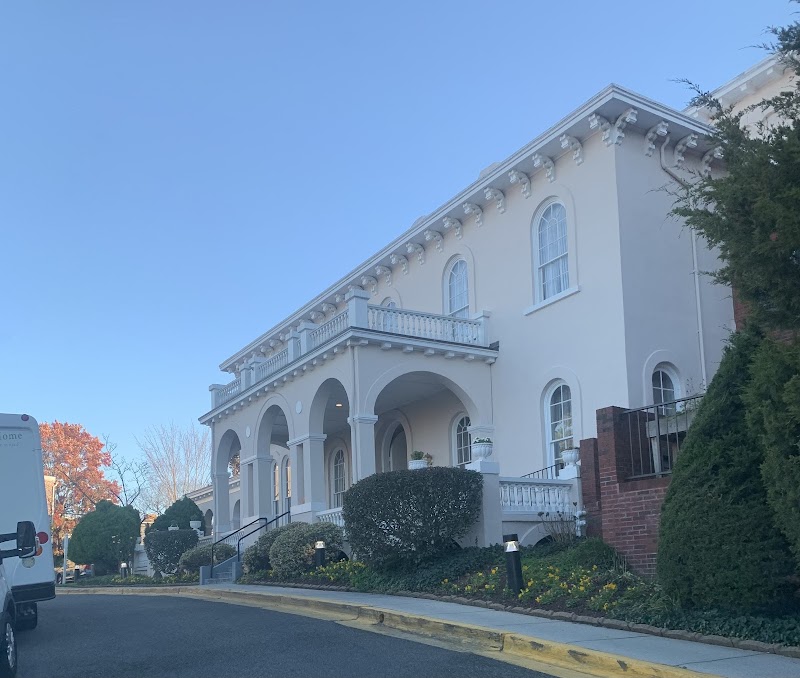
How is Stoddard Baptist Staffed?

CMS rates STODDARD BAPTIST NURSING HOME's staffing level at 1 out of 5 stars, which is much below average compared to other nursing homes. Staff turnover is 57%, which is 11 percentage points above the District of Columbia average of 46%. High turnover can affect care consistency as new staff learn residents' individual needs. RN turnover specifically is 71%, which is notably high. RNs provide skilled clinical oversight, so turnover in this role can affect medical care quality.

What Have Inspectors Found at Stoddard Baptist?

State health inspectors documented 54 deficiencies at STODDARD BAPTIST NURSING HOME during 2020 to 2025. These included: 4 that caused actual resident harm and 50 with potential for harm. Deficiencies causing actual harm indicate documented cases where residents experienced negative health consequences.
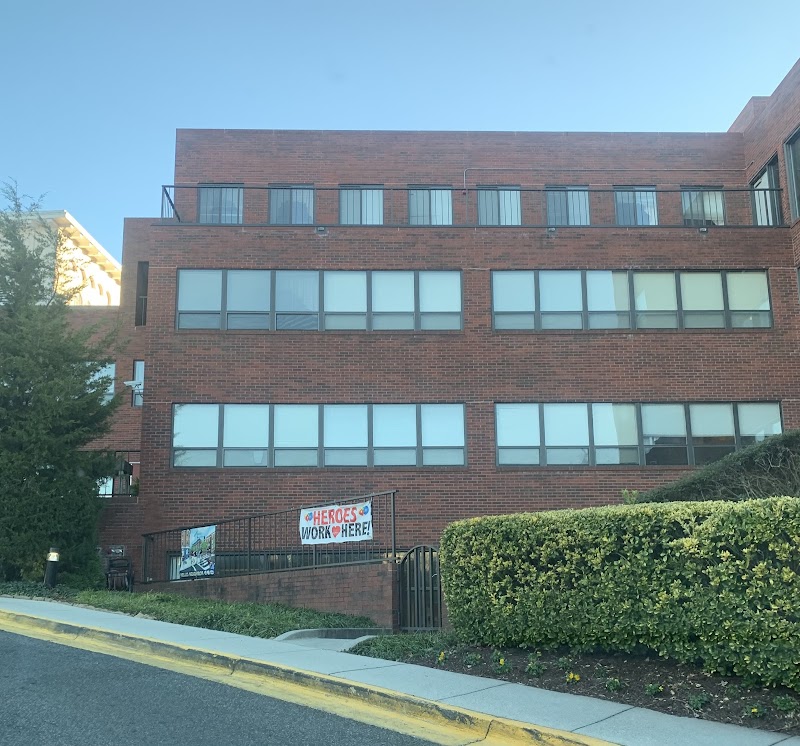
Who Owns and Operates Stoddard Baptist?

STODDARD BAPTIST NURSING HOME is owned by a non-profit organization. Non-profit facilities reinvest revenue into operations rather than distributing to shareholders. The facility operates independently rather than as part of a larger chain. With 164 certified beds and approximately 101 residents (about 62% occupancy), it is a mid-sized facility located in WASHINGTON, District of Columbia.
How Does Stoddard Baptist Compare to Other District of Columbia Nursing Homes?

Compared to the 100 nursing homes in District of Columbia, STODDARD BAPTIST NURSING HOME's overall rating (2 stars) is below the state average of 3.2, staff turnover (57%) is significantly higher than the state average of 46%, and health inspection rating (3 stars) is at the national benchmark.

What Should Families Ask When Visiting Stoddard Baptist?

Based on this facility's data, families visiting should ask: "How do you ensure continuity of care given staff turnover, and what is your staff retention strategy?" "Can you walk me through typical staffing levels on day, evening, and night shifts?" "Can I visit during a mealtime to observe dining assistance and food quality?" "How do you handle medical emergencies, and what is your hospital transfer rate?" These questions are particularly relevant given the facility's high staff turnover rate and the below-average staffing rating.

Is Stoddard Baptist Safe?

Based on CMS inspection data, STODDARD BAPTIST NURSING HOME has a clean safety record: no substantiated abuse findings (meaning no confirmed cases of resident harm), no Immediate Jeopardy citations (the most serious violation level indicating risk of serious injury or death), and is not on the Special Focus Facility watch list (a federal program monitoring the lowest-performing 1% of nursing homes). The facility has a 2-star overall rating and ranks #100 of 100 nursing homes in District of Columbia. While no facility is perfect, families should still ask about staff-to-resident ratios and recent inspection results during their visit.

Do Nurses at Stoddard Baptist Stick Around?

Staff turnover at STODDARD BAPTIST NURSING HOME is high. At 57%, the facility is 11 percentage points above the District of Columbia average of 46%. Registered Nurse turnover is particularly concerning at 71%. RNs handle complex medical decisions and coordinate care — frequent RN changes can directly impact care quality. High turnover means new staff may not know residents' individual needs, medications, or preferences. It can also be disorienting for residents, especially those with dementia who rely on familiar faces. Families should ask: What is causing the turnover? What retention programs are in place? How do you ensure care continuity during staff transitions?

Was Stoddard Baptist Ever Fined?

STODDARD BAPTIST NURSING HOME has been fined $97,426 across 2 penalty actions. This is above the District of Columbia average of $34,053. Fines in this range indicate compliance issues significant enough for CMS to impose meaningful financial consequences. Common causes include delayed correction of deficiencies, repeat violations, or care failures affecting resident safety. Families should ask facility leadership what changes have been made since these penalties.

Is Stoddard Baptist on Any Federal Watch List?

STODDARD BAPTIST NURSING HOME is not on any federal watch list. The most significant is the Special Focus Facility (SFF) program, which identifies the bottom 1% of nursing homes nationally based on persistent, serious quality problems. Not being on this list means the facility has avoided the pattern of deficiencies that triggers enhanced federal oversight. This is a positive indicator, though families should still review the facility's inspection history directly.