UNIQUE REHABILITATION AND HEALTH CENTER LLC
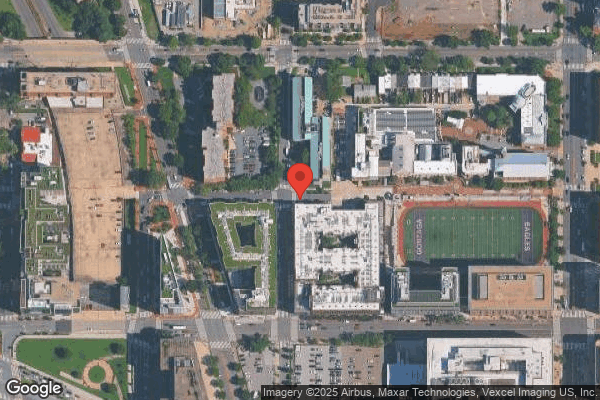
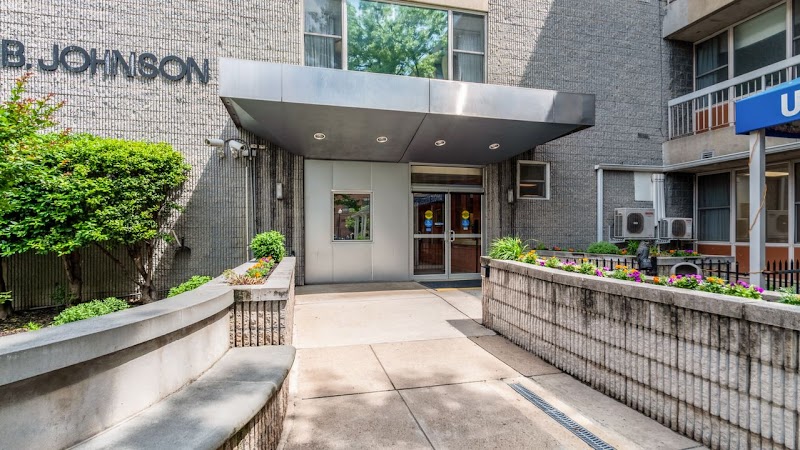
901 FIRST STREET NW, WASHINGTON, DC 20001 (202) 535-2011
For profit - Limited Liability company 230 Beds Independent Data: November 2025 2 Immediate Jeopardy citations
Trust Grade
0/100
#17 of 17 in DC
Last Inspection: November 2024

Within standard 12-15 month inspection cycle. Federal law requires annual inspections.

Overview

Families researching Unique Rehabilitation and Health Center LLC should be aware that it has received a Trust Grade of F, indicating poor quality with significant concerns. Ranking #17 out of 17 facilities in Washington, D.C. places them in the bottom tier, meaning there are no better local options. Although the facility is improving, with issues decreasing from 21 in 2024 to just 1 in 2025, it still reported 75 total issues, including critical concerns where residents were not properly supervised, leading to unsafe situations. Staffing is a relative strength, with a good turnover rate of 29%, but the facility has faced fines totaling $61,929, which is concerning. Despite having adequate RN coverage, specific incidents reveal serious shortcomings in resident supervision and safety, highlighting the need for families to carefully consider their options.

Trust Score
F
0/100
In District of Columbia
#17/17
Bottom 1%
Safety Record
High Risk
Review needed
Inspections
Getting Better
21 → 1 violations
Staff Stability
✓ Good
29% annual turnover. Excellent stability, 19 points below District of Columbia's 48% average. Staff who stay learn residents' needs.
Penalties
⚠ Watch
$61,929 in fines. Higher than 82% of District of Columbia facilities, suggesting repeated compliance issues.
Skilled Nurses
✓ Good
Each resident gets 59 minutes of Registered Nurse (RN) attention daily — more than average for District of Columbia. RNs are trained to catch health problems early.
Violations
⚠ Watch
75 deficiencies on record. Higher than average. Multiple issues found across inspections.
★☆☆☆☆
1.0
Overall Rating
★★★★☆
4.0
Staff Levels
★★★★☆
4.0
Care Quality
★☆☆☆☆
1.0
Inspection Score
Stable
2024: 21 issues
2025: 1 issues

The Good

  • 4-Star Staffing Rating · Above-average nurse staffing levels
  • 4-Star Quality Measures · Strong clinical quality outcomes
  • Low Staff Turnover (29%) · Staff stability means consistent care
  • Full Sprinkler Coverage · Fire safety systems throughout facility
  • No fines on record
  • Staff turnover is low (29%)

    19 points below District of Columbia average of 48%

Facility shows strength in staffing levels, quality measures, staff retention, fire safety.

The Bad

1-Star Overall Rating

Below District of Columbia average (3.2)

Significant quality concerns identified by CMS

Federal Fines: $61,929

Above median ($33,413)

Moderate penalties - review what triggered them

The Ugly 75 deficiencies on record

2 life-threatening 3 actual harm
Jun 2025 1 deficiency
CONCERN (D) 📢 Someone Reported This

A family member, employee, or ombudsman was alarmed enough to file a formal complaint

Potential for Harm - no one hurt, but risky conditions existed

Comprehensive Care Plan (Tag F0656)

Could have caused harm · This affected 1 resident

**NOTE- TERMS IN BRACKETS HAVE BEEN EDITED TO PROTECT CONFIDENTIALITY** Based on observation, record review, and staff and resident interview, facility staff failed to develop care plans for two (2) o...

Read full inspector narrative →
**NOTE- TERMS IN BRACKETS HAVE BEEN EDITED TO PROTECT CONFIDENTIALITY** Based on observation, record review, and staff and resident interview, facility staff failed to develop care plans for two (2) of nine sampled residents to address: (1) Resident #6's refusal to allow nursing staff to clean his room, including the nightstand and closet; and (2) Resident #4's use of a mechanical lift for transfer out of bed. (Residents #4 and #6). The findings included: Resident #6 was admitted to the facility on [DATE] with multiple diagnoses including Major Depression, Adjustment Disorder, Psychoactive Substance Abuse, Alcohol Use, Generalized Muscle Weakness, and Dependence of Wheelchair. An annual Minimum Data Set assessment dated [DATE] documented in part that Resident #6's Brief Interview Mental Status summary score was coded as 14 indicating resident had an intact cognitive status. Additionally, the resident was coded for impairment of both lower extremities and independent with using a manual wheelchair. An observation on 06/02/25 at approximately 12:45 PM, showed the resident's nightstand drawers contained multiple empty liquor bottles, a bottle of Theraflu (cough syrup), and a tube of Diclofenac Sodium Topical Gel 1% (arthritis medicine). Additionally, the resident's closet was noted to have multiple dirty clothing items and multiple pieces of paper. A review of the resident's care plan lacked documented evidence that the facility developed a care plan that outlined the nursing staff's role when the resident refused to allow them to clean his room, including his nightstand and closet or make his bed. During a face-to-face interview on 06/02/25 at approximately 1PM, Employee #4 (assigned CNA) stated that she has worked with the resident for three months and she has not cleaned his nightstand or closet because he will not allow her to touch any of his things. The employee also said that the resident will not allow her to make his bed or change his linen. During a face-to-face interview on 06/03/25 at approximately 10 AM, Employee #3 (RN/Unit manager) stated that the facility's protocol is that nursing assistants will clean residents' nightstands and closets daily. However, Resident #6 will not allow nursing staff to clean his room, make his bed or change his linen. Employee #3 reviewed the resident's care plan and stated she did not see a care plan that addressed Resident #6's refusal to allow nursing staff to clean his room. 2. Resident #4 was admitted on [DATE] with multiple diagnoses including history of Falls, Muscle Weakness, and Obesity. A quarterly Minimum Data Set assessment documented in part that Resident #4's Brief Interview of Mental Status summary score was coded as 14 indicating that the resident had an intact cognitive status. The resident was coded for no impairment of both upper and lower extremities, totally dependent on staff for activities of daily living and mobility. The resident was coded as 5 feet, 6 inches in height with a weight of 316 pounds. During an observation on 06/05/25 at approximately 10AM, Resident #4 was observed lying in bed watching television. She was alert and oriented to name, place, time, and situation. At the time of the observation, the resident stated the staff gets her out of bed at least one time a week. The staff uses a mechanical lift to get her out of bed. There are at least 2 staff members helping her to get out of bed. She gets out of bed at least once a week because she has a pressure ulcer and is not allowed to sit up for long periods. It should be noted that the resident was admitted with a Stage 3 sacral pressure ulcer. During a face-to-face interview on 06/05/25 at approximately 11:50 AM, Employee #6 (CNA) stated that at least two staff members help her when she gets the resident out of bed. Additionally, they use a mechanical lift to help get the resident out of bed. During a face-to-face interview on 06/05/25 at approximately 1 PM, Employee #5 (RN/Unit Manager) reviewed the resident's care plan and stated that she did not see a care plan that addressed the use of a mechanical lift to transfer the resident out of bed.
Nov 2024 21 deficiencies 1 IJ (1 affecting multiple)
CRITICAL (K)

Immediate Jeopardy (IJ) - the most serious Medicare violation

Accident Prevention (Tag F0689)

Someone could have died · This affected multiple residents

**NOTE- TERMS IN BRACKETS HAVE BEEN EDITED TO PROTECT CONFIDENTIALITY** Based on observations, record reviews, resident and staff interviews, for four (4) out of 40 sampled residents identified as smo...

Read full inspector narrative →
**NOTE- TERMS IN BRACKETS HAVE BEEN EDITED TO PROTECT CONFIDENTIALITY** Based on observations, record reviews, resident and staff interviews, for four (4) out of 40 sampled residents identified as smokers, facility staff failed to ensure effective and adequate supervision was provided as evidenced by the surveyor's observing residents in non-designated smoking areas with smoking paraphernalia that included cigarettes and/or lighters. Residents' #103, #117, #43, #21. Due to these failures, an Immediate Jeopardy (IJ) was identified on 11/05/24 at 12:15 PM and an IJ was called on 11/12/24 at 1:15 PM related to supervision of resident's who smoke. The facility's Administrator submitted a corrective action plan to the Survey Team that was accepted on 11/12/24 at 9:25 PM. The Survey Team verified implementation of the corrective plan while onsite and the Immediate Jeopardy was lifted on 11/15/24 at 3:00 PM. After removal of the immediacy, the deficient practice was lowered to a scope and severity of E, no actual harm with the potential for more than minimal harm. The findings included: A facility policy titled 'Smoking Policy - Residents' with a review date of 11/01/24 documented: - 1. Designated Smoking area: Smoking is only permitted in designated resident smoking areas during designated smoking times and will be monitored by a staff/smoking monitor and Smoking of any kind is not allowed inside the facility under any circumstances. - Smoking agreement with the residents: An agreement/contract is issued to the residents that are deemed as smokers as per the smoking evaluation and Searches will be conducted if facility suspects that cigarettes and/or smoking materials are kept in their personal space (room) and This facility maintains the right to confiscate smoking items found in violation of our smoking policies to ensure the safety of staff and other residents and Residents are strongly discouraged from keeping any smoking items, including cigarettes, tobacco, etc., except under direct supervision. 1A. Resident #103 was admitted to the facility on [DATE] with multiple diagnoses that included: Human Immunodeficiency Virus (HIV) Disease, Chronic Obstructive Pulmonary Disease (COPD), and Cerebrovascular Accident (CVA) with right sided weakness. A review of Resident #103's medical record revealed: A Safe Smoker assessment dated [DATE] documented, resident is a smoker. A Smoking Agreement signed and dated on 06/19/23 by Resident #103 and a Social Worker at the facility documented, All residents who wish to smoke at [Facility name] are allowed to do so, subject to the following rules: 1. You give the facility permission to search your room every shift for cigarette lighters, cigarettes and other smoking items. 8. Good safety awareness may also be defined as using smoking materials safely; and may also be defined as not giving, selling, or leaving smoking materials so that other residents may have access to them. 9. Residents/patients are not permitted to keep their cigarettes on their person or in their personal space at anytime. 11. Residents will be subject to unannounced room searches with resident/responsible party notification. 12. Residents safety awareness will be evaluated quarterly or as determined by the IDT - inter-Disciplinary Team. 15. Actions including but not limited to smoking in non-designated areas, allowing any other patient to use, borrow, buy or have access to smoking materials, or any behavior considered to exhibit poor safety awareness may result in revocation of smoking privileges. 16. Violation of this agreement or smoking contract will bring restrictions of smoking privileges or possible discharge from the facility, if behaviors present danger to others. A care plan dated 08/07/24 documented, [Resident's name] is non adherent/non-compliant to the facility smoking policies; Refusing to give cigarette and lighter to the staff on the smoking porch for safe keeping. Goal: 08/07/24 [Resident's name] will remain compliant with facility smoking policies through review date. Interventions: 08/07/24 Check room prn (as needed) for cigarettes, lighters, matches and remove and keep in designated area; Instruct to ask staff to provide/light smoking material; Observe for compliance with smoking plan. Report noncompliance or viewed unsafe practices. Reassess as needed; Staff will continue to educate/encourage resident to give cigarette and lighter for safekeeping. A Quarterly Minimum Data Set (MDS) assessment dated [DATE] documented: facility staff coded a Brief Interview for Mental Status (BIMS) summary score of '15,' indicating the resident was cognitively intact. Functional Abilities and Goals that documented: one-person physical assist with bed mobility, transfers, eating and toilet use; limited range of motion/impairment on one side to upper and lower extremities, and used a motorized wheelchair for locomotion on/off the unit. During an observation on 11/05/24 from 12:15PM to 12:45PM, the State Surveyor observed an unlit cigarette on Resident #103's bedside table. During a face-to-face interview conducted on 11/05/24 at 12:50PM Employee #5 (RN) stated, I didn't know that was there. I last saw her around 10:45AM, she left for an appointment out of the facility and haven't came back to the unit that I'm aware of. Maybe she came back but no one saw her. During a face-to-face interview conducted on 11/05/24 at 12:50PM Employee #2 (DON) stated, We have to develop a different approach with her for monitoring to be more frequent, right now she's every two hours. The smoking agreement that the smoker signs gives the facility staff the right to search her room for paraphernalia every shift to check for non-compliance with smoking policy. It should be noted that the facility staff were unaware that a cigarette was in the resident's room, or how long it had been left unattended on the resident's bedside table. The cigarette was observed at the resident's bedside table for a period of 45 minutes by the State Surveyor. 1B. Resident #117 was admitted to the facility on [DATE] with multiple diagnoses that included: Hemiplegia and Hemiparesis following Cerebral Infarction Affecting Left Non-Dominant Side, Aphasia and Lack of Coordination. Review of the resident's medical record revealed the following: A physician's order dated 10/09/23 that directed, [Resident #117] is a Smoker. Care plan focus area: [Resident #117] is non adherent/noncompliant to the facility smoking policies, refusing to give cigarette to the staff on the smoking porch for safe keeping; [Resident #117] has a behavior of lighting his cigarette from another resident's lit cigarette while in the smoking courtyard instead of letting the smoking aide assist; [Resident #117] was put on a behavioral plan for smoking compliance, revised on 08/07/2024. Goal: [Resident #117] will remain compliant with facility smoking policies through review date. Interventions: Check room prn for cigarettes, lighters, matches and remove and keep in designated area; do not leave unattended while smoking; observe for compliance with smoking plan; report noncompliance or viewed unsafe practices. A Quarterly MDS assessment dated [DATE] showed that facility staff coded: a BIMS summary score of 10, indicating moderately impaired cognitive status; and mobilized by manual wheelchair. A Smoking Agreement was signed and dated on 06/19/23 by Resident #117. A Quarterly Safe Smoker assessment dated [DATE] at 12:50 PM: - Current tobacco use, cigarettes - The interdisciplinary team (IIDT) determined that the resident is deemed a safe smoker. During an observation on 11/05/24 at 1:14 PM, Resident #117 was observed with a cigarette (unlit) in his mouth, while in the building on unit 1 south, propelling his wheelchair to the smoking area. The resident passed by multiple facility staff members who did not intercede when observing the resident with smoking paraphernalia. When the surveyor asked Resident #117 where he got the cigarette, the resident stated, I keep my own cigarettes. Once outside in the courtyard/smoking area, the surveyor and the two (2) assigned smoke monitors observed as another resident approached Resident #117 to light his cigarette. The assigned smoke monitors made no attempt to stop the residents. During a face-to-face interview conducted on 11/05/24 at 1:26PM Employee #6 (Smoking Monitor) stated, I search them before they leave the courtyard to make sure they don't have cigarettes, I check their pockets. Nobody is allowed to have a lighter or cigarettes with them. We give them two [cigarettes] in the morning, two [cigarettes] in the afternoon, and two [cigarettes] in the evening some of them take three [cigarettes]. Sometimes they smoke one [cigarette] and take the other one back in the building. 1C. Resident #43 was admitted to the facility 12/02/19 with diagnoses of Cerebrovascular Disease, Ventricular Fibrillation, Major Depressive Disorder, Congestive Heart Failure. Review of the resident's medical record revealed: A care plan focus area: [Resident #43] wishes to smoke at the facility and is assessed by the IDT as a Safe Smoker, Nicotine dependence, last revised 05/13/24. Goals: will be able to smoke safely without causing injury to themselves or others through next review date; will comply with facility smoking policy through next review date; will smoke safely in designated area and at designated times through next review date. Interventions: Resident needs supervision while smoking; courtyard (smoking) monitor to provide supervision when resident is smoking; monitor resident's room for hidden cigarette, lighter; notify Responsible/Resident Representative of noncompliant behaviors; orient the resident to facility's smoking policy, procedures, including designated smoking areas and designated smoking times; resident will not have smoking paraphernalia in the room and resident's room will be checked for smoking material every hour and compliance with smoking policy; resident/Representative has signed the smoking contract. Interdisciplinary staff will observe and assess for compliance with smoking policy and contact. A Quarterly MDS assessment dated [DATE] showed facility staff coded: a BIMS summary score of 00, indicating severely impaired cognitive status. A Smoking Agreement signed and dated on 06/19/23 by Resident #43. A Safe Smoker assessment dated [DATE] documented: - Current tobacco use, - The IDT determined the resident is deemed safe smoker. During an observation on 11/06/24 at 10:50 AM, Resident #43 was observed propelling her wheelchair to exit the facility into the facility courtyard, passing by an assigned smoke aide. When she arrived out to the smoking area, Resident #43 was observed pulling a cigarette out of the side of her wheelchair cushion, lit it with a lighter that she had and began smoking. During a face-to-face interview at the time of the observation, Employee #7 (Smoking Monitor) stated, No, I did not give Resident #43 the smoking items (cigarette and lighter). During an observation on 11/07/24 at approximately 1:30 PM Residents' #43 and #103, were observed with smoking paraphernalia outside the designated smoking area. All the observed residents were identified by the facility as smokers. During a face-to-face interview conducted on 11/07/24 at 1:45PM Employee #7 (Smoking Monitor) stated, I'm not going to fight with them (the residents) to do what they supposed to do. During a face-to-face interview conducted on 11/07/24 at 1:49PM Employee #1 (Administrator) acknowledged the findings and stated, They [the residents] are not allowed to have smoking paraphernalia (i.e., cigarettes, lighters). Sometimes they choose to do what they want despite the education. Smoking paraphernalia should be kept with the smoke aid, that's in our policy and the smoking agreement that they sign. 1D. Resident #21 was admitted to the facility on [DATE] with multiple diagnoses that included Nicotine Dependence and Chronic Obstructive Pulmonary Disease. Review of the resident's medical record revealed the following: A physician's order dated 08/31/23 that directed, Encourage d/c (discontinue) smoking. A Smoking Agreement signed and dated on 06/20/23 by Resident #21 A Quarterly Safe Smoker assessment dated [DATE] at 4:08 PM - Current tobacco use, cigarettes. - The interdisciplinary team (IDT) determined that the resident is deemed safe smoker. A Quarterly MDS assessment dated [DATE] showed that facility staff coded: a BIMS summary score of 11, indicating moderately impaired cognitive function and had no functional limitations in range of motion in upper extremities. Care plan focus area: [Resident #21] is non adherent/noncompliant to the facility smoking policies; Refusing to give cigarette and lighter to the staff on the smoking porch for safe keeping, revised on 09/03/24. [Resident #21] is on a behavioral plan for smoking policy/agreement. Goal: [Resident #21] will remain compliant with facility smoking policies through review date. Interventions: Check room prn for cigarettes, lighters, matches and remove and keep in designated area. Complete smoking evaluation per facility guidelines. Do not leave unattended while smoking. Instruct family members, responsible parties or visitors about smoking guidelines prn. Instruct patients, family members, and visitors not to share lighted cigarettes, lighters or other smoking materials with other patients. Instruct to ask staff to provide/light smoking material. Observe for compliance with smoking plan. Report noncompliance or viewed unsafe practices. Reassess as needed. Staff will continue to educate/encourage resident to give cigarette and lighter for safekeeping. A physician's order dated 11/05/24 that directed, Search for smoking paraphernalia, notify the Supervisor and Provider if smoking items are found, and complete appropriate documentation, every shift. During an observation on 11/08/24 at 1:45 PM, the surveyor observed Resident #21 in the smoking area, using her lit cigarette to light the cigarette of another resident. During a face-to-face interview at the time of the observation, Employee #7 (Smoking Monitor) stated, The residents try to fight me when I ask them if they have cigarettes or anything else (lighters) on them. An Immediate Jeopardy (IJ-K) was called on 11/12/24 at 1:15 PM. The facility's Administrator submitted a corrective action plan to the Survey Team that was accepted 11/12/24 at 9:25 PM that included the following: 1. Resident#2 l, #43, #103 and #117 were assessed by the licensed nurse between 11/06/2024 and 11/07/2024 with no new issues found. A thorough room search was done between 11/05/2024 and 11/09/2024 by the Unit Managers/designee for all the residents that smoke and the smoking paraphernalia was taken away from them and safely secured in the smoking cart. 2. Resident#21 #43 #103, #117 were educated/encouraged on 11/07/2024 and 11/08/2024 by the social services personnel on following facility's smoking agreement for smoking paraphernalia and to hand it over to the smoking monitor. Residents that are non-compliant with smoking agreement will have q shift check to ensure resident does not have any smoking paraphernalia in their possession and if found with any, it will be reported to the supervisor for further actions. 3. A new smoking assessment was completed for all smokers between 11/05/2024 and 11/07/2024 by licensed nursing personnel. The Unit Managers have ve1ified the EMR that all smoking residents' care plans had effective interventions in place. This was completed by 11/12/2024. 4. Per the smoking assessments completed, only 1 resident as of 11/12/2024 requires smoking apron and is provided with one as per the plan of care. 5. Resident council meeting was held on 11/06/2024 to review the smoking policy and smoking agreement as enforced in the facility led by the Administrator and the Activities Director. 6. The Social Services personnel/designee reiterated the policy and smoking agreement to the residents and their RP for the residents that could not participate in the resident council meeting that was held on 11/06/2024 and for the residents that lack the capacity to understand the policy. This was completed by 11/12/2024. 7. A sign is posted on the smoking area, the security desk and entrance doors to remind residents, family members and visitors not to bring in cigarettes or any smoking paraphernalia before reente1ing the facility and to hand these items back to the staff. Residents that smoke, who go on leave of absence from the facility, are informed per signage at the front door and security desk to ensure that any smoking paraphernalia is turned in to the security staff. 8. A robo-call/auto text was done on 11/05/2024 for all resident family members to ensure they tum over smoking materials to the security personnel. 9. Rooms of residents identified as smokers will be inspected per the smoking agreement, daily, to ensure no smoking paraphernalia are present. The auditor will notify the supervisor, attempt to immediately confiscate the item to store or destroy it approp1iately. If unable to confiscate the smoking paraphernalia immediately, depending on the item (lighter or cigarettes) monito1ing for compliance will be enhanced (increased frequency of checks eg. Qshift/ Q hour/Q 15mins or 1:1 until compliance is achieved). The interdisciplinary team will determine if frequency of room checks will be reduced for residents that are consistently compliant with the smoking agreement. 10. Education will be completed by the Staff Educator/Development for all staff to review the Smoking Policy and Procedures and on ensuring that cigarettes and any smoking paraphernalia are not kept in resident room. 100% Compliance achieved on 11/11/2024. The Staff Educator/Development will ensure that any staff that has not received their education by 11/11/24 will receive it before resuming work. 11. Education will done by the Staff Educator by 11/13/2024 for the smoking monitors regarding their responsibilities to assist residents, safeguarding the smoking materials, assist with lighting their cigarettes, offer apron to those who need it, ensuring they offer only 1 cigarette at a time, and to report non-compliance of turning in smoking paraphernalia to the security/supervisor. 12. An ongoing audit of the smoking resident's compliance to the proper storing of smoking paraphernalia per the smoking agreement will be done by the Administration/designee. This audit began on 11/07/2024 will be conducted daily x 1-week, weekly x 4, monthly x2. Any issues found will be addressed immediately, if any prohibited items are found, the auditor will notify the supervisor, attempt to immediately confiscate the item to store or destroy it appropriately. If unable to confiscate the smoking paraphernalia immediately, depending on the item (lighter or cigarettes) monito1ing for compliance will be enhanced (increased frequency of checks eg. Q shift/ Q hour/ Q 15mins or 1:1 until compliance is achieved). The interdisciplinary team will determine if frequency of room checks will be reduced for residents that are consistently compliant with the smoking agreement. Upon discovery and will be reported to the QAPI committee. If there is non-compliance with the smoking agreement is observed, the length of audit will be extended per the interdisciplinary team to achieve substantial compliance with the smoking agreement. 13. The Smoking Policy has been updated as of 11/12/2024 to reflect that smoking aprons will be offered and provided only to residents who need them as determined by their most recent smoking assessment. 14. The Administrator/Designee will conduct random audits of the smoking cart and smoking area 3x per week x 4 weeks to ensure that resident's cigarettes, resident lighters and facility provided lighters are stored in the cart. 15. The results of the monitoring and care plan review completed under this action plan are submitted to the QA/QI Committee for review and follow-up monthly. Our date of compliance will be 11/13/2024. The Survey Team verified implementation of the corrective plan while onsite and the Immediate Jeopardy was lifted on 11/15/24 at 3:00 PM.
CONCERN (D)

Potential for Harm - no one hurt, but risky conditions existed

Deficiency F0583 (Tag F0583)

Could have caused harm · This affected 1 resident

**NOTE- TERMS IN BRACKETS HAVE BEEN EDITED TO PROTECT CONFIDENTIALITY** Based on observation, record review and staff interviews for one (1) of 75 sampled residents, facility staff failed to respect a...

Read full inspector narrative →
**NOTE- TERMS IN BRACKETS HAVE BEEN EDITED TO PROTECT CONFIDENTIALITY** Based on observation, record review and staff interviews for one (1) of 75 sampled residents, facility staff failed to respect a resident's right to personal privacy, including the right to promptly receive unopened mail, evidenced by a resident's personal mail being opened without his signed consent. (Resident #111) The findings included: An undated facility policy titled Mail Handling documented, Each resident shall be ensured the right to privacy in written communications including promptly sending and receiving unopened mail and having access to stationary, postage, and writing implements, and, Procedures: 1. Mail will be delivered to the resident unopened and unread, including magazines and newspapers, within 24 hours of arrival in the facility by Designated personnel and/or assigned volunteers. 2. Residents/Responsible Party (RP) who desire to have their mail opened and read to them shall make this request in writing or sign a release form stating this fact. The appropriate legal signature is required. All information will be treated confidentially. A facility policy titled 'Resident Rights' with a review date of 06/2023 documented, Employees shall treat all residents with kindness, respect, and dignity. The resident has a right to a dignified existence, self-determination, and communication with and access to persons and services inside and outside the facility, and communicate in person and by mail, email and telephone with privacy. Resident #111 was admitted to the facility on [DATE] with multiple diagnoses that included: Stroke with Hemiplegia, Hypertension and Coronary Artery Disease. A review of Resident #111's medical record revealed a Quarterly Minimum Data Set (MDS) assessment dated [DATE] that documented a Brief Interview for Mental Status (BIMS) summary score of '15,' indicating the resident was cognitively intact. Functional Abilities and Goals that documented: limited range of motion/impairment on one side to upper and lower extremities; used a cane and wheelchair for locomotion on/off the unit; Independent with eating, oral hygiene and upper body dressing. During an observation conducted on 11/13/24 at 2:43 PM the State Surveyor observed Resident #111's personal mail that was not in its original envelope. The one-page letter was inside of a plain white mailing envelope with his full name and room number written on it. During a face-to-face interview conducted on 11/13/24 at 2:45 PM Resident #111 stated, The Social Worker opened up my mail yesterday. I went to Security to find out who opened my mail, and the Security told me that the Social Worker opened it. I didn't give them permission to open my personal mail. During a face-to-face interview conducted on 11/15/24 at 2:38 PM Employee #8 (Activities Aide) stated, I remember the resident, it was [Resident #111's name], because he brought it to my attention when I gave it to him. He said someone opened his mail. It's only the in-house mail that's not sealed because all the residents get the same in-house mail that contains facility information. I do remember that it was opened and stuffed into the envelope, and he said something to me about it, but I thought it was in-house mail since it was already opened. During a face-to-face interview conducted on 11/15/24 at 3:00 PM Employee #9 (Security Officer) stated, Something was reported a few days ago about opened mail, he (Resident #111) came to the front desk to complain. We told him we don't open any mail and to check with recreation (Activities Department) or the Social Worker. I don't know what happened after that. During a face-to-face interview conducted on 11/15/24 at 3:08 PM Employee #12 (Social Worker) stated, If it seems to be any certain type of mail from the court, voter registration, housing, or legal matters it comes to me or my supervisor. When we get those type[s] of mail if I think the resident is competent, I just give it to them, but if I don't think they are competent I open it. I have opened mail for [another resident] before. Employee #12 was asked if its documented anywhere that she opens the residents personal mail and she stated, No. During a face-to-face interview conducted on 11/15/24 at 3:13 PM Employee #13 (Activities Director) acknowledged the findings and stated, At no time does the staff open a resident's mail without permission.
CONCERN (D) 📢 Someone Reported This

A family member, employee, or ombudsman was alarmed enough to file a formal complaint

Potential for Harm - no one hurt, but risky conditions existed

Safe Environment (Tag F0584)

Could have caused harm · This affected 1 resident

**NOTE- TERMS IN BRACKETS HAVE BEEN EDITED TO PROTECT CONFIDENTIALITY** Based on observation and staff interview for four (4) of 75 sampled residents, facility staff failed to provide a comfortable, s...

Read full inspector narrative →
**NOTE- TERMS IN BRACKETS HAVE BEEN EDITED TO PROTECT CONFIDENTIALITY** Based on observation and staff interview for four (4) of 75 sampled residents, facility staff failed to provide a comfortable, sanitary, homelike environment to four (4) residents, as evidenced by two (2) resident's rooms with dirty floors covered with debris and a sticky-like substance, including multiple wheelchair tire tracks, two (2) resident's rooms with flies, two (2) resident's rooms with a clutter of boxes, bins and other unboxed items piled against the wall and around the resident's bed, two (2) resident's rooms without bed linens on their bed, one (1) resident with a foul odor of urine beginning at the doorway, and one(1) resident with a dirty sticky floor and a foul odor in the room. Residents #76, #7,#103 and #115. The findings included: 1. Resident #76 was admitted to the facility on [DATE] with multiple diagnoses that included: Hemiplegia and Hemiparesis following Cerebral Infarction affecting Left Dominant Side, Atherosclerosis of Native Arteries of Other Extremities with Ulceration, Peripheral Vascular Disease, and Muscle Wasting and Atrophy. A review of Resident #76's medical record revealed a Quarterly Minimum Data Set (MDS) assessment dated [DATE] documented: facility staff coded a Brief Interview for Mental Status (BIMS) summary score of '15,' indicating the resident was cognitively intact. Functional Abilities and Goals that documented: totally dependent on staff for chair/bed-to-chair transfer; required Substantial/Maximal assistance with personal hygiene, toileting, bathing and dressing; used a motorized wheelchair for locomotion on/off the unit. During an observation conducted on 11/04/24 at 12:20 PM Resident #76's room was noted to be cluttered with personal belongings creating a trip hazard, including food and clothing piled up in a corner and on the resident's bare mattress. There were no bed linens on the resident's bed, the floor was littered with debris and food crumbs, and there was a fly observed flying around the room during the observation. During a face-to-face interview conducted with Resident #76 he stated, There's an issue with getting clean linen every day for my bed and no one asked to help clean my room. 2. Resident #7 was admitted to the facility on [DATE] with multiple diagnoses that included: Dementia, Hemiplegia and Hemiparesis following Other Cerebrovascular Accident affecting Right Non-Dominant Side, Speech and Language Deficits following Unspecified Cerebrovascular Accident, and Muscle Wasting and Atrophy. A review of Resident #7's medical record revealed a Quarterly Minimum Data Set (MDS) assessment dated [DATE] documented: facility staff coded a Brief Interview for Mental Status (BIMS) summary score of '09,' indicating the resident was moderately impaired. Functional Abilities and Goals that documented: Substantial/maximal assistance from staff with toileting, personal hygiene, bathing, dressing and Partial/moderate assistance from staff with chair/bed-to-chair transfer; used a manual wheelchair for locomotion on/off unit. During an observation conducted on 11/04/24 at 12:30 PM Resident #7's room was noted to have a foul odor of urine beginning at the doorway and inside of the resident's room. There were several flies in the room and concentrated on and around the resident's bed and the floor was dirty with an unknown sticky substance covering part of the floor. 3. Resident #103 was admitted to the facility on [DATE] with multiple diagnoses that included Human Immunodeficiency Virus (HIV) Disease, Chronic Obstructive Pulmonary Disease (COPD), and Cerebrovascular Accident (CVA) with right sided weakness. A review of Resident #103's medical record revealed a Quarterly Minimum Data Set (MDS) assessment dated [DATE] that documented: facility staff coded a Brief Interview for Mental Status (BIMS) summary score of '15,' indicating the resident was cognitively intact. Functional Abilities and Goals that documented: one-person physical assist with bed mobility, transfers, eating and toilet use; limited range of motion/impairment on one side to upper and lower extremities, and used a motorized wheelchair for locomotion on/off the unit. During an observation conducted on 11/04/24 at 12:45 AM Resident #103's room was noted to have a dirty floor with an unknown sticky-like substance and wheelchair tire marks. The mattress was bare, without clean bed linens. The area surrounding the resident's bed was cluttered with personal belongings creating a tripping hazard, including storage bins, cardboard boxes and other unboxed items piled against the wall. During a face-to-face interview conducted on 11/04/24 at approximately 1:00 PM Employee #14 (RN) acknowledged the findings and stated, We ran out of linens, just waiting to see when we will get some more. Will have to check with the resident to see when it's a good time to clean the room. Cross Reference 22B DCMR § 3256.1 4. Resident #163 was admitted to the facility on [DATE] with diagnoses that included: Dislocated Right Hip Arthroplasty, Cervical Spinal Stenosis, Osteomyelitis, Dependence on a Wheelchair, Psychoactive Substance Use, Alcohol Abuse, Type 2 Diabetes Mellitus, Tobacco Use, and Moderate Adjustment Disorder with Mixed Anxiety and Depressed Mood. A review of Resident #163's medical record revealed a Face Sheet which showed that Resident #163 was the responsible party. A review of Resident #163's Quarterly Minimum Data Set (MDS) assessment dated [DATE] documented that the resident had a BIMS score of 14, indicating intact cognition. During an initial tour of Unit # 3 North on 11/06/24 at 10:31 AM, Resident #163's room was observed with a sticky, dirt-stained floor and a foul-smelling odor in the Resident #163's room. The Resident was not in his room at the time of the observation. The Resident's bed (Bed A) was unmade with the bed linens, drawn back in disarray and a personal blanket partially on the bed and on the floor at the foot of the Resident's bed. Piled in the center of the Resident's bed mattress were the resident s belongings including his wallet and single dollar bills. On the floor at the foot of the Resident's bed, were two (2) large, clear trash bags with the Resident's belongings in them. Next to the resident's bed on the floor was an empty urinal. The Resident's roommate who was nonverbal, was asleep in Bed B. During a face-to-face interview with Employee #29/Certified Nurse Aide (CNA), said she was not aware of the condition of the Resident's room, because she was not assigned to the resident. She then added that she would let the Unit Manager know that the Resident's room needed to be cleaned. At approximately 11:30 AM on 11/06/24, Resident #163's room was observed in the same condition and the Resident was not in the room. During a face-to-face interview with Employee #28/3 North Unit Manager,(Registered Nurse), on 11/06/24 at approximately 11:30 AM, she acknowledged that the floor was dirty, and there was an odor in the resident's room. She stated that the Resident had spilled the urinal on the floor, and he would not allow EVS (environmental services) staff to come in and clean the room while he was there. She then stated that she was unaware that the Resident had left his room. She then asked EVS to clean the Resident's room. When asked if the room was cleaned daily, she stated that it was, and added that she would have EVS clean the Resident's room. Cross Reference 22B DCMR § 3256.1
CONCERN (D) 📢 Someone Reported This

A family member, employee, or ombudsman was alarmed enough to file a formal complaint

Potential for Harm - no one hurt, but risky conditions existed

Grievances (Tag F0585)

Could have caused harm · This affected 1 resident

Deficiency Text Not Available

Read full inspector narrative →
Deficiency Text Not Available
CONCERN (D) 📢 Someone Reported This

A family member, employee, or ombudsman was alarmed enough to file a formal complaint

Potential for Harm - no one hurt, but risky conditions existed

Free from Abuse/Neglect (Tag F0600)

Could have caused harm · This affected 1 resident

Deficiency Text Not Available

Read full inspector narrative →
Deficiency Text Not Available
CONCERN (D) 📢 Someone Reported This

A family member, employee, or ombudsman was alarmed enough to file a formal complaint

Potential for Harm - no one hurt, but risky conditions existed

Abuse Prevention Policies (Tag F0607)

Could have caused harm · This affected 1 resident

Deficiency Text Not Available

Read full inspector narrative →
Deficiency Text Not Available
CONCERN (D) 📢 Someone Reported This

A family member, employee, or ombudsman was alarmed enough to file a formal complaint

Potential for Harm - no one hurt, but risky conditions existed

Report Alleged Abuse (Tag F0609)

Could have caused harm · This affected 1 resident

Deficiency Text Not Available

Read full inspector narrative →
Deficiency Text Not Available
CONCERN (D) 📢 Someone Reported This

A family member, employee, or ombudsman was alarmed enough to file a formal complaint

Potential for Harm - no one hurt, but risky conditions existed

Comprehensive Care Plan (Tag F0656)

Could have caused harm · This affected 1 resident

Deficiency Text Not Available

Read full inspector narrative →
Deficiency Text Not Available
CONCERN (D) 📢 Someone Reported This

A family member, employee, or ombudsman was alarmed enough to file a formal complaint

Potential for Harm - no one hurt, but risky conditions existed

Quality of Care (Tag F0684)

Could have caused harm · This affected 1 resident

**NOTE- TERMS IN BRACKETS HAVE BEEN EDITED TO PROTECT CONFIDENTIALITY** Based on record review and staff interview, for one (1) of 75 sampled residents, facility staff failed to follow the physician's...

Read full inspector narrative →
**NOTE- TERMS IN BRACKETS HAVE BEEN EDITED TO PROTECT CONFIDENTIALITY** Based on record review and staff interview, for one (1) of 75 sampled residents, facility staff failed to follow the physician's order for narcotic pain administration. Resident #229. The findings included: Review of the facility's Physician Medication Orders policy dated 11/01/24 documented: - Medications shall be administered only upon the written order of a person licensed to prescribe such medications. Resident #229 was admitted to the facility on [DATE] with multiple diagnoses that included: Pain, Malignant Neoplasm of Left Female Breast, and Neoplasm Related Pain. Review of the resident's medical record revealed the following an admission Minimum Data Set (MDS) assessment dated [DATE] showing facility staff coded: clear speech; clear comprehension of others; able to make self-understood; received scheduled and as needed pain medication and received opioid medications in the last seven (7) days. A physician's order dated 11/25/24 directed, Hydromorphone (narcotic pain reliever) 2 milligrams (mg), give one (1) tablet by mouth every 4 hours as needed for chronic pain due to Malignant Neoplasm of Left Female Breast. During a narcotic count on 11/26/24 at 1:41 PM on unit 3 north with Employee #19 (Licensed Practical Nurse/LPN), Resident #229's Hydromorphone blister packet showed that it had 4 remaining tablets, and the Controlled Drug Administration Record sheet showed that the employee documented that Resident #229 was administered the Hydromorphone 2 mg, two (2) tablets on 11/26/24 at 11:15 AM. Review of Resident #229's physician's orders with Employee #19 revealed that the resident had no active order to administer Hydromorphone 2 mg, two tablets. When asked why she administered Hydromorphone 2 mg, two tablets instead of the ordered one tablet to Resident #229, Employee #19 did not provide an answer. The evidence showed that Employee #19 failed to follow the physician's order of administering 1 tablet of Hydromorphone 2 mg to Resident #229. It should be noted that Resident #229 did not suffer any harm or adverse effects from being administered the two tablets of Hydromorphone 2 mg. Cross Reference 22B DCMR Sec. 3225.1
CONCERN (D)

Potential for Harm - no one hurt, but risky conditions existed

Tube Feeding (Tag F0693)

Could have caused harm · This affected 1 resident

**NOTE- TERMS IN BRACKETS HAVE BEEN EDITED TO PROTECT CONFIDENTIALITY** Based on observations record reviews and staff interviews for one (1) of 75 sampled residents, the facility staff failed to ensu...

Read full inspector narrative →
**NOTE- TERMS IN BRACKETS HAVE BEEN EDITED TO PROTECT CONFIDENTIALITY** Based on observations record reviews and staff interviews for one (1) of 75 sampled residents, the facility staff failed to ensure that a resident who is fed by enteral means received appropriate treatment and services to prevent complications as evidenced by an observation in which Resident #39's enteral tubing was observed tied in a knot. Resident #39. The findings included: Resident #39 was admitted to the facility on [DATE] with multiple diagnoses that included the following: Gastrostomy Status, Schizophrenia, Seizures, Pressure Ulcer of Sacral Region Stage 4 and Anemia. A review of a Facility Reported Incident (FRI) DC#00012152, submitted to the State Agency on 08/01/23, documented the following: On rounds resident was observed lying on the floor in her room beside her bed with nonskid socks on. Upon assessment, the resident was noted with a small laceration on the left eyebrow measuring 7 x (times) 4 cm (centimeters) with moderate bleeding. The area was cleaned with normal saline, pat dry and pressure dressing applied. Resident could not verbalize what happened. A review of the facility's policy titled G(gastrostomy) Tube feeding-Eternal (sp)(Enteral) Nutrition with a revision date of 11/01/24 documented the following: Nursing will assess and report complications associated with use of feeding tube which include: Clogging of tube Regularly inspect G (gastrostomy)-tube tubing for any damage. A review of Resident #39's medical record revealed the following: [Care Plan] undated focus area documented, (Resident #39) requires feeding tube related to swallowing impairment. Had the following undated interventions Interventions: Administer tube feeding formula, hydration, and flushes per order, Flush tubing with 30ml (milliliters) water before and after administering medication. Flush with5ml water between each medication. Provide local care to G- (gastrostomy) Tube site as ordered and monitor for s/sx (signs and symptoms) of infection every shift and PRN (as needed). [Physician Order] dated 01/26/24 documented Enteral feed order every shift flush tube feeding with 30 ml (milliliters) water before and after administering medication. Flush with 5ml between each medication. [Physician Order] dated 01/27/24 documented Enteral feed order every day shift cleans feeding tube site daily with soap and water and pat dry. Apply clean drain gauze if needed [Physician Order] dated 02/27/24 documented Enteral feed order every night shift water flush 50 ml (milliliters) q (every) 2 hr (hour), start 6 am, end 12 midnight or when total volume 450 ml (milliliters) is infused [Physician Order] dated 07/08/24 documented Enteral feed order every night shift change feeding tube syringe and feeding tube set ever day and prn (as needed) [Physician Order] dated 10/26/24 documented Check tube for proper placement prior to each feeding, flush or medication administration every shift During an observation conducted on 11/25/24 at approximately 3:00 PM, the Surveyor observed the resident lying in bed with tube feeding pump running with tubing that was tied in a knot and laying on bed beside Resident #39. The surveyor immediately alerted Employee #25 (1 South Unit Manager) who was observed untangling the knot which required disconnecting the tubing from the pump. An interview was conducted at the time of the observation with Employee #25 who stated, Someone on night shift must have put it like that.
CONCERN (D)

Potential for Harm - no one hurt, but risky conditions existed

Deficiency F0694 (Tag F0694)

Could have caused harm · This affected 1 resident

**NOTE- TERMS IN BRACKETS HAVE BEEN EDITED TO PROTECT CONFIDENTIALITY** Based on observation, record review and staff interviews, for one (1) of 75 sampled residents, facility staff failed to ensure t...

Read full inspector narrative →
**NOTE- TERMS IN BRACKETS HAVE BEEN EDITED TO PROTECT CONFIDENTIALITY** Based on observation, record review and staff interviews, for one (1) of 75 sampled residents, facility staff failed to ensure that Resident #362 received care and services, consistent with professional standards of practice for her right upper chest central venous intravenous (IV) catheter\line. The findings included: According to the Centers for Disease Control (CDC): Replace dressings used on short-term central venous catheter sites at least every seven (7) days. https://www.cdc.gov/infection-control/hcp/intravascular-catheter-related-infections/summary-recommendations.html Review of the facility's Central Line Dressing Change policy dated 11/2024 documented: - Dressing changes for central lines will be performed weekly, on Wednesdays, or as clinically indicated based on the patient's conditions. - Nurses are responsible for performing the dressing change according to the established protocols. - Each dressing change, including any observations (signs of infection, condition of the catheter), must be documented in the patient's medical record. Resident #362 was admitted to the facility on [DATE] with multiple diagnoses that included: Chronic Systolic (Congestive) Heart Failure, Cardiomyopathy and Metabolic Encephalopathy. Review of the resident's medical record revealed the following an admission Minimum Data Set (MDS) assessment dated [DATE] showed that facility staff coded: a Brief Interview for Mental Status (BIMS) summary score of 13, indicating intact cognitive response. A physician's order dated 11/01/24 directed, Cefazolin (antibiotic) Sodium Injection Solution Reconstituted 2 GM, use 2 grams intravenously every 12 hours for Methicillin Susceptible Staphylococcus Aureas (MSSA) Bacteremia until 11/23/2024. A physician's order dated 11/04/24 directed, Change central line dressing and caps weekly, every day shift, every Wednesday. Care plan focus area: [Resident #362] has potential for complications at IV insertion site, [NAME] line inserted at right upper chest, initiated on 11/04/24 had interventions that included: dressing change per physician's order and prn if soiled or wet. An 11/10/24 at 8:14 PM admission Note documented: - [Resident #362] was readmitted from [Hospital name] at about 7:00 PM on a stretcher. - Resident has a [NAME] (type of central IV) line for antibiotic administration. An 11/13/24 at 11:48 AM Daily Skilled Note: - No mood indicators noted. - No behavior problems observed. - Received antibiotics, has IV for medication administration. Review of Resident #362's Treatment Administration (TAR) record for November 2024 showed that on 11/13/24, facility staff documented a check mark and their initials to indicate that the treatment, Change central line dressing and caps weekly, every day shift, every Wednesday was completed. During an observation on 11/15/24 at 10:50 AM, Resident #362's central line dressing was noted with a documented date of 11/6/24. During a face-to-face interview at the time of the observation, Employee #20 (Licensed Practical Nurse/LPN) acknowledged the finding and stated that the dressing was going to get changed today. The evidence showed that facility staff failed to ensure that Resident #362 received care and services, consistent with professional standards of practice as evidnced by not chaging her central line dressing weekly, as ordered by the physician.
CONCERN (D)

Potential for Harm - no one hurt, but risky conditions existed

Respiratory Care (Tag F0695)

Could have caused harm · This affected 1 resident

Based on observation and staff interview, facility staff failed to ensure that empty oxygen tanks were not stored in the same area as full oxygen tanks in one (1) of five (5) clean utility rooms obser...

Read full inspector narrative →
Based on observation and staff interview, facility staff failed to ensure that empty oxygen tanks were not stored in the same area as full oxygen tanks in one (1) of five (5) clean utility rooms observed. The findings included: According to the National Fire Protection Association (NFPA): - Per NFPA 99-2012, 11.6. 5.2, is about ensuring full and empty cylinders are not commingled. Those cylinders defined as 'empty' by the organization shall be segregated from all other cylinders that are intended for patient care use. https://www.nfpa.org/ During an observation of unit 2 north's clean utility room on 11/22/24 at 11:30 AM with Employee #17 (2 north Unit Manager), three (3) oxygen tanks were noted stored for use. Upon closer inspection, it was noted that one of the oxygen tanks showed empty. The evidence showed that facility staff failed to ensure that empty oxygen tanks were not stored in the same area as full oxygen tanks. Employee #17 acknowledged the finding at the time of the observation and removed the empty oxygen tank from the utility room.
CONCERN (D)

Potential for Harm - no one hurt, but risky conditions existed

Deficiency F0711 (Tag F0711)

Could have caused harm · This affected 1 resident

**NOTE- TERMS IN BRACKETS HAVE BEEN EDITED TO PROTECT CONFIDENTIALITY** Based on record review and staff interviews for one (1) of 75, sampled residents, facility staff failed to schedule a gynecology...

Read full inspector narrative →
**NOTE- TERMS IN BRACKETS HAVE BEEN EDITED TO PROTECT CONFIDENTIALITY** Based on record review and staff interviews for one (1) of 75, sampled residents, facility staff failed to schedule a gynecology follow-up appointment for a resident. Resident #215. The findings included: Resident #215 was admitted to the facility on [DATE] with the following diagnoses: Chronic Respiratory Failure with Hypoxia, Chronic Obstructive Pulmonary Disease (COPD), Asthma, Lymphedema, Diabetes Mellitus Type 2, Atrial Fibrillation, Vitamin B12 Deficiency, Vitamin D deficiency, and Anemia. A review of Resident #215's medical record revealed a face sheet that showed the Resident as his/her own responsible party. A Physician's Order dated 06/09/23 documented: Resident has gynecology appointment at [Name of Local Hospital] on 06/9/2023 at 10:00 am one time only for appointment until 06/09/2023. A Physician's Order dated 06/09/23 from the gynecologist that documented: Admitting Diagnosis: Post [NAME] (menopause) vag (vaginal) bleeding/eb (endometrial biopsy) .Ultrasound (US) Pelvis non-OB (obstetric) - Complete. A Report of Consultation form dated 06/09/23 documented that Resident #215 had a gynecology appointment on 06/09/23 and needed a follow-up appointment on 06/23/23. The form was signed and dated by the Resident's physician. Of note, the word, reschedule, was handwritten across the form. A Physician's Order dated 06/23/23 documented: Resident has GYN follow up appointment on 06/23/2023 at 10:45 am @ [at] [Name of Local Hospital] one time only for appointment until 06/23/2023. A Complaint Intake form (DC~12092) received by the State Agency on 07/20/23 indicated the resident needed a biopsy related to a suspected case of uterine cancer, with a noted growth. The complaint also alleged the resident had no appointment scheduled for the procedure. The compalint also alleged pain in the resident's uterus. Further review of the Resident's medical record lacked documented evidence that the Resident had gone to a gynecological appointment on 06/23/23. During a face-to-face interview on 11/21/24 at 2:06 PM with Employee #15/the Unit Clerk stated that the Unit Clerks are responsible for scheduling the Residents appointments. She added that the unit clerks used the Report of Consultation forms to see when a Resident had an appointment and when the resident needed to schedule a follow-up appointment. The Employee further stated that Resident #215 never went to the gynecology appointment and the Employee acknowledged that she should have re-scheduled the gynecology appointment for Resident #215.
CONCERN (D)

Potential for Harm - no one hurt, but risky conditions existed

Pharmacy Services (Tag F0755)

Could have caused harm · This affected 1 resident

**NOTE- TERMS IN BRACKETS HAVE BEEN EDITED TO PROTECT CONFIDENTIALITY** Based on observation, record review and staff interview, for one (1) of 75 sampled residents, facility staff failed to ensure th...

Read full inspector narrative →
**NOTE- TERMS IN BRACKETS HAVE BEEN EDITED TO PROTECT CONFIDENTIALITY** Based on observation, record review and staff interview, for one (1) of 75 sampled residents, facility staff failed to ensure that the system for accurate reconciliation and accounting for all controlled medications was followed. Resident #229. The findings included: Review of the facility's Narcotic Reconciliation and Storage policy dated 11/01/24 documented: - The facility will ensure that controlled pain medications are accounted for by the licensed nurses dispensing or administering the medications. - As soon as a narcotic is removed from the package, the narcotic book must be signed off. Resident #229 was admitted to the facility on [DATE] with multiple diagnoses that included: Pain, Malignant Neoplasm of Left Female Breast, and Neoplasm Related Pain. Review of the resident's medical record revealed the following an admission Minimum Data Set (MDS) assessment dated [DATE] showed that facility staff coded: clear speech; clear comprehension of others; able to make self-understood; received scheduled and as needed pain medication and received opioid medications in the last 7 days. A physician's order dated 11/25/24 directed, Hydromorphone (narcotic pain reliever) 2 milligrams (mg), give one (1) tablet by mouth every 4 hours as needed for chronic pain due to Malignant Neoplasm of Left Female Breast. During a narcotic count on 11/26/24 at 1:41 PM on unit 3 north with Employee #19 (Licensed Practical Nurse/LPN), Resident #229's Hydromorphone blister packet was noted with 4 remaining tablets; the Controlled Drug Administration Record sheet showed that the employee documented that she administered Hydromorphone 2 mg, 2 tablets on 11/26/24 at 11:15 AM to Resident #229, however, Employee #19 failed to document the amount remaining. The employee stated, I gave her (Resident #229) the two tablets earlier today at 11:15 AM. I forgot to write how many remained. The evidence showed that Employee #19 failed to ensure that the system for accurate reconciliation and accounting for all controlled medications was followed for Resident #229. Cross Reference 22B DCMR Sec. 3224.3
CONCERN (D)

Potential for Harm - no one hurt, but risky conditions existed

Deficiency F0761 (Tag F0761)

Could have caused harm · This affected 1 resident

Based on observations and staff interview, facility staff failed to ensure that medical supplies and medications (vaccines) stored for use were not expired. The findings included: 1. During an observa...

Read full inspector narrative →
Based on observations and staff interview, facility staff failed to ensure that medical supplies and medications (vaccines) stored for use were not expired. The findings included: 1. During an observation of the unit 2 north code cart on 11/22/24 at 11:33 AM with Employee #20 (Licensed Practical Nurse/LPN), the following expired items were found: - Two (2) Yankaur (oral suctioning tool used in medical procedure) devices stored for use that had an expiration date of 07/12/23. - One (1) Yankaur attached to the suction machine that had an expiration date of 11/28/23. - Two suction connection tubes stored for use with an expiration date of 07/12/23. During a face-to-face interview at the time of the observation, Employee #20 stated that she was the staff who signed off that the code cart was checked at the start of the shift that day. When asked about the expired supplies, Employee #20 stated, I didn't look at the expiration dates on the supplies when I checked the [code] cart this morning. 2. During an observation of the facility's medication storage room on 11/26/24 at 2:15 PM with Employee #3 (Assistant Director of Nursing/ADON), the following was noted inside the medication refrigerator: - One (1) vial of Influenza vaccine that was stored for use that an expiration date of 06/30/22. The employee acknowledged the finding and stated that the refrigerator is checked by the supervisors on a weekly basis for expired medications. When asked for documented evidence of when the last time the refrigerator was checked, Employee #3 stated, It's not documented anywhere, and I can't say when the fridge was last checked or who checked it. Cross Reference 22B DCMR Sec. 3227.12
CONCERN (D)

Potential for Harm - no one hurt, but risky conditions existed

Deficiency F0924 (Tag F0924)

Could have caused harm · This affected 1 resident

**NOTE- TERMS IN BRACKETS HAVE BEEN EDITED TO PROTECT CONFIDENTIALITY** Based on observation and interview, facility staff failed to maintain handrails in safe condition, as evidenced by a loose handr...

Read full inspector narrative →
**NOTE- TERMS IN BRACKETS HAVE BEEN EDITED TO PROTECT CONFIDENTIALITY** Based on observation and interview, facility staff failed to maintain handrails in safe condition, as evidenced by a loose handrail on one (1) of eight (8) resident care units. The findings included: The handrail located on unit 4 South, next to resident room [ROOM NUMBER] was loose and slightly detached from the wall and needed to be secured. Employee #10 acknowledged the findings during a face-to-face interview on November 20, 2024, at approximately 4:00 PM.
CONCERN (D) 📢 Someone Reported This

A family member, employee, or ombudsman was alarmed enough to file a formal complaint

Potential for Harm - no one hurt, but risky conditions existed

Deficiency F0943 (Tag F0943)

Could have caused harm · This affected 1 resident

Deficiency Text Not Available

Read full inspector narrative →
Deficiency Text Not Available
CONCERN (E)

Potential for Harm - no one hurt, but risky conditions existed

Food Safety (Tag F0812)

Could have caused harm · This affected multiple residents

Based on observations and staff interview, facility staff failed to distribute and serve foods under sanitary conditions. The findings included: During observations in dietary services on November 12,...

Read full inspector narrative →
Based on observations and staff interview, facility staff failed to distribute and serve foods under sanitary conditions. The findings included: During observations in dietary services on November 12, 2024 and November 15, 2024, at approximately 11:00 AM, the following issues were identified: 1. One (1) of two (2) food warmers failed to reach an internal set temperature of 180 degrees Fahrenheit (F). The internal temperature when tested was 96 degrees Fahrenheit (F). 2. The lids to four (4) of seven (7) steam table pans used on the tray line, were missing a handle. 3. The handle to two (2) of seven (7) steam table pan lids were loose. 4. Staff failed to ensure that pellet warmers on the tray line were dry before using them to help maintain resident's food at an acceptable temperature. 5. Water leaked from the ceiling in the dishwashing machine room. 6. Ceiling tiles grids located above the dishwashing machine room were rusty. 7. The drainpipe from one (1) of one (1) two-compartment sink in the dishwashing machine room was leaking. 8. The floor in the dish machine room was stained throughout. 9. Three (3) of six (6) burners from the one (1) of two (2) gas range stove did not light up when tested. 10. The hot water knob from the handwashing sink in dishwashing machine room was broke. Employee #11 acknowledged the findings during a face-to-face interview on November 19, 2024, at approximately 11:00 AM.
CONCERN (E)

Potential for Harm - no one hurt, but risky conditions existed

Infection Control (Tag F0880)

Could have caused harm · This affected multiple residents

Based on observations and staff interview, facility staff failed to serve foods under sanitary condition, causing possible risk of infection. The findings included: During observations in dietary serv...

Read full inspector narrative →
Based on observations and staff interview, facility staff failed to serve foods under sanitary condition, causing possible risk of infection. The findings included: During observations in dietary services on November 12, 2024, and November 15, 2024, at approximately 11:00 AM: 1. Staff failed to ensure that pellet warmers on the tray line were dry before using them to help maintain resident's food at an acceptable temperature. 2. Water leaked from the ceiling in the dishwashing machine room. Employee #11 acknowledged the findings during a face-to-face interview on November 19, 2024, at approximately 11:00 AM.
CONCERN (E)

Potential for Harm - no one hurt, but risky conditions existed

Room Equipment (Tag F0908)

Could have caused harm · This affected multiple residents

Based on observations and staff interview, facility staff failed to maintain essential mechanical and electrical equipment in safe condition. The findings included: 1. One (1) of two (2) food warmers ...

Read full inspector narrative →
Based on observations and staff interview, facility staff failed to maintain essential mechanical and electrical equipment in safe condition. The findings included: 1. One (1) of two (2) food warmers failed to reach an internal set temperature of 180 degrees Fahrenheit. The internal temperature when tested was 96 degrees Fahrenheit. 2. Three (3) of six (6) burners from the one (1) of two (2) gas range stove did not light up when tested. Employee #11 acknowledged the findings during a face-to-face interview on November 19, 2024, at approximately 11:00 AM.
CONCERN (E)

Potential for Harm - no one hurt, but risky conditions existed

Deficiency F0919 (Tag F0919)

Could have caused harm · This affected multiple residents

**NOTE- TERMS IN BRACKETS HAVE BEEN EDITED TO PROTECT CONFIDENTIALITY** 3. Facility staff failed to provide a call system to Resident #39 that was adequately equipped to allow the resident to call for...

Read full inspector narrative →
**NOTE- TERMS IN BRACKETS HAVE BEEN EDITED TO PROTECT CONFIDENTIALITY** 3. Facility staff failed to provide a call system to Resident #39 that was adequately equipped to allow the resident to call for staff assistance from the resident's bedside. Resident #39 was admitted to the facility on [DATE] with multiple diagnoses that included the following: Gastrostomy Status, Schizophrenia, Seizures, Pressure Ulcer of Sacral Region Stage 4 and Anemia. A review of a Facility Reported Incident (FRI) DC#00012152, submitted to the State Agency on 08/01/23, documented the following: On rounds resident was observed lying on the floor in her room beside her bed with nonskid socks on. Upon assessment, the resident was noted with a small laceration on the left eyebrow measuring 7 x (times) 4 cm (centimeters) with moderate bleeding. The area was cleaned with normal saline, pat dry and pressure dressing applied. Resident could not verbalize what happened. Review of Resident # 39's medical record revealed a Quarterly Minimum Data Set (MDS) assessment dated [DATE] revealed that the facility staff coded the resident as having moderately impaired cognition. The facility staff coded Resident #39 as requiring substantial/maximal assistance-helper does more than half for all of the following: Toileting, Shower/Bath, Personal Hygiene, Oral Hygiene, Upper and Lower Body Dressing. During an observation conducted on 11/25/24 at approximately 2:50 PM, Resident #39 was observed lying in bed with the head of bed elevated and the call light was observed laying on the floor underneath the resident's bed. Staff were immediately notified. Staff placed the call light on the resident's bed and pressed the call light button to show the surveyor that it worked. The call light button did not work and was defective. During an Interview conducted at the time of observation with Employee #25 (1 South Unit Manager) stated that she will call the engineering technician to get Resident #39's call light replaced. During a face-to-face interview conducted on 11/25/24 at approximately 3:10 PM, Employee #30 (Engineering Technician) stated that he was there to replace the call light. Based on observations made during an environmental walkthrough of the facility on November 20, 2024, between 11:30 AM, and 1:00 PM, facility staff failed to maintain resident call bells in good condition as evidenced by call bells in two (2) of 23 resident rooms, and in two (2) of three (3) shower rooms that did not initiate an alarm when tested; and failed to provide a call system to Resident #39 that was adequately equipped to allow the resident to call for staff assistance from the resident's bedside. The findings included: 1. Call bells in two (2) of 23 resident rooms (#324 A, 401A), did not alarm when tested, 2. Call bells in two (2) of three (3) shower rooms on unit 2 South did not alarm when tested. Employee #10 acknowledged the findings during a face-to-face interview on November 20, 2024, at approximately 4:00 PM.
Jul 2023 1 deficiency
CONCERN (E) 📢 Someone Reported This

A family member, employee, or ombudsman was alarmed enough to file a formal complaint

Potential for Harm - no one hurt, but risky conditions existed

Safe Environment (Tag F0584)

Could have caused harm · This affected multiple residents

**NOTE- TERMS IN BRACKETS HAVE BEEN EDITED TO PROTECT CONFIDENTIALITY** Based on observations, and interview, it was determined that facility staff failed to provide a safe and comfortable environment...

Read full inspector narrative →
**NOTE- TERMS IN BRACKETS HAVE BEEN EDITED TO PROTECT CONFIDENTIALITY** Based on observations, and interview, it was determined that facility staff failed to provide a safe and comfortable environment as evidenced by temperatures in the building being outside of the acceptable range of 71-81 degrees Fahrenheight. This failure was evident in one resident's room and in common areas accessed by multiple residents. The findings include: During a tour of the facility on July 6, 2023, at approximately 2:00 PM, it was noted that the temperature in resident room [ROOM NUMBER] tested at 85.6 degrees Fahrenheit. The resident was not in the room at the time of the observation. Subsequently, the ambient temperatures were measured in the hallways of eight resident care units as followed: Unit Temperature 1 North 81.3 F 1 South 80.4 F 2 North 78.2 F 2 South 78.4 F 3 North 80.7 F 3 South 81.1 F 4 North 79.3 F 4 South 78.0 F The Director of Engineering acknowledged the findings during a face-to-face interview on July 6, 2023, at approximately 4:00 PM.
Apr 2023 5 deficiencies 1 IJ
CRITICAL (J) 📢 Someone Reported This

A family member, employee, or ombudsman was alarmed enough to file a formal complaint

Immediate Jeopardy (IJ) - the most serious Medicare violation

Accident Prevention (Tag F0689)

Someone could have died · This affected 1 resident

**NOTE- TERMS IN BRACKETS HAVE BEEN EDITED TO PROTECT CONFIDENTIALITY** Based on observation, record reviews, and staff interviews, the facility's staff failed to supervise residents on a secure unit ...

Read full inspector narrative →
**NOTE- TERMS IN BRACKETS HAVE BEEN EDITED TO PROTECT CONFIDENTIALITY** Based on observation, record reviews, and staff interviews, the facility's staff failed to supervise residents on a secure unit during lunch for one (1) of three sampled residents. As a result, Resident #1 had access to a meal not prescribed. Due to these failures, an immediate jeopardy situation was identified on April 21, 2023, at 5:33 PM. The facility submitted a plan of action on April 21, 2023, at 8:33 PM and it was accepted. Verification of the plan was completed on April 24, 2023, and the immediacy was removed at 1:30 PM. After removal of the immediacy, the deficient practice remained for the potential for minimal harm, at the scope/severity D. The findings included: Resident #1 was admitted to the facility on [DATE]. The resident had a history of Dementia and Gastro-Esophageal Reflux Disease. A review of Resident #1's physician orders dated 06/03/22 instructed, Regular diet, Pureed texture, thin liquids consistency. A review of a physician order dated 06/04/22 instructed, Aspiration Precaution every shift for safety. A review of care plans with a revision date of 06/21/22, documented the following: -Focus area - [Resident #1] is at risk for malnutrition r/t (related to) Diabetes, Dementia, Depression, Dysphagia oropharyngeal Phase, Edentulous on mechanically altered diet. Goal- [Resident #1] will not experience chocking X 90 days. Interventions - provide diet/medications as orders. Swallow precautions as ordered. Setup/supervision with meals . -Focus Area - [Resident #1] has nutritional problem or potential nutritional problem . Interventions - Explain and reinforce to the resident the importance of maintaining the diet ordered. Encourage resident to comply. Provide and serve diet as ordered . A review of a quarterly Minimum Data Set (MDS) assessment dated [DATE] revealed the resident did not have a Brief Interview for Mental Status summary score indicating the resident was unable to take the test. Continued review showed the resident was not coded for rejection of care. Additionally, the resident was coded for requiring supervision of staff and set up (meals) for eating. During a tour of Unit 3 South on 04/21/23 at approximately 12:30 PM, six residents were eating lunch in the dining area and no staff were noted to be present for approximately five minutes. The surveyor, who stood at the nurses' station across from the dining area, noticed Employee #4 (licensed practical nurse; LPN) walking in an office behind the nurse's station. Employee #4 was asked to come to the nurses station and the survey asked the employee if the facility leaves residents on a secure unit unsupervised while eating lunch. The employee stated, The residents are independent. Employee #4 was then asked why the residents resided on a secure unit if they were independent. The employee stated, Because they have Dementia. While the surveyor was speaking with Employee #4, Employee #3 (Recreation Aide) approached the employee and requested that she come to the dining area. Upon entering the dining area, Resident #1 was observed sitting at a table by a tray containing two plates. On one plate, there was only regular textured barbeque chicken, and the second plate contained mechanical textured food that had been half eaten. Resident #1 were observed with his/her hands on the plate that contained the regular textured barbeque chicken. As Employee #3 removed the tray from Resident #1, she could be heard telling Employee #4, [Resident #1] was eating someone else's food. [Resident #1] is on a pureed diet. A review of Nutritional assessment dated [DATE] documented, Oral/Dental Condition- Edentulous . Mechanically altered Diet- Yes . Pureed . Diet Consistency - Regular/Pureed .Provide diet as ordered monitor intake, supervise during meals to ensure resident is not gulping food into mouth . A review of the assignment sheet dated 04/21/23 for 7:00 AM to 3PM (Dayshift) revealed the floor was staffed with two (2) licensed nurses and four (4) certified nursing assistants. A review of a Situation, Background, Assessment and Request form dated 04/21/23 at 3:28 PM documented, Per staff [Resident #1] was seen taking food from another resident's tray. Resident was assessed from head to toe no distress or discomfort noted .Vitals Temperature 97.6, Pulse 72, Respiration 18, Blood Pressure 122/72, Oxygen Saturation rate 97% on room air . A review of the Director of Nursing progress note dated 04/21/23 at 3:38 PM, documented, Resident was assessed on 04/21/23. Per staff, resident was observed picking food from another resident's tray in the dining room. On Assessment resident is alert and oriented to self .The resident's mouth was empty, hands clean with no food in her hands. There was no evidence of pocketing food, choking, drooling or gagging Attending physician notified .RP (responsible party) notified . A review of the facility's lunch menu for 04.21.23 revealed the facility served BBQ baked chicken, baked beams, corn on the cob, corn bread, apple crisp, baked fish, and beverage. During a face-to-face interview on 04/21/23 at approximately 12:50 PM, Employee #5 (Registered Nurse; RN) stated that she left the dining area for a few minutes. When asked, did she ask another staff member to relieve her as she left the dining room, Employee #5 stated, No. During a face-to-face interview on 04/21/23 at approximately 1:30 PM, Employee #3 (Recreation Aide) reported seeing Resident #1 eating corn (regular texture) from another resident's plate. She then said that's why she came out to get Employee #4 (LPN). The surveyor asked Employee #3 how she was aware of Resident #1's prescribed pureed diet. The employee stated, I just started working in the recreation department in February of this year, but I worked in the dietary department for 13 years, so I know what [Resident #1's] diet is. During a face-to-face interview on 04/21/23 starting at 2:36 PM, Employee #6 (Dietician/ Director of Nutrition Services) stated that Resident #1 was on a pureed diet because the resident gulps food, puts too much in [his/her] mouth, and grabs food. When asked if it was safe to leave Resident #1 unsupervised during meals, Employee #6 stated, No, [Resident #1] needs to be monitored. Due to these failures, an immediate jeopardy situation was identified on April 21, 2023, at 5:33 PM. The facility submitted a plan of action on April 21, 2023, at 8:33 PM and it was accepted. The plan included the following: -The staff member that observed the resident with her hand in another resident's plate, notified the nurse and the staff member removed that plate out of the area. -Resident #1 was assessed by the Director of Nursing on 4.21.23 and there was no evidence of any pocketed food, no choking and no other untoward reaction noted. The resident's mouth was empty, hands were clean, normal breathing and was alert and responsive. -A nursing aide was assigned to stay in the dining area. The name of the assigned staff responsible for supervising the residents will be mentioned on the assignment board and will continue to do so going forward. -An assessment was done on 4.21.23 by the Unit Manager for all residents in the dining area at that time, and no other resident was affected. -Medical Director was notified on 4.21.23, an order for Speech Therapist to evaluate the resident for diet consistency was obtained. -Employee #4 and Employee #5 were in-serviced on 4.21.23 by the Unit Manager on importance of not leaving the resident's unsupervised and if they must leave the dining area during the mealtime or leave the unit, they should inform another staff member that can continue the needed supervision. -An in-service was done by the Unit Manager on 4.21.23 for all the staff present on the secure unit to ensure they understand the importance of resident supervision, especially during meals. -For any other nursing staff that is scheduled to work on the secure unit, the facility will ensure that the staff is educated on the importance of resident supervision, especially during meals before they take over the assignment for the secure unit. This education will be done by the Director of Nursing or the nursing supervisor on duty. -An audit will be done by the manager or designee to ensure that the residents are supervised on the secure unit, especially while dining in the common area. This audit will be done weekly for four (4) weeks and monthly for two (2) months. Any negative findings will be addressed immediately. Results of finding will be forward to QA Committee for review and recommendations. -Date of Compliance: 04/21/2023 Verification of the plan was completed on April 24, 2023, and the immediacy was removed at 1:30 PM. Cross reference 22B DCMR sect. 3211.1
CONCERN (D) 📢 Someone Reported This

A family member, employee, or ombudsman was alarmed enough to file a formal complaint

Potential for Harm - no one hurt, but risky conditions existed

Deficiency F0625 (Tag F0625)

Could have caused harm · This affected 1 resident

**NOTE- TERMS IN BRACKETS HAVE BEEN EDITED TO PROTECT CONFIDENTIALITY** Based on record review and staff interview, the facility's staff failed to ensure a resident's representative was provided writt...

Read full inspector narrative →
**NOTE- TERMS IN BRACKETS HAVE BEEN EDITED TO PROTECT CONFIDENTIALITY** Based on record review and staff interview, the facility's staff failed to ensure a resident's representative was provided written notice that specified the duration of the bed-hold policy for one (1) of three (3) sampled residents. (Resident #2) The findings included: Resident #2 was admitted to the facility with multiple diagnoses including: Acute Respiratory Failure with Hypoxia and Shortness of Breath. Review of Resident #2's medical record revealed a physician's order dated 12/11/22 documenting, Transfer resident to the nearest ER (Emergency room) via 911 for altered mental status. A nursing progress note dated 12/12/22 at 12:11 AM documented, Residents family member contacted emergency service to come to the facility due to non-verbal communication from family member via cell phone. EMS (emergency medical services) arrived at the facility at 7:30 PM (called by the family member entering into residents room upon evaluation of resident. [Resident #2] was none verbal unable to verbalize, follow direction, when asked did [pro-[NAME]] want to go to the hospital [Resident #2] nodded yes response. Vital signs taken blood pressure 148/79, temperature 98.6, respiration 19, oxygen saturation rate 96 % via nasal cannula, oxygen at 2 liters and blood sugar 442. Resident taken to [hospital name]. Contacted [physician name] for update of resident. A review of a complaint received by the State Agency (DC-11419) dated 12/29/22 documented, I had to call 911 . because [Resident #1] could not complete a sentence, was confused and could not breathe . During a face-to-face interview on 04/25/23 at 3:58 PM, Employee #11 (licensed practical nurse;LPN) stated that she did not provide written notice of the bed hold policy to Resident #2's family. However, she sent written notice of the bed hold policy to hospital staff. Cross reference 22B DCMR sect. 3270.1.
CONCERN (D) 📢 Someone Reported This

A family member, employee, or ombudsman was alarmed enough to file a formal complaint

Potential for Harm - no one hurt, but risky conditions existed

Comprehensive Care Plan (Tag F0656)

Could have caused harm · This affected 1 resident

**NOTE- TERMS IN BRACKETS HAVE BEEN EDITED TO PROTECT CONFIDENTIALITY** Based on record review and staff interviews, for one (1) of three sampled residents, the facility staff failed to develop a care...

Read full inspector narrative →
**NOTE- TERMS IN BRACKETS HAVE BEEN EDITED TO PROTECT CONFIDENTIALITY** Based on record review and staff interviews, for one (1) of three sampled residents, the facility staff failed to develop a care plan to address the resident's behavior of gulping , pocketing and grabbing food (Resident #1). The findings included: Resident #1 was admitted to the facility on [DATE]. The resident had a history of Dementia and Gastro-Esophageal Reflux Disease. A review of a quarterly Minimum Data Set (MDS) assessment dated [DATE] revealed the resident did not have a Brief Interview for Mental Status summary score, indicating the resident was unable to take the test. In addition, the resident was coded for requiring supervision of staff and set up (meals) for eating. A review of a Nutritional assessment dated [DATE] documented, Oral/Dental Condition- Edentulous . Mechanically altered Diet- Yes . Pureed . Diet Consistency - Regular/Pureed .Provide diet as ordered monitor intake, supervise during meals to ensure resident is not gulping food into mouth . A review of Resident #1's care plans lacked documented evidence that the facility's staff developed a care plan to address the resident's behavior of gulping food. During a tour of Unit 3 South on 04/21/23 at approximately 12:30 PM, six residents were eating lunch in the dining area and no staff were noted to be present for approximately five minutes. The surveyor, who stood at the nurses' station across from the dining area, noticed Employee #4 (licensed practical nurse; LPN) walking in an office behind the nurse's station. Employee #4 was asked to come to the nurses station and the survey asked the employee if the facility leaves residents on a secure unit unsupervised while eating lunch. The employee stated, The residents are independent. Employee #4 was then asked why the residents resided on a secure unit if they were independent. The employee stated, Because they have Dementia. While the surveyor was speaking with Employee #4, Employee #3 (Recreation Aide) approached the employee and requested that she come to the dining area. Upon entering the dining area, Resident #1 was observed sitting at a table by a tray containing two plates. On one plate, there was only regular textured barbeque chicken, and the second plate contained mechanical textured food that had been half eaten. Residents #1 were observed with his/her hands on the plate that contained the regular textured barbeque chicken. As Employee #3 removed the tray from Resident #1, she could be heard telling Employee #4, [Resident #1] was eating someone else's food. [Resident #1] is on a pureed diet. During a face-to-face interview on 04/21/23 starting at 2:36 PM, Employee #6 (Dietician/Director of Nutrition Services) stated that Resident #1 was on a pureed diet because the resident gulps food, puts too much in [his/her] mouth, and grabs food. When asked if it was safe to leave Resident #1 unsupervised during meals, Employee #6 stated, No, [Resident #1] needs to be monitored. During a face-to-face interview on 04/21/23 starting at 4:52 PM, Employee #8 (RN/Unit Manager) stated that she didn't develop a care plan for Resident #1 gulping, stuffing, and/or grabbing food because staff didn't inform her that the resident had these behaviors. Cross reference 22B DCMR sect. 3210.4.
CONCERN (D) 📢 Someone Reported This

A family member, employee, or ombudsman was alarmed enough to file a formal complaint

Potential for Harm - no one hurt, but risky conditions existed

Medical Records (Tag F0842)

Could have caused harm · This affected 1 resident

**NOTE- TERMS IN BRACKETS HAVE BEEN EDITED TO PROTECT CONFIDENTIALITY** Based on record review, resident interview, and staff interview, for one (1) of three (3) sampled residents, the facility's staf...

Read full inspector narrative →
**NOTE- TERMS IN BRACKETS HAVE BEEN EDITED TO PROTECT CONFIDENTIALITY** Based on record review, resident interview, and staff interview, for one (1) of three (3) sampled residents, the facility's staff failed to ensure that a resident's medical record contained an assessment that documented the resident no longer required bilateral bed enablers [grab bars] for enhancement of self-mobility and repositioning in bed (Resident #3). The findings included: Resident #3 was admitted to the facility on [DATE] with multiple diagnoses including: Hemiplegia and Hemiparesis following Cerebral Infarction Affecting Left Non-Dominant Side and Muscle Weakness. A review of a physician order with a start date of 01/21/22 instructed, Grab bars serve as enabler to promote independence. In addition, the order had a discontinuation date of 04/20/23. A review of a quarterly Minimum Data Set, dated [DATE] documented, the resident had a Brief Interview for Mental Status summary score of 15 indicating the resident had intact cognitive status. Additionally, the resident was coded for requiring extensive assistance of one staff person for bed mobility. A review of a Side Rail/ grab Bar Evaluation form dated 02/01/23 documented, Is the resident currently using a grab bar for positioning or support? Yes . Has the resident expressed a desire to have a device raised while in bed? Yes . Reason (explain): Grab bar serves as an enabler to promote independence . A review Resident #3's care plan dated 04/20/23 revealed the following: Focus area- [Resident #3] uses 1/4 bilateral grab bar for enhancement of self-mobility and repositioning in bed. Goal- [Resident #3] will use a grab bar to enhance mobility to turn and reposition while in bed . Interventions - 1/4 rails [grab bars] used as an enabler to assist with turning and reposition in bed . 1/4 rails [grab bars] used as an enabler to assist with turning and reposition in bed. Continued review of Resident #3's medical record lacked documented evidence the facility's staff did not conduct an assessment addressing the resident's continued use or nonuse of bilateral grab bars (bed enablers) between 02/02/23 and 04/23/23. An observation on 04/21/23 at approximately 5:50 PM revealed Resident #3's left side bed enabler was zip tied to the bottom of the resident's bed. Resident #3 reported that Employee #10 (RN/Unit Manager) came to the room earlier that day and told him/her that she had conducted an assessment that indicated the left side enabler was no longer needed. Resident #3 then stated that he/she needed the bed enabler to move around in the bed. Further observation revealed that Resident #3 had left upper extremity weakness and contracture of the left hand. In addition, during the observation Employee #2 (Director of Nursing) stated that she would release the left side bed enabler per Resident #3's request. During a face-to-face interview on 04/24/23 at 3:25 PM, Employee #10 (RN/Unit Manager) stated she discussed the use of one bed enabler with Resident #3, but she didn't have time to do the assessment due to an emergency. Cross reference 22B DCMR sect. 3231.11
CONCERN (D) 📢 Someone Reported This

A family member, employee, or ombudsman was alarmed enough to file a formal complaint

Potential for Harm - no one hurt, but risky conditions existed

Safe Environment (Tag F0921)

Could have caused harm · This affected 1 resident

**NOTE- TERMS IN BRACKETS HAVE BEEN EDITED TO PROTECT CONFIDENTIALITY** Based on an observation and a staff interview, the facility failed to provide a safe environment for residents, as evidenced by ...

Read full inspector narrative →
**NOTE- TERMS IN BRACKETS HAVE BEEN EDITED TO PROTECT CONFIDENTIALITY** Based on an observation and a staff interview, the facility failed to provide a safe environment for residents, as evidenced by the hallway of Unit 1 South having an open area in the wall with exposed pipes, which was not covered or blocked off for resident safety. The findings include: An observation on 04/21/23 at approximately 5:55 PM revealed a large open area cut in the shape of a rectangle with exposed bathroom pipes in the wall near room [ROOM NUMBER] on Unit 1 South that was not covered or blocked off to ensure residents' safety. During a face-to-face interview on 04/21/23 at 6:07 PM, after Employee #9 (Director of Facilities) observed the open area. He said that he had no prior knowledge of the open area in the wall on Unit 1 South. When asked if he had a work order for the work on the wall because the open appeared to have been cut, the employee stated, I do not have a work order, but I will have someone to cover it now. Cross reference 22B DCMR sect. 3234.1.
Sept 2022 31 deficiencies 3 Harm
SERIOUS (G)

Actual Harm - a resident was hurt due to facility failures

Free from Abuse/Neglect (Tag F0600)

A resident was harmed · This affected 1 resident

**NOTE- TERMS IN BRACKETS HAVE BEEN EDITED TO PROTECT CONFIDENTIALITY** 2. Facility staff failed to provide adequate supervision to Resident #3, who was not secured in the transportation van with a se...

Read full inspector narrative →
**NOTE- TERMS IN BRACKETS HAVE BEEN EDITED TO PROTECT CONFIDENTIALITY** 2. Facility staff failed to provide adequate supervision to Resident #3, who was not secured in the transportation van with a seatbelt and subsequently sustained an injury when he flipped out of his wheelchair during transport to an appointment. Review of the facility's policy entitled, Resident Transportation To and From Medical Appointment (revised 07/2022) documented, The assigned Certified Nursing Assistance (Certified Nursing Aide/CNA) or designee will ensure the resident is safe and well strapped and secure with the belt .while in the transportation van. Resident #3 was re-admitted to the facility on [DATE] with diagnoses that included: Acute Osteomyelitis, Atherosclerosis of Native Arteries of Extremities with Intermittent Claudication Right Leg, Hemiplegia, Spinal Instabilities of the Cervical Region and Generalized Muscle Weakness. A Quarterly Minimum Data Set (MDS) dated [DATE] documented that facility staff coded: severely impaired cognition; upper and lower extremity impairment on one side; required extensive assistance for transfers; and using an (electrical) wheelchair for mobility. A facility reported incident (DC00010380) received by the State Agency on 11/04/21 at 5:20 PM documented, Resident left the facility this morning at about 10:20 AM, for a scheduled Vascular appointment .with his electric wheelchair accompanied by the facility escort with a Medicaid transportation . At about 11:36 AM on 11/3/2021, the escort who accompanied the resident for the appointment called the facility and stated ,'When we got into the van, the residents ('s) wheelchair was secured by the van driver. The car in front of us made an illegal stop to make a left turn, the driver of our van made an abrupt stop to prevent hitting the car in front of us, and [Resident #3] fell from his chair and landed on the floor . I then called the facility, and the facility asked for the resident to be transferred to the emergency room for further evaluation and treatment.' .the resident was transported to hospital . Per ER (Emergency Room) nurse, a CT (Computed Tomography) , spine cervical w/o contrast and a CT Head w/o (without) contrast were completed with the result showing: 'Comminuted fractures of the right lateral mass of C1 and anterior and posterior ring of C1. Nondisplaced fracture of the right lateral mass of C3' . A review of Resident #3's medical record revealed: 11/03/21 at 5:02 PM, SBAR Situation: The resident had a motor vehicle accident (MVA) on the way to a scheduled vascular appointment at [Local Hospital] and sustained a fracture .Additional Comments: The resident left the facility this morning at about 10:20 AM for a scheduled vascular appointment .At about 11:00 AM on 11/3/2021, per the escort, 'The car in front of us made an illegal stop to make a left turn, the driver of our van made an abrupt stop to prevent hitting the car in front of us and [Resident #3] fell from his chair and landed on the floor. I immediately told the driver to pull over and stop so we can attend to [Resident #3] which he did.' During a face-to-face interview on 09/22/22 at 2:03 PM, Employee #27 (CNA and escort assigned to Resident #3) stated, The driver put the resident on the van using the lift, and I locked the resident's wheelchair. When asked who secured the resident with the seatbelt, the Employee responded, I went to secure the resident, but the driver said, 'Sit down, I got it.' Normally, I would have grabbed the seatbelt to put it on the resident, but the driver told me to sit down, so I did .The driver was on his phone and wasn't paying attention. I tried to let him [the driver] know that my resident was not secure as we pulled off, but he continued to ignore me. The next thing I knew, the driver hit the brakes. [Resident #3] was thrown out of his wheelchair, and [was] lying beside me on the floor of the van. I yelled, 'Sir, Stop, Stop, my resident,' The van driver then pulled over. I called the Nurse Manager to let her know what happened and to see if the resident needed to be transported to the hospital. Facility staff failed to ensure that Resident #3 was well strapped and secure with a seatbelt prior to the transport van being put into motion. Subsequently, when the van drive hit the brakes on the van, the resident was thrown out of his wheelchair and sustained a fracture. These failures resulted in harm to the resident. Based on record review and staff interview, for two (2) of 63 sampled residents, facility staff neglected to provide the needed care and services evidenced by 1. Resident #204 developing pressure ulcers that were first observed at an advanced stage, and 2. Resident #3 flipping out of a wheelchair in a transportation vehicle due to staff neglecting to secure him with a seatbelt. These failures resulted in actual harm to Resident #204 and Resident #3. The findings included: 1. Review of a Complaint, DC00010905, received by the State Agency on 07/29/22 revealed allegations that the facility failed to provide the proper to Resident #204. The complaint alleged the resident was neglected and sustained significant physical injuries over an unknown period which resulted in hospitalization. Medical record review indicated Resident #204 was admitted to the facility on [DATE] with multiple diagnoses that included: Mild Protein-Calorie Malnutrition, Dementia, Altered Mental Status, Muscle Weakness and Osteoporosis. Review of physician orders revealed: -07/14/21, Monitor skin for easy bruising (EB), bleeding (B), Skin Discoloration (SD), None (N) every shift and alert MD with any changes, Resident on Aspirin (blood thinner) EC (enteric coated) daily. -08/26/21, Provide incontinent care with each incontinent episode. Wash peri area with soap and water, pat dry and apply barrier cream every shift and as needed. Review of the facility's Wound/Pressure Ulcer Management policy, revised on 10/01/21 showed, . Any alteration in skin integrity will be reported to the physician immediately . Review of the facility's Wound Prevention Program policy (not dated) showed, .Weekly skin checks will be conducted by the license nurse. This will be documented in the resident's Electronic Medical Record (EMR). Daily, during routine care, the Certified Nursing Assistant will observe the resident's skin. When abnormalities are noted this will be communicated to the licensed nurse . Review of the facility's Treatment/Services to Prevent/Heal Pressure policy (not dated) showed, . The facility will ensure that . a resident receives care, consistent with professional standards of practice, to prevent pressure ulcers . a resident with pressure ulcers receive necessary treatment and services . to promote healing, prevent infection and prevent e ulcers from developing . the nurse will notify the physician anytime the pressure sore is showing signs of non-healing or infection . Per a 03/03/22 physician's order, Resident #204 was to have a Shower twice a week on Monday and Wednesday and per patient request . This order was discontinued on 4/20/22. An Annual Minimum Data Set (MDS) dated [DATE], showed that facility staff coded Resident #204 as having severe cognitive impairment; requiring total dependence with one to -two persons physical assist for bed mobility and transfers; extensive assistance with one person physical assist for toilet use and personal hygiene; frequently incontinent of urine and bowel; active diagnoses of Anemia; no significant weight loss; at risk for pressure ulcers; and no pressure ulcers, wounds or other skin problems. A. Skin area #1- right foot: 04/18/22 at 4:28 PM Nurses Note .Skin warm to touch and no new skin issues noted. Continued to require total care with all ADL (activities of daily living) cares. Turned and repositioned for pressure relief . 04/19/22 at 5:14 PM Skin Observation Tool (Licensed Nurse) . skin is intact, warm and well lubricated. No wound; 04/20/22 [Treatment Administration Record (TAR)] facility staff documented, yes, a check mark (meaning administered), and initialed to indicate that a shower was completed; 04/20/22 [physician's order] Skin Assessment weekly on shower day by license nurse every day shift every Thu (Thursday); 04/20/22 [physician's order] Shower twice a week and per patient request every day shift every Thu, Sat (Saturday); 04/21/22 (Thursday) [Shower/Bath Shower] .12 (skin intact/no irritation); complete bed bath; 04/21/22 treatment administration record [TAR] - facility staff initialed to indicate that the weekly skin assessment was completed; 04/22/22 at 7:34 PM Social Services Note . IDT (interdisciplinary team) meeting was held . No sig. (significant) changes to report resident is stable. A care plan with a review date of 4/22/22 documented the following: -Focus area [Resident #204] has an ADL self-care performance deficit r/t (related to) impaired balance and other conditions .Provide incontinent care with each incontinent episode. Wash peri area with soap and water, pat dry and apply barrier cream every shift and as needed. The resident requires assistance by staff with bathing/showering routinely and as necessary .The resident requires assistance by staff for toileting. -Focus area, [Resident #204] has bladder and bowel incontinence r/t deconditioning . Apply moisture barrier cream to skin after each incontinent care .Report any signs of skin breakdown. -Focus area, [Resident #204] has potential for impairment to skin integrity r/t fragile skin and Aspirin use . Keep skin clean and dry. Use lotion on dry skin. Provide incontinent care routinely and as needed. -Focus area, [Resident #204] is at risk for pressure ulcer development r/t immobility .administer medications as ordered . administer treatments as ordered . assess/record/monitor wound healing every shift . report improvements and declines to the D. On Resident #204's 04/23/22 treatment administration record (TAR) facility staff documented yes, a check mark, and initialed to indicate that a shower was completed. The 04/23/22 (Saturday) [Shower/Bath Sheet] documented .complete bed bath, however there was no licensed nurse signature on the form. The 04/26/22 at 11:29 AM Skin Observation Tool from the Licensed Nurse documented .No new skin issues noted. Review of the April 2022 TAR from 04/01/22 to 04/28/22, showed that facility staff documented N, meaning no or none, in the area that directed, Monitor skin for easy bruising, bleeding, skin discoloration .every shift and alert MD (medical doctor) with any changes. Staff also documented no refusal of care behaviors and that the resident was turned and repositioned every two hours. A 04/28/22 at 4:56 PM Podiatry Note documented, .Patient is seen bedside for thick, elongated toenails and wound right foot . Skin: Distal aspect of right hallux with noted sanguinous (sp) scab and eschar (dead tissue) to distal aspect, noted purulence and deep probing sinus . distal aspect of right 5th toe with noted dry sanguinous scab and eschar to distal aspect . recommend vascular consult to evaluate for healing potential. Ulcer right 5th toe. Dry eschar right 5th toe . Ulcer right Hallux. Pain right Hallux. Partial debridement of ulcer to patient tolerance. Noted deep probing and purulence during exam .Recommend starting antibiotics. Please obtain labs: CBC (complete blood count) with Diff (differential), CMP (complete metabolic panel), ESR (erythrocyte sedimentation rate) Please obtain x-rays of right foot to rule out osteomyelitis of right hallux. 04/29/22 at 9:23 AM Tissue Analytics . Right heel .Length: 2.45 cm; width: 2.67 cm; Wound acquired 4/29/22; [percent] epithelialization 100.00; Stat-s - new; Acquired in house? Yes; Etiology- pressure ulcer - Suspected DTI (deep tissue injury) .Dressing change frequency - daily, dressings- skin prep 04/29/22 at 1:55 PM Tissue Analytics Right great toe . Length: 1.40 cm, width: 1.60 cm; Wound Acquired 4/28/22, [percent] slough/eschar 100.00 .Stat-s - New; Acquired in House? Yes; Etiology Arterial .Dressing change frequency BID (twice a day), cleanse wound with- Normal Saline, dressing- Betadine A 04/29/22 at 10:20 AM Situation Background Assessment Request (SBAR) communication form documented the following: Situation: skin areas on right great toe red right heel. Date problem or symptom started: 04/29/2022 . resident had podiatry foot care at the bed side and then was observed with a right arterial area to the right great toe. Reddened area to the right heel. Skin intact. MD and RP (representative) aware. Treatment order in placed. A 04/29/22 at 11:10 AM late entry note indicated, Nurses Note Late Entry . Resident had Podiatry foot care at the bedside on 4/28/22 and a right great toe ulcer was observed after the podiatry care and Resident has reddened right heel, skin is intact. Responsible party . was made aware. No indication of pain. Right heel elevated on a pillow. The medical record contained wound notes stating: -04/29/22 at 2:18 PM Skin/Wound Note . Comprehensive skin and wound evaluation for consult: right heel, right great toe . Dermatologic - wound(s) present .Right heel DTI. Right great toe arterial ulcer .Patient seen by podiatry 4/28/22. Per podiatry, recommend vascular consultation to evaluate healing potential, recommend x-ray of right foot to rule out osteomyelitis of right hallux -04/29/22 at 2:21 PM Skin/Wound Note Late Entry . MD, R/P . made aware of resident's right heel wound and right great toe (podiatry-caused) wound. Nursing staff aware. The physician gave orders related to these areas on 05/2/22 to request the following: -05/02/22, Right great toe surgical site- Paint with Betadine (antiseptic) and secure with bordered gauze twice daily every day and evening shift for wound healing; and, -05/02/22, Right heel D-I - Apply Skin prep and leave open to air daily every day shift for wound healing. This order was discontinued on 5/9/22. Although the Tissue Analytics documented dressing orders on 4/29/22, there were no physician orders documented until '05/02/22, 4 days later. Furthermore, there was no documented evidence that licensed nursing staff performed dressing changes during those 4 days. Resident #204's care plan was updated on 5/4/22 to show the following: -focus area, [Resident #204] has a right great [toe] wound related to arterial insufficiency initiated on 05/04/22 showed .Administer treatment per physician orders. Notify physician and family/responsible party of skin condition. -focus area, [Resident #204] has right heel [DTI] initiated on 05/04/22 showed, .Apply skin moisturizers to skin as needed. Apply skin prep as ordered. Offload right heel with wedge/cushion foam as ordered. The podiatrist documented on 05/05/22 at 6:02 PM . follow-up wound right foot . Bandage to right heel left intact, deferred to wound care. Distal aspect of right hallux with noted eschar to distal aspect, noted scant purulence however improved since last exam .distal aspect of right 5th toe with noted dry sanguinous scab and eschar to distal aspect . recommend vascular to evaluate for healing potential (ordered) .Discussed with charge nurse as concern for deep infection . Consider antibiotics pending labs. Please obtain labs . order has been placed. Please obtain X-rays of right foot to rule out osteomyelitis of right hallux (noted order has been placed). Subsequent physician orders revealed: -05/05/22 [physician's order] CBC (complete blood count) with Diff (differential), ESR (erythrocyte sedimentation rate), CRP (c-reactive protein) next lab day, -05/05/22 [physician's order] X rays 3 views of right foot to r/o (rule out) osteomyelitis- deep wound, pain, physical limitation one time only, -05/05/22 [physician's order] Consult for vascular evaluation for healing potential . It should be noted that these treatments were recommended on 04/28/22, however the physician's order was not placed until 05/05/22, 8 days later. The orders were completed, and the results were: -05/07/22 at 10:23 PM Radiology Results Note .Date of Test: 5/6/2022. Type of Test: Right foot, complete, 3+ views . Findings . No evidence of osteomyelitis . -05/24/22 Report of Consultation . Vascular consult for wound healing potential . findings: dry stable gangrene of r (right) hallux . Diagnosis: toe gangrene . -06/08/22 at 10:04 PM Laboratory Note Results. Date of test: 6/8/2022. Type of test . CBC W/Diff . Actions/New Orders: Waiting for doctor's review . Although it was ordered on 05/05/22, the labs were not obtained until 06/08/22, 34 days later. The Nurse Practitioner documented on 06/09/22 at 1:04 PM, .Labs and medications reviewed. For Resident #204's right foot, the evidence mentioned above revealed that although facility staff documented to implementing the interventions for Resident #204 from 04/01/22 to 04/27/22, the resident was first observed with a right great toe wound at 100 percent eschar and a right 5th toe wound at 30 percent eschar on 04/28/22. Facility staff failed to have a doctor's order for dressing changes to the right foot for 4 days and failed to obtain ordered labs in a timely manner. B. Skin area #2- sacrum: 06/28/22 at 9:30 AM Skin Observation Tool (Licensed Nurse) . Site: Right heel. Type -pressure, length 3.79cm, width-4.58cm, depth, 0.0cm, stage -Suspected Deep Tissue Injury; R. (right) great toe site - type - arterial, length-1.28cm, width-0.71cm, depth -0.0cm, stage-N/A. Resident has treatment orders for the sites and is followed by the wound team. 06/29/22 at 12:26 AM Nurses Note . Resident is stable and verbally response .Skin is warm to touch, well moisturized. No skin bruising, bleeding noted. Continue monitoring skin wound on right foot. Wound dressing intact on right heel and right great toe. No drainage noted. Paint with Betadine prep on right great toe in this shift. Provide incontinent care with each incontinent episode. Wash peri- area with soap and water, pat dry and apply barrier cream in the evening shift. Extensive assist for ADL care provided . 06/30/22 at 3:25 PM Nurses Note . Resident is alert and verbally response .Skin is warm to touch, well moisturized. No skin bruising, bleeding noted. Both heels elevated with pillow to prevent pressure ulcer. Right heel and right great toe wound dressing intact, no drainage and redness noted, ADLS and oral hygiene provided by staff . 06/30/22 (Thursday) [Shower/Bath Sheet] .12 (skin intact/no irritation); condition of skin section was left blank; complete bed bath given. 07/01/22 at 8:02 AM Nurses Note .skin remain unchanged dry and warm to touch .Turned and repositioned every two hours . Right heel and right great toe wound dressing intact . 07/02/22 [Shower/Bath Sheet] condition of skin section showed facility staff documented a line and 12, indicating skin intact/no irritation and bed bath 07/02/22 at 11:40 PM Nurses Note . Skin is warm to touch, well moisturized. No skin bruising, bleeding noted. Continue monitoring skin wound on right foot. Wound dressing intact on right heel and right great toe .Provide incontinent care with each incontinent episode. Wash peri- area with soap and water, pat dry and apply barrier cream in the evening shift. Extensive assist for ADL care provided . 07/03/22 at 7:43 AM Nurses Note . Turned and repositioned every two hours. Both heels elevated with pillow to prevent pressure ulcer. Right heel and right great toe wound dressing intact . 07/03/22 at 3:35 PM Nurses Note .skin dry and warm to touch .Right heel and right big toe wound dressing is changed .ADL provided by staff. 07/03/22 at 11:35 PM Nurses Note .Skin is warm to touch, well moisturized. No skin bruising, bleeding noted. Continue monitoring skin wound on right foot. Changed wound dressing on right heel and right great toe .Provide incontinent care with each incontinent episode. Wash peri- area with soap and water, pat dry and apply barrier cream in the evening shift. The pressure ulcer is a little wider in the resident's coccyx area. Dressing done . There was no documented evidence that further actions such as further assessment of the resident, notifying the physician, or documenting a request for intervention was taken by the licensed staff on 07/03/22. 07/04/22 at 1:57 PM Nurses Note . Skin is warm to touch, well moisturized. No skin bruising, No skin bruising and bleeding noted . Right heel and right great toe wound dressing intact . Care plan focus area, [Resident #204] has potential for impairment to skin integrity r/t fragile skin and Aspirin use showed, .07/04/22 IDT meeting held. Care plan reviewed and updated .Patient has an actual wound/sacral DTI. Although it was discussed at the care plan meeting, there was no documented evidence that further actions such as further assessment of the resident, notifying the physician, or documenting a request for intervention was taken by the IDT on 07/04/22. 07/05/22 at 10:44 PM SBAR .Communication Tool . Situation Pressure ulcer on coccyx, approx. 10cm*10cm*0.2 .Date problem or symptom started 7/3/2022 . Identify whether the problem/symptom has gotten worse/better/stayed the same since it started- Worse . Pressure ulcer of coccyx area got wider and worse .Assessment: In my opinion, residents need active pressure ulcer treatment and care . The above SBAR showed that the licensed nurse completing the form listed her own name under the section person contacted. 07/05/22 at 11:09 PM Nurses Note .Continue monitoring skin wound on right foot and coccyx area. Wound dressing intact on right heel and right great toe .The pressure ulcer of coccyx area is more wider and worse. Approx. 10cm*10cm*0.2, drainage noted. Dressing changed. I notified to Dr. (doctor) about resident's condition via SBAR . Review of the July 2022 TAR from 07/01/22 to 07/05/22, showed that facility staff documented: N, meaning no or none, in the area that directed, Monitor skin for easy bruising, bleeding, skin discoloration .every shift and alert MD with any changes; no refusal of care behaviors; a check mark, and initials to indicate that incontinent care was provided with barrier cream applied to peri area every shift; and that the resident was turned and repositioned every two hours, every shift. From 07/03/22 to 07/05/22 (3 days), there was no documented evidence facility staff notified the physician or requested any intervention for Resident #204's sacral area. 07/06/22 at 3:30 PM SBAR .Communication Tool . Situation suspected DTI on the sacral . Date problem/symptom started 07/06/2022 .Person contacted . son [RP] . Provider visit [medical doctor's name] . 07/06/22 at 5:04 PM Skin Observation Tool (Licensed Nurse) . Site: sacrum. Type- pressure, length- 9.0cm, width-12.0cm, depth-0.0cm, stage- suspected deep tissue injury. Resident has a new area to the sacrum suspected DTI. Thin. Frail skin. Pressure relief mattress. Treatment order in place. Repositioning every 2 hours. Labs and Dietary consult. 07/06/22 [physician's order] Sacral Wound: Cleanse with normal saline solution; pat dry, apply silver alginate on wound bed and secure with borded (sp) gauge daily and PRN every day shift for skin care (discontinued 07/08/22) Care plan focus area, [Resident #204] has a new wound site DTI on the sacrum, fragile, thin skin initiated on 07/06/22 showed, Monitor/document wound . Notify physician as indicated. Monitor/document/report PRN (as needed) any s/sx (signs and symptoms) of infection . 07/07/22 at 11:22 AM Tissue Analytics . Location; sacrum; length 10.80 cm; width 9.48 cm; depth 0.10 cm . Date wound acquired 7/6/22; [percent] slough/eschar 30.00; Wound status - new; acquired in house? Yes . For Resident #204's sacrum area, the above evidence revealed that facility staff failed to: accurately assess, document on the resident's skin on 07/03/22 and report signs of worsening skin breakdown. Additionally, facility staff failed to notify the physician for 3 days after the sacrum wound was first documented as more wider. Subsequently, when seen by the wound Nurse Practitioner on 07/07/22, the sacral area measured 10.80 cm by 9.48 cm by 0.10 cm deep with 30% eschar. During a face-to-face interview on 09/15/22 at 3:25 PM, Employee #2 (Director of Nursing/DON) reviewed the shower/bath sheets for Resident #204 and stated, When the CNA (Certified Nurse Aide) is giving the resident a shower or bath, the nurse is to go in to do the head-to-toe skin assessment with the CNA present. The nurse documents what she sees and they both [CNA and nurse] sign the bath sheet. The Condition of Skin section should always be completed. It documents the resident's current wounds or skin issues and anything new that is noted. If the resident refuses the shower, bath or skin assessment, it is documented on the form, the progress note and the MD and RP are notified. During a telephone interview on 09/15/22 at 4:34 PM, Employee #6 (Podiatrist) stated, I saw [Resident #204] in April (2022) as part of regular podiatry services at the facility done every Thursday. I noted a dry, stable, eschar wound on the right 5th toe and a dry, eschar area near the right big toe. I started to debride the area [right big toe] and pus just started coming out. The nurse was in there with me. I wrote the recommendations [labs, x-ray, and ultrasound] in my note. When I came in on May 5th (2022), I saw that none of the recommendations were followed, so I wrote them again and they were finally ordered. During a face-to-face interview conducted on 09/16/22 at 9:32 AM, Employee #7 (Staff Educator/1 north Unit Manager) reviewed the progress notes and licensed skin assessments for Resident #204 for April 2022 and stated, Looking at the resident's feet is part of the skin assessment. [Resident #204] started getting the wounds on her right foot treated after she was seen by the podiatrist. The staff [nurses and CNAs] did not mention to me that they observed any skin issues on [Resident #204's] feet. Employee #7 then reviewed the July 2022 progress notes and the 07/05/22 SBAR for Resident #204 and stated, The staff documented to doing skin assessments but there's no mention of anything being on her sacrum area until July 3rd [2022]. Whoever first notices the change in the skin is the one who makes the doctor and family aware. The nurses know to notify the doctor immediately for any changes and to document it in the progress notes. This SBAR [dated 07/05/22] was not done properly. Another one was done on the 6th [07/06/22] where the family and doctor were notified.
SERIOUS (G)

Actual Harm - a resident was hurt due to facility failures

Pressure Ulcer Prevention (Tag F0686)

A resident was harmed · This affected 1 resident

**NOTE- TERMS IN BRACKETS HAVE BEEN EDITED TO PROTECT CONFIDENTIALITY** Based on record reviews, resident and staff interviews, for one (1) of 63 sampled residents, facility staff failed to ensure res...

Read full inspector narrative →
**NOTE- TERMS IN BRACKETS HAVE BEEN EDITED TO PROTECT CONFIDENTIALITY** Based on record reviews, resident and staff interviews, for one (1) of 63 sampled residents, facility staff failed to ensure residents received care consistent with the professional standards of practice to prevent the development of pressure ulcers. Resident #204. These failures resulted in actual harm to Resident #204 when the resident obtained facility acquired ulcers first observed at advanced stages. The findings included: Review of the facility's Wound Prevention Program policy (not dated) showed, .Weekly skin checks will be conducted by the license nurse. This will be documented in the resident's Electronic Medical Record (EMR). Daily, during routine care, the Certified Nursing Assistant will observe the resident's skin. When abnormalities are noted this will be communicated to the licensed nurse . Review of the facility's Treatment/Services to Prevent/Heal Pressure policy (not dated) showed, . The facility will ensure that . a resident receives care, consistent with professional standards of practice, to prevent pressure ulcers . a resident with pressure ulcers receive necessary treatment and services . to promote healing, prevent infection and prevent e ulcers from developing . the nurse will notify the physician anytime the pressure sore is showing signs of non-healing or infection . Review of the facility's Wound/Pressure Ulcer Management policy, revised on 10/01/21 showed, . Any alteration in skin integrity will be reported to the physician immediately . Facility staff failed to ensure Resident #204 received care, consistent with professional standards of practice, to prevent pressure ulcer development found at advanced stages. Resident #204 was admitted to the facility on [DATE] with multiple diagnoses that included: Mild Protein-Calorie Malnutrition, Dementia, Altered Mental Status, Muscle Weakness and Osteoporosis. Review of a Complaint, DC00010905, received by the State Agency on 07/29/22 showed, . [Facility Name] failed to provide the proper care and appropriate care owed to its long-term resident . [Resident #204] was neglected and sustained significant physical injuries over an unknown period which resulted in her current hospitalization . Review of Resident #204's medical record revealed the following: 07/14/21 [physician's order] Monitor skin for easy bruising (EB), bleeding (B), Skin Discoloration (SD), None (N) every shift and Alert MD with any changes, Resident on Aspirin EC (enteric coated) daily 08/26/21 [physician's order] Provide incontinent care with each incontinent episode. Wash peri area with soap and water, pat dry and apply barrier cream every shift and as needed 03/03/22 [physician's order] Shower twice a week on Monday and Wednesday and per patient request . (Discontinued on 04/20/22) An Annual Minimum Data Set (MDS) dated [DATE], showed that facility staff coded: A Brief interview for Mental Status (BIMS) summary score of 7, indicating severe cognitive impairment; required total dependence with one to -two persons physical assist for bed mobility, transfers; extensive assistance with one person physical assist for toilet use and personal hygiene; frequently incontinent of urine and bowel; active diagnoses of Anemia; no significant weight loss; at risk for pressure ulcers; and no pressure ulcers, wounds or other skin problems. Skin area #1- right foot: 04/18/22 at 4:28 PM Nurses Note .Skin warm to touch and no new skin issues noted. Continued to require total care with all ADL (activities of daily living) cares. Turned and repositioned for pressure relief . 04/19/22 at 5:14 PM Skin Observation Tool (Licensed Nurse) . skin is intact, warm and well lubricated. No wound 04/20/22 [Treatment Administration Record (TAR)] facility staff documented yes, a check mark (meaning administered), and initialed to indicate that a shower was completed. 04/20/22 [physician's order] Skin Assessment weekly on shower day by license nurse every day shift every Thu (Thursday) 04/20/22 [physician's order] Shower twice a week and per patient request every day shift every Thu, Sat (Saturday) 04/21/22 (Thursday) [Shower/Bath Sheet] .12 (skin intact/no irritation); complete bed bath 04/21/22 [TAR] - facility staff initialed to indicate that the weekly skin assessment was completed 04/22/22 at 7:34 PM Social Services Note . IDT (interdisciplinary team) meeting was held . No sig. (significant) changes to report resident is stable . Care plan focus area, [Resident #204] has an ADL self-care performance deficit r/t (related to) impaired balance and other conditions, reviewed on 04/22/22 showed, Provide incontinent care with each incontinent episode. Wash peri area with soap and water, pat dry and apply barrier cream every shift and as needed. The resident requires assistance by staff with bathing/showering routinely and as necessary .The resident requires assistance by staff for toileting . Care plan focus area, [Resident #204] has bladder and bowel incontinence r/t deconditioning reviewed on 04/22/22 showed, Apply moisture barrier cream to skin after each incontinent care. Calazime (skin protectant paste) cream to buttocks and perineal area with incontinent changes every shift. Incontinent check every two hours and change when soiled and PRN (as needed). Report any signs of skin breakdown. Care plan focus area, [Resident #204] has potential for impairment to skin integrity r/t fragile skin and Aspirin use reviewed on 04/22/22 showed, Keep skin clean and dry. Use lotion on dry skin. Provide incontinent care routinely and as needed . Care plan focus area, [Resident #204] is at risk for pressure ulcer development r/t immobility reviewed on 04/22/22 showed, .administer medications as ordered . administer treatments as ordered . assess/record/monitor wound healing every shift . report improvements and declines to the MD. 04/23/22 [TAR] facility staff documented yes, a check mark, and initialed to indicate that a shower was completed 04/23/22 (Saturday) [Shower/Bath Sheet] .complete bed bath. There was no licensed nurse signature on the form. 04/26/22 at 11:29 AM Skin Observation Tool (Licensed Nurse) .No new skin issues noted Review of the April 2022 TAR from 04/01/22 to 04/28/22, showed that facility staff documented: N, meaning no or none, in the area that directed, Monitor skin for easy bruising, bleeding, skin discoloration .every shift and alert MD (medical doctor) with any changes; no refusal of care behaviors; and that the resident was turned and repositioned every two hours. 04/28/22 at 4:56 PM Podiatry Note . Patient is seen bedside for thick, elongated toenails and wound right foot . Skin: Distal aspect of right hallux with noted sanguinous (sp) scab and eschar (dead tissue) to distal aspect, noted purulence and deep probing sinus . distal aspect of right 5th toe with noted dry sanguinous scab and eschar to distal aspect . recommend vascular consult to evaluate for healing potential. Ulcer right 5th toe. Dry eschar right 5th toe . Ulcer right Hallux. Pain right Hallux. Partial debridement of ulcer to patient tolerance. Noted deep probing and purulence during exam .Recommend starting antibiotics. Please obtain labs: CBC with Diff, CMP, ESR, CMP. Please obtain x-rays of right foot to rule out osteomyelitis of right hallux . 04/29/22 at 9:23 AM Tissue Analytics . Right heel .Length: 2.45 cm; width: 2.67 cm; Wound acquired 4/29/22; [percent] epithelialization 100.00; Status - new; Acquired in house? Yes; Etiology- pressure ulcer - Suspected DTI (deep tissue injury) .Dressing change frequency - daily, dressings- skin prep . 04/29/22 at 1:55 PM Tissue Analytics Right great toe . Length: 1.40 cm, width: 1.60 cm; Wound Acquired 4/28/22, [percent] slough/eschar 100.00 .Status - New; Acquired in House? Yes; Etiology Arterial .Dressing change frequency BID (twice a day), cleanse wound with- Normal Saline, dressing- Betadine . 04/29/22 at 10:20 AM Situation Background Assessment Request (SBAR) .Communication Tool .Situation: skin areas on right great toe red right heel. Date problem or symptom started: 04/29/2022 . resident had podiatry foot care at the bed side and then was observed with a right arterial area to the right great toe. Reddened area to the right heel. Skin intact. MD and RP (representative) aware. Treatment order in place. 04/29/22 at 11:10 AM Nurses Note Late Entry . Resident had Podiatry foot care at the bedside on 4/28/22 and a right great toe ulcer was observed after the podiatry care and Resident has reddened right heel, skin is intact. Responsible party . was made aware. No indication of pain. Right heel elevated on a pillow. 04/29/22 at 2:18 PM Skin/Wound Note . Comprehensive skin and wound evaluation for consult: right heel, right great toe . Dermatologic - wound(s) present .Right heel DTI. Right great toe arterial ulcer .Patient seen by podiatry 4/28/22. Per podiatry, recommend vascular consultation to evaluate healing potential, recommend x-ray of right foot to rule out osteomyelitis of right hallux . 04/29/22 at 2:21 PM Skin/Wound Note Late Entry . MD, R/P . made aware of resident's right heel wound and right great toe (podiatry-caused) wound. Nursing staff aware. 05/02/22 [physician's order] Right great toe surgical site- Paint with Betadine (antiseptic) and secure with bordered gauze twice daily every day and evening shift for wound healing 05/02/22 [physician's order] Right heel DTI - Apply Skin prep and leave open to air daily every day shift for wound healing (discontinued on 05/09/22) The evidence showed that the Tissue Analytics documented dressing orders however, there was no physician's orders until 05/02/22, 4 days later. Furthermore, there was no documented evidence that licensed staff performed dressing changes during those 4 days. 05/05/22 at 6:02 PM Podiatry Note .follow-up wound right foot . Bandage to right heel left intact, deferred to wound care. Distal aspect of right hallux with noted eschar to distal aspect, noted scant purulence however improved since last exam .distal aspect of right 5th toe with noted dry sanguinous scab and eschar to distal aspect . recommend vascular to evaluate for healing potential (ordered) .Discussed with charge nurse as concern for deep infection . 05/05/22 [physician's order] Consult for vascular evaluation for healing potential . 05/07/22 at 10:23 PM Radiology Results Note .Date of Test: 5/6/2022. Type of Test: Right foot, complete, 3+ views . Findings . No evidence of osteomyelitis . 05/24/22 Report of Consultation . Vascular consult for wound healing potential . findings: dry stable gangrene of r (right) hallux . Diagnosis: toe gangrene . For Resident #204's right foot, the evidence mentioned above revealed that although facility staff documented to implementing the interventions for Resident #204 from 04/01/22 to 04/27/22, the resident was first observed with a right great toe wound at 100 percent eschar and a right 5th toe wound at 30 percent eschar on 04/28/22. Facility staff failed to have a doctor's order for dressing changes to the right foot for 4 days. Skin area #2- sacrum: 06/28/22 at 9:30 AM Skin Observation Tool (Licensed Nurse) . Site: Right heel. Type -pressure, length 3.79cm, width-4.58cm, depth, 0.0cm, stage -Suspected Deep Tissue Injury; R. (right) great toe site - type - arterial, length-1.28cm, width-0.71cm, depth -0.0cm, stage-N/A. Resident has treatment orders for the sites and is followed by the wound team. 06/29/22 at 12:26 AM Nurses Note . Resident is stable and verbally response .Skin is warm to touch, well moisturized. No skin bruising, bleeding noted. Continue monitoring skin wound on right foot. Wound dressing intact on right heel and right great toe. No drainage noted. Paint with Betadine prep on right great toe in this shift. Provide incontinent care with each incontinent episode. Wash peri- area with soap and water, pat dry and apply barrier cream in the evening shift. Extensive assist for ADL care provided . 06/30/22 at 3:25 PM Nurses Note . Resident is alert and verbally response .Skin is warm to touch, well moisturized. No skin bruising, bleeding noted. Both heels elevated with pillow to prevent pressure ulcer. Right heel and right great toe wound dressing intact, no drainage and redness noted, ADLS and oral hygiene provided by staff . 06/30/22 [Shower/Bath Sheet] .12 (skin intact/no irritation); condition of skin section was left blank; complete bed bath given. 07/01/22 at 8:02 AM Nurses Note .skin remain unchanged dry and warm to touch .Turned and repositioned every two hours . Right heel and right great toe wound dressing intact . 07/02/22 [Shower/Bath Sheet] condition of skin section showed facility staff documented a line and 12, indicating skin intact/no irritation and bed bath 07/02/22 at 11:40 PM Nurses Note . Skin is warm to touch, well moisturized. No skin bruising, bleeding noted. Continue monitoring skin wound on right foot. Wound dressing intact on right heel and right great toe .Provide incontinent care with each incontinent episode. Wash peri- area with soap and water, pat dry and apply barrier cream in the evening shift. Extensive assist for ADL care provided . 07/03/22 at 7:43 AM Nurses Note . Turned and repositioned every two hours. Both heels elevated with pillow to prevent pressure ulcer. Right heel and right great toe wound dressing intact . 07/03/22 at 3:35 PM Nurses Note .skin dry and warm to touch .Right heel and right big toe wound dressing is changed .ADL provided by staff. 07/03/22 at 11:35 PM Nurses Note .Skin is warm to touch, well moisturized. No skin bruising, bleeding noted. Continue monitoring skin wound on right foot. Changed wound dressing on right heel and right great toe .Provide incontinent care with each incontinent episode. Wash peri- area with soap and water, pat dry and apply barrier cream in the evening shift. The pressure ulcer is a little wider in the resident's coccyx area. Dressing done . There was no documented evidence that further actions such as further assessment of the resident, notifying the physician, or documenting a request for intervention was taken by the licensed staff on 07/03/22. 07/04/22 at 1:57 PM Nurses Note . Skin is warm to touch, well moisturized. No skin bruising, No skin bruising and bleeding noted . Right heel and right great toe wound dressing intact . Care plan focus area, [Resident #204] has potential for impairment to skin integrity r/t fragile skin and Aspirin use showed, .07/04/22 IDT meeting held. Care plan reviewed and updated .Patient has an actual wound/sacral DTI. Although it was discussed at the care plan meeting, there was no documented evidence that further actions such as further assessment of the resident, notifying the physician, or documenting a request for intervention was taken by the IDT on 07/04/22. 07/05/22 at 10:44 PM SBAR .Communication Tool . Situation Pressure ulcer on coccyx, approx. 10cm*10cm*0.2 .Date problem or symptom started 7/3/2022 . Identify whether the problem/symptom has gotten worse/better/stayed the same since it started- Worse . Pressure ulcer of coccyx area got wider and worse .Assessment: In my opinion, residents need active pressure ulcer treatment and care . The above SBAR showed that the licensed nurse completing the form listed her own name under the section person contacted. 07/05/22 at 11:09 PM Nurses Note .Continue monitoring skin wound on right foot and coccyx area. Wound dressing intact on right heel and right great toe .The pressure ulcer of coccyx area is more wider and worse. Approx. 10cm*10cm*0.2, drainage noted. Dressing changed. I notified to Dr. (doctor) about resident's condition via SBAR . Review of the July 2022 TAR from 07/01/22 to 07/05/22, showed that facility staff documented: N, meaning no or none, in the area that directed, Monitor skin for easy bruising, bleeding, skin discoloration .every shift and alert MD with any changes; no refusal of care behaviors; a check mark, and initials to indicate that incontinent care was provided with barrier cream applied to peri area every shift; and that the resident was turned and repositioned every two hours, every shift. From 07/03/22 to 07/05/22 (3 days), there was no documented evidence facility staff notified the physician or requested any intervention for Resident #204's sacral area. 07/06/22 at 3:30 PM SBAR .Communication Tool . Situation suspected DTI on the sacral . Date problem/symptom started 07/06/2022 .Person contacted . son [RP] . Provider visit [medical doctor's name] . 07/06/22 at 5:04 PM Skin Observation Tool (Licensed Nurse) . Site: sacrum. Type- pressure, length- 9.0cm, width-12.0cm, depth-0.0cm, stage- suspected deep tissue injury. Resident has a new area to the sacrum suspected DTI. Thin. Frail skin. Pressure relief mattress. Treatment order in place. Repositioning every 2 hours. Labs and Dietary consult. 07/06/22 [physician's order] Sacral Wound: Cleanse with normal saline solution; pat dry, apply silver alginate on wound bed and secure with borded (sp) gauge daily and PRN every day shift for skin care (discontinued 07/08/22) Care plan focus area, [Resident #204] has a new wound site DTI on the sacrum, fragile, thin skin initiated on 07/06/22 showed, Monitor/document wound . Notify physician as indicated. Monitor/document/report PRN (as needed) any s/sx (signs and symptoms) of infection . 07/07/22 at 11:22 AM Tissue Analytics . Location; sacrum; length 10.80 cm; width 9.48 cm; depth 0.10 cm . Date wound acquired 7/6/22; [percent] slough/eschar 30.00; Wound status - new; acquired in house? Yes . For Resident #204's sacrum area, the above evidence revealed that facility staff failed to: accurately assess, document on the resident's skin on 07/03/22 and report signs of worsening skin breakdown. Additionally, facility staff failed to notify the physician for 3 days after the sacrum wound was first documented as more wider, subsequently, when seen by the wound Nurse Practitioner on 07/07/22, the sacral area measured 10.80 cm by 9.48 cm by 0.10 cm deep with 30% eschar. During a face-to-face interview on 09/15/22 at 3:25 PM, Employee #2 (Director of Nursing/DON) reviewed the shower/bath sheets for Resident #204 and stated, When the CNA (Certified Nurse Aide) is giving the resident a shower or bath, the nurse is to go in to do the head-to-toe skin assessment with the CNA present. The nurse documents what she sees and they both [CNA and nurse] sign the bath sheet. The Condition of Skin section should always be completed. It documents the resident's current wounds or skin issues and anything new that is noted. If the resident refuses the shower, bath or skin assessment, it is documented on the form, the progress note and the MD and RP are notified. During a telephone interview on 09/15/22 at 4:34 PM, Employee #6 (Podiatrist) stated, I saw [Resident #204] in April (2022) as part of regular podiatry services at the facility done every Thursday. I noted a dry, stable, eschar wound on the right 5th toe and a dry, eschar area near the right big toe. I started to debride the area [right big toe] and pus just started coming out. The nurse was in there with me. I wrote the recommendations [labs, x-ray, and ultrasound] in my note. When I came in on May 5th (2022), I saw that none of the recommendations were followed, so I wrote them again and they were finally ordered. During a face-to-face interview conducted on 09/16/22 at 9:32 AM, Employee #7 (Staff Educator/1 north Unit Manager) reviewed the progress notes and licensed skin assessments for Resident #204 for April 2022 and stated, Looking at the resident's feet is part of the skin assessment. [Resident #204] started getting the wounds on her right foot treated after she was seen by the podiatrist. The staff [nurses and CNAs] did not mention to me that they observed any skin issues on [Resident #204's] feet. Employee #7 then reviewed the July 2022 progress notes and the 07/05/22 SBAR for Resident #204 and stated, The staff documented to doing skin assessments but there's no mention of anything being on her sacrum area until July 3rd [2022]. Whoever first notices the change in the skin is the one who makes the doctor and family aware. The nurses know to notify the doctor immediately for any changes and to document it in the progress notes. This SBAR [dated 07/05/22] was not done properly. Another one was done on the 6th [07/06/22] where the family and doctor were notified. Cross Reference DCMR 3211.1
SERIOUS (G)

Actual Harm - a resident was hurt due to facility failures

Accident Prevention (Tag F0689)

A resident was harmed · This affected 1 resident

**NOTE- TERMS IN BRACKETS HAVE BEEN EDITED TO PROTECT CONFIDENTIALITY** Based on observations, record reviews, and staff interviews, for three (3) of 63 sampled residents, facility staff failed to pro...

Read full inspector narrative →
**NOTE- TERMS IN BRACKETS HAVE BEEN EDITED TO PROTECT CONFIDENTIALITY** Based on observations, record reviews, and staff interviews, for three (3) of 63 sampled residents, facility staff failed to provide adequate supervision and assistance to residents to prevent accidents and injury as evidenced by: 1. failure to secure Resident #3's wheelchair with the seatbelt in the transportation van; 2. failure to assign a 1:1 monitor to Resident #505; and 3. failure to provide Resident #176 with 1:1 supervision while in the courtyard. (Residents' #3, #505 and #176) These failures resulted in actual harm to Resident #3, example #1. The findings included: 1. Facility staff failed to provide adequate supervision to Resident #3, who was not secured in the transportation van with a seatbelt and subsequently sustained an injury when he flipped out of his wheelchair during transport to an appointment. Review of the facility's policy entitled, Resident Transportation To and From Medical Appointment (revised 07/2022) documented, The assigned Certified Nursing Assistance (Certified Nursing Aide/CNA) or designee will ensure the resident is safe and well strapped and secure with the belt .while in the transportation van. Resident #3 was re-admitted to the facility on [DATE] with diagnoses that included: Acute Osteomyelitis, Atherosclerosis of Native Arteries of Extremities with Intermittent Claudication Right Leg, Hemiplegia, Spinal Instabilities of the Cervical Region and Generalized Muscle Weakness. A Quarterly Minimum Data Set (MDS) dated [DATE] documented that facility staff coded: severely impaired cognition; upper and lower extremity impairment on one side; required extensive assistance for transfers; and using an (electrical) wheelchair for mobility. A facility reported incident (DC00010380) received by the State Agency on 11/04/21 at 5:20 PM documented, Resident left the facility this morning at about 10:20 AM, for a scheduled Vascular appointment .with his electric wheelchair accompanied by the facility escort with a Medicaid transportation . At about 11:36 AM on 11/3/2021, the escort who accompanied the resident for the appointment called the facility and stated ,'When we got into the van, the residents ('s) wheelchair was secured by the van driver. The car in front of us made an illegal stop to make a left turn, the driver of our van made an abrupt stop to prevent hitting the car in front of us, and [Resident #3] fell from his chair and landed on the floor . I then called the facility, and the facility asked for the resident to be transferred to the emergency room for further evaluation and treatment.' .the resident was transported to hospital . Per ER (Emergency Room) nurse, a CT (Computed Tomography) , spine cervical w/o contrast and a CT Head w/o (without) contrast were completed with the result showing: 'Comminuted fractures of the right lateral mass of C1 and anterior and posterior ring of C1. Nondisplaced fracture of the right lateral mass of C3' . A review of Resident #3's medical record revealed: 11/03/21 at 5:02 PM, SBAR Situation: The resident had a motor vehicle accident (MVA) on the way to a scheduled vascular appointment at [Local Hospital] and sustained a fracture .Additional Comments: The resident left the facility this morning at about 10:20 AM for a scheduled vascular appointment .At about 11:00 AM on 11/3/2021, per the escort, 'The car in front of us made an illegal stop to make a left turn, the driver of our van made an abrupt stop to prevent hitting the car in front of us and [Resident #3] fell from his chair and landed on the floor. I immediately told the driver to pull over and stop so we can attend to [Resident #3] which he did.' During a face-to-face interview on 09/22/22 at 2:03 PM, Employee #27 (CNA and escort assigned to Resident #3) stated, The driver put the resident on the van using the lift, and I locked the resident's wheelchair. When asked who secured the resident with the seatbelt, the Employee responded, I went to secure the resident, but the driver said, 'Sit down, I got it.' Normally, I would have grabbed the seatbelt to put it on the resident, but the driver told me to sit down, so I did .The driver was on his phone and wasn't paying attention. I tried to let him [the driver] know that my resident was not secure as we pulled off, but he continued to ignore me. The next thing I knew, the driver hit the brakes. [Resident #3] was thrown out of his wheelchair, and [was] lying beside me on the floor of the van. I yelled, 'Sir, Stop, Stop, my resident,' The van driver then pulled over. I called the Nurse Manager to let her know what happened and to see if the resident needed to be transported to the hospital. Facility staff failed to ensure that Resident #3 was well strapped and secure with a seatbelt prior to the transport van being put into motion. Subsequently, when the van drive hit the brakes on the van, the resident was thrown out of his wheelchair and sustained a fracture. These failures resulted in harm to the resident. 2. Facility staff failed to provide Resident #505 with a 1:1 monitor on 09/20/22, subsequently the resident went missing for 30 minutes in the facility. Resident #505 was admitted to the facility on [DATE] with diagnoses that included: Other Symptoms and Signs Involving Cognitive Awareness, Altered Mental Status, Anxiety Disorder, Schizoaffective Disorder, Unspecified Dementia with Behavioral Disturbance, and Disorientation. Review of Resident #505's medical record revealed: 09/02/22 [admission Minimum Data Set (MDS)] documented that facility staff coded Resident #505 with a Brief Interview for Mental Status (BIMS) summary score of 07, indicating severely impaired cognition. Under Section E (Behaviors), facility staff coded the resident for displaying behavior symptoms of hitting, kicking, pushing, scratching, grabbing, threatening, screaming, and cursing others, as well as wandering and intruding on the privacy of others. 09/02/22 [Physician's Order]: Psychological consult and treatment as needed. 09/03/22 [Physician Order] Resident on 1:1 Nursing Supervision for Elopement and Fall Risk every shift . During a unit tour of 3 North conducted on 09/20/22 at 2:52 PM, the surveyor observed that Resident #505 was not in his room. At the time of the observation when asked where Resident #505 was Employee #33 (Unit Manager) stated that she thought the resident was attending a group activity on the first floor. A second observation on 09/20/22 at approximately 2:53 PM revealed that Resident #505 was not in the activity room on the first floor. Employee #34 (Activities Staff), confirmed that the resident was not in attendance for the activity. During a face-to-face interview on 09/20/22 at 3:00 PM, when asked if Resident #505 was still on 1:1 monitoring, Employee #2 (DON) stated, Yes. The surveyor then informed Employee #2 that at approximately 2:55 PM, Resident #505 was not observed in his room, or in the activity group on the first floor. The Employee then stated that she would go to the unit to investigate this herself. At 3:15 PM on Unit 3 North, the surveyor observed Employee #2 (DON) checking the unit's assignment board. Employee #2 then asked Employee #33 (Unit Manager), Who was assigned as the one to one monitor for [Resident #505] today? Employee #33 replied, I asked Employee #35 (Staffing Coordinator) about this, and he told me there was no one to one coverage for residents on the unit today. It should be noted at 3:20 PM, a Code Pink-Elopement Risk was initiated and Resident #505 was located by staff at 3:25 PM in the 3 North dining room. During a second face-to-face interview on 09/20/22 at 3:40 PM, Employee #2 (DON) stated that both Employee #33 (3rd Floor Unit Manager) and Employee #35 (Staffing Coordinator) knew that Resident #505 had orders for 1:1 monitoring, and should have called her if there was any question. Employee #2 acknowledged that facility staff failed to provide adequate 1:1 monitoring and supervision to Resident #505. 3. Facility staff failed to provide 1:1 supervision of Resident #176 while in the courtyard. Review of the facility's policy titled Smoking policy with a revision date of 10/01/21, documented Residents will be supervised by staff when smoking . Resident #176 was admitted to the facility on [DATE] with diagnoses that included: Alcohol Abuse with Intoxication, Anemia and Atrial Fibrillation. Review of Resident #176's medical record revealed the following: Care plan focus area, [Resident #176] has a behavior problem of drinking liquor in the facility r/t (related to) life style revised on 08/19/22 showed, .can go to [Store] with facility staff or family member .1:1 supervision while in courtyard (initiated 06/08/22) . A Quarterly Minimum Data Set (MDS) dated [DATE] showed facility staff coded: intact cognition; no physical or verbal behavioral symptoms directed towards others; independent with activities of daily living (ADLs); required supervision for locomotion off the unit; and used a wheelchair for mobility. The facility's visitor log for 09/20/22 showed that Resident #176 had a visitor that took him out of the facility at 12:21 PM and returned at 2:00 PM. During an observation on 09/22/22 at approximately 4:30 PM on unit 4 South, Resident #176 was observed yelling profanities at facility staff as he wheeled himself past the nurses' station with two security officers behind him. When asked what was going on, Employee #12 (Security Officer) stated, I saw [Resident #176] coming in from the courtyard (smoking area) with a bottle of alcohol in his lap that was 75% already drunken. I said to him he's not allowed to have that and he started yelling and cussing at me and got in the elevator. I called [Employee #1/Administrator]. The other security officer came with me and we followed him up here. Review of the smoke aide schedule for 09/22/22 evening shift 3:00 PM - 11:00 PM showed that two employees were scheduled for the courtyard, Employees' #16 and #17, both Smoke Aides. During a face-to-face interview conducted on 09/23/22 at 11:39 AM, when asked if she was aware that Resident #176 required 1:1 supervision at all times when in the courtyard, Employee #16 stated, No. During a telephone interview conducted on 09/23/22 at 11:45 AM, Employee #17 stated that he also was not aware that Resident #176 required 1:1 supervision while in the courtyard. During a face-to-face interview conducted on 09/23/22 at 5:49 PM, Employee #2 (Director of Nursing) stated that administration and the IDT have been trying to work with Resident #176 regarding his drinking alcohol on the premises. Regarding the 1:1 supervision, the employee stated, We don't have the staff for it.
CONCERN (D)

Potential for Harm - no one hurt, but risky conditions existed

Resident Rights (Tag F0550)

Could have caused harm · This affected 1 resident

**NOTE- TERMS IN BRACKETS HAVE BEEN EDITED TO PROTECT CONFIDENTIALITY** Based on observation, record review, resident, and staff interviews, for three (3) of 63 sampled residents, the facility's staff...

Read full inspector narrative →
**NOTE- TERMS IN BRACKETS HAVE BEEN EDITED TO PROTECT CONFIDENTIALITY** Based on observation, record review, resident, and staff interviews, for three (3) of 63 sampled residents, the facility's staff failed to ensure that they were provided dignity and privacy. Residents' #193, #132, and #158. The findings included: 1. The facility staff failed to ensure that Resident #193 was provided dignity and privacy as evidenced by staff exiting the room and leaving the privacy curtain open while resident was partially naked and receiving a bed bath. Resident #193 was admitted to the facility on [DATE], with multiple diagnoses that included the following: Hemiplegia Affecting Left Nondominant Side, Post Traumatic Stress Disorder and Major Depressive Disorder. A Quarterly Minimum Data Set (MDS) dated [DATE], showed that the facility's staff coded the following: intact cognition; totally dependent for toilet use and personal hygiene requiring 1 staff assist; totally dependent on staff and requiring the support of 2 staff. 05/18/22 [Physician Order] Shower twice a week per patient request . On 09/19/22 at approximately 10:15 AM, Resident #193 was observed receiving a bad bath which was performed by two staff. Employee #24 (Certified Nurse Aide) was observed leaving residents bedside and opening the privacy curtain and then exiting the room without closing the privacy curtain while Resident #193 was partially nude in the bed. During a face-to-face interview conducted on 09/19/22 at approximately 11:00 AM, Employee #24 (Certified Nurse Aide) acknowledged the findings and stated, I was supposed to close the curtain. Cross Reference DCMR - 3269.1d 2. Facility staff failed to ensure that they were provided dignity and privacy to Residents' #132 and #158. The following was observed on unit 3 north on 09/12/22: A. During an interview on 09/12/22 at 2:30 PM with Resident #132, she complained that two men keep coming in and out of her room. When asked if she reported this to staff, she stated, Yes, I did. They have not done anything about it. During the interview, this surveyor observed two male residents that opened Resident #132's room door, wandered into the door, and then turned around and left out without communicating with the resident. Resident #132 was admitted to the facility on [DATE] with multiple diagnoses including: Schizophrenia, Major Depressive Disorder, and Generalized Anxiety Disorder. A review of the Quarterly Minimum Data set [MDS] dated 08/29/22, showed that facility staff coded: cognitively intact. B. During an interview on 09/12/22 at 2:42 PM with Resident #158, she complained that two men keep coming in and out of my room, they talk nasty to me, I report them they come whenever. When asked if she reported this to staff, she stated yes, but they have been too busy to see or do anything about it. During the interview, this surveyor observed two male residents that opened Resident #158's room door, wandered into the door, and then turned around and left out without communicating with the resident. Resident #158 was admitted to the facility on [DATE] with multiple diagnoses including: Major Depressive Disorder and Generalized Anxiety Disorder. A review of the Annual Minimum Data set [MDS] dated 07/15/22, showed that facility staff coded Resident #158 as cognitively intact. The evidence showed that facility staff failed to ensure resident dignity and respect were maintained because there was no staff on the unit to monitor or keep residents that were wandering in the hallway from entering the resident's room. During a face-to-face interview conducted on 09/12/22 at 3:15 PM with Employee #28, [CNA] she was observed sitting at the computer at the nursing station. When I asked who was monitoring the residents for privacy, she stated, I am waiting to be relieved from duty. The employee aknowledged that Residents' #132 and #158 were not being provided with dignity and privacy and made no further comments.
CONCERN (D)

Potential for Harm - no one hurt, but risky conditions existed

Deficiency F0582 (Tag F0582)

Could have caused harm · This affected 1 resident

**NOTE- TERMS IN BRACKETS HAVE BEEN EDITED TO PROTECT CONFIDENTIALITY** Based on record review and staff interview, for two (2) of 63 sampled residents, facility staff failed to ensure that residents ...

Read full inspector narrative →
**NOTE- TERMS IN BRACKETS HAVE BEEN EDITED TO PROTECT CONFIDENTIALITY** Based on record review and staff interview, for two (2) of 63 sampled residents, facility staff failed to ensure that residents or their representatives were provided the Notice of Medicare Non-Coverage (NOMNC) form no later than noon of the day before the effective date listed for discontinuance of skilled services. Residents' #202 and #203. The findings included: The Notice of Medicare Non-Coverage form stipulates that .The NOMNC must be delivered at least two calendar days before Medicare covered services end or the second to last day of service if care is not being provided daily . 1. Resident #202 was readmitted to the facility on [DATE] with diagnoses that included Severe Protein-Calorie Malnutrition and Pneumoconiosis. Review of Resident #202's NOMNC form showed an effective last day of skilled nursing services was on 06/19/22. The form also showed that facility staff provided Resident #202's legal guardian notification on 06/20/22. The evidence showed that facility staff failed to ensure that Resident #202' legal guardian was provided the NOMNC form prior to the discontinuance of skilled services. 2. Resident #203 was admitted to the facility on [DATE] with diagnoses that included: Dementia, Cognitive Communication Deficit and Hypertension. Review of Resident #203's NOMNC form showed an effective last day of skilled services was on 09/01/22. The form also showed that facility staff provided Resident #203's representative notification on 09/01/22. The evidence showed that facility staff failed to ensure that Resident #203's representative was provided the NOMNC form prior to the effective date listed for discontinuance of skilled services. During a face-to-face interview conducted on 09/14/22 at 10:41 AM, Employee #5 (Social Worker) reviewed Resident #202 and #203's NOMNC forms and stated, The protocol is to give at least two days' notice that skilled services are ending so that the resident or their representative have the option to appeal. It doesn't matter if the resident is going home or staying in the facility.
CONCERN (D)

Potential for Harm - no one hurt, but risky conditions existed

Abuse Prevention Policies (Tag F0607)

Could have caused harm · This affected 1 resident

**NOTE- TERMS IN BRACKETS HAVE BEEN EDITED TO PROTECT CONFIDENTIALITY** Based on record reviews and staff and resident interviews, for three (3) of 63 sampled residents, facility staff failed to imple...

Read full inspector narrative →
**NOTE- TERMS IN BRACKETS HAVE BEEN EDITED TO PROTECT CONFIDENTIALITY** Based on record reviews and staff and resident interviews, for three (3) of 63 sampled residents, facility staff failed to implement its abuse policies and procedures. Residents' #505, #148, and #191. The findings included: Review of the facility's policy entitled, Prohibition of Abuse revised 02/2022, read: .Policy: Sexual abuse is non-consensual sexual contact of any type with a resident includes but is not limited to sexual harassment coercion or sexual assault. Procedure .E. Protection .3. In the case of a resident abusing another resident, the facility will separate the resident (s) as appropriate during the investigation .F. Reporting 1.All alleged violations, the Administrator, Director of Nursing, or designee shall notify the Department of Health [State Agency] via the Event Reporting System electronically .within two (2) hours if serious bodily injury occurred or there is an allegation of abuse . Review of the facility's policy entitled Dealing With Combative Resident revised 07/01/2022, documented, .In case of physical altercation, resident to resident, resident to staff and staff to resident, supervisor or the designee will call and file a complaint with Metropolitan Police Department (MPD) 1. Facility staff failed to separate Resident #505 and Resident #148 during an investigation of a resident-to-resident altercation and failed to call or file a complaint with the Metropolitan Police Department. On 09/06/22 at 7:42 PM the facility submitted a Department of Health (DOH) Complaint/ Incident Report Form that documented the following: .Aggressive Behavior (Resident to Resident) [Resident #505] .Aggressor .Victim .[Resident #148] . [Resident #505] oriented to self, otherwise very confused. On 1:1 Nursing supervision .At about 3 AM today, writer received a call from Nursing Supervisor stating that [Resident #505] ran out of his room to [Resident #148's room] .he pushed sitter in the stomach and pushed [Resident #148] down to the floor while she was coming out of her bathroom 1A. Resident #505 was admitted to the facility on [DATE] with diagnoses that included: Schizoaffective Disorder, Dementia with Behavioral Disturbance, Altered Mental Status, Anxiety Disorder, Other Symptoms and Signs Involving Cognitive Awareness, and Disorientation. Review of Resident #505 medical record revealed the following: An admission Minimum Data Set (MDS) dated [DATE] documented that facility staff coded: severely impaired cognition; displayed behavior symptoms of hitting, kicking, pushing, scratching, grabbing, threatening, screaming, and cursing others, wandering, and intruding on the privacy of others. 09/02/22 [Care Plan]: [Resident #505] has potential to be physically aggressive r/t (related to) Dementia .Goal:[Resident #505] will not harm self or others .Interventions: Modify environment . 09/03/22 [Physician Order]: Resident on 1:1 Nursing Supervision for Elopement and Fall Risk every shift . SBAR [Situation, Background, Assessment/Appearance, and Request Communication Tool] dated 09/06/22 documented: Situation: Pushing another resident to the floor .pushed the resident [Resident # 148], who was coming from the bathroom to the floor .Resident [#505] was redirected and taking (taken) to his room by 5 (five) nursing staff . 1B. Resident #148 was admitted to the facility on [DATE] with diagnoses that included: Chronic Obstructive Pulmonary Disease (COPD), Atrial Fibrillation, Seizures, and History of Falling. Review of Resident #148's medical record revealed: An admission Minimum Data Set (MDS) dated [DATE] documented that facility staff coded: intact cognition; not steady; and only able to stabilize with staff assistance when moving on or off the toilet and from seated to standing. 09/06/22 [Situation, Background, Assessment/Appearance, and Request (SBAR] documented, . [Resident #148], was pushed by another resident to the floor with no injury .complained of lower back pain, [with a pain rating] of 3/10 .order given for lumbar and vertebra X-ray to R/O (rule out) fracture due to fall . 09/08/22 [Physician Order]: Transfer resident to the nearest ER (Emergency Room) for further evaluation of rib pain. Review of the facility's alpha census on 09/20/22 showed that Resident #505 and Resident #148 remained on the same unit after the incident. The above evidence showed that facility staff failed to implement it's Prohibition of Abuse by failure to separate the residents and failed to implement it's Dealing With Combative Resident policy by failing to call and file a complaint with Metropolitan Police Department (MPD) after the incident. During a face-to-face interview on 09/20/22 at 2:06 PM, Employee #30, Night Supervisor, stated that he received a call from Employee #31, Charge Nurse on the Second Floor, that Resident #505 had pushed Resident # 148 down. Staff separated the two residents and redirected Resident #505 to his room. Resident #148 did not want to be moved at first and seemed to be in pain. The resident said she called the police, so I called 911 for an ambulance to have her evaluated and transferred to the hospital. The employee then stated, After speaking with the Director of Nursing (DON) today, I understand that I should have also called the police. He added that Resident #505 remained on 1:1 monitoring, but both residents remained on the same unit until their quarantine periods were over. Cross Reference DCMR 3232.5 2. Facility staff failed to follow its policy evidenced by failure to report Resident #191's allegation of abuse [sexual] to the state Department in a timely manner. Resident #191 was admitted to the facility on [DATE] with multiple diagnoses including Depressive Disorder, Anxiety Disorder, Schizoaffective Disorder, Hyperlipidemia, Hypertension Diabetes Mellitus, Anemia, and Chronic Renal Disease. During a face-to-face interview conducted with Resident #191on 09/12/22 at 2:00 PM, when asked about being abused she stated, My roommate came to my bed at night, take my blanket off, try to have sex with me. I reported her and call the police on her. Review of the DOH Complaint/Incident Report form showed facility submitted it to the state agency on: 08/10/22 at 10:23 AM documented, [Resident name] . admitted on [DATE]with a Brief Interview for Mental Status (BIMS) summary score of 15 .Resident verbalized that during night shift of 08/09/22 that, My roommate was making sexual request towards me. She called the police who then called the charge nurse and upon initial investigation, roommate was soundly asleep at the time of report and police therefore decided not to continue the investigation. Both resident assessments done and benign at this time Resident were separated and [Resident name] is in room alone, investigation in progress, final report to follow. Review of the Situation, Background, Assessment, Result Form signed and dated on 08/09/22 by Employee #2 [Director of Nursing] showed, . at approximately 3 AM, received call from police department about resident reported to them that room-mate had made sexual request[s] to her. Writer put police female police on hold to find out what is going on .writers ' findings to police, is room-mate was fast asleep and not aware of what patient was talking about. Then the police said okay Thanks. Writer upon assessment to resident, she denied pain, skin intact with no new skin issues noted, vital signs stable and recorded. The evidence showed the alleged sexual abuse was reported to the night charge nurse on 08/09/22 at 3:00 AM by a phone call from the police who call[ed] the facility. The DOH Complaint/Incident Report form was submitted on: 08/10/2022 at 10:23 AM, 28 hours later, instead of within 2 hours for an allegation of abuse [sexual abuse]. A face-to-face interview was conducted with Employee #2 [DON], on 9/23/22 at 3:00 PM concerning reporting alleged abuse on time to the state agency, she acknowledged the findings. Cross Reference DCMR 3232.4
CONCERN (D)

Potential for Harm - no one hurt, but risky conditions existed

Deficiency F0608 (Tag F0608)

Could have caused harm · This affected 1 resident

**NOTE- TERMS IN BRACKETS HAVE BEEN EDITED TO PROTECT CONFIDENTIALITY** Based on record reviews and resident and staff interviews, for two (2) of 63 sampled residents, facility staff failed to report ...

Read full inspector narrative →
**NOTE- TERMS IN BRACKETS HAVE BEEN EDITED TO PROTECT CONFIDENTIALITY** Based on record reviews and resident and staff interviews, for two (2) of 63 sampled residents, facility staff failed to report a reasonable suspicious crime (physical assault of one resident to another) to the appropriate law enforcement entity. Residents' #505 and #148. The findings included: Review of the facility's policy entitled Dealing With Combative Resident revised 07/01/2022, documented, .In case of physical altercation, resident -to- resident, resident- to- staff and staff- to- resident, supervisor or the designee will call and file a complaint with Metropolitan Police Department (MPD) Resident #505 Resident #505 was admitted to the facility on [DATE] with diagnoses that included: Schizoaffective Disorder, Dementia with Behavioral Disturbance, Altered Mental Status, Anxiety Disorder, Other Symptoms and Signs Involving Cognitive Awareness, and Disorientation. On 09/06/22 at 7:42 PM the facility submitted a Department of Health (DOH) Complaint/ Incident Report Form that documented the following: .Aggressive Behavior (Resident to Resident) [Resident #505] .Aggressor .Victim .[Resident[#148] . [Resident #505] oriented to self, otherwise very confused. On 1:1 Nursing supervision .At about 3 AM today, writer received a call from Nursing Supervisor stating that [Resident #505] ran out of his room to [Resident #148's room] .he pushed sitter in the stomach and pushed [Resident #148] down to the floor while she was coming out of her bathroom Review of Resident #505 medical record revealed the following: An admission Minimum Data Set (MDS) dated [DATE] documented that facility staff coded: severely impaired cognition; displayed behavior symptoms of hitting, kicking, pushing, scratching, grabbing, threatening, screaming, and cursing others, wandering, and intruding on the privacy of others. 09/02/22 [Care Plan]: [Resident #505] has potential to be physically aggressive r/t (related to) Dementia .Goal:[Resident #505] will not harm self or others .Interventions: Modify environment . 09/03/22 [Physician Order]: Resident on 1:1 Nursing Supervision for Elopement and Fall Risk every shift . SBAR [Situation, Background, Assessment/Appearance, and Request Communication Tool] dated 09/06/22 documented: Situation: Pushing another resident to the floor .pushed the resident [Resident # 148], who was coming from the bathroom to the floor .Resident [#505] was redirected and taking (taken) to his room by 5 (five) nursing staff . Resident #148 Resident #148 was admitted to the facility on [DATE] with diagnoses that included: Chronic Obstructive Pulmonary Disease (COPD), Atrial Fibrillation, Seizures, and History of Falling. Review of Resident #148's medical record revealed: An admission Minimum Data Set (MDS) dated [DATE] documented that facility staff coded: intact cognition; not steady; and only able to stabilize with staff assistance when moving on or off the toilet and from seated to standing. 09/06/22 [Situation, Background, Assessment/Appearance, and Request (SBAR] documented, . [Resident #148], was pushed by another resident to the floor with no injury .complained of lower back pain, [with a pain rating] of 3/10 .order given for lumbar and vertebra X-ray to R/O (rule out) fracture due to fall . 09/08/22 [Physician Order]: Transfer resident to the nearest ER (Emergency Room) for further evaluation of rib pain. The above evidence showed that facility staff failed to call and file a complaint with Metropolitan Police Department (MPD) after the incident. During a face-to-face interview on 09/20/22 at 2:06 PM, Employee #30, Night Supervisor, stated that he received a call from Employee #31, Charge Nurse on the Second Floor, that Resident #505 had pushed Resident # 148 down. Staff separated the two residents and redirected Resident #505 to his room. Resident #148 did not want to be moved at first and seemed to be in pain. The resident said she called the police, so I called 911 for an ambulance to have her evaluated and transferred to the hospital. The employee then stated, After speaking with the Director of Nursing (DON) today, I understand that I should have also called the police.
CONCERN (D)

Potential for Harm - no one hurt, but risky conditions existed

Report Alleged Abuse (Tag F0609)

Could have caused harm · This affected 1 resident

**NOTE- TERMS IN BRACKETS HAVE BEEN EDITED TO PROTECT CONFIDENTIALITY** Based on observation, record review, resident and staff interviews, for three (3) of 63 sampled residents the facility staff fai...

Read full inspector narrative →
**NOTE- TERMS IN BRACKETS HAVE BEEN EDITED TO PROTECT CONFIDENTIALITY** Based on observation, record review, resident and staff interviews, for three (3) of 63 sampled residents the facility staff failed to: report an incident of alleged staff of resident abuse/mistreatment the State Agency; report an unusual incident in which a resident was found unresponsive after going into the facility's courtyard; and report the results of its investigation of one resident's allegation of staff verbal abuse and violation of dignity. Residents' #193, #53, and #403. The findings included: Review of the facility's policy titled Prohibition of Abuse revised on 02/22, stated .Anyone who has knowledge of any kind of abuse should report immediately to their immediate Supervisor. During the Weekend Administrator or Manager on Duty . or in his/her absence, the Nursing Supervisor or his/her designee. Staff will complete an incident/accident form for any unusual occurrences and submit it to the Director of Nursing or designee.All alleged violations, the administrator, Director of Nursing or designee shall notify the Department of Health, via the Event Reporting System electronically or by phone in the event the electronic system being unavailable within twenty four (24) hours of knowledge of the alleged incident and within two (2) hours if serious bodily injury has occurred or there is an allegation of abuse . 1. The facility's staff failed to report an incident of alleged abuse that Resident #193 made to staff to the State Agency. Resident #193 was admitted to the facility on [DATE], with multiple diagnoses that included the following: Diabetes Mellitus Without Complications Type 2, Hemiplegia Affecting Left Nondominant Side, Post Traumatic Stress Disorder and Major Depressive Disorder. An observation and resident interview were conducted on 09/13/22 at 3:00 PM, with Resident #193, he stated An aide gets angry with me in the morning because I have diarrhea, she told me she is not going to change me in the morning. While in the room she talks loud on her phone and curses and uses explicit language. Resident #193 went on to explain that the aide was in the room with another staff who he said was from speech (Speech language pathologist) and the other staff observed what occurred. Review of the medical record revealed the following: A Quarterly Minimum Data Set (MDS) dated [DATE], showed that the facility's staff coded the following: intact cognition; totally dependent for toilet use and personal hygiene requiring one (1) staff assist; bathing resident was totally dependent on staff and requiring the support of two (2) staff; impairment on both sides for both the upper and lower extremities. Review of the facility's grievance folder showed no documented evidence of the allegation of abuse/neglect that Resident #193 made concerning the incident with the aide and there was no evidence in the medical record of a report made to the State Agency as of 09/15/22. During a face-to-face interview conducted on 09/13/22 at 4:07 PM, Employee #2 (Director of Nursing) was questioned by the Surveyor and asked if the facility conducted an investigation and reported Resident #193's allegation of abuse to the State Agency. Employee #2 stated, He never reported any of this to me. Employee #2 also stated that they had not reported this to the state agency. During a face-to-face interview conducted on 09/15/22 at 3:14 PM, Employee #25 (Speech language pathologist) stated He (Resident #193) communicated many things about his care to me. I was there when he was refused care by a CNA (Certified Nurse Aide) due to her needing to deal with other residents. It was very unprofessional, dismissive, inconsiderate tone, harsh, critical and not respectful. I spoke to my supervisor and reported this . Employee #25 went on to explain that the incident happened on Monday 09/12/22, and she said that she reported this to her supervisor that day. During a face-to-face interview conducted on 09/15/22 at approximately 3:30 PM, Employee #48 (Director of Rehab) stated (Employee #25) told me on that day of a conversation that resident had with staff, and he asked staff to change his diaper. Employee #48 went on to explain that Employee #25 described the CNA's behavior as rude and that he did not tell anyone about it. 2. Facility staff failed to report an unusual incident where Resident #53 was found unresponsive after going into the courtyard to smoke. Resident #53 was admitted to the facility on [DATE], with multiple diagnoses that included: Tobacco Use, Hemiplegia and Hemiparesis Following Cerebral Infarction, History of Falling, Cataract, Other Psychoactive Substance Abuse and Cognitive Communication Deficit. Review of the medical record revealed the following: 03/22/22 [Quarterly Minimum Data Set (MDS)] showed that the facility staff coded: intact cognition. Resident has no impairment in the upper or lower extremity, and uses a wheelchair and walker for mobility. Review of the physicians' orders revealed the following: 05/31/22 [Physician Order] Send the resident to the nearest ER (emergency room) due to change in mental status one time only . 05/31/22 at 5:04 PM [Nursing Progress] .Resident returned from courtyard with suspected ingestion of opioids around 2:40 PM with clinical characteristics of unresponsiveness, slow breathing, sleepiness and sweating. Resident (has a) is a history of psychoactive substance abuse .notified DR (Doctor) .and naloxone (opiate antagonists) 2 doses of 0.4mg/ml is administered at 2:50 pm and 3:00 pm intramuscular to reverse Opioid overdose. After the injection the resident is still unresponsive and breathing is low and shallow .911 took the resident to (hospital) for further treatment and left the facility at 3:58 pm . 05/31/22 at 5:50 PM [Nursing Progress] .Resident is a smoker and was observed around 2.45pm when he returned from smoking in the court yard to have a change in his mental and physical status, sweating profusely. Resident was assisted to his bed and a complete head to toe assessment done, pupils were fixed and dilated, sweating profusely and could not answer questions, skin was warm to touch, breathing was shallow-respiratory. Oxygen started at 2 liters a minute via nasal cannula .Resident had vital signs but still not responding to touch and voice . The medical record lacked any documented evidence that the facility reported to the State Agency, the unusual occurrence in which Resident #53 became unresponsive and was given Naloxone and sent to the hospital. During a face-to-face interview conducted on 09/21/22 at approximately 5:00 PM, Employee #2 (Director of Nursing) she acknowledged the findings and stated Do I need to submit to DOH (Department of Health) (State Agency) for unresponsiveness? Cross Reference DCMR 3232.4 3. Facility staff failed to report the results of it's investigation of Resident #403's allegation of staff verbal abuse and violation of dignity rights to the State Agency. Resident #403 was admitted to the facility on [DATE] with multiple diagnoses that included: Type 2 Diabetes Mellitus, Visual Disturbances and Cerebral Infarction. Review of two (2) Facility Reported Incidents (FRI), DC00010223 and DC00010228, received by the State Agency on 08/27/21 documented, .The resident stated that he was verbally abused by the staff and his dignity violated . 'The employee was very unprofessional . When me and my wife tried to find out about the medication, this employee became so defensive, rude and rolling her eyes while talking . Review of Resident #403's medical record revealed the following: An admission Minimum Data Set (MDS) dated [DATE] showed facility staff coded: intact cognition and required one person physical assist for activities of daily living (ADLs). 08/23/21 at 8:28 PM Daily Skilled Note Late Entry . No mood indicators noted . No behaviors observed .Resident and wife were very aggressive and abusive toward writer. Resident pushed site (side) (sp) table at writer was shouting and cursing writer, just because the 3 unit insulin given to resident was not enough. Both evening supervisors informed immediately . 08/23/21 at 8:58 PM Daily Behavior Documentation Late Entry . Hitting others. Pushed site (side) (sp) table on writer. Screaming. Cursing at others. Cursing and screaming at writer with his wife on the phone. 08/24/21 at 6:17 PM Physicians Progress Note .Patient seen on telemedicine rounds with the nurse manager . and staff. Patient complaints were listened to and have been addressed . 08/25/21 at 9:37 PM Progress Note Late Entry . The resident was seen on telemedicine rounds [08/24/21] .at 5.55 pm in his room .During the telemedicine visit, the resident stated he had a compliant about the nurse that worked the previous day evening shift [08/23/21] to be specific, the resident stated he was verbally abused by the staff and his rights and dignity violated .An investigation was initiated, the employee was identified and immediately suspended pending outcome of investigation . Employee was interviewed . The Unit manager asked the employee to go and apologized to resident but employee refused . employee statement was received via email. Employee was notified she will be on suspension pending outcome of investigation. Review of the facility's investigation packet lacked documented evidence that facility staff reported the results of the investigation to the State Agency. During a face-to-face interview conducted on 09/20/22 at 11:13 AM, Employee #2 (Director of Nursing/DON) stated that she was not aware that results of the investigations had to be reported to the State Agency.
CONCERN (D)

Potential for Harm - no one hurt, but risky conditions existed

Investigate Abuse (Tag F0610)

Could have caused harm · This affected 1 resident

**NOTE- TERMS IN BRACKETS HAVE BEEN EDITED TO PROTECT CONFIDENTIALITY** 2. Facility staff failed to take the necessary corrective action of separating Residents' #505 and #148 after a resident-to-resi...

Read full inspector narrative →
**NOTE- TERMS IN BRACKETS HAVE BEEN EDITED TO PROTECT CONFIDENTIALITY** 2. Facility staff failed to take the necessary corrective action of separating Residents' #505 and #148 after a resident-to-resident incident. On 09/06/22 at 7:42 PM the facility submitted a Department of Health (DOH) Complaint/ Incident Report Form that documented the following: .Aggressive Behavior (Resident to Resident) [Resident #505] .Aggressor .Victim .[Resident #148] . [Resident #505] oriented to self, otherwise very confused. On 1:1 Nursing supervision .At about 3 AM today, writer received a call from Nursing Supervisor stating that [Resident #505] ran out of his room to [Resident #148's room] .he pushed sitter in the stomach and pushed [Resident #148] down to the floor while she was coming out of her bathroom 1A. Resident #505 was admitted to the facility on [DATE] with diagnoses that included: Schizoaffective Disorder, Dementia with Behavioral Disturbance, Altered Mental Status, Anxiety Disorder, Other Symptoms and Signs Involving Cognitive Awareness, and Disorientation. Review of Resident #505 medical record revealed the following: An admission Minimum Data Set (MDS) dated [DATE] documented that facility staff coded: severely impaired cognition; displayed behavior symptoms of hitting, kicking, pushing, scratching, grabbing, threatening, screaming, and cursing others, wandering, and intruding on the privacy of others. 09/02/22 [Care Plan]: [Resident #505] has potential to be physically aggressive r/t (related to) Dementia .Goal:[Resident #505] will not harm self or others .Interventions: Modify environment . 09/03/22 [Physician Order]: Resident on 1:1 Nursing Supervision for Elopement and Fall Risk every shift . SBAR [Situation, Background, Assessment/Appearance, and Request Communication Tool] dated 09/06/22 documented: Situation: Pushing another resident to the floor .pushed the resident [Resident # 148], who was coming from the bathroom to the floor .Resident [#505] was redirected and taking (taken) to his room by 5 (five) nursing staff . 1B. Resident #148 was admitted to the facility on [DATE] with diagnoses that included: Chronic Obstructive Pulmonary Disease (COPD), Atrial Fibrillation, Seizures, and History of Falling. Review of Resident #148's medical record revealed: An admission Minimum Data Set (MDS) dated [DATE] documented that facility staff coded: intact cognition; not steady; and only able to stabilize with staff assistance when moving on or off the toilet and from seated to standing. 09/06/22 [Situation, Background, Assessment/Appearance, and Request (SBAR] documented, . [Resident #148], was pushed by another resident to the floor with no injury .complained of lower back pain, [with a pain rating] of 3/10 .order given for lumbar and vertebra X-ray to R/O (rule out) fracture due to fall . 09/08/22 [Physician Order]: Transfer resident to the nearest ER (Emergency Room) for further evaluation of rib pain. Review of the facility's alpha census on 09/20/22 showed that Resident #505 and Resident #148 remained on the same unit after the incident. During a face-to-face interview on 09/20/22 at 2:06 PM, Employee #30, Night Supervisor, stated that he received a call from Employee #31, Charge Nurse on the Second Floor, that Resident #505 had pushed Resident # 148 down. Staff separated the two residents and redirected Resident #505 to his room. Resident #148 did not want to be moved at first and seemed to be in pain. The resident said she called the police, so I called 911 for an ambulance to have her evaluated and transferred to the hospital. The employee then stated, After speaking with the Director of Nursing (DON) today, I understand that I should have also called the police. He added that Resident #505 remained on 1:1 monitoring, but both residents remained on the same unit until their quarantine periods were over. Cross Reference DCMR 3232.2 Based on record review, resident, and staff interview for three (3) of 63 sampled residents, facility staff failed to: investigate an unusual incident in which a resident was found unresponsive; and to take necessary corrective actions after a resident-to-resident incident. Residents' #53, #148, and #505. The findings included: Review of the facility's policy entitled, Prohibition of Abuse revised 02/2022, read: .Policy: Sexual abuse is non-consensual sexual contact of any type with a resident includes but is not limited to sexual harassment coercion or sexual assault. Procedure .E. Protection .3. In the case of a resident abusing another resident, the facility will separate the resident (s) as appropriate during the investigation .F. Reporting 1.All alleged violations, the Administrator, Director of Nursing, or designee shall notify the Department of Health [State Agency] via the Event Reporting System electronically .within two (2) hours if serious bodily injury occurred or there is an allegation of abuse . 1.The facility staff failed to investigate an unusual occurrence in which Resident #53 was found unresponsive after going to the courtyard to smoke and subsequently required Naloxone (Opiate antagonists) and transport to the hospital. Resident #53 was admitted to the facility on [DATE], with multiple diagnoses that included: Tobacco Use, Hemiplegia and Hemiparesis Following Cerebral Infarction, History of Falling, Cataract, Other Psychoactive Substance Abuse and Cognitive Communication Deficit. Review of the medical record revealed the following: 03/22/22 [Quarterly Minimum Data Set (MDS)] showed that the facility staff coded: intact cognition. Resident has no impairment in the upper or lower extremity, and uses a wheelchair and walker for mobility. Review of the physicians' orders revealed the following: 05/31/22 [Physician Order] Send the resident to the nearest ER (emergency room) due to change in mental status one time only . 05/31/22 at 5:04 PM [Nursing Progress] .Resident returned from courtyard with suspected ingestion of opioids around 2:40 PM with clinical characteristics of unresponsiveness, slow breathing, sleepiness and sweating. Resident (has a) is a history of psychoactive substance abuse .notified DR (Doctor) .and naloxone (opiate antagonists) 2 doses of 0.4mg/ml is administered at 2:50 pm and 3:00 pm intramuscular to reverse Opioid overdose. After the injection the resident is still unresponsive and breathing is low and shallow .911 took the resident to (hospital) for further treatment and left the facility at 3:58 pm . 05/31/22 at 5:50 PM [Nursing Progress] .Resident is a smoker and was observed around 2.45pm when he returned from smoking in the court yard to have a change in his mental and physical status, sweating profusely. Resident was assisted to his bed and a complete head to toe assessment done, pupils were fixed and dilated, sweating profusely and could not answer questions, skin was warm to touch, breathing was shallow-respiratory. Oxygen started at 2 liters a minute via nasal cannula .Resident had vital signs but still not responding to touch and voice . The medical record lacked any documented evidence that the facility investigated resident's episode of becoming unresponsive on 05/31/22. During a face-to-face interview conducted on 09/21/22 at approximately 5:00 PM, Employee #2 (Director of Nursing) when asked if the facility investigated the resident's episode of unresponsiveness that occurred on 05/31/22, Employee #2 stated, We do not have it. Cross Reference DCMR 3232.2
CONCERN (D)

Potential for Harm - no one hurt, but risky conditions existed

Transfer Requirements (Tag F0622)

Could have caused harm · This affected 1 resident

**NOTE- TERMS IN BRACKETS HAVE BEEN EDITED TO PROTECT CONFIDENTIALITY** Based on record review and staff interview, for one (1) of 63 sampled residents, the facility's staff failed to ensure the infor...

Read full inspector narrative →
**NOTE- TERMS IN BRACKETS HAVE BEEN EDITED TO PROTECT CONFIDENTIALITY** Based on record review and staff interview, for one (1) of 63 sampled residents, the facility's staff failed to ensure the information required for resident-initiated discharge to occur was a part of the medical record. Resident #254. The findings included: Resident #254 was admitted to the facility on [DATE] with diagnoses of unspecified fracture of right Calcaneus, Fracture of Right Femur, Fracture of Facial Bone, Laceration of Other Parts of the Head, Blindness of Left Eye and Gastrostomy Status. A review of the resident's medical record showed the following: Physician's order dated 08/20/21 directed, Admit to skilled level of care. The resident requires SNF [skilled nursing facility] covered care on a daily basis. Care plan initiated 08/25/21 with revision date 11/04/21 Focus: [resident name] shows potential for discharge and his family member expresses wishes for discharge to home. Goal: [resident name] will be discharged to home when rehabilitation/self-care goals are met, and he is medically cleared. Target date 11/29/21. Discharge summary dated [DATE] at 2:15 PM showed, . discharged home to [home address] from the facility today 10/26/2021 at 12:30 PM. At the request of his RP [representative], pending planned discharge with PCA (personal care attendant) services. Resident was picked up from the facility by his mother with family arranged transportation .resident has feeding tube in place pending follow up appointment .on 11/17/21. 11:00 am at [hospital name] .advanced to regular diet, mechanical soft texture . water flush through the G-tube .Fracture of right calcaneus (heel bone) is resolved, fiber glass cast .removed . has an orthopedic booth with weight bearing status . Medication reconciliation and education .provided to resident and mother.was given to resident information of all recommended referral 6 days' supply of home medication . There was no evidence that facility staff documented arrangements or instructions for care specific to Resident #254's gastrostomy feeding tube post discharge. During a face-to-face interview on 09/20/22 at 1:32 PM, Employee #5 (Social Services), acknowledged the findings and stated that she was not the social worker that carried out the discharge planning arrangements at that time for Resident #254.
CONCERN (D)

Potential for Harm - no one hurt, but risky conditions existed

Transfer Notice (Tag F0623)

Could have caused harm · This affected 1 resident

**NOTE- TERMS IN BRACKETS HAVE BEEN EDITED TO PROTECT CONFIDENTIALITY** Based on record review and staff interview for two (2) of 30 sampled residents, facility staff failed to document/record the spe...

Read full inspector narrative →
**NOTE- TERMS IN BRACKETS HAVE BEEN EDITED TO PROTECT CONFIDENTIALITY** Based on record review and staff interview for two (2) of 30 sampled residents, facility staff failed to document/record the specific reason(s) for the notice, the date of discharged , transferred, or relocated, and the destination on the notice before transfer (6-108) form for one (1) resident and failed to record the destination and the correct number of bed-hold days on the 6-108 form for one (1) resident. Residents' #6 and #8. The findings included . Reserved Bed Day- a day for hospitalization or therapeutic leaves of absence, when provided for in the resident's plan of care and when there is a reasonable expectation that the resident will return to the nursing facility. Reserved bed days may not exceed a total of 18 days during any 12- month period that begins on October 1st and ends on September 30th. A therapeutic leave of absence includes visits with relatives and friends and leave to participate in a State-approved therapeutic and rehabilitative program. https://dhcf.dc.gov/sites/default/files/dc/sites/dhcf/publication/attachments/DHCFStatePlanAttach4-19dPt1_0_0.pdf 1.Facility staff failed to include the specific reason(s) for the notice, the date of discharged , transferred, or relocated, and the resident's destination on the notice before transfer (6-108) form. Resident #6. Resident #6 was admitted to the facility on [DATE] with diagnoses that included Malignant Neoplasm of Brain, Seizures, Cerebral Edema, Paranoid Schizophrenia, Muscle Weakness, History of Falling. Progress note dated 12/06/2022 at 10:31 AM showed, .resident is ambulatory on unit. At about 8AM, resident was observed with slurred speech and confusion and unable to ambulate. Reside was to answer simple questions or follow commands .MD (medical doctor) was notified and ordered to transfer resident to the nearest ER (emergency room) for further evaluation for altered mental status .Resident was assessed and transferred to [Hospital Name] . Review of the DOH (Department of Health) Notice of Discharge Transfer or Relocation (6-108) form dated 12/06/2022 for Resident #6, showed, .(2) the specific reason(s) for this action is as follows; (3)You are scheduled to be discharged , transferred or relocated on or by (date); (4) your destination is; and (5) If you are being transferred to a hospital or the transfer is for therapeutic leave . and the allotted space for the providers signature were left blank. During a face-to-face interview on 12/15/2022 at 3:20 PM with Employees' #1, #2, #7, and #9; the findings were presented to the group, and they acknowledged that the aforementioned areas on the notice were left blank. 2. Facility staff failed to record the destination and the correct number of bed-hold days on the notice before transfer (6-108) form for Resident #8. Resident #8 was admitted to the facility on [DATE], with diagnoses that included Anemia, Major Depressive Disorder, Dementia, and Sudden Visual Loss of Left Eye. Progress note dated 12/13/2022 at 22:44 (10:44 PM) showed, Resident has vision loss to left eye, poor oral intake, MD (medical doctor) visited resident and ordered resident to be transferred to the nearest ER (emergency room). 911 was called and resident left the building at 15:01 pm (3:01 PM) to [Hospital Name] . Review of the DOH (Department of Health) Notice of Discharge Transfer or Relocation form dated 12/13/2022 for Resident #8, showed, .(4) your destination is- to be determined. (5) If you are being transferred to a hospital or the transfer is for therapeutic leave .Your available number of bed-holds is 18 days . Review of the Daily Census report for 12/13/2022 showed that Resident #8's payor type was Medicaid, and bed-hold days used was one (1). The resident's remaining bed-hold days was '17'. During a face-to-face interview on 12/15/2022 at 3:20 PM with Employees' #1, #2, #7, and #9 (Administrator, Director of Nursing, Educator and Director of Quality). The findings were presented to the group and then acknowledged by the group that the bed-hold days recorded on the form were incorrect. Cross Reference DCMR 3211.1
CONCERN (D)

Potential for Harm - no one hurt, but risky conditions existed

Deficiency F0625 (Tag F0625)

Could have caused harm · This affected 1 resident

**NOTE- TERMS IN BRACKETS HAVE BEEN EDITED TO PROTECT CONFIDENTIALITY** Based on record review and staff interview, for one (1) of 63 sampled residents, facility staff failed to provide Resident #253'...

Read full inspector narrative →
**NOTE- TERMS IN BRACKETS HAVE BEEN EDITED TO PROTECT CONFIDENTIALITY** Based on record review and staff interview, for one (1) of 63 sampled residents, facility staff failed to provide Resident #253's responsible party (RP) written notice of the bed-hold policy when he was transferred to the hospital. The findings included: Resident #253 was admitted to the facility on [DATE] with multiple diagnoses that included: Dependence on Renal Dialysis, Chronic Atrial Fibrillation and Hypertension. Review of a Facility Reported Incident (FRI), DC00010324, received by the State Agency on 10/19/21 documented, .Resident was scheduled to dialysis today 9/28/21 by 10am at .Dialysis Center . At 9:10am, Resident was transported out of the facility via a wheelchair . At 3:40pm, Dialysis Nurse .called the unit that resident has been sent to [Hospital Name] ER (emergency room) by Dialysis Center MD (medical doctor) to be evaluated per stroke protocols . Review of Resident #253's medical record revealed the following: The face sheet that documented that Resident #253's responsible party was his sister. An admission Minimum Data Set (MDS) dated [DATE] showed facility staff coded: severely impaired cognition and received dialysis while a resident. 09/28/21 at 8:30 PM Nurses Note .Writer called [Hospital Name] ER (emergency room) at 8:10pm and spoke to RN (registered nurse) . she said resident will be admitted to further evaluate for a stroke. MD (medical doctor) was notified of resident admission at 8:15pm. RP (representative) . was also called and notified of resident's admission . There is no documented evidence that facility staff provided Resident #253's RP with the bed hold policy. During a face-to-face interview conducted on 09/22/22 at 2:36 PM, Employee #5 (Social Worker) acknowledged the finding and made no further comments. Cross Reference DCMR 3270.1
CONCERN (D)

Potential for Harm - no one hurt, but risky conditions existed

Comprehensive Assessments (Tag F0636)

Could have caused harm · This affected 1 resident

**NOTE- TERMS IN BRACKETS HAVE BEEN EDITED TO PROTECT CONFIDENTIALITY** Based on record review and staff interview, for one (1) of 63 sampled residents, facility staff failed to complete Resident #1's...

Read full inspector narrative →
**NOTE- TERMS IN BRACKETS HAVE BEEN EDITED TO PROTECT CONFIDENTIALITY** Based on record review and staff interview, for one (1) of 63 sampled residents, facility staff failed to complete Resident #1's Minimum Data Set (MDS) assessment within 14 days of the assessment reference date (ARD). The findings included: Resident #1 was admitted to the facility on [DATE] with multiple diagnoses that included: Liver Cell Carcinoma and Malignant Neoplasm of Prostate. Review of Resident #1's medical record revealed the following: A Quarterly MDS dated [DATE] showed facility staff coded: intact cognition; required supervision and set-up only for activities of daily living; and no functional limitation in range of motion. 03/31/22 at 5:24 PM .Social Service Note/Overnight stay . spoke with resident and his nephew . Resident is going to his nephew college graduation and will be celebrating with his family. Resident will be using 7 of his 18 days of calendar year overnight stay. Resident will be picked up by his family on Saturday, April 2nd and will be returning back to the nursing center on Saturday, April 9th accompanied by his nephew. Residents medications for the week has been ordered, and the nephew has received medication education. Social worker informed the resident and nephew that resident will have 11 days left of the 18 overnight stay. Social worker will continue to provide support and assistance as needed to resident and family during resident nursing home stay. 04/02/22 [physician's order] Resident is out for LOA (leave of absence) by 4/2/2022 and will returner [return] 4/9/2022 04/02/22 at 6:02 PM Nurses Note .Resident was alert and oriented when he left the facility for LOA at 6:00 pm with his nephew .nephew . told me that . 'He received medication education, resident medication is ordered to the nearest pharmacy to be picked up'. Resident will be back by 4/9/2022. All due medication given before he left the facility well tolerated . 04/09/22 at 11:13 PM Nurses Note .Resident who had been on LOA with the family was expected back today. Several calls had been made to the family .without any response. [Medical Doctor] had been notified. The social worker .is made aware. 04/10/22 at 8:09 AM Nurses Note .Resident who had been on LOA was expected back yesterday. Several calls were made to his relative . without any response. The doctor and social worker were made aware of this . another call was made to [RP] and he stated that they had to transfer [Resident #1] to [Hospital Name] in Virginia for profuse rectal bleeding. Call was made the hospital and on speaking to his nurse there, the nurse confirmed that [Resident #1] was being admitted for low Hemoglobin. The social worker and [Medical Doctor] had been notified . Review of the Discharge - Return Anticipated MDS with an assessment reference date (ARD) of 04/02/22 showed that in Section Z (Assessment Administration) facility staff documented, . Sections A, B, C, D, E, G, GG, H, I, J, K, M, N, O, P, Q .completed 9/11/2022. The form was noted to have been electronically signed on 09/11/2022. The evidence showed that facility staff documented an ARD of 04/02/22 on Resident #1's Discharge - Return Anticipated MDS however, it was not completed and signed until 09/11/22, five months later. During a face-to-face interview conducted on 09/22/22 at 12:20 PM, Employee #8 (MDS Coordinator) stated, The MDS person who did this one comes in to help us sometimes on the weekends. She must've seen that an MDS was missing and completed one on the 11th [09/11/22].
CONCERN (D)

Potential for Harm - no one hurt, but risky conditions existed

Deficiency F0642 (Tag F0642)

Could have caused harm · This affected 1 resident

**NOTE- TERMS IN BRACKETS HAVE BEEN EDITED TO PROTECT CONFIDENTIALITY** Based on record review and staff interview, for one (1) of 63 sampled residents, facility staff knowingly falsified Resident #1'...

Read full inspector narrative →
**NOTE- TERMS IN BRACKETS HAVE BEEN EDITED TO PROTECT CONFIDENTIALITY** Based on record review and staff interview, for one (1) of 63 sampled residents, facility staff knowingly falsified Resident #1's Discharge - Return Anticipated Minimum Data Set (MDS) assessment. The findings included: Resident #1 was admitted to the facility on [DATE] with multiple diagnoses that included: Liver Cell Carcinoma and Malignant Neoplasm of Prostate. Review of Resident #1's medical record revealed the following: A Quarterly MDS dated [DATE] showed facility staff coded: intact cognition; required supervision and set-up only for activities of daily living; and no functional limitation in range of motion. 03/31/22 at 5:24 PM .Social Service Note/Overnight stay . spoke with resident and his nephew . Resident is going to his nephew college graduation and will be celebrating with his family. Resident will be using 7 of his 18 days of calendar year overnight stay. Resident will be picked up by his family on Saturday, April 2nd and will be returning back to the nursing center on Saturday, April 9th accompanied by his nephew. Residents medications for the week has been ordered, and the nephew has received medication education. Social worker informed the resident and nephew that resident will have 11 days left of the 18 overnight stay. Social worker will continue to provide support and assistance as needed to resident and family during resident nursing home stay. 04/02/22 [physician's order] Resident is out for LOA (leave of absence) by 4/2/2022 and will [return] 4/9/2022 04/02/22 at 6:02 PM Nurses Note .Resident was alert and oriented when he left the facility for LOA at 6:00 pm with his nephew .nephew . told me that . 'He received medication education, resident medication is ordered to the nearest pharmacy to be picked up'. Resident will be back by 4/9/2022. All due medication given before he left the facility well tolerated . 04/09/22 at 11:13 PM Nurses Note .Resident who had been on LOA with the family was expected back today. Several calls had been made to the family .without any response. [Medical Doctor] had been notified. The social worker .is made aware. 04/10/22 at 8:09 AM Nurses Note .Resident who had been on LOA was expected back yesterday. Several calls were made to his relative . without any response. The doctor and social worker were made aware of this . another call was made to [RP] and he stated that they had to transfer [Resident #1] to [Hospital Name] in Virginia for profuse rectal bleeding. Call was made the hospital and on speaking to his nurse there, the nurse confirmed that [Resident #1] was being admitted for low Hemoglobin. The social worker and [Medical Doctor] had been notified . Review of the Discharge - Return Anticipated MDS with an assessment reference date (ARD) of 04/02/22 showed that in Section Z (Assessment Administration) facility staff documented, . Sections A, B, C, D, E, G, GG, H, I, J, K, M, N, O, P, Q .completed 9/11/2022. The form was noted to have been electronically signed on 09/11/2022. The evidence showed that Resident #1 left the faciity on [DATE] on LOA and did not return. However, review of the Discharge-Return Anticipated MDS showed that facility staff documented on 09/11/22 that they assessed Resident #1 and completed Sections A through Z of the aforementioned MDS dated [DATE]. During a face-to-face interview conducted on 09/22/22 at 12:20 PM, Employee #8 (MDS Coordinator) stated, The MDS person who did this one [MDS] comes in to help us sometimes on the weekends. She must've seen that an MDS was missing and completed one on the 11th [09/11/22].
CONCERN (D)

Potential for Harm - no one hurt, but risky conditions existed

Comprehensive Care Plan (Tag F0656)

Could have caused harm · This affected 1 resident

**NOTE- TERMS IN BRACKETS HAVE BEEN EDITED TO PROTECT CONFIDENTIALITY** Based on observation, record review, resident and staff interview, for two (2) of 63 sampled residents, facility staff failed to...

Read full inspector narrative →
**NOTE- TERMS IN BRACKETS HAVE BEEN EDITED TO PROTECT CONFIDENTIALITY** Based on observation, record review, resident and staff interview, for two (2) of 63 sampled residents, facility staff failed to: develop a comprehensive person-centered care plan to address one resident's use of supplemental oxygen; and implement one resident's care plan intervention of having a one to one (1:1) supervision while in the courtyard. Residents' #64, and #176. The findings included: 1. Facility staff failed to develop a comprehensive person-centered care plan to address Resident #64's use of supplemental oxygen. Resident #64 was admitted to the facility on [DATE] with multiple diagnoses that included: Atrioventricular Block Second Degree, Anxiety Disorder Unspecified Fall, and Anemia. During an observation and interview conducted on 09/22/22 at approximately 9:40 AM, Resident #64 was observed with his oxygen tubing and nasal cannula laying on the bed, the tubing was not marked with a date and time and the oxygen was set on 1 liter. Resident #64 stated, I turn my oxygen on and off and take off the nasal cannula when I don't need it. Review of the medical record revealed the following: A Quarterly Minimum Data Set (MDS) dated [DATE], showed that the facility staff coded the following: intact cognition; and that oxygen therapy was performed during the last 14 days of assessment. 03/18/22 [Physician's Order] Staff to Administer Medications 05/18/22 [Physician's Order] Oxygen at 2 LPM (Liters Per Minute) via NC (Nasal Cannula) as needed for sob (Shortness of Breath) The medical record lacked documented evidence of a care plan that addressed Resident #64's use of oxygen as needed for shortness of breath. During a face-to-face interview conducted on 09/22/22 at 1:00 PM, Employee #32 (Charge Nurse 2 south) acknowledged there was no care plan that addressed residents prescribed oxygen treatment and stated, He (Resident #64) has shortness of breath. Cross Reference DCMR 3210.4 2. Facility staff failed to implement Resident #176's care plan intervention of having 1:1 supervision while in the courtyard. During an observation on 09/22/22 at approximately 4:30 PM on unit 4 South, Resident #176 was observed yelling profanities at facility staff as he wheeled himself past the nurses' station with two security officers behind him. When asked what was going on, Employee #12 (Security Officer) stated, I saw [Resident #176] coming in from the courtyard (smoking area) with a bottle of alcohol in his lap that was 75% already drunken. I said to him he's not allowed to have that and he started yelling and cussing at me and got in the elevator. I called [Employee #1/Administrator]. The other security officer came with me and we followed him up here. Resident #176 was admitted to the facility on [DATE] with diagnoses that included: Alcohol Abuse with Intoxication, Anemia and Atrial Fibrillation. Review of Resident #176's medical record revealed the following: 10/18/21 [physician's order] Thiamine (supplement) HCl (Hydrochloride) Tablet 100 MG (milligrams) Give 1 tablet by mouth one time a day for Alcohol abuse Care plan focus area, [Resident #176] has a behavior problem of drinking liquor in the facility r/t (related to) life style revised on 08/19/22 showed, .can go to [Local Store] with facility staff or family member .1:1 supervision while in courtyard (initiated 06/08/22) . A Quarterly Minimum Data Set (MDS) dated [DATE] showed facility staff coded: a Brief Interview for Mental Status (BIMS) summary score of 15, meaning intact cognition; no physical or verbal behavioral symptoms directed towards others; independent with activities of daily living (ADLs); required supervision for locomotion off the unit; and used a wheelchair for mobility. Review of the smoke aide schedule for 09/22/22 evening shift 3:00 PM - 11:00 PM showed that two employees were scheduled for the courtyard, Employee #16 and #17, both Smoke Aides. During a face-to-face interview conducted on 09/23/22 at 11:39 AM, when asked if she was aware that Resident #176 required 1:1 supervision at all times when in the courtyard, Employee #16 stated, No. During a telephone interview conducted on 09/23/22 at 11:45 AM, Employee #17 stated that he also was not aware that Resident #176 required 1:1 supervision while in the courtyard. The evidence showed that facility staff failed to implement the care plan intervention of providing Resident #176 with 1:1 supervision while in the courtyard. Cross Reference DCMR 3210.4
CONCERN (D)

Potential for Harm - no one hurt, but risky conditions existed

Deficiency F0657 (Tag F0657)

Could have caused harm · This affected 1 resident

**NOTE- TERMS IN BRACKETS HAVE BEEN EDITED TO PROTECT CONFIDENTIALITY** Based on record review, resident and staff interview, for one (1) of 63 sampled residents, facility staff failed to update Resid...

Read full inspector narrative →
**NOTE- TERMS IN BRACKETS HAVE BEEN EDITED TO PROTECT CONFIDENTIALITY** Based on record review, resident and staff interview, for one (1) of 63 sampled residents, facility staff failed to update Resident #20's fall and skin care plan focus areas with new goals and interventions after he sustained a fall and when he was observed with a bruise on his right cheek. The findings included: Resident #20 was admitted to the facility on [DATE] with multiple diagnoses that included: Muscle Weakness, Hemiplegia and Hemiparesis, Hypertension and Type 2 Diabetes Mellitus. Review of Resident #20's medical record revealed the following: A Quarterly MDS dated [DATE] showed facility staff coded: unable to complete the Brief Interview for Mental Status (BIMS); required extensive assistance with one person physical assist for transfers; independent with locomotion on the unit; no functional impairment in upper extremities; functional impairment on one side for lower extremities; wheelchair for mobility; no falls since admission/entry or reentry or the prior assessment. 09/12/22 at 9:20 PM Post Fall Huddle .Specific location of fall: Hallway . Was a new intervention added to residents care plan .Yes . 09/12/22 at 9:50 PM Nurses Note .Resident at 9pm during the staff regular round saw the Resident sitting on the floor beside his wheel chair . 09/13/22 at 4:54 PM Situation Background Assessment Request (SBAR) Communication Tool . situation- purple discoloration noted at the right chick bone of resident's face .Resident's face was observed with a purple discoloration at the right chick (sp) bone. Resident complained of pain .MD (medical doctor) made aware and X ray of facial bones and skull ordered . Care plan focus area, [Resident #20] reported that he fell 2 days ago from the wheelchair, no injury noted revised on 09/12/22 showed, .observed sitting on the floor in the hallway. There was no documented evidence that facility staff updated this care plan with new goals and interventions after the fall on 09/12/22. Care plan focus area, [Resident #20] is at risk for alteration in skin integrity . reviewed on 08/30/22 showed, . Observe skin condition . daily; report abnormalities . There was no documented evidence that facility staff updated this care plan to include goals and interventions to address the bruise on Resident #20's right cheek on 09/13/22. During a face-to-face interview conducted on 09/19/22 at 3:43 PM, Employee #10 (4th Floor Unit Manager) reviewed both care plan focus areas and made no further comments. Cross Reference DCMR 3210.4
CONCERN (D)

Potential for Harm - no one hurt, but risky conditions existed

Deficiency F0658 (Tag F0658)

Could have caused harm · This affected 1 resident

Based on observation, record review and staff interview, in one (1) of four (4) medication administration observations, facility staff failed to administer medications within the professional standard...

Read full inspector narrative →
Based on observation, record review and staff interview, in one (1) of four (4) medication administration observations, facility staff failed to administer medications within the professional standards of practice. The findings included: According to the Long-Term Care Nursing: Medication Pass, .pre-pouring medications is unacceptable because the medications: cannot accurately be compared to the Medications Administration Record (MAR) and violates at least two of the seven rights of medication administration (right patient & right medication), dramatically increasing the probability of medication errors . https://ceufast.com/course/long-term-care-nursing-medication-pass During a medication administration conducted on 09/12/22 at 9:09 AM on unit 4 South, the following was observed: Employee #11 (Licensed Practical Nurse) pre-poured a resident's medications (6 in total) into a medicine cup, then entered the residents room, checked the resident's blood pressure and was about to administer the medications when the employee was stopped by the State Surveyor. At the time of the observation, Employee #11 was asked if that's the standard of practice for medication administration. Employee #11 stated, As far as I know, that's how it is done. I know the medications I am going to give. It seems a lot to bring all these packages to the bedside. If the resident refused a medication, I can just take it out because I know what the pills looks like.
CONCERN (D)

Potential for Harm - no one hurt, but risky conditions existed

Deficiency F0660 (Tag F0660)

Could have caused harm · This affected 1 resident

**NOTE- TERMS IN BRACKETS HAVE BEEN EDITED TO PROTECT CONFIDENTIALITY** Based on record review and staff interview, for one (1) of 63 sampled residents, facility staff failed to develop a discharge ca...

Read full inspector narrative →
**NOTE- TERMS IN BRACKETS HAVE BEEN EDITED TO PROTECT CONFIDENTIALITY** Based on record review and staff interview, for one (1) of 63 sampled residents, facility staff failed to develop a discharge care plan for Resident #402 that addressed her needs for discharge back to the community. The findings included: Resident #402 was admitted to the facility on [DATE] with multiple diagnoses that included: Multiple Sclerosis, Difficulty in Walking, Heart Failure and Hypertension. Review of a Complaint, DC00010481, received by the State Agency on 12/30/21 documented, . [Resident #402] has been trying to get discharged and service assistance since 09/24/21 . Review of Resident #402's medical record revealed the following: 10/14/21 at 5:29 PM Social Services Assessment Admission showed, Section E (Discharge Assessment/Planning) was left blank; Section F (Care Planning) was left blank. An admission Minimum Data Set (MDS) dated [DATE] showed facility staff coded: moderately impaired cognition; required extensive assistance to total dependence with one person physical assist for bed mobility, transfer, dressing, eating toilet use and personal hygiene; expected to be discharged to the community; discharge plan already occurring; referral to the contact agency not needed. 11/18/21 at 3:46 PM Care Plan Meeting Note . Discharge meeting .was done today .The IDT (interdisciplinary team) present . [Representatives] . [Resident #402] refused to be part of the meeting .The family friend said that [Resident #402] has been given 20hrs by [Home Agency] .social worker said she will call .to ask them for exactly what benefit resident has been given . resident has a neurology and cardiovascular appointment coming up. The neurology appointment is coming up in January [2022], and the cardiology is in progress .The discharge date was not agreed on yet as the social worker made the team know that resident has to stay for 90 days before the department of aging and another group can assist in the ramp building in the resident's house to facilitate easy going out and coming in of resident with stairs. 11/18/21 at 6::32 PM Social Work Progress Note Late Entry . [Representative] wants the resident to be discharged and they were informed that it has to be a safe discharged . They have to have a doctor's order and she must has services in the home . [Representative] is asking that the resident have a ramp placed on her home so that she can get in and out the house . Social Worker will call DC (District of Columbia) Office of Aging to find out about the ramp . 01/14/22 at 10:17 AM Social Services Assessment Quarterly Review showed, Section E (Discharge Assessment/Planning) was left blank; Section F (Care Planning) was left blank. 04/20/22 at 4:47 PM Social Work Progress Note Late Entry .Social Worker was called to the floor to meet with . care manager for the resident in the community. She stated that the Home Health Agency that will provide care for the resident is [Name of Agency] .will notify nursing when the PCA (personal care aide) services will be placed in the home. Then a discharge planning meeting will be scheduled. 06/07/22 at 12:56 PM Social Work Progress Note . IDT Meeting was held on behalf of resident to discuss his status and discharge. IDT Team met with resident and attorney. Her son participated by phone . Resident is alert and requires max assistance. She expressed a desire to return to her home in the community. Resident has been connected to the safe at home program to do renovations to her home. Resident needs the renovations so that she can return home safely. [Community Transition Specialist] DC Office on Aging and Community Services .has been coordinating her services. There is no date to start the renovations but the assessment has been completed. The meeting has been continued to Monday, June 13, 2022 at 1PM via conference call . 06/13/22 at 7:47 AM Social Work Progress Note Late Entry .Discharge Planning . Meeting was held on behalf of resident to plan her discharge. IDT Team met with resident and her brother. Community Transition Specialist .participated by phone. The discharge planning meeting was postponed to 6/27/2022 at 1:30PM because repairs to the resident's home have not been done by the Safe At Home program. Resident has 15 hours of PCA Services; however, nursing feels she needs 24 hours care. Nursing will meet with the Attending Physician for her opinion. The agency who has verbally accepted resident's PCA hours states they do not have the nursing staff to provide her services. RP may need to select another agency. 07/14/22 at 4:35 PM Social Work Progress Note . [Home Care Agency Name] has accepted resident's PCA hours (15) per 7 days a week. Today, resident completed assessment . 07/15/22 at 7:30 AM Social Work Progress Note Late Entry . Discharge IDT meeting was held via conference call on behalf of resident to discuss the services in place and to set a discharge date . Safe At Home has already completed the necessary modifications in the home. Hospital bed and wheelchair has already been delivered .Resident is supposed to be discharged on 7/21/2022 . 08/11/22 at 11:33 AM Social Work Progress Note Discharge Summary: Resident was discharged to home. She was escorted by her mother and sister. Resident will received 15 hours of PCA Services for 7 days a week . Nursing Services will be provided .for PT (physical therapy) and OT (occupational therapy) services also medication management. Resident will be monitored in the community by Community Transition Specialist, DC Office on Aging and Community Services . Case Worker . will also follow resident in the community . Review of the comprehensive care plan lacked documented evidence that facility staff developed a discharge care plan with goals and interventions to address Resident #402's discharge needs. During a face-to-face interview conducted on 09/16/22 at 3:02 PM, Employee #5 (Social Worker) stated, For the area Care Planning of the Social Services Assessment, if it was filled out, it would have automatically generated a care plan in PCC (Point Click Care). Regardless, social services are responsible to initiating the discharge care plan. Cross Reference DCMR - 3270.2b
CONCERN (D)

Potential for Harm - no one hurt, but risky conditions existed

Quality of Care (Tag F0684)

Could have caused harm · This affected 1 resident

**NOTE- TERMS IN BRACKETS HAVE BEEN EDITED TO PROTECT CONFIDENTIALITY** Based on record review and staff interview, for two (2) of 63 sampled residents, facility staff failed to ensure: Resident #194 ...

Read full inspector narrative →
**NOTE- TERMS IN BRACKETS HAVE BEEN EDITED TO PROTECT CONFIDENTIALITY** Based on record review and staff interview, for two (2) of 63 sampled residents, facility staff failed to ensure: Resident #194 was provided a psychiatric evaluation in a timely manner; and that Resident #253 was administered his blood pressure medications as ordered by the physician. Residents' #194 and #253. The findings included: Review of the Medication/Treatment Administration Record and Initials policy dated February 2022 showed, .Prior to administration of medication and treatment, the licensed nurse assigned to the resident must check am validate . right medication .dosage . assessment, evaluation. Licensed nurses will administer medication and treatment to residents following the physician orders . 1. Facility staff failed to ensure that Resident #194 was provided a psychiatric evaluation in a timely manner. Resident #194 was admitted to the facility on [DATE] with diagnoses that included: Sequelae of Cerebral Infarction, Aphasia and Major Depressive Disorder. Review of a Facility Reported Incident (FRI), DC00010299, received by the State Agency on 10/02/21 documented, . [Resident #36] was in the dining room area while waiting for banking .jumped the line .she (Resident #194) reacted by putting her hand on [Resident #36] first . Review of Resident #194's medical record revealed the following: A Quarterly Minimum Data Set (MDS) dated [DATE] where facility staff coded: severe cognitive impairment; no physical or verbal behaviors directed towards others; supervision for walking in the corridor; independent with locomotion off the unit; no impairment in range of motion; and used a walker for mobility. 10/01/21 at 3:45 PM Situation Background Assessment Request (SBAR) .Communication Tool . Situation: Resident to resident altercation .At around 10:45 AM per [Resident #194] .while she was in the area of the main dining room for banking resident stated that a male resident known to be the resident in room [ROOM NUMBER]B (Resident #36), came in front of her and she asked him to move he became aggressive to her . Resident stated that security and staffs were present and immediately separated them. Social services director called the police .service director asked resident does she feel safe at this time, and she stated yes, she feels safe . Resident spoke with the police and filed her report. Care plan focus area, [Resident #194] was involved in physical altercation with another resident on 10-01- 21 initiated on 10/01/21 documented, . Psych consult. 10/04/21 at 4:37 PM Care Plan Note Late Entry .Post incident IDT (interdisciplinary team) meeting .meeting following resident's incident at main dining room area on 10-01-21 was held today 10-04-21 with the team members, and resident's emergency contact .Both resident will be followed up for medication review and psychiatrist consult . 10/04/21 [physician's order] Psych consult 02/18/22 at 12:45 AM Physicians Progress Note . Psychiatric New Evaluation .Patient seen to evaluate mental status and adjust medications for behavioral disturbance . The evidence showed that the physician's order for Resident #194 to receive a psychiatric evaluation on 10/04/21 was not completed until 02/18/22, four (4) months later. During a face-to-face interview on 09/15/22 at 12:50 PM, Employee #10 (4th floor Unit Manager) stated, When there's a psych (psychiatric) evaluation order, the psych doctors are called and we let them know there's a new evaluation ordered for a resident. I will have to check and see what caused the delay in [Resident #194] getting seen. Cross Reference DCMR - 3271.1d 2. Facility staff failed to ensure that Resident #253 was administered his blood pressure medications as ordered by the physician. Resident #253 was admitted to the facility on [DATE] with multiple diagnoses that included: Dependence on Renal Dialysis, Chronic Atrial Fibrillation and Hypertension. Review of a Facility Reported Incident (FRI), DC00010324, received by the State Agency on 10/19/21 documented, .Resident was scheduled to dialysis today 9/28/21 by 10am at .Dialysis Center . At 9:10am, Resident was transported out of the facility via a wheelchair . At 3:40pm, Dialysis Nurse .called the unit that resident has been sent to [Hospital Name] ER (emergency room) by Dialysis Center MD (medical doctor) to be evaluated per stroke protocols . resident had elevated HR (heart rate) during dialysis .right-sided mouth drop, and slow responds to command outside of baseline . Review of Resident #253's medical record revealed the following: 07/25/21 [physician's order] Dialysis on Tuesday, Thursday and Saturday .for End Stage Renal Disease An admission Minimum Data Set (MDS) dated [DATE] showed facility staff coded: severely impaired cognition and received dialysis while a resident. Care plan focus area, [Resident #253] has medical diagnosis of Hypotension reviewed on 08/03/21 showed .will maintain BP (blood pressure) within acceptable range as determined by MD (medical doctor) . Give medications as ordered . 08/10/21 [physician's order] Midodrine (for low blood pressure) HCl (Hydrochloride) Tablet 5 MG (milligrams), give 1 tablet by mouth three times a day every Mon (Monday), Wed (Wednesday), Fri (Friday), Sun (Sunday) for low bp (blood pressure), please hold if SBP (systolic blood pressure) > (greater than) 110 or HR (heart rate) > (greater than) 60 Medication Administration Record (MAR) for September 2021 showed that facility staff administered Midodrine 5 MG on the following dates: 09/03/21 at 1:00 PM - SBP 125/77 HR 86 09/05/21 at 9:00 AM - SBP 125/67 HR 78 09/05/21 at 1:00 PM - SBP 125/67 HR 78 09/05/21 at 5:00 PM - SBP 128/76 HR 72 09/10/21 at 9:00 AM - SBP 127/68 HR 80 09/10/21 at 1:00 PM - SBP 127/68 HR 80 09/10/21 at 5:00 PM - SBP 114/76 HR 76 09/12/21 at 5:00 PM - SBP 120/78 HR 68 09/13/21 at 9:00 AM - SBP 130/76 HR 80 09/13/21 at 1:00 PM - SBP 127/68 HR 80 09/17/21 at 9:00 AM - SBP 118/60 HR 76 09/17/21 at 1:00 PM - SBP 126/70 HR 74 09/17/21 at 5:00 PM - SBP 119/79 HR 79 09/19/21 at 1:00 PM - SBP 120/62 HR 66 09/19/21 at 5:00 PM - SBP 122/74 HR 80 09/20/21 at 9:00 AM - SBP 103/62 HR 91 09/20/21 at 1:00 PM - SBP 114/76 HR 87 09/22/21 at 9:00 AM - SBP 128/78 HR 78 09/22/21 at 1:00 PM - SBP 131/76 HR 86 09/24/21 at 9:00 AM - SBP 116/67 HR 70 09/24/21 at 1:00 PM - SBP 116/67 HR 70 09/27/21 at 9:00 AM - SBP 118/75 HR 100 09/27/21 at 1:00 PM - SBP 118/75 HR 100 The evidence showed that facility staff administered Midodrine 5 MG to Resident #253 when the physician's order directed to not do so when the systolic blood pressure was over 110 and the heart rate was over 60. During a face-to-face interview conducted on 09/22/22 at 11:32 AM, Employee #19 (2nd Floor Unit Manager) stated that education is provided to nurses about medications and following the parameters for administration. Cross Reference DCMR - 3211.1
CONCERN (D)

Potential for Harm - no one hurt, but risky conditions existed

Deficiency F0685 (Tag F0685)

Could have caused harm · This affected 1 resident

**NOTE- TERMS IN BRACKETS HAVE BEEN EDITED TO PROTECT CONFIDENTIALITY** Based on observation, record review, resident and staff interview, for one (1) of 63 sampled residents, facility staff failed to...

Read full inspector narrative →
**NOTE- TERMS IN BRACKETS HAVE BEEN EDITED TO PROTECT CONFIDENTIALITY** Based on observation, record review, resident and staff interview, for one (1) of 63 sampled residents, facility staff failed to ensure that one resident received the proper assistive device to maintain vision. Resident #53. The findings included: Resident #53 was admitted to the facility on [DATE] with multiple diagnoses that included: Unspecified Cataract, Hemiplegia and Hemiparesis Following Cerebral Infarction and History of Falling. During an observation and face-to-face interview conducted on 09/21/22 at approximately 11:30 AM, Resident #53 stated he lost his glasses months ago and he needs them to read. Review of the medical record revealed the following: 06/02/22 [Physician's Order] Ophthalmology Consult Treat as needed 06/16/22 [Ophthalmology Assessment] Documented that Resident #53 required glasses and instructs .Encourage full-time use for distance and reading . A Quarterly Minimum Data Set (MDS) dated [DATE], showed that the facility staff coded the following: In section B (Hearing, Speech, and Vision) Adequate was coded for ability to see in adequate light (with glasses or other visual appliances) and facility staff coded resident as not needed corrective lenses. In section C (Cognitive Patterns) Brief Interview for Mental Status (BIMS) summary score 15 indicating intact cognition. Review of the facility's grievance binder revealed 2 handwritten grievances dated 07/18/22 and 07/19/22, concerning Resident #53 not having eyeglasses to aid in his vision. A grievance dated 07/18/22, documented .Resident stated that he reported his eyeglasses were broken months ago to nursing staff. He has waited 3 months for a new pair . A care plan with a focus area of, (Resident #53) has impaired visual function r/t (related to) unspecified Cataracts and other vitreous opacities of unspecified eye . revised on 07/21/22 had the following interventions Arrange consultation with eye care practitioner as required .Monitor /document /report PRN (as needed) any s/sx (signs and symptoms) of acute eye problems .Sudden visual loss .Tell the resident where you are placing their items . During a face-to-face interview conducted on 09/21/22 at approximately 1:00 PM, Employee #42 (Charge Nurse) stated He [Resident #53] lost his glasses, we will ask the social worker to help him get them replaced.
CONCERN (D)

Potential for Harm - no one hurt, but risky conditions existed

Respiratory Care (Tag F0695)

Could have caused harm · This affected 1 resident

**NOTE- TERMS IN BRACKETS HAVE BEEN EDITED TO PROTECT CONFIDENTIALITY** Based on observation, record review, and staff interview, for three (3) of 63 sampled residents, facility staff failed to ensure...

Read full inspector narrative →
**NOTE- TERMS IN BRACKETS HAVE BEEN EDITED TO PROTECT CONFIDENTIALITY** Based on observation, record review, and staff interview, for three (3) of 63 sampled residents, facility staff failed to ensure that residents received oxygen/respiratory care in accordance with the physician order. Residents' #123, #132 and #185. The findings included: Review of the policy entitled Oxygen Concentrator Utilization revised 10/01/21 documented, .Procedure and Implementation . Weekly change cannula and tubing as to reduce the risk of respiratory infections and other contamination . 1. Facility staff failed to ensure Resident #123's trach mask was positioned over his trach and that the oxygen therapy level was set at the ordered level for administration. Resident #123 was admitted to the facility on [DATE] with diagnoses that included Acute respiratory Failure, Acute Respiratory Distress Syndrome, Tracheostomy and Cerebral Infarct. During an observation on 09/19/22, Resident #123's trach mask was observed placed away from the trach area, on the side of the resident's neck. The humidified oxygen level was noted at 3.5L [Liters]. Review of the medical record revealed: A physician's order dated 10/19/20 that directed, O2 (oxygen) via tracheostomy mask at 4L(liters)/min (minute) continuously. Care plan with a revision date of 08/01/22 showed, [resident name] is on oxygen therapy O2 at 4L/min r/t (related to) ineffective gas exchange. During a face-to-face interview conducted at the time of the observation, Employee #45 [charge nurse] stated, The resident keeps moving the trach mask from the position of the trachea. When asked about the oxygen not being at the prescribed level, the employee did not provide an answer. There was no evidence that facility staff ensure Resident #123 received the 4 liters of oxygen as prescribed by the physician. 2. Facility staff failed to ensure Resident #132's oxygen therapy was set at the ordered level for administration. Resident #132 was admitted to the facility on [DATE] with diagnoses that included Unspecified Asthma, Chronic Respiratory Failure and Acute respiratory Failure. According to the Quarterly Minimum Data Set, dated [DATE] the resident was coded as being cognitively intact, required extensive assistance with transferring, with dressing and personal hygiene, had no impartment with range of motion to upper or lower extremities, uses a wheel chair for mobility and was receiving oxygen therapy. Review of the care plan initiated 02/24/22 showed focus: [Resident name] is on continuous oxygen therapy at 2L/m [liters per minute] r/t (related to) Respiratory illness . Review of the physician's order dated 06/09/22 directed, Continuous oxygen 2L via nasal cannula every shift for Hypoxia During an observation made on 09/13/22 at 2:00 PM, the resident's oxygen level was noted at 3 Liters. During a face-to-face interview conducted at the time of the observation, Employee #45 (Registered Nurse) stated, The resident must have changed it, I will educate her. 3. Facility staff failed to provide respiratory care per physician's orders and per the facility's Oxygen Concentrator Utilization policy for Resident #185. During an observation on 09/19/22 at 4:30 PM, Resident #185 was lying in bed, receiving 3 liters of humidified oxygen via nasal cannula. The humidifier bottle and nasal cannula tubing had a date of 09/11/22 and no initials of the last nursing staff who changed the tubing or humidifier bottle. Resident #185 was admitted to the facility on [DATE] with diagnoses that included: Acute and Chronic Respiratory Failure, Diastolic Congestive Heart Failure, Obstructive Sleep Apnea, and Obesity. Review of Resident #185's medical record revealed: An Annual Minimum Data Set (MDS) dated [DATE] showed facility staff coded: intact cognition. Under Section O (Special Treatments), requiring oxygen therapy .while a resident within the past 14 days. 06/15/22 [physician's order]: Change humidifier bottle weekly every night shift every Friday for humidification. 06/15/22 [physician's order]: Change and replace oxygen concentrator filter weekly every night shift every Friday. 06/15/22 [physician's order]: Change oxygen tube weekly every night shift every Friday for infection prevention. 08/18/22 [physician's order]: Date and initial tubing and humidifier bottle, as needed. 08/18/22 [physician's order]: Oxygen at 3 LPM (liters per minute) via nasal cannula continuously every shift for SOB (shortness of breath). The Treatment Administration Record (TAR) from 09/01/22 to 09/15/22 showed that facility staff initialed to indicate that Resident #185's nasal cannula tubing and humidification bottle were changed. Although facility staff documented that they were changing the nasal cannula tubing and humidifier bottle weekly, the resident's nasal cannula tubing and humidifier bottle were dated on 09/11/22 (more than a week prior to the surveyor's observation on 09/19/22). During a face-to-face interview on 09/19/22 at 4:55 PM, Employee #38 (Weekend Supervisor) stated, I spoke with the Charge Nurse last night and left supplies. Every Sunday night shift, we are supposed to change it. I am not sure what happened.
CONCERN (D)

Potential for Harm - no one hurt, but risky conditions existed

Deficiency F0726 (Tag F0726)

Could have caused harm · This affected 1 resident

**NOTE- TERMS IN BRACKETS HAVE BEEN EDITED TO PROTECT CONFIDENTIALITY** Based on record review and staff interview, for one (1) of 63 sampled residents, facility staff failed to ensure that licensed n...

Read full inspector narrative →
**NOTE- TERMS IN BRACKETS HAVE BEEN EDITED TO PROTECT CONFIDENTIALITY** Based on record review and staff interview, for one (1) of 63 sampled residents, facility staff failed to ensure that licensed nurses had the competency and skill sets necessary to implement, assess and document. Resident #204. The findings included: Review of the Change in Condition/Notification of Physician & Responsible Party policy revised on 10/01/21 showed, . [Facility name] must immediately . consult with the resident's physician, and notify responsible party/appointed guardian when there is . a significant change in the resident's physical, mental, or psychosocial status . a need to alter treatment significantly (that is, a need to discontinue or change existing form of treatment . Review of the Wound/Pressure Ulcer Management policy, revised on 10/01/21 showed, . Any alteration in skin integrity will be reported to the physician immediately . Resident #204 was admitted to the facility on [DATE] with multiple diagnoses that included: Mild Protein-Calorie Malnutrition, Dementia, Altered Mental Status, Muscle Weakness and Osteoporosis. Review of a Complaint, DC00010905, received by the State Agency on 07/29/22 showed, . [Facility Name] failed to provide the proper care and appropriate care owed to its long-term resident . [Resident #204] was neglected and sustained significant physical injuries over an unknown period which resulted in her current hospitalization . Review of Resident #204's medical record revealed the following: An Annual Minimum Data Set (MDS) dated [DATE], showed that facility staff coded: severe cognitive impairment; required total dependence with one to -two persons physical assist for bed mobility, transfers; extensive assistance with one person physical assist for toilet use and personal hygiene; frequently incontinent of urine and bowel; active diagnoses of Anemia; no significant weight loss; at risk for pressure ulcers; and no pressure ulcers, wounds or other skin problems. 04/28/22 at 4:56 PM Podiatry Note . Patient is seen bedside for thick, elongated toenails and wound right foot . Skin: Distal aspect of right hallux with noted sanguinous (sp) scab and eschar (dead tissue) to distal aspect, noted purulence and deep probing sinus . distal aspect of right 5th toe with noted dry sanguinous scab and eschar to distal aspect . recommend vascular consult to evaluate for healing potential. Ulcer right 5th toe. Dry eschar right 5th toe . Ulcer right Hallux. Pain right Hallux. Partial debridement of ulcer to patient tolerance. Noted deep probing and purulence during exam .Recommend starting antibiotics. Please obtain labs: CBC (complete blood count) with Diff (differential), ESR (erythrocyte sedimentation rate), CMP (complete metabolic panel). Please obtain x-rays of right foot to rule out osteomyelitis of right hallux . 04/29/22 at 1:55 PM Tissue Analytics Right great toe . Length: 1.40 cm, width: 1.60 cm; Wound Acquired 4/28/22, [percent] slough/eschar 100.00 .Status - New; Acquired in House? Yes; Etiology Arterial .Dressing change frequency BID (twice a day), cleanse wound with- Normal Saline, dressing- Betadine . 04/29/22 at 2:21 PM Skin/Wound Note Late Entry . MD, R/P . made aware of resident's right heel wound and right great toe (podiatry-caused) wound. Nursing staff aware. 05/02/22 [physician's order] Right great toe surgical site- Paint with Betadine (antiseptic) and secure with bordered gauze twice daily every day and evening shift for wound healing 05/02/22 [physician's order] Right heel DTI - Apply Skin prep and leave open to air daily every day shift for wound healing 06/08/22 at 10:04 PM Laboratory Note Results. Date of test: 6/8/2022. Type of test . CBC W/Diff . Actions/New Orders: Waiting for doctor's review . 07/03/22 at 11:35 PM Nurses Note .Skin is warm to touch, well moisturized. No skin bruising, bleeding noted. Continue monitoring skin wound on right foot. Changed wound dressing on right heel and right great toe .Provide incontinent care with each incontinent episode. Wash peri- area with soap and water, pat dry and apply barrier cream in the evening shift. The pressure ulcer is a little wider in the resident's coccyx area. Dressing done . Care plan focus area, [Resident #204] has potential for impairment to skin integrity r/t fragile skin and Aspirin use showed, .07/04/22 IDT meeting held. Care plan reviewed and updated .Patient has an actual wound/sacral DTI. 07/05/22 at 10:44 PM SBAR .Communication Tool . Situation Pressure ulcer on coccyx, approx. 10cm*10cm*0.2 .Date problem or symptom started 7/3/2022 . Identify whether the problem/symptom has gotten worse/better/stayed the same since it started- Worse . Pressure ulcer of coccyx area got wider and worse .Assessment: In my opinion, residents need active pressure ulcer treatment and care . Further review of this document showed that the licensed nurse completing the form was also the name listed under the section person contacted instead of the RP or medical doctor's name. 07/06/22 at 3:30 PM SBAR .Communication Tool . Situation suspected DTI on the sacral . Date problem/symptom started 07/06/2022 .Person contacted . son [RP] . Provider visit [medical doctor's name] . 07/07/22 at 11:22 AM Tissue Analytics . Location; sacrum; length 10.80 cm; width 9.48 cm; depth 0.10 cm . Date wound acquired 7/6/22; [percent] slough/eschar 30.00; Wound status - new; acquired in house? Yes . For Resident #204's right foot, the evidence mentioned above revealed that although facility staff documented to implementing the interventions for Resident #204 from 04/01/22 to 04/27/22, the resident was first observed with a right great toe wound at 100 percent eschar and a right 5th toe wound at 30 percent eschar on 04/28/22. Facility staff failed to have a doctor's order for dressing changes to the right foot for 4 days and failed to obtain ordered labs in a timely manner. For Resident #204's sacrum area, the above evidence revealed that facility staff failed to: accurately assess, document on the resident's skin on 07/03/22 and report signs of worsening skin breakdown. Additionally, facility staff failed to notify the physician for 3 days after the sacrum wound was first documented as more wider, subsequently, when seen by the wound Nurse Practitioner on 07/07/22, the sacral area measured 10.80 cm by 9.48 cm by 0.10 cm deep with 30% eschar. During a face-to-face interview conducted on 09/16/22 at 9:32 AM, Employee #7 (Staff Educator/1 north Unit Manager) reviewed the July 2022 progress notes and the 07/05/22 SBAR for Resident #204 and stated, .The staff documented to doing skin assessments but there's no mention of anything being on her sacrum area until July 3rd [2022]. Whoever first notices the change in the skin is the one who makes the doctor and family aware. The nurses know to notify the doctor immediately for any changes and to document it in the progress notes. This SBAR [dated 07/05/22] was not done properly. Another one was done on the 6th [07/06/22] where the family and doctor were notified.
CONCERN (D)

Potential for Harm - no one hurt, but risky conditions existed

Menu Adequacy (Tag F0803)

Could have caused harm · This affected 1 resident

**NOTE- TERMS IN BRACKETS HAVE BEEN EDITED TO PROTECT CONFIDENTIALITY** Based on observations, record reviews, and staff and resident interviews for two (2) of 63 sampled residents, facility staff fai...

Read full inspector narrative →
**NOTE- TERMS IN BRACKETS HAVE BEEN EDITED TO PROTECT CONFIDENTIALITY** Based on observations, record reviews, and staff and resident interviews for two (2) of 63 sampled residents, facility staff failed to provide food that reflected the resident's food preferences and failed to ensure that the residents' menu was current and posted in plain sight for a resident to review and failed to make a reasonable effort to provide Resident #152 with double portions of food. Residents' #199 and #152. The findings included: 1.Facility staff failed to provide Resident #199 with foods of her choice/preference. Resident #199 was admitted to the facility on [DATE] with diagnoses including Obesity, Diabetes Type 2 Without Complications, Sick-Euthyroid Syndrome, Dysphagia, and Gastroesophageal Reflux Disease. During a face-to-face interview on 09/11/22 at 8:57 AM with Resident #199's she stated, I have to call the kitchen just about every day. I don't eat scrambled eggs because sometimes they upset my stomach. I have asked for two hard-boiled eggs instead. I am also supposed to get fresh fruit like oranges for breakfast, and I hardly ever get them. At the time of the interview, an observation of Resident #199's breakfast tray was conducted. The resident's breakfast tray contained the following items: two scrambled eggs, one slice of whole wheat bread, one sausage patty, grits, one cup of hot tea, and no fruit. A copy of the resident's menu was also on the resident's tray. The menu indicated that the resident had ordered an orange (missing from the tray) and two hard-cooked (scrambled) eggs. A review of Resident #199's medical record revealed: A Quarterly Minimum Data Set, dated [DATE] showed that facility staff coded the resident as having intact cognition. 09/07/21 [Physician's Order: NAS (No Added Salt) diet. Regular texture diet. Thin liquids consistency During an interview on 09/21/22 at 12:40 PM, Employee #40, Assistant Director of Food Services acknowledged the findings and said she conducted an in-service training this morning after hearing that the residents complained about not receiving their food choices. 2. Facility staff failed to ensure the resident menu was current and posted in plain sight for a resident to review and failed to make a reasonable effort to provide Resident #152 with double portions of food. Resident #152 was admitted to the facility on [DATE] with multiple diagnoses that included: Pressure-Induced Deep Tissue Damage to Left Heal, Acute Kidney Failure, and Anemia. Review of the Quarterly Minimum Data Set (MDS) dated [DATE], revealed that the facility staff coded: intact cognition. In section K (Swallowing/Nutritional Status) Resident #152 was coded as having a therapeutic diet and no signs or symptoms of swallowing disorder. During a face-to-face interview conducted on 09/20/22 at approximately 3:15 PM, Employee #31 (Licensed Nutritionist) regarding the process for residents to get double portions of food. Employee #31 stated, The nutritionists input the meal tickets and then its up to the tray line staff to make sure the residents get double portions. A double portion is two entrée and two vegetables and two starches. During a tour of Unit 1 South on 9/20/22 at approximately 3:15 PM the menus were observed posted on a wall behind an activities calendar, and the posted menu was for a previous month. The menu was not accessible to the residents and the print font was small. Employee #31 was asked if Resident #152 received double portions. Employee #31 stated that Resident #152 was not getting the double portions or food alternatives and acknowledged the concerns regarding the food menu was not in plan sight for the resident to review. An observation and resident interview were conducted on 09/21/22 at approximately 9:40 AM, Resident #152 stated, I am supposed to get double portions and I have not been getting them, they do not follow the menu and yesterday I got a cup of beans for dinner. At this time, a review of Resident # 152's menu that was located on resident tray documented 2X which indicates resident is to get a double portion. However, the resident had a single portion of food on his breakfast tray. During an interview on 09/21/22 at 12:40 PM, Employee #40, Assistant Director of Food Services acknowledged the findings and said she conducted an in-service training this morning after hearing that the residents complained about not receiving their food choices.
CONCERN (D)

Potential for Harm - no one hurt, but risky conditions existed

Medical Records (Tag F0842)

Could have caused harm · This affected 1 resident

**NOTE- TERMS IN BRACKETS HAVE BEEN EDITED TO PROTECT CONFIDENTIALITY** Based on record review and staff interview, for one (1) of 63 sampled residents, facility staff failed to accurately document th...

Read full inspector narrative →
**NOTE- TERMS IN BRACKETS HAVE BEEN EDITED TO PROTECT CONFIDENTIALITY** Based on record review and staff interview, for one (1) of 63 sampled residents, facility staff failed to accurately document the location where Resident #102's blood pressure was being taken. The findings included: Review of the policy Charting/Documentation Nursing Notes revised 0n 10/02/21 showed, It is the responsibility of licensed nurses to make sure that information relevant to the care of the resident is recorded . Resident #102 was admitted to the facility on [DATE] with diagnoses that included: End Stage Renal Disease (ESRD) and Dependence on Dialysis. Review of Resident #102's medical record revealed the following: A Quarterly Minimum Data Set (MDS) dated [DATE] showed facility staff coded: intact cognition and received dialysis while a resident. 09/04/22 [physician's order] No blood pressure, no blood draw, no finger stick, no invasive procedure on right upper arm because of the AV (arteriovenous) graft site every shift . Review of the September 2022 vital signs for Resident #102 showed facility staff documented the following blood pressure readings: 09/04/22 at 1:36 PM 132/79 mmHg (millimeters of mercury); Lying r (right)/arm 09/04/22 at 5:59 PM 116/74 mmHg; Lying r/arm 09/07/22 at 2:28 PM 133/83 mmHg; Lying r/arm 09/08/22 at 11:38 AM 119/73 mmHg; Lying r/arm 09/10/22 at 2:09 PM 124/67 mmHg; Lying r/arm 09/14/22 at 3:31 PM 139/79 mmHg; Lying r/arm 09/16/22 at 10:26 AM 130/70 mmHg; Lying r/arm 09/16/22 at 7:49 AM 131/73 mmHg; Sitting r/arm 09/17/22 at 1:32 AM 127/73 mmHg; Lying r/arm 09/18/22 at 8:18 PM 128/78 mmHg; Lying r/arm 09/19/22 at 2:30 AM 122/74 mmHg; Lying l/arm 09/19/22 at 5:18 PM 131/83 mmHg; Lying r/arm During a face-to-face interview conducted on 09/21/22 at 2:48 PM, Employee #10 (4th floor Unit Manager) reviewed the vital signs and stated, It's a documentation error. The nurses know not to take the blood in that resident's arm.
CONCERN (D)

Potential for Harm - no one hurt, but risky conditions existed

Infection Control (Tag F0880)

Could have caused harm · This affected 1 resident

**NOTE- TERMS IN BRACKETS HAVE BEEN EDITED TO PROTECT CONFIDENTIALITY** Based on observation and staff interview, the facility staff failed to follow accepted standards of infection control practices ...

Read full inspector narrative →
**NOTE- TERMS IN BRACKETS HAVE BEEN EDITED TO PROTECT CONFIDENTIALITY** Based on observation and staff interview, the facility staff failed to follow accepted standards of infection control practices to prevent potential contamination and spread of infection related to failure to wear the appropriate shoe and failed to sanitize the blood glucose machine between residents. The resident census on the first day of survey was 208. The findings included: 1. Facility staff failed to follow infection control practices when administering medications. During an observation on 09/11/22 at 9:28 AM, Employee #21 (Registered Nurse) was observed passing medications while wearing open toe sandals. The employee was stopped by the surveyor. In an interview conducted at the time of the observation, the employee was asked why she did not have on proper footwear. Employee #21 stated, I broke my toe and it's been hard for me to put shoes on. Everyone has been aware. I gave the doctor's letter to HR (Human Resources). They said it was okay to wear sandals. During a face-to-face interview on 09/11/22 at 10:18 AM, Employee #18 (Director of Finance/HR) stated, The facility's policy is no open toe shoes. It's in the Employee Handbook. She [Employee #21] knows she's not supposed to wear those shoes [open toe sandals]. HR never gave her an okay to do so. We are addressing it now. 2. Facility staff failed to follow hand hygiene and standard infection control practices while conducting blood glucose testing. During an observation on 09/20/22 at 5:15 PM on unit 1 north, the following was observed: Employee #22 (RN) exited room [ROOM NUMBER] after checking the resident in bed-A's blood glucose using a handheld glucose monitor. The employee doffed her gloves and put them in the trash receptacle. Employee #22 then walked into room [ROOM NUMBER] bed-B, donned gloves and was about to check that resident's blood glucose levels when the surveyor stopped her. Employee #22 failed to: perform hand hygiene after doffing gloves in room [ROOM NUMBER] (Resident in bed-A); disinfect the glucose monitor machine in between residents; and perform hand hygiene before donning gloves to obtain the blood glucose level of the resident in room [ROOM NUMBER] bed-B. During a face-to-face interview conducted at the time of the observations, Employee #22 stated, I usually use the alcohol hand rub. I just forgot. When asked why she didn't disinfect the glucose monitor machine in between residents, the employee made no comments but proceeded to use an alcohol prep pad to wipe down the machine. The employee was then asked to step out of the resident's room. Now at the medication cart, Employee #22 was asked what is the standard infection control practice for medical equipment that is shared, the employee pulled out a container of Super Sani-Cloth Germicidal Disposable Wipe and stated, We are supposed to use this.
CONCERN (E)

Potential for Harm - no one hurt, but risky conditions existed

Safe Environment (Tag F0584)

Could have caused harm · This affected multiple residents

Based on observations and interview, facility staff failed to provide housekeeping services necessary to maintain a safe, clean, comfortable environment as evidenced by ceiling vent covers that were s...

Read full inspector narrative →
Based on observations and interview, facility staff failed to provide housekeeping services necessary to maintain a safe, clean, comfortable environment as evidenced by ceiling vent covers that were soiled throughout on six (6) of eight (8) resident care units, and ceiling tiles that were stained on five (5) of eight resident care units. The findings included: During an environmental walkthrough of the facility on September 12, 2022, between 10:00 AM and 1:00 PM the following were observed: 1. Ceiling vent covers were soiled with dust in common areas including: Three (3) of five (5) in the hallway on 4 South Three (3) of three (3) in the hallway on 4 North Four (4) of four (4) in the hallway on 3 South Seven (7) of seven (7) in the dayroom on 3 South Three (3) of three (3) in the hallway on 3 North Four (4) of five (5) in the Rehab Department on 3 North One (1) of two (1) in the dayroom on 3 North One (1) of two (2) in the hallway on 2 South One (1) of one (1) in the dayroom on 2 South One (1) of one (1) in the hallway on 1 South 2. Ceiling tiles were stained in common areas including: Two (2) in the dining room on 4 North One (1) in the hallway on 4 North Five (5) in the hallway on 4 South Two (2) in the hallway on 2 South One (1) in the hallway on 2 North One (1) in the hallway on 1 South These findings were acknowledged by Employee #15 on September 12, 2022, at approximately 4:00 PM.
CONCERN (E)

Potential for Harm - no one hurt, but risky conditions existed

Assessment Accuracy (Tag F0641)

Could have caused harm · This affected multiple residents

**NOTE- TERMS IN BRACKETS HAVE BEEN EDITED TO PROTECT CONFIDENTIALITY** Based on record review and staff interview, for four (4) of 63 sampled residents, facility staff failed to accurately code the M...

Read full inspector narrative →
**NOTE- TERMS IN BRACKETS HAVE BEEN EDITED TO PROTECT CONFIDENTIALITY** Based on record review and staff interview, for four (4) of 63 sampled residents, facility staff failed to accurately code the Minimum Data Set (MDS) for one resident's functional impairment, one resident's bowel status, one resident's fall and one resident's fall and oxygen use. Residents' #20, #102, #133, and #158. The findings included: 1. Facility staff failed to accurately code Resident #20's functional impairment. Resident #20 was admitted to the facility on [DATE] with multiple diagnoses that included: Muscle Weakness, Hemiplegia and Hemiparesis, Hypertension and Type 2 Diabetes Mellitus. Review of the resident's medical record revealed the following: A Quarterly MDS dated [DATE] showed facility staff coded: functional impairment on one side for upper and lower extremities. Care plan focus area [Resident #20] has limited physical mobility r/t (related to) right sided weakness reviewed on 06/02/22. Care plan focus area [Resident #20] will maintain optimal status and quality of life within limitations imposed by Hemiplegia/Hemiparesis . reviewed on 06/02/22. 07/15/22 at 3:15 PM [Physicians Progress Note] . Rt (right) sided weakness. Right hand flexion contracture . A Quarterly MDS dated [DATE] showed facility staff coded: no functional impairment in upper extremities and functional impairment on one side for lower extremities. The evidence showed that facility staff inaccurately coded Resident #20 as not having any impairment to her upper extremities. During a face-to-face interview conducted on 09/20/22 at 1:23 PM, Employee #9 (MDS Coordinator) reviewed both MDS' and stated, OK. 2. Facility staff failed to accurately code Resident #102's bowel status. Resident #102 was admitted to the facility on [DATE] with diagnoses that included: Constipation and End Stage Renal Disease (ESRD). Review of Resident #102's medical record revealed: A Quarterly MDS dated [DATE] showed facility staff coded: intact cognition; independent with toilet use; occasionally incontinent of urine; and frequently incontinent of bowel. Review of the Certified Nurse Aide (CNA) documentation used for the look back period (7 days) for the aforementioned MDS showed that facility staff documented that Resident #102 was continent at all times. Further review showed that facility staff documented Resident #102 was continent at all times in July 2022. The evidence showed that facility staff inaccurately coded Resident #102 as frequently incontinent of bowel. During a face-to-face interview conducted on 09/21/22 at 3:49 PM, Employee #8 (MDS Coordinator) reviewed the MDS and stated, I am not sure why it [MDS] says frequently incontinent for bowel. The [CNA] documentation shows [Resident #102] was continent every day for the look back period. This is an incorrect coding. 3. Facility staff failed to ensure Resident #133's MDS was accurately coded to reflect the resident's falls. Resident #133 was admitted to the facility on [DATE] with diagnoses that included anemia, Hypertension, Muscle weakness, Altered Mental Status, Other Abnormalities of Gait and Mobility, and Bradycardia. Review of the Quarterly MDS) dated [DATE], and 06/02/22, revealed in section J (Health Conditions), facility staff coded: J1700 - Did the resident have a fall anytime in the last month prior to admission/entry or reentry, facility staff coded 0, indicating no; Did the resident have a fall any time in the last 2-6 months prior to admission/entry or reentry? facility staff coded 0, indicating no J1800- Has the resident had any falls since admission/entry or reentry or the prior assessment .whichever is most recent? facility staff coded 0, indicating no. Review of a Facility Reported complaint/Incident form to Department of Health submitted on 08/20/22, showed, . Resident stated he lowered himself to the floor early morning around 6 am while transferring from bed to chair . Review of the care plan revised on 08/22/2022 with a focus area of, [Resident #133] is at moderate risk for falls r/t [related/to] Gait/Balance problems showed, 12/21/21, alleged he had a fall with no injury, and 08/20/22, stated he had unwitnessed fall with no injury. Review of the Annual MDS dated [DATE], revealed in section J (Health Conditions) facility staff coded the following: J1800 - Any Falls since Admission/or Prior Assessment .wherever is more recent was coded as 1 The evidence showed that facility staff failed to accurately code Resident #133's MDS completed on 03/02/22, 06/02/22, and 09/02/22 for falls under section J1800. During a face-to-face interview conducted on 09/21/22 at 12:35 PM, Employee #9 (MDS Coordinator) acknowledged the finding and made no further comments. 4. Facility staff failed to accurately code the MDS to reflect Resident #158's fall and oxygen use. Resident #158 was admitted to the facility on [DATE], with multiple diagnoses that included: Asthma, Epilepsy, Diabetes Mellitus, Congestive Heart Failure, Chronic Obstructive Pulmonary Disease and Acute Respiratory Failure. Review of Resident #158's medical record revealed the following: 4A. Review of the Facility Complaint/Incident Report form submitted to Department of Health on 7/02/22 showed, .At around 1:30 PM during rounds [Resident #158], was observed on the floor laying on her back .According to staff that found her . Review of the Facility Complaint/Incident Report form submitted to Department of Health on 07/06/22 showed, .At 9:30 PM, [Resident #158] was observed on the floor laying on her left side by the assigned CNA . Resident stated, I can't remember how I got on the floor . Review of Annual MDS dated [DATE] revealed in section J (Health Conditions) facility staff coded: J1700 - Did the resident have a fall anytime in the last month prior to admission/entry or reentry, facility staff coded 0, indicating no; Did the resident have a fall any time in the last 2-6 months prior to admission/entry or reentry? facility staff left blank, indicating no J1800- Has the resident had any falls since admission/entry or reentry or the prior assessment .whichever is most recent? facility staff did code 0, indicating no. 4B. Physician's order dated 07/13/22 directed Oxygen at 2LPM [liters per minute] via Nasal cannula every shift . Review of Annual MDS dated [DATE] revealed in Section O0100 (Special treatments, Procedures, and Programs), the oxygen therapy section was left blank indicating not on oxygen The evidence showed that facility staff failed to accurately code Resident #158's MDS on 06/02/22 and on 09/02/22 oxygen use. During a face-to-face interview conducted on 09/21/22 at 12:35 PM, Employee #8 (MDS Coordinator) acknowledged both of the findings in Resident #158's MDS' and made no further comments.
CONCERN (E)

Potential for Harm - no one hurt, but risky conditions existed

Pharmacy Services (Tag F0755)

Could have caused harm · This affected multiple residents

**NOTE- TERMS IN BRACKETS HAVE BEEN EDITED TO PROTECT CONFIDENTIALITY** 3. Facility staff failed to reconcile controlled medications per the standards of practice in two (2) observations on unit 4 sou...

Read full inspector narrative →
**NOTE- TERMS IN BRACKETS HAVE BEEN EDITED TO PROTECT CONFIDENTIALITY** 3. Facility staff failed to reconcile controlled medications per the standards of practice in two (2) observations on unit 4 south. 3A. During an observation on 09/11/22 at 6:12 AM on unit 4 south, the Controlled Drug Count Verification Form showed: 9/11/22; shift 7:00 AM; correct drug count yes; balance verified by nurse coming on duty - this area was blank; balance verified by nurse going off duty - [Employee #20's (Licensed Practical Nurse) signature. 3B. During a controlled medication count on 09/11/22 at 6:12 AM on Unit 4 south with Employee #20, it was noted that there was one blister packet of Pregabalin (for nerve pain) and one blister packet of Lorazepam (antianxiety) in the narcotic lock box that were not logged into the Controlled Drug Count Verification Form. During a face-to-face interview conducted at the time of the observations, Employee #20 stated, I cross checked the narcotic count with myself so I can leave a little early today. The supervisor was going to sign, and I was going to give him the keys. When asked is this the standard of practice for counting controlled medications, Employee #20 stated, No. Regarding the two controlled medications not logged into the count, Employee #20 stated, These medications were delivered last night. I forgot to log them into the book. 4. Facility staff failed to reconcile controlled medications per the standards of practice in one observation on unit 4 north. During a medication administration observation on 09/16/22 at approximately 1:53 PM on unit 4 north, Resident #188 was administered Phenobarbital (anti-seizure) Solution. Resident #188 was admitted to the facility on [DATE] with multiple diagnoses that included: Seizures, Encephalopathy and Psychotic Disorder with Delusions. Review of Resident #188's medical record showed a physician's order starting on 09/03/21 that directed, Phenobarbital Solution 20 MG (milligrams)/5ML (milliliters), give 7.5 ml by mouth every 8 hours for Seizures with administration times of 5:00 AM, 1:00 PM and 9:00 PM. Review of the September 2022 Medication Administration Record (MAR) showed that facility staff documented a check mark and then initialed to indicate that the Phenobarbital was administered as ordered to Resident #188 at 1:00 PM on 09/14/22. However, review of Resident #188's narcotic log for the Phenobarbital showed . 9/14/21 [at] 5 AM 7.5 ml, [Nurse signature], 9/14/21 [at] 9 PM, [Nurse signature] . The evidence showed that although it was documented as administered, facility staff failed to document that a dose was taken out on 09/14/22 at 1:00 PM in the narcotic log. During a face-to-face interview conducted on 09/16/22 at approximately 2:00 PM, Employee #10 (4th Floor Unit Manager) reviewed the document and made no further comment. Based on record review and staff interviews, for four (4) of eight (8) nursing units, the facility staff failed to account for the receipt, usage, disposition, and reconciliation of controlled medications. The findings included: Review of the Receiving Controlled Substances policy revised August 2020 showed, .The following information is completed .upon receipt of the controlled substance: name of resident . drug name, strength and dosage, date received, quantity received, name of person receiving medication . Review of the Controlled Substances policy revised August 2020 showed, . Accurate inventory of all controlled medications is maintained t all times. When a controlled substance is administered, the licensed nursing personnel administering the medication immediately enters the following information on the accountability record . date and time of administration; amount administered, remaining quantity, signature of the nursing personnel administering the dose . 1. A review of the Shift count Narcotic records on Unit 3 North was completed on September 12, 2022, at approximately 9:10 AM, and it showed the following activity in the Narcotic reconciliation record for the following dates: 8/4/2022 11-7 shift same nurse signed coming on and going off duty 8/14/2022 11-7 shift same nurse signed coming on duty and going off duty 8/16/2022 7-3 shift same nurse signed coming on and going off duty 8/20/2022 11-7 shift same nurse signed coming on and going off duty 8/21/2022 7-3 shift one nurse signed coming on and going off duty was left blank 8/27/2022 11-7 shift same nurse signed coming on and going off duty 8/30/2022 7-3 shift same nurse signed coming on and going off duty 8/31/2022 7-3 shift one nurse signed coming on and going off duty was left blank 8/31/2022 11-7 shift count and nurse coming on duty left blank and one nurse signed going off duty 9/4/2022 11-7 shift same nurse signed coming on and going off duty 9/8/2022 7-3 shift same nurse signed coming on and going off 9/9/2022 7-3 shift same nurse signed coming on and going off 9/10/2022 11-7 shift same nurse signed coming on and going off 2. A review of the Shift count Narcotic records on Unit 3 South was completed on September 12, 2022, at approximately 9:30 AM, and it showed the following activity in the Narcotic reconciliation record for the following dates: 8/2/2022 3-11 shift same nurse signed coming on and going off duty 8/6/2022 3-11 shift same nurse signed coming on and going off duty 8/6/2022 11-7 shift nurse coming on duty left blank and one nurse signed going off duty 8/7/2022 7-3 shift one nurse signed coming on duty and going off duty was left blank 8/14/2022 3-11 shift same nurse signed coming on duty and going off duty 8/15/2022 11- 7 shift same nurse signed coming on duty and going off duty 8/16/2022 3-11 shift same nurse signed coming on duty and going off duty 8/18/202211-7 shift same nurse signed coming on and going off duty 8/19/2022 7-3 shift same nurse signed coming on and going off duty 8/19/2022 3-11 shift same nurse signed coming on and going off duty 8/19/2022 11-7 shift same nurse signed coming on and going off duty 8/20/2022 3 -11 shift same nurse signed coming on and going off duty 8/22/2022 3-11 shift one nurse signed coming on duty and going off duty was left blank 8/23/2022 3-11 shift same nurse signed coming on and going off duty 8/25/2022 3-11 shift same nurse signed coming on and going off duty 8/25/2022 11-7 shift coming on duty was left blank and one nurse signed going off duty 8/26/2022 7-3 shift one nurse signed coming on duty and going off duty was left blank 8/28/2022 3-11 shift same nurse signed coming on duty and going off duty 8/29/2022 7- 3 shift one nurse signed coming on duty and going off duty was left blank 8/29/2022 3-11 shift same nurse signed coming on duty and going off duty 9/1/2022 3-11 shift same nurse signed coming on and going off duty 9/3/2022 3-11 shift same nurse signed coming on and going off duty 9/5/2022 3-11 shift same nurse signed coming on and going off duty The review of the above-mentioned dates showed that the Shift count Narcotic on the Unit 3North and Unit 3South was missing the two (2) nurse's signatures (indicating it was not done) in the space allotted for one (1) nurse to sign coming on duty and another nurse to sign going off duty, and coming on/ going off spaces allotted for two (2) nurses signatures were left blank [no signatures]. A review of the facility Shift Verification of Accuracy of Controlled Drug Record to the Actual Narcotic Count Policy states, Reconciliation Controlled Drug Count Verification Form directed, Shift count sheet for Narcotics balance must be verified by the nurse coming on duty and nurse going off duty at each change of shift. The evidence showed that licensed nursing staff failed to adhere to an acceptable standard of practice to reconcile the verification of controlled substances on the aforementioned dates and shifts. A face-to-face interview was conducted with Employees #2 (Director of Nursing) and #3 (Assistant Director of Nursing) on September 23, 2022, at approximately 3:00 PM. They acknowledged the findings.
CONCERN (E)

Potential for Harm - no one hurt, but risky conditions existed

Laboratory Services (Tag F0770)

Could have caused harm · This affected multiple residents

**NOTE- TERMS IN BRACKETS HAVE BEEN EDITED TO PROTECT CONFIDENTIALITY** Based on record review and staff interview, for two (2) of 63 sampled residents, facility staff failed to provide laboratory ser...

Read full inspector narrative →
**NOTE- TERMS IN BRACKETS HAVE BEEN EDITED TO PROTECT CONFIDENTIALITY** Based on record review and staff interview, for two (2) of 63 sampled residents, facility staff failed to provide laboratory services in a timely manner to meet resident needs. Residents' #158 and #204. The findings included: 1. Resident #158 was admitted to the facility on [DATE] with multiple diagnoses including Sarcoidosis, Hypertension, Chronic respiratory failure, Diabetes Mellitus, Major Depressive Disorder, and Generalized Anxiety Disorder. Review of Resident #158's medical record revealed the following: Care plans focus area, [Resident #158] has a diagnosis of painful urination (dysuria) initiated on 04/30/22. 04/30/22 at 3:41 PM Nurses Note .Complaining of pain in vagina when she urinates. Writer called out to [MD name] to make her aware. Order given to increase fluids and monitor notify Md if condition changes after pushing fluids . 04/30/22 [physician's order] Please push fluids q shift complain of burning in vagina when urinating every shift for burning when urinating for 3 days call MD with updates [Started 4/30/22 end 5/3/22] 05/20/22 at 13:26 [1:26 PM] Nurse's Notes .New order given to in and out cath (catheter) for U/A (urinalysis) C&S (culture and sensitivity) send urine out stat . 05/20/22 at 18:43 [6:43 PM] Nurses notes U/A C&S successful in obtaining x3 staff members Diamond lab technician obtained specimen at 6:15 PM. Will follow up on results. 05/20/22 at 23:44 [11:44 PM] Nurses notes . U/A C&S unable to process due to urine level gathered, urine was very cloudy with feces will re -collect and re-submit. 05/20/22 [Physician's order] Please obtain urine may in and out cath for U/A C&S for possible UTI (urinary tract infection) one time only for possible UTI (urinary tract infection). Please [Physician ' s order] Please obtain urine may in and out cath for U/A C&S for possible UTI every night . urine out stat to the Lab. one time only for lab . 05/21/22 [Physician ' s order] Please obtain urine may in and out cath for U/A C&S for possible UTI every night . 05/28/22 at 15:48 [3:48 PM] Infection Preventionist Note .Urinalysis and urine culture done 5/23/22 and results were reported on 5/27/22. Her Urinalysis revealed cloudy urine with moderate blood, large leukocyte esterase, negative nitrate, moderate bacteria. The urine culture revealed 50,000-100,000 Proteus Mirabilis The evidence showed that Resident #158's labs were ordered on 04/30/22 however, they were not obtained until 05/27/22, 27 days later. 2. Resident #204 was admitted to the facility on [DATE] with multiple diagnoses that included: Mild Protein-Calorie Malnutrition, Dementia, Altered Mental Status, Muscle Weakness and Osteoporosis. Review of a Complaint (DC00010905) received by the State Agency on 07/29/22 showed, . [Facility Name] failed to provide the proper care and appropriate care owed to its long-term resident . [Resident #204] was neglected and sustained significant physical injuries over an unknown period which resulted in her current hospitalization . Review of Resident #204's medical record revealed the following: Care plan focus area, [Resident #204] has abnormal lab results reviewed on 04/22/22 showed, .laboratory tests as ordered . 05/05/22 at 6:02 PM Podiatry Note .follow-up wound right foot . Please obtain labs . order has been placed. Please obtain X-rays of right foot to rule out osteomyelitis of right hallux (noted order has been placed) . 05/05/22 [physician's order] CBC (complete blood count) with Diff (differential), ESR (erythrocyte sedimentation rate), CRP (c-reactive protein) next lab day 06/08/22 at 10:04 PM Laboratory Note Results. Date of test: 6/8/2022. Type of test . CBC W/Diff . Actions/New Orders: Waiting for doctor's review . 06/09/22 at 1:04 PM Nurse Practitioner Progress Note .Labs and medications reviewed. The evidence showed that Resident #204's labs were ordered on 05/05/22 however, they were not obtained until 06/08/22, 34 days after they were ordered. During a face-to-face interview conducted on 09/16/22 at 10:45 AM, Employee #2 (Director of Nursing) acknowledged that Resident #158's and #204's labs were not done timely and stated that the facility had switched lab services around that time and that quite a few lab requests had gotten missed.
CONCERN (E)

Potential for Harm - no one hurt, but risky conditions existed

Food Safety (Tag F0812)

Could have caused harm · This affected multiple residents

Based on observations and staff interview, facility staff failed to prepare, serve, and distribute foods under sanitary conditions as evidenced by 16 of 16 six-inch half-pans that were stored wet and ...

Read full inspector narrative →
Based on observations and staff interview, facility staff failed to prepare, serve, and distribute foods under sanitary conditions as evidenced by 16 of 16 six-inch half-pans that were stored wet and ready for use, soiled equipment such as two (2) of two (2) convection ovens, two (2) of two (2) grease fryers, one (1) of one (1) meat slicer, and six (6) of seven (7) cutting boards, dishwasher temperature logs that were improperly documented, six (6) of six (6) stained fire suppression nozzle covers , and food temperatures that tested below 135 degrees Fahrenheit on two (2) of two (2) food trays assessment. The findings included: 1. 16 of 16 six-inch half-pans were stored wet, on a shelf, ready for use. 2. Two (2) of two (2) convection ovens, two (2) of two (2) grease fryers, one (1) of one (1) meat slicer, and six (6) of seven (7) cutting boards were soiled throughout with food deposits. 3. Dishwashing machine daily temperature logs were improperly documented and failed to show a final rinse temperature of at least 180 degrees Fahrenheit (F) from January 2022 to present. 4. Six (6) of six (6) fire suppression nozzle covers located above the gas stove and the fryers were soiled with grease and lint. 5. Breakfast and lunch food temperatures were inadequate and failed to test above 135 degrees Fahrenheit (F) or more during food trays assessment on September 11, 2022, 9:10 AM and on September 13, 2022, at approximately 1:30 PM on seven (7) of 12 observations. Employee #14 acknowledged the findings during a face-to-face interview on September 19, 2022, at approximately 3:30 PM.
CONCERN (E)

Potential for Harm - no one hurt, but risky conditions existed

Room Equipment (Tag F0908)

Could have caused harm · This affected multiple residents

Based on observations and staff interview, facility staff failed to maintain essential equipment in safe condition as evidenced by one (1) of one (1) dishwashing machine that did not reach 180 degrees...

Read full inspector narrative →
Based on observations and staff interview, facility staff failed to maintain essential equipment in safe condition as evidenced by one (1) of one (1) dishwashing machine that did not reach 180 degrees Fahrenheit and failed to complete the fill cycle during start-up, one (1) of six (6) steam well covers with no handle, four (4) of six (6) steam well covers with a loose handle, one (1) of eight (8) unsecured baffle from the kitchen hood system, and four (4) of four (4) curtains from the dishwasher that were marred. The findings included: 1. Dishwasher final rinse temperatures failed to reach 180 degrees Fahrenheit on numerous consecutive cycles. 2. The dishwasher failed to automatically complete the fill cycle during start-up. Staff was observed filling the machine manually with water. 3. One (1) of six (6) steam well pan cover was missing a handle and four (4) of six (6) steam well pans cover had a loose handle. 4. One (1) of eight (8) baffles form the kitchen hood located above the fryers was hanging loose due to a missing locking pin. 5. Four (4) of four (4) dishwasher curtains were stained throughout. Employee #14 acknowledged the findings during a face-to-face interview on September 19, 2022, at approximately 3:30 PM.
Oct 2020 16 deficiencies
CONCERN (D)

Potential for Harm - no one hurt, but risky conditions existed

Resident Rights (Tag F0550)

Could have caused harm · This affected 1 resident

**NOTE- TERMS IN BRACKETS HAVE BEEN EDITED TO PROTECT CONFIDENTIALITY** Based on observations, record review and staff interview, for one (1) of 43 sampled residents, facility staff failed to treat re...

Read full inspector narrative →
**NOTE- TERMS IN BRACKETS HAVE BEEN EDITED TO PROTECT CONFIDENTIALITY** Based on observations, record review and staff interview, for one (1) of 43 sampled residents, facility staff failed to treat residents with dignity and respect during dining observations for one (1) resident. Resident #1 Findings included . Facility staff failed to treat Resident #1 with dignity and respect during two (2) dining observations. Resident #1 was admitted to the facility on [DATE], with diagnoses that included Hypertension (HTN), Benign Prostatic Hyperplasia (BPH), Diabetes Mellitus (DM), Hyperlipidemia and Non-Alzheimer's Dementia. Review of the Minimum Data Set (MDS) dated [DATE], Section G (Functional Status) indicated Resident #1 required one-person physical assist support while eating. During a tour of unit 2 South on 10/5/2020, at 1:32 PM, Resident #1 was observed seated in bed (a semi-sitting position of 45-60 degrees) being fed by Employee # 6 (unit manager) who was standing. At 1:45 PM, Employee #13 (certified nursing aide), who had taken over for Employee #6, was also observed standing while feeding Resident #1. During a second tour of unit 2 south on 10/8/2020, at approximately 1:30 PM, Employee #21 (certified nursing aide) was also observed standing up while feeding Resident #1. Facility staff failed to provide Resident #1 with dignity and respect during two (2) dining observations. During a face-to-face interview conducted on 10/8/2020, at 1:38 PM, Employee #6 stated, Staff are educated on how to provide dignity when feeding. If anyone is not doing it properly then they must be new. During the interview, Employee #6 acknowledged the findings.
CONCERN (D)

Potential for Harm - no one hurt, but risky conditions existed

Notification of Changes (Tag F0580)

Could have caused harm · This affected 1 resident

**NOTE- TERMS IN BRACKETS HAVE BEEN EDITED TO PROTECT CONFIDENTIALITY** Based on record review and staff interview for one (1) of 43 sampled residents, facility staff failed to notify the responsible ...

Read full inspector narrative →
**NOTE- TERMS IN BRACKETS HAVE BEEN EDITED TO PROTECT CONFIDENTIALITY** Based on record review and staff interview for one (1) of 43 sampled residents, facility staff failed to notify the responsible party of Resident #149's refusal to have his weight obtained by staff. Findings included . Resident #149 was admitted to the facility on [DATE], with diagnoses that included Cirrhosis, End Stage Renal Disease (ESRD), Dementia, Seizure Disorder, Asthma and Respiratory Failure. Review of the Quarterly Minimum Data Set (MDS) dated [DATE], showed in Section C (Cognitive Pattern), Resident #149's Brief Interview of Mental Status (BIMS) score was 7, indicating severe cognitive impairment and has a responsible party. The resident's weight was left blank under section K0200 (Height and Weight) on the MDS dated [DATE] and 8/17/20. Review of the Resident's weight record on October 2, 2020, revealed the following: 2/7/2020 178.4 Lbs [pounds] 1/15/2020 176.1 Lbs 12/9/2019 175.7 Lbs 11/5/2019 173.2 Lbs 10/11/2019 176.4 Lbs 9/13/2019 174.2 Lbs The aforementioned weight record shows that the resident's last weight was obtained on 2/7/2020. Review of the progress notes showed the following: 8/18/2020 at 16:48 [4:48 PM] .Quarterly Review- Resident's last weight recorded 2/7/2020- 178.4 [pounds]. He has not allowed the staff or this writer to weigh him. Therefore, weight status is undetermined for 30, 90 and 180 days. Resident was again approached today for consent to be weighed, but stated 'that's a stupid question'. He receives regular, regular Texture diet and consumes 50 - 100% of meals per nursing. No pressure wounds cited at this time. Review of the care plan last updated on August 8, 2020, showed: 6/1/2020-Resident declines weight monitoring since March 2020. 8/18/2020- Resident continues to decline weight monitoring despite education. There was no evidence in the clinical record to show that facility staff notified the resident's responsible party of his refusal to have his weight taken since February 2020. During a face-to-face interview conducted on October 7, 2020, at 11:56 AM with Employee #4 and Employee #11, both acknowledged the findings.
CONCERN (D)

Potential for Harm - no one hurt, but risky conditions existed

Transfer Requirements (Tag F0622)

Could have caused harm · This affected 1 resident

**NOTE- TERMS IN BRACKETS HAVE BEEN EDITED TO PROTECT CONFIDENTIALITY** Based on record review and staff interview, facility staff failed to document pertinent discharge information on the Interdiscip...

Read full inspector narrative →
**NOTE- TERMS IN BRACKETS HAVE BEEN EDITED TO PROTECT CONFIDENTIALITY** Based on record review and staff interview, facility staff failed to document pertinent discharge information on the Interdisciplinary Discharge Summary form for one (1) of 43 sampled residents, Resident #196. Findings included . Interdisciplinary Discharge Summary form - This document provides information to include a post-discharge plan of care that indicates any arrangements made for follow-up care, any post-discharge medical and non-medical services the resident may require once he/she has transferred to a new setting. Resident #196 was admitted to the facility on [DATE], with diagnoses that included: Pulmonary Hypertension, Cardiomegaly, Hyperlipidemia, Anemia and Vitamin D Deficiency. Review of the Minimum Data Set (MDS) dated [DATE], Section C (Cognitive Pattern) showed Resident #196 had a BIMS score of 15, indicating intact cognitive response. Review of the medical record showed the following: The Care plan section of the electronic health record initiated on June 23, 2020, and closed on August 7, 2020, was not revised to address person centered discharge goals and interventions. Nurses Note dated August 1, 2020, at 15:08 [3:08 PM], showed, Resident was discharged to the community from the unit/facility today 8/1/2020, at 8:00 AM . Resident left the unit/facility with all his personal belongings including all pertinent discharge information and paperwork . Document entitled, Interdisciplinary Discharge Summary dated August 1, 2020, showed, . Ready to discharge home . reached his maximal potential goals. During a face-to-face interview conducted on October 9, 2020, at 10:15 AM, Employee #20 (social worker), stated, He just needed home health services. I referred him to [name of home health agency]. There is no evidence that facility staff documented that Resident #196 was referred to a home health agency post discharge from the facility to support his transition to the community in the clinical record or on the Interdisciplinary Discharge Summary form. During a face-to-face interview on October 9, 2020, at 3:36 PM, Employee #20, acknowledged the findings.
CONCERN (D)

Potential for Harm - no one hurt, but risky conditions existed

Assessment Accuracy (Tag F0641)

Could have caused harm · This affected 1 resident

**NOTE- TERMS IN BRACKETS HAVE BEEN EDITED TO PROTECT CONFIDENTIALITY** Based on record review and staff interview for one (1) of 43 sampled residents, the facility staff failed to code the Minimum Da...

Read full inspector narrative →
**NOTE- TERMS IN BRACKETS HAVE BEEN EDITED TO PROTECT CONFIDENTIALITY** Based on record review and staff interview for one (1) of 43 sampled residents, the facility staff failed to code the Minimum Data Set (MDS) to reflect one (1) resident's diagnosis of Malignant Neoplasm of the Prostate, Resident #191. Findings included . Resident #191 was admitted to the facility on [DATE], with diagnoses that included Malignant Neoplasm of the Prostate, Diabetes Mellitus 2, Hypertension, Cerebral Infarction, Gastroesophageal Reflux Disease, Major Depressive Disorder and Anxiety Disorder. A review of Resident #191's quarterly MDS dated [DATE], and significant change MDS dated [DATE], showed no documentation of the resident's type of cancer diagnosis [Malignant Neoplasm of the Prostate] in Section I (Active Diagnosis), under Other I8000 (additional active diagnoses). The evidence showed that the facility staff failed to code the MDS to reflect that Resident #191 had a diagnosis of Malignant Neoplasm of the prostate. During a face-to-face interview with Employee #2 (DON) on October 9, 2020, at approximately 1:15 PM, the employee acknowledged the findings.
CONCERN (D)

Potential for Harm - no one hurt, but risky conditions existed

Comprehensive Care Plan (Tag F0656)

Could have caused harm · This affected 1 resident

**NOTE- TERMS IN BRACKETS HAVE BEEN EDITED TO PROTECT CONFIDENTIALITY** Based on record review and staff interview, facility staff failed to develop and implement a comprehensive person-centered care ...

Read full inspector narrative →
**NOTE- TERMS IN BRACKETS HAVE BEEN EDITED TO PROTECT CONFIDENTIALITY** Based on record review and staff interview, facility staff failed to develop and implement a comprehensive person-centered care plan with goals and approaches to address the monitoring and side effects of Trazadone (antidepressant and sedative) for one (1) of 43 sampled residents, Resident #178. Findings included . Resident #178 was admitted to the facility on [DATE], with diagnoses that included Cancer, Orthostatic Hypotension, Benign Prostatic Hyperplasia (BPH), Hyperlipidemia, Retention of Urine and Depression. Review of the Nurse Practitioner's progress note dated 6/29/2020, at 13:36 (1:36 PM), showed, Psych Consult: Insomnia . Diagnosis: Axis1: Adjustment d/o (disorder) with depressed mood, Insomnia. Plan: Start Trazodone 50mg (milligrams) po (by mouth) qhs (every night). Monitor Mood and Behavior. A review of the physician's order dated 6/29/2020, showed active diagnosis of Major Depressive Disorder, Recurrent Unspecified; an order for, [Trazadone] HCl (Hydrochloride) tablet 50 MG (milligram) give 50 mg by mouth in the evening for Depression/insomnia Monitor for SI (suicidal ideation). Further review of the physician's order showed a Black Box pharmacy warning (are required by the U.S. Food and Drug Administration for certain medications that carry serious safety risks) stipulated, Closely monitor all antidepressant-treated patients for clinical worsening and for emergence of suicidal thoughts and behaviors. Review of the care plan section of the clinical record failed to show the development of a person-centered care plan with goals and approaches to address the resident's new diagnosis (depression), the monitoring of side effects such as suicidal ideation, lack of sleeping, worsening depression; and the monitoring for adverse interactions such as, dizziness, nervousness or anxiety for Resident # 178 who was prescribed a new medication (Trazadone). During a face-to-face interview on 10/8/2020, at approximately 1:25 PM, Employee #6 (unit manager), stated, I update the care plan as needed and during IDT (interdisciplinary team) meetings. Any new diagnosis, medications-I will make the update. Employee #6 acknowledged the findings.
CONCERN (D)

Potential for Harm - no one hurt, but risky conditions existed

Incontinence Care (Tag F0690)

Could have caused harm · This affected 1 resident

**NOTE- TERMS IN BRACKETS HAVE BEEN EDITED TO PROTECT CONFIDENTIALITY** Based on observation, record review and staff interview, facility staff failed to secure the indwelling catheter tubing and fail...

Read full inspector narrative →
**NOTE- TERMS IN BRACKETS HAVE BEEN EDITED TO PROTECT CONFIDENTIALITY** Based on observation, record review and staff interview, facility staff failed to secure the indwelling catheter tubing and failed to maintain urinary catheter drainage systems below the level of the bladder for two (2) of 43 sampled residents. Residents' #35 and Resident #178. Findings included . A review of the facility's policy entitled, Urinary Catheterization/Foley Care dated 7/15/2020, showed, .Indwelling catheters should be properly secured after insertion to prevent movement and urethral trauma . Drainage bags should always be placed below the level of the patient's bladder to facilitate drainage [allows the urine to drain by gravity and prevents it from flowing back into the bladder] and prevent stasis of urine. According to Cleveland Clinic .Always keep your urine bag below your bladder, which is at the level of your waist. This will prevent urine from flowing back into your bladder from the tubing and urine bag, which could cause an infection. https://my.clevelandclinic.org/health/articles/14832-urine-drainage-bag-and-leg-bag-care 1. Resident #35 was admitted to the facility on [DATE], with diagnoses that included Neuralgia, BPH (Benign Prostatic Hyperplasia), Muscle weakness and Neuritis. Review of the Quarterly Minimum Data Set (MDS) dated [DATE], Section G (functional status), showed Resident #35 coded as extensive assistance for self-performance, indicating that resident required one-person physical assist for dressing and toilet use. Under Section H (Bladder and Bowel), the resident was coded as having an indwelling catheter. During a tour of unit 2 south on 10/8/2020, at approximately 1:30 PM, Resident #35 was observed with urinary catheter tubing visible outside of pants, tubing coming from waist band (above the bladder) with bedside drainage bag hooked to wheelchair. Review of the physician's order dated 1/13/2020, at 23:00 [11:00 PM] showed, Check catheter and tubing for kink every shift . for Urinary retention. Further review of the care plan dated 7/27/2020, showed, .Catheter: Position catheter bag and tubing below the level of the bladder and away from entrance room door Check tubing for kinks each shift . During a face-to-face interview conducted on 10/8/2020, at 1:38 PM, Employee #14 (certified nursing assistant, CNA), stated, I got [Resident #35] dressed this morning. Yes, I know to secure the tubing. I am going to get a leg strap [provides privacy, prevents tubing from catching or pulling from regular movements] once I finish feeding this resident. Employee #14 (CNA), acknowledged catheter was inappropriately placed. Facility staff failed to keep the urinary catheter tubing secured on the resident to prevent urethral trauma and failed to ensure the catheter tubing was placed below the bladder to prevent the back flow of urine into the bladder of Resident #35. During a face-to-face interview conducted on 10/8/2020, at 1:45 PM, Employee #6 (unit manager), stated, Staff receive in-service on catheter care and dignity. I already talked to the CNA (Employee #14) this morning about securing the catheter and the leg strap, we are getting the leg strap now. Employee #6 (unit manager), acknowledged the findings. 2. Resident #178 was admitted to the facility on [DATE], with diagnoses that included Cancer, Orthostatic Hypotension, BPH, Hyperlipidemia, Retention of Urine and Depression. Review of the MDS dated [DATE], showed in Section G (functional status), Resident #178 is coded as extensive assistance for self-performance, indicating that resident required one-person physical assist for dressing and toilet use. Under Section H (Bladder and Bowel), the resident was coded as having an indwelling catheter. During a tour of unit 2 south on 10/6/2020, at 11:04 AM, Resident #178 was observed ambulating on the unit with urinary catheter tubing visible outside of pants, tubing coming from waist band (above the bladder) with bedside drainage bag hooked to walker. Review of the physician's order dated 1/13/2020, at 23:00 (11:00 PM) showed, Check catheter and tubing for kink every shift . for Urinary retention. Facility staff failed to keep the urinary catheter tubing secured on the resident to prevent urethral trauma and failed to ensure the catheter tubing was placed below the bladder to prevent the back flow of urine into the bladder for Resident #178. During a face-to-face interview conducted on 10/6/2020, at approximately 11:15 AM, Employee #6 (unit manager), stated, I am sending the nurse down now to get a leg strap and drainage bag. Employee #6, acknowledged the findings.
CONCERN (D)

Potential for Harm - no one hurt, but risky conditions existed

Deficiency F0691 (Tag F0691)

Could have caused harm · This affected 1 resident

**NOTE- TERMS IN BRACKETS HAVE BEEN EDITED TO PROTECT CONFIDENTIALITY** Based on record review, resident and staff interviews for one (1) of 43 sampled residents, the facility staff failed to accurate...

Read full inspector narrative →
**NOTE- TERMS IN BRACKETS HAVE BEEN EDITED TO PROTECT CONFIDENTIALITY** Based on record review, resident and staff interviews for one (1) of 43 sampled residents, the facility staff failed to accurately assess Resident # 244's colostomy site in her progress note. Findings included . Resident #244 was admitted on [DATE], with diagnoses that included Diverticulitis of Intestine, Secondary Hypertension, Peripheral Vascular Disease (PVD), Colostomy Status and Muscle Weakness. A face-to-face interview with Resident #244 was conducted on October 5, 2020, at approximately 2:00 PM. Resident #244 was asked about his condom catheter. Resident #244 explained that he had a condom catheter on admission but it was removed on Friday morning (October 5, 2020) and was told that it would be replaced on Friday afternoon but it was not. Review of the progress notes showed: 9/29/2020, at 19:00 [7:00 PM], Resident is incontinent of both bowel and bladder; has a colostomy bag and uses an [adult brief] . 9/29/2020, at 23:18 [11:18 PM], Resident is alert and verbally responsive .Bowel sound present in all four quadrants .the condom catheter intact and draining clear yellow urine. The urine measure 620ml (milliliters) during this shift. Safety measure maintain and call light within reach. [vital signs] BP (blood pressure) 136/70, T (temperature) 97.7, P (pulse) 80, R (respiration) 18, SPO2 (oxygen saturation) 98% room air. During a face-to-face interview conducted on 10/6/2020 at 3:23 PM Employee #19 (Registered Nurse), stated, It was wrong documentation. I was the only nurse on the floor for the evening shift and I had one CNA. I was talking about the colostomy not a condom catheter. No resident on the unit had a condom catheter. It is the wrong documentation. There was no evidence that Employee #19 recorded her assessment of the resident's colostomy site (located in an area of the abdominal quadrants and drains effluent). Her assessment of the colostomy may have included characteristics such as the amount, consistency, the overall appearance of the content in the effluent (i.e. liquid, formed, soft, thin, or tarry), the skin around the stoma, pouch leakage and signs of infection. Instead, Employee #19 recorded an assessment of a condom catheter (applied to the genitals of a resident) that she stated was not present or in place on the resident. During a face-to-face interview conducted with Employee #2 (Director of Nursing) on October 6, 2020, at 3:27 PM, the Employee acknowledged the findings.
CONCERN (D)

Potential for Harm - no one hurt, but risky conditions existed

Deficiency F0773 (Tag F0773)

Could have caused harm · This affected 1 resident

**NOTE- TERMS IN BRACKETS HAVE BEEN EDITED TO PROTECT CONFIDENTIALITY** Based on record review and staff interview, the attending physician failed to act upon abnormal lab results in a timely manner f...

Read full inspector narrative →
**NOTE- TERMS IN BRACKETS HAVE BEEN EDITED TO PROTECT CONFIDENTIALITY** Based on record review and staff interview, the attending physician failed to act upon abnormal lab results in a timely manner for one (1) of 43 sampled residents, Resident #50. Findings included . Resident #50 was admitted to the facility on [DATE], with diagnoses that included Anemia, Heart Failure, Hypertension (HTN), Renal Insufficiency, Schizophrenia, Hypothyroidism and Depression. Laboratory test results showed the following: Date of test: 02/03/20 Type of test: TSH [Thyroid-stimulating hormone] 16.321(H) [high] (normal range 0.350-4.940). Date of test: 02/04/20 Type of test: TSH 15.512(H) (normal range: 0.350-4.940) ulU (International Units)/mL (milliliters). A review of the physician's order dated 2/26/2020 at 5:21 [AM] showed, Levothyroxine Sodium Tablet 200 MCG (micrograms) Give 1 tablet by mouth in the morning for [Hypothyroidism]. A review of the document entitled Consultant Pharmacist's Medication Review dated 3/1/2020, For Recommendations Created Between 2/1/2020 And 2/29/2020 showed on page 6, . [Resident #50] is ordered Levoxyl 150 mcg daily for hypothyroidism. His recent TSH was still elevated at 15.15. Please consider increasing the Levoxyl dose to 175 mcg daily at 0600 (6:00 AM) for [Hypothyroidism] and a follow-up TSH in 6-8 weeks. In addition, subsequent review showed Consultant #1 (pharmacist) documented on the Pharmacy Drug Regimen Review on dates 6/9/2020, 7/11/2020, 8/7/2020, and 9/8/2020, No clinically significant medication issues were identified during the drug regimen review. During a telephone interview conducted on 10/6/2020, at 12:12 PM, Consultant #1 stated, Resident's TSH levels have been hard to regulate. I asked for follow-up labs 6-8 weeks in February. During a telephone interview conducted on 10/6/2020, at 1:19 PM, Employee #16 (medical doctor), stated, We should have repeated another TSH level. The patient has been difficult to regulate due to underlying disease. Will order follow-up lab. Facility staff failed to act on elevated TSH level since February 2020, for Resident #50. During telephone interviews conducted on 10/16/2020, both Consultant #1 and Employee #16 acknowledged the findings.
CONCERN (D)

Potential for Harm - no one hurt, but risky conditions existed

Deficiency F0804 (Tag F0804)

Could have caused harm · This affected 1 resident

Based on observations and interview, facility staff failed to distribute and serve foods under sanitary conditions as evidenced by breakfast food items such as scrambled eggs and ground turkey that we...

Read full inspector narrative →
Based on observations and interview, facility staff failed to distribute and serve foods under sanitary conditions as evidenced by breakfast food items such as scrambled eggs and ground turkey that were tested below 135 degrees Fahrenheit (F), and inconsistent food temperatures documentation during the months of July, August, and September 2020. Findings included . 1. Facility failed to maintain breakfast food temperatures that were safe and appetizing to Resident #51. During a face-to-face interview with Resident # 51 on 10/01/20, at 11:32 AM, he stated, My food in the morning is cold. On October 7, 2020, at 8:57 AM a test tray containing breakfast foods was measured to determine the food temperatures. The food temperatures were as follows: Ground turkey from the regular diet test tray tested at 119.2 degrees F, and scrambled eggs tested at 123.3 degrees F. Breakfast food temperatures were inadequate and failed to test above 135 degrees Fahrenheit (F). During a face-to-face interview on October 9, 2020, at approximately 10:30 AM, Employee #11 acknowledged these findings. 2. Dietary staff failed to document tray line food temperatures consistently during the months of July, August, and September 2020. Breakfast, lunch, and/or dinner tray line food temperatures were not documented as follows: Four (4) out of 31 days in July 2020 Eight (8) out of 31 days in August 2020 Fifteen out of 30 days in September 2020. During a face-to-face interview on October 9, 2020, at approximately 10:30 AM, Employee #11 acknowledged these findings.
CONCERN (D)

Potential for Harm - no one hurt, but risky conditions existed

Infection Control (Tag F0880)

Could have caused harm · This affected 1 resident

Based on observations and staff interview, in one (1) of one (1) observation, facility staff failed to wear required personal protective equipment (PPE) while in a resident care area to help minimize ...

Read full inspector narrative →
Based on observations and staff interview, in one (1) of one (1) observation, facility staff failed to wear required personal protective equipment (PPE) while in a resident care area to help minimize the transmission of COVID-19 to residents and other staff in the facility. Findings included . Facility staff failed to wear required personal protective equipment while in a resident care area. During a tour of the third-floor rehabilitation unit on 10/5/2020, at 1:52 PM, Employee #17 (physical therapy assistant, PTA) was observed without a face shield and with facemask pulled down below her chin. A review of the policy entitled, Screening & Use of Personal Protective Equipment (PPE) During An Epidemic dated 9/1/2020, item #12 showed, All employees are required to wear face mask at all times when in the facility. Universal eye protection is required when providing direct patient care or in-patient care areas such as all facility nursing units. During a face-to-face interview conducted on 10/5/2020, at 1:52 PM, Employee #17 (PTA) stated, I took the face shield off because I was just sitting here documenting. Employee #17 acknowledged being educated on facility's policy for PPE wear. Facility staff failed to maintain infection control practices and protocols by not wearing required personal protective equipment while in a resident area to help minimize the transmission of COVID-19 to residents and other staff in the facility.
CONCERN (E)

Potential for Harm - no one hurt, but risky conditions existed

Safe Environment (Tag F0584)

Could have caused harm · This affected multiple residents

Based on observations and interview, it was determined that facility staff failed to provide housekeeping services necessary to maintain a safe, clean and comfortable environment, as evidenced by torn...

Read full inspector narrative →
Based on observations and interview, it was determined that facility staff failed to provide housekeeping services necessary to maintain a safe, clean and comfortable environment, as evidenced by torn chairs in one (1) of 33 resident's rooms and in one (1) of two (2) television (TV) rooms on the fourth floor, and bulk trash that was piled up in an area located next to the parking lot. Findings included . During an environmental walkthrough of the facility on October 2, 2020, between 9:51 AM and 1:00 PM the following were observed: 1. One (1) of one (1) chair in resident room's #415A and one (1) of four (4) chairs in the TV room on 4 South were torn throughout. 2. Bulk trash such as mattresses, broken medication cart, chairs, sofas, small trash cans, and different types of defective equipment were stacked on the outside of the building, next to the parking lot and presented an environmental hazard to the community and a harborage site for pests. These findings were acknowledged by Employee #18 on October 2, 2020, at approximately 3:30 PM and/or Employee #1 on October 7, 2020, at approximately 2:15 PM.
CONCERN (E)

Potential for Harm - no one hurt, but risky conditions existed

Deficiency F0657 (Tag F0657)

Could have caused harm · This affected multiple residents

**NOTE- TERMS IN BRACKETS HAVE BEEN EDITED TO PROTECT CONFIDENTIALITY** Based on record reviews and staff interviews for five (5) of 43 sampled residents, facility staff failed to update the care plan...

Read full inspector narrative →
**NOTE- TERMS IN BRACKETS HAVE BEEN EDITED TO PROTECT CONFIDENTIALITY** Based on record reviews and staff interviews for five (5) of 43 sampled residents, facility staff failed to update the care plan with goals and approaches to address one (1) resident who had an accident with injury, to address the removal of the protective dressing of graft/fistula site post dialysis for two (2) residents; to address the use of the wound vacuum-assisted closure (VAC) for one (1) resident, and for one (1) residents refusal to have his weight obtained. Residents' #11, #61, #114, #149 and #158. Findings included . 1. Facility staff failed to update the care plan to reflect Resident #11's accident with injury. Resident #11 was admitted to the facility on [DATE], with diagnoses that included Osteoporosis, Parkinson Disease, Hypertension, Encephalopathy, Dysphagia, Major Depressive Disorder, Bipolar Disorder, and Schizophrenia. A review of the progress note dated May 5, 2020, at 5:53PM showed, At approximately 4:55PM writer was called to report to 3 south to assess this resident. Resident was noted to have a minor cut at the bridge of his nose and 2 minor crates [scrapes] on the fore head.staff assisting resident said that he was assisting resident to the chair and while he was still holding him, he hit is head at the counter in the nurses' station. Resident did not fall, the staff held him when this incident occurred. A review of the care plan on October 7, 2020 showed that facility staff failed to update Resident #11's care plan to reflect the accident with injury that occurred on May 5, 2020 and there were no revisions with person-centered goals and approaches to address the residents accident with injury. During a face-to-face interview conducted on October 9, 2020, at approximately 1:15 PM with Employee #2 (DON). She acknowledged the findings. 2. Facility staff failed to update Resident #61's care plan to reflect the removal of the protective dressing of graft/fistula site post dialysis. A review of the Policy and Procedure document entitled Hemodialysis Revised 07/02/2020 showed 5. The facility licensed nurses will be responsible for removing the protective dressing of graft/fistula site after 4 hours of resident return from dialysis. Resident #61 was admitted to the facility on [DATE], with diagnoses to include End-stage Renal Disease, Dependence on Renal Dialysis, Type 2 Diabetes Mellitus, and Anemia A review of a Physician's order dated September 29, 2020 showed Resident is Dialysis days are Monday, Wednesday and Friday at 3pm at [name] Dialysis Center . 3 times a week every Mon, Wed, Sat [Friday] for dialysis. A review of the Progress notes dated September 1, 2020 through October 9, 2020 [17 days] showed that Resident #61's protective dressing was removed from the access site 6 days out of the 17 dialysis days reviewed. A review of the care plan on October 9, 2020 showed that facility staff did not update Resident #61's care plan to reflect the removal of the resident's protective dressing from the access site post dialysis. During a face-to-face interview conducted on October 9, 2020, at approximately 1:15 PM with Employee#2 (DON). She acknowledged the findings. 3. The facility staff failed to update Resident #114's care plan with person centered goals and approaches to address use of the wound vacuum-assisted closure (VAC) (a method of decreasing air pressure around a wound to assist the healing). Resident #114 was admitted to the facility on [DATE] with diagnoses that included: Anemia, Hypertension (HTN), Diabetes Mellitus, Thyroid Disorder, Osteoporosis, Encephalopathy and Sacral Pressure Ulcer. The physician's order dated July 27, 2020, directed, Sacralgluteal Wound - Cleanse with daikins solution and apply Negative Pressure Wound Treatment (Wound vac for 72hours) on Mondays. Review of the Resident's focus care plan last reviewed by facility's interdisciplinary team (IDT) on September 24, 2020, showed, Sacral pressure ulcer stage 4 .is on a wound vac . Care plan goals reviewed and updated. Current POC (plan of care) continues. The interventions listed on the care plan were not person-centered to include instructions specific to the physician's order for use of the wound vac as referenced above. During a face-to-face meeting on October 9, 2020, at 10:47 AM the Employee #4, unit manager acknowledged the findings. 4. Facility staff failed to revise the care plan for Resident #149 with person centered goals and approaches to address his refusal to have his weight obtained. Resident #149 was admitted to the facility on [DATE], with diagnoses that includes: Cirrhosis, End Stage Renal Disease (ESRD), Dementia, Seizure Disorder, Asthma and Respiratory Failure. On the Quarterly Minimum Data Set (MDS) dated [DATE], the residents Brief Interview of Mental Status (BIMS) score was 7 indicating that he has severe cognitive impairment. Review of this weight record on October 2, 2020, revealed the following: 2/7/2020 178.4 Lbs [pounds] 1/15/2020 176.1 Lbs 12/9/2019 175.7 Lbs 11/5/2019 173.2 Lbs 10/11/2019 176.4 Lbs 9/13/2019 174.2 Lbs Review of the progress notes showed the following: 8/18/2020 at 16:48 [4:48 PM] Quarterly Review - Resident's last weight recorded 2/7/2020- 178.4[pounds]. He has not allowed the staff or this writer to weigh him. Therefore, weight status is undetermined for 30, 90 and 180 days. Resident was again approached today for consent to be weighed, but stated 'that's a stupid question'. He receives Regular, regular Texture diet and consumes 50 - 100% of meals per nursing. No pressure wounds cited at this time. Review of the care plan revised on August 8, 2020, showed: Potential/Alteration in Nutritional status r/t (related to) h/o (history of) Cirrhosis, Anemia, Hx (history). Malnutrition; Dementia; Meds 6/1/2020-Resident declines weight monitoring since March 2020. 8/18/2020- Resident continues to decline weight monitoring despite education. [Resident #149] is at risk for a behavior problem (agitation) r/t history of agitation and diagnosis of dementia with behavioral disturbance. The interventions listed on the care plan were not person-centered to include approaches to obtain the residents weight. During a face-to-face interview October 7, 2020, at 11:56 AM, Employee #4 acknowledged the findings. 5. Facility staff failed to update Resident #158's care plan to reflect the removal of the protective dressing of graft/fistula site post dialysis. A review of the Policy and Procedure entitled Hemodialysis Revised 07/02/2020 showed 5. The facility licensed nurses will be responsible for removing the protective dressing of graft/fistula site after 4 hours of resident return from dialysis. Resident #158 was admitted to the facility on [DATE], with diagnoses to include Anemia, Hypertension End stage Renal Disease, Dependence on Renal Dialysis, Diabetes Mellitus. A review of a Physician's order dated September 17, 2020, showed Resident is on Dialysis, Hemodialysis on Tues [Tuesday], Thurs [Thursday], and Sat [Saturday] at [Hospital name] outpatient every day shift [Tuesday], [Thursday], [Saturday] for Dialysis. A review of the Progress note dated September 1, 2020 through October 9, 2020 [16 days] showed the dressings to the resident's left AV [Arteriovenous] graft access site was intact on 2 dialysis days. However, there was no documented record in the progress note to show that the resident's protective dressing was removed from the access site on any of the 16 days reviewed. A review of care plan on October 9, 2020, showed that facility staff did not update Resident #158's care plan to reflect the removal of the resident's protective dressing from the access site post dialysis. During a face-to-face interview conducted on October 9, 2020, at approximately 1:15 PM with Employee #2 (DON). She acknowledged the findings.
CONCERN (E)

Potential for Harm - no one hurt, but risky conditions existed

Drug Regimen Review (Tag F0756)

Could have caused harm · This affected multiple residents

**NOTE- TERMS IN BRACKETS HAVE BEEN EDITED TO PROTECT CONFIDENTIALITY** Based on record review and staff interview, for two (2) of 43 sampled residents, facility staff failed to minimize potential adv...

Read full inspector narrative →
**NOTE- TERMS IN BRACKETS HAVE BEEN EDITED TO PROTECT CONFIDENTIALITY** Based on record review and staff interview, for two (2) of 43 sampled residents, facility staff failed to minimize potential adverse consequences related to medication therapy for one (1) resident on two occasions and failed to maintain the pharmacy drug regimen review on the active record for one (1) resident. Residents' # 50 and #172. Findings included 1A. Facility staff failed to minimize potential adverse consequences related to medication therapy for Resident #50 who had an elevated thyroid stimulating hormone (TSH) level. Resident #50 was admitted to the facility on [DATE], with diagnoses that included Anemia, Heart Failure, Hypertension (HTN), Renal Insufficiency, Schizophrenia, Hypothyroidism and Depression. Laboratory test results showed the following: Date of test: 02/03/20 Type of test: TSH 16.321(H) [high] (normal range 0.350-4.940). Date of test: 02/04/20 Type of test: TSH 15.512(H) (normal range: 0.350-4.940) ulU [International Units]/mL [milliliters]. A review of the physician's order dated 2/26/2020, at 5:21 [AM] showed, Levothyroxine Sodium Tablet 200 MCG (micrograms) Give 1 tablet by mouth in the morning for [Hypothyroidism]. A review of the document entitled, Consultant Pharmacist's Medication Review dated 3/1/2020 For Recommendations Created Between 2/1/2020 And 2/29/2020 showed on page 6, . [Resident #50] is ordered Levoxyl 150 mcg daily for hypothyroidism. His recent TSH was still elevated at 15.15. Please consider increasing the Levoxyl dose to 175 mcg daily at 0600 (6:00 AM) for [Hypothyroidism] and a follow-up TSH in 6-8 weeks. In addition, subsequent review showed Consultant #1 (pharmacist) documented on the Pharmacy Drug Regimen Review on dates 6/9/2020, 7/11/2020, 8/7/7/2020, and 9/8/2020, No clinically significant medication issues were identified during the drug regimen review. There was no evidence that Consultant #1 followed up on the irregularity that was identified on 3/1/2020. During a telephone interview conducted on 10/6/2020, at 12:12 PM, Consultant #1 stated, Resident's TSH levels have been hard to regulate. I asked for follow-up labs 6-8 weeks in February. During a telephone interview conducted on 10/6/2020, at 1:19 PM, Employee #16 (medical doctor), stated, We should have repeated another TSH level. The patient has been difficult to regulate due to underlying disease. Will order follow-up lab. Facility staff failed to act on elevated TSH level since February 2020 for Resident #50. 1B. Facility staff also failed to minimize potential adverse consequences related to medication therapy for Resident #50 who receives Haloperidol and Seroquel (both antipsychotic medications used to treat Schizophrenia). Review of the physician's order for Resident #50 showed, Haloperidol Tablet 5 MG . Give 1 tablet by mouth at bedtime for Schizoaffective disorder . Start date 7/26/2020. Seroquel Tablet 50 mg . Give 1 tablet by mouth at bedtime for Schizoaffective disorder Start date 7/26/2020. The pharmacy warning label proceeding the order for Haloperidol indicated, . increase QT interval (the time from the start of the Q wave to the end of the T wave) with Seroquel. Review of the medical record lacked evidence of monitoring of the resident's QT interval from 7/26/2020. During a telephone interview conducted on 10/6/2020, at 12:12 PM, Consultant #1 stated, A baseline EKG (electrocardiogram) not required based on my clinical pharmacy resource. Resident is not at risk; he doesn't have history of heart issues. I did not make the recommendation. However, review of the diagnoses listed in the MDS dated [DATE], indicated resident does have history of heart disease. During a telephone interview conducted on 10/6/2020, at 1:19 PM, Employee #16, stated, EKG should have been done. Will follow-up and get one. Facility staff failed to obtain a baseline electrocardiogram (EKG) for Resident #50 who was prescribed medications that have increase risk for QT interval prolongation. During telephone interviews conducted on 10/16/2020, both Consultant #1 and Employee #16, acknowledged the findings. 2. Facility staff failed to maintain the Pharmacy drug regimen review on the active record for Resident #172. Resident #172 was admitted to the facility on [DATE], with diagnoses to include Diabetes Mellitus 2, Hypertension, Hyperlipidemia, Cataract, Hyperkalemia, Hypothyroidism impulse disorder Alzheimer's disease, Peripheral vascular disease, and Osteoarthritis. A review of the Assessment section and the Miscellaneous section record in EHR (electronic health record) on 10/9/20 showed the Pharmacy Drug Regimen Review information was not available. There was no evidence that Resident #172's record was reviewed at least once a month by a licensed pharmacist from January 2020, to May 2020 [5 months]. During a face-to-face interview conducted on October 13, 2020, at approximately 10:15 AM with Employee #2. The employee acknowledged the findings, and stated, They were not place in the PCC [Point click care] system.
CONCERN (E)

Potential for Harm - no one hurt, but risky conditions existed

Medication Errors (Tag F0758)

Could have caused harm · This affected multiple residents

**NOTE- TERMS IN BRACKETS HAVE BEEN EDITED TO PROTECT CONFIDENTIALITY** Based on record review and staff interview, for one (1) of 43 sampled residents, facility staff failed to adequately monitor Res...

Read full inspector narrative →
**NOTE- TERMS IN BRACKETS HAVE BEEN EDITED TO PROTECT CONFIDENTIALITY** Based on record review and staff interview, for one (1) of 43 sampled residents, facility staff failed to adequately monitor Resident #178 for efficacy and adverse consequences who was prescribed Trazadone Hydrochloride (antidepressant and sedative). Findings included . Resident #178 was admitted to the facility on [DATE], with diagnoses that included Cancer, Orthostatic Hypotension, Benign Prostatic Hyperplasia (BPH), Hyperlipidemia, Retention of Urine and Depression. Review of the Nurse Practitioner's progress note dated 6/29/2020, at 13:36 (1:36 PM), showed, Psych Consult: Insomnia . Diagnosis: Axis1: Adjustment d/o (disorder) with depressed mood, Insomnia. Plan: Start Trazodone 50mg (milligrams) po (by mouth) qhs (every night). Monitor Mood and Behavior. A review of the physician's order dated 6/29/2020, showed, active diagnosis of Major Depressive Disorder, Recurrent Unspecified; Trazadone Hydrochloride tablet 50 mg (milligram) Give 50 mg by mouth in the evening for Depression/insomnia Monitor for SI (suicidal ideation). Review of the Medication Administration Record from June 2020, through October 13, 2020, showed that Resident #178 received the Trazadone as ordered by the physician. Further review showed the Black box pharmacy warning (are required by the U.S. Food and Drug Administration for certain medications that carry serious safety risks) stipulated, Closely monitor all antidepressant-treated patients for clinical worsening and for emergence of suicidal thoughts and behaviors. Review of the psychiatry follow-up notes dated 8/29/2020, and 9/18/2020, showed, . Monitor mood and behavior. Review of the medical record from June 2020, through October 13, 2020, lacked evidence that staff adequately monitored for efficacy and adverse consequences, such as suicidal ideation, lack of sleeping, worsening depression and for adverse interactions such as, dizziness, nervousness, anxiety, for Resident #178, who was prescribed Trazadone on 6/29/2020. In addition, there was no person centered care plan developed with goals and approaches to address the new diagnosis (depression) and monitoring of side effects for a new medication (Trazadone) for Resident #178. During a telephone interview conducted on 10/29/2020, at approximately 3:15 PM, Employee #2 stated, [Resident #178] does not have any behavioral monitoring notes. There's no reason that requires us to monitor his behavior. Employee #2 acknowledged the findings.
CONCERN (E)

Potential for Harm - no one hurt, but risky conditions existed

Medical Records (Tag F0842)

Could have caused harm · This affected multiple residents

**NOTE- TERMS IN BRACKETS HAVE BEEN EDITED TO PROTECT CONFIDENTIALITY** Based on record review and staff interview of three (3) of 43 sampled residents, the facility staff failed to consistently docum...

Read full inspector narrative →
**NOTE- TERMS IN BRACKETS HAVE BEEN EDITED TO PROTECT CONFIDENTIALITY** Based on record review and staff interview of three (3) of 43 sampled residents, the facility staff failed to consistently document the removal of the protective dressing covering the residents access site post dialysis for two (2) resident's receiving dialysis, to consistently document one (1) resident's treatment on the Treatment Administration Record [TAR]. Residents' #61, #83, and #158. Findings included . 1. Facility staff failed to consistently document the removal of Resident #61's protective dressing post dialysis. According to Fistulafirst, Renal Disease Council, Inc. ESRD (End stage Renal Disease) Network 18 Tool Kit .After bleeding has stopped, dress the site with new gauze and tape or with a Band-Aid. Repeat Steps 3-10 for the second needle. Instruct the patient to remove the dressing 3-4 hours following treatment. Notify the charge nurse if the patient has prolonged bleeding or other abnormal symptoms. www.esrdnetwork18.org > pdfs > QI - FF Tools > FF ToolKit Resident #61 was admitted to the facility on [DATE], with diagnoses to include End-stage Renal Disease, Dependence on Renal Dialysis, Type 2 Diabetes Mellitus, and Anemia A review of the Progress notes dated September 1, 2020, through October 9, 2020, [17 dialysis days] showed the protective dressing to the resident's access site was documented as removed for six (6) days out of the 17 dialysis days reviewed. The evidence showed that facility staff were not consistent in documenting that Resident #61's protective dressing to his/her access site was removed post dialysis for 11 of 17 days. During a face-to-face interview conducted on October 9, 2020, at approximately 1:15 PM with Employee #2. She acknowledged the findings. 2. Facility staff failed to consistently document the treatments Resident #83's received on the Treatment administration record (TAR). Resident #83 was admitted to the facility on [DATE], with diagnoses to include Diabetes Mellitus 2, Hypertension, Hyperlipidemia, hypothyroidism, impulse disorder, Alzheimer's disease, Peripheral vascular disease, and Osteoarthritis. A review of the Treatment Administration Record for August 2020, showed that on Sunday August 9, 2020, the space allotted to sign for Resident's #83 splint removal, fall precautions, Perineal care, skin impairment, Turn and reposition, vital sign for Covid 19 were left blank, indicating that the documentation was incomplete. During a face-to-face interview conducted on October 9, 2020, at approximately 1:15 PM with Employee # 2. She acknowledged the findings. 3. Facility staff failed to document the removal of Resident #158's protective dressing post dialysis. According to Fistulafirst, Renal Disease Council, Inc. ESRD (End stage Renal Disease) Network 18 Tool Kit .After bleeding has stopped, dress the site with new gauze and tape or with a Band-Aid. Repeat Steps 3-10 for the second needle. Instruct the patient to remove the dressing 3-4 hours following treatment. Notify the charge nurse if the patient has prolonged bleeding or other abnormal symptoms. www.esrdnetwork18.org > pdfs > QI - FF Tools > FF ToolKit Resident #158 was admitted to the facility on [DATE], with diagnoses to include Anemia, Hypertension End stage Renal Disease, Dependence on Renal Dialysis, and Diabetes Mellitus. A review of the Progress note dated September 1, 2020 through October 9, 2020 [16 days] showed the dressings to the resident's left AV [Arteriovenous] graft access site was intact on 2 dialysis days. However, there was no documented record in the progress note to show that the protective dressing covering Resident # 158's access site was removed post dialysis on any of the 16 days reviewed. A face-to-face interview conducted with Employee #2 on October 9, 2020, at approximately 1:15 PM. She acknowledged the findings.
CONCERN (E)

Potential for Harm - no one hurt, but risky conditions existed

Room Equipment (Tag F0908)

Could have caused harm · This affected multiple residents

Based on observations and staff interview, facility staff failed to maintain essential equipment in safe condition as evidenced by a loose door that failed to close as intended, a broken temperature g...

Read full inspector narrative →
Based on observations and staff interview, facility staff failed to maintain essential equipment in safe condition as evidenced by a loose door that failed to close as intended, a broken temperature gauge and a broken temperature adjustment knob from one (1) of two (2) food warmers, and two (2) of six (6) slats from one (1) of one (1) walk-in freezer that were torn. Findings included . 1. The access door to one (1) of two (2) food warmers was loose and failed to close as intended. 2. The temperature gauge and the temperature adjustment knob from one (1) of two (2) food warmers were broken. 3. Two (2) of six (6) slats in the walk-in freezer were torn. During a face-to-face interview on October 9, 2020, at approximately 10:30 AM, Employee #11 acknowledged these findings.
Understanding Severity Codes (click to expand)
Life-Threatening (Immediate Jeopardy)
J - Isolated K - Pattern L - Widespread
Actual Harm
G - Isolated H - Pattern I - Widespread
Potential for Harm
D - Isolated E - Pattern F - Widespread
No Harm (Minor)
A - Isolated B - Pattern C - Widespread

Questions to Ask on Your Visit

  • "What changes have you made since the serious inspection findings?"
  • "What safeguards are in place to prevent abuse and neglect?"
  • "Can I speak with families of current residents?"
  • "What's your RN coverage like on weekends and overnight?"

Our Honest Assessment

Strengths
  • • 29% annual turnover. Excellent stability, 19 points below District of Columbia's 48% average. Staff who stay learn residents' needs.
Concerns
  • • Multiple safety concerns identified: Federal abuse finding, 2 life-threatening violation(s), 3 harm violation(s), $61,929 in fines. Review inspection reports carefully.
  • • 75 deficiencies on record, including 2 critical (life-threatening) violations. These warrant careful review before choosing this facility.
  • • $61,929 in fines. Extremely high, among the most fined facilities in District of Columbia. Major compliance failures.
  • • Grade F (0/100). Below average facility with significant concerns.
Bottom line: This facility has a substantiated abuse finding. Extreme caution advised. Explore alternatives.

About This Facility

What is Unique Rehabilitation And Llc's CMS Rating?

CMS assigns UNIQUE REHABILITATION AND HEALTH CENTER LLC an overall rating of 1 out of 5 stars, which is considered much below average nationally. Within District of Columbia, this rating places the facility higher than 0% of the state's 100 nursing homes. A rating at this level reflects concerns identified through health inspections, staffing assessments, or quality measures that families should carefully consider.
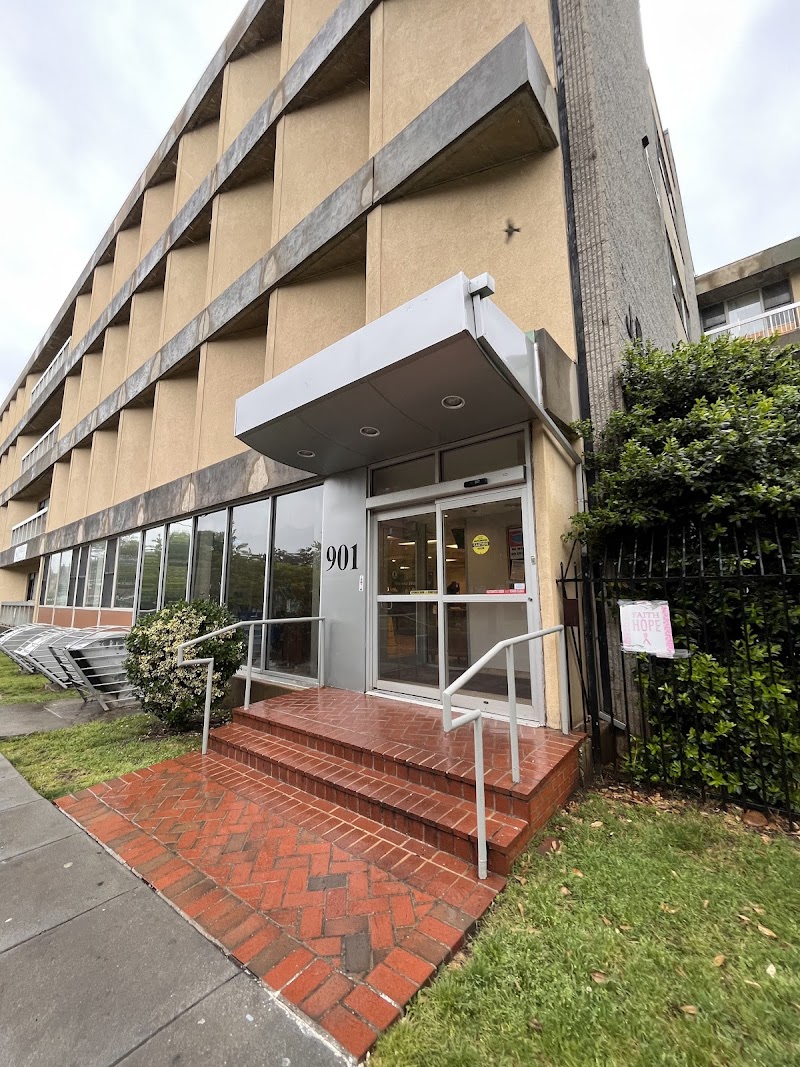
How is Unique Rehabilitation And Llc Staffed?

CMS rates UNIQUE REHABILITATION AND HEALTH CENTER LLC's staffing level at 4 out of 5 stars, which is above average compared to other nursing homes. Staff turnover is 29%, compared to the District of Columbia average of 46%. This relatively stable workforce can support continuity of care.

What Have Inspectors Found at Unique Rehabilitation And Llc?

State health inspectors documented 75 deficiencies at UNIQUE REHABILITATION AND HEALTH CENTER LLC during 2020 to 2025. These included: 2 Immediate Jeopardy (the most serious level, indicating potential for serious harm or death), 3 that caused actual resident harm, and 70 with potential for harm. Immediate Jeopardy findings are rare and represent the most serious regulatory concerns. They require immediate corrective action.
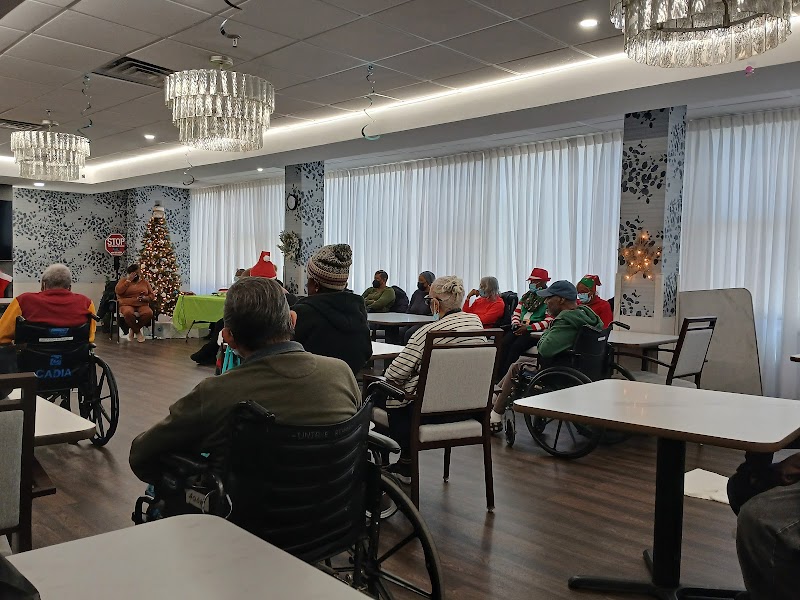
Who Owns and Operates Unique Rehabilitation And Llc?

UNIQUE REHABILITATION AND HEALTH CENTER LLC is owned by a for-profit company. For-profit facilities operate as businesses with obligations to shareholders or private owners. The facility operates independently rather than as part of a larger chain. With 230 certified beds and approximately 222 residents (about 97% occupancy), it is a large facility located in WASHINGTON, District of Columbia.
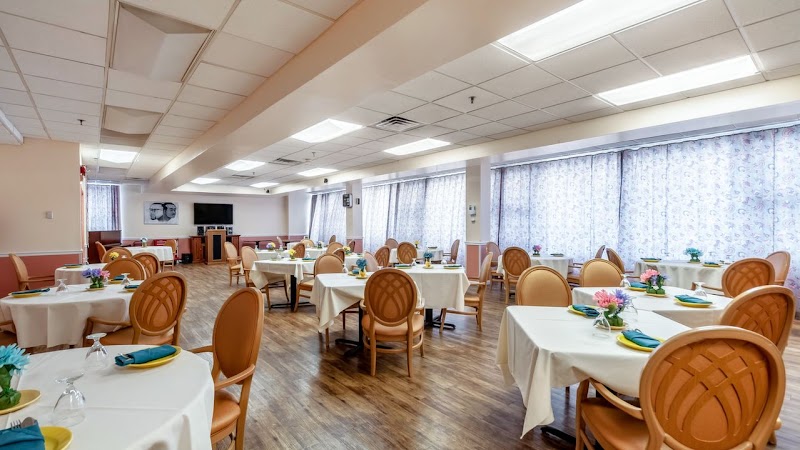
How Does Unique Rehabilitation And Llc Compare to Other District of Columbia Nursing Homes?

Compared to the 100 nursing homes in District of Columbia, UNIQUE REHABILITATION AND HEALTH CENTER LLC's overall rating (1 stars) is below the state average of 3.2, staff turnover (29%) is significantly lower than the state average of 46%, and health inspection rating (1 stars) is much below the national benchmark.

What Should Families Ask When Visiting Unique Rehabilitation And Llc?

Based on this facility's data, families visiting should ask: "What changes have been made since the serious inspection findings, and how are you preventing similar issues?" "What safeguards and monitoring systems are in place to protect residents from abuse or neglect?" "Can I visit during a mealtime to observe dining assistance and food quality?" "How do you handle medical emergencies, and what is your hospital transfer rate?" These questions are particularly relevant given the facility's Immediate Jeopardy citations and the substantiated abuse finding on record.

Is Unique Rehabilitation And Llc Safe?

Based on CMS inspection data, UNIQUE REHABILITATION AND HEALTH CENTER LLC has documented safety concerns. The facility has 1 substantiated abuse finding (meaning confirmed case of resident harm by staff or other residents). Inspectors have issued 2 Immediate Jeopardy citations (the most serious violation level indicating risk of serious injury or death). The facility has a 1-star overall rating and ranks #100 of 100 nursing homes in District of Columbia. Families considering this facility should ask detailed questions about what corrective actions have been taken since these incidents.

Do Nurses at Unique Rehabilitation And Llc Stick Around?

Staff at UNIQUE REHABILITATION AND HEALTH CENTER LLC tend to stick around. With a turnover rate of 29%, the facility is 17 percentage points below the District of Columbia average of 46%. Low turnover is a positive sign. It means caregivers have time to learn each resident's needs, medications, and personal preferences. Consistent staff also notice subtle changes in a resident's condition more quickly. Registered Nurse turnover is also low at 28%, meaning experienced RNs are available to handle complex medical needs.

Was Unique Rehabilitation And Llc Ever Fined?

UNIQUE REHABILITATION AND HEALTH CENTER LLC has been fined $61,929 across 2 penalty actions. This is above the District of Columbia average of $33,698. Fines in this range indicate compliance issues significant enough for CMS to impose meaningful financial consequences. Common causes include delayed correction of deficiencies, repeat violations, or care failures affecting resident safety. Families should ask facility leadership what changes have been made since these penalties.

Is Unique Rehabilitation And Llc on Any Federal Watch List?

UNIQUE REHABILITATION AND HEALTH CENTER LLC is not on any federal watch list. The most significant is the Special Focus Facility (SFF) program, which identifies the bottom 1% of nursing homes nationally based on persistent, serious quality problems. Not being on this list means the facility has avoided the pattern of deficiencies that triggers enhanced federal oversight. This is a positive indicator, though families should still review the facility's inspection history directly.