WASHINGTON CTR FOR AGING SVCS
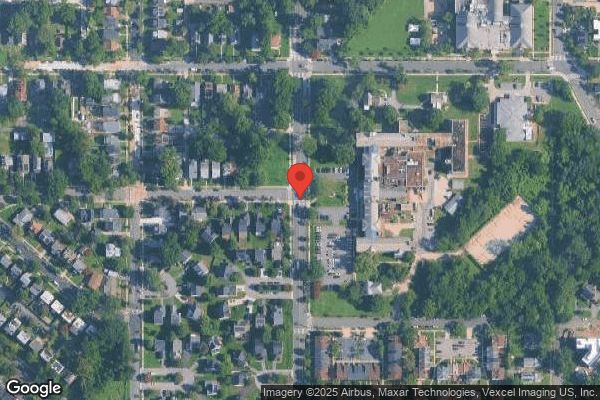
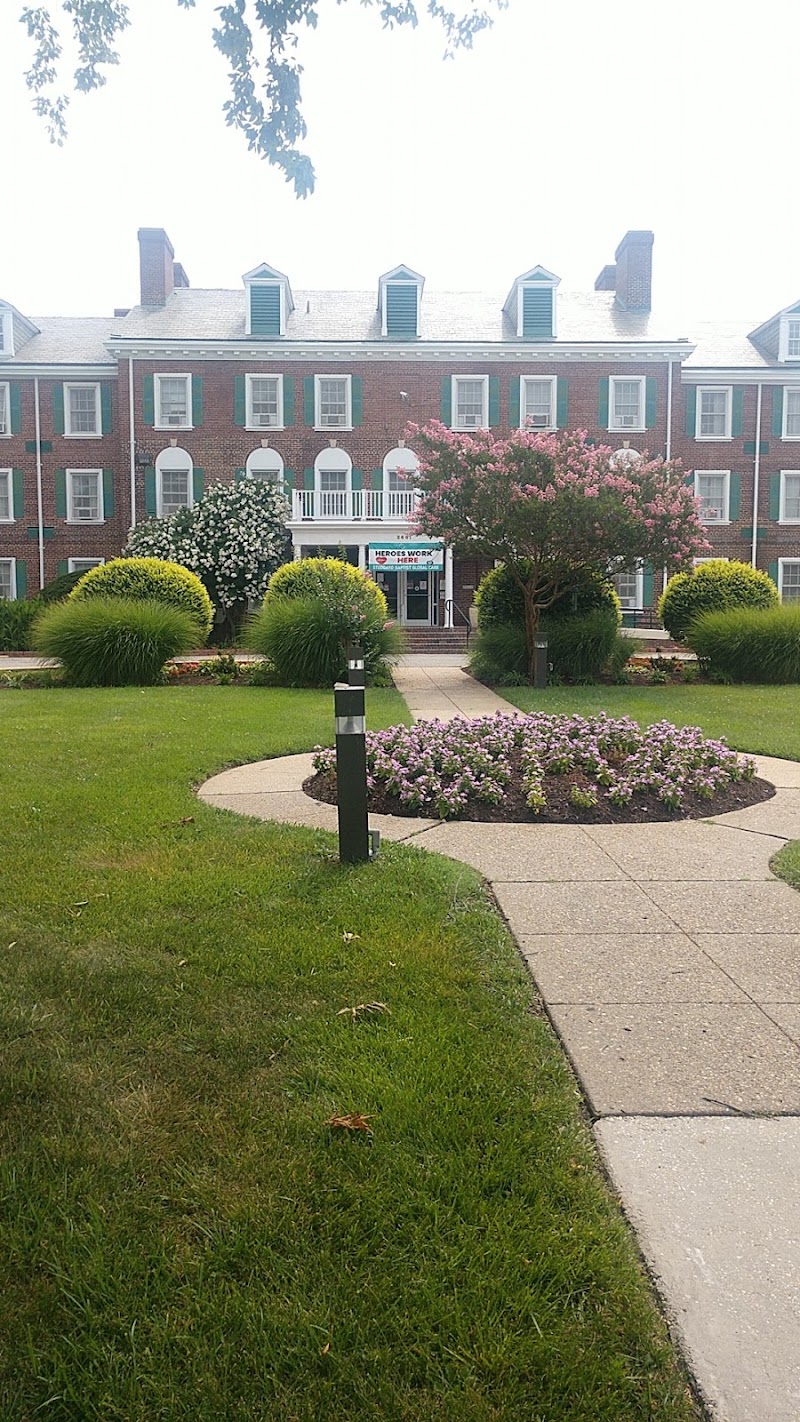
2601 18TH STREET NE, WASHINGTON, DC 20018 (202) 541-6080
Non profit - Corporation 259 Beds Independent Data: November 2025 3 Immediate Jeopardy citations
Trust Grade
9/100
#12 of 17 in DC
Last Inspection: July 2024

Within standard 12-15 month inspection cycle. Federal law requires annual inspections.

Overview

Washington Center for Aging Services has received a Trust Grade of F, indicating significant concerns and placing it in the bottom tier of nursing facilities. With a state rank of #12 out of 17 in the District of Columbia, it is clear that there are better options available locally. While the facility is showing improvement, having reduced its issues from 21 in 2024 to only 8 in 2025, it still reported 69 total issues, including critical incidents such as a resident choking on food due to inadequate meal supervision and another resident being observed smoking while on oxygen. On a positive note, staffing is a strength here with a 5/5 star rating and only 17% turnover, meaning caregivers are stable and familiar with the residents, although the facility has accumulated an average of $146,297 in fines, suggesting ongoing compliance challenges. Overall, families should weigh the improvements in staffing and care quality against the serious incidents and low trust score when considering this facility for their loved ones.

Trust Score
F
9/100
In District of Columbia
#12/17
Bottom 30%
Safety Record
High Risk
Review needed
Inspections
Getting Better
21 → 8 violations
Staff Stability
✓ Good
17% annual turnover. Excellent stability, 31 points below District of Columbia's 48% average. Staff who stay learn residents' needs.
Penalties
✓ Good
$146,297 in fines. Lower than most District of Columbia facilities. Relatively clean record.
Skilled Nurses
✓ Good
Each resident gets 55 minutes of Registered Nurse (RN) attention daily — more than average for District of Columbia. RNs are trained to catch health problems early.
Violations
⚠ Watch
69 deficiencies on record. Higher than average. Multiple issues found across inspections.
★★★☆☆
3.0
Overall Rating
★★★★★
5.0
Staff Levels
★★★★☆
4.0
Care Quality
★★☆☆☆
2.0
Inspection Score
Stable
2024: 21 issues
2025: 8 issues

The Good

  • 5-Star Staffing Rating · Excellent nurse staffing levels
  • 4-Star Quality Measures · Strong clinical quality outcomes
  • Low Staff Turnover (17%) · Staff stability means consistent care
  • Full Sprinkler Coverage · Fire safety systems throughout facility
  • No fines on record
  • Staff turnover is low (17%)

    31 points below District of Columbia average of 48%

Facility shows strength in staffing levels, quality measures, staff retention, fire safety.

The Bad

3-Star Overall Rating

Near District of Columbia average (3.2)

Meets federal standards, typical of most facilities

Federal Fines: $146,297

Well above median ($33,413)

Significant penalties indicating serious issues

The Ugly 69 deficiencies on record

3 life-threatening 1 actual harm
Aug 2025 2 deficiencies
CONCERN (D) 📢 Someone Reported This

A family member, employee, or ombudsman was alarmed enough to file a formal complaint

Potential for Harm - no one hurt, but risky conditions existed

Deficiency F0577 (Tag F0577)

Could have caused harm · This affected 1 resident

Number of residents sampled: Number of residents cited: Based on observations and staff interviews, the facility staff failed to: 1) post the results of its most recent survey in a place readily acces...

Read full inspector narrative →
Number of residents sampled: Number of residents cited: Based on observations and staff interviews, the facility staff failed to: 1) post the results of its most recent survey in a place readily accessible to residents, family members, and resident representatives and 2) have reports from the three preceding years, including certification surveys, complaint investigations, and any plan of correction in effect with respect to the facility available upon request for any individual to review. The findings included: During an observation on 08/03/25, upon entrance into the facility at approximately 6:00 AM, the surveyor observed a sign posted on the window at the front security desk that read: [Name of Facility] Survey Book Available Upon Request. During a telephone interview on 08/11/25 at 2:09 AM with [Name of Resident 199#s Representative/President of Family Council] stated that on 08/24/24, when she was visiting the Resident, she asked the Employee # former front desk security guard staff for the most recent survey results, she was handed a binder that contained a 2567 report from 06/21/22. [Resident# 199's representative] also emailed a picture of the binder to the state agency on 08/19/25. During an observation and a face-to-face interview on 08/20/25 at approximately 9:16 AM, the surveyor observed a sign posted on the window at the front security desk that read: [Name of Facility] Survey Book Available Upon Request. Sitting at the front desk was Employee # Front Door/Entrance Security Officer. The surveyor asked the Employee # for the facility's survey book. The Employee searched the security front desk area, and after checking several binders at the front desk. The Employee stated he could not locate the survey book. He then asked the surveyor to check with the Administrator. During a face-to-face interview on 08/20/25 at 9:35 AM, Employee #1 (Administrator) stated that the 2024 survey report was located at the front desk. When asked if the facility had any reports, including certification surveys, complaint investigations, and any plan of correction in effect with respect to the facility from the three preceding years available, the Administrator acknowledged that the facility did not have the reports available at that moment, but stated that the staff could look for them and provide them. During the time of the observations and staff interviews, there was no evidence that the facility had posted in a place that was readily accessible to residents, family members, and resident representatives, the results of its most recent survey. In addition, the facility failed to have available upon request its survey reports, including certification surveys, complaint investigations, and any plan of correction in effect from the three preceding years available for review by any individual, and failed to have the reports in areas that were easily accessible to the public. On 08/20/25 at approximately 9:39 AM, Employee # provided a binder to the surveyor. A review of the binder revealed that it contained only the survey report for 2024. On 08/20/25 at 1:31 PM, Employee #, (Administrator Liaison), provided a binder that included reports from 2022, 2023, and 2024 and stated that moving forward, one binder with the reports will be kept in the Administrator's office and another at the front entrance security desk.
CONCERN (D) 📢 Someone Reported This

A family member, employee, or ombudsman was alarmed enough to file a formal complaint

Potential for Harm - no one hurt, but risky conditions existed

Deficiency F0627 (Tag F0627)

Could have caused harm · This affected 1 resident

**NOTE- TERMS IN BRACKETS HAVE BEEN EDITED TO PROTECT CONFIDENTIALITY** Number of residents sampled: Number of residents cited: Based on record view, staff interview and family interview, the facility...

Read full inspector narrative →
**NOTE- TERMS IN BRACKETS HAVE BEEN EDITED TO PROTECT CONFIDENTIALITY** Number of residents sampled: Number of residents cited: Based on record view, staff interview and family interview, the facility failed to implement its discharge planning process to ensure a safe discharge for one (1) of three (3) sampled residents that were discharged home. (Resident #221)The findings included:Resident #221 was admitted to the facility on [DATE] multiple diagnoses including Chronic Respiratory Failure, Morbid Obesity, and Sleep Apnea.A policy titled, Discharge Planning with an Interdisciplinary Team review date of 01/03/24 documented, The social worker (discharge planning coordinator) will counsel resident and family about available .services. An admission Minimum Data Set assessment dated [DATE] documented that the resident had a Brief Interview for Mental Status summary score of 15 indicating the resident had an intact cognitive status. The resident was coded for using a wheelchair, requiring substantial to maximum assistance with upper body, total assistance for lower body, partial to moderate assist with mobility, total assist with bathing, and incontinent of both bowel and bladder. The resident was also coded for receiving physical therapy, occupational therapy, and oxygen therapy. A nursing Discharge summary dated [DATE] documented in part, Resident completed rehab therapy successfully and is scheduled for discharge on Saturday 06/07/25. Resident will continue to receive Physical Therapy/Occupational Therapy/Home Health services in the community. Resident continues on oxygen therapy at 2 liters per minute via nasal cannula for shortness of breath. A discharge nursing progress note dated 06/07/25 at 3:37 PM documented, Resident discharge home this morning at 12 noon. She was signed off by her daughter. Medication and discharge teaching provided patient verbalized understanding of teaching. She went home with facility oxygen cylinder daughter promise to return cylinder. A District of Columbia complaint intake dated 06/24/25 documented in part, My mother [Resident #221's name] was discharged from rehab. The rehab didn't even have operable transport oxygen for her to go home with. The social worker.stopped answering our call after my mom was discharged . She assured us that she would have wrap around services to help with our mom after discharge. During a telephone interview at 1PM on 08/07/25, the complainants stated that because Employee #41 did not coordinate home care services, physical therapy services, and occupational therapy services prior to their mother's discharge on [DATE]s. The employee told them she would make sure the resident receives those services. However, the services were never provided. They also stated they called the employee several times, but she failed to return their calls. The complainants said that they were using an oxygen concentrator that their mom had from 2 years ago. Additionally, the complainants stated that their mother needed the services because the family member that was providing care for her was wheelchair bound, and the mother has had a couple of falls without injury since discharge. During a face-to-face interview at 12:09 PM on 08/11/25, Employee #41 (Social Worker/Discharge Coordinator) stated that she verbally requested home care services with a local home care agency that frequently comes into the facility. However, she did not have documented evidence of that correspondence or if the homecare agency accepted or denied services for the resident. Additionally, the employee stated that she did not coordinate continuous oxygen therapy services because she was not aware the resident needed oxygen. During a telephone interview at 2:57 PM on 08/11/25, the representative from the local home care agency stated that he verbally informed Employee #41 that his agency could not provide services for the resident, but he could not remember the specific date. Additionally, the representative stated that he did not have documented evidence of the denial of services.
Jul 2025 6 deficiencies 1 IJ
CRITICAL (J) 📢 Someone Reported This

A family member, employee, or ombudsman was alarmed enough to file a formal complaint

Immediate Jeopardy (IJ) - the most serious Medicare violation

Quality of Care (Tag F0684)

Someone could have died · This affected 1 resident

**NOTE- TERMS IN BRACKETS HAVE BEEN EDITED TO PROTECT CONFIDENTIALITY** Based on observations, record reviews and staff interviews for six (6) residents and one (1) of three (3) of the six (6) residen...

Read full inspector narrative →
**NOTE- TERMS IN BRACKETS HAVE BEEN EDITED TO PROTECT CONFIDENTIALITY** Based on observations, record reviews and staff interviews for six (6) residents and one (1) of three (3) of the six (6) residents with an active diagnosis of Dysphagia, it was determined that the facility's staff failed to ensure that Resident #1 was provided with adequate monitoring during meals, had a physician order to provide close supervision while eating, ensured speech documentation contained accurate information related to diet and liquid consistency, completed speech recommendations following a Modified Barium Swallow Study that showed laryngeal aspiration and failed to implement special dietary instructions for the resident whose diagnoses include oropharyngeal dysphagia. Subsequently, these failures resulted in the resident choking on food while eating alone in his room.During this survey an Immediate Jeopardy (IJ) was identified on July 2, 2025, at 2:14 PM at 42 CFR 483.25 (d)(2), F684, for Resident #1, with an active diagnosis of Oropharyngeal Dysphagia, who choked on food while eating alone in his room on June 25, 2025, at approximately 5:00 PM. The facility's Administrator submitted a corrective action plan to the Survey Team that was accepted on July 2, 2025, at 11:02 PM. The Survey Team verified implementation of the corrective plan while onsite and the Immediate Jeopardy was lifted on July 10, 2025, at 6:45 PM.The findings included:An undated facility policy titled ‘Out of Facility Guidelines' documented, in part: To protect and safeguard the safety and health state of the resident during out of facility activities and Give necessary instructions for special care such as dietary restrictions, fluid requirements.An undated facility policy titled ‘Gastrostomy Tube (GT) Feeding for Resident on Pureed, Mechanical or Regular Diet' documented, in part: GT feeding and oral diet will be administered per physician/dietitian orders and under close interdisciplinary monitoring and Monitor for signs of aspiration (coughing, choking, wet voice) or difficulty chewing/swallowing.An undated facility policy titled ‘Communication With Physicians' documented, in part: When a resident returns from consultation, the nurse will inform the attending physician or NP (Nurse Practitioner) of the recommendation for validation. Based on the validated recommendation, new orders are transcribed into the resident's medical record and a progress note is created to document the consultation, the recommendations, and physician's/NP's validation. A follow-up appointment is scheduled by the unit secretary if indicated.A review of the Resident #1's medical record revealed:Resident #1 was admitted to the facility on [DATE] with multiple diagnoses that included: Oropharyngeal Dysphagia, Gastrostomy on Tube Feeding, Aphasia, Hemiplegia and Hemiparesis following Cerebral Infarction affecting Left Non-Dominant Side, Congestive Heart Failure and Gastroesophageal Reflux Disease.A care plan dated 03/15/24 documented in part, Focus: The resident requires tube feeding r/t (related to) Dysphagia, Swallowing problem. Goal: The resident will remain free of side effects or complications related to tube feeding through review date. Interventions: Monitor/document/report PRN (as needed) any s/sx (signs and symptoms) of: Aspiration.A care plan dated 03/26/24 documented in part, Focus: [Resident's name] is at risk for Ineffective Airway Clearance Hx (history) of Dysphagia Oropharyngeal phase.Goal: Resident will maintain airway patency. Interventions: Evaluate secretions; Monitor for signs/symptoms of dysphagia; Monitor Resident's ability to expectorate secretions; Position Resident upright.A care plan dated 03/26/24 documented in part, Focus: The resident has nutritional problem r/t (related to) Dysphagia. Goal: The resident will comply with recommended diet for weight reduction daily through review date. Interventions: Monitor/document/report PRN any s/sx of dysphagia: Pocketing, Choking, Coughing, Drooling, Holding food in mouth, Several attempts at swallowing, Appears concerned during meals.A care plan dated 03/26/24 documented in part, Focus: The resident has an ADL (Activities of Daily Living) self-care performance deficit r/t Stroke. Goal: The resident will maintain current level of function in (Specify) through the review date. Interventions: Assess functional level, Therapy referrals . Note changes in functional level; Eating: Setup; The resident requires assistance to [from] staff to eat.A care plan dated 04/23/24 documented in part, Focus: The resident has GERD (Gastro-Esophageal Reflux Disease) r/t poor cardiac sphincter control. Goal: The resident will remain free from discomfort, complications or s/sx related to dx (diagnosis) of GERD through review date. Interventions: Avoid lying down for at least 1 hour after eating. Keep HOB (head of bed) elevated. Encourage to stand/sit upright after meals. Avoid overeating. Provide small frequent meals rather than 3 large ones. Encourage the resident to take their time eating. Encourage resident to avoid [NAME] [sodas]. Monitor/document/report PRN s/sx of GERD: increased salivation, swallowing problems, Dysphagia.A care plan dated 06/13/24 documented in part, Focus: The resident has Congestive Heart Failure. Goal: The resident will verbalize less difficulty breathing (Dyspnea) and be more comfortable through the review date. Interventions: Offer small frequent feedingsA Dietitian progress note dated 01/21/25 at 22:06 (10:06 PM) documented in part, Resident will frequently order takeout meals or purchase snacks from the facility gift shop, as well.A Nurse Practitioner Health Status Note dated 01/21/25 at 21:47 (10:47 PM) documented in part, Seen and examined at the request of nursing team to address clinical change noted today-he appeared weak, unable to swallow. Assessment: Dysphagia, Generalized Weakness.Plan: he was sent out 911 (emergency number for police, fire or medic) to R/O (rule out) CVA (Cerebrovascular Accident).A Modified Barium Swallowing study dated 01/24/25 at 11:58 AM performed at a local hospital documented in part, Impression: Intermittent silent versus sensate aspiration of mildly thick liquids demonstrated. Penetration seen with moderately thick liquids. Please see the speech pathology report for full details.A Hospital Discharge summary dated [DATE] documented in part, Suspected TIA (Transient Ischemic Attack)/Stroke, with baseline dysarthria and dysphagia (uses PEG (Percutaneous Endoscopic Gastrostomy tube) but can tolerate some [food and drink] PO (by mouth/oral). SLP (Speech Language Pathology) evaluation: Must repeat MBSS (Modified Barium Swallow Study) in 6 weeks. Can start regular diet w (with) moderately thick liquids, will keep tube feeds a reduced rate to ensure optimal caloric intake. For PO Diet; Regular diet/no dietary restrictions, Food/Fluid: moderately thick liquids, Avoid: Large sips/bites, Patient must utilize single sips or about 10cc (cubic centimeter, equivalent to one milliliter). No straws, sit upright, small bites, slow pace. Follow up Modified Barium Swallow study in 6 weeks (~ (around) 03/07/2025).A physician's order dated 01/25/25 documented, Aspiration Precautions every shift.A physician's order dated 01/25/25 documented, Lovaz Oral Capsule 1 GM (gram) Give 2 capsule by mouth two times a day for Hypertriglycerimia Please Provide liquid if available.It should be noted that Resident #1's medical record revealed 11 additional medications that could be administered by mouth, but were ordered on 01/25/25 by the physician to be administered via the resident's G-Tube as documented below: Acetaminophen 30 ML (milliliter) oral liquid, Atorvastatin Calcium 80 MG (milligram) oral tablet, Calcium Plus Vitamin D3 600-10 MG-MCG (microgram) oral tablet, Eliquis 5 MG oral tablet, Famotidine 20 MG oral tablet, Gabapentin 100 MG oral capsule, Jardiance 10 MG oral tablet, Metformin HCl (Hydrochloride) 1000 MG oral tablet, Metoprolol Succinate ER (extended release) 50 MG oral tablet, Polyethylene Glycol 17 GM 3350 powder and Spironolactone 25 MG oral tablet. A physician's order dated 01/25/25 documented, Repeat Modified Barium Swallow Study (MBSS) in 6 weeks. A physician's order dated 01/27/25 documented, Modified Barium Swallow Studies on 3/7/25 at 9:30 AM @ (at) [Hospital's name] Radiology Dept (Department). It should be noted that the repeat MBSS was scheduled as ordered and the appointment was documented in the resident's record. A physician's order dated 01/27/25 documented, Regular diet Regular texture, Honey/Moderately Thick consistency, No dietary restrictions. A physician's order dated 01/27/25 documented, No straw, sit upright, small bites and slow pace while eating and drinking every shift. It should be noted that Resident #1 was ordered a Regular Diet, no dietary restrictions, while medications that could also be taken orally were ordered to be administered through his Gastrostomy Tube.A physician's order dated 01/27/25 at 11:15 AM documented, Speech Consult.A care plan dated 01/27/25 documented in part, Focus: The resident has a swallowing problem r/t difficulty with thin liquids. Goal: The resident will have no choking episodes when eating through the review date. The resident will have clear lungs, no signs and symptoms of aspiration through the review date. Interventions: All staff to be informed of resident's special dietary and safety needs. Alternate small bites and sips. Use a teaspoon for eating. Do not use straws. Assistive device (i.e. (such as) Sippy cup) for liquids. Check mouth after meal for pocketed food and debris. Report to nurse. Provide oral care to remove debris. Instruct resident to eat in an upright position, to eat slowly, and to chew each bite thoroughly. Monitor shortness of breath, choking. Monitor/document/report PRN any s/sx of dysphagia: Pocketing, Choking, Coughing, Drooling, Holding food in mouth, Several attempts at swallowing, Appears concerned during meals. Refer to Speech therapist for Swallowing Evaluation.A Nurse Practitioner Late Entry Health Status Note dated 01/28/25 at 22:15 (10:15 PM) documented in part, readmission visit following a brief hospitalization where he was admitted to r/o (rule out) CVA (Cerebrovascular Accident). He underwent work up and was found to have possible silent aspiration on thin liquid and was instructed to [have] moderately thickened all liquids but was cleared for regular meals.A Speech Therapy Evaluation and Plan of Treatment with a Certification Period of 02/05/2025-05/05/2025 revealed an Initial Assessment note dated 02/05/25 that documented in part, Gastrointestinal Disrupted Swallow = 7, that indicated Resident #1 had a high level of disruption or difficulty with swallowing. The Speech Therapy treatment note also documented the reason for therapy was Pt (patient) presents deficits in cognitive linguistic and swallowing deficits and Diagnosis: Dysphagia, oropharyngeal phase and Treatment of swallowing dysfunction and/or oral function for feeding; Eval (evaluation) of oral and pharyngeal swallow function; Recommended: Thin liquids (No modifications).It should be noted that the findings from the Modified Barium Swallow Study completed on 01/24/25 revealed Intermittent silent versus sensate aspiration of mildly thick liquids, subsequently Resident #1 was ordered to drink only liquids with moderately thick consistency.A Nurse Practitioner Skin/Wound Note dated 02/03/25 at 22:17 (10:17 PM) documented in part, I addressed the issue of Dysphagia and reiterated to the staff that all meds and supplemental meal - should be given via (through) feeding tube, all liquids should be moderately thickened.Further review of the facility's Speech Therapy Evaluation and Treatment notes from 02/06/25 - 04/01/25 revealed that the Speech Therapist documented in part, Pt is on mech (mechanical) soft textures with nectar thick liquids and Current Drinks = Thin Drinks; Current Foods/Solids = Regular/Easy to Chew Foods.It should also be noted that nectar-thick liquid has a level of thickness between thin liquid like water, but not as thick as honey-thick liquid which was ordered for the resident as of 01/27/25 due to his difficulty with swallowing.A Nurse Practitioner Skin/Wound Note dated 02/17/25 at 22:58 (10:58 PM) documented in part, All liquids ‘MUST' be thickened moderately, only regular meals should be taken by mouth, this has been discussed with the resident and staff at bedside.A Diagnostic Radiology Exam dated 03/06/25 at 12:29 [PM] documented in part, [Resident #1's name]. Reason for Exam: XR (x-ray) Modified Barium Swallow MBS w (With) SCT (Swallowing Competence Test) NK (Not Known), Report/Clinical Indication: Dysphagia. History of silent aspiration. Technique: Thick, pureed and solid consistencies of barium were administered to the patient in the upright/lateral position. Fluoroscopic images were videotaped for imaging assistance provided to the speech pathologist. Findings: Silent laryngeal aspiration was noted with mildly thickened, thick nectar barium utilizing a cup, straw and or chin tuck. Note, thin consistency barium send was not trialed. Impression: Laryngeal aspiration. Please refer to speech pathology for further evaluation.A [Skilled Nursing Facility's Name] Consultation Form dated 03/06/25 and signed by the consultant Speech Therapist documented in part, [Resident #1's name], Report Requested Regarding: Modified Barium Swallow, Findings: Silent Aspiration of mildly thick liquids. [NAME] tuck intermittently helped with silent aspiration; thin liquids not trialed. Continue to recommend a regular diet with moderately thick liquids. Recommend speech therapy to complete swallow exercises and practice chin tuck. Follow up MBSS (Modified Barium Swallow Study) in 8 weeks. May have thin liquids (water) via spoon for effortful swallows.It should be noted that effortful swallows is a swallowing exercise used to strengthen the muscles involved in swallowing and improve swallowing efficiency. It involves consciously squeezing the throat muscles and swallowing with more effort than usual, often imagining a bolus (food or liquid) getting stuck and needing to be cleared).A Dietitian progress note dated 03/07/25 at 18:27 (6:27 PM) documented in part, Per recent consultation on 3/9/25 regarding MBS (Modified Barium Swallow) for this resident, the following recommendations were made: 1. Con't (continue) Regular diet with moderately thick liquids 2. SLP to complete swallow exercises & chin tucks 3. F/u (follow-up) MBSS in 8 weeks; Current diet: Regular with honey/moderately thickened liquids.A Nurse Practitioner Health Status Note dated 04/24/25 at 22:14 (10:14 PM) documented in part, The resident is known for drinking multiple cans of sodas.A care plan dated 04/25/25 documented in part, Focus: The resident refuses to eat/resists feeding r/t does not like [the] food [offered at the facility], dysphagia. Goal: The resident will not have weight loss. Interventions: Encourage the resident's family members to bring in favorite food items from home or favorite restaurant items; The resident needs encouragement/support to be independent with eating. Allow the resident to feed self if desired, regardless of skill; The resident needs privacy as meal time is messy.A physician's progress note dated 05/18/25 at 10:26 (10:26 AM) documented in part, Patient is aphasia [aphasic]. Oropharyngeal phase dysphagia. Aspiration precaution.A Quarterly Minimum Data Set (MDS) assessment dated [DATE] documented: facility staff coded a Brief Interview for Mental Status (BIMS) summary score of ‘13,' indicating the resident was cognitively intact. Eating- 09 that indicated the resident did not perform this activity; Swallowing/Nutritional Status- none of the above that indicated the resident had no signs or symptoms of possible swallowing disorder.A care plan dated 05/31/25 documented in part, Focus: [Resident's first name] has potential for alteration in nutrition r/t: 1. h/o (history of) swallowing difficulty, oropharyngeal dysphagia per diagnosis. Interventions: Monitor intake, tolerance of diet.A Dietitian progress note dated 05/31/25 at 04:16 (4:16 AM) documented in part, Diet Order Type: regular, regular texture, thin liquids.It should be noted that according to the result of the Modified Barium Swallow Study completed on 03/06/25 and the recommendation of the consultant Speech Language Pathologist, the resident was ordered a regular diet with moderately thick liquids.A Treatment Administration Record (TAR) dated 06/01/2025 - 06/25/2025 documented in part, No straw, sit upright, small bites and slow pace while eating and drinking every shift and revealed the facility's nursing staff indicated with their electronic signature that they were monitoring Resident #1 during all meals to ensure he had no straw, was sitting upright, had small bites at a slow pace while eating and drinking.A nursing progress note dated 06/25/25 at 16:14 (4:14 PM) documented in part, Resident received in bed in good spirit watching TV (television) at 3:40pm, alert and verbally responsive no acute distress noted.A physician's order dated 06/25/25 at 5:45 PM documented, Transfer resident to ER (Emergency Room) for Unresponsiveness.A nursing incident note dated 06/25/25 at 18:05 (6:05 PM) documented in part, Around 5:10PM, Supervisor was called to the unit due to change in one of the resident's conditions. Upon arrival the resident was met on the chair at the nursing station being assisted by other nursing staff. Resident was not fully responding, presented with some difficulty breathing. Charge nurse reported that resident came out of the room pointing to his mouth like something was stuck in his throat. Charge nurse reported that Heimlich Maneuver was done but no pieces came out of resident's mouth. Upon assessment, no object was seen in resident's mouth, but resident was noted with some drooling. Call was placed to 911 (emergency number for police, fire or medic) at 5:11PM and Code blue (facility's emergency announcement) was called . 911 instructed [facility staff] to lay [the] resident on the floor. CPR (cardiopulmonary resuscitation) continued until paramedic arrived on the unit at 5:20PM and took over the CPR. Upon assessing the resident's room, an open box of [fast food restaurant's name] chicken with remains [remaining] chicken pieces was [were] found at resident bedside, on the bed and on the floor.It should be noted that documentation revealed that Resident #1 was last seen by facility staff at 3:40 PM watching TV then not seen again until suddenly appearing in the hallway running towards the nurse's station at approximately 5:10 PM, after choking on food while eating alone in his room.An SBAR (Situation, Background, Appearance, Review/Notify) Communication Form dated 06/25/25 at 19:47 (7:47 PM) documented in part, The change in condition, symptoms, or signs observed and evaluated is/are: Altered level of consciousness, Unresponsiveness, Swallowing difficulty, Labored or rapid breathing.A nursing progress note dated 06/25/25 at 20:11 (8:11 PM) documented in part, Resident was observed coming down the hallway to the nursing station pointing to his mouth and holding his stomach around 5:10PM. When writer asked the resident what happened[,] the resident was unable to answer, but keep [kept] pointing to his mouth. Upon assessing resident['s] mouth nothing was seen. Writer immediately initiated Heimlich Maneuver with nothing coming out of the mouth.A nursing incident note dated 06/25/25 at 20:30 (8:30 PM) documented in part, Around 8:18pm, call was received from the detective, [Detective's name and telephone number], informing resident just expired at the hospital.A Nurse Practitioner's note dated 06/25/25 at 22:23 (10:23 PM) documented in part, I was called urgently to come to [nursing unit] earlier this evening to asses[s] the resident who was unresponsive, I arrived on the unit around 5:15pm and found the resident lying on the floor in front of the nurse station, he was unresponsive and had no pulse. A review of a DC (District of Columbia) And EMS (Emergency Medical Services) Department's Patient Care Record dated 06/25/25 documented in part: [Resident #1's name], Pick Up: Nursing Home, Destination: [Hospital name], Dispatched as: ALS (Advanced Life Support)-Cardiac Arrest; Patient initially complained of choking and fell uncon (unconscious)/unresponsive. Two attempts made for intubation - unsuccessful. Patient airway is filled with bolus of food. Suctioning is only moderately useful. Airway patency unable to be obtained due to excessive boluses of food in trachea and throughout airway. A DOH (Department of Health) Notice of Discharge Transfer or Relocation Form dated 06/26/25 at 9:18 AM documented in part, [Resident #1's name] was transferred to [Hospital Name] due to choking/shortness of breath.A Facility Reported Incident [Intake Number: DC00013792] received by the State Agency on 06/27/2025 at 15:08 (3:08 PM) documented the following in part: History of CVA ([DATE]) w/ aphasia, dysphagia. Resident is taking all his medications via G-tube; however, his diet is regular texture, Honey/Moderately Thick consistency. On 06/25/2025, around 5:10 PM, the resident was noted by one of the CNA (Certified Nursing Assistant) in the hallway pointing at his mouth and holding his stomach; charge nurse was immediately called to address his concern. The Evening nurse stated that the resident was unable to answer any of her questions but kept pointing at his mouth. During her assessment, nothing was seen in the resident mouth. Heimlich Maneuver was immediately initiated, still no substance was coming out of the resident mouth, except drooling, and resident became unresponsive. Code Blue was called O2 (oxygen) and CPR (cardiopulmonary resuscitation) initiated and 911 called. The resident was transferred to [Hospital name] at 5:50 PM for further evaluation. Upon assessing the resident's room, an open box of [fast food restaurant's name] chicken with remaining pieces of chicken was found at resident bedside, on the bed and on the floor. During a telephone interview conducted on 06/30/25 at 2:15 PM, Employee #6 (Speech Language Pathologist, SLP) stated that, He (Resident #1) was being seen for dysphagia. He had a feeding and a modified barium swallow that cleared him for his swallowing.It should be noted that the findings from the MBSS completed on 03/06/25 documented in part: Silent Aspiration of mildly thick liquids. Continue to recommend a regular diet with moderately thick liquids. Laryngeal aspiration.During a face-to-face interview conducted on 06/30/25 at 2:35 PM, Employee #5 (Director of Dietary/Dietitian) stated that, He was recently upgraded to regular texture, but cannot have thin liquids. There are four (4) types of Liquids: thin liquid, nectar thick, honey thick and pudding thick, which is the thickest. Honey is a little bit thicker than nectar. If [the order] just say moderately thick, [the] Speech Therapist will determine if nectar or honey then we would order from our vendor. I think we ordered nectar for him.It should be noted that Resident #1's prescribed liquid diet order was Honey/Moderately Thick consistency.During a face-to-face interview conducted on 06/30/25 at 2:42 PM, Employee #21 (Registered Dietitian) stated that, He was evaluated and in January was upgraded with precautions with little amounts at a time, chew properly and swallowing with honey consistency thickened liquid. But it's my understanding that the resident had food stuck in his airway which caused his demise and some chunks of food in his mouth. He may have been eating larger amounts of bites at a time.During a face-to-face interview conducted on 06/30/25 at 3:15 PM, Employee #22 (Licensed Practical Nurse, LPN) confirmed what she documented in her written statement during the facility's investigation stating that, Resident #1 was observed coming down the hallway to the nurse's station pointing to his mouth and stomach around 5:10 PM [on 06/25/25]. [The] resident was unable to answer when asked what happened but kept pointing to his mouth. I immediately performed the Heimlich [technique used to dislodge an object blocking a person's airway], but nothing came out of his mouth. We started CPR. They (other nursing home staff) said he was eating [fast food restaurant's name] chicken. He eats by himself, in his room all the time. He supposed to eat with thickener and small bites. I've never seen him when he's eating.During a face-to-face interview conducted on 06/30/25 at 3:27 PM, Employee #4 (Registered Nurse (RN), Unit Manager) confirmed what she documented in her written statement during the facility's investigation stating that, she was the evening nurse supervisor and received a call from [Unit name] that something was going on with [Resident #1's name]. I saw him at the nurse's station in a chair. The resident was not responding to name and presented with some difficulty breathing. The charge nurse reported that [the] resident came out of the room pointing to his mouth like something was stuck in his throat. He was on a regular diet with thickened liquids. Later after he left [the nursing home facility with paramedics] I saw a little piece of chicken in the hallway. Upon assessing the resident's room, an open box of [fast food restaurant's name] chicken that was almost finished, just maybe a little crumbs and bones left [was] found at the bedside, on the bed and on the floor [in the resident's room].During a follow-up face-to-face interview conducted on 07/01/25 at 10:10 AM, Employee #6 (Speech Therapist) stated that, I looked at swallowing, but it was not a concern. I know he was cleared for a regular diet. He did have coughing sometimes [when eating]. Honey [thick] versus Nectar [thick] is sometimes used interchangeably, but it is not the same thing. The recommendation from the Modified Barium Swallow Study on 03/06/25 for the chin-tuck [exercises], I never saw that recommendation. A chin-tuck is very vague because it's dozens of swallowing exercises. I didn't work with him on that; I really didn't see that there was a need for that [chin-tuck swallowing exercises].During a face-to-face interview conducted on 07/01/25 at 10:50 AM, Employee #24 (Licensed Practical Nurse, LPN) stated that, He was on tube feeding and he was [also] eating by mouth soft foods, regular diet and thickener for all the liquids - sometimes comes up on [meal] tray already thick like Nectar. He would eat by himself, he can set up his tray and did everything by himself.Employee #24 was asked about any special instructions for Resident #1 while eating and she stated that, Watch close because sometimes he would choke. He never ate in the Solarium (multipurpose/dining room), always in his room. We (facility staff) would just pass by his room when eating. His meds were crushed because I think he had swallowing problems, I don't know the reason; he had [an] order for it and was on a regular diet. I'm not aware of any swallow studies or recent stroke. It should be noted that Employee #24 was unsure why and was unaware that Resident #1 had the following instructions during meals: No straw, sit upright, small bites and slow pace while eating and drinking every shift. During a follow up interview conducted on 07/01/25 at 11:14 AM, Employee #4 (RN, Unit Manager) was asked about any special feeding instructions for Resident #1 and she stated that, He was [required] supervision to oversee. He received a regular tray (regular diet) and he just wanted you to put the tray in front of him. He always ate in his room, he didn't socialize. He preferred his medications through his feeding tube. He had a Stroke some time ago in January and we sent him out [to the hospital]. He can have regular meals with thickened liquids, no straw. For the Modified Barium Swallow Study, we called but they said it was too early to schedule, and we called back. The unit clerk has her own book to track appointment scheduling, I don't know where she keeps it [resident appointment book]. For the consult recommendations, we hand deliver a copy of the Speech Therapy consult recommendations, but not sure if that was done. The chin-tuck (swallowing exercises) is done by the Speech Therapist, not by the nursing staff.During a face-to-face interview conducted on 07/01/25 at 11:25 AM, Employee #25 (Certified Nursing Assistant, CNA) stated that, Resident #1 would feed himself and we would make sure food was warm. He would always eat in his room alone. He needed thick liquids but sometimes would buy his own Coke soda and I saw [had seen] him drinking it recently.During a face-to-face interview conducted on 07/01/25 at 11:30 AM, Employee #26 (CNA) stated that, He could feed and eat by himself. You can put the food there [at his bedside], but he wouldn't eat right away. He stayed in his room most of the time, so I never watched him eat. Sometimes we would find sodas and milk in his room.During a face-to-face interview conducted on 07/01/25 at 11:40 AM, Employee #23 (Registered Nurse, RN) confirmed what she documented in her written statement during the facility's investigation that stated, At 5:10 PM the resident from [room number] was noted to be running down the hallway pointing at his mouth. Upon assessment, nothing was noted in the [resident's] mouth. Heimlich maneuver was performed; nothing came out. 9-1-1 [was] called, Code Blue was initiated. We followed the instructions provided by the 9-1-1 operator, and started CPR until Paramedics arrived. Employee #23 was asked if there were any special instructions ordered for the resident while eating and she stated, He was on a regular diet. When I checked [entered the order for] moderate thick, [the word] honey came up [was selected]. I don't remember if I saw an option for nectar, that would mean the consistency should've been thick [like honey consistency].During a face-to-face interview conducted on 07/01/25 at 11:53 AM, Employee #3 (Nurse Practitioner) was asked about follow-up consult appointments and consult recommendations and he stated that, The nurse review the consult recommendations and let me know about it. I read the instructions, signed off and it goes back to the nurse. I agreed with the recommendations from the Modified Barium Swallow Study (MBSS) from 03/06/25 that Speech Therapy [should be] doing the chin-tuck (swallowing exercises). The unit clerk schedules the [follow-up] appointment. There's no new order because there was already a recommendation to have the follow-up [MBSS] done in eight (8) weeks, but I don't know if this [follow-up MBSS scheduled] was done. If it wasn't done, we would go off of what's already in place and the most recent assessment. Potentially the new follow-up [MBSS] could provide new information but wouldn't know if we don't have the new MBSS results. Diet orders are very specific so should be followed and goes specifically by what was written from the hospital discharge note and we would not change it.During a face-to-face interview conducted on 07/01/25 at 12:10 PM, Employee #27 (LPN) stated that, He was on a regular diet, fed himself, would eat in his room. We would leave the tray there for him. No special instructions for eating.During a face-to-face interview conducted on 07/01/25 at 1:15 PM, Employee #7 (Director of Rehab/Occupational Therapist) stated that, It's up to the [nursing home facility's] Speech Therapist to make a determination of what to assess based off of the consult recommendations.During a face-to-face interview conducted on 07/01/25 at 1:57 PM, Employee #13 (Unit Clerk) stated that, It [Modified Barium Swallow Study] was scheduled for July 21, 2025, at 9:00 AM. I started calling for that appointment on March 7, 2025. They said it was a little too early [to schedule] because they didn't have their schedule. The next call was placed on April 22, 2025, and they said they would give me a call back. I made the Unit Manager [Employee #4's name] aware. I finally got the appointment scheduled a week or two weeks ago.A review of Employee #13's resident appointment book revealed a handwritten entry on 07/21/25 that documented, [Resident #1's name], B. (Barium) Swallow [Hospital name] 9:45 [AM].During the same interview with Employee #13 (Unit Clerk), Employee #4 (Unit Manager) stated that, I knew there was a delay, the unit clerk mentioned it to me that she was having problems getting the appointment. I docume
CONCERN (D) 📢 Someone Reported This

A family member, employee, or ombudsman was alarmed enough to file a formal complaint

Potential for Harm - no one hurt, but risky conditions existed

Notification of Changes (Tag F0580)

Could have caused harm · This affected 1 resident

**NOTE- TERMS IN BRACKETS HAVE BEEN EDITED TO PROTECT CONFIDENTIALITY** Based on record review and staff interviews, for one (1) of 1 sampled residents who had an outside speech-language pathologist c...

Read full inspector narrative →
**NOTE- TERMS IN BRACKETS HAVE BEEN EDITED TO PROTECT CONFIDENTIALITY** Based on record review and staff interviews, for one (1) of 1 sampled residents who had an outside speech-language pathologist consultation, the facility failed to have documented evidence that they discussed with the resident's physician: (1) they were not able to schedule a Modified Barium Swallow Study (diagnostic test) in 8 weeks, as recommended by outside speech therapist on 03/06/25 and approved the facility's nurse practitioner on 03/07/25; and (2) the resident not provided swallowing exercises, chin tucks, and effort swallow techniques as recommended by an outside speech-language pathologist on 03/06/25 and approved the facility's nurse practitioner on 03/07/25. (Resident #1)The findings included: Resident #1 was admitted on [DATE] with multiple diagnoses including Dysphagia (oropharyngeal phase), Gastrostomy, Gastroesophageal Reflux Disease and Hemiplegia.A policy titled, Communication with Physicians with a reviewed and approve date of 01/03/24 documented in part, When a resident return from a consultation, the nurse will inform the attending physician or nurse practitioner of recommendations for validation. Based on validated [approved] recommendations, new orders are transcribed into the resident's medical record and a progress note is created to document the consultation, the recommendations, and they physician's/nurse practitioner's validation. A follow-up appointment is scheduled by the unit secretary if indicated.1. A review of a consultation document from an outside speech-language pathologist dated 03/06/25 revealed the following but not limited to, Report Requested Regarding- Modified Barium Swallow. Findings-Silent aspiration of mildly thick liquids.Follow up -Modified Barium Swallowing Study (MBSS) in 8 weeks [April 17, 2025] . Continued review of the consultation document revealed Employee #3's (nurse practitioner) initials indicating that he reviewed the consultation form and validated (approved) the recommendations listed in the form on 03/07/25. Employee 4's [RN/Unit Manager] progress note dated 03/06/25 at 4:38 PM documented, Resident alert and oriented x 3, no acute respiratory distress noted. Resident went for modified barium swallow study today and returned with recommendation to continue a regular diet with moderately thick liquids, speech therapy to complete swallow exercises and practice chin tuck intermittently to help with aspiration. Follow up with MBSS in 8 weeks. MD and RP made aware.A review of progress notes, medication administration records, and treatment administration records from 03/07/25 to 06/30/25 lacked documented evidence that the resident was scheduled for a repeat MBSS.During a face-to-face interview on 07/01/25 at approximately 11 AM, Employee #3 stated that on 03/07/25 he reviewed and approved of the recommendations listed on the consultation form. The employee said that he did not write the recommendations as a physician order because he informed a nurse that he approved the recommendations. He then said that the nurse was responsible for instructing the unit secretary to make the appointment for the MBSS. Additionally, the employee said that he was not made aware that the resident did not have the MBSS done. During a face-to-face interview on 07/01/25 at 1:58 PM, Employee #13 (Unit Secretary) stated that she attempted several times to get appointment for the MBSS in the eight weeks, but she was unsuccessful. She did, however, to get an appointment for 07/21/25 [19 weeks]. The employee also said that she informed Employee #4 (RN/Unit manager) of the resident appointment date. During a face-to-face interview on 07/01/25 at 2:10 PM, Employee #4 (RN/Unit manager) said she was made aware of the resident's MBSS appointment date of 07/21/25. The employee then said that she made Employee #3 (NP) and the resident's physician aware of the 07/21/25 date, and she documented the date she informed them in the resident's record. At the time of the interview, the employee reviewed the resident's record and said that she could not find the progress note where she documented when she informed the NP or MD of the date the resident's MBSS was scheduled. During a telephone interview on 07/02/25 at 8:40 AM, the resident's physician stated that he was not made that the MBSS was done in 8 weeks as approved. The physician said that he was also not informed that the resident's MBSS was scheduled for 07/21/25. He said that if he had been informed of the delayed date, he would've intervened to get an earlier appointment date. 2. A review of a consultation document from an outside speech-language pathologist dated 03/06/25 revealed the following but not limited to, Recommend speech therapy to complete swallow exercise, practice chin tuck.May have thin liquids (water) via spoon for *effortful swallows. *Effortful swallow (ES) is a widely used technique in dysphagia management, believed to strengthen oropharyngeal muscles and enhance swallowing safety and efficiency. https://[NAME].com/fpl/article-abstract/77/1/28/906843/Effortful-Swallow-Maneuver-and-Modifications-on?redirectedFrom=fulltext. A review of speech therapy notes from 03/12/25 to 03/27/25 lacked documented evidence that the resident was provided with swallowing exercises, chin tucks, or effort swallowing technique. Please note the resident was discharged from speech therapy services on 03/27/25. During a face-to-face interview on 07/01/25 at 10:11 AM, Employee #6 (assigned Speech Pathologist) stated that she was not aware of the consultation from the outside speech pathologist. At the time of the interview, the employee reviewed the outside speech pathologist consultation and stated that she had been working with the resident since February [2025] and did not feel the resident needed the recommendations listed in the consultation form. During a face-to-face interview on 07/01/25 at approximately 11 AM, Employee #3 (NP) stated that on 03/07/25 he reviewed and approved of the recommendations listed on the outside speech pathologist consultation form. The employee said that he did not write the recommendations as a physician order because he informed a nurse. He said that the nurse was responsible for making the rehab department aware of the speech therapy recommendations. Additionally, the employee stated that he was not made aware the recommendations for speech therapy were not provided. During a face-to-face interview on 07/01/25 at approximately at 2PM, Employee #7 (Rehab Director) showed the surveyors a copy of the outside speech-language pathologist form dated 03/06/25. The employee said that he made Employee #6 aware of the recommendations from the outside speech-language pathologist, but he did not have documented evidence of when he made her aware. During a telephone interview on 07/02/25 at 8:40 AM, the resident's physician stated that he was not made aware that the approved speech therapy recommendations from the outside speech-language pathologist were not provided. Cross Reference: 483.25 Quality of Care F684
CONCERN (D) 📢 Someone Reported This

A family member, employee, or ombudsman was alarmed enough to file a formal complaint

Potential for Harm - no one hurt, but risky conditions existed

Assessment Accuracy (Tag F0641)

Could have caused harm · This affected 1 resident

**NOTE- TERMS IN BRACKETS HAVE BEEN EDITED TO PROTECT CONFIDENTIALITY** Based on an observation, record reviews, and staff interviews, the facility failed to ensure Comprehensive Assessments contained...

Read full inspector narrative →
**NOTE- TERMS IN BRACKETS HAVE BEEN EDITED TO PROTECT CONFIDENTIALITY** Based on an observation, record reviews, and staff interviews, the facility failed to ensure Comprehensive Assessments contained accurate information for two (2) of six (6) sampled residents. (Residents #1 and #5)The findings included: 1.Resident #1 was admitted on [DATE] with multiple diagnoses including Dysphagia (oropharyngeal phase), Gastrostomy, Gastroesophageal Reflux Disease and Hemiplegia.A physician order dated 01/27/25 instructed, Regular texture, honey/moderately thick consistency, No dietary restrictions.A review of certified nursing assistants (CNAs) task sheets from 02/17/25 to 02/23/25 documented that the resident required set-up or clean up assistance with eating. A Minimum Data Set (MDS) assessment dated [DATE] documented in part that the resident had a Brief Interview for Mental Status summary score of 13 indicating that the residents had an intact cognitive status. Additionally, the resident was coded as not applicable for eating indicating that resident was not eating. A review of certified nursing assistants (CNAs) task sheets from 05/17/25 to 05/23/25 documented that the resident required set-up or clean up assistance with eating. A MDS assessment dated [DATE] documented in part the resident had a Brief Interview for Mental Status summary score of 13 indicating the residents had an intact cognitive status. Additionally, the resident was coded as not applicable for eating indicating that the resident was not eating. During a face-to-face interview on 07/01/25 at 10:50 AM, Employee #9 (LPN) stated that the resident was on a regular diet with thicken liquids. The resident fed himself alone in his room. And staff would supervise him by walking by the door and asking him if he was ok. During a face-to-face interview on 07/01/25 at 4PM, Employee #10 (CNA) stated that the resident was on a regular diet and fed himself. During a face-to-face interview on 07/01/25 at approximately 10 AM, Employee #6 (MDS Coordinator) stated that she documented in error that Resident #1 eating status was not applicable. The employee then said that the resident was able to feed himself at the time of the assessments dated 02/23/25 and 05/23/25. Cross Reference: 483.25 Quality of Care F6842.Resident #5 was admitted on [DATE] with multiple diagnoses including Dysphagia, Adult Failure to Thrive, and Dementia. A review of certified nursing assistants (CNAs) task sheets dated 03/08/25 to 03/14/25 documented that the staff provided the resident with partial/moderate assistance (staff does less than half the effort) or total assistance (staff does all the effort) with eating (meals). A review of a quarterly Minimum Data Set (MDS) dated [DATE] revealed that the resident did not have a Brief Interview for Mental Status summary score indicating the resident was not able to complete the test. Additionally, the resident was coded for requiring staff assistance to set-up or clean-up with eating (meals). A review of certified nursing assistants (CNAs) task sheets dated from 06/08/25 to 06/14/25 documented that staff provided the resident with total assistance (staff does all the effort) with eating (meals).A review of a quarterly Minimum Data Set (MDS) dated [DATE] revealed that the resident did not have a Brief Interview for Mental Status summary score indicating the resident was not able to complete the test. Additionally, the resident was coded for requiring staff assistance to set-up or clean-up with eating (meals). An observation on 07/07/25 at approximately 12:50 PM showed the resident sitting in the day room sitting in a Geri-chair watching tv. The resident was alert and oriented to name. At the time of the observation, Employee #16 (CNA) holding a cup of water to the resident's mouth for the resident to drink. During a face-to-face interview on 07/07/25 at approximately 1PM, Employee #16 (assigned CNA) and Employee # 17 (assigned LPN) stated the resident requires total assistance from staff for all activities of daily living to include eating. Additionally, the employee said that the resident is unable to feed herself. During a face-to-face interview on 07/08/25 at approximately 9:30 AM, Employee #8 (LPN/MDS Coordinator) and Employee #9 (RN/MDS Director) stated that the resident's eating status documented in the quarterly assessments dated 03/14/25 and 06/14/25 were not accurate. The resident required total assistance from staff for all meals.
CONCERN (D) 📢 Someone Reported This

A family member, employee, or ombudsman was alarmed enough to file a formal complaint

Potential for Harm - no one hurt, but risky conditions existed

Comprehensive Care Plan (Tag F0656)

Could have caused harm · This affected 1 resident

**NOTE- TERMS IN BRACKETS HAVE BEEN EDITED TO PROTECT CONFIDENTIALITY** Based on observation, record review, and staff interview, for one (1) of six (6) sampled residents, the facility failed to devel...

Read full inspector narrative →
**NOTE- TERMS IN BRACKETS HAVE BEEN EDITED TO PROTECT CONFIDENTIALITY** Based on observation, record review, and staff interview, for one (1) of six (6) sampled residents, the facility failed to develop a care plan to address the resident's need for staff assistance with eating. (Resident #6)Resident #5 was admitted on [DATE] with multiple diagnoses including History of Dysphagia, Adult Failure to Thrive, and Dementia. An observation on 07/07/25 at approximately 12:50 PM showed the resident sitting in the day room sitting in a Geri-chair watching tv. The resident was alert and oriented to name. At the time of the observation, Employee #16 (CNA) holding a cup of water to the resident's mouth for the resident to drink. A review of the care plan lacked documented evidence of goals and interventions to address the resident's need for total assistance from staff with eating and drinking.During a face-to-face interview on 07/07/25 at approximately 1 PM, Employee #16 stated that the resident required total assistance from staff with eating and drinking.During a face-to-face interview on 07/08/25 at 9:04 AM, Employee #18 (RN/Unit Manager 3 Green) stated that resident had a history of dysphagia and the resident is totally dependent on staff assistance with eating and drinking. Additionally, the employee said that she would develop a care plan to address the resident's need for staff assistance with meals.
CONCERN (D) 📢 Someone Reported This

A family member, employee, or ombudsman was alarmed enough to file a formal complaint

Potential for Harm - no one hurt, but risky conditions existed

Deficiency F0657 (Tag F0657)

Could have caused harm · This affected 1 resident

**NOTE- TERMS IN BRACKETS HAVE BEEN EDITED TO PROTECT CONFIDENTIALITY** Based on record reviews and interviews, facility staff failed to have documented evidence that the IDT team reviewed residents c...

Read full inspector narrative →
**NOTE- TERMS IN BRACKETS HAVE BEEN EDITED TO PROTECT CONFIDENTIALITY** Based on record reviews and interviews, facility staff failed to have documented evidence that the IDT team reviewed residents care plans or held care plan conferences with the resident and/or the resident's family after each Minimum Data Set (MDS) assessment for two (2) of six (6) sampled residents. (Residents #1 and #5)The findings included: 1. Resident #1 was admitted on [DATE] with multiple diagnoses including Dysphagia (oropharyngeal phase), Gastrostomy, Gastroesophageal Reflux Disease and Hemiplegia.A review of a Minimum Data Set (MDS) assessment submission sheet revealed that the facility completed quarterly assessments for the resident on 02/23/25 and 05/23/25.A review of the resident's record lacked documented evidence that the IDT reviewed the resident's care plan or held a care plan conference with the resident and/or his family after the MDS assessments dated 02/23/25 and 05/23/25.During a face-to-face interview on 07/08/25 at 1:26 PM, Employee #14 (Social Worker) who was responsible for scheduling care plan conferences to review the resident's care plan, stated that she believed the IDT team reviewed care plan and conferences were held with the resident and his family after the assessments dated 02/23/25 and 05/23/25. However, after reviewing her notes during the interview, the employee said that she did not have documented evidence that the IDT reviewed the resident's care plan or held care plan conferences after 01/28/25. The employee offered no further explanation. 2. Resident #5 was admitted on [DATE] with multiple diagnoses including History of Dysphagia, Adult Failure to Thrive, and Dementia. A review of the Minimum Data Set assessment submission sheet revealed that the facility completed quarterly assessments for the resident on 03/14/25, and 06/14/25. However, review of the resident record revealed the last time the IDT reviewed the resident care plan and held a care plan conference with the resident's family was on 09/23/24.During a face-to-face interview on 07/07/25 at approximately 2 PM, Employee #19 (assigned SW) and Employee #20 (SW/Interim Director) stated that they could not find documented evidence that the IDT reviewed the resident's care plan or conducted a care plan conference with the resident or the resident's family after 09/23/24. Cross Reference: 483.25 Quality of Care F684
CONCERN (D) 📢 Someone Reported This

A family member, employee, or ombudsman was alarmed enough to file a formal complaint

Potential for Harm - no one hurt, but risky conditions existed

Medical Records (Tag F0842)

Could have caused harm · This affected 1 resident

**NOTE- TERMS IN BRACKETS HAVE BEEN EDITED TO PROTECT CONFIDENTIALITY** Based on record reviews and staff interviews, for one (1) of six (6) sampled residents, the facility failed to ensure that the r...

Read full inspector narrative →
**NOTE- TERMS IN BRACKETS HAVE BEEN EDITED TO PROTECT CONFIDENTIALITY** Based on record reviews and staff interviews, for one (1) of six (6) sampled residents, the facility failed to ensure that the resident's speech-language pathology treatment notes and care plan contained accurate information. (Resident #1). The findings included: Resident #1 was admitted on [DATE] with multiple diagnoses including Dysphagia (oropharyngeal phase), Gastrostomy, Gastroesophageal Reflux Disease and Hemiplegia.A physician order dated 01/28/25 instructed, Regular diet, regular texture, honey/moderately thick consistency [liquids].1a.A review Employee #6 (Speech-Language Pathologist) treatment encounter notes dated from 02/05/25 to 03/27/25 [consisted of 32 treatments] documented the following but not limited to, Precautions.Pt (patient) is on a mech (mechanical soft) texture [diet] with nectar thick liquids.Oral intake- current drinks/liquids=thin drinks.Current Foods-Regular/Easy to chew foods.A review of the resident dietary meal ticket documented that the resident's was on a regular texture diet and honey thick liquids. During a face-to-face interview on 07/01/25 at 10:11 AM, Employee #6 stated that the resident the documentation from 02/05/25 to 03/27/25 was incorrect. The employee said that the resident was on a regular diet with regular texture and honey consistency liquids. Additionally, the employee stated that she entered the information into the resident's electronic health incorrectly. During a face-to-face interview on 07/01/25 at approximately 2PM, Employee #5 (Dietician/Director of Dietary) stated that the resident was on a regular texture diet with honey consistency liquids. Additionally, the employee said that Employee #6 informed the dietary department of Resident #1's diet order. 1b.A review of the resident's care plan dated 04/25/25 documented the following but not limited to, Focus- The resident refuses to eat/resist feeding r/t does not like food, dysphagia.Interventions-The resident needs privacy as [at] mealtime is messy.During a face-to-face interview on 07/01/25 at 10:50 AM, Employee #10 (assigned LPN) stated that the resident preferred to eat alone in his room. He was able to feed himself independently. During a face-to-face interview on 07/01/25 at 4 PM, Employee #15 (CNA) stated that the resident preferred eating alone in his room, so he always serve the resident his tray in his room. During a face-to-face interview on 07/10/25 at approximately 4 PM, Employee #4 (RN/Unit Manager) stated the care plan was incorrect. The resident was not a messy eater. He preferred eating alone in his room. Cross Reference: 483.25 Quality of Care F684
Jul 2024 21 deficiencies 1 IJ
CRITICAL (J) 📢 Someone Reported This

A family member, employee, or ombudsman was alarmed enough to file a formal complaint

Immediate Jeopardy (IJ) - the most serious Medicare violation

Accident Prevention (Tag F0689)

Someone could have died · This affected 1 resident

**NOTE- TERMS IN BRACKETS HAVE BEEN EDITED TO PROTECT CONFIDENTIALITY** Based on observations, record reviews, staff and resident interviews for one (1) of 59 sampled residents, facility staff failed ...

Read full inspector narrative →
**NOTE- TERMS IN BRACKETS HAVE BEEN EDITED TO PROTECT CONFIDENTIALITY** Based on observations, record reviews, staff and resident interviews for one (1) of 59 sampled residents, facility staff failed to ensure that adequate supervision was provided to Resident #21, as evidenced by documentation in the residents medical records of staff observing Resident #21 smoking and possessing smoking paraphernalia while using supplemental oxygen continuously and the surveyor observing the facility staff failing to provide one to one monitoring of Resident #21 as instructed by physician orders on multiple occasions during the survey. Resident #21. Due to these failures, an immediate jeopardy situation was identified on July 9, 2024, at 4:36 PM. The facility submitted a plan of action to the survey team that was onsite at 1:12 AM on July 10, 2024, and the plan was accepted. The survey team validated the facility's plan of removal on July 12, 2024, and the immediate jeopardy was lifted on July 12, 2024, at 3:59 PM. After removal of the immediacy, the deficient practice remained at a potential for more than minimal harm for the residents at a scope and severity of D. The findings included: According to the National Center on Aging and the American Lung Association, .While oxygen itself is not flammable, it can make flammable materials ignite faster and burn more rapidly. While using supplemental oxygen, always stay at least five feet away from an open flame or heat source. You should also never smoke (cigarettes, vape pens, or otherwise) while using oxygen, and prohibit smoking nearby. https://www.ncoa.org/adviser/oxygen-machines/home-oxygen-safety/ A review of the facility's policy titled Oxygen Administration-Nasal Cannula that was undated [#NSD04-12] documented in part, Oxygen is administered according to the physician's orders and in observance of all safety precautions . post No smoking sign on the door and in the resident's room-oxygen is highly combustible. A review of the facility's policy titled One-to-One Monitoring for Residents was undated and documented the following: One-to-one monitoring is a type of care that can be provided to residents at (facility name abbreviation) to ensure their safety whenever they are alone especially in their room. One-to-one monitoring can help staff prevent falls, redirect residents from harmful actions. A review of the facility's policy titled Smoke Free Environment with a review date of 01/03/24 documented the following: Smoking is prohibited in any room, ward, or compartment where flammable liquids, combustible gases, or oxygen is used or stored and in any other hazardous location, and such area is posted with signs that read No Smoking or with the international symbol for no smoking. Resident #21 was admitted to the facility on [DATE] with multiple diagnoses including, Chronic Obstructive Pulmonary Disease (COPD), Shortness of Breath, Heart Failure, and Bipolar Disorder.On 07/02/24 at 10:54 AM Resident #21 was observed in her room lying in bed with oxygen in use. At the time of the observation, Resident #21 stated I do smoke, but I haven't been outside to smoke. I don't smoke in the room. It should be noted that there was no one-to-one (1:1) staff monitoring Resident #21 at the time of the Surveyor observation. Review of Resident #21's medical record revealed the following: A Smoking assessment dated [DATE] indicated that the resident was an unsafe smoker. A physician order dated 03/01/24 directed, Oxygen at 2 liter per minute via nasal cannula continuously every shift for COPD (chronic obstructive pulmonary disease) A nursing progress note dated 03/27/24 at 5:10 PM documented Social worker was informed by security staff that [Resident #21] was smoking in the facility on 3/23/2024 and on today 3/27/2024 .it appeared she was in the crystal room in a corner smoking with an oxygen tank on the back of her chair. A nursing progress note dated 03/28/24 at 11:25 PM documented, [Resident #21] came to unit twice with cigarettes. Charge nurse took the cigarettes from her. Security police reported her twice that she was trying to smoke in the living room. Resident educated that she is on oxygen and the risks explained to her. Continue on O2 (oxygen) therapy at 2L (liters) via (by) nasal cannula with SPO2 (Saturation of peripheral oxygen) 96%. Continue on hourly monitoring, resident propel herself throughout the building. There was no documented evidence in the resident medical record of new interventions or orders after these incidents. A social services progress note dated 04/19/24 at 10:32 AM documented, SW (social worker) smelled the odor of smoke around 10:12 AM, coming from the far-left corner of the [NAME] room and observed [sitting] in her wheel chair smoking a cigarette. Resident had lighter and plastic bag with portions of other cigarettes. Resident agreed to give the smoking items to the social worker, and was counseled on the dangers of smoking and jeopardizing the health and safety of all persons in the building. A health status progress note dated 04/20/24 at 10:21 PM documented, At around 10:10 PM the writer was alerted by security guard that the resident was seen downstairs smoking a cigarette while on oxygen. A nursing progress note dated 04/24/24 at 3:25 PM documented, [Resident #21- who resides in room ## A] assisted with care, out of bed and propel self around unit. Continue on oxygen at 2liters, [Resident #21] was found in another resident bathroom in room ## trying to smoke. Writer found three cigarettes and a lighter with resident, took it to social worker. And later [Resident #21] went to another resident room ##, the resident in ## gave [Resident #21] another cigarette and was asking for lighter and in the process writer took the cigarette and made social-worker aware . It is important to note that following the unsupervised smoking incidents reported on 04/19/24, 04/20/24, and 04/24/24, staff began documenting on an hourly log that the resident was on one-to-one monitoring as of 4 PM on 04/26/24. A care plan dated 04/29/24 documented in part, Focus-[Resident #21] has a behavior on oxygen . Interventions- Resident on One-to-One monitoring, involve psych[iatric services] and psycho-therapy, resident was transfer room . closer to nursing station A social services progress note dated 04/29/24 at 3:28 PM documented, Resident continues to violate regulatory and facility smoking policies. Resident acknowledges she is unable to control urges to smoke, even around her oxygen . Staff reported she continued to smoke . Due to persistent involvement with smoking, resident is currently monitored by a 1:1 staff assigned as of April 26, 2024. Smoking observed . on 4/25/2024, 4/23/2024, 4/19/2024, and 3/27/2024. A physician order dated 05/06/24 directed, Resident is on one-to-one monitoring Q (every) shift to prevent resident from smoking while on oxygen. A review of the Quarterly Minimum Data (MDS) assessment dated [DATE] revealed that the facility staff coded the following for Resident #21: intact cognition, rejected an evaluation or care occurred 1-3 days, has no impairment in the upper or lower extremity, and receives oxygen therapy. A physician order dated 05/02/24, directed Target behavior: 1) Monitor for refusal of medications. 2) Refusal of care. #) Smoking while on continuous oxygen. A nursing progress note dated 05/2/24 at 1:25 PM documented, Resident was noted with cigarette stick on her and the CNA (certified nursing assistant) monitoring her retrieved it and gave it to the charge nurse, but she did not have lighter or matches on her . During an observation on 07/03/24 at 09:10 AM, Resident #21 was observed in her room without staff present or in proximity. The resident was lying in bed with oxygen in use. During a face-to-face interview on 07/03/24 at 9:10 AM, Employee #4 (Unit Manager 3 Blue) acknowledged there was no one-to-one staff present with Resident #21. During a face-to-face interview on 07/03/24 at 9:24 AM, Employee #2 (Director of Nursing) was made aware that the resident was observed without a one-to-one monitor. The employee then said that one-to-one monitoring means for resident safety we have to monitor the resident. The employee failed to explain why the one-to-one was not in place at the time of the surveyor's observation. Based on these findings, July 9, 2024, at 4:36 PM an Immediate Jeopardy (IJ) situation was identified. On July 10, 1:09 AM, the facility's Administrator provided a corrective action plan to the State Agency Survey Team that was accepted. The plan included: F-689 Immediate Jeopardy - Removal Plan 1. Immediate Action Taken - Resident # 21 was reassessed (smoking assessment) by the social worker as it pertains to smoking on 7/9/24 I. DON. ADON. and managers conducted rounds on all residents on oxygen for no smoking signs on 7/9/2024. All these residents who utilized oxygen have no smoking signs posted on the door and/or in room. II. The Care plan for resident #21 was updated by the manager and social worker on 7/9/2024. Based upon the smoking reassessment and her use of oxygen the resident #21 was on one-to-one monitoring, the care plan was updated to reflect (a)consistency of one- to - one monitoring (b)new smoking. Assessment completed 7/9/2024 (c)new smoking contract on 7/9/2024(d)Oxygen sign completed 7/9/2024. The Evening shift staff on the unit and the security on duty have been re-educated by DON, ADON regarding the one-to-one monitoring on 7/9/2024. The resident is to always have assigned staff on one to one. The monitoring nurse will document that she is on one to one on the treatment administration record. The individual assigned will sign the one to one hourly log in the room. Staff member must be monitoring one to one at all times. Resident #21 was re-educated by the DON regarding the danger of smoking when on oxygen 7/9/2024. She has signed a contract in the past; however, the contract has been updated and she has signed the contract dated today, 7/9/24 that she will not have any smoking paraphernalia on her person. III. The evening shift security staff have been re-educated by the DON on 7/9/2024 regarding smoking and the danger of smoking when on oxygen. Further they were instructed that if someone is observed smoking and on oxygen, they will contact the nursing supervisor immediately and ensure residents have no smoking items. All other security officers will be instructed on 7/10/2024. Any smoking paraphernalia found will be removed immediately. IV. DON, ADON, Nurse managers including all other supervisors will ensure that one to one monitoring is in place while performing their shift rounds starting on 7/10/2024. V. The roommate of Resident #142 who uses oxygen was relocated to another room on 7/9/2024 (room [ROOM NUMBER]) per resident request. All residents with oxygen were identified and none shared a room with a smoker. 2. Immediate Action Taken - Residents who smoke I. All residents who smoke are on a smoking list and have been advised on 7/9/2024 that while there are designated smoking areas the facility is a smoke free facility. Staff found no smoking items on residents #131, #1 and 167. Resident #142, turned in an empty pack of cigarettes. II. A review of the care plan conducted on 7/10/2024 for all residents who smoke will be updated to include residents will not have any smoking paraphernalia on their person or in their room. These items will be maintained at the security desk. III. The nursing staff who are on units with residents that smoke were re-educated on 7/9/24 by the DON, ADON on the smoking policy. All disciplines will be re-educated on the smoking policy by 7/10/2024. All other staff not on schedule to work will be re -educated prior to returning to work. IV. List of smokers will be updated to reflect current residents that smoke cigarette on 7/10/2024.The smoking list will be kept by the unit managers, security, social workers and administration. V. Each resident will be assigned a zip lock clear bag that would contain their cigarettes and lighters. Starting on 7/10/2024, these bags will be kept at the security desk. Assigned smoking aides/monitors will hand out one cigarette at a time and ensure that no resident keep/store smoking paraphernalia. Education will be provided by DON, ADON, and social worker on 7/10/2024. Assigned staff will light the cigarettes and keep the lighter. VI. To mitigate future smoking deficiency, the social worker will ensure that smoking policy is shared during the next schedules resident council and family council meetings. Robocall, letters or email will be used to inform family members of smoking policy on 7/10/2024. With resident permission, nursing managers, nurses, security will make random weekly rounds on residents that smoke cigarettes to ensure no smoking paraphernalia are kept in the rooms. Additional posting signs will be placed in the facility regarding smoking policy on 7/10/2024. A meeting will be held with residents 7/10/2024 reminding each of them of the contract they signed indicating discharge from the facility for smoking policy infraction. Corrective action completion date: 07/10/2024 Verification of the removal of the immediacy was performed by the survey team onsite on July 12, 2024, at 3:59 PM. Cross Reference- 22 B DCMR Sec 3211.1(d)
CONCERN (D) 📢 Someone Reported This

A family member, employee, or ombudsman was alarmed enough to file a formal complaint

Potential for Harm - no one hurt, but risky conditions existed

Resident Rights (Tag F0550)

Could have caused harm · This affected 1 resident

**NOTE- TERMS IN BRACKETS HAVE BEEN EDITED TO PROTECT CONFIDENTIALITY** Based on observation, record review and staff interviews for one (1) of 59 sampled residents, facility staff failed to treat a r...

Read full inspector narrative →
**NOTE- TERMS IN BRACKETS HAVE BEEN EDITED TO PROTECT CONFIDENTIALITY** Based on observation, record review and staff interviews for one (1) of 59 sampled residents, facility staff failed to treat a resident with respect, dignity, and care, as evidenced by administering advanced life support measures to a resident who was not a Full Code. Resident #498. The findings included: Resident #498 was admitted to the facility on [DATE] with multiple diagnoses that included: Malignant Neoplasm of Breast, Respiratory Failure, Congestive Heart Failure, and Chronic Kidney Disease. A review of Resident #498's medical record revealed: A Quarterly Minimum Data Set (MDS) assessment dated [DATE] documented: facility staff coded a Brief Interview for Mental Status (BIMS) summary score of '13,' indicating the resident was cognitively intact; Functional Abilities an Goals coded as '02-Substantial/maximal assistance' with Sit to Stand position, Lower body dressing and Putting on/taking off footwear; '03-Partial/moderate assistance with Toileting hygiene, Shower/bathe self, Personal hygiene and Upper body dressing. A Nursing re-admission Note dated [DATE] at 7:08 pm documented, The resident code status is DNR (Do not Resuscitate) and pre-arrest limitation-ordered: DO NOT Intubate. A Physician Order dated [DATE] documented, Advance Directive Set/Code Status. Special Instructions: Resident is DNR/DNI (Do Not Resuscitate/Do Not Intubate)/DO NOT HOSPITALIZE COMFORT CARE. A Nursing Progress Note dated [DATE] at 12:10 am documented, [Resident's son's name] visited today and told the writer that the hospital told the family that sending the resident to the hospital will cause her more pain and will not change her medical condition. He said they have been advised to put the resident [on] end of life care. The writer explained the comfort and hospice care to him. Asked if he would like CPR (Cardiopulmonary Resuscitation) to be initiated and to be transferred to the hospital and he responded no to the questions asked. He said he would prefer her to be in comfort care. [Physician Assistant's name] was contacted and notified of family's desire to have the resident on comfort care. Telephone order was given for DNR/DNI/DO NOT HOSPITALIZE COMFORT CARE. Resident's son was notified that the resident's code status is now DNR/DNI/DO NOT HOSPITALIZE COMFORT CARE before he leaves the unit today. A Care Plan Problem dated [DATE] documented, Category: End of Life Program DNR/DNI/DO NOT HOSPITALIZE COMFORT CARE. Goal-Resident will experience death with dignity and physical comfort and resident's wishes in the Advanced directive will be honored in the next 90 days. Approach-Manage pain and other uncomfortable symptoms, Provide basic comfort measures (e.g. (such as), touch, oral care, back massage). A Nursing Progress Note dated [DATE] at 7:45 am documented, [Resident's name] was observed lying bed without pulse and without respiration. Resident code status: Full Code. CPR was initiated immediately and 911 called and The EMS (Emergency Medical Services) took over the CPR. At around 6:25 AM, the resident left the unit via (by) stretchers with the EMS to [Hospital name]. A Nursing Progress Note dated [DATE] at 10:00 pm documented, Resident expired at [Hospital name]. A Complaint [#DC00012509] received by the State Agency on [DATE] at 12:00 pm documented, I am an EMS Captain with DC (District of Columbia) Fire and EMS. At 0535hrs (5:35 am) 01-02-2024 we were dispatched for a Cardiac Arrest. At time of arrival, only chest compressions were being done with no assisted ventilation nor was an AED (automated external defibrillator) in place. My crews and I took over the arrest and were given paperwork for the patient. We proceeded to actively work this cardiac arrest for 51 minutes, including transporting to [Hospital name] where we were notified that the facility failed to provide us with valid DNR documentation on scene (at the facility). We provided full advanced life support measures for this patient against their wishes because the facility failed to provide us with appropriate documentation. During a telephone interview conducted on [DATE] at 8:00 am, Employee #17 stated, I don't know if the order was in place or embedded somewhere in the chart, but we always supposed to look first. So, if it (resident's code status) was carried out as Full Code maybe the Pulse Form (Advance Directive Form) was not changed yet. During a telephone interview conducted on [DATE] 8:06 am, the (EMS Captians complainant) stated, The patient was pulseless and apneic (not breathing) on our arrival. We were given paperwork that stated the patient was a full code, but upon arrival to [Hospital name] they were notified that the patient was in fact a DNR after we worked this patient up for a very long time. It's important to honor the requests and decisions for patients.
CONCERN (D) 📢 Someone Reported This

A family member, employee, or ombudsman was alarmed enough to file a formal complaint

Potential for Harm - no one hurt, but risky conditions existed

Deficiency F0604 (Tag F0604)

Could have caused harm · This affected 1 resident

**NOTE- TERMS IN BRACKETS HAVE BEEN EDITED TO PROTECT CONFIDENTIALITY** Based on observation, record review and staff interviews for one (1) of 59 sampled residents, facility staff failed to ensure th...

Read full inspector narrative →
**NOTE- TERMS IN BRACKETS HAVE BEEN EDITED TO PROTECT CONFIDENTIALITY** Based on observation, record review and staff interviews for one (1) of 59 sampled residents, facility staff failed to ensure that a resident was free from physical restraint not required to treat the resident's medical symptoms, as evidenced by a siderail up at the foot of the resident's bed. Resident #105. The findings included: Resident #105 was admitted to the facility on [DATE] with multiple diagnoses that included: Blindness Both Eyes, Psychotic Disorder with Delusions, Hallucinations, Morbid Obesity and Muscle Weakness. A review of Resident #105's medical record revealed: A review of the facility's policy titled 'Restraint Usage 00 - 008' with a review and revised date of June 7, 2024, documented, Definition and Philosophy of Use: The RAI (Resident Assessment Instrument) User's Manual defined restraint as Any manual method of physical or mechanical device, material or equipment attached or adjacent to resident's body that the individual cannot remove easily, which restricts freedom or normal access to one's body (Chap. 3 p P-1). And In 42 CFR (Code of Federal Regulations) 4183-18(a) under Resident behavior and center practices (a) it is recognized that the resident has the right to be free of any physical or chemical restraints imposed for the purpose of discipline or convenience and not required to treat the resident's medical symptoms. Restraints will not be applied without first obtaining an order from the resident's physician. A Physician Order dated 05/15/2021 documented, Bilateral quarter side rails up in bed every shift for enhancement of turning and repositioning. Monitor every shift. A Care Plan Problem dated 05/17/2023 documented, Category: ADLs Functional Status/Rehabilitation Potential, Self care deficit; Approach: Half side rails when in bed to enhance turning and repositioning. A Physician Note dated 05/14/2024 at 11:35 pm documented, The resident at baseline is debilitated, bedbound and dependent with all ADLs (Activities of Daily Living). A Discharge Minimum Data Set (MDS) assessment dated [DATE] showed facility staff coded a Brief Interview for Mental Status (BIMS) summary score of 11, indicating the resident was moderately impaired; coded 0 for Restraints and Alarms, indicating there were no bedrails used in bed as a form of restraint. During an observation of Resident #105's room that was conducted on 06/26/24 at 10:30 am and 07/16/24 at 11:45 am, the resident was lying in bed with (3) three siderails in the upward position - there were (2) two siderails up at the head of the bed, one on each side; and one siderail that was up at the foot of the resident's bed on the left side. During a face-to-face interview conducted on 07/16/24 at 2:32 pm, Employee #2 (Director of Nursing/DON) stated, Only persons who are able to reposition themselves have quarter side rails in place at the head of the bed. No resident should have siderails up at the foot of the bed. Cross Reference 22B DCMR Sec 3216.1
CONCERN (D) 📢 Someone Reported This

A family member, employee, or ombudsman was alarmed enough to file a formal complaint

Potential for Harm - no one hurt, but risky conditions existed

Abuse Prevention Policies (Tag F0607)

Could have caused harm · This affected 1 resident

**NOTE- TERMS IN BRACKETS HAVE BEEN EDITED TO PROTECT CONFIDENTIALITY** Based on record reviews and staff interviews for one (1) of 59 sampled residents, the facility staff failed to implement its pol...

Read full inspector narrative →
**NOTE- TERMS IN BRACKETS HAVE BEEN EDITED TO PROTECT CONFIDENTIALITY** Based on record reviews and staff interviews for one (1) of 59 sampled residents, the facility staff failed to implement its policies and procedures for reporting and conducting investigations into potential allegations of neglect and or abuse. Resident #128. The findings included: A review of the facility's policy titled Incident and Accident dated revised on 01/03/24 documented the following: When actual incident occurs: Complete head to toe nursing assessment must be completed by the licensed nurse for both witnessed and unwitnessed incidents. Perform neurological assessments for all if appropriate Incident will be reviewed by the clinical team. Notification of physician and responsible party. Incident report must be sent to Department of Health (DOH) for all incidences. Investigation using the incident and accident form. Witness statement if appropriate. A review of the facility's policy titled Prohibition of Abuse that was undated directed Staff will complete an incident /accident form for any unusual occurrences and submit it to the director of nursing or designee All alleged violations, substantiated incidents; corrective actions depending on the results of the investigation are reported verbally within 8-72 hours and in writing within 5 working days to the State Agency. Resident #128 was admitted to the facility on [DATE] with multiple diagnoses that included the following: Diabetes Mellitus Type 2, Opioid Dependence, and Acquired Absence of Right Leg above the Knee. A review of a Facility Reported Incident (FRI) DC# 00012281, submitted to the State Agency on 09/08/23 documented the following: Around 9:25 PM today 9/7/2023, nursing supervisors were called to the 2 Blue unit by the charge nurse, informing them that the resident had called 911. Upon arrival, 911 had already left the unit. According to the charge nurse, the resident reported that he had a bump on his forehead and a scratch on his chest. Resident also verbalized that he had an encounter with the staff earlier today. 911 offered to take him to the hospital, but he declined. Upon assessment, the resident was noted with a small bump on his mid forehead and a scratch on his chest. The resident was offered pain medication, but he refused. When asked for further information about the encounter, the resident became agitated and loud. Nursing supervisors calmed the resident down and left the room. A review of a Facility Reported Incident (FRI) DC# 00012448, submitted to the State Agency on 11/14/23, documented the following: At about 5:00 PM the charge nurse called the writer to resident's room. On arrival the resident was observed in bed unresponsive to name call or tactile stimuli. Resident has a history of unresponsiveness and on Narcan nasal spray as needed for signs of drug overdose. Narcan was given to both nostrils immediately. Resident was breathing have a palpable pulse but unresponsive. Blood sugar was checked it was 231mg/dl(milligram deciliter), T (tempreature) 98.5 P (pulse) 98 R (respirations) 22 B/P (Blood Pressure) 132/76. Assessment findings communicated to PA-C (Physician Assistant Certified) ordered was given to transfer the resident to the nearest ER (Emergency Room) via 911 for further evaluation of unresponsiveness. EMS was immediately activated. Resident continue to breathe and have a palpable pulse until the arrival of 911 at about 5:15PM that takes over the care the resident. Additional Narcan was given by 911 and the resident regained consciousness though he was very drowsy. Resident initially refused to be transferred but later he agreed to go with the emergency crew. A review of a Facility Reported Incident (FRI) DC#00012735 submitted to the State Agency on 03/05/24, documented the following: At about 8:00PM the charge nurse called the writer to the resident's room. On arrival the resident was observed unresponsive to his name or tactile stimuli. Resident have a history of unresponsiveness and on Narcan nasal spray as needed for signs of drug overdose. Narcan was given to both nostrils immediately. Resident was breathing and had a palpable pulse but was unresponsive. He is diabetic blood sugar was checked and it was 370mg/dl (milligram deciliter). T (Tempreature) 98.5 P (pulse) 97 R (Respirations) 02 B/P (Blood Pressure) 136/76. Assessment findings communicated to MD (medical doctor) ordered to transfer the resident to the nearest ER via 911 for further evaluation of unresponsiveness. EMS (emergency medical services) was immediately activated at about 8:10 PM. A review of a Facility Reported Incident (FRI) DC# 00012736, submitted to the State Agency on 04/10/24, that documented the following: Resident propels himself in and out of his unit on his wheelchair independently. He was closely monitored during the day shift for signs of drug overdose. No signs of drug overdose were noted during the day shift. At about 8:00PM the charge nurse called the writer to the resident?s room. On arrival the resident was observed unresponsive to his name or tactile stimuli. Resident have a history of unresponsiveness and on Narcan nasal spray as needed for signs of drug overdose. Narcan was given to both nostrils immediately. Resident was breathing and had a palpable pulse but was unresponsive. He is diabetic blood sugar was checked and it was 370mg/dl (milligram deciliter). T (tempreature) 98.5 P (pulse) 97 R (Respirations) 02 B/P (Blood Pressure) 136/76. Assessment findings communicated to MD (medical doctor) ordered to transfer the resident to the nearest ER (emergency room) via 911 for further evaluation of unresponsiveness. EMS (emergency medical services)was immediately activated at about 8:10PM. Resident continued to breathe and had a palpable pulse until the arrival of 911 at about 8: 20 PM A) The facility staff failed to follow the facility's policy to thoroughly investigate an incident in which Resident #128 was found unresponsive on 11/14/23. A review of Resident #128's medical record revealed the following: A transfer progress note dated 11/14/23 at 6:25 PM, documented in part On arrival the resident was observed in bed unresponsive to his name or tactile stimuli. Resident have (sp) (Has) a history of unresponsiveness and on Narcan nasal spray as needed for signs of drug overdose. Narcan was given to but (sp) (Both) nostrils immediately. Resident was breathing has a palpable pulse but unresponsive. ordered to transfer the resident to the nearest ER (emergency room) via 911 for further evaluation of unresponsiveness. A review of the facility's investigation of the incident involving Resident #128 on 11/14/23 consisted of a handwritten form titled For (facility name) Personnel Use. It is noted that there is no documented evidence of witness statements, statements from Resident #128 once he returned to the facility, updated care plan or any other follow up investigations to the incident that occurred on 11/14/23. B. The facility staff failed to follow the facility's policies to thoroughly investigate the incident that occurred on 03/05/24 in which the resident was found unresponsive and Narcan (Opiate Antagonist) was administered. A review of Resident #128's medical record revealed the following: A physician order dated 06/06/22, documented Narcan Nasal Liquid 4mg/0.1ML (Naloxone HCL) 1 spray in each nostril as needed for signs of opioid overdose Administer 1 time. A nursing progress note dated 03/05/24, documented He (Resident #128) was closely monitored during the day shift for signs of drug overdose. No signs of drug overdose were noted during the day shift. At about 8:00 PM the charge nurse called the writer to the residents room. On arrival the resident was observed unresponsive to his name or tactile stimuli. Resident have a history of unresponsiveness and on Narcan nasal spray as needed for signs of drug overdose. Narcan was given to both nostrils immediately. Resident was breathing and had a palpable pulse but was unresponsive. MD (Medical Doctor) ordered transfer the resident to the nearest ER (emergency room) via 911 for further evaluation of unresponsiveness. A physician order dated 03/05/24 at 8:15 PM, directed Transfer resident to the nearest ER (emergency room) via 911 for further evaluation of unresponsiveness. A care plan initiated on 03/05/24 documented in part (Resident #128) has a history of substance abuse hence potential for ineffective Health Maintenance and risk for injury related to substance intoxication or withdrawal as evidenced by opioid/narcotics overdose. Interventions/tasks Monitor resident for safety each shift, Give medication as ordered Narcan (Nasal Naloxone). A review the Annual Minimum Data Set (MDS) assessment dated [DATE] revealed that the facility staff coded that Resident #128 as having a Brief Interview for Mental Status Summary Score of 15 indicating intact cognition, being independent in eating and using a manual wheel chair 150 ft (Feet) once seated, required supervision for toileting, shower bath, Upper and lower body dressing and personal hygiene, and receives antidepressant medication. A review of the facility's investigation dated 03/05/24, showed that it consisted of 4 handwritten statements from the facility's staff, a handwritten form titled For (Facility Name) Personnel Use, and an updated care plan submission dated created on 03/05/24. It is noted that the facility's investigation did not contain any of the following: statements from Resident #128 or other residents, visitor logs, physical or neurological assessments of Resident #128 and there was no follow up investigation submitted to the State Agency. There was also no follow up Interdisciplinary Team Meeting or notes from the social worker. During a face-to-face interview conducted on 07/16/24 at 4:03 PM, Employee #1 (Administrator) acknowledged the findings and asked Do we need to write an incident report and do an investigation for a resident who is unresponsive and has a history of drug abuse? C. The facility staff failed to follow the facility's policy to report a follow up investigation to the State Agency within 5 working days following an incident in which Resident #128 was found on the floor with a bloody nose and an alteration in behavior which was documented on 04/10/24. A review of Resident #128's medical record revealed the following: A review of an incident progress note dated 04/10/24 at 8:45 am documented the following: Around 7:30 AM CNA (certified nursing aide) caring for the above resident reported that resident was observed in a sitting position on the floor in his room. Upon assessment, resident was observed with minimal amount of blood dripping from his nostrils. An open area was noted on his nose bridge about the size of a pin head. He was agitated screaming, yelling and banging his face with his open palms. He was fighting off staff attempting to clean the blood dripping from his nostrils. He refused vital signs to be checked. MD (medical doctor) notified of assessment findings and ordered the resident to be transferred to the nearest ER (emergency room) via 911 for further evaluation. A review of nursing progress dated 04/11/24 at 4:19 AM, ER (emergency room) documented the following: ER (emergency room) discharge summary indicated drug abuse as complaint. While in hospital, there was no medical intervention provided. Resident was diagnosed with final diagnosis 1: Altered mental status and final diagnosis 2 Nasal Bone fracture and there was no treatment while in the ER. Resident to follow up at (hospital Abbreviation clinic and address) Resident was educated on the danger of taking illicit drugs and noncompliance with medication regimen. A review of a nursing progress note dated 04/11/24 at 10:32 AM, documented the following: Resident returned from (hospital name) @ (at) 8 AM via stretcher with two paramedics. Resident refused assessments and vital sign was encourage (sp) and educated still refuse. Review of the facility's investigations showed that no follow-up investigation was completed and submitted to the State Agency within the required 5 working days. During a face-to-face interview conducted on 07/15/24 at 4:29 PM, Employee #2 (Director of Nursing) Acknowledged the findings.
CONCERN (D) 📢 Someone Reported This

A family member, employee, or ombudsman was alarmed enough to file a formal complaint

Potential for Harm - no one hurt, but risky conditions existed

Report Alleged Abuse (Tag F0609)

Could have caused harm · This affected 1 resident

**NOTE- TERMS IN BRACKETS HAVE BEEN EDITED TO PROTECT CONFIDENTIALITY** Based on record reviews and staff interviews for one (1) of 59 sampled residents, the facility staff failed to show documented e...

Read full inspector narrative →
**NOTE- TERMS IN BRACKETS HAVE BEEN EDITED TO PROTECT CONFIDENTIALITY** Based on record reviews and staff interviews for one (1) of 59 sampled residents, the facility staff failed to show documented evidence that the facility reported the results of a follow up investigation to the State Agency within 5 working days of incidents in which Resident #128 was found unresponsive on 11/14/23, 3/5/24 and found with an injury of unknown origin and change in behavior on 4/10/24. Resident #128. The findings included: A review of the facility's policy titled Prohibition of Abuse that was undated directed, Staff will complete an incident /accident form for any unusual occurrences and submit it to the director of nursing or designee All alleged violations, substantiated incidents; corrective actions depending on the results of the investigation are reported verbally within 8-72 hours and in writing within 5 working days to the State Agency A review of a Facility Reported Incident (FRI) DC~00012281, submitted to the State Agency on 09/08/23 documented the following: Around 9:25 PM today 9/7/2023, nursing supervisors were called to the 2 Blue unit by the charge nurse, informing them that the resident had called 911. Upon arrival, 911 had already left the unit. According to the charge nurse, the resident reported that he had a bump on his forehead and a scratch on his chest. Resident also verbalized that he had an encounter with the staff earlier today. 911 offered to take him to the hospital, but he declined. Upon assessment, the resident was noted with a small bump on his mid forehead and a scratch on his chest. The resident was offered pain medication, but he refused. When asked for further information about the encounter, the resident became agitated and loud. Nursing supervisors calmed the resident down and left the room. A review of a FRI DC~00012448, submitted to the State Agency on 11/14/23, documented the following: At about 5:00 PM the charge nurse called the writer to resident's room. On arrival the resident was observed in bed unresponsive to name call or tactile stimuli. Resident has a history of unresponsiveness and on Narcan nasal spray as needed for signs of drug overdose. Narcan was given to both nostrils immediately. Resident was breathing have a palpable pulse but unresponsive. Blood sugar was checked it was 231mg/dl(milligram deciliter), T (tempreature) 98.5 P (pulse) 98 R (respirations) 22 B/P (Blood Pressure) 132/76. Assessment findings communicated to PA-C (Physician Assistant Certified) ordered was given to transfer the resident to the nearest ER (Emergency Room) via 911 for further evaluation of unresponsiveness. EMS was immediately activated. Resident continue to breathe and have a palpable pulse until the arrival of 911 at about 5:15PM that takes over the care the resident. Additional Narcan was given by 911 and the resident regained consciousness though he was very drowsy. Resident initially refused to be transferred but later he agreed to go with the emergency crew. A review of a FRI DC~00012735 submitted to the State Agency on 03/05/24, documented the following: At about 8:00PM the charge nurse called the writer to the resident's room. On arrival the resident was observed unresponsive to his name or tactile stimuli. Resident have a history of unresponsiveness and on Narcan nasal spray as needed for signs of drug overdose. Narcan was given to both nostrils immediately. Resident was breathing and had a palpable pulse but was unresponsive. He is diabetic blood sugar was checked and it was 370mg/dl (milligram deciliter). T (Tempreature) 98.5 P (pulse) 97 R (Respirations) 02 B/P (Blood Pressure) 136/76. Assessment findings communicated to MD (medical doctor) ordered to transfer the resident to the nearest ER via 911 for further evaluation of unresponsiveness. EMS (emergency medical services) was immediately activated at about 8:10 PM. A review of a FRI DC~12736, submitted to the State Agency on 04/10/24, that documented the following: Resident propels himself in and out of his unit on his wheelchair independently. He was closely monitored during the day shift for signs of drug overdose. No signs of drug overdose were noted during the day shift. At about 8:00PM the charge nurse called the writer to the resident?s room. On arrival the resident was observed unresponsive to his name or tactile stimuli. Resident have a history of unresponsiveness and on Narcan nasal spray as needed for signs of drug overdose. Narcan was given to both nostrils immediately. Resident was breathing and had a palpable pulse but was unresponsive. He is diabetic blood sugar was checked and it was 370mg/dl (milligram deciliter). T (tempreature) 98.5 P (pulse) 97 R (Respirations) 02 B/P (Blood Pressure) 136/76. Assessment findings communicated to MD (medical doctor) ordered to transfer the resident to the nearest ER (emergency room) via 911 for further evaluation of unresponsiveness. EMS (emergency medical services)was immediately activated at about 8:10PM. Resident continued to breathe and had a palpable pulse until the arrival of 911 at about 8: 20 PM Resident #128 was admitted to the facility on [DATE] with multiple diagnoses that included the following: Diabetes Mellitus Type 2, Opioid Dependence, and Acquired Absence of Right Leg above the Knee. A) The facility staff failed to submit a follow up investigation to the State Agency within 5 working days following an incident in which Resident #128 was found unresponsive on 11/14/23. A review of Resident #128's medical record revealed the following: A transfer progress note dated 11/14/23 at 6:25 PM, documented in part On arrival the resident was observed in bed unresponsive in bed unresponsive to his name or tactile stimuli. Resident have (sp) (Has) a history of unresponsiveness and on Narcan nasal spray as needed for signs of drug overdose. Narcan was given to but (sp) (Both) nostrils immediately. Resident was breathing has a palpable pulse but unresponsive. ordered to transfer the resident to the nearest ER (emergency room) via 911 for further evaluation of unresponsiveness. A review of the facility's investigation of the incident involving Resident #128 on 11/14/23 consisted of a handwritten form titled For (facility name) Personnel Use. It is noted that there is no documented evidence that a follow up investigation was submitted to the State Agency following the incident that occurred on 11/14/23 in which Resident #128 was found unresponsive. B. The facility staff failed to Submit a follow up investigation to the State Agency within 5 working days following an incident that occurred on 03/05/24 in which the resident was found unresponsive and Narcan (Opiate Antagonist) was administered. Review of Resident #128's medical record revealed the following: A physician order dated 06/06/22, documented Narcan Nasal Liquid 4mg/0.1ML (Naloxone HCL) 1 spray in each nostril as needed for signs of opioid overdose Administer 1 time. A nursing progress note dated 03/05/24, documented He (Resident #128) was closely monitored during the day shift for signs of drug overdose. No signs of drug overdose were noted during the day shift. At about 8:00 PM the charge nurse called the writer to the residents room. On arrival the resident was observed unresponsive to his name or tactile stimuli. Resident have a history of unresponsiveness and on Narcan nasal spray as needed for signs of drug overdose. Narcan was given to both nostrils immediately. Resident was breathing and had a palpable pulse but was unresponsive. MD (Medical Doctor) ordered transfer the resident to the nearest ER (emergency room) via 911 for further evaluation of unresponsiveness. A physician order dated 03/05/24 at 8:15 PM, directed Transfer resident to the nearest ER (emergency room) via 911 for further evaluation of unresponsiveness. A care plan dated initiated on 03/05/24 documented in part (Resident #128) has a history of substance abuse hence potential for ineffective Health Maintenance and risk for injury related to substance intoxication or withdrawal as evidenced by opioid/narcotics overdose. Interventions/tasks Monitor resident for safety each shift, Give medication as ordered Narcan (Nasal Naloxone) A review the Annual Minimum Data Set (MDS) assessment dated [DATE] revealed that the facility staff coded that Resident #128 as having a Brief Interview for Mental Status Summary Score of 15 indicating intact cognition, being independent in eating and using a manual wheel chair 150 ft (Feet) once seated, required supervision for toileting, shower bath, Upper and lower body dressing and personal hygiene, and receives antidepressant medication. A review of the facility's investigation dated 03/05/24, showed that it consisted of 4 handwritten statements from the facility's staff, a handwritten form titled For (Facility Name) Personnel Use, and an updated care plan submission created on 03/05/24. It is noted that there was no follow up investigation submitted to the State Agency within 5 working days after the incident that occurred on 03/05/24 in which Resident #128 was found unresponsive. C. The facility staff failed to submit a follow up report/investigation within 5 working days to the State Agency following an incident in which Resident #128 was found on the floor with a bloody nose and an alteration in behavior which was documented on 04/10/24. Review of Resident #128's medical record revealed the following: A review of an incident progress note dated 04/10/24 at 8:45 am documented the following: Around 7:30 AM CNA (certified nursing aide) caring for the above resident reported that resident was observed in a sitting position on the floor in his room. Upon assessment, resident was observed with minimal amount of blood dripping from his nostrils. An open area was noted on his nose bridge about the size of a pin head. He was agitated screaming, yelling and banging his face with his open palms. He was fighting off staff attempting to clean the blood dripping from his nostrils. He refused vital signs to be checked. MD (medical doctor) notified of assessment findings and ordered the resident to be transferred to the nearest ER (emergency room) via 911 for further evaluation. A review of nursing progress dated 04/11/24 at 4:19 AM, ER (emergency room) documented the following: ER (emergency room) discharge summary indicated drug abuse as complaint. While in hospital, there was no medical intervention provided. Resident was diagnosed with final diagnosis 1: Altered mental status and final diagnosis 2 Nasal Bone fracture and there was no treatment while in the ER. Resident to follow up at (hospital Abbreviation clinic and address) Resident was educated on the danger of taking illicit drugs and noncompliance with medication regimen A review of a progress note dated 04/11/24 at 10:32 AM, documented the following: Resident returned from (hospital name) @ (at) 8 AM via stretcher with two paramedics. Resident refused assessments and vital sign was encourage (sp) and educated still refuse Review of the facility's investigations showed that no follow-up investigation was completed and submitted to the State Agency within the required 5 working days. During a face-to-face interview conducted on 07/15/24 at 4:29 PM, Employee #2 (Director of Nursing) Acknowledged the findings and stated she would check to see if a follow up investigation was submitted.
CONCERN (D) 📢 Someone Reported This

A family member, employee, or ombudsman was alarmed enough to file a formal complaint

Potential for Harm - no one hurt, but risky conditions existed

Investigate Abuse (Tag F0610)

Could have caused harm · This affected 1 resident

**NOTE- TERMS IN BRACKETS HAVE BEEN EDITED TO PROTECT CONFIDENTIALITY** 2.Facility staff failed to conduct a thorough investigation after Resident #159 sustained an injury while in the facility's dial...

Read full inspector narrative →
**NOTE- TERMS IN BRACKETS HAVE BEEN EDITED TO PROTECT CONFIDENTIALITY** 2.Facility staff failed to conduct a thorough investigation after Resident #159 sustained an injury while in the facility's dialysis center. Resident #159 was admitted to the facility on [DATE] with diagnoses that included: End Stage Renal Disease (ESRD), Dependence on Dialysis, Left-Sided Weakness and Left Femur Fracture. A review of Resident #159's medical record revealed: A physician's order dated 03/01/24 at 7:30 AM directed, Hemodialysis with [Name of Dialysis Center] in the basement under [Dialysis Physician's name] on Mondays, Wednesdays, and Fridays secondary to ESRD every day shift every Monday, Wednesday and Friday for dialysis schedule. An Annual Minimum Data Set (MDS) assessment dated [DATE] documented the resident as having a Brief Interview for Mental Status Summary Score of 15, indicating intact cognition and used a wheelchair for locomotion. A review of a Facility Reported Incident (FRI) DC# 00012907, submitted to the State Agency on 06/20/24 at 11:10 AM, documented the following: On 6/17/2024, the resident left the facility for dialysis in stable condition. On 6/18/2024, the resident told the unit manager, 'I was [in] dialysis yesterday in my wheelchair and the nurse accidentally pushed my wheelchair while my left leg was on the floor instead of the footrest, I heard [a] cracking sound.' Upon assessment, the left knee was noted slightly swollen and warm to touch. The resident complaint [ed] of pain with touch on a scale of 5/10. Tylenol 500 mg (milligram), 2 tabs were administered per order which relieved the pain about an hour later. Physician Assistant (PA) [Name of PA] notified, ordered X-ray 2 views of left knee and Lasix 20 mg po (by mouth) daily x 2 weeks for localized edema. The result of the X-ray showed, 'Angulated fracture of distal femur with displacement.' [Name of radiology service] was called for clarification of the X-ray result, as the resident was admitted with similar diagnosis in 2023. An addendum impression was sent to the unit as 'Fracture is subacute. There are no previous films for comparison.' PA made aware, ordered Orthopedic consult with recommendation for hospital transfer if no close appointment date. Resident will be transferred to the hospital for evaluation . An email from Employee #26, Administrator Liaison, to the [Dialysis Center's Administrator's name] on 06/21/24 at 11:55 AM documented: .Per our conversation regarding [Name of Resident #159]. We are currently investigating his alleged incident in dialysis on Monday 06/17/2024. The resident was adamant that the incident happened there, and he stated that the nurse knows (knew) about it because the resident screamed when it happened. With that being said, we will need a statement from your staff to add to our investigation . A follow up report from [Facility's Name] submitted to the State Agecy on 06/21/24 at 4:12 PM documented: He was transferred to the ER [Emergency Room] yesterday 6/20/2024 due to X-ray result of 'Angulated fracture of distal femur with displacement.' The resident returned to the facility from [Name of Local Hospital] on 06/21/2024 around 9:30 AM. Recommendation was given to follow up with orthopedic doctor or physical therapy, and follow the RICE (rest, ice, compression, elevation) method as well. Resident is currently stable and continues pain management. Of note, there was no documented evidence of statements from the Dialysis Nurse, witness statements or the facility's final findings of their investigation into the incident. An email from [Dialysis Center Administrator's name] in response to Employee #26's email on 06/21/24 at 7:44 PM documented: .I will speak with [Name of Dialysis Nurse] about this matter. In addition to our Risk Manager. I will follow up with you on Monday. During a face-to-face interview on 06/25/24 at 8:51 AM, Resident #159 was observed in his room sitting in his wheelchair eating breakfast. When asked about the incident the resident stated that I was finished with dialysis and was about to come back upstairs to my room. The Dialysis Nurse was pushing [me] in my wheelchair to the door where the CNA (Certified Nurse Aide) who was going to take me back upstairs was waiting. The Dialysis Nurse forgot to put my leg on the leg rest and when he pushed me, my leg got caught on the floor. I felt a sharp pain in my knee, and I yelled, 'Ouch!' The Dialysis Nurse said, 'What are you hollering for?' and I said, 'My [expletive] leg hurts.' He then put my leg on the footrest and kept on going (continued to push me to the CNA) who was waiting for me at the door. When I noticed swelling in my leg and continued to have pain the next day, I told the Nurse on my unit what happened, and they sent me out to the ER. During a face-to-face interview conducted on 07/06/24 at 1:34 PM with Employee # 3, Assistant Director of Nursing, she stated that the facility's investigation for the incident was complete, and the report was sent to the State agency on 06/21/24. She commented that when the facility found out about the incident, they sent Resident #159 out for x-ray, and when the resident came back they (ER staff) said it was an old injury. She added further that, The facility did their part by asking the dialysis center for a statement from the Dialysis Nurse who provided care for Resident #159 on 06/17/24. The Dialysis Center said they would provide it, but never did. Cross Reference F610-22B DCMR Sec 3232.2 (b) (c) Based on record reviews and staff interviews for three (3) of 59 sampled residents, facility staff failed to show documented evidence that thorough investigations were conducted for: 1) two incidents in which Resident #128 was found unresponsive on 11/14/23 and 3/5/24, and 2) one incident in which Resident #159 sustained an injury of unknown origin. The findings included: 1.A review of the facility's policy titled Incident and Accident dated revised on 01/03/24 documented the following: When actual incident occurs: Complete head to toe nursing assessment must be completed by the licensed nurse for both witnessed and unwitnessed incidents. Perform neurological assessments for all if appropriate Incident will be reviewed by the clinical team. Notification of physician and responsible party. Incident report must be sent to Department of Health (DOH) for all incidences. Investigation using the incident and accident form. Witness statement if appropriate. A review of the facility's policy titled Prohibition of Abuse that was undated directed, Staff will complete an incident/accident form for any unusual occurrences and submit it to the director of nursing or designee. All alleged violations, substantiated incidents; corrective actions depending on the results of the investigation are reported verbally within 8-72 hours and in writing within 5 working days to the State Agency. A review of the facility's policy titled Use of Naloxone/Narcan with a revised date of 01/24 documented the following: All nurses responsible for the care and management of residents at (Facility name Abbreviation) can administer Narcan and monitor for potential complications associated with the medication use. Narcan will be available for use for residents with past or current history of drug use. Resident #128 was admitted to the facility on [DATE] with multiple diagnoses that included the following: Diabetes Mellitus Type 2, Opioid Dependence, and Acquired Absence of Right Leg above the Knee. A review of a Facility Reported Incident (FRI) DC# 00012281, submitted to the State Agency on 09/08/23 documented the following: Around 9:25 PM today 9/7/2023, nursing supervisors were called to the 2 Blue unit by the charge nurse, informing them that the resident had called 911. Upon arrival, 911 had already left the unit. According to the charge nurse, the resident reported that he had a bump on his forehead and a scratch on his chest. Resident also verbalized that he had an encounter with the staff earlier today. 911 offered to take him to the hospital, but he declined. Upon assessment, the resident was noted with a small bump on his mid forehead and a scratch on his chest. The resident was offered pain medication, but he refused. When asked for further information about the encounter, the resident became agitated and loud. Nursing supervisors calmed the resident down and left the room. A review of a Facility Reported Incident (FRI) DC# 00012448, submitted to the State Agency on 11/14/23, documented the following: At about 5:00 PM the charge nurse called the writer to resident's room. On arrival the resident was observed in bed unresponsive to name call or tactile stimuli. Resident has a history of unresponsiveness and on Narcan nasal spray as needed for signs of drug overdose. Narcan was given to both nostrils immediately. Resident was breathing have a palpable pulse but unresponsive. Blood sugar was checked it was 231mg/dl(milligram deciliter), T (tempreature) 98.5 P (pulse) 98 R (respirations) 22 B/P (Blood Pressure) 132/76. Assessment findings communicated to PA-C (Physician Assistant Certified) ordered was given to transfer the resident to the nearest ER (Emergency Room) via 911 for further evaluation of unresponsiveness. EMS was immediately activated. Resident continue to breathe and have a palpable pulse until the arrival of 911 at about 5:15PM that takes over the care the resident. Additional Narcan was given by 911 and the resident regained consciousness though he was very drowsy. Resident initially refused to be transferred but later he agreed to go with the emergency crew. A review of a Facility Reported Incident (FRI) DC#00012735 submitted to the State Agency on 03/05/24, documented the following: At about 8:00PM the charge nurse called the writer to the resident's room. On arrival the resident was observed unresponsive to his name or tactile stimuli. Resident have a history of unresponsiveness and on Narcan nasal spray as needed for signs of drug overdose. Narcan was given to both nostrils immediately. Resident was breathing and had a palpable pulse but was unresponsive. His diabetic blood sugar was checked and it was 370 mg/dl (milligram per deciliter). T (Tempreature) 98.5 P (pulse) 97 R (Respirations) 02 B/P (Blood Pressure) 136/76. Assessment findings communicated to MD (medical doctor) ordered to transfer the resident to the nearest ER via 911 for further evaluation of unresponsiveness. EMS (emergency medical services) was immediately activated at about 8:10 PM. A review of a Facility Reported Incident (FRI) DC# 00012736, submitted to the State Agency on 04/10/24, that documented the following: Resident propels himself in and out of his unit on his wheelchair independently. He was closely monitored during the day shift for signs of drug overdose. No signs of drug overdose were noted during the day shift. At about 8:00 PM the charge nurse called the writer to the resident's room. On arrival the resident was observed unresponsive to his name or tactile stimuli. Resident have a history of unresponsiveness and on Narcan nasal spray as needed for signs of drug overdose. Narcan was given to both nostrils immediately. Resident was breathing and had a palpable pulse but was unresponsive. His diabetic blood sugar was checked and it was 370mg/dl (milligram per deciliter). T (tempreature) 98.5 P (pulse) 97 R (Respirations) 02 B/P (Blood Pressure) 136/76. Assessment findings communicated to MD (medical doctor) ordered to transfer the resident to the nearest ER (emergency room) via 911 for further evaluation of unresponsiveness. EMS (emergency medical services)was immediately activated at about 8:10 PM. Resident continued to breathe and had a palpable pulse until the arrival of 911 at about 8:20 PM. Review of Resident #128's medical record revealed the following: A physician's order dated 06/06/22 documented, Narcan Nasal Liquid 4mg/0.1ML (milligram per milliliter) (Naloxone HCL(hydrochloride)) 1 spray in each nostril as needed for signs of opioid overdose Administer 1 time. A nursing progress note dated 03/05/24, documented He (Resident #128) was closely monitored during the day shift for signs of drug overdose. No signs of drug overdose were noted during the day shift. At about 8:00 PM the charge nurse called the writer to the resident's room. On arrival the resident was observed unresponsive to his name or tactile stimuli. Resident have a history of unresponsiveness and on Narcan nasal spray as needed for signs of drug overdose. Narcan was given to both nostrils immediately. Resident was breathing and had a palpable pulse but was unresponsive. MD (Medical Doctor) ordered transfer the resident to the nearest ER (emergency room) via 911 for further evaluation of unresponsiveness. A physician's order dated 03/05/24 at 8:15 PM, directed Transfer resident to the nearest ER via 911 for further evaluation of unresponsiveness. A care plan initiated on 03/05/24 documented in part, (Resident #128) has a history of substance abuse hence potential for ineffective Health Maintenance and risk for injury related to substance intoxication or withdrawal as evidenced by opioid/narcotics overdose. Interventions/tasks Monitor resident for safety each shift, Give medication as ordered Narcan (Nasal Naloxone). A review the Annual Minimum Data Set (MDS) assessment dated [DATE] revealed the facility staff coded Resident #128 as having a Brief Interview for Mental Status Summary Score of 15 indicating intact cognition, being independent in eating and using a manual wheel chair 150 ft (Feet) once seated, required supervision for toileting, shower/bath, upper and lower body dressing, personal hygiene, and received antidepressant medication. A review of the facility's investigation packet revealed no documented evidence of the following: statements from Resident #128 or other residents, visitor logs, and physical or neurological assessments of Resident #128. There was no documented evidence of a follow up investigation submitted to the State Agency, or evidenceof a follow up Interdisciplinary team meeting or notes from the social worker. B) The facility staff failed to thoroughly investigate an incident involving Resident #128 being found unresponsive on 11/14/23. A transfer progress note dated 11/14/23 at 6:25 PM, documented in part, On arrival the resident was observed in bed unresponsive . During a face-to-face interview conducted on 07/16/24 at 4:03 PM, Employee #1 (Administrator) acknowledged the findings and asked, Do we need to write an incident report and do an investigation for a resident who is unresponsive and has a history of drug abuse?
CONCERN (D) 📢 Someone Reported This

A family member, employee, or ombudsman was alarmed enough to file a formal complaint

Potential for Harm - no one hurt, but risky conditions existed

Transfer Notice (Tag F0623)

Could have caused harm · This affected 1 resident

**NOTE- TERMS IN BRACKETS HAVE BEEN EDITED TO PROTECT CONFIDENTIALITY** 2. The facility staff failed to provide written notification for Resident #445 and their representative in a language they could...

Read full inspector narrative →
**NOTE- TERMS IN BRACKETS HAVE BEEN EDITED TO PROTECT CONFIDENTIALITY** 2. The facility staff failed to provide written notification for Resident #445 and their representative in a language they could understand, that informed them of the reasons for the resident's discharges to the hospital on [DATE], 12/20/23 and 02/13/24. Resident #445 was admitted to the facility on [DATE] with diagnoses that included: Diabetes Mellitus (Type 2), Nephropathy, Congestive Heart Failure, Acute Kidney Failure, Lack of Coordination, Neuralgia, Syncope and Collapse, Age-related Osteoporosis and Unspecified Fall Encounter. A review of the resident's medical record revealed: A review of a Quarterly Minimum Data Set (MDS) assessment dated [DATE] showed that Resident #445 had a Brief Interview for Mental Status (BIMS) summary score of 14, indicating intact cognition, used a walker or a wheelchair for mobility and was unsteady for transfers or from a sitting to a standing position. Hospitalization #1 Resident #445 was transferred to the hospital on [DATE], after having an unwitnessed fall with injury. A review of a Nurse Progress Note/Transfer Note dated 11/15/23 at 6:21 documented: Resident was observed on the floor in her room lying on her left side today 11/15/23 at 7:15 AM. Prior to the incident routine rounds were done by the Certified Nurse Assistant (CNA) at 6 AM and the resident was in bed sleeping. Upon questioning, the resident stated that she was trying to go to the bathroom when she slid and fell .Resident later complained of pain in her left lower extremity and left hand. X-rays were ordered and pain medicine was given. Order was given to transfer the resident to the ER (Emergency Room) for further evaluation of pain post-fall . Prior to the departure of the 911 (Emergency Medical Team), [the] X-ray result was received with the impression of fracture of the left sub-capital femur. Resident is self-RP (Representative). A review of DOH (Department of Health) Notice of Discharge Transfer or Relocation Form dated 11/16/2023 at 11:14 AM documented: [Name of Resident #445] was transferred to [Name of Local Hospital] due to a fall and was subsequently admitted .Resident Rep was made aware via phone call on 11/15/2023 and bed hold notice was mailed. A review of a letter to Resident #445 dated 11/16/23 read: Dear [Name of Resident #445] You are receiving this letter because [Resident #445] was transferred to the hospital for further evaluation .Please sign and date the enclosed Acknowledgement of Receipt of Notice and return it immediately . Of note the Acknowledge of Receipt of Notice, was not signed or dated by the resident. There was no documented evidence that the resident received written notification from the facility explaining the reason for the Resident's transfer to the hospital. Hospitalization #2 Resident #445 was transferred to the hospital on [DATE] for hyperglycemia (High blood glucose). A review of a Nurse Progress Note dated 12/20/24 at 06:21 PM, documented: FS (finger stick) found to be at 500 mg/dl (milligrams per deciliter) and resident thirsty. MD (Medical Director) notified, and the resident was transferred to [Name of Local Hospital]. A review of a DOH (Department of Health) Notice of Discharge Transfer or Relocation Form dated 12/21/23 at 10:54 AM documented: [Name of Resident #445] was transferred to [Name of Local Hospital] due to Hyperglycemia and was subsequently admitted .Resident Rep was made aware via phone call on 12/20/2023 and bedhold notice was mailed. A review of a letter to Resident #445 dated 12/21/23 read: Dear [Name of Resident #445] You are receiving this letter because [Resident #445] was transferred to the hospital for further evaluation .Please sign and date the enclosed Acknowledgement of Receipt of Notice and return it immediately . Of note, the Acknowledge of Receipt of Notice, was not signed or dated by the resident. There was no documented evidence that the resident received written notification from the facility explaining the reason for the Resident's transfer to the hospital. A review of a Hospital Discharge summary dated [DATE] documented that Resident #445 was in the hospital from [DATE] to 01/28/24. During the hospitalization, the local hospital petitioned to appoint a temporary guardian for Resident #445. On 01/25/24 a hearing was held, and the resident was appointed a 90 Day Health Care Guardian. Hospitalization #3 A review of a Nurse Progress Note dated 02/12/24 documented, Resident is alert received in bed with no sign of respiratory distress or complaint of pain .was not talking, and not giving response to question asked this morning during wound rounds at about 10:40 AM .did not eat breakfast but accepted juice and water. The abdominal pad on the surgical incision on the resident's left hip was saturated with drainage and when palpated more drainage was oozing out of the 29th -31st staples .Order was given to transfer the resident to the nearest ER via 911 for evaluation of change in Mental Status Poor Appetite and non-resolving wound infection .The POA (Power of Attorney) [Name of Guardian] was notified prior to the transfer . A review of a DOH (Department of Health) Notice of Discharge Transfer or Relocation Form dated 02/13/24 at 1;22 PM documented: [Name of Resident #445] was transferred to [Name of Local Hospital] due to altered mental status and poor appetite and was subsequently admitted .Resident Representative was made aware of transfer via phone call on 02/12/2024 . A review of a letter to Resident #445 dated 02/13/24 read: Dear [Name of Resident #445 Representative] You are receiving this letter because [Resident #445] was transferred to the hospital for further evaluation .Please sign and date the enclosed Acknowledgement of Receipt of Notice and return it immediately . Of note, the Acknowledge of Receipt of Notice, was not signed or dated by the resident's representative. A review of the resident's medical record showed no documented evidence that facility staff provided written notification to the resident or the Resident's representative when the resident was transferred to the hospital on [DATE], 12/20/23, or 01/13/24. During a face-to-face interview on 07/28/24 at approximately 11:50 AM, Employee # 3/Assistant Director of Nursing (ADON), stated that the resident had a high BIMS, represented herself (had no resident representative), and was aware that she needed to be transferred when she was sent out to the hospital in November and December (2023). She added that facility staff contacted the resident's representative by phone when the resident was transferred to the hospital in January 2024. The Employee provided no further explanation for the unsigned and undated Acknowledge of Receipt of Notice(s). Based on record reviews and staff interviews for two (2) of 59 sampled residents the facility staff failed to provide documented evidence of providing notification to the resident or resident guardian of the reason for the residents transfer to the hospital emergency room. Residents' #32 and # 445. The findings included: 1. The facility staff failed to provide documented evidence of providing notification to Resident #32 and thier representative of the reason for the residents transfer to the hospital. Resident #32 was admitted to the facility on [DATE] with multiple diagnoses that included the following: Alzheimer's Disease, Adult Failure to Thrive, Chronic Kidney Disease and Abnormal Weight Loss. A review of Complaint #DC00012878 was submitted to the State Agency on 02/27/24 documented the following: Voicemail received on 2/27/24: My name is (Resident Representative). ( .) I wish to lodge a complaint against . (Facility Name) are located at (Facility Address). I have a I am legal Guardian of award (sp), (Resident Name), and this is the second time she has contracted COVID from that institution and they have taken any measures whatsoever to prevent the spread of COVID. They do not check their visitors and the staff do not do any preparations to such as in masking or any other thing. A review of Resident #32's medical record revealed the following: A review of the Annual Minimum Data Set (MDS) assessment dated [DATE] showed that the facility staff coded the Resident #32 as having severe cognitive impairment, using a manual wheelchair for mobility and as having no impairment in the upper or lower extremity. A review of a document titled (Hospital Name) Inpatient Discharge summary dated [DATE] at 7:21 AM, showed that it documented that Resident #32 was admitted to the hospital on [DATE] at 1:07 AM and discharged on 02/23/24 at 7:49 AM, and further documented You were seen at (hospital name) for altered mental status and acute hypoxic respiratory failure secondary to Covid. Disposition discharged home stable with instructions to follow up with PCP (primary care provider). A review of a nursing progress note dated 02/23/24 at 7:35 PM documented the following: readmitted back to the facility today 02/23/24 at around 6:00 PM via stretcher from (hospital name) accompanied by 2 male transportation staff. Resident alert-oriented X1 (times one) (to person) with confusion, no distress or discomfort noted; no facial grimacing or guarding noted Discharge dx (diagnosis) AMS (altered mental status), acute respiratory failure secondary to COVID-19 (+); per hospital given report resident was Covid negative before discharged to the facility. It is noted that Resident #32's face sheet documented that the resident has a responsible party/Power of Attorney-Care. There is no documented evidence in Resident #32's medical record that the residents representative (Power of Attorney) was given written notification of Resident #32's reason for transfer to the hospital in February 2024. During a face-to-face interview conducted on 06/28/24 at 11:17 AM, Employee #4 (Unit Manager) stated that she did not know anything about notifying the residents representative in writing of the reason for the residents transfer to the hospital but that the residents representative was called by the nurse.
CONCERN (D) 📢 Someone Reported This

A family member, employee, or ombudsman was alarmed enough to file a formal complaint

Potential for Harm - no one hurt, but risky conditions existed

Deficiency F0655 (Tag F0655)

Could have caused harm · This affected 1 resident

**NOTE- TERMS IN BRACKETS HAVE BEEN EDITED TO PROTECT CONFIDENTIALITY** 2.The facility staff failed to provide a baseline care plan or updates to Resident #445's comprehensive care plan within 48 hour...

Read full inspector narrative →
**NOTE- TERMS IN BRACKETS HAVE BEEN EDITED TO PROTECT CONFIDENTIALITY** 2.The facility staff failed to provide a baseline care plan or updates to Resident #445's comprehensive care plan within 48 hours that included the instructions needed to provide effective and person-centered care, after the resident was readmitted to the facility on [DATE], and 1/29/24. The findings included: Resident #445 was admitted to the facility on [DATE] with diagnoses that included: Diabetes Mellitus (Type 2), Nephropathy, Congestive Heart Failure, Acute Kidney Failure, Lack of Coordination, Neuralgia, Syncope and Collapse, Age-related Osteoporosis and Unspecified Fall Encounter. A review of the resident's medical record revealed: A review of a Quarterly Minimum Data Set (MDS) assessment dated [DATE] showed that Resident #445 had a Brief Interview for Mental Status (BIMS) summary score of 14, indicating intact cognition, used a walker or a wheelchair for mobility and was unsteady for transfers or from a sitting to a standing position. Hospitalization #1 Resident #445 was transferred to the hospital on [DATE], after having an unwitnessed fall with injury and was readmitted to the facility on [DATE]. A review of a Hospital Discharge Summary on 11/20/23 documented, Discharge Diagnosis:1) Femoral neck fracture s/p (status post) left hip arthroplasty (11/16/2023); Present on admit, Yes; Clinical status, Stable; Details: Patient fell from the bed. Denies syncope, lightheadedness, or dizziness. Hip x-ray showed a left femoral neck fracture. Left hip arthroplasty was done on 11/16 .Procedures: Hospital Procedure Detail Left hip hemiarthroplasty .discharged to Skilled Nursing Facility [Facility's Name] .Health Concern: Falls Risk. A review of the comprehensive care plan documented: Problem Start date: 11/22/2023; Category: Falls .Goal: Minimize the occurrence of falling in the next 90 days; Approach(es): Hourly monitoring for fall prevention (created 11/29/23); Increase staff assistance in bed mobility and transfer. Bed lock, lowest position, and floor mat in place when resident in bed for safety, Keep call light and frequently used items within reach at all times (created 11/22/23) . Hospitalization #2 Resident #445 was transferred to the hospital on [DATE] for hyperglycemia (High blood glucose). The resident was readmitted to the facility on [DATE]. During the resident's hospitalization from 12/20/23 to 01/29/24, the hospital petitioned for and obtained a court-appointed guardian for Resident #445. A review of a Hospital Discharge Summary on 01/29/24 documented, Chief Complaint from nursing home for hyperglycemia, reports recent L (left) hip surgery; BS (blood sugar) reading HI (high) in triage .Presentation and Hospital Course: admitted for one month with a left hip prosthetic joint infection .On 1/27/[24], [Name of Resident #445's representative] was appointed as [Resident's Name] legal guardian on account of [Resident's Name] incapacity (as assessed by the psychiatry team). A review Nurse Progress Note on 01/29/24 documented: Resident returned with a diagnosis of HHS (Hypothenar Hammer Syndrome). No longer self rep.(representative) . A review of the comprehensive care plan documented: Problem Start date: 01/30/2024; Category: .Wound infection: Left hip prosthetic joint infection s/p debridement .Goal: Infection will resolve with the completion of IV therapy with no complication in the next 31 days (edited 02/07/24); Approach(es): .Give medication as ordered Cefepime (an antibiotic) 1 gram every 8 hours via PICC line for wound infection until 03/01/24 (created 01/30/24); Monitor for signs of infection: Increased drainage, redness increase pain, warmth, etc. (created 02/05/24) . A review of Resident #445's medical record, showed no documented evidence that facility staff provided the resident or the resident's representative with a baseline care plan or a review of the new problems, goals, and approaches needed to provide effective and person-centered care of the resident after the Resident #445 was readmitted to the facility on [DATE], and on 1/29/24. During a face-to-face interview on 07/28/24 at approximately 11:50 AM, Employee # 3, (Assistant Director of Nursing /ADON), stated that facility staff only provided baseline care plans to residents or residents' representatives when the resident is a new admission. For residents who are readmitted , the comprehensive care plan is updated. When asked if facility staff shared the updates to the comprehensive care plan with the resident or the Resident Representative, the Employee stated the care plans are for the nurses to follow so we don't give them to the residents or their representatives. Based on record review and staff interviews for two (2) of 59 sampled residents, the facility staff failed to provide documented evidence of forming a baseline care plan upon the residents readmissions to the facility. Residents #32 and #445. The findings included: 1. The facility staff failed to provide documented evidence of forming a baseline care plan upon the Resident #32's readmission to the facility on [DATE] and providing a copy of the baseline care plan summary to the resident and resident representative. Resident #32 was admitted to the facility on [DATE] with multiple diagnoses that included the following: Alzheimer's Disease, Adult Failure to Thrive, Chronic Kidney Disease and Abnormal Weight Loss. A review of Complaint #DC00012878 was submitted to the State Agency on 02/27/24 documented the following: Voicemail received on 2/27/24: My name is (Resident Representative). ( .) I wish to lodge a complaint against started (Facility Name) are located at (Facility Address). I have a I am legal Guardian of award, (Resident Name), and this is the second time she has contracted COVID from that institution and they have taken any measures whatsoever to prevent the spread of COVID. They do not check their visitors and the staff do not do any preparations to AS in masking or any other thing A review of Resident #32's medical record revealed the following: A review of the Annual Minimum Data Set (MDS) assessment dated [DATE] showed that the facility staff coded the Resident #32 as having severe cognitive impairment, using a manual wheelchair for mobility and as having no impairment in the upper or lower extremity. A review of a document titled (Hospital Name) Inpatient Discharge summary dated [DATE] at 7:21 AM, showed that it documented that Resident #32 was admitted to the hospital on [DATE] at 1:07 AM and discharged on 02/23/24 at 7:49 AM, and further documented You were seen at (hospital name) for altered mental status and acute hypoxic respiratory failure secondary to Covid. Disposition discharged home stable with instructions to follow up with PCP (primary care provider). A review of a nursing progress note dated 02/23/24 at 7:35 PM documented the following: readmitted back to the facility today 02/23/24 at around 6:00 PM via stretcher from (hospital name) accompanied by 2 male transportation staff. Resident alert-oriented X1 (times one) (to person) with confusion, no distress or discomfort noted; no facial grimacing or guarding noted Discharge dx (diagnosis) AMS (altered mental status), acute respiratory failure secondary to COVID-19 (+); per hospital given report resident was Covid negative before discharged to the facility. The medical record lacked any documented evidence of a baseline care plan after the resident was readmitted to the facility on [DATE] and there was no documented evidence that a baseline care plan summary was given to the resident's representative (power of Attorney). During a face-to-face interview was conducted on 06/28/24 at 11:20 AM, Employee #4 (Unit Manager) stated We do not do a baseline care plan when residents are gone for less than 48 hours.
CONCERN (D) 📢 Someone Reported This

A family member, employee, or ombudsman was alarmed enough to file a formal complaint

Potential for Harm - no one hurt, but risky conditions existed

Deficiency F0657 (Tag F0657)

Could have caused harm · This affected 1 resident

**NOTE- TERMS IN BRACKETS HAVE BEEN EDITED TO PROTECT CONFIDENTIALITY** Based on record review and staff interview, for one (1) of 59 sampled residents, the facility staff failed to update the compreh...

Read full inspector narrative →
**NOTE- TERMS IN BRACKETS HAVE BEEN EDITED TO PROTECT CONFIDENTIALITY** Based on record review and staff interview, for one (1) of 59 sampled residents, the facility staff failed to update the comprehensive care plan with goals and approaches that address the resident's post-dialysis care for a right upper arm AVF [Arteriovenous fistula] access site and respiratory care /treatment. (Resident #249). The findings included: Resident #249 was admitted to the facility on [DATE] with multiple diagnoses including Diabetes Mellitus, End-stage Renal Disease with dependence on Renal dialysis, Anemia, Hypertension, Hyperlipidemia, and Congestive Heart Failure. A. Facility staff failed to update the comprehensive care plan with goals and approaches that address Resident #249's post-dialysis care for a right upper arm AVF access site. Review of Resident #249 physician order date 04/13/2024 18:00 [6:00 pm] directed Remove pressure dressing from left AVG [AVF] 24 hours after dialysis observe for bleeding and document result in nursing notes once a day on Tuesday, Thursday, and Saturday in the evening every Tuesday, Thursday, and Saturday. A review of Resident #249's comprehensive care plan showed a focus area, Resident needs dialysis type hemo [hemodialysis] r/t [related to] renal failure was initiated on 04/15/2024 with goals and interventions. Goal: The resident will have no s/sx [signs and symptoms] of complications from dialysis, Interventions: Assess for fluid excess, Assess right AVF for complications such as bleeding, swelling, pain, and redness q [every] shift, Assure medications are administered before and after dialysis as ordered by the physician to ensure maximum effectiveness and to avoid adverse effects of the medications, check and change dressing daily at access site. Document. Do not draw blood or take B/P [blood pressure]in arm with graft. Encourage resident to go for the scheduled dialysis appointments. Resident receive dialysis (specify frequency). Have pressure dressing kit at bedside for emergency use if bleeding occur at dialysis site. Monitor each shift. Monitor AVF for Bruit and Thrills q [every] shift, monitor intake and output. A continued review of the care plan showed that facility staff failed to update the focus area with goals and interventions to address Resident #249's post-dialysis care for the right upper arm AVF access site to include the physician's direct order mentioned above. B. Facility staff failed to update the comprehensive care plan with goals and approaches that address Resident #249's respiratory care/treatment. A review of Resident #249's physician order directed the following: 4/12/2024 23:30 [11:30 pm] Oxygen: Obtain SPO2 every shift. 4/12/2024 23:30 [11:30 pm] Oxygen: Change Ear Wraps every week on Sunday night every night shift every Sun [Sunday]. 4/12/2024 23:30 [11:30 pm] Change and date Tubing and Humidifier every Sunday night shift and as needed. every night shift every Sun. 6/21/2024 15:30 [3:30 pm] Suction PRN For Increased Secretions every shift. 6/21/2024 15:30 [3:30 pm] Continuous Oxygen at 2L/min via nasal cannula for SOB every shift for SOB. 6/23/2024 23:30 [11:30 pm] Wash Oxygen Concentration filter with warm water and mild soap and replace once a week on Sunday's night. every night shift every Sun for Device cleaning. 6/23/2024 23:30 [11:30 pm] Change and Date nasal cannula every week on Sunday Night shift and as needed every night shift every Sun. 6/23/2024 23:30 [11:30 pm] Change and date Tubing and Humidifier every Sunday night shift and as needed. every night shift every Sun. A review of Resident #249's comprehensive care plan showed a focus area, the resident has oxygen therapy r/t Respiratory illness which was initiated on 04/15/2024 with goals and interventions. Goal: will have no s/sx [signs and symptoms] of poor oxygen absorption. Interventions: Change resident position every 2 hours to facilitate lung secretion movement and drainage, Encourage or assist with ambulation as indicated, For resident who should ambulate, provide extension tubing or portable oxygen apparatus, Give medication as ordered by physician, monitor document side effects and effectiveness, Monitor sign/symptoms of respiratory distress and report to MD [medical doctor] PRN [as needed], Oxygen settings O2 [oxygen] via nasal prongs/mask@ [at] 2L/min [minutes]. Humidified. Continued review revealed that facility staff failed to update this focus area with goals and interventions to address the plan of care for Resident #249's oxygen therapy care to include the physician's order mentioned above. During a face-to-face interview conducted on 06/25/2024, at approximately 3:47 PM, Employee #2 (DON) acknowledged the findings.
CONCERN (D) 📢 Someone Reported This

A family member, employee, or ombudsman was alarmed enough to file a formal complaint

Potential for Harm - no one hurt, but risky conditions existed

ADL Care (Tag F0677)

Could have caused harm · This affected 1 resident

**NOTE- TERMS IN BRACKETS HAVE BEEN EDITED TO PROTECT CONFIDENTIALITY** Based on observation, record review and staff interviews for one (1) of 59 sampled residents, facility staff failed to ensure th...

Read full inspector narrative →
**NOTE- TERMS IN BRACKETS HAVE BEEN EDITED TO PROTECT CONFIDENTIALITY** Based on observation, record review and staff interviews for one (1) of 59 sampled residents, facility staff failed to ensure that a resident who is unable to carry out activities of daily living received the necessary services to maintain good grooming and personal hygiene. Resident #105. Resident #105 was admitted to the facility on [DATE] with multiple diagnoses that included: Blindness Both Eyes, Psychotic Disorder with Delusions, Hallucinations, Morbid Obesity and Muscle Weakness. A review of Resident #105's medical record revealed: A Care Plan Problem dated 05/17/2023 documented, Category: ADLs (Activities of Daily Living) Functional Status/Rehabilitation Potential, Self care deficit and Evaluation Notes: 11/16/2023, Staff will continue to provide total ADL care. A Physician Note dated 05/10/2024 at 11:44 pm documented, debilitated, bedbound and dependent with all ADLs. A Discharge Minimum Data Set (MDS) assessment dated [DATE] showed facility staff coded a Brief Interview for Mental Status (BIMS) summary score of '11,' indicating the resident was moderately impaired and coded functional abilities and goals of '01,' indicating the resident was totally dependent on staff for the following Self-Care activities: --Toileting hygiene: The ability to maintain perineal hygiene, adjust clothes before and after voiding or having a bowel movement. --Shower/bathe self: The ability to bathe self, including washing, rinsing, and drying self. --Personal hygiene: The ability to maintain personal hygiene, including combing hair, shaving, applying makeup, washing/drying face and hands. During an observation conducted on 06/26/24 at 10:30 am, Resident #105 was wearing a soiled facility-issued gown, and her fingernails were not cleaned. During face-to-face interview conducted on 06/26/24 at approximately 11:00 am, Employee #22 ((3) Three [NAME] Unit Manager) acknowledged the findings and stated, I will send someone there now. During an observation conducted on 07/16/24 at approximately 11:45 am, Employee #22 was in the room with Resident #105 who was still wearing a facility-issued gown soiled with a dried coffee stain on the front. When the resident was asked if she had been offered to get bathed and cleaned up, she stated, No. Employee #22 acknowledged the findings. Cross Refrence 22B DCMR Sec.3211.1 (i)
CONCERN (D) 📢 Someone Reported This

A family member, employee, or ombudsman was alarmed enough to file a formal complaint

Potential for Harm - no one hurt, but risky conditions existed

Quality of Care (Tag F0684)

Could have caused harm · This affected 1 resident

**NOTE- TERMS IN BRACKETS HAVE BEEN EDITED TO PROTECT CONFIDENTIALITY** Based on observation, record review and staff interviews for one (1) of 59 sampled residents, facility staff failed to provide n...

Read full inspector narrative →
**NOTE- TERMS IN BRACKETS HAVE BEEN EDITED TO PROTECT CONFIDENTIALITY** Based on observation, record review and staff interviews for one (1) of 59 sampled residents, facility staff failed to provide needed care and services that are resident centered, as evidenced by not ensuring side rails were in place as ordered. Residents #496. The findings included: Resident #496 was admitted to the facility on [DATE] with multiple diagnoses that included: Squamous Cell Carcinoma of Skin, Secondary Malignant Neoplasm of Inguinal and Lower Limb Lymph Nodes, Malignant Neoplasm of Prostate, Malignant Neoplasm of Lung, Muscle Weakness, and Difficulty Walking. A review of Resident #496's medical record revealed: A Discharge Minimum Data Set (MDS) assessment dated [DATE] documented: facility staff coded a Brief Interview for Mental Status (BIMS) summary score of '11,' indicating the resident was moderately impaired. Section GG - Functional Abilities and Goals: Supervision for Sit to stand, Walk 10 feet, Walk 50 feet with (2) two turns, Walk 150 feet and Toilet transfer. Section J - Health Conditions: Has the resident had any falls since admission/entry or reentry or the prior assessment? No. A Physician Order dated 06/21/2024 documented, Bilateral quarter side rails up in bed every shift for enhancement of turning and repositioning. Monitor every shift. A Care Plan Focus Area dated 06/22/2024 documented, The resident has an ADL (Activities of Daily Living) self-care performance deficit r/t (related to) Disease Process. Interventions: SIDE RAILS: full/half rails up as per Dr.s (doctor's) order for safety during care provision, to assist with bed mobility. Observe for injury or entrapment related to side rail use. During an observation of Resident #496's room conducted on 06/25/24 at 2:38 pm and 07/03/24 at 12:15 pm, the resident was lying in bed, and it was noted that there were no side rails in place on the resident's bed. During an interview conducted on 07/03/24 at 1:23 pm, Employee #9 was made aware of the physician's order for quarter side rails, and that she had also documented the same in Resident #496's care plan. Employee #9 acknowledged the findings and stated, I guess that was a mistake. Cross Reference 22B DCMR Sec 3211.1(a) Based on record review and resident and staff interviews for two (2) of 59 sampled residents, facility staff failed to provide care and services for a resident newly diagnosed with cancer, as evidenced by failing to ensure that the resident had scheduled follow-up oncology appointments and had transportation to the appointments. Resident #76 The findings included: Resident #76 was admitted to the facility on [DATE] with diagnoses that included: Unspecified Fracture of the left Femur, Type 2 Diabetes Mellitus, Nonspecific Finding of Lung Field, and Schizoaffective Disorder. A review of Resident #76 's medical record revealed: A review of a Quarterly Minimum Data Set (MDS) assessment dated [DATE] that showed Resident #76 had a Brief Interview for Mental Status (BIMS) summary score of 11 indicating moderately impaired cognition, required setup or clean assistance by staff for eating, and was dependent on staff for assistance with all other activities of daily living (toileting, personal hygiene, bathing and dressing). A review of a physician's order dated 05/01/24 directed, Follow up the bronchoscopy results with Dr. [Name of Pulmonologist] at [Name of Local Hospital] on Monday May 13th at 3:30 PM . A review of a cytopathology report dated 05/10/24 at 4:38 PM from [Name of Local Hospital] documented: .Results .4 .Positive for adenocarcinoma (cancer that forms in the glandular tissue, which lines certain internal organs and makes and releases substances in the body, such as mucus, digestive juices, and other fluids . (www.cancer.gov/publications/dictionaries/cancer-terms/def/adenocarcinoma) with lung primary . At the top of the form was a handwritten note that read: Needs a new appointment with Dr. [Oncologist's Name] or Dr. [Oncologist's Name] 1st floor, Hallway Medical Oncology. A review of facility document entitled, Monthly Appointment Checklist, for Unit 2 Blue for May 2024 showed that Resident #166 had the following scheduled appointments: 05/10/24 - Type of Appointment - CT/Pet Scan Location - Name of Local Hospital] Did Resident go for Appointment - Yes 05/13/24 - Type of Appointment - Pulmonary follow-up Location - [Name off Local Hospital] Did Resident go for Appointment - Yes A review of a facility document [Name of Facility's Transport Company] used to schedule transportation for residents' appointments revealed the following information: #12892889 Son will 'escort' you at this appt (appointment) Today's Date: 06/03/24 Phone Number: [Facility Number] Fax Number: [Facility's fax number] Patient First & Last Name: [Name of Resident #76] Appointment type: Oncology/Surgery biopsy (see order) Date of Appointment: 06-10-24 Time of Arrival: 1:30 PM Is this a round trip? Yes . Facility Name: [Name of Facility] Pick Up Street Address: [Address of Facility] Telephone Number: [Phone Number of Facility] Doctor First & Last Name: Names of Oncologist Facility Name: [Name of Local Hospital] Delivery Street: [Address of Oncologists' Office] Telephone Number: [Phone Number of Oncologists' Office] Additional Passengers: Escort go to 1st Fl Hallway . A review of a Nursing Note on 06/10/24 at 4:13 PM documented: Resident was scheduled for follow-up appointment at [Name of Local Hospital] s/p (status post) bronchoscopy (lung) biopsy today 06/10/24, call received from Dr.[ Name of Pulmonologist] 's office at 12:00 PM by unit clerk, stated a video visit will be rescheduled. No appointment date yet. Resident's RP (representative) made aware. A review of facility document entitled, Monthly Appointment Checklist, for Unit 2 Blue for June 2024 showed that Resident #76 had the following scheduled appointments: 06/10/24 Type of Appointment- Oncology Did Resident go for Appointment - No If no, is there any documentation stating the reason - Video visit Is the appointment rescheduled? and State date. 06/17/24. A review of a document entitled Transportation Request, used by the facility to schedule transportation for residents documented the following information: Trip set: 07/05//2024 Trip # 13107923 Person Making Request: Employee # (Medical Records Staff) Today's Date: 07/5/2024 Phone Number: [Facility Number] Fax Number: Patient First &Last Name: [Name of Resident #76] Appointment type: Oncology Date of Appointment; 07/8/2024 Time of Arrival: 9 AM Facility Name: [Name of Facility] Pick Up Street Address: [Address of Facility] City and Zip Code: [Facility's City and Zip Code] Telephone: [Facility's Phone Number] Doctor First & Last Name: Name of Oncologist Delivery Street Address: Address of Oncologist's Office Telephone Number: [Phone Number of Oncologist's Office] Additional Passengers: Escort . Of note there was no documented evidence that facility staff scheduled subsequent appointments or scheduled transportation to subsequent appointments for Resident #76. During a telephone interview with a Social Worker from [Name of Local Hospital] on 07/15/24 at 2:25 PM, she stated that Dr. [Name of Oncologist] was concerned because their office received a referral for Resident #76 on 05/13/24 for follow-up and the resident had missed four appointments: 06/10/24, 6/17/24, 07/01/24, and 07/08/24. During a face-to-face interview with Employee #25 , 2 Blue Unit Clerk, she stated that when the facility receives a referral from the consulting physician's office to schedule an appointment for a resident, either the Unit Clerk from the resident's unit or the Medical Record Manager/Staff will contact the consulting physician to find out when a resident's appointment has been scheduled, or the Unit Clerk or Medical Records Manager/staff will call the consulting physician's office to schedule the resident's appointment. She added, once the appointment is scheduled, the Unit Clerk or the Medical Records Manager then schedules transportation for the Resident 's appointment. She added that for Resident # 76, she was not in the office when the resident's oncology appointment for 07/08/24 was scheduled, and she was not aware that the resident had an appointment scheduled, until the Medical Records Manager told her that Resident # 76 missed on 07/08/24 (the day of the appointment). She also stated that the facility had tried to reach the Resident's son/Resident's representative to let him know that the oncologist wanted schedule a video appointment. During a face-to-face appointment on 07/15/24 at 100: 48 AM, Employee #8, Director of Operations/Medical Records Director, stated that when the Unit Clerks are out, the Medical Records staff fills-in and facilitates scheduling appointments and transportation for residents. She further added that her staff (who was unavailable for interview) scheduled Resident #76's oncology appointment on 07/08/24, however the resident missed the appointment because the Resident's son/Resident Representative never showed. During a telephone interview on 07/15/24 at 12: 29 PM, Resident #76's son/Resident representative, stated that he was told by Employee # 20, 2 Blue Unit Manager, that he had to make the appointments for the resident, and he had to accompany the resident on appointments because there was no facility staff available to accompany the resident. He added that he could not accompany the resident on all of the appointments, and he did not know that this meant the resident would miss appointments. During a face-to-face interview on 07/15/24 at 11:42 AM, Employee # 20, 2 Blue Unit Manager, stated that Resident #76's son was supposed to schedule a video visit with the oncologist for 06/17/24 to discuss the resident's prognosis, but he never did. She added that Resident #76 wanted the son to attend appointments. When asked what happens when a resident's Representative is unable to attend, with the Resident or the Representative's permission, facility staff will accompany the resident to their appointments. The Employee could not recall if facility staff asked the resident or the resident's son for permission to accompany the resident on the scheduled oncology appointments for 07/01/24 and 07/08/24, and she gave no further explanation for Resident #76's missed oncology appointments.
CONCERN (D) 📢 Someone Reported This

A family member, employee, or ombudsman was alarmed enough to file a formal complaint

Potential for Harm - no one hurt, but risky conditions existed

Deficiency F0685 (Tag F0685)

Could have caused harm · This affected 1 resident

**NOTE- TERMS IN BRACKETS HAVE BEEN EDITED TO PROTECT CONFIDENTIALITY** Based on record review and resident and staff interviews for two (2) of 59 sampled residents, facility staff failed to ensure th...

Read full inspector narrative →
**NOTE- TERMS IN BRACKETS HAVE BEEN EDITED TO PROTECT CONFIDENTIALITY** Based on record review and resident and staff interviews for two (2) of 59 sampled residents, facility staff failed to ensure that residents received the proper treatment and assistive devices to maintain vision and hearing abilities as evidenced by failure to schedule an ophthalmology consult appointment for a resident with Diabetes and Glaucoma, and failure to schedule an initial audiology consult appointment for a resident with impaired hearing. Residents #112 and #162. The findings included: 1)Resident #112 was admitted to the facility on [DATE] with diagnoses that included: Type 2 Diabetes Mellitus with Hyperglycemia, Partial Amputation of Left Foot, and Chronic Angle -Closure Glaucoma, Right Eye, Stage Unspecified. A review of the resident's medical record revealed: A review of a physician's order dated 02/03/24 directed: Consult: Ophthalmology consult eval(uation) and treat as needed. A review of a physician's order dated 04/02/24 directed: Azopt Ophthalmic Suspension 1% (Brinzolamide) [eyedrops] Instill 1 drop in right eye two times a day/ Place 1 drop into the right eye 2 times daily for glaucoma. A review of a physician's order dated 04/02/24 directed: Combigan Ophthalmic Solution 0.2-0.5 (Brimonidine Tartrate-Timolol Meleate) [eyedrops]. Instill 1 drop in right eye two times a day for glaucoma. A review of a physician's order dated 04/02/24 directed: Latanoprost Ophthalmic Solution 0.005 (Latanoprost) [eyedrops]. Instill 1 drop in the right eye at bedtime for glaucoma. A review of a Quarterly Minimum Data Set (MDS) assessment dated [DATE] showed that Resident #112 had a Brief Interview for Mental Status (BIMS) summary score of 13 indicating intact cognition, required setup for eating and oral hygiene, and was dependent on staff for assistance with all other activities of daily living (toileting, personal hygiene, bathing and dressing. A review of a care plan implemented on 07/15/24 documented: Focus:[Name of Resident #112] has impaired visual function r/t (related to) glaucoma on the right eye; Goal: The Resident will show no decline in visual function through the review date .Ophthalmology Appointment scheduled for March 7th, 2025 .Report to MD (Medical Director). Sudden visual loss. Pupil dilated, gray or milky, c/o (complaint of) halos around lights, double vision, tunnel vision, blurred or hazy vision. Of note, there was no documented evidence that facility staff initiated a care plan that addressed the resident's visual impairment/glaucoma until 07/15/24 after the writer asked for a copy of Resident#112's comprehensive care plan. During an observation and a face-to-face interview on 06/24/24 at 4:04 PM, Resident #112 was observed awake, laying in her bed supine (on her back). To the left side of the resident's bed was a bedside table. A lunch tray was sitting on top of the bedside table. When asked if she liked the food served at lunch, the resident replied that she did not see or know that her tray was sitting there. The surveyor observed that during the entire interview the resident kept her right eye closed. When asked if she could see from the right eye, she stated, Not really, it is blurry. I get drops for dry eyes, but it doesn't seem to help. When asked if she had an appointment with the eye doctor the resident stated that she was not aware of one and she had never had an appointment scheduled since she got to the facility. During a face-to-face interview on 07/15/24 at 1:45 PM, Employee # 20, (Unit Manager of 2 Blue), stated that care plans are reviewed and updated quarterly and prn (as needed). She then reviewed Resident #112's comprehensive care plan and acknowledged that the care plan did not address the resident's visual impairment. She also stated that she would check to see if the Resident had an ophthalmology appointment since her admission. At 3:30 PM the Employee returned with an updated care plan that had an implementation date of 07/15/24 and included an ophthalmology appointment. When asked what delayed the resident from obtaining an appointment sooner, the Employee made no further comment and acknowledged the finding. 2)Resident #162 was admitted to the facility on [DATE] with diagnoses that included: Acute Congestive Heart Failure, Chronic Obstructive Pulmonary Disease, Chronic Kidney Disease, Tobacco Use, and Generalized Muscle Weakness. A review of the resident's medical record revealed: A review of a Quarterly admission Minimum Data Set (MDS) assessment dated [DATE] showed that Resident #162 had a Brief Interview for Mental Status (BIMS) summary score of 14, indicating intact cognition. A review of a physician's order dated 08/01/23 at 3:30 PM, directed: Clarification order for Debrox otic [ear] solution: Debrox otic solution. Apply 5 drops to bilateral ears twice daily x 4 days for cerumen impaction, Flush with lukewarm water with a bulb syringe twice on the 5th day. A review of a Nurse Progress Note dated 08/02/2023 04:57 PM documented: Resident S/P (status post) in-house transfer was seen by [Name of Physician Assistant] during doctor's rounds on 8/1/23. Debrox otic solution was ordered. Order clarified today .Resident has been notified of the new order. Resident's sister [Name of Sister/resident's representative] was notified . A review of a care plan implemented on 08/02/23 documented: Cerumen impaction .Approach(es) created 08/02/23: Debrox otic solution. Apply 5 drops to bilateral ears twice daily x 4 days for cerumen impaction; Flush with lukewarm water with a bulb syringe twice on the 5th day; Follow-up with Audiology, if recommended. Monitor for changes in hearing and report to physician . Of note the care plan showed a reviewed and revision date of 07/01/24, after the surveyor asked for a copy of the resident's care plan. A review of a Physician's Note dated 09/26/23 at 06:57 PM documented, Patient has multiple medical problems and is hearing impaired and reports numbness in both lower limbs after taking a certain medication . A review of a physician's order dated 02/06/24 directed: Audiology consult for hearing loss/difficulty-possible hearing aid -evaluate and treat. A review of a Nursing Note on 05/30/24 at 4:27 PM documented: Resident had an audiology appointment today at [Name of Local Hospital], hospital called to reschedule the appointment for September 6th, 2024, at 1:30 PM. Resident/RP (representative /PMD (primary medical doctor) made aware. Of note, there was no documented evidence that facility staff monitored the resident's hearing and reported it to the physician from 08/02/23 to 02/06/24 (6 months). In addition, there was no documented evidence that the care plan was revised or reviewed again until 07/01/24 at 2:11 PM, after the writer asked for a copy of Resident#162's comprehensive care plan. During a face-to-face interview on 06/24/24 03:13 PM, Resident #162, stated, They [facility staff] get on me, because I talk loudly. I can hardly hear sometimes and asking people to repeat themselves makes me upset. I have asked to see the doctor. I think I may need hearing aids or something to help me hear. I told the charge nurse, so they know about it. During a face-to-face interview on 07/03/24 at 4:12 PM, Employee #19, (Former Unit Manager of 2 Blue), stated that care plans are reviewed and updated quarterly and as needed. When asked about the when asked about the interventions on the care plan, the Employee stated that the nurses should have documented that they were monitoring for changes to the resident's hearing in the progress notes and, they should have let the physician know. The Employee had no response when asked what delayed the resident from obtaining an appointment from 02/06/24 to 05/30/24, and she had no explanation for not reviewing the interventions on the care plan until 07/01/24 when the survey was ongoing. Cross Reference 22B DCMR Sec 3211.1 (a)
CONCERN (D) 📢 Someone Reported This

A family member, employee, or ombudsman was alarmed enough to file a formal complaint

Potential for Harm - no one hurt, but risky conditions existed

Respiratory Care (Tag F0695)

Could have caused harm · This affected 1 resident

**NOTE- TERMS IN BRACKETS HAVE BEEN EDITED TO PROTECT CONFIDENTIALITY** Based on observation record reviews and staff interviews for one (1) of 59 sampled residents, facility staff failed to ensure th...

Read full inspector narrative →
**NOTE- TERMS IN BRACKETS HAVE BEEN EDITED TO PROTECT CONFIDENTIALITY** Based on observation record reviews and staff interviews for one (1) of 59 sampled residents, facility staff failed to ensure that the resident received respiratory care, consistent with professional standards of practice and the physicians orders as evidenced by the facility's staff's failure to follow the physicians order to place a date and initials on the residents oxygen tubing once each week and the staff failed to display an oxygen in use and no smoking sign in the residents room. Resident #21 The findings included: A review of the facility's policy titled Oxygen Administration-Nasal Cannula that was undated documented the following: Oxygen is administered according to physicians orders and in observance of all safety precautions. Equipment Nasal cannula, no smoking signs, portable oxygen tank, connector. Procedure: Place water in humidifier to indicated level and post the no smoking sign on the door and in the residents room-oxygen is highly combustible .Chart the time, procedure, rate of flow and residents reaction. Change nasal cannula every week as needed. Resident #21 was admitted to the facility on [DATE] with multiple diagnoses that included the following: Chronic Obstructive Pulmonary Disease (COPD), Shortness of Breath, Heart Failure, and Bipolar Disorder. On 07/02/24 at 10:54 AM Resident #21 was observed in her room lying in bed with oxygen via nasal cannula in use. At the time of the observation, Resident #21 stated I do smoke, but I haven't been outside to smoke. I don't smoke in the room. It was noted that Resident #21's oxygen tubing did not have any date initial or time to show when the tubing had last been changed and there was no sign in or near residents' room that stated oxygen was in use and that there is no smoking allowed. A review of Resident #21's medical record revealed the following: A physician order dated 02/27/23 directed, Nebulizer change tubing weekly every night shift every Mon (Monday) A physician order dated 03/01/24 directed, Oxygen at 2 liter per minute via nasal cannula continuously every shift for COPD (chronic obstructive pulmonary disease) A physician order dated 04/28/24 directed, Change oxygen and nebulizer tubing, mask, humidifier and ear wraps weekly on Sunday night shift. Initial and date. Every shift every Sun. A review of the Quarterly Minimum Data (MDS) assessment dated [DATE] revealed that the facility staff coded the following for Resident #21: The resident uses a manual wheelchair, receives oxygen therapy and has the following active diagnoses of debility, cardiorespiratory conditions, chronic obstructive pulmonary disease, and heart failure. During a face-to-face interview conducted on 07/02/24 at 3:40 PM Employee #21 (Licensed Practical Nurse) stated that there was no oxygen in use and no smoking sign on the resident's door because the resident had recently changed rooms. Employee #21 also stated that they change the tubing once a week or as needed but acknowledged that it was not documented on the tubing. During a face-to-face interview conducted on 07/02/24 at approximately 3:40 PM, Employee #4 (Unit Manager 3 Blue) acknowledged the findings and placed an oxygen in use/no smoking sign on Resident #21's door. Cross Refrence- 22B DCMR Sec 3214.4
CONCERN (D) 📢 Someone Reported This

A family member, employee, or ombudsman was alarmed enough to file a formal complaint

Potential for Harm - no one hurt, but risky conditions existed

Food Safety (Tag F0812)

Could have caused harm · This affected 1 resident

Based on observations and staff interview, facility staff failed to distribute foods under sanitary condition, as evidenced by two (2) of two (2) defective temperature gauges from one (1) of one (1) f...

Read full inspector narrative →
Based on observations and staff interview, facility staff failed to distribute foods under sanitary condition, as evidenced by two (2) of two (2) defective temperature gauges from one (1) of one (1) food warmer, that failed to register the upper and lower internal temperatures of the food warmer. The findings include: During observations in dietary services on June 25, 2024, at approximately 10:30 AM, two (2) of two (2) temperatures gauges from one (1) of one (1) food warmer were broken and did not display the correct upper and lower internal temperatures of the food warmer. During a face-to-face interview on July 1, 2024, at approximately 2:00 PM, Employee #12 acknowledged the findings. CROSS REFERENCE:DCMR TITLE 22B Sec 3219.1
CONCERN (D)

Potential for Harm - no one hurt, but risky conditions existed

QAPI Program (Tag F0867)

Could have caused harm · This affected 1 resident

Based on record review and staff interview, facility failed to correct and monitor deficiencies identified on the previous survey that involved baseline care plans and implementing care plan intervent...

Read full inspector narrative →
Based on record review and staff interview, facility failed to correct and monitor deficiencies identified on the previous survey that involved baseline care plans and implementing care plan interventions. The census on the first day of the survey was 194. The findings included: A review of the facility's previous survey from dates 06/24/24 to 07/16/24 showed that the facility was cited for the following deficiencies: F655 - Baseline care plan F656 - Develop/Implement Comprehensive Care Plan The aforementioned deficiencies were cited again during the Revisit Survey that was conducted from 09/17/24 to 09/18/24. Review of the Plan of Correction with a compliance date of 08/31/24, revealed that facility staff failed to continuously monitor their deficient practices from the prior survey and failed to implement the corrective actions as indicated below: Under F655 - Monitoring Corrective Actions - Monthly audit tool on readmission was developed to track all re-admission baseline care plan. Any deficiency will be corrected immediately. Under F656 - Monitoring Corrective Actions not addressed. According to Employee #1 (Interim Administrator), the QAPI (Quality Assurance and Performence Improvement) team last met on 08/16/24. During the exit conference on 09/18/24 at approximately 3:00 PM, Employee #1 (Interim Administrator) acknowledged the findings.
CONCERN (D) 📢 Someone Reported This

A family member, employee, or ombudsman was alarmed enough to file a formal complaint

Potential for Harm - no one hurt, but risky conditions existed

Room Equipment (Tag F0908)

Could have caused harm · This affected 1 resident

Based on observations on June 25, 2024, at approximately 2:30 PM, and staff interview, it was determined that facility staff failed to maintain essential equipment in good working condition, as eviden...

Read full inspector narrative →
Based on observations on June 25, 2024, at approximately 2:30 PM, and staff interview, it was determined that facility staff failed to maintain essential equipment in good working condition, as evidenced by three (3) of seven (7) hopper sinks, that failed to operate as intended. The findings included: Three (3) of seven (7) hopper sinks, each located in the soiled utility room on each unit, did not flush when tested. Employee #25 acknowledged the findings during a face-to-face interview on July 1, 2024, at approximately 4:00 PM. Cross Reference- 22B DCMR Sec.3258.3
CONCERN (D) 📢 Someone Reported This

A family member, employee, or ombudsman was alarmed enough to file a formal complaint

Potential for Harm - no one hurt, but risky conditions existed

Safe Environment (Tag F0921)

Could have caused harm · This affected 1 resident

**NOTE- TERMS IN BRACKETS HAVE BEEN EDITED TO PROTECT CONFIDENTIALITY** Based on observation, record review and staff interviews for one (1) of 59 sampled residents, facility staff failed to provide a...

Read full inspector narrative →
**NOTE- TERMS IN BRACKETS HAVE BEEN EDITED TO PROTECT CONFIDENTIALITY** Based on observation, record review and staff interviews for one (1) of 59 sampled residents, facility staff failed to provide a safe, functional, sanitary, and comfortable environment for a resident who is totally dependent on staff, as evidenced by the resident's room filled with clutter. Resident #105. The findings included: Resident #105 was admitted to the facility on [DATE] with multiple diagnoses that included: Blindness Both Eyes, Psychotic Disorder with Delusions, Hallucinations, Morbid Obesity and Muscle Weakness. A review of Resident #105's medical record revealed: A Physician Note dated 05/14/2024 at 11:35 pm documented, The resident at baseline is debilitated, bedbound and dependent with all ADLs (Activities of Daily Living). A Discharge Minimum Data Set (MDS) assessment dated [DATE] showed facility staff coded a Brief Interview for Mental Status (BIMS) summary score of '11' indicating the resident was moderately impaired; Functional Abilities and Goals coded '01,' indicating the resident was dependent on staff for Toileting hygiene, Shower/bathe self, Lower body dressing, Putting on/taking off footwear and Personal hygiene and '02,' indicating the resident required substantial/maximal assistance for Upper body dressing and the ability to roll from lying on back to left and right side, and return to back while in bed. During an observation of Resident #105's room that was conducted on 06/26/24 at 10:30 am and 07/16/24 at 11:15 am, it was noted to have one tall wooden closet with (2) two large duffle bags placed on top of it, (2) two chest of drawers with (1) of the chest of drawers blocking the heating/air conditioning unit and both had approximately 10 stuffed animals placed on top of each of them, a chair in the corner near the bathroom with random items in the seat, the resident's wheelchair with additional random items in the seat which blocked the bathroom door, an end table with a flatscreen television sitting on top of it, a second end table with random items on top, including leftover food from the resident's breakfast tray, a red metal cabinet with unknown contents inside and random personal items placed on top of it, and (2) bedside tables, (1) one placed across the front of the resident and being used for her meal trays and water pitcher, the second was used to place her cell phone and personal bag when needed. During a face-to-face interview conducted on 07/16/24 at 11:15 am, Employee #22 (Three [NAME] Unit Manager) acknowledged the findings and stated, Her Sister said she would come and take some of the unused items away, but she has never come. When Employee #22 was asked when she spoke with the resident's Sister about de-cluttering the resident's room, she was unable to recall the last time she spoke with the resident's Sister.
CONCERN (E) 📢 Someone Reported This

A family member, employee, or ombudsman was alarmed enough to file a formal complaint

Potential for Harm - no one hurt, but risky conditions existed

Deficiency F0569 (Tag F0569)

Could have caused harm · This affected multiple residents

Based on record review and interview, the facility staff failed to have documented evidence that the residents or their representative were made aware that their accounts were above the maximum limit ...

Read full inspector narrative →
Based on record review and interview, the facility staff failed to have documented evidence that the residents or their representative were made aware that their accounts were above the maximum limit of $4000 for 16 of 16 sampled residents. The findings included: A review of the facility's trial balance dated 05/16/24 showed that Resident #28, #36, #25, #95, #12, #24, #67, #81, #87, #129, #94, #39, #105, #63, #90, and #32's accounts were above the $4000 limit. During a face-to-face interview conducted on 07/10/24 at 3:00 pm, Employee #24 (Resident Finance) stated that she sent letters to the residents' representatives regarding their accounts, but she did not keep track of when the letters were sent. In addition, the employee said she did not have a system for tracking correspondence with families.
CONCERN (E) 📢 Someone Reported This

A family member, employee, or ombudsman was alarmed enough to file a formal complaint

Potential for Harm - no one hurt, but risky conditions existed

Assessment Accuracy (Tag F0641)

Could have caused harm · This affected multiple residents

**NOTE- TERMS IN BRACKETS HAVE BEEN EDITED TO PROTECT CONFIDENTIALITY** Based on observation, record review and staff interviews for six (6) of 59 sampled residents, facility staff failed to ensure ea...

Read full inspector narrative →
**NOTE- TERMS IN BRACKETS HAVE BEEN EDITED TO PROTECT CONFIDENTIALITY** Based on observation, record review and staff interviews for six (6) of 59 sampled residents, facility staff failed to ensure each resident received an accurate assessment reflective of the resident's status at the time of the assessment for a resident: with a history of falls; who requires repositioning assistance; with weight loss; on prescribed psychotropic medications; with a surgical wound; and who is prescribed use of supplemental oxygen. Residents' #496, #501, #95, #45, #133, and #21. The findings included: 1.Resident #496 was admitted to the facility on [DATE] with multiple diagnoses that included: Squamous Cell Carcinoma of Skin, Secondary Malignant Neoplasm of Inguinal and Lower Limb Lymph Nodes, Malignant Neoplasm of Prostate, Malignant Neoplasm of Lung, Muscle Weakness, and Difficulty Walking. A review of Resident #496's medical record revealed: An admission Summary Progress Note dated 05/21/24 at 8:13 pm documented, He can only ambulate in a wheelchair. A Nursing Progress Note dated 05/21/24 at 9:21 PM documented, limited ROM (range of motion) on left leg. A Physician Progress Note dated 05/23/24 at 11:24 PM documented, generalized weakness and difficulty ambulating for 2 weeks prior to presentation. A Fall Risk Evaluation dated 06/04/24 at 1:41 AM documented, Fall Risk: History of falls (past 3 months): 1-2 falls in past 3 months. Gait / balance: Decreased muscular coordination. Gait / balance: Requires use of assistive devices (i.e. cane, wheelchair, walker, furniture). Gait / balance: Balance problem while standing. Fall Risk Score: 13.0 (Moderate Fall Risk). A Post Fall Evaluation dated 06/04/24 at 2:04 AM documented, Fall Details: Fall was not witnessed. Fall occurred bedside. Resident was attempting to self-toilet at time of the fall. A Facility Reported Incident (FRI) received by the State Agency on 06/04/24 at 9:09 AM documented, resident stated he went to the bathroom and [was] coming back to sit on his bed. A Discharge Minimum Data Set (MDS) assessment dated [DATE] documented: facility staff coded a Brief Interview for Mental Status (BIMS) summary score of '11,' indicating the resident was moderately impaired. Section GG - Functional Abilities and Goals: Supervision for Sit to stand, Walk 10 feet, Walk 50 feet with (2) two turns, Walk 150 feet and Toilet transfer. Section J - Health Conditions: Has the resident had any falls since admission/entry or reentry or the prior assessment? No. It is noted that the Discharge Minimum Data Sete (MDS) assessment failed to accurately document the residents recent fall. During a face-to-face interview conducted on 07/03/24 at 1:00 pm, Employee #16 (MDS Coordinator-Manager) acknowledged the findings and stated, That was an error on the MDS. 2. Resident #501 was admitted to the facility on [DATE] with multiple diagnoses that included: Dementia, Chronic Kidney Disease, and Failure to Thrive. A review of Resident #501's medical record revealed: A Physician Order dated 06/07/2022 at 1:24 PM documented, Turning and repositioning every 2 hours every shift for to maintain skin integrity. A Physician Order dated 06/07/22 at 4:45 PM documented, Hourly rounding conducted for the Resident using the four P's every shift for fall prevention (3) Positioning: Resident re-positioned while sitting on the chair or lying in bed to prevent fall and maintain skin integrity. A Health Status Note dated 03/03/24 at 6:25 AM documented, ADL (Activities of Daily Living) care done, turn and reposition every two [hours] and as needed for skin integrity and pressure relief. An Orders - General Note from eRecord (electronic record) dated 03/03/24 at 11:07 am documented, Resident turned and repositioned per facility protocol for pressure relief and skin integrity. A Quarterly MDS assessment dated [DATE] documented: facility staff coded a Brief Interview for Mental Status (BIMS) summary score as Severely Impaired. Section M - Skin Conditions documented C. Turning/repositioning program was unchecked for Skin and Ulcer/Injury Treatments. During a face-to-face interview conducted on 07/03/24 at 1:00 pm, Employee #16 (MDS Coordinator-Manager) acknowledged the findings and stated, That was an error on the MDS. 3. Resident #95 was admitted to the facility on [DATE] with multiple diagnoses that included: Dementia with Intermittent Behavioral Problems, Psychotic Disorder with Delusions, and Anxiety Disorder. A review of Resident #95's medical record revealed: A Weight Summary dated 04/10/24 at 2:19 pm documented, 141.0 Lbs (pounds) Standing. A Physician Order dated 04/27/24 at 6:52 am documented, Weight monthly every day shift every 1 month(s) starting on the 10th. A Weight Summary dated 05/10/24 at 12:14 pm documented, 129.0 Lbs Standing. A Quarterly MDS assessment dated [DATE] documented: facility staff coded '0' for Loss of 5% or more in the last month or loss of 10% or more in last 6 months, indicating No. During a face-to-face interview conducted on 07/02/24 at 1:15 pm, Employee #12 (Dietitian) stated, There was a 6.9% weight loss while in the hospital because she weighed 141 pounds before she was admitted to the hospital. The MDS should've stated Yes for weight loss of 5% or more in last 30 days because my calculation show that she had a 6.9% weight loss over 3 weeks in the hospital, so that was an error on the MDS. 4. Resident #45 was admitted to the facility on [DATE] with multiple diagnoses that included: Schizophrenia, Paranoia and Delusional Disorder, Major Depressive Disorder, Dementia, and Bipolar Disorder. A review of Resident #45's medical record revealed: A Physician Order dated 09/30/2023 documented, Ativan (lorazepam) - Schedule IV (four) solution; 2mg/ml (milligram per milliliter); amt (amount): 2mg/ml; injection, for agitation Every 6 hours PRN. A Medication Regimen Review dated 11/03/23 at 11:58 am documented, Patient has a PRN (as needed) Ativan for agitation. Recommend discontinue at this time due to non-use. As a PRN psychotropic, if need to continue, please re-evaluate and document clinical rationale. Then, please write a new order with a set number of days. A Physician Order dated 11/06/2023 at 5:00 pm documented, D/C (Discontinue) PRN Ativan. A Quarterly MDS assessment dated [DATE] documented: No for Active Diagnosis of Anxiety Disorder and Yes for use of Antianxiety medications. During a face-to-face interview conducted on 06/28/24 at 1:00 pm, Employee #16 (MDS Coordinator-Manager) acknowledged the findings and stated, For Section N, we look at the eMAR (electronic medication administration record), to capture the medication that was actually ordered and administered to the resident. I looked at the eMAR and it doesn't show she was getting an antianxiety medication, so that was a documentation error on the MDS. 5.Resident #133 was admitted to the facility on [DATE] with multiple diagnoses including Chronic Kidney Disease, Anemia, Hypertension, Peripheral Vascular Disease, Hyperlipidemia, and Anorexia. Review of Resident#133 medical record showed the following: 3/1/2024 16:38 [4:38pm] admission summary: Resident is [AGE] year-old female re-admitted from [NAME] Hospital center at 1:15 pm. She arrived via stretcher accompanied by paramedic. Resident was hospitalized on [DATE] for failure to thrive, significant weight loss, left sided abdominal mass. During hospital course she was noted with hematoma in left abdomen s/p aspiration of hematoma 2/15/24 due to purulent drainage and completed antibiotics, she came with negative pressure to left abdomen Prevenar plus 125 mmhg seting draining and functioning well. Per discharge summary palliative care was discuses with RP to transition to hospice care at facility. Resident new code status is DNR/DNI/DNH/Comfort care. NP in house had phone conversation with RP to come to the facility to sign Molst form, she agrees to come Saturday. DXx CKD, UTI, hematoma, Hyperglycemia, septic shock, Hypercalcemia, abscess, Leukocytosis. Resident alert and verbally responsive no distress/ discomfort voices denied pain when asked. lung sounds clear to bilateral upper and lower lobes, no wheezing no crackles. Heart rate regular. Abdomen rounded, obese, bowel sounds active on all four quadrants. Resident has multiple skin issues: Skin note: Left flank wound with negative pressure dressing. Sacrogluteal wound measure 19x11xUN. Right breast full thickness 100% eschar measure 11x9x0.2 cm Left breast full thickness 10x10xUN 100% epithelia. Right elbow pressure area measure 2 x1.5 x 0.1 100%epitheali. Bilateral heels DTPI 5 x5 xUN Perineal/inner thigh -IAD Bilateral arms, abdomen and under breast extensive ecchymosis. Bilateral leg edema Generalized pitting edema entire body. Medication reconciliation done by PA [Physician Assistant name]. RP [Responsible Party] made aware. Vital sign Bp 124/72, HR 79, RR 18, Temp 98.0, Spo2 98% RA. Review of the Physician order note dated 03/01/2024 at 22:25 [10:25 pm] showed. Left flank: Surgical wound w [with]/ wound with negative pressure dressing Treatment: Negative pressure, monitor device and dressing every shift and PRN [as needed] Review of the Annual (MDS) Minimum Data Set, dated [DATE], showed that facility staff coded the following: In Section C (Cognitive Patterns), a Brief Interview for Mental Status (BIMS) summary score of 06, indicates severe cognitive impairment. In Section M (Skin Conditions), M1200 under other F. Surgical Wound care box was not checked for resident indicating not coded. The MDS lacked documented evidence that the facility staff accurately coded the MDS to reflect Resident #133 Surgical wound care. During a face-to-face interview conducted on 07/03/2024 at 1:14 PM, Employee #16 (MDS Coordinator) stated, He reviewed the MDS assessment and agreed it was missed. 6. Resident #21 was admitted to the facility on [DATE] with multiple diagnoses that included the following: Chronic Obstructive Pulmonary Disease (COPD), Shortness of Breath, Heart Failure, and Bipolar Disorder. A review of Resident #21's medical record revealed the following: A review of a State Optional Minimum Data Set (MDS) assessment dated [DATE], showed that the facility staff did not code that the resident uses supplemental oxygen. A physician order dated 03/01/24 directed, Oxygen at 2 liter per minute via nasal cannula continuously every shift for COPD (chronic obstructive pulmonary disease). It is noted that the surveyor observed the resident on supplemental oxygen via Nasal cannula on 07/02/24 and 07/03/24. During a face-to-face interview conducted on 07/03/24 at 1:36 PM, Employee #13 (MDS Coordinator) stated that not coding that the resident receives supplemental oxygen was an oversight and human error. Cross Reference -22B DCMR Sec 3231.11
CONCERN (E) 📢 Someone Reported This

A family member, employee, or ombudsman was alarmed enough to file a formal complaint

Potential for Harm - no one hurt, but risky conditions existed

Comprehensive Care Plan (Tag F0656)

Could have caused harm · This affected multiple residents

**NOTE- TERMS IN BRACKETS HAVE BEEN EDITED TO PROTECT CONFIDENTIALITY** Based on observation, record review and staff interviews for two (2) of 59 sampled residents, facility staff failed to develop a...

Read full inspector narrative →
**NOTE- TERMS IN BRACKETS HAVE BEEN EDITED TO PROTECT CONFIDENTIALITY** Based on observation, record review and staff interviews for two (2) of 59 sampled residents, facility staff failed to develop and implement a comprehensive person-centered care plan that included measurable goals and interventions for a resident who was prescribed psychotropic medications and a resident on one-to-one monitoring to prevent the resident from smoking while using supplemental oxygen. Residents' #92 and #21. The findings included: 1.Resident #92 was admitted to the facility on [DATE] with multiple diagnoses that included: Paranoid Schizophrenia, Psychotic Disorder with Delusions, Malignant Neoplasm of Lung and Malignant Neoplasm of Parotid Gland. A review of Resident #92's medical record revealed: A Quarterly Minimum Data Set (MDS) assessment dated [DATE] documented, facility staff coded Active Diagnoses - Psychotic Disorder and Schizophrenia and is taking Antipsychotic and Antidepressant medications during the last (7) seven days or since admission/entry or reentry. A Medication Administration Record (MAR) dated 4/1/2024 - 4/30/2024, 5/1/2024 - 5/31/2024 and 6/1/2024 - 6/30/2024 indicated that facility staff administered the following psychotropic medications as ordered by the physician: Trazodone, Depakote and Haloperidol. A review of an Order Summary Report dated 07/01/2924 at 12:25 pm documented the following active orders: --Depakote ER (extended release) Oral Tablet 24 Hour 250 MG (milligram) (Divalproex Sodium) Give 1 (one) tablet by mouth two times a day for Mood. Order Date 03/13/2023. --Haloperidol Oral Tablet 1 MG (Haloperidol) Give 1 tablet by mouth two times a day for Psychotic Disorder. Order Date 06/01/2021. --Trazodone HCl (Hydrochloride) Oral Tablet 50 MG (Trazodone HCl) Give 1 tablet by mouth at bedtime related to Insomnia. Order Date 03/16/2021. It should be noted that Resident #92's care plan did not show any documented evidence that facility staff implemented a comprehensive care plan with goals and interventions, including medication side effects, for her prescribed psychotropic medications. During a face-to-face interview conducted on 07/01/24 at 11:15 am, Employee #14 (1 Blue Unit Manager) was about the resident's care plan and he stated, Those things (care plans) are updated when we do the IDT (Interdisciplinary Team) meeting. I do all the assessments for the residents on 1 Blue and [Employee #4's name] (Unit Manager, 1 Blue/3 Blue) does all of the care plans for 1 Blue. During a face-to-face interview conducted on 07/01/24 at 11:28 am, Employee #4 (Unit Manager, 1 Blue/3 Blue) acknowledged the findings and stated Ok, we have to do one for Psychotropic medications. 2. Resident #21 was admitted to the facility on [DATE] with multiple diagnoses that included the following: Chronic Obstructive Pulmonary Disease (COPD), Shortness of Breath, Heart Failure, and Bipolar Disorder. A review of the facility's policy titled Nursing Services Resident Care Plan dated revised on 03/21/24, documented the following: There shall be a written care plan for each resident. It shall contain information of importance concerning resident needs. The care plan shall include (1) problem list (2) measurable goals, (3) Approaches to address the problem. The problem list shall include but not be limited to: The services that are to be furnished to attain or maintain the residents highest practicable physical, mental, and psychosocial well being as required. A review of Resident #21's medical record revealed the following: A care plan dated 04/29/24, documented in part, Focus- (Resident #21) has a behavior of smoking while on oxygen .Interventions Resident is on one-to-one monitoring Q (every) shift. A physician order dated 05/06/24 directed, Resident is on one-to-one monitoring Q (every) shift to prevent resident from smoking while on oxygen. On 07/02/24 at 10:54 AM Resident #21 was observed in her room lying in bed with oxygen in use. At the time of the observation, Resident #21 stated I do smoke, but I haven't been outside to smoke. I don't smoke in the room. It should be noted that there was no 1:1 staff monitoring Resident #21 at the time of the Surveyor observation. On 07/02/24 at approximately 3:30 PM, Resident #21 was observed in her room laying in bed while receiving supplemental oxygen via nasal cannula. There were no staff present in the resident's room or near the doorway. During a face-to-face interview conducted on 07/02/24 at approximately 3:55 PM, Employee #4 (Unit Manager) stated that all the staff is monitoring the residents, and the resident has not been observed smoking since being placed on monitoring. The surveyor asked how all staff monitor the resident if they cannot see the resident and Employee #4 made no further comment. Cross Refrence-22B DCMR Sec 3210.4 Based on record review and resident and staff interviews for two (2) of 59 sampled residents, facility staff failed to develop a care plan that addressed a resident who was visually impaired and had glaucoma and failed to implement the approaches on a resident's care plan that addressed the resident's need for follow-up with audiology, resulting in the resident obtaining an appointment nine months after staff documented hearing as a concern. Residents #112 and #162. The findings included: 1)Resident #112 was admitted to the facility on [DATE] with diagnoses that included: Type 2 Diabetes Mellitus with Hyperglycemia, Partial Amputation of Left Foot, and Chronic Angle -Closure Glaucoma, Right Eye, Stage Unspecified. A review of the Resident #112's medical record revealed: A physician's order dated 02/03/24 directed: Consult: Ophthalmology consult eval (uation) and treat as needed. A physician's order dated 04/02/24 that directed: Azopt Ophthalmic Suspension 1% (Brinzolamide) [eyedrops] Instill 1 drop in right eye two times a day/ Place 1 drop into the right eye 2 times daily for glaucoma. A physician's order dated 04/02/24 that directed: Combigan Ophthalmic Solution 0.2-0.5 (Brimonidine Tartrate-Timolol Meleate) [eyedrops]. Instill 1 drop in right eye two times a day for glaucoma. A physician's order dated 04/02/24 that directed: Latanoprost Ophthalmic Solution 0.005 (Latanoprost) [eyedrops]. Instill 1 drop in the right eye at bedtime for glaucoma. A review of a Quarterly Minimum Data Set (MDS) assessment dated [DATE] showed that Resident #112 had a Brief Interview for Mental Status (BIMS) summary score of 13 indicating intact cognition, required setup for eating and oral hygiene, and was dependent on staff for assistance with all other activities of daily living (toileting, personal hygiene, bathing, and dressing. During an observation and a face-to-face interview on 06/24/24 at 4:04 PM, Resident #122 was observed awake, laying in her bed supine (on her back). To the left side of the resident's bed, was a bedside table. A lunch tray was sitting on top of the bedside table. When asked if she liked the food served at lunch, the resident replied that she did not see or know that her lunch tray was sitting there. The surveyor observed that during the entire interview, the resident kept her right eye closed. When asked if she could see from the right eye, she stated, Not really, it is blurry. I get drops for dry eyes, but it doesn't seem to help. When asked if she had an appointment with the eye doctor the resident stated that she was not aware of one and she had never had an appointment scheduled since she got to the facility. During a face-to-face interview on 07/15/24 at 1:45 PM, Employee #20, (Unit Manager of 2 Blue), stated that care plans are reviewed and updated quarterly and prn (as needed). She then reviewed Resident #112's comprehensive care plan and acknowledged that the care plan did not address the resident's visual impairment. She also stated that she would check to see if the Resident had an ophthalmology appointment since her admission. Of note, there was no documented evidence that facility staff had initiated a care plan that addressed the resident's visual impairment/glaucoma. At 3:30 PM the Employee returned with an updated care plan implemented on 07/15/24 that documented: Focus:[Name of Resident #112] has impaired visual function r/t (related to) glaucoma on the right eye; Goal: The Resident will show no decline in visual function through the review date .Ophthalmology Appointment scheduled for March 7th, 2025 .Report to MD (Medical Director). Sudden visual loss. Pupil dilated, gray or milky, c/o (complaint of) halos around lights, double vision, tunnel vision, blurred or hazy vision. 2)Resident #162 was admitted to the facility on [DATE] with diagnoses that included: Acute Congestive Heart Failure, Chronic Obstructive Pulmonary Disease, Chronic Kidney Disease, Tobacco Use, and Generalized Muscle Weakness. A review of the resident's medical record revealed: A review of a Quarterly admission Minimum Data Set (MDS) assessment dated [DATE] showed that Resident #162 had a Brief Interview for Mental Status (BIMS) summary score of 14, indicating intact cognition. A review of a physician's order dated 08/01/23 at 3:30 PM, directed: Clarification order for Debrox otic [ear] solution: Debrox otic solution. Apply 5 drops to bilateral ears twice daily x 4 days for cerumen impaction, Flush with lukewarm water with a bulb syringe twice on the 5th day. A review of a Nurse Progress Note dated 08/02/2023 04:57 PM documented: Resident S/P (status post) in house transfer was seen by [Name of Physician Assistant] during doctor's rounds on 8/1/23. Debrox otic solution was ordered. Order clarified today .Resident has been notified of the new order. Resident's sister [Name of Sister/resident's representative] was notified . A review of a care plan implemented on 08/02/23 documented: Cerumen impaction .Approach(es) created 08/02/23: Debrox otic solution. Apply 5 drops to bilateral ears twice daily x 4 days for cerumen impaction; Flush with lukewarm water with a bulb syringe twice on the 5th day; Follow-up with Audiology, if recommended. Monitor for changes in hearing and report to physician . Of note the care plan showed a reviewed and revision date of 07/01/24, after the surveyor asked for a copy of the resident's care plan. A review of a Physician's Note dated 09/26/23 at 06:57 PM documented, Patient has multiple medical problems and is hearing impaired and reports numbness in both lower limbs after taking a certain medication . A review of a physician's order dated 02/06/24 directed: Audiology consult for hearing loss/difficulty-possible hearing aid -evaluate and treat. A review of a Nursing Note on 05/30/24 at 4:27 PM documented: Resident had an audiology appointment today at [Name of Local Hospital], hospital called to reschedule the appointment for September 6th2024, at 1:30 PM. Resident/RP (representative /PMD (primary medical doctor) made aware. Of note, there was no documented evidence that facility staff monitored the resident's hearing and reported it to the physician from 08/02/23 to 02/06/24 (6 months). In addition, there was no documented evidence that the care plan was revised or reviewed again until 07/01/24 at 2:11 PM, after the writer asked for a copy of Resident #162's comprehensive care plan. During a face-to-face interview on 06/24/24 at 3:13 PM, Resident #162, stated, They [facility staff] get on me, because I talk loudly. I can hardly hear sometimes and asking people to repeat themselves makes me upset. I have asked to see the doctor. I think I may need hearing aids or something to help me hear. I told the charge nurse, so they know about it. During a face-to-face interview on 07/03/24 at 4:12 PM, Employee #19, (Former Unit Manager of 2 Blue), that care plans are reviewed and updated quarterly and as needed. When asked about the when asked about the interventions on the care plan, the Employee stated that the nurses should have documented that they were monitoring for changes to the resident's hearing in the progress notes and, they should have let the physician know. The Employee had no response when asked what delayed the resident from obtaining an appointment from 02/06/24 to 05/30/24, and she had no explanation for not reviewing the interventions on the care plan until 07/01/24 when the survey was ongoing.
MINOR (C) 📢 Someone Reported This

A family member, employee, or ombudsman was alarmed enough to file a formal complaint

Minor Issue - procedural, no safety impact

Deficiency F0838 (Tag F0838)

Minor procedural issue · This affected most or all residents

Based on observation, record review and staff interview, facility staff failed to provide a facility-wide assessment that included the physical environment and space used for the resident's outdoor ac...

Read full inspector narrative →
Based on observation, record review and staff interview, facility staff failed to provide a facility-wide assessment that included the physical environment and space used for the resident's outdoor activities. The findings included: A review of the facility's assessment with a review date of 03/18/24 did not show documented evidence of the facility's (2) two outdoor patios currently being utilized for the 13 resident's who smoke at the facility. During a face-to-face interview conducted on 07/16/24 at 3:00 pm, Employee #1 (Administrator) acknowledged the findings and stated, We have never included the smoking patios in our facility assessment.
Sept 2023 9 deficiencies 1 IJ
CRITICAL (J) 📢 Someone Reported This

A family member, employee, or ombudsman was alarmed enough to file a formal complaint

Immediate Jeopardy (IJ) - the most serious Medicare violation

Free from Abuse/Neglect (Tag F0600)

Someone could have died · This affected 1 resident

**NOTE- TERMS IN BRACKETS HAVE BEEN EDITED TO PROTECT CONFIDENTIALITY** Based on record review and staff interview, the facility's staff failed to protect a vulnerable resident from Resident #90. This...

Read full inspector narrative →
**NOTE- TERMS IN BRACKETS HAVE BEEN EDITED TO PROTECT CONFIDENTIALITY** Based on record review and staff interview, the facility's staff failed to protect a vulnerable resident from Resident #90. This was evidenced by Resident #90 being observed by staff kissing Resident #16 who did not have the capacity to consent. As a result of these failures, an immediate jeopardy (IJ) was identified on August 31, 2023, at 2:33 PM. The facility provided a plan of action to address the immediate concerns on August 31, 2023, at 11:41 PM and it was accepted. On September 6, 2023, at 1:20 PM, while the survey team was onsite the plan was verified and immediacy was lifted. After removal of the immediacy, the deficient practice remained for the potential for more than minimal harm at a scope and severity of D. The findings include: Resident #90 was admitted to the facility on [DATE]. The resident had a history of multiple diagnoses including Alcohol Use. A review of Resident #90's quarterly Minimum Data Set assessment dated [DATE] documented a Brief Interview for Mental Status (BIMs) summary score of 12, indicating moderate cognitive impairment. Resident #16's medical record revealed the resident was admitted to the facility on [DATE] with multiple diagnoses including Dementia and Bipolar. Additionally, the medical record showed the resident had a court-appointed guardian. A review of a quarterly Minimum Data Set assessment dated [DATE] documented Resident #16 had a Brief Interview for Mental Status summary score of 13, noting intact cognition. The resident was coded for requiring extensive assistance from staff with bed mobility, transfers, dressing, toilet use, and personal hygiene. A review of a facility policy titled, Prohibition of Resident Abuse/ Abuse Prevention (Policy NO: 99-12) with a revision date of 09/24/22 instructed the following but not limited to: Report the incident to the Nursing Supervisor or Department Head immediately, but not less than 2 hours, if the alleged violation involves abuse or results in serious bodily injury. The Nursing Supervisor/Department Head will immediately initiate an investigation and give an oral report to the Administrator, If suspected abuse/inappropriate behavior between two residents, residents will be immediately separated from each from each other and monitored until appropriate interventions are implemented, and Notify DC Regulatory Agency and Ombudsman. A nursing note dated 09/03/22 12:31 AM [Recorded as Late Entry on 09/06/22 12:49 AM] documented, At around 2:35 AM call light was on in [Room #] when caregiver [Employee #12, Certified Nursing Assistant] went there. The caregiver called the nurse [Employee #13, Licensed Practical Nurse] and reported that he saw [Resident #90] kissing [Resident #16]. By the time the nurse went there [Resident #90] was leaving the room. The nurse explained to [Resident #90] that it was very late to be in a female room. [Resident #90] verbalized understanding and promised not to go there anymore. A social worker's note dated 09/05/22 10:59 AM [Recorded as Late Entry on 09/15/2022 4:11 PM] documented, While conducting business with residents on 2 [NAME] Unit [Employee #14, Social Worker] was approached by [Resident #90] who asked if he could leave the facility on a date with another resident [Resident #16]. At that time, he explained his interest in [Resident #16] living across from him stating that they were seeing each other [Resident #90] was advised not to go into her room and that they could talk with each other from the hallway, in part because there are two other female residents in the room. [Resident #90] acknowledged and understood what was said to him. It should be noted according to this social worker's note the conversation with Employee #14 and Resident #90 occurred on 09/05/22 which was two days after the incident where Resident #90 was found kissing Resident #16 on 09/03/22. The note was entered into Resident #90's electronic health record on 09/15/22 which was 12 days after the incident (09/03/22). A unit manager's [Employee #18] progress note dated 09/06/22 at 3:20 PM documented, [Resident #90] was transferred from Unit 2 Greenroom to Unit 3 Orange room. He was transferred off the unit because he was caught several times in the room inappropriately touching [Resident #16] on the bed. [Resident #90] is alert and oriented x3 (name, time, and place), he was advised not to go into the room the first time he was caught in the room in a compromised position with the resident [Resident #16] in question. [Resident #90] verbalized understanding and promised to stay away from [Resident #16], but [Resident #90] continued to sneak into the room during the odd hours of the night. [Resident #90] was caught on 9/6/22 at 2:25 AM in the room inappropriately feeling on [Resident #16]. All related disciplines were notified. [Resident 90's responsible party] was called and a message was left for him to call the unit. NP (nurse practitioner) was also informed. A review of Resident #90's progress notes including nursing, physician, and social work notes dated from 09/03/22 to 09/15/22 revealed Resident #90 was moved to a different unit on 09/06/22, three days after the incident. Additionally, the previously mentioned progress notes lacked documented evidence that the facility's staff made the State Agency or the Ombudsman Office aware of Resident #90's kissing and inappropriately touching Resident #16 which was observed by staff on 09/03/22 or that the staff on Unit 3 Orange where Resident #90 was transferred to was made aware of his previous behaviors. During a face-to-face interview on 08/29/23 at 4:16 PM, Employee #18 (Unit Manager/LPN) stated that Resident #90 and Resident #16 would talk and laugh with each other in the hallway but at night Resident #90 would sneak into Resident #16's room. The employee said that Employee #12 (CNA) and Employee #13 (LPN) informed her that Resident #90 was observed in Resident #16's room in a compromising position during the night shift on 03/06/23, Later that day Resident #90 was moved to 3 Orange. In addition, the employee said that she did not develop a care plan to address protecting the resident from Resident #90. However, she did develop a care plan to address Resident #16's behavior of being attracted to the opposite sex on 09/01/23. During a face-to-face interview on 08/30/23 starting at approximately 8:00 AM, Employee #13 (LPN) and Employee #12 (CNA) stated that around 2:00 AM Resident #90 was observed in Resident #16's room trying to kiss her. When asked what date this happened, they stated that they believed it was the day Resident #90 was moved to 3 Orange (3/6/22 Employee #12 (CNA) said when he walked into Resident #16's room Resident #90 was standing beside the resident's bed. Resident #16's covers were pulled down and the resident's gown was pulled up. Employee #13 stated that she instructed Resident #90 not to be in the resident's room this late. During a telephone interview on 08/30/23 starting at 9:46 AM, Employee #23 (Social Worker) stated that staff did not inform her of the incident that happened between Residents #90 and #16 on 3/3/22 Employee #23 said she learned about the incident when she looked at the electronic record and saw the nursing progress notes. The employee also stated that Resident #90 made her aware that he wanted to take Resident #16 out on a date, but she informed him that he could not do that, and he verbalized understanding. Employee #23 stated that she did inform Employee #18 (Unit Manager) of Resident #90's interest in Resident #16. During a face-to-face interview on 08/31/23 at 11:06 AM, Resident #90 stated that Resident #16 was his girlfriend and everybody [staff] knew it. Additionally, Resident #90 admitted to kissing Resident #16. A review of Resident #16's current and discontinued care plans revealed that the facility's staff did not develop a care plan to protect the resident from Resident #90's sneaking into her room at odd hours at night and Resident #90's inappropriate physical behavior toward her. However, Employee #18 (Unit Manager) developed the following care plan dated 09/01/23 (after the State Agency's intervention) that documented the following but not limited to: Problem: [Resident #16] has a behavior of being attracted to the opposite sex. Goal: Resident will interact with others using socially and culturally acceptable behavior. Approach: maintain resident's safety by monitoring her whereabouts on the units, redirect inappropriate sexual behavior, and staff to ensure that resident is not in any scheduled [secluded] area with males. During a face-to-face interview on 09/01/23 starting at 11:08 AM, Employee #1 (Administrator), Employee #2 (DON), and Employee #3 (ADON) stated that the incident of sexual inappropriateness occurred during the night shift on 03/03/22. The nurse (Employee #13, LPN) failed to inform the nursing supervisor or administration about the incident. Instead, she informed Employee #18 (Unit Manager) during the morning report on 03/06/22. After learning about the incident, Employee #18 had Resident #90 transferred to Unit 3 Orange. During a telephone interview on 09/07/23 starting at 11:26 AM, Resident #16's legal guardian stated that she found it weird that the facility recently made her aware of an incident that happened a year ago between Resident #16 and a male resident. The legal guardian stated, I asked them how are you going to treat something that happened a year ago? A review of Resident #90's current and discontinued care plans revealed the facility's staff failed to develop care plans to address the incident when Resident #90 was found in a compromised position with Resident #16 and the incident when Resident 90 was found sneaking in Resident #16's room at odd hours at night as documented in the unit manager's note dated 09/06/22. Based on these findings, on August 31, 2023, at 2:33 PM, an Immediate Jeopardy (IJ) situation was identified. On August 31, 2023, at 11:41 PM, the facility's Administrator provided a corrective action plan to the State Agency Survey Team that was accepted. The plan included: 1. Immediate Action Taken - Resident was moved to another unit in March - no additional issues since he was moved. I. Resident #90 identified in the survey was transferred to a different unit, from 2 [NAME] to unit 3 Orange, after the first incident on 9/6/2022. II. The residents on unit 2 green were interviewed and it was determined that no other resident was found to have a similar situation on 9/6/2022. III. Hourly monitoring program for Resident #90 continued 9/6/2022. A meeting was conducted on 3/29/2023 with the Administrator, DON, ADON, Social work staff, and nurse managers. All components of the abuse investigation form (tool) were addressed including resident-to-resident abuse. VIII. A meeting with Resident #90 was held on 3/29/23. Revised hourly rounding documentation was implemented on 3/29/2023 to include a signage sheet located in the nursing station. This is in addition to the TAR. This is to ensure the safety of other female residents. As a result, it is believed that it would be unlikely that this behavior would occur again. IX. The staff on unit 2 blue, on 8/30/2023, were re-educated regarding the Resident's #90 prior history. During this training, the staff acknowledged that [pronoun] had not exhibited any of that behavior since being moved to Unit 2 Blue. 2. Immediate Action Taken - Monitoring of the Resident I. The unit managers and charge nurses will monitor residents who exhibit abuse toward another resident, including sexual abuse every shift. The residents identified as exhibiting abusive behavior will be corrected immediately and provide safety for the victim. The affected residents will be monitored every 30 minutes to ensure the safety of other residents. This information will be provided to DON who will provide the information to the QAPI committee quarterly and more frequently as indicated. II. A review of the care plan of Resident #90 was developed and updated to reflect the potential issues as it pertains to sexual inappropriateness. III. All Staff were informed on 8/30/2023 of Resident #90 sexual inappropriateness, and they indicated willingness to monitor resident #90 sexual inappropriateness. IV. The assigned caregiver would ensure Resident #90's location, and whereabouts is known at all times. 3. INVESTIGATION - Decision Making § Facility Administration - identification of Abuse and actions taken during/following an investigation I. Meeting held with Administrator, DON and ADON regarding Resident #90's sexual inappropriateness. II. The DON and ADON reviewed all incidences of unusual occurrences from January 2023 through March 2023. No other allegations of sexual abuse were noted. III. Each month the Investigation Committee will review any allegations of abuse. This committee ensures that all aspects of the Investigation form/tool is complete. This is reported to the QAA Committee Quarterly and/or more often as needed. 4. SUPPORTING DOCUMENTS 1. Hourly monitoring from March 29th, 2023, to present. 2. Updated care plan March 30th, 2023, to present. 3. Re-education on Abuse prevention for staff 3/31/23 4. The need for every thirty-minutes monitoring of resident #90 behavior of sexual inappropriateness (previously hourly) 5. Evidence of Abuse Training 3/31/23 6. Updated Care Plan 7. Investigation Tool 8. [NAME] between resident #90 and SBGC regarding consequences for sexual inappropriateness The plan was verified by the State Agency on 09/06/23 at 1:20 PM.
CONCERN (D) 📢 Someone Reported This

A family member, employee, or ombudsman was alarmed enough to file a formal complaint

Potential for Harm - no one hurt, but risky conditions existed

Assessment Accuracy (Tag F0641)

Could have caused harm · This affected 1 resident

**NOTE- TERMS IN BRACKETS HAVE BEEN EDITED TO PROTECT CONFIDENTIALITY** 2. Resident # 37 was admitted to the facility on [DATE] with diagnoses including: Dementia, Altered Mental Status, Insomnia, Ano...

Read full inspector narrative →
**NOTE- TERMS IN BRACKETS HAVE BEEN EDITED TO PROTECT CONFIDENTIALITY** 2. Resident # 37 was admitted to the facility on [DATE] with diagnoses including: Dementia, Altered Mental Status, Insomnia, Anorexia, Unspecified Fall, and Presence of Right Artificial Knee. A review of Resident #37's medical record revealed: An admission Falls Risk assessment dated [DATE] documented that the Resident had three or more contributing factors for falls. Based on the contributing factors, facility staff scored the Resident's Risk for Falls as 15, indicating the Resident was at high risk for falls. A Department of Health (DOH) Complaint/Incident Report Received 02/07/22 at 4:46 PM documented: .On 02/04/2022, during assessment, the resident was noted agitated and combative.Later, resident was brought to the nursing station for close monitoring .transferred to bed around 1:00AM due to resident noted sleeping. Bed was left in low position and call bell within reach. Charge nurse reported that during round at 3 PM, resident was still in bed sleeping. Around 3:45 AM, she was observed in a sitting position on the floor close to her bed. Resident was unable to explain what happened due to confusion. On head-to-toe assessment .was noted with slight swelling on the left eyebrow with small laceration and moderate amount of bleeding. Pressure dressing was applied to stop the bleeding. No apparent change in vision was noted . MD made aware ordered to transfer resident to ER for evaluation. RP was informed .Resident returned to the facility on [DATE] around 7:15 PM from [Local Hospital] with two stitches around [pronoun] left eyebrow . A review of an admission Minimum Data Set (MDS) assessment dated [DATE] documented that Resident # 37 had a Brief Interview for Mental Status (BIMS) summary Score of 06, indicating the Resident had severely impaired cognition. In addition, facility staff coded that the Resident required extensive assistance from two (2) staff for bed mobility and transfers, required extensive assistance from at least one (1) staff for locomotion on/off the unit, dressing, toilet use, and personal hygiene, used a wheelchair for mobility, was frequently incontinent for bowel and bladder, and had no falls with or without injury since admission. A review of Resident #37's medical record lacked evidence that the Resident's admission MDS assessment on 02/11/22 captured the Resident's fall with injury on 02/04/22. During a face-to-face interview on 09/06/23 at 1:45 PM, Employee #16 (Nursing MDS Manager) stated that the Resident's fall with injury on 02/04/22 was missed on the 02/22/23 admission MDS assessment. Based on record review and staff interview, for two (2) out of 42 sampled residents, facility staff failed to accurately code the Minimum Data Set (MDS) assessment for resident #125 for dialysis, and resident #37 for a fall. The findings included: 1.Facility staff failed to accurately code Resident #125's dependent on Dialysis Resident #125 was admitted on [DATE] with multiple diagnoses including Hypertension, Diabetes Mellitus 2, and End-stage renal disease dependent on Dialysis. Reviewed admission progress note dated 5/19/2022 at 05:10 PM documentation showed that the resident receives dialysis treatment (M [Monday] -W [Wednesday -F [Friday]) in-house from Davita Dialysis. Review of the admission (MDS) Minimum Data Set assessment dated [DATE] showed that facility staff coded the following: In Section C (Cognitive Patterns), a Brief Interview for Mental Status (BIMS) summary score of 15, indicates intact cognition. In Section O (Special Treatments, Procedures, and Programs) O0100 Check all of the following treatments, procedures, and programs that were performed while a resident at this facility and within the last 14 days, Dialysis was left blank indicating not coded. The MDS lacked documented evidence that the facility staff accurately coded the MDS to reflect that Resident #125 received dialysis treatment (M-W-F) in-house from Davita Dialysis. During a face-to-face interview conducted on 09/06/2023 at 2:40 PM, Employee #16 (MDS Coordinator) stated that he would review the MDS assessment.
CONCERN (D) 📢 Someone Reported This

A family member, employee, or ombudsman was alarmed enough to file a formal complaint

Potential for Harm - no one hurt, but risky conditions existed

Comprehensive Care Plan (Tag F0656)

Could have caused harm · This affected 1 resident

**NOTE- TERMS IN BRACKETS HAVE BEEN EDITED TO PROTECT CONFIDENTIALITY** 2. Resident #124 was admitted to the facility on [DATE] with diagnoses that included Diabetes Mellitus Type 2, Cerebral Infarct,...

Read full inspector narrative →
**NOTE- TERMS IN BRACKETS HAVE BEEN EDITED TO PROTECT CONFIDENTIALITY** 2. Resident #124 was admitted to the facility on [DATE] with diagnoses that included Diabetes Mellitus Type 2, Cerebral Infarct, Acute Embolism and Thrombosis of Unspecified DeepVeins of Right Lower Extremity, Localized Swelling, Mass and Lump, Lower Left Lump and Neuropathy. A review of Resident #124's medical record revealed: A physician's order dated 12/31/22 at 11:19 AM directed: Has pain medication been given, Yes or No? Place Y or N in dated block. A physician order dated 12/31/22 at 11:20 AM that directed: Pain assessment every shift. Pain severity scale 0 = No pain,1-2 = Mild pain, 3-4 = Moderate pain, 5-6 = Severe pain,7-8 = Very severe pain, and 9-10 = Worst pain possible. A physician order dated 12/31/22 at 11:21 AM that directed: Nursing Observation every shift, 0 = No pain, V = Verbal indication of pain, A = facial grimacing, frowning, B = Restlessness, C = Agitation, D = Moaning or groaning, E = Guarding a body, F = Constant shifting, H = Other specify on the back, and I = crying. A care plan initiated on 02/25/23 documented: Problem: Resident has complaints of chronic pain R/T (related to) osteoarthritis/osteopenia, neuropathy abdominal and back pain, left knee DJD, right foot pain, and right foot paralysis. Approach: Monitor and record any complaints of pain: location, frequency, effect on function, intensity, alleviating factors, aggravating factors. An Annual Minimum Data Set assessment dated [DATE] showed that Resident #126 had a Brief Interview for Mental Status (BIMS) Summary Score of 15, indicating that the Resident had intact cognition and was on a scheduled pain management regimen. A physician order dated 06/29/23 at 4:54 PM read: Tramadol - Schedule IV tablet; 50 mg; amt (amount): 1 tablet; oral Tramadol. Administer one tablet by mouth every 8 hours for pain management. A physician order dated 09/01/23 directed: X-ray of both knees due to pain. A physician order dated 09/01/23 at 1:59 PM read: Gabapentin 300 mg capsule. One cap([NAME]) by mouth two times a day. Administer one capsule by mouth two times a day for neuropathic pain. During an observation and face-to-face interview on 09/14/23 at 2:32 PM, Resident # 124 was lying in bed watching television. When asked if she was having pain, the Resident stated that she was in pain and rated her pain at an 11/10 on the pain scale (0-10). The Resident described the pain as a throbbing pain that she felt all over her body. A face-to-face interview with Resident #124 and a review of the Resident's medical record showed that the Resident had chronic pain and was on three medications to relieve pain: Tramadol, Gabapentin, and Acetaminophen. The Resident's care plan included an approach to monitor and record any of the Resident's complaints of pain (including) the location, frequency, effect on function, intensity, alleviating factors, and aggravating factors. However, the Resident's medical record lacked documented evidence that the charge nurse implemented the approach in the care plan. During a face-to-face interview on 09/12/23 at 3:03 PM, Employee #18, Unit Manager/Licensed Practical Nurse (LPN), stated that the Resident complained of pain-- to the knees, legs, and all over, at times. She noted that the Resident was on three pain medications and added the pain level was monitored on the MAR and the TAR. When asked where the facility's nurses documented the Resident's complaints of pain including the location, frequency, effect on function, intensity, alleviating factors, and aggravating factors for the Resident's pain per the care plan, the Employee said that information was documented in the nurse progress notes. The Employee then reviewed the August and September 2023 nurse progress notes. There was no documented evidence that the facility's nurses implemented the care plan approach that included recording the location, frequency, effect on function, intensity, alleviating factors, and aggravating factors for any complaints of Resident #126's pain. The Employee acknowledged that the nurses were not documenting the specific information regarding Resident #126 as outlined in the Resident's care plan. Cross reference 22B DCMR sect.3210.4 Based on record review, resident interview, and staff interview, the facility's staff failed to develop a care plan how staff were to address Resident #90 sexual inappropriateness toward Resident #16 on 09/03/22 and failed to implement approaches to monitor and record Resident #124's complaint of pain as indicated on the comprehensive care plan. Residents #90 and #124 The findings included: 1. Resident #90 was admitted to the facility on [DATE]. The resident had a history of multiple diagnoses including Alcohol Use. A nursing note dated 09/03/22 12:31 AM [Recorded as Late Entry on 09/06/22 12:49 AM] documented the following but not limited to, At around 2:35 AM call light was on in room [ROOM NUMBER]A, when caregiver [Employee #12, Certified Nursing Assistant] went there. Care giver called the nurse [Employee #13, Licensed Practical Nurse] and reported that he saw [Resident #90] kissing [Resident #16]. By the time the nurse went there [Resident #90] was leaving the room. A unit manager's [Employee # 18] progress note dated 09/06/22 at 3:20 PM documented, [Resident #90] was transferred from Unit 2 [NAME] room [ROOM NUMBER]A to unit 3 Orange room [ROOM NUMBER]B. He was transferred off the unit because he was caught several times in room [ROOM NUMBER] inappropriately touching [Resident #16] on the A bed. [Resident #90] is alert and oriented x3 (name, time, and place), he was advised not to go into room [ROOM NUMBER] the first time he was caught in the room in a compromised position with the resident [Resident #16] in question. [Resident #90] verbalized understanding and promise to stay away from [Resident #16], but [Resident #90] continued to sneak into the room during the odd hours of the night. [Resident #90] was caught on 9/6/22 at 2:25 AM in the room inappropriately feeling on [Resident #16]. A review of Resident #90's current and discontinued care plans revealed the facility's staff failed to developed care plans to address the incident when Resident #90 sexual inappropriateness with Resident #16 observed by staff on 09/03/22. During a face-to face interview on 08/30/23 starting at approximately 8:00 AM, Employee #13 (LPN) and Employee #12 (CNA) stated that around 2:00 AM Resident #90 was observed in Resident #16's room trying to kiss [pronoun]when asked what date this happened? They stated that they believe it was date (03/06/22) Resident #90 was moved to 3 Orange. Employee #12 (CNA) said when [pronoun] walked in Resident #16's room Resident #90 was standing beside the resident's bed. Resident #16's covers were pulled down and her gown was pulled up. During a face-to-face interview on 09/6/23 at 8:38 PM, Employee #18 (Unit Manager/LPN) stated that he did not develop a care plan for Resident #90's sexual inappropriateness with Resident #16. The employee said, I only put a note in his chart.
CONCERN (D) 📢 Someone Reported This

A family member, employee, or ombudsman was alarmed enough to file a formal complaint

Potential for Harm - no one hurt, but risky conditions existed

Accident Prevention (Tag F0689)

Could have caused harm · This affected 1 resident

**NOTE- TERMS IN BRACKETS HAVE BEEN EDITED TO PROTECT CONFIDENTIALITY** Based on observation, record review and staff interviews, the facility's staff failed to identify and eliminate environmental ha...

Read full inspector narrative →
**NOTE- TERMS IN BRACKETS HAVE BEEN EDITED TO PROTECT CONFIDENTIALITY** Based on observation, record review and staff interviews, the facility's staff failed to identify and eliminate environmental hazards (nonfunctioning alarm on exit door) and maintain consistent supervision and surveillance of Resident #144, who subsequently gained access to elope through a broken patio door. The findings included: A facility policy titled 'Resident Elopement' documented, The facility is responsible for being knowledgeable of the location of all residents at all times. Resident #144 was admitted to the facility on [DATE] with multiple diagnoses that included: Dementia, Human Immunodeficiency Virus (HIV) Disease, History of Fall with Fractur of Right Radius and Glaucoma. A nursing progress note dated [DATE] AT 8:53 PM documented, Upon admission, resident was observed going toward the elevator and she will not stay in her room or sit still. She was re-directed several times. A Physician order dated [DATE] documented, Elopement risk assessment on admission and Hourly rounding. An Elopement Risk assessment dated [DATE] AT 9:33 PM documented, New admission and Dementia and Moderately Impaired-decisions poor; cues/supervision required and Wandering with no rational purpose and attempting to open doors and Alzheimer's Disease and Chair/Wheelchair Alarm, Reality Orientation, Redirection and Based on assessment does resident present elopement risk? Yes. A care plan problem dated [DATE] documented, Dementia and difficulty understanding others, following commands r/t (related to) cognitive loss. A physician order dated [DATE] documented, Target behavioral symptoms: (Confusion, wandering. A care plan problem dated [DATE] documented, [resident's name] experiences wandering (moves with no rational purpose). Nursing progress notes dated [DATE] AT 8:04 AM documented, [resident stated] I want to go home now and 11:31 PM documented, intermittent confusion and resident frequently walks around and says she wants to go home and asks for exit. A nursing progress note dated [DATE] AT 10:29 PM documented, Resident noted wandering around on the hallway and other resident room and refused to stay in her room. Nursing progress notes dated [DATE] AT 6:44 AM documented, Wandering into other resident room and 11:49 AM documented, resident was redirected back to her room after finding her wandering around near the elevator. Nursing progress notes dated [DATE] AT 6:01 AM documented, constant pacing in and out of the room requiring close and constant supervision and reorientation most of the night with no improvement and 3:08 PM documented, she gets up wanders around and attempting to open doors and redirected back to the unit by security [located at main entrance] and personal belonging packed up as she believes is time to go home and 3:24 PM documented, per MD (medical doctor) recommendations, resident is not a candidate to be discharged home and instead admit to long term care and RP (responsible party) on unit made aware of MD recommendations for long term care and 1 Blue unit [secured Dementia care unit] was recommended and RP is open to the idea Nursing progress notes dated [DATE] AT 5:48 AM documented, she had no sleep during the night. Resident was confused and noted moving things around in her room and 9:46 PM documented, around 5:30 PM while serving dinner trays was unable to find resident from unit and she (the resident) told the officer that she at home in building where she lived. Staff and police officer went and was able to bring resident back to the facility and [resident] was transferred from 1Orange to 1Blue secured unit. A document titled 'Medication Administration History' dated [DATE] - [DATE] documented, Target Behavioral Symptoms (Confusion, wandering) Every Shift and Sat 26 (Saturday, [DATE]) Night (Night Shift 11 PM-7 AM) number of episodes-'0' Intervention-'0' Outcome-'0' However, progress notes dated [DATE] AT 5:48 AM (Night Shift) documented that Resident #144 was exhibiting confusion. An Elopement Risk assessment dated [DATE] AT 8:47 PM documented, S/P (status post) Elopement and Elopement Successes in Past and History of Leaving Facility and Behavior Management Program-No use of restraints or psychotropic medication; Door Alarm Band Applied-Wanderguard; Personal Alarm-Motion Detector and Interventions somewhat effective; Resident was transferred from 1Orange to 1Blue and wanderguard was put in place and Based on assessment does resident present an elopement risk? Yes A Psychiatry note dated [DATE] AT 1:03 PM documented, She was seen in 1Orange (Unit on admission, prior to elopement and transfer to 1Blue Dementia Unit) upon request of nurse manager and She presents with flight of ideas and appear to talk out of tunes and Appear to struggle with some cognitive memory issues and Psychiatric Medication: Aricept 5mg (milligram) for Dementia. A Nurse Practitioner note dated [DATE] AT 11:18 PM documented, resident now placed in memory unit following episode of elopement yesterday and Plan: resident is a candidate for long term care. An admission Minimum Data Set (MDS) dated [DATE] documented: facility staff coded a Brief Interview for Mental Status (BIMS) summary score of 6, indicating the resident had a severely impaired cognitive status. The Department of Health (DOH) received the following incident report on [DATE]: This [AGE] year old female was admitted from [hospital name] on [DATE] with diagnoses of Dementia, s/p (status post) fall where she sustained fracture to right arm and cast before admission. Resident was seen at around 5PM during rounds. At around 5:30 PM while serving dinner trays resident was noted missing from unit. Elopement protocol was initiated, a complete search throughout the building was initiated. Writer called 911 who reported to facility and writer called emergency contact listed on face sheet, (resident's responsible party (RP)). In-house security and staff also searched the area around the building. Resident's RP reported that resident may have gone to her apartment. RP also gave writer the resident's cell phone number that she had with her. Resident was called and she answered the phone. [Police officer's name and badge number] was able to talk to resident on the phone. She told the officer that she was back home in the building where she lived. Staff and police officer went and was able to bring resident back calmly and safely to the facility. Resident was able to talk to [RP] on the phone who was able to get her to agree to be transferred to a secured unit. Resident was assessed from head to toes, vital signs within normal limit. Resident was noted in good spirit upon return. She denies pain. MD (medical doctor), RP made aware. Administrator and DON (Director of Nursing) was called. According to the facility's 'Investigation Report Form' completed by Employee #29 (RN-1Orange) on [DATE], reviewed by Employee #1 (Administrator) and Employee #2 (Director of Nursing/DON) on [DATE], the report documented, Incident Occurred: [DATE], Approx. (approximately) 5pm; Incident Witnessed by: N/A (not applicable); Type of Incident: Elopement; Behavioral Indicators: None; List of staff working in area at time of incident: Employee #28 (Certified Nursing Assistant/CNA-1Orange) and Employee #29. According to the written witness statement completed by Employee #28 (assigned CNA) on [DATE] per the stated, She (the resident) was saying something like 1011, 1011. I told her that it's seven eleven not 1011. I did not know that she meant the number to her apartment. Dinner came and I asked her to go to her room and wait for her tray. I started serving dinner, when I reached her room she was not there and The Charge Nurse notified the Supervisor and the Security. There was a serious search throughout the facility. The resident was [NAME] back by the police and taken straight to One Blue. I am the one who moved her belongings to One Blue. According to the Security's 'Incident Report' completed by Employee #30 (Facility's Security Guard) on [DATE], reviewed by Employee #31 (Security's Supervisor) on [DATE], the report documented, Type of Incident: Elopement; Location of Incident: First Floor; At approximately 5:15 PM [Resident's name] was reported missing. [Security Guard's name] initiated Code Pink (Missing Resident). Director of Nursing, Assistant Director of Nursing and Administrator was notified. [Security Guard's name] immediately coordinated with all staff on duty to conduct thorough search for resident inside and outside of building. A copy of resident photo was distributed and what she was wearing was provided as well to staff. MPD (Metropolitan Police Department) was called at 6:15pm. They arrived at 6:30pm. Director, CEO, Administrator, Director of Nursing jumped in search. MPD spoke with Nurse Supervisor, Charge Nurse and Unit Manager for additional information in regards to the resident. Security provided a walk through the facility with MPD. MPD called resident['s] cellphone, she answered phone said she was home. MPD retrieved her address from Nursing Supervisor and returned with Resident at 8:05pm. According to the Security's 'Incident Report' completed by Employee #31 on [DATE], the report documented, Type of Incident: Elopement; Location of Incident: Patio Door; At approximately 5:15 PM [Resident's name] was reported missing. [Security Guard's name] initiated Code Pink (Missing Resident) and [Security Guard's name] immediately coordinated with all staff on duty to conduct thorough search for resident inside and outside of building and MPD (Metropolitan Police Department) was called at 6:15pm. They arrived at 6:30pm and MPD called resident's cellphone, she answered phone said she was home. MPD retrieved her address from Nursing Supervisor and returned with Resident at 8:05pm. During an observation on [DATE] at 8:05 AM, Resident #144 was noted walking on the unit toward the dining area, neatly dressed, interacted with staff and other residents during breakfast. During a face-to-face interview conducted on [DATE] AT 4:15 PM, Employee #28 stated that, I was the CNA on duty that day she was standing with me that evening and she (the resident) kept saying 1011 but I thought she was talking about wanting to go to the 7-11 (local convenience store) and then she left the nurse station to go back to her room because I was going to take her dinner tray to her room, but I went to another room first then went to her room to take her dinner tray and she wasn't there and we then learned that 1011 is the number to where she live, her address and when she came (was admitted ) we didn't know she elopes, but she kept saying she would like to go home and we didn't think she would do that, we just thought she was here for her condition and she had HIV (Human Immunodeficiency Virus) and we didn't do any hourly rounds on her I didn't document hourly rounds on her and I don't know if there were orders for hourly rounds, she walks around like me and you and she had 2 phones that's how we manage to contact her and the [resident's] sister called her phone and she answered from her house and she went home, but she couldn't get in she didn't have a key she was sitting outside of her house, they (police officer and staff) brought her straight back to 1 Blue Secured Dementia Unit and we brought her belongings there. During a telephone interview conducted on [DATE] AT 12:38 PM, Employee #29 stated that, I don't remember her, eloped? and it must be a long time ago, I don't remember. Employee #29 completed the facility's incident report however, Employee #29 continued to state, I just don't remember. During a face-to-face interview conducted on [DATE] AT 10:58 AM, Employee #32 (Security Guard) was asked about the process when residents leave the facility and stated that, All residents must sign out [at the security desk] to leave the building. During a face-to-face interview conducted on [DATE] AT 11:12 AM, Employee #31 stated that, Residents must check out first with Nurses on the unit, then at Security desk to sign a form with resident's name and the relative sign and date then sign back in on same form when return and We only had one resident that got out, her name was [Resident's name] from 1Orange. I got a call from the facility because I was off that day and was asked to come in to view the camera to see how she got out. I saw her go out a side door down by the living room. That door has since been repaired and nobody can go out that door without a code and we have an incident report and it's also logged into the [Security's] log book and anything unusual that happen on the site is documented in the log book. A review of the Security's log book on [DATE] documented the following timeline of events for [DATE]: - 1700 (5:00 PM) [Security officer's name] goes on break. [Security officer's name] monitoring CCTVs (Security's surveillance cameras). Nurse Supervisor makes security aware of missing resident - 1730 (5:30 PM) [Security officer's name] returns from break, assist with looking for missing resident - 1800 (6:00 PM) All units are made aware of missing resident - 1900 (7:00 PM) [Security Supervisor's name] arrived to play back cameras in assistance with finding missing resident - 1930 (7:30 PM) [Security Supervisor's name] has arrived to facility to assist as well - 2000 (8:00 PM) Officers still reviewing play back - 2005 (8:05 PM) Missing resident [Resident's name] was returned back to facility - 2030 (8:30 PM) MPD (Metropolitan Police Department) [Police officer's name and [NAME] number] has left facility - 2155 (9:55 PM) [Security Supervisor's name] completed play back. Resident was seen leaving secondary smoking area [at] 1651 (4:51 PM) hours When asked how was Resident #144 able to get out of that door, Employee #31 stated, the door was easily pushed open, it had an alarm, but couldn't hear it too far away and can now only be opened with key pad code that only Security staff have the code and Engineering department knew about but that person is deceased (Director of Engineering), he was the main person that knew about it [the broken door]. When asked about documentation showing when the door was repaired, Employee #31 stated, I will see if I can find a copy of the work order that we sent requesting the repair work and we would usually go through engineering to get things repaired, but that person is no longer here so I don't know where to find that paperwork. A review of the Security's log book on [DATE] documented, [DATE] 7AM - 3PM Morning Shift; 9:35am Called ESSI (Electronic Security Services, Incorporated) for service for malfunctioning doors. During a telephone interview conducted on [DATE] AT 1:20 PM, Employee #33 (Security Guard) stated that, they (the residents) must be signed out by someone escorted by family member or nursing home staff; they all have an escort; very rare residents are authorized to leave by themselves. During a telephone interview conducted on [DATE] AT 1:55 PM, Employee #34 (Security Guard) stated that, [Resident's name] wandered all the time and she got out because the door wasn't fixed and yes, I was aware it [the door from which the resident eloped] was broken the alarm wasn't working and all of us [security officers] that make the rounds knew the door wasn't working the alarm was broke and but she was new and a wanderer so that's how she got out. During a face-to-face interview conducted on [DATE] AT 2:55 PM, Employee #35 (Environmental Director) stated that, I took over in April of this year [2023] and Engineering is informed by Security about contacting a Contractor and recently this year not sure what month, but I vaguely remember not sure what was wrong with the door. During a face-to-face interview conducted on [DATE] AT 3:12 PM, Employee #36 (Maintenance worker) stated that, Normally we don't handle anything with code doors, a company comes out to handle issues involving that door and I came back around [DATE], since I've been back [working here], I don't know of any problems with that door. During a face-to-face interview conducted on [DATE] AT 3:15 PM, Employee #37 (Maintenance worker) stated that, Further back, I don't recall exactly when, the magnetic piece with the security system was broken and we don't have anything to do as far as those doors, that's all a security issue. They (Security) call the Contractors for all security doors. During a face-to-face interview conducted on [DATE] AT 3:40 PM, Employee #38 (Security Guard) stated that, That door was broken for about 2 months before it was fixed around 2022 going into the fall because I think it was starting to get a little chilly and summer had passed. During a follow-up, face-to-face interview conducted on [DATE] AT 6:40 AM, Employee #34 stated that, its got a magnetic alarm system inside of it and it will not go off because of the magnetic piece was broken and it was reported to the facility and the engineers, when we find something wrong that's who we report it to; to the head person who is deceased now that was reported to him before he passed away and they have a group that they call to come in to fix it called ESI and they came to fix and engineering doesn't fix that type of door and I don't have no idea why but they don't fix those type of doors we call ESI and we only report to the engineering that's the chain of command; we don't report to the Administrator and We turned the work order in, but I don't know who [Security Supervisor's name] turned them in to. During a follow-up, face-to-face interview conducted on [DATE] AT 7:12 AM, Employee #31 was asked again about getting the workorder for the date when the broken door was repaired and the response was, A lot of times the work order requests were verbal and I told the head person of engineering who is now deceased and he would approve the repairs for the contractors to come in and fix the door that was broken and I did look through my phone last night and I have multiple emails for different things that the contractor had to fix, but I did find the one for that door when they sent me a quote to fix that door back in April of last year 2022 and As soon as I can get that email printed out from my phone, I'll give you a copy. A review of a document presented to the Surveyor titled 'ESSI Sales Agreement' dated [DATE] (which was three days after Resident #144 eloped through the broken door) revealed, Job Name: [Nursing Home Name] Scope of Work: Based on information provided by [Nursing Home Name], ESSI will furnish and install the following equipment to add keypads and Door 30: One (1) IEI keypad to be installed and The Customer shall be responsible for the cost and All work under this proposal and Forty percent (40%) of the contract cost will be due upon acceptance of the contract. The balance is due in increments as Progress Payments during the installation phase and All prices are firm for 45 days from the date of this proposal. During a face-to-face interview conducted on [DATE] AT 2:00 PM, Employee #1 stated that, We don't do chair alarms (referring to elopement risk assessment dated [DATE]), that must've been a mistake and we rely on the hospital discharge summary and family to determine if resident is high risk and if at risk and require monitoring we would not accept that person if we don't have a bed on 1Blue and our admission person would see that and report to me about the resident at risk. -Employee #1 was then shown the hospital Discharge summary dated [DATE] AT 13:35 (1:35 PM) that documented, 3/20 Pending discharge to [Nursing Home name]. Patient was disoriented overnight requiring 1:1 (one-to-one) observation indicating Resident #144 had exhibited altered mental status that required supervision while pending acceptance to the nursing home facility. There was no response. -Employee #1 was then asked how did Resident #144 elope from the facility and the response was, Post investigation showed she went out the side door and probably the alarm malfunction and I'm not sure they made me aware of that door prior to elopement and Engineering checked all doors looking for alarm working and the locks are working and they fixed it right away. -When asked what was meant by right away, Employee #1 stated, immediately. When asked to produce work order showing the date when that door was repaired, Employee #1 stated, Engineering would know that. A review of a document presented to Surveyor on [DATE] AT 5:28 PM by Employee #1 and signed by Employee #35, it documented that, To the best of my knowledge since I started here on [DATE] all doors are secure and working properly as designed and Environmental Care Rounds are done daily which include daily rounds to ensure the alarms and locks are in good working condition. Past Non-compliance Information During a face-to-face interview conducted on [DATE] AT 5:30 PM, Employee #1 (Administrator) indicated the following interventions were implemented to address the deficient practice: - Resident #144 was reported missing. A complete facility search was initiated by staff and Security team within facility and surrounding areas. DON (Director of Nursing), Administrator, Police and family were notified. The resident's niece provided the resident's cell phone number. The resident was called and was located at home address. Facility staff and police picked up the resident and was brought back to facility. - Resident was immediately assessed upon return to facility, no injury or discomfort. - Resident's POA (power of attorney) agreed to place resident in a secured unit. - Resident was placed on secured unit (Dementia Care Unit) immediately upon arrival into facility. - All entry doors to the facility were checked to ensure alarms and or locks were in good working condition. One was noted to be defective and repaired immediately. - Plan in place to ensure doors are checked on a daily basis. - Care plan updated. - Nursing staff were in-serviced and completed Elopement Education. - No other residents were affected by this deficient practice. - No other incidents of Elopements since [DATE]. A review of a document titled 'Invoice' revealed the facility paid 40% [$3,126.80] of contract ($7,817.00) due upon acceptance indicating the facility accepted ESSI's proposal to start scope of work to repair defective doors on [DATE], leaving residents at risk for elopement for 25 days after Resident #144 had eloped from the facility through a defective door on [DATE]. The aforementioned interventions were implemented prior to the State Agency's on-site survey on [DATE]. Cross Refrence 22 B DCMR sect. 3211.1(d)
CONCERN (D) 📢 Someone Reported This

A family member, employee, or ombudsman was alarmed enough to file a formal complaint

Potential for Harm - no one hurt, but risky conditions existed

Pharmacy Services (Tag F0755)

Could have caused harm · This affected 1 resident

Based on observation, record review and staff interviews, facility staff failed to develop a narcotic count sheet that identified two (2) licensed nurses to reconcile the resident's narcotic medicatio...

Read full inspector narrative →
Based on observation, record review and staff interviews, facility staff failed to develop a narcotic count sheet that identified two (2) licensed nurses to reconcile the resident's narcotic medications. The findings included: A document titled 'Daily Narcotic count QA (quality assurance) data analysis report form' documented, Month August 2023 and Off-going no holes On-coming no holes and All narcotic count sheets must have incoming and outgoing nurse signatures every shift. A review of a document titled 'Shift Verification of Accuracy of Controlled Drug Record' documented, August 2023 with the following data: Unit One Brookland: 08/01/23, 08/04/23, 08/09/23, 08/12/23, 08/13/23, 08/14/23, 08/15/23, 08/16/23, 08/20/23, 08/21/23, 08/23/23, 08/25/23, 08/26/23, 08/27/23, 08/28/23 and 08/30/23 documented, Day shift beginning at 7 AM, Evening shift beginning at 3PM and Night shift beginning at 11 PM, the on duty nurse and off duty nurse signatures were the same for consecutive shifts indicating there was no second licensed nurse present to verify the accuracy of the resident's controlled drug record. Unit One Blue: 08/05/23, 08/06/23, 08/07/23, 08/08/23, 08/11/23, 08/14/23, 08/19/23 and 08/20/23 documented, Evening shift beginning at 3 PM and Night shift beginning at 11 PM, the on duty nurse and off duty nurse signatures were the same for consecutive shifts indicating there was no second licensed nurse present to verify the accuracy of the resident's controlled drug record. Unit Two Orange: 08/01/23, 08/04/23, 08/05/23, 08/06/23, 08/12/23, 08/13/23, 08/15/23, 08/19/23 and 08/20/23 documented, Day shift beginning at 7 AM, Evening shift beginning at 3PM and Night shift beginning at 11 PM, the on duty nurse and off duty nurse signatures were the same for consecutive shifts indicating there was no second licensed nurse present to verify the accuracy of the resident's controlled drug record Unit Two Blue: 08/03/23, 08/06/23, 08/08/23, 08/12/23, 08/13/23, 08/14/23, 08/15/23, 08/18/23, 08/20/23, 08/21/23, 08/22/23, 08/25/23, 08/26/23, 08/27/23 and 08/29/23 documented, Day shift beginning at 7 AM, Evening shift beginning at 3PM and Night shift beginning at 11 PM, the on duty nurse and off duty nurse signatures were the same for consecutive shifts indicating there was no second licensed nurse present to verify the accuracy of the resident's controlled drug record. Unit Two Green: 08/07/23, 08/08/23, 08/13/23 and 08/27/23 documented, Day shift beginning at 7 AM, Evening shift beginning at 3PM and Night shift beginning at 11 PM, the on duty nurse and off duty nurse signatures were the same for consecutive shifts indicating there was no second licensed nurse present to verify the accuracy of the resident's controlled drug record. Unit Three Blue: 08/01/23, 08/03/23, 08/08/23, 08/10/23, 08/13/23, 08/15/23, 08/17/23, 08/19/23, 08/22/23, 08/24/23, 08/29/23 and 08/31/23 documented, Day shift beginning at 7 AM, Evening shift beginning at 3PM and Night shift beginning at 11 PM, the on duty nurse and off duty nurse signatures were the same for consecutive shifts indicating there was no second licensed nurse present to verify the accuracy of the resident's controlled drug record. Unit Three Green: 08/02/23, 08/05/23, 08/06/23,08/13/23, 08/09/23, 08/16/23, 08/18/23, 08/19/23, 08/20/23, 08/23/23 and 08/29/23 documented, Day shift beginning at 7AM and Evening shift beginning at 3 PM, the on duty nurse and off duty nurse signatures were the same for consecutive shifts indicating there was no second licensed nurse present to verify the accuracy of the resident's controlled drug record. Unit Three Orange: 08/07/23 documented, Evening shift beginning at 3PM and Night shift beginning at 11 PM, the on duty nurse and off duty nurse signatures were the same for consecutive shifts indicating there was no second licensed nurse present to verify the accuracy of the resident's controlled drug record. During an observation of the narcotic count conducted on 09/07/23 AT 11:52 AM with facility staff on Three Green, it was noted that the narcotic count book contained narcotic count sheets that documented one licensed nurse performing the narcotic reconciliation for consecutive shifts. During a face-to-face interview conducted on 09/07/23 AT 11:52 AM, Employee #19 (LPN, 3 [NAME] Unit Manager) stated, narcotic counts should be 2 people, the person leaving [at end of shift] and person coming [at beginning of shift] and if I'm the person staying over [working 2 consecutive 8-hour shifts] then I'm signing alone. During a face-to-face interview conducted on 09/07/23 AT 12:37 PM on Three Blue regarding only one licensed nurse signing alone for the narcotic count, Employee #7 (RN 3 Blue Unit Manager) stated, if there's an issue with the count then we can get the Nursing Supervisor. During a face-to-face interview conducted on 09/07/23 AT 1:20 PM on Brookland regarding the resident's narcotic count, Employee #20 (RN 1 Brookland Nurse Manager) stated, There should be somebody that can initial to show second person witness [the narcotic count]. During a face-to-face interview conducted on 09/07/23 AT 3:25 PM regarding the process to ensure the accuracy of the narcotic count by two licensed nurses, Employee #2 (Director of Nursing/DON) stated, We're monitoring for staff to make sure they are signing as they come on the shift and when they are leaving the shift. A review of a document titled 'Shift Verification of Accuracy of Controlled Drug Record' documented, September 2023 with the following data: Unit One Brookland: 09/01/23, 09/02/23, 09/03/23 and 09/04/23 documented, Day shift beginning at 7 AM, Evening shift beginning at 3PM and Night shift beginning at 11 PM, the on duty nurse and off duty nurse signatures were the same for consecutive shifts indicating there was no second licensed nurse present to verify the accuracy of the resident's controlled drug record. Unit One Blue: 09/02/23 and 09/03/23 documented, Evening shift beginning at 3PM and Night shift beginning at 11 PM, the on duty nurse and off duty nurse signatures were the same for consecutive shifts indicating there was no second licensed nurse present to verify the accuracy of the resident's controlled drug record. Unit Three Blue: 09/01/23, 09/05/23 and 09/07/23 documented, Day shift beginning at 7 AM and Evening shift beginning at 3PM, the on duty nurse and off duty nurse signatures were the same for consecutive shifts indicating there was no second licensed nurse present to verify the accuracy of the resident's controlled drug record. Unit Three Green: 09/01/23 documented, Day shift beginning at 7 AM and Evening shift beginning at 3PM, the on duty nurse and off duty nurse signatures were the same for consecutive shifts indicating there was no second licensed nurse present to verify the accuracy of the resident's controlled drug record. The State Surveyor then showed the narcotic count sheets to Employee #2 that showed documented evidence that the nurse who signed off to completing the narcotic count for the Off-Duty shift, was the same nurse who signed off to completing the narcotic count for the On-Duty shift which indicated the nurse did not leave the facility for consecutive shifts and a second licensed nurse was not present to perform the narcotic reconciliation. Employee #2 then stated, Oh I see now, you're right they're not leaving when they sign [on the off duty space] so we have to fix that and at first we would just leave it blank, but we don't want any holes [blank spaces] on the paper. Cross Refrence 22B DCMR sect. 3224.3(d)
CONCERN (D) 📢 Someone Reported This

A family member, employee, or ombudsman was alarmed enough to file a formal complaint

Potential for Harm - no one hurt, but risky conditions existed

Food Safety (Tag F0812)

Could have caused harm · This affected 1 resident

Based on observations and interview, facility staff failed to store and distribute food under sanitary condition as evidenced by food items such as one (1) of one (1) bag of shredded carrots, approxim...

Read full inspector narrative →
Based on observations and interview, facility staff failed to store and distribute food under sanitary condition as evidenced by food items such as one (1) of one (1) bag of shredded carrots, approximately 50 of 50 containers of apple sauce and approximately 120 cold sandwiches of tuna, turkey and cheese, ham and cheese, and/or peanut butter that were observed undated in one (1) of one (1) walk-in refrigerator, one (1) of (1) bag of provolone cheese in reach-in refrigerator #2 that was not labeled, and two (2) of two (2) open packs of yellow cheese in the cook refrigerator that also was not labeled or dated. The findings include: During a tour of dietary services on August 20, 2023, at approximately 6:30 AM, food items including one (1) of one (1) bag of shredded carrots, approximately 50 of 50 containers of apple sauce and approximately 120 cold sandwiches of tuna, turkey and cheese, ham, and cheese, and/or peanut butter observed in one (1) of one (1) walk-in refrigerator were not labeled or dated. Employee #39 acknowledged the findings during a face-to-face interview on August 22, 2023, at approximately 7:00 AM.
CONCERN (D) 📢 Someone Reported This

A family member, employee, or ombudsman was alarmed enough to file a formal complaint

Potential for Harm - no one hurt, but risky conditions existed

Medical Records (Tag F0842)

Could have caused harm · This affected 1 resident

**NOTE- TERMS IN BRACKETS HAVE BEEN EDITED TO PROTECT CONFIDENTIALITY** Based on observation, record review and staff interviews for one (1) of 42 sampled residents, facility staff failed to show docu...

Read full inspector narrative →
**NOTE- TERMS IN BRACKETS HAVE BEEN EDITED TO PROTECT CONFIDENTIALITY** Based on observation, record review and staff interviews for one (1) of 42 sampled residents, facility staff failed to show documented evidence that Resident #20's Humalog insulin was administered as ordered by the physician to treat finger stick blood glucose results greater than 250mg (milligram)/dl (deciliter). The findings included: Resident #20 was admitted to the facility on [DATE] with multiple diagnoses that included: Dementia, Diabetes Mellitus, Hypertension and Atherosclerotic Heart Disease. Review of Resident #20's medical record revealed: A Physician order dated 10/27/22 documented, Humalog U(unit)-100 Insulin (insulin lispro) solution; 100 unit/mL (milliliter); amt (amount): 3 units; subcutaneous Special Instructions: Fingersticks AC (before meals) and HS (at bedtime), give 3 units of Humalog Insulin Subq (subcutaneous) if BS (blood sugar) > (greater than) 250 Call MD (medical doctor)/NP (nurse practitioner) if BS < (less than) or > 400 for DM (Diabetes Mellitus) Before Meals and At Bedtime; 07:30 AM, 12:30 PM, 05:30 PM, 09:00 PM. A Care Plan Problem dated 10/27/22 documented, Potential for complications related to Diabetes Mellitus and Monitor/record/report blood glucose per MD order. A Quarterly Minimum Data Set Assessment (MDS) dated [DATE] documented: facility staff coded a Brief Interview for Mental Status (BIMS) summary score of 07, indicating the resident had a severely impaired cognitive status; facility staff coded Medications: Insulin injections since admission and Orders for Insulin. A Medication Administration History dated 08/01/23 - 08/25/23 documented, Sat (Saturday) 19 (August 19th) 9:00 PM BE (Employee #22's (LPN, 1 Blue) initials) Results 356 mg(milligram)/dl (deciliter) site 0 Units 0 and Sun (Sunday) 20 (August 20th) 9:00 PM BE (Employee #22's initials) Results 343 mg(milligram)/dl (deciliter) site 0 Units 0. A staff schedule documented, Shift 4:00 PM to 12:00 AM 1 Blue Assignment Date: 08/19/23 Employee #22's name and Shift 4:00 PM to 12:00 AM 1 Blue Assignment Date: 08/20/23 Employee #22's name. During a review of Resident #20's record, Employee #21 acknowledged that there was no documented evidence during the evening shift of 08/19/23 and 08/20/23 by Employee #22 of the reason why the resident's Humalog Insulin was not administered as ordered During a face-to-face interview conducted on 09/12/23 AT 10:45 AM, Employee #22 stated that, it depends on the sliding scale, if 250 and above you have to administer 3 units and if I didn't give it, it's because I didn't write it there and I have to look at the documentation and see what happened. During a face-to-face interview conducted on 09/12/23 AT 11:08 AM, Employee #21 (LPN, 1 Blue Assistant Manager) stated that, The resident has a standing order to give 3 units Humalog if greater than 250 and it's only documented in Matrix [facility's electronic medical records system] and if there's a reason that it wasn't given if it's high you must let the unit manager know and let the doctor know why it wasn't given, then you must write a note in the progress notes. During a face-to-face interview conducted on 09/12/23 AT 11:55 AM, Employee #7 (RN, 3 Blue Unit Manager) stated that You go by the standing order and the nurse only notifies the doctor when [the fingerstick result] over 400 or below 70. During a face-to-face interview conducted on 09/12/23 AT 12:00 PM, Employee #2 (Director of Nursing/DON) stated that, There's a sliding scale the doctor says they should give [insulin] that's the normal process, it's the standard practice and the nurse on the unit is responsible for following the doctor's order. Cross Refrence 22B DCMR sect. 3231.10
CONCERN (D) 📢 Someone Reported This

A family member, employee, or ombudsman was alarmed enough to file a formal complaint

Potential for Harm - no one hurt, but risky conditions existed

QAPI Program (Tag F0867)

Could have caused harm · This affected 1 resident

Based on record reviews and staff interviews, the facility's staff failed to ensure that the comprehensive Quality Assurance and Performance Improvement (QAPI) plan was implemented to correct identifi...

Read full inspector narrative →
Based on record reviews and staff interviews, the facility's staff failed to ensure that the comprehensive Quality Assurance and Performance Improvement (QAPI) plan was implemented to correct identified deficiencies related to implementing abuse policy, reporting allegation of abuse, or thoroughly investigating abuse. The resident census on the first day of the survey was 170. The findings included: A review of the facility's complaint/facility reported incident survey that ended on 05/18/23 showed that the facility was cited for the following deficiencies: F607, F609, and F610- Freedom from Abuse, Neglect, and Exploitation. An onsite recertification, complaint, and facility reported incident survey was conducted from 08/20/23 to 09/14/23. The onsite survey determined the facility remained out of compliance. The facility submitted a plan of correction for the complaint/facility reported incident survey dated 05/18/23 survey and alleged compliance as of 07/31/23. The facility's accepted plan of correction for F607, F609, and F610 included the following: F607 - Implement Abuse Policy - A review of all incidents with an allegation of abuse was conducted, no other resident was impacted by this practice. - All staff were re-educated regarding abuse and the abuse policy. - The Abuse Coordinator will review all allegation of abuse. - This information will be presented to the QAPI committee quarterly. F609 - Reporting Allegations of Abuse - A review of all incidents with an allegation of abuse was conducted, no other resident was impacted by this practice. - All staff were re-educated regarding abuse and the abuse policy. - The Abuse Coordinator will review all allegation of abuse and investigation; this will include the time incidents were reported. - This information will be presented to the QAPI committee quarterly. F610 - Through Investigation - A review of all incidents with an allegation of abuse was conducted. - All staff were re-educated regarding abuse and the abuse policy, including the investigation process. - The Abuse Coordinator will review all allegation of abuse and investigation. -This information will be presented to the QAPI committee quarterly. On 03/03/23 Resident #90 was observed by staff in Resident #16's room being sexual inappropriate with the resident. The facility staff failed to follow their Plan of Correction as follows: 1.The facility's staff failed to implement their Prohibition of Resident Abuse/ Abuse Prevention Policy by failing to notify the State Agency, the Ombudsman, and Resident #16's Legal Guardian about the sexual inappropriate incident that occurred on 09/03/22. Additionally, the facility staff did not immediately separate the residents after the incident. Instead, the facility's staff moved Resident #90 to another unit three days (09/06/22) after the incident. 2. The facility's staff failed to report the sexual inappropriate incident involving Resident #90 and Resident #151 to the State Agency of the Ombudsman. 3. The facility's staff failed to thoroughly investigate the sexually inappropriate incident involving Resident #90 and Resident #151, as evidenced by the lack of witness statements from those with knowledge of the incident, According to Employee #3 (ADON), the QAPI team last quarterly meeting was on 08/18/23. During a face-to-face interview on 08/25/23 at 3:05 PM, Employees #1 (Administrator), #2 (Director of Nursing/DON), and #3 (ADON) were made aware of the findings. Cross reference: 42 CFR§ 483.12, Freedom from Abuse, Neglect, and Exploitation, F600.
CONCERN (E)

Potential for Harm - no one hurt, but risky conditions existed

Safe Environment (Tag F0584)

Could have caused harm · This affected multiple residents

Based on observations and interview, facility staff failed to provide housekeeping services necessary to maintain a safe, clean, comfortable environment as evidenced by expired nutritional food items ...

Read full inspector narrative →
Based on observations and interview, facility staff failed to provide housekeeping services necessary to maintain a safe, clean, comfortable environment as evidenced by expired nutritional food items such as seven (7) of nine (9) eight-ounce containers of Jevity, 1.5 calories nutritional drinks that expired on May 2022, two (2) of nine (9) eight-ounce containers of Jevity, 1.5 calories nutritional drinks that expired on May 2023, six (6) of six (6) eight-ounce Osmolite nutritional drinks that expired on August 1, 2023, 19 of 19 eight fluid ounce containers of Jevity, 1.5 calories nutritional drinks that expired on November 1, 2021, and six (6) of six (6) eight fluid ounce containers of Nestle boost nutritional drinks that expired on August 19, 2023, that were stored on three (3) of eight (8) resident care units. During an environmental walkthrough of the facility on July 10, 2023, between 10:00 AM and 4:00 PM the following were observed: In the pantry of unit 1 Orange, seven (7) of nine (9) eight-ounce containers of Jevity, 1.5 calories nutritional drinks were expired as of May 2022, two (2) of nine (9) eight-ounce containers of Jevity, 1.5 calories nutritional drinks were expired as of May 2023. In the pantry on unit 2 Orange, six (6) of six (6) eight-ounce Osmolite nutritional drinks were expired as of August 1, 2023. In the pantry on unit 3 Green, 19 of 19 eight fluid ounce containers of Jevity, 1.5 calories nutritional drinks were expired as of November 1, 2021, and six (6) of six (6) eight fluid ounce containers of Nestle boost nutritional drinks were expired as of August 19, 2023. Employee #1 acknowledged the findings during a face-to-face interview on August 24, 2023, at approximately 4:00 PM.
May 2023 8 deficiencies
CONCERN (D) 📢 Someone Reported This

A family member, employee, or ombudsman was alarmed enough to file a formal complaint

Potential for Harm - no one hurt, but risky conditions existed

Employment Screening (Tag F0606)

Could have caused harm · This affected 1 resident

**NOTE- TERMS IN BRACKETS HAVE BEEN EDITED TO PROTECT CONFIDENTIALITY** Based on record review and staff interview, facility staff failed to have documented evidence that they thoroughly investigated ...

Read full inspector narrative →
**NOTE- TERMS IN BRACKETS HAVE BEEN EDITED TO PROTECT CONFIDENTIALITY** Based on record review and staff interview, facility staff failed to have documented evidence that they thoroughly investigated the histories of a prospective staff prior to hiring them as evidenced by Employee #7 (Certified Nurse Aide/CNA) not having an Employment Eligibility Letter in his Human Resources file. The findings included: According to the DC (District of Columbia) Health Criminal Background Check (CBC) Division, A Criminal Background Check is required for all health care license, certification, and registration applications . A Facility Reported Incident (FRI), DC00011950, received by the State Agency on 05/10/23 at 4:23 PM documented, .Today 05/10/2023 about 12:30PM [Resident #1] reported that when the male CNA (Certified Nurse Aide/Employee #7) assigned to her was providing incontinent care to her, he was rough and hurt her . Resident said when she told the CNA as above, he responded I am not hurting you I am just cleaning you up. Resident private area was assessed there was no redness, discharge, swelling or itching. Resident denied any pain or discomfort. Open facility investigation. The assigned CNA was interviewed then removed from the schedule pending investigation. Social worker notified the DC (District of Columbia) Metropolitan Police .MD (medical doctor) and RP (representative) were made aware. A Complaint, DC00011952, received by the State Agency on 05/11/23 at 3:10 PM documented, .On Wednesday, May 10, 2023, at approximately 5:23pm, the referrer contacted the APS (Adult Protective Services) Hotline with concerns for an [AGE] year-old, female [Resident #1]. According to the referrer, MPD (Metropolitan Police Department) responded to a call for sexual assault at [Facility Name]. Upon arrival, the client (Resident #1) was interviewed, and it was determined that sexual assault had occurred. The alleged perpetrator, CNA, [Employee #7] was removed from the schedule pending internal investigation. The client did not go to a local hospital for medical attention . A sample Employment Eligibility Letter was provided to this surveyor by the facility on 05/12/23 that documented, Employment Eligibility Letter .This Employment Eligibility Letter provides verification that [Employee Name] has completed the required criminal background checks and registry checks and is eligible for employment .It is advisable that a copy of this confirmation email be places in the applicant's personnel file. During a review of Employee #7's Human Resources file on 05/12/23 showed that the employee started working at the facility on 12/16/19. It was noted that there was no Employment Eligibility Letter for this employee from the Department of Health (DOH). During a face-to-face interview conducted on 05/12/23 at 3:25 PM, Employee #10 (Human Resources Director) stated, We send them (potential employees) for finger printing, drug and urine test. The approval to hire (Employment Eligibility Letter) comes from DOH. Employee #10 acknowledged that there was no Employment Eligibility Letter in Employee #7's file and stated that he would follow up on it.
CONCERN (D) 📢 Someone Reported This

A family member, employee, or ombudsman was alarmed enough to file a formal complaint

Potential for Harm - no one hurt, but risky conditions existed

Abuse Prevention Policies (Tag F0607)

Could have caused harm · This affected 1 resident

**NOTE- TERMS IN BRACKETS HAVE BEEN EDITED TO PROTECT CONFIDENTIALITY** 3. Resident #8 was admitted to the facility on [DATE], with multiple diagnoses that included the following: Diabetes Mellitus Ty...

Read full inspector narrative →
**NOTE- TERMS IN BRACKETS HAVE BEEN EDITED TO PROTECT CONFIDENTIALITY** 3. Resident #8 was admitted to the facility on [DATE], with multiple diagnoses that included the following: Diabetes Mellitus Type 2 With Hyperglycemia, Opioid Dependence and Acquired Absence of Right Leg Above Knee. A review of the medical record revealed noted, Care Plan last edited on 03/21/23 revealed, Problem .Resident has history of multiple falls related to the use of unidentified substances, right above knee amputation and lumber (Lumbar) (sp) spine spondylosis .Approach Hourly rounds on resident every shift for safety .Refer to psych (Psychiatry) for follow up if noted with signs of drug overdose . A review of the Quarterly Minimum Data Set (MDS) dated [DATE], showed that the facility staff coded the resident as having intact cognition, using a wheelchair for ambulation, no impairment in the upper extremity on either side, impairment in the lower extremity on one side, having one fall with no injury since admission/entry/reentry or prior assessment and as having active discharge planning in place for resident to return to the community. A Nursing Progress Note dated, 05/07/23 at 8:54 PM documented, Resident left the unit with RP (Resident Representative) [ .] at 3:35 PM and returned at 7:05 PM in stable condition with no acute distress. Medication was given and well tolerated. A review of a Facility Reported Incident (FRI) DC00011956, submitted by the facility to the State Agency on 05/08/23 at 4:34 PM documents the following: .Resident has a history of taking unidentified substances then becoming unresponsive. Today 05/08/23 about 11:30AM resident was found unresponsive in his wheelchair in his room during routine rounds. Vital sign checked T97.1, P120, R 20, B/P 130/72, SPO2 96% on room air BS 480mg/dl. MD notified and Narcan nasal spray 4mg actuation was given along with Humalog 10 units SQ per order and resident was still unresponsive. 911 was called, arrived on the unit about 11:45AM and assumed the care of the resident. Upon arrival paramedics gave an additional dose of Narcan and the resident regained full consciousness, but he refused to be transferred to the ER to get checked. RP notified. Blood sugar rechecked was 186mg/dl. Upon assessment, a small blue mini pouch with white ground substance was found on the resident. Resident is stable currently. Remain under close monitoring . A [Nursing Progress Note] dated 05/08/23 at 4:36 PM documented, .Resident has a history of taking unidentified substances then becoming unresponsive. Today 05/08/23 about 11:30 AM resident was found unresponsive in his wheelchair in his room during rounds. Vital sign checked T (Temperature) 97.1, P (Pulse) 120, R (Respirations) 20, B/P (Blood Pressure) 130/72 SPO2 (Oxygen Saturation) 96%, on room air, BS (Blood Sugar) 480 mg/dl (Milligrams per 100 milliliters) MD notified and Narcan (Opioid Antagonist) nasal spray 4mg actuation was given along with Humalog (Antidiabetics fast-acting Insulin) 10 units SQ (subcutaneous) per order and resident was still unresponsive. 911 was called arrived on the unit about 11:45 AM and assumed the care of the resident. Upon arrival paramedics gave an additional dose of Narcan and the resident regained full consciousness, but he refused to be transferred to the ER (emergency room) to get checked. RP notified. Blood sugar rechecked was 186mg/dl. Upon assessment, a small blue mini pouch with white ground substance was found on the resident. Resident is stable currently. Remain under close monitoring. A review of a form titled Hourly Rounds Sheet dated 5/8/23, documents the resident's name and room number and the hours of 11:30 AM through 2:30 PM were blank with the handwritten word hospital written next to those times. A review of the facility's incident investigation dated 5/8/23, contained a form labeled [Facility Name] Personnel Use, a copy of the form submitted by the facility to the State Agency, and a handwritten statement of a Certified Nursing Aide that was caring for Resident #8 on 05/08/23. It was noted that Resident #8 did not leave the facility on 05/08/23. A Physicians Order dated 05/13/22, documented, Rounding .Special Instructions: Hourly rounding conducted for the resident using the four 'P' (Pain assessed, Personal needs, Positioning, Placement) every shift for fall prevention; (2). Personal need: Staff offered toileting, hydration, nutrition and empty commodes and urinals when rounding. (3). Positioning: Resident re-positioned while sitting on the chair or lying-in bed to prevent fall and maintain skin integrity? (4). Placement: All personal items placed within residents? Reach? . An observation and face-to-face interview were conducted with Resident #8 on 05/16/23 at 1:45 PM. Resident #8 was observed laying across his bed and the Surveyor questioned him about what occurred on 05/08/23, and he stated, They come every 30 minutes asking if I am alright and I was sleep I took my evening and day medications at once. I snuck it and its on me . During a face-to-face interview conducted on 05/17/23 at 11:10 AM, Employee #11 (Licensed Practical Nurse) stated He (Resident #8) was found unresponsive in his chair. The Maintenance man found [Resident #8] not responding in his room and he got me. The maintenance man called for help . During a face-to-face interview conducted on 05/17/23 at 1:37 PM, Employee #4 (Unit Manager 2 Blue) stated that the Maintenance worker found the resident and notified the nursing staff but she does not know the name of the Maintenance worker. Employee #4 also stated that the rounds were done inaccurately because the staff thought the resident was in the hospital, but he never left the facility. It should be noted that the facility's investigation did not contain an interview with any maintenance staff. Based on record review and staff interview, for three (3) of eight (8) sampled residents, facility staff failed to follow their Prohibition of Abuse policy as evidenced by: 1. not reporting Resident #1's allegation of sexual assault/abuse to the State Agency immediately or at least within 2 hours, 2. not documenting evidence of statements/interviews from all staff working in the area at the time of Resident #4's allegation, and 3. not completing a thorough investigation of an unusual incident where Resident #8 was found unresponsive secondary to possible drug overdose. (Residents' #1, #4 and #8) The findings included: Review of the policy, Prohibition of Abuse (not dated) documented, .Investigation; Investigation includes . identifying and interviewing all involved persons, including the alleged victim, alleged perpetrator, witness and others who might have knowledge of the allegations .Reporting; All alleged violations involving abuse, neglect, exploitation or mistreatment, including injuries of unknown source and misappropriation of resident property, are reported immediately, but not later than 2 hours after the allegation is made . Review of the facility's policy titled, Unit Rounding /Monitoring of Residents with a revision date of 7/2022 instructs staff to .Unit rounds are done by all nursing personnel from each oncoming and off going shifts . Concerns are addressed after rounds in Nursing Station. Hourly rounding every shift .Licensed nurse enters all rooms and sitting areas of resident areas to assess residents and determine nursing care requirements . 1. Facility staff failed to report Resident #1's allegation of sexual assault/abuse to the State Agency immediately or at least within 2 hours. Resident #1 was admitted to the facility on [DATE] with multiple diagnoses that included: Morbid Obesity, Chronic Obstructive Pulmonary Disease and Obstructive Sleep Apnea. Review of Resident #1's medical record revealed an admission Minimum Data Set (MDS) assessment dated [DATE] showed facility staff coded the resident as having a Brief Interview for Mental Status (BIMS) Summary Score of 13, indicating intact cognitive response; no indicators of psychosis; requiring extensive assistance with one personal physical assist for bed mobility and personal hygiene; total dependence with one-person physical assist for toilet use and always incontinent of bowel and bladder. A Facility Reported Incident (FRI), DC00011950, received by the State Agency on 05/10/23 at 4:23 PM documented, .Today 05/10/2023 about 12:30PM resident reported that when the male CNA (Certified Nurse Aide) assigned to her was providing incontinent care to her, he was rough and hurt her . Resident said when she told the CNA as above, he responded I am not hurting you I am just cleaning you up. Resident private area was assessed there was no redness, discharge, swelling or itching. Resident denied any pain or discomfort. Open facility investigation. The assigned CNA was interviewed then removed from the schedule pending investigation. Social worker notified the DC (District of Columbia) Metropolitan Police . MD (medical doctor) and RP (representative) were made aware. A 05/10/23 at 4:28 PM Nursing Note documented, Resident is an eighty six years old African American female alert and oriented to self, pace and time . Today 05/10/2023 about 12:30 PM resident reported that when the male CNA assigned to her was providing incontinent care to her, he was rough and hurt her . During a face-to-face interview conducted on 05/12/23 at 5:16 PM, Employee #4 (2 Blue Unit Manager) stated, The assigned CNA (day shift on 05/10/23) came to me and said I needed to go with her into Resident #1's room because the resident said something to her that I needed to hear. It was approximately 12 (PM) or something. The resident said the CNA that took care of her after midnight 'put his finger in my urine.' I asked what does this mean, she said 'He put his finger in my vagina.' I checked the resident to see her vagina area but I didn't see anything. Then reported to ADON (Assistance Director of Nursing), Social Worker and called the daughter. He (the alleged perpetrator) always worked on my floor. I've never had any problems with him in the past. I called the employee and told him what the resident said. He said the resident had a BM (bowel movement) and he was cleaning the resident because she had a sticky BM. I said to him, did she anytime say anything or mention that you were hurting her. He said, 'Yes. The resident said you are hurting me' and I told her, 'I am just cleaning you up.' Employee #6 further stated, I made the doctor aware and he said to follow the protocol. The protocol is to tell the supervisor, Social Worker and call the police. CNA was removed from the schedule, make MD (medial doctor) aware, call family. This is the procedure that I know. When asked why the resident was not sent to the emergency room, Employee #6 stated, Based on my assessment, I didn't see anything. It should be noted that Employee #6 is not trained in sexual assault examinations. During a telephone interview conducted on 05/15/23 at 10:29 AM, Employee #6 (CNA assigned on 05/10/23 7:30 AM - 4:00 PM) stated, I went in to do [Resident #1's] morning care, it was between 11:20 and 11:45 AM. I washed her face then went to remove her gown to wash the rest of her and that's when she started crying. I asked her what's wrong. She said, 'The man who worked me last night touched me inappropriately.' I asked her what happened. She said, 'Instead of using a rag to clean me, he put his fingers in my vagina. I screamed for him to stop.' I asked if she could remember his name or what he looked. She did say that he was dark skinned and stout in stature. I then immediately went and told the Unit Manager. During a follow-up face-to-face interview conducted by on 05/15/23 at 12:36 PM, Employees #4 (Unit Manager 2 blue) was asked why the report to DOH (Department of Health) was not sent immediately or no later than two hours once staff was aware of the sexual assault/abuse allegation, Employee #4 stated, I started the report, but everything was happening all at once and there were other things going on. I started typing it and got pulled away once the police came. 2. Facility staff failed to have documented evidence of statements/interviews from all staff working in the area at the time of Resident #4's allegation of rape. Resident #4 was admitted to the facility on [DATE] with multiple diagnoses that included: Dementia, Heart Failure and Atrial Fibrillation. Review of the 3 [NAME] unit assignment for 08/01/21, 11:30 PM - 8:00 AM showed there was three CNA's (one male and two female) and one Registered Nurse assigned. Review of Resident #4's medical record revealed a Significant Change Minimum Data Set (MDS) assessment dated [DATE] showed facility coded: a Brief Interview for Mental Status (BIMS) Summary Score of 00, indicating severe cognitive impairment; disorganized thinking behavior present, fluctuates (comes and goes, changes in severity); no indicators of psychosis; totally dependent with two persons physical assist for bed mobility, dressing, toilet use and personal hygiene; always incontinent of bowel and bladder; and did not receive antipsychotic medications. A Facility Reported Incident (FRI), DC00010175, received by the State Agency on 08/02/21 documented, .This evening, resident reported to a staff: I got rape by a male yesterday night. Resident was immediately interviewed regarding the allegation. She stated: He grabbed me so fast on the street by surprise, he is a nice guy, I cannot show you my body, but I won't lie. Resident then changed the statement by saying: Two guys raped me this morning. NP (Nurse Practitioner) present in the facility was made aware. Resident refused to be assessed, however no facial expression of pain, no respiratory distress was noted. Per the unit schedule, resident did not have any male CNA assigned to her for the day and evening shift today, however, the assigned male CNA working the night before was immediately removed from the schedule, pending investigation . An 08/02/21 at 9:35 PM [Nursing Progress Note] documented, Recorded as Late Entry on 08/03/2021 12:35 AM. Around 7:00pm, Writer was informed that resident reported that staff raped her this morning. Resident was interviewed about the complain but she was unable to explain. At first, she stated I was raped by two men but I don't want to report to anybody and then after she stated He snatched me so fast and wanted to rape me. Resident refused to be assess and also to be transfer to the hospital for further evaluation. Psych notified for evaluation. Review of the facility's investigation documents on 05/16/23 showed no evidence that facility staff interviewed or obtained statements from all involved persons, witnesses or others who might have knowledge of the allegation. There was only one written statement from the male CNA who worked 08/01/21, 11:30 PM - 8:00 AM. During a face-to-face interview conducted on 05/16/23 at 12:12 PM, Employee #1 (Administrator) acknowledged the findings and stated, What we provided is all the investigation documents we have.
CONCERN (D) 📢 Someone Reported This

A family member, employee, or ombudsman was alarmed enough to file a formal complaint

Potential for Harm - no one hurt, but risky conditions existed

Report Alleged Abuse (Tag F0609)

Could have caused harm · This affected 1 resident

**NOTE- TERMS IN BRACKETS HAVE BEEN EDITED TO PROTECT CONFIDENTIALITY** Based on record review and staff interview, for one (1) of eight (8) sampled residents, facility staff failed to report Resident...

Read full inspector narrative →
**NOTE- TERMS IN BRACKETS HAVE BEEN EDITED TO PROTECT CONFIDENTIALITY** Based on record review and staff interview, for one (1) of eight (8) sampled residents, facility staff failed to report Resident #1's allegation of sexual assault/abuse to the State Agency immediately or at least within 2 hours. The findings included: Review of the policy, Prohibition of Abuse (not dated) documented, .Reporting; All alleged violations involving abuse, neglect, exploitation or mistreatment, including injuries of unknown source and misappropriation of resident property, are reported immediately, but not later than 2 hours after the allegation is made . Resident #1 was admitted to the facility on [DATE] with multiple diagnoses that included: Morbid Obesity, Chronic Obstructive Pulmonary Disease and Obstructive Sleep Apnea. Review of Resident #1's medical record revealed an admission Minimum Data Set (MDS) assessment dated [DATE] showing facility staff coded: a Brief Interview for Mental Status (BIMS) Summary Score of 13, indicating intact cognitive response; no indicators of psychosis; required extensive assistance with one personal physical assist for bed mobility and personal hygiene; total dependence with one-person physical assist for toilet use and always incontinent of bowel and bladder. A Facility Reported Incident (FRI), DC00011950, received by the State Agency on 05/10/23 at 4:23 PM documented, .Today 05/10/2023 about 12:30PM resident reported that when the male CNA (Certified Nurse Aide) assigned to her was providing incontinent care to her, he was rough and hurt her . Resident said when she told the CNA as above, he responded I am not hurting you I am just cleaning you up. Resident private area was assessed there was no redness, discharge, swelling or itching. Resident denied any pain or discomfort. Open facility investigation. The assigned CNA was interviewed then removed from the schedule pending investigation. Social worker notified the DC (District of Columbia) Metropolitan Police .MD (medical doctor) and RP (representative) were made aware. A 05/10/23 at 4:28 PM [Nursing Note] revealed, Resident is an eighty six years old African American female alert and oriented to self, pace and time . Today 05/10/2023 about 12:30PM resident reported that when the male CNA assigned to her was providing incontinent care to her, he was rough and hurt her . During a face-to-face interview conducted on 05/12/23 at 5:16 PM, Employee #4 (2 Blue Unit Manager) stated, The assigned CNA (day shift on 05/10/23) came to me and said I needed to go with her into Resident #1's room because the resident said something to her that I needed to hear. It was approximately 12 (PM) or something. The resident said the CNA that took care of her after midnight 'put his finger in my urine.' I asked what does this mean, she said 'He put his finger in my vagina.' I checked the resident to see her vagina area but I didn't see anything. Then reported to ADON (Assistance Director of Nursing), Social Worker and called the daughter. He (the alleged perpetrator) always worked on my floor. I've never had any problems with him in the past. I called the employee and told him what the resident said. He said the resident had a BM (bowel movement) and he was cleaning the resident because she had a sticky BM. I said to him, did she anytime say anything or mention that you were hurting her. He said, 'Yes. The resident said you are hurting me' and I told her, 'I am just cleaning you up.' Employee #6 further stated, I made the doctor aware and he said to follow the protocol. The protocol is to tell the supervisor, Social Worker and call the police. CNA was removed from the schedule, make MD (medial doctor) aware, call family. This is the procedure that I know. When asked why the resident was not sent to the emergency room, Employee #6 stated, Based on my assessment, I didn't see anything. It should be noted that Employee #6 is not trained in sexual assault examinations. During a telephone interview conducted on 05/15/23 at 10:29 AM, Employee #6 (CNA) assigned on 05/10/23 7:30 AM - 4:00 PM) stated, I went in to do [Resident #1's] morning care, it was between 11:20 and 11:45 AM. I washed her face then went to remove her gown to wash the rest of her and that's when she started crying. I asked her what's wrong. She said, 'The man who worked me last night touched me inappropriately.' I asked her what happened. She said, 'Instead of using a rag to clean me, he put his fingers in my vagina. I screamed for him to stop.' I asked if she could remember his name or what he looked. She did say that he was dark skinned and stout in stature. I then immediately went and told the Unit Manager. Review of the facility's investigation documents on 05/15/23 revealed written statements from Employee's #4 and #6 stating that Resident #1 made the allegation of sexual assault/abuse between 11:30 AM - 11:45 AM on 05/10/23. During a follow-up face-to-face interview conducted by on 05/15/23 at 12:36 PM, Employees #4 (Unit Manager 2 blue) was asked why the report to DOH (Department of Health) was not sent immediately or no later than two hours once staff was aware of the sexual assault/abuse allegation, Employee #4 stated, I started the report, but everything was happening all at once and there were other things going on. I started typing it and got pulled away once the police came. Cross Reference DCMR - 22B Sec. 3232.4
CONCERN (D) 📢 Someone Reported This

A family member, employee, or ombudsman was alarmed enough to file a formal complaint

Potential for Harm - no one hurt, but risky conditions existed

Investigate Abuse (Tag F0610)

Could have caused harm · This affected 1 resident

**NOTE- TERMS IN BRACKETS HAVE BEEN EDITED TO PROTECT CONFIDENTIALITY** 2. Facility staff failed to conduct a thorough investigation into Resident #8's incident in which the resident was found unrespo...

Read full inspector narrative →
**NOTE- TERMS IN BRACKETS HAVE BEEN EDITED TO PROTECT CONFIDENTIALITY** 2. Facility staff failed to conduct a thorough investigation into Resident #8's incident in which the resident was found unresponsive. Resident #8 was admitted to the facility on [DATE], with multiple diagnoses that included the following: Diabetes Mellitus Type 2 With Hyperglycemia, Opioid Dependence and Acquired Absence of Right Leg Above Knee. A review of the medical record revealed the following: Resident #8 was admitted to the facility on [DATE], with multiple diagnoses that included the following: Diabetes Mellitus Type 2 With Hyperglycemia, Opioid Dependence and Acquired Absence of Right Leg Above Knee. A Physicians Order dated 05/13/22, documented, Rounding .Special Instructions: Hourly rounding conducted for the resident using the four 'P' (Pain assessed, Personal needs, Positioning, Placement) every shift for fall prevention;(2). Personal need: Staff offered toileting, hydration, nutrition and empty commodes and urinals when rounding. (3). Positioning: Resident re-positioned while sitting on the chair or lying in bed to prevent fall and maintain skin integrity? (4). Placement: All personal items placed within residents? Reach? . [Care Plan] last edited on 03/21/23 Problem .Resident has history of multiple falls related to the use of unidentified substances, right above knee amputation and lumber (Lumbar) (sp) spine spondylosis .Approach Hourly rounds on resident every shift for safety .Refer to psych (Psychiatry) for follow up if noted with signs of drug overdose . A review of the Quarterly Minimum Data Set (MDS) dated [DATE], showed that the facility staff coded the resident as having intact cognition, using a wheelchair for ambulation, no impairment in the upper extremity on either side, impairment in the lower extremity on one side, having one fall with no injury since admission/entry/reentry or prior assessment and as having active discharge planning in place for resident to return to the community. [Nursing Progress Note] 05/07/23 at 8:54 PM, Resident left the unit with RP (Resident Representative) [ .] at 3:35PM and returned at 7:05 PM in stable condition with no acute distress. Medication was given and well tolerated. A review of a form titled Hourly Rounds Sheet dated 5/8/23, documented the resident's name and room number and the hours of 11:30 AM through 2:30 PM were blank with the handwritten word hospital written next to those times. It was noted that Resident #8 did not leave the facility on 05/08/23. A review of a Facility Reported Incident (FRI) DC00011956, submitted by the facility to the State Agency on 05/08/23 at 4:34 PM documented the following: .Resident has a history of taking unidentified substances then becoming unresponsive. Today 05/08/23 about 11:30AM resident was found unresponsive in his wheelchair in his room during routine rounds. Vital sign checked T97.1, P120, R 20, B/P 130/72, SPO2 96% on room air BS 480mg/dl . MD notified and Narcan nasal spray 4mg actuation was given along with Humalog 10 units SQ per order and resident was still unresponsive. 911 was called, arrived on the unit about 11:45AM and assumed the care of the resident. Upon arrival paramedics gave an additional dose of Narcan and the resident regained full consciousness, but he refused to be transferred to the ER to get checked. RP notified. Blood sugar rechecked was 186mg/dl. Upon assessment, a small blue mini pouch with white ground substance was found on the resident. Resident is stable currently. Remain under close monitoring . A review of the facility's incident investigation dated 5/8/23, contained a form labeled [Facility Name] Personnel Use, a copy of the form submitted by the facility to the State Agency, and a handwritten statement of a Certified Nursing Aide that was caring for Resident #8 on 05/08/23. A Nursing Progress Note dated 05/08/23 at 4:36 PM documented, .Resident has a history of taking unidentified substances then becoming unresponsive. Today 05/08/23 about 11:30 AM resident was found unresponsive in his wheelchair in his room during rounds. Vital sign checked T (Temperature) 97.1, P (Pulse) 120, R (Respirations) 20, B/P (Blood Pressure) 130/72 SPO2 (Oxygen Saturation) 96%, on room air, BS (Blood Sugar) 480 mg/dl (Milligrams per 100 milliliters) MD notified and Narcan (Opioid Antagonist) nasal spray 4mg actuation was given along with Humalog (Antidiabetics fast-acting Insulin) 10 units SQ (subcutaneous) per order and resident was still unresponsive. 911 was called arrived on the unit about 11:45 AM and assumed the care of the resident. Upon arrival paramedics gave an additional dose of Narcan and the resident regained full consciousness, but he refused to be transferred to the ER (emergency room) to get checked. RP notified. Blood sugar rechecked was 186mg/dl. Upon assessment, a small blue mini pouch with white ground substance was found on the resident. Resident is stable currently. Remain under close monitoring An observation and face-to-face interview was conducted with Resident #8 on 05/16/23 at 1:45 PM. Resident #8 was observed laying across his bed and the Surveyor questioned him about what occurred on 05/08/23, and he stated, They come every 30 minutes asking if I am alright and I was sleep I took my evening and day medications at once. I snuck it and its on me . During a face-to-face interview conducted on 05/17/23 at 11:10 AM, Employee #11 (Licensed Practical Nurse) stated, He (Resident #8) was found unresponsive in his chair. The Maintenance man found [Resident #8] not responding in his room and he got me. The maintenance man called for help . During a face-to-face interview conducted on 05/17/23 at 1:37 PM, Employee #4 (Unit Manager 2 Blue) stated that the Maintenance worker found the resident and notified the nursing staff but she did not know the name of the Maintenance worker. Employee #4 also stated that the rounds were done inaccurately because the staff thought the resident was in the hospital, but he never left the facility. It was noted that the facility's investigation did not include a statement from the Maintenance worker. Cross Reference - 22B DCMR Sec. 3232.2 Based on record review and staff interview, for two (2) of eight (8) sampled residents, facility staff failed to conduct a thorough investigation as evidenced by not having documented statements/interviews from all witnesses or others working in the area who might have knowledge of the allegation or incident. (Residents' #4 and #8.) The findings included: Review of the policy, Prohibition of Abuse (not dated) documented, .Investigation; Investigation includes . identifying and interviewing all involved persons, including the alleged victim, alleged perpetrator, witness and others who might have knowledge of the allegations .Reporting; All alleged violations involving abuse, neglect, exploitation or mistreatment, including injuries of unknown source and misappropriation of resident property, are reported immediately, but not later than 2 hours after the allegation is made . Review of the facility's policy titled Accidents and Incidents with a revision date of 07/2022 documented the following: .Assess the effects of the accident or incident by: Making general observations of the resident on each shift for a 24-hour period. Location of resident and incident .behavior .Ask the resident and/ or employee to describe that (sp) happened and how they feel as a result of such . 1. Facility staff failed to have documented evidence of statements/interviews from all staff working in the area at the time of Resident #4's allegation of rape. Resident #4 was admitted to the facility on [DATE] with multiple diagnoses that included: Dementia, Heart Failure and Atrial Fibrillation. Review of Resident #4's medical record revealed the following: A Significant Change Minimum Data Set (MDS) dated [DATE] showed facility coded: a Brief Interview for Mental Status (BIMS) Summary Score of 00, indicating severe cognitive impairment; disorganized thinking behavior present, fluctuates (comes and goes, changes in severity); no indicators of psychosis; totally dependent with two persons physical assist for bed mobility, dressing, toilet use and personal hygiene; always incontinent of bowel and bladder; and did not receive antipsychotic medications. A Facility Reported Incident (FRI), DC00010175, received by the State Agency on 08/02/21 documented, .This evening, resident reported to a staff: I got rape by a male yesterday night. Resident was immediately interviewed regarding the allegation. She stated: He grabbed me so fast on the street by surprise, he is a nice guy, I cannot show you my body, but I won't lie. Resident then changed the statement by saying: Two guys raped me this morning. NP (Nurse Practitioner) present in the facility was made aware. Resident refused to be assessed, however no facial expression of pain, no respiratory distress was noted. Per the unit schedule, resident did not have any male CNA assigned to her for the day and evening shift today, however, the assigned male CNA working the night before was immediately removed from the schedule, pending investigation . 08/02/21 at 9:35 PM [Nursing Progress Note] Recorded as Late Entry on 08/03/2021 12:35 AM. Around 7:00pm, Writer was informed that resident reported that staff raped her this morning. Resident was interviewed about the complain but she was unable to explain. At first, she stated I was raped by two men but I don't want to report to anybody and then after she stated He snatched me so fast and wanted to rape me. Resident refused to be assess and also to be transfer to the hospital for further evaluation. Psych notified for evaluation. Review of the 3 [NAME] unit assignment for 08/01/21, 11:30 PM - 8:00 AM showed there was three CNA's (one male and two female) and one Registered Nurse assigned. Review of the facility's investigation documents on 05/16/23 showed no evidence that facility staff interviewed or obtained statements of all involved persons, witnesses or others who might have knowledge of the allegation. There was only one written statement from the male CNA who worked 08/01/21, 11:30 PM - 8:00 AM. During a face-to-face interview conducted on 05/16/23 at 12:12 PM, Employee #1 (Administrator) acknowledged the findings and stated, What we provided is all the investigation documents we have.
CONCERN (D) 📢 Someone Reported This

A family member, employee, or ombudsman was alarmed enough to file a formal complaint

Potential for Harm - no one hurt, but risky conditions existed

Comprehensive Care Plan (Tag F0656)

Could have caused harm · This affected 1 resident

**NOTE- TERMS IN BRACKETS HAVE BEEN EDITED TO PROTECT CONFIDENTIALITY** 2. Facility staff failed to implement Resident #8's care plan approach to conduct hourly rounds. Resident #8 was admitted to the...

Read full inspector narrative →
**NOTE- TERMS IN BRACKETS HAVE BEEN EDITED TO PROTECT CONFIDENTIALITY** 2. Facility staff failed to implement Resident #8's care plan approach to conduct hourly rounds. Resident #8 was admitted to the facility on [DATE], with multiple diagnoses that included the following: Diabetes Mellitus Type 2 With Hyperglycemia, Opioid Dependence and Acquired Absence of Right Leg Above Knee. A review of the medical record revealed the following: [Care Plan] last edited on 03/21/23 Problem .Resident has history of multiple falls related to the use of unidentified substances, right above knee amputation and lumber (Lumbar) (sp) spine spondylosis .Approach Hourly rounds on resident every shift for safety .Refer to psych (Psychiatry) for follow up if noted with signs of drug overdose . A review of a form titled Hourly Rounds Sheet dated 5/8/23, documents the resident's name and room number, and the hours of 11:30 AM through 2:30 PM are blank with the handwritten word hospital written next to those times. A review of a Facility Reported Incident (FRI) DC00011956, submitted by the facility to the State Agency on 05/08/23 at 4:34 PM documents the following: .Resident has a history of taking unidentified substances then becoming unresponsive. Today 05/08/23 about 11:30AM resident was found unresponsive in his wheelchair in his room during routine rounds. Vital sign checked T97.1, P120, R 20, B/P 130/72, SPO2 96% on room air BS 480mg/dl . MD notified and Narcan nasal spray 4mg actuation was given along with Humalog 10 units SQ per order and resident was still unresponsive. 911 was called, arrived on the unit about 11:45AM and assumed the care of the resident. Upon arrival paramedics gave an additional dose of Narcan and the resident regained full consciousness, but he refused to be transferred to the ER to get checked. RP notified. Blood sugar rechecked was 186mg/dl. Upon assessment, a small blue mini pouch with white ground substance was found on the resident. Resident is stable currently. Remain under close monitoring . During a face-to-face interview conducted on 05/17/23 at approximately 1:40 PM Employee #4 (Unit Manager 2 Blue) acknowledged the findings. Cross Reference - 22B DCMR Sec. 3210.4 Based on record review and staff interview, for three (3) of eight (8) sampled residents, facility staff failed to implement the care plan intervention preference to not a have male caregiver for Residents #2 and #3, and Resident #8's care plan intervention of hourly rounds. The findings included: 1. Facility staff failed to implement the care plan intervention preference to not a have male caregiver for Resident's #2 and #3. 1A. Resident #2 was admitted to the facility on [DATE] with multiple diagnoses that included: Obesity, Presence of Left artificial Knee Joint and Muscle Weakness. Review of Resident #2's medical record revealed the following: A 02/04/20 physician's order noting, Functional level dependent for bathing, dressing . continence . Care plan focus area: ADLs (activities of daily living) functional status/rehabilitation potential, revised on 03/18/23, had interventions that included, . Indicate resident's preference on daily assignment every shift . Resident prefer female CNA (Certified Nurse Aide) to take care of her . A Quarterly Minimum Data Set (MDS) assessment dated [DATE] showed facility staff coded: a Brief Interview for Mental Status (BIMS) Summary Score of 15, indicating intact cognitive response; totally dependent with one person physical assist for toilet use; required extensive assistance with one person physical assist for personal hygiene and was frequently incontinent of bowel and bladder. Review of the 2 Blue assignment for 05/09/23, 11:30 PM - 8:00 AM showed the following: . CNA [Employee #7's name/male CNA] . room assignments . 206B (Resident #2's room number) No males . Review of the CNA documentation on 05/09/23 from 11:30 PM - 8:00 AM showed that a male CNA signed to indicate that he was the one who provided Resident #2 care for that shift. 1B. Resident #3 was admitted to the facility on [DATE] with multiple diagnoses that included: Dementia, Insomnia and Hypertension. Review of Resident #3's medical record revealed the following: A Quarterly Minimum Data Set (MDS) assessment dated [DATE] showed facility staff coded: a Brief Interview for Mental Status (BIMS) Summary Score of 99, indicating the resident was unable to complete the interview and had moderately impaired cognitive skills for daily decision making; required extensive assistance with one person physical assist for dressing and personal hygiene; totally dependent with one person physical assist for toilet use; and was always incontinent of bowel and bladder. Care plan focus area: ADLs (activities of daily living) functional status/rehabilitation potential, revised on 04/05/23, had interventions that included, .Resident has indicated preference for female Caregiver . Review of the 2 Blue assignment for 05/09/23, 11:30 PM - 8:00 AM showed the following: . CNA [Employee #7's name/male CNA] . room assignments . 204A (Resident #3's room number) No males . Review of the CNA documentation on 05/09/23 from 11:30 PM - 8:00 AM showed that a male CNA signed to indicate that he was the one who provided Resident #3 care for that shift. During a telephone interview conducted on 05/16/23 at 9:20 AM, Employee #9 (Licensed Practical Nurse/LPN Charge Nurse) stated, I was the Charge Nurse working on the night of 05/09/23 (11:30 PM - 8:00 AM) and made out the assignment. Employee #9 was asked if he was aware that the assignment sheet and care plan interventions indicated that Resident #2 and #3 preferred that no males provide them care, he stated, Yes. Employee #9 went on to explain that, The process for when there are residents whose preference is for no male CNAs and the unit only has male CNAs scheduled is to call the supervisor and let them know so that they can exchange [a male CNA staff] for a female staff. It escaped my mind that night to notify the supervisor that we needed a female CNA.
CONCERN (D) 📢 Someone Reported This

A family member, employee, or ombudsman was alarmed enough to file a formal complaint

Potential for Harm - no one hurt, but risky conditions existed

Deficiency F0658 (Tag F0658)

Could have caused harm · This affected 1 resident

**NOTE- TERMS IN BRACKETS HAVE BEEN EDITED TO PROTECT CONFIDENTIALITY** Based on record review and staff interviews, for one (1) of eight (8) sampled residents, facility staff failed to provide or arr...

Read full inspector narrative →
**NOTE- TERMS IN BRACKETS HAVE BEEN EDITED TO PROTECT CONFIDENTIALITY** Based on record review and staff interviews, for one (1) of eight (8) sampled residents, facility staff failed to provide or arrange for services and care related to the accepted standards of quality that should have been provided for Resident #1's allegation of sexual assault/abuse. The findings included: According to RAINN (Rape, Abuse & Incest National Network), .After sexual assault, a medical exam can check for help check for injuries, even those you may not be able to see . if you can, it's best to avoid showering or bathing before arrival [to the emergency room] . In addition to receiving medical attention, you may wish to have a sexual assault forensic exam . [by] someone specially trained to perform this exam, such as Sexual Assault Nurse Examiner (SANE) . https://www.rainn.org/articles/receiving-medical-attention Review of the policy, Prohibition of Abuse (not dated) documented, Definitions sexual abuse is non-consensual contact of any type with a resident . Resident #1 was admitted to the facility on [DATE] with multiple diagnoses that included: Morbid Obesity, Chronic Obstructive Pulmonary Disease and Obstructive Sleep Apnea. Review of Resident #1's medical record revealed the following: An admission Minimum Data Set (MDS) dated [DATE] showed facility staff coded: a Brief Interview for Mental Status (BIMS) Summary Score of 13, indicating intact cognitive response; no indicators of psychosis; required extensive assistance with one personal physical assist for bed mobility and personal hygiene; total dependence with one person physical assist for toilet use and always incontinent of bowel and bladder. 05/10/23 at 2:40 PM [Social Worker Note] Recorded as Late Entry on 05/12/2023 04:15 PM. Following quarterly care plan meetings SW (social worker) was informed that resident . had made an allegation of alleged sexual misconduct by a male CNA (Certified Nurse Aide) while she was being changed/washed. MPD (Metropolitan Police Department) was notified via the 311 non-emergency number. Officer .responded to the facility [at] 3:04 pm and conducted an interview with [Resident #1]. He reported to SW that resident was consistent in her story and that he was calling for an investigator to come to the facility. 05/10/23 at 4:12 PM [Social Worker Note] Recorded as Late Entry on 05/12/2023 04:33 PM. While waiting for the DC (District of Columbia) MPD Investigator to arrive, SW took the opportunity to do a follow-up with [Resident #1] and to also complete a BIMS assessment . is alert and oriented x3 with minor cognitive deficits, most likely due to age . [Detective's name] arrived at the facility at appropriate 4:31 [PM] as SW was leaving the building. He was given directions to the Blue unit as SW had urgent personal business and could not wait. Writer to speak with him in the am (morning). A Facility Reported Incident (FRI), DC00011950, received by the State Agency on 05/10/23 at 4:23 PM documented, .Today 05/10/2023 about 12:30PM resident reported that when the male CNA (Certified Nurse Aide) assigned to her was providing incontinent care to her, he was rough and hurt her . Resident said when she told the CNA as above, he responded I am not hurting you I am just cleaning you up. Resident private area was assessed there was no redness, discharge, swelling or itching. Resident denied any pain or discomfort. Open facility investigation. The assigned CNA was interviewed then removed from the schedule pending investigation. Social worker notified the DC (District of Columbia) Metropolitan Police . MD (medical doctor) and RP (representative) were made aware. 05/10/23 at 4:28 PM [Nursing Note] Resident is an eighty six years old African American female alert and oriented to self, pace and time . Today 05/10/2023 about 12:30PM resident reported that when the male CNA assigned to her was providing incontinent care to her, he was rough and hurt her. Resident said when she told the CNA as above, he responded I am not hurting you I am just cleaning you up. Resident private area was assessed there was no redness, discharge, swelling or itching. Resident denied any pain or discomfort. Open facility investigation. The assigned CNA was interviewed then removed from the schedule pending investigation. Social worker notified the DC Metropolitan Police, and the police officer was on the unit to interview the resident. MD and RP were made aware. Only females assigned to care for the resident . Care plan focus area: Self-Care Deficit revised on 05/10/23 had the approach/intervention of Assign only females to care for the resident . added. 05/11/23 at 12:53 PM [Social Worker Note] Recorded as Late Entry on 05/12/2023 04:53 PM. Adult Protective Services (APS) was contacted at 12:53 pm . Care plan focus area: Resident prefer female CNA to provide her care daily with a start date of 05/11/23 had the approach/intervention of, Assign on female care giver (CNA) to provide care to resident at all times. A Complaint, DC00011952, received by the State Agency on 05/11/23 at 3:10 PM documented, .On Wednesday, May 10, 2023, at approximately 5:23pm, the referrer contacted the APS (Adult Protective Services) Hotline with concerns for an [AGE] year-old, female [Resident #1]. According to the referrer, MPD (Metropolitan Police Department) responded to a call for sexual assault at [Facility Name]. Upon arrival, the client was interviewed, and it was determined that sexual assault had occurred. The alleged perpetrator, CNA, [Employee #7] was removed from the schedule pending internal investigation. The client did not go to a local hospital for medical attention . The State Agency entered the facility on 05/12/23 at 2:50 PM to conduct an unannounced survey. It should be noted that at the time when the State Agency entered the facility, Resident #1 had not been sent to the emergency room (ER) for further assessment and care nor had the resident been assessed by a medical doctor/Nurse Practitioner/Physician's Assistant. During a face-to-face interview conducted on 05/12/23 at 5:16 PM, Employee #4 (2 Blue Unit Manager) stated, The assigned CNA (day shift on 05/10/2) came to me and said I needed to go with her into Resident #1's room because the resident said something to her that I needed to hear. It was approximately 12 (PM) or something. The resident said the CNA that took care of her after midnight 'put his finger in my urine.' I asked what does this mean, she said 'He put his finger in my vagina.' I checked the resident to see her vagina area but I didn't see anything. Then reported to ADON (Assistance Director of Nursing), Social Worker and called the daughter. He (the alleged perpetrator) always worked on my floor. I've never had any problems with him in the past. I called the employee and told him what the resident said. He said the resident had a BM (bowel movement) and he was cleaning the resident because she had a sticky BM. I said to him, did she anytime say anything or mention that you were hurting her. He said, 'Yes. The resident said you are hurting me' and I told her, 'I am just cleaning you up.' Employee #6 further stated, I made the doctor aware and he said to follow the protocol. The protocol is to tell the supervisor, Social Worker and call the police. CNA was removed from the schedule, make MD (medial doctor) aware, call family. This is the procedure that I know. When asked why the resident was not sent to the emergency room, Employee #6 stated, Based on my assessment, I didn't see anything. It should be noted that Employee #6 is not trained in or had any specialized education in sexual assault examinations. During a face-to-face interview conducted on 05/12/23 at 7:09 PM, Employee #2 (Director of Nursing/DON) stated, I was in the room when the police interviewed the resident. She told the police that the CNA cleaned her up and it hurt and felt like he put 2 fingers inside her vagina. I didn't do an assessment. I didn't think about sending her to the ER because the assessment [that was performed by Employee #4] had no pain, discharge, bruising or nothing. We will have the NP (Nurse Practitioner) to check her. 05/12/23 at 11:57 PM [Nurse Practitioner Note] . resident typically alert and oriented x 3, was seen and examined at the request of nursing team to assess her following report that she was touched inappropriately by a male caregiver on 5/10/23. On exam she was found to have SOB (shortness of breath) with hypoxemia . The resident has also noted to be in mild AMS (altered mental status). She was unable to give me details explanation of what happened given her unstable clinical status. Sent to the ER via 911 for further care . A conference was held on 05/15/23 at 2:54 PM with Employees #1 (Administrator), #3 (ADON) and #4 (Unit Manager 2 Blue). The employees were asked to provide their expectation when there is sexual assault/abuse allegation. Employee #1 stated, We protect the resident and investigate. Call the alleged staff member, do a full body assessment [of the resident], call psych, let the MD and family know. When asked why the facility staff failed to send the resident to the ER for further assessment, Employee #4 stated, I believed my assessment was enough. I have enough training to do an assessment to see if there is trauma. When asked how often she performs assessments for vaginal trauma, Employee #4 stated, Not very often. Employee #4 was asked to detail her assessment of Resident #1 after the allegation. Employee #4 stated, The resident was lying in bed, I asked if it was OK to open her legs to visualize. I looked at the vaginal area and asked the resident questions. I didn't see any signs of redness or swelling. When asked how she assessed Resident #1 for any internal vaginal trauma, Employee #4 stated that she did not check for internal trauma. The employee also stated that this assessment was done prior to her knowledge of the resident stating that the alleged perpetrator inserted his fingers inside her vagina. When asked why she did not call the doctor with this new information or send the resident to the ER after learning this, Employee #4 stated, If she would have said it was a penis, I would have. We would've sent her to get checked. Employee #1 interjected to state, Sending a resident to the ER for sexual assault/abuse allegations is a point of contention. If it is believed and deemed necessary, we transfer them to the hospital based on the nurse's assessment. When asked if a visual assessment alone can be used to determine if sexual assault/abuse occurred, Employee #1 stated, No. Employee #1 was then asked if it was the facility's process to seek further assessment/care for sexual assault/abuse allegations only if they believe the resident's allegation that it actually could have occurred. Employee #1 responded, No. No. We always believe in the resident. This allegation didn't fall in the realm of sex. It was pointed out to Employee #1 that their abuse policy defined sexual abuse as non-consensual contact of any type. When asked if a resident alleges that a facility staff inserted his fingers inside her vagina falls under their sexual abuse definition and within the realm of sex, Employee #1 stated, Yes. We believed the resident and got things rolling. She did not complain of pain when she was assessed. Moving forward, any sexual allegation, no matter what it is, we will send the resident to the ER for evaluation. During a telephone interview conducted on 05/15/23 at 4:41 PM, Employee #8 (Medical Doctor) stated, I got a call from the Nurse Manager (Employee #4) stating that the resident made an allegation of rape. I asked her if they have a protocol in place for such allegations, she said yes. I told her to follow the protocol. The nurse said, 'alleged rape' but did not give any details. Employee #8 was asked if alleged rape is something that requires the resident to get further assessment and treatment that can't be done at the facility. Employee #8 stated, Yes. For those allegations, the resident has to get examined that same day. This kind of exam is not something I would do. I am not an ER doctor or GYN (gynecologist). Cross Reference - 22B DCMR Sec 3211.1
CONCERN (D) 📢 Someone Reported This

A family member, employee, or ombudsman was alarmed enough to file a formal complaint

Potential for Harm - no one hurt, but risky conditions existed

Accident Prevention (Tag F0689)

Could have caused harm · This affected 1 resident

**NOTE- TERMS IN BRACKETS HAVE BEEN EDITED TO PROTECT CONFIDENTIALITY** Based on record review, and staff interviews, for one (1) of eight (8) sampled residents, the facility staff failed to ensure th...

Read full inspector narrative →
**NOTE- TERMS IN BRACKETS HAVE BEEN EDITED TO PROTECT CONFIDENTIALITY** Based on record review, and staff interviews, for one (1) of eight (8) sampled residents, the facility staff failed to ensure that Resident #8 received adequate supervision as evidenced by the prescribed hourly rounds inaccurately documenting that the resident was in the hospital when resident never left the facility after the resident was found unresponsive in his room by an unknown environmental services worker. The findings included: A review of the facility's policy titled Unit Rounding /Monitoring of Residents with a revision date of 7/2022 instructs staff to .Unit rounds are done by all nursing personnel from each oncoming and off going shifts . Concerns are addressed after rounds in Nursing Station. Hourly rounding every shift .Licensed nurse enters all rooms and sitting areas of resident areas to assess residents and determine nursing care requirements . A review of the facility's policy titled Resident Alcohol and /or Substance Abuse with a revision date of 7/2022, documents .The use of illegal drug is prohibited in the facility .Staff can confiscate illicit substances that are in plain sight but will not search a resident without the consent of the resident or resident representative The facility will ensure Narcan is available if there are signs of upon assessment indicative of drug overdose or a history of substance abuse .The family will be notified and it may be necessary to have a care plan meeting with resident and responsible party and present evidence of substance abuse when substance is found to address illegal behavior which could be grounds for safe discharge. Resident #8 was admitted to the facility on [DATE], with multiple diagnoses that included the following: Diabetes Mellitus Type 2 With Hyperglycemia, Opioid Dependence, and Acquired Absence of Right Leg Above Knee. [Physicians Order] 05/13/22, Rounding .Special Instructions: Hourly rounding conducted for the resident using the four 'P' (Pain assessed, Personal needs, Positioning, Placement) every shift for fall prevention;(2). Personal need: Staff offered toileting, hydration, nutrition and empty commodes and urinals when rounding. (3). Positioning: Resident re-positioned while sitting on the chair or lying in bed to prevent fall and maintain skin integrity? (4). Placement: All personal items placed within residents? Reach? . [Care Plan] last edited on 03/21/23 Problem .Resident has history of multiple falls related to the use of unidentified substances, right above knee amputation and lumber (Lumbar) (sp) spine spondylosis .Approach Hourly rounds on resident every shift for safety .Refer to psych (Psychiatry) for follow up if noted with signs of drug overdose . A review of the Quarterly Minimum Data Set (MDS) dated [DATE], showed that the facility staff coded the resident as having intact cognition, using a wheelchair for ambulation, no impairment in the upper extremity on either side, impairment in the lower extremity on one side, having one fall with no injury since admission/entry/reentry or prior assessment and as having active discharge planning in place for resident to return to the community. [Nursing Progress Note] 05/07/23 at 8:54 PM, Resident left the unit with RP (Resident Representative) [ .] at 3:35 PM and returned at 7:05 PM in stable condition with no acute distress. Medication was given and well tolerated. A review of a Facility Reported Incident (FRI) DC00011956, submitted by the facility to the State Agency on 05/08/23 at 4:34 PM documents the following: .Resident has a history of taking unidentified substances then becoming unresponsive. Today 05/08/23 about 11:30AM resident was found unresponsive in his wheelchair in his room during routine rounds. Vital sign checked T97.1, P120, R 20, B/P 130/72, SPO2 96% on room air BS 480mg/dl . MD notified and Narcan nasal spray 4mg actuation was given along with Humalog 10 units SQ per order and resident was still unresponsive. 911 was called, arrived on the unit about 11:45AM and assumed the care of the resident. Upon arrival paramedics gave an additional dose of Narcan and the resident regained full consciousness, but he refused to be transferred to the ER to get checked. RP notified. Blood sugar rechecked was 186mg/dl. Upon assessment, a small blue mini pouch with white ground substance was found on the resident. Resident is stable currently. Remain under close monitoring . [Nursing Progress Note] 05/08/23 at 4:36 PM, .Resident has a history of taking unidentified substances then becoming unresponsive. Today 05/08/23 about 11:30 AM resident was found unresponsive in his wheelchair in his room during rounds. Vital sign checked T (Temperature) 97.1, P (Pulse) 120, R (Respirations) 20, B/P (Blood Pressure) 130/72 SPO2 (Oxygen Saturation) 96%, on room air, BS (Blood Sugar) 480 mg/dl (Milligrams per 100 milliliters) MD notified and Narcan (Opioid Antagonist) nasal spray 4mg actuation was given along with Humalog (Antidiabetics fast-acting Insulin) 10 units SQ (subcutaneous) per order and resident was still unresponsive. 911 was called arrived on the unit about 11:45 AM and assumed the care of the resident. Upon arrival paramedics gave an additional dose of Narcan and the resident regained full consciousness, but he refused to be transferred to the ER (emergency room) to get checked. RP notified. Blood sugar rechecked was 186mg/dl. Upon assessment, a small blue mini pouch with white ground substance was found on the resident. Resident is stable currently. Remain under close monitoring A review of a form titled Hourly Rounds Sheet dated 5/8/23, documents the resident's name and room number and the hours of 11:30 AM through 2:30 PM are blank with the handwritten word hospital written next to those times. It is noted that Resident #8 did not leave the facility on 05/08/23. The medical record lacks documented evidence that the facility staff provided Resident #8 with adequate supervision. A review of the facility's incident investigation dated 5/8/23, contains a form labeled [Facility Name] Personnel Use, a copy of the form submitted by the facility to the State Agency, and a handwritten statement of a Certified Nursing Aide that was caring for Resident #8 on 05/08/23. An observation and face-to-face interview were conducted with Resident #8 on 05/16/23 at 1:45 PM, Resident #8 was observed laying across his bed and the Surveyor questioned him about what occurred on 05/08/23, and he stated They come every 30 minutes asking if I am alright and I was sleep I took my evening and day medications at once. I snuck it and its on me . During a face-to-face interview conducted on 05/17/23 at 11:10 AM, Employee #11 (Licensed Practical Nurse) stated He (Resident #8) was found unresponsive in his chair. The Maintenance man found Mr. [Resident #8] not responding in his room and he got me. The maintenance man called for help . During a face-to-face interview conducted on 05/17/23 at 1:37 PM, Employee #4 (Unit Manager 2 Blue) stated that the Maintenance worker found the resident and notified the nursing staff, but she does not know the name of the Maintenance worker. Employee #4 also stated that the rounds were done inaccurately because the staff thought the resident was in the hospital, but he never left the facility. Cross Reference - 22B DCMR Sec. 3211.1
CONCERN (D) 📢 Someone Reported This

A family member, employee, or ombudsman was alarmed enough to file a formal complaint

Potential for Harm - no one hurt, but risky conditions existed

Medical Records (Tag F0842)

Could have caused harm · This affected 1 resident

**NOTE- TERMS IN BRACKETS HAVE BEEN EDITED TO PROTECT CONFIDENTIALITY** Based on record review and staff interviews, for one (1) of eight (8) sampled residents, facility staff failed to have a physici...

Read full inspector narrative →
**NOTE- TERMS IN BRACKETS HAVE BEEN EDITED TO PROTECT CONFIDENTIALITY** Based on record review and staff interviews, for one (1) of eight (8) sampled residents, facility staff failed to have a physician's, nurse's or any other licensed professional's progress notes related to an allegation of employee physical abuse. Resident #5. The findings included: Review of the policy, Documentation Criteria (not dated) directed, To maintain clinical records on each resident in accordance with accepted professional standards and practice that are completed; accurately documentation . the nursing note provides documentation to reflect an accurate and functional representation of the actual experience of the resident in the facility . Resident #5 was admitted to the facility on [DATE] with multiple diagnoses that included: Hypertension, Alcohol Use, Dysphagia and Pain. Review of Resident #5's medical record revealed the following: An Annual Minimum Data Set (MDS) dated [DATE] showed facility staff coded: a Brief Interview for Mental Status (BIMS) Summary Score of 14, indicating intact cognitive response; no potential indicators of psychosis; required extensive assistance of person physical assist for bed mobility and personal hygiene; limited assistance of 2 person physical assist for transfers; and limited assistance of 1 person physical assist for toilet use. 01/07/22 at 7:30 AM [Nursing Progress Note] Resident is alert and verbally responsive .no complain of pain voiced at this time . Assisted with ADL (activities of daily living) care . Review of a Facility Reported Incident (FRI), DC00010506, received by the State Agency on 01/07/22 documented, . Today 01/07/2022 around 10:30 AM this writer was informed by a staff member that [Resident #5] stated that a male staff smacked her on the face . writer went . with the [Social] Worker assessed the resident's face, no redness, discoloration or bruise noted . C.N.A (Certified Nurse Aide) working on the unit during that shift has been taken off the schedule pending investigation. MD (medical doctor) .and legal guardian . made aware . Review of the facility's investigation documents dated 01/07/22 showed, . Alleged physical abuse . Resident reported that staff smacked her on the face . No physical evidence noted on assessment. Resident skin remained intact . Resident was interviewed by the social worker and the nursing manager . 01/07/22 at 4:28 PM [Nursing Progress Note] Resident continues on covid 19 screening and remain asymptomatic . Post total left knee replacement . Left knee surgical site was painted with betadine and dry dressing was applied . Remain stable at this time. 01/07/22 at 11:04 PM [Nursing Progress Note] Resident was received in bed, alert and verbally responsive . No sign of infection noted. No complained of pain on lower leg . 01/17/22 at 1:57 PM [Nursing Progress Note] Resident was observed with altered mental status during the start of the shift . NP (Nurse Practitioner) was called and notified. He gave and order for resident to be transferred to the ER (emergency room). 911 was called and resident was transferred to [hospital name] . Review of Resident #5's medical record on 05/16/23 revealed no evidence of the allegation of physical abuse being documented. There was no documented: nursing assessment of the resident's face; interviews conducted by the social worker and nursing manager; and notification made to the medical doctor or the the legal guardian. During a face-to-face interview conducted on 05/16/23 at 2:28 PM, Employee #1 (Administrator) acknowledged the findings and stated, I don't know what happened. The information in the investigation is pulled from the nursing notes. Cross Reference - 22B DCMR Sec. 3231.11
Dec 2022 10 deficiencies 1 Harm
SERIOUS (G) 📢 Someone Reported This

A family member, employee, or ombudsman was alarmed enough to file a formal complaint

Actual Harm - a resident was hurt due to facility failures

Accident Prevention (Tag F0689)

A resident was harmed · This affected 1 resident

**NOTE- TERMS IN BRACKETS HAVE BEEN EDITED TO PROTECT CONFIDENTIALITY** Based on observation, record review, and staff interviews, for three (3) of 11 sampled residents, the facility's staff failed to...

Read full inspector narrative →
**NOTE- TERMS IN BRACKETS HAVE BEEN EDITED TO PROTECT CONFIDENTIALITY** Based on observation, record review, and staff interviews, for three (3) of 11 sampled residents, the facility's staff failed to ensure that residents received adequate supervision to prevent falls. Subsequently, three (3) residents had unwitnessed falls and sustained injuries. (Residents' #3, #4, and #7) Actual harm was determined for residents' #3, #4, and #7. The findings included: 1. Facility staff failed to provide adequate supervision to Resident #3 who had two unwitnessed falls. Resident #3 was admitted to the facility on [DATE] with diagnoses including Dementia with Behavioral Disturbance, Cerebral Vascular Accident, Type 2 Diabetes Mellitus, Dizziness and Giddiness (feeling of being unbalanced and lightheaded) and Wandering. Review of Resident #3's medical record revealed: 04/15/21 [Care Plan]: Resident is at risk for falls due to wandering behavior .Goal: Minimize falls incidence. No injury . Approach Start Date: 04/15/2021 Approach: . Increased staff supervision with intensity based on Resident need .If Resident looks for family/significant other, re-assure the Resident that family/significant other knows where to find Resident .Place resident in a secure environment .Prevent Resident from going to other Resident's rooms and avoid unsafe situations. A Quarterly Minimum Data Set (MDS) dated [DATE] showed that facility staff documented the Resident in the following manner: Brief Interview for Mental Status Summary Score, was 07, indicating the Resident had severe cognitive impairment; required limited assistance for bed mobility, transfers, and locomotion in her room and on the unit, and extensive assistance for toilet use and personal hygiene, and had a fall within the last month prior to admission and within the past 2 to 6 months. A nursing progress note dated 07/09/21 at 6:03 PM showed, .Today around 4:40 PM charge nurse reported that Resident was noted with blood on her chin .laceration on her chin measuring 2 x 1 cm with profuse bleeding, left ear noted with blood and her right hand wrist extending to thumb with hematoma measuring 7 x 5 cm. Pressure dressing applied to chin area and bleeding was controlled; cold compress was applied to the right hand wrist hematoma .New order was given to transfer Resident to ER [Emergency Room] via 911 for AMS (altered mental status) and fall with head involvement . A nursing progress note from Employee #9 (Charge Nurse) dated 07/09/21 at 10:11 documented: This writer was call(ed) to assess Resident noted with blood in her hands at about 4:40 PM in the Solarium, with her two hand(s) holding face mask against her chin bleeding and right thumb slightly swollen and Resident unable to explain what happen, went to Resident('s) room and observed blood on the floor possible unwithers (sp).(unwitnessed) fall . Further review of Resident #3's care plan revealed the following dated 7/9/21: Resident had an actual fall with injury sustained mandible fracture and thumb dislocation on 07/09/21 .Goal: Resident will remain free from fall and injury .Approach Start Date: 04/21/2022 .Approach .1:1 close monitoring for 24 hrs (hours) s/p (status post) fall hospital return .Give verbal reminders not to ambulate/transfer without assistance .Observe frequently and place in supervised area when out of bed .Provide toileting assistance every as needed .Resident remains on 1:1 close monitoring for fall prevention. Of note, there were no approaches recorded after the Resident's first fall on 07/09/21. Review of a facility reported incident (DC10141) revealed the following, On 07/09/2021 around 4:15 PM during round, resident was noted in her room, then by 4:40 PM, charge nurse reported that resident was coming to the Solarium from her room, when staff noticed that she was bleeding from her chin area. Resident was immediately assisted back to her room, and on assessment, she was noted with small laceration on her chin measuring 2 cm x 1 cm x. 07/13/21 Physician's Orders documented -Fall precaution, monitor each shift, every shift night, day, evening. ---Fall risk assessment on admission/readmission, then quarterly every shift; night, day, and evening. On 07/20/21 at 3:28 PM the Nurse Practitioner documented in a progress note: .She had a brief hospitalization 2/2 (secondary to) unwitnessed fall, found to have bilateral mandibular fracture condyle and anterior wall of the external auditory canal. She is less anxious today, calm, and clinically stable .Remains at risk for falls, nursing staff monitoring her closely. Plan of care discussed at bedside w/ (with) nursing team . A 07/21/21 at 1:49 PM Nursing Progress Note documented, . today, around 8:00 AM, Resident was assisted with ADL (activities of daily living) care, then kept by the nursing station for close monitoring. Charge nurse reported that Resident shortly (there)after got up, walked to her room. The charge nurse immediately ran to the room to bring Resident back, and upon going to the room, she met the Resident coming to the hallway around 8:20 AM with a small amount of blood in her hands. Resident was immediately assessed., she was noted with small laceration on back of her head to stop bleeding .Upon questioning Resident was unable to explain what happened. NP [Nurse Practitioner] was informed, order was received to transfer Resident to ER [Emergency Room] via 911 for evaluation and treatment . A nursing progress note dated 07/21/21 at 3:28 PM stated, .On around 7:40 AM. This writer received Resident sitting in the chair by the nursing station with other (another) resident. At about 8:30 AM; writer was call(ed) to the nursing station by charge nurse and observed blood on Resident's hands. Upon assessment, I noted blood with a small laceration on back of Resident's head, ask what happen(ed) but [the Resident was] unable to explained (explain) A 07/21/21[Physician's Order requested Transfer Resident to 911 due sustaining laceration on the back of the head for possible fall. Review of a facility reported incident (DC10158) revealed, Today, around 8:00 AM, resident was assisted with ADL care, then kept by the nursing station for close monitoring, Charge nurse reported that resident shortly after got up, walked to her room. The charge nurse immediately ran to the room to bring the resident back, and upon going to the room, she met with the resident coming to the hallway around 8:20 AM with small amount of blood in her hands. Resident was immediately assessed, she was noted with small laceration on the back of her head. Pressure dressing was applied to the back of the head to stop bleeding. Vital signs were BP 118/75, HR 70, RR 20, Temp 97.6, spo2 99 % RA. Neuro check initiated with no neurological deficit, AROM present to lower extremity. The floor in the room was free of clutter and spill. Upon questioning, resident was unable to explain what happened. NP was informed order was received to transfer resident to ER via 911 for evaluation and treatment. RP was made aware. The 07/21/21 Care Plan showed: Resident had an actual fall on 07/21/2021 and sustained scalp laceration.Goal: Resident will remain free from injury .Approach Start Date: 04/21/2022 .Approach .Assure the floor is free of glare, liquids, foreign objects . Encourage to use environmental devices such as hand grips, handrails, etc.Psych follow-up Use of non-skid socks when ambulating for safety, etc. Of note, the approach start date was nine (9) months after the Resident's unwitnessed fall with sustained injury on 07/21/21. Nursing documented on 07/22/21 at 4:32 AM, Resident returned to the facility from [Local Hospital] ER [Emergency Room] .Resident was sent to [Local Hospital] ER on [DATE] for further care due to fall with laceration on the head .Occipital scalp laceration noted with about four (4) staples, site noted dry and no edema . It should be noted that this incident occurred twelve days after the resident's first fall on 7/9/21. There was no evidence that facility staff provided assistance or supervision to Resident #3 when the Resident got up to walk to her room on 07/21/21. Subsequently, per the Nurse Progress Notes the Resident was sent to the emergency room and returned to the facility with a laceration to the back of her head after an unwitnessed fall. The Treatment Administration Record for July 2021 showed the facility staff documented that from 07/13/21 to 07/31/21, they monitored the Resident every shift and performed fall risk assessments. However, review of Resident # 3' medical record, showed no evidence that facility staff conducted falls risks assessments for the Resident. The facility staff provided no documented evidence of falls assessments before or after the falls on 07/09/21 or 07/21/21. Facility staff failed to update the care plan approaches after the Resident's falls in July 2021. The approaches were not updated until nine (9) months post-falls on 04/21/22. During a face-to-face interview on 12/09/22 at 02:22 PM, Employee #9, Nursing Assistant Manager, reported that 07/09/21 when Resident #3 had her first fall, he was called by the CNA who was monitoring the Solarium to come and assess Resident #3. When the Employee went to assess Resident #3, he observed the Resident had blood on both hands and was holding a bloody face mask up to her chin which was bleeding. The Employee said he then took Resident #3 back to her room to assess her and noticed blood in the bathroom. He asked the Resident what happened, but she was unable to explain. On 07/21/21, the day of Resident #3's second fall in July 2021, he was called to the unit by the Charge Nurse. When he got there he observed blood on Resident #3's hands and saw a laceration on the back of the Resident's head. He asked the Resident to explain what happened, but the Resident was unable to explain. The Charge Nurse stated that the Resident had been sitting at the nursing station and the Charge Nurse had just taken the Resident's vital signs when the Resident got up and walked to her room. The Charge Nurse ran toward the Resident's room to bring the Resident back, but when the Employee got to the Resident, the Resident was coming down the hallway with blood on her hands and to the back of her head. The CNA who was monitoring the Solarium on 07/09/21 and the Charge Nurse caring for Resident #3 on 07/21/21 were not available for interview at the time of the survey. During a face-to-face interview on 12/09/22 at 4:00 PM, Employee #2, Director of Nursing, stated that facility staff reported Resident #3's fall on 07/09/21 and 07/21/21 to the State Agency as required and documented the falls in the progress notes, but were no statements taken from staff who worked on 07/09/21 or 07/21/21. The Employee provided no further explanation. Although requested throughout the course of the survey, the facility Administration failed to provide documentation of investigations of Resident #3's falls occurring on 7/9/21 and 7/21/21 2. Facility staff failed to provide adequate supervision to Resident #7 who sustained a fall with injury on 08/28/22. Resident #7 was admitted to the facility on [DATE] with diagnoses including Unspecified Fall, Initial Encounter, Generalized Muscle Weakness, Dementia, Anxiety, Psychotic Disorder, Deep Vein Thrombosis, and Anorexia. A review of Resident #7's medical record revealed: Care Plan Focus Area, Problem Start Date 07/27/2022 Category: Falls, Resident #7 had a fall with injury on 7/25/2022 resulting in laceration on her left forehead. Goal: Long Term Goal Target Date: 09/27/2022, Decrease the incidence of injury if falls occurs. Approach Start Date: 07/27/2022, Initiate Hourly Round Monitoring Sheet .Observe frequently and place in supervised area when out of bed .Psych evaluation for restlessness and increased confusion .Rehab screen PT/OT .Staff education on consistency in monitoring residents .Start physical therapy for Gait training with front wheel walker and Seat and Stand training . On 08/29/22 at 1:05 PM, the facility submitted an incident report (DC00010968) that documented the following: .On 08/28/2022, the day nurse reported .Resident was received at the nursing station, and report was given that she was restless and had been up all night. Resident had breakfast and Lunch at the Nurse's Station with good appetite while being closely monitored by nursing staff per charge nurse. Assigned CNA (Certified Nurse Assistant) reported that around 1:30 PM resident asked her for water to drink. CNA stated that she quickly went to get her the water and, on her way back with the cup, she found the Resident lying on the floor. Charge nurse and nursing supervisor were immediately informed. On assessment, Resident was noted with a small Laceration on her right Eyebrow. Pressure dressing was applied to stop the bleeding, then Tylenol given for complain(t) of pain to the right side. NP (Nurse Practitioner) made aware ordered to transfer Resident to the nearest ER for evaluation . On 08/29/22 at 3:54 PM, a follow-up incident report was received from the facility noting, . Resident was transferred to the hospital for evaluation on 08/28/2022 following up a fall with right eyebrow laceration. She was re-admitted to the facility from [Local Hospital] on 09/01/2022 after being treated for Left Hip Fracture and right above the eye laceration . 08/28/22 at 3:09 PM [Nurse Progress Note]: .writer was called to the unit, received report that Resident was on the floor on the right side of her face. Resident was assisted off the floor to the wheelchair by supervisor. This occurred at 1:30 PM. Writer observed Resident on wheelchair with a small laceration on right eyebrow, measuring 1 cm (centimeter) x 0.5 cm x unknown .NO (Nurse Practitioner) informed, order (to) transfer to nearest ER (Emergency Room) for evaluation because Resident is on Eliquis (anticoagulant/blood-thinner) . 08/28/22 at 4:30 PM [Nurse Progress Note]: .At 1:00 PM while writer still passing meds, assigned CNA called the writer to the Nurses Station at 1:30 PM and the Supervisor too. Both of us noted the Resident on the floor with small laceration on her right eyebrow side. Caregiver said resident request for water and she just went to get it, back and find (found) Resident on the floor NP made aware and order to transfer Resident to ER (Emergency Room) for evaluation and treatment . An 08/28/22 written statement from Employee #7, Certified Nurse Assistant/CNA caring for Resident #7, documented, I came in during a change of shift [The] night shift said [Resident #7] didn't sleep all night I was monitoring her, so she ask[ed] for water to drink. On my way back, I found her on the floor . An 08/28/22 written statement from Employee #8, Registered Nurse assigned to Resident #7]: documented, Resident .received at the Nurse's station, per report been agitated Resident [was being] monitor[ed] within [by] the CNA(s) .During med pass, after 1:00 PM, caregiver call[ed] writer to Nurse's station and [the] Resident note on the floor lying on her right side . 08/29/22 [Care Plan Evaluation Notes]: Category: Falls .Problem Start Date: 07/27/22 .Resident had a fall with injury on 8/28/22 and was transferred to the hospital for further evaluation. New fall care plan will be initiated upon readmission. Current plan of care discontinued. Care Plan Focus Area, Problem Start Date 09/01/2022 [Resident #7] has a right obit laceration Post fall on 08/28/2022 .Long Term Goal Target Date: 12/01/2022, Area will heal without complication .Approach Start Date 09/02/2022, Laceration with sterile strips: Leave open to air .Avoid rubbing right side of face during ADL (activities of daily living) care .Encourage PO meal intake .Monitor area every shift for changes and report to MD/NP (Medical Doctor/Nurse Practitioner) .Monitor for pain, administer pain medication as [ordered] .monitor for sign of infection such as purulent. 09/01/22 [Care Plan]: [Resident #7] has right femoral neck fracture post fall on 8/28/22. Post right hip arthroplasty on 08/29/22 . A Significant Change in Status Minimum Data Set (MDS) dated [DATE] showed that facility staff documented the Resident in the following manner: Brief Interview for Mental Status Summary Score, was 05, indicating the Resident had severe cognitive impairment; rejected evaluation or for 1-3 days, required extensive assistance for bed mobility, dressing, eating, and personal hygiene, required extensive assistance for transfers, locomotion on the unit, and toilet use, and had major orthopedic surgery to repair fractures of the pelvis, hip, leg, knee or ankle. A review of the Falls Assessments for Resident #7 from 03/15/22 to 08/28/22, documented the following: Evaluation-Calculate points and record total Score of 10 or higher represents a high falls risk: 03/15/22 - 17 06/14/22 - 18 08/28/22 - 19 09/01/22 [Hospital Discharge Summary]: Discharge Diagnosis: 1) Fracture of neck of femur, accidental fall .Hospital Course .presents to ED [Emergency Department] with right hip pain falling out of a wheelchair while in her nursing home. She reportedly doesn't remember how she fell; however, upon hitting her head and sustained a 2 cm laceration over her right orbit (eye). 8/29-8/30: patient s/p (status post) Right Hip arthroplasty . 09/13/2022 at 11:38AM - [Resident Progress Notes] Annual IDT meeting (significant change) was held with all disciplines involved including her RP (Responsible Party). Resident plan of care was discussed. She remains full code and on long term basis. Resident had a fall on 7/25/22 with left upper eye laceration which has resolved. Resident had a fall with injury (fracture on the right femoral neck) on 8/28/22 and was transferred to [hospital name] where she underwent right hip surgery on 8/29/22. She has been seen and followed by the in house wound NP (nurse practitioner). Surgical site wound has greatly improved with order to leave open to air, so is her right obit laceration. A follow up orthopedic appointment is scheduled for 9/16/22. Resident continues on close monitoring to decrease falls. She continues with PT (physical therapy) OT (occupational therapy) sessions as of now. Plan of care continues. During the survey, Employee #7 (CNA caring for the Resident) was out of the country and was unavailable for an interview. Employee #8 (Registered Nurse) could not be reached by phone and was also unavailable for an interview during the survey. Below are the employee's written statements submitted to the facility at the time of the investigation: During a face-to-face interview on 12/09/22 at 4:00 PM, Employee #2, Director of Nursing, stated that the CNA caring for the resident, per the CNA's statement, that she was monitoring Resident #7 when the Resident asked for water. The CNA turned to get the water and found the Resident on the floor. The Employee provided no further explanation or comment. It should be noted that when the surveyor requested the facility's investigation of Resident #7's fall from 8/28/22, the facility only provided a copy of the incident report that was submitted to the State Agency and two written staff statements. Prior to the survey exit, no additional documentation was provided related to the facility's investigation of this fall. 3. Facility staff failed to provide adequate supervision to Resident #4 who sustained a fall with injury (an acute comminuted displaced fracture of the right proximal femur). Resident #4 was admitted on [DATE] with multiple diagnoses including Age-related Physical Disability, Osteoarthritis, Arthritis, Hypertension, Epilepsy, and Anxiety. Review of Resident #4's medical record revealed the following: 01/16/20 at [Physician order] directed, Fall Precaution, monitor each shift every shift night, day, and evening. A Quarterly Minimum Data Set (MDS), with an Assessment Reference dated 07/28/21 documented the following: -In Section C (Cognitive Patterns), a Brief Interview for Mental Status (BIMS) summary score of 13, indicates cognitive intact. Section E (Behavior), no indicators of psychosis, rejection of care, or wandering. -Section G (Functional Status) - documented the resident was totally dependent on the physical assistance of one person for toilet use (how the resident uses the toilet room, commode, bedpan, . transfers on/off the toilet; cleanses self after elimination; changes pad; manages ostomy or catheter and adjust clothes). -Section J (Health Conditions)- documented the resident sustained a fall with no injury since admission/entry/reentry on 01/16/2020. Section K showed the resident's height of 65 inches and weight of 167. Review of the Facility Reported Incident (DC00010203) received on 08/23/2021 documented, According to the assigned CNA [Certified Nursing Assistant], on 8/9/2021 around 7:35 pm, he was providing ADL [activity of daily living] care in the bathroom located in the resident's room. Upon completion of the care as the CNA turn his back to drop some toiletries, the resident slid down on the floor from the toilet seat. Upon questioning the resident stated, I try to get up and slid down on the floor. Head-to-toe assessment [showed] . limited movement to right leg. Resident complaint of pain to the right leg on scale of 5/10 . X-ray of right knee/femur/pelvis was ordered. X-ray result revealed an acute, comminuted displaced fracture of the right proximal femur. Resident was transferred to ER [hospital name] for further treatment and evaluation. 08/09/21 at 9:36 PM [Progress Note] showed, Today around 7:39 PM, charge nurse reported resident slid on the floor inside her bathroom while assigned CNA was doing adls [activities of daily living] care. Upon head-to-toe assessment, no apparent injury was noted, no bleeding, no swelling, no discolorations noted. Resident able to move all extremity, limited movement to right leg. Resident verbalized pain to touch with right Femur, . Upon questioning, resident stated I was taken to bathroom by staff while standing I slid on the floor . 08/09/21 at 11:23 PM [Progress Note] showed, At 7:35pm Writer was called . upon entering the room resident was observed in a sitting position on the floor in the bathroom, resident slid and sat on the floor. Resident assisted on to bed by three staff. Supervisor made aware came and assess resident. Upon assessment .when resident was asked what happen, resident stated that the nurse was given her care in the bathroom while standing up she now slid and sat on the floor, Nurse Practitioner [name] made aware, New order given for . X-ray of Right knee, femur and pelvis to R/O [rule out] Fracture . Review of the resident's care plan section of the electronic medical record showed: Facility staff failed to provide adequate supervision to Resident #4 who had a history of falls and was at risk for falls. Subsequently, the resident had a fall and sustained a Right Femoral Fracture . ORIF right leg and hip on 8/9/2021 while receiving supervised activity of daily living care (PM care) by facility staff. 08/10/21 at 10:27AM [X-ray lab report] showed The distal femur is not visualized. There is an acute, displaced fracture of the proximal femur noted. There is no dislocation or abnormal bone lesion. The soft tissues are normal. Impression: There is an acute, comminuted, displaced fracture of the right proximal femur seen. 08/10/21 at 12:30 pm [Progress note] showed Resident is a wheelchair bound and requires total assistance. According to the assigned CNA, on 08/09/21, around 7:35pm, he was providing care ADL care in the bathroom located in the resident's room. Upon completion of the care as the CNA turn his back to drop some toiletries, the resident slid down on the floor from the toilet seat. Upon questioning the resident stated, I try to get up and slid down on the floor. Head to toe assessment [showed] . limited movement to right leg. Resident complaint of pain to the right leg on a scale of 5/10 . X-ray of right knee/femur/pelvis was ordered .X-ray result revealed an acute, comminuted displaced fracture of the right proximal femur Resident was transferred to ER [hospital name], for further treatment and evaluation. 08/10/21 at 3:32 pm [Progress note] showed . MD [medical doctor] in unit and assess resident and address x-ray result order to send resident to ER to evaluate and treat due to fracture. MD ordered. OT/PT [occupational/physical therapist] to apply splint to right hip/thigh before moving resident. 911 was called and at 12:20pm resident was taken to the ER . Resident was taken to [hospital name], RP made aware . 08/20/21 at 10:51 pm [progress note] showed . readmitted from [hospital name] arrived at 4:00 pm with the discharged diagnosis of Right Femoral Fracture . ORIF [Open reduction and internal fixation] right leg and hip S/P fall, . Right upper hip incision site with 6 sutures measuring 9.5cmx0.5, Right middle incision site with 3 sutures measuring 4.5cm x 0.5 and right lower incision site with 2 staples measuring 3.5cm x 0.5cm area paint all the incision site with betadine and leave open to air . bed to lowest position fall precaution maintained. A further review of the resident's previous falls revealed a history of falls without injury: 1/25/2020 at 8:00 PM, .CNA went to check on the resident, she was observed sitting on the floor in an upright position on her buttocks by her bed. Head-to-toe skin assessment done with no visible injury noted.resident denied hitting her head on the floor.When asked how she got on the floor, resident stated she got up to close her window curtain and slid to the floor. 7/30/2020 at 2:30 PM, Resident observed wheeling herself to the bathroom, she suddenly gets up from the wheelchair before the CNA reach out to help her, she slid to the floor. Head-to-toe assessment was done no apparent injury. 9/6/2020 at 1:15 PM, The assigned nurse . observed the resident at 1:15 pm lying on the floor in a supine position by her bedside, . resident could not explain the fall she denies pain at present. She also denies hitting her head on the floor or surrounding furniture . 5/11/2021 at 6:00 PM . assigned CNA was making rounds when she saw resident on the floor by her bedside in a supine position. Upon questioning, the resident stated, I was trying to get out of bed. Bed at its lowest position. Head-to-toe assessment was done with no apparent injury. Resident denies pain nor hitting her head. Category (Falls start date 10/04/21 - [Resident name] had an actual for fall R/T [related to] decreased mobility [on] 01/25/2020: Resident observed sitting on the floor in an upright position on her buttocks by her bed with no visible injury, . Resident had a fall with no apparent injury on 07/30/2020 . had a fall with no apparent injury on 09/06/2020 .Resident had a fall with no apparent injury on 05/11/2021 .Approaches-hourly rounding to meet the residents need. Keep bed in lowest position .give verbal reminders not to ambulate or transfer without assistance, call light and personal items within reach, observe frequently and place in supervised area when out of bed .provide toilet assistance .as needed, education resident to always call and wait for assistance . Category falls-start date 10/04/2021- Resident had a fall on 08/09/2021, and sustained right femoral fracture, had an ORIF done on 08/11/2021. Approach [Intervention]-observe frequently and place in supervised area when out of bed, do not leave resident unattended anytime during care . Please note that the start date of this care plan was 55 days after Resident #4's fall on 08/09/21. Through observation of the residents' room, it should be noted that when the CNA left the resident in the bathroom to put toiletries in a bedside drawer next located in the resident's bedroom, Resident #4 was no longer in direct eyesight of the staff member as he was in a different area of the room. On 12/8/2022 at 4:20 PM, an observation of the resident's room and bathroom was conducted with Employee #1 [Administrator]. Employee#1 showed the location where the CNA drop some toiletries it was the bedside drawer next to the resident's bed. Further observation showed that the CNA had to turn his back to the resident, who was sitting on the toilet that was greater than 10 steps from where he placed the toiletries in the bedside drawer. During a face-to-face interview on 12/08/2022 at approximately 4:35 PM, Employee #2 (DON) was asked how could the CNA supervise the resident when his back was turned to her while he put toiletries in the bedside drawer. She stated, [Resident #4 name] was being supervised by the CNA. Cross reference DCMR 3211.1
CONCERN (D) 📢 Someone Reported This

A family member, employee, or ombudsman was alarmed enough to file a formal complaint

Potential for Harm - no one hurt, but risky conditions existed

Abuse Prevention Policies (Tag F0607)

Could have caused harm · This affected 1 resident

**NOTE- TERMS IN BRACKETS HAVE BEEN EDITED TO PROTECT CONFIDENTIALITY** Based on record review and staff interviews, for two (2) of 10 sampled residents, facility staff failed to implement its written...

Read full inspector narrative →
**NOTE- TERMS IN BRACKETS HAVE BEEN EDITED TO PROTECT CONFIDENTIALITY** Based on record review and staff interviews, for two (2) of 10 sampled residents, facility staff failed to implement its written policies and procedures to report allegations/incidents of resident physical abuse to the appropriate authority. (Residents #10 and #3) The findings included: Resident #10 was admitted to the facility on [DATE] with diagnoses including Vascular Dementia, Bipolar Disease, Cerebrovascular Accident (CVA), and Abnormalities of Gait and Mobility. Review of Resident #10's medical record revealed a Quarterly Minimum Data Set (MDS) dated [DATE] showing that facility staff coded: a Brief Interview for Mental Status (BIMS) summary score of 05, indicating severe cognitive impairment; exhibited physical behavioral symptoms directed towards others (e.g., physical symptoms such as hitting, kicking, pushing, scratching, grabbing, abusing others sexually); and required extensive assistance for all activities of daily living (ADLs). Resident #3 was admitted to the facility on [DATE] with diagnoses including Dementia with Behavioral Disturbance, Cerebral Vascular Accident, Type 2 Diabetes Mellitus, and Wandering. A Quarterly Minimum Data Set (MDS) dated [DATE] showed that facility staff coded: a BIMS summary score, 10, indicating moderately impaired cognition; and required limited assistance for bed mobility, transfers, and locomotion in her room and on the unit. Review of the facility's policy entitled, Prohibition of Resident Abuse/Abuse Prevention, revised on 09/24/22, documented, .Investigate different types of incidents .All incidents of physical abuse (staff-resident, resident-to-resident) will be reported to the Police Department by calling 911 . A Facility Reported Incident (FRI), DC00010451, submitted to the State Agency on 12/13/21 at 15:46 [3:46] PM, documented, . 12/08/2021 around 6:00 PM . staff monitoring the Solarium had reported that [Resident #3] was sitting in the Solarium with other residents watching TV when another resident [Resident #10] suddenly walked toward her and before staff reach out to the other resident, he [Resident #10] hit [Resident #3] on the right facial bone. On assessment, the area appeared red and slightly swollen, no visual issue and no abnormal bleeding reported. cold compress was immediately applied . NP [Nurse Practitioner] notified order given for x-ray of the right facial bone. A 12/08/21 at 7:16 PM Progress Note for Resident #3 indicated: Resident received in the Solarium during change of shift watching TV .Around 6:00 PM, after dinner, Resident was sitting in the Solarium with other residents watching TV (television) when [Resident #10] suddenly came in the Solarium and hit the Resident on her right facial bone; area was swelling and reddened with a small pinpoint open area no bleeding noted, cold compress applied to the area .NP (Nurse Practitioner) notified. New order given for x-ray [of] rt (right) facial bone . A 12/08/21 at 7:17 PM Nurse Progress Note for Resident #10 documented: .Around 6:00 PM, after dinner, Resident suddenly walked into the Solarium and hit [Resident #3] .on her right facial bone, the Resident sustained swelling and small pinpoint open area. Resident was taking away from the solarium area and redirected . Review of the facility's investigation lacked documented evidence that facility staff reported the incident to the Police Department by calling 911 as per their policy. During a face-to-face interview on 12/09/22 at 2:24 PM, Employee #10 (Nursing Supervisor), stated, [Resident #10] had a history of being verbally aggressive to staff and was on medication for his behavior. On the day of the incident, the CNA called from the 1 Blue Unit and reported that Resident #10 had walked to the area where Resident #3 and other residents were watching television, hitting Resident #3 on her cheek. By the time I got to the unit, [Resident #10] had calmed down. We separated the residents but did not call 911. Cross reference: DCMR 3232.5
CONCERN (D) 📢 Someone Reported This

A family member, employee, or ombudsman was alarmed enough to file a formal complaint

Potential for Harm - no one hurt, but risky conditions existed

Report Alleged Abuse (Tag F0609)

Could have caused harm · This affected 1 resident

**NOTE- TERMS IN BRACKETS HAVE BEEN EDITED TO PROTECT CONFIDENTIALITY** Based on record review and staff interviews, for two (2) of 10 sampled residents, facility staff failed to report an incident of...

Read full inspector narrative →
**NOTE- TERMS IN BRACKETS HAVE BEEN EDITED TO PROTECT CONFIDENTIALITY** Based on record review and staff interviews, for two (2) of 10 sampled residents, facility staff failed to report an incident of resident-to-resident physical abuse to the State Agency within two hours (Residents' #10 and #3). The findings included: Resident #10 was admitted to the facility on [DATE] with diagnoses including Vascular Dementia, Bipolar Disease, Cerebrovascular Accident (CVA), and Abnormalities of Gait and Mobility. Review of Resident #10's medical record revealed a Quarterly Minimum Data Set (MDS) dated [DATE] showing that facility staff coded: a Brief Interview for Mental Status (BIMS) summary score of 05, indicating severe cognitive impairment; exhibited physical behavioral symptoms directed towards others (e.g., physical symptoms such as hitting, kicking, pushing, scratching, grabbing, abusing others sexually); and required extensive assistance for all activities of daily living (ADLs). Resident #3 was admitted to the facility on [DATE] with diagnoses including Dementia with Behavioral Disturbance, Cerebral Vascular Accident, Type 2 Diabetes Mellitus, and Wandering. A Quarterly Minimum Data Set (MDS) dated [DATE] showed that facility staff coded: a BIMS summary score, 10, indicating moderately impaired cognition; and required limited assistance for bed mobility, transfers, and locomotion in her room and on the unit. Review of the facility's policy entitled, Prohibition of Resident Abuse/Abuse Prevention, revised on 09/24/22, documented, .Investigate different types of incidents .All incidents of physical abuse (staff-resident, resident-to-resident) will be reported to the Police Department by calling 911 . A Facility Reported Incident (FRI), DC00010451, submitted to the State Agency on 12/13/21 at 15:46 [3:46] PM, documented, . 12/08/2021 around 6:00 PM . staff monitoring the Solarium had reported that [Resident #3] was sitting in the Solarium with other residents watching TV when another resident [Resident #10] suddenly walked toward her and before staff reach out to the other resident, he [Resident #10] hit [Resident #3] on the right facial bone. On assessment, the area appeared red and slightly swollen, no visual issue and no abnormal bleeding reported. cold compress was immediately applied . NP [Nurse Practitioner] notified order given for x-ray of the right facial bone. A 12/08/21 at 7:16 PM Progress Note for Resident #3 indicated: Resident received in the Solarium during change of shift watching TV .Around 6:00 PM, after dinner, Resident was sitting in the Solarium with other residents watching TV (television) when [Resident #10] suddenly came in the Solarium and hit the Resident on her right facial bone; area was swelling and reddened with a small pinpoint open area no bleeding noted, cold compress applied to the area .NP (Nurse Practitioner) notified. New order given for x-ray [of] rt (right) facial bone . A 12/08/21 at 7:17 PM Nurse Progress Note for Resident #10 documented: .Around 6:00 PM, after dinner, Resident suddenly walked into the Solarium and hit [Resident #3] .on her right facial bone, the Resident sustained swelling and small pinpoint open area. Resident was taking away from the solarium area and redirected . Review of the facility's investigation documents lacked documented evidence that facility staff reported the incident to the Police Department by calling 911 as per their policy. During a face-to-face interview on 12/09/22 at 2:24 PM, Employee #10 (Nursing Supervisor), stated, [Resident #10] had a history of being verbally aggressive to staff and was on medication for his behavior. On the day of the incident, the CNA called from the 1 Blue Unit and reported that Resident #10 had walked to the area where Resident #3 and other residents were watching television, hitting Resident #3 on her cheek. By the time I got to the unit, [Resident #10] had calmed down. We separated the residents but did not call 911. The evidence showed that facility staff did not report this resident-to-resident physical altercation to the State Agency until, 12/13/21 at 15:46 [3:46] PM, 5 days later. During a face-to-face interview on 12/13/22 at approximately 4:00 PM, Employee #1 (Administrator) acknowledged the findings and stated that the facility reported the incident within 24 hours. Cross reference: DCMR 3232.4
CONCERN (D) 📢 Someone Reported This

A family member, employee, or ombudsman was alarmed enough to file a formal complaint

Potential for Harm - no one hurt, but risky conditions existed

Investigate Abuse (Tag F0610)

Could have caused harm · This affected 1 resident

**NOTE- TERMS IN BRACKETS HAVE BEEN EDITED TO PROTECT CONFIDENTIALITY** Based on record review and staff interviews, for two (2) of 10 sampled residents, facility staff failed to have documented evide...

Read full inspector narrative →
**NOTE- TERMS IN BRACKETS HAVE BEEN EDITED TO PROTECT CONFIDENTIALITY** Based on record review and staff interviews, for two (2) of 10 sampled residents, facility staff failed to have documented evidence of the corrective actions taken as a result of the investigations of a resident to resident incident (Residents' #10 and #3). The findings included: Review of the facility's policy entitled, Prohibition of Resident Abuse/Abuse Prevention, revised on 09/24/22, documented, .Prevention . Identify, correct, and intervene in situations in which abuse, neglect, and or misappropriation of resident property is more likely to occur . A Facility Reported Incident (FRI), DC00010451, submitted to the State Agency on 12/13/21 at 15:46 [3:46] PM, documented, . 12/08/2021 around 6:00 PM . staff monitoring the Solarium had reported that [Resident #3] was sitting in the Solarium with other residents watching TV when another resident [Resident #10] suddenly walked toward her and before staff reach out to the other resident, he [Resident #10] hit [Resident #3] on the right facial bone. On assessment, the area appeared red and slightly swollen, no visual issue and no abnormal bleeding reported. cold compress was immediately applied . NP [Nurse Practitioner] notified order given for x-ray of the right facial bone. Resident #10 was admitted to the facility on [DATE] with diagnoses including Vascular Dementia, Bipolar Disease, Cerebrovascular Accident (CVA), and Abnormalities of Gait and Mobility. Review of Resident #10's medical record revealed: A Quarterly Minimum Data Set (MDS) dated [DATE] showed that facility staff coded: a Brief Interview for Mental Status (BIMS) summary score of 05, indicating severe cognitive impairment; exhibited physical behavioral symptoms directed towards others (e.g., physical symptoms such as hitting, kicking, pushing, scratching, grabbing, abusing others sexually); and required extensive assistance for all activities of daily living (ADLs). 12/08/21 at 7:17 PM [Nurse Progress Note]: .Around 6:00 PM, after dinner, Resident suddenly walked into the Solarium and hit [Resident #3] .on her right facial bone, the Resident sustained swelling and small pinpoint open area. Resident was taking away from the solarium area and redirected . Care plan focus area, .Behavioral Symptoms: Resident has verbal, behavioral symptoms directed toward others (e.g., threatening staff, attempting to hit staff, cursing at staff, and refusing care and medications most times) showed an initiate date of 06/15/22, six (6) months after the resident-to-resident altercation with Resident #3. Review of the facility's investigation documents failed to show documented evidence of any corrective actions that were immediately taken/implemented for Resident #10 in order to prevent recurrence of his physically aggressive behavior as per the facility's policy. During a face-to-face interview on 12/13/22 at approximately 4:00 PM, Employee #1 (Administrator) acknowledged the findings and made no further comments. Cross reference DCMR 3232.2
CONCERN (D) 📢 Someone Reported This

A family member, employee, or ombudsman was alarmed enough to file a formal complaint

Potential for Harm - no one hurt, but risky conditions existed

Assessment Accuracy (Tag F0641)

Could have caused harm · This affected 1 resident

**NOTE- TERMS IN BRACKETS HAVE BEEN EDITED TO PROTECT CONFIDENTIALITY** Based on record review and staff interview, for one (1) of 10 sampled residents, facility staff failed to accurately code the Mi...

Read full inspector narrative →
**NOTE- TERMS IN BRACKETS HAVE BEEN EDITED TO PROTECT CONFIDENTIALITY** Based on record review and staff interview, for one (1) of 10 sampled residents, facility staff failed to accurately code the Minimum Data Set (MDS) assessment for one resident who sustained a fall with injury, requiring surgery and his diagnosis of Hypertension (HTN). Resident #4. The findings included: A. Facility staff failed to accurately code the MDS to reflect that Resident #4 had a fall with injury requiring surgical procedure intervention. Resident #4 was admitted on [DATE] with multiple diagnoses including Hypertension, Age-related Physical Disability, Osteoarthritis, Arthritis, Hyperlipidemia, Epilepsy, and Anxiety. Review of Resident #4's medial record revealed the following: A Facility Reported Incident (FRI), DC00010203, received by the State Agency on 08/09/21 documented, . around 7:35 pm, he was providing ADL [activity of daily living] care in the bathroom located in the resident's room. Upon completion of the care as the CNA turn his back to drop some toiletries, the resident slid down on the floor from the toilet seat. Upon questioning the resident stated, I try to get up and slid down on the floor. Head-to-toe assessment [showed] . limited movement to right leg. Resident complaint of pain to the right leg on scale of 5/10 . X-ray of right knee/femur/pelvis was ordered . X-ray result revealed an acute, comminuted displaced fracture of the right proximal femur. Resident was transferred to [hospital name] for further treatment and evaluation. 08/20/21 at 10:51 PM [progress note] . readmitted from [hospital name] arrived at 4:00 pm with the discharged diagnosis of Right Femoral Fracture .ORIF [Open Reduction Internal Fixation] right leg and hip S/P [status/post] fall . A Significant Change in Status MDS dated [DATE], showed that facility staff coded: a Brief Interview for Mental Status (BIMS) summary score of 07, indicating severely impaired cognition; no falls since admission/entry or reentry or the prior assessment; A- no injury, B-Injury (except major), C-major injury was left blank; and Surgical Procedures: Other orthopedic surgery (Repair Fractures of the pelvis, hip, leg knee, or ankle) was left blank. The evidence showed that facility staff failed to accurately code the MDS to reflect that Resident #4 had a fall with injury requiring surgical procedure intervention (ORIF). B. Facility staff failed to accurately code Resident #4's MDS for diagnosis of Hypertension. Physician's orders: 02/14/20 Metoprolol (lowers blood pressure) 25 mg (milligrams) tablet extended release, administer 1 tablet by mouth every day . 02/09/21 Aldactone (lowers blood pressure) give 12.5mg 1 tab PO (by mouth) daily for HTN (Hypertension)/Edema . A Significant Change in Status MDS dated [DATE], showed that facility staff coded: a Brief Interview for Mental Status (BIMS) summary score of 07, indicating severely impaired cognition; In section I (Active Diagnosis), subsection I0700 Hypertension was left blank indicating, not coded. The evidence showed that facility staff failed to code Resident #4's Significant Change in Status MDS to reflect his diagnosis of Hypertension. During a face-to-face interview conducted on 12/09/22 at 4:30 PM, Employee #6 (MDS Coordinator) acknowledged the findings and stated, The person who did this [MDS assessment] is not here. Cross reference DCMR 3231.12
CONCERN (D) 📢 Someone Reported This

A family member, employee, or ombudsman was alarmed enough to file a formal complaint

Potential for Harm - no one hurt, but risky conditions existed

Comprehensive Care Plan (Tag F0656)

Could have caused harm · This affected 1 resident

**NOTE- TERMS IN BRACKETS HAVE BEEN EDITED TO PROTECT CONFIDENTIALITY** 2. Facility staff failed to develop and implement a comprehensive person centered care plan with goals and approaches that addre...

Read full inspector narrative →
**NOTE- TERMS IN BRACKETS HAVE BEEN EDITED TO PROTECT CONFIDENTIALITY** 2. Facility staff failed to develop and implement a comprehensive person centered care plan with goals and approaches that addressed Resident #10's aggressive behaviors in a timely manner. Resident #10 was admitted to the facility on [DATE] with diagnoses including Vascular Dementia, Bipolar Disease, Cerebrovascular Accident (CVA), and Abnormalities of Gait and Mobility. A Facility Reported Incident (FRI), DC00010451, submitted to the State Agency on 12/13/21 at 15:46 [3:46] PM, documented, . 12/08/2021 around 6:00 PM . staff monitoring the Solarium had reported that [Resident #3] was sitting in the Solarium with other residents watching TV when another resident [Resident #10] suddenly walked toward her and before staff reach out to the other resident, he [Resident #10] hit [Resident #3] on the right facial bone. On assessment, the area appeared red and slightly swollen, no visual issue and no abnormal bleeding reported. cold compress was immediately applied . NP [Nurse Practitioner] notified order given for x-ray of the right facial bone. Review of Resident #10's medical record revealed: A Quarterly Minimum Data Set (MDS) dated [DATE] showed that facility staff coded: a Brief Interview for Mental Status (BIMS) summary score of 05, indicating severe cognitive impairment; exhibited physical behavioral symptoms directed towards others (e.g., physical symptoms such as hitting, kicking, pushing, scratching, grabbing, abusing others sexually); and required extensive assistance for all activities of daily living (ADLs). 12/08/21 at 7:17 PM [Nurse Progress Note]: .Around 6:00 PM, after dinner, Resident suddenly walked into the Solarium and hit Resident .on her right facial bone, the Resident sustained swelling and small pinpoint open area. Resident was taking away from the solarium area and redirected . Care plan focus area, .Behavioral Symptoms: Resident has verbal, behavioral symptoms directed toward others (e.g., threatening staff, attempting to hit staff, cursing at staff, and refusing care and medications most times) showed an initiated date of 06/15/22, six (6) months after the resident-to-resident altercation with Resident #3. The evidence showed that facility staff failed to develop a care plan with person centered goals, approaches/interventions in a timely manner to address Resident #10's physically aggressive behaviors. During a face-to-face interview on 12/09/22 at 2:24 PM, Employee #10 (Nursing Supervisor) acknowledged the findings and made no further comments. Cross reference DCMR 3210.4 Based on record review and staff interviews, for two (2) of 10 sampled residents, facilty staff failed to develop and implement a comprehensive person centered care plan with goals and approaches to address one (1) resident's refusal of medications and to timely develop a comprehensive person centered care plan with goals and approaches to address one (1) resident's physical aggressive behavior. Residents' #8 and #10. The findings included: 1. Facilty staff failed to develop and implement a comprehensive person centered care plan with goals and approaches for Resident #8 who refuses medications. Resident #8 was admitted to the facility on [DATE] with diagnoses that included Schizophrenia, Benign Neoplasm of the Mediastinum, Hypertension, and Rheumatoid Arthritis. Review of the resident's medical record showed the following: Review of the admission Minimum Data Set (MDS) dated [DATE] showed facility staff coded: a Brief Interview for Mental Status summary score of 14, indicating the resident was cognitively intact. 11/10/22 [Physician's Order] Seroquel 50 mg tab PO (by mouth) at bedtime daily for Schizophrenia 11/10/22 at 8:59 PM [Progress note] .patient has a history of Schizophrenia . continues to present with delusions and paranoia according to staff .Psychiatric medication Seroquel (antipsychotic) 50 mg (milligrams) for Schizophrenia . 12/01/22 at 8:08 PM [Progress note] . nurse manager report that she [Resident #8] verbally and physically attack her . Patient already on Seroquel 50 mg .continues to refuse Seroquel and, she sometimes refused all medication and treatment order . Review of the Medication Administrative Record (MAR) dated from 11/21/22 - 12/07/22 showed Resident #8 refused her ordered antisychotic medicaion Seroquel 50 mg, everyday. Review of Resident #8's care plan on 12/08/22 showed no evidence that facility staff develped a care plan to address the resident's refusal of medications and other treatments. During a face-to-face interview conducted on 12/08/22 at approximately 3:00 PM, Employee #2 (Director of Nursing/DON) stated, There is no reason why this information is not included in the comprehensive care plan, we will make sure it is there.
CONCERN (D) 📢 Someone Reported This

A family member, employee, or ombudsman was alarmed enough to file a formal complaint

Potential for Harm - no one hurt, but risky conditions existed

Deficiency F0657 (Tag F0657)

Could have caused harm · This affected 1 resident

**NOTE- TERMS IN BRACKETS HAVE BEEN EDITED TO PROTECT CONFIDENTIALITY** Based on record review and staff interview, for one (1) of 10 sampled residents, facility staff failed to update and revise Resi...

Read full inspector narrative →
**NOTE- TERMS IN BRACKETS HAVE BEEN EDITED TO PROTECT CONFIDENTIALITY** Based on record review and staff interview, for one (1) of 10 sampled residents, facility staff failed to update and revise Resident #3's comprehensive care plan with new approaches and interventions after the resident had a fall with injury. Subsequently, the resident sustained another fall with injury 12 days later. Resident #3. The findings included: Resident #3 was admitted to the facility on [DATE] with diagnoses including Dementia with Behavioral Disturbance, Cerebral Vascular Accident, Type 2 Diabetes Mellitus, and Wandering. Review of Resident #3's medical record revealed: 04/15/21 [Care Plan]: Resident is at risk for falls due to wandering behavior .Goal: Minimize falls incidence. No injury . Approach Start Date: 04/15/2021 Approach: . Increased staff supervision with intensity based on Resident need .If Resident looks for family/significant other, re-assure the Resident that family/significant other knows where to find Resident .Place resident in a secure environment .Prevent Resident from going to other Resident's rooms and avoid unsafe situations. A Quarterly Minimum Data Set (MDS) dated [DATE] showed that facility staff coded: a Brief Interview for Mental Status Summary Score of 06, indicating severe cognitive impairment and had a fall within the last month prior to admission and within the past 2 to 6 months. 07/09/21 at 6:03 PM [Nurses Progress Note]: .Today around 4:40 PM charge nurse reported that Resident was noted with blood on her chin .laceration on her chin measuring 2 x 1 cm with profuse bleeding, left ear noted with blood and her right hand wrist extending to thumb with hematoma measuring 7 x 5 cm. Pressure dressing applied to chin area and bleeding was controlled; a cold compress applied to the right hand wrist hematoma .New order was given to transfer Resident to ER [Emergency Room] via 911 for AMS (altered mental status) and fall with head involvement . 07/09/21 (revision date) Care Plan: Resident had an actual fall with injury sustained mandible fracture and thumb dislocation on 07/09/21 .Goal: Resident will remain free from fall and injury .Approach Start Date: 04/21/2022 .Approach .1:1 close monitoring for 24 hrs s/p fall hospital return .Give verbal reminders not to ambulate/transfer without assistance .Observe frequently and place in supervised area when out of bed .Provide toileting assistance every as needed .Resident remains on 1:1 close monitoring for fall prevention. There is no evidence that facility staff updated this care plan with any new approcahes or interventions after the resident sustained a mandible fracture and thumb dislocation on 07/09/21. 07/21/21 at 1:49 PM [Nurses Progress Note]: . today, around 8:00 AM, Resident was assisted with ADL (activities of daily living) care, then kept by the nursing station for close monitoring. Charge nurse reported that Resident shortly (there)after got up, walked to her room. The charge nurse immediately ran to the room to bring Resident back, and upon going to the room, she met the Resident coming to the hallway around 8:20 AM with small amount of blood in her hands. Resident was immediately assessed., she was noted with small laceration on back of her head to stop bleeding .Upon questioning Resident was unable to explain what happened. NP [Nurse Practitioner] was informed, order was received to transfer Resident to ER [Emergency Room] via 911 for evaluation and treatment . 07/21/21 [Physician's Order]: Transfer Resident to 911 due sustaining laceration on the back of head for possible fall. The evidence showed that facility staff failed to update/revise Resident #3's Falls care plan with new approaches and interventions after her fall on 07/09/21. Subsequently, 12 days later the resident had another fall with injury (laceration on back of her head) on 07/21/21. During a face-to-face interview on 12/09/22 at 2:24 PM, Employee #9 (Nursing Assistant Manager) stated that after an incident is reported, facility staff should update the Resident's comprehensive care plans to include the incident and any new approaches that address the incident. Cross reference DCMR 3210.4
CONCERN (D) 📢 Someone Reported This

A family member, employee, or ombudsman was alarmed enough to file a formal complaint

Potential for Harm - no one hurt, but risky conditions existed

ADL Care (Tag F0677)

Could have caused harm · This affected 1 resident

**NOTE- TERMS IN BRACKETS HAVE BEEN EDITED TO PROTECT CONFIDENTIALITY** Based on observation, record review and staff interview, for one (1) of seven (7) sampled residents, facility staff failed to en...

Read full inspector narrative →
**NOTE- TERMS IN BRACKETS HAVE BEEN EDITED TO PROTECT CONFIDENTIALITY** Based on observation, record review and staff interview, for one (1) of seven (7) sampled residents, facility staff failed to ensure that one resident, who is unable to carry out activities of daily living, received the necessary care to maintain good grooming and personal hygiene. Resident #1. The findings included: Review of the policy, AM (morning) and PM (evening) Care (not dated) showed, . All residents in the facility will be provided assistance with care as needed . assist/have resident bathe hands . Resident #1 was admitted to the facility on [DATE] with multiple diagnoses that included Age-related Physical Debility, Muscle Weakness and Altered Mental Status. Review of Resident #1's medical record revealed the following: 09/12/20 [physician's order] . Head to toe skin observation for any abnormalities . twice a week on shower days .Mondays and Thursdays night shift . 08/30/21 [physician's order] Target Behavior . (A) kicking/hitting staff (B) scratching staff (C) refusing care .Every Shift . A Quarterly Minimum Data Set (MDS) dated [DATE] showed facility staff coded the following: moderately impaired cognitive skills for daily decision making; no rejection of care behaviors; required extensive assistant of two person assist for personal hygiene; and had no functional limitation in range of motion. Care plan focus area: Self-Care Deficit related to muscle weakness, age- related physical debility . last reviewed on 12/28/22 had the interventions of .Nursing staff will groom and dress resident daily .Nursing staff will bath resident daily and give shower twice a week on shower day . Care plan focus area: Resident exercising his rights to refuse care ( .ADL [activities of daily living] assistance) last reviewed on 12/28/22 had the interventions of .When resident begins to resist care, STOP and try the task later. Do not force the resident to do the task . Notify MD/NP (medical doctor/Nurse Practitioner) and RP (representative) of lab refusal and care . Care plan focus area: Resident has physical behavioral symptoms toward others (e.g., hitting, kicking, pushing, scratching, abusing others . last reviewed on 01/26/23 had the interventions of: .When resident becomes physically abusive, STOP and try task later. Do not force to do task. When resident becomes physically abusive, keep distance between resident and others (e.g., staff, other residents, visitors). Call for assistance if resident is agitating and is not safe to leave him alone . During an observation on 03/13/23 at 11:06 AM, Resident #1 was observed laying in bed, with his arms folded on his chest. All ten (10) of his fingernails were noted to be very long with thick, with caked up and dark colored substance underneath each fingernail. Review of the progress notes, Medication Administration Record (MAR), Treatment Administration Record (TAR) and the Certified Nurse Aide (CNA) documentation from 03/10/23 to 03/13/23 (three days), showed no documented evidence that the resident refused medications, ADL care or had any physical behavioral symptoms towards the staff. The CNA documentation also showed that the resident was provided staff assistance to maintain personal hygiene on 03/13/23 at 6:44 AM. During a face-to-face interview conducted on 03/13/23 at 11:08 AM at Resident #1's bedside, Employee #8 (assigned nurse) and Employee #7 (Unit Manager) both acknowledged the finding. When asked why Resident #1's fingernails had not been cut or cleaned, Employee #7 stated, We try as much as he allows. He hits the staff. Employee #8 then proceeded to cut and clean the resident's nail. It should be noted that the resident did not display any physically aggressive behavior towards Employee #8 as she performed this task. DCMR 3211.1
CONCERN (D) 📢 Someone Reported This

A family member, employee, or ombudsman was alarmed enough to file a formal complaint

Potential for Harm - no one hurt, but risky conditions existed

Deficiency F0726 (Tag F0726)

Could have caused harm · This affected 1 resident

Based on observation, record review and staff interviews, facility staff failed to demonstrate the competency and skill sets necessary to safely provide nursing care as evidenced by: recapping a needl...

Read full inspector narrative →
Based on observation, record review and staff interviews, facility staff failed to demonstrate the competency and skill sets necessary to safely provide nursing care as evidenced by: recapping a needle; leaving a needle syringe on top of medication cart unattended in the hallway; and disposing of a needle in the trash receptacle instead of the sharp's container. The findings included: According to the Occupational Safety and Health Administration (OSHA), . [The] policy is that recapping of needles, in general, is not appropriate. Used needles are to be placed in sharps disposal containers without recapping . https://www.osha.gov/laws-regs/standardinterpretations/1990-09-13#:~:text=OSHA%20policy%20is%20that%20recapping%20of%20needles%2C%20in,such%20as%20self-sheathing%20needles%20are%20the%20preferred%20method. Review of the Point of Care Testing policy (not dated) documented, .All disposable needles, syringes and sharps shall be placed in sharps containers . During a tour of unit 2 [NAME] on 03/13/23 at 12:10 PM, a needle syringe was observed unattended on top of a medication cart in the hallway, as residents were walking by. Also observed, was a resident sitting in his wheelchair, within arm's reach of the medication cart and unattended needle syringe. The closest employee was observed down the hall, to the left of the cart. The surveyor got the employee's attention, who then came and acknowledged the unattended needle syringe on top of the medication cart. Employee #5 (Registered Nurse assigned to the medication cart) quickly took the needle syringe and threw it into the trash receptacle that did not have a trash bag. It should be noted that there was a sharps container attached to the medication cart, located directly above the trash receptacle. During a face-to-face interview conducted at the time of the observation, Employee #5 stated, I went to use the needle to draw up Insulin (medication to lower blood sugar), but I noticed it was bent when I opened it (uncapped it) so I couldn't use it. The needle was never used. The employee was asked is it standard of practice to recap a needle. The employee responded, I did not use the needle. It was bent. When asked why she recapped the needle and why she did not discard of the needle instead of leaving it unattended, on top of the medication cart, the employee did not provide a response. The employee was asked why she discarded the needle syringe in the trash and not the sharp's container. Employee #5 stated, Yes, I know. It's [needle syringe] supposed to go in the sharps container. During a face-to-face interview conducted at on 03/13/23 at 12:15 PM, Employee #9 (unit 2 [NAME] Unit Manager) was made aware of the findings. Employee #9 acknowledged the findings and stated that she would talk to Employee #5. During a face-to-face interview conducted on 03/13/23 at approximately 12:40 PM, Employees #1 (Administrator) and Employee #2 (Director of Nursing) were also made aware of the findings. DCMR 3210.4
CONCERN (D) 📢 Someone Reported This

A family member, employee, or ombudsman was alarmed enough to file a formal complaint

Potential for Harm - no one hurt, but risky conditions existed

Infection Control (Tag F0880)

Could have caused harm · This affected 1 resident

Based on one (1) of one observation, record review and staff interviews, facility staff failed to maintain infection control practice and procedures as evidenced by recapping a needle syringe and disp...

Read full inspector narrative →
Based on one (1) of one observation, record review and staff interviews, facility staff failed to maintain infection control practice and procedures as evidenced by recapping a needle syringe and disposing of the needle in the trash receptacle instead of the sharp's container. The findings included: According to the Occupational Safety and Health Administration (OSHA), . [The] policy is that recapping of needles, in general, is not appropriate. Used needles are to be placed in sharps disposal containers without recapping . https://www.osha.gov/laws-regs/standardinterpretations/1990-09-13#:~:text=OSHA%20policy%20is%20that%20recapping%20of%20needles%2C%20in,such%20as%20self-sheathing%20needles%20are%20the%20preferred%20method. Review of the Point of Care Testing policy (not dated) documented, .All disposable needles, syringes and sharps shall be placed in sharps containers . During a tour of unit 2 [NAME] on 03/13/23 at 12:10 PM, a needle syringe was observed unattended on top of a medication cart in the hallway, as residents were walking by. Also observed, was a resident sitting in his wheelchair, within arm's reach of the medication cart and unattended needle syringe. The closest employee was observed down the hall, to the left of the cart. The surveyor got the employee's attention, who then came and acknowledged the unattended needle syringe on top of the medication cart. Employee #5 (Registered Nurse assigned to the medication cart) quickly took the needle syringe and threw it into the trash receptacle that did not have a trash bag. It should be noted that there was a sharps container attached to the medication cart, located directly above the trash receptacle. During a face-to-face interview conducted at the time of the observation, Employee #5 stated, I went to use the needle to draw up Insulin (medication to lower blood sugar), but I noticed it was bent when I opened it (uncapped it) so I couldn't use it. The needle was never used. The employee was asked is it standard of practice to recap a needle. The employee responded, I did not use the needle. It was bent. When asked why she recapped the needle and why she did not discard of the needle instead of leaving it unattended, on top of the medication cart, the employee did not provide a response. The employee was asked why she discarded the needle syringe in the trash and not the sharp's container. Employee #5 stated, Yes, I know. It's [needle syringe] supposed to go in the sharps container. The evidence showed that facility staff failed to maintain infection control practice and procedures as evidenced by recapping a needle syringe and disposing of the needle in the trash receptacle instead of the sharp's container. During a face-to-face interview conducted at on 03/13/23 at 12:15 PM, Employee #9 (unit 2 [NAME] Unit Manager) was made aware of the findings. Employee #9 acknowledged the findings and stated that she would talk to Employee #5. During a face-to-face interview conducted on 03/13/23 at approximately 12:40 PM, Employees #1 (Administrator) and Employee #2 (Director of Nursing) were also made aware of the findings. DCMR 3217.6
Jun 2021 13 deficiencies
CONCERN (D)

Potential for Harm - no one hurt, but risky conditions existed

Safe Environment (Tag F0584)

Could have caused harm · This affected 1 resident

**NOTE- TERMS IN BRACKETS HAVE BEEN EDITED TO PROTECT CONFIDENTIALITY** Based on observations and staff interview, facility staff failed to provide housekeeping and maintenance services necessary to m...

Read full inspector narrative →
**NOTE- TERMS IN BRACKETS HAVE BEEN EDITED TO PROTECT CONFIDENTIALITY** Based on observations and staff interview, facility staff failed to provide housekeeping and maintenance services necessary to maintain a safe, clean, comfortable environment as evidenced by a loose privacy curtain bracket in one (1) of 46 resident's rooms, stained ceiling tiles in one (1) of 46 resident's rooms, and two (2) of five (5) ceiling vents that lacked a cover in the hallway of unit 2 Orange. The findings include: During an environmental walkthrough of the facility on 06/15/2021, at approximately 10:00 AM: 1. The privacy curtain holder (bracket) in resident room [ROOM NUMBER] was noted to be loose, one (1) of 46 resident's rooms. 2. Ceiling tiles were stained in resident room [ROOM NUMBER], one (1) of 46 resident's rooms. 3. Two (2) of five (5) ceiling vent covers were missing in the hallway near resident rooms #257 and #261 on unit 2 Orange. During a face-to-face interview on 06/16/2021, at approximately 10:00 AM, Employee #5 acknowledged the findings and stated they had already been corrected.
CONCERN (D)

Potential for Harm - no one hurt, but risky conditions existed

Transfer Requirements (Tag F0622)

Could have caused harm · This affected 1 resident

**NOTE- TERMS IN BRACKETS HAVE BEEN EDITED TO PROTECT CONFIDENTIALITY** Based on record review and staff interviews, facility staff failed to ensure all required documents were conveyed to the receivi...

Read full inspector narrative →
**NOTE- TERMS IN BRACKETS HAVE BEEN EDITED TO PROTECT CONFIDENTIALITY** Based on record review and staff interviews, facility staff failed to ensure all required documents were conveyed to the receiving health care provider for two (2) of 56 sampled residents that were transferred from the facility to the hospital. Residents' #148 and #161. The findings include: Review of, Stoddard Baptist Global Care -Documents to be included in transfer packet list the following items: History and Physical signed, Current Medications Lists (POS [physical order sheet]); face sheet, Last physician notes; labs/microbiology/cultures (3 months); Facility transfer form; Guardianship/legal documents; Transfer order; DC (District of Columbia)-DNR (Do Not Resuscitate) comfort care; Problem List; and Advance Directives. The facility has a protocol for staff to complete a checklist before transferring residents. However, the form does not list Comprehensive Care Plan Goals as a document to be sent to the receiving facilities. 1. Resident #148 was admitted to the facility on [DATE], with diagnoses that included Unspecified Dementia Without Behavioral Disturbance, Glaucoma, Ascarasis Pneumonia, Type 2 Diabetes Mellitus without complications, Hypertension, and Epilepsy. Review of the medical record revealed: Nurse progress note dated 3/16/21, .about 2:15 PM resident was observed not responding to name call and simple commands. He was leaning towards his right hand; right hand was shaking but breathing and have palpable pulse .NP (Nurse Practitioner) order given to transfer resident via 911 to the nearest ER (emergency room) for further evaluation of unresponsiveness . Physician's order dated 3/16/21, showed, Transfer resident via 911 for further evaluation of unresponsive. A review of the documents [transfer packet] sent to the emergency room with Resident #148 on 03/16/21 was conducted. There was no evidence that the resident's comprehensive care plan goals were included in the documents sent to the hospital (receiving provider). During a face-to-face interview with Employee #20 (Unit Manager) on 06/22/2021 at 10:50 AM, she acknowledged that comprehensive care plans goals were not sent to the hospital with the resident. 2. Resident #161 was admitted to the facility on [DATE] with multiple diagnoses, including Fracture of Neck of Femur, Hypertension, Diabetes, Urinary Tract Infection, and Esophagitis with Bleeding. A review of the resident's medical record revealed the following: A) 04/14/21 at 9:34 PM [Nursing Progress Note] documented, . Resident noted with nausea and vomiting around 5:00 PM, seen by NP (nurse practitioner), received new order .Around 8:15 PM, resident was noted again with . projectile ground coffee-colored emesis .received order to send Resident out to the hospital .911 arrived at 8:40 PM and took Resident to [hospital's name] . 04/14/21 [Physician's Order], Transfer resident via 911 due to projectile ground coffee emesis. B) 04/23/21 at 7:00 PM [Physician's Order], Send to ER (emergency room) non-urgent for possible R (right) distal femur fracture . 04/23/21 at 10:56 PM [Nursing Note] documented, .around 7 PM this writer received a call [Xray company's name] about x-ray results . show there is possible non displaced fracture of the distal femur, NP (nurse practitioner) made aware and orders given to .send resident to ER (emergency room) non-urgent for possible right distal fracture .resident left around 8:45 PM to [hospital's name] . 04/24/21 at 9:39 AM [Nursing Note] documented, Resident return from follow up of possible right distal femur [fracture] .[hospital's name] .CT (computerized tomography) scan today did not show sign of fracture or any new changes from prior hip fracture . A review of the documents [transfer packets] sent to the emergency room with Resident #161 on 04/14/2021 and 04/24/2021 was conducted. There was no evidence that the resident's comprehensive care plan goals were included in the documents sent to the hospital (receiving provider). During a face-to-face interview on 06/22/2021, at approximately 2:00 PM, Employee #4 (Unit Manager) stated, We do not send the resident's care plans [goals] with them when they are transferred to the hospital.
CONCERN (D)

Potential for Harm - no one hurt, but risky conditions existed

Transfer Notice (Tag F0623)

Could have caused harm · This affected 1 resident

**NOTE- TERMS IN BRACKETS HAVE BEEN EDITED TO PROTECT CONFIDENTIALITY** Based on record review and staff interview, the facility staff failed to provide residents and residents representatives with No...

Read full inspector narrative →
**NOTE- TERMS IN BRACKETS HAVE BEEN EDITED TO PROTECT CONFIDENTIALITY** Based on record review and staff interview, the facility staff failed to provide residents and residents representatives with Notice of Discharge, Transfer or Relocation and the written Notices of a Statement of Appeal for two (2) of 56 sampled residents that were transferred to the hospital. Resident's #129 and #161. The findings include: 1. Resident #129 was admitted to the facility on [DATE] with multiple diagnoses, including Wandering, Hypertension, Type 2 Diabetes, and Chronic Kidney Failure. A review of the resident's medical record revealed: 04/27/21 at 11:51 PM [Nursing Note] documented, .This writer calls to the hallway near room [ROOM NUMBER]A by nursing assistants and observed resident lying on her right side on the floor at about 5:00 PM .resident noted with small swelling/small abrasion to her right temple area of the head with little bleeding noted at the site .NP(nurse practitioner) order resident to be transfer to the nearest ER (emergency room) for further evaluation .transferred resident to [hospital name] at 9:15 PM. 04/27/21 at 8:00 PM [Physician's Order], Send to ER (emergency room) 911 due to fall with head involvement. A review of Resident #129's written Notice of Discharge, Transfer or Relocation documents sent to their family representatives lacked documented evidence of a Notice of a Statement of Appeal. 2. Resident #161 was admitted to the facility on [DATE], with multiple diagnoses, including Fracture of Neck of Femur, Hypertension, Diabetes, Urinary Tract Infection and Esophagitis with Bleeding. A review of the resident's medical record revealed the following: 04/14/21 at 9:34 PM [ Nursing Progress Note] documented, .Resident noted with nausea and vomiting around 5:00 PM, seen by NP (nurse practitioner), received new order .Around 8:15 PM resident was noted again with . projectile ground coffee colored emesis .received order to send resident out to the hospital .911 arrived at 8:40 PM and took resident to [hospital's name] . 04/14/21 [Physician's Order], Transfer resident via 911 due to projectile ground coffee emesis. 04/23/21 at 7:00 PM [Physician's Order], Send to ER (emergency room)- nonurgent for possible R (right distal) distal femur fracture . 04/23/21 at 10:56 PM [Nursing Note] documented, .around 7 PM this writer received a call [Xray company's name] about xray results . show there is possible non displaced fracture of the distal femur, NP nurse practitioner made aware and orders given to .send resident to ER (emergency room) nonurgent for possible right distal fracture .resident left around 8:45 PM to [hospital's name] . A review of Resident #161's written Notice of Discharge, Transfer or Relocation documents sent to their family representatives lacked documented evidence of a Notice of a Statement of Appeal. Review of the resident clinical records showed no documented evidence that the bed hold notice and the transfer or relocation form was provided to the resident or their responsible party as soon as practicable. During a face-to-face interview conducted on 06/22/2021, at approximately 3:30 PM, Employee #18 (admission Director) stated that moving forward, she would include a Statement of Appeal with the (written) discharge documents sent to the resident's representatives. For residents who are their own responsible party, it will be inclued in the resident's records when they are transferred or discharged .
CONCERN (D)

Potential for Harm - no one hurt, but risky conditions existed

Deficiency F0625 (Tag F0625)

Could have caused harm · This affected 1 resident

**NOTE- TERMS IN BRACKETS HAVE BEEN EDITED TO PROTECT CONFIDENTIALITY** Based on record review and staff interview, the facility staff failed to provide written information to the resident or resident...

Read full inspector narrative →
**NOTE- TERMS IN BRACKETS HAVE BEEN EDITED TO PROTECT CONFIDENTIALITY** Based on record review and staff interview, the facility staff failed to provide written information to the resident or resident representative that explained the duration of their bed-hold for one (1) of 56 sampled residents that were transferred to the hospital. Resident #148. The findings include: Resident #148 was admitted to the facility on [DATE], with diagnoses Unspecified Dementia Without Behavioral Disturbance, Glaucoma, Ascarasis Pneumonia, Type 2 Diabetes Mellitus Without Complications, Hypertension, and Epilepsy. Review of the medical record revealed: Nurse progress note dated 3/16/21, .about 2:15 pm resident was observed not responding to name call and simple commands. He was leaning towards his right hand; right hand was shaking but breathing and have palpable pulse .NP (Nurse Practitioner) order given to transfer resident via 911 to the nearest ER (emergency room) for further evaluation of unresponsiveness . Physician's order dated 3/16/21, Transfer resident via 911 for further evaluation of unresponsive. Review of the clinical record lacked evidence that the resident or the resident's representative was notified of the number of remaining bed hold days within 24 hours of hospital transfer. During a face-to-face interview conducted on 06/22/2021, at approximately 3:30 PM, Employee #18 (admission Director) provided the writer with the bed hold and stated it was mailed to the to the resident's representative.
CONCERN (D)

Potential for Harm - no one hurt, but risky conditions existed

Deficiency F0657 (Tag F0657)

Could have caused harm · This affected 1 resident

**NOTE- TERMS IN BRACKETS HAVE BEEN EDITED TO PROTECT CONFIDENTIALITY** Based on record review and staff interview, for two (2) of 56 sampled residents, facility staff failed to update a resident's ca...

Read full inspector narrative →
**NOTE- TERMS IN BRACKETS HAVE BEEN EDITED TO PROTECT CONFIDENTIALITY** Based on record review and staff interview, for two (2) of 56 sampled residents, facility staff failed to update a resident's care plan to address one (1) resident with iron deficiency-anemia to include person-centered measurable objectives and time frames and for one (1) resident with a perm-a-cath access site for dialysis treatment. Residents' #99 and #134. The findings include: 1.Facility staff failed to update Resident #99's iron deficiency anemia care plan to include person-centered measurable objectives and time frames. Resident #99 was admitted to the facility on [DATE], with diagnoses that included: Anemia, Hypertension, Renal Insufficiency, Viral Hepatitis C, Diabetes Mellitus, Depression and Chronic Obstructive Pulmonary Disease (COPD). Review of the physician's orders revealed the following: 06/02/21 Ferrous sulfate tablet, delayed release 325 mg (milligram) . administer 1 tablet by mouth daily for anemia . 6/7/21 CBC [complete blood count] on Mondays . 06/09/2021 Head to toe skin observation for any abnormalities (bruises . discoloration) twice a week on shower days Monday and Friday . Record abnormalities in the nurses note. Review of the progress notes revealed the following: 04/21/2021 at 6:50 PM [physician's note] Resident is a [AGE] years old male re-admitted to the facility from VAMC [Veterans Administration Medical Center] to unit 2 orange at 6:40 PM after recent hospitalization on 4/12/21 due to low H &H [hemoglobin and hematocrit] . PMHD [past medical history diagnosis] Chronic anemia . 04/24/2021 at 11:01 AM [Attending Physician Note] . Problems: 1) Chronic Anemia .He has had numerous admissions to the hospital for GI [gastrointestinal bleed] and anemia, required 7 units PRBCs [packed red blood cells] in March [2021] and his most recent admission he received 6 units of PRBCs .Assessment . The poor production of clotting factors is the most likely reason he continues to have bleeding, as well as the likelihood that he has esophageal varices . 05/11/2021 at 4:32 PM [Nursing Note] This resident went out to a VA [Veterans Administration] clinic and returned at about 12:30 pm and at about 1:00 Pm this writer got a call from [VAMC doctor] stating that the HBG [hemoglobin] result that was done during the morning visit is 6 and resident needed to return to the Hospital for blood transfusion. Resident left for the transfusion at about 1:35 pm . 06/01/2021 at 8:20 PM [Nursing Note] Resident is [AGE] years old male re-admitted to the facility from VAMC at 4: 00 pm to unit 2 orange room [ROOM NUMBER]-P after hospitalization 5/11/21 for low H&H of 6. Resident received 7 u [units] PRBC . Review of the care plan on 06/16/2021, revealed: . Problem: Has discomfort related to iron deficiency anemia. Category Anemia Start Date 05/08/2020 Last Reviewed/Revised 03/10/2021 at 10:25 AM The care plan lacked documented evidence that Resident #99's care plan included measurable objectives and time frames to meet the residents goals such as monitoring for bleeding (petechiae, blood in the urine, bleeding of the gums). During a face-to-face interview conducted on 06/16/2021, at 2:53 PM with Employee #9 (Unit Manager), she stated, The nurse managers will update the care plan on admission and for any new diagnoses. He [Resident #99]does not have the goals and approaches in place to monitor for bleeding, but it is something that we do. 2.Resident #134 was admitted to the facility on [DATE], with diagnoses that included End-Stage Renal Disease on Hemodialysis, Hypertension, Diabetes Mellitus 2,Gastroesophageal Reflux Disease, Anemia, Cerebral Infraction, Seizure and Dementia. A review of the Quarterly MDS (Minimum Data Set) dated 05/08/2021 revealed in Section C, (Cognitive Patterns) the resident had a Brief Interview for Mental Status (BIMS) score of 01, indicating severe cognitive impairment. Section I (Active Diagnosis) End-Stage Renal Disease was documented. Subsection I8000 (Addtional active diagnoses) it documented, Dependence on renal dialysis. A physician's telephone order dated 5/19/2021 at 9:25 AM revealed, Transfer resident to [hospital name] for Access Evaluation (AVF [arteriovenous fistula] Ulcer) A review of the progress notes showed the following: 5/19/2021 at 12:41 PM [Nursing Note] Resident left to dialysis at 9:15 AM and back to unit at 9:30 AM with referral to ER (emergency room) for Access site ulcer. Resident transferred to [hospital name] ER at10:00 AM . 5/19/2021 at 6:50 PM [Nursing Note] [Hospital Name] called to check on resident status resident is going to be admitted 5/21//2021 at 11:52 PM [Nurse Practitioner Note] Seen and examined for re-admission, she had a brief hospitalization 2/2 [secondary to] infected AVF now has left upper chest perm-a-cath, left forearm old dialysis access with closed incision sutures intact A review of Resident #134's dialysis care plan with a start date of 01/27/2021 lacked documented evidence that facility updated the previously mentioned care plan with goals and approaches to address the resident's use of a perm-a-cath for dialysis starting on 05/21/2021. During a face-to-face interview conducted on 06/17/2021, at 10:43 AM with Employee #14 (Registered Nurse), he acknowledged the findings.
CONCERN (D)

Potential for Harm - no one hurt, but risky conditions existed

Accident Prevention (Tag F0689)

Could have caused harm · This affected 1 resident

**NOTE- TERMS IN BRACKETS HAVE BEEN EDITED TO PROTECT CONFIDENTIALITY** Based on observations and staff interview, the facility staff failed to provide an environment free from accident hazards as evi...

Read full inspector narrative →
**NOTE- TERMS IN BRACKETS HAVE BEEN EDITED TO PROTECT CONFIDENTIALITY** Based on observations and staff interview, the facility staff failed to provide an environment free from accident hazards as evidenced by surge protectors that were observed in use, on the floor of two (2) of 46 resident's rooms and an extension cord that was observed in one (1) of 46 resident's rooms. The findings include: 1. Surge protectors were observed in use, on the floor of resident's room [ROOM NUMBER] and #320, two (2) of 46 resident's rooms. 2. An extension cord was observed in use, in one (1) of 46 resident's rooms resident room. (#377). During a face-to-face interview on 06/16/2021, at approximately 10:00 AM, Employee #5 (Engineer Manager) acknowledged the findings and stated they had already been corrected.
CONCERN (D)

Potential for Harm - no one hurt, but risky conditions existed

Drug Regimen Review (Tag F0756)

Could have caused harm · This affected 1 resident

**NOTE- TERMS IN BRACKETS HAVE BEEN EDITED TO PROTECT CONFIDENTIALITY** Based on record review and staff interview, for three (3) of 56 sampled residents, facility staff failed to conduct a Medication...

Read full inspector narrative →
**NOTE- TERMS IN BRACKETS HAVE BEEN EDITED TO PROTECT CONFIDENTIALITY** Based on record review and staff interview, for three (3) of 56 sampled residents, facility staff failed to conduct a Medication Regimen Review (MRR) at least monthly. Residents' #60, #162 and #177. The findings include: Review of the facility's policy entitled, Consultant Pharmacist Services revealed, . Reviewing the medication regimen of each resident at least monthly, complying with Federal, State, and Local mandated standards of care in addition to other applicable standards, and documenting the review and findings in consulting software . 1. Resident #60 was admitted to the facility on [DATE], with diagnoses that included: Peripheral Vascular Disease, Traumatic Brain Injury, Chronic Pain, Contracture, Gastrostomy Status and Mild Cognitive Impairment. Review of Resident #60's record revealed that there was no MRR done for the month of May 2021. During a telephone interview conducted on 06/16/2021, at 1:06 PM, Employee #10 (Pharmacist) stated, I am not sure if I have a MRR for this resident for May. I do a review monthly for all residents in the building but sometimes it goes over a month between reviews. 2. Resident #162 was admitted to the facility on [DATE], with diagnoses, which included Chronic Kidney Disease, Congestive Heart Failure, Hypertension, Hyperlipidemia, Seizures, Gastroesophageal Reflux Disease, Bipolar Disorder, and Major Depression. A review of the Medication Regimen Review progress notes dated from July 2020 to June 2021, lacked documented evidence that the pharmacist conducted a MRR for October 2020. During a face-to-face interview conducted with Employee #14 (Registered Nurse) on 06/16/2021, at approximately 1:00 PM, she reviewed the documents and acknowledged the findings. 3. Resident #177 was admitted to the facility on [DATE], with diagnoses, which included Dementia, Hypertension, Diabetes Mellitus, Hypercholesterolemia, Peripheral Vascular Disease, and Chronic Obstructive Pulmonary Disease. A review of the Medication Regimen Review progress notes dated from May 2020 to June 2021, lacked documented evidence that the pharmacist conducted a MRR for September 2020 and March 2021. During a face-to-face interview conducted with Employee #14 (Registered Nurse) on 06/16/2021, at approximately 1:00 PM, she reviewed the documents and acknowledged the findings.
CONCERN (D)

Potential for Harm - no one hurt, but risky conditions existed

Deficiency F0773 (Tag F0773)

Could have caused harm · This affected 1 resident

**NOTE- TERMS IN BRACKETS HAVE BEEN EDITED TO PROTECT CONFIDENTIALITY** Based on record review and staff interview, for two (2) of 56 sampled residents, facility staff failed to promptly notify the or...

Read full inspector narrative →
**NOTE- TERMS IN BRACKETS HAVE BEEN EDITED TO PROTECT CONFIDENTIALITY** Based on record review and staff interview, for two (2) of 56 sampled residents, facility staff failed to promptly notify the ordering physician of laboratory results that fall outside of a clinical reference range in accordance with facility policies and procedures for notification. Residents' #7 and #99. The findings include: Review of the facility's policy entitled, Documentation Requirements, item #12 Laboratory, X-rays, and other tests, revealed, Results of laboratory and x-ray studies are documented in the record. It is documented by a licensed nurse that the attending physician was notified of the abnormal results. Review of the facility's policy entitled, Lab Results, revealed, . Once the physician has been notified, a notation must be made on the lab slip regarding date, time, signature of reporting person and a brief description of orders, if any; followed by documentation in the clinical record . 1. Resident #7 was admitted to the facility on [DATE], with multiple diagnoses, including Hypothyroidism, Anxiety and Mild Cognitive Impairment. A review of the resident's medical record revealed the following: 02/06/21 [Physician's Order], .TSH (thyroid-stimulating hormone) [lab] .hypothyroidism .every three (3) months. 04/11/21 [Physician's Order], Synthroid (treats hypothyroidism) 25mcg (micrograms) PO (by mouth) daily for thyroid hormone deficiency. A review of a document from the facility's consultant pharmacist entitled, Note to Attending Physician/Prescriber documented, Patient had a high TSH [lab] of 19.683 on 3/4/21. Current dose of Synthroid is Synthroid 25 mcg (micrograms) daily. Recommend consider increasing the dose and re-checking lab in 8 weeks. The nurse practitioner initialed the previously mentioned document on 04/12/2021 (indicating he reviewed and agreed with the pharmacist's recommendations). 04/13/21 [TSH Lab Results], TSH level 17.719 (H [high]) . Range: 0.350-4.940 . A review of the lab results dated 04/13/2021 and nursing progress notes from 04/13/2021 to 06/16/2021 lacked documented evidence the nursing staff informed the physician or nurse practitioner of Resident #7's elevated TSH level on 04/13/2021. During a face-to-face interview conducted on 06/16/2021 at approximately 12:30 PM, Employee #4 (Unit Manager) stated that she did not see any documentation in the resident's record that the charge nurse or the nursing staff informed the physician or nurse practitioner of Resident #7's 04/13/21 elevated TSH level. During a face-to-face interview conducted on 06/16/2021, at approximately 1:00 PM, Employee #23 (physician) stated, I don't know how the labs were missed. It should not have happened. When asked if Resident #7's Synthroid will remain at 25 mcg daily, he stated that he would probably increase it to 50 mcg daily, but he needed to assess the resident. 2. Resident #99 was admitted to the facility on [DATE], with diagnoses that included: Anemia, Hypertension, Renal Insufficiency, Viral Hepatitis C, Diabetes Mellitus, Depression and Chronic Obstructive Pulmonary Disease (COPD). Review of the physician's orders revealed the following: 6/7/21 CBC [complete blood count] on Mondays, Review of the Resident #99's CBC results revealed the following: 06/07/21 .Hemoglobin 7.7 (CL [critically low]) Reference Range 13.5- 17.5 g (grams)/dl (deciliter) . 06/10/21 .Hemoglobin 7.4 (CL) Reference Range 13.5- 17.5 g/dl . 06/15/21 .Hemoglobin 7.4 (CL) Reference Range 13.5- 17.5 g/dl . Review of the Resident #99's medical record from 06/07/2021, to 06/15/2021, to include progress notes, lacked documented evidence that the ordering physician was notified of the aforementioned laboratory results and made aware of the abnormal laboratory results. During a face-to-face interview conducted on 06/16/2021, at 2:53 PM, Employee #9 (Unit Manager) stated that their policy and practice is to notify the nurse practitioner of any abnormal results and he will give instructions on the next steps. She also stated, I know the nurses called the nurse practitioner, they must have forgot to document it.
CONCERN (D)

Potential for Harm - no one hurt, but risky conditions existed

Infection Control (Tag F0880)

Could have caused harm · This affected 1 resident

**NOTE- TERMS IN BRACKETS HAVE BEEN EDITED TO PROTECT CONFIDENTIALITY** Based on observation, record review and staff interview, on three (3) of three (3) observations, facility staff failed to mainta...

Read full inspector narrative →
**NOTE- TERMS IN BRACKETS HAVE BEEN EDITED TO PROTECT CONFIDENTIALITY** Based on observation, record review and staff interview, on three (3) of three (3) observations, facility staff failed to maintain infection control and prevention practices in accordance with standards of practice to minimize the potential spread of infections. The findings included: 1. Review of the facility's policy entitled, Occupied Resident Isolation Room Cleaning- Contact, Strict Contact and Droplet Isolations revealed, Reline all trash liners. During a tour of room [ROOM NUMBER] on unit 2 Orange on 06/14/2021, at 2:30 PM, a red trash can was observed with no trash bag, with used discarded personal protective equipment inside. It should be noted that room [ROOM NUMBER] is on the COVID-19 observation unit where strict contact and droplet transmission-based precautions were in place. During a face-to-face interview conducted on 06/14/2021, at 2:35 PM, Employee #11 (Registered Nurse) stated, I am not sure who put the items in the trash can. They shouldn't have put any trash inside without a trash bag. The unit manager was made aware and called housekeeping. 2. During a tour of unit 2 Orange on 06/17/2021, at 1:19 PM, it was noted that two (2) soap dispensers at two (2) separate hand washing stations were empty. During a face-to- face interview conducted on 06/17/2021, at approximately 1:30 PM, Employee #9 (Unit Manager) stated, I am calling housekeeping right now to address it. 3. During a tour of unit 3 Orange on 06/13/2021, at approximately 7:45 AM, Employee #12 (Certified Nurse Aide) was observed not wearing a face shield while performing resident care. During a face-to-face interview conducted at the time of the observation, Employee #12 stated, I don't wear it [face shield] because I wear glasses and it bothers my eyes. When asked if she has brought this to the manager attention, she stated, I did not report it to anyone. During a face-to-face interview conducted on 06/22/2021, at 1:05 PM, Employee #13 (Infection Control Preventionist) stated, We train and educate all the staff on the importance of PPE (personal protective equipment). I will be calling that staff member and talking to her.
CONCERN (E)

Potential for Harm - no one hurt, but risky conditions existed

Assessment Accuracy (Tag F0641)

Could have caused harm · This affected multiple residents

**NOTE- TERMS IN BRACKETS HAVE BEEN EDITED TO PROTECT CONFIDENTIALITY** Based on observation, record review and staff interview for five (5) of 56 sampled residents, facility staff failed to accuratel...

Read full inspector narrative →
**NOTE- TERMS IN BRACKETS HAVE BEEN EDITED TO PROTECT CONFIDENTIALITY** Based on observation, record review and staff interview for five (5) of 56 sampled residents, facility staff failed to accurately code the Minimum Data Set for one (1) resident who had episodes of anxiety; one (1) resident having impairment on one side; one (1) resident for dialysis; one (1) resident for shortness of breath, and for one (1) resident for discharge assessment. Residents' #60, #100, #134, #179 and #181. The findings include: 1. Resident #60 was admitted to the facility on [DATE], with diagnoses that included: Peripheral Vascular Disease, Traumatic Brain Injury, Chronic Pain, Contracture, Gastrostomy Status and Mild Cognitive Impairment. Review of the Quarterly Minimum Data Set (MDS) dated [DATE], revealed: Section C (Cognition) Brief Interview for Mental Status (BIMS) score of 12, indicating moderately impaired. Section E (Behavior) Delusions (misconceptions or beliefs that are firmly held, contrary to reality) is documented. Review of the physician's orders revealed the following: 7/21/2020 instructed staff to document,Target behavioral symptoms (Refusing medications and wound treatment) every shift. 11/17/2020 Haloperidol (antipsychotic) 0.5mg (milligram) Administer 0.25mg via PEG [percutaneous endoscopic gastrostomy] tube daily for agitation Start Date once a day Review of the June 2021 Medication Administration Record (MAR) revealed that facility staff documented that Resident #60 refused the Haloperidol on June 15th and 16th, 2021, during the day shift. However, in the Target Behavior section of the previously mentioned MAR, the facility staff documented, 00 for the number of episodes Resident #60 refused medications that occurred on June 15th and 16th, 2021, during the day shift. During a face-to-face interview conducted on 06/16/2021, at 12:28 PM, Employee #7 (Registered Nurse) acknowledged the finding that he incorrectly documented the assessment of the resident and stated, I documented 00 to indicate that the resident didn't have any episodes of anxiety instead of him refusing the medication. 2. Resident # 100 was admitted to the facility on [DATE], with diagnoses that included Hemiplegia, Unspecified Affecting Left Nondominant Side and Aphasia. According to the Minimum Data Set completed 5/5/2021 Under Section G (Functional Status) Resident # 100 required extensive assistance with the assistance of one person for bed mobility, dressing, and personal hygiene. Under Section G0400 (Functional Limitation in Range of Motion) the resident was not coded as having impairment on one side- upper extremity (shoulder, elbow, wrist hand). Section I (Active Diagnoses) was coded as the resident having Hemiplegia, unspecified Affecting Left Nondominant side. Review of the Resident #100's care plan for Left Hand Palm Guard last updated 5/4/2021 showed the following approach Left hand palm guard-4 hours on and 4 hours off, off at night The physician's orders last signed and dated 6/3/2021 directed, splint clarification order: palm guard to be applied on left hand by gently opening fingers and placing palm guard in hand, secure with strap . Observations: On 6/15/2021 at 1:00 PM and 6/17/2021 at 12:00 PM Resident #100 was observed and the hand splint/palm guard was not applied to his left hand. During a face-to-face interview conducted on 06/22/2021 at approximately 12:00 PM with Employee #9 (MDS Manager) he observed the resident and acknowledged that the MDS should have been coded for the resident having impairment on one side- upper extremity. 3. Facility staff failed to code a Quarterly Minimum Data Set for Resident #134's use of Dialysis. Resident #134 was admitted to the facility on [DATE], with diagnoses, which included End-stage renal Disease on Hemodialysis, Hypertension, Diabetes Mellitus 2, , Gastroesophageal Reflux Disease, Anemia, Cerebral Infraction, Seizure and Dementia. A review of the Quarterly Minimum Data Set, dated [DATE] showed under Section O (Special Treatments, Procedures and Programs) O100 #2 while a resident facility staff failed to code in section Other J. Dialysis The box next to Dialysis was not checked indicating, it was not coded. During a face-to-face interview conducted on 06/22/2021, at 1:43 PM, Employee #17, reviewed the aforementioned MDS and acknowledged the findings. 4. Resident #179 was admitted to the facility on [DATE], with diagnoses that included: Fatigue, Shortness of Breath (SOB), Acute Respiratory Failure with Hypercapnia, Chronic Lung Disease and Hypertension. Review of the admission MDS dated [DATE] revealed: Section I (Active Diagnoses) - Acute Respiratory Failure with Hypercapnia, Hypertension, Obstructive Sleep Apnea. Section J (Health Conditions) subsection J1100 Shortness of Breath (dyspnea), facility staff documented, none of the above. Review of the physician's orders revealed: 04/16/2021 O2 (oxygen) @ (at) 2l (liters)/min via NC (nasal canula) for sob (shortness of breath) Every Shift Night, Day, Evening Start Date 04/16/2021 Montelukast (anti-inflammatory) tablet; 10 mg; amt (amount): 1 tab (tablet); oral Special Instructions: Montelukast 10 mg 1tab oral at night for COPD (chronic obstructive pulmonary disease) at bedtime Review of the Care Plan revealed: 04/15/2021 Problem: Resident has shortness of breath R/T (related to) Respiratory Failure, Resident receives Oxygen at 2L/min via nasal cannula . 04/15/2021 Problem: Resident has needs related to respiratory disease: Chronic Lung Disease with Hypercapnia/Respiratory Failure/COPD/SOB . The admissions MDS lacked documented evidence that Resident #179 was coded as having Shortness of Breath. During a face-to-face interview conducted on 06/17/2021, at 1:34 PM, Employee #8 (MDS Coordinator) stated, It was not documented properly in the MDS. 5. Resident #181 was admitted to the facility on [DATE], with diagnoses that included: Cancer, Anemia, Diabetes Mellitus and Non-Alzheimer's Dementia. Review of the progress notes revealed the following: 04/27/2021 at 11:38 AM [Nursing Discharge Note]: Resident was discharged home today (4-27-21) and his RP [resident's representative] (wife) and his son picked up the resident . Review of the Discharge MDS dated [DATE], in section A2100 (Discharge Status) revealed that facility staff coded Resident #181's discharge as 03 indicating the resident was discharged to an Acute hospital. During a face-to-face interview conducted on 06/17/2021, at 4:22 PM, Employee #8 (MDS Coordinator) acknowledged the findings.
CONCERN (E)

Potential for Harm - no one hurt, but risky conditions existed

Quality of Care (Tag F0684)

Could have caused harm · This affected multiple residents

**NOTE- TERMS IN BRACKETS HAVE BEEN EDITED TO PROTECT CONFIDENTIALITY** Based on observation, record review and staff interview, for two (2) of 56 sampled residents, facility staff failed to ensure th...

Read full inspector narrative →
**NOTE- TERMS IN BRACKETS HAVE BEEN EDITED TO PROTECT CONFIDENTIALITY** Based on observation, record review and staff interview, for two (2) of 56 sampled residents, facility staff failed to ensure that residents received treatment and care in accordance with professional standards of practice as evidence by: failure to follow the hospital discharge instructions to continue the administration of an antibiotic for two days to treat one (1) resident with a diagnosis of a urinary tract infection, and to apply the palm guard to one (1) resident's left hand in accordance with the physician's order. Residents' #29 and #100. The findings include: 1. Facility staff failed to ensure that hospital discharge instructions to continue antibiotic for two days (01/13/21 and 01/14/21) was acted upon in a timely manner. Resident #29 was admitted to the facility on [DATE], with diagnoses, which included Hypertension, Diabetes Mellitus 2, Hyperlipidemia, Hypothyroidism, Chronic Obstructive Pulmonary Disease, Cerebrovascular Accident, Seizure and Dementia. Review of the Hospital Discharge summary dated [DATE] at 13:23 [1:23 PM] that was intialed by faclity staff (indicating that the discharge summary was reviewed) showed the following: Patient was found to have high leukocyte esterase, WBC's (white blood cells), and RBC's (red blood cells) on U/a (urinalysis) and was treated with one dose of Zosyn (antibiotic) in the ED (emergency department) UTI (urinary tract infection) . Continue Ceftriaxone (antibiotic) 1g (gram) IV (intravenous) q (every) x 7days (1/8 - 1/14). Today is day 5 [indicating that the resdient had recieved 5 of the 7 doses of the IV antibiotics that were ordered] . Review of Medication Administration Record (MAR) from 01/12/2021 to 01/31/2021 lacked documented evidence that facility's staff administered the remaining two (2) doses of Ceftriaxone 1 gm IV. Review of the February MAR dated from 02/01/2021 to 02/13/2021 revealed that the facility's staff administered the Ceftriaxone 1 gm Intramusclar on 02/12/21 and 02/13/21. (It should be noted the previously medication was administered 30 days after the discharge instructions). There was no documented evidence that facility staff ensured the hospital discharge instructions to continue Ceftriaxone (antibiotic) for (two) 2 days for Resident #29 was acted upon in a timely manner. The resident was discharged from hospital on [DATE], however, Ceftriaxone 1gm IM every 12hrs x 2 doses was not administered until 2/12/2021. During a face-to-face interview on 6/17/2021 at approximately 10:43 AM, Employee #14 (Registered Nurse) acknowledged the findings. 2. Facility staff failed to apply the palm guard to one (1) resident's left hand in accordance with the physician's order. Resident # 100 was admitted to the facility on [DATE] with diagnoses that included Hemiplegia, unspecified Affecting left nondominant side and Aphasia. According to the Minimum Data Set completed 5/5/2021, Under Section G (Functional Status), Resident # 100 required extensive assistance with the assistance of one person for bed mobility, dressing, and personal hygiene. Under Section G0400 (Functional Limitation in Range of Motion), the resident was not coded as having impairment on one side- upper extremity (shoulder, elbow, wrist, hand). Section I (Active Diagnoses), was coded as the resident having Hemiplegia, unspecified Affecting Left Nondominant side. Review of the Resident #100's' care plan for Left Hand Palm Guard last updated 5/4/2021 showed the following approach, Left hand palm guard-4 hours on and 4 hours off, off at night The physician's orders last signed and dated 6/3/2021 directed, splint clarification order: palm guard to be applied on left hand by gently opening fingers and placing palm guard in hand, secure with strap. On at 9:00 am, off at 1pm, on 5pm, off 9pm until am . Observations: On 06/15/2021 at 1:00 PM and 06/17/2021 at 12:00 PM Resident #100 was observed not wearing the hand splint/palm guard to his left hand as directed by the physician's order. During the face-to-face interview conducted on 6/17/2021 at 10:30 AM with Employee #9 (Unit Manager), she observed the resident not wearing a splint/palm guard on the resident's left hand. At the time, she looked around the resident's personal area and through the resident's belongings and did not find the splint/plam guard.
CONCERN (E)

Potential for Harm - no one hurt, but risky conditions existed

Medical Records (Tag F0842)

Could have caused harm · This affected multiple residents

**NOTE- TERMS IN BRACKETS HAVE BEEN EDITED TO PROTECT CONFIDENTIALITY** Based on record review and staff interview, facility staff failed to: complete the residents Medication Regiment Review (MRR) as...

Read full inspector narrative →
**NOTE- TERMS IN BRACKETS HAVE BEEN EDITED TO PROTECT CONFIDENTIALITY** Based on record review and staff interview, facility staff failed to: complete the residents Medication Regiment Review (MRR) assessment in accordance with accepted professional standards of practice for three (3) residents, to ensure one (1) residents History and Physical was dated on completion and failed to document the correct dialysis access location for one (1) resident. Residents' #7, #60, #148, #162, and #177. The findings include: Review of the facility policy entitled, Consultant Pharmacist Services revealed, .Reviewing the medication regimen of each resident at least monthly, complying with Federal, State, and Local mandated standards of care in addition to other applicable standards, and documenting the review and findings in consulting software . 1. Facility staff failed to complete MRR assessment in accordance with professional standards of practice. A. Resident #7 was admitted to the facility on [DATE] with multiple diagnoses, including Hypothyroidism, Dementia without Behaviors, Anxiety, and Restlessness. A review of the resident's Medication Regimen Reviews (MMR) dated 03/01/2021, 05/03/2021, and 06/02/2021, documented, MRR completed. The reviews lacked documented evidence of the pharmacist's findings. During a face-to-face interview conducted on 06/15/2021 at approximately 11:00 AM, Employee #3 (Assistant Director of Nursing) stated that during the monthly MRRs, pharmacists are to write all their findings in the resident's medical record and not just write MRR complete. 2. Resident #60 was admitted to the facility on [DATE], with diagnoses that included: Peripheral Vascular Disease, Traumatic Brain Injury, Chronic Pain, Contracture, Gastrostomy Status and Mild Cognitive Impairment. Review of Resident #60's record revealed that from January 2021 to June 2021, the Pharmacist documented, MRR completed, with no rationale being stated for why no action was taken. During a telephone interview conducted on 06/16/2021, at 1:06 PM, the Pharmacist stated, Once I do the review- if there is nothing for the physician, I write 'MRR complete' in my software. The 'MRR complete' just documents that it's been done. For residents with recommendations, a summary is emailed to the DON (Director of Nursing), Unit Manager and Medical Director for review and follow-up. 3. Resident #162 was admitted to the facility on [DATE], with diagnoses, which included Bipolar Disorder, Chronic Kidney Disease, Congestive Heart Failure, Hypertension, Major Depression, Hyperlipidemia, Seizures, Gastroesophageal Reflux Disease, Review of Resident #162's progress notes showed that from July 2020 to June 2021, the pharmacist documented, MRR completed, with no rationale on information reviewed and what actions were taken. During a face-to-face interview on 06/16/2021, at approximately 11:00 AM, Employee #14 (Registered Nurse) acknowledged the finding. 4. Resident #177 was admitted to the facility on [DATE], with diagnoses, which included Dementia, Hypertension, Diabetes Mellitus, Hypercholesterolemia, Peripheral Vascular Disease, and Chronic Obstructive Pulmonary Disease. A. Review of Resident #177's progress notes showed that from May 2020 to June 2021, the Pharmacist documented, MRR complete, with no rationale on information reviewed and what actions were taken. A face-to-face interview was conducted with Employee #14 on 06/16/2021, at approximately 11:00 AM. After a review of the documentation and not able to reach the Pharmacist by telephone, Employee #14 acknowledged the findings. B. Facility staff failed to ensure Resident #177's history and physical (H&P) was dated on completion. Resident #177 was admitted to the facility on [DATE], with diagnoses, which included Dementia, Hypertension, Diabetes Mellitus, Hypercholesterolemia, Peripheral Vascular Disease, and Chronic Obstructive Pulmonary Disease. A review of Resident #177's medical record showed a completed, hand written H&P with the resident's name, the attending physician's name with no date of completion to indicate when the H&P was conducted. During a face-to-face interview conducted with Employee #14 on 06/17/2021, at approximately 11:00 AM, the Employee acknowledged the findings and later returned a copy of the H&P with a date of 5/27/2020. 5. Resident # 148 was admitted to the facility on [DATE] with diagnoses with included: Type 2 Diabetes Mellitus Without Complications, Hypertensive Chronic Kidney Disease with Stage with Chronic Kidney Disease or End Stage Renal Disease (ESRD). A physician's order dated 06/09/2021 directed: Hemodialysis with [name of dialysis center] on Mondays, Wednesdays and Fridays secondary to ESRD. Monitor: Right chest perm-a-cath site for redness around catheter or soreness .every shift; night, day, evening. Review of the Dialysis Center Report form dated 5/28/2021 showed, Part 1: Completed by [NAME] Baptist Global Care [WCAS] Pre-Dialysis: .Access Location: RT (right) AV (arteriovenous) Fistula. Did you hear a bruit? Yes Facility staff documented that Resident #148 had an AV fistula instead of a perm-a-cath. During a face-to-face interview with Employee #21 (Unit Manager) on 06/17/2021 at 4:15 PM she acknowledged that the resident has a perm-a-cath and the staff recorded the resident's dialysis access site incorrectly.
CONCERN (E)

Potential for Harm - no one hurt, but risky conditions existed

Deficiency F0919 (Tag F0919)

Could have caused harm · This affected multiple residents

Based on observation and staff interview, facility staff failed to maintain the call bell system in good working condition as evidenced by call bells that failed to initiate an audible or visual alarm...

Read full inspector narrative →
Based on observation and staff interview, facility staff failed to maintain the call bell system in good working condition as evidenced by call bells that failed to initiate an audible or visual alarm when tested in five (5) of 46 resident's rooms. The findings include: During an environmental walkthrough of the facility on 06/15/2021, at approximately 10:00 AM, call bell in five (5) of 46 resident's rooms did not emit an audible or visual alarm when tested. (rooms #314, #353, #361, #364, #379). This breakdown could prevent or delay care to residents in an emergency. During a face-to-face interview on 06/16/2021, at approximately 10:00 AM, Employee #5 (Engineer Manager) acknowledged the findings and stated they had already been corrected.
Understanding Severity Codes (click to expand)
Life-Threatening (Immediate Jeopardy)
J - Isolated K - Pattern L - Widespread
Actual Harm
G - Isolated H - Pattern I - Widespread
Potential for Harm
D - Isolated E - Pattern F - Widespread
No Harm (Minor)
A - Isolated B - Pattern C - Widespread

Questions to Ask on Your Visit

  • "What changes have you made since the serious inspection findings?"
  • "Can I speak with families of current residents?"
  • "What's your RN coverage like on weekends and overnight?"

Our Honest Assessment

Strengths
  • • 17% annual turnover. Excellent stability, 31 points below District of Columbia's 48% average. Staff who stay learn residents' needs.
Concerns
  • • Multiple safety concerns identified: 3 life-threatening violation(s), 1 harm violation(s), $146,297 in fines, Payment denial on record. Review inspection reports carefully.
  • • 69 deficiencies on record, including 3 critical (life-threatening) violations. These warrant careful review before choosing this facility.
  • • $146,297 in fines. Extremely high, among the most fined facilities in District of Columbia. Major compliance failures.
  • • Grade F (9/100). Below average facility with significant concerns.
Bottom line: This facility has 3 Immediate Jeopardy findings. Serious concerns require careful evaluation.

About This Facility

What is Washington Ctr For Aging Svcs's CMS Rating?

CMS assigns WASHINGTON CTR FOR AGING SVCS an overall rating of 3 out of 5 stars, which is considered average nationally. Within District of Columbia, this rating places the facility higher than 0% of the state's 100 nursing homes. This mid-range rating indicates the facility meets federal standards but may have areas for improvement.

How is Washington Ctr For Aging Svcs Staffed?

CMS rates WASHINGTON CTR FOR AGING SVCS's staffing level at 5 out of 5 stars, which is much above average compared to other nursing homes. Staff turnover is 17%, compared to the District of Columbia average of 46%. This relatively stable workforce can support continuity of care.

What Have Inspectors Found at Washington Ctr For Aging Svcs?

State health inspectors documented 69 deficiencies at WASHINGTON CTR FOR AGING SVCS during 2021 to 2025. These included: 3 Immediate Jeopardy (the most serious level, indicating potential for serious harm or death), 1 that caused actual resident harm, 64 with potential for harm, and 1 minor or isolated issues. Immediate Jeopardy findings are rare and represent the most serious regulatory concerns. They require immediate corrective action.

Who Owns and Operates Washington Ctr For Aging Svcs?

WASHINGTON CTR FOR AGING SVCS is owned by a non-profit organization. Non-profit facilities reinvest revenue into operations rather than distributing to shareholders. The facility operates independently rather than as part of a larger chain. With 259 certified beds and approximately 207 residents (about 80% occupancy), it is a large facility located in WASHINGTON, District of Columbia.

How Does Washington Ctr For Aging Svcs Compare to Other District of Columbia Nursing Homes?

Compared to the 100 nursing homes in District of Columbia, WASHINGTON CTR FOR AGING SVCS's overall rating (3 stars) is below the state average of 3.2, staff turnover (17%) is significantly lower than the state average of 46%, and health inspection rating (2 stars) is below the national benchmark.

What Should Families Ask When Visiting Washington Ctr For Aging Svcs?

Based on this facility's data, families visiting should ask: "What changes have been made since the serious inspection findings, and how are you preventing similar issues?" "Can I visit during a mealtime to observe dining assistance and food quality?" "How do you handle medical emergencies, and what is your hospital transfer rate?" "Can I speak with family members of current residents about their experience?" These questions are particularly relevant given the facility's Immediate Jeopardy citations.

Is Washington Ctr For Aging Svcs Safe?

Based on CMS inspection data, WASHINGTON CTR FOR AGING SVCS has documented safety concerns. Inspectors have issued 3 Immediate Jeopardy citations (the most serious violation level indicating risk of serious injury or death). The facility has a 3-star overall rating and ranks #100 of 100 nursing homes in District of Columbia. Families considering this facility should ask detailed questions about what corrective actions have been taken since these incidents.

Do Nurses at Washington Ctr For Aging Svcs Stick Around?

Staff at WASHINGTON CTR FOR AGING SVCS tend to stick around. With a turnover rate of 17%, the facility is 29 percentage points below the District of Columbia average of 46%. Low turnover is a positive sign. It means caregivers have time to learn each resident's needs, medications, and personal preferences. Consistent staff also notice subtle changes in a resident's condition more quickly. Registered Nurse turnover is also low at 26%, meaning experienced RNs are available to handle complex medical needs.

Was Washington Ctr For Aging Svcs Ever Fined?

WASHINGTON CTR FOR AGING SVCS has been fined $146,297 across 3 penalty actions. This is 4.2x the District of Columbia average of $34,542. Fines at this level are uncommon and typically indicate a pattern of serious deficiencies, repeated violations, or failure to correct problems promptly. CMS reserves penalties of this magnitude for facilities that pose significant, documented risk to resident health or safety. Families should request specific documentation of what issues led to these fines and what systemic changes have been implemented.

Is Washington Ctr For Aging Svcs on Any Federal Watch List?

WASHINGTON CTR FOR AGING SVCS is not on any federal watch list. The most significant is the Special Focus Facility (SFF) program, which identifies the bottom 1% of nursing homes nationally based on persistent, serious quality problems. Not being on this list means the facility has avoided the pattern of deficiencies that triggers enhanced federal oversight. This is a positive indicator, though families should still review the facility's inspection history directly.