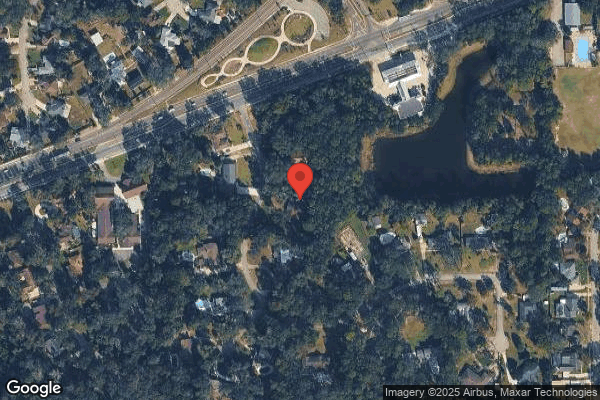
FLEET LANDING

ONE FLEET LANDING BLVD, ATLANTIC BEACH, FL 32233 (904) 246-9900
Non profit - Corporation 100 Beds Independent Data: November 2025
Trust Grade
90/100
#35 of 690 in FL
Last Inspection: August 2023

Over 2 years since last inspection. Current conditions may differ from available data.

Overview

Fleet Landing in Atlantic Beach, Florida, has received a Trust Grade of A, indicating it is an excellent facility that is highly recommended. It ranks #35 out of 690 nursing homes in Florida, placing it in the top half, and #3 out of 34 in Duval County, suggesting only two local options are better. The facility is improving, having reduced issues from three in 2019 to two in 2023. Staffing is a strength, with a perfect rating of 5 stars and a turnover rate of 42%, which is on par with the state average, ensuring staff familiarity with residents. Notably, there have been no fines, which is a positive sign. However, some concerns were raised during inspections, such as failure to protect a resident's privacy during medication administration and administering eye drops to the wrong eye, highlighting areas that need improvement despite the overall strong performance.

Trust Score
A
90/100
In Florida
#35/690
Top 5%
Safety Record
Low Risk
No red flags
Inspections
Getting Better
3 → 2 violations
Staff Stability
○ Average
42% turnover. Near Florida's 48% average. Typical for the industry.
Penalties
✓ Good
No fines on record. Clean compliance history, better than most Florida facilities.
Skilled Nurses
✓ Good
Each resident gets 51 minutes of Registered Nurse (RN) attention daily — more than average for Florida. RNs are trained to catch health problems early.
Violations
✓ Good
Only 5 deficiencies on record. Cleaner than most facilities. Minor issues only.
★★★★★
5.0
Overall Rating
★★★★★
5.0
Staff Levels
★★★★★
5.0
Care Quality
★★★★★
5.0
Inspection Score
Stable
2019: 3 issues
2023: 2 issues

The Good

  • 5-Star Staffing Rating · Excellent nurse staffing levels
  • 5-Star Quality Measures · Strong clinical quality outcomes
  • Full Sprinkler Coverage · Fire safety systems throughout facility
  • No fines on record
  • Staff turnover below average (42%)

    6 points below Florida average of 48%

Facility shows strength in staffing levels, quality measures, fire safety.

The Bad

Staff Turnover: 42%

Near Florida avg (46%)

Typical for the industry

The Ugly 5 deficiencies on record

Aug 2023 2 deficiencies
CONCERN (D)

Potential for Harm - no one hurt, but risky conditions existed

Deficiency F0583 (Tag F0583)

Could have caused harm · This affected 1 resident

Based on observation, record review, staff interview, and facility policy and procedure review, the facility failed to ensure residents' personal privacy during medical treatment for one (Resident #1)...

Read full inspector narrative →
Based on observation, record review, staff interview, and facility policy and procedure review, the facility failed to ensure residents' personal privacy during medical treatment for one (Resident #1) of two residents observed during medication administration. Resident #1 was not provided privacy during medication administration via her gastrostomy tube (feeding tube). The findings include: On 8/2/23 at 1:00 p.m., Licensed Practical Nurse B was observed preparing medications for Resident #1. A review of the resident's medication orders revealed that all her medications were administered through her gastrostomy tube (feeding tube). LPN B was observed administering two medications through the gastrostomy tube to Resident #1. LPN B did not provide privacy to the resident during the medication administration process. LPN B did not pull the privacy curtain or close the door to the room. The resident was visible from the hallway during this medication administration. LPN B then prepared an additional medication that was due but did not provide privacy to the resident during the medication administration process. LPN B did not pull the privacy curtain or close the door to the room. LPN B was asked how she provided privacy to residents during medication administration. She stated, By pulling the curtain. She was asked why she did not provide privacy for Resident #1 during her medication administration. She replied, I don't know, I guess I just thought because you were watching I didn't have to. A review of facility policies and procedures revealed: Medication Administration (revised 4/28/23) Policy Explanation and Compliance Guidelines: 7. Provide privacy Medication Administration via Enteral Tube (revised 4/28/23) 8. Procedure: d. Provide privacy by pulling the privacy curtain or closing the door to a private room. .
CONCERN (D)

Potential for Harm - no one hurt, but risky conditions existed

Deficiency F0658 (Tag F0658)

Could have caused harm · This affected 1 resident

Based on observation, record review, and facility policy and procedure review, the facility failed to ensure that services provided met professional standards of quality for one (Resident #30) of two ...

Read full inspector narrative →
Based on observation, record review, and facility policy and procedure review, the facility failed to ensure that services provided met professional standards of quality for one (Resident #30) of two residents observed during administration of medication. Medication orders were not verified prior to twice attempted administration of medicated eye drops in the resident's wrong eye. The findings include: On 8/1/23 at 9:33 a.m., Licensed Practical Nurse (LPN) A was observed preparing medications for Resident #30. A review of the resident's medication orders revealed the following: Pilocarpine (medication used for treatment of glaucoma and ocular hypertension) 1% eye drops: Administer one drop to right eye twice a day. LPN A was observed positioning the Pilocarpine eye drop bottle over Resident #30's left eye in order to administer the medication. The resident said, Not that eye. LPN A again attempted to position the eye drop bottle over the resident's left eye. The resident raised his left arm to block the eye drop bottle stating, Wrong eye, it's my right eye. LPN A then stopped and stated, Oh, you're right. LPN A then proceeded to administer the eye drop in the resident's right eye. A review of facility policies and procedures revealed: Medication Administration (revised 4/28/23) Policy Explanation and Compliance Guidelines: 11. Compare medication source with MAR (Medication Administration Record) to verify resident name, medication name, form, dose, route, and time. Administration of Eye Drops (revised 4/28/23) Policy Explanation and Compliance Guidelines: 1. Verify orders and labeling prior to administration: c. Confirm which eye requires treatments. .
Nov 2019 3 deficiencies
CONCERN (D)

Potential for Harm - no one hurt, but risky conditions existed

Deficiency F0658 (Tag F0658)

Could have caused harm · This affected 1 resident

Based on observation, record review and staff interview, the facility failed to ensure insulin and blood glucose monitoring were administered/performed in accordance with professional standards of qua...

Read full inspector narrative →
Based on observation, record review and staff interview, the facility failed to ensure insulin and blood glucose monitoring were administered/performed in accordance with professional standards of quality for 1 (Resident #26) of 1 resident observed during administration of insulin, from a total of 13 residents in the sample. Professional Standard of Care is defined in Chapter 766.102 as the prevailing professional standard of care for a given health care provider shall be that level of care, skill, and treatment which in light of all relevant surrounding circumstances is recognized as acceptable and appropriate by reasonably prudent similar health care providers. The Florida Nurse Practice Act, Chapter 464.003 defines the practice of professional nursing as the performance of those acts requiring substantial specialized knowledge, judgment, and nursing skill based upon applied principles of psychological, biological, physical, and social sciences which shall include, but not limited to: the administration of medications and treatments as prescribed or authorized by a duly licensed practitioner ' practice of practical nursing as the performance of selected acts, including the administration of treatments and medications, in the care of the ill, injured or infirmed and the promotion of wellness, maintenance or health, and the prevention of illness of others under the direction of a registered nurse, a licensed physician, a licensed osteopathic physician or a licensed dentist. The findings include: On 11/19/19 at 10:30 am, observation of medication administration was conducted with Employee A, Licensed Practical Nurse (LPN), and Resident #26. Employee A had performed blood glucose testing at 10:10 am. The result was a blood glucose level of 446. Employee A reviewed the sliding scale insulin order to determine how much insulin needed to be given. She determined 6 units of Humalog insulin were needed. Also, the order stated for blood glucose levels greater than 430, the physician was to be notified. Employee A prepared 2 syringes with insulin. She drew up 5 units of Levemir insulin in one syringe and 6 units of Humalog in the other. She entered the resident's room and administered the 2 syringes of insulin to Resident #26. A review of the physician's orders revealed the Levemir insulin was scheduled for administration at 7:30 am, however, it was not given until 10:30 am. The orders also included instructions to administer 2 units of Humalog before each meal and this was due at 11:30 am. There was no dose given at 11:30 am. Blood glucose monitoring was ordered every four hours and the next one due was at 2:00 pm. At 2:30 pm, an interview was conducted with Employee A. She was asked what the resident's blood glucose level was at 2:00 pm. She said she had not done it yet, as she was assisting the wound physician. She verified that she did not give the morning dose of Levemir at 7:30 am as ordered. She gave it after she performed the 10:00 am blood glucose test, along with the sliding scale insulin. She also confirmed she did not give the 11:30 am dose of Levemir due before lunch, since she had given the other dose late. On 11/19/19 at 4:30 pm, Employee A was observed preparing 2 syringes of insulin. One syringe contained 3 units of Levemir scheduled for 5:00 pm, and the other contained 2 units of Humalog, based on sliding scale, and 3 units due before the meal. Employee A was asked what time she performed the blood glucose testing and she said at 4:15 pm. When asked what time the blood glucose testing was scheduled, she said 2:00 pm. When asked why the insulin administration and blood glucose tests were not done timely, she said, Time got away from me. A review of the medication orders for Resident #26 included the following: Levemir 5 units at 7:30 am and 3 units at 5pm. Humalog 2 units before meals. Accuchecks every 4 hours with sliding scale Humalog insulin Humalog per sliding scale: If 180-229 = 1 unit 230-279 = 2 units 280-329 3 units 330-379= 4 units 380-429 =5 units If greater than 430 give 6 units and call MD. A review of the facility's policy, Administering Medications, included: Medications must be administered in accordance with the orders, including any required time frame. Medications must be administered within one hour of their prescribed time, unless otherwise specified (for example before or after meals). .
CONCERN (D)

Potential for Harm - no one hurt, but risky conditions existed

Unnecessary Medications (Tag F0759)

Could have caused harm · This affected 1 resident

Based on observations, record reviews and staff interviews, the facility failed to ensure a medication error rate of 5% or less, based on 31 opportunities with four errors for Resident #26. This resul...

Read full inspector narrative →
Based on observations, record reviews and staff interviews, the facility failed to ensure a medication error rate of 5% or less, based on 31 opportunities with four errors for Resident #26. This resulted in an error rate of 12.9%. The findings include: On 11/19/19 at 10:30 am, observation of medication administration was conducted with Employee A, Licensed Practical Nurse (LPN), and Resident #26. Employee A had performed blood glucose testing at 10:10 am. The result was a blood glucose level of 446. Employee A reviewed the sliding scale insulin order to determine how much insulin needed to be given. She determined 6 units of Humalog insulin were needed. Also, the order stated for blood glucose levels greater than 430, the physician was to be notified. Employee A prepared 2 syringes with insulin. She drew up 5 units of Levemir insulin in one syringe and 6 units of Humalog in the other. She entered the resident's room and administered the 2 syringes of insulin to Resident #26. A review of the physician's orders revealed the Levemir insulin was scheduled for administration at 7:30 am, however, it was not given until 10:30 am. The orders also included instructions to administer 2 units of Humalog before each meal and this was due at 11:30 am. There was no dose given at 11:30 am. Blood glucose monitoring was ordered every four hours and the next one due was at 2:00 pm. At 2:30 pm, an interview was conducted with Employee A. She was asked what the resident's blood glucose level was at 2:00 pm. She said she had not done it yet, as she was assisting the wound physician. She verified that she did not give the morning dose of Levemir at 7:30 am as ordered. She gave it after she performed the 10:00 am blood glucose test, along with the sliding scale insulin. She also confirmed she did not give the 11:30 am dose of Levemir due before lunch, since she had given the other dose late. On 11/19/19 at 4:30 pm, Employee A was observed preparing 2 syringes of insulin. One syringe contained 3 units of Levemir scheduled for 5:00 pm, and the other contained 2 units of Humalog, based on sliding scale, and 3 units due before the meal. Employee A was asked what time she performed the blood glucose testing and she said at 4:15 pm. When asked what time the blood glucose testing was scheduled, she said 2:00 pm. When asked why the insulin administration and blood glucose tests were not done timely, she said, Time got away from me. A review of the medication orders for Resident #26 included the following: Levemir 5 units at 7:30 am and 3 units at 5pm. Humalog 2 units before meals. Accuchecks every 4 hours with sliding scale Humalog insulin Humalog per sliding scale: If 180-229 = 1 unit 230-279 = 2 units 280-329 3 units 330-379= 4 units 380-429 =5 units If greater than 430 give 6 units and call MD. A review of the facility's policy, Administering Medications, included: Medications must be administered in accordance with the orders, including any required time frame. Medications must be administered within one hour of their prescribed time, unless otherwise specified (for example before or after meals). .
CONCERN (D)

Potential for Harm - no one hurt, but risky conditions existed

Medical Records (Tag F0842)

Could have caused harm · This affected 1 resident

**NOTE- TERMS IN BRACKETS HAVE BEEN EDITED TO PROTECT CONFIDENTIALITY** Based on record review and staff interview, the facility failed to maintain accurate medication orders and medication administra...

Read full inspector narrative →
**NOTE- TERMS IN BRACKETS HAVE BEEN EDITED TO PROTECT CONFIDENTIALITY** Based on record review and staff interview, the facility failed to maintain accurate medication orders and medication administration records for 1 (Resident #46) of 5 residents reviewed from a total of 13 sampled residents. The findings include: A record review for Resident #46 revealed she was admitted to the facility on [DATE] with diagnoses including unspecified dementia with behavioral disturbance, muscle weakness, anxiety disorder, psychotic disorder, macular degeneration, gastroesophageal reflux disease and cerebral infarction. A review of Resident #46's November 2019 physician's order sheets revealed orders for the following medications: Ativan Tablet 0.5 milligrams (MG), 1 tablet in the AM for anxiety at 9:00 AM with a start date of 8/6/2019 and a second order for Ativan Tablet 0.5 MG, 1 tablet in the AM for anxiety at 7:30 AM with a start date of 11/10/2019. A review of the November 2019 Medication Administration Record (MAR) revealed the Ativan Tablet 0.5 MG was given at 9:00 AM from 11/1/2019 through 11/20/2019 and a second Ativan 0.5 MG tablet was given at 7:30 AM from 11/10/2019 through 11/20/2019. Further review of the November 2019 physician's orders found orders for Tramadol HCI (Hydrochloride) Tablet 50 MG, 1 tablet as needed for pain twice a day with a start date of 5/11/2019 and Tramadol HCI Tablet 50 MG, 1 tablet every 6 hours as needed for pain with a start date of 9/16/2019. During an interview with the Director of Nursing (DON) on 11/20/19 at 9:24 AM, she was asked for the physician's orders for the two doses of Ativan. She looked in the computer, confirmed both of the orders and stated she would need to speak to the physician. The DON was also asked to provide the physician's orders for the Tramadol. During an interview with the DON on 11/20/2019 at 10:18 AM, she stated Resident #46 was receiving the Ativan once in the morning. She stated on 11/9/2019 the physician went in the facility computer system and put in a new order so it could be delivered and did not discontinue the previous order. The DON also stated the as needed Tramadol was listed twice on the MAR for the same reason as the Ativan. She stated the physician added his new orders on 9/16/2019 and did not discontinue the old order. The DON provided the controlled substance sheet for the Ativan order that was filled on 11/9/2019. A review of the controlled drug record revealed Resident #46 received Ativan at 9:00 AM on 11/11/2019, 11/12/2019, 11/13/2019, 11/14/2019, 11/15/2019, 11/18/2019, 11/19/2019 and on 11/16/2019 and 11/20/2019 at 8:00 AM. The controlled substance sheet had no record of the Ativan being given on 11/17/2019. A count of the medication with the DON found 9 tablets missing from the package validating the Ativan was not given on 11/17/2019. A review of the Medication Administration Record for November 2019 revealed the nurse documented she gave the Ativan on 11/17/2019 at 7:30 AM and at 9:00 AM. .
Understanding Severity Codes (click to expand)
Life-Threatening (Immediate Jeopardy)
J - Isolated K - Pattern L - Widespread
Actual Harm
G - Isolated H - Pattern I - Widespread
Potential for Harm
D - Isolated E - Pattern F - Widespread
No Harm (Minor)
A - Isolated B - Pattern C - Widespread

Questions to Ask on Your Visit

  • "Can I speak with families of current residents?"
  • "What's your RN coverage like on weekends and overnight?"

Our Honest Assessment

Strengths
  • • Grade A (90/100). Above average facility, better than most options in Florida.
  • • No major safety red flags. No abuse findings, life-threatening violations, or SFF status.
  • • No fines on record. Clean compliance history, better than most Florida facilities.
  • • Only 5 deficiencies on record. Cleaner than most facilities. Minor issues only.
Concerns
  • • No significant concerns identified. This facility shows no red flags across CMS ratings, staff turnover, or federal penalties.
Bottom line: Generally positive indicators. Standard due diligence and a personal visit recommended.

About This Facility

What is Fleet Landing's CMS Rating?

CMS assigns FLEET LANDING an overall rating of 5 out of 5 stars, which is considered much above average nationally. Within Florida, this rating places the facility higher than 99% of the state's 100 nursing homes. This rating reflects solid performance across the metrics CMS uses to evaluate nursing home quality.

How is Fleet Landing Staffed?

CMS rates FLEET LANDING's staffing level at 5 out of 5 stars, which is much above average compared to other nursing homes. Staff turnover is 42%, compared to the Florida average of 46%. This relatively stable workforce can support continuity of care.

What Have Inspectors Found at Fleet Landing?

State health inspectors documented 5 deficiencies at FLEET LANDING during 2019 to 2023. These included: 5 with potential for harm.

Who Owns and Operates Fleet Landing?

FLEET LANDING is owned by a non-profit organization. Non-profit facilities reinvest revenue into operations rather than distributing to shareholders. The facility operates independently rather than as part of a larger chain. With 100 certified beds and approximately 47 residents (about 47% occupancy), it is a mid-sized facility located in ATLANTIC BEACH, Florida.

How Does Fleet Landing Compare to Other Florida Nursing Homes?

Compared to the 100 nursing homes in Florida, FLEET LANDING's overall rating (5 stars) is above the state average of 3.2, staff turnover (42%) is near the state average of 46%, and health inspection rating (5 stars) is much above the national benchmark.

What Should Families Ask When Visiting Fleet Landing?

Based on this facility's data, families visiting should ask: "Can I visit during a mealtime to observe dining assistance and food quality?" "How do you handle medical emergencies, and what is your hospital transfer rate?" "Can I speak with family members of current residents about their experience?"

Is Fleet Landing Safe?

Based on CMS inspection data, FLEET LANDING has a clean safety record: no substantiated abuse findings (meaning no confirmed cases of resident harm), no Immediate Jeopardy citations (the most serious violation level indicating risk of serious injury or death), and is not on the Special Focus Facility watch list (a federal program monitoring the lowest-performing 1% of nursing homes). The facility has a 5-star overall rating and ranks #1 of 100 nursing homes in Florida. While no facility is perfect, families should still ask about staff-to-resident ratios and recent inspection results during their visit.

Do Nurses at Fleet Landing Stick Around?

FLEET LANDING has a staff turnover rate of 42%, which is about average for Florida nursing homes (state average: 46%). Moderate turnover is common in nursing homes, but families should still ask about staff tenure and how the facility maintains care continuity when employees leave.

Was Fleet Landing Ever Fined?

FLEET LANDING has no federal fines on record. CMS issues fines when nursing homes fail to meet care standards or don't correct problems found during inspections. The absence of fines suggests the facility has either maintained compliance or corrected any issues before penalties were assessed. This is a positive indicator, though families should still review recent inspection reports for the full picture.

Is Fleet Landing on Any Federal Watch List?

FLEET LANDING is not on any federal watch list. The most significant is the Special Focus Facility (SFF) program, which identifies the bottom 1% of nursing homes nationally based on persistent, serious quality problems. Not being on this list means the facility has avoided the pattern of deficiencies that triggers enhanced federal oversight. This is a positive indicator, though families should still review the facility's inspection history directly.