HEALTH CENTER AT SINAI RESIDENCES
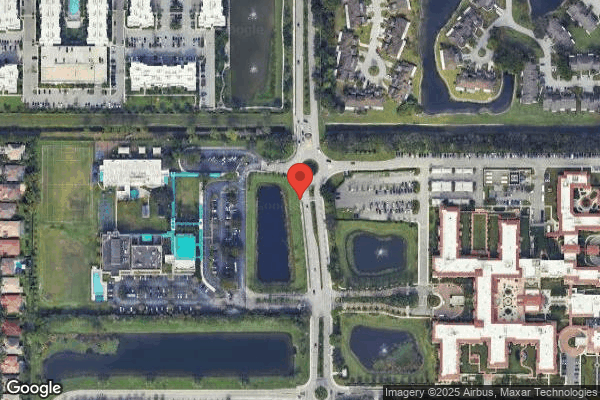

21044 95TH AVENUE SOUTH, BOCA RATON, FL 33428 (561) 609-4100
Non profit - Corporation 60 Beds Independent Data: November 2025
Trust Grade
90/100
#48 of 690 in FL
Last Inspection: May 2025

Inspected within the last 6 months. Data reflects current conditions.

Overview

The Health Center at Sinai Residences in Boca Raton, Florida, has an excellent Trust Grade of A, indicating it is highly recommended and performs well compared to other facilities. It ranks #48 out of 690 in Florida, placing it in the top half, and #5 out of 54 in Palm Beach County, meaning only four local options are rated higher. The facility is improving, having reduced issues from three in 2024 to none in 2025. Staffing is a strong point, with a perfect 5/5 rating and a turnover rate of 32%, which is lower than the state average, indicating that staff members are experienced and familiar with the residents. There are no fines reported, which is a positive sign of compliance, and the facility has more RN coverage than 88% of Florida facilities, ensuring that critical health concerns are addressed. However, there have been some concerns noted in recent inspections. For example, one resident's shower water temperature was not properly managed despite complaints, which could impact comfort. Additionally, a resident experienced unintentional weight loss without timely nutritional support, and there were issues with food storage temperatures and hand hygiene practices during meal service. While the facility has many strengths, families should consider these weaknesses when making their decision.

Trust Score
A
90/100
In Florida
#48/690
Top 6%
Safety Record
Low Risk
No red flags
Inspections
Getting Better
3 → 0 violations
Staff Stability
○ Average
32% turnover. Near Florida's 48% average. Typical for the industry.
Penalties
✓ Good
No fines on record. Clean compliance history, better than most Florida facilities.
Skilled Nurses
✓ Good
Each resident gets 84 minutes of Registered Nurse (RN) attention daily — more than 97% of Florida nursing homes. RNs are the most trained staff who catch health problems before they become serious.
Violations
○ Average
7 deficiencies on record. Average for a facility this size. Mostly minor or procedural issues.
★★★★★
5.0
Overall Rating
★★★★★
5.0
Staff Levels
★★★★★
5.0
Care Quality
★★★★★
5.0
Inspection Score
Stable
2024: 3 issues
2025: 0 issues

The Good

  • 5-Star Staffing Rating · Excellent nurse staffing levels
  • 5-Star Quality Measures · Strong clinical quality outcomes
  • Full Sprinkler Coverage · Fire safety systems throughout facility
  • No fines on record
  • Staff turnover below average (32%)

    16 points below Florida average of 48%

Facility shows strength in staffing levels, quality measures, fire safety.

The Bad

Staff Turnover: 32%

14pts below Florida avg (46%)

Typical for the industry

The Ugly 7 deficiencies on record

Feb 2024 3 deficiencies
CONCERN (D)

Potential for Harm - no one hurt, but risky conditions existed

Deficiency F0561 (Tag F0561)

Could have caused harm · This affected 1 resident

**NOTE- TERMS IN BRACKETS HAVE BEEN EDITED TO PROTECT CONFIDENTIALITY** Based on observations, interviews, and record review, the facility failed to honor resident choices for showers for 1 of 1 sampl...

Read full inspector narrative →
**NOTE- TERMS IN BRACKETS HAVE BEEN EDITED TO PROTECT CONFIDENTIALITY** Based on observations, interviews, and record review, the facility failed to honor resident choices for showers for 1 of 1 sampled resident reviewed for Activities of Daily Living (ADLs), Resident #219. The findings included: A review of the facility's policy titled, Bath; Shower/Tub, revised in February 2018, revealed the following: be sure that the bath area is at a comfortable temperature for the resident. In an interview conducted on 02/12/24 at 11:10 AM, Resident #219 stated that the water in his room was not cold enough and that he had told staff about it in the past. In an interview conducted on 02/13/24 at 2:39 PM with the Maintenance Director, he was told that Resident #219 complained that the hot water in his room was not working well. The Maintenance Director stated that he would follow up immediately with Resident #219. A chart review revealed that Resident #219 was admitted to the facility on [DATE] with diagnoses of Repeated Falls and Type 2 Diabetes. The Interim Minimum Data Set (MDS) assessment dated [DATE] revealed that Resident #219 had a Brief Interview of Mental Status score of 13, which is cognitively intact. The Resident Preferences Evaluation assessment dated [DATE] showed the following: when asked how important it was for Resident #219 to choose between a tub bath, shower, bed bath, or sponge bath, he said it was very important. When asked what his preference for bathing was, it showed showers. The Functional Abilities and Goals admission assessment dated [DATE] revealed the following: Shower/bathe self: The ability to wash self, including washing, rinsing, and drying self (excludes washing of back and hair), Resident #219 needed substantial maximal assistance. In an interview conducted on 02/14/24 at 3:11 PM, Resident #219 stated that he has been at the facility for about three weeks and has only received one shower because the water temperature in the shower is too cold. According to Resident #219, he received sponge baths using a towel that was placed in the sink water, which was cold to the touch. He further said that he would like to shave every other day but does not because the water in the sink is too cold and never gets hot enough for him to shave often. Resident #219 stated that he loves taking showers and that he was not able to do so while in the facility. He reported that he told multiple staff members regarding the water temperature in his room, but nothing was done. In this interview, the Surveyor went into Resident #219 ' s bathroom and turned the hot water knob on for the sink. After waiting one minute (timed), the hot water in the sink was cold to the touch. The Surveyor proceeded to turn the hot water knob in the shower and waited one minute. After one minute, the hot water in the shower remained cold to the touch. A record review of the Certified Nursing Assistants (CNAs) documentation under the task section titled PRN (as needed) ADL-bathing (prefers to specify) revealed the following: question one regarding the bathing task completed showed yes. Section 2, regarding how the resident takes full body, baths/showers, and sponge baths, revealed the type of assistance that was provided but did not show what type of bath was given. The 3rd section asked if Resident #219 needed one-person assistance or two-person assistance with bathing, which showed the resident needed one-person assistance with baths. Interview with Staff A, Certified Nursing Assistant (CNA), on 02/14/24 at 3:52 PM, she stated that the residents are scheduled for baths on specific days noted in a shower book on the unit. She said that most residents get a bath three times a week, and some want their baths every day. When asked where she documents in the electronic system after she gives residents their baths, she said it is in the PRN (as needed) ADL-bathing (prefers to specify) and proceeded to show the Surveyor. Staff A was not able to show the Surveyor what type of bath was given under this documentation section of the electronic system. Further review of the shower book that was provided by Staff A did not show any documentation regarding showers for residents. In an interview conducted on 02/14/24 at 4:08 PM, Staff B, Certified Nursing Assistant, she stated that the PRN ADL-bathing (prefers to specify) section under the task is where she documents when a shower is given to any residents. According to Staff B, this section in the electronic system does not have a section where one can write what type of bath is given. In an interview conducted on 02/14/24 at 4:18 PM with Staff C, Certified Nursing Assistant, she stated that Resident #219 likes sponge baths and that this is his preference for bathing. Staff C reported that she uses the sink water to give Resident #219 his bath using a soaked towel. She then proceeded to walk into Resident #219 room and turn the hot water on in the sink. She waited about 30 seconds and said, I think it is getting warm. The Surveyor touched the hot sink water, which was Lukewarm to the touch. The Surveyor then asked Staff C if she thought this was warm enough; she then said, I guess it can be warmer. The Surveyor waited another minute and touched the hot sink water again, which felt the same. In an interview conducted on 02/14/24 at 4:50 PM with Resident #219, he stated that the Maintenance Director did not come into the room to look at the hot water temperature in his bathroom. When asked if another staff came to check the situation, he said no. In an observation conducted on 02/14/24 at 5:01 PM, accompanied by the facility ' s Administrator, Resident #219 's sink hot water was checked using the facility's thermometer. The temperature of the hot water took 5 minutes to get from 86.9 degrees Fahrenheit to 100.2 degrees Fahrenheit.
CONCERN (D)

Potential for Harm - no one hurt, but risky conditions existed

Deficiency F0692 (Tag F0692)

Could have caused harm · This affected 1 resident

**NOTE- TERMS IN BRACKETS HAVE BEEN EDITED TO PROTECT CONFIDENTIALITY** Based on observations, interviews, and record reviews, the facility failed to provide nutritional intervention in a timely manne...

Read full inspector narrative →
**NOTE- TERMS IN BRACKETS HAVE BEEN EDITED TO PROTECT CONFIDENTIALITY** Based on observations, interviews, and record reviews, the facility failed to provide nutritional intervention in a timely manner for 1 of 3 sampled residents reviewed for nutrition (Resident #48). The findings included: A review of the facility's policy titled, Weight Recording, revised on 09/11/23, revealed the following: the nurse at each station is responsible for maintaining weights in the electronic medical record, verifying, and reporting any weight discrepancies of 3 pounds in a day and 5 pounds in a week or 5% in a month. The Registered Dietitian is responsible for any diet modifications necessary to stop any undesired weight changes. In an observation conducted on 02/13/24 at 8:40 AM, Resident #48 was noted in his room eating the breakfast meal. In this observation, Resident #48 was asked if he lost weight; he said yes and that it was not intentional. He further said that he had asked for nutritional supplements in the past to help with his weight loss and was given a few times. He stated he really likes the Ensure complete (nutritional supplement) chocolate flavor and would drink the supplements if provided. Record review revealed that Resident #48 was readmitted to the facility on [DATE] with diagnoses of Cancer, Depression, and Chronic Kidney Disease. The Minimum Data Set (MDS) assessment dated [DATE] revealed that Resident #48 had a Brief Interview of Mental Status (BIMS) score of 15, which is cognitively intact. A review of the Physician's orders showed an order for a regular diet, which was dated 01/14/24, but no nutritional supplements were ordered. The weight log showed the following weights recorded for Resident #48: 175 pounds noted on 01/15/24, 166 pounds noted on 01/24/24, and 155.2 pounds on 01/31/24. This showed that Resident #48 lost 5.1% severe weight loss in 9 days from 01/15/24 to 01/24/24. Resident #48 lost 11.3% severe weight loss in two weeks from 01/15/24 to 01/31/24. A review of the nutrition admission assessment dated [DATE] revealed the following: Resident #48 is at nutritional risk due to weight change, varying PO intake, refusal of nutritional supplements, and needs cues and encouragement for increased intake. Weight remains within the high end of the healthy weight range and noted with 10-13 pounds of weight loss in the last six months. The next nutrition progress note was not until 02/01/24, not addressing the severe weight loss noted on 01/24/24. The nutritional progress note dated 02/01/24 revealed the following: Resident #48 was noted with a further weight decline of 11.3% (19.8 pounds) from readmission on [DATE] to 01/30/24. It further showed that Resident #48 was eating between 50% to 75% of his meals. Resident #48 agreed to receive Ensure Complete (chocolate) twice a day to prevent further weight loss. A review of the Physician's orders did not show that an order was written for Ensure supplements two times a day, as noted in the nutrition progress note on 02/01/24. The nutrition care plan showed the following: The dietitian will evaluate and make diet changes and recommendations as needed, Resident #48 will be weighed at the same time of the day, and the weights will be recorded as per the facility's policy. In an interview conducted on 02/13/24 at 3:18 PM with Staff, H, the Registered Dietitian, she stated that she prints out a weekly report on all residents and reviews any weight changes of 3% plus or minus. The weight report usually runs on Wednesdays, and any weight changes will be identified on time. She often evaluates the accuracy of some of the weight changes and asks Staff to reweigh the residents again. They also conduct weekly weight meetings to discuss any significant weight losses that are noted. Staff H stated that she would provide nutritional supplements if needed to help with any weight loss that is identified. The Ensure Complete will give an extra 360 calories and 30 grams of protein per can. When asked what percent weight loss Resident #48 had from 01/15/24 to 01/24/24, she said 5.7% and acknowledged that it was a significant weight loss. According to Staff H, she only identified the significant weight loss on 02/01/24, which was about one week later. When asked why she did not order the nutritional supplements (Ensure) she recommended in her nutrition progress note on 02/01/24, she said, I do not know how it was missed.
CONCERN (D)

Potential for Harm - no one hurt, but risky conditions existed

Food Safety (Tag F0812)

Could have caused harm · This affected 1 resident

**NOTE- TERMS IN BRACKETS HAVE BEEN EDITED TO PROTECT CONFIDENTIALITY** Based on observation, interview, and record review, the facility failed to store and prepare food in accordance with professiona...

Read full inspector narrative →
**NOTE- TERMS IN BRACKETS HAVE BEEN EDITED TO PROTECT CONFIDENTIALITY** Based on observation, interview, and record review, the facility failed to store and prepare food in accordance with professional standards for 2 of 2 kitchen observations. It also failed to practice hand hygiene during meal observation for 4 of 4 residents observed during dining (Resident #35, Resident #48, Resident #15, and Resident #115). The findings included: In an observation conducted on 02/12/24 at 9:50 AM in the Main Kitchen, the reach-in Freezer was noted with an internal temperature of 20 degrees Fahrenheit and not at the recommended 0 degrees and below Fahrenheit. Closer observation revealed that some of the food items (breads) were soft to the touch. In this observation, Staff G (Cook) stated that the temperature of the reach-in Freezer is not within guidelines because it's been opened and closed all morning by staff members. A chart review revealed that Resident #35 was readmitted to the facility on [DATE]. The Modification Minimum Data Set (MDS) assessment dated [DATE] showed that Resident #35 had a Brief Interview of Mental Status (BIMS) score of 14, which was cognitively intact. In an observation conducted on 02/13/24 at 8:17 AM, Staff E (Certified Nursing Assistant) brought the meal tray into Resident #35 ' s room. A closer observation did not show that Staff E encouraged or asked Resident #35 to clean his hands before touching his breakfast meal. A chart review revealed that Resident #48 was readmitted to the facility on [DATE]. The admission MDS assessment dated [DATE] showed that Resident #48 had a Brief Interview of Mental Status (BIMS) score of 15, which was cognitively intact. In an observation conducted on 02/13/24 at 8:40 AM, Resident #48 was noted in his room eating the breakfast meal. In this observation, Resident #48 said that they never ask him or remind him to wash his hands or clean his hands before eating. A chart review revealed that Resident #15 was admitted to the facility on [DATE]. The admission MDS assessment dated [DATE] showed that Resident #15 had a Brief Interview of Mental Status (BIMS) score of 15, which was cognitively intact. In an observation conducted on 02/13/24 at 8:41 AM, Resident #115 was noted in his room with the breakfast tray, which did not have hand sanitizer or sanitizing wipes to clean his hands. In this observation, Resident #115 stated that the Staff never told him to clean his hands before eating or encouraged/reminded him to wash his hands. A chart review showed that Resident #41 was admitted to the facility on [DATE]. The Quarterly MDS assessment dated [DATE] showed no BIMS score for Resident #41. In an observation conducted on 02/13/24 at 8:45 AM, Staff D, a Certified Nursing Assistant, brought the breakfast tray into Resident #41's room. Staff D set up the tray for Resident #41 and left the room. In this observation, Staff D did not help Resident #41 clean her hands before she started eating. A second visit to the central kitchen conducted on 02/14/24 at 11:30 AM revealed that the reach-in Freezer had an internal temperature of 20 degrees Fahrenheit and not the recommended 0 degrees and below Fahrenheit. In this observation, Staff J, the Registered Dietitian, acknowledged that some of the food items (bread) in the reach Freezer were still soft to the touch, as observed on 02/12/24. Further observation revealed a metal container that had nine corn beef and cheese sandwiches cut in halves. Staff G was observed placing the metal container with the nine sandwiches on top of another metal container filled with ice. Staff G said that these are the sandwiches that are for the lunch meal today. Staff G took the temperature of one corn beef and cheese sandwich using the facility-calibrated thermometer. The temperature was noted at 53.9 degrees Fahrenheit and not the recommended 41 degrees Fahrenheit and below. Two other corn beef and cheese sandwiches were noted with a temperature of 50.7 degrees Fahrenheit and 53.2 degrees Fahrenheit and not the recommended 41 degrees Fahrenheit and below. In an observation conducted on 02/14/24 at 11:44 AM on the second-floor satellite Kitchen, Staff I, Culinary Laison, was observed taking a metal container that was noted with nine corn beef and cheese sandwiches cut in halves that were sent earlier from the central kitchen. Staff, I proceeded to take the temperature using a facility-calibrated thermometer of two corn beef and cheese sandwiches. One sandwich was noted at 51.0 degrees Fahrenheit, and the second sandwich was noted at 54.9 degrees Fahrenheit. Continued observation revealed Staff I plated the two corn beef sandwiches on a lunch plate and placed them on the meal cart that was getting ready to leave the kitchen to the floor. In an interview conducted on 02/15/24 at 10:30 AM with Staff D, the Certified Nursing Assistant stated that during mealtimes, she needs to place disposable hand sanitizer wipes on each meal tray so the residents can clean their hands. When asked about residents who cannot do it themselves, she said she does it for them. In an interview conducted on 02/15/24 at 11:00 AM with the facility's Administrator, he was told of the findings.
Oct 2022 4 deficiencies
CONCERN (D)

Potential for Harm - no one hurt, but risky conditions existed

ADL Care (Tag F0677)

Could have caused harm · This affected 1 resident

**NOTE- TERMS IN BRACKETS HAVE BEEN EDITED TO PROTECT CONFIDENTIALITY** Based on review of policy and procedure, observation, interview and record review, it was determined that the facility failed to...

Read full inspector narrative →
**NOTE- TERMS IN BRACKETS HAVE BEEN EDITED TO PROTECT CONFIDENTIALITY** Based on review of policy and procedure, observation, interview and record review, it was determined that the facility failed to provide Activities of Daily (ADL) care, including fingernail grooming for 1 of 10 sampled residents observed, Resident #22. The findings included: Review of the facility policy and procedure titled Activities of Daily Living (ADL); Supporting, provided by the Director of Nursing (DON) revised March 2018 documented in the Policy Statement: Residents will be provided with care, treatment and services as appropriate to maintain or improve their ability to carry out activities of daily living (ADLs). Residents who are unable to carry out activities of daily living independently will receive the services necessary to maintain good nutrition, grooming, and personal and oral hygiene. Policy Interpretation and Implementation 2. Appropriate care and services will be provided for residents who are unable to carry out ADLs independently, with the consent of the resident and in accordance with the plan of care, including appropriate support and assistance with: a. Hygiene (bathing, dressing, grooming, oral care); Review of facility un-dated Certified Nursing Assistant (CNA) job description on 10/12/22 at 2:54 PM documented Purpose of Your Job Position: General Summary: The Nursing Assistant assists the licensed nursing staff by performing routine nursing duties and activities of daily living within the Skilled Nursing areas. Principles Duties: Essential Job Duties: 1. Assists residents with dressing, grooming, eating, bathing, positioning, turning, toileting and exercising . Resident #22 was admitted to the facility on [DATE] with diagnoses which included Dementia, Hyperglycemia, Displaced Intertrochanteric Fracture Left Femur, Hypertension, Gastroesophageal Reflux. She had a Brief Interview Mental Status (BIM) score, indicating moderately impaired cognition. During an initial observational screening tour conducted on 10/10/22 at 10:21 AM, Resident #22 was observed with long, dirty, sharp, unkempt fingernails on both hands: with some unidentified black matter located under three (3) of the five (5) fingernails on Resident #22's left hand. Photographic evidence was obtained. On 10/10/22 at 10:25 AM a brief interview was conducted with Resident #22 in which she was asked if she prefers her fingernails long or if she would like to have her fingernails to be trimmed and cut, and she replied by saying that she remembers telling someone here about cutting and trimming her fingernails and making them pretty some time ago, but she stated that nothing happened and they were never done. During a second observational tour conducted on 10/10/22 at 12:27 PM, Resident #22 was still observed with long, dirty, sharp, unkempt fingernails on both hands: with some unidentified black matter located under three (3) of the five (5) fingernails on Resident #22's left hand. During a third observational tour conducted on 10/11/22 at 10:12 AM, Resident #22 was still observed with long, dirty, sharp, unkempt fingernails on both hands: with some unidentified black matter located under three (3) of the five (5) fingernails on Resident #22's left hand. During a fourth observational tour conducted on 10/11/22 at 1:30 PM, Resident #22 was still observed with long, dirty, sharp, unkempt fingernails on both hands: with some unidentified black matter located under three (3) of the five (5) fingernails on Resident #22's left hand. During a fifth observational tour conducted on 10/12/22 at 10:11 AM, Resident #22 was still observed with long, dirty, sharp, unkempt fingernails on both hands: with some unidentified black matter located under three (3) of the five (5) fingernails on Resident #22's left hand. Record review of the Resident #22's Monthly CNA (Certified Nursing Assistant) ADL Flowsheet Record dated 09/29/22 thru 10/12/22 revealed that resident's (ADL)s for Personal Hygiene indicated that Resident #22 required limited to extensive assistance from facility staff. Record review of Resident #22's Care plan initiated 09/01/22 and revised 10/05/22 indicated Focus: Activities of Daily Living (ADL): Resident #22 with diagnosis of: status post Fall, left Femur fracture Open Reduction Internal Fixation (ORIF), Dementia, Leucytosis, Pain and Weakness. She is at risk for ADL/self-care performance deficit Interventions: She requires assistance of staff x1 with personal hygiene Goal: Resident #22 will improve current level of function through the review date. Further record review of the Minimum Data Set (MDS) sections A and G dated 09/05/22 for Resident #22 indicated that Resident #22 requires extensive assistance with personal hygiene, and she also requires one person physical assistance. An interview was conducted with Staff C, a CNA on 10/12/22 at 10:33 AM, which she revealed that they had not provided fingernail care to Resident #22 and she said that it is the responsibility of the CNAs to clean and trim the residents fingernails. She further acknowledged that the resident's fingernails were long, sharp, untrimmed, and unkempt. An interview was conducted with Staff D, a Licensed Practical Nurse (LPN) on 10/12/22 at 10:37 AM, regarding Resident #22's long, unkempt nails and she also agreed that Resident #22's fingernails were long, sharp, untrimmed and unkempt. An interview was conducted with the Activities Director on 10/12/22 at 10:50 AM in which she stated that her department has been doing fingernail polishing and filing for the residents, as requested or needed by the resident by either one (1) of her three (3) activities assistants. However, she added that her department is not allowed to cut any of the resident's fingernails. There is also a Beauty Salon located on the third floor and open on Mondays which can also only polish and file resident fingernails; no cutting. She added that if her staff were to see a resident with long, dirty fingernails that she would alert the nurse of the floor, wing or unit involved and to let them know to follow-up with the resident. The Activities Director said that her department had not provided any nail care service to Resident #22. The Director also acknowledged that Resident #22's fingernails were all long, untrimmed and unkempt. On 10/12/22 at 11:17 AM, an interview was conducted with Staff E, a Registered Nurse (RN), daytime Supervisor, regarding Resident #22's fingernails being long, sharp and untrimmed. She agreed that it is the responsibility of the CNAs to clean and trim the residents nails and she further acknowledged that the resident's fingernails were long and that they should have been cleaned/trimmed/cut. On 10/12/22 at 11:48 AM, an interview was conducted with the DON regarding Resident #22's fingernails being long, sharp and untrimmed and she also acknowledged that it is the responsibility of the CNAs to clean and trim the resident's nails and she further acknowledged that the resident's fingernails were long and that they should have been cleaned/trimmed/cut; this was not done. On 10/13/22 at 9:30 AM, a follow up observation was conducted of Resident #22, it was noted that her fingernails were now cut, neat and trimmed. She expressed to the surveyor that she was happy and pleased with her clean fingernails. Resident #22's fingernails were not cleaned and trimmed from 10/10/22 - 10/12/22, until after surveyor inquisition/intervention.
CONCERN (D)

Potential for Harm - no one hurt, but risky conditions existed

Deficiency F0692 (Tag F0692)

Could have caused harm · This affected 1 resident

**NOTE- TERMS IN BRACKETS HAVE BEEN EDITED TO PROTECT CONFIDENTIALITY** Based on observation, interview, and record review the facility failed to ensure an accurate nutritional assessment and failed t...

Read full inspector narrative →
**NOTE- TERMS IN BRACKETS HAVE BEEN EDITED TO PROTECT CONFIDENTIALITY** Based on observation, interview, and record review the facility failed to ensure an accurate nutritional assessment and failed to order an additional nutritional supplement to aid with wound healing for 1 of 3 sampled residents reviewed for nutrition (Resident #5). Resident #5 had a pressure ulcer, which would indicate a need for increased nutrition. The findings included: A chart review showed that Resident #5 was discharged to an acute care hospital on [DATE] and readmitted to the facility on [DATE]., with diagnoses of dysphagia, muscle weakness, and seizures. Diet order noted for Regular diet, Mechanical Soft (Chopped) - Soft and Bite-Sized texture, Mildly Thick (Nectar) consistency, for nutrition support needs assistance with feeding at all meals, which was dated 08/05/22. The Minimum Data Set, dated [DATE] showed that Resident #5 had a stage 4 pressure ulcer under section M for the skin. Section C showed that Resident #5 was severely cognitively impaired. In an observation conducted on 10/11/22 at 8:35 AM, Resident #5 was noted in bed. Staff B, Certified Nursing Assistant, was in the room assisting the Resident with her breakfast tray. Closer observation showed a tray with thickened liquids for the coffee and the juice. Weighted forks and knives were also noted on the plate with a scoop plate. Staff B encouraged the Resident to eat her meal and assisted her in grabbing the food with the weighted utensils. The care plan initiated on 07/09/20 for pressure ulcers showed that Resident #5 has a stage-4 pressure ulcer to her Sacro-coccyx. Alteration in nutritional status as evidence By potential for weight change and aspiration-related therapeutic and mechanically altered diet. It further showed that Resident #5 would consume adequate kcal/protein and fluids to meet estimated needs and prevent significant weight loss. A wound care note dated 07/11/22, which was three days after readmission, showed that Resident #5 was with a stage 4 sacrum wound. It further showed to maintain adequate nutrition and supplement to promote wound healing. A wound care note dated 07/18/22 showed that Resident #5 was with a stage 4 sacrum wound. It further showed to maintain adequate nutrition and supplement to promote wound healing. A wound care note dated 08/01/22 showed that Resident #5 was with a stage 4 sacrum wound. It further showed to maintain adequate nutrition and supplement to promote wound healing. A Dietary follow-up note written a day after readmission showed that Resident #5 was with a sacral wound and that she was going to be followed up by the Wound Care Team. Protein and vitamin intake appear to be adequate to meet needs for nutrition and wound healing. It was further documented that the Resident was also receiving Prostat (a protein supplement for wound healing). The Initial readmission Assessment conducted on 07/11/22, which was four days after readmission, showed that the facility's Clinical Dietitian documented that Resident #5 had edema on the skin but did not document any staged four wounds. In this note, she further stated that Resident #5 is receiving Prostat (protein supplement for wound healing) and the that the protein and vitamins appear to be adequate to meet needs for nutrition and wound healing. A follow-up note dated 07/20/22 showed that Resident #5's appetite and intake are good to excellent, and there is no documentation regarding the stage four sacral wound. A Dietary follow-up note dated 07/29/22 showed that Resident #5 was receiving a Magic cup daily (a small container of an ice cream-like dessert with additional nutrients), to aid in protein intake and help with wound healing with an open area to the sacrum. A review of the Medication Administration Record (MAR) showed that the order for the magic cup twice a day was discontinued on 07/01/22 and never restarted after Resident #5 was readmitted on [DATE]. Further review showed that the order for Prostat twice a day was stopped on 07/01/22 and restarted on 07/09/22 but with only one scoop a day and not twice a day. A review of Resident #5's intake of meals documented by the CNAs (Certified Nursing Assistants) from 09/28/22 to 10/10/22 showed the following: Resident #5 ate two meals at 0 intakes, three meals between 26% to 50% intake, 12 meals between 76% to 100% intake, and 47 meals between 51 to 75% intake. In an interview, conducted on 10/12/22 at 1:27 PM with the facility's Clinical Dietitian, it was stated that residents who are admitted with stage 4 pressure ulcer wounds are considered high-risk residents. The protein needs will be assessed at higher needs, and she recommends Prostat for wound healing twice a day as well as a nutritional supplement. When asked why she did not document in her assessment that Resident #5 had a stage four pressure ulcer after she was readmitted . She said that she did not know that Resident #5 had a pressure ulcer wound. According to the Clinical Dietitian, after admission or readmission, the Wound Care Team will assess the residents. They will then send an email to the clinical staff to let them know if any residents have pressure ulcers and the stage. She further noted that she cannot see any of the wound care assessments in the current electronic system and must wait for the emails the Wound Care Team sends. When asked about the magic cup supplements, she stated that Resident #5 refused the supplements but was not able to provide any documentation regarding Resident #5 refusing the supplements. In an interview conducted on 10/12/22 at 1:35 PM, with the facility's Corporate Dietitian, she was told of the findings.
CONCERN (D)

Potential for Harm - no one hurt, but risky conditions existed

Staffing Information (Tag F0732)

Could have caused harm · This affected 1 resident

Based on observations and interviews, the facility failed to ensure daily nurse staffing was updated properly. The findings included: Multiple observations were made on 10/10/22 (9:40 AM, 10:20 AM, 12...

Read full inspector narrative →
Based on observations and interviews, the facility failed to ensure daily nurse staffing was updated properly. The findings included: Multiple observations were made on 10/10/22 (9:40 AM, 10:20 AM, 12:05 PM, 2:08 PM) on the 3rd floor of the facility in between the East and [NAME] wings of the posted nurse staffing being dated 10/08/22. Photographic evidence obtained. An additional observation was made on 10/11/22 at 8:50 AM of this posted nurse staffing still dated 10/08/22. On 10/11/22 at 1:15 PM, the surveyor observed the facility Administrator changing this posted nurse staffing. Upon closer observation, the date on the new posted nurse staffing was 09/11/22. Photographic evidence obtained. An additional observation was made on 10/12/22 at 8:20 AM of this posted nurse staffing still dated 09/11/22. A tour of the facility was conducted on 10/12/22 at 11:20 AM with the facility Administrator. During this tour, the surveyor made the facility Administrator aware of this issue. He stated he would talk to the staffing office as they are responsible for updating these posted nurse staffing. An interview was conducted with the facility Director of Nursing on 10/13/22 at 11:22 AM. She stated she had talked to the staffing office, and they are aware of the issue and they will be more mindful of updating the posted nurse staffing daily.
CONCERN (D)

Potential for Harm - no one hurt, but risky conditions existed

Deficiency F0761 (Tag F0761)

Could have caused harm · This affected 1 resident

**NOTE- TERMS IN BRACKETS HAVE BEEN EDITED TO PROTECT CONFIDENTIALITY** Based on observations, interviews, and record review, the facility failed to ensure proper storage of medications. The findings ...

Read full inspector narrative →
**NOTE- TERMS IN BRACKETS HAVE BEEN EDITED TO PROTECT CONFIDENTIALITY** Based on observations, interviews, and record review, the facility failed to ensure proper storage of medications. The findings included: Review of the facility policy titled Storage of Medications, revised April 2007 revealed the following: The Policy Statement states, The facility shall store all drugs and biologicals in a safe, secure and orderly manner. The Policy Interpretation and Implementation states, The nursing staff shall be responsible for maintaining medication storage AND preparation areas in a clean, safe and sanitary manner and Drugs shall be stored in an orderly manner in cabinets, drawers, carts, or automatic dispensing systems. 1) During a tour of the facility conducted on 10/11/22 at 1:11 PM, the surveyor observed three medications which were left unattended in Resident #301's room. The three medications were observed to be an inhaler, an antibiotic to be infused through an intravenous line, and an unidentified white capsule in a medication cup. Photographic evidence obtained. Staff A was interviewed about these unattended medications. She stated she planned to administer these medications to Resident #301, but the therapy staff had taken Resident #301 to complete her therapy treatment for the day before Staff A was able to administer the medications. Staff A stated she would put the medications in the medication cart until Resident #301 was returned to her room. When the surveyor asked Staff A how much longer Resident #301 would be at therapy, she stated Resident #301 would return to her room in approximately 30 minutes from therapy. The surveyor stated she would return in 30 minutes to observe the medication administration. The surveyor then observed Staff A place the inhaler and intravenous antibiotic back into the medication cart. Review of Resident #301's Medication Administration Record revealed she was due to receive the following medications at the following times: Atrovent HFA (inhaler) at 1:00 PM, Zosyn solution (antibiotic) at 2:00 PM, and Gabapentin (pain medication) at 1:00 PM. 2) During a tour of the facility conducted on 10/11/22 at 1:45 PM, the surveyor observed a white capsule on the floor in the main hallway in front of the medication cart on the 3-East wing near the nurse's station. Closer observation revealed this white capsule appeared to be the same Gabapentin that had been taken out of Resident #301's room earlier. When Staff A was interviewed on 10/11/22 at 1:48 PM about this white capsule, she picked it up from the floor, took it to the medication room, and placed it in the bottle of Pill Buster in front of the surveyor. 3) Resident #10 was admitted to the facility on [DATE] with diagnoses which included Age Related Cognitive Decline, Hypothyroidism, Hypertension, Major Depressive Disorder and Gastroesophageal Reflux Disease. She had a Brief Interview Mental Status (BIM) score of 12 (moderately impaired). During an initial observational screening tour conducted on 10/10/22 at 10:07 AM, it was observed that there was a used container of OTC Zinc Oxide 20% cream medication in Resident #10's bathroom with an expiration date of 03/2025 observed in plain sight, visible, unattended, accessible to other residents, employees and visitors. Photographic evidence was obtained. 4) During a continued initial observational screening tour on 10/10/22 at 10:10 AM, it was also observed that there was a used tube of prescription Clotrimazole and Betamethasone Diproprionate 1%/0.5% with an expiration date of 07/24 observed in plain sight in Resident #10's open bedside dresser drawer, visible, unattended, accessible to other residents, employees and visitors. Photographic evidence was obtained. During a second observational tour conducted on 10/10/22 at 12:42 PM, it was observed again that there was a used container of OTC Zinc Oxide 20% cream medication still at the bedside of Resident #10's bedroom with an expiration date of 03/2025 observed in plain sight, visible, unattended, accessible to other residents, employees and visitors. And, it was also observed that there was a used tube of prescription Clotrimazole and Betamethasone Diproprionate 1%/0.5% with an expiration date of 07/24 still observed in plain sight in Resident #10's open bedside dresser drawer, visible, unattended, accessible to other residents, employees and visitors. During a third observational tour conducted on 10/11/22 at 9:49 AM, it was observed again that there was a used container of OTC Zinc Oxide 20% cream medication still at the bedside of Resident #10's bedroom with an expiration date of 03/2025 observed in plain sight, visible, unattended, accessible to other residents, employees and visitors. And, it was also observed that there was a used tube of prescription Clotrimazole and Betamethasone Diproprionate 1%/0.5% with an expiration date of 07/24 still observed in plain sight in Resident #10's open bedside dresser drawer, visible, unattended, accessible to other residents, employees and visitors. During a fourth subsequent tour conducted on 10/11/22 at 1:30 PM, it was observed again that there was a used container of OTC Zinc Oxide 20% cream medication still at the bedside of Resident #10's bedroom with an expiration date of 03/2025 observed in plain sight, visible, unattended, accessible to other residents, employees and visitors. And, it was also observed that there was a used tube of prescription Clotrimazole and Betamethasone Diproprionate 1%/0.5% with an expiration date of 07/24 still observed in plain sight in Resident #10's open bedside dresser drawer, visible, unattended, accessible to other residents, employees and visitors. During a fifth observational tour conducted on 10/12/22 at 10:11 AM, it was observed again that there was a used container of OTC Zinc Oxide 20% cream medication still at the bedside of Resident #10's bedroom with an expiration date of 03/2025 observed in plain sight, visible, unattended, accessible to other residents, employees and visitors. An interview was conducted with Resident #10's Staff F, a private duty aide, on 10/11/22 at 1 PM in which she was asked about the OTC cream medication located in Resident #10's bathroom, and she acknowledged that the cream medication was there, and she added that it is applied Resident #10's buttock area. On 08/05/22 the Treatment Administration Record (TAR) documented Skin barrier cream to buttocks during toileting or adjusting in bed to prevent skin breakdown. Every day and night shift for skin integrity. And, on 10/03/22 the TAR also documented Lotrisone Cream 1-0.05% (Clotrimazole-Betamethsone) Apply to groin topically two times a day for rash for fourteen (14) days, as being initialed and administered by facility nursing staff. However, both the prescription and OTC cream medications remained unattended and accessible at Resident #10's bedside. An interview was conducted on 10/12/22 at 11:06 AM with Resident #10's nurse, Staff D, a Licensed Practical Nurse (LPN) regarding the prescription and OTC cream medications observed in Resident #10's bathroom and she acknowledged that the prescription and OTC cream medications should not have been there. During an interview conducted on 10/12/22 at 11:13 AM with Staff E, a Registered Nurse (RN), daytime Supervisor, she indicated this resident does not self-administer any of her own medications and neither was she assessed to be able to do so. Side-by-side record review was conducted with Staff E, in which it was noted that neither Resident #10's hard copy chart nor her computerized Point-Click-Care (PCC) medical record indicated that the resident had any self-assessment completed in order for her to be to administer her own medications. In fact, the tube of prescription medication and the container of OTC cream medication was not removed from this resident's bedside along with an order for this medication to be now administered to Resident #10 as needed, until after surveyor inquisition. On 10/12/22 at 11:50 AM the DON further acknowledged and recognized that the prescription and OTC cream medications should not have been left at the resident's bedside.
Understanding Severity Codes (click to expand)
Life-Threatening (Immediate Jeopardy)
J - Isolated K - Pattern L - Widespread
Actual Harm
G - Isolated H - Pattern I - Widespread
Potential for Harm
D - Isolated E - Pattern F - Widespread
No Harm (Minor)
A - Isolated B - Pattern C - Widespread

Questions to Ask on Your Visit

  • "Can I speak with families of current residents?"
  • "What's your RN coverage like on weekends and overnight?"

Our Honest Assessment

Strengths
  • • Grade A (90/100). Above average facility, better than most options in Florida.
  • • No major safety red flags. No abuse findings, life-threatening violations, or SFF status.
  • • No fines on record. Clean compliance history, better than most Florida facilities.
  • • 32% turnover. Below Florida's 48% average. Good staff retention means consistent care.
Concerns
  • • No significant concerns identified. This facility shows no red flags across CMS ratings, staff turnover, or federal penalties.
Bottom line: Generally positive indicators. Standard due diligence and a personal visit recommended.

About This Facility

What is Health Center At Sinai Residences's CMS Rating?

CMS assigns HEALTH CENTER AT SINAI RESIDENCES an overall rating of 5 out of 5 stars, which is considered much above average nationally. Within Florida, this rating places the facility higher than 99% of the state's 100 nursing homes. This rating reflects solid performance across the metrics CMS uses to evaluate nursing home quality.
How is Health Center At Sinai Residences Staffed?

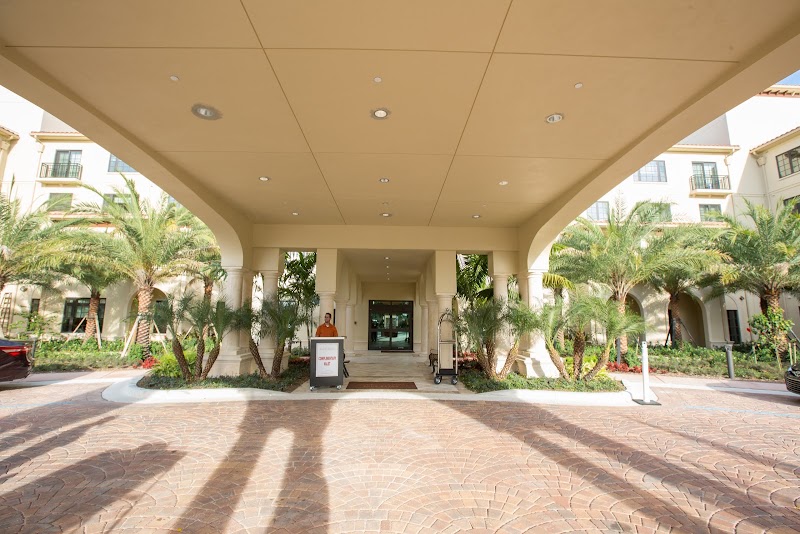
CMS rates HEALTH CENTER AT SINAI RESIDENCES's staffing level at 5 out of 5 stars, which is much above average compared to other nursing homes. Staff turnover is 32%, compared to the Florida average of 46%. This relatively stable workforce can support continuity of care.

What Have Inspectors Found at Health Center At Sinai Residences?

State health inspectors documented 7 deficiencies at HEALTH CENTER AT SINAI RESIDENCES during 2022 to 2024. These included: 7 with potential for harm.
Who Owns and Operates Health Center At Sinai Residences?

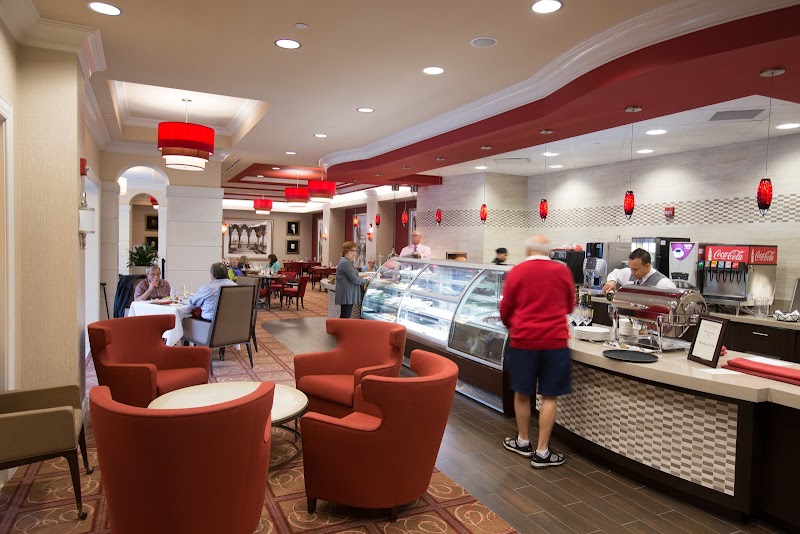
HEALTH CENTER AT SINAI RESIDENCES is owned by a non-profit organization. Non-profit facilities reinvest revenue into operations rather than distributing to shareholders. The facility operates independently rather than as part of a larger chain. With 60 certified beds and approximately 55 residents (about 92% occupancy), it is a smaller facility located in BOCA RATON, Florida.
How Does Health Center At Sinai Residences Compare to Other Florida Nursing Homes?

Compared to the 100 nursing homes in Florida, HEALTH CENTER AT SINAI RESIDENCES's overall rating (5 stars) is above the state average of 3.2, staff turnover (32%) is significantly lower than the state average of 46%, and health inspection rating (5 stars) is much above the national benchmark.

What Should Families Ask When Visiting Health Center At Sinai Residences?

Based on this facility's data, families visiting should ask: "Can I visit during a mealtime to observe dining assistance and food quality?" "How do you handle medical emergencies, and what is your hospital transfer rate?" "Can I speak with family members of current residents about their experience?"

Is Health Center At Sinai Residences Safe?

Based on CMS inspection data, HEALTH CENTER AT SINAI RESIDENCES has a clean safety record: no substantiated abuse findings (meaning no confirmed cases of resident harm), no Immediate Jeopardy citations (the most serious violation level indicating risk of serious injury or death), and is not on the Special Focus Facility watch list (a federal program monitoring the lowest-performing 1% of nursing homes). The facility has a 5-star overall rating and ranks #1 of 100 nursing homes in Florida. While no facility is perfect, families should still ask about staff-to-resident ratios and recent inspection results during their visit.

Do Nurses at Health Center At Sinai Residences Stick Around?

HEALTH CENTER AT SINAI RESIDENCES has a staff turnover rate of 32%, which is about average for Florida nursing homes (state average: 46%). Moderate turnover is common in nursing homes, but families should still ask about staff tenure and how the facility maintains care continuity when employees leave.

Was Health Center At Sinai Residences Ever Fined?

HEALTH CENTER AT SINAI RESIDENCES has no federal fines on record. CMS issues fines when nursing homes fail to meet care standards or don't correct problems found during inspections. The absence of fines suggests the facility has either maintained compliance or corrected any issues before penalties were assessed. This is a positive indicator, though families should still review recent inspection reports for the full picture.

Is Health Center At Sinai Residences on Any Federal Watch List?

HEALTH CENTER AT SINAI RESIDENCES is not on any federal watch list. The most significant is the Special Focus Facility (SFF) program, which identifies the bottom 1% of nursing homes nationally based on persistent, serious quality problems. Not being on this list means the facility has avoided the pattern of deficiencies that triggers enhanced federal oversight. This is a positive indicator, though families should still review the facility's inspection history directly.