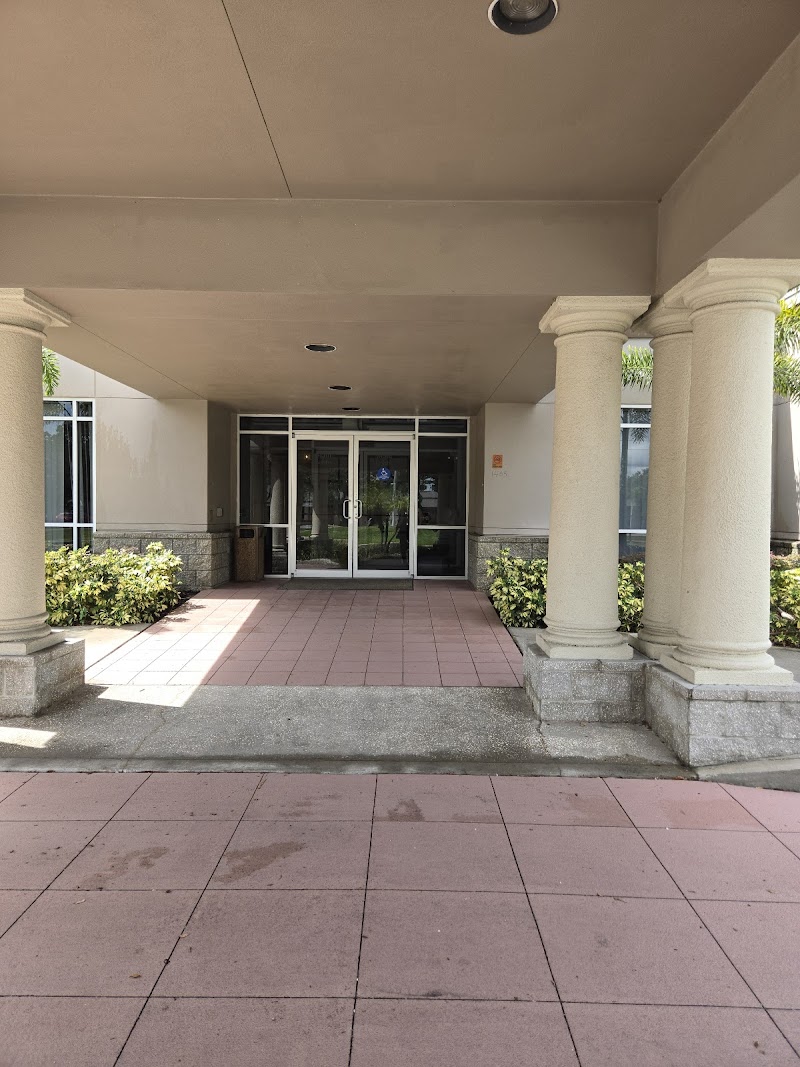
AVIATA AT OAKFIELD

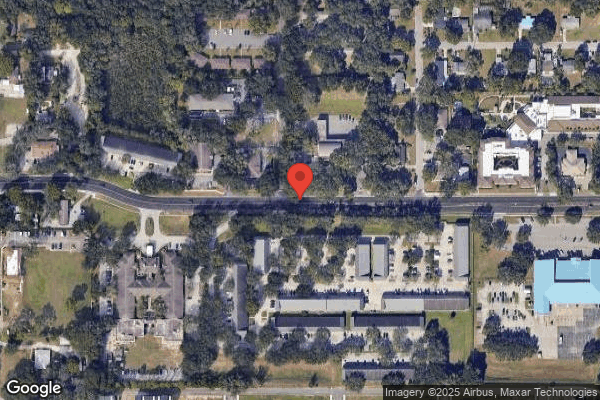
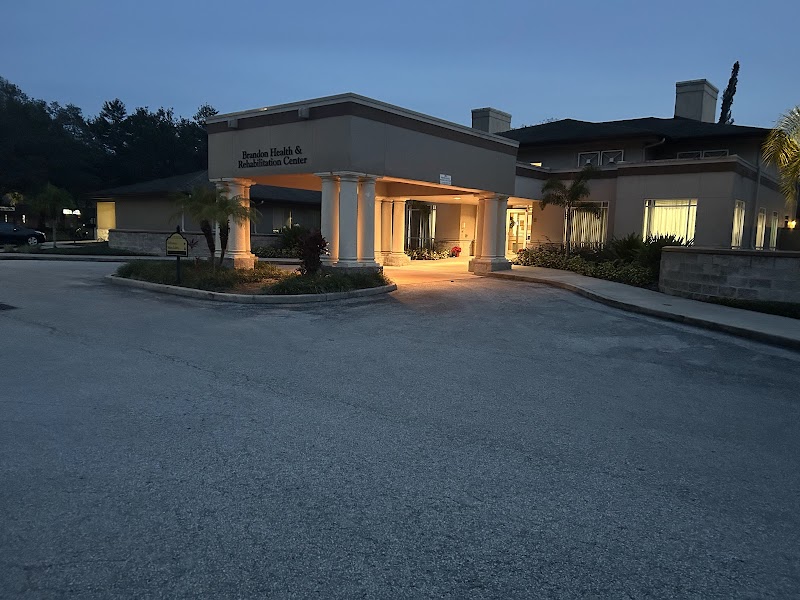
1465 OAKFIELD DR, BRANDON, FL 33511 (813) 655-0404
For profit - Limited Liability company 120 Beds AVIATA HEALTH GROUP Data: November 2025 2 Immediate Jeopardy citations
Trust Grade
1/100
#464 of 690 in FL
Last Inspection: July 2023

Over 2 years since last inspection. Current conditions may differ from available data.

Overview

Aviata at Oakfield has received a Trust Grade of F, indicating significant concerns about the quality of care, as it falls into the poor category. It ranks #464 out of 690 nursing homes in Florida, placing it in the bottom half, and #20 out of 28 in Hillsborough County, meaning only a few local options are worse. While the facility is showing improvement, with a reduction in issues from 4 in 2024 to 2 in 2025, it still has a concerning number of deficiencies, with fines totaling $52,972, which is higher than 82% of facilities in Florida. Staffing is rated below average with a turnover rate of 50%, but the facility maintains average RN coverage, which is important for monitoring residents. Specific incidents of concern include a resident being able to exit the facility without supervision, despite being at high risk for elopement, and failures in holding care conferences and updating care plans, which can affect the overall quality of care for residents.

Trust Score
F
1/100
In Florida
#464/690
Bottom 33%
Safety Record
High Risk
Review needed
Inspections
Getting Better
4 → 2 violations
Staff Stability
⚠ Watch
50% turnover. Above average. Higher turnover means staff may not know residents' routines.
Penalties
⚠ Watch
$52,972 in fines. Higher than 76% of Florida facilities, suggesting repeated compliance issues.
Skilled Nurses
⚠ Watch
Each resident gets only 29 minutes of Registered Nurse (RN) attention daily — below average for Florida. Fewer RN minutes means fewer trained eyes watching for problems.
Violations
⚠ Watch
37 deficiencies on record. Higher than average. Multiple issues found across inspections.
★★☆☆☆
2.0
Overall Rating
★★☆☆☆
2.0
Staff Levels
★★★★★
5.0
Care Quality
★☆☆☆☆
1.0
Inspection Score
Stable
2024: 4 issues
2025: 2 issues

The Good

  • 5-Star Quality Measures · Strong clinical quality outcomes
  • Full Sprinkler Coverage · Fire safety systems throughout facility
  • No fines on record

Facility shows strength in quality measures, fire safety.

The Bad

2-Star Overall Rating

Below Florida average (3.2)

Below average - review inspection findings carefully

Staff Turnover: 50%

Near Florida avg (46%)

Higher turnover may affect care consistency

Federal Fines: $52,972

Above median ($33,413)

Moderate penalties - review what triggered them

Chain: AVIATA HEALTH GROUP

Part of a multi-facility chain

Ask about local staffing decisions and management

The Ugly 37 deficiencies on record

2 life-threatening
Jun 2025 1 deficiency
CONCERN (D) 📢 Someone Reported This

A family member, employee, or ombudsman was alarmed enough to file a formal complaint

Potential for Harm - no one hurt, but risky conditions existed

Free from Abuse/Neglect (Tag F0600)

Could have caused harm · This affected 1 resident

**NOTE- TERMS IN BRACKETS HAVE BEEN EDITED TO PROTECT CONFIDENTIALITY** Based on observations, record reviews, and interviews the facility failed to notify the physician of a non-functioning wound vac...

Read full inspector narrative →
**NOTE- TERMS IN BRACKETS HAVE BEEN EDITED TO PROTECT CONFIDENTIALITY** Based on observations, record reviews, and interviews the facility failed to notify the physician of a non-functioning wound vac and neglected to provide wound care per physician orders for one (#1) of three residents sampled for surgical wounds. Findings included: Review of Resident #1's clinical record showed the resident was admitted to the facility on [DATE] with diagnoses not limited to right knee arthritis due to other bacteria, type 2 diabetes mellitus with other circulatory complications, right knee rheumatoid arthritis without rheumatoid factor, and acquired absence of other right toe(s). Review of Resident #1's operative report dated 4/17/25 showed the resident was 6 weeks post right total knee arthroplasty with 3 weeks of increasing right knee pain and swelling. The postoperative diagnosis was prosthetic joint infection of the right knee. The operation conducted on 4/17/25 was a second stage revision right total knee arthroplasty with removal of antibiotic spacer and the surgeon's application of an incisional wound vac. The postoperative (postop) instructions included: - Follow up in 2 weeks after surgery. - (Manufacturer name) VAC for 2 weeks which will be removed in the office. - Weight bear as tolerated, lower extremity in the immobilizer to allow for soft tissue rest. Review of Resident #1's April Medication Administration Record (MAR) showed a follow-up appointment was scheduled on 4/29/25 with the surgeon for 5/7/25 at 1:30 p.m. The MAR showed an order for the resident to receive the antibiotic Daptomycin Intravenous solution reconstituted - 500 milligram (mg) intravenously in the morning for bacterial infection for 4 weeks and 500 mgs of Ciprofloxacin twice daily for 7 days for a bacterial infection. Review of Resident #1's April Treatment Administration Record (TAR) showed staff were to: Monitor wound vac and cast to the right foot for signs/symptoms (s/s) of infection every shift. The documentation showed staff monitored the area during the 12-hour shifts of day and night from 4/24/25 to 4/30/25. Review of Resident #1's Admission/readmission Data Collection, effective 4/23/25 at 6:08 p.m. revealed the resident was alert and oriented (A&O) to person, place, and time, had a Peripherally Inserted Central Catheter (PICC) inserted in the right upper arm, and a left leg surgical site. The staff noted the resident arrived at the facility on 4/23/25 at approximately 5:50 p.m., was A&O x4, a wound vac noted to right leg with a cast in place, per order cast is not to be removed until f/u (follow up) with surgeon, and a PICC in right upper arm. The evaluation did not describe the drainage in the wound vac tubing or canister, or the amount seen. Review of a late entry Physician Progress Note, effective 4/24/25 at 10:37 p.m. revealed Resident #1 had been admitted at the Skilled Nursing Facility (SNF) after hospitalization for right knee issues. The history showed the resident had underwent a second-stage revision of the right total knee arthroplasty which included the removal of an antibiotic spacer, application of a wound VAC, and insertion of antibiotic beads. The resident was weight-bearing as tolerated, wound VAC was to remain in place for 2 weeks and due to deconditioning and need for long-term antibiotics the resident had been admitted for further rehabilitation. The plan was for the resident to continue current antibiotic regimen, follow up with Orthopedics in 2 weeks, and to Maintain wound VAC for 2 weeks. Review of Resident #1's skilled notes dated 4/24, 4/25, 4/26, 4/28, and 4/30/25 revealed staff did not comment on the presence of the wound vac or if the resident had a surgical incision. The notes showed the vascular access was not present on 4/24, 4/25, and 4/28 but was present on 4/26 and 4/30/25. The record revealed staff did not document a skilled note on 4/27 or 4/29/25. An interview was conducted on 5/20/25 at 12:32 p.m. with Staff A, Licensed Practical Nurse/Unit Manager (LPN/UM). The staff member reported Resident #1 was admitted with a wound, believed it was either a pressure or surgical wound, had a wound vac which the resident was admitted with, and an immobilizer which kept leg straight. Staff A stated a wound vac dressing was to be changed on Monday-Wednesday-Friday and if the wound vac was inoperable staff were to apply a wet-to-dry dressing, contact the surgeon. The staff member stated the wound vac and wet-to-dry dressing orders were standard. Staff A stated the resident came in close to the weekend, on Wednesday 4/23/25. The staff member reported working Monday through Friday and was notified by the Nurse Practitioner the following Monday the resident's wound vac was not working and stated need to reach out to the surgical team. Staff A stated the weekend supervisor had initiated the wet-to-dry dressing on Sunday (4/27/25). Staff A stated the expectation for staff was to write a note describing the drainage and the amount, pain or discomfort, and if it had a foul smell. Staff A said, All that goes into your progress note. The staff member reviewed the April 2025 MAR and TAR confirming it did not include information related to the amount of drainage. The wound vac was to be on for 2 weeks and the vac would have been set to run for 2 weeks. Staff A did not know the preset, and the assumption was it stopped working due to the preset. Staff A reported directing the floor nurse to apply the wet-to-dry dressing, once a day. The original wet-to-dry dressing was done on 4/26 at 10:19 a.m. Staff A, LPN reviewing the record stated the dressing was also done on 4/27 at 11:16 a.m., and on 4/28 before the resident left. Staff A confirmed there was no documentation related to the application of the dressing on 4/25/25. An interview was conducted on 5/20/25 at 2:05 p.m. with the Nursing Home Administrator (NHA) and the Director of Nursing (DON). The NHA reported Resident #1 had been admitted on [DATE] with a wound vac to the post-surgical wound on right knee. The facility was notified by the surgeon's office (4/30/25) that Resident #1's wound was not progressing, and they suggested the resident be transferred to hospital for evaluation. The NHA clarified the surgeon's office had notified the facility the resident was going to the hospital from the appointment. The NHA reported the following staff interviews: - Staff B, the resident's primary nurse on (Sunday) 4/27/25, had identified the wound vac cord was not providing power to the device and had notified the weekend supervisor. - Staff C, Registered Nurse (RN) was the evening nurse on 4/26 and had stated the wound vac was plugged in and very little drainage was in tubing and canister. - Staff D, Registered Nurse/Weekend Supervisor (RN/WS) reported being made aware on 4/27 the wound vac cord was not providing power and had looked in central supply (CS) for another cord before reaching out to the CS coordinator. - Staff E, Central Supply (CS) Coordinator confirmed Staff D had reached out for an alternative cord and the coordinator had attempted placement of another cord which was not compatible. - Staff A had been notified by the Nurse Practitioner (NP) on 4/28/25 that Resident #1's wound vac was not functioning. Staff A had contacted the surgeon's wound care office and had initiated a wet-to-dry dressing change. - Staff F, RN was the assigned nurse (for Resident #1) for the 4/28-day shift reported . the wound vac was not powered on, and the area did not have any edema or redness. - Staff G, RN was the assigned nurse on 4/29 and had reported not being aware of any concerns with the wound vac. - Staff H, Certified Nursing Assistant (CNA) . reported the machine was not turning on. During the on-going interview, The NHA reported an order was placed on 4/28 with a start date on 4/29 for a wet-to-dry dressing. The DON stated if a wound vac was not working staff were to get hold of surgeon and get orders. The DON was unaware of the surgeon's on-call. The NHA reported reviewing the TAR which had shown on 4/29 the wet-to-dry dressing was not applied. The NHA stated the primary nurse had notified the weekend supervisor of non-functioning wound vac. The primary nurse should know to call the physician. The staff members stated education had been provided to nurses that if a wound vac enters the facility or was applied, they have an order to notify physician to obtain a wet-to-dry dressing and to check vac functioning and placement every shift. The DON stated the expectation was for the wound to be assessed and documented in the daily skilled charting. The DON confirmed the resident did have a PICC and staff should be documenting the existence, location, and any signs or symptoms of infection. The DON stated the expectation was for staff to document if the wound vac was functioning, location, description of drainage and the amount if able to see it. Review of Resident #1's progress notes revealed a late entry note, effective 4/28/25 at 5:28 p.m., created on 4/30/25 at 11:32 a.m., written by Staff A showing the writer had received a call from the Orthopedic office with orders to place a wet to dry dressing on the patient's wound and they would like to see the resident on 4/30 instead of next month, the writer placed new orders in the electronic record and the facility would continue with the plan of care at this time. Review of Resident #1's April 2025 Treatment Administration Record (TAR) revealed the following order: - Treatment as follows: Cleanse left knee with wound cleanser and pat dry. Apply saline gauze to wound bed and cover with abdominal (abd) pad every day and as needed for soiling or dislodgement every day shift for wound care. Start date 4/29/25 at 7:00 a.m., held from 4/30 12:44 p.m. to 5/1 at 12:00 a.m., and discontinued on 5/2/25 at 12:28 p.m. The April 2025 TAR revealed the dressing had been applied on 4/29/25. The corresponding as needed (prn) order revealed the dressing had not been applied on 4/28, 4/29, or 4/30/25. An interview was conducted on 5/21/25 at 1:37 p.m. with Staff D, RN/WS (Weekend Supervisor). The staff member reported being notified on Sunday (4/27/25) morning that the wound vac was not working and had sent a message to CS that the battery was not charging. Staff D stated the primary nurse would have been the one to contact the physician and the policy was if a wound vac was not working, the expectation was to keep the dressing clean, dry, and intact. Staff D stated not knowing what Resident #1's orders were, and the policy was to have either wet-to-dry (dressing) or to keep the wound vac's sponges clean, dry, and intact, whatever the order says. A request was made on 5/20/25 for policies regarding nursing documentation and for wound vac care/maintenance. The facility showed they did not have those policies. Review of the policy - Abuse, Neglect, Exploitation, & Misappropriation, revised 11/16/22, revealed it is inherent in the nature and dignity of each resident at the center that he/she be afforded basic human rights, including the right to be free from abuse, neglect, mistreatment, exploitation and/or misappropriation of property. The management of the facility recognizes these rights and hereby establishes the following statements, policies, and procedures to protect these rights and to establish a disciplinary policy, which results in the fair and timely treatment of occurrences of resident abuse. Employees of the center are charged with a continuing obligation to treat residents, so they are free from abuse, neglect, mistreatment, and/ or misappropriation of property. No employee may at any time commit an act of physical, psychological, or emotional abuse, neglect, mistreatment, and/ or misappropriation of property against any resident. Violation of the standard subject employees to disciplinary action, including dismissal, provided herein. The policy defined neglect as: the failure of the center, its employees or service providers provide goods and services to a resident that are necessary to avoid physical harm, pain, mental anguish or emotional distress. Examples include but are not limited to: - Failure to take precautionary measures to protect the health and safety of the resident. - Intentional lack of attention to physical needs including, but not limited to, toileting and bathing. - Failure to provide services that result in harm to the resident, such as not turning a bed fast resident or leaving a resident in a soiled bed. Review of the policy - Daily Skilled Nursing Progress Note, revised 9/29/17, revealed Residents receiving skilled care have progress documented daily in the medical record by the nurse. The procedure included: - Use the daily skilled note to document resident's progress daily on skilled care. - May document a narrative note in the additional note section for any items not addressed in the note. - Incidental or by exception documentation may also be included in the narrative note. -Sign, save and lock assessment in electronic record.
Jan 2025 1 deficiency
CONCERN (D) 📢 Someone Reported This

A family member, employee, or ombudsman was alarmed enough to file a formal complaint

Potential for Harm - no one hurt, but risky conditions existed

Pressure Ulcer Prevention (Tag F0686)

Could have caused harm · This affected 1 resident

**NOTE- TERMS IN BRACKETS HAVE BEEN EDITED TO PROTECT CONFIDENTIALITY** Based on interviews and record review, the facility failed to provide necessary treatment to promote healing and prevent infecti...

Read full inspector narrative →
**NOTE- TERMS IN BRACKETS HAVE BEEN EDITED TO PROTECT CONFIDENTIALITY** Based on interviews and record review, the facility failed to provide necessary treatment to promote healing and prevent infection for an identified pressure ulcer for one (#5) of three residents reviewed. Findings included: Review of Resident # 5's Medical Certification for Medicaid Long-Term Care Services and Patient Transfer Form (3008), dated 10/21/24, showed on 10/6/24, a surgical procedure was performed on the left hip. Review of Resident #5's admission record showed admission to the facility on [DATE] and transferred to the hospital on [DATE], with diagnoses to include left femur fracture, muscle weakness, muscle wasting, dementia and on 11/19/24 the onset of stage 3 pressure ulcer of the sacrum on 11/19/24. Review of Resident #5's Order Summary Report showed orders to include consult wound care as needed (PRN), order dated 11/19/24 low air loss mattress for Stage 3 pressure area to coccyx. An order date 11/19/24, start date, 11/20/24 to cleanse sacrum area with wound cleanser and pat dry, apply nickel thick layer of Santyl to wound bed, cover with calcium (CA) alginate and secure with bordered gauze change daily and as needed (PRN) for soiling and dislodgement every day shift for wound care. Review of Resident #5's Admission/ readmission Data Collection record, dated 10/22/24, Section M: Skin showed right hip surgical incision. Review of Resident #5's admission Minimum Data Set (MDS), dated [DATE], revealed in Section C: Cognitive Patterns, a Brief Interview for Mental Status (BIMS) score of 7, which indicated severe cognitive impairment. In Section GG: Functional Abilities revealed Resident #5 required substantial/maximal assistance to roll from lying on back to the left and right sides. In Section M: Skin Conditions revealed Resident #5 is at risk for developing pressures ulcers and does not have one or more unhealed pressure ulcers. Review of Resident #5's Treatment Administration Record, dated November 2024 showed an order to cleanse sacrum area with wound cleanser and pat dry, apply nickel thick layer of Santyl to wound bed, cover with calcium (CA) alginate and secure with bordered gauze change daily and as needed (PRN) for soiling and dislodgement every day shift for wound care, start date 11/22/24. Treatment was documented as completed on 11/23/24 only. An order for weekly skin sweeps every night shift every Tuesday for Resident #5 showed skin was checked on 11/5, 11/12 and 11/19. The checks did not reveal concerns with new or worsening of skin conditions. Review of Resident # 5's Nursing Progress Note, dated 10/23/24 at 2:22 A.M. showed .redness to sacrum . Review of Resident #5's Weekly Skin Integrity Review, effective date 10/30/24, showed surgical wound to hip side of thigh and side of left outer knee. Review of Resident #5's Skilled Note, dated 11/4/24, showed skin is moist warm abnormal turgor pale. Review of Resident #5's Weekly Skin Integrity Review, effective date 11/06/24, at 6:31 A.M. showed sacrum wound and mid-back skin breakdown. Review of Resident # 5's Situation, Background, Appearance and Review and Notify (SBAR) form, dated 11/6/24, showed Summoned to room by assigned CNA, resident has two open areas to sacrum and mid back respectively, dry dressing applied, resident repositioned to the left side. The section titled Review and Notify showed the primary care clinician was notified on 11/6/24 at 7:08 A.M. Review of Resident #5's Weekly Skin Integrity Review, effective date 11/06/24, at 2:27 P.M. showed sacrum open area and treatment (Tx) in place. Review of Resident #5's Weekly Skin Integrity Review, effective date 11/13/24, showed sacrum, wound on admission. Review of Resident #5's Weekly Skin Integrity Review, effective date 11/17/24, showed bedsore in her sacrum. Review of Resident #5's Wound Assessment Report, dated 11/19/24, authored by the facility's wound care physician, showed a wound on the sacrum with the following measurements length 6.0 cm (centimeters), width 3.5 cm and depth 0.1 cm. The etiology was a pressure injury, a new stage 3 wound. Additional wound assessment showed 40% granulation, 30% slough and 30% eschar. There was a moderate amount of serous [clear to yellow fluid] exudate [drainage]. The treatment ordered was dressing change daily, clean wound with normal saline, primary treatment Santyl and bordered gauze dressing. Review of Resident #5's Weekly Skin Integrity Review, effective date 11/20/24, showed sacrum wound Review of Resident #5's care plan focused on impaired skin integrity related to immobility and incontinence. The care plan goal was pressure injury will show signs of healing without complications by review date. The care plan interventions include administer treatments as ordered and monitor for effectiveness, assess/ record/monitor wound healing at least weekly, monitor nutritional status. Served diet as ordered. Monitor intake and record. Notify medical doctor (MD) if any deterioration in wound status. Obtain and monitor lab/diagnostic work as ordered. Report results to MD and follow up as indicated, initiated on 11/19/24. On 1/13/25 at 2:50 P.M. during an interview with the Director of Nursing (DON) and the Nursing Home Administrator (NHA), the DON said at the time of Resident #5's admission to the facility, Zinc Oxide ointment was applied to the buttocks. She verified there was not an order for this medication. The DON said on 11/6/24 when the wounds were identified, there should have been pressure wound care orders and verified no orders were documented. She said on 11/19/24 when the pressure ulcer was documented by the wound care physician, she expected wound care orders, and documentation the treatment was completed as ordered. After reviewing Resident #5's TAR (Treatment Adminsitration Record) the DON confirmed between 11/19/24 and 11/23/24 wound care was documented only on 11/23/24. Review of a facility policy titled, Pressure Injury Record, revision date 4/1/17 showed a policy to document the presence of skin impairment/new skin impairment related to pressure when first observed and weekly thereafter until the site is resolved. The procedure showed: 1. Residents will have a pressure injury record completed for each skin impairment that is related to pressure. Review of a facility policy titled, Skin Evaluation, revised on 4/1/17 showed under policy, A licensed nurse will complete a total body evaluation on each resident weekly . paying particular attention to any skin tears, bruises, stasis ulcers, rashes, pressure injury, lesions, abrasions, reddened areas and skin problems. Under procedure - 1. A licensed nurse will complete a total body evaluation on each resident weekly and document the observation on the skin evaluation form. 2. The evaluated nurse must date & each review. 3. If a resident is assessed as having a skin problem, the evaluating nurse will initiate the appropriate form. For pressure areas complete the Pressure Injury Record. 5. The licensed nurse will document the observations on the skin evaluation form. Review of a facility's policy subject, Physician Orders, revision date 3/3/21 showed: policy - The center will ensure that physician orders are appropriately and timely documented in the medical record. Procedure-routine orders a nurse may accept a telephone order from the physician, physician assistant or nurse practitioner (as permitted by state law). The order will be repeated back to the physician, PA or ARNP for his /her verbal confirmation. The order is transcribed to all appropriate areas of the electronic health record (eMAR (Electronic Medication Administration Record)/eTAR (Electronic Treatment Administration Record ). Review of a facility policy titled, Clinical Guideline Skin and Wound, effective date 4/1/17 revealed: Overview to provide a system for identifying skin at risk, implementing individual interventions including evaluation and monitoring as indicated to promote skin health, healing and decrease worsening of/ prevention of pressure injury. Process- on admission/ readmission the resident's skin will be evaluated for baseline skin condition and documented in the medical record. Braden Risk Evaluation to be completed on admission /readmission, weekly for four weeks from admission, quarterly and with significant change in condition. Licensed nurse to complete skin evaluation weekly and prior to transfer/ discharge and document in the medical record. CNA (certified Nursing Assistant) to complete skin observations and report changes to licensed nurse. Licensed nurse to document presence of skin impairment/ new skin impairment when observed and weekly until resolved. Licensed nurse to report changes in skin integrity to the physician/practitioner and the resident/ responsible party and document in the medical record . Evaluate the effectiveness of interventions, and progress towards goals during the care management meeting and as needed.
Jan 2024 4 deficiencies 2 IJ
CRITICAL (J) 📢 Someone Reported This

A family member, employee, or ombudsman was alarmed enough to file a formal complaint

Immediate Jeopardy (IJ) - the most serious Medicare violation

Free from Abuse/Neglect (Tag F0600)

Someone could have died · This affected 1 resident

**NOTE- TERMS IN BRACKETS HAVE BEEN EDITED TO PROTECT CONFIDENTIALITY** Based on observations, interviews, and record review the facility failed to protect the resident's right to be free from neglect...

Read full inspector narrative →
**NOTE- TERMS IN BRACKETS HAVE BEEN EDITED TO PROTECT CONFIDENTIALITY** Based on observations, interviews, and record review the facility failed to protect the resident's right to be free from neglect by not providing supervision for one resident (#1) out of four residents sampled for elopement. At approximately 12:15 p.m. on 12/20/23, Resident #1 was able to exit the facility through a door with a wander monitoring device alarm, walk into the facility lobby area, and speak with two facility staff members. One staff member held the door open for Resident #1 to enter the lobby, and the other staff member asked Resident #1 to sign out on the visitor log. Resident #1 signed the visitor log and exited out another door with a wander monitoring device alarm. Resident #1 walked approximately 0.2 miles down a heavily trafficked road, he crossed four lanes of traffic, and called his family member to pick him up. The facility staff were not aware Resident #1 was missing until Resident #1's family member called the facility inquiring if he was there. Resident #1 was absent for approximately 32 minutes before facility staff located him and brought him back to the facility where he was identified to not have a wander monitoring device in place. Resident #1 was assessed to be at high risk for elopement with a physician's order to have a wander monitoring device in place. Review of Resident #1's medical record revealed Resident #1 did not have a wander monitoring device in place on 12/12/23, 12/13/23, 12/16/23, and 12/19/23. A wander monitoring device could not be located by nursing staff to place on Resident #1 and there was no evidence of an increase in supervision for Resident #1. The likelihood of serious physical harm or death to Resident #1 as a result of the facility's failure to provide adequate supervision to prevent the elopement resulted in findings of Ongoing Immediate Jeopardy starting 12/12/23. Findings included: Review of the facility's policy titled Abuse, Neglect, Exploitation & Misappropriation with an effective date of 11/30/2014 revealed the following: Policy: It is inherent in the nature and dignity of each resident at the center he/she be afforded basic human rights, including that right to be free from abuse, neglect, mistreatment, exploitation and/or misappropriation of property. The management of the facility recognizes these rights and hereby establishes the following statements, policies, and procedures to protect these rights and hereby establish a disciplinary policy, which results in the fair and timely treatment of occurrences of resident abuse. Employees of the center are charged with a continuing obligation to treat residents so they are free from abuse, neglect, mistreatment, and/or misappropriation of property. No employee may at any time commit an act of physical, psychological, or emotional abuse, neglect, mistreatment, and/or misappropriation of property against any resident. Violation of this standard will subject employees to disciplinary action, including dismissal, provided herein. Definitions: .Neglect is the failure of the center, its employees or service providers to provide goods and services to a resident that are necessary to avoid physical harm, pain, mental anguish or emotional distress. Examples include but are not limited to; .Failure to adequately supervise a resident known to wander from the facility without the staff knowledge . An interview was conducted on 1/16/24 at 10:08 a.m. with Staff B, Activities Director (AD) she said on 12/20/23 around 12:00p.m. she relieved the receptionist. Around 12:20 p.m. to 12:30p.m. the Kitchen Manager entered the lobby from the resident hallways and Resident #1 followed behind her into the lobby. I saw him, and I thought he was a family member because he looked so much better than he did when he first came to us. His hair was combed, he was shaved, he was walking very well and confidently. I thought he was a family member, so I asked him to sign out and he wrote his name down on a blank line, he looked at the clock and signed out. It was about 5 minutes later, and his [Family Member] called me and said my husband is calling me asking me to pick him up on [Street Name] and she wanted me to make sure he was in his room. I called down to the nurse's station and the ADON answered the phone, and I asked her to look to see if he was in his room and he wasn't, so they immediately started searching for him inside and outside of the building. The [Family Member] was on hold at this time, so I told her he was not in his room, and we were looking for him. I gave her my personnel number and told her to call me on that so I could go and look for him. While I was on the phone with her [Resident #1] kept calling her and she said he was on [Street Name]. I think it was Human Resources and a nurse who found him, I'm not sure exactly where they found him, but they put him in their car and brought him back around 12:45p.m. When I got back to the facility, I saw [Resident #1] and it was at that point that I realized oh man I was the one who let him out. I couldn't believe I did that. I told the [Family Member] that we found him, and he was back, and she was a little upset and said if she didn't call me would the staff have known he was even gone? And I told her I would have the DON [Director of Nursing] call her. [Resident #1] was not injured but he did not have his [Wander Monitoring Device] on, so they put one back on him. When he walked through both doors neither alarm went off to let me know that he had an [Wander Monitoring Device] on. That's why I just thought he was a family member. When he first got here, he was door seeking and he had an [Wander Monitoring Device] on but after that I had not seen him in the hallways as often. The day he eloped it was sunny and breezy out; it was a nice day. He was wearing long sleeves, pants, loafer slippers with a rubber soul. He did not have any assistive devices when he left, and he was walking very well and confidently. He was not injured. An interview was conducted with Staff C, Certified Nursing Assistant (CNA) on 1/16/24 at 10:50 a.m. she said she was Resident #1's CNA on 12/20/23, the day he eloped. She said around 11:30 a.m. she was working with his roommate getting him ready and at the time Resident #1 was sitting on his bed. When I left the room . [Resident #1] was still sitting on his bed around 11:45 a.m. I went to help another resident and while I was doing that the therapist came in and said that someone else needed to use the bathroom. I told her to tell the resident's family that I will be there in a minute I just need to finish up with this resident. When I came out of the room the family was in the hallway screaming and yelling that his dad needed to use the bathroom right now. I told him I would go put my dirty linens away and be right there and he would not accept that. The ADON came over to diffuse the family member and she had asked me to step off the unit, so I went outside for about 15 minutes and the other CNA assisted the resident to the bathroom. I'm not sure where the nurse was at that time but I'm sure she was busy with a resident because this unit is the rehab [rehabilitation] unit, and it is always very busy. When I came back about 15 minutes later, I started to pass meal trays but before I could even pass one tray the ADON said [Resident #1] was missing and immediately everyone in the building started searching for him inside, outside, everywhere .When he came back, he did not have on his [Wander Monitoring Device] and he did not have any injuries thank god because that could have been really bad and he could've gotten really hurt. He walked well without any assistive devices, but he would get tired and would rest against the wall or sit down . Before he eloped, we would have to redirect him at least six or seven times a shift. When his [family] would visit and leave he would get more anxious and want to go home. He was definitely exit seeking and he did have a [Wander Monitoring Device] on his leg at one point because I would see it when he sat down and crossed his legs. He was alert but he was confused and easily redirected. The day he eloped I did not see a [Wander Monitoring Device] on him, but I also did not look. His [family] gave him a bath, shaved him, and got him dressed the night before so I did not have to do any of that in the morning and I usually check the [Wander Monitoring Device] when I do my baths . An interview was conducted with Staff C, CNA on 1/16/24 at 11:12 a.m. she said she was working the day Resident #1 eloped and she was not his CNA, but she was the other CNA on the hall. She confirmed Resident #1 was exit seeking and would need a lot of redirecting back to his room. He always wanted to go home. She said he walked well without any assistive devices he would just need to take breaks because he would get tired, and he would rest against the wall and just keep an eye on everything. An interview was conducted on 1/16/24 at 3:46 p.m. with Staff D, Human Resource (HR) she said on the day Resident #1 eloped there was an overhead page about a missing resident. She reported to the lobby and received a face sheet of the resident. As she was getting her search location Staff E, RN asked if he could drive with her. Staff D, HR said she drove out of the facility, went left, and after approximately 30 seconds she turned into a beauty salon. She said the beauty salon was located across the street from the facility. She said the resident was found sitting on a bench in front of the beauty salon and Staff E, RN got out of the car, talked to the resident for a minute, the resident walked independently with a steady gait back to the car. She said the resident got into the back seat and said I'm fine. and You're going to take me back. She drove Resident #1 and Staff E, RN back to the facility and dropped them off at the front door and went to park her car. She said she did not notice [Wander Monitoring Device], but she did not look for one. She said he did not have any injuries that she noticed. An interview was conducted on 1/16/24 at 4:00 p.m. with Staff F, Receptionist. She said on the day Resident #1 eloped she went on lunch break at 12:00 p.m. and Staff B, AD covered the receptionist desk. Staff F, Receptionist returned at 12:30 p.m. and she said when she came back everyone was a mess looking around for Resident #1 because the family member had called and said he was on the street waiting for her to pick him up. She said she asked if anyone had done an overhead page and they said they didn't, so she overhead paged for the resident to return to his room and when he didn't, she called a code silver. She said everyone continued to search for him. She was not sure where he was found. She said early the same morning between 9:00 a.m. and 10:00 a.m. the family member called her to have the nurse check on him because Resident #1 had called her and said he was leaving today and needed to be picked up. She paged the nurse and the nurse said he was in his room, and he was alright just confused because he was supposed to leave the next day. A phone interview was conducted on 1/17/24 at 8:44 a.m. with Staff E, RN. He said he heard the overhead page Resident #1 was missing. He said he had worked with him when he was first admitted and he was unable to walk but he knew the resident went to the hospital, came back, received rehabilitation, and saw him walking the halls without assistive devices and walked well. He said Resident #1 was confused. He said since he knew what the resident looked like, and he knew he could walk he went to check outside. When he went outside, he saw people were starting to get in their car and look, so he asked Staff D, HR if he could ride with her and she said yes, and they got into her car and went left out of the building, and he was looking for Resident #1. At the beauty salon he saw the resident sitting on the bench in front of their door. He [Resident #1] was confused, so I introduced myself to him, he did not recognize me, but he came right with me and got into the car. Staff E, RN said he brought the resident back inside the building and he heard the resident cut his wander monitoring device off. He said he spoke with the family, and they were not happy to the point they took him out of the facility right after that. A phone interview was conducted on 1/17/24 at 10:28 a.m. with Resident #1's family member she said I was at my work, in my office it was close to noon time, 11:00-11:30 a.m., and he [Resident #1] called me and told me to go and pick him up. I thought he was just calling me from the facility but then he told me that he was on the street, and he told me [Street Name]. I was shocked because that was the name of the street the facility was on, and I thought how would he know that? I told him to wait right there. I called the facility to see if [Resident #1] was there in his room. So, everyone ran to his room, and he wasn't there, and they looked all around the facility and people were starting to drive around. I called my husband back and I said what is the name of the business you are in front of. I googled that business and I saw that it was all the way on the corner of the street .he said there are stairs and I told him to sit on the stairs I'm going to have someone pick you up. One person at the facility gave me their number so I called her, and she said she was driving in the opposite direction of where he said he was but someone else was going in that direction and the male nurse found him and brought him back to the facility and he was okay. Fortunately, [Resident #1] had his phone and he decided to call me, and I don't know what would have happened to [Resident #1] if he did not call me. I asked him how he got out, but he has memory problems and he said he hopped a fence, but the facility has security footage and he walked out of the front door, and he even signed himself out like he was a visitor. [Resident #1] is [AGE] years old, and he doesn't use a wheelchair or a walker. He did not need anything to walk at that point, so he looks like a visitor, but his mind is not right he has hallucinations and makes up stories. When he first got to the facility, he could not walk so he had a wheelchair, then he was able to use a walker, then he was able to walk on his own but still a little off balance. I was panicking because he has no memory and no sense of direction of where he was going to go .He probably just walked straight, then he got to the intersection and saw the street sign and probably did not know if he should go right or left so that is why he called me. Even if he had turned around, the road curves and you're not able to see the facility from where he was so he wouldn't know to go back there. Fortunately, I gave him his cell phone and it had enough charge on it, and he thought to call me. If those things did not happen, I don't know what would have happened to [Resident #1] if he did not think to call me. I make an effort to visit him every day, so I stay on his mind, so his mind does not forget me. He was definitely not safe to be outside by himself. When he came back to the facility for the second time after going to the hospital, they put a bracelet [Wander Monitoring Device] on him because he walked out of his room but that was probably on for only 3 or 4 days then I did not see it again. I just thought the facility took it off because he wasn't walking out of his room anymore because when I would visit him, he was always in his room but when they brought him back, they told me he took off the bracelet and they put a new one on him right away. I didn't feel comfortable with him there after this happened. Resident #1's family member said she took him home the day after he eloped. A phone interview was conducted on 1/17/24 at 12:10 p.m. with Resident #1's Physician. She said she was aware Resident #1 had eloped. She said He is a patient who looks pretty good, very well dressed, talks well, but he has encephalopathy and some dementia. He was let out by activities and the staff found him a little bit after. He looks like a visitor but if you didn't know him and you didn't talk with him for a while you would think he was a visitor. It was critical for him when he got out but when he was in the building, he was fine, he was always in his room sitting next to his bed . An interview was conducted on 1/18/24 at 11:29 a.m. with Staff G, RN. She said, she was the nurse for Resident #1 on the day he eloped. She said she did not get anything in report about Residents #1's wander monitoring device and she did not check to see if his wander monitoring device was in place before he eloped. She said she gave Resident #1 his morning medications around 10:30 a.m. and 11:00 a.m. and he was sitting next to his bed. She said she had no concerns. She said Resident #1 would walk around the hallways and was an elopement risk. She said when Resident #1 returned from the elopement he did not have any injuries and he did not have a wander monitoring device on. She said he had a wander monitoring device put on when he returned. An interview was conducted with Staff I, Kitchen Manager, on 1/17/24 at 2:41 p.m. She said, it was around lunch time. I don't know what I was doing up here [the lobby]. I was going into the facility from the lobby. I was speaking to [Staff B, AD] at the desk and the gentleman [Resident #1] was coming out and I held the door for him to enter the lobby, he said hello, I said hello. He was moving slowly but steady and he had a brown bag in his hand so that is why I held the door for him. His pajama pants caught my eye to the point where I turned and watched him enter the lobby and I heard [Staff B, AD] say to him can you sign out, so I just thought he was a visitor, and she knew that. When he came back, I asked was he wearing pajama pants and they said yes, and I said oh no why didn't the alarm go off and that's when they realized he didn't have a [Wander Monitoring Device] on. In the kitchen not all the overhead pages could be heard during service. That has since been adjusted. The day of the elopement I just heard all the commotion, so I asked what is going on and that's how I found out he was missing. A phone interview was conducted with Staff H, RN on 1/17/24 at 3:08 p.m. She said she works the 7:00 p.m. to 7:00 a.m. shift. She said at the beginning of her shift, the night before Resident #1 eloped, she checked to see if he had his wander monitoring device on and it wasn't. She looked for another wander monitoring device but could not find one, so she did not put one on him. She said she did not increase supervision for the resident, and she only told the day shift nurse that he did not have his wander monitoring device on, and she could not find another one. She said the nurse charted on 12/20/23 the wander monitoring device was on the resident and when I came back after he eloped and found out about it, I asked her why she didn't put a [Wander Monitoring Device] on him, and she told me she was not really paying attention to what I was saying. Staff H, RN said 12/19/23 was the third time the resident did not have on his wander monitoring device and the second time she could not find a wander monitoring device to put back on him. The first time she realized he did not have on a wander monitoring device she told the Unit Manager and the Unit Manager said she needed one for another resident who was worse than him. So, I told the ADON I needed one and she told me she couldn't find one either. I told the day shift nurse, and she must have found one and put it on him because people were charting one was on him. After he eloped the Nursing Home Administrator told me I needed to call her and put the resident on 1 to 1 [supervision] if I can't find a [Wander Monitoring Device] but I did not know that. When I told my ADON and the Unit Manager they did not tell me I needed to do that. I asked around to other staff and some of them didn't know we had to put residents on 1 to 1 if there isn't a [Wander Monitoring Device] on the resident. I'm not sure if that education was just to me or to everyone but everyone should have gotten that education because not everyone knows about that. Review of Resident #1's admission Record revealed he was initially admitted to the facility on [DATE]. He was readmitted to the facility on [DATE] from an acute care hospital and discharged home on [DATE]. His medical diagnoses included metabolic encephalopathy, altered mental status, difficulty in walking, muscle weakness, lack of coordination, history of falling severe sepsis with septic shock, anemia, alcoholic liver disease, and acute kidney failure. Review of Resident #1's 5-day Minimum Data Set (MDS) dated [DATE], Section C, Cognitive Patterns revealed a Brief Interview for Mental Status (BIMS) score of 00 out of 15, indicating severe cognitive impairment. Review of Resident #1's Admission/readmission Data Collection dated 11/28/23 revealed he was alert, oriented to person only, and his memory was OK. He was assessed to be pleasant with no obvious behavior problems and uses a walker for an assistive device. Review of Resident #1's Elopement Risk Evaluation dated 11/28/23 revealed the following. 1. Is the resident cognitively impaired? Yes 2. Is the resident independently mobile (Ambulatory or wheelchair)? Yes 3. Does the resident have poor-decision-making skills? Yes 4. Has the resident demonstrated exit seeking behavior? No 5. Does the resident wander oblivious to safety needs? Yes 6. Does the resident have a history of elopement? No 7. Does the resident have the ability to exit the facility? Yes YES to questions 4,5, or 6 automatically place the resident AT RISK. 8. Based on potential risk factors above, resident is determined to be at risk for elopement. Yes Review of Resident #1's Functional Abilities and Goals-Admission, dated 12/1/23, revealed he was independent with chair/bed to chair transfers, walked 150 feet, walked 10 feet on uneven surfaces, and independent with 12 steps: The ability to go up and down 12 steps with or without a rail. The resident does not use a wheelchair and/or scooter. Review of Resident #1's December Treatment Administration Record (TAR) revealed the following physician orders: [Wander Monitoring Device]- to left ankle check for function each day every night shift for monitoring. start date of 11/30/23 and an end date of 12/22/23 [Wander Monitoring Device] Check Q[every] Shift for Placement every shift for wandering. start date of 11/29/23 and an end date of 12/22/23 [Wander Monitoring Device] Check Q shift for placement every shift for wandering. start date of 11/29/23 and an end date of 12/22/23 For the three above physician orders there was no documentation on 12/1/23 through 12/4/23. On 12/19/23 and 12/16/23 the orders were signed off as 9. Review of Chart Codes/ Follow Up Codes revealed 9=Other/ See Nurses Note. Review of Resident #1's eMAR [electronic Medication Administration Record]-Medication Administration Note dated 12/16/23 at 7:23 p.m. revealed no [Wander Monitoring Device]. 12/16/23 at 7:23 p.m. revealed no [Wander Monitoring Device]. On 12/20/23 at 2:59 a.m. revealed not present. Review of Resident #1's Nursing Progress Note dated 12/12/23 at 7:40 p.m. written by Staff A, Registered Nurse (RN) revealed resident dont [sic] have the [Wander Monitoring Device] on his both ankles, informed this to adon [Assistant Director of Nursing], but she couldnt [sic] new [Wander Monitoring Device] now. Review of Resident #1's Nursing Progress Note, dated 12/13/23 at 7:00a.m., written by Staff A, RN revealed informed the morning nurse resident need the [Wander Monitoring Device], dont[sic] have one now. Review of Resident #1's medical record revealed no evidence Resident #1 had an increase in supervision when he did not have his wander monitoring device in place. Review of Resident #1's care plans revealed no elopement risk care plan and no interventions related to the monitoring or supervision of Resident #1. There was a care plan with a revision date of 10/20/23 and revealed At risk for leaving the center against medical advice R/T [related to] alcohol use due to substance disorder. The goal included Resident will understand the risk of leaving the center against medical advice. Interventions included the following. Discuss concerns and attempt to resolve issues. Educate residents of risk of leaving against medical advice. Review of the visitor log for December 20, 2023, titled Welcome To Our Center revealed the following. Name: a signature which was not legible. Person/Room Visiting: [Resident #1] Relationship: not legible writing Time In: 12/ the rest of the writing was not legible. Time Out was blank On 12/20/23 it was partly cloudy with a temperature high of 67 degrees Fahrenheit and a temperature low of 47 degrees Fahrenheit. https://www.wunderground.com/calendar/us/fl/[NAME]/KTPA/date/2023-12 According to Maps, from the facility to the Beauty Salon it is approximately a 0.2-mile walk. An observation was made on 1/16/23 at 5:03 p.m. of Resident #1's walking route. It was a heavily trafficked 4-lane road with a posted speed limit sign of 40 miles per hour (MPH). Sections of the sidewalk were blocked off by construction cones with uneven ground and missing concrete. (Photographic evidence obtained) Review of Resident #1's IDT [interdisciplinary team] note dated 12/20/23 at 1:30 p.m. revealed, spoke to [Family Member] aware he is back in facility new [Wander Monitoring Device] applied to left ankle. IDT note dated 12/20/23 at 1:39 p.m. revealed Note Text: review elopement. [Family Member] called stated [Resident #1] was on [Street Name] waiting for her to pick him up staff went immediately found him sitting on a bench waiting for his [Family Member] assisted back to facility without difficulty stated I was going home. Full assessment done no obvious injury noted skin sweep done negative denied pain or discomfort [Resident #1's Physician] aware [Family Member] called aware he is back in facility found with no [Wander Monitoring Device] on ankle. New [Wander Monitoring Device] placed on left ankle. IDT note dated 12/20/23 at 4:00 p.m. revealed [Hospital] Social Worker notified Social Worker is aware of resident's behavior. stating the resident should be in a memory care unit where his needs could be met. Resident's [Family Member] will be driving [Resident #1] to the [Hospital] for further assistance. Review of Resident #1's Physician Progress Note dated 12/21/23 at 12:44 p.m. revealed Note Text: Progress Note . [Resident #1] is a pt [patient] with chronic ETOH [alcohol] use, dementia, hallucinations, his [Family Member] wants to take him to the [Hospital] for more assistance, psychologist evaluation, pt was found wandering in the street yesterday. He called his [Family Member] to give his location, and staff from the facility found him. Today I examined him, he is alert still confused. [Resident #1] was ready for discharge, physical therapy evaluated him. He was walking more than 300 feet, but his [family member] says she works, and the pt will be alone the all day [sic], she wants to transfer to the [Hospital] for more resource.Recommendations/Plan: .will transfer the pt to the [Hospital], following family wishes . An interview was conducted on 1/17/24 at 1:32 p.m. with the [NAME] Nurse Consultant (RNC), and the Nursing Home Administrator (NHA). The RNC said Resident #1 went out the front door to the left. The NHA said the Activities Director was covering the front desk ringing people in and signing residents out and so forth and the resident approached the front door and apparently, he appears like a visitor and the Activities Director let him out of both doors, the door into the lobby and the door to exit the building. The RNC said Our assumption is that he [Resident #1] left around 12:15 to 12:20p.m. because the receptionist left for lunch at 12:00 p.m. and the Activities Director took over for the Receptionist. We do not have cameras that record. We have a camera at the door between the resident hallway and the lobby. The camera was functional at the time of the event, but it does not record. The [Family Member] called at 12:30p.m. and spoke with the Activities Director. She contacted knowing that [Resident #1] was on [Street Name], sitting on a bench waiting for her to pick him up. The Receptionist called the elopement drill overhead and then [Staff B, AD] called the [Family Member] back at 12:35 p.m. and said hey do you know exactly where he is at and the [Family Member] said he was on a bench on the corner of [Street Name] and [Street Name]. [Staff D, Human Resources] got him and he was in the car at 12:47p.m. and he said he was waiting for his [Family Member] to get him. They came back here [the facility] and he was reassessed with a skin sweep with no injuries, he had a [Wander Monitoring Device] placed on him, he did not have a [Wander Monitoring Device] on, had his BIMS redone and it was a 12 out of 15, [indicating moderate cognitive impairment] prior to that on 12/5/23 his BIMS was 99 because he was refusing to have a BIMS done . The NHA said It was the fault of the Activities Director letting him out of the doors and the resident not having his [Wander Monitoring Device] on .
CRITICAL (J) 📢 Someone Reported This

A family member, employee, or ombudsman was alarmed enough to file a formal complaint

Immediate Jeopardy (IJ) - the most serious Medicare violation

Accident Prevention (Tag F0689)

Someone could have died · This affected 1 resident

**NOTE- TERMS IN BRACKETS HAVE BEEN EDITED TO PROTECT CONFIDENTIALITY** Based on observations, interviews, and record review the facility failed to provide supervision to prevent an unwitnessed exit f...

Read full inspector narrative →
**NOTE- TERMS IN BRACKETS HAVE BEEN EDITED TO PROTECT CONFIDENTIALITY** Based on observations, interviews, and record review the facility failed to provide supervision to prevent an unwitnessed exit from the facility for one resident (#1) out of four residents sampled for elopement. Resident #1 had diagnoses to include metabolic encephalopathy, altered mental status, difficulty in walking, muscle weakness, lack of coordination, and a history of falling. Resident #1 was assessed to be at high risk for elopement with a physician's order to have a wander monitoring device in place. Review of Resident #1's medical record revealed Resident #1 did not have a wander monitoring device in place on 12/12/23, 12/13/23, 12/16/23, and 12/19/23. A wander monitoring device could not be located by nursing staff to place on Resident #1 and there was no evidence of an increase in supervision for Resident #1. At approximately 12:15 p.m. on 12/20/23, Resident #1 was able to exit the facility through a door with a wander monitoring device alarm, walk into the facility lobby area, and speak with two facility staff members. One staff member held the door open for Resident #1 to enter the lobby, and the other staff member asked Resident #1 to sign out on the visitor log. Resident #1 signed the visitor log and exited out another door with a wander monitoring device alarm on it. Resident #1 walked approximately 0.2 miles down a heavily trafficked road, he crossed four lanes of traffic, and called his family member to pick him up. The facility staff were not aware Resident #1 was missing until Resident #1's family member called the facility inquiring if he was there. Resident #1 was absent for approximately 32 minutes before facility staff located him and brought him back to the facility where he was identified to not have a wander monitoring device in place. The likelihood of serious physical harm or death to Resident #1 as a result of the facility's failure to provide adequate supervision to prevent the elopement resulted in findings of Ongoing Immediate Jeopardy starting 12/12/23. Findings included: Review of Resident #1's admission Record revealed he was initially admitted to the facility on [DATE]. He was readmitted to the facility on [DATE] from an acute care hospital and discharged home on [DATE]. His medical diagnoses included metabolic encephalopathy, altered mental status, difficulty in walking, muscle weakness, lack of coordination, history of falling severe sepsis with septic shock, anemia, alcoholic liver disease, and acute kidney failure. Review of Resident #1's 5-day Minimum Data Set (MDS) dated [DATE], Section C, Cognitive Patterns revealed a Brief Interview for Mental Status (BIMS) score of 00 out of 15, indicating severe cognitive impairment. Review of Resident #1's Admission/readmission Data Collection dated 11/28/23 revealed he was alert, oriented to person only, and his memory was OK. He was assessed to be pleasant with no obvious behavior problems and uses a walker for an assistive device. Review of Resident #1's Elopement Risk Evaluation dated 11/28/23 revealed the following. 1. Is the resident cognitively impaired? Yes 2. Is the resident independently mobile (Ambulatory or wheelchair)? Yes 3. Does the resident have poor decision-making skills? Yes 4. Has the resident demonstrated exit seeking behavior? No 5. Does the resident wander oblivious to safety needs? Yes 6. Does the resident have a history of elopement? No 7. Does the resident have the ability to exit the facility? Yes YES to questions 4,5, or 6 automatically place the resident AT RISK. 8. Based on potential risk factors above, resident is determined to be at risk for elopement. Yes Review of Resident #1's Functional Abilities and Goals-Admission, dated 12/1/23, revealed he was independent with chair/bed to chair transfers, walked 150 feet, walked 10 feet on uneven surfaces, and independent with 12 steps: The ability to go up and down 12 steps with or without a rail. The resident does not use a wheelchair and/or scooter. Review of Resident #1's December Treatment Administration Record (TAR) revealed the following physician orders: [Wander Monitoring Device]- to left ankle check for function each day every night shift for monitoring. start date of 11/30/23 and an end date of 12/22/23 [Wander Monitoring Device] Check Q[every] Shift for Placement every shift for wandering. start date of 11/29/23 and an end date of 12/22/23 [Wander Monitoring Device] Check Q shift for placement every shift for wandering. start date of 11/29/23 and an end date of 12/22/23 For the three above physician orders there was no documentation on 12/1/23 through 12/4/23. On 12/19/23 and 12/16/23 the orders were signed off as 9. Review of Chart Codes/ Follow Up Codes revealed 9=Other/ See Nurses Note. Review of Resident #1's eMAR [electronic Medication Administration Record]-Medication Administration Note dated 12/16/23 at 7:23 p.m. revealed no [Wander Monitoring Device]. 12/16/23 at 7:23 p.m. revealed no [Wander Monitoring Device]. On 12/20/23 at 2:59 a.m. revealed not present. Review of Resident #1's Nursing Progress Note dated 12/12/23 at 7:40 p.m. written by Staff A, Registered Nurse (RN) revealed resident dont [sic] have the [Wander Monitoring Device] on his both ankles, informed this to ADON [Assistant Director of Nursing], but she couldn't [sic] new [Wander Monitoring Device] now. Review of Resident #1's Nursing Progress Note, dated 12/13/23 at 7:00a.m., written by Staff A, RN revealed informed the morning nurse resident need the [Wander Monitoring Device], dont[sic] have one now. Review of Resident #1's medical record revealed no evidence Resident #1 had an increase in supervision when he did not have his wander monitoring device in place. An interview was conducted on 1/16/24 at 10:08 a.m. with Staff B, Activities Director (AD) she said on 12/20/23 around 12:00p.m. she relieved the receptionist. Around 12:20 p.m. to 12:30pm. the Kitchen Manager entered the lobby from the resident hallways and Resident #1 followed behind her into the lobby. I saw him, and I thought he was a family member because he looked so much better than he did when he first came to us. His hair was combed, he was shaved, he was walking very well and confidently. I thought he was a family member, so I asked him to sign out and he wrote his name down on a blank line, he looked at the clock and signed out. It was about 5 minutes later, and his [Family Member] called me and said my husband is calling me asking me to pick him up on [Street Name] and she wanted me to make sure he was in his room. I called down to the nurse's station and the ADON answered the phone, and I asked her to look to see if he was in his room and he wasn't, so they immediately started searching for him inside and outside of the building. The [Family Member] was on hold at this time, so I told her he was not in his room, and we were looking for him. I gave her my personnel number and told her to call me on that so I could go and look for him. While I was on the phone with her [Resident #1] kept calling her and she said he was on [Street Name]. I think it was Human Resources and a nurse who found him, I'm not sure exactly where they found him, but they put him in their car and brought him back around 12:45p.m. When I got back to the facility, I saw [Resident #1] and it was at that point that I realized oh man I was the one who let him out. I couldn't believe I did that. I told the [Family Member] that we found him, and he was back, and she was a little upset and said if she didn't call me would the staff have known he was even gone? And I told her I would have the DON [Director of Nursing] call her. [Resident #1] was not injured but he did not have his [Wander Monitoring Device] on, so they put one back on him. When he walked through both doors neither alarm went off to let me know that he had a [Wander Monitoring Device] on. That's why I just thought he was a family member. When he first got here, he was door seeking and he had a [Wander Monitoring Device] on but after that I had not seen him in the hallways as often. The day he eloped it was sunny and breezy out; it was a nice day. He was wearing long sleeves, pants, loafer slippers with a rubber soul. He did not have any assistive devices when he left, and he was walking very well and confidently. He was not injured. An interview was conducted with Staff C, Certified Nursing Assistant (CNA) on 1/16/24 at 10:50 a.m. she said she was Resident #1's CNA on 12/20/23, the day he eloped. She said around 11:30 a.m. she was working with his roommate getting him ready and at the time Resident #1 was sitting on his bed. When I left the room . [Resident #1] was still sitting on his bed around 11:45 a.m. I went to help another resident and while I was doing that the therapist came in and said that someone else needed to use the bathroom. I told her to tell the resident's family that I will be there in a minute I just need to finish up with this resident. When I came out of the room the family was in the hallway screaming and yelling that his dad needed to use the bathroom right now. I told him I would go put my dirty linens away and be right there and he would not accept that. The ADON came over to diffuse the family member and she had asked me to step off the unit, so I went outside for about 15 minutes and the other CNA assisted the resident to the bathroom. I'm not sure where the nurse was at that time but I'm sure she was busy with a resident because this unit is the rehab [rehabilitation] unit, and it is always very busy. When I came back about 15 minutes later, I started to pass meal trays but before I could even pass one tray the ADON said [Resident #1] was missing and immediately everyone in the building started searching for him inside, outside, everywhere .When he came back, he did not have on his [Wander Monitoring Device] and he did not have any injuries thank god because that could have been really bad and he could've gotten really hurt. He walked well without any assistive devices, but he would get tired and would rest against the wall or sit down . Before he eloped, we would have to redirect him at least six or seven times a shift. When his [family] would visit and leave he would get more anxious and want to go home. He was definitely exit seeking and he did have a [Wander Monitoring Device] on his leg at one point because I would see it when he sat down and crossed his legs. He was alert but he was confused and easily redirected. The day he eloped I did not see a [Wander Monitoring Device] on him, but I also did not look. His [family] gave him a bath, shaved him, and got him dressed the night before so I did not have to do any of that in the morning and I usually check the [Wander Monitoring Device] when I do my baths . An interview was conducted with Staff C, CNA on 1/16/24 at 11:12 a.m. she said she was working the day Resident #1 eloped and she was not his CNA, but she was the other CNA on the hall. She confirmed Resident #1 was exit seeking and would need a lot of redirecting back to his room. He always wanted to go home. She said he walked well without any assistive devices he would just need to take breaks because he would get tired, and he would rest against the wall and just keep an eye on everything. An interview was conducted on 1/16/24 at 3:46 p.m. with Staff D, Human Resource (HR) she said on the day Resident #1 eloped there was an overhead page about a missing resident. She reported to the lobby and received a face sheet of the resident. As she was getting her search location Staff E, RN asked if he could drive with her. Staff D, HR said she drove out of the facility, went left, and after approximately 30 seconds she turned into a beauty salon. She said the beauty salon was located across the street from the facility. She said the resident was found sitting on a bench in front of the beauty salon and Staff E, RN got out of the car, talked to the resident for a minute, the resident walked independently with a steady gait back to the car. She said the resident got into the back seat and said I'm fine. and You're going to take me back. She drove Resident #1 and Staff E, RN back to the facility and dropped them off at the front door and went to park her car. She said she did not notice [Wander Monitoring Device], but she did not look for one. She said he did not have any injuries that she noticed. An interview was conducted on 1/16/24 at 4:00 p.m. with Staff F, Receptionist. She said on the day Resident #1 eloped she went on lunch break at 12:00 p.m. and Staff B, AD covered the receptionist desk. Staff F, Receptionist returned at 12:30 p.m. and she said when she came back everyone was a mess looking around for Resident #1 because the family member had called and said he was on the street waiting for her to pick him up. She said she asked if anyone had done an overhead page and they said they didn't, so she overhead paged for the resident to return to his room and when he didn't, she called a code silver. She said everyone continued to search for him. She was not sure where he was found. She said early the same morning between 9:00 a.m. and 10:00 a.m. the family member called her to have the nurse check on him because Resident #1 had called her and said he was leaving today and needed to be picked up. She paged the nurse and the nurse said he was in his room, and he was alright just confused because he was supposed to leave the next day. A phone interview was conducted on 1/17/24 at 8:44 a.m. with Staff E, RN. He said he heard the overhead page Resident #1 was missing. He said he had worked with him when he was first admitted and he was unable to walk but he knew the resident went to the hospital, came back, received rehabilitation, and saw him walking the halls without assistive devices and walked well. He said Resident #1 was confused. He said since he knew what the resident looked like, and he knew he could walk he went to check outside. When he went outside, he saw people were starting to get in their car and look, so he asked Staff D, HR if he could ride with her and she said yes, and they got into her car and went left out of the building, and he was looking for Resident #1. At the beauty salon he saw the resident sitting on the bench in front of their door. He [Resident #1] was confused, so I introduced myself to him, he did not recognize me, but he came right with me and got into the car. Staff E, RN said he brought the resident back inside the building and he heard the resident cut his wander monitoring device off. He said he spoke with the family, and they were not happy to the point they took him out of the facility right after that. A phone interview was conducted on 1/17/24 at 10:28 a.m. with Resident #1's family member she said I was at my work, in my office it was close to noon time, 11:00-11:30 a.m., and he [Resident #1] called me and told me to go and pick him up. I thought he was just calling me from the facility but then he told me that he was on the street, and he told me [Street Name]. I was shocked because that was the name of the street the facility was on, and I thought how would he know that? I told him to wait right there. I called the facility to see if [Resident #1] was there in his room. So, everyone ran to his room, and he wasn't there, and they looked all around the facility and people were starting to drive around. I called my husband back and I said what is the name of the business you are in front of. I googled that business and I saw that it was all the way on the corner of the street .he said there are stairs and I told him to sit on the stairs I'm going to have someone pick you up. One person at the facility gave me their number so I called her, and she said she was driving in the opposite direction of where he said he was but someone else was going in that direction and the male nurse found him and brought him back to the facility and he was okay. Fortunately, [Resident #1] had his phone and he decided to call me, and I don't know what would have happened to [Resident #1] if he did not call me. I asked him how he got out, but he has memory problems and he said he hopped a fence, but the facility has security footage and he walked out of the front door, and he even signed himself out like he was a visitor. [Resident #1] is [AGE] years old, and he doesn't use a wheelchair or a walker. He did not need anything to walk at that point, so he looks like a visitor, but his mind is not right he has hallucinations and makes up stories. When he first got to the facility, he could not walk so he had a wheelchair, then he was able to use a walker, then he was able to walk on his own but still a little off balance. I was panicking because he has no memory and no sense of direction of where he was going to go .He probably just walked straight, then he got to the intersection and saw the street sign and probably did not know if he should go right or left so that is why he called me. Even if he had turned around, the road curves and you're not able to see the facility from where he was so he wouldn't know to go back there. Fortunately, I gave him his cell phone and it had enough charge on it, and he thought to call me. If those things did not happen, I don't know what would have happened to [Resident #1] if he did not think to call me. I make an effort to visit him every day, so I stay on his mind, so his mind does not forget me. He was definitely not safe to be outside by himself. When he came back to the facility for the second time after going to the hospital, they put a bracelet [Wander Monitoring Device] on him because he walked out of his room but that was probably on for only 3 or 4 days then I did not see it again. I just thought the facility took it off because he wasn't walking out of his room anymore because when I would visit him, he was always in his room but when they brought him back, they told me he took off the bracelet and they put a new one on him right away. I didn't feel comfortable with him there after this happened. Resident #1's family member said she took him home the day after he eloped. A phone interview was conducted on 1/17/24 at 12:10 p.m. with Resident #1's Physician. She said she was aware Resident #1 had eloped. She said He is a patient who looks pretty good, very well dressed, talks well, but he has encephalopathy and some dementia. He was let out by activities and the staff found him a little bit after. He looks like a visitor but if you didn't know him and you didn't talk with him for a while you would think he was a visitor. It was critical for him when he got out but when he was in the building, he was fine, he was always in his room sitting next to his bed . An interview was conducted on 1/18/24 at 11:29 a.m. with Staff G, RN. She said, she was the nurse for Resident #1 on the day he eloped. She said she did not get anything in report about Residents #1's wander monitoring device and she did not check to see if his wander monitoring device was in place before he eloped. She said she gave Resident #1 his morning medications around 10:30 a.m. and 11:00 a.m. and he was sitting next to his bed. She said she had no concerns. She said Resident #1 would walk around the hallways and was an elopement risk. She said when Resident #1 returned from the elopement he did not have any injuries and he did not have a wander monitoring device on. She said he had a wander monitoring device put on when he returned. An interview was conducted with Staff I, Kitchen Manager, on 1/17/24 at 2:41 p.m. She said, it was around lunch time. I don't know what I was doing up here [the lobby]. I was going into the facility from the lobby. I was speaking to [Staff B, AD] at the desk and the gentleman [Resident #1] was coming out and I held the door for him to enter the lobby, he said hello, I said hello. He was moving slowly but steady and he had a brown bag in his hand so that is why I held the door for him. His pajama pants caught my eye to the point where I turned and watched him enter the lobby and I heard [Staff B, AD] say to him can you sign out, so I just thought he was a visitor, and she knew that. When he came back, I asked was he wearing pajama pants and they said yes, and I said oh no why didn't the alarm go off and that's when they realized he didn't have a [Wander Monitoring Device] on. In the kitchen not all the overhead pages could be heard during service. That has since been adjusted. The day of the elopement I just heard all the commotion, so I asked what is going on and that's how I found out he was missing. A phone interview was conducted with Staff H, RN on 1/17/24 at 3:08 p.m. She said she works the 7:00 p.m. to 7:00 a.m. shift. She said at the beginning of her shift, the night before Resident #1 eloped, she checked to see if he had his wander monitoring device on and it wasn't. She looked for another wander monitoring device but could not find one, so she did not put one on him. She said she did not increase supervision for the resident, and she only told the day shift nurse that he did not have his wander monitoring device on, and she could not find another one. She said the nurse charted on 12/20/23 the wander monitoring device was on the resident and when I came back after he eloped and found out about it, I asked her why she didn't put a [Wander Monitoring Device] on him, and she told me she was not really paying attention to what I was saying. Staff H, RN said 12/19/23 was the third time the resident did not have on his wander monitoring device and the second time she could not find a wander monitoring device to put back on him. The first time she realized he did not have on a wander monitoring device she told the Unit Manager and the Unit Manager said she needed one for another resident who was worse than him. So, I told the ADON I needed one and she told me she couldn't find one either. I told the day shift nurse, and she must have found one and put it on him because people were charting one was on him. After he eloped the Nursing Home Administrator told me I needed to call her and put the resident on 1 to 1 [supervision] if I can't find a [Wander Monitoring Device] but I did not know that. When I told my ADON and the Unit Manager they did not tell me I needed to do that. I asked around to other staff and some of them didn't know we had to put residents on 1 to 1 if there isn't a [Wander Monitoring Device] on the resident. I'm not sure if that education was just to me or to everyone but everyone should have gotten that education because not everyone knows about that. Review of Resident #1's care plans revealed no elopement risk care plan and no interventions related to the monitoring or supervision of Resident #1. There was a care plan with a revision date of 10/20/23 and revealed At risk for leaving the center against medical advice R/T [related to] alcohol use due to substance disorder. The goal included Resident will understand the risk of leaving the center against medical advice. Interventions included the following. Discuss concerns and attempt to resolve issues. Educate residents of risk of leaving against medical advice. Review of the visitor log for December 20, 2023, titled Welcome To Our Center revealed the following. Name: a signature which was not legible. Person/Room Visiting: [Resident #1] Relationship: not legible writing Time In: 12/ the rest of the writing was not legible. Time Out was blank On 12/20/23 it was partly cloudy with a temperature high of 67 degrees Fahrenheit and a temperature low of 47 degrees Fahrenheit. https://www.wunderground.com/calendar/us/fl/[NAME]/KTPA/date/2023-12 According to Maps, from the facility to the Beauty Salon it is approximately a 0.2-mile walk. An observation was made on 1/16/23 at 5:03 p.m. of Resident #1's walking route. It was a heavily trafficked 4-lane road with a posted speed limit sign of 40 miles per hour (MPH). Sections of the sidewalk were blocked off by construction cones with uneven ground and missing concrete. (Photographic evidence obtained) Review of Resident #1's IDT [interdisciplinary team] note dated 12/20/23 at 1:30 p.m. revealed, spoke to [Family Member] aware he is back in facility new [Wander Monitoring Device] applied to left ankle. IDT note dated 12/20/23 at 1:39 p.m. revealed Note Text: review elopement. [Family Member] called stated [Resident #1] was on [Street Name] waiting for her to pick him up staff went immediately found him sitting on a bench waiting for his [Family Member] assisted back to facility without difficulty stated, I was going home. Full assessment done no obvious injury noted skin sweep done negative denied pain or discomfort [Resident #1's Physician] aware [Family Member] called aware he is back in facility found with no [Wander Monitoring Device] on ankle. New [Wander Monitoring Device] placed on left ankle. IDT note dated 12/20/23 at 4:00 p.m. revealed [Hospital] Social Worker notified Social Worker is aware of resident's behavior. stating the resident should be in a memory care unit where his needs could be met. Resident's [Family Member] will be driving [Resident #1] to the [Hospital] for further assistance. Review of Resident #1's Physician Progress Note dated 12/21/23 at 12:44 p.m. revealed Note Text: Progress Note . [Resident #1] is a pt [patient] with chronic ETOH [alcohol] use, dementia, hallucinations, his [Family Member] wants to take him to the [Hospital] for more assistance, psychologist evaluation, pt was found wandering in the street yesterday. He called his [Family Member] to give his location, and staff from the facility found him. Today I examined him, he is alert and still confused. [Resident #1] was ready for discharge, physical therapy evaluated him. He was walking more than 300 feet, but his [family member] says she works, and the pt will be alone the all day [sic], she wants to transfer to the [Hospital] for more resource.Recommendations/Plan: .will transfer the pt to the [Hospital], following family wishes . An interview was conducted on 1/17/24 at 1:32 p.m. with the Regional Nurse Consultant (RNC), and the Nursing Home Administrator (NHA). The RNC said Resident #1 went out the front door to the left. The NHA said the Activities Director was covering the front desk ringing people in and signing residents out and so forth and the resident approached the front door and apparently, he appears like a visitor and the Activities Director let him out of both doors, the door into the lobby and the door to exit the building. The RNC said Our assumption is that he [Resident #1] left around 12:15 to 12:20pm. because the receptionist left for lunch at 12:00 p.m. and the Activities Director took over for the Receptionist. We do not have cameras that record. We have a camera at the door between the resident hallway and the lobby. The camera was functional at the time of the event, but it does not record. The [Family Member] called at 12:30pm. and spoke with the Activities Director. She contacted knowing that [Resident #1] was on [Street Name], sitting on a bench waiting for her to pick him up. The Receptionist called the elopement drill overhead and then [Staff B, AD] called the [Family Member] back at 12:35 p.m. and said hey do you know exactly where he is at and the [Family Member] said he was on a bench on the corner of [Street Name] and [Street Name]. [Staff D, Human Resources] got him and he was in the car at 12:47pm. and he said he was waiting for his [Family Member] to get him. They came back here [the facility] and he was reassessed with a skin sweep with no injuries, he had a [Wander Monitoring Device] placed on him, he did not have a [Wander Monitoring Device] on, had his BIMS redone and it was a 12 out of 15, [indicating moderate cognitive impairment] prior to that on 12/5/23 his BIMS was 99 because he was refusing to have a BIMS done . The NHA said It was the fault of the Activities Director letting him out of the doors and the resident not having his [Wander Monitoring Device] on . Review of the facility's Elopement/Wandering Risk Guideline policy with an effective date of 9/21/2016 revealed the following. Overview: To evaluate and identify patient/residents that are at risk for elopement and develop individualized interventions. Process: Patient/Residents to be evaluated on admission, readmission, 7 days post admission, quarterly, with significant change in condition, and elopement event using the risk tool. If a patient/resident is identified as being at risk complete an Elopement Risk Alert and obtain photograph. Initiate individualized interventions based on Patient/Resident's risk. Document individualized interventions in the patient/resident Care Plan and [NAME]. If utilizing a wander monitoring system device check placement of the device every shift and functionality every day. Maintain the Elopement Risk Alerts in an easily accessible location. Complete routine elopement drills monthly and review in QAPI [quality assurance performance improvement] meeting. Review of the facility's Missing Patient/Resident policy with an effective date of 11/30/24 revealed the following. Overview: Staff will investigate cases of missing patient/resident and possible elopement. An elopement occurs when a patient/resident leaves the premises or a safe area without authorization and/or any necessary supervision to do so, placing the patient/resident at risk for harm or injury. Procedure: Check Leave of Absence (LOA) book and Medical Record to ensure patient/resident is not on an authorized leave or medical appointment. Announce (resident name) please return to your room, over PA system. Repeat three times to alert staff of a missing patient/resident. Assign staff to search the Center and grounds. If the patient/resident is not located after an initial search the point person will notify the Director and/or Director of Nurses, Resident Representative, and Physician. The Executive Director and/or Director of Nursing or designee to notify Law Enforcement. Upon return to the Center a physical evaluation will be completed to determine if further treatment is needed. Document in the Medical Record. Notify Physician, Resident Representative, Executive Director, Director of Nurses, and Law enforcement (If applicable) of patient's/resident's return. Review and revise the interventions as indicated related to elopement and wandering risk and update the Care Plan and [NAME]
CONCERN (D) 📢 Someone Reported This

A family member, employee, or ombudsman was alarmed enough to file a formal complaint

Potential for Harm - no one hurt, but risky conditions existed

Comprehensive Care Plan (Tag F0656)

Could have caused harm · This affected 1 resident

**NOTE- TERMS IN BRACKETS HAVE BEEN EDITED TO PROTECT CONFIDENTIALITY** Based on interviews and record review the facility failed to implement and develop a comprehensive care plan for one resident (#...

Read full inspector narrative →
**NOTE- TERMS IN BRACKETS HAVE BEEN EDITED TO PROTECT CONFIDENTIALITY** Based on interviews and record review the facility failed to implement and develop a comprehensive care plan for one resident (#1) out of 4 residents reviewed who were at high risk for elopement. Findings included: Review of Resident #1's admission Record revealed he was initially admitted to the facility on [DATE]. He was readmitted to the facility on [DATE] from an acute care hospital and discharged home on [DATE]. His medical diagnoses included metabolic encephalopathy, altered mental status, difficulty in walking, muscle weakness, lack of coordination, history of falling severe sepsis with septic shock, anemia, alcoholic liver disease, and acute kidney failure. Review of Resident #1's Elopement Risk Evaluation dated 11/28/23 revealed the following. 1. Is the resident cognitively impaired? Yes 2. Is the resident independently mobile (Ambulatory or wheelchair)? Yes 3. Does the resident have poor-decision-making skills? Yes 4. Has the resident demonstrated exit seeking behavior? No 5. Does the resident wander oblivious to safety needs? Yes 6. Does the resident have a history of elopement? No 7. Does the resident have the ability to exit the facility? Yes YES to questions 4,5, or 6 automatically place the resident AT RISK. 8. Based on potential risk factors above, resident is determined to be at risk for elopement. Yes B. Elopement Risk Evaluation If it is determined that the resident has eloped, implement care plan immediately to ensure resident's safety. Report all residents AT RISK to the Director of Clinical Services and on the 24-hour report. Review of Resident #1's comprehensive care plan, as of 1/2024, revealed an elopement risk care plan was not developed with individualized interventions prior to his elopement on 12/20/2023. Review of Resident #1's IDT [interdisciplinary team] note dated 12/20/23 at 1:30 p.m. revealed, spoke to [Family Member] aware he is back in facility new [Wander Monitoring Device] applied to left ankle. IDT note dated 12/20/23 at 1:39 p.m. revealed Note Text: review elopement. [Family Member] called stated [Resident #1] was on [Street Name] waiting for her to pick him up staff went immediately found him sitting on a bench waiting for his [Family Member] assisted back to facility without difficulty stated I was going home. Full assessment done no obvious injury noted skin sweep done negative denied pain or discomfort [Resident #1's Physician] aware [Family Member] called aware he is back in facility found with no [Wander Monitoring Device] on ankle. New [Wander Monitoring Device] placed on left ankle. IDT note dated 12/20/23 at 4:00 p.m. revealed [Hospital] Social Worker notified Social Worker is aware of resident's behavior. stating the resident should be in a memory care unit where his needs could be met. Resident's [Family Member] will be driving [Resident #1] to the [Hospital] for further assistance. An interview was conducted on 1/17/24 at 1:32 p.m. with the Regional Nurse Consultant (RNC), and the Nursing Home Administrator (NHA). The RNC said Resident #1 went out the front door to the left. The NHA said the Activities Director was covering the front desk ringing people in and signing residents out and so forth and the resident approached the front door and apparently, he appears like a visitor and the Activities Director let him out of both doors, the door into the lobby and the door to exit the building. The RNC said Our assumption is that he [Resident #1] left around 12:15 to 12:20p.m. because the receptionist left for lunch at 12:00 p.m. and the Activities Director took over for the Receptionist. We do not have cameras that record. We have a camera at the door between the resident hallway and the lobby. The camera was functional at the time of the event, but it does not record. The [Family Member] called at 12:30pm. and spoke with the Activities Director. She contacted knowing that [Resident #1] was on [Street Name], sitting on a bench waiting for her to pick him up. The Receptionist called the elopement drill overhead and then [Staff B, AD] called the [Family Member] back at 12:35 p.m. and said hey do you know exactly where he is at and the [Family Member] said he was on a bench on the corner of [Street Name] and [Street Name]. [Staff D, Human Resources] got him and he was in the car at 12:47pm. and he said he was waiting for his [Family Member] to get him. They came back here [the facility] and he was reassessed with a skin sweep with no injuries, he had a [Wander Monitoring Device] placed on him, he did not have a [Wander Monitoring Device] on, had his BIMS redone and it was a 12 out of 15, [indicating moderate cognitive impairment] prior to that on 12/5/23 his BIMS was 99 because he was refusing to have a BIMS done . The NHA said It was the fault of the Activities Director letting him out of the doors and the resident not having his [Wander Monitoring Device] on . An interview was conducted on 1/19/24 at 2:30 p.m. with Staff J, LPN, MDS Coordinator. She said, I float between two buildings. I started on 12/25/23. I work at this building about 20 hours a week. They also have contracted traveling MDS coordinators . Upon admission all the residents need to be assessed for elopement risk and if they are an elopement risk a care plan with appropriate interventions needs to be put in place immediately. Review of the facility's Plans of Care policy and procedures with an effective date of 11/30/2014, revealed the following: Policy: An individualized person-centered plan of care will be established by the interdisciplinary team (IDT) with the resident and/or resident representative(s) to the extent practicable and updated in accordance with state and federal regulatory requirements. Plan of care is to be maintained as part of the final medical record. Procedure: Develop a comprehensive plan of care for each resident that includes measurable objectives and timetables to meet the resident's medical, nursing, mental and psychosocial needs that are identified in the comprehensive assessment, Develop and implement an Individualized Person-Centered baseline plan of care within 48 hours of admission that includes, but not limited to, initial goals based on the admission orders, physician orders, dietary orders, therapy services, social services, PASRR recommendations., if applicable and other areas needed to provide effective care of the resident that meets professional standards of care to ensure that the resident's needs are met appropriately until the Comprehensive plan of care is completed. Develop and implement an Individualized Person-Centered comprehensive plan of care by the Interdisciplinary Team that includes but is not limited to - the attending physician, a registered nurse with responsibility for the resident, a nurse aide with responsibility of the resident .the participation of the resident and the resident's representative(s) within seven (7) days after completion of the comprehensive assessment (MDS) . Review of the facility's Elopement/Wandering Risk Guideline policy with an effective date of 9/21/2016 revealed the following. Overview: To evaluate and identify patient/residents that are at risk for elopement and develop individualized interventions. Process: Patient/Residents to be evaluated on admission, readmission, 7 days post admission, quarterly, with significant change in condition, and elopement event using the risk tool. If a patient/resident is identified as being at risk complete an Elopement Risk Alert and obtain photograph. Initiate individualized interventions based on Patient/Resident's risk. Document individualized interventions in the patient/resident Care Plan and [NAME] .
CONCERN (D) 📢 Someone Reported This

A family member, employee, or ombudsman was alarmed enough to file a formal complaint

Potential for Harm - no one hurt, but risky conditions existed

QAPI Program (Tag F0867)

Could have caused harm · This affected 1 resident

**NOTE- TERMS IN BRACKETS HAVE BEEN EDITED TO PROTECT CONFIDENTIALITY** Based on interviews, and record review, the facility failed to utilize the Quality Assessment and Performance Improvement (QAPI)...

Read full inspector narrative →
**NOTE- TERMS IN BRACKETS HAVE BEEN EDITED TO PROTECT CONFIDENTIALITY** Based on interviews, and record review, the facility failed to utilize the Quality Assessment and Performance Improvement (QAPI) process to investigate, develop and implement an effective performance improvement plan (PIP), when the facility staff failed to prevent accidents and hazards related to the supervision of residents at risk for elopement for one resident (#1) out of four residents reviewed for elopement. Ongoing non-compliance was identified during the complaint survey on 1/16/24 through 1/19/24 related to the supervision of residents and a process to ensure staff have the necessary wander monitoring devices and wander monitoring device checkers accessible and available to them. Findings included: Review of the facility's Ad Hoc Quality Assurance & Performance Improvement Meeting, dated 12/20/23, revealed the reason for the Ad Hoc meeting was for the Facility Elopement on 12/20/23. The goal was To Ensure elopement risk residents are properly identified. . What did you do to ensure it would not happen again? Education provided to facility staff on the facility policy for Elopement. Education provided to the facility staff on Abuse Neglect and Misappropriation to include Supervision of facility residents. Who will check the system? Who will check the checker? Unit Managers and or designee to review facility residents who are at risk for elopement to ensure the facility is following the policy for elopement. DON [Director of Nursing] and or designee to review the facility elopement books to ensure they are updated as necessary. Maintenance Dept [department] and or designee will review facility [Wander Monitoring Device] system to ensure proper functioning. Findings will be reviewed monthly by the facility QAPI committee for recommendation, updates and until substantial compliance has been met. An interview was conducted on 1/17/24 at 1:32 p.m. with the Regional Nurse Consultant (RNC), and the Nursing Home Administrator (NHA). The RNC said Resident #1 went out the front door to the left. The NHA said the Activities Director was covering the front desk ringing people in and signing residents out and so forth and the resident approached the front door and apparently, he appears like a visitor and the Activities Director let him out of both doors, the door into the lobby and the door to exit the building. The RNC said Our assumption is that he [Resident #1] left around 12:15 to 12:20pm. because the receptionist left for lunch at 12:00 p.m. and the Activities Director took over for the Receptionist. We do not have cameras that record. We have a camera at the door between the resident hallway and the lobby. The camera was functional at the time of the event, but it does not record. The [Family Member] called at 12:30pm. and spoke with the Activities Director. She contacted knowing that [Resident #1] was on [Street Name], sitting on a bench waiting for her to pick him up. The Receptionist called the elopement drill overhead and then [Staff B, AD] called the [Family Member] back at 12:35 p.m. and said hey do you know exactly where he is at and the [Family Member] said he was on a bench on the corner of [Street Name] and [Street Name]. [Staff D, Human Resources] got him and he was in the car at 12:47 p.m. and he said he was waiting for his [Family Member] to get him. They came back here [the facility] and he was reassessed with a skin sweep with no injuries, he had a [Wander Monitoring Device] placed on him, he did not have a [Wander Monitoring Device] on, had his BIMS redone and it was a 12 out of 15, [indicating moderate cognitive impairment] prior to that on 12/5/23 his BIMS was 99 because he was refusing to have a BIMS done. The NHA and the RNC said the immediate response was a new elopement risk assessment on everyone in facility completed on 12/20/23 and then new admissions were completed to make sure they had their seven-day elopement assessment. The RNC said, Once residents come in, we do an elopement assessment and then seven days later we do another elopement assessment to make sure we are capturing any changes after admission. We audited everyone who was at elopement risk and ensured the care plans were in place with appropriate interventions. We made sure they had physician's orders for expiration date, placement, function, and where it [wander monitor device] was placed. All the doors and the wander guard system in itself were inspected by the former Maintence and the Maintence Assistant. No issues were found with the doors or the wander guard system The NHA said It was the fault of the Activities Director letting him [Resident #1] out of the doors and the resident not having his [Wander Monitoring Device] on. The RNC said, The elopement books were updated to update the current residents at risk for elopement. The NHA said, We have them at the receptionist area, therapy, and all the nursing stations. In the books should be a colored copy of the patient, a description of the resident, and the Facesheet of the resident. The RNC said, There is also the process of what the staff need to do if an elopement occurs in the binder. The DON [Director of Nursing] is responsible for the books. The NHA said it's the clinical teams responsibility to ensure the elopement book are up to date. The RNC said, Every week day when they have the clinical meeting they [Interdisciplinary team] looks through each binder to remove discharges and add admitted residents who are at risk. The DON or designee will update the elopement books. The NHA said they are in the books every day. the NHA clarified they as the clinical team or designee. The NHA said we would do an overhead page and we would hide an actual resident and observe the staff response. We would also do door alarms to see how the staff are responding. After the drill, would be reminders on what to do. Another discussion would be if you cannot find the resident inside then you go outside and contact responsible parties and law enforcement. The RNC said, The drills were pretty heavy because we were doing them every shift multiple times a day and now we are doing all shifts once a week. The NHA said, The drills are going good. There seemed to be questions between one wing and the other on closing the door after it has already been searched. The NHA said, When the overhead page is called the staff are supposed to search their assigned areas. The RNC said, The staff are supposed to first respond to the area where the person is missing and receive their assignment on where they need to search. As they are walking to the area of the missing resident they can look around as they are headed to the area. The RNC said there was an ad hoc QAPI meeting held with the IDT team on 12/20/23, and she attended via phone. She also said there was a follow up QAPI meeting on 1/9/24. Review of Resident #1's admission Record revealed he was initially admitted to the facility on [DATE]. He was readmitted to the facility on [DATE] from an acute care hospital and discharged home on [DATE]. His medical diagnoses included metabolic encephalopathy, altered mental status, difficulty in walking, muscle weakness, lack of coordination, history of falling severe sepsis with septic shock, anemia, alcoholic liver disease, and acute kidney failure. Review of Resident #1's 5-day Minimum Data Set (MDS) dated [DATE], Section C, Cognitive Patterns revealed a Brief Interview for Mental Status (BIMS) score of 00 out of 15, indicating severe cognitive impairment. Review of Resident #1's Admission/readmission Data Collection dated 11/28/23 revealed he was alert, oriented to person only, and his memory was OK. He was assessed to be pleasant with no obvious behavior problems and uses a walker for an assistive device. Review of Resident #1's Elopement Risk Evaluation dated 11/28/23 revealed the following. 1. Is the resident cognitively impaired? Yes 2. Is the resident independently mobile (Ambulatory or wheelchair)? Yes 3. Does the resident have poor-decision-making skills? Yes 4. Has the resident demonstrated exit seeking behavior? No 5. Does the resident wander oblivious to safety needs? Yes 6. Does the resident have a history of elopement? No 7. Does the resident have the ability to exit the facility? Yes YES to questions 4,5, or 6 automatically place the resident AT RISK. 8. Based on potential risk factors above, resident is determined to be at risk for elopement. Yes Review of Resident #1's Functional Abilities and Goals-Admission, dated 12/1/23, revealed he was independent with chair/bed to chair transfers, walked 150 feet, walked 10 feet on uneven surfaces, and independent with 12 steps: The ability to go up and down 12 steps with or without a rail. The resident does not use a wheelchair and/or scooter. Review of Resident #1's December Treatment Administration Record (TAR) revealed the following physician orders: [Wander Monitoring Device]- to left ankle check for function each day every night shift for monitoring. start date of 11/30/23 and an end date of 12/22/23 [Wander Monitoring Device] Check Q[every] Shift for Placement every shift for wandering. start date of 11/29/23 and an end date of 12/22/23 [Wander Monitoring Device] Check Q shift for placement every shift for wandering. start date of 11/29/23 and an end date of 12/22/23 For the three above physician orders there was no documentation on 12/1/23 through 12/4/23. On 12/19/23 and 12/16/23 the orders were signed off as 9. Review of Chart Codes/ Follow Up Codes revealed 9=Other/ See Nurses Note. Review of Resident #1's eMAR [electronic Medication Administration Record]-Medication Administration Note dated 12/16/23 at 7:23 p.m. revealed no [Wander Monitoring Device]. 12/16/23 at 7:23 p.m. revealed no [Wander Monitoring Device]. On 12/20/23 at 2:59 a.m. revealed not present. Review of Resident #1's Nursing Progress Note dated 12/12/23 at 7:40 p.m. written by Staff A, Registered Nurse (RN) revealed resident dont [sic] have the [Wander Monitoring Device] on his both ankles, informed this to ADON [Assistant Director of Nursing], but she couldn't [sic] new [Wander Monitoring Device] now. Review of Resident #1's Nursing Progress Note, dated 12/13/23 at 7:00 a. m., written by Staff A, RN revealed informed the morning nurse resident need the [Wander Monitoring Device], dont[sic] have one now. Review of Resident #1's medical record revealed no evidence Resident #1 had an increase in supervision when he did not have his wander monitoring device in place. An interview was conducted on 1/16/24 at 10:08 a.m. with Staff B, Activities Director (AD) she said on 12/20/23 around 12:00pm. she relieved the receptionist. Around 12:20 p.m. to 12:30pm. the Kitchen Manager entered the lobby from the resident hallways and Resident #1 followed behind her into the lobby. I saw him, and I thought he was a family member because he looked so much better than he did when he first came to us. His hair was combed, he was shaved, he was walking very well and confidently. I thought he was a family member, so I asked him to sign out and he wrote his name down on a blank line, he looked at the clock and signed out. It was about 5 minutes later, and his [Family Member] called me and said my husband is calling me asking me to pick him up on [Street Name] and she wanted me to make sure he was in his room. I called down to the nurse's station and the ADON answered the phone, and I asked her to look to see if he was in his room and he wasn't, so they immediately started searching for him inside and outside of the building. The [Family Member] was on hold at this time, so I told her he was not in his room, and we were looking for him. I gave her my personnel number and told her to call me on that so I could go and look for him. While I was on the phone with her [Resident #1] kept calling her and she said he was on [Street Name]. I think it was Human Resources and a nurse who found him, I'm not sure exactly where they found him, but they put him in their car and brought him back around 12:45pm. When I got back to the facility, I saw [Resident #1] and it was at that point that I realized oh man I was the one who let him out. I couldn't believe I did that. I told the [Family Member] that we found him, and he was back, and she was a little upset and said if she didn't call me would the staff have known he was even gone? And I told her I would have the DON [Director of Nursing] call her. [Resident #1] was not injured but he did not have his [Wander Monitoring Device] on, so they put one back on him. When he walked through both doors neither alarm went off to let me know that he had a [Wander Monitoring Device] on. That's why I just thought he was a family member. When he first got here, he was door seeking and he had a [Wander Monitoring Device] on but after that I had not seen him in the hallways as often. The day he eloped it was sunny and breezy out; it was a nice day. He was wearing long sleeves, pants, loafer slippers with a rubber soul. He did not have any assistive devices when he left, and he was walking very well and confidently. He was not injured. An interview was conducted with Staff C, Certified Nursing Assistant (CNA) on 1/16/24 at 10:50 a.m. she said she was Resident #1's CNA on 12/20/23, the day he eloped. She said around 11:30 a.m. she was working with his roommate getting him ready and at the time Resident #1 was sitting on his bed. When I left the room . [Resident #1] was still sitting on his bed around 11:45 a.m. I went to help another resident and while I was doing that the therapist came in and said that someone else needed to use the bathroom. I told her to tell the resident's family that I will be there in a minute I just need to finish up with this resident. When I came out of the room the family was in the hallway screaming and yelling that his dad needed to use the bathroom right now. I told him I would go put my dirty linens away and be right there and he would not accept that. The ADON came over to diffuse the family member and she had asked me to step off the unit, so I went outside for about 15 minutes and the other CNA assisted the resident to the bathroom. I'm not sure where the nurse was at that time but I'm sure she was busy with a resident because this unit is the rehab [rehabilitation] unit, and it is always very busy. When I came back about 15 minutes later, I started to pass meal trays but before I could even pass one tray the ADON said [Resident #1] was missing and immediately everyone in the building started searching for him inside, outside, everywhere .When he came back, he did not have on his [Wander Monitoring Device] and he did not have any injuries thank god because that could have been really bad and he could've gotten really hurt. He walked well without any assistive devices, but he would get tired and would rest against the wall or sit down . Before he eloped, we would have to redirect him at least six or seven times a shift. When his [family] would visit and leave he would get more anxious and want to go home. He was definitely exit seeking and he did have a [Wander Monitoring Device] on his leg at one point because I would see it when he sat down and crossed his legs. He was alert but he was confused and easily redirected. The day he eloped I did not see a [Wander Monitoring Device] on him, but I also did not look. His [family] gave him a bath, shaved him, and got him dressed the night before so I did not have to do any of that in the morning and I usually check the [Wander Monitoring Device] when I do my baths . An interview was conducted with Staff C, CNA on 1/16/24 at 11:12 a.m. she said she was working the day Resident #1 eloped and she was not his CNA, but she was the other CNA on the hall. She confirmed Resident #1 was exit seeking and would need a lot of redirecting back to his room. He always wanted to go home. She said he walked well without any assistive devices he would just need to take breaks because he would get tired, and he would rest against the wall and just keep an eye on everything. An interview was conducted on 1/16/24 at 3:46 p.m. with Staff D, Human Resource (HR) she said on the day Resident #1 eloped there was an overhead page about a missing resident. She reported to the lobby and received a face sheet of the resident. As she was getting her search location Staff E, RN asked if he could drive with her. Staff D, HR said she drove out of the facility, went left, and after approximately 30 seconds she turned into a beauty salon. She said the beauty salon was located across the street from the facility. She said the resident was found sitting on a bench in front of the beauty salon and Staff E, RN got out of the car, talked to the resident for a minute, the resident walked independently with a steady gait back to the car. She said the resident got into the back seat and said I'm fine. and You're going to take me back. She drove Resident #1 and Staff E, RN back to the facility and dropped them off at the front door and went to park her car. She said she did not notice [Wander Monitoring Device], but she did not look for one. She said he did not have any injuries that she noticed. An interview was conducted on 1/16/24 at 4:00 p.m. with Staff F, Receptionist. She said on the day Resident #1 eloped she went on lunch break at 12:00 p.m. and Staff B, AD covered the receptionist desk. Staff F, Receptionist returned at 12:30 p.m. and she said when she came back everyone was a mess looking around for Resident #1 because the family member had called and said he was on the street waiting for her to pick him up. She said she asked if anyone had done an overhead page and they said they didn't, so she overhead paged for the resident to return to his room and when he didn't, she called a code silver. She said everyone continued to search for him. She was not sure where he was found. She said early the same morning between 9:00 a.m. and 10:00 a.m. the family member called her to have the nurse check on him because Resident #1 had called her and said he was leaving today and needed to be picked up. She paged the nurse and the nurse said he was in his room, and he was alright just confused because he was supposed to leave the next day. A phone interview was conducted on 1/17/24 at 8:44 a.m. with Staff E, RN. He said he heard the overhead page Resident #1 was missing. He said he had worked with him when he was first admitted and he was unable to walk but he knew the resident went to the hospital, came back, received rehabilitation, and saw him walking the halls without assistive devices and walked well. He said Resident #1 was confused. He said since he knew what the resident looked like, and he knew he could walk he went to check outside. When he went outside, he saw people were starting to get in their car and look, so he asked Staff D, HR if he could ride with her and she said yes, and they got into her car and went left out of the building, and he was looking for Resident #1. At the beauty salon he saw the resident sitting on the bench in front of their door. He [Resident #1] was confused, so I introduced myself to him, he did not recognize me, but he came right with me and got into the car. Staff E, RN said he brought the resident back inside the building and he heard the resident cut his wander monitoring device off. He said he spoke with the family, and they were not happy to the point they took him out of the facility right after that. He said after the elopement they did elopement education, supervision education, and did elopement drills but as of last week there is still confusion on exactly how the drills are supposed to be run. At first everyone was meeting in one area to get their assignments. Then everyone was staying in their areas to look but that did not get told to everyone so there was confusion. A phone interview was conducted on 1/17/24 at 10:28 a.m. with Resident #1's family member she said I was at my work, in my office it was close to noon time, 11:00-11:30 a.m., and he [Resident #1] called me and told me to go and pick him up. I thought he was just calling me from the facility but then he told me that he was on the street, and he told me [Street Name]. I was shocked because that was the name of the street the facility was on, and I thought how would he know that? I told him to wait right there. I called the facility to see if [Resident #1] was there in his room. So, everyone ran to his room, and he wasn't there, and they looked all around the facility and people were starting to drive around. I called my husband back and I said what is the name of the business you are in front of. I googled that business and I saw that it was all the way on the corner of the street .he said there are stairs and I told him to sit on the stairs I'm going to have someone pick you up. One person at the facility gave me their number so I called her, and she said she was driving in the opposite direction of where he said he was but someone else was going in that direction and the male nurse found him and brought him back to the facility and he was okay. Fortunately, [Resident #1] had his phone and he decided to call me, and I don't know what would have happened to [Resident #1] if he did not call me. I asked him how he got out, but he has memory problems and he said he hopped a fence, but the facility has security footage and he walked out of the front door, and he even signed himself out like he was a visitor. [Resident #1] is [AGE] years old, and he doesn't use a wheelchair or a walker. He did not need anything to walk at that point, so he looks like a visitor, but his mind is not right he has hallucinations and makes up stories. When he first got to the facility, he could not walk so he had a wheelchair, then he was able to use a walker, then he was able to walk on his own but still a little off balance. I was panicking because he has no memory and no sense of direction of where he was going to go .He probably just walked straight, then he got to the intersection and saw the street sign and probably did not know if he should go right or left so that is why he called me. Even if he had turned around, the road curves and you're not able to see the facility from where he was so he wouldn't know to go back there. Fortunately, I gave him his cell phone and it had enough charge on it, and he thought to call me. If those things did not happen, I don't know what would have happened to [Resident #1] if he did not think to call me. I make an effort to visit him every day, so I stay on his mind, so his mind does not forget me. He was definitely not safe to be outside by himself. When he came back to the facility for the second time after going to the hospital, they put a bracelet [Wander Monitoring Device] on him because he walked out of his room but that was probably on for only 3 or 4 days then I did not see it again. I just thought the facility took it off because he wasn't walking out of his room anymore because when I would visit him, he was always in his room but when they brought him back, they told me he took off the bracelet and they put a new one on him right away. I didn't feel comfortable with him there after this happened. Resident #1's family member said she took him home the day after he eloped. A phone interview was conducted on 1/17/24 at 12:10 p.m. with Resident #1's Physician. She said she was aware Resident #1 had eloped. She said He is a patient who looks pretty good, very well dressed, talks well, but he has encephalopathy and some dementia. He was let out by activities and the staff found him a little bit after. He looks like a visitor but if you didn't know him and you didn't talk with him for a while you would think he was a visitor. It was critical for him when he got out but when he was in the building, he was fine, he was always in his room sitting next to his bed. I was involved with their plan of correction to prevent this from happening again and I signed off on everything. An interview was conducted on 1/18/24 at 11:29 a.m. with Staff G, RN. She said, she was the nurse for Resident #1 on the day he eloped. She said she did not get anything in report about Residents #1's wander monitoring device and she did not check to see if his wander monitoring device was in place before he eloped. She said she gave Resident #1 his morning medications around 10:30 a.m. and 11:00 a.m. and he was sitting next to his bed. She said she had no concerns. She said Resident #1 would walk around the hallways and was an elopement risk. She said when Resident #1 returned from the elopement he did not have any injuries and he did not have a wander monitoring device on. She said he had a wander monitoring device put on when he returned. An interview was conducted with Staff I, Kitchen Manager, on 1/17/24 at 2:41 p.m. She said, it was around lunch time. I don't know what I was doing up here [the lobby]. I was going into the facility from the lobby. I was speaking to [Staff B, AD] at the desk and the gentleman [Resident #1] was coming out and I held the door for him to enter the lobby, he said hello, I said hello. He was moving slowly but steady and he had a brown bag in his hand so that is why I held the door for him. His pajama pants caught my eye to the point where I turned and watched him enter the lobby and I heard [Staff B, AD] say to him can you sign out, so I just thought he was a visitor, and she knew that. When he came back, I asked was he wearing pajama pants and they said yes, and I said oh no why didn't the alarm go off and that's when they realized he didn't have a [Wander Monitoring Device] on. In the kitchen not all the overhead pages could be heard during service. That has since been adjusted. The day of the elopement I just heard all the commotion, so I asked what is going on and that's how I found out he was missing. A phone interview was conducted with Staff H, RN on 1/17/24 at 3:08 p.m. She said she works the 7:00 p.m. to 7:00 a.m. shift. She said at the beginning of her shift, the night before Resident #1 eloped, she checked to see if he had his wander monitoring device on and it wasn't. She looked for another wander monitoring device but could not find one, so she did not put one on him. She said she did not increase supervision for the resident, and she only told the day shift nurse that he did not have his wander monitoring device on, and she could not find another one. She said the nurse charted on 12/20/23 the wander monitoring device was on the resident and when I came back after he eloped and found out about it, I asked her why she didn't put a [Wander Monitoring Device] on him, and she told me she was not really paying attention to what I was saying. Staff H, RN said 12/19/23 was the third time the resident did not have on his wander monitoring device and the second time she could not find a wander monitoring device to put back on him. The first time she realized he did not have on a wander monitoring device she told the Unit Manager and the Unit Manager said she needed one for another resident who was worse than him. So, I told the ADON I needed one and she told me she couldn't find one either. I told the day shift nurse, and she must have found one and put it on him because people were charting one was on him. After he eloped the Nursing Home Administrator told me I needed to call her and put the resident on 1 to 1 [supervision] if I can't find a [Wander Monitoring Device] but I did not know that. When I told my ADON and the Unit Manager they did not tell me I needed to do that. I asked around to other staff and some of them didn't know we had to put residents on 1 to 1 if there isn't a [Wander Monitoring Device] on the resident. I'm not sure if that education was just to me or to everyone but everyone should have gotten that education because not everyone knows about that. Review of Resident #1's IDT [interdisciplinary team] note dated 12/20/23 at 1:30 p.m. revealed, spoke to [Family Member] aware he is back in facility new [Wander Monitoring Device] applied to left ankle. IDT note dated 12/20/23 at 1:39 p.m. revealed Note Text: review elopement. [Family Member] called stated [Resident #1] was on [Street Name] waiting for her to pick him up staff went immediately found him sitting on a bench waiting for his [Family Member] assisted back to facility without difficulty stated I was going home. Full assessment done no obvious injury noted skin sweep done negative denied pain or discomfort [Resident #1's Physician] aware [Family Member] called aware he is back in facility found with no [Wander Monitoring Device] on ankle. New [Wander Monitoring Device] placed on left ankle. IDT note dated 12/20/23 at 4:00 p.m. revealed [Hospital] Social Worker notified Social Worker is aware of resident's behavior. stating the resident should be in a memory care unit where his needs could be met. Resident's [Family Member] will be driving [Resident #1] to the [Hospital] for further assistance. Review of Resident #1's Physician Progress Note dated 12/21/23 at 12:44 p.m. revealed Note Text: Progress Note . [Resident #1] is a pt [patient] with chronic ETOH [alcohol] use, dementia, hallucinations, his [Family Member] wants to take him to the [Hospital] for more assistance, psychologist evaluation, pt was found wandering in the street yesterday. He called his [Family Member] to give his location, and staff from the facility found him. Today I examined him, he is alert still confused. [Resident #1] was ready for discharge, physical therapy evaluated him. He was walking more than 300 feet, but his [family member] says she works, and the pt will be alone the all day [sic], she wants to transfer to the [Hospital] for more resource.Recommendations/Plan: .will transfer the pt to the [Hospital], following family wishes . An interview was conducted on 1/17/24 at 4:25 p.m. with the NHA, he said when he came to the facility on [DATE] he has just been doing the elopement drills with the post drill education. The RNC said audits are completed weekly. The RNC said she participated in the investigation via phone calls. The NHA said since I have been here, we ordered [Wander Monitoring Devices]. The RNC said, The NHA approves the order, and when they arrive, they are dispersed between all of the nurse's medication carts. The NHA said About two weeks ago a sister facility asked if we had an extra [Wander Monitoring Device], we gave them one and we noticed we did not have enough extra to make us feel comfortable, so we ordered more. The RNC said she told the old Assistant Director of Nursing (ADON) to distribute all the wander monitoring devices between the medication carts. An interview was conducted with the Director of Nursing (DON) on 1/17/24 at 5:00 p.m. she said we are not doing audits on the medication to ensure extra wander monitoring devices are stored in them. I have seen [Wander Monitoring Devices] laying around. I know I have seen one in my office and one in the old ADON's office. I have been doing medication cart audits for medication storage and I don't remember seeing any [Wander Monitoring Devices] but I was not looking for it. An interview was conducted on 01/17/2024 at 5:02 p.m. with the DON. She stated the facility had six medication carts, three on the west side of the building and three on the east side of the building. The six medication carts and nurse interviews were conducted in the presence of the DON. West Side: On 01/17/2024 at 5:06 p.m. an interview was conducted with Staff G, RN. She reported she had no residents on her assignment who had a wander [NAME][TRUNCATED]
Jul 2023 10 deficiencies
CONCERN (D)

Potential for Harm - no one hurt, but risky conditions existed

Grievances (Tag F0585)

Could have caused harm · This affected 1 resident

**NOTE- TERMS IN BRACKETS HAVE BEEN EDITED TO PROTECT CONFIDENTIALITY** Based on observations, record reviews, and interviews the facility failed to ensure a grievance was filed for one (#33) out of t...

Read full inspector narrative →
**NOTE- TERMS IN BRACKETS HAVE BEEN EDITED TO PROTECT CONFIDENTIALITY** Based on observations, record reviews, and interviews the facility failed to ensure a grievance was filed for one (#33) out of thirty-three sampled residents related to the temperature and noise of the residents' room. Findings included: On 7/24/23 at 11:51 a.m., Resident #33 was observed lying in bed, the room was very warm and the roommates television volume was very loud. The resident stated it was really hot in the room and the television was almost always loud even at night. On 7/26/23 at 10:45 a.m., Resident #33 stated the roommate still turned up the heat too high and sometimes the volume of the television was too high. The resident reported having asked staff and roommate to turn it down. At the time of the interview the resident stated being comfortable at the time and was lying under a sheet and light knitted/crocheted afghan. On 7/26/23 at 1:14 p.m., Staff O, Certified Nursing Assistant (CNA), stated Resident #33 does complain about the temperature of the room)and sometimes the heat from the room can be felt in the hallway. On 7/26/23 at 4:26 p.m., Resident #33's room was stifling hot, the afghan previously covering the resident was now on the side of the resident and the Packaged Terminal Air Conditioner (PTAC) unit read 80 degrees with the roommate sitting directly in front of it. The resident stated it was a sauna in the room. On 7/26/23 at 4:30 p.m., Staff P, Licensed Practical Nurse (LPN) stated Resident #33 had complained about the temperature of the room but the roommate kept adjusting it. The staff member reported staff would adjust the temperature of the room but the roommate would put it back up. Staff P stated she had not filed a grievance for the resident but had informed Staff B, Registered Nurse/Unit Manager (RN/UM) about it. Staff B stated, on 7/26/23 at 4:38 p.m., Resident #33's roommate did keep it (the room) warm, That's why they are perfect roommates, Resident #33 doesn't complain. The staff member reported no staff had told him about Resident #33 issues and that it would be an easy fix the facility had other people who liked it warm. On 7/26/23 at 4:45 p.m., an interview was conducted with Resident #33 with Staff B. The resident stated the room was too hot and the roommate kept turning the heat up and also the television was too loud. The staff member offered to fill out a grievance for the resident. On 7/26/23 at 4:45 p.m., Staff U, CNA, was interviewed regarding Resident #33 complaining about the heat of the room. The staff member reported the resident had not complained about the heat in the room. Staff B reported at 5:09 p.m. on 7/26/23 the roommate had agreed to keep the temperature and noise down and he would check with Resident #33 in the morning. He stated he had completed a grievance for the resident. The staff member stated the aides had come to him now and voiced the resident had complained of it being too hot in the room. A review of the facility's Monthly Grievance Logs, January - July 2023, did not indicate a grievance had been filed on behalf of Resident #33. `The admission Record for Resident #33 indicated the resident had been admitted on [DATE] and included diagnoses not limited to legal blindness as defined in USA, incomplete paraplegia, dependence on wheelchair, need for assistance with personal care, and limitation of activities due to disability. The Quarterly Minimum Data Set (MDS), dated [DATE], identified Resident #33 had a Brief Interview of Mental Status (BIMS) score of 14 out of 15, indicating an intact cognition. The MDS indicated the resident required extensive 2-person assist for bed mobility and transfers. The policy - Complaint/Grievance, effective 11/30/2014 and revised 10/24/2022, indicated the following: The Center will support each resident's right to voice a complaint/grievance without fear of discrimination or reprisal. The center will make prompt efforts to resolve the complaint/grievance and informed the resident of progress towards resolution. The procedure indicated that An employee receiving a complaint/grievance from a resident, family member and/or visitor will initiate a Complaint/Grievance Form and accommodations will be made to ensure residents have the opportunity regardless of their physical abilities or limitations. The grievance procedure indicated the following: - The grievance officer/designee would act on the grievance and begin follow-up of the concern or submit it to the appropriate department director for follow-up. - The grievance follow-up should be completed in a reasonable time frame; this should not exceed 14 days. - The findings of the grievance shall be recorded on the Complaint/Grievance Form.
CONCERN (D)

Potential for Harm - no one hurt, but risky conditions existed

Deficiency F0645 (Tag F0645)

Could have caused harm · This affected 1 resident

**NOTE- TERMS IN BRACKETS HAVE BEEN EDITED TO PROTECT CONFIDENTIALITY** Based on record review and interviews the facility failed to complete the Preadmission Screening and Resident Reviews (PASRR) fo...

Read full inspector narrative →
**NOTE- TERMS IN BRACKETS HAVE BEEN EDITED TO PROTECT CONFIDENTIALITY** Based on record review and interviews the facility failed to complete the Preadmission Screening and Resident Reviews (PASRR) for residents with a mental disorder and individuals with intellectual disability following qualifying mental health diagnosis for four residents (#17, #2, #79, and #90) of four residents sampled for PASRR. Findings included: A review of the medical record revealed Resident #17 was originally admitted to the facility on [DATE] and readmitted on [DATE]. A review of the admission record for the resident revealed a diagnosis of major depressive disorder on admission. The record further showed a diagnosis of unspecified Dementia, unspecified severity, without behavioral disturbance, psychotic disturbance, mood disturbance and anxiety dated 07/13/23. A review of a Level I PASRR for Resident #17, dated 05/19/22, showed qualifying diagnoses were not checked and a Level II PASRR was not submitted for review upon newly acquired qualifying diagnoses. A review of the medical record for Resident #2 revealed the resident was admitted to the facility on [DATE] with diagnoses to include Unspecified Dementia, anxiety disorder, psychosis, major depressive disorder, history of Traumatic Brain Injury (TBI). A review of a Level I PASRR for Resident #2, dated 06/27/23, showed qualifying diagnoses were not checked and a Level II PASRR was not submitted. A review of the medical record for Resident #79 revealed the resident was admitted to the facility on [DATE] with diagnoses to include Unspecified dementia, unspecified severity, without behavioral disturbance, psychotic disturbance, mood disturbance and anxiety, major depressive disorder, altered mental status. A review of a Level I PASRR for Resident #79, dated 04/26/22, showed qualifying diagnoses were not checked and a Level II PASRR was not submitted. On 07/26/23 at 12:56 p.m. an interview was conducted with Staff T, Regional Director of Clinical Services. Staff T stated PASRR's should be updated on admission to reflect the admitting diagnoses and whenever a resident receives new diagnosis. She stated the Social Services Director (SSD) should be reviewing the PASARR's and updating them accordingly. She stated if a resident had qualifying Level II indicators, a referral should be made. On 07/27/23 at 01:07 p.m., an interview was conducted with the Nursing Home Administrator (NHA.) She stated the Director of Nursing (DON) and the Minimum Data Set (MDS) nurse should be updating the PASRR's. She stated nobody had done them before and that was why they were behind. She said, Now I can do them. I'm a nurse. She stated the PASRR's should have been redone upon admission if diagnoses were not indicated. She stated they would start an audit and re-do all the PASARRs to make sure they were accurate. On 07/27/23 at 10:21 a.m., an interview was conducted with Staff S, Regional Director of Clinical Services. She stated the PASRR's should have been updated upon admission or with qualifying diagnosis changes. A review of Resident #90's admission Record identified an original admission date of 9/9/22 and an initial admission date of 11/18/22. The record included a primary diagnoses of unspecified dementia unspecified severity without behavioral disturbance, psychotic disturbance, mood disturbance, and anxiety. The secondary diagnoses, present on admission [DATE]) included unspecified recurrent major depressive disorder, unspecified mood (affective) disorder, and unspecified anxiety disorder. The Preadmission Screening and Resident Review (PASRR) dated 11/18/22, indicated Resident #90 did not have a primary diagnosis of dementia and no mental illness (MI) or suspected mental illness (SMI). The PASRR did not indicate the resident was receiving currently or previously services for MI or Intellectual Disability (ID). A review of Resident #90's Quarterly Minimum Data Set (MDS), 5/27/23, indicated a Brief Interview of Mental Status (BIMS) of 2 out of 15, severe cognitive impairment. The comprehensive assessment of the resident included the diagnoses of anxiety disorder and depression (other than bipolar). The July Medication Administration Record (MAR) identified Resident #90 had received Trazodone 100 milligram (mg) at bedtime for depression, started on 4/26/23 and discontinued on 7/24/23. A review of physician orders, dated 7/24/23 instructed staff to administer Trazodone 50 mg (milligrams) (0.5 tablet) at bedtime for unspecified recurrent Major Depressive Disorder for 7 days as a Gradual Dose Reduction (GDR) attempt and Trazodone 50 mg tablet at bedtime for 7 days, GDR attempt with goal to discontinue (d/c). The Social Service Director reported, on 7/27/23 at 12:40 p.m., that nursing does PASRR's, and she does not have anything to do with PASRR's. The SSD stated the previous Nursing Home Administrator (NHA) wanted her to do them but the new NHA had specified nursing was to do them. On 7/27/23 at 1:06 p.m., the Interim Director of Nursing (DON) reported not having done any PASRR's since being here. The NHA stated on 7/27/23 at 1:07 p.m., when she got here no one was doing the PASRR's, and the Director of Nursing and MDS Coordinator had access in the computer to do them. The NHA reviewed Resident #90's PASRR dated 11/18/22 and stated the PASRR should have been redone, confirming the residents primary diagnosis of dementia and secondary's of Major Depressive Disorder, anxiety, and mood disorder. A review of a facility policy titled, Preadmission Screening and Resident Review (PASARR), dated 11/08/21, showed the center will assure that all Seriously Mentally Ill (SMI) and Intellectually Disabled (ID) residents receive appropriate pre-admission screenings according to Federal/State guidelines. The purpose is to ensure that the residents with SMI or are ID receive the care and services they need in the most appropriate setting. (1.) It is the responsibility of the center to assess and assure that the appropriate pre preadmission screenings, either level I or level II, are conducted and results obtained prior to admission and placed in the appropriate section of the resident's medical record. (4.) If it is learned after admission that a PASARR level II screening is indicated, it will be the responsibility of social services to coordinate and/or inform the appropriate agency to conduct the screening and obtain the results. (5.) Results of the screening and evaluation will be placed in the appropriate section of the individual's medical records and any recommendations for services will be followed. (7.) Social services will be responsible for coordinating significant change updates for these screenings, conducted by the appropriate agency. These results along with the results from the previous years will be kept in the appropriate section of the residents records.
CONCERN (D)

Potential for Harm - no one hurt, but risky conditions existed

Deficiency F0655 (Tag F0655)

Could have caused harm · This affected 1 resident

**NOTE- TERMS IN BRACKETS HAVE BEEN EDITED TO PROTECT CONFIDENTIALITY** Based on observation, interviews, and record review, the facility failed to ensure a baseline care plan was completed for one re...

Read full inspector narrative →
**NOTE- TERMS IN BRACKETS HAVE BEEN EDITED TO PROTECT CONFIDENTIALITY** Based on observation, interviews, and record review, the facility failed to ensure a baseline care plan was completed for one resident (#311) of three residents reviewed for care plans. Findings included: A review of the medical record on 07/20/2023, at 10:00 a.m., revealed an incomplete base line care plan for Resident # 311 that did not reflect the resident plan of care. Photographic evidence was obtained. A review of the admission Record revealed Resident #311 was admitted on [DATE] with diagnosis to included but not limited to encounter for surgical aftercare following surgery on the skin, End Stage Renal Disease, dependence on Renal Dialysis, Acute Respiratory Failure with Hypoxia, pneumonia, unspecified organism, severe sepsis with Septic Shock, unspecified organism, Type 2 Diabetes Mellitus with unspecified Diabetic Retinopathy without macular edema. On 7/23/2023 at 10:20 a.m., an interview was conducted with the Director of Nursing (DON). The DON said Resident # 311's base line care plan was incomplete and illegible, although the facility uses those papers to carry out its resident base line care plan. She said she will work on obtaining new, more readable papers and educate her nurses on the importance of thoroughly completing baseline care plans and making sure the information is legible. A review of the facility's policy titled, Plans of Care, dated 11/30/2014, revision date 9/25/2017, indicated the following: An individualized person -centered plan of care will be established by the interdisciplinary team (IDT) with the resident and/or resident representative (s) to the extent practicable and updated in accordance with state and federal regulatory requirements. Develop and implement an individualized Person-Centered baseline care plan of care within 48 hours of admission that includes, but not limited to, initial goals bases on the admission orders, physician orders, dietary orders, therapy services, social services, PASRR (Pre admission Screening and Resident Review) recommendations, if applicable, and other areas needed to provide effective care of the resident that meets professional standards of care to ensure that the resident's needs are met appropriately until the comprehensive plan of care is completed.
CONCERN (D)

Potential for Harm - no one hurt, but risky conditions existed

Deficiency F0679 (Tag F0679)

Could have caused harm · This affected 1 resident

**NOTE- TERMS IN BRACKETS HAVE BEEN EDITED TO PROTECT CONFIDENTIALITY** Based on observations, interviews, and record review the facility failed to offer and provide individualized activities and assi...

Read full inspector narrative →
**NOTE- TERMS IN BRACKETS HAVE BEEN EDITED TO PROTECT CONFIDENTIALITY** Based on observations, interviews, and record review the facility failed to offer and provide individualized activities and assist one resident (#83) of thirty-three sampled residents to group activities during three of four days observed, 7/24/2023, 7/25/2023, and 7/26/2023. Findings Included: On 7/24/2023 at 8:20 a.m., the 100/300 unit station area was observed with Resident #83 reclined in a Geri chair, positioned out in the hallway between the nurse station and the 100/300 lounge room. Resident #83 was noted with his head tilted and slumped forward with a head pillow not placed correctly behind him. A white linen sheet was observed covering him from his feet to his neck. Resident #83 was observed resting with his eyes closed and not otherwise presenting with any behaviors, pain or discomfort. Resident #83 was observed in the same position in his Geri Chair from 8:20 a.m. through 12:26 p.m. During the time period from 8:20 a.m. through to 12:26 p.m., many staff members were observed to walk by Resident #83 but did not stop to interact with him, nor did staff stop to offer or bring him to any of the day's scheduled activities. When housekeeping staff were on the unit, they were observed to utilize a high speed buffing machine around him, while he was positioned in the middle of the hall area. There was no music, there was no television and there was no staff interaction with the resident during the entire observation. There were no activities staff observed during this period of time to either offer him individualized or group activities. At 12:26 p.m. a Certified Nursing Assistant (CNA) Staff M. was observed to walk by the resident and she just quickly repositioned his head to not tilt forward so much. She did not speak with him, she only lifted his head and repositioned it. She then walked away from the resident at 12:27 p.m. There was no other interaction with the resident. As soon as the CNA walked away, the resident's head tilted forward again and still with his eyes closed. At 12:36 p.m. Staff M, CNA walked by again and repositioned the residents head. She did not interact or arouse him to ask if he wanted to eat lunch. She walked away less than ten seconds after she repositioned his head. At 12:51 p.m. Staff M. walked up to Resident #83, unapplied the brakes on the Geri chair, and spoke with another staff member about his lunch meal tray. She took the tray and got an over the bed table from his room, she brought the tray it to him where he had been positioned all day. She tried to arouse him for lunch but he would not wake up. She opened the lid to the tray and tried to arouse him several times but he would not waken to eat. At 12:53 p.m. she removed the over the bed table with the meal and brought it to his room. She then transferred the resident from the unit station area, to his room. Staff M. was then able to arouse Resident #83, to be assisted with his lunch meal. He did initially accept a few bites of food. A review of the posted current month (7/2023) activities calendar, revealed the following scheduled activities for day 7/24/2023; (9:30 a.m. Coffee and Treats; 10:30 a.m. News and Trivia; 1:30 p.m. Bingo; 3:00 p.m. Resident Movie). At 1:00 p.m. an interview with CNA Staff M. revealed she has Resident #83 on her assignment routinely. She revealed she brought the resident out in the hallway this a.m. and did not ask him if he wanted to go to any activities and did not know if any activities staff offered and assisted him to any of the scheduled activities for the day. Staff M. stated she believed the activities staff were responsible for inviting and assisting with group and individual activities. Staff M. stated Resident #83 had been involved with some activities and he has recently returned to the facility. Staff M. stated the resident does like to watch television and likes music. Staff M. did not know why he was not in a position to watch television or listen to music for long periods of time today. On 7/25/2023 at 6:45 a.m., 7:20 a.m. and 8:26 a.m. the resident's room was observed and he was noted lying flat in bed and with his head on a pillow. Resident #83 was not up for the day and his eyes were observed closed. The Television was not on and there was no music playing. At 8:50 a.m. the wound care nurse and the Unit Manager were at the resident's room door and preparing treatment orders for the resident's wounds. At 9:13 a.m. Resident #83 continued to be in bed and lying flat with head on the pillow. He was observed with eyes closed and not presenting with any behaviors, pain or discomfort. The Television was not on and there was no music playing. The Geri chair was positioned at the foot of the bed area. At 10:21 a.m. Resident #83 was still noted in his room and lying flat in bed, under the covers with his head on a pillow. His eyes were closed and the call light was placed within his reach. Resident #83 was not presenting with any behaviors, pain or discomfort. The Geri chair was still positioned at foot of bed area. The Television was not on and there was no music playing. At 11:10 a.m. resident was now observed transferred out from bed to his Geri chair and staff brought him out to the nurse station area and positioned him there. Resident #83 was now observed dressed for the day wearing a gray t-shirt, tan pants, a ball cap, wearing glasses, and wearing yellow non-skid socks. At 11:13 a.m. a staff member brought a white bed linen and placed it over him, covering from his ankles up to his chest and covering his arms and hands. The staff member also brought over a pillow and placed it between the back of his neck and the back of the Geri chair. Resident now observed with his eyes open and was watching staff walking around him. He was not presenting with any behaviors, pain or discomfort. At 1:02 p.m. Resident #83's room was observed and he was noted lying flat in bed, and under the covers. His eyes were closed and the call light was placed within his reach. The Television was not on and there was no music playing. From initial observation at 7:20 a.m. through to 1:02 p.m., there were no observations of staff to include direct care staff to activities staff either offering or assisting Resident #83 to an individualized or scheduled group activity. Review of the posted current month (7/2023) activities calendar, revealed the following scheduled activities for day 7/25/2023; (9:30 a.m. Coffee and Treats; 10:00 a.m. Communion in rooms; 10:00 a.m. News and Trivia; 1:00 p.m. Bingo; 3:00 p.m. Mani's for Grannies and Pa-Pops). On 7/26/2023 at 6:40 a.m., 7:15 a.m. and 8:02 a.m. Resident #83's room was approached and each visit he was observed in his bed, lying flat with his head on a pillow. The call light was placed within his reach and he was noted with his eyes closed. He was not dressed for the day. Staff had not visited him yet to get him up, dressed, etc. for the day. The television was not observed on and there was no music playing. At 9:13 a.m. Resident #83 was still noted in his room and lying in bed flat, under the covers and with his head on a pillow. The call light placed within his reach and he was also noted with his eyes closed. The television was not on and there was no music playing. At 11:00 a.m. Resident #83 was still noted in his room and lying in bed flat, under the covers and with his head on a pillow. The call light placed within his reach and he was also noted with his eyes closed. The television was not on and there was no music playing. At 12:15 p.m. a CNA Staff N. was observed to walk over to the resident's room. Prior to her going in the room she was interviewed. She revealed she knows the resident but does not have him on her assignment all the time. Staff N. did confirm he was up and out from bed yesterday on 7/25/2023 and that they do try to get hi out from bed daily. She revealed he does not participate much in activities since his readmission from the hospital and she was unaware if he likes to watch television or listen to music. Staff N. did revealed Resident #83 was taken out of bed when he makes noises and the resident cannot speak his needs with relation to care and services. Upon entering the room Resident #83 was still noted in his room and lying in bed flat, under the covers and with his head on a pillow. The call light placed within his reach and he was also noted with his eyes closed. The television was not on and there was no music playing. From initial observation at 7:15a.m. through to 12:15 p.m., there were no observations of staff to include direct care staff to activities staff either offering or assisting Resident #83 to an individualized or scheduled group activity. Review of the posted current month (7/2023) activities calendar, revealed the following scheduled activities for day 7/26/2023; (9:30 a.m. Coffee and Treats; 10:00 a.m. News and Trivia; 10:30 a.m. Bean Bag toss; 1:30 p.m. Bingo; 3:00 p.m. Dominos game; 5:00 p.m. Late Night Movie). On 7/27/2023 at 9:00 a.m. an interview with the 100/200/300 Unit Manager reveled he was not aware Resident #83 was left in the same position with no activities or staff interaction on 7/24/2023 but did see him reclined in his Geri chair out in the hall that day. He revealed Resident #83 has just been readmitted from the hospital the last couple of weeks and he remembered the resident did like to roam around the facility on his own prior to hospitalization. The Unit Manager confirmed Resident #83 does like to watch television and listen to music and has seen him in the past joining music and movie activities. The Unit Manager stated it was the responsibility of Activities staff to offer activities outside the room on a daily basis and it was the CNA's or Nurses responsibility to turn on the television for residents who cannot turn on the television themselves. A review of Resident #83's medical record revealed he was admitted to the facility on [DATE] and readmitted from the hospital on 7/11/2023. Review of the advance directives revealed the resident was not his own decision maker and had family to make his medical decisions. Review of the diagnosis sheet revealed Resident #83 had diagnoses to include but not limited to: COPD, Osteoarthritis, Cerebral infarction, Repeated falls, Dementia, Adult failure to thrive. A review of the Minimum Data Set (MDS) assessment revealed the following: 1. admission MDS dated (1/12/2023) revealed; (Cognition/Brief Interview Mental Status or BIMS score - 6 of 15, which indicated the resident was not interviewable to make his care and services decisions); (Activities of Daily Living or ADL - BED MOBILITY = Required Extensive Assistance with Two person assist, TRANSFER = Extensive Assistance with Two person assist, EATING = Supervision with One person assist, TOILETING = Extensive Assistance with One person assist, PERSONAL HYGIENE = Extensive Assistance with One person assist); (Activities - How important is it to you to have books, newspapers, and magazines to read = Somewhat important, How important is it to you to listen to music that you like = Somewhat important, How important is it to you to keep up with the news = Somewhat important, How important is it to you to do things with groups of people = Somewhat important, How important is it to do your favorite activities = Somewhat important, How important is it to you to go outside to get fresh air when the weather is good = Somewhat important, How important is it to you to participate in religious services or practices = Somewhat important. All the noted responses was documented as given by the resident himself.) 2. Quarterly MDS dated (4/14/2023) revealed; (Cognition/BIMS score - 6 of 15); (ADL - BED MOBILITY = Extensive Assistance with Two person assist, TRANSFER = Extensive Assistance with Two person assist, EATING = Limited assist with One person assist, TOILETING = Extensive Assistance with Two person assist, PERSONAL HYGIENE = Extensive Assistance with One person assist); (Activities section was not completed.) 3. Quarterly MDS dated (7/15/2023) revealed; (Cognition/BIMS score - 6 of 15); (ADL - BED MOBILITY = Extensive Assistance with One person assist, TRANSFERS = Extensive Assistance with Two person assist, EATING = Extensive Assistance with One person assist, TOILETING = Extensive Assistance with One person, PERSONAL HYGIENE = Extensive Assistance with One person assist); (Activities section was not completed.) A review of the Community Life note, dated 4/10/2023 12:44, revealed; Resident sets his own leisure time family reached out to try to encourage resident to attend group activities department offers at times he declines at times he would attend by not stay long for groups activity department will continue to encourage him. A review of the psychosocial evaluation, dated 1/24/2023, revealed; Section #15 Religious/Faith identify as Baptist; Hobbies and Interests Section #2 what time of day do you prefer your hobbies or center activities = Anytime; Section #3 Where do you prefer to do your hobbies or center activities = In my room, on the neighborhood, Section #4 what type of activities do you prefer = Independent, Television, News and current events, and likes to wander around the building while in his wheelchair. A review of the psychosocial evaluation, dated 5/17/2023, revealed unchanged activity interests as reviewed from 1/24/2023 psychosocial evaluation. The medical record revealed no other activities notes or activities assessments in the residents chart. A review of the current Care Plans with a next review date of 10/12/2023 revealed the following but not limited problem areas: a. Resident #83 has previous recreational interest/patterns. Daily contact with close friends and family with interventions in place to include: All staff converse with resident while providing care; Assist with arranging community activities; Encourage ongoing family involvement. Invite the resident's family to attend special events, activities, meals; Establish and record the resident's prior level of activity involvement and interests by talking with the resident, caregivers, and resident's representative on admission and as necessary; Introduce the resident to residents with similar background, interests and encourage/facilitate interaction; Invite resident to scheduled activities; Provide with a community life calendar. Notify resident of any changes to the calendar of activities; Thank resident for attendance at Community Life functions. b. Has an ADL self-care performance deficit r/t weakness, dementia, COPD. At risk for further decline in ADL functioning r/t disease process with interventions in place per review. On 7/24/2023 during tour of the facility all resident rooms had posted current 7/2023 months Activities Calendar. Further, the wall directly across from the Activities Room, revealed a very large current month 7/2023 Activities Calendar for review. The following scheduled days revealed: - Monday 7/24/2023 (9:30 a.m. Coffee and Treats; 10:30 a.m. News and Trivia; 1:30 p.m. Bingo; 3:00 p.m. Resident Movie). - Tuesday 7/25/2023 (9:30 a.m. Coffee and Treats; 10:00 a.m. Communion in rooms; 10:00 a.m. News and Trivia; 1:00 p.m. Bingo; 3:00 p.m. Mani's for Grannies and Pa-Pops). - Wednesday 7/26/2023 (9:30 a.m. Coffee and Treats; 10:00 a.m. News and Trivia; 10:30 a.m. Bean Bag toss; 1:30 p.m. Bingo; 3:00 p.m. Dominos game; 5:00 p.m. Late Night Movie). - Thursday 7/27/2023 (9:30 a.m. Coffee and Treats; 10:00 a.m. Rosary; 10:30 a.m. Chair Yoga; 1:30 p.m. Bingo; 3:00 p.m. Doodle Art). Photographic evidence was taken of the month's activities calendar. On 7/27/2023 at 11:00 a.m. an interview with the Activities Director revealed she was knowledgeable of Resident #83 and knows of him and his daily routines. The Activities Director stated prior to his recent hospitalization and, during his first admission, his normal daily routine would consist of roaming around the facility while self propelling in his wheelchair. She revealed he just liked to go from hall to hall and just watch everything going on. She confirmed he did not try to leave the building and he was not an elopement risk, he just liked to move around the facility. The Activities Director stated she had not seen or done an assessment on Resident #83 since his return to the facility and she did not realize he doesn't self propel in a wheelchair anymore. She stated she did not realize he gets transferred from bed to a reclining Geri chair, and can no longer self propel. The Activities Director revealed the resident would sometimes go to group activities but would not stay long and at times he would not want to attend. She stated Resident #83 does like current events/news and music and he would attend some of those types of scheduled activities before. She said that other than that, Resident #83 would prefer to stay in his room and watch television. She further indicated that direct care staff would be the staff to get him up out of bed, turn on television during the day, and if he wished, would bring him to an activity. Further interview with the Activities Director revealed it is the direct care staff responsibility to transfer a resident who cannot do so themselves to the group activity and it is the responsibility of the Activities Department to offer in room activities on a daily basis. She stated she nor her Activities staff document daily room visits, and could not provide evidence that Resident #83 was offered or assisted with Activities since readmission. The Activities Director stated she does attend and is a part of care plans, but not for every resident, as she has other types of jobs like taking residents to appointments and assisting with transportation. On 7/27/2023 the Nursing Home Administrator provided the Individual Activities policy and procedure with an original date of 11/1/2021, for review. The policy revealed the following: Residents who are unwilling and/or unable to attend scheduled group activities are provided with one-to-one individualized recreation and Community Life based on their needs, interests, and functional ability. The procedure section of the policy revealed: 1. Review the preferred activities and activity times of the resident found on the following forms: (Psychosocial Evaluation, Activity Plan of Care, MDS). 2. Identify Residents unable or unwilling to participate in group activities. 3. Include resident and family in development of recreational and Community Life interventions that meet their needs, interests, and function ability. 4. Determine and schedule activities and times that support the preferences. Take into consideration the amount and type of independent leisure activities in which the resident is involved (e.g. TV, sports, soap operas, game shows, reading, independent bible study, etc.) 5. Determine the duration of visits according to needs/tolerance, with minimum of three times per week for fifteen minute periods. 6. Obtain the appropriate supplies for the 1:1 visits, including, but not limited to, the following: (Ball, Book, Braiding or sewing cards, Clocks, Color games, Comb/Brush/Hair ribbons, Craft material, Crossword puzzles, Dressing aides, Flash Cards, Large mirrors, Large print books, Lotion, Mending kits, Musical instruments, Nail polish/files, Newspapers, paper/pencil/markers, [NAME] shakers, Scrapbook with pictures, Shape sorting, Aromatherapy, Music player/Music media, Tool kit.) On 7/27/2023 the Nursing Home Administrator provided the Group Activities policy and procedure, with 11/1/2021 original date, for review. The policy revealed the following: Group activities are scheduled to enhance the resident' well being and self esteem. The activities are planned and organized to meet a specific purpose. The procedure section of the policy revealed the following but not limited to; (#1.) Determine the need and purpose for the group activity. (#8.) Give the name and purpose of group. (#9.) Explain what will be occurring. (#12.) Instruct staff to work directly with the Residents. (#15.) Monitor for resident decline in interest or change in behavior. (#15.2.) Conclude before interest wanes and residents wander off. (#20.) Document participation in the point of care in the Electronic Health Record (EHR). (#21.) Document a summary of the resident's interest, motivation, and progress at least quarterly. (#22.) Review and revise as needed.
CONCERN (D)

Potential for Harm - no one hurt, but risky conditions existed

Deficiency F0688 (Tag F0688)

Could have caused harm · This affected 1 resident

**NOTE- TERMS IN BRACKETS HAVE BEEN EDITED TO PROTECT CONFIDENTIALITY** Based on observations, interviews and records review, the facility did not ensure a bedfast resident with limited mobility recei...

Read full inspector narrative →
**NOTE- TERMS IN BRACKETS HAVE BEEN EDITED TO PROTECT CONFIDENTIALITY** Based on observations, interviews and records review, the facility did not ensure a bedfast resident with limited mobility received appropriate services and assistance to maintain or improve mobility with the maximum practicable independence. The facility failed to ensure restorative services were provided for one resident (#89) of three residents sampled. Findings included: On 07/24/23 at 08:50 a.m. Resident #89 was observed in her room lying in bed. The resident stated she was not receiving any therapy and was in bed all the time. She stated she could not move her lower extremities and had limitations to her arms. She stated she did not have a wheelchair and required staff assistance to get out of bed. A review of an admission record for Resident #89 showed she was admitted to the facility on [DATE] and readmitted on [DATE] with a primary diagnosis of Hemiplegia and Hemiparesis following Cerebrovascular disease affecting left non-dominant side. The care plan for Resident #89 showed an ADL (Activities of Daily Living) goal indicating Resident #89 has a self-care performance deficit related to CVA (Cerebral Vascular Accident), hemiplegia, weakness and at risk for further decline in ADL functioning related disease process. Interventions included among others to elevate LUE (Left Upper Extremities) per MD (Medical Doctor) orders. The resident requires extensive assistance 1-2 staff to turn and reposition. A review of a document titled PT [Physical Therapy] discharge summary dated 04/20/23 showed Resident #89 was discharged from therapy having met all goals with a plan to remain in the facility. The discharge plan showed the resident was transferred with need for support from others. The summary showed, Maximal assistance necessary for performing rolling toward right side, moderate/maximal assistance necessary for rolling to left with tactile cueing necessary to place RUE (Right Upper Extremities) on arm rail for assistance. On 07/26/23 at 09:32 a.m., an interview was conducted with Staff F, Occupational Therapist (OT) and Staff G, Physical Therapist (PT). Staff F stated she had worked with Resident #89, but it had been a while. Staff F stated Resident #89 does not walk and was dependent on staff for transfers and mobility and required maximum assistance. She stated she had worked with the resident on transfers. Staff F said, That resident was very cooperative willing to work, just very many limitations and was therefore referred to the facility's restorative program because she was not making gains. Staff G stated Resident #89 was discharged from therapy on 04/21/23. He said, She was transferred to Long Term Care and was assigned restorative. She remained dependent on staff for all ADLs. A review of a document titled, Therapy Communication to Restorative Nursing Program dated 04/20/23 showed, Resident #89 functional status was ADL dependent. Under recommendations/approaches the plan showed; (1.) PROM (Passive Range of Motion) to Left UE (Upper Extremities) in all planes. (2.) 2 lb. hand weight with Right UE in all planes x20 repetitions. On 07/26/23 at 10:05 a.m., an interview was conducted with Staff I, CNA (Certified Nurse Assistant)/ Restorative Aide. Staff I stated she had not been performing restorative aide duties because she was only focused on getting resident's weights. She stated another person who worked as a restorative aide was out and that was why she could not perform her duties. Staff I provided a plan of care for the resident effective April 2023. She stated she did not have documentation to show she had seen the resident and provided the treatment plan. Staff I confirmed she had not worked with the resident on her ROM (Range of Motion) goals. On 07/26/23 at 10:12 a.m., an interview was conducted with Staff B, LPN (Licensed Practical Nurse)/ Unit Manager (UM). Staff B stated he did not know the resident was not receiving restorative therapy as ordered. He stated he had just spoken with Rehabilitation Therapists and learned the resident should be reassessed. He stated if a resident was refusing care, they would involve the IDT (Interdisciplinary Team) and review the resident's care plan. He stated he would expect the Restorative Aide to document each time they see a resident and let him know if they were refusing to participate in Restorative therapy. He stated if a resident was continuing to decline, he would notify therapy for further assessment. On 07/27/23 at 10:32 AM an interview was conducted with Staff S, Regional Director of Clinical Services. She stated she did not know why restorative did not follow through. She said, The order was initiated but was not pushed through for assignment. She stated she would follow -up. A review of a facility policy titled, Restorative Nursing Services, dated 04/15/22, revealed the following: The center provides restorative nursing to encourage and enable residents to be as independent as possible based on their individual condition and goals. Restorative nursing programs are considered for residents who are not a candidate for rehab services and those who could benefit from restorative along with rehabilitation services.
CONCERN (D)

Potential for Harm - no one hurt, but risky conditions existed

Incontinence Care (Tag F0690)

Could have caused harm · This affected 1 resident

**NOTE- TERMS IN BRACKETS HAVE BEEN EDITED TO PROTECT CONFIDENTIALITY** Based on observations, interviews and record review, the facility did not ensure a catheter was anchored to prevent excessive te...

Read full inspector narrative →
**NOTE- TERMS IN BRACKETS HAVE BEEN EDITED TO PROTECT CONFIDENTIALITY** Based on observations, interviews and record review, the facility did not ensure a catheter was anchored to prevent excessive tension, secured to facilitate flow of urine, and ensure it was positioned below the level of the bladder for one resident (#17) out of 13 residents sampled during 3 of 4 days of survey. Findings included: On 07/24/23 at 11:43 a.m., Resident #17's catheter was observed tucked between the resident's mattress and the foot of the bed. The tubing was noted kinked on the side of the bed. The catheter was not below the resident's bladder level. The catheter did not have a privacy cover. The urine inside was noted a red color. Resident #17 did not respond to the interview. On 07/25/23 at 11:30 a.m. Resident #17's catheter was observed in the same position by the foot of the bed. A review of an admission record for Resident #17 showed he was re-admitted to the facility on [DATE] with diagnoses to include Myasthenia Gravis without acute exacerbation, unspecified dementia, Chronic Kidney Disease and Benign Prostatic Hyperplasia with lower urinary tract systems. A review of Active physician orders for Resident #17 dated 07/26/23 revealed the following: A renal ultrasound was ordered for hematuria on 07/24/23. Catheter care every shift as needed 07/11/23. Catheter bag change as needed 07/11/23. Change catheter as needed 07/11/23. Foley catheter (specify catheter 16fr and balloon size 10ml 07/11/23. On 07/26/23 at 08:50 a.m. Resident #17's catheter was observed on the floor by the foot of the bed. On 07/26/23 at 08:57 a.m., an interview was conducted with Staff A, Certified Nursing Assistant (CNA) as she walked into Resident #17's room. She made the observation of the catheter on the floor and stated she would pick it up right away. Staff A looked at the bag and said, The Unit Manager (UM) had said he would change the bag on Monday. This is not the kind of bag he should have. He should have one that has a privacy cover and a hook that allows for us to hang it. Staff A stated the bag should have been changed when the resident returned from the hospital. She stated the nurse was aware of the urine color. On 07/26/23 at 09:20 a.m. an observation was made of Resident #17's catheter tucked at the foot of bed. An interview was conducted with Staff B, Licensed Practical Nurse (LPN)/UM. He stated he was about to change the bag. He said, The one he has, has a chamber from the hospital. The facility prefers them to use one that has a privacy flap. Staff B confirmed the catheter should be hung below the resident's bladder to allow urine to flow. He stated the doctor was aware of the concerns with blood in the urine. He stated he would follow up on the results of the UA [Urinalysis]. On 07/26/23 at 10:51 a.m., an interview was conducted with the Director of Nursing (DON) and Staff T, Regional Director of Clinical Services. The DON stated the bag should have been changed on re-admission. Staff T stated they use the ones with a privacy flap. The DON stated Resident #17 was readmitted on [DATE], approximately two weeks before. The DON stated the bag should not be stored at the foot of bed, it should be below bladder to ease flow. The DON stated the UM had just changed the catheter and would follow-up with the physician on the UA results. On 07/27/23 at 1:30 p.m. an interview was conducted with the Nursing Home Administrator. She stated they did not have a specific policy on catheters. She stated they follow physician's orders. A review of a facility policy titled, Physician Orders, dated 03/03/21 indicated the facility will ensure that physician orders are appropriately and timely documented
CONCERN (D)

Potential for Harm - no one hurt, but risky conditions existed

Unnecessary Medications (Tag F0759)

Could have caused harm · This affected 1 resident

Based on observations, record reviews, and interviews the facility failed to ensure the medication error rate was less than 5.00%. Thirty medication administration opportunities were observed and two ...

Read full inspector narrative →
Based on observations, record reviews, and interviews the facility failed to ensure the medication error rate was less than 5.00%. Thirty medication administration opportunities were observed and two errors were identified for two residents (#30 and #4 ) of five residents observed. These errors constituted a 6.67% medication error rate. Findings included: 1) On 7/26/23 at 7:53 a.m., an observation of medication administration with Staff P, Licensed Practical Nurse (LPN), was conducted with Resident #30. The staff member dispensed the following medications: - Clopidogrel 75 milligram (mg) tablet - Docusate sodium 100 mg gel cap - Escitalopram 10 mg tablet - Metoprolol Succinate Extended Release (ER) 25 mg - 1/2 tablet - Vitamin B12 1000 microgram (mcg) tablet A review of the July Medication Administration Record (MAR) indicated the following physician order: - Vitamin B12 - Give 1000 mg by mouth one time a day for supplement, started on 3/20/22. On 7/26/23 at 1:32 p.m., Staff P reviewed the available Vitamin B12 tablets in the medication cart. The cart contained one bottle of Vitamin B12 1000 mcg tablets and one bottle of 500 mcg tablets of Vitamin B12. The staff member reviewed the order for Resident #30's Vitamin B12 and confirmed that it read 1000 milligrams. During the interview with Staff P, Staff B, Registered Nurse/Unit Manager (RN/UM) was consulted and stated, That's a lot of Vitamin B12. Resident #30's July MAR indicated that the order for 1000 mg of Vitamin B12 was discontinued at 1:36 p.m. on 7/26 and a new order for 1000 mcg of Vitamin B12 was to start on 7/27/23. 2) On 7/26/23 at 8:01 a.m., an observation of medication administration with Staff P, Licensed Practical Nurse (LPN), was conducted with Resident #4. The staff member dispensed the following medications: - Amiodarone 200 mg tablet - Aspirin 81 mg Enteric Coated (EC) tablet - Eliquis 2.5 mg tablet - Gabapentin 600 mg tablet - Jardiance 10 mg tablet - Lactobacilli Acidophilus 5 million capsule - Multi Vitamin with mineral tablet - Potassium Chloride Extended Release 10 milliequivalent's (meq) tablet - ClearLax 3350 - capful - Trelegy 100 mcg/62.5/25 mcg inhaler Staff P confirmed dispensing 8 tablets, an inhaler, and ClearLax liquid. The staff member administered the medications, returned to the cart, and identified forgetting the residents Lasix. The staff member documented the above medications and Cholecalciferol (Vitamin D3) had been administered. The staff member dispensed and administered one tablet of 40 mg Furosemide to Resident #4. On 7/26/23 at 8:16 a.m., Staff P stated that Vitamin D3 was house stock and didn't have it in the cart, the staff member confirmed documenting the medication had been administered and would have to strike it out. On 7/27/23 at 10:30 a.m., the observations of medication errors were discussed with Staff S, Regional Director of Clinical Services. The policy - General Dose Preparation and Medication Administration, effective 12/1/07 and revised 5/1/10, 1/1/13, and 1/1/22, indicated the following: Facility staff should verify that the medication name and dose are correct when compared to the medication order on the medication administration record. The policy instructed that Facility staff should: - Verify each time a medication is administered that it is the correct medication, at the correct dose, at the correct route, at the correct rate, at the correct time, for the correct resident as set forth in facility's medication administration schedule. - Document necessary medication administration/treatment information (e.g. when medications are opened, when medications are given, injection site of a medication, if medications are refused, as needed (prn) medications, application sight) on appropriate forms. The policy - Physician Orders, effective 11/30/2014 and revised 3/3/2021, indicated the following: The center will ensure that Physician orders are appropriately and timely documented in the medical record. The section, Routine Orders, indicated that The order will be repeated back to the physician, Physician Assistant (PA), or Advanced Registered Nurse Practitioner (ARNP) for his/her verbal confirmation. The order is transcribed to all appropriate areas of the electronic health record (eMar/eTAR).
CONCERN (D)

Potential for Harm - no one hurt, but risky conditions existed

Deficiency F0849 (Tag F0849)

Could have caused harm · This affected 1 resident

**NOTE- TERMS IN BRACKETS HAVE BEEN EDITED TO PROTECT CONFIDENTIALITY** Based on observations, record review, and interviews, the facility failed to ensure appropriate coordination of Hospice services...

Read full inspector narrative →
**NOTE- TERMS IN BRACKETS HAVE BEEN EDITED TO PROTECT CONFIDENTIALITY** Based on observations, record review, and interviews, the facility failed to ensure appropriate coordination of Hospice services for one resident (Resident #8) of three residents sampled. Findings included: On 7/23/2022 at 10:00 a.m., Resident #8 was observed laying down in bed on an air mattress, his call light was observed within his reach. Resident was not able to express how he was feeling at the time of observation. His catheter bag was observed off the floor in a privacy bag. On 07/26/2023 at 11: 20 a.m., an review of Resident # 8's medical record revealed no evidence of a hospice plan of care documentation. A review of the admission Record revealed Resident # 8 was admitted on [DATE] with diagnosis to included but not limited to Metabolic Encephalopathy, Type 2 Diabetes Mellitus with Diabetic Neuropathy, unspecified, Major Depressive Disorder recurrent, unspecified, Chronic Kidney Disease, Stage 4 (Severe) , and Benign Prostatic Hyperplasia. A review of the admission Minimum Data Set (MDS), dated [DATE], revealed a Brief Interview for Mental Status (BIMS) score of 06 indicating the resident is severely impaired. Section 0: Special Treatment, Procedures, and Programs revealed the resident receives Hospice Care while in the facility. A review of the care plan, dated 7/26/2023, showed a referral for Hospice was sent on 3/30/2023 per family request. A review of the care plan intervention initiated on 3/31/2023 revealed a Hospice consult per family request. On 07/26/20 23 at 11:27 a.m., an interview with Staff R, RN, Minimum Data Set (MDS) Director was conducted. He stated the facility procedure when a person is admitted to hospice is to first submit a referral for hospice services. He stated, hospice services and the facility coordinate the resident care, by ensuring that hospice care plans, and their documentation is obtained and reviewed by the designated staff. He said hospice should also get invited to care plan meetings for residents who are on hospice to ensure coordination of care. He confirmed Resident #8's assessments, care plans and progress notes were not obtained for hospice services, and he has not invited hospice to any of the Residents #8's care plan meetings to review hospice services. On 07/26/2023 at 11:45 a.m., an interview was conducted with the Interim Director of Nursing (DON). She confirmed she has been working in the building since July 5, 2023, as the Interim DON. She said the facility did not have any documentation for Resident #8's hospice care, but she plans to get in contact with hospice to get all of his record. She stated her expectations for the coordination of care for hospice residents are that the facility should have documentation in the resident medical record each time they are provided hospice services, and hospice should communicate with the nursing before they leave from visiting any resident to provide the facility with an update regarding the resident hospice care. She stated hospice should be a part of the residents care plan meetings when necessary. A review of the Hospice Service Agreement, effective date October 1, 2018, indicated the following: This Agreement is made between and entered into this 1st day of October 2018 by and between [Hospice Facility], doing business as [Nursing Home Facility] for and on behalf of the nursing home facilities listed in Appendix B attached hereto and [Hospice Facility] for provision of Hospice Services for residents of facility requiring such hospice services. [Nursing Facility], Hospice, and facilities agrees that this Agreement, when fully executed, shall supersede any hospice agreement currently in effective between Hospice and any individual Facility. 2. Services to Be Furnished by Hospice, 2.1. Hospice Plan of Care. Hospice will develop a Hospice Plan of Care for Residents in accordance with applicable provisions of the Conditions of Participation for hospice care and other applicable provisions of this Agreement. Hospice will update the Hospice Plan of Care for Resident in accordance with applicable provisions of the Conditions of Participation and other applicable provisions of this Agreement. Any such updates to the Hospice Plan of Care by Hospice must be reviewed with the Facility's minimum date set ( MDS) department and maintained in the facility's care plan binder 3. Services to be furnished by facility 3.6 Facility Liaison. Facility Liaison shall be responsible for collaborating with Hospice and Hospice Liaison and coordinating Facility personnel participation in the hospice care planning process, as well as communicating with Hospice Liaison and other condition of Hospice Patient. The Facility Liaison is also responsible for ensuring that Facility communicates with the Hospice Medical Director, Attending Physician, and other practitioners participating in care as needed to coordinate Hospice Services with that provided by others. Facility Liaison shall obtain the following information from the Hospice, (a) the most resent Hospice Plan of Care specific to the Hospice Patient, 4. Coordination of Services 4.2. Communication Concerning Residents. The Hospice Liaison shall communicate with Facility Liaison to coordinate the Hospice Services with the medical care being provided by other physician, in addition, each party shall communicate with the other party on an ongoing basis to ensure that the provision of this Agreement are implemented, that quality of care is provided, and that the needs if Resident and his/ her family are addressed and met on a twenty - four ( 24) hours basis. Documentation of such communications shall be maintained by each party in their respective clinical records concerning each.
CONCERN (E)

Potential for Harm - no one hurt, but risky conditions existed

Deficiency F0657 (Tag F0657)

Could have caused harm · This affected multiple residents

**NOTE- TERMS IN BRACKETS HAVE BEEN EDITED TO PROTECT CONFIDENTIALITY** Based on record review, observations, and interviews the facility 1) failed to hold scheduled interdisciplinary care conferences...

Read full inspector narrative →
**NOTE- TERMS IN BRACKETS HAVE BEEN EDITED TO PROTECT CONFIDENTIALITY** Based on record review, observations, and interviews the facility 1) failed to hold scheduled interdisciplinary care conferences and notify resident representatives of care conferences within a time frame adopted by the facility's policy for five residents/representatives (#9, #33, #42, #51, and #62) out of 34 sampled residents, and 2) failed to revise the care plan for one resident (#33) out of 34 sampled residents related to the discontinuation of oxygen therapy. Findings included: 1) A review of Resident #9's admission Record indicated the resident was admitted on [DATE]. The admission Record for the resident included diagnoses not limited to right hand, right shoulder, and right elbow contractures, unspecified peripheral vascular disease, unspecified obesity, and Type 2 Diabetes Mellitus without complications. The record identified the resident was the responsible party with emergency contacts. The Annual Minimum Data Set (MDS) assessment, dated 6/18/23, for Resident #9 identified a Brief Interview of Mental Status (BIMS) score of 15, indicating an intact cognition. On 7/24/23 at 10:35 a.m., Resident #9 reported a male staff member had asked about the care plan but, I was mad at them because they weren't doing it. The Care Conference Record for Resident #9, provided by the MDS Director, indicated the last care plan meeting was held on 6/14/22 in response to the quarterly assessment and was attended by the MDS Director, one other staff member, and not by the resident. The record did not include any comments regarding what was discussed. The Care Conference Record indicated the last note for Resident #9 was dated 12/7/21. A review of Resident 9's care plan indicated goals for the resident were revised on 3/24/23 with target dates of 10/8/23, and the last care plan review was completed on 7/10/23. The care plan did include 2 focuses, initiated on 6/26/23, that identified the resident had a mood disorder and used psychotropic medications related to (r/t) mood disorder. 2) A review of Resident #33's admission Record identified an admission date of 4/7/22 and included diagnoses not limited to hereditary spastic paraplegia and legal blindness as defined in USA. The record identified the resident was the responsible party with two family members listed as emergency contacts. The quarterly Minimum Data Set (MDS, dated [DATE], identified a Brief Interview of Mental Status (BIMS) score of 14 out of 15, indicating an intact cognition. On 7/24/23 at 11:55 a.m., Resident #33 reported not knowing anything about that (care plan meeting) but has family members (available). The Care Conference notes, indicated the admission conference dated 12/7/21, was In Progress. The latest Social Service Progress note, dated 1/20/23 did not identify a care plan meeting was held with the resident but did mention a request was made by the family for a transfer to another facility. The care plan for Resident #33 indicated goals were revised on 1/4/23 and the latest care plan review was completed on 6/29/23. The care plan did include a focus, initiated on 5/5/23 that identified the resident had oxygen therapy related to Chronic Obstructive Pulmonary Disease (COPD) . On 7/25/23 at 2:11 p.m., the MDS Director reviewed the findings in Resident #33's record related to the care conferences. 3) A review of the admission Record indicated Resident #42 was admitted on originally admitted on [DATE] and recently on 1/11/23. The record indicated a family member was the responsible party and health care proxy. The annual MDS assessment, dated 4/23/23, for Resident #42 identified a BIMS score of 14 out of 15 indicating an intact cognition. The care plan for Resident #42 indicated the resident did have a certificate of incapacity on file. The care plan identified the last review was completed on 5/12/23. On 7/25/23 at 2:03 p.m., the MDS Director stated the last care conference was on 7/19/22 and confirmed there was no documentation of a care plan meeting since 7/19/22. The Director reported having spoken with the resident but does not remember having a meeting in the last year. 4) A review of Resident #51's admission Record identified an admission date of 2/4/21 and a family member was the responsible party. The quarterly MDS, dated [DATE], indicated Resident #62 had an intact cognition, with a BIMS score of 15 out of 15. A review of Resident #51's Care Conference Record indicated the last care plan conference was held 2/2/22 and did not identify which items had been discussed. The care plan for Resident #51 indicated the last review was completed on 5/19/23. The MDS Director stated, on 7/25/23 at 2:20 p.m., she probably wouldn't see any quarterly note from Social Service (related to care plan meeting). The Director stated a meeting was supposed to be done quarterly in conjunction with the MDS quarterly assessment In an ideal world, and confirmed Resident #51 should have had a meeting in November and in May. 5) A review of the admission Record for Resident #62 identified an admission date of 6/11/22 and that the resident was the responsible party. The Annual MDS, was dated 6/16/23, and indicated the resident had a moderate cognition impairment as evident by a BIMS score of 9 out of 15. On 7/24/23 at 12:59 p.m., Resident #62 stated not knowing about participation in care planning. A review of the hard copy chart on 7/26/23 at 6:48 a.m., revealed it did not contain any care plan meeting information. The last Social Service note in the chart was dated 12/14/22 and indicated that a missing cell phone was located in the residents bed linens. The Social Service notes, dated 7/6/22 to 2/1/23 did not indicate that a care plan meeting had been held with the resident or representative. A review of the assessments that were opened for Resident #62 indicated a Care Conference Record was not available. The review of Resident #62's care plan revealed the last review was on 7/10/23. On 7/25/23 at 2:29 p.m., the MDS Director reviewed the binder, which contained records of care conferences for the residents, and stated Resident #62 did not have a record. The Director stated if the Care Conference Record in the assessments was not available, one had not been opened for the resident. During an interview on 7/25/23 at 2:03 p.m., the MDS Director stated usual attendees of care plan meetings were Social Services, therapy if the resident was skilled, MDS, and the nursing manager. The Director stated he had been in the building for about year and half, and a letter announcing the care plan meeting was placed on the table in the residents' room if alert and oriented, otherwise they call the representative the day of the meeting, and he only documents when they attend. The MDS Director stated Social Services have been in and out (of the facility), 8 Social workers in the last year, Administrators in and out, and 10 Directors of Nursing in the last year. The MDS Director stated the facility does okay for the short-term residents due to discharge planning but not so good for the long-term residents. The Regional MDS Registered Nurse (RN) stated, 7/25/23 at 4:51 p.m., that care plans should be done on admission, reviewed quarterly with the MDS (assessment) and as needed. The attendees should include the resident, if resident is not alert and oriented whoever is responsible, if alert and oriented ask the resident if they would like to invite whoever, Social Services, Dietary, Therapy if receiving, Activities, and nursing - usually the Unit Manage or nurse who was responsible for the resident. The Regional MDS stated family should be notified 7-14 days prior to the meeting either by telephone and documented or by letter to the address (on record) and the notes should indicate what was discussed and who attended. A review of the letter announcing the resident's care plan meetings revealed the following: The team and (facility name) believe a meeting with the resident and/or resident representative is an important part of our planning process in order to provide the highest quality of Patient Centered Care. Your input is greatly appreciated and valued in this process. The policy - Plans of Care, effective 11/30/14 and revised 9/25/17, indicated the following procedure: - Develop and implement an Individualized Person-Centered comprehensive plan of care by the Interdisciplinary Team that includes but is not limited to the attending physician, a registered nurse with responsibility for the resident, a nurse aide with responsibility for the resident, a member of food and nutrition services staff, and other appropriate staff or professional in disciplines as determined by the resident's needs or as requested by the resident, and to the extent practicable, the participation of the resident and the resident's representative(s) within seven (7) days after completion of the comprehensive assessment (MDS). The policy - Care Plan Invitation, effective 11/30/14 and revised 9/25/17, indicated the following: The resident and/or the resident representative shall be invited to attend each of the Interdisciplinary Care Planning Conferences for the specified resident. The procedure instructed to Deliver a Care Planning Invitation to the resident 7-14 days prior to the date of the conference. Place a copy of the invitation in the medical record. If resident has capacity, ask if they wish to have the resident representative at the care conference. Per resident choice or determination of capacity, mail Care Planning Invitation to the resident representative 7-14 days prior to the date of the conference. Place a copy of the invitation in the medical record. Have all attendees to the Care Planning Conference, including resident and resident representatives sign the Care Plan Conference Record to verify their attendance. The policy - Care Conference, effective 11/30/14 and revised 10/1/19, indicated the following: The Center will hold regularly scheduled interdisciplinary care conferences for the purpose of planning and developing the resident's individualized plan of care, and providing communication between the Interdisciplinary Team (IDT), resident, and/or resident representative. The procedure indicated that The resident and/or the resident representative shall be invited to attend each of the Interdisciplinary Care Planning Conference for the specified resident. The procedure revealed that each discipline should be prepared to discuss the resident's problems, strengths and goals and identify strategies and/or interventions to address areas of opportunity. The Care Conference Record should be maintained in the medical record. 6) The review of Resident #33's admission Record identified an admission date of 4/7/22 with diagnoses that included but not limited to acute respiratory failure with hypoxia (onset date 4/7/22), unspecified chronic obstructive pulmonary disease (onset 12/4/19), and shortness of breath (onset 12/4/19). The quarterly Minimum Data Set (MDS), dated [DATE] indicated Resident #33 had shortness of breath or trouble breathing when lying flat. The quarterly assessments on 12/29/22 and 6/28/23 and the annual assessment dated [DATE] did not indicate that the resident received oxygen therapy. The Order Summary Report, active as of 7/26/23 at 5:39 p.m., did not include a physician order for Resident #33 to receive oxygen. The Weights and Vitals Summary indicated from 4/17/22 at 3:42 p.m. to 7/20/23 (the last recorded oxygen saturation) the residents oxygen saturation was valued while the resident was on room air. An observation and interview of Resident #33 at 11:51 a.m. on 7/24/23 and on 7/26/23 at 10:45 a.m. did not reveal the resident was wearing oxygen while lying mostly flat with shortness of breath. On 7/26/23 at 4:26 p.m. the resident reported not using oxygen and no oxygen equipment was observed in the room. The care plan for Resident #33 identified a focus area as: Resident has oxygen therapy related to chronic obstructive pulmonary disease (COPD), initiated and revised on 5/5/23. The interventions included Oxygen Settings: O2 per MD orders initiated and revised on 5/5/23. On 7/27/23 at 1:35 p.m., an interview was conducted with Staff P, Licensed Practical Nurse (LPN) and Staff B, Registered Nurse/Unit Manager (RN/UM). Staff P reported not thinking Resident #33 had oxygen and left the area to check. Staff B reviewed the resident's orders and stated the resident did not have an order for oxygen. Staff B reviewed the resident's care plan and stated the residents' care plan for oxygen therapy should have been resolved. Staff P returned and confirmed the resident did not have oxygen. The staff members stated Resident #33 did not utilize oxygen during their tenure (2-3 months) at the facility. The policy - Plans of Care, effective 11/30/14 and revised on 9/25/17, indicated the following: An individualized person-centered plan of care will be established by the interdisciplinary team *IDT( with the resident and/or resident representative(s) to the extent practicable and updated in accordance with state and federal regulatory requirements. The procedure identified that the facility Review, update and/or revise the comprehensive plan of care based on changing goals, preferences, and needs or the resident and in response to current interventions after the completion of each OBRA MDS assessment (except discharge assessments), and as needed. The interdisciplinary team shall ensure the plan of care addresses any resident needs and that the plan is oriented toward attaining or maintaining the highest practicable physical, mental, and psychosocial well-being.
CONCERN (E)

Potential for Harm - no one hurt, but risky conditions existed

Food Safety (Tag F0812)

Could have caused harm · This affected multiple residents

**NOTE- TERMS IN BRACKETS HAVE BEEN EDITED TO PROTECT CONFIDENTIALITY** Based on observations, interviews, and record review, the facility failed to ensure 1) One of one Dish Washing machines were ope...

Read full inspector narrative →
**NOTE- TERMS IN BRACKETS HAVE BEEN EDITED TO PROTECT CONFIDENTIALITY** Based on observations, interviews, and record review, the facility failed to ensure 1) One of one Dish Washing machines were operating per final rinse requirements during two of four days observed, on 7/24/2023 and 7/25/2023; and 2) One of one rental walk in freezer unit observed with heavy ice build up inside the unit during two of four days observed, on 7/24/2023 and 7/25/2023. Findings included: 1) On 7/24/2023 at 7:24 a.m. the facility's kitchen was approached and met with the Kitchen Manager Staff A. She indicated she has not been employed at the facility long but long enough to know her kitchen, her staff, and how to operate the kitchen. Staff J. revealed they have a Registered Dietician who routinely comes to the facility on Monday's and is usually available for contact during other days of the week. Since it was still early and the kitchen staff were just starting with plating meal trays for breakfast, it was determined that the dish washing machine had not been operating as of yet. Staff A. revealed they would be operating the dish washing machine at around 8:30 a.m.--9:00 a.m. Staff J. stated the dish washing machine was operating effectively and has not had any recent repairs, and stated the machine was a High Temperature machine. At 9:00 a.m. the Kitchen was toured with Staff J. She pointed out the dish washing machine was not being used and it could be observed for operation. She said they had some temperature issues about one month ago (6/2023), and that temperatures were not reaching appropriate temps for wash and rinse. She revealed the dish machine maintenance company had come in to look at the machine and he fixed it but at the same time he installed a sanitizing option to work in conjunction with the high temperatures. Staff J. was not sure why the service person did that, as they operate with a High Temperature machine only. She was asked if she and her staff then take sanitizer reading for each meal service to see if the sanitizer is pumped out and through the machine appropriately. She revealed she was not sure. The Staff member who was operating the machine during this observation, Staff K. confirmed the dish machine was a High Temperature machine and was not sure why there was sanitizer being pumped into the machine. Staff J. and K. were asked if they document dish machine temperatures for both the Wash and Rinse cycle and if they document the Parts Per Million (PPM) levels as well. Staff J. revealed they do have a daily log sheet and log those things every meal service, every day. Staff J. pointed out the dish machine log, which was posted on the wall around the corner of the dish machine. The current 7/2023 month log revealed Breakfast service wash temperatures ranging from 170 degrees F. to 189 degrees F. dating 7/1/2023 - 7/24/2023. The final rinse for Breakfast service ranged from 177 degrees F. to 185 degrees F. during the same date time frame. Further review of the log revealed staff documented sanitizer PPM range at 200 PPM each day from 7/1/2023 - 7/24/2023. A review of the Lunch meal service wash temperatures ranged from 170 degrees F. to 185 degrees F. and rinse ranging 175 degrees F. to 190 degrees F. during the same date time frame, and also with documented PPM at 200. The Dinner meal service wash temperatures ranged from 170 degrees F. to 185 degrees F. and with the rinse temperatures ranging from 180 degrees F. to 190 degrees F., also during the same date time frame. Further, staff documented the PPM each day at 200. Staff J. was asked why staff documented the sanitizer Parts Per Million (PPM) at 200 each day, when the dish machine was noted as a High Temperature machine. She did not know exactly other than that was why the dish machine service man installed a few weeks ago. Staff J. and Staff B. could not answer as to how they determined 200 ppm on a daily basis. Further, Staff J. and K. were asked if they had any sanitizer litmus paper test strips to take sanitizer readings and they both indicated that they did not have test strips available and have not been using them to take sanitizer PPM readings. Staff J. and Staff K. were again asked how they came to the conclusion of documenting 200 PPM each day and each meal service, with relation to the sanitizer. Neither Staff J. or Staff K. had an answer as to why they documented 200 PPM each day. At this time Staff J. was asked if they could run a temperature demonstration for both the wash and rinse cycle. At 9:38 a.m. Staff K. was observed to run a plastic crate of dishes through the machine. Staff J. was present during the demonstration and it was observed: The wash cycle gauge reached around 168 - 169 degrees F., and the final rinse gauge when the rinse cycle started, only reached 145 - 146 degrees F. Staff J. and K. both indicated the machine was running fine just moments before this observation and the temperature for rinse was in the 170's. Staff J. confirmed the final rinse cycle temperature did not reach the required temperature. At 9:40 a.m. a second crate of dishes was run through and again the wash temperature reached 168 - 169 degrees F., and the rinse temperatures only reached around 145 degrees F. Both wash and rinse cycle was confirmed by Staff J., Kitchen Manager. Staff J. again indicated the final rinse was not reaching the required temperature. She stated she would immediately call the dish machine maintenance service person and get him/her out to the facility to look at the machine to see what was wrong. She also indicated until he/she comes and fixes the machine, they would now provide residents with paper and plastic eating ware only. She was then asked how the sanitizer is actually measured and she again confirmed that there is no way and that they had just thought when the dish machine maintenance company installed the sanitizer option, that it reached 200 ppm. There was no actual testing of the sanitizer during both machine cycle demonstrations. On 7/26/2023 at 9:42 a.m. the kitchen was visited to observe the dish machine operation. Once entered the dish machine area, there were two employees Staff L. and Staff K. observed operating the dish washing machine. Staff K. was observed bringing soiled dishes into the dish machine room while Staff L. was observed placing dishes into empty plastic crates and feeding the crates of dishes into the machine. An interview with Staff L. revealed she was knowledgeable of the machine's use and indicated the dish machine was a High temperature machine and wash temperatures are to reach at least 160 degrees F. and above, and rinse temperatures are to reach at least 180 degrees F. and above. Staff L. confirmed there is no need for sanitizer to run through the machine and that as of yesterday (7/25/2023), they are no longer pumping sanitizer in the machine. While interviewing Staff L., Staff J. confirmed the dish machine maintenance company came out to look at the machine yesterday 7/25/2025 and indicated there was a problem with a part that keeps the required water flow temperature through the machine. The Kitchen Manager Staff J. revealed the machine was fixed and the wash temperature now reached around 170 degrees F., and the rinse temperatures reaches around 185 - 190 degrees F. At 9:47 a.m. dietary aide Staff L. ran a plastic crate of dishes though the machine and the following was observed: The wash temperature reached 170 degrees F., and the Rinse temperature reached 190 degrees F. A second demonstration revealed a plastic crate of dishes ran through the machine at 9:48 a.m. with the wash temperature reaching 170 degrees and the rinse temperature reaching 197 degrees F. Staff J. was asked about the container of sanitizing liquid on the ground, placed under the dish machine. She revealed the dish machine maintenance company removed the tubing from the bottle and dish machine connection and indicated that sanitizer is not needed with regards to a High temperature machine. Staff J stated she inserviced her staff with regards to the proper use of the machine and they are not to document Parts Per Million (PPE) sanitizer results on the machine daily temperature log. Staff J. was still not sure why her staff were documenting 200 PPM each day and during each meal service, when they do not have any test strips to take a reading. On 7/26/2023 at 11:20 a.m. the Kitchen Manager Staff J. provided the specifications for the dish washing machine which revealed the following: (Machine is a Conveyor Drive Motor with a Wash motor and Wash heater. The specifications further revealed the machine is to be used as a Hot water Sanitizing machine to include minimum wash temperature at 160 degrees F., and minimum rinse temperature at 180 degrees F. On 7/26/2023 at 11:30 a.m., the Kitchen Manger Staff J. provided the surveyor with a dish machine maintenance service report, dated 7/25/2023. The report was dated one day after the machine had been observed with rinse temperatures not meeting requirement; which was on 7/24/2023. The report revealed; Extra Service Request, Request Description: Temperature issues. Service comments section of the report revealed; Upon arrival Machine was only reaching 140 degrees F. on the final rinse temperature gauge noticed it would only stop at 140 degrees F. and nothing higher, replaced temperature gauge on the final rinse now is reaching 180 +. Machine can be used as high temp spike with customer and told them they can remove the sanitizer off dish machine. There was no indication from the report as to why sanitizer option was utilized in the first place. The machine had not been operated as a Low Temperature dish washing machine previously, as per interview with all the kitchen staff to include the Kitchen Manager Staff J., and Kitchen aides Staff K. and L. 2) During kitchen tour on 7/24/2023 at 7:24 a.m., The Kitchen Manager Staff J. pointed out she has two reach in refrigerators and one is currently down and not working. She pointed out the see through glass door reach in and there was a note on it that indicated not working. Staff J. revealed this reach in had stopped working about three or four days ago and maintenance had been notified. She demonstrated and verbalized there was nothing stored in this reach in and there would not be any food stored in the reach in until it gets fixed and reading temps are under 40 degrees F. The tour continued to the walk in refrigerator and it appeared stocked with food items. Staff J. revealed the walk in freezer, located within the walk in refrigerator, was also out of order and that there was at this time no food stored in it. Staff J. verified there was no food stored in this unit. Staff J. revealed the walk in freezer had been out of order for about four weeks now and at this time they have a rented freezer trailer, that is located out in the back parking lot area. The outside walk in freezer (rented freezer trailer), was observed with the door completely shut. The seals to the door appeared in good working order and there were plastic flap strips used as a barrier to the elements. Upon entering the trailer freezer, there were various boxes of food items stored on shelves inside the unit. The back of the freezer was observed with an air conditioned chiller unit that was heavily caked with built up icing and ice [NAME]. There was a three shelved storage unit under the air conditioned chiller that was also heavily built up with ice. There was no food stored on any of the shelves. The floor directly to the right side of the three shelved cart was also observed with heavy ice build up with measured approximately three feet length, four feet wide, and approximately twelve inches high at the highest point of the ice build up pile. There was a bucket placed on top of the ice build up pile with a ladle inside. The bucket was heavily built up with ice. Photographic evidence was taken. An interview with the Kitchen Manger Staff J. revealed there had been leveling problems with the trailer freezer and back flow water was supposed to go through to a hose, and then outside of the unit and then to the concrete ground. She stated because of the way the trailer freezer sat, the water flowed back into the actual freezer and then the water froze, causing what was observed. She stated the freezer unit has had this problem for a week or so and have only had this unit for about four weeks. Staff J. further stated the maintenance department was aware of the situation and has made adjustments, but it seems it never got fully fixed. Staff J. stated the inside of the freezer unit should not be with ice build up. The analog temperature gauge inside the unit revealed 28 degrees F. On 7/25/2023 at 9:50 a.m. the outside walk in rental freezer was again observed. Staff J opened the door and the same heavy icing as observed. Staff J. revealed she had mentioned the problem to the Maintenance Director yesterday and she believed he, or the Administrator, had called the rental company to let them know of the heavy icing issue. She was not sure what the outcome of the communication was. The analog thermometer inside this freezer read 28 degrees F. On 7/26/2023 at 11:17 a.m. the kitchen was toured with Staff J. She stated they received another walk in freezer trailer rental during the night. The freezer was observed and the new one was stocked with food items and free from icing, free from frost build up. The inside temperature thermometer read 27 degrees F. Staff J. revealed the rental company did not have any written documentation to include instructions of use, and the company representative verbalized how to use the unit. On 7/27/2023 at 10:58 a.m. an interview with the Maintenance Director revealed the facility's main kitchen walk in freezer, which is within the walk in refrigerator has been out of commission for about three weeks and he had to await for parts to come in and then assistance with install. He confirmed the facility management had ordered a rental trailer freezer to use until the main freezer gets repaired. He revealed it was brought to his attention this past week that the rental freezer had created heavy icing, and ice frost build up and had to call the rental company to replace with another unit. The Maintenance Director revealed the rental company did not leave specific directions on its use but it was verbally gone through with him. He revealed if there are any problems, he or management will call the rental company and they will come and fix or correct the problem. The Maintenance Director did not have a policy and procedure with regards to rental freezer unit. The Maintenance Director revealed he was not made aware of the dish machine not maintaining the correct wash/rinse temperatures until 7/25/2023. He did say however, that the facility management called out the dish machine maintenance service representative and he/she came out to do the repairs and to his knowledge the machine is now working properly. On 7/27/2023 the Nursing Home Administrator (NHA) provided the following policy and procedures for review: 1. Warewashing, dated with a revision date of 9/2017, revealed; All dishware, service ware, and utensils will be cleaned and sanitized after each use. The Procedure section of the policy revealed: 1. The Dining Service staff will be knowledgeable in the proper technique for processing dirty dishware through the dish machine, and proper handling of sanitized dishware, 2. All dish machine water temperatures will be maintained in accordance with manufacturer recommendations for high temperature machines, 3. Temperature and/or sanitizer concentration logs will be completed, as appropriate, and 4. All dishware will be air dried and properly stored. The policy also indicated; Attachment 1. Dish Machine log. Review of the attached Dish Machine log revealed; template to document Wash, Rinse temperatures and sanitizer Parts Per Million (PPM), for all three meal services, and to include every day of the month. The log had a Standards section at the bottom of the page that revealed; High Temp Machine: Wash = 150 - 160 degrees F., Rinse 180 degrees F. The sheet also revealed; Always defer to manufacture's guidelines regarding temperatures and correct chemical concentration for use. Per interview with he Nursing Home Administrator, there was no equipment to include walk in freezer policy and procedure for review.
Jun 2023 4 deficiencies
CONCERN (D) 📢 Someone Reported This

A family member, employee, or ombudsman was alarmed enough to file a formal complaint

Potential for Harm - no one hurt, but risky conditions existed

Notification of Changes (Tag F0580)

Could have caused harm · This affected 1 resident

**NOTE- TERMS IN BRACKETS HAVE BEEN EDITED TO PROTECT CONFIDENTIALITY** Based on interview and record review, the facility failed to inform the resident's responsible party of changes in their conditi...

Read full inspector narrative →
**NOTE- TERMS IN BRACKETS HAVE BEEN EDITED TO PROTECT CONFIDENTIALITY** Based on interview and record review, the facility failed to inform the resident's responsible party of changes in their condition for one (Resident #2) of three sampled residents. Findings included: Resident #2 was admitted on [DATE] and discharged on 04/16/2023. Record review showed he had the following diagnoses but were not limited to fracture of right femur, displaced fracture of right ulna, fracture of upper end of right humerus, weakness, anemia and pressure ulcer on his coccyx. A review of the admission, Minimum Data Set (MDS) dated [DATE], showed he had a Brief Interview for Mental Status (BIMS) score of 15 which indicated intact cognition. Section G, Functional Status, showed he required extensive assistance of one for bed mobility and was totally dependent on one for transfers and toileting. A review of physician orders showed Sacrum wound clean with normal saline /wound cleanser, gently pat dry with gauze dressing, apply Santyl ointment to wound bed sloughy areas, follow by calcium alginate then foam border dressing and change wound daily as of 04/04/20223. A review of the Pressure Ulcer Wound Rounds dated 04/05/2023, showed a change in condition, the sacrum pressure ulcer had opened and was 5.9 centimeters (cm) x 5.2 cm x 0.6 cm, and stage IV. No documentation was found that the resident representative was notified of this change. A review of the care plan showed Resident #2 had a pressure injury initiated 04/06/23, Interventions included but were not limited to Inform the resident / resident representative of any new area of skin breakdown. Monitor / document report as needed any change in skin status. During an Interview with the Nursing Home Administrator (NHA) on 06/08/2023 at 11:57 a.m., she stated a DTI (Deep Tissue Injury) was on the admission assessment. The resident had a Braden pressure ulcer score of 14, which was a moderate risk. The Weekly Skin Check on 03/24/23, showed the skin was intact and on 03/31/23 there were no new skin issues. On 04/05/23 it showed an open area, pressure ulcer with measurements and orders. On a second interview with the NHA on 06/08/23 at 3:10 p.m. she stated that she was unable to find any documentation that the facility informed the responsible party of his change in condition. NHA stated, I would have informed her. (Regarding opening of coccyx wound). Record review of the facility's policy, Notification of Change in Condition, revised 12/16/2020 showed Policy: the Center to promptly notify the Patient / Resident, the attending physician, and the Resident Representative when there is a change in the status of condition. Procedure: the nurse to notify the attending physician and Resident Representative when there is a(n): significant change in the patient/resident's physical, mental, or psychosocial status; need to alter treatment significantly; new treatment. Notify the patient/resident and the resident representative of the change in condition. Document notification in the medical record. Document resident patient change in condition on 24-hour report; complete SBAR as indicted.
CONCERN (D) 📢 Someone Reported This

A family member, employee, or ombudsman was alarmed enough to file a formal complaint

Potential for Harm - no one hurt, but risky conditions existed

Free from Abuse/Neglect (Tag F0600)

Could have caused harm · This affected 1 resident

**NOTE- TERMS IN BRACKETS HAVE BEEN EDITED TO PROTECT CONFIDENTIALITY** Based on record review and interviews, the facility failed to ensure the right to be free from neglect for one (Resident #5) of ...

Read full inspector narrative →
**NOTE- TERMS IN BRACKETS HAVE BEEN EDITED TO PROTECT CONFIDENTIALITY** Based on record review and interviews, the facility failed to ensure the right to be free from neglect for one (Resident #5) of nine sampled residents. Findings include: A review of Resident #5's clinical chart, documented an admission of 03/01/2023. The medical diagnoses included: Effusion, right knee; unspecified lack of coordination; difficulty in walking; type 2 diabetes mellitus with unspecified complication; .unspecified dementia. A review of Resident #5's Minimum Data Set (MDS), dated [DATE], documented a Brief Interview for Mental Status score of 3, which indicated she was cognitively impaired. Section G, Functional Status, documented Bed Mobility (How the resident moves to and from a lying position, turns side to side, and positions body while in bed or alternate sleep furniture) as 3/3, which indicated the resident needed extensive assistance for self-performance and two + person physical assist. A review of Resident #5's Care Plan, initiated 03/31/2023, the Activities of Daily Living performance plan, documented the resident to have a deficit due to Dementia and weakness. For interventions, the resident was documented to be totally dependent on 2 staff for toilet use, initiated on 05/14/2023; Hoyer lift use for transfers with assist of two staff, initiated 03/31/2023. On 06/08/2023 at 12:48 p.m., an interview was conducted with the Social Service Director (SSD). A review of a grievance for Resident #5 was conducted with the SSD. A review of a grievance dated 06/05/2023 for Resident #5, that had been submitted by the a family member pertaining to care, showed, [Resident #5] was found at 4:30 p.m. on 06/05/2023 with soiled clothing and diaper. Her nurse assistants found her at 3:30 p.m., she has not been changed due to no clean linens. This is unacceptable. Signed by the resident's family on 06/05/2023. Further review of the grievance reflected the Director of Nursing (DON) had been assigned responsibility of the complaint. The grievance investigation documented, After checking (the electronic medical record) POC (point of care). The Certified Nursing Assistant (CNA) that documented on the resident was [Staff C, CNA]. Last documentation at 13:33 (1:33 p.m.) showed the resident had no BM (bowel movement). No linen available in house until 5:00 p.m. The plan to resolve the grievance: Education. The grievance was documented to be resolved on 06/07/2023. The education attached to the form was Rounding with on-coming shift/ turning-re-positioning, dated 06/06/2023. The summary: Please ensure that you are rounding with the on-coming shift on your residents to check for any issues/ changes/ etc. Ensure your bed-bound / residents that are non-ambulatory are turned and repositioned at least every 2 hours. The document had eight (8) CNAs signatures. An interview was conducted on 06/08/2023 at 1:34 p.m. with the DON, regarding Resident #5's grievance. He stated, I believe the aid, came to me that evening, about 3:30 p.m., [Staff D, CNA]. He came (sic) to me that Resident #5 was soiled, and he wanted me to see [the resident]. He was concerned because of the amount, and it could have been a little while since she had been changed. We had gone in the room to verify. I observed and from my observation, what he was saying was true. She was soiled with feces; a blow out; it was a lot; you could see it off the sides of the diaper; it was not dried. I understood [Staff D, CNA's] concern, but the main thing was that we get her cleaned up. I wanted him to clean her up; changed; and if not changed; showered. I left the room at that point. And then the family approached me at about 4:30 p.m. with the same concern. The brief was still soiled at 4:30 p.m. I went to the laundry, between 3:30 p.m. and 4:30 p.m., I had gone down to the laundry two times to check on laundry for linens, towels, washcloths. During that time, there was no clean linen available. To fully clean the resident, the staff member needed wash cloth and towels the linen did not get on the unit until 5 p.m. and that is when she was showered. The DON confirmed no staff member was suspended as a result of the event. The DON stated he did not share the event with the Nursing Home Administrator (NHA) or the Abuse Coordinator. The DON indicated he had investigated, and had provided an in-service related to rounding with the on-coming shift/ Turning & repositioning. The DON confirmed Resident #5 being left in the soiled diaper and bedding from the time of discovery by Staff D, CNA at 3:30 p.m., to the time the linens were available at 5:00 p.m., was unacceptable. On 06/08/2023 at 2:00 p.m., during an interview with the Nursing Home Administrator (NHA), she confirmed she had one abuse/ neglect allegation, that was dated 06/02/2023. No other allegations for the month of June. She stated that during the past month, she had ordered linens, and she conducted daily checks of the linen carts. On 06/08/2023 at 2:23 p.m., an attempt to call Staff D, CNA was conducted with no return phone call. On 06/08/2023 at 2:24 p.m., an interview was conducted with the NHA. She provided 3 months of linen orders (one of which was for a different nursing home). She confirmed she did not have documentation of performing checks on the linen carts to ensure the linens were available to the aids for care and services. She said the Housekeeping Supervisor may have PAR (Periodic automatic replacement) levels available. She indicated she was not aware of the grievance for Resident #5 and the grievance was not reported as an Abuse/ Neglect allegation. On 06/08/2023 at 2:33 p.m. an interview was conducted with the Housekeeping/ Linen supervisor (H/LS). He stated, as of today, we have adequate linen stock. It was a monthly order through his company. The order went to his manager and then to the company. For the month of June, he indicated he had input the order on the first of the month. His district manager would approve the order. It was fairly fast, a couple hours. He stated, I receive the linens normally 3-4 days after I place the order. When asked if there had been an issue with the availability of linens on 06/05/2023, he stated, The linens were of good supply, but what happened was the laundry room was operating on a skeleton crew. There was a lack of staffing on my end. The laundry had not been processed (laundered). I will take the blame; it was due to lack of staffing. He confirmed there had been a shortage of the availability of clean linens that day. He indicated his manager was aware and attempts at hiring were being conducted. On 06/08/2023 at 4:07 p.m., a phone interview was conducted with two family members of Resident #5. Family member #1 stated she had submitted 3 grievances on 06/05/2023. She stated she had arrived at the facility at approximately 4:30 p.m. (on 06/05/2023), she had found [Resident #5] in a soiled diaper. She stated, there was the smell, [Resident #5] had a bowel movement (BM) through her dress, dried through the pad that was underneath her; all on her backside; on her sides; and the front of her private area. The seepage was on the pad underneath her and on the top and bottom sheet. Family member #1 stated, she felt like [Resident #5] had been neglected. The person (aid) who had her in the day shift did not take the time to change her. The BM was up on her stomach like dried grass. Family member #1 stated, The aid had come in and started to clean her up. I insisted they give her a shower. When they showered her, they then told me she had an open wound on her heel. We know they had been previously treating her heel, they should have noticed if they were providing the treatment. The size of the wound on her heel was the size of a nickel. They do not take her to the shower but two times a week. Family member #2 said, When we go, we notice she always has socks on, we will take the socks off and the skin is dry and flaky on her feet. An interview was conducted with the DON on 06/08/2023 at 5:27 p.m. He stated he had not had Abuse & Neglect Training. He stated he started working at the facility on 05/31/2023. The DON indicated he had not obtained a statement from Staff C, CNA, who had been assigned to Resident #5 on 06/05/2023 during the day shift, 6:45 a.m.-3:15 p.m., to identify when the last time the resident had been provided incontinence care. He stated he had asked Staff C, CNA the next day when she had changed the resident and she stated she did not recall. The DON confirmed the documented time in the electronic ADL task symptom recorded the time the entry was made and not the time the care was provided to the resident. The time the care was provided to the resident was unknown.
CONCERN (D) 📢 Someone Reported This

A family member, employee, or ombudsman was alarmed enough to file a formal complaint

Potential for Harm - no one hurt, but risky conditions existed

Abuse Prevention Policies (Tag F0607)

Could have caused harm · This affected 1 resident

**NOTE- TERMS IN BRACKETS HAVE BEEN EDITED TO PROTECT CONFIDENTIALITY** Based on record review, interviews, and facility policy review, the facility failed to implement the facility's policy and proce...

Read full inspector narrative →
**NOTE- TERMS IN BRACKETS HAVE BEEN EDITED TO PROTECT CONFIDENTIALITY** Based on record review, interviews, and facility policy review, the facility failed to implement the facility's policy and procedure for Abuse, Neglect, Exploitation & Misappropriation for one (Resident #5) of nine sampled residents. Findings include: A review of the facility's policies and procedures for Abuse, Neglect, Exploitation & Misappropriation, N-1265, effective 11/30/2014, revision 11/16/2022, documented the policy: It is inherent in the nature and dignity of each resident at the center that he/ she be afforded basic human rights, including the right to be free from abuse, neglect, mistreatment, exploitation and / or misappropriation of property. The management of the facility recognizes these rights and hereby establishes the following statements, policies, and procedures to protect these rights and to establish a disciplinary policy, which results in the fair and timely treatment of occurrences of resident abuse. Employees of the center are charged with a continuing obligation to treat residents, so they are free from abuse, neglect, mistreatment, and/ or misappropriation of property. No employee may at any time commit an act of physical, psychological, or emotional abuse, neglect, mistreatment, and/or misappropriation of property against any resident. Violation of this standard will subject employees to disciplinary action, including dismissal, provided herein. Definitions included: Neglect is the failure of the center, its employees or service providers to provide goods and services to a resident that are necessary to avoid physical harm, pain, mental anguish or emotional distress. Examples include, but are not limited to: Failure to take precautionary measures to protect the health and safety of the resident. Intentional lake of attention to physical needs including, but not limited to, toileting and bathing. Failure to provide services that result in harm to the resident, such as not turning a bedfast resident or leaving a resident in a soiled bed. Failure to report observed or suspected abuse, neglect, or misappropriation of resident property to the proper authorities. Procedures included: 1. Screening . 2. Training: Employees of the center will receive education and training on Resident Rights, Resident Abuse, and Abuse Reporting during orientation and annually thereafter .Employee Obligation: All employees have a duty to respect the rights of all residents, to treat them with dignity and to prevent others from violating their rights. Any employee, who witnesses or has knowledge of an act of abuse or an allegation of abuse, neglect, exploitation or mistreatment, including injuries of unknown source and misappropriation of resident property, to a resident, is obligated to report such information immediately, but no later than 2 hours after the allegation is made, if the events that cause the allegation involve abuse or result in serious bodily injury, or not later than 24 hours if the events that cause the allegation do not involve abuse and do not result in serious bodily injury, to the Administrator and to other officials in accordance with State law. In the absence of the Executive Director, the Director of Clinical Services is the designated abuse coordinator. 3. Prevention: The center is committed to the prevention of abuse, neglect, misappropriation of resident property, and exploitation. The following systems have been implemented: Resident Council Grievance/ Concern program including posted information on the grievance official. Sufficient numbers of staff to meet the needs of the residents. Department Heads and supervisors that monitor staff to identify inappropriate behavior. 4. Identification: all reported events (bruises, skin tears, falls, inappropriate or abusive behaviors) will be investigated by the Director of Nursing/ designee. 5. Investigation: The Abuse Coordinator or his/ her designee shall investigate all repots or allegations of abuse, neglect, misappropriation, and exploitation Investigation will be accomplished in the following manner. Preliminary Investigation: Immediately upon an allegation of abuse or neglect, the suspect (s) shall be segregated from residents pending the investigation of the resident allegation. The nurse or Director of Nursing/ designee shall perform and document a thorough nursing evaluation and notify the attending physician. An incident report shall be filed by the individual in charge who received the report in conjunction with the person who reported the abuse Investigation: The Abuse Coordinator and/ or Director of Nursing shall take statements from the victim, the suspect (s) and all possible witnesses including all other employees in the vicinity of the alleged abuse 6. Protection: Any suspects), who is an employee or contract service provider, once he/she has (have) been identified, will be suspended pending the investigation. The resident will be evaluated for any signs of injury, including a physical exam and/or psychosocial assessment, as appropriate . 7. Reporting/Response: Any employee or contracted service provider who witnesses or has knowledge of an act of abuse or an allegation of abuse, neglect, exploitation or mistreatment, including injuries of unknown source and misappropriation of resident property, to a resident, is obligated to report such information immediately, but no later than 2 hours after the allegation is made, if the events that cause the allegation involve abuse or result in serious bodily injury, or not later than 24 hours if the events that cause the allegation do not involve abuse and do not result in serious bodily injury, to the Administrator and to other officials in accordance with State law. In the absence of the executive Director, the Director of Nursing is the designated abuse coordinator. Review of Report: Report the results of all investigations to the Executive Director or his or her designated representative and to other officials in accordance with State law, including to the State Survey Agency, within 5 working days of the incident, and if the alleged violation is verified appropriate corrective action must be taken. A review of Resident #5's clinical chart, documented an admission of 03/01/2023. The medical diagnoses included: Effusion, right knee; unspecified lack of coordination; difficulty in walking; type 2 diabetes mellitus with unspecified complication; .unspecified dementia. A review of Resident #5's Minimum Data Set (MDS), dated [DATE], documented a Brief Interview for Mental Status score of 3, which indicated she was cognitively impaired. Section G, Functional Status, documented Bed Mobility (How the resident moves to and from a lying position, turns side to side, and positions body while in bed or alternate sleep furniture) as 3/3, which indicated the resident needed extensive assistance for self-performance and two + person physical assist. A review of Resident #5's Care Plan, initiated 03/31/2023, the Activities of Daily Living performance plan, documented the resident to have a deficit due to Dementia and weakness. For interventions, the resident was documented to be totally dependent on 2 staff for toilet use, initiated on 05/14/2023; Hoyer lift use for transfers with assist of two staff, initiated 03/31/2023. On 06/08/2023 at 12:48 p.m., an interview was conducted with the Social Service Director (SSD). A review of a grievance for Resident #5 was conducted with the SSD. A review of a grievance dated 06/05/2023 for Resident #5, that had been submitted by the a family member pertaining to care, showed, [Resident #5] was found at 4:30 p.m. on 06/05/2023 with soiled clothing and diaper. Her nurse assistants found her at 3:30 p.m., she has not been changed due to no clean linens. This is unacceptable. Signed by the resident's family on 06/05/2023. Further review of the grievance reflected the Director of Nursing (DON) had been assigned responsibility of the complaint. The grievance investigation documented, After checking (the electronic medical record) POC (point of care). The Certified Nursing Assistant (CNA) that documented on the resident was [Staff C, CNA]. Last documentation at 13:33 (1:33 p.m.) showed the resident had no BM (bowel movement). No linen available in house until 5:00 p.m. The plan to resolve the grievance: Education. The grievance was documented to be resolved on 06/07/2023. The education attached to the form was Rounding with on-coming shift/ turning-re-positioning, dated 06/06/2023. The summary: Please ensure that you are rounding with the on-coming shift on your residents to check for any issues/ changes/ etc. Ensure your bed-bound / residents that are non-ambulatory are turned and repositioned at least every 2 hours. The document had eight (8) CNAs signatures. An interview was conducted on 06/08/2023 at 1:34 p.m. with the DON, regarding Resident #5's grievance. He stated, I believe the aid, came to me that evening, about 3:30 p.m., [Staff D, CNA]. He came (sic) to me that Resident #5 was soiled, and he wanted me to see [the resident]. He was concerned because of the amount, and it could have been a little while since she had been changed. We had gone in the room to verify. I observed and from my observation, what he was saying was true. She was soiled with feces; a blow out; it was a lot; you could see it off the sides of the diaper; it was not dried. I understood [Staff D, CNA's] concern, but the main thing was that we get her cleaned up. I wanted him to clean her up; changed; and if not changed; showered. I left the room at that point. And then the family approached me at about 4:30 p.m. with the same concern. The brief was still soiled at 4:30 p.m. I went to the laundry, between 3:30 p.m. and 4:30 p.m., I had gone down to the laundry two times to check on laundry for linens, towels, washcloths. During that time, there was no clean linen available. To fully clean the resident, the staff member needed wash cloth and towels the linen did not get on the unit until 5 p.m. and that is when she was showered. The DON confirmed no staff member was suspended as a result of the event. The DON stated he did not share the event with the Nursing Home Administrator (NHA) or the Abuse Coordinator. The DON indicated he had investigated, and had provided an in-service related to rounding with the on-coming shift/ Turning & repositioning. The DON confirmed Resident #5 being left in the soiled diaper and bedding from the time of discovery by Staff D, CNA at 3:30 p.m., to the time the linens were available at 5:00 p.m., was unacceptable. On 06/08/2023 at 2:00 p.m., during an interview with the Nursing Home Administrator (NHA), she confirmed she had one abuse/ neglect allegation, that was dated 06/02/2023. No other allegations for the month of June. She stated that during the past month, she had ordered linens, and she conducted daily checks of the linen carts. On 06/08/2023 at 2:23 p.m., an attempt to call Staff D, CNA was conducted with no return phone call. On 06/08/2023 at 2:24 p.m., an interview was conducted with the NHA. She provided 3 months of linen orders (one of which was for a different nursing home). She confirmed she did not have documentation of performing checks on the linen carts to ensure the linens were available to the aids for care and services. She said the Housekeeping Supervisor may have PAR (Periodic automatic replacement) levels available. She indicated she was not aware of the grievance for Resident #5 and the grievance was not reported as an Abuse/ Neglect allegation. On 06/08/2023 at 2:33 p.m. an interview was conducted with the Housekeeping/ Linen supervisor. He stated, as of today, we have adequate linen stock. It was a monthly order through his company. The order went to his manager and then to the company. For the month of June, he indicated he had input the order on the first of the month. His district manager would approve the order. It was fairly fast, a couple hours. He stated, I receive the linens normally 3-4 days after I place the order. When asked if there had been an issue with the availability of linens on 06/05/2023, he stated, The linens were of good supply, but what happened was the laundry room was operating on a skeleton crew. There was a lack of staffing on my end. The laundry had not been processed (laundered). I will take the blame; it was due to lack of staffing. He confirmed there had been a shortage of the availability of clean linens that day. He indicated his manager was aware and attempts at hiring were being conducted. On 06/08/2023 at 4:07 p.m., a phone interview was conducted with two family members of Resident #5. Family member #1 stated she had submitted 3 grievances on 06/05/2023. She stated she had arrived at the facility at approximately 4:30 p.m. (on 06/05/2023), she had found [Resident #5] in a soiled diaper. She stated, there was the smell, [Resident #5] had a bowel movement (BM) through her dress, dried through the pad that was underneath her; all on her backside; on her sides; and the front of her private area. The seepage was on the pad underneath her and on the top and bottom sheet. Family member #1 stated, she felt like [Resident #5] had been neglected. The person (aid) who had her in the day shift did not take the time to change her. The BM was up on her stomach like dried grass. Family member #1 stated, The aid had come in and started to clean her up. I insisted they give her a shower. When they showered her, they then told me she had an open wound on her heel. We know they had been previously treating her heel, they should have noticed if they were providing the treatment. The size of the wound on her heel was the size of a nickel. They do not take her to the shower but two times a week. Family member #2 said, When we go, we notice she always has socks on, we will take the socks off and the skin is dry and flaky on her feet. An interview was conducted with the DON on 06/08/2023 at 5:27 p.m. He stated he had not had Abuse & Neglect Training. He stated he started working at the facility on 05/31/2023. The DON indicated he had not obtained a statement from Staff C, CNA, who had been assigned to Resident #5 on 06/05/2023 during the day shift, 6:45 a.m.-3:15 p.m., to identify when the last time the resident had been provided incontinence care. He stated he had asked Staff C, CNA the next day when she had changed the resident and she stated she did not recall. The DON confirmed the documented time in the electronic ADL task symptom recorded the time the entry was made and not the time the care was provided to the resident. The time the care was provided to the resident was unknown. On 06/08/2023 at approximately 5:30 p.m., the NHA stated they would be reporting the allegation for Resident #5.
CONCERN (E) 📢 Someone Reported This

A family member, employee, or ombudsman was alarmed enough to file a formal complaint

Potential for Harm - no one hurt, but risky conditions existed

Comprehensive Care Plan (Tag F0656)

Could have caused harm · This affected multiple residents

**NOTE- TERMS IN BRACKETS HAVE BEEN EDITED TO PROTECT CONFIDENTIALITY** Based on interview and record review the facility failed to follow the Comprehensive Resident Centered Care Plan for three (Resi...

Read full inspector narrative →
**NOTE- TERMS IN BRACKETS HAVE BEEN EDITED TO PROTECT CONFIDENTIALITY** Based on interview and record review the facility failed to follow the Comprehensive Resident Centered Care Plan for three (Residents #2, #6, #7) of three sampled residents related to documenting a Daily Skilled Note. Findings included: 1. Resident #2 was admitted on [DATE] and discharged on 04/16/2023. Record review showed he had the following diagnoses but were not limited to fracture of right femur, displaced fracture of right ulna, fracture of upper end of right humerus, weakness, anemia and pressure ulcer on his coccyx. Review of the admission, Minimum Data Set (MDS) dated [DATE] showed he had a Brief Interview Mental Status (BIMS) score of 15 (cognitively intact). Section G, Functional Status, showed he required extensive assistance of one for bed mobility and was totally dependent on one for transfers and toileting. Record review of physician orders showed a Daily Skilled Note was due every shift as of 03/20/23. The following care plans had interventions which included but were not limited to Monitor/document/ report PRN (as needed), pressure injury, surgical wound care, risk for alteration in psychosocial well-being, hypertension, right hip fracture, anticoagulant therapy, alteration in musculoskeletal status, and nutritional risk. Review of the March 2023 Medication Administration Record (MAR) showed documentation that the Daily Skilled Notes were performed twice a day from 03/20/23 through 03/31/23. The April MAR showed documentation the Daily Skilled Notes were performed twice a day from 04/01/23 through 04/15/23. Record review of the assessments and nursing progress notes showed no Daily Skilled Notes documented, During an interview with the Nursing Home Administrator (NHA) on 06/08/2023 at 11:57 a.m., she stated she could not find any Daily Skilled Notes. She stated the progress notes were reviewed during morning meeting. She reviewed them with the Director of Nursing (DON) and Unit Manager (UM). If they were missing something, the UM was responsible for adding a late entry or contacting the nurse to come in and add a late entry. The NHA stated she did not realize they were not performing Daily Skilled Notes and would have the DON follow-up. 2. Resident #6 was admitted on [DATE]. Review showed diagnoses included but not limited to an infection, intraspinal abscess and granuloma, pain, pleural effusion, weakness, endocarditis and heart valve disorders, and depression. Record review of the physician orders showed a Daily Skilled Note was due every shift as of 06/01/2023. The following care plans had interventions which included but were not limited to Monitor/document/ report PRN (as needed), fluid deficit, infection requiring and Intravenous antibiotic, uses antidepressant medications, nutritional risk, acute and chronic pain. Record review of the June 2023 MAR showed documentation that the Daily Skilled Notes were performed twice a day from 06/01/23 to 06/07/23 and 06/08/23 on day shift. Record review of the assessments and nursing progress notes showed the Daily Skilled Notes were only performed on 06/03/23 on day shift and 06/06/23 on day shift. 3. Resident #7 was admitted on [DATE]. Diagnoses included but were not limited to atrial fibrillation, chest pain, chronic congestive heart failure, Chronic Obstructive Pulmonary Disease (COPD), weakness, diabetes, spinal stenosis, peripheral vascular disease, and hypertension. Record review of the admission MDS dated [DATE] showed a BIMS score of 15 or cognitively intact. Section G, functional status, showed he required extensive assistance of two for bed mobility, transfers, and one for toileting. Record review of the physician orders showed a Daily Skilled Note was due every day shift as of 05/27/2023. The following care plans had interventions which included but were not limited to Monitor/document/ report PRN (as needed), coronary artery disease (CAD), Congestive Heart Failure (CHF), altered cardiac status, fluid deficit, anticoagulant therapy, diuretic therapy, nutritional risk, pain, COPD, Record review of the May 2023 MAR showed documentation that the Daily Skilled Notes were performed daily from 05/27/23 to 05/31/23. Record review of the June 2023 MAR showed documentation that the Daily Skilled Notes were performed daily from 06/01/23 to 06/08/23. Record review of the assessments and nursing progress notes showed the Daily Skilled Notes were only performed on 05/27/23, 05/28/23, 05/29/23, 06/03/23, and 06/06/23. During an interview on 06/08/23 at 1:55 p.m. with Staff A, Licensed Practical Nurse (LPN), she stated she would check it off (documenting the Skilled Nursing Note) during medication pass on the electronic MAR. She would write the information on a piece of paper and would go back in the computer and document. She stated if she forgot, she would then go back and document. She stated, None of the Daily Skilled Notes were documented on [her] residents yesterday, [06/07/23], because it was a crazy day. I had four changes in condition and had people discharge to the hospital. She verified the Daily Skilled Notes were missing on Resident #6 and #7, including her own. During in interview on 06/08/23 at 2:05 p.m., Staff B, Registered Nurse (RN) stated when she did not have time, she would not do (Daily Skilled Note) and would do a progress note instead. She reviewed the progress notes and found none documented. She stated it was sitting in the computer to be done. She verified she had not documented the Daily Skilled Notes for Resident #2. Record review of the facility's policy, Daily Skilled Nursing Progress Note, revised 09/29/2017 showed Policy: residents receiving skilled care have progress documented daily in the medical record by the nurse. Procedure: use the Daily Skilled Nurse Note to document resident's progress daily. Document abnormal findings in a narrative note on the form. Also document in a narrative note the indications for continued skilled care using the Skilled Documentation Reference Guidelines.
Mar 2023 4 deficiencies
CONCERN (D) 📢 Someone Reported This

A family member, employee, or ombudsman was alarmed enough to file a formal complaint

Potential for Harm - no one hurt, but risky conditions existed

Comprehensive Care Plan (Tag F0656)

Could have caused harm · This affected 1 resident

Based on observation, record review, and interviews, the facility failed to implement a comprehensive person-centered care plan based on the needs of the resident identified in the comprehensive asses...

Read full inspector narrative →
Based on observation, record review, and interviews, the facility failed to implement a comprehensive person-centered care plan based on the needs of the resident identified in the comprehensive assessment for one (Resident #3) of ten sampled residents. Resident #3's admission Minimum Data Set Assessment documented the resident was an assist of 2 (two) persons + (plus) for support for both Bed Mobility and Toileting. Resident #3's wife reported the current use of one person for care was rough and taxing on the resident. Findings include: A review of Resident #3's clinical chart, the admission record, documented an admission of 01/11/2023. His medical diagnosis list included: Parkinson's disease; hereditary and idiopathic neuropathy; chronic obstructive pulmonary disease, morbid (severe) obesity due to excess calories; weakness; difficulty in walking; major depressive disorder; essential primary hypertension; atherosclerotic heart disease of native coronary artery without angina pectoris. A review of Resident #3's Minimum Data Set (MDS) admission assessment, dated 01/17/2023, Section G-Functional Status, documented Resident #3's assessment for Bed Mobility-how resident moves to and from lying position, turns side to side, and positions body while in bed or alternate sleep furniture. For Self-performance, the resident was coded a 3, which meant, Extensive assistance-resident involved in activity, staff provide weight-bearing support. For Support, the resident was coded a 3, which meant two + (plus) persons physical assist. For Toilet use-how resident uses the toilet room, commode, bedpan, or urinal; transfers on/off toilet; cleanses self after elimination; changes pad; manages ostomy or catheter; and adjusts clothes, the resident for Self-performance, was coded a 3, and for Support, the resident was coded a 3. A review of Resident #3's care plan documented: Focus: (Resident #3) has an ADL self-care deficit R/T limited functional ability, functional cognitive deficits, limited coordination, DX Parkinson's, initiated 02/03/2023. Interventions included: The resident requires total staff assistance for transferring, bed mobility, toileting. Personal hygiene and dressing daily and as necessary, initiated 02/03/2023. The resident requires set up, supervision and assist as necessary from staff for eating, initiated 02/03/2023. Discuss with resident/resident's representative/ POA (Power of Attorney) care cany concerns related to loss of independence, decline in function, initiated 02/03/2023. On 03/09/2023 at 12:45 p.m., an interview was conducted with Resident #3. Resident #3 was observed in bed in a hospital gown. Resident #3 reported he had been at the facility for three days. He presented alert and oriented, but, not to time and he had difficulty answering questions posed to him. He stated he had a wife, but, she had not been to visit him yet. On 03/09/2023, 12:55 p.m., a phone interview was conducted with Resident #3's wife. She stated, the facility staff have not indicated as to whether my husband is long term or short term, saying I cannot get through to them on the phone. She confirmed she visited the facility on a regular basis, and said, he cannot come home because of the maximum care issues. She stated I have not even been able to talk to a nurse about what is going to be the plan. No, I do not want him to stay there. I cannot talk to anyone. They are so busy. A certain few . (she trailed off). Continuing, she said He has been there since 01/12/2023. I cannot get the doctor to call me; I have left messages for him through the staff; there is never anyone to ask the questions I have; the nurses always seem so busy. When Resident #3's wife was asked if her husband had been abused or neglected, she replied, No, do not believe abuse or neglect. Sometimes they are a little rough if they use one person for turning him during incontinence care. It can be taxing for him; hard for him to stay on his side. I have not told anyone this concern. One of the male aids is gung-ho; and then there is a female aid, she is a little better. Yes, I have seen the one person do the care. Before, when he was on east wing, there were always two people during the care; I do not know how it is on this other side, maybe, they just use one. On 03/09/2023 at 2:30 p.m., an interview was conducted with the Staff M, MDS (Minimum Data Set) coordinator lead and Staff N, MDS coordinator. A review of Resident #3's MDS, section G was conducted with Staff M. He confirmed Resident #3 was documented on the assessment to be an assist of 2 persons. He stated, that may change, it is a look back period of 7 (seven) days. Section G is what the aids document, the care that is provided to the resident. Staff M confirmed the Care Plan for ADL assistance was total assist. When asked what total assistance meant, Staff M indicated it could mean an assist of one. Staff N, also stated, total assistance could mean the assist of one. A review of the facility's policy and procedure for Plans of Care, N-1015, effective date 11/30/2014, last revised on 09/25/2017, documented the policy: An individualized person-centered plan of care will be established by the interdisciplinary team (IDT) with the resident and/ or resident representatives) to the extent practicable and updated in accordance with state and federal regulatory requirements. Procedure: Develop a comprehensive plan of care for each resident that includes measurable objectives and timetables to meet the resident's medical, nursing, mental and psychosocial needs that are identified in the comprehensive assessment. Review, update and/or revise the comprehensive plan of care based on changing goals, the preferences and needs of the resident in response to current interventions after the completion of each OBRA MDS assessment (except discharge assessments), and as needed. The interdisciplinary team shall ensure the plan of care addresses any resident's needs and that the plan is oriented toward attaining or maintaining the highest practicable physical, mental, and psychosocial well-being.The interdisciplinary team shall ensure the plan of care addresses any resident needs and that the plan is oriented toward attaining or maintaining the highest practicable physical, mental, and psychosocial well-being.
CONCERN (D) 📢 Someone Reported This

A family member, employee, or ombudsman was alarmed enough to file a formal complaint

Potential for Harm - no one hurt, but risky conditions existed

Deficiency F0657 (Tag F0657)

Could have caused harm · This affected 1 resident

Based on observation, record review, and interviews, the facility failed to ensure it implemented and revised a discharge care plan to meet the resident's needs for one (Resident #3) of ten sampled re...

Read full inspector narrative →
Based on observation, record review, and interviews, the facility failed to ensure it implemented and revised a discharge care plan to meet the resident's needs for one (Resident #3) of ten sampled residents. The facility did not have evidence of assisting Resident #3 with information on the application process for community resources (Nursing Home Medicaid application) and the facility did not follow through with a request for assistance to transfer Resident #3 with a referral submission to alternate nursing homes chosen by the representative. In addition, the facility did not update Resident #3's care plan to reflect he had been identified as a long-term care resident. Findings include: A review of Resident #3's clinical chart, the admission record, documented an admission of 01/11/2023. His medical diagnosis list included: Parkinson's disease; hereditary and idiopathic neuropathy; chronic obstructive pulmonary disease, morbid (severe) obesity due to excess calories; weakness; difficulty in walking; major depressive disorder; essential primary hypertension; atherosclerotic heart disease of native coronary artery without angina pectoris. A review of Resident #3's care plan documented: Focus: (Resident #3) has an ADL self-care deficit R/T limited functional ability, functional cognitive deficits, limited coordination, DX Parkinson's, initiated 02/03/2023. Interventions included: The resident requires total staff assistance for transferring, bed mobility, toileting. Personal hygiene and dressing daily and as necessary, initiated 02/03/2023. The resident requires set up, supervision and assist as necessary from staff for eating, initiated 02/03/2023. Discuss with resident/resident's representative/ POA (Power of Attorney) care cany concerns related to loss of independence, decline in function, initiated 02/03/2023. Focus: (Resident #3) wishes to discharge back to the community if safe, upon completion of services, initiated 01/26/2023. Interventions included: Evaluate and discuss with the resident/resident's representative/caregivers the prognosis for independent or assisted living. Identify, discuss, and address limitations, initiated 01/26/2023. Make arrangements with required community resources to support independence post-discharge i.e.-home health and DME (durable medical equipment), initiated 01/26/2023. On 03/09/2023 at 12:45 p.m., an interview was conducted with Resident #3. Resident #3 was observed in bed in a hospital gown. Resident #3 reported he had been at the facility for three days. He presented alert and oriented, but, not to time and he had difficulty answering questions posed to him. He stated he had a wife, but, she had not been to visit him yet. On 03/09/2023, 12:55 p.m., a phone interview was conducted with Resident #3's wife. She stated, the facility staff have not indicated as to whether her husband is long term or short term, saying I cannot get through to them on the phone. She confirmed she visited the facility on a regular basis and said, he cannot come home because of the maximum care issues. She stated, I have not even been able to talk to a nurse about what is going to be the plan. Resident #3's wife stated the facility did not help with the Medicaid application (for the program that he would qualify for financial assistance to pay the nursing home bill). She said, her husband's primary physician set her up with a social worker liaison to help guide her. And when she did apply, she did it on her own and she was denied because she applied for a program that was not the Nursing Home Medicaid program. The wife stated no-one form the facility's business office called her back. The wife stated, I had dropped off a list of nursing homes to the former social worker, I wanted her to fax over a referral to the other nursing homes. There were four names on the list. When I followed up with two of them, they indicated they had not received the referrals. I do not think they were sent out. The wife said, she had received a call this morning, (03/09/2023) from Staff N, who said she would send out the referrals given. She continued They have not given me a definite on his stay. No, I do not want him to stay there. I cannot talk to anyone. They are so busy. A certain few . (she trailed off). She said He has been there since 01/12/2023. I cannot get the doctor to call me; I have left messages for him through the staff; there is never anyone to ask the questions I have; the nurses always seem so busy. A review of Resident #3's electronic record. The record had a business office packet, that was signed by Resident #3's wife on 01/16/2023. The document had an SSI eligibility appendix with limits; but no indication of the process for the application for the Medicaid program that would provide financial assistance to pay the nursing home bill. An interview was conducted on 03/09/2023 with the Business Office Manager (BOM). The BOM stated the business office packet is signed, which is done within 3 (three) days of admission, so the person will know what the co-pays are. She said We usually do not talk to them about Medicaid until we find out if they are going to be long term. The BOM stated, for Resident #3, he came in short term, and he was supposed to go home. Continuing, the BOM said I know that it was determined that he could not go home; and that he would need long term placement. We do weekly meetings on the residents to see what their level is. When asked when it was determined that the resdient was going to be longterm, the BOM reviewed the record and stated, it looks like the beginning of February, when we were sending the updates to the insurance company, and we determined he plateaued. I know the insurance company issued a (Last Covered Notice), for services ending on 02/16/2022. I believe he is now under 'Medicaid Pending'. When asked if she had assisted with the application for Medicaid, she reported her assistant did. At this time, the Business Office Assistant (BOA) was interviewed. The BOA stated, she did not assist with the Medicaid application for Resident #3. She stated that the wife had already applied for Medicaid, saying The wife did not want me to see her personal information. When asked if the facility had any information or documentation that was provided to the residents or representatives at the time of admission that would explain the Medicaid process; application for Medicaid; and/or the assistance that would be provided, they both answered no. On 03/09/2023 at 2:30 p.m., an interview was conducted with the Staff M, MDS (Minimum Data Set) coordinator lead and Staff N, MDS coordinator. Staff N confirmed she was the acting Social Worker for the facility and the prior social worker had left employment the previous week. During the interview, Staff N stated, we would find out the change in insurance during the URI (utilization resource) meeting. She explained, that was a Medicare meeting, basically it would determine if the resident was going to continue being a skilled resident. Staff M stated, Have not known them to update the short-term plan (discharge) to a long term plan. That is social services responsibility. Staff M said, we may not update the plan until the next quarter. Really, social services creates the discharge plan, and they are responsible for updating the care plan. When asked if Resident #3 was at the facility to stay long term, or what the plan was, Staff M, stated, that meeting is just for the skilled patients. He confirmed that the number weekly meetings that had been held since Resident #3 had been discharged from skilled care were (3) three meetings, i.e. (3) weeks. Staff N said, the wife of [Resident #3] had called. She gave me the name of 4 (four) facilities to send referrals to. Staff N confirmed the wife had said she had provided the referrals on a prior occasion, and the wife had told her she had followed up with the facilities and the referrals had not been made. A review of the facility's policy and procedure for Plans of Care, N-1015, effective date 11/30/2014, last revised on 09/25/2017, documented the policy: An individualized person-centered plan of care will be established by the interdisciplinary team (IDT) with the resident and/ or resident representatives) to the extent practicable and updated in accordance with state and federal regulatory requirements. Procedure: Develop a comprehensive plan of care for each resident that includes measurable objectives and timetables to meet the resident's medical, nursing, mental and psychosocial needs that are identified in the comprehensive assessment. Review, update and/or revise the comprehensive plan of care based on changing goals, the preferences and needs of the resident in response to current interventions after the completion of each OBRA MDS assessment (except discharge assessments), and as needed. The interdisciplinary team shall ensure the plan of care addresses any resident's needs and that the plan is oriented toward attaining or maintaining the highest practicable physical, mental, and psychosocial well-being. A review of the facility's policy and procedure for Discharge Planning, SS-160, effective 11/30/2014, documented the policy: To evaluate the resident's health status and formulate the best plan of discharge for each resident Discharge Planning begins the day of admission. The process involves the resident and family, care Management/Social Services and other members of the clinical team. The procedure: 1. An initial evaluation of a resident is completed upon admission. A discharge goal and length of stay will be established upon admission and reviewed/revised at plan of care conferences. The goal is based upon clinical findings, availability of community and family resources and resident/family goals. 2. Discharge planning record will be completed within seven (7) days after admission. Discharge planning is adjusted as appropriate. 3. All discharge plans will be reviewed after sixty (60) days to ninety (90) days, according to the level of care.
CONCERN (E) 📢 Someone Reported This

A family member, employee, or ombudsman was alarmed enough to file a formal complaint

Potential for Harm - no one hurt, but risky conditions existed

Deficiency F0565 (Tag F0565)

Could have caused harm · This affected multiple residents

Based on observation, record review, and interviews, the facility failed to demonstrate an adequate response to concerns for untimely call bell response and linen concerns verbalized at Resident Counc...

Read full inspector narrative →
Based on observation, record review, and interviews, the facility failed to demonstrate an adequate response to concerns for untimely call bell response and linen concerns verbalized at Resident Council meetings. Findings include: 1.A review of Resident Council notes for 3 months, 12/2022, 01/2023, and 02/2023, was conducted. The meeting summary for 12/06/2022 indicated: Laundry not coming back completely dry, sheets, clothing pads still damp. CNAs (Certified Nursing Assistants) still disagreeing about assignments during shift change. The meeting summary for the 01/12/2023 indicated: Laundry still needs working on linens for the floor and personals not returning. Call lights still needs working on. Depends on who is working, sometimes it's too long, sometimes they answer quickly. Most problem is 3-11 and 11-7. The meeting summary for 02/2023 (no specific date of the meeting was documented) indicated: Call lights still need working on. Improved on certain shifts. Linens not fully dried On 03/09/2023 at 5:30 p.m., an interview was conducted with the Resident Council President, Resident #6. Resident #6 was observed in her room, in her bed, finishing her meal, and she agreed to be interviewed. When asked about the untimely call bell response concern documented in the Resident Council meeting notes, and if the facility team had responded to the concern, she said, they have not responded. There used to be an educational process. Not so no. No feedback. When asked if there had been any improvement on the call bell light response, she stated, No improvement. They will walk by and tell you they are not your aid. No feedback from management about concerns regarding the call lights. 2.On 03/09/2023 at 5:50 p.m., an interview was conducted with the Nursing Home Administrator (NHA). When asked if the facility if the facility had conducted any training for call light response with staff in the last 60 days. He indicated training had been conducted. He would provide the training. Subsequently, the NHA provided 4 training document sign-in sheets: 1. An Education In-service Attendance Record, Topic: Abuse, Neglect, Exploitation and misappropriation, the presenter was documented to be the NHA. The summary of the training session: Inservice staff on timely care and responsive to call lights in a timely manner and verbal interaction with residents, dated 02/27/2023. Two (2) staff members had signed the page. 2. An Education In-service Attendance Record, Topic: Abuse, Neglect, Exploitation and misappropriation, the presenter was documented to be the NHA. The summary of the training session: Inservice staff on timely care and responsive to call lights in a timely manner., dated 02/28/2023. Thirteen (13) staff members had signed the page. 3. An Education In-service Attendance Record, Topic: Abuse, Neglect, Exploitation and misappropriation, the presenter was documented to be the NHA. The summary of the training session: Inservice staff on timely care and responsive to call lights in a timely manner, dated 02/28/2023. Eighteen (18) staff members had signed the page. 4. An Education In-service Attendance Record, Topic: Abuse, Neglect, Exploitation and misappropriation, the presenter was documented to be the NHA. The summary of the training session: Inservice staff on timely care and responsive to call lights in a timely manner., dated 02/28/2023. Fifteen (15) staff members had signed the page. Total staff documented trained=48. When the NHA was asked for the content of the training, he provided a copy of the Abuse and Neglect policy. When asked for the Call light responsiveness training. No course content was provided by the NHA. On 03/09/2023 at approximately 6:00 p.m., the NHA provided the facility employee list which listed 56 staff members. On 03/09/2023 at 6:15 p.m., an interview was conducted with the Acting Director of Nursing. When asked if any audits of call bell response for staff had been conducted. She indicated no call light audits had been conducted in the last 60 days that she was aware of. 2.A review of a Social Service Director (SSD) late entry 02/28/2023, noted on 02/27/2023 Resident #1's family member reported that a male CNA had reported to the resident of looking for linens to clean an episode of incontinency and to change the bed. On 03/09/2023 at 1:57 p.m., Staff Member Q, CNA stated sometimes have an issue with having laundry (available), can go to laundry and get it. On 03/09/2023 at 3:23 p.m., an interview was conducted with Staff E, Housekeeping Manager, she stated the facility at the moment was doing fine with linen, have plenty but did admit to having complaints of not having linens, and it was because they (staff) keep taking linen and putting into (resident) rooms. The staff member reported to ordering three times in the last 4 months including underneath pads, towels, and washcloths. On 03/09/2023 at 6:14 p.m., Staff E did acknowledge of having a problem with linens, and pads were an issue. An observation of the storage shed with the Staff E was conducted, the storage shed held a few boxes of towels and washcloths. Staff E reported needing more towels and the issue was linen being thrown away. A review of the Monthly Linen Inventory, dated 03/02/2023, identified that the facility included the following available linens: - 120 flat sheets on beds with 38 in the laundry room and 15 in storage, which allows 53 to be used for bed changes; - 120 fitted sheets on beds with 25 in laundry and 10 in storage, which allows for 35 bed changes to be done; - 260 pillowcases on beds with 19 in laundry and 65 in storage, which allows 84 changes to be done; - 37 towels in use, 56 in laundry and 88 in storage; - 12 pads (reusable incontinence under the body pads for the bed) in use, 11 in laundry and 25 in storage. On 03/09/23 at 6:30 p.m. Staff E stated an order for linens was done last month but hadn't ordered yet this month. A review of the facility's Resident Census and Conditions of Residents, form 672, dated 03/09/2023, documented the facility census to be 112 residents. Further review of the 672, indicated 70 (seventy) residents were Occasionally or frequently incontinent of bladder and 68 (sixty-eight) residents were Occasionally or frequently incontinent of bowel. A review of the facility's Complaint/Grievance policy and procedures, effective 11/30/2014, revised on 10/24/2022, documented the policy: The Center will support each resident's right to voice a complaint/grievance without fear of discrimination or reprisal. The center will make prompt efforts to resolve the complaint/ grievance and informed (sic) the resident of progress towards resolution. Included in the procedure, section 3: The Grievance Officer/ designee shall act on the grievance and begin follow up of the concern or submit it to the appropriate department director for follow-up. 4. The grievance follow-up should be completed in a reasonable time frame; this should not exceed 14 days. 8. The individual voicing the grievance will receive follow up communication with the resolution, a copy of the grievance resolution will be provided to the resident upon request.
CONCERN (E) 📢 Someone Reported This

A family member, employee, or ombudsman was alarmed enough to file a formal complaint

Potential for Harm - no one hurt, but risky conditions existed

Infection Control (Tag F0880)

Could have caused harm · This affected multiple residents

**NOTE- TERMS IN BRACKETS HAVE BEEN EDITED TO PROTECT CONFIDENTIALITY** Based on observation, interview, and record review the facility failed to follow proper infection control measures to prevent th...

Read full inspector narrative →
**NOTE- TERMS IN BRACKETS HAVE BEEN EDITED TO PROTECT CONFIDENTIALITY** Based on observation, interview, and record review the facility failed to follow proper infection control measures to prevent the spread of infection by non-implementation of procedures for Personal Protective Equipment (PPE) donning/doffing (taking on and off) for five (Resident #9, #10, #7, #8, #3) of ten sampled residents; for inappropriate wearing of PPE by Staff D, Care Liaison and Staff A, Certified Nursing Assistant; for inadequate supply of linens for care of residents; and for failure to ensure a safe, sanitary, and comfortable environment in regard to being admitted to an unclean room with former resident personal items and soiled linen presence for two (Resident # 4 and #2) of ten sampled residents. Findings Include: 1. While conducting a unit tour on 03/09/2023 at 09:25 a.m. Resident #9's room door was observed with a caddy containing Personal Protective Equipment (PPE) hanging on the door. The precaution storage caddy hanging from the residents' door contained several packages of blue plastic gowns, boxes of gloves, and a box indicating it contained a stethoscope. The room door and entrance area to the door was observed not to have signage to indicate what staff were to put on for protection when entering or caring for the resident. Staff L, Certified Nursing Assistant (CNA) was interviewed at this time, and stated the resident was on TBP (transmission-based precautions) but could not state which type. Staff K, Registered Nurse (RN) was also interview at this time, and said the occupant was on contact precautions for Extended Spectrum Beta-Lactamase (EBSL) bacteria in her urine. On 03/09/2023 at 09:30 a.m. Staff Q, CNA was observed entering Resident #10's room. Resident #10's room door was posted with a yellow Contact precaution and pink Droplet precaution signage. The yellow Contact precaution sign instructed EVERYONE MUST: Clean their hands, including before entering and when leaving the room. PROVIDERS AND STAFF MUST ALSO: Put on gloves before room entry. Discard gloves before room exit. Put on gown before room entry. Discard gown before room exit. Do not wear the same and gloves for the care of more than one person. Use dedicated or disposable equipment. Clean and disinfect reusable equipment before use on another person. The pink Droplet precaution sign instructed, EVERYONE MUST: Clean their hands, including before entering and when leaving the room. Make sure their eyes, nose and mouth are fully covered before room entry. Remove face protection before room exit. The sign identified eye, nose, and mouth protection as a full face shield with a mask or a pair of eye goggles with a mask. The precaution storage caddy hanging from the residents' door contained several packages of blue plastic gowns, boxes of gloves, and a box that indicated that it contained a stethoscope. No face protection or masks were in the caddy. Staff Q was observed wearing a face mask entered the room without donning a face shield, gloves, or gown and closed the door. Staff Q was then observed exiting the room and placed a used meal tray on a cart in the hallway. On 03/09/2023 at 2:18 p.m., an interview was conducted with the Acting Director of Nursing (ADON) and the Nursing Home Administrator (NHA). The ADON confirmed she was the Infection Control Manager. The ADON stated she was behind on Infection Control duties since she had been covering Director of Nursing duties since January. When asked about Resdient #10, the ADON explained the resident was admitted for rehabilitation after back surgery. The ADON said the resident was placed on droplet precautions as a safety measure until they were sure she did not have Covid-19. The ADON said the resident was admitted with EBSL in her urine and should be on contact precautions, not droplet. The ADON said the resident was cleared for droplet precautions on 03/03/2023 but will stay on contact precautions. When asked why Resident #9's room had a PPE storage caddy on the door but no Transmission Based Precaution signs, the ADON and the NHA explained Resident #9 was admitted on [DATE] and was positive for Covid-19. The ADON said the facility does Covid-19 testing every Monday and Thursday and Resident #9 was cleared for Covid 19 on 03/07/2023. The ADON said the room did not have or need a sign and the nursing staff were misinformed about ESBL. The ADON and NHA said their expectations for staff was, if there are signs staff need to follow the instructions on the door. 2. On 03/09/2023 at 9:25 a.m., an observation was made of Staff Member A, CNA, enter Resident #8's room while wearing blue scrubs. The staff member was observed standing at the end of the residents' bed with 2 opaque trash bags sitting on the floor. During the observation, two (2) visitors were observed wearing surgical masks enter the room. The observation, at 9:25 a.m. on 03/09/2023, of Resident #8's door was posted with a yellow Contact precaution and a pink Droplet precaution sign. The yellow Contact precaution sign instructed EVERYONE MUST: Clean their hands, including before entering and when leaving the room. PROVIDERS AND STAFF MUST ALSO: Put on gloves before room entry. Discard gloves before room exit. Put on gown before room entry. Discard gown before room exit. Do not wear the same and gloves for the care of more than one person. Use dedicated or disposable equipment. Clean and disinfect reusable equipment before use on another person. The pink Droplet precaution sign instructed, EVERYONE MUST: Clean their hands, including before entering and when leaving the room. Make sure their eyes, nose and mouth are fully covered before room entry. Remove face protection before room exit. The sign identified eye, nose, and mouth protection as a full face shield with a mask or a pair of eye goggles with a mask. The precaution storage caddy hanging from the residents' door contained several packages of blue plastic gowns, boxes of gloves, and a box that indicated that it contained a stethoscope. On 03/09/2023 at 9:31 a.m., an observation was made of Resident #7's room, directly across from Resident #8's room, identified that the door was posted with the same yellow Contact and pink Droplet precaution signs. Staff A was observed on 03/09/2023 at 9:33 a.m. coming out of Resident #8's room carrying two (2) empty opaque trash bags. At that time, the staff member confirmed she was not wearing Personal Protective Equipment (PPE) while in the room as the resident don't have anything. The staff member stated she was not doing anything for the resident except taking vitals (signs). Staff A then entered Resident #7's room without donning PPE and with the two opaque bags that had been observed as being removed from Resident #8's room. On 3/9/22 at 9:52 a.m., Staff Member D, Care Liaison, was observed standing at the 200-unit nursing station wearing a surgical mask under a N95 mask, the second strap of a two-strap N95 was under the staff member's chin. On 03/09/23 at 9:53 a.m., Staff Member C, CNA, wearing a N95, was observed walking away from the nursing station toward the end of 200-hall wearing a two-strap N95 mask, with a second strap under chin. Staff Member A was observed, on 03/09/2023 at 9:55 a.m., was observed standing at the 200-unit nursing station with a surgical mask under chin. On 03/09/2023 at 9:57 a.m., Staff Member D was observed informing Staff Member A to pull (surgical) mask up; Staff A responded in derogatory terms. On 03/09/2023 at 9:57 a.m., Staff A entered Resident #3's room which was posted for Contact and Droplet precautions without donning any PPE then at 10:00 a.m., exited the room. The staff member entered the closed COVID positive portion of the unit while wearing a surgical mask, returned to the central unit. During an interview, Staff Member F, Licensed Practical Nurse (LPN), reported, on 03/09/2023 at 10:04 a.m., that gown, gloves, and eye protection needed to be worn prior to entering the room even if just standing at the doorway. Staff F stated that Resident #3 had Methicillin-resistant Staphylococcus aureus (MRSA) in the urine. Review of Resident #3's admission Record indicated the resident was admitted on [DATE]. The record included diagnoses not limited to Parkinson's Disease and unspecified Chronic Obstructive Pulmonary Disease. Resident #3's Order Summary Report included an order started on 02/24/2023 that instructed Isolation maintained for shift activities, and services brought to room every shift for MRSA in the urine and Isolation type - Contact isolation precaution for MRSA in the urine every shift. The residents' physician orders did not include urinary catheter care which would indicate the urine was contained. Review of Resident #7's admission Record indicated the resident was admitted on [DATE]. The record included diagnoses not limited to other acute osteomyelitis of left ankle and foot, and cellulitis of left lower limb. The residents' Order Summary Report identified orders which started on 02/27/2023 for Isolation type - Contact isolation for MRSA and extended spectrum beta-lactamase (ESBL), (left foot wound) every shift and Isolation maintained for shift, activities, and services brought to room every shift for Contact isolation precaution for MRSA and ESBL (left foot w (wound)). Review of Resident #8's admission Record indicated the resident was admitted on [DATE]. The record included diagnoses not limited to Enterocolitis due to clostridium difficile (C. diff) not specified as recurrent. The residents' Order Summary Report identified orders which started on 2/9/23 for Maintain Contact Isolation for diagnosis (dx) C. Diff every shift for c. diff. The Acting Director of Nursing stated, at 6:00 p.m. on 03/09/2023, that staff were to follow the posted precaution signs and education had already been started. 3. On 03/09/2023 at 3:23 p.m., an interview was conducted with Staff E, Housekeeping Supervisor, she stated the facility at the moment was doing fine with linen, have plenty but did admit to having complaints of not having linens, and it was because they (staff) keep taking linen and putting into (resident) rooms. The staff member reported to ordering three times in the last 4 months including underneath pads, towels, and washcloths. On 03/09/2023 at 6:14 p.m., Staff E did acknowledge of having a problem with linens, and pads were an issue. An observation of the storage shed with the Staff E was conducted, the storage shed held a few boxes of towels and washcloths. Staff E reported needing more towels and the issue was linen being thrown away. A review of the Monthly Linen Inventory, dated 03/02/2023, identified that the facility included the following available linens: - 120 flat sheets on beds with 38 in the laundry room and 15 in storage, which allows 53 to be used for bed changes; - 120 fitted sheets on beds with 25 in laundry and 10 in storage, which allows for 35 bed changes to be done; - 260 pillowcases on beds with 19 in laundry and 65 in storage, which allows 84 changes to be done; - 37 towels in use, 56 in laundry and 88 in storage; - 12 pads (reusable incontinence under the body pads for the bed) in use, 11 in laundry and 25 in storage. On 03/09/23 at 6:30 p.m. Staff E stated an order for linens was done last month but hadn't ordered yet this month. A review of the facility's Resident Census and Conditions of Residents, form 672, dated 03/09/2023, documented the facility census to be 112 residents. Further review of the 672, indicated 70 (seventy) residents were Occasionally or frequently incontinent of bladder and 68 (sixty-eight) residents were Occasionally or frequently incontinent of bowel. 4. On 03/09/2023 at 11:05 a.m., Resident #4 was observed in her room (door bed), sitting in a chair with her IV (intravenous) medication in the process of administration. Resident #4 was interviewed. Resident #4 said, her friend had come in the night before and had opened the drawers on her side of the room to organize them. Her friend had found food products that did not belong to her in the drawer, removed them, and set them on the other side of the room's counter space. The resident said, The aid got upset that we had taken the food out of the drawer. I had so much agitation and aggravation with the whole thing. At this time, the bed next to the resident was observed to be empty. The resident confirmed that at this time, there was no one in the room with her. A review of the companion side of the room, the drawers were opened, and no food products were observed in the drawers. A review of the companion roommate closet was conducted. The closet had multiple articles of male clothing on hangers in it. (Photographic evidence was obtained.) A review of the bedside table over the companion bed was conducted. The table had a sheet of paper with a remote control, a medical end cap, a medicinal cup with liquid residue, and a torn open empty packet. Resident #4 further stated, there had been a female roommate earlier, but the roommate had been moved in the morning. (This was all she could recount of the roommate.) Resident #4 stated at this time, she did not have a roommate. A review of Resident #4's clinical chart, the admission record, documented an admission of 03/05/2023. Her diagnosis information included: Acute osteomyelitis, right ankle and foot, sepsis, unspecified organism, and need for assistance with personal care. On 03/09/2023 at 2:30 p.m., an interview was conducted with the MDS (Minimum Data Set) Lead Coordinator. He stated, Resident #4's BIMS (Brief Interview for Mental Status) had not been completed yet. He stated Resident #4 had been assessed upon admission and the resident was alert and oriented to place and time and her Memory was marked ok. On 03/09/2023 at approximately 11:21 a.m., an interview was conducted with Staff G, Certified Nursing Assistant (CNA). She confirmed her assignment included Resident #4. When asked if there had been a concern with food products in Resident #4's room, Staff G, CNA, stated, Oh no, the former resident's items had been removed, everything cleaned. Resident #4 is confused. But the resident's friend came in and found a brand new bag of (snack name) and put it on the shelf. I took it and threw it away. Not a problem. Staff G, CNA stated Resident #4 had just come into that room on Monday (03/06) or Tuesday (03/07). Staff G, CNA, said, there had been another woman in the room, but she was the one with COVID and she was moved. On 03/09/2023 at approximately 11:55 a.m., an interview was conducted with Staff K, Registered Nurse (RN). She confirmed her assignment included Resident #4. When asked if she knew who Resident #4 had been prior roommate, she stated she had just had a couple days off. She had returned today. She said, two male residents were in the room last week. One went to a different room in the facility and the other, window bed, went to the hospital. The resident who went to the hospital was identified to be Resident #5. A review of Resident #5's clinical chart, the admission record, reflected admission of 12/01/2022 and subsequent discharge on [DATE]. Resident #5's diagnosis information included: Encounter for other orthopedic after care; Methicillin Resistant Staphylococcus aureus infection; and Bacterial infection, unspecified. A review of Resident #5's nursing progress notes, dated 03/06/2023, 10:40 a.m.: Resident presenting with AMS (Altered Mental Status). Resident experiencing increased confusion, refusing all medication and weakness. MD (medical doctor) in making rounds. Orders to send to (local hospital) . A review of Resident #5's census page in the clinical record reflected that he had resided in Resident #4's room prior to his discharge on [DATE]. 5. A review of Resident #2's clinical chart, the admission record reflected an admission on [DATE] for rehabilitation after right hip replacement. On 03/09/2023 at 11:20 a.m., a phone interview was conducted with Resident #2's family member regarding the care Resident #2 had received at the facility. The family member indicated he had been present at the facility close to the time the resident had been admitted . The family member indicated the bedroom Resident #2 had been placed in was unclean. The pillow that was provided to the resident had dried blood on it and the closet contained wet clothes with someone else's name on them. The family member stated he wanted the facility to clean the room, but instead they insisted it had already been cleaned. The staff he had talked to, said the blood came from his father. The family member stated his profession was a nurse, and he knew the difference between fresh and dried blood and the blood did not come from his father. On 03/09/2023 at 2:18 p.m., an interview was conducted with the Acting Director of Nursing (ADON) and the Nursing Home Administrator (NHA). The ADON confirmed she was the Infection Control Manager. They indicated, when a resident was transferred or discharged , the room would be cleaned right away. The cleaning would be coordinated with housekeeping. They indicated the process was, they would have an admission Flash Meeting with housekeeping to coordinate discharge cleaning and communicate which rooms needed to be cleaned. They explained they gave housekeeping a few hours to turn over the room. They indicated; the admissions office tells us when an admission is finalized. Housekeeping and nursing were involved. Nursing responsibility would be to inspect the room and give the final approval once the room is ready. They indicated the process was ongoing, but there were times with the short notice of an admission, they did not have time to go through the process. The NHA and the ADON stated they did not know if there was a housekeeping checklist but would talk with them. On 03/09/2023 at 3:23 p.m., an interview was conducted with Staff E, Housekeeping Supervisor with the NHA present. Staff E said, housekeeping has a checklist for room cleaning. Staff E stated, when a resident leaves, she is supposed to supervise the room cleaning of the departed resident. She indicated she would receive notification when the resident has left from facility staff. She indicated the expectation was to meet in the mornings and talk about who would be discharging. The facility has a phone application that communicates when a resident is discharged . Staff E stated when she receives the notification, she goes to check the room and see what needs to be done before assigning someone to the room. Staff E said, the CNAs are responsible for packing up resident personal belongings. If the housekeeping staff finds items from the prior resident, they will notify the CNA about the belongings, then, the CNA will pack up the items and take them to storage. Staff E said, housekeeping staff is supposed to open all drawers and closets to clean. At this time, the NHA confirmed his expectation was that there should not ever be personal items of a former resident in the room when a new resident arrives to the room.
Aug 2021 6 deficiencies
CONCERN (D)

Potential for Harm - no one hurt, but risky conditions existed

Resident Rights (Tag F0550)

Could have caused harm · This affected 1 resident

**NOTE- TERMS IN BRACKETS HAVE BEEN EDITED TO PROTECT CONFIDENTIALITY** Based on observation, interview, and record review, the facility failed to ensure that dignity was maintained related to not ens...

Read full inspector narrative →
**NOTE- TERMS IN BRACKETS HAVE BEEN EDITED TO PROTECT CONFIDENTIALITY** Based on observation, interview, and record review, the facility failed to ensure that dignity was maintained related to not ensuring a privacy bag was provided for a catheter bag for one resident (#113) out of a sample of five residents with indwelling or external catheters for three of three days observed. Findings included: On 8/16/21 at 12:50 p.m. Resident #113 was observed in his room, lying in bed. His indwelling catheter bag was observed from the hallway, attached to the bed frame, without a privacy bag. On 8/17/21 at 11:30 a.m. Resident #113 was observed in his room, lying in bed. His catheter bag was observed on the floor, without a privacy bag. (Photographic Evidence Obtained) Review of Resident #113's admission Record revealed an initial admission date of 11/30/2014, with a readmission date of 02/22/21. Diagnoses included need for assistance with personal care, benign prostatic hyperplasia without lower urinary tract symptoms, paranoid schizophrenia, malignant neoplasm of prostate, retention of urine, encounter for attention to other artificial openings of urinary tract, crossing vessel and structure of ureter without hydronephrosis, and presence of urogenital implants. Review of Resident #113's active physician orders dated 8/19/21 revealed: *Catheter r/t (related to) dx (diagnosis): BPH (benign prostatic hyperplasia), revision date of 7/28/21, *Catheter bag- change as needed, start date of 2/22/21, Catheter care every shift and as needed, start date of 2/22/21. A review of the Minimum Data Set (MDS) assessment dated [DATE]; Section C (cognitive patterns) revealed a Brief Interview for Mental Status (BIMS) score of 15, indicating intact cognition for Resident #113. Review of Resident #113's care plan dated initiated on 2/5/21 and revised on 7/28/21 revealed a Focus of: The resident has Suprapubic Catheter: BPH, Neurogenic bladder and history of prostate CA [cancer]. Interventions included: The resident has a Suprapubic Catheter. Position catheter bag and tubing below the level of the bladder and away from entrance room door. On 8/18/21 at 12:01 p.m. Resident #113 was observed in his room, lying in bed. His catheter bag was observed from the hallway, attached to the bed frame approximately a third full of dark yellow colored urine, without a privacy bag. (Photographic Evidence Obtained) On 8/18/21 at 12:15 p.m. an interview was conducted with Staff D, Registered Nurse (RN). Staff D stated that the catheter bag should be kept in a privacy bag and should not be visible from the hallway. On 8/18/21 at 12:29 p.m. an interview was conducted with Staff G, Licensed Practical Nurse (LPN)/Unit Manager. Staff G stated the expectation at the facility is that no catheter bag should be seen from the resident's door. It should be in a privacy bag, on the opposite side of the bed and away from the door. It should not be seen at all. On 8/19/21 at 11:48 a.m. an interview was conducted with the Assistant Director of Nursing (ADON). The ADON stated that the catheter should be covered with a privacy bag, and it is inappropriate to have the catheter bag on the floor. A review of the facility's policy and procedure titled, Privacy, effective 11/30/2014, showed residents' privacy will always be respected.
CONCERN (D)

Potential for Harm - no one hurt, but risky conditions existed

Safe Environment (Tag F0584)

Could have caused harm · This affected 1 resident

**NOTE- TERMS IN BRACKETS HAVE BEEN EDITED TO PROTECT CONFIDENTIALITY** An interview was conducted on 8/17/21 at 8:39 a.m. with Staff J, Housekeeping. Staff J stated that he cleans resident rooms and ...

Read full inspector narrative →
**NOTE- TERMS IN BRACKETS HAVE BEEN EDITED TO PROTECT CONFIDENTIALITY** An interview was conducted on 8/17/21 at 8:39 a.m. with Staff J, Housekeeping. Staff J stated that he cleans resident rooms and other resident areas. Staff J stated that they are supposed to clean all resident rooms and shower rooms once a day. Staff J stated that sometimes they do not have enough staff. On 08/17/21 at 11:30 a.m., an observation was made of resident room [ROOM NUMBER]. The floor was observed with brown stains on the left and right sides of the resident's head of the bed, the only bed in the room. Dirt, debris, and brown spill stains were noted on the floor near the fall mats laid by the bedside. (Photographic Evidence Obtained) On 08/17/21 at 11:37 a.m. an observation was made of brown matter smeared on the wall by the resident's bed in room [ROOM NUMBER]. The substance was noted to be dry and caked. The resident in Bed B (bed closest to the window) stated that she had just moved in. Resident said, I'm disgusted by the lack of cleanliness. (Photographic Evidence Obtained) Immediately following the observation an interview was conducted with Staff H, Certified Nursing Assistant (CNA). Staff H stated she had noticed the stain and had notified Housekeeping. Staff H could not remember when she first saw the stained wall or how long it had been there. On 08/18/21 at 10:44 a.m. resident room [ROOM NUMBER] was observed with brown stains, dirt and papers on the floor. On 08/18/21 at 11:20 a.m. a second observation was made of brown matter smeared on the wall by the resident's bed (Bed B closest to the window) in room [ROOM NUMBER]. The substance was noted to be dry and caked. On 8/18/21 at 11:30 a.m., an interview was conducted with Staff I, Housekeeping. Staff I stated that resident rooms are cleaned two times per week. The rooms should be cleaned on the weekend too. Staff I stated that the process of cleaning a resident room is to: announce self, restock supplies, clean bathrooms, sweep and mop floors. The Housekeeping Manager (HM) who was present during the interview with Staff I stated that resident rooms are cleaned once a day. The HM said to Staff I, You are supposed to. The HM stated, Staffing is a challenge but we are managing. An additional observation of resident room [ROOM NUMBER] on 08/18/21 at 11:41 a.m., revealed on the resident's floor next to the feeding tube were spots and brown stains that looked the same color as the tube feed. A facility tour was conducted on 08/18/21 at 2:59 p.m. with the HM. The HM made the observations in resident rooms #111, #306 and #316. The rooms were observed not to be cleaned. room [ROOM NUMBER] was observed with brown stains on the floor by the feeding tube, room [ROOM NUMBER] was observed with brown matter smeared on the wall by the resident's bed (Bed B closest to the window), and room [ROOM NUMBER] was observed with dirt, debris and brown stains on the floor and wall. The HM stated that the residents' rooms should not look like that. The HM said, I expect the rooms to be cleaned at least daily. We will take care of it. I will in-service my staff. The HM said, Our policy is to make sure the facility is clean for our residents. On 08/18/21 at 3:12 p.m., an observation of the residents' central shower room on the [NAME] Unit revealed soiled linens on the floor, a trash can full of used briefs and biogrowth and brown stains were observed on the two shower chairs, and on the floors inside the shower stall. An immediate interview was conducted with Staff C, Licensed Practical Nurse (LPN), who was present at the time of the observation. Staff C stated that CNAs are responsible to empty trash cans, remove soiled linens and then housekeeping staff clean the bathroom. (Photographic Evidence Obtained) Review of the facility's policy titled, Daily patient room cleaning, revised 09/05/17 showed that a 5-step room cleaning method should be as follows: 1. Empty trash. 2. Horizontal dusting with a cloth and disinfectant spot clean all vertical surfaces. 3. Spot clean. With a cloth and disinfectant spot clean all vertical surfaces. 4. Dust mop floor. Use dust mop to gather all trash and debris on floor. Sweep to the door, pick up with dustpan. 5. Damp mop floor with germicide solution. Damp mop floor working from back corner to door. Under the section of Bathroom Cleaning the policy showed an expectation to follow 7-step method. (5) Sanitize commode, tank, bowl, and base. Use brush inside of bowl. (7) Damp mop. Start in far corner. Get behind commode, move trash can, mop out the door. Use wet floor sign when finished. A review of the facility's job description titled, Hospitality Services Technician I - Housekeeper, under; Duties and Responsibilities, #5 On a daily basis, clean all areas of the facility assigned. Based on observations, interviews and record review, the facility did not ensure one shower room (West Unit) of two shower rooms and three resident rooms (111, 306 and 316) out of 38 resident rooms were maintained in a safe and sanitary manner for 3 out of 4 days of survey (08/16/21, 08/17/21 and 08/18/21.) Findings included: An observation of resident room [ROOM NUMBER] on 08/16/21 at 10:37 a.m., revealed on the resident's floor next to the feeding tube, spots and brown dirt that looked the same color as the tube feed. The resident was asked if the tube feed spilled, and the resident stated, I do not know why they have not come to clean my room in one week. I have said something to the staff about it.
CONCERN (D)

Potential for Harm - no one hurt, but risky conditions existed

Quality of Care (Tag F0684)

Could have caused harm · This affected 1 resident

**NOTE- TERMS IN BRACKETS HAVE BEEN EDITED TO PROTECT CONFIDENTIALITY** Based on record review, interview, and policy review, the facility failed to provide treatment and care in accordance with profe...

Read full inspector narrative →
**NOTE- TERMS IN BRACKETS HAVE BEEN EDITED TO PROTECT CONFIDENTIALITY** Based on record review, interview, and policy review, the facility failed to provide treatment and care in accordance with professional standards of practice as evidenced by not ensuring a medication was reconciled and confirmed by the physician upon readmission from the hospital resulting in the medication not being administered for one resident (#29) out of five residents sampled for unnecessary medications. Findings included: Record review of Resident #29's admission Record revealed an initial admission date of 10/20/20 and a readmission date of 07/28/21, and the most current diagnoses included: seizure disorder, disorder of brain unspecified, benign neoplasm of meninges, and unspecified dementia with behavioral disturbances. A review of the Quarterly Minimum Data Set (MDS) Assessment, dated 5/28/21, Section C (Cognitive Patterns) revealed a Brief Interview for Mental Status (BIMS) score of 09, indicating Resident #29 had moderate cognitive impairment. A review of Resident #29's physician orders dated 7/01/21-07/31/21 revealed an order for Phenytoin Sodium (Dilantin) 300 mg (milligrams) by mouth at bedtime, for a diagnosis of seizure disorder, start date 7/15/21, prior to his hospitalization. A review of Resident #29's re-admission physician orders dated 7/28/21 did not reveal orders for the medication Phenytoin Sodium (Dilantin) related to seizure disorder. A review of Resident # 29's primary care physician (PCP) progress note dated 8/2/21 under the subheading: Note Text: SEEN ON FOLLOW UP. #4. read: Seizure disorder Stable. Continue Phenytoin. A review of Resident #29's July 2021 and August 2021 MAR revealed that he did not received Phenytoin upon readmission [DATE]) to the facility or as recorded in the PCP notes to continue Phenytoin, from 8/2/21 to 8/18/2021. An interview was conducted on 08/18/21 at 8:43 a.m. with Staff C, Licensed Practical Nurse (LPN). Staff C stated that Resident #29's Dilantin (Phenytoin) is administered on the evening shift. She stated that upon reconciliation of Resident #29's medications on re- admission, the nurse reviewing and verifying the medications orders with the primary care physician should have notified the physician that Dilantin (Phenytoin) was not ordered upon his readmission to the facility. On 08/18/21 at 8:45 a.m., in an interview with Staff G, Licensed Practical Nurse (LPN)/Unit Manager, Staff G stated that he would have expected someone to follow up with Resident #29's primary care physician to resume Dilantin (Phenytoin). Staff G stated that the resident has a diagnosis of seizure and was receiving the medication prior to hospitalization on 7/24/21. In an interview with the Director of Nursing (DON) on 08/18/21 at 8:55 a.m. the DON stated the facility process is to follow the hospital discharge medication list upon the resident readmission to the facility and to verify the list with the resident's physician. She stated that she would have expected nurses who are familiar with Resident #29's medications prior to his discharge to the hospital, to follow up with his primary care physician upon readmission, regarding resuming his Dilantin (Phenytoin). The DON stated that nurses are given a Nursing admission Checklist to follow upon the admission or re-admission of a resident. She stated that to ensure previously ordered pertinent medications are reviewed with a resident's PCP, she has added to the checklist (revised as of 8/19/21) under the subheading, Orders as follows: For readmission: reconcile med lists from previous med list with new discharge med list. On 08/18/21 at 9:45 a.m., in an interview with Resident's #29's PCP, the PCP stated that he is aware of Resident #29's seizure disorder. He confirmed that Resident #29 was on Dilantin (Phenytoin) prior to his discharge to the hospital. He confirmed visiting Resident #29 upon his readmission to the facility. He stated that part of the process upon his visits, is to review his residents' medications. He stated that he cannot recall if Dilantin (Phenytoin) was or was not on the medication list when he reviewed it. He stated the Dilantin (Phenytoin) should have been resumed upon Resident #29 readmission to the facility, related to his diagnosis of seizure. Review of the facility policy and procedure titled, Physician Orders with a revision date of 3/3/2021 showed the policy as, The center will ensure that Physician orders are appropriately and timely documented in the medication record. Under the subheading, Routine Orders it read: The ordering physician or physician extender will review and confirm orders.
CONCERN (D)

Potential for Harm - no one hurt, but risky conditions existed

Deficiency F0757 (Tag F0757)

Could have caused harm · This affected 1 resident

Based on record review, interview, and policy review, the facility failed to ensure one resident's (#29) drug regimen of five residents sampled for unnecessary medications was free of unnecessary medi...

Read full inspector narrative →
Based on record review, interview, and policy review, the facility failed to ensure one resident's (#29) drug regimen of five residents sampled for unnecessary medications was free of unnecessary medications related to behavioral and side effect monitoring of psychotropic medications. Findings included: A review of the facility policy and procedure titled, Medication Management-Psychotropic Medications, revision date 3/23/2018, under the subheading 'Procedure #4. read: Monitoring behavior and side effects every shift utilizing the Behavior Monitoring Flow Record (BMFR) or electronic equivalent . #12: Monitor resident's response to medication and progress towards goal. A review of Resident #29's admission Record revealed an initial admission date of 10/20/20 and a readmission date of 7/28/21 and the diagnoses included: unspecified dementia with behavioral disturbances, unspecified psychosis not due to a substance or known physiological condition, and unspecified mood (affective) disorder. A review of the Quarterly Minimum Data Set (MDS) assessment, dated 5/28/21 Section C (Cognitive Patterns) revealed a Brief Interview of Mental Status (BIMS) of 09, indicating Resident #29 had moderate cognitive impairment. A review of Resident #29's active physician orders for August 2021 revealed orders for Ziprasidone HCI capsule 40 mg (milligram) to be given two times a day for diagnosis of Bipolar, start date of 7/29/21, and Seroquel tablet 200 mg to be given at bedtime (HS) for bipolar disorder and depression, start date of 7/29/21. The active physician orders dated 8/18/21 did not reveal orders for the monitoring of Resident #29's behavior or side effects of the medications. A review of the Medication Administration Record (MAR) dated 8/1/2021 to 8/31/2021 revealed that Seroquel 200 mg, and Ziprasidone HCI capsule 40 mg were administered on 8/1/2021-8/17/2021 as ordered. Further review of Resident #29's July 2021 and August 2021 MAR did not reveal documentation of monitoring of his behaviors and side effects of the medications, Seroquel and Ziprasidone. Review of Resident #26's care plan focus area for the use of antipsychotic therapy for psychosis, initiated on 11/20/20 included an intervention of administering the medications as ordered by the physician and monitor behavioral symptoms and side effects. On 8/18/21 at 8:43 a.m., in an interview with Staff C, Licensed Practical Nurse (LPN). Staff C stated that behavior and side effect monitoring should have been documented in Resident #29's Medication Administration Record. Staff C reviewed the August 2021 Medication Administration Record and confirmed that there was no behavior or side effect monitoring for Resident #29's psychotropic medications. On 8/19/21 at 8:48 a.m., in an interview with the Director of Nursing (DON), the DON stated her expectation was that behavior and side effect monitoring for psychotropic medication should have been in place for Resident #29. She reviewed Resident #29's physician orders for August 2021 and MAR and confirmed that physician orders for behavior and side effect monitoring were not in place.
CONCERN (D)

Potential for Harm - no one hurt, but risky conditions existed

Deficiency F0761 (Tag F0761)

Could have caused harm · This affected 1 resident

Based on observation, interview, and policy review, the facility failed to store drugs and biologicals in a secure manner by leaving one medication unattended, with no facility staff near on the 300 H...

Read full inspector narrative →
Based on observation, interview, and policy review, the facility failed to store drugs and biologicals in a secure manner by leaving one medication unattended, with no facility staff near on the 300 Hall medication cart; and failed to appropriately store medications in three (300 Hall, 300 [NAME] Hall Cart #1 and Cart #2), of a sample of five medications carts. Findings included: On 08/17/2021 at 8:04 a.m. an observation was made of one bottle of multivitamins left out and on top of the 300 Hall medication cart. Staff A, Licensed Practical Nurse (LPN), was observed to be in a room administering medications to a resident. The medication cart was in a high traffic area, with several residents observed to be self-propelling in the hall next to the medication cart, with no staff in the vicinity of the medication cart. An immediate interview was conducted with Staff A, LPN and confirmed the presence of the medication she left out. On 08/17/2021 at 1:00 p.m. an observation was made of the 300 [NAME] Hall Medication Cart #2, which included three loose tablets located behind the fourth drawer on the right side of the medication cart, when the drawer was pulled all the way out. Staff C, LPN confirmed the presence of the unsecured medications. On 08/17/2021 at 1:30 p.m., an observation of the medication cart on the 300 Hall included in the second drawer from the top of the medication cart, one loose pill. Staff A, LPN confirmed the presence of the unsecured white tablet. (Photographic Evidence Obtained.) On 08/17/2021 at 2:15 p.m. an observation was conducted of the 300 Hall [NAME] Medication Cart #1, which included one loose pill, in the fourth drawer, on the right side of the medication cart when the drawer was pulled all the way out. Staff E, Registered Nurse (RN) confirmed the presence of the unsecured white tablet. On 08/17/2021 at 3:45 p.m., an interview was conducted with the Director of Nursing, (DON) and the Regional Clinical Services Director. During the interview the DON indicated that she was made aware of the medication left out on top of the medication cart by Staff A, LPN, and that several of her staff notified her that medications were found unsecured in the medication carts. The DON stated, Staff should not have loose pills in medication carts and no medications should be left out unattended. On 08/18/2021 at 9:38 a.m., a telephone interview was conducted with the Pharmacy Consultant, and she stated, There should be no loose pills in the medication carts, and all staff should be checking periodically the drawers, including the back of the drawer and behind the drawers. Medications should not be left out on the medication's carts; they should be stored inside of them. A facility provided policy titled, Policies and Procedures: Medication and Medication Supply Storage and Disposal, dated 11/30/2014, Page 01 of 02 Page, was reviewed and revealed: Policy: Meds [medications] will be kept in a medication cart that locks and keys are only accessible to the licensed personnel distributing medications. Procedures: 6. Medication will be stored in an organized manner under proper conditions and in accordance with manufacturer's instructions.
CONCERN (E)

Potential for Harm - no one hurt, but risky conditions existed

Infection Control (Tag F0880)

Could have caused harm · This affected multiple residents

On 8/16/21 10:32 a.m., an interview was conducted with Staff U, Dietary Aide. Staff U reported that she did not get screened because there was no thermometer available. An interview was conducted on ...

Read full inspector narrative →
On 8/16/21 10:32 a.m., an interview was conducted with Staff U, Dietary Aide. Staff U reported that she did not get screened because there was no thermometer available. An interview was conducted on 8/16/21 at 10:35 a.m. with the Certified Dietary Manager (CDM) / Kitchen Manager. The CDM confirmed that she did not get screened because there was no thermometer. CDM stated that she was about to find one, but she got interrupted. The CDM stated that the expectation was for employees to screen themselves or come to her if she was in the building. The CDM stated she reviews the dietary staff screening forms and files them in a drawer in her office. When asked if she knew the parameters to watch for, the CDM stated that if a temperature was above 100 degrees, she would notify the nurse. The CDM stated she was not trained to screen employees. On 8/16/21 at 10:45 a.m., an interview was conducted with Staff R, Central Supply. Staff R stated that he did not get screened today because there was no thermometer. Staff R stated that the thermometers have been problematic and that he would go out and purchase a couple new ones. Staff R was asked if Administration knew there was a problem with the thermometers. Staff R said he had not discussed it with anyone. On 8/16/21 at 11:00 a.m., an interview was conducted with Staff S, CNA. Staff S stated that she did not get screened this morning because there was no thermometer. Staff S stated that she could have gone to the front. Staff S said, I got distracted with patient needs when I got here. I will get screened now. An interview with Staff G, Unit Manager was conducted on 8/16/21 at 11:15 a.m. Staff G stated that he got screened in the front because there was no thermometer at the back. Staff G said, They should be screening everybody. Staff G stated that if there was no thermometer in the back, he would expect staff to go to the front for screening. On 08/17/21 at 5:05 a.m. this surveyor entered the facility via the side entrance off Hall 100. Staff T, CNA opened the door and let the surveyor into the building. Staff T did not direct the surveyor to the back for screening. Staff P, Registered Nurse (RN) was in the nurses' area observing as surveyor walked into the building. Staff P, RN greeted surveyor but did not conduct the screening. On 08/17/21 at 5:55 a.m. this surveyor was screened by Staff S, CNA after asking what the process was for staff coming into the building after hours. Staff S reported that they should all come in through the back door. The Centers for Disease Control and Prevention guidance, Interim Infection Prevention and Control Recommendations for Healthcare Personnel During the Coronavirus Disease 2019 (COVID-19) Pandemic (date) (https://www.cdc.gov/coronavirus/2019-ncov/hcp/infection-control-recommendations.html), updated February 23, 2021, identified: - Although screening for symptoms will not identify asymptomatic or pre-symptomatic individuals with SARS-CoV-2 infection, symptom screening remains an important strategy to identify those who could have COVID-19 so appropriate precautions can be implemented. - Take steps to ensure that everyone adheres to source control measures and hand hygiene practices while in a healthcare facility. - Establish a process to ensure everyone (patients, healthcare personnel, and visitors) entering the facility is assessed for symptoms of COVID-19, or exposure to others with suspected or confirmed SARS-CoV-2 infection and that they are practicing source control. - Healthcare Personal should perform hand hygiene before and after all patient contact, contact with potentially infectious material, and before putting on and after removing PPE, including gloves. Although screening for symptoms will not identify asymptomatic or pre-symptomatic individuals with SARS-CoV-2 infection, symptom screening remains an important strategy to identify those who could have COVID-19 so appropriate precautions can be implemented. Based on observations, interviews, record review, review of facility policy, and review of the Centers for Disease Control and Prevention (CDC) guidelines, the facility failed to implement an infection prevention and control program to prevent possible transmission of Coronavirus Disease 2019 (COVID-19) as evidenced by 1. failed to ensure multi-resident equipment (mechanical lift) was cleaned with an approved disinfectant, 2. failed to ensure 18 out of 52 staff members were screened at the beginning of their shift on 8/16/21. Failing to implement an infection prevention and control program to prevent possible transmission of Coronavirus Disease 2019 (COVID-19) consistently had the potential to expose a total of 112 residents. Findings included: 1. Staff D, Registered Nurse (RN) stated and confirmed, on 8/17/21 at 9:22 a.m., that the 200-hall Medication Cart 1 did not have any bleach wipes in it. She stated that she ran out of bleach wipes yesterday (8/16/21) during the 7:00 a.m. to 3:00 p.m. shift. At this time Staff V and Staff W, Certified Nursing Assistants (CNAs) were observed removing a mechanical lift from a resident room on the 200 hall. Staff V parked the lift further down the hall, outside of the Social Service office. Staff V reported that she had cleaned the lift with hand sanitizer and a paper towel after using it for the resident. Staff V said, It's all I had. On 8/17/21 at 7:40 a.m., an interview was conducted with Staff R, Central Supply. He stated that bleach wipes are ordered once a week and people use a lot of them. He reported that a case of bleach wipes was arriving today any minute. Staff R and the Staffing Coordinator reported that the Central Supply area did not have any containers of bleach wipes. An observation was conducted with the staff members of an outside storage shed which did not contain any bleach wipes. The Staffing Coordinator called the Maintenance Director and relayed that the Maintenance Department did not have any bleach wipes. Staff R reiterated that a truck would be arriving any minute with bleach wipes. An interview was conducted on 8/17/21 at 7:57 a.m., with Staff S, CNA on the 300-hall. Staff S stated that staff had sanitizer in the soiled utility room to clean the multiple-resident vital sign machine. An observation with the staff member of the 200-300 hall soiled utility room indicated there were no disinfectant wipes in the room. On 8/17/21 at 9:30 a.m., Staff A, Licensed Practical Nurse (LPN) reported that the 300-Hall Medication Cart does not have any bleach wipes on the cart. The Director of Nursing (DON) stated, at 10:56 a.m. on 8/17/21, the facility used bleach wipes, [Brand A, and Brand B] to clean the mechanical lifts and (staff) were to put a bag over it when cleaned. She stated that there were bleach wipes on each medication cart. The DON reported that bleach wipes were on backorder and that each cart should have some and that the wipes were available in Central Supply. She stated absolutely not that mechanical lifts should not be cleaned with hand sanitizer. The Cleaning and Disinfection of Resident-Care Items and Equipment Procedure/Policy, revised on October 2018, indicated that Resident-care equipment, including reusable items and durable medical equipment will be cleaned and disinfected according to current Centers of Disease Control and Prevention (CDC) recommendations for disinfection and the OSHA Bloodborne Pathogens Standard. The policy identified that reusable items are cleaned and disinfected or sterilized between residents (e.g. stethoscopes, durable medical equipment). The Infection Prevention and Control Program policy identified that An infection prevention and control program (IPCP) is established and maintained to provide a safe, sanitary, and comfortable environment and to help prevent the development and transmission of communicable diseases and infections. The Policy Interpretation and Implementation indicated that the infection prevention and control program is a facility-wide effort involving all disciplines and individuals and is an integral part of the quality assurance and performance improvement program. 2. A review was conducted of the received screening forms, dated 8/16/21, from the front lobby, the Infection Control Preventionist/Assistant Director of Nursing (ICP/ADON), and from the back hall screening area. The back hall did not contain any screening forms dated 8/16/21. Review of the provided screening forms, which the ICP/ADON confirmed the forms were all that she had in regard to non-contracted staff, Staff N, Dietary, Therapy and Housekeeping/Laundry departments. The review showed that no screenings were completed for eighteen staff members, per the day shift schedules on 8/16/21 for: - one out of five nurses, - three out of thirteen Certified Nursing Assistants, - seven out of thirteen Administration staff, - one out of eleven therapy staff, - four out of four Housekeeping/Laundry staff and one of one District Managers, - one out of six Dietary staff. The District Manager for Healthcare Services reported, on 8/16/21 at 11:09 a.m., that all his staff were screened for COVID-19 at the front door. The conversation occurred in the back hallway, between the kitchen and the laundry room. The Manager reiterated that his staff: housekeeping and laundry, were screened in the front lobby and that he was also screened in the lobby that morning. During an interview with the ICP/ADON, at 12:28 p.m. on 8/16/21, she stated that all staff screen at the beginning of their shift. She related that the Unit Managers, Director of Nursing (DON), herself and sometimes the Nursing Home Administrator (NHA) checked the screening forms, after morning meeting, and ensures that staff are screened. The ICP/ADON stated the facility assigned either a Certified Nursing Assistant or the Staffing Coordinator to screen staff and that sometimes an off going 11 p.m. - 7 a.m. staff member would screen the oncoming staff. She stated she did not know who was responsible for screening staff on the morning of 8/16/21. The ICP/ADON reported that the Rehabilitation, Dietary, and Housekeeping/Laundry departments keep their staff screenings. Staff L, Occupational Therapy Assistant (OTA) stated, on 8/16/21 at 12:43 p.m., that therapy keeps screening forms separate from the facility's forms. She reported that she would take a screening form from the time clock area, come to the therapy gym and screen in the area that was set up for the therapists. On 8/16/21 at 12:45 p.m., Staff M, OTA, stated she keeps track of the therapy screenings. Staff M reported that the facility has not asked for the screenings but does keep them on file in case they do. On 8/16/21 at 12:51 p.m. the Certified Dietary Manager (CDM) stated that she kept the dietary staff screenings, she checked them as the facility trusts her to do so, and that the facility does not ask to review them. Staff O, CNA, stated, on 8/16/21 at 1:41 p.m., that she had screened herself this morning, everyone does themselves. On 8/16/21 at 6:03 a.m. Staff P, LPN stated that usually there would be a thermometer by the employee entrance and that she would screen herself. Staff P stated that she turns in her sheet to her supervisor. An interview was conducted with ICP/ADON on 8/16/21 at 10:50 a.m. She stated that she screened herself at the employee entrance. The ICP/ADON stated that they usually assign a CNA to screen the staff. The ICP/ADON stated that she did not know which CNA was assigned today. The ICP/ADON said, I just heard there was no thermometer. Staff P, LPN stated, on 8/17/21 at 6:03 a.m., that 11 p.m. - 7 a.m. shift staff do not screen 7 a.m. - 3 p.m. staff. An observation of the time clock area in the back hall between the kitchen and laundry room indicated an over-the-bed table with a non-contact thermometer and screening forms. The staff member stated normally there was a container of bleach wipes or similar to clean the thermometer in between staff. She stated that prior to shift changes there was a staff member sitting at the time clock (to screen) but due to short staff they weren't doing that anymore. 3. On 8/17/21 at 6:42 a.m., Staff Q, CNA, was observed in the back hall screening staff members arriving for the 7:00 a.m. to 3:00 p.m. shift. The ICP/ADON arrived and walked into the kitchen, then at 6:45 a.m., came out of the kitchen and had her temperature taken by Staff Q. Staff Q stated, at 6:46 a.m., that she tried to be in the back hall by the time clock to screen but has an assignment, so she isn't able to do it all of the time. The staff member stated that the ICP/ADON did not trust the thermometer because it was taking low temperatures and was going to come back. The observations made during the screening of the 7:00 a.m. to 3:00 p.m. staff on 8/17/21 revealed that multiple staff members did not complete hand hygiene before or after using one of the two supplied pens and using the touchscreen and finger biometric timeclock. The screening area did not have any disinfectant wipes available to sanitize the pens or time clock. The DON confirmed on 8/17/21 at 10:56 a.m. that she had not completed hand hygiene after using one of the two pens, used by multiple staff members, after screening. A sign was observed on 8/18/21 at 7:17 a.m., on the outside of the door leading to the back hall where staff were to be screened. The pink sign showed: Attention All Staff: Please Do Not Clock In Unless You Have Been Screened By Authorized Screener. (Photographic Evidence Obtained) On 8/19/21 at 9:59 a.m., an interview was conducted with the ICP/ADON and the DON. They stated the expectation was for staff to screen by compliance. The DON stated her expectation was for staff to screen prior to their shift and the ICP/ADON stated screening should be done prior to coming into the resident area of the building. She stated she does look at the screening forms for everyone in the building, every shift. The DON reported that the Staffing Coordinator will crack the door between her office and the back hallway to watch screenings. The DON stated that the facility has ongoing education to remind others to screen. The ICP/ADON stated that the Administration personnel are trusted to do screenings and to notify if there was an issue, then stated staff were encouraged not to screen themselves. The ICP/ADON reported that supervisors can assign anyone to do staff screenings. The facility's COVID-19 Pandemic Plan, dated 3/2/20 and revised 8/3/21, identified that COVID-19 is a respiratory illness thought to be spread mainly from person to person, between people who come in close contact to one another (about 6 feet). Symptoms may include fever, cough, shortness of breath, sore throat, vomiting, diarrhea, muscle pain, headache, new loss of taste or smell, chills, and repeated shaking with chills. The Pandemic COVID-19 procedure indicated Employees including contract employees, should be evaluated and observed at the beginning of each shift for signs and symptoms of COVID-19 (including temperature check). Employees should be instructed to self-report symptoms and exposure.
Nov 2019 7 deficiencies
CONCERN (D)

Potential for Harm - no one hurt, but risky conditions existed

MDS Data Transmission (Tag F0640)

Could have caused harm · This affected 1 resident

**NOTE- TERMS IN BRACKETS HAVE BEEN EDITED TO PROTECT CONFIDENTIALITY** Based on record review and interviews, the facility failed to complete and transmit the Discharge Assessment for one (#2) of two...

Read full inspector narrative →
**NOTE- TERMS IN BRACKETS HAVE BEEN EDITED TO PROTECT CONFIDENTIALITY** Based on record review and interviews, the facility failed to complete and transmit the Discharge Assessment for one (#2) of two sampled residents. Findings included: A review of the medical record for Resident #2 revealed the resident was admitted on [DATE] and was discharged from the facility on 6/18/19. The Minimum Data Set (MDS) tab of the facility's electronic record for Resident #2 indicated the Discharge Assessment was 142 days overdue. The MDS identified the Discharge - Return Not Anticipated Assessment was in progress. On 11/20/19 at 12:51 p.m., an interview was conducted Staff H, MDS Licensed Practical Nurse, and the MDS Coordinator (Coordinator). The Coordinator stated in the facility's morning meeting, every day, the staff discuss residents wanting or getting ready to go home. The Coordinator stated the Discharge Assessments are to be exported to federal government contractor within two weeks. The MDS staff members were asked to review Resident #2's MDS record. The Coordinator stated all residents have a Discharge Assessment and did not know why Resident #2's was not completed and transmitted. She identified the purpose of the Discharge Assessment was to notify federal government contractor that the resident was no longer in the building. The policy titled, MDS, effective 11/30/14 and revised on 9/25/17, indicated the facility conducted initial and periodic standardized, comprehensive, and reproducible assessments no less than every three months for each resident including, but not limited to, the collection of data regarding functional status, strengths, weaknesses, and preferences using the federal and/or state required Resident Assessment Instrument (RAI). The procedure portion of the policy identified the facility was to maintain all resident assessments completed within the previous 15 months in the resident's active clinical record or in a centralized location that is easily and readily accessible.
CONCERN (D)

Potential for Harm - no one hurt, but risky conditions existed

Deficiency F0692 (Tag F0692)

Could have caused harm · This affected 1 resident

**NOTE- TERMS IN BRACKETS HAVE BEEN EDITED TO PROTECT CONFIDENTIALITY** Based on observations, record reviews, and interviews the facility failed to offer sufficient fluid intake consistent with the r...

Read full inspector narrative →
**NOTE- TERMS IN BRACKETS HAVE BEEN EDITED TO PROTECT CONFIDENTIALITY** Based on observations, record reviews, and interviews the facility failed to offer sufficient fluid intake consistent with the resident's assessment for one (#263) out of one resident sampled for fluid restrictions. Findings included: A review of the admission Record showed that Resident #263 was admitted on [DATE]. The admission Record included diagnoses not limited to atherosclerosis of coronary artery bypass graft(s) without angina pectoris, unspecified disorder of arteries and arterioles, unspecified constipation, and Type 2 Diabetes Mellitus without complications. An observation and initial interview, on 11/19/19 at 2:08 p.m., was conducted with Resident #263, who was alert and oriented to person, time, and place. The resident revealed a recent cardiac surgery, which was evident by the observation of a horizontal surgical incision at mid-chest area, the observation revealed two large Styrofoam cups on the bedside table within reach of the resident. One of the Styrofoam cups was labeled 11/19 and 7-3 shift. Resident #263 was unaware of the reasoning of being on a fluid restriction. On 11/20/19 at 3:23 p.m., the resident was very upset and reported not receiving any water for 4 hours, and had not received any since lunchtime, and was so dry the resident took out dentures. At 3:25 p.m. on 11/20/19, Staff E, Certified Nursing Assistant (CNA), provided a four-ounce plastic cup of water to the resident. An observation of Resident #263's room, on 11/21/19 at 11:26 a.m., revealed no cups of fluid in the room. The resident was observed, on 11/21/19 at 11:29 a.m., ambulating with therapy staff. Resident #263 was observed at 11:07 a.m. on 11/22/19, sitting in a wheelchair. watching television, with a small plastic cup of water on the over-the-bed table in front of him. The resident stated he was getting fluids now, restricted of course. A review of physician orders for November 2019 revealed an order, started 11/18/19, for Fluid Restriction - 2000 cc/day. The order indicated Dietary would provide 1080 cc and Nursing 920 cc - 400 cc per day shift, 400 cc per evening shift, and 120 cc per night shift. The Dietary History and Food Preference, effective 11/19/19 at 8:42 a.m., indicated Resident #263 was to receive 2000 cc/day per the fluid restriction. The Medication Administration Record (MAR) for November 2019 indicated Staff B, RN administered 120 cc of fluid during the day shift on 11/20 and 11/21/19. On 11/19/19 at 2:21 p.m., Staff T, Licensed Practical Nurse (LPN) stated Resident #263 came from the hospital with the fluid restriction orders and nursing was to give 400 cc during my shift (7 a.m.- 3 p.m.). The LPN stated one large Styrofoam cup holds 12 ounces, so one of the cups would hold 354 ml (milliliters). An observation, at 2:27 p.m., with Staff T revealed one 12-ounce Styrofoam cup on the over-the-bed table of Resident #263, and the LPN stated she had been in the room at lunch time and did not notice a second cup. On 11/21/19 at 10:57 a.m., Staff B, RN, stated she was to provide the resident with 120 cubic centimeters (cc) of hydration during her shift, 7 a.m. to 3 p.m. On 11/21/19 at 3:12 p.m., Staff B, RN stated Resident #263 was on a fluid restriction and she gave the resident 120 ccs of fluid with medications this morning but had reviewed the chart and she was supposed to give the resident 400 ccs. Staff B confirmed Resident #263 had been asking for fluids. On 11/21/19 at 3:20 p.m., Staff I, LPN Unit Manager confirmed Resident #263 had only received 120 mL's of fluid during the day shifts on 11/20 and 11/21/19. The Certified Dietary Manager (CDM) stated, on 11/22/19 at 10:46 a.m., the facility had a chart that was followed, regarding how much fluids dietary gives and how much nursing was allowed to give. The CDM identified that usually residents come from the hospital with a physician order for how much the fluid restriction was for and if a resident does not get enough fluids, the resident could develop dehydration. The Director of Nursing (DON) stated, on 11/22/19 at 11:27 a.m., when a resident comes into the facility with a fluid restriction, the order was sent out to the Registered Dietician to determine departmental responsibility for the amount of fluids. The DON stated the nurse should have followed physician orders and Registered Dietician's recommendations. The baseline Care Plan, initiated 11/18/19, indicated, as part of the Dietary orders/instructions, Resident #263 was on a fluid restriction of 2000 mL/day. The care plan for the psychosocial well-being of Resident #263 indicated the resident would adjust to current living situation and was non-compliant with fluid restriction. A policy titled, Fluid Restrictions, effective 11/30/14 and revised 8/28/17, identified residents should receive adequate fluid intake within the limitations determined by the attending physician. The procedure indicated the resident would have fluid restrictions calculated so that he/she can have intake on each shift based on resident preferences and in calculating intake per shift, keep in mind fluid required for resident to take medications and desired at mealtimes. The procedure identified resident education would be provided on established limits and importance of adherence to the restrictions.
CONCERN (D)

Potential for Harm - no one hurt, but risky conditions existed

Respiratory Care (Tag F0695)

Could have caused harm · This affected 1 resident

Based on observation, interview and record review, the facility failed to ensure one Resident #37 of two residents sampled received tracheostomy care consistent with professional standards related to ...

Read full inspector narrative →
Based on observation, interview and record review, the facility failed to ensure one Resident #37 of two residents sampled received tracheostomy care consistent with professional standards related to humidified oxygen. Findings included: Observation of Resident #37 on 11/19/19 at 9:37 a.m. revealed she was non-verbal due to a tracheostomy but used a white board to communicate. Resident #37 wrote that she used humidified water or her throat gets irritated, and she gets congested. Her humidified bottle was observed with approximately a quarter inch of water in the undated bottle. The resident mouthed that her husband comes in at night and will get her bottle changed and perform her trach care since he had done that for the last ten years. Resident #37 wrote, the respiratory person comes several times a week and changes her equipment also. On 11/19/19 at 11:55 a.m., the humidified water was observed to be set at 28% with the oxygen at 5 liters. The water bottle was observed with less than a quarter inch of water after the resident received her medication. On 11/19/19 at 12:19 p.m., Resident #37's humidified water was set at 28% with scants amount of water remaining in the bottle. On 11/19/19 at 1:30 p.m., the humidified water bottle contained scants amount of water on the right side of the bottle. Interview and observation of Resident #37's humidified bottle on 11/19/19 at 1:45 p.m. with Staff Member A, Licensed Practical Nurse (LPN) revealed that he checked the humidified water bottle every shift and that it was due to be changed soon. He stated the bottle was supposed to be checked every shift. Staff Member A stated, Resident #37 liked the humidity and that the bottle was not empty yet. During an interview on 11/19/19 at 2:56 p.m. with the Director of Nursing (DON), he confirmed Resident #37 did not have a physician order for the settings of the humidified water and when to change the aerosol tubing. The DON stated the respiratory therapist changed the water and the tubing. The DON stated he would obtain orders for the humidified water. During observation of the humidified water on 11/22/19 at 1:05 p.m., the bottle was observed to be undated with less than a quarter inch of water remaining. On 11/22/19 at 1:10 p.m., the Regional Nurse Consultant confirmed that the humidified bottle should be dated and changed before reaching less than an inch of water in the bottle. Review of the physician order summary reflected an order dated 11/19/19 to check humidified water every shift, change when indicated. Review of the physician order summary reflected an order dated 11/22/19 to check humidified water every shift, change when indicated, setting at 28%. Review of the physician summary orders dated 11/19/19 reflected to keep extra trach tube at bedside. Review of the physician order summary dated 9/6/19 reflected to keep oxygen 5 liters via trach mask every shift related to chronic respiratory failure, unspecified whether with hypoxia or hypercapnia. Review of the physician order summary dated 11/19/19 reflected to Suction/trach set up change one time a week every day shift every Friday. Review of the physician order summary dated 9/5/19 reflected to trach-suction as needed, trach care as needed, trach suctioning every shift and as needed. Review of the physician order summary dated 11/19/19 reflected: tracheostomy, change ties when soiled and as needed. Tracheostomy, assess skin around stoma site and under ties during trach care. Review of the care plan reflected a focus for Activities of Daily Living (ADL) self care performance related to tracheostomy status initiated on 9/17/19. Interventions include trach care per physician orders initiated on 9/17/19. Focus area related to chronic respiratory failure initiated on 9/17/19. Interventions included ensure trach ties are secured at all times initiated on 9/17/19. Interventions for oxygen settings per physician orders dated 9/17/19. Focus area related to oxygen therapy, chronic respiratory failure and tracheostomy. Interventions include oxygen settings per physician orders, initiated on 9/17/19. Review of the policy and procedures effective date 11/30/14 revision dated of 8/28/17 with document name RT-510, one page, reflected: An equipment change schedule provides a schedule for changing disposable equipment at regular intervals as determined by manufacturer's recommendation and standards of practice. Aerosol tubing and aerosol nebulizer, change every 7 days. Review of the tracheostomy care skills competency checklist page one of one without a revision date reflected 7. Check placement of oxygen and humidification per physician order prior to the start of the procedure. If possible, based on the resident's condition, position resident in semi-Fowlers position to facilitate comfort. 12. Re-check placement of oxygen and humidification per physician order.
CONCERN (D)

Potential for Harm - no one hurt, but risky conditions existed

Unnecessary Medications (Tag F0759)

Could have caused harm · This affected 1 resident

Based on observations, record reviews, and interviews the facility failed to ensure that the medication error rate was less than 5.00%. Twenty-nine medication administration opportunities were observe...

Read full inspector narrative →
Based on observations, record reviews, and interviews the facility failed to ensure that the medication error rate was less than 5.00%. Twenty-nine medication administration opportunities were observed and eleven errors were identified for one (#72) of four residents observed. These errors constituted a 37.93% medication error rate. Findings included: On 11/21/19 at 10:02 a.m., an observation of medication administration with Staff A, LPN (Licensed Practical Nurse, was conducted with Resident #72. The residents' electronic medication profile was colored red. Staff A, LPN was observed administering the following medications: - Bisacodyl 5 milligram (mg) tablet - Vitamin D3 1000 iu (international units) - Famotidine 20 mg tablet - Hydralazine 50 mg tablet - Lisinopril 20 mg tablet - Memantine HCl 5 mg - Metoprolol Tartrate 25 mg tablet - Nifedipine ER (extended release) 30 mg - Poly-iron 150 capsule - Aspirin 81 mg chewable - 2 tablets A review of the Medication Administration Record (MAR) for Resident #72 revealed the above medications were scheduled to be administered at 9:00 a.m. The MAR revealed Amiodarone HCl 200 mg daily was due at 9:00 a.m., this medication was not administered with the other medications. At 10:20 a.m., the administration of Resident #72 medications was completed, at which time Staff A stayed with the resident to ensure hydration, then obtained the resident's oxygen saturation level, using a pulse oximeter. A review of the Physician's orders for Resident #76 revealed the following medication orders: - Bisacodyl Delayed Release 5 milligram (mg) tablet daily. - Cholecalciferol (Vitamin D3) 1000 units daily. - Famotidine 20 mg daily. - Hydralazine 50 mg three times a day. - Lisinopril 20 mg daily. - Memantine HCl 5 mg two times a day. - Metoprolol Tartrate 25 mg every 12 hours. - Nifedipine ER (extended release) 30 mg every 12 hours. - Poly-iron 150 two times a day. - Aspirin 81 mg chewable - 2 tablets a day. - Amiodarone HCl 200 mg daily. Prior to dispensing Resident #72's medications, Staff A stated the medications for Resident #72 were late, due to a long med (medication) pass. At 10:24 a.m., Staff A stated there were three more residents whose medications still had to be administered and were late. On 11/22/19 at 11:36 a.m., the Regional Director of Clinical Services (RDCS) stated the policy was to call the physician prior to the administration of late medications, receive an order, follow the order, and if necessary, write an one-time order. The RDCS stated the Director of Nursing and herself were aware of the observation and education was completed. When asked what the nursing staff should do if medications were late due to circumstances on the unit, she stated the nurse should have asked for assistance, if something was going on on the unit, someone else could have assisted with the happenings. On 11/22/19 at 12:43 p.m., the Consulting Pharmacist stated the expectation for administration of medications, was that they be administered within one hour before or one hour after the scheduled time. The policy titled, Medication Administration Times, effective 12/1/07 and revised on 5/1/10, identified the facility should commence medication administration within sixty (60) minutes before the designated times of administration and should be completed by sixty (60) minutes after the designated times of administration.
CONCERN (D)

Potential for Harm - no one hurt, but risky conditions existed

Deficiency F0761 (Tag F0761)

Could have caused harm · This affected 1 resident

Based on observation, review, and interviews the facility failed to ensure the proper storage of medications in two out of four reviewed medication/treatment carts. Findings included: On 11/21/19 at ...

Read full inspector narrative →
Based on observation, review, and interviews the facility failed to ensure the proper storage of medications in two out of four reviewed medication/treatment carts. Findings included: On 11/21/19 at 2:36 p.m., an observation was conducted with Staff A, Licensed Practical Nurse (LPN) of the Rehabilitation Medication cart. The observation revealed an unopened bottle of Latanoprost eye drops and an unopened Lantus insulin pen. The medication bottle containing the bottle of Latanoprost had a sticker reading Refrigerate until opened. The clear storage bag, containing the Lantus insulin pen, had a Refrigerate sticker and a sticker that read, Refrigerate Until Open. Staff A confirmed both items were unopened and should have been refrigerated. The staff member stated the items would be destroyed. (Photographic Evidence Obtained) On 11/21/19 at 2:59 p.m., an observation was conducted, with Staff U, Registered Nurse (RN) of the 300-hall Medication cart. The observation revealed an opened Lantus pen with no open date on the pen or the clear storage bag. The Lantus pen was dispensed from the pharmacy on 11/15/19. Staff U stated the pen would be open dated on 11/15/19. (Photographic Evidence Obtained) On 11/22/19 at 12:43 p.m., the Consulting Pharmacist stated the unopened Lantus insulin pen and bottle of Latanoprost are allowed to be stored in the medication carts as long as the dispensed date was used as the open date. The Consultant stated the opened Lantus pen should be dated with the dispensed date. The policy titled, Storage and Expiration of Medications, Biologicals, Syringes, and Needles, effective 12/1/07 and revised on 5/10/10, 1/1/13, and 10/31/16, identified once any medication or biological package is opened the facility should follow manufacturer/supplier guidelines with respect to expiration dates for opened medications and staff should record the date opened on the medication container when the medication has a shortened expiration date once opened.
CONCERN (E)

Potential for Harm - no one hurt, but risky conditions existed

Food Safety (Tag F0812)

Could have caused harm · This affected multiple residents

Based on observation, interview and record review the facility failed to maintain the kitchen in a clean and sanitary manner related to 1. the high temperature dish machine, debris behind equipment, a...

Read full inspector narrative →
Based on observation, interview and record review the facility failed to maintain the kitchen in a clean and sanitary manner related to 1. the high temperature dish machine, debris behind equipment, and the hot water dispenser located in the kitchen, and 2. the facility failed to store food in a sanitary manner related to open containers of food and seasonings. Findings included: 1. Observations during the initial tour of the kitchen on 11/19/19 at 9:20 a.m. with the Certified Dietary Manager (CDM) present revealed that the kitchen housed a high temperature dish machine. Closer observation of the dish machine revealed that there was a white chalky substance build-up around the opening to the clean side of the dish machine, where the clean dishes exit the dish machine. (Photographic Evidence Obtained) Continued observation of the kitchen during the initial tour revealed that a hot water dispenser had a white chalky substance on the faucet where the hot water was dispensed. (Photographic Evidence Obtained) Continued inspection of the kitchen during the initial tour on 11/19/19 at 9:40 a.m. revealed that a box of corn starch, a container of poultry seasoning, and a container of pepper and salt seasoning were noted to be stored on a shelf above a prep counter and were all noted to be open. The CDM reported that the staff were in the process of preparing the day's meal and was currently using the items. At the time of the observation there was no staff noted to be in the vicinity of the prep table until after the open containers were identified. 2. Observations during the comprehensive inspection of the kitchen on 11/21/19 from 9:15 a.m. to 9:42 a.m. revealed that the dish machine was still noted to have a white chalky substance build-up around the opening to the clean side of the dish machine, where the clean dishes exit the dish machine. The white chalky substance was easily dislodged when touched with the tip of a pen. Continued observation of the kitchen during the comprehensive tour revealed that a hot water dispenser still had a white chalky substance on the faucet where the hot water was dispensed. During the interview with the CDM on 11/21/19 at 9:40 a.m., the CDM stated that the surveyor did not tell her that the faucet had a white build-up substance on it, but that she would use cleaning product, right away. She reported that the hot liquid dispenser gets wiped down every night. The CDM reported that she will have the dish machine cleaned right away and reported that the white substance was a result of hard water. She reported that the dish machine gets scrubbed down every other week on Friday. The comprehensive tour of the kitchen on 11/21/19 at 9:28 a.m. revealed an observation of the shelf located over a prep table and noted to have a container of paprika with the lid open. Continued observation of the prep area revealed that under the same shelf there was a large container of mashed potato flakes with the top of the box opened in the position of a spout with nothing covering the open box. There was no staff person noted in the vicinity of the prep area at the time of the observation. Interview with the CDM at this time revealed that the open items were currently in use, but that the box should have been closed. Interview with Staff J, Cook, as she closed the box in everyone's presence, revealed that the container of potato flakes was not open and that she was about to make potato soup, but would not leave the box open with roaches in the kitchen. During the continued inspection of the kitchen on 11/21/19 at 9:36 a.m. it was revealed that the lower area below the steam oven was an open area where the floor and wall behind the unit was exposed and could be seen from the front of the steam oven. It was noted that there was stale food and debris behind the steam oven on the floor as well as a crawling insect that was crawling towards the left side of the unit in the direction of the prep table, which housed the open mashed potato flakes. (Photographic Evidence Obtained) Interview with the CDM at this time, revealed that housekeeping would do a pressure wash one time a month, and that the dietary department sweeps the kitchen after each tray line. Review of the facility's undated policy titled, Sanitation & Infection Control, revealed the following: Thoroughly clean all surfaces and equipment. Use detergent/water as necessary.
CONCERN (E)

Potential for Harm - no one hurt, but risky conditions existed

Deficiency F0925 (Tag F0925)

Could have caused harm · This affected multiple residents

Based on observation, interview and record review the facility failed to maintain an effective pest control program by keeping the facility free of pests, related to roaches in the kitchen. Findings i...

Read full inspector narrative →
Based on observation, interview and record review the facility failed to maintain an effective pest control program by keeping the facility free of pests, related to roaches in the kitchen. Findings included: Observations during the initial tour of the kitchen on 11/19/19 at 9:37 a.m. with the Certified Dietary Manager (CDM) present revealed that the kitchen housed a 6-burner stove which had 2 ovens. inspection of the ovens revealed that when the door to the left oven was opened 4 to 5 insects about a half inch long were running around on the inner side of the open oven door. (Photographic Evidence Obtained). The CDM was noted to make unsuccessful attempts at killing the insects with a piece of tissue. Interview at this time with the CDM revealed that the insects are roaches and that there is an ongoing concern with roaches in the kitchen, and that she had placed a work order for treatment of the roaches. Observation of the kitchen during the comprehensive tour on 11/21/19 at 9:28 a.m. revealed that the kitchen housed a shelf located over a prep table which was noted to have a container of paprika with the lid open. Continued observation of the prep area revealed that under the same shelf there was a large container of mashed potato flakes with the top of the box opened in the position of a spout with nothing covering the open box. There was no staff person noted in the vicinity of the prep area at the time of the observation. Interview with the CDM at this time revealed that the open items were currently in use, but that the box should have been closed. Interview with Staff J, Cook, as she closed the box in everyone's presence, revealed that the container of potato flakes was not open and that she was about to make potato soup, but would not leave the box open with roaches in the kitchen. Continued observation of the kitchen during the comprehensive inspection on 11/21/19 at 9:36 a.m. revealed that the lower area below the steam oven was an open area where the floor and wall behind the unit were exposed and could be seen from the front of the steam oven. It was noted that there was stale food and debris behind the steam oven on the floor as well as a crawling insect that was crawling towards the left side of the unit in the direction of the prep table, which housed the open mashed potato flakes. (Photographic evidence obtained) Interview with the CDM at this time confirmed that the insect was a roach and revealed that the housekeeping department would do a pressure wash one time a month, and that the dietary department sweeps the kitchen after each tray line. On 11/21/19 at 9:42 a.m. during the comprehensive tour of the kitchen an insect was noted to crawl out of the ceiling vent located in the dishwashing room. The CDM reported that that this was a roach and it was coming out due to the kitchen being treated. She reported that she would let the administrator know right away. Interview on 11/21/19 at 11:15 a.m. revealed that a representative from the contracted pest control vendor was present in the kitchen. Interview at this time with the representative from the pest control vendor revealed that behind the steam oven there was grout missing and that appeared to be where the roaches are nesting. He reported that he inspected the ceiling vent and did not find any roach nesting., He reported that he did recommend that the area behind the appliances are to be cleaned because sometimes there is grease and debris behind the appliance which could result in a breeding ground. Review of the pest control vendor inspection report dated 11/21/19 showed, performed a regular pest control service at this location today. I treated as need in the kitchen areas steamer, dish room, vents and wrap around lights, I found minimum activity of roaches. However, I still recommend a clean out treatment to eliminate any problem. The report indicated, Condition: SANITATION PROBLEM- Behind all appliances need to be clean properly. Review of the pest control vendor inspection report dated 11/19/19 revealed, I treated as need inside the building specifically in the kitchen, some activity was found. The report indicated, Condition: SANITATION PROBLEM- Behind all appliances need to be clean properly. The CDM provided the Maintenance Request Log for the months of 2/2019, 3/2019, 4/2019, and 11/2019. The logs indicated that there were concerns with roaches and tile missing grout. There was no indication that these concerns were addressed. Review of the pest control vendor's inspection reports from 8/1/19 to 11/21/19 revealed no specific treatment for roaches until 11/19/19 when roaches were identified by the survey team. Review of the facility's policy titled, Pest Control, with an effective date of 11/30/2014 revealed the following: The facility will maintain a pest control program, which includes inspection, reporting, and prevention. 3. Treatment will be rendered as required to control insects and vermin.
Understanding Severity Codes (click to expand)
Life-Threatening (Immediate Jeopardy)
J - Isolated K - Pattern L - Widespread
Actual Harm
G - Isolated H - Pattern I - Widespread
Potential for Harm
D - Isolated E - Pattern F - Widespread
No Harm (Minor)
A - Isolated B - Pattern C - Widespread

Questions to Ask on Your Visit

  • "What changes have you made since the serious inspection findings?"
  • "What safeguards are in place to prevent abuse and neglect?"
  • "Can I speak with families of current residents?"
  • "What's your RN coverage like on weekends and overnight?"

Our Honest Assessment

Strengths
  • • Licensed and certified facility. Meets minimum state requirements.
Concerns
  • • Multiple safety concerns identified: Federal abuse finding, 2 life-threatening violation(s), $52,972 in fines, Payment denial on record. Review inspection reports carefully.
  • • 37 deficiencies on record, including 2 critical (life-threatening) violations. These warrant careful review before choosing this facility.
  • • $52,972 in fines. Extremely high, among the most fined facilities in Florida. Major compliance failures.
  • • Grade F (1/100). Below average facility with significant concerns.
Bottom line: This facility has a substantiated abuse finding. Extreme caution advised. Explore alternatives.

About This Facility

What is Aviata At Oakfield's CMS Rating?

CMS assigns AVIATA AT OAKFIELD an overall rating of 2 out of 5 stars, which is considered below average nationally. Within Florida, this rating places the facility higher than 0% of the state's 100 nursing homes. A rating at this level reflects concerns identified through health inspections, staffing assessments, or quality measures that families should carefully consider.

How is Aviata At Oakfield Staffed?

CMS rates AVIATA AT OAKFIELD's staffing level at 2 out of 5 stars, which is below average compared to other nursing homes. Staff turnover is 50%, compared to the Florida average of 46%. RN turnover specifically is 59%, which is notably high. RNs provide skilled clinical oversight, so turnover in this role can affect medical care quality.

What Have Inspectors Found at Aviata At Oakfield?

State health inspectors documented 37 deficiencies at AVIATA AT OAKFIELD during 2019 to 2025. These included: 2 Immediate Jeopardy (the most serious level, indicating potential for serious harm or death) and 35 with potential for harm. Immediate Jeopardy findings are rare and represent the most serious regulatory concerns. They require immediate corrective action.

Who Owns and Operates Aviata At Oakfield?

AVIATA AT OAKFIELD is owned by a for-profit company. For-profit facilities operate as businesses with obligations to shareholders or private owners. The facility is operated by AVIATA HEALTH GROUP, a chain that manages multiple nursing homes. With 120 certified beds and approximately 112 residents (about 93% occupancy), it is a mid-sized facility located in BRANDON, Florida.

How Does Aviata At Oakfield Compare to Other Florida Nursing Homes?

Compared to the 100 nursing homes in Florida, AVIATA AT OAKFIELD's overall rating (2 stars) is below the state average of 3.2, staff turnover (50%) is near the state average of 46%, and health inspection rating (1 stars) is much below the national benchmark.

What Should Families Ask When Visiting Aviata At Oakfield?

Based on this facility's data, families visiting should ask: "What changes have been made since the serious inspection findings, and how are you preventing similar issues?" "What safeguards and monitoring systems are in place to protect residents from abuse or neglect?" "Can you walk me through typical staffing levels on day, evening, and night shifts?" "Can I visit during a mealtime to observe dining assistance and food quality?" These questions are particularly relevant given the facility's Immediate Jeopardy citations, the substantiated abuse finding on record, and the below-average staffing rating.

Is Aviata At Oakfield Safe?

Based on CMS inspection data, AVIATA AT OAKFIELD has documented safety concerns. The facility has 1 substantiated abuse finding (meaning confirmed case of resident harm by staff or other residents). Inspectors have issued 2 Immediate Jeopardy citations (the most serious violation level indicating risk of serious injury or death). The facility has a 2-star overall rating and ranks #100 of 100 nursing homes in Florida. Families considering this facility should ask detailed questions about what corrective actions have been taken since these incidents.

Do Nurses at Aviata At Oakfield Stick Around?

AVIATA AT OAKFIELD has a staff turnover rate of 50%, which is about average for Florida nursing homes (state average: 46%). Moderate turnover is common in nursing homes, but families should still ask about staff tenure and how the facility maintains care continuity when employees leave.

Was Aviata At Oakfield Ever Fined?

AVIATA AT OAKFIELD has been fined $52,972 across 4 penalty actions. This is above the Florida average of $33,609. Fines in this range indicate compliance issues significant enough for CMS to impose meaningful financial consequences. Common causes include delayed correction of deficiencies, repeat violations, or care failures affecting resident safety. Families should ask facility leadership what changes have been made since these penalties.

Is Aviata At Oakfield on Any Federal Watch List?

AVIATA AT OAKFIELD is not on any federal watch list. The most significant is the Special Focus Facility (SFF) program, which identifies the bottom 1% of nursing homes nationally based on persistent, serious quality problems. Not being on this list means the facility has avoided the pattern of deficiencies that triggers enhanced federal oversight. This is a positive indicator, though families should still review the facility's inspection history directly.