CRYSTAL RIVER HEALTH AND REHABILITATION CENTER

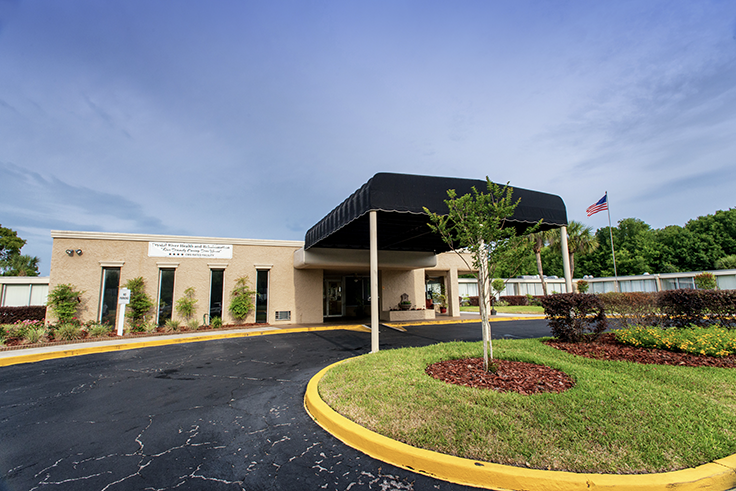
136 NORTHEAST 12TH AVENUE, CRYSTAL RIVER, FL 34429 (352) 795-5044
For profit - Limited Liability company 150 Beds NHS MANAGEMENT Data: November 2025
Trust Grade
65/100
#201 of 690 in FL
Last Inspection: October 2024

Within standard 12-15 month inspection cycle. Federal law requires annual inspections.

Overview

Crystal River Health and Rehabilitation Center has a Trust Grade of C+, indicating it is slightly above average but not without its issues. It ranks #201 out of 690 facilities in Florida, placing it in the top half, and #5 out of 9 in Citrus County, meaning there are only four local options that are rated higher. The facility is showing improvement, as the number of reported issues decreased from 9 in 2023 to 7 in 2024. Staffing is rated 4 out of 5 stars, but the turnover rate of 56% is concerning, as it exceeds the Florida average of 42%. While there have been no fines reported, which is a positive sign, there have been serious concerns noted, including failures to report allegations of abuse involving three residents and improper medication storage practices. Families should weigh these strengths and weaknesses when considering this facility for their loved ones.

Trust Score
C+
65/100
In Florida
#201/690
Top 29%
Safety Record
Low Risk
No red flags
Inspections
Getting Better
9 → 7 violations
Staff Stability
⚠ Watch
56% turnover. Above average. Higher turnover means staff may not know residents' routines.
Penalties
✓ Good
No fines on record. Clean compliance history, better than most Florida facilities.
Skilled Nurses
○ Average
Each resident gets 34 minutes of Registered Nurse (RN) attention daily — about average for Florida. RNs are the most trained staff who monitor for health changes.
Violations
⚠ Watch
22 deficiencies on record. Higher than average. Multiple issues found across inspections.
★★★★☆
4.0
Overall Rating
★★★★☆
4.0
Staff Levels
★★★★★
5.0
Care Quality
★★★☆☆
3.0
Inspection Score
Stable
2023: 9 issues
2024: 7 issues

The Good

  • 4-Star Staffing Rating · Above-average nurse staffing levels
  • 5-Star Quality Measures · Strong clinical quality outcomes
  • Full Sprinkler Coverage · Fire safety systems throughout facility
  • No fines on record

Facility shows strength in staffing levels, quality measures, fire safety.

The Bad

Staff Turnover: 56%

Near Florida avg (46%)

Frequent staff changes - ask about care continuity

Chain: NHS MANAGEMENT

Part of a multi-facility chain

Ask about local staffing decisions and management

Staff turnover is elevated (56%)

8 points above Florida average of 48%

The Ugly 22 deficiencies on record

Oct 2024 7 deficiencies
CONCERN (D)

Potential for Harm - no one hurt, but risky conditions existed

Assessment Accuracy (Tag F0641)

Could have caused harm · This affected 1 resident

**NOTE- TERMS IN BRACKETS HAVE BEEN EDITED TO PROTECT CONFIDENTIALITY** Based on interview and record reviews, the facility failed to ensure the Minimum Data Set (MDS) assessment accurately reflected ...

Read full inspector narrative →
**NOTE- TERMS IN BRACKETS HAVE BEEN EDITED TO PROTECT CONFIDENTIALITY** Based on interview and record reviews, the facility failed to ensure the Minimum Data Set (MDS) assessment accurately reflected the resident's status for 1 (Resident #54) of 3 residents reviewed for skin conditions. Findings include: Review of Resident #54's resident face sheet showed Resident #54 was first admitted on [DATE] with diagnoses that included chronic venous hypertension with ulcer and inflammation to right and left lower extremity. Review of Resident #54's wound assessment report dated 8/24/2024, documented a venous ulcer identified on 5/22/2024 with an unchanged status and a note that read, Wound IDT [interdisciplinary team] note. Resident has open areas to lower extremities that is unchanged. The measurements for left lower leg are 4.0 x 4.0 x 1.0 CM [centimeters] with scant serous drainage. Review of Resident #54's physician order dated 8/28/2024, read, Left lower leg open areas. Cleanse wound with N/S (normal saline), pat dry with 4x4 gauze, apply Dressing Wound Silicone to wound bed, apply Calcium Alginate with Silver, cover with ABD (abdominal) pads, wrap with rolled gauze . Review of Resident #54's physician order dated 8/28/2024, read Right lower leg open areas. Cleanse wound with N/S, pat dry with 4x4 gauze, apply Dressing Wound Silicone to wound bed, apply Calcium Alginate with Silver, cover with ABD pads, wrap with rolled gauze . Review of Resident #54's Quarterly MDS dated [DATE] documented no venous or arterial wounds were present. During an interview on 10/23/2024 at 8:30 AM, Staff E, MDS License Practical Nurse, stated I overlooked the wound assessment done by the nurse here in the facility and was guiding myself by the hospital documentation. Review of the policy and procedure titled Resident Assessment Instrument (RAI), last review date of 1/9/2024 read, Purpose: Residents are assessed, using a comprehensive assessment process, in order to identify care needs and to develop a plan of care. Standards: According to federal regulations, the facility conducts initially and periodically a comprehensive, accurate and standardized assessment of each resident's functional capacity, using the RAI specified by the state.
CONCERN (D)

Potential for Harm - no one hurt, but risky conditions existed

Deficiency F0645 (Tag F0645)

Could have caused harm · This affected 1 resident

Based on interview and record reviews, the facility failed to ensure 2 of 7 residents, (Resident #83 and Resident #107) reviewed for Preadmission Screening and Resident Review (PASRR) documented all d...

Read full inspector narrative →
Based on interview and record reviews, the facility failed to ensure 2 of 7 residents, (Resident #83 and Resident #107) reviewed for Preadmission Screening and Resident Review (PASRR) documented all diagnoses relevant to the screening. Findings include: 1. Review of Resident #83's Level I PASRR screening, dated 7/17/2023, showed no entries documented on page 2 in Section I: PASRR Screen Decision-Making under Section A. MI [Mental Illness] or suspected MI. Review of Resident #83's face sheet, admission date 9/14/2024, revealed Resident #83 had diagnoses that included generalized anxiety disorder, brief psychotic disorder and other specified persistent mood disorders. 2. Review of Resident #107's Level I PASRR screening, dated 8/18/2024, showed schizophrenia documented on page 2 in Section I: PASRR Screen Decision-Making under Section A. MI [Mental Illness] or suspected MI. Review of Resident #107's face sheet, admission date 6/30/2024, revealed diagnoses that included other specified anxiety disorders. During an interview on 10/24/2024 at 7:48 AM, the Director of Nursing confirmed Resident #83's diagnoses of generalized anxiety disorder, brief psychotic disorder and other specified persistent mood disorders had not been included on his Level I PASRR screening dated 7/17/2023. She confirmed Resident #107's diagnoses of other specified anxiety disorders had been included on her Level I PASRR screening dated 8/18/2024.
CONCERN (D)

Potential for Harm - no one hurt, but risky conditions existed

Quality of Care (Tag F0684)

Could have caused harm · This affected 1 resident

Based on observations, interviews, and record reviews, the facility failed to ensure residents received treatment and care in accordance with professional standards of practice for 1 (Resident #10) of...

Read full inspector narrative →
Based on observations, interviews, and record reviews, the facility failed to ensure residents received treatment and care in accordance with professional standards of practice for 1 (Resident #10) of 3 residents reviewed for skin conditions. Findings include: During an observation on 10/21/2024 at 9:59 AM, Resident #10 was sitting in a chair in her room. There was a pink gentle border foam dressing dated 10/19/2024 on Resident #10's right lower leg. (photographic evidence obtained) During an interview on 10/21/2024 at 9:59 AM, Resident #10 stated I got a skin tear when we went for the storm. During an observation on 10/22/2024 at 7:50 AM, Resident #10 was sitting in a chair in her room. There was a pink gentle border foam dressing dated 10/19/2024 on Resident #10's right lower leg. Review of Resident #10's physician order, dated 10/14/2024, read, Skin tear site___Change dressing___Cleanse W(with)/___Apply___Cover W/___ Observe Area Daily. Frequency: Once a day. Special Instructions: Remove old dressing, cleanse wound with NS (normal saline) and cover with medipore dressing. During an interview on 10/22/2024 at 1:30 PM, Staff C, License Practical Nurse, (LPN), stated I changed [Resident #10's Name] dressing today. The old dressing was dated 10/19. I believe [Resident #10's Name] has wound care orders for daily dressing changes. During an interview on 10/22/2024 at 1:11 PM, Staff D, Wound Care Nurse, stated, As soon as my day starts, I let the nurses know what I will be doing as to wound care. I usually do the big wounds, and they [nurses] will do the rest. Some days I help and do them all. During an interview on 10/23/2024 at 10:26 AM, the Director of Nursing, (DON), stated, My expectation is for the nurse assigned to the resident with daily wound care orders would be completing that [wound care] daily and signing off on it. Review of the policy and procedure titled Dressing-Clean, last review date of 1/9/2024, read Purpose: To provide guidelines for the care of wounds and soiled dressings, to decrease the potential for nosocomial infection. Each wound site should be treated individually. Standard: Physician's orders should specify type of wound, frequency of change, type of dressing or products to be used.
CONCERN (D)

Potential for Harm - no one hurt, but risky conditions existed

Deficiency F0761 (Tag F0761)

Could have caused harm · This affected 1 resident

Based on observations, interviews, and record reviews, the facility failed to ensure drugs and biologicals were stored in a secured manner for 2 of 3 halls. Findings include: 1. During an observation...

Read full inspector narrative →
Based on observations, interviews, and record reviews, the facility failed to ensure drugs and biologicals were stored in a secured manner for 2 of 3 halls. Findings include: 1. During an observation on 10/21/2024 at 09:30 AM of Resident #243's room, one bottle of nasal spray (Oxymetazoline HCI 0.05% nasal decongestant), and 1 bottle of 4% lidocaine was sitting on bedside table not secured. (Photographic Evidence Obtained) During an interview on 10/21/2024 at 11:30 AM, Resident #243 stated, I usually have my nasal spray and my [Name Brand of 4% lidocaine] all the time because I need it so often. During an observation on 10/22/2024 at 1:20 PM of Resident #243's room, one bottle of nasal spray (Oxymetazoline HCI 0.05% nasal decongestant), and 1 bottle of 4% lidocaine was sitting on bedside table not secured. During an observation on 10/23/2024 at 7:57 AM with Staff F, License Practical Nurse (LPN) acknowledged the one bottle of nasal spray (Oxymetazoline HCI 0.05% nasal decongestant), and 1 bottle of 4% lidocaine was sitting on Resident #243's bedside table not secured. During an interview on 10/23/2024 at 7:57 AM, Staff F, LPN, stated Medications are not supposed to be at the bedside unless the resident has been accessed for self-administration and the medication still needs to be secured. During an interview on 10/24/2024 at 8:12 AM, the Director of Nursing stated, Per our policy, patients are not to have medication in their room unless they have been assessed for self-administration and the physician writes an order for self-administration. 2. During an observation on 10/23/2024 at 8:20 AM, Resident #61 was eating breakfast in his room. On his meal tray there was a medication cup with a thick brown liquid inside another plastic cup. (photographic evidence obtained) During an interview on 10/23/2024 at 8:20 AM, Resident #61 stated, That is medication. The nurse will bring it to me, and I drink it after breakfast. I will not drink that [brown liquid in medication cup] today. During an interview on 10/24/2024 at 8:12 AM with the Director of Nursing stated, Medication should not be left at bedside. Nurse should take the medication with her and bring it back when resident is able to take it, and she is able to watch the resident take the medication. During an interview on 10/23/2024 at 8:25 AM with Staff C, LPN stated, There is medication in his room. If I wait for him [Resident #61] to take his medication he will start cursing me out. I try not to push. He likes to take his medication after breakfast. I will go back and check on him after breakfast. Review of the facility policy and procedure titled, Storage and Expiration of Medications, Biologicals, Syringes and Needles, last review date of 1/9/2024 read, 13. Bedside Medication Storage: 13.1 Facility should not administer/provide bedside medications or biologicals without a physician/prescriber order and approval by the Interdisciplinary Care Team and Facility Administration. 13.2 Facility should store bedside medications or biologicals in a locked compartment within the resident's room.
CONCERN (D)

Potential for Harm - no one hurt, but risky conditions existed

Medical Records (Tag F0842)

Could have caused harm · This affected 1 resident

Based on observations, interviews, and record reviews, the facility failed to accurately document wound care dressing changes for 1 (Resident #10) of 3 residents reviewed for skin conditions. Finding...

Read full inspector narrative →
Based on observations, interviews, and record reviews, the facility failed to accurately document wound care dressing changes for 1 (Resident #10) of 3 residents reviewed for skin conditions. Findings include: During an observation on 10/21/2024 at 9:59 AM, Resident #10 was sitting in a chair in her room. There was a pink gentle border foam dressing dated 10/19/2024 on Resident #10's right lower leg. (photographic evidence obtained) During an interview on 10/21/2024 at 9:59 AM, Resident #10 stated, I got a skin tear when we went for the storm. During an observation on 10/22/2024 at 7:50 AM, Resident #10 was sitting in a chair in her room. There was a pink gentle border foam dressing dated 10/19/2024 on Resident #10's right lower leg. Review of Resident #10's physician order, dated 10/14/2024, read, Skin tear site___Change dressing___Cleanse W(with)/___Apply___Cover W/___ Observe Area Daily. Frequency: Once a day. Special Instructions: Remove old dressing, cleanse wound with NS (normal saline) and cover with medipore dressing. Review of Resident #10's treatment administration history for the month of October 2024 for Skin tear site___Change dressing___Cleanse W(with)/___Apply___Cover W/___ Observe Area Daily. Frequency: Once a day. Special Instructions: Remove old dressing, cleanse wound with NS (normal saline) and cover with medipore dressing documented staff initials as treatment being done on 10/20/2024 and 10/21/2024. During an interview on 10/22/2024 at 1:30 PM, Staff C, License Practical Nurse, (LPN) stated I changed Resident #10's dressing today. The old dressing was dated 10/19. I believe Resident #10 has wound care orders for daily dressing changes. During an interview on 10/23/2024 at 10:26 AM, the Director of Nursing (DON) stated, My expectation is for the nurse assigned to the resident with daily wound care orders would be completing that [wound care] daily and signing off on it. Staff should document when they are completing the task and if they are not able to complete the dressing change, document and readdress. The documentation should be accurate. During an interview on 10/24/2024 at 7:45 AM, the DON stated, The nurses did not document accurately the dressing changes [for 10/20/2024 and 10/21/2024]. Review of the policy and procedure titled, Charting and Documentation Guidelines, last reviewed 1/9/2024, read, Purpose: Documentation in medical records of residents, by the interdisciplinary team, should provide: A source to support charges to the resident for services rendered. Process: I. Rules for Charting and Documentation: b) Be concise, accurate and complete and use objective terms. c) Document only the facts .
CONCERN (D)

Potential for Harm - no one hurt, but risky conditions existed

Infection Control (Tag F0880)

Could have caused harm · This affected 1 resident

Based on observations, interviews and record reviews, the facility failed to perform hand hygiene during wound care for 1 (Resident #10) of 3 residents reviewed for skin conditions and during meal del...

Read full inspector narrative →
Based on observations, interviews and record reviews, the facility failed to perform hand hygiene during wound care for 1 (Resident #10) of 3 residents reviewed for skin conditions and during meal delivery. Findings include: 1. During an observation on 10/21/2024 at 1:24 PM, Staff A, Certified Nursing Assistant (CNA), entered Resident #22's room and placed a meal tray on the bedside table. Staff B, CNA, was in the room and assisted Staff A to readjust Resident #22 in his bed to set him up for lunch. Staff A, CNA, exited Resident #22's room and without performing hand hygiene removed another tray from the meal cart and entered Resident #72's room without performing hand hygiene. Staff A, CNA, started to feed Resident #72. During an interview on 10/22/2024 at 1:32 PM, Staff A, CNA, stated I should have used hand sanitizer in between residents when passing out meal trays. 2. During an observation on 10/22/2024 at 1:20 PM, Staff C, License Practical Nurse (LPN), came to Resident #10's doorway and Staff D, Wound Care Nurse, asked Staff C to come in and explain to Resident #10 she needed to change her dressing. Staff C stated to Staff D she was texting a provider and would come in. Staff C finished texting with a cellular phone and put it away in her pocket. Staff C, without performing hand hygiene, donned a pair of gloves and removed the dressing on Resident #10's right lower leg. Staff C, without performing hand hygiene, proceeded to place a new dressing on Resident #10's lower leg. During an interview on 10/22/2024 at 1:30 PM, Staff C, LPN, stated I should have washed my hands before putting on the gloves. During an interview on 10/23/2024 at 9:20 AM, the Infection Control Preventionist stated Staff should perform hand hygiene upon entering a resident's room and of course in between clean and dirty bandages. Gloves don't substitute hand hygiene. Staff should perform hand hygiene always before entering and upon exiting a room during meal delivery. During an interview on 10/23/2024 at 10:29 AM, the Director of Nursing (DON) stated Staff are expected to wash hands in between each resident encounter. The staff should wash their hands before donning gloves. Putting on gloves does not substitute hand hygiene. Review of the policy and procedure titled Hand Hygiene, with a last review date of 1/9/2024, read, Purpose: To provide guidelines to employees for proper and appropriate hand washing techniques that will aide in the prevention of the transmission of infections. Process: III. Hand Hygiene. Hand Hygiene continues to be the primary means of preventing the transmission of infection. The following is a list of some situations that require hand hygiene. When hands are visibly soiled (hand washing with soap and water); before and after direct resident/guest contact (for which hand hygiene is indicated by acceptable professional practice. Before and after direct resident/guest contact. Before and after assisting a resident/guest with meals. Before and after changing a dressing. Review of the policy and procedure titled Dressing-Clean, with a last review date of 1/9/2024 read, Purpose: To provide guidelines for the care of wounds and soiled dressings, to decrease the potential for nosocomial infection. Each wound site should be treated individually. Standard: Physician's orders should specify type of wound, frequency of change, type of dressing or products to be used. Process: 5. Wash hands and put on clean gloves. 6. Loosen the tape and remove the existing dressing, moisten with prescribed cleansing solution if needed to remove dressing. 7. Pull your glove off the hand and over the dressing; discard into appropriate receptacle. 8. Wash hands and put on clean gloves.
CONCERN (E)

Potential for Harm - no one hurt, but risky conditions existed

Food Safety (Tag F0812)

Could have caused harm · This affected multiple residents

**NOTE- TERMS IN BRACKETS HAVE BEEN EDITED TO PROTECT CONFIDENTIALITY** Based on observations, interviews, and record reviews, the facility failed to ensure food was safely stored, covered, labeled, o...

Read full inspector narrative →
**NOTE- TERMS IN BRACKETS HAVE BEEN EDITED TO PROTECT CONFIDENTIALITY** Based on observations, interviews, and record reviews, the facility failed to ensure food was safely stored, covered, labeled, or discarded in the areas of the kitchen's walk-in cooler, walk- in freezer, and in 2 of 3 nutrition rooms and appliances for preparing food were kept in a clean, sanitary manner in 1 of 3 nutrition rooms. Findings include: On 10/21/2024 at 9:15 AM, a tour of the main kitchen was conducted with the Certified Dietary Manager (CDM). During an observation of the walk-in cooler, there was 1 opened, undated, container of potato salad, 1 opened, undated container of ricotta cheese, and 1 opened container of sour cream with an expiration date of 10/18/24. There was three 1-inch-deep trays of unlabeled, undated vegetables sitting on the 3rd shelf. In the walk-in freezer there were 3 frozen pizzas with no opened, use by, or expiration date sitting on top of a box located on the top shelf. (Photographic evidence obtained) During an interview on 10/21/2024 at 9:30 AM, the CDM confirmed the unlabeled, undated foods, and stated, Those should be labeled and dated. On 10/21/2024 at 9:40 AM, a tour of the nutrition rooms was conducted with the CDM. In nutrition room [ROOM NUMBER], located on the south wing, there were three (3) opened, unlabeled, bottles of purple sport hydration drink sitting in the side shelf of the refrigerator door. There were two (2) unlabeled, undated, take-out sandwich bags with a 1/2 eaten sandwich wrapped in a paper towel in the bottom left drawer of the refrigerator. There was an unlabeled, undated, grocery store bag with a 1/2 lb. container of chicken salad, a plastic bag of pistachio nuts, and a plastic bag with homemade cookies. The microwave had a brown sticky-like substance on the door and the top of the microwave and there was also red splattered particles on the back wall of the microwave. In nutrition room [ROOM NUMBER], located on the west wing, there was one (1) opened, unlabeled, undated pint of cookie dough ice-cream, an opened, unlabeled, undated bag of frozen vegetables, and one (1) unlabeled frozen dinner meal sitting in the freezer's door shelf. During an interview on 10/21/2024 beginning at 10:00 AM, the CDM confirmed the unlabeled, undated items in the refrigerators in both nutrition rooms. The CDM stated, All foods should have the resident's name, room number, and the date it was brought in. The kitchen staff along with the nurses are responsible for keeping the nutrition rooms cleaned. Review of the policy titled, Food Preparation Guideline, last reviewed 1/9/2024, read, Process: d. Frozen foods should be properly thawed .Frozen fruits and vegetables should NOT be thawed before cooking. Allow extra time for preparation of these frozen products. Review of the policy titled, Food from Families and Friends, last reviewed 1/9/2024, read Purpose: To preserve the resident/guest(s) right to receive gifts of food from family and friends, while reducing the potential for food borne illnesses. Process: b. If food is to be stored, it should be labeled with resident/guest(s) name, dated and stored in airtight container. c. If refrigeration is necessary, food items should be stored in the nursing unit refrigerator or resident/guest(s) room refrigerator, and leftover cooked items discarded after 3 days, open items discarded after 7 days. A policy and procedure was requested for food storage in the kitchen related to unlabeled and undated foods. None was provided.
Jun 2023 9 deficiencies
CONCERN (D)

Potential for Harm - no one hurt, but risky conditions existed

Deficiency F0578 (Tag F0578)

Could have caused harm · This affected 1 resident

**NOTE- TERMS IN BRACKETS HAVE BEEN EDITED TO PROTECT CONFIDENTIALITY** Based on record review and interview, the facility failed to formulate advance directives for 1 of 3 residents, Resident #110, r...

Read full inspector narrative →
**NOTE- TERMS IN BRACKETS HAVE BEEN EDITED TO PROTECT CONFIDENTIALITY** Based on record review and interview, the facility failed to formulate advance directives for 1 of 3 residents, Resident #110, reviewed for advance directives. Findings include: Review of Resident #110's admission record documented the resident was admitted on [DATE] with diagnosis to include encephalopathy, manic episodes, and general anxiety disorder. Review of Resident #110's Advance Directive Acknowledgement, dated [DATE], documented Advance Directives not in existence. Review of a progress notes for Resident #110 located in the hard chart for the resident under the advance directive tab it documented dated [DATE] Code Status: DNR [do not resuscitate] and dated [DATE] documented Code status: DNR. Review of Departmental Notes dated [DATE] at 10:39 AM for Resident #110 it read, Role: MDS [Minimum Data Set] Coordinator. Category: Nurse - Notes. Summary of event on [DATE]: Daughter approached me on [DATE] that her dad had chest pain because her assigned nurse was out on break. [Resident #110's name] was not able to verbalized to me if he had chest pain or not but her daughter said that her dad behaved when he has pain. As I prepared the paperwork to send him out and called EMS [Emergency Medical Services] for his depart to hospital, I noticed he is DNR and I did not have the yellow copy nor an order from the physician relating he is DNR. I explained to her if his dad heart stops we will have to proceed with CPR. During an interview on [DATE] at 8:45 AM the Director of Nursing stated, The facility policy is for the nurses to go to the hard chart and see the actual DNR form and physician orders. During an interview on [DATE] at 10:50 AM, the MDS Director stated, I did a progress note today of an event that happened on [DATE] where we had to send [Resident #110's name] to the hospital and saw he was a DNR and I told the daughter since I did not have the paper he would be full code and she understood. Review of the policy and procedure titled Advance Directives and Refusal of Treatment last reviewed on [DATE], documented, The resident will be given information and the opportunity to formulate Advance Directives-including, but not limited to, living will and/or designation of a Health Care Surrogate. VII Documentation: When a DNR order is decided upon, The DNR order must be entered in the resident's medical records. F. DNR orders should be reviewed by the physician at least once every thirty days during a resident's first 90 days of admission, and at least once every sixty days thereafter.
CONCERN (D)

Potential for Harm - no one hurt, but risky conditions existed

Notification of Changes (Tag F0580)

Could have caused harm · This affected 1 resident

**NOTE- TERMS IN BRACKETS HAVE BEEN EDITED TO PROTECT CONFIDENTIALITY** Based on record review and interview, the facility failed to ensure the physician was notified of a resident change of condition...

Read full inspector narrative →
**NOTE- TERMS IN BRACKETS HAVE BEEN EDITED TO PROTECT CONFIDENTIALITY** Based on record review and interview, the facility failed to ensure the physician was notified of a resident change of condition for 1 of 3 residents, Resident #320, reviewed for insulin administration and monitoring. Findings include: Review of Resident #320's admission record documented the resident was admitted on [DATE] with diagnoses that included type 2 diabetes mellitus with hyperglycemia, long term use of insulin, unspecified mood disorder, and exocrine pancreatic insufficiency. Review of Resident #320's physician order, dated 12/15/2022, read, documented, CBG [capillary blood glucose] AM & HS [morning and hour of sleep]; Notify MD [Medical Doctor] immediately if greater than 400 give 12 units and call MD. Review of Resident #320's Medication Administration Record (MAR) documentation on 02/1/2023 at 9:00 PM blood glucose level as 436 and on 02/24/2023 at 4:00 PM blood glucose level as 435. Review of Resident #320's medical record contained no documentation of the physician being notified of the resident's blood sugar being greater than 400 as ordered by the physician. During an interview on 6/22/2023 at 2:23 PM, the Director of Nursing (DON) stated, I was unable to find documentation for the notification to the MD of the blood sugar levels. I would have expected to find documentation for the 02/19/2023 and the 2/24/2023 levels. During an interview on 6/23/2023 at 10:14 AM the DON stated, Staff should contact the physician as stated in the order. Review of policy and procedures titled Change in Medical Condition of Resident/Guest(s) last reviewed on 1/10/2023 read, Purpose: To keep the physician, who is in charge of medical care, and family members/legal representatives, responsible for health care decisions and other resident/guest representative informed of the resident/guest(s) medical condition so they may direct the plan of care as needed.
CONCERN (D)

Potential for Harm - no one hurt, but risky conditions existed

Assessment Accuracy (Tag F0641)

Could have caused harm · This affected 1 resident

**NOTE- TERMS IN BRACKETS HAVE BEEN EDITED TO PROTECT CONFIDENTIALITY** Based on record review and interview, the facility failed to accurately document the discharge status of 1 of 3 residents, Resid...

Read full inspector narrative →
**NOTE- TERMS IN BRACKETS HAVE BEEN EDITED TO PROTECT CONFIDENTIALITY** Based on record review and interview, the facility failed to accurately document the discharge status of 1 of 3 residents, Resident #118, sampled for discharge status review. Findings include: Record review of the medical record for Resident #118 documented the resident was admitted on [DATE] and was discharged from the facility on 04/26/23. Review of Resident #118's Minimum Data Set (MDS) Discharge Return Not Anticipated Assessment, dated 04/27/23, under Section A read the resident was discharged to an acute hospital on [DATE]. Review of Resident #118's nursing note dated 04/26/23 at 9:38 AM read, Patient discharge from [NAME] River Health and Rehabilitation Center in stable condition with no respiration distress noted. Dated 04/26/23 at 9:40 AM read, Resident discharged to private home with home health services. During an interview on 06/21/23 at 12:37 PM, the Minimum Data Set (MDS) Coordinator reviewed the record and verified Resident #118 was discharged home and the MDS dated [DATE] documenting discharge to an acute hospital was inaccurate.
CONCERN (D)

Potential for Harm - no one hurt, but risky conditions existed

Comprehensive Care Plan (Tag F0656)

Could have caused harm · This affected 1 resident

Based on observation, interview, and record review, the facility failed to ensure the implementation of the comprehensive person-centered care plan for 2 of 7 residents, Residents #319 and #57, sample...

Read full inspector narrative →
Based on observation, interview, and record review, the facility failed to ensure the implementation of the comprehensive person-centered care plan for 2 of 7 residents, Residents #319 and #57, sampled for care plans. Finding include: 1) During an observation on 06/20/23 at 10:00 AM, Resident #319 was lying in bed. There was no floor mat on the right side of the bed. During an observation on 6/21/2023 at 8:00 AM, Resident #319 was lying bed with eyes closed. There was no floor mat observed to the right side of the bed. During an observation on 6/22/2023 at 7:40 AM, Resident #319 was lying in bed. There was no floor mat observed to the right side of the bed. During an observation on 6/22/2023 at 12:09 PM, Resident #319 was sitting on the floor next to the right side of the bed very agitated and confused. His bed was placed in the lowest position. Staff I, Unit Manager, entered the room with Staff H, Certified Nursing Assistant (CNA), and assessed Resident #319. There was no floor mat placed on the right side of the bed. During an interview on 6/22/2023 at 12:16 PM, Staff I, LPN/Unit Manager, stated, [Resident #319's name] has no floor mat in the right side of [his] bed, he is care planned for floor mats to [be] placed on both sides of the bed. Review of Resident #319's care plan, start date 10/10/2022, documented, I don't want to fall x [times] 90 days. Interventions: 8. 10/21/2022 Mats to be placed along side bed when resident is occupying bed. During an interview on 6/23/2023 at 10:12 AM, the Director of Nursing stated, I expect staff to follow the care plan interventions or resolve the intervention if the approach is not working. 2) Record review of Resident #57's care plan, start date 6/7/2021 documented Resident #57 has a potential for weight loss. Resident #57's care plan documented nutritional interventions to include chopped meats. On 6/20/23 at 12:57 PM, an observation of Resident #57's midday meal was completed. The observation revealed Resident #57 had been served a whole fish filet patty. The fish filet patty was not served in a chopped consistency. The fish filet patty was missing one bite from the corner. During an interview on 6/20/2023 beginning at 12:57 PM, Resident #57 stated she only had upper dentures because her lower dentures were out for adjustment and she could not eat the rest of her food. She stated the fish filet patty was too hard for her to eat. On 6/21/23 at 7:54 AM, an observation of Resident #57's morning meal was completed. The observation revealed Resident #57 had been served a whole sausage patty. The sausage patty was not served in a chopped consistency. None of the sausage patty had been eaten. On 6/21/23 at 8:35 AM, Resident #57 was dressed, seated on the side of her bed beginning to eat her meal. The sausage patty remained in the whole form as it was served to Resident #57. During an interview on 6/22/2023 at 12:05 PM, the Speech Therapist stated that she had recommended chopped meats for Resident #57 because Resident #57 takes huge bites and does not chew well. She stated that the facility encouraged Resident #57 to be safer with foods and that Resident #57 will wear her top dentures but will not wear her bottom dentures. During an interview on 6/23/2023 at 8:19 AM, the Certified Dietary Manager agreed Resident #57 was supposed to receive meat that was chopped into bite sized pieces to prevent choking. Record review of the policy titled Food Preparation Guidelines, last reviewed 1/10/23, read e. Food should be cut, chopped, pureed or ground to meet the individual needs of the resident/guest(s).
CONCERN (D)

Potential for Harm - no one hurt, but risky conditions existed

Deficiency F0692 (Tag F0692)

Could have caused harm · This affected 1 resident

Based on observation, interview and record review, the facility failed to provide a therapeutic diet intervention as recommended by the Occupational Therapist and ordered by the physician for 1 reside...

Read full inspector narrative →
Based on observation, interview and record review, the facility failed to provide a therapeutic diet intervention as recommended by the Occupational Therapist and ordered by the physician for 1 resident, Resident #57, of 5 residents reviewed for nutrition. Finding include: Record review of Resident #57's physician's orders, dated June 2023, showed Resident #57 was ordered to receive a regular diet, no added salt, chopped [meats]. Record review of Resident #57's speech therapy discharge summary, dates of service 11/23/2022 - 12/7/2022, showed the occupational therapy discharge recommendations included soft and bite sized foods for the resident to swallow solids safely. On 6/20/23 at 12:57 PM, an observation of Resident #57's midday meal was completed. The observation revealed Resident #57 had been served a whole fish filet patty. The fish filet patty was not served in a chopped consistency. The fish filet patty was missing one bite from a corner. During an interview on 6/20/2023 beginning at 12:57 PM, Resident #57 stated she only had upper dentures because her lower dentures were out for adjustment and she could not eat the rest of her food. She stated the fish filet patty was too hard for her to eat. On 6/21/23 at 7:54 AM, an observation of Resident #57's morning meal was completed. The observation revealed Resident #57 had been served a whole sausage patty. The sausage patty was not served in a chopped consistency. None of the sausage patty had been eaten. On 6/21/23 at 8:35 AM, Resident #57 was dressed and seated on the side of her bed beginning to eat her meal. The sausage patty remained in the whole form as it was served to Resident #57. During an interview on 6/22/2023 at 12:05 PM, the Speech Therapist stated she had recommended chopped meats for Resident #57 because Resident #57 takes huge bites and does not chew well. She stated the facility encouraged Resident #57 to be safer with foods and that Resident #57 will wear her top dentures but will not wear her bottom dentures. During an interview on 6/23/2023 at 8:19 AM, the Certified Dietary Manager verified Resident #57 was supposed to receive meat that was chopped into bite sized pieces to prevent choking. Review of the policy titled Food Preparation Guidelines, last reviewed 1/10/2023, read, e. Food should be cut, chopped, pureed or ground to meet the individual needs of the resident/guest(s).
CONCERN (D)

Potential for Harm - no one hurt, but risky conditions existed

Infection Control (Tag F0880)

Could have caused harm · This affected 1 resident

Based on observation, interview, and record review, the facility failed to prevent the possible spread of infection during medication administration and resident care for 1 of 2 residents, Resident #3...

Read full inspector narrative →
Based on observation, interview, and record review, the facility failed to prevent the possible spread of infection during medication administration and resident care for 1 of 2 residents, Resident #34 sampled for gastric tubes. Findings include: During an observation on 6/22/2023 at 9:25 AM, Staff C, Licensed Practical Nurse (LPN) brought the medication cart to the back of the [NAME] Unit next to the nursing station. Staff C, without performing hand hygiene, donned gloves and began to pour medications for Resident #34. Staff C without performing hand hygiene entered Resident #34's room. Staff G, Certified Nursing Assistant (CNA) entered the room and without performing hand hygiene assisted Staff C with repositioning Resident #34. Staff C used a washcloth to cleanse Resident #34's face. Staff C removed the gloves and without performing hand hygiene prepared a cup of water for a gastric tube flush that included checking the water temperature with her outer left hand. Staff C entered Resident #34's room with wound care supplies and donned gloves without performing hand hygiene. Staff C's stethoscope fell to the floor. Staff C cleaned the gastronomy insertion area and removed the gloves. Staff C then donned gloves without performing hand hygiene and applied gauze to the gastrostomy insertion site. Staff C picked the stethoscope up from the floor and placed the stethoscope around her neck without sanitizing the stethoscope, then Staff C placed the stethoscope on Resident #34's pillow and donned gloves without performing hand hygiene. Staff C used the stethoscope to auscultate Resident #34's right upper quadrant. Staff C administered medication via the gastric tube and once finished put the syringe away in a plastic bag without rinsing the syringe after use. Staff C removed the gloves and exited Resident #34's room without performing hand hygiene. Staff C returned to the medication cart, without performing hand hygiene, and signed off medications on the computer for Resident #34. Staff C returned to Resident #34's room, did not perform hand hygiene upon entering. Staff C placed a nutritional supplement drink on the bed side table. Staff C performed hand hygiene, donned gloves, and used the stethoscope without sanitizing it, to auscultate Resident #34's right upper abdomen. Staff C, LPN administered Resident #34's feeding via gastric tube and after finishing placed the bolus syringe back into plastic bag without rinsing it. Staff C removed the gloves and exited the room without performing hand hygiene. During an interview on 6/22/2023 at 10:22 AM Staff C, LPN stated, I should have washed my hands or used hand sanitizer since I was providing direct patient care. When the stethoscope fell on the floor, I should have sanitized it before using it. During an interview on 6/22/2023 at 12:49 PM, Director of Nursing (DON) stated, Staff should wash hands before and after, definitely after. Use hand sanitizer or wash hands. When the stethoscope fell on the floor staff should have disinfected the stethoscope. Once the bolus syringe is used staff are expected to rinse the syringe in the resident's restroom. During an interview on 6/22/2023 at 8:27 AM, Staff G, Certified Nursing Assistant (CNA) stated I did forget to wash my hands, but I normally do. Staff C asked me to assist, and I forgot. Review of the policy and procedure titled Cleaning IC [Infection Control] for Equipment, last reviewed 1/10/2023 read 2. Implement infection control cleaning of equipment. C. All non-dedicated, non-disposable medical equipment used for patient care should be cleaned and disinfected according to manufacturer's instructions and at IC nurse's instructions. Review of the policy and procedure titled Hand Hygiene last reviewed 1/10/2023 read, Standard: Hand washing should be performed between procedures with resident/guest(s) based upon the principle that all blood, body fluids, secretions, excretions (except sweat), non-intact skin, and mucus membranes may contain transmissible infectious agents. II. Hand Sanitizer: If hands are not visibly soiled, use an alcohol-based hand sanitizer for routinely decontaminating hands in all clinical situations other than those listed under Handwashing above. III. Hand Hygiene: Hand hygiene continues to be the primary means of preventing the transmission of infection. The following is a list of some situations that require hand hygiene. When hands are visibly soiled (Hand washing with soap and water); before and after direct resident/guest contact (for which hand hygiene is indicated by acceptable professional practice). Before or after changing a dressing. Upon and after coming in contact with a resident/guest(s) intact skin (e.g. when taking a pulse or blood pressure, and lifting a resident/guest(s).
CONCERN (E)

Potential for Harm - no one hurt, but risky conditions existed

Respiratory Care (Tag F0695)

Could have caused harm · This affected multiple residents

Based on observation, interview, and record review, the facility failed to ensure residents received respiratory care services consistent with professional standards for 2 of 3 residents, Residents #9...

Read full inspector narrative →
Based on observation, interview, and record review, the facility failed to ensure residents received respiratory care services consistent with professional standards for 2 of 3 residents, Residents #90 and #105. Findings include: During an observation on 6/20/2023 at 9:31 AM, Resident #90 was lying in bed. Her nebulizer mask was observed sitting on the top of the nebulizer on her nightstand and was not bagged or dated. During an observation on 6/20/2023 at 9:56 AM, Resident #105 was lying in bed. Her nebulizer mask was observed sitting on top of the nebulizer on her nightstand and was not bagged. During an observation on 6/21/2023 at 8:04 AM, Resident #90 was lying in bed. Her nebulizer mask was observed to be on top of the nebulizer and was not bagged or dated. (Photographic evidence obtained) During an observation on 6/21/2023 at 8:16 AM, Resident #105 was lying in bed. Her nebulizer mask was observed to be on her nightstand and was not bagged or dated. Review of the physician's order for Resident #90 dated 6/19/2023 read, Albuterol SUL [sulfate] 2.5 mg/ml soln [milligrams per milliliter solution] one UD [unit dose] inhaled via neb tx [nebulizer treatment] every 6 hours as asa [sic] needed dfro [sic] sob [shortness of breath]/ wheezing. Review of the physician's order for Resident #105 dated 3/6/2023 read, Albuterol SUL 0.63 mg/3 ml soln inhale one UD via nebulizer tx every 4 hours as needed for sob/ wheezing. Review of the care plan for Resident #90, dated 5/21/2023, read Administer nebulizer treatment as directed. Change tubing as ordered. Review of the care plan for Resident #105, dated 3/7/2023, read Administer nebulizer treatments as ordered. Change nebulizer tubing as directed. During an interview on 6/22/2023 at 9:49 AM, Staff A, Registered Nurse (RN), stated, The nebulizer masks are to be bagged and dated. [Resident #90's name] nebulizer mask is not bagged or dated. During an interview on 6/22/2023 at 9:56 AM, Staff A, LPN stated, Nebulizer masks are to be bagged and dated. [Resident #105's name] nebulizer mask is not bagged or dated. During an interview on 6/22/2023 at 10:17 AM, the Director of Nursing stated, My expectation is that all nebulizer masks are to be bagged and dated. Review of the facility policy tilted Nebulizer, last reviewed 1/102023 read, V. After completion of therapy: a) Remove nebulizer container. b) Rinse container with fresh tap water. c) Dry with clen paper towel or gauze sponge. d) Wipe mouth piece or mask with damp paper towel or gauze sponge. e) Store in plastic bag. VI. Documentation should include length of therapy. VII. Discard administration setup every seven (7) days.
CONCERN (E)

Potential for Harm - no one hurt, but risky conditions existed

Deficiency F0761 (Tag F0761)

Could have caused harm · This affected multiple residents

Based on observation, interview, and record review, the facility failed to ensure all drugs were stored and labeled in accordance with currently accepted professional principles and manufacturers' rec...

Read full inspector narrative →
Based on observation, interview, and record review, the facility failed to ensure all drugs were stored and labeled in accordance with currently accepted professional principles and manufacturers' recommendations and under proper temperature in 4 of 6 medication carts and failed to ensure medications were stored in locked compartments to permit only authorized personnel to have access. Findings include: 1) During an observation of the North Wing Back Hall medication cart on 6/20/2023 at 8:58 AM, with Staff D, Registered Nurse (RN) there was one Levemir vial with no open or expiration date and a Novolog vial with an expiration date of 6/5/2023. During an interview on 6/20/2023 at 9:01 AM, Staff D, RN stated, Medication should be labeled with an open and expiration date when the medication is first opened. Expired medications should be disposed and not kept in the medication cart. Review of the manufacturer's recommendations for Detemir injection (Levemir) read, Pen or vial, vial - throw away after 42 days. During an observation of the South Wing Back Hall medication cart on 6/20/2023 at 9:05 AM, with Staff E, License Practical Nurse (LPN) there was an unopened vial of Novolog and one bottle of Timolol eye drops with an expiration date of 5/12/2023. During an interview on 6/20/2023 at 9:09 AM, Staff E, LPN stated, Unopened insulin vials should be kept refrigerated until it is opened. Expired medication should be thrown away and new medication ordered. Review of the manufacturer's recommendations Novolog read, Unused vials of Novolog should be stored under refrigeration between 36 and 46 degree Fahrenheit. During an observation of the South Wing Front Hall medication cart with Staff F, LPN there was one unopened Lantus Solostar insulin pen labeled, Refrigerate till open then room temperature. During an interview on 6/20/2023 at 9:21 AM with Staff F, LPN stated Insulin should be refrigerated until it is opened. Review of the manufacturer's recommendations for Lantus Solostar pen read, Always store UNOPENED Lantus Solostar pens in the refrigerator. During an observation on 6/20/2023 at 9:25 AM of the [NAME] Wing Back Hall medication cart with Staff C, LPN, there was one expired Lispro insulin pen with an opened date of 5/9/2023, one expired Basaglar insulin pen with opened date of 5/13/2023, one expired Novolog insulin pen with an opened date of 5/15/2023, one expired opened bottle of Latanoprost eye drops with an expiration date of 6/4/2023, two opened bottles of Timolol with no opened date and expiration date, and one opened bottle of Brinzolamide eye drops with no opened or expiration date. During an interview on 6/20/2023 at 9:30 AM Staff C, LPN stated Medication should be labeled when first opened with the opened date and expiration date. Medication that is expired should be returned to the pharmacy or disposed of. Review of the manufacturer's recommendations for Lispro insulin pen read, Insulin Lispro: Throw away pen/vials after 28 days of use, even if there is still insulin left. Review of the manufacturer's recommendations for Basaglar read, Store your opened Pen at room temperature up to 86 degrees Fahrenheit and throw it away after 28 days. Review of the manufacturer's recommendations for Novolog insulin pen read, Insulin Name: Novolog. Expiration upon opening or removing from refrigerator: 28 days. Review of the manufacturer's recommendations for Timolol read, Use the timolol eye drops within the expiry date shown on the bottle and within 4 weeks of opening. This will help to lower the risk of eye infections and make sure the eye drops work properly. Review of the manufacturer's recommendations for Brinzolamide read, Use the timolol eye drops within the expiry date shown on the bottle and within 4 weeks of opening. This will help to lower the risk of eye infections and make sure the eye drops work properly. During an interview on 6/22/2023 at 12:50 PM, the Director of Nursing stated, Staff should be labeling medications as per protocol. If the medication is expired, it should be removed from the medication cart. I do not think insulin needs to be refrigerated until it is opened. I think we refrigerate insulin for longer shelf life. 2) During an observation on 6/20/2023 at 10:19 AM, Resident #31 was lying in bed. Several medications were observed in a small cup sitting on resident #31's over the bed table. (Photographic evidence obtained). During an interview with Resident #31 on 6/20/2023 at 10:19 AM stated, My Parkinson's medicine is in that cup and the nurse left it this morning. During an interview with Staff A, Registered Nurse (RN) on 6/22/2023 at 9:52 AM, That is [Resident # 31's name] medications and she should not have that at her bedside. During an interview with the Director of Nursing (DON) on 6/22/2023 at 10:17 AM stated, My expectation is that no medications are to be left at a resident's bedside. Review of policy and procedure titled Storage and Expiration of Medications, Biologicals, Syringes and Needles last reviewed on 1/10/2023 reads, Procedure: 3. General Storage Procedures: 3.3 Facility should ensure that all medications and biologicals, including treatment items, are securely stored in a locked cabinet/cart or locked medication room that is inaccessible by residents and visitors. 4. facility should ensure that medications and biologicals: 4.2 Have not been retained longer than recommended by manufacturer or supplier. 5. Once any medication or biologicals package is opened, Facility should follow manufacturer/supplier guidelines with respect to expiration dates for opened medications. Facility staff should record the date opened on the medication container when the medication has a shortened expiration date once opened. 11. Facility should ensure medications and biologicals are stored at their appropriate temperature according to the United States Pharmacopeia guidelines for temperature ranges. 16. Facility should destroy or return all discontinued, outdated/expired, or deteriorated medications or biologicals in accordance with Pharmacy return/destruction guidelines and other Applicable Law, and in accordance with Policy 8.2 (Disposal/Destruction of Expired or Discontinued Medication). 18. Facility should request that Pharmacy perform a routine nursing unit inspection for each nursing station in Facility to assist Facility in complying with its obligations pursuant to Applicable Law relating to the proper storage labeling, security and accountability of medications and biologicals.
CONCERN (E)

Potential for Harm - no one hurt, but risky conditions existed

Food Safety (Tag F0812)

Could have caused harm · This affected multiple residents

Based on observation, interviews and record review, the facility failed to ensure cleaning of equipment per policy guidelines to maintain sanitary standards of equipment. Findings include: A walk-thr...

Read full inspector narrative →
Based on observation, interviews and record review, the facility failed to ensure cleaning of equipment per policy guidelines to maintain sanitary standards of equipment. Findings include: A walk-through tour of the kitchen was conducted on 6/21/23 at 07:16 AM with the Certified Dietary Manager (CDM). There was a built-up black substance on the interior door of the ice machine. The microwave was observed to have numerous dried food particles inside on the sides, top and base. The robot coupe (chopper/grinder) was observed to have water nesting in the bottom of the base. The mixer was observed to have food particles on the base and bowl of the mixer. The can opener was observed to have a buildup of dried food particles on and around the blade and base of the can opener. (Photographic evidence obtained). An interview was conducted with the CDM on 6/21/23 at 9:20 AM. The CDM verified the presence of a black built-up substance on the interior door of the ice machine, the microwave had numerous food particles on the sides, top and base of the equipment, the mixer was covered, was to be clean and there were food particles on the base and the bowl, the can opener had dried food particles on the blade and base, the robot coupe bowl (chopper/grinder) was clean and should have been inverted to prevent wet-nesting; the robot coupe bowl had water standing in the bottom from being washed and placed back on the base. The CDM stated the dietary department has a cleaning schedule for assigned daily, weekly, monthly, and as needed duties. The CDM confirmed the cleaning schedule was not being followed. Review of the policy and procedure titled Cleaning Schedules with an effective date of 2/1/2022 read, To prevent the spread of bacteria that may cause food borne illnesses. Process: e. The Dietary Manager should supervise adherence to the cleaning schedule, and inspect the kitchen weekly for cleanliness. Review of the policy and procedure titled, Cleaning of Miscellaneous Equipment and Utensils with an effective date of 04/17/214 read, 24. Ice Machine, Dispensers, Chests: (at least monthly) Wash machine, inside and outside, including legs and handle. 27. Meat Grinder/Buffalo Chopper: (after each use) Air dry on clean surface or dry with clean paper towels or cloth to prevent rust. 28. Mixer: (after each use) Take out bowl and beater. Wash in pot and pan sink or dish machine. Thoroughly scrub machine (include motor housing), air dry. 35. Microwave Oven: (daily and as needed) Wash walls inside and out.
Feb 2022 6 deficiencies
CONCERN (D)

Potential for Harm - no one hurt, but risky conditions existed

Respiratory Care (Tag F0695)

Could have caused harm · This affected 1 resident

**NOTE- TERMS IN BRACKETS HAVE BEEN EDITED TO PROTECT CONFIDENTIALITY** Based on observation, interview, and record review, the facility failed to ensure a resident who needed respiratory care service...

Read full inspector narrative →
**NOTE- TERMS IN BRACKETS HAVE BEEN EDITED TO PROTECT CONFIDENTIALITY** Based on observation, interview, and record review, the facility failed to ensure a resident who needed respiratory care services received such care consistent with professional standards of practice for 1 of 3 residents reviewed for oxygen administration, Resident #8, in a total sample of 54 residents. Findings: Review of Resident #8's records revealed the resident was admitted on [DATE] with diagnoses to include Chronic Obstructive Pulmonary Disease (a lung disease that blocks airflow and makes it difficult to breathe), left sided hemiplegia (paralysis on one side of the body), dementia, hypertension (high blood pressure), and major depression. During an observation on 2/6/2022 at 10:43 AM, Resident #8 was receiving oxygen at 4 liters per minute via oxygen concentrator, with the oxygen humidification bottle on the floor. During an observation on 2/7/2022 at 7:55 AM, Resident #8 was receiving oxygen at 4 liters per minute via oxygen concentrator, with the oxygen humidification bottle on the floor. During an observation on 2/7/2022 at 1:52 PM, Resident #8 was receiving oxygen at 4 liters per minute via oxygen concentrator, with the oxygen humidification bottle on the floor. Review of the physician order dated 1/25/2022 for Resident #8 revealed oxygen at 2 liters per minute as needed for shortness of breath. During an interview on 2/7/2022 at 2:12 PM, Staff G, Licensed Practical Nurse (LPN), stated, The oxygen is not supposed to be on 4 liters. She has doctor's orders for 2 liters. I'm not sure why she is on 4 liters. The humidification bottle should not be on the floor and needs to be changed right away. During an interview on 2/7/2022 at 2:45 PM, the Director of Nursing (DON) stated, Oxygen should be administered according to the doctor's orders. I can't believe that the humidification bottle was on the floor. It needs to be in the holder. I expect that the nurses are assessing every shift and making sure that it is being administered according to the doctor's orders.
CONCERN (E)

Potential for Harm - no one hurt, but risky conditions existed

Medical Records (Tag F0842)

Could have caused harm · This affected multiple residents

**NOTE- TERMS IN BRACKETS HAVE BEEN EDITED TO PROTECT CONFIDENTIALITY** Based on record review and interview, the facility failed to maintain accurately documented medical records for 2 of 4 residents...

Read full inspector narrative →
**NOTE- TERMS IN BRACKETS HAVE BEEN EDITED TO PROTECT CONFIDENTIALITY** Based on record review and interview, the facility failed to maintain accurately documented medical records for 2 of 4 residents reviewed for Preadmission Screening and Resident Review (PASRR), Residents #126 and #127, in a total sample of 54 residents. Findings: Review of Resident #127's admission records revealed the resident was admitted on [DATE] with diagnoses to include dementia (a group of symptoms affecting memory, thinking, and social abilities severe enough to interfere with daily life), psychosis (a mental disorder characterized by a disconnection from reality), and major depressive disorder (a mental health disorder characterized by persistently depressed mood or loss of interest in activities, causing significant impairment in daily life). Review of Resident #127's Medical Certification for Medicaid Long-Term Care Services and Patient Transfer Form dated 9/15/2021 reads, E. Medical Condition. Primary Diagnosis: Dementia. Review of Resident #127's Preadmission Screening and Resident Review (PASRR) completed on 9/16/21 revealed depressive disorder was not selected under Section I: PASRR Screen Decision-Making, Subsection A. MI [Mental Illness] or suspected MI, and the question for primary diagnosis of dementia was answered as No in Section II: Other Indications for PASRR Screen Decision-Making, Subsection 5. During an interview on 2/7/2022 at 9:45 AM, the Director of Nursing (DON) stated Resident #127's PASRR was not correct and the answer to the question in Section II-5 should have been checked as Yes. Review of Resident #126's admission records revealed the resident was admitted on [DATE] with diagnoses to include altered mental status (general changes in brain function such as confusion, memory loss, disorientation, defects in judgment or thought, unusual or strange behavior, poor regulation of emotions, and disruptions in perception) and auditory hallucinations (false perceptions of hearing sounds without any real sensory stimuli). Review of Resident #126's Medical Certification for Medicaid Long-Term Care Services and Patient Transfer Form dated 1/27/2022 reads, E. Medical Condition. Primary Diagnosis: Acute Psychosis. Review of Resident #126's hospital records dated 1/24/2022 revealed the resident was brought to the emergency room after wandering the apartment complex and having auditory hallucinations. The resident was evaluated by telemetry psychiatry who recommended the resident be admitted for observation under a [NAME] Act and evaluated by psychiatry and neurology for acute delirium (disturbed consciousness, cognitive function, or perception usually developed over a short period of time). Review of Resident #126's hospital discharge instructions dated 1/27/22 revealed discharge diagnosis of acute psychosis and mania (a psychological condition causing a person to experience unreasonable euphoria, very intense moods, hyperactivity, and delusions). Review of Resident #126's PASRR completed on 1/27/2022 revealed that in Section I: PASRR Screen Decision-Making, Documented History is selected under Finding is based on, and in Section II: Other Indications for PASRR Screen Decision-Making, Subsection 3: Is there an indication that the individual has received recent treatment for a mental illness with an indication that the individual has experienced at least one of the following, No was selected for both A: Psychiatric treatment more intensive than outpatient care (e.g., partial hospitalization or inpatient hospitalization), and B: Due to the mental illness, the individual has experienced an episode of significant disruption to the normal living situation, for which supportive services were required to maintain functioning at home, or in a residential treatment environment, or which resulted in intervention by housing or law enforcement officials. During an interview on 2/8/2022 at 11:45 AM, the DON stated, I usually only have the resident's name and maybe a medication list at the time the PASRR is filled out. I don't know why I checked based on documentation. I usually select the one for individual or family report. The form is filled out prior to admission, usually before I have any information. Review of the facility policy number SS.III-2 titled Pre-admission Screening for Mental Retardation [MR] and Mental Illness [MI] with an effective date of July 15, 2009 and last review date of 1/5/2022 reads, Purpose: To ensure that individuals with mental retardation or mental illness receive the care and services they need, in the most appropriate setting and have medical needs that outweigh their mental needs . Process: - Level I Determinations must be signed and dated by an RN at the admitting nursing facility on or before the date of admission. - The nursing facility is responsible for ensuring that a Level I screening is completed, submitted and has a Level I Determination and/or a Level II if indicated, on or before nursing home admission and regardless of payment source. - Residents identified through the PASRR process as having an MI or MR diagnosis must be assessed by the nursing facility on an ongoing process to identify any significant changes. Those residents identified as having a significant change must have an updated Level I screening within 14 days of the significant change. - The original documents for the Level I and/or Level II determinations will be retained in the medical chart behind the Social Services tab.
CONCERN (F)

Potential for Harm - no one hurt, but risky conditions existed

Report Alleged Abuse (Tag F0609)

Could have caused harm · This affected most or all residents

Based on record review and interview, the facility failed to ensure the allegations of abuse were reported to the State Survey Agency and other officials for 3 of 3 residents reviewed for facility res...

Read full inspector narrative →
Based on record review and interview, the facility failed to ensure the allegations of abuse were reported to the State Survey Agency and other officials for 3 of 3 residents reviewed for facility response to abuse allegations, Residents #10, #59, and #69. Findings: Review of the facility grievances report dated September 2021 revealed Resident #10 had voiced an allegation of verbal abuse that a Certified Nursing Assistant had called him a name. Review of the facility grievances report dated October 2021 revealed Resident #69 had voiced an allegation that he was told to urinate in his brief, and he was not getting water. Review of the facility grievances report dated November 2021 revealed Resident #59's daughter had voiced an allegation that Resident #59 had been locked in the shower and was screaming. During an interview on 2/8/2022 at 9:27 AM, the Social Worker verified that the facility had not reported the allegations of abuse involving Resident #10, Resident #69, and Resident #59. During an interview on 2/8/2022 at 10:22 AM, the Administrator acknowledged the requirement for the incidents involving Resident #10, Resident #69, and Resident #59 to have been reported. During an interview on 2/8/2022 at 11:42 AM, the Social Worker stated Resident #10 had voiced the allegation on 9/23/2021, Resident #69 had voiced the allegation on 10/21/2021, and Resident #59's daughter had voiced the allegation on 11/3/2021. During an interview on 2/10/2022 at 8:30 AM, the Administrator stated he knew that the incidents involving Resident #10, Resident #59, and Resident #69 had occurred and he had signed off on them. He stated, After I reviewed these, we really should have reported them. I'm aware we have an obligation to report. These seemed so subtle, we just didn't realize. But we really should have identified them after the second occurrence and come up with a plan. Review of the facility policy titled Abuse, Neglect, Misappropriation of Resident/Guest Property, Suspicious Injuries of Unknown Source, Exploitation reviewed on 1/5/2022, read, Purpose: This Policy (the Policy) is concerned with all incidents and accidents involving resident/guest(s). The facility will investigate and document all incidents and accidents involving resident/guest(s). Certain incidents and accidents involving residents/guests must also be reported to the appropriate agencies. All of our resident/guest(s) have the right to be free from abuse, neglect, exploitation, and misappropriation of resident/guest property. This includes but is not limited to freedom from corporal punishment, involuntary seclusion, and physical or chemical restraints not required to treat the resident/guest(s) medical symptoms . This policy addresses the acts and occurrences that constitute abuse, neglect, exploitation and misappropriation of resident/guest property and suspicious injuries of unknown source; this includes but is not limited to: freedom from corporal punishment, involuntary seclusion, and physical or chemical restraints not required to treat the resident/guest(s) medical symptoms of any type, by anyone; when such acts and occurrences transpire, it must be reported to agencies and officials outside of the facility; the proper reporting procedures to be used in such instances; training of employees regarding such acts and occurrences and reporting procedures; and the investigation of such acts and occurrences and reporting procedures. The policy also addresses the proper investigation and documentation of incidents and accidents involving resident/guest(s) that are not caused by abuse, exploitation and misappropriation of resident/guest property. For purpose of this Policy, the following terms shall have the following meanings: A. Abuse. The definition of abuse encompasses a broad scope of behavior. Abuse is the willful infliction of injury, unreasonable confinement, intimidation, or punishment with resulting physical harm, pain, or mental anguish. In addition, abuse includes depriving the resident/guest of goods and/or services that are necessary to attain or maintain physical, mental, and psychosocial well-being irrespective of any mental or physical condition. Any act considered abusive towards an alert and oriented resident/guest should also be considered abusive to the cognitively impaired or non-responsive. Willful means the individual must have acted deliberately (not inadvertently or accidentally), not that the individual must have intended to inflict injury or harm. A cognitively impaired resident/guest that intentionally hits another resident/guest, may be considered abusive. The following are definitions of specific types of abuse: 1. Verbal- Verbal abuse is the use of oral, written or gestured communication or sounds that includes disparaging and derogatory terms to resident/guest(s) or their families/representatives, or within their hearing distance, regardless of their ages, abilities to comprehend, or the nature of their disabilities. Examples of verbal abuse could include, but are not limited to: threatening to hurt and saying things to frighten a resident/guest, such as telling a resident/guest that: he/she will never be able to see his/her family again, will take to shower room and leave for hours, will leave a bed all day to soil yourself, if you don't eat fast enough food will be taken away, isolating a resident/guest from social interaction or activities. Using profanity to a resident/guest, blaming the resident/guest for their condition and employee altercations in front of a resident/guest, mocking, insulting, or ridiculing the resident/guest are also examples that could be abuse . VI. Investigations and Facility Response to Incidents or Accidents: a) The facility will report all instances of alleged or suspected abuse, including verbal and mental abuse, neglect, suspicious injuries of unknown origin, exploitation and misappropriation of resident/guest property in the following manner, b) Investigation and Reporting Steps: - Notify the Administrator of any unusual situation in the facility, whether reportable or not immediately. - The Administrator/Designee will report to the State Agency and all other required agencies, per regulations. All allegations of abuse and instances that result in serious bodily injury must be reported within 2 hours.
CONCERN (F)

Potential for Harm - no one hurt, but risky conditions existed

Deficiency F0761 (Tag F0761)

Could have caused harm · This affected most or all residents

Based on observation, interview, and record review, the facility failed to ensure the medications used in the facility were labeled and stored in accordance with currently accepted professional princi...

Read full inspector narrative →
Based on observation, interview, and record review, the facility failed to ensure the medications used in the facility were labeled and stored in accordance with currently accepted professional principles and included the expiration date when applicable in 5 of 6 medication carts reviewed. Findings: On 2/6/2022 at 9:25 AM, the surveyor observed Medication Cart #1 with Staff A, Licensed Practical Nurse (LPN), and found one opened Lantus insulin pen with no opened or expiration dates, one opened Lispro insulin pen with no opened or expiration dates, one opened bottle of Lantus insulin with no opened or expiration dates, and one opened bottle of Ofloxacin eye drops with no opened or expiration dates. During an interview on 2/6/2022 at 9:25 AM, Staff A, LPN, stated, All insulin and eye drops should be labeled when they are opened. I'm not sure why they aren't. This is not my cart. On 2/6/2022 at 9:30 AM, the surveyor observed Medication Cart #2 with Staff B, Registered Nurse (RN), and found one opened Levemir insulin pen with no opened or expiration dates, one opened Novolog insulin pen with no opened or expiration dates, one opened bottle of artificial tears with an expiration date of 12/23/2021, one opened bottle of Refresh artificial tears with an opened date of 8/22/2021, one opened bottle of Brimonidine eye drops with an expiration date of 5/30/2021, one opened bottle of Latanoprost eye drops with an opened date of 9/5/2021 and pharmacy instructions to discard after 42 days, one opened bottle of polymyxin eye drops with no opened or expiration dates, two opened bottles of artificial tears with no resident identifiers and no opened or expiration dates, and one opened bottle of Dorzolamide eye drops with no opened or expiration dates. During an interview on 2/6/2022 at 9:35 AM, Staff B, RN, stated, I'm not sure why the expired medications are still on the cart. They should be thrown out. All eye drops and insulin should have the date opened and when they expire. On 2/6/2022 at 9:40 AM, the surveyor observed Medication Cart #3 with Staff C, LPN, and found one opened Tresiba insulin pen with no opened or expiration dates, one opened Levemir insulin pen with no opened or expiration dates, one Novolog insulin pen with an expiration date of 2/3/2022, one opened Aspart insulin with no opened or expiration dates, one opened bottle of Lantus insulin with no opened or expiration dates, one opened bottle of Timolol with an expiration date of 1/16/2022, and one opened bottle of Systane eye drops with no opened or expiration dates. During an interview on 2/6/2022 at 9:45 AM, Staff C, LPN, stated, The insulin and the eye drops are expired, and they should not be on the cart. They should have been removed. All insulin and eye drops should be labeled when they are opened. On 2/6/2022 at 9:50 AM, the surveyor observed Medication Cart #4 with Staff D, LPN, and found one opened Lantus insulin pen with no opened or expiration dates, one opened bottle of Humalog insulin with an expiration date of 1/24/2022, one opened Lantus insulin pen with no opened or expiration dates, one opened bottle of artificial tears with an expiration date of 12/18/2021, one opened bottle of Brimonidine 0.2% eye drops with no opened or expiration dates, one opened bottle of Timolol eye drops with an expiration date of 1/1/2022, and one opened bottle of Latanoprost eye drops with an opened date of 12/12/2021 and pharmacy instructions to discard after 42 days. During an interview on 2/6/2022 at 9:55 AM, Staff D, LPN, stated, That insulin and those eye drops are expired, and we should have discarded them and gotten new ones. All eye drops and insulin need to be labeled when they are opened and when they expire. On 2/6/2022 at 10:05 AM, the surveyor observed Medication Cart #5 with Staff E, LPN, and found one opened bottle of Latanoprost 0.005% eye drops with no opened or expiration dates, one opened bottle of Lumigan 0.01% eye drops with no opened or expiration dates, one opened bottle of Refresh eye drops with no opened or expiration dates, and one opened bottle of Visine eye drops with no resident identifier and an opened date of 10/29/2021. During an interview on 2/6/2022 at 10:10 AM, Staff E, LPN, stated, We should not have any expired meds on the cart. Review of the facility policy number 5.3 titled Storage and Expiration of Medications, Biologicals, Syringes and Needles with the last revision date of 1/1/2013, reads, Procedure: . 4. Facility should ensure that medications and biologicals: 4.1 Have an expiration date on the label; 4.2 Have not been retained longer than recommended by manufacturer or supplier guidelines . 5. Once any medication or biological package is opened, Facility should follow manufacturer/supplier guidelines with respect to expiration dates for opened medications. Facility staff should record the date opened on the medication container when the medication has a shortened expiration date once opened. 5.1 Facility staff may record the calculated expiration date based on date opened on the medication container.
CONCERN (F)

Potential for Harm - no one hurt, but risky conditions existed

Administration (Tag F0835)

Could have caused harm · This affected most or all residents

Based on record review and interview, the facility administration failed to ensure the facility was administered in a manner to maintain the highest practicable physical, mental, and psychosocial well...

Read full inspector narrative →
Based on record review and interview, the facility administration failed to ensure the facility was administered in a manner to maintain the highest practicable physical, mental, and psychosocial well-being for 3 of 3 residents reviewed for facility response to abuse allegations, Residents #10, #59, and #69. Findings: Review of the job description for the Administrator with an effective date of 10/1/1994 and review date of 6/30/2003 reads, General Purpose: To direct the day-to-day functions of the facility in accordance with current Federal, State and local standards governing long-term care facilities to ensure that the highest practicable level of care is provided to the residents. Review of the job description for the Director of Nursing with an effective date of 10/1/1994 and review date of 9/1/2009 reads, General Purpose: Under the direction of the Administrator, plans, organizes, develops and directs the overall operation of the Nursing Services Department in accordance with current federal, state and local standards governing the facility. Ensure that the highest practicable level of quality of care is maintained at all times. Review of the facility grievances report dated September 2021 revealed Resident #10 had voiced an allegation of verbal abuse that a Certified Nursing Assistant had called him a name. Review of the facility grievances report dated October 2021 revealed Resident #69 had voiced an allegation that he was told to urinate in his brief, and he was not getting water. Review of the facility grievances report dated November 2021 revealed Resident #59's daughter had voiced an allegation that Resident #59 had been locked in the shower and was screaming. During an interview on 2/8/2022 at 9:27 AM, the Social Worker verified that the facility had not reported the allegations of abuse involving Resident #10, Resident #69, and Resident #59. During an interview on 2/8/2022 at 10:22 AM, the Administrator acknowledged the requirement for the incidents involving Resident #10, Resident #69, and Resident #59 to have been reported. During an interview on 2/8/2022 at 11:42 AM, the Social Worker stated Resident #10 had voiced the allegation on 9/23/2021, Resident #69 had voiced the allegation on 10/21/2021, and Resident #59's daughter had voiced the allegation on 11/3/2021. During interview on 2/9/2022 at 1:14 PM, the Director of Nursing confirmed the abuse/neglect allegations of 3 residents (Resident #10, Resident #69, Resident #59) were not reported because no one stated they were abused, no one stated they were hit, and someone stated they were called a name. During an interview on 2/10/2022 at 8:30 AM, the Administrator stated he knew that the incidents involving Resident #10, Resident #59, and Resident #69 had occurred and he had signed off on them. He stated, After I reviewed these, we really should have reported them. I'm aware we have an obligation to report. These seemed so subtle, we just didn't realize. But we really should have identified them after the second occurrence and come up with a plan. Review of the facility policy titled Abuse, Neglect, Misappropriation of Resident/Guest Property, Suspicious Injuries of Unknown Source, Exploitation reviewed on 1/5/2022, read, Purpose: This Policy (the Policy) is concerned with all incidents and accidents involving resident/guest(s). The facility will investigate and document all incidents and accidents involving resident/guest(s). Certain incidents and accidents involving residents/guests must also be reported to the appropriate agencies. All of our resident/guest(s) have the right to be free from abuse, neglect, exploitation, and misappropriation of resident/guest property. This includes but is not limited to freedom from corporal punishment, involuntary seclusion, and physical or chemical restraints not required to treat the resident/guest(s) medical symptoms . This policy addresses the acts and occurrences that constitute abuse, neglect, exploitation and misappropriation of resident/guest property and suspicious injuries of unknown source; this includes but is not limited to: freedom from corporal punishment, involuntary seclusion, and physical or chemical restraints not required to treat the resident/guest(s) medical symptoms of any type, by anyone; when such acts and occurrences transpire, it must be reported to agencies and officials outside of the facility; the proper reporting procedures to be used in such instances; training of employees regarding such acts and occurrences and reporting procedures; and the investigation of such acts and occurrences and reporting procedures. The policy also addresses the proper investigation and documentation of incidents and accidents involving resident/guest(s) that are not caused by abuse, exploitation and misappropriation of resident/guest property. For purpose of this Policy, the following terms shall have the following meanings: A. Abuse. The definition of abuse encompasses a broad scope of behavior. Abuse is the willful infliction of injury, unreasonable confinement, intimidation, or punishment with resulting physical harm, pain, or mental anguish. In addition, abuse includes depriving the resident/guest of goods and/or services that are necessary to attain or maintain physical, mental, and psychosocial well-being irrespective of any mental or physical condition. Any act considered abusive towards an alert and oriented resident/guest should also be considered abusive to the cognitively impaired or non-responsive. Willful means the individual must have acted deliberately (not inadvertently or accidentally), not that the individual must have intended to inflict injury or harm. A cognitively impaired resident/guest that intentionally hits another resident/guest, may be considered abusive. The following are definitions of specific types of abuse: 1. Verbal- Verbal abuse is the use of oral, written or gestured communication or sounds that includes disparaging and derogatory terms to resident/guest(s) or their families/representatives, or within their hearing distance, regardless of their ages, abilities to comprehend, or the nature of their disabilities. Examples of verbal abuse could include, but are not limited to: threatening to hurt and saying things to frighten a resident/guest, such as telling a resident/guest that: he/she will never be able to see his/her family again, will take to shower room and leave for hours, will leave a bed all day to soil yourself, if you don't eat fast enough food will be taken away, isolating a resident/guest from social interaction or activities. Using profanity to a resident/guest, blaming the resident/guest for their condition and employee altercations in front of a resident/guest, mocking, insulting, or ridiculing the resident/guest are also examples that could be abuse . VI. Investigations and Facility Response to Incidents or Accidents: a) The facility will report all instances of alleged or suspected abuse, including verbal and mental abuse, neglect, suspicious injuries of unknown origin, exploitation and misappropriation of resident/guest property in the following manner, b) Investigation and Reporting Steps: - Notify the Administrator of any unusual situation in the facility, whether reportable or not immediately. - The Administrator/Designee will report to the State Agency and all other required agencies, per regulations. All allegations of abuse and instances that result in serious bodily injury must be reported within 2 hours.
CONCERN (F)

Potential for Harm - no one hurt, but risky conditions existed

Deficiency F0865 (Tag F0865)

Could have caused harm · This affected most or all residents

Based on record review and interview, the facility quality assurance and performance improvement committee failed to identify and implement a performance improvement plan related to the failure to rep...

Read full inspector narrative →
Based on record review and interview, the facility quality assurance and performance improvement committee failed to identify and implement a performance improvement plan related to the failure to report allegations of abuse as required for 3 of 3 residents reviewed for facility response to abuse allegations, Residents #10, #59, and #69. Findings: Review of the facility grievances report dated September 2021 revealed Resident #10 had voiced an allegation of verbal abuse that a Certified Nursing Assistant had called him a name. Review of the facility grievances report dated October 2021 revealed Resident #69 had voiced an allegation that he was told to urinate in his brief, and he was not getting water. Review of the facility grievances report dated November 2021 revealed Resident #59's daughter had voiced an allegation that Resident #59 had been locked in the shower and was screaming. During an interview on 2/8/2022 at 9:27 AM, the Social Worker verified that the facility had not reported the allegations of abuse involving Resident #10, Resident #69, and Resident #59. During an interview on 2/8/2022 at 10:22 AM, the Administrator acknowledged the requirement for the incidents involving Resident #10, Resident #69, and Resident #59 to have been reported. During an interview on 2/8/2022 at 11:42 AM, the Social Worker stated Resident #10 had voiced the allegation on 9/23/2021, Resident #69 had voiced the allegation on 10/21/2021, and Resident #59's daughter had voiced the allegation on 11/3/2021. During interview on 2/9/2022 at 1:14 PM, the Director of Nursing confirmed the abuse/neglect allegations of 3 residents (Resident #10, Resident #69, Resident #59) were not reported because no one stated they were abused, no one stated they were hit, and someone stated they were called a name. During interview on 2/10/2022 at 8:23 AM, the Director of Nursing stated the facility quality assurance committee had not identified and implemented a performance improvement plan related to facility failure to submit a federal report related to allegations of staff abuse/neglect of residents. During an interview on 2/10/2022 at 8:30 AM, the Administrator stated he knew that the incidents involving Resident #10, Resident #59, and Resident #69 had occurred and he had signed off on them. He stated, After I reviewed these, we really should have reported them. I'm aware we have an obligation to report. These seemed so subtle, we just didn't realize. But we really should have identified them after the second occurrence and come up with a plan. Review of the facility policy titled Abuse, Neglect, Misappropriation of Resident/Guest Property, Suspicious Injuries of Unknown Source, Exploitation reviewed on 1/5/2022, read, Purpose: This Policy (the Policy) is concerned with all incidents and accidents involving resident/guest(s). The facility will investigate and document all incidents and accidents involving resident/guest(s). Certain incidents and accidents involving residents/guests must also be reported to the appropriate agencies. All of our resident/guest(s) have the right to be free from abuse, neglect, exploitation, and misappropriation of resident/guest property. This includes but is not limited to freedom from corporal punishment, involuntary seclusion, and physical or chemical restraints not required to treat the resident/guest(s) medical symptoms . This policy addresses the acts and occurrences that constitute abuse, neglect, exploitation and misappropriation of resident/guest property and suspicious injuries of unknown source; this includes but is not limited to: freedom from corporal punishment, involuntary seclusion, and physical or chemical restraints not required to treat the resident/guest(s) medical symptoms of any type, by anyone; when such acts and occurrences transpire, it must be reported to agencies and officials outside of the facility; the proper reporting procedures to be used in such instances; training of employees regarding such acts and occurrences and reporting procedures; and the investigation of such acts and occurrences and reporting procedures. The policy also addresses the proper investigation and documentation of incidents and accidents involving resident/guest(s) that are not caused by abuse, exploitation and misappropriation of resident/guest property. For purpose of this Policy, the following terms shall have the following meanings: A. Abuse. The definition of abuse encompasses a broad scope of behavior. Abuse is the willful infliction of injury, unreasonable confinement, intimidation, or punishment with resulting physical harm, pain, or mental anguish. In addition, abuse includes depriving the resident/guest of goods and/or services that are necessary to attain or maintain physical, mental, and psychosocial well-being irrespective of any mental or physical condition. Any act considered abusive towards an alert and oriented resident/guest should also be considered abusive to the cognitively impaired or non-responsive. Willful means the individual must have acted deliberately (not inadvertently or accidentally), not that the individual must have intended to inflict injury or harm. A cognitively impaired resident/guest that intentionally hits another resident/guest, may be considered abusive. The following are definitions of specific types of abuse: 1. Verbal- Verbal abuse is the use of oral, written or gestured communication or sounds that includes disparaging and derogatory terms to resident/guest(s) or their families/representatives, or within their hearing distance, regardless of their ages, abilities to comprehend, or the nature of their disabilities. Examples of verbal abuse could include, but are not limited to: threatening to hurt and saying things to frighten a resident/guest, such as telling a resident/guest that: he/she will never be able to see his/her family again, will take to shower room and leave for hours, will leave a bed all day to soil yourself, if you don't eat fast enough food will be taken away, isolating a resident/guest from social interaction or activities. Using profanity to a resident/guest, blaming the resident/guest for their condition and employee altercations in front of a resident/guest, mocking, insulting, or ridiculing the resident/guest are also examples that could be abuse . VI. Investigations and Facility Response to Incidents or Accidents: a) The facility will report all instances of alleged or suspected abuse, including verbal and mental abuse, neglect, suspicious injuries of unknown origin, exploitation and misappropriation of resident/guest property in the following manner, b) Investigation and Reporting Steps: - Notify the Administrator of any unusual situation in the facility, whether reportable or not immediately. - The Administrator/Designee will report to the State Agency and all other required agencies, per regulations. All allegations of abuse and instances that result in serious bodily injury must be reported within 2 hours.
Understanding Severity Codes (click to expand)
Life-Threatening (Immediate Jeopardy)
J - Isolated K - Pattern L - Widespread
Actual Harm
G - Isolated H - Pattern I - Widespread
Potential for Harm
D - Isolated E - Pattern F - Widespread
No Harm (Minor)
A - Isolated B - Pattern C - Widespread

Questions to Ask on Your Visit

  • "Why is there high staff turnover? How do you retain staff?"
  • "Can I speak with families of current residents?"
  • "What's your RN coverage like on weekends and overnight?"

Our Honest Assessment

Strengths
  • • No major safety red flags. No abuse findings, life-threatening violations, or SFF status.
  • • No fines on record. Clean compliance history, better than most Florida facilities.
Concerns
  • • 22 deficiencies on record. Higher than average. Multiple issues found across inspections.
  • • 56% turnover. Above average. Higher turnover means staff may not know residents' routines.
Bottom line: Mixed indicators with Trust Score of 65/100. Visit in person and ask pointed questions.

About This Facility

What is Crystal River Center's CMS Rating?

CMS assigns CRYSTAL RIVER HEALTH AND REHABILITATION CENTER an overall rating of 4 out of 5 stars, which is considered above average nationally. Within Florida, this rating places the facility higher than 99% of the state's 100 nursing homes. This rating reflects solid performance across the metrics CMS uses to evaluate nursing home quality.
How is Crystal River Center Staffed?

CMS rates CRYSTAL RIVER HEALTH AND REHABILITATION CENTER's staffing level at 4 out of 5 stars, which is above average compared to other nursing homes. Staff turnover is 56%, which is 10 percentage points above the Florida average of 46%. High turnover can affect care consistency as new staff learn residents' individual needs.

What Have Inspectors Found at Crystal River Center?

State health inspectors documented 22 deficiencies at CRYSTAL RIVER HEALTH AND REHABILITATION CENTER during 2022 to 2024. These included: 22 with potential for harm.
Who Owns and Operates Crystal River Center?

CRYSTAL RIVER HEALTH AND REHABILITATION CENTER is owned by a for-profit company. For-profit facilities operate as businesses with obligations to shareholders or private owners. The facility is operated by NHS MANAGEMENT, a chain that manages multiple nursing homes. With 150 certified beds and approximately 131 residents (about 87% occupancy), it is a mid-sized facility located in CRYSTAL RIVER, Florida.

How Does Crystal River Center Compare to Other Florida Nursing Homes?

Compared to the 100 nursing homes in Florida, CRYSTAL RIVER HEALTH AND REHABILITATION CENTER's overall rating (4 stars) is above the state average of 3.2, staff turnover (56%) is near the state average of 46%, and health inspection rating (3 stars) is at the national benchmark.

What Should Families Ask When Visiting Crystal River Center?

Based on this facility's data, families visiting should ask: "How do you ensure continuity of care given staff turnover, and what is your staff retention strategy?" "Can I visit during a mealtime to observe dining assistance and food quality?" "How do you handle medical emergencies, and what is your hospital transfer rate?" "Can I speak with family members of current residents about their experience?" These questions are particularly relevant given the facility's high staff turnover rate.

Is Crystal River Center Safe?

Based on CMS inspection data, CRYSTAL RIVER HEALTH AND REHABILITATION CENTER has a clean safety record: no substantiated abuse findings (meaning no confirmed cases of resident harm), no Immediate Jeopardy citations (the most serious violation level indicating risk of serious injury or death), and is not on the Special Focus Facility watch list (a federal program monitoring the lowest-performing 1% of nursing homes). The facility has a 4-star overall rating and ranks #1 of 100 nursing homes in Florida. While no facility is perfect, families should still ask about staff-to-resident ratios and recent inspection results during their visit.

Do Nurses at Crystal River Center Stick Around?

Staff turnover at CRYSTAL RIVER HEALTH AND REHABILITATION CENTER is high. At 56%, the facility is 10 percentage points above the Florida average of 46%. High turnover means new staff may not know residents' individual needs, medications, or preferences. It can also be disorienting for residents, especially those with dementia who rely on familiar faces. Families should ask: What is causing the turnover? What retention programs are in place? How do you ensure care continuity during staff transitions?

Was Crystal River Center Ever Fined?

CRYSTAL RIVER HEALTH AND REHABILITATION CENTER has no federal fines on record. CMS issues fines when nursing homes fail to meet care standards or don't correct problems found during inspections. The absence of fines suggests the facility has either maintained compliance or corrected any issues before penalties were assessed. This is a positive indicator, though families should still review recent inspection reports for the full picture.

Is Crystal River Center on Any Federal Watch List?

CRYSTAL RIVER HEALTH AND REHABILITATION CENTER is not on any federal watch list. The most significant is the Special Focus Facility (SFF) program, which identifies the bottom 1% of nursing homes nationally based on persistent, serious quality problems. Not being on this list means the facility has avoided the pattern of deficiencies that triggers enhanced federal oversight. This is a positive indicator, though families should still review the facility's inspection history directly.