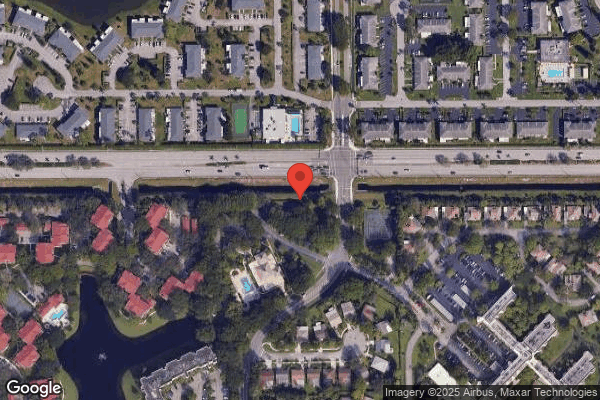




ABBEY DELRAY SOUTH

1717 HOMEWOOD BLVD, DELRAY BEACH, FL 33445 (561) 454-5200
Non profit - Corporation 90 Beds LIFESPACE COMMUNITIES Data: November 2025
Trust Grade
73/100
#155 of 690 in FL
Last Inspection: February 2025

Within standard 12-15 month inspection cycle. Federal law requires annual inspections.

Overview

Abbey Delray South has a Trust Grade of B, which means it is a good option among nursing homes, indicating a solid level of care. It ranks #155 out of 690 facilities in Florida, placing it in the top half, and #11 out of 54 in Palm Beach County, meaning only ten local facilities are rated higher. However, the trend is concerning as the number of issues reported has worsened significantly, jumping from 1 issue in 2024 to 13 in 2025. Staffing is a strong point with a 5-star rating and a low turnover rate of 17%, much better than the state average, indicating that staff members are experienced and familiar with the residents. On the downside, there were specific incidents where the facility failed to properly label and store residents' food brought by families, and they did not follow care plans to prevent falls for some residents, showing a need for improvement in adherence to safety protocols.

Trust Score
B
73/100
In Florida
#155/690
Top 22%
Safety Record
Low Risk
No red flags
Inspections
Getting Worse
1 → 13 violations
Staff Stability
✓ Good
17% annual turnover. Excellent stability, 31 points below Florida's 48% average. Staff who stay learn residents' needs.
Penalties
✓ Good
$4,963 in fines. Lower than most Florida facilities. Relatively clean record.
Skilled Nurses
✓ Good
Each resident gets 89 minutes of Registered Nurse (RN) attention daily — more than 97% of Florida nursing homes. RNs are the most trained staff who catch health problems before they become serious.
Violations
⚠ Watch
29 deficiencies on record. Higher than average. Multiple issues found across inspections.
★★★★☆
4.0
Overall Rating
★★★★★
5.0
Staff Levels
★★★★★
5.0
Care Quality
★★☆☆☆
2.0
Inspection Score
Stable
2024: 1 issues
2025: 13 issues

The Good

  • 5-Star Staffing Rating · Excellent nurse staffing levels
  • 5-Star Quality Measures · Strong clinical quality outcomes
  • Low Staff Turnover (17%) · Staff stability means consistent care
  • Full Sprinkler Coverage · Fire safety systems throughout facility
  • No fines on record
  • Staff turnover is low (17%)

    31 points below Florida average of 48%

Facility shows strength in staffing levels, quality measures, staff retention, fire safety.

The Bad

Federal Fines: $4,963

Below median ($33,413)

Minor penalties assessed

Chain: LIFESPACE COMMUNITIES

Part of a multi-facility chain

Ask about local staffing decisions and management

The Ugly 29 deficiencies on record

Feb 2025 13 deficiencies
CONCERN (D)

Potential for Harm - no one hurt, but risky conditions existed

Comprehensive Care Plan (Tag F0656)

Could have caused harm · This affected 1 resident

**NOTE- TERMS IN BRACKETS HAVE BEEN EDITED TO PROTECT CONFIDENTIALITY** Based on observations, interviews and record review, the facility failed to follow the care plan's interventions to prevent fall...

Read full inspector narrative →
**NOTE- TERMS IN BRACKETS HAVE BEEN EDITED TO PROTECT CONFIDENTIALITY** Based on observations, interviews and record review, the facility failed to follow the care plan's interventions to prevent falls for 2 of 2 resident reviewed for accidents (Resident #69 and Resident #64). The findings included: 1.) A review of the facility's policy titled, Comprehensive Care Plan, revised on 09/06/2022, revealed the following: The resident care plan will include measurable objectives and timetables to meet the resident's physical, psychosocial, and functional needs and will be developed and implemented for each resident. The Interdisciplinary Team must review and update the care plan: a. When there has been a significant change in the resident's condition; b. When the desired outcome is not met, c. When the resident has been readmitted to the facility from a hospital stay. A review of the facility's policy titled, Fall Prevention and Management Program revised on 09/23/2019 showed the following: Post-fall: there are two key elements of the post-fall response and management: Initial post fall evaluation, documentations and follow-up include ongoing monitoring for resident changes in condition where medically indicated, and the care plan will be reviewed and updated as indicated. 2.) A record review showed that Resident #69 was readmitted to the facility on [DATE], had a fall on 09/23/24, and was transferred to the hospital. On 10/3/24, Resident #69 returned to the facility with a diagnosis of a right hip fracture, Dementia and General Anxiety. The significant change Minimum Data Set (MDS) assessment completed on 10/11/24 showed that Resident #69 had a Brief Interview Mental Status (BIMS) score of 03, which indicated the resident was cognitively impaired. She required extensive assistance of two people with transfer and bed mobility. A review of the Quarterly MDS dated [DATE] showed the following: for chair/bed-to-chair transfer: The ability to transfer to and from a bed to a chair (or wheelchair), Resident #69 was coded for substantial with maximum assistance. The helper does more than half the effort, lifts or holds trunks or limbs and provides more than half the effort. This did not show that Resident #69 needed two person assist with transfer and bed mobility. In an observation conducted on 02/17/25 at 11:10 AM, Resident #69 was noted in bed with the bed in a low position and a fall mat noted on the right side of the bed. No fall mat was noted on the left side of the bed. In an observation conducted on 02/18/25 at 11:10 AM, Resident #69 was noted in bed with the bed in a low position and a fall mat noted on the right side of the bed. No fall mat was noted on the left side of the bed. In an observation conducted on 02/19/25 at 3:45 PM, Resident #69 was noted in her bed. A floor mat was noted on the right side of her bed, folded against her drawers, and no floor mat was noted on the left side of the bed. A review of the medical record did not show that a post fall assessment was completed for Resident #69 after her fall on 09/23/24. The care plan initiated on 10/4/24, after Resident #69 came back from the hospital, showed keeping the bed in the lowest position when resident in bed, keeping the room and floor free from spills and clutter, and floor safety mats. For transfers, it showed that Resident #69 needs extensive assistance from one staff member to move between surfaces. The Care plan initiated on 02/19/25 revealed that Resident #69 had a fall and is at risk for additional falls related to history of falls, Impaired mobility, Increased muscle weakness, Poor safety awareness, Refusal for assistance with mobility. An interview conducted on 02/19/25 at 3:06 PM with the Director of Nursing ( DON) stated that Resident #69 did not have a post-fall evaluation since they went to the hospital and were not in the building, but she would have expected staff to complete a post-fall assessment. The DON reported that the care plan needs to be reviewed and updated after a fall. She further said that if the care plan says mats, then the expectation is to have two-floor mats on each side of the bed. In an interview conducted on 02/19/25 at 3:36 PM with Staff M, a Certified Nursing Assistant, stated that Resident #69 was at risk for falls. She must make sure that the call light is within reach and that she has a floor mattress on each side of the bed. In an interview conducted on 2/19/25 at 3:40 PM with Staff C, the Registered Nurse stated that Resident #69 is at risk for falls. She conducts frequent rounds and ensures that there are mats on each side of the bed. Staff C said that Resident #69 tried to get out of bed at times and that she is coded for one-person assistance. A post-fall evaluation is always completed after a fall, even if the resident is transferred to the hospital. 3.) Review of the Record revealed Resident #64 was admitted to the facility 06/16/23 with a primary diagnosis of unspecified dementia, unspecified severity, without behavioral disturbance, psychotic disturbance, mood disturbance, and anxiety. Review of the current Minimum Data Set (MDS) assessment dated [DATE] documented Resident #64 had a Brief Interview for Mental Status (BIMS) score of 3, on a 0 to 15 scale, indicating the resident had severe cognitive impairment. Review of the fall risk assessment evaluation created on 02/16/24 revealed Resident #64 had a fall risk score of 11. This same assessment documented, Upon admission and quarterly, at a minimum, thereafter, observe the resident status in the 11 clinical condition parameters listed below by assigning the corresponding score which best describes the resident. If the total score is 10 or greater, the resident should be considered at high risk for potential falls. Prevention protocol should be initiated immediately and documented on the care plan. Review of the Care Plan dated 01/13/25 documented Resident is at risk for falls related to impaired cognition, impaired mobility. This same care plan revealed interventions such as Keep bed in lowest position while resident is in bed, keep call light within reach and encourage resident to use for assistance as needed, and keep personal items within reach. During an observation on 02/17/25 at 11:15 AM, a fall mat was observed placed behind the Resident's recliner against the wall, photographic evidence obtained. Resident #64's personal belongings were not observed within reach and her bedside table was placed by the Resident's recliner in front of the fall mat on the wall. On a follow up observation on 02/17/25 at 2:57 PM, the fall mat was still observed against the wall. Review of the active orders on 02/17/2025 revealed there were no orders for a fall mat. Review of the active orders on 02/18/2025 revealed a new order floor mat as need. During an observation on 02/18/25 at 11:13 AM, the floor mat was observed on the left side of Resident's bed; the Resident's belongings and call light were not within reach. During an observation on 02/19/25 at 11:42 AM, the Resident was observed in bed in a high position approximately 36 inches from the floor and the call light and personal belongings were not within reach. The resident's spouse walked in the room at approximately 12:00 PM. There were no staff present in the room with the Resident for over 25 minutes. On 02/19/25 at 12:08 PM, an interview was conducted with Staff O, Registered Nurse (RN.) When asked why Resident #64's bed was left in a high position for over 25 minutes with no staff present in the room, she stated the Certified Nursing Assistants (CNA)s usually leave the bed in the lowest position when they leave the room. She stated that during mealtimes, the Resident's spouse requests for the bed to be up high while he is present in the room. Staff O was made aware that the husband was not present in the room during the majority of the observation and that he entered towards the last couple of minutes of the observation. When asked if Resident #64 was at risk for falls, Staff O stated that she did not believe they were a fall risk because they hadn't fallen or tried to get out of bed. When asked if her mental status and diagnoses could play a role in her being a fall risk, she repeated The resident has not fallen and stays in bed. When asked why the floor mat was not on the floor on Monday, Staff O stated that she did see it in the room on Monday up against the wall. When asked why it was on the wall and not the floor she stated, maybe they were cleaning and left it like that. During an interview on 02/19/25 at 12:42 PM, the Director of Nursing (DON) was made aware of the observations made throughout the week regarding Resident #64. The (DON) agreed with the findings and stated it should not have happened since the Resident was identified as at risk for falls. She stated that if a floor mat was already in the room prior to having an order in place for it, it should have been placed back on the ground.
CONCERN (D)

Potential for Harm - no one hurt, but risky conditions existed

ADL Care (Tag F0677)

Could have caused harm · This affected 1 resident

**NOTE- TERMS IN BRACKETS HAVE BEEN EDITED TO PROTECT CONFIDENTIALITY** Based on observation, interviews and record review, the facility failed to provide assistance during dining for 1 of 2 residents...

Read full inspector narrative →
**NOTE- TERMS IN BRACKETS HAVE BEEN EDITED TO PROTECT CONFIDENTIALITY** Based on observation, interviews and record review, the facility failed to provide assistance during dining for 1 of 2 residents reviewed for nutrition (Resident #12). The findings included: Resident #12 was admitted to the facility on [DATE] with diagnoses of Dementia, Osteoporosis, and Hemiplegia. The Quarterly Minimum Data Set (MDS) dated [DATE] revealed that Resident #12 has a Brief Interview of Mental Status (BIMS) score of 13, which is cognitively intact. Section GG of this MDS showed that for eating, Resident #12 was coded for supervision or touching assistance only. A review of the Physicians' orders revealed an order for assistance with feeding with every meal-careful oral assisted feeding by hand every shift dated 2/11/25. In an interview conducted on 02/17/25 at 11:15 AM with Resident #12, she stated that she eats as much as she can and has lost some weight, but she is not sure how much. She is given Ensure Supplements and has tried to drink them when they are provided. In an observation conducted on 02/17/25 at 1:03 PM, Resident #12 was eating her lunch with no staff noted in the room. Continued observation at 1:25 PM showed that Resident #12 ate about 50% of her meal. In an observation conducted on 02/18/25 at 9:07 AM, Resident #12 was eating her breakfast meal with no staff noted in the room. A nutrition dietary progress note dated 2/12/25 showed that Resident #12 had 9.6% weight loss in 3 months and that she is receiving Ensure supplements 3 times a day. Her meal intake varies mostly between 25% and 75%. It further showed that a new order was placed to assist with feeding with every meal. A review of the care plan dated 02/19/24 showed the following: Resident #12 is at nutritional/dehydration risk related to mechanically altered diet, dementia, use of laxatives, and history of significant weight change. It showed staff to provide the necessary assistance with meals. In an interview conducted on 02/19/25 at 1:30 PM, Resident 12 stated that she needed assistance during dining. She stated that in the past, she was able to eat on her own, but now she needs more help during meals. An interview conducted on 02/19/25 at 1:40 PM with Staff L, a Certified Nursing Assistant, stated that Resident #12 can eat on her own and that she only needs assistance with setting up meals and opening containers.
CONCERN (D)

Potential for Harm - no one hurt, but risky conditions existed

Incontinence Care (Tag F0690)

Could have caused harm · This affected 1 resident

**NOTE- TERMS IN BRACKETS HAVE BEEN EDITED TO PROTECT CONFIDENTIALITY** 2) Record review for Resident #69 revealed the resident was originally admitted to the facility on [DATE] with the most recent r...

Read full inspector narrative →
**NOTE- TERMS IN BRACKETS HAVE BEEN EDITED TO PROTECT CONFIDENTIALITY** 2) Record review for Resident #69 revealed the resident was originally admitted to the facility on [DATE] with the most recent readmission on [DATE] with diagnoses that included in part the following: Other Obstructive and Reflux Uropathy, Neuromuscular Dysfunction of Bladder, and Dementia. Review of the Minimum Data Set for Resident #69 dated 01/11/25 documented in Section C a Brief Interview of Mental Status score of 2 indicating severe cognitive impairment. Review of the Physician's Orders for Resident #69 revealed an order dated 10/03/24 for Catheter: Foley, Size:16 FR, Balloon Size:10 CC Diagnosis: Neurogenic Bladder. Review of the Physician's Orders for Resident #69 revealed an order dated 10/03/24 to secure catheter to leg. Be Sure to Keep Bag Off Floor. Catheter Size:16 FR, Reason: Neurogenic bladder. Review of the Medication Administration Record and the Treatment Administration Record for Resident #69 from 02/01/25 to 02/19/25 revealed no documentation of securing the catheter to the leg. Review of the Nursing Progress Notes for Resident #69 from 02/01/25 to 02/19/25 revealed no documentation of securing the catheter to the leg. Review of the Tasks for Resident #69 from 02/01/25 to 02/19/25 revealed no documentation of securing the catheter to the leg. Review of the Care Plan for Resident #69 dated 05/10/23 indicated a focus of the resident having an urinary catheter for Neurogenic Bladder and Obstructive Uropathy. She has recurrent UTI (Urinary Tract Infection) secondary to indwelling catheter. Collaboration with hospice services. The goal was for the Resident to be/remain free from catheter-related trauma and/or complications through next review date. The interventions included in part the following: Secure catheter to leg when up to avoid tension on urinary meatus. On 02/19/25 at 10:00 AM, an observation was conducted of the catheter care being performed for Resident #69 by Staff P, Certified Nursing Assistant (CNA) and assisted by Staff Q, Certified Nursing Assistant (CNA). The resident was lying in bed with the indwelling urinary catheter not secured to her leg. The catheter care was performed with good technique and staff wore appropriate Personal Protective Equipment. When Staff P and Staff Q were finished with the care for the resident they did not secure the indwelling urinary catheter to the resident's leg. During an interview conducted on 02/19/25 at 10:30 AM with Staff P and Staff Q, who were asked if they secure the indwelling urinary catheter, they said no. They have seen some residents with a leg strap to secure the catheter, but they acknowledged Resident #69 did not have a leg strap. During an interview conducted on 02/19/25 at 10:40 AM with the Director of Nursing who was asked about indwelling urinary catheters being anchored, she said it is best practice for the catheter to be anchored. Based on observations, interviews and record review, the facility failed to acquire a Physician order for a urinary catheter and failed to initiate a urinary catheter Care Plan for 1 of 2 sampled residents, Resident # 502; and failed to keep the urinary catheter anchored for 1 of the 2 residents, Resident #69. The findings included: A review of a facility policy titled, Indwelling Catheter Use and Removal dated 01/06/25, revealed under the Compliance Guidelines that if an indwelling catheter is in use, the community will provide appropriate care for the catheter in accordance with current professional standards of practice, will identify and document clinical indications for use of the catheter, and will keep the catheter anchored to prevent excessive tension on the catheter, which can lead to urethral dislodgement of the catheter. 1) A record review for Resident #502 revealed the resident was admitted on [DATE] with diagnoses including Malignant Neoplasm of Cervix, Acute Cystitis, and Urinary Tract Infection. A review of the admission Minimum Data Set (MDS) assessment for Resident #502 dated 02/14/25, revealed resident had a Brief Interview for Mental Status (BIMS) score of 9, indicating slightly impaired mental cognition. A review of Section H revealed a no for indwelling urinary catheter. A review of Section V revealed the triggering condition of an occasional urinary incontinence. A record review of Physician orders for Resident #502 dated 02/17/25, revealed no urinary catheter care and maintenance, urinary catheter size, and indication for insertion of urinary catheter. A review of the Care plans for Resident #502 dated 02/16/25 did not indicate the focus, plan and interventions for urinary catheter for Resident #502. In an observation conducted on 02/18/25 at 11:00 AM, Resident #502 was in her room trying to use her phone. When asked where she was yesterday, she responded, I had to see my doctor. This resident was observed with a urinary bag strapped on her right leg. When asked if she is comfortable wearing the urinary bag on her leg, she responded, Yes. She added, Staff empty the urinary bag before it gets full. During an interview conducted on 02/19/25 at 9:00 AM, with Staff T, Certified Nursing Assistant (CNA), who when asked if she had emptied the urinary bag of the resident, she responded, The other CNA did it. In an interview conducted on 02/19/25 at 2:30 PM with the Staff G, admission Registered Nurse (RN), when requested to have the Resident #502's orders printed, she responded, Is it alright, I just put the order for the urinary catheter today? When asked how long the resident had had the urinary catheter, she did not respond.
CONCERN (D)

Potential for Harm - no one hurt, but risky conditions existed

Deficiency F0692 (Tag F0692)

Could have caused harm · This affected 1 resident

**NOTE- TERMS IN BRACKETS HAVE BEEN EDITED TO PROTECT CONFIDENTIALITY** Based on observations, interviews and record review, the facility failed to meet the nutritional needs and provided the correct ...

Read full inspector narrative →
**NOTE- TERMS IN BRACKETS HAVE BEEN EDITED TO PROTECT CONFIDENTIALITY** Based on observations, interviews and record review, the facility failed to meet the nutritional needs and provided the correct nutritional supplement for 1 of 2 residents reviewed for nutrition (Resident #47). The findings included: A record review revealed that Resident #47 was admitted to the facility on [DATE] with diagnoses of Cerebral infarction and Dementia. The quarterly 10/29/24 Minimum Data Set (MDS) showed that Resident #47 had a Brief Interview of Mental Status (BIMS) score of 02, which is cognitively impaired. In an interview conducted on 02/17/25 at 1:00 PM, Resident 47's family stated that Resident #47 had lost some weight and that he used to be around 180 pounds. He receives Ensure supplements twice a day and drinks them all. In this interview, a bottle of Ensure original was noted on the side table near Resident #47. In an observation conducted on 02/18/25 at 9:07 AM, Resident #47 was eating his breakfast. Staff were in the room setting up the breakfast meal for Resident #47. At 9:13 AM, Resident #47 was in the room, eating with no staff present. At 9:20 AM, Resident #47 only ate the eggs on the breakfast plate. A review of the weight log showed the following weights for Resident #47: 08/08/24, a weight of 180.2 pounds was recorded. 09/06/24, a weight of 159.8 pounds was recorded. 09/13/24 a weight of 160.9 pounds recorded. 09/25/24, a weight of 151.8 pounds was recorded. On 11/7/24, a weight of 152.8 pounds was recorded. On 12/2/24, a weight of 157.8 pounds was recorded. On 1/13/25, a weight of 156.0 pounds was recorded. On 2/3/25, a weight of 155.0 pounds was recorded. A review of the nutrition follow-up note dated 09/12/24 showed that Resident #47 had recently lost 11.3% of weight in one month. Ensure high-protein nutritional supplements are recommended twice a day. This note documented that Resident #47 was eating between 50% and 75% of meals. The follow-up nutritional note dated 09/26/24 showed that the Ensure high protein twice a day provided 1060 calories and 44 grams of protein. A nutrition note dated 11/25/24 showed that the Ensure high protein supplement was decreased from two times a day to one time a day and that Resident #47 was eating between 50% to 75% of his needs. The quarterly nutritional assessment dated [DATE] revealed that Resident #47's estimated nutritional needs were 1914 to 2340 calories a day. A review of the Certified Nursing Assistants documentation showed that between 02/5/25 and 02/17/25, Resident #47 ate between 47% and 71% of his meals. A review of the weekly nutrient summary revealed that Resident #47 was provided with an average of 2130 calories a day. This showed that Resident #47's intake of meals with the one bottle of Ensure original (250 calories a bottle), was only around 1123 calories to 1762 calories. This was meeting 65% of his lower end estimated needs and 75% of his higher end of estimated needs. In an interview conducted on 02/18/25 at 10:45 AM, Staff D, a Certified Nursing Assistant, stated that she oversees ordering nutritional supplements. The Registered Dietitian will let her know of any supplements that need ordering. She said that the last time she ordered Ensure High Protein was last year, but she was not sure when last year. In an interview conducted on 02/18/25 at 10:50 AM with Staff E, Registered Dietitian, she stated that for a resident with a supplement they do not have in-house, she would ask to order the supplement or change it to another type of supplement with similar nutritive value. Resident #47 should not have been given Ensure original instead of Ensure high protein. Staff E then went to the storage room to show this Surveyor what they had in stock. The storage room did not have Ensure high protein in stock, and Staff E was not sure when the last time they had this supplement was in-house. She further acknowledged that the diet order with the Ensure original once a day was not meeting Resident #47's nutritional needs. An interview conducted on 02/18/25 at 11:12 AM with Staff F, Licensed Practical Nurse, stated that Resident #47 had an order for Ensure High Protein, which she did not give this morning. She left a message for the doctor to change the order for Ensure Original, which they have in-house. She cared for Resident #47 last week and was unsure what type of Ensure was given. According to her, they get different kinds of Ensure supplements, and they have to go back and forth between them. In an interview conducted on 02/18/25 at 11:20 AM with Staff C, the Registered Nurse stated that she has been giving Ensure Original to all residents. She said they had not had Ensure High Protein for some time and could not remember the last time they had it in-house.
CONCERN (D)

Potential for Harm - no one hurt, but risky conditions existed

Respiratory Care (Tag F0695)

Could have caused harm · This affected 1 resident

**NOTE- TERMS IN BRACKETS HAVE BEEN EDITED TO PROTECT CONFIDENTIALITY** Based on observations, interview and record review, the facility failed to have an order for oxygen for 1 of 1 sampled residents...

Read full inspector narrative →
**NOTE- TERMS IN BRACKETS HAVE BEEN EDITED TO PROTECT CONFIDENTIALITY** Based on observations, interview and record review, the facility failed to have an order for oxygen for 1 of 1 sampled residents, Resident #501. The findings included: A record review of a facility policy titled,Oxygen Administration with a revision date of 10/2010, revealed to verify that there is a physician's order for oxygen administration. A record review for Resident #501 revealed the resident was admitted on [DATE] with diagnoses that included Displaced Intertrochanteric Fracture of Right Femur, Chronic Obstructive Pulmonary Disease (COPD), and Chronic Systolic Congestive Heart Failure. A review of the Minimum Data Set (MDS) assessment for Resident #501 dated 02/18/25 revealed it was blank for the Brief Interview for Mental Status (BIMS) score. A review of Section I revealed a yes response to Asthma. A review of Section O was blank for oxygen therapy. A review of Physician Orders for Resident #501 revealed there was no order for oxygen indication, administration, care and management. A record review of the Care Plan for Resident #501 initiated on 02/16/25, and with the target date of 05/16/25, revealed a focus on COPD related to smoking. The goals were Resident will be free of signs and symptoms of respiratory infections through next review date. The interventions included: Give aerosol or bronchodilators as ordered; Monitor/document any side effects and effectiveness; Monitor for difficulty breathing (Dyspnea) on exertion; Monitor for signs and symptoms of acute respiratory insufficiency; Oxygen setting at 2 Liters via nasal prong as ordered. During an observation conducted on 02/17/25 at 10:53 AM, Resident #501 was asleep with the oxygen nasal cannulae on both nares, and a portable oxygen tank next to the bed, set at 2 Liters (L) per minute mark. There was no date tag observed on the oxygen tubing. During another observation conducted on 02/18/25 at 10:00 AM, there was a red oxygen sign posted on the door of Resident #501's room. The resident was able to answer questions. She was wearing the the oxygen nasal cannulae on both nares. There was no tag on the oxygen tubing and the meter flow was set at 2 L per minute on the portable oxygen tank. In an interview conducted with Resident #501 on 02/18/25 at 10:08 AM, when asked if the oxygen is helping her breath better, she responded Yes.
CONCERN (D)

Potential for Harm - no one hurt, but risky conditions existed

Deficiency F0757 (Tag F0757)

Could have caused harm · This affected 1 resident

**NOTE- TERMS IN BRACKETS HAVE BEEN EDITED TO PROTECT CONFIDENTIALITY** Based on observations, interviews, and record review, the facility failed to ensure that psychotropic medication PRN (as needed)...

Read full inspector narrative →
**NOTE- TERMS IN BRACKETS HAVE BEEN EDITED TO PROTECT CONFIDENTIALITY** Based on observations, interviews, and record review, the facility failed to ensure that psychotropic medication PRN (as needed) orders were limited to 14 days for 1 of 5 residents reviewed for Unnecessary Medication (Resident #17). The findings included: A review of the policy titled, Medication Utilization and Prescribing-Clinical Protocol, revised in April 2018, showed the following: As part of the overall review, the Physician and staff will evaluate the rationale for existing medications that lack a clear indication or are being used intermittently on a PRN. The Physician will provide and or document rationale when the indication, dose, duration, or frequency of a prescribed medication is more significant than commonly accepted practice. The Consultant Pharmacist can help by reviewing facility medication usage patterns and trends and by intensifying medication reviews of individuals taking medications that present clinically significant risks. Resident #17 was admitted to the facility on [DATE] with diagnoses of bipolar disorder and major depressive disorder. The admission Minimum Data Set (MDS), dated [DATE], showed that Resident #17 had a Brief Interview of Mental Status (BIMS) score of 15, which is cognitively intact. A review of the Physician's order revealed an order for Lorazepam 0.5 milligrams, given one tablet by mouth every 8 hours as needed for anxiety for 30 days, dated 01/30/25. In a Pharmacy review conducted on 02/4/25 (five days later), the Consultant Pharmacist reviewed all medications for Resident #17. In this review, he wrote no irregularities and did not address the 30-day PRN medication of Lorazepam. In an interview with the Director of Nursing (DON) on 02/19/25 at 12:30 PM, she stated that for any psychotropic medication that has been PRN for the past 14 days, the nurse and the pharmacist will contact the prescribing Physician to discuss the necessity of the medication. In a phone interview conducted on 02/20/25 at 9:16 AM with the Consultant Pharmacist, he stated that for any psychotropic medication that is PRN past 14 days, he will recommend discontinuing the medication and will contact the Physician. The pharmacy recommendations always go to the Doctor for further review. In an interview conducted on 02/20/25 at 1:00 PM with the DON, she acknowledged all findings.
CONCERN (D)

Potential for Harm - no one hurt, but risky conditions existed

Medication Errors (Tag F0758)

Could have caused harm · This affected 1 resident

**NOTE- TERMS IN BRACKETS HAVE BEEN EDITED TO PROTECT CONFIDENTIALITY** 2.) A record review revealed Resident #501 was admitted on [DATE] with diagnoses including Displaced Intertrochanteric Fracture ...

Read full inspector narrative →
**NOTE- TERMS IN BRACKETS HAVE BEEN EDITED TO PROTECT CONFIDENTIALITY** 2.) A record review revealed Resident #501 was admitted on [DATE] with diagnoses including Displaced Intertrochanteric Fracture of Right Femur, Type 2 Diabetes Mellitus, and Anxiety Disorder. A record review of the Minimum Data Set (MDS) assessment for Resident #501 dated 02/18/25 revealed it is in progress. Section C for Brief Interview for Mental Status score was blank. Section I revealed, yes responses to anxiety and depression. A record review of Physician Orders dated 02/16/25 revealed Escitalopram Oxalate (Anti-depressant) 10 MG (milligram), to give by mouth one time a day for depression. An additional review of Physician Orders for Resident #501 revealed to monitor for signs and symptoms of depression and to include the following numerical codes : 0-None, 1-Isolation, 2-Sadness, 3-Withdrawn, 4-Lack of interest, 5-Crying, 6-Other, see nurses note, every day and night shift, and document the corresponding number(s) reflecting any sign and symptom of depression. A further review of the Medication Administration Record (MAR) revealed that the medication Escitalopram 10 MG was administered on 02/17/25 at 9:00 AM. The MAR box for the medication revealed no statement to monitor for signs and symptoms of depression including the numerical codes. Additional review of MAR revealed no anti-depressant side effects were monitored after the administration of Escitalopram. A review of the Care Plan revealed no goal, plan or interventions related to the resident's depression. During observation on 02/17/25 at 10:53 AM, Resident #501 was asleep. During an interview conducted on 02/18/25 at 11 AM, Resident #501 was able to respond to questions. She stated she was not happy in the facility. In an interview conducted on 02/19/25 at 12:30 PM with Staff G, admission Registered Nurse (RN), when asked regarding Resident #501's discharge instructions regarding the antidepressant and antianxiety medications, she responded she talked with the Psychiatry Nurse Practioner and was told that the antianxiety, anti-psychotic, and anti-depressant medications were all ordered by the resident's Cardiologist. When asked if the facility staff perform behavior monitoring related to the medications, she responded behavior monitoring is always done, with the PCC drop down menu, and staff may add this indicator in the MAR. When asked regarding depression monitoring, she stated, depression monitoring is numbered from 1 to 6 and recorded in the MAR. The anti-depressant side effects are also monitored with numbers from 1 to 19 and recorded in MAR. When asked if there would be instances when a staff nurse might forget to put the behavior monitoring and side effects monitoring for anti-depressant medications, she added that all the staff nurses know how to put an order. During an interview conducted with Staff C, RN, when asked about antidepressant medications monitoring, she responded, Yes, the staff monitor the behavior when residents are receiving anti-depressants. The behaviors are represented by numbers. Nurses document the residents' behaviors in the MAR. She added that staff nurses always put the behavior in the MAR as proof of documentation before giving anti-depressant medications. When asked if staff nurses monitor the side effects of anti-depressant medications, she responded, she is not sure and will get back to this surveyor. Until the end of the survey, Staff C, RN did not provide an answer. Based on observations, interviews, and record review, the facility failed to monitor behaviors and side effects for 2 of 5 residents on antipsychotic medication (Resident #17 and Resident #501). The findings included: A review of the policy titled, Medication Utilization and Prescribing-Clinical Protocol revised in April 2018, showed the following: The staff and Physician will monitor the progress of anyone with a probable adverse drug reaction and anyone for whom the medications has been adjusted because of the probability of an adverse drug interaction. 1.) Resident #17 was admitted to the facility on [DATE] with diagnoses of bipolar disorder and major depressive disorder. The admission Minimum Data Set (MDS) dated [DATE], showed that Resident #17 had a Brief Interview of Mental Status (BIMS) score of 15, which is cognitively intact. A review of the Physician's order revealed an order for Rexulti (antipsychotic medication), 4 milligrams given 1 tablet by mouth at bedtime for bipolar disorder, dated 01/22/25. Further review did not show any orders to monitor the medication's side effects or behaviors. A review of the Medication Administrator Record (MAR) for February 2025 did not show that the side effects and behaviors of the antipsychotic medication have been documented. A review of the care plan initiated on 02/05/25 showed the following: The resident has a mood problem diagnosis of anxiety, depression, and bipolar disorder. Monitor and document for side effects and effectiveness. The resident uses psychotropic medication related to depression, which was initiated on 01/20/25. Monitor, document, and report any adverse reactions of psychotropic medications: unsteady gait, tardive dyskinesia, EPS (shuffling gait, rigid muscles, shaking), frequent falls, refusal to eat, difficulty swallowing, dry mouth, depression, suicidal ideations, social isolation, blurred vision, diarrhea, fatigue, insomnia, loss of appetite, weight loss, muscle cramps nausea, vomiting, behavior symptoms not usual to the person. In an interview conducted on 02/19/25 at 11:50 AM with Staff I, a Licensed Practical Nurse, the Surveyor asked if Resident #17 was on any antipsychotic medication. She did not know. She proceeded to look in the electronic system and stated that Resident #17 was on antidepressants and antianxiety medications but did not see any antipsychotic medication for Resident #17. The Surveyor said that Resident #17 was receiving Rexulti oral tablet 4 milligrams give 1 tablet by mouth at bedtime for bipolar disorder dated 01/22/25, which was an antipsychotic medication. When asked if Resident #17 was monitored for side effects or behaviors of the Rexulti medication, she said yes. Staff I reported that it is documented in the Medication Administration Record and attempted to show the Surveyor in the electronic system but was unable to show documentation. Then, said, We need to update the orders.
CONCERN (D)

Potential for Harm - no one hurt, but risky conditions existed

Deficiency F0761 (Tag F0761)

Could have caused harm · This affected 1 resident

**NOTE- TERMS IN BRACKETS HAVE BEEN EDITED TO PROTECT CONFIDENTIALITY** Based on observations, interviews and record review, the facility failed to ensure medications were secured at the bedside for 1...

Read full inspector narrative →
**NOTE- TERMS IN BRACKETS HAVE BEEN EDITED TO PROTECT CONFIDENTIALITY** Based on observations, interviews and record review, the facility failed to ensure medications were secured at the bedside for 1 of 22 sampled residents (Resident #645). The findings included: Review of the facility's policy titled, Medication Labeling and Storage with a revised date of February 2023 included in part the following: The facility stores all medications and biologicals in locked compartments under proper temperature, humidity and light controls. Only authorized personnel have access to keys. Review of the facility's policy titled, Self-Administration of Medications with a revised date of February 2021 included in part the following: As part of the evaluation comprehensive assessment, the interdisciplinary team (IDT) assesses each resident's cognitive and physical abilities to determine whether self-administering medications is safe and clinically appropriate for the resident. The IDT considers the following factors when determining whether self-administration of medications is safe and appropriate for the resident: The resident is able to safely and securely store the medication. If it is deemed safe and appropriate for a resident to self-administer medications, this is documented in the medical record and the care plan. Record review for Resident #645 revealed the resident was admitted to the facility on [DATE] with diagnoses that included in part the following: Acute Myocardial Infarction, Personal History of Malignant Neoplasm of Tongue. Review of Resident #645's record revealed no documentation of a Brief Interview of Mental Status having been attempted or completed. Review of the resident's record revealed no evaluation of self-administering medications. On 02/17/25 at 10:49 AM, an observation was made of Resident #645 sitting up in bed and on the nightstand next to the bed was a clear plastic bag with ChapStick and Nystatin ointment 100,000 units per gram. On 02/18/25 at 9:05 AM, an observation was made of Resident #645 sitting up in the bed with the overbed table in front of him, and on the overbed table next to his breakfast was a clear plastic bag with ChapStick and Nystatin ointment 100,000 units per gram. During an interview conducted on 02/18/25 at 9:05 AM with Resident #645 who was asked about the Nystatin ointment in the bag on the overbed table, he stated that is his denture adhesive and he puts it on his gums daily. During an interview conducted on 02/18/25 at 9:15 AM with Staff P, Certified Nursing Assistant (CNA) who entered Resident #645's room and acknowledged the Nystatin ointment at the bedside and said medications are not supposed to be at the bedside and removed the medication to give to the Director of Nursing. During an interview conducted on 02/18/25 at 9:55 AM with Staff H, Registered Nurse (RN) who was asked if residents can have medications at the bedside, she said no the residents cannot have medications at the bedside and acknowledged the resident was not evaluated for self-administration of medications.
CONCERN (D)

Potential for Harm - no one hurt, but risky conditions existed

Deficiency F0807 (Tag F0807)

Could have caused harm · This affected 1 resident

**NOTE- TERMS IN BRACKETS HAVE BEEN EDITED TO PROTECT CONFIDENTIALITY** Based on observations, interviews, and record review, the facility failed to provide water consistent with resident needs for 1 ...

Read full inspector narrative →
**NOTE- TERMS IN BRACKETS HAVE BEEN EDITED TO PROTECT CONFIDENTIALITY** Based on observations, interviews, and record review, the facility failed to provide water consistent with resident needs for 1 of 3 residents on thickened liquids (Resident #645). The findings included: Review of the facility's policy titled, Menus and Therapeutic Diets with a revised date of 04/14/20 that included in part the following: Nectar, honey and pudding thickened liquids are offered as ordered by the physician. Record review for Resident #645 revealed the resident was admitted to the facility on [DATE] with diagnoses that included in part the following: Acute Myocardial Infarction, Personal History of Malignant Neoplasm of Tongue. Review of Resident #645's record revealed no documentation of a Brief Interview of Mental Status having been completed. Review of the Physician's orders for Resident #645 revealed an order dated 02/13/25 for NAS (No Added Salt) diet Mechanical Soft texture, Nectar Thick Liquids consistency, and was discontinued on 02/18/25. Review of the Physician's orders for Resident #645 revealed an order dated 02/18/25 NAS diet Pureed Diet texture, Nectar Thick Liquids consistency. Review of the Care Plan for Resident #645 revealed no care plan for nutrition or hydration. On 02/17/25 at 10:49 AM, an observation was made of Resident #645 sitting up in chair at bedside, with overbed table in front of him with a full 20 ounce Styrofoam cup of ice water with straw. Thickener packets were located on the nightstand next to bed on the opposite side of the bed from where Resident #645 was sitting. During a side-by-side observation conducted on 02/17/25 at 11:10 AM with Staff H, Registered Nurse (RN) in Resident #645's room, the resident was sitting up in bed and in front of the resident was a full 20 ounce Styrofoam cup of ice water with a straw. Staff H acknowledged the resident was on nectar thickened liquids and should not have regular water at the bedside. Staff H immediately removed the water. When asked when water is passed to the residents she said it would have been at the end of the previous shift or at the beginning of the shift for today. During an interview conducted at Resident #645's bedside with the Speech Therapist (ST) who was asked about the liquid consistency and straws for the resident, the ST stated the resident is on nectar thickened liquids and it is okay for the resident to use a straw. The ST stated the resident had tongue cancer and has an issue with using his tongue but has no problem swallowing the nectar thickened liquids with a straw. When asked why she was seeing the resident today, she stated the resident had difficulty with his mechanical soft diet this morning and the Resident #645's son was present, and the son had requested his diet be changed to pureed. During an interview conducted on 02/20/25 at 9:15 AM with Staff P, Certified Nursing Assistant (CNA) who was asked how often water is provided to residents, she stated they provide water to residents once or twice a shift and as needed. When asked if a resident is on thickened liquids how she would know, she said the nurse will tell them. When asked how they provide thickened water to residents who are on thickened liquids, she said they are provided with containers of water or juice that are kept in a cooler at the bedside. When asked what the shifts for Certified Nursing Assistants are, she said 6:00 AM to 2:00 PM, 2:00 PM to 10:00 PM and 10:00 PM to 6:00 AM.
CONCERN (D)

Potential for Harm - no one hurt, but risky conditions existed

Infection Control (Tag F0880)

Could have caused harm · This affected 1 resident

**NOTE- TERMS IN BRACKETS HAVE BEEN EDITED TO PROTECT CONFIDENTIALITY** Based on observations, interviews and record reviews, the facility failed to maintain an effective Infection Prevention and Cont...

Read full inspector narrative →
**NOTE- TERMS IN BRACKETS HAVE BEEN EDITED TO PROTECT CONFIDENTIALITY** Based on observations, interviews and record reviews, the facility failed to maintain an effective Infection Prevention and Control Program, for 3 sampled residents, as evidenced by staff failed to wear Personal Protective Equipment (PPE) while providing direct care for residents on Enhanced Barrier Precaution (EBP) for Resident #545 and Resident #38; and failed to have an order and care plan for EBP for Resident #501. The findings included: The Center for Disease Control and Prevention (CDC) Enhanced Barrier Precautions included the following: Everyone must clean their hands, when entering and leaving the room. Providers and Staff must also wear gloves and a gown for the following: High-contact care resident care activities - dressing, bathing/showering, transferring, changing linens, providing hygiene, changing briefs or assisting with toileting. Device care or use: central line, urinary catheter, feeding tube, tracheostomy. Wound care with any skin opening requiring a dressing. https://www.cdc.gov/long-term-care facilities/media/pdfs/ A review of the facility policy titled, Enhanced Barrier Precaution, with a revision date of 04/05/24, revealed the facility adheres to the CDC recommendation on implementing EBP in their health care center. The policy explained that EBP will be implemented for the following: indwelling medical devices (e.g. central line, urinary catheter, feeding tube); chronic wounds including pressure ulcer, diabetic foot ulcers, unhealed surgical wounds, and chronic venous stasis ulcers. It also stated that all team members will wear appropriate PPE (gown and gloves) for high contact resident care but not limited to peri-care, device care (urinary catheter and feeding tube), and wound care. 1) Record review of Resident #545 revealed the resident was admitted to the facility on [DATE], with diagnoses that included Cachexia, Adult Failure to Thrive, Malignant Neoplasm of the Esophagus, Percutaneous Endoscopic Gastrostomy (PEG) tube, and Sacral Pressure Ulcer. A review of the Minimum Data Set (MDS) assessment for Resident #545 dated 02/12/25 revealed a blank space in Section C for the Brief Interview for Mental Status (BIMS) score. Record review of Physician Orders for Resident #545 dated 02/11/25 revealed an order for EBP: gown and gloves should be worn while providing high-contact resident care (dressing, bathing/showering, transferring, providing hygiene, changing linens, changing briefs, or assisting with toileting), every day and night shift for percutaneous endoscopic gastrostomy (PEG) tube. A further review of Physician Orders for Resident #545 revealed an order for wound care dated 02/15/25, Wound: sacrum- cleanse with Normal Saline, apply Medi honey, apply Calcium alginate, cover with foam dressing every day shift for pressure injury. During an observation conducted on 02/18/25 at 3:20 PM, Staff K, Certified Nursing Assistant (CNA) entered a room with an EBP sign without performing hand hygiene. She donned gloves, drew the privacy curtain and stood by the foot of bed. Then Staff C, Registered Nurse (RN) came in and told the resident that she would change the dressing on the left buttock and Staff K would assist. Staff C went inside the bathroom and performed hand washing, donned on gloves, yellow gown and asked for the resident to turn to his right side. She opened the left side of the resident's brief and proceeded with the wound care without any concerns. After she completed the wound care, Staff C, RN asked Staff K, CNA to change the resident's brief. Staff K obtained a brief and approached Resident #545, wearing only a pair of gloves and no gown. She proceeded to change the resident's brief, with her blue uniform touching the resident's bed linens. In an interview conducted on 02/18/25 at 3:32 PM with Staff C, RN, when asked why Staff K, CNA was not wearing a gown while assisting with wound care and changing of the resident's briefs, she responded, I reminded her. When asked if all facility staff receive training and in-services for EBP, she responded yes. In an interview conducted with Staff K, CNA on 02/18/25 at 4:14 PM, when asked why she did not put on gown, she responded, I was just asked to help the nurse. I did not look at the EBP sign on the door. When she was shown the EBP sign on resident's door, she responded, I should have put on gown. 2) A record review of Resident #501 revealed he was admitted on [DATE] with the diagnoses that included Displaced Intertrochanteric Fracture of Right Femur, Subsequent Encounter for Closed Fracture with Routine Healing, Type 2 Diabetes Mellitus, and Right Heel Pressure Ulcer. A review of the Minimum Data Set (MDS) assessment for Resident #501 dated 02/18/25 revealed it was blank for the Brief Interview for Mental Status (BIMS) score. A review of Physician Orders dated 02/16/25 revealed that there was no EBP order related to the right heel pressure ulcer. A further review of the care plan revealed there was no EBP focus, plan or interventions related to Resident #501's right heel pressure ulcer. In an interview conducted with Staff J, CNA on 02/18/25 at 3:42 PM regarding the EBP sign on the resident's door, she stated, Staff must wear mask and gloves when providing care to resident such as during the changing of briefs and bed linens. When asked if she needed to wear a gown, she responded no, gown is only used for very contagious diseases like COVID and C. difficile. 3) Review of Record revealed Resident #38 was admitted to the facility 01/09/25. He was admitted with a primary diagnosis of chronic obstructive pulmonary disease with (acute) exacerbation Other diagnoses included: respiratory failure with hypoxia (low levels of oxygen in your body tissues), metapneumovirus pneumonia(a lung infection caused by the human metapneumovirus virus), and hypoxemia (a condition where there is an abnormally low level of oxygen in the blood.) Review of the active orders revealed there was an Enhanced Barrier Precaution (EBP) order, Gown and Gloves should be worn while providing high-contact resident care (Dressing, Bathing/showering, Transferring, providing hygiene, changing linens, changing briefs, or assisting with toileting.) Further review revealed an active order for a midline catheter to the right arm (a thin, flexible tube inserted into a vein in the upper arm, typically near the elbow or just below the armpit) for intravenous administration of antibiotics due to a pneumonia diagnosis. Review of the current Minimum Data Set (MDS) assessment dated [DATE] documented Resident #38 had a Brief Interview for Mental Status (BIMS) score of 15, on a 0 to 15 scale, which indicated the resident was cognitively intact. This same MDS also documented the Resident required continuous oxygen therapy. During an initial observation and interview on 02/17/25 at 11:53 AM, Resident #38 was observed wearing a nasal cannula and had a midline catheter to the right upper arm. When asked how care was, the Resident stated they've had an issue with her maintaining normal oxygen levels. Resident #38 stated she had acquired several respiratory infections over a short period of time that required her to be on antibiotic therapy. A medication administration observation was conducted on Resident #38 on 02/18/25 at 09:32 AM with Staff I, Licensed Practical Nurse (LPN). The medication administration included oral medications, intranasal spray, a medication patch and a respiratory nebulizer treatment. Upon entering the Resident's room an (EBP) sign was observed by the Resident's door and another one on the wall in front of the Resident's bed. Staff I performed hand hygiene and donned gloves; she stated she had already completed vital signs on the Resident. Staff I proceeded with the administration of the medications while the resident was in her wheelchair; no additional Personal Protective Equipment (PPE) was donned. Staff I performed a respiratory assessment and listened to Resident #38's lungs with her stethoscope and afterwards the Resident requested to complete her treatment in bed. Staff I assisted to transfer the Resident from the wheelchair into bed; she then helped position her up in bed to a comfortable position. Staff I performed hand hygiene and donned new gloves; she then placed the nebulizer solution into the mask and placed it on the Resident. At the end of the respiratory treatment she performed another respiratory assessment. During an interview on 02/18/25 at 10:16 AM, when asked if Resident #38 was on (EBP), Staff I stated yes for direct care. When asked if giving the multiple types of medications and transferring the resident would be considered direct care, she stated she was unsure and asked the surveyor if she should of wore a gown. When asked what education was provided by the facility on residents requiring (EBP), she began to read the sign placed by Resident #38's door. Staff I was still unsure and stated, I probably should have worn it. An infection prevention interview was conducted on 02/19/25 at 10:00 AM with the Director of Nursing (DON) who was filling in for the Infection Preventionist for the week. The (DON) was made aware of the observations regarding Resident #38 and agreed that it was best practice to wear (PPE) for all direct contact activities especially if the Resident was transferred during the process.
CONCERN (E)

Potential for Harm - no one hurt, but risky conditions existed

QAPI Program (Tag F0867)

Could have caused harm · This affected multiple residents

Based on interviews and record reviews, the facility failed to maintain an effective system to obtain and use of feedback and input from (Minimum Data Set (MDS) Department and ensure an effective QAPI...

Read full inspector narrative →
Based on interviews and record reviews, the facility failed to maintain an effective system to obtain and use of feedback and input from (Minimum Data Set (MDS) Department and ensure an effective QAPI/PIP (Quality Assurance Performance Improvement/Performance Improvement Plan) to ensure MDS assessments were completed timely with the potential to affect 70 out of 70 residents. The findings included: . Review of the facility's policy titled, Quality Assurance and Performance Improvement Program Plan with a revised and reviewed date of 08/31/22 indicated in part the following: Each facility's Administrator will be accountable for leadership and will provide coordination of the overall health center QAPI program. Together with members of the QAPI Committee, the Administrator will be responsible for planning, designing, implementing, and coordinating care and services and selecting QAPI activities to meet the needs of residents. Guidelines for Performance Improvement Projects: The facility will have a plan for conducting PIPs to improve care and services. This will be accomplished by: PIPs will be identified by the department representative as discovered in conversation, complaints, observations for opportunities for improvement, improved practices, new standards, new rules or as recommended among the team. The facility will monitor all PIPs within the organization. Communication of QAPI: By conveying the message that nay and every team member is expected to raise quality concerns and to think about how we can improve our systems, and that it is safe for team members to raise quality concerns and issues. The facility will maintain documentation and demonstrate evidence of its ongoing QAPI efforts that serve to identify, report, investigate, analyze, and prevent adverse events. Documentation will reflect the development, implementation, and evaluation of corrective actions or performance improvement initiatives. In order to maintain an effective QAPI plan, the plan will include all team members, all departments and all services provided and specific to each facility. QAPI will be adequately resourced. Review of the PIP titled, Late MDS Assessments with an initiated date of 12/12/24 with Staff R -MDS Coordinator and it included in part the following: Priority: Medium Problem or Opportunity for Improvement: Late assessments averaging 55% in last month. Root Cause Analysis: Turnover in IDT and high volume of admissions and discharges. Goals: Reduce the number of assessments that are completed late on a monthly basis by 5%. Meetings: 12/19/24 assessments late 61.73% 12/26/24 continue with late assessments 70.49% 01/02/25 continue with late assessments 47.62% 01/09/25 assessments completed for month end late 61.54% 01/16/25 continue with schedule late 50% 01/23/25 assessments continue to fall behind (no percentage documented) 01/30/25 continue with late assessments 61.8% 02/06/25 assistance provided from support team to assist with late assessments 78.% 02/13/25 assessments remain late 72% Review of the QAPI Committee Meeting sign - in sheet for 12/20/24 indicated the Attendees included the Administrator, the Director of Nursing and Staff R, MDS Coordinator. When asked about MDS assessments still listed as in progress, Staff R stated that they have been having problems closing MDS assessment due to change in staff. Some areas of the assessments performed by other departments were not done timely. When asked when this was identified and if she notified anyone, she stated it was identified in December of 2024 and at the time she notified the Administrator, DON (Director of Nursing), and the Regional MDS Director. Staff R also added that it was discussed in QAPI and the PIP was initiated by her. Staff R showed the PIP to the surveyor which was initiated on 12/12/24. Staff R stated they discuss the action plan at the weekly IDT meeting, and she discussed which resident assessments were due and which ones are late. When asked if it is one particular department that is late on doing their assessments and entering their information in the MDS assessments she stated it is predominately the Social Services Department. During an interview conducted on 02/19/25 at 9:15 AM with the Administrator who was asked about care plans for advanced directives, he said they would be completed by a social worker, but they identified an issue last week of the Social Services Department not having completed care plans, evaluations and BIMS evaluations in a timely manner due to high volume of admissions and discharges as well as only having 1 full time Social Worker. When they identified this issue last week, they put a PIP in place for the Social Services Documentation on 02/12/25. During an interview conducted on 02/19/25 at 12:15 PM with the Administrator who was asked if he was made aware of the MDS assessments not being completed in a timely manner, he said he was aware of the issue in January 2025. When asked if there was a PIP in place for the MDS assessments not being completed timely, he said yes he believed Staff R MDS Coordinator started a PIP in January 2025. When asked if the PIP has been effective, he said he is not really sure, but they are working on it. When asked if he has reviewed the PIP, he said he believed he did not. The Administrator said he thinks they talked about it in QAPI at the end of January 2025. During an interview conducted on 02/20/25 at 12:30 PM with the Administrator who was asked about the Late MDS Assessments PIP he stated at the QAPI meeting held on 12/20/24, the MDS Coordinator was not present at the meeting, and he was not aware or told that she started a PIP on 12/12/24 and this was something that she started on her own and not everything is brought to his attention. When asked if any other staff member was involved in the PIP, he said maybe her Regional Supervisor, but he was not sure. During an interview conducted on 02/20/25 at 1:50 PM with the Social Service Director who was asked when Staff R, MDS Coordinator informed her the MDS assessments were late, she said it has been going on for a while at least several weeks. When asked if she attends monthly QAPI meetings, she stated yes she does. When asked if it has ever been brought up at QAPI meetings about the MDS assessments being late, she stated yes she believes it was the Administrator who brought it up but did not go into much detail about it.
CONCERN (F)

Potential for Harm - no one hurt, but risky conditions existed

Food Safety (Tag F0812)

Could have caused harm · This affected most or all residents

**NOTE- TERMS IN BRACKETS HAVE BEEN EDITED TO PROTECT CONFIDENTIALITY** Review of the facility's policy titled, Foods Brought by Family/Visitors with a revised date of March 2022 included in part the ...

Read full inspector narrative →
**NOTE- TERMS IN BRACKETS HAVE BEEN EDITED TO PROTECT CONFIDENTIALITY** Review of the facility's policy titled, Foods Brought by Family/Visitors with a revised date of March 2022 included in part the following: Food brought by family/visitors that is left with the resident to consume later is labeled and stored in a manner that is clearly distinguishable from the facility-prepared food .Perishable foods are stored in re-sealable containers with tightly fitting lids in a refrigerator. Containers are labeled with the resident's name, the item and the use by date. Record review for Resident #648 revealed the resident was admitted to the facility on [DATE] with diagnoses that included: Cognitive Communication Deficit and Parkinsonism. The Minimum Data Set for Resident #648 dated 02/04/25 documented in Section C a Brief Interview of Mental Status score of 14 indicating a cognitive response. On 02/17/25 at 11:00 AM, an observation was made of Resident #648 sitting in the wheelchair next to the bed, on the overbed table in front of the resident was an opened container of cut up mango with no label from facility, with manufacturer label keep refrigerated, a closed container of egg salad with label dated 02/14/25 and a use by date of 02/17/25, and a closed container of fish with a label dated 02/15/25. During an interview conducted on 02/17/25 at 11:05 AM with Resident #648 who stated the food is brought in by relatives and he keeps Kosher and they are Kosher foods. The resident stated the food has been on his table all weekend long. When asked if staff had offered to put his perishable food items in the refrigerator for him, he said no. During an interview conducted on 02/17/25 at 11:10 AM with Staff H, Registered Nurse who stated she has worked at the facility for just over a year. When asked about food brought in from the outside, she said it needs to be labeled and dated. When asked about the food on Resident #648's overbed table, she acknowledged it should have been in the refrigerator. Staff H stated the items were probably no longer any good since they have not been refrigerated and should be thrown out. Based on observations and interviews, the facility failed to store, prepare, distribute, and serve food in accordance with professional standards for food service safety and sanitary conditions and to ensure the prevention of foodborne illnesses for 2 of 2 visits to the central kitchen. Facility failed to store resident's food in the appropriate temperature during 1 of 2 dining observations for Resident #648. The findings included: In a tour conducted on 02/17/25 at 10:00 AM, in the main kitchen, the following were noted: 1. Staff A, Dietary Aid, did not have facial hair restraints while in the food production area. 2. Staff B, Chef, did not have facial hair restraints while in the food production area. 3. A round garbage bin in the food production area is noted to have food debris and is not covered by the lid. 4. A square garbage bin in the food production area was noted to have food debris and was not covered. 5. The walk-in refrigerator was noted with the following: 6. A large metal container with slices of raw fish with today's date of 02/15/25 and used by date of 02/20/25. 7. A large metal container of cooked shrimps with today's date of 02/15/25 and used by date of 02/19/25. 8. Eight (8) -10 pounds rolls of raw ground meat not dated or labeled with a red bloody drainage on the bottom enough to cover the entire bottom of the container. 9. A large metal container with chunks of filet [NAME] dated 02/14/25 to 02/20/25. 10. Four large pieces of unidentified raw meat that were not labeled or dated. 11. Two large boxes of raw chicken that were opened and exposed to the air. 12. A large box of raw Pork was noted with a sign of use or freeze by 03/13/25. 13. The walk-in freezer was noted to have condensation above the food, and food boxes exposed. 14. In a tour conducted on 02/19/25 at 11:15 AM in the Satellite kitchen, the following were noted: Staff N, Dietary Aide, was observed wearing round earrings that were about 2 inches long while handling prepared foods on the tray line. While on the tray line, she was observed dumping the water and the chemicals in the red sanitation bucket and using it to scoop the hot water from the tray line. She then proceeded to handle the prepared foods without changing her gloves first.
MINOR (B)

Minor Issue - procedural, no safety impact

Safe Environment (Tag F0584)

Minor procedural issue · This affected multiple residents

**NOTE- TERMS IN BRACKETS HAVE BEEN EDITED TO PROTECT CONFIDENTIALITY** Based on observations and interviews the facility failed to ensure a homelike environment with overbed lights having pull cords ...

Read full inspector narrative →
**NOTE- TERMS IN BRACKETS HAVE BEEN EDITED TO PROTECT CONFIDENTIALITY** Based on observations and interviews the facility failed to ensure a homelike environment with overbed lights having pull cords attached for 2 out of 70 occupied beds. The findings included: On 02/17/25 at 10:49 AM, an observation was made in room [ROOM NUMBER]-B of overbed light located on the wall above the head of the bed with no pull cord attached. On 02/17/25 10:56 AM, an observation was made of room [ROOM NUMBER]-B of overbed light located on wall above the head of the bed with no pull cord attached. On 02/18/25 at 9:05 AM, an observation was made in room [ROOM NUMBER]-B of overbed light located on the wall above the head of the bed with no pull cord attached. During a side by side observation conducted on 02/18/25 from 10:15 AM to 10:30 AM with the Maintenance Supervisor who acknowledged the pull cords for the overbed lights were missing in rooms 22-B and 28-B. During an interview conducted on 02/18/25 at 10:30 AM with the Maintenance Supervisor who stated each overbed light should have a pull cord long enough for each resident to be able to turn the overbed light on and off themselves.
Jul 2024 1 deficiency
CONCERN (D) 📢 Someone Reported This

A family member, employee, or ombudsman was alarmed enough to file a formal complaint

Potential for Harm - no one hurt, but risky conditions existed

Quality of Care (Tag F0684)

Could have caused harm · This affected 1 resident

**NOTE- TERMS IN BRACKETS HAVE BEEN EDITED TO PROTECT CONFIDENTIALITY** Based on review of policy and procedure, record review and interview, the facility failed to ensure that it followed through in ...

Read full inspector narrative →
**NOTE- TERMS IN BRACKETS HAVE BEEN EDITED TO PROTECT CONFIDENTIALITY** Based on review of policy and procedure, record review and interview, the facility failed to ensure that it followed through in processing a physician's order, in a timely manner for 1 of 5 sampled residents reviewed, Resident #1. The findings included: Review of the facility policy and procedure, titled, Medication Administration provided by the Director of Nursing (DON) revised 12/01/21 documented in the Procedure Statement: The administration of medications will be performed only in accordance with written and signed orders from the client's physician. All orders, as appropriate, shall include: Complete name of client, complete name of medication, strength of the medication, dosage to be given, frequency of administration, route of administration .Controlled Substances .The Comprehensive Drug Abuse Prevention Control Act .requires that the nurse understand her responsibility in the administration, handling, and record keeping of controlled substances .A controlled substance may be given only with a physician's order Resident #1 was admitted to the facility on [DATE] with diagnoses which included Arthritis due to Bacteria right knee, Muscle Wasting and Atrophy, Cognitive Communication Deficit, Methicillin Susceptible Staphylococcus Aureus (MRSA) Infection, pain in right knee, Atherosclerotic Heart Disease and Hypertension. He had a Brief Interview Mental Status (BIM) score of 15 (cognitively intact). On 03/12/24 the physician's order dated 03/12/24 documented generic Oxycodone with Acetaminophen Oral Tablet 5-325 mg to be given one (1) tablet by mouth every six (6) hours (PRN) as needed for Pain, as ordered by Resident #1's primary care physician (PCP). On 03/13/24 the resident's care plan documented---Focus: potential alteration in comfort related to Septic Arthritis right knee, decreased mobility, generalized discomfort. Intervention: Administer analgesia as per orders. Goal: The resident will not have an interruption in normal activities due to pain through the review date. On 03/19/24 the Physical Medicine physician's progress note documented .resident with right knee pain 6/10. He wants pain medication . Percocet Oral Tablet 5-325 mg to be given one (1) tablet by mouth every six (6) hours (PRN) as needed for Pain. Record review of the Medication Administration Record (MAR) revealed that from 03/15/24 until 03/26/24, Resident #1 was administered only generic Oxycodone with Acetaminophen Oral Tablet 5-325 mg give one (1) tablet by mouth every six (6) hours (PRN) as needed for Pain, as evidenced by the nurses' initials and resident pain level recorded for each day. And, between the dates of 03/12/24 through 03/31/24 Resident #1's pain level range was recorded as: 0-7/10. Further record review of the facility's two (2) computerized Controlled Substance Utilization Record/Narcotic sign-off sheets only contained nurse signature-offs from 03/13/24 until 03/26/24 for only the generic Oxycodone with Acetaminophen Oral Tablet dosage 5-325 mg to be given one (1) tablet by mouth every six (6) hours (PRN) as needed for Pain, which was received by the facility on 03/13/24 and 03/23/24. In contrast, record review of the (MAR) reflected that from 03/21/24 until 03/26/24, facility staff nurses documented as if Resident #1 was administered Percocet/generic Oxycodone with Acetaminophen oral tablet 7.5/325 mg give one (1) tablet by mouth one time a day for pain one (1) hour prior to Physical Therapy (PT). However, there was no current Orthopedic Surgeon's order in place signifying an increase for the Percocet to 7.5/325mg. Neither were there any corresponding Controlled Substance Utilization Record/Narcotic sign-off sheets to match or reflect those particular dates of service. It was noted that Resident #1 had two (2) scheduled visits in which he was seen by his Orthopedic surgeon: 1) Wednesday March 20th and 2) again on Wednesday March 27th. During a subsequent computerized record review of Resident #1's uploaded facility documentation, it was noted that there was an un-dated prescription from Resident #1's Orthopedic Surgeon for Percocet 7.5/325 mg one (1) tablet by mouth three times (TID) (PRN) as needed, non-acute pain which had not been uploaded by the facility until 03/26/24. On 07/11/24 at 3:20 PM, during an interview with Staff A, a Registered Nurse (RN), she revealed that she contacted Resident #1's PCP first, and she said that she was directed by the PCP to contact Resident #1's Orthopedic Surgeon to have him to write a prescription for an increase in the resident's Percocet pain management order. Staff A then explained that she then followed-up and called the Orthopedic Surgeon's office, prior to ending her work shift and she spoke with the office nurse there. She then proceeded to give the Orthopedic Surgeon's office nurse the facility's fax number. Next, Staff A said that she was told by the office that they would fax over the new increased Percocet pain medication order. Staff A stated that when she returned to work on the 25th that she did call the Orthopedic Surgeon's office again about the prescription. But, Staff A also admitted to this Surveyor that she did not follow-through to ensure that a prescription had been received back from Resident #1's Orthopedic Surgeon office. Staff A said that she had indicated, with a #9 indicator in the facility's MAR, that a nurses' note was written referencing the status of Resident #1's Percocet 7.5-325 mg tablet for that day. However, a side-by-side computerized record review conducted by Staff A and this Surveyor of the nurses' notes, did not reflect any entries pertaining to the Percocet 7.5-325mg tablet. Staff A ultimately acknowledged that she did not document any prior communication or conversation in the record, with Resident #1's PCP regarding the Percocet 7.5-325mg increase. There was no documentation in any of the facility's nurses' progress notes to indicate that a physician's order was ever obtained or secured from the Orthopedic Surgeon by Resident #1's nurse. On 07/11/24 at 3:43 PM an interview was conducted with Staff B, an RN, in which she acknowledged that she was following what had been previously recorded in the resident's MAR and she also said that she had indicated with a #9 that a nurses' note was written with regard to the Percocet 7.5-325mg tablet that day on the MAR, however, side-by-side computerized record review of the nurses' notes, did not reflect any entries pertaining to the Percocet 7.5-325mg tablet. Neither Staff C, an RN, nor Staff D, an RN were available for interview. But, during a side-by-side computerized record review with the DON, it was revealed that both nurses had signed off the MAR on Friday 22nd and Sunday the 24th of March in error with the resident not having been administered the Percocet 7.5-325mg tablet either day. In summary, there was no Controlled Substance Utilization Record for the dates-of-service (DOS) March 21st through March 26th due to the fact that there was no physician's order obtained, nor was there any documentation in the associated physician progress notes identifying an increase Percocet 7.5/325; this medication was not received according to the Narcotic sheet until March 26th. The DON further recognized and acknowledged after reviewing the MAR that on 07/12/24 at 4:20 PM there was a PCP order, but no prescription order from Resident #1's Orthopedic Surgeon to validate the increase in the Percocet dosage and further the Percocet 7.5-325mg tablet had been signed off as administered on both days by the nursing staff, when in fact, it should not have been.
Oct 2023 10 deficiencies
CONCERN (D)

Potential for Harm - no one hurt, but risky conditions existed

Resident Rights (Tag F0550)

Could have caused harm · This affected 1 resident

Based on interviews and records review, the facility failed to treat in a dignified manner 1 of 3 sampled residents (Resident #110). The findings included: On 10/09/23 at 11:13 AM, Resident #110 said ...

Read full inspector narrative →
Based on interviews and records review, the facility failed to treat in a dignified manner 1 of 3 sampled residents (Resident #110). The findings included: On 10/09/23 at 11:13 AM, Resident #110 said that she recently was admitted to the facility after undergoing hip surgery. Upon her admission to the facility, she had requested a commode, because the toilet seat in her room was too low, for her to use. Resident #110 said although different staff members promised to bring the commode, they did supply it. She reiterated that since the toilet bowl in her bathroom was too low and she could not use it, she ended up urinating on her sanitary briefs. She said that wearing a brief was not the primary problem, the main issue was that they did not provide the requested commode. That situation left her with no choice but to urinate on herself. Resident #110 ensued and stated that she had reported the issue to Employee (H) daily, last week or since her admission to the facility. Last Wednesday, 10/4/2023, Resident #110 said she spoke to Employee (H)'s Assistant, Employee (I), and Employee (I) told her that she would be moved to another room, because many residents would be discharged , however, as of 10/9/2023, she was still in the same room. Those events, she said makes me feel old, helpless like a piece of meat. The reason they did not move her from the room was because they said, there was no room available. The Social Worker (SW) reported on 10/10/23 at 2:15 PM, that she received an email from Employee (H) informing her that the resident had requested to be moved to a private room. She went and spoke to Resident #110 about her concerns that same morning to let her know that there would not be a bed available until Friday 10/13/2023. The SW also said that Resident #110 told her that she needed a commode in the room. The SW added that today was the first day she heard about her needing a commode in the room. So, she provided the commode to her today 10/10/23 at 11:44 AM. She also initiated a grievance about it. The SW also said that Resident #110 informed her that she had already discussed this matter with Employee (H) and Employee (I), but they did not do anything. The SW worker stated that she was aware that Resident #110 was waiting to be transferred to a private room the second day after her admission. During that waiting period about eight residents who were in private rooms were discharged . The SW also stated that she was not sure why the resident was not placed in one of those rooms, as she was promised. The Admissions Director (AD) said on 10/10/23 at 2:33 PM, that she was not the one who recruited the resident to come to this facility. She said that a Contractor was the person who first met with the resident. She said that she was on leave for a few days. When she returned, she met with the resident in her room. The AD said that the resident told her that she was happy to be back at the facility. She told the AD I know you give good care, that is why I am happy to be back. The AD said that she met with the Resident probably on the 5th of October. She said the resident did not make any request then. On 10/9/2023, I met with her and she told me when you have a private room in Cypress, I would like to move there. She said that Resident #110 did not make any other request. She did not ask her for a commode. She just wanted to move to Cypress because she was there before. I told her that when I find a private room, I will accommodate her, the SW said. On 10/10/23 at 2:48 PM, Employee (I) said that Resident #110 told her on the day of admission that she wanted a private room. She told Employee (I) that she did not get along with the roommate. Employee (I) said that Employee (H) told her that she had a private room the last time she was here and she would like to get a private room, in Cypress again. Employee (I) said that she relayed the information to the Contractor who recruited Resident #110 who, at that time, was acting as the admission Director. The Contractor said OKAY but, I am not sure what she did with that information. She said that the resident did not ask her for a commode or a recliner. I am not sure she spoke to the resident because she is mostly in the field. Employee (I) said that she told Resident #110 that residents leave the facility throughout the week, so it is likely that she could find another room. Employee (I) said that there were no private rooms available when she spoke to the Resident. An interview with the Consultant on 10/11/23 at 09:16 AM revealed that she spoke to the Resident at the hospital and did not make any promises, such as a private room. She said that knowing that there are but a few private rooms, she never promises or guarantees private room access to anyone, unless they need to be isolated. She said that she did not discuss recliner or commode with the resident. She said the need for a recliner or commode probably came after her admission to the facility. The interview with Employee (J) a Physical Therapist (PT) on 10/11/23 at 12:20 PM revealed that she had completed the initial PT assessment for the resident. Resident #110 had a fall and fractured her left Femur on 8/18/2023. She underwent surgery. On 9/27/2023 she fell at home and had a hip fracture revision. Resident #110 was admitted to the facility with partial 50% weight bearing. Resident #110 could not ambulate and required Moderate to Maximum assistance. Which meant that the resident required more than minimum assistance. Because she was non-weight bearing. She said that she did not discuss with the resident the need for using a commode. An interview with the Certified Occupational Therapy Assistant (COTA) Employee (K) on 10/11/23 at 12:29 PM revealed that she had completed the initial OT assessment for the resident and had made the recommendation for a commode on 10/4/2023 for the resident. Employee K said that she attempted to provide the commode because her Manager was not available, but she could not find one. Employee (L) a Physical Therapy Assistant (PTA) informed on 10/11/23 at 12:34 PM, that on Friday the 5th of October 2023, she discussed Resident #110's need to use a commode with the Resident's Nurse. She said that she was not sure who the nurse was. Employee (L) said that she also discussed with the Maintenance Director on Monday 10/4/2023; yet, they did not provide the commode. Review of the Minimum Data Set (MDS) showed that Resident #110 obtained a score of 15/15 on the brief interview for mental status (BIMS). This signifies that Resident #110's cognitive status was intact. She could make her needs known. Review of the Nursing Care Plan (CP) revealed the following: Potential alteration in comfort related to depression, fracture left hip, decreased mobility. o The resident will not have an interruption in normal activities due to pain through the review date. o To show minimal/no side effects of medications taken The resident is at risk for constipation related to decreased mobility, pain [Bowel/Bladder]. o The resident will have a normal bowel movement at least every three days through the review date o Encourage Resident to sit on toilet to evacuate bowels if possible. o Follow facility bowel protocol for bowel management. The resident has an ADL self-care performance deficit r/t decreased mobility, Left Hip Fracture. [ADLs/Mobility] o The resident will improve the current level of function in ADL's through the review date. In all, although Resident # 110 had requested a commode and the facility, as evidence by interviews with three employees, was fully aware of the Resident's need to use one, it was not provided. The findings were discussed with the Administrator on 10/10/2023 and he informed that a commode would be immediately provided to Resident #110.
CONCERN (D)

Potential for Harm - no one hurt, but risky conditions existed

Deficiency F0572 (Tag F0572)

Could have caused harm · This affected 1 resident

Based on interviews and records review, it was determined that Residents' rights were not discussed and 3 of 3 sampled Residents (Residents # 4, 14, & 19) were not reminded of their rights during Resi...

Read full inspector narrative →
Based on interviews and records review, it was determined that Residents' rights were not discussed and 3 of 3 sampled Residents (Residents # 4, 14, & 19) were not reminded of their rights during Resident Council meetings. The findings included: On 10/12/23 at 11:10 AM an interview was conducted with the Resident Council President, Resident #43. She said that she was not sure whether she was the President. If they say that I am the President, then I must be. She could not recall whether they met monthly. The Activity Director, Employee (M) reported on 10/12/23 at 11:23 AM, that he has been working at this facility since January 2023. He said that he assists in setting up the Resident Council meeting every month and help facilitate the meeting. He reported that they did not discuss Residents' rights during the meeting. Review of the Resident Council minutes documented no Residents rights items discussed. The Minutes of the meetings documented that the Management team informed the resident council about the renovation that was happening in the building, from January 2023 to September 2023. This information was documented every month as old business. Resident #14 said on 10/12/23 at 11:45 AM, she attended Resident Council meeting monthly, but she did not recall residents' rights being discussed. Resident #4 informed on 10/12/23 at 11:58 AM that he did not recall residents' rights being discussed during Resident Council meetings. Resident #19 also said on 10/12/23 at 12:38 PM that he could not confirm or refute whether residents' rights were ever discussed. The findings were discussed with the Administration on 10/12/2023 and they informed that the situation will be remediated.
CONCERN (D) 📢 Someone Reported This

A family member, employee, or ombudsman was alarmed enough to file a formal complaint

Potential for Harm - no one hurt, but risky conditions existed

Report Alleged Abuse (Tag F0609)

Could have caused harm · This affected 1 resident

**NOTE- TERMS IN BRACKETS HAVE BEEN EDITED TO PROTECT CONFIDENTIALITY** Based on records review and interviews, the facility failed to file a federal report for an allegation of injury of unknown orig...

Read full inspector narrative →
**NOTE- TERMS IN BRACKETS HAVE BEEN EDITED TO PROTECT CONFIDENTIALITY** Based on records review and interviews, the facility failed to file a federal report for an allegation of injury of unknown origin immediately to the State Agency for 1 of 1 sampled resident (Resident #108). The findings included: Review of an incident report dated 6/26/2023 revealed that on 06/08/2023, on the 6:00 AM to 2:00 PM shift, Resident #108 sustained an injury which origin the facility could not explicitly determine. The record revealed that Resident #108 was diagnosed with: Unspecified Dementia; Unspecified Anxiety Disorder; Other recurrent Depressive Disorder; Poly Osteoarthritis; Glaucoma and Edema, among others. Review of the Minimum Data Set (MDS) documented that Resident #108 obtained a score of 3 out of 15 which is indicative of significant cognitive deficit. Further records review showed that Resident #108 was impulsive and used the bathroom for her toileting needs without using her call lights and waiting for assistance. Consequently, on 6/08/2023 while using the bathroom, Resident #108 sustained bodily injuries reported by the facility as follows: Per Supervisor's statement, while making rounds, she entered room [ROOM NUMBER]A and observed the Certified Nursing Assistant (CNA) changing soiled bed linens, resident noted on the toilet at this time on 6/8/23, 7am - 7pm shift. The Nurse reported no concerns voiced by resident, no events reported by floor staff and noted that resident often tries to self-transfer and independently propel herself to the nurse's station and to self-toilet without asking for assistance. Resident would also independently change her incontinent brief with available supplies in the room without activating the call light or asking for assistance. On 6/9/23, 6am - 2pm shift: Per CNA statement, while making rounds she observed resident with dark area to the left arm and discoloration to the left cheek. Observations were immediately reported to the nurse. On 6/9/23, 7am - 7pm shift: Per nurse's note; nurse was called to the room by assigned CNA, upon arrival resident noted with discoloration to left arm and slight discoloration to her left cheek. Resident denied any fall at that time, no other resident concerns were noted. Nurse notified MD and responsible party. Orders received to send resident to the local hospital for further evaluation and treatment. 6/10/23 PM Shift: Resident returned to facility. 6/11/23 AM Shift: Xray results reviewed- 2mm depressed minimally displaced fracture of left orbital floor. Facial bones are otherwise intact and in anatomic alignment. The Executive Director (ED) of the facility reported on 10/12/2023 at 3:13 PM, that he had investigated this incident to determine its root cause. The ED said that he interviewed the staff assigned to the resident the date of the incident. The assigned staff (Employee N) had reported that she was getting ready to provide morning care when she had found the resident in her wheelchair, at the beginning of her shift on 6/9/2023 with bruises on her left arm and discoloration on her cheek. Employee N said that she had immediately contacted the shift-nurse to report the incident. The Shift-Nurse (Employee O) reported on 6/9/2023 during the 7:00 AM-7:00 PM shift that she found the resident fully dressed and sat in her wheelchair fully dressed. Resident had a large hematoma on her left arm, which was hard on palpation, dark and grayish in color. She was also noted small skin discoloration on the left side of the Resident's eye. The Nurse documented that Resident #108 denied any fall, any pain, and any physical abuse. Interviews conducted with the employees assigned to care for the resident the day before the resident's injuries were identified on 6/9/2023 @ around 7:15 AM yielded no positive knowledge of an incident involving Resident #108. No employees reported having noted any bruises or facial discoloration on Resident 108 on 6/8/2023. However, despite the inconclusive investigative report, the facility did not submit the federal report for an allegation of an injury of unknown origin to the State Agency. The findings of the complaint investigation were discussed with the Administrator on 10/12/2023 and he acknowledged the result.
CONCERN (D)

Potential for Harm - no one hurt, but risky conditions existed

Assessment Accuracy (Tag F0641)

Could have caused harm · This affected 1 resident

**NOTE- TERMS IN BRACKETS HAVE BEEN EDITED TO PROTECT CONFIDENTIALITY** Based on record review and interview the facility failed to accurately document a resident's discharge status for 1 of 3 residen...

Read full inspector narrative →
**NOTE- TERMS IN BRACKETS HAVE BEEN EDITED TO PROTECT CONFIDENTIALITY** Based on record review and interview the facility failed to accurately document a resident's discharge status for 1 of 3 residents reviewed for discharges (Resident #56). Findings included: Record review noted that Resident #56 was not hospitalized as per discharge assessment, but was discharged home. Resident #56 was admitted to the facility on [DATE]. A comprehensive assessment dated [DATE] documented the resident had mild cognitive impairment and limited 1 person assist for activities of daily. A review of Resident #56's progress notes revealed a Discharge summary dated [DATE] at 12:55 PM that documented the resident was discharged home with home health. A review of Resident #56's discharge assessment dated [DATE] documented the resident was discharged to hospital. An interview was conducted on 10/12/23 at 1:20 PM, with the MDS coordinator. The coordinator stated Resident #56 was discharged to home on 7/28/23, not transferred to the hospital, and the discharge assessment was coded wrong.
CONCERN (D) 📢 Someone Reported This

A family member, employee, or ombudsman was alarmed enough to file a formal complaint

Potential for Harm - no one hurt, but risky conditions existed

Deficiency F0660 (Tag F0660)

Could have caused harm · This affected 1 resident

**NOTE- TERMS IN BRACKETS HAVE BEEN EDITED TO PROTECT CONFIDENTIALITY** Based on interview and record review, the facility failed to involve a resident in discharge planning for 1 of 3 residents sampl...

Read full inspector narrative →
**NOTE- TERMS IN BRACKETS HAVE BEEN EDITED TO PROTECT CONFIDENTIALITY** Based on interview and record review, the facility failed to involve a resident in discharge planning for 1 of 3 residents sampled for discharge (Resident #53). The findings included: A review of the facility's policy Discharge Summary and Plan, dated 11/28/17, documented: When the Health Center anticipates a resident's discharge to a private residence or another nursing care Health Center, a discharge summary and a post-discharge plan will be developed which will assist the resident in adjusting to his or her new living environment. The post-discharge plan will be developed by the care planning/interdisciplinary team (IDT) with the assistance of the resident and his or her family and will include: a. Where the individual plans to reside; b. Arrangements that have been made for follow-up care and service; c. A description of the resident's stated discharge goals; d. The degree of caregiver/support person availability, capacity and capability to perform required care; e. How the IDT will support the resident or resident's representative in the transition to post-discharge care; f. What factors may make the resident vulnerable to preventable readmission; and g. How those factors will be addressed. A member of the IDT will review the final post discharge plan with the resident and family at least 24 hours before the discharge is to take place. Record review revealed Resident #53 was admitted to the facility on [DATE]. A comprehensive assessment dated [DATE] documented the resident was cognitively intact, and required extensive two-person assist with activities of daily living. An interview was conducted with Resident #53 on 10/09/23 at 10:30 AM, in the resident's room. The resident appeared distraught, and stated she was to be discharged home that day. Resident #53 further stated she did not know what was going on, how she was going to get home, or how she was supposed to get around. Review of Resident #53's orders revealed an order dated 10/09/23 to discharge home on [DATE] with home health care. Further review of the resident's record did not reveal any documentation of the resident's involvement in her discharge home An interview was conducted with Social Services on 10/09/23 at 12:30 PM. The Social Service stated the administrative assistant meets with residents on Fridays to go over the discharge plan. The Social Service stated Resident #53 was to be discharged home today with home health services providing nursing care, physical therapy, and occupational therapy. The Social Service stated the facility would be providing transportation for the resident to return home (on the community grounds). The Social Service acknowledged there was no documentation of Resident #53's involvement in her discharge home.
CONCERN (D)

Potential for Harm - no one hurt, but risky conditions existed

Deficiency F0679 (Tag F0679)

Could have caused harm · This affected 1 resident

**NOTE- TERMS IN BRACKETS HAVE BEEN EDITED TO PROTECT CONFIDENTIALITY** Based on observation and interview, the facility failed to provide appropriate activities for 1 of 1 resident reviewed for activ...

Read full inspector narrative →
**NOTE- TERMS IN BRACKETS HAVE BEEN EDITED TO PROTECT CONFIDENTIALITY** Based on observation and interview, the facility failed to provide appropriate activities for 1 of 1 resident reviewed for activities (Resident #209). The findings included: Resident #209 was admitted to the facility on [DATE]. A comprehensive assessment dated [DATE] documented the resident had moderate cognitive impairment, and required extensive one-person assist with activities of daily living. Resident #209 was care planned for using an iphone, reading newspaper and listening to big band music, watching the news and other shows on Univision (Spanish speaking network). On 10/09/23 and 10/10/23 throughout the survey from 8:00 AM-4:00 PM, the resident was observed in her room laying in bed watching an English program on TV. Surveyor attempted to speak with the resident, and the resident responded that she does not speak English, only Spanish. On 10/11/23 at 11:00 AM, Resident #209 was observed in her room with a private duty aide that also spoke only Spanish, and they were both watching TV on the English TV channel. Record review did not document any one on one visit by the activities department for the resident. An activity progress Note dated 10/07/23 at 10:25 AM, documented: All information was obtained by the family representative. The resident mainly speaks Spanish. She enjoys the following activities: uses an iPhone, reads the newspaper, listens to big band music, watches the news and other shows on Univision. She needs encouragement/reminders to attend the following when available: Chair Exercise, Entertainment, Trivia, and Bingo. On 10/11/23 at 3:01 PM, an interview with Activities Supervisor was conducted. The supervisor stated that he communicates with the resident by using the application on his cell phone, Translate. He is aware that the resident does not speak English, and he acknowledged that he did not invite the resident to participate in the activities program. The supervisor further acknowledged the resident's TV was on an English speaking channel.
CONCERN (D)

Potential for Harm - no one hurt, but risky conditions existed

Quality of Care (Tag F0684)

Could have caused harm · This affected 1 resident

**NOTE- TERMS IN BRACKETS HAVE BEEN EDITED TO PROTECT CONFIDENTIALITY** Based on review of policy and procedure, observation, interview and record review, it was determined that the facility failed to...

Read full inspector narrative →
**NOTE- TERMS IN BRACKETS HAVE BEEN EDITED TO PROTECT CONFIDENTIALITY** Based on review of policy and procedure, observation, interview and record review, it was determined that the facility failed to obtain a physician's order for care of nasal steri-stips for 1 of 1 sampled residents observed, Resident #157. The findings included: Review of the facility policy and procedure titled Wound Care provided by the Director of Nursing (DON) revised October 2010 documented in the Policy Statement: Purpose: The purpose of this procedure is to provide guidelines for the care of wounds to promote healing. Preparation: 1. Verify that there is a physician's order for this procedure. 2. Review the resident's care plan to assess for any special needs of the resident .Documentation: The following information should be recorded in the resident's medical record: 1. The type of wound care given. 2. The date and time the wound care was given. 3. The position in which the resident was placed. 4. The name and title of the individual performing the wound care. 5. Any change in the resident's condition. 6. All assessment data (i.e. wound bed color, size, drainage, etc.) obtained when inspecting the wound. 7. How the resident tolerated the procedure. 8. Any problems or complaints made by the resident related to the procedure. 9. If the resident refused the treatment and the reason (s) why. 10. The signature and title of the person recording the data . Resident #157 was admitted to the facility on [DATE] with diagnoses which included Dementia, Alzheimer's Disease, Major Depressive Disorder, Atherosclerotic Heart Disease, Laceration without Foreign Body of Unspecified Cheek and Temporomandibular Area, Orthostatic Hypertension. He had a Brief Interview Mental Status (BIM) score of 15 (cognitively intact). On 10/09/23 at 10:52 AM Resident # 157 was observed with a medium sized Band-aid to his forehead. And, two (2) un-clean steri-strips to the bridge of his nose with old-dried blood on top. Photographic Evidence Obtained. A brief interview was conducted on 10/09/23 at 10:57 AM with Resident #157 regarding the Band-aid and steri-strips, in which he stated that a picture accidently fell on his head, while at home prior to his facility admission three (3)-days ago; with no sutures necessary, and with no pain, at this time. On 10/10/23 at 10:10 AM and 2:13 PM, Resident #157 was still observed with two (2) un-clean steri-strips to the bridge of his nose with old-dried and crust-like blood on top. On 10/11/23 at 10:14 AM Resident still observed with two un-clean steri-strips to the bridge of his nose with old-dried and crust-like blood; with the edges beginning to un-ravel and lift off the un-addressed resident's skin. Computerized record review conducted of the resident's Physician's order form, did not show an order for nasal steri-strip care noted. There was no documentation in the nurses' progress notes to indicate that the resident's physician had been contacted for care instructions for the nasal bridge steri-strips, not-withstanding the fact that weekly skin checks had been ordered to be done on Tuesday nights. Further computerized record review of both the Nursing admission summary dated [DATE] by Staff A, Registered Nurse (RN), in which she had identified and documented that Resident #157 had an abrasion to the bridge of his nose with steristrips in place, and of the Nursing Advanced Skilled Evaluation by Staff B, RN, dated 10/08/23 in she documented that Resident #157's skin was warm and dry, skin color within normal limits (WNL), and turgor is normal, but with no documentation noting the two (2) steri-strips located on resident's nasal bridge with old-dried blood on top. Moreover, there was no further documentation reviewed to show or indicate contact of Resident #157's physician for follow-up care for the two (2) steri-strips located on resident's nasal bridge with old-dried blood on top which was observed un-addressed for three (3) days during the survey. There was also no care plan to address the nasal bridge steri-strip care. On 10/11/23 at 11:58 AM a brief interview was conducted with Staff C, Licensed Practical Nurse (LPN), in which she acknowledged that the steri-strips were covered with dried bloody drainage, and that there was no contact or communication made to the resident's physician as to the current status of the resident's skin and possible treatment orders. On 10/11/23 at 12:02 PM an interview was conducted with Staff D, RN desk nurse for Banyan unit in which she also acknowledged that the steri-strips were covered with dried bloody drainage and there was no communication made with the resident's physician as to the current status of the resident's skin and possible treatment orders. On 10/11/23 at 12:22 PM an interview was conducted with the ADON in which she acknowledged that the physician should have been contacted regarding the resident's current nasal bridge skin status. In fact, a physician's order to monitor steri-strip to nose bridge for signs/symptoms (s/s) of infection or active bleeding every shift until resolved, was not written, until after surveyor inquisition/intervention. The DON further recognized and acknowledged that on 10/11/23 at 12:25 PM that the physician should have been notified of the resident's steri-strip nasal bridge skin status; this was not done.
CONCERN (D)

Potential for Harm - no one hurt, but risky conditions existed

Deficiency F0692 (Tag F0692)

Could have caused harm · This affected 1 resident

**NOTE- TERMS IN BRACKETS HAVE BEEN EDITED TO PROTECT CONFIDENTIALITY** 2. Resident #53 was admitted to the facility on [DATE]. A comprehensive assessment dated [DATE] documented the resident was cogn...

Read full inspector narrative →
**NOTE- TERMS IN BRACKETS HAVE BEEN EDITED TO PROTECT CONFIDENTIALITY** 2. Resident #53 was admitted to the facility on [DATE]. A comprehensive assessment dated [DATE] documented the resident was cognitively intact, and required extensive two-person assist with activities of daily living. A review of Resident #53's care plan revealed a care plan for the resident being at nutritional risk dated 09/19/23. During record review it was noted that resident #53 had weight loss of 5.45 % in less than a month (09/19/23 weight 220 lbs, 09/29/23 weight 208. lbs, 10/06/23 weight 208 lbs= 12 lbs). Review of the resident chart for documentation revealed there are no intervention for the resident's weight loss, or even any acknowledgement of the resident's weight loss. On 10/11/23 at 2:30 PM an Interview with the registered dietician(RD) was conducted. The RD acknowledged Resident #53's weight loss, and the lack of intervention in response to the weight loss. Based on record review and interview, the facility failed to monitor and intervene for a resident identified with significant weight loss for 1 of 2 residents reviewed for nutrition (Resident #35); and failed to identify significant weight loss for 1 of 2 residents reviewed for nutrition (Resident #53). The findings included: 1. Resident #35 was admitted to the facility on [DATE]. A comprehensive assessment dated [DATE] documented the resident had severe cognitive impairment and required extensive one-person assist with activities of daily living. The assessment further documented Resident #35 had weight loss, and was not on a prescribed weight loss regimen. A review of Resident #35's care plan revealed a care plan, revised 07/10/23, for nutritional problem or potential nutritional problem related to cognitive functions, history of weight loss, and needs assistance with meals. An intervention included to observe for/record/report to physician signs and symptoms of malnutrition such as significant weight loss: 3 lbs in 1 week, >5% in 1 month, >7.5% in 3 months, >10% in 6 months. Registered Dietician to evaluate and make diet change recommendations as needed. A review of Resident #35's progress notes revealed a dietary note dated 03/10/23 at 1:53 PM that documented a significant weight change review. The resident had a significant weight loss x 3 months (12/24/22 resident weight 97 lbs, 03/03/23 resident weight 89.6 lbs= 7.6%). The Registered Dietician (RD) recommended to supplement an appetite stimulant and add fortified foods at breakfast/dinner to increase nutrient intake. RD made nursing aware of appetite stimulant recommendation, and dietary manager made aware of adding fortified foods at breakfast/dinner. RD to follow for oral intakes, weights, skin, labs, and plan of care. A review of Resident #35's orders revealed the resident was ordered to receive Megace (an appetite stimulant) one time a day for poor appetite for 30 days on 04/10/23 (one month after RD recommendation). Further record review revealed there was no order for fortified foods for breakfast/dinner. Resident #35's nutritional status was not addressed again until a dietary progress note, dated 07/05/23 at 1:56 PM, documented a significant weight loss with the resident weight at 82 lbs on 07/04/23. The RD documented Resident #35 was receiving fortified foods at breakfast/dinner. The RD recommended adding an appetite stimulant and assistance with meals to aid in increasing meal intakes. Record review revealed an order dated 07/05/23 for Resident #35 for Megace one time a day for supplement for 30 days. Further review of the resident's orders revealed an order dated 07/05/23 for fortified foods at breakfast and dinner (initially recommended by RD on 03/10/23), and to assist with meals. A review of the Certified Nurse Assistant (CNA) documentation for the task of eating, revealed Resident #35 was eating independently with help to set up frequently. An interview was conducted with the facility's RD on 10/11/23. The RD stated she had started at the facility on 09/19/23, and had not reviewed Resident #35 as of yet.
CONCERN (D)

Potential for Harm - no one hurt, but risky conditions existed

Respiratory Care (Tag F0695)

Could have caused harm · This affected 1 resident

**NOTE- TERMS IN BRACKETS HAVE BEEN EDITED TO PROTECT CONFIDENTIALITY** Based on review of policy and procedure, observation, interview and record review, it was determined that the facility failed to...

Read full inspector narrative →
**NOTE- TERMS IN BRACKETS HAVE BEEN EDITED TO PROTECT CONFIDENTIALITY** Based on review of policy and procedure, observation, interview and record review, it was determined that the facility failed to 1) Follow the physician's order for Oxygen Therapy Administration for 1 of 6 sampled residents observed for Oxygen, Resident #158; and 2) Failed to obtain a physician's order for administration of Oxygen for 1 of 6 sampled residents observed for Oxygen, Resident #109. The findings included: Review of the facility policy and procedure on 10/11/23 at 1:23 PM titled Oxygen Administration provided by the Director of Nursing (DON) revised October 2010 documented in the Policy Statement: The purpose of this procedure is to provide guidelines for safe Oxygen administration. Preparation: 1. Verify that there is a physician's order for this procedure. Review the physician's orders or facility protocol for Oxygen administration. 2. Review the resident's care plan to assess for any special needs of the resident .Assessment: Before administering Oxygen, and while the resident is receiving Oxygen therapy, assess for the following: 1. Signs or symptoms of Cyanosis 2. Signs or symptoms of Hypoxia . 3. Signs or symptoms of Oxygen toxicity . 4. Vital signs 5. Lung sounds. 6. Arterial blood gases and Oxygen saturation, if applicable; and. 7. Other laboratory results ., if applicable Documentation: After completing the Oxygen setup or adjustment, the following information should be recorded in the resident's medical record: 1. The date and time the procedure was performed. 2. The date and time the wound care was given. 3. The rate of Oxygen flow, route, and rationale. 4. The frequency and duration of the treatment. 5) The reason for p.r.n. administration. The name and title of the individual performing the wound care. 5. Any change in the resident's condition. 6. All assessment data obtained before, during, and after the procedure. 7. How the resident tolerated the procedure. 8. If the resident refused the procedure, the reason (s) why and the intervention taken. 9. The signature and title of the person recording the data . Review of the facility policy and procedure on 10/11/23 at 1:38 PM titled Administering Medication provided by the Director of Nursing (DON) revise April 2019 documented in the Policy Statement: Medications are administered in a safe and timely manner, and as prescribed. Policy Interpretation and Implementation 4. Medications are administered in accordance with prescriber orders. Review of the facility policy and procedure on 10/11/23 at 1:54 PM titled Physician Orders provided by the Director of Nursing (DON) revised November 2014 documented in the Policy Statement: The purpose this procedure is to establish uniform guidelines in the receiving and recording of physician orders. Supervision by a Physician 1. Each resident must be under the care of a Licensed Physician authorized to practice medicine in this state and must be seen by the Physician at least every 60 days. 2. A current list of orders should be maintained in the clinical record of each resident. 3. Orders must be transcribed into the EMR. 4. Physician Orders/Progress Notes must be reviewed with each resident visit. 1) Resident #158 was admitted to the facility on [DATE] with diagnoses which included Chronic Obstructive Pulmonary Disease (COPD), Anxiety Disorder, Hypertension, Atrial Fibrillation and Gastro-esophageal Reflux Disease (GERD). She had a Brief Interview Mental Status (BIM) score of 15 (cognitively intact). On 10/09/23 at 12:21 PM Resident #158 was observed with Oxygen infusing continuously via nasal cannula at four (4) liters via concentrator; with an oxygen saturation reading of: 96-97% on room air and Oxygen. Photographic Evidence Obtained. During an interview conducted on 10/09/23 at 12:25 PM with Resident #158, she confirmed that she has had a diagnosis of End-stage COPD since 2009. The resident indicated that she has been able to tolerate four (4) liters of oxygen since her admission to this facility on 09/25/23. The resident was not noted to be in any acute distress or exhibiting any shortness of breath (SOB), at the time. The resident also stated that she routinely uses her oxygen everyday (24/7) and has done so for over 3-4 years, normally on three (3) liters; even though it is currently set at four (4) liters per minute. Resident #158 also further self-professed that she self-medicates and takes two (2) puffs, at a time, 4-5 times per day of her un-ordered prescription Albuterol inhaler, which she keeps at her bedside, often in her shirt pocket or atop her overbed table. Photographic Evidence Obtained. On 10/10/23 at 10:40 AM and at 2:23 PM, Resident #158 was still observed with Oxygen infusing continuously via nasal cannula at four (4) liters via concentrator; with an oxygen saturation reading of: 96% on room air and Oxygen. On 10/11/23 at 10:25 AM Resident #158 was still observed with Oxygen infusing continuously via nasal cannula at four (4) liters via concentrator; with an oxygen saturation reading of: 96% on room air. Computerized record review conducted Resident #158's Treatment Administration Record (TAR) dated 09/26/23 documented to administer two (2) L/min via nasal cannula (NC) Oxygen as emergency measure only if O2 sat < 88 percent every day and night shift (with parameters). Resident #158's oxygen saturations were being recorded from 9/26/2023 until 10/10/23 with a normal range of: 94%-97% @ 4 liters/minute on both room air and Oxygen via nasal cannula; the physician's orders were not carried out as ordered. Further computerized record review of the nurses' progress notes dated from 09/25/23 to 10/07/23 all recognize and document that the resident was on and receiving Oxygen via nasal cannula with an Oxygen saturation normal limit range of 94%-97%; with no notation that these were communicated to the resident's physician. The facility has been administering Oxygen to Resident #158, for over two (2) weeks, without properly and effectively following the physician's prescribed order. On 10/11/23 at 12:03 PM a brief interview was conducted with Staff C, Licensed Practical Nurse (LPN), in which she acknowledged that the resident uses Oxygen continuous at four (4) liters of Oxygen. But, the orders are not being followed properly. On 10/11/23 at 12:08 PM an interview was conducted with Staff D, RN desk nurse for Banyan unit in which she also acknowledged that the resident uses Oxygen continuous at four (4) liters of Oxygen and she added that the physician's orders should always be followed. On 10/11/23 at 12:25 PM an interview was conducted with the ADON which she acknowledged that the resident uses Oxygen continuous at four (4) liters of Oxygen and she added that the physician's orders should always be followed. A new order was not written and a pulmonary consult was not performed, until after surveyor intervention. The DON further recognized and acknowledged that on 10/11/23 at 12:30 PM the physician's orders must always be obtained and ordered prior to administration of Oxygen therapy; this was not done. 2) Resident #109 was admitted to the facility on [DATE] with diagnoses which included Acute Respiratory Failure, Asthma, Unspecified Systolic Congestive Heart Failure, Presence of Cardiac Pacemaker, Diabetes Mellitus Type II, Nonrheumatic Aortic Valve Stenosis, Hypertension and Glaucoma. Resident #109's cognitive status described as awake, alert and oriented x2. On 10/10/23 at 12:36 PM, during an observational tour, Resident #109 was observed sitting up in her room in her wheelchair next to her Oxygen machine, which was not currently attached and infusing; with Oxygen signage visibly posted outside of the resident's doorway. When questioned about the Oxygen, Resident #109 stated that she had been using her Oxygen two (2) liters and then it was later reduced to one (1) liter constantly and consistently for the past four (4) days, since admission to the facility on [DATE]. During a brief interview with the resident's nurse Staff E, an RN, she also acknowledged that the resident had been on Oxygen and that the Oxygen machine had remained at the resident's bedside to be used as needed (PRN). Computerized record review of the physician's orders for Resident #109 did not document any orders for Oxygen for this resident. Neither the Medication Administration Record (MAR) nor the TAR reflected any Oxygen administration for this resident. 10/10/23 02:36 PM Resident sitting up in her room in her wheelchair watching T.V.; with her Oxygen machine remaining in her room next to her bed. 10/11/23 at 11:03 AM Resident sitting up in her room in her wheelchair watching T.V.; with her Oxygen machine remaining in her room next to her bed. Computerized record review of the nurses' notes dated 10/07/23 through 10/09/23 revealed that the nurses had been documenting Oxygen usage by this resident. Both the Cardiovascular care plan dated 10/07/23, and the Asthma care plan dated 10/07/23 both documented to assess Heart Rate (HR)/Blood Pressure (BP)/Respiration and give Nebulizer Treatments and Oxygen therapy as ordered. However, there was no physician's order in the record prescribing Oxygen administration for this resident. On 10/11/23 at 11:48 AM a brief interview was conducted with Staff E, Registered Nurse (RN), in which she acknowledged that the resident was on Oxygen therapy and she uses it as she needs it, and there was no current order on record for this. On 10/11/23 at 11:50 AM an interview was conducted with Staff D, RN desk nurse for Banyan unit in which she also acknowledged that the resident was on Oxygen therapy and there was no current order on record for this. On 10/11/23 at 12:05 PM an interview was conducted with the ADON which she acknowledged that the resident was on Oxygen therapy and there was no current order on record for this. A new Oxygen order was not written and a Pulmonary consult was not performed, until after surveyor intervention. The DON further recognized and acknowledged that on 10/11/23 at 12:15 PM that an order was required for the resident's Oxygen therapy administration; this was not done.
CONCERN (D)

Potential for Harm - no one hurt, but risky conditions existed

Deficiency F0761 (Tag F0761)

Could have caused harm · This affected 1 resident

**NOTE- TERMS IN BRACKETS HAVE BEEN EDITED TO PROTECT CONFIDENTIALITY** Based on review of policy and procedure, observation, interview and record review, the facility failed to ensure that it 1) secu...

Read full inspector narrative →
**NOTE- TERMS IN BRACKETS HAVE BEEN EDITED TO PROTECT CONFIDENTIALITY** Based on review of policy and procedure, observation, interview and record review, the facility failed to ensure that it 1) secured prescription insulin medication following a Glucometer Observation for 1 of 1 sampled residents observed during a Medication Administration Observation, Resident #213. And, 2) failed to secure an order for self-medication of a prescription inhaler medication for 1 of 1 residents observed with an inhaler, Resident#158. The findings included: Review of the facility policy and procedure on 10/11/23 at 2:15 PM titled Medication Labeling and Storage provided by the Director of Nursing (DON) revised February 2023 documented in the Policy Statement: The facility stores all medications and biologicals in locked compartments under proper temperature, humidity and light controls. Only authorized personnel have access to keys. Policy Interpretation and Implementation: Medication Storage 4. Compartments (including, but not limited to drawers, cabinets, rooms, refrigerators, carts and boxes) containing medications and biologicals are locked when not in use, and trays or carts used to transport such items are not left unattended if open or otherwise potentially available to others. 5. Medications are stored in an orderly manner in cabinets, drawers, carts or automatic dispensing systems 1) Resident #213 was admitted to the facility on [DATE] with diagnoses which included Hypertension, Acute Kidney Failure, Gastroesophageal Reflux Disease (GERD). Resident #213 is described as: Alert & Oriented x3. On 10/09/23 at 11:54 AM Staff F, a Licensed Practical Nurse (LPN), was observed during a Glucometer Observation for Resident #213. Subsequently, the nurse also performed an Insulin Medication Administration for Resident #213. Staff F, was observed placing Resident #213's Insulin pen containing Novolin R insulin in a tray in the chair near the doorway and then leaving the medication to walk over to the bathroom (more than 10 feet away) to wash her hands for over two (2) minutes; leaving the medication unattended, un-secured, and out of her line of sight. Photographic Evidence Obtained. During a brief interview conducted on 10/09/23 at 11:58 AM with Staff F, she acknowledged that she should not have left the medication unattended. On 10/11/23 at 12:26 PM an interview was conducted with Staff G, RN Supervisor, in which she acknowledged that the medication must always remain in the nurses' line of sight. On 10/11/23 at 12:34 PM an interview was conducted with the Assistant Director of Nursing (ADON) which she acknowledged that the medication must always remain in the nurses' line of sight. 2) Resident #158 was admitted to the facility on [DATE] with diagnoses which included Chronic Obstructive Pulmonary Disease (COPD), Anxiety Disorder, Hypertension, Atrial Fibrillation and Gastro-esophageal Reflux Disease (GERD). She had a Brief Interview Mental Status (BIM) score of 15 (cognitively intact). During a brief interview conducted on 10/09/23 at 12:25 PM, with Resident #158, she was asked about her Respiratory health status, she voluntarily revealed to this surveyor that she self-medicates and takes two (2) puffs at a time 4-5 times per day, of her un-ordered prescription medication: Albuterol Sulfate HFA Inhalation aerosol inhaler, which she demonstrated that she keeps at her bedside in her shirt pocket; it was un-secured and accessible to other residents, staff members and visitors. Photographic Evidence Obtained. On 10/11/23 at 10:21 AM during subsequent room tour, it was now observed that the un-ordered prescription Albuterol Sulfate HFA Inhalation aerosol inhaler, was sitting in plain sight atop Resident #158's overbed table; still un-secured and accessible to other residents, staff members and visitors. An interview was conducted on 10/11/23 at 12:15 PM with Staff C, Licensed Practical Nurse (LPN), regarding the prescription inhaler medication voluntarily observed in Resident #158's shirt pocket and she acknowledged that the medication container should not have been there. During an interview conducted on 10/11/23 at 12:18 PM with Staff D, RN desk nurse for Banyan unit, she indicated that this resident was not authorized to self-administer any of her own medications and neither was she assessed to be able to do so. An interview was conducted on 10/11/23 at 12:27 PM with the Assistant Director of Nursing (ADON) in which she acknowledged that prescription inhaler medication should not have been there. Side-by-side record review was conducted with Staff D, RN desk nurse for Banyan unit, indicated that neither Resident #158's hard copy chart nor her computerized Point-Click-Care (PCC) medical record indicated that the resident had any self-assessment completed in order for her to be able to administer her own medications. There was no order on Resident #158's MAR for this prescription medication to be administered to this resident. Resident #158 was not assessed to be able to administer the inhaler medication, and neither was a physician's order written for the Albuterol Sulfate inhaler medication to be administered as needed, until after surveyor intervention. On 10/11/23 at 1:27 PM, the DON further acknowledged and recognized that the resident's medications must always remain in the sight of the nurse, at all times and that the OTC and prescription medications should not have been left at either of the resident's bedsides, and that all medications should be kept locked and secured, at all times; this was not done.
Jun 2022 5 deficiencies
CONCERN (D)

Potential for Harm - no one hurt, but risky conditions existed

Deficiency F0557 (Tag F0557)

Could have caused harm · This affected 1 resident

**NOTE- TERMS IN BRACKETS HAVE BEEN EDITED TO PROTECT CONFIDENTIALITY** Based on observations, interviews, and record review, the facility failed to address missing personal clothing in a timely manne...

Read full inspector narrative →
**NOTE- TERMS IN BRACKETS HAVE BEEN EDITED TO PROTECT CONFIDENTIALITY** Based on observations, interviews, and record review, the facility failed to address missing personal clothing in a timely manner, for 2 of 2 sampled residents (Residents #514 and #515). Findings include: Facility policy titled Release of Resident's Belongings dated 11/28/2017, included under Procedures, the personal belongings of a resident who is temporarily transferred from the health center will be inventoried and stored by the health center until the resident has returned. 1.) Resident #514 was initially admitted to the facility on [DATE], but then transferred to the hospital on [DATE], and readmitted on [DATE] to a different room. The inventory sheet from 05/20/2022 was not provided for review, the inventory sheet from 05/25/22 did not have any clothes listed. During an interview on 06/06/22 at 11:00 AM with Resident #514, he was observed wearing a hospital gown, and he stated he had no clothes. He stated he had clothes when he was initially admitted but when he returned to the facility, he asked for his clothes but staff could not find them. Observation of his closet at this time revealed it was empty. Review of the grievance forms provided by the social worker revealed the resident filed two grievances regarding his missing clothes, one on 05/26/2022 and one on 05/31/22, which stated they were resolved. Observation and interview with Resident #514 on 06/07/22 at 11:00 AM, revealed he was wearing a hospital gown, and he stated he still had no clothes in his room since his readmission on [DATE], including his favorite sweatshirt. Interview with the Director of Nursing (DON) was conducted on 06/07/22 at approximately 2:00 PM regarding Resident #514's missing clothes. Later that afternoon, she stated she found a bag of clothing that belonged to the resident. Observation and interview with Resident #514 on 06/08/22 at approximately 11:00 AM when he was returning from his care plan meeting, revealed his was wearing a shirt over his hospital gown and stated they returned 4 shirts but no pants. His daughter stated she would go to his apartment and bring him clothes. A inventory form, dated 6/7/22, was provided by the social worker on 6/8/22 and it listed the 4 shirts. An interview was conducted with the social worker on 6/9/22 at approximately 10:30 AM, regarding Resident #514's grievances and missing clothes, she stated they are continuing to look for his clothes and that is why they are not on the Grievance Log. 2.) Resident #515 was admitted to the facility on [DATE]. On 6/8/22 during an interview he stated that he had 3 outfits when he was admitted but they are all in the laundry since last week and he was waiting for them to be returned. He stated he had a friend buy him two additional outfits so he had clothes to attend his therapy. He was observed in a shirt and shorts at this time. On 6/9/22, at approximately 10:00 AM, he stated he still hasn't received his clothes back from laundry. On 6/9/22 at around 11:00 AM an interview was conducted with the Director of Laundry Services and the Social Worker regarding Resident #515's clothes that were sent to laundry last week. They stated the clothes should have been returned the next day. They will get a description of the clothes from the resident and go look for his 3 shirts and 2 shorts.
CONCERN (D)

Potential for Harm - no one hurt, but risky conditions existed

Accident Prevention (Tag F0689)

Could have caused harm · This affected 1 resident

**NOTE- TERMS IN BRACKETS HAVE BEEN EDITED TO PROTECT CONFIDENTIALITY** Based on observations, interviews, and record review the facility failed to ensure residents will remain free from falls for 3 o...

Read full inspector narrative →
**NOTE- TERMS IN BRACKETS HAVE BEEN EDITED TO PROTECT CONFIDENTIALITY** Based on observations, interviews, and record review the facility failed to ensure residents will remain free from falls for 3 of 3 sampled residents reviewed for falls (Residents #19, 52, 18). The findings included: Review of the facility's policy titled Falls Prevention and Management Program, revised 09/23/19 revealed the following: Fall Risk Evaluation frequency: just prior to or on admission to the community; following a fall; following any changes of status; quarterly or as required by regulations. Initial Post-Fall Evaluation: assess the resident for any obvious injuries and to then conduct an initial investigation to collect facts about the fall related incident. Information needed: date/time of fall; resident's description of fall; timely notification of provider and family; vital signs; current medications; resident assessment; environmental factors; care plan interventions. Documentation and Follow Up: determine the need for ongoing monitoring; complete an incident report; complete internal and external notification and reporting requirements; detailed progress note including results of the post fall evaluation; refer resident for further evaluation by physician; implement ongoing communication plan; refer to interdisciplinary treatment team to review and modify Care Plans; communicate to all shifts that the resident has fallen and is at risk for recurrent falls. 1) Resident # 19 was admitted to the facility on [DATE]. She had a medical history significant for falls, dementia, depression, and atrial fibrillation. According to a 5-day Minimum Data Set (MDS) done on 04/05/22, Resident #19 had a Brief Interview of Mental Status (BIMS) score of 5, which shows moderate cognitive impairment. For functional status, this MDS showed Resident #19 was totally dependent on 2 staff members for transferring from her wheelchair to her bed. During review of Resident #19's Care Plans, it was noted that she had care plans in place regarding her fall risk status and the fact that she was noncompliant with asking for assistance with transferring from her wheelchair to her bed. Written interventions included reminding staff to assist the resident with ambulation and transfers, ensure her call light is available, evaluate the environment to identify factors known to increase risk of falls, encourage physical activity for strengthening and improving her mobility, ensure she is wearing appropriate footwear when ambulating or up in her wheelchair, keeping her bed in the lowest position, and keeping the room and floor free from spills or clutter. Resident #19 also had a care plan in place regarding her use of an anticoagulant for her atrial fibrillation. During review of Resident #19's physician orders, the surveyor noted she was prescribed multiple medications which could cause her to be at increased risk for falls including one for Parkinson's disease, one for dementia, two for depression, two for hypertension, and one anticoagulant for atrial fibrillation. She did have appropriate orders in place for hospice care. During review of Resident #19's notes, the surveyor found that Resident #19 had suffered multiple falls since her admission. An Incident Note was written on 04/22/22 at 6:40 PM which stated the resident was found lying on her side on the floor at the foot of her bed. There was a Fall Risk Evaluation completed on 04/22/22, however, there was no Neurological/Vital Sign Check documented following this fall. There were notes written on 04/22/22 at 10:21 PM, 04/23/22 at 2:41 PM, and 4/24/22 at 1:27 PM regarding follow-up evaluations of Resident #19 following this fall. These notes document that Resident #19 had no issues following this fall. An Initial Neurological/Vital Sign Check was documented on 05/31/22, indicating the resident suffered a fall on that day, however, there was no Incident Note written that day regarding a fall. There were no continuing checks documented on that day or the following days. There was a Health Status Note written on 06/02/22 which stated it was a post fall day 2 evaluation of Resident #19. This note stated Resident #19 had no issues following a fall. While the survey team was on site, Resident #19 suffered a fall on 06/08/22 at 2:00 PM. There was a Health Status Note written that day at 2:48 PM which stated Resident #19 fell in her room and complained to staff that she hit her head. The note also stated that the Hospice doctor and Resident #19's son were contacted. The note clarified that Resident #19's son did not want her sent to the hospital. Neurological/Vital Sign Checks were documented beginning on 06/08/22 following this fall; however, the surveyor noted that the last documented assessment was completed on 06/09/22 at 9:15 AM. There was no Fall Risk Evaluation documented on 06/08/22 following this fall. The surveyor interviewed Resident #19 multiple times on 06/08/22 following her fall. She told the surveyor that she was trying to get into bed from her wheelchair and caught her knee on the side of the bed, which caused her to lose her balance and fall. She stated that her head hurt but that she was feeling ok. An interview was completed with the facility's DON on 06/09/22 at 12:20 PM. The DON stated that for any fall that was unwitnessed by staff or that resulted in the resident hitting their head, the facility's policy instructs the staff to document a Fall Risk Evaluation and Neurological/Vital Sign Checks for 3 days (an initial check, then every 15 minutes for 2 times, then every 30 minutes for 3 times, then hourly for 2 times, then every 2 hours for 2 times, then every 4 hours for 4 times, then every shift for the next 2 days). The DON also said each shift writes follow up notes for 3 days evaluating the resident's level of consciousness and pain level. She said the resident's doctor and the family are notified by the staff after a fall. The staff and Risk Manager conduct an investigation regarding what lead up to the fall. Interventions are added into the resident's care plan regarding fall prevention. She said falls are discussed monthly at the Quality Assurance and Performance Improvement (QAPI) meetings to determine if there are fall trends noted in the facility and the staff is educated regarding fall prevention tactics. When asked specifically about Resident #19's Fall Risk Evaluation not being done for the fall on 06/08/22, she stated the staff has 24 hours to complete the evaluation. However, when the surveyor checked the chart on 06/09/22 at 3:00 PM, this evaluation still had not been documented. When asked about the previous two falls with incomplete documentation, she stated she did not know why the documentation was incomplete, but that she was going to follow up with her staff regarding all three falls. 2) Resident #52 was admitted to the facility on [DATE]. He had a medical history significant for falls, dementia, and atrial fibrillation. Resident #52 was diagnosed with COVID-19 on 06/08/22 after being tested early that morning by a night shift nurse. According to a Quarterly Minimum Data Set (MDS) done on 05/06/22, Resident #52 had a Brief Interview of Mental Status (BIMS) score of 3, which shows severe cognitive impairment. For functional status, this MDS showed Resident #52 required extensive assistance of 1 staff member for transferring from his bed to his chair and for walking. During review of Resident #52's Care Plans, it was noted that he had care plans in place regarding his fall risk status and the fact that he and his wife were noncompliant in asking staff for assistance when transferring and walking. Written interventions included for the staff to explain to him why this behavior is inappropriate, anticipate and meet his needs, assess for triggers that perpetuate behavior, determine and address causative factors of the fall, ensure his call light is within reach and encourage him to use it, educate him and his wife about safety reminders and what to do if a fall occurs, keeping his floors free from spills and clutter, keeping the bed in the lowest position, and following the facility's fall protocol. Resident #52 also had a care plan in place regarding his use of an anticoagulant for his atrial fibrillation. During review of Resident #52's physician orders, the surveyor noted that he was prescribed multiple medications which could cause him to be at increased risk for falls including one for overactive bladder, one for hypertension, one for dementia, and one anticoagulant for atrial fibrillation. There was an order written on 06/08/22 to place Resident #52 in droplet isolation for his new diagnosis of COVID-19. During review of Resident #52's notes, the surveyor found that Resident #52 had suffered two falls in the month of June. A Health Status Note was written on 06/04/22 at 1:30 PM which stated Resident #52 was found sitting on the floor of his room. The note documents Resident #52's wife was present in the room and that she told the staff Resident #52 stepped away from his walker and fell. There were no Fall Risk Evaluation or Neurological/Vital Sign Checks completed following this fall. There was a Health Status Note written on 06/05/22 at 2:05 PM, but this is the only post-fall evaluation that is documented. While the survey team was on site, Resident #52 suffered a fall on 06/08/22 at 12:15 PM. An Incident Note was written on 06/08/22 at 2:33 PM which states Resident #52 was found lying on the floor in front of his recliner chair and that he told staff he lost his balance, but offers no other information regarding the fall. This note does state that the Nurse Practitioner and Resident #52's wife were notified of the fall. Neurological/Vital Sign Checks were documented beginning on 06/08/22 following this fall; however, the surveyor noted that the last documented assessment was completed on 06/09/22 at 5:31 AM. There was no Fall Risk Assessment documented on 06/08/22 following this fall. An interview was completed with the facility's DON on 06/09/22 at 12:20 PM. When asked specifically regarding Resident #52's fall on 06/04/22, the DON stated she remembered that he was walking in his room with his wife present and fell after stepping away from his walker. She said Resident #52's wife has been educated by the staff multiple times since his admission to not allow him to walk without a staff member present, but the wife continues to allow and encourage him to walk independently from staff. The DON stated she did not know why the documentation regarding this fall was incomplete. When asked specifically about the fall on 06/08/22, she stated Resident #52 had been moved into a new room on the COVID-19 hallway that day. She said he fell due to the increased confusion from the COVID-19 and being in a new environment. She stated the staff has 24 hours to complete a Fall Risk Evaluation. However, when the surveyor checked the chart on 06/09/22 at 3:00 PM, this evaluation still had not been documented. 3) Record review revealed Resident #18 was admitted to the facility on [DATE], with diagnoses included dementia. A comprehensive assessment dated [DATE] documented Resident #18 had severe cognitive impairment, and required extensive one to two-person assist with activities of daily living. The assessment further documented the resident had 2 or more falls with injury. Resident #18 was care planned for at risk for falls dated 12/30/21. The goal was for Resident #18 to be free of falls. Interventions included: assist resident with ambulation and transfers, utilizing therapy recommendations, ensure call light is available to resident, evaluate fall risk on admission and as needed, evaluate resident's environment to identify factors known to increase risk of falls, offer to assist to the bathroom before dinner, review medications for drugs that increase the risk of falls, and utilize devices as appropriate to ensure safety (ie. Bed mats, sensor alarms, etc.). A care plan dated 02/25/22 documented Resident #18 had an actual fall. Interventions included: continue interventions on the at-risk plan, for no apparent acute injury, determine and address causative factors of the fall, Frequent rounding during hours of sleep, frequent rounds in the morning, monitor/document /report as needed for 72 hours to MD for signs and symptoms of pain, bruises, change in mental status, new onset confusion, sleepiness, inability to maintain posture, or agitation. A review of Resident #18's record revealed the resident had falls on 01/14/22, 02/11/22, 02/25/22, 05/02/22, 05/04/22, and 05/12/22. Further review of the resident's record did not reveal a Fall Risk Evaluation, or documentation that the resident was monitored for 72 hours post falls. Furthermore, there was no documentation of frequent monitoring for Resident #18. An interview was conducted with the Director of Nursing (DON) on 06/09/22 at 12:00 PM, and was informed of the findings.
CONCERN (D)

Potential for Harm - no one hurt, but risky conditions existed

Deficiency F0807 (Tag F0807)

Could have caused harm · This affected 1 resident

**NOTE- TERMS IN BRACKETS HAVE BEEN EDITED TO PROTECT CONFIDENTIALITY** Based on observations, interviews, and record review, the facility failed to provide the correct fluid amount as per the Physici...

Read full inspector narrative →
**NOTE- TERMS IN BRACKETS HAVE BEEN EDITED TO PROTECT CONFIDENTIALITY** Based on observations, interviews, and record review, the facility failed to provide the correct fluid amount as per the Physician's order for 1 of 1 resident reviewed for Fluid Restriction (Resident #414). The findings included: A record review showed that Resident #414 was admitted on [DATE] with type 2 diabetes and muscle weakness diagnoses. Further review of the physicians' orders showed an order for Fluid Restriction of 1500 milliliters (ml) per day; Nursing: 150 ml day and evening, 0 ml nights, Dietary: 720 ml breakfast; 240 ml lunch and dinner, which was dated 05/28/22. The facility's clinical dietitian wrote an order dated 06/01/22 for 8 ounces (240 ml) of Glucerna (a nutritional supplement) once a day. Labs taken on 05/31/22 showed that Resident #414 had a lab result of 41 on his GFR (glomerular filtration rate, which measures how well your kidneys filter blood). This placed Resident #414 at stage 3 chronic kidney disease. The Minimum Data Set (MDS) dated [DATE], under section C, showed that Resident #414 had a Brief Interview of Mental Status (BIMS) score of 15, which indicates he is cognitively intact. A progress note dated 05/27/22 showed that new orders were received for 1500 ml Fluid Restriction and that Resident #414 was made aware of the new orders. In an observation conducted on 06/07/22 at 12:11 PM, Resident #414 was noted eating his lunch meal in his room. Closer observation showed that a lunch tray consisted of 6 ounces of water and about 5 ounces of soup, totaling 11 ounces (330 ml) of fluids. The meal ticket did not show that Resident #414 was on Fluid Restriction. This exceeded the allowable maximum of 240 ml for lunch per the physicians' order. In an observation conducted on 06/07/22 at 5:45 PM, Resident #414 was in his room eating his dinner meal. Closer observation showed a tray consisting of 6 ounces of water, 4 ounces of juice, and about 5 ounces of chicken soup, totaling 15 ounces (450 ml) of fluids. The meal ticket on the tray did not show that Resident #414 was on a Fluid Restriction. In this observation, Resident #414 reported that he did not know he was on any Fluid Restriction and said, staff does not know anything about me. This exceeded the allowable maximum of 240 ml for dinner per the physicians' order. In an observation conducted on 06/08/22 at 8:00 AM, Resident #414 was noted in his room, waiting for his breakfast meal. Closer observation showed 16 ounces of water in a white Styrofoam cup at the bedside. Resident #414 stated that the water was brought to him this morning. In an observation conducted on 06/08/22 at 8:45 AM, Staff B, Certified Nursing Assistant (CNA) was observed bringing the breakfast tray to Resident #414 in his room. Closer observation showed a breakfast tray with the following fluids: 10 ounces of coffee and 4 ounces of water. The meal ticket on the tray did not show that Resident #414 was on any Fluid Restriction. In this observation, Staff B was asked if she brought the 16 ounces of water this morning, and she said no. When asked if she knew that Resident #414 was on a Fluid Restriction, she said no and stated, I do not know anything about the Resident. I just brought the breakfast tray. Resident #414 received about 30 ounces (900 ml) of fluids this morning, exceeding the allowed maximum of 720 ml as per order. A review of the Care Plan dated 05/20/22 showed Resident #414 was at risk for nutrition and hydration and observed and encouraged fluids intake. Further review did not show that Resident #414 was placed on fluid Restriction. A review of the facility's Clinical Dietitian's assessment and progress note did not show that Resident #414 was on a fluid restriction, and no mention was made regarding the GFR lab on 05/31/22. In an interview conducted on 06/08/22 at 1:14 PM, the facility's Clinical Dietitian stated when someone is on fluid restriction, the nurse that oversees the resident will let the Dietary Manager know of the order for the fluid restriction. The Dietary Manager will then let her know of the order for the fluid restriction. She gets a particular form that shows how many fluids are allocated for Nursing and how many fluids are allocated for Dietary. The form is given to the Dietary Manager, who provides it to the kitchen. The Clinical Dietitian said that when she writes a recommendation for nutritional supplements, she will ensure that it is included in the total count of the fluid restriction. When asked by Surveyor if she knew that Resident #414 was on a fluid restriction, she said no. In an interview conducted on 06/08/22 at 1:24 PM, the facility's Dietary Manager stated that any order for fluid restriction is placed in the electronic system. Nursing will send her a message on a written communication sheet letting her know of any residents on a fluid restriction. Once she gets it, she breaks it down to determine who gets what and puts it on the diet order for the staff to know. That is then generated on the meal ticket since they can add special comments on the diet meal tickets. The Dietary Manger reported that she was aware that Resident #414 was on a fluid restriction and that it was posted on a sheet of paper next to the tray line.
CONCERN (D)

Potential for Harm - no one hurt, but risky conditions existed

Food Safety (Tag F0812)

Could have caused harm · This affected 1 resident

Based on observations, interviews, and record review, the facility failed to maintain food safety requirements with storage, preparation, and distribution in accordance with professional standards for...

Read full inspector narrative →
Based on observations, interviews, and record review, the facility failed to maintain food safety requirements with storage, preparation, and distribution in accordance with professional standards for food service safety which included: failure to maintain sanitary conditions during lunch observation, and failure to date and label all food items in the central kitchen. The findings included: During the initial tour of the kitchen conducted on 06/06/22 at 9:00 AM, accompanied by the facility's Executive Chef, the following was noted: 1. A take-out white container was noted in the food production area, which was not dated (the date the food was made or used by date) or labeled with the food item in the container. 2. The Tray Line's counter was noted with multiple black disposable gloves that were not in a box and were improperly stored. 3. Three large round garbage bins in the food production area, with no lids and debris exposed. 4. The reach-in refrigerator in the food production area was noted with multiple salad containers and multiple dressing containers that had no food labeling or dates. 5. A large white box of young chicken was noted in the walk-in refrigerator. Closer observation showed a date of 05/22/22 on the box, and the chicken pieces were very soft to the touch. 6. Two large metal containers were noted in the walk-in refrigerator that was not labeled or dated. 7. A large metal container noted with red cabbage that was not labeled or dated. 8. A large white plastic container with diced carrots was not labeled or dated. 9. A yellow Gatorade bottle was ¾ empty in the walk-in refrigerator. 10. Two 1/6 size 6 inches stainless steel containers were noted in the walk-in refrigerator; closer observation showed that they were not labeled or dated. All above observations with photographic evidence obtained. 11. In an observation conducted on 06/07/22 at 12:03 PM in the dining room, the satellite kitchen was observed for meal plating for all 3 units. Staff E, Dietary Aide, was kept behind the tray line waiting for Staff F, Dietary Aide, who was reading the meal tickets on the other side of the tray line. Staff G, Dietary Aide, was noted setting up the meal trays with drinks, supplements, and desserts and then passing on the trays to Staff F. Staff F took the trays from Staff G and read the meal tickets to Staff E. Continued observation showed Staff E plating the food choices on a plate and giving it to Staff F to place on the meal trays. During this observation, Staff F was noted touching the food plates and soup cups with her bare hands as she placed them on the tray. Staff F was also plating the silverware on each tray with her bare hands. At times she was observed reaching for the reach-in refrigerator for any missed food items and placing them on the meal trays. Staff F was observed setting up 8 trays and placing them in the meal cart. During the entire duration of this observation, Staff F did not practice hand hygiene or wash her hands between meal trays. In an interview conducted on 06/08/22 at 5:00 PM, with the facility's Administrator and the Director of Nursing they were informed of the findings.
CONCERN (D)

Potential for Harm - no one hurt, but risky conditions existed

Deficiency F0825 (Tag F0825)

Could have caused harm · This affected 1 resident

**NOTE- TERMS IN BRACKETS HAVE BEEN EDITED TO PROTECT CONFIDENTIALITY** Based on observations, interviews, and record review, the facility failed to provide the required specialized Rehabilitative Ser...

Read full inspector narrative →
**NOTE- TERMS IN BRACKETS HAVE BEEN EDITED TO PROTECT CONFIDENTIALITY** Based on observations, interviews, and record review, the facility failed to provide the required specialized Rehabilitative Services for 1 of 4 residents reviewed for Rehabilitation Services (Resident #414). The findings included: A record review showed that Resident #414 was admitted on [DATE] with type 2 diabetes and muscle weakness diagnoses. Order noted to admit Resident to skilled nursing facility on 05/19/22. Another order dated 05/20/22 showed for Occupation Therapy (OT) and Physical Therapy (PT) to evaluate and treat. Further review showed that Resident #414 was placed on isolation for COVID-19 from 05/28/22 to 06/07/22. In an observation conducted on 06/08/22 at 10:00 AM, Resident #414 was noted in an isolation room for positive COVID-19. In this observation, Resident #414 stated that he had been in this room for days and that no therapy was provided to him while here. He further said that he is here for skilled therapy and that to be in isolation for COVID-19, he could have done it at home instead of staying in the facility for isolation. A review of the OT and PT past treatments showed that Resident #414 received OT and PT from admission date to 05/27/22 and therapy stopped from 05/27/22 to 06/07/22 for OT and PT. Further review showed that OT and PT resumed on 06/07/22 after Resident #414 was out of isolation for COVID-19. The Minimum Data Set (MDS) dated [DATE], under section C, showed that Resident #414 had a Brief Interview of Mental Status (BIMS) score of 15, which indicates he is cognitively intact. In an interview conducted on 06/08/22 at 10:24 AM with the Rehab Director, she stated that all therapy sessions stop when residents are in isolation for Positive COVID-19. The CNA assigned to the resident that day will provide the therapy by following the home exercise program given to the resident. This includes the upper and lower range of motion exercises done with the residents. When asked where it is documented that the staff provided the daily exercises, she did not know. She further stated that Resident #414 was on Physical Therapy (PT) and Occupational Therapy (OT) 5 times a week. His initial PT and OT evaluations were done on 05/20/22, and the therapy was provided on the following days: 05/20/22, 05/21/22, 05/23/22, 05/24/22, 05/25/22 for PT, and OT was provided on 05/20/22, 05/22/22, 05/23/22, 05/25/22 and 05/26/22. According to the Rehab Director, they are told on the daily staff meeting of any residents in isolation for COVID-19. In an interview conducted on 06/08/22 at 10:30 AM, Staff D, Certified Nursing Assistant (CNA), stated that she has 5 residents in the COVID-19 positive unit today. She reported that she oversees providing daily care and grooming as needed. Staff D said that residents who are positive for COVID-19 do not get any therapy from OT or PT and that she provides 15 minutes a day of daily range of motion exercises. It is documented in the facility's electronic system under the section called Tasks. She will document her daily sessions which is done 7 times a week. Staff D confirmed that therapy is not proving in-room therapy when a resident is placed in isolation for COVID-19. In an interview conducted on 06/08/22 at 10:44 AM, Staff C, Certified Nursing Assistant (CNA), stated that Rehab is not providing therapy for any residents that are COVID-19 positive and are on isolation. She said she would provide treatment for the residents in isolation with 20 minutes daily on a range of motion. When asked if it is documented anywhere that she provides a range of motion exercises to the residents, she said no, there is no place to record for her. Staff C further reported that she would tell the Rehab department if she provided any range of motion exercises. In an interview conducted on 06/08/22 at 11:03 AM, the Director of Nursing, stated that any residents in isolation who are on PT and OT will get their daily therapy sessions at the end of the day. This way, the therapist can avoid cross-contamination with other residents who are not COVID-19. The therapy sessions are documented under the Rehab electronic system, and some of the therapy notes can be seen in the facility's electronic system. When asked by the surveyor if the therapists are aware that they need to provide therapy for COVID-19 positive residents, she said yes. In a subsequent interview conducted on 06/08/22 at 11:20 AM with the Director of Nursing, she again stated OT and PT therapy needs to be done for all residents, including positive COVID-19 residents. She expects treatment to be done by the therapist assigned to the residents at the end of the day. Surveyor stated that Rehab is not providing therapy for any residents on COVID-19 isolation, and she said: that is unacceptable and that she will talk to the Rehab Department. In this interview, she acknowledged that Resident #414 did not have any therapy exercises provided while in isolation. In an interview conducted on 06/09/22 at 2:00 PM, with the facility's Administrator and the Director of Nursing they were informed of the findings.
Understanding Severity Codes (click to expand)
Life-Threatening (Immediate Jeopardy)
J - Isolated K - Pattern L - Widespread
Actual Harm
G - Isolated H - Pattern I - Widespread
Potential for Harm
D - Isolated E - Pattern F - Widespread
No Harm (Minor)
A - Isolated B - Pattern C - Widespread

Questions to Ask on Your Visit

  • "Can I speak with families of current residents?"
  • "What's your RN coverage like on weekends and overnight?"

Our Honest Assessment

Strengths
  • • No major safety red flags. No abuse findings, life-threatening violations, or SFF status.
  • • $4,963 in fines. Lower than most Florida facilities. Relatively clean record.
  • • 17% annual turnover. Excellent stability, 31 points below Florida's 48% average. Staff who stay learn residents' needs.
Concerns
  • • 29 deficiencies on record. Higher than average. Multiple issues found across inspections.
Bottom line: Mixed indicators with Trust Score of 73/100. Visit in person and ask pointed questions.

About This Facility

What is Abbey Delray South's CMS Rating?

CMS assigns ABBEY DELRAY SOUTH an overall rating of 4 out of 5 stars, which is considered above average nationally. Within Florida, this rating places the facility higher than 99% of the state's 100 nursing homes. This rating reflects solid performance across the metrics CMS uses to evaluate nursing home quality.

How is Abbey Delray South Staffed?

CMS rates ABBEY DELRAY SOUTH's staffing level at 5 out of 5 stars, which is much above average compared to other nursing homes. Staff turnover is 17%, compared to the Florida average of 46%. This relatively stable workforce can support continuity of care.

What Have Inspectors Found at Abbey Delray South?

State health inspectors documented 29 deficiencies at ABBEY DELRAY SOUTH during 2022 to 2025. These included: 28 with potential for harm and 1 minor or isolated issues.

Who Owns and Operates Abbey Delray South?

ABBEY DELRAY SOUTH is owned by a non-profit organization. Non-profit facilities reinvest revenue into operations rather than distributing to shareholders. The facility is operated by LIFESPACE COMMUNITIES, a chain that manages multiple nursing homes. With 90 certified beds and approximately 70 residents (about 78% occupancy), it is a smaller facility located in DELRAY BEACH, Florida.

How Does Abbey Delray South Compare to Other Florida Nursing Homes?

Compared to the 100 nursing homes in Florida, ABBEY DELRAY SOUTH's overall rating (4 stars) is above the state average of 3.2, staff turnover (17%) is significantly lower than the state average of 46%, and health inspection rating (2 stars) is below the national benchmark.

What Should Families Ask When Visiting Abbey Delray South?

Based on this facility's data, families visiting should ask: "Can I visit during a mealtime to observe dining assistance and food quality?" "How do you handle medical emergencies, and what is your hospital transfer rate?" "Can I speak with family members of current residents about their experience?"

Is Abbey Delray South Safe?

Based on CMS inspection data, ABBEY DELRAY SOUTH has a clean safety record: no substantiated abuse findings (meaning no confirmed cases of resident harm), no Immediate Jeopardy citations (the most serious violation level indicating risk of serious injury or death), and is not on the Special Focus Facility watch list (a federal program monitoring the lowest-performing 1% of nursing homes). The facility has a 4-star overall rating and ranks #1 of 100 nursing homes in Florida. While no facility is perfect, families should still ask about staff-to-resident ratios and recent inspection results during their visit.

Do Nurses at Abbey Delray South Stick Around?

Staff at ABBEY DELRAY SOUTH tend to stick around. With a turnover rate of 17%, the facility is 29 percentage points below the Florida average of 46%. Low turnover is a positive sign. It means caregivers have time to learn each resident's needs, medications, and personal preferences. Consistent staff also notice subtle changes in a resident's condition more quickly. Registered Nurse turnover is also low at 20%, meaning experienced RNs are available to handle complex medical needs.

Was Abbey Delray South Ever Fined?

ABBEY DELRAY SOUTH has been fined $4,963 across 1 penalty action. This is below the Florida average of $33,128. While any fine indicates a compliance issue, fines under $50,000 are relatively common and typically reflect isolated problems that were subsequently corrected. Families should ask what specific issues led to these fines and confirm they've been resolved.

Is Abbey Delray South on Any Federal Watch List?

ABBEY DELRAY SOUTH is not on any federal watch list. The most significant is the Special Focus Facility (SFF) program, which identifies the bottom 1% of nursing homes nationally based on persistent, serious quality problems. Not being on this list means the facility has avoided the pattern of deficiencies that triggers enhanced federal oversight. This is a positive indicator, though families should still review the facility's inspection history directly.