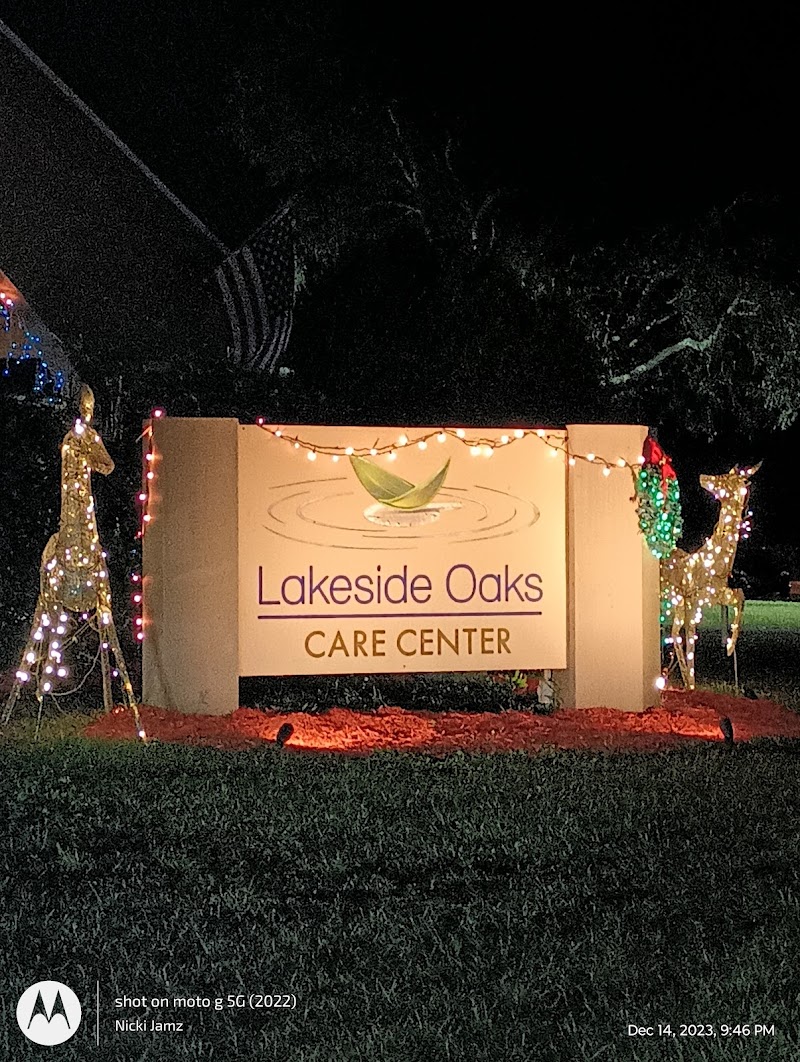
AVIATA AT LAKESIDE OAKS

1061 VIRGINIA ST, DUNEDIN, FL 34698 (727) 733-4189
For profit - Corporation 93 Beds AVIATA HEALTH GROUP Data: November 2025
Trust Grade
65/100
#324 of 690 in FL
Last Inspection: January 2024

Within standard 12-15 month inspection cycle. Federal law requires annual inspections.

Overview

Aviata at Lakeside Oaks has a Trust Grade of C+, indicating it is slightly above average but not exceptional. It ranks #324 out of 690 nursing homes in Florida, placing it in the top half, and #15 out of 64 in Pinellas County, meaning only a few local options are better. The facility's trend is worsening, as it moved from 2 issues in 2024 to 3 in 2025. Staffing is average with a 46% turnover rate, which is on par with the state average, and they have no fines recorded, which is a positive sign. However, there are concerning incidents, such as a resident being discharged without proper follow-up care and another resident not receiving their prescribed pain medication on time, highlighting some gaps in care that families should consider.

Trust Score
C+
65/100
In Florida
#324/690
Top 46%
Safety Record
Low Risk
No red flags
Inspections
Getting Worse
2 → 3 violations
Staff Stability
⚠ Watch
46% turnover. Above average. Higher turnover means staff may not know residents' routines.
Penalties
✓ Good
No fines on record. Clean compliance history, better than most Florida facilities.
Skilled Nurses
○ Average
Each resident gets 33 minutes of Registered Nurse (RN) attention daily — about average for Florida. RNs are the most trained staff who monitor for health changes.
Violations
⚠ Watch
18 deficiencies on record. Higher than average. Multiple issues found across inspections.
★★★☆☆
3.0
Overall Rating
★★★☆☆
3.0
Staff Levels
★★★★☆
4.0
Care Quality
★★★☆☆
3.0
Inspection Score
Stable
2024: 2 issues
2025: 3 issues

The Good

  • 4-Star Quality Measures · Strong clinical quality outcomes
  • Full Sprinkler Coverage · Fire safety systems throughout facility
  • No fines on record

Facility shows strength in quality measures, fire safety.

The Bad

3-Star Overall Rating

Near Florida average (3.2)

Meets federal standards, typical of most facilities

Staff Turnover: 46%

Near Florida avg (46%)

Higher turnover may affect care consistency

Chain: AVIATA HEALTH GROUP

Part of a multi-facility chain

Ask about local staffing decisions and management

The Ugly 18 deficiencies on record

Aug 2025 3 deficiencies
CONCERN (D) 📢 Someone Reported This

A family member, employee, or ombudsman was alarmed enough to file a formal complaint

Potential for Harm - no one hurt, but risky conditions existed

Quality of Care (Tag F0684)

Could have caused harm · This affected 1 resident

**NOTE- TERMS IN BRACKETS HAVE BEEN EDITED TO PROTECT CONFIDENTIALITY** Based on observations, record review and interviews, the facility failed to ensure treatment and care were provided after an upp...

Read full inspector narrative →
**NOTE- TERMS IN BRACKETS HAVE BEEN EDITED TO PROTECT CONFIDENTIALITY** Based on observations, record review and interviews, the facility failed to ensure treatment and care were provided after an upper extremity fracture in accordance with professional standards of practice for one resident (#2) of three sampled residents.Findings included:On 8/27/25 at 10:05 a.m., Resident #2 was observed sitting up in bed wearing a hospital gown. Resident #2's left arm was observed to be without movement and laid straight at his side. He was not wearing a left arm sling. Review of Resident #2's medical record revealed he was readmitted to the facility on [DATE] with diagnoses to include: cerebral infarction due to thrombosis of right middle cerebral artery; muscle weakness (generalized); spastic hemiplegia affecting left nondominant side; other symptoms and signs involving cognitive functions and awareness; aphasia following cerebral infarction; other schizoaffective disorders and was updated to include unspecified fracture of upper end of left humerus on 7/23/25.Review of Resident #2's medical record showed he had a designated healthcare proxy.On 8/21/2025 Resident #2 had a Brief Interview for Mental Status (BIMS) score, of 15 indicating intact cognition. Review of Resident #2's Emergency Department (ED) Discharge (DC) instructions from an acute care facility dated 7/22/25 at 5:24 p.m. shows: See Orthopedic surgery within 3-5 days. Please call to arrange an appointment for your left humerus fracture. Review of Resident #2's facility orders on 7/23/25 showed: sling to left arm as allowed and tolerated every shift related to unspecified fracture of upper end of left humerus, subsequent encounter for fracture with routine healing. There were no orders found for orthopedic surgery follow-up. Review of Resident #2's Treatment Administration Record (TAR) shows sling to left arm as allowed and tolerated every shift was checked off as performed for 8 of 9 days in July and 26 of 27 days in August. Review of Resident #2's progress notes dated 7/24/25 and 8/6/25 by the Resident's Primary Care Physician (PCP) stated: Plan includes: left arm sling, continue to monitor. Physician Progress notes dated 8/14/25 8:17 p.m. by the Resident's Nurse Practitioner stated: Left humerus fracture: continue immobilization and orthopedic follow-up per protocol. There were no progress notes stating the resident refused the left arm sling. Review of Resident #2's care plan initiated on 9/9/24 and revised on 5/15/25 shows: Alteration in usual functional performance in self-care related to CVA, use of psychoactive medication, communication impairment with a goal that stated the resident's functional performance in self-care will maintain at current functioning level through the next review target date of 11/26/25. The most recent intervention included: Apply sling to left arm as allowed and tolerated (initiated 7/23/25). There were no other interventions initiated since 7/23/25 including in other focus areas of the care plan. An interview was conducted with Resident #2 on 8/27/25 at 11:15 a.m. Resident #2 stated they put my arm in a sling after my injury. I don't need it anymore. My arm is better. During a phone interview on 8/27/25 at 1:24 pm with Resident #2's healthcare proxy, the healthcare proxy stated: He won't wear the sling for the left arm. The hospital ED said Resident #2 needed to see a bone doctor, but I was told by nursing at the facility that it was not recommended. During an interview on 8/27/25 at 2:00 p.m. with Staff Q, LPN, Staff Q stated if the staff makes a check mark in the TAR for an arm sling it means the sling is on. If the resident didn't have it on, I would chart ‘No' and then make a note about it. Or we can use the number codes to say ‘Other, refused', but I would make a note. During an interview on 8/27/25 at 2:20 p.m. with Staff P, CNA, Staff P stated I usually get Resident #2 out of bed every day. I know he used to have a left arm sling, but the resident is not wearing it anymore. The CNAs can put that on, but I haven't for a while. An interview was conducted with Staff O, RN on 8/27/25 at 2:25 p.m. Staff O said the left arm sling order is when needed (PRN). If there is a checkmark in the chart, it probably means it is on. Resident #2 hasn't been wanting to wear it. I don't even know if Resident #2 still needs it. Therapy or the doctor would make that decision. I haven't been able to discuss this with the doctor because I am only here once a week. An interview was conducted with the Medical Records Coordinator (MRC) on 8/27/25 at 4:20 p.m. The MRC said she schedules all residents' physician appointments. She says Resident #2 doesn't have any appointments coming up and hasn't had an appointment outside the building since March. A telephone interview was conducted with Resident #2's PCP on 8/28/25 at 9:50 a.m. The PCP stated treatment of this comminuted fracture often does not include surgery, but the orthopedic surgeon would make that determination. The PCP was not aware that the resident has not seen orthopedic surgery yet. The PCP said treatment with a sling is mainly for comfort, but it may continue to be used until the arm is re-X rayed. The orthopedic surgeon would need to re-Xray to determine healing even if surgery is not performed. During an interview on 8/28/25 at 2:30 p.m. with the Director of Nursing (DON), the DON stated that post injury, Resident # 2, was placed in a sling and with instructions to follow up with orthopedics. The resident has not seen orthopedics yet. I will have to check with the MRC about an appointment. The resident refuses the sling often and will not wear it. At this point, there is no follow up about his refusal. The normal process on post-acute care orders is that the primary nurse admitting the patient back from the hospital would put the orders in or the DON or Assistant Director of Nursing could place the orders. The facility staff would verify the orders with our physician as well. Review of a Facility Policy titled 'Admissions Procedure' revised 8/19/18 revealed: Any new information or changes noted during the collection of data from resident and/or Responsible Party will be communicated as necessary.
CONCERN (E) 📢 Someone Reported This

A family member, employee, or ombudsman was alarmed enough to file a formal complaint

Potential for Harm - no one hurt, but risky conditions existed

Deficiency F0627 (Tag F0627)

Could have caused harm · This affected multiple residents

**NOTE- TERMS IN BRACKETS HAVE BEEN EDITED TO PROTECT CONFIDENTIALITY** Based on record review and interview, the facility failed to ensure a safe and orderly discharge for one residents (#1) and fail...

Read full inspector narrative →
**NOTE- TERMS IN BRACKETS HAVE BEEN EDITED TO PROTECT CONFIDENTIALITY** Based on record review and interview, the facility failed to ensure a safe and orderly discharge for one residents (#1) and failed to follow up post discharge for two residents (#1 and #10) out of three residents sampled.Findings included:1. Review of Resident #1's admission record showed he was admitted on [DATE] and discharged on 6/20/25 to Private home/apt.(apartment) with no home health services: Home. Resident #1's medical diagnoses including the following: Stage 3 pressure ulcer of sacral region, paraplegia, chronic pain and osteomyelitis of the spine. Review of Resident #1's physician order dated 6/20/25 revealed Resident to discharge 6/20/25, DME [durable medical equipment]: 18 in (inch) W/C (wheelchair) with leg rests; shower chair, bedside commode; hospital bed; slide board; recliner chair; large briefs; wound care; physical therapy/ occupational therapy eval (evaluation) and treat (treatment).Review of Resident #1's physician order summary report, showed orders including:An order dated 6/19/25 revealed, discharge on [DATE], send all non-controlled medications. Send three days of narcotics.Order dated 6/11/25, apply zinc [ointment] to left ischium daily and as needed.Order dated 6/1/25, Cleanse left ischium wound with Dakins sol 0.125%, apply collagen powder, Cal Alginate and cover with superabsorbent dressing daily and as needed.Order dated 4/11/25, Oxycodone 15mg every 4 hours as needed for non-acute pain.Review of Resident #1's Medication Administration Record (MAR) dated 6/1/25-6/30/25 showed Oxycodone 15mg every 4 hours as needed for non-acute pain was given 43 out of 56 opportunities, between five to six dosages daily. Review of Resident #1's wound care provider note, dated 6/18/25 showed the reason for the visit was a stage four sacral pressure ulcer follow-up. Treatment clean wound with Dankins solution 0.125%, cover with collagen, alginate, super absorbent and bordered dressing daily. Recommendations include off load wound, turn and reposition per facility policy. Review of Resident #1's pain management provider note, dated 6/19/25 showed current regimen is reported reasonable effective to maintain comfort and motivation with person Activities of Daily Living [ADL's] . Plan he had dc [discharge] plans in place; .will ok 3 days of opiates to go home with patient .he is concerned in regard to quantity of PRN meds; oxycodone 15 mg every 4 hours; have discussed with nursing/ADON.Review of Resident #1's Minimum Data Set (MDS), dated [DATE], Section C, cognitive patterns revealed a Brief Interview for Mental Status (BIMS) summary score of 15 out of 15 indicating intact cognition. Section GG, Functional Abilities showed Resident #1 had impairments to bilateral lower extremities, uses a manual wheelchair for mobility, requires substantial to maximal assistance to get in and out of a tub or shower and needs full assistance with shower/bathe. Resident #1 requires partial to moderate assistance when positioned from sitting on the side of the bed to lying down, transferring from a bed to a chair and getting on and off the commode. Review of Resident #1's Social Service Progress notes showed the following:A note dated 6/16/25, Resident said he would like to be discharged from the current facility by 6/20/25. Social Service staff faxed a request for DME and Home Health (HH) and will request the resident's discharge address prior to facility discharge.A note dated 6/17/25 showed the facility called Resident #1's home care service provider and told the name of the home health provider and was informed DME had not been established with a vendor. The facility's social service staff will follow up with the home care service provider to see when a DME provider is chosen.A note created on 6/20/25, dated 6/19/25 showed, call placed to the home care service provider to inquire about the DME for Resident #1's 18 (inch) W/C (wheelchair). The home care provider services representative has not received insurance authorization.A note dated 6/20/25, Social Service staff was contacted that authorization for wheelchair had not been obtained and a request for the facility's social services to reach out to Resident #1's insurance to find out when authorization and be established. A review of Resident #1 Primary Care Physician (PCP) note dated 6/17/25 showed continue oxycodone for pain, on Naloxone (antidote) as directed . continue wound care management for pressure ulcers, .fall precautions and use of safety devices A review of Resident #1's discharge plans and instructions, with an effective date of 6/18/25, showed the following:The name of who will accompany Resident #1 was not listed. The disposition was home by car. Part 2; Physician information: Section E- Home Health Services: Receiving Home Health Services is not marked, Section F- Medical Equipment Supplier: receiving medical equipment is not marked and Section K- Wound Care: Receiving Wound Care Services is not marked. Part 4- Functional Status Evaluation discharge: Section 3- shows Resident #1 usually needs setup or clean up assistance before and after voiding or having a bowel movement. The helper does all the task when transferring from a bed to a chair. The ability to transfer in and out of a car was not attempted. Resident #1 requires a helper to do all the task to get on and off the toilet or commode. Review of the Social Services Discharge Summary note revealed a Home Health Care agency was provided, and DME provided. The Medication Summary shows prescriptions and mediations were sent with Resident #1. The section to document the number for the president's post discharge follow-up phone call is not completed. The discharge disposition shows Resident #1 was discharged with home health services. Documentation regarding post discharge follow-up phone call is blank. Review of the medical record did not reveal evidence the facility followed up with Resident #1 after discharge.During an interview on 8/27/25 at 4:34 PM the Social Services Director (SSD) said his responsibilities include faxing referral orders to home health services (HHS) and Durable Medical Equipment (DME) providers. He said he has an established relationship with Resident #1's HHS provider. Regarding the process to verify HHS services had started, the SSD says he does not always know and relies on the HHS providers to contact him.During a telephone interview on 8/28/25 at 9:47 AM with Resident #1's Primary Care Physician (PCP) said the resident had chronic pain, he is also his patient in the community, and he knew him well. HHS providers are involved; they are the ones who help us deal with making sure that the patient receives the care they need. He said, I expect my orders to be followed. During a telephone interview on 8/28/ 25 at 9:10 AM with Resident #1's documented HHS provider. The HHS representative said there is no file [current record] for Resident #1 the last referral for services was on 7/19/24. On 8/28/25 at 9:30 AM during a telephone conversation with Resident #1's home care benefits manager company, a company representative said on 6/20/25 the facility was notified the home care benefits provider did not accept Resident #1's insurance for home care services. On 6/27/25 Resident #1 was notified the company could not process orders for shower chair. On 8/5/25 the home care benefits manager closed out orders for the commode and transfer device due to missing documentation from Resident #1's insurance company. The representative said according to Resident #1's records the referral needed to be sent directly to [Insurance Company] for authorization.2. Review of Resident #10's admission record showed an admission date of 7/1/25 and a discharge date of 8/18/2025 to a private home/apartment with home health services. Resident #10's diagnoses including diabetes mellitus with foot ulcer, cognitive communication deficit, difficulty walking, and need for assistance with personal care and chronic pain.Review of Resident #10's physician order dated 7/29/25 showed Resident to discharge with 20 in wheelchair and PT/OT [Physical Therapy/Occupational Therapy] eval and treatReview of Resident #10 Discharge Plan and Instructions, signed on 8/1/25 revealed Resident #10 discharged to home with family member. The care plan goal is continue wound care is documented. Skin condition is described Right planter [NAME] 3.8 cm x1.5cm x 0.3 cm collagen, calcium alginate. The social service discharge summary .resident will receive HHS (home health services) for wound and PT/OT (physical therapy/occupational therapy). Discharge home with home health is selected for Resident #10. Resident #10's discharge plan and instructions did not list the name or contact phone number for HHS provider. Documentation regarding post discharge follow-up phone call is blank.Review of the medical record did not reveal discharge follow up communication was performed, and the facility did not provide documentation after two requests.During an interview on 8/27/25 at 10:51 AM Staff O, RN said the SSD starts the discharge documentation and notifies the nurses. Regarding discharging residents with controlled medications Staff O, RN said sometimes they will send the resident's remaining controlled medications and/or a prescription for the medication. She said depending on the provider orders for controlled medications they send enough for three days or what is on hand.During an interview on 8/27/25 at 12:03 PM, Staff U, Licensed Practical Nurse (LPN) for discharges the DON gives him the resident's packet. He checks the residents' orders, review the discharge packet with the resident and if ordered, gives the remaining medications to the resident. Staff U, LPN said the resident signs the paperwork. He is told in advance of DME delivery for the resident and wheelchairs are usually delivered to the facility before discharged . If the provider approves controlled medications to be sent with the resident he verifies with the DON. He sends whatever [number of pills] is on the card.During an interview on 8/27/25 at 12:58 PM, the DON said the facility follows physician orders. If a resident is discharging with controlled medications and does not have the number of pills ordered a prescription will be sent at the time of discharge. During an interview on 8/28/25 at approximately 1:30 PM with the SSD and the Regional SSD (RSSD), the RSSD said it is the company's policy to call the resident within three days of facility discharge to confirm HHS providers showed up and DME was delivered. He confirmed the three-day post discharge phone calls were not completed for Resident #1 or Resident #10.Review of facility's policy and procedure, titled Discharge of Resident to Home or Other Center, revised 8/3/2018 showed Procedure: 1. Upon determination by the Interdisciplinary team that resident is appropriate for discharge, the Nurse will obtain a physician's order for discharge to include:-Place of discharge-Community resources or referrals required-Status of medications on discharge (i.e. May discharge home with med)2. Complete the Discharge Plan.3. The list of medications may be printed from pharmacy for resident or legal representative review and signature. Signed copy of the pharmacy discharged Resident Medication Transfer Record is to be faxed to the number indicated on the discharge resident medication transfer record printed from the pharmacy and filed in the clinical record.5.Provide resident a copy of the Discharge Plan, and the pharmacy Medication list.6. Document final disposition in the resident's clinical record.-Resident's goals for admission and desired outcomes, as well as preferences and potential for future discharge- Individualized interventions that honor the resident's preferences and promote achievement of the resident's goal-Interdisciplinary approaches that maintain and/or build upon resident abilities, strengths and desired outcomes.
CONCERN (E) 📢 Someone Reported This

A family member, employee, or ombudsman was alarmed enough to file a formal complaint

Potential for Harm - no one hurt, but risky conditions existed

Pharmacy Services (Tag F0755)

Could have caused harm · This affected multiple residents

Based on interview and record review, the facility failed to maintain accurate records of controlled substances and ensure narcotics were reconciled as required for three residents (#2, #3, and #4) ou...

Read full inspector narrative →
Based on interview and record review, the facility failed to maintain accurate records of controlled substances and ensure narcotics were reconciled as required for three residents (#2, #3, and #4) out of three sampled residents.Findings included:On 8/27/2025 at 10:03 a.m., an interview was conducted with Resident #3. Over a week ago the resident did not receive the prescribed oxycodone 10 mg during an evening shift. The resident stated the pain medication was due at 6:00 p.m. Staff U, Licensed Practical Nurse (LPN), was asked several times to administer the medication. The resident did not receive the medication until the next shift. Review of the Medication Administration Record (MAR) and the Medication Monitoring/Control Record, the Narc log, revealed administrations were present in the Narc log but the corresponding administrations were not documented in the MAR. The following findings detail the volume of administration not documented in the MAR:Review of the Medication Administration Record dated 7/1/2025 through 7/31/2025, revealed Resident #3's MAR was missing nine out of 56 doses of Oxycodone 10 mg recorded on the Narc log. Resident #2's MAR was missing five out of the 90 doses of Norco (hydrocodone / acetaminophen) 325 mg recorded on the Narc log. Resident #4's MAR was missing 10 out of the 62 doses of Oxycodone 10 mg recorded on the Narc log.Review of 8/1/2025 through 8/15/2025 MAR records, revealed Resident #3's MAR was missing 10 out of 31 doses of Oxycodone 10 mg recorded on the Narc log. Resident #4's MAR was missing 2 out of the 13 doses of Oxycodone 10 mg recorded on the Narc log.On 8/28/2025 at 9:25 a.m., an interview was conducted with Resident #4. The resident began to use pain medications when physical therapy started. Resident #4 said medication is required to improve the residents' pain tolerance during the physical therapy sessions. The pain medication is scheduled for every 4 hours now. The resident will request the medication before physical therapy and would like it to be coordinated with physical therapy more often.On 8/28/2025 at 10:11 a.m., an interview was conducted with Staff H, LPN. She described the facility's process for receiving and documenting controlled substances. The pharmacy brings the medications to the facility, and two nurses must sign to receive the medications. They record the medication information in the Narc book. She stated when the medications are scheduled then they are administered during that scheduled time. If the medication is PRN, as needed, then it is administered if the resident asks for it. The medications are supposed to be recorded in the MAR and on the narcotic count sheet. She revealed that if you forget to record a medication, then the medication can be back dated. She was unsure of a certain amount of time allowed to back date a medication, but she knows that documentation should be done immediately. She stated that if the narcotic count does not match the documentation, then they are required to flag it. They must then let the Director of Nursing (DON) or the Assistant Director of Nursing (ADON) know about the error. She has received some training on the facility's controlled substance reconciliation policy. She was unsure about the date the training occurred. Her most recent training was in June 2025 regarding the facility's two-nurse system. The narcotics are stored in the medication carts, with a two-lock system. She has never encountered a narcotic discrepancy. During shift-to-shift narcotic count verification, the nurses look at the number of medications on the Narc Sheet and count it all together. If medication is not available in the cart, then the nurse must retrieve the medication from a medication dispensing system. They must call the Pharmacy Consultant and are given a code to retrieve the medication out of the medication dispensing system. A pharmacy representative performs monthly checks of the medication dispensing system.On 8/28/2025 at 10:23 a.m., an interview was conducted with the Director of Nursing (DON). The DON said the narcotic medications come from the pharmacy with a manifest slip. Two nurses are required to sign for the medications and log them into the Narc book. The medications are placed in the locked medication cart and counted every shift. Narcotics are reviewed at the management level at least every week. An audit is performed 10 times a month. If a discrepancy is reported, then he will try to figure out how it happened. If there was a diversion found, then one of the regional supervisors would be involved in the investigation. The DON revealed that there have not been any investigations into narcotic discrepancies in the last six months. He also has never reported narcotic discrepancies to the state board, Drug Enforcement Administration (DEA), or law enforcement. He related that training is completed during the narcotic auditing and during employee onboarding training. Discontinued medications are placed in a two-drawer locked file cabinet until destruction. Destruction of narcotics is completed with the Pharmacy Consultant during the monthly review. On 8/28/2025 at 10:35 a.m., an interview was conducted with the Pharmacy Consultant. He stated that he monitors the controlled substances in this facility. He tracks what is coming into the facility, checks the logs, and ensures there are two nurses' signatures. He disposes of the pulled narcotics with the DON every month. The audit review and disposals usually occur on the first Thursday of the month. He provides a monthly report for the facility that includes any discrepancies. He notes discrepancies such as scratch marks, missing numbers, and missing signatures. When discrepancies are identified, he also talks to the DON. He is not aware of any diversion during narcotic handling. His last audit and report was on August 1, 2025.On 8/28/2025 at 10:50 a.m., a follow up interview was conducted with Resident #3. The resident confirmed that she only had an issue with not receiving pain medication on that one day. Resident #3 takes pain medication every eight hours. The resident stressed that the medication is never refused because it is needed. The night nurses may run late with medications, but the resident usually gets it sooner or later.On 8/28/2025 at 11:43 a.m. an interview with the DON was conducted. The discrepancies found in the sampled residents records were discussed. The DON stated that the staff should be signing the medication narcotics sheet and the MAR. The staff did not sign them out as given, and that is an error. He provided a copy of the monthly report. He stated actions would be planned in reference to the monthly report and education would be provided for the staff.A review of the Monthly Medication Unit Review completed on 8/1/2025 by the Consultant Pharmacist revealed a no under sections titled: Controlled substance documentation is accurate and complete, and Controlled substance inventory is reconciled according to facility procedures.A review of the facility policy and procedure titled Medication-Oral Administration of with a revision date of 08/15/2019, revealed: on page 2, when documenting in the EMAR, the nurse will document immediately prior to administration and immediately post administration based on individual professional practice of the nurse.A review of the facility pharmacy policy and procedure titled 4.0 Schedule II Controlled Substance Medication with no listed effective date, revealed: on page 4-8, Section H (5), When a controlled dangerous substance medication is administered, in addition to following proper procedure for the charting of medications, the nurse must document on the declining inventory sheet the date of administration, the quantity administered, the amount of medication remaining and his/her initials.
Jan 2024 2 deficiencies
CONCERN (D)

Potential for Harm - no one hurt, but risky conditions existed

Deficiency F0582 (Tag F0582)

Could have caused harm · This affected 1 resident

Based on record review, staff interview, and policy review, the facility failed to ensure the Skilled Nursing Facility Advanced Beneficiary Notice of Non-coverage (SNF-ABN) was issued to 1 of 2 sample...

Read full inspector narrative →
Based on record review, staff interview, and policy review, the facility failed to ensure the Skilled Nursing Facility Advanced Beneficiary Notice of Non-coverage (SNF-ABN) was issued to 1 of 2 sampled residents reviewed for beneficiary notices. (Resident #136) The findings include: A review of Resident #136's record revealed a Medicare Part A Skilled Services start date of 11/23/23, with the last covered day of Part A services listed as 12/13/23. The record did not contain the required SNF-ABN form. An interview was conducted with the Social Services Director on 1/24/24 at 12:01 PM. He stated the facility did not issue a SNF-ABN to Resident #136 because he was not aware of the requirement. A review of the facility policy SNF Advance Beneficiary Notification (ABN) & Notice of Medicare Provider Non-Coverage (BO-510 revised 5/1/18) revealed that the Care Center is responsible for delivering the Notice of Medicare Provider Non-Coverage and the SNF ABN to all beneficiaries not later than 2 days, before their covered services end and for delivering the Detailed Notice to the Quality Improvement Organization and the beneficiary by close of business of the day the beneficiary requests a review (if a review is requested).
CONCERN (D)

Potential for Harm - no one hurt, but risky conditions existed

Drug Regimen Review (Tag F0756)

Could have caused harm · This affected 1 resident

Based on interview, record review, and policy review, the facility failed to obtain and/or act upon pharmacy recommendations in July and December 2023 for 4 of 5 sampled residents. (Residents #26, #46...

Read full inspector narrative →
Based on interview, record review, and policy review, the facility failed to obtain and/or act upon pharmacy recommendations in July and December 2023 for 4 of 5 sampled residents. (Residents #26, #46, #60, #70) The findings included: Resident #26 On 1/25/24, a review of a Consultant Pharmacist Medication Regimen Review to Psychiatry dated 12/18/23 for Resident #26 was conducted. The review stated, .the resident is due for a gradual dose reduction in an attempt to find the lowest effective dose. If the medication cannot be reduced at this time please check the appropriate rationale below related to the gradual dose reduction being clinically contraindicated at this time and make a brief clinical rational note that the benefits outweigh the risks. The form was not completed or signed by a medical practitioner or psychiatrist at the time of the survey. A review of the order summary report dated 1/24/24 for Resident #26 was conducted. Resident #26 had a diagnosis of Schizoaffective disorder and Alzheimer's Disease. The resident had an order dated 8/8/23 to take Seroquel (an antipsychotic medication) 50 mg 1 tablet by mouth twice daily. The last psychiatric assessment for Resident #26 was completed on 12/29/23. The assessment did not provide any information or statement regarding a gradual dose reduction for the Seroquel 50 mg twice daily for Resident #26. Resident #46 On 1/25/24 a review of two Consultant Pharmacist Medication Regimen Reviews dated 12/18/23 for Resident #46 was conducted. The first medication regimen review to the physician for Resident #46 was regarding guaifenesin oral tablet 400 mg give 1 tablet by mouth two times daily for seasonal allergies. This order was started on 10/10/23. The order stated that the medication may be used for an acute illness/symptoms for a defined duration and the stopped or may be of a chronic nature and that the medical staff should indicate if chronic or acute and discontinue if appropriate. The review will help reduce overmedication. The form was not completed or signed by a medical practitioner at the time of the survey. A review of the order summary report dated 1/24/24 for Resident #46 was conducted. Resident #46 had an order dated 10/10/23 to take guaifenesin oral tablet 400mg tablet by mouth two times daily for seasonal allergies. The second medication regimen review to the nurse for Resident #46 was regarding Midodrine HCL oral tablet 10 mg 1 tablet by mouth three times daily for Hypertension (HTN). The recommendation asked the nurse to please evaluate the indication of hypertension vs hypotension. At the time of the survey, the form was not signed or updated by a nurse or physician. A review of the order summary report dated 1/24/24 for Resident #46 was conducted. The summary noted that Resident #46 had a diagnosis of Essential Hypertension and had an order for Midodrine HCL 10 mg 1 tablet by mouth three times daily for Hypertension (HTN). On 1/25/23, a review of the Consultant Pharmacist Services Agreement effective 12/1/2023 was conducted. The agreement indicated that the consultant pharmacy would provide general supervision of clients pharmaceutical services including medication regimen reviews. These reports would be provided for each resident of the facility at least once each month. The consultant pharmacy agreement indicated that an electronic copy of the report would be sent within 3 business days to facility leadership. Resident #60 On 01/25/2024 during a record review for Resident #60, the 12 month Pharmacy Review revealed that the December 2023 review had not been received by the facility or requested by the facility, and was only discovered by facility staff after the survey team requested the Pharmacy Review for Resident #60. The December 2023 pharmacist review recommended an antidepressant to be reviewed for a possible Gradual Dose Reduction in an effort to find the lowest effective dose, which had not been followed up. (Photographic evidence obtained) Resident #44 On 01/25/2024, during record review for resident #44, the 12 month Pharmacy Review revealed the December 2023 review had not been received by the facility or requested by the facility, and was only discovered by facility staff after the survey team requested the Pharmacy Review for Resident #44. The pharmacist had recommended a dose reduction for an antihistamine prescribed for Resident #44, which had not been followed up. (Photographic evidence obtained) Resident #70 Review of Resident #70's record revealed a consultant pharmacist recommendation dated 7/10/23, which indicated the resident had a diagnosis of diabetes, but a hemoglobin A1C (a blood test that measures the individuals average blood sugar levels over the past 3 months) was not available in the medical record in the past 6 months. The pharmacist recommended monitoring the hemoglobin A1C on the next convenient lab day and every 6 months if meeting treatment goals, or every 3 months if therapy has changed or goals are not being met. The pharmacist recommendation form contained a hand written telephone order by the Director of Nursing (DON) dated 7/20/23 stating, okay to do lab draw. A review of Resident #70's record revealed no hemoglobin A1C blood test on file. An interview was conducted with the DON on 1/24/24 at 11:48 AM. She stated the hemoglobin A1C was missed and not obtained. She and the Assistant DON were responsible for ensuring the pharmacy recommendations were acted upon. She may have been interrupted during the process. On 1/24/24, the survey team requested the pharmacy recommendations from December 2023. The review of the consultant pharmacist for Resident #70, dated 12/18/23, revealed a recommendation to consider adding an as needed parameter for the Glucagon injection as needed for hypoglycemia on when to administer the medication, for example blood sugar less than 60. A review of the record revealed the recommendation had not been acted upon by the facility. An interview was conducted with the DON on 1/24/24 at 3:15 PM. The DON stated the facility changed pharmacy consultants in December 2023 and the new pharmacist emailed some reports in December 2023. She did not realize she did not receive all of the reviews until the survey team requested specific pharmacy reviews for December 2023 and she did not have them. She stated the facility expects the reports on all residents to be provided in the same month of the review. Review of the facility policy for Monthly Drug Regimen Review (N-866 revised 10/10/18) revealed, During the drug regimen review, the consultant pharmacist is to identify drug regimen irregularities. Drug regimen irregularities are to be communicated to the attending physician, the Medical Director, and the DON/designee to complete follow up as indicated. Routine recommendations to be communicated to the DON/designee, attending physician, and Medical Director for response and resolution, after the completion of the Monthly Drug Regimen Review. Drug regimen irregularities identified by the consultant pharmacist that require urgent action are to be communicated to the DON/designee for resolution with the attending physician and/or Medical Director.
Dec 2022 3 deficiencies
CONCERN (D) 📢 Someone Reported This

A family member, employee, or ombudsman was alarmed enough to file a formal complaint

Potential for Harm - no one hurt, but risky conditions existed

Grievances (Tag F0585)

Could have caused harm · This affected 1 resident

Based on observations, record review, and interviews, the facility failed to follow its grievance procedure and accurately conduct its investigation for one (Resident #1) of three sampled residents fo...

Read full inspector narrative →
Based on observations, record review, and interviews, the facility failed to follow its grievance procedure and accurately conduct its investigation for one (Resident #1) of three sampled residents for a voiced grievance. Findings included: On 12/6/2022 at 11:07 a.m., during an interview with Resident #1, she was asked if she had ever filed a grievance. She confirmed she had but did not know the outcome of the grievance. She reported she filed several grievances in October, specifically one on the length of time she had to wait for staff to answer her call light on the 11:00 p.m. to 7:00 a.m. shift. She confirmed no one had come to explain what they were going to do or to discuss the findings. Resident #1 had a roommate who was alert and oriented, she also confirmed no one had come to talk to Resident #1 regarding the outcomes for the grievances. Resident #1 was asked specifically if the Nursing Home Administrator (NHA) had notified her of any resolution to her grievances particularly the one regarding not answering call lights on the 11:00 p.m. to 7:00 a.m. shift. Resident #1 confirmed she had not received any findings for this grievance. A review was conducted of the Grievance Log for October 2022. Resident #1 had filed three grievances in October. On 10/24/22, the resident had a grievance related to the length of time it took for staff to answer call lights. The grievance which was investigated by the NHA with a date of 10/24/22, with findings documented on 10/25/22, read as follows: Resident stating it took too long for her call light to be answered. Resident stated this happens usually during the 11:00 p.m.-7:00 a.m. shift. Resolution dated 10/25/22- call light audits conducted - [Audits were not on the 11:00 p.m. to-7:00 a.m. shift]. Nursing reported resident turned on light right after (unreadable) comes in. Part of the written resolution was 1. Apologized to the resident, 2. Call light audits 3. Education staff aware to answer call lights after leaving the room and resident turned back on 4. Spoke to resident regarding audits and education. During a second interview conducted with Resident #1 on 12/6/22 at 2:15 p.m., the resolution was read to her, and she confirmed this was the first time anyone had given her a response to her grievance. She denied the NHA came to talk to her. An interview with the NHA was conducted on 12/6/22 2:18 p.m., regarding her resolution to the resident's grievances and regarding her audits for the resident's voiced concern timeframe. Review of the audits revealed they were not within the timeframe of 11:00 p.m. to 7:00 a.m. shift. The audits were conducted between 11:30 a.m. through 6:00 p.m. The NHA confirmed the audits should have been done within the time range that was in the complaint. The NHA was made aware Resident #1 denied having heard back with a resolution to her grievance, the NHA responded of course she did. A facility policy dated 11/30/2014 with a revision date of 8/9/2018 titled Complaint/Grievance, read as follows- Under the heading Purpose: To support each resident's right to voice grievances; resulting in a follow up and resolution while keeping the resident apprised of its progress toward resolution. The individual voicing the grievance shall receive follow up communication with the resolution.
CONCERN (D) 📢 Someone Reported This

A family member, employee, or ombudsman was alarmed enough to file a formal complaint

Potential for Harm - no one hurt, but risky conditions existed

Investigate Abuse (Tag F0610)

Could have caused harm · This affected 1 resident

**NOTE- TERMS IN BRACKETS HAVE BEEN EDITED TO PROTECT CONFIDENTIALITY** Based on observations, record reviews, and interviews, the facility failed to thoroughly investigate an allegation of drug misap...

Read full inspector narrative →
**NOTE- TERMS IN BRACKETS HAVE BEEN EDITED TO PROTECT CONFIDENTIALITY** Based on observations, record reviews, and interviews, the facility failed to thoroughly investigate an allegation of drug misappropriation for one (Resident #2) of one sampled resident with an allegation of drug diversion. Findings included: Resident #2 was admitted on [DATE] and re-admitted on [DATE]. The admission Record included diagnoses not limited to unspecified paraplegia, sequelae of unspecified injury to unspecified level of lumbar spinal cord, and unspecified hereditary and idiopathic neuropathy. The Quarterly Minimum Data Set (MDS) dated [DATE] identified a Brief Interview of Mental Status (BIMS) score of 15 out of 15, indicating an intact cognition. The MDS indicated the resident had answered having occasional pain in the last 5 days with the worse pain of 6 out of 10. A review of the facility's Reportable Events Logs from September 2022 to December 2022 identified an allegation in October 2022 regarding misappropriation involving Resident #2 on 10/1/22. The log indicated notifications to law enforcement (LE) and to the state and federal oversight agencies were done. An interview was conducted, on 12/6/22 at 1:08 p.m., with the Nursing Home Administrator (NHA). The NHA reported a blister card containing the narcotic, Oxycodone 30 milligram (mg) was missing on 10/1/22. She stated when the nurse went to re-order Resident #2's Oxycodone, they could not re-order because it was to early. The pharmacy informed the facility they had delivered four blister cards, the facility could only account for three cards, and the facility could not find the Controlled Medication Utilization Record (a record of narcotic medication administration) for the Oxycodone from 9/17 to 9/23/22. The NHA reported on 9/9/22, four blister cards that contained 30 tablets each were delivered for Resident #2 who received the medication per schedule. She stated the physician was notified and an audit of narcotics was done, the previous Assistant Director of Nursing (ADON) looked through the medication cart, the Director of Nursing (DON) came in the next day and looked through the medication carts and the shredder bins. The NHA stated the count of blister cards and narcotic pills was correct. The NHA stated she could not answer why the count of cards was not correct when counted during on-off going shifts. The NHA stated staff should have re-ordered and noticed the count was wrong prior to this incident. The NHA reported on 9/20/22 a vital records company had removed eight bins for shredding. The NHA reported the facility conducted an ad hoc Quality Assurance meeting on 10/3/22 (two days after the incident) and did education with the two oncoming and off-going nurses who had not signed the counting of narcotics on 9/28 and 9/29/22. She stated 100% of the nurses were educated on the policy and procedure for shift to shift narcotic count. The NHA confirmed staff had signed on 9/9/22 for the delivery of four cards of 30 mg Oxycodone. The NHA stated the root cause was that staff were not counting cards or pills correctly. A review of the Ad Hoc Quality Assurance was conducted during the interview with the NHA. The ad hoc meeting notes on 10/3/22 indicated the reason for Ad Hoc was to Immediately correct and maintain compliance with medication administration and controlled substance reconciliation center wide. The data indicated that 1. Unable to re-order narcotic (NARC) and 2. Controlled substance cared and sheet missing for 9/27/22. The root cause analysis identified that Nurse NARC shift to shift count was not being completed per policy. The plan was as follows: - 1. Follow Policy and Procedure for shift to shift NARC count. See Attached. - 2. Education to follow Policy and Procedure. - 3. Full House Audit of NARC received from pharmacy. - 4. Weekly Audit by Director of Clinical Service (DCS) on each unit. The Quality Review identified a Controlled Substance Reconciliation was conducted on 10/3/22 by the Director of Clinical Services (DCS). The review indicated, Quality Review will be conducted by the Director of Nursing/designee monthly (A minimum of 15 Patients/Residents will be reviewed). Results of the Quality Review to be reviewed in the monthly Quality Assurance/Performance Improvement (QAPI) meeting. During the interview on 12/6/22 at 1:08 p.m., the NHA stated the Quality Review was not ongoing as the facility had found no other discrepancies and she would have to ask nursing when the audits were completed. The NHA did not produce any weekly audits following the full house narcotic audit. She stated that Resident #2 was okay, the facility had done a pain assessment, and had received as needed pain medication. On 12/6/22 at 2:01 p.m., the NHA confirmed she had only one audit which was 100% of the residents receiving narcotics done on 10/3/22. The facility provided a pain evaluation, dated at 10:15 a.m. on 10/2/22, for Resident #2. The pain evaluation was conducted approximately 34 hours after Resident #2 did not receive the scheduled dose of Oxycodone 30 mg due to unavailability. The NHA stated on 12/6/22 at 1:08 p.m., the nurse did not document the assessment right away and it should have been a late entry. The evaluation was signed and locked at 10:20 a.m. on 10/3/22 (three days after the incident). During an interview, on 12/6/22 at 2:53 p.m., the Director of Nursing (DON) stated she did not recall how many audits were completed, remembered only the one (10/3/22). She stated she remembered doing audits on all the carts, then stated we (herself and the previous ADON) did weekly audits on Monday and Thursday to make sure medications were available before and after the weekend but did not document them (audits). She stated the previous ADON left at the end of October, did not know why the ADON did not document, and that she did not follow up on the ADON documentation. The DON related that weekly means more than one and the Ad Hoc was a plan of correction and would be more than one (audit). She identified the audit completed on 10/3/22 was not the weekly audit but the full house audit of narcotics from the pharmacy. A review of the Shift Change Controlled Substance Inventory Count Sheet for the [NAME] wing, identified on 9/13/22 at 7:00 a.m., one card was removed and the card count was 26, at 7:00 p.m. The facility added four cards and subtracted one to equal 29. The facility documented again for 9/13/22 at 7:00 a.m., to add one card and remove three for a total of 27 cards. There was no documentation for 9/14/22 however, the next total cards for 9/15/22 for 7:00 a.m. to 7:00 p.m., was 23. The record did not account for the disposition of the narcotic cards (from 9/13 to 9/15/22). The Shift Change Sheet for the [NAME] wing identified on 9/13, 9/20, and 9/21/22 the oncoming nurse at 7:00 p.m. did not sign the log and the off-going staff had not signed the count log on 9/5/22 or 9/23/22. The policy and procedure - Abuse, Neglect, Exploitation and Misappropriation, effective 11/30/2014, and revised 11/28/2017, indicated it is inherent in the nature and dignity of each resident at the center that he/she be afforded basic human rights, including the right to be free from abuse, neglect, mistreatment, exploitation and/or misappropriation of property. The policy defined Misappropriation of resident property is the deliberate misplacement, exploitation, or wrongful, temporary, permanent use of a resident's belongings or money without the resident's consent. The definition included Diversion of resident's medication(s), including, but not limited to, controlled substances for staff use or personal gain. The procedure revealed that investigations would include the following: - The nurse of Director of Clinical Services shall perform and document a thorough nursing evaluation, and notify the attending physician. - The Abuse Coordinator and/or Director of Clinical Services shall take statements from the victim, the suspect(s) and all possible witnesses including all other employees in the vicinity of the alleged abuse. He/she shall also secure all physical evidence. Upon completion of the investigation, a detailed report shall be prepared. The policy and procedure - Controlled Drug Count, effective 11/30/2014 and revised 10/30/2020, identified 'the process for counting and documention of controlled substance chain of custody from off going nurse to on coming nurse and additional steps to take if a discrepancy is discovered. The procedure indicated that The oncoming and the off-going shift nurses assigned to the controlled drug cart are responsible for ensuring the accuracy of the controlled drug count.
CONCERN (D) 📢 Someone Reported This

A family member, employee, or ombudsman was alarmed enough to file a formal complaint

Potential for Harm - no one hurt, but risky conditions existed

Deficiency F0688 (Tag F0688)

Could have caused harm · This affected 1 resident

**NOTE- TERMS IN BRACKETS HAVE BEEN EDITED TO PROTECT CONFIDENTIALITY** Based on observation, medical record review, facility policy review, and interviews, the facility failed to ensure one (Resident...

Read full inspector narrative →
**NOTE- TERMS IN BRACKETS HAVE BEEN EDITED TO PROTECT CONFIDENTIALITY** Based on observation, medical record review, facility policy review, and interviews, the facility failed to ensure one (Resident #1) of eight sampled residents received ordered treatment and services to prevent further decrease in range of motion. Findings included: During an interview with Resident#1 on 12/6/22 at 11:07 a.m., she reported she had not received restorative services but had an order to receive ROM (range of motion) at least three times a week. A review of the resident's medical record revealed the resident was originally admitted to the facility on [DATE] with a re-admission date of 7/30/2022. Resident #1 had multiple diagnoses but not limited to quadriplegia, anxiety, muscle weakness, chronic pain and depression. Resident#1 was alert, oriented, and able to make her needs known with a BIMS of 15, which indicated intact cognition. A review of a restorative order by her physician dated 8/3/2022 read: Restorative: Gentle PROM (passive range of motion) on BLE (bilateral lower extremities) flex/extend/ABD (abduction) for one set of 20 reps without using weights. PROM to bilateral feet dorsiflexion for 1 set of 20 reps. AROM (active range of motion) on BUE (bilateral upper extremities) for 2 sets of 20 reps with modified technique using trapeze and bands, hook system using moderate to heavy bands. A review was conducted of Resident #1's care plans dated 5/24/22, with an intervention dated 8/4/22, and read as follows: Name of resident, requires assistance with all her ADLs (activities of daily living) related to quadriplegia, impaired balance/transfers, non-ambulatory, unable to feed self or assist with any ADLs. She is alert and able to express her wants and needs. She has a urostomy. An intervention was: Restorative program as written. Dated 8/4/22. Further record review revealed no documentation regarding the resident receiving this service from 8/3/22 through 10/25/22 the date she voiced her grievance. On 12/7/2022 at 9:30 a.m., the Director of Nursing was asked to provide documented evidence the resident was being provided with restorative services as ordered on 8/3/2022. A second request was made to the corporate nurse at 1:16 p.m. on 12/7/2022. She confirmed there was no documentation to the effect that Resident#1 received restorative services from 8/3/22 through 10/25/22 when she filed a grievance. During this interview, the Director of Nursing was present and stated the resident did receive restorative services, we just did not document it. They were advised the resident who was alert, oriented, and able to make her needs known denied receiving restorative services. Policies and procedures were reviewed for the facility's restorative nursing program dated 2/1/2016 with a revision date of April 15th, 2022. Under the heading of Documentation, #7 indicates restorative nurse or designee to document in the medical record the initiation of a restorative program. #8 RNA will document residents' participation actual number of minutes participating in the restorative intervention. #9 restorative nurse or designee will review RNA (restorative nurse aide) documentation weekly during standard of care meeting. Restorative nurse or designee will document residents' response to intervention and progress towards goals. Modify goals and intervention is appropriate. Revised care plan is needed and is program changes and #10- the restorative nurse or designee will review restorative programs monthly and document a summary note. Documentation should include but is not limited to, and evaluation of the continued appropriateness of the current restorative nursing program, reflect functional progress made during the entire month, and any teaching.
Dec 2021 9 deficiencies
CONCERN (D)

Potential for Harm - no one hurt, but risky conditions existed

Deficiency F0558 (Tag F0558)

Could have caused harm · This affected 1 resident

**NOTE- TERMS IN BRACKETS HAVE BEEN EDITED TO PROTECT CONFIDENTIALITY** Based on observation, resident interview, staff interview and record review the facility failed to accommodate the need to maint...

Read full inspector narrative →
**NOTE- TERMS IN BRACKETS HAVE BEEN EDITED TO PROTECT CONFIDENTIALITY** Based on observation, resident interview, staff interview and record review the facility failed to accommodate the need to maintain eyeglasses in good repair for one resident (#11) out of 32 sampled residents. Findings included: An observation was made on 12/20/21 at 10:25 a.m. of Resident #11, he was observed to be lying in bed watching television with eyeglasses on. The eyeglasses were observed to be missing the right arm of the glasses that rests on his ear. The resident stated I have told the Nursing Home Administrator (NHA) that I need new glasses one pair is scratched and this pair is broken. A review of Resident #11's Quarterly Minimum Data Set (MDS), dated [DATE], Section C - Cognitive Patterns revealed a Brief Interview for Mental Status score of 14 out of 15 indicating no cognitive impairment. Review of Section B Hearing, Speech, and Vision showed the resident used corrective lenses. A review of Section B Hearing, Speech, and Vision for the Quarterly MDS, dated [DATE], showed the resident used corrective lenses. A review of Section B Hearing, Speech, and Vision for the Annual MDS, dated [DATE], showed the resident used corrective lenses. Further observation and interview with Resident #11 was conducted on 12/21/21 at 4:53 p.m. the resident stated his glasses are still not fixed, he told the NHA about it. The resident was observed to be wearing the glasses with the right arm of the glasses missing. Review of Resident #11's [Eye Care Company] care notes dated 8/17/21 revealed a service date of 8/12/21. Review of the note did not indicate the resident had eyeglasses. The note indicated the chief complaint was hypertension and possible hypertensive retinopathy, possible blurred vision reported per staff. An interview was conducted with the NHA on 12/21/21 at 6:13 p.m. she stated she did not know Resident #11's glasses are broken. On 12/22/21 at 9:55 a.m. Staff F, Certified Nursing Assistant (CNA) said, I work with [Resident #11] when I work the 3:00 p.m.-11:00 p.m. shift. When I came in to drop off his meal tray two days ago I noticed his glasses were broken and I mentioned it to him and he told me that he told Social Services about it and they were taking care of it. At this time Resident #11 was observed to be lying in bed not wearing any glasses. The resident's glasses were observed to be sitting on his bedside tray table with the right arm of the frame broken off. Staff F, CNA confirmed those were the glasses she was talking about. On 12/22/21 at 9:49 a.m. an interview was conducted with the Social Services Director, she stated [Resident #11] was seen in November (2021) by [Eye Care Company] and she was not aware his glasses were broken. An interview was conducted on 12/22/21 at 10:20 a.m. with Staff G, Registered Nurse (Resident #11's nurse for the shift) and she confirmed Resident #11's glasses have been broken for a while now. A policy related to dignity was requested and was not provided by the facility.
CONCERN (D)

Potential for Harm - no one hurt, but risky conditions existed

Deficiency F0676 (Tag F0676)

Could have caused harm · This affected 1 resident

**NOTE- TERMS IN BRACKETS HAVE BEEN EDITED TO PROTECT CONFIDENTIALITY** Based on observations, interviews, and record review, the facility failed to assist one resident (#43) of thirty-two sampled res...

Read full inspector narrative →
**NOTE- TERMS IN BRACKETS HAVE BEEN EDITED TO PROTECT CONFIDENTIALITY** Based on observations, interviews, and record review, the facility failed to assist one resident (#43) of thirty-two sampled residents with Activities of Daily Living (ADLs) related to not assisting Resident #43 up and out from bed daily for three days (12/20/2021, 12/21/2021 and 12/22/2021) of three days observed. Findings included: On 12/20/2021 observations at 9:45 a.m., 10:20 a.m., 11:45 a.m., 1:20 p.m. and 3:15 p.m. revealed Resident #43 in her room either lying in bed with the head of the bed at forty-five degrees, not dressed for the day, or in bed with the head of the bed at forty-five degrees with the blanket pulled over her head. Resident #43 was observed to be calling out and yelling at 9:45 a.m., 10:20 a.m., 11:45 a.m. and 1:20 p.m. and was visited by various staff members at these times and then she would stop yelling out. Resident #43's television was not observed on nor was there any type of radio on. Staff did not get Resident #43 up and out from bed during this timeframe. Resident #43 had a wheelchair that was positioned and placed near the foot of her bed. Resident #43 was observed with cognitive deficits and was not able to answer questions related to her care and services. An observation at 3:15 p.m. revealed Resident #43 in her bed playing an oversized electronic organ/piano, which was placed on her lap. She was also observed singing. It was observed that a music activity with a musician was held on 12/20/21 at 10:00 a.m. and Resident #43 was not at this activity nor was there documentation to show the resident was offered an opportunity to attend. On 12/21/2021 from first observed visit at 7:00 a.m. through to approximately last observed visit at 4:00 p.m. revealed Resident #43 was again observed in her room and lying or seated upright in bed. She was observed again at times with her head covered with a blanket. The wheelchair was placed near the foot of her bed. Resident #43 was observed at times calling out loudly and then visited by staff for a brief time. After the lunch meal, she was again observed playing her electronic organ and was singing. It was again observed that staff did not get Resident #43 up out from bed during the entire observed timeframe. On 12/21/2021 at 11:00 a.m. Resident #43's family member was interviewed via telephone. She indicated she does visit during the week and weekends. She revealed that she was allowed to visit in the facility and while Resident #43 was in her room. The family member indicated she had a couple of concerns and mentioned them during care plan meetings and to various staff members on the weekends, evening shift and day shift. She indicated that she knows Resident #43 would get up out from bed if assisted. The family member revealed Resident #43 cannot get up out from bed on her own and needs staff to get her up. She does not believe staff are offering or trying to get her up out of bed during the day. She feels Resident #43 would benefit more if she was at least up out from bed and in her wheelchair. The family member did not know if Resident #43 has ever refused getting up out of bed but when she visits, Resident #43 has told her that she would get up out of bed if helped. On 12/21/2021 at 1:30 p.m. an interview with Staff E, Licensed Practical Nurse (LPN) revealed Resident #43 loves to play her piano, and loves music. She further revealed Resident #43 was a musician at her church and played the piano there. Staff E also revealed she has seen Resident #43 at music activities and did not know why she was not present in the group music activity the day before (12/20/2021), nor why she was not present and or offered to attend the current day's (12/21/2021) group social and music activities. She explained the certified nursing assistants and activities staff are to go to resident rooms every day and offer and assist with activities. On 12/22/2021 from first observed visit at 6:45 a.m. through to at least last observed visit at 5:00 p.m., Resident #43 was in her room and lying in bed under the covers and with the covers over her head. She had been observed yelling out at times but staff were able to redirect her after brief visits. Resident #43 was again observed playing her electronic organ/piano after lunch service for about thirty minutes. She had also been observed singing to herself while playing the organ/piano. Resident #43 was visited by this surveyor as she was playing the organ/piano and she was very excited to have a visitor and wanted to play and sing to this surveyor. She was asked if she wanted up out from bed at times and grabbed this surveyor's hand and shook her head up and down in a yes manner. It was observed that staff did not get Resident #43 up out from bed all day. Her wheelchair remained near the foot of her bed. On 12/22/2021 this surveyor was seated at the nurses' station, about ten feet from the resident's room from 7:30 a.m. through to 11:00 a.m. It was observed that staff had not offered or assisted Resident #43 up out from bed or to go to any of the day's scheduled social and music activities. There was a scheduled group activity in the main dining rooms that included Morning social with coffee at 10:00 a.m. On 12/22/2021 at 12:30 p.m. an interview with Staff C, Certified Nursing Assistant (CNA), who had Resident #43 on her work assignment, revealed she does know Resident #43 a little but did not know if she likes to go to group music or group social activities. She confirmed she did not get the resident up an out of bed this a.m. and did not offer her to go to any group activity scheduled for the day. Staff C confirmed the resident has refused to get up out of bed and that they (the aides and nurses) are to document those refusals. Staff C was unsure if there was any documentation to support the resident refusing to get up out of bed and attend activities. Staff C revealed she was an agency nurse and was not aware that she should have asked Resident #43 if she likes to go to activities. Staff C further revealed she thought it was the responsibility of the activity staff to go in the rooms and ask the residents if they want to attend activities. She further believed if the resident said yes, then the activities staff would let her know and she would then get the resident up out of bed and transferred to the activity. On 12/22/2021 at 2:00 p.m. an interview with the Director of Nursing (DON) revealed it is the responsibility of the floor direct care staff to get residents up and out of bed and offer and transfer if needed to activities. She was unaware Resident #43 had been in bed the past three days and also confirmed the resident does like music activities. The DON indicated the resident should be assisted up and out of bed to her wheelchair when tolerated but was unsure why Resident #43 had been in her room and in bed the past three days. The DON confirmed the Activities Director was on an extended leave and usually she assisted with residents transferring from room to the activities/dining room. Also, the DON revealed at this time there was only the activities assistant who was responsible for setting up group activities. The DON could not provide any documentation of Resident #43 refusals to get up and out from bed or any documented behaviors of refusals to attend activities. Review of the medical record revealed Resident #43 was admitted to the facility on [DATE] and readmitted on [DATE] and included diagnoses of muscle weakness, difficulty in walking, unsteady on feet, cognitive communication deficit, anxiety, major depression, dementia and mood disorder. Review of the Quarterly Minimum Data Set (MDS) assessment, dated 11/18/2021, revealed: Section C - Cognitive Patterns a Brief Interview for Mental Status score as not scored but indicated Short Term/Long Term memory deficit problems, with severely impaired decision making skills. Section G Functional Status indicated for the Activities of Daily Living (ADLs) of Bed Mobility, Transfers, Dressing, Toilet use, and Personal Hygiene as extensive assist with one person assist. Section D Mood showed none as documented and Section E for Behaviors showed none as documented. Review of the Resident #43's Medication Administration Record (MAR) and Treatment Administration Record (TAR) dated for the months of 11/2021 and 12/2021 did not indicate or have documented behaviors of refusing to get up from out of bed. Nurse progress notes reviewed from 8/20/2021 to 12/22/2021 did not indicate documentation of Resident #43 refusing to get up from out of bed, nor was there documentation of Resident #43 refusing to be seated in her wheelchair. Review of the Certified Nursing Assistants Activities of Daily Living (ADL) flow sheet for the 12/2021 revealed ADL assistance was documented as completed to include Bed Mobility and Transfers. However, it was determined through observations on 12/20/2021, 12/21/2021, and 12/22/2021 Resident #43 was not Transferred or assisted with Bed Mobility. Review of the current care plans with the next review date of 3/1/2022 revealed the following Focus areas: A. [Resident #43] has an ADL self-care performance deficit r/t (related to) dementia, fatigue, impaired balance, impaired vision, incontinent. [Resident #43] and is able to feed herself, initiated on 11/29/18 and revised on 9/14/21. Interventions included: TRANSFERS - Resident requires assistance by 1 staff to move between surfaces. B. [Resident #43] has a behavior problem r/t depression, periods of delusions, history of anxiety and as of 1/14 (2020) - resident has been yelling out- medication in place, initiated on 11/29/18 and revised on 1/14/2020 with interventions in place. C. [Resident #43] has impaired cognition function/dementia or impaired thought processes r/t Dementia, initiated on 11/29/18 and revised on 11/29/18, with interventions in place. D. [Resident #43] is at risk for c/o (complaint of) pain r/t dementia, depression, generalized discomfort, initiated on 11/29/18 and revised on 11/29/18. Interventions included: report to nurse any change in usual activity attendance patterns or refusal to attend activities related to s/sx (signs/symptoms) or c/o pain or discomfort. It was determined through review of the care plans, there were no care plan problem areas to include Resident #43 wanting to stay in bed, wanting to stay in her room and not wanting to attend activities. On 12/22/2021 at 4:00 p.m. the DON and Nursing Home Administrator confirmed there was no specific policy and procedure in relation to Activities of Daily Living assistance.
CONCERN (D)

Potential for Harm - no one hurt, but risky conditions existed

ADL Care (Tag F0677)

Could have caused harm · This affected 1 resident

**NOTE- TERMS IN BRACKETS HAVE BEEN EDITED TO PROTECT CONFIDENTIALITY** Based on observation, resident interview, staff interview and record review the facility failed to ensure necessary services to ...

Read full inspector narrative →
**NOTE- TERMS IN BRACKETS HAVE BEEN EDITED TO PROTECT CONFIDENTIALITY** Based on observation, resident interview, staff interview and record review the facility failed to ensure necessary services to maintain good nutrition related to meal assistance for one resident (#324) out of 32 sampled residents. Findings included: On 12/20/21 at 12:45 p.m. Resident #324 was observed feeding himself his lunch. He yelled to the surveyor, Can you get someone to come help me eat. On 12/20/21 at 12:46 p.m. Staff H, Licensed Practical Nurse (LPN) stated Resident #324 needs assistance eating. On 12/20/21 at 12:50 p.m. Staff I, Certified Nursing Assistant (Agency) was observed standing while providing assistance to Resident #324 with his lunch. She stated she did not need a chair to sit down because she was almost done. Review of Resident #324's admission Record revealed he was admitted on [DATE] from an acute care hospital with diagnoses that included muscle weakness, muscle wasting and atrophy. An observation and interview with Resident #324 were conducted on 12/21/21 at 8:11 a.m. The resident was observed sitting in front of his breakfast tray that contained a muffin with jelly, scrambled eggs, and an opened carton of milk with a handled sippy cup on his tray not in use. He stated the eggs are not that great and he would like ketchup for them. The resident stated he prefers to eat in his room. They do offer to take him to the dining room, but he's more comfortable in the room right now. He said he did not have anyone help him eat this morning, but he normally does need help because he has a hard time seeing his food, but he was able to pour his milk in his cereal this morning without spilling it. Review of Resident #324's Minimum Data Set assessment, dated 9/23/21, Section C - Cognitive Patterns revealed a Brief Interview for Mental Status score of 12 out of 15 indicating moderate cognitive impairment. Review of Resident #324's Nutrition Evaluation dated 12/22/21 revealed .M. chewing/swallowing concerns: Yes N. adaptive equipment: 2 handled cup with every meal O. comments: resident was alert with confusions. Noted that he had a diagnosis of legally blind. The staff provided supervision and assistance when need it. .Y. Assessment: [Resident #324] assessed at nutritional risk due to impaired vision, significant weight loss, and high needs for assistance. Noted that weight loss showed after readmission on 12/14 with status post cholecystectomy Tube for bile drainage. Weights were stable after re-admission and in overweight range. .Z5. Plan/Recommendations: weekly weights x 4 weeks; will monitor PO [oral] intake and provide assistance when need it. Will follow with OT [occupational therapy] evaluation for additional adaptive equipment. Will follow on next available lab reports. Review of Resident #324's physician orders for December 2021 revealed: An order start date of 12/16/21 with no end date for: Regular diet, dysphagia advanced texture, regular/thin liquids consistency. In addition a physician order start date of 12/16/21 with no end date for a 2 handled cup with all meals. Staff interview was conducted on 12/21/21 at 12:41 p.m. with Staff J, Certified Nursing Assistant (CNA) she stated she was the CNA for Resident #324 today and he does need assistance eating his meals because he has a hard time seeing his food. He can eat by himself, but he has a hard time seeing so that's why I help him. I helped him eat his lunch today. She stated it is not written down anywhere, who needs help with eating and who doesn't, they will just tell you who needs help when they are first admitted , but I just go by who I see is struggling. For agency staff to know who needs help or not, I don't know, it's not written down or in our tasks in the electronic record. To see if the person needs assistance or not you have to look back on the task list for feeding to see what assistance they need. On 12/21/21 at 12:48 p.m. Staff K, Registered Nurse (RN) stated Resident #324 needs assistance eating; it's good to let him try but he has a hard time seeing his food and objects. So, definitely someone needs to assist him. Review of the Resident #324's care plan revised on 12/1/21 revealed a focus are for [Resident #324] is at risk for a nutritional problem r/t (related to) multiple medical dx. (diagnosis) initiated on 6/30/21: triggered for the significant/planned weight loss x 3 months. PO intake continued to be good; initiated on 9/22/21: no significant changed in weights x 3 months. PO intake continued to be good; and initiated on 12/1/21: Triggered for the significant weight loss x 3 months. PO intake fluctuated. The interventions included: Registered Dietitian to evaluate and make diet change recommendations as needed, encourage use of 2 handled cup at meal times and provide and serve diet as ordered. Review of Resident #324's [NAME] dated as of 12/22/21 revealed Eating: independent-setup as needed. An interview was conducted with the Director of Nursing on 12/22/21 at 12:36 p.m. She stated, My expectation is the CNAs are using their point of care. It should be on their task list that he needs assistance. The DON confirmed he should have assistance eating; that is new for him, and she confirmed the [NAME] for the CNAs is not updated. A policy for providing meal assistance and a policy for activities of daily living (ADL) was requested. The facility confirmed they do not have any policies related to meal assistance or ADLs.
CONCERN (D)

Potential for Harm - no one hurt, but risky conditions existed

Deficiency F0679 (Tag F0679)

Could have caused harm · This affected 1 resident

**NOTE- TERMS IN BRACKETS HAVE BEEN EDITED TO PROTECT CONFIDENTIALITY** Based on observations, staff and resident family interviews, and medical record review, the facility failed to ensure implementa...

Read full inspector narrative →
**NOTE- TERMS IN BRACKETS HAVE BEEN EDITED TO PROTECT CONFIDENTIALITY** Based on observations, staff and resident family interviews, and medical record review, the facility failed to ensure implementation of care planned preferences of activities for one resident (#43) of thirty-two sampled residents related to failing to offer or assist Resident #43 to group music activities for three days (12/20/2021, 12/21/2021, and 12/22/2021) of three days observed. Findings included: On 12/20/2021 at 9:45 a.m., 10:20 a.m., 11:45 a.m., 1:20 p.m. Resident #43 was observed and overheard with calling out and yelling out behaviors. She was easily redirected and stopped yelling out when staff came in the room to visit her. Each observed time revealed she was in her room and lying flat in bed, under the covers and with the head of her bed at approximately forty-five degrees. From 9:45 a.m. to 3:00 p.m. Resident #43 was not observed to be offered or assisted to get up out from bed and brought to any of the scheduled group activities. On 12/20/21 at 10:30 a.m. the main dining room/activities room was observed with a scheduled music activity called, Music with [name of performer]. This group activity was an outside of the facility sourced musician who visited the facility to play various songs with a guitar. The activity lasted roughly one hour. Resident #43 was not invited, nor assisted to this music activity. On 12/20/21 at 1:30 p.m. an interview with both Staff A, Certified Nursing Assistant (CNA) and Staff D, CNA, revealed that Resident #43 has been in bed all day and they believed that she wanted to stay in bed and not get up. Neither confirmed if they offered or assisted Resident #43 to the 10:30 a.m. live music group activity. Staff A, who had the resident on her assignment replied, I didn't know there was a music activity. Staff A and D also confirmed they know Resident #43, and that she does love music and loves to go to music activities. Staff A believed the activities staff usually go from room to room to ask the residents if they like to go to the day's activities. On 12/20/21 at 3:15 p.m. Resident #43 was observed in her room and in bed and with the head of her bed at approximately forty-five degrees. She had an oversized electronic keyboard over her lap and was playing the keyboard and was also singing. She was observed to sing and play her keyboard for about one hour. Various random interviews with over five passing direct care staff all revealed that Resident #43 loves music and used to play the piano at her church and plays her keyboard several times a day. On 12/21/2021 from continued observations from 7:10 a.m. through to 3:00 p.m. revealed Resident #43 was in her room and lying or seated upright in bed, and under the covers. At times Resident #43 was observed with the blanket pulled over her head. However, this State surveyor visited the resident several times through the day and each time she was visited, she lit up and wanted to touch this surveyor's hand and smiled. She was unable to be interviewed as she had cognitive impairments. However, when asked if she would like to go to the various group activities with either coffee and social or anything music related, she confirmed that she would have wanted to go. She was not aware of the person who played the guitar and sang the day before, on 12/20/2021. In addition, at times through the observations from 7:10 a.m. through to 3:00 p.m., Resident #43 was overheard calling and yelling out. However, when visited by staff, she would stop yelling out. On 12/21/2021 at 1:30 p.m. an interview with Staff E, Licensed Practical Nurse (LPN) revealed Resident #43 loves to play her piano, and loves music. She further revealed Resident #43 was a musician at her church and played the piano there. Staff E also revealed she has seen Resident #43 at music activities and did not know why she was not present in the group music activity the day before (12/20/2021), nor why she was not present and or offered to attend the current day's (12/21/2021) group social and music activities. She explained the certified nursing assistants and activities staff are to go to resident rooms every day and offer and assist with activities. On 12/21/2021 at 2:00 p.m. Resident #43 was observed seated upright in her bed, under the covers and with the call light placed within her reach. She was observed with her oversized electronic piano/organ over her lap and she was playing music and singing. On 12/21/2021 at 11:00 a.m. Resident #43's family member was interviewed via telephone. She indicated she does visit during the week and weekends. She revealed that she was allowed to visit in the facility and while Resident #43 was in her room. The family member indicated she had a couple of concerns and mentioned them during care plan meetings and to various staff members on the weekends, evening shift and day shift. She indicated that she knows Resident #43 would get up out from bed if assisted. The family member revealed Resident #43 cannot get up out from bed on her own and needs staff to get her up. She does not believe staff are offering or trying to get her up out of bed during the day. She feels Resident #43 would benefit more if she was at least up out from bed and in her wheelchair. The family member did not know if Resident #43 has ever refused getting up out of bed but when she visits, Resident #43 has told her that she would get up out of bed if helped. Resident #43's family member was unaware if the resident was brought to any various group activities, specifically with relation to music. She noted that Resident #43 loves music and would go to pretty much any music activity there was, especially those who have live entertainment. On 12/22/2021 at 7:00 a.m. 9:00 a.m., and 11:00 a.m. Resident #43 was observed in her room and lying in bed under the covers and with the covers pulled over her and sometimes over her head. On 12/22/2021 this surveyor was seated at the nurses' station, about ten feet from the resident's room from 7:30 a.m. through to 11:00 a.m. It was observed that staff had not offered or assisted Resident #43 up out from bed or to go to any of the day's scheduled social and music activities. There was a scheduled group activity in the main dining rooms that included Morning social with coffee at 10:00 a.m. Review of the medical record revealed Resident #43 was admitted to the facility on [DATE] and readmitted on [DATE] and included diagnoses of muscle weakness, difficulty in walking, unsteady on feet, cognitive communication deficit, anxiety, major depression, dementia and mood disorder. Review of the Quarterly Minimum Data Set (MDS) assessment, dated 11/18/2021, revealed: Section C - Cognitive Patterns a Brief Interview for Mental Status score as not scored but indicated Short Term/Long Term memory deficit problems, with severely impaired decision making skills. Section G Functional Status indicated for the Activities of Daily Living (ADLs) of Bed Mobility, Transfers, Dressing, Toilet use, and Personal Hygiene as extensive assist with one person assist. Section D Mood showed none as documented and Section E for Behaviors showed none as documented. Review of the current Physician Order Sheet included behavior note orders, dated for the month 12/2021 and included types of intervention attempted as: A. Type of intervention attempted 1=1:1, 2= Activity, 3= Back rub, 4=increased falls, 5=care plan, 6=give food, 7= weakness, 8= visual disturbance, 9. Gastrointestinal dist., 10= other, see progress notes; every shift put in corresponding code from above B. 0-no behavior, 1-agitation, 2- combative, 3- verbally inappropriate, 4- sexually inappropriate, 5- crying, 6- calling out, 7-screaming, 8 - inappropriate, 9- delusions, 10- resists care, 11- socially inappropriate, 12- other see progress notes; every shift type the medication class put in corresponding code. Review of the Medication Administration Record (MAR) and Treatment Administration Record (TAR) for month 12/2021 revealed: documented coding related to calling out on 12/3, 12/6, 12/16, 12/17, and 12/20. Review of the December 2021 MAR and TAR revealed: documented coding related to screaming on 12/3, 12/4, 12/5, 12/6, 12/7, 12/8, 12/9, 12/16, 12/17, 12/18, 12/19, and 12/21. Nurse progress notes review from 8/20/2021 to 12/22/2021 revealed the following: 9/1/2021 11:23 (11:23 a.m.) - Community Life note - Is able to make requests for her needs and wants. She participates in some of the group activities. She loves to play the piano and she loves to listen to music. She loves coffee social and sweets. She loves it when her daughters come to visit her. She's been yelling more lately. Able to put music on for her. A continued review of Resident #43's medical record to include nurse progress notes dated from 7/1/2021 through to current notes 12/22/2021 did not indicate she had ever refused to get up out from bed, nor were there any notes that indicated the resident liked to stay in her room, in bed and does not want to attend activities. Review of the Psychosocial assessment dated [DATE] did not reveal anything related to likes/dislikes with activities. Review of the Psychosocial assessment dated [DATE] revealed Resident #43 was assessed for: Section A. 1 (Routines) - Very important to the resident Section B. 1. (Hobbies/Interests) - Day/activity room occurs Section B. 3. (Preferred time of activities) - Afternoon Section B. 14. (Cultural events) - Current with preference Section B. 15. (Current events/news) - Current with preference Section B. 23. (Movies) - Current with preference Section B. 24. (Music) - Current with preference Section B. 25. (Radio) - Current with preference Section B. 27. (Religious services) - Current with preference Section B. 31. (Sing-alongs) - Current with preference Section B. 32. (Social/parties) - Current with preference Section G. 4. (Motivation) - Needs encouragement - willing to try Review of the Community Life Progress Review Sheet, dated 11/17/2021, revealed in a note that Resident #43 does not regularly participate in activities. However, the assessment did reveal that she does participate in daily small and large group activities. Review of the current care plans with the next review date 3/1/2022 revealed the following areas: - Resident is independent on staff for meeting emotional, intellectual, and social needs r/t (related to) cognitive deficits; likes to play her keyboard. Interventions included: Ensure that the activities the resident is attending are: Compatible with physical and mental capabilities with known interests and preferences, adapted as needed, compatible with individual needs and abilities and age appropriate, establish and record residents prior level of activity involvement and interests by talking with the resident, caregivers, and residents representative on admission and as necessary, invite the resident to scheduled activities, provide with activities calendar, notify resident of any changes to the calendar of activities, Resident needs assistance/escort/reminders to activity functions, the resident preferred activities are playing her keyboard, coffee hour, parties, movies, music, church services, and small groups. - [Resident #43] has an ADL self-care performance deficit r/t (related to) dementia, fatigue, impaired balance, impaired vision, incontinent. [Resident #43] and is able to feed herself, initiated on 11/29/18 and revised on 9/14/21. Interventions included: TRANSFERS - Resident requires assistance by 1 staff to move between surfaces. - [Resident #43] has a behavior problem r/t depression, periods of delusions, history of anxiety and as of 1/14 (2020) - resident has been yelling out- medication in place, initiated on 11/29/18 and revised on 1/14/2020 with interventions in place. - [Resident #43] has impaired cognition function/dementia or impaired thought processes r/t Dementia, initiated on 11/29/18 and revised on 11/29/18, with interventions in place. There were no care planned focus areas or interventions that indicated Resident #43 refuses care and services and or refuses going to group activities. On 12/22/2021 at 11:45 a.m. it was determined the Activities Director was out on leave for a period of time. It was determined through interview with the Activity Assistant and the Director of Nursing that the Activity Director had been out on leave since 11/2021. An interview was obtained with the only Activities Assistant at 11:46 a.m. The Activities Assistant revealed she helped to set up the group activities or other scheduled activities during her daytime shift. She further revealed that she does not transfer all the residents from their respective spaces to the activity/dining room, and that is the responsibility of the floor aides to get the residents up and out from bed and transferred to the activities room. The Assistant revealed she is knowledgeable of Resident #43 and confirmed that she had not been attending any of the group activities this week. The Assistant confirmed they were short staffed as the Director was out on leave. She further revealed she had to rely on floor staff to offer the residents and bring the residents to scheduled activities. The Assistant further confirmed Resident #43 does like activities to include live music visits, other music, coffee and groups. She also confirmed in the recent past Resident #43 had been at most of the activities. She did not know why the resident was not brought to any of the group activities the past three days to include (12/20/2021, 12/21/2021, and 12/22/2021). On 12/22/2021 at 12:30 p.m. an interview with Staff C, Certified Nursing Assistant (CNA), who had Resident #43 on her work assignment, revealed she does know Resident #43 a little but did not know if she likes to go to group music or group social activities. She confirmed she did not get the resident up an out of bed this a.m. and did not offer her to go to any group activity scheduled for the day. Staff C confirmed the resident has refused to get up out of bed and that they (the aides and nurses) are to document those refusals. Staff C was unsure if there was any documentation to support the resident refusing to get up out of bed and attend activities. Staff C revealed she was an agency nurse and was not aware that she should have asked Resident #43 if she likes to go to activities. Staff C further revealed she thought it was the responsibility of the activity staff to go in the rooms and ask the residents if they want to attend activities. She further believed if the resident said yes, then the activities staff would let her know and she would then get the resident up out of bed and transferred to the activity. Staff C did also confirm that the resident loves music and plays the piano/organ in her room. On 12/22/2021 at 2:00 p.m. an interview with the Director of Nursing (DON) revealed it is the responsibility of the floor direct care staff to get residents up and out of bed and offer and transfer if needed to activities. She was unaware Resident #43 had been in bed the past three days and also confirmed the resident does like music activities. The DON indicated the resident should be assisted up and out of bed to her wheelchair when tolerated but was unsure why Resident #43 had been in her room and in bed the past three days. The DON confirmed the Activities Director was on an extended leave and usually she assisted with residents transferring from room to the activities/dining room. Also, the DON revealed at this time there was only the activities assistant who was responsible for setting up group activities. The DON could not provide any documentation of Resident #43 refusals to get up and out from bed or any documented behaviors of refusals to attend activities. The DON did not have a specific Activities policy and procedure for review.
CONCERN (D)

Potential for Harm - no one hurt, but risky conditions existed

Deficiency F0697 (Tag F0697)

Could have caused harm · This affected 1 resident

**NOTE- TERMS IN BRACKETS HAVE BEEN EDITED TO PROTECT CONFIDENTIALITY** Based on resident interview, staff interview and record review the facility failed to provide scheduled pain medication refills ...

Read full inspector narrative →
**NOTE- TERMS IN BRACKETS HAVE BEEN EDITED TO PROTECT CONFIDENTIALITY** Based on resident interview, staff interview and record review the facility failed to provide scheduled pain medication refills for a Baclofen pump for one resident (#39) out of 32 sampled residents. Findings included: Review of Resident #39's admission Record revealed she was readmitted to the facility on [DATE] from and acute care hospital. Medical diagnoses included multiple sclerosis, hereditary and idiopathic neuropathy, pain in unspecified joints, and muscle spasm. An interview was conducted with Resident #39 on 12/20/21 at 12:15 p.m. The resident stated she had a Baclofen pump (a pump that directs pain medication into the spinal fluid). In October (2021) she was supposed to get the pump refilled and they scheduled it, but that was a Wednesday and I don't like going on Wednesday's because they are so busy. They never rescheduled my appointment for me, and my pain is getting worse in my legs, shoulders and neck. My pump is in my right abdomen. I haven't reminded anyone about the appointment, but they know I'm supposed to get it, and I told them I didn't want to go on Wednesday. It still hasn't been rescheduled. Review of Resident #39's Minimum Data Set (MDS) in Section C - Cognitive Patterns the Brief interview for Mental Status, dated 11/12/21, revealed a score of 15 out 15 indicating no cognitive impairment. Review of Resident #39's physician orders for December 2021 revealed an order dated 6/15/21 with no end date for Baclofen pump refill every 3 months. Further review revealed an order dated 2/20/21 with no end date for Baclofen tablet 20 mg (milligrams) give 1 tablet by mouth every 8 hours for muscle spasm hold for sedation. Review of the Medication Administration Record for December 2021 revealed the Baclofen tablet 20 mg medication was given as ordered. An interview was conducted on 12/22/21 at 10:04 a.m. with Staff L, Medical Records and she confirmed she makes the appointments. She stated Resident #39 goes out to get her Baclofen pump refilled. She stated she doesn't remember off the top of her head when the last time she went, but she was going every three months, and now she goes every six months. She stated she thinks her next appointment is in February (2022) or March (2022). She stated when she schedules the appointments, corporate arranges transportation and the resident usually takes a stretcher transportation. Further interview with Staff L, Medical Records was conducted on 12/22/21 at 10:25 a.m. she obtained records, and she stated the last time the resident had a doctor's appointment to refill her Baclofen pump was on 6/30/21. When she came back from the appointment she had a scheduled appointment for 11/16/21. Staff L confirmed the resident did ask her to reschedule that appointment because that day is a busy day at the office, and she forgot to reschedule it. So, she just called them and scheduled an appointment for 1/6/21 because that was the soonest they could get her in. An interview was conducted on 12/22/21 at 10:17 a.m. with Staff G, Registered Nurse (RN). She stated she was Resident #39's nurse today. She confirmed she has a Baclofen pump and she goes out to get it refilled. She thinks she goes every five to six weeks. Staff G, RN looked at the resident's physician orders in the electronic medical record and she stated there's an order for her to go out every 3 months to get her Baclofen pump refilled. She then stated, You see I didn't know that it was every 3 months. They just let us know when she has an appointment. There's usually a physician's order for the appointment and they come and tell us when it is as well. Review of Resident #39's physician's office documentation where her Baclofen pump gets refilled was undated and revealed low reservoir alarm date 11/17/2021, next to that a handwritten note revealed next apt. (appointment) 11/16/21. On 12/22/21 at 10:28 a.m. an interview with Resident #39 was conducted and she stated her Baclofen pump has not alarmed and she has never heard it alarm. She confirmed her last appointment was June 30, 2021. An interview was conducted with the Director of Nursing on 12/22/21 at 12:26 p.m. She said Resident #39 has a Baclofen pump; it's an internal pump. We just monitor the skin with skin checks. It is my expectation that she receives her refills when she is scheduled, and if she wants the appointment changed then that should be scheduled and arranged. Review of the facility's Physician Orders policy, with a revision date of 3/3/21, revealed, Policy: The center will ensure that physician orders are appropriately and timely documented in the medical record.
CONCERN (D)

Potential for Harm - no one hurt, but risky conditions existed

Medication Errors (Tag F0758)

Could have caused harm · This affected 1 resident

**NOTE- TERMS IN BRACKETS HAVE BEEN EDITED TO PROTECT CONFIDENTIALITY** Based on interview and record review the facility failed to review one resident (#9) out of 5 residents reviewed for unnecessary...

Read full inspector narrative →
**NOTE- TERMS IN BRACKETS HAVE BEEN EDITED TO PROTECT CONFIDENTIALITY** Based on interview and record review the facility failed to review one resident (#9) out of 5 residents reviewed for unnecessary medications. Resident #9's anxiolytic medication was ordered as needed with no stop date and administered for longer than 14 days. Findings included: Review of Resident #9's admission Record revealed she was admitted on [DATE] from an acute care hospital, and her diagnoses included anxiety disorder. Review of Resident #9's active physician orders as of 12/22/21 revealed an order for Clonazepam tablet 0.5mg (milligrams) give 1 tablet by mouth every 12 hours as needed for anxiety. Start date 7/17/21 with no end date. Review of the December 2021 Medication Administration Record for Resident #9 revealed the resident received the medication every day from December 1st thru December 21st except on December 2nd the medication was not administered. An interview was conducted with the Director of Nursing on 12/22/21 at 3:15 p.m. She stated the last gradual dose reduction attempt was in June, 2021 and the doctor wanted her on the medication. A gradual dose reduction was attempted for the medication in June, but the doctor did not want to change the order. A review of the medical record revealed the physician declined the recommendation on 6/3/21. The facility was unable to provide a physician rationale in the medical record related to the resident's as needed Clonazepam ordered on July 17th, 2021, without a stop date. A phone interview was conducted with the facility's pharmacist on 12/22/21 at 5:21 p.m. She confirmed PRN (as needed) antipsychotics should have a 14 day stop date or if the physician wants to continue the medications psych needs to see the resident regularly and make note that they want to continue the medication on an as needed basis. PRN antipsychotics are something she reviews when reviewing medications and will make recommendations on. Review of the facility's policies and procedure titled, Medication Management-Psychotropic Medications, revised on 3/23/2018 revealed, Policy: .the center implements gradual dose reductions unless clinically contraindicated and a PRN [as needed] order for psychotropic medication is limited. .Procedure: .7. PRN physician order(s) for psychotropic medications are limited to 14 days. Except, if the physician or prescribing practitioner believes that it is appropriate to extend beyond 14 days and documents the rationale in the medical record. 8. PRN physician order(s) for anti-psychotic medications are limited to 14 days and cannot be renewed unless the attending physician or prescribing practitioner evaluates the resident for the appropriateness of that medication and documents in the medical record.
CONCERN (E)

Potential for Harm - no one hurt, but risky conditions existed

Deficiency F0688 (Tag F0688)

Could have caused harm · This affected multiple residents

**NOTE- TERMS IN BRACKETS HAVE BEEN EDITED TO PROTECT CONFIDENTIALITY** Based on observations, staff and resident interview, and medical record review, the facility failed to ensure one resident (#15)...

Read full inspector narrative →
**NOTE- TERMS IN BRACKETS HAVE BEEN EDITED TO PROTECT CONFIDENTIALITY** Based on observations, staff and resident interview, and medical record review, the facility failed to ensure one resident (#15) of thirty-two sampled residents received services to maintain or promote further range of motion for a contracture related to not applying a hand splint for three (12/20/2021, 12/21/2021, and 12/22/2021) of three days. Findings included: On 12/20/2021 at 2:12 p.m. Resident #15 was observed in his room, lying in bed. Resident #15 was interviewable but had verbal difficulties. Further observation revealed Resident#15's right hand appeared contracted and was placed/positioned on his stomach area. Resident #15 was not wearing a hand splint on his right hand during the observation. However, a blue and black splint was observed placed on the left side of the bed on a dresser, out from his reach. On 12/21/2021 at 12:10 p.m. Resident #15 was observed lying in bed and under the covers. Resident #15 was noted not wearing a right-hand splint and it was observed positioned on the left side of the bed on a dresser. On 12/22/2021 at 10:13 a.m. Resident #15 was observed in his room, lying in bed with his hands positioned on top of the covers. He again was noted not to be wearing his right hand splint. He confirmed it was not on by nodding his head and lifted his head to point at the hand splint on the dresser at bedside which was placed out of his reach. On 12/22/2021 at 12:15 p.m. Resident #15 was observed in his room and was eating his lunch meal. He was using his left hand to eat, by using built up adaptive eating utensils. He was asked about his right hand but he had some verbal communication deficit. However, he was able to shake his head yes and no to questions about his splint. He was able to confirm that he needs help putting on his right hand splint, and it had been left in the same place on his dresser for over one week without receiving assistance to put it on. He was able to confirm he would wear it if staff would help him put it on. He confirmed that no staff has helped him with putting it on during the day or night. Resident #15 also confirmed, by nodding his head up and down, that his right hand does feel better when the splint was on. Review of Resident #15's admission Record revealed he was admitted initially on 05/26/20 and the most recent readmission on [DATE] with diagnoses to include contracture right hand, muscle wasting and atrophy, hemiplegia and hemiparesis following unspecified cerebrovascular disease affecting right dominant side and cerebral infarction. Review of the current Minimum Data Set (MDS) assessment, Section G: Functional Status, dated 12/09/21, revealed Resident #15 required at minimum, extensive assistance of one person for activities of daily living and was impaired on one side of both upper and lower extremities. Section O - Special Treatments and Programs showed for Restorative Nursing Programs under Technique a 0 for Splint or brace assistance. Review of the current Physician Order Sheet for the month of 12/2021 revealed Resident #15 had orders for: *Right hand splint to be placed for up to 6 hours and removed. Skin checks prior to putting splint on and following the removal of splint, ordered 06/02/21. *Restorative passive range of motion, right upper extremities all planes 10 repetitions times 3 sets, ordered 09/18/21. On 12/22/2021 at 12:26 p.m. an interview with the Staff B, Restorative Aide revealed she was the restorative aide and normally if she has a resident on her case load, she would be the person who assisted the resident with applying (donning/doffing) of splints and braces. She confirmed Resident #15 had gone to the hospital and she felt that he was no longer on her restorative case load when he returned to the facility. She was unaware he currently had an order to receive restorative care. She was aware that Resident #15 had a right-hand splint and it was normally kept in his room. Staff B also revealed when not on her case load, direct care floor aides are supposed to help residents with donning and doffing of the splints/braces. Staff B confirmed Resident #15 had a contracture of his right hand and again confirmed he was not currently wearing the brace/splint, and confirmed it was currently placed on the dresser behind him. She again confirmed she does not currently have him on her workload. On 12/22/2201 at 1:28 p.m. an interview with the Rehabilitation Therapy Director (Director) revealed Resident #15 has been on their work load many times since his first admission back in 2018. The Director confirmed Resident #15 does have a right-hand contracture and does utilize a splint/brace on his right hand and there was an order for the use of it daily. She revealed he was currently on case load with the Restorative Aide (Staff B) and that she was responsible for the donning/doffing or applying of the splint, on a daily basis. When the Director was told that Staff B, Restorative Aide stated she no longer had Resident #15 on her workload, she didn't understand because there was still a current order for restorative services. The Director also confirmed the resident would benefit from daily use of the right-hand brace/splint. She revealed the order interpretation for six hours on and as tolerated would mean during the 7 (a.m.) -3 (p.m.) shift, as that was when the Restorative Aide (Staff B) normally works. Review of the Restorative Nursing Progress Notes revealed: *6/02/21 - Right hand splint was to be placed on for up to 6 hours and removed. Skin checks prior to putting on splint and following removal of splint. *06/28/21 - Continued order for right hand splint. *07/22/21 - Splint was to be placed to the right hand daily for comfort as tolerated per resident. Restorative was to continue until all goals were met. *08/03/21 - [Resident #15] continued with restorative services for splint placement to the right hand. Tolerated well. Continued current plan of care related to restorative services. Review of the Occupational Therapy Rehabilitation assessment dated [DATE] revealed under the section titled Long-term goals: [Resident #15] would tolerate four hours of right resting hand splint to inhibit any further contractures and caregivers would demonstrate 100 percent compliance with proper resting hand splint application and skin inspection. [Resident #15] was discharged to the Restorative Nursing program with recommended equipment to include right wrist/hand splint. Review of the current care plan initiated on 11/13/18 with the next review date of 12/27/21, revealed a focus area: [Resident #15] has an ADL self-care performance deficit r/t (related to) CVA (cerebrovascular accident [stroke]), impaired balance, hemiplegia, incontinent, not able to ambulate, he is alert and able to propel himself, feed self. Interventions included resting right hand splint to be worn daily as tolerated, and restorative nursing program as written. On 12/22/2021 at 4:00 p.m. an interview with the Director of Nursing confirmed Resident #15 had a right-hand contracture and that he utilized a right-hand splint daily and as tolerated. She could not provide any documented evidence that Resident #15 had ever refused the use of the splint and confirmed Resident #15 was supposed to receive restorative aide services to apply the splint/brace daily. She could not provide any documentation to show for the past two months of 11/2021 and 12/2021, that Resident #15 was ever offered and or assisted with his donning or applying of the right hand splint.
CONCERN (E)

Potential for Harm - no one hurt, but risky conditions existed

Food Safety (Tag F0812)

Could have caused harm · This affected multiple residents

F812 Based on observations, record reviews, and interviews, the facility failed to store, prepare, distribute, and serve food in accordance with professional standards for food service safety related ...

Read full inspector narrative →
F812 Based on observations, record reviews, and interviews, the facility failed to store, prepare, distribute, and serve food in accordance with professional standards for food service safety related to male staff members not wearing hair restraints to cover beards, expired and undated food in the walk-in cooler, and black build up and condensation leaking from vents above the serving line and food prep table in one of one kitchen, and undated food and spillage in the nourishment refrigerator on one wing (East), and an uncovered ice scoop stored in one nourishment room on one wing (West) out of a total of two nourishment rooms. Findings included: On 12/20/21 at 9:04 a.m., an initial tour of the kitchen was conducted. The Certified Dietary Manager (CDM) was observed wearing a surgical mask and no beard guard to cover facial hair. Facial hair was exposed at the bottom of the surgical mask and on both sides of the mask. Two containers of Fresh Salsa were observed in the walk-in cooler with an expiration date of 08/26/21 and 09/05/21 (photographic evidence obtained). A peanut butter and jelly sandwich was observed in the walk-in cooler on a tray without a date. The CDM was asked when the sandwich was made, he stated he did not know, and immediately removed the sandwich from the tray. Following the initial tour of the kitchen an observation of the nourishment room on the East Wing revealed: the lid to the ice cooler was open and stored next to a bedside commode, a tray with five bowls of fruit was observed in the homestyle nourishment refrigerator without a date, spillage was observed in the top and bottom of the refrigerator, and strands of hair were observed in the top of the refrigerator. Following this observation an observation of the nourishment room on the [NAME] Wing revealed an uncovered ice scoop was observed on the shelf above the ice cooler (photographic evidence obtained). On 12/21/21 at 11:25 a.m., the vents above the serving table and food preparation table were observed with black buildup and condensation leaking from the vents (photographic evidence obtained). The Account Manager stated, It's condensation and it leaks every once in a while. She stated they had not submitted a work order for the vents. One male staff member assisting with plating the trays for lunch was observed wearing a surgical mask and no beard guard to cover exposed facial hair. On 12/21/21 at 11:29 a.m., the CDM reported he and the Account Manager were responsible for ensuring there were no expired foods in the walk-in cooler and that all foods were labeled and dated in the walk-in cooler. He reported that housekeeping was responsible for cleaning the nourishment refrigerators once per month and kitchen staff was responsible for cleaning the refrigerator as needed. The CDM stated he only wears a beard guard while he is prepping food. Surveyor pointed out the male staff member assisting with plating the trays for lunch and the CDM stated he would get him a beard guard. A policy was requested at this time related to beard guards and was not provided. The policy provided by the facility titled, Equipment, dated May 2014 revealed the following: Policy Statement It is the center policy that all foodservice equipment is clean, sanitary, and in proper working order. Action Steps 1. The Food Services Director will ensure that all equipment is routinely cleaned and maintained in accordance to manufacturer directions and training materials. 2. The Food Service Direction will ensure that all staff members are properly trained in the cleaning and maintenance of all equipment. 3. The Food Services Director ensures that all food contact equipment is cleaned and sanitized after every use. 4. The Food Services Director ensures that all non-food contact equipment is clean. 5. The Food Services Director will submit requests for maintenance or repair to the Administrator and/or Maintenance Director as needed. 6. The Food Services Director will notify the administrator when repairs are complete. 7. Copies of service repairs and preventative maintenance reports will be submitted monthly. The policy provided by the facility titled, Food Storage: Cold, dated May 2014, revealed the following: Policy Statement It is the center policy to ensure all Time/Temperature Control for Safety (TCS), frozen and refrigerated food items, will be appropriately stored in accordance with guidelines of the USDA [United States Department of Agriculture) Food Code. Action Steps 5. The Food Services Director/ [NAME] ensures that all food items are stored properly in covered containers, labeled and dated, and arranged in a manner to prevent cross contamination. A review of the FDA Food Code - 2017 revealed, Hair Restraints 2-402.11 Effectiveness. (A) Except as provided in (B) of this section, FOOD EMPLOYEES shall wear hair restraints such as hats, hair coverings or nets, beard restraints, and clothing that covers body hair, that are designed and worn to effectively keep their hair from contacting exposed FOOD; clean EQUIPMENT, UTENSILS, and LINENS; and unwrapped SINGLESERVICE and SINGLE-USE ARTICLES. (B) This section does not apply to FOOD EMPLOYEES such as counter staff who only serve BEVERAGES and wrapped or PACKAGED FOODS, hostesses, and wait staff if they present a minimal RISK of contaminating exposed FOOD; clean EQUIPMENT, UTENSILS, and LINENS; and unwrapped SINGLE-SERVICE and SINGLE-USE ARTICLES. A general cleaning schedule was requested and not provided.
CONCERN (E)

Potential for Harm - no one hurt, but risky conditions existed

QAPI Program (Tag F0867)

Could have caused harm · This affected multiple residents

**NOTE- TERMS IN BRACKETS HAVE BEEN EDITED TO PROTECT CONFIDENTIALITY** 2. The facility developed a plan of correction that included: 1. On 12/29/21, the ADCS and/or designee re-educated the licensed...

Read full inspector narrative →
**NOTE- TERMS IN BRACKETS HAVE BEEN EDITED TO PROTECT CONFIDENTIALITY** 2. The facility developed a plan of correction that included: 1. On 12/29/21, the ADCS and/or designee re-educated the licensed nursing staff on pain management and providing ordered pain medication in a timely manner. 2. Any newly hired licensed nursing staff or any agency licensed nursing staff will be educated on pain management and providing ordered pain medication in a timely manner. 2. On 2/23/22 at 8:55 a.m., Resident #4 was overheard from the surveyor conference room to be in her room yelling out oh I need help, no one ever comes in this room, I'm in pain, I need help, I need to go to the hospital. The resident continued to moan and call out in pain and call out for help. One staff member came into the resident's room and the resident stated she did not want her breakfast she only wanted a cup of ice water. On 2/23/22 at 9:30 a.m., Resident #4 was overheard from the surveyor conference room continuing to call out for help, she stated, I need my pills, no one ever comes down here, I haven't even gotten my water yet. She moaned in pain and stated, I want to go back to the hospital. Review of Resident #4's admission record revealed she was admitted on [DATE] from an acute care hospital with diagnoses that included but were not limited to chronic obstructive pulmonary disease, anxiety disorder, idiopathic peripheral autonomic neuropathy, major depressive disorder, chronic pain syndrome, and pain. On 2/23/22 at 11:23 a.m., the paramedics were observed to be outside of Resident #4's room. The resident indicated she felt like she could not breathe and her chest hurt. The paramedics were heard telling the resident you have oxygen on, we are going to take you to the hospital. The resident stated okay good. The resident started to complain her back was hurting and the paramedics wheeled her out of the facility on a gurney. Review of Resident #4's physicians order revealed an order for Oxycodone 5 mg give 1 tablet by mouth every 6 hours as needed for chronic pain to start on 2/22/22 with no end date. Further physician order review revealed an order for Oxycodone 5 mg give 1 tablet by mouth every 6 hours as needed for moderate to severe pain 5-10 related to pain to start on 2/23/22 with no end date. Further review revealed a physician's order to start on 2/23/22 with no end date for Acetaminophen 325 mg give 3 tablets by mouth every 8 hours as needed for mild pain 1-4 related to pain. Another physician's order was reviewed to start on 2/22/22 with no end date for Acetaminophen 325 mg give 3 tablets by mouth every 8 hours as needed for pain/fever. Review of Resident #4's medication administration record revealed neither Acetaminophen nor Oxycodone were administered to Resident #4 on 2/22/22 or 2/23/22. Review of Resident #4's nurses progress notes revealed a note dated 2/23/22 at 11:20 a.m., Resident called 911 stating she had chest pain. Transferred via medics to [NAME] Dunedin Hospital. An interview was conducted with Resident #4's nurse Staff A, Registered Nurse (RN) on 2/23/22 at 2:20 p.m. She said Resident #4 called the paramedics herself because she was in pain, and she could not wait. I guess the pharmacy did not receive any of the narcotics faxes that were sent over yesterday so someone had to go down there and give them the prescriptions. Staff A, RN stated she could not access the emergency drug kit (EDK) for pain medication for the resident because this was her first time working with the resident and the pharmacy did not have her narcotic prescriptions. An interview was conducted with Staff B, Licensed Practical Nurse (LPN) Unit Manager on 2/23/22 at 3:ppm. She said, The nurse overnight said the fax was not working, I guess it kept kicking back her prescription and saying error. So, this morning I tried to refax the narcotic prescriptions on all the other fax machines and none of them were working. I also called the pharmacy, and they were going to call a carrier to pick up all the prescriptions but that was going to take an hour and I did not want to have to wait that long. There were nine prescriptions that did not go through to the pharmacy yesterday. The pain management physician came yesterday, and the prescriptions were for narcotic refills, so residents did not run out of their narcotics. [Resident #4] was our only new admission with a narcotic yesterday. I explained the situation to Resident #4 and told her it would be about an hour before I could get the authorization code from pharmacy to get her pain medication and she was fine with that. But, after I went across the street to fax the prescriptions, I was on the phone with the pharmacy getting the authorization code to get her narcotic, she called the paramedics, so I canceled her authorization code. Earlier in the morning [Resident #4] was telling me she was having neck pain, that is why I was trying to get her narcotics. When the paramedics came, she was saying she had chest pain. She did look worse than she did when I first saw her this morning. The hospital actually admitted her for congestive heart failure which was not a diagnosis she came in with. An interview was conducted with the Director of Nursing (DON) on 2/23/22 at 3:17 p.m. She said, [Resident #4] was having chest pain, initially said she was having shoulder and neck pain. She just got here last night, and the pharmacy had a problem with our fax machine. So, we went over next door to use their fax machine. We couldn't pull from the EDK (Emergency Drug Kit) without a faxed authorization. The pharmacy wouldn't give us a code without the script. While the unit manager was trying to get the scripts faxed, the resident called the paramedics herself. Some of our faxes give a confirmation and some don't. I would have to check the west wing fax because that is where her prescription was faxed from to see if it gives a confirmation or not. I don't know the full details of Resident #4 yet. She was the only one that it effected. I did not see if there were any other problems with the other fax machines or new admissions, but no one was complaining. An interview was conducted with the DON and Nursing Home Administrator (NHA) on 2/23/22 at 4:30 p.m., they indicated they thought their plan of correction went fine they went over all the citations and provided education and conducted audits. They indicated their QAPI (Quality Assurance and Performance Improvement) team met December 23, 2021, to discuss the citations they received and created a plan to correct each citation. The team met again on January 21, 2022 to review audits and the team continued to meet again on February 17, 2022 to further discuss their audits. The DON indicated she was having trouble with staff attendance at the meetings to educate them so she held a virtual meeting hoping she would have a better turn out because of the convenience factor. The virtual meeting had some technical difficulties and did not have a good turn out, so she had been coming into the facility to educate the nursing staff on medication administration individually. The DON also indicated Resident #4's nurse was a newly hired nurse and she had not attended the virtual meeting related to medication administration and the DON had not had time to do an individual education with her the morning of the survey. The NHA stated that new hires met with the Assistant Director of Nursing (ADON) to go over their new hire paperwork and at that time they were also introduced to the facility's education portal that had all their education that was needed. Based on observations, record reviews, and interviews, the facility failed to ensure that its Quality Assurance plan was effective related to 1. Failure to prepare, distribute, and serve food in accordance with professional standards for food service safety related to a staff member not wearing hair restraints, condensation leaking from vents above the serving line and food prep table in one of one kitchen, and an uncovered ice scoop stored in one of two nourishment rooms (West Wing); and 2. Failure to provide one (Resident #4) of four sampled residents with timely narcotic pain medication related to not submitting a prescribed narcotic prescription to the pharmacy timely. Findings included: 1. The facility developed a plan of correction that included the following: - On 12/21/21, the Dietary manager completed a kitchen sanitation and food storage audit in the kitchen. On 12/20/21, the Dietary manager completed a sanitation and food storage in the facilities nutrition rooms. Any concerns identified were addressed at that time and actions taken/systems put into place to reduce the risk of future occurrence. On 12/21/21 and 12/22/21, the Dietary manager and/or designee educated the Dietary staff on sanitation, hair and beard coverings, food storage and spillage. How the corrective action(s) will be monitored to ensure the practice will not recur: Dietary Manager and/or designee will conduct a daily quality review of sanitation weekly x 4 weeks and then 2 x a month x 2 months to ensure equipment is routinely cleaned and maintained in accordance to manufacturer directions and training materials, staff members are properly trained in the cleaning and maintenance of all equipment, food contact equipment is cleaned and sanitized after every use, non-food contact equipment is clean, and submit any repairs, The findings of these quality reviews will be reported to Quality Assurance/Performance Improvement Committee monthly until committee determines substantial compliance has been met and recommends moving to quarterly monitoring by the Regional Director of Clinical Services when completing their systems review. Inspection of the facility's kitchen on 2/23/22 at 9:23 a.m., revealed that the Registered Dietician (RD) entered the kitchen and proceeded to the office located in the kitchen. An interview with the RD at this time, revealed that she visited the facility one time a week and knew she should have her hair covered but just came in to talk to the Accounts Manager. Continued observations during the tour of the kitchen revealed that there were two air vents mounted to the ceiling, one located over the prep table and the other located over the steam table. Both units were noted to have condensation on them dripping on both the prep table and the tray-line table. The Accounts Manager confirmed that the two vents had condensation and was dripping on the prep table and the tray-line table. The Accounts Manager proceeded to use her body to move the prep table and the tray-line table from under the vents. She reported she was not aware of anything being done regarding the condensation dripping on the tables. Continued inspection at this time, revealed the [NAME] wing nutrition room was noted to have an ice scoop sitting on the top of a cloth located on the ice cart. The ice scoop was not in an appropriate container to prevent contamination. The Accounts Manager reported that the ice scoop was not appropriately stored and she would send it back to the kitchen to be cleaned. In an interview with the Maintenance Director on 2/23/22 at 11:20 a.m., he said they cleaned the vents, but did not realize that condensation was still dripping onto the prep table and the tray-line. He reported that the tables had been moved and would stay where they were until the vents could be fixed. Review of the facility policy titled Staff Attire with an original date of 5/2014 and a Revised date of 9/2017 revealed the following: -1. All staff members will have their hair off the shoulders, confined in a hair net or cap, and facial hair properly restrained.
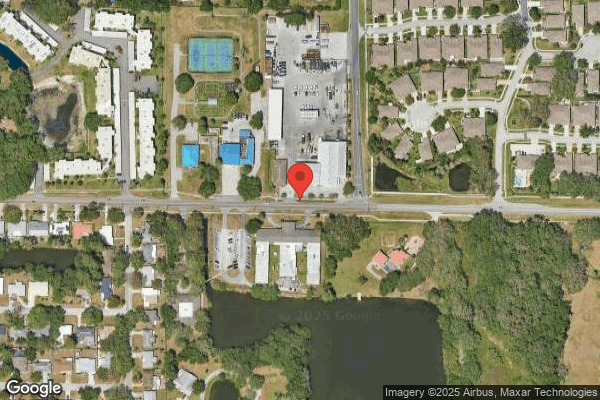
Mar 2020 1 deficiency
CONCERN (D)

Potential for Harm - no one hurt, but risky conditions existed

Accident Prevention (Tag F0689)

Could have caused harm · This affected 1 resident

**NOTE- TERMS IN BRACKETS HAVE BEEN EDITED TO PROTECT CONFIDENTIALITY** Based on observations, staff/resident interviews and medical record review, the facility failed to ensure one (#182) of twenty-f...

Read full inspector narrative →
**NOTE- TERMS IN BRACKETS HAVE BEEN EDITED TO PROTECT CONFIDENTIALITY** Based on observations, staff/resident interviews and medical record review, the facility failed to ensure one (#182) of twenty-five sampled residents was free from hot liquid accident/injury hazard during one (3/10/2020) of four days observed. Findings included: On 3/11/2020, during medical record review for resident #182, a nurse progress note dated 3/10/2020 8:30 p.m. revealed that while a CNA (Certified Nursing Assistant) was helping the resident back into bed and providing peri care to him, she noticed that he had a blister on his left inner thigh. When asked what happened, he told the CNA and nurse that he spilled hot coffee on himself, and didn't think he needed to report it to staff. The physician was notified. This note was documented by Nurse Employee A. On 3/11/2020 at 9:00 a.m. the Dietary Manager, was asked how he and his staff maintain coffee temperatures coming from the kitchen. He indicated that their coffee station/machine in the kitchen made the coffee and heated water. He indicated that coffee and hot water go out on three carts to the west unit, east unit, and dining room. He expressed that the coffee was about 160 degrees Fahrenheit when it came out of the coffee and hot water machine. He further stated that he did not believe there was a log for the temperatures of the coffee and water coming from the machine or when it left the kitchen. He was asked if the coffee machine temperature could be adjusted. He said he did not believe it could. He indicated that water came from the boiler and that maintenance adjusted the temperature from there. Further interview with the Dietary Manager revealed he was unaware of any resident getting burned from coffee in the past and certainly not from last night (3/10/2020). He was told that resident #182 goes out on leave of absences and had been observed with coffee cups from various places in the community. The Dietary Manager further confirmed that he had not been made aware of any residents getting burned with coffee. On 3/11/2020 at 10:00 a.m., the kitchen was toured to conduct coffee and hot water temperatures. The Dietary Manager indicated that coffee went out of the kitchen around 10:00 a.m., daily to both units and the dining room. The Dietary Manager utilized a non-digital stick thermometer and indicated he had calibrated it in water and ice earlier in the morning. He walked over to the coffee service machine and poured a cup of coffee from the spigot. He tested the temperature with the thermometer. The final reading was 142 degrees Fahrenheit. He then got a cup of hot water from the same service station machine and tested it. The final reading was 171 degrees Fahrenheit. The Dietary Manager did not know if the temperatures were too hot for residents and indicated that he could not adjust the temperature on the machine. He said, he believed the water came from the facility boiler, which was adjusted by the Maintenance Director. At this time, the Dietary Manger escorted this surveyor to the Maintenance Office where the boiler was located. The temperature gauge read at 145 - 150 degrees Fahrenheit. An interview with a maintenance employee, Employee C., revealed the boiler that provided hot water to the kitchen was in the laundry room. Employee C. escorted this surveyor to the laundry room where the large boiler was located. He provided visual demonstration of where the temperature gauge was set and read very close to 160 degrees Fahrenheit. Employee C., the Dietary Manager and the Maintenance Director were unaware if the coffee service machine in the kitchen had its own independent heating booster. However, in an interview with the Maintenance Director and the Regional Dietary Manager both indicated that the water came from the boiler in the laundry room to the coffee machine in the kitchen. The coffee machine had a setting and the ability to boost the temperature. They further revealed that the setting on the coffee service machine could not be adjusted by facility staff and that they would have to call the manufacturer to see if there were alternate ways to decrease the temperature. On 3/11/2020 at 10:45 a.m. observation of the the Regional Dietary Manager revealed that he tested coffee temperatures for the coffee that was brought out to the main dining room. The Regional Dietary Manager utilized a digital stick thermometer, which was calibrated earlier in the morning. He poured a cup of hot water from the thermos station. The temperature had a final reading of 158 degrees Fahrenheit. The coffee temperature was at a final temperature of 145 degrees Fahrenheit. The Regional Dietary Manager indicated that the coffee service station manufacturer specified that in order for the coffee to get a good brew, it must get to at least over 180 degrees Fahrenheit. and or higher. He indicated he would speak with the coffee service station company and have them come out to adjust the temperatures as it may be too hot still. But in doing so, the coffee may not brew correctly. On 3/11/2020 at 11:20 a.m. an interview with the Nursing Home Administrator, who was also the Risk Manager, revealed that she was just made aware of the incident that occurred last night and she was in the process of doing an investigation. She indicated she was not communicated with verbally by the nurse, Employee A. who documented the note of resident #182 having a blister on his leg. The Administrator indicated that she received information about it through the kitchen staff just moments ago. This incident was only brought to her attention as a result of this surveyor speaking to kitchen staff about resident #182 and the alleged burn. Review of the medical record revealed resident #182 was admitted to the facility for long term care on 5/7/2012 and readmitted recently from the hospital on 3/3/2020. Review of the advance directives revealed resident #182 was his own decision maker and had multiple family members listed as contacts. Review of the MDS (Minimum Data Set) assessments revealed: - 2/19/2020 (Quarterly) - Cognition/Brief Interview Mental Summary score 15 of 15, which meant the resident was cognitively intact. Activities of Daily Living with Eating - Independent, no set up. - 2/26/202 (Discharge) - Cognitive/Brief Interview Mental Summary score - no score but indicated memory ok and independent with decision making skills. Activities of Daily Living with Eating - Independent. Other assessments included and revealed: - Functional status evaluation admission assessment dated [DATE] revealed: resident requires no assistance with eating and drinking; no sensory impairment; no safety risks documented. - Interdisciplinary Therapy Screen dated 3/12/2020 revealed: Review of the nurse progress notes dated from 12/2/2019 through to 3/12/2020 revealed: Patient stated his cup of hot liquids spilled due to a broken lid. Occupational Therapy observed him drinking out of cup with lid. No spills or upper extremity tremors noted which would increase risk of spills. He is safe with hot liquids with lid. He does not want an Occupational Therapy official evaluation at this time. 12/4/2019 8:51a.m. (Activity note) Loves gardening, loves to take care of the patio. Participates in coffee social and some of the parties. 12/13/2020 9:52 p.m. (Activity note) Likes to drink coffee 3/11/2020 11:35 a.m. (Nurse Progress Note) Resident continues to refuse treatment much of time. Has recently thrown staff out from room. Refuses to let this nurse assess his burn but later accepted. There are blisters on inner thigh and intact. See non pressure wound assessment The Change of Condition, Situation, Background, Assessment, and Recommendation, (SBAR) incident note dated 3/10/2020, revealed: Resident spilled hot coffee on self, it wasn't reported to staff. CNA found blister inner left thigh and reported it to nurse. Treatment: Wound care consult, Anacept gel topically daily, until healed; Skin evaluation: Blister and Burn; No pain; Appearance: Resident spilled hot coffee on self, a blister came afterward. Physician notified and treatment in place. Review of the current care plans with next review date 6/8/2020 revealed the following areas, but not limited to: 1. Requires assist with Activities of Daily Living related to a spinal injury, impaired, non ambulatory related to paraplegia. He is able to propel himself, able to feed self, with interventions in place to include, but not limited to: EATING: able to feed self and set up as needed. 2. Resistive to care, non compliant with care and treatment. Does not like to shower, will not off load and go back to bed, feels he knows what is best. Often refuses wound treatments, removes dressings, will not keep lid on coffee cup (as of 1/14/2019). 3. New care plans as of evening of 3/11/2020: Resident has impairment to skin integrity of the related burn with interventions to include: Observe/document location, size and treatment of skin injury. Report abnormalities, failure to heal , signs and symptoms of infection, maceration etc. to Physician, and Therapy screen for motor function. On 3/12/2020 at 9:32 a.m. in an interview with the DON (Director of Nursing) and the NHA (Nursing Home Administrator) both revealed that they were now aware that resident #182 spilled coffee on his left leg and received a burn. The DON revealed that on 3/10/2020, an aide reported to the nurse, Employee A. that a blister was observed on resident #182's left thigh. She indicated that the resident never reported it to staff and it was only found when the aide was assisting with the resident during care and services. The DON revealed that resident #182 was his own decision maker and was independent with most to all Activities of Daily Living to include eating and drinking. The DON indicated that resident #182 had never spilled hot liquids on himself before and was not assessed as unsafe with hot liquids. She indicated that the nurse, Employee A. identified and assessed resident #182 and found a blister/burn, reported it to the doctor, and received orders for treatment. The Administrator, who was also the Risk Manager, revealed that it had not been brought to her attention yet, but it was less than 24 hours ago. She confirmed that staff were still within the timeframe to report the incident to the Risk Manager. She also confirmed that Resident #182 was not in need of a transfer to a higher level of care to include the Emergency Room/Hospital. The DON and Administrator revealed that they had started an immediate investigation and interviewed and re-reassessed Resident #182. The DON and Administrator said that upon interview with resident #182, he indicated that he had spilled some coffee from out of the cup and felt that the lid or cup was cracked. The DON and Administrator had the cup with the plastic lid that was used by the resident. Observations revealed the cup did not have any cracks or chips. The lid was secured tightly, also with no cracks or chips. The only place liquid could come out was through the small sip hole. Note, Photographic evidence was taken of the actual coffee cup used by resident #182. The DON and Administrator both confirmed that the kitchen staff and or nursing had not logged hot liquid temperatures prior to 3/10/2020. They indicated that there had not been a need or concern in the past and basically were unaware that the coffee machine produced high liquid temperatures. The NHA and DON both revealed that there had not been any other resident with skin burn injuries, related to hot liquids. On 3/13/2020 at 9:00 a.m. and during the afternoon at 12:04 p.m. attempts were made to interview Resident #182. He did not want to discuss his coffee burn and indicated there was Too much of a big deal Resident #182 was pleasant with surveyor but kept changing the subject and indicated that he had been talking with so many people about it and he was done. He started to talk about his paintings/pictures on the wall. He was asked more than three times about the coffee spill and he indicated he did not want to talk about it again. On 3/10/20120 during lunch meal observations in the dining room, there were over four residents seated at one table who directed an aide, Employee B., to reheat their coffee as it was very cold. Steam had been observed coming off the tops of the coffee cups. On 3/11/2020 during both the breakfast and lunch meal observations in the main dining room with six random and interviewable residents, all indicated that the coffee temperatures were fine and that they have never burned themselves with hot liquids. On 3/12/2020 at 10:30 a.m. interviews with ten random residents, who were all in their rooms on the [NAME] and East units, all indicated that they have never been burned by the coffee or water, and feel that coffee temperatures were satisfactory. They also confirmed that they have never heard of any residents being burned by hot liquids. Review of the Coffee Service Station manufacturer specification manual, titled Curtis [NAME] Curtis Company, Inc. Service Manual - ThermoPro Twin Brewer, dated with print date 9/2006, revealed the following information: a. Following are Factory Settings for your G3 Coffee Brewing Systems: Brew Temperature = 200 degrees Fahrenheit. b. Set up Steps to include: #5; The heating tank will require 20 to 30 minutes to reach operating temperature (200 degree Fahrenheit.) as indicated by the READ-TO-BREW indicator. The specifications sheet continued to indicate: Water will fill the tank approximately 2-3 minutes depending on water flow rate. When the proper level is reached, [NAME] Curtis Heating will appear on the screen. It takes approximately 20 minutes to reach set point temperature of 200 degrees Fahrenheit. Further, control will display, [NAME] Curtis Ready to Brew when temperature reaches the set point 200 degrees F. Unit is now ready to brew. The diagram grid of the specifications sheet revealed the brew temperature setting is within a range of 174 to 204 degrees F. Review of the facility's policy and procedure titled, Re-Heating Resident Food and Beverages, with effective date 11/30/2014 revealed: Policy: To reduce the risk of Resident burns to hot beverages, liquids and food, and to provide guidance on re-heating resident food and/or liquids. Staff members only are to re-heat resident food and or liquids in the microwave to temperatures that are safe and palatable for residents. The procedure section of this policy revealed, The staff member is to use the dial thermometer to ensure the item or liquid reaches 165 degrees F. to prevent foodborne illness. The staff member is to use the dial thermometer provided to ensure a maximum temperature of the item is not greater than 140 degrees F. at the time of service. Interview with the Dietary Manager and the Nursing Home Administrator both confirmed that hot liquids should not go out to residents over 165 degrees Fahrenheit and that coffee should be cooled if reaches that degree of heat or higher.
Understanding Severity Codes (click to expand)
Life-Threatening (Immediate Jeopardy)
J - Isolated K - Pattern L - Widespread
Actual Harm
G - Isolated H - Pattern I - Widespread
Potential for Harm
D - Isolated E - Pattern F - Widespread
No Harm (Minor)
A - Isolated B - Pattern C - Widespread

Questions to Ask on Your Visit

  • "Can I speak with families of current residents?"
  • "What's your RN coverage like on weekends and overnight?"

Our Honest Assessment

Strengths
  • • No major safety red flags. No abuse findings, life-threatening violations, or SFF status.
  • • No fines on record. Clean compliance history, better than most Florida facilities.
Concerns
  • • 18 deficiencies on record. Higher than average. Multiple issues found across inspections.
Bottom line: Mixed indicators with Trust Score of 65/100. Visit in person and ask pointed questions.

About This Facility

What is Aviata At Lakeside Oaks's CMS Rating?

CMS assigns AVIATA AT LAKESIDE OAKS an overall rating of 3 out of 5 stars, which is considered average nationally. Within Florida, this rating places the facility higher than 0% of the state's 100 nursing homes. This mid-range rating indicates the facility meets federal standards but may have areas for improvement.

How is Aviata At Lakeside Oaks Staffed?

CMS rates AVIATA AT LAKESIDE OAKS's staffing level at 3 out of 5 stars, which is average compared to other nursing homes. Staff turnover is 46%, compared to the Florida average of 46%. This relatively stable workforce can support continuity of care.

What Have Inspectors Found at Aviata At Lakeside Oaks?

State health inspectors documented 18 deficiencies at AVIATA AT LAKESIDE OAKS during 2020 to 2025. These included: 18 with potential for harm.

Who Owns and Operates Aviata At Lakeside Oaks?

AVIATA AT LAKESIDE OAKS is owned by a for-profit company. For-profit facilities operate as businesses with obligations to shareholders or private owners. The facility is operated by AVIATA HEALTH GROUP, a chain that manages multiple nursing homes. With 93 certified beds and approximately 88 residents (about 95% occupancy), it is a smaller facility located in DUNEDIN, Florida.

How Does Aviata At Lakeside Oaks Compare to Other Florida Nursing Homes?

Compared to the 100 nursing homes in Florida, AVIATA AT LAKESIDE OAKS's overall rating (3 stars) is below the state average of 3.2, staff turnover (46%) is near the state average of 46%, and health inspection rating (3 stars) is at the national benchmark.

What Should Families Ask When Visiting Aviata At Lakeside Oaks?

Based on this facility's data, families visiting should ask: "Can I visit during a mealtime to observe dining assistance and food quality?" "How do you handle medical emergencies, and what is your hospital transfer rate?" "Can I speak with family members of current residents about their experience?"

Is Aviata At Lakeside Oaks Safe?

Based on CMS inspection data, AVIATA AT LAKESIDE OAKS has a clean safety record: no substantiated abuse findings (meaning no confirmed cases of resident harm), no Immediate Jeopardy citations (the most serious violation level indicating risk of serious injury or death), and is not on the Special Focus Facility watch list (a federal program monitoring the lowest-performing 1% of nursing homes). The facility has a 3-star overall rating and ranks #100 of 100 nursing homes in Florida. While no facility is perfect, families should still ask about staff-to-resident ratios and recent inspection results during their visit.

Do Nurses at Aviata At Lakeside Oaks Stick Around?

AVIATA AT LAKESIDE OAKS has a staff turnover rate of 46%, which is about average for Florida nursing homes (state average: 46%). Moderate turnover is common in nursing homes, but families should still ask about staff tenure and how the facility maintains care continuity when employees leave.

Was Aviata At Lakeside Oaks Ever Fined?

AVIATA AT LAKESIDE OAKS has no federal fines on record. CMS issues fines when nursing homes fail to meet care standards or don't correct problems found during inspections. The absence of fines suggests the facility has either maintained compliance or corrected any issues before penalties were assessed. This is a positive indicator, though families should still review recent inspection reports for the full picture.

Is Aviata At Lakeside Oaks on Any Federal Watch List?

AVIATA AT LAKESIDE OAKS is not on any federal watch list. The most significant is the Special Focus Facility (SFF) program, which identifies the bottom 1% of nursing homes nationally based on persistent, serious quality problems. Not being on this list means the facility has avoided the pattern of deficiencies that triggers enhanced federal oversight. This is a positive indicator, though families should still review the facility's inspection history directly.