AVIATA AT THE SEA - HARBOR BEACH
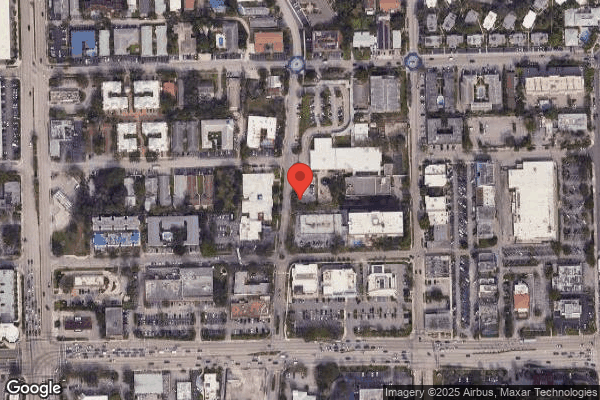
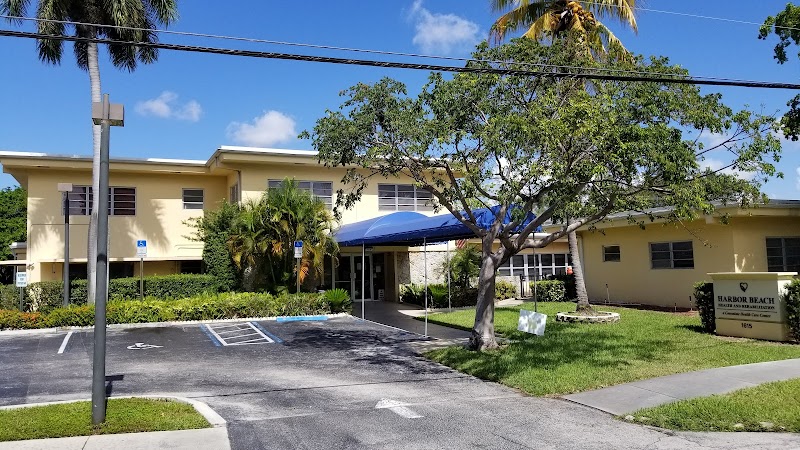
1615 MIAMI RD, FORT LAUDERDALE, FL 33316 (954) 523-5673
For profit - Limited Liability company 59 Beds AVIATA HEALTH GROUP Data: November 2025 2 Immediate Jeopardy citations
Trust Grade
44/100
#174 of 690 in FL
Last Inspection: May 2024

Within standard 12-15 month inspection cycle. Federal law requires annual inspections.

Overview

Aviata at the Sea - Harbor Beach holds a Trust Grade of D, indicating it is below average with some concerning issues. It ranks #174 out of 690 facilities in Florida, placing it in the top half, and #11 out of 33 in Broward County, meaning only ten local options are better. Unfortunately, the facility is trending worse, increasing from 9 issues in 2023 to 10 in 2024. Staffing is relatively stable, with a turnover rate of 25%, which is good compared to the state average of 42%, and it has better RN coverage than 87% of Florida facilities, ensuring more medical oversight. However, the facility has incurred $31,577 in fines, which is concerning and indicates compliance issues more frequent than 84% of similar facilities. Recent inspections revealed critical concerns, including the facility's failure to prevent a resident from leaving unsupervised, which put them at risk of harm. Additionally, there were significant cleanliness issues affecting many resident rooms and communal areas, highlighting a lack of proper housekeeping and maintenance. While there are strengths in staffing and RN coverage, these serious deficiencies raise important questions for families considering this home for their loved ones.

Trust Score
D
44/100
In Florida
#174/690
Top 25%
Safety Record
High Risk
Review needed
Inspections
Getting Worse
9 → 10 violations
Staff Stability
✓ Good
25% annual turnover. Excellent stability, 23 points below Florida's 48% average. Staff who stay learn residents' needs.
Penalties
✓ Good
$31,577 in fines. Lower than most Florida facilities. Relatively clean record.
Skilled Nurses
✓ Good
Each resident gets 51 minutes of Registered Nurse (RN) attention daily — more than average for Florida. RNs are trained to catch health problems early.
Violations
⚠ Watch
25 deficiencies on record. Higher than average. Multiple issues found across inspections.
★★★★☆
4.0
Overall Rating
★★★☆☆
3.0
Staff Levels
★★★★★
5.0
Care Quality
★★★☆☆
3.0
Inspection Score
Stable
2023: 9 issues
2024: 10 issues

The Good

  • 5-Star Quality Measures · Strong clinical quality outcomes
  • Low Staff Turnover (25%) · Staff stability means consistent care
  • Full Sprinkler Coverage · Fire safety systems throughout facility
  • No fines on record
  • Staff turnover is low (25%)

    23 points below Florida average of 48%

Facility shows strength in quality measures, staff retention, fire safety.

The Bad

Federal Fines: $31,577

Below median ($33,413)

Moderate penalties - review what triggered them

Chain: AVIATA HEALTH GROUP

Part of a multi-facility chain

Ask about local staffing decisions and management

The Ugly 25 deficiencies on record

2 life-threatening
Dec 2024 1 deficiency
CONCERN (D) 📢 Someone Reported This

A family member, employee, or ombudsman was alarmed enough to file a formal complaint

Potential for Harm - no one hurt, but risky conditions existed

Quality of Care (Tag F0684)

Could have caused harm · This affected 1 resident

**NOTE- TERMS IN BRACKETS HAVE BEEN EDITED TO PROTECT CONFIDENTIALITY** Based on review of policy and procedure, record review and interview, the facility failed to ensure that it followed physician's...

Read full inspector narrative →
**NOTE- TERMS IN BRACKETS HAVE BEEN EDITED TO PROTECT CONFIDENTIALITY** Based on review of policy and procedure, record review and interview, the facility failed to ensure that it followed physician's order for Intravenous (IV) antibiotic administration for 1 of 3 sampled residents observed, Resident #1. The findings included: Record review of the facility policy and procedure titled Physician's Orders provided by the Director of Nursing (DON) revised 03/03/21 documented in the Policy Statement: The center will ensure that Physician's orders are appropriately and timely documented in the medical record. Procedure: admission Orders: Information received from the referring facility or agency to be reviewed, verified with the physician and transcribed to the electronic medical record .Routine Orders: A nurse may accept a telephone order from the Physician, Physician Assistant or Nurse Practitioner .For pharmacy orders, the nurse will notify the pharmacy per pharmacy policy by telephoning, faxing or completing the order electronically .to maintain an accurate medical record. Record review of the facility policy and procedure titled Administering Medications provided by the Director of Nursing (DON) revised April 2019 documented in the Policy Statement: Medications are administered in a safe and timely manner, and as prescribed. Policy Interpretation and Implementation: 1. Only persons licensed or permitted by this state to prepare, administer and document the administration of medications may do so .4. Medications are administered in accordance with prescriber orders, including any required time frame 7. Medications administered within one (1) hour of their prescribed time, unless otherwise specified 8. If a dosage is believed to be inappropriate or excessive for a resident, or a medication has been identified as having potential adverse consequences for the resident or is suspected of being associated with adverse consequences, the person preparing or administering the medication will contact the prescriber, the resident's Attending physician or the facility's Medical Director to discuss the concerns 21. If a drug is withheld, refused or given at a time other than the scheduled time, the individual administering the medication shall initial and circle the Medication Administration Record (MAR) space provided for that drug and dose. Resident #1 was admitted to the facility on [DATE] with diagnoses which included Osteomyelitis---left ankle and foot, Anemia, Peripheral Vascular Disease (PVD), Infection of Multiple Drug Resistant Organism (MDRO)---Methicillin Resistant Staphylococcus Aureus (MRSA), Septicemia---Severe Sepsis without Septic Shock, Diabetes Mellitus Type II with Diabetic Polyneuropathy, Morbid Obesity, Gastroesophageal Reflux Disease (GERD), Neuralgia and Neuritis, Acidosis, Overactive Bladder, Rash/skin eruption, and Acute Respiratory Failure. On 10/10/29 the Patient Hospital Transfer Form documented, primary diagnosis: Severe Sepsis. Osteomyelitis needs IV antibiotics .Methicillin Resistant Staphylococcus Aureus (MRSA) of lower extremities .Contact Isolation Medication due near time of transfer/list last time administered Antibiotics date 10/10/24 time 1 PM pain level 7/10 on 10/10/24 at 12:40 PM .Skin condition: leg wounds A side-by-side record review of the Resident #1's Physician's Order Sheet for October 2024 was conducted with the Director of Nursing (DON) in which the following three IV antibiotics had been ordered by the Physician: 1) Originally, on 10/10/24 Cefiderocol Sulfate Tosylate (Fetroja) IV solution use 1.5 gm IV every eight hours for Sepsis administer over three hours; 2) On 10/13/24 Doxycycline Hyclate IV solution reconstituted 100mg use 100ml/hr. IV every twelve hours for Sepsis until 12/08/24---(substituted for Minocycline, per the DON); And, 3) originally on 10/10/24 Minocycline HCL IV solution reconstituted 100mg use 100 ml/hr. IV every twelve hours for Sepsis for four weeks---(substituted by Doxycycline, per the DON). Record review of the Nursing Progress Notes dated 10/13/24 by the DON, subsequently revealed the following: follow-up done on IV medication with pharmacy. Per Pharmacist they're out of Minocycline. Call placed to MD waiting on medication. Record review of the Resident #1's Base line Care plan initiated 10/10/24 indicated the following for Resident #1: Isolation for MRSA (wound) IV antibiotics Minocycline and Fetroja. Goals included: Infection will resolve .Medication and/or treatments as ordered and monitor for signs/symptoms or worsening of infection . However, further record review of Resident #1's Medication Administration Record (MAR) dated October 2024 did not document that any of the above IV antibiotic medications had been checked off, nor initialed/signed off to signify that any of the IV medications had been administered to Resident #1, as ordered by the physician, during the resident's three day facility stay, prior to her discharge from the facility. The only documentation recorded for any of these three IV medications was as: Other/See Nurse Notes---medication on order per pharmacy; with no further detailed information or explanation. Record review revealed that Resident #1 had the following abnormal lab work results dated 10/11/24, Complete Blood Count (CBC) with Differential---White Blood Cell (WBC) 17.2 High, Red Blood Cells (RBC) 2.89 low, Hemoglobin 8.3 low, Hematocrit 26.7 low, Mean Cell Hemoglobin count (MCHC) 31.2 low, Red cell distribution width (RDW) 17.7 high, Neutrophil % 82.1 high, Lymphocyte % 8.4 low, Neutrophil # 14.1 high, Monocyte # 1.2 high, Comprehensive Panel---Glucose serum 51 low, Blood Urea Nitrogen (BUN) 41 high, Chloride 111 high, Osmolality calculated 305.5 high, Calcium total 7.33 low, Total Protein Serum 5.0 low, Albumin Serum 2.3 low, Albumin/Globulin (A/G) Ratio 0.9 low, Alkaline Phosphatase 129 high and C-Reactive Protein (CRP) Quantitative 5.3 high. An interview was conducted with Staff A, a Licensed Practical Nurse, (LPN) on 12/02/24 at 10:31 AM, regarding Resident #1's ordered IV antibiotic medications that were not received for administration to the resident, and he acknowledged that the resident had at least two IV antibiotics ordered by her physician. However, he stated that despite two attempts to contact the facility's pharmacy to have the medications delivered, the IV antibiotic medications, had still not been delivered to the facility for administration to the resident, during his work shift. He also added that he had not notified the ADON nor the DON regarding the fact that the IV antibiotics had not yet been delivered to the facility from the pharmacy. During a telephone interview conducted with Staff B, an LPN, on 12/03/24 at 10:53 AM regarding Resident #1's ordered IV antibiotic medications that were not received for administration to the resident, she also acknowledged that the resident had at least two IV antibiotics ordered by his physician. And, she stated that she, too, contacted the facility's pharmacy to have the medications delivered. However, the medications had still not been delivered to the facility for administration to the resident, during her work shift. She added that she did not document any notification of the ADON or DON anywhere in the resident's record, and she ended by saying that she had no explanation as to why she did not follow-through with trying to obtain Resident#1's IV antibiotic medications for administration. During an interview conducted on 12/03/24 at 11:13 AM with the ADON, she stated that the facility's Admission's Department requested that she contact the facility's pharmacy, to see if the IV antibiotics (Minocycline and the Fetroja) were in stock, prior to the resident's admission to the facility. And, the ADON added that she was told by the pharmacy that they both were in-stock, but high cost. The ADON indicated that she relayed this message back to the Admissions Department, prompting the resident's admission to the facility. However, the ADON did acknowledged that, according to the October 2024 MAR, none of Resident#1's IV antibiotic medications had been administered to her, for the three day facility stay period. An interview was conducted with Staff D, facility Pharmacist, on 12/03/24 at 12:58 PM regarding Resident #1's ordered IV antibiotic medications that were not delivered to the facility for administration, she explained, in detail, by saying that the order for high-cost Fetroja 1.5 gm IV every eight (8) hours for Sepsis over 3 hours was sent to them via electronic order via Point-Click-Care (PCC) on 10/10/24 at 11:37 PM. Subsequently, she stated that the pharmacy received a cancellation order for the Fetroja by 10/11/24 at 5:54 PM, and another order was entered again and updated, due to non-delivery. The pharmacist stated that this medication was a high cost medication, and she went on to say that the pharmacy did send out the high-cost limit form via fax to the facility on [DATE]. However, she acknowledged that there was no specific staff attention noted on it; only a fax confirmation was received back to the pharmacy, that it was sent. The pharmacist stated that if this form is not completed and signed by the facility, and returned back to the pharmacy, then the pharmacy cannot send the medication to the facility. The high-cost authorization signed form was not e-mailed to the pharmacy, from the facility until the resident's last day in the facility on 10/13/24, by the facility's DON, as verbally corroborated by her, as well. The pharmacist stated that it learned that the Minocycline medication was not made available for the pharmacy. And, as result of this, the pharmacy recommended for the physician to switch to Doxycycline, which was not delivered to the facility until after the resident had already been discharged from the facility, according to the pharmacist. The pharmacist ended by saying that, she was not aware of any of the above until today. An interview was conducted on 12/03/24 at 1:15 PM with the facility's Medical Director and Attending Physician for Resident #1 regarding Resident #1's ordered IV antibiotic medications that were not delivered by the pharmacy and received into the facility for administration to the resident. The Medical Director stated that he didn't receive notification from the DON until 10/13/24, the third day of the resident's facility stay, in which he said that he was told that they were having difficulty getting the medication from the pharmacy. The Medical Director went on to say that he learned from the facility that the IV antibiotic had never arrived at the facility even after he switched the antibiotic. The Medical Director acknowledged that no IV antibiotic therapy treatment was administered by the facility to this resident. There was no detailed documentation in the facility's notes to indicate exactly why Resident #1's ordered IV antibiotics were not delivered and administered during her three day facility stay. The DON further recognized and acknowledged on 12/03/24 at 2:45 PM that none of Resident #1's IV antibiotic medications had been administered to Resident #1, as per the physician's orders; when they should have been.
May 2024 9 deficiencies
CONCERN (D)

Potential for Harm - no one hurt, but risky conditions existed

Resident Rights (Tag F0550)

Could have caused harm · This affected 1 resident

**NOTE- TERMS IN BRACKETS HAVE BEEN EDITED TO PROTECT CONFIDENTIALITY** Based on observations and interviews, 5 of 14 sampled residents (Resident #4, Resident #14, Resident #19, Resident # 30, and Res...

Read full inspector narrative →
**NOTE- TERMS IN BRACKETS HAVE BEEN EDITED TO PROTECT CONFIDENTIALITY** Based on observations and interviews, 5 of 14 sampled residents (Resident #4, Resident #14, Resident #19, Resident # 30, and Resident # 33) were noted to be treated in an undignified manner by the facility. The findings included: 1) On 05/06/24 at 1:44 PM, Resident #14 was observed sitting in a wheelchair appropriately dressed in his personal attire. Resident #14's feeding formula was infusing via a tube. The privacy curtain dividing Resident #14 from his roommate, who also was observed in bed eating lunch, was fully opened. Resident #14 could easily see Resident #33's meal and did see Resident #33 eating his lunch. Resident #14 was admitted to the facility on [DATE]. Resident #14 diagnoses included: Cerebral Infarction and Flaccid Hemiplegia affecting right non-dominant side. Resident #14 is fed via peg tube. He is non-verbal and communicates using facial gestures, his hands, and head (nodding yes or no). Resident #14 gestured his displeasure on 05/06/24 at 1:47 PM to question, how do you feel watching your roommate eating? He used his hand to express his emotional feeling gesturing the cutthroat sign. To be sure, the Surveyor asked Resident #14 to gesture like or dislike by head movement. When asked if he liked seeing his roommate eating, he gestured no with head movement, and made a grimacing look of disapproval. He was asked if he would like the curtain closed, he gestured yes with head movement. Review of the physician orders for the month of May 2024 confirmed orders for enteral feeding for Resident #14. The Nursing Care Plan dated 3/21/24 documented that Resident#14 depended on staff for meeting his emotional, intellectual, physical and social needs. 2) On 05/06/24 at 1:19 PM, Resident #33 was observed in bed lying on his back and wearing an institutional or a facility's gown. With the Resident's permission, the Surveyor observed that Resident #33 had personal clothes in his closet. Resident #33 was noted to be non-verbal. He smiled when spoken to but quickly presented a flat affect or non-expressive facial appearance. On 05/06/24 at 1:44 PM during lunch, Resident #33 was observed in bed in a seating position eating but wearing the same gown. Meanwhile, his roommate was observed appropriately dressed and seating in a wheelchair while his meal was being infused. On 05/07/24 at 2:21 PM, Resident #33 was observed lying in bed wearing a green institutional gown. Resident #33's body rested in a supine position or on his back with his head slightly elevated and watching television. On 05/08/24 at 1:12 PM, Resident #33 was observed wearing a green institutional gown in bed in the same position as previously noted. On 05/09/24 at 1:44 PM, Resident #33 was observed in bed wearing an orange color shirt and laying in bed watching Television. Resident #33 was admitted on [DATE] and his diagnoses included: Cerebral infarction; Flaccid Hemiplegia affecting right nondominant side; Adjustment Disorder; Generalized Anxiety Disorder; Major Depressive Disorder. The Care Plan dated 3/21/2024 showed that Resident #33 depended on staff for meeting emotional, intellectual, physical, and social needs related to disease process. Resident #33 had communication problems related to stroke, he rarely responds verbally. Staff will anticipate his needs and be conscious of the resident's needs. On 05/08/24 at 3:45 PM, an interview with Employee A, a Certified Nursing Assistant (CNA) revealed that she has been working at this facility for two years. She said that they usually float or rotate throughout the facility. She said that Resident #33 has his own clothes. The CNAs who works in the are supposed to dress the patients and when she comes in the afternoon, she would undress the patients and put night gown on them. She said that Resident #33 can eat by himself, but he is not able to turn or transition from lying down to sitting by himself. He cannot speak. Resident #33 tries at times to say some words, but he is not clear. Employee A said that as a CNA they must anticipate Resident #33's needs. 3) During the observation of the lunch meal conducted in the main dining room on 05/06/24 at 12:15 PM, it was noted that Resident #4 was seated at a dining room table with another resident, and also noted that 17 residents were in attendance in the dining room for the lunch meal. Further observation of Resident #4 noted that the resident was served a Consistent Carbohydrate Diet/No Added Salt Diet with Large Portions. Further observation noted that the staff (Staff E) set the meal tray in front of the resident and left to attend to other residents. It was noted that the resident was alert with confusion and begin to eat the entire meal with her bare hands that included Cheesy Ham & Macaroni Casserole , Sauteed Spinach Carrots, and Pineapple Crisp. Further observation noted that there were 4 other staff in the dining area serving and assisting other residents, however no attempt was made by facility staff to intervene and try to supervise the resident utilizing silverware provided on the meal tray. During the meal it was noted the food covered the resident's face, front of chest, table, and floor with spilled foods from eating with bare hands. It was noted that several residents seated near the resident during the meal and complained to staff concerning Resident #4, however no staff responded to the resident's request. During the observation of the lunch meal on 05/08/24, it was again noted that Resident #4 ate the entire meal without staff intervention. Also noted that several residents complained concerning Resident #4, however staff did not respond. Resident was noted to eat Pork Chop, Rice, and Corn with bare hands. Resident again noted to cover face with foods, front of body, table, and floor with spilled foods from eating with bare hands. A review of the clinical record of Resident #4 noted the following: < Date Of admission: [DATE] < Diagnoses: Schizophrenia, Bipolar Disorder, Diabetes Type 2 < Current Physician Orders: * 9/27/21 - CCD/NAS/Large Entree 11/29/21 - Scoop Plate with all meals * Current MDS: 1/27/24 Section B : Usually understood & understands Section C: BIMS = 6 (cognitive impairment) Sec GG: Eat = Set Up Sec K : 67/165# Therapeutic Diet * Weight History: 4/16 = 161 2/6 = 165 1/4 = 171 BMI= 25.2 Ht = 67 Care Plan Review: 3/21/24 * * Assistance Daily Living: scoop plate, *Provide Food from mug or cup - resident refuses or difficulty eating solid foods with solid foods 4) During the observation of the lunch meal in the main dining room of 05/06/24 at 12:15 PM, it was noted that Residents #19 and #30 were served a Pureed Diet by the LPN (Staff D). Further observation noted that the pureed foods were thin, watery, and running over the edge of the entree plate. Further observation noted that the CNA (Staff E) mixed both resident's pureed meal (entree, vegetable, and starch) in a brown slurry mix. The appearance and acceptability of the meal was poor. Further observation noted that Staff D turned to the surveyor and stated aloud in front of Residents #19 and #30 and the rest of the residents I don't know how anyone can eat that crap'. The residents were noted to eat less than 25% of the lunch pureed meal.
CONCERN (D)

Potential for Harm - no one hurt, but risky conditions existed

Investigate Abuse (Tag F0610)

Could have caused harm · This affected 1 resident

**NOTE- TERMS IN BRACKETS HAVE BEEN EDITED TO PROTECT CONFIDENTIALITY** Based on records review and interviews, the facility failed to investigate an incident in which 1 of 1 sampled resident (Residen...

Read full inspector narrative →
**NOTE- TERMS IN BRACKETS HAVE BEEN EDITED TO PROTECT CONFIDENTIALITY** Based on records review and interviews, the facility failed to investigate an incident in which 1 of 1 sampled resident (Resident #15) sustained injuries of unknown origin. The findings included: Resident #15's electronic clinical record revealed he was readmitted to the facility on [DATE] and an initial admission date of 3/5/2024. Resident #15 diagnoses included: Dislocation of left shoulder joint; Anxiety Disorder; Atherosclerotic Heart Disease; Type 2 Diabetes Mellitus; Osteoarthritis; Muscle weakness; Cognitive communication deficit; Difficulty walking; Convulsion; Depression; Localized swelling to left upper limb; History of falling. The Nurses' Progress Notes (NP's) dated 4/14/2024 at 7:07 AM, noted that Resident #15 was complaining of left-hand pain and swelling. the MD was notified, and an X-Ray was ordered. Another NP's notes dated 4/15/2024 documented that order received to send the resident to hospital for higher level of care and altered mental status. The 4/16/2024 NP's notes revealed that Resident #15 was hospitalized . None of the NPs' notes documented that Resident #15 had a fall injury. In fact, the NPs report did not document how the fall occurred. There was no indication of a comprehensive nursing assessment detailing Resident #15's pain level or injuries. Review of the SNF to Hospital transfer form dated 04/15/2024 revealed that Resident #15 had a fall on 4/13/2024. Staff documented bilateral shoulder pain to identify pain location. During an interview with the Regional Minimum Data Set (MDS) Coordinator on 05/09/24 at 10:03 AM, she reported that an X-ray was ordered on 4/14/2024 for Resident #15. She provided the evidence which outlined Resident #15's possible pain level. Review of the Radiology Results Report dated 4/14/2024 revealed an order to have 2-views of Resident #15's left elbow. The report further revealed that due to Resident #15's level of pain only a single frontal view of the left elbow could be performed. The single frontal view of the left elbow X-Ray showed no abnormalities. Recommendation was made to have additional views to better assess the resident's physical condition when Resident #15 could tolerate a lateral positioning of the arm. The hospital record dated 4/20/2024 documented that Resident #15 sustained a shoulder dislocation as per diagnoses listed in the record which included: Generalized weakness; Fall; Shoulder dislocation. Also, the record noted that Resident #15 had left shoulder dislocation reduced in ED (emergency department) on 04/16/2024, the exact date Resident #15 was transferred to the hospital. As per Orthopedic, Resident #15 was non-weight bearing on the left upper extremity. During an interview with the Director of Nursing (DON) on 05/09/24 at 11:45 AM, she said that she did not have any record of the resident injuring his shoulder while at the facility. she only had record of Resident #15's fall which occurred on March 6, 2024 which was a fall resulting in no injuries. When questioned further, the DON said that she did not conduct an investigation on the cause of Resident #15's transfer to the hospital. During an interview with the Social Service Director (SSD) on 05/09/24 at 1:32 PM, she reported that Resident #15's brother had planned for the resident to be discharged home on 4/11/2024. The SSD said that she had to inform Resident #15's brother, when she returned to the facility on 4/15/2024 that Resident #15 had a fall and was sent to the hospital. The SSD said that one of the nurses had reported the incident to her. On 05/09/24 at 3:06 PM, an interview with Staff B, a Licensed Practical Nurse (LPN) who completed the SNF-to hospital transfer from and assessment confirmed that Resident #15 had a fall at the facility and was injured. Staff B said that during the assessment, Resident #15 guarded his shoulder and complained of severe pain. Staff B said that he spoke with Resident #15's brother and informed him that resident was sent to the hospital for altered mental status. Staff B added that Resident #15 wandered at times and said inappropriate things. Staff B was not sure how Resident #15's injuries occurred. Staff B said contrary to what he erroneously documented, Resident #15's pain level was not zero. Staff B said that he had reported the transfer and injuries to the facility's DON. The DON had inquired about Resident #15's vitals signs and who Staff B had notified.
CONCERN (D)

Potential for Harm - no one hurt, but risky conditions existed

Deficiency F0676 (Tag F0676)

Could have caused harm · This affected 1 resident

**NOTE- TERMS IN BRACKETS HAVE BEEN EDITED TO PROTECT CONFIDENTIALITY** Based on observation, interview, and record review, it was determined that the facility failed to provide assistance and supervi...

Read full inspector narrative →
**NOTE- TERMS IN BRACKETS HAVE BEEN EDITED TO PROTECT CONFIDENTIALITY** Based on observation, interview, and record review, it was determined that the facility failed to provide assistance and supervision to maintain independent eating abilities for 2 (Resident #5 and #13) of 6 sampled residents reviewed for nutrition. The findings included: 1) During the observation of the breakfast meal of 05/08/24 at 8:30 AM, it was noted that the meal tray was observed to be delivered to the room of Resident #5. Continued observation noted that the resident was visually impaired but alert. Continued observation noted that the Certified Nursing Assistant (CNA- Staff E) set the tray on the resident's overbed table in front of the resident who was noted to be in a reclining position in the bed. The CNA failed to speak with the resident concerning where foods could be located on the meal tray or reposition the resident into an upright eating position in the bed. Further observation noted the CNA to leave the room and not return to give the resident supervision or assistance with the meal. The resident was noted to struggle to find foods on the meal tray and would utilize bare hands with pureed hot and cold tray foods. The resident was noted to get increasingly agitated and yelling out for assistance with eating. At 9 AM the CNA returned to the resident's room and took the meal tray away with the resident consuming less than 25% of the meal. A second observation conducted on 05/08/24 at 12:30 PM, and again noted the pureed meal served to the room of Resident #5. Continued observation again noted the meal tray was set up on the overbed table in front of resident and the CNA left the room. Continued observation for the next 30 minutes noted no nursing staff entering the room to supervise or assist the resident with the lunch meal. Resident noted to be eating pureed foods with bare hands resulting in spilling pureed foods on body, bed, and floor. At one point during the observation the straw provided in the cold beverage became lodged into the resident's mouth and was noted to struggle to remove. The surveyor intervened and helped remove the straw to prevent choking. It was again noted that the CNA removed the tray with the resident consuming less than 25% of the lunch meal. Review of the clinical record of Resident #5 noted the following: * Date of admission: [DATE] * re-admission: [DATE] * Diagnoses: Legal Blindness, Post Traumatic Stress Disorder, Gastrostomy Disorder * Current Physician Orders: 5/7/24 - Osmolyte @75 ml/hr X 20 hours - on at 2 PM - off @10 AM 5/7/24 @ 8 AM - Osmylyte 75 ml/hr running 5/7/24 - Flush water @ 25 ml /hr X 20 hr 4/27/24 = Dysphagia Pureed Diet * Current MDS: 3/24/24 < Section B: Understood & Understands < Section C: BIMS = 13 (alert & oriented < Section D: No Mood Issues < Section GG: Supervision & Assistance < Section J : 67/170# < Feeding Tube/Mechanically Altered Diet * Review of current Care Plan : 03/24/24 < Requires Tube Feeding < Nutritional Problem - Risk For Malnutrition * NO interventions for assistance with independent with eating < Visual Impairment * No interventions for eating * Weight History : < 4/11/24 = 160# < 3/28/24 = 165.5# < 02/23/24 = 170# < 9/8/23 = 172# < 8/11/23 = 174 2) During the observation of the breakfast meal of 05/08/24 at 8:35 AM, it was noted the meal tray was served to the room of Resident #13. It was also noted that Resident #13 resides in the same room as Resident #5 and was also noted to be visually impaired and alert. Continued observation noted the resident to struggle finding foods located on the tray and ate with hands/fingers. The resident was noted to request assistance but the room door was shut and no staff were noted to assist or supervise the resident with the breakfast meal. The meal was taken away approximately 30 minutes later and it was noted the resident to consume less than 50% of the breakfast meal . A second observation conducted for the lunch meal of 05/08/24 at 12:30 PM noted the Consistent Carbohydrate/No Added Salt diet meal tray was already served to the room of Resident #13. The observation noted that the tray was set up on the resident's overbed table, however the resident was laying flat in the bed and was naked from the waist down. The resident was noted to be visually impaired and was reaching up from the bed over the overbed table and into the meal tray. The resident was noted to grab whatever foods she could and drop foods into her mouth. Spilled foods were noted all over the resident's face, body, and bed. At this time, the surveyor summoned the Director of Nursing (DON) to the resident's room to view the surveyor's observations. The DON confirmed the surveyor's findings and stated that all nursing staff would require in-service training on providing Resident #5 and #13 with assistance and supervision with all meals. During the review of the clinical record of Resident #13, the following were noted: * Date of admission: [DATE] * re-admission: [DATE] * Diagnoses: Legal Blindness /Glaucoma * Current Physician Orders: < 10/1/21 - Carbohydrate Controlled Diet/ No Added Salt Diet < 3/24/23 - Fortified Food at Lunch < 12/13/21 - Scoop Plate < 10/1/21 - HS Snack < 9/19/23 - Dietary Counseling/Surveillance * MDS: 3/20/24 Section B : Understood & Understands Section C : BIMS = 13 (some cognitive impairment) Section D: Depressed Mood/Sec GG: Set Up - Assistance Section K: No Swallow Disorder 67/137# Weight History: 4/26/24 = 137# 1/3/24 = 139# 10/25/23 = 143# 9/8/23 = 150# Ht = 67 BMI = 21.5 Care Plan Review : 1/13/23 * Nutritional Problem-Resident is Legally Blind * No documented intervention of maintaining independence of eating with blindness. * Self Care ADL Deficit: * Able to feed with set up and assistance , requires scoop plate. * Requires and provide food from mug - difficulty with solid food. Following the Care Plan review with the Director of Nursing on 05/08/24, it was noted that the dietary and nursing staff were unaware of the care plan intervention to provide all foods in mugs to maintain independence with eating. Also discussed no interventions of assistance with eating during meals with diagnoses of blindness.
CONCERN (D)

Potential for Harm - no one hurt, but risky conditions existed

Quality of Care (Tag F0684)

Could have caused harm · This affected 1 resident

**NOTE- TERMS IN BRACKETS HAVE BEEN EDITED TO PROTECT CONFIDENTIALITY** Based on observation, interview, and record review, the facility failed to identify and treat a resident with Diabetes for 1 of ...

Read full inspector narrative →
**NOTE- TERMS IN BRACKETS HAVE BEEN EDITED TO PROTECT CONFIDENTIALITY** Based on observation, interview, and record review, the facility failed to identify and treat a resident with Diabetes for 1 of 1 resident reviewed for insulin (Resident #17). The findings included: Resident #17 was admitted to the facility on [DATE] with diagnoses which included Diabetes Mellitus Type 2 and a Diabetic foot ulcer. A comprehensive assessment dated [DATE] documented the resident was cognitively intact (15/15 Brief Interview for Mental Status), and required partial/moderate assist for activities of daily living. The assessment further documented Resident #17 had not received any injections (insulin) since admission to the facility. Record review revealed Resident #17 was care planned for Diabetes, with an intervention to medicate as ordered. A review of Resident #17's orders on 05/08/24 revealed Resident #17 did not have any medications for Diabetes, nor any fingersticks or lab results indicating the resident's blood sugar levels. An interview was conducted with Resident #17 on 05/08/24 at 11:00 AM. The resident was observed ambulating to her room. Resident #17 stated she was concerned because she was not receiving any insulin, or getting her blood glucose levels checked. The resident stated she was a Diabetic, and had received insulin while in the hospital prior to admission to the facility. Resident #17 further stated she had brought it up to staff/nurses, and was told they needed an order to check the resident's blood sugar. An interview was conducted with the Director of Nursing (DON) on 05/08/24 at 11:20 AM. The DON confirmed Resident #17 had a diagnosis of Diabetes. The DON further confirmed the resident did not have any orders for fingersticks or labs to monitor the resident's blood glucose, nor any medication to treat the resident's Diabetes. A progress note dated 05/08/24 at 12:10 PM by the DON documented: Spoke with MD in regard to patient concern with BS levels, lab, and diagnosis. Orders received for stat labs, Lispro (insulin), Lantus orders (insulin), Metformin (diabetic medicine), and blood sugar checks daily. An interview was conducted with Resident #17 on 05/08/24 at 12:30 PM. The resident stated they checked her blood sugar and it was 446 (normal is 74-109). An interview was conducted with the DON on 05/08/24 at 1:00 PM. The DON confirmed Resident #17's blood sugar was 446, the resident received insulin and the physician had ordered diabetes medication and stat labs. An interview was conducted with the Medical Director of the facility, who was also the Resident #17's Primary Care Physician (PCP) while at the facility, on 05/08/24 at 2:30 PM. The PCP stated, It's very horrible that the resident fell through the cracks. The PCP stated the resident refused labs at one time, but he did not follow up with it. The PCP stated the resident did not refuse accuchecks/fingersticks, as none were ordered. The PCP stated nothing was communicated to him about the resident requiring or asking for her blood sugar to be checked. All the staff had to do was call him. The PCP stated, We'll take care of her now. An interview was conducted with Staff F, a Licensed Practical Nurse, on 05/08/24 at 2:35 PM. Staff F stated he was Resident #17's primary nurse, and had cared for the resident before. When questioned by the surveyor if he knew the resident was a Diabetic, he stated, No, because the resident did not have any medications ordered for Diabetes. Staff F further stated Resident #17 did not ask him to check her blood glucose level.
CONCERN (D)

Potential for Harm - no one hurt, but risky conditions existed

Deficiency F0688 (Tag F0688)

Could have caused harm · This affected 1 resident

Based on observations, records review, and interviews, the facility failed to provide physician's ordered left hand splint to 1 of 1 sampled resident (Resident #14). The findings included: On 05/06/2...

Read full inspector narrative →
Based on observations, records review, and interviews, the facility failed to provide physician's ordered left hand splint to 1 of 1 sampled resident (Resident #14). The findings included: On 05/06/24 at 12:48 PM Resident #14 was observed in bed lying in supine position with contracted left hand and having no splint on. Resident #14 was alert, aware, but non-verbal. Review of the physician's orders dated 12/17/2022 revealed the following order: left hand splint to be worn up to 6 hours, 7 days a week. Apply left elbow splint up to 6 hours 7 days a week. Another order noted: Left Elbow Splint as tolerated, may remove for ADL care or skin checks. Also, Resident #14 to wear Carrot on left hand at all times except for hand hygiene and bathing. Resident #14's diagnoses included, Hemiplegia and hemiparesis following Cerebral Infarction Affecting left non-dominant side; Muscle weakness generalized; Amyotrophic lateral sclerosis; Contracture left ankle; Anxiety Disorder; Ankylosis left wrist; Mild Cognitive impairment of unknown etiology; Ataxia; Irritant Contact Dermatitis; Progressive Bulbar Palsy; Foot Drop left foot; Dysarthria and Anarthria. Review of the Care Plan dated 1/25/2024 documented that Resident #14 continues to wear adaptive devices related to contracture treatments prevention. Patient has a Left Lower Extremity brace. Patient has a Left upper extremity slim grip to the left wrist. Patient continues to wear adaptive devices related to contracture, treatment/prevention. Resident wears a splint on the left upper extremities. The Minimum Data Set (MDS) section C documented Resident #14 obtained a score of 11/15 on the brief interview for mental status (BIMS). Resident #14 nodded when interviewed on 05/07/24 at 3:00 PM that they did not put the splints on for him on 5/6/24. He gestured and also pointed out to where the splints were. The location Resident #14 pointed to was the dresser. On 05/08/24 at 12:39 PM Resident #14 was observed sitting in his wheelchair appropriately dressed wearing a left elbow splint and ankle brace, but Resident #14 had no wrist splint on. Resident #14 affirmed with a negative head nod that they do not put the wrist splint on for him. On 05/08/24 at 2:44 PM Resident #14's Power of Attorney (POA) informed that Resident #14 has been ill since 2013 and has resided at this facility since 2016. The POA said not all staff are as attentive to Resident #14's health needs as they should have been. The POA stated some of the staff put the splint on some do not. The POA also said that Resident #14 is very alert and his mind is very sharp. Resident #14 understands everything, but he is just a little forgetful, at times. On 05/08/24 at 3:54 PM, Staff A said that she has been working at this facility for two years. She said that they usually float and rotate throughout the facility. Staff A works 3-11 PM shift. She said that Resident #14 is on tube-feeding, he wears a splint; he is totally dependent for his care. She said that the splints are used to prevent contractures. Staff A said that Resident #14 has an elbow splint on the left arm and one ankle splint. He does not have any other splint. When questioned about the hand/wrist splint. Staff A said that Resident #14 used to have a hand splint but they do not use it anymore. Staff A added that sometimes they put it, sometimes, they do not. Staff A said that she does not put the wrist splint for Resident #14. The Certified Nursing Assistant (CNA) who works in the morning usually does it. Lastly, Staff A said that the facility used to have a restorative nurse responsible for that assignment, but that responsibility was now assigned to the CNAs.
CONCERN (D)

Potential for Harm - no one hurt, but risky conditions existed

Deficiency F0710 (Tag F0710)

Could have caused harm · This affected 1 resident

**NOTE- TERMS IN BRACKETS HAVE BEEN EDITED TO PROTECT CONFIDENTIALITY** Based on record review and interview, the facility Physician failed to identify and treat a resident with Diabetes for 1 of 1 re...

Read full inspector narrative →
**NOTE- TERMS IN BRACKETS HAVE BEEN EDITED TO PROTECT CONFIDENTIALITY** Based on record review and interview, the facility Physician failed to identify and treat a resident with Diabetes for 1 of 1 resident reviewed for insulin (Resident #17) and failed to address a critical lab result for 1 of 1 sampled resident (Resident #157). The findings included: A review of the facility's Policy and Procedures Medical Care/Standards of Practice, dated 11/30/2014 and revised on 03/03/21, documented: A physician supervises the medical care of each resident. Physician supervision includes but is not limited to: admission orders are consistent with the resident's current physical and mental status. No medications or treatments shall be given without a doctor's order. Whenever possible, each of the resident's clinical problems should be clearly identified in the progress notes and correlate with specific orders as well as results of tests and treatments. 1. Resident #17 was admitted to the facility on [DATE] with diagnoses that included Diabetes Mellitus Type 2 and a Diabetic foot ulcer. A comprehensive assessment dated [DATE] documented the resident was cognitively intact (15/15 Brief Interview for Mental Status), and required partial/moderate assist for activities of daily living. The assessment further documented Resident #17 had not received any injections (insulin) since admission to the facility. Record review revealed Resident #17 was care planned for Diabetes, with an intervention to medicate as ordered. A review of Resident #17's orders on 05/08/24 revealed Resident #17 did not have any medications for Diabetes, nor any fingersticks or lab results indicating the resident's blood sugar levels. Further record review revealed Resident #17 had been seen by the physician 6 times since admission [DATE], 04/15/24, 04/17/24, 04/22/24, 04/24/24, and 04/29/24). A review of the physician progress notes did not address Resident #17's diagnosis of Diabetes. An interview was conducted with Resident #17 on 05/08/24 at 11:00 AM. The resident was observed ambulating to her room. Resident #17 stated she was concerned because she was not receiving any insulin, or getting her blood glucose levels checked. The resident stated she was a Diabetic, and had received insulin while in the hospital prior to admission to the facility. Resident #17 further stated she had brought it up to staff/nurses, and was told they needed an order to check the resident's blood sugar. An interview was conducted with the Director of Nursing (DON) on 05/08/24 at 11:20 AM. The DON confirmed Resident #17 had a diagnosis of Diabetes. The DON further confirmed the resident did not have any orders for fingersticks or labs to monitor the resident's blood glucose, nor any medication to treat the resident's Diabetes. An interview was conducted with the Medical Director of the facility, who was also the Resident #17's Primary Care Physician (PCP) while at the facility, on 05/08/24 at 2:30 PM. The PCP stated, It's very horrible that the resident fell through the cracks. The PCP stated the resident refused labs at one time, but he did not follow up with it. The PCP stated nothing was communicated to him about the resident requiring or asking for her blood sugar to be checked. The PCP acknowledged he had seen Resident #17 5 times since admission to the facility. The PCP further stated he shared the blame in Resident #17's lack of care related to the diagnosis of Diabetes. All the staff had to do was call him. The PCP stated, We'll take care of her now. 2. Resident #157 was admitted to the facility on [DATE] and discharged to the hospital on [DATE], with diagnoses that included Cirrhosis of the Liver and Liver Cancer. Record review revealed a laboratory critical low value Platelet level of 32 (normal is 130-400) dated 12/07/23. Further record review revealed the critical value was not addressed. Resident #157 was seen by the physician 3 times during the stay at the facility (12/06/23, 12/11/23, and 12/13/23). A review of the physician progress notes did not address Resident #157's critical low platelet count.
CONCERN (D)

Potential for Harm - no one hurt, but risky conditions existed

Deficiency F0711 (Tag F0711)

Could have caused harm · This affected 1 resident

**NOTE- TERMS IN BRACKETS HAVE BEEN EDITED TO PROTECT CONFIDENTIALITY** Based on record review and interview, the facility Physician failed to document visits in a timely manner for 2 of 2 sampled res...

Read full inspector narrative →
**NOTE- TERMS IN BRACKETS HAVE BEEN EDITED TO PROTECT CONFIDENTIALITY** Based on record review and interview, the facility Physician failed to document visits in a timely manner for 2 of 2 sampled residents (Resident #17 and Resident #157). The findings included: A review of the facility's Policy and Procedures Medical Care/Standards of Practice, dated 11/30/2014 and revised on 03/03/21, documented: Physician visits are required according to the resident's needs and/or State and Federal guidelines. A physician visit is required within 48 hours of admission. For short term care, a physician must see the resident as often as medically necessary according to the medical status of the resident. It is recommended physician visits occur two or three times per week due to the medical complexity of the resident. Medical records must be maintained according to all state and federal requirements and in compliance with all center policies and procedures. The attending physician shall maintain his portion of the medical record, timely, in accordance with the center, State and Federal regulations and requirements. Progress notes will be recorded at the time of observance, sufficient to permit continued continuity of care and transferability. 1. Resident #17 was admitted to the facility on [DATE] with diagnoses that included Diabetes Mellitus Type 2 and a Diabetic foot ulcer. A comprehensive assessment dated [DATE] documented the resident was cognitively intact (15/15 Brief Interview for Mental Status), and required partial/moderate assist for activities of daily living. The assessment further documented Resident #17 had not received any injections (insulin) since admission to the facility. Record review revealed Resident #17 had been seen by the physician 6 times since admission [DATE], 04/15/24, 04/17/24, 04/22/24, 04/24/24, and 04/29/24). Further review of Resident #17's physician progress notes revealed: Progress note dated 04/13/24 was created on 12/19/23 as a late entry. Progress note dated 04/15/24 was created on 04/20/24 as a late entry. Progress note dated 04/17/24 was created on 04/27/24 as a late entry. Progress note dated 04/29/24 was created on 05/07/24 as a late entry. 2. Resident #157 was admitted to the facility on [DATE] and discharged to the hospital on [DATE], with diagnoses that included Cirrhosis of the Liver and Liver Cancer. Record review revealed Resident #157 was seen by the physician 3 times during the stay at the facility (12/06/23, 12/11/23, and 12/13/23). Further review of Resident #157's physician progress notes revealed: Progress note dated 12/06/23 was created on 04/18/24 as a late entry. Progress note dated 12/11/23 was created on 12/29/23 as a late entry. Progress note dated 12/13/23 was created on 12/29/23 as a late entry. An interview was conducted with the Director of Nursing (DON) on 05/08/24 at 11:20 AM. The DON acknowledged the physician's late documentation for Resident #17's and Resident #157's progress notes. .
CONCERN (D)

Potential for Harm - no one hurt, but risky conditions existed

Deficiency F0804 (Tag F0804)

Could have caused harm · This affected 1 resident

**NOTE- TERMS IN BRACKETS HAVE BEEN EDITED TO PROTECT CONFIDENTIALITY** Based on observation, interview, and record review, it was determined that the facility failed to prepare pureed foods by method...

Read full inspector narrative →
**NOTE- TERMS IN BRACKETS HAVE BEEN EDITED TO PROTECT CONFIDENTIALITY** Based on observation, interview, and record review, it was determined that the facility failed to prepare pureed foods by methods that conserve nutritive, value, flavor, and appearance for 4 (Residents #5, #7, #19, and #30) of 4 residents with physician ordered Pureed Diet with Pureed Fortified Foods. The findings included: During the observation of the lunch meal in the main kitchen on 05/06/24 at 11:30 AM, foods located on the steam table were observed and were taste tested by the surveyor. Specifically, the Pureed Cheese Ham & Macaroni Casserole, and Pureed Sauteed Spinach noted to be very thin and watery in consistency. The taste test confirmed that the pureed foods were too thin and had a watery consistency. Interview with the Lunch [NAME] (Staff C) at the time of the observation was noted to state she was unaware that the addition of too much liquid into the pureed food mixture results in decreased nutritional value of the pureed foods, and negative appearance and taste palatability. Staff C stated no state specific training in pureed foods and food are this consistency on a daily basis. It was also noted during the serving that no pureed garnishes were being utilized to increase the pureed foods and/or entree plate appearance. Staff D stated that pureed garnishes have never be used on the pureed entree plates or other pureed foods such as breads and desserts. During the observation of the lunch meal in the main dining room on 05/06/24 residents being served the pureed diet were observed by the surveyor. Observation of Residents #19 and #30 were noted to be seated at the same dining room table. Observation of the main entree plate noted that all pureed foods (Entree, starch, and vegetable) were all running together and beginning to make a slurry from running together. It was also noted that the foods were so watery and thin that they were flowing over the sides of the main entree plate. The surveyor asked LPN (Staff E) who was going to feed the residents what she thought of the pureed foods and stated in front of the 2 residents that she could not eat that mess. The surveyor requested the Corporate Food Service Director (CFSD) to come to the dining room and observe the pureed meals served to Resident #19 and #30. The CFSD stated that the pureed foods were not acceptable due to thin and water consistency, poor nutritive value, and poor appearance and palability. The CFSD failed to replace the pureed meals with acceptable pureed foods for the lunch meal. Further observation of Resident #19 and #30 [NAME] the lunch meal in the dining room noted that Staff E took a spoon and mixed all the foods together into a watery brown consistency and began to feed the two residents. It also noted that Staff E failed to offer the residents some swallows of beverages between food bites. Both residents #19 and #30, stated they could not eat sufficient amounts of the pureed food slurry and consumed less than 25% of the lunch meal. During the lunch meal round conducted on 05/06/24 at 1 PM, Resident #5 was observed by the surveyor and it was noted the same thin watery purred foods. Further noted that Resident #5 was visually impaired and received no assistance from staff during the meal. The resident was was noted to attempt to eat the watery pureed food with her hands and spilled the mixture over her face, body, tray and floor. Observation of the breakfast meal on 05/08/24 at 8:30 AM noted trays served to the room of Resident #19 and #30. Observation of the breakfast pureed foods (pureed scrambled eggs with cheese and biscuit). The pureed food were again noted to be thin, watery, poor appearance, and no pureed garnish. The pureed foods were also noted to be again running into each other on the entree plate. Further observation noted that the breakfast meal tickets also documented a fortified hot cereal. Observation of the hot cereal noted to be a white watery mixture that did not resemble hot cereal. Following the observation the surveyor observed the Pureed Hot Cereal that was being served along with the CFSD. The observation revealed that the hot cereal was thinned out with milk and water. The CFSD stated that the Pureed Fortified Hot Cereal was not acceptable and the recipe would be reviewed with the cook (Staff D). A review of the facility's diet census for 05/06/24 noted that there were currently 4 residents with Physician ordered Pureed Diet which included Residents #5, #7, #19, and #30. Further review of clinical records noted the following: * Review of clinical record of Resident #5 noted: Date Of admission: [DATE] re-admission: [DATE] Diagnoses: Legal Blindness, Post Traumatic Stress Disorder. Gastrostomy Disorder Current Physician orders: 5/7/24 - Osmolyte @75 ml/hr X 20 hours - on at 2 PM - off @10 AM 5/7/24 @ 8 AM - Osmylyte 75 ml/hr running 5/7/24 - Flush water @ 25 ml /hr X 20 hr 4/27/24 = Dysphagia Pureed Diet MDS: 3/24/24 Section B: Understood & Understands Section C: BIMS = 13 (alert & orientated Section D: No Mood Issues Section GG: Eating - Supervision/Assistance Sec J : 67/170# Feeding Tube/Mechanically Altered Diet * Record review of Resident #7 noted the following: Date Of admission: [DATE] Diagnoses: Alzheimer's Disease / Depressive Disorder, Need For Assist with Personal Care, and Cognitive Communication Deficit Current Physician Orders: 7/5/22: Dyspahgia - Pureed - Honey Thick - Large Portions at all meals - 2 PM & HS snack 3/24/23 - Fortified Foods with all meals - pureed MDS : 1/25/24 Section B : Understood & Understands Section C: Rarely /never Understood No BIMS Score = Cognitive Impairment Section D: NO Mood - never understood Section GG: Eat - Dependent On Staff Section K : 66/129# * Review of clinical record of Resident #19 noted: Date Of admission: [DATE] Diagnoses: ASHD, Schizoaffective Disorder, Dysphagia, Cognitive Communication MD Orders: 10/1/21: Pureed /Large Portions entree starch, vegetable, fortified foods with meals 4/23/24 - Med Plus 2.0 -4 oz BID - record % MDS: 3/30/24 - Annual Section C ; 00 - Cognitive Impairment Section D: Rarely/never understood Section GG: Dependent On Staff Section K: NO Swallow Issues/ 65 /110# Mechanical; Altered Diet * Record Review of Resident #30 noted: Date of admission: [DATE] Diagnoses: Chronic Kidney Disease, Alzheimer's Disease, Depressive Disorder, 10/9/23 - NAS/Dysphagia Pureed. 4/23/24 - Med Pass 2. 0 - 4 oz - QD 10/9/23 - Fortified Foods - Breakfast - hot cereal MDS: 3/28/24 Section C: BIMS=6 (Cognitive Impairment) Section GG: Eating = Dependent on Staff
CONCERN (E)

Potential for Harm - no one hurt, but risky conditions existed

Safe Environment (Tag F0584)

Could have caused harm · This affected multiple residents

**NOTE- TERMS IN BRACKETS HAVE BEEN EDITED TO PROTECT CONFIDENTIALITY** Based on observation and interview, it was determined that the facility failed to provide housekeeping and maintenance services ...

Read full inspector narrative →
**NOTE- TERMS IN BRACKETS HAVE BEEN EDITED TO PROTECT CONFIDENTIALITY** Based on observation and interview, it was determined that the facility failed to provide housekeeping and maintenance services necessary to maintain a sanitary, orderly, and comfortable interior for 16 of 28 resident rooms, 1 of 2 community shower rooms, main dining room, ice machine room, and 1 of 1 clean linen storage rooms. The findings included: 1) During the observation of the commercial ice machine room which is located in a room just off the main dining room on 05/07/24 at 1 PM accompanied with the Corporate Housekeeping Director (CHD). The floor of the entire room was heavily soiled and stained black in color. Further noted the floor area was missing around the commercial ice machine and there was a large gap under the exit door to the outside that could potentially allow entrance of pests into the facility. Photographic Evidence Obtained. 2) During the observation of the facility's laundry room department on 05/07/24 at 2 PM and on 05/08/24 at 2 PM, accompanied with the facility's Corporate Director of Housekeeping (CDH), the following were noted: * Upon entering it was noted that the door (barrier) between the soiled room and the wash room was wide open. The CDH stated that the air-conditioning stopped working in the laundry department a few days ago and the door is left open for circulation for the employees working within the laundry areas. The CDH stated that the door is required to be closed at all times as a infection control barrier between the soiled and clean area. * The entire floor area of the soiled/sorting room was noted to be heavily soiled, large black stains, and areas of peeling paint. It was discussed with the CDH that the floor is not being properly cleaned on a daily basis. * The exterior of the large ceiling vent in air-intake vent located in the middle of the soiled room were noted to be heavily soiled and rust laden. * Washing chemicals were noted to be stored on wood and paper shelving and it was noted that the wood was covered in a black mold type matter. The floor area underneath the shelving was noted to have a heavy build-up of dirt and dust. It was discussed with the CHD that shelving should not be porous wood and should be metal or hard plastics. Further stated that the floor underneath the shelving is not being properly cleaned on a regular basis. * The walls and window of the soiled room was noted to be dust and dirt laden. * The floor and walls of the washing machine room was noted to be soiled and covered with a black substance. The floor area in front of the washing machine was noted to have a large area of peeling paint. The area behind the washing machines was heavily soiled with dust and dirt and is not being cleaned on a regular basis. Interview with the CHD noted 1 of the 2 washing machines has not been operational in the last 3 months. They stated administration is aware, however there has been no resolution. * The floor of the clean drying/folding room was heavily soiled and large areas of peeling paint. It was discussed with the CHD that the floor is not being maintained and cleaned on a regular basis. * Interview with the CHD noted that 1 of the 2 commercial dryers has not been operational since October 2023. They stated that the facility administration is aware but no attempt made to resolve the dryer issue. The lint vent of the operational dryer had a heavy build-up of dirt and dust and was not being cleaned per the facility policy of cleaning the lint vent every 2 hours. * The ceiling vent located above the clean linen folding table was soiled and build-up of black mold type matter. It was discussed with the CHD that the vent could contaminate clean clothes located below the vent. * Photographic Evidence Obtained. 3) During the observation of the Main Dining Room conducted on 05/08/24 at 11 AM and accompanied with the Administrator, the following were noted: * The ceiling frame located on the 2 long sides of the Dining Room were noted to have a build-up of yellow/brown matter. The administrator stated that it was old tape from an activity conducted in the dining room. * One of the ceiling light covers located over a dining room table was noted to have a large crack and piece missing. It was discussed with the administrator that the pieces of the cover could potentially fall onto the residents and their food while eating. * One of 5 ceiling light covers was noted to have a build-up of dried dead insects. * Photographic Evidence Obtained. 4) During the resident screening conducted by the surveyors on 05/06/24 and the Environment Tour conducted with the Administrator on 05/08/24 at 11 AM and accompanied with the Administrator the following were noted: * Clean Linen Room: Unlocked and not secured, 4 disposable razors stored on shelving, 12 ounce bottle of Hydrogen Peroxide located on shelf, room floor and walls (4) heavily soiled and stained. Interview with the Administrator at the time of the observation noted that the room is not being properly cleaned or secured on a regular basis. * room [ROOM NUMBER]: Exterior of over-bed tables (2) noted to be soiled and areas of peeling paint, room floors and walls soiled and in disrepair, and disposable razor on floor. * room [ROOM NUMBER]: Exterior of over-bed tables (2) noted to be soiled and areas of peeling paint, heavily rusted bed frame (Bed-2), Electric Bed not working (Bed-1), and room walls scuffed and in disrepair. * room [ROOM NUMBER]: Room floor and wall base boards soiled, stained, and in disrepair. room [ROOM NUMBER]: Large area room wall damage, IV pole and base heavily soiled and rust laden, privacy curtains (2) areas of dried brown matter, bathroom floor soiled and stained black, bathroom emergency call light activation cord wrapped around the wall hand rail. room [ROOM NUMBER]: Exterior of bed frame rust laden (Bed-1) , exterior of over-bed tables (2) soiled and areas of peeling paint, room walls and floors heavily stained and soiled. room [ROOM NUMBER]: Room baseboards missing, large hole in room walls, room floor and walls soiled and in disrepair. room [ROOM NUMBER]: Bathroom emergency call pull cord wrapped around bathroom hand rails, exterior of over-bed tables soiled and areas of peeling paint, bathroom noted offensive urine odor. room [ROOM NUMBER]: Bathroom toilet continuously running, bathroom toilet paper holder broken off of wall, exterior of over-bed tables soiled and areas of peeling paint, bedside table missing bottom drawer (Bed -1). Community Shower: Three of 4 ceiling lights not working. Biohazard Room: Internal cavity of specimen refrigerator had a heavy ice build-up. room [ROOM NUMBER]: Exterior of bathroom door damaged and in disrepair, bathroom emergency call light cord wrapped around handrail, exterior of over-bed tables (2) soiled and areas of peeling paint. room [ROOM NUMBER]: Walls soiled, damaged, and in disrepair. room [ROOM NUMBER]: Walls soiled, damaged, and in disrepair, room closet wardrobe closet missing door opening knobs,(Bed-1), pull chain for over-bed light missing (Bed-1). room [ROOM NUMBER]: Privacy curtains (2) soiled with dried brown matter, and room walls soiled, damaged, and in disrepair. room [ROOM NUMBER]: Offensive urine odor coming from room into resident hallway, and room walls soiled, damaged, and in disrepair. room [ROOM NUMBER]: Room walls soiled, damaged, and in disrepair, and bathroom toilet noted to be black stained and requires re-caulking to the floor, room [ROOM NUMBER]: Two large holes in room wall, bathroom door opening handle broken, bathroom walls and tiles stained black, and exteriors over-bed tables (2) soiled and areas of peeling paint. room [ROOM NUMBER]: Poor TV reception (Bed-2) , room walls soiled, damaged, and in disrepair, and exterior of over-bed tables soiled and areas of peeling paint. Outdoor Patio: Numerous (5) large potted plants noted to be dead, entire floor area noted to have peeling paint, and rust laden wall fan, large hole at the entrance exit door (12 inches across by 3/4 inch deep - trip/fall hazard). Following the 05/08/24 Environment Tour the findings were again reviewed and confirmed with the Administrator, and were also discussed with the facility's Corporate District Manager. It was discussed that the facility does have a computerized TELS system for reporting of housekeeping and maintenance issues , however staff require retraining of the system. It was also noted that there is a Housekeeping/Maintenance Log located at the Nurses Station for staff to report issues. Further stated staff are not reporting and documenting housekeeping and maintenance requests.
Feb 2023 9 deficiencies
CONCERN (D)

Potential for Harm - no one hurt, but risky conditions existed

Resident Rights (Tag F0550)

Could have caused harm · This affected 1 resident

**NOTE- TERMS IN BRACKETS HAVE BEEN EDITED TO PROTECT CONFIDENTIALITY** 5) In an observation conducted on 02/22/23 at 5:51 PM, the dinner trays arrived at room [ROOM NUMBER]'s, and the dinner trays we...

Read full inspector narrative →
**NOTE- TERMS IN BRACKETS HAVE BEEN EDITED TO PROTECT CONFIDENTIALITY** 5) In an observation conducted on 02/22/23 at 5:51 PM, the dinner trays arrived at room [ROOM NUMBER]'s, and the dinner trays were given to the following residents: Resident in bed 100 D, bed 100, and Resident in bed 100 B. Resident #23 (in a different room) did not get her dinner tray then. Continued observation showed that Staff brought the dinner tray to Resident #23 at 6:14 PM, 23 minutes later. Residents in bed 100 D and bed 100 were already done with their dinner trays. A record review showed that Resident #23 was readmitted on [DATE], and the Minimum Data Set (MDS) dated [DATE] showed a Brief Interview of Mental Status (BIMS) score of 99, which is cognitively impaired. Section G for eating showed that Resident #23 needed extensive assistance. Diagnoses of Dysphagia and Anorexia were noted as well. 6) In an observation conducted on 02/22/23 at 6:13 PM, the dinner tray arrived at room [ROOM NUMBER] and was given to the Resident in bed 115 B. Resident #7 (in a different room) did not get her dinner tray then, and the roommate in 115 B said, the dinner tray did not come for Resident in 100 A bed. Continued observation showed that Resident #7 received her dinner tray from Staff at 6:27 PM, 14 minutes later. A record review showed that Resident #7 was admitted on [DATE], and the Minimum Data Set (MDS) dated [DATE] showed a Brief Interview of Mental Status (BIMS) score of 7, which is cognitively impaired. Section G for eating showed that Resident #7 is dependent on Staff for eating. An interview conducted on 02/23/23 at 4:10 PM with Staff B, Certified Nursing Assistance (CNA), stated that she was educated by the facility on dignity. She was to knock when you entered the rooms and pull drapes around during baths and showers when assisting residents with their daily needs. It is important to sit at an eye level and clean any residents who soil themselves or drool. Staff B also stated that when you pass the trays in the rooms, it is important to ensure everyone is eating simultaneously. She did say that for some of the residents who need assistance with dining, their trays are left on the meal cart in the hallway until she is ready to come into their rooms and assist with the meals. Based on review of policy and procedure, observation, interview and record review, it was determined that the facility failed to 1) ensure that it properly kept a resident covered in a dignified manner, 2) failed to ensure that it referred to a resident in a dignified manner, 3) failed to ensure that it promptly provided feeding assistance to a dependent resident during the lunch meal, 4) failed to ensure that it maintained the resident's Foley catheter in a dignified manner, 5) failed to provide meal trays to all residents at the same time ; and, 6) failed to sit at eye level during dining assistance. This deficient practice affected 5 of 19 sampled residents reviewed for dignity. (Resident #3, Resident #10, Resident #36, Resident #7 and Resident #23). The findings included: Review of the facility policy and procedure 02/23/23 titled, Policies and Procedures---Urinary Catheter Care provided by the Director of Nursing (DON) revised 09/05/17 documented in the Policy Statement: Procedure Provide privacy . Review of facility Certified Nursing Assistant (CNA) job description on 02/23/23 at 10:30 AM created September 2018 provided by the DON documented Purpose of your Job Position: As a .(CNA), you are delegated that administrative authority, responsibility, and accountability necessary for carrying out your assigned duties. The (CNA) works under the direction of licensed personnel to provide quality resident care in accordance with applicable regulations. Supervises none Duties and Responsibilities 5. Demonstrate understanding of and utilize proper infection control practices/policies .9. Maintain a clean, safe, and secure environment for residents. 10. Act in compliance with all corporate, state, federal, and other regulatory standards 15. Demonstrate respect and compassion in every interaction .45. Perform all other duties as assigned. Resident's Rights . Ensure that you treat all residents fairly, and with kindness, dignity, and respect . Review of facility licensed nurse job description on 02/23/23 at 4:56 PM created September 2018 provided by the DON documented Purpose of your Job Position: As a .Clinical Nurse I-LPN, you are entrusted with the responsibility of caring for our residents, families, co-workers, visitors, and all others to provide direct nursing care to the residents, and to supervise the day-to-day nursing activities performed by nursing assistants .Job function: As a Clinical Nurse I-LPN, you are delegated that administrative authority, responsibility, and accountability necessary for carrying out your assigned duties. Responsible for providing direct resident care in accordance with established plans. Supervises Nurse Techs .Duties and Responsibilities: 4. Conduct and document a thorough evaluation of each resident's medical status upon admission and throughout the resident's course of treatment 15. Conduct oneself with the highest degree of honesty and integrity in every interaction 20. Perform other duties, as assigned Resident's Rights Ensure that all nursing care is provided in privacy . 1) Resident #3 was re-admitted to the facility on [DATE] with diagnoses which included Diastolic Congestive Heart Failure, Chronic Obstructive Pulmonary Disease, Bipolar Disorder, Schizophrenia, Hypertension and Dementia. She had a Brief Interview Mental Status (BIMS) score deemed (severely impaired). During an observational room tour conducted on 02/20/23 at 10 AM, Resident #3's un-covered legs/lower body was visibly observed from the hallway into the front entry doorway to her room, with no privacy curtain covering the left side of her person. Upon further entry into the room, the resident was observed lying in her bed with no bed covers on and both of her legs and lower half of her person exposed revealing her diaper in place. Photographic evidence was obtained. During an interview conducted on 02/22/23 at 1:52 PM with Staff A, a CNA (Certified Nursing Assistant) she acknowledged that Resident #3's person was uncovered while lying in bed and visible from the doorway. However, she stated that the resident should have been covered. An interview was conducted on 02/22/23 at 1:58 PM consecutively with Staff C, a Licensed Practical Nurse (LPN), and with Staff D, an LPN/Unit Manager/(UM) in which both also acknowledged that Resident #3's person was uncovered while lying in bed and should have been covered. 2) Resident #10 was re-admitted to the facility on [DATE] with diagnoses which included Anemia, Gastrostomy Status, Hypertension and Major Depressive Disorder. She had a Brief Interview Mental Status (BIM) score of 12 (moderately impaired). On 02/20/23 at 11:32 AM during an observational tour, the DON (Director of Nursing) was observed seated at the Nursing Station, speaking with one (1) of the AHCA (Agency for Healthcare Administation) surveyors who was inquiring about the room location of Resident #10. The DON loudly and without hesitation, referred to this resident as a Tube Feeder, right in front of two (2) AHCA surveyors, while she was standing in the Nurses' Station. Subsequently, on 02/20/23 at 11:35 AM, the DON was then asked for confirmation of what she had just said regarding the Resident #10's dietary status, and she again repeated that the resident was a Tube Feeder, without even realizing what she had just said out loud to the two (2) AHCA surveyors. 3) During a lunch meal observation conducted on 02/20/23 at 1:05 PM, Resident #3's lunch tray was observed still sitting on the meal cart, un-touched. Resident #3 was assigned to Staff E, a CNA and she was asked by one (1) of the AHCA surveyors as to why this resident's tray was still there and not being served to the resident, in a timely manner. And, Staff E told the surveyors that because she had to first feed another (Resident #11). Then she said that she could assist in feeding Resident #3. Photographic evidence was obtained. On 02/20/23 at 1:08 PM Staff D was then observed by two (2) AHCA surveyors, just walking by the lunch meal cart containing Resident #3's lunch tray. However, there was no observation of any attempt made by her, to pick up the resident's lunch meal tray and take it into her room to assist her, at that time. On 02/20/23 at 1:12 PM, an interview was conducted with Staff D, in which she was asked why she had been observed previously by two (2) AHCA surveyors as having only walked back and glanced at Resident #3's lunch meal tray (which still remained in the cart), instead of taking the tray down to the resident's room to assist her to eat, in a timely manner. Staff D, replied to this Surveyor, this is what the CNAs are to do, and she just walked away. On 02/20/23 at 1:20 PM Resident #3 was now observed finally being assisted with her lunch meal by Staff E; more than fifteen (15) minutes later after her other three (3) roommates had already consumed/were assisted with their lunch meals. 4) During an observational room tour conducted on 02/22/23 at 9:49 AM, Resident # 36's Foley catheter bag was observed from the hallway, located on the floor next to his bed, without a privacy bag in place covering it. During an interview conducted on 02/22/23 at 1:50 PM with Staff F, a CNA, caring for Resident # 36 in which she was asked about the current location/position of the resident's Foley catheter. She acknowledged that the resident's Foley catheter was located on the floor, and it was un-covered, when it should have been off the floor and covered with a privacy bag. An interview was conducted on 02/22/23 at 1:58 PM consecutively with Staff C, and with Staff D in which both also acknowledged that Resident #36's Foley catheter was located on the floor, and it was un-covered, when it should have been off the floor and covered with a privacy bag. The DON further recognized and acknowledged that on 02/22/23 at 2:10 PM, that all residents must always be treated and referred to in a dignified and respectful manner, at all times; this was not done. 7) Review of Resident #7's clinical record documented an initial admission to the facility on [DATE] with a readmission on [DATE]. The resident's diagnoses include: Dementia, Depression, Anxiety and Muscle Weakness. Review of Resident #7's Minimum Data Set (MDS) quarterly assessment dated [DATE] documented a Brief Interview of the Mental Status (BIMS) score of 7 indicating that the resident had severe cognition impairment. The assessment documented under Functional Status that the resident was total dependent on the facility's staff for all of her activities of daily living including eating. On 02/20/23 at 1:10 PM, observation revealed the facility's Director of Nursing (DON) delivered the lunch meal tray to Resident #7 to her room. The DON placed the tray on the top of the table and told the resident that they (staff) we are going to get everyone tray and then come back to you. Observation revealed Resident #7 stated No, do it now, feed me. On 02/20/23 at 1:22 PM, observation revealed the DON was standing next to the Resident #7's right side and feeding her while standing. The DON and the resident were not able to make eye contact during the task. Further observation revealed a chair behind the DON at the time of the observation. At 1:27 PM, observation revealed the DON continue to feed Resident #7 while she was standing. On 02/23/23 at 1:30 PM, an interview was conducted with the DON who stated that it was her first time helping Resident #7 and that she was trying to maneuver the table, talk to the resident and make eye contact. The DON was apprised she was standing while feeding the resident and was not at the resident's eye level. The DON stated she should be sitting while feeding the resident.
CONCERN (D)

Potential for Harm - no one hurt, but risky conditions existed

Pressure Ulcer Prevention (Tag F0686)

Could have caused harm · This affected 1 resident

**NOTE- TERMS IN BRACKETS HAVE BEEN EDITED TO PROTECT CONFIDENTIALITY** Based on observation and interviews, the facility failed to provide wound care consistent with professional standards of practic...

Read full inspector narrative →
**NOTE- TERMS IN BRACKETS HAVE BEEN EDITED TO PROTECT CONFIDENTIALITY** Based on observation and interviews, the facility failed to provide wound care consistent with professional standards of practice to prevent infection and to follow physician's order for wound care for 1 of 1 sampled residents reviewed for pressure ulcers (Resident #6). The findings included: Review of the facility's policy titled Dressing Change revised on 12/06/17 and policy titled Skin and Wound revised on 01/24/22 revealed the policy did not address wound care technique. Review of Resident #6's clinical record documented an initial admission to the facility on [DATE] with no readmissions. The resident's diagnoses included Diabetes Mellitus, Cognitive Communication Deficit, Anemia, and Alzheimer's. Review of Resident #6's Minimum Data Set (MDS) annual assessment dated [DATE] documented a Brief Interview of the Mental Status (BIMS) score of 8, indicating that the resident had severe cognition impairment. The assessment documented under Functional Status that the resident needed supervision to limited assistance with his activities of daily living (ADL). The assessment documented that the resident did not have a pressure ulcer during the assessment period. Review of Resident #6's care plan titled Resident #6 has a potential for ADL self-care performance deficit related to Dementia. Currently he is able to perform ADLs with supervision/assistance for safety. The care plan was initiated on 10/12/18 and revised on 07/14/20. Care plan interventions included resident requires skin inspection initiated on 06/01/20. Review of Resident #6's physician order dated 02/10/23 documented Cleanse left buttock with wound cleanser, apply Mupirocin 2% ointment to site, cover with foam dressing and change daily and as needed every day shift for wound care. On 02/22/23 at 8:32 AM, observation revealed Resident #6 in his room sitting in a wheelchair and eating breakfast. During an interview, the resident agreed with wound care observation. On 02/22/23 at 9:34 AM, observation of wound care for Resident #6 performed by Staff G, Licensed Practical Nurse (LPN) was conducted. Staff G retrieved the following wound care supplies: four (4) normal saline vials, alcohol pads, Mupirocin 2 % ointment tube, one red bag, one bordered gauze and two 4 x 4 gauze packages from the treatment cart. Staff G entered Resident #6's room with the wound care supplies and placed the supplies on top of the sanitized table. Staff G performed hand hygiene, donned gloves and proceeded to open the gauze packaging, the bordered dressing packaging, pulled a pair of scissors from her pocket and placed on top of the table without disinfecting it. Staff G, LPN removed gloves, performed hand hygiene and poured Mupirocin ointment into a medication cup. Staff G removed her gloves, performed hand hygiene, donned gloves and then soaked the 4 x 4 gauze with normal saline. Observation revealed Staff G cleaned Resident #6's left buttock wound with one normal saline soaked gauze from the wound bed (inside the wound) to the outside/surrounding area of the wound. Staff G made back and forth strokes from the surrounding area of the wound and back to the inside of wound opening with the same gauze. Staff G retrieved a dry gauze, dry pat the wound bed and the surrounding area. Observation revealed Staff G removed her gloves, performed hand hygiene and donned gloves. Further observation revealed Staff G with her gloved index finger swept the Mupirocin ointment and with her finger, applied the ointment in to the resident's wound. Furthermore, observation revealed Staff G applied Mupirocin ointment in a back and forth strokes movement from the wound bed to the wound perimeter and back to the wound bed. Subsequently, an interview was conducted with Staff G , who stated she should clean the wound from dirty to clean but was nervous. Staff G was apprised that she when back and forth from dirty to clean, then clean to dirty with the same gauze. Staff G confirmed she used only one gauze to clean the wound and the perimeter. Staff G was apprised of using her finger to apply the Mupirocin ointment and that she applied the ointment on the wound bed and then on the surrounding and back to the wound. Staff G asked how else she can do it and added she thought she had to apply it to the surrounding area. Staff G was asked about the physician order and stated the physician order is to apply to the wound, not to the surrounding area. On 02/23/23 at 1:30 PM, during an interview, the facility's Director of Nursing (DON) was apprised of wound care observation findings. The DON stated Staff G should have wound cleanser as per physician order, not normal saline. The DON stated that Staff G should use one gauze to clean the wound from inside out and discard (from dirty to clean) and should not use her finger to apply the ointment to the wound.
CONCERN (D)

Potential for Harm - no one hurt, but risky conditions existed

Deficiency F0692 (Tag F0692)

Could have caused harm · This affected 1 resident

**NOTE- TERMS IN BRACKETS HAVE BEEN EDITED TO PROTECT CONFIDENTIALITY** Based on interviews, and record review, the facility failed to provide nutritional intervention and assessment in a timely manne...

Read full inspector narrative →
**NOTE- TERMS IN BRACKETS HAVE BEEN EDITED TO PROTECT CONFIDENTIALITY** Based on interviews, and record review, the facility failed to provide nutritional intervention and assessment in a timely manner for 1 of 3 sampled residents reviewed for nutrition (Resident #35). The findings included: The facility's policy titled, Medical Nutrition Therapy Assessment and Care Planning, revised on 09/2017, showed that a Registered Dietitian is responsible for completing a comprehensive nutritional assessment to identify and plan the nutrition care based on the needs, goals, and preferences of each Resident. In an interview conducted on 02/23/23 at 2:20 PM, Resident #35 was observed in her bed resting. She stated that she had gained some weight, had a great appetite, and was always hungry. Resident #35 noted that the Clinical Dietitian has yet to speak to her to obtain food likes and preferences or any additional snacks between meals. She further said that she likes coffee/mocha flavor shakes and Boost but that the facility does not offer these flavors or options. A record review showed that Resident #35 was readmitted to the facility on [DATE] with Anemia, Muscle Weakness, and Cancer Diagnoses. Minimum Data Set (MDS) dated [DATE] showed that she had a Brief Interview of Mental Status (BIMS) score of 15, which is cognitively intact. A review of the Physician's orders showed the following: an order for a Regular texture diet with thin liquids and low fiber, which was dated 09/28/22. Colostomy care every shift as needed, which was dated 09/28/22. The further review did not show any orders for nutritional supplements, double portions, or fortified foods. The weight logs showed the following weights for Resident #35: 12/02/22 at 124 pounds, 01/20/22 at 102 pounds, 01/27/22 at 99 pounds, 02/10/23 at 106 pounds, and 02/17/23 at 109 pounds. Further record review revealed on 12/25/22, Resident #35 suffered a fall in the facility with a hematoma to the area and was transferred to the hospital 12/25/22. She was readmitted from the hospital on [DATE] with an Occipital fracture. A review of the Nutrition Evaluation that was conducted on 01/06/23, four days after Resident #35's admission, showed that the following: the weight of 124 pounds from her prior admission was used to assess her needs, and no new readmission weight was taken on 01/02/23. It showed that fortified food at breakfast and lunch was in place and that she had a good appetite of 75 to 100 percent intake. The recommendations were made to continue with fortified food at breakfast and lunch and to monitor the intake of meals and weight. A review of the Medication Administration Record (MAR) for the month of January 2023 did not show that Resident #35 had an order for fortified food or nutritional supplement in place. The next clinical progress note dated 01/20/23 (18 days after her readmission) showed a significant weight loss noted of 7.5 percent. It further showed that the weight loss was anticipated and that Resident #35 was eating 50 to 100 percent of her meals. This note showed that Resident #35 was receiving fortified foods for breakfast and lunch and a House Shake (nutritional supplements) twice a day. The Clinical Dietitian recommended stopping the house shakes because the Resident did not like the flavor. She further recommended adding fortified food for dinner as well. A review of the MAR for the month of January 2023 and February 2023 did not show that Resident #35 was on any fortified foods or nutritional supplements. Another follow-up note completed on 01/27/23 showed that Resident #35 was underweight and had a good appetite with a 50 to 100 percent intake of meals. It further showed that Resident #35 was receiving fortified foods and recommended adding large portions due to a good intake of meals which was not added to the diet order. A progress note dated 02/10/23 showed that Resident #35 received fortified foods and many meals. The care plan dated 01/16/23 showed that Resident #35 had a nutritional problem related to cancer, significant weight changes, and chemotherapy. It further showed to monitor intake and make diet changes and recommendations as needed. A review of the CNA's Certified Nursing Assistants documentation of Resident #35's percent intake of meals in the last 30 days showed that she ate 76 to 100 percent of her meals on 02/21/23 and 02/22/23, but not on other days were documented. In an interview conducted on 02/23/23 at 5:15 PM with the Clinical Dietitian, she stated that she did not get an admission weight on Resident #35 and that she used her weight from prior admission. She also said the fortified meals were placed in the meal tracker but not on the diet orders. The Clinical Dietitian added the large portions to the meal tracker on 01/27/23 and did not provide Resident #35 with another nutritional supplement. When asked about providing Resident #35 with a different type of dietary supplement, she said that they only have one kind and that the kitchen will not make any homemade shakes because they do not have a mixer. When asked if she visited Resident #35 to obtain food likes and preferences, she said that it is not her responsibility but the Foods Service Director's. Surveyor stated that getting food preferences from residents is an essential part of the Clinical Dietitian, and she said, I am sure I visited her in the past. She was not able to show Surveyor any preferences that were recorded for Resident #35. In an observation conducted on 02/23/23 at 5:35 PM, Resident #35 was eating her dinner meal. A closer observation of the meal ticket showed large portions with fortified mashed potatoes. The dinner plate was noted with fortified mashed potatoes but no large portion and only three small pieces of chicken nuggets. In this Observation, Resident #35 said that she is sick of the fortified mashed potatoes every day and she is always starving. She asked Surveyor if she could get a large order of macaroni and cheese that was given to other residents for dinner. At 5:40 PM, the Food Service Director accompanied Surveyor to Resident #35's room. Resident #35 finished her all-dinner plate and said, I am starving, and the medication I take is making me eat so much she further told the Food Service Director that she was not getting enough food in the facility and that she had to go across the street at night to buy more food. After the Surveyor interventions, the Food Service Director proceeded to obtain food preferences and snacks that could be given to Resident #35. An interview conducted on 02/23/23 at 6:00 PM with the facility's Registered Dietitian, who stated she went to see Resident #35 and updated her menu and food preferences. She will provide Resident #35 with a night snack, an extra serving of carbohydrates per meal, and fortified pudding since Resident #35 likes the chocolate flavor.
CONCERN (D)

Potential for Harm - no one hurt, but risky conditions existed

Tube Feeding (Tag F0693)

Could have caused harm · This affected 1 resident

**NOTE- TERMS IN BRACKETS HAVE BEEN EDITED TO PROTECT CONFIDENTIALITY** Based on observations, interview and record review, the facility failed to monitor and to follow the physician orders for Tube f...

Read full inspector narrative →
**NOTE- TERMS IN BRACKETS HAVE BEEN EDITED TO PROTECT CONFIDENTIALITY** Based on observations, interview and record review, the facility failed to monitor and to follow the physician orders for Tube feeding for 1 of 1 sampled residents reviewed for Tube Feeding (Resident #21). The findings included: Review of the facility's policy titled, Enteral Feeding- Enteral Nutrition Pump revised on 11/12/18 documented Nurses administer enteral feeding when volume control is indicated and as ordered by physician Review of Resident #21's clinical record documented an initial admission to the facility on [DATE] with a latest readmission on [DATE] . The resident's diagnoses included Parkinson's, Chronic Kidney Disease, Heart Disease, Dementia, Pain, Muscle wasting, Displaced Mid-cervical fracture of left femur with closed fracture routine healing and Anemia. Review of Resident #21's Minimum Data Set (MDS) admission assessment dated [DATE] documented a Brief Interview of the Mental Status (BIMS) score of 11, indicating that the resident had moderate cognition impairment. The assessment documented under Functional Status that the resident was total dependent on the facility's staff for his activities of daily living including, feeding and administration of medication via a feeding tube. Review of Resident #21's physician order dated 01/27/23 documented, Jevity 1.5 at 65 millimeters (ml/hr.) per hour for 20 hours via PEG (feeding tube). On at 8:00 AM and off at 4:00 AM; tv (total volume) 1300 ml/daily. On 02/20/23 at 4:10 PM, a medication administration observation for Resident #21 performed by Staff D, Licensed Practical Nurse (LPN) was conducted. Observation revealed a 1500 cc (cubic center meter) Jevity 1.5 cal ( a tube feeding formula) bottle hanged at a pole next to the resident. The bottle was labeled with a date of 02/20/23 and timed 8:00 AM. Further observation revealed the bottle had 1500 cc formula left in the bottle to be infused. The tube feeding machine was turned off. During the medication administration observation, Staff D stated I have to connect him to the feeding. At the time of the observation the tube feeding volume infused should have been 520 cc. The bottle was full, 1500 cc were left in the bottle, no feeding formula had been infused at the time of the observation. On 02/20/23 at 4:35 PM, observation revealed Staff D connected Resident #21 to the Jevity 1.5 cal feeding bottle connected labeled 8:00 AM and had 1500 cc of formula to be infused. On 02/21/23 at 8:10 AM, observation revealed Resident #21 in bed, awake. An interview was conducted with the resident who stated he was not having vomiting, diarrhea or abdominal pain. The resident stated no problems with his feeding formula. Observation revealed Resident #21's tube feeding pump on running at 65 ml/hr. The Jevity 1.5 cal feeding formula bottle of 1500 cc was labeled with date of 02/21/23 and timed 8:00 AM. On 02/21/23 at 11:57 AM, observation revealed Resident #21's tube feeding pump on running at 65 ml/hr. The Jevity 1.5 cal feeding formula bottle of 1500 cc was labeled with date of 02/21/23 and timed 8:00 AM. The bottle had 1500 cc left to be infused at the time of the observation. At the time of the observation the tube feeding volume infused should have been 260 cc. The bottle was full (1500 cc) were left in the bottle; no feeding formula had been infused at the time of the observation. On 02/21/23 at 12:33 PM, an interview was conducted with Staff D, LPN who stated she had not heard that Resident #21 had any vomiting, diarrhea or any issues with the tube feeding infusion. On 02/23/23 at 3:25 PM, an interview was conducted with Staff D, LPN who confirmed she gave Resident #21 medications via PEG tube on 02/20/23. Staff D stated she was not informed/aware of any issues with the resident feeding pump and stated she connected the resident back to the pump at 4:10 PM after medication administration. Staff D was informed that the machine was off prior to the medication administration at 4:10 PM on 02/20/23 and that the bottle of Jevity was full (1500 cc) were still on the bottle. Staff D stated that she did not know that the resident's tube feeding was not running. Staff D was asked how she make sure the resident gets his nutrition as ordered and stated that because the pump was not beeping, she did not find a reason for her to check the feeding pump. Staff D stated she could not tell if someone turned the pump off and added that she will find out. Staff D was asked to get back to the surveyor. A side by side review of a photographic evidence taken on 02/21/23 at 11:57 AM of Resident #21's tube feeding bottle dated 02/21/23 timed 8:00 AM was conducted with Staff D. Staff D confirmed that she hung the bottle of 1500 cc at 8:00 AM on 02/21/23. The photographic evidence showed that the resident's feeding bottle had 1500 ml to be infused at the time of the observation. Staff D was apprised that by 11:57 AM, almost 4 hours after the connection of the full bottle of Jevity, the resident should have 260 cc infused of the feeding formula and the bottle was full. Staff D stated she did not know what happened. Staff D was apprised that there was no monitoring of the resident's feeding infusion. At the end of the survey, Staff D, LPN did not provide the surveyor with more information as requested related to Resident #21's pump and why it was turned off. On 02/23/23 at 4:56 PM, an interview was conducted with the facility's Consultant Dietitian (CD). The CD confirmed Resident #21's physician order to receive Jevity 1.5 at 65 ml/hr. for 20 hours, on at 8:00 AM and off at 4:00 AM. The Dietitian stated that in total the resident was to have 1300 cc of Jevity infused in 20 hours. The CD stated the nursing staff should be checking the feeding pump to make sure it was infusing as ordered. The CD was asked how do the staff know if Resident #21 was getting 1300 cc of Jevity in 20 hours. The CD stated that was a good question for nursing. During the interview, the CD was apprised that the floor nurse stated that not all nurses clear up the machine when a new bottle is connected. The CD was apprised that on 02/20/23 at 4:00 PM during medication administration observation for Resident #21, his Jevity bottle connected at 8:00 AM still had 1500 cc left to be infused. The CD stated that if the feeding formula was connected on 02/20/23 at 8:00 AM, by 4:00 PM, Resident #21 should have 520 cc of Jevity infused. The CD was apprised that the Jevity bottle was full (1500 cc) at the time. A side by side review of photographic evidence of Resident #21's feeding bottle taken on 02/21/23 at 11:57 AM was conducted with the CD. A side by side review of the resident Medication Administration Record (MAR) was conducted with the CD and revealed no documentation related to the amount of formula infused. The CD stated she will have to add for the nurses to document the amount of feeding infused. The CD was apprised that there was no monitoring of Resident #21's feeding on 02/20/23 and 02/21/23.
CONCERN (D)

Potential for Harm - no one hurt, but risky conditions existed

Deficiency F0761 (Tag F0761)

Could have caused harm · This affected 1 resident

**NOTE- TERMS IN BRACKETS HAVE BEEN EDITED TO PROTECT CONFIDENTIALITY** Based on review of policy and procedure, observation, interview and record review, it was determined that the facility failed to...

Read full inspector narrative →
**NOTE- TERMS IN BRACKETS HAVE BEEN EDITED TO PROTECT CONFIDENTIALITY** Based on review of policy and procedure, observation, interview and record review, it was determined that the facility failed to 1) ensure that it secured over-the-counter (OTC) cream medication for 2 sampled residents observed, Resident #3 and Resident #37. 2) failed to ensure that it promptly secured the facility's Emergency medication box (E-kit) after use, during a Medication Administration Observation, for 1 of 1 Medication Storage Rooms, 3) failed to ensure that it discarded two expired stock OTC betadine swab stick packages in the facility's Medication Treatment Cart, 4) failed to ensure that it secured the facility's Treatment Medication Cart during Wound Care Observation; and 5) failed to secure routine medication during Medication Administration Observation, Resident #21. The findings included: Review of the facility policy and procedure on [DATE] at 4:21 PM titled LTC Facility's Pharmacy Services and Procedures Manual Storage and Expiration Dating of Medications, Biologicals [DATE]. provided by the Director of Nursing (DON) _______ reviewed [DATE] documented in the Policy Statement: Applicability This policy 5.3 sets forth the procedures relating to the storage and expiration dates of medications, biologicals, syringes and needles. Procedure: .3. General Storage Procedures: .3.3 Facility should ensure that all medications and biologicals, including treatment items, are securely stored in a locked cabinet/cart or locked medication room that is inaccessible by residents and visitors .Bedside Medication Storage: 13.1 Facility should not administer/provide bedside medications or biologicals without a Physician/Prescriber order and approval by the Interdisciplinary Care Team and Facility administration. 13.2 Facility should store bedside medications or biologicals in a locked compartment within the resident's room [ROOM NUMBER]. Facility should ensure that medications and biologicals for expired or discharged or hospitalized residents are stored separately, away from use, until destroyed or returned to the provider. 16. Facility should destroy or return all discontinued, outdated/expired, or deteriorated medications or biologicals in accordance with Pharmacy return/destruction guidelines and other Applicable Law, and in accordance with Policy 8.2 (Disposal/Destruction of Expired or Discounted Medication). 1) Resident #3 was re-admitted to the facility on [DATE] with diagnoses which included Diastolic Congestive Heart Failure, Chronic Obstructive Pulmonary Disease, Bipolar Disorder, Schizophrenia, Hypertension and Dementia. She had a Brief Interview Mental Status (BIMS) score which deemed severely impaired. During an observational room tour on [DATE] at 10:06 AM, it was observed that there was an OTC Wound care cream medication left on Resident #3's bedside dresser. Photographic evidence was obtained. On [DATE] at 3:15 PM, it was still observed that there was an OTC Wound care cream medication left on the resident's bedside dresser. There was no order on the Resident #3's Medication Administration Record (MAR), nor on the Treatment Administration (TAR) for this OTC medication to be administered to this resident. 2) Resident #37 was admitted to the facility on [DATE] with diagnoses which included Encephalopathy, Epilepsy, Diabetes Mellitus Type II, Cardiomyopathy and Heart Failure. He had a Brief Interview Mental Status (BIMS) score of 14, indicating cognitively intact. During an observational room tour on [DATE] at 1:13 PM, it was observed that there were four (4) mini connected packages of OTC DermaRite Periguard Ointment cream medication containing Vitamins A, D, E, Aloe Vera and Zinc with an expiration date of 04/24 left on Resident 37#'s bedside dresser. Photographic evidence was obtained. During an interview conducted on [DATE] at 1:15 PM, Resident #37, was asked whether or not the four (4) mini connected packages of OTC DermaRite Periguard Ointment cream medication containing Vitamins A, D, E, Aloe Vera and Zinc OTC cream medication was used for him. Resident #37 replied that it was not used for him, he did not know what it was for, nor why it was even there. On [DATE] at 3:17 PM, it was still observed that there were four (4) mini connected packages of OTC DermaRite Periguard Ointment cream medication left on Resident #37's bedside dresser. On [DATE] at 9:23 AM, it was still observed that there were four (4) mini connected packages of OTC DermaRite Periguard Ointment cream medication left on Resident #37's bedside dresser. On [DATE] at 2:36 PM, it was still observed that there were four (4) mini connected packages of OTC DermaRite Periguard Ointment cream medication left on Resident #37's bedside dresser. On [DATE] at 9:45 AM, it was still observed that there were four (4) mini connected packages of OTC DermaRite Periguard Ointment cream medication left at the resident's bedside dresser. There was no order on Resident #37's Medication Administration Record (MAR), nor on the Treatment Administration (TAR) for this OTC medication to be administered to this resident. An interview was conducted on [DATE] at 1:58 PM consecutively with Staff C, a Licensed Practical Nurse (LPN), and with Staff D, an LPN/Unit Manager (UM) in which both acknowledged that neither Resident #3 nor Resident #37 should have had any un-secured medications left/placed at the bedside. In fact, the DermaRite Periguard Ointment cream medication packages were not removed from Resident #37's bedside dresser table, until after surveyor inquisition/intervention. 3) On [DATE] at 12:10 PM, during a Medication Administration Observation conducted with Staff D with one (1) of AHCA nurse surveyors, Staff D was observed removing the green plastic lock(s) from both the outer larger door of the E-kit box and then from the inner bottom fourth (4th) drawer the E-kit medication box which had an expiration date of [DATE]. However, after removing and signing out the medication from the E-kit, Staff D was not observed replacing any/either of the locks on the inner fourth (4th) drawer nor the outer larger door of the outside of the E-kit box located in the medication room, as they were found upon entry into the Medication room, as per facility protocol. Photographic evidence was obtained. On [DATE] at 12:23 PM, an interview was conducted with Staff C, in the Medication Storage room regarding the current status of the E-kit medication box in the room, which had been previously utilized by Staff D and, Staff C, was asked whether or not it was left un-locked/un-secured as it was found upon entry into the Medication room. Staff D said that she didn't see any locks to replace those on the outside of the larger E-kit medication box, and neither did she replace any locks on the outside of the inner fourth (4th) drawer, located in the E-kit box. On [DATE] at 12:33 PM, during an interview with Staff D by two (2) AHCA nurse surveyors, she was asked why she had not placed any locks on the outside of the E-kit medication box nor on the outside of the fourth (4th) drawer located within the larger E-kit box. She replied by saying that this was first time that she had ever gone into the E-kit to retrieve medication for the residents. She stated that she didn't see a replacement lock/tag for either the outside of the E-kit medication box and she also stated that neither were there any locks placed outside of the fourth (4th) drawer. Staff D acknowledged that the E-kit should have been locked after she was finished; this was not done. 4) On [DATE] at 2:10 PM a Medication Storage Observation was conducted of the Treatment Cart with the DON in which it was noted that there were two (2) OTC stock betadine swab stick packages located in the second drawer of the facility's Medication Treatment Cart with expiration dates of 09/2022. In fact, the E-kit was not locked, nor was the OTC expired medication discarded, until after surveyor inquisition/intervention. The DON further recognized and acknowledged that on [DATE] at 2:30 PM that the OTC resident medications should have been secured, the E-kit should be locked and secured at all times and expired OTC medications should have been discarded; this was not done. 5) Review of Resident #21 clinical record documented an initial admission to the facility on [DATE] with a latest readmission on [DATE] . The resident diagnoses included Parkinson's, Chronic Kidney Disease, Heart Disease, Dementia, Pain, Muscle wasting, Displaced Mid-cervical fracture of left femur with closed fracture routine healing and Anemia. Review of Resident #21's Minimum Data Set (MDS) admission assessment dated [DATE] documented a Brief Interview of the Mental Status (BIMS) score of 11, indicating that the resident had moderate cognition impairment. The assessment documented under Functional Status that the resident was total dependent on the facility's staff for his activities of daily living including, feeding and administration of medication via a feeding tube. On [DATE] at 4:10 PM, a medication administration observation for Resident #21 performed by Staff D, LPN was conducted. Observation revealed Staff D poured Namenda ( a memory medication) 10 milligrams (mg) and Seroquel 25 mg (an antipsychotic medication) into a medication cup and then crushed each medication individually. Staff D entered Resident #21's room with the crushed medication cups, placed the medication cups on top of the resident's table, and poured water over the crushed medications. At 4:24 PM, Staff D stated she needed her stethoscope and left Resident #21's room. Observation revealed Staff D left the residents crushed medications on top of the table and unattended. Observation reveled Staff D walked to the nurses station to retrieve her stethoscope and returned to Resident #21's room at 4:26 PM. The resident's roommate was out in the hallway by the door and was able to move around in a wheelchair and in and out of the room. On [DATE] at 12:33 PM, an interview was conducted with Staff D who acknowledged that she left Resident #21's medications unattended on top of the table on [DATE] to get her stethoscope. Staff D stated she was not supposed to and added it was her mistake. 6) On [DATE] at 9:34 AM, observation revealed the facility's treatment cart parked in the hallway near room [ROOM NUMBER], the cart was unlocked and unattended. Subsequently, observation revealed Staff G, LPN walked to the treatment cart, opened the cart drawers and retrieved wound care supplies to include normal saline vial, alcohol pads, Mupirocin 2 % ointment and a Sani Cloth- wipes jar. At 9:37 AM, observation revealed Staff G left the Sani cloth wipes jar on top of the treatment cart and did not lock the treatment cart before entering the resident's room. Consequently, observation revealed Staff G entered Resident #6's room, closed the door and walked to the bathroom to do hand hygiene and performed the resident's wound care. On [DATE] at 9:59 AM, observation revealed Staff G finished wound care for Resident #6 and exited the room. Observation revealed the treatment cart continue to be parked in the hallway near the resident's room and was unattended and unlocked. An interview was conducted with Staff G, who stated she left the treatment cart unlocked in case she needed something from the cart. Staff G added that she did not have the cart key. Observation revealed the treatment cart had multiple prescribed medications, ointment to include: Triamcinolone cream 0.5%, Benadryl cream 0.1%, Mupirocin 2%, [NAME] ointment, Hydrogel, Calcium Alginate, Dakin's solution 0.5% and Collagen.
CONCERN (D)

Potential for Harm - no one hurt, but risky conditions existed

Deficiency F0804 (Tag F0804)

Could have caused harm · This affected 1 resident

**NOTE- TERMS IN BRACKETS HAVE BEEN EDITED TO PROTECT CONFIDENTIALITY** Based on observations, interviews, and record review, the facility failed to provide food and drink that is palatable, attractiv...

Read full inspector narrative →
**NOTE- TERMS IN BRACKETS HAVE BEEN EDITED TO PROTECT CONFIDENTIALITY** Based on observations, interviews, and record review, the facility failed to provide food and drink that is palatable, attractive, and at a safe and appetizing temperature for three residents during dining observations (Resident #7, Resident #3, and Resident #13). The findings included: 1. In an observation conducted on 02/22/23 at 7:55 AM, the first meal cart arrived on the unit. The breakfast tray was taken into Resident #7 ' s room and placed on the bedside table. Continued observation showed that at 8:25 AM, which was 30 minutes later, staff came into the room to assist Resident #7 with her breakfast meal. A record review showed that Resident #7 was admitted on [DATE], and the Minimum Data Set (MDS) dated [DATE] showed a Brief Interview of Mental Status (BIMS) score of 7, which is cognitively impaired. Section G for eating showed that Resident #7 is totally dependent on staff for eating. In an interview conducted on 02/22/23 at 2:00 PM, during the resident council meeting, residents stated that there is always an issue with the meals being too cold and not hot enough when they come into the rooms. They further noted that the meal carts just stay in the hallway, and it takes 30 minutes to an hour before it is taken into the rooms. In an observation conducted on 02/23/23 at noon in the main dining room, the following was noted: the meal cart was noted on the side with some trays in them, and the meal cart cover was completely exposed. The main dining showed that 11 residents were eating their lunch meal. Staff A, a Certified Nursing Assistant (CNA), was in the dining room, pouring juices and iced tea from pitchers into cups and placing them on the meal trays that were left in the cart. At 12:23 PM, the meal cart was still noted in the main dining room, with trays on them for the other residents on the floor who did not get their lunch meal. At 12:28 PM, Resident #3 ' s lunch tray was taken into the room, and Resident #7 ' s lunch meal was still on the cart. Six more lunch trays were noted on the meal cart that were still not taken into residents ' rooms. At 12:32 PM, Staff Front Desk Coordinator brought Resident #7 ' s lunch tray into the room, which was 32 minutes after first meal cart came out of the kitchen. 2. A chart review showed that Resident #3 was readmitted on [DATE]. The MDS on 01/17/23 showed that she was severely cognitively impaired, and for eating under Section G, she is totally dependent on staff. Diagnoses of Dysphagia and Anorexia were noted as well. In an interview conducted on 02/23/23 at 3:00 PM with the facility ' s Administrator, she was told of the findings and stated that this had been an issue when she started, and she was aware of the residents complaining that the food was sitting outside the meal carts too long. In an interview conducted on 02/23/23 at 5:12 PM with the Clinical Dietitian, she stated that the plate warmers were not working to keep the food warm, and when asked if it is working now, she said she had to ask in the kitchen. When asked how long it should take for meals to be distributed to all residents during meal times, she needed to learn. When asked by the surveyor what the temperature of a meal sitting outside for 30 minutes was, she said it would be [NAME] warm. 3) Review of Resident #13's clinical record documented an initial admission to the facility on [DATE] with a readmission on [DATE]. The resident's diagnoses included Dysphagia, Depression, Hemiplegia, Hemiparesis, Pressure Ulcer to the sacrum and Anemia. Review of Resident #13's Minimum Data Set (MDS) quarterly assessment dated [DATE] documented a Brief Interview of the Mental Status (BIMS) score of 0, indicating that the resident had severe cognition impairment. The assessment documented under Functional Status that the resident needed extensive to total assistance from the staff for his activities of daily living (ADL) including eating. Review of Resident #13's care plan titled Resident has nutritional problem or potential nutritional problem related to an infection, pressure wounds, depression, anemia, mechanical altered diet, history of weight changes .initiated on 03/26/21 and last revision on 04/22/21. The care plan documented interventions to include The resident is able to feed self with set up . Review of Resident #13's care plan titled ADL self-care performance deficit related to Confusion, Dementia, Impaired balance initiated on 04/09/21. On 02/23/23 at 8:10 AM, observation revealed Resident #13 in bed, awake. Further observation revealed the resident's breakfast tray on top of his table and untouched. Attempted to interview, the resident but the resident did not answer questions asked. Further observation revealed Resident #13's roommate was eating and had eaten 90% of his breakfast at the time of the observation. On 02/23/23 at 8:31 AM, observation revealed Staff H, CNA in Resident #13's room. An interview was conducted with Staff H who stated she was going to feed the resident at that time. Staff H stated Resident #13's meal tray came to the floor with the rest of the residents trays, so his tray had been on table for more 21 minutes. Staff H stated she just finished feeding another resident and did not know Resident #13's tray was in his room. Resident #13 needed to be fed by the Staff H. On 02/23/23 at 8:34 AM, Staff H, CNA removed Resident #13's breakfast tray from his room to be warmed up.
CONCERN (D)

Potential for Harm - no one hurt, but risky conditions existed

Deficiency F0808 (Tag F0808)

Could have caused harm · This affected 1 resident

**NOTE- TERMS IN BRACKETS HAVE BEEN EDITED TO PROTECT CONFIDENTIALITY** Based on observations, interviews, and record reviews, the facility failed to provide fortified foods for three residents during...

Read full inspector narrative →
**NOTE- TERMS IN BRACKETS HAVE BEEN EDITED TO PROTECT CONFIDENTIALITY** Based on observations, interviews, and record reviews, the facility failed to provide fortified foods for three residents during meal observation (Resident #7, Resident #1, and Resident #14). This has the potential to affect ten residents that are on fortified food diet orders. The findings included: A review of the Fortified Foods list provided by the facility showed that ten residents have a physician ' s order for fortified food with meals. In an observation conducted on 02/22/23 at 5:00 PM in the main kitchen, the Food Service Director/Cook was observed on the tray line plating the food on the plates and reading the meal tickets for each resident with gloves on. He was asked by Surveyor what is the fortified food for dinner, and he said it was the mashed potato and pointed to the metal container that was on the food warmer. A record review showed that Resident #7 was admitted on [DATE], and the Minimum Data Set (MDS) dated [DATE] showed a Brief Interview of Mental Status (BIMS) score of 7, which is cognitively impaired. Section G for eating showed that Resident #7 is totally dependent on staff for eating. Resident #7 had diagnoses of Dementia and Depression. A chart review showed that Resident #1 was readmitted to the facility on [DATE]. The MDS dated [DATE] showed a BIMS score of 14 which is cognitively intact. Resident had a Diagnosis of Anemia and Osteoporosis. A chart review showed that Resident #14 was admitted on [DATE]. The MDS dated [DATE] showed a BIMS score of 14, which is cognitively intact. Resident #14 had diagnoses of Heart Failure and Type 2 Diabetes. An observation conducted on 02/22/23 at 6:27 PM showed that Resident #7 received her dinner tray. The meal ticket showed an order for a Mechanical diet with fortified food. Closer observation of the dinner tray revealed it did not contain any fortified food (mashed potatoes) on the tray. An observation conducted on 02/22/23 at 6:20 PM showed that Resident #1 received his dinner tray. The meal ticket showed an order for a Mechanical diet with fortified food. Closer observation of the dinner tray revealed it did not contain any fortified food (mashed potatoes) on the tray. An observation conducted on 02/22/23 at 6:10 PM showed that Resident #14 received his dinner tray. The meal ticket showed an order for Regular No Added Salt Diet with fortified food. Closer observation of the dinner tray revealed it did not contain any fortified food (mashed potatoes) on the tray. In an interview conducted on 02/23/23 at 4:50 PM, the Clinical Dietitian stated that when she recommends adding fortified meals to residents, she will place it in the meal tracker system so the kitchen can get it and under Physician ' s orders so that it is attached to the diet order. In an interview conducted on 02/23/23 at 7:00 PM with the facility ' s Administrator, she was informed of the findings.
CONCERN (D)

Potential for Harm - no one hurt, but risky conditions existed

Food Safety (Tag F0812)

Could have caused harm · This affected 1 resident

2) In a visit to the central kitchen, conducted on 02/22/23 at 4:45 PM, the following observations were noted: A personal cell phone was noted in the food production area. (Photographic evidence obtai...

Read full inspector narrative →
2) In a visit to the central kitchen, conducted on 02/22/23 at 4:45 PM, the following observations were noted: A personal cell phone was noted in the food production area. (Photographic evidence obtained). The Corporate Food Service Manager used the facility ' s Thermometer to take the temperature of 12 containers of pureed pears. The first container was recorded at 67.2 degrees Fahrenheit, and the second container was recorded at 65.9 Degrees Fahrenheit. This was not the correct temperature of 41 degrees and below for cold foods. In this observation, the Corporate Food Service Director grabbed all 12 containers and placed them in the outside freezer to cool down. In this observation, the Food Service Director/Cook said that the pureed pears were placed in the walk-in refrigerator the night before, and he took them out to puree them for the dinner meal. The Food Service Director/Cook was observed on the tray line plating the food on the plates and reading the meal tickets for each resident with gloves on. He was asked by the Surveyor what is the fortified food for dinner, and he said it was the mashed potato and pointed to the metal container that was on the food warmer. He then stopped the plating and said, this is not the fortified mashed potato; I need to make a serving of fortified mashed potatoes, and proceeded to walk towards the walk-in refrigerator and, with his gloved hand, opened the walk-in refrigerator to grab a bottle of milk. He also held a box of dry potatoes and started mixing the potatoes with half water and half milk. He finished making the Instant mashed potatoes and went back to the try line to continue plating the food with the same gloves he had on before. In an adtional tour of the kitchen, conducted on 02/23/23 at 10:20 AM, the following was noted: A dirty rag was noted in the food production area and not in a sanitation bucket. (Photographic evidence obtained). A red bucket with sanitation solution was tested by using an Hydrion tester for results that read parts per million from a range of 0 to 500. Continued observations showed that the test strip had a color that matched the 0 level, which was not within guidelines. In this observation, the Corporate Food Service Manager stated that more solution needs to be added to the red bucket. In an interview conducted on 02/23/23 at 7:00 PM with the facility ' s Administrator, she was informed of the findings. Based on observation, interview, and record review, it was determined that the facility failed to store, prepare, serve, and distribute food in accordance with professional standards for food safety that, include not keeping cold foods at the correct temperature of 41 degrees Fahrenheit and below, keeping personal items in the food production area, and practicing hand hygiene while handling food. The findings included: 1) During the initial kitchen tour on 02/20/23 at 9:27 AM, accompanied by, Dietary Manager, the following were noted: There was an accumulation of food residues on the sharpening stones of the slicer. There was a cooler containing water that had unidentified matter floating in the water. There was an accumulation of debris under the shelving in the dry storage area. The baseboard covering the floor and wall juncture by the three-compartment sink and the mechanical ware washing machine was not secured to the wall. Under the sanitizer basin of the three-compartment sink, the pipe was leaking directly onto the floor when the basin was dumped.
CONCERN (E)

Potential for Harm - no one hurt, but risky conditions existed

Safe Environment (Tag F0584)

Could have caused harm · This affected multiple residents

**NOTE- TERMS IN BRACKETS HAVE BEEN EDITED TO PROTECT CONFIDENTIALITY** Based on observations, interviews, and record review, the facility failed to maintain the hot water temperature at an acceptable...

Read full inspector narrative →
**NOTE- TERMS IN BRACKETS HAVE BEEN EDITED TO PROTECT CONFIDENTIALITY** Based on observations, interviews, and record review, the facility failed to maintain the hot water temperature at an acceptable level for the safety of the residents observed during an Environmental tour for 7 rooms out of 20 rooms occupied. The findings included: The policy titled, Monitoring and Recording Facility Hot Water Temperatures for Residents' Rooms, Common Areas, and Shower Rooms, dated 11/30/2014, showed to maintain and control hot water temperatures within the facility to federal and state standards. Hot water temperatures will be maintained at an acceptable level for the safety of the residents and staff. The following procedures will be implemented, by the Maintenance staff, if a hot water temperature is found to be above 110 degrees Fahrenheit, the acceptable level for resident rooms, showers, and common areas: (If high temperature is found on the weekend or holidays, immediately call the maintenance staff). In a tour conducted on 02/22/23 from 10:44 AM to 12:00 PM, the following rooms were visited accompanied by the facility's Maintenance Director. The hot water temperatures were checked in the bathroom's sinks using the facility's own thermometer: In room [ROOM NUMBER], hot water in the sink was recorded at 120 degrees Fahrenheit; in room [ROOM NUMBER], water in the sink was recorded at 120 degrees Fahrenheit, room [ROOM NUMBER], water in the sink was recorded at 122 degrees Fahrenheit, room [ROOM NUMBER], water in the sink was recorded at 124 degrees Fahrenheit, room [ROOM NUMBER], water in the sink was recorded at 125 degrees Fahrenheit, room [ROOM NUMBER] water in the sink was recorded at 120 degrees Fahrenheit, and room [ROOM NUMBER] water in the sink was recorded at 124 degrees Fahrenheit. The issue affected seven rooms with a total of 11 residents. During this tour, the Maintenance Director stated that he did not know that the hot water in these rooms was above 110 degrees Fahrenheit. He further revealed that two water heaters are located outside the facility, connected to these rooms, and control the hot water in the above rooms. He changed the elements in one of the hot water heaters on the right when he noticed that the older elements were rusty and old and needed changing. When asked when he changed the elements in the water heater, he said a week ago. He also reported that the water temperature in the water heater tanks could only be adjusted inside the water heaters, and one needs to open the water heaters from the inside to adjust the temperatures. When asked how he regulates the temperatures, he stated that it is hard for a person to control the temperature. The Maintenance Director further said that he conducts room audits and visits regularly to check the hot water in the chosen rooms. He said that he only picks a few rooms at a time to complete his audits. Record review showed that the above seven rooms with hot water above 120 degrees Fahrenheit had 11 residents altogether. All eleven residents were reviewed for the Brief Interview of Mental Status (BIMS) score for their cognitive abilities. All 11 residents were also reviewed for their mobility under section G of the Minimum Data Set. Two residents out of the 11 residents had BIMS scores below ten which showed that they had a cognitive deficit and were somewhat confused. These two residents could also walk around and use the bathrooms when needed. In an interview conducted on 02/22/23 at 3:30 PM, the Maintenance Director stated that he emptied both water heaters connected to the aforementioned rooms and said that he lowered the water gauge temperature inside the heat. This was done after Surveyor interventions.
Nov 2021 6 deficiencies 2 IJ
CRITICAL (J)

Immediate Jeopardy (IJ) - the most serious Medicare violation

Free from Abuse/Neglect (Tag F0600)

Someone could have died · This affected 1 resident

**NOTE- TERMS IN BRACKETS HAVE BEEN EDITED TO PROTECT CONFIDENTIALITY** Based on interviews, observations, record reviews and policy review, the facility failed to prevent neglect by failing to approp...

Read full inspector narrative →
**NOTE- TERMS IN BRACKETS HAVE BEEN EDITED TO PROTECT CONFIDENTIALITY** Based on interviews, observations, record reviews and policy review, the facility failed to prevent neglect by failing to appropriately assess a resident as an elopement risk for 3 of 5 sampled residents reviewed for elopements (Residents #1, Resident #39, and Resident #6). Additionally the facility failed to implement facility Elopement Risk Evaluation/Assessment at the time of admission, facility failed to provide staff with instructions/policy procedure to communicate increase exit seeking behavior to identify need to increase supervision, failed to administer psychotropic medications as ordered, failed to instruct staff on what to do if a resident exits the 8 doors in the facility, and failed to do elopement drills. These failures allowed Resident #1 to elope from the facility undetected on 10/12/21 between 7:00 AM and 7:05 AM. The findings included: The facility's Policies and Procedures titled Elopement/Wandering Risk Guideline effective date 09/21/2016 and revised on 08/01/2020 has an Overview To evaluate and identify patient/residents that are at risk for elopement and develop individualized interventions. Process: Patient/Residents to be evaluated on admission, re-admission, 7 days post-admission, quarterly, with a significant change in condition, and elopement event using the risk tool. It further showed that if a patient/resident is identified as being at risk for elopement, the following steps are needed: complete an Elopement risk Alert and obtain a photograph, initiate individualized interventions based on Patient/Residents' risk, and document individualized interventions in the patient/resident Care plan and [NAME]. If a wander monitoring system device is utilized, check the placement of the device every shift and functionality every day. The staff will need to maintain the Elopement Risk Alerts in an easily accessible location and complete routine elopement drills monthly and review in QAPI meetings. Record review revealed Resident #1 was admitted to the facility from an acute care hospital on [DATE] with diagnoses that include Chronic Obstructive Pulmonary Disease, Schizoaffective Disorder, and Anxiety Disorder. The Resident's Minimum Data Set (MDS) Comprehensive assessment dated [DATE] revealed Resident #1 had a Brief Interview for Mental Status of 11, which indicates moderate loss in cognitive ability and can be associated with poor decision-making skills. In Section E of the MDS, Resident #1 was assessed not to have wandering behaviors. In Section G of the MDS under Functional Status, Resident #1 needs supervision with walking in her room, corridor, and locomotion on and off the unit. Under Section N- medications, Resident #1 was assessed to take antipsychotic medication for the past 7 days, antianxiety medications for the past 7 days, and antidepressant medication for the past 7 days. Under Section P-restraints and alarms, the wander/elopement alarm was coded as not used. Another BIMS test was conducted on 10/13/21, which showed a new score of 13 out of 15, indicating intact cognition. Record review revealed a skilled nursing note dated 07/09/21 showed that Resident #1 was identified as an elopement risk. An elopement risk evaluation was conducted on 10/12/21, the day of the elopement incident, which was not done prior to that. The assessment showed a score of 4, which indicates that Resident #1 is at risk for elopement. Record review revealed Resident #1 Physician's orders for medications in October 2021, (prior to the elopement that occurred on 10/12/21) included the following: Aspirin 81 milligrams (mg) one tablet daily for antiarrhythmic; Atorvastatin 20mg one tablet daily for hyperlipidemia; Famotidine 20mg one tablet daily for GERD (gastroesophageal reflux disease); Ferrous Sulfate 325mg one tablet daily for a supplement; Losartan Potassium 100mg one tablet daily for hypertension; Nifedipine Extended-release 24 hour 60mg one tablet daily for hypertension; Prednisone 20mg one tablet daily for inflammation; Prozac 20mg one tablet daily for antidepressant; Trazodone 75mg in the morning for depression; Vitamin D3 tablet 5000 units 1 tablet daily for vitamin D deficiency; Benztropine Mesylate tablet 1 mg every 12 hours for extrapyramidal symptoms; Risperdal tablet 0.25mg one tablet two times a day for schizophrenia; Buspirone tablet 15mg one tablet three times a day for anxiety. During the Medication Administration Record (MAR) review, there were blank sections where the nurses would put their initials indicating if the medication was given or why it was not given. The medication Benztropine Mesylate had blanks for the dates of 10/1, 10/2, 10/6, 10/7, 10/10, 10/11 at bedtime. The medication Risperdal 0.25mg had blanks for the dates of 10/1, 10/2, 10/6, 10/7, 10/10, 10/11 at 5:00 PM. Trazodone 100mg had blanks for 10/1, 10/2, 10/6, 10/7 for the bedtime doses. The medication Buspirone had blanks for 10/1, 10/2, 10/6, 10/7, 10/10, and 10/11/21 for the 5:00 PM doses. A review of the Elopement drills that were provided by the facility showed no indication that Wandering and Elopement in-services were given in September as listed on the Education Calendar for 2021. This surveyor was provided education in-service attendance reports for abuse/mistreatment dated 08/21/21 and Missing Resident/Elopement/Abuse dated 10/12/21. The facility also conducted elopement drills on 10/13/21 and 10/14/21 after the incident on 10/12/21. A closer review of the Elopement drills after 10/12/21 did not show an education that included: an outside search that needs to be done outside the facility as far as the eye distance from the alarming exit door as a point of reference. An interview was conducted on 11/4/21 at 2:00 PM with the facility's Director of Nursing, who was asked why there were blank spaces when the nurse's initials should be there, and she was unable to provide a reason why. Resident #1's care plan reveals a focus of Resident has potential for drug-seeking type behaviors. History of drug abuse and drug-seeking since admission. Date initiated 07/16/21. Interventions include Anticipate and meet resident's needs (dated 07/16/21), Educate resident on successful coping and interaction strategies (dated 07/16/21), and resident will not wander out of facility (dated 07/16/21). An additional focus of the care plan includes a focus of the resident is an elopement risk/wanderer related to impaired safety awareness (date initiated 07/15/21) with interventions that include actual elopement on 10/12/21 (dated 10/12/21), assess for elopement risk (date initiated 07/15/21) electronic monitoring to place on the resident (dated 07/15/21). In an interview conducted with Staff H, CNA, via telephone on 11/01/21 at 11:59 AM, she was asked about the incident on October 12, 2021. Staff H stated that she was leaving the facility when Staff G, a Licensed Practical Nurse (LPN) asked her to look for Resident #1 on her drive home. At approximately 7:15 AM, Staff H located Resident #1 by a Speedway gas station located on US-1 and 16th street. Staff H stated that Resident #1 was about to turn right onto Highway US-1 going North. The Resident was observed wearing sweatpants, a shirt, and sneakers and carrying her purse. Staff H pulled into the gas station and approached the Resident on foot. Resident #1 stated, I do not want to go back to the hospital. Staff H reported that Resident #1 did not recall her name but knew her by face. Resident #1 agreed to get in the car, and Staff H then brought her back to the facility at approximately 7:20 AM. Staff H further stated that Resident #1 was very restless the night before. During the night, she kept coming out of the room and asked to leave, and she had her shoes and purse. She asked to leave multiple times during the night shift and was monitored by staff. According to Staff H, Resident #1 was more anxious than usual. When asked about her cognitive status before leaving the facility, she reported that Resident #1 was confused. She also said that Resident #1 exhibited exit behaviors before her leaving on 10/12/21 but nothing to the extent of her leaving the facility. An interview with Staff E, Certified Occupational Therapy Assistant (COTA), was conducted on 11/01/21 at 12:15 PM. Staff E stated that on 10/12/21, between 7:00 AM and 7:05 AM, she was in the gym working on her notes when she heard an alarm. She walked in the direction of the door that the alarm sounded from and poked her head out of the door but did not step out. The exit door was located between rooms [ROOM NUMBERS]. On her way to the exit door, she stated that the Resident in room [ROOM NUMBER]B told her that the skinny lady in room [ROOM NUMBER] was walking in the hallway toward the exit door earlier, but he did not see her leave. Staff E further stated that she returned to the nurse's station and alerted additional staff to what the Resident in room [ROOM NUMBER]B told her. She then asked Staff F, Certified Nursing Assistant (CNA), to check Resident #1's room to see if she was there. She did not call the police and is unsure if anyone called the police. The Director of Nurses and the Administrator had not arrived at the facility yet. Resident #1 was not located in her room or inside the facility. Staff immediately initiated a search of the grounds, including the parking lot. Staff G, who worked the night shift, went outside looking for Resident #1. In an interview with the Director of Maintenance on 11/01/21 at 4:25 PM it was revealed that the wanderguard will only lock the front door. Last Friday (10/29/21) they changed the whole wanderguard system but the keypads at the 7 other exit doors are not wired yet for the wanderguard system. The wanderguard will lock the door within 3 feet of the door and 15 pounds of pressure will open the door in case of fire. The Director of Maintenance is not sure when all doors will be fully wired for a wanderguard to be working on all 8 doors. In an interview conducted on 11/02/21 at 10:20 AM, with Staff J, Certified Nursing Assistant, she arrived at the facility at 7:00 AM, on the morning of 10/12/21. On her way to the nursing station, she heard from another staff that Resident #1 had escaped and that they listened to the alarm. According to Staff J, Resident #1 always says that she wants to go out and wants to leave and is known to be a little confused. On the morning of the incident, staff started looking for her outside and inside the facility. She was told to look for Resident #1 outside in the front parking lot of the facility. When asked if Resident #1 had a wander guard before she attempted to leave the facility, she said no. She further stated that because she had never left the facility before, she did not need one. According to Staff J, on 10/12/21, they did not have a supervisor in charge because it was too early. She further said that when she was educated on elopement, she was told to first check each room before searching outside the premises. Then you go out to look for the resident. When an elopement happens, they are supposed to tell someone in charge and follow the directions of the supervisor. Staff J stated that she did not participate in any elopement drills after 10/12/21. When asked as to how many exit doors does the facility have, she did not know. In a second interview conducted on 11/02/21 at 11:07 AM with Staff E, she stated that she was educated on elopement twice a year. The drills consisted of a code called BODYBEAR as an indication that a resident was missing. They needed to get to the nurse's station and receive the individual assignment from the supervisor. Once you have your instructions, you follow them and report your findings. On the morning of 10/12/21, she heard the alarm and told the nurses what the Resident in room [ROOM NUMBER] told her. She tried getting the staff around the facility to search for Resident #1, and she even looked outside the front of the facility. After the incident, the facility conducted an in-service on elopement which she did not participate. When she returned, she completed a test on elopement. According to Staff E, nothing new was part of the education, and that they re-educated staff on the same instruction you would follow if an elopement happened again. She did not know if the facility completed another drill after the incident on 10/12/21. When asked by the surveyor if she could see Resident #1 walking away when she peeked outside the door on 10/12/21, she said: I can see a partial view of the street, on both sides but more to the left. She then said Resident #1 must-have walked very fast. In an interview conducted on 11/02/21 at 11:57 AM, Staff K, Housekeeping, stated that on the day of the incident, she passed by room [ROOM NUMBER] to go to the nurses' stations. She is familiar with Resident #1, who usually comes out of her room at around 8:00 AM and goes outside the patio across from her room. On the morning of 10/12/21, she saw Resident #1 walking out of her room and did not think much of it. The next thing she heard was the alarm on the door. She walked in the direction of the sound and was told by Staff E, who was by the exit door, that Resident #1 had already gone and could not see her. She then started looking for Resident #1 around the building. She also reported that by the time she was ready to go into her car and drive around to look for Resident #1, another staff brought Resident #1 back to the facility. She could not remember when the last time was, she participated in elopement drills. When asked if this happened again: she said, they would not have to tell me anything; I would go looking for [Resident #1] right away. In an interview conducted on 11/02/21 at 12:15 PM with the Maintenance Director, he stated he helps with the elopement drills. He noted that elopement drills are conducted once a month for every shift. Before this year, they used to have a dressed-up teddy bear called BODYBEAR, which the facility would hide either inside or outside. Once announced, staff would have to come to the nurse's station to receive their assignments. Now they have changed the drills, they will call the name of the missing resident, and staff will follow the supervisor's instructions. In an interview conducted on 11/03/21 at 2:10 PM, during the Resident Council meeting, Resident #33 stated that when an alarm goes off in one of the 8 exit doors, there is no sense of urgency by staff. He further said that staff would take a long time before addressing the loud noise of the alarm. Resident #9 stated that the last time one of the alarm doors went off, it took staff 15 minutes to come to the door to check as to why the alarm sounded off. Record review of Resident #33 showed that he was initially admitted to the facility on [DATE]. A review of the Quarterly Minimum Data Set (MDS) dated [DATE] showed that Resident #33 has a Brief interview of Mental Status (BIMS) score of 15, which is cognitively intact. Record review of Resident #9 showed that he was initially admitted to the facility on [DATE]. A review of the Quarterly MDS showed that Resident #9 is with BIMS score of 15, which is cognitively intact. 2. Resident #39 was admitted to the facility on [DATE] with diagnoses that include Alzheimer's Disease, Major Depressive Disorder, and Type 2 Diabetes Mellitus. A review of the Physician's orders for Resident #39 revealed an order for a wander guard dated 08/15/20. A review of a nursing progress note dated 08/01/21 revealed: patient attempted to go out the door re-oriented patient back to facility patient appeared to be confused. An elopement assessment was not completed on Resident #39 until 10/12/21, when it was determined that the resident was at risk for elopement. An interview with the Director of Nursing (DON) on 11/05/21 at 10:30 AM revealed there are no additional elopement assessments for Resident #39. A review of the resident's care plan for elopement risk initiated 10/12/18 and revised on 07/08/20 revealed the following: a focus of resident is an elopement risk/wanderer .history of attempts to leave the facility unattended .secondary to dementia . Interventions dated 10/12/18 and revised on 07/08/20 include identify a pattern of wandering, and provide electronic monitoring device (wander guard) date initiated 10/12/18 and modified on 10/20/21. An interview was conducted with the Minimum Data Set (MDS) coordinator on 11/05/21 at 11:00 AM, which revealed the original order for the wander guard is uncertain due to medical records dating back to his admission are not in the facility anymore. 3. Resident #6 was admitted to the facility on [DATE] with diagnoses that include Hemiplegia and Hemiparesis following Cerebral Infarction affecting the left non-dominant side, Hypertension, and Malignant Neoplasm of Prostate. The Quarterly minimum data set (MDS) dated [DATE] revealed in section C a brief interview of mental status (BIMS) score of 13, indicating an intact cognitive response. A review of nursing progress noted date 08/23/2021 reveals Resident #6 was up and about pacing in the hallway. The resident appeared to be very anxious, screaming and yelling at staff, and very difficult to redirect. A call was placed to (Psychiatrist). New order received for Xanax 0.25mg q 12 hrs. as needed (PRN) for anxiety. Noted and carried out. An interview with the DON on 11/05/21 at 10:15 AM reveals Resident #6 refused to have the wander guard put on his ankle, so they put it on the walker since he always uses his walker. Questioned the DON on why the wander guard was not put on when exit-seeking behaviors were identified on 08/23/21, and she stated that after he was seen by psych, he didn't have any more exit-seeking behaviors. The first elopement risk evaluation for Resident #6 was done on 10/13/21 and he was identified as at risk for elopement so the wander guard was placed on his walker on 10/13/21. An interview with Resident #6 on 11/05/21 at 10:45 AM revealed a wander guard on his walker. He further stated that he is not going anywhere because his legs are bad, and he would not get that far. Resident #6 also said that he wanted to leave when he was first admitted to the facility. He did not like the condition of the facility, but he knows now that he isn't going anywhere. The facility Immediate Jeopardy Removal Plan included: 1. On 10/12/21 The Director of Clinical Services and designee completed elopement risk assessments on all current residents to identify others that may be at risk. One new resident at risk was identified. 2. On 10/13/21 and 11/4/21 Elopement books were updated. 3. On 11/4/21, the Director of Clinical Services and designees-initiated education for Licensed Nursing Staff on completing the Elopement Risk Evaluation which is to be completed at the time of admission. This consisted of on-site education, phone education when available and education documentation if needed via mail. Education includes 18 licensed nurses. 4. On 11/4/21, the Director of Clinical Services was educated by the Regional Nurse Consultant on conducting New admission Chart reviews during the clinical meeting. 5. On 11/4/21 The Director of Clinical Services and designee-initiated education for Licensed Nurses and unlicensed staff on Change of Condition policy and reporting to the Director of Clinical Services any event of exit seeking behaviors. Staff included are Therapy (7), Housekeeping/Laundry (5), Dietary (7), CNAs (28), and Nurses (18) Administrative/department heads (12). 6. On11/4/21 The Director of Clinical Services was educated by the Regional Nurse Consultant on initiating interventions related to increasing supervision needs. 7. Licensed staff and unlicensed staff including Therapy (7), Housekeeping/Laundry (5), Dietary (7), CNAs (28), and Nurses (18) Administrative/department heads (12), will be in-serviced on any new resident identified with exit seeking behaviors by the Director of Clinical Services and/or designees. 8. On 11/4/21 Licensed staff and unlicensed staff education were initiated on reporting and communicating resident exit-seeking behaviors to their supervisor. Staff included are Therapy (7), Housekeeping/Laundry (5), Dietary (7), CNAs (28) and Nurses (18) and Administrative/department heads (12). 9. On 11/4/21 - Licensed Nursing Staff education was initiated on the administration of anti-psychotic meds. Education includes 18 Licensed Nursing staff. 10. On 11/4/21 - The Director of Clinical Services/designee will conduct a daily audit of the Electronic Administration Record to ensure resident psych medication is documented as given, and/or documented for refusal. 11. On 11/4/21 The Executive Director and Director of Clinical Services were educated on determining the root causes specific to elopements by the Regional [NAME] President of Operations. 12. The Executive Director led an additional Quality Assurance and Performance Improvement meeting on 10/13/21 with the Executive Director, Medical Director, Director of Clinical Services, Social Services Director, Plant Operations, Activities, Dietary Supervisor, Housekeeping Supervisor, CNA, Business Office Manager, Therapy Director and Unit Manager present. The Elopement Policy and Procedures were reviewed, and the root cause of elopement was discussed. 13. An additional ad hoc quality assurance performance improvement meeting was held on 11/3/21 with the participation of the Center Medical Director, Executive Director, Director of Clinical Services, Social Services Director, Unit Manager, MDS Coordinator, Plant Operations Manager, Human Resources, Housekeeping Supervisor, Dietary Director, Therapy Director, and Activities Director. The plan along with the root cause for the incident was discussed and approved by the Medical Director. The Facility's policy on Elopement was reviewed during the QAPI meeting. 14. An ad hoc quality assurance performance improvement meeting was held on 11/4/21 with the participation of the Center Medical Director, Executive Director, Director of Clinical Services, Social Services Director, Unit Manager, MDS Coordinator, Plant Operations Manager, Human Resources, Housekeeping Supervisor, Dietary Director, Therapy Director, and Activities Director. The plan along with the root cause for the incident was discussed and approved by the Medical Director. The facility's policy on Abuse and Neglect was reviewed during the QAPI meeting. 15. Plant Operations and or Designee will be responsible for conducting monthly elopement drills. Results will be brought and reviewed during the Quality Assurance Committee meeting. 16. 10/12/21 8:30 am The Plant Operations Manager rounded in the facility to validate all exit doors were secure and alarms functioning properly.
CRITICAL (J)

Immediate Jeopardy (IJ) - the most serious Medicare violation

Accident Prevention (Tag F0689)

Someone could have died · This affected 1 resident

**NOTE- TERMS IN BRACKETS HAVE BEEN EDITED TO PROTECT CONFIDENTIALITY** Based on interviews, observations, record reviews and policy review, the facility failed to prevent a vulnerable resident with m...

Read full inspector narrative →
**NOTE- TERMS IN BRACKETS HAVE BEEN EDITED TO PROTECT CONFIDENTIALITY** Based on interviews, observations, record reviews and policy review, the facility failed to prevent a vulnerable resident with memory and cognitive deficits from exiting the facility unsupervised. The facility did not provide supervision to prevent an elopement of 1 of 5 sampled residents reviewed for elopement risk (Resident #1). The deficient practice allowed Resident #1 to elope from the facility undetected on [DATE] between 7:00 AM and 7:05 AM. The findings included: The facility's Policies and Procedures titled Missing Patient/Resident effective date [DATE] and revised on [DATE] has an Overview Staff will investigate cases of missing patient/resident and possible elopement. An elopement occurs when a patient/resident leaves the premises or a safe area without authorization and/or any necessary supervision to do so, placing the patient/resident at risk for harm or injury. Procedure: Check Leave of Absence (LOA) book and Medical Record to ensure patient/resident is not on an authorized leave or medical appointment. Announce resident name) please return to your room, over PA system. Repeat three times to alert staff of a missing patient/resident. Assigned staff to search the grounds. If the patient/resident is not located after the initial search the point person will notify the Executive Director and Director of Nurses, Resident Representative, and Physician. The Executive Director and/or Director of Nursing or designee to notify local Law Enforcement. Upon return to the Center a physical evaluation will be completed to determine if further treatment is needed. Document in the Medical Record. Notify Physician, Resident Representative, Executive Director, Director of Nurses and Law Enforcement (if applicable) of patient/resident's return. Review and revise the interventions as indicated related to elopement and wandering risk and update the Care Plan and [NAME]. Record review revealed Resident #1 was admitted to the facility from an acute care hospital on [DATE] with diagnoses that include Chronic Obstructive Pulmonary Disease, Schizoaffective Disorder, and Anxiety Disorder. The Resident's Minimum Data Set (MDS) Comprehensive assessment dated [DATE] revealed Resident #1 had a Brief Interview for Mental Status (BIMS) score of 11, which indicates moderate loss in cognitive ability and can be associated with poor decision-making skills. In Section E of the MDS, Resident #1 was assessed not to have wandering behaviors. In Section G of the MDS under Functional Status, Resident #1 needs supervision with walking in her room, corridor, and locomotion on and off the unit. Under Section N- medications, Resident #1 was assessed to take antipsychotic medication for the past 7 days, antianxiety medications for the past 7 days, and antidepressant medication for the past 7 days. Under Section P-restraints and alarms, the wander/elopement alarm was coded as not used. Another BIMS test was conducted on [DATE], which showed a new score of 13 out of 15, indicating intact cognition. Record review revealed a skilled nursing note dated [DATE] showed that Resident #1 was identified as an elopement risk. An elopement risk evaluation was conducted on [DATE], the day of the elopement incident, which was not done prior to that. The assessment showed a score of 4, which indicates that Resident #1 is at risk for elopement. Resident #1's care plan reveals a focus of Resident has potential for drug-seeking type behaviors. Hx. [History] of drug abuse and drug-seeking since admission. Date initiated [DATE]. Interventions include Anticipate and meet resident's needs (dated [DATE]), Educate resident on successful coping and interaction strategies (dated [DATE]), and resident will not wander out of facility (dated [DATE]). An additional focus of the care plan includes the resident is an elopement risk/wanderer related to impaired safety awareness (date initiated [DATE]) with interventions that include actual elopement on [DATE] (dated [DATE]), assess for elopement risk (date initiated [DATE]) electronic monitoring to place on the resident (dated [DATE]). Record review revealed Resident #1 Physician's orders for [DATE], (prior to the elopement that occurred on [DATE]) included the following: Aspirin 81milligrams (mg) one tablet daily for antiarrhythmic; Atorvastatin 20mg one tablet daily for hyperlipidemia; Famotidine 20mg one tablet daily for GERD (gastroesophageal reflux disease); Ferrous Sulfate 325mg one tablet daily for a supplement; Losartan Potassium 100mg one tablet daily for hypertension; Nifedipine Extended-release 24 hour 60mg one tablet daily for hypertension; Prednisone 20mg one tablet daily for inflammation; Prozac 20mg one tablet daily for antidepressant; Trazodone 75mg in the morning for depression; Vitamin D3 tablet 5000 units 1 tablet daily for vitamin D deficiency; Benztropine Mesylate tablet 1 mg every 12 hours for extrapyramidal symptoms; Risperdal tablet 0.25mg one tablet two times a day for schizophrenia; Buspirone tablet 15mg one tablet three times a day for anxiety. During the Medication Administration Record (MAR) review, there were blank sections where the nurses would put their initials indicating if the medication was given or why it was not given. The medication Benztropine Mesylate had blanks for the dates of 10/1, 10/2, 10/6, 10/7, 10/10, 10/11 at bedtime. The medication Risperdal 0.25mg had blanks for the dates of 10/1, 10/2, 10/6, 10/7, 10/10, 10/11 at 5:00 PM. Trazodone 100mg had blanks for 10/1, 10/2, 10/6, 10/7 for the bedtime doses. The medication Buspirone had blanks for 10/1, 10/2, 10/6, 10/7, 10/10, and [DATE] for the 5:00 PM doses. An interview was conducted on [DATE] at 2:00 PM with the facility's Director of Nursing, who was asked why there were blank spaces when the nurse's initials should be there, and she was unable to provide a reason why. In an interview conducted on [DATE] at 11:00 AM with the facility's the Director of Rehab, he stated that they use the BCAT (Brief Cognition Assessment Tool) to assess the cognitive level. Residents must be able to meet a specific criterion to be able to perform the test. The social worker will do her BIMS, and the SLP (Speech Language Pathologist) will conduct the BCAT to assess cognitive status. The BIMS is used as a baseline test when residents are admitted . The BCAT is more intensive with specific based questions that have 1 step command and 2 step commands. The test is very standardized and needs to be done by the book. He further stated that the BCAT could show specific goals for needs assessment and 1 to 2 steps goals. It is an excellent tool recognized by the American Speech-Language-Hearing Association ([NAME]). A nursing referral must be sent to have the SLP conduct the BCAT test. The lower the score on the BCAT, the more dependent the residents may be on all their Activities of Daily Living (ADL's). Someone with a low BCAT score will need maximum assistant, supervision, and everything must be structured for them. Someone with a score of 20 and below will have a high risk of getting hurt if they walk outside the facility and start walking, and they will need constant monitoring to avoid any accidents. A resident with a BIMS score higher than the BCAT will have to be reassessed with a new BIMS score. The Director of Rehab stated that cognitive levels could change and fluctuate from one day to another. The BCAT is more standardized, and it is a more accurate test. Resident #1 had a BCAT (Brief Cognitive Assessment Tool) conducted after the incident on [DATE]. The assessment was completed by the facility's Speech-Language Pathologist on [DATE], 3 days after the incident. The BCAT assessment showed a score of 18 out of 50, indicating severe cognitive-linguistic impairment. The Resident presents with severe impairments in sustained attention, auditory comprehension for following basic directions, short-term memory recall, and problem-solving skills. Resident required max verbal cues for redirection to structured tasks throughout the examination. An elopement risk evaluation was conducted on [DATE], the day of the incident, which was not done prior to that. The assessment showed a score of 4, which indicates that Resident #1 is at risk for elopement. In an interview conducted on [DATE] at 11:10 AM with Resident #1, she could not have a conversation with the surveyor and did not provide appropriate responses when answering the surveyor's questions. In an interview conducted with Staff H, CNA, via telephone on [DATE] at 11:59 AM, she was asked about the incident on [DATE]. Staff H stated that she was leaving the facility when Staff G, a Licensed Practical Nurse (LPN) asked her to look for Resident #1 on her drive home. At approximately 7:15 AM, Staff H located Resident #1 by a Speedway gas station located on US-1 and 16th street. Staff H stated that Resident #1 was about to turn right onto Highway US-1 going North. The Resident was observed wearing sweatpants, a shirt, and sneakers and carrying her purse. Staff H pulled into the gas station and approached the Resident on foot. Resident #1 stated, I do not want to go back to the hospital. Staff H reported that Resident #1 did not recall her name but knew her by face. Resident #1 agreed to get in the car, and Staff H then brought her back to the facility at approximately 7:20 AM. Staff H further stated that Resident #1 was very restless the night before. During the night, she kept coming out of the room and asked to leave, and she had her shoes and purse. She asked to leave multiple times during the night shift and was monitored by staff. According to Staff H, Resident #1 was more anxious than usual. When asked about her cognitive status before leaving the facility, she reported that Resident #1 was confused. She also said that Resident #1 exhibited exit behaviors before her leaving on [DATE] but nothing to the extent of her leaving the facility. An interview with Staff E, Certified Occupational Therapy Assistant (COTA), was conducted on [DATE] at 12:15 PM. Staff E stated that on [DATE], between 7:00 AM and 7:05 AM, she was in the gym working on her notes when she heard an alarm. She walked in the direction of the door that the alarm sounded from and poked her head out of the door but did not step out. The exit door was located between rooms [ROOM NUMBERS]. On her way to the exit door, she stated that the Resident in room [ROOM NUMBER]B told her that the skinny lady in room [ROOM NUMBER] was walking in the hallway toward the exit door earlier, but he did not see her leave. Staff E further stated that she returned to the nurse's station and alerted additional staff to what the Resident in room [ROOM NUMBER]B told her. She then asked Staff F, Certified Nursing Assistant (CNA), to check Resident #1's room to see if she was there. She did not call the police and is unsure if anyone called the police. The Director of Nurses and the Administrator had not arrived at the facility yet. Resident #1 was not located in her room or inside the facility. Staff immediately initiated a search of the grounds, including the parking lot. Staff G, a Licensed Practical Nurse (LPN) who worked the night shift, went outside looking for Resident #1. In a tour conducted on [DATE] at 12:10 PM, surveyors walked the path that Resident #1 walked when she left the faciity on [DATE]. Resident #1 walked out from Harbor Beach Nursing and Rehabilitation Center through the exit door on the North-West side. She walked down the ramp and turned left onto 16th Street, going [NAME] towards US-1. The side street (16th Street) did not have any sidewalk on one side of the road and had cracked uneven pavement. Highway US-1 had 6 lane highway, with 3 lanes on each side. Further, observation showed no crossing light/or traffic light at the intersection of US-1 and 16th street. It is unknown what side of the road the Resident walked on or if she walked in the street. The resident could have gotten lost, fallen, or been hit by a car. While Resident #1 was out of the facility unsupervised there was a high likelihood that she could have been seriously injured, seriously harmed, or died (Photographic evidence obtained). In an interview conducted on [DATE] at 12:33 PM with Staff I, Social Services Director, she reported that BIMS scores could vary from one day to the other. If a resident has a Urinary Tract Infection (UTI), or other comorbidities, their BIMS score might be affected. She may repeat the test for the BIMS depending on the discrepancies after a resident is all better. When asked if she is aware of the BCAT test, she said that SLP does it, but she is not very familiar with it. The BCAT may be done on residents with dementia or Alzheimer's because it is more detailed. Staff said that the BCAT is more accurate than the BIMS because they are going into more details with the questions, and it takes longer to do the test. Staff I, further stated that Resident #1's cognitive level and speech have improved since her admission to the facility. On [DATE], Resident #1's repeated BIMS score was at 13, which is cognitively intact. On [DATE] at 1:00 PM, Staff I indicated a new BIMS test would be completed for Resident #1 . In this test, Resident #1 was only able to answer the present year and scored 3 out of 15, indicating severely cognitively deficit. In a phone interview conducted on [DATE] at 1:48 PM with Resident #1's father, he stated that Resident's #1 communication and cognitive status have worsened since she was admitted to the facility. He further reported that Resident #1 is not able to verbalize her needs to him. A review of the Elopement drills that were provided by the facility showed no indication that Wandering and Elopement in-services were given in September as listed on the Education Calendar for 2021. This surveyor was provided education in-service attendance reports for abuse/mistreatment dated [DATE] and Missing Resident/Elopement/Abuse dated [DATE]. The facility also conducted elopement drills on [DATE] and [DATE] after the incident on [DATE]. A closer review of the Elopement drills after [DATE] did not show an education that included: an outside search that needs to be done outside the facility as far as the eye distance from the alarming exit door as a point of reference. In an interview conducted on [DATE] at 10:20 AM, with Staff J, Certified Nursing Assistant, she arrived at the facility at 7:00 AM, on the morning of [DATE]. On her way to the nursing station, she heard from another staff that Resident #1 had escaped and that they listened to the alarm. According to Staff J, Resident #1 always says that she wants to go out and wants to leave and is known to be a little confused. On the morning of the incident, staff started looking for her outside and inside the facility. She was told to look for Resident #1 outside in the front parking lot of the facility. When asked if Resident #1 had a wander guard before she attempted to leave the facility, she said no. She further stated that because she had never left the facility before, she did not need one. According to Staff J, on [DATE], they did not have a supervisor in charge because it was too early. She further said that when she was educated on elopement, she was told to first check each room before searching outside the premises. Then you go out to look for the resident. When an elopement happens, they are supposed to tell someone in charge and follow the directions of the supervisor. Staff J stated that she did not participate in any elopement drills after [DATE]. When asked as to how many exit doors does the facility has, she did not know. In a second interview conducted on [DATE] at 11:07 AM with Staff E, she stated that she was educated on elopement twice a year. The drills consisted of a code called BODYBEAR as an indication that a resident was missing. They needed to get to the nurse's station and receive the individual assignment from the supervisor. Once you have your instructions, you follow them and report your findings. On the morning of [DATE], she heard the alarm and told the nurses what the Resident in room [ROOM NUMBER] told her. She tried getting the staff around the facility to search for Resident #1, and she even looked outside the front of the facility. After the incident, the facility conducted an in-service on elopement which she did not participate. When she returned, she completed a test on elopement. According to Staff E, nothing new was part of the education, and that they re-educated staff on the same instruction you would follow if an elopement happened again. She did not know if the facility completed another drill after the incident on [DATE]. When asked by the surveyor if she could see Resident #1 walking away when she peeked outside the door on [DATE], she said: I can see a partial view of the street, on both sides but more to the left. She then said Resident #1 must-have walked very fast. In an interview conducted on [DATE] at 11:57 AM, Staff K, Housekeeping, stated that on the day of the incident, she passed by room [ROOM NUMBER] to go to the nurses' stations. She is familiar with Resident #1, who usually comes out of her room at around 8:00 AM and goes outside the patio across from her room. On the morning of [DATE], she saw Resident #1 walking out of her room and did not think much of it. The next thing she heard was the alarm on the door. She walked in the direction of the sound and was told by Staff E, who was by the exit door, that Resident #1 had already gone and could not see her. She then started looking for Resident #1 around the building. She also reported that by the time she was ready to go into her car and drive around to look for Resident #1, another staff brought Resident #1 back to the facility. She could not remember when the last time she participated in elopement drills. When asked if this happened again: she said, they would not have to tell me anything; I would go looking for [Resident #1] right away. In an interview conducted on [DATE] at 12:15 PM with the Maintenance Director, he stated he helps with the elopement drills. He noted that elopement drills are conducted once a month for every shift. Before this year, they used to have a dressed-up teddy bear called BODYBEAR, which the facility would hide either inside or outside. Once announced, staff would have to come to the nurse's station to receive their assignments. Now they have changed the drills, they will call the name of the missing resident, and staff will follow the supervisor's instructions. In a tour conducted on [DATE] at 6:00 PM, with the Regional Director of Clinical Services, she was asked to accompany the surveyor to the exit door that Resident #1 escaped from. Surveyor opened the exit door and peeked outside. Surveyor could not see a full view of the street from right to left, and only the ramp to the street was visible from the door (Photographic evidence obtained). The Regional Director of Clinical Services agreed that Staff E, should have stepped outside the door, and walked down the ramp, to have a full view of the street. The facility Immediate Jeopardy Removal Plan included: 1. On [DATE] the Director of Clinical Services and designees initiated education for staff on how to search for a resident who has eloped from an alarming door to include an immediate perimeter area search from the starting point of eye distance. The responder to the alarming door will be assigned to conduct the initial/immediate search. This education consisted of return demonstration to validate knowledge and phone education when available and education documentation if needed. Return education demonstration will continue upon staff return. 2. On [DATE] The Plant Operations Manager was educated by the Senior Maintenance Director on conducting monthly Elopement Drills. 3. The Director of Clinical Services and designee conducted elopement drills on each shift, daily for 3 days starting on [DATE] then weekly through [DATE], drills included post drill education based on response. 4. On [DATE] the Director of Clinical Services and designees initiated staff education on demonstration to follow elopement plan. Education initiated on [DATE]. Staff includes Therapy (7), Housekeeping/Laundry (5), Dietary (7), CNAs (28), Nurses (18), and Administrative/department heads (12). 5. On [DATE] Licensed nursing staff education was initiated to ensure the Elopement Risk evaluation is conducted at the time of admission. Education includes 18 licensed nursing staff. 6. On [DATE] Staff education was initiated on reporting and communicating resident exit-seeking behaviors to their supervisor. The Director of Clinical Services will be notified, and appropriate interventions will be reviewed. Staff Education includes Therapy (7), Housekeeping/Laundry (5), Dietary (7), CNAs (28) Nurses (18), and Administrative/department heads (12). 7. On [DATE] The Executive Director and Director of Clinical Services were educated on determining the root causes specific to elopements by the Regional [NAME] President of Operations. 8. The Executive Director led an additional Quality Assurance and Performance Improvement meeting on [DATE] with the Medical Director, Director of Clinical Services, Social Services Director, Plant Operations, Activities, Dietary Supervisor, Housekeeping Supervisor, CNA, Business Office. 9. An additional ad hoc quality assurance performance improvement meeting was held on [DATE] with the participation of the Center Medical Director, Executive Director, Director of Clinical Services, Social Services Director, Unit Manager, MDS Coordinator, Plant Operations Manager, Human Resources, Housekeeping Supervisor, Dietary Director, Therapy Director, and Activities Director. The plan along with the root cause for the incident was discussed and approved by the Medical Director. The Facility policies on Elopement were reviewed during the QAPI meeting. 10. An ad hoc quality assurance performance improvement meeting was held on [DATE] with the participation of the Center Medical Director, Executive Director, Director of Clinical Services, Social Services Director, Unit Manager, MDS Coordinator, Plant Operations Manager, Human Resources, Housekeeping Supervisor, Dietary Director, Therapy Director, and Activities Director. The Plan along with the root cause for the incident was discussed and approved by the Medical Director. The Facility policies on Elopement were reviewed during the QAPI meeting.
CONCERN (D)

Potential for Harm - no one hurt, but risky conditions existed

Deficiency F0692 (Tag F0692)

Could have caused harm · This affected 1 resident

**NOTE- TERMS IN BRACKETS HAVE BEEN EDITED TO PROTECT CONFIDENTIALITY** Based on observations, interviews, and record review, the facility failed to ensure a timely nutritional assessment; failed to a...

Read full inspector narrative →
**NOTE- TERMS IN BRACKETS HAVE BEEN EDITED TO PROTECT CONFIDENTIALITY** Based on observations, interviews, and record review, the facility failed to ensure a timely nutritional assessment; failed to assist with ordered nutritious treats; and failed to prevent further weight loss for 2 of 11 sampled residents reviewed for nutrition (Resident #21 and Resident #200). The findings included: A review of the facility's policy titled Weighing the Resident, revised on 10/04/21, showed that residents will be weighed unless ordered otherwise by the Physical on admission, weekly for 4 weeks and once a month after that. 1. A record review of Resident #21 revealed his readmission to the facility on [DATE] with diagnoses of Adult Failure to Thrive and Dysphagia (difficulty swallowing) following a Stroke. The annual Minimum Data Set (MDS) dated [DATE] showed that Resident #21 had a Brief Interview of Mental Status (BIMS) score of 06, which is moderate to the severe cognitive deficit. Review of the Care plan dated 09/21/21 showed that Resident #21 has the potential for imbalanced nutrition, related to the disease process and altered mental status. A review of the above MDS section G showed that for eating, Resident #21 was coded as requiring supervision and 1 person assist. In an observation conducted on 11/01/21 at 11:00 AM, a container of a house shake (nutritional supplements) was noted unopened at the side table of Resident #21. Another observation conducted on 11/01/21 at 1:00 PM noted the same unopened house shake at the side table in Resident #21's room. In an observation conducted on 11/02/21 at 3:30 PM, Resident #21 was observed in his room. Closer observation showed a Vanilla house shake that was opened but not consumed at the bedside. A container of another house shake provided at 2:00 PM was also at the side table unopened. An observation was conducted on 11/02/21 at 6:00 PM. The meal cart arrived on the unit and was placed in the hallway. The meals were delivered to all residents while Resident #21 was waiting on his dinner tray. At 6:30 PM, the meal tray was brought into the room by staff, and at 6:40 PM, the team started assisting Resident #21 with his dinner meal (40 minutes later). An observation conducted on 11/03/21 at 8:10 AM showed the meal cart that arrived on the unit between rooms 109 to 117. At 8:40 AM, the staff brought the breakfast meal to Resident #21 in his bed (30 minutes later). A review of the Order Summary Report showed an order for Health shake two times a day for a supplement with lunch and dinner and record amount dated 08/14/21. A review of the weight's summary showed the following weight recorded for Resident #21: on 09/03/21 at 134 pounds, on 10/08/21 at 129 pounds, on 10/22/21 at 10/29/21 at 128 pounds. In an observation conducted on 11/03/21 at 2:30 PM, Staff B, Restorative Certified Nursing Assistants, was asked to take the weight on Resident #21. Staff B used a bed scale to obtain the weight for Resident #21. Continued observation showed a new weight recorded at 125.1 pounds. In this observation, Staff B stated that weekly weights are conducted on all residents on Mondays and Wednesdays. The new weight recorded for Resident #21 showed an additional 3-pound weight loss from 10/29/21. A record review of the progress note dated 10/18/21 by the facility's Dietitian revealed weights trending gradually for Resident #21 in the past 6 months. In this note, recommendations were made for Medpass (nutritional supplement) twice a day for weight management. An interview conducted on 11/04/21 at 1:44 PM, with the facility's clinical Dietitian, revealed that she only comes to the facility in person once a week, but can review medical charts remotely. She said that weights are given to her by Staff B when she comes into the facility on Fridays. The initial assessment is done up to 14 days from admission, but high-risk residents will be seen sooner. The facility's Dietitian reported that supplements can be provided to residents before her initial assessment if they have a history of weight loss or are at high nutritional risk. She further stated that she will speak to nursing staff regarding the intake of meals on all residents. According to her, the house supplement shakes are always given between meals to aid with weight gain. In this interview, she said that Resident #21 is not able to eat on his own and that he needs extensive assistance with his meals. In an interview conducted on 11/04/21 at 2:20 PM, Staff C, Patient Care Assistance (PCA), stated that Resident #21 needs full assistance with all his meals. She further stated that someone needs to sit with him for the duration of the meals. When asked if he can drink his House Shakes (nutritional supplements) on his own, she said no. Staff C reported that she needs to hold the Shake and the straw to his mouth for him to drink the shake. In an interview conducted on 11/05/21 at 12:39 PM, the facility's clinical Dietitian reported that she did not know that a new weight was obtained for Resident #21 and that he lost 3 more pounds. She also was not aware that Resident #21 is not assisted with his nutritional supplements between meals. 2. A review of the chart showed Resident #200 was admitted to the facility on [DATE] and discharged to the hospital on [DATE]. Diagnoses of severe protein-calorie malnutrition, muscle weakness, and seizures. A review of the 5 days MDS dated [DATE] showed that Resident #200 had a BIMS score of 15 which is cognitively intact. Section G for eating showed limited assistance with one person's physical assist. The care plan initiated on 09/27/21 revealed Resident #200 has a nutritional problem due to her protein and calorie malnutrition. It further showed that Resident #200 will maintain adequate nutritional status and will consume over 50% of her meals. A review of the weight summary showed the following weights recorded for Resident #200: on 09/24/21 recorded at 98 pounds, on 10/01/21 at 94 pounds, 10/08/21 at 92 pounds, 10/13/21 at 92 pounds, and on 10/20/21 at 92 pounds. The Nutrition Evaluation Initial that was completed on 09/24/21 which was 7 days after Resident #200 admission, revealed no weight history recorded, the usual bodyweight of 100 pounds, and that Resident #200 is at risk for malnutrition due to poor intake of meals. A review of the Order Summary Report showed an order for nutritional supplements dated 09/25/21 which was 8 days after admission. A review of the hospital records showed that Resident #200 had a weight loss of 10 pounds in 5 weeks. It further showed that her weight was at 105 pounds, and it was noted that she appeared to be somewhat malnourished. In an interview conducted on 11/05/21 at 12:39 PM, the facility's clinical Dietitian stated that Resident #200 is considered at high nutritional risk because of her poor intake of meals and low body weight. When asked by the surveyor, if she reviewed the hospital records of Resident #200, she said yes, and that not much was said about her nutrition from the hospital records. When asked as to the missing admission Weight for Resident #200 she did not know but said that a weight of 98 pounds was recorded on 09/24/21. The Dietitian did not review Resident #200 chart prior to completing her initial assessment 7 days later 09/24/21. She agreed with the surveyor that Resident #200 is at nutritional risk and that she needed nutritional supplements upon admission. In an interview conducted on 11/05/21 at 2:00 PM, with the facility's Administrator, she was informed of the findings.
CONCERN (D)

Potential for Harm - no one hurt, but risky conditions existed

Respiratory Care (Tag F0695)

Could have caused harm · This affected 1 resident

**NOTE- TERMS IN BRACKETS HAVE BEEN EDITED TO PROTECT CONFIDENTIALITY** Based on observation, record review, interview and review of policy and procedure, the facility failed to 1) ensure that it obta...

Read full inspector narrative →
**NOTE- TERMS IN BRACKETS HAVE BEEN EDITED TO PROTECT CONFIDENTIALITY** Based on observation, record review, interview and review of policy and procedure, the facility failed to 1) ensure that it obtained the attending physician's current orders for oxygen and indication for use, for a resident receiving oxygen therapy for 1 of 2 sampled residents (Resident #10). 2) failed to ensure that it dated and properly labeled the oxygen tubing for 2 of 2 sampled residents receiving oxygen therapy (Resident #10 and Resident #49). The findings included: Review of facility policy and procedure on 11/03/21 at 5 PM for Oxygen Therapy provided by the (DON) effective 11/30/14 indicated that Procedure: Physician's order for oxygen therapy shall include: Administration modality, FiO2 or liter flow, continuous or PRN, PRN orders must include specific guidelines as to when the resident is to use oxygen. Documentation shall include: Date and time of setup, Type of administration devices used, liter flow or FiO2 .Instructions given to the resident for no smoking or flammable substances, while oxygen is in the room, Oxygen sign placed on the resident's door .Signature and credentials. Review physician's order Assess the resident .Post Oxygen signs on the resident's door, label tubing and humidifier with date and time Document initiation of therapy in the resident's chart. Review of facility policy and procedure on 11/03/21 at 5:15 PM for Administering Medications (Oxygen) provided by the (DON) revised April 2019 indicated for Policy Statement Medications are administered in a safe and timely manner, and as prescribed. Policy Interpretation and Implementation Medications are administered in accordance with prescriber orders, including any required time frame. 1) During an observation conducted on 11/01/21 at 11:24 AM, Resident #10 was observed receiving continuous Oxygen infusing at two to three (2-3) liters per minute via oxygen concentrator. There was no date/label noted on his oxygen tubing to indicate when it was last changed and there was no signage outside of the resident's doorway indicating oxygen in use. Resident #10 was initially admitted to the facility on [DATE] and re-admitted to the facility on [DATE] with diagnoses which included: Chronic Obstructive Pulmonary Disease (COPD), Chronic Respiratory Failure, and Dependence on Supplemental Oxygen. Record review revealed Resident #10 had a Brief Interview Mental Status (BIMS) score of 15 (cognitively intact). Photographic evidence obtained of the absent label on Resident #10's oxygen tubing and lack of oxygen signage outside Resident #10's door. On 11/01/21 at 11:26 AM, a computerized record review was conducted of Resident #10's current physician's orders. However, there was no current order noted for the Oxygen with parameters, for this resident. Neither were there any orders or other documentation written on Resident #10's Medication Administration Record (MAR) nor on the Treatment Administration Record (TAR), to indicate any routine changing of the resident's oxygen tubing. On 11/01/21 at 11:33 AM further computerized record review of the physician's order dated 10/20/20 revealed that Resident #10's Oxygen therapy was discontinued when he was transferred out of the facility to the hospital for respiratory distress and not re-ordered upon re-admission to the facility on [DATE]. Again, the resident was transferred out to the hospital on [DATE], per resident request for difficulty breathing and again his oxygen therapy was not re-ordered/re-newed upon re-admission to the facility on [DATE]. However, on 11/01/21 at 11:44 AM, a computerized record review was conducted of the Resident #10's Minimum Data Set (MDS) section O for assessment reference dates of 11/08/21 and 05/11/21, in both of these instances it was indicated that the resident was receiving Oxygen therapy for dates-of-service (DOS). On 11/01/21 at 12:15 PM, a computerized record review of Resident #10's nursing care plan dated 08/09/21 also reflected the following: Monitor O2 sat per order and report to Medical Director (MD) if oxygen (O2) sat is less than (<) 90%, provide Oxygen per MD orders, Oxygen Settings: (O2) via nasal prongs/mask per order, history of (COPD) and oxygen use related to (SOB). On 11/01/21 at 12:28 PM, an interview was conducted with Resident #10 in which he was asked about his oxygen usage, and he replied that his oxygen should be infusing at three (3) liters per minute. The resident was not noted to be in any acute distress or exhibiting any shortness of breath (SOB), at the time. The resident also stated that he routinely uses his oxygen everyday (24/7) and has done so for over two (2) years. He added that the facility staff should be changing his tubing at least every three (3) days. However, he said that sometimes they don't change the tubing for about two to three (2-3) weeks. On 11/01/21 at 4:32 PM there was still no date/label noted on Resident #10's oxygen tubing to indicate when it was last changed and there wass still no signage outside Resident #10's doorway, indicating oxygen in use. On 11/02/21 at 2:35 PM there was still no date/label noted on Resident #10's oxygen tubing to indicate when it was last changed and there is still no signage outside resident #10's doorway indicating oxygen in use. On 11/03/21 at 10:41 AM there was still no date/label noted on Resident #10's oxygen tubing to indicate when it was last changed and there is still no signage outside resident #10's doorway indicating oxygen in use. There was no active order noted/obtained for Oxygen therapy, for Resident #10. On 11/03/21 at 10:51 AM, an interview was conducted with Staff D, a Licensed Practical Nurse (LPN), in which she was asked the following three (3) questions regarding the resident's oxygen: 1) Is this resident on oxygen? She replied, Yes, on two (2) liters. 2) Did you have or get an order to administer this resident's oxygen? She stated, no. 3) If no, why not? Staff D, acknowledged that she did not take the time to verify whether or not the resident actually had an order for the oxygen, and she also acknowledged that the resident's oxygen tubing should have been labeled and dated as to when it was last changed by staff. 2) On 11/01/21 at 10:59 AM Resident #49 was observed receiving his ordered oxygen at four to five (4-5) liters via nasal cannula via ox concentrator. However, there was no date/label noted on his oxygen tubing to indicate when it was last changed. Record review revealed Resident #49 was originally admitted to the facility on [DATE] and re-admitted on [DATE] with diagnoses which included: Chronic Systolic (Congestive) Heart Failure and history of Pneumonia, Shortness of Breath and Respiratory Disorders in Diseases. He had a Brief Interview Mental Status (BIM) score of 12 (moderately impaired). Photographic evidence obtained of absent label on Resident #49's oxygen tubing. On 11/01/21 at 4:03 PM there was no date/label noted on oxygen tubing to indicate when it was last changed. On 11/02/21 at 10:30 AM there was still no date/label noted on oxygen tubing to indicate when it was last changed. On 11/02/21 at 11:05 AM, a computerized record review conducted of the resident's current physician's orders indicated Respiratory: Oxygen - Continuous at 2 liters (L)/minute (M) via Nasal Cannula to increase resident's oxygen to five (5) (L) via nasal cannula continuously, change tubing, mask and /or nasal cannula weekly, may change sooner as needed and Pulse ox. Computerized record review of Resident #49's Treatment Administration Record (TAR), further indicates for changing of this resident's oxygen tubing, mask and/or nasal cannula weekly, may change sooner as needed every night shift with the presence of oxygen at two (2) liters per minute, to increase to five (5) liters via nasal cannula continuously every shift for oxygen. On 11/02/21 at 11:21 AM record review of Resident #49's nursing care plan dated 07/13/21 also indicated for Oxygen Settings: (O2) via (nasal prongs) at two (2) (L) as needed (PRN) and a potential for shortness of breath (SOB) related to prior history of (SOB) episodes. On 11/03/21 at 10:51 AM, an interview was conducted with Staff D, an (LPN), in which she acknowledged that the resident's oxygen tubing should have been labeled and dated as to when it was last changed by staff. In fact, the oxygen order, oxygen tubing label and oxygen signage were not obtained/put into place for Resident #10, until after surveyor intervention. During an interview conducted on 11/03/21 at 11:20 AM, the Director of Nursing (DON) further acknowledged that Resident #10 should have had an oxygen order and oxygen signage in place, and she also acknowledged that both Resident #10 and Resident #49's oxygen tubing should have been labeled and dated; this was not done.
CONCERN (D)

Potential for Harm - no one hurt, but risky conditions existed

Deficiency F0810 (Tag F0810)

Could have caused harm · This affected 1 resident

**NOTE- TERMS IN BRACKETS HAVE BEEN EDITED TO PROTECT CONFIDENTIALITY** Based on observations, interviews, and record review, the facility failed to provide an eating device for 1 of 10 sampled reside...

Read full inspector narrative →
**NOTE- TERMS IN BRACKETS HAVE BEEN EDITED TO PROTECT CONFIDENTIALITY** Based on observations, interviews, and record review, the facility failed to provide an eating device for 1 of 10 sampled residents reviewed for nutrition (Resident #21). The findings included: In an observation conducted on 11/01/21 at 12:45 PM, Resident #21 was observed in his room with the lunch meal at his bedside. Closer observation showed a regular breakfast plate and not a Scoop plate. In an observation conducted on 11/02/21 at 12:20 PM, Resident #21 was observed in his room with the lunch meal at his bedside. His lunch meal showed a regular lunch plate and not a Scoop plate. A record review of Resident #21 revealed his readmission to the facility on [DATE] with diagnoses of adult failure to thrive and dysphagia (difficulty swallowing) following a stroke. The annual Minimum Data Set (MDS) dated [DATE] showed that Resident #21 is with Brief Interview of Mental Status (BIMS) score of 06, which is moderate to severe cognitive deficit. A review of the Physician's orders showed an order for Regular No Added Salt diet, Dysphagia, Advanced texture, Regular/Thin Liquids consistency, Fortified Food, Scoop Plate with all Meals dated 10/16/21. The Nutrition Evaluation dated 09/17/21 revealed that Resident #1 has adaptive equipment of a Scoop plate. Review of the Care plan dated 09/21/21 showed that Resident #1 has potential for imbalanced nutrition related to the disease process and altered mental status. It further showed to provide a Scoop plate with all meals and requires assistance with feeding and cueing. In an observation conducted on 11/02/21 at 6:00 PM, Resident #1 was in his bed with the dinner meal at his bedside. Closer observation showed a meal ticket that had a Scoop plate written on it. The actual dinner plate did not have a Scoop plate as per the Physician's orders (photographic evidence obtained). In an interview conducted on 11/03/21 at 10:46 AM, with Staff A, Manager in Training, he was asked by the surveyor as to who is responsible for checking the meal tickets on the tray line. He said, it is the diet aid on the tray line. The diet aids are responsible for checking the diet types, the correct number of fluids, diet consistency, and making sure that the right portion size is correct on the tray. Staff A further reported that the cook is responsible to make sure that the scoop plates are placed on the tray as per the Physician's orders. In an interview conducted on 11/04/21 at 5:00 PM, with the facility's Administrator she was informed of the findings.
CONCERN (D)

Potential for Harm - no one hurt, but risky conditions existed

Garbage Disposal (Tag F0814)

Could have caused harm · This affected 1 resident

Based on observation and interviews, it was determined that the facility failed to dispose of garbage and refuse properly to ensure a potential health hazard. The findings included: During an observ...

Read full inspector narrative →
Based on observation and interviews, it was determined that the facility failed to dispose of garbage and refuse properly to ensure a potential health hazard. The findings included: During an observation conducted on 11/01/21 at 8:25 AM of the outside garbage/refuse, an overpowering smell of rotting garbage was noted. Closer observation showed two large trash dumpsters that were located outside the main kitchen area. One of the dumpsters was propped open with a bag of garbage half out (Photographic evidence obtained). Noted gloves, bottles, food residue, and unidentified matter between and underneath the dumpsters. An interview was conducted on 11/02/21 at 4:40 PM with the Regional Food Service Director and was informed of the findings. In an interview conducted on 11/03/21 at 10:46 AM, with Staff A, Manager in Training, he was asked by the surveyor as to who is responsible for making sure that the dumpster area outside the kitchen is cleaned and free of debris. He stated that it is his responsibility, but that he only started working in the facility last week. Staff A acknowledged all findings and said it needs to be checked on a regular basis. In an interview conducted on 11/04/21 at 5:00 PM, with the facility's Administrator, she was informed of the findings.
Understanding Severity Codes (click to expand)
Life-Threatening (Immediate Jeopardy)
J - Isolated K - Pattern L - Widespread
Actual Harm
G - Isolated H - Pattern I - Widespread
Potential for Harm
D - Isolated E - Pattern F - Widespread
No Harm (Minor)
A - Isolated B - Pattern C - Widespread

Questions to Ask on Your Visit

  • "What changes have you made since the serious inspection findings?"
  • "Can I speak with families of current residents?"
  • "What's your RN coverage like on weekends and overnight?"

Our Honest Assessment

Strengths
  • • 25% annual turnover. Excellent stability, 23 points below Florida's 48% average. Staff who stay learn residents' needs.
Concerns
  • • Multiple safety concerns identified: 2 life-threatening violation(s), $31,577 in fines. Review inspection reports carefully.
  • • 25 deficiencies on record, including 2 critical (life-threatening) violations. These warrant careful review before choosing this facility.
  • • $31,577 in fines. Higher than 94% of Florida facilities, suggesting repeated compliance issues.
  • • Grade D (44/100). Below average facility with significant concerns.
Bottom line: Trust Score of 44/100 indicates significant concerns. Thoroughly evaluate alternatives.

About This Facility

What is Aviata At The Sea - Harbor Beach's CMS Rating?

CMS assigns AVIATA AT THE SEA - HARBOR BEACH an overall rating of 4 out of 5 stars, which is considered above average nationally. Within Florida, this rating places the facility higher than 99% of the state's 100 nursing homes. This rating reflects solid performance across the metrics CMS uses to evaluate nursing home quality.
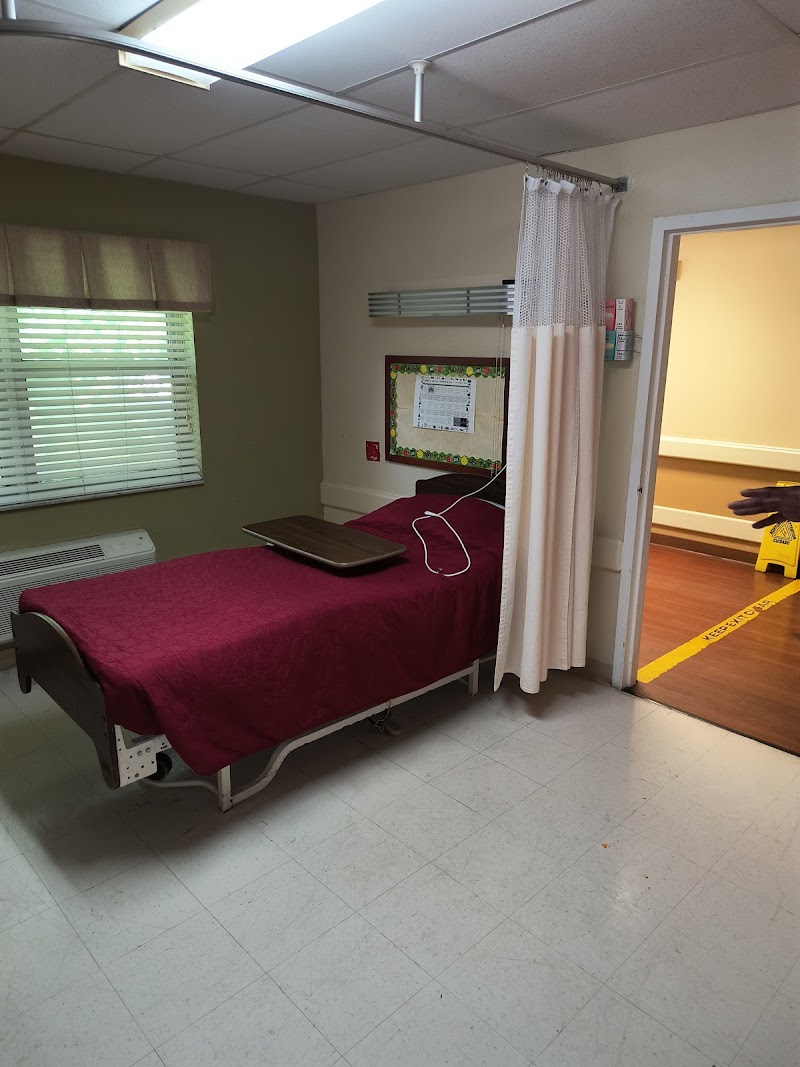
How is Aviata At The Sea - Harbor Beach Staffed?

CMS rates AVIATA AT THE SEA - HARBOR BEACH's staffing level at 3 out of 5 stars, which is average compared to other nursing homes. Staff turnover is 25%, compared to the Florida average of 46%. This relatively stable workforce can support continuity of care.

What Have Inspectors Found at Aviata At The Sea - Harbor Beach?

State health inspectors documented 25 deficiencies at AVIATA AT THE SEA - HARBOR BEACH during 2021 to 2024. These included: 2 Immediate Jeopardy (the most serious level, indicating potential for serious harm or death) and 23 with potential for harm. Immediate Jeopardy findings are rare and represent the most serious regulatory concerns. They require immediate corrective action.
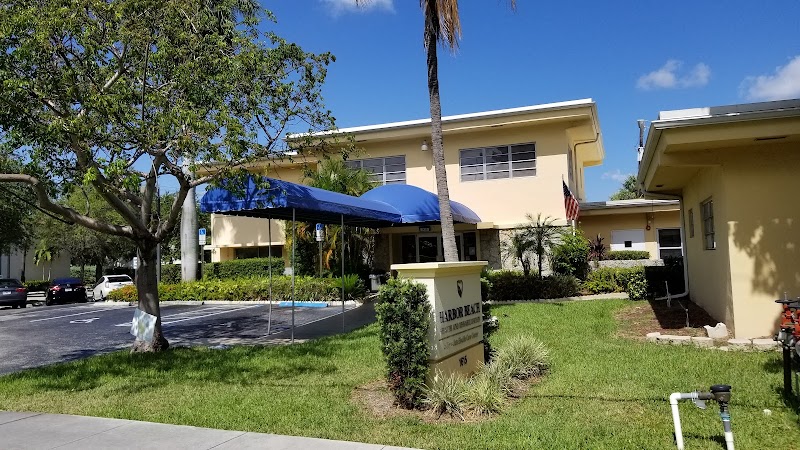
Who Owns and Operates Aviata At The Sea - Harbor Beach?

AVIATA AT THE SEA - HARBOR BEACH is owned by a for-profit company. For-profit facilities operate as businesses with obligations to shareholders or private owners. The facility is operated by AVIATA HEALTH GROUP, a chain that manages multiple nursing homes. With 59 certified beds and approximately 55 residents (about 93% occupancy), it is a smaller facility located in FORT LAUDERDALE, Florida.
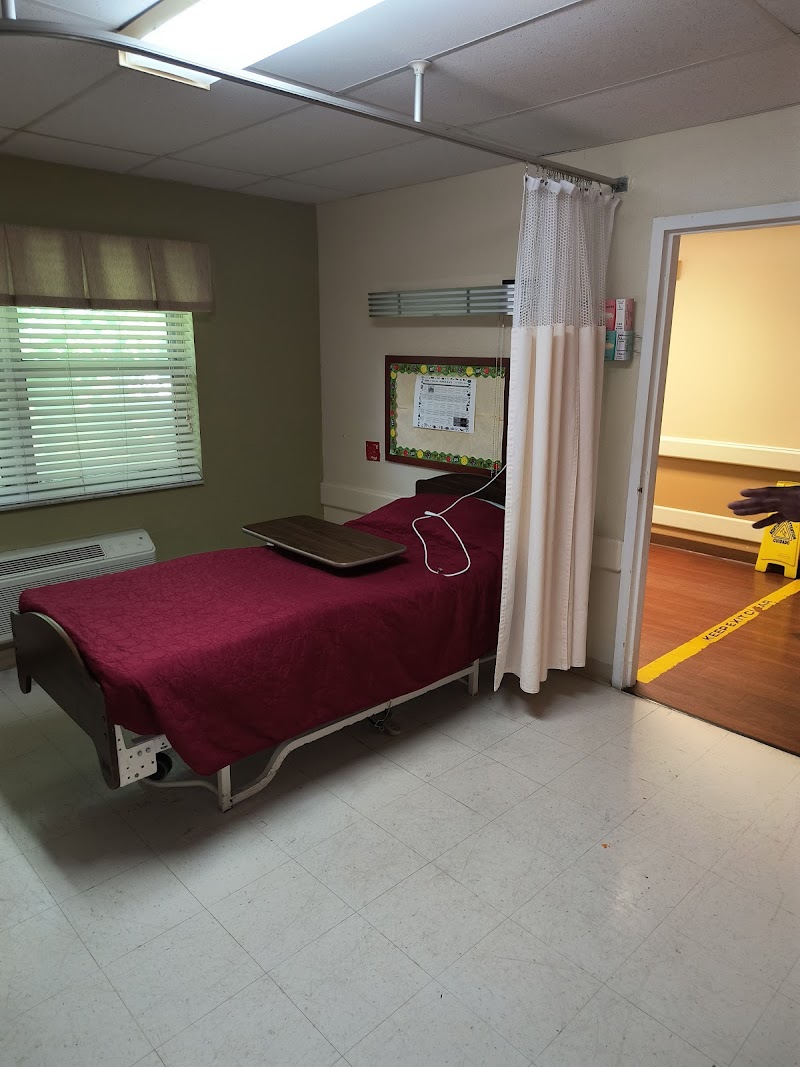
How Does Aviata At The Sea - Harbor Beach Compare to Other Florida Nursing Homes?

Compared to the 100 nursing homes in Florida, AVIATA AT THE SEA - HARBOR BEACH's overall rating (4 stars) is above the state average of 3.2, staff turnover (25%) is significantly lower than the state average of 46%, and health inspection rating (3 stars) is at the national benchmark.

What Should Families Ask When Visiting Aviata At The Sea - Harbor Beach?

Based on this facility's data, families visiting should ask: "What changes have been made since the serious inspection findings, and how are you preventing similar issues?" "Can I visit during a mealtime to observe dining assistance and food quality?" "How do you handle medical emergencies, and what is your hospital transfer rate?" "Can I speak with family members of current residents about their experience?" These questions are particularly relevant given the facility's Immediate Jeopardy citations.

Is Aviata At The Sea - Harbor Beach Safe?

Based on CMS inspection data, AVIATA AT THE SEA - HARBOR BEACH has documented safety concerns. Inspectors have issued 2 Immediate Jeopardy citations (the most serious violation level indicating risk of serious injury or death). The facility has a 4-star overall rating and ranks #1 of 100 nursing homes in Florida. Families considering this facility should ask detailed questions about what corrective actions have been taken since these incidents.

Do Nurses at Aviata At The Sea - Harbor Beach Stick Around?

Staff at AVIATA AT THE SEA - HARBOR BEACH tend to stick around. With a turnover rate of 25%, the facility is 21 percentage points below the Florida average of 46%. Low turnover is a positive sign. It means caregivers have time to learn each resident's needs, medications, and personal preferences. Consistent staff also notice subtle changes in a resident's condition more quickly.

Was Aviata At The Sea - Harbor Beach Ever Fined?

AVIATA AT THE SEA - HARBOR BEACH has been fined $31,577 across 8 penalty actions. This is below the Florida average of $33,395. While any fine indicates a compliance issue, fines under $50,000 are relatively common and typically reflect isolated problems that were subsequently corrected. Families should ask what specific issues led to these fines and confirm they've been resolved.

Is Aviata At The Sea - Harbor Beach on Any Federal Watch List?

AVIATA AT THE SEA - HARBOR BEACH is not on any federal watch list. The most significant is the Special Focus Facility (SFF) program, which identifies the bottom 1% of nursing homes nationally based on persistent, serious quality problems. Not being on this list means the facility has avoided the pattern of deficiencies that triggers enhanced federal oversight. This is a positive indicator, though families should still review the facility's inspection history directly.