GULF COAST MEDICAL CENTER SKILLED NURSING UNIT
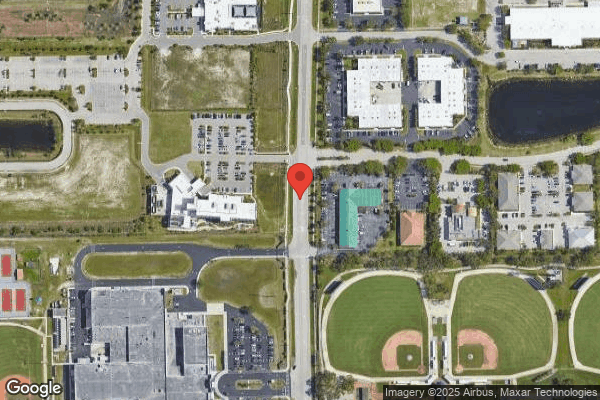
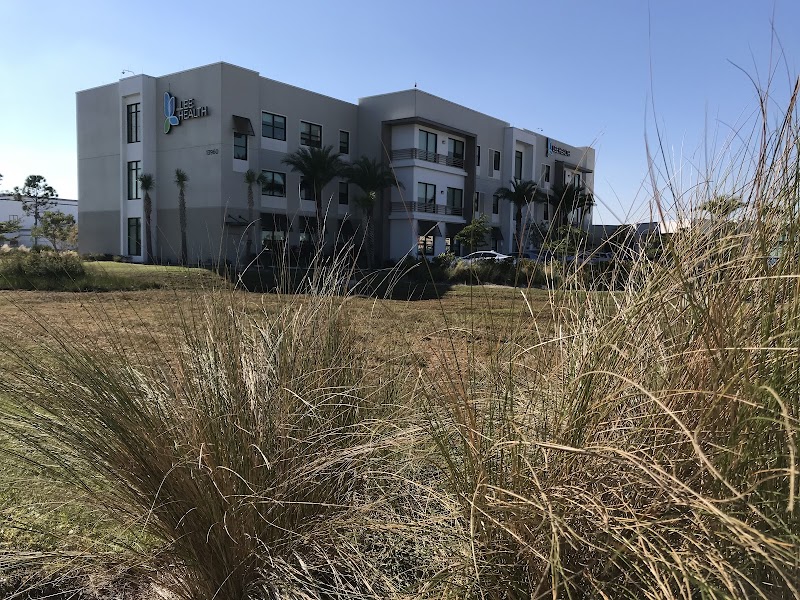
13960 PLANTATION ROAD, FORT MYERS, FL 33912 (239) 343-1705
Government - Hospital district 75 Beds Independent Data: November 2025 1 Immediate Jeopardy citation
Trust Grade
81/100
#45 of 690 in FL
Last Inspection: August 2023

Over 2 years since last inspection. Current conditions may differ from available data.

Overview

Gulf Coast Medical Center Skilled Nursing Unit in Fort Myers, Florida, has a Trust Grade of B+, indicating it is above average and recommended for families considering care options. It ranks #45 out of 690 facilities in Florida, placing it in the top half, and #1 out of 19 facilities in Lee County, meaning it offers the best option locally. The facility is improving, with issues decreasing from three in 2021 to just one in 2023. Staffing is a strong point, with a 5/5 star rating and an 18% turnover rate, well below the state average of 42%, indicating a stable and experienced staff. However, there are some concerns, including $14,521 in fines, which is average compared to other facilities, and a critical incident where a resident suffered a severe allergic reaction due to a failure to ensure their food was allergy-free, requiring hospitalization due to intubation.

Trust Score
B+
81/100
In Florida
#45/690
Top 6%
Safety Record
High Risk
Review needed
Inspections
Getting Better
3 → 1 violations
Staff Stability
✓ Good
18% annual turnover. Excellent stability, 30 points below Florida's 48% average. Staff who stay learn residents' needs.
Penalties
⚠ Watch
$14,521 in fines. Higher than 95% of Florida facilities. Major compliance failures.
Skilled Nurses
✓ Good
Each resident gets 193 minutes of Registered Nurse (RN) attention daily — more than 97% of Florida nursing homes. RNs are the most trained staff who catch health problems before they become serious.
Violations
○ Average
6 deficiencies on record. Average for a facility this size. Mostly minor or procedural issues.
★★★★★
5.0
Overall Rating
★★★★★
5.0
Staff Levels
★★★★★
5.0
Care Quality
★★★★★
5.0
Inspection Score
Stable
2021: 3 issues
2023: 1 issues

The Good

  • 5-Star Staffing Rating · Excellent nurse staffing levels
  • 5-Star Quality Measures · Strong clinical quality outcomes
  • Low Staff Turnover (18%) · Staff stability means consistent care
  • Full Sprinkler Coverage · Fire safety systems throughout facility
  • No fines on record
  • Staff turnover is low (18%)

    30 points below Florida average of 48%

Facility shows strength in staffing levels, quality measures, staff retention, fire safety.

The Bad

Federal Fines: $14,521

Below median ($33,413)

Minor penalties assessed

The Ugly 6 deficiencies on record

1 life-threatening
Oct 2023 1 deficiency 1 IJ
CRITICAL (J) 📢 Someone Reported This

A family member, employee, or ombudsman was alarmed enough to file a formal complaint

Immediate Jeopardy (IJ) - the most serious Medicare violation

Deficiency F0806 (Tag F0806)

Someone could have died · This affected 1 resident

**NOTE- TERMS IN BRACKETS HAVE BEEN EDITED TO PROTECT CONFIDENTIALITY** Based on interview, record review, and facility policies the facility failed to consistently implement processes to ensure resid...

Read full inspector narrative →
**NOTE- TERMS IN BRACKETS HAVE BEEN EDITED TO PROTECT CONFIDENTIALITY** Based on interview, record review, and facility policies the facility failed to consistently implement processes to ensure residents received food free from documented allergies for 1 (Resident #1) of 7 sampled residents with food allergies. Resident #1 had a documented allergy to Capsicum Annuum Extract & Derivative (Bell Pepper) Capsicum Oleo Resin. On 10/1/23 the facility did not check the resident's allergies and provided him a salad dressing which contained red bell pepper. Resident #1 consumed the salad dressing and suffered a severe allergic reaction requiring a transfer to an acute care hospital. Resident #1 was medicated for an allergic reaction in the Emergency Room, was not able to maintain an airway, was intubated, and admitted to the Intensive Care Unit. The failure of the facility to ensure resident #1 received food that accommodates his allergies resulted in the determination of Immediate Jeopardy. The Immediate Jeopardy started on 10/1/23. On 10/26/23 at 9:00 a.m., the Administrator was informed of the determination of Immediate Jeopardy and provided the IJ template. The findings of Immediate Jeopardy were determined to be corrected on 10/3/23. The findings included: Review of the clinical record revealed Resident #1 was admitted to the facility on [DATE] with a history of fall at home and fracture. The Medical Certification for Medicaid Long-Term Care Services and Patient Transfer Form (Agency for Health Care Administration form 3008) dated 9/27/23 noted in the Patient Risk Alerts section, Allergies: Capsicum Annuum Extract & Derivative(Bell Pepper) [Capsicum Oleo Resin], peanut extract. On 9/27/23 the attending physician at the facility completed a history and physical and documented, Allergies: Capsicum Annuum Extract & Derivative(Bell Pepper) [Capsicum Oleo Resin], peanut extract. On 9/28/23 at 1:37 p.m., the Registered Dietitian, (RD) documented in an admission assessment, Visited with patient . and he disputed the allergy to black pepper stating he only has a problem with it if too much is added. Message left for wife to attempt to clarify what he is able to receive . On 9/29/23 the RD documented in a Nutrition Assessment note, Food Allergies: Peppers, peanuts . On 10/1/23 at 1:00 p.m., the nurse documented in a progress note, Called to pt (patient) room with crash cart for possible stroke. Upon arrival to room CNA (Certified Nursing Assistant) present along with wife. Pt is alert. Pt is vomiting currently. His hand grasps are present but weak . Wife states an allergy to peppers, and states he ate dressing at lunch that has peppers . ready for EMS (Emergency Medical Services) transport to ER (Emergency Room). On 10/1/23 at 2:50 p.m., the Emergency Department encounter report noted, Patient was eating lunch when he began vomiting and choking. Patient also noted to have eaten red peppers on a salad today with an allergy to peppers and had a truncal rash on arrival. Patient was medicated for his allergy with IM (Intramuscular) epinephrine, Pepcid, Solu-Medrol, and Benadryl. Patient was not unable [sic] to maintain his airway and he was intubated in the emergency department . Allergen Capsicum Annuum Extract & Derivative (Bell Pepper) [Capsicum Oleo Resin]. Reaction: Hives and itching . Per patient and daughter report on 3/14/22 . Patient is NOT allergic to black pepper seasoning. Only allergic to the fruit (bell, jalapeno etc.) . Peanut- Derived Hives, Rash and Swelling . Allergic reaction, assessment, and plan. Patient had an allergic reaction during lunch today with red pepper being consumed with his salad. Patient arrived to ED with truncal rash . On 10/23/23 at 11:30 a.m., in a telephone interview Resident #1's wife said Resident #1 previously determined he was allergic to peppers when he developed a rash after eating peppers. She said approximately a year ago, he ate something with pepper, and became unresponsive. The spouse said on 10/1/23, when he ate the salad with the Italian dressing, it was like Déja [NAME]. He became in a trance like state and went unresponsive. She ran and got the CNA. Seven or eight staff members responded within minutes. After approximately three minutes, her husband started vomiting. She said that's when she read the ingredients on the packet of the salad dressing the facility provided and realized it contained red peppers. She said her husband ate the salad with the dressing. She immediately told a nurse who was in the room that he ate red pepper, and he was allergic to them. She requested an epi-pen, and the nurse told her they did not know what was going on with her husband. On 10/23/23 at 2:00 p.m., met with the Registered Dietitian, and the Director of Clinical Nutritional Operation to discuss the facility's process to ensure residents receive food that accommodate allergies. The Registered Dietitian said, the Registered Dietitian enters the allergies and preferences in Computrition, the facility's electronic system. The system contains all the recipes the facility utilizes through the outside food provider and the recipes used by the facility. The system is designed to not allow the dietary staff to print out a meal ticket with anything the resident is allergic to. The facility provided a Recipe Likes, Dislikes, Allergy report which listed food items the system will automatically not print on a meal ticket based on the allergies. The list included Italian dressing as an item not to provide with pepper allergy. The facility provided Resident #1's meal tickets printed from the Computrition system for all three meals from 9/27/23 through 10/1/23. The meal tickets listed allergies of peppers, and peanuts. Review of the facility's investigation revealed Resident #1 had a documented allergy to Capsicum Annuum Extract and derivative (Bell pepper). On 10/1/23 Resident #1 declined his original meal option and requested a chef salad and chicken noodle soup as an alternative. The nurse called the kitchen and left the resident's request on a voicemail. The voicemail did not include a request for salad dressing. Food and Nutrition Service Assistant Staff A prepared the requested meal and placed an Italian salad dressing on the tray to accompany the salad. Staff A did not review Resident #1's allergies in the computer prior to preparing the meal tray. The tray was delivered to the floor by another employee and handed over to a Certified Nursing Assistant (CNA). The CNA delivered the meal. Resident #1's spouse accepted the tray from the CNA, prepared the salad with the Italian dressing and assisted Resident #1 with his lunch. The facility concluded there was a process in place to ensure the residents' needs were met. The facility had adequate, qualified staff working in the kitchen to meet the residents' needs. Sufficient alternative options were immediately available. Resident #1's allergy was appropriately documented in the electronic medical record and the nutritional computer application. Dietary Staff A preparing the tray admitted the normal process she was trained for would be to confirm the patient's diet and allergies in the computer system prior to preparing the tray. She admitted to an error in not checking the allergies for the requested alternative meal. The facility provided an undated handwritten statement from Staff A that read, Prepared the salad tray for RM (room) 214 and gave patient Italian dressing. I failed to check patient's allergies before doing so. The facility provided a packet of Italian dressing which they said was the same brand they provided to Resident #1 on 10/1/23 with his lunch meal. The ingredients listed, Less than 2% of . Red Bell Pepper . On 10/23/23 at 5:30 p.m., in a telephone interview, Dietary Staff A said the nurse called and asked for a chef salad for Resident #1. She said she made the salad and provided the Italian dressing with the meal. She said she was in a hurry, was not paying attention and did not check the system for Resident #1's allergies or preference before preparing the salad. She said she should have printed a meal ticket. The system would not have allowed her to print a meal ticket with Italian dressing due to the resident's allergy to pepper. Review of the dietary staff meetings revealed Dietary Staff A attended a staff meeting the week of September 4, 2023. The content of the meeting included, Check diets in Computrition BEFORE agreeing to give a patient/therapy/nursing etc. any food . On 10/25/23 at 12:15 p.m., the Director of Nursing said prior to the incident involving Resident #1, the nursing staff did not check the meal tickets before taking a tray to the residents. After the incident, the facility implemented a new process which includes nursing to check the meal ticket for the right diet, including food allergies prior to delivering the meal to the resident. On 10/25/23 at 12:34 p.m., the Administrator said prior the incident involving Resident #1, the dietary staff was responsible to check for food allergies in their system. They did not always print out meal tickets when a resident requested an alternate meal. She said at this time all staff are required to make sure they have a meal ticket and check for allergies before delivering the meal to the resident. The immediate actions implemented by the facility and verified by the surveyor on 10/25/23 and 10/26/23 included: Resident #1's symptoms immediately attended. The surveyor verified through review of the clinical record. Staff interviews, regulatory notifications, investigation, and root cause analysis initiated immediately. The surveyor verified through review of the investigation and root cause analysis completed. Residents allergies and preferences reviewed by the Dietitian on 10/2/23 and verified for current residents, including EPIC (Computer system) and Computrition (Dietary computer system) are matching. The surveyor verified through review of the audits completed. Administrator, Director of Nursing, Risk Manager and Director of Clinical Nutrition reviewed process for alternate tray requests to be provided to residents on 10/2/23. On 10/2/23 the new process was initiated, and all facility staff completed education on re-printing ticket for additional tray requests for all food items leaving the kitchen. The education was completed at 100% by 10/3/23. The surveyor verified through review of the education, review of the new facility's policy and procedure and interview with dietary and nursing staff. Surveyor verified through observation of meals. Each meal tray had a meal ticket and residents with documented allergies did not receive any food they were allergic to. On 10/2/23 the Administrator, Director of Nursing, Risk Manager and Director of Clinical Nutrition reviewed and educated all facility staff on process for acknowledging food allergens on tray before leaving kitchen and upon receipt on units, prior to delivery to resident or family member requesting to assist resident. This education was completed at 100% on 10/3/23. The surveyor verified through review of the education, random nursing and dietary staff interview, and observation of meal delivery. Audits began on 10/2/23 and are being completed ongoing to ensure tray accuracy related to allergies for all meals. These audits are being completed by nursing and dietary staff. Audit completed on 10/2/23 by the Registered Dietitian to ensure allergies in EPIC and Computrition were correct. The surveyor verified through review of audits, interview with the Registered Dietitian, the Administrator, and the Director of Nursing.
Oct 2021 3 deficiencies
CONCERN (D)

Potential for Harm - no one hurt, but risky conditions existed

Comprehensive Care Plan (Tag F0656)

Could have caused harm · This affected 1 resident

**NOTE- TERMS IN BRACKETS HAVE BEEN EDITED TO PROTECT CONFIDENTIALITY** Based on record review and staff interviews, the facility failed to develop and implement a comprehensive dialysis care plan for...

Read full inspector narrative →
**NOTE- TERMS IN BRACKETS HAVE BEEN EDITED TO PROTECT CONFIDENTIALITY** Based on record review and staff interviews, the facility failed to develop and implement a comprehensive dialysis care plan for 1(Resident #37) of 2 residents reviewed for dialysis. Failure to develop and implement a resident-centered care plan could lead to a decline and/or failure to meet the resident's highest practicable physical, mental, and psychosocial well-being. The findings included: On 10/27/21, review of Resident #37's clinical record, revealed the resident was an [AGE] year-old male with a history of end-stage renal disease, receiving hemodialysis on Monday, Wednesday and Friday. On 10/27/21, further review of Resident #37's clinical record revealed there was no evidence of a comprehensive resident centered care plan for dialysis. On 10/28/21 at 12:30 p.m., in an interview, the Director of Nursing confirmed there was no evidence of a dialysis care plan in the clinical record for Resident #37 and said the resident should have a comprehensive care plan for dialysis. On 10/28/21 at 12:35 p.m., in an interview, Registered Nurse, Minimum Data Set Coordinator Staff D said she had not developed and implemented a dialysis care plan for resident #37.
CONCERN (D)

Potential for Harm - no one hurt, but risky conditions existed

Quality of Care (Tag F0684)

Could have caused harm · This affected 1 resident

**NOTE- TERMS IN BRACKETS HAVE BEEN EDITED TO PROTECT CONFIDENTIALITY** Based on observation, record review, resident and staff interview the facility failed to follow through and provide timely care ...

Read full inspector narrative →
**NOTE- TERMS IN BRACKETS HAVE BEEN EDITED TO PROTECT CONFIDENTIALITY** Based on observation, record review, resident and staff interview the facility failed to follow through and provide timely care and treatment for wound after written communication from dialysis unit for 1 (Resident #37) of 2 dialysis resident reviewed. The findings included: Review of Dialysis Patient Management, Policy #165 last revised on 5/2021. Policy noted Lee Skilled Nursing staff will ensure coordinated care with involvement from resident/patient . attending physician and related medical providers, dialysis provider . and facility's interdisciplinary team . Communication book will be created for resident/patient to allow for communication between facility staff and dialysis staff before and after dialysis treatment Primary nurse is also required to verify and transcribe any new orders that were communicated via Dialysis Center faxed documentation . On 10/27/21, review of Resident #37's clinical record, revealed the resident was an [AGE] year-old male with a history of end-stage renal disease, receiving hemodialysis on Monday, Wednesday and Friday. On 10/27/21, review of the dialysis communication record dated 10/22/21 revealed a recommendation from the dialysis center to change the resident's dressing to the right groin. The note indicated a physician had assessed the site. The clinical record lacked documentation the facility assessed or changed the dressing to the right groin on 10/22/21. On 10/26/21 a weekly skin evaluation noted Resident #37 had a puncture site to the right groin measuring 1.0 centimeter by 0.6 centimeter by 0.1 centimeter with red, fragile skin and scant serosanguinous drainage. On 10/26/21 Registered Nurse (RN) Staff B documented in a progress note Resident #37 had a puncture site to the right groin with the wound bed fragile, red, bleeding with scant serosanguinous drainage. On 10/27/21 at 1:38 p.m., in an interview Registered Nurse (RN) Staff B, second floor Charge nurse said she did not have any documentation on 10/22/21 RN Staff A assessed Resident #37's right groin or had done any follow up with what was written by the dialysis nurse about the dressing. RN Staff B said her expectation was for the nurse receiving the resident back from dialysis to do an assessment and review anything the dialysis wrote on the dialysis communication form. She said she was not there on 10/22/21, but on 10/26/21 she saw the communication note from the dialysis center, assessed the area, and obtained orders. On 10/27/21 at 1:44 p.m., in an interview the Director of Nursing (DON) said her expectation was for the nurse on duty to review the dialysis communication book upon the resident's return and address any recommendation, take off or write orders. On 10/28/21 the Advanced Practice Registered Nurse (APRN) documented Resident #37 had a small circular area of excoriation to the right groin around the puncture site from a femoral arterial line that was placed on 10/14/21 while the resident was hospitalized .
CONCERN (D)

Potential for Harm - no one hurt, but risky conditions existed

Respiratory Care (Tag F0695)

Could have caused harm · This affected 1 resident

Based on observation, review of facility policy and resident and staff interviews, the facility failed to provide the necessary care and services to monitor and maintain a continuous positive airway p...

Read full inspector narrative →
Based on observation, review of facility policy and resident and staff interviews, the facility failed to provide the necessary care and services to monitor and maintain a continuous positive airway pressure (CPAP) machine for 1 (Resident #157) of 1 resident reviewed with a CPAP machine (machine used to deliver constant and steady air pressure to help breathe while sleeping). The findings included: The facility policy #381 Respiratory Equipment with a review date of 2/21 documented, To maintain nebulizers and oxygen equipment and positive airway pressure machines (to include CPAP and BIPAP) and accessories in a sanitary manner .Respiratory equipment will be cleaned, maintained and or changed in a timely manner within predictable intervals and as needed for soiling/replacement .CPAP masks will be sanitized daily using manufacturer recommendations . Nursing staff will document completion of respiratory equipment maintenance in the medical record . On 10/26/21 at 1:40 p.m., during an observation, Resident #157 had a CPAP machine on the nightstand. The nasal mask was stored in the drawer uncovered. Photographic evidence obtained. On 10/26/21 at 2:01 p.m., a review of the clinical record revealed Resident #157 had diagnoses including obstructive sleep apnea (a sleep disorder in which breathing repeatedly stops). The clinical record showed no documentation of a physician order or a care plan to indicate the settings or use of the CPAP machine. On 10/27/21 at 9:51 a.m., in an interview, Resident #157 said his wife brought the CPAP machine to him on 10/24/21 and said he takes care of his CPAP machine. Resident #157 said he was able to apply and remove the CPAP mask. On 10/28/21 at 10:33 a.m., in an interview Registered Nurse Supervisor Staff C said the procedure for CPAP machines was to obtain a physician order for use with the machine settings. The order is then placed on the medication administration record. The night shift nurse was responsible to assist the resident to put the CPAP mask on and to remove it in the morning. Staff C said the CPAP machine would be care planned so staff knew how to assist the resident and maintain the machine. Staff C reviewed Resident #157's clinical record and confirmed there was not a physician order for the CPAP machine and no care plan was initiated. Staff C confirmed the clinical record provided no documentation for the use and care of Resident #157's CPAP machine.
Jan 2020 2 deficiencies
CONCERN (D)

Potential for Harm - no one hurt, but risky conditions existed

Deficiency F0685 (Tag F0685)

Could have caused harm · This affected 1 resident

Based on observation, interview, and record review the facility failed to provide vision services in a timely manner for 1 (Resident #22) of 1 resident sampled for vision. The findings included: Duri...

Read full inspector narrative →
Based on observation, interview, and record review the facility failed to provide vision services in a timely manner for 1 (Resident #22) of 1 resident sampled for vision. The findings included: During the initial screening process, on 1/13/20 at 10:37 a.m., Resident #22 revealed, he did not have his glasses, and he did not have money to go to an eye doctor. He said he had told everybody he had blurry vision and stated, I'm not going to say who I told. On 1/15/20 at 4:31 p.m., during an interview with Resident #22 he said he had no trouble seeing the television but, he needed glasses for reading. He said he had left eye cataract surgery years ago but couldn't recall how long ago he had the surgery. He said he never went back for treatment for the right eye because of cost. Resident #22 said his sight was blurred because he had fallen many times and hit his head. Observed a pair of reading glasses in a case on his bedside table. He said the glasses were given to him by the facility staff. He said the glasses helped him a little, but he still couldn't see clearly with them, and still had blurry vision. When asked if staff knew he was having trouble with his vision, he said he thought he told the Social Worker, but he didn't want to discuss further. In an interview on 1/15/20 at 4:34 p.m., the Social Worker said she was not aware the patient had blurry vision and needed prescription glasses but would discuss that with him to arrange services. In an interview conducted on 1/15/20 at 4:41 p.m., Speech Language Pathologist, (SLP), Staff B revealed Resident #22 received services two times per week. She also said she discussed the patient vision issue with the Rehabilitation Manager (RM). Staff B also said she had done the initial assessment of Resident #22. She provided copies of Speech Therapist (SP) Treatment Note records that detailed the patient's visual limitations. In an interview conducted on 1/15/20 at 5:00 p.m., the RM, said she personally discussed Resident #22 blurry vision with the Interdisciplinary Team, (IDT) during a meeting on 12/5/19. She said she believed the Medical Director (MD), spoke with resident regarding his vision issue. The RM said she thought this issue was resolved and the resident was capable of reading and signing forms. The resident was offered vision reading glasses on 12/13/19, but she did not have a record of the outcome. Record review revealed, from the SLP Preadmission Screening Form dated on 12/04/19, Resident #22 reported blurry vision and listed for impaired vision. Record review from the SP Daily Treatment Note dated on 12/10/19. The resident could read a medium size bold print font. The resident could use a calendar 70% with accommodations (likely due to impaired vision). The patient was encouraged to continue using personalized visual aids and call button for safety and fall prevention. Record review revealed a physician order dated on 12/10/19, to set up appointment for Optometry to evaluate vision and make recommendation. The Physician listed as a Special Instruction; resident complained of blurry vision, had history of cataracts, but he thought this happened when he hit his head before admission. Record review, from the SP Daily Treatment Note dated on 12/12/19 written by SLP Staff E stated PT (patient) unable to benefit from visual aids d/t (due to) low vision. On 12/16/19 SLP Staff C wrote SLP read short stories aloud given poor vision. Dated on 12/17/19 written by Staff E said Pt (patient) shares he will need an eye appointment once he does have some income to enhance vision as he cannot reading pertinent and functional info at this time (medication labels, nutrition labels, menus etc.) Same SLP note written on 12/19/19 said Pt (patient) able to complete calendar reading tasks (large print) with 90% with acc (accommodations) w/o (without) cues. Note dated on 12/28/19 written by SLP Staff D. She said the patient tries to write notes to self, but said his vision makes it difficult to see (cannot read medicine bottle 'my eyes done gone blurry'). Pt (patient) has readers and reported they help if 'I hold up close'. Pt (patient) said he does not have time to get an appointment with eye doctor. Noted by therapist during this session; Pt (patient) given real life scenarios to apply strategies and due to vision problems visual and written strategies are not ideal. The Minimum Data Set (MDS), dated on 12/7/19 revealed: * Section-B, Hearing, Speech, Vision. Adequate-sees fine detail, such as regular print in newspapers/books, Corrective lenses indicated (No) * Section-C, Cognitive Patterns Brief Interview for Mental Status. (BIMS) Summary Score 15. The total possible BIMS score ranges from 00. To 15. 13-15: cognitively intact. 08-12: moderately impaired. Progress note dated 1/16/20 noted the resident had a future scheduled appointment on 1/21/20 at 3:30 p.m. foe an eye exam with an Optometrist. The vision was not addressed in the revised care plan on 12/16/19 On 1/16/20 at 1:33 p.m., in an interview Register Nurse (RN)/MDS Nurse Staff G said she looked at the nursing admission observations to write and code the resident's MDS. She said she reviewed the admission assessment by the nurse, and it was documented no vision issues. The admitting nurse enters the care plan information. The MDS nurse adds more information into the care plans. Staff G produced an order for vision testing on the 10th. She said the care plan should have been revised on the 12/16/19. In an interview on 1/16/20 at 2:00 p.m., the DON verified it was a problem the order was written and the appointment was scheduled so long ago. She said the resident was a charity case and it was difficult to find provider that the resident would follow-up with. She said they made accommodations within the building for the patient to read. In an Interview on 1/16/19 at 2:16 p.m., with the RM and Staff E, Staff E explained the external visual aids used for the patient were use of white board, large magnifying glass, large and bold print, and an iPad application that uses auditory stories. Staff E said she had communicated with the nursing staff regarding the patient's vision problems but not with the social worker. She was aware the resident's vision was discussed at the IDT meeting. In an interview on 1/16/20 at 5:41 p.m., the DON said the doctors orders should have been followed.
CONCERN (D)

Potential for Harm - no one hurt, but risky conditions existed

Deficiency F0757 (Tag F0757)

Could have caused harm · This affected 1 resident

Based on record review and staff interview the facility failed to ensure physician orders were transcribed correctly for 1 (Resident #149) of 5 residents reviewed for unnecessary medications, which ca...

Read full inspector narrative →
Based on record review and staff interview the facility failed to ensure physician orders were transcribed correctly for 1 (Resident #149) of 5 residents reviewed for unnecessary medications, which caused the resident to receive medications every 6 hours for 3 days instead of as the resident needed as ordered by physician. The findings included: Policy review of Medication Administration and Documentation (policy #371) last revised on 8/19 records that the purpose is to provide safe and accurate medication administration. Item A-5 records As-needed (PRN) medications are to be administered for their specified indication(s). Clinical record review for Resident #149 on 1/15/20 at 10:37 a.m., showed the resident had an order written 1/12/20 for Motrin IB (ibuprofen) over the counter (OTC) tablet: 200 mg give two tablets every six hours as needed for severe pain. On review of Resident's Medication Administrator Record (MAR) showed the physician order was place on the record to be given by nurses every six hours around the clock at midnight, 6:00 a.m., 12:00 p.m., and 6:00 p.m. This medication was given to the resident as routine and not as resident needed it or asked for it. Black Box Warnings for Ibuprofen out lines that medication has cardiovascular risk, Gastrointestinal risk if taken on a regular basis. This medication should be avoided or withdrawn whenever possible. On 1/15/20 at 10:30 a.m., in interview withthe nurse, Staff F said Resident #149 was admitted with back pain. She said there was no pain evaluation in the MAR. She said that it appeared that the order in the computer did not have the option to monitor for pain with the medication and the 2-tablet order for Motrin IB was put in as every 6 hours even though the order was for it to be given as needed. On 1/16/20 at 2:05 p.m., the Director of Nursing acknowledged that the order for Motrin IB (ibuprofen) had been transcribed wrong on the MAR and the Resident was receiving the medication every six hours. She said because it was scheduled and not as needed it did not give nurse opportunity to evaluate the pain level. She said that the nurse who took off the medication order did not insure the as needed button PRN was marked and that is why it was put on the MAR as scheduled to be given every six hours. On 1/16/19 at 2:22 p.m., Medical Director acknowledged that resident #149 should not have been receiving the Motrin IB every six hours
Understanding Severity Codes (click to expand)
Life-Threatening (Immediate Jeopardy)
J - Isolated K - Pattern L - Widespread
Actual Harm
G - Isolated H - Pattern I - Widespread
Potential for Harm
D - Isolated E - Pattern F - Widespread
No Harm (Minor)
A - Isolated B - Pattern C - Widespread

Questions to Ask on Your Visit

  • "What changes have you made since the serious inspection findings?"
  • "Can I speak with families of current residents?"
  • "What's your RN coverage like on weekends and overnight?"

Our Honest Assessment

Strengths
  • • Grade B+ (81/100). Above average facility, better than most options in Florida.
  • • 18% annual turnover. Excellent stability, 30 points below Florida's 48% average. Staff who stay learn residents' needs.
Concerns
  • • Multiple safety concerns identified: 1 life-threatening violation(s). Review inspection reports carefully.
  • • 6 deficiencies on record, including 1 critical (life-threatening) violation. These warrant careful review before choosing this facility.
  • • $14,521 in fines. Above average for Florida. Some compliance problems on record.
Bottom line: Generally positive indicators. Standard due diligence and a personal visit recommended.

About This Facility

What is Gulf Coast Medical Center Skilled Nursing Unit's CMS Rating?

CMS assigns GULF COAST MEDICAL CENTER SKILLED NURSING UNIT an overall rating of 5 out of 5 stars, which is considered much above average nationally. Within Florida, this rating places the facility higher than 99% of the state's 100 nursing homes. This rating reflects solid performance across the metrics CMS uses to evaluate nursing home quality.

How is Gulf Coast Medical Center Skilled Nursing Unit Staffed?

CMS rates GULF COAST MEDICAL CENTER SKILLED NURSING UNIT's staffing level at 5 out of 5 stars, which is much above average compared to other nursing homes. Staff turnover is 18%, compared to the Florida average of 46%. This relatively stable workforce can support continuity of care.

What Have Inspectors Found at Gulf Coast Medical Center Skilled Nursing Unit?

State health inspectors documented 6 deficiencies at GULF COAST MEDICAL CENTER SKILLED NURSING UNIT during 2020 to 2023. These included: 1 Immediate Jeopardy (the most serious level, indicating potential for serious harm or death) and 5 with potential for harm. Immediate Jeopardy findings are rare and represent the most serious regulatory concerns. They require immediate corrective action.

Who Owns and Operates Gulf Coast Medical Center Skilled Nursing Unit?

GULF COAST MEDICAL CENTER SKILLED NURSING UNIT is owned by a government entity. Government-operated facilities are typically run by state, county, or municipal agencies. The facility operates independently rather than as part of a larger chain. With 75 certified beds and approximately 72 residents (about 96% occupancy), it is a smaller facility located in FORT MYERS, Florida.

How Does Gulf Coast Medical Center Skilled Nursing Unit Compare to Other Florida Nursing Homes?

Compared to the 100 nursing homes in Florida, GULF COAST MEDICAL CENTER SKILLED NURSING UNIT's overall rating (5 stars) is above the state average of 3.2, staff turnover (18%) is significantly lower than the state average of 46%, and health inspection rating (5 stars) is much above the national benchmark.

What Should Families Ask When Visiting Gulf Coast Medical Center Skilled Nursing Unit?

Based on this facility's data, families visiting should ask: "What changes have been made since the serious inspection findings, and how are you preventing similar issues?" "Can I visit during a mealtime to observe dining assistance and food quality?" "How do you handle medical emergencies, and what is your hospital transfer rate?" "Can I speak with family members of current residents about their experience?" These questions are particularly relevant given the facility's Immediate Jeopardy citations.

Is Gulf Coast Medical Center Skilled Nursing Unit Safe?

Based on CMS inspection data, GULF COAST MEDICAL CENTER SKILLED NURSING UNIT has documented safety concerns. Inspectors have issued 1 Immediate Jeopardy citation (the most serious violation level indicating risk of serious injury or death). The facility has a 5-star overall rating and ranks #1 of 100 nursing homes in Florida. Families considering this facility should ask detailed questions about what corrective actions have been taken since these incidents.

Do Nurses at Gulf Coast Medical Center Skilled Nursing Unit Stick Around?

Staff at GULF COAST MEDICAL CENTER SKILLED NURSING UNIT tend to stick around. With a turnover rate of 18%, the facility is 28 percentage points below the Florida average of 46%. Low turnover is a positive sign. It means caregivers have time to learn each resident's needs, medications, and personal preferences. Consistent staff also notice subtle changes in a resident's condition more quickly. Registered Nurse turnover is also low at 10%, meaning experienced RNs are available to handle complex medical needs.

Was Gulf Coast Medical Center Skilled Nursing Unit Ever Fined?

GULF COAST MEDICAL CENTER SKILLED NURSING UNIT has been fined $14,521 across 1 penalty action. This is below the Florida average of $33,224. While any fine indicates a compliance issue, fines under $50,000 are relatively common and typically reflect isolated problems that were subsequently corrected. Families should ask what specific issues led to these fines and confirm they've been resolved.

Is Gulf Coast Medical Center Skilled Nursing Unit on Any Federal Watch List?

GULF COAST MEDICAL CENTER SKILLED NURSING UNIT is not on any federal watch list. The most significant is the Special Focus Facility (SFF) program, which identifies the bottom 1% of nursing homes nationally based on persistent, serious quality problems. Not being on this list means the facility has avoided the pattern of deficiencies that triggers enhanced federal oversight. This is a positive indicator, though families should still review the facility's inspection history directly.