LARSEN HEALTH CENTER
13880 SHELL POINT PLAZA, FORT MYERS, FL 33908 (239) 466-1111
Non profit - Corporation 180 Beds THE CHRISTIAN AND MISSIONARY ALLIANCE Data: November 2025
Trust Grade
30/100
#371 of 690 in FL
Last Inspection: May 2025

Inspected within the last 6 months. Data reflects current conditions.

Overview

Larsen Health Center has received a Trust Grade of F, indicating significant concerns about its operations and care quality. It ranks #371 out of 690 nursing homes in Florida, placing it in the bottom half of facilities statewide, and #9 out of 19 in Lee County, meaning there are better options available nearby. While the facility is on an improving trend, reducing issues from 8 to 4 over a two-year period, it still faces challenges with 17 reported deficiencies, including serious incidents such as failing to honor a resident's right to refuse care and inadequate supervision leading to preventable falls. On a positive note, staffing is a strength with a perfect score of 5/5 stars, indicating low turnover and experienced staff, and the facility has good RN coverage, which is better than 83% of Florida nursing homes. However, the concerning fines of $60,651, higher than 79% of facilities in the state, suggest ongoing compliance problems that families should consider when researching care options.

Trust Score
F
30/100
In Florida
#371/690
Bottom 47%
Safety Record
High Risk
Review needed
Inspections
Getting Better
8 → 4 violations
Staff Stability
○ Average
45% turnover. Near Florida's 48% average. Typical for the industry.
Penalties
⚠ Watch
$60,651 in fines. Higher than 77% of Florida facilities, suggesting repeated compliance issues.
Skilled Nurses
✓ Good
Each resident gets 104 minutes of Registered Nurse (RN) attention daily — more than 97% of Florida nursing homes. RNs are the most trained staff who catch health problems before they become serious.
Violations
⚠ Watch
17 deficiencies on record. Higher than average. Multiple issues found across inspections.
★★★☆☆
3.0
Overall Rating
★★★★★
5.0
Staff Levels
★★☆☆☆
2.0
Care Quality
★★☆☆☆
2.0
Inspection Score
Stable
2023: 8 issues
2025: 4 issues

The Good

  • 5-Star Staffing Rating · Excellent nurse staffing levels
  • Full Sprinkler Coverage · Fire safety systems throughout facility
  • No fines on record
  • Staff turnover below average (45%)

    3 points below Florida average of 48%

Facility shows strength in staffing levels, fire safety.

The Bad

3-Star Overall Rating

Near Florida average (3.2)

Meets federal standards, typical of most facilities

Staff Turnover: 45%

Near Florida avg (46%)

Typical for the industry

Federal Fines: $60,651

Above median ($33,413)

Moderate penalties - review what triggered them

Chain: THE CHRISTIAN AND MISSIONARY ALLIAN

Part of a multi-facility chain

Ask about local staffing decisions and management

The Ugly 17 deficiencies on record

2 actual harm
May 2025 3 deficiencies
CONCERN (D)

Potential for Harm - no one hurt, but risky conditions existed

Comprehensive Care Plan (Tag F0656)

Could have caused harm · This affected 1 resident

**NOTE- TERMS IN BRACKETS HAVE BEEN EDITED TO PROTECT CONFIDENTIALITY** Based on record review, facility staff, resident and resident's representative interviews, the facility failed to develop and im...

Read full inspector narrative →
**NOTE- TERMS IN BRACKETS HAVE BEEN EDITED TO PROTECT CONFIDENTIALITY** Based on record review, facility staff, resident and resident's representative interviews, the facility failed to develop and implement a comprehensive care plan to meet the needs of 1 (Resident #123) of 2 residents reviewed with a cardiac pacemaker (implanted device to treat irregular heart rhythm). The findings included: Review of the Resident #123's clinical record revealed a hospital surgical history of a cardiac pacemaker. The facility's physician admission progress note dated 4/9/25 revealed Resident #123 had a past medical history of a pacemaker. On 4/21/25, the Advanced Practice Registered Nurse (APRN) documented in a progress note that Resident #89's surgical history included a pacemaker. The admission Minimum Data Set (MDS) assessment dated [DATE] revealed Resident #123 scored 12 on the Brief Interview for Mental Status (BIMS) indicative of moderate cognitive impairment. The diagnoses listed on the MDS did not include the presence of a cardiac pacemaker. Review of the care plan for Resident #123 noted the resident had alteration in cardiac function. The care plan did not document the presence of the cardiac pacemaker with goals and interventions related to the pacemaker. On 5/21/25 at 8:50 a.m., in an interview Resident #123 said he used a home monitoring device for the pacemaker. The monitoring device was not brought to the facility. The resident said the nurses did not ask about the pacemaker, and no one asked how it was monitored. On 5/22/25 11:01 a.m., during an interview the resident's spouse said the facility did not inquire about the pacemaker. She verified Resident #123 still had the cardiac pacemaker and the monitoring device was at home. The spouse said no one at the facility asked about the cardiac pacemaker or how it was being monitored. On 5/22/25 at 11:09 a.m., in an interview Unit Manager Registered Nurse (RN) Staff D said residents with a pacemaker should have regular appointments with the cardiologist. She said she would look to see if Resident #123's pacemaker was being monitored. On 5/22/25 at 11:13 a.m., RN Staff E said she was responsible for the comprehensive assessment data and resident care planning. She said if a resident has a pacemaker, they send them to the cardiologist for regular follow ups to ensure proper functioning and battery life. RN Staff E said the facility monitors for dizziness, shortness of breath, and vital signs. She said there should be a care plan in the record with that information. She verified there was no care plan for pacemaker in the record. On 5/22/25 at 11:39 a.m., RN Staff D said the pacemaker was not on the hospital transfer form (Agency for Health Care Administration form 3008), and it was not listed in the diagnoses. She said they have limited information from the hospital.
CONCERN (D)

Potential for Harm - no one hurt, but risky conditions existed

Deficiency F0825 (Tag F0825)

Could have caused harm · This affected 1 resident

Based on observations, interviews, and record reviews, the facility failed to follow physician's orders and provided skilled therapy services for 1 (Residents #89) of 4 residents reviewed for followin...

Read full inspector narrative →
Based on observations, interviews, and record reviews, the facility failed to follow physician's orders and provided skilled therapy services for 1 (Residents #89) of 4 residents reviewed for following physician's orders. The findings included: Review of the clinical record for Resident #89 revealed an admission date of 3/31/25. Diagnoses included debility and sarcopenia (age related loss of muscle mass and strength). Review of the Minimum Data Set (MDS) admission assessment with a target date of 4/6/25 revealed Resident #89 scored 14 on the Brief Interview for Mental Status (BIMS), indicative of intact cognition. Resident #89 required supervision or touching assistance to stand from sitting in a chair or on the side of the bed. The resident required supervision or touching assistance to walk 10 feet and partial to moderate assistance to walk at least 50 feet and make two turns. Review of the care plan initiated on 4/1/25 revealed Resident #89 was at risk for falls due to recent fall with pelvic fracture, Alzheimer's, weakness, low endurance, and decreased mobility as a result of acute and/or chronic health conditions requiring admission for care. The goal was for the resident to have decreased risk of falls utilizing assessment of the interdisciplinary team and appropriate interventions. The interventions included Physical Therapy (PT) and Occupational Therapy (OT) screen/evaluation. Review of the progress notes revealed Resident #89 sustained multiple falls since admission to the facility, on 4/8/25, 4/10/25, 4/26/25, and 4/28/25. Review of the Therapy notes revealed Resident #89 received Physical and Occupational Therapy. Resident #89 was discharged from Physical Therapy on 5/7/25 and was discharged from Occupational Therapy on 4/27/25. Further review of the clinical record revealed on 5/14/25 the Advanced Practice Registered Nurse (APRN) wrote a new order for PT, OT and Speech Therapy (ST) evaluation and treatment for weakness and sarcopenia. On 5/19/25 at 5:17 p.m., observed Resident #89 in a chair in his room. In an interview, Resident #89 said he sits in the chair all day. He said he thought he should be getting more therapy. He said, My legs buckle sometimes when I walk and I lower myself to the ground. The facility calls them falls. On 5/21/25 review of the clinical record, and therapy progress notes failed to reveal documentation Resident #89 received PT, OT and ST as per the APRN order dated 5/14/25. On 5/21/25 at 10:40 a.m., in an interview the Director of Rehabilitation (DOR) said he did not know Resident #89 had new orders for a therapy evaluation and treatment on 5/14/25. The DOR said he did not know the fracture follow-up included orders to continue PT. The DOR said the orders were not executed and Resident #89 did not receive PT, OT or ST services as ordered. On 5/21/25 at 1:40 p.m., in an interview the Director of Nursing (DON) said the therapy orders from the APRN dated 5/14/25 should have been carried out. On 5/21/25 at 1:48 p.m., in an interview Registered Nurse (RN) Staff E said on 5/14/25 she added the order for therapy services to the resident's orders. Staff E said the order for therapy was discussed in the morning meeting, and the DOR should have known about it. She said she did not know why Resident #89 was not receiving therapy services. On 5/21/25 at 3:48 p.m., in an interview the Nursing Home Administrator (NHA) said there should have been a follow-up from the therapy orders dated 5/14/25 before 5/21/25.
CONCERN (D)

Potential for Harm - no one hurt, but risky conditions existed

Medical Records (Tag F0842)

Could have caused harm · This affected 1 resident

Based on records review, observation and staff interviews the facility failed to accurately document physician ordered treatments for 2 (Residents #82 and Resident #93) of 2 resident's reviewed with f...

Read full inspector narrative →
Based on records review, observation and staff interviews the facility failed to accurately document physician ordered treatments for 2 (Residents #82 and Resident #93) of 2 resident's reviewed with feeding tubes. The findings included: Review of the facility's Charting and Documentation Policy revealed the facility, is committed to ensuring that all services provided to the resident, progress towards the care plan goals . is documented in the resident's medical record . The following information is to be documented in the resident medical record: . Treatments or services performed . Documentation in the medical record will be objective . complete, and accurate . documentation of procedures and treatments will include care-specific details, including: . The date and time the procedure/treatment was provided; The name and title of the individual(s) who provided the care . The signature and title of the individual documenting . Review of the facility's Gastrostomy Enteral Nutrition Via Gravity policy (last revised 9/2022) revealed states under the steps in the procedure section to check the order to verify the type, amount, method, and rate of administration. This section also notes to flush tubing with at least 30 mL warm water (or prescribed amount). Under the Initiate Feeding section, the policy states unless otherwise ordered, follow the feeding with 30-60 mL (milliliters) of warm water. Under the Documentation section, the policy states the person performing the procedure should document amount of feeding and amount of water administered in the resident's medical record. 1. Record review of Resident #82 showed a diagnosis of dysphagia (difficulty swallowing), nutritional anemia and iron deficiency anemia. Resident #82's orders dated April 4, 2025, revealed the resident's diet as nothing by mouth NPO. Resident #82's Care Plan (4/7/2025) noted resident is at potential risk for dehydration d/t (due to) dysphagia with PEG tube feeding and hydration. The Care Plan also noted resident will not show any sign/symptoms of dehydration: i.e. dry skin, cracked concentrated urine, noted or increased confusion, abnormal lab values that may indicate dehydration. The Care Plan also listed to give tube feeding and flushes as ordered. Resident #82's orders dated April 24, 2025, revealed Feeding tube (tube inserted directly into the stomach through the abdominal wall) flushes - 60 milliliters (ml) Feeding tube 3 times a day before and after medications. Total volume 360 ml. Resident #82's medications were scheduled at 6:30 a.m., 9:00 a.m., and 9:00 p.m. Review of the Medication Administration Record (MAR) tube feeding flushes before and after medications during May 2025 revealed: On 18 occasions at 6:30 a.m., the MAR showed documentation that the resident's feeding tube was flushed with 60 mL of water (5/1/2025 through 5/14/2025, 5/17/2025 through 5/19/2025 and 5/21/2025). On 19 occasions at 9:00 a.m., the MAR showed documentation that the resident's feeding tube was flushed with 60 mL of water (5/1/2025 through 5/16/2025, 5/19/2025 through 5/21/2025). On 17 occasions at 9:00 p.m., the MAR showed documentation that the resident's feeding tube was flushed with 60 mL of water (5/1/2025 through 5/13/2025, 5/16/2025 through 5/18/2025, 5/20/2025). Resident #82's orders dated April 23, 2025, revealed Feeding tube flushes - 30 mL Feeding tube 4 times per day before and after bolus (single, large dose) feedings, total volume 240 mL. Resident #82's bolus tube feedings were scheduled for 9:00 a.m., 1:00 p.m., 5:00 p.m., and 9:00 p.m. Review of the MAR for tube feeding flushes before and after bolus feedings during May 2025 revealed: On 21 occasions at 9:00 a.m., the MAR showed documentation that the resident's feeding tube was flushed with 30 mL of water (5/1/2025 through 5/15/2025, 5/17/2025 through 5/21/2025). On 19 occasions at 1:00 p.m., the MAR showed documentation that the resident's feeding tube was flushed with 30 mL of water (5/1/2025 through 5/17/2025, 5/19/2025, 5/20/2025). On 19 occasions at 5:00 p.m., the MAR showed documentation that the resident's feeding tube was flushed with 30 mL of water (5/1/2025 through 5/17/2025, 5/19/2025, 5/20/2025). On 18 occasions at 9:00 p.m., the MAR showed documentation that the resident's feeding tube was flushed with 30 mL of water (5/1/2025 through 5/13/2025, 5/16/2025 through 5/20/2025). On 5/21/2025 at 1:36 p.m., Registered Nurse (RN) Staff B was observed providing tube feeding for Resident #82. RN Staff B followed physician orders by flushing 30 mL of water before and after tube feed administration. RN Staff B said Resident #82 receives hydration through water flushes because they cannot have anything by mouth. Resident #82's MAR was reviewed and noted the resident received only 30 mL of water when they actually received 60 mL of water. RN Staff B was unable to identify the incorrect documentation in the MAR for Resident #82's water flushes until the error was explained. RN Staff B said the documentation was not correct and it makes it look like water flushes are not being given per physician orders. On 5/21/2025 at 1:58 p.m., RN Staff A said when a resident is NPO they will have water flushes to maintain proper hydration. RN Staff A was unable to identify the incorrect documentation in the MAR for Resident #82's water flushes until the errors were explained. RN Staff A said the documentation was not correct and it looks like water flushes are not being given per physician orders. On 5/21/2025 at 2:12 p.m., the Director of Nursing (DON) said when a resident is NPO and has tube feeds, the dietitian will evaluate and put in for hydration. The DON said water flushes would be hydration. The DON was unable to identify the incorrect documentation in the MAR for Resident #82's water flushes until the errors were explained. The DON said the documentation is incorrect and it looks like the resident in not receiving proper hydration per the physician orders. On 5/22/2025 at 10:08 a.m., the Nursing Home Administrator said when a physician puts in orders, staff are expected to follow those orders. The Nursing Home Administrator was unable to identify the incorrect documentation in the MAR for Resident #82's water flushes until the errors were explained. The Nursing Home Administrator said the documentation makes it look like the resident is not receiving enough water flushes per physician orders. Records review of Resident #93 showed a diagnosis of dysphagia, unspecified protein-calorie malnutrition and Vitamin B-12 deficiency. 2, Resident #93's Care Plan listed Resident is at potential risk for dehydration. The resident's care plan also noted to administer tube feed flushes as ordered. Resident #93's orders dated September 6, 2024, revealed 30 mL H2O (water) via feeding tube 3 times a day before and after bolus feedings, total volume: 180 mL. Resident #93's bolus tube feeds were scheduled for 8:00 a.m., 1:00 p.m., and 6:00 p.m. Review of the MAR for tube feeding flushes before and after bolus feedings during April 2025 revealed: On 28 occasions at 8:00 a.m., the MAR showed documentation that the resident's feeding tube was flushed with 30 mL of water (4/1/2025 through 4/21/2025, 4/23/2025 through 4/26/2025, 4/28/2025 through 4/30/2025). On 28 occasions at 1:00 p.m., the MAR showed documentation that the resident's feeding tube was flushed with 30 mL of water (4/1/2025 through 4/21/2025, 4/23/2025 through 4/26/2025, 4/28/2025 through 4/30/2025) On 29 occasions at 6:00 p.m., the MAR showed documentation that the resident's feeding tube was flushed with 30 mL of water (4/1/2025 through 4/26/2025, 4/28/2025 through 4/30/2025).
Jan 2025 1 deficiency 1 Harm
SERIOUS (G) 📢 Someone Reported This

A family member, employee, or ombudsman was alarmed enough to file a formal complaint

Actual Harm - a resident was hurt due to facility failures

Free from Abuse/Neglect (Tag F0600)

A resident was harmed · This affected 1 resident

**NOTE- TERMS IN BRACKETS HAVE BEEN EDITED TO PROTECT CONFIDENTIALITY** Based on record review, review of facility's policies and procedures, and staff interviews, the facility failed to protect resid...

Read full inspector narrative →
**NOTE- TERMS IN BRACKETS HAVE BEEN EDITED TO PROTECT CONFIDENTIALITY** Based on record review, review of facility's policies and procedures, and staff interviews, the facility failed to protect residents' rights to be free from abuse by failing to honor the residents' right to refuse care for 1 (Resident #999) of 3 sampled residents when the resident displayed agitated and aggressive behaviors during care. The findings included: The facility policy Abuse Policy and Procedure Manual with a review date of 3/24/23 noted, Each person served has the right to be free from abuse and mistreatment . Some examples, rough handling a resident. Prevention. Appropriate supervision of staff to maintain the mission of caring for, serving and satisfying all residents is provided .Signs and Symptoms Dementia residents in distress may exhibit the following: Aggressiveness, agitation, yelling out, delusions, wandering etc. Be aware of risk factors (age, cognitive and or physician limitations, etc.) . Listen to residents . If they say stop, stop! The facility Employee Agreements signed upon hire specified, If a resident refuses care at any time, I will inform the nurse and or supervisor of the refusal of care. I will respect the residents wishes and reapproach with the nurses' help to offer care at a later time. Review of the clinical record revealed Resident #999 had an admission date of 8/27/24. Diagnoses included dementia, and major depressive disorder. The Quarterly Minimum Data Set (MDS) (standardized assessment tool that measures health status in nursing home residents) with a reference date of 11/27/24 documented Resident #999 required substantial/maximum assistance with toileting. The MDS noted Resident #999's brief interview for mental status score was 03, indicating her skills for daily decision making were severely impaired. The care plan initiated 11/26/24 noted Resident #999 had a behavior problem and, exhibits periods of anxious behavior and physical aggression toward staff due to a diagnosis of Dementia. Resident can become combative, spitting on staff/throwing feces. The care plan also noted Resident #999 at times, resists/refuses care The interventions for Resident #999 included: Approach in a calm manner, make eye contact and reassure the resident. Use a pleasant voice and identify self when approaching resident. Offer friendly nonverbal cues by smiling and using friendly tone of voice when speaking to resident. If resident refuses/resists care, reapproach and reintroduce care or task to be performed at a later time. Further review of the clinical record revealed an initial psychiatric note dated 9/3/24 documented new patient with dementia and depression. Patient has been confused and combative with care, impulsive. Arrived on Paxil and Trazadone (antidepressants). Per sitter gets fearful with care and agitated. Will decrease Paxil to 10 milligrams (mg) and add Depakote 125 mg twice a day for impulse control. Review of the Psychiatric note dated 12/20/24 documented [AGE] year-old lady with a history of dementia has been smearing feces, combative and throwing things . I am going to substitute current medications with Seroquel (an antipsychotic) 25 mg twice a day and re-evaluate. Review of the facility's incident investigation revealed on 12/19/24 the facility initiated an investigation of abuse related to observation of bruising , redness and swelling of Resident #999's left hand. Resident #999 had voiced pain in the thumb and finger. The resident was unable to describe how the injury occurred. The resident was assessed and sent to the emergency room for evaluation. An x-ray of the left hand revealed no fracture or acute process. The investigation findings revealed Licensed Practical Nurse (LPN) Staff D in the shift -to -shift reported the incident occurred on 12/18/24 on the evening shift. The nursing progress dated 12/19/24 at 7:09 a.m., by Staff D documented, Resident #999 was fighting, biting, kicking with her legs and hands. The resident required three staff members to change her. The facility investigative findings noted statements were obtained from the staff. The Interviews Conducted revealed the following: LPN Staff D indicated Resident #999 had two episodes of combativeness during the evening shift. During the second episode at approximately 9:00 p.m., Certified Nursing Assistant (CNA) Staff E called him to come to Resident #999's room because they were trying to clean her up and she was combative. LPN Staff D said he walked into the room and the resident was kicking, swinging her arms in the air. LPN Staff D said he held Resident #999's legs down while CNA Staff E changed. He said CNA Staff C was trying to hold Resident #999's arms. LPN Staff D said when they were done, CNA Staff E had asked him to do a skin check on Resident #999 because she did not want anyone to say the resident had an injury. CNA Staff E said Resident #999 was combative when trying to clean her, so she asked CNA Staff C and CNA Staff B to assist her. Staff E said they were not able to clean Resident #999 and she asked one of the CNA's to get LPN Staff D to help. CNA Staff E said she cleaned the resident but did not remember where the other staff were. CNA Staff E asked LPN Staff D to check the resident's skin because she didn't want anyone saying the resident had bruising. CNA Staff C revealed that she went with another staff member to assist CNA Staff E to clean Resident #999. CNA Staff C said when CNA Staff E was trying to clean Resident #999 was kicking and swinging her arms in the air. CNA Staff C said she observed Resident #999 hitting the bed with her hand. CNA Staff B said on 12/18/24 at approximately 9:00 p.m., LPN Staff D asked her to assist CNA Staff E to change Resident #999's bed linen because she was combative. CNA Staff B said when she walked into the room CNA Staff E and CNA Staff C had already cleaned the resident. CNA Staff B said she assisted with changing the bed linens but did not touch Resident #999. On 1/16/25 at 11:15 a.m., during an interview with Resident #999 said she was fine and had no problems with the staff. She said everyone was good to her and she had no recall of the event of 12/18/24. On 1/16/25 at 10:55 a.m., in an interview LPN Staff A said, I was here the next day on 12/19/24. I sent her (Resident #999) out to the emergency room, and I was the one who noticed her hands when I helped to toilet her. Her left hand was not like that the day before. The left hand was just different, swollen and bruised. I spoke with my supervisor and had her assess her (Resident #999) as well. I did not know how it occurred. I don't know how it happened. The night before I worked with her and she was ok, her hand was not like that when I had her. I notified her family. I notified the physician. LPN Staff A said If the resident refuses care, we re-approach, redirect and speak with the resident. We try to make them as comfortable as we can. They have a right to refuse, but most of the residents on this unit do not understand. We just try and take care of them as they allow us. I speak with the family and the provider to see what we can do. On 1/16/25 at 12:15 p.m., in a telephone interview CNA Staff B said she was working on 12/18/24 on the secured unit. She said, I was on my break when the nurse (LPN Staff D) called me into the room to help them. He told me to change the sheet, so I pulled the sheets off the bed. The resident was in the bed and I put new sheets on. I did not see anything. I did not observe anyone holding the resident, that is the only thing I can tell you. I was called to change the sheets, and I did it and left the room. That is it. I did not see anything. The resident was in bed on her side, and I took the dirty sheets off the bed and I left the room. I never saw anyone holding the resident or touching her. I did not see anything. On 1/16/25 at 5:18 p.m., in a telephone interview CNA Staff E said on 12/18/24 Resident #999 was in the dining room about 8:00 or 8:30 p.m., and she was playing in feces. Resident #999 had all of her clothes off and they were on the floor. She took the resident to her room, o the bed to clean her up. Resident #999 started fighting me and I tried to speak to her very nicely and explained to her that she had feces all over her and I needed to change her. That night she was agitated, so I left her in bed for 30 minutes and I came back, and she was still agitated with me. I explained to her what I needed to do but she tried to hit me. She was yelling and tried to hit me. I put the call light on, and I asked CNA Staff C and LPN Staff D to help me because we are told to always use two people. I asked them to stand there and make sure Resident #999 did not roll onto the floor, and I cleaned her. She was fine when I left that night, there was nothing on her hands. I never told anyone to hold her. I just asked them to stay on either side of the bed, so she does not fall out of the bed. I never saw them holding Resident #999 by her arms or her hands. I work with Alzheimer's residents, and I know you have to be patient. Resident #999 always wants to fight you. She could have hit her hand in the dining room before I found her. On 1/17/25 at 2:30 p.m., in a phone interview LPN Staff D said on 12/18/24 I had just received the change of shift report. It was approximately 7:30 p.m., and Resident #999 was in the dining room, and she had blood running from her ankle. She had scratched her ankle, and she had no clothes on. Everything was off and on the floor. She had her hand in her brief, and she had feces all over her. It was everywhere and on both of her hands. The other nurse was still there, LPN Staff A. I asked her what happened, and she did not know. I told her to go, I would take care of it. I cleaned the wound and put a dressing on it. I asked CNA Staff E to come and get Resident #999, to take her to her room and take care of her and she did. Staff E came to me and said the resident was combative, hitting and throwing feces, so I told her to wait a bit and go back. At approximately 8:00 p.m., Staff E went back to the room to help Resident #999, and she asked CNA Staff C to help her. The resident accepted the care. Staff C came to get me approximately 8:30 p.m., to tell me the dressing to the ankle needed to be changed because there was feces on it. I went into the room and changed the dressing. The resident had already been cleaned by CNA Staff E. I put the dressing on the wound, I never held her legs down. I did not say that in my witness statement. CNA Staff B came into the room and took the dirty linen out, she never touched the resident. No one did that, no one was holding her. She had nothing, no bruising or nothing that I saw on her all night. On 1/16/25 at 12:00 p.m., in an interview the Chief Nursing Officer (CNO) said CNA (Staff E) felt the resident required changing because she had soiled herself and she wanted to clean her. In the end her decision to ask someone to hold her down was not appropriate and the staff were terminated. It may not be in the best interest of the residents to leave them soiled, but sometimes you have to do it and you keep trying. Resident #999 can be combative, but she has the right to refuse if she wants to, all we can do is to continue to try to provide her care. The CNO said the root cause of the event was the staff did not respect the resident's rights. On 12/24/24 the facility completed the investigation of abuse and documented The facility verifies that the injuries to Resident #999's hand was a result of physical abuse committed jointly by CNA Staff E, CNA Staff C and LPN Staff D. Their actions of holding Resident #999 down to provide care was a physical restraint of resident #999 as well as violated her right to refuse care.
Mar 2023 8 deficiencies 1 Harm
SERIOUS (G)

Actual Harm - a resident was hurt due to facility failures

Accident Prevention (Tag F0689)

A resident was harmed · This affected 1 resident

**NOTE- TERMS IN BRACKETS HAVE BEEN EDITED TO PROTECT CONFIDENTIALITY** Based on observation, review of facility policy and procedures, record review and staff interviews, the facility failed to provi...

Read full inspector narrative →
**NOTE- TERMS IN BRACKETS HAVE BEEN EDITED TO PROTECT CONFIDENTIALITY** Based on observation, review of facility policy and procedures, record review and staff interviews, the facility failed to provide adequate supervision and implement necessary interventions to prevent avoidable accidents for 1 (Resident #143) of 4 residents reviewed who were identified as being at risk for falls and sustained multiple falls at the facility, and a fracture requiring a transfer to a higher level of care. The findings included: The facility policy Fall Management Program origination 3/8/17 (revised 11/22) documented, The Falls Management Program is an interdisciplinary quality improvement program that provides resident fall processes and outcomes. The program utilizes a systemic approach to assessment, individualized intervention and monitoring that will result in injury reduction and minimizing fall risk to our residents . The IDT [interdisciplinary team] will complete a thorough investigation as well as a root cause analysis of all falls by completing a Post Fall Review form. The care plan, and staff assignment sheets will be adjusted as needed to reflect current and appropriate fall interventions. The nursing staff will observe, interview as appropriate and document resident's post fall status as well as effectiveness of identified fall interventions in place on each shift for the next 3 days in the resident record. It is important to recognize that on size does not fit all when considering interventions for residents fall management. Review of the clinical record revealed Resident #143 had an admission date of 12/26/22 with readmissions on 1/20/23 and 2/18/23 with diagnoses including Alzheimer's, dementia, left hip fracture, frequent falls, and aphasia (loss of ability to express or understand speech). The admission Minimum Data Set (MDS) (standardized assessment tool that measures health status in nursing home residents) with an assessment reference date of 1/26/23 documented Resident #143 required limited assistance of one person with bed mobility, transfers, and ambulation. Resident #143 was frequently incontinent of urine, and bowel. A urinary and bowel toileting program was not being used to manage the resident's incontinence. The MDS noted a Brief Interview for Mental Status (assessment of a resident's cognitive function) was 99 indicating the resident was unable to complete the interview. The facility initiated a care plan on 12/26/22 indicating Resident #143 was at risk for falls due to weakness, low endurance and decreased mobility as a result of acute or chronic health conditions and aphasia. The care plan interventions on 12/28/22 included to orient resident to room, call light, and need to call for, and wait for assistance, maintain adequate lighting in resident's room, keep bed in lowest position possible, attempt to keep resident as active in activities during the day as resident will allow. The facility fall assessment dated [DATE] determined the resident was a moderate risk for falls. Review of the incident reports revealed: On 1/20/23 at 6:30 a.m., Resident #143 was found on the floor in her room and was unable to state what she was doing at the time of the fall. Resident #143 sustained a skin tear to the right side of her abdomen. On 1/21/23 at 3:31 p.m., Unit Manager, Licensed Practical Nurse (LPN) Staff F completed the investigation follow up and documented Resident #143 was agitated, had dementia and restlessness. LPN Staff F documented, IDT (interdisciplinary team) meeting regarding found on floor next to bed. Regular mattress in place. Work for grab bars placed. Intervention: Staff to ensure wheelchair to be placed at bedside. The facility lacked documentation of an investigation to determine the root cause of the fall and implement appropriate interventions to prevent further avoidable falls. On 1/24/23 at 1:00 a.m., Resident #143 was found on the floor in her room. After assessment, a bump noted on the back of the head. Resident complained of pain. Tylenol given as ordered and ice pack applied. On 1/25/23 at 4:48 p.m., LPN Staff F completed the investigation follow up and documented Visual reminder to use call bell for assistance. There was no documentation of an investigation to determine the root cause of the fall and implement appropriate interventions to prevent further avoidable falls. On 1/29/23 at 6:25 p.m., Resident #143 was found sitting on the floor. The incident report documented this nurse was notified by neighboring resident family that she heard a big bang. Upon arrival resident was observed sitting, guarding LLE (left lower extremity) and being in distress/teary. Three wheeled walker next to her. The nurse documented the resident reported pain pointing to the left knee. The nurse assessed Resident #143 and documented the left lower extremity appeared shorter and rotated with substantial bruising. The resident was sent to the local hospital emergency room (ER). Review of the ER nursing documentation revealed Resident #143 had left knee swelling and laceration to the left forehead. A left knee x-ray was obtained. The x-ray report documented no acute fracture or dislocation. The clinical impressions were closed head injury, contusion, acute pain of the left knee. Resident #143 was transferred back to the facility. On 2/27/23 at 1:03 p.m., (29 days after the fall), LPN Staff F completed the investigation follow up and documented, IDT meeting regarding fall 1/29/23. Resident returned from ER (Emergency Room) continue B&B (bowel and bladder) observation and set up B&B schedule for resident. The clinical record lacked documentation a bowel and bladder schedule was initiated for the resident. The admission MDS with a target date of 2/23/23 noted a toileting program was not being used to manage the resident's urinary and bowel continence. On 3/16/23 at 11:40 a.m., Unit Manager LPN Staff F said the root cause of the fall on 1/29/23 was Resident #143 got up to go the bathroom because she does not get up unless she has to go to the bathroom. The resident is nonverbal and took herself to the bathroom. She was found next to the bed with the walker so, I figured she was going to the bathroom. The investigation as to why she fell was she was getting up to go to the bathroom it is what she always does. LPN Staff F confirmed there was no documentation the bowel and bladder schedule was initiated. On 2/10/23 at 9:00 p.m., a facility incident report documented 2/9/23 resident complained of left hip pain, primary nurse notified, some bruising and edema on left hip. Resident #143 was sent to the local hospital emergency room where an x-ray result documented an acute left hip fracture. The resident was admitted to the hospital and had a surgical repair of the left hip fracture on 2/12/23. On 3/14/23 at 12:57 p.m., an observation showed Resident #143's room door was closed and no staff were observed in the hallway. The resident was in her room alone and the call light was on the floor out of her reach. On 3/15/23 at 9:37 a.m., Certified Nursing Assistant (CNA) Staff G said Resident #143 will yell, no words just screams when she wants assistance. She is able to use the call light, but she does not. The CNA said Resident #143 was able to use the toilet and ambulates with the rolling walker and assistance. Staff G said the resident will go to a few activity programs a week and she has family and friends who come to visit her. She does not speak but she understands you. I was not here when she fell and hurt her hip. She could walk with the walker but not by herself, she always needed help. The CNA said, Resident #143 did not like to get out of bed, and she will yell out. On 3/16/23 at 9:40 a.m., the Administrator confirmed the incident report did not specify if the care plan interventions were in place at the time of the fall on 1/29/23. The Administrator confirmed Resident #143 had multiple falls and said, we review the falls and update the care plan. Review of Resident #143's care plan showed the care plan interventions were not updated after the falls on 1/20/23, 1/24/23 and 1/29/23. On 3/16/23 at 1:53 p.m., the Rehab Director said prior to Resident #143 sustaining the left hip fracture she required supervision with bed mobility and stand by assistance. She was ambulating with supervision walking household distance of 100 feet with a three wheeled walker and contact guard. She was not able to toilet herself and was not able to dress her lower body. The Rehab Director said as long as someone was in the general area with eyes on her, she was safe to ambulate. The Rehab Director confirmed Resident #143 had a decline in ambulation and activities of daily living since she sustained the left hip fracture.
CONCERN (D)

Potential for Harm - no one hurt, but risky conditions existed

Report Alleged Abuse (Tag F0609)

Could have caused harm · This affected 1 resident

Deficiency Text Not Available

Read full inspector narrative →
Deficiency Text Not Available
CONCERN (D)

Potential for Harm - no one hurt, but risky conditions existed

Investigate Abuse (Tag F0610)

Could have caused harm · This affected 1 resident

**NOTE- TERMS IN BRACKETS HAVE BEEN EDITED TO PROTECT CONFIDENTIALITY** Based on observation, review of facility policy and procedures, record review and staff interviews, the facility failed to have ...

Read full inspector narrative →
**NOTE- TERMS IN BRACKETS HAVE BEEN EDITED TO PROTECT CONFIDENTIALITY** Based on observation, review of facility policy and procedures, record review and staff interviews, the facility failed to have documentation of a thorough investigation related to alleged violations, including injuries of unknown origin for 2 (Resident #143 and #140) of 3 sampled residents reviewed for accidents. The findings included: 1. The facility policy Fall Management Program origination 3/8/17 (revised 11/22) documented, The Falls Management Program is an interdisciplinary quality improvement program that provides resident fall processes and outcomes. The program utilizes a systemic approach to assessment, individualized intervention and monitoring that will result in injury reduction and minimizing fall risk to our residents. An incident report will be completed for every resident fall within 24 hours. The interdisciplinary team (IDT) will complete a thorough investigation as well as a root cause analysis of all falls by completing the Post Fall Review Form. Review of the clinical record revealed Resident #143 had an admission date of 1/20/23 and a readmission date of 2/18/23 with diagnoses including Alzheimer's, dementia, left hip fracture, frequent falls, and aphasia (loss of ability to express or understand speech). The admission Minimum Data Set (MDS) (standardized assessment tool that measures health status in nursing home residents) with an assessment reference date of 1/26/23 documented Resident #143 required limited assistance of one person with bed mobility, transfers, and ambulation. The MDS noted a Brief Interview for Mental Status (assessment of a resident's cognitive function) was 99 indicating the resident was unable to complete the interview. The facility fall assessment dated [DATE] determined the resident was a moderate risk for falls. The facility initiated a care plan on 12/26/22 indicating Resident #143 was at risk for falls due to weakness, low endurance and decreased mobility as a result of acute or chronic health conditions and aphasia. The care plan interventions on 12/28/22 included to orient resident to room, call light, and need to call for, and wait for assistance, maintain adequate lighting in resident's room, keep bed in lowest position possible, attempt to keep resident as active in activities during the day as resident will allow. On 1/20/23 at 6:30 a.m., Resident #143 was found on the floor in her room and was unable to state what she was doing at the time of the fall. On 1/21/23 at 3:31 p.m., Unit Manager, Licensed Practical Nurse (LPN) Staff F completed the investigation follow up and documented IDT (interdisciplinary team) meeting regarding found on floor next to bed. Regular mattress in place. Work for grab bars placed. Intervention: Staff to ensure wheelchair to be placed at bedside. On 1/24/23 at 1:00 a.m., Resident #143 was found on the floor in her room. On 1/25/23 at 4:48 p.m., LPN Staff F completed the investigation follow up and documented Visual reminder to use call bell for assistance. On 1/29/23 at 6:25 p.m., Resident #143 was found sitting on the floor. The incident report documented This nurse was notified by neighboring resident family that she heard a big bang. Upon arrival resident was observed sitting, guarding LLE (left lower extremity) and being in distress/teary. Three wheeled walker next to her. The nurse documented the resident reported pain pointing to the left knee. The nurse assessed Resident #143 and documented the left lower extremity appeared shorter and rotated with substantial bruising. The resident was sent to the local hospital emergency room where a left knee x-ray was obtained. The x-ray report documented no acute fracture or dislocation. The resident was transferred back to the facility. On 2/27/23 at 1:03 p.m., LPN Staff F completed the investigation follow up and documented, IDT meeting regarding fall 1/29/23. Resident returned from ER (emergency room) continue B&B (bowel and bladder) observation and set up B&B schedule for resident. On 2/10/23 at 9:00 p.m., a facility incident report documented 2/9/23 resident complained of left hip pain, primary nurse notified, some bruising and edema on left hip. Resident #143 was sent to the local hospital emergency room where an x-ray confirmed acute left hip fracture. The resident was admitted to the hospital and had a surgical repair of the left hip fracture on 2/12/23. On 3/6/23 at 4:16 p.m., LPN Staff F completed the investigation follow up and documented, Left hip fx (fracture). Provider notified supervisor to send to ER for left hip fx, pain management and ortho consult. On 3/16/23 at 11:40 a.m., LPN Staff F said she completed the incident form on 1/29/23 at 6:25 p.m., when Resident #143 was found on the floor. She said she did not find her. The Registered Nurse completed the incident report but did not sign it and, I signed it after I reviewed it. The initial investigation process is the manager or supervisor is notified. The process is to ensure we did contact the house supervisor. In this situation, the supervisor sent her out. Normally we review the incident and if it was a witnessed fall, we interview staff to see what they observed. If the fall was unwitnessed we do not do interviews but we will now. The root cause of the fall on 1/29/23 was Resident #143 got up to go the bathroom because she does not get up unless she has to go to the bathroom. The resident is nonverbal and took herself to the bathroom. She was found next to the bed with the walker so I figured she was going to the bathroom, it does not say that on the form. The investigation as to why she fell was she was getting up to go to the bathroom it is what she always does. LPN Staff F confirmed she did not have documentation of witness statements, and no documentation of an interview with the family member who reported on 1/29/23 hearing a loud bang from the resident's room. LPN Staff F said there was no documentation of additional falls between 1/29/23 and 2/10/23 when the left hip fracture was identified. The LPN said, the resident was sent to the emergency room on 1/29/23 and returned with no fracture, she was propelling herself in the wheelchair with no pain. On 2/9/23 she had pain and we sent her for an x-ray, it showed a fracture, and she was sent to the Emergency Room. LPN Staff F said I can't say for certain if Resident #143 was ambulating after the fall on 1/29/23 because there was no documentation. I can't say for sure the left hip fracture was related to the fall on 1/29/23 because there was no investigation. On 3/15/23 at 1:38 p.m., the Administrator who is the Risk Manager said she did not investigate or file a report to the required State Agency once the hospital identified an acute left hip fracture with Resident #143, because we did not know what happened to her. On 3/16/23 at 9:40 a.m., in an interview the Administrator said she did an informal investigation with staff but had no documentation of an investigation for the acute left hip fracture. The Administrator confirmed Resident #143 had multiple falls before the left hip fracture was identified on 2/10/23. The Administrator confirmed the follow up and investigation section of the incident reports were completed several weeks after the incident and did not show a complete investigation. On 3/16/23 at 1:31 p.m., the Director of Nursing said they felt the fracture of the left hip was a result of the fall on 1/29/23 but confirmed no investigation was completed. 2. On 3/14/23 at 1:50 p.m., Resident #140 was observed with a purplish-blue bruise under his right eye. On 3/14/23 at 1:52 p.m. , Resident #140's wife said the bruise around her husband's right eye appeared one-day several weeks ago. When she asked what happened they told her they did not know. On 3/15/23 review of Resident #140's medical record revealed he was admitted on [DATE] with a diagnosis of muscle weakness and Parkinson's disease. A nursing progress note dated 2/24/23 at 7:24 a.m. said at 7:15 a.m. they found a new small open area to Resident #140's right temple. They applied pressure to the area and then left it open to the air. The cause of the open area was unknown, and the incident was unwitnessed. Neuro checks were initiated. The daughter was notified, and staff would continue to monitor. Resident #140's medical record revealed a fall care plan stating Resident #140 was at risk for falls due to weakness, and poor safety awareness related to dementia diagnosis. Some of the approaches listed to keep Resident #140 from falling were to keep the call light within reach, the bed in a low position, reduce stimulus in the room at night, maintain adequate light when the resident was awake and keep personal items within reach. On 3/15/23 at 12:10 p.m., Certified Nursing Assistant (CNA) Staff K, she said when she came to work several weeks ago, she found Resident #140 sitting in a chair. There was a large bruise around his right eye and temple area but due to his dementia, he was unable to tell her what happened. She believed he hit his head on something but did not know what caused the bruise on Resident #140's right temple and eye area. She said no one from the administration interviewed her about the bruise on Resident #140's right temple area. On 3/16/23 at 10:57 a.m., the Director of Nursing (DON), she said Resident #140 was admitted to the facility on [DATE]. She said due to Resident #140's increased confusion and safety concerns he was moved to a secured unit. The DON reviewed Resident #140's medical record and confirmed the nurse wrote a progress note on 2/23/23 at 7:43 a.m. which stated they found a new small open area to Resident #140 right temple. She said when an injury of unknown origin was found an incident report should be created and a full investigation should be started to include resident and staff interviews to assist in determining what could have caused the injury. The DON said after reviewing the 2/24/23 incident report, Resident #140 was found by Staff K in the living area with a bruise on his right temple. She said there was no documentation they had interviewed any of the residents or staff to determine how the injury might have occurred and/or put into place interventions to ensure it didn't happen again. She said the Nurse Manager was responsible to conduct the investigation. On 3/16/23 at 12:55 p.m., Nurse Manager Staff F and Clinical Coordinator Staff L, said they oversee the memory care units. They said on 2/24/23 during the morning meeting they saw the incident report about a bruise of unknown origin on Resident #140's right temple. After the morning meeting, they did an assessment of the bruise of unknown origin on Resident #140's right temple. They said since it was not bleeding, they did not have to get a treatment order. Staff F said they did not document their assessment of the bruise on Resident #140's right temple area and did not investigate to determine how the bruise of unknown origin might have occurred and/or put interventions in place to ensure it did not occur again. On 3/16/23 at 4:26 p.m., the DON said after a full review of Resident #140's medical record, the incident report, and the morning Stand Up meeting notes, she was unable to find the documentation they had completed a full investigation into the bruise of unknown origin to Resident #140's right temple as required.
CONCERN (D)

Potential for Harm - no one hurt, but risky conditions existed

Quality of Care (Tag F0684)

Could have caused harm · This affected 1 resident

**NOTE- TERMS IN BRACKETS HAVE BEEN EDITED TO PROTECT CONFIDENTIALITY** Based on observation, clinical record review, review of the facility's policy and procedure, resident and staff interviews, the ...

Read full inspector narrative →
**NOTE- TERMS IN BRACKETS HAVE BEEN EDITED TO PROTECT CONFIDENTIALITY** Based on observation, clinical record review, review of the facility's policy and procedure, resident and staff interviews, the facility failed to provide care and services in accordance to professional standards of practice to meet the needs of 2 (Resident #148, and #67) of 5 sampled residents reviewed for skin condition. The findings included: 1. Clinical record review revealed Resident #148 was admitted to the facility on [DATE]. Diagnoses included fracture of the right femur. Resident #148 was non-weight bearing on the right leg. The physician's orders dated 1/27/23 included to apply thigh high TED hose (compression stockings) every morning before rising and remove at bedtime. On shower days, staff was to apply the TED hose after the shower and remove at bedtime. The admission Minimum data set (MDS) assessment dated [DATE] revealed resident #148 was cognitively intact. The resident required limited physical assistance of one person for dressing (including donning/removing a prosthesis or TED hose), and bathing. Review of the Treatment Administration Record for 3/1/23 through 3/15/23 revealed documentation the TED hose was applied daily at 6:00 a.m., and removed at 9:00 p.m., including on 3/13/23 and 3/14/23. On 3/13/23 at 9:38 a.m., and 3:12 p.m., Resident #148 was observed sitting in a recliner. She was not wearing the TED hose. On 3/13/23 at 3:12 p.m., Resident #148 said she had never had the TED hose put on. On 3/14/23 at 1:31 p.m., Resident #148 was observed in her room. She stated she was just returning from the salon. Resident was not wearing the TED hose. She stated staff had never applied the TED hose to her legs. She said no one asked if she wanted to wear them, and she had never refused to wear them. On 3/15/23 at 2:51 p.m., in a telephone interview Licensed Practical Nurse (LPN) Staff X, stated she works the night shift and took care of Resident #148. She said, I don't have any knowledge of her [Resident #148] wearing the TED hose or refusing them. I do not recall putting them on her. On 3/15/23 at 3:08 p.m., Certified Nursing Assistant (CNA), Staff S said Resident #148 required one person assistance for dressing and transferring. She said, I didn't put the TED hose on her myself. I do not recall seeing them on her. On 3/15/23 at 3:28 p.m., LPN Staff O said she knew Resident #148 had an order to wear TED hose during the day but she could not recall Resident #148 wearing them. On 3/15/23 at 3:35 p.m., the Physical Therapist assigned to resident #148 stated she never saw the resident with TED hose on. On 3/16/23 at 3:41 p.m., Registered Nurse Staff Z stated she did not recall Resident #148 wearing TED hose, the resident may have refused on occasion. She said the flow sheet showing documentation of the TED hose being put on and taken off may have been documented incorrectly, and she would have to investigate it further. 2. The facility's policy and procedure titled Skin tear protocol with a policy revision date of 1/23 noted skin tears will be treated immediately to expedite rapid healing. The procedure noted to write the order as described. Cleanse with (brand name) wound cleanser . Apply silicone foam dressing. Change every seven days and as needed. The protocol specified, in the presence of a skin tear, the procedure will be written as an order and transcribed to the Treatment Administration Record. The Licensed Nurse will document the procedure and the progress. Review of the clinical record for Resident #67 revealed an admission date of 2/6/23. The admission Minimum Data Set (MDS) assessment (tool to measure health status of nursing home residents) with an assessment reference date of 2/12/23 noted the resident's skin was intact. On 3/13/23 at 11:15 a.m., Resident #67 was observed sitting on the edge of her bed. Resident #67 said she had multiple skin tears. A dressing dated 3/2/23 was observed to the right shoulder, and a dressing to the right leg, and left upper arm dated 3/7/23. On 3/15/23 at 8:14 a.m., Resident #67 was observed with the same dressing to the right shoulder dated 3/2/23, the right leg dated, and left upper arm dated 3/7/23. Review of the skin evaluation forms completed on 2/18/23, 2/25/23, 3/3/23, and 3/12/23 did not note skin tears to the right shoulder, the right leg and left upper arm. Review of the Treatment Administration Record (TAR) for 3/23 for Resident #67 failed to reveal treatment orders for the right shoulder the right leg and left upper arm. The TAR had a weekly treatment order for a skin tear starting on 3/3/23 and ending on 3/15/23. The TAR did not specify the location of the skin tear. On 3/15/23 at 8:16 a.m., a joint observation of the dressings to Resident #67's right shoulder, right leg and left upper arm was made with Licensed Practical Nurse (LPN) Staff AA, and the 3rd-floor Unit Manager. Both nurses verified the dressing to the right shoulder was dated 3/2/23 and the dressings to the right leg and left upper arm were dated 3/7/23. LPN Staff AA said the skin tear protocol was to change the dressing every seven days. She confirmed the dressing to the right shoulder was dated 3/2/23 and had not been changed in 13 days. She also confirmed the dressing to the right leg and left upper arm were dated 3/7/23 and had not been changed in eight days. On 3/16/23 at 1:04 p.m., the Unit Manager said she would investigate why the treatment to the right shoulder, the right leg and the left upper arm were not done.
CONCERN (D)

Potential for Harm - no one hurt, but risky conditions existed

Deficiency F0687 (Tag F0687)

Could have caused harm · This affected 1 resident

Based on observation, record review, review of facility's policy and procedure, resident representative and staff interviews, the facility failed to assist with necessary podiatry follow up appointmen...

Read full inspector narrative →
Based on observation, record review, review of facility's policy and procedure, resident representative and staff interviews, the facility failed to assist with necessary podiatry follow up appointments for 1 (Resident #81) of 5 sampled residents reviewed. The findings included: The facility's policy and procedure for care of the fingernails and toenails reviewed February 2018 noted the purpose included to keep nails trimmed, and to prevent infections. The general guidelines specified unless otherwise permitted, do not trim the nails of diabetic residents or residents with circulatory impairment; stop and report to the nurse supervisor if there is evidence of ingrown nails, infections, pain, or if nails are too hard or too thick to cut with ease. Review of the clinical record for Resident #81 revealed an admission date of 11/18/21. Diagnoses included generalized muscle weakness, dementia, and high blood pressure. Resident #81 resided in the Memory Care Unit of the facility. The Quarterly Minimum Data Set (MDS) assessment with an assessment reference date of 2/20/23 noted the resident was cognitively impaired and dependent on staff for activities of daily living. Resident #81 did not reject care. Review of the physician's progress notes revealed on 9/8/22 Resident #81 saw the podiatrist. The podiatrist documented a diagnosis of atherosclerosis of the arteries of the extremities (thickening of the arteries, causing reduced blood flow to extremities). The podiatrist documented Resident #81 had a painful corn to the left foot; ten mycotic (nail fungus) painful incurvated, inflamed toenails; ingrown toenails; pain in left foot; pain in right toes; pain in left toes. The podiatrist performed a sharp debridement (removal of dead tissue) of the keratotic lesion (corn). The podiatrist documented Resident #81 needed to be seen again in two months. Review of the Social Work Progress Note dated 2/22/23 revealed a care plan meeting was held with the resident's healthcare surrogate (HCS). The HCS said she was worried about Resident #81's toenails. The HCS stated she would check Resident #81's toes and let them know if she needs to be seen. On 3/15/23 at 12:55 p.m., during a telephone interview, Resident #81's Health Care Surrogate (HCS) said the facility was not taking care of Resident #81's toenails. On 3/16/23 at 10:35 a.m., observation of Resident #81's toenails with Clinical Coordinator Registered Nurse (RN) Staff L revealed long, thick, yellow toenails on both feet. RN Staff L said toenail clippers would not be effective for trimming the toenails, and Resident #81 should be seen by the podiatrist. On 3/16/23 at 12:29 p.m., RN Staff L verified on 9/8/22 the podiatrist requested a two month follow up appointment for Resident #81. She said the facility failed to arrange the two month podiatry follow up appointment, and Resident #81 did not receive the necessary foot care. On 3/16/23 at 2:58 p.m., the Administrator said it has been a problem arranging and transporting Memory Care Residents to and from the podiatrist for a few months.
CONCERN (E)

Potential for Harm - no one hurt, but risky conditions existed

Deficiency F0680 (Tag F0680)

Could have caused harm · This affected multiple residents

Based on review of facility policy and staff interviews, the facility failed to ensure the activities program was directed by a qualified professional who is a qualified therapeutic recreation special...

Read full inspector narrative →
Based on review of facility policy and staff interviews, the facility failed to ensure the activities program was directed by a qualified professional who is a qualified therapeutic recreation specialist or an activity professional. This has the potential to affect all current residents residing in the facility. The findings included: The facility policy, Activity Programs - Staffing (revised June 2018) documented, Our activity programs are staffed with personnel who have appropriate training and experience to meet the needs and interests of each resident. Our activity programs are under the direct supervision of a qualified professional who is a qualified therapeutic recreation specialist or an activities professional who is licensed or registered, if applicable by the state in which practicing. On 3/15/23 at 3:14 p.m., Activity Aide Staff H said the facility did not have an Activity Director to oversee the activity programs. Staff H said there were five activity aides to cover six floors of the facility. She said they are each assigned a floor and there are two units on each floor. Staff H said she bounced around a bit to cover her assigned floor and assist with coverage on other floors. On 3/15/23 at 4:21 p.m., the Administrator, said the Activity Director resigned on 10/21/22 and she had tried to replace her. The Administrator said she was overseeing the activity department and was meeting with the activity staff each week. The Administrator confirmed she did not have the credentials to oversee the activity program.
CONCERN (E)

Potential for Harm - no one hurt, but risky conditions existed

Deficiency F0700 (Tag F0700)

Could have caused harm · This affected multiple residents

Based on observations, interviews, records review and facility policy review the facility failed to review the risks and benefits of bed rails with the resident/representative or attempt alternative i...

Read full inspector narrative →
Based on observations, interviews, records review and facility policy review the facility failed to review the risks and benefits of bed rails with the resident/representative or attempt alternative interventions prior to bed rail installation for 5 residents, (#28, #97, #110, #143 and #554) of 5 residents reviewed for bed rails. The findings included: Review of facility policy titled, Grab Bars, revised 1/2023 stated, This program will promote resident mobility with the highest quality of care while maintaining resident safety. These guidelines are to ensure the safe use of grab bars as restraints unless necessary to treat a resident's medical symptoms. 1. Clinical records review for Resident #97 documented an admission date to the facility of11/14/22. A Grab bar data collection form was completed on 11/15/22 at 2:36 p.m. An order was entered on 11/15/22 at 2:34 p.m. for patient to have bilateral grab bars. A verbal consent for side rail device was signed by the Health Care Surrogate on11/15/22. On 3/13/23 at 945 a.m., observed bilateral grab bar / side rails elevated on both sides of Resident #97's bed. Certified Nursing Assistant (CNA) Staff BB said resident had the grab bars for as long as she has worked with her. On 3/14/23 at 10:42 a.m., observed bilateral grab / side rails on both sides of Resident #97 bed. CNA Staff Q said she has had them as long as she has worked with her. 2. Clinical record review for Resident #110 documented an initial admission to the facility of 7/7/22 and current admission of 7/12/22. A Grab bar data collection form was completed on 7/8/22 at 12:24 a.m. An order was entered on 7/13/22 at 5:51 p.m. for the resident to have bilateral grab bars. A consent for side rail device was signed by resident 7/8/22. On 3/13/23 at 1:30 p.m., observed Resident #110 in bed with bilateral grab bar side rails elevated on both sides of bed. On 3/14/23 at 10:07 a.m., Resident #110 observed in bed with bilateral grab bar side rails elevated. Resident said she did not recall signing a consent or having risks reviewed with her before they were installed. On 3/15/23 at 12:00 p.m., CNA Staff CC said resident #110 has had the side rails as long as she has been on their floor. The CNA said, Most of our residents have the grab bars so they can hold on to them when we are doing care. I don't know what is done to decide who gets grab rails or not. That is up to the nurses. On 3/15/23 at 1:15 p.m., interviewed Registered Nurse (RN) Staff DD about Resident #97 and Resident #110 having grab bars on their bed. RN Staff DD said, we have a grab bar assessment that is done, we get an order and consent. RN Staff DD did not know of any interventions attempted prior to installation of the grab bars side rails. On 3/15/23 at 4:00 p.m., the DON confirmed Resident #97 and Resident #110 had grab bars in place. She said, they are for bed mobility. The DON said she would have to look into interventions attempted prior to the installation of the grab bars. She said she was not sure what was meant by interventions attempted. The DON said, They are screened by therapy and nursing. I will need to look into that. On 3/16/23 at 9:32 a.m., the DON confirmed there were no documented interventions attempted prior to installing the grab bar on residents' beds. She confirmed the grabs bar were started on the day of admission for Resident #97 and #110. 3. Review of the clinical record revealed Resident #28 had a readmission date of 2/10/23 with diagnoses including hypertension, fracture of the right femur and morbid obesity. A Grab Bar Data Collection form dated 2/10/23 documented intervention lower bed to the floor or provide a low bed. There was no documentation in the clinical record of alternate interventions were attempted before the grab bars were applied to the bed. Random observations on 3/14/23 at 12:39 p.m., and 3/15/23 at 8:56 a.m., noted Resident #28 in a regular bed at regular height, with grab bars on both sides in the raised position. 4. Review of the clinical record revealed Resident #143 had a readmission date of 2/18/23 with diagnoses including muscle weakness, fracture of the left femur/left hip and repeated falls. A Grab Bar Data Collection form dated 2/18/23 documented grab bars were not recommended. On 3/14/23 at 12:57 p.m., Resident #143 was observed in a low bed with grab bars in the raised position on both sides of the bed. 5. Review of the clinical record revealed Resident #554 had an admission date of 3/8/23 with diagnoses including muscle weakness and sever protein calorie malnutrition. A Grab Bar Data Collection form dated 2/8/23 documented lower bed to the floor or provide a low bed. There was no documentation in the clinical record of alternate interventions were attempted before the grab bars were applied to the bed. On 3/14/23 at 2:55 p.m., Resident #554 was observed in a regular bed with grabs on both side of the bed in the raised position. On 3/16/23 at 9:03 a.m., in an interview the Administrator confirmed there was no documentation of alternate interventions attempted before the grab bars were applied for Residents #28, #143 and #554.
CONCERN (E)

Potential for Harm - no one hurt, but risky conditions existed

Deficiency F0909 (Tag F0909)

Could have caused harm · This affected multiple residents

Based on observation, record review, and staff interview, the facility failed to conduct regular inspection of all bed frames, mattresses, and grab bars, as part of a regular maintenance program to en...

Read full inspector narrative →
Based on observation, record review, and staff interview, the facility failed to conduct regular inspection of all bed frames, mattresses, and grab bars, as part of a regular maintenance program to ensure they remain safe, in good operating condition and to identify areas of possible entrapment for residents with grab bars. This had the potential to cause serious injury to the residents. The findings included: On 3/14/23 random observations on all six floors of the facility revealed multiple residents with grab bars on the beds in the raised position. Review of the facility's list of residents with grab bars revealed 117 residents had grab bars installed on their bed. On 3/16/23 at 10:44 a.m., in an interview the Maintenance Manager said the grab bars are on the beds prior to a resident's admission. He said we order them from the manufacturer and we put them on, that is all we do. We do not assess the grab bars or beds for areas of entrapment. The Maintenance Manager said he receives a work ticket from the staff requesting grab bars and they are placed on the beds. He said the mattress had two positions, wide and narrow but he did not measure for gaps between the mattress and the grab bars. He said a bed check was done quarterly and every movable component is checked. Grab bars are already on the beds and are either up or down, they are called pivoting plastic grab bars. The Maintenance Manager said routine maintenance of 20 beds was conducted monthly. The Maintenance Manager was not able to locate documentation of the routine bed checks for safety of the grab bars. He said he had no policy for use of the grab bars and said he did not check the grab bars and the mattress for entrapment areas. He confirmed he did not measure for gaps that might be present between the mattress and the grab bars. On 3/16/23 at 12:00 p.m., in an interview the Administrator confirmed the maintenance team was not measuring the beds and grab bars for areas of potential entrapment.
Jul 2021 5 deficiencies
CONCERN (D)

Potential for Harm - no one hurt, but risky conditions existed

Deficiency F0679 (Tag F0679)

Could have caused harm · This affected 1 resident

Based on medical record review, interview, and observation, the facility failed to develop and implement an activity program consistent with resident preferences choices for 1 (Resident #73) of 28 res...

Read full inspector narrative →
Based on medical record review, interview, and observation, the facility failed to develop and implement an activity program consistent with resident preferences choices for 1 (Resident #73) of 28 residents sampled for activities. The findings include: Resident's #73 medical record revealed an admission date of 5/7/21, with the following active diagnoses of Diabetes, the comprehensive assessment notes vision: Cataracts, Glaucoma, or Macular Degeneration; the resident wear glasses. On 6/29/21 at 9:41 a.m., during Resident #73 observation, the resident was sitting in the chair, completing his breakfast, and stated the meals were ok. The television was on. The resident was asked about activities. He said, I don't think I can leave this room; my wife comes and visits. When asked about the picture in his room of him and his wife, the resident said, I can't see the picture of me and my wife. When asked about audio books, the resident said, How does that work? Review of the Activity Care Plan revealed, Resident's length of stay is expected to be of short duration to complete rehabilitation program. Resident was admitted for skilled nursing and rehabilitation service. Resident is participating with therapy regime, PT/OT (Physical Therapy/Occupational Therapy). Review of the Comprehensive Assessment, dated 5/18/21, noted the resident's Activity Preferences. It noted the importance of books, newspapers, and magazines to read were rated very important to the resident. On 6/29/21 at 9:57 a.m., in an interview, Activity Supervisor stated, when they are first admitted just for rehabilitation, we put that first. She continued to say, He can't see?, I don't recall discussing audio books with him. On 6/29/21 at 3:49 p.m., in another interview, the Activity Supervisor stated the resident refused non-preferred activities. She said, I spoke with him today and we will get audio books. On 6/29/21 at 4:39 p.m., during an interview with SW and Resident and Family Counselor Staff L. The Resident and Family Counselor Staff L said, I just found out about this, I am going to talk to the resident now .
CONCERN (D)

Potential for Harm - no one hurt, but risky conditions existed

Deficiency F0688 (Tag F0688)

Could have caused harm · This affected 1 resident

Based on observation, review of facility policy and procedure, record review, and staff and resident interview, the facility failed to follow Physician orders and Therapy recommendations to provide an...

Read full inspector narrative →
Based on observation, review of facility policy and procedure, record review, and staff and resident interview, the facility failed to follow Physician orders and Therapy recommendations to provide and document daily restorative nursing care ordered for 1 (Resident #3) of 1 resident observed for restorative care. The finding included: The facility policy titled, Restorative Nursing Services, revised 09/2020, states, The purpose is to provide services that will increase or maintain functional performance in activities of daily living, diminish the risk of psychological and physiological complications of inactivity and enhance the resident's dignity and quality of life in the skilled car setting. Procedure #3 states, After receiving and reviewing the forms, the Restorative Nurse will enter the new information into the AOD [Answers on Demand] charting system. The facility policy titled Point of Care Documentation, revised 09/2020, states, Minimum daily charting by nursing assistants on every shift for every resident shall include the following a. ADLS [Activities of Daily Living], b. Toileting, c. Meals/ Eating, d. Bed Mobility, e. Transfers, f. Locomotion, g. Restorative Nursing. On 6/28/21 at 10:57 a.m., Resident #3 said, I am not getting therapy right now, they switched me to restorative care, but I don't get it every day since there is only one person to do it. Resident #3 raised concerns that he would not continue to improve without more consistent restorative care or therapy. On 7/1/21 at 9:17 a.m., Resident #3's records reviewed, which showed referral to restorative care program since discharge from therapy dated 6/7/2021. Referral included instructions for restorative care 5 times a week for 90 days and recommendations for implementations of goals. Physician orders showed transfer to restorative care dated 6/7/21. Resident #3's current care plan was reviewed. No documentation or interventions for restorative care was in current care plan. On 7/1/21 at 10:00 a.m., interviewed clinical coordinator Minimum Data Set (MDS) Registered Nurse (RN) Staff D, who was unable to find any documentation in clinical record for restorative care for Resident #3. RN Staff D, said, The restorative Certified Nursing Assistant (CNA) is off today. The other one quit, so she is the only one who does restorative care. On 7/1/21 at 12:44 p.m., interviewed Unit Manager RN Staff C, who said she did not track which residents received restorative care on her unit. On 7/1/21 at 1:05 p.m., interviewed Director of Nursing (DON) confirmed Resident #3 did not have any documentation in the Electronic Medical Record (EMR) in point of care documentation or in his care plan addressing his restorative care since it was ordered on 6/7/21.
CONCERN (D)

Potential for Harm - no one hurt, but risky conditions existed

Deficiency F0692 (Tag F0692)

Could have caused harm · This affected 1 resident

**NOTE- TERMS IN BRACKETS HAVE BEEN EDITED TO PROTECT CONFIDENTIALITY** Based on observation, interview, policy and record review, the facility failed to ensure proper weight management for a high-ris...

Read full inspector narrative →
**NOTE- TERMS IN BRACKETS HAVE BEEN EDITED TO PROTECT CONFIDENTIALITY** Based on observation, interview, policy and record review, the facility failed to ensure proper weight management for a high-risk resident by not properly assessment and following facility policy for weight monitoring. The finding include: A review of facility policy and procedure on Resident Weight Management, last revision on 8/20, records: 1. Each resident's weight is obtained upon admission or readmission within 24 hours, by the nursing staff. 2. Each admission/re-admission is then weighed weekly for 4 weeks by designated nursing staff 6. Residents who are identified at risk for weight loss/gain will be reviewed with appropriate intervention and a plan of care at the weekly Risk Management committee meeting. On 6/28/21 at 12:12 p.m., Resident #480 was observed sitting in her chair at the bedside. Resident appeared significantly underweight and cachectic (extreme weight loss and muscle wasting). Her face was thin and her collar bones, wrist bone and hip bone were markedly visible even through her loose-fitting clothing. Her temples were sunk in. The resident room was observed to have 2 bags of multiple snacks of various kinds and several bottles of nutritional drinks. On 6/28/21 at 12:15 p.m., Resident #480 stated that she had lost a large amount of weight and weighed 76 pounds while in the hospital. She said that she felt she was trying to eat but the some of the food she liked had been taken from her because of her potassium level being slightly elevated. A review of Resident #480's medical record revealed she was admitted to the facility on [DATE], with the following diagnosis: left knee sprain after fall at home, chronic kidney disease, muscle weakness, acute and chronic respiration failure, bronchiectasis, atrial-fib, hypertension and moderate protein-calorie malnutrition and history of eating disorder. admission weight was done on 6/21/20 at 2:56 p.m., (3 days after admission) and was 83.80 pounds. Resident #480 next weight was on 6/22/21 and was 84.40 pounds. On 6/30/21, Resident #480's weight was 81.2 pounds. This was 8 days after the last weight and a 3.2 pound weight loss. On 6/30/21 at 12:33 p.m., in an interview, the Director of Nursing (DON) said that the resident was weighed, and she was 81 pounds. (a loss of 3 pounds in 8 days). The DON said that the residents were to be weighed within the first 24 hours after admission, per policy, and weekly thereafter for 4 weeks. She acknowledged that the resident was not weighed according to policy. On 6/30/21 at 2:24 p.m., in an interview, the Dietitian said Resident #480 was first seen by her on 6/21/21, 3 days after her admission. She said when she did her first assessment, she did not have an admission weight and went on what the resident had stated to her which was 71 pounds. She said because the resident's potassium level was elevated on admission, she took some of the food that the resident liked, and she felt that was why she lost the 3 pounds over the 8 days. She said she did not do a calorie count or personally review what resident was taking for meals. The Dietitian said resident was eating 50-100% of her meals and 50-100% of supplements. The Dietitian could not explain how resident lost 3.2 pounds over the 8 days with eating the above amounts. On 7/1/21 at 11:30 a.m., in an interview, RN Staff M said that all residents were supposed to be weighed within 24 hours of admission and then weekly after that. She said that Resident #480 should have been weighed on admission because she had a history of weight loss and was a high risk. She said she also did not know why she was not weighed within the week. She said the policy was not followed.
CONCERN (D)

Potential for Harm - no one hurt, but risky conditions existed

Deficiency F0725 (Tag F0725)

Could have caused harm · This affected 1 resident

**NOTE- TERMS IN BRACKETS HAVE BEEN EDITED TO PROTECT CONFIDENTIALITY** Based on observation, resident interview, and staff interview, the facility failed to provide sufficient and consistent nursing ...

Read full inspector narrative →
**NOTE- TERMS IN BRACKETS HAVE BEEN EDITED TO PROTECT CONFIDENTIALITY** Based on observation, resident interview, and staff interview, the facility failed to provide sufficient and consistent nursing staff to meet the needs of 6 residents (Resident #25, #34, #60, # 65, #111, and #482) of 6 residents sampled. The failure to maintain sufficient and consistent staffing, resulted in the inability of nursing staff to respond to call lights and provide nursing related services to the residents in order to maintain the highest practicable physical, mental, and psychosocial well-being. The findings included: On 6/28/21 at 11:48 a.m. Observation of Resident #482's room revealed the call light was illuminated from 11:48 a.m. to 12:13 p.m. when a Certified Nursing Assistant (CNA) Staff N from another hall came to answer the light, she then turned off the light and left the room, she came back 4 minutes later (12:17 p.m.). On 6/28/21 at 12:17 p.m., in an interview, CNA Staff N said she did not know how to transfer the resident so she could not get her up. CNA Staff N said she would just get her up because she did not have time to look at the [NAME] because the resident had been waiting long already. On 6/29/21 at 2:15 p.m., in an interview, Director of Nursing (DON) said the facility was staffed based on PAR numbers, meaning they set a number they would like to meet each day and on resident census and acuity of residents. DON said occasionally if the facility was short staffed, they would pull a Certified Nursing Assistant (CNA) from activities or restorative program and give them an assignment on the nursing unit. On 6/29/21 at 2:30 p.m., in an interview with Activities Assistant CNA, said she very rarely got pulled form activities to work an assignment on the floor, but said it did happen. On 6/29/21 at 10:00 a.m., in an interview, Licensed Practical Nurse (LPN) Staff I, said the 3rd floor nursing unit was short 1 nurse that day. LPN Staff I said there were usually 3 nurses assigned to the unit daily, but there were only 2 nurses assigned that day. LPN Staff I said she was responsible for 2 halls on the unit and was required to administer medications, answer call lights and do wound care. On 6/30/21 at 3:00 p.m., in an interview, Restorative CNA Staff B said she got pulled from her restorative duties to cover a floor shift approximately 2 times a week. Restorative CNA Staff B said when this occurred there would be no one to provide restorative nursing programs for the residents. Restorative CNA Staff B said the CNA's working on the units were not trained to provide the restorative nursing programs for the residents. Restorative CNA Staff B said there were currently 24 residents in the facility who were on restorative nursing programs. On 6/29/21 at 10:00 a.m., in an interview, Resident #34 said she was upset that it took so long for the call light to be answered when she needed assistance. Resident #34 said she could not wait very long for the staff to assist her to the toilet when she put the call light on. Resident #34 said when she had to wait for staff, she would often have incontinent episodes. On 6/29/21 at 11:00 a.m., in an interview, Resident #25 said it sometimes took longer than 15 minutes for the call light to be answered and said, sometimes it takes so long to answer the light I forget why I rang it. Resident #25 said there was no continuity with the staff and the resident care provided. On 6/29/21 at 11:00 a.m., in an interview, Resident #60 said he resided on the 4th floor but always went to the 3rd floor dining room for his noon meal. Resident #60 said it took a long time for anyone to help him back to his room after he was finished with the meal. Resident #60 said he put in a request to the nurse and CNAs for transportation back to his room for 12:30 to 1:00 p.m., but he often waited up to an hour for assistance. Resident #60 said the staff would arrive between 1:30 p.m. to 2:00 p.m. He stated he wanted to get back to his room because he enjoyed watching television and when staff were late, he would miss his favorite television programs. On 6/29/21 at 3:20 p.m., in an interview, Resident #111 said it took 15-20 minutes for staff to respond when she put on her call light. She said she had had accidents with her bowel and bladder when she waited for staff assistance and said it made her feel humiliated. On 6/29/21 at 3:25 p.m., in an interview, Resident #65 said it took 20 minutes or longer for staff to come answer the call light and assist her. Resident #65 said she was bedbound and called for staff assistance when she needed changed. On 6/30/21 at 3:30 p.m., in an interview, DON said the facility did not have a policy to direct staff on answering resident call lights in a timely manner. DON said the expectation was for staff to answer the resident call lights in 2-5 minutes.
CONCERN (D)

Potential for Harm - no one hurt, but risky conditions existed

Infection Control (Tag F0880)

Could have caused harm · This affected 1 resident

Based on medical record review, interview, and policy review, the facility failed to ensure residents, receiving continuous positive airway pressure (CPaP) oxygen therapy per a machine, implemented pr...

Read full inspector narrative →
Based on medical record review, interview, and policy review, the facility failed to ensure residents, receiving continuous positive airway pressure (CPaP) oxygen therapy per a machine, implemented preventive measures to lessen the development of a respiratory infection and the transmission of communicable diseases for 1 (Residents #73) of 2 residents sampled using a CPaP machine. The findings include: Initial observation on 6/28/21, at 10:45 a.m., revealed Resident #73 had a CPaP machine, with the mask not bagged. (photo evidence) On 6/28/21 at 10:45 a.m., during an interview Resident #73 said, I use the machine sometimes during the night when I am short of breath. The nurses clean it and put water in it when I tell them too. The CPaP mask was uncovered. On 6/30/21 at 9:15 a.m., observation of Resident #73's room revealed the CPaP mask was not bagged. On 6/30/21 at 9:21 a.m., in an interview, Director of Nursing said, The CPaP machine belongs to the resident, and Yes the mask portion should be in a bag when not used. On 6/30/21 at 3:45 p.m., observation of Resident #73's room revealed the CPaP mask was not bagged. Review of the facility's CPaP/BiPaP Support Policy and Procedure Manual, section (7) notes, Masks, nasal pillows and tubing: Will be changed weekly on Sundays. Mask to be stored in a bag.
Understanding Severity Codes (click to expand)
Life-Threatening (Immediate Jeopardy)
J - Isolated K - Pattern L - Widespread
Actual Harm
G - Isolated H - Pattern I - Widespread
Potential for Harm
D - Isolated E - Pattern F - Widespread
No Harm (Minor)
A - Isolated B - Pattern C - Widespread

Questions to Ask on Your Visit

  • "What safeguards are in place to prevent abuse and neglect?"
  • "Can I speak with families of current residents?"
  • "What's your RN coverage like on weekends and overnight?"

Our Honest Assessment

Strengths
  • • 45% turnover. Below Florida's 48% average. Good staff retention means consistent care.
Concerns
  • • Multiple safety concerns identified: Federal abuse finding, 2 harm violation(s), $60,651 in fines. Review inspection reports carefully.
  • • 17 deficiencies on record, including 2 serious (caused harm) violations. Ask about corrective actions taken.
  • • $60,651 in fines. Extremely high, among the most fined facilities in Florida. Major compliance failures.
  • • Grade F (30/100). Below average facility with significant concerns.
Bottom line: This facility has a substantiated abuse finding. Extreme caution advised. Explore alternatives.

About This Facility

What is Larsen's CMS Rating?

CMS assigns LARSEN HEALTH CENTER an overall rating of 3 out of 5 stars, which is considered average nationally. Within Florida, this rating places the facility higher than 0% of the state's 100 nursing homes. This mid-range rating indicates the facility meets federal standards but may have areas for improvement.

How is Larsen Staffed?

CMS rates LARSEN HEALTH CENTER's staffing level at 5 out of 5 stars, which is much above average compared to other nursing homes. Staff turnover is 45%, compared to the Florida average of 46%. This relatively stable workforce can support continuity of care.

What Have Inspectors Found at Larsen?

State health inspectors documented 17 deficiencies at LARSEN HEALTH CENTER during 2021 to 2025. These included: 2 that caused actual resident harm and 15 with potential for harm. Deficiencies causing actual harm indicate documented cases where residents experienced negative health consequences.

Who Owns and Operates Larsen?

LARSEN HEALTH CENTER is owned by a non-profit organization. Non-profit facilities reinvest revenue into operations rather than distributing to shareholders. The facility is operated by THE CHRISTIAN AND MISSIONARY ALLIANCE, a chain that manages multiple nursing homes. With 180 certified beds and approximately 127 residents (about 71% occupancy), it is a mid-sized facility located in FORT MYERS, Florida.
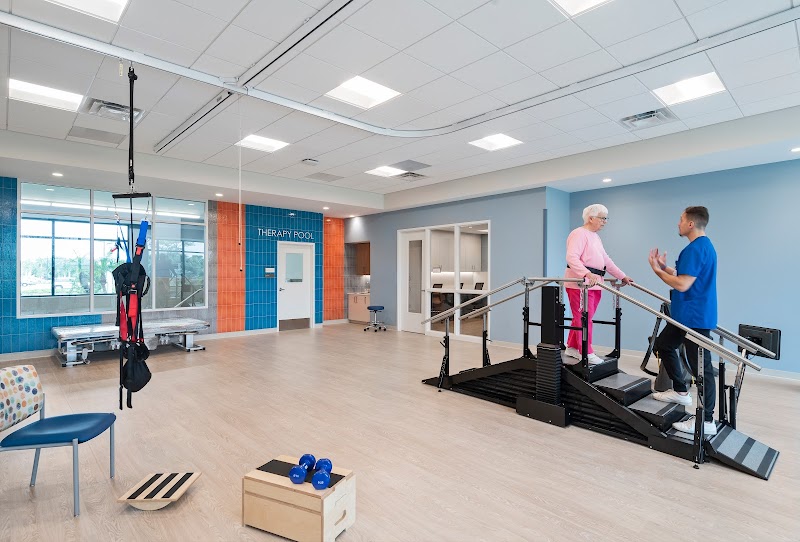
How Does Larsen Compare to Other Florida Nursing Homes?

Compared to the 100 nursing homes in Florida, LARSEN HEALTH CENTER's overall rating (3 stars) is below the state average of 3.2, staff turnover (45%) is near the state average of 46%, and health inspection rating (2 stars) is below the national benchmark.

What Should Families Ask When Visiting Larsen?

Based on this facility's data, families visiting should ask: "What safeguards and monitoring systems are in place to protect residents from abuse or neglect?" "Can I visit during a mealtime to observe dining assistance and food quality?" "How do you handle medical emergencies, and what is your hospital transfer rate?" "Can I speak with family members of current residents about their experience?" These questions are particularly relevant given the substantiated abuse finding on record.

Is Larsen Safe?

Based on CMS inspection data, LARSEN HEALTH CENTER has documented safety concerns. The facility has 1 substantiated abuse finding (meaning confirmed case of resident harm by staff or other residents). The facility has a 3-star overall rating and ranks #100 of 100 nursing homes in Florida. Families considering this facility should ask detailed questions about what corrective actions have been taken since these incidents.

Do Nurses at Larsen Stick Around?

LARSEN HEALTH CENTER has a staff turnover rate of 45%, which is about average for Florida nursing homes (state average: 46%). Moderate turnover is common in nursing homes, but families should still ask about staff tenure and how the facility maintains care continuity when employees leave.

Was Larsen Ever Fined?

LARSEN HEALTH CENTER has been fined $60,651 across 2 penalty actions. This is above the Florida average of $33,685. Fines in this range indicate compliance issues significant enough for CMS to impose meaningful financial consequences. Common causes include delayed correction of deficiencies, repeat violations, or care failures affecting resident safety. Families should ask facility leadership what changes have been made since these penalties.

Is Larsen on Any Federal Watch List?

LARSEN HEALTH CENTER is not on any federal watch list. The most significant is the Special Focus Facility (SFF) program, which identifies the bottom 1% of nursing homes nationally based on persistent, serious quality problems. Not being on this list means the facility has avoided the pattern of deficiencies that triggers enhanced federal oversight. This is a positive indicator, though families should still review the facility's inspection history directly.