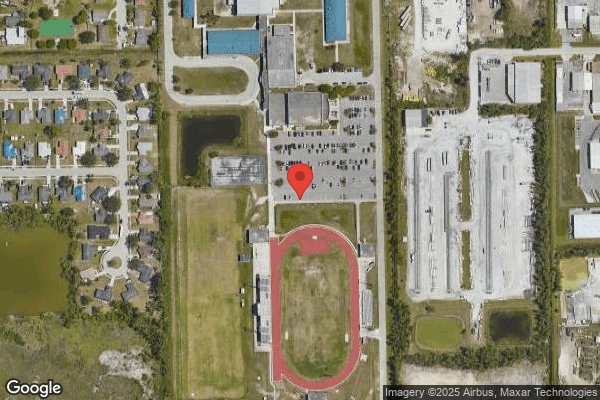

WINKLER COURT

3250 WINKLER AVENUE EXTENSION, FORT MYERS, FL 33916 (239) 939-4993
Non profit - Corporation 120 Beds FLORIDA INSTITUTE FOR LONG-TERM CARE Data: November 2025 4 Immediate Jeopardy citations
Trust Grade
0/100
#688 of 690 in FL
Last Inspection: April 2025

Within standard 12-15 month inspection cycle. Federal law requires annual inspections.

Overview

Winkler Court in Fort Myers, Florida has received a Trust Grade of F, indicating significant concerns about the quality of care provided, which is considered very poor. It ranks #688 out of 690 facilities in Florida, placing it in the bottom half of nursing homes statewide, and #19 out of 19 in Lee County, meaning there are no local facilities rated worse. The overall trend is worsening, with the number of issues increasing from 7 in 2024 to 13 in 2025. While staffing is a strength with a 4/5 star rating and a low turnover rate of 16%, the facility has faced concerning fines totaling $178,937, which is higher than 93% of Florida facilities. Specific incidents include a critical failure where a resident fell from a malfunctioning mechanical lift due to improper maintenance and lack of safety protocols, resulting in serious injuries requiring emergency care, highlighting significant operational and safety deficiencies.

Trust Score
F
0/100
In Florida
#688/690
Bottom 1%
Safety Record
High Risk
Review needed
Inspections
Getting Worse
7 → 13 violations
Staff Stability
✓ Good
16% annual turnover. Excellent stability, 32 points below Florida's 48% average. Staff who stay learn residents' needs.
Penalties
○ Average
$178,937 in fines. Higher than 73% of Florida facilities. Some compliance issues.
Skilled Nurses
○ Average
Each resident gets 37 minutes of Registered Nurse (RN) attention daily — about average for Florida. RNs are the most trained staff who monitor for health changes.
Violations
⚠ Watch
40 deficiencies on record. Higher than average. Multiple issues found across inspections.
★☆☆☆☆
1.0
Overall Rating
★★★★☆
4.0
Staff Levels
★★★★☆
4.0
Care Quality
★☆☆☆☆
1.0
Inspection Score
Stable
2024: 7 issues
2025: 13 issues

The Good

  • 4-Star Staffing Rating · Above-average nurse staffing levels
  • 4-Star Quality Measures · Strong clinical quality outcomes
  • Low Staff Turnover (16%) · Staff stability means consistent care
  • Full Sprinkler Coverage · Fire safety systems throughout facility
  • No fines on record
  • Staff turnover is low (16%)

    32 points below Florida average of 48%

Facility shows strength in staffing levels, quality measures, staff retention, fire safety.

The Bad

1-Star Overall Rating

Below Florida average (3.2)

Significant quality concerns identified by CMS

Federal Fines: $178,937

Well above median ($33,413)

Significant penalties indicating serious issues

Chain: FLORIDA INSTITUTE FOR LONG-TERM CAR

Part of a multi-facility chain

Ask about local staffing decisions and management

The Ugly 40 deficiencies on record

4 life-threatening
Apr 2025 13 deficiencies
CONCERN (D)

Potential for Harm - no one hurt, but risky conditions existed

Comprehensive Assessments (Tag F0636)

Could have caused harm · This affected 1 resident

**NOTE- TERMS IN BRACKETS HAVE BEEN EDITED TO PROTECT CONFIDENTIALITY** Based on record review, observation, and interview, the facility failed to update/revise the comprehensive care plan related to ...

Read full inspector narrative →
**NOTE- TERMS IN BRACKETS HAVE BEEN EDITED TO PROTECT CONFIDENTIALITY** Based on record review, observation, and interview, the facility failed to update/revise the comprehensive care plan related to pressure injuries for 1 Resident (#68) of 3 residents reviewed with pressure injuries. The findings included: Resident #68 was admitted on [DATE] with end stage renal disease, type 2 diabetes, weakness, cognitive communication deficit, heart failure, need for assistance with personal care, feeding tube, colostomy tube, and indwelling urinary catheter. He was admitted to the facility with multiple pressure wounds. He had a Brief Interview of Mental Status (BIMS) score of 3 which indicateshe is cognitively impaired. Record review of the admission assessment did not reflect identification of a Stage 2 flank wound or a Stage 3 coccyx wound. Record review of the weekly skin assessments showed the following newly identified wounds. on 4/8/25, a Stage 2 pressure injury right rear flank, inferior and on 4/8/25, a Stage 3 pressure injury on the coccyx. On 4/21/25, the care plan did not reflect goals or interventions for a Stage 2 pressure injury to the flank, or a Stage 3 pressure injury to the coccyx. Record review of the dialysis communication binder showed no documentation of communication the resident had newly diagnosed pressure injuries or that he required offloading or repositioning. On 4/21/25 at 12:25 p.m., Resident #68 was observed lying in bed with a home health aide sitting next to him. He was laying on an air mattress with multiple dressings seen on his legs. On 4/22/25 at 4:15 p.m., Resident #68 was observed being wheeled to his room after returning to the facility from dialysis. He was sitting low in his wheelchair, with his feet hanging off the footrest. He was not able to reposition himself and said he was in pain. Three staff members from physical therapy, including Staff U, Director of Therapy, arrived to assist the resident using the mechanical lift to get him back to bed. When resident #68 was lifted out of his wheelchair, it was observed that he did not have any type of offloading devices for his flank, and he had been sitting on a thick blanked that covered the offloading cushion. * On 4/23/25 at 9:23 a.m., Staff W, Physical Therapy (PT) said that the provided wheelchair did not provide any offloading support for the right flank wound, and the offloading cushion is intended to prevent pressure injuries to the coccyx. On 4/23/25 at 9:45 a.m., Staff U, Therapy Director, said strict repositioning procedures should be followed by the healthcare provider while using the offloading cushion. On 4/23/25 at 10:30 a.m., during an interview, Staff X, Occupational Therapy (OT) and Staff Y, OT said that an offloading cushion is sufficient, and repositioning is not required. On 4/23/25 at 10:35 a.m., during an interview, Staff Z, CNA said that you do not need to reposition someone who is sitting on an offloading cushion because it is doing its job. On 4/23/25 at 10:40 a.m., during an interview, Staff AA, CNA, said a resident on an offloading cushion does not need to be repositioned. On 4/23/25 at 11:52 a.m., during an interview, the Risk Manager stated everyone just knows that the resident needs to be turned and repositioned, we don't have a scheduled turning program. On 4/23/25 at 12:00 p.m., the Director of Nursing (DON) said that if a resident has a worsening wound, she would expect to be notified so that she can assist with managing the wound and ensure the orders and interventions are correct. She also stated that, we don't have a turn and reposition program or policy, it depends on the needs of the resident's needs. On 4/23/25 at 4:30 p.m., during a wound care observation, the right flank wound on Resident #68 had black tissue that was not noted in the documentation, and a dressing that was dated 4/22/25. Staff Q, RN Supervisor stated, I would say that due to the slough, this wound is unstageable, I have not seen this wound for at least a week, I would say that it is stable. On 4/23/25 at 5:00 p.m., the resident's physician said that he does not recall seeing the wound on Resident #68 and does not know if there is black tissue in the wound bed because he has staff to address the wounds. He also said that the facility still needs to turn and reposition the resident regardless of whether he is high risk for developing additional wounds. Record reviews show that a significant change in condition was not documented for the unstageable wound that was assessed with three RN managers present, Staff Q, RN, Staff M, RN and Staff I, RN. On 4/24/25 at 9:15 a.m., the DON said that the nursing staff had not reported any black tissue on Resident #68. On 4/24/25 at 9:20 a.m., an observation of Resident #68 was made, he was sitting in a wheelchair in his room, with no offloading to right flank. On 4/24/25 at 9:30 a.m., during a phone interview, the Physician's Assistant said that he relies on the facility's wound team to accurately describe the wound and that he had not seen it. He was not aware that there was black tissue on the wound. He also said that he would want to be informed if the wound tissue was black so he could ensure the resident receives the proper care. *Photographic Evidence Obtained.
CONCERN (D)

Potential for Harm - no one hurt, but risky conditions existed

Assessment Accuracy (Tag F0641)

Could have caused harm · This affected 1 resident

**NOTE- TERMS IN BRACKETS HAVE BEEN EDITED TO PROTECT CONFIDENTIALITY** Based on record review, observation, and interview, the facility failed to ensure residents receive accurate assessments for 1 R...

Read full inspector narrative →
**NOTE- TERMS IN BRACKETS HAVE BEEN EDITED TO PROTECT CONFIDENTIALITY** Based on record review, observation, and interview, the facility failed to ensure residents receive accurate assessments for 1 Resident (#68) of 3 residents reviewed. The findings included: Resident #68 was admitted on [DATE] with end stage renal disease, type 2 diabetes, weakness, cognitive communication deficit, heart failure, need for assistance with personal care, feeding tube, colostomy tube, and indwelling urinary catheter. He was admitted to the facility with multiple pressure wounds. He was also cognitively impaired based on a Brief Interview of Mental Status (BIMS) score of 3. He attends dialysis at an outside facility. Record review showed an admission skin assessment, completed by Staff M, Registered Nurse (RN) Unit Manager, did not document the presence of a wound on the coccyx or on the right flank. Record review of the admission Minimum Data Set (MDS) dated [DATE] did not assess a Stage 3 pressure injury or an unstageable pressure injury upon admission. There was no slough (yellow, stringy) or eschar (black, hard) tissue assessed. Record review of the weekly skin assessments showed the following newly identified wounds that were not found in the admission assessment. On 4/8/25, a Stage 2 wound right rear flank, inferior, and on 4/8/25, a Stage 3 wound on the coccyx. As of 4/21/25 the resident's care plan had not been updated to include these findings. On 4/21/25 at 12:25 p.m., Resident #68 was observed lying in bed with multiple dressings seen on his legs. His heels were directly on the mattress, and he was laying on his back. On 4/21/25 at 4:14 p.m., Resident #68 seen laying in bed. his heels directly on mattress, laying on his back. On 4/22/25 at 9:30 a.m., during an interview, Staff M, Registered Nurse, (RN) Unit Manager, said that Resident #68 was seen on nursing wound rounds, but there is no wound provider assigned to this resident. She is a designated wound-round nurse and performs weekly skin checks. She said that wound evaluations and measurements are performed on the facility provided tablet which has an app (application). She said there are a number of variables as to why part of an assessment recorded on the app might be inaccurate including the technique of the user. On 4/22/25 at 10:27 a.m., during an interview, Staff I, RN, Unit Manager, said he is a designated wound-round nurse. He stated, the facility uses the tablet, we take the picture, it measures the wound, and we describe and stage it, then it is uploaded to the electronic health record. He also said that the wound measurements and uploaded graphic can be inaccurate due to a number or reasons, including the technique of the person operating the tablet. On 4/22/25 at 4:12 p.m., during an observation of Resident #68 arriving back to the facility from dialysis, there is no offloading device for right flank present and the offloading device for the coccyx was obstructed by a thick blanket. On 4/23/25 at 10:30 a.m., during an interview, Staff I, RN, Unit Manager, said the coccyx and flank wounds on Resident #68 are improving but are also stable. He said that the coccyx wound he recently assessed has less exudate and is stable. On 4/23/25 at 11:10 a.m., during an interview with the Assistant Director of Nursing (aDON), who is also the Staff Educator said she does not provide staging training for wounds. Education is provided by the dressing supply vendor. On 4/23/25 at 11:52 a.m., during an interview the Risk Manager said the facility has not investigated the resident's right flank wound. She stated that, the assessment was not finalized on 4/6/24 therefore we were not aware of it until 4/22/25. She said she looked at the wound, but used the electronic nursing assessment to describe what she saw. On 4/23/25 at 1:00 p.m., the DON said that the facility has a dressing supply vendor who rounds on Tuesdays with the staff, assesses wounds with them, and provides staging education to the supervisors. She said that she does not go by the wound measurements, only by the description and relies on the nurses assessing the wounds on a weekly basis, to determine the status of the wounds because the measurements can fluctuate depending on the person using the device. Record review of the assessment on 4/22/25 for coccyx wound showed, Stage 3 pressure injury, area 5.52cm x length 2.37 x width 2.85 x depth 1.2 cm and was described as: 80% granulation, 10% slough, no eschar documented. Light serosanguinous drainage. Record review of the assessment on 4/23/25 for coccyx wound showed, Stage 3 pressure injury, area 74.81 cm x length 10.62cm x 9.31 cm x depth 1.0 cm and was described as 100% slough. No eschar documented. Heavy serous drainage. On 4/23/25 at 5:00 p.m., obsered the wound assessment of Resident #68 right flank performed with Staff I, RN Unit Manager, Staff M, RN Unit Manager and Staff Q, RN, Unit Manager Staff M, RN, Unit Manager said that the wound appeared to be unchanged from 4/22/25 to the best of her recollection. Staff Q, RN, Unit Manager stated, I would say this wound is unstageable, and I will document that it is stable. Staff M, RN, Unit Manager stated, I would say that due to the slough, it is unstageable but is the same as yesterday. Resident #68 observed to have a right flank wound with black tissue in the center of the wound bed. Record review of the right flank wound assessment on 4/22/25 showed, Stage 2 pressure injury, area 7.2 cm x length 2.2 cm x width 6.6 cm, depth 0.2 cm. Wound bed 100% epithelial, no slough, no granulation, no eschar. Record review of the right flank wound assessment on 4/23/25 showed, Pressure injury, Stage 2, area 3.5cm x length 2.85cm x width 2.17cm. Eschar, 100%. Progress: Stable. On 4/23/25 at 5:30 p.m., during a phone interview, the Physician for Resident #68 stated that he does not recall seeing the wound, but the facility should be making efforts to prevent and assess his wounds. He had not had any recent communication from the nursing staff about changes to the wounds. On 4/24/25 at 9:15 a.m., the DON said that she was not aware of black tissue in the right upper flank wound of Resident #68. On 4/24/25 at 9:30 a.m., during a phone interview, the Physician's Assistant (PA) said that he has not seen the wounds on Resident #68 because he relies on the wound team to assess them. He also said that staff has not informed him of black tissue on the right flank wound. On 4/24/25 at 11:30 a.m., during an interview the dressing supply vendor said the she is not a practitioner, and the facility has not asked her to look at the wound of Resident #68. She said she only gives suggestions. She stated, I do not train them to stage wounds, I tell them that they should not be staging . I tell them to describe what they are looking at. It has been at least 5-6 months since I have observed staff assessing a wound.
CONCERN (D)

Potential for Harm - no one hurt, but risky conditions existed

PASARR Coordination (Tag F0644)

Could have caused harm · This affected 1 resident

**NOTE- TERMS IN BRACKETS HAVE BEEN EDITED TO PROTECT CONFIDENTIALITY** Based on record review, staff interviews, and observations, the facility failed to complete a PASRR Level II referral for 1 (Res...

Read full inspector narrative →
**NOTE- TERMS IN BRACKETS HAVE BEEN EDITED TO PROTECT CONFIDENTIALITY** Based on record review, staff interviews, and observations, the facility failed to complete a PASRR Level II referral for 1 (Resident #43) resident who demonstrated the return of a serious mental illness. This resulted in a lack of appropriate psychiatric assessment and increased risk of unmet care needs. The findings included: Review of the facilities PASRR Requirements Level 1 and Level 2, effective February 2021. The policy does not address a process for a PASRR assessment after the reemergence of a serious mental illness after the residents have been admitted to the facility. Resident #43 was admitted to the facility on [DATE] from another skilled nursing facility with a diagnosis of schizoaffective disorder. A PASRR Level II determination completed on 6/6/2024 indicated that specialized services were not needed. On 1/29/2025, a psychiatric evaluation documented the resident's schizoaffective disorder was considered resolved. A Gradual Dose Reduction (GDR) was initiated, reducing Ziprasidone from 60 mg to 40 mg daily (nn antipsychotic used for the treatment of schizophrenia). A Significant Change in Status Minimum Data Set (MDS) assessment dated [DATE] coded 0 - No for serious mental illness, despite the resident continuing to receive antipsychotic medication and exhibiting cognitive impairment. Review of nursing progress notes dated between 3/11/2025 and 4/7/2025 revealed progressive behavioral changes, including increased agitation, verbal outbursts, territorial guarding of her room, and physical aggression. On 4/8/2025, Resident #43 struck her roommate in the face after the roommate mistakenly sat in her wheelchair, resulting in bruising and scratches to the roommate's face and neck. Review of a psychiatric evaluation performed on 4/8/2025 confirmed the return of psychotic symptoms, including hallucinations and confusion. Resident #43 was re-diagnosed with schizoaffective disorder. Following the incident, psychiatric interventions were initiated: Ziprasidone was increased back to 60 mg daily, Give 1 capsule by mouth one time a day for Schizoaffective disorder/failed GDR. Clonazepam was prescribed for agitation, and laboratory tests were ordered for medication monitoring. The facility updated the resident's diagnosis list on 4/22/2025 to include schizophrenia (F20.9). On 4/21/25 at 9:30 a.m.: Resident #43 was observed in the hallway seated in a wheelchair. The resident was non-verbal, communicating only through low grunting sounds. When other residents or staff walked by, Resident #43 demonstrated increased tension in her posture and visually tracked their movements with narrowed, guarded expressions. On 4/22/25 at 9:56 a.m., when approaching the resident's room, a staff member cautioned, be careful, she doesn't like anybody in her room. The resident was observed eating breakfast but remained highly vigilant toward the hallway, pausing between bites to look sharply at any movement near her door. On 4/23/25 at 12:28 p.m., Resident #54 was observed stationed directly in front of her door in her wheelchair. As staff and residents approached, the resident exhibited visible agitation: defensively raising her arms, emitting low guttural vocalizations, and posturing her wheelchair aggressively to block the entrance. On 4/24/25 at 10:00 a.m., in an interview Licensed Practical Nurse, Staff H said Resident #43 displayed increased aggressive territorial behavior, especially when placed on GDR. Although some behavioral notes were documented in nursing progress notes, they were not consistently recorded on the Medication Administration Record (MAR) or addressed in the resident's care plans. On 4/24/25 at 4:00 p.m., in an interview the Director of Nursing (DON) confirmed the active schizophrenia diagnosis following the failed GDR. The DON said after the re-emergence of the schizophrenia, a Level II PASRR should have been completed The DON confirmed there was no documentation in the residents' medical records of a PASRR Level II referral being initiated or completed.
CONCERN (D)

Potential for Harm - no one hurt, but risky conditions existed

Comprehensive Care Plan (Tag F0656)

Could have caused harm · This affected 1 resident

**NOTE- TERMS IN BRACKETS HAVE BEEN EDITED TO PROTECT CONFIDENTIALITY** Based on interview and record review, the facility failed to develop a comprehensive care plan reflective of the resident's choi...

Read full inspector narrative →
**NOTE- TERMS IN BRACKETS HAVE BEEN EDITED TO PROTECT CONFIDENTIALITY** Based on interview and record review, the facility failed to develop a comprehensive care plan reflective of the resident's choice of code status for 1 (Resident #78) of 3 residents reviewed for advanced directives care planning. The findings included: Review of Resident #78's record revealed a physician's order dated [DATE] for Do Not Resuscitate (DNR) status, meaning that if breathing or heart beats stop, cardiopulmonary resuscitation (CPR) would not be initiated. Review of the nursing progress note by Registered Nurse (RN) Staff G dated [DATE], shows Resident #78 wanted a DNR code status. Review of Resident #78's care plan for advanced directives initiated [DATE], the resident requests Full Code status, meaning CPR would be initiated. On [DATE] at 10:00 a.m., during an interview Resident #78 said she told the facility she wanted a change to DNR status. On [DATE] at 5:36 p.m., during an interview RN Staff G she said she did not revise the care plan for advanced directives as the resident requested on [DATE]. On [DATE] at 6:08 p.m., Unit Manager RN Staff I said he did not revise the care plan to DNR. On [DATE] at 9:02 a.m., during an interview, the Director of Nursing said the care plan should have been revised at the time the resident requested the DNR status.
CONCERN (D)

Potential for Harm - no one hurt, but risky conditions existed

Deficiency F0679 (Tag F0679)

Could have caused harm · This affected 1 resident

**NOTE- TERMS IN BRACKETS HAVE BEEN EDITED TO PROTECT CONFIDENTIALITY** Based on observation, interview, and record review, the facility failed to ensure that 1 (Resident #54) of 1 residents reviewed ...

Read full inspector narrative →
**NOTE- TERMS IN BRACKETS HAVE BEEN EDITED TO PROTECT CONFIDENTIALITY** Based on observation, interview, and record review, the facility failed to ensure that 1 (Resident #54) of 1 residents reviewed for activities received services designed to meet their interests, physical, mental, and psychosocial well-being. The findings included: Resident #54 was admitted to the facility with diagnoses including dementia and cognitive impairment. Review of the resident's care plan, initiated 2/25 and last revised 4/25, identified goals for Resident #54 to participate in activities of choice daily, with interventions including encouraging engagement with a general activities program and providing in-room activities if preferred. Observations across multiple days (4/21/25 at 8:15 a.m., 4/21/25 at 11:14 a.m., 4/21/25 at 3:00 p.m., 4/22/25 at 9:25 a.m., 4/22/25 at 10:39 a.m., 4/22/25 at 12:32 p.m., and 4/23/25 at 9:53 a.m.) demonstrated a lack of activities. Throughout these observations, no activity materials, music, television, or staff-led activities were present or offered to the resident. The only item observed was a Daily Chronicle paper at the bedside, which contained no individualized activities documented for the resident. A review of Resident #54's activity records revealed no documented refusal of activities and no recorded participation in either individual or group activities over the past 30 days. On 4/23/25 at 10:09 a.m., Licensed Practical Nurse, Staff H, was observed briefly checking on Resident #54 but did not initiate any activity. On 4/22/25 12:32 p.m. in an interview Resident #54 verbalized an interest in watching TV. He pointed at the TV, and indicated there was no TV remote, no TV remote was obsered in residents' room [ROOM NUMBER]/21/25 to 4/24/25. On 4/24/25 at 10:00 a.m., Staff H, LPN stated that Resident #54 is not receiving enough stimulation and said more could be done. Staff H, LPN, said the facility's Director of Activities (DOA) visits the unit about once a month and that engagement is primarily handled by the activity's assistant, Staff DD, or CNAs in her absence. On 4/24/25 at 11:30 a.m. during an interview Registered Nurse Unit Manager, Staff I, stated that Resident #54's situation represented a failure in providing adequate engagement. On 4/24/25 at 12:05 p.m., in an interview the Social Services Director (SSD) said when a resident appears lonely or withdrawn, the intervention would be to talk with the family, involve nursing, and consider a psychiatric consult. There was no evidence of any interdisciplinary team response documented for Resident #54 despite ongoing observations of disengagement. On 4/24/25 at 1:30 p.m., in an interview the DOA said activity preferences were gathered at admission or quarterly, and daily rounds were conducted. When asked about Resident #54's recent activity participation, the DOA said he had not personally engaged the resident, and that documentation was lacking
CONCERN (D)

Potential for Harm - no one hurt, but risky conditions existed

Quality of Care (Tag F0684)

Could have caused harm · This affected 1 resident

**NOTE- TERMS IN BRACKETS HAVE BEEN EDITED TO PROTECT CONFIDENTIALITY** Based on observation, review of facility policy and procedures and family and staff interviews, the facility failed to ensure th...

Read full inspector narrative →
**NOTE- TERMS IN BRACKETS HAVE BEEN EDITED TO PROTECT CONFIDENTIALITY** Based on observation, review of facility policy and procedures and family and staff interviews, the facility failed to ensure the physician was notified and the residents spouse was properly trained to administer medications for 1 (Resident #93) of 5 residents reviewed for medication observation. The findings included: The facility policy 7.1 Medication Administration General Guidelines documented Medications are administered as prescribed in accordance with manufacturers specifications, good nursing principles and practices and only by persons legally authorized to do so. Medications are administered in accordance with written orders of the prescriber. Medications are to be administered at the time they are prepared. The person who prepares the dose for administration is the person who administers the dose. Review of the clinical record revealed Resident #93 was [AGE] year old with an admission date of 12/20/24. Diagnoses include protein calorie malnutrition, convulsions, muscle weakness and the need for assistance with personal care. On 4/21/25 at 9:06 a.m., in an interview Resident #93's spouse said my wife is [AGE] years old and they are not giving her the medications like they should. They give them to her on an empty stomach and she is on Keppra, (medication used to prevent seizures) and they gave her a double dose this weekend. They put all the medication in apple sauce and try to force her to take them all at one time and she can't do that, she will vomit. I come in daily, and they give me the cup of pills and I make sure she takes them. I give them to her, they trust me here that I know what I'm doing. No one has to stay and babysit me, I know how to give them to her. On 4/21/25 at 12:54 p.m., a review of the physician orders for Resident #93 revealed no order for the spouse to administer the residents' medications. There was no documentation in the plan of care indicating the spouse would administer the medications and no facility assessment of his capability. On 4/22/25 at 9:03 a.m., in an interview Resident #93's spouse said last night they ran out of her Eliquis (a blood thinner) and they told me there was none in the building. He said I come twice a day to give her the medications. I knew she was missing a pill because I count them before I gave them to her and they were short one pill last night. A review of the Medication Administration Record revealed the nurse had administered the medications including the Eliquis. On 4/22/25 at 9:25 a.m., observed Licensed Practical Nurse (LPN) Staff C taking Resident #93's morning medications into the room and handed them to the spouce, and then returned to the medication cart. Staff C did not stay with the resident to ensure the medications were given. On 4/22/25 at 9:35 a.m., in an interview LPN Staff C said the resident will not take her medications for anyone but the husband. I give them to him, but I stand there and make sure she takes them all. LPN Staff C said he did not know if there was a physician order to allow the spouse to administer the medications. On 4/22/25 at 10:06 a.m., in an interview the Director of Nursing (DON) said she was not aware the staff were permitting Resident #93's husband to administer the medications and that they were signing the MAR that they had administered the medications. The DON said there was no documentation the physician was notified, no physician order and no assessment of the spouse's ability to administer the medications. On 4/23/25 at 8:45 a.m., in an interview LPN Staff D said Resident #93 will not take the medications for anyone but her husband, I mean no one. I get the medications, and I give them to him, it is the only way she will take them. On 4/23/25 at 4:31 p.m., in an interview the DON confirmed Resident #93's husband was giving her the medications. The DON said I spoke with the nurses, and they said Resident #93 absolutely will not take her medications for anyone but him. They did say they stood there while he gives her the medications. I know what you mean, there is no assessment, and no documentation the spouse can give the medications. The nurse should be administering the medications.
CONCERN (D)

Potential for Harm - no one hurt, but risky conditions existed

Deficiency F0685 (Tag F0685)

Could have caused harm · This affected 1 resident

**NOTE- TERMS IN BRACKETS HAVE BEEN EDITED TO PROTECT CONFIDENTIALITY** Based on observation, review of clinical records and resident and staff interviews, the facility failed to assist in making an a...

Read full inspector narrative →
**NOTE- TERMS IN BRACKETS HAVE BEEN EDITED TO PROTECT CONFIDENTIALITY** Based on observation, review of clinical records and resident and staff interviews, the facility failed to assist in making an appointment with a practitioner specializing in the treatment of vision impairments and failed to ensure the resident's glasses were in good repair for 1 (Resident #50) of 1 resident reviewed for vision loss. The findings included: The facility policy Referral - Vision and Hearing Services documented The facility will assist residents in obtaining routine and prompt vision or hearing care period the social services department will work to assist and or coordinate services, such as but not limited to the following: 1. Appointments. 2. Prompt referrals (i.e , broken hearing aids glasses etcetera). 3. Identify those residents who require a prompt referral. Examples include but are not limited to: Damaged or broken hearing aids, glasses, or other assistive devices. Review of the clinical record revealed Resident #50 was [AGE] years old and had an admission date of 9/6/21 with diagnoses including: type 2 diabetes mellitus, hemiplegia of the dominant right side and glaucoma. Review of the Quarterly MDS dated [DATE] noted the residents cognitive skills for daily decision making were moderately impaired. The care plan for Resident #50 identified the resident has potential for impaired visual function related to Glaucoma, and wears glasses while awake. The interventions instructed staff to Assist with cleaning or placing glasses as needed. Report any damage to nurse/social service. On 4/21/25 at 8:16 a.m., Resident #50 was observed in bed with broken bi-focal glasses on that were missing the left arm of the frame. He said he wanted new glasses, but no one would repair or replace them. On 4/22/25 at 9:18 a.m., in an interview and observation Resident #50's glasses remained broken and he glasses were sitting crooked on his face. He said he wanted them to be fixed. On 4/23/25 at 8:19 a.m., in an interview the Director of Nursing (DON) said she was unaware Resident #50 's glasses were broken and she would check into it. On 4/23/25 at 10:14 a.m., in an interview the DON said the process for vision concerns was the staff notify the nurse and a Resident Concern form is initiated by the Social Service Director (SSD), and then we review it in the morning meeting. The DON said no one knew his glasses were broken. The DON provided a Physician Order for Eye Care dated 8/20/24 with a plan for a follow up visit in 6 months. The visit on 8/20/24 was for Eye Care Consultation Examination with no mention of the residents glasses. There was no documentation the facility followed up with the recommended 6 month visit. On 4/23/25 at 11:00 a.m., in an interview the SSD said she has been at the facility for 2 months, and the process for anyone requiring a vision or hearing appointment was the nurse identifies the concern during rounds with the residents and notifies me and then I make the appointments. The SSD said she was not aware Resident #50's glasses were broken and in need of repair. On 4/23/25 at 11:12 a.m., in an interview CNA Staff E said Resident #50's glasses have been broken for months. He told me he rolled over in bed with them on and they broke. Everyone knows they have been broken like that for a long time now. You tell the nurse, and they are supposed to take care of it.
CONCERN (D)

Potential for Harm - no one hurt, but risky conditions existed

Pressure Ulcer Prevention (Tag F0686)

Could have caused harm · This affected 1 resident

**NOTE- TERMS IN BRACKETS HAVE BEEN EDITED TO PROTECT CONFIDENTIALITY** Based on record review, interview, and observation, the facility failed to ensure a resident with pressure ulcers received neces...

Read full inspector narrative →
**NOTE- TERMS IN BRACKETS HAVE BEEN EDITED TO PROTECT CONFIDENTIALITY** Based on record review, interview, and observation, the facility failed to ensure a resident with pressure ulcers received necessary treatment and services and prevention of new ulcers from developing for 1 Resident (#68) of 3 residents reviewed. The findings included: Resident #68 was admitted on [DATE] with end stage renal disease, type 2 diabetes, weakness, cognitive communication deficit, heart failure, need for assistance with personal care, feeding tube, colostomy tube, and indwelling urinary catheter. He was admitted to the facility with multiple pressure wounds. He was also cognitively impaired based on a Brief Interview of Mental Status (BIMS) score of 3. He attends dialysis at an outside facility. Record review of the admission History and Physical said that Resident #68 was high risk for skin breakdown and unavoidable wounds due to malnourishment. Record review showed an admission skin assessment, completed by Staff M, Registered Nurse (RN) Unit Manager, did not find a wound on the coccyx or on the right flank. Record review of the admission Minimum Data Set (MDS) dated [DATE] did not identify a stage 3 pressure injury or an unstageable pressure injury upon admission. There was no slough or eschar identified. There were no venous or arterial ulcers present. The MDS did not identify a pressure reducing device for the bed, turning/repositioning program, or nutrition/hydration interventions. On 4/21/25, record review of the care plan included interventions for pressure injury prevention such as turn and reposition as needed, and cushion to chair. Record review of the weekly skin assessments showed the following newly identified wounds that were not found in the admission assessment: 4/8/25, a Stage 2 wound right rear flank, inferior. 4/8/25, a Stage 3 wound coccyx. On 4/21/25 at 12:25 p.m., Resident #68 was observed lying in bed with the home health aide sitting next to him. He was laying on an air mattress with multiple dressings seen on his legs. The home health aide said that he does not provide turning or repositioning assistance, he is only there to stimulate him, talk with him, or help with feedings. On 4/22/25 at 9:30 a.m., Staff M, Registered Nurse, (RN) Unit Manager, said that Resident #68 was seen on nursing wound rounds, but there is no wound provider assigned to this resident. On 4/22/25 at 4:15 p.m., Resident #68 was observed being wheeled to his room after returning to the facility from dialysis. He was found to be sliding out of his wheelchair, with his feet hanging off the footrest. He was not able to reposition himself and was saying he was in pain. Three Staff Members from physical therapy, including Staff U, Director of Therapy, arrived to assist with using the mechanical lift to get him back to bed. When Resident #68 was lifted out of his wheelchair, it was observed he did not have any type of offloading devices or pillows for his flank, and he had been partially sitting on a thick blanket that was obstructing the offloading cushion for the seat of the wheelchair. * On 4/23/25 at 9:23 a.m., Staff W, Physical Therapy (PT) said that the wheelchair did not provide any offloading support for the right flank wound, and the offloading cushion is intended to prevent pressure injuries to the coccyx. On 4/23/25 at 9:45 a.m., Staff U, Therapy Director, said strict repositioning procedures should be followed while using the offloading cushion. On 4/23/25 at 10:30 a.m., during an interview, Staff X, Occupational Therapy (OT) and Staff Y, OT said that an offloading cushion is sufficient, and repositioning is not required while in wheelchair . On 4/23/25 at 10:35 a.m., during an interview, Staff Z, CNA said that you do not need to reposition someone who is sitting on an offloading cushion because it is doing its job. On 4/23/25 at 10:40 a.m., during an interview, Staff AA, CNA, said that while sitting on an offloading cushion, a resident does not need to be repositioned. On 4/23/25 at 11:52 a.m., during an interview, the Risk Manager said everyone just knows the resident needs to be turned and repositioned, we don't have a scheduled turning program. On 4/23/25 at 12:00 p.m., the Director of Nursing (DON) said that if a resident has a worsening wound, she would expect to be notified so that she can assist with managing the wound and ensure the orders and interventions are correct. She stated, we don't have a turn and reposition program or policy, it depends on the needs of the resident. On 4/23/25 at 4:30 p.m., during a wound care observation, the right flank wound on Resident #68 had black tissue that was not previously assessed in the wound assessment. Staff Q, RN Supervisor stated, I would say that due to the slough, this wound is unstageable, I have not seen this wound for at least a week, but since it looks the same, I would say that it is stable. On 4/23/25 at 4:25 p.m., Staff M, RN verified that the wound to the right flank was unchanged from the prior day and agreed that it is an unstageable wound. On 4/23/25 at 5:00 p.m., the resident's physician said that he does not recall seeing the wound on Resident #68 and does not know if there is black tissue in the wound bed because he has staff to address the wounds. He also said that the facility still needs to turn and reposition the resident regardless of whether he is high risk for developing additional wounds. Record review showed that a significant change in condition was not documented for the unstageable wound that was assessed with 3 RN managers present, Staff Q, RN, Staff M, RN and Staff I, RN. On 4/24/25 at 9:15 a.m., the DON said that the nursing staff had not reported any black tissue that was identified on Resident #68. On 4/24/25 at 9:20 a.m., an observation of Resident #68 was made, he was sitting in a wheelchair in his room, with no offloading to the right flank. * On 4/24/25 at 9:30 a.m., during a phone interview, the Physician's Assistant said that he relies on the facility's wound team to accurately describe the wound and that he had not seen it. He was not aware that there was black tissue on the wound. He said he would want to be informed if the wound tissue was black so he could ensure the resident receives the proper care.
CONCERN (D)

Potential for Harm - no one hurt, but risky conditions existed

Deficiency F0692 (Tag F0692)

Could have caused harm · This affected 1 resident

**NOTE- TERMS IN BRACKETS HAVE BEEN EDITED TO PROTECT CONFIDENTIALITY** Based on record review, interview, and observation, the facility failed to offer a therapeutic diet for 1 (Resident #60) of 2 re...

Read full inspector narrative →
**NOTE- TERMS IN BRACKETS HAVE BEEN EDITED TO PROTECT CONFIDENTIALITY** Based on record review, interview, and observation, the facility failed to offer a therapeutic diet for 1 (Resident #60) of 2 reviewed for nutrition. The findings included: Resident #60 was admitted on [DATE] with muscle wasting and atrophy, type 2 diabetes, anemia, heart failure, chronic ulcers, and kidney failure. He goes to the dialysis center 3 times per week. He scored a 15 on his Brief Interview of Mental Status (BIMS) which indicates he is cognitively intact. On 4/21/25 at 4:08 p.m., Resident #60 was interviewed in his room after arriving from the dialysis center He stated, I'm waiting for dinner, they need to hurry I am starving. On 4/21/25 at 4:25 p.m., during an interview, Staff V, Registered Nurse (RN) said that he ate 100% of his breakfast and the facility provides him a lunch, she does not know why he is so hungry. Record review of the Dialysis Communication log dated 4/21/25 showed that at 8:30 a.m, Resident #60 ate breakfast at the facility, and he traveled to dialysis with a bagged lunch. The dialysis center did not document if the lunch had been eaten. On 4/21/25 at 4:30 p.m. during an observation, Resident #60 had an empty lunchbox in his room hanging from his wheelchair. He said that he didn't remember eating lunch that day but was very hungry and requested something to eat. Record review of the diet order for Resident #60 showed that there was an order for the resident to receive a chronic kidney disease diet (CKD) with extra portions. On 4/22/25 at 9:10 a.m., during an observation, the contents of the dialysis lunchbox for Resident #60 who was leaving for dialysis, included a sandwich, 2 packs of crackers, an empty water bottle, and a napkin. On 4/23/25 at 9:33 a.m., during an interview, Dietician Staff J, said that Resident #60 is stable on a CKD diet, and she is frequently monitoring him. She said that in general, residents going to dialysis should be getting sandwiches, applesauce, water or juice, unless they are to receive large portions for lunch. Staff J said she was not aware Resident #60 had been saying he was starving when he arrived back from Dialysis on 4/21/25. On 4/23/25 at 9:35 a.m., during an interview Kitchen Manager Staff K, said that today, Resident #60 should have received 1 beef sandwich, 1 juice, 2 packs of graham crackers. She read this from a list that was posted on the wall. Staff K, Kitchen Manager, also said that if there is a concern, staff or the resident can come down to the kitchen at any time to let them know. She said she was not aware of an issue with Resident #60's lunch. On 4/23/25 at 9:40 a.m., Kitchen Manger Staff K said that she does not double check the meal once it's packed by the kitchen staff, instead she picks up the lunch box and checks its weight and contents with her hands, but does not open the box and look. She demonstrated this with another prepacked lunch box. On 4/23/25 at 10:15 a.m., Dietician Staff J, and Kitchen Manager Staff K, said they had reviewed the orders for Resident #60, and he should be receiving double portions, which would include an additional half sandwich, a juice, a fruit and a snack.
CONCERN (E)

Potential for Harm - no one hurt, but risky conditions existed

Resident Rights (Tag F0550)

Could have caused harm · This affected multiple residents

Based on observation, review of facility policy and procedure, record review and staff interviews, the facility failed to treat 5 (Resident's #94, #26, #3, #220 and #221) of 5 residents observed with ...

Read full inspector narrative →
Based on observation, review of facility policy and procedure, record review and staff interviews, the facility failed to treat 5 (Resident's #94, #26, #3, #220 and #221) of 5 residents observed with respect and dignity during in room meal tray administration. The findings included: On 4/21/25 at 9:01 a.m., during an observation of the morning in room tray service on the Ford Unit the following was noted: Resident #94 had a diagnosis of polyarthritis and dementia. She was observed drinking the milk from the carton. Resident's #26, #3 and #220 had no glass and the milk cartons were not opened. Resident #221 had no glass for the milk, the tray was sitting uncovered in front of him for 14 minutes with no assistance provided. Resident #221 was unresponsive to verbal stimuli. On 4/22/25 at 8:51 a.m., during an observation of morning meal tray pass noted residents who received milk did not receive glasses to serve the milk and had to drink from the carton. On 4/23/25 at 9:23 a.m., Resident #3 had no glass for her milk and the staff did not open the carton for her. Resident #3 said she was not able to open the milk herself. No cups, glasses or straws were provided to serve the milk and residents had to drink from the carton. On 4/22/25 at 9:05 a.m., in an interview Certified Nursing Assistant Staff B said I know the residents do not have glasses for the milk and it shouldn't be like that. The kitchen never sends the cups, and I have to get them straws so they can drink the milk.
CONCERN (E)

Potential for Harm - no one hurt, but risky conditions existed

Deficiency F0578 (Tag F0578)

Could have caused harm · This affected multiple residents

**NOTE- TERMS IN BRACKETS HAVE BEEN EDITED TO PROTECT CONFIDENTIALITY** Based on interview and record review, the facility failed to ensure the physician signed the State of Florida Do Not Resuscitate...

Read full inspector narrative →
**NOTE- TERMS IN BRACKETS HAVE BEEN EDITED TO PROTECT CONFIDENTIALITY** Based on interview and record review, the facility failed to ensure the physician signed the State of Florida Do Not Resuscitate (DNR) order in a timely fashion for 3 residents (#39, #72, and #78) of 3 reviewed who chose a DNR status. Failure to have the physician sign the Florida DNR order. leaves the resident at risk of receiving cardiopulmonary resuscitation (CPR) against their wishes during transfer by Emergency Medical Services (EMS). The findings included: A Florida DNR form is considered an advance directive. It's a specific type of advanced directive that instructs healthcare providers not to perform cardiopulmonary resuscitation (CPR) if the patient's heart or breathing stops. In Florida, a DNR order is a legal document, specifically DH Form 1896, directs medical professionals not to perform CPR on a person in the event of cardiac or respiratory arrest. The form must be on yellow paper and signed by both the resident (or their authorized representative) and the resident's physician. Review of the Standard and Procedure for CPR Code Status Orders and Response updated February 2023, page 1 of 5: Code status physician's orders (DNR or Full Code), state specific forms and/or resident preference documentation will be filed as the first item within the medical record. Review of the Standard for Physician Orders, effective [DATE], page 1 of 3: .Physician orders will be dated and signed at next physician visit . Page 2: 7. Obtain physician's countersignature within the required time frame as defined by State Law. In the absence of State law, the countersignature will be obtained on the next visit. 8. Receive and utilize a physician's faxed orders. Photocopy the facsimile to maintain the integrity of the order in the medical record if necessary if subject to fading . Page 3 of 3: Physician signature will be required on next visit. Place signed orders in the medical record. Review of the Policy and Procedure for Advance Medical Directives - DNR: Page 2 of 2: #2. Obtain any current Advance Medical Directive from the resident or their representative and place in the medical record. Resident #78 was admitted to the facility on [DATE]. Diagnoses included diabetes, cerebrovascular disease, paralysis on one side, and depression. On [DATE], a DNR order was initiated by the physician and placed in the medical (paper) chart. On [DATE] review of the paper and electronic charts revealed there was no corresponding Florida State specific yellow DNR order signed by the physician. The yellow DNR form is necessary for transport out of the facility and prevents CPR in a medical emergency. On [DATE], Registered Nurse (RN) Staff G documented in a progress note Resident #78 wanted to change to a DNR status. On [DATE] at 10:00 a.m. Resident #78 said she told the facility she wanted to be DNR status. On [DATE] at 5:36 p.m. RN Staff G, responsible for care plan meetings and care plan revisions, said she wrote the progress note, but did not update the care plan or have the resident or physician sign the state specific form. On [DATE] at 6:04 p.m., the Social Services Director (SSD) said she did not have Resident #78 sign the state specific DNR order. On [DATE] at 6:08 p.m., the Unit Manager RN Staff I said he did not have the resident sign the state specific DNR order. On [DATE] at 9:10 a.m., the SSD said she had the resident sign the Florida State specific yellow DRN order yesterday, only after learning it had not been done yet. The SSD said they are waiting for the physician to sign the form. Resident #39 was admitted on [DATE]. Diagnoses included chronic obstructive pulmonary disease (COPD), diabetes (DM), heart failure, and dementia. On [DATE], the resident's responsible party signed the state specific DNR order. On [DATE], review of the paper chart revealed there was no state specific DNR form in the paper chart. On [DATE], the Director of Nursing (DON) located the form in the physician's folder. It was not signed by the physician. Resident #72 was admitted on [DATE]. Diagnoses included diabetes, hypertension, and surgical aftercare. On [DATE], the physician wrote an order for DNR. On [DATE], the resident signed the state specific DNR order. On [DATE], the resident signed a 2nd state specific DNR order. On [DATE], review of the hard chart determined there was no state specific form in the chart as required. On [DATE], the state specific form was located in the physician's folder. It was not signed by the physician. On [DATE], the DON said the Florida State specific DNR order form is necessary to transport the resident out of the facility. She said the forms are handed to EMS personnel upon transfer out of the facility. She said the forms are necessary and should be signed timely by residents and physicians and placed in the chart.
CONCERN (E)

Potential for Harm - no one hurt, but risky conditions existed

Infection Control (Tag F0880)

Could have caused harm · This affected multiple residents

**NOTE- TERMS IN BRACKETS HAVE BEEN EDITED TO PROTECT CONFIDENTIALITY** The facility Policy obtained from the Director of Nursing from the Lippincott Manual 9th Edition Management of the Patient with ...

Read full inspector narrative →
**NOTE- TERMS IN BRACKETS HAVE BEEN EDITED TO PROTECT CONFIDENTIALITY** The facility Policy obtained from the Director of Nursing from the Lippincott Manual 9th Edition Management of the Patient with an indwelling catheter and closed drainage System documented Maintaining a closed drainage system: a. Keep the drainage bag in a dependent position, below the level of the bladder. b. Keep the bag off of the floor. c. Change the drainage bag if contamination occurs. Review of the clinical record revealed Resident #216 was [AGE] years old and had an admission date of 4/16/25. Diagnoses included a history of metastatic prostate cancer with bilateral nephrostomy tubes (thin catheters placed into the kidney to drain urine) and anasarca (fluid accumulates in the body's tissues causing widespread swelling). On 4/21/25 at 8:05 a.m., during an interview, Resident #216 was observed in bed with his wife sitting at the bedside. Resident #216 said he has two drainage bags going directly to his kidneys. The right drainage bag was on the floor and the left drainage bag was under his pillow. On 4/22/25 at 8:14 a.m., in an interview Resident #216 said he was diagnosed with stage 4 prostate and bladder cancer and unable to void. He said I skipped stage 1, 2 and 3 and went straight to stage 4. They put the drainage bags into my kidneys because I couldn't urinate. On 4/23/25 at 8:32 a.m., Resident #216's right nephrostomy drainage bag was on the floor verified by Licensed Practical Nurse (LPN) Staff D. LPN Staff D said the resident rolls in bed and the bag falls on the floor. Resident #216 said I can't roll. I can't turn myself and I can't walk. The left nephrostomy drainage bag was observed on the bed under the resident's back. On 4/23/25 at 11:15 a.m., in an interview CNA Staff E said the catheter bag is covered with a blue bag for privacy and you hang it from the bed or the w/c, it is not supposed to be on the floor. The facility policy Vascular Access Devices and Infusion Therapy Procedures documented purpose To prevent local and systemic infection related to the IV catheter. A sterile dressing is maintained on all peripheral and central vascular access devices, to protect the site, provide a microbial barrier, and to provide vascular access device securement. Central venous access device are changed every 7 days or when the integrity of the dressing is compromised. On 4/21/25 at 8:06 a.m., Resident #216 said he was receiving antibiotics but did not remember what they were for. He had a PICC (peripheral Inserted Central Catheter) line in the right arm. Resident #216 was in bed and his wife was seated next to him. He said the dressing had been covering the PICC since he was in the hospital. Resident #216's wife agreed and said no one had changed the dressing since they put the IV in. The date on the PICC line dressing was 4/8/25. Resident #216 said I was not aware that it had to be changed but I can tell you no one has changed the dressing. Resident #216 and his wife confirmed the date on the PICC line dressing was 4/8/25 the day the resident was admitted to the hospital. Review of the clinical record revealed a physician order dated 4/16/25 for ceftriaxone sodium Injection solution reconstituted 2 GM (gram) Ceftriaxone Sodium use 2 grams intravenously one time a day for Bacteremia until 4/24/2025. The Medication Administration Record (MAR) documented the nurse had changed the PICC line dressing on 4/17/25. On 4/22/25 at 10:16 a.m., in an interview the Director of Nursing (DON) said IV dressings are to be changed every 7 days. Review of the Medication Administration Record (MAR) revealed on 4/17/25 the nurse signed the record indicating Resident #216's dressing had been changed. The DON said I understand. On 4/23/25 at 8:47 a.m., in an interview the DON said I don't understand how you can have a photo of the PICC line and the MAR said the dressing was changed. I had my nurse go through the garbage last night looking for any PICC line dressings and they do not match your photos. The DON reviewed the photo's and verified that they have a date and time stamp on them. No evidence of a dressing change on 4/17/25 was produced by the facility at the time of exit from the facility. On 4/21/25 at 10:27 a.m., Resident #27 said he was receiving antibiotics via a PICC line in the right antecubital, he said he did not know why he was receiving the antibiotics. The resident showed his arm where the PICC line was inserted. The dressing covering PICC was dated 4/12/25 but was difficult to read as it had been written over several times with a darker pen. Review of the clinical record documented a physician order to Change IV Dressing every 7 days as well as PRN for soiling and/or dislodgement., every evening shift, every 7 day(s) and as needed. Review of the MAR documented the PICC line dressing was changed on 4/11/25 and 4/18/25. On 4/22/25 at 10:10 a.m., during an interview the Director of Nursing (DON) said she was not aware the resident had a PICC line. Reviewing the findings with the DON, and the photographic evidence obtained on 4/21/25 showing dates of 4/4/25, 4/11/25 or 4/14/25. The DON confirmed it was not clear when the dressing was actually changed for Resident #27 as it was written over with a darker ink. Resident #68 was admitted on [DATE] with end stage renal disease, type 2 diabetes, weakness, cognitive communication deficit, heart failure, need for assistance with personal care, feeding tube, colostomy tube, and indwelling urinary catheter. On 4/22/25 at 4:12 p.m., during an observation, Staff R, CNA, and Staff S, CNA, were observed providing urinary catheter care, and changing a adult brief without wearing protective gowns during the care. Above the bed of Resident #68 hangs a sign that reads, providers and staff must wear gloves and gown for the following high contact care activities: changing briefs, and urinary catheter care. On 4/22/25 at 4:15 p.m., Registered Nurse (RN) Unit Manager Staff Q entered the room to assess a sacral dressing while the CNA's were providing care, but did not address the staff about needing to wear gowns. On 4/22/25 at 4:20 p.m., during an interview, Staff Q, said that the staff should be wearing gowns when providing urinary catheter care and changing briefs. On 4/22/25 at 4:30 p.m., during a interview, Staff R, CNA and Staff S, CNA both said they believed the reason they were not wearing the gowns is because they were in a hurry to help the resident who recently returned from dialysis. *** Photographic evidence obtained *** Based on observation, interview, and record review, the facility failed to implement an effective Infection Prevention and Control Program (IPCP) for 5 (Residents #111, #25, #27, #68, and #216) of 5 residents sampled for Infection control practices putting the residents at risk for transmission of multidrug-resistant organisms (MDROs). The findings included: Review of the facility's IPCP policy stated, The IPCP is a comprehensive program that addresses detection, prevention, and control of infections and communicable diseases among residents, visitors, volunteers, those individuals providing services under contractual agreement, and personnel. The IPCP, in addition, will facilitate activities to improve antibiotic use to reduce adverse events, prevent the emergence of antibiotic resistance, and promote better outcomes for residents. The goals of the IPCP are to: a. Provision of a safe, sanitary, and comfortable environment b. Decrease the risk of infection and communicable diseases development and transmission to residents, volunteers, visitors, individuals providing services under a contractual arrangement, and personnel. c. Monitor for the occurrence of infections and communicable diseases and implement appropriate prevention measures to reduce occurrences d. Identify and correct problems relating to infection control and prevention practices. e. Focus on activities to optimize the treatment of infections, while reducing potential for the occurrence of adverse events associated with antibiotic use. Review of the facilities Enhanced Barrier precautions (EBP) policy showed EBP refers to an infection control intervention designed to reduce transmission or MDROs that employs targeted gown and glove use during high contact resident activities. EBP are used in conjunction with standard precautions and expand the use of Personal Protective Equipment (PPE) to include donning of gown and gloves during high-contact resident care activities that provide opportunities for transfer of MDROs to staff hands and clothing. EBP is indicated for residents with any of the following: 1. Infection or colonization with a CDC-targeted multi-drug-resistant organism when Contact Precautions do not otherwise apply, or 2. Wounds and/or indwelling medical devices, even if the resident is not known to be infected or colonized with an MDRO. Residents #25 and #111, residing in the Memory Care Unit, were both on EBP related to wound care. A third resident, #68, located outside of the Memory Care Unit, was also under EBP for wounds, a Foley catheter, tube feeding, and a colostomy bag. During observation of the Memory Care Unit on 4/21/25 from 8:00 a.m., through 11:30 a.m., staff were not observed wearing gowns at any time when providing care to residents #25 and #111 on EBP. On 4/22/25 at 10:15 a.m., during an interview and resident room audit for PPE, the DON reported the facility's policy is to post EBP signage above the resident's bed, and PPE is to be stored in the resident's bathroom cubby. Observations of Resident #25's and Resident #111's room revealed no gowns stored in the resident bathroom cubby. The DON explained PPE audits are to be done daily but acknowledged the daily PPE audit was not done on 4/22/25. On 4/23/25 at 1:10 p.m., Resident #25 was observed seated in her wheelchair outside her room, repeatedly asking for assistance to use the bathroom. No licensed staff were visible in the hallway. Resident #25 became agitated and began to navigate down the hallway in search of help. On 4/23/25 at 1:25 p.m., Certified Nursing Assistant (CNA), Staff A, responded to Resident #25. The staff member was observed wearing gloves but did not don a gown while providing direct toileting care. After assisting the resident, Staff A said the resident was on EBP and she did not wear a gown when assisting Resident #25 with toileting, and stated she only used gowns when the residents had scabies. On 4/24/25 at 10:00 a.m., in an interview Licensed Practical Nurse (LPN) Staff D said PPE was not consistently available at the entrance of the resident rooms and should be more accessible, especially to staff entering to perform care. She confirmed receiving EBP training this year but could not recall the date. On 4/24/25 at 10:35 a.m., in an interview the Memory Care Unit Manager, Staff E said he relies on frequent rounding of the nursing staff to monitor PPE compliance. When informed of the missing PPE in resident rooms in the memory care unit and Staff A not donning a gown when assisting Resident #25 with toileting, he said There was a failure there. On 4/24/25 at 2:20 p.m., in an interview Infection Preventionist Staff C said she dedicates more than 20 hours a week to infection control, along with daily PPE rounds that are also conducted by the unit managers and nursing staff. She explained that the facility follows CDC guidelines. She said the facility intentionally omits door caddies for EBP residents in Memory Care due to concerns over resident confusion and cost effectiveness. She said she last conducted staff gown donning and doffing training in February 2025, and spot checks for PPE compliance are conducted every other day. Staff C admitted that making PPE more accessible to staff in the Memory Care Unit is an area needing improvement.
CONCERN (F) 📢 Someone Reported This

A family member, employee, or ombudsman was alarmed enough to file a formal complaint

Potential for Harm - no one hurt, but risky conditions existed

Safe Environment (Tag F0921)

Could have caused harm · This affected most or all residents

**NOTE- TERMS IN BRACKETS HAVE BEEN EDITED TO PROTECT CONFIDENTIALITY** Based on observation and interview, the facility failed to provide a safe, clean, comfortable and home-like environment for resi...

Read full inspector narrative →
**NOTE- TERMS IN BRACKETS HAVE BEEN EDITED TO PROTECT CONFIDENTIALITY** Based on observation and interview, the facility failed to provide a safe, clean, comfortable and home-like environment for residents, staff and the public. The findings included: During an observation of the memory care unit on 4/21/25 from 8 a.m. to 12 p.m. the following was observed: Cracked walls with exposed plaster above air conditioning units, walls and corners including Rooms 208, 205, 204, 201, 206, 203, dining room and main hallway. Missing/broken closet doors including rooms [ROOM NUMBERS]. Foam sprayed in the bottom corner of the window near the back exit door. Chair/Bed rail missing off wall in room [ROOM NUMBER]. Broken window blinds including Rooma 204, 201, 207, 206, and 209. Peeling cove base in common hallway, dining room, and rooms [ROOM NUMBER]. The floors of the common hallway were cracked, stained and missing pieces. Tile was missing from the bathroom wall with exposed plaster in room [ROOM NUMBER]. Sink in Rom 208 was separated from the wall and wiggled when you touched it. On 4/21/25 at 3:15 p.m., the Memory Care dining room cabinets were noted to have ground in dirt in the corners between floor and cabinets, the cabinet under the sink contained a Styrofoam cup with a half-eaten chicken wing, scattered debris, used napkin, dried spilled brown substance and small black particles. A second cabinet was opened which contained an empty opened milk container, and a third cabinet which contained staining, a sandwich bag with some type of bread substance inside it, and assorted debris. On 4/21/25 at 3:25 p.m., the Director of Housekeeping was shown the findings in the dining cabinets. He said his department was responsible for cleaning these. He said they should not look like that and they should be cleaning the cabinets every Monday and Friday. On 4/22/25 at 9:24 a.m., the Director of Housekeeping said he had spoken in error, and the cabinets should have been cleaned on the weekend. He said it had been scheduled to be cleaned on the previous Sunday and it was missed. He said he had been aware of issues with bugs in the memory care unit and agreed leaving the cabinets with half eaten food and debris could attract bugs. On 04/23/25 at 09:43 a.m., the Administrator entered the Memory care unit, was shown the photographic evidence and walked through a few rooms to point out the findings. The Administrator said he had only been with the facility about a month and agreed the unit is old and could use room by room updates. He said half eaten food should not be in the cabinets and the dining room cabinets should not be left in that condition. He also said he would call pest control back in and that it had been an ongoing issue. The facility policy and procedure Work Orders documented Work orders outside of the service reports and equipment records are a mandatory means of maintenance communication. Work orders should be used and completed with priority classification noted by either the department head or the administrator. If upon examination of the job site, outside help is necessary this should be noted and sent to the administrator. On 4/21/25 at 8:00 a.m., during initial rounds, the following was observed: room [ROOM NUMBER] in the shared bathroom a urinal was stored on the handrail of the shared bathroom. The urinal was not labeled to identify the resident using the urinal. The bathroom door did not have a doorknob, only the whole in the door where it once was. Anyone who needed to use the bathroom would need to place their fingers in the hole and pull the door open and closed. The privacy curtain separating the two beds was soiled and had brown stains. room [ROOM NUMBER] had broken blinds on the window with several blinds missing. The corner of the wall next to the closet was chipped and cracked and the molding was pulling away from the wall. Rooms 329 and room [ROOM NUMBER] the closet door was missing on one side of the closet. On 4/22/25 at 8:43 a.m., Resident #75 was observed in his room in bed. He is noted with his feet pressed against the foot board of the bed. He said I'm 6'2 and I have asked for a bigger bed but I never got one. On 4/22/25 at 8:44 a.m., in an interview Licensed Practical Nurse Staff C said he observed the broken blinds in room [ROOM NUMBER] and said we place a concern for maintenance in the Tells system. On 4/22/25 at 8:46 a.m., the Assistant Director of Nursing (ADON) said she observed the broken blinds in room [ROOM NUMBER]. They are visible from the hallway of the nurse's station. On 4/22/25 at 8:48 a.m., the Regional Nurse Consultant said she spoke with maintenance regarding the broken blinds and missing closet doors. On 4/22/25 at 8:55 a.m., during an interview the ADON was notified of Resident #75's request for a longer bed. The ADON said the facility did not have bed extenders. Review of the documentation presented by the administrator showed no order had been placed for the blinds or closet doors. The documentation was a quoted price for the supplies. In a phone interview the supply company confirmed the facility made no purchase of the blinds or closet doors. On 4/22/25 at 9:30 a.m., during walking rounds with the Regional Plant Manager he confirmed the findings of the necessary building repairs On 4/22/25 at 12:35 p.m., observed Resident #102 in room [ROOM NUMBER]B. Resident #102 said the bifold door panel broke 3 months ago and the facility removed it. The resident said the missing panel has been that way for 3 months. The resident said it bothers her and does not like to have her clothing exposed. On 4/23/25 at 9:12 a.m., observed Resident #102's door panel was still missing. Observed 1/2 the clothing on hangers. On 4/24/25 at 8:47 a.m., during an interview with the Director of Nursing (DON) in room [ROOM NUMBER], she said the closet door should not be that way. On 4/24/25 reviewed the completed work order #4399 created on 12/3/24. Closet Door Broken in room [ROOM NUMBER]B. On 12/19/24, the status was updated as Set to Completed.
Sept 2024 2 deficiencies
CONCERN (E) 📢 Someone Reported This

A family member, employee, or ombudsman was alarmed enough to file a formal complaint

Potential for Harm - no one hurt, but risky conditions existed

Deficiency F0726 (Tag F0726)

Could have caused harm · This affected multiple residents

**NOTE- TERMS IN BRACKETS HAVE BEEN EDITED TO PROTECT CONFIDENTIALITY** Based on record review and interview, the facility failed to ensure licensed nurses have the specific competencies and skill set...

Read full inspector narrative →
**NOTE- TERMS IN BRACKETS HAVE BEEN EDITED TO PROTECT CONFIDENTIALITY** Based on record review and interview, the facility failed to ensure licensed nurses have the specific competencies and skill sets to provide nursing and related services to care for residents needs for 2 (Residents #1 and #2) of 3 residents reviewed for medication orders. The findings included: Facility policy Physician Orders 4.3.1 effective October 2021 indicated on page 3: The nurse will review each hard chart for new orders and compare to the electronic order listing report to ensure each written order has been entered into the electronic medical record. If a written physicians order is found on the chart and not on the order listing, transcribe the order and notify the resident/representative. Medication/Treatment variance may be completed if needed with physician notification. Facility Policy titled Event Reporting effective 2019, change date March 2022 indicated: An event report will be completed by the nurse assigned to the resident, for any occurrence outside the routine operational expectation of the facility. This includes but may not be limited to: Medication variance. Events/accidents will be investigated thoroughly, completely and timely. On 9/5/24 at 4:04 p.m., the Director of Nursing (DON) said the process for entering orders when a patient is transferred in from the hospital is: Hospital nurse to facility nurse report is given. Admissions provides nursing with the patients' paperwork prior to admission, which is reviewed, and orders are placed into the electronic chart (PCC). Once the patient arrives at the facility the doctor is contacted for clarification of any medications. Medications are not activated until they speak to the provider. As soon as activated it is sent automatically to the pharmacy. The paper chart never gets sent to pharmacy; the pharmacy only orders what is entered in PCC. Provider will come into building after they've already done verbal orders, on the phone, to review the orders and sign off on them. The orders are printed out on a Medication Review Report and put in a folder to be signed off by the provider. The DON said there were 3 checks on the medications: you will see a check mark on the medication reconciliation from the hospital which indicates the initial review by nurse that entered the meds into PCC, night shift fills out a form that they did a 24 hour chart check, and in the morning meeting all new resident charts are brought to the meeting and gone through one by one. This is documented on the admission checklist. Record review revealed that on 8/13/24 Resident #1 returned to the facility after a hospitalization for problems with her feeding tube and aspiration pneumonia. The discharge orders from hospital included an order for Hydrocortisone sodium succinate 100 mg (milligram) injection, inject 20 mg into vein every morning. (corticosteroid medication used to replace the hormone cortisol which the body can no longer produce on its own) Record review of Resident #1's Medication Administration Record (MAR) for August 2024 did not reveal an order for daily hydrocortisone. Instead, it showed an order for Hydrocortisone inject 20 mg intramuscularly one time a day for Aspiration Pneumonia with an order date of 8/13/24 and discontinued on 8/14/24. This intramuscular injection was given one time on 8/14/24. No further hydrocortisone was given to Resident #1 following this injection during this stay. Chart review revealed no documentation in nursing progress notes, Advanced Registered Nurse Practitioner (ARNP) notes, or physician notes about discontinuing daily hydrocortisone for Resident #1. On 9/5/24 at 1:54 p.m., the ARNP said Resident #1 had a history of respiratory distress related to aspiration pneumonia. She said she ordered a one-time dose of intramuscular hydrocortisone related to respiratory distress. ARNP said she was not aware of the hospital order for daily steroids and was not aware Resident #1 did not get steroids beyond 8/14/24. ARNP said it was never brought to her attention about the daily order and said it was not something she discontinued. She said had she known about it, she would definitely have put her on a daily oral steroid dose. ARNP said her order for a one-time dose had nothing to do with the daily hydrocortisone order from the hospital, but with pneumonia. On 9/5/24 at 3:06 p.m., Staff A Registered Nurse (RN) Unit manager said she entered the hospital orders for Resident #1 into the computer. She said the facility does not do intravenous push (IVP) medications. She said she had discussed the hydrocortisone order with the ARNP and received a verbal order for a one-time dose to be given intramuscularly for pneumonia and Staff A discontinued the daily order. She said the only documentation of this would be the entry of the order into PCC. There were no progress notes for either nursing or the ARNP of the discussion of a one-time dose and discontinuance of daily hydrocortisone order. On 9/5/24 at 4:04 p.m., the Director of Nursing (DON) said the process for entering orders when a patient is transferred in from the hospital is: Hospital nurse to facility nurse report is given. Admissions provides nursing with the patients' paperwork prior to admission, which is reviewed, and orders are placed into the electronic chart (PCC). Once the patient arrives at the facility the doctor is contacted for clarification of any medications. Medications are not activated until they speak to the provider. As soon as activated it is sent automatically to the pharmacy. The paper chart never gets sent to pharmacy; the pharmacy only orders what is entered in PCC. Provider will come into building after they've already done verbal orders, on the phone, to review the orders and sign off on them. The orders are printed out on a Medication Review Report and put in a folder to be signed off by the provider. The DON said there were 3 checks on the medications: you will see a check mark on the medication reconciliation from the hospital which indicates the initial review by nurse that entered the meds into PCC, night shift fills out a form that they did a 24 hour chart check, and in the morning meeting all new resident charts are brought to the meeting and gone through one by one. This is documented on the admission checklist. The DON was asked for documentation the 3-step review had been completed for Resident #1's readmission orders on 8/13/24. The DON was unable to provide the 24-hour chart check that was supposed to be completed by night shift, unable to provide the admission checklist verifying the record had been reviewed at morning meeting and when she provided the Medication Review Report that was supposed to be reviewed by the provider, it had never been signed off by the provider. The DON said: Looks like wasn't put in the providers folder. She said there was no documentation that the medication orders had been checked through the 3-step process and/or verified by the provider. On 9/6/24 at 9:00 a.m., the Administrator said he reviewed everything regarding Resident #1 the previous evening. He said Resident #1 came to the facility initially on 7/13/24 and then was sent out again for a feeding tube issue. He said the first round she was with them; she received her daily corticosteroid but, on her return from hospital, it was missed. The Administrator said they will be doing education with all licensed staff about admission orders and medication reconciliation, including the doctors and their extensions. Record review revealed Resident #2 was admitted to the facility on [DATE]. The discharge orders from the hospital included an order for Gabapentin 100 mg cap, take 200 mg by mouth two times daily (medication used to prevent seizures or nerve pain). Record review of Resident #2's MAR for August 2024 shows the order was entered as Gabapentin 100 mg, give 1 tab by mouth two times a day for nerve pain. The 100 mg dose was given twice on 8/17/24, twice on 8/18/24 and once in the morning on 8/19/24. The order was then discontinued on 8/19/24 and changed to Gabapentin 100 mg give 2 capsules by mouth two times a day for nerve pain. Give TWO caps to = 200 mg. No documentation was found in the chart of discussion with the doctor to change dosage or notification to the doctor that Resident #2 had not been receiving the correct prescribed amount of Gabapentin. On 9/6/24 at 9:12 a.m., the DON said she had not been made aware of any discrepancies with medications for Resident #2. She said the initials and the red check mark on the medication reconciliation would mean the medication had been double checked. She said it would have been entered on admission and then the Unit Manager would have checked it the next morning during morning meeting. The DON said she would need to look into it and see what had happened. On 9/6/24 at 1:37 p.m., the DON said after looking into what happened with Resident #2's Gabapentin order she discovered Staff A RN Unit Manager had put in the order and had entered it wrong. The DON said Staff B RN weekend supervisor was the nurse who did the second check, initialed it and did not identify the mistake. The DON said on Monday morning Staff C RN Unit Manager found the mistake and adjusted it but did not notify her and nothing was documented that the doctor was made aware or notified. The DON said with any medication error/variance the doctor should be notified and this notification documented. The DON said all nurses had previously been trained in entering/checking medications and this was an error on all parts that it was overlooked.
CONCERN (E) 📢 Someone Reported This

A family member, employee, or ombudsman was alarmed enough to file a formal complaint

Potential for Harm - no one hurt, but risky conditions existed

Deficiency F0760 (Tag F0760)

Could have caused harm · This affected multiple residents

**NOTE- TERMS IN BRACKETS HAVE BEEN EDITED TO PROTECT CONFIDENTIALITY** Based upon interview and record review, the facility failed to ensure residents were free from significant medication errors by ...

Read full inspector narrative →
**NOTE- TERMS IN BRACKETS HAVE BEEN EDITED TO PROTECT CONFIDENTIALITY** Based upon interview and record review, the facility failed to ensure residents were free from significant medication errors by not administering medications in accordance with prescribers' orders for 2 (Resident #1 and #2) of 3 residents reviewed for medication orders. The findings included: Facility policy Physician Orders 4.3.1 effective October 2021 indicated on page 3: The nurse will review each hard chart for new orders and compare to the electronic order listing report to ensure each written order has been entered into the electronic medical record. If a written physicians order is found on the chart and not on the order listing, transcribe the order and notify the resident/representative. Medication/Treatment variance may be completed if needed with physician notification. Facility Policy titled Event Reporting effective 2019, change date March 2022 indicated: An event report will be completed by the nurse assigned to the resident, for any occurrence outside the routine operational expectation of the facility. This includes but may not be limited to: Medication variance. Events/accidents will be investigated thoroughly, completely and timely. On 9/5/24 at 4:04 p.m., the Director of Nursing (DON) said the process for entering orders when a patient is transferred in from the hospital is: Hospital nurse to facility nurse report is given. Admissions provides nursing with the patients' paperwork prior to admission, which is reviewed, and orders are placed into the electronic chart (PCC). Once the patient arrives at the facility the doctor is contacted for clarification of any medications. Medications are not activated until they speak to the provider. As soon as activated it is sent automatically to pharmacy. The paper chart never gets sent to pharmacy; the only orders they get is what is entered in PCC. Provider will come into building after they've already done a verbal on the phone to review the orders and sign off on the orders. The orders are printed out on a Medication Review Report and put in a folder to be signed off by the provider. DON said there were 3 checks on the medications: you will see a check mark on the medication reconciliation from the hospital which indicates the initial review by nurse that entered the meds in PCC, night shift fills out a form that they did a 24 hour chart check, and in morning meeting all new resident charts are brought to the meeting and gone through one by one and this is documented on admission checklist. Record review revealed that on 8/13/24 Resident #1 returned to the facility after a hospitalization for problems with her feeding tube and aspiration pneumonia. The discharge orders from hospital included an order for Hydrocortisone sodium succinate 100 mg (milligram) injection, inject 20 mg into vein every morning. (corticosteroid medication used to replace the hormone cortisol which the body can no longer produce on its own) Record review of Resident #1's Medication Administration Record (MAR) for August 2024 did not reveal an order for daily hydrocortisone. Instead, it showed an order for Hydrocortisone inject 20 mg intramuscularly one time a day for Aspiration Pneumonia with an order date of 8/13/24 and discontinued on 8/14/24. This intramuscular injection was given one time on 8/14/24. No further hydrocortisone was given to Resident #1 following this injection during this stay. Chart revealed no documentation in nursing progress notes, Advanced Registered Nurse Practitioner (ARNP) notes, or physician notes about discontinuing daily hydrocortisone for Resident #1. Record review of Resident #1's progress notes revealed on 8/27/24 she had a significant decline in condition with projectile vomiting and eventual unresponsiveness with a blood pressure of BP 61/38, Pulse 109, Respiratory Rate of 24, a temp of 102.6 and a mental status evaluation of unresponsiveness. Per progress note dated 8/27/24 at 22:42 Resident #1 was taken to the hospital and was intubated in the Emergency Department. No admitting diagnosis was available at that time. Further progress note on 8/28/24 at 08:24 indicated Resident #1 was admitted with a diagnosis of Adrenal insufficiency related to corticosteroid withdrawal. On 9/5/24 at 10:30 a.m., the DON said she was not aware there had been any concerns regarding Resident #1's hydrocortisone. She agreed Resident #1 had a diagnosis adrenal insufficiency. She reviewed the hospital discharge records and agreed hydrocortisone was ordered daily and reviewed the orders entered at facility. She said it would be the physician who discontinued medications. She agreed there was nothing in the nursing or provider progress notes regarding discontinuing order for daily hydrocortisone. DON said she had been under the impression Resident #1 had been admitted to the hospital for multiple organ failure and was not aware of progress note dated 8/28/24 indicating admission for adrenal insufficiency due to corticosteroid withdrawal. On 9/5/24 at 3:06 p.m., Staff A Registered Nurse (RN) Unit manager said she entered the hospital orders for Resident #1 into the computer. She said the facility does not do intravenous push (IVP) medications. She said she had discussed the hydrocortisone order with the ARNP and received a verbal order for a one-time dose to be given intramuscularly for pneumonia and Staff A discontinued the daily order. She said the only documentation of this would be the entry of the order into PCC. There were no progress notes for either nursing or the ARNP of the discussion of a one-time dose and discontinuance of daily hydrocortisone order. On 9/5/24 at 1:54 p.m., the ARNP said Resident #1 had a history of respiratory distress related to aspiration pneumonia. She said she ordered a one-time dose of intramuscular hydrocortisone related to respiratory distress. ARNP said she did not remember that she had diagnosis of critical adrenal insufficiency or that she was on steroids. ARNP said she was not aware of the hospital order for daily steroids and was not aware Resident #1 did not get steroids beyond 8/14/24. She said the facility never does IV hydrocortisone and that had been policy there for years. ARNP said it was never brought to her attention about the daily order and said it was not something she discontinued. She said had she known about it, she would definitely have put her on a daily oral steroid dose. ARNP said her order for a one-time dose had nothing to do with the daily hydrocortisone order from the hospital, but with pneumonia. On 9/5/24 at 4:04 p.m., the DON was asked for documentation the 3-step review had been completed for Resident #1's readmission orders on 8/13/24. DON was unable to provide 24-hour chart check that was supposed to be completed by night shift, unable to provide the admission checklist verifying the record had been reviewed at morning meeting and when she provided the Medication Review Report that was supposed to be reviewed by the provider, it had never been signed off by the provider. DON said, Looks like wasn't put in the providers folder. She said there was no documentation that the medication orders had been checked through the 3-step process and/or verified by the provider. On 9/6/24 at 9:00 a.m., the Administrator said he reviewed everything regarding Resident #1 the previous evening. He said Resident #1 came to the facility initially on 7/13/24 and then was sent out again for a feeding tube issue. He said the first round she was with them; she received her corticosteroid but, on her return from hospital, it was missed. The Administrator said they will be doing education with all licensed staff about admission orders and medication reconciliation, including the doctors and their extensions. Record review revealed Resident #2 was admitted to the facility on [DATE]. The discharge orders from the hospital included an order for Gabapentin 100 mg cap, take 200 mg by mouth two times daily (medication used to prevent seizures or nerve pain) Record review of Resident #2's MAR for August 2024 shows the order was entered as Gabapentin 100 mg, give 1 tab by mouth two times a day for nerve pain. The 100 mg dose was given twice on 8/17/24, twice on 8/18/24 and once in the morning on 8/19/24. The order was then discontinued on 8/19/24 and changed to Gabapentin 100 mg give 2 capsules by mouth two times a day for nerve pain. Give TWO caps to = 200 mg. No documentation was found in the chart of discussion with the doctor to change dosage or notification to the doctor that Resident #2 had not been receiving the correct prescribed amount of Gabapentin. On 9/6/24 at 9:12 a.m., the DON said she had not been made aware of any discrepancies with medications for Resident #2. She said the initials and the red check mark on the medication reconciliation would mean the medication had been double checked. She said it would have been entered on admission and then the Unit Manager would have checked it the next morning during morning meeting. DON said she would need to look into it and see what had happened. On 9/6/24 at 1:37 p.m., the DON said after looking into what happened with Resident #2's Gabapentin order she discovered Staff A RN Unit Manager had put in the order and had entered it wrong. DON said Staff B RN weekend supervisor was the nurse who did the second check, initialed it and did not identify the mistake. DON said on Monday morning Staff C RN Unit Manager found the mistake and adjusted it but did not notify her and nothing was documented that the doctor was made aware or notified. DON said with any medication error/variance the doctor should be notified and notification documented. DON said all nurses had previously been trained in entering/checking medications and there was an error on all parts that it was overlooked.
Feb 2024 5 deficiencies 4 IJ (3 affecting multiple)
CRITICAL (J) 📢 Someone Reported This

A family member, employee, or ombudsman was alarmed enough to file a formal complaint

Immediate Jeopardy (IJ) - the most serious Medicare violation

Administration (Tag F0835)

Someone could have died · This affected 1 resident

Based on observation, record review, and interviews, the facility's Administration failed to utilize resources effectively to protect the residents right to be free from neglect by failing to ensure s...

Read full inspector narrative →
Based on observation, record review, and interviews, the facility's Administration failed to utilize resources effectively to protect the residents right to be free from neglect by failing to ensure staff competency in the areas of inspecting, identifying, and removing unsafe resident equipment from use, and safe transfer techniques with mechanical lifts. On 1/22/24 Staff used a full body mechanical lift to transfer Resident #1. The motor of the lift had been removed since July 2023 causing the legs of the base to not lock to ensure a safe transfer. Resident #1 fell from the mechanical lift, sustained cuts, complained of head trauma and generalized pain requiring an emergent transfer to an acute care hospital. The facility's administration failure to ensure effective use of resources to ensure residents safety and prevent neglect created a likelihood of avoidable falls and accidents from mechanical lifts with a likelihood of serious injury, impairment or death of residents and resulted in the determination of Immediate Jeopardy. On 2/15/24 at 6:58 p.m., the facility's Administrator was informed of the Immediate Jeopardy (IJ) and provided the IJ Templates. The Immediate Jeopardy began on 1/22/24. The facility census was 113 with 19 residents who were transferred with full body mechanical lifts. The facility used three different brands of mechanical lifts. On 2/16/24, after the facility submitted an acceptable Immediate Jeopardy removal plan, the Immediate Jeopardy was removed as of 2/16/24. The scope and severity were reduced to no actual harm with potential for more than minimal harm that is not Immediate Jeopardy. The findings included: Cross Reference to F600, F689, and F908. The Nursing Home Administrator job description signed on 7/8/22 noted, Nursing Home Administrator . is responsible and accountable for . all aspects of the Facility including but not limited to establishing and implementing policies and procedures, quality of care, quality of life, regulatory compliance . Provides supervision either directly or indirectly to all facility employees including the selection, hiring, orientation, training, and coaching of employees. Identifies facility needs or issues and obtains consulting assistance, as needed in the root-cause analysis, recommendation for improvement, education assistance or monitoring . The Director of Nursing job description signed on 8/14/23 noted, The Director of Nursing as a member of The Board of Managers of Operator is responsible for developing, organizing, evaluating, and administering patient care programs and services of the Center. The DON (Director of Nursing) has twenty-four (24) hour responsibility for the overall delivery of nursing services and ensures the implementation of all clinical policies and procedures . Makes daily patient rounds with the appropriate manager/supervisor(s) to note resident/patient conditions and to ensure nursing personnel are performing their work assignments in accordance with acceptable nursing standards. Accountable for adherence by staff to policies, procedures and standards; delivery and proper documentation of patient care. 1. On 2/12/24, review of facility incident and accident log revealed on 1/22/24 Resident #1 was being transferred with a total body mechanical lift which tipped over resulting in the resident falling to the floor. Resident #1 was transferred via Emergency Medical Services to an acute care hospital. Review of the Emergency Medical Services Patient Care record dated 1/22/24 noted, Medic two arrived on scene to a skilled nursing facility where (Resident #1) was found lying on the floor. Staff explained that they were using a [brand name] mechanical lift to move the patient which he then fell out of and hit the floor. Patient was found lying on his right side in his room. Patient was complaining of pain all over that he could not pinpoint. A cervical collar was used to immobilize the patient's neck . Review of the emergency room Physician's progress note dated 1/23/24 at 1:35 a.m., noted, Today, while at rehab (rehabilitation), patient sustained a fall from a (brand name) lift onto the ground. Patient endorses head trauma but denies loss of consciousness . Review of the clinical record for Resident #1 revealed an admission date of 1/19/24. Diagnoses included morbid obesity; muscle wasting and atrophy; need for assistance with personal care; and difficulty in walking. The care plan initiated on 1/20/24 noted Resident #1 had an activities of daily living (ADL) self-care performance deficit. The interventions included the use of a, total mechanical lift to chair. Review of the progress notes revealed on 1/22/24 at 8:40 p.m., Registered Nurse (RN) Staff K documented, Rental bed arrives at the facility. Upon arrival, 3 CNA (Certified Nursing Assistant) and nurse assist resident with transferring from old bed to new bed. Upon transfer, resident began moving, twisting, flailing his arms and grabbing bed causing the lift to tip to the side and resident to attain [sic] skin tear. Staff attempt to calm and reassure resident with no resolve. Staff brace resident and lower resident to the ground. Assessment finds resident alert, denies pain, denies being hurt or hitting his head. No other injuries or skin alterations noted. MD (Physician) notified with orders to send to ER (Emergency Room) for evaluation . On 1/22/24 CNA Staff B signed a witness statement written by Unit Manager Registered Nurse (RN) Staff J which noted, . The resident started shaking the straps attached to the lift. We tried to calm him down. He said he was afraid and continued to shake the straps. We got him close to the bed. He twist [sic] in the lift, that is when he went to the floor. As he was going down to the floor he grabbed the side rail he scraped his arm on the wall causing a skin tear. The nurse (RN Staff K) was present in the room at that time. On 2/12/24 at 4:35 p.m., in an interview CNA Staff B confirmed on 1/22/24 she was operating the full body mechanical lift to transfer Resident #1 to a new bed. CNA Staff A, CNA Staff C, and Registered Nurse (RN) Staff K assisted with the transfer. CNA Staff B said Resident #1 kept shaking and saying, I'm going to fall. She said, When we were moving to the bed he turned and twisted, the machine tipped over but did not fall over. The machine did not fall on him. The other CNAs grabbed him and held him while I lowered him to the floor. The bottom of the lift is always open. We open it with our feet but sometimes it closes again. I know I opened it, but it might have closed on its own, I don't know for sure. CNA Staff B did not say she verified the lift was in safe operating condition before the transfer. On 2/13/24 at 8:30 a.m., in an interview the Maintenance Director said he started employment at the facility on 7/5/23. He said on 1/22/24 when Resident #1 fell from the lift, he came in to check the lift. He said the lift was not broken but it was removed from service due to the incident and possible investigation. The Maintenance Director said he did not have the owner's operator and maintenance manual for the three brands of lifts used at the facility. The Maintenance Director said he followed the checklist on their maintenance computer system but the checklist was not specific to each brand or model of mechanical lift. Review of the electronic checklist for mechanical lifts noted to, Conduct mobile lift safety inspection 2. Inspect the shifter handle; ensure that shifter operates smoothly; verify that base is locked when handle is engaged. On 2/15/24 at 8:50 a.m., in a follow up telephone interview CNA Staff B said on 1/22/24 she opened the base wide with the foot control when transferring Resident #1 with the full body mechanical lift. She confirmed the legs of the base closed on their own when the machine tilted over and she reported it to the Administrator. On 2/15/24 at 10:30 a.m., in an interview the Administrator said the CNA did not tell her the legs of the base closed on their own when the fall occurred. She said, The statement that I took was that the legs were open. We removed the lift, and an outside company is coming next week to check the lift. The Administrator said she did not have documentation of the reenactment or the Maintenance Director assessing the lift after the incident. The Administrator verified the facility's investigation did not consider the failure of the legs of the base to lock into place as a contributing factor of Resident #1's fall on 1/22/24. On 2/15/24 at 10:45 a.m., mechanical lift (Brand A) used on 1/22/24 to transfer Resident #1 was observed with the Maintenance Director. The motor of the lift was missing. The Maintenance Director said the motor has been missing since he started employment at the facility on 7/5/24. He demonstrated how staff opened the legs of the base by kicking the frame of the legs. The legs of the base did not lock into place. The Maintenance Director said it was possible for the legs to move easily during transfer if the base was bumped. He said the motor was connected to the legs and would lock them in place. He said since the motor has been removed, there was no locking feature. He said he has been checking the lift monthly since 7/2023 and did not realize it should have had a brake handle or a motor to ensure the legs of the base stayed open while in use. On 2/15/24 at 11:00 a.m., the mechanical lift used to transfer Resident #1 on 1/22/24 was observed with the Administrator, the Maintenance Director, and the DON. The Maintenance Director opened the legs of the base by kicking them with his foot. The DON demonstrated and verified the legs of the base closed easily and did not lock into position. When asked if this was the condition of the lift on 1/22/24 when Resident #1 fell from the lift, the Administrator said, Yes it is. When asked if staff kicked open the legs of the base during the reenactment she conducted on 1/22/24, the Administrator said, I don't remember. I can only go by the witness statements I obtained where she said the base was open. When asked if the lift was safe to use she said, No it's not. On 2/15/24 at 11:15 a.m., the DON verified the mechanical lift used to transfer Resident #1 on 1/22/24 did not have a motor and the legs of the base did not lock into place. He said it was unacceptable and unsafe for resident use. He said he was not aware the lift was broken and didn't know how unsafe it was. He said, The staff should never have been using it. On 2/15/24 at 12:35 p.m., in an interview the Administrator said she was the Risk Manager for the facility and participated in the interviewing and hiring process of the Maintenance Director. On 2/15/24 at 12:40 p.m., the Regional Physical Plant Consultant said he took over the facility in December 2023 and did not hire the Maintenance Director. He said the Administrator was the Maintenance Director's supervisor. He said the process for checking the lifts is that the equipment should be working to manufacturer's recommendations. If not, it needs to be removed from service. The Regional Physical Plant Consultant said the electronic maintenance checklist said to check the bar on the mechanical lift. He would have expected the Maintenance Director to notice the missing part and identify the lift should not have been in use. He said, I was unaware, I would have pulled it myself if I was aware. He said he was surprised the Maintenance Director did not have more experience with medical equipment. On 2/15/24 at 12:50 p.m., in an interview the Maintenance Director said he previously worked at an Assisted Living Facility and they do not use mechanical lifts. He said when he started employment at the facility, There was no orientation. The person who hired him filled out a list by asking him if he knew about different systems like fire alarms and HVAC (Heating, Ventilation, Air Conditioning). I don't think it comprised any medical equipment. He said he was told to review the electronic maintenance system and follow the checklists. He said he did not know the lift used to transfer Resident #1 had motor at one time. The first time he inspected the lift, he asked a CNA how it worked. The CNA demonstrated by using her feet to open the legs of the base. The Maintenance Director said, I thought it was okay since the staff showed me and did not tell me it was wrong. I did not have enough knowledge to safely assess the lifts. The Maintenance Director job description noted, The Maintenance Director is responsible for the overall maintenance of the Facility . ensures the facility, equipment and utilities are maintained in good working order . Ensure equipment . are clean, safe, and orderly . Maintain and repair specialized equipment and machinery . Coordinates maintenance services with all other departments and services . The job description was not signed. On 2/15/24 the Administrator provided a letter dated 2/15/24 that noted, Maintenance Director Job Description was not located signed in Employee File. On 2/15/24 at 1:40 p.m., the Risk Consultant said he was not part of the hiring process for the Maintenance Director. He said when he became aware of the incident he instructed the facility to remove and replace the lift immediately. He said overall it seemed reasonable there would have been a concern if he had seen the lift as described. He said, I would have investigated further. On 2/15/24 at 2:00 p.m., the Administrator verified she did not have any documentation that the Maintenance Director was oriented and knowledgeable to perform his job duties. Said she was unaware that the Maintenance Director didn't have experience checking some of the medical equipment. The Administrator said, Ultimately it is my responsibility as the facility administrator. She stated the facility has initiated an investigation into the event of 1/22/24 and submitted a report to the State Survey Agency as required. 2. Review of the manufacturer's guidelines for full body mechanical lift (Brand A) used to transfer Resident #1 noted under operation section, The legs of the lift must be in the maximum open position for optimum stability and safety. If it is necessary to close the legs of the lift to maneuver the lift under a bed, close the legs of the lift only as long as it takes to position the lift over the patient and lift the patient off the surface of the bed. When the legs of the lift are no longer under the bed, return the legs of the lift to the maximum open position. On 2/12/24 at 2:02 p.m., in an interview, when asked about the process to transfer residents with a full body mechanical lift, CNA Staff E said, I start raising the lift, I put chair in good spot after pulling out from under bed, pull out, go over to the chair and then open legs so I can fit under chair. When asked to clarify when to open the legs of the base, CNA Staff E confirmed she only opens the legs of the base when she has stopped moving the lift and is placing the resident in bed or chair. On 2/12/24 at 4:00 p.m., in an interview CNA Staff A said on 2/1/24 she was assisting transferring Resident #1 to a new bed with a full body mechanical lift. She said there were people on all sides. There were three people because, he was so big. When he was very close to the bed, Resident #1 grabbed the straps and twisted himself. The lift started to tip to the left and he tried to grab the bed. CNA Staff A said, Yes, he fell to the floor because he was twisting. We tried to catch and guide him but we can do nothing. She said CNA Staff B held the machine to control him to the ground and the machine tilted over. CNA Staff A simulated the process to transfer residents with a full body mechanical lift. She did not inspect the lift or the sling before simulating the transfer. She did not open the legs of the base when simulating placing and lifting a resident in the lift and wheeling the lift. She only opened the legs of the base when simulating lowering the resident in the chair. CNA Staff A said, We open (the legs of the base) when we stop moving before we put the resident in the bed or chair. It will tip if the bottom (legs of the base) is open when moving. On 2/13/24 at 9:10 a.m., in an interview RN Staff K verified on 2/1/24 she was in the room when Resident #1 was being transferred with the mechanical lift. RN Staff K said, I went with three care givers. Everything was fine until the last part when moving him to the new bed. He got upset; he fell. RN Staff K said she did not receive too much training on mechanical lifts. She said she never participate in the actual lift. She helps placing the sling but the CNAs do all the work. On 2/13/24 at 9:41 a.m., CNA Staff H and CNA Staff I were observed using a full body mechanical lift (Brand A) to transfer Resident #20 from bed to wheelchair with a size large sling with visible green trim. Staff H placed the legs of the base under the resident's bed and lifted the resident in the sling. The CNA did not open the legs of the base. She pulled the legs of the base from under the bed, turned the lift to the right and wheeled the resident in the lift approximately three feet without opening the legs of the base. She opened the legs of the base when she lowered Resident #20 into the wheelchair. On 2/13/24 at approximately 10:00 a.m., CNA Staff H verified she did not open the legs of the base when transferring Resident #20 with the full body mechanical lift. She said, If I try to move her with the legs open it could tip over. We only open them when we are placing the resident in the bed or the chair. Review of employee files of staff using the mechanical lift on 1/22/24 when Resident #1 fell during transfer documented: Certified Nursing Assistant (CNA) Staff A date of hire 9/6/2021and computer-based training for mechanical lifts and transfers completed 9/5/2023. Most recent mechanical lift skills competency documented on 10/23/23. CNA Staff B employee files documented a hire date 4/27/2010 and computer-based training for mechanical lifts and transfers completed 12/11/2023. Most recent skills competency demonstrated on 10/22/23. CNA Staff C employee files documented a hire date 5/4/21 and computer-based training for mechanical lifts and transfers completed on 11/9/2023. Most recent skills competency demonstrated on 10/22/23. Registered Nurse (RN) Staff K documented a hire date of 9/6/22 and required nurse competency for mechanical lift use completed on 9/2/23. On 2/14/24 at 1:50 p.m., in a telephone interview the Assistant Director of Nursing (ADON) said on 1/22/24 after the fall involving Resident #1, We got called in, we had them reenact the situation in both the conference room and in the resident's room with (Brand A) mechanical lift and sling and all four staff members. I saw no concerns in the reenactments. The resident became anxious and fearful and grabbed onto bed. That is when it tipped towards staff. They were in the process of spreading out the base, is what they told me. She confirmed she did not document the reenactments or any additional post fall staff education. On 2/16/24 at 2:45 p.m., the DON said the nurses were responsible to supervise the CNAs and nursing leadership was responsible to ensure care is provided safely. He verified the lift used to transfer Resident #1 on 1/22/24 was broken and should not have been in use. When asked how the facility monitored to ensure the CNAs followed safety precautions when using mechanical lifts, the DON said, We only do the skills check, but we have not done any spot check or observe them. 3. On 2/12/24 observation showed the facility uses three different brands of mechanical lifts. On 2/14/24 the facility provided a list of 19 residents who used full body mechanical lifts Brand A, Brand B, or Brand C with manufacturer's Brand A slings assigned to them. Review of the manufacturer's instructions for slings for full body mechanical lift (Brand A) noted, (Brand A) slings are made specifically for use with (Brand A) lifts. For the safety of the patient, DO NOT intermix slings and lifts of different manufacturers. The instructions noted, Sling size and fit can vary significantly depending on patient weight and girth. These are general guidelines. Consult physician before sling selection. Review of the manufacturer's instructions of (Brand B) mechanical lift for slings noted, Specific slings are made for the Electric Patient Lifts. For the safety of the patient, DO NOT intermix slings and patient lifts of different manufacturers . Warranty will be voided. Review of the manufacturer's instructions of (Brand C) mechanical lift for slings noted, Use ONLY (Brand C) branded slings. DO NOT use a sling unless it is recommended for use with the lift. On 2/12/24 at 11:15 a.m., in an interview Unit Manager RN Staff G said the CNAs choose the sling based on the resident's size. The slings are left in the room. If soiled, they are sent to laundry and returned. On 2/12/24 at 1:30 p.m., CNA Staff D said the CNAs decide what size sling to use for each resident. She said, We just look at the resident. She said the facility uses all different types of slings. On 2/12/24 at 2:02 p.m., in an interview CNA Staff E said the CNAs decide what sling to use for each resident. She said, When I am looking at them [residents], I see them, so I know what size to get. On 2/12/24 at 2:35 p.m., in an interview CNA Staff F said the CNAs choose the sling size for the residents. She said, Large is the best, I always use large. You can't go wrong. On 2/12/24 at 3:25 p.m., in an interview about mechanical lifts, and choosing sling sizes, CNA Staff C said, We know if a person can't move, they we know they are a total mechanical lift. The slings are in the laundry room, I know the sizes. I just look at the resident and hold up to see if the sling will fit. I know the slings and how they will fit. From experience I know how to pick the right size. On 2/12/24 at 4:00 p.m., in an interview about sling sizes, CNA Staff A said she knew the sling size since they were in the residents' rooms. She said if there is no sling in the room, she gets one from the laundry. She said, We just know what will fit. On 2/13/24 at 9:10 a.m., in an interview RN Staff K said she did not receive too much training on mechanical lifts. She said she never participates in the actual lift. She helps placing the sling but the CNAs do all the work. On 2/13/24 at 9:41 a.m., CNA Staff H and CNA Staff I were observed using a full body mechanical lift (Brand A) to transfer Resident #20 from bed to wheelchair with a size large sling with visible green trim. On 2/13/24 at approximately 10:00 a.m., CNA Staff H verified she used a (Manufacturer A) large sling to transfer Resident #20 and said the CNAs choose the sling based on the resident's weight. Review of the clinical record for Resident #20 revealed the resident's current weight was 163.8 lbs. Review of Manufacturer A's Full Body & Stand-Up Lift Sling Sizing Chart noted sling size and fit can vary significantly depending on patient weight and girth. Consult physician before sling selection. The sling sizing chart noted a medium sling was for weight range of 90 to 200 lbs. On 2/13/24 at 9:30 a.m., in an interview the Director of Nursing (DON) said the CNAs choose the size of the sling based on weight. He said, I noticed they go by color coding on the slings themselves. On 2/15/24 at 9:45 a.m., the Regional Nurse Consultant said, All of the slings can hold up to 450 lbs. They are not going to break. The different sizes are more about comfort than safety. On 2/15/24 the Administrator provided a letter from (Brand B) lift Manufacturer dated 2/15/24 that read, Please be advised that (Brand B) Patient lifts are versatile and compatible with slings from other manufacturers, as well as being suitable for use with our own slings. The Administrator also provided a letter from (Brand C) lift manufacturer which documented, Most manufacturers recommend the use of their own slings with their lifts. While this may reduce risk of non-compatibility it also reduces health care professionals' flexibility in meeting the needs of their clients. (Brand C) floor and sit to stand patient lifts are compatible with most other manufacturer's slings with loop style attachments . On 2/16/24 at approximately 4:00 p.m., in an interview the Administrator said she contacted (Brand A) manufacturer. They would not give her a letter stating manufacturer (Brand A) slings were compatible with other brands of lift. The immediate actions implemented by the facility to remove the Immediate Jeopardy, and verified by the surveyor on 2/26/24 included: Lift identified from the 1/22/24 event was removed from service 1/22/24. On 2/15/24 the surveyor verified through observation. The lift used to transfer Resident #1 on 1/22/24 was removed from service. Resident involved in identified transfer 1/22/24 no longer resides in facility. On 2/12/24 the surveyor verified through record review. Resident #1 was transferred to an acute care hospital on 1/22/24 and has not returned to the facility. The facility utilized the lift companies resource guideline to establish the standard for sling sizing and lift usage. On 2/16/24 the surveyor verified through review of training provided using the manufacturer's resource guideline for standard for sling sizing and lift usage. The Administrator and Director of Nursing reviewed the events for the last 30 days to identify any other issues with lift transfers. No events related to lift transfers. On 2/16/24 the surveyor verified through record review and interview with the Administrator. The Physical Plant Consultant reviewed each lift to ensure they were in a safe operating condition on 2/14/24. On 2/16/24 the surveyor verified through review of the lift inspections to ensure each lift was in safe operating condition. Risk Management Consultant completed directed in-service with the Nursing Home Administrator and Director of Nursing related to the Abuse prevention Program 2/16/24. On 2/16/24 the surveyor verified through review of the in-service and interview with the Administrator and Director of Nursing. The Administrator and Director of Nursing were educated by the Physical Plant Consultant related to the requirement to educate staff regarding the reporting of faulty equipment, removal from service, and activating the lock-out Tag-out process through maintenance. 2/16/24. On 2/16/24 the surveyor verified through review of the education and interview with the Administrator and Director of Nursing. The Nurse Consultant educated the Facility Administrator and the Director of Nursing related to ensuring staff were educated related to use of the correct brand and sling size as specified by the individual manufacturer to ensure the safety of residents during transfer with the lifts. 2/14/24. On 2/16/24 the surveyor verified through review of the education and interview with the Administrator.
CRITICAL (K) 📢 Someone Reported This

A family member, employee, or ombudsman was alarmed enough to file a formal complaint

Immediate Jeopardy (IJ) - the most serious Medicare violation

Free from Abuse/Neglect (Tag F0600)

Someone could have died · This affected multiple residents

Based on observations, record review, review of policies and procedures, and staff interviews, the facility failed to protect the residents' right to be free from neglect by failing to ensure full bod...

Read full inspector narrative →
Based on observations, record review, review of policies and procedures, and staff interviews, the facility failed to protect the residents' right to be free from neglect by failing to ensure full body mechanical lifts were in safe operating condition, failing to ensure staff followed safety protocol when using mechanical lifts, and failure to ensure staff responsible for the inspection and maintenance of mechanical lifts was knowledgeable and competent to perform the job duties. Resident #1 was dependent on staff and required the use of a mechanical lift for transfer. On 1/22/24 Resident #1 fell from the full body mechanical lift during transfer. The motor of the lift used to transfer Resident #1 had been removed since July 2023, preventing the legs of the base to remain locked into position during the transfer. Resident #1 sustained cuts to the left arm, complained of pain and head trauma requiring an emergent transfer to an acute care hospital for evaluation and treatment. The facility's failure to ensure necessary structure and processes to prevent neglect placed other residents who require the use of mechanical lifts at a likelihood of avoidable accidents and falls which could result in serious injury, impairment, or death, and resulted in the determination of Immediate Jeopardy. On 2/15/24 at 6:58 p.m., the Administrator was notified of the determination of Immediate Jeopardy (IJ) and provided the IJ templates. The Immediate Jeopardy began on 1/22/24. The facility census was 113 with 19 residents who were transferred with full body mechanical lifts. The facility used three different brands of mechanical lifts. On 2/16/24, after verification of an acceptable Immediate Jeopardy removal plan, the Immediate Jeopardy was removed as of 2/16/24. The scope and severity were reduced to no actual harm with potential for more than minimal harm that is not Immediate Jeopardy. The findings included: Cross reference to F689, F835 and F908. 1. The facility's policy and procedure titled, Abuse Prevention Program, with a date reviewed/revised August 2022 noted, The facility has designated and implemented processes, which strive to reduce the risk of . neglect . These policies guide the identification, management, and reporting of suspected, or alleged . neglect . It is expected that these policies will assist the facility with reducing the risk of . neglect . through education of staff and residents . Neglect: Failure of the facility, its employees or service providers to provide goods and services to a resident that are necessary to avoid physical harm, pain, mental anguish or emotional distress . Procedure: The facility has implemented the following processes in an effort to provide residents . with a safe and comfortable environment . Prevention . Facility leadership will identify situations in which . neglect . may be more likely to occur . The facility policy and procedure titled, Back Injury and Body Mechanics effective March 2022 noted, Mechanical Lifts for Residents . Complete Mechanical Lift competency (Appendix B) at orientation and annually . The facility's Skills Check for Total Lift included to, Identify correct lift and sling size by matching the color-coded sticker to the color of the piping on the sling. Inspect lift and sling for condition . The facility's policy and procedure titled, Lock Out/ Tag out Policy effective March 2022 noted, The facility will use the Lock Out/ Tag Out practices to secure inoperable equipment . Other Physical Equipment . Mechanical lifts .When an issue is identified, remove the equipment from use . Review of the manufacturer's guidelines for full body mechanical lift (Brand A) used to transfer Resident #1 noted under operation section, The legs of the lift must be in the maximum open position for optimum stability and safety. If it is necessary to close the legs of the lift to maneuver the lift under a bed, close the legs of the lift only as long as it takes to position the lift over the patient and lift the patient off the surface of the bed. When the legs of the lift are no longer under the bed, return the legs of the lift to the maximum open position. Review of the clinical record for Resident #1 revealed an admission date 1/19/2024. Diagnoses included morbid obesity; muscle wasting and atrophy; need for assistance with personal care; and difficulty in walking. The admission Minimum Data Set (MDS) assessment with a reference date of 1/22/24 noted Resident #1 was totally dependent on the physical assistance of two persons for bed mobility and required extensive physical assistance of two persons for transfer. The care plan initiated on 1/20/24 noted Resident #1 had an activities of daily living (ADL) self-care performance deficit. The interventions included the use of a, total mechanical lift to chair. The Physical Therapy Plan of Care with a start of care date of 1/20/24 noted Resident #1 was currently unable to ambulate and performed all functional transfers with total assist/dependent. Review of the progress notes revealed on 1/22/24 at 8:40 p.m., Registered Nurse (RN) Staff K documented, Rental bed arrives at the facility. Upon arrival, 3 CNA (Certified Nursing Assistant) and nurse assist resident with transferring from old bed to new bed. Upon transfer, resident began moving, twisting, flailing his arms and grabbing bed causing the lift to tip to the side and resident to attain [sic] skin tear. Staff attempt to calm and reassure resident with no resolve. Staff brace resident and lower resident to the ground. Assessment finds resident alert, denies pain, denies being hurt or hitting his head. No other injuries or skin alterations noted. MD (Physician) notified with orders to send to ER (Emergency Room) for evaluation . The facility's fall incident dated 1/22/24 at 10:24 p.m., noted the resident did not hit his head during the transfer. The incident noted, Resident attempts to grab and self-position side to side during transfer causing lift to tip to side. Review of the EMS (Emergency Medical Services) Patient Care record dated 1/22/24 noted, Medic two arrived on scene to a skilled nursing facility where (Resident #1) was found lying on the floor. Staff explained that they were using a [brand name] mechanical lift to move the patient which he then fell out of and hit the floor. Patient was found lying on his right side in his room. Patient was complaining of pain all over that he could not pinpoint. A cervical collar was used to immobilize the patient's neck . Review of the emergency room Physician's progress note dated 1/23/24 at 1:35 a.m., noted, Today, while at rehab, patient sustained a fall from a (brand name) lift onto the ground. Patient endorses head trauma but denies loss of consciousness . On 2/12/24 the facility provided the following witness statements from staff as part of their investigation: On 1/22/24 CNA Staff B signed a witness statement written by Unit Manager Registered Nurse (RN) Staff J which noted, . The resident started shaking the straps attached to the lift. We tried to calm him down. He said he was afraid and continued to shake the straps. We got him close to the bed. He twist [sic] in the lift, that is when he went to the floor. As he was going down to the floor he grabbed the side rail he scraped his arm on the wall causing a skin tear. The nurse (RN Staff K) was present in the room at that time. On 1/22/24 CNA Staff A documented in a statement Resident #1 was connected to the mechanical lift with three person assist to go to the new bed. The resident was moving and shaking and the mechanical lift tipped over to the side, the resident was twisting. Staff A wrote, Resident did not fall, lowered to ground inside sling. She noted Resident #1 was positioned on the floor with pillows and had no acute pain complaint. On 1/22/24 the Administrator documented an interview with CNA Staff C. The statement noted CNA Staff C went in the room to assist CNA Staff A and CNA Staff B to transfer Resident #1. They used a mechanical lift to transfer the resident. During the transfer Resident #1 began twisting and flaying his arms and the lift started to fall to the one side. The legs of the lift were spread but because resident was twisting and moving his arms around, the lift fell to the side. The statement noted CNA Staff B guided the resident and he then went on down slowly to the floor. On 1/22/24 at 8:40 p.m., RN Staff K documented in a statement Resident #1 was transferred from the wheelchair to the mechanical lift in an extra-large sling and three person assist. While positioning the mechanical lift on the side of the new bed, the resident became anxious. The resident was moving his arms and grabbing the side of the bed. The resident continued to shake and pull himself aside. RN Staff K wrote the mechanical lift tips to left side. [Brand name] lift did not tip over. Resident #1 was lowered to the floor by the mechanical lift, in sling. The statement noted Resident #1 sustained a skin tear to the left arm where he attempted to grab the bed bar. RN Staff K wrote the resident did not hit his head or complained of pain. The investigation did not include documentation CNA Staff A, CNA Staff B, CNA Staff C, or RN Staff K inspected the mechanical lift and the sling for condition as per the facility's Skills Check for Total Lift to ensure the mechanical lift was in safe operating condition. The investigation did not include verification that staff used safe transfer technique per manufacturer's guidelines when using the mechanical lift. On 2/12/24 at 10:00 a.m., in an interview the Administrator said Resident #1's fall was witnessed. The documented root cause of the fall was, The resident was self-positioning, twisting, moving and grabbing during transfer. She said Resident #1's fall did not meet criteria of an alleged violation and was not reportable to the Florida State Survey Agency. On 2/12/2024 at 3:25 p.m., in an interview CNA Staff C said on 2/1/24 she assisted with the transfer of Resident #1 with the mechanical lift. CNA Staff C said the resident was getting a new bed. She said, We tried to turn the lift to put him in the bed. He started twisting, and he started to tip over. He did not fall out. We grabbed him in the sling. I grabbed him and the other CNA grabbed him, the CNA used the machine and lowered to floor with the lift. He was frightened and grabbed onto the bed. He had a scrape on his left arm was his only injury. CNA Staff C said, we know if a person can't move, then we know they are a total mechanical lift. When asked about selecting the size of the sling, CNA Staff C said, Slings are in the laundry room, I know the sizes. I just look at the resident and hold up to see if the sling will fit. I know the slings and how they will fit. From experience I know how to pick the right size. When asked, CNA Staff C described the process for mechanical lift transfers as, I put the sling under resident with a second person on the other side of the bed. I put the lift with the base closed under the bed and then open the legs. Under the bed it is wide then when I pull out the lift from under the bed, I close the base so we can turn and move. CNA Staff C said she did not know if the legs of the base were opened or close when Resident #1 fell on 2/1/24. She said she was not operating the lift and, I just know it started to tilt over. Review of the employee file for CNA Staff C revealed a date of hire of 5/4/21. A computer based training for mechanical lift and transfers was dated 11/9/2023. The most recent skills competency was dated 10/22/23. On 2/12/24 at 4:00 p.m., in an interview CNA Staff A said on 2/1/24 she was assisting transferring Resident #1 to a new bed with a full body mechanical lift. She said there were people on all sides. There were three people because, he was so big. When he was very close to the bed, Resident #1 grabbed the straps and twisted himself. The lift started to tip to the left and he tried to grab the bed. CNA Staff A said, Yes, he fell to the floor because he was twisting. We tried to catch and guide him but we can do nothing. She said CNA Staff B held the machine to control him to the ground and the machine tilted over. CNA Staff A said she knew the size of sling for each resident since the sling was already in the room. If there is no sling, she'll get one from the laundry room, We just know what will fit. CNA Staff A demonstrated the process to transfer residents with a Brand C full body mechanical lift. She did not open the legs of the base when simulating placing and lifting a resident in the lift and wheeling the lift. She only opened the legs of the base when simulating lowering the resident in the chair. CNA Staff A said, We open (the legs of the base) when we stop moving before we put the resident in the bed or chair. It will tip if the bottom (legs of the base) is open when moving. On 2/12/24, review of CNA Staff A's employee file revealed a date of hire of 9/6/21. The most recent computer based training for mechanical lifts and transfers was completed on 9/5/23, and a competency completed on 10/23/23. On 2/12/24 at 4:35 p.m., in an interview CNA Staff B confirmed on 1/22/24 she was operating the full body mechanical lift to transfer Resident #1. CNA Staff B said Resident #1 kept shaking and saying, I'm going to fall. She said, When we were moving to the bed he turned and twisted, the machine tipped over but did not fall over. The machine did not fall on him. The other CNAs grabbed him and held him while I lowered him to the floor. The bottom of the lift is always open. We open it with our feet but sometimes it closes again. I know I opened it, but it might have closed on its own, I don't know for sure. When asked how to select the sling for each resident, she replied, We find them in the room, just what fits right. On 2/12/24, review of CNA Staff B's employee file revealed a date of hire of 4/27/2010. The most recent computer based training for mechanical lifts and transfers was completed on 12/11/23. The last competency skill for mechanical lifts was dated 10/22/23. On 2/13/24 at 9:10 a.m., in an interview RN Staff K verified on 2/1/24 she was in the room when Resident #1 was being transferred with the mechanical lift. RN Staff K said, I went with three care givers. Everything was fine until the last part when moving him to the new bed. He got upset; he fell. The CNA in the corner tried to carry the man's weight on her. Unfortunately, we had to put him on the floor. I assessed the resident, and I stayed in the room. I had one nurse text the ARNP (Advanced Registered Nurse Practitioner) and one call 911. RN Staff K said she did not receive too much training on mechanical lifts. She said she never participate in the actual lift. She helps placing the sling but the CNAs do all the work. RN Staff K said she did not know the size of the sling used to transfer Resident #1 but she never tells the CNAs what size of sling to use. She said, They all know, they know what to use, they are very smart. On 2/12/24 review of RN Staff K's employee file revealed a date of hire of 9/6/22 and a competency for mechanical lift use dated 9/2/23. On 2/13/24 at 9:30 a.m., in an interview the Director of Nursing (DON) said the expectation was to widen the legs of the base for patient safety. He said as they clear the lift from under the bed, the legs of the base need to be open. It is very important so that it leveled and weight distribution is even, and a wide center of gravity. The DON said, correct base widening decreases the tipping potential. On 2/13/24 at 9:41 a.m., CNA Staff H and CNA Staff I were observed using a Brand A full body mechanical lift to transfer Resident #20 from bed to wheelchair with a size large Brand A sling with visible green trim. Staff H placed the legs of the base under the resident's bed and lifted the resident in the sling. The CNA did not open the legs of the base. She pulled the legs of the base from under the bed, turned the lift to the right and wheeled the resident in the lift approximately three feet without opening the legs of the base. She opened the legs of the base when she lowered Resident #20 into the wheelchair. On 2/13/24 at approximately 10:00 a.m., CNA Staff H verified she did not open the legs of the base when transferring Resident #20 with the full body mechanical lift. She said, If I try to move her with the legs open it could tip over. We only open them when we are placing the resident in the bed or the chair. CNA Staff H verified she used a (Manufacturer A) large sling to transfer Resident #20 and said the CNAs choose the sling based on the resident's weight. Review of the clinical record for Resident #20 revealed the resident's current weight was 163.8 lbs. Review of Manufacturer A's Full Body & Stand-Up Lift Sling Sizing Chart noted sling size and fit can vary significantly depending on patient weight and girth. Consult physician before sling selection. The sling sizing chart noted a medium sling was for weight range of 90 t0 200 lbs. The Owner's Operator and Maintenance Manual for Brand A Patient Slings noted under warning, [Brand A] slings are made specifically for use with [Brand A] lifts. For the safety of the patient, DO NOT intermix slings and lifts of different manufacturers. Review of Brand C mechanical lift owner manual noted to use only Manufacturer Brand C branded slings. On 2/13/24 at 12:50 p.m., the DON said the facility ordered standard medium and large slings. He said the CNAs evaluate the residents to determine the size of sling to use. He verified the sling size was not on the CNA Kardex (provides instructions for care) and the lack of documentation the CNAs were trained and competent to determine the size of sling to use in accordance with manufacturer's instructions. On 2/15/24 at 9:20 a.m., in an interview Unit Manager RN Staff J said on 1/22/24 she was working when Resident #1 fell from the lift. She said, I was sitting at the desk on 300 hall, and I heard a noise. We jumped up and ran into the room where he was sitting against the wall; the [brand name] lift was tilted over and was leaning on his wheelchair. The sling was still under him, and the loops were still attached. They told me they got him up, weighed him because they got him a new, wider bed, and air mattress with the little side rails. The staff said that the resident grabbed side rail and that is how he scratched his arm. Unit Manager RN Staff J said she did not remember the color of the sling used. Said she notified the administrator of the fall. The Administrator came in with the maintenance man. They took the lift into the conference room and had the staff demonstrate how they did the procedure. Unit manager RN Staff J confirmed the staff demonstrated that the legs in the lift base were closed when they were moving the resident in the lift, the lift tilted over and leaned against wheelchair. RN Staff J said, He did not fall. I know technically it was a fall since he was on the floor, but it was controlled. RN Staff J said when she entered the room after the event, the base was straight because that is the way they have it when they are moving to the bed. Unit Manager Staff J confirmed the legs of the base were closed, and straight, and the mechanical lift was tilted against the resident's wheelchair. She said, The CNA was half under him trying to hold up the resident, so we moved him to the floor. He was a big man. On 2/15/24 at 8:50 a.m., in a follow up telephone interview CNA Staff B said on 1/22/24 she opened the base wide with the foot control when transferring Resident #1 with the full body mechanical lift. She said it (legs of the base) is supposed to stay open but when they turned the machine it closed on its own. CNA Staff B said, The resident was upset and moving. He was grabbing at the bed and the machine tilted over. We did everything we could but could not stop it. She confirmed the legs of the base closed on their own when the machine tilted over and she reported it to the Administrator. On 2/15/24 at 10:30 a.m., in an interview the Administrator said the CNA did not tell her the legs of the base closed on their own when the fall occurred. She said, The statement that I took was that the legs were open. We removed the lift, and an outside company is coming next week to check the lift. The Administrator said after the incident on 1/22/24 they did a reenactment with the lift used to transfer Resident #2. She said she did not have documentation of the reenactment or the Maintenance Director assessing the lift after the incident. The Administrator verified the facility did not identify the failure of the legs of the base to lock into place as a contributing factor of Resident #1's fall on 1/22/24. On 2/15/24 at 10:45 a.m., mechanical lift (Brand A) used on 1/22/24 to transfer Resident #1 was observed with the Maintenance Director. The Maintenance Director verified on 1/22/24 he inspected the mechanical lift used to transfer Resident #1 and did not think it was broken. He verified the motor of the lift was missing. The Maintenance Director said the motor had been missing since he started employment at the facility on 7/5/23. He demonstrated how staff opened the legs of the base by kicking the frame of the legs. The legs of the base did not lock into place. The Maintenance Director said it was possible for the legs to move easily during transfer if the base was bumped. He said the motor was connected to the legs and would lock them in place. He said since the motor has been removed, there was no locking feature. He said he has been checking the lift monthly since 7/2023 and did not realize it should have had a brake handle or a motor to ensure the legs of the base stayed open while in use. On 2/15/24 at 11:00 a.m., the mechanical lift used to transfer Resident #1 on 1/22/24 was observed with the Administrator, the Maintenance Director, and the DON. The Maintenance Director opened the legs of the base by kicking them with his foot. The DON demonstrated and verified the legs of the base closed easily and did not lock into position. When asked if this was the condition of the lift on 1/22/24 when Resident #1 fell from the lift, the Administrator said, Yes it is. When asked if staff kicked open the legs of the base during the reenactment she conducted on 1/22/24, the Administrator said, I don't remember. I can only go by the witness statements I obtained where she said the base was open. When asked if the lift was safe to use she said, No it's not. On 2/15/24 at 11:15 a.m., the DON verified the mechanical lift used to transfer Resident #1 on 1/22/24 did not have a motor and the legs of the base did not lock into place. He said it was unacceptable and unsafe for resident use. He said he was not aware the lift was broken and didn't know how unsafe it was. He said, The staff should never have been using it. On 2/15/24 at 12:50 p.m., in an interview the Maintenance Director said he previously worked at an Assisted Living Facility and they did not use mechanical lifts. He said when he started employment at the facility, There was no orientation. He said the person who hired him filled out a list by asking him if he knew about different systems like fire alarms and HVAC (Heating, Ventilation, Air Conditioning) but, I don't think it comprised any medical equipment. He said he was told to review the electronic maintenance system and follow the checklists for the inspection and maintenance of the mechanical lifts. He said he did not know the lift used to transfer Resident #1 had a motor at one time. The first time he inspected the lift, he asked a CNA how it worked. The CNA demonstrated by using her feet to open the legs of the base. The Maintenance Director said, I thought it was okay since the staff showed me and did not tell me it was wrong. I did not have enough knowledge to safely assess the lifts. The Maintenance Director job description noted, The Maintenance Director is responsible for the overall maintenance of the Facility . ensures the facility, equipment and utilities are maintained in good working order . Ensure equipment . are clean, safe, and orderly . Maintain and repair specialized equipment and machinery . Coordinates maintenance services with all other departments and services . The job description was not signed. On 2/15/24 at 2:00 p.m., the Administrator verified she did not have any documentation that the Maintenance Director was oriented and knowledgeable to perform his job duties. Said she was unaware that the Maintenance Director didn't have experience checking some of the medical equipment. The Administrator said, Ultimately it is my responsibility as the facility administrator. On 2/16/24 at 2:45 p.m., the DON said the nurses were responsible to supervise the CNAs and nursing leadership was responsible to ensure care is provided safely. He verified the lift used to transfer Resident #1 on 1/22/24 was broken and should not have been in use. 2. On 2/12/24 observation showed the facility used three different brands of mechanical lifts. Review of the manufacturer's instructions for slings for full body mechanical lift (Brand A) noted, (Brand A) slings are made specifically for use with (Brand A) lifts. For the safety of the patient, DO NOT intermix slings and lifts of different manufacturers. Review of the manufacturer's instructions of (Brand B) mechanical lift for slings noted, For safety of the patient, DO NOT intermix slings and patient lifts of different manufacturers . Review of the manufacturer's instructions of (Brand C) mechanical lift for slings noted, Use ONLY (Brand C) branded slings. DO NOT use a sling unless it is recommended for use with the lift. On 2/13/24 at 12:05 p.m., during a tour with Unit Manager RN Staff G, three of the 19 residents who use full body mechanical lifts had manufacturer's (Brand A) slings in their rooms. The other 16 residents did not have a sling. Review of (Brand A) manufacturer's Full Body & Stand-Up Lift Sling sizing Chart noted, Sling size and fit can vary significantly depending on patient weight and girth. These are general guidelines. Consult physician before sling selection. Small: 55 to 100 pounds (lbs.) Medium: 90 to 200 lbs. Large: 175 to 285 lbs. Extra-large: 265 to 500 lbs. Extra-Extra Large: 265 to 600 lbs. On 2/14/24 the facility provided a list of 19 residents who used Brand A, Brand B, and Brand C full body mechanical lifts with manufacturer's Brand A slings assigned to them. 13 of the 19 residents had the incorrect size of slings. Resident #2's current weight was 133.2 lbs. and assigned a size large sling by facility. Resident #3's current weight was 167 lbs. and assigned a size large sling by facility. Resident #4's current weight was 157.4 lbs. and assigned a size large sling by the facility. Resident #5's current weight was 160.4 lbs. and assigned a size large sling by facility. Resident #7's current weight was 208 lbs. and assigned an extra- large sling by facility. Resident #8's current weight was 169 lbs. and assigned a size large sling by facility. Resident #9's current weight was 170 lbs. and assigned a size large sling by facility. Resident #11's current weight was 146 lbs. and assigned a size large sling by facility. Resident #14's current weight was 101 lbs. and assigned size large sling by facility. Resident #17's current weight was 204 lbs. and assigned an extra-large sling by facility. Resident #18's current weight was 224 lbs. and assigned an extra-large sling by facility. Resident #19's current weight was 168.4 lbs. and assigned size large sling by facility. Resident #20's current weight was 163.8 lbs. and assigned a size large sling by facility. On 2/14/24 at 12:25 p.m., the Administrator said she was not aware each manufacturer specified to only use their brand of slings with their mechanical lifts. She said, That's not what the rental company told me. They said the slings were universal. She verified the facility only had (Brand A) slings available. On 2/15/24 at 9:45 a.m., the Regional Nurse Consultant said, All of the slings can hold up to 450 lbs. They are not going to break. The different sizes are more about comfort than safety. On 2/15/24 the Administrator provided a letter from (Brand B) lift Manufacturer dated 2/15/24 that read, Please be advised that (Brand B) Patient lifts are versatile and compatible with slings from other manufacturers, as well as being suitable for use with our own slings. The Administrator also provided a letter from (Brand C) lift manufacturer which documented, Most manufacturers recommend the use of their own slings with their lifts. While this may reduce risk of non-compatibility it also reduces health care professionals' flexibility in meeting the needs of their clients. (Brand C) floor and sit to stand patient lifts are compatible with most other manufacturer's slings with loop style attachments . On 2/16/24 at approximately 4:00 p.m., in an interview the Administrator said she contacted (Brand A) manufacturer. They would not give her a letter stating their slings were compatible with other brands of lift. The immediate actions implemented by the facility to remove the Immediate Jeopardy, and verified by the surveyor on 2/26/24 included: To protect the residents that require mechanical lift transfers the lift Identified was removed from services and Maintenance activated the Lock-out Tag-out process and sequestered the lift 1/22/24 in a locked storage room to prevent reintroduction into care areas. On 2/15/24 the surveyor verified through observation of the lift which was removed from patient care area. A Federal immediate report was completed and submitted 2/15/24. On 2/16/24 the surveyor verified through review of the Federal Immediate Report submitted to the State Survey Agency on 2/15/24. A comprehensive facility investigation has been reopened. On 2/16/24 the surveyor verified through review of documentation of facility's investigation and interview with the Administrator. Resident #1 involved in identified transfer 1/22/24 no longer resides in facility. On 2/12/24 the surveyor verified through record review Resident #1 was admitted to the acute care hospital on 2/1/24 and has not returned to the facility. Director of Nursing/Designee educated CNAs identified from lift transfer 2/13/24 using checklist for total lift transfer. On 2/16/24 the surveyor verified through review of the education provided using the checklist for total lift transfer. The surveyor interviewed four CNAs, two Licensed Practical Nurses and one Unit Manager. All were able to describe the process for transfer using a full body mechanical lift. The nurse identified as being a participant in the 1/22/24 transfer was suspended pending investigation. On 2/16/24 the surveyor verified through record review, and interview with the Administrator. The three CNAs identified performing the transfer 1/22/24 were educated regarding proper mechanical lift transfer and suspended pending investigation outc[TRUNCATED]
CRITICAL (K) 📢 Someone Reported This

A family member, employee, or ombudsman was alarmed enough to file a formal complaint

Immediate Jeopardy (IJ) - the most serious Medicare violation

Accident Prevention (Tag F0689)

Someone could have died · This affected multiple residents

**NOTE- TERMS IN BRACKETS HAVE BEEN EDITED TO PROTECT CONFIDENTIALITY** Based on observation, record review, review of facility's policies and procedures, and staff interviews, the facility failed to ...

Read full inspector narrative →
**NOTE- TERMS IN BRACKETS HAVE BEEN EDITED TO PROTECT CONFIDENTIALITY** Based on observation, record review, review of facility's policies and procedures, and staff interviews, the facility failed to implement processes to prevent accidents by failing to ensure staff followed manufacturer's safety recommendations during transfer with mechanical lift, and failing to ensure mechanical lifts were in safe operating condition. On 1/22/24 staff used a full body mechanical lift to transfer Resident #1. The motor of the lift had been removed making the locking mechanism inoperable. Resident #1 fell from the lift, sustained cuts to the left arm, complained of head trauma and pain all over. Resident #1 required an emergent transfer to an acute care hospital for evaluation and treatment. The failure of staff to follow manufacturer's safety recommendations for transfer with mechanical lifts created an unsafe environment of avoidable accidents or falls which has a likelihood to result in serious injury (i.e. Fractures, head injuries), impairment, or death of residents from avoidable accidents, and resulted in the determination of Immediate Jeopardy. On 2/15/24 at 6:58 p.m., the Administrator was notified of the determination of Immediate Jeopardy (IJ) and provided the IJ templates. The Immediate Jeopardy began on 1/22/24. The facility census was 113 with 19 residents who were transferred with full body mechanical lifts. The facility used three different brands of mechanical lifts. On 2/16/24, after verification of an acceptable Immediate Jeopardy removal plan, the Immediate Jeopardy was removed as of 2/16/24. The scope and severity were reduced to no actual harm with potential for more than minimal harm that is not Immediate Jeopardy. The findings included: Cross reference to F600, F835 and F908. 1. Review of the clinical record for Resident #1 revealed an admission date 1/19/2024. Diagnoses included morbid obesity; muscle wasting and atrophy; need for assistance with personal care; and difficulty in walking. The care plan initiated on 1/20/24 noted Resident #1 had an activities of daily living (ADL) self-care performance deficit. The interventions included the use of a, total mechanical lift to chair. Review of the progress notes revealed on 1/22/24 at 8:40 p.m., Registered Nurse (RN) Staff K documented Resident #1 was being transferred with a mechanical lift to a new bed with three staff members. The resident was moving, twisting, flailing his arms and grabbing the bed, causing the lift to tip to the side. Staff lowered the resident to the floor. The fall investigation dated 1/22/24 at 10:24 p.m., noted Resident #1 was oriented to person, place, time, and situation at the time of the incident. The investigation did not list any predisposing environmental factors, and noted, Resident attempts to grab and self-position side to side during transfer causing lift to tip to side. Resident #1 was transferred to an acute care hospital via Emergency Medical Services (EMS). The facility's internal investigation of the fall included staff statements but did not include documentation Certified Nursing Assistant (CNA) Staff A, CNA Staff B, CNA Staff C, or RN Staff K inspected the mechanical lift and the sling for condition as per the facility's Skills Check for Total Lift to ensure the mechanical lift was in safe operating condition. The investigation did not include verification that staff used safe transfer technique per manufacturer's guidelines. Review of the manufacturer's guidelines for full body mechanical lift (Brand A) used to transfer Resident #1 noted under operation section, The legs of the lift must be in the maximum open position for optimum stability and safety. If it is necessary to close the legs of the lift to maneuver the lift under a bed, close the legs of the lift only as long as it takes to position the lift over the patient and lift the patient off the surface of the bed. When the legs of the lift are no longer under the bed, return the legs of the lift to the maximum open position. The facility's policy and procedure titled, Lock Out/ Tag out Policy effective March 2022 noted, The facility will use the Lock Out/ Tag Out practices to secure inoperable equipment . Other Physical Equipment . Mechanical lifts .When an issue is identified, remove the equipment from use . The facility's Skills Check for Total Lift included to, Identify correct lift and sling size by matching the color-coded sticker to the color of the piping on the sling. Inspect lift and sling for condition . On 1/22/24 the Administrator documented an interview with CNA Staff C. The statement noted CNA Staff C went in the room to assist CNA Staff A and CNA Staff B to transfer Resident #1. They used a mechanical lift to transfer the resident. During the transfer Resident #1 began twisting and flaying his arms and the lift started to fall to the one side. The legs of the lift were spread but because resident was twisting and moving his arms around, the lift fell to the side. The statement noted CNA Staff B guided the resident and he then went on down slowly to the floor. CNA Staff C's statement did not include documentation staff verified the lift was in safe operating condition before the transfer. On 2/12/2024 at 3:25 p.m., in an interview CNA Staff C said on 2/1/24 she assisted with the transfer of Resident #1 with the mechanical lift. CNA Staff C said the resident was getting a new bed. She said, We tried to turn the lift to put him in the bed. He started twisting, and he started to tip over. He did not fall out. We grabbed him in the sling. I grabbed him and the other CNA grabbed him, the CNA used the machine and lowered to floor with the lift. He was frightened and grabbed onto the bed. He had a scrape on his left arm was his only injury. When asked to describe the process for mechanical lift transfers, CNA Staff C said, I put the sling under resident with a second person on the other side of the bed. I put the lift with the base closed under the bed and then open the legs. Under the bed it is wide then when I pull out the lift from under the bed I close the base so we can turn and move. CNA Staff C did not say if the lift was inspected prior to use or if the legs of the base were opened during the transfer. She said, I don't know, I was not the one who was controlling the lift itself I was just there to help. I don't know if his base was open or closed when we were moving to put resident #1 back into the bed. I just know it started to tilt over. On 1/22/24 CNA Staff A documented in a statement Resident #1 was connected to the mechanical lift with three person assist to go to the new bed. The resident was moving and shaking and the mechanical lift tipped over to the side, the resident was twisting. Staff A wrote, Resident did not fall, lowered to ground inside sling. She noted Resident #1 was positioned on the floor with pillows and had no acute pain complaint. CNA Staff A statement did not include verification that the lift was inspected before the transfer. On 2/12/24 at 4:00 p.m., in an interview CNA Staff A said on 2/1/24 she was assisting transferring Resident #1 to a new bed with a full body mechanical lift. She said there were people on all sides. There were three people because, he was so big. When he was very close to the bed, Resident #1 grabbed the straps and twisted himself. The lift started to tip to the left and he tried to grab the bed. CNA Staff A said, Yes, he fell to the floor because he was twisting. We tried to catch and guide him but we can do nothing. She said CNA Staff B held the machine to control him to the ground and the machine tilted over. CNA Staff A simulated the process to transfer residents with a brand C full body mechanical lift. She did not inspect the lift before simulating the transfer. She did not open the legs of the base when simulating placing and lifting a resident in the lift and wheeling the lift. She only opened the legs of the base when simulating lowering the resident in the chair. CNA Staff A said, We open (the legs of the base) when we stop moving before we put the resident in the bed or chair. It will tip if the bottom (legs of the base) is open when moving. On 1/22/24 CNA Staff B signed a witness statement written by Unit Manager Registered Nurse (RN) Staff J which noted, . The resident started shaking the straps attached to the lift. We tried to calm him down. He said he was afraid and continued to shake the straps. We got him close to the bed. He twist [sic] in the lift, that is when he went to the floor. As he was going down to the floor he grabbed the side rail he scraped his arm on the wall causing a skin tear. The nurse (RN Staff K) was present in the room at that time. The statement did not include CNA Staff B verified the lift was in safe operating condition before the transfer. On 2/12/24 at 4:35 p.m., in an interview CNA Staff B confirmed on 1/22/24 she was operating the full body mechanical lift to transfer Resident #1. CNA Staff B said Resident #1 kept shaking and saying, I'm going to fall. She said, When we were moving to the bed he turned and twisted, the machine tipped over but did not fall over. The machine did not fall on him. The other CNAs grabbed him and held him while I lowered him to the floor. The bottom of the lift is always open. We open it with our feet but sometimes it closes again. I know I opened it, but it might have closed on its own, I don't know for sure. When asked how to select the sling for each resident, she replied, We find them in the room, just what fits right. On 1/22/24 at 8:40 p.m., RN Staff K documented in a statement Resident #1 was transferred from the wheelchair to the mechanical lift in an extra-large sling and three person assist. While positioning the mechanical lift on the side of the new bed, the resident became anxious. The resident was moving his arms and grabbing the side of the bed. Staff attempted to calm and reassure the resident of safe transfer. The resident continued to shake and pull himself aside. RN Staff K wrote the mechanical lift tips to left side. [Brand name] lift did not tip over. Resident #1 was lowered to the floor by the mechanical lift, in sling. The statement noted Resident #1 sustained a skin tear to the left arm where he attempted to grab the bed bar. RN Staff K wrote the resident did not hit his head or complained of pain. RN Staff K's statement did not include staff verified the lift was in safe working condition before the transfer. RN Staff K's statement did not include verification staff used safe transfer technique and ensure the legs of the base were opened when the lift tipped to the side. On 2/13/24 at 9:10 a.m., in an interview RN Staff K verified on 2/1/24 she was in the room when Resident #1 was being transferred with the mechanical lift. RN Staff K said, I went with three care givers. Everything was fine until the last part when moving him to the new bed. He got upset; he fell. The CNA in the corner tried to carry the man's weight on her. Unfortunately, we had to put him on the floor. I assessed the resident, and I stayed in the room. I had one nurse text the ARNP (Advanced Registered Nurse Practitioner) and one call 911. RN Staff K said she did not receive too much training on mechanical lifts. She said she never participate in the actual lift. She helps placing the sling but the CNAs do all the work. On 2/13/24 at 8:30 a.m., in an interview the Maintenance Director said he started employment at the facility on 7/5/23. He said on 1/22/24 when Resident #1 fell from the lift, he came in to inspect the lift. He said the lift was not broken but it was removed from service due to the incident and possible investigation. The Maintenance Director said he did not have the owner's operator and maintenance manual for the three brands of lifts used at the facility. The Maintenance Director said he followed the checklist on their maintenance computer system but the checklist was not specific to each brand or model of mechanical lift. Requested the Maintenance Director obtained the owner's operator and maintenance manual for each brand of lift used at the facility. On 2/13/24 at 9:41 a.m., CNA Staff H and CNA Staff I were observed using a Brand A full body mechanical lift to transfer Resident #20 from bed to wheelchair with a size large Brand A sling with visible green trim. Staff H placed the legs of the base under the resident's bed and lifted the resident in the sling. The CNA did not open the legs of the base. She pulled the legs of the base from under the bed, turned the lift to the right and wheeled the resident in the lift approximately three feet without opening the legs of the base. She opened the legs of the base when she lowered Resident #20 into the wheelchair. On 2/13/24 at approximately 10:00 a.m., CNA Staff H verified she did not open the legs of the base when transferring Resident #20 with the full body mechanical lift. She said, If I try to move her with the legs open it could tip over. We only open them when we are placing the resident in the bed or the chair. CNA Staff H verified she used a (Manufacturer A) large sling to transfer Resident #20 and said the CNAs choose the sling based on the resident's weight. Review of the clinical record for Resident #20 revealed the resident's current weight was 163.8 lbs. Review of Manufacturer A's Full Body & Stand-Up Lift Sling Sizing Chart noted sling size and fit can vary significantly depending on patient weight and girth. Consult physician before sling selection. The sling sizing chart noted a medium sling was for weight range of 90 to 200 lbs. On 2/15/24 at 8:50 a.m., in a follow up telephone interview CNA Staff B said on 1/22/24 she opened the base wide with the foot control when transferring Resident #1 with the full body mechanical lift. She confirmed the legs of the base closed on their own when the machine tilted over and she reported it to the Administrator. On 2/15/24 at 10:30 a.m., in an interview the Administrator said the CNA did not tell her the legs of the base closed on their own when the fall occurred. She said, The statement that I took was that the legs were open. We removed the lift, and an outside company is coming next week to check the lift. The Administrator said she did not have documentation of the reenactment or the Maintenance Director assessing the lift after the incident. The Administrator verified the facility's investigation did not consider the failure of the legs of the base to lock into place as a contributing factor of Resident #1's fall on 1/22/24. On 2/15/24 at 10:45 a.m., mechanical lift (Brand A) used on 1/22/24 to transfer Resident #1 was observed with the Maintenance Director. The motor of the lift was missing. The Maintenance Director said the motor has been missing since he started employment at the facility on 7/5/24. He demonstrated how staff opened the legs of the base by kicking the frame of the legs. The legs of the base did not lock into place. The Maintenance Director said it was possible for the legs to move easily during transfer if the base was bumped. He said the motor was connected to the legs and would lock them in place. He said since the motor has been removed, there was no locking feature. He said he has been checking the lift monthly since 7/2023 and did not realize it should have had a brake handle or a motor to ensure the legs of the base stayed open while in use. On 2/15/24 at 11:00 a.m., the mechanical lift used to transfer Resident #1 on 1/22/24 was observed with the Administrator, the Maintenance Director, and the DON. The Maintenance Director opened the legs of the base by kicking them with his foot. The DON demonstrated and verified the legs of the base closed easily and did not lock into position. When asked if this was the condition of the lift on 1/22/24 when Resident #1 fell from the lift, the Administrator said, Yes it is. When asked if staff kicked open the legs of the base during the reenactment she conducted on 1/22/24, the Administrator said, I don't remember. I can only go by the witness statements I obtained where she said the base was open. When asked if the lift was safe to use she said, No it's not. On 2/15/24 at 11:15 a.m., the DON verified the mechanical lift used to transfer Resident #1 on 1/22/24 did not have a motor and the legs of the base did not lock into place. He said it was unacceptable and unsafe for resident use. He said he was not aware the lift was broken and didn't know how unsafe it was. He said, The staff should never have been using it. 2. On 2/12/24 observation showed the facility uses three different brands of mechanical lifts. Review of the manufacturer's instructions for slings for full body mechanical lift (Brand A) noted, (Brand A) slings are made specifically for use with (Brand A) lifts. For the safety of the patient, DO NOT intermix slings and lifts of different manufacturers. The instructions noted, Sling size and fit can vary significantly depending on patient weight and girth. These are general guidelines. Consult physician before sling selection. Review of the manufacturer's instructions of (Brand B) mechanical lift for slings noted, Specific slings are made for the Electric Patient Lifts. For the safety of the patient, DO NOT intermix slings and patient lifts of different manufacturers . Warranty will be voided. Review of the manufacturer's instructions of (Brand C) mechanical lift for slings noted, Use ONLY (Brand C) branded slings. DO NOT use a sling unless it is recommended for use with the lift. On 2/12/24 at 11:15 a.m., in an interview Unit Manager RN Staff G said the CNAs choose the sling based on the resident's size. The slings are left in the room. If soiled, they are sent to laundry and returned. On 2/12/24 at 1:30 p.m., in an interview CNA Staff D said the CNAs decide what size sling to use for each resident. She said, We just look at the resident. She said the facility uses all different types of slings. On 2/12/24 at 2:02 p.m., in an interview CNA Staff E said the CNAs decide what sling to use for each resident. She said, When I am looking at them [residents], I see them, so I know what size to get. When asked about the process to transfer residents with a full body mechanical lift, CNA Staff E said, I start raising the lift, I put chair in good spot after pulling out from under bed, pull out, go over to the chair and then open legs so I can fit under chair. When asked to clarify when to open the legs of the base, CNA Staff E confirmed she only opens the legs of the base when she has stopped moving the lift and is placing the resident in bed or chair. On 2/12/24 at 2:35 p.m., in an interview CNA Staff F said the CNAs choose the sling size for the residents. She said, Large is the best, I always use large. You can't go wrong. On 2/12/24 at 3:25 p.m., in an interview about mechanical lifts, and choosing sling sizes, CNA Staff C said, We know if a person can't move, they we know they are a total mechanical lift. The slings are in the laundry room, I know the sizes. I just look at the resident and hold up to see if the sling will fit. I know the slings and how they will fit. From experience I know how to pick the right size. On 2/12/24 at 4:00 p.m., in an interview about sling sizes, CNA Staff A said she knew the sling size since they were in the residents' rooms. She said if there is no sling in the room, she gets one from the laundry. She said, We just know what will fit. On 2/12/24 at 4:35 p.m., in an interview about choosing the right sling size, CNA Staff B said, We find them in the room, just what fits right. On 2/13/24 at 9:10 a.m., in an interview RN Staff K verified on 2/1/24 she was in the room when Resident #1 was being transferred with the mechanical lift. RN Staff K said she did not know the size of the sling used to transfer Resident #1 but she never tells the CNAs what size of sling to use. She said, They all know, they know what to use, they are very smart. On 2/13/24 at 9:30 a.m., in an interview the Director of Nursing (DON) said the CNAs choose the size of the sling based on weight. He said, I noticed they go by color coding on the slings themselves. On 2/13/24 at 12:05 p.m., during a tour with Unit Manager RN Staff G, three of the 19 residents who use full body mechanical lifts had manufacturer's (Brand A) slings in their rooms. The other 16 residents did not have a sling. On 2/14/24 at 12:25 p.m., the Administrator said she was not aware each manufacturer specified to only use their brand of slings with their mechanical lifts. She said, That's not what the rental company told me. They said the slings were universal. She verified the facility only had (Brand A) slings available. Review of (Brand A) manufacturer's Full Body & Stand-Up Lift Sling sizing Chart noted, Sling size and fit can vary significantly depending on patient weight and girth. These are general guidelines. Consult physician before sling selection. Small: 55 to 100 pounds (lbs.) Medium: 90 to 200 lbs. Large: 175 to 285 lbs. Extra-large: 265 to 500 lbs. Extra-Extra Large: 265 to 600 lbs. On 2/14/24 the facility provided a list of 19 residents who used full body mechanical lifts with manufacturer's Brand A slings assigned to them. 13 of the 19 residents had the incorrect size of slings. Resident #2's current weight was 133.2 lbs. and assigned a size large sling. Resident #3's current weight was 167 lbs. and assigned a size large sling. Resident #4's current weight was 157.4 lbs. and assigned a size large sling. Resident #5's current weight was 160.4 lbs. and assigned a size large sling. Resident #7's current weight was 208 lbs. and assigned an extra- large sling. Resident #8's current weight was 169 lbs. and assigned a size large sling. Resident #9's current weight was 170 lbs. and assigned a size large sling. Resident #11's current weight was 146 lbs. and assigned a size large sling. Resident #14's current weight was 101 lbs. and assigned size large sling. Resident #17's current weight was 204 lbs. and assigned an extra-large sling. Resident #18's current weight was 224 lbs. and assigned an extra-large sling. Resident #19's current weight was 168.4 lbs. and assigned size large sling. Resident #20's current weight was 163.8 lbs. and assigned a size large sling. On 2/15/24 the Administrator provided a letter from (Brand B) lift Manufacturer dated 2/15/24 that read, Please be advised that (Brand B) Patient lifts are versatile and compatible with slings from other manufacturers, as well as being suitable for use with our own slings. The Administrator provided a letter from (Brand C) lift manufacturer which documented, Most manufacturers recommend the use of their own slings with their lifts. While this may reduce risk of non-compatibility it also reduces health care professionals' flexibility in meeting the needs of their clients. (Brand C) floor and sit to stand patient lifts are compatible with most other manufacturer's slings with loop style attachments . On 2/16/24 at approximately 4:00 p.m., in an interview the Administrator said she contacted (Brand A) manufacturer. They would not give her a letter stating manufacturer their slings were compatible with other brands of lift. The immediate actions implemented by the facility to remove the Immediate Jeopardy, and verified by the surveyor on 2/26/24 included: Lift identified from the 1/22/24 event was removed from service on 1/22/24 through the lock-out Tag-out process. On 2/15/24 the surveyor verified through observation of the lift used on 1/22/24 to transfer Resident #1. Resident #1 involved in the identified transfer 1/22/24 no longer resides in the facility. On 2/12/24 the surveyor verified through record review. Resident #1 was transferred to an acute care hospital on 1/22/24 and has not returned to the facility. CNAs identified performing transfer 1/22/24 were educated regarding proper mechanical lift transfer and suspended 2/14/24 pending investigation. On 2/16/24 the surveyor verified through record review and interview with the Administrator. The Administrator and Director of Nursing reviewed the events for the last 30 days to identify any other issues with lift transfers. No events related to lift transfers were identified. On 2/16/24 the surveyor verified through record review and interview with the Administrator. The facility utilized the Manufacturers guidance to reevaluate sizing for each resident requiring mechanical lift transfer for each brand of mechanical lift as specified by the individual manufacturer to ensure the safety of the residents during transfers with the mechanical lift. On 2/16/24 the surveyor verified through review of residents reevaluation of sizing as specified by individual manufacturer to ensure the safety of the residents during transfers with the mechanical lift. Residents requiring the total lift were reevaluated using the Manufactures' sizing guidelines to determine the correct sling size. On 2/16/24 the surveyor verified through review of residents reevaluation of sizing as specified by individual manufacturer to ensure the safety of the residents during transfers with the mechanical lift. The Nurse Consultant provided education for the facility administration related to utilizing the Manufacturers' resources effectively for mechanical lifts 2/16/24. On 2/16/24 the surveyor verified through review of the education provided to the facility administration and interview with the Administrator and DON. The Physical Plant Consultant provided education to administrative staff related to the Lock-out, Tag-out process 2/16/24. On 2/16/24 the surveyor verified through review of the education provided and interview with the Administrator. The Facility Plant Consultant educated the Director of Maintenance related to the Monthly inspection process for Mechanical Lifts 2/16/24. On 2/16/24 the surveyor verified through review of the education provided to the Maintenance Director and interview with the Maintenance Director. The Facility Director of Nursing/Designee provided education to facility staff related to the Lock-Out Tag-out process and reporting & removing faulty equipment from service. Percentage of education completed as of 2/16/24 is 77%. The remaining staff will not work until the education is completed. On 2/16/24 the surveyor verified through review of the education provided to facility staff. Four CNAs, two Licensed Practical Nurses and one Unit Manager were interviewed and able to verbalize the content of the education. Sling selection sizing guidelines were placed at each nursing station in the resource binder 2/15/24. On 2/16/24 the surveyor verified through observation of the sizing guidelines at each nursing station. The sizing results from the individual resident evaluation have been scribed into the plan of care and into the [NAME] (Provides instructions for care) for Certified Nursing Assistant use. 2/15/24. On 2/16/24 the surveyor verified through review of individual resident evaluation and [NAME]. The facility implemented a mechanical lift monitor to oversee sling selection and observation of lift use for transfer technique. 2/16/24. On 2/16/24 the surveyor verified through record review and interview with the Administrator. The Nurse Consultant provided education to the facility Director of Nursing related to sling sizing per manufacturer guidelines and mechanical lift transfer techniques on 2/14/24. On 2/16/24 the surveyor verified through review of the education provided and interview with the Director of Nursing. The Director of Nursing/Designee initiated education with licensed nurses on proper mechanical lift transfer procedures to provide Certified Nursing Assistants supervision on 2/16/24. On 2/16/24 the surveyor verified through review of the education with the licensed nurses. Two Licensed Practical Nurses and one Unit Manager were interviewed and able to verbalize understanding of education provided. The Director of Nursing/Designee educated Facility Certified Nursing Assistants on proper mechanical lift transfer procedures using the Checklist for Total Lift Transfer which was initiated 2/14/24. The percentage completed is 93%. The 4 remaining certified nursing assistants will not work until the education is completed. On 2/16/24 the surveyor verified through review of the education provided and interview with four CNAs. The Director of Nursing/Designee completed education with licensed staff regarding sling sizing 2/15/24. The percentage of education completed is 91%. The remaining three licensed staff members will not work until the education is completed. On 2/16/24 the surveyor verified through review of the education, and interview with two Licensed Practical Nurses and one Unit Manager. The MDS (Minimum Data Set) nurse to evaluate resident using total lift and place sling size on [NAME] (provides instructions for care). Completed 2/14/24. On 2/16/24 the surveyor verified through review of education provided and review of [NAME].
CRITICAL (K) 📢 Someone Reported This

A family member, employee, or ombudsman was alarmed enough to file a formal complaint

Immediate Jeopardy (IJ) - the most serious Medicare violation

Room Equipment (Tag F0908)

Someone could have died · This affected multiple residents

Based on observation, record review, and staff interviews, the facility failed to implement processes to ensure resident equipment was in safe operating condition. On 1/22/24 Staff used a full body m...

Read full inspector narrative →
Based on observation, record review, and staff interviews, the facility failed to implement processes to ensure resident equipment was in safe operating condition. On 1/22/24 Staff used a full body mechanical lift to transfer Resident #1. Resident #1 fell from the mechanical lift, sustained cuts, complained of head trauma and generalized pain requiring an emergent transfer to an acute care hospital. The motor of the lift had been removed since July 2023 causing the legs of the base to not lock to ensure a safe transfer. Staff responsible for the inspection and maintenance of the mechanical lifts did not have the training and competency to ensure the mechanical lifts were in safe operating condition. The facility failure to implement processes and ensure resident care equipment were in safe operating condition created an unsafe environment of avoidable falls and accidents with a likelihood of serious harm, impairment or death of residents who use a mechanical lift for transfers and resulted in the determination of Immediate Jeopardy (IJ). On 2/15/24 at 6:58 p.m., the Administrator was informed of the determination of Immediate Jeopardy and provided the IJ templates. The facility census was 113 with 19 residents who were transferred with mechanical lifts. The facility used three different brands of mechanical lifts for transfers. The Immediate Jeopardy began on 1/22/24. On 2/16/24, after the facility submitted an acceptable Immediate Jeopardy removal plan, the Immediate Jeopardy was removed as of 2/16/24 and the scope and severity were reduced to no actual harm, with no more than minimal harm. The findings included: Cross reference to F600, F689, and F835 On 2/12/24, review of facility incident and accident log revealed on 1/22/24 Resident #1 was being transferred with a total body mechanical lift which tipped over resulting in the resident falling to the floor. Resident #1 was transferred via Emergency Medical Services to an acute care hospital. The fall investigation dated 1/22/24 at 10:24 p.m., noted Resident #1 was oriented to person, place, time, and situation at the time of the incident. The investigation did not list any predisposing environmental factors, and noted, Resident attempts to grab and self-position side to side during transfer causing lift to tip to side. The investigation included statements of staff who used the mechanical lift to transfer Resident #1 and did not include a lift inspection to ensure the full body mechanical lift was in safe operating condition at the time of the fall. On 2/12/24 at 4:35 p.m., in an interview Certified Nursing Assistant (CNA) Staff B confirmed on 1/22/24 she was operating the full body mechanical lift to transfer Resident #1to a new bed. CNA Staff A, CNA Staff C, and Registered Nurse (RN) Staff K assisted with the transfer. CNA Staff B said Resident #1 kept shaking and saying, I'm going to fall. She said, When we were moving to the bed he turned and twisted, the machine tipped over but did not fall over. The machine did not fall on him. The other CNAs grabbed him and held him while I lowered him to the floor. The bottom of the lift is always open. We open it with our feet but sometimes it closes again. I know I opened it, but it might have closed on its own, I don't know for sure. The facility's policy and procedure titled, Lock Out/ Tag out Policy effective March 2022 noted, The facility will use the Lock Out/ Tag Out practices to secure inoperable equipment . Other Physical Equipment . Mechanical lifts .When an issue is identified, remove the equipment from use . On 2/13/24 at 8:30 a.m., in an interview the Maintenance Director said he started employment at the facility on 7/5/23. He said on 1/22/24 when Resident #1 fell from the lift, he came in to check the lift. He said the lift was not broken but it was removed from service due to the incident and possible investigation. The Maintenance Director said he did not have the owner's operator and maintenance manual for the three brands of lifts used at the facility, he followed the checklist on their maintenance computer system. He said the checklist was not specific to each brand or model of mechanical lift. The Maintenance Director provided a copy of the electronic form with steps to conduct the mechanical lifts safety inspection. Review of the electronic checklist for mechanical lifts noted to conduct mobile lift safety inspection and inspect all that apply. The tasks included, Inspect the caster base, check for missing hardware . Inspect the shifter handle: Ensure that shifter operates smoothly. Verify that base is locked when handle is engaged . Inspect the brakes . Ensure that the brakes engage when pressure is applied . The Maintenance Director provided documentation he inspected the mechanical lifts on 7/25/23, 8/16/23, 10/5/23, 11/7/23, 12/5/23, and 1/22/24. On 2/14/24 at 1:50 p.m., in a telephone interview the Assistant Director of Nursing (ADON) said on 1/22/24 after the fall involving Resident #1, We got called in, we had them reenact the situation in both the conference room and in the resident's room with (Brand A) mechanical lift and sling and all four staff members. I saw no concerns in the reenactments. The resident became anxious and fearful and grabbed onto bed. That is when it tipped towards staff. They were in the process of spreading out the base, is what they told me. She confirmed she did not document the reenactments or any additional post fall staff education. On 2/15/24 at 8:50 a.m., in a follow up telephone interview CNA Staff B said on 1/22/24 she opened the base wide with the foot control when transferring Resident #1 with the full body mechanical lift. She confirmed the legs of the base closed on their own when the machine tilted over and she reported it to the Administrator. On 2/15/24 at 10:30 a.m., in an interview the Administrator said the CNA did not tell her the legs of the base closed on their own when the fall occurred. She said, The statement that I took was that the legs were open. We removed the lift, and an outside company is coming next week to check the lift. The Administrator said she did not have documentation of the reenactment or the Maintenance Director assessing the lift after the incident. On 2/15/24 at 10:45 a.m., mechanical lift (Brand A) used on 1/22/24 to transfer Resident #1 was observed with the Maintenance Director. The motor of the lift was missing. The Maintenance Director said the motor has been missing since he started employment at the facility on 7/5/24. He demonstrated how staff opened the legs of the base by kicking the frame of the legs. The legs of the base did not lock into place. The Maintenance Director said it was possible for the legs to move easily during transfer if the base was bumped. He said the motor was connected to the legs and would lock them in place. He said since the motor has been removed, there was no locking feature. He said he has been checking the lift monthly since 7/2023 and did not realize it should have had a brake handle or a motor to ensure the legs of the base stayed open while in use. Photographic evidence obtained. On 2/15/24 at 11:00 a.m., the mechanical lift used to transfer Resident #1 on 1/22/24 was observed with the Administrator, the Maintenance Director, and the Director of Nursing (DON). The Maintenance Director opened the legs of the base by kicking them with his foot. The DON demonstrated and verified the legs of the base closed easily and did not lock into position. When asked if this was the condition of the lift on 1/22/24 when Resident #1 fell from the lift, the Administrator said, Yes it is. When asked if staff kicked open the legs of the base during the reenactment she conducted on 1/22/24, the Administrator said, I don't remember. I can only go by the witness statements I obtained where she said the base was open. When asked if the lift was safe to use she said, No it's not. On 2/15/24 at 11:15 a.m., the DON verified the mechanical lift used to transfer Resident #1 on 1/22/24 did not have a motor and the legs of the base did not lock into place. He said it was unacceptable and unsafe for resident use. He said he was not aware the lift was broken and didn't know how unsafe it was. He said, The staff should never have been using it. On 2/15/24 at 12:35 p.m., in an interview the Administrator said she was the Risk Manager for the facility and participated in the interviewing and hiring process of the Maintenance Director. The Maintenance Director job description noted, The Maintenance Director is responsible for the overall maintenance of the Facility . ensures the facility, equipment and utilities are maintained in good working order . Ensure equipment . are clean, safe, and orderly . Maintain and repair specialized equipment and machinery . Coordinates maintenance services with all other departments and services . The job description was not signed. On 2/15/24 at 12:40 p.m., the Regional Physical Plant Consultant said the process for checking the lifts is that the equipment should be working to manufacturer's recommendations. If not, it needs to be removed from service. The Regional Physical Plant Consultant said the electronic maintenance checklist said to check the bar on the mechanical lift. He would have expected the Maintenance Director to notice the missing part and identify the lift should not have been in use. He said he was surprised the Maintenance Director did not have more experience with medical equipment. On 2/15/24 at 12:50 p.m., in an interview the Maintenance Director said he previously worked at an Assisted Living Facility and they did not use mechanical lifts. He said when he started employment at the facility, There was no orientation. He said the person who hired him filled out a list by asking him if he knew about different systems like fire alarms and HVAC (Heating, Ventilation, Air Conditioning) but, I don't think it comprised any medical equipment. He said he was told to review the electronic maintenance system and follow the checklists for the inspection and maintenance of the mechanical lifts. He said he did not know the lift used to transfer Resident #1 had a motor at one time. The first time he inspected the lift, he asked a CNA how it worked. The CNA demonstrated by using her feet to open the legs of the base. The Maintenance Director said, I thought it was okay since the staff showed me and did not tell me it was wrong. I did not have enough knowledge to safely assess the lifts. On 2/15/24 at 2:00 p.m., the Administrator verified she did not have any documentation that the Maintenance Director was oriented and knowledgeable to perform his job duties. Said she was unaware that the Maintenance Director didn't have experience checking some of the medical equipment. The Administrator said, Ultimately it is my responsibility as the facility administrator. On 2/16/24 at 2:45 p.m., the DON said the nurses were responsible to supervise the CNAs and nursing leadership was responsible to ensure care is provided safely. He verified the lift used to transfer Resident #1 on 1/22/24 was broken and should not have been in use. He said on 1/22/24 the ADON should have identified the mechanical lift was broken and should not have been in use. When asked how the facility monitored to ensure the CNAs followed safety precautions when using mechanical lifts, the DON said, We only do the skills check, but we have not done any spot check or observe them. The immediate actions implemented by the facility to remove the Immediate Jeopardy, and verified by the surveyor on 2/26/24 included: The Facility obtained the Manufacturers manuals for the three types of lifts utilized at the facility. On 2/16/24 the surveyor verified by review of the manufacturer's manuals for the three types of lifts utilized by the facility. Lift identified from the 1/22/24 event was removed from service 1/22/24. On 2/15/24 the surveyor verified the mechanical lift used on 1/22/24 to transfer Resident #1 was removed from service. The Physical Plant Consultant provided education with the maintenance director related to the maintenance of the mechanical lifts, and the monthly maintenance of mechanical lifts 2/16/24. On 2/26/24 the surveyor verified by review of the education provided to the Maintenance Director and interview with the Maintenance Director. The Physical Plant Consultant provided education to the Facility Maintenance Director related to the removal of faulty equipment from services and implementation of the lock-out Tag-out process 2/16/24. On 2/26/24 the surveyor verified by review of the education provided to the Maintenance Director and interview with the Maintenance Director. The Physical Plant Consultant Educated the Facility Maintenance Director on maintaining mechanical lifts in a safe operating condition 2/16/24. On 2/26/24 the surveyor verified by review of the education provided to the Maintenance Director and interview with the Maintenance Director. The Physical Plant Consultant Inspected the lifts currently in service and determined they were in safe operating condition on 2/14/24. On 2/26/24 the surveyor verified through review of the inspection of the lifts currently in service. The Physical Plant Consultant educated the Director of Maintenance related to the Monthly inspection process for Mechanical Lifts on 2/16/24. On 2/16/24 the surveyor verified through review of the education provided to the Maintenance Director and interview with the Maintenance Director. The Facility Director of Nursing/Designee will provide education to facility staff related to the Lock-out, Tag-out process regarding the removal of faulty equipment and sequestering from the patient care areas which was initiated 2/15/24 and the percentage is 77%. The remaining staff will not work until the education is completed. On 2/16/24 the surveyor verified through review of the education provided to the facility staff using the mechanical lifts. A total of four CNAs, two Licensed Practical Nurses, one Unit Manager and the DON were interviewed. All were able to verbalize understanding of the content of education provided and the process to identify, report and remove faulty equipment from patient care areas.
CONCERN (E) 📢 Someone Reported This

A family member, employee, or ombudsman was alarmed enough to file a formal complaint

Potential for Harm - no one hurt, but risky conditions existed

Deficiency F0726 (Tag F0726)

Could have caused harm · This affected multiple residents

Based on observation, records review, and staff interviews the facility failed to ensure that staff were routinely monitored to ensure the safe use of mechanical lifts to transfer residents for 5 of 5...

Read full inspector narrative →
Based on observation, records review, and staff interviews the facility failed to ensure that staff were routinely monitored to ensure the safe use of mechanical lifts to transfer residents for 5 of 58 sampled Certified Nursing Assistants (Staff A, Staff B, Staff C, Staff H, and Staff I), and 2 of 17 sampled Registered Nurses (RN) (Staff K and Assistant Director of Nursing) RNs. The findings included: The facility policy and procedure titled, Back Injury and Body Mechanics effective March 2022 noted, Mechanical Lifts for Residents . Complete Mechanical Lift competency (Appendix B) at orientation and annually . The facility's Skills Check for Total Lift included to identify the correct lift and inspect the lift for condition. The facility's policy and procedure titled, Lock Out/ Tag out Policy effective March 2022 noted, The facility will use the Lock Out/ Tag Out practices to secure inoperable equipment . Other Physical Equipment . Mechanical lifts . When an issue is identified, remove the equipment from use . On 2/12/24, review of the facility's accident investigations revealed on 1/22/24 Certified Nursing Assistants (CNA) Staff A, Staff B, Staff C, and RN Staff K were transferring Resident #1 with a full body mechanical lift. The lift tipped to the side causing Resident #1 to fall. On 2/12/24, review of CNA Staff A's employee file revealed a date of hire of 9/6/21. The most recent computer based training for mechanical lifts and transfers was completed on 9/5/23, and a competency completed on 10/23/23. On 2/12/24, review of CNA Staff B's employee file revealed a date of hire of 4/27/2010. The most recent computer based training for mechanical lifts and transfers was completed on 12/11/23. The last competency skill for mechanical lifts was dated 10/22/23. Review of the employee file for CNA Staff C revealed a date of hire of 5/4/21. A computer based training for mechanical lift and transfers was dated 11/9/2023. The most recent skills competency was dated 10/22/23. Review of the employee file for Registered Nurse (RN) Staff K revealed a hire date of 9/6/22 and a nurse competency for mechanical lift use completed on 9/2/23. On 2/12/24 at 4:35 p.m., in an interview CNA Staff B confirmed on 1/22/24 she was operating the full body mechanical lift to transfer Resident #1. CNA Staff B said Resident #1 kept shaking and saying, I'm going to fall. She said the machine tipped over but did not fall over and did not fall on the resident. The CNA said the bottom of the mechanical lift is always open. She said, We open it with our feet but sometimes it closes again. I know I opened it, but it might have closed on its own, I don't know for sure. On 2/13/24 at 9:10 a.m., in an interview RN Staff K verified on 2/1/24 she was in the room when Resident #1 was being transferred with the mechanical lift. RN Staff K said, I went with three care givers. Everything was fine until the last part when moving him to the new bed. He got upset; he fell. The CNA in the corner tried to carry the man's weight on her. Unfortunately, we had to put him on the floor. I assessed the resident, and I stayed in the room. I had one nurse text the ARNP (Advanced Registered Nurse Practitioner) and one call 911. RN Staff K said she did not receive too much training on mechanical lifts. She said she never participate in the actual lift. She helps placing the sling but the CNAs do all the work. On 2/13/24 at 9:41 a.m., CNA Staff H and CNA Staff I were observed using a full body mechanical lift to transfer Resident #20 from bed to wheelchair. Staff H placed the legs of the base under the resident's bed and lifted the resident in the sling. The CNA did not open the legs of the base. She pulled the legs of the base from under the bed, turned the lift to the right and wheeled the resident in the lift approximately three feet without opening the legs of the base. She opened the legs of the base when she lowered Resident #20 into the wheelchair. On 2/13/24 at approximately 10:00 a.m., CNA Staff H verified she did not open the legs of the base when transferring Resident #20 with the full body mechanical lift. She said, If I try to move her with the legs open it could tip over. We only open them when we are placing the resident in the bed or the chair. Review of the manufacturer's guidelines for full body mechanical lift (Brand A) used to transfer Resident #1 noted under operation section, The legs of the lift must be in the maximum open position for optimum stability and safety. If it is necessary to close the legs of the lift to maneuver the lift under a bed, close the legs of the lift only as long as it takes to position the lift over the patient and lift the patient off the surface of the bed. When the legs of the lift are no longer under the bed, return the legs of the lift to the maximum open position. On 2/14/24 at 1:50 p.m., in a telephone interview the Assistant Director of Nursing (ADON) said on 1/22/24 after the fall involving Resident #1, We got called in, we had them reenact the situation in both the conference room and in the resident's room with (Brand A) mechanical lift and sling and all four staff members. I saw no concerns in the reenactments. The resident became anxious and fearful and grabbed onto bed. That is when it tipped towards staff. They were in the process of spreading out the base, is what they told me. She confirmed she did not document the reenactments or any additional post fall staff education. On 2/15/24 at 10:45 a.m., mechanical lift (Brand A) used on 1/22/24 to transfer Resident #1 was observed with the Maintenance Director. The motor of the lift was missing. The Maintenance Director said the motor has been missing since he started employment at the facility on 7/5/24. He demonstrated how staff opened the legs of the base by kicking the frame of the legs. The legs of the base did not lock into place. The Maintenance Director said it was possible for the legs to move easily during transfer if the base was bumped. He said the motor was connected to the legs and would lock them in place. He said since the motor has been removed, there was no locking feature. He said he has been checking the lift monthly since 7/2023 and did not realize it should have had a brake handle or a motor to ensure the legs of the base stayed open while in use. On 2/16/24 at 2:45 p.m., the Director of Nursing (DON) said the nurses were responsible to supervise the CNAs and nursing leadership was responsible to ensure care is provided safely. He verified the lift used to transfer Resident #1 on 1/22/24 was broken and should not have been in use. He said on 1/22/24 the ADON should have identified the mechanical lift was broken and should not have been in use. When asked how the facility monitored to ensure the CNAs followed safety precautions when using mechanical lifts, the DON said, We only do the skills check, but we have not done any spot check or observe them.
Nov 2022 15 deficiencies
CONCERN (D)

Potential for Harm - no one hurt, but risky conditions existed

Resident Rights (Tag F0550)

Could have caused harm · This affected 1 resident

**NOTE- TERMS IN BRACKETS HAVE BEEN EDITED TO PROTECT CONFIDENTIALITY** Based on record review, observation, resident and staff interviews, the facility failed to provide care in a dignified manner by...

Read full inspector narrative →
**NOTE- TERMS IN BRACKETS HAVE BEEN EDITED TO PROTECT CONFIDENTIALITY** Based on record review, observation, resident and staff interviews, the facility failed to provide care in a dignified manner by dressing a resident in a hospital gown instead of regular clothes which resulted in feelings of embarrassment for 1(Resident #91) of 2 residents reviewed for dignity. The findings included: On 10/31/22 at 11:02 a.m., record review revealed Resident #91 was admitted to the facility on [DATE] with diagnoses which included pleural effusion, diabetes, assistance with personal care, and chronic kidney disease. The admission Minimum Data Set (MDS) dated [DATE] indicated the resident was cognitively intact and required extensive assistance of 1 staff member for dressing and personal hygiene. On 10/31/22 at 9:30 a.m., 11/01 at 9:01 a.m. and 11:58 a.m. and 11/2/22 at 10:01 a.m., observations were made of Resident #91. The resident was observed in his room dressed in a hospital gown. On 10/31/22 at 11:58 a.m., Resident #91 said staff had not offered to get him dressed in regular clothes. Resident #91 said he was at this facility for rehabilitation and stated I go to therapy wearing this gown and it is cold in the gym room because I have no pants. It is also embarrassing to be dressed like that. I would rather stay in my room. On 11/1/22 at 10:06 a.m., Resident #91 was being wheeled in the hallway by Therapy Staff S wearing a hospital gown. Staff S indicated Resident #91 has group therapy and they strongly encourage participation. Staff S stated We don't like having residents in gowns but Resident #91 does not have clothes. On 11/1/22 at 10:18 a.m., Certified Nursing Assistant (CNA) Staff O said Resident #91 has no clothes. Staff O indicated the facility has lost and found clothes Resident #91 may use. Staff O said she had not offered him the use of the spare clothes. On 11/2/22 at 11:02 a.m., Licensed Practical Nurse (LPN) Staff W said it is best for our residents to wear regular clothes particularly when mingling with others. Staff W said it is not OK to have residents in hospital gowns in the hallways or other common areas. On 11/2/22 at 11:44 a.m., CNA Staff N said staff must go to the laundry and check the spare clothes. Residents should not be wearing their hospital gown for all to see. On 11/3/22 at 9:57 a.m., in an interview, the Social Services Director (SSD) said he doesn't think it is OK for residents to go to therapy in a gown. The SSD said he was not made aware Resident #91 had no clothes to wear, adding It is a dignity issue. On 11/3/22 at 6:51 p.m., in an interview, the Director of Nursing said the expectation was for residents to be dressed in clothes during the day to maintain their dignity.
CONCERN (D) 📢 Someone Reported This

A family member, employee, or ombudsman was alarmed enough to file a formal complaint

Potential for Harm - no one hurt, but risky conditions existed

Deficiency F0565 (Tag F0565)

Could have caused harm · This affected 1 resident

**NOTE- TERMS IN BRACKETS HAVE BEEN EDITED TO PROTECT CONFIDENTIALITY** Based on record review and resident interviews, the facility failed to document, investigate and communicate resolution of a gri...

Read full inspector narrative →
**NOTE- TERMS IN BRACKETS HAVE BEEN EDITED TO PROTECT CONFIDENTIALITY** Based on record review and resident interviews, the facility failed to document, investigate and communicate resolution of a grievance voiced by the spouse of 1(Resident #91) of 4 residents reviewed for grievances. The findings included: Review of the facility's Grievance/Concern Management Policy and Procedure (Effective February 2021) indicated: Social Services #5. will monitor and document resident/family satisfaction upon completion of the investigation and the summary of the findings/conclusion #12. Complete a concern report investigation with summary and conclusion On 10/31/22 at 11:02 a.m., record review revealed Resident #91 was admitted to the facility on [DATE] with diagnoses which included pleural effusion, diabetes, assistance with personal care, and chronic kidney disease. The admission Minimum Data Set (MDS) dated [DATE] indicated the resident was cognitively intact and required total dependence of 2 staff members toileting. On 10/31/22 at 11:58 a.m., Resident #91 said he had been left in feces and urine. The Resident indicated he could not get a hold of the staff and ended up calling his wife at home. On 11/03/22 at 7:47 a.m., review of progress note dated 10/27/2022 at 5:32 a.m., revealed the following: Call received from resident's wife this a.m., saying that her husband called her voicing need for his brief to be changed as he had a bowel movement. Resident's wife was assured that as soon as the CNA assigned to his care was finished caring for another resident that she will be in to care for him. Wife asked How long? Informed that according to the CNA approximately 10 minutes. Resident informed as to CNA approximate arrival time to change his brief. Resident continues to display agitation as CNA unable to attend to his needs immediately. Review of the grievance log revealed no evidence of a grievance from the wife of Resident #91. Further review failed to find the grievance was documented, investigated, and resolved to the satisfaction of Resident #91 and his wife. On 11/03/22 at 9:57 a.m., in an interview, the Social Service Director (SSD) reviewed the progress notes dated 10/27/22 documenting Resident #91's wife's call to the facility regarding Resident #91's soiled brief. The SSD said it should have been put on a grievance form and investigated. The SSD stated: Our grievance process was not followed. Part of the process is to fill out a grievance, investigate, and come to a resolution with the complainer. This was not done regarding Resident #91's concern because I was not made aware of that grievance. She said this definitely should have been put on the grievance log.
CONCERN (D) 📢 Someone Reported This

A family member, employee, or ombudsman was alarmed enough to file a formal complaint

Potential for Harm - no one hurt, but risky conditions existed

ADL Care (Tag F0677)

Could have caused harm · This affected 1 resident

**NOTE- TERMS IN BRACKETS HAVE BEEN EDITED TO PROTECT CONFIDENTIALITY** Based on observation, review of the clinical record, review of facility policy and resident and staff interviews, the facility f...

Read full inspector narrative →
**NOTE- TERMS IN BRACKETS HAVE BEEN EDITED TO PROTECT CONFIDENTIALITY** Based on observation, review of the clinical record, review of facility policy and resident and staff interviews, the facility failed to provide the necessary care and services to maintain personal hygiene for 2 (Resident #7, and #49) of 3 residents reviewed for activities of daily living. The findings included: The facility policy 5.5.1 ADL: Assistance, effective July 2022, documented Each resident will be encouraged to be as independent as possible with activities of daily living (ADL's). Staff will provide assistance with ADLs per plan of care. 1. A review of Resident #7's clinical record showed a significant change minimum data set (MDS) (a tool used to gather resident information) with assessment reference date (ARD) 7/28/22. The MDS documented Resident #7 required limited assistance of 1 for dressing, personal hygiene, and toileting. The Minimum Data Set (MDS) assessment showed a brief interview for mental status (BIMS) score of 7, indicating moderate cognitive impairment. The care plan documented the Resident has an ADL self-care performance deficit, cannot complete ADL tasks independently and requires individualized interventions to improve function because of weakness. The care plan interventions instructed the CNA to provide assistance with oral care, personal hygiene, toileting and dressing. On 10/31/22 at 9:01 a.m., Resident #7 was observed sitting in the dining room. Her hair was short, greasy and was uncombed. Her clothing was miss matched and she had a pungent body odor. Resident alternated her speech between English and Spanish and did not answer most questions. On 11/1/22 at 9:03 a.m., in an interview, Certified Nursing Assistant (CNA) Staff Z said Resident #7 could be agitated when care is provided, and she will yell at you when she does not want to do something. She said Resident #7 will try and do things for herself. On 11/1/22 at 9:10 a.m., Resident #7 was in her room dressed in a blue striped shirt with white long shorts. On 11/2/22 at 8:55 a.m., Resident #7 was observed in her room dressed in the same clothing as the previous day. She was sitting on the side of the bed, eating her morning meal. The resident's hair was short, greasy, and matted. The room had a pungent odor. There was a trail of liquid on the floor from the residents' bed to the bathroom. The same observation was made at 11:41 a.m. On 11/2/22 at 11:55 a.m., in an interview, CNA Staff C said Resident #7 can be resistive to care and often changes her clothing during the day. The CNA said, if we dress her, she will change her own clothing. The CNA said when she changes a resident the soiled clothing is bagged and places in the soiled utility room for the laundry. Review of the CNA documentation for September 2022 showed Resident #7 received no toileting, personal hygiene or dressing assistance on: Day shift - 9/11/22, 9/13/22, 9/19/22, 9/25/22. Evening Shift - 9/13/22, 9/20/22, 9/27/22. Night shift- 9/3/22, 9/6/22, 9/9/22, 9/10/22, 9/12/22, 9/13/22, 9/14/22, 9/19/22, 9/20/22, 9/24/22, 9/27/22 and 9/29/22. The documentation showed Resident #7 did not receive a scheduled shower on 9/17/22. Review of the CNA documentation for October 2022 showed Resident #7 received no toileting, personal hygiene or dressing assistance on: Day shift - 10/4/22, 10/5/22, 10/9/22, 10/19/22, 10/23/22. Evening shift- 10/4/22, 10/11/22. Night shift- 10/1/22, 10/3/22, 10/5/22, 10/6/22, 10/8/22, 10/11/22, 10/14/22, 10/16/22, 10/22/22, 10/25/22, 10/29/22 and 10/30/22. The documentation showed Resident #7 did not receive 4 of her scheduled showers. 2. A review of Resident #49's clinical record showed diagnosis of muscle weakness, vascular dementia, glaucoma, anxiety, and depressive disorder. The quarterly MDS with ARD 9/8/22 documented the resident required limited assistance of 1 with transfers, bed mobility, dressing, toileting and personal hygiene. The care plan identified Resident #49 had an ADL self-care performance deficit. Interventions included: Resident can help with some ADL's but needs physical help from staff to complete. Encourage resident to participate at highest level. Provide assistance required to complete task and document. On 10/31/22 at 10:00 a.m., Resident #49 was observed in bed without a sheet and wearing a gray sweater with no pants or undergarment on. Resident #49 was using a washcloth to cover her private area. At 11:27 a.m., the same observation was made with Resident #49. The resident said she did not know where her pants were. Resident #49 was using a cloth to cover her private area and said, I have to keep covered this is all I have. The call light was on the back of the headboard and not in the reach of the resident. The room had a pungent odor. At 12:19 p.m., and 2:47 p.m., the same observation was made with Resident #49. On 11/1/22 at 8:48 a.m., Resident #49 was observed in her room in bed sitting on the side of the bed and was dressed in the same gray sweater. Resident #49 did have a pair of pants on that were pulled up to her knees. She said she was trying to get them on but her legs did not work. At 2:45 p.m., Resident #49 was observed in the dining room dressed in a blue shirt with sequins on the front and blue pants. On 11/2/22 at 8:58 a.m., Resident #49 was observed in her bed eating the breakfast meal, she was dressed in the same blue sequined shirt from the previous day and had no pants or undergarments on. At 1:29 p.m., Resident #49 was observed in the same condition as the morning observation. Resident #49 said she was not able to get herself dressed because her leg was bad, and she could not stand. Resident #49 said she needs help to get dressed. Review of the CNA documentation for September 2022 shows Resident #49 did not receive assistance with dressing and personal hygiene on the following shifts: Day shift- 9/11/22, 9/13/22 and 9/19/22. Evening shift- 9/13/22, 9/20/22 and 9/27/22. Night shift- 9/3/22, 9/4/22, 9/6/22, 9/7/22, 9/11/22, 9/13/22, 9/24/22, 9/26/22 and 9/29/22. The CNA documentation showed Resident #49 did not receive her scheduled showers on 9/13/22, 9/20/22 and 9/27/22. Review of the CNA documentation for October 2022 showed Resident #49 received no assistance with hygiene and dressing on: Day shift - 10/3/22, 10/5/22, 10/9/22 and 10/23/22. Evening shift- 10/4/22, and 10/11/22. Night shift - 10/1/22, 10/2/22, 10/5/22, 10/6/22, 10/7/22, 10/8/22, 10/9/22, 10/14/22, 10/15/22, 10/16/22, 10/23/22, 10/24/22, 10/29/22 and 10/30/22. The CNA documentation showed, Resident #49 was scheduled for showers on Tuesdays and Fridays on the evening shift. Resident #49 did not receive her scheduled showers on 10/4/22, and 10/11/22. On 11/2/22 9:06 a.m., in an interview, CNA Staff C said the evening shift was responsible to assist the residents to get ready for bed. CNA Staff C said Resident #49 did require assistance with hygiene and dressing tasks. On 11/2/22 at 10:56 a.m., in an interview, the Director of Nursing (DON) said there was one nurse assigned to cover the [NAME] Unit and Memory Care Unit. She said the nurse was responsible to oversee the CNAs on the Memory Care Unit. The DON said the CNAs were responsible to provide the ADL care to the residents including personal hygiene, dressing, and bathing. She confirmed the nurse was not on the locked secured unit for the entire shift and was separated by double doors with small window panels, obscuring the nurse's vision when she was on the [NAME] Unit. On 11/2/22 at 11:05 a.m., in an interview, LPN Staff I said she was assigned the split assignment of the [NAME] and Secured Memory Care Unit. LPN Staff I said she goes first to the memory care unit for rounds and is there later to administer medications. The LPN said she was responsible to oversee the care the CNAs were providing to the residents on the Memory Care Unit and said she was not able to spend more time on the unit because she was also responsible to provide care to residents on the [NAME] Unit.
CONCERN (D) 📢 Someone Reported This

A family member, employee, or ombudsman was alarmed enough to file a formal complaint

Potential for Harm - no one hurt, but risky conditions existed

Deficiency F0679 (Tag F0679)

Could have caused harm · This affected 1 resident

**NOTE- TERMS IN BRACKETS HAVE BEEN EDITED TO PROTECT CONFIDENTIALITY** Based on observation, review of facility policy, clinical record review, and staff interviews, the facility failed to implement ...

Read full inspector narrative →
**NOTE- TERMS IN BRACKETS HAVE BEEN EDITED TO PROTECT CONFIDENTIALITY** Based on observation, review of facility policy, clinical record review, and staff interviews, the facility failed to implement meaningful activity programs for 2 (Resident #48 and #302) of 2 residents reviewed with dementia on the secured Memory Care Unit. A lack of structured activities has the potential to cause boredom, agitation, and anxiety. The findings included: The facility policy 6.1.1, Dementia Related Programs, documented, Specialized support, maintenance, and empowerment activity programs are provided for residents with cognitive impairments. The activities are based on the level of dementia and functional ability.Review interdisciplinary data. Interview resident or representative to determine which activities interest the resident. Provide specialized activities based on the resident population with dementia and the various functional abilities of the residents. The activity calendar must include activities appropriate for dementia residents. 1. A review of Resident #48's clinical record showed a diagnosis of Alzheimer's disease, dementia with mood disorder, and Parkinson's disease. The quarterly Minimum Data Set (MDS) (a tool used to gather resident information) with an Assessment Reference Date of 8/6/22 documented a Brief Interview for Mental Status (BIMS) documented a score of 00 indicated severe cognitive loss. The activities care plan documented Resident #48 requires staff assistance with involvement of activities related to his cognitive deficits. He will listen to music and be around others daily. The interventions included, encourage to participate with activities of choice. prefers and would benefit from general activities program. preferred activity times are morning and afternoon. On 10/31/22 at 12:22 p.m., and 2:45 p.m., Resident #48 were observed sitting in the dining room on the Memory Care Unit. Certified Nursing Assistant (CNA) Staff H was sitting at his side and was not engaged with Resident #48. A review of the October activity calendar documented on 10/31/22 at 11:00 a.m., 1950's music memories and at 2:30 p.m., manicures. There was no structured activity observed in progress and the radio in the dining room was not turned on. On 11/1/22 on the Memory Care Unit, the following observations were made: At 10:08 a.m., there were 10 residents seated in the dining room including Resident #48, each with a magazine in front of them on the table, and the radio was playing contemporary rock hits. There were 2 CNAs seated in the dining room charting and there was no meaningful activity in progress. The activity calendar specified at 10:00 a.m., sit and get fit. At 12:10 p.m., on the Memory Care Unit, residents Including Resident #302 were in the dining room at tables seated with magazines in front of them on the table. Resident #48 was observed standing in front of the nurse's desk, slowly ambulating without staff intervention. The activity at calendar specified at 11:00, 1950's Music Memories. The radio was on playing contemporary rock hits. At 2:30 p.m., the Memory Care Unit activity calendar specified manicures at 2:30 p.m. The music on the radio had not changed. No manicures were provided to the residents. At 3:30 p.m., the activity scheduled for the residents was bodies in motion. There was no structured activity in progress. On 11/1/22 at 2:35 p.m., in an interview, CNA Staff C was in the dining room talking with a resident. The CNA said the activity person was responsible to do the scheduled manicures for the residents. 2. A review of Resident #302's clinical record showed a diagnosis of dementia and anxiety disorder. The MDS documented a BIMS score of 10, indicating moderate cognitive impairment. The activities care plan documented Resident #302 was independent of pursuing her own activities without facility intervention. The interventions included, encourage to participate with activities of choice. prefers/would benefit from general activity program. no cognitive impairment, requires physical assistance to & from activities. On 10/31/22 at 10:36 a.m., Resident #302 was observed in a wheelchair in the hallway of the Memory Care Unit and was repeatedly calling out Help. I want to go to school. There was no nurse on the unit. The staff walked past her and did not acknowledge her. There was no activity program in progress. On 11/1/22 at 10:08 a.m., Resident #302 was observed in her room in bed. The television (TV) was not turned on. Resident #302 had her eyes open and was talking to herself. She said she liked music and to watch the TV. On 11/2/22 at 9:11 a.m., Resident #302 was observed in her room in bed, the door to her room had been closed. There was no radio or TV on in the room. There was orange juice spilt on the bed linen from the morning meal tray on the bedside table in front of the resident. Resident #302 was repeatedly calling out, help. She was not able to state what she needed. On 11/1/22 at 10:39 a.m., in an interview, the Activity Director said he had a specialized calendar of activities for the Memory Care Unit. He said he had an assistant who worked 20 hours a week and does the activities on the weekend and on Wednesday in the Memory Care Unit. The Activity Director said he does activities on Monday's and throughout the week for the residents on the Memory Care Unit. He said the CNAs were responsible to follow the activity calendar and provide the activities. He confirmed he did not do activities on the Memory Care Unit on 10/31/22 and said placing a magazine in front of the dementia residents may not be appropriate due to vision and cognitive loss. On 11/2/22 at 8:42 a.m., in an interview, CNA Staff C said the activity department was responsible to do the scheduled activities but they are not always on the unit to do it. CNA Staff C said we put music on for the residents and we give them books and magazines to look at; they like to look at them. [NAME] music was heard playing on the radio for the residents seated at the tables. CNA Staff C said the CNAs are in the dining room doing charting, so we are with the residents. CNA Staff C confirmed she did not do the scheduled activities with the residents.
CONCERN (D) 📢 Someone Reported This

A family member, employee, or ombudsman was alarmed enough to file a formal complaint

Potential for Harm - no one hurt, but risky conditions existed

Accident Prevention (Tag F0689)

Could have caused harm · This affected 1 resident

**NOTE- TERMS IN BRACKETS HAVE BEEN EDITED TO PROTECT CONFIDENTIALITY** Facility failed to provide appropriate supervision to prevent falls for 1 resident (Resident #57) of four surveyed for falls. T...

Read full inspector narrative →
**NOTE- TERMS IN BRACKETS HAVE BEEN EDITED TO PROTECT CONFIDENTIALITY** Facility failed to provide appropriate supervision to prevent falls for 1 resident (Resident #57) of four surveyed for falls. The findings included: Resident #57 was admitted to the facility on [DATE] with a history of displaced fracture of the right tibia. The resident has a history of chronic kidney disease, anemia and arrhythmia. The Minimum Data Set assessment completed on 9/11/22 shows the resident had a brief mental interview score of 12 indicating mild cognitive loss. On 8/31/26 at 2:26 p.m., Resident #57 said a staff member had rolled her out of the bed when she was changing her sheets. Resident #57 stated she had hit her head and she was still having headaches due to the fall. Review of the fall investigation completed on 10/18/22 shows Registered Nurse Staff V documented, Observed Resident lying on the floor on her left side Resident states she was turned to be changed and she rolled too far off the bed and fell to the floor. Resident stated she hit her head. On 10/18/22 Certified Nursing Assistant (CNA) Staff T was interviewed and reported she was changing the resident's bed sheets and the resident rolled out of bed. Staff T is documented as stating, I was asking her to roll like I always do, and she reached too far and fell. Review of the facility investigation shows the action taken by the facility was to educate the CNA regarding positioning of the resident. An Interdisciplinary Resident/Patient Teaching Record shows Staff T was educated on turning and positioning the resident towards the middle of the bed rather than far to the side. On 11/2/22 at 11:35 a.m., Staff V verified Resident #57 rolled out of bed when Staff T was providing care. Staff V was asked if Resident #57 needed the assist of two staff members with bed mobility and Staff V said, No, she is a one person assist. Staff V verified Resident #57 was placed back in bed with a Hoyer lift after she fell. Review of the MDS dated [DATE] shows Resident #57 is a two-person extensive assist with bed mobility. Review of Resident #57's ADL care plan shows the resident is a two person assist with bed mobility and that this is documented on the CNA [NAME]. On 11/2/22 at 3:30 p.m., the DON verified she was not aware Resident #57 was a two person assist with bed mobility. On 11/3/22 at 9:00 a.m., the DON said she had in-serviced Staff T on 11/2/22 regarding insuring a two person assist when turning the resident in the bed. The DON said Staff T had told her she felt the resident was doing better and could now be a one person assist. The DON said she had spoken with the CNA on day shift (Staff EE) and she also felt Resident #57 was a one person assist with bed mobility at this time. The DON at that time verified that she did not want CNAs making the decision of making a two person assist a one person assist. On 11/3/22 at 9:00 a.m., Staff EE said Resident #57 was a one person assist with bed mobility. Staff EE was asked where she got the information from, and she said from the Resident's [NAME] on her computer. Staff EE was observed to pull up the resident's [NAME] on her mobile device. Staff EE said she could not read the device without her glasses. At that time, it was observed the [NAME] on the staff member's mobile device said Resident #57 was a two person assist with bed mobility. Staff EE stated, Well sometimes she is a one person assist and sometimes she is a two person assist.
CONCERN (D) 📢 Someone Reported This

A family member, employee, or ombudsman was alarmed enough to file a formal complaint

Potential for Harm - no one hurt, but risky conditions existed

Deficiency F0730 (Tag F0730)

Could have caused harm · This affected 1 resident

Based on staff interview and record review the facility failed to ensure competency and performance reviews are completed every 12 months for 2 (Staff B and Staff BB) of 6 staff sampled for performanc...

Read full inspector narrative →
Based on staff interview and record review the facility failed to ensure competency and performance reviews are completed every 12 months for 2 (Staff B and Staff BB) of 6 staff sampled for performance review and competencies. The findings included: 1. Record review revealed Certified Nursing Assistant (CNA) Staff B's permanent date of hire was listed on the facility rooster as 7/10/12. Review of the competency review record provided by the Director of Nursing (DON) revealed Staff B's last competency/performance review was completed on 5/12/21. On 11/2/22 at approximately 3:30 p.m., the DON verified Staff B's competency/performance review had not been completed within the last 12 months. 2. Record review revealed CNA Staff BB's permanent date of hire was listed on the facility rooster as 2/23/10. Review of the facility provided documentation revealed Staff BB had not had a competency/performance review completed since 2/16/18. On 11/2/22 at approximately 3:30 p.m., the DON verified Staff BB had not had a competency/performance review completed within the last 12 months.
CONCERN (D) 📢 Someone Reported This

A family member, employee, or ombudsman was alarmed enough to file a formal complaint

Potential for Harm - no one hurt, but risky conditions existed

Deficiency F0761 (Tag F0761)

Could have caused harm · This affected 1 resident

**NOTE- TERMS IN BRACKETS HAVE BEEN EDITED TO PROTECT CONFIDENTIALITY** Based on observations, record review, and resident and staff interviews, the facility failed to secure medications in a locked s...

Read full inspector narrative →
**NOTE- TERMS IN BRACKETS HAVE BEEN EDITED TO PROTECT CONFIDENTIALITY** Based on observations, record review, and resident and staff interviews, the facility failed to secure medications in a locked storage area consistent with state or federal requirements and professional standards of practice for 2 (Resident #6 and #65) of 2 residents reviewed for medication storage. The findings included: Review of facility policy 7.1 Medication Administration General Guidelines policy dated 9/18 noted: Medications are administered in accordance with written orders of the prescriber. 7.1 (#3) notes that medication rooms, cabinets, and medication supplies should remain locked when not in use or attended by persons with authorized access Section 7.1 (#15) notes residents are allowed to self-administer medications when specifically authorized by the prescriber, the nurse care centers interdisciplinary team (IDT), and in accordance with procedures for self-administration of medications and state regulations. 1. On 10/31/2022 at 10:27 a.m., during a tour of the facility, one bottle of family care nasal relief nasal spray was observed on Resident #6's nightstand. The resident said he had used it one to two times a day depending on his nasal/sinus stuffiness. The nasal spray medication bottle did not have a pharmacy label noting the residents name, the name of the medication with directions for use, and/or any other pertinent information. Resident said he had not been told he was not allowed to keep the medication at bedside. On 11/1/22 at 2:00 p.m., observed two bottles of nasal spray sitting on Resident #6 nightstand. He said one was running low, so his wife brought a second one in to use. On 11/03/22, a review of Resident #6 medical record revealed he was admitted to the facility on [DATE]. A review of Resident #6's physician orders revealed no order for any nasal sprays. 2. On 10/31/22 at 2:04 p.m., during a tour of the facility, one bottle of advanced moisturizer lubricant drops (artificial tears) was observed on Resident #64 bedside table. The box did not have a pharmacy label, the directions for use or any other pertinent information. Resident #64 said the nurse left them in here. *Photographic evidence obtained* On 11/03/22 a review of Resident #64's medical record revealed she was admitted to the facility on [DATE]. A review of Resident #64's physician orders showed a physician order dated 3/28/22 for Refresh Tears Solution 0.5 % (Carboxymethylcellulose Sodium) with directions to instill 1 drop in both eyes. Further review of Resident #64 medical records revealed no documentation the facility had conducted a self-administration of medication assessment prior to leaving the medication with Resident #64. Further review of Resident #64 medical records revealed no documentation the facility had conducted a self-administration of medication assessment prior to allowing resident to have medication at the bedside On 11/03/22 at 2:42 p.m., in an interview, the Director of Nursing, (DON) said medications are to be locked up. The DON stated, No residents are authorized to self admin medication including Resident #6 and Resident #64 and no consent or assessments have been done for evaluation for self-administration of medication for any current resident.
CONCERN (D)

Potential for Harm - no one hurt, but risky conditions existed

Deficiency F0806 (Tag F0806)

Could have caused harm · This affected 1 resident

**NOTE- TERMS IN BRACKETS HAVE BEEN EDITED TO PROTECT CONFIDENTIALITY** Based on observations, record review, and resident and staff interviews, the facility failed to accommodate residents with food ...

Read full inspector narrative →
**NOTE- TERMS IN BRACKETS HAVE BEEN EDITED TO PROTECT CONFIDENTIALITY** Based on observations, record review, and resident and staff interviews, the facility failed to accommodate residents with food allergies/intolerances for 1 (Resident #65) of 1 resident reviewed. The findings included: On 10/31/22 at 12:18 p.m., during a tour of the facility Resident #65 was observed eating lunch. Resident #65 said she needs a gluten free diet but was given soggy toast and pasta for lunch. Resident #65 said she has reported this issue to multiple staff and during several care conferences. The dietary admission note dated 3/15/22 noted Resident #65 had a food allergy/intolerance to gluten. On 11/2/22 at 8:13 a.m., Resident #65 was observed in her wheelchair trying to eat breakfast in the dark. The blinds were closed, and lights were off. Resident #65 stated she can't eat most of what was sent for breakfast: white toast, potatoes, scrambled eggs. The meal ticket did not list toast, or scrambled eggs but baked omelet with cheese. Resident #65 stated Last night I sent my tray back, everything was covered in gravy. She stated: I can't eat gravy; it gives me stomach cramps and straight to the bathroom I go. Resident #65 said her dinner ticket dated 11/1/22 had chicken on a croissant, spiral pasta. No beets, and no tomato juice were on tray, which I like. When I eat bread, pasta, gravy, I go straight to the bathroom with stomach cramps. *Photographic evidence obtained* On 11/02/22 at 3:31 p.m., in an interview with the Registered Dietitian (RD) and the Certified Dietary Manager (CDM), the RD said Resident #65 has no food allergies and is on a mechanical soft diet with regular thin liquids. The RD said the gravy is used in mechanical soft diets to moisten food like meat to make it easier for swallowing. The CDM stated Resident #65 has numerous dislikes and confirmed bread and gravy as dislikes. Both the RD and CDM said they have no knowledge of Resident #65's need for gluten free diet. The RD said that all mechanically soft food is softened with gravy. The menu was reviewed and confirmed by the RD and CDM that these items are on Resident #65's dislike list. Resident #65 had been provided with garlic bread, toast, spaghetti noodles, chicken salad on a croissant, and an alternative meal choice of macaroni and cheese. Bread, gravy, and pasta are not gluten free unless specifically labeled as such. On 11/02/22 at 4:01 p.m., an interview, the RD reviewed the comprehensive assessment dated [DATE] and confirmed she completed the assessment which documented Resident #65 had a gluten allergy/intolerance. She said that gluten was listed as an allergy at the time of admission. She does not know who or why it was removed from residents list of allergies.
CONCERN (D) 📢 Someone Reported This

A family member, employee, or ombudsman was alarmed enough to file a formal complaint

Potential for Harm - no one hurt, but risky conditions existed

Deficiency F0925 (Tag F0925)

Could have caused harm · This affected 1 resident

**NOTE- TERMS IN BRACKETS HAVE BEEN EDITED TO PROTECT CONFIDENTIALITY** Based on observation, review of facility policies, and staff interviews, the facility failed to maintain an effective pest contr...

Read full inspector narrative →
**NOTE- TERMS IN BRACKETS HAVE BEEN EDITED TO PROTECT CONFIDENTIALITY** Based on observation, review of facility policies, and staff interviews, the facility failed to maintain an effective pest control program and failed to provide a sanitary environment free from pests. The findings included: The facility policy 8.33.1 Pest Control documented, The facility strives to promote good sanitation practices to protect its residents and employees. The maintenance staff shall make every effort to inspect, identify, monitor, evaluate and control pests as their method of entry into the building. On 10/31/22 at 9:45 a.m., observation in the Memory Care Unit dining room revealed small flying insects flying over the food as the residents were eating. During random observations over 4 days on all units of the facility and in the conference room, small flying pests were noted daily. On 11/2/22 at 1:20 p.m., while in the office of the Director of Nursing, small flying pests were observed. The Care Plan Coordinator was in the office and began to swat at the insects with her hand and confirmed the observation of flying pests. A review of the Pest Control Service Summary documented the following: On 7/13/22, Installed three new Flying [NAME] Scones for monthly continuous service and upkeep and maintenance for flies issues. On 8/2/22 Inspected and treated unit 108 for reported American roaches. Inspected and changed the fly monitoring boards inside the fly light stations for continuing monitoring and service. On 10/18/11 Inspected the fly boards inside the fly light stations and observed moderate captures and will be changing out with new fly boards at the next bi-weekly service visit. On 11/1/22, Talked to faculty manager MD and reported no pest issues inside the building structure at this time. Inspected and changed fly boards inside the fly light stations for continuous monitoring and service. On 11/3/22 at 8:20 a.m., in an interview the Maintenance Director (MD) said he was a aware of problem in the facility with the small flying insects. The MD said the flying pests have been a problem since I have worked here. The MD said he has been employed at the facility for 4 years. I have put in blue bug lights in the kitchen, main dining room. The pest control comes twice a month and sprays down the sinks. I have just received approval for a blue bug light in the Memory Care Unit dining room.
CONCERN (E) 📢 Someone Reported This

A family member, employee, or ombudsman was alarmed enough to file a formal complaint

Potential for Harm - no one hurt, but risky conditions existed

Safe Environment (Tag F0584)

Could have caused harm · This affected multiple residents

**NOTE- TERMS IN BRACKETS HAVE BEEN EDITED TO PROTECT CONFIDENTIALITY** Based on observation and staff interview, the facility failed to provide the necessary repairs to maintain the building in a saf...

Read full inspector narrative →
**NOTE- TERMS IN BRACKETS HAVE BEEN EDITED TO PROTECT CONFIDENTIALITY** Based on observation and staff interview, the facility failed to provide the necessary repairs to maintain the building in a safe and comfortable environment for residents and visitors. The findings included: On 10/31/22 at 7:30 a.m., during initial tour of the Memory Care Unit, the following observations were made: A pungent smell of urine and other odors was noted immediately upon entering the unit. Bathroom trash cans were full of garbage and overflowing onto the floor in several bathrooms. room [ROOM NUMBER] there was an uncovered toothbrush resting on the bottom of the hand soap dispenser in a shared bathroom. room [ROOM NUMBER] had a broken nightstand with the top drawer missing for bed A. The blinds in the room were broken, missing sections and in disrepair. There were air-conditioning parts on the floor in the corner of the room. On 10/31/22 at 9:45 a.m., observed in the Memory Care Unit dining room were small flying insects flying over the food as the residents were eating. The flying pests were landing in the food and flying toward resident's faces. The residents were swatting the insects away with their hands. On 11/1/22 at 10:40 a.m., observed a large hole in the wall behind door of small dining room on the [NAME] Unit. On 11/1/22 at 1:13 p.m., in an interview, the Maintenance Director (MD) said he made the repairs to the air-conditioning unit and the blinds in room [ROOM NUMBER] today but did not know how long the room was in disrepair. He said he does rounds at least monthly conducting audits of the needed repairs including on the Memory Care Unit. He said the facility staff put repair concerns in a book. On 11/1/22 at 2:30 p.m., the Maintenance Director provided an undated resident room list that he signed at the bottom indicating he inspected all the blinds on the Memory Care Unit and replaced the blinds that were in disrepair. He said he completed the audit today and confirmed he had no additional documentation of his audits. The Maintenance Director said he was not aware the nightstand in room [ROOM NUMBER] A bed was broken and missing the top drawer. On 11/2/22 at 8:24 a.m., in an interview, Housekeeper Staff AA on the Memory Care Unit said she mops the floors daily and cleans the rooms including emptying the garbage cans. The Housekeeper said the CNAs were responsible to empty the garbage at the end of their shifts. She said she uses air freshener daily on the unit after cleaning rooms. She confirmed the unit often had a strong odor of urine. On 11/3/22 at 8:20 a.m., in an interview, the MD said he was not made aware of the hole in the wall on the [NAME] Unit needing repair. On 10/31/22 at 8:45 a.m., observed in room [ROOM NUMBER] chipped paint and exposed plaster on the wall next to the head of the beds and the wall between the bed and the bathroom corner. On 11/2/22 at 11:45 a.m., in an interview, Resident #46 said that she had seen crawling bugs in her room. She confirmed that she told facility staff about the sightings. Resident #46 had environment grievances filed on 6/10/22, 7/6/22, and 7/28/22. On 11/2/22 at 3:06 p.m., during a tour of the laundry room with Director of Housekeeping, observed lights in dryer room broken and the room was warm. The Housekeeping Director said the AC is broken but they are working on it. The Housekeeping Director said the big washer and one of the driers are broken and are going to be replaced. The Housekeeping Director said there are towels stuffed under the functioning washing machine because it has been leaking for over a week. Laundry Aide Staff Y said she was told the lights in the laundry room are being replaced but keep going out because of the heat in this room. On 11/2/22 at 3:31 p.m., in an interview, the Maintenance Director said he was not aware of the laundry room lights being broken or the one washing machine leaking. The MD confirmed the broken dryer was being replaced, washing machine being replaced and the air conditioning unit waiting for a part. On 11/3/22 at 9:47 a.m., in an interview, the Regional District Manager for Housekeeping acknowledged the laundry aides had not been documenting the cleaning of the lint traps and the laundry area. The District Manager said the staff are being reeducated and the expectation is to have daily, weekly, monthly cleaning schedule documented day and night. On 11/3/22 at 1:15 p.m., observed room [ROOM NUMBER] with the Maintenance Director. The Maintenance Director confirmed the exposed plaster and chipped paint on walls and said he did not know it was like that. He said it is expected that maintenance issues would be reported by the Certified Nursing Assistants (CNA) and a work order generated. He said he doesn't have any work orders for the damaged walls.
CONCERN (E) 📢 Someone Reported This

A family member, employee, or ombudsman was alarmed enough to file a formal complaint

Potential for Harm - no one hurt, but risky conditions existed

Deficiency F0692 (Tag F0692)

Could have caused harm · This affected multiple residents

Based on interview and record review the facility failed to ensure a process was in place to assess parameters of nutritional status by not monitoring resident's weights on admission and thereafter fo...

Read full inspector narrative →
Based on interview and record review the facility failed to ensure a process was in place to assess parameters of nutritional status by not monitoring resident's weights on admission and thereafter for 6 ( Residents #91, #94, #96, #253, #351, and #402) admitted in past 30 days of 6 residents reviewed. This had the potential to affect all 84 residents residing in the facility. The findings include, Review of facility policy and procedure (Effective October 2021) - Topic: Weight management - states, weights are completed on admission and re-admissions, then weekly for 4 weeks and then monthly unless physicians' orders more frequently. On 11/1/22 during initial review of admission weights of sample residents, weights were not found for Residents #91, #94, #96, #253, #351, and #402 admitted in past 30 days. On 11/1/22 at 2:47 p.m., in an interview, the RN MDS Coordinator stated, We don't get the weight upon admission. I use the hospital weight as the admission weight. The MDS coordinator said the Restorative Certified Nursing Assistant (CNA) used to do the weights but as of March, we don't have a restorative CNA. She believes all of the CNAs are supposed to do the resident weights. On 11/1/22 at 3:39 p.m., Licensed practical nurse (LPN) Staff W indicated the nursing staff should complete the weight on admission; but is not sure how often weight should be done after the admission weight. Staff W said the problem is that we don't have a weight schedule to follow. On 11/3/22 at 3:50 p.m., in an interview, CNA Staff L said the CNAs takes the residents' weight when they are admitted but didn't know how often after admission. She said she thinks the nurse tell you if someone needs to be weighed. On 11/3/22 at 2:58 p.m., the Registered Dietician (RD) confirmed the facility must weight residents upon admission, weekly for four weeks and then monthly. The RD said after staffing regulation changes last march, the facility got rid of the restorative program. This change affected the system we had in place for completing weights. This task became the admitting CNA's responsibility. The RD said the trend of missing weights started immediately after the change. The RD said she brings it up at meetings constantly. The RD said she feels she doesn't have current data. The RD said it is concerning that she can't compare weights and, therefore, she is not sure the interventions are appropriate. She said she doesn't know how many resident are losing or gaining weight. She said it is not clear how she is supposed to request weights. On 11/3/22 at 3:56 p.m. Registered Nurse (RN) Staff V said management is aware of the weight issue because, it is brought up almost daily in morning meeting since March 2022. Staff V said she was not sure if the nursing staff had been educated after this task was assigned to them. RN said we haven't had someone in charge of education for a while and there is a lack of evidence the nursing staff was in-serviced. On 11/3/22 at 4:04 p.m., a review of the matrix indicated only 1 resident identified as excessive weight loss. In a follow up interview, the RD said that is not accurate, but I can't give you a number because she is lacking the necessary data to flag changes in weight. On 11/3/22 at 4:17 p.m., the Administrator stated, It was never made clear to me that there is an issue. I knew we were missing some weights but not as consistent and as steady. The Administrator said the resident weight task was assigned to the nursing staff back in March of this year. The Administrator said nursing was told they would be doing the weights but could not confirm staff had been educated on weighing residents. Administrator said she doesn't have a quality assurance plan improvement (QAPI) for the weight.
CONCERN (E) 📢 Someone Reported This

A family member, employee, or ombudsman was alarmed enough to file a formal complaint

Potential for Harm - no one hurt, but risky conditions existed

Infection Control (Tag F0880)

Could have caused harm · This affected multiple residents

Based on observation, review of policy and procedure, review of the Center for Disease Control and staff interview, the facility failed to ensure all staff followed infection prevention measures to pr...

Read full inspector narrative →
Based on observation, review of policy and procedure, review of the Center for Disease Control and staff interview, the facility failed to ensure all staff followed infection prevention measures to prevent the spread of disease-causing organism when caring for 3 (Resident #3, #31, and #351) of 3 sampled residents reviewed on contact precaution. The findings included: The facility's policy and procedure, titled Clostridium-difficile: Prevent Spread, effective October 2021 stated, Residents diagnosed with Clostridium-difficile whose stool is not contained shall be placed on Contact Precautions. The Centers for Disease Control and Prevention (Page last reviewed July 12, 2021) notes C. diff. is a germ that causes diarrhea and inflammation of the colon. C. diff. can be life-threatening. The steps to prevent spread include to wear gloves and a gown when treating patients with C. diff., even during short visits. Gloves are important because hand sanitizer doesn't kill C. diff. and hand washing might not be sufficient alone to eliminate all C. diff. spores. https://www.cdc.gov/cdiff/clinicians/faq.html#prevent https://www.cdc.gov/cdiff/index.html On 11/1/2022 at 3:03 p.m., the Assistant Director of Nursing (ADON)/ Infection Preventionist (IP) said currently three residents were on contact precautions for C. diff. On 11/2/2022 at 9:20 a.m., observed CNA (Certified Nursing Assistant) Staff N don gown and gloves to enter Resident #3's room who was on contact precautions for C. diff. CNA Staff N walked into the resident's room, removed her gloves and used the bed controls to raise the head of the bed. She proceeded to assist the resident with her breakfast meal. On 11/2/2022 at 9:36 a.m., CNA Staff N was observed without gloves, holding a cup with a straw in place. Resident was drinking from the straw and holding onto the cup. On 11/2/2022 at 9:39 a.m., CNA Staff N removed the isolation gown, walked out of the room with the breakfast tray, opened the meal cart in the hallway, and placed the tray into the cart. CNA Staff N did not wash her hands before leaving Resident #3's room. CNA Staff N sanitized her hands with hand sanitizer after placing the tray in the cart. On 11/2/2022 at 9:41 a.m., Staff N (CNA) verified she knew Resident #3 was on contact precautions for C. diff. She verified she did not keep her gloves on while assisting Resident #3 and did not wash her hands as required with soap and water before leaving the room. CNA Staff N said, I was taught to use soap and water and I did not use soap and water or wash my hands before leaving [Resident #3's room]. On 11/2/2022 at 10:32 a.m., the Infection Preventionist (IP) said it has been a while since the staff were in-serviced about C. diff. and hand washing before leaving the room of a resident on contact precautions for C. diff. The IP stated, The proper way to wash hands is to use soap and water before leaving the room. On 11/2/2022 at 4:48 p.m., interviewed Director of Nursing (DON) about isolation precautions at facility. DON informed of observations of staff member not following the contact isolation protocol for a resident with C. diff. after providing direct resident care. The DON was informed staff member left resident room after not using gloves in the room, did not wash hands with soap and water as required for C. diff. The DON said, that is concerning. I am going to complete targeted education, blast education, and direct kitchen and housekeeping to complete additional cleaning. I will inform the administrator and medical director. 2. On 11/2/22 at 10:54 a.m., in an interview, the Assistant Director of Nursing (ADON) said, for the residents in the C. diff. rooms, she would expect the CNAs to have the mask and gloves on when entering the room and washing their hands with soap and water before coming out of the room. They must don full personal protective equipment when giving care. On 11/2/22 at 1:04 p.m., observed CNA Staff L with no gloves on enter room of Resident #351 on isolation for C. diff. to pick up lunch tray. She sanitized but did not wash her hands prior to coming out of the room. On 11/2/22 at 1:06 p.m., observed CNA Staff L with no gloves on enter room of Resident #31, on isolation for C. diff. to pick up lunch tray . She sanitized but did not wash her hands prior to coming out of the room. On 11/3/22 at 8:19 a.m., observed CNA Staff J with no gloves on enter room of Resident #31, on isolation for C. diff. to deliver a meal tray. She then summoned CNA Staff O. CNA Staff O went into the room and assisted CNA Staff J to pull resident up in bed. No gloves were worn by either staff member, both came out of room use hand sanitizer, but neither one washed their hands.
CONCERN (F) 📢 Someone Reported This

A family member, employee, or ombudsman was alarmed enough to file a formal complaint

Potential for Harm - no one hurt, but risky conditions existed

Food Safety (Tag F0812)

Could have caused harm · This affected most or all residents

**NOTE- TERMS IN BRACKETS HAVE BEEN EDITED TO PROTECT CONFIDENTIALITY** Based on observation, record review, and interviews, the facility failed to store, prepare, and serve food in accordance with pr...

Read full inspector narrative →
**NOTE- TERMS IN BRACKETS HAVE BEEN EDITED TO PROTECT CONFIDENTIALITY** Based on observation, record review, and interviews, the facility failed to store, prepare, and serve food in accordance with professional standards for food service safety. This had the potential to effect 105 residents who resided in the facility. Review of Food and Nutrition Services Manual - Topic: Storage (Effective January 2021. Refrigerator storage: 1. store perishable foods in refrigerator and/or foods marked keep refrigerated: by the manufacturer 7. Discard leftovers per use by date. 8. Discard refrigerated leftovers after 72 hours. Maintain food temperature at 41 degrees Fahrenheit (F) or less Review of policy and procedure for Dish Machine Temperature Log. Policy: To monitor dish machine temperatures and chemical saturation for both high and low temperature machines at each meal prior to dishwashing to assure proper cleaning and sanitizing of dishes Procedure: 2. Send an empty dish rack through the dish machine prior to recording temperatures. On 10/31/22 at 7:16 a.m., during a kitchen observation with the Certified Dietary Manager (CDM), the following was observed in the walk-in freezer in the kitchen: Two large size cups and two medium size cups uncovered and unlabeled with a yellow liquid substance - One container of [NAME] slow with use day by 10/19/22. One container with chicken salad dated 10/25/22. One container with rice dated 10/24/22. One container with cottage cheese with date opened 5/29 and best used date of 9/19/22. One unopened clear plastic container with contents that appeared to be patties. There was no expiration date and no clear indication of the type of meat. One container of cookies with date of 10/22/22. At the time of the observation, the Dietary Manager indicated the leftover food can only be stored for three days and the entire dietary staff is responsible for monitoring and discarding any expired food. On 10/31/22 at 7:19 a.m., inspection of dish machine log revealed wash, rinse, final rinse and sanitizer was filled out for 10/31/22 for all 3 meals (breakfast, lunch and dinner). CDM crossed it out and stated: This is not how it is supposed to be done. We have to check the dish machine and log the temperature when those tasks are done and none have been done yet, it is only 7:00 in the morning. On 10/31/22 at 7:23 a.m., Dietary Aide Staff R said she had initialed the dish machine log for the meals at the beginning of the shift. Staff R stated, This is how I do it. Staff R could not recall if she had been in-serviced regarding dish washing temperature recording. On 10/31/22 at 9:11 a.m., the CDM said all staff have been educated on the use of chemical sanitizer. CDM failed to provide evidence dietary staff were educated regarding dish washing temperature over the past year. On 11/02/22 at 11:45 a.m., observation during tray line revealed 3 chicken sandwiches were on a table to be served for lunch. Dietary staff failed to maintain chicken sandwiches at appropriate temperature. At 12:13 p.m., a sandwich was placed on a resident's tray. The temperature reading of the chicken sandwich was 47 degrees F. CDM stated, it should be below 40, adding, the sandwiches should be kept cold until served.
CONCERN (F) 📢 Someone Reported This

A family member, employee, or ombudsman was alarmed enough to file a formal complaint

Potential for Harm - no one hurt, but risky conditions existed

Antibiotic Stewardship (Tag F0881)

Could have caused harm · This affected most or all residents

Based on staff interview and policy review the facility failed to maintain an antibiotic stewardship program that includes antibiotic use protocols and system to monitor antibiotic use. The findings i...

Read full inspector narrative →
Based on staff interview and policy review the facility failed to maintain an antibiotic stewardship program that includes antibiotic use protocols and system to monitor antibiotic use. The findings included: Reviewed policy and procedure titled, Antibiotic Stewardship, Tracking, Monitoring Antibiotic Prescribing, Use and Resistance, effective April 2017 which stated, Residents will have a complete clinical assessment documentation at the time of the antibiotic prescription. Audits of antibiotic prescriptions for completeness of documentation, regardless of whether the antibiotic was initiated in the facility or a transferring facility. Monthly prevalence studies regarding antibiotic usage will be presented to quality assurance and performance improvement committee (QAPI). This information can also be in the infection prevention and control monthly summary manuals. Reviewed policy and procedure, titled Infection Prevention and Control Program, effective October 2021 which stated, The Infection Prevention and Control Program is comprehensive program that addresses detection, prevention and control of infections and communicable diseases.will facilitate activities to improve antibiotic use to reduce adverse events, prevent emergence of antibiotic resistance, and promote better outcomes for residents.The Major Activities of the Program are . Antibiotic Stewardship- ongoing tracking of antibiotic prescribing , antibiotic use and developing antibiotic resistance patterns with documentation and education. Tracking of antibiotics will include antifungals, antivirals, and all formulations of the antibiotic used. On 11/1/2022 at 3:03 p.m., interviewed the Assistant Director of Nursing (ADON)/ Infection Preventionist (IP) for antibiotic stewardship process. The ADON/IP stated, I go through the charts and look for the antibiotic order and the labs, if I can find them. I place the information on a handwritten form. In regards to tracking and trending antibiotic use and patterns of infection, the ADON/ IP stated, I try, I talk about it in the morning meetings. I do not document the conversations. I have not tracked or confirmed the use of antibiotics in a while. I cannot remember the last time I completed the form. The ADON/ IP said to initiate staff education for infection control and antibiotic usage, she looks at the infections sheet and, if she finds the same infection for more than one resident , she will complete an in-service with the staff on hand washing. The ADON/ IP was unable to provide any documentation for tracking or trending incidents of infections, antibiotic use, identification of repeat organisms, or addressing potential outbreaks. On 11/2/2022 at 4:48 p.m., the Director of Nursing (DON) confirmed the expectation for infection control is to track and trend what is done in real time, to look at the signs and symptoms of infections, diagnosis, and review labs, then present the information at the monthly QAPI meeting. The ADON/ IP is responsible for the education and documentation of staff in-services. The DON stated, I am going to complete targeted education, blast education, and direct kitchen and housekeeping to complete additional cleaning. I will inform the administrator and medical director.
MINOR (B) 📢 Someone Reported This

A family member, employee, or ombudsman was alarmed enough to file a formal complaint

Minor Issue - procedural, no safety impact

Staffing Information (Tag F0732)

Minor procedural issue · This affected multiple residents

Based on interview and record review, the facility failed to post hours for licensed and unlicensed nursing staff on a daily basis as required by regulation. The findings included: Review of the facil...

Read full inspector narrative →
Based on interview and record review, the facility failed to post hours for licensed and unlicensed nursing staff on a daily basis as required by regulation. The findings included: Review of the facility postings from 10/10/22 to 10/31/22 revealed: There was no documentation of any licensed and unlicensed nursing staff hours posted on 10/11/22. There was no documentation of any licensed and unlicensed nursing staff hours posted on the 3 to 11 shift on 10/14/22. There was no documentation of any licensed and unlicensed nursing staff hours posted on the 7 to 3 and the 3 to 11 shift on 10/15/22. There was no documentation of any licensed and unlicensed nursing staff hours posted on the 7 to 3 and the 3 to 11 shift on 10/16/22. There was no documentation of any licensed and unlicensed nursing staff hours posted on 10/19/22. There was no documentation of any licensed and unlicensed nursing staff hours posted on the 3 to 11 shift on 10/20/22. There was no documentation of any licensed and unlicensed nursing staff hours posted on the 3 to 11 and the 3 to 11 shift on 10/21/22. There was no documentation of any licensed and unlicensed nursing staff hours posted on 10/22/22 There was no documentation of any licensed and unlicensed nursing staff hours posted on 10/23/22. There was no documentation of any licensed and unlicensed nursing staff hours posted on 10/24/22. There was no documentation of any licensed and unlicensed nursing staff hours posted on the 3 to 11 shift on 10/25/22. There was no documentation of any licensed and unlicensed nursing staff hours posted on the 7 to 3 and the 3 to 11 shift on 10/26/22. There was no documentation of any licensed and unlicensed nursing staff hours posted on the 7 to 3 and the 3 to 11 shift on 10/30/22. On 11/2/22 at approximately 3:30 p.m., in an interview, the Director of Nursing verified the federal hours were not posted as required from 10/10/22 to 10/30/22.
Apr 2021 5 deficiencies
CONCERN (D)

Potential for Harm - no one hurt, but risky conditions existed

Grievances (Tag F0585)

Could have caused harm · This affected 1 resident

**NOTE- TERMS IN BRACKETS HAVE BEEN EDITED TO PROTECT CONFIDENTIALITY** Based on record review, resident and staff interview the facility failed to have documentation of description of grievances, inv...

Read full inspector narrative →
**NOTE- TERMS IN BRACKETS HAVE BEEN EDITED TO PROTECT CONFIDENTIALITY** Based on record review, resident and staff interview the facility failed to have documentation of description of grievances, investigation and prompt interventions for 4 (Resident #19, #34, #64 and #202) of 4 residents who voiced grievances. The findings included: The policy for Grievance and concern management (August 2017) read, Residents/representative has the right to present concerns on behalf of themselves, and/or others to the staff and/or administrator of the facility . or to any other person. The concern may be filed verbally or in writing, and the reporter may request to remain anonymous. The NHA (Nursing Home Administrator) is responsible for oversight of the concern process . The social Services Representatives/Grievance official in collaboration with the NHA will be responsible for assigning the concern to the appropriate department for investigation. Social Services will monitor and document resident/family satisfaction upon completion of the investigation and the summary of findings/conclusion. The department involved will document the concern and record the resident/resident representative's satisfaction with the resolution to the concern. Concerns are tracked, trended and reported in the monthly QAPI (Quality Assurance and Performance Improvement) Committee Meeting. Complete a concern report investigation with summary and conclusion. 1. Review of the clinical record revealed Resident #202 was admitted to the facility on [DATE] with the following diagnosis: muscle wasting & atrophy, degenerative joint disease, diabetes, chronic pulmonary obstructive disease (COPD), cirrhosis, chronic ulcer of the foot, bipolar disorder, anxiety, and convulsion. Resident #202 was assessed to be alert and oriented and had no impaired cognition. On 4/5/21 at 11:20 a.m., in an interview Resident #202 said a few days after she was admitted there was an incident were a Certified Nursing Assistant (CNA) had come into her room and grabbed her foam cup from off her bedside table and walked off towards the door. She called out to her and said, where are you going with my ginger ale?. The CNA did not respond, or answer and it made her feel ignored. When she came back, she asked her again what she was doing with her cup. The CNA got an attitude and said she was putting more ice water in the cup. Resident #202 told the CNA that was not her water cup but her ginger ale. The CNA was cocky and had an attitude/argumentative, when talking to her. Resident#202 said there was also a nurse outside her door that had witnessed the whole conversation. The next day a staff member came and talked with her about the incident then told her later CNA Staff Q would not be taking care of her anymore. On 4/6/21 record review of the facility's Grievance/Concern log showed no grievance was recorded for Resident #202 and the incident that happened shortly after admission. The Risk Manager Staff S came with a completed form dated 4/4/21 with the concern being Resident #202 did not want CNA Staff Q to come in her room. The form did not indicate why the resident felt this way or what happened. Conclusion/Summary of findings stated CNA Staff Q was passing ice to unit and went to refill the resident's cup of ice water. The grievance form did not show a complete and thorough investigation. But the resolution was to take CNA Staff Q off the assignment. The training to the CNAs on customer service was done on 4/2/21, two days before the grievance was written. 2. Review of the clinical record revealed Resident #19 was admitted to the facility on [DATE] with the following diagnosis: history of femur fracture, heart disease, chronic respiratory problems, hypertension, anxiety, depression, insomnia, and macular degeneration. Resident was legally blind. Resident was assessed to be alert and oriented. On 4/5/21 at 12:08 p.m., in an interview Resident #19 said his main concern was about the way the certified nursing assistants (CNAs) talked to him and treated him. He said that it took very long on the evening and night shift to get the call light answered. He said when they did come in, they scolded him about turning on his light too much. He said they had told him they would take the call light away if he turned it on so much. Resident #19 said that they had taken it away in the past and he had had to yell out to get someone to come into his room. Then when they did come in, they said if he didn't stop yelling, they would put him over there. He said he was blind, so he didn't know what they meant by over there. Resident #19 said the kind of behavior from the CNA staff made him afraid. He also said the night CNA would not empty his urinal and he ended up spilling it when he tried to use it again. He said he was helpless in the bed and he couldn't do much for himself. He said that he had reported this to the nursing management and his wife. On 4/5/21 at 1:40 p.m., in an interview Resident #19's wife said her husband had told her that when he put his light on the staff did not come for a long time. She said that he had told her about the incident of a male CNA on nights telling him not to put on his call light or he would take it away from him. She said her husband was blind and when he had to use his urinal, he did not know how full it was. She said that the CNA told him that he would not empty it until it was ½ full. So, when the resident tried to use it he spilt it on the bed and then had to lay in a wet bed until someone came and changed it. She said her husband reported this could be hours sometimes. She said she reported this to nursing management to investigate but did not feel it had been resolved yet. On 4/6/21 record review of the facility's Grievance/Concern log showed 3 grievances (1/28/21, 2/17/21 and 3/3/21) reported by Resident #19 and his wife. The grievance form for 1/28/21 was filled out vaguely about resident concern over CNA Staff Q's approach and poor customer service. The form did not contain a description of the resident's concern however the CNA was educated on customer service and removed from the resident's assignment. 3. On 4/6/21 at 11:29 a.m., in an interview Resident #64 said when she turned on the call light on the evening shift and night shifts, she felt the staff came in and scolded her and said to stop putting on the light. She felt that she needed help and needed to use her call light if she needed to be changed. She said she felt the CNA could use more education on being kinder and customer service. She said the night male CNA Staff O told her roommate to stay in bed when she asked to go to the bathroom. He said it so loud too, that it scared both her and her roommate. She said they both reported the incident after it happened to nursing management and they said they would look into it. 4. On 4/6/21 at 11:45 a.m., in an interview Resident #34 said she felt the CNAs on the evening and night shift needed more training in customer service. She said her and her roommate had to wait sometime an hour or more for the call light to be answered and then when a staff member came in and said, what do you want now. Resident #34 said last week the male night CNA staff O came in and she asked to go to the bathroom, and he said, stay in bed, do not get up. She said she had to go to the bathroom, and he said loudly, stay in bed, do not get up. Resident #34 said it made her feel like she was not being taken care of. Resident #34 said she and her roommate reported the incident to management. Someone came in and told them, they would look into the incident, but no one had come back and talked with them yet. 4/7/21 2:40 p.m., in an interview the Risk Manager Staff S said she had not heard of these issues before hearing it from the surveyor. On review of CNA Staff O and Q personnel files revealed each of the CNAs involved in the above incidents had 3 to 7 disciplinary actions on file, including suspensions and discharge warning. On 4/7/21 at 10:25 a.m., in an interview the Administrator acknowledged CNA Staff O and Q had multiple disciplinary actions in their files which included customer service issues.
CONCERN (D)

Potential for Harm - no one hurt, but risky conditions existed

Abuse Prevention Policies (Tag F0607)

Could have caused harm · This affected 1 resident

**NOTE- TERMS IN BRACKETS HAVE BEEN EDITED TO PROTECT CONFIDENTIALITY** Based on observation, record review, review of the facility's abuse and neglect policy, residents and staff interviews, the faci...

Read full inspector narrative →
**NOTE- TERMS IN BRACKETS HAVE BEEN EDITED TO PROTECT CONFIDENTIALITY** Based on observation, record review, review of the facility's abuse and neglect policy, residents and staff interviews, the facility failed to implement their policy and procedure and document thorough investigation of resident complaints of staff treatment for 4 (Resident #19, #34, #64, and #202) of 4 residents with documented grievances reported to management. The findings included: The facility's policy and procedure titled Abuse Prevention Program, From Risk Management Manual last updated 1/2020, specified: The facility has designated and implemented processes, which strive to reduce the risk of abuse, neglect, exploitation, mistreatment, and misappropriation of resident's property. These policies guide the identification, management, and reporting of suspected, or alleged, abuse, neglect, mistreatment, and exploitation. It is expected that these policies will assist the facility with reducing the risk of abuse, neglect, exploitation, and misappropriation of resident's property through education of staff and residents, as well as early identification of staff burn out, or resident behavior which may increase the likelihood of such events. Definitions: Abuse - Willful infliction of injury Unreasonable confinement/involuntary seclusion, Intimidation with resulting physical harm, pain, or mental anguish Punishment with resulting physical harm, pain, or mental anguish Deprivation by an individual, including a caretaker, of goods, or services that are necessary to attain or maintain physical, mental, or psychosocial wellbeing. Verbal Abuse- Oral, written, or gestured language that includes disparaging and derogatory terms to the residents within their hearing, regardless of their ability to comprehend or disability. Mental/Emotional Abuse- Includes, but is not limited to humiliation, harassment, and threats of punishment or deprivation. Whether mental abuse has occurred is determined by a reasonable person standard and does not require a specific response from the resident. Neglect- Failure to provide goods and services necessary to avoid physical harm, mental anguish, or mental illness. Procedure- The administrator, Director of Nursing and Risk Manager are responsible for the investigation and reporting of suspected, or alleged, abuse, neglect, and exploitation and misappropriation. They are also responsible for ongoing monitoring and tracking and trending such events. Facility leadership will identify situations in which abuse, neglect or mistreatment may be more likely to occur, such as: Residents with needs/behaviors which might lead to conflict or abuse/neglect. Staff burnout. Identification- An event report is initiated upon identification of actual, suspected, or alleged abuse. Should the issue be reported initially on a concern/Grievance report and later identified as actual, suspected, or alleged abuse, neglect, or mistreatment, the Concern/Grievance Report and Grievance Log will be notated Referred to Risk Management. Event Report and Resident Concern/Grievance Reports are reviewed, tracked and trended for indicator suspicious for abuse, neglect or mistreatment. Investigation- An Event Report is initiated. Nursing Home Administrator or designee is notified and in collaboration with Risk Manager will initiate and conclude a complete and thorough investigation within the specified timeframe. Investigation will include, but not limited to: Resident statements/interviews Employee statements/interviews Documents review i.e., chart reviews, policy review, education programs, etc . Re-enactment of event when indicated. (review of employee employment file for past disciplinary actions) Review of the clinical record revealed Resident #202 was admitted to the facility on [DATE] with the following diagnosis: muscle wasting & atrophy, degenerative joint disease, diabetes, chronic pulmonary obstructive disease (COPD), cirrhosis, chronic ulcer of the foot, bipolar disorder, anxiety, and convulsion. Resident #202 was assessed to be alert and oriented and had no impaired cognition. 1. On 4/5/21 at 11:20 a.m., in interview Resident #202 said a few days after she was admitted there was an incident were a Certified Nursing Assistant (CNA) had come into her room and grabbed her foam cup from off her bedside table and walked off towards the door. She called out to her and said, where are you going with my ginger ale?. The CNA did not respond, or answer and it made her feel that she was being ignored. When she came back, she asked her again what she was doing with her cup. The CNA got an attitude and said she was putting more ice water in the cup. Resident #202 told the CNA it was not her water cup but her ginger ale. The CNA was cocky and had an attitude/argumentative, when talking to her. Resident#202 said there was also a nurse outside her door that had witnessed the whole conversation. The next day a staff member came and talked with her about the incident then told her later that CNA Staff Q would not be taking care of her anymore. Resident #202 said before CNA Staff Q was removed from caring for her, she had heard CNA Staff Q arguing with a male resident in the hall near her room. She asked her what was going on and CNA Staff Q told her it was none of her business. She said she was just concerned about the other resident getting yelled at. On 4/6/21 at 3:25 p.m., Resident #202 was observed in her room and forcefully telling CNA Staff R she did not want to be there anymore. CNA Staff R yelled at the resident, Don't yell at me. Then the CNA slammed the door shut and walked away. After surveyor intervention Unit Manager Staff I attended the resident to defuse the situation. On 4/6/21 at 3:30 p.m., in an interview Unit Manager Staff I said this was a known behavior for the resident. The remedy to calm the resident was to sit in a chair next to the bed and let the resident talk. This satisfied the resident and calmed the event. She said this resident was recently moved to this room from another area in the facility. She said the staff attending this room was not trained in the method for diffusing the resident's anxiety according to the unit manager. On 4/6/21 at 3:41 p. m., CAN Staff R remained on the unit. She was observed walking down the hallway. On 4/7/21 at 12:30 p.m., observed resident #202 sitting at her bedside finishing her lunch. Resident #202 was tearful. She stated in an interview she was upset about the incident that happened the previous. She said it was the second time a CAN had spoken to her that way. She said she felt very stressed and needed something for her anxiety. She became tearful again as she recounted the experiences. 2. Review of the clinical record revealed Resident #19 was admitted to the facility on [DATE] with the following diagnosis: History of femur fracture, heart disease, chronic respiratory problems, hypertension, anxiety, depression, insomnia, and macular degeneration. Resident was legally blind. Resident was assessed to be alert and oriented. On 4/5/21 at 12:08 p.m., in an interview Resident #19 said his main concern was about the way the certified nursing assistants (CNAs) talked to him and treated him. He said it took very long on the evening and night shift to get the call light answered. He said when they did come in, they scolded him about turning on his light too much. He said they had told him they would take the call light away if he turned it on so much. Resident #19 said they had taken it away in the past and he had had to yell out to get someone to come into his room. When they did come in, they said if he didn't stop yelling, they would put him over there. He said he was blind, so he didn't know what they meant by over there. Resident #19 said the kind of behavior from the CAN staff made him afraid. He also said the night CAN Staff O would not empty his urinal and he ended up spilling it when he tried to use it again. He said he was helpless in the bed and he couldn't do much for himself. He said he had reported this to the nursing management and his wife. On 4/5/21 at 1:40 p.m., in an interview Resident #19's Wife said her husband had told her when he put his light on the staff did not come for a long time. She said he had told her about the incident of a male CAN on nights telling him not to put on his call light or he would take it away from him. She said her husband was blind and when he had to use his urinal, he did not know how full it was. She said CAN Staff O told him he would not empty it until it was ½ full. So, when the resident tried to use it he spilt it on the bed and had to lay in a wet bed until someone came and changed it. She said her husband reported this could be hours sometimes. She said she had reported this to nursing management to investigate but did not feel it had been resolved yet. 3. On 4/6/21 at 11:29 a.m., in an interview Resident #64 said when she turned on the call light on the evening shift and night shifts, she felt the staff came in and scolded her and said to stop putting on the light. She felt she needed help and needed to use her call light if she needed to be changed. She said she felt the CAN could use more education on being kinder and customer service. She said the night male CAN Staff O told her roommate to stay in bed when she asked to go to the bathroom. He said it so loud it scared both her and her roommate. She said they both reported the incident after it happened to nursing management and they said they would look into it. 4. On 4/6/21 at 11:45 a.m., in an interview Resident #34 said she felt the CNAs on the evening and night shift needed more training in customer service. She said she and her roommate had to wait sometimes an hour or more for the call light to be answered and then a staff member came in and said, what do you want now. Resident #34 said last week the male night CAN Staff O came in and she asked to go to the bathroom. The CNA said, stay in bed, do not get up. She said she had to go to the bathroom, and he said loudly, stay in bed, do not get up. Resident #34 said it made her feel like she was not being taken care of. Resident #34 said she and her roommate reported the incident to management. Someone came in and told them, they would look into the incident, but no one had come back and talked with them yet. 4/7/21 2:40 p.m., in an interview the Risk Manager Staff S said she had not heard of this issue before hearing it from the surveyor. On 4/6/21 record review of the facility's Grievance/Concern log showed no grievance was recorded for Resident #202 and the incident that happened shortly after admission. Then the facility Risk Manager Staff S came with a form dated 4/4/21 with the concern being Resident #202 did not want CNA Staff Q to come into her room. The form did not describe the incident explaining why the resident felt this way. Conclusion/Summary of findings stated CNA Staff Q was passing ice to unit and went to refill the resident's cup of ice water. The grievance form did not show a complete and thorough investigation. The resolution was to take CNA Staff Q off the assignment. The training to the CNAs on customer service was done on 4/2/21, two days before the grievance was written. On 4/6/21 record review of the facility's Grievance/Concern log showed 3 grievances for Resident #19 and his wife. Each of the 3 grievances forms were filled out vaguely about resident concern over CNA approach and poor customer service. When Resident #19's wife filled out the grievance it had much more detail. CNA educated on customer service and removed from the resident's assignment. On review of CNA Staff O, Q, and R personnel files revealed each of the CNAs involved in the above incidents had 3-7 disciplinary actions on file, including suspensions and discharge warning. On 4/7/21 at 10:25 a.m., in an interview the Administrator acknowledged that all the CNAs reviewed had multiple disciplinary actions in their files which included customer service issues.
CONCERN (D)

Potential for Harm - no one hurt, but risky conditions existed

Respiratory Care (Tag F0695)

Could have caused harm · This affected 1 resident

2. On 4/6/21 at 9:02 a.m., Resident #60 was observed with oxygen on at 2.5 LPM via nasal cannula. On 4/6/21 at 10:02 a.m., Resident #60's oxygen concentrator was set to 3.0 LPM via nasal cannula. On ...

Read full inspector narrative →
2. On 4/6/21 at 9:02 a.m., Resident #60 was observed with oxygen on at 2.5 LPM via nasal cannula. On 4/6/21 at 10:02 a.m., Resident #60's oxygen concentrator was set to 3.0 LPM via nasal cannula. On 4/7/21 at 8:41 a.m., Resident # 60 was observed in bed and her oxygen was on at 2.5 LPM via N/C. The physician's orders dated 3/29/21 showed an order for oxygen at 2 LPM as needed for dyspnea (difficulty breathing or shortness of breath). On 4/7/21 at 9:27 a.m., in an interview, Unit Manger Registered Nurse Staff C confirmed the oxygen concentrator for Resident #60 was set on 2.5 LPM. Based on observation, record review, and staff interview, the facility failed to provide oxygen therapy, in accordance with physician orders, for 2 (Residents #24 and #60) of 2 residents sampled for oxygen administration. Failure to follow prescribed oxygen therapy may result in inadequate oxygen treatment or an increased risk of side effects and complications. Findings included: Requested and received a copy of Oxygen Therapy Policy and Procedure. Received document titled: The Oxygen Therapy. (SMS O2 ED 2013). States: Definition of Oxygen 1) Oxygen is a drug which must be ordered by physician. Clinical Consideration: Clinical Consideration: 1) CO2 retainers- Some patients are sensitive to O2 and have the potential to stop breathing if their blood oxygen becomes elevated. These patients should be maintained with their O 2 saturations near 90% and monitor closely for sensorium change. 1. Observation on 4/5/21 at 12:05 a.m., found Resident #24 in bed receiving oxygen via a nasal cannula connected to an oxygen concentrator set on 3 liters per minute (LPM). Resident #24 was observed in bed, on 4/5/21 at 2:00 p.m., receiving oxygen via a nasal cannula connected to an oxygen concentrator set on 3 LPM. The nasal cannula was not inserted in the resident's nostrils and was hanging around the resident's neck. On 4/5/21 at 2:00 p.m., in an interview Resident #24 said if she wore the nasal cannula continuously her nose and throat became very dry. Record review for Resident #24 found a physician's order dated 2/1/21 for oxygen at 2 LPM via nasal cannula, as needed (PRN). During observation on 4/6/21 at 09:04 a.m., the oxygen concentrator was set at 3 LPM. Resident#24 did not have nasal cannula in nose, it was hanging from her neck. During observation on 4/7/21 at 11:17 a.m., the oxygen concentrator was set at 1.5 LPM. Resident#24 did not have nasal cannula in her nose, it was hanging from her neck. On 4/7/21 at 11:18 a.m., in an interview Certified Nursing Assistant (CNA) Staff A said they kept Resident #24's oxygen between 2 LPM and 3 LPM as needed and the nurses were the ones adjusting it. On 4/7/21 at 11:19 a.m., Licensed Practical Nurse (LPN) Staff B observed concentrator set at 1.5 LPM. At the time of observation, 4/7/21 11:19 a.m., LPN Staff B acknowledged the order was for 2 LPM. LPN Staff B said, when I came in the morning it was at 3 LPM. I knew the order was for 2 LPM so I changed it. I don't know why it's set at 1.5 now. LPN Staff B attempted to increase the dial to 2 LPM, but the dial was not functional. LPN Staff B stated she would replace the oxygen concentrator for Resident #24. On 4/7/21 at 2:30 p.m., in an interview, the Director of Nursing acknowledged the oxygen concentrator was not in working order and said LPN Staff B replaced the oxygen concentrator for Resident #24. **Photographic Evidence Obtained**
CONCERN (D)

Potential for Harm - no one hurt, but risky conditions existed

Pharmacy Services (Tag F0755)

Could have caused harm · This affected 1 resident

**NOTE- TERMS IN BRACKETS HAVE BEEN EDITED TO PROTECT CONFIDENTIALITY** Based on observation, review of facility policy and procedures, and staff interviews the facility failed to ensure timely access...

Read full inspector narrative →
**NOTE- TERMS IN BRACKETS HAVE BEEN EDITED TO PROTECT CONFIDENTIALITY** Based on observation, review of facility policy and procedures, and staff interviews the facility failed to ensure timely access to locked emergency-controlled substance medications located in 1 of 2 medication storage rooms. The facility also failed to have a system to audit and reconcile the disposition of discharged controlled substances and failed to ensure secured and locked medication carts for 1 of 6 carts at the facility. The findings included: Facility policy and procedure 4.2 Controlled Medication Storage dated 2007 item 6 states At each shift change or when keys surrendered, a physical inventory of all Schedule II, including refrigerated items, is conducted by two licensed nurses per state regulation and is documented on the controlled substance accountability record or verifications of controlled substances count report. The nursing care center may elect to count all controlled medications at shift change. 1. On 4/6/21 at 4:27 p.m., during an observation of the medication room Ford Hall with Unit Manager, Registered Nurse (RN) Staff I, 2 refrigerators were located within the locked medication room. Unit Manager, RN Staff I said, The unlocked refrigerator is for emergency insulin and additional medications that are not controlled substances that require refrigeration. The locked refrigerator contains the emergency Ativan [controlled substance medication used to treat seizure disorders or anxiety]. Unit Manager RN Staff I opened the locked outer door of the controlled substance refrigerator and said she needed the other nurse to open the lockbox inside the refrigerator. Unit Manager RN Staff I had Licensed Practical Nurse (LPN) Staff H come to the medication room to open the inside lock box. LPN Staff H and Unit Manager RN Staff I attempted several keys and were unable to open. Unit Manager RN Staff I, called a second nurse working, LPN Staff K, to the medication room. LPN Staff K and Unit Manager RN Staff I continued to attempt to open the emergency medication box but were unsuccessful. Unit Manager RN Staff I said, I will go and get the evening supervisor. He will have a key. We exited the medication room. On 4/6/21 at 4:45 p.m., Unit Manager RN Staff I and RN Staff J returned to the medication room to attempt to open the locked refrigerated medication box for controlled substances. After attempting 5 keys, they were unable to find working key. We exited the medication room. On 4/6/21 at 4:51 p. m., in an interview, LPN Staff L said, Maintenance Director changed the box when he changed the refrigerator, 2 days ago or maybe yesterday. We exited the medication room. Unit Manager RN Staff I and RN Staff J went to get the Maintenance Director. On 4/6/21 at 4:55 p.m., Unit Manager RN Staff I and RN Staff J returned to the medication room with a key Unit Manager RN Staff I identified as, extra key I got from the [Director of Nursing] DON office. The refrigerator and the emergency drug box opened with both staff present. The Emergency Ativan medication box was locked inside the drug box as well as a plastic bag containing emergency intramuscular (IM) Ativan for Resident #77. The medication for Resident #77 was issued 8/16/19. Unit Manager RN Staff I confirmed Resident #77 was not located on Ford Hall and was currently located on [NAME] Hall. Unit Manager RN Staff I said, that resident has been moved to the other side. **Photographic Evidence Obtained** 2. On 4/7/21 at 11:20 a.m., during an interview the DON said the facility process for removing discontinued controlled medications was for the DON to go every few days to collect the discontinued medications from the medication carts. 2 nurses removed the medications and verified count of medications. The DON said she verified the medication count sheet was correct. The DON said she took the medications with count sheets wrapped around each medication to her office and locked them in a double locked wall cabinet. The DON said she was the only one with access to the double locked wall cabinet except when she was on vacation. During her vacation, the Assistant Director of Nursing had the keys for the double locked wall cabinet. The DON said she did not know what medications, or the amount of controlled medications were contained currently in wall cabinet. The DON confirmed she had no way to reconcile the controlled medications inside the locked wall cabinet. The DON said she completed monthly destruction of controlled medications with the Administrator or another RN. Then the DON scanned and logged the medication destruction in her logbook. On 4/8/21 10:49 a.m., in an interview the DON confirmed the practice communicated 4/7/21 for destruction of controlled medications. The DON confirmed she could not tell what was in the wall cabinet and did not have a process for periodic reconciliation of these medications. The DON was interviewed about the emergency Ativan medication in the Ford Hall locked medication refrigerator that was dispensed on 8/16/19. The DON confirmed there was an order for resident which had been discontinued 9/2019, the resident did not have a current order for IM Ativan and the medication was never collected for destruction. 2. On 4/7/21 at 8:25 a.m., in an observation on the [NAME] Unit, the medication cart was in the short hall, near the entrance to the Memory Care Unit and it was not locked. Unit Manager Registered Nurse (RN) Staff C confirmed the medication cart was not locked. There were 3 staff members walking past the unlocked cart to enter the Memory Care Unit.
CONCERN (E)

Potential for Harm - no one hurt, but risky conditions existed

Deficiency F0679 (Tag F0679)

Could have caused harm · This affected multiple residents

**NOTE- TERMS IN BRACKETS HAVE BEEN EDITED TO PROTECT CONFIDENTIALITY** Based on observation, record review, review of policies and procedures, and staff interview, the facility failed to implement me...

Read full inspector narrative →
**NOTE- TERMS IN BRACKETS HAVE BEEN EDITED TO PROTECT CONFIDENTIALITY** Based on observation, record review, review of policies and procedures, and staff interview, the facility failed to implement meaningful and empowerment activity programs to meet the assessed needs of 8 (Resident #5, #19, #39, #41, #58, #60, #62, and #64) of 8 residents identified with emotional and psychological needs. The lack of an individualized activity program has the potential to cause social isolation, boredom, agitation, and frustration. The findings included: The facility policy 6.1.1, Dementia Related Programs (1/2021) documented: Specialized support, maintenance and empowerment activity programs are provided for residents with cognitive impairments. The activities are based on the level of dementia and functional ability .Dementia related programming should be activities that can be broken down into small segments. The activity calendar must include activities appropriate for dementia residents. The facility policy 1.1.1 Activities Overview documented: Activities department employees will provide activities that include sensitivity and an understanding of each individual resident's needs and requirements including medical, emotional, spiritual, therapeutic and recreational needs. 1. A review of the clinical record showed Resident #5 had a Brief Interview for Mental Status (BIMS) score of 99. The BIMS score (scale used to assess cognitive status in elderly patients) indicated the resident was not able to participate in the interview. Resident #5 had a diagnosis of vascular dementia with behavioral disturbance and major depression. The clinical record showed an Activity Assessment with a date of 3/10/21, documented Resident # 5 loved to sing and talk to people. The activity plan review was not completed. On 4/5/21 at 9:45 a.m., during observations on the Memory Care Unit, Resident #5 was seated in her wheelchair at a table in the dining room. A radio was on loudly playing rock and roll music. Resident #5 said, it's loud in here. No facility staff was present in the dining room. At 12:26 p.m., Resident # 5 was at the table in the dining room with a book opened in front of her. Resident #5 was not looking at the book and said, I am not looking at it. The radio was on playing a rock and roll station. Certified Nursing Assistant (CNA) Staff G was seated in the dining room but was not interacting with the residents. On 4/6/21 at 10:33 a.m., Resident #5 was observed in the dining room seated at the table. The radio was on playing Spanish music. The resident was not responding to the music and was not meaningfully engaged. 2. Review of the clinical record showed Resident #58 had a BIMS score of 3, indicating a severe cognitive impairment. Resident #58 had a diagnosis of Alzheimer's disease, dementia, and major depressive disorder. On 4/5/21 at 3:15 p.m., during observation on the Memory Care Unit, Resident #58 was in her room, sitting on the bed. There was no television or radio on, and no group activity was in progress on the unit. On 4/6/21 at 2:51 p.m., Resident #58 was in the Memory Care dining room seated at a table, a radio was on. Resident #58 was sleeping at the table and there was no activity in progress. 3. A review of the clinical record showed Resident #60 had a BIMS score of 0, indicating severe cognitive impairment. Resident #60 had a diagnosis of Alzheimer's disease, insomnia, major depressive disorder, Parkinson's, and psychosis. The clinical record indicated Resident #60's primary language was Spanish. During random observations on 4/5/21 at 9:57 a.m., 1:58 p.m., and 3:59 p.m., Resident #60 was in her room in bed, her eyes were open, and she was staring at the wall. There was no television or radio on for the resident. On 4/6/21 at 9:00 a.m., Resident #60 was in bed sleeping. The television was on but there was no volume. The clinical record showed an activity progress note with a date of 1/28/21 documented a catalog order was completed for Resident #60. On 4/6/21 at 3:24 p.m., during an interview the Activity Director said she did a catalog order for Resident #60 on 1/28/21. The Activity Director confirmed there was no documentation of any other activities provided by the Activity Department for Resident #60 since 1/28/21. 4. Review of the clinical record showed Resident #62 had a BIMS score of 1, indicating severe cognitive impairment. Resident #62 had a diagnosis of Alzheimer's disease, glaucoma and dementia without behaviors. The clinical record showed a care plan (provides details on the type of nursing care a patient requires) initiated on 2/16/21, specified the resident appeared more comfortable in bed and did not transfer to a wheelchair during the day. The care plan documented Resident #62 had impaired vision related to glaucoma. On 4/5/21 during random observations at 9:30 a.m., and 12:00 p.m., Resident #62 was in her room in bed, lying on her back and looking up at the ceiling. There was no television or radio on. Resident #62 said, I'm looking up at a white ceiling. Resident #62 confirmed she was not able to see. A review of the care plan showed activities initiated 12/19/17, identified Resident #62 required staff assistance with involvement of activities. The care plan specified that Resident #62 would benefit from a general activity program. The activity progress note on 3/1/21 documented, sat and gave a hand massage today. On 3/11/21 the activity progress note documented, sat and talked to Resident #62 about the weather and her bed sheets. The clinical record showed no activity progress notes for Resident #62 for the month of February 2021. The activity progress note for January 2021 documented, did a catalog order for Resident #62 today. On 4/6/21 at 3:22 p.m., in an interview the Activity Director confirmed she knew Resident #62 was visually impaired and said, when I get time, I give her a hand massage. The Activity Director confirmed she provided only four documented activities since 1/28/21 for Resident #62. The Activity Director said she held the position at the facility for 1 year. The Activity Director said she did not have a special calendar for the Memory Care, and specified she modified the calendar used for the general population of the facility. The Activity Director was not able to explain how the activities were modified for the cognitively impaired residents on the Memory Care Unit. The Activity Director said she had made the first Memory Care Unit activity calendar for April 2021 but said no one was assigned to provide the activities on the calendar. The Activity Director said the Certified Nursing Assistants (CNAs) would do the activities on the Memory Care unit. The Activity Director said she did not always have time to chart her progress notes for the activities she provided and had no record of the residents who attended activities. On 4/6/21 at 2:45 p.m., in an interview CNA Staff E said the Activity Director put up the big calendar a few days ago for the resident activities on the Memory Care Unit. CNA Staff E said the Activity Director, or the Assistant did the activities for the residents on the Memory Care Unit. CNA Staff E said the residents did not do the activities listed on the calendar and the CNAs on the unit were not assigned to assist the residents with the scheduled activities. 7. On 4/6/21 at 9:10 a.m., Resident #19 was observed laying in his bed. Resident #19 said he would participate in activities if the facility offered them. Resident #19 said all he had to do was lay in bed all day and often his television (TV) did not work. Resident said he was legally blind. On 4/6/21 at 10:40 a.m., in an interview the Activity Director said she did visit the resident from time to time and changed his channel on the TV for him and would open his mail if needed. Review of the Minimum Data Set, dated [DATE] showed, Resident #19 was alert and oriented and liked books, newspapers, and magazines. He liked to listen to music. Resident #19 liked to keep up with the news. Resident #19 liked to go out and get fresh air. Resident #19's activity care plan goal noted the resident required staff assistance with involvement of Activities related to requires physical assistance to & from activities. Interventions included to provide activities calendar monthly. On 4/7/21 at 1:30 p.m., Resident #19 was observed laying in his bed on his back in bed with the drapes closed and TV on. The resident was awake and alert, no books or magazines were observed in the room. Resident #19 said, in interview, that there were no activities, not even books on tape, like he had at home. He said there was nothing to do and he would like to get up in his wheelchair and get out of the room. On 4/8/21 at 12:30 p.m., observed Resident #19 in bed on his back with TV on. 8. On 4/6/21 at 11:10 a.m., Resident #64 was observed laying in her bed. Resident #64 said she would participate in activities if the facility offered them. Resident #64 said all she had to do was lay in bed all day. She said she would like to get up and get out of the room for a while. She said she could not sit up for more than an hour at a time, but she would like something to do. Review of the Minimum Data Set, dated [DATE], showed Resident #64 was alert and oriented and liked books, newspapers, and magazines. She liked to listen to music. Resident #64 liked to keep up with the news. Resident #64 liked to go out and get fresh air. Assessment records showed that Resident #64 needed extensive assist of 2 staff to be able to get up and move about. Resident #64's activity care plan goal noted the resident was independently capable of pursuing her own activities without facility intervention. The interventions included: encouraging resident to participate with activities of choice, give monthly calendar. On 4/7/21 at 1:30 p.m., Resident #64 was observed laying in her bed on her back in bed, no TV was on. The resident was awake and alert, no books or magazines were observed in her room. Resident #64 said in interview that there were no activities. She said there was nothing to do so her and her roommate just ended up talking. On 4/8/21 at 12:30 p.m., Resident #64 was observed in bed laying on her side with no TV on. 5. On 4/6/21 at 9:10 a.m., Resident #39 observed sitting in in a wheelchair next to her bed. Resident #39 said she would participate in activities if the facility offered them. Resident #39 said staff did not bring her books or magazines. Review of the Minimum Data Set, dated [DATE], showed Resident #39 liked books, newspapers, and magazines. She liked to listen to music. Resident #39 liked to keep up with the news. Resident #39 liked to go out and get fresh air. Resident #39's activity care plan goal stated, The resident will participate in activities of choice to meet their needs while maintaining COVID-19 protocols. Interventions included to encourage alternative activities to be done in her room and provide supplies to be kept in room for room activities. On 4/7/21 at 11:30 a.m., Resident #39 was observed sitting in a wheelchair next to her bed. The resident was awake and alert, no books or magazines were observed in her room. 4/8/21 at 8:30 a.m., in review of documentation provided by the Activities Director, showed Resident #39 had not attended any activities over the last two months. There was no documentation the resident was offered books or magazines, or word puzzles. There was no documentation the resident went outside for fresh air. The Activities Director said she had failed to document providing word puzzles for the resident. The Activities Director verified she had not been encouraging the resident to attend activities. 4/8/21 at 8:40 a.m., Resident #39 was observed being assisted in eating her breakfast. There were no magazines, books, or word puzzles observed in the resident's room at that time. 6. On 4/6/21 at 11:29 a.m., Resident #41 was observed to be independent and able to propel himself in his room, to shave himself, and complete activities of daily living. Resident was alert and oriented to person, time, and place. He was able to make his likes and dislikes known. Resident #41 stated he was not aware he could go outside to get fresh air. Resident #41 said there had been no activities in the facility since the pandemic started last year. On 4/6/21 at 3:01 p.m., in an interview Resident #41 said before COVID-19 they played bingo. The resident stated again there had been no activities at the facility since COVID-19. The Annual Minimum Data Set activities preference assessment dated [DATE] showed Resident #41 liked books, newspapers, and magazines to read. He liked to listen to music. He liked to keep up with the news. Resident #41 liked to go outside and get fresh air. Activities care plan goal was for resident to participate in activities of choice to meet their needs while maintaining COVID-19 protocol/precautions. Interventions included to encourage alternative activities that can be done in room. Provide supplies to be kept in room for in room activities. On 4/8/21 at 8:20 a.m., the Activities Director was asked to provide documentation of Resident #41's activities over the last two months. The documentation showed the Activities Staff visiting the resident to bring him his mail. There was no documentation the resident participated or refused to participate in activities. The Activities Director verified she had not encouraged the resident to participate in activities over the last two months. The Activities Director verified Resident #41 was allowed to go outside for fresh air.
Understanding Severity Codes (click to expand)
Life-Threatening (Immediate Jeopardy)
J - Isolated K - Pattern L - Widespread
Actual Harm
G - Isolated H - Pattern I - Widespread
Potential for Harm
D - Isolated E - Pattern F - Widespread
No Harm (Minor)
A - Isolated B - Pattern C - Widespread

Questions to Ask on Your Visit

  • "What changes have you made since the serious inspection findings?"
  • "Can I speak with families of current residents?"
  • "What's your RN coverage like on weekends and overnight?"

Our Honest Assessment

Strengths
  • • 16% annual turnover. Excellent stability, 32 points below Florida's 48% average. Staff who stay learn residents' needs.
Concerns
  • • Multiple safety concerns identified: 4 life-threatening violation(s), $178,937 in fines. Review inspection reports carefully.
  • • 40 deficiencies on record, including 4 critical (life-threatening) violations. These warrant careful review before choosing this facility.
  • • $178,937 in fines. Extremely high, among the most fined facilities in Florida. Major compliance failures.
  • • Grade F (0/100). Below average facility with significant concerns.
Bottom line: This facility has 4 Immediate Jeopardy findings. Serious concerns require careful evaluation.

About This Facility

What is Winkler Court's CMS Rating?

CMS assigns WINKLER COURT an overall rating of 1 out of 5 stars, which is considered much below average nationally. Within Florida, this rating places the facility higher than 0% of the state's 100 nursing homes. A rating at this level reflects concerns identified through health inspections, staffing assessments, or quality measures that families should carefully consider.

How is Winkler Court Staffed?

CMS rates WINKLER COURT's staffing level at 4 out of 5 stars, which is above average compared to other nursing homes. Staff turnover is 16%, compared to the Florida average of 46%. This relatively stable workforce can support continuity of care.

What Have Inspectors Found at Winkler Court?

State health inspectors documented 40 deficiencies at WINKLER COURT during 2021 to 2025. These included: 4 Immediate Jeopardy (the most serious level, indicating potential for serious harm or death), 35 with potential for harm, and 1 minor or isolated issues. Immediate Jeopardy findings are rare and represent the most serious regulatory concerns. They require immediate corrective action.

Who Owns and Operates Winkler Court?

WINKLER COURT is owned by a non-profit organization. Non-profit facilities reinvest revenue into operations rather than distributing to shareholders. The facility is operated by FLORIDA INSTITUTE FOR LONG-TERM CARE, a chain that manages multiple nursing homes. With 120 certified beds and approximately 115 residents (about 96% occupancy), it is a mid-sized facility located in FORT MYERS, Florida.

How Does Winkler Court Compare to Other Florida Nursing Homes?

Compared to the 100 nursing homes in Florida, WINKLER COURT's overall rating (1 stars) is below the state average of 3.2, staff turnover (16%) is significantly lower than the state average of 46%, and health inspection rating (1 stars) is much below the national benchmark.

What Should Families Ask When Visiting Winkler Court?

Based on this facility's data, families visiting should ask: "What changes have been made since the serious inspection findings, and how are you preventing similar issues?" "Can I visit during a mealtime to observe dining assistance and food quality?" "How do you handle medical emergencies, and what is your hospital transfer rate?" "Can I speak with family members of current residents about their experience?" These questions are particularly relevant given the facility's Immediate Jeopardy citations.

Is Winkler Court Safe?

Based on CMS inspection data, WINKLER COURT has documented safety concerns. Inspectors have issued 4 Immediate Jeopardy citations (the most serious violation level indicating risk of serious injury or death). The facility has a 1-star overall rating and ranks #100 of 100 nursing homes in Florida. Families considering this facility should ask detailed questions about what corrective actions have been taken since these incidents.

Do Nurses at Winkler Court Stick Around?

Staff at WINKLER COURT tend to stick around. With a turnover rate of 16%, the facility is 30 percentage points below the Florida average of 46%. Low turnover is a positive sign. It means caregivers have time to learn each resident's needs, medications, and personal preferences. Consistent staff also notice subtle changes in a resident's condition more quickly. Registered Nurse turnover is also low at 23%, meaning experienced RNs are available to handle complex medical needs.

Was Winkler Court Ever Fined?

WINKLER COURT has been fined $178,937 across 1 penalty action. This is 5.1x the Florida average of $34,868. Fines at this level are uncommon and typically indicate a pattern of serious deficiencies, repeated violations, or failure to correct problems promptly. CMS reserves penalties of this magnitude for facilities that pose significant, documented risk to resident health or safety. Families should request specific documentation of what issues led to these fines and what systemic changes have been implemented.

Is Winkler Court on Any Federal Watch List?

WINKLER COURT is not on any federal watch list. The most significant is the Special Focus Facility (SFF) program, which identifies the bottom 1% of nursing homes nationally based on persistent, serious quality problems. Not being on this list means the facility has avoided the pattern of deficiencies that triggers enhanced federal oversight. This is a positive indicator, though families should still review the facility's inspection history directly.