EMERALD COAST CENTER
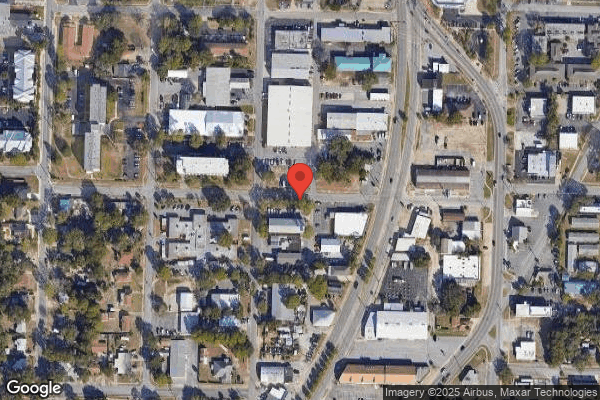
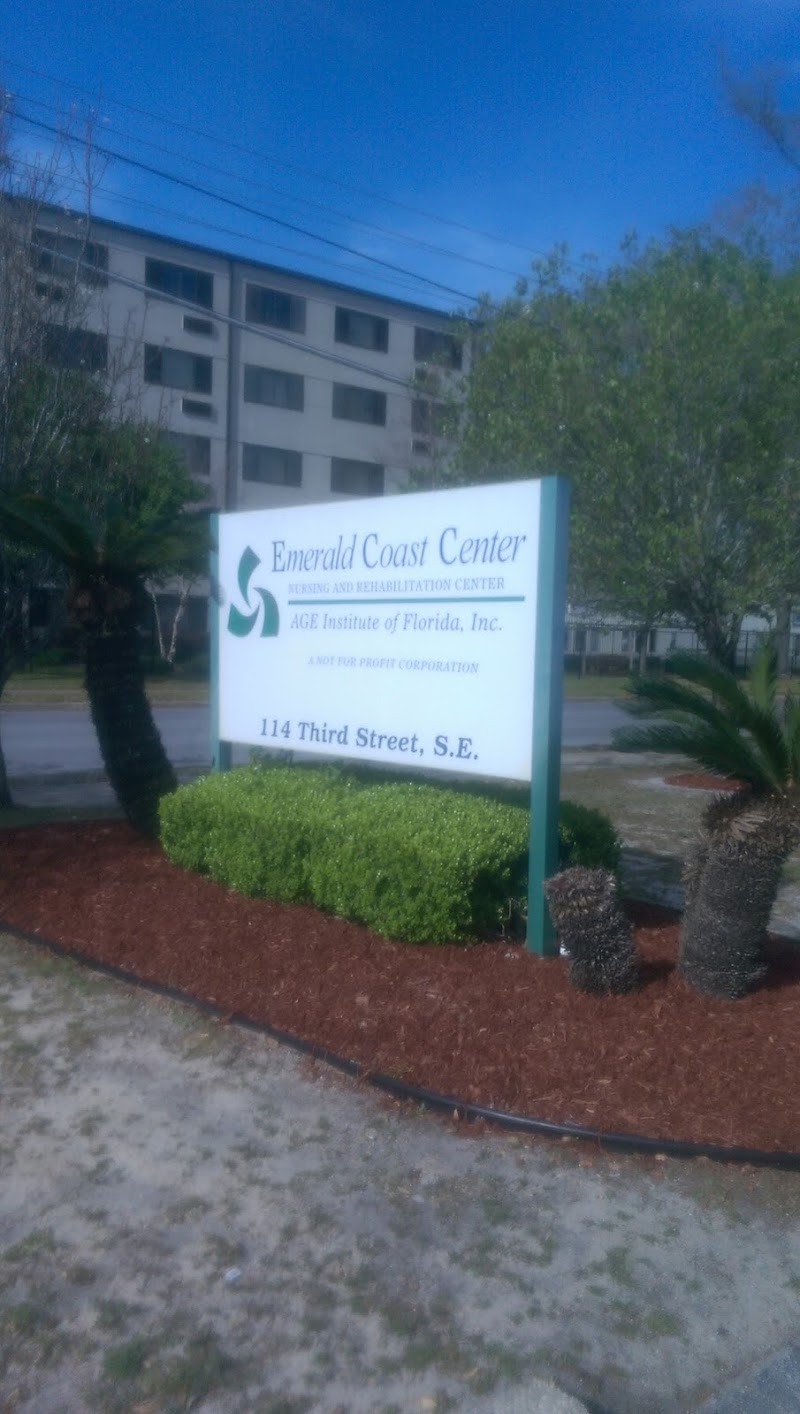
114 THIRD STREET SE, FORT WALTON BEACH, FL 32548 (850) 243-6134
For profit - Individual 120 Beds HEARTHSTONE SENIOR COMMUNITIES Data: November 2025
Trust Grade
63/100
#206 of 690 in FL
Last Inspection: September 2025

Inspected within the last 6 months. Data reflects current conditions.

Overview

Emerald Coast Center in Fort Walton Beach, Florida, has a Trust Grade of C+, indicating it is slightly above average, but not exceptional. It ranks #206 out of 690 facilities in Florida, placing it in the top half, but is #7 out of 8 in Okaloosa County, meaning there is only one local option rated higher. The facility is improving, with the number of issues decreasing from 8 in 2024 to 3 in 2025. Staffing is rated average with a turnover rate of 51%, which is higher than the state average, and it has average RN coverage. However, there are some concerning incidents, including failures to properly document the discharge of a resident into law enforcement custody, which resulted in the resident needing emergency medical care. Additionally, the facility did not monitor dishwasher temperatures in the kitchen, which could pose health risks to residents. Overall, while the center has some strengths, such as decent health inspection ratings, it also faces serious issues that families should consider.

Trust Score
C+
63/100
In Florida
#206/690
Top 29%
Safety Record
Moderate
Needs review
Inspections
Getting Better
8 → 3 violations
Staff Stability
⚠ Watch
51% turnover. Above average. Higher turnover means staff may not know residents' routines.
Penalties
✓ Good
$17,114 in fines. Lower than most Florida facilities. Relatively clean record.
Skilled Nurses
○ Average
Each resident gets 32 minutes of Registered Nurse (RN) attention daily — about average for Florida. RNs are the most trained staff who monitor for health changes.
Violations
⚠ Watch
15 deficiencies on record. Higher than average. Multiple issues found across inspections.
★★★★☆
4.0
Overall Rating
★★★☆☆
3.0
Staff Levels
★★★★☆
4.0
Care Quality
★★★★☆
4.0
Inspection Score
Stable
2024: 8 issues
2025: 3 issues

The Good

  • 4-Star Quality Measures · Strong clinical quality outcomes
  • Full Sprinkler Coverage · Fire safety systems throughout facility
  • No fines on record

Facility shows strength in quality measures, fire safety.

The Bad

Staff Turnover: 51%

Near Florida avg (46%)

Higher turnover may affect care consistency

Federal Fines: $17,114

Below median ($33,413)

Minor penalties assessed

Chain: HEARTHSTONE SENIOR COMMUNITIES

Part of a multi-facility chain

Ask about local staffing decisions and management

The Ugly 15 deficiencies on record

2 actual harm
Sept 2025 3 deficiencies
CONCERN (D)

Potential for Harm - no one hurt, but risky conditions existed

Resident Rights (Tag F0550)

Could have caused harm · This affected 1 resident

Based on observations, staff interviews, and record review, the facility failed to honor residents right to dignity for 1 of 1 sampled residents sampled. (Resident #59) The findings include:On 9/22/20...

Read full inspector narrative →
Based on observations, staff interviews, and record review, the facility failed to honor residents right to dignity for 1 of 1 sampled residents sampled. (Resident #59) The findings include:On 9/22/2025 at approximately 10:32 AM, Resident #59 was observed lying in bed with a suprapubic catheter bag attached to the bed rail uncovered and visible to roommates.On 9/22/2025 at approximately 12:25 PM, Resident #59 was observed in the dining room with her catheter bag attached to the back of the wheelchair uncovered and visible to other residents in dining room.On 9/22/2025 at approximately 2:30 PM, Resident #59 was observed in her wheelchair in the smoking area with the catheter bag attached to the wheelchair uncovered and visible to other residents in smoking area.On 9/22/2025 at approximately 3:00 PM, an interview was conducted with Nurse D. He confirmed that the bag was visible to other residents and indicated that it should be covered for dignity with a dignity bag. Nurse D (Registered Nurse) indicated that he would get a cover for the bag right away.On 9/22/2025 at approximately 3:15 PM, interview was conducted with resident #59. The resident stated my bag is never covered and I don't like everyone seeing my pee. Record review of the resident's care plan revealed the resident has a suprapubic catheter with risk for infection and/or complications due to neurogenic bladder and/or bladder spasms. The goal is to minimize the risk of complications associated with catheter usage with an intervention to use catheter bag that promotes privacy and dignity. The Minimum Data Set (MDS) revealed the resident had an indwelling catheter with diagnosis of Obstructive Uropathy and Neurogenic Bladder.
CONCERN (D)

Potential for Harm - no one hurt, but risky conditions existed

Comprehensive Care Plan (Tag F0656)

Could have caused harm · This affected 1 resident

Based on observations, record review, and interviews, the facility failed to develop and implement a comprehensive person-centered care plan for 1 of 1 resident sampled for pain. (Resident #3)The find...

Read full inspector narrative →
Based on observations, record review, and interviews, the facility failed to develop and implement a comprehensive person-centered care plan for 1 of 1 resident sampled for pain. (Resident #3)The findings include:A review of the Quarterly Minimum Data Set (MDS) (a standardized assessment tool that measures health status in nursing home resident) dated 9/1/2025, revealed a diagnosis of Aphasia (a language disorder that affects a person's ability to communicate effectively) following Cerebral infarction.A review of the physician's orders revealed an order dated 1/04/2025 for Tramadol HCL oral tablet 50 milligrams every six hours as needed for non-acute pain. Further review revealed an order also dated 1/04/2025 to monitor pain every shift and record the pain number on a 0-10 scale. A review of the comprehensive care plan dated 9/11/2025 does not include a care plan for pain. On 9/24/25 at approximately 9:40 AM, an interview was conducted with Staff B, Certified Nursing Assistant (CNA). Staff B was asked how she assesses Resident #3 for pain. She replied that she just asks the resident if she is in pain. Resident #3 was observed to be alert and sitting in her wheelchair. Staff B asked resident # 3 If she was in pain twice and then asked if her foot was hurting. Resident # 3 did not respond by any observable means. Staff B was asked what other ways she would assess for pain if the resident does not communicate. Staff B replied, You just have to know them.On 9/24/25 at approximately 9:50 AM, an interview was conducted with the MDS coordinator. The MDS Coordinator confirmed Resident # 3 has aphasia and cannot communicate. She stated Resident # 3 should have a care plan for pain and interventions which should indicate how to monitor for pain with a non-verbal resident. On 9/25/2025 at approximately 9:35 AM, an interview with the Director of Nursing (DON) was conducted. She confirmed Resident #3 should have a care plan for pain and stated she reviewed the non-verbal cues for pain with Staff B, CNA.
CONCERN (D)

Potential for Harm - no one hurt, but risky conditions existed

Accident Prevention (Tag F0689)

Could have caused harm · This affected 1 resident

**NOTE- TERMS IN BRACKETS HAVE BEEN EDITED TO PROTECT CONFIDENTIALITY** Based on observations, staff interviews, and record reviews, the facility failed to complete an assessment of the residents' cap...

Read full inspector narrative →
**NOTE- TERMS IN BRACKETS HAVE BEEN EDITED TO PROTECT CONFIDENTIALITY** Based on observations, staff interviews, and record reviews, the facility failed to complete an assessment of the residents' capabilities and deficits to determine whether or not supervision and/or assistance was needed for 1 of 3 sampled residents sampled for smoking. (Resident #80)The findings include: On 9/22/2025 at 10:30 AM, 9/22/2025 at 2:30 PM, and 9/23/2025 at 10:35 AM, Resident #80 was observed smoking in the designated smoking area with staff supervision. An interview was conducted with Nurse D (Registered Nurse) on 9/22/25 at approximately 10:50 AM. Nurse D indicated the resident enjoys sitting in the sun and smoking daily. An interview was conducted with Employee E (Certified Nursing Assistant) on 9/22/2025 at approximately 11:15 AM. Employee E confirmed resident #80 had a current smoker agreement that was signed by the resident on 6/30/25.A record review of the resident's record revealed she was admitted to the facility on [DATE] with active diagnoses of muscle wasting and atrophy, need for assistance with personal care and generalized Muscle Weakness. The facility supplied smoker list on 9/22/2025 had Resident #80 on active list. However, the resident evaluations only revealed one smoking evaluation completed on 09/22/2025 at 9:10 PM.
Jul 2024 6 deficiencies
CONCERN (D)

Potential for Harm - no one hurt, but risky conditions existed

Deficiency F0552 (Tag F0552)

Could have caused harm · This affected 1 resident

Based on record review, staff interview, family interviews, and policy review, the facility failed to notify the resident or responsible party of the risks and benefits of an anti-psychotic medication...

Read full inspector narrative →
Based on record review, staff interview, family interviews, and policy review, the facility failed to notify the resident or responsible party of the risks and benefits of an anti-psychotic medication and alternative treatment options, prior to initiating the medication for 1 of 5 sampled residents reviewed for unnecessary medications. (Resident #95) The findings include: During a review of Resident #95's medical record revealed the resident started the anti-psychotic medication Olanzapine on 2/16/24. The record did not contain any documentation of the resident's representative being notified of the resident being placed on the medication. The resident had a diagnosis of dementia and cognitive impairment. An interview was conducted with the Director of Nursing (DON) on 7/18/24 at 10:36 AM. The DON stated she had no documented evidence of the facility notifying the family the resident started Olanzapine in February 2024. A telephone interview was conducted with Family Member #1 on 7/18/24 at 11:02 AM. She stated the facility may have informed the other family member about the Olanzapine starting in February, but they did not notify her. A telephone interview was conducted with Family Member #2 on 7/18/24 at 11:06 AM. He stated he was not made aware of the Olanzapine starting in February and the facility does not make him aware of medication changes. Review of the facility policy for Use of Anti-Psychotic Medication (4.9.1 effective October 2021) revealed the facility would educate the resident/representative regarding benefits/side effects of the medication and document the education and the resident/representatives understanding of the risks and benefits in the medical record.
CONCERN (D)

Potential for Harm - no one hurt, but risky conditions existed

Deficiency F0554 (Tag F0554)

Could have caused harm · This affected 1 resident

Based on observation, resident record review, interviews and facility policy review, the facility failed to evaluate a resident for self-administration of medications for 1 of 1 residents sampled (Res...

Read full inspector narrative →
Based on observation, resident record review, interviews and facility policy review, the facility failed to evaluate a resident for self-administration of medications for 1 of 1 residents sampled (Resident # 61). The findings include: On 7/15/24 at 10:57 AM, Resident #61 was observed with an inhaler at bedside. On 7/15/24 at 11:52 AM, the inhaler remained at the bedside. (Photographic evidence obtained) A review of Resident #61's medical record was conducted. A review of the physician's orders revealed an order for Breztri Aerosphere Inhalation Aerosol (Budesonide-Glycopyrrolate-Formoterol Fumarate), 2 puff inhale orally two times a day for Chronic Obstructive Pumonary Disease dated 3/28/24. The Medication Administration Record (MAR) revealed Budesonide-Glycopyrrolate-Formoterol Fumarate inhaler was scheduled and documented at 9:00 AM and 5:00 PM daily. The resident's care plan was reviewed and did not include goals nor interventions related to self-administration of medications. On 7/15/24 at 1:21 PM, an interview was conducted with the interim Director of Nursing (DON). The DON reviewed resident #61's records. The DON stated Resident # 61 had not been care planned for self-administration of medications and so the inhaler should not have been left at bedside. On 7/16/24 at 8:59 AM, Resident #61 was interviewed. She stated staff would leave the inhaler at bedside for her to use when she was ready for it. A review of facility policy Self-Administration by Resident dated 2007 was reviewed. The policy stated that residents who desire to self-administer medications are permitted to do so with a prescriber's order and if the nursing care center's interdisciplinary team has determined that the practice would be safe and the medications are appropriate and safe for self-administration. Under Procedures, the policy stated that if the resident desires to self-administer, an assessment is conducted by the interdisciplinary team of the resident's cognitive, physical, and visual ability to carry out this responsibility, during the care planning process.
CONCERN (D)

Potential for Harm - no one hurt, but risky conditions existed

Deficiency F0645 (Tag F0645)

Could have caused harm · This affected 1 resident

**NOTE- TERMS IN BRACKETS HAVE BEEN EDITED TO PROTECT CONFIDENTIALITY** Based upon record review, observations, and interviews the facility failed to verify the correctness of the Level I PASRR and to...

Read full inspector narrative →
**NOTE- TERMS IN BRACKETS HAVE BEEN EDITED TO PROTECT CONFIDENTIALITY** Based upon record review, observations, and interviews the facility failed to verify the correctness of the Level I PASRR and to ensure a Level II PASRR screening was completed for resident 85 with a mental health condition. The findings include: A record review for Resident #85 revealed a Level I PASSR was completed prior to admission on [DATE]. Resident #85 had a diagnosis of undifferentiated schizophrenia upon admission to facility on 5/25/24. The Level I PASRR does not indicate diagnosis of any mental health disorder. Further review of current medical records a new diagnosis was given to Resident #85 of paranoid schizophrenia. There was no evidence of a Level II screening being completed or requested. During an interview with the Assistant Director of Nursing (ADON) on 07/16/24 at approximately 02:43 PM, it was revealed that facility policy is to ensure that all residents have a PASRR prior to completion, verify that the PASRR is correct upon admission, and submit a Level II PASRR if a resident has a new diagnosis of mental health condition or Intellectual disability. The ADON reviewed Resident #85's current PASRR. She stated, This resident should have had a level II PASRR done. But it is not in her medical record. The ADON called and verified that no level II PASRR was completed or submitted for Resident #85. The ADON further stated, Someone here at the facility should have caught this and verified that the level I PASRR was correct prior to admission. A level II PASRR should have been completed and submitted in May and/or one should have been submitted in September 2023 when she had a definitive diagnosis of Paranoid Schizophrenia. A review of policies and procedures for admission operations (effective April 12, 2023), reveals, every patient admitted requires a level I PASRR. PASRR to be completed prior to admission with copies kept in patient medical record. (a) If PASRR is not received prior to admission, facility designee will complete PASRR for the new admission. (b) verify if patient requires a Level 2 PASRR.
CONCERN (D)

Potential for Harm - no one hurt, but risky conditions existed

Comprehensive Care Plan (Tag F0656)

Could have caused harm · This affected 1 resident

Resident #97: A review of Resident #97's record revealed a diagnosis of Diabetes Mellites type II (DM Type 2, high blood sugar), depression, and Unspecified atrial fibrillation (a-fib. an irregular h...

Read full inspector narrative →
Resident #97: A review of Resident #97's record revealed a diagnosis of Diabetes Mellites type II (DM Type 2, high blood sugar), depression, and Unspecified atrial fibrillation (a-fib. an irregular heartbeat). A review of resident #97's medications revealed he is ordered the following medications: Novolog Flex Pen subcutaneous solution pen-injector 100 unit/milliliter (ML) inject 1 unit subcutaneously twice a day for diabetes, Insulin Glargine Subcutaneous Solution 100 unit/ML, inject 20 unit subcutaneously at bedtime for DM Type 2, Sertraline HCL oral tablet 50 milligrams (MG), one tablet by mouth one time a day for depression, and Apixaban Oral Tablet 5 MG Give 1 tablet by mouth two times a day for anticoagulant (a blood thinner used to treat irregular heart rate as a preventative measure for side effects of blood clots forming.) Resident #97's record revealed no care plan for DM type 2, Depression, or A-fib with use of anticoagulant. On 7/18/24 at approximately 11:30 AM, an interview was conducted with the Clinical Reimbursement Director (CRD), whose duties include developing the resident's care plans. The CRD confirmed that there was not a care plan for DM Type 2, Depression, or for Anticoagulant use. The CRD indicated that there should be a care plan in place for these diagnoses that includes the medications to treat the diagnosis for monitoring of side effects. The CRD confirmed that the current plan of care would not be considered a complete patient centered care plan. Resident #39: An observation and interview was conducted on 07/16/24 at 09:38 AM with Resident #39. He has a diagnosis of complete quadriplegia c1- c4, neuromuscular scoliosis, contracture of muscles at multiple sites, right knee contracture, and left knee contracture. The resident has bilateral finger and hand contractures. A current review of the comprehensive assessment indicates he has limited range of motion. He stated, I use to wear splints but not anymore, not sure what happened to them. Upon further review of the record, Resident #39 is not care planned for limited range of motion or contractures. During an interview conducted on 7/18/24 at approximately 11:00 am with the CRD, she indicated that Resident #39's comprehensive assessment does not indicate any contractures. The CRD was asked how she obtains information to complete assessments and care plan needs of the resident. She stated, We go over physician orders and clinical review of the notes and I note anything that has changed with the residents. I also get information from the therapy department regarding changes in residents' functional abilities. When the CRD was asked if a limited range of motion / contractures would be important information to note and ensure that was carried over to the resident's comprehensive assessment and care plan, she stated, Yes, I believe it would. The CRD confirmed that Resident #39 did not have a care plan for the limited range of motion / contractures. Resident #85 A record review of Resident #85 on 07/16/24 revealed that she has a diagnosis of Paranoid Schizophrenia, major depression disorder, and panic attacks / anxiety. Resident #85 is currently prescribed Risperdal 4 mg two times a day, Trazadone 100mg at bedtime, and Ativan 0.5mg twice a day to treat these conditions. In addition, the resident is seen by psychiatric services at facility. A review of the comprehensive care plan revealed no plan of care in place for monitoring anti-psychotropic medication use. The CRD was asked about an anti-psychotropic medication monitoring care plan for Resident 85. The CRD acknowledged that this care plan did not exist but she should have one. Review of the facility policy Care Plan-Interdisciplinary Plan of Care from Interim to Meeting (C.1 effective February 2024) revealed that the comprehensive care plan is developed by members of the IDT and the resident, resident's family, or representative, as appropriate, in conjunction with completion of the Admission, Annual, Significant Change in Assessment or other comprehensive assessment, and the associated Care Area Assessments. The comprehensive care plan describes or includes: i. The services that are to be furnished and goals that reflect the Resident ' s wishes, choices, and exercise of rights. ii. Any services that would normally be provided but are not provided due to the resident ' s exercise of rights, including the right to refuse treatment, and any alternative means or options to address the problem. iii. The needs, strengths, and preferences identified in the comprehensive resident assessment. iv. Prevention of avoidable declines in functioning or functional levels v. Standards of current professional practice vi. Adequate information provided to make informed choices regarding treatment. The comprehensive care plan is completed within regulated timeframes. The comprehensive care plan is completed hardcopy or electronically. The comprehensive care plan is reviewed and revised by members of the IDT and the resident, resident ' s family, or representative, as appropriate, in consultation with completion of the Quarterly Assessment. The IDT members make a quarterly care plan review note within the designated discipline ' s progress notes which includes: i. If goals are met or unmet ii. If care plan will remain in effect for resident. The quarterly care plan review note is completed hardcopy or electronically. Based upon observations, record reviews, and interviews, the facility failed to provide a comprehensive person-centered care plan for four out of twenty-five residents reviewed. (Resident #95, #97, #39, and #85) The findings include: Resident #95 A review of Resident #95's medical record revealed the resident began taking the physician ordered, anti-psychotic medication Olanzapine on 2/16/24. A review of the quarterly minimum data set, with an assessment reference date of 7/5/24, revealed the resident was receiving an anti-psychotic medication. A review of the resident's current comprehensive plan of care, with a target date of 10/7/24, revealed no care plan or reference to the anti-psychotic medication use. An interview was conducted with the Clinical Reimbursement Coordinator on 7/18/24 at 10:46 AM. She stated care planning was part of the interdisciplinary team's (IDT) responsibility. She stated they usually include the diagnosis, the medication, type of medication, interventions, behaviors, and goals specific to the behavior and the medication used to treat the behavior in the care plan. An interview was conducted with the Director of Clinical Services on 7/18/24 at 10:56 AM. She stated, You should be able to review the care plan and determine the resident is taking an anti-psychotic medication.
CONCERN (D)

Potential for Harm - no one hurt, but risky conditions existed

Garbage Disposal (Tag F0814)

Could have caused harm · This affected 1 resident

Based on observation and interview, the facility failed to maintain garbage and refuse properly in dumpsters and around the perimeter of the facility. The findings included: On 7/15/24 at approximate...

Read full inspector narrative →
Based on observation and interview, the facility failed to maintain garbage and refuse properly in dumpsters and around the perimeter of the facility. The findings included: On 7/15/24 at approximately 10:30 AM, observations were made of two dumpsters behind the facility. One had an open lid with trash piled on top of the dumpster. The other dumpster had open lids with overflowing garbage. There were cigarette butts and other trash scattered around the entire perimeter of the facility. An overturned trash can was also noted on the side of the facility. (Photographic evidence was obtained) On 7/16/24 at approximately 9:45 AM, it was still noted that cigarette butts and trash were scattered around the perimeter of the facility and the overturned trash can remained in the same position. On 7/17/24 at approximately 1:15 PM, an interview was conducted with the Dietary Manager. She was shown pictures of the dumpster outside behind the kitchen. She was asked if the dumpsters appeared properly maintained. She indicated that waste was not managed properly in the images. She also explained that the issue would be addressed immediately. On 07/18/24 at approximately 9:11 AM, an interview was conducted with the Maintenance Director. The observed findings regarding trash on grounds and dumpster was discussed. He indicated that the trash can was removed on 7/16/24. After viewing the pictures, the Maintenance Director indicated that daily rounds are conducted and that the trash should have been picked up.
CONCERN (D)

Potential for Harm - no one hurt, but risky conditions existed

Deficiency F0847 (Tag F0847)

Could have caused harm · This affected 1 resident

Based upon record review, resident interview, and staff interview, the facility failed to provide a clear understanding of the arbitration agreement prior to having residents sign this agreement for t...

Read full inspector narrative →
Based upon record review, resident interview, and staff interview, the facility failed to provide a clear understanding of the arbitration agreement prior to having residents sign this agreement for two of three residents. (Resident #353 and #354) The findings include: Resident #353 Upon interview with Resident #353 on 07/16/24 at approximately 12:59 PM, when asked what her understanding was of an arbitration agreement, she stated, I do not know what arbitration means. What is that word and what does it mean? I have not ever heard of that word before. When Resident #353 was provided with a copy of arbitration agreement booklet, she stated, I have not seen this before. When Resident #353 was asked if that was her signature on the back page of the arbitration agreement, she stated, yes, that is my signature. But I've never saw this book or this agreement except for the last page. I did not date it, or check any of the boxes on that page. She stated, I signed some papers when I first got here to the facility, two ladies came in here to my room early one morning and asked me to sign some paperwork for Medicaid so they can file with my insurance. So, I signed them and went back to sleep. I know that if I don't understand something I will not sign and wait for my mom to be with me, so she will understand it and explain it to me before signing anything. Resident 353 further stated, No one has explained any of this to me. Resident #353's arbitration agreement was signed and dated on 07/12/24. On 6/2/24, Resident #353 was determined to have a Brief Interview of Mental Status (BIMS) score of 15, indicating the resident was cognitively intact. The resident did not initial page 1, page 2, page 3, or page 4 of the agreement. The admission director's initials were noted on each page of the agreement. (photographic evidence obtained). Resident #354 Upon interview concerning the arbitration agreement with Resident #354 on 07/16/24 at approximately 2:00 PM, Resident #354, What are you talking about? She further stated, a lady came in her room early this morning and asked her to sign some admission paperwork for the facility, the lady did not explain anything to me about what I was signing she just told me that I needed to sign it. I know what an arbitration agreement is but no one from here told me about it or that I was signing one. When provided a copy of the arbitration agreement, Resident #354 looked over the agreement and stated, I haven't seen this before, this is not what I signed. When shown the last page where her signature was, she verified that it was her signature, but she had not seen this booklet before now. Resident #354 was determined to have a BIMS score of 12 on 7/16/24, which indicates she has some moderately impaired cognition. Resident #354's arbitration agreement was signed on 07/15/24. The Admissions Director's initials are noted on the last page of the agreement. (photographic evidence obtained). An interview was conducted on 07/17/24 at approximately 09:47 AM with the Admissions Director (AD). When asked what the policy and process was for new admits to the facility, she stated, I go over the admission paperwork with them. I have it on an electronic iPad which makes it easier for them and myself. I go over the different pages of the admission process, bed hold policy, insurance, and the consent to treat. When asked if she is responsible for reviewing and having a resident sign the arbitration agreement, the AD stated, This is no longer online, it is a paper agreement. If the resident signs it, we place it in the resident's financial folder and keep it in the business office. I go over the agreement with the resident and explain it to them before they sign. I keep it simple as I possibly can because of all the legal terminology in the agreement. I basically tell the resident or family member that, if there is a grievance or complaint, we asked that the resident or family come to us first (meaning the facility), instead of seeking an attorney from the outside. Most of the residents do sign the agreement. Almost every place you go to now ask for you to sign an arbitration agreement. The AD was asked how she ensures that a resident knows what they are signing prior to obtaining their signature. She states, I will go to social services first and see what their BIMS score is and I have a conversation with the resident. If I feel like they are not understanding what I am telling them, then I will speak to their family or representative to obtain a signature. When asked if she reviews the arbitration agreement with the residents or their families prior to them signing the agreement, the AD stated, Yes but again, I use simple language, so they understand it before they sign the agreement. If they don't understand the agreement, I don't have them sign it. Sometimes I must send the admission paperwork through email to the residents' families for signatures. When asked if she explained the agreement to Resident #353, she stated, yes, but she probably doesn't remember me going over it with her, her memory is not that great. She doesn't always understand. I did send a copy of the paperwork to her mother for review. When asked if she reviewed and explained the agreement to Resident #354, the AD stated, I don't know why she doesn't remember signing it; it could be because it was early in the morning. I try and get the signatures from residents in the morning and then I am out marketing the rest of the day. I am usually out of the office before 10:00 am most days. An interview with the administrator of the facility was conducted on 07/18/24 at approximately 11:30 AM. She stated, I have done arbitration agreements before, but not here at this facility. Our admissions director does them here. When asked what her expectations are for the arbitration agreement process and her understanding of how it should be presented to the residents, she replied that each page of the agreement should be discussed with them. They should be able to ask questions, and we should ensure they fully understand what they are signing. Then before they sign anything, have them recall what was said about the agreement, so we know that they are fully aware of what the agreement states, and then have them sign it, if they wish to do so. It is not a condition for admittance to the facility and they have a right to refuse if they choose to do so. Upon review of facility policy and arbitration agreement on 7/16/24 at approximately 09:30 AM revealed: Arbitration agreement (1) as explicitly, stated below, both the resident and the facility hereby acknowledge that they understand that the resident has the right to seek legal counsel concerning this voluntary section of admission agreement. (2) the execution of this voluntary section of the admission agreement is not a precondition to the furnishing of services to the resident by the facility and (3) this voluntary section of the admission agreement may be revoked by written notice to the facility from the resident within thirty days of signature. Upon review of the arbitration agreement booklet page 1 states If you do not feel you understand the agreement, please do not sign. Let the person presenting the agreement know that you do not understand and would like further explanation, translation, or other assistance.
Apr 2024 2 deficiencies 2 Harm
SERIOUS (G) 📢 Someone Reported This

A family member, employee, or ombudsman was alarmed enough to file a formal complaint

Actual Harm - a resident was hurt due to facility failures

Transfer Requirements (Tag F0622)

A resident was harmed · This affected 1 resident

**NOTE- TERMS IN BRACKETS HAVE BEEN EDITED TO PROTECT CONFIDENTIALITY** Based on record review, staff interview, resident interview, hospital staff interview, and policy review, the facility failed to...

Read full inspector narrative →
**NOTE- TERMS IN BRACKETS HAVE BEEN EDITED TO PROTECT CONFIDENTIALITY** Based on record review, staff interview, resident interview, hospital staff interview, and policy review, the facility failed to appropriately document the discharge of a resident into law enforcement custody, failed to permit the resident to remain in the facility by informing law enforcement of an active warrant and pressuring law enforcement to remove the resident from the facility, and failed to convey necessary information regarding resident medical conditions and required medications to law enforcement, resulting in the resident presenting to the hospital emergency room for treatment of high blood glucose for 1 of 1 sampled residents discharged into the custody of law enforcement. (Resident #1) The findings include: A review of Resident #1's electronic medical record revealed the resident was admitted to the facility on [DATE] and discharged from the facility on 3/22/24 into the custody of local law enforcement. A progress note dated 3/18/24 at 7:00 PM indicated Resident #1 and his roommate were heard in the hallway arguing. The note stated that a hit was heard. The police were called, but the roommate refused to press charges. The police found an active warrant for Resident #1 in another county. The police were unable to transfer Resident #1 at that time to pursue action. The roommate was not injured. A post event note dated 3/18/24 at 10:23 PM indicated Resident #1 hit his roommate in the abdomen. A progress note documented by the Director of Nursing (DON) dated 3/22/24 at 3:28 PM (4 days later) indicated Resident #1 was escorted out of the facility by the police department for an outstanding warrant. The progress note also stated that the resident will not be permitted back into the facility as a result of assault and aggression towards a vulnerable resident. Resident #1 was made aware of the discharge. No other altercations with other residents were reported or found during the record review. On 4/23/24, the DON was requested to provide any other documentation of behavioral concerns for Resident #1. The DON provided 2 notes, one on 9/15/23 in which Resident #1 was documented to be non-compliant with the smoking rules by having a lighter in his possession and one on 12/7/23 when Resident #1 was observed to be smoking on the smoking patio during a non-smoking time. The DON was unable to provide any other documentation to support Resident #1 endangering other residents. On 4/23/24 at 11:10 AM, the DON stated the facility had several other residents who go out and give other residents cigarettes, which they are not supposed to do. Further review of the resident's medical record revealed the resident had a diagnosis of diabetes and required Lantus insulin administration 20 units by injection every morning. He also required blood sugar testing 4 times daily with a sliding scale dose of Novolog insulin per injection of 4 units of insulin if his blood sugar was 151-200, 8 units if his blood sugar was 201-250, 12 units if his blood sugar was 251-300, 14 units if his blood sugar was 301-350, 16 units if his blood sugar was 351-400, and if above 400 call the physician and give 16 units. A review of a law enforcement event report dated 3/18/24 revealed law enforcement officer #1 responded to the facility report of Resident #1 allegedly assaulting his roommate. Resident #1's roommate stated that, while pushing Resident #1 in his wheelchair, Resident #1 swung his arm around in what the roommate described as a playful manner. The roommate stated the strike did not appear intentional in nature and he did not wish to pursue the situation further. Review of a law enforcement arrest report dated 3/22/24 revealed law enforcement officer #2 was dispatched to the facility in reference to a wanted person located. The arrest report stated the officer was advised by staff Resident #1 had an outstanding warrant. The outstanding warrant was in reference to failure to appear on amphetamine possession in a different county and issued nearly 3 years prior, on 6/9/21. Review of a hospital emergency room report dated 3/26/24 revealed Resident #1 presented to the emergency room from the jail with high blood sugar at 1:51 AM. The hospital presentation note, dated 3/26/24 at 1:51 AM, indicated Resident #1 called emergency medical services (EMS) to check his blood sugar because he had a feeling it was high; his physician had prescribed 20 unit of Lantus insulin every morning and Humalog insulin on a sliding scale and the staff at the jail were not giving him the prescribed insulin. EMS reported his blood sugar was 440. The hospital case management note dated 3/26/24 at 10:14 AM indicates the hospital contacted the nursing home and the nursing home would not allow the resident to return because they stated they were in the process of discharging the resident from their facility. The resident was then discharged from the hospital to a men's shelter in Pensacola, FL on 3/26/24. Review of additional hospital records revealed the resident was admitted to a second hospital in Pensacola later the same day on 3/26/24 through 4/3/24 with diabetic ketoacidosis (diabetic ketoacidosis develops when the body does not have enough insulin to allow blood sugar into the cells for use as energy. Instead, the liver breaks down fat for fuel, a process that produces acids called ketones. When too many ketones are produced too fast, they can build up to dangerous levels in the body). The resident was discharged from the hospital to a different nursing home about 40 miles away in Pensacola on 4/3/24. An interview was conducted with the Administrator from Emerald Coast Center on 4/22/24 at 11:32 AM. She stated Resident #1 spent the night in jail on 3/22/24 and then law enforcement sent him to the hospital. The hospital called her on 3/26/24 requesting to discharge him back to the facility and she told the hospital the facility had discharged the resident to the police department. The Administrator stated the facility chose not to readmit Resident #1 because of the open warrant for his arrest and the assault on his roommate. An interview was conducted with Employee B (certified nursing assistant) on 4/22/24 at 1:18 PM. Employee B stated she was working at the facility on 3/18/24 when law enforcement came to the facility regarding Resident # 1. The Administrator informed law enforcement there was an active warrant for Resident #1's arrest. Employee B stated the Administrator was encouraging law enforcement to arrest Resident #1. Law enforcement was not able to transport the resident from the facility on 3/18/24 because he could not physically get in the vehicle. A telephone interview was conducted with Employee C (scheduler) on 4/22/24 at 2:29 PM. Employee C stated she was working on 3/18/24 when law enforcement came to the facility regarding Resident #1. She stated the officer came out to the smoking area and stated the Administrator informed him Resident #1 had an active warrant in another county. She stated she heard the Administrator state Resident #1 had an active warrant for arrest and could not stay in the facility. A telephone interview was conducted with Employee D (licensed practical nurse) on 4/22/24 at 1:48 PM. Employee D stated she was working on 3/18/24 when law enforcement came to the facility regarding Resident #1. Employee D stated the Administrator informed law enforcement Resident #1 had a warrant for arrest in another county. The Administrator told employee D that her (Administrator's) supervisor had her call law enforcement and press the issue to send the resident to jail. An interview was conducted with employee A (licensed practical nurse) on 4/23/24 at 11:05 AM. Employee A stated she stopped Resident #1 when law enforcement was taking him from the facility on 3/22/24 so she could check his blood sugar and give his insulin. She did not offer to send any medications or medical information with the resident or law enforcement. She stated she was not aware of a process to do so when a resident was arrested and removed from the facility. An interview was conducted with the Director of Nursing (DON) on 4/23/24 at 10:40 AM. The DON stated, when they admit a resident, this is considered their home. She stated the facility does not have a process to ensure continued medical care if a resident is arrested such as sending medications or medical records with them. She understood the facility could not take Resident #1 back because of the altercation with the other resident. She stated they have several residents in the facility with warrants. A telephone interview was conducted on 4/23/24 at 1:47 PM with the hospital case manager of the first hospital that Resident #1 visited on 3/26/24. She stated the facility declined to take Resident #1 back on 3/26/24, stating they were in the process of discharging him because he struck someone. Law enforcement was not present with Resident #1 at the hospital, nor did they request to be notified upon his discharge from the hospital. An interview was conducted with Resident #1 on 4/25/24 at 10:05 AM. The resident stated the facility staff gave him an insulin injection before he left with law enforcement on 3/22/24, but did not give him any medications or medical documents to take with him. Resident #1 stated the jail did not have any medications and he was sent to the hospital. A telephone interview was attempted for law enforcement officer number 1 on 4/22/24 at 2:53 PM and law enforcement officer number 2 on 4/22/24 at 6:36 PM, and in each case dispatch stated they would return to work until Thursday, 4/25/24 at 6:00 PM. Another attempt at a telephone interview was made for law enforcement officers number 1 and 2 on 4/25/24 at 6:50 PM. The attempt was not successful. Review of the facility policy Bed Hold- Florida (effective October 2023) revealed, .upon return from a higher level of care or therapeutic leave, the resident will be readmitted to their previous room, if it is available, or a similar room, if the resident requires services provided by the facility, and the facility is able to meet the resident's medical care needs. Review of the facility policy for Resident/Family Care and Services (Discharge Planning) (effective February 2021) revealed the facility must permit each resident to remain in the facility, and not transfer or discharge the resident from the facility unless- A) The transfer or discharge is necessary for the resident's welfare and the resident's needs cannot be met in the facility; B) The transfer or discharge is appropriate because the resident's health has improved sufficiently so the resident no longer needs the services provided by the facility; C) The safety of individuals in the facility is endangered due to the clinical or behavioral status of the resident; D) The health of individuals in the facility would otherwise be endangered; E) The resident has failed, after reasonable and appropriate notice, to pay for (or to have paid under Medicare or Medicaid) a stay at the facility. Nonpayment applies if the resident does not submit the necessary paperwork for third party payment or after the third party, including Medicare or Medicaid, denies the claim and the resident refuses to pay for his or her stay. For a resident who becomes eligible for Medicaid after admission to a facility, the facility may charge a resident only allowable charges under Medicaid; or F) The facility ceases to operate. G) The facility must ensure that the transfer or discharge is documented in the resident's medical record and appropriate information is communicated to the receiving health care institution or provider. Review of the facility policy for Discharge Planning- Outside the Facility (effective February 2021 revealed a physician documents the need for resident transfer/discharge due to endangering the safety or health of individuals in the facility.
SERIOUS (G) 📢 Someone Reported This

A family member, employee, or ombudsman was alarmed enough to file a formal complaint

Actual Harm - a resident was hurt due to facility failures

Transfer Notice (Tag F0623)

A resident was harmed · This affected 1 resident

**NOTE- TERMS IN BRACKETS HAVE BEEN EDITED TO PROTECT CONFIDENTIALITY** Based on record review, staff interviews, and facility policy review, the facility failed to notify the resident and the residen...

Read full inspector narrative →
**NOTE- TERMS IN BRACKETS HAVE BEEN EDITED TO PROTECT CONFIDENTIALITY** Based on record review, staff interviews, and facility policy review, the facility failed to notify the resident and the resident's representative in writing of the reason for discharge, effective date of discharge, discharge location, the resident's appeal rights, and the Ombudsman contact information prior to discharge, and with at least 30 days advance notice for 1 of 1 sampled residents reviewed for facility-initiated discharge, who was discharged into the custody of law enforcement. (Resident #1) The findings include: Review of Resident #1's electronic medical record revealed the resident was admitted to the facility on [DATE] and discharged from the facility on 3/22/24 into the custody of local law enforcement. A progress note dated 3/18/24 at 7:00 PM indicated Resident #1 and his roommate were heard in the hallway arguing. The note stated that a hit was heard. The police were called, but the roommate refused to press charges. The police found an active warrant for Resident #1 in another county. The police were unable to transfer Resident #1 at that time to pursue action. The roommate was not injured. A post event note dated 3/18/24 at 10:23 PM indicated Resident #1 hit his roommate in the abdomen. A progress note documented by the Director of Nursing (DON) dated 3/22/24 at 3:28 PM indicated Resident #1 was escorted out of the facility by the police department for an outstanding warrant. The progress note also stated that the resident will not be permitted back into the facility as a result of assault and aggression towards a vulnerable resident. Resident #1 was made aware of the discharge. No other altercations with other residents were reported or found during the record review. On 4/23/24, the DON was requested to provide any other documentation of behavioral concerns for Resident #1. The DON provided 2 notes, one on 9/15/23 in which Resident #1 was documented to be non-compliant with the smoking rules by having a lighter in his possession and one on 12/7/23 when Resident #1 was observed to be smoking on the smoking patio during a non-smoking time. The DON was unable to provide any other documentation to support Resident #1 endangering other residents. On 4/23/24 at 11:10 AM, the DON stated the facility had several other residents who go out and give other residents cigarettes, which they are not supposed to do. The record did not contain an appropriate discharge notice to the resident and resident representative. A review of a law enforcement event report dated 3/18/24 revealed law enforcement officer #1 responded to the facility report of Resident #1 allegedly assaulting his roommate. Resident #1's roommate stated that, while pushing Resident #1 in his wheelchair, Resident #1 swung his arm around in what the roommate described as a playful manner. The roommate stated the strike did not appear intentional in nature and he did not wish to pursue the situation further. Review of a law enforcement arrest report dated 3/22/24 revealed law enforcement officer #2 was dispatched to the facility in reference to a wanted person located. The arrest report stated the officer was advised by staff Resident #1 had an outstanding warrant. The outstanding warrant was in reference to failure to appear on amphetamine possession in a different county. Review of a hospital emergency room report dated 3/26/24 revealed Resident #1 presented to the emergency room from the jail with high blood sugar. The hospital case management note dated 3/26/24 at 10:14 AM indicates the hospital contacted the nursing home and the nursing home would not allow the resident to return because they stated they were in the process of discharging the resident from their facility. The resident was then discharged from the hospital to a men's shelter in Pensacola, FL on 3/26/24. Review of additional hospital records revealed later, on the evening of the same day, Resdient #1 was admitted to another hospital in Pensacola on 3/26/24 through 4/3/24 with diabetic ketoacidosis (diabetic ketoacidosis develops when the body does not have enough insulin to allow blood sugar into the cells for use as energy. Instead, the liver breaks down fat for fuel, a process that produces acids called ketones. When too many ketones are produced too fast, they can build up to dangerous levels in the body). The resident was discharged from the hospital to a different nursing home in Pensacola, FL on 4/3/24. An interview was conducted with the Administrator on 4/22/24 at 11:32 AM. She stated Resident #1 spent the night in jail on 3/22/24 and then law enforcement sent him to the hospital. The hospital called her on 3/26/24 requesting to discharge him back to the facility and she told the hospital the facility had discharged the resident to the police department. The Administrator stated the facility chose not to readmit Resident #1 because of the open warrant for his arrest and the assault on his roommate. The Administrator stated the facility had no intent to discharge the resident, so they did not issue a discharge notice. An interview was conducted with the DON on 4/22/24 at 12:13 PM. The DON stated the facility did not issue a discharge notice to Resident #1 because the facility was actively looking for a discharge location. She stated law enforcement removed him from the facility. A further interview was conducted with the Administrator on 4/23/24 at 8:43 AM. The Administrator stated the first hospital that Resident #1 was treated at on 3/26/24 called her on 3/26/24 and asked if they could send a new referral form for the resident for admission. She told them no, because he had been recently incarcerated and this violated the facility admissions policy. She stated again the facility did not issue a discharge notice to Resident #1. Review of the facility policy Discharge Planning- Outside the Facility (effective February 2021) revealed, .transfers or discharges initiated by the facility and not by the resident or by the resident's physician or legal guardian or representative may require the completion of state specific process and documentation, in accordance with applicable laws. The resident and/or legal representative will be notified of transfers in writing, except when a transfer is due to unplanned, acute clinical need. Review of the facility policy for Transfer/Discharge Documentation Recommendations (effective February 2021) revealed the Social Services Department will adhere to the following Discharge Documentation requirements and timeframe's as indicated. For reason of non-payment or facility initiated discharge - a 30-day notice is required (Agency for Healthcare transfer/discharge form page 1 and 2.) A copy of the transfer/discharge document must be sent to the State Ombudsman's Office.
Apr 2023 4 deficiencies
CONCERN (D)

Potential for Harm - no one hurt, but risky conditions existed

Deficiency F0557 (Tag F0557)

Could have caused harm · This affected 1 resident

Based on observation, staff and resident Interview, and record review, the facility failed to honor residents rights for the use of personal property for 1 of 1 residents reviewed for resident rights....

Read full inspector narrative →
Based on observation, staff and resident Interview, and record review, the facility failed to honor residents rights for the use of personal property for 1 of 1 residents reviewed for resident rights. (Resident #74) The findings include: On 4/10/23 at 2:54 PM, an interview was conducted with Resident #74. At that time, the resident stated that her family had purchased a motorized wheelchair for her use. She stated that the motorized wheelchair was more stable than the regular wheelchair that she used in the facility and would like to use it in the building. She stated that, when she talked to the Administrator about it, he told her that motorized wheelchairs had been banned from the facility except for a few people who were grandfathered in. During the course of the interview, the Administrator walked up and stated, the facility had decided against allowing them in the building due to safety concerns. He stated that there was not enough room in the building for them to move about safely. He acknowledged that there were other residents in the building with electronic wheelchairs. He stated that they were allowed to continue to use their electric wheelchairs as they already had them when the policy was changed. The Administrator was asked to produce the policy for motorized wheelchairs and a list of residents who were exempt from the policy. On 4/11/23 at 10:08 AM, Resident #53 was observed in a motorized wheelchair, driving it through the dining area to the front of the building. On 4/12/23 at 3:07 PM, the Administrator brought the list of residents currently using motorized wheelchairs which revealed two residents (Resident #53 ad Resident #54) were allowed to use motorized wheelchairs. At that time, he stated that there was not exactly a ban on motorized wheelchairs. He stated that it was more that they are trying to keep the number of them in the building down due to there not being a lot of room in the halls of the building and lack of available space for battery charging stations. He then stated that no one was grandfathered in, the facility was just not going to take away the electric wheelchairs from Residemts #53 or #54. On 4/12/23 at 03:22 PM, Resident #54 was observed in a motorized wheelchair coming from the outdoor smoking area into the dining area. A review was conducted of the facility policy, Risk Management Release Guidelines for Resident Use of Motorized Wheelchairs or Scooters dated 6/1/2011. The policy outlined the need for safety evaluation by therapy for the resident to use the motorized wheelchair and the need for routine maintenance. Nowhere in the policy was it stated that motorized wheelchairs were banned from the facility. On 4/13/23 at 9:36 AM, an interview was conducted with the Therapy Supervisor. She stated that she was familiar with Resident # 74. She stated that Resident #74 had not been evaluated for the use of a motorized wheelchair. She stated that, from her knowledge of the resident, there was no reason that the resident would be unable to safely use a motorized wheelchair, but that she had to receive approval from the Administrator to do the evaluation. On 4/13/23 at 9:55 AM, an interview was conducted with the Administrator and Director of Nursing. When asked why Resident #74 specifically was not allowed to utilize her motorized wheelchair, the Administrator stated that it was not clinically necessary for her. He stated that Resident #74 did not go through the facility to get the chair and let her know that there was a process to follow. He stated that he let her know that it was restricted due to their size and ability to charge the batteries. When asked if the facility followed up to determine why she wanted the chair and if therapy completed an evaluation, he stated that, when he stated that it was restricted, the resident had her son pick it up from the facility and the resident did not complain.
CONCERN (D)

Potential for Harm - no one hurt, but risky conditions existed

Deficiency F0688 (Tag F0688)

Could have caused harm · This affected 1 resident

**NOTE- TERMS IN BRACKETS HAVE BEEN EDITED TO PROTECT CONFIDENTIALITY** Based on observation, record review, resident interview, staff interviews, and policy review, the facility failed to provide rec...

Read full inspector narrative →
**NOTE- TERMS IN BRACKETS HAVE BEEN EDITED TO PROTECT CONFIDENTIALITY** Based on observation, record review, resident interview, staff interviews, and policy review, the facility failed to provide recommended restorative services for 1 of 2 residents reviewed for limited range of motion. (Resident #99) The findings include: An observation of Resident #99 was conducted on 4/10/23 at 2:16 PM. The resident was not able to extend his left arm and stated he was not able to extend his left arm. He stated he was not receiving any therapy or other services for the limitation in range of motion. Review of Resident #99's medical record revealed a current diagnosis of subluxation (incomplete or partial dislocation of a joint) of the left shoulder joint. The admission minimum data set, with an assessment reference date of 2/9/23, indicated the resident had functional limitation of range of motion on one side's upper and lower extremities. Review of the physical therapy Discharge summary dated [DATE] indicated the discharge plan as follows: Patient will remain as a long term care resident of facility. Assistance from nursing staff as needed, restorative functional maintenance program will be implemented. An interview was conducted with Employee B (Staff Development Registered Nurse) on 4/11/23 at 2:58 PM. Employee B stated the resident was not receiving a restorative program for range of motion and had not received restorative at any time while in the facility. An interview was conducted with Employee A (Therapy Director) on 4/11/23 at 3:03 PM. Employee A reviewed Resident #99's record and confirmed the physical therapy notes indicated the resident would be placed on a restorative functional maintenance program. She stated they failed to communicate the need for a restorative program to begin until he was referred back to therapy on 3/22/23. A further interview with Employee A was conducted on 4/11/23 at 4:06 PM. She stated the intent was to refer him to restorative nursing when he was discharged from physical therapy on 2/24/23. On 4/11/23 at 4:08 PM, Employee B provided copies of therapy recommendations for a restorative/functional maintenance program dated 3/23/23 for passive range of motion to left lower extremity and right lower extremity strengthening and passive range of motion of left and right upper extremities dated 3/29/23. She stated he had not been added to the program yet because she had been on vacation. Review of the facility policy for Restorative Nursing Programs (revised October 2017) revealed the facility provides Restorative Nursing Programs that involve interventions to improve or maintain the optimal physical, mental, and psychological functioning. The interdisciplinary team, resident, and/or family identify the needs of the resident, and collaboratively determines appropriate Restorative Nursing Programs to achieve the resident's goals. The programs include: contracture management and prevention, mobility, activities of daily living, bowel and bladder continence, restorative dining, and communication.
CONCERN (F)

Potential for Harm - no one hurt, but risky conditions existed

Food Safety (Tag F0812)

Could have caused harm · This affected most or all residents

Based on record review, interview and facility policy review, the facility failed to monitor the facility kitchen's dishwasher wash and rinse temperatures for compliance to protect residents and machi...

Read full inspector narrative →
Based on record review, interview and facility policy review, the facility failed to monitor the facility kitchen's dishwasher wash and rinse temperatures for compliance to protect residents and machine efficiency. This had the potential to affect all residents that ate orally, which is 92 total residents. The findings include: On 4/10/23 at 10:52 AM, during a kitchen tour, the low temperature dishwasher log for April 2023 was reviewed. Wash temperatures were recorded lower than 120 degrees on April 5th and 7th. Temperature recordings were missing on April 3rd and 7th. On 04/10/23 at 10:54 AM, an interview was conducted with Staff E, one of the facility cooks. Staff E was asked the reason the temperatures recorded were lower than 120 degrees Fahrenheit (F) and she responded she was unsure. On 04/11/23 at 9:05 AM, an interview was conducted with the Certified Dietary Manager (CDM). The CDM indicated she started an educational in-service after becoming aware on 4/10/23 that dishwasher temperatures were out of range. The CDM further stated that the wash required more than one cycle to reach the proper temperature of 120 degrees F, which staff were unaware. A review of the facility policy Safe handling, storage, and reheating of food from visitors or outside source dated March 2022 was conducted. This policy stated, Wash dishes in c. Low temperature dish machine per manufacturer guideline plate or at 120 degrees F wash and rinse while maintaining the appropriate chemical saturation of 50 PPM (Parts Per Million) on dish surface in final rinse (or in accordance with State regulation). On 04/12/23 at 10:32 AM, a review of an in-service was conducted. Education provided included the topic Recording dishwasher temperatures. In-service started on 04/10/23 at 1:00 PM, after surveyor reviewed the log. In-service was on-going and had been signed by 5 of 7 cooks and kitchen aides.
MINOR (B)

Minor Issue - procedural, no safety impact

PASARR Coordination (Tag F0644)

Minor procedural issue · This affected multiple residents

**NOTE- TERMS IN BRACKETS HAVE BEEN EDITED TO PROTECT CONFIDENTIALITY** Based on record review, staff interview, and policy review, the facility failed to refer a resident with a diagnosis of a seriou...

Read full inspector narrative →
**NOTE- TERMS IN BRACKETS HAVE BEEN EDITED TO PROTECT CONFIDENTIALITY** Based on record review, staff interview, and policy review, the facility failed to refer a resident with a diagnosis of a serious mental disorder for a Level II Pre-admission Screening And Resident Review (PASARR) screening for 4 of 4 sampled residents reviewed. (Resident #43, #29, #80, and #22) The findings include: A review of Resident #43's medical record revealed a PASARR Level I Screening was completed upon admission on [DATE] with the only SMI (Serious Mental Illness) diagnosis noted as Bipolar Disorder, which was diagnosed on [DATE]. There was no other PASARR form in the chart. A review of the medical diagnoses documented in the chart for Resident #43 revealed newly added diagnoses of Schizophrenia on 09/19/2022, Schizoaffective Disorder on 08/26/2022, and Unspecified Dementia with Unspecified Severity with other behavioral disturbance on 01/16/2023. A review of Resident #43's medical record noted the resident was currently prescribed Zyprexa 30mg by mouth at bedtime for treatment of Schizoaffective Disorder, Bipolar Type. The medical record also revealed Resident #43 was ordered psychiatric evaluation and treatment for schizophrenia. Resident #43 was also care planned for Mood & Behavior related to bipolar disorder, anxiety, depression, and psychotropic medication with side effect monitoring. A review of the Psychiatric Progress Notes dated 12/06/22, 01/13/23, and 03/28/23 reveal the resident was being treated for a diagnosis of Primary Insomnia, Schizoaffective Disorder-Bipolar Type, other specified anxiety disorders, and dementia with behavioral disturbance. Resident #43's annual Minimum Data Set (MDS), Section N, dated 05/31/2022, shows that the resident received an antipsychotic medication 7 of 7 days that were reviewed. The facility's PASARR policy states, A resident review must be completed when there has been a significant change in a residents mental or physical condition, resident review is also required if a resident is transferred to a hospital for care and the stay last longer than 90 consecutive days prior to readmission; Level II PASRR must be completed if the below are listed but not limited to: Is there an indication the resident has or may have had a disorder resulting in functional limitations in major like activities that would otherwise be appropriate for the individuals developmental stage; the resident has a primary or secondary diagnosis of dementia or related neurocognitive disorder, and a suspicion, or diagnosis of, SMI, ID (Intellectual Disability), or both and .an indication that the resident has received treatment for a mental illness . An interview was conducted with the DON, as well as Staff Members B, C, and D, on 04/13/2023 at 10:43am. The DON reviewed the record and confirmed that no other PASARR was in the chart, nor was a Level II PASARR conducted after receiving a new Schizophrenia diagnosis. Staff B responded and verified that a Level II review was not submitted after this new diagnosis but should have been. A review of the PASARR for Resident #29 dated 3/15/2013 noted no diagnosis of Serious Mental Illness (SMI) or Intellectual Disability (ID), or a primary diagnosis of dementia. A Level II screening was not performed. A medical record review of the annual MDS assessments dated 6/12/2020 and 10/19/2021 for Resident #29 noted in Section A: Section 1500 that the resident is currently considered to not have a serious mental illness and/or intellectual disability or related condition. A medical record review of the Quarterly MDS for Resident #29 dated 1/12/2023 noted documented medication administration of antipsychotics 6 of 7 days reviewed and antidepressants 6 of 7 days reviewed. Diagnoses documented included Anxiety Disorder, Depression, and Post-Traumatic Stress Disorder (PTSD). In a medical record review of Resident #29 on 4/12/2023 at approximately 10:30 AM, diagnoses of Major Depressive Disorder and Recurrent Severe without Psychotic Features were added on 2/12/2020, Anxiety Disorder Unspecified was added on 6/20/2019, PTSD-Chronic was added on 6/20/2019, and Generalized Anxiety Disorder was added on 11/1/2021. In a medical record review on 04/12/2023, Resident #29 was noted to be prescribed Duloxetine HCl (Cymbalta) Oral Capsule Delayed Release Sprinkle 60 mg for depression, Amitriptyline HCl (Elavil) Oral Tablet 150 mg at bedtime for depression, and Aripiprazole 15 mg give 0.5 mg once a day for PTSD. A review of the Medication Administration Record for Resident #29 for the month of April 2023 noted the facility was documenting observations of resident behaviors and medication side effects every shift. A medical record review of three Psychiatry evaluations for Resident #29 from 12/27/2022 through 4/4/2023 referenced diagnoses of Post Traumatic Stress Disorder and Depression. A review of the Care Plan for Resident #29 noted care plans addressing: Trauma Informed Care for PTSD episode related to event as a child, Potential Mood Problem related to Diagnosis of Major Depressive Disorder, and Psychotropic Medication: Uses Two Antidepressants to Manage Depression, Antianxiety to Manage Anxiety. In an interview on 3/13/2023 with the Director of Nursing, Staff B, a Registered Nurse (RN), Staff C, a RN Unit Manager and the Assistant Director of Nursing (ADON), the DON acknowledged that Resident #29 did have diagnoses that were considered a Serious Mental Illness which included Major Depressive Disorder, Recurrent Severe without Psychotic Features, Anxiety Disorder Unspecified, Post-Traumatic Stress Disorder Chronic, and Generalized Anxiety Disorder. When asked if a [NAME] II PASARR was submitted for the new diagnosis for Resident #29, Staff B stated a Level II had not been completed. A review of facility policy titled PASRR Requirements Level I and Level II - Florida dated February 2021 states: A resident review must to completed when there has a been a significant change in a resident mental or physical condition resident review is also required if a resident is transferred to a hospital for care and the stay last longer than 90 consecutive days prior to readmission. Level I PASRR must be completed it the below are listed but not limited to: o Is there an indication the resident has or may have had a disorder resulting in functional limitations in major life activities that would otherwise be appropriate for the individuals developmental stage o the resident has a primary or secondary diagnosis of dementia or related neurocognitive disorder, and a suspicion, or diagnosis of, SMI, , or both and are currently exhibiting interpersonal issues, o difficulty maintaining concentration, persistence and pace, o difficulty with adaptation to change, o an indication that the resident has received treatment for a mental illness with an indication that they have experienced at least one of the following: o psychiatric treatment more intensive than outpatient care (partial hospitalization or inpatient hospitalization) experienced an episode of significant disruption to the normal living situation, for which supportive services were required to maintain functioning at home, or in a residential treatment environment, or which resulted in intervention by housing.or law enforcement official A review of Resident #22's record revealed the resident was originally admitted to the facility on [DATE]. Review of the resident's level I PASSAR dated 1/27/14 indicated she had no serious mental disorder or intellectual disability. A diagnosis of major depressive disorder was added on 6/11/19 and diagnoses of dementia, psychotic disturbance, and anxiety were added on 12/30/22. The record failed to contain evidence of a level II PASARR review. An interview was conducted with the Staff Development Registered Nurse on 4/12/23 at 12:18 PM. She reviewed the resident's record and stated the resident should have been evaluated for a level II PASARR when the diagnoses were added.
Understanding Severity Codes (click to expand)
Life-Threatening (Immediate Jeopardy)
J - Isolated K - Pattern L - Widespread
Actual Harm
G - Isolated H - Pattern I - Widespread
Potential for Harm
D - Isolated E - Pattern F - Widespread
No Harm (Minor)
A - Isolated B - Pattern C - Widespread

Questions to Ask on Your Visit

  • "Can I speak with families of current residents?"
  • "What's your RN coverage like on weekends and overnight?"

Our Honest Assessment

Strengths
  • • Licensed and certified facility. Meets minimum state requirements.
Concerns
  • • 15 deficiencies on record, including 2 serious (caused harm) violations. Ask about corrective actions taken.
  • • $17,114 in fines. Above average for Florida. Some compliance problems on record.
Bottom line: Mixed indicators with Trust Score of 63/100. Visit in person and ask pointed questions.

About This Facility

What is Emerald Coast Center's CMS Rating?

CMS assigns EMERALD COAST CENTER an overall rating of 4 out of 5 stars, which is considered above average nationally. Within Florida, this rating places the facility higher than 99% of the state's 100 nursing homes. This rating reflects solid performance across the metrics CMS uses to evaluate nursing home quality.
How is Emerald Coast Center Staffed?

CMS rates EMERALD COAST CENTER's staffing level at 3 out of 5 stars, which is average compared to other nursing homes. Staff turnover is 51%, compared to the Florida average of 46%. RN turnover specifically is 69%, which is notably high. RNs provide skilled clinical oversight, so turnover in this role can affect medical care quality.

What Have Inspectors Found at Emerald Coast Center?

State health inspectors documented 15 deficiencies at EMERALD COAST CENTER during 2023 to 2025. These included: 2 that caused actual resident harm, 12 with potential for harm, and 1 minor or isolated issues. Deficiencies causing actual harm indicate documented cases where residents experienced negative health consequences.
Who Owns and Operates Emerald Coast Center?

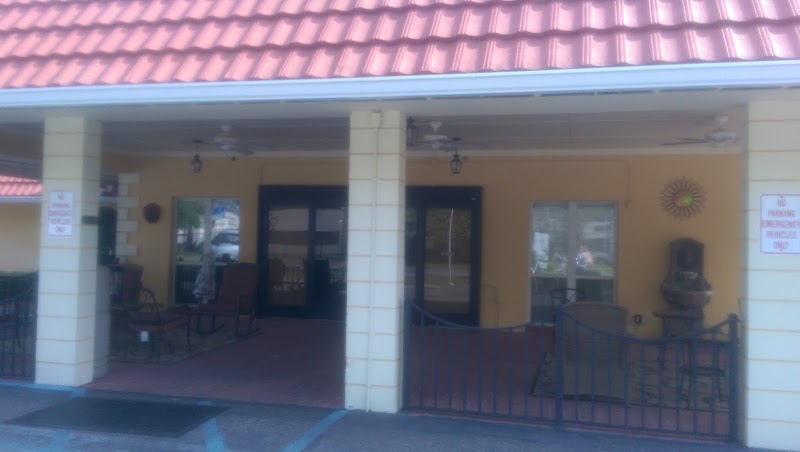
EMERALD COAST CENTER is owned by a for-profit company. For-profit facilities operate as businesses with obligations to shareholders or private owners. The facility is operated by HEARTHSTONE SENIOR COMMUNITIES, a chain that manages multiple nursing homes. With 120 certified beds and approximately 105 residents (about 88% occupancy), it is a mid-sized facility located in FORT WALTON BEACH, Florida.

How Does Emerald Coast Center Compare to Other Florida Nursing Homes?

Compared to the 100 nursing homes in Florida, EMERALD COAST CENTER's overall rating (4 stars) is above the state average of 3.2, staff turnover (51%) is near the state average of 46%, and health inspection rating (4 stars) is above the national benchmark.

What Should Families Ask When Visiting Emerald Coast Center?

Based on this facility's data, families visiting should ask: "Can I visit during a mealtime to observe dining assistance and food quality?" "How do you handle medical emergencies, and what is your hospital transfer rate?" "Can I speak with family members of current residents about their experience?"

Is Emerald Coast Center Safe?

Based on CMS inspection data, EMERALD COAST CENTER has a clean safety record: no substantiated abuse findings (meaning no confirmed cases of resident harm), no Immediate Jeopardy citations (the most serious violation level indicating risk of serious injury or death), and is not on the Special Focus Facility watch list (a federal program monitoring the lowest-performing 1% of nursing homes). The facility has a 4-star overall rating and ranks #1 of 100 nursing homes in Florida. While no facility is perfect, families should still ask about staff-to-resident ratios and recent inspection results during their visit.

Do Nurses at Emerald Coast Center Stick Around?

EMERALD COAST CENTER has a staff turnover rate of 51%, which is 5 percentage points above the Florida average of 46%. Moderate turnover is common in nursing homes, but families should still ask about staff tenure and how the facility maintains care continuity when employees leave.

Was Emerald Coast Center Ever Fined?

EMERALD COAST CENTER has been fined $17,114 across 2 penalty actions. This is below the Florida average of $33,250. While any fine indicates a compliance issue, fines under $50,000 are relatively common and typically reflect isolated problems that were subsequently corrected. Families should ask what specific issues led to these fines and confirm they've been resolved.

Is Emerald Coast Center on Any Federal Watch List?

EMERALD COAST CENTER is not on any federal watch list. The most significant is the Special Focus Facility (SFF) program, which identifies the bottom 1% of nursing homes nationally based on persistent, serious quality problems. Not being on this list means the facility has avoided the pattern of deficiencies that triggers enhanced federal oversight. This is a positive indicator, though families should still review the facility's inspection history directly.