TERRACE OF HIALEAH, THE
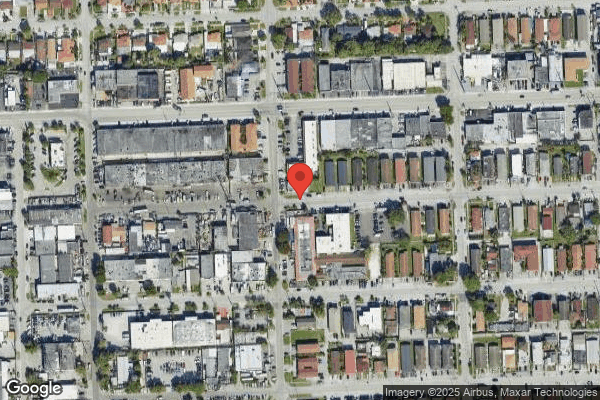
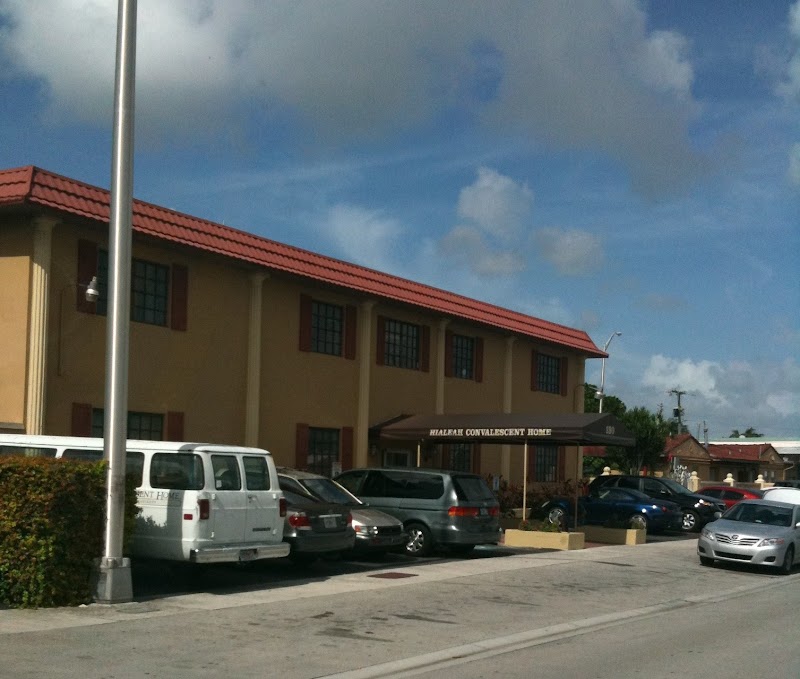
190 W 28TH STREET, HIALEAH, FL 33010 (305) 885-2437
For profit - Corporation 276 Beds ELEVATE CARE Data: November 2025
Trust Grade
60/100
#430 of 690 in FL
Last Inspection: June 2024

Within standard 12-15 month inspection cycle. Federal law requires annual inspections.

Overview

Terrace of Hialeah has a Trust Grade of C+, indicating it is slightly above average but still has room for improvement. It ranks #430 out of 690 nursing facilities in Florida, placing it in the bottom half, and #39 out of 54 in Miami-Dade County, meaning there are several better local options. The facility's situation is worsening, with issues increasing from 7 in 2023 to 9 in 2024. Staffing is a positive aspect here, receiving a 4 out of 5 stars, with a turnover rate of 31%, significantly lower than the state average. While there have been no fines reported, recent inspections revealed concerning incidents, such as improper sanitization of dishwashing equipment and unclean conditions in residents' rooms, highlighting areas that need immediate attention. Overall, while there are strengths in staffing and no fines, the facility needs to address its rising issues and cleanliness to ensure resident safety and well-being.

Trust Score
C+
60/100
In Florida
#430/690
Bottom 38%
Safety Record
Low Risk
No red flags
Inspections
Getting Worse
7 → 9 violations
Staff Stability
○ Average
31% turnover. Near Florida's 48% average. Typical for the industry.
Penalties
✓ Good
No fines on record. Clean compliance history, better than most Florida facilities.
Skilled Nurses
✓ Good
Each resident gets 73 minutes of Registered Nurse (RN) attention daily — more than 97% of Florida nursing homes. RNs are the most trained staff who catch health problems before they become serious.
Violations
⚠ Watch
22 deficiencies on record. Higher than average. Multiple issues found across inspections.
★★★☆☆
3.0
Overall Rating
★★★★☆
4.0
Staff Levels
★★★★☆
4.0
Care Quality
★★★☆☆
3.0
Inspection Score
Stable
2023: 7 issues
2024: 9 issues

The Good

  • 4-Star Staffing Rating · Above-average nurse staffing levels
  • 4-Star Quality Measures · Strong clinical quality outcomes
  • Full Sprinkler Coverage · Fire safety systems throughout facility
  • No fines on record
  • Staff turnover below average (31%)

    17 points below Florida average of 48%

Facility shows strength in staffing levels, quality measures, fire safety.

The Bad

3-Star Overall Rating

Near Florida average (3.2)

Meets federal standards, typical of most facilities

Staff Turnover: 31%

15pts below Florida avg (46%)

Typical for the industry

Chain: ELEVATE CARE

Part of a multi-facility chain

Ask about local staffing decisions and management

The Ugly 22 deficiencies on record

Jun 2024 9 deficiencies
CONCERN (D)

Potential for Harm - no one hurt, but risky conditions existed

Safe Environment (Tag F0584)

Could have caused harm · This affected 1 resident

**NOTE- TERMS IN BRACKETS HAVE BEEN EDITED TO PROTECT CONFIDENTIALITY** Based on observation, record review and interview, the facility failed to provide a clean and sanitary environment for residents...

Read full inspector narrative →
**NOTE- TERMS IN BRACKETS HAVE BEEN EDITED TO PROTECT CONFIDENTIALITY** Based on observation, record review and interview, the facility failed to provide a clean and sanitary environment for residents as evidenced by during several observations, garbage was observed on the floor in several residents' rooms, bed linen was observed on resident's bed with multiple holes, hole in wall in resident's room, and dirty walls in resident's room. There were 231 residents residing in the facility at the time of the survey. The findings Included: During observation on 06/23/24 at 06:18 AM rooms [ROOM NUMBERS] were observed with garbage on the floor. On 06/23/24 at 06:35 AM room [ROOM NUMBER] was observed with garbage on the floor, on 06/23/24 at 06:39 AM room [ROOM NUMBER] was observed with garbage/papers on floor, on 06/24/24 at 07:41 AM room [ROOM NUMBER] bed A was observed with several holes on the bed linen. On 6/24/24 at 11:00 AM room [ROOM NUMBER] was observed with a huge hole in the wall close to the electrical outlet and several brown colored stains on the wall (Photos available). Interview on 06/25/24 at 08:24 AM. The Director of Nursing (DON) and Corporate Nurse were shown the photos of environmental concerns, the DON stated the hole in the wall in room [ROOM NUMBER] was fixed yesterday and the wall cleaned, and they will be addressing the housekeeping issues observed with the housekeeping staff. Regarding the torn bed linen observed by the surveyor, they will do an audit, and any linen that is not up to facility standards will be discarded immediately and replaced. Interview on 06/25/24 at 10:58 AM. The Director of Maintenance stated: I have been working here for one month, I noticed the hole in the wall in room [ROOM NUMBER] a few days ago, to fix the whole we put compound in the wall, cut the whole out, let it dry, sand and painted the area. This was completed on 6/24/24. There is a maintenance book in each nursing station, where staff write down any maintenance issues to be addressed. Maintenance staff check all the books for maintenance issues daily in the morning, once the issue is fixed, I personally do an inspection of the area and then the staff that fixes the issue signs off on the issue as completed with the date, time and signature. Interview on 06/25/24 at 11:04 AM. The Director of Housekeeping stated: I have been working at this facility for 8 years. My housekeeping staff schedule is-day shift 6:30 AM to 2:53 PM, seven (7) housekeepers, 5-1:30PM, three (3) persons for garbage removal, 1-9:30PM, one (1) person for disinfection, spills, cleanup, and garbage removal. The morning housekeeping staff- in the mornings when they come in, they start cleaning the offices and common areas and then move on to the resident's, they try not to be in the residents' room too early in the morning cleaning. Review of the facility's policies and procedures titled Physical Environment revision date 1/04/24 states: Floors shall be maintained in a clean, safe, and sanitary manner. Procedures: 1. All floors shall be mopped/cleaned/vacuumed daily in accordance with our established procedures.
CONCERN (D)

Potential for Harm - no one hurt, but risky conditions existed

Deficiency F0604 (Tag F0604)

Could have caused harm · This affected 1 resident

**NOTE- TERMS IN BRACKETS HAVE BEEN EDITED TO PROTECT CONFIDENTIALITY** Based on observation, record review and interview, the facility failed to ensure one (Resident #435) out of 35 sampled residents...

Read full inspector narrative →
**NOTE- TERMS IN BRACKETS HAVE BEEN EDITED TO PROTECT CONFIDENTIALITY** Based on observation, record review and interview, the facility failed to ensure one (Resident #435) out of 35 sampled residents was free from the use of physical restraints. As evidenced by during an observation the resident's bed was positioned with the foot of the bed elevated and the head of the bed flat, the overbed table was positioned by the side of the bed in the middle, preventing the resident from getting out of the bed without assistance. There were 231 residents residing in the facility at the time of the survey. The findings included: During observation on 06/23/24 at 06:18 AM, Resident #435 was in bed asleep, the bed was in the lowest position, the foot of the bed was elevated, and the head of the bed flat, the overbed table was positioned by the side of the bed in the middle (photo available). Observation on 06/24/24 at 07:45 AM the resident was in bed asleep, the bed was in the lowest position, in flat position from head to toe and the overbed table at the side of bed. On 06/25/24 at 11:30 AM the resident was in bed asleep, the bed was flat and in the lowest position from head to toe with the overbed table at the side of bed, Review of the medical records for Resident #435 revealed the resident was admitted to the facility on [DATE]. Clinical diagnoses included but not limited to: Depression. Review of the Physician's Orders Sheet for June 2024 revealed Resident #435 had orders that included but not limited to: Turn and reposition every 2 hours as needed. Mirtazapine tablet 30 mg (milligrams) give 1 tablet by mouth at bedtime related to depression. Trazodone oral tablet 50 mg -give 1 tablet by mouth two times a day related to depression and Behavior Monitoring for use of Trazodone due to Depression. Record review of Resident #435 's admission Minimum Data Set (MDS) dated [DATE]; Section C for Cognitive Patterns documented Brief Interview for Mental Status (BIMS) score of 8 on a 0-15 scale, indicating the resident is moderately cognitively impaired. Section GG for Functional Status documented resident is dependent for care. Section E for Mood and behavior documented no behaviors exhibited. Section J for Health Conditions documented no falls since admission, no scheduled or as needed medication administered in the last 5 days and Section P for Alarms and restraints documented no physical restraints or alarms used. Record review of Resident #435 's Care Plans Reference Date 06/07/24 revealed the resident uses antidepressant medication related to depression. Interventions include- Administer antidepressant medications as ordered by physician. Educate the resident/family/caregivers about risks, benefits and the side effects and/or toxic symptoms of medications as indicated. Monitor/document/report as needed adverse reactions to antidepressant therapy; change in behavior/mood/cognition; hallucinations/delusions; social isolation, suicidal thoughts . During an interview on 06/25/24 at 08:09 AM, the Director of Nursing (DON) after seeing the photo of the resident's bed positioning stated: We will do a one-to-one teaching with the whole staff about restraints, educate all the staff about restraints, evaluate the residents for behaviors and investigate the resident's assigned staff on the day of the surveyor's observation to see the reason for the bed being positioned the way it was. Restraints is anything that does not allow the residents to independently move by themselves. On 06/26/24 at 12:59 PM an attempt using the number provided to conduct a telephone interview with the 11:00 PM to 7:00 AM Registered Nurse (Staff E), that was assigned to Resident #435 on 6/23/24 was unsuccessful. A message was left with the assistance of another surveyor on the team to translate from Spanish to English with the surveyor's name and phone number along with the survey information. On 06/26/24 at 01:22 PM. Certified Nursing Assistant (Staff D) from the 11:00 PM to 7:00 AM shift, assigned to Resident #435 on 6/23/24, attempted twice to contact Staff D via telephone with number provided by the facility with another surveyor on the team to help with translation from Spanish to English; a message was left with surveyor name and phone number and the survey information. Review of the facility policy and procedure titled Restraints revision date 10/06/24 states: The purpose is to ensure each resident is to attain and maintain his/her highest practicable wellbeing in an environment that prohibits the use of restraints for discipline or convenience and limits restraint use to circumstances in which the resident has medical symptoms that warrant the use of restraints. To ensure residents are provided a safe environment and the use of restraints is carefully monitored to protect resident rights, personal comfort and safety, assuring the least restrictive means are used.
CONCERN (D)

Potential for Harm - no one hurt, but risky conditions existed

Deficiency F0645 (Tag F0645)

Could have caused harm · This affected 1 resident

**NOTE- TERMS IN BRACKETS HAVE BEEN EDITED TO PROTECT CONFIDENTIALITY** Resident #112 Record review of Resident #112's Preadmission Screening and Resident Review (PASRR) dated 5/7/24 Section I: PASRR ...

Read full inspector narrative →
**NOTE- TERMS IN BRACKETS HAVE BEEN EDITED TO PROTECT CONFIDENTIALITY** Resident #112 Record review of Resident #112's Preadmission Screening and Resident Review (PASRR) dated 5/7/24 Section I: PASRR Screen Decision-Making: Depressive Disorder was checked, Section IV: PASRR Screen Completion: No diagnosis or suspicion of Serious Mental Illness or Intellectual Disability indicated. Level II PASRR evaluation not required, signed on 5/7/24 by social worker of nearby hospital. Record review of demographic sheet for Resident#112 revealed an admission date of 5/10/24 with diagnosis that included Anxiety Disorder and Depressive disorders. Record review of admission Minimum Data Set (MDS) dated [DATE] for Resident #112, Section A for Identification revealed Preadmission Screening and Resident Review (PASRR) was completed and the resident was not currently considered by the state level II PASRR process to have serious mental illness and/or intellectual disability or a related condition. Section I for Active diagnosis revealed a diagnosis of Depression. Section N revealed resident was taking an antidepressant and antipsychotics were received on a routine basis since admission, a gradual dose reduction (GDR) has been attempted, last attempt on 5/16/24, and the physician did not document GDR as clinically contraindicated. Section O for special treatments revealed no psychological therapy in last seven days. Record review of Care Plan date initiated on 5/10/24 and start date 5/16/24 revealed Resident #112 was at risk for adverse reactions related to the use psychotropic meds, on Anti-Depressant Medication, On Anti-Psychotic Medication. Interventions included monitoring behavior for effectiveness of medications and signs and symptoms of over-sedation and or changes in condition. Record review of physician orders revealed orders dated 5/16/24 for Amitriptyline HCl Tablet 100 mg give 1 tablet by mouth at bedtime for depression and 5/10/24 for psychiatry consult as needed, 6/4/24 to monitor for s/s of depression Resident is taking antidepressant medication, 6/17/24 for Ativan oral Tablet 0.5 MG (Lorazepam) *Controlled Drug* Give 0.5 mg by mouth every six hours as needed for anxiety disorder related to anxiety, 6/19/24 for Behavior monitoring for use of Ativan due to: Anxiety, evidenced by periods of calling out, and 6/24/24 for Clonazepam Oral Tablet 0.5 milligrams (MG) *Controlled Drug* Give 0.25 mg by mouth two times a day related to anxiety disorder. Record review of a Psychiatric Consult dated 5/16/24 revealed diagnosis of Depression and Anxiety. Record review of Preadmission Screening and Resident Review (PASRR) dated 5/30/24 revealed Section I: PASRR Screen Decision-Making: Anxiety and Depressive disorder checked, Schizoaffective disorder and Bipolar are not checked Section IV: PASRR Screen Completion: No diagnosis or suspicion of Serious Mental Illness or Intellectual Disability indicated. Level II PASRR evaluation not required, signed on 5/30/24 by DON. Resident #127 Record review of demographic sheet for Resident#127 revealed an admission date of 5/30/23 and readmission of 3/17/24 and diagnosis that included anxiety disorder and bipolar disorder. Record review of Discharge Return Anticipated Minimum Data Set (MDS) dated [DATE]-Discharge Return Anticipated, Section I for Active diagnosis revealed diagnosis of anxiety disorder and bipolar disorder. Section N for medications revealed Resident #127 was taking Antianxiety medication in the last 7 days and Section O for special treatment revealed no therapies coded. Record review of Care Plan date initiated 2/2/22 and start date 4/3/24 revealed Resident #127 was at risk for adverse reactions related to the use psychotropic meds on Anti-Anxiety Medication and on Anti-Psychotic medication with interventions that included monitor behavior for effectiveness of medications, monitor for signs and symptoms of over-sedation and or changes in condition. Record review of Psychiatric Note dated 5/23/24 revealed Resident #127 had diagnosis of Schizoaffective disorder, bipolar type and Anxiety. Record review of physician orders revealed orders dated 6/6/24 for Clonazepam Oral Tablet 1 mg *Controlled Drug* Give one by mouth two times a day related to anxiety disorder. On 06/25/24 at 11:50 AM the Social Services Director stated: I started working in this facility 4 weeks ago and I am going thru all the PASRRs to make sure they are correct. There are a lot of outdated PASRRs that I am correcting. I don't have a physical audit form regarding correcting the PASRRs. The nurses are to inform me during the morning meeting whenever a new qualifying diagnosis is obtained for the resident the I complete a PASRR for that resident on 5/23/24. Record review of Policies and Procedures for Preadmission Screening and Annual Resident Review (PASARR) Effective date 11/28/2012 last review 10/17/2023. Guidelines: It is the policy to screen all potential admissions on an individualized basis. As part of the preadmission process, the facility participates in the Preadmission Screening and Resident Review (PASRR) screening process (Level I) for all new and readmission per requirement to determine if the individual meets the criterion for mental disorder (SMI/SMD), intellectual disability (ID) or related condition. Based upon the Level I screen, the facility will not admit and individual with a mental disorder or intellectual disability until the Level II screening process has been completed and the recommendations allow for a nursing facility admission and the facility's ability to provide the specialized services determined in the Level II screen. If a provisional admission to the facility is approved via the Level II screen process, the facility will coordinate with the State PASRR representative related to the individual needs of the resident as indicated. Annually and with any significant change of status, the facility will complete the PASRR Level I screen for those individuals identified per the Level II screen requiring specialized services. The facility will report any changes as identified via the screen to the state mental health authority or state intellectual disability authority promptly. Objective PASRR Policy. The objective of the PASRR policy is to ensure that individuals with mental illness and intellectual disabilities receive the care and services that they need in the most appropriate setting. The PASRR will be evaluated annually and upon any significant change for those individuals identified. Procedure: 1-Admissions and Readmissions: a) The facility will participate in or complete the Level I screen for all potential admissions regardless of payer source to determine if the individual meets the criterion for mental disorder (SMI/SMD) intellectual disability (ID) or related condition. Resident #3 Observations on 06/23/24 at 06:25 AM, Resident #3 was in bed asleep. On 06/24/24 at 07:50 AM Resident #3 was in bed asleep. On 06/25/24 at 11:27 AM Resident #3 was in bed awake, no distress noted. Record Review of Resident #3's Level I PASRR (Preadmission Screening and Resident Review) documented Section I: PASRR Screen Decision Making: A: Mental Illness (MI) or suspected MI (check all that apply) - no diagnosis checked off. Findings based on documented history were-Section II Other indicators for PASRR screening Decision-Making: All checked-no. Does individual have validating documentation to support dementia or related Neurocognitive disorder - no. Section III Not a provisional admission. Section IV. No diagnosis or suspicion of Serious Mental Illness (SMI) or Intellectual Disability (ID) indicated. Level II PASRR evaluation not required. PASRR Level I completed by a Registered Nurse at the hospital on [DATE]. Record Review of Resident #3's most recent Psychological Consultation dated 3/8/24 documented: patient noted with advanced dementia, alert and oriented times one, depression, delusions, insomnia, responding to medications. Review of the medical records for Resident #3 revealed the resident was admitted to the facility on [DATE]. Clinical diagnoses included but were not limited to: 8/10/23-unspecified psychosis not due to a substance or known physiological condition. 8/10/23-depression. 8/10/23-dementia in other diseases classified elsewhere, unspecified severity, without behavioral disturbance, psychotic disturbance, mood disturbance, and anxiety Review of the Physician's Orders Sheet for June 2024 revealed, Resident #3 had orders that included but not limited to: Seroquel oral tablet 25 mg (Quetiapine Fumarate)-give 12.5 mg by mouth in the evening related to unspecified psychosis not due to a substance or known physiological condition. Trazodone tablet 50 mg-give 25 mg by mouth at bedtime related to depression, unspecified - administer at bedtime. Temazepam capsule 15 mg-give 1 capsule by mouth at bedtime related to insomnia. Record review of Resident # 3's Quarterly Minimum Data Set (MDS) dated [DATE] revealed: Section A 1500 resident is currently considered by the state level II PASRR process to have a SMI or ID or a related condition-Not available. Section C for Cognitive Patterns documented Brief interview for mental status score (BIMS), 3 on a 0-15 scale indicating the resident is cognitively impaired. Section I for Active diagnosis documented Psychotic disorder and Depression Disorder. Section N for Medications documented resident is taking antipsychotic, antidepressant, hypnotic, diuretic and antiplatelets medications. Section O for Special Treatments documented resident is on hospice care. Record review of Resident #3 's Care Plans Reference Date 05/14/24 revealed: resident is at risk for adverse reactions related to the use psychotropic meds On Anti-anxiety medication (DC), Antidepressant Medication, On Anti-Psychotic Medication, On Sedative-Hypnotic Medication. Interventions include-Will remain free of signs and symptoms of over sedation and side effects related to psychotropic medication. Involve the family and resident with the care planning process and psychotropic reduction program. Monitor behavior for effectiveness of medications. Monitor for signs and symptoms of over-sedation and/or changes in condition. Obtain laboratory tests and/or vital signs as ordered. Based on observation, interview and record review facility failed to ensure the Preadmission Screening and Resident Review (PASRR) Level I PASRR was not completed for four (Resident # 60, Resident # 3, Resident #112 and Resident #127) out of four residents investigated. This deficiency had the potential to affect 231 residents residing in the facility at the time of the survey. The findings included: Resident # 60 During multiple observations starting on 06/23/24 to 06/26/24, Resident # 60 was in the room in bed and no distress noted. The resident never responded to questions asked. Record review of the clinical records for Resident # 60 revealed the resident was admitted to the facility on [DATE] and readmitted on [DATE]. Clinical diagnoses included, but not limited to, Other Secondary Parkinsonism; Anxiety Disorder, Unspecified; Unspecified Psychosis; Adult Failure to Thrive. Record review of the admission Minimum Data Set (MDS) Section A Identification dated 05/12/24 revealed the section 1500 Is the resident currently considered by the state level II PASRR process to have serious mental illness and/or intellectual disability or a related condition? NO. Record review of PASRR Level I dated 05/12/24 revealed no identification of serious mental diagnosis illness under 1A. Section 1B was not checked for Serious Mental Illness (SMI). Section 2,3 (A/B) and 4 (A/B) were checked No. Section II Part A & B were checked No. Section IV, V and VI were not completed. Record review of admission MDS Section C Cognitive Patterns dated 05/12/24 revealed the resident Brief Intervention for Mental Status (BIMS) summary score was 03 out of 15. Review of admission MDS Section I Active Diagnosis the resident's diagnosis were Anxiety and Psychotic Disorder. Review of Annual MDS section N Medications revealed the resident was receiving antipsychotic and antianxiety medication. Review of Psychiatrist Consultation dated 06/24/24. Psychosocial history: Dementia, resident had a lifelong of mental illness characterized as delusion, depression, anxiety mood change. Diagnosis: Bipolar Disorder, Anxiety, Psychosis. continue with the same medications. Interview with Staff F Registered Nurse (RN) on 06/26/24 at 11:43 AM. He revealed Resident # 60 gets agitated if not medicated early so he prioritized her medication due to anxiety and agitations. The resident gets agitated and does not cooperate with the nursing staffing and after medication she gets better. Interview with Social Services Director on 06/26/24 10:47 AM. revealed she has been working in the facility for one month. The protocol for Level I PASRR was as follows: Level I PASRR from the hospital goes to Admissions Department to accept or not to accept the resident. For Resident # 60 the Level I PASRR was not completed, and she did not realize that the form was incomplete.
CONCERN (D)

Potential for Harm - no one hurt, but risky conditions existed

Accident Prevention (Tag F0689)

Could have caused harm · This affected 1 resident

**NOTE- TERMS IN BRACKETS HAVE BEEN EDITED TO PROTECT CONFIDENTIALITY** Based on observations, interviews and record review facility failed to provide a safe environment for one resident (Resident #18...

Read full inspector narrative →
**NOTE- TERMS IN BRACKETS HAVE BEEN EDITED TO PROTECT CONFIDENTIALITY** Based on observations, interviews and record review facility failed to provide a safe environment for one resident (Resident #188) out of ten residents sampled as evidenced by a bundle of shaving razors observed in the drawer next to the resident's bed. There were 231 residents residing in the facility at the time of survey. The findings included: On 06/23/24 at 11:27 AM Resident#188 was observed laying in bed with eyes closed, a bundle of shaving razors was observed in the drawer next to bed. (photo evidence) On 06/23/24 at 11:27 AM Staff G, Registered Nurse (RN) was notified by surveyor and entered room with surveyor. Staff G, RN retrieved the bundle of razors and stated; these razors should not be in here for safety reasons because [Resident #188] can reach into drawer. I think a staff member left the razors in drawer. Record review of demographic sheet for Resident #188 revealed an admission date of 3/27/23 with diagnosis that included Alzheimer's disease with late onset. Record review of Annual Minimum Data Set (MDS) dated [DATE], Section C for cognitive patterns revealed a Brief Interview for Mental Status (BIMS) score of 3 out of a scale of 0-15 indicated severe cognitive impairment. Section E for behavior revealed no Potential Indicators of Psychosis. Section GG for functional status revealed R#188 was dependent for Activities of Daily Living (ADL). Record review of Care Plan date initiated 3/27/23 and start date 3/31/24 revealed Resident #188 was at risk for falls related to unawareness of safety needs with interventions that included: maintain an environment free of clutter. On 06/23/24 at 1:28 PM Staff L, Certified Nursing (CNA) (translated by the DON) stated: I have been employed for seven years in this facility; when I start my shift, I check all the residents, tell them what I am going to do and I check all their personal belongings to make sure there are no objects that can be used to harm themselves or others like knife or forks. Razors cannot be kept in resident's rooms, once used the razors need to be placed in the sharps container. On 06/26/24 at 10:03 AM, the DON stated: Residents are not allowed to keep razors in their rooms. staff check residents' drawers every day to ensure that there are no objects that harm anyone. Record review of policy for Hazardous Areas, Devices, and Equipment. Revised July 2017. Policy Statement: All hazardous areas, devices, and equipment in the facility will be identified and addressed appropriately to ensure resident safety and mitigate accident hazards to the extent possible. Policy Interpretation and Implementation: 1. As part of the facility's overall safety and accident prevention program, hazardous areas and objects in the resident environment will be identified and addressed by the Safety Committee. Identification of Hazards: 1. A hazard is defined as anything in the environment that has the potential to cause injury or illness. Examples of environmental hazards include, but are no limited to : c. Sharp objects that are accessible to vulnerable residents.
CONCERN (D)

Potential for Harm - no one hurt, but risky conditions existed

Respiratory Care (Tag F0695)

Could have caused harm · This affected 1 resident

**NOTE- TERMS IN BRACKETS HAVE BEEN EDITED TO PROTECT CONFIDENTIALITY** Based on observations, record review and interviews, the facility failed to ensure oxygen therapy was being received as prescrib...

Read full inspector narrative →
**NOTE- TERMS IN BRACKETS HAVE BEEN EDITED TO PROTECT CONFIDENTIALITY** Based on observations, record review and interviews, the facility failed to ensure oxygen therapy was being received as prescribed for one Resident (#123) out of 35 sampled residents. As evidenced by, during several observations of Resident #123 the Continuous Positive Airway Pressure (CPAP) machine was positioned on Resident #123's forehead. The findings included: During several observations on 06/23/24 starting at 06:31 AM, 07:15 AM and 08:03 AM Resident #123 was observed with the CPAP machine located on her forehead. The CPAP machine was turned on and running. 06/24/24 at 07:53 AM Resident #123 was in bed asleep, oxygen (02) was running via nasal cannula (NC) at two (2) liters per minute (LPM), the call light was on the bed. On 06/25/24 at 11:29 AM resident was in bed awake, 02 running at 2 LPM via NC, no distress noted. On 06/23/24 at 08:06 AM Registered Nurse (Staff C) assigned to the resident stated that the resident takes off her CPAP machine herself, but it is time for it to be removed for breakfast, the nurse preceded to check the resident's orders and then removed the CPAP machine. The surveyor asked Staff C how often she checks on the resident to see if the machine is on correctly and did she check the resident's oxygen (02) saturation level knowing that the resident takes the machine off sometimes. Staff C stated, I checked her at the beginning of my shift, and I replaced the machine on the resident, she must have taken it off again, I work here part time and I usually work in different areas every day. Review of the resident's 02 saturation levels on 6/23/24 and 6/24/24 documented an average oxygen saturation level of 96% on 2 LPM oxygen via nasal cannula. Review of the medical records for Resident # 123 revealed the resident was admitted to the facility on [DATE]. Clinical diagnoses included but not limited to: Acute on chronic combined systolic (congestive) and diastolic (congestive) heart failure. Chronic obstructive pulmonary disease with (acute) exacerbation. Acute respiratory failure with Hypercapnia and Acute respiratory failure with hypoxia. Review of the Physician's Orders Sheet for June 2024 revealed Resident #123 had orders that included but not limited to: CPAP machine at bedtime with continuous oxygen at 2 liters per minute when use. every 12 hours related to obstructive sleep apnea. Continuous oxygen at 2 liters per minute continuously two times a day related to chronic obstructive pulmonary disease, unspecified. Record review of Resident # 123's Quarterly Minimum Data Set (MDS) dated [DATE] revealed: Section C for Cognitive Patterns documented Brief Interview for Mental Status Score (BIMS) 3 on a 0-15 scale, indicating resident is cognitively impaired. Section GG for Functional Status documented resident is dependent for care. Section J for health conditions documented no shortness of breath. Section O for Special Procedures and Treatments documented the resident is receiving oxygen therapy and Non-invasive Mechanical Ventilator. Record review of Resident # 123's Care Plans Reference Date 05/12/24 revealed: The resident has a potential for alteration in respiratory functioning related to chronic Obstructive Pulmonary Disease (COPD), Obstructive Sleep Apnea, continuous oxygen (02). Interventions include- Administer oxygen as ordered, monitor oxygen saturation as ordered and as needed. Assess respiratory status, observe for shortness of breath, monitor lung sounds. Call physician for any changes in condition and as needed. change oxygen mask, tubing and humidifier as ordered, CPAP machine as ordered, provide treatments as ordered. Remind resident to deep breath and cough.; and wear ear protector for nasal cannula. On 06/25/24 at 08:05 AM, the Director of Nursing (DON), and Corporate Nurse Consultant were shown the photo of the CPAP machine positioned on the resident's forehead. Review of the facility's policy and procedure titled Oxygen Concentrator revision date 05/04/23 states: The purpose of this policy is to establish responsibilities for the care and use of oxygen concentrators. Policy Explanation and Compliance Guidelines: 2. Oxygen is administered under orders of the attending physician, except in case of an emergency.
CONCERN (D)

Potential for Harm - no one hurt, but risky conditions existed

Pharmacy Services (Tag F0755)

Could have caused harm · This affected 1 resident

**NOTE- TERMS IN BRACKETS HAVE BEEN EDITED TO PROTECT CONFIDENTIALITY** On 06/24/24 at 3:45 PM a controlled medication count was completed with Staff J, Registered Nurse (RN) in Nursing Unit Center Co...

Read full inspector narrative →
**NOTE- TERMS IN BRACKETS HAVE BEEN EDITED TO PROTECT CONFIDENTIALITY** On 06/24/24 at 3:45 PM a controlled medication count was completed with Staff J, Registered Nurse (RN) in Nursing Unit Center Court on medication cart one, the Narcotic Drug Count Record sign in /out sheet for Unit C. Court Cart one Month/Year June 2024 no signature for 7:00 AM to 3:00 PM off going staff. (see photo evidence). Further review revealed the Medication Monitoring/ Control Record for Resident #145 Clonazepam 0.5 mg one tablet by mouth twice daily noted the last signature was Staff J, Registered Nurse (RN) on 6/23/24 at 4:18 PM, noted number of medications remained as 55. However, on the Bingo card for Resident #145 the Clonazepam 0.5 mg one tablet by mouth twice daily contained 54 tablets and the Medication Administration Record for 6/24/24 for Resident #145 revealed Clonazepam 0.5 mg was given at 9:01 AM by Staff G, RN. (see photo evidence). Further review revealed the Medication Monitoring/ Control Record for Resident #73's Tramadol 50 mg (Ultram) take 1 tablet (50 mg) by mouth twice daily for nonacute pain was last signed by Staff J, RN on 6/23/24 at 4:30 PM, bingo card contains 21 tablets, and the Medication Administration Record for June 2024 for Resident #73 Tramadol 50 mg was given at 8:32 AM by Staff G, RN. (see photo evidence). On 06/24/24 at 3:59 PM Staff J, RN stated: when I start my shift, I reconcile the controlled medications by counting with the previous nurse, then we both sign the sign in sheet to indicate the count is correct. Today I counted with the previous nurse, but that nurse did not sign out the medications he administered. Once I dispense any controlled medication pill into the medication cup I sign after resident takes it. On 06/26/24 at 10:03 AM, the DON stated, nurses should sign out the controlled medication at the time they remove the pill from the bingo card and when leaving the shift, they must count with off going and oncoming nurse to verify the correct count. On 06/26/24 at 12:49 PM Staff G, RN stated he counts controlled medications with the off going nurse and on coming nurse; and I sign in or out on the sign in to verify that we count is correct. I missed these two medications due to the paper being stuck together. I always sign once I administer any controlled medication. This was a mistake. Record review of the facility's Policy: Narcotic/ Controlled Substances- Counting. Effective Date: 11/28/12. Review/Revisions: 11/26/17, 12-/20/21, 11/6/21, 10/30/23. Purpose: 1. To count controlled substances with a partner and to verify the accuracy of the log sheets. General Guidelines: 1. Always participate in the counting of the controlled substances at the beginning and end of your shift. Never say, go ahead without me and I'll sign later. Never leave it to someone else's discretion when you are the one on duty. If you do not observe the medications that you sign as being present, you may be implicated if the medications are later missing. general Procedure for Counting Controlled Substances: 1. Follow your facilities specific guidelines and use their specific log sheet. Based on observation, interview and record review the facility failed to ensure pharmaceutical procedures were followed during medication administration observation for two residents (Resident # 12 and Resident #201) out of six (6) residents sampled) as evidenced by the omission of two (2) medications for residents during medication administration observations with Registered Nurses. In addition, the facility failed to ensure the narcotic count was correct for two residents (Resident #145 and Resident #73). There were 231 residents residing at the facility at the time of the survey. The findings included: During medication administration observation on 6/23/24 at 8:21 AM with Registered Nurse (Staff A), the prescribed medication-Simethicone 125 milligram (mg) 1 capsule daily was not available on the medication cart in the capsule form as prescribed to be given to Resident #12. Staff A called central supply in the facility and the staff in central supply reported the medication was not available in capsule form, only tablets. Simethicone 125 milligram (mg) 1 capsule daily was not given during the medication administration observation with the surveyor. Review of medical records for Resident #12 revealed the resident was admitted to the facility on [DATE]. Clinical diagnoses included but not limited to: Encounter for surgical aftercare following surgery on the digestive system. Record Review of the Physician's Orders Sheet for June revealed Resident #12 had orders that included but not limited to: Simethicone Oral Capsule 125 mg (Simethicone)-Give 1 capsule by mouth every 6 hours related to encounter for surgical aftercare following surgery on the digestive system. Record review of Resident # 12's Annual Minimum Data Set (MDS) dated [DATE] revealed: Section C for Cognitive Patterns documented a Brief Interview for Mental Status (BIMS) score of 9 on a 0-15 scale, indicating the resident is moderately impaired cognitively During an interview Registered Nurse, Staff A, stated: I called central supply and they do not have the medication available in capsule form, I will call the resident's doctor (MD) for new orders and notify the surveyor on what the new orders will be. During medication administration observation on 6/23/24 at 9:00 AM with Registered Nurse (Staff B), the prescribed medication- Amlodipine Besylate oral tablet 10 mg- Give 10 mg orally one time a day was not given to Resident #201 during the medication administration observation. Before entering Resident #201's room to administer the medications, the surveyor asked Staff B how many pills he had in the medication cup, Staff B-stated he had five (5) medications in the medication cup, Staff B entered the resident's room, gave the medications to the resident, exited the room, and documented all the resident's medications as given in the electronic medication administration record (EMAR). The surveyor asked Staff B to check/count how many medications the resident was supposed to receive, Staff B, checked the resident's prescribed ordered medications and realized that he had not given the Amlodipine 10 mg as prescribed to Resident #201, Staff B asked the surveyor if he could give the resident the missing medication, the surveyor referred Staff B to the facility policy, Staff B stated that he is allowed to give the missing medication to the resident and proceeded to give the medication-(Amlodipine 10 mg) to, Resident #201. Review of medical records for Resident #201 revealed the resident was admitted to the facility on [DATE]. Clinical diagnoses included but not limited to: Hypertensive heart disease with heart failure Review of the Physician's Orders Sheet for June revealed Resident #201 had orders that included but not limited to: Amlodipine Besylate oral tablet give 10 mg orally one time a day related to hypertensive heart disease with heart failure hold if systolic blood pressure is less than 110 mm hg (millimetre of mercury) or diastolic blood pressure less than 60 mm hg or pulse less than 60 beats per minute. Review of Resident # 201's Significant Change Minimum Data Set (MDS) dated [DATE] revealed: Section C for Cognitive Patterns documented Brief Interview for Mental Status (BIMS) score 13 on a 0-15 scale, indicating resident is cognitively intact. On 6/23/24 at 9:20 AM Registered Nurse, Staff B stated he is still allowed to give the resident the medication even though it was missed on the initial medication pass. On 06/25/24 at 08:20 AM, the Director of Nursing (DON) stated: I am aware of the issues identified during medication administration observation, we have already started education with the nurses, the residents' orders were reviewed, and the necessary changes were made. Review of the facility policy and procedures titled Medication Administration revision date 2/20/24 states: Medications are administered by license nurses, or other staff who are legally authorized to do so in the state, as ordered by the physician, and in accordance with professional standards of practice, in a manner to prevent contamination or infection.
CONCERN (D)

Potential for Harm - no one hurt, but risky conditions existed

Unnecessary Medications (Tag F0759)

Could have caused harm · This affected 1 resident

**NOTE- TERMS IN BRACKETS HAVE BEEN EDITED TO PROTECT CONFIDENTIALITY** Based on observation, interview and record review the facility failed to ensure the medication error rate was not five (5) perce...

Read full inspector narrative →
**NOTE- TERMS IN BRACKETS HAVE BEEN EDITED TO PROTECT CONFIDENTIALITY** Based on observation, interview and record review the facility failed to ensure the medication error rate was not five (5) percent or greater. As evidenced by the omission of two (2) medications for residents during medication administration observations with Registered Nurses. There were 231 residents residing at the facility at the time of the survey. The findings included. During medication administration observation on 6/23/24 at 8:21 AM with Registered Nurse (Staff A), the prescribed medication-Simethicone 125 milligram (mg) 1 capsule daily was not available on the medication cart in the capsule form as prescribed to be given to Resident #12. Staff A called central supply in the facility and the staff in central supply reported the medication was not available in capsule form, only tablets. Simethicone 125 milligram (mg) 1 capsule daily was not given during the medication administration observation. Registered Nurse, Staff A, stated the resident's doctor (MD) will be called for new orders and notify the surveyor on what the new orders will be. Review of medical records for Resident #12 revealed the resident was admitted to the facility on [DATE]. Clinical diagnoses included but not limited to: Encounter for surgical aftercare following surgery on the digestive system. Record Review of the Physician's Orders Sheet for June revealed Resident #12 had orders that included but not limited to: Simethicone Oral Capsule 125 mg (Simethicone)-Give 1 capsule by mouth every 6 hours related to encounter for surgical aftercare following surgery on the digestive system. Record review of Resident # 12's Annual Minimum Data Set (MDS) dated [DATE] revealed: Section C for Cognitive Patterns documented a Brief Interview for Mental Status (BIMS) score of 9 on a 0-15 scale, indicating the resident is moderately impaired cognitively During medication administration observation on 6/23/24 at 9:00 AM with Registered Nurse (Staff B), the prescribed medication- Amlodipine Besylate oral tablet 10 mg- Give 10 mg orally one time a day was not given to Resident #201 during the medication administration observation. Before entering Resident #201's room to administer the medications, the surveyor asked Staff B how many pills he had in the medication cup, Staff B-stated he had five (5) medications in the medication cup, Staff B entered the resident's room, gave the medications to the resident, exited the room, and documented all the resident's medications as given in the electronic medication administration record (EMAR). The surveyor asked Staff B to check/count how many medications the resident was supposed to receive, Staff B, checked the resident's prescribed ordered medications and realized that he had not given the Amlodipine 10 mg as prescribed to Resident #201, Staff B asked the surveyor if he could give the resident the missing medication, the surveyor referred Staff B to the facility policy, Staff B stated that he is allowed to give the missing medication to the resident and proceeded to give the medication-(Amlodipine 10 mg) to, Resident #201. Review of medical records for Resident #201 revealed the resident was admitted to the facility on [DATE]. Clinical diagnoses included but not limited to: Hypertensive heart disease with heart failure Review of the Physician's Orders Sheet for June revealed Resident #201 had orders that included but not limited to: Amlodipine Besylate oral tablet give 10 mg orally one time a day related to hypertensive heart disease with heart failure hold if systolic blood pressure is less than 110 mm hg (millimeter of mercury) or diastolic blood pressure less than 60 mm hg or pulse less than 60 beats per minute. Review of Resident # 201's Significant Change Minimum Data Set (MDS) dated [DATE] revealed: Section C for Cognitive Patterns documented Brief Interview for Mental Status (BIMS) score 13 on a 0-15 scale, indicating resident is cognitively intact. On 6/23/24 at 9:20 AM Registered Nurse, Staff B stated he is still allowed to give the resident the medication even though it was missed on the initial medication pass. On 06/25/24 at 08:20 AM, the Director of Nursing (DON) stated: I am aware of the issues identified during medication administration observation, we have already started education with the nurses, the residents' orders were reviewed, and the necessary changes were made. Review of the facility policy and procedures titled Medication Administration revision date 2/20/24 states: Medications are administered by license nurses, or other staff who are legally authorized to do so in the state, as ordered by the physician, and in accordance with professional standards of practice, in a manner to prevent contamination or infection.
CONCERN (D)

Potential for Harm - no one hurt, but risky conditions existed

Deficiency F0761 (Tag F0761)

Could have caused harm · This affected 1 resident

Based on observations, interviews and record review facility failed to properly store medications for two residents (Resident #73, Resident #24) out of ten residents sampled as evidenced by observatio...

Read full inspector narrative →
Based on observations, interviews and record review facility failed to properly store medications for two residents (Resident #73, Resident #24) out of ten residents sampled as evidenced by observations of a bottle of vitamins on the side table next to Resident#73 and a nasal spray and rubbing alcohol on Resident #24's side table. There were 231 residents residing in the facility at the time of survey. The findings included: On 06/23/24 at 11:21 AM Resident #73 was observed in bed awake and alert. A bottle labeled {supplement} was observed on the resident's side table next to the bed. (photo evidence) On 06/23/24 at 11:22 AM Staff G, Registered Nurse (RN) was notified by surveyor and entered the room with the surveyor. Staff G, RN removed the bottle labeled [supplement] and explained to the resident that she is not allowed to keep any medications at bedside without first notifying the nurse. Resident #73 replied ok. On 06/23/24 at 11:22 AM Staff G, RN stated: I do rounds when I start my shift and check each resident. I did not observe this medication at the resident's bedside. I will notify the physician. On 06/23/24 at 11:17 AM Resident #24 was observed walking into room. A bottle labeled [ Brand} Nasal Decongestant was observed on overbed table and a bottle labeled [Brand} rubbing alcohol on the side table next to the bed (photo evidence). On 06/23/24 at 11:18 AM Staff H, RN was notified by surveyor and entered the room with the surveyor. Staff H, RN removed the bottle and explained to Resident #24 that medications are not allowed to be kept at bedside without first notifying the nurse. Resident #24 responded ok. On 06/23/24 at 11:20 AM Staff H, RN stated: I did not see this medication upon initial rounds, and I will notify the physician. On 06/26/24 at 10:03 AM The director of Nursing (DON) stated: Residents are not allowed to keep medications in rooms without an order from the doctor and assessed by the nursing. Record review of Policy: Medication Storage effective date: 10/1/15 Revisions: 2/5/18, 7/2/19, 5/5/22, 10-11-23. Purpose: To ensure proper storage, labeling and expiration dates of medications, biologicals, syringes and needles. Guidelines: 2. Facility should ensure that medications and biologicals are stored in an orderly manner in cabinets, drawers, carts, refrigerators/freezers of sufficient size to prevent crowding.
CONCERN (D)

Potential for Harm - no one hurt, but risky conditions existed

QAPI Program (Tag F0867)

Could have caused harm · This affected 1 resident

Based on observations, interview and record review, the facility's quality assurance and assessment committee failed to demonstrate effective plan of actions were implemented to correct identified qua...

Read full inspector narrative →
Based on observations, interview and record review, the facility's quality assurance and assessment committee failed to demonstrate effective plan of actions were implemented to correct identified quality deficiencies in problem areas related to repeated deficient practices for F645 PASRR Screening for Mental Diagnosis (MD) and Intellectual Disability (ID), F755 Pharmacy Services and Procedures and F689 Free of Accidents and Hazards. The facility was cited for F645, F689 and F755 in 2023. These repeated deficient practices have the potential to affect any of the 231 residents residing in the facility at the time of the survey. The findings included: Record review of the facility policy and procedure title Quality Assurance Performance Improvement (QAPI) Program, implemented November 2012, revised November 2023 indicate: The purpose of the QAPI program is to ensure the organization has an organized quality assessment and improvement process program that includes performance measurement, performance assessment and performance improvement and addresses the care and unique services provided by the facility. Guidelines and Standards In accordance with the direction of the board of directors, the Quality assurance Committee will establish a planned, systemic organization wide approach to design processes, measurements, assessments, and improve, organization performance and assure that: Activities are collaborative and the interdisciplinary team, including input from direct care staff, other staff, residents and residents' representatives. Data is systematically collected. Appropriate statistical technique is maintained. Data about its processes or outcomes is maintained. Staff are provided with education concerning the approaches and methods of quality improvement, and are trained in reporting, assessing and improving processes that contribute to improving resident outcomes. Expectations for the committee I terms of functions, reporting methods and appropriateness of systems used to facilitate the collection, management, and analysis of date needed for quality improvement are established. Specific quality assurance measures will be identified to be measured on a continuing basis Committee procedures include analyzing and evaluating the effectiveness of the committee's contribution to improving quality Committee ensures collected of data on important process or outcomes related to resident care and organization functions. Adequate resources for assessing and improving the organization's governance, managerial, clinical and support processes are allocated. This includes assignment of personnel and adequate time to participate. In addition, information system and data management processes are provided to support ongoing performance improvement activities. Review of the Quality Assurance and Performance Improvement (QAPI) Committee Meeting Sign-in Sheets dated 03/29/24, 04/29/24, and 05/29/24 documented the facility had a QAA Committee meeting monthly. Attendees included: Administrator, Medical Director, Director of Nursing (DON), Assistant Director of Nursing (ADON), Infection Control Preventionist/Risk Manager, Dietary Manager, Clinical Dietician, Director of Housekeeping, Director of Maintenance, Director of therapy, Director of Human resources, Director of admissions, director of Business office, Director of Social Services, Director of Activities, MDS (Minimum Data Set) Coordinator, and Consultant Pharmacist. During an interview with the Director of Nursing/Quality Assurance (QA), Administrator/QA on 06/27/2024 at 3:24 PM. The [NAME] revealed: The QAA Committee meets every month on the last Friday of the month. The committee consists of the Medical Director, Administrator, DON, Assistant Director of Nursing (ADON) and all interdisciplinary team members. The focus of QA committee is to identify problem issues in the facility, track and trend and identify any opportunities for correction in the systems, implement interventions to correct the issue and monitor the effectiveness of the interventions though audits, staff feedback, town hall meetings with staff, education and training and observations on return demonstrations of trainings.
Feb 2023 7 deficiencies
CONCERN (D) 📢 Someone Reported This

A family member, employee, or ombudsman was alarmed enough to file a formal complaint

Potential for Harm - no one hurt, but risky conditions existed

Deficiency F0583 (Tag F0583)

Could have caused harm · This affected 1 resident

Based on observations and interviews, the facility failed to ensure privacy of confidential information by leaving unlocked computer screen with resident's information visible. Observation on 02/05/2...

Read full inspector narrative →
Based on observations and interviews, the facility failed to ensure privacy of confidential information by leaving unlocked computer screen with resident's information visible. Observation on 02/05/2023 at 12: 57 PM, the computer for Center Court unit middle cart electronic medical records screen was left open with visible residents' information exposed. On 02/05/2023 at 12: 57 PM, during an interview Registered Nurse (Staff B) was asked about the computer screen that was left unlocked with residents' information exposed. Staff B acknowledged the concern and stated a resident called her and she went to see what the resident needed.
CONCERN (D)

Potential for Harm - no one hurt, but risky conditions existed

Assessment Accuracy (Tag F0641)

Could have caused harm · This affected 1 resident

**NOTE- TERMS IN BRACKETS HAVE BEEN EDITED TO PROTECT CONFIDENTIALITY** Based on record review and interview, the facility failed to accurately code the Minimum Data Set (MDS) assessment for two (Resi...

Read full inspector narrative →
**NOTE- TERMS IN BRACKETS HAVE BEEN EDITED TO PROTECT CONFIDENTIALITY** Based on record review and interview, the facility failed to accurately code the Minimum Data Set (MDS) assessment for two (Resident #237, and Resident #123) out of 38 residents reviewed for resident assessments. As evidenced by inaccurate coding of MDS section for Discharge Status for Resident #237 and inaccurate coding of the MDS sections for Active Diagnosis and Medications for Resident #123. The facility census was 237 residents at the time of the survey. The findings included: Record review of Resident #237's Discharge Return Not Anticipated Minimum Data Set (MDS) dated [DATE] Section for Identification Information in subsection A 2100 for Discharge Status documented that the resident was discharged to an Acute Hospital. Review of the Physician's Orders Sheet for November 2022 revealed Resident #237 had orders that included but not limited to: Discharge to home with her family, one time only until 11/14/2022. Review of the nurses' progress notes for Resident #237 documented on 11/14/2022 timestamped 12:28: Resident left the facility at this time. Discharge to home with her family. Resident in stable condition, no pain reported. No skin lesions. Her belongings and medicines were handed over to the family. Further review of the medical records for Resident #237 revealed resident was admitted to the facility on [DATE]. Clinical diagnoses included but not limited to: Gout, unspecified. Resident #237 was discharged on 11/14/2022. Record review of Resident #237 's Care Plans dated 8/3/2022 revealed: Resident's Short-term Discharge Plan: The plan for resident is to be discharge back to the community with family support. Interventions Included: The goal for the resident is to have all needs met related to discharge planning and staff to assist and coordinate with the resident as needed for a safe discharge. On 02/08/2023 at 08:21 AM, during an interview with Registered Nurse, Minimum Data Set Coordinator, (Staff C) the surveyor had Staff C check the nurses progress notes documented on 11/14/2022 that noted the resident was discharged to home with family and check the Discharge Minimum Date Set with reference dated 11/14/2022, Section A that documented that the resident was discharged to an acute hospital. Staff C acknowledged the discrepancy, Staff C stated, in this situation we would check the progress note, speak to the nurses, we would correct the discrepancy and create a modification request and submit the request to Center for Medicare and Medicaid Services (CMS). I will speak to the nurses to the floor to confirm the discharge status. Review of the facility's policy and procedures titled policy and Procedures: Residents Assessments dated 01/01/2022 states: Step 7-A Registered Nurse will sign and certify that the assessment is completed. Step 8-Each individual who completes a portion of the assessment must sign and certify the accuracy of that portion of the assessment. 2. On 02/08/2023 at 08:02 AM, Resident #123 was observed in the dining area seated in a reclining type chair being fed a pureed textured and honey consistency breakfast by a Certified Nursing Assistant (CNA). Review of Resident #123's clinical records revealed the resident was admitted on [DATE] and readmitted on [DATE]. Medical diagnoses included but were not limited to, Cerebral Atherosclerosis; Type 2 Diabetes Mellitus without complications; Hypertensive Heart Disease with Heart Failure. Review of Resident #123's active orders as of 02/08/2023 documented an order dated 08/24/2021 for Glimepiride tablets 2 milligrams orally two times a day related to Type 2 Diabetes Mellitus without complications. Orders for Metformin tablet 500 milligrams orally two times a day related to Type 2 Diabetes Mellitus without complications, dated 08/24/2021. Record review of Quarterly Minimum Data Set (MDS) Section I for Active Diagnosis dated 11/20/2022 revealed the resident's diagnosis of Type 2 Diabetes Mellitus (DM). Record review of Quarterly Minimum Data Set (MDS) Section N for medications dated 11/20/2022 revealed the resident were receiving insulin injections seven (7) days a week. Review Resident #123's Medication Administration Records and order sheets for January 2023 revealed the resident was not receiving insulin injections. Review of Medication Administration Records for February 2023 revealed the resident was not receiving insulin injections. Review of Care Plan initiated on 03/03/2022 and revised on 03/03/2022 documented the resident has potential for fluctuating blood glucose levels related to Diabetes Goal: Will maintain blood glucose levels within the parameters set forth by physician. Interventions: Administer medications as ordered. Hemoglobin A1C [blood glucose level test] every 3 Months. Monitor for signs and symptoms of hypoglycemia - shaky, rapid heartbeat, sweating, dizzy, anxious, hungry, blurry vision, weakness or fatigue, headache, irritable. Monitor for signs of hyperglycemia- extreme thirst; frequent urination; dry skin; hunger, blurred vision, drowsiness, decreased healing, numbness of fingers, toes, mouth. Provide diet as ordered. During an interview on 02/08/2023 at 08:33, Registered Nurse, MDS Coordinator (Staff C) stated the resident's diagnosis was Type 2 diabetes Mellitus and he will check the physician orders to make sure the resident was not receiving insulin injections. On 02/08/2023 at 08:45 AM, Staff C reported that the resident's diagnosis was Type 2 Diabetes Mellitus but the resident received pills for the Diabetes, not insulin injections. Record review of Policy and Procedures for Residents assessment dated [DATE] revealed: Policy: It is the policy of the facility to adhere to the following procedures related to the proper documentation and utilization of a resident's Minimum Data Set (MDS) to ensure a comprehensive and accurate assessment of residents will be completed in the format and in accordance with time frames stipulated by the Department of Health and Human Services Center for Medicare and Medicaid Services (CMS). This assessment system will provide a comprehensive, accurate, standardized, reproducible assessment of each resident's functional capabilities and assist staff to identify health problem for care plan development. Procedure: 1-Resident Assessment Instrument. A facility will complete a comprehensive assessment of a resident's needs, functional and health status, strengths, goals, life history and preferences, using the resident assessment instrument (RAI) specified by CMS. The assessment must include at least the following: J-Disease diagnosis and health conditions. N-Medications.
CONCERN (D)

Potential for Harm - no one hurt, but risky conditions existed

Deficiency F0645 (Tag F0645)

Could have caused harm · This affected 1 resident

**NOTE- TERMS IN BRACKETS HAVE BEEN EDITED TO PROTECT CONFIDENTIALITY** Based on observations, interview, and record review the facility failed to ensure the Preadmission Screening and Resident Review...

Read full inspector narrative →
**NOTE- TERMS IN BRACKETS HAVE BEEN EDITED TO PROTECT CONFIDENTIALITY** Based on observations, interview, and record review the facility failed to ensure the Preadmission Screening and Resident Review (PASRR) Level I for individuals with a Serious Mental Illness (SMI) or Intellectual Disability (ID) or related conditions was completed at the time of admission for resident one (Resident # 54) out of one resident whose PASRR was reviewed. The findings included: On 02/07/2023 at 10:37 AM Resident # 54 was observed lying in bed, awake. No distress noted. Observation on 02/08/2023 at 11:25 AM. Resident #54 was observed lying in bed trying to take her gown off. The nurse was called to help the resident and a Certified Nursing Assistant came and assisted the resident to get dressed. Record review of admission Record revealed the resident was admitted to the facility on [DATE] and re-admitted on [DATE]. Medical Diagnoses included, but were not limited to, Chronic Obstructive Pulmonary Disease, Unspecified, Unspecified Dementia, Unspecified Severity, without Behavioral Disturbance, Psychotic Disturbance, Anxiety, Other Bipolar Disorder and Other Depressive Episodes. Record review of Resident # 54's PASRR Level dated 05/08/2017 revealed no identification of any serious mental diagnosis under section 1A PASRR Screen Decision-Making. Review of orders dated 11/21/2022 revealed the resident was receiving Mirtazapine tablet 30 milligrams. 1 tablet by mouth at bedtime related to Other Specified Depressive Episodes. Record review of orders dated 11/21/2022 revealed the resident was receiving Clonazepam tablet 1 milligram. 1 tablet by mouth two (2) times a day related to Anxiety Disorder, Unspecified. Record review of orders dated 01/25/2023 revealed the resident was receiving Temazepam Capsules 15 milligrams orally at bedtime related to Insomnia. One capsule by mouth every night at bedtime. Record review of orders dated 01/25/2023 revealed ordered Morphine oral solution 20 milligrams/5 milliliters. Give 0.5 milliliters by mouth every two (2) hours as needed for pain related to Shortness of Breath. Record review of orders dated 02/02/2023 revealed ordered Lorazepam Oral Concentrated 2 milligrams/milliliters. Give 0.5 milligram/milliliters by mouth every 6 hours as needed for agitation, anxiety, acute seizures related to other specified Anxiety Disorders. Review of the Annual Minimum Data Set (MDS) Section A dated 06/22/2022 revealed the resident was not currently considered by the state Level II PASRR process to have serious mental illness and/or intellectual disability or a related condition. Review of the Quarterly MDS Section C for cognitive status dated 02/10/2022 revealed the resident's Brief Interview for Mental Status (BIMS) Summary Score was 02 out of 15 indicating the resident has severe cognitive impairment. Review of the Quarterly MDS Section I for active diagnoses dated 12/20/2022 revealed the resident's diagnoses of Anxiety disorder, Depression Disorder and Bipolar Disorder. Review of Quarterly MDS Section N for medication dated 12/20/2022 revealed the resident was receiving antianxiety and antidepressant medications. Review of Resident # 54's Medication Administration Record for January 2023 revealed the resident was receiving antianxiety and antidepressants medications as ordered. Review of Medication Administration Record for February 2023 revealed the resident was receiving antianxiety and antidepressants medications as ordered. Review of the Care Plan initiated on 03/30/2022 and revised on 12/28/2022. The resident was at risk for adverse reactions related to the use psychotropic meds on Anti-Anxiety Medication, on Antidepressant Medication and on Sedative Hypnotic Medication. Goal: Will remain free of signs and symptoms of over sedation and side effects related to psychotropic medication. Interventions: Involve the family and resident with the care planning process and psychotropic reduction program. Monitor behavior for effectiveness of medications. Monitor for signs and symptoms of over-sedation and/or changes in condition. Obtain laboratory tests and/or vital signs as ordered. During an interview on 02/08/2023 at 10:00 AM, Registered Nurse, (Staff J) revealed the resident is very anxious and sometimes aggressive with the Certified Nursing Assistants (CNAs) when care was provided. Staff J added that the resident behaved good with her regular CNA, but not with other CNAs. The resident would be anxious in the morning until the medication is working. Staff J reported that the resident received medications for anxiety, depression and morphine for pain as needed, and tolerated the medication well. The resident was not able to use the call light for assistance. During an interview on 02/08/2023 at 02:16 PM, the Social Services Director reported she started to work in the facility six (6) months ago. Resident # 54 was admitted in 2017. The resident did not have any significant change or any disturbing behavior. The Social Services Director revealed she reviewed the PASRR Level I with the Director of Nursing when the residents will be admitted . The Social Services Director reported that she will review the resident's ( Resident # 54) PASRR Level I with the Director of Nursing and acknowledged the PASRR Level I for this resident (Resident #54) was not completed and that she will submit it again. On 02/08/2023 at 3:02 PM the Social Services Director reported that the Level I PASRR for Resident # 54 was submitted with the resident's diagnosis. Record review of Policy and procedures for PASARR dated 01/01/2022 revealed Policy: It is the policy of the facility to assure that all residents admitted to the facility receive a Pre-admission Screening and Resident Review, in accordance with Stated and Federal Regulations. 3-Preadmission Screening for individuals with a mental disorder and individuals with intellectual disability. The facility will not admit, on or after January 1, 1989, any new residents with a-Mental disorder, unless the State mental health authority has determined, based on an independent physical and mental evaluation performed by a person or entity other than the State mental health authority, prior to admission.
CONCERN (D)

Potential for Harm - no one hurt, but risky conditions existed

Deficiency F0679 (Tag F0679)

Could have caused harm · This affected 1 resident

**NOTE- TERMS IN BRACKETS HAVE BEEN EDITED TO PROTECT CONFIDENTIALITY** Based on observation, record review and interview, the facility failed to provide an ongoing activities program for one out of 3...

Read full inspector narrative →
**NOTE- TERMS IN BRACKETS HAVE BEEN EDITED TO PROTECT CONFIDENTIALITY** Based on observation, record review and interview, the facility failed to provide an ongoing activities program for one out of 38 sampled residents (Resident #112). There were 237 residents residing in the facility during the survey. The findings included: During observation of Resident #112 on 02/06/2023 at 10:37 AM, the resident was observed in bed asleep. The resident's bed was observed to be in a low position. The resident was awakened, and she was asked how she was feeling, the resident responded that she was okay. The resident was not observed to be involved in any meaningful activity. Observation of Resident #112 on 02/07/2023 at 9:37 AM while medications were being administered to one of the resident's other 3 r roommates revealed, the resident was in bed asleep. There was no radio or television (TV) on the side where Resident #112's bed was located. The only television in the room was on the opposite side of the room, in front of Resident #207. The television was being watched by Resident #207 and was on a Spanish program. The resident was not observed to be involved in any meaningful activity. Observation of Resident #112 on 02/07/2023 at 02:47 PM, the resident was observed in bed asleep, the resident was easily awakened, and reported she's okay and reported lunch was okay. There was no radio at the bedside or TV for Resident #112. The resident was not observed to be involved in any meaningful activity. Record review revealed Resident #112 was admitted to the facility on [DATE] with diagnoses to include but not limited to Hypertensive Heart Disease without Heart Failure, Unspecified Dementia, Unspecified severity, without Behavioral Disturbance, Psychotic Disturbance, Mood Disturbance and Anxiety. The residents Brief Interview for Mental Status (BIMS) score was a 03, indicating the resident had severe cognitive impairment. The resident's primary language was documented as English. Review of Resident #112's Minimum Data Set Comprehensive assessment dated [DATE], Section F, Preferences for Customary Routine and Activities revealed the residents preferences included, music was very important to the resident, it is very important to do things with groups of people, it was important to participate in a religious service or practice, it was somewhat important to have books, newspapers and magazines, it was somewhat important to keep up with the news, and it was somewhat important to go outside to get fresh air when the weather is good. Review of Resident #112's care plans included, [Resident] will have the opportunity to participate in recreational activities through next review. Include resident in relaxing activities. Include resident in special events. Invite resident to go outside to get fresh air when the weather is appropriate to enjoy from facility's patio. Keep communication with family members offering video calls. Offer 1-1 informal visits in room for socialization with activity staff. Another care plan for Resident #112 included, [Resident] is potential for cognitive problem related to Difficulty Making Decisions, Impaired Decision Making, [ .] has episodes of confusion at times and able to make little to no decisions of daily life. [Resident] will be able to communicate basic needs on a daily basis through the review date. [Resident] will maintain current level of cognitive function through the review date. Administer medications as ordered. Monitor/document for side effects and effectiveness. Communicate with the resident/family/caregivers regarding resident's capabilities and needs. Encourage activities of choice. Encourage small group discussion/participation as appropriate. Praise all efforts made. Provide opportunities for resident to give his/her name. Provide prompts and cues as needed. Provide safety measures at all times. Provide staff's name with each interaction and prompt resident to repeat and rephrase as needed. Staff to address resident by name daily at each interaction. Use simple terms, phrases, direct yes/no questions and allow time for resident to comprehend and respond. During the review of Resident #112's electronic medical record, it was noted there were no activities progress notes from 06/01/2022 to 02/08/2023. During interview and observation of Resident #112 on 02/08/2023 at 09:30 AM with Staff G, a Registered Nurse, Staff G reported the resident was getting a shower. It was noted, this was the first time the resident had been observed out of her room during the facility's survey. Interview on 02/08/2023 at 04:10 PM with Staff I, the Activities Director about the resident's activity notes. Staff I reported, she was new and had been at the facility for 1 week and was being trained. Staff I was asked to find the activities progress notes and was unable to find the activities notes for Resident #112. Observation of Resident #112 on 02/08/2023 at 04:20 PM revealed, the resident was in bed with her head covered with a blanket. There was no TV or radio at the side where the resident bed was located. During an interview on 02/08/2023 at 05:40 PM with Staff I, the following documents were presented, a copy of the facility's Activities Program Policy and Procedures. Resident #112's Quarterly Activity evaluation dated 01/03/2023 was presented. The residents' February 2023 list showing activities provided to Resident #112 was presented and reviewed. During the review of the February 2023 list of activities, it was documented the resident had been provided the following activities from 01/26/2023 to 02/08/2023-television group, television in room, music in group, social group/club, reminiscing memory stimulation, conversation with the resident and snack time. On 02/06/2023, the list documented at 2:45 PM, there was conversation with the resident. There was no other activity documented as being provided to the resident on 02/06/2023. On 02/07/2023, the list documented at 12:21 PM, there was conversation with the resident. On 02/07/2023, the list documented at 12:22 PM, there was a TV in the resident's room and the resident had snack time. There was no other activity documented as being provided to the resident on 02/07/2023. On 02/08/2023, the list documented at 12:13 PM, there was conversation with the resident and the resident was at a social group club. On 02/08/2023, the list documents at 12:14 PM, the resident was given snack time and reminiscing memory stimulation. Staff I was informed during this review that the resident does not have a TV at the bedside and that the TV in the resident's room is on the opposite side of the 4-resident bedroom and that the resident's primary language was English. There was no documentation from 01/26/2023 to 02/08/2023, that the resident had been involved in a religious service, that the resident had a reading activity, time outdoors and no phone activity with family and/or a friend as documented on the resident's activity preferences. During the review of the facility's policy and procedure for the Activities Program dated 01/01/2022, the policy documented the Purpose was to provide an ongoing program of activities designed to appeal to the resident's interests and to enhance his or her highest practicable level of physical, mental, and psychosocial well-being. The guidelines included, but was not limited to: 1. Identify and involve each resident in an ongoing program of activities designed to appeal to his or her interests and needs. 2. Enhance the residents highest practicable level of physical, mental, and psychosocial wellbeing by offering a program of activities that provides the following: A heightened sense of wellbeing. Promotion of feelings of self-esteem, pleasure, comfort, education, creativity, success, and independence. Produce something useful and provide purpose. Religious activities Activity Participation Records: The activity staff shall record residents' activity attendance and participation in the task in [ brand cloud-based healthcare software provider]. Make use of task information as data for summary within the resident activity assessments and/or progress notes.
CONCERN (D)

Potential for Harm - no one hurt, but risky conditions existed

Accident Prevention (Tag F0689)

Could have caused harm · This affected 1 resident

**NOTE- TERMS IN BRACKETS HAVE BEEN EDITED TO PROTECT CONFIDENTIALITY** Based on observation, record review and interview, the facility failed to ensure 1 out of 9 sampled residents (Resident #112) re...

Read full inspector narrative →
**NOTE- TERMS IN BRACKETS HAVE BEEN EDITED TO PROTECT CONFIDENTIALITY** Based on observation, record review and interview, the facility failed to ensure 1 out of 9 sampled residents (Resident #112) reviewed for Accidents and environment remained free of accident hazards. Resident #112 had an electrical socket next to bed that had exposed electrical wires. There were 237 residents admitted to the facility during the survey. The findings included: During observation of Resident #112 on 02/06/2023 at 10:37 AM, the resident was observed in bed asleep. The resident's bed was observed to be in a low position. The bed was against the wall and there was an electrical socket on the wall where the cover of the electrical socket was detached from the socket. The electrical socket was above the resident's bed and electrical cords were observed to be exposed. The socket was observed to be connected to a cover for other wiring extending down the wall and was next to the resident. This tubing was within the reach of the resident. The resident was awakened and asked how she was feeling, and she said she was okay. (Photo obtained of the electrical socket) Observation of Resident #112 on 02/07/2023 at 9:37 AM while medications were being administered to one of the resident's 3 other roommates revealed the resident was in bed asleep and the electrical socket remained with the exposed wiring. Observation of Resident #112 on 02/07/2023 at 02:47 PM, the resident was observed in bed asleep, the resident was easily awakened, and reported she's okay and lunch was okay, two half siderails were up, the resident's bed was against the wall. The electrical socket remained with the exposed wiring. Record review revealed Resident #112 was admitted to the facility on [DATE] with diagnoses to include but not limited to Hypertensive Heart Disease without Heart Failure, Unspecified Dementia, Unspecified severity, without Behavioral Disturbance, Psychotic Disturbance, Mood Disturbance and Anxiety. The residents Brief Interview for Mental Status (BIMS) score was a 03, indicating the resident had severe cognitive impairment. During the Life Safety Code Survey tour of the facility at 3:02 PM on 02/07/2023 with the Maintenance Director, it was observed that there was a damaged electrical receptacle with exposed wiring in Resident #112's room. During an interview and observation on 02/08/2023 at 09:30 AM with Staff G, a Registered Nurse, about the electrical outlet in Resident #112's room, Staff G reported the resident was getting a shower. At this time, the electrical outlet had been repaired, but the metal tubing covering the other wiring was still present. Staff G reported, the resident pulls on the metal tubing on the wall. Staff G was shown the picture of the broken electrical outlet. Staff G was asked, what does she do when she finds something like the broken outlet, she reported, she reports it to the charge nurse. Interview on 02/08/2023 at 09:40 AM with Staff H, Charge Nurse, and Licensed Practical Nurse (LPN), about what they do when they identify broken things in the environment, she reported, they document it in the Maintenance Book. Staff H presented the maintenance repair logbook that was kept at the nurses' station on the Center Court Unit. The repair book was reviewed and the repair for the room outlet cover was documented as repaired on 02/07/2023. Staff H reported, maintenance staff checked the maintenance log daily and makes the repairs. Interview on 02/08/2023 at 09:42 AM with the Director of Nurses (DON), about the electrical outlet in Resident #112's room, he reported the Nurses and Certified Nursing Assistants must report these findings. The DON was shown a picture of the broken outlet. The DON was informed, Staff G reports, Resident #112 pulls on the metal tubing on the wall that is connected to the electrical outlet. The facility's accident hazards policy and procedure was requested. Review of the facility's policy and procedure for Reporting Accidents and Incidents dated 01/01/2022, documents The facility will ensure that: a. The resident environment remains as free from accident hazards as is possible. This section of the policy was not followed. Review of the facility's undated policy and procedure for Preventive Maintenance and Inspection documents, In order to provide a safe environment for residents, employees and visitors, a preventive maintenance program has been implemented to promote the maintenance of fixtures and equipment in a state of good repair and condition. The section for Work Orders and Service Requests documents, A system for work orders is established among all staff, elders, and . [Preventive Maintenance] employees that provides rapid communication regarding equipment problems. The work order system includes documentation of: the problem, Date the problem was identified, who was notified, correction action (servicing, repair or replacement), and completion date. This portion of the policy was not followed.
CONCERN (D)

Potential for Harm - no one hurt, but risky conditions existed

Pharmacy Services (Tag F0755)

Could have caused harm · This affected 1 resident

**NOTE- TERMS IN BRACKETS HAVE BEEN EDITED TO PROTECT CONFIDENTIALITY** On 2/7/2023 at 11:44 AM, inspection of medication cart number one on [NAME] House Unit revealed a loose white round pill with th...

Read full inspector narrative →
**NOTE- TERMS IN BRACKETS HAVE BEEN EDITED TO PROTECT CONFIDENTIALITY** On 2/7/2023 at 11:44 AM, inspection of medication cart number one on [NAME] House Unit revealed a loose white round pill with the number 260 in one of the drawers in the cart. The white round pill appeared to be a Zinc tablet when compared to the Zinc medications bingo card blister pack. On 02/08/2023 at 11:14 AM, in an interview Registered Nurse (Staff K) for Manor Court was asked what a nurse should do when a loose pill is discovered. Staff K reported the nurse has to place the pill in a drug disposable bottle and that there is one in the med room. If a narcotic is found, 2 nurses would verify the waste and document it on the narcotic count sheet. Based on observations, interviews, and record reviews the facility failed to ensure pharmaceutical procedures were followed during medication administration for two (Resident # 52 and Resident #78) out of seven (7) residents sampled, as evidenced by the correct medication dosage amount not being available on Manor two (2) Carts Number one (1) and three (3) for medication administration to residents, Middle cart on Center Court unit. Loose pill found in Cart One (1) on [NAME] House unit. This had the potential to affect the 237 residents residing in the facility at the time of the survey. The findings included: On 02/06/2023 at 9:00 AM during medication administration observation with Licensed Practical Nurse, (Staff D) on Manor two (2), Cart #3, Resident #78's Fish Oil 1000 Milligram (MG) one (1) capsule was not available for medication administration. Staff gave Resident #78, two (2) 50MG Fish oil capsules. Interview on 02/02/2023 at 9:05 AM Staff D stated the 1000 MG fish oil capsule is on order. The facility's pharmacist present stated he will be checking on the house stock and correcting the order right away and there is no harm to the resident in giving two 50MG capsules of fish oil, instead of one 1000 MG capsule as ordered. Review of the medical records for Resident #78 revealed resident was admitted to the facility on [DATE]. Clinical diagnoses included but not limited to: Other Hyperlipidemia. Review of the Physician's Orders Sheet for February 2023 revealed Resident #78 had orders that included but not limited to: Fish Oil capsule 1000 MG- Give 1 capsule by mouth one time a day related to hyperlipidemia. Review of Resident #78 's Annual Minimum Data Set (MDS) dated [DATE] revealed: Section C for Cognitive Patterns documented the Brief interview for Mental status Score was 5 on a 0-15 scale indicating the resident is cognitively impaired. On 2/6/ 2023 at 9:25 AM during medication administration observation with Registered Nurse, (Staff F) on Manor 2, Cart 1, Resident# 52's Seroquel 25 MG tablet was not available for medication administration. Interview on 2/6/2023 at 9:26 AM Staff F stated, I will cut the Seroquel 50 MG tablet available on the medication cart in half, I have worked on Manor 2, Cart 1 before and they have had the 25 MG Seroquel on the cart. I noticed that I could not cut the 50mg Seroquel in half, I called the Registered Nurse, Charge nurse for Manor 2 unit (Staff E) to let him know what I was going to do, [Staff E] said he will get the medication from the e-kit. Staff F reported that the nurse on the 3:00 PM to 11:00 PM shift reorders the medication for the residents. Staff F explained; the resident has a nighttime dose of Seroquel 50mg that is why we have the 50MG dose in stock for this resident. During an interview on 2/6/2023 at 9:27 AM, Registered Nurse, Charge nurse for Manor 2 unit (Staff E) verified the resident did not have any Seroquel 25 MG on the medication cart, Staff E stated he will get the medication from the e-kit. During an interview on 2/6/2023 at 9:30 AM; the Facility's Pharmacy Consultant stated the facility reorder medications when there are few left on the bingo cards. Staff F demonstrated how to re-order medications in the electronic Medication Administration (EMAR) system but could not verbalize when they would or are required to reorder the medication. Staff F, was asked at what point would she reorder the medications based on the amount on the bingo card, Staff F did not answer. The facility's Pharmacist stated they are supposed to reorder the medications when there are a few left on the bingo card. On 2/6/2023 at 9:33 AM Staff E returned to medication cart 1 on Manor 2 unit with an individual packet of Seroquel 25 MG that was verified by Staff F. On 2/6/2023 at 9:50 AM Staff F went into the EMAR system to verify the Seroquel 25 mg was reordered for the resident. The EMAR revealed the Seroquel 25 MG was reordered on 1/18/23 and 1/2/23. The nurse reordered the Seroquel 25 MG on 2/6/23 and stated the charge nurse placed a follow up call to the pharmacy regarding the medication. Review of the medical records for Resident #52 revealed resident was admitted to the facility on [DATE]. Clinical diagnoses included but not limited to: Bipolar Disorder, Depressive Disorder, and Unspecified Psychosis. Review of the Physician's Orders Sheet for February 2023 revealed Resident #52 had orders that included but not limited to: Seroquel Tablet 25 MG-Give 1 tablet by mouth one time a day related to Unspecified Psychosis. Record review of Resident #52 's quarterly Minimum Data Set (MDS) dated [DATE] revealed: section C for Cognitive Patterns documented Brief Interview for Mental Status Score 8, on a 0-15 scale indicating the resident is cognitively moderately impaired. Review of the facility's policy and procedures titled, Medication Ordering and Receiving from Pharmacy states: If not automatically refilled by the pharmacy, repeat medication (refills) are written on a medication order form/ordered by peeling the top label from the physician order sheet and placing it in the appropriate area on the order form provided by the pharmacy for that purpose and or ordered electronically. Order as follows: Reordering of medications is done in accordance with the order and delivery schedule developed by the pharmacy providers. Quantities of medications sent from the pharmacy may vary in accordance with payer status, insurance plans, or law. Examples include Medicare A vs. Medicaid, plan limitations on quantities under Medicare Part D, and quantity ordered by the prescriber. Reorder medication in advance of need, as directed by the pharmacy order and delivery schedule, to assure an adequate supply is on hand. When reordering medications that requires special processing, order at least 7 days in advance of needs.
CONCERN (E)

Potential for Harm - no one hurt, but risky conditions existed

Room Equipment (Tag F0908)

Could have caused harm · This affected multiple residents

Based on observations, interviews, and record review the facility failed to ensure the dishwashing machine was operating properly. This has the potential to affect 218 who ate by mouth out of 237 resi...

Read full inspector narrative →
Based on observations, interviews, and record review the facility failed to ensure the dishwashing machine was operating properly. This has the potential to affect 218 who ate by mouth out of 237 residents who reside in the facility at the time of survey. The findings included: On 02/06/2023 at 1:09 PM during the first observation of the dishwashing in progress revealed the dishwashing machine was a [ brand] multi tank machine high temp sanitization. The three temperature gauges was noted with the following temperature readings - Wash was noted at 155 degrees Fahrenheit (F) instead of 150 F. Rinse was noted at 170 F (supposed to be 165 F) The final rinse was noted at 110 F (supposed to be 180 F). (Photographic evidence) On 02/06/2023 at 11:40 AM, the Dietary Manager stated that for a few months they were already providing the residents with disposables cups for cold and hot drinks. The Dietary Manager explain this was done because when the dish machine runs for extensive periods of time the power goes off, thus the reason the facility decides to wash only the plates, silver wear, and bowls for the soup and the facility was using disposable cups and glasses. They are working on the electrical systems. As soon as they fix it, we will start using the regular cups and glasses. On 02/06/2023 at 01:15 PM, the Dietary Manager stated, when the problem started the Administrator has been in charge of getting electricians to come and check, but up to now they had not fixed it. On 02/06/2023 at 01:18 PM, the Administrator stated, that the dish machine has been giving some problems a few days ago but the Director of Maintenance, would have more information about that. On 02/07/2023 at 09:35 AM during the second observation the Dishwashing was in progress. It was noted that the [ brand] multi tank machine high temp sanitization dishwashing machine temperature gauge for the wash temperature was 160 F (supposed to be 150 F), gauge for rinse was noted at 175 F (supposed to be 165 F) and the gauge for final rinse was noted at 190 F (supposed to be 180 F). On 02/07/2023 at 09:40 AM, the Dietary Manager stated that the day before the final rinse temperature was low because a switch, the Buster, was off and they did not check it before they started the cycle to wash the dishes. On 02/07/2023 at 09:54 AM the Maintenance Director, stated that he has been working in the facility for eleven months already. The problem with the dish washing machine is due to an overload in the buildings' electricity. There is a project going on with the electricity and the city. This issue with the dishwashing machine has been ongoing for around two months, since then the facility has been trying to fix it. Record review revealed the electrician invoice showed that the work was completed on 12/2022 but the problem still existed. Review of the Resident Council Meeting dated 11/30/2022 with start time 10:00 AM and adjourned time 11:30 AM revealed in attendance with residents were the Administrator, Social Director, and Activities Director. All members were informed the facility continues to use disposable utensils during mealtimes due to the dishwashing machine currently not working. The December Resident Council Meeting notes dated 12/30/2022 with start time 10:30 AM and adjourned time 11:30 AM revealed, residents were informed that the facility continues to use disposable utensils during mealtimes due to dishwasher currently not working. Residents understood and did not share any concerns with the information shared with them. Review of the facility's policies and procedures revealed: Guideline: The dining service staff shall maintain the operation of the dishwashing machine according to established procedure and manufacturer guidelines posted or contained in guideline to ensure effective cleaning and sanitizing of all tableware and equipment used in the preparation and service of food. Procedure: 1. All dishwashing machines should be operated according to manufacturer recommendations. Tableware, utensils, and pots and pans should be cleaned and sanitized in either a high-temperature dishwashing machine that uses hot water, or chemical-sanitizing dishwashing machine that uses a chemical sanitizing solution. 2. Check the dishwashing machine before first use. If the dishwashing machine has not been used several hours, it is generally recommended to allow the dishwashing machine to cycle for one or two cycles to allow dishwashing machine to come up to proper function. 3. If the machine is found to be out of the acceptable range for either final rinse temperature or proper chemical sanitizing concentration, do not proceed to wash dishes. Empty dishwashing machine, check nozzle and empty bottom screen and restart the dishwashing machine. 4. If the dishwashing machine cannot be repaired in timely manner, the facility will utilize the manual dishwashing procedure. Paper good may be used as a temporary measure until the dishwashing machine is repaired.
Sept 2021 6 deficiencies
CONCERN (D)

Potential for Harm - no one hurt, but risky conditions existed

Resident Rights (Tag F0550)

Could have caused harm · This affected 1 resident

**NOTE- TERMS IN BRACKETS HAVE BEEN EDITED TO PROTECT CONFIDENTIALITY** Based on observations, interviews and policy review, the facility failed to honor residents' rights to dignity for one female re...

Read full inspector narrative →
**NOTE- TERMS IN BRACKETS HAVE BEEN EDITED TO PROTECT CONFIDENTIALITY** Based on observations, interviews and policy review, the facility failed to honor residents' rights to dignity for one female resident (Resident # 147) observed with facial hair out of 35 sampled residents. There were 199 residents residing in the facility at the time of this survey. The Findings included: Record review of the facility's policies and procedures revealed the policy: Restorative ADL Services, . Revision dated 11/2016. It noted: Residents shall receive assistance with Activities of Daily Living (ADLs) every shift, as appropriate. ADLs Include Bathing, Grooming . Residents shall have access to ADL items appropriate to their needs including Razor, Shaving cream . Observation 09/19/21 at 11:40 AM Revealed, Resident #147 was sitting in her wheelchair, on the hallway while listening to her radio. Resident #147 was a female resident observed with clearly visible facial hair, mustache that covered her top lip. Observations on 09/21/21 at 09:00 AM, revealed Resident #147 in hallway sitting in her wheelchair with visible facial hair noted. Observation on 09/21/21 at 3:10 PM, Resident #147 was again noted in the hallway, sitting in her wheelchair with visible facial hair noted. Electronic Record review of the Face Sheet for Resident # 147 revealed, facial hair noted on face-sheets' photo. Further review of the Face Sheet revealed Resident #147 was admitted to the facility on [DATE] and re-admitted on [DATE]. Record review of the ADL care plan for Resident#147 revealed, problem start dated 05/20/2021, {Resident #147} has activity of daily living's self-care deficit and is at risk to further decline related do decreased physical mobility secondary to functional decline, muscle weakness and may fluctuate secondary to Schizophrenia and Depression. Approach included: Place resident in Restorative Nursing Program to wash/dry face and comb hair with stand-by assistance, maintain privacy and dignity when performing ADL. Further record review revealed no care plan nor progress notes to indicate that Resident #147 refused to have her facial hair removed. Record review of the Quarterly Minimum Data Set (MDS) for Resident # 147 dated 08/18/2021 revealed that the resident had a score of 11 out of 15 on the Brief Interview for Mental Status (BIMS), which indicated that the resident was moderately impaired. Interview on 09/22/2021 at 9:53 AM, Staff M a Certified Nursing Assistant (CNA) reported she was familiar with Resident #147 and provided care for Resident # 147 for the past three days. Staff M reported that Resident#147 at times refused to have the facial hair removed. Staff M reported that she communicated said refusal to the nurses. During the interview, Staff M agreed to a side by side observation and interview with Resident #147. During a side by side observation and interview on 09/22/2021 at approximately 10:05 AM, Resident #147 was observed in bed and facial hair remained above top lip. When Staff M asked the resident if she would like the mustache removed, Resident #147 stated Yes! Got to take that off me! A follow up observation of Resident #147 was later observed with no facial hair.
CONCERN (D)

Potential for Harm - no one hurt, but risky conditions existed

Safe Environment (Tag F0584)

Could have caused harm · This affected 1 resident

**NOTE- TERMS IN BRACKETS HAVE BEEN EDITED TO PROTECT CONFIDENTIALITY** Based on observation, interview and policy review, the facility failed to maintain room temperatures within an acceptable range ...

Read full inspector narrative →
**NOTE- TERMS IN BRACKETS HAVE BEEN EDITED TO PROTECT CONFIDENTIALITY** Based on observation, interview and policy review, the facility failed to maintain room temperatures within an acceptable range of 71 to 81 degrees Fahrenheit for two rooms ( 219 and 214) observed out of the 21 rooms located on the facility's second floor. Four residents resided in room [ROOM NUMBER] and three in room [ROOM NUMBER]. Room temperatures set out of range have the potential to affect all 199 residents residing in the facility at the time of this survey. The findings included: Record review of the facility's policies and procedures revealed the policy: Quality of Life-Homelike Environment. Revision dated April 2014. It noted: Residents are provided with a safe clean comfortable and homelike environment and encouraged to use their personal belongings to the extent possible. The policy interpretation and implementation noted: 1. Staff shall provide person-centered care that emphasizes the resident's comfort, independence and personal needs and preferences. 2. The facility staff and management shall maximize, to the extent possible, the characteristics of the facility that reflect a personalized homelike setting. These characteristics include comfortable Temperatures. Observations of room # 214 on 09/19/2021 at 11:30 AM revealed, the room felt cold. There were four residents in the room, three of them remained asleep and appeared nonverbal, the fourth resident appeared cognitively impaired. One of the residents, (Resident #69) appeared pale and shaking under her blankets. Observation of the window air conditioning unit showed the temperature was set to 61 degrees Fahrenheit. Observations of room # 219 on 09/19/2021 at 12:08 AM revealed, the room felt cold. Three of the residents in the room were cognitively impaired. Resident #176's complained she was cold and appeared to shake under her blankets. Observation of the window air conditioning unit showed the temperature was set to 65 degrees Fahrenheit. Observations and interview on 9/22/2021 at 9:00 AM revealed, the Maintenance Director reported he made rounds every day to check and ensure a comfortable home like environment for the residents. The Maintenance Director stated, I make rounds every day . staff also communicates any issues to me or my staff. The Maintenance Director explained he monitored to ensure that room temperatures remained between 71 degrees and 81 degrees per regulation. He covered the wall air conditioning units with a plastic cover in order to discourage staff, residents, and/or visitors from changing the set temps. During the interview, the Maintenance Director agreed to observe the above mentioned rooms. The rooms remained cold, with wall units set at the same temperature (61- and 65 degrees Fahrenheit). The Maintenance Director explained that was not adequate and proceeded to make corrections. During an interview on 09/22/2021 at 9:18 AM, with Staff K, a Certified Nursing Assistant (CNA) and the Social Services Director, Staff K, CNA reported she normally provided care for all the residents in room [ROOM NUMBER] and monitored to make sure whether or not they were cold. Staff K, CNA stated that she did not notice the room was cold and added that only maintenance staff had the ability to change the room temperatures. Staff K, CNA, and the Social Services Director both agreed that the temperature was set at 61 and 65 degrees Fahrenheit which was too cold for the residents.
CONCERN (D)

Potential for Harm - no one hurt, but risky conditions existed

Respiratory Care (Tag F0695)

Could have caused harm · This affected 1 resident

**NOTE- TERMS IN BRACKETS HAVE BEEN EDITED TO PROTECT CONFIDENTIALITY** Observation on 09/19/21 at 10:13 AM, revealed Resident # 504 sleeping the oxygen concentrator level was observed at 4.5 Liters P...

Read full inspector narrative →
**NOTE- TERMS IN BRACKETS HAVE BEEN EDITED TO PROTECT CONFIDENTIALITY** Observation on 09/19/21 at 10:13 AM, revealed Resident # 504 sleeping the oxygen concentrator level was observed at 4.5 Liters Per Minute (LPM). (Photographic evidence). Record review of Resident # 504's Face Sheet revealed the resident was admitted to the facility on [DATE] and re-admitted from hospital on [DATE]. Resident # 504's clinical diagnosis included but not limited to, Hypertensive heart disease with heart failure. Record review of Care Plan dated 08/11/2021 and revised 09/11/2021 revealed the resident is at risk for ineffective breathing patterns related to History of Chronic respiratory failure. Goal: The resident's risk for ineffective breathing patterns will be maintained with a patent airway and unlabored respirations by implementing interventions as recommended thru next review date. Approach: Check oxygen saturation via pulse oximetry as needed. Administer oxygen as order/as needed. Ensure oxygen precautions, auscultate (anterior and posterior) lungs for breath sounds and adventitious sounds, Diagnostic and laboratory exams as needed and inform doctor of results, elevate head of bed if resident is short of breath when lying flat, Position resident in position for optimal breathing. Observe/document respiratory status as needed, observe for signs of ineffective airway clearance, report any distress or changes in respiratory status to doctor. Record review of admission Minimum Data Set (MDS) Section C for cognitive status, dated 08/18/2021 revealed the Brief Interview for Mental Status Summary Score is 09 out of 15 to indicate the resident had cognitive impairment. Record review of admission Minimum Data Set (MDS) Section O for special treatments, procedures, and programs dated 08/18/2021 revealed Resident # 504 is receiving oxygen therapy at the time of re-admission. Observation on 09/20/21 01:50 PM Resident # 504 was observed seated in his wheelchair at the dining room without oxygen. Observation on 09/20/21 01:59 PM Nurse was called and was asked what happened to the resident's oxygen, nurse checked the doctor's order, and the reported that the oxygen was prescribed via nasal cannula continuously. (Based on the surveyor's observations the resident was without oxygen for more than an hour). Interview with Staff H, a Registered Nurse (RN) on 09/20/2021 at 2:05 PM. Staff H, RN stated she was going to check the physician's order. Staff H reported the physician order was for 2 LPM continuously via nasal cannula. Staff H, RN proceeded to bring the oxygen concentrator to the dining room and placed the nasal cannula on the resident's nose and set the oxygen level at 2 LPM. Based on observation, record review and interviews, the facility failed to provide appropriate care and services related to respiratory services for 2 residents (Resident # 67 and Resident # 504 ) out of 22 residents receiving respiratory care. As evidenced Resident 67 had a prescribed order for 3 liters of oxygen per minute continuously was observed receiving 2 liters of oxygen per minute and Resident # 504 was prescribed 2 liters of oxygen per minute continuously was observed receiving 4.5 liters of oxygen per minute. This has the potential to affect 22 residents receiving respiratory care out of the 199 residents who were residing in the facility at the time of this survey. The findings included: Review of the Policy and Procedure for Oxygen Administration revised in December 2020 revealed that The preparation include review the physician's orders or facility protocol for oxygen use and assemble the equipment and supplies as needed. The purpose of this procedure is to provide guidelines for safe oxygen administration. Preparation: 1-Verify that there is a physician's order for this procedure. Review the physician's order or facility protocol for oxygen administration. Review of the Face sheet for Resident #67 revealed last admission date of 07/07/2021. Clinical diagnosis included, but were not limited to, pneumonia, unspecified organism, other specified interstitial pulmonary diseases, cough, muscle weakness, pressure ulcer of sacral region, stage 4, and unspecified dementia without behavioral disturbance. Review of the Minimum Data Set (MDS) dated [DATE] for Resident #67 revealed Brief Mental Status (MDS) score of 0 out of 15 indicating severe cognitive impairment. The MDS also indicated Resident #67 requires total dependence for bed mobility, transportation, eating and toilet use. Review of the Resident # 67's clinical records revealed physician's orders for oxygen (O2) at 3 Liters per minute via nasal cannula continuously, every Shift (Day Shift, Evening Shift, Night Shift) that started on 7/7/21. Observation of Resident # 67 on 09/19/21 at 11:46 AM, revealed that the oxygen level was approximately 2 liters (Photograph evidence). On 09/20/21 at 10:50 AM the oxygen level was observed at the same setting as noted the previous day (2 liters) (Photography evidence). On 09/21/21 at 08:26 AM the oxygen level was observed at the same setting of 2 liters. The MDS (Minimum Data Set) Coordinator was in the room at the time of the last observation (8:26 AM) observation of the oxygen level. A follow up observation on 09/21/21 at 12:35 PM, revealed the oxygen setting was at 3 liters per minute. On 09/21/21 at 01:03 PM during an interview Staff A, Registered Nurse (RN) revealed that the oxygen level for Resident # 67 should be 3 liters per minute continuous. The order for 3 liters started on July 7th. Staff A,RN stated that he is responsible for checking the oxygen level and he had checked the oxygen level today in the morning at 7:00 AM and it was 3 liters. Staff A, RN stated that he did not work in the facility on 09/20/21 but the oxygen level on 09/19/201 was 3 liters for Resident #67. He was made aware that during surveyor's observation on 09/19/21, 09/20/21 and 9/21/21 in the morning the oxygen level for Resident # 67 was approximately 2 liters. On 09/22/21 at 04:30 PM, during an interview the Director of Nursing (DON) reviewed Resident #67 medical orders and revealed that the resident had an order for oxygen at 3 liters per minute via nasal cannula, continuous. The DON was made aware that the oxygen level was observed at 2 liters on Sunday Monday, and Tuesday 09/19/21, 09/20/21 and 9/21/21) morning for Resident # 67.
CONCERN (D)

Potential for Harm - no one hurt, but risky conditions existed

QAPI Program (Tag F0867)

Could have caused harm · This affected 1 resident

Based on observations, interviews, and records reviewed, the facility failed to demonstrate effective plans of action were implemented to correct identified quality deficiencies in problem-prone areas...

Read full inspector narrative →
Based on observations, interviews, and records reviewed, the facility failed to demonstrate effective plans of action were implemented to correct identified quality deficiencies in problem-prone areas, related to (F812)-Food Procurement, Store/Prepare/Serve Sanitary environment. Evidenced by repeated deficient practice found during consecutive annual surveys. The findings included: Record review of the facility's policies and procedures revealed; undated Quality Assurance and Performance Improvement (QAPI) plan. It noted; Our facility has a Performance Improvement Program which systematically monitors, analyzes, and improves its performance to improve resident/patient outcomes . Record review of the facility's survey history revealed, annual surveys exit dated 05/2018 and 10/13/2019, deficient practice was cited related to Food Procurement, Store/Prepare/Serve Sanitary environment. (F812). The facility was also cited F812 during the current annual recertification survey exit dated 09/22/2021. During an interview with the Director of Nursing (DON), Assistant Director of Nursing (ADON), and the Administrator they reported, The facility's QAA committees is meeting monthly. The committee Included, the DON, The Administrator, The Medical Director, and other department heads. The committee identified issues with urinary tract infections and implemented a plan of corrective actions. Other issues were identified and addressed during the meetings, no systemic issues. The Administrator and DON's expressed understanding that the QAA committee would be cited for patterns of repeated deficient practice related to Food Procurement, Store/Prepare/Serve Sanitary environment.
CONCERN (D)

Potential for Harm - no one hurt, but risky conditions existed

Infection Control (Tag F0880)

Could have caused harm · This affected 1 resident

**NOTE- TERMS IN BRACKETS HAVE BEEN EDITED TO PROTECT CONFIDENTIALITY** Based on observations, interviews and records reviewed, the facility failed to ensure a safe and sanitary environment as evidenc...

Read full inspector narrative →
**NOTE- TERMS IN BRACKETS HAVE BEEN EDITED TO PROTECT CONFIDENTIALITY** Based on observations, interviews and records reviewed, the facility failed to ensure a safe and sanitary environment as evidenced by failure to adequately secure soiled linen, potentially hazardous waste, and trash observed in one room (room [ROOM NUMBER]). There were 199 residents in the facility at the time of the survey. The Findings Included: Observation at on 09/19/2021 at 11:55 AM, in room [ROOM NUMBER] revealed, a plastic bag of soiled linens was noted on the floor, in the middle of the room. The unopened bag appeared to contain used / soiled blankets and multiple soiled resident gowns. A bag of trash was also noted on the floor, next to the bag of soiled linen. The bag of trash contained used resident care items, including soiled adult briefs. The number of items noted indicated that the same bag was used to dispose of soiled items during and after providing Activities of Daily Living (ADL) care to more than one resident (See Photo). Observation at on 09/19/2021 at 12:20 PM, in one room (201) out of 21 rooms on the second floor of the facility revealed, both plastic bags of soiled linens , and bags of trash containing soiled care items remained in the middle of the room.(See Photo). Interview on 09/22/2021 at 9:22 AM with the Staff K , a Certified Nursing Assistant (CNA) and with Social Services Director revealed, Staff K reported she participated in multiple in-service trainings, including perineal care and prevention of UTIs (Urinary Tract Infections). She reported, I make sure to follow infection control procedures such as washing hands, clean to dirty, dry appropriately . Staff K explained the protocol is to provide ADL care for each resident at a time, and to the disposal or storage of soiled linens and gowns in the soiled utility rooms immediately after completion of care for each resident; one resident at a time, we do not place all dirty linens nor gowns in one bag, we bring them to the soiled utility room, and store prior to starting care for another resident. Upon discussion of above -mentioned observations, The Social Worker, and the Staff K, CNA both agreed that was not the right practice. Staff K observed the photo and explained it appeared there was garbage, including used adult briefs, and a bag containing linens and gowns. and stated that they should not have been on the floor and should not have been in the same bag. Upon discussion of above-mentioned observations, The infection control nurse reported she was aware of the issue. She had in-serviced her staff on topics of infection control and prevention. The Infection control nurse and the DON both agreed the observations was not in compliance with the facility's infection control and prevention policies and procedures.
CONCERN (F)

Potential for Harm - no one hurt, but risky conditions existed

Food Safety (Tag F0812)

Could have caused harm · This affected most or all residents

Based on observation, interview and record review the facility failed ensure the proper concentration in the chemical sanitization solution for the three compartment sink during the washing of dishes ...

Read full inspector narrative →
Based on observation, interview and record review the facility failed ensure the proper concentration in the chemical sanitization solution for the three compartment sink during the washing of dishes and pots. As evidenced by 1) Facility was using litmus paper that had expired and was showing blank after submersing in water with chemicals solution and 2) The staff was inappropriately recording the test results for the three-compartment sink sanitizer log as normal range. This has the potential to affect 178 (one hundred seven-eight) residents who eat orally out of 199 (one hundred Ninety-nine) who were residing in the facility at the time of this survey. The findings included: Review of the Infection Prevention and control nutritional services Policy and Procedure revised 10/2017 revealed that The three (3) compartment sink sanitation testing will be done three (3) times a day by the designated employee. Results of the testing will be documented in the log. Employee will follow the manufacturer's recommendations when performing the procedures. Review of the Nutritional Services Sanitization Policy and Procedure revised in December 2020 revealed that Chemical sanitizing solutions may consist of Quaternary ammonium compound 150-200 ppm [ parts per million ] for time designated by the manufacturer. Review of the three-compartment sink sanitizer check log Quaternary Ammonia for September 2021 revealed that staff noted 200 ppm every day and for all meals. The initial documented for 09/19, 09/17, 09/12, 09/11, 09/04 and 09/03 for breakfast was 200 ppm belonged to Staff D, Dietary Aide. On 09/19/21 at 10:02 AM, observation of the dish washing procedure revealed that the dish washer machine was broken since previous day (09/18/2021). Staff C, Dietary Aide was observed washing the food trays in the three compartments sink located in the dishwasher machine area. The third compartment sink had water with chemical sanitization solution. Staff C, Dietary Aide checked the solution with the litmus paper and it was noted blank. Staff D stated that the weekend supervisor (Staff E) was responsible for adding the sanitizing solution in the tank. Staff E then came and added more solution sanitizer in the third compartment. Staff E stated that he had put the solution before. Staff E then tested the solution again and the litmus paper was still coming out blank. When asked the process that the facility had in place in case of the litmus paper was coming out blank, Staff E did not answer the question and noted that they did not use this process regularly because they had the dishwasher to wash the dishes and the machine was not working today. Observation revealed in another three compartments section (outside of the dishwashing area), Staff D, Dietary Aide was washing the pots. Staff D tested the sanitizing solution with litmus paper and the litmus paper color was not changing color as well. Staff D stated that the normal range should be 50 ppm. Staff D explained that he scratches the pots, wash them with soap, emerge in another compartment to rinse, and in the end he emerges the pots in the sanitizing solution. Staff D stated that he checked the solution concentration today in the morning and it was a little purple. He showed the first square in the guide that was 10 ppm. Staff D was asked what he did when he noticed that the solution was under normal range today in the morning and he replied that he kept on going with washing the pots because he had to do his job. The check off log for the 3-compartment sink sanitizer was reviewed and showed 200 ppm for the day of observation (09/19/2021) in the morning with Staff D initials. Staff D confirmed that it was his initials and that he wrote 200 ppm today in the morning. He did not answer why he documented 200 ppm on the log if based on his statement, he checked in the morning and it was around 10 ppm. Further observation revealed that the litmus paper used during the observations was expired since November 2019. Staff D, Dietary Aide stated that he was using an expired litmus paper for 2 months and he noticed since that the litmus paper was coming out blank. Staff D did not answer why he recorded in the 3-compartments log 200 ppm if the litmus paper was coming out blank. Staff E, weekend supervisor stated that he did not notice that the litmus paper was expired. At 10:51 AM Staff E, showed the new litmus paper test that he had done with blue color. Staff E the range was supposed to be 200 ppm. Staff E reported that he noticed that the color was darker than 200 hundred (Picture taken). Staff E stated that the range was okay and he was not going to rewash the food tray or the pots. He would put the paper tray between the food tray and dishes for today. Later on, at 11:30 AM Staff E stated that they got the right color. He submersed the new litmus paper for 1 second and the color noted was yellowish. Staff E the threw out the litmus paper and got a new one which was left submersed for 10 seconds and still did not get the right color for 200 ppm. It was lighter.
Understanding Severity Codes (click to expand)
Life-Threatening (Immediate Jeopardy)
J - Isolated K - Pattern L - Widespread
Actual Harm
G - Isolated H - Pattern I - Widespread
Potential for Harm
D - Isolated E - Pattern F - Widespread
No Harm (Minor)
A - Isolated B - Pattern C - Widespread

Questions to Ask on Your Visit

  • "Can I speak with families of current residents?"
  • "What's your RN coverage like on weekends and overnight?"

Our Honest Assessment

Strengths
  • • No major safety red flags. No abuse findings, life-threatening violations, or SFF status.
  • • No fines on record. Clean compliance history, better than most Florida facilities.
  • • 31% turnover. Below Florida's 48% average. Good staff retention means consistent care.
Concerns
  • • 22 deficiencies on record. Higher than average. Multiple issues found across inspections.
Bottom line: Mixed indicators with Trust Score of 60/100. Visit in person and ask pointed questions.

About This Facility

What is Terrace Of Hialeah, The's CMS Rating?

CMS assigns TERRACE OF HIALEAH, THE an overall rating of 3 out of 5 stars, which is considered average nationally. Within Florida, this rating places the facility higher than 0% of the state's 100 nursing homes. This mid-range rating indicates the facility meets federal standards but may have areas for improvement.
How is Terrace Of Hialeah, The Staffed?

CMS rates TERRACE OF HIALEAH, THE's staffing level at 4 out of 5 stars, which is above average compared to other nursing homes. Staff turnover is 31%, compared to the Florida average of 46%. This relatively stable workforce can support continuity of care.

What Have Inspectors Found at Terrace Of Hialeah, The?

State health inspectors documented 22 deficiencies at TERRACE OF HIALEAH, THE during 2021 to 2024. These included: 22 with potential for harm.
Who Owns and Operates Terrace Of Hialeah, The?

TERRACE OF HIALEAH, THE is owned by a for-profit company. For-profit facilities operate as businesses with obligations to shareholders or private owners. The facility is operated by ELEVATE CARE, a chain that manages multiple nursing homes. With 276 certified beds and approximately 233 residents (about 84% occupancy), it is a large facility located in HIALEAH, Florida.
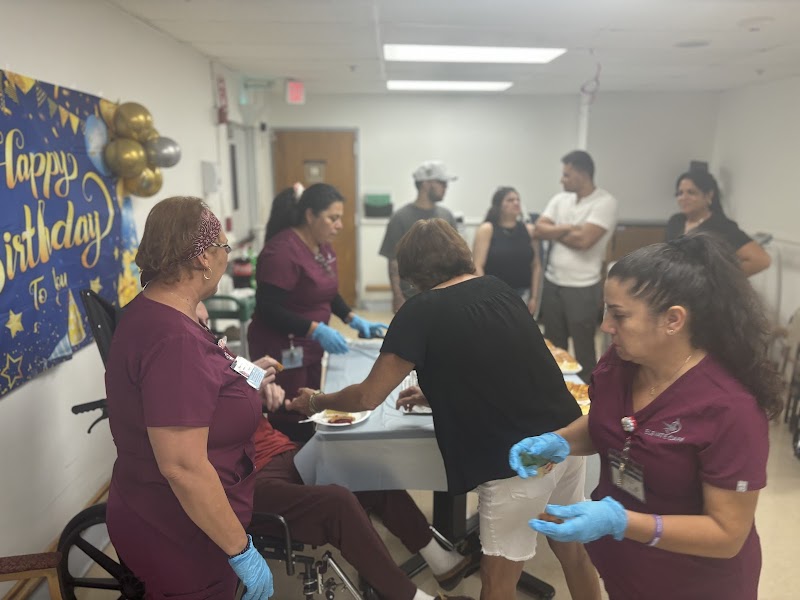
How Does Terrace Of Hialeah, The Compare to Other Florida Nursing Homes?

Compared to the 100 nursing homes in Florida, TERRACE OF HIALEAH, THE's overall rating (3 stars) is below the state average of 3.2, staff turnover (31%) is significantly lower than the state average of 46%, and health inspection rating (3 stars) is at the national benchmark.

What Should Families Ask When Visiting Terrace Of Hialeah, The?

Based on this facility's data, families visiting should ask: "Can I visit during a mealtime to observe dining assistance and food quality?" "How do you handle medical emergencies, and what is your hospital transfer rate?" "Can I speak with family members of current residents about their experience?"

Is Terrace Of Hialeah, The Safe?

Based on CMS inspection data, TERRACE OF HIALEAH, THE has a clean safety record: no substantiated abuse findings (meaning no confirmed cases of resident harm), no Immediate Jeopardy citations (the most serious violation level indicating risk of serious injury or death), and is not on the Special Focus Facility watch list (a federal program monitoring the lowest-performing 1% of nursing homes). The facility has a 3-star overall rating and ranks #100 of 100 nursing homes in Florida. While no facility is perfect, families should still ask about staff-to-resident ratios and recent inspection results during their visit.

Do Nurses at Terrace Of Hialeah, The Stick Around?

TERRACE OF HIALEAH, THE has a staff turnover rate of 31%, which is about average for Florida nursing homes (state average: 46%). Moderate turnover is common in nursing homes, but families should still ask about staff tenure and how the facility maintains care continuity when employees leave.

Was Terrace Of Hialeah, The Ever Fined?

TERRACE OF HIALEAH, THE has no federal fines on record. CMS issues fines when nursing homes fail to meet care standards or don't correct problems found during inspections. The absence of fines suggests the facility has either maintained compliance or corrected any issues before penalties were assessed. This is a positive indicator, though families should still review recent inspection reports for the full picture.

Is Terrace Of Hialeah, The on Any Federal Watch List?

TERRACE OF HIALEAH, THE is not on any federal watch list. The most significant is the Special Focus Facility (SFF) program, which identifies the bottom 1% of nursing homes nationally based on persistent, serious quality problems. Not being on this list means the facility has avoided the pattern of deficiencies that triggers enhanced federal oversight. This is a positive indicator, though families should still review the facility's inspection history directly.