EMERALD NURSING AND REHABILITATION CENTER
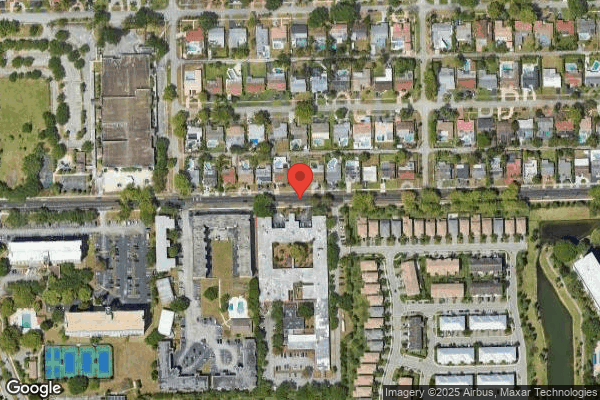
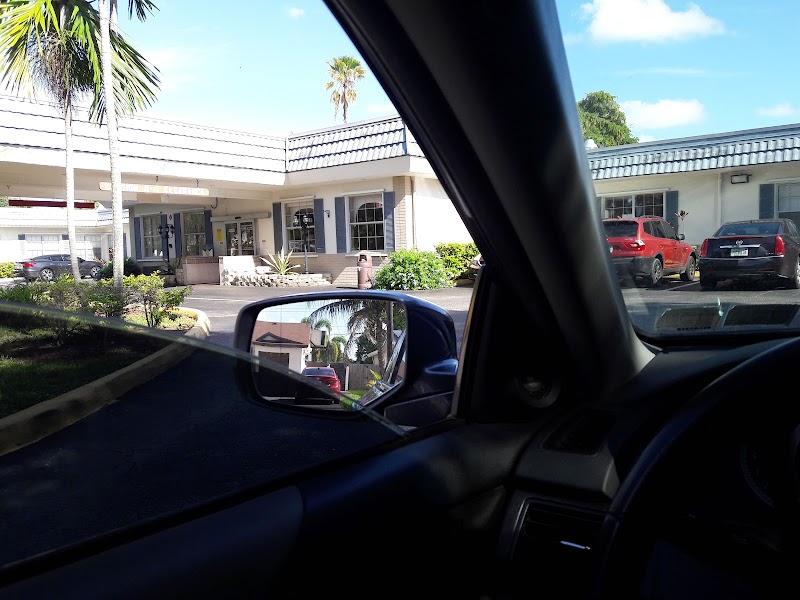
4200 WASHINGTON ST, HOLLYWOOD, FL 33021 (954) 981-6300
For profit - Limited Liability company 240 Beds VENTURA SERVICES FLORIDA Data: November 2025 1 Immediate Jeopardy citation
Trust Grade
38/100
#346 of 690 in FL
Last Inspection: June 2025

Inspected within the last 6 months. Data reflects current conditions.

Overview

Emerald Nursing and Rehabilitation Center has received a Trust Grade of F, which means it has significant concerns and is considered poor in performance. It ranks #346 out of 690 facilities in Florida, placing it in the bottom half, and #18 out of 33 in Broward County, indicating limited local options that are better. The facility's condition is worsening, with the number of issues increasing from 8 in 2024 to 13 in 2025. Staffing is a strength, rated at 4 out of 5 stars with a turnover rate of 31%, which is below the state average, while RN coverage is also good, exceeding 82% of Florida facilities. However, the facility has accumulated $89,638 in fines, which is concerning and suggests ongoing compliance problems. Specific incidents of concern include a critical failure to follow emergency procedures for a choking resident, which contributed to the resident's death, and a lack of designated nursing staff to meet residents' needs safely. Additionally, there were issues with the kitchen sanitation process, including improper temperature settings for dishwashing and staff mishandling of food safety protocols. While the staffing and quality measures are strengths, these serious incidents highlight significant weaknesses in care and safety at the facility.

Trust Score
F
38/100
In Florida
#346/690
Top 50%
Safety Record
High Risk
Review needed
Inspections
Getting Worse
8 → 13 violations
Staff Stability
○ Average
31% turnover. Near Florida's 48% average. Typical for the industry.
Penalties
✓ Good
$89,638 in fines. Lower than most Florida facilities. Relatively clean record.
Skilled Nurses
✓ Good
Each resident gets 57 minutes of Registered Nurse (RN) attention daily — more than average for Florida. RNs are trained to catch health problems early.
Violations
⚠ Watch
37 deficiencies on record. Higher than average. Multiple issues found across inspections.
★★★☆☆
3.0
Overall Rating
★★★★☆
4.0
Staff Levels
★★★★★
5.0
Care Quality
★★☆☆☆
2.0
Inspection Score
Stable
2024: 8 issues
2025: 13 issues

The Good

  • 4-Star Staffing Rating · Above-average nurse staffing levels
  • 5-Star Quality Measures · Strong clinical quality outcomes
  • Full Sprinkler Coverage · Fire safety systems throughout facility
  • No fines on record
  • Staff turnover below average (31%)

    17 points below Florida average of 48%

Facility shows strength in staffing levels, quality measures, fire safety.

The Bad

3-Star Overall Rating

Near Florida average (3.2)

Meets federal standards, typical of most facilities

Staff Turnover: 31%

15pts below Florida avg (46%)

Typical for the industry

Federal Fines: $89,638

Well above median ($33,413)

Moderate penalties - review what triggered them

Chain: VENTURA SERVICES FLORIDA

Part of a multi-facility chain

Ask about local staffing decisions and management

The Ugly 37 deficiencies on record

1 life-threatening
Jun 2025 13 deficiencies
CONCERN (D)

Potential for Harm - no one hurt, but risky conditions existed

Deficiency F0558 (Tag F0558)

Could have caused harm · This affected 1 resident

**NOTE- TERMS IN BRACKETS HAVE BEEN EDITED TO PROTECT CONFIDENTIALITY** Based on policy review, observation, interview and record review, the facility failed to ensure the call light was in reach for ...

Read full inspector narrative →
**NOTE- TERMS IN BRACKETS HAVE BEEN EDITED TO PROTECT CONFIDENTIALITY** Based on policy review, observation, interview and record review, the facility failed to ensure the call light was in reach for 1 of 33 sampled residents (Resident #463). The findings included: Review of the policy titled, Call-Light System, issued 09/2020, documented in part, 1. All staff will be educated on the proper use of the resident call system, including how the system works and ensuring the resident access to the call light. 2. With every interaction in the resident's room, staff will ensure the call light is within reach of the resident and secured. Review of the record revealed that Resident #463 was admitted to the facility on [DATE] with a readmission on [DATE]. Review of the current minimum data set (MDS) assessment dated [DATE] documented Resident #463 had a Brief Interview for Mental Status (BIMS) score of 14, on a 0-15 scale, indicating the resident was cognitively intact and that he required physical assistance for self-care needs. During an initial interview on 06/08/25 at 11:25 AM, when Resident #463 was asked how do you get help when you need it, he responded that he uses the call light but that he usually could not find it. The call light cord was observed to be wedged between the bedrail and the bottom of the mattress with the bulb of the call light hanging down close to the floor out of reach of Resident #463. (Photographic evidence obtained). During an observation on 06/09/25 at 12:38 PM, it was noted that the call light was out of reach for Resident #463. (Photographic evidence obtained). During interview on 06/10/25 at 8:05 AM, Resident #463 reported that he needed help to get changed, but he could not reach the call light. (Photographic evidence obtained). Staff H, Licensed Practical Nurse (LPN) was asked to come to Resident #463's room. The resident told Staff H, LPN that he could not reach his call light. Staff H went over to the left side of the bed and had to lower the head of the bed to release the call bell cord that had been stuck between the bottom of the mattress and the bedrail.
CONCERN (D)

Potential for Harm - no one hurt, but risky conditions existed

Pressure Ulcer Prevention (Tag F0686)

Could have caused harm · This affected 1 resident

**NOTE- TERMS IN BRACKETS HAVE BEEN EDITED TO PROTECT CONFIDENTIALITY** Based on policy review, interviews, observation and record review, the facility failed to follow treatment and services for heel...

Read full inspector narrative →
**NOTE- TERMS IN BRACKETS HAVE BEEN EDITED TO PROTECT CONFIDENTIALITY** Based on policy review, interviews, observation and record review, the facility failed to follow treatment and services for heel pressure ulcers for 1 of 2 sampled residents (Resident #463) reviewed for not offloading heels as a preventative pressure ulcer measure. The findings included: Review of the policy titled, .Wound Care issued 04/2020, documented, in part, 1. It will be the standard of this facility to provide assessment and identification of residents at risk of developing pressure injuries, other wounds and the treatment of skin impairment. 2. Preventative measures, such as utilization of pressure-relieving surfaces, floating heels, protective boots and use of positioning devices can be employed. Review of the summary of a nursing in-service dated 05/21/25 titled, Prevention of skin impairment (Certified Nursing Assistant), did not include staff training on the facilities policy to utilize pressure-relieving surfaces and floating heels as preventative measures. Review of the record revealed that Resident #463 was admitted to the facility on [DATE] with a readmission on [DATE]. Review of the current minimum data set (MDS) assessment dated [DATE] documented Resident #463 had a Brief Interview for Mental Status (BIMS) score of 14, on a 0-15 scale, indicating the resident was cognitively intact and that he required physical assistance for self-care needs. Review of progress notes dated 06/06/25 documented in part, Resident #463 skin integrity assessment reveals left heel with flattened blister tissue measures 8 x 5.6 x 0. Plan of care with intervention in place including offloading heels while in bed. Review of the Treatment Administration Record (TAR) revealed orders dated 05/20/25, Offload heels with pillow while in bed every 12 hours as needed for prevention. During an observation on 06/09/25 at 12:38 PM, Resident #463 reported that his left foot was hurting. His left foot (heel) was observed positioned on the mattress and the right foot (heel) was positioned on top of a pillow (not offloaded but resting on the pillow). (Photographic evidence obtained). On 06/10/25 at 8:05 AM, observations revealed Resident #463's heels were both positioned on top of pillows and not offloaded. During observation on 06/10/25 at 10:52 AM, it was noted that Resident #463 had been assisted with morning care and was dressed and waiting to go to Physical Therapy (PT) and both of his feet were on top of two pillows (one pillow positioned vertically under each foot) not offloaded. During an interview on 06/10/25 at 11:04 AM, Staff E, Certified Nursing Assistant (CNA), who assisted Resident #463 with dressing that morning, was asked what does offloading of heels with pillows mean. Staff E replied, sometimes the heel should not touch the pillow. At that time, she was asked to look at Resident #463 to see if his heels were offloaded. R#463's heels were on top of the pillows. When Staff E was asked if that is offloading, Staff E replied, No, the pillow needs to be higher on Resident #463's calf, so his heel is off the edge of the pillow. During an observation on 06/11/25 at 7:35 AM, Resident # 463 was in bed eating breakfast with his right heel on top of a pillow (not offloaded) and his left heel on top of the mattress (no pillow and not offloaded). (Photographic Evidence obtained).
CONCERN (D)

Potential for Harm - no one hurt, but risky conditions existed

Incontinence Care (Tag F0690)

Could have caused harm · This affected 1 resident

**NOTE- TERMS IN BRACKETS HAVE BEEN EDITED TO PROTECT CONFIDENTIALITY** Based on review of policy and procedure, observation, interview and record review, the facility failed to properly secure cathet...

Read full inspector narrative →
**NOTE- TERMS IN BRACKETS HAVE BEEN EDITED TO PROTECT CONFIDENTIALITY** Based on review of policy and procedure, observation, interview and record review, the facility failed to properly secure catheter for 1 of 1 sampled resident observed during Foley Catheter care, Resident #82. The findings included: Review of the facility policy titled Foley Catheter Care Policy provided by the Director of Nursing (DON) implemented 03/2020 documented in the Policy Statement: It is the policy of this facility to provide catheter care to all residents that have an indwelling catheter in an effort to reduce bladder and kidney infections. Policy Explanation and Compliance Guidelines: 1. Catheter care will be performed every shift and as needed by the nursing assistant .21. Assist resident to a comfortable, appropriate position .25. Document care and report any concerns noted to the nurse on duty. Resident #82 was re-admitted to the facility on [DATE] with diagnoses which included Alzheimer's Disease, Chronic Kidney Disease stage 3, Diabetes Mellitus Type II, Osteomyelitis, Hypertension and Adult Failure to Thrive. She had a Brief Interview Mental Status (BIM) score of 00, indicative of severe impairment. During a Peri and Foley catheter care observation of Resident #82 on 06/11/25 10:06 AM, the resident was observed lying down in bed resting. Peri-care was observed being performed by Staff K, Certified Nursing Assistant (CNA), after having washed her hands for 35-40 seconds. Staff K was assisted by Staff S, CNA, who also washed her hands for 35-40 seconds prior to the procedure. Both Staff K and Staff S retrieved a gown from the container located just outside of Resident 82's room, in order to perform this procedure. Resident #82 provided permission for this surveyor to observe her peri Foley catheter care. However, it was observed during the care that the Foley catheter strap with anchor was not properly secured in place, as per the Medical Doctor (MD) written order. Further observation revealed that the Foley catheter strap was old, frayed, discolored and fading and the leg strap was triple wrapped around Resident #82's right leg. This Foley catheter strap was also observed to be slipping off, moving and sliding slowly down Resident #82's leg and not properly secured and anchored in place to prevent movement. Photographic Evidence Obtained. On 06/11/25 at 10:22 AM two (2) consecutive, but separate interviews were conducted with both Staff K and Staff S regarding the above and both indicated that they did not know when the Foley catheter strap was last changed, and neither did they know often this was supposed to be done. But both staff members acknowledged that the strap needed to be changed to a new one because it was not supposed to be fitting on the resident, as observed. On 06/11/25 at 10:32 AM Interview was conducted with Staff T Licensed Practical Nurse (LPN), also regarding the above and she initially had a difficult time trying to identify exactly what the item was when asked, then Staff T indicated that it looked like a Foley catheter strap. Next, Staff T stated that she had not changed one of those. Staff T immediately stated that the Foley catheter strap was not properly placed on the resident. Finally, Staff T ended by saying that the Foley catheter straps were changed every three to four (3-4) days by the night shift nurse. During a demonstration conducted on 06/11/25 at 10:37 AM by Staff U, Registered Nurse (RN), he showed the proper positional placement for the Foley catheter strap with anchor on the resident, as provided by Staff R, RN/Unit Manager (RN/UM) East wing. Photographic Evidence Obtained. A brief interview was conducted on 06/11/25 at 10:41 AM with Staff U, in which he acknowledged that the Foley catheter strap, that was previously placed, had been done so improperly, for Resident #82. On 06/11/25 at 10:44 AM an interview was conducted with Staff R regarding the improperly placed Foley catheter strap, and he said that he was not aware of when the last time this strap had been changed. Staff R went on to say that every time the Foley catheter is changed every 15 days and as needed (PRN), it must be monitored every shift, by the nurse. He ended by acknowledging that the previously placed Foley catheter strap had been improperly placed on this resident. On 05/26/25 the physician's order documented, to Monitor and keep leg strap on and ensure catheter bag is always strapped to the side to prevent trauma/dislodgement. Record review of Resident 82's Care plan revised 04/28/25 indicated Focus: Resident has an indwelling catheter and is at risk for Urinary Tract Infection (UTI) and other catheter related problems . Interventions: Provide indwelling catheter care as per facility protocol. Goal: Resident #82 will be able to function normally with catheter and signs and symptoms of UTI or other urinary problems will be identified early for prompt intervention through the next review date. A side-by-side record review was conducted with Staff R, of the Treatment Administration Record (TAR) for June 2025, in which it had been documented that the nursing staff had been initialing in the boxes that this was being done, per the physician's ordered dated 05/26/25 which indicated to, Monitor and keep leg strap on and ensure catheter bag is always strapped to the side to prevent trauma/dislodgement. However, direct observation clearly revealed that this was not being done by nursing staff. Resident # 82's Foley catheter strap was not changed and properly placed on the resident, until after surveyor intervention. The DON further recognized and acknowledged on 06/11/25 at 1:45 PM that the resident's Foley catheter strap should be routinely monitored, positioned and changed, as per protocol.
CONCERN (D)

Potential for Harm - no one hurt, but risky conditions existed

Deficiency F0698 (Tag F0698)

Could have caused harm · This affected 1 resident

**NOTE- TERMS IN BRACKETS HAVE BEEN EDITED TO PROTECT CONFIDENTIALITY** Based on interviews, and record review, the facility failed to monitor the dialysis (Central Venous Catheter) CVC access site fo...

Read full inspector narrative →
**NOTE- TERMS IN BRACKETS HAVE BEEN EDITED TO PROTECT CONFIDENTIALITY** Based on interviews, and record review, the facility failed to monitor the dialysis (Central Venous Catheter) CVC access site for 1 of 1 sampled resident reviewed for dialysis (Resident #35). The findings included: A chart review revealed Resident #35 was readmitted to the facility on [DATE] with diagnoses of End Stage Renal Disease and Anemia and Depended on Renal Dialysis. The admission Minimum Data Set (MDS) showed a Brief Interview of Mental Status (BIMS) score of 15, indicating cognitive integrity. A review of the physician's order showed the following: an order for hemodialysis on Tuesday, Thursday, and Saturday, with a right upper chest catheter, dated 05/20/20/2025. Further review of the orders did not show an order to monitor the CVC dialysis site for any bleeding, bruising, or signs of infection. The Care plan dated 06/02/25 documented to check the access site for signs and symptoms of infection, pain, or bleeding daily. In an interview conducted on 06/10/25, at 9:01 AM, the Director of Nursing (DON) stated that when a resident is on dialysis with a CVC access site, they will follow up on labs and monitor the access site for signs of infection, including redness, color changes, temperature fluctuations, and bleeding. The orders to monitor dialysis access sites are the facility ' s protocols and are part of batch orders attached on admission. It is then documented in the Medication Administration Record (MAR) and Treatment Administration Record (TAR). In an interview conducted on 06/10/25 at 9:10 AM with Staff A, Registered Nurse (RN), she stated that the CVC access site is monitored daily for signs and symptoms of swelling, redness, pain, or bleeding. When asked where it is documented, she said it is on the progress note in the electronic system. A chart review revealed that an order was placed in the system for Hemodialysis - Assess site for bruising, bleeding, or symptoms of infection, which was entered into the electronic system at 9:12 AM on 06/10/25.
CONCERN (D)

Potential for Harm - no one hurt, but risky conditions existed

Pharmacy Services (Tag F0755)

Could have caused harm · This affected 1 resident

**NOTE- TERMS IN BRACKETS HAVE BEEN EDITED TO PROTECT CONFIDENTIALITY** Based on observation, interviews and record review, the facility failed to ensure controlled substance medication reconciliation...

Read full inspector narrative →
**NOTE- TERMS IN BRACKETS HAVE BEEN EDITED TO PROTECT CONFIDENTIALITY** Based on observation, interviews and record review, the facility failed to ensure controlled substance medication reconciliation was accurate for 4 of 9 sampled residents (Resident #70, #115, #147 and #47) and failed to obtain a physician order for a controlled medication for 1 of 9 sampled residents (Resident #70) reviewed during the controlled drugs record review. The findings included: Review of the facility's policy titled, 4.0 Schedule II Controlled Substance Medication, undated, included the following: This policy is to ensure adherence to state and federal laws relating to the dispensing of Scheduled II controlled substance medications. In a non-emergency situation, Schedule II controlled medications will NOT be dispensed without a written or electronic prescription. Procedure: H. Dispensing of Controlled Dangerous Substances (CDS) 5.When a CDS medication is administered, in addition to following proper procedure for the charting of medications, the nurse must document on the declining inventory sheet the date of administration, the quantity administered, the amount of medication remaining and his/her initials. 1) Record review for Resident #70 revealed that the resident was admitted to the facility on [DATE] with a readmission on [DATE] and with diagnoses that included: Dementia, Schizoaffective Disorder and Major Depressive Disorder. Review of the Physician's Orders showed that Resident #70 had an order dated 04/25/25 for Lorazepam 0.5 mg tablet to give every 8 hours as needed for Anxiety for 14 days, with an end date of 05/09/25. Further review revealed no current physician's order for Lorazepam 0.5 mg. Review of Resident #70's Medication Monitoring/Control Record or the declining inventory sheet (DIS) for Lorazepam 0.5 mg revealed the medication was removed from the locked box for administration on the following dates: 05/03/25 at 9:00 AM 05/05/25 at 9:00 AM 05/10/25 1330 (1:30 PM) 05/15/25 12:15 PM 05/20/25 0600 (6:00 AM) 06/01/25 2108 (9:08 PM) Review of the May and June Medication Administration Record (MAR) documented Resident #70 was administered Lorazepam 0.5 mg on 05/03/25 at 8:08 AM and 05/05/25 at 11:35 AM. No other administration entry for Lorazepam 0.5 mg was documented in the MAR. Furthermore, the May MAR revealed the Lorazepam 0.5 mg order was completed on 05/09/25. 2) Record review for Resident #115 revealed that the resident was admitted to the facility on [DATE] with no readmissions and with diagnoses that included: Fracture of Nasal Bones and Pedestrian injured in traffic accident. Review of the Physician's Orders showed that Resident #115 had an order dated 09/09/24 for Percocet (Oxycodone w/Acetaminophen) 5-325 mg tablet give every 6 hours as needed for non-acute pain scale of 6 to 10. Review of Resident #115's DIS for Percocet 5-325 mg revealed the medication was removed from the locked box for administration on the following dates: 06/08/25 at 2300 (11:00 PM) 06/09/25 at 8:58 AM 06/09/25 at 1732 (5:32 PM) 06/09/25 at 2300 Review of the June MAR documented Resident #115 administered Percocet 5-325 mg on the following dates: 06/08/25 at 9:30 AM with a pain level of 0 out of 10. 06/09/25 at 8:57 AM with a pain level of 6 out of 10. 06/09/25 at 2300 with a pain level of 5 out of 10. 3) Record review for Resident #147 revealed that the resident was admitted to the facility on [DATE] with a readmission on [DATE] with diagnoses that included: Osteomyelitis of Vertebra, Sacral and Sacrococcygeal Region. Review of the Physician's Orders showed that Resident #147 had an order dated 05/04/25 for Oxycodone HCl 5 mg tablet give every 6 hours as needed for non-acute pain. Review of Resident #147's DIS for Oxycodone HCl 5 mg revealed the medication was removed from the locked box for administration on the following dates: 06/09/25 at 0001 (12:01 AM) 06/09/25 at 1300 (1:00 PM) 06/09/25 at 2100 (9:00 PM) 06/10/25 at 1300 Review of the June MAR documented Resident #147 was administered Oxycodone HCl 5 mg on the following dates: 06/09/25 at 0138 (1:38 AM) with pain level of 6 out of 10. 06/09/25 at 2058 (8:58 PM) with pain level of 5 out of 10. 06/10/25 at 2128 (9:28 PM) with pain level of 7 out of 10. An interview was conducted on 06/11/25 at 10:15 AM with Staff G, Licensed Practical Nurse (LPN), who stated she has worked at the facility for 3 years. She stated for administration of controlled substance medication, she would first check the physician's orders on the computer, compare the order to the declining inventory sheet (DIS), dispense the medication and sign the DIS. Once administered, Staff G stated she would then document in the MAR that the medication was given. She agreed that both the IDS and the MAR should correlate the date and time when the controlled substance was given. On 06/11/25 at 10:28 AM, a side-by-side review of Resident #70's DIS and May MAR for Lorazepam 0.5 mg tablet to give every 8 hours as needed for Anxiety for 14 days, was conducted with Staff H, LPN and the Director of Nursing (DON). The review revealed no physician's order in Resident #70's chart for Lorazepam 0.5 mg and no documentation for administration on the above dates. Staff H stated that after 14 days the order is completed, the nurse or supervisor would contact the doctor for a new order for the medication. In addition, Staff H stated if she is to administer a controlled substance medication, she first checks if there's a physician's order, then compares the order with the DIS, dispenses the medication, administers the medication to the resident and then documents in the computer and the DIS almost at the same time. Both DON and Staff H acknowledged there's discrepancy between the DIS and the MAR for controlled substance medications. 4) Resident #47 was admitted to the facility on [DATE] with the diagnoses that included Cerebral Infarction due to Occlusion or Stenosis of a Small Artery, Osseus and Subluxation Stenosis of Intervertebral Foramina of the Lumbar Region, and Malignant Neoplasm of the Colon. A review of the most recent Minimum Data Set (MDS) assessment dated [DATE] under Section C of the Brief Interview of Mental Status (BIMS) revealed a score of 15, indicating Resident #47 had intact mental cognition. A review of orders revealed Oxycodone Hydrochloride, 5 mg (milligram), 1 tablet every 6 hours as needed for pain. During a medication storage review with Staff G, Licensed Practical Nurse (LPN) on 06/10/25 at 10:35 AM, the Narcotic sheet revealed the Bingo medication dispenser for Oxycodone was received on 04/23/25 with 25 pills. Staff G, LPN verified the Narcotic sheet and the Bingo medication dispenser both had 21 remaining pills, and the administrations on these dates, 06/07/25 at 11:20 AM, 06/08/25 at 10:55 PM, and 06/10/25 at 10 PM were also documented in the MAR. A further review revealed the 06/07/25 at 11:47 AM recorded administration on the Narcotic sheet was not documented on Resident # 47's Medication Administration Record (MAR). In an interview with Staff G, an LPN on 06/11/25 at 10:54 AM, she verified that a Nurse with the written initials on the Narcotic sheet had removed 1 pill on 06/07/25 at 11:47 AM, but she does not know why it was not documented on Resident # 47's MAR. She added that every time a controlled substance is taken from the medication Bingo dispenser, it must be initialed by a nurse with a date and a time on the Narcotic sheet. This documentation must correspond with the MAR documentation, indicating the exact date, time and with the same Nurse's initials.
CONCERN (D)

Potential for Harm - no one hurt, but risky conditions existed

Deficiency F0757 (Tag F0757)

Could have caused harm · This affected 1 resident

**NOTE- TERMS IN BRACKETS HAVE BEEN EDITED TO PROTECT CONFIDENTIALITY** Based on observations, interviews, and record review, the facility failed to monitor the behaviors of residents on psychotropic ...

Read full inspector narrative →
**NOTE- TERMS IN BRACKETS HAVE BEEN EDITED TO PROTECT CONFIDENTIALITY** Based on observations, interviews, and record review, the facility failed to monitor the behaviors of residents on psychotropic medication for 2 of 5 sampled residents reviewed for unnecessary medications (Resident #134 and Resident #173). The findings included: A review of the facility's policy titled Using Psychotropic Medications, revised on 10/2024, showed the following: the facility will manage and monitor the residents' medication regimen to promote and maintain the resident's practicable mental, physical, and psychosocial well-being. This includes tracking behavior and monitoring progress. A chart review showed Resident #134 was admitted to the facility on [DATE] with diagnoses of Schizoaffective Disorder, Bipolar Disorder, Major Depressive Disorder, and Anxiety. The Quarterly Minimum Data Set (MDS) assessmentdated 5/20/25 revealed Resident #134 had a Brief Interview of Mental Status (BIMS) score of 15, indicating intact cognition. A review of the physician's order documented the following orders: Risperidone (an antipsychotic medication), 0.5 milligrams twice a day. It further documented to monitor Behaviors with the following code: 0) No 1) Fear 2) Anger 3) Scream 4) Danger/Self/Others 5) [NAME]/Hall 6) Sad 7) Other(desc) dated 11/14/2024. An order for Risperidone (antipsychotic medication), 0.25 milligrams two times a day. It further documented to monitor Behaviors with the following code: 0) No 1) Fear 2) Anger 3) Scream 4) Danger/Self/Others 5) [NAME]/Hall 6) Sad 7) Other(desc) dated 11/14/2024. A review of the Medication Administration Record (MAR) and Treatment Administration Record (TAR) revealed that no behaviors were documented, if any, or '0' documented for no behaviors if none were observed. The Care plan dated 5/14/25 revealed the following: Resident #134 is on antipsychotic therapy related to Schizophrenia and Bipolar. Administer Antipsychotic medications as ordered by physicians. Monitor behavioral symptoms and side effects. In an interview with Staff F, a Registered Nurse, on June 11, 2025, at 10:10 AM, she stated that the behaviors of Resident #134 are monitored daily and documented on the MAR and TAR. If there are no behaviors, she puts 0 in the electronic system. She then proceeded to show this Surveyor the documentation in the MAR and TAR. Staff F stated that she did not know why there is no section to document behaviors and said that it only gives her an option for Yes or No. In an interview conducted on 6/11/2025 at 10:20 AM with the Director of Nursing (DON), she stated that she started working in the facility a week ago and was not aware that documentation for behaviors was not done according to the specific order and that the nursing staff were filling in only a checkmark instead of the particular codes as above. she further acknowledged that this needs to be corrected. 2) Resident #173 was admitted on [DATE] with diagnoses that included Cerebral Infarction, Unspecified Dementia, unspecified severity, without Behavioral Disturbance, Psychotic Disturbance and Anxiety, Acute Kidney Failure, and Presence of Prosthetic Heart Valve. A review of the recent Minimum Data Set (MDS) assessment under Section C of the Brief Interview of Mental Status (BIMS) revealed a score of 4 indicating Resident #173 had severely impaired cognition. A review of orders revealed the following:1). Lorazepam 0.5 milligram (mg), give 1 tablet by mouth, 2 times a day for Anxiety; 2). Citalopram Hydrobromide 20 mg, give 1 tablet by mouth one time a day for depression. Use the following behavior codes :0=No, 1=Fear, 2=Anger, 3=Scream,4=Danger to self and others,5=Delirium, 6=Sad, 7=Other. The following were the codes for Interventions: 1= Music, 2=reminisce, 3=Ex, 5= Quiet, 6=PRN (as needed). Additional orders revealed the following: 3). Seroquel 100mg tablet, give 1 tablet by mouth at bedtime for psychosis:4). Depakote sprinkles, delayed release 125 mg, give 2 capsules by mouth, 2 times a day for mood disorder: 5). Donepezil Hcl 5 mg, give 1 tablet by mouth at bedtime for dementia: 6). Lorazepam 0.5 mg, give 1 tablet by mouth, 2 times a day for anxiety; Use the following behavior codes: 0=No, 1=Fear, 2=Anger, 3=Scream, 4=Danger to self and others, 5=[NAME]/hall, 6=Sad, 7=Other (describe). The following were the intervention codes:1=Music, 2=Reminisce, 3=Ex, 4=1:1, 5=Quiet, 6= PRN. The following were the codes for the outcome: 1=improve, 2=same, 3=worse. The following were the side effects codes: 0=none,1=eps, 2=tardive dyskinesia, 3= hypotension, 4= behavior, 5= drowsy, 6=dizzy. A further review of June 2025 MAR revealed on 06/07/25 and 06/08/25 during day shifts, there were yes responses, with check marks and nurses' initials, but no behavior codes were documented for Citalopram, Depakote, Lorazepam, Seroquel, and Zoloft. On 06/08/25 at 6:00 AM, an intervention code 8 for Lorazepam 0.5 mg was documented for a 0 behavior code, with a check mark and nurse's initials. There was no code 8 per physician order. An additional review of the same MAR for the box corresponding to the monitoring of the outcome of intervention (12 hours), revealed only check marks and nurses' initials from 06/01/25 until 06/10/25 during the day and night shifts. The supposedly used codes were U for unchanged, W for worsened, and the above corresponding codes. In an interview with Staff G, Licensed Practical Nurse (LPN) on 06/11/25 at 10:45 AM, when she was asked about behavior monitoring, she responded, Yes, I monitor the resident's behavior, and I document them in the MAR. She added that she observed resident's behavior before and after administrations of psychotropic medications. She added that she uses the behavior and intervention codes as ordered by physicians, and she documents these codes in MAR. In an interview with the Medical Director on 06/11/25 at 2:30 PM, when he was asked why behavior, and side effects monitoring is important for the resident, he responded, he ( Resident # 173) is receiving 2 antidepressants and one anxiety, which were the medications he used to take at home. He added, During my previous record reviews, these medications were necessary, but now I think I have to stop 1 antidepressant (I do not know which one yet), and I will try to start weaning him from the Benzodiazepine.
CONCERN (D)

Potential for Harm - no one hurt, but risky conditions existed

Deficiency F0760 (Tag F0760)

Could have caused harm · This affected 1 resident

**NOTE- TERMS IN BRACKETS HAVE BEEN EDITED TO PROTECT CONFIDENTIALITY** Based on observations, interviews, and record reviews, the facility failed to ensure it was free of significant medication error...

Read full inspector narrative →
**NOTE- TERMS IN BRACKETS HAVE BEEN EDITED TO PROTECT CONFIDENTIALITY** Based on observations, interviews, and record reviews, the facility failed to ensure it was free of significant medication errors for 1 of 5 sampled residents reviewed for medications (Resident #69). The findings included: A review of the facility's policy titled, Medication Preparation and Dispensing, undated, revealed to verify the medication is the right drug, at the right dose, the right route, at the right rate, at the right time for the right customer (G-1). Resident # 69 was admitted on [DATE] with diagnoses that included Parkinson's Disease without Dyskinesia (a condition characterized by abnormal involuntary movements), Encounter for Palliative Care, Unspecified Osteoarthritis, Unspecified Dementia, Anxiety, and Major Depressive Disorder. A review of quarterly Minimum Data Set (MDS) assessment dated [DATE] under Section C of the Brief Interview for Mental Status (BIMS) revealed a score of 2, indicating Resident # 69 had severely impaired cognition. A review of orders revealed the following: Tramadol Hydrochloride tablet, 25 milligram (mg), give 1 tablet, 2 times a day for pain; Carbidopa-Levodopa 25-100mg , give 1 tablet by mouth , three times a day for Parkinson's ; on 05/09/25, no routine laboratory, and weights to be performed, resident is under hospice care, decline expected due to terminal condition; Divalproex oral capsule delayed release, 125 mg, give 2 capsules every 12 hours related to Major Depressive Disorder. During a medication administration observation on 06/10/25 at 10:45 AM using Medication cart 2 on the East section, with Staff G, a Licensed Practical Nurse, (LPN) who stated, she was preparing the 9:00 AM medication for Resident #69. When she opened her computer screen, it revealed pink color on all the 9:00 AM scheduled medications. When she was asked what the screen tells her, she responded, I am administering the medications later than the scheduled time. The acceptable time is one hour before and one hour after the scheduled time. She started preparing the following medications: Divalproex Sodium 12.5 mg (milligram), two (2) capsules by mouth, Carbidopa Levodopa 25-100 mg, one (1) tablet, 2 times a day, with an expiration date of 05/29/26; and Tramadol 25 mg, 1 tablet, 2 times a day, Staff G, LPN went inside Resident #69's room at 10:50 AM. A record review of the Medication Administration Audit Report, revealed the following: Divalproex Sodium oral capsule 125 mg, 2 capsules, every 12 hours; Carbidopa-Levodopa 25-100 mg, 1 tablet , 3 times a day; and Tramadol 25 mg,1 tablet, 2 times a day, were all administered at 11:05 AM. In an interview with the Director of Nursing on 06/10/25 at 12:00 PM, when she was asked what is considered timely medication administration, responded, One hour before and one hour after the scheduled time is considered timely. In an interview with The [NAME] President of Clinical Practice on 06/11/25 at 11:25 AM, she stated that One hour before and one hour after the scheduled time is considered timely medication administration. When she was asked to verify the administration time stamp of the above medications, she responded, It was 11:00 AM.
CONCERN (D)

Potential for Harm - no one hurt, but risky conditions existed

Deficiency F0761 (Tag F0761)

Could have caused harm · This affected 1 resident

Based on review of policy the facility's and procedures, observation and interview, the facility failed to 1) ensure that it secured the Wound Care treatment cart for 1 of 5 sampled Wound Care carts o...

Read full inspector narrative →
Based on review of policy the facility's and procedures, observation and interview, the facility failed to 1) ensure that it secured the Wound Care treatment cart for 1 of 5 sampled Wound Care carts observed, East wing Wound Care cart; 2) ensure that it secured the Medication Administration Cart for 1 of 9 sampled Medication Administration carts observed, Medication cart A East wing; 3) secure medication in 1 of 8 medication carts observed, medication cart A, on the Center wing; and 4) failed to properly label medication for general population use for 1 of 9 medication carts, during a Medication Storage Observation (medication cart 2 of the East wing. The findings included: Review of the facility policy titled Labeling of Medications Storage of Drugs and Biologicals provided by the Director of Nursing (DON) issued 03/2020 documented in the Policy Statement: It is the policy of this facility to ensure that all medications and biologicals used in the facility will be labeled and stored in accordance with current state, federal regulations. Purpose: The purpose of this procedure is to ensure the accurate labeling of all medications and biologicals to facilitate consideration of precautions and safe administration of medications Storage of Drugs Safe and secure storage of all medication. Policy Explanation and Compliance Guidelines: 1. All medications and biologicals will be labeled in accordance with applicable federal and state requirements and current accepted pharmaceutical principles and practices 1) During an observational tour of the East wing on 06/08/25 at 10:02 AM, it was revealed that there was an unlocked Wound Care cart on the East wing containing several different resident topical prescriptions and over the counter (OTC) wound dressing ointments (e.g. B & C ointment dressing, muscle rub, Ciclopirx Olamine cream 0.77%, Nystatin powder), along with wound care supplies. The cart was unsecured, unattended and accessible to residents, visitors and other employees. (Photographic Evidence Obtained). On 06/08/25 at 10:06 AM an interview was conducted with Staff V, Registered Nurse (RN) in which she stated that she was the last nurse to use the East wing Wound Care cart, and she acknowledged that she had left the Wound Care cart unlocked, when she should have locked it. 2) On 06/09/25 at 04:10 PM during a random hallway tour, it was revealed that there was an unlocked Medication cart (A) on the East wing, containing twenty-four (24) active resident prescription and OTC medications, all unsecured, unattended and accessible to residents, visitors and other employees. (Photographic Evidence Obtained). On 06/09/25 at 4:20 PM separate consecutive interviews were conducted with Staff Q, Licensed Practical Nurse (LPN) and with Staff R, RN, Unit Manager (UM), who both acknowledged that the medication cart should not have been unattended and should have been kept locked. 3) On 06/10/25 at 2:59 PM during a Medication Storage Observation conducted with Staff F, RN, and Staff W, RN/UM for Medication cart A Center wing, it was observed that there was one (1) white, unidentified loose pill, in the bottom of the second drawer in the Medication cart. An interview was conducted on 06/10/25 at 3:11 PM with Staff F, and with Staff W, RN/UM, in which they both acknowledged that the medication pill should not have been found at the bottom of the medication drawer and should have been secured. The Wound Care Cart, the Medication Cart and the loose, unidentified pill were not secured and discarded, until after surveyor inquisition. The DON further acknowledged on 06/08/25 at 10:16 AM and on 06/09/25 at 04:25 PM, that both the Wound Care Cart and the Medication Carts and all medications should be secured, at all times. The findings included: Review of the facility policy titled Labeling of Medications Storage of Drugs and Biologicals provided by the Director of Nursing (DON) issued 03/2020 documented in the Policy Statement: It is the policy of this facility to ensure that all medications and biologicals used in the facility will be labeled and stored in accordance with current state, federal regulations. Purpose: The purpose of this procedure is to ensure the accurate labeling of all medications and biologicals to facilitate consideration of precautions and safe administration of medications Storage of Drugs Safe and secure storage of all medication. Policy Explanation and Compliance Guidelines: 1. All medications and biologicals will be labeled in accordance with applicable federal and state requirements and current accepted pharmaceutical principles and practices 1) During an observational tour of the East wing on 06/08/25 at 10:02 AM, it was revealed that there was an unlocked Wound Care cart on the East wing containing several different resident topical prescription and over-the-counter (OTC) wound dressing ointments (e.g. B & C ointment dressing, muscle rub, Ciclopirx Olamine cream 0.77%, Nystatin powder), along with wound care supplies. The cart was unsecured, unattended and accessible to residents, visitors and other employees. (Photographic Evidence Obtained). On 06/08/25 at 10:06 AM an interview was conducted with Staff V, Registered Nurse (RN) in which she stated that she was the last nurse to use the East wing Wound Care cart, and she acknowledged that she had left the Wound Care cart unlocked, when she should have locked it. 2) On 06/09/25 at 04:10 PM during a random hallway tour, it was revealed that there was an unlocked Medication cart (A) on the East wing, containing twenty-four (24) active resident prescription and OTC medications, all unsecured, unattended and accessible to residents, visitors and other employees. (Photographic Evidence Obtained). On 06/09/25 at 4:20 PM separate consecutive interviews were conducted with Staff Q, Licensed Practical Nurse (LPN) and with Staff R, RN, Unit Manager (UM), who both acknowledged that the medication cart should not have been unattended and should have been kept locked. 3) On 06/10/25 at 2:59 PM during a Medication Storage Observation conducted with Staff F, RN, and Staff W, RN/UM for Medication cart A Center wing, it was observed that there was one (1) white, unidentified loose pill, in the bottom of the second drawer in the Medication cart. An interview was conducted on 06/10/25 at 3:11 PM with Staff F, and with Staff W, RN/UM, in which they both acknowledged that the medication pill should not have been found at the bottom of the medication drawer and should have been secured. The Wound Care cart, the Medication Cart and the loose, unidentified pill were not secured and discarded, until after surveyor inquisition. The DON further acknowledged on 06/08/25 at 10:16 AM and on 06/09/25 at 04:25 PM, that both the Wound Care cart and the Medication Carts and all medications should be secured, at all times. 4) During a medication storage observation of medication cart 2 on the East wing, with Staff G, Licensed Practical Nurse, on 06/10/25 at 10:35 AM, the fourth (4th) drawer revealed a bottle of Elder Tonic, without an opened date label, and an unreadable expiration date. When Staff G, LPN was asked why the bottle of medication was inside the cart, she responded, some residents are using the medication. When asked if Nurses verify the expiration dates and the opening dates of the medication before administration, she responded, Nurses always check the expiration dates, and the date a medication bottle was opened before storing them back inside the Medication cart. When she was asked to provide the opening date and the expiration date of the Elder Tonic bottle, she stated, There was no label for opening date, and I cannot read the expiration date. When she was asked how often Nurses check the Medication cart assigned to them, she responded, During every shift change, a Nurse must check his/her own Medication cart to verify if there are expired medications, loose pills from the Bingo dispenser, unlabeled medications, available supplies, and the cleanliness of the entire cart specially the bottom areas where all fluids are stored. She added that she also checks if there is a bottle of drug buster to discard expired or unused medications. She added that We do not keep bottles of medications with opening dates of more than a year. In an interview with the Director of Nursing (DON) on 06/10/25 at 11:55 AM, when she was asked about the facility's policy when storing medications inside the Medication Cart, she responded, Nurses must put the opening date of any bottle of medications for general use, and Nurses must check the expiration dates. She added, Nurses also check the Medication cart during their shifts.
CONCERN (D)

Potential for Harm - no one hurt, but risky conditions existed

Deficiency F0805 (Tag F0805)

Could have caused harm · This affected 1 resident

**NOTE- TERMS IN BRACKETS HAVE BEEN EDITED TO PROTECT CONFIDENTIALITY** 2). Resident #13 was admitted to the facility on [DATE]. According to the resident's most recent complete assessment, a Quarterl...

Read full inspector narrative →
**NOTE- TERMS IN BRACKETS HAVE BEEN EDITED TO PROTECT CONFIDENTIALITY** 2). Resident #13 was admitted to the facility on [DATE]. According to the resident's most recent complete assessment, a Quarterly MDS, with a reference date of 05/08/25, Resident #13 had a BIMS score of 06, indicating a severe cognitive impairment. The assessment documented that the resident required partial/moderate assistance for eating. Resident #13's diagnoses at the time of the assessment included: Anemia, Hypertension, Renal insufficiency, Alzheimer's disease, Non-Alzheimer's dementia, Malnutrition, Depression, Chronic lung disease, Respiratory failure, Muscle wasting and atrophy, Immunodeficiency, Osteoarthritis, SOB, (Shortness of Breath), Dysphagia, Cognitive communication deficit. Resident #13's care plan for nutrition documented: Care plan for nutrition: Resident is at risk for a decline in nutritional parameters due to dependence on a mechanically altered diet with thickened liquids, multiple diagnoses, multiple medications, underweight, History of significant weight loss, abnormal labs, and inadequate oral intake. Date Initiated: 02/13/2025 Revision on: 02/13/2025. The goal of the care plan was documented as: Resident will maintain adequate nutritional status as evidenced by gaining 0.5-1.0# per month, no signs and symptoms of malnutrition, and consuming meals daily through the next review date. Date Initiated: 02/13/2025 Revision on: 02/13/2025 Target Date: 07/31/2025 Interventions of the care plan included, provide and serve diet as ordered. Monitor intake and record meals. Date Initiated: 02/13/2025 Record review revealed Resident #13's diet orders included: Regular diet, Pureed (PU4) texture, Nectar/Mildly Thick consistency - 03/24/25. On 06/09/25 at 8:36 AM, Resident #13 was observed in bed sleeping with breakfast and pre-packaged and commercially processed snacks on an over bed table that were not consistent with the resident's diet orders. During an interview, on 06/11/25 at 10:20 AM, with the Speech Language Pathologist (SLP), and the SLP were shown a photo of the meal with the snacks. When asked about the snacks being appropriate for a resident with orders for pureed diet, the SLP confirmed that the snacks were not appropriate. When asked about the risk of not following the pureed diet order, the SLP replied, in general, the risk is aspiration, choking and decreased PO (oral) intake 3). Resident #89 was admitted to the facility on [DATE]. According to the resident's most recent complete assessment, an Annual MDS, with a reference date of 05/19/25, Resident #89 had a BIMS score of 15, indicating the resident was cognitively intact. The assessment documented that the resident required partial/moderate assistance for eating. Resident #89's diagnoses at the time of the assessment included: Anemia, Atrial fibrillation, Hypertension, Hyperlipidemia, Alzheimer's disease, Malnutrition, Anxiety disorder, Depression, Chronic lung disease, Vitamin D deficiency, Tinea Unguium, Muscle weakness, Dysphagia, Irritable Bowel Syndrome and the need for assistance with personal care Resident #89's care plan for nutrition documented: Residents have potential nutritional problems related to Hypertension, Chronic Obstructive Pulmonary Disease, Atrial fibrillation, anemia hyperlipidemia, dysphagia, overweight, Irritable Bowel Syndrome, assistance by staff for meals, mechanically pureed, nectar thickened liquid diet. History of edema, with fluid shifts anticipated. Renal diet provided. Significant weight loss - 05/18/22 with a revision date of 02/15/24. The goal of the care plan was documented as: Residents will maintain adequate nutritional status as evidenced by absence of unplanned significant weight changes, no (signs / symptoms) of malnutrition, and consuming adequate food/fluids through review date. Date Initiated: 12/10/2024 Revision on: 06/09/2025 Target Date: 08/10/2025 Interventions of the care plan included: o Provide, serve diet/supplement as ordered. Monitor intake and record (every) meal. Date Initiated: 05/18/2022 o RD to evaluate and make diet change recommendations PRN. Date Initiated: 05/18/2022 Record Review revealed Resident #89's diet orders included. Renal diet, Pureed (PU4) texture, Nectar /Mildly Thick consistency - large entree portions - 03/24/25. On 06/09/25 at 8:35 AM, Resident #89 was observed in bed with breakfast on an overbed table. The oatmeal that was served to the resident in an insulated cup did not appear to be smooth and had lumps of oatmeal in the cup. An interview was attempted with the resident; however, the resident fell asleep during the meal and observation. During an interview, on 06/11/25 at 10:20 AM, with the Speech Language Pathologist (SLP), SLP was shown a photo of the oatmeal being appropriate for a resident with orders for pureed diet, the SLP confirmed that the oatmeal was not appropriate. When asked about the risk of not following the pureed diet order, the SLP replied, in general, the risk is aspiration, choking and decreased PO (oral) intake. Based on observations, interviews, and record review, the facility failed to provide the correct Pureed diet consistency for 1 of two observations in the main kitchen. This has the potential to affect 22 residents out of 209 residents, according to the facility ' s census, including Resident #89 and Resident #13. The findings included: A review of the facility policy titled Policy on IDDSI (International Dysphagia Diet Standardization Initiative) Implementation, not dated, showed the following: On the Pureed diet, foods are smooth, pureed, and require no chewing. This level is designed for individuals with severe difficulties in chewing and swallowing. 1. In an observation conducted on 06/08/2025 at 1:27 PM in the main kitchen during the lunch tray line, the following was noted: A metal container of Pureed seasoned spinach was noted with a texture that was not fully smooth and contained irregularities such as small lumps and fibrous strands. A metal container of Pureed Chorizo and Cheddar Quiche with lumps and stringy pieces and did not have a smooth texture. In this observation, the Surveyor explained that the above textures do not meet the standard definition of an actual pureed texture as recognized by the clinical guidelines of IDDSI. The Food Service Director acknowledged the findings and stated that she would correct the problem. In an interview conducted on 06/09/25 at 11:45 AM with Staff B, the Language Pathologist stated for the Pureed diet consistency, the food needs to be smooth and pureed with no lumps or pieces.
CONCERN (D)

Potential for Harm - no one hurt, but risky conditions existed

Infection Control (Tag F0880)

Could have caused harm · This affected 1 resident

**NOTE- TERMS IN BRACKETS HAVE BEEN EDITED TO PROTECT CONFIDENTIALITY** Based on observations, interviews and record reviews, the facility failed to follow the Center for Disease Control and Preventio...

Read full inspector narrative →
**NOTE- TERMS IN BRACKETS HAVE BEEN EDITED TO PROTECT CONFIDENTIALITY** Based on observations, interviews and record reviews, the facility failed to follow the Center for Disease Control and Prevention (CDC) guidelines for infection control standards on residents for Enhanced Barrier Precautions (EBP) for 1 of 37 residents for EBP (Resident #37) and failed to properly clean the nebulizing equipment after a resident's treatment (Resident #132). The facility also failed to properly dispose of glucose strip containers used on an EBP resident and failed to follow their own policy for blood glucose monitoring for 1 of 37 sampled residents (Resident #37). The findings included: According to the Center for Disease Control and Prevention (CDC) Enhanced Barrier Precautions, it revealed the following: Everyone must clean their hands, including when both entering and leaving the room: Providers and Staff must also wear gloves and a gown for the following; high-contact care resident care activities, dressing, bathing-showering, transferring, changing linens, providing hygiene, changing briefs or assisting with toileting: Device care or use; central line, urinary catheter, feeding tube, tracheostomy: Wound care with any skin opening requiring a dressing. https://www.cdc.gov/long-term-care facilities/media/pdfs/ A review of a policy titled, Blood Glucose Monitoring, with an implementation date of 03/20 revealed the following procedure: clean the intended site with an alcohol pad and allow to dry completely (7), f required by the facility, wipe away the first drop of blood using a gauze pad (10). An additional review of a policy titled, Medication Preparation for Dispensing, undated, page 6-2, revealed to discard any unused medication supplies (e.g. alcohol swabs, syringes, etc.). A further review of policy titled, Nebulizer Therapy, with a revision date of 02/21 revealed the following: clean the equipment after each use, disassemble parts after each treatment, and rinse the nebulizer cup and mouthpiece with sterile or distilled water, shake off excess water, air dry on absorbent towel, once completely dry, store the nebulizer cup and the mouthpiece in a zip lock bag. 1) Resident # 132 was admitted on [DATE] with diagnoses that included Cerebral Infarction, Hemiplegia and Hemiparesis following Cerebro Vascular Accident affecting Left Non-Dominant Side, Type 2 Diabetes Mellitus, and Pleural Effusion. A review of Minimum Data Set (MDS) assessment dated [DATE] under Section C of the Brief Interview of Mental Status (BIMS) score of 15 indicating Resident #132 had intact cognition. A review of orders dated 04/27/25 revealed Pulmicort Inhalation Suspension 0.25 milligram (mg)/2 milliliter (mg), I unit, inhaled orally every 12 hours. During a medication observation on 06/10/25 at 9:36 AM with Staff G, Licensed Practical Nurse (LPN) who stated she would give nebulizing treatment to Resident #132. Staff G, LPN applied the nebulizing mask after instilling the medication to resident's face on 06/10/25 at 9:51 AM. On 06/10/25 at 10:00 AM, she removed the resident's nebulizing mask and stated I am done with the treatment. She removed the mask from the resident's face and put it back inside a plastic bag. She did not clean the nebulizing equipment she used for the resident before storing it inside the bag. When asked what the proper procedure is after providing nebulizing treatment to the resident, she responded, 'I will check him again to see if he is having respiratory distress. The Surveyor stayed with Staff G, LPN until 11:05 AM, but she did not disinfect or clean Resident #132's nebulizing face mask. 2) Resident #37 was admitted on [DATE] with diagnoses that included Partial Arterial Traumatic Amputation of the Right Foot, Type 2 Diabetes Mellitus with Hyperglycemia, Peripheral Vascular Disease, Immunodeficiency, and Local Infection of the Skin and Subcutaneous tissues. A review of Minimum Data Set (MDS) dated [DATE] under Section C of the Brief Interview of Mental Status (BIMS) revealed a score of 15 indicating Resident #37 had intact cognition. A review of orders dated 04/29/25 revealed Humalog Kwik pen subcutaneous solution pen injector 100 unit/ml, inject subcutaneously before meals and at bedtime for Type 2 Diabetes Mellitus. Inject per sliding scale: if 70 - 150 = 0u; (units) 151 - 200 = 2u; 201 - 250 = 4u; 251 - 300 = 6u; 301 - 350 = 8u; 351 - 400 = 10u; 401+ = 12u Administer. Call MD, During a medication observation with Staff H, an LPN (Licensed Practical Nurse) on 06/10/25 at 11:13 AM, she stated she needed to perform blood glucose test for Resident # 37. Staff H gathered supplies including 2 lancets with no expiration dates. She stated when Staff opened the lancet box, they checked the expiration dates, but there is no way for them to put the expiration date inside the medication cart. She also gathered 2 Assure needles, a whole plastic container of glucose strips, a glucometer wrapped in a plastic bag, alcohol wipes, tissue paper, and Resident #37's Lispro Kwik pen insulin. She placed them all inside a small Styrofoam tray. On 06/10/25 at 11:17 AM, Staff H, an LPN entered Resident #37's room without performing hand hygiene and immediately put her Styrofoam tray with all prepared supplies for blood glucose testing on top of the resident's meal table, without asking for the resident's permission and without cleaning and disinfecting the table. Staff H went to the bathroom and performed hand washing. She went back to the resident's side with the table and told the resident what she was going to do. She then put on gloves. Staff H wiped the resident's finger using an alcohol wipe and immediately pricked it with the lancet. She did not wait for the alcohol to dry. She wiped the area with tissue paper and started squeezing the resident's finger. With the same right-gloved hand, Staff H, LPN opened the glucose strip container to get a glucose strip. She put the strip inside the top of the glucometer and continued to squeeze Resident #37's finger. Once the reading was obtained, she removed her gloves, put on new ones, and manipulated the Insulin Kwik pen. She alcohol wiped the resident's right upper arm and immediately touched it with her gloved hands. The surveyor had to remind her that she had just sanitized the area. Staff H, LPN changed her gloves and used another alcohol wipe to sanitize resident's right upper arm. This time she let the area dry before injecting the insulin. She removed her gloves and discarded the used supplies. Staff H, LPN performed hand washing, put on gloves and put the supplies including the Insulin pen, directly on top of resident's table. Then she gathered all her supplies including the glucometer, and a plastic container of glucose strips from the top of the resident's table and left the room. She did not return the table to the resident and did not disinfect the table. In front of the medication cart, she disinfected the glucometer using the purple top Sani-cloth wipes, but did not disinfect the plastic container of the glucose strip which she put in the first drawer of medication cart 2 south section. During an observation on 05/10/25 at 11:37 AM, the Assistant Director of Nursing (ADON) entered Resident #37's room without performing hand hygiene. There was a blue post with a picture of a nurse above the resident's name outside . During a medication admisnitration, on 06/10/25 at 11:17 AM, this surveyor observed a CDC post for EBP was observed above the head part of the resident's bed.The resident had dressing on the foot and an IV access line. After talking with the resident for 6 minutes, he (ADON) left the room and did not perform hand hygiene. On 06/10/25 at approximately 11:42 AM, the Director of Nursing (DON) was informed of where Staff H, LPN put the glucose strip container, but the DON did not ask Staff H to remove the glucose strip container from the medication cart. The surveyor stayed for 10 minutes, but the whole plastic container of the glucose strip used on an EBP resident stayed in the medication cart. In an interview with the Assistant Director of Nursing (ADON) on 06/10/25 at 2:39 PM, when asked if the facility follows the CDC guidelines and recommendations for EBP, he responded, Yes'. When asked why he did not follow the CDC guidelines regarding performing hand hygiene before entering and after leaving the room of a resident with an EBP post, he responded, I entered the room to translate for a few minutes, and I did not touch anything inside the resident's room. When the ADON was asked if he knew the resident had an EBP post, he responded, Yes, a Staff could easily identify before entering that a resident was under EBP protocol because of a blue nurse post outside the resident's room. Upon entering the resident's room, a CDC poster for EBP was on top of resident's bed, indicating EBP guidelines must be followed for that resident. The ADON admitted that he did not perform hand hygiene before entering and after leaving the resident's room because he just answered the resident's questions. In an interview with the Infection Preventionist on 06/10/25 at 4:10 PM, she stated that medical equipment and resident's area are disinfected with Sani cloth purple top wipes, when performing blood glucose test. These wipes have a contact time of 2 minutes and a drying time of 2 minutes indicating Staff must disinfect the area for 2 minutes, let it completely dry for another 2 minutes before storage or reuse for another resident. When she was asked if Staff must bring the whole glucose strip container inside a resident's room when performing blood glucose test, she responded, No, due to infection control practices, we do not let Staff bring any medication supplies that would be reused for another resident. Any glucose strips, lancets and syringes must be discarded once they entered a resident's room even if they were unused. When she was informed regarding a Staff LPN who brought the whole glucose strip container inside the resident's room, who also did not perform disinfection of the glucose container after bringing it inside the resident's room, then put it back inside medication cart 2 on the south section, she responded, The Staff should not have done all those things. She should have thrown away the glucose strip container. In an interview with Staff G, LPN on 06/11/25 at 11:00 AM, when asked to explain the process of a blood glucose test, she responded, We wipe the area with alcohol and let it dry before puncturing with a lancet. We do not use the first drop of blood and wipe it off with a gauze pad or tissue paper. We disinfect the glucometer after use, but discard all other supplies brought inside the resident's room. When she was asked if she ever brought the whole plastic container of glucose strip, she responded, No, due to infection control practices, it is not allowed, but if I forgot, then I must discard the whole container. I will not use the strips for another resident, and I will not put them back inside my medication cart.
CONCERN (E)

Potential for Harm - no one hurt, but risky conditions existed

Safe Environment (Tag F0584)

Could have caused harm · This affected multiple residents

**NOTE- TERMS IN BRACKETS HAVE BEEN EDITED TO PROTECT CONFIDENTIALITY** Based on review of policy and procedure, observation and interview, the facility failed to provide liners for sharps containers ...

Read full inspector narrative →
**NOTE- TERMS IN BRACKETS HAVE BEEN EDITED TO PROTECT CONFIDENTIALITY** Based on review of policy and procedure, observation and interview, the facility failed to provide liners for sharps containers for 2 out of 4 wings in the facility. The findings included: Review of the facility policy titled, Regulated (Biohazard) Medical Waste provided by the Director of Nursing (DON), implemented 03/2021 documented in the Policy Statement: It is the policy of this facility to ensure that regulated medical waste is managed, handled, stored and transported as per Federal, State and local guidance and regulations. Definition: Regulated Waste means liquid or semi-liquid blood or other potentially infectious materials; contaminated items that would release blood or other potentially infectious materials in a liquid or semi-liquid state if compressed; items that are caked with dried blood or other potentially infectious materials and are capable of releasing these materials during handling; contaminated sharps; and pathological and microbiological wastes containing blood or other potentially infectious materials. Compliance Guidelines: 1. Examples of regulated medical waste include: .f. Sharp items (e.g. needles, scalpels) contaminated with blood .3. The facility will adhere to Federal, State, and local guidelines and regulations in regard to what categories of regulated medical waste are subject to regulation and requirement for treatment and disposal .9. Contaminated sharps will be placed in appropriate sharps containers located at the point of use. Items to be considered into placement within sharps containers include discarded laboratory tubes with small amounts of blood, scalpel blades, needles and syringes, and unused sterile sharps. 10. Sharps containers must be the following: a. Closable; b. Puncture resistant; c. Leak proof on sides and bottom; d. Labeled with the appropriate biohazard labels as per OSHA standards. 11. Sharps containers must be maintained replaced routinely. Do not overfill the container. 12. Sharps containers will be closed immediately prior to removal or replacement to prevent spillage or protrusion of contents during handling, storage or transport . During an observational resident room tour on both 06/08/25 and on 06/09/25, the following were noted (Photographic Evidence Obtained of all below): #1) On 06/08/25 at 12:37 PM observation of resident room [ROOM NUMBER] east wing revealed that there was a wall mounted needle box container with used sharps and connector tubing, and other discarded items noted in the bottom, with no red container receptable liner, nor box inside to store them in. #2) On 06/08/25 at 1:25 PM observation of resident room [ROOM NUMBER] east wing revealed that there was a wall mounted needle box container with several old, used, contaminated sharps and connector tubing and some trash/garbage/discarded items noted in the bottom; with no red container receptable liner, nor box inside to store them in. #3) On 06/09/25 at 12:28 PM observation of resident room [ROOM NUMBER] south wing revealed that there was a wall mounted needle box container, with several used, sharps and connector tubing, and other discarded items, noted in the bottom of the container with no red container receptable liner, nor box inside to catch and house them in. #4) On 06/09/25 at 12:48 PM observation of resident room [ROOM NUMBER] south wing revealed that there was an unlocked and open wall mounted needle box container, with several used, sharps and connector tubing, and other discarded items, noted in the bottom, with no red container receptable liner, nor box inside to store them in. #5) On 06/09/25 at 12:42 PM further observation of multiple resident rooms on the newer section of the 400 South wing hallways, revealed that there were wall mounted needle box containers, with several used, sharps, connector tubing and other discarded items, noted in the bottom, with no red container receptable liners, nor boxes inside to store them in. # of needle sharps boxes in the facility was On 06/09/25 at 3:15 PM, 06/09/25 at 3:20 PM and 06/09/25 at 3:25 PM three (3) separate interviews were conducted with Staff O, Registered Nurse , Staff A, RN, Staff P, Licensed Practical Nurse/Unit Manager (LPN/UM), all three (3) nurses acknowledged that the needle sharps containers in the resident rooms had no liner, nor box container inside to catch and house the used, sharps, connector tubing, nor the laboratory paraphernalia inside along with other discarded items inside. On 06/09/25 at 3:38 PM, on 06/09/25 at 3:44 PM, and on 06/09/25 at 3:50 PM again, three (3) consecutive, separate interviews were conducted with Staff Q, LPN Staff R, RN/UM, and the DON, in which all three (3) were asked about the un-lined and non-boxed sharps needle boxes mounted in the resident's rooms. Staff Q, and Staff R acknowledged that the, used, needle sharps containers in the resident's rooms had no liner, nor box container inside to state the sharps, connector tubing, laboratory paraphernalia inside with other garbage, and other discarded items. The resident room needles sharp box containers were not emptied, cleaned, lined and properly maintained, until after surveyor intervention.
CONCERN (F)

Potential for Harm - no one hurt, but risky conditions existed

Deficiency F0725 (Tag F0725)

Could have caused harm · This affected most or all residents

Based on observations, interviews, and record review, the facility failed to ensure sufficient qualified nursing staff were always available to provide nursing and related services to meet the residen...

Read full inspector narrative →
Based on observations, interviews, and record review, the facility failed to ensure sufficient qualified nursing staff were always available to provide nursing and related services to meet the residents' needs safely and in a manner that promotes each resident's rights, physical, mental, and psychosocial well-being. The findings include: On Sunday 06/08/25 at 9:15 AM an initial tour of the facility was conducted. During the entrance, the surveyors were informed that the Director of Nursing (DON) was in the building, however, after further investigation, the receptionist stated that the DON was on her way. During the tour, nursing staff were interviewed, and no specific person was designated as in charge. Staff DD, Registered Nurse (RN), who stated she has worked at the facility for 2 years in the [NAME] wing. She was asked who she contacts if something goes wrong, she stated a name but could not recall the last name (the name was not on the staff board as one of the unit managers or supervisors) and stated that this person is usually the unit supervisor when she comes in at 7:00 AM; however she believes she left for the day. Then, Staff DD stated she was not sure who is in charge right now. Review of the units listed unit supervisors' names on the staff board, however at 9:23 AM no supervisor was seen on the units. At 9:48 AM while touring the South wing noted the Assistant Director of Nursing (ADON), one of the unit managers and the DON. An interview was conducted on 06/10/25 at 8:45 AM with Staff X, CNA, who stated she has worked at the facility for 1 year as a floater. She stated that on Sundays some staff members have called out and the residents are divided among the CNAs that are in the facility. She stated this can add an additional 2 to 3 residents to her schedule. On 06/10/25 at 9:19 AM an interview was conducted with Staff M, Licensed Practical Nurse (LPN), who stated she has worked at the facility for over a year part time and usually in the Central wing. She stated that she does not often work on the weekends and sometimes just Saturdays. She has noticed that on occasion they are short staff during the Saturday. She stated currently her assignment is 30 residents. During an interview conducted on 06/10/25 at 2:17 PM with Staff BB, CNA, who stated she has worked at the facility for over 10 years. She stated she has noticed that on some weekends she has had 12 plus residents scheduled to provide care due to staff members calling out. Staff AA said she currently cares for 10 residents which is her usual. On 06/10/25 at 3:20 PM an interview was conducted with the Director of Nursing (DON), who stated she started about a week and a half ago. She was made aware that the facility was flagged low weekend staffing. She stated that it will not happen again, she was aware that the staff was not happy with previous management. During an interview conducted on 06/10/25 at 4:32 PM with Staff Z, CNA, who stated she has worked at the facility for 10 years. She stated that she is often scheduled to care for 10 residents, however, there have been days that she has to provide care for 13 plus residents due to not having enough staff, especially on the weekends. On 06/10/25 at 4:41 PM an interview was conducted with Staff Y, CNA. She stated she has worked at the facility for 16 years and scheduled to the [NAME] wing. Staff Y stated she currently cares for 9 to 10 residents, however on some weekends she can be scheduled to provide care to 11 to 12 residents and often she feels rushed to provide the care and finish on time.
CONCERN (F)

Potential for Harm - no one hurt, but risky conditions existed

Food Safety (Tag F0812)

Could have caused harm · This affected most or all residents

). During an observation of the mechanical ware washing machine, as part of the initial kitchen tour, it was noted that the water temperature of the rinse cycle did not reach the 160 degrees necessary...

Read full inspector narrative →
). During an observation of the mechanical ware washing machine, as part of the initial kitchen tour, it was noted that the water temperature of the rinse cycle did not reach the 160 degrees necessary for hot water sanitizing, and that there was an accumulation of residue on the spray arms and nozzles inside of the ware washing machine. At the time of the observation, the Food Service Director acknowledged the concerns and stated that the machine will default automatically to chemical sanitizer when hot water sanitizing was not working appropriately. 4). During an observation of lunch being served to the residents in the Dining Room, on 06/08/25 at 1:04 PM, the following were noted a. Saff K, Restorative Aide, was observed pouring coffee into the basin of the only hand washing sink in the Dining Room. Moments after pouring the coffee into the sink, Staff L, Restorative Aide, approached the sink and began washing her hands, without having the sink cleaned and disinfected sine pouring the coffee into the basin. b. Single serve condiments, coffee cups, single use and disposable utensils were stored on a counter directly under a pest control device with a glue board. At the conclusion of the meal, the Food Service Director acknowledged understanding of the concerns. Based on observations and interviews, the facility failed to store, prepare, distribute, and serve food in accordance with professional standards for food service safety and sanitary conditions and to prevent foodborne illnesses during two of the two visits to the main kitchen. The findings included: 1. In a tour of the main kitchen on 6/08/2025 at 9:15 AM with the Food Service Director, the following issues were noted: Five out of eight air conditioning air filters were noted to be clogged and soiled, accumulated with a grease-like substance and other contaminants typical of a kitchen environment. The Delfield reach-in refrigerator had a thermometer located in the back with a reading of 59.0 Degrees Fahrenheit (F), rather than the necessary 41 degrees F or below. The Delfield reach-in refrigerator had an expired 8 ounces of soy milk with an expiration date of March 8, 2025. The Delfield reach-in refrigerator had two expired 46 ounces of nectar honey thickened lemon water with an expiration date of June 3, 2025, and May 9, 2025. The walk-in refrigerator was noted to have 4 rolls of 10 pounds each of raw ground beef sitting on a flat, open tray with red liquid all over it. Closer observation did not show the date that the ground beef was placed in the walk-in refrigerator or an expiration date. A large tray of roast beef with a date of 06/04/25 indicating when the roast beef was placed in the walk-in refrigerator. A large bag of shredded red cabbage showing it was placed in the walk-in refrigerator on 5/02/2025, but no expiration date was noted on the bag. Two large cooking pots were noted to be coated with a black-like residue on both their interior and exterior surfaces. This black substance is typically composed of carbon-like deposits, which result from the overheating of oils and fats during cooking. The Hood area was noted to have 3 out of 7 light bulbs not working. The dry storage area was noted with 7 expired boxes of honey thickened liquids (46 ounces each) all expired last month. The Food Service Director noted a hairnet that was only half covering her hair, with the bottom portion of her hair exposed. In this tour, the Food Service Director was asked to calibrate a facility's thermometer to take the temperatures of food items pulled from the Delfield reach-in refrigerator. She was observed taking a cup of ice and overflowing it with water before placing the thermometer inside the cup. The temperature of the iced water did not go down to the necessary ranges of 32 degrees F. The Food Service Director did not make sure that the ice in the cup was mostly ice with just enough water to fill the gaps too much water will raise the temperature above 32°F (0°C). This Surveyor intervened to ensure that the correct method of calibration was used. 2. During a second tour of the main kitchen conducted on June 10, 2025, at 11:45 AM, the following was observed: Staff C, the Dietary Aid, was observed without a facial hairnet. During the tour Staff CC, Cook, was noted in the food production area, preparing Chicken Fajita. He removed his gloves, touched the oven door, and then a dirty rag on the food counter. He then placed a new pair of gloves on without washing his hands first and continued to prepare the Chicken Fajita. Staff D, [NAME] was noted in the tray line plating the lunch plates. Closer observation showed that she was wearing loop earrings about 2 inches in length. In an interview conducted on 06/11/25 at 2:30 PM with the Administrator, he was informed of the findings.
Oct 2024 1 deficiency
CONCERN (D) 📢 Someone Reported This

A family member, employee, or ombudsman was alarmed enough to file a formal complaint

Potential for Harm - no one hurt, but risky conditions existed

Quality of Care (Tag F0684)

Could have caused harm · This affected 1 resident

**NOTE- TERMS IN BRACKETS HAVE BEEN EDITED TO PROTECT CONFIDENTIALITY** Based on review of policy and procedure, observation, interview and record review, the facility failed to follow physician's ord...

Read full inspector narrative →
**NOTE- TERMS IN BRACKETS HAVE BEEN EDITED TO PROTECT CONFIDENTIALITY** Based on review of policy and procedure, observation, interview and record review, the facility failed to follow physician's orders to administer Insulin medications to a Diabetic resident; and failed to check and document a Diabetic resident's Blood Sugar Level (BSL). This affected 1 of 2 sampled residents reviewed, Resident #1. The findings included: Record review of the facility's Policy and Procedure titled, Medication Dispensing System (not dated) documented, All medications will be prepared and administered in a manner consistent with .general requirements .G. Prior to Medication Administration: 2. Verify that the Medication Administration Record (MAR) reflects the most recent medication order Record review of the facility's Policy and Procedure titled, Blood Glucose Monitoring, revised 05/2023 documented, It is the policy of this facility to perform blood glucose monitoring to Diabetic residents as per physician's orders. Policy Explanation and Compliance Guidelines: 1. The facility will perform blood glucose monitoring as per physician's orders Record review of the facility's Policy and Procedure titled, Policy & Procedure: Changes in Condition revised 03/22/24 documented, The purpose of this policy is to ensure the facility promptly informs the resident, consults the resident's physician .Procedure: The facility must inform the resident, consult with the resident's physician .when there is a change requiring such notification .2. A significant change in the resident's physical, mental or psychological status, that is a deterioration in health, mental, or psychological status in either life-threatening conditions or clinical complications Record review revealed Resident #1 was admitted to the facility on [DATE] with diagnoses which included Fracture of Neck of Left Femur, Spastic Paraplegia, Type II Diabetes Mellitus without Complications and Hypertension. He had a Brief Interview Mental Status (BIMS) score of 13, indicating intact cognition. Record review revealed on 09/09/24 at 12:05 PM, a nursing progress note by Staff A, a Licensed Practical Nurse (LPN) documented, Therapist notified that patient was sweating profusely and that he was acting off exhibiting altered mental status in his room. Patient was quickly assessed, vital signs within normal limits. Blood sugar was 499. Provider was contacted and Novolog 12 units administered. Patient's family was at bedside and they insisted that patient be evaluated at the hospital. Record review revealed on 09/09/24 at 8:02 PM, the facility's Medical Director documented, was notified by nursing that Blood Glucose 499, patient somnolent. Concerns for Diabetic Ketoacidosis (DKA) Upon review, there appears to have been an error in Insulin administration. Recommend emergent transfer to hospital for further evaluation and management of suspected DKA. Diagnosis. An interview was conducted with Staff A, on 10/02/24 at 2:51 PM, regarding Resident #1's elevated BSL and she stated that she did contact Resident #1's doctor on Sunday 09/08/24 at 11:19 AM for a BSL of 403 and obtained the following new order, Insulin Glargine (Long-acting) Solution 100 unit/ml Inject 10 unit subcutaneously in the morning for Diabetes Mellitus (DM) - Start Date Sunday 09/09/24 for 0600 AM. Staff A also stated that she does recall verbally reporting this new order to the on-coming Nurse Staff B, Licensed Practical Nurse (LPN). However, there was no documentation to indicate that this was done. Record review of the nursing progress notes by Staff A dated 09/08/24 documented, Provider gave new orders for high lunch Insulin. 15 units of short acting Insulin now, as scheduled + 10 units of long acting. New order to add long-acting insulin in the AM - 10 Units. Further record review revealed that on Monday 09/09/24 at 11:46 AM, Staff A, documented that she had checked Resident #1's BSL; it was now at 499. The resident's physician was contacted, and he was sent out on Monday 09/09/24 at 12:02 PM to the hospital per family request. Review of the two facility's nursing progress notes computer entry for the dates of Sunday 09/08/24 at 6:26 AM were only noted as documenting the Orders - Administration Note of the physician's orders for: 1) Novolog FlexPen Subcutaneous Solution Pen-injector 100 unit/ml (Insulin Aspart) (Fast acting). Inject as per sliding scale: if 70 - 150 = 0; 151 - 200 = 2 units; 207-250 = 4 units; 251-300 = 6 units; 301-350 = 8 units; 351-300 = 10 units; >400 call MD; which did indicate that the resident's Insulin medication had been administered by the nurse at that time, on that day. The facility's nursing progress notes computer entry for the dates of Monday 09/09/24 at 5:55 AM were only noted as documenting the Orders - Administration Note of the physician's orders for: Novolog FlexPen Subcutaneous Solution Pen-injector 100 unit/ml (Insulin Aspart) (Fast acting). It is usually used in combination with a medium- or long-acting Insulin product). Inject 15 unit subcutaneously before meals related to Diabetes Mellitus Type II without complications. Further review revealed the two nurses' facility record entries reflected the doctor's orders, but not whether or not the resident's Insulin had actually been administered by the nurse on those two days. There was no evidence to reveal that the new order for 10 units of the morning Insulin had been given; only that the sliding scale of four (4) units had been administered. Staff B, an LPN who could not be reached, was unavailable and did not respond back to this surveyor, for interview, during this survey. An interview was conducted with Staff C, Registered Nurse (RN)/Unit Manager (UM) South wing, on 10/03/24 at 12:54 PM regarding Resident #1's elevated BSL and he stated that on the morning of Monday 09/09/24, he was called by the nurse on duty, into Resident #1's room and once entering the room, with the nurse, he said that he noted that Resident #1 was sleepy, hard to arouse and he was sweating; no pain at that time. Staff C said that both he and the nurse repositioned the resident, took his vital signs and placed Oxygen on the resident. He stated that Resident #1's vitals were all stable, except for the BSL, which was high. The resident was ultimately sent out to the hospital with a BSL of 499. During this interview, a side-by-side record review was also conducted with Staff C, Staff C indicated that he had acknowledged all of the following as having been reviewed: there were two BSLs not recorded in Resident#1's record on Sunday 09/08/24 before breakfast and Sunday 09/08/24 at bedtime; there were two Insulin medications that were not initialed as having been administered on Sunday 09/08/24, Insulin Glargine Solution, to inject 22 units subcutaneously at bedtime, nor was the Insulin Glargine Solution, to inject 10 units subcutaneously at 6 AM on Monday 09/09/24. Staff C further acknowledged that on Sunday 09/08/24 there was no BSL recorded on the Medication Administration Record (MAR) and no indication as to whether or not the Novolog Flexpen subcutaneous solution pen injector (Insulin Aspart) per sliding scale had been administered that day. The Unit Manager revealed that the only Insulin that had been documented as having been administered to the resident on Monday 09/09/24 at 6:30 AM, was for Novolog Flexpen subcutaneous solution pen injector (Insulin Aspart) per sliding scale for four units of Insulin coverage; with Resident #1's BSL recorded as 250 mg/dl. Staff C concluded by saying that the nurse only covered the sliding scale orders, but not the routine standing orders. A side-by-side record review was also conducted with the DON of both Resident #1's Physician's orders, MAR as well as of the nursing progress notes, in which it was noted/indicated that Resident #1 was ultimately ordered the following four Insulin type medications: On Friday 08/30/24 at 9:06 PM the physician's order was written for: Insulin Glargine Solution 100 unit/ml (Long-acting man-made insulin) Inject 22 unit subcutaneously at bedtime for diabetes related to Diabetes Mellitus (DM) Type II without complications. On Friday 08/30/24 at 8:57 AM the physician's order was written for: Novolog FlexPen Subcutaneous Solution Pen-injector 100 unit/ml (Insulin Aspart) (Fast acting). It is usually used in combination with a medium- or long-acting Insulin product). Inject 15 unit subcutaneously before meals related to Diabetes Mellitus Type II without complications. There was no indication that this Insulin had been administered to this resident, at that time. On Friday 08/30/24 at 10:40 PM the physician's order was written for: Novolog FlexPen Subcutaneous Solution Pen-injector 100 unit/ml (Insulin Aspart) (Fast acting). Inject as per sliding scale: if 70 - 150 = 0; 151 - 200 = 2 units; 207-250 = 4 units; 251-300 = 6 units; 301-350 = 8 units; 351-300 = 10 units; >400 call MD. Four units of this sliding scale Insulin for BSL of 250 was initialed as being given on the MAR on Monday 09/09/24 at 6:30 AM; subcutaneously Abdomen - Left Upper Quadrant (LUQ). On Monday 09/09/24 at 0600 AM, the physician's order was written for Insulin Glargine Solution 100 unit/ml. Inject 10 unit subcutaneously in the morning for DM. Record review of the MAR revealed that there was no BSL result recorded for this resident on Sunday 09/08/24 at 6:30 AM; only an X recorded in the spot, nor on Sunday 09/08/24 at 8 PM; only an X recorded in the spot. However, further record review of the MAR indicated that there is a blank/empty space for the morning date of: Monday 09/09/24 at 0600 AM and not initialed as being given on the MAR. There was no BSL result recorded for this resident on Monday 09/09/24 at 0600 AM. Record review of Resident #1's BSLs checked during his ten short facility stay from 08/30/24 at 11:39 PM thru 09/09/24 at 11:46 AM, showed that his BSLs ranged from: 70 to 499 mg/dL. During an interview conducted on 10/02/24 at 4:45 PM with the DON, she revealed that she was in the facility on Monday 09/09/24, at the time, when the Medical Director had been called by the morning shift nurse re: the BSL 499. She said that he gave an order for Resident #1 to be transferred out of the facility to the hospital; around the same time that same day, the DON said that she was also contacted specifically by telephone by the Medical Director on 09/09/24 after the resident had been transferred out of the facility because he was concerned, after reviewing the resident's electronic record in Point-Click-Care (PCC) and noted that Resident #1's long-acting Insulin had not been administered by the facility, and he wanted to ensure that the night nurse was educated on appropriate Insulin administration. The DON added that the night nurse did not contact the Doctor, the Supervisor nor her regarding Resident #1's elevated BSL, nor did she document any notes, to that effect. Record review of the Resident #1's Care plan initiated and revised 09/02/24 indicated Focus: Resident #1 is at risk for complications of abnormal blood sugar related to Diagnosis: Diabetes Mellitus. Interventions: Give medication (s) as ordered. Monitor blood sugar as ordered. Notify MD if result is above or below specified parameters. Monitor compliance with diet. Monitor for signs/symptoms of hyperglycemia such as weakness, stupor, headache, diaphoresis, lethargy, blurred vision, tingling sensations, confusion and test blood glucose and give sliding scale as ordered. Monitor for signs/symptoms of hypoglycemia such as nausea, vomiting, extreme thirst, dizziness, excessive urination, flushed dry skin, fruity breath, suddenly becomes drowsy or confused and notify MD as indicated. Monitor skin daily during care and report any changes in skin condition. Nourishing snacks as allowed within dietary limitations. Podiatry consult as needed and ordered. Goal: will not develop signs and symptoms of Hypo/Hyperglycemia daily thru next review date. There was no evidence in the resident's record to show that the new physician's Insulin order dated for Monday 09/09/24 at 0600 AM---Insulin Glargine Solution 100 unit/ml Inject 10 unit subcutaneously in the morning for DM - Start Date 09/09/2024 at 0600, nor that two previous physician Insulin orders dated Sunday 09/08/24 at 8 PM Insulin Glargine Solution 100 unit/ml Inject 22 unit subcutaneously at bedtime for diabetes related to Type 2 Diabetes Mellitus without Complications - Start Date 09/08/2024 2000, nor that Monday 09/09/24 at 6:30 AM---Novolog FlexPen Subcutaneous Solution Pen-injector 100 unit/ml (Insulin Aspart) Inject 15 unit subcutaneously before meals related to Type II Diabetes Mellitus without Complications - Start Date 08/31/2024 at 0630 AM, had been carried out/followed up or administered by the facility, prior to Resident #1's transfer to the hospital on [DATE] at 12:05 PM. The DON further recognized and acknowledged that on 10/02/24 at 4:45 PM, the physician's Insulin order should have been followed and carried out; this was not done.
Mar 2024 7 deficiencies
CONCERN (D)

Potential for Harm - no one hurt, but risky conditions existed

ADL Care (Tag F0677)

Could have caused harm · This affected 1 resident

**NOTE- TERMS IN BRACKETS HAVE BEEN EDITED TO PROTECT CONFIDENTIALITY** 2) Review of the facility's policy and procedure for Nail Care, dated 11/2019 and provided by the Director of Nursing (DON), ind...

Read full inspector narrative →
**NOTE- TERMS IN BRACKETS HAVE BEEN EDITED TO PROTECT CONFIDENTIALITY** 2) Review of the facility's policy and procedure for Nail Care, dated 11/2019 and provided by the Director of Nursing (DON), indicated Policy: The policy of this procedure is to provide guidelines for the provision of care to a resident's nails for good grooming and health Policy Explanation and Compliance Guidelines: 3. Routine cleaning and inspection of nails will be provided during Activities of Daily Living (ADL) care on an ongoing basis. 4. Routine nail care, to include trimming and filing, will be provided on a regular schedule (such as weekly on Wednesday 3-11 shift.) Nail care will be provided between scheduled occasions as the need arises .6. Principles of nail care: a. Nails should be kept smooth to avoid skin injury 7. Procedure: Document completion of task, any complications, or if resident refuses. Record review revealed Resident #116 was re-admitted to the facility on [DATE] with diagnoses which included Gastrostomy Tube, Hydrocephalus, Muscle Wasting and Atrophy, Sepsis, Seizures, Anemia, Hypertension, Respiratory Failure and Major Depressive Disorder. She had a Brief Interview Mental Status (BIM) score of 99 (severely impaired). During an initial observational tour conducted on 03/04/24 at 10:39 AM, Resident #116 was observed with long, dirty, sharp, jagged, unkempt fingernails on both hands. During a second observational tour conducted on 03/04/24 at 4:22 PM, Resident #116 was observed with long, dirty, sharp, jagged, unkempt fingernails on both hands. During a third observational tour conducted on 03/05/24 at 9:56 AM, Resident #116 was observed with long, dirty, sharp, jagged, unkempt fingernails on both hands. During a fourth observational tour conducted on 03/05/24 at 3:29 PM, Resident #116 was observed with long, dirty, sharp, jagged, unkempt fingernails on both hands. During a fifth observational tour conducted on 03/06/24 at 10:05 AM, Resident #116 was still observed with long, dirty, sharp, jagged, unkempt fingernails on both hands. Record review of Resident #116's Monthly CNA ADL (Activities of Daily Living) Task Flowsheet Record dated 02/22/24 thru 03/06/24 revealed that the resident required total dependence and full staff performance with personal hygiene. Record review of Resident #116's Care plan initiated on 08/17/21 and revised 08/17/21 indicated, Focus: Activities of Daily Living (ADL). Resident #116 has an ADL self-care performance deficit related to Hydrocephalus, Encephalopathy, Respiratory Failure, Anemia; impaired cognition, communication and mobility. Interventions: Bathing/Showering: Check nail length and trim and clean on bath day and as necessary. Report any changes to the nurse .She is dependent on staff for proper nail care. Goal: Resident #116 will receive appropriate staff support through the review date. However, Resident #116's fingernail care had not been done, on the dates from 03/04/24 thru 03/06/24. Further review of the Minimum Data Set (MDS) assessment of sections A, C and GG dated 02/08/24 for Resident #116 indicated that she is totally dependent for all ADLs. During a telephone interview, conducted with Resident #116's husband on 03/06/24 at 10:43 AM, regarding his wife's care and services in the facility. He revealed that sometimes the facility does not take proper care of his wife's fingernails which does concern him. He said that he remembers telling a staff member about this some time ago, but nothing happened. He reiterated that he would like his wife's fingernails to be cleaned and trimmed and kept that way. An interview was conducted with Staff L, a certified nursing assistant (CNA), on 03/06/24 at 11 AM, in which she revealed that they had not provided fingernail care to Resident #116. She said that it is the responsibility of the CNA's to clean and trim the resident's fingernails. She further acknowledged that Resident #116's fingernails were long, dirty, sharp, untrimmed, and unkempt. An interview was conducted with Staff M, a Licensed Practical Nurse (LPN) on 03/06/24 at 11:05 AM, regarding Resident #116's nails and she also agreed that Resident #116's fingernails were long, dirty, sharp, untrimmed and unkempt. On 03/06/24 at 11:10 AM, an interview was conducted with Staff N, an (LPN) Unit Manager (UM), for the [NAME] wing, regarding Resident #116's fingernails. She confirmed that it is the responsibility of the CNA's to clean and trim the resident's nails. Staff N further acknowledged that Resident #116's fingernails were long, dirty and that they should have been cleaned, trimmed and cut. An interview was conducted with the Activities Director on 03/06/24 at 10:17 AM in which he stated that his department has been doing Pretty Nails on specified weekends for any resident that request it. Which involves basic clipping, removing and new fingernail polish of their choice and filing for the residents, by either one (1) of his two (2) activities assistants. However, he added that the department is not allowed to cut any of the resident's fingernails. He added that if his staff were to see a resident with long, dirty fingernails that he or his staff would alert either the Nurse or the CNA of the wing or unit involved and let them know to follow-up with the resident. The Activities Director said that his department had not provided any nail care services to Resident #116, during her facility stay. The Director also acknowledged that Resident # 116's fingernails were all long, dirty, untrimmed and unkempt. There was no documented evidence in any of the records reviewed, indicating that Resident #116 had refused any personal (ADL) care nor exhibited any type of behaviors. On 03/06/24 at 11:58 AM, an interview was conducted with the Director of Nursing (DON) regarding Resident #116's fingernails being long, dirty, sharp and untrimmed. She also acknowledged that it is the responsibility of the CNA's to clean and trim the resident's nails and she further acknowledged that the resident's fingernails were long and that they should have been cleaned, trimmed and cut. Photographic Evidence Obtained. Based on record review, observation and interview, the facility failed to provide ADL (activities of daily living) care and services for showers for 1 of 2 sampled residents reviewed for ADL's (Resident #47), and fingernail grooming for 1 of 2 sampled residents reviewed for ADL's (Resident #116) . The findings included: 1. Record review revealed Resident #47 was admitted to the facility on [DATE]. A comprehensive assessment dated [DATE] documented the resident was cognitively intact and required substantial/maximum assist with ADL's. An interview was conducted with Resident #47 on 03/05/24 at 3:30 PM. The resident stated he had not had a shower in over 2 weeks and he really wanted a shower. The resident stated he has had sponge/bed baths, but no shower. Resident #47 stated the shower drain was clogged/backed up, and flooded the floor. The resident did not know if the shower drain was repaired. An interview was conducted with Resident #47 on 03/06/24 at 8:42 AM. The resident stated he received a sponge bath, but no shower. The resident stated he was taken to a smaller shower room on the unit, but he could not fit in the shower. An interview was conducted with Staff Z, a Certified Nurse Assistant (CNA) on 03/06/24 at 3:10 PM. Staff Z stated last week the main shower started flooding, and is still not functioning. The other shower room was too small and will check another unit/wing tomorrow to see if Resident #47 can shower in that location. An interview was conducted with the Maintenance Director on 03/06/24 at 3:15 PM. The Director stated the main shower room has an issue with the drain. The drain was clogged and it was fixed over a week ago. The Director stated he was not aware the main shower was not working. The Director stated he would take care of it right away. An interview was conducted with Resident #47 on 03/07/24 at 12:00 PM. The resident stated he had a shower this morning and the shower was fixed.
CONCERN (D)

Potential for Harm - no one hurt, but risky conditions existed

Deficiency F0679 (Tag F0679)

Could have caused harm · This affected 1 resident

**NOTE- TERMS IN BRACKETS HAVE BEEN EDITED TO PROTECT CONFIDENTIALITY** Based on observation, interview, and record review, the facility failed to provide an ongoing activities program for 1 of 2 samp...

Read full inspector narrative →
**NOTE- TERMS IN BRACKETS HAVE BEEN EDITED TO PROTECT CONFIDENTIALITY** Based on observation, interview, and record review, the facility failed to provide an ongoing activities program for 1 of 2 sampled residents reviewed for activities (Resident #140). The findings included: Record review revealed Resident 140 was admitted to the facility on [DATE]. A comprehensive assessment dated [DATE] documented the resident was cognitively intact and was dependent on staff for activities of daily living. Further record review revealed Resident #140 was care planned as dependent on staff for activities. It was documented the resident would be provided with daily individualized, group or self-centered activity programs for cognitive stimulation and for social interaction. The resident was informed of the daily activity events and encouraged to participate in the daily individualized activities of her interests/choice while social distancing and wearing a mask at all times. Activity calendar of events explained to the resident and provided. Interventions included: Invite to scheduled activities; Introduce resident to residents with similar background, interests and encourage/facilitate interaction; and resident needs assistance/escort to Community Life functions. An interview was conducted with Resident #140 on 03/05/24 at 8:45 AM. The resident stated she wanted to get out of bed in the wheelchair. The resident further stated she sees other residents in the hallway in their wheelchairs. The resident stated she was bored just lying in bed watching television. The resident further stated she used to get out of bed when she was receiving physical therapy (PT), but had not been out of bed since PT stopped. Resident #140 was observed in bed all day on 03/06/24, watching TV and sleeping. An interview was conducted with the Unit Manager (UM) on 03/07/24 at 11:00 AM. The UM stated Resident #140 gets out of bed with therapy, and would sit in the hallway in a wheelchair. An interview was conducted with the Director of Rehabilitation on 03/07/24 at 11:15 AM. The Director stated Resident #140 ended physical therapy and occupational therapy on 02/02/24. An interview was conducted with the Activity Director on 03/07/24 at 3:00 PM. The Activity Director stated Resident #140 would be able to attend activities if the resident was out of bed in a wheelchair. A review of the Certified Nurse Assistant (CNA) tasks revealed the last documented time the resident was out of bed was on 02/15/24 and 02/22/24.
CONCERN (D)

Potential for Harm - no one hurt, but risky conditions existed

Incontinence Care (Tag F0690)

Could have caused harm · This affected 1 resident

**NOTE- TERMS IN BRACKETS HAVE BEEN EDITED TO PROTECT CONFIDENTIALITY** Based on observation, interview and record review, the facility failed to obtain urine specimen as ordered for 1 of 12 sampled r...

Read full inspector narrative →
**NOTE- TERMS IN BRACKETS HAVE BEEN EDITED TO PROTECT CONFIDENTIALITY** Based on observation, interview and record review, the facility failed to obtain urine specimen as ordered for 1 of 12 sampled residents with indwelling urinary catheters (Resident #321). The findings included: Record review revealed Resident #321 was readmitted to the facility on [DATE]. Her diagnoses included Type 2 Diabetes, Congestive Heart Failure and Acute Kidney Failure. Her Brief Interview of Mental Status (BIMS) score was 14 on the 5-day Minimum Data Set (MDS) with an assessment reference date of 02/29/24. This indicated the resident was cognitively intact. On 03/07/24 at 10:15 AM an interview was conducted with Resident #321. She stated she was not feeling well today and she had burning where her Foley catheter was located. Record review revealed a physician's order dated 03/04/24 for a urinalysis and a urine culture. The medical record did not reveal any results from that order. On 03/07/24 at 10:35 AM, an interview was conducted with Staff P, Unit Manager, regarding where the results of the urinalysis and urine culture were. Staff P viewed the lab book and next to the urinalysis and urine culture it read not collected. Staff P stated the technician wrote in that book. Staff P stated he did not know why the urine was not collected for Resident #321, since there were no progress notes indicating why. An interview was conducted with the Director of Nursing (DON) on 03/07/24 at 11:31 AM who stated Resident #321's urine was not collected as ordered and she asked the nurse to collect it today. The Surveyor informed the DON that the resident was complaining of burning and discomfort in the peri area and she (DON) stated she will inform the Nurse Practitioner.
CONCERN (D)

Potential for Harm - no one hurt, but risky conditions existed

Deficiency F0712 (Tag F0712)

Could have caused harm · This affected 1 resident

**NOTE- TERMS IN BRACKETS HAVE BEEN EDITED TO PROTECT CONFIDENTIALITY** Based on interview and record review the facility failed to ensure physician visits were performed as required for 2 of 2 sample...

Read full inspector narrative →
**NOTE- TERMS IN BRACKETS HAVE BEEN EDITED TO PROTECT CONFIDENTIALITY** Based on interview and record review the facility failed to ensure physician visits were performed as required for 2 of 2 sampled residents reviewed for physician visits (Resident #29 and #81). The findings included: 1) Record review for Resident #29 revealed the resident was originally admitted to the facility on [DATE] with a readmission on [DATE]. The diagnoses included: Other Toxic Encephalopathy, Chronic Obstructive Pulmonary Disease, Post Traumatic Stress Disorder, and Epilepsy. Review of the Minimum Data Set (MDS) assessment for Resident #29 dated 02/09/24 revealed in Section C a Brief Interview of Mental Status score of 15, indicating intact cognitive response. Review of the Physician Progress Notes for Resident #29 from 11/02/23 to 03/04/24 revealed the resident was seen by Staff J, Physician Assistant, on 11/27/23, 11/30/23, 12/19/23, 12/21/23, 01/04/24, 01/08/24 and the resident had not been seen by the primary physician. An interview was conducted on 03/06/24 at 9:00 AM with the Assistant Director of Nursing (ADON) who stated she has worked at the facility since 11/13/23. When asked when does the primary physician comes to see a resident, she said the primary physician visits a resident within 72 hours of admission or readmission and then monthly. The primary physician also visits the resident annually to complete a history and physical (H&P). The ADON stated the nurse practitioners and physician assistants are often in the building and are usually in the facility at least weekly. When asked where the primary physician, the nurse practitioner, and physician assistant's document, she stated they are in the residents' chart under miscellaneous. When asked who monitors the primary physician visits to ensure they are completed for the residents, she stated that would be medical records. During an interview conducted on 03/07/24 at 10:00 AM with Resident #29, who was asked if she has been visited in the facility by Staff B, Primary Physician, she said she does not recall seeing that doctor, but she sees a lot of doctors and does not know all of their names. During an interview conducted on 03/07/24 at 12:05 PM with Staff B, Primary Physician, who stated he typically rounds on Wednesdays and sometimes on Fridays. On Wednesdays he will typically see the newly admitted residents. He said he works with his physician assistant who does visits as well. When asked how often he sees a resident, he said he will see the resident for episodic care and the required visits. When asked how often the required visits are, he said he thinks he is supposed to see the resident every 120 days, new admissions are within 72 hours. He alternates routine visits with his physician assistant every 60 days but stated he does not always get to see all of the residents every 60 days. When asked how the documentation of visits is entered into the residents' chart, he said he does not enter documentation directly into the facility's system, his documentation is sent to the facility either by fax or email, and the facility uploads it to the resident's chart. 2). Review of the record for Resident #81 revealed the resident was admitted to the facility on [DATE] with diagnoses that included: Major Depressive Disorder Recurrent, Morbid (Severe) Obesity, and Chronic Pain Syndrome. Review of the Minimum Data Set assessment for Resident #81 dated 12/20/23 revealed in Section C, a Brief Interview of Mental Status Score of 15 indicating a cognitive response. Review of the Primary Physician's Progress Notes for Resident #81 from 06/21/22 to 03/04/24 revealed the resident was seen by the Staff K Primary Physician on 06/29/22 and the resident was seen by Staff J, Physician Assistant (PA) on 06/23/22, 08/01/22, 08/04/22, 08/09/22, 10/12/22, 11/28/22, 02/15/23, 05/01/23, 07/28/23, 08/01/23, 09/29/23, 12/07/23. This indicated the resident was not seen by the primary physician at least once every 30 days for the first 90 days after admission, and at least once every 60 thereafter or every 120 days alternating with the PA. During an interview conducted on 03/06/24 at 2:30 PM, Medical Records Coordinator revealed she just started at the facility 2 weeks ago and she is the only person who works in the department. Part of her duties are monitoring primary physician visits. She stated the primary physician needs to visit each resident monthly. The Nurse Practitioner or physician assistants (PA) can visit the residents in place of the primary physician. The primary physician needs to see the resident at least every 60 days and the nurse practitioner or the PA can see the resident on the alternating months with the primary physician. The PA or nurse practitioner may see the resident more often if needed. The primary physician and nurse practitioner or PA document on their own paperwork and these documents are sent directly to medical records via email and the medical record coordinator will then upload the document into the specific residents' chart and it will show up in miscellaneous and is labeled progress notes. She stated all documents sent to her prior to yesterday have been uploaded to the residents' charts. When asked how she knows which residents have been seen by the primary physician for the month or which residents are due to be seen by the primary physician, she stated they have a program on the dashboard (behind the seen), and they are able to tell which residents are due to be seen by a physician. If residents need to be seen she will contact the physician either by phone or by email to inform them. The Medical Records Coordinator acknowledged there were no primary physician progress notes (documentation) for Resident #29 or Resident #81. During an interview conducted on 03/07/24 at 10:10 AM with Resident #81 who was asked how often he is seen by Staff B Primary Physician, the resident stated he has never seen that doctor. The resident said he has seen the doctor assistant several times but never the actual doctor.
CONCERN (D)

Potential for Harm - no one hurt, but risky conditions existed

Menu Adequacy (Tag F0803)

Could have caused harm · This affected 1 resident

**NOTE- TERMS IN BRACKETS HAVE BEEN EDITED TO PROTECT CONFIDENTIALITY** Based on observations, interviews, and record review, the facility failed to follow their own menu planning national guidelines,...

Read full inspector narrative →
**NOTE- TERMS IN BRACKETS HAVE BEEN EDITED TO PROTECT CONFIDENTIALITY** Based on observations, interviews, and record review, the facility failed to follow their own menu planning national guidelines, which has the potential to affect 41 residents on a regular diet, and failed to provide food that accommodates resident allergies, intolerances, and preferences: for 3 of 48 residents on East Unit during in-room dining observations (Resident #115, Resident #95, and Resident #370). The findings included: 1). A review of the nutritional menu planning guidelines provided by the facility titled: Healthy U.S.-Style Dietary Pattern at the 2,000-Calorie Level, With Daily or Weekly Amounts From Food Groups, Subgroups, and Component revealed to provide 2 to 2.5 cups of fruits per day. A review of the regular diet week one menu cycle revealed the following servings for fruits: Sunday provides 1.5 cups of fruits and not the recommended servings of 2 cups of fruits, Monday provides 1.5 cups of fruits and not the recommended 2 cups of fruits, Tuesday provides 2 cups of fruits, Wednesday provides 1.5 cups of fruits and not the recommended 2 cups of fruits, Thursday provides 1.0 cup of fruits and not the recommended 2 cups of fruits, Friday provides 1.0 cup of fruits and not the recommended 2 cups of fruits, and Saturday provides 1.0 cups of fruits and not the recommended 2 cups of fruits. A review of the regular week three menu cycle (menu cycle during recertification survey) revealed the following servings for fruits: Sunday provided 1.5 cups of fruits and not the recommended 2 cups of fruits, Monday provided 1.0 cups of fruits and not the recommended 2 cups of fruits. Tuesday provides 1.0 cups of fruit and not the recommended 2 cups of fruit, Wednesday provides 1.0 cups of fruit and not the recommended 2 cups of fruits, Thursday provides 1.0 cups of fruits and not the recommended 2 cups of fruits, Friday provides 1.0 cup of fruits and not the recommended 2 cups of fruits and Saturday provides 1.0 cup of fruits and not the recommended 2 cups of fruits. In an interview conducted on 03/07/24 at 10:11 AM with Staff F, the Registered Dietitian stated the menus are changing quarterly and are still in the winter menu cycle, and the next one coming up is the spring menu cycle. She explained the Corporate Dietitians go over the menu to ensure that it follows the national guidelines that the facility uses. She acknowledged that the facility's menus do not follow the national guidelines for the servings of fruits. 2). Record review revealed that Resident #370 was readmitted to the facility on [DATE] with diagnoses of Type 2 Diabetes and Chronic obstructive pulmonary disease. The 5-day Minimum Data Set (MDS) assessment dated [DATE] revealed a Brief Interview of Mental Status (BIMS) score of 15, which is cognitively intact. In an interview conducted on 03/05/24 at 8:43 AM, Resident #370 stated that he never gets the correct food items on his meal trays. Resident #370 said that he did not receive bananas, cold cereal, or eggs on his breakfast tray this morning. Closer observation revealed a meal ticket with the following: Concentrated Carbohydrate Diet (CCD), No Added Salt (NAS), no eggs, 8 ounces of milk, one slice of toast, 6 ounces of cold cereal, 4 ounces of juice, 6 ounces of coffee/tea, and one medium banana. The breakfast tray consisted of 4 ounces of orange juice, one toast, 8 ounces of milk, and 6 ounces of oatmeal. The breakfast tray did not have any eggs, bananas, or cold cereal. Resident #370 stated that he is not allergic to eggs and did not know why it said no eggs on the meal ticket. He further reported that he usually gets eggs only once a week with his breakfast meals. (photographic evidence obtained). 3). Record review revealed Resident #95 was admitted to the facility on [DATE] with a diagnosis of cognitive communication deficit. The annual MDS dated [DATE] revealed that Resident #95 has a BIMS score of 10, which is low cognitively impaired. In an observation conducted on 03/06/24 at 10:00 AM, Resident #95 was in his room eating breakfast. The meal ticket showed the following: regular dysphagia advance, lactose intolerance, and allergies to dairy. Closer observation showed a breakfast meal tray consisting of biscuits, sausage gravy, hashbrowns, hot cereal, orange juice, and 8 ounces of whole dairy milk. Resident #95 stated in this observation that he sometimes gets regular milk cartons on his breakfast trays. When asked if he was allergic to milk products, he said he did not know. 4). Resident #115 was admitted to the facility on [DATE] with diagnoses of major depression and anxiety disorder. The Quarterly MDS dated [DATE] showed a BIMS score of 15. In an observation conducted on 03/06/24 at 8:12 AM, Resident #115 was noted eating his breakfast tray in his room. In this observation, Resident #115 stated that he was looking forward to receiving a banana on his tray this morning but did not get it. Resident #115 spoke to the facility Dietitian and asked her to exchange his eggs for a banana this morning. Resident #115's breakfast meal ticket revealed a regular diet with a banana when available. In an interview conducted on 03/06/24 at 8:20 AM with Licensed Practical Nurse Staff H, she was asked if a resident asks for a banana that is not on the tray, will she go into the kitchen and get it. She said we usually do. She then proceeded to walk towards the main kitchen and, five minutes later, stated that the kitchen did not have any bananas. In an interview conducted on 03/07/24 at 10:40 AM with Staff F, the Registered Dietitian stated that the last person on the tray line checks to ensure that the correct food is placed on the meal tray.
CONCERN (D)

Potential for Harm - no one hurt, but risky conditions existed

Food Safety (Tag F0812)

Could have caused harm · This affected 1 resident

Based on observations, interviews, and record review, the facility failed to maintain the appropriate food temperatures in the reach-in refrigerators and walk-in freezer and ensure kitchen equipment w...

Read full inspector narrative →
Based on observations, interviews, and record review, the facility failed to maintain the appropriate food temperatures in the reach-in refrigerators and walk-in freezer and ensure kitchen equipment was in proper working order during 1 of 3 observations/visits in the main kitchen. The findings included: During the first visit to the kitchen conducted on 03/04/24 at 8:35 AM, the following were noted: The reach-in Delfield refrigerator had an internal thermometer in the back that showed 55 degrees Fahrenheit and not the recommended 40 degrees Fahrenheit or below. The reach-in Avantco refrigerator had an internal thermometer in the back that showed 50 degrees and not the recommended 40 degrees Fahrenheit or below. The hood had one light bulb not working out of 4 light bulbs. The walk-in Freezer was noted with an internal thermometer located at the back of the Freezer, which showed a temperature of 20 degrees Fahrenheit rather than the recommended 0 degrees Fahrenheit or below. Continued observation revealed eight tubs (3 gallons each) of ice cream soft to the touch and 1.5 boxes of 48 (4 ounces) individual servings of ice cream soft to the touch. The plate warmer's left side was warm to the touch. The Surveyor could place a full hand face down on the warmer without pulling the hand away. The right side of the plate warmer was at room temperature to the touch. In this observation, the Regional Dietary Manager stated that the plate warmer needed to be restarted and then turned off and on again, waiting 10 minutes. The Surveyor then touched the left side of the plate warmer, which was still warm to the touch, and the right plate warmer, which was still at room temperature to the touch.
CONCERN (D)

Potential for Harm - no one hurt, but risky conditions existed

Deficiency F0825 (Tag F0825)

Could have caused harm · This affected 1 resident

**NOTE- TERMS IN BRACKETS HAVE BEEN EDITED TO PROTECT CONFIDENTIALITY** Based on observation, interview and record review, the facility failed to provide rehabilitative (rehab) services to prevent dec...

Read full inspector narrative →
**NOTE- TERMS IN BRACKETS HAVE BEEN EDITED TO PROTECT CONFIDENTIALITY** Based on observation, interview and record review, the facility failed to provide rehabilitative (rehab) services to prevent decline in activities of daily living for 1 of 2 sampled residents reviewed for rehab services (Residents #140). The findings included: Record review revealed Resident #140 was admitted to the facility on [DATE]. A comprehensive assessment dated [DATE] documented the resident was cognitively intact and was dependent on staff for activities of daily living. Resident #140 was care planned for activities of daily living (ADL) self-care functional deficit related to seizure disorder and multiple injuries from a motor vehicle accident. Interventions included to monitor/document/report as needed any changes, any potential for improvement, and reasons for self-care deficit, expected course, and declines in function. An interview was conducted with Resident #140 on 03/05/24 at 8:45 AM. The resident stated she wanted to get out of bed in the wheelchair. The resident stated she was bored just lying in bed watching television. The resident further stated she used to get out of bed when she was receiving physical therapy (PT), but had not been out of bed since PT stopped. Resident #140 was observed in bed all day on 03/06/24, watching TV and sleeping. An interview was conducted with the Director of Rehabilitation on 03/07/24 at 11:15 AM. The Director stated Resident #140 ended physical therapy and occupational therapy on 02/02/24. A review of the PT Discharge Summary with discharge date [DATE] documented discharge Recommendations: Functional Maintenance Program/Restorative Nurse Program including positioning sitting in wheelchair 3-5 times a week. A review of the Certified Nurse Assistant (CNA) tasks revealed the last documented time the resident was out of bed was 02/15/24 and 02/22/24. An interview was conducted with the Director of Rehabilitation on 03/08/24 at 10:00 AM. The Director stated Resident #140 would be screened to evaluate if therapy would be beneficial. Resident #140 was observed sitting up in a wheelchair in her room on 03/08/24 at 12:00 PM. An interview was conducted with the Director of Rehabilitation on 03/08/24 at 12:30 PM. The Director stated there was a decline in the resident's function, and the resident would be picked back up for therapy.
Apr 2023 1 deficiency
CONCERN (D) 📢 Someone Reported This

A family member, employee, or ombudsman was alarmed enough to file a formal complaint

Potential for Harm - no one hurt, but risky conditions existed

Report Alleged Abuse (Tag F0609)

Could have caused harm · This affected 1 resident

**NOTE- TERMS IN BRACKETS HAVE BEEN EDITED TO PROTECT CONFIDENTIALITY** Based on observations, interviews, and record review, the facility staff failed to 1). identify an alleged abuse for 1 of 3 samp...

Read full inspector narrative →
**NOTE- TERMS IN BRACKETS HAVE BEEN EDITED TO PROTECT CONFIDENTIALITY** Based on observations, interviews, and record review, the facility staff failed to 1). identify an alleged abuse for 1 of 3 sampled residents (Resident #1), 2). report the alleged abuse to the Administrator, and 3) ensure staff completed abuse training yearly. The findings included: A review of the facility's policy titled: Abuse, Neglect, Exploitation and Misappropriation, revised on 11/16/22, showed the following: Training: Employees of the center will receive education and training on Resident Rights, Resident Abuse, and Abuse Reporting during orientation and annually after that. Additional education and training will be provided as deemed necessary. Any employee, who witnesses or has knowledge of an act of abuse or an allegation of abuse, neglect, exploitation, or mistreatment, including Injuries of unknown source and misappropriation of resident property, to a resident, is obligated to report such information immediately but no later than hours after the allegation Is made. If the events that cause the allegation Involve abuse or result in serious bodily injury, or not later than 24 hours if the events that cause the allegation do not Involve abuse and do not result in serious bodily injury to the Administrator and to other officials in accordance with State law. A chart review showed Resident #1 was readmitted to the facility on [DATE] with diagnoses of Type 2 Diabetes, Kidney disease, and Stroke. The admission Minimum Data Set (MDS) on 03/29/23 showed that Resident #1 had a Brief Interview of Mental Status (BIMS) score of 11, indicating moderate cognitive impairment. A review of the abuse log showed that an abuse allegation was reported on 04/12/23 by Resident #1. In this report, Resident #1 stated that Staff B, Certified Nursing Assistant, yelled and told her, I am tired of your [expletive]. She then continued to assist her roughly. In an interview conducted on 04/13/23 at 1:00 PM with Resident #1, she stated that a few days ago, Staff B, Certified Nursing Assistant, came into the room to help her go to the bathroom. Staff B reportedly stated I am tired of cleaning your [expletive]. Staff B assisted her to the bathroom and was very rough cleaning her rectum area to the point that she was bleeding. The morning of the incident, her daughter came to visit, and she told her what had happened with Staff B. In this interview, Resident #1 was observed distressed. In a phone interview conducted on 04/13/23 at 1:15 PM, Resident #1's daughter stated that her mom told her what had happened the night before when she visited her the following day. She further said that her mom was abused about 2-3 weeks ago, and she told Staff D, the Licensed Practical Nurse who was assigned to her mom. She also told Staff A, Certified Nursing Assistant, that she was rough with her mom during morning care. Resident #1's daughter was told by Staff D that she would take care of the issue. She further said that after the second incident, which happened on 04/12/23, her mom did not trust the Staff and wanted to go home. Her mom was distressed and upset from the incident a few days ago. In an interview conducted on 04/13/23 at 11:00 AM with the facility's Director of Nursing, she said that when she spoke to Resident #1's daughter a few days ago, she told her of the incident with her mom 2-3 weeks ago. The Administrator was unaware of the alleged abuse a few weeks ago and said no staff reported the incident. In an interview conducted on 04/13/23 at 1:33 PM, Staff A stated that she is the usual Certified Nursing Assistant that works the 7:00 AM to 3:00 PM shift. She further said that a few weeks ago, Staff D, a Licensed Practical Nurse, told her that Resident #1's daughter complained that her mom was abused and that she was rough with her mom during care. She then went into the room to speak with Resident #1 and the daughter who was in the room. The daughter told her, My mom said you abused her. She then turned to Resident #1 and asked her why she felt this way. She further said that she did not know why Resident #1 said that about her because she always takes her time to care for Resident #1 and helps her with daily care. Staff D further reported that for any allegations of abuse, she would go to the Nurse in charge and tell her what was told. An interview on 04/13/23 at 1:56 PM with Staff C, Certified Nursing Assistant, stated that she had worked in this facility for the last 19 years. She said she had only worked with Resident #1 once in the past. She does not recall how often they educate on abuse, but they always educate on abuse when there is an allegation. When asked if someone told her that they were handled roughly, is that considered abuse, she said yes. Staff C further reported that she would report it to the supervisor. In a phone interview conducted on 04/13/23 at 1:35 PM, Staff D stated that she worked the day as the nurse on duty when she observed Resident #1's daughter approaching Staff E, Certified Nursing Assistant, and asking her for her name. Staff D then came to the daughter and told her she was the nurse on duty and asked if she could help with anything. Resident #1's daughter said, My mom told me that she was handled roughly, and that she thought it was Staff E. Staff D told the daughter that it was not Staff E who worked with Resident #1 but Staff A. When asked by Surveyor why she did not report the abuse allegation to the Director of Nursing and the Administrator, she said that the word abuse was not mentioned and that she was under the impression that the daughter did not want to continue with the abuse allegation. In an interview conducted on 04/13/23 at 3:00 PM, the facility's Administrator stated that if the word roughly is reported by a resident or a resident representative, he considers it an abuse and would expect staff to let him know. A review of the abuse log, provided by the facility, did not show that an abuse allegation was reported for Resident #1 a few weeks ago. A review of the personnel file showed that on 08/13/15, Staff D had an employee correction action form filled out for not reporting and investigating an event that was not considered with routine care of the resident. Despite identifying unusual marks on a resident, she failed to report it to the supervisor. Further review of the file showed that Staff D did not get a yearly in-service on abuse. A personnel file review showed that Staff A and Staff B did not get a yearly in-service on abuse. Staff A started working in the facility on 01/13/2009, and Staff B began to work in the facility on 01/07/2015. In an interview conducted on 04/13/23 at 5:30 PM, with the facility's Administrator, he was informed of the findings.
Jan 2023 1 deficiency 1 IJ
CRITICAL (J) 📢 Someone Reported This

A family member, employee, or ombudsman was alarmed enough to file a formal complaint

Immediate Jeopardy (IJ) - the most serious Medicare violation

Deficiency F0678 (Tag F0678)

Someone could have died · This affected 1 resident

**NOTE- TERMS IN BRACKETS HAVE BEEN EDITED TO PROTECT CONFIDENTIALITY** Based on interview and record review, the facility failed to ensure emergency procedures were followed for Resident #1 who was c...

Read full inspector narrative →
**NOTE- TERMS IN BRACKETS HAVE BEEN EDITED TO PROTECT CONFIDENTIALITY** Based on interview and record review, the facility failed to ensure emergency procedures were followed for Resident #1 who was choking for 1 of 1 sampled resident reviewed for choking. The facility staff also failed to ensure a resident had a clear airway prior to starting resuscitation after the resident became unresponsive. Additionally, the staff could not locate Resident #1's Do Not Resuscitate Order (DNRO) after the resident became unresponsive. Resident 31 was resuscitated, transferred to the hospital and later died. On 01/20/23, it was determined that the findings of the survey posed Immediate Jeopardy to the health and safety of the residents residing in the facility. The facility's Executive Director was informed of the Immediate Jeopardy on 01/20/23 at 4:50 PM. The Immediate Jeopardy was ongoing as of the exit on 01/20/23. The findings included: Record review revealed, Resident #1 was admitted to this facility on 01/17/19. The resident's diagnoses included: Dementia, Hypertension, Diabetes, Depression, Cerebral Infarction (Stroke). She was admitted to hospice on 04/28/22 with a terminal prognosis of Degenerative Disease of the Nervous System. A record review conducted for Resident #1 revealed the resident had a Florida Department of Health Do Not Resuscitate (DNR) Order Form 1896 on yellow paper, which was in the middle of the medical record. This order was signed by proxy, on 04/28/22, and signed and dated on 05/09/22 by a physician. A review of the Quarterly MDS (Minimum Data Set) Assessment with an Assessment Reference Date of 11/05/22 revealed a Brief Interview for Mental Status (BIMS) score of 10 which indicated mild cognitive impairment. Section G of the assessment indicated extensive assistance with eating, one-person physical assist. Further review of the medical record revealed Resident #1 had speech therapy 10/21/22-10/28/22 for pocketing food. She was discharged from speech with a diet of dysphagia mechanical soft with no signs or symptoms of difficulty swallowing noted. Further review revealed Resident #1 was on a Regular, no added salt diet, Dysphagia Mechanical Soft texture, Nectar thickened fluids consistency, fortified cereal at breakfast, fortified mashed potatoes. In an interview with the facility's Dietitian on 01/19/23 at 4:44 PM, she stated the resident had days where she was more alert and less alert. She needed verbal cues to eat some days. Interview with Staff A, a Certified Nursing Assistant (CNA) on 01/19/23 at 11:45 AM revealed on 01/17/23 she was feeding the roommate of Resident #1 lunch and Resident #1 was feeding herself. Staff A reported, she left the room to bring the roommate's tray to the cart and in less than a minute when she returned to the room, Resident #1's eyes went back, and she called the nurse. Staff F, a Registered Nurse (RN) went into the room. Staff C, RN, also responded to the room and someone called a Code Blue (code response for cardiac arrest). Staff F, RN, stated in an interview on 01/19/23 at 2:45 PM, on 01/17/23 she saw the resident sitting up terrified, then she turned her to the right and she slapped her back and did a finger sweep and she said no food came out. Staff C, RN, came, and someone yelled Code Blue, and someone said she [Resident #1] was full code [desired to be resuscitated and all life saving measures when the heart stops beating or if the person stops breathing]. Resident #1 was making a noise like gag/cough and the aide had the tray. After the resident did the gag sound she passed out. She then started CPR. Staff C, RN, stated in a telephone interview on 01/19/23 at 1:05 PM, that Resident #1 was unresponsive, and she was not breathing when she entered the room. The resident's extremities were blue and her face was pale. Staff F, RN, told Staff A, CNA, to lower the head of the bed. Staff F, RN, performed back slaps, then initiated CPR. Staff C went to the door and yelled help, Code Blue, and checked Resident #1's pulse. Staff B, LPN (Licensed Practical Nurse), the [NAME] Wing unit manager, instructed her to initiate CPR. At that point the room started to fill up with other employees and nurses and she started to perform CPR and then the DON (Director of Nursing) started to perform CPR. They pulled out food from resident's face and they continued CPR. Then the paramedics came and started CPR and they got a pulse, and they wheeled her out of the facility. At one point during CPR, the DON asked if the code status was checked and verified and Staff F said, yes, and she said Staff B, LPN, the unit manager verified it. They did CPR about 10 minutes before the paramedics came. After the paramedics left, the resident's nephew returned the phone call and Staff C told him that his loved one was sent to the hospital. He said that his aunt was a DNR and wanted to know what happened and where she had gone. He was told that he could get an update from the hospital. As far as she knew the paramedics did not ask the code status, and she found out later from Staff E, the unit manager on the East Wing, that a DNR was signed. In an additional interview with the DON on 01/19/23 at 11:45 AM she stated, Staff B, LPN, waved her down saying we have a Code Blue, and she sees Staff F, RN, doing compressions with a board under the resident. She stated that she asked what the code status was, and Staff B, LPN, said, full code. She asked who confirmed and Staff F, RN, said Staff B, LPN, and she thought they confirmed it. An interview by phone was conducted with Staff B, LPN, on 01/19/23 at 12:45 PM. She stated, there was a Code[Blue] prior to that one, and she was sitting at the desk doing paperwork. She said, she heard Staff C, RN, call out saying the resident is unresponsive, but she did not go in the room. She called Staff E, the unit manager on the East wing, to get help with the code. She called 911. Nobody said look at the DNR and she did not open the chart. The computer was acting up and she was doing the paperwork, she did not do CPR. The DNR was not in the front of the chart. They printed the paperwork off the computer, the transfer to hospital form, bed hold policy, medication sheet, face sheet, and advance directive. Everything went so fast, and the resident was already gone before all of the paperwork was done. An additional interview with Staff B, LPN on 1/19/23 at 6:00 PM regarding Resident #1, revealed she did not know the code status, she did not tell anyone the code status, she did not tell anyone to start CPR. She became unit manager in September 2022. The DNR should have been in the front of the chart, but it was in the middle and was not noticed until the resident left the building. Interview was conducted with Staff E, LPN, the Unit Manager on East Wing, on 01/19/23 at 2:07 PM. She stated, on 1/17/23, around 1:40 PM, she was in the hallway on the East wing when she heard the Code Blue [NAME] Wing. She rushed there, and she went straight into the room. When she got there, CPR was initiated, the nurse assigned to the resident was in the room, and the other nurse was using the Ambu Bag (a manual breathing unit that forces air into the lungs of the patients who have ceased breathing or struggling to breathe) and she switched with her with the CPR until paramedics arrived. They took over and asked them to leave the room. Most of the people left the unit. She did not ask what the code status was and since CPR was already being done, she believed they knew the code status. Interview with the Medical Director via telephone on 1/20/23 at 11:18 AM revealed he was notified of the incident regarding Resident #1. There was a Quality Assurance and Performance Improvement (QAPI) meeting on 01/19/23 and he was involved via telephone. He reports, the facility is doing CPR training as well as everyone is being re-educated on the CPR policy. Staff H, RN, Minimum Data Set (MDS) coordinator, was interviewed on 1/19/23 at 5:36 PM regarding the MDS coding. She stated certified nursing assistants (CNAs) were charting limited assistance with meals in the look back period of 10/30/22 to 11/05/22 for Resident #1. It varies from total dependence to independent with most of the charting as limited assistance. During entrance conference on 01/19/23 at 11:15 AM, an interview with the Director of Nurses (DON) and Administrator was conducted. The DON stated that when a resident is discharged to the hospital, the Physician orders, Medication orders, order summary, lab work, face sheet, recent order changes, code status or advance directives, go with the resident to the hospital. The DON further revealed that when the resident was in the ambulance, she learned from Staff B, a licensed practical nurse who was the unit manager, that the resident was a DNR. Staff B was not able to complete the transfer paperwork while the resident was still in the building and did not realize the resident was a DNR. They did not notify the Emergency Room. The family member was reached by phone and was told to call the hospital. This surveyor called hospice to clarify the status of the resident and was told that she passed away on 01/18/23. A report from Fire Rescue who responded to this event on 01/17/23 was reviewed on 01/20/23. The report stated, the rescue received a [AGE] year old supine woman .CPR was in progress from the staff .the airway was inspected; secretions were present along with food particles. Oropharynx [part of the throat located in the very back of the mouth] was suctioned of the secretions and the forceps were used to remove several large food particles. Patient was in respiratory distress/arrest .Forceps were used again to remove more food particles. Choking/Heimlich Maneuver . In the event of an adult choking, the American Heart Association offer the below guidelines. Conscious Adult In the event of choking, rescuers should take action if they see signs of severe airway obstructions (including poor air exchange and increased breathing difficulty, a silent cough, cyanosis or if the person is unable to speak or breathe). To differentiate between mild airway obstruction and severe airway obstruction, the rescuer should ask, Are you choking? If the victim nods yes, assistance is needed. Choking also often is indicated by the Universal Distress Signal (hands clutching the throat). If the person can speak, cough or breathe, do not interfere. If the person cannot speak, cough or breathe, give abdominal thrusts known as the Heimlich Maneuver. To employ the Heimlich Maneuver, reach around the person's waist. Position one clenched fist above the navel and below the rib cage. Grasp your fist with your other hand. Pull the clenched fist sharply and directly backward and upward under the rib cage six to 10 times quickly. In case of obesity or late pregnancy, give chest thrusts. Continue uninterrupted until the obstruction is relieved or advanced life support is available. In either case, the person should be examined by a physician as soon as possible. Unconscious Adult Position the person on his or her back, arms by side. Shout for help. Call 911 or the local emergency number. Perform a finger sweep to try to remove any foreign body from the mouth. Only remove an object you can see and easily extricate. Listen for breathing and watch for the chest to rise and fall. If the person is not breathing, perform rescue breathing. If unsuccessful, give six to 10 abdominal thrusts (the Heimlich Maneuver). To perform abdominal thrusts on an unconscious person, kneel over the person and place the heel of one hand on the person's abdomen, slightly above the navel. Next, place your other hand on top of the first. Press into the abdomen with quick, upward thrusts. Repeat sequence: Perform finger sweep, attempt rescue breathing, perform abdominal thrusts, until successful. Continue uninterrupted until the obstruction is removed or advanced life support is available. When successful, have the person examined by a physician as soon as possible. After the obstruction is removed, begin CPR, if necessary . American College of Emergency Physicians website, www.emergencyphysicians.org, accessed on 01/26/23. Step for Giving CPR 1. CHECK the scene for safety, form an initial impression and use personal protective equipment (PPE) 2. If the person appears unresponsive, CHECK for responsiveness, breathing, life-threatening bleeding or other life-threatening conditions using shout-tap-shout 3. If the person does not respond and is not breathing or only gasping, CALL 9-1-1 and get equipment, or tell someone to do so 4. Place the person on their back on a firm, flat surface 5. Give 30 chest compressions Hand position: Two hands centered on the chest Body position: Shoulders directly over hands; elbows locked Depth: At least 2 inches Rate: 100 to 120 per minute Allow chest to return to normal position after each compression 6. Give 2 breaths Open the airway to a past-neutral position using the head-tilt/chin-lift technique Ensure each breath lasts about 1 second and makes the chest rise; allow air to exit before giving the next breath Note: If the 1st breath does not cause the chest to rise, retilt the head and ensure a proper seal before giving the 2nd breath If the 2nd breath does not make the chest rise, an object may be blocking the airway 7. Continue giving sets of 30 chest compressions and 2 breaths. Use an AED as soon as one is available! Source: The American Red Cross website, www.redcross.org, accessed on 01/26/2023. The Facility's policy titled, Emergency Intervention - Heimlich Maneuver, dated 11/30/2014 includes the Heimlich Maneuver will be used to expel food or a foreign body lodged in a person's throat, creating a blockage of the airway. The procedure for an Adult Lying Down includes: 1. If the victim is lying on his back, face him and kneel astride his hips. 2. With one hand on top of the other, place the heel of the bottom hand on the abdomen slightly above the umbilicus and below the rib cage. 3. Press into the victim's abdomen with a quick upward thrust. 4. Repeat several times if necessary until food or foreign body has been removed. Review of the Facility's policy titled, Cardiopulmonary Resuscitation (CPR), dated 11/30/2014 revealed: 1. In the event of cardiac arrest, immediately call for assistance. 2. Two licensed nurses are to verify: - Resident Identity -Current physician order for code status 3. Use the paging system and call Code Blue to room number _, three times (or location of event). 4. In the absence of a physician's order for DNR the facility will immediately begin CPR. 5. Center staff will continue performing CPR until Emergency Medical Technicians assume responsibility for CPR, or it may be discontinued if the resident responds. 6. Notify the physician and resident representative/legal representative. 7. Document in the medical record.
Jan 2023 1 deficiency
CONCERN (D) 📢 Someone Reported This

A family member, employee, or ombudsman was alarmed enough to file a formal complaint

Potential for Harm - no one hurt, but risky conditions existed

Report Alleged Abuse (Tag F0609)

Could have caused harm · This affected 1 resident

**NOTE- TERMS IN BRACKETS HAVE BEEN EDITED TO PROTECT CONFIDENTIALITY** Based on observation, interviews, and record review, the facility failed to conduct a detailed investigation on resident-to-resi...

Read full inspector narrative →
**NOTE- TERMS IN BRACKETS HAVE BEEN EDITED TO PROTECT CONFIDENTIALITY** Based on observation, interviews, and record review, the facility failed to conduct a detailed investigation on resident-to-resident abuse and failed to complete the 5-day report to the appropriate agencies for 4 of 4 sampled residents reviewed for abuse. (Residents #1, Resident #2, Resident #3, and #4). The findings included: A review of the facility policy titled Abuse, Neglect, Exploration, and Misappropriation, revised on 11/16/22, showed the following: Report the results of all investigations to the Executive Director or their designated representative and other officials in accordance with State law, including to the State Survey Agency, within five working days of the incident, and if the alleged violation is verified appropriate corrective action must be taken. It further showed that the investigation should be provided with the most accurate information and detailed reporting. Record review of the Immediate report dated 10/07/22 showed a summary of an altercation between Resident #1 (victim) and Resident #2. Resident #2 became agitated and was wandering the hallway. Resident #1 was backing up from his room when Resident #2 asked him, Why are you backing up and proceeded to hit Resident #1 three times with an open hand on the back of the head. Staff separated the residents, and Resident #2 was placed on one-to-one until the local Police was called. Further review of the investigation showed that a 5-day report was never completed, and the report did not have any statements taken from any of the participants. The Immediate report also showed that Staff B, Certified Nursing Assistant was a witness to the above incident. In an interview with Staff B, on 01/03/22 at 12:10 PM, she stated that she was unaware of any altercation between Resident #1 and Resident #2 on 10/07/22. She was unsure why her name was mentioned on the Immediate report as a witness. According to Staff B, she did not recall any of it happening. Record review of the Immediate report dated 10/22/22 showed a summary of an altercation between Resident #3 and Resident #4. Resident #3 approached Resident #4 in the hallway and asked if he was in his room. He asked if he took anything from his room and Resident #4 denied it. Both residents began arguing, and Resident #4 became agitated and struck Resident #3 on the arm, causing a skin tear. Further investigation review showed that a 5-day report was never completed, and the information did not have any statements taken from participants. An interview conducted on 01/03/23 at 11:20 AM with Resident #3 stated that he had an altercation with Resident #4. His roommate told him that Resident #4 came into his room and took 38 dollars in bills from his bedside. He approached Resident #4 and said that he had taken some money out of his room, and Resident #4 became upset and attempted to strike him. He did not cause any injuries, and Resident #3 denied any scratches or skin tears. A record review showed that Resident #1 was admitted on [DATE] with a Brief Interview of Mental Status (BIMS) score of 13, which is cognitively intact. In an interview with Resident #1 on 01/03/23 at 11:25 AM, when asked if he had an altercation with another Resident in October 2022, he said no. He further denied any other arguments with other residents. A chart review showed that Residents #3 and #4 did not have any documentation in their medical chart regarding the abuse incidents or altercations reported in the above Immediate reports. An interview on 01/03/22 at 11:50 AM with the facility's new Administrator he stated that he was not here when the above two abuse incidents occurred. He could provide a copy of the Immediate reports but not the five days reports. When asked about the facility's policy for reporting and investigating abuse, he stated that the floor supervisor oversees reporting incidents to him or the Director of Nursing. They will then conduct a full investigation with an immediate and 5-day report. They will also alert the police and other necessary state agencies as needed. The Administrator acknowledged that the above Immediate reports that were conducted on the resident-to-resident abuse were not detailed and did not include any statements from all participants. An interview conducted on 01/03/22 at 2:10 PM with the New Director of Nursing who stated that she was not here when the above two incidents happened and that she started right after 10/31/22.
Dec 2022 2 deficiencies
CONCERN (D) 📢 Someone Reported This

A family member, employee, or ombudsman was alarmed enough to file a formal complaint

Potential for Harm - no one hurt, but risky conditions existed

Deficiency F0761 (Tag F0761)

Could have caused harm · This affected 1 resident

**NOTE- TERMS IN BRACKETS HAVE BEEN EDITED TO PROTECT CONFIDENTIALITY** Based on observation, interview, record review and review of policy and procedure, it was determined that 1) the facility failed...

Read full inspector narrative →
**NOTE- TERMS IN BRACKETS HAVE BEEN EDITED TO PROTECT CONFIDENTIALITY** Based on observation, interview, record review and review of policy and procedure, it was determined that 1) the facility failed to ensure that it properly secured the set of medication keys for the Medication cart, interior Narcotic medication lock box and the Treatment cart for 1 of 4 facility units observed on the East wing; and, 2) facility failed to ensure that a prescription cream medication and an over-the-counter (OTC) liquid medication was secured at the resident's bedside for 1 of 4 sampled residents observed, Resident #6. The findings included: Review of the facility policy and procedure titled Long Time Care Facility's Pharmacy Services and Procedures Manual provided by the Director of Nursing (DON) revised 07/21/22 documented in the Policy Statement: Applicability: This policy 5.3 sets forth the procedures relating to the storage and expiration dates of medications, biologicals, syringes and needles. Procedure: 1. Facility should ensure that only authorized facility staff, as defined by Facility, should have possession of the keys, access cards, electronic codes, or combinations which open medication storage areas. Authorized staff may include nursing supervisors, charge nurses, licensed nurses, and other personnel authorized to administer medications in compliance with Applicable Law 3.3 Facility should ensure that all medications and biologicals, including treatment items, are securely stored in a locked cabinet/cart or locked medication room that is inaccessible by residents and visitors .8. Facility should ensure that resident medication and biological storage areas are locked .12. Controlled Substances Storage: 12.1 Facility should ensure that Schedule II-V controlled substances are only accessible to licensed nursing, Pharmacy and Medical Personnel designated by the Facility .13. Bedside Medication Storage 13.1 Facility should not administer/provide bedside medications or biologicals without a physician/prescriber order and approval by the Interdisciplinary Care Team and Facility Administration. 13.2 Facility should store bedside medications or biologicals in a locked compartment within the resident's room 1) During an observational tour conducted on Thursday, 12/01/22 at 6:34 AM on the facility's East wing, it was noted that there was a full set of keys for the East wing medication cart which houses the medication for twenty-seven (27) residents in rooms 207-220-A, the interior East wing narcotic box which houses twelve (12) resident medications, and the treatment cart which houses medications for (53) residents in rooms 207-307, for the East wing. The set of keys were all exposed, visible, accessible, unattended, un-secured and out of the line of sight of the nurse on duty, located just inside of the resident's facility Narcotic sheet notebook, atop the Medication cart. The East wing nurse was nowhere in sight, at the time. There were several residents, visitors and other staff members observed walking back and forth near the unattended set of keys. Photographic evidence was obtained. During an interview conducted on 12/01/22 at 6:44 AM with Staff C, a Licensed Practical Nurse (LPN), East wing, was asked about the set of keys accessibly and visibly located just inside the Narcotic Box atop the East wing Medication cart. She indicated that the ring of keys did include the key to the East wing Medication cart, the interior Narcotic medication box and the East wing Treatment cart. She acknowledged that the keys should not have been accessible and unattended and should have been secured, at all times, in her possession/line of sight at all times. On 12/01/22 at 6:58 AM, an interview was conducted with Staff B, an (LPN), Night Supervisor, 11-7:30 AM, regarding the East wing exposed, visible, accessible, un-attended and out of the line of sight set of East wing narcotic lock box keys, medication cart and treatment keys, and she indicated that they should not have been there and should have been secured, at all times. 2) During an observational room tour following breakfast conducted on 12/01/22 at 9:36 AM for Resident #6, it was noted that there was a half-full bottle of OTC liquid 70% Isopropyl Alcohol with an expiration date of 02/2023, and a used tube of prescription 1% Diclofenac Sodium cream medication with an expiration date of 04/25, located on Resident #6's bedside dresser drawer. The medications were both accessible and unsecured to other residents, employees and visitors. Resident #6 was originally admitted to the facility on [DATE] and she was re-admitted to the facility on [DATE] with diagnoses which included Glaucoma, Hypertension, Gastroesophageal Reflux Disease, Rheumatoid Arthritis, Bronchitis and Post Mastectomy Lymphedema Syndrome. She had a Brief Interview Mental Status (BIM) score of 14 (cognitively intact). On 12/01/22 at 9:43 AM, an interview was conducted with Staff D, a Registered Nurse (RN), East wing, regarding the cream prescription and OTC liquid medication at Resident #6's bedside and she acknowledged that the medications should have been secured and should not have been left there. The East wing Medication, inner East wing Narcotic box and East wing Treatment cart keys and the prescription cream and OTC liquid medications were not secured, until after surveyor intervention. The DON further recognized and acknowledged that on 12/01/22 at 9:51 AM that the keys and medications should have been kept lock and secured; this was not done.
MINOR (B) 📢 Someone Reported This

A family member, employee, or ombudsman was alarmed enough to file a formal complaint

Minor Issue - procedural, no safety impact

Staffing Information (Tag F0732)

Minor procedural issue · This affected multiple residents

Based on review of policy and procedure, observation, and interview, it was determined that the facility failed to ensure that it posted the most current and correctly dated Nurse Staffing Information...

Read full inspector narrative →
Based on review of policy and procedure, observation, and interview, it was determined that the facility failed to ensure that it posted the most current and correctly dated Nurse Staffing Information form, for 2 of 4 facility nursing units, (Center and [NAME] wing); and the front desk receptionist area, during the current complaint survey. The findings included: Review of the facility policy and procedure titled Nurse Staffing Information provided by the Director of Nursing (DON) effective 11/28/17 documented Data and Posting requirements: The facility must post the nurse staffing data specified .on a daily basis .the current date at the beginning of each shift in a prominent place that is readily accessible to residents and visitors. During an initial observational tour conducted on Thursday, 12/01/22 at 6:10 AM, it was noted that there was an incorrect/outdated nurse staffing schedule posted at the front desk, in which it was still dated for Wednesday, 11/30/22. Photographic evidence was obtained. On 12/01/22 at 7:22 AM, a second observational tour was conducted of the facility's Center wing and, it was noted that there was an outdated nurse staffing schedule-assignment posted which was dated for Tuesday, 11/29/22. Photographic evidence was obtained. During a subsequent third observational tour conducted on Thursday, 12/01/22 at 8:17 AM, it was noted that there was an outdated nurse staffing schedule-assignment, which was posted on the [NAME] wing and still dated for Wednesday, 11/30/22. Photographic evidence was obtained. During an interview, conducted on 12/01/22 at 8:50 AM with Staff A, the morning front desk receptionist, in which she was asked who is responsible for posting the daily nurse staffing form, she stated that the nurse staff posting is usually done by the 11-7:30 AM Night Nurse Supervisor. On 12/01/22 at 9 AM, an interview was conducted with Staff B, a Licensed Practical Nurse (LPN), Night Supervisor, 11-7:30 AM, East wing, in which she acknowledged that she is the person responsible for posting the current nurse staffing schedules for the entire building at each of the (4) four nursing units between 4:30 AM and 5 AM every morning; this was not done. On 12/01/22 at 9:45 AM, the DON acknowledged and recognized that the Nurse Staffing posting-assignments should be posted with current/correct dates for residents and visitors; this was not done.
Sept 2022 11 deficiencies
CONCERN (D)

Potential for Harm - no one hurt, but risky conditions existed

Resident Rights (Tag F0550)

Could have caused harm · This affected 1 resident

**NOTE- TERMS IN BRACKETS HAVE BEEN EDITED TO PROTECT CONFIDENTIALITY** Based on observations, interviews, and record review, the facility failed to treat residents in a dignified manner for 3 out of ...

Read full inspector narrative →
**NOTE- TERMS IN BRACKETS HAVE BEEN EDITED TO PROTECT CONFIDENTIALITY** Based on observations, interviews, and record review, the facility failed to treat residents in a dignified manner for 3 out of 34 sampled residents (Resident #34, #72, #456). The findings included: Review of the facility's policy titled, Resident and Patient Rights, with a revision date of 09/01/17, documented the following: It is the policy of the company that all employees will always conduct themselves in a professional manner, respecting the rights of each resident or patient to privacy, personal-care, self-respect, and confidentiality. 1. Record review for Resident #34 revealed that the resident was admitted to the facility on [DATE] with the most recent readmission on [DATE]. Diagnoses included Altered Mental Status, Bipolar Disorder, Unspecified Psychosis Not Due to a Substance or Known Physiological Condition, Major Depressive Disorder, Mood (Affective) Disorder, Extrapyramidal and Movement Disorder, Schizophrenia, Dementia, Psychotic Disturbance, Mood Disturbance and Anxiety. Review of Section C of the Minimum Data Set (MDS) assessment dated [DATE] documented that Resident #34 had a Brief Interview for Mental Status of 4, which indicated that she was severely cognitively impaired. Review of Section G of the MDS dated [DATE] documented that Resident #34 had for bed mobility and dressing a self-performance of extensive assistance with support of one person, transfer had a self-performance of extensive assistance with support of two persons. Review of the Care Plan for Resident #34 dated 02/28/22 with a focus on resident has potential for impaired or inappropriate behaviors related to (r/t) Cognitive loss, Depression, Schizophrenia, Bipolar, refusing labs and noncompliance with care or treatment regime. Goals where resident will have no evidence of behavior problems by review date. Interventions included were to administer medications as ordered. Monitor/document for side effects and effectiveness. Anticipate and meet the resident's needs. Explain all procedures to the resident before starting and allow the resident to adjust to changes. Intervene as necessary to protect the rights and safety of others. Approach/Speak in a calm manner. Divert attention. Remove from situation and take to alternate location as needed. Monitor behavior episodes and attempt to determine underlying cause. During an interview conducted on 09/19/22 at 1:10 with Staff O Certified Nursing Assistant, when asked if Resident #34 feeds herself, she stated yes, she ate all her breakfast in her wheelchair then she started to go cuckoo and the resident put herself back into bed. She also stated that the resident is continuously taking all her clothes off. 2. Record review for Resident #456 revealed that the resident was admitted on [DATE], with diagnoses which included Anxiety Disorder, Quadriplegia, non-Hodgkin lymphoma. Review of Section C of the Minimum Data Set (MDS) assessment dated [DATE] documented that Resident #456 had a Brief Interview for Mental Status of 15, which indicated that he had an intact cognitive response. Review of Section G of the MDS dated [DATE] documented that Resident #456 had bed mobility self-performance of extensive assistance with support of two persons, transfer, dressing, and personal hygiene all had a self-performance of extensive assistance with support of one person. Review of the Care Plan for Resident #456 dated 08/29/22 with a focus the resident has an activities of daily living (ADL) self-care performance deficit. Goals were for the resident to improve current level of function through the review date. The interventions included check nail length and trim and clean on bath day and as necessary. Report any changes to the nurse. Provide sponge bath when a full bath or shower cannot be tolerated. Encourage the resident to fully participate possible with each interaction. On 09/19/22 at 10:00 AM, an observation was made of Resident #456 lying in bed wearing a hospital gown and a bag of clothing in a clear bag labeled patient belongings on the dresser. During an interview conducted on 09/19/22 at 10:00 AM with Resident #456, when asked if he prefers to wear a hospital gown, he replied no, they need to do my laundry all my clothes are dirty in the bag on the dresser. When asked if he had mentioned it to the staff about his dirty laundry needing to be washed, he said yes (did not know who he spoke to). He then stated I have no choice but to wear a hospital gown. During an interview conducted on 09/20/22 at 2:30 PM with Resident #456 he stated the facility still did not wash his dirty clothes, but someone brought him donated clothing to wear. He stated they brought me a pair of sweatpants that are a bit snug with him wearing a brief and he would prefer to wear his own clothes. He stated this is better than wearing the hospital gown. During an interview conducted on 09/22/22 at 11:30 AM with Staff A Certified Nursing Assistant (CNA) when asked how long she has been with the facility, she stated she has been with the facility for 18 years. When asked about resident's dirty clothes, she stated the CNAs put the dirty laundry for residents in a yellow bin in the soiled utility room at least once daily or more often as needed. 3. Resident #72 was admitted to the facility on [DATE] with diagnoses which included Chronic Obstructive Pulmonary Disease, Atrial Fibrillation, Diabetes Mellitus Type II, Primary Generalized Osteoarthritis and Hypertension. She had a Brief Interview Mental Status (BIM) score of 04 (severely impaired). During an observational tour conducted on 09/19/22 at 8:20 AM, Staff M, a Licensed Practical Nurse (LPN)/Unit Manager (UM) East wing, was observed handing over the breakfast tray meal of Resident #72 in the East wing hallway, to Staff N, a Certified Nursing Assistant (CNA), asking her to take the breakfast tray into Resident #72's room, and she was heard aloud saying to Staff N, that Resident #72 was a feeder, directly in front of the surveyor. During a brief interview on 09/19/22 at 8:25 AM, with Staff M, she was asked if she had referred to Resident #72 earlier as a feeder, and she acknowledged that she had done so and should not have. A brief interview conducted on 09/19/22 at 8:30 AM, with Staff N, in which she was asked if Staff M, had earlier referred to Resident #52 as a feeder and she also acknowledged that Staff M, had indeed referred to Resident #72, as a feeder. The (DON) further acknowledged and recognized on 09/21/22 at 2:10 PM that Resident #72 should be treated with respect and dignity, at all times; this was not done.
CONCERN (D)

Potential for Harm - no one hurt, but risky conditions existed

Deficiency F0558 (Tag F0558)

Could have caused harm · This affected 1 resident

**NOTE- TERMS IN BRACKETS HAVE BEEN EDITED TO PROTECT CONFIDENTIALITY** Based on observations, interviews, and record review, the facility failed to provide showers as preferred by resident for 4 out ...

Read full inspector narrative →
**NOTE- TERMS IN BRACKETS HAVE BEEN EDITED TO PROTECT CONFIDENTIALITY** Based on observations, interviews, and record review, the facility failed to provide showers as preferred by resident for 4 out of 34 sampled residents (Resident #29, #456, #62, and #58). The findings included: Review of the facility's policy titled, Bathing/Showering, with a revised date of 09/01/17, documented the following: Assistance with showering and bathing will be provided at least twice a week and as needed (PRN) to cleanse and refresh the resident. The resident shall be asked on admission to establish a frequency schedule for bathing. This schedule will take precedence over the twice a week and PRN cleansing. The resident's frequency and preferences for bathing will be reviewed at least quarterly during care conference. 1. Record review for Resident #29 revealed the resident was admitted to the facility on [DATE], with diagnoses which include Cerebral Atherosclerosis, Generalized Anxiety Disorder, Major Depressive Disorder, Abnormal Posture, and Muscle Weakness. Review of Section C of the Minimum Data Set (MDS) assessment dated [DATE] documented that Resident #29 had a Brief Interview for Mental Status score of 14, which indicated that she had an intact cognitive response. Review of Section F of the MDS dated [DATE] documented that it is very important for Resident #29 to you to choose between a tub bath, shower, bed bath, or sponge bath. Review of Section G of the MDS dated [DATE] documented that Resident #29 had bed mobility self-performance of extensive assistance with support of two persons, transfer self-performance activity occurred only once or twice with support of two persons, dressing self-performance of total dependence with support of one-person, personal hygiene self-support of limited assistance with support of one person. Review of the Care Plan for Resident #29 dated 02/04/20 with a focus on the resident is a long-term care (LTC) resident, she has a diagnosis (dx) of Cerebral Atherosclerosis. She is dependent on staff with activities of daily living (ADLs), transfers, and safety management. Goals were for the resident will receive appropriate staff support and the resident will maintain at current level of function through the review date. Interventions included provide sponge bath when a full bath or shower cannot be tolerated. The resident is totally dependent on (1) staff to provide bath/shower as necessary. The resident is extensive assistance on (2) staff for repositioning and turning in bed as necessary. Review of care plans for Resident #29 revealed that there was no care plan for the resident refusing showers. Record review of progress notes for Resident #29 for the past 12 months does not reveal any documentation of the resident refusing showers. Record review for Resident #29 revealed in bathing/shower task from 08/08/22/22 to 09/20/22, the resident has not had a shower only bed baths. On 09/19/22 at 10:41 AM, an observation was made of Resident #29's hair which was stringy and unkept. During an interview conducted on 09/19/22 at 10:40 AM with Resident #29, she stated she would like for them to wash her hair, but they do not wash her hair in the bed. She stated she would love to have a shower and have her hair washed, but the staff do not get her out of bed and into a chair to take her to the shower room. She said they rarely get her out of the bed, the last time she was out of bed was about 2-3 weeks ago. When asked if the staff is aware she wants to have a shower to wash her hair, she stated I tell them all time. During an interview conducted on 09/21/22 at 11:40 AM with Staff K Director of Nursing/ Infection Control Interim when asked about showers/hair washing for Resident #29, she stated that the resident is on shower schedule for Mondays and Thursdays on the day shift, the Certified Nursing Assistants are to let nurse know if the resident refuses a shower. She also stated that the resident has a care plan for refusing showers. When asked if they have a shower schedule for residents, she stated that the resident has behaviors and will state she wants a shower and then when staff try to take her to get a shower the resident will change her mind. 2. Record review for Resident #456 revealed that the resident was admitted on [DATE]. Diagnoses included Anxiety Disorder, Quadriplegia, non-Hodgkin lymphoma. Review of Section C of the Minimum Data Set (MDS) assessment dated [DATE] documented that Resident #456 had a Brief Interview for Mental Status score of 15, which indicated that he had an intact cognitive response. Review of Section G of the MDS dated [DATE] documented that Resident #456 had bed mobility self-performance of extensive assistance with support of two persons, transfer, dressing, and personal hygiene all had a self-performance of extensive assistance with support of one person. Review of the Care Plan for Resident #456 dated 08/29/22 with a focus on the resident has an Activities of Daily Living (ADL) self-care performance deficit. Goals were for the resident to improve current level of function through the review date. The interventions included check nail length and trim and clean on bath day and as necessary. Report any changes to the nurse. Provide sponge bath when a full bath or shower cannot be tolerated. Encourage the resident to fully participate possible with each interaction. Review of Section C of the Minimum Data Set (MDS) assessment dated [DATE] documented that Resident #456 had a Brief Interview for Mental Status score of 15, which indicated that he had an intact cognitive response. Review of Section F of the Minimum Data Set (MDS) assessment dated [DATE] documented that when asked how important it for you is to choose between a tub bath, shower, bed bath or sponge bath, his response was very important. Review of Section G of the MDS dated [DATE] documented that Resident #456 had bed mobility self-performance of extensive assistance with support of two persons, transfer, dressing, and personal hygiene all had a self-performance of extensive assistance with support of one person. Review of the Care Plan for Resident #456 dated 08/29/22 with a focus on the resident has an activities of daily living (ADL) self-care performance deficit. Goals were for the resident to improve current level of function through the review date. The interventions included check nail length and trim and clean on bath day and as necessary. Report any changes to the nurse. Provide sponge bath when a full bath or shower cannot be tolerated. Encourage the resident to fully participate possible with each interaction. Review of the Certified Nursing Assistant (CNA) Tasks for ADL-Bathing dated 08/26/22- 09/21/22 documented that the resident has only received a bed bath, he has never received a shower. On 09/19/22 at 10:00 AM an observation was made of Resident #456 lying in bed with stringy dirty looking hair, with hair stubble on his face and wearing a very wrinkled hospital gown. During an interview conducted on 09/19/22 at 10:00 AM with Resident # 456 he stated he would like a shower, he has not had one since he has been here, stated he has been in the facility for about 3 weeks. During an interview conducted on 09/20/22 at 2:30 PM with Resident # 456 he stated he still has not had a shower and he has told numerous staff several times since being admitted . During an interview conducted on 09/22/22 at 11:30 AM with Staff A Certified Nursing Assistant (CNA) when asked how long she has been with the facility she stated she has been with the facility for 18 years. When asked how often residents get washed, she said every day. When asked how often a resident gets a shower she replied when the resident wants one. 3. A record review showed that Resident #62 was initially admitted to the facility on [DATE] and readmitted on [DATE]. Diagnoses of acute kidney failure, fibromyalgia, and obesity. In an interview conducted on 09/19/22 at 9:50 AM, Resident #62 stated that she had not received any showers in months and had only had two real showers since the start of this year. She is supposed to be getting two showers weekly but is only getting wipe-downs every morning. She tells the staff that she wants a shower in the shower room, and they tell her that they are too busy or that they will give her a shower when they are done with the other residents. Resident #62 said that she no longer puts on a fight and asks for showers as she used to in the past. The Minimum Data Set (MDS) assessment dated [DATE] showed that Resident #140 has a Brief Interview of Mental Status (BIMS) score of 15, which is cognately intact. Resident #140 is totally dependent on bathing with two people's assistance. The Care plan 09/10/22 showed that Resident #62 requires staff assistance for all her Daily Living activities. A chart review showed that Resident #62 prefers showers on Mondays, Wednesdays, and Fridays. Further review of the Certified Nursing Assistants (CNAs) documentation for showers and baths showed that from 08/23/22 to 09/16/22, Resident #62 only received bed baths. No other documentation showed that Resident #62 received an actual shower in the shower room. An interview conducted on 09/20/22 at 10:40 AM with the facility's Director of Nursing stated that they do not follow the shower schedule book and that showers are given according to specific resident preferences. She further noted that it is documented in the task section of the electronic system by the CNAs. In an interview conducted on 09/21/22 at 3:11 PM with Staff F, Certified Nursing Assistant, she stated that to give Resident #62 a shower, she needed 3 staff members to help her with the task. She further said that Resident #62 asks for showers every other week but does not get them very often because they do not have enough staff to complete the task. 4. On 09/19/22 at 10:25 AM during the initial screening process, Resident #58 stated that he wanted to receive showers but no one gave him showers. He stated that he always gets bed baths. Resident #58 was admitted to the facility on [DATE]. His diagnoses included Quadriplegia, Spinal Instabilities of Cervical Region, and Neuromuscular Dysfunction of Bladder. Resident #58 had a Brief Interview of Mental Status of 15 per quarterly Minimum Data Set (MDS) with an assessment reference date of 06/15/22. This indicated the resident is cognitively intact. An interview was conducted with Staff L, a certified nurses aide (CNA) on 09/21/22 at 8:40 AM. Staff L stated that Resident #58 can't go in the shower, he does not balance, it would take 2 persons to lift him and there isn't a shower chair that would keep his balance. She stated that she gives him bed baths and she takes care of him when she is working. She also stated that he never asked her for a shower. An interview was conducted with Staff K, Registered Nurse (RN) Infection Control Interim, on 09/21/22 at 11:42 AM. Staff K stated that the facility does have a special shower chair that could be used for Resident #58. She stated that she will go around the facility now to make sure every CNA was aware of the chair.
CONCERN (D)

Potential for Harm - no one hurt, but risky conditions existed

Safe Environment (Tag F0584)

Could have caused harm · This affected 1 resident

**NOTE- TERMS IN BRACKETS HAVE BEEN EDITED TO PROTECT CONFIDENTIALITY** 8) During the initial tour of the facility conducted on 09/19/22 at 7:48 AM, the surveyor noted multiple stained ceiling tiles i...

Read full inspector narrative →
**NOTE- TERMS IN BRACKETS HAVE BEEN EDITED TO PROTECT CONFIDENTIALITY** 8) During the initial tour of the facility conducted on 09/19/22 at 7:48 AM, the surveyor noted multiple stained ceiling tiles in the hallways of the facility. There were nine stained ceiling tiles between rooms [ROOM NUMBERS], eight stained ceiling tiles between rooms [ROOM NUMBERS], one stained ceiling tile outside the doorway of a room labeled Beauty Parlor on the South Wing of the facility, and one stained ceiling tile outside the fire door (near the nurse's station) on the South Wing of the facility. Photographic evidence was obtained of the stained ceiling tiles. A tour of the facility was conducted on 09/22/22 by another surveyor with facility management and these ceiling tiles were noted during this tour. 9) During the observation of the first meal pass at the facility conducted on 09/19/22 at 8:00 AM on the South Wing of the facility, the surveyor observed Staff U, Social Services removing an uneaten breakfast tray from Resident #417's room. Staff U dropped the breakfast tray on the floor, spilling scrambled eggs onto the floor of the hallway outside of the resident's room. Staff U immediately called housekeeping to clean up the spilled eggs and placed a Wet Floor sign next to the scrambled eggs on the floor. The surveyor had continued observations that morning (9:30 AM, 10:18 AM, 10:25 AM) of the scrambled eggs on the floor outside of Resident #417's room. The surveyor also overheard two staff members commenting about the scrambled eggs being on the floor during these additional observations. The surveyor observed a housekeeping staff member cleaning up the scrambled eggs from the floor on 09/19/22 at 10:30 AM. Based on observations and interviews, the facility failed to maintain a safe, clean, and comfortable homelike environment throughout the facility, which also specifically included Resident #34 and #456. The findings included: 1.On 09/19/22 at 10:50 AM, an observation was made of the shower room, across from room [ROOM NUMBER], it was noted that the door lock to the shower room was not working. Inside the shower room there were missing tiles on the bottom of the wall below the shower handles. Inside the shower room there was a gallon jug with a liquid substance in a holder on the wall. The holder was rusty and dripping a brown substance. In the shower room there was a toolbox-like mechanism mounted to the wall containing a combination lock which was unlocked and hanging on the box. Inside the unlocked box was a spray bottle with Virex II256, (photographic evidence obtained). 2. On 09/19/22 at 1:10 PM, an observation was made in Resident #34's room of the window blinds with many slats broken, the nightstand and dresser were very worn on the edges on top of the furniture (photographic evidence obtained). 3. On 09/20/22 at 12:30 PM, an observation in the bathroom located inside of the facility kitchen there were 2 ceiling vents that were dirty with caked up dust, the door into bathroom toilet was dirty and rusted (photographic evidence obtained). 4. On 09/21/22 at 9:20 AM, an observation was made in the weight room, next to room [ROOM NUMBER] of a roll-on stationary scale with the top layer of the scale peeling, 2 dirty ceiling vents with bubbling paint around both vents, roach type bugs in all stages of life were in the corner of the weight room near some cardboard boxes that were next to the stationary scale (photographic evidence obtained). 5. On 09/21/22 at 9:30 AM, an observation was made in the center wing nutrition room, labeled charting room on the outside door. Inside the nutrition room it contained an Ice O Matic machine that is supposed to dispense water and ice, there was a sign on the machine that stated the ice maker is broken. The machine dispenses water only. The drip pan for the water dispenser of the Ice O Matic machine had a white crusted substance. The floor behind the Ice O Matic machine had brownish-orange spots and was littered with garbage (photographic evidence obtained). 6. On 09/22/22 at 11:00 AM, an observation of wooden baseboard located next to soiled utility room on east wing near nursing station was cracked and had holes it also made a hollow sound when touched with toe of surveyor's shoe (photographic evidence obtained). 7. During an interview conducted on 09/19/22 at 10:00 AM with Resident #456, the resident stated he has seen tiny reddish ants on his over bed table and on his bed earlier this week. On 09/20/22 at 2:30 PM in Resident #456's room there was an unknown flying insect flying around the room. During an interview conducted on 09/20/22 at 2:30 PM with Resident #456 there was a flying insect flying around. When resident was asked about the flying insect, he stated there were several of them earlier, he stated he had killed about 3-4 of them earlier that day. On 09/22/22 at 12:10 PM an environmental tour was conducted with the Regional Plant Operations Director and the Housekeeping Supervisor. During an interview conducted on 09/22/22 at 12:40PM with Housekeeping Supervisor she stated, all rooms are cleaned each day. They schedule more time for cleaning if needed for more labor-intensive areas that need a deep cleaning. Housekeeping is alerted word of mouth from staff to about areas that need additional attention for cleaning. If linens have rip/hole or stain, they are put into the trash. She stated she makes rounds every day to check on the housekeeping staff to make sure they are cleaning all areas. During an interview conducted on 09/22/22 at 12:45 PM with the Regional Plant Operations Director, it was stated that the facility has 3 maintenance assistants, and the most senior maintenance assistant does round once or twice a week to check the units. As he makes rounds, he makes notes of what needs to be addressed and divides the items that need to be addressed amongst the 3-maintenance staff. There is a work order binder at each nursing station and maintenance staff check binders several times a day and schedule projects to be done with priority on call bells and air conditioning. They work with nursing to try to accommodate the resident the best they can for maintenance issues in a resident's room. The Regional Plant Operations Director makes rounds every other week (sometimes weekly) at the facility. The facility has a Tels maintenance program that is in the process of being implemented. They are trying to have it put into the kiosk system that the staff currently use, then everybody will have access even the CNAs. All major items such as generator and air conditioning maintenance are implemented in the Tels system.
CONCERN (D)

Potential for Harm - no one hurt, but risky conditions existed

ADL Care (Tag F0677)

Could have caused harm · This affected 1 resident

**NOTE- TERMS IN BRACKETS HAVE BEEN EDITED TO PROTECT CONFIDENTIALITY** Based on observations, interviews, and record reviews the facility failed to ensure proper nail care for 7 of 34 sampled residen...

Read full inspector narrative →
**NOTE- TERMS IN BRACKETS HAVE BEEN EDITED TO PROTECT CONFIDENTIALITY** Based on observations, interviews, and record reviews the facility failed to ensure proper nail care for 7 of 34 sampled residents (Resident # 131, 143, 420, 411, 29, 15, 108). The findings included: 1. During the initial tour of the facility conducted on 09/19/22 at 10:05 AM, the surveyor asked Resident #131 if the staff had cut her fingernails since she had been admitted to the facility. Resident #131 held out her hands to show her long fingernails to the surveyor and said, no, how much?. Photographic evidence of fingernails obtained. Resident #131 was admitted to the facility on [DATE]. Resident #131 had a medical history of a fractured leg, diabetes, obesity, muscle weakness, atrial fibrillation with a cardiac defibrillator, heart disease, and depression. An admission Minimum Data Set (MDS) assessment was done on 08/15/22. This MDS documented Resident #131 had a Brief Interview of Mental Status (BIMS) score of 8, which indicates she had moderate cognitive impairment. For functional status, she required extensive assistance of two or more staff members for bed mobility, transfers; total dependence of one staff member for locomotion; extensive assistance of one staff member for personal hygiene. Review of Resident #131's care plans revealed there was no care plan in place regarding the resident being dependent on staff for activities of daily living. During review of Resident #131's notes, there were no nursing or behavioral notes found regarding Resident #131 being offered or refusing nail care. An observation was made on 09/21/22 at 11:22 AM of the activities calendar hanging by the nurse's station on the South Hallway. On 09/04/22, 09/10/22, 09/11/22, 09/17/22, 09/18/22, 09/24/22, 09/25/22 it stated pretty nails was offered as an activity for the residents on these days. An interview was conducted with Resident #131 on 09/21/22 at 11:35 AM. The surveyor asked if she had received nail care during the survey week. The resident stated she had not. When the surveyor asked if the staff had informed her of or invited her to participate in the pretty nails activity on 09/04/22, 09/10/22, 09/11/22, 09/17/22 or 09/18/22, she stated they had not. An interview was conducted with Staff K, interim DON on 09/21/22 at 12:00 PM. The surveyor asked if the pretty nails activity noted on the activities calendar is an activity that the residents have to pay for or if it is offered to all residents. She stated it is offered to all residents in the facility. 2. During the initial tour of the facility conducted on 09/19/22 at 10:05 AM, it was noted by the surveyor that Resident #143's nails appeared long and jagged, extending past the tips of her fingers. Photographic evidence obtained. Resident #143 was admitted to the facility on [DATE]. Resident #143 had a medical history of a stroke with left sided weakness, muscle wasting, atrial fibrillation with a pacemaker, cerebral aneurysm, and bilateral foot drop. An admission Minimum Data Set (MDS) assessment was done on 08/31/22. It showed Resident #143 had a Brief Interview of Mental Status (BIMS) score of 9, which indicates she had moderate cognitive impairment. For functional status, Resident #143 required total dependence of two or more staff members for bed mobility, transfers; total dependence of one staff member for locomotion, dressing, toileting, personal hygiene; extensive assistance of one staff member for eating meals. Resident #143 had a care plan in place regarding her being dependent on staff for activities, but there was no care plan in place regarding her being dependent on staff for activities of daily living. During review of Resident #143's notes, there were no nursing or behavioral notes found regarding Resident #143 being offered or refusing nail care. An interview was attempted with Resident #143 on 09/19/22 at 10:05 AM. Resident #143 was unable to answer the surveyor's questions regarding the care at the facility and specifically nail care being offered by the staff. An observation was made on 09/21 22 at 11:22 AM of the activities calendar hanging by the nurse's station on the South Hallway. On 09/04/22, 09/10/22, 09/11/22, 09/17/22, 09/18/22, 09/24/22, 09/25/22 it stated pretty nails was offered as an activity for the residents on these days. An interview was conducted with Staff K, Interim DON on 09/21/22 at 12:00 PM. The surveyor asked if the pretty nails activity noted on the activities calendar is an activity that the residents have to pay for or if it is offered to all residents. She stated it is offered to all residents in the facility. 3. During the initial tour of the facility conducted on 09/19/22 at 10:40 AM, the surveyor noted Resident #420 had long, jagged fingernails that extended past the tips of her fingers. When asked if the staff had offered to trim her nails since being admitted to the facility, she stated no, but I would like them to be trimmed. Resident #420 was admitted to the facility on [DATE]. Resident #420 had a medical history of surgical/slow healing leg wound, skin infection, chronic pain syndrome, depression, bipolar, anxiety, insomnia, hepatitis C, and ADHD. An admission Minimum Data Set (MDS) was in progress at the time of the survey. There was no Brief Interview of Mental Status (BIMS) score or functional status documented on the MDS. Resident #420 had a care plan in place regarding her being dependent on staff for activities and activities of daily living. During review of Resident #420's notes, there were no nursing or behavioral notes found regarding Resident #420 being offered or refusing nail care. An observation was made on 09/21/22 at 11:22 AM of the activities calendar hanging by the nurse's station on the South Hallway. On 09/04/22, 09/10/22, 09/11/22, 09/17/22, 09/18/22, 09/24/22, 09/25/22 it stated pretty nails was offered as an activity for the residents on these days. An interview was conducted with Resident #420 on 09/21/22 at 11:41 AM. The surveyor asked if she had received nail care during the survey week. The resident stated she had not. When the surveyor asked if the staff had informed her of or invited her to participate in the pretty nails activity on 09/11/22, 09/17/22 or 09/18/22, she stated they had not. An interview was conducted with Staff K, Interim DON on 09/21/22 at 12:00 PM. The surveyor asked if the pretty nails activity noted on the activities calendar is an activity that the residents have to pay for or if it is offered to all residents. She stated it is offered to all residents in the facility. 4. During the initial tour of the facility conducted on 09/19/22 at 10:48 AM, the surveyor noted that Resident #411 had long, jagged fingernails that reached past her fingertips. An interview was conducted at that time and Resident #411 complained to the surveyor that her fingernails were long, and she would like someone at the facility to cut them. Resident #411 was admitted to the facility on [DATE]. Resident #411 had a medical history of falls, diabetes, depression, and hypertension. An admission Minimum Data Set (MDS) was in progress at the time of the survey. There was no Brief Interview of Mental Status (BIMS) score or functional status documented on the MDS. Resident #411 had a care plan in place which stated, the resident has an ADL self-care performance deficit and for an intervention, it stated check nail length and trim and clean on bath day and as necessary. Report any changes to the nurse. During review of Resident #411's notes, there were no nursing or behavioral notes found regarding Resident #411 being offered or refusing nail care. An observation was made on 09/21/22 at 11:22 AM of the activities calendar hanging by the nurse's station on the South Hallway. On 09/04/22, 09/10/22, 09/11/22, 09/17/22, 09/18/22, 09/24/22, 09/25/22 it stated pretty nails was offered as an activity for the residents on these days. An interview was conducted with Resident #411 on 09/21/22 at 11:25 AM. The surveyor asked if she had received nail care during the survey week; she stated she had not. When the surveyor asked if the staff had informed her of or invited her to participate in the pretty nails activity on 09/17/22 or 09/18/22, she stated they had not. An interview was conducted with Staff K, Interim DON on 09/21/22 at 12:00 PM. The surveyor asked if the pretty nails activity noted on the activities calendar is an activity that the residents have to pay for or if it is offered to all residents. She stated it is offered to all residents in the facility. 5. Record review for Resident #15 revealed that the resident was admitted on [DATE] with most recent readmission on [DATE]. The diagnoses included Chronic Respiratory Failure, Lack of Coordination, Muscle Weakness, Major Depressive Disorder, Type 2 Diabetes, and Hemiplegia and Hemiparesis Following Cerebrovascular Disease Affecting the Right Dominant Side. Review of Section C of the Minimum Data Set (MDS) dated [DATE] documented that Resident #15 had a Brief Interview for Mental Status of 14, which indicated that he was intact cognitive response. Review of Section G of the MDS dated [DATE] documented that Resident #15 Bed mobility self-performance of extensive assistance with support of two persons, transfer self-performance of activity only occurred only once or twice with support of two persons, eating self-performance of independent with support of set up. Record review of care plan for Resident #15 dated 11/20/18 with a focus on resident is a long-term care (LTC) resident and has an activity of daily living (ADL) self-care performance deficit related to (r/t) incontinence, Limited mobility, Hypertension (HTN), Cerebrovascular Accident (CVA), Peripheral Vascular Disease (PVD), Atrial Fibrillation (AFIB), and generalized weakness. He is dependent on staff for ADLs, transfers, and safety management. Will continue to monitor and proceed with plan of care. Goals were to receive appropriate staff support with bed mobility, transfers, eating, dressing, incontinence management, and personal hygiene and to maintain current level of function through the review date. Interventions included check nail length and trim and clean on bath day and as necessary. Report any changes to the nurse. On 09/19/22 at 10:25 AM, an observation of Resident #15's fingernails long and jagged with brownish-black substance under the nails (photographic evidence obtained). On 09/20/22 at 2:50 PM, an observation was made of Resident #15's fingernails which continued to be at least approximately 1/2-inch past tips of fingers with jagged edges and brownish-black substance under the fingernails. During an interview conducted on 09/19/22 at 10:30 AM with Resident #15 when asked about his nails, he stated he likes them shorter, but the staff is so busy. 6. Record review for Resident #29 revealed the resident was admitted to the facility on [DATE]. Diagnoses included Cerebral Atherosclerosis, Viral Hepatitis C, Generalized Anxiety Disorder, Major Depressive Disorder, Abnormal Posture, and Muscle Weakness. Review of Section C of the Minimum Data Set (MDS) dated [DATE] documented that Resident #29 had a Brief Interview for Mental Status of 14, which indicated that she had an intact cognitive response. Review of Section F of the MDS dated [DATE] documented that Resident #29 How important is it to you to choose between a tub bath, shower, bed bath, or sponge bath? Answer: very important. Review of Section G of the MDS dated [DATE] documented that Resident #29 had bed mobility self-performance of extensive assistance with support of two persons, transfer self-performance activity occurred only once or twice with support of two persons, dressing self-performance of total dependence with support of one-person, personal hygiene self-support of limited assistance with support of one person. Review of the Care Plan for Resident #29 dated 02/04/20 with a focus on the resident is a long-term care (LTC) resident, she has a diagnosis (dx) of Cerebral Atherosclerosis. She is dependent on staff with activities of daily living (ADLs), transfers, and safety management. Goals were for resident will receive appropriate staff support and the resident will maintain at current level of function through the review date. Interventions included provide sponge bath when a full bath or shower cannot be tolerated. The resident is totally dependent on (1) staff to provide bath/shower as necessary. The resident is extensive assistance on (2) staff for repositioning and turning in bed as necessary. On 09/19/22 at 10:41 AM, an observation was made of Resident #29's fingernails, they are long extending about a ½ inch paste the tips of her fingers, they were jagged with a pinkish-brown substance under the nails (photographic evidence obtained). On 09/20/22 at 09:00 AM, an observation was made of Resident #29's fingernails extending approximately 1/2 inch past the tips of her fingers with a pinkish-brown substance underneath, the edges were jagged. During an interview conducted on 09/19/22 at 10:40 AM, Resident #29, stated they do not trim her nails as often as she would like them to be trimmed. When asked when was the last time she had them trimmed she stated about 2-3 weeks ago, they grow fast. During an interview conducted on 09/22/22 at 11:30 AM with Staff A Certified Nursing Assistant (CNA) when asked how long has she been with the facility, she stated she has been with the facility for 18 years. She stated the CNAs clean the nails but not every day, they have a special CNA who is on light duty that cuts the residents nails, their hair and their beards if needed. The light duty CNA works 5 days a week. The CNA who is assigned a resident will let the light duty CNA know when the resident's nails need to be cut. During an interview conducted on 09/22/22 at 11:40 AM with Staff W Registered Nurse (RN) when asked how long she has been with the facility she stated she was a CNA for 6-7 months at the facility and since she has obtained her nursing license she has been with the facility for about 1 month as an RN. When asked who is responsible to cut the residents fingernails, she stated I don't know. 7. A chart review showed that Resident #108 was admitted to the facility on [DATE] with a diagnosis of altered mental status and muscle weakness. In an observation conducted on 09/19/22 at 11:00 AM, Resident #108 was noted in bed. Closer observation showed that Resident #108's nails were long and jagged, past the tip of the finger, with a brown substance underneath the fingernails. In an observation conducted on 09/20/22 at 10:20 AM, Resident #108 was noted in bed. Closer observation showed that Resident #108's nails were long and jagged, past the tip of the finger with a brown substance underneath the fingernails. In this observation, Resident #108 was asked by Surveyor if he wanted his fingernails trimmed, and the Resident said yes. The Minimum Data Set (MDS) assessment dated [DATE] showed that Resident #108 has a Brief Interview of Mental Status (BIMS) score of 08, which is slight to moderate cognitive impairment. In an interview conducted on 09/21/22 at 3:00 PM, Staff E, Certified Nursing Assistant, stated that she cuts the Resident's fingernails every week or every two weeks, depending on how fast the fingernails grow. When asked why she did not cut Resident #108's fingernails, she said he refused every time. When Surveyor asked if she documented that Resident #108 refused fingernail care, she said no. Staff E did say that she told the nurse every time he declined fingernail care. In this interview, the Surveyor asked Staff E to accompany her to Resident #108's room. Resident #108 was asked if he wanted his fingernails cut, and he said, any time you are ready, I am ready. Staff E then proceeded to cut Resident #108's fingernails. A review of the Care Plan dated 07/01/22 showed that Resident #108 has a self-care performance deficit and needs his nails length trimmed and cleaned on bath days and as necessary. Continued review did not show that Resident #108 refuses fingernail care.
CONCERN (D)

Potential for Harm - no one hurt, but risky conditions existed

Deficiency F0687 (Tag F0687)

Could have caused harm · This affected 1 resident

**NOTE- TERMS IN BRACKETS HAVE BEEN EDITED TO PROTECT CONFIDENTIALITY** Based on observation, interview, and record review, it was determined that the facility failed to ensure that Resident #146 and ...

Read full inspector narrative →
**NOTE- TERMS IN BRACKETS HAVE BEEN EDITED TO PROTECT CONFIDENTIALITY** Based on observation, interview, and record review, it was determined that the facility failed to ensure that Resident #146 and Resident #115 received proper follow-up treatment and care to maintain good foot health for 2 of 2 sampled residents observed for Activities of Daily Living (ADLs), Resident #106 and #115. The findings included: A review of the facility policy titled Podiatry, revised on 08/21/2017, showed that Podiatry consultations are available to residents and that any team member may ask the attending Physician to request the Podiatry consultation. Once the consult order is written or transmitted verbally, the License nurse will make the referral. 1. A chart review showed that Resident #146 was admitted to the facility on [DATE] with diagnoses of weakness, muscle wasting, and depressive disorder. In an interview conducted on 09/19/22 at 10:10 AM, Resident #146 stated that he has been waiting to see the Podiatrist and that he was told that they would make the appointment for him, but it ' s been very long. The Minimum Data Set (MDS) dated [DATE] showed that Resident #140 has a Brief Interview of Mental Status (BIMS) score of 13, which is cognately intact. A review of the Physician ' s assistant notes dated 08/09/22, 08/04/22, and 06/03/22 showed that Resident #146 has a left foot with a fractured bone and is given orders for No Weight Bearing, and he wants to see a Podiatry regarding this. A chart review showed an order for a Podiatry consultation dated 05/03/22. Further chart review showed a patient referral order for a Podiatrist dated 02/21/22 that was never done for Resident #146. In an interview with Staff B, the Registered Nurse, on 09/20/22 at 1:30 PM, stated that orders for Podiatry consultations are placed in a communication binder in the nurses ' station and are picked up by nursing staff. In this interview, the facility ' s Assistant Director of Nursing said that they also have an in-house Podiatrist that comes into the facility every other Thursday. When asked why Resident #146 did not have his Podiatry consultation, she did not know. In an interview conducted on 09/2022 at 1:45 PM, Staff C, Unit Clerk, stated that she checks the consultation status in the electronic system, or nurses will print out the consultation sheets and place it in a communication folder in the unit. When asked regarding Resident #146, she said that he could not see the Podiatrist because of insurance issues, but he was placed on the list this month for the in-house Podiatrist to see him when he comes into the facility. 2. Review of facility Licensed Practical Nurse job description on 09/22/22 at 2:34 PM dated September 2018 documented Purpose of your Job Position: As an Nspire Healthcare Clinical Nurse I-LPN, you are entrusted with the responsibility of caring for our residents, families, co-workers, visitors and all others; as well as demonstrating in all interactions, Nspire Healthcare's core values. The primary purpose of your position is to provide direct nursing care to the residents and to supervise the day-to-day nursing activities performed by nursing assistants .Job Function: As Clinical Nurse I-LPN, you are delegating the administrative authority, responsibility and accountability necessary for carrying our your assigned duties. Responsible for providing direct resident care in accordance with established plans .Duties and Responsibilities: 2. Provide regular resident status updates to appropriate personnel .4. Conduct and document a thorough evaluation of each resident's medical status upon admission and throughout the resident's course of treatment .18. Perform routine nursing services for residents as directed. Resident #115 was admitted to the facility on [DATE] with diagnoses which included Diabetes Mellitus Type 2, Hemiplegia and Hemiparesis following Cerebrovascular Disease affecting left non-dominant side, Unspecified Lack of Coordination, Hypertension, Parkinson's Disease, Schizophrenia, Generalized Anxiety Disorder, Major Depressive Disorder and Unspecified Glaucoma. She had a Brief Interview Mental Status (BIM) score of 04 (severely impaired). Resident #115 was admitted to Vitas Hospice Care on 04/28/22 with a diagnosis of Cerebral Infarction. During an observational screening tour conducted on 09/19/22 at 9:43 AM Resident #115 was noted with long, sharp, jagged, discolored and untrimmed toenails on both feet. Additionally, Resident #115's right great toe had some black matter noted underneath the toenail. Photographic evidence was obtained of Resident #115's long, sharp, jagged, discolored and untrimmed toenails on both feet; with the right great toe having some black matter noted underneath the toenail. On 09/19/22 at 3:38 PM Resident #115 was still noted with long, sharp, jagged, discolored and untrimmed toenails on both feet and the right great toe still had some black matter noted underneath the toenail. On 09/20/22 at 11:37 AM Resident #115 was still noted with long, sharp, jagged, discolored and untrimmed toenails on both feet and the right great toe still had some black matter noted underneath the toenail. On 09/20/22 at 2:14 PM Resident #115 was still noted with long, sharp, jagged, discolored and untrimmed toenails on both feet and the right great toe still had some black matter noted underneath the toenail. On 09/21/22 at 11:45 AM Resident #115 was still noted with long, sharp, jagged, discolored and untrimmed toenails on both feet and the right great toe still had some black matter noted underneath the toenail. Her CNA today is: [NAME], CNA, working in the facility for 1 week. Record review revealed on 11/20/18 the physician's order documented for Podiatry as needed dated 11/20/18. There was documentation provided and reviewed for Resident #115 indicating that she had been last seen in the nursing home by the Podiatrist on 07/07/22, in which he documented that Resident #115's toenails were Dystrophic, thickened and discolored 1st-5th bilaterally .slight pain on palpation to the Dystrophic, thickened and discolored toenails. Slight pain with debridement of the Dystrophic, thickened and discolored toenails. Diagnostic Assessment: Dystrophic/Hypertrophic toenails 1st-5th bilaterally and Onychomycosis toenails 1st-5th bilaterally. Plan: .Debridement of the Dystrophic/Hypertrophic toenails Recommend topical Jublia solution if the Dystrophic/Hypertrophic toenails persist .and Patient to be seen on a (PRN) as needed basis. Computerized record review of the facility's information for Resident #115, indicate that she has been covered consistently under Hospice-Vitas from 01/08/22 through 08/10/22. Record review of Resident #115's Vitas Hospice Nursing-Updated Comprehensive assessment dated [DATE] and 06/30/22 revealed that Resident #115 had a self-care deficit/functional limitation related to Activities of Daily Living (ADLs) in which it was documented that she was Dependent for (personal) care. Further record review of Resident #115's Vitas Hospice Home Health Aide/Homemaker Note dated 04/18/22 documented for foot care/ nail care .bathe and inspect the feet. On 09/21/22 at 12:22 PM an observational interview was conducted with Staff R, a Vitas Hospice visiting Registered Nurse (RN) regarding Resident #115's long, sharp, jagged, discolored and untrimmed toenails on both feet. She acknowledged that Resident #115 did have long, sharp, jagged, discolored and untrimmed toenails on both feet. However, Staff R stated that Vitas Hospice does not manage Resident #115's Podiatry care. She said that per the resident's facility's doctor's request, Vitas can then call in a Podiatry consult. On 09/21/22 at 12:30 PM an observational interview was conducted with Staff S, a Certified Nursing Assistant (CNA), in which she acknowledged that Resident #115's toenails were long, sharp, jagged, discolored and untrimmed toenails on both feet and she stated that she had not informed the nurse of this for Resident #115. On 09/21/22 at 12:38 PM an observational interview was conducted with Staff M, a Licensed Practical Nurse (LPN)/ Unit Manager (UM) of the East wing, in which also acknowledged that Resident #115's long, sharp, jagged, discolored and untrimmed toenails on both feet and she added that the resident was seen by Podiatry about two (2) months ago. Subsequently, a telephone call was received on 09/21/22 at 1:18 PM from the Podiatrist office regarding Resident #115, the Podiatrist indicated that due to the resident's insurance status/limitations, he is only allowed to visit and treat the resident no sooner than about a period of sixty (60) days in order to be reimbursed by her insurance for services. There was no documentation in the resident's facility's nursing progress notes dated 03/01/22 through 09/21/22 to indicate nor make reference to Resident #115's toenails being long, sharp, jagged, discolored and untrimmed on both feet. In fact, Resident #115's (ADL) care plan revised on 02/05/22 indicated that Resident #115 requires assistance with all (ADLs). She is under Hospice care with potential for further decline. Staff to continue to anticipate needs and provide care for symptom relief with Hospice support Intervention: Personal hygiene, resident requires total assistance by one (1) staff with personal hygiene .Resident #115 has Diabetes Mellitus care plan revised 07/21/21 Intervention: Refer to Podiatrist/foot care nurse to monitor/document foot care needs and to cut long nails. During an interview conducted on 09/22/22 at 10:16 AM with the Assistant Director of Nursing (ADON), she acknowledged that Resident #115's name was not on the current Podiatrist Follow-up List nor on the Cut Toenails List, located on the East wing, and there was no reference to any concerns or issues with Resident #115's long, sharp, jagged toenails documented in the nursing progress notes from March 2022 till September 2022. The (ADON) also indicated that the nurses could have always requested an on-site Podiatry visit, in between consults, since the facility does not do toenail care; this was not done.
CONCERN (D)

Potential for Harm - no one hurt, but risky conditions existed

Tube Feeding (Tag F0693)

Could have caused harm · This affected 1 resident

**NOTE- TERMS IN BRACKETS HAVE BEEN EDITED TO PROTECT CONFIDENTIALITY** Based on observation, interview, and record review, the facility failed to adjust the tube feeding regimen to meet a resident's ...

Read full inspector narrative →
**NOTE- TERMS IN BRACKETS HAVE BEEN EDITED TO PROTECT CONFIDENTIALITY** Based on observation, interview, and record review, the facility failed to adjust the tube feeding regimen to meet a resident's caloric and protein needs, failed to follow the tube feeding order, and failed to prevent the development of a new pressure ulcer for 1 of 1 sampled resident (Resident #30) reviewed for tube feedings. The findings included: A review of the facility's policy titled Enteral Feeding revised on 11/12/18 showed that the nurse administers enteral feeding when volume control is indicated and as ordered by Physician. A chart review showed that Resident #30 was initially admitted to the facility on [DATE] and readmitted again on 09/09/22, with a medical history of Diabetes, Dysphagia, and Intracerebral Hemorrhage. He was recently readmitted to the facility on [DATE] after having to go out to the hospital on [DATE] for Hypoxia and Tachycardia. In an observation conducted on 09/19/22 at 8:07 AM, Resident #30 was noted in his bed. The tube feeding bottle was with Jevity 1.5 (tube feeding formulary) at 70 milliliters (ml) an hour and running at 70 ml an hour. Closer observation showed that the tube feeding bottle started at 8:00 AM on 09/18/22 and was almost empty at the observation time. The tube feeding bottle has a 1000 ml capacity. This showed that Resident #30 only received a total volume of 1000 ml and not a total volume of 1400 as per MD orders. Continued observation on 09/19/22 at 12:49 PM showed a tube feeding bottle with no start time but had a start date of 09/19/22. It ran at 70 ml an hour and was at the 1000 ml mark out of a 1000 ml capacity bottle. An observation conducted on 09/19/22 at 1:46 PM showed Resident #30 in his bed. The tube feeding was not running, and that tube feeding bottle was noted at the 1000 ml mark out of a 1000 ml capacity bottle. In an observation conducted on 09/20/22 at 10:20 PM, Resident #30 was noted in bed. Closer observation showed a tube feeding bottle that was started on 09/20/22 at 9 AM at 70 ml an hour. The tube feeding mark was at 1000 ml out of the 1000 ml capacity bottle. This showed that no tube feeding was infused for an hour and a half. A review of Physicians' orders showed the following: a one-time a day Jevity 1.5 at 70 ml an hour up between 12:00 PM to 1:00 PM, down when the total volume of 1400 ml infused daily dated 09/10/22. Prostat oral liquid to give 30 ml once daily for wound healing dated 09/10/22. A review of the weight log showed the following weight history: on 05/19/22, he weighed 261 pounds; on 06/29/22, he weighed 255.2 pounds; on 09/09/22, a weight of 223.2 pounds and on 09/19/22, a weight of 230.0 pounds. A review of the Nutrition assessment dated [DATE], a day after Resident #30 was readmitted from the hospital, showed the following: Resident #30 is on enteral feeding with a current weight of 223.2 pounds. The current tube feeding order provides 2100 calories and 89 grams of protein a day. Resident #30 estimated needs were noted for 2100 to 2520 calories and 101 to 126 grams of protein. In this assessment, the facility's Clinical Dietitian estimated Resident #30's needs using his Adjusted Body weight and recommended a protein supplement daily for an added 17 grams of protein. She further stated that Resident #30 would maintain adequate nutritional status in the absence of unplanned weight loss. The Clinical Dietitian's tube feeding recommendations met the lower end of Resident #30's needs for calories and protein daily. The current tube feeding rate with the additional protein supplement provides 106 grams of protein out of the 126 grams of protein estimated on the higher end of the protein needs, which is 84 percent of protein needs. A review of the Medication Administration Record for Resident #30 showed that the protein supplement was only started on 09/12/22, which was 3 days after his readmission to the facility. A progress note written on 07/28/22 by the Clinical Dietitian showed that Resident #30 had a stage 3 sacrum pressure ulcer, and she recommended providing Prostat protein supplement to 3 times a day. At the time, Resident #30 ate by mouth and was not on tube feeding. The care plan dated 08/19/22 showed that Resident #30 requires tube feeding related to dysphagia, and the Clinical Dietitian to evaluate as needed and monitor caloric intake and estimated needs, and make recommendations for changes to tube feeding as required. It further showed that Resident #30 is at risk for developing pressure ulcers related to fragile skin. A review of the wound care doctor note dated 09/12/22, which was 3 days after Resident #30's readmission, showed the following: Resident #30 has wound #1 with inferior sacrum wound stage 4 that has a length of 3 centimeters, a width of 3 centimeters and depth of 1 centimeter. Wound #2 was noted with superior sacrum stage 3 has a length of 4 centimeters, a width of 5 centimeters, and a depth of 0.2 centimeters. A review of the wound care doctor's note dated 09/19/22 showed the following: Resident #30 has wound #1 with inferior sacrum wound stage 4 that has a length of 2.5 centimeters, a width of 3 centimeters, and a depth of 1 centimeter. Wound #2 was noted with superior sacrum stage 3 has a length of 5 centimeters, a width of 0.2 centimeters, and a depth of 0.2 centimeters. A new wound that developed was assessed as wound #3 on the left lateral buttocks stage 3, which has a length of 6 centimeters, a width of 1 centimeter, and a depth of 0.1 centimeters. An interview with the Clinical Dietitian on 09/21/22 at 9:43 AM stated that any residents who is admitted or readmitted to the facility with a stage 3 pressure ulcer and above she would assess the protein needs using a range of 1.2 to 1.5 multiplied by the body weight. She further stated that when evaluating tube feeding needs on residents with stage 3 pressure ulcers and above, she will use the higher end of their needs for protein and calories. When asked why she only recommended one scoop of protein supplement daily and not twice a day or higher, she agreed with the Surveyor that it should have been more. When asked why she estimated the tube feeding needs to meet the lower end of the needs for Resident #30, she reported that Resident #30 was readmitted from the hospital. She did not want to overfeed the Resident and kept him at the lower end of needs and see if he gained weight before increasing his caloric and protein needs. Surveyor expressed concerns that Resident #30 developed a new wound since his readmission. In an interview conducted on 09/21/22 at 10:36 AM with Staff B, the Registered Nurse stated that Resident #30 tolerates his tube feeding with no issues. She further noted that the tube feeding may be on hold for daily care and wound care, but it resumed to meet the 1400 ml of formulary in 24 hours. She further said that Resident #30 was on pleasure feeding in the past before he was readmitted from the hospital. In an interview conducted on 09/21/22 at 12:15 PM, Staff D, Certified Nursing Assistant, stated that she takes the weight for Resident #30 using a Hoyer lift. She takes off the sling's weight from that total reading on the scale. Staff D provides the list of all weights to the Clinical Dietitian of the Director of Nursing. In this interview, Staff D was observed taking the weight on Resident #30 using the Hoyer lift. The new weight for Resident #30 was noted at 126.2, which was 4 pounds weight loss from his weight of 230 pounds two days ago. In an interview conducted on 09/22/22 at 1:00 PM, with the Director of Nursing she was told of the findings.
CONCERN (D)

Potential for Harm - no one hurt, but risky conditions existed

Staffing Information (Tag F0732)

Could have caused harm · This affected 1 resident

Based on observation, interview, record review and review of policy and procedure, it was determined that the facility failed to ensure that it visibly posted and correctly dated the Nurse Staffing In...

Read full inspector narrative →
Based on observation, interview, record review and review of policy and procedure, it was determined that the facility failed to ensure that it visibly posted and correctly dated the Nurse Staffing Information form, for 2 of 4 days during the current Recertification survey. The findings included: Review of the facility policy and procedure on 09/22/22 at 12:30 PM titled Daily Nursing Staffing Form provided by the Director of Nursing (DON) reviewed 09/2017 documented in the Policy Statement: Post beginning of each shift in a prominent place that is readily accessible to residents and visitors. During an initial observational tour conducted on Monday 09/19/22 at 7:40 AM and again on Monday 09/19/22 at 8:10 AM, it was noted by two (2) Agency for Healthcare Administration (AHCA) surveyors, that there was no Nurse Staffing Information form visibly posted at the front receptionist desk. On 9/20/22 at 11:12 AM, it was observed that there was a Nurse Staffing Information form posted at the front desk for Tuesday, September 20th. However, the posted Nurse Staffing Information form still documented the previous days date of Monday, September 09/19/22. In fact, it was noted that the Nurse Staffing Information form was either not posted or incorrectly dated for two (2) of four (4) days, at the facility's front receptionist desk. The (DON) indicated that there is only one Nurse Staffing Information form posted at the front receptionist desk for the facility and she acknowledged and recognized that it should be visibly posted for residents and visitors and should be correctly dated; this was not done.
CONCERN (D)

Potential for Harm - no one hurt, but risky conditions existed

Deficiency F0761 (Tag F0761)

Could have caused harm · This affected 1 resident

**NOTE- TERMS IN BRACKETS HAVE BEEN EDITED TO PROTECT CONFIDENTIALITY** 2. Record Review for Resident #109 revealed the resident was admitted on [DATE] with most recent readmission on [DATE]. Diagnose...

Read full inspector narrative →
**NOTE- TERMS IN BRACKETS HAVE BEEN EDITED TO PROTECT CONFIDENTIALITY** 2. Record Review for Resident #109 revealed the resident was admitted on [DATE] with most recent readmission on [DATE]. Diagnoses included Rheumatoid Arthritis, Lack of Coordination, Contracture of Right Hand, and Muscle Wasting. Review of Section C of the Minimum Data Set (MDS) dated [DATE] documented that Resident #109 had a Brief Interview for Mental Status of 14, which indicated that she had an intact cognitive response. Review of Section G of the MDS dated [DATE] documented that Resident #109 had a bed mobility self-performance of extensive assistance with support of two persons, transfer self-performance of total dependence with support of two persons, dressing self-performance of extensive assistance with support of two persons, personal hygiene self-performance of limited assistance with support of one person. Review of the Physician's Orders showed that Resident #109 did not have an order for Voltaren arthritis pain topical gel medication. Review of the Care Plans for Resident #109 revealed there was no care plan for self-administering medications at the bedside. On 09/19/22 at 10:55 AM observation of Resident #109's room revealed a tube of Voltaren arthritis pain topical gel medication on the over bed table (photographic evidence obtained). On 09/20/22 at 2:55 PM an observation in Resident #109's room of Voltaren arthritis pain topical gel medication on the over bed table. During an interview conducted on 09/20/22 at 2:55 PM with Resident #109, when asked about the Voltaren arthritis pain topical gel medication on the over bed table the resident stated, it is for my knees, the nurses put it on me, the nurse today won't put it on for me she said because she does not have an order for it. Resident stated, the doctor told me I could use it. During an interview conducted on 09/20/22 at 3:00 PM with Staff Y, Registered Nurse (RN) when asked about the Voltaren arthritis pain topical gel medication on Resident #109's over bed table, she stated that she never saw any Voltaren arthritis pain topical gel medication at the resident's bedside. When Staff Y went with the surveyor to the resident's room and saw the Voltaren arthritis pain topical gel medication on the overbed table she said oh. When Staff Y was asked if the residents can have medications at the bedside, she stated the residents can just put over-the-counter medications in their drawer. During an interview conducted on 09/21/22 at 3:30 PM with Staff Y when asked if Resident #109 still the Voltaren arthritis pain topical gel has medication at her bedside, she said no we put it away and got an order from the physician to give her the medication. Based on observation, interview, record review and review of policy and procedure, it was determined that the facility failed to 1) ensure that it kept its Wound Care Treatment Cart locked and secured during wound care for 3 of 3 sampled residents observed, Resident #102, Resident #73 and Resident #154, and for 1 of 4 Treatment Carts observed, East wing Treatment cart; and 2) facility failed to ensure that it secured medications at the bedside for 1 of 34 sampled residents during an observational tour, Resident #109. The findings included: Review of the facility policy and procedure on 09/22/22 at 12:40 PM titled LTC Facility's Pharmacy Services and Procedures Manual provided by the Director of Nursing (DON) revised 07/21/22 documented in the Policy Statement: Applicability: This policy 5.3 sets forth the procedures relating to the storage and expiration dates of medications, biologicals, syringes and needles .Facility should ensure that all medications and biologicals, including treatment items, are securely stored in a locked cabinet/cart or locked medication room that is inaccessible by residents and visitors. 1. During an initial observation conducted on 09/19/22 at 8:40 AM, it was first observed that there was an unlocked/unattended Treatment cart on the East wing outside of Resident #102's room, it was accessible to other residents, staff members and visitors for a time period of more than ten (10) minutes while the Wound Care doctor, was assisted by Staff T, a Certified Nursing Assistant (CNA), both treating Resident #102 inside of her room, with the door closed. There were several other staff members and residents in the vicinity of the unlocked/un-attended East wing Treatment cart. Resident #102 was admitted to the facility on [DATE] with diagnoses which included Heart Failure, Diabetes Mellitus Type II, Hypertension, Chronic Kidney Disease stage III and a Cardiac Pacemaker. She had a Brief Interview Mental Status (BIM) score of 08 (moderately impaired). On 09/19/22 at 8:50 AM during a second observation, it was again noted that there was an unlocked/unattended Treatment cart on the East wing outside of Resident # 73's room, it was also accessible to other residents, staff members and visitors for a time period of more than ten (10) minutes while the Wound Care doctor, was assisted by Staff T, both treating Resident #73 inside of her room, with the door closed. There were several other staff members and residents in the vicinity of the unlocked/un-attended East wing Treatment cart. Resident #73 was re-admitted to the facility on [DATE] with diagnoses which included Diabetes Mellitus Type II, Degenerative Disease of Nervous System, Atrial Fibrillation, Hypothyroidism, Anxiety Disorder, Major Depressive Disorder, Hypertension and Glaucoma. She had a Brief Interview Mental Status (BIM) score of 11 (moderately impaired). Finally, during a third observation on 09/19/22 at 9:02 AM, it was once again noted that this same unlocked/unattended Treatment cart was now located on the Center wing just outside of Resident # 154's room, it was also accessible to other residents, staff members and visitors for a time period of more than ten (10) minutes while the Wound Care doctor, was assisted by Staff T, both treating the Resident # 154 inside of her room, with the door closed. There were several staff members and residents in the vicinity of the unlocked/un-attended East wing Treatment cart. Resident #154 was re-admitted to the facility on [DATE] with diagnoses which included Acute Respiratory Failure, Encephalopathy, Dysphagia, Contracture of right knee, left knee and left foot, Major Depressive Disorder, Anxiety Disorder, Alzheimer's Disease and Hypertension. He had a Brief Interview Mental Status (BIM) score of 6 (severely impaired). An interview was conducted with Staff T, a Certified Nursing Assistant (CNA) on 09/21/22 at 1:41 PM, regarding the unlocked/un-attended East wing Treatment cart, during three (3) resident wound care doctor treatment visits and she acknowledged that the East wing Treatment cart had been left unlocked and unattended while she and the Wound Care Doctor were inside of the resident's closed room door, while providing care and services to the resident. An interview was conducted with Staff M, a Licensed Practical Nurse (LPN)/ Unit Manager (UM) East wing), on 09/21/22 at 1:54 PM regarding the unlocked/un-attended East wing Treatment cart, during three (3) resident wound care doctor treatment visits and she further acknowledged that the East wing Treatment cart had been left unlocked and unattended while she and the Wound Care Doctor were inside of the resident's closed room door, while providing care and services to the resident. The Assisted Director of Nursing (ADON) and the (DON) on 09/21/22 at 2 PM further acknowledged and recognized that the unlocked/un-attended East wing Treatment cart must be kept locked at all times during wound care doctor treatment visits; this was not done.
CONCERN (D)

Potential for Harm - no one hurt, but risky conditions existed

Deficiency F0806 (Tag F0806)

Could have caused harm · This affected 1 resident

**NOTE- TERMS IN BRACKETS HAVE BEEN EDITED TO PROTECT CONFIDENTIALITY** Based on observations, interviews, and record reviews the facility failed to ensure resident's received proper meal preferences ...

Read full inspector narrative →
**NOTE- TERMS IN BRACKETS HAVE BEEN EDITED TO PROTECT CONFIDENTIALITY** Based on observations, interviews, and record reviews the facility failed to ensure resident's received proper meal preferences for 2 of 2 sampled residents (Resident #417, and #408). Both residents had complaints that their meal choices were not being followed; one of the two residents was routinely served meals she could not eat due to celiac disease and lactose intolerance. The findings included: 1. During the initial tour of the facility conducted on 09/19/22 at 8:00 AM, the surveyor noted Resident #417 refused her original breakfast tray and asked for gluten free toast instead. Staff U, Social Services (who had brought her breakfast tray to her) removed the original breakfast tray and made Resident #417 gluten free toast per her request. An interview was conducted with Resident #417 on 09/19/22 at 12:35 PM. Resident #417 stated that she had celiac disease and lactose intolerance, and she was consistently brought food that she could not consume. When asked by the surveyor if she has spoken to any staff members at the facility about this issue, she stated she had spoken to a dietitian multiple times, but the kitchen continued to send her eggs, food covered with gravy, and ice cream-all of which she had told the dietitian she could not consume due to her dietary restrictions. She said a friend brought her gluten free bread, protein shakes, and fruit cups from outside the facility and these items were what she had been eating for all of her meals due to the kitchen consistently sending the wrong foods. During this interview, Resident #417's lunch tray was brought to the bedside. She stated this was the first time she was served a tray with foods she could eat-mashed potatoes and peas. There were also glazed carrots on the plate which Resident #417 said she would not eat because she did not know what was in the glaze. During this interview and observation, the surveyor noted the meal ticket on the tray documented no eggs, no meat, no milk and gluten free. Resident #417 was admitted to the facility on [DATE]. Resident #417 had a medical history of sepsis, nausea/vomiting, low blood pressure, neuropathy, depression, and gastric acid reflux. It was noted by the surveyor during the initial record review that there was no documentation in the Medical History or Allergies sections of the electronic chart of the presence of celiac disease or lactose intolerance. An admission Minimum Data Set (MDS) assessment was in progress at the time of this survey. There was no Brief Interview of Mental Status (BIMS) score documented in this MDS. However, the surveyor noted during the initial interview that Resident #417 was alert and oriented and able to answer all questions without difficulty. During review of Resident #417's Care Plan, it was noted by the surveyor that there was no care plan in place regarding her dietary preferences. Review of the physician orders for Resident #417 revealed an order was written on 09/16/22 for a gluten free diet. Review of the notes in Resident #417's chart revealed the dietary department had not written any note at the time of this survey. During review of the Diet History and Food Preferences Assessment, dated 09/13/22, the surveyor noted that see mealtracker was documented in the Likes/Dislikes section and in the Beverage Preferences section. Under Food Allergies/Intolerances, gluten was documented but not lactose. The surveyor requested the mealtracker to be printed by the Registered Dietitian. A Food Preference Assessment, undated, was provided on 09/21/22 at 10:26 AM by the Registered Dietitian. This document showed Resident #417's dislikes included dishes with gravy, eggs in all forms, all forms of hot cereal, shrimp, hamburger steak/beef, pork products, and dairy products. An interview was conducted on 09/20/22 at 8:45 AM with Resident #417 regarding what foods were provided on her breakfast tray that morning. Resident #417 stated she received oatmeal on her tray; she told the surveyor she would not eat the oatmeal because she did not trust that it was gluten free. She told the surveyor she asked a staff member to toast her gluten free bread and the staff member refused, stating they were not allowed in the kitchen to toast her bread. She said she told the staff member that someone had made her toast the day before, but they continued to refuse her request. During this interview, Resident #417 showed the surveyor a picture of her tray which included the meal ticket which documented no eggs, no meat, no milk and gluten free. An interview was conducted with the facility's Registered Dietitian on 09/21/22 at 10:30 AM. The surveyor asked her to explain how the food dislikes are displayed on the resident's meal tickets. She stated that since some residents have a lot of preferences, they often condense the preferences so the kitchen staff gets a smaller list. She specified that the kitchen staff does not have access to the whole list of preferences for each resident. When asked how often the residents are interviewed about their food preferences, she stated the residents are interviewed on admission, quarterly, and if a complaint is made to staff about their meals. When asked specifically about Resident #417's concerns, the Registered Dietitian confirmed that she had spoken to her multiple times regarding the concerns but did not realize it was still an issue. The Registered Dietitian was able to show the surveyor the meal tickets for the 3 meals on 09/21/22-all of the meal tickets documented no eggs, no meat, no milk and gluten free. An interview was conducted with Resident #417 on 09/21/22 at 11:15 AM. She stated her lunch and dinner meals on 09/20/22 were mashed potatoes with vegetables and no gravy, so she was able to eat these meals with no issue. However, for breakfast on 09/21/22, she was served 2 strips of bacon and hot cereal, despite both of these foods being on her dislikes list. In this interview, Resident #417 stated she was going to be discharged to home that day. 2. During the initial tour of the facility conducted on 09/19/22 at 8:35 AM, the surveyor noted Resident #408 was not eating her breakfast tray. During the initial interview conducted on 09/19/22 at 10:18 AM, Resident #408 told the surveyor that the quality of the food at the facility was poor and the staff provided no food alternatives when she asked for them. Resident #408 was admitted to the facility on [DATE]. Resident #408 had a medical history of falls, broken arm and leg, neuropathy, chronic obstructive pulmonary disease, heart disease, anxiety, depression, and gallbladder removal. An admission Minimum Data Set (MDS) was in progress at the time of this survey. This MDS shows Resident #408 had a Brief Interview of Mental Status (BIMS) score of 13, indicating she was cognitively intact. During review of Resident #408's Care Plans, the surveyor noted there were no care plans in place regarding food preferences. Review of the physician orders for Resident #408 revealed an order was written on 09/12/22 for a regular diet. Review of the notes in Resident #408's chart revealed the dietary department had not written any note at the time of this survey. During review of the Diet History and Food Preferences, dated 09/13/22, the surveyor noted that see mealtracker was documented in the Likes/Dislikes section and in the Beverage Preferences section. The surveyor requested the mealtracker to be printed by the Registered Dietitian. A Food Preference Assessment, undated, was provided on 09/21/22 at 10:26 AM by the Registered Dietitian. It shows this resident's dislikes were all pork products. An interview was conducted with the facility's Registered Dietitian on 09/21/22 at 10:30 AM. The surveyor asked her to explain how the food dislikes are displayed on the resident's meal tickets. She stated that since some residents have a lot of preferences, they will often condense them to the kitchen staff gets a smaller list. She specified that the kitchen staff does not have access to the whole list of dislikes for each resident. When asked how often the residents are interviewed about their food preferences, she stated the residents are interviewed on admission, quarterly, and if a resident complains to staff about their meals they will be interviewed again. An interview was conducted with Resident #408 on 09/21/22 at 11:20 AM. She stated that she was interviewed about her preferences only on admission but that no staff had asked her since that time. She said she does not eat pork products because she is Jewish, but there are no other dislikes that she told the facility staff about. She said the quality of the food was poor and the staff did not offer other options, even when she asked or did not eat any food off her tray; she said she often had friends bring her food from outside the facility because she felt the facility's food did not meet her needs.
CONCERN (D)

Potential for Harm - no one hurt, but risky conditions existed

Deficiency F0807 (Tag F0807)

Could have caused harm · This affected 1 resident

**NOTE- TERMS IN BRACKETS HAVE BEEN EDITED TO PROTECT CONFIDENTIALITY** Based on observation, staff interview and record review, the facility failed to provide appropriate beverages to a resident who ...

Read full inspector narrative →
**NOTE- TERMS IN BRACKETS HAVE BEEN EDITED TO PROTECT CONFIDENTIALITY** Based on observation, staff interview and record review, the facility failed to provide appropriate beverages to a resident who was prescribed by the Physician to have nectar-thickened consistency liquids for 1 out of 1 sampled residents (Resident #140). The findings included: A chart review showed that Resident #140 was readmitted to the facility on [DATE] with diagnoses of chronic obstruction pulmonary disease, dementia, and epilepsy. In an observation conducted on 09/19/22 at 12:51 PM, Resident #140 was noted in bed with the covers over his head. A closer look at his lunch meal ticket showed the following: Regular nectar thick liquids, no added salt diet, and 4 ounces of nectar thick cranberry juice. The tray was noted with 4 ounces of orange juice that was not nectar thickened. At around 1:45 PM, Staff A, Certified Nursing Assistant, brought an 8 ounces cup of coffee for Resident #140. She placed it on the meal cart and walked out of the room. The closer observation did not show that the coffee was thickened with the appropriate fluid consistency as per the Doctor's order. At 2:05 PM, Resident #140's tray was still untouched at the bedside, and Resident #140 was sleeping. In an observation conducted on 09/20/22 at 8:10 AM, Resident #140 was noted in his bed. Closer observation showed that he had 4 ounces cup of water at the bedside that was not thickened. Resident #140 asked Surveyor for a cup of coffee during this observation. In an observation conducted on 09/20/22 at 9:20 AM, Resident #140 was in bed eating his breakfast meal. Closer observation showed the following: 4 ounces of thickened juice, 6 ounces of thickened milk, and 8 ounces of coffee that was not thickened with the appropriate fluid consistency. A review of the Physicians' orders showed an order for a regular texture diet, nectar thickened fluids consistency, dated 08/19/22. The Minimum Data Set (MDS) dated [DATE] showed that Resident #140 has a Brief Interview of Mental Status (BIMS) score of 09, which is slight to moderate cognitive impairment. In an interview conducted on 09/20/22 at 9:30 AM with Staff A, Certified Nursing Assistant, she stated that she did not give Resident #140 the cup of coffee and that the kitchen oversees placing the coffee on the resident's trays. Surveyor stated that she observed her giving Resident #140 a cup of coffee the day before. In an interview conducted on 09/20/22 at 9:35 AM with the facility's Assistant Director of Nursing, she acknowledged that Resident #140 received a coffee that was not thickened with the correct liquids. In this interview, Resident #140 was observed drinking coffee in his room. An interview conducted on 09/22/22 at 1:00 PM with Staff V, Speech Language Pathologist, stated that she evaluated Resident #140 at the bedside during dining on 08/19/22 and noticed that he was coughing when drinking his fluids. She changed his diet order to thickened liquids on 08/19/22 but did not do a note or an assessment on Resident #130.
CONCERN (D)

Potential for Harm - no one hurt, but risky conditions existed

Food Safety (Tag F0812)

Could have caused harm · This affected 1 resident

7. Review of the facility's policy titled, HCSG Policy 019 Food Storage: Cold Foods, with a revised date of 04/2018, documented the following: All Time/Temperature Control for Safety (TCS) foods, froz...

Read full inspector narrative →
7. Review of the facility's policy titled, HCSG Policy 019 Food Storage: Cold Foods, with a revised date of 04/2018, documented the following: All Time/Temperature Control for Safety (TCS) foods, frozen and refrigerated, will be appropriately stored in accordance with the guidelines of the FDA Food Code. All foods will be stored wrapped or in covered containers, labeled and dated. During an observation conducted on 9/20/22 at 12:25 PM of a hairbrush with multiple hairs attached and saltshaker that were placed on a ledge in the kitchen over food preparation table (photographic evidence obtained). During an interview conducted on 09/21/22 at 12:30 PM with the Kitchen Account Manager, who has been with the facility for 8 months. When asked when resident's personal items are sent back to the kitchen on the dirty meal tray where are they stored until returned to the resident. He stated they are sent back to the resident right away (same day). 8. During an observation conducted on 09/19/22 at 8:25 AM of a medication cart on the west wing with an opened applesauce dated 09/18/22 not on ice or cooler bin (photographic evidence obtained). During an observation conducted on 09/19/22 at 11:00 AM of a medication cart at east nursing station had opened and undated applesauce sitting on top of medication cart not n ice or in a cooler bin (photographic evidence obtained) During an interview conducted on 09/21/22 at 10:20 AM with the Kitchen Account Manager, when asked about how the applesauce is stored on the medication carts, he stated the kitchen sends out black insulated cooler bins for the staff to put ice in to keep opened applesauce in. During an interview conducted on 09/22/22 at 11:40 AM with Staff W Registered Nurse (RN) when asked how long she has been with the facility she stated she was a CNA or 6-7 months and an RN for about 1 month. When asked about the open apple sauce dated 09/22/22 (not on ice) how long does it sit on the medication cart, she stated for 1 day, when asked if it needs to be kept on ice, she stated no. During an interview conducted on 09/22/22 at 11:50 AM with Staff X Registered Nurse (RN) she has been with the facility for 1 year. When asked about open applesauce on the medication cart, she stated it stays on the cart for an 8-hour shift and then it is thrown away. When asked if it needs to be on ice, she said no, not if it is fresh. 9. During an observation conducted on 0919/22 at 8:34 AM in the west wing nourishment room there were 10 containers of facility made pudding with no date. During an interview conducted on 09/21/22 at 10:20 AM with the Kitchen Account Manager, when asked about how the facility made puddings in the nourishment rooms. He stated that the facility made puddings cups are supposed to have a date on each of the lids and they should be discarded after 3 days. Based on observation and interviews, and record review, the facility failed to keep food safety requirements with storage, preparation, and distribution that is by professional standards for food service safety, including holding cold foods at regulatory temperature, failure to adequately cover facial hair, foods not dated and labeled, and failure wear a hairnet in the food production area. The findings included: In an observation conducted on 09/12/22 at 7:58 AM, the following was noted in the central kitchen: The right-side hood was missing one light bulb. 1. The Delfield reach-in refrigerator had a discolored and worn-out gasket (photographic evidence obtained). 2. The dry storage area room was noted to with stains and debris all over the floor underneath the racks (photographic evidence obtained). 3. Staff G and Staff H, Maintenance staff, were noted in the food production area not wearing a facial covering or a hairnet. 4. The staff I, the Laundry Manager, was noted in the food production area not wearing a hairnet. In this observation, she acknowledged that she needed to wear a hairnet before going into the kitchen. 5. In an observation conducted on 09/20/22 at 9:36 AM, in the Center wing pantry room, the ice machine was noted to be with a green slimy substance that was draining down into the ice machine reservoir (photographic evidence obtained). 6. In an observation conducted on 09/21/22 at 11:55 AM, personal keys were noted during the tray line for lunch (photographic evidence obtained). In an interview conducted on 09/19/22 at 9:00 AM with the District Dietary Manger he was told of the findings on the first visit conduced in the main kitchen.
Understanding Severity Codes (click to expand)
Life-Threatening (Immediate Jeopardy)
J - Isolated K - Pattern L - Widespread
Actual Harm
G - Isolated H - Pattern I - Widespread
Potential for Harm
D - Isolated E - Pattern F - Widespread
No Harm (Minor)
A - Isolated B - Pattern C - Widespread

Questions to Ask on Your Visit

  • "What changes have you made since the serious inspection findings?"
  • "Can I speak with families of current residents?"
  • "What's your RN coverage like on weekends and overnight?"

Our Honest Assessment

Strengths
  • • 31% turnover. Below Florida's 48% average. Good staff retention means consistent care.
Concerns
  • • Multiple safety concerns identified: 1 life-threatening violation(s), $89,638 in fines. Review inspection reports carefully.
  • • 37 deficiencies on record, including 1 critical (life-threatening) violation. These warrant careful review before choosing this facility.
  • • $89,638 in fines. Extremely high, among the most fined facilities in Florida. Major compliance failures.
  • • Grade F (38/100). Below average facility with significant concerns.
Bottom line: Trust Score of 38/100 indicates significant concerns. Thoroughly evaluate alternatives.

About This Facility

What is Emerald's CMS Rating?

CMS assigns EMERALD NURSING AND REHABILITATION CENTER an overall rating of 3 out of 5 stars, which is considered average nationally. Within Florida, this rating places the facility higher than 0% of the state's 100 nursing homes. This mid-range rating indicates the facility meets federal standards but may have areas for improvement.
How is Emerald Staffed?

CMS rates EMERALD NURSING AND REHABILITATION CENTER's staffing level at 4 out of 5 stars, which is above average compared to other nursing homes. Staff turnover is 31%, compared to the Florida average of 46%. This relatively stable workforce can support continuity of care.

What Have Inspectors Found at Emerald?

State health inspectors documented 37 deficiencies at EMERALD NURSING AND REHABILITATION CENTER during 2022 to 2025. These included: 1 Immediate Jeopardy (the most serious level, indicating potential for serious harm or death), 35 with potential for harm, and 1 minor or isolated issues. Immediate Jeopardy findings are rare and represent the most serious regulatory concerns. They require immediate corrective action.
Who Owns and Operates Emerald?

EMERALD NURSING AND REHABILITATION CENTER is owned by a for-profit company. For-profit facilities operate as businesses with obligations to shareholders or private owners. The facility is operated by VENTURA SERVICES FLORIDA, a chain that manages multiple nursing homes. With 240 certified beds and approximately 207 residents (about 86% occupancy), it is a large facility located in HOLLYWOOD, Florida.
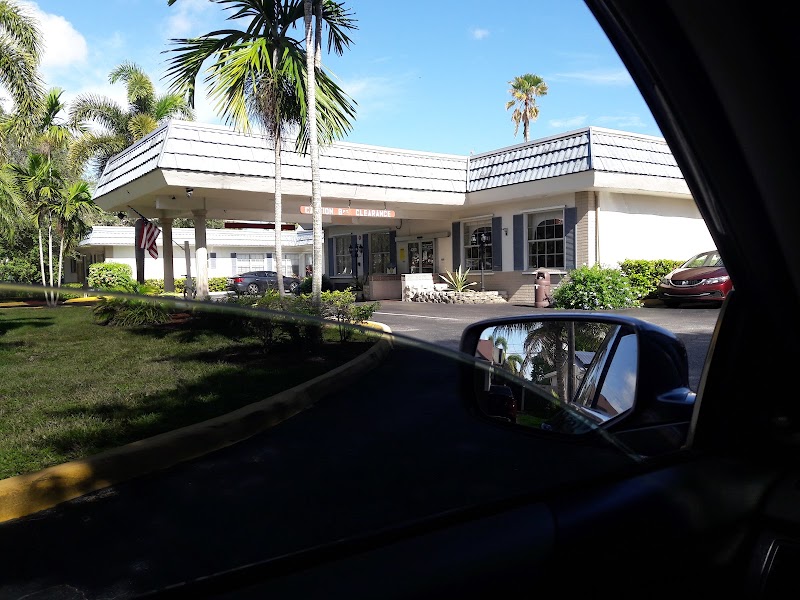
How Does Emerald Compare to Other Florida Nursing Homes?

Compared to the 100 nursing homes in Florida, EMERALD NURSING AND REHABILITATION CENTER's overall rating (3 stars) is below the state average of 3.2, staff turnover (31%) is significantly lower than the state average of 46%, and health inspection rating (2 stars) is below the national benchmark.

What Should Families Ask When Visiting Emerald?

Based on this facility's data, families visiting should ask: "What changes have been made since the serious inspection findings, and how are you preventing similar issues?" "Can I visit during a mealtime to observe dining assistance and food quality?" "How do you handle medical emergencies, and what is your hospital transfer rate?" "Can I speak with family members of current residents about their experience?" These questions are particularly relevant given the facility's Immediate Jeopardy citations.

Is Emerald Safe?

Based on CMS inspection data, EMERALD NURSING AND REHABILITATION CENTER has documented safety concerns. Inspectors have issued 1 Immediate Jeopardy citation (the most serious violation level indicating risk of serious injury or death). The facility has a 3-star overall rating and ranks #100 of 100 nursing homes in Florida. Families considering this facility should ask detailed questions about what corrective actions have been taken since these incidents.

Do Nurses at Emerald Stick Around?

EMERALD NURSING AND REHABILITATION CENTER has a staff turnover rate of 31%, which is about average for Florida nursing homes (state average: 46%). Moderate turnover is common in nursing homes, but families should still ask about staff tenure and how the facility maintains care continuity when employees leave.

Was Emerald Ever Fined?

EMERALD NURSING AND REHABILITATION CENTER has been fined $89,638 across 12 penalty actions. This is above the Florida average of $33,975. Fines in this range indicate compliance issues significant enough for CMS to impose meaningful financial consequences. Common causes include delayed correction of deficiencies, repeat violations, or care failures affecting resident safety. Families should ask facility leadership what changes have been made since these penalties.

Is Emerald on Any Federal Watch List?

EMERALD NURSING AND REHABILITATION CENTER is not on any federal watch list. The most significant is the Special Focus Facility (SFF) program, which identifies the bottom 1% of nursing homes nationally based on persistent, serious quality problems. Not being on this list means the facility has avoided the pattern of deficiencies that triggers enhanced federal oversight. This is a positive indicator, though families should still review the facility's inspection history directly.