
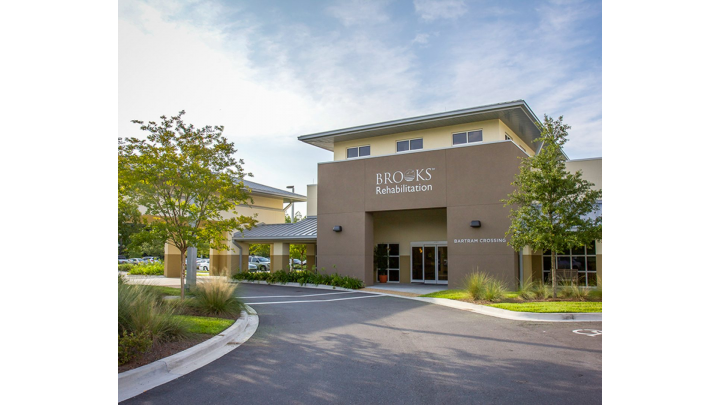
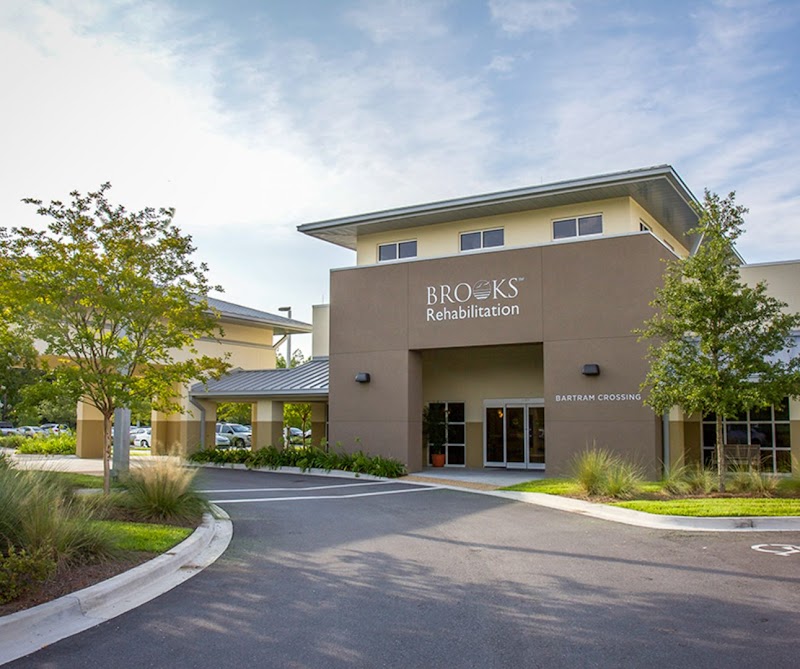

BARTRAM CROSSING

6209 BROOKS BARTRAM DRIVE, JACKSONVILLE, FL 32258 (904) 824-3326
Non profit - Corporation 100 Beds Independent Data: November 2025
Trust Grade
93/100
#4 of 690 in FL
Last Inspection: May 2024

Within standard 12-15 month inspection cycle. Federal law requires annual inspections.

Overview

Bartram Crossing in Jacksonville, Florida, has earned an impressive Trust Grade of A, indicating it is highly recommended and performing excellently compared to other facilities. It ranks #4 out of 690 nursing homes in Florida, placing it firmly in the top tier, and is the best option among the 34 facilities in Duval County. The facility is on an improving trend, with issues decreasing from three in 2023 to just one in 2024. Staffing is notably strong, with a 5-star rating and a turnover rate of just 27%, which is well below the state average. However, there have been some concerning incidents related to food safety practices, such as failing to date mark open bread and clean equipment properly, which could pose health risks. Despite these weaknesses, Bartram Crossing maintains a solid reputation overall, with no fines reported and average RN coverage, which suggests that while there are areas for improvement, the facility is committed to providing quality care.

Trust Score
A
93/100
In Florida
#4/690
Top 1%
Safety Record
Low Risk
No red flags
Inspections
Getting Better
3 → 1 violations
Staff Stability
✓ Good
27% annual turnover. Excellent stability, 21 points below Florida's 48% average. Staff who stay learn residents' needs.
Penalties
✓ Good
No fines on record. Clean compliance history, better than most Florida facilities.
Skilled Nurses
✓ Good
Each resident gets 51 minutes of Registered Nurse (RN) attention daily — more than average for Florida. RNs are trained to catch health problems early.
Violations
⚠ Watch
11 deficiencies on record. Higher than average. Multiple issues found across inspections.
★★★★★
5.0
Overall Rating
★★★★★
5.0
Staff Levels
★★★★★
5.0
Care Quality
★★★★☆
4.0
Inspection Score
Stable
2023: 3 issues
2024: 1 issues

The Good

  • 5-Star Staffing Rating · Excellent nurse staffing levels
  • 5-Star Quality Measures · Strong clinical quality outcomes
  • Low Staff Turnover (27%) · Staff stability means consistent care
  • Full Sprinkler Coverage · Fire safety systems throughout facility
  • No fines on record
  • Staff turnover is low (27%)

    21 points below Florida average of 48%

Facility shows strength in staffing levels, quality measures, staff retention, fire safety.

The Bad

No Significant Concerns Identified

This facility shows no red flags. Among Florida's 100 nursing homes, only 1% achieve this.

The Ugly 11 deficiencies on record

May 2024 1 deficiency
CONCERN (F)

Potential for Harm - no one hurt, but risky conditions existed

Food Safety (Tag F0812)

Could have caused harm · This affected most or all residents

Based on kitchen food service observations, staff interviews, facility document review, and facility policy and procedure review, the facility failed to follow proper sanitation and food handling prac...

Read full inspector narrative →
Based on kitchen food service observations, staff interviews, facility document review, and facility policy and procedure review, the facility failed to follow proper sanitation and food handling practices to prevent the outbreak of foodborne illness with the potential to affect all residents who consumed foods from the facility, by failing to 1) Date mark numerous open bundles of bread on the bread rack, 2) Clean grease buildup inside and around the door area of the convection oven, and 3) Clean food debris stuck on and around the safety guard of the mixer. Food handling and sanitation is important in health care settings serving nursing home residents. Unsafe food handling practices represent a potential source of pathogen exposure. The findings include: A tour of the kitchen was conducted on 05/22/2024 at 7:00 AM. During the tour, the bread rack adjacent to the juice machine was observed with four open bundles of bread with no date markings. The inside door area and oven floor of the convection oven next to the steamer was covered with food grime and grease build-up. The mixer located next to the prep table was observed with food debris stuck on and around the safety guard. During the same tour, a test tray left the kitchen on the 100 hallways cart at 7:45 AM. The 100 hallways received their food cart at 7:46 AM. This surveyor received the test tray at 8:10 AM. Milk received on the food tray had a temperature of 56°F. The milk was discarded. At 8:20 AM, one milk carton pulled from a plastic bin with no ice, filled with other cartons of milk sitting on top of a cart and used for the tray line, tested at 62°F. All milk in the plastic bin was discarded. (Photographic evidence obtained) A tour of the kitchen was conducted on 05/23/2024 at 10:30 AM. New observations of eight open bundles of bread were observed on the bread rack with no date markings. The same observations as were made on 05/22/2024, were made again of the inside door area and oven floor of the convection oven covered with food grime and grease build-up, and the mixer located next to the prep table with food debris stuck on and around the safety guard. (Photographic evidence obtained) An interview was conducted with [NAME] A on 05/23/2024 at 10:17 AM. She stated when bread was opened, used, and placed back on the bread rack, it was closed tightly and placed on the rack. The cooks were responsible for cleaning the kitchen and food service equipment. The ovens were cleaned nightly. She acknowledged cleaning the oven once. She stated a staff member from the hospital came to the facility and deep cleaned the ovens; she was not sure when. The mixer was cleaned after each use by the staff member who used it, maybe once a week. An interview was conducted with the Executive Chef on 05/23/2024 at 11:00 AM. He stated the facility policy for date marking bread was to label, date, and discard after three days. Bread should be sealed tight, labeled and dated with a date used first sticker. Kitchen and food service equipment was wiped down nightly, sprayed and scrubbed every two weeks. The mixer was used maybe three times weekly and cleaned after each use. During an interview with the Certified Dietary Manager (CDM) on 05/23/2024 at 11:23 AM, the CDM confirmed the facility policy for date marking was to seal and label with date opened. Bread was discarded if not properly resealed. The cooks, chef, and the CDM were responsible for cleaning the kitchen and food service equipment. General cleaning was done weekly and deep cleaning was completed monthly. The cook and chef were responsible for cleaning the mixer after each use and deep cleaned weekly and monthly. A review of the facility's policy and procedure titled Work Area and Equipment Sanitation (last reviewed 12/2022), revealed: Food Service maintains a high standard of cleanliness of equipment, work areas, and floor. Each employee is responsible for cleaning his/her own work area and equipment. (Copy obtained) Reference: FDA (U.S. Food and Drug Administration) Food Code 2022 Annex 5. Conducting Risk-Based Inspections Annex 5 - C. Intervention Strategies for Achieving Long-term Compliance. 4. Establish First-In-First-Out (FIFO) Procedures. Page 31. https://www.fda.gov/media/164194/download (Accessed on 5/24/2024): Product rotation is important for both quality and safety reasons. First-In-First Out (FIFO) means that the first batch of product prepared and placed in storage should be the first one sold or used. Date marking foods as required by the Food Code facilitates the use of a FIFO procedure in refrigerated, ready-to-eat, TCS foods. The FIFO concept limits the potential for pathogen growth, encourages product rotation, and documents compliance with time/temperature requirements. Equipment, Utensils, and Linens. 4-601.11 Equipment, Food-Contact Surfaces, Nonfood-Contact Surfaces, and Utensils. 4-6 Cleaning of Equipment and Utensils, 4-601 Objective, Equipment Food-Contact Surfaces and Utensils. (A) Equipment Food Contact Surfaces and Utensils shall be clean to sight and touch. (B) The food-contact surfaces of cooking equipment and pans shall be kept free of encrusted grease deposits and other soil accumulations. (C) Nonfood-contact surfaces of equipment shall be kept free of an accumulation of dust, dirt, food residue, and other debris. .
Nov 2023 3 deficiencies
CONCERN (D) 📢 Someone Reported This

A family member, employee, or ombudsman was alarmed enough to file a formal complaint

Potential for Harm - no one hurt, but risky conditions existed

Transfer Notice (Tag F0623)

Could have caused harm · This affected 1 resident

Based on record reviews, interviews, and facility policy and procedure review, the facility failed to notify the resident, the resident's representative, and the office of the Long-Term Care Ombudsman...

Read full inspector narrative →
Based on record reviews, interviews, and facility policy and procedure review, the facility failed to notify the resident, the resident's representative, and the office of the Long-Term Care Ombudsman of the resident's transfer and the reasons for the transfer in writing for one (Resident #1) of three residents reviewed for hospitalization. The findings include: A review of Resident #1's medical record found he was admitted from an acute care hospital to the facility on 9/16/23. He had diagnoses including, but not limited to, encounter for orthopedic aftercare following surgical amputation, acquired absence of other right toes, Human Immunodeficiency Virus (HIV), unspecified Atrial fibrillation, Peripheral Vascular Disease (PVD) and benign prostatic hyperplasia without lower urinary tract symptoms. Resident #1's medical record revealed that he had his wife designated as his primary emergency contact and responsible party. A review of the resident's nursing progress notes revealed that on 9/20/23 at 2:09 pm, Employee E, Registered Nurse (RN)/Unit Manager (UM) was summoned by the therapist who was performing exercises in the resident's room. Resident #1 was unable to perform his exercises due to bleeding sores all over his body. Upon assessment, the resident's upper thigh had more wounds and they were profusely bleeding. Resident #1 complained of itching and kept scratching his sores. He was using napkins to stop the bleeding site. The resident was not following instructions and kept picking the sores. The doctor was made aware and ordered the resident sent to the hospital for evaluation and proper management. The wife was notified and became upset. She refused for the husband to go to the referred hospital because they had had a bad experience, and they did not receive good service in the past. The Director of Nursing (DON), Assistant Director of Nursing (ADON) and Medical Director were notified and decided to send the resident to the hospital from where he was admitted to the facility. The note indicated, At this time, we are not able to meet the resident's needs. He requires more monitoring and proper management. (Copy obtained) The DON was interviewed on 10/12/23 at 5:27 pm who stated she contacted the hospital discharge planner. She confirmed Resident #1 physically left the faciity on 9/20/2023. She stated the facility contacted the hospital to advise them they could not meet the resident's needs because of the bleeding, and it was then the hospital advised the facility that the resident was being admitted . The DON stated the facility also notified the resident's wife of the discharge. She was asked to provide a copy of the discharge summary or Nursing Home Transfer and Discharge Notice AHCA form 3120-0002. She stated the resident received the discharge forms. On 10/12/23 at 5:46 pm, the DON and Social Services Director (SSD) returned with a blank Nursing Home Transfer and Discharge Notice AHCA form 3120-0002. They were asked if it was the form the surveyor requested. The purpose of the form was explained to staff. The SSD stated they would need to contact medical records. On 10/12/23 at 6:01 pm, the DON stated they were not able to locate a discharge summary or Nursing Home Transfer and Discharge Notice AHCA form 3120-0002 for Resident #1. She confirmed Resident #1 was not readmitted to the facility and stated they were unsure of his current location. She confirmed he should have received the form and stated there isn't a separate policy to address hospital transfers. A phone interview was conducted with Resident #1's wife on 11/3/23 at 10:06 am. She stated the facility informed her that her husband was being transferred to the hospital for treatment on 9/20/23. She was not aware that they were not allowing him to return until she received a call from the hospital the following day. She stated she never received a phone call or any paperwork from the facility regarding a bed-hold or discharge. She stated the hospital informed her that the facility refused to accept the resident back because he was HIV positive and bleeding profusely from his wounds. She stated the resident had MRSA which left him with the sores on his body. However, he does not have HIV and should have been allowed to return to the facility for wound care. The wife stated the resident was discharged home from the hospital after the facility continuously refused to accept him back. She stated no one from the facility has contacted her regarding the resident's status nor had she received anything from them since he was discharged . On 11/3/23 at 10:36 am, a phone interview was conducted with the Ombudsman. She stated as of today, she has not received a notice of discharge for Resident #1 from the facility. She added that she has made attempts to make herself available to the facility for transfer and discharge training. Review of the facility's policy for Notice of Transfer and Discharge (policy BC ADM-005) effective 6/13 and last review/update on 6/23 revealed: Purpose: To develop a process to notify a Guest/Resident about a Notice of a Transfer and or Discharge from facility. a. The transfer is necessary for the Guest/Resident's welfare and the Guest/Resident/Elder's needs cannot be met in the facility; 2. The Guest/Resident and/or representative (sponsor) will be provided with the following information: a. The reason for the transfer or discharge; b. The effective date of the transfer or discharge; c. The location to which the Guest/Resident is being transferred or discharged ; d. The name, address, and telephone number of the state long-term care ombudsman; A resident has the right to request an ombudsman to review the notice. If the resident request notice to be reviewed by the local ombudsman the facility will transmit the request to review within 24 hours to the local district office. In emergency discharge situation a request for ombudsman review will be transmitted to the ombudsman by telephone or in person. (Copy obtained)
CONCERN (D) 📢 Someone Reported This

A family member, employee, or ombudsman was alarmed enough to file a formal complaint

Potential for Harm - no one hurt, but risky conditions existed

Deficiency F0625 (Tag F0625)

Could have caused harm · This affected 1 resident

Based on record reviews, interviews, and facility policy and procedure review, the facility failed to provide written information prior to hospital transfer that notified the resident/resident represe...

Read full inspector narrative →
Based on record reviews, interviews, and facility policy and procedure review, the facility failed to provide written information prior to hospital transfer that notified the resident/resident representative of the facility's bed hold policy for one (Resident #1) of three residents reviewed for hospital transfer. The findings include: A review of Resident #1's medical record found he was admitted from an acute care hospital to the facility on 9/16/23. He had diagnoses including, but not limited to, encounter for orthopedic aftercare following surgical amputation, acquired absence of other right toes, Human Immunodeficiency Virus (HIV), unspecified Atrial fibrillation, Peripheral Vascular Disease (PVD) and benign prostatic hyperplasia without lower urinary tract symptoms. Resident #1's medical record revealed that he had designated his wife as his primary emergency contact and responsible party. A discharge minimum data set (MDS) assessment with a reference date of 9/20/23, indicated unplanned discharge, return anticipated. Cognitive skills for decision making: moderately impaired. The activities of daily living (ADL) section revealed Resident #1 required supervision with bed mobility, transfers, locomotion on/off the unit, walking in the room/corridor, toilet use and personal hygiene. Resident was coded No for risk of pressure ulcers/injuries and unhealed pressure ulcers/injuries. The brief interview for mental status (BIMS) was not assessed. (Copy obtained) Resident #1 was care planned on 9/17/23 with focuses on bleeding due to use of anti-coagulants, impaired skin, HIV infection, and decreased ADL self-performance. Goals included reduced risk for signs and or symptoms of abnormal bleeding and no skin breakdown/impairment by next review date. Interventions included medications as ordered, report to MD any signs/symptoms of abnormal bleeding, turning and repositioning during care rounds, and weekly skin sweeps and monitor. (Copy obtained) A review of the resident's nursing progress notes revealed that on 9/20/23 at 2:09 pm, Employee E, Registered Nurse (RN)/Unit Manager (UM) was summoned by the therapist who was performing exercises in the patient's room. Resident #1 was unable to perform his exercises due to bleeding sores all over his body. Upon assessment, the resident's upper thigh had more wounds and they were profusely bleeding. The resident complained of itching and kept scratching his sores. He was using napkins to stop the bleeding site. The resident was not following instructions and kept picking the sores. The doctor was made aware and ordered the resident sent to the hospital for evaluation and proper management. The wife was notified and became upset. She refused for the husband to go to the referred hospital because they had had a bad experience, and they did not receive good service in the past. The Director of Nursing (DON), Assistant Director of Nursing (ADON) and Medical Director were notified and decided to send the resident to the hospital from which he was admitted to the facility. The note indicated, At this time, we are not able to meet the resident's needs. He requires more monitoring and proper management. (Copy obtained) A phone interview was conducted with Resident #1's wife on 11/3/23 at 10:06 am. She stated the facility informed her that her husband was being transferred to the hospital for treatment on 9/20/23. She was not aware that they were not allowing him to return until she received a call from the hospital the following day. She stated she never received a phone call or any paperwork from the facility regarding a bed-hold or discharge. She stated the hospital informed her that the facility refused to accept the resident back because he was HIV positive and bleeding profusely from his wounds. She stated the resident had MRSA which left him with the sores on his body. However, he does not have HIV and should have been allowed to return to the facility for wound care. The wife stated the resident was discharged home after the facility continuously refused to accept him back. She stated no one from the facility has contacted her regarding the resident's status nor had she received anything from them since he was discharged . Further review of Resident #1's record revealed there was no bed hold notice provided to the resident or representative notifying them of the facility's bed hold policy, the duration the bed would be held in his absence, or any daily room rate should the resident/representative choose to hold a bed while hospitalized . An interview was conducted with Employee G, the Business Office Manager (BOM) on 11/3/23 at 12:13 pm, who stated the resident was not contacted regarding a bed hold for his transfer on 9/20/23. The BOM stated she was not sure why the bed hold was not done. She stated typically when a resident goes out to the hospital, the business office will contact the resident or their family and follow up with admissions to see if the resident will be returning to facility. She again stated she was not sure why the resident was not contacted about a bed hold. She stated the business office, or the nurse manager will usually communicate with the patient or responsible party. The BOM stated the bed-hold can be signed upon admission; however, the business office may still follow-up with residents when they go out to the hospital. She again confirmed there was no bed-hold for Resident #1 and that it would have been appropriate for him to receive the bed-hold upon being transferred to the hospital. During an interview with the Administrator on 11/3/23 at 1:49 pm, he stated the resident wasn't allowed to return due to his excessive bleeding. He stated he and the DON spoke to the discharge planner at the hospital regarding their concerns. He felt the hospital did not accurately assess the resident and instead were inappropriately attempting to send him back to the facility. He felt the hospital needed to see the resident's bleeding. He acknowledged the facility refused to accept the resident back. He stated under normal circumstances Resident #1 would have been allowed to return; however, due to the excessive bleeding, they felt it was not safe for him to return to the facility. The administrator stated he was not sure if a bed hold was issued. He stated that would have come from the business office. Review of the facility's policy on bed holds which is included in all admissions packet revealed: K. Bed Holds. You may need to be absent from the Skilled Nursing Facility temporarily for hospitalization or therapeutic leave. You may request that we hold your bed during this time. This is known as a bed hold. You shall be given notice of the bed hold option at the time of admission and upon hospitalization or therapeutic leave. (Copy obtained) Review of the facility's policy for Bed Holds and Notice Acknowledgement (policy BC ADM-001) effective 6/23 and last review/update on 7/23 revealed: Policy: Facility will follow Florida Policy on Bed Holds and Notice Acknowledgement. D. Facility Bed Hold Policy - The facility will reserve the bed of a resident who has been transferred to a hospital or who otherwise leaves the facility with the expectation of returning in the near future, as long as payment is made in advance to reserve the bed in accordance with the facility's bed hold charge. The resident/responsible party agrees that in the event of such temporary leave from the facility the facility shall reserve the bed until such time that the advance payment ceases to cover the bed hold or the facility is notified by the resident/responsible party that the bed should no longer be reserved. The facility will similarly reserve the bed, as long as payment is made in advance in anticipation of pending admission. The facility bed hold charge is FULL Price per day. (Copy obtained) .
CONCERN (D) 📢 Someone Reported This

A family member, employee, or ombudsman was alarmed enough to file a formal complaint

Potential for Harm - no one hurt, but risky conditions existed

Safe Transfer (Tag F0626)

Could have caused harm · This affected 1 resident

**NOTE- TERMS IN BRACKETS HAVE BEEN EDITED TO PROTECT CONFIDENTIALITY** Based on record reviews and interviews, the facility failed to permit a resident to return after a transfer to the hospital for ...

Read full inspector narrative →
**NOTE- TERMS IN BRACKETS HAVE BEEN EDITED TO PROTECT CONFIDENTIALITY** Based on record reviews and interviews, the facility failed to permit a resident to return after a transfer to the hospital for one (Resident #1) of three residents reviewed for transfer/discharge. The findings include: A review of Resident #1's medical record found he was admitted from an acute care hospital to the facility on 9/16/23. He had diagnoses including, but not limited to, encounter for orthopedic aftercare following surgical amputation, acquired absence of other right toes, Human Immunodeficiency Virus (HIV), unspecified Atrial fibrillation, Peripheral Vascular Disease (PVD) and benign prostatic hyperplasia without lower urinary tract symptoms. A telephone interview was conducted with the hospital discharge planner on 10/12/23 at 10:26 am regarding Resident #1. She stated the resident was previously sent to the hospital on 9/18/23 and returned to the facility the same day. Resident #1 returned to the hospital emergency department on 9/20/23 at approximately 3:30 pm for observation. The resident was there less than 30 minutes when the doctor said he was stable and that there was no medical reason for him to remain at the hospital. She said when they contacted the facility's Director of Admissions and Administrator, they declined to accept the resident back. She stated neither could provide a clear reason why they wouldn't readmit the resident. She stated the hospital made attempts to find a long-term acute care center for the resident, but he didn't qualify for admission. As a result, the resident remained at the hospital until the doctor ordered him to be discharged home with home health. Resident #1's medical record revealed that he had designated his wife as his primary emergency contact and responsible party. A discharge minimum data set (MDS) assessment with a reference date of 9/20/23, indicated unplanned discharge, return anticipated. Cognitive skills for decision making: moderately impaired. The activities of daily living (ADL) section revealed Resident #1 required supervision with bed mobility, transfers, locomotion on/off the unit, walking in the room/corridor, toilet use and personal hygiene. Resident was coded No for risk of pressure ulcers/injuries and unhealed pressure ulcers/injuries. The brief interview for mental status (BIMS) was not assessed. (Copy obtained) Resident #1 was care planned on 9/17/23 with focuses on bleeding due to use of anti-coagulants, impaired skin, HIV infection, and decreased ADL self-performance. Goals included reduced risk for signs and or symptoms of abnormal bleeding and no skin breakdown/impairment by next review date. Interventions included medications as ordered, report to MD any signs/symptoms of abnormal bleeding, turning and repositioning during care rounds, and weekly skin sweeps and monitor. (Copy obtained) A review of the resident's nursing progress notes revealed that on 9/20/23 at 2:09 pm, Employee E, Registered Nurse (RN)/Unit Manager (UM) was summoned by the therapist who was performing exercises in the resident's room. Resident #1 was unable to perform his exercises due to bleeding sores all over his body. Upon assessment the resident's upper thigh had more wounds and they were profusely bleeding. The resident complained of itching and kept scratching his sores. He was using napkins to stop the bleeding site. The resident was not following instructions and kept picking the sores. The doctor was made aware and ordered the resident sent to the hospital for evaluation and proper management. The wife was notified and became upset. She refused for the husband to go to the referred hospital because they had had a bad experience, and they did not receive good service in the past. The Director of Nursing (DON), Assistant Director of Nursing (ADON) and Medical Director were notified and decided to send the resident to the hospital from where he was admitted to the facility. The note indicated, At this time, we are not able to meet the resident's needs. He requires more monitoring and proper management. (Copy obtained) An interview was conducted with Employee E, RN/UM on 10/12/23 at 4:06 pm. She confirmed Resident #1 was sent to the hospital on 9/20/23. She stated it was his second time going to the hospital after being admitted on [DATE]. He was sent to the hospital on 9/18/2023 for excessive bleeding and returned to the facility that same day. However, he wasn't readmitted after the hospitalization on 9/20/2023 because the facility could not meet his needs due to the profuse bleeding. She stated the hospital didn't treat the resident and every time they would touch him, he would bleed. The resident was confused and was picking at his skin and the facility was worried about infections. She stated there was no discharge paperwork because the resident went out to the hospital. She confirmed the resident had not returned to the facility. An interview was conducted with the Social Services Director/Discharge Planner (SSD) on 10/12/23 at 5:07 pm, who was familiar with Resident #1. She stated he went out to the hospital twice, adding he went once and came back. Then he went back and was admitted . The SSD stated she had been out and did not see him for a full assessment. She stated if a resident is transferred to the hospital, it's anticipated that they will return to the facility. She then retrieved a Nursing Home Transfer and Discharge Notice AHCA form 3120-0002 and stated that the resident should have one on file. She then left the room to look for the form. An interview was conducted on 10/12/23 at 5:27 pm with the Director of Nursing (DON), who stated she contacted the hospital discharge planner. She confirmed Resident #1 physically left the faciity on 9/20/2023. She stated the facility contacted the hospital to advise them they could not meet the resident's needs because of the bleeding, and it was then the hospital advised the the facility that the resident was being admitted . The DON stated the facility also notified the resident's wife of the discharge. She was asked to provide a copy of the discharge summary or Nursing Home Transfer and Discharge Notice AHCA form 3120-0002. She stated the resident received the discharge forms. On 10/12/23 at 5:46 pm, the DON and SSD returned with a blank Nursing Home Transfer and Discharge Notice AHCA form 3120-0002. They were asked if it was form requested by the surveyor. The purpose of the form was explained to staff. The SSD stated they would need to contact medical records. On 10/12/23 at 6:01pm, the DON stated they were not able to locate a discharge summary or Nursing Home Transfer and Discharge Notice AHCA form 3120-0002 for Resident #1. She confirmed Resident #1 was not readmitted to the facility and stated they were unsure of his current location. She confirmed he should have received the form and stated there isn't a separate policy to address hospital transfers. A phone interview was conducted with Resident #1's wife on 11/3/23 at 10:06 am. She stated the facility informed her that her husband was being transferred to the hospital for treatment on 9/20/23. She was not aware that they were not allowing him to return until she received a call from the hospital the following day. She stated she never received a phone call or any paperwork from the facility regarding a bed-hold or discharge. She stated the hospital informed her that the facility refused to accept the resident back because he was HIV positive and bleeding profusely from his wounds. She stated the resident had MRSA which left him with the sores on his body. However, he does not have HIV and should have been allowed to return to the facility for wound care. The wife stated the resident was discharged home after the facility continuously refused to accept him back. She stated no one from the facility has contacted her regarding the resident's status nor had she received anything from them since he was discharged . An interview was conducted with Employee G, the Business Office Manager (BOM) on 11/3/23 at 12:13 pm, who stated that Resident #1 was not contacted regarding a bed hold for his transfer on 9/20/23. She stated she was not sure why the bed hold was not done. She stated typically when a resident goes out to the hospital, the business office will contact the resident or their family and follow up with admissions to see if the resident will be returning to facility. The BOM again stated she was not sure why the resident was not contacted about a bed hold. She stated the business office, or the nurse manager will usually communicate with the patient or responsible party. She stated the bed-hold can be signed upon admission; however, the business office may still follow-up with residents when they go out to the hospital. She again confirmed there was no bed-hold for Resident #1 and that it would have been appropriate for him to receive the bed-hold upon being transferred to the hospital. During a follow up interview with the DON on 11/3/23 at 12:35 pm, she again confirmed that Resident #1 was sent to the hospital for treatment for excessive bleeding. She stated the resident needed a higher level of care for his wounds. She stated the facility felt the hospital needed to appropriately assess the resident's condition instead of returning him to the facility. She confirmed that the bed hold was not discussed again, adding the resident needed a higher level of care. She stated they asked the family to provide a private sitter for the resident, but they could not. She stated the facility also made attempts to provide a private sitter to keep the resident safe; however, they also were unsuccessful. She stated the resident needed one-to-one care and that the facility did not have the staff to support that. During an interview with the Administrator on 11/3/23 at 1:49 pm, he stated that Resident #1 wasn't allowed to return due to his excessive bleeding. He stated he and the DON spoke to the discharge planner at the hospital regarding their concerns. He felt the hospital did not accurately assess the resident and instead were inappropriately attempting to send him back to the facility. He stated they felt the hospital needed to see the resident's bleeding. The administrator acknowledged the facility refused to accept the resident back. He stated under normal circumstances he would have been allowed to return; however, due to the excessive bleeding, they felt it was not safe for him to return to the facility. He stated he was not sure if a bed hold was issued. He stated that would have come from the business office. Further record review revealed the facility failed to enter a bed hold during Resident #1's hospitalization. Per billing census, a stop billing was entered on 9/20/2023. .
Jun 2022 4 deficiencies
CONCERN (D)

Potential for Harm - no one hurt, but risky conditions existed

Quality of Care (Tag F0684)

Could have caused harm · This affected 1 resident

**NOTE- TERMS IN BRACKETS HAVE BEEN EDITED TO PROTECT CONFIDENTIALITY** Based on interviews and record reviews, the facility failed to ensure that residents received treatment and care in accordance w...

Read full inspector narrative →
**NOTE- TERMS IN BRACKETS HAVE BEEN EDITED TO PROTECT CONFIDENTIALITY** Based on interviews and record reviews, the facility failed to ensure that residents received treatment and care in accordance with professional standards of practice and the comprehensive person-centered care plan, by failing to ensure that two (Residents #23 and #73) of 25 sampled residents received care as ordered by the physician. Resident #73 had orders for follow up with oncology due to a history of breast cancer, and Resident #23 had orders for laboratory diagnostic tests. These orders were not carried out. The findings include: 1. On 06/21/22 at 3:41 PM, Resident #23 stated she did not always get her prescribed cream. Staff told her they didn't have it on hand and would use her personal Vaseline ointment instead. A review of Resident #23's clinical record revealed she was admitted on [DATE] with a re-entry on 7/20/19. Her diagnoses included inclusion body myositis, contracture of muscle unspecified upper arm, paranoid schizophrenia, and inclusive body mastitis. A review of the active physician's orders revealed an order for Neosporin ointment, apply to left breast nipple topically two times a day; skin prep bilateral heals every shift; wheelchair cushion for pressure reduction, clean perineal area following each incontinence episode. A review of the Quarterly Minimum Data Set (MDS) assessment, dated 5/1/22, revealed that the resident had a Brief Interview for Mental Status (BIMS) score of 15 out of a possible 15 points, indicating she was cognitively intact. She also required extensive assistance for bed mobility, transfers and toileting. A Nursing Progress Note, dated 6/3/22, indicated the certified nursing assistant (CNA) noted that the resident had a small amount of brownish drainage from her left breast with no complaints of pain noted. A Nursing Progress Note, dated 6/4/22, read, Received report this morning from nurse that resident had some brown discharge from left nipple, assessed patient, noted with her blouse sticking to the nipple, noted blood coming out. Called physician (MD). New orders to apply Neosporin ointment twice daily (BID) and may need a mammogram in future. An Internal Medicine Progress Note, dated 6/19/22, indicated that Resident #23 complained of some bleeding from her right and left breast; some pain worse when staff were transferring her using a Hoyer (mechanical) lift. The resident had missed an appointment with oncology. The note continued, stating bleeding was observed from the breast; resident has a history of breast cancer. Discussed with nurse to arrange follow-up for the resident-she had missed a couple times already. (Copy obtained) In an interview on 6/23/22 at 2:23 PM, Resident # 23 stated she was aware that she had breast cancer and she was supposed to have surgery, but every time she tried to go to her appointments there was no transportation, therefore, she missed most of her appointments. She added that she believed her condition had worsened since she was pain and had discharge from her left breast. She lifted her blouse and revealed an allevyn foam dressing on the left nipple. The dressing was dated 6/20/22. She stated she had spoken to her physician regarding the need to get assistance scheduling her oncology appointment, but she had not received any feedback. In an interview with Licensed Practical Nurse (LPN) D on 6/23/22 at 2:27 PM, she was asked to explain the process for making resident appointments. She stated the person who received the appointment order, entered it in the resident's electronic medical record. After the order was entered, the individual responsible for scheduling made the appointment. When asked if Resident #23 had any appointments, she stated this resident normally made her own appointments. LPN D was asked who/which staff member was responsible for following up to ensure that the resident scheduled the appointments as ordered. LPN D stated, I am not sure. I will ask the unit manager. She checked the resident's record and stated, There are no orders for appointments. She was asked to review Resident #23's physician's progress note. LPN D confirmed that the nurse who was informed of the issue should have entered the order in the electronic medical record. When asked about the drainage and the dressing on the resident's breast, LPN D stated,I am not aware of any drainage. The resident has orders for Neosporin under her breast, and I have not put it on today. There is no dressing order. She added that she would get with the physician and the unit manger for order clarification and then schedule the appointment. In an interview with LPN C/Unit Manager on 6/23/22 at 2:30 PM, he confirmed that there were no appointment orders or appointments scheduled for Resident #23. He stated he would follow up as soon as possible. When asked about the dressing on the resident's breast, he stated he was not aware that the resident had any drainage from her breast. He added that he would follow up with the resident. In an interview with the Director of Nursing (DON) on 6/23/22 at 2:46 PM, she was asked who was responsible for reviewing residents' charts. She stated the 11:00 PM - 7:00 AM shift nurses were expected to review the progress notes nightly and transcribe/carry out the orders if they had not been completed. When asked about Resident # 23, The DON stated this resident made her own appointments. When asked if there was a process in place to ensure that the resident scheduled the appointments as ordered, she stated she would follow up with the unit manager since she did not see any orders in the electronic medical record. On 6/23/22 at 4:04 PM, a follow-up interview was conducted with the DON. She stated Resident #23 was agreeable to having the facility book her an appointment. She confirmed that there was no order for the allevyn dressing, but the resident wanted it on. New orders were obtained for the dressing. A Nursing Progress Note, dated 6/23/22, read,Per physician progress note dated 6/19/22, discussed with the nurse to arrange follow-up for patient due to bleeding from the breast with history of breast cancer. I called the physician and order given for patient to have oncology consult for the left breast nipple drainage as well as in-house wound care nurse to evaluate. (Copy obtained) 2. A review of Resident #73's clinical record revealed an admission on [DATE] with a re-entry on 2/27/16. Her primary diagnosis was hemiplegia and hemiparesis following unspecified cerebrovascular disease affecting unspecified cite. Her secondary diagnoses included muscle weakness, anxiety disorder, pathological fracture, history of falls, contracture of muscle, and major depressive disorder. A review of the June 2022 Physician's Order Sheets revealed active physician's orders for the following: Lexapro 20 mg (milligrams) QD (daily) for depression, Eliquis 2.5 mg every 12 hours for deep vein thrombosis (DVT - blood clot), megace 400 mg one time a day for poor appetite, and Dextromethorphan-quinidine 20-10 mg every 12 hours for pseudobulbar affect (PBA - sudden episodes of uncontrollable and inappropriate laughing or crying), and buspirone 15 mg BID (twice daily) for anxiety. A review of the Care Plan revealed that Resident #73 required extensive to total assistance with Activities of Daily Living (ADL). Resident #73 was being followed by a psychiatry services with the most recent visit conducted on 6/16/22. Plan: Continue medication Lexapro for depression, buspirone for anxiety, dextromethorphan-quinidine for PBA, and megace for poor appetite. A Nursing Progress Note, dated 6/3/22, indicated that a CNA reported vaginal bleeding in brief, writer checked the brief and resident had slight bleeding coming from the vaginal area. Writer notified the physician and order given for vaginal ultrasound. Writer was informed that the mobile imaging company did not perform those ultrasounds. Physician notified of updates. Physician mentioned to just monitor area. An Internal Medicine Progress note, dated 6/18/22, read , Resident is stable. Lab work Monday. In an interview with LPN B on 6/23/22 at 1:55 PM, she was asked for the recent laboratory results for Resident #23. She provided results dated 1/25/22. She checked the physician's orders and stated there were no new orders. When asked about the physician's progress note dated 6/18/22, she stated the night shift nurses were supposed to conduct chart audits and enter any orders in the electronic medical record. She stated the laboratory orders were also entered in the lab requisition book for the laboratory staff to sign after obtaining a specimen. LPN B proceeded to check the lab requisition book and stated there were no lab draws requested for Resident #73 on 6/20/22. In an interview with the DON on 6/23/22 at 3:06 PM, she was asked about Resident #73's labs indicated in the physician's progress note. She stated the physician would have put the orders in the electronic medical record. She added that at times physicians also gave verbal orders to the nurses. She mentioned that she would contact the physician to follow up. On 6/23/22 at 4:08 PM, a follow-up interview was conducted with the DON. She stated the physician stated he thought he had put the order in the electronic medical record. She added that new orders were received to have the labs carried out on 6/23/22. .
CONCERN (D)

Potential for Harm - no one hurt, but risky conditions existed

Medication Errors (Tag F0758)

Could have caused harm · This affected 1 resident

**NOTE- TERMS IN BRACKETS HAVE BEEN EDITED TO PROTECT CONFIDENTIALITY** Based on interviews and record reviews, the facility failed to review gradual dose reduction recommendations for one (Resident #...

Read full inspector narrative →
**NOTE- TERMS IN BRACKETS HAVE BEEN EDITED TO PROTECT CONFIDENTIALITY** Based on interviews and record reviews, the facility failed to review gradual dose reduction recommendations for one (Resident #73) of five residents selected for psychotropic drug review from a total sample of 25 residents. The findings include: A review of Resident #73's clinical record revealed an admission on [DATE] with a re-entry on 2/27/16. Diagnoses included hemiparesis following unspecified cerebrovascular disease affecting unspecified cite, anxiety disorder, and major depressive disorder. A review of the June 2022 Physician's Order Sheets revealed active physician's orders for the following: Lexapro 20 milligrams (mg) every day (QD) for depression, Eliquis 2.5 mg every 12 hours for Deep Vein Thrombosis (DVT - blood clot), megace 400 mg one time a day for poor appetite, Dextromethorphan-quinidine 20-10 mg every 12 hours for pseudobablor affect PBA (sudden episodes of uncontrollable and inappropriate laughing or crying), and buspirone 15 mg BID (twice daily) for anxiety. A review of the active care plan revealed that the resident was demonstrating generalized dissatisfaction with life, depressed mood, anxious feelings toward surroundings including staff and other residents, and often being short-tempered and frustrated with staff. [Resident #73] also has the potential for complications related to psychotropic drug use. A review of the pharmacy recommendations, dated 3/29/22, revealed a recommendation for: Antidepressant gradual dose reduction attempt for Lexapro 20 mg QD since February, 2016. The guideline further read, All agents falling within the psychoactive category (without regard to indication) fall under gradual dose reduction guidelines. This includes agents within the antidepressant category. (Copy obtained) Another recommendation, dated 5/29/22, read, Federal guidelines state psychopharmacological drugs should have an attempt at a gradual dose reduction (GDR) twice per year for the first year in two different quarters with one month between attempts, then annually thereafter when used to manage behavior, stabilize mood, or treat psychiatric disorders. This resident has been taking the following anxiolytic without GDR: Buspirone 15 mg twice a day (BID) since 3/24/2017. (Copy obtained) A review of Resident #73's Medication Administration Record (MAR) for April 2022 through June 2022, revealed Lexapro 20 milligrams (mg) and buspirone 15 mg BID for anxiety, were administered every day. (Copy obtained) In an interview with the Director of Nursing (DON) on 6/23/22 at 4:00 PM, she confirmed that Resident #73 received Lexapro 20 milligrams (mg) and buspirone 15 mg BID for anxiety. She also confirmed that the GDR recommendations were not reviewed by the physician. A reviewed the facility's policy and procedure titled Psychotropic PRN (As Needed) Medication (Effective May 2017 and last Reviewed on May 2022), revealed, In accordance with State and Federal Guidelines, revised regulation 483.45 (e) Psychotropic Drugs states that based on a comprehensive assessment of a resident, the facility must ensure that: Residents who use psychotropic drugs receive gradual dose reductions, and behavior interventions, unless clinically contraindicated. .
CONCERN (D)

Potential for Harm - no one hurt, but risky conditions existed

Medical Records (Tag F0842)

Could have caused harm · This affected 1 resident

Based on observations, resident and staff interviews, and resident and facility record reviews, the facility failed to maintain complete and accurate medical records for one (Resident #74) of two resi...

Read full inspector narrative →
Based on observations, resident and staff interviews, and resident and facility record reviews, the facility failed to maintain complete and accurate medical records for one (Resident #74) of two residents reviewed for non-pressure skin conditions, from a total of 25 residents in the sample. The findings include: An observation was conducted of Resident #74 on 06/21/22 at 1:29 PM. Multiple bruises were present on both forearms, and he had a dime-sized skin tear on the right forearm above his wrist. When he was asked what happened, Resident #74 replied he did not know; perhaps it was from his hospital bracelet. Observation confirmed a plastic snap-on medical identification bracelet secured loosely around his right wrist. On 06/22/22 at 11:07 AM, Resident #74 was observed in an activity on the 300 hall. The skin tear to his right forearm was visible and open to the air. The identification bracelet was still on the same wrist. Resident #74 reported the nurses were applying a salve to the area, and he would ask them to place the next bracelet on his left arm. An interview was conducted with Certified Nursing Assistant (CNA) A on 06/23/22 at 9:39 AM. She confirmed Resident #74 was assigned to her today on the 7:00 AM to 3:00 PM shift. She reported CNAs looked at residents' skin daily and reported any issues such as redness, discoloration, blisters, etc., to the nurse. CNA A stated Resident #74 was cognitively intact and pretty mobile but sometimes had involuntary movements due to his diagnosis of Parkinson's disease. When asked about the skin tear, CNA A said she was unaware of it but would go look. She confirmed that the bruising and the skin tear should have been reported to the nurse. CNA A went to Resident #74, looked at the area, returned and confirmed its presence. She said she would tell the nurse and proposed removing the wrist band and placing it on his bed and place another one on his wheelchair to prevent further skin tears. Resident # 74 was observed again on 06/23/22 at 11:54 AM. The skin tear was still visible, and the medical identification bracelet was now on the arm of his wheelchair. Resident #74 had a quarterly Minimum Data Set (MDS) assessment with an assessment reference date of 6/11/22. He had a brief interview for mental status score (BIMS) of 14 out of a possible 15 points, reflecting that he was cognitively intact. He had diagnoses including anemia, diabetes mellitus and Parkinson's disease. Section M reflected Resident #74 had no skin issues. Resident #74 was care planned on 6/13/22 for the potential for impaired skin due to his immobility with a goal to have no skin impairment though the next review period. The interventions included to inspect his skin during bathing and to notify the nurse immediately of any new areas. Notify the resident or responsible party of any new areas. (Photographic evidence obtained) Resident #74 had a physician's order, dated 8/25/21, for weekly skin checks on Wednesdays during the 3:00 PM to 11:00 PM shift for skin assessment. Complete a skin note. If skin is not intact, complete a change in condition-skin form. (Photographic evidence obtained) A review of the Treatment Administration Record (TAR) for May 2022 and June 2022 found the weekly skin checks were checked off as having been performed as ordered on June 1, 8 and 15, 2022. (Photographic evidence obtained) Corresponding nursing progress notes were authored on 6/1/22 and 6/15/22. Each noted Resident #74 presented with no new skin issues identified. There was no note for 6/8/22. Progress notes for the months leading up to June were reviewed with no mention of the area. (Photographic evidence obtained) A Skilled Nursing Facility Daily Nursing Documentation note, dated 6/21/22, found section C. #2 Integumentary (skin) asked if the patient had any skin impairment. The answer was No. (Photographic evidence obtained) An interview was conducted with Licensed Practical Nurse (LPN) B, assigned to Resident #74 on the 7:00 AM to 3:00 PM shift at 2:53 PM on 06/23/22. She stated she believed Resident #74 was on a blood thinner. The bruising to his forearms was fairly normal as he had very thin, fragile skin. Skin checks were performed daily on the evening shift for this resident. Any open or reddened areas, skin tears or bruises were to be recorded on the skin report. Skin checks were also noted on the Treatment Administration Record (TAR). Anything significant was written in a skin note. LPN B was told about the skin tear. She stated she did not know about it; when it occurred, or why it was not documented. CNA A had just reported it to her, but she had not gotten to Resident #74 yet, as she was passing medication. LPN B said she would always make a note for any new skin issue, clean it up, notify the physician and follow protocols. She confirmed a note should have been authored when the injury occurred. An interview was conducted with Unit Manager C on 06/23/22 at 4:00 PM. He was asked about resident skin assessments. He pointed out the posted schedule and explained they were to be conducted and documented weekly for every resident per the assigned schedule. All new issues were to be documented. Unit Manager C was asked if he was aware of Resident #74's skin tear, and if he knew when it may have occurred. He replied that he did not know when it occurred. He had seen the wound today and recognized it was not new. He said it should have been documented when it was identified. He acknowledged the highly visible wound was overlooked on multiple shifts by multiple licensed staff over an undetermined period of time. He had no explanation as to why the area was not documented. A review of the facility's policy and procedure Skin Care Protocol (#BC NUR-039 revised 05/2022) revealed: Purpose: The purpose of this policy is to: 1. Maintain optimal skin integrity . 2. Protect skin and tissue against adverse effect of external mechanical force . Policy: Skin of all individuals at risk is systematically inspected upon admission and daily . Procedure: .4. Document wound assessment and interventions daily in the medical record . The policy did not address the facility's weekly skin sweep protocol. .
CONCERN (F)

Potential for Harm - no one hurt, but risky conditions existed

Food Safety (Tag F0812)

Could have caused harm · This affected most or all residents

Based on observations, interviews, and record reviews, the facility failed to ensure proper sanitation and food storage practices were adhered to in order to prevent the outbreak of foodborne illnesse...

Read full inspector narrative →
Based on observations, interviews, and record reviews, the facility failed to ensure proper sanitation and food storage practices were adhered to in order to prevent the outbreak of foodborne illnesses. The findings include: During a tour of the kitchen on 6/21/22 at 10:52 AM with Certified Dietary Manager (CDM) E, he stated he had been employed at the facility for approximately one year. At this time, he identified Food Service Utility Worker F as the primary dishwasher. He stated he completed weekly kitchen audits and all outdated and damaged food should be discarded. An observation of one of the kitchen freezers revealed an open pack of ground turkey labeled use by 6/15/2022. When asked about this, the CDM acknowledged it was out of date and stated, It's not on the menu. There was also an unopened package of veggie burgers labeled use by 6/18/2022. The CDM stated the burgers weren't open and were there just in case a vegetarian was admitted into the facility. As the tour of the kitchen continued, a box labeled red potatoes was observed sitting on a shelf in the kitchen. Upon opening the top of the box, small flying insects immediately exited the box into the air. Several of the flying insects were covering some of the potatoes inside of the box and some of the potatoes were rotten. The CDM looked into the box, observed the conditions, reached into the box, retrieved the rotten potatoes, and discarded them in a nearby garbage can. During an observation of the dishwasher on 6/21/22 at 11:37 AM, a sign was observed posted next to the dishwasher identifying it as a low-temperature machine. Food Service Utility Worker F was asked to test the sanitation level of the dishwasher. He stated he had never done this before and was unsure of how to perform the test. When asked for the sanitation log and who was responsible for performing this test, he replied there was no log, and no one had been performing the test. At this time the CDM interjected and stated the dishwasher was a high-temperature machine and did not require sanitation testing. He stated the rinse temperature should reach 180 degrees. Food Service Utility Worker F began testing the dishwasher running a few items through. Initially, the rinse temperature did not register, so he restarted the process. Again, the rinse temperature did not register. (Photographic evidence obtained) Food Service Utility Worker F stated this had happened in the past. He was asked what he did when this occurred. He replied, I wait until it starts working. After he waited a few more minutes, he attempted to test the dishwasher again by running through more items. This time the rinse temperature registered at 158 degrees Fahrenheit (F). (Photographic evidence obtained) At 11:46 AM, the CDM was asked what should be done. He stated he should call maintenance, as they were responsible for the dishwasher, but neither he nor Food Service Utility Worker F contacted anyone at that time. Food Service Utility Worker F stopped using the dishwasher and turned it off. The tour of the kitchen continued. At 11:56 AM, flying insects were observed near the prep station next to the fryers. The CDM denied seeing the insects. Again, insects were observed in the area and again the CDM denied the observation. While checking the coolers in the kitchen, 19 expired cartons of chocolate milk were observed in the stand-up cooler near the serving station. The CDM confirmed the observation, acknowledging that the items were all expired. During an interview with the CDM on 6/21/22 at 12:06 PM, he was asked about the expired chocolate milk and who was responsible for ensuring that items in the cooler were within the appropriate date range. He stated it should be checked nightly by the nighttime staff. As the tour of the kitchen continued, the surveyor returned to the dishwasher. Food Service Utility Worker F turned on the dishwasher and ran through more items. At this time the rinse temperature registered at 160 degrees F. (Photographic evidence obtained) The CDM stated he would contact maintenance. At this time he was advised to discontinue use of the dishwasher and not use items that were washed while the rinse temperature was not registering. On 6/21/22 at 12:13 PM, Maintenance Director H and Food Service Utility Worker F were observed at the dishwasher. They began testing the dishwasher and again the rinse temperature did not register. On 6/21/22 at 3:03 PM, the CDM advised that he had contacted the dishwasher service company to diagnose and repair the dishwasher. At this time he was again advised that he could not use the dishwasher or anything previously washed when the rinse temperature was not registering. He was advised at this time that he would need to use disposable dishware for meals until the repairs had been made. He nodded and replied, Oh, okay. On 6/21/22 at 4:37 PM, the kitchen staff were observed preparing dinner using regular dishware. The CDM was immediately notified of this and asked why disposable dishware was not being used. He stated he didn't understand, and he assumed the surveyor was referring to the dishes that would be used for breakfast the next day. At 4:44 PM, the kitchen staff were observed preparing meals on black paper plates. The plates were uncovered and were being placed on the counter before being transferred to the meal delivery cart. (Photographic evidence obtained) At 4:48 PM, after observing several plates on the counter, the CDM was asked about the black paper plates with no covers. He was specifically asked how the food would hold its temperature until it was received by the residents. He initially asked what he should do, then he asked if he could use the tray domes on the rack. When asked whether they had been washed in the dishwasher after lunch, he replied that they had. Again, he was advised that for sanitation purposes, items that had been washed in the dishwasher while the rinse temperature was not registering could not be used for food service. On 6/22/22 at 9:33 AM, the facility provided a service order receipt for the dishwasher repair dated 6/21/22 at 6:37 PM. The notes on the service order receipt read, Found bad Final Rinse temperature sensor. The receipt also advised that the unit was to operate at set point of booster heater to 180 degrees plus 10 degrees F during final rinse operation. (Photographic evidence obtained) A review of the instruction manual on the CLe-Series Dishwashers F44127 Rev. C (November 2012) revealed the machine could be operated as a low- or high-temperature machine. Per page 25, the minimum temperature for the final rinse cycle using high temperature sanitizing was 180 degrees F (82 degrees C). (Photographic evidence obtained) .
Dec 2020 3 deficiencies
CONCERN (D)

Potential for Harm - no one hurt, but risky conditions existed

Quality of Care (Tag F0684)

Could have caused harm · This affected 1 resident

**NOTE- TERMS IN BRACKETS HAVE BEEN EDITED TO PROTECT CONFIDENTIALITY** Based on observation, record review and interview, the facility failed to carry out physician's orders for one (Resident #253) o...

Read full inspector narrative →
**NOTE- TERMS IN BRACKETS HAVE BEEN EDITED TO PROTECT CONFIDENTIALITY** Based on observation, record review and interview, the facility failed to carry out physician's orders for one (Resident #253) of one resident reviewed for the care area of edema, from 33 residents sampled. The findings include: On 12/16/20 at 1:45 PM, an observation and interview with Resident #253 was conducted. She was observed sitting in her wheelchair. Her left leg was edematous (swollen) but was not elevated. During the interview she stated, I fell at home and I broke my leg. I had surgery on my hip. I am here to get better. I think this leg is supposed to be wrapped. They are not doing anything to it. A review of the residents medical record revealed she was admitted to the facility on [DATE] with a fracture of the left femur. A review of the physician's orders revealed an active order to apply an ace wrap compression bandage to bilateral (both) lower extremities in the morning and take them off at bedtime. The order also instructed staff to elevate bilateral lower extremities. This order was written on 12/16/20. An observation and interview with Resident #253 on 12/17/20 at 2:00 PM, revealed she had no ace wrap bandages on her lower extremities as ordered. She stated, No one is doing anything to my left leg. I think the swelling on my left leg is not getting any better. It is not painful but it is swollen. An interview with the Licensed Practical Nurse (Employee D) on 12/17/20 at 2:15 PM revealed, I did not see a treatment order for [Resident #253]. She doesn't get any treatment for her legs. On 12/17/20 at 2:40 PM, the Unit Manager, Registered Nurse E was made aware of the above information. She verified Resident #253 did not have on ace wrap compression bandages to her bilateral lower extremities as ordered. She also verified the facility had not followed the physician's order. She stated, She has ace wrap compression orders for her legs. I will notify the physician. He is here today.
CONCERN (D)

Potential for Harm - no one hurt, but risky conditions existed

Respiratory Care (Tag F0695)

Could have caused harm · This affected 1 resident

Based on observations, interviews, review of the medical record, and review of the Respiratory Care-Oxygen Therapy Policy and Procedure, the facility failed to follow physician's orders by not discont...

Read full inspector narrative →
Based on observations, interviews, review of the medical record, and review of the Respiratory Care-Oxygen Therapy Policy and Procedure, the facility failed to follow physician's orders by not discontinuing oxygen orders for one (Resident #51) of 33 sampled residents. The findings include: A record review was conducted for Resident #51 which noted an admission date of 11/27/2020 with diagnoses including hypertension, atherosclerotic heart disease and atrial fibrillation. A review of the current medication administration record (MAR) noted Oxygen at 2 Liters (L) via nasal cannula started on 11/28/2020 and discontinued on 12/8/2020. On 12/15 at 9:00 AM, the resident was observed lying in bed. He had oxygen infusing via nasal cannula. He reported it was set at 2 L and he used it. An observation was conducted of Resident #51 on 12/16 at 3:54 PM in his room. He was lying in bed watching TV. He had an air mattress and oxygen at 2 L via nasal cannula was infusing. An observation was conducted of Resident #51 on 12/17 at 10:39 AM lying in bed visiting with his wife. He was wearing a nasal cannula with 2 L of oxygen infusing via oxygen concentrator. On 12/17/20 at 02:18 PM the resident was observed lying in bed. He reported he had finished therapy. He was observed wearing a nasal cannula and receiving oxygen at 2 L per minute. An interview was conducted with Employee A, Licensed Practical Nurse (LPN), on 12/17 at 3:30 PM. The LPN was asked if the resident was still receiving oxygen. She replied, Yes, he had his oxygen on today. After reviewing the MAR, the LPN confirmed the oxygen was discontinued on 12/8/2020. Employee A proceeded to call the Advanced Registered Nurse Practioner (ARNP), and received an order for as needed (PRN) Oxygen at 2 L via nasal cannula if oxygen saturations were below 92. She confirmed the resident's oxygen saturation was running 93-100 % according to the MAR documentation for checking oxygen saturations every shift, which stopped on 12/8. The LPN reviewed several physician's notes and did not see an order to continue the oxygen. She confirmed there was no order for oxygen to be administered after 12/8/2020. A review of the Respiratory Care-Oxygen Therapy policy and procedure, dated May 2017, noted oxygen therapy is administered as ordered by the physician or as an emergency measure until a physician's order can be obtained. .
CONCERN (D)

Potential for Harm - no one hurt, but risky conditions existed

Medical Records (Tag F0842)

Could have caused harm · This affected 1 resident

Based on record review and interviews, the facility failed to ensure an accurate, complete medical record for one (Resident #51) of six residents sampled for unnecessary medications, from a sample of ...

Read full inspector narrative →
Based on record review and interviews, the facility failed to ensure an accurate, complete medical record for one (Resident #51) of six residents sampled for unnecessary medications, from a sample of 33 residents. Apical pulses were not documented for Digoxin with parameters before administration on the Medication Administration Record (MAR). The findings include: A record review was conducted for Resident #51, which noted an admission date of 11/27/2020 with diagnoses including hypertension, atherosclerotic heart disease and atrial fibrillation. A review of the current MAR noted Digoxin 125 mcg (micrograms)give 2 tablets by mouth everyday for atrial fibrillation, dated 11/28/2020. Digoxin is not to be administered before taking an apical pulse and if below 60, Digoxin should be held. Apical pulses were not documented on the MAR An interview was conducted with Employee A, Licensed Practical Nurse (LPN) on 12/17/2020 at 3:30 PM. She was asked where apical pulses were documented for the Digoxin, and she reported apical pulses were taken at the time of administration, but she did not document them. She proceeded to look in the computer and changed the keying in so apical pulses could be documented with the medications. She confirmed the apical pulses were not documented in the computer, and there were parameters for administering Digoxin. A review of the RNpedia noted on it's website: WARNING: Monitor apical pulse for 1 min before administering; hold dose if pulse < 60 in adult or < 90 in infant; retake pulse in 1 hr. If adult pulse remains < 60 or infant < 90, hold drug and notify prescriber. Note any change from baseline rhythm or rate.
Understanding Severity Codes (click to expand)
Life-Threatening (Immediate Jeopardy)
J - Isolated K - Pattern L - Widespread
Actual Harm
G - Isolated H - Pattern I - Widespread
Potential for Harm
D - Isolated E - Pattern F - Widespread
No Harm (Minor)
A - Isolated B - Pattern C - Widespread

Questions to Ask on Your Visit

  • "Can I speak with families of current residents?"
  • "What's your RN coverage like on weekends and overnight?"

Our Honest Assessment

Strengths
  • • Grade A (93/100). Above average facility, better than most options in Florida.
  • • No major safety red flags. No abuse findings, life-threatening violations, or SFF status.
  • • No fines on record. Clean compliance history, better than most Florida facilities.
  • • 27% annual turnover. Excellent stability, 21 points below Florida's 48% average. Staff who stay learn residents' needs.
Concerns
  • • 11 deficiencies on record. Higher than average. Multiple issues found across inspections.
Bottom line: Generally positive indicators. Standard due diligence and a personal visit recommended.

About This Facility

What is Bartram Crossing's CMS Rating?

CMS assigns BARTRAM CROSSING an overall rating of 5 out of 5 stars, which is considered much above average nationally. Within Florida, this rating places the facility higher than 99% of the state's 100 nursing homes. This rating reflects solid performance across the metrics CMS uses to evaluate nursing home quality.

How is Bartram Crossing Staffed?

CMS rates BARTRAM CROSSING's staffing level at 5 out of 5 stars, which is much above average compared to other nursing homes. Staff turnover is 27%, compared to the Florida average of 46%. This relatively stable workforce can support continuity of care.

What Have Inspectors Found at Bartram Crossing?

State health inspectors documented 11 deficiencies at BARTRAM CROSSING during 2020 to 2024. These included: 11 with potential for harm.

Who Owns and Operates Bartram Crossing?

BARTRAM CROSSING is owned by a non-profit organization. Non-profit facilities reinvest revenue into operations rather than distributing to shareholders. The facility operates independently rather than as part of a larger chain. With 100 certified beds and approximately 112 residents (about 112% occupancy), it is a mid-sized facility located in JACKSONVILLE, Florida.

How Does Bartram Crossing Compare to Other Florida Nursing Homes?

Compared to the 100 nursing homes in Florida, BARTRAM CROSSING's overall rating (5 stars) is above the state average of 3.2, staff turnover (27%) is significantly lower than the state average of 46%, and health inspection rating (4 stars) is above the national benchmark.

What Should Families Ask When Visiting Bartram Crossing?

Based on this facility's data, families visiting should ask: "Can I visit during a mealtime to observe dining assistance and food quality?" "How do you handle medical emergencies, and what is your hospital transfer rate?" "Can I speak with family members of current residents about their experience?"

Is Bartram Crossing Safe?

Based on CMS inspection data, BARTRAM CROSSING has a clean safety record: no substantiated abuse findings (meaning no confirmed cases of resident harm), no Immediate Jeopardy citations (the most serious violation level indicating risk of serious injury or death), and is not on the Special Focus Facility watch list (a federal program monitoring the lowest-performing 1% of nursing homes). The facility has a 5-star overall rating and ranks #1 of 100 nursing homes in Florida. While no facility is perfect, families should still ask about staff-to-resident ratios and recent inspection results during their visit.

Do Nurses at Bartram Crossing Stick Around?

Staff at BARTRAM CROSSING tend to stick around. With a turnover rate of 27%, the facility is 19 percentage points below the Florida average of 46%. Low turnover is a positive sign. It means caregivers have time to learn each resident's needs, medications, and personal preferences. Consistent staff also notice subtle changes in a resident's condition more quickly. Registered Nurse turnover is also low at 17%, meaning experienced RNs are available to handle complex medical needs.

Was Bartram Crossing Ever Fined?

BARTRAM CROSSING has no federal fines on record. CMS issues fines when nursing homes fail to meet care standards or don't correct problems found during inspections. The absence of fines suggests the facility has either maintained compliance or corrected any issues before penalties were assessed. This is a positive indicator, though families should still review recent inspection reports for the full picture.

Is Bartram Crossing on Any Federal Watch List?

BARTRAM CROSSING is not on any federal watch list. The most significant is the Special Focus Facility (SFF) program, which identifies the bottom 1% of nursing homes nationally based on persistent, serious quality problems. Not being on this list means the facility has avoided the pattern of deficiencies that triggers enhanced federal oversight. This is a positive indicator, though families should still review the facility's inspection history directly.