CEDAR HILL NURSING AND REHAB CENTER
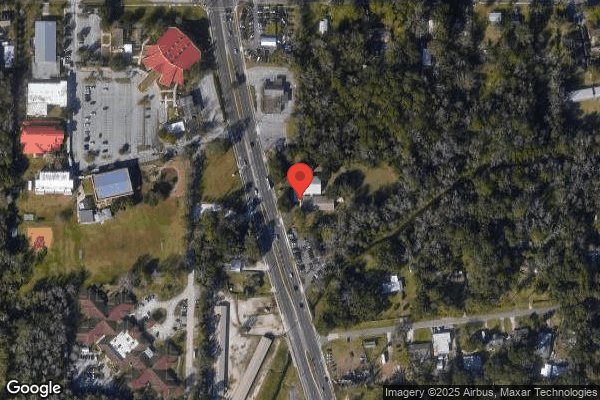

5888 BLANDING BLVD, JACKSONVILLE, FL 32244 (904) 772-1220
Government - City/county 120 Beds ELIYAHU MIRLIS Data: November 2025 2 Immediate Jeopardy citations
Trust Grade
39/100
#338 of 690 in FL
Last Inspection: August 2024

Within standard 12-15 month inspection cycle. Federal law requires annual inspections.

Overview

Cedar Hill Nursing and Rehab Center has a Trust Grade of F, which indicates significant concerns and a poor overall reputation. Ranking #338 out of 690 facilities in Florida places it in the top half, but at #25 out of 34 in Duval County, it suggests there are better options nearby. The facility is improving, having decreased from 10 issues in 2023 to 6 in 2024. Staffing is a relative strength with a turnover rate of 34%, lower than the state average, but there is concerning RN coverage that is less than 98% of facilities in Florida, meaning residents may not receive as much skilled nursing attention. Notably, the facility has faced critical issues, including a resident going missing for several hours due to a lack of supervision, as well as failing to implement adequate measures to prevent the growth of harmful bacteria in the water system, which poses health risks to vulnerable residents. While there are strengths in staffing stability and quality measures, these significant safety concerns should be carefully considered.

Trust Score
F
39/100
In Florida
#338/690
Top 48%
Safety Record
High Risk
Review needed
Inspections
Getting Better
10 → 6 violations
Staff Stability
○ Average
34% turnover. Near Florida's 48% average. Typical for the industry.
Penalties
○ Average
$21,921 in fines. Higher than 58% of Florida facilities. Some compliance issues.
Skilled Nurses
⚠ Watch
Each resident gets only 15 minutes of Registered Nurse (RN) attention daily — below average for Florida. Fewer RN minutes means fewer trained eyes watching for problems.
Violations
⚠ Watch
20 deficiencies on record. Higher than average. Multiple issues found across inspections.
★★★☆☆
3.0
Overall Rating
★★★☆☆
3.0
Staff Levels
★★★★★
5.0
Care Quality
★★☆☆☆
2.0
Inspection Score
Stable
2023: 10 issues
2024: 6 issues

The Good

  • 5-Star Quality Measures · Strong clinical quality outcomes
  • Full Sprinkler Coverage · Fire safety systems throughout facility
  • No fines on record
  • Staff turnover below average (34%)

    14 points below Florida average of 48%

Facility shows strength in quality measures, fire safety.

The Bad

3-Star Overall Rating

Near Florida average (3.2)

Meets federal standards, typical of most facilities

Staff Turnover: 34%

11pts below Florida avg (46%)

Typical for the industry

Federal Fines: $21,921

Below median ($33,413)

Minor penalties assessed

Chain: ELIYAHU MIRLIS

Part of a multi-facility chain

Ask about local staffing decisions and management

The Ugly 20 deficiencies on record

2 life-threatening
Aug 2024 6 deficiencies
CONCERN (D)

Potential for Harm - no one hurt, but risky conditions existed

Safe Environment (Tag F0584)

Could have caused harm · This affected 1 resident

Based on observations, interviews, and record review, the facility failed to ensure that four (Residents #169, #93, #81 and #102) residents from a total survey sample of 32 residents, were provided a ...

Read full inspector narrative →
Based on observations, interviews, and record review, the facility failed to ensure that four (Residents #169, #93, #81 and #102) residents from a total survey sample of 32 residents, were provided a clean, comfortable, and homelike environment. Each resident was missing a pillowcase. The findings include: On 8/6/24 at 10:57 AM, an observation was made of Resident #169 resting in bed with his eyes closed. His head was resting on a pillow without a pillowcase. On 8/6/24 at 11:13 AM, an observation was made of Resident #93's bed linens. He was missing a pillowcase. The resident was not present to interview. On 8/6/24 at 11:51 AM, an observation was made of Resident #81's bed linen, which was missing a pillowcase. The resident was interviewed and explained that he had not had a pillowcase in a while but could not remember exactly how many days he went without a pillowcase. He further explained that he previously asked facility staff for a pillowcase and was not provided one. He said it bothered him that he was sleeping on a bare pillow. On 8/6/24 at 1:58 PM, an observation of the linen cart on the 200-hall revealed eight flat sheets, eight fitted sheets, six blankets and no pillowcases. On 8/7/24 at 10:09 AM, an observation of the linen cart on the 200-hall revealed two washcloths and no pillowcases. On 8/7/24 at 10:12 AM, a second observation was made of Resident #169's bed linen. It was missing a pillowcase. The resident was not present to interview. On 8/7/24 at 10:32 AM, Certified Nursing Assistant (CNA) C was interviewed and explained the process for making a resident's bed, which included placing a fitted sheet over the mattress, then a flat sheet, a chucks pad (incontinence padding), followed by placing a pillow case over the pillow. The CNA reported that there was a recent a shortage of pillowcases and the CNA thought there was currently only one pillowcase on the 200-hall linen cart. On 8/7/24 at 10:37 AM, an observation was made of Resident #102's bed linen. It was missing a pillowcase. The resident was not present to interview. On 8/8/24 at 9:45 AM, a third observation was made of Resident #169's bed linen, which was missing a pillowcase. The resident was not present to interview. On 8/8/24 at 9:46 AM, an observation was made of Resident #102's bed linen, which was missing a pillowcase. The resident was not present to interview. On 8/8/24 at 10:06 AM, the Director of Laundry was interviewed and stated she was responsible for ordering bed linens, which were ordered through a local linen company on the 15th of every month. She explained that she scanned an order request to the facility Advisor who oversaw the purchase of linens, and once a linen order was approved and submitted, it usually shipped to the facility within one week. She further explained that the CNAs were responsible for making the residents' beds, which was done first thing in the morning three times a week. Making a resident's bed included placing a fitted sheet over the mattress, followed by a chucks pad, a blanket (depending on the resident's preference) and a pillowcase over the pillow. She reported that this morning she noticed a shortage of washcloths and pillowcases. Laundry services staff made an inventory of bed linens and provided her with a status of the facility's stock prior to her ordering bed linens. She stated this morning she conducted a count of the bed linen inventory on the dirty laundry side and clean laundry side. She noticed the inventory was low and submitted an order for bed linens. She further explained that many residents were known to hoard linens, which could have been a factor laeding to the shortage of bed linens. A review of the laundry room inventory, dated 8/8/24, revealed that the facility had no pillowcases in the laundry room. A review of the Butterfly (memory care) unit, dated 8/8/24, revealed that the unit contained 12 pillowcases. A review of the South Wing 102 unit linen inventory, dated 8/8/24, revealed that the unit contained no pillowcases. A review of the South Wing 112 unit linen inventory, dated 8/8/24, revealed that the unit contained nine pillowcases. A review of the North Wing 212 unit linen inventory, dated 8/8/24, revealed that the unit contained one pillowcase. A review of the North Wing 226 unit linen inventory, dated 8/8/24, revealed that the unit contained 12 pillowcases. A review of the North Wing 237 unit linen inventory, dated 8/8/24, revealed that the unit contained two pillowcases. A review of the facility's admission Agreement revealed under Item #12: Routine care included in the per diem rate: (b) Linens and Bedding. .
CONCERN (D)

Potential for Harm - no one hurt, but risky conditions existed

Safe Environment (Tag F0921)

Could have caused harm · This affected 1 resident

**NOTE- TERMS IN BRACKETS HAVE BEEN EDITED TO PROTECT CONFIDENTIALITY** Based on observation, staff interview, and facility policy and procedure review, the facility failed to maintain the physical en...

Read full inspector narrative →
**NOTE- TERMS IN BRACKETS HAVE BEEN EDITED TO PROTECT CONFIDENTIALITY** Based on observation, staff interview, and facility policy and procedure review, the facility failed to maintain the physical environment in a sanitary and comfortable manner based on the following: holes in walls, missing base cove molding, and broken and missing closet door panels in four (Rooms 120, 118, 121, and 117) of 66 resident rooms, all of which were located on the South Unit of the facility. These concerns could negatively impact residents' enjoyment of their environment as well as their safety. The findings include: From 8/6/24 through 8/9/24, tours of the facility were conducted at various times. room [ROOM NUMBER] was observed on 8/6/24 at 10:47 AM with wall damage behind the toilet in the bathroom and missing pieces of the closet door panels. (Photographic evidence obtained) room [ROOM NUMBER] was observed on 8/6/24 at 11:03 AM with wall damage and base cove molding damage under the A-bed, a gap in the base cove molding under the air conditioner, and wall damage the length of the air conditioning unit under the unit. (Photographic evidence obtained) room [ROOM NUMBER] was observed on 8/6/24 at 11:34 AM with the base cove molding missing along the wall near the clothes cabinet and chips of paint loose from the wall. (Photographic evidence obtained) room [ROOM NUMBER] was observed on 8/7/24 at 9:14 AM with wall damage and a gap in the base cove molding near the air conditioner unit. (Photographic evidence obtained) During a tour of the facility on 8/9/24 at 9:46 AM, the facility maintenance staff had not made repairs to the holes in the walls, closet doors, or base cove molding in the rooms identified above, observed on 8/6/24 and 8/7/24. During an interview with the Director of Housekeeping on 8/9/24 at 4:32 PM, she reviewed the photographs of rooms 120, 118, 121, and 117 with wall damage and stated she was unaware of the damage. She further stated there was no capital improvement plan, but she let the management company know what needed to be repaired, and the facility received what was needed to make the repairs. A review of the facility's policy and procedure titled Physical Environment - Room Repairs (effective date: 9/26/23), revealed: Policy: The center will ensure the residents have a safe, homelike, environment free from physical hazards. 1. To ensure a safe, homelike environment, the Maintenance Director, or designee, will complete room rounds 2-4 times per month. Findings from these rounds will be prioritized and the repairs made as indicated. 2. Apart from completing room rounds, a maintenance log is kept at the nurses' station for any repairs staff find need completed throughout the day. Staff are to put the maintenance request in the log, and the maintenance department will check the log throughout the day to complete the tasks. Any repairs requiring immediate attention are to be reported directly to the Maintenance Director or Administrator. .
CONCERN (E)

Potential for Harm - no one hurt, but risky conditions existed

Food Safety (Tag F0812)

Could have caused harm · This affected multiple residents

Based on observations, staff interviews, and facility policy and procedure review, the facility failed to store, prepare, distribute, and serve food in accordance with professional standards for food ...

Read full inspector narrative →
Based on observations, staff interviews, and facility policy and procedure review, the facility failed to store, prepare, distribute, and serve food in accordance with professional standards for food service safety. Proper sanitation is important in health care settings to prevent the outbreak of foodborne illness. Nursing home residents are at risk for serious complications from foodborne illness due to their already compromised health status, and standing water, biofilm, and pests such as gnats and roaches are sources of contamination. The findings include: A kitchen tour was conducted on 8/6/24 at 10:24 AM. The facility's oven was opened for observation and two roaches were observed crawling inside. Standing water was observed in the drain located in the cook area in front of the steamer. A small drain on the floor in front of walk-in refrigerator was observed to be uncovered and filled with a biofilm slime-like substance around the lip of the drain. Gnats were observed moving around the lip of the uncovered drain. (Photographic evidence obtained) During a follow-up visit to the kitchen on 8/8/24 at 10:45 AM, another observation was made of live roaches crawling in the oven of the kitchen range. A rust-like film was on the inside of the kitchen oven, and food debris was observed on and in between the top part of the oven. Another observation was made of the small drain on the floor in front of walk-in refrigerator that was uncovered and filled with a biofilm slime-like substance around the lip of the drain. Gnats were observed moving around the lip of the uncovered drain. An observation was also made of a small drain behind the wall of the cook area, adjacent to the ice machine, that was uncovered and filled with a dark fluid substance. (Photographic evidence obtained) During an interview with Dietary Aide F on 8/9/24 at 1:44 PM, she stated she was aware that the floor drains were missing covers. When she was asked if she was aware of the standing water in the drainage area located in front of the steamer, she replied, Not always. Most of the time I drain water out of the steam well and it was working fine. She also stated when kitchen equipment was not functioning properly or standing water was observed, it was reported to maintenance. During an interview with [NAME] G on 8/9/24 at 1:48 PM, he stated he was not aware that the floor drains were missing covers. When he was asked if he was aware of the standing water in the drainage area located in front of the steamer, he replied, No, it is usally dry by the time I come in to work. A broom is used to clear the old food out and let water drain. He also stated when kitchen equipment was not functioning properly it was reported to the Certified Dietary Manager (CDM) or maintenance. During an interview with the Certified Dietary Manager (CDM)/Director of Housekeeping and Laundry on 8/9/24 at 3:45 PM, she stated she was aware that the floor drain covers were missing. She had not notified maintenance about the missing drain covers as of the time of this interview. She stated her plan was to notify maintenance regarding covers for the drains. The drains had to be measured and covers ordered. During an interview with the Certified Dietary Manager (CDM)/Director of Housekeeping and Laundry on 8/9/24 at 4:12 PM, she stated the kitchen's oven was not working. When the oven door was opened during the interview with the CDM, roaches were again observed crawling on the inside bottom of the oven. During an interview with the Director of Maintenance on 8/9/24 at 5:10 PM, he stated he was aware that the floor drains were missing covers. They had been missing covers for a couple of months. He stated he planned to locate covers at plumbing locations. He further stated last week when they were having an issue with a drain line, a vendor came to the facility to address a build-up in the drain line and suggested that covers for the floor drains could be obtained locally from a store. A review of the facility's policy and procedure titled Kitchen Equipment (dated 12/8 2022) revealed: Food service equipment will be clean, sanitary, and in proper working order. Procedure: 1. All equipment will be routinely cleaned and maintained in accordance with manufacturers' instructions . 4. Non-food contact equipment will be clean and free of debris. 5. Requests for maintenance or repairs are to be submitted to the Administrator and/or Maintenance Director as needed. (Copy obtained) Reference: 2022 Food Code, United States Food and Drug Administration. Chapter 4, Page 127 and 165. https://www.fda.gov (Accessed on 8/12/2024): Equipment, Utensils, and Linens. 4-601.11 Equipment, Food-Contact Surfaces, Nonfood-Contact Surfaces, and Utensils . (C) Non-Food-Contact Surfaces of Equipment shall be kept free of an accumulation of dust, dirt, food residue, and other debris. Equipment. 4.501.11. Good Repair and Proper Adjustment. (A) Equipment shall be maintained in a state of repair and condition that meets the requirements specified under Parts 4-1 and 4-2. .
CONCERN (E)

Potential for Harm - no one hurt, but risky conditions existed

Room Equipment (Tag F0908)

Could have caused harm · This affected multiple residents

Based on observations, staff interviews, and facility policy and procedure review, the facility failed to maintain kitchen equipment in safe operating condition. The kitchen's freezer door would not c...

Read full inspector narrative →
Based on observations, staff interviews, and facility policy and procedure review, the facility failed to maintain kitchen equipment in safe operating condition. The kitchen's freezer door would not close properly, leaving the possibility open for potential thawing or partial thawing of frozen food items. This could result in the outbreak of foodborne illness affecting residents who receive food from the facility's kitchen. The findings include: A kitchen tour was conducted on 8/6/24 at 10:24 AM. The walk-in freezer door, located inside the walk-in refrigerator, would not close completely after several attempts to push the door closed to exit back into the walk-in refrigerator. Another observation was made on 8/8/24 at 10:25 AM of the walk-in freezer located inside the walk-in refrigerator. The door was not closed completely and would not close completely. (Photographic evidence obtained) During a follow-up visit to the kitchen on 8/8/24 at 10:45 AM, another observation was made of the walk-in freezer door not closing completely after several attempts to push the door closed. (Photographic evidence obtained) During an interview with Dietary Aide F on 8/9/24 at 1:44 PM, she stated when kitchen equipment was not functioning properly, it was reported to maintenance. During an interview with [NAME] G on 8/9/24 at 1:48 PM, he stated when kitchen equipment was not functioning properly it was reported to the Certified Dietary Manager (CDM) or maintenance. During an interview with the CDM on 8/9/24 at 3:45 PM, she stated she was aware that the freezer door did not close properly. She had not notified maintenance about the walk-in freezer door as of the time of this interview. She stated her plan was to notify maintenance regarding hinges for the freezer door. She planned to reach out to the vender regarding door hinges for the walk-in freezer door. During an interview with the Director of Maintenance on 8/9/24 at 5:10 PM, when he was asked if he was aware that the freezer door was not closing properly, he replied that the CDM notified him about that a few months ago. He was not sure of the next step to take to fix the freezer door. A review of the facility's policy and procedure titled Kitchen Equipment (dated 12/8 2022) revealed: Food service equipment will be clean, sanitary, and in proper working order. Procedure: 1. All equipment will be routinely cleaned and maintained in accordance with manufacturers' instructions . 4. Non-food contact equipment will be clean and free of debris. 5. Requests for maintenance or repairs are to be submitted to the Administrator and/or Maintenance Director as needed. (Copy obtained) Reference: 2022 Food Code, United States Food and Drug Administration. Chapter 4, Page 127 and 165. https://www.fda.gov (Accessed on 8/12/2024): Equipment. 4.501.11. Good Repair and Proper Adjustment. (A) Equipment shall be maintained in a state of repair and condition that meets the requirements specified under Parts 4-1 and 4-2. (B) Equipment components such as doors, seals, hinges, fasteners, and kick plates shall be kept intact, tight, and adjusted in accordance with manufacturer's specifications. Durability and Strength 4-201.11: Equipment and utensils shall be designed and constructed to be durable and to retain their characteristic qualities under normal use conditions. .
CONCERN (E)

Potential for Harm - no one hurt, but risky conditions existed

Deficiency F0925 (Tag F0925)

Could have caused harm · This affected multiple residents

**NOTE- TERMS IN BRACKETS HAVE BEEN EDITED TO PROTECT CONFIDENTIALITY** Based on observations, resident and staff interviews, facility pest control management documentation, and a review of the facili...

Read full inspector narrative →
**NOTE- TERMS IN BRACKETS HAVE BEEN EDITED TO PROTECT CONFIDENTIALITY** Based on observations, resident and staff interviews, facility pest control management documentation, and a review of the facility's policy and procedure, the facility failed to ensure that its pest control service was effective. Cockroaches were observed in four (Rooms 120, 118, 121, and 117) of 66 resident rooms (all on the South Unit), at one (South Unit) of two nurses' stations, and in the kitchen. An ineffective pest control program can result in the transmission of disease/infection. The findings include: From 8/6/24 through 8/9/24, tours of the facility were conducted at various times. Live cockroaches were observed in room [ROOM NUMBER] on 8/6/24 at 10:47 AM. (Photographic evidence obtained). Live cockroaches were observed in room [ROOM NUMBER] on 8/6/24 at 11:03 AM. (Photographic evidence obtained) Live cockroaches were observed in room [ROOM NUMBER] on 8/6/24 at 11:34 AM. (Photographic evidence obtained) Live cockroaches were observed in room [ROOM NUMBER] on 8/7/24 at 9:14 AM. (Photographic evidence obtained) During an interview with Resident #58 (room [ROOM NUMBER]) on 8/6/24 at 11:03 AM, he was observed lying in his bed. A live cockroach was observed crawling on the wall behind the headboard of his bed. Resident #58 stated he saw live cockroaches in his room all the time. He had never seen anyone spray his room for pests. During an interview with Resident #89 (room [ROOM NUMBER]) on 8/6/24 at 11:34 AM, he was observed lying in his bed. A live cockroach crawled across the floor in the middle of his room. He looked at the roach and acknowledged that it was a live roach. He was not sure if his room had been sprayed for pests. He stated he would appreciate it if they would do so. During an interview with the Director of Rehabilitation on 8/8/24 at 9:46 AM, a live cockroach was observed crawling on floor near the nurses' station on the South Unit. The roach crawled under a cabinet before a photograph could be taken. The Director of Rehabilitation saw the cockroach and stated, Well, it's not as bad as it used to be. During a follow-up kitchen tour on 8/8/24 at 10:45 AM, live roaches were observed in the oven of the kitchen range. During an interview with the Certified Dietary Manager (CDM)/Director of Housekeeping and Laundry on 8/9/24 at 4:12 PM, she stated the kitchen's oven was not working. When the oven door was opened during the interview with the CDM, roaches were again observed crawling on the inside bottom of the oven. During an interview with the CDM/Director of Housekeeping and Laundry on 8/9/24 at 4:32 PM, she confirmed that the contracted pest control service was provided weekly. She was then made aware of the observations of live cockroach activity in the facility. She reviewed the photographs of the rooms with the roach sightings and stated she would contact the pest control company. A review of the facility's Service Inspection Report, dated 7/31/24, revealed that the contracted pest control company noted weekly call-back service for covered pests (Resident rooms per request/logbook). (Copy obtained) A review of the facility's Service Inspection Report, dated 7/17/24, revealed that the contracted pest control company noted monthly service for common areas, the kitchen, and dining areas. Treated kitchen areas, dining areas, and nurses' stations. Weekly call-back service for covered pests (Resident rooms per request/logbook). Target pests: roaches. (Copy obtained) A review of the facility's Service Inspection Report, dated 7/2/24, revealed that the contracted pest control company noted weekly call-back service for covered pests (Resident rooms per request/logbook). (Copy obtained) A review of the facility Service Inspection Report, dated 6/27/24, revealed that the contracted pest control company noted weekly call-back service for covered pests (Resident rooms per request/logbook). Treated kitchen areas, dining areas, and nurses' stations. (Copy obtained) A review of the facility's Service Inspection Report, dated 6/19/24, revealed that the contracted pest control company noted monthly service for common areas, kitchen, and dining areas. Treated kitchen areas, dining areas, and nurses' stations. Weekly call-back service for covered pests (Resident rooms per request/logbook). Target pests: roaches. (Copy obtained) A review of the facility's Service Inspection Report, dated 6/13/24, revealed that the contracted pest control company noted weekly call-back service for covered pests (Resident rooms per request/logbook). Treated kitchen areas, dining areas, and nurses' stations. (Copy obtained) A review of the facility's Service Inspection Report, dated 5/31/24, revealed that the contracted pest control company noted weekly call-back service for covered pests (Resident rooms per request/logbook). Monthly service for common areas, kitchen, and dining areas. (Copy obtained) A review of the facility's Service Inspection Report, dated 5/23/24, revealed that the contracted pest control company noted weekly call-back service for covered pests (Resident rooms per request/logbook). Treated kitchen areas, dining areas, and nurses' stations. (Copy obtained) A review of the facility's Service Inspection Report, dated 5/16/24, revealed that the contracted pest control company noted monthly service for common areas, kitchen, and dining areas. Treated kitchen areas, dining areas, and nurses' stations. Weekly call-back service for covered pests (Resident rooms per request/logbook). Target pests: roaches. (Copy obtained) A review of the facility's Service Inspection Report, dated 5/4/24, revealed that the contracted pest control company noted weekly call-back service for covered pests (Resident rooms per request/logbook). Monthly service for common areas, kitchen, and dining areas. (Copy obtained) A review of the facility's Service Inspection Report, dated 4/30/24, revealed that the contracted pest control company noted weekly call-back service for covered pests (Resident rooms per request/logbook). Monthly service for common areas, kitchen, and dining areas. (Copy obtained) A review of the pest control log for the South Unit of the facility revealed that cockroaches were reported to have been seen in room [ROOM NUMBER] on 6/18/24, and rooms [ROOM NUMBERS] on 5/28/24. Roaches were reported to have been seen in rooms 101, 103, 106, 109, 112, 116, 117, 118, 119, 120, 132, and 133 from 1/16/24 through 8/6/24. (Copy obtained) A review of the pest control log for the North Unit of the facility revealed that cockroaches were reported to have been seen in rooms 212, 213, 214, 224, 227, 228, 231, 233, 234, 235, 236, and 237 from 1/16/24 through 8/6/24. One line on the log read: All rooms on North 2. (Copy obtained) A review of the facility's policy and procedure titled Pest Control Services (effective date: 12/8/23), revealed: Policy: A program will be established for the control of insects and rodents within the facility. Procedure: 1. The administrator coordinates with the Maintenance Department to arrange pest control services on a monthly basis, or as needed. 3. Staff should report to the Administrator/Maintenance Department sightings of live pests. 4. Live pest sightings are documented in the pest control log. (Copy obtained) .
CONCERN (F)

Potential for Harm - no one hurt, but risky conditions existed

Infection Control (Tag F0880)

Could have caused harm · This affected most or all residents

Based on facility record review, staff interview, and facility policy and procedure review, the facility failed to develop and implement a comprehensive water management program for the purpose of red...

Read full inspector narrative →
Based on facility record review, staff interview, and facility policy and procedure review, the facility failed to develop and implement a comprehensive water management program for the purpose of reducing the risk of growth and spread of Legionella and other opportunistic pathogens in the facility's water system for its current census of 116 residents. Residents of nursing homes who may suffer from a weakened immune system, chronic lung disease, or other underlying medical conditions such as immunosuppression, are at risk for Legionnaires' Disease (type of pneumonia) if exposed to Legionella bacteria. Facilities must be able to demonstrate their measures to minimize the risk of Legionella and other opportunistic pathogens in building water systems such as by having a documented water management program that must be based on nationally accepted standards. The program must include an assessment to identify where Legionella and other opportunistic waterborne pathogens could grow and spread; measures to prevent the growth of opportunistic waterborne pathogens (control measures), and how to monitor them. The findings include: From 8/6/24 through 8/9/24, a review of the facility's infection control and water management program was conducted. The facility water management program binder was produced. The binder contained a copy of the Developing a Water Management Program to Reduce Legionella Growth and Spread in Buildings, A Practical Guide to Implementing Industry Standards. U.S. Department of Health and Human Services Centers for Disease Control and Prevention, dated 6/24/2021. (Copy obtained) During an interview with the Director of Housekeeping and Laundry on 8/9/24 at 10:22 AM, she confirmed that she supervised the maintenance program and was responsible for the facility's water management program. She stated the facility followed the U.S. Department of Health and Human Services Centers for Disease Control and Prevention guide. A review of the water management program binder revealed the program did not include documentation verifying that the facility had conducted an annual review of its water management program. There was no documented evidence to verify that a staff member had been designated to perform visual inspections for biofilm, checking disinfectant levels, or periodic flushing of pipes. The program did not include control measures, including points in the system where critical limits could be monitored, or where control could be applied, such as physical controls, temperature management, disinfectant level control, visual inspections, and environmental testing for pathogens. It did not specify testing protocols, acceptable ranges for control measures, or documented results of testing of pH levels of disinfectant in the water. There were no confirmatory procedures, including verification steps to show that the program was being followed as written, or validation to show that the program was effective. The program binder contained a facility water flow chart, dated 7/28/17, that did not identify where Legionella or other opportunistic waterborne pathogens could grow and spread in the facility's water system. There was no documented evidence of monitoring areas of the water flow system that had the likelihood of developing Legionella. (Copy obtained) A review of the Developing a Water Management Program to Reduce Legionella Growth and Spread in Buildings, A Practical Guide to Implementing Industry Standards guide revealed it read: Factors internal to buildings that can lead to Legionella growth: Water temperature fluctuations: Provide conditions where Legionella grows best (77°F-113°F); Legionella can still grow outside this range. A random review of the Water Temperature Logs dated 5/31/24 revealed that the water temperature on the 200 hall was 104 degrees Fahrenheit ('F). The water temperature for the 100 hall shower room was 104 'F. The 200 hall shower room water temperature was 107 'F. (Photographic evidence obtained) A review of a random Legionella Environmental Assessment Form, dated 5/15/24, revealed no documented verification of the chemical level of disinfectant in the potable water system. (Photographic evidence obtained) During an interview with the Director of Maintenance on 8/9/24 at 4:23 PM, he confirmed that he had received no training on the water management program and the review and testing of the water system had not been done since he was hired in March 2024. He had not been doing it. He had no testing kit for the disinfectant level in the water. He stated he did take the temperature of the water and logged it. During an interview with the Director of Housekeeping and Laundry on 8/9/24 at 4:35 PM, she confirmed that the testing of the water system had not been done on an annual basis. She stated she was responsible for the water management system. She stated she had telephoned a sister facility to find out what they should be doing. She stated, We aren't doing what they are doing. We aren't following the policy and procedure. A review of the facility's policy and procedure titled Legionella Risk Management Policy (Undated), revealed: The purpose of this policy is to ensure that as far as possible, all residents, staff and visitors of this facility are protected from the incidence of Legionnaire's disease. The facility's Quality Assurance/Performance Improvement Committee's role will be to ensure that the relevant testing is completed and documented and that up to date risk assessment is completed annually, and any concerns are addressed in a timely manner. It is the policy of this facility to ensure that appropriate precautions for the control of Legionella bacteria are identified through a Legionella risk assessment process, and appropriate control measures implemented to ensure, so far as reasonably practicable, the health, safety and welfare of residents, employees and others. The minimum standards to be met include: Preparing Legionella Risk Assessments; Preparation of an action plan for preventing or controlling the risk; Implementation, management, monitoring and recording of precautions to include regular inspections, microbiological monitoring, temperature checks and flushing; Appointment of a person or persons to be managerially responsible for the water system; and This policy applies to the water system including, hot and cold water supply systems, cooling towers, shower heads, ice machines, etc. It is very important to measure and document the current physical and chemical characteristics of the potable water, as this can help determine whether conditions are likely to support Legionella amplification. Plan a sampling strategy that incorporates all central hot water heaters/boiler at various points along each loop of the potable water system. Water temperature record sheets need to be filled out and kept within the log book. Hot water should be at least 50 'Celcius (122 'F) after a 1 minute flow, and cold water below 20 'C (68 'F) after 2 minutes flow. Failing temperatures should be reported for suitable action and retested until satisfactory. Reference: Legionnaires' disease is a serious type of pneumonia caused by bacteria, called Legionella, that live in water. Legionella can make people sick when they inhale contaminated water from building water systems that are not adequately maintained. Developing a Water Management Program to Reduce Legionella Growth and Spread in Buildings, 6/24/2021. https://www.cdc.gov/legionella/water-system-maintenance/wmp-fact-sheet.html and https://www.cdc.gov/legionella/index.html .
Oct 2023 3 deficiencies 2 IJ
CRITICAL (J) 📢 Someone Reported This

A family member, employee, or ombudsman was alarmed enough to file a formal complaint

Immediate Jeopardy (IJ) - the most serious Medicare violation

Free from Abuse/Neglect (Tag F0600)

Someone could have died · This affected 1 resident

**NOTE- TERMS IN BRACKETS HAVE BEEN EDITED TO PROTECT CONFIDENTIALITY** Based on staff interviews, resident and facility record reviews, and a review of the facility's policies titled Reporting Abuse ...

Read full inspector narrative →
**NOTE- TERMS IN BRACKETS HAVE BEEN EDITED TO PROTECT CONFIDENTIALITY** Based on staff interviews, resident and facility record reviews, and a review of the facility's policies titled Reporting Abuse to Facility Management (Revised February 2014), Elopements (revised February 2014), and the facility's Elopement Drill Process/Missing Resident Process, the facility failed to ensure residents were free from neglect, by failing to provide supervision and interventions to maintain resident safety, prevent elopement (a resident who is incapable of adequately protecting themself, who leaves the facility unsupervised and undetected), and minimize the risk of injury or death. This resulted in one (Resident #1) of three residents reviewed for elopement risk, departing the facility unescorted and remaining missing from the facility from 1:58 p.m. on 10/11/23 until approximately 4:00 a.m. the following morning (10/12/23), when located by the Sheriff's Office lying on a street, rain soaked, missing his shoes, with multiple abrasions, approximately four (4) miles away from the facility. On 6/6/23, Resident #1 was admitted to the facility's locked memory care unit due to exit-seeking behavior and was assessed as high risk for elopement. On 10/11/23 at 1:58 p.m. the facility's video camera captured Resident #1 exiting the facility behind a visitor. He passed the receptionist on his way out. There was an elopement binder at the reception desk for identification of residents at risk for elopement, and the receptionist was responsible for monitoring the residents who left the facility. On 10/11/23 at 5:30 p.m., while passing dinner trays, Certified Nursing Assistant (CNA) D discovered that Resident #1 was missing, 3.5 hours after he left the facility. A Code [NAME] (missing resident) was called, and a search was initiated. On 10/11/23 at 5:37 p.m., the Administrator and Director of Nursing (DON) were notified of the missing resident and at 7:00 p.m., the Sheriff's office was notified. On 10/12/23 at 4:04 a.m., the facility was notified by the Sheriff's office that Resident #1 had been located and transported to the hospital. Per the hospital's ER (emergency room) note, Resident #1 arrived at the ER accompanied by a Sheriff's deputy and EMS (emergency medical services). He had been found approximately four miles away from the facility, lying in the street. His clothing was wet due to rain, and he was without his shoes. He had mild abrasions to his left shoulder, left knee and forehead. Staff were aware of the resident's needs but failed to adequately supervise Resident #1, resulting in the resident eloping from the facility. The resident likely could have been hit by a car, been seriously injured, gotten lost and/or died. There were 57 residents identified as at risk for elopement as of 10/17/23. The locked memory care unit housed 19 residents. Immediate Jeopardy at a scope of J (isolated) was identified at 10:45 a.m. on October 16, 2023. On October 11, 2023, at 1:58 p.m., Immediate Jeopardy began. On October 17, 2023, at 4:30 p.m., the Administrator was notified of the IJ determination, and Immediate Jeopardy was removed, effective October 13, 2023, after verification of the removal of immediacy. The facility remained out of compliance, and the scope and severity were reduced to D, no actual harm, with a potential for no more than minimal harm, due to the facility's failure to provide adequate supervision to ensure resident safety and prevent elopement. The findings include: Cross reference F689 Review of a facility report revealed that on 10/11/23 at approximately 5:30 p.m., it was discovered that Resident #1 was not in his room or on the Butterfly unit (locked memory care unit) when CNA D went to deliver his dinner tray. At approximately 5:36 p.m. CNA E called a Code Green (missing resident) which was led by Licensed Practical Nurse (LPN) B (Supervisor). At 5:37 p.m., facility staff notified the Administrator and Director of Nursing (DON) that Resident #1 was missing. Staff searched the interior and exterior of the facility and premises without locating Resident #1. A full head count was conducted which revealed the only unaccounted for resident was Resident #1. At 6:00 p.m., the Administrator and DON arrived at the center and began interviewing staff. They conducted an interior search of the building. A door inspection was completed by the Administrator with no areas of concern identified. At 6:15 p.m., department heads conducted exterior searches to include the busy, multi-lane street adjacent to the facility property, and another busy street close to the facility including store fronts, grocery stores, thrift stores, a big box store, and churches without locating Resident #1. The facility's Chief Executive Officer (CEO) and Chief Nursing Officer (CNO) were notified on 10/11/23 at 6:15 p.m. At 7:30 p.m., the Administrator reported that Resident #1 was missing to the Sheriff's office who arrived at the facility at approximately 8:15 p.m. At 8:30 p.m., the Sheriff's office conducted an interior and exterior search of the facility, deployed a K-9 unit, and attempted to deploy a drone, but due to the weather conditions at that time, the use of a drone was not possible. At 12:00 a.m. on 10/12/23, with the assistance of the Sheriff's department and access to facility outdoor video cameras, Resident #1 was observed exiting the facility at 1:58 p.m. on 10/11/23, ambulating behind an exiting visitor/family member. Resident #1 was fully clothed and was wearing shoes. At 4:00 a.m. on 10/12/23, the Sheriff's department returned to the facility and informed Registered Nurse (RN) A that Resident #1 had been located approximately four (4) miles away and was transported to an acute care hospital's emergency room (ER). A review of timeanddate.com on 10/17/23 at 10:47 a.m., found that the weather in the area of the facility on 10/11/23 at 6:00 p.m. was cloudy with rain, 75 degrees F (Fahrenheit), and 9 mph (miles per hour) winds. At 12:00 a.m. on 10/12/23, weather in the area of the facility included heavy showers, winds at 11 mph, and a temperature of 73 degrees F. The facility is situated several hundred feet off of a very busy 4-6 lane street (there are 4 lanes in front of the facility, two northbound and two southbound) with a speed limit of 45 mph. There are sidewalks on both sides of the street. The front entrance is located several hundred feet from the street via a winding, treed, and fenced access road. Resident #1 was found approximately four miles from the facility. This would have required the resident to walk along several busy roadways. Review of hospital emergency room documentation revealed that Resident #1 arrived on 10/12/23 at 6:00 a.m. via EMS and escorted by the Sheriff's department, after having been found lying in the street, wet and without shoes. Resident #1 was triaged at 6:14 a.m. His examination included x-rays of his left shoulder, left arm, and left knee. A computed tomography (CT) of his head, and a blood draw for laboratory studies were also completed. Results of the testing revealed that the resident had no significant injuries to his limbs or head. Laboratory studies showed dehydration and mild rhabdomyolysis (a condition caused by the breakdown of muscle tissue resulting in the release of lactic acid which can lead to impaired cardiovascular health, compromised blood supply and reduced kidney function, and in severe cases, can lead to death). Resident #1 was treated for minor abrasions and was administered intravenous hydration of two (2) liters of lactated ringers (an intravenous solution used to replace fluids, electrolytes and treat acidosis). Resident was admitted for observation, then released back to the facility on [DATE] at approximately 12:00 p.m. On 10/16/23 at 11:15 a.m., multiple residents were observed ambulating in the hall on the Butterfly (locked) unit. Three residents were sitting on a bench outside of the nurses' station, and several more residents were in the dining room. Staff were observed interacting with residents in the hall as well as those in the dining room. In an interview with Licensed Practical Nurse (LPN) B/Supervisor at this time, she stated she had been working on the day Resident #1 eloped. I was the supervisor that day but not the nurse on the Butterfly unit. When she was asked what her role had been, she stated she contacted the resident's responsible party to ask if Resident #1 was with her. She didn't know what led to the elopement; she just did what she was asked to do. When she was asked what the expectation was for rounding on the unit, she replied, There is usually at least one staff member in the hallway and another in the dining room, so they usually have eyes on the residents all the time. On 10/16/23 at 11:27 a.m., Housekeeper A was asked how she determined who was at risk for wandering. She replied, Residents that like to walk back and forth. Routine checks are every two hours for the residents. If a resident cannot be located it is reported to the nurse. When she was asked who could unlock the front door, she replied, The receptionist in the front lobby. She stated she received Abuse and Neglect training in September. On 10/16/23 at 11:45 a.m., an interview was conducted with LPN C. When she was asked if she was working on the day of the facility's most recent elopement, she replied, Yes, but I was not the nurse assigned to the Butterfly unit that day. When she was asked what happened, she replied, At around 5:30 p.m., they called a Code [NAME] (missing resident). We searched inside and outside of the building, but we weren't able to find him (Resident #1). We had to do an in-service on abuse/neglect and elopement drills. On 10/16/23 at 11:53 a.m., CNA E stated she identified residents who were at risk for wandering by observing residents that paced and did not sit still for periods of time. Some residents in the Butterfly unit are wanderers. She further stated she rounded on her residents every 1.5 hours. If she could not locate a resident, she would walk to find them and report it to the nurse. Routine checks (laying eyes on residents) included checking them for incontinence care needs and ensuring they had something to drink. When asked who could unlock the front door, she replied, The receptionist or the nurse overnight. On 10/16/2023 at 12:03 p.m., Registered Nurse (RN) B stated she identified residents at risk for wandering by reviewing reports and residents' diagnoses in the charts. She rounded on her residents every 1.5 to 2 hours. When asked what she would do if she could not locate a resident, she replied, Go look for the resident. Residents have the right to go off the unit. If a resident is 1:1 (one to one supervision), the staff member assigned to them will tail them. Routine checks are every two hours to ensure that all residents are accounted for. Anyone who has the key can unlock the front door. The key is kept safe with the receptionist. It is locked in the medication room/cart at night. An interview conducted on 10/16/23 at 2:20 p.m. with the Administrator and DON, revealed that they determined the root cause of the elopement was human error, the failure of LPN A and CNA C to appropriately supervise and prevent Resident #1 from exiting the unit/facility and the failure of the Receptionist, who was responsible for monitoring everyone exiting through the main entrance to ensure no residents eloped. Upon review of the video feed from 10/11/23, this interview also revealed that Resident #1 had followed a family member, who had been visiting his wife on the memory care unit, out of the facility's front door. There were no cameras outside of the Butterfly unit (locked unit) door inside of the facility. The Administrator and DON stated Resident #1's elopement occurred on 10/11/23 and the investigation was initiated on 10/11/23. A Code [NAME] was called, and a resident head count was completed. At approximately 1:55 p.m. on 10/11/23, the resident followed a family visitor out of the Butterfly unit and through both exit doors. A receptionist was at the main entrance door, but no staff were at the parlor door. The receptionist was sitting at the desk. The elopement book was located at the receptionist desk to help identify residents that were at risk. Main entrance camera footage was observed, and Resident #1 was seen exiting the building behind a visitor at 1:58:18 p.m. on 10/11/23. The DON stated Licensed Practical Nurse (LPN) A (7-3 shift) was assigned to Resident #1 on 10/11/23. She further stated LPN A did not supervise the resident and ensure the CNA was rounding every two hours. When the Administrator and the DON were asked why there was a 3.5 hour delay in staff realizing that Resident #1 was missing, the DON stated staff were passing dinner trays and realized the resident was missing at that time. On 10/17/23 at 10:35 a.m., LPN A stated she ensured all of her residents were accounted for by checking room by room at the start of her shift. She stated she left the unit around noon and when she returned to the unit, all rooms and residents were checked and documented on the check sheet. When she was asked to describe the system in place to prevent residents from leaving, she replied, There is a staff member assigned to sit outside the door. Staff are to check behind them when leaving and all doors have codes. Residents are identified as at risk for elopement by the list located on the front of the MAR (medication administration record). Also, residents will tell you they want to leave. Some residents will walk to the door and push on the door. LPN A confirmed she was on duty the day of Resident #1's elopement. She stated, I was in fear and worried about the resident. CNA C was unable to be reached for interview during the survey. A review of Resident #1's medical record revealed he was admitted to the facility on [DATE] with diagnoses including Alzheimer's disease, diabetes, dementia, wandering, depression, and anxiety. His emergency contact/responsible party was his estranged wife. The Quarterly Minimum Data Set (MDS) assessment, dated 9/8/23, revealed a Brief Interview for Mental Status (BIMS) score of 3 out of 15 possible points, indicating severe cognitive impairment. The resident's initial History and Physical, written on 6/7/23 by the resident's attending physician, revealed he was admitted from another nursing home because of behaviors including that he was hard to control, had exit-seeking behavior with major depression and multiple comorbidities. Resident #1 was alert to himself, was somewhat confused, and needed assistance with activities of daily living (ADLs). His active 6/8/23 Physician's Orders were as follows: Admit to skilled long-term care. Glucagon Emergency Kit for hypoglycemia (low blood sugar related to diabetes) event. Aspart Flexpen (insulin) 5 units subcutaneously (SQ - beneath the skin) before meals. Lantus (insulin) 8 units SQ daily at 6:00 a.m. Trazodone (antidepressant and sedative) 50 milligrams (mg) at bedtime 9:00 p.m. Clopidogrel (blood thinner) 75 mg daily 9:00 a.m. Metformin (anti-diabetic medication) 500 mg twice daily, at 9:00 a.m. and 5:00 p.m. Resident Assessments were as follows: 6/6/23 - Wound/skin assessment: No skin issues noted. 6/6/23 - Elopement risk screen: Score 13 (10 or more = high risk) 8/29/23 - Elopement risk screen: Score 10 10/13/23 - Elopement risk screen: Score 13 10/15/23 - Resident re-admitted to this facility from [acute-care hospital]. Skin intact, warm to touch. A review of Progress Notes revealed: 6/9/23 - Mental Health Services Advanced Registered Nurse Practitioner (ARNP) - Resident with history of exit seeking; refuses to talk with writer; states he is the commander, and no one listens to him because they are ruining everything; states they are Mexicans. Started on Mirtazapine 7.5 mg for poor appetite, and Trazodone 50 mg for combination anxiety and depression. A review of Physician's Notes revealed: On 6/8/23, 6/11/23, 8/11/23, and 9/11/23, exit seeking was documented consistently. A review of Nursing Notes revealed: On 6/6/23, 6/10/23, 6/11/23, 6/13/23, 6/14/23, 6/27/23, 8/2/23, 8/5/23, 8/14/23, and 8/21/23, the resident's habitual wandering/exit-seeking behavior was described. On 10/13/23 at 12:00 p.m., [Resident #1] was readmitted to the facility via family drop off. Resident is alert x 1 to 2. Upon arrival to facility, resident is placed on 1:1 (one to one supervision). Resident was seen by ARNP upon arrival. Safety measures in place. On 10/16/23 at 8:45 a.m., the Interdisciplinary Team (IDT) Note revealed: Resident with an event occurrence on 10/11/23 with a brief hospital stay where he was diagnosed with lactic acidosis. Resident's wife brought him to the facility on [DATE]. Resident denies memory of event which is consistent with his baseline mentation. Resident's skin intact with minor discoloration at left forehead, elbow, and toe. Resident denies pain and discomfort, continues to be ambulatory pacing incessantly and seems to easily fatigue. Referral to therapy for screening due to impacted task tolerance. A review of Resident #1's Care Plan revealed: 6/6/23 Elopement risk: Locked unit monitored by staff. 6/6/23 Behaviors: Exit-seeking, dementia, agitation. Encourage and praise positive behaviors; observe for changes in mood, behavior, cognition, psychosocial wellbeing. Resident #1 is alert with confusion. He is able to make his needs and wants known to others. He is an exit seeker. Staff informed. Invite and escort him to and from activities in the [NAME] club activity room. At times he becomes agitated when trying to exit the building. He is able to be calmed down, redirected by calling his wife, and music and food with others. He prefers to do his own thing. 6/19/23 Psychotropic Medications: Administer medications as ordered; monitor for effectiveness of medications and review for dose reduction if applicable; observe for signs of adverse reactions; redirect as needed; notify Medical Doctor (MD) of changes in mood/behavior and document. A review of the facility's policy titled Reporting Abuse to Facility Management (Revised February 2014), revealed on Page 1: Policy Interpretation and Implementation, Item 2. f. revealed: Neglect is defined as failure to provide goods and services necessary to avoid physical harm, mental anguish, or mental illness. A review of the facility's policy titled Elopements (revised February 2014), revealed on Page 1, Item 4: If an employee discovers that a resident is missing from the facility, he/she shall: a. Determine if the resident is out on an authorized leave or pass. b. If the resident was not authorized to leave, initiate a search of the building and premises. c. If the resident is not located, notify the Administrator and the Director of Nursing services, the resident's legal representative, the Attending Physician, law enforcement officials, and (as necessary) volunteer agencies (i.e., Emergency Management, Rescue squads, etc.). d. Provide search teams with resident identification information, and e. Initiate an extensive search of the surrounding area. A review of the facility's Elopement Drill Process/Missing Resident process on Page 1, revealed the following: 1. Code [NAME] = missing resident. 2. ED (Administrator) and DON are to be contacted immediately upon initiation of a code green. 3. Code green and room location are paged three (3) times when a resident is identified as missing. 4. Staff should report to the nursing station of the missing resident. 5. The licensed nurse assigned to that resident is the lead during the drill and/or actual missing resident response. 6. The licensed nurse will get the elopement binder, remove the search grid sheet, and assign staff areas to begin looking for the missing resident. 7. When the resident is located staff are to return the resident to the assigned nurse for evaluation and further reporting/documentation process per regulation. 8. Code [NAME] All Clear is then called three (3) times to alert staff the missing resident has been located. Throughout the survey, the facility provided its immediate jeopardy removal plan, and these immediate actions were verified as having been completed by the surveyor as follows: 1. 100% of all current residents were reassessed for risk of elopement as of 10/13/23. The responsible Party was the DON who used several nurses to complete assessments. 2. 100% facility head count of current residents completed on 10/11/23. All residents were accounted for except Resident #1. The responsible party was the DON. 3. All facility doors were immediately checked to ensure proper functioning by the Administrator on 10/11/23. 4. Suspension of three current staff who were responsible for Resident #1 and had previously been educated on the Elopement policy. Completed on 10/11/23 by the Administrator and DON. 5. Butterfly unit (locked unit) staffing was adjusted on 10/11/23 as follows: Two dedicated staff members at all times on the unit to support the needs of the population by increasing monitoring/supervision. Responsible party - DON. 6. Staff member to monitor front entrance of the Butterfly Unit 24/7 with documentation initiated on 10/11/23 pending full results of the investigation and implementation of Root Cause Analysis (RCA) findings. Responsible party - DON. This is ongoing. 7. Doors are checked seven days a week to ensure proper functioning. Responsible party - Administrator. Initiated on 10/13/23 and is ongoing. 8. There is a staff member to monitor the front entrance parlor door of the facility from 7:00 a.m. to 7:00 p.m. with documentation initiated on 10/13/23 pending full results of the investigation and implementation of RCA findings. Responsible party - DON. This is ongoing. 9. A red Screamer Alarm is now turned on by the licensed nurse at 7:00 p.m. The key for the alarm is kept secure with the licensed nurse and located on the North Wing medication cart. The alarm is deactivated at 7:00 a.m. when the receptionist comes on duty. Responsible party - DON. This is ongoing. 10. As of 10/13/23, residents who reside on the Butterfly unit will have activities on the unit to support the needs of the population. Responsible party - DON and Activities Director (AD). This is ongoing. 11. A department head will complete a head count of all residents upon arrival and before leaving five times a week to ensure all residents are accounted for. This was initiated on 10/13/23 and is ongoing. Responsible party - DON. 12. A head count of all residents will be completed on each shift seven days a week to validate and ensure all residents are accounted for. Initiated on 10/12/23 and is ongoing. Responsible party - DON. 13. The Activities Director was educated by the Administrator on 10/13/23 related to initiating activities on the Butterfly unit to support the needs of the population and to discontinue taking those residents to activities outside of the unit to mitigate exit-seeking behaviors. Responsible party - Administrator. 14. The Visitor/Vendor sign-in/out book was moved from the front entrance foyer to the reception desk on 10/13/23. Responsible party - DON. 15. A sign was posted at the reception desk and the Butterfly unit on 10/13/23 for staff and visitors to watch for residents who may be behind them and please do not allow them to exit. Responsible party - DON. 16. Facility education was initiated for current staff related to the facility's Elopement policy on 10/11/23. All staff not on duty on 10/11/23 were educated prior to starting their next shift. Responsible Party - DON. 17. Facility education was initiated on 10/11/23 for current staff related to missing residents, routine monitoring of residents, and supervision of residents to include watching residents tailgating behind other residents and/or visitors. Staff are to visualize the door to the Butterfly unit and ensure the door is fully closed when anyone is entering and/or leaving so residents do not exit unsupervised. All staff not on duty on 10/11/23 were educated prior to starting their next shift. Responsible Party - DON. 18. A timeline of events was completed by the DON on 10/13/23. No concerns. 19. Staff interviews regarding elopement were completed on 10/11/23. Responsible party - DON. 20. The facility conducted an Ad Hoc QAPI meeting on 10/13/23 to include a root cause analysis (RCA) with the IDT and CNO to review how the resident was able to exit the Butterfly unit and exit the front entrance of the facility without staff knowledge. The responsible party was the CNO. 21. The facility will conduct unannounced drills four times a week to include off shifts and weekends. This was initiated on 10/13/23 and is ongoing. Responsible Party - DON. 22. Residents at risk for elopement have their names and photos in a binder at the front desk and nursing station. This was 100% current as of 10/12/23. Responsible Party - DON. 23. Staff education about Elopement and Missing Residents to be completed upon hire and annually. Responsible Party - DON. 24. As of 10/13/23, residents are to be evaluated for risk of elopement upon admission, re-admission and/or significant change. Responsible Party - DON. 25. Care plans were reviewed and are current for residents at risk for elopement as of 10/12/23. Responsible Party - DON. 26. Resident #1 was assessed by the attending physician upon readmission to the facility on [DATE]. 27. Immediate Federal Reporting was completed on 10/12/23. Responsible Party - DON. 28. The Receptionist was suspended pending investigation on 10/11/23 and was terminated on 10/17/23. 29. Doors to the Administration area that lead to the front entrance are to be locked at all times as of 10/13/23. Responsible Party - Administrator. 30. Abuse/Neglect/Exploitation education was initiated on 10/11/23. All staff not on duty on 10/11/23 were educated prior to starting their next shift. Responsible Party - DON. .
CRITICAL (J) 📢 Someone Reported This

A family member, employee, or ombudsman was alarmed enough to file a formal complaint

Immediate Jeopardy (IJ) - the most serious Medicare violation

Accident Prevention (Tag F0689)

Someone could have died · This affected 1 resident

**NOTE- TERMS IN BRACKETS HAVE BEEN EDITED TO PROTECT CONFIDENTIALITY** Based on staff interviews, resident and facility record reviews, a review of the facility's policy titled Elopements (revised Fe...

Read full inspector narrative →
**NOTE- TERMS IN BRACKETS HAVE BEEN EDITED TO PROTECT CONFIDENTIALITY** Based on staff interviews, resident and facility record reviews, a review of the facility's policy titled Elopements (revised February 2014), and the facility's Elopement Drill Process/Missing Resident Process, the facility failed to ensure residents were provided supervision and interventions to maintain safety, prevent elopement (a resident who is incapable of adequately protecting themself, who leaves the facility unsupervised and undetected), and minimize the risk of injury or death. This resulted in one (Resident #1) of three residents reviewed for elopement risk, departing the facility unescorted and remaining missing from the facility from 1:58 p.m. on 10/11/23 until approximately 4:00 a.m. the following morning (10/12/23), when located by the Sheriff's Office lying on a street, rain soaked, missing his shoes, with multiple abrasions, approximately four (4) miles away from the facility. On 6/6/23, Resident #1 was admitted to the facility's locked memory care unit due to exit-seeking behavior and was assessed as high risk for elopement. On 10/11/23 at 1:58 p.m. the facility's video camera captured Resident #1 exiting the facility behind a visitor. He passed the receptionist on his way out. There was an elopement binder at the reception desk for identification of residents at risk for elopement, and the receptionist was responsible for monitoring the residents who left the facility. On 10/11/23 at 5:30 p.m., while passing dinner trays, Certified Nursing Assistant (CNA) D discovered that Resident #1 was missing, 3.5 hours after he left the facility. A Code [NAME] (missing resident) was called, and a search was initiated. On 10/11/23 at 5:37 p.m., the Administrator and Director of Nursing (DON) were notified of the missing resident and at 7:00 p.m., the Sheriff's office was notified. On 10/12/23 at 4:04 a.m., the facility was notified by the Sheriff's office that Resident #1 had been located and transported to the hospital. Per the hospital's ER (emergency room) note, Resident #1 arrived at the ER accompanied by a Sheriff's deputy and EMS (emergency medical services). He had been found approximately four miles away from the facility, lying in the street. His clothing was wet due to rain, and he was without his shoes. He had mild abrasions to his left shoulder, left knee and forehead. Staff were aware of the resident's needs but failed to adequately supervise Resident #1, resulting in the resident eloping from the facility. The resident likely could have been hit by a car, been seriously injured, gotten lost and/or died. There were 57 residents identified as at risk for elopement as of 10/17/23. The locked memory care unit housed 19 residents. Immediate Jeopardy at a scope of J (isolated) was identified at 10:45 a.m. on October 16, 2023. On October 11, 2023, at 1:58 p.m., Immediate Jeopardy began. On October 17, 2023, at 4:30 p.m., the Administrator was notified of the IJ determination, and Immediate Jeopardy was removed, effective October 13, 2023, after verification of the removal of immediacy. The facility remained out of compliance, and the scope and severity were reduced to D, no actual harm, with a potential for no more than minimal harm, due to the facility's failure to provide adequate supervision to ensure resident safety and prevent elopement. The findings include: Cross reference F600 Review of a facility report revealed that on 10/11/23 at approximately 5:30 p.m., it was discovered that Resident #1 was not in his room or on the Butterfly unit (locked memory care unit) when CNA D went to deliver his dinner tray. At approximately 5:36 p.m. CNA E called a Code Green (missing resident) which was led by Licensed Practical Nurse (LPN) B (Supervisor). At 5:37 p.m., facility staff notified the Administrator and Director of Nursing (DON) that Resident #1 was missing. Staff searched the interior and exterior of the facility and premises without locating Resident #1. A full head count was conducted which revealed the only unaccounted for resident was Resident #1. At 6:00 p.m., the Administrator and DON arrived at the center and began interviewing staff. They conducted an interior search of the building. A door inspection was completed by the Administrator with no areas of concern identified. At 6:15 p.m., department heads conducted exterior searches to include the busy, multi-lane street adjacent to the facility property, and another busy street close to the facility including store fronts, grocery stores, thrift stores, a big box store, and churches without locating Resident #1. The facility's Chief Executive Officer (CEO) and Chief Nursing Officer (CNO) were notified on 10/11/23 at 6:15 p.m. At 7:30 p.m., the Administrator reported that Resident #1 was missing to the Sheriff's office who arrived at the facility at approximately 8:15 p.m. At 8:30 p.m., the Sheriff's office conducted an interior and exterior search of the facility, deployed a K-9 unit, and attempted to deploy a drone, but due to the weather conditions at that time, the use of a drone was not possible. At 12:00 a.m. on 10/12/23, with the assistance of the Sheriff's department and access to facility outdoor video cameras, Resident #1 was observed exiting the facility at 1:58 p.m. on 10/11/23, ambulating behind an exiting visitor/family member. Resident #1 was fully clothed and was wearing shoes. At 4:00 a.m. on 10/12/23, the Sheriff's department returned to the facility and informed Registered Nurse (RN) A that Resident #1 had been located approximately four (4) miles away and was transported to an acute care hospital's emergency room (ER). A review of timeanddate.com on 10/17/23 at 10:47 a.m., found that the weather in the area of the facility on 10/11/23 at 6:00 p.m. was cloudy with rain, 75 degrees F (Fahrenheit), and 9 mph (miles per hour) winds. At 12:00 a.m. on 10/12/23, weather in the area of the facility included heavy showers, winds at 11 mph, and a temperature of 73 degrees F. The facility is situated several hundred feet off of a very busy 4-6 lane street (there are 4 lanes in front of the facility, two northbound and two southbound) with a speed limit of 45 mph. There are sidewalks on both sides of the street. The front entrance is located several hundred feet from the street via a winding, treed, and fenced access road. Resident #1 was found approximately four miles from the facility. This would have required the resident to walk along several busy roadways. Review of hospital emergency room documentation revealed that Resident #1 arrived on 10/12/23 at 6:00 a.m. via EMS and escorted by the Sheriff's department, after having been found lying in the street, wet and without shoes. Resident #1 was triaged at 6:14 a.m. His examination included x-rays of his left shoulder, left arm, and left knee. A computed tomography (CT) of his head, and a blood draw for laboratory studies were also completed. Results of the testing revealed that the resident had no significant injuries to his limbs or head. Laboratory studies showed dehydration and mild rhabdomyolysis (a condition caused by the breakdown of muscle tissue resulting in the release of lactic acid which can lead to impaired cardiovascular health, compromised blood supply and reduced kidney function, and in severe cases, can lead to death). Resident #1 was treated for minor abrasions and was administered intravenous hydration of two (2) liters of lactated ringers (an intravenous solution used to replace fluids, electrolytes and treat acidosis). Resident was admitted for observation, then released back to the facility on [DATE] at approximately 12:00 p.m. On 10/16/23 at 11:15 a.m., multiple residents were observed ambulating in the hall on the Butterfly (locked) unit. Three residents were sitting on a bench outside of the nurses' station, and several more residents were in the dining room. Staff were onserved interacting with the residents in the hall as well as those in the dining room. In an interview with Licensed Practical Nurse (LPN) B/Supervisor at this time, she stated she had been working on the day Resident #1 eloped. I was the supervisor that day but not the nurse on the Butterfly unit. When she was asked what her role had been, she stated she contacted the resident's responsible party to ask if Resident #1 was with her. She didn't know what led to the elopement; she just did what she was asked to do. When she was asked what the expectation was for rounding on the unit, she replied, There is usually at least one staff member in the hallway and another in the dining room, so they usually have eyes on the residents all the time. On 10/16/23 at 11:27 a.m., Housekeeper A was asked how she determined who was at risk for wandering. She replied, Residents that like to walk back and forth. Routine checks are every two hours for the residents. If a resident cannot be located it is reported to the nurse. When she was asked who could unlock the front door, she replied, The receptionist in the front lobby. She stated she received Abuse and Neglect training in September. On 10/16/23 at 11:45 a.m., an interview was conducted with LPN C. When she was asked if she was working on the day of the facility's most recent elopement, she replied, Yes, but I was not the nurse assigned to the Butterfly unit that day. When she was asked what happened, she replied, At around 5:30 p.m., they called a Code [NAME] (missing resident). We searched inside and outside of the building but we weren't able to find him (Resident #1). We had to do an in-service on abuse/neglect and elopement drills. On 10/16/23 at 11:53 a.m., CNA E stated she identified residents who were at risk for wandering by observing residents that paced and did not sit still for periods of time. Some residents in the Butterfly unit are wanderers. She further stated she rounded on her residents every 1.5 hours. If she could not locate a resident, she would walk to find them and report it to the nurse. Routine checks (laying eyes on residents) included checking them for incontinence care needs and ensuring they had something to drink. When asked who could unlock the front door, she replied, The receptionist or the nurse overnight. On 10/16/2023 at 12:03 p.m., Registered Nurse (RN) B stated she identified residents at risk for wandering by reviewing reports and residents' diagnoses in the charts. She rounded on her residents every 1.5 to 2 hours. When asked what she did if she could not locate a resident, she replied, Go look for the resident. Residents have the right to go off the unit. If a resident is 1:1 (one to one supervision), the staff member assigned to them will tail them. Routine checks are every two hours to ensure that all residents are accounted for. Anyone who has the key can unlock the front door. The key is kept safe with the receptionist. It is locked in the medication room/cart at night. An interview conducted on 10/16/23 at 2:20 p.m. with the Administrator and DON, revealed that they determined the root cause of the elopement was human error, the failure of LPN A and CNA C to appropriately supervise and prevent Resident #1 from exiting the unit/facility and the failure of the Receptionist, who was responsible for monitoring everyone exiting through the main entrance to ensure no residents eloped. Upon review of the video feed from 10/11/23, this interview also revealed that Resident #1 had followed a family member, who had been visiting his wife on the memory care unit, out of the facility's front door. There were no cameras outside of the Butterfly unit (locked unit) door inside of the facility. The Administrator and DON stated Resident #1's elopement occurred on 10/11/23 and the investigation was initiated on 10/11/23. A Code [NAME] was called, and a resident head count was completed. At approximately 1:55 p.m. on 10/11/23, the resident followed a family visitor out of the Butterfly unit and through both exit doors. A receptionist was at the main entrance door, but no staff were at the parlor door. The receptionist was sitting at the desk. The elopement book was located at the receptionist desk to help identify residents that were at risk. Main entrance camera footage was observed, and Resident #1 was seen exiting the building behind a visitor at 1:58:18 p.m. on 10/11/23. The DON stated Licensed Practical Nurse (LPN) A (7-3 shift) was assigned to Resident #1 on 10/11/23. She further stated LPN A did not supervise the resident and ensure the CNA was rounding every two hours. When the Administrator and the DON were asked why there was a 3.5 hour delay in staff realizing that Resident #1 was missing, the DON stated staff were passing dinner trays and realized the resident was missing at that time. On 10/17/23 at 10:35 a.m., LPN A stated she ensured all of her residents were accounted for by checking room by room at the start of her shift. She stated she left the unit around noon and when she returned to the unit, all rooms and residents were checked and documented on the check sheet. When she was asked asked to describe the system in place to prevent residents from leaving, she replied, There is a staff member assigned to sit outside the door. Staff are to check behind them when leaving and all doors have codes. Residents are identified as at risk for elopement by the list located on the front of the MAR (medication administration record). Also, residents will tell you they want to leave. Some residents will walk to the door and push on the door. LPN A confirmed she was on duty the day of Resident #1's elopement. She stated, I was in fear and worried about the resident. CNA C was unable to be reached for interview during the survey. A review of Resident #1's medical record revealed he was admitted to the facility on [DATE] with diagnoses including Alzheimer's disease, diabetes, dementia, wandering, depression, and anxiety. His emergency contact/responsible party was his estranged wife. The Quarterly Minimum Data Set (MDS) assessment, dated 9/8/23, revealed a Brief Interview for Mental Status (BIMS) score of 3 out of 15 possible points, indicating severe cognitive impairment. The resident's initial History and Physical, written on 6/7/23 by the resident's attending physician, revealed he was admitted from another nursing home because of behaviors including that he was hard to control, had exit-seeking behavior with major depression and multiple comorbidities. Resident #1 was alert to himself, was somewhat confused, and needed assistance with activities of daily living (ADLs). His active 6/8/23 Physician's Orders were as follows: Admit to skilled long-term care. Glucagon Emergency Kit for hypoglycemia (low blood sugar related to diabetes) event. Aspart Flexpen (insulin) 5 units subcutaneously (SQ - beneath the skin) before meals. Lantus (insulin) 8 units SQ daily at 6:00 a.m. Trazodone (antidepressant and sedative) 50 milligrams (mg) at bedtime 9:00 p.m. Clopidogrel (blood thinner) 75 mg daily 9:00 a.m. Metformin (anti-diabetic medication) 500 mg twice daily, at 9:00 a.m. and 5:00 p.m. Resident Assessments were as follows: 6/6/23 - Wound/skin assessment: No skin issues noted. 6/6/23 - Elopement risk screen: Score 13 (10 or more = high risk) 8/29/23 - Elopement risk screen: Score 10 10/13/23 - Elopement risk screen: Score 13 10/15/23 - Resident re-admitted to this facility from [acute-care hospital]. Skin intact, warm to touch. A review of Progress Notes revealed: 6/9/23 - Mental Health Services Advanced Registered Nurse Practitioner (ARNP) - Resident with history of exit seeking; refuses to talk with writer; states he is the commander, and no one listens to him because they are ruining everything; states they are Mexicans. Started on Mirtazapine 7.5 mg for poor appetite, and Trazodone 50 mg for combination anxiety and depression. A review of Physician's Notes revealed: On 6/8/23, 6/11/23, 8/11/23, and 9/11/23, exit seeking was documented consistently. A review of Nursing Notes revealed: On 6/6/23, 6/10/23, 6/11/23, 6/13/23, 6/14/23, 6/27/23, 8/2/23, 8/5/23, 8/14/23, and 8/21/23, the resident's habitual wandering/exit-seeking behavior was described. On 10/13/23 at 12:00 p.m., [Resident #1] was readmitted to the facility via family drop off. Resident is alert x 1 to 2. Upon arrival to facility, resident is placed on 1:1 (one to one supervision). Resident was seen by ARNP upon arrival. Safety measures in place. On 10/16/23 at 8:45 a.m., the Interdisciplinary Team (IDT) Note revealed: Resident with an event occurrence on 10/11/23 with a brief hospital stay where he was diagnosed with lactic acidosis. Resident's wife brought him to the facility on [DATE]. Resident denies memory of event which is consistent with his baseline mentation. Resident's skin intact with minor discoloration at left forehead, elbow, and toe. Resident denies pain and discomfort, continues to be ambulatory pacing incessantly and seems to easily fatigue. Referral to therapy for screening due to impacted task tolerance. A review of Resident #1's Care Plan revealed: 6/6/23 Elopement risk: Locked unit monitored by staff. 6/6/23 Behaviors: Exit-seeking, dementia, agitation. Encourage and praise positive behaviors; observe for changes in mood, behavior, cognition, psychosocial wellbeing. Resident #1 is alert with confusion. He is able to make his needs and wants known to others. He is an exit seeker. Staff informed. Invite and escort him to and from activities in the [NAME] club activity room. At times he becomes agitated when trying to exit the building. He is able to be calmed down, redirected by calling his wife, and music and food with others. He prefers to do his own thing. 6/19/23 Psychotropic Medications: Administer medications as ordered; monitor for effectiveness of medications and review for dose reduction if applicable; observe for signs of adverse reactions; redirect as needed; notify Medical Doctor (MD) of changes in mood/behavior and document. A review of the facility's policy titled Elopements (revised February 2014), revealed on Page 1, Item 4: If an employee discovers that a resident is missing from the facility, he/she shall: a. Determine if the resident is out on an authorized leave or pass. b. If the resident was not authorized to leave, initiate a search of the building and premises. c. If the resident is not located, notify the Administrator and the Director of Nursing services, the resident's legal representative, the Attending Physician, law enforcement officials, and (as necessary) volunteer agencies (i.e., Emergency Management, Rescue squads, etc.). d. Provide search teams with resident identification information, and e. Initiate an extensive search of the surrounding area. A review of the facility's Elopement Drill Process/Missing Resident process on Page 1, revealed the following: 1. Code [NAME] = missing resident. 2. ED (Administrator) and DON are to be contacted immediately upon initiation of a code green. 3. Code green and room location are paged three (3) times when a resident is identified as missing. 4. Staff should report to the nursing station of the missing resident. 5. The licensed nurse assigned to that resident is the lead during the drill and/or actual missing resident response. 6. The licensed nurse will get the elopement binder, remove the search grid sheet, and assign staff areas to begin looking for the missing resident. 7. When the resident is located staff are to return the resident to the assigned nurse for evaluation and further reporting/documentation process per regulation. 8. Code [NAME] All Clear is then called three (3) times to alert staff the missing resident has been located. Throughout the survey, the facility provided its immediate jeopardy removal plan, and these immediate actions were verified as having been completed by the surveyor as follows: 1. 100% of all current residents were reassessed for risk of elopement as of 10/13/23. The responsible Party was the DON who used several nurses to complete assessments. 2. 100% facility head count of current residents completed on 10/11/23. All residents were accounted for except Resident #1. The responsible party was the DON. 3. All facility doors were immediately checked to ensure proper functioning by the Administrator on 10/11/23. 4. Suspension of three current staff who were responsible for Resident #1 and had previously been educated on the Elopement policy. Completed on 10/11/23 by the Administrator and DON. 5. Butterfly unit (locked unit) staffing was adjusted on 10/11/23 as follows: Two dedicated staff members at all times on the unit to support the needs of the population by increasing monitoring/supervision. Responsible party - DON. 6. Staff member to monitor front entrance of the Butterfly Unit 24/7 with documentation initiated on 10/11/23 pending full results of the investigation and implementation of Root Cause Analysis (RCA) findings. Responsible party - DON. This is ongoing. 7. Doors are checked seven days a week to ensure proper functioning. Responsible party - Administrator. Initiated on 10/13/23 and is ongoing. 8. There is a staff member to monitor the front entrance parlor door of the facility from 7:00 a.m. to 7:00 p.m. with documentation initiated on 10/13/23 pending full results of the investigation and implementation of RCA findings. Responsible party - DON. This is ongoing. 9. A red Screamer Alarm is now turned on by the licensed nurse at 7:00 p.m. The key for the alarm is kept secure with the licensed nurse and located on the North Wing medication cart. The alarm is deactivated at 7:00 a.m. when the receptionist comes on duty. Responsible party - DON. This is ongoing. 10. As of 10/13/23, residents who reside on the Butterfly unit will have activities on the unit to support the needs of the population. Responsible party - DON and Activities Director (AD). This is ongoing. 11. A department head will complete a head count of all residents upon arrival and before leaving five times a week to ensure all residents are accounted for. This was initiated on 10/13/23 and is ongoing. Responsible party - DON. 12. A head count of all residents will be completed on each shift seven days a week to validate and ensure all residents are accounted for. Initiated on 10/12/23 and is ongoing. Responsible party - DON. 13. The Activities Director was educated by the Administrator on 10/13/23 related to initiating activities on the Butterfly unit to support the needs of the population and to discontinue taking those residents to activities outside of the unit to mitigate exit-seeking behaviors. Responsible party - Administrator. 14. The Visitor/Vendor sign-in/out book was moved from the front entrance foyer to the reception desk on 10/13/23. Responsible party - DON. 15. A sign was posted at the reception desk and the Butterfly unit on 10/13/23 for staff and visitors to watch for residents who may be behind them and please do not allow them to exit. Responsible party - DON. 16. Facility education was initiated for current staff related to the facility's Elopement policy on 10/11/23. All staff not on duty on 10/11/23 were educated prior to starting their next shift. Responsible Party - DON. 17. Facility education was initiated on 10/11/23 for current staff related to missing residents, routine monitoring of residents, and supervision of residents to include watching residents tailgating behind other residents and/or visitors. Staff are to visualize the door to the Butterfly unit and ensure the door is fully closed when anyone is entering and/or leaving so residents do not exit unsupervised. All staff not on duty on 10/11/23 were educated prior to starting their next shift. Responsible Party - DON. 18. A timeline of events was completed by the DON on 10/13/23. No concerns. 19. Staff interviews regarding elopement were completed on 10/11/23. Responsible party - DON. 20. The facility conducted an Ad Hoc QAPI meeting on 10/13/23 to include a root cause analysis (RCA) with the IDT and CNO to review how the resident was able to exit the Butterfly unit and exit the front entrance of the facility without staff knowledge. The responsible party was the CNO. 21. The facility will conduct unannounced drills four times a week to include off shifts and weekends. This was initiated on 10/13/23 and is ongoing. Responsible Party - DON. 22. Residents at risk for elopement have their names and photos in a binder at the front desk and nursing station. This was 100% current as of 10/12/23. Responsible Party - DON. 23. Staff education about Elopement and Missing Residents to be completed upon hire and annually. Responsible Party - DON. 24. As of 10/13/23, residents are to be evaluated for risk of elopement upon admission, re-admission and/or significant change. Responsible Party - DON. 25. Care plans were reviewed and are current for residents at risk for elopement as of 10/12/23. Responsible Party - DON. 26. Resident #1 was assessed by the attending physician upon readmission to the facility on [DATE]. 27. Immediate Federal Reporting was completed on 10/12/23. Responsible Party - DON. 28. The Receptionist was suspended pending investigation on 10/11/23 and was terminated on 10/17/23. 29. Doors to the Administration area that lead to the front entrance are to be locked at all times as of 10/13/23. Responsible Party - Administrator. 30. Abuse/Neglect/Exploitation education was initiated on 10/11/23. All staff not on duty on 10/11/23 were educated prior to starting their next shift. Responsible Party - DON. .
CONCERN (D) 📢 Someone Reported This

A family member, employee, or ombudsman was alarmed enough to file a formal complaint

Potential for Harm - no one hurt, but risky conditions existed

Report Alleged Abuse (Tag F0609)

Could have caused harm · This affected 1 resident

**NOTE- TERMS IN BRACKETS HAVE BEEN EDITED TO PROTECT CONFIDENTIALITY** Based on a staff interview and a review of facility records, the facility failed to timely report an incident of neglect within ...

Read full inspector narrative →
**NOTE- TERMS IN BRACKETS HAVE BEEN EDITED TO PROTECT CONFIDENTIALITY** Based on a staff interview and a review of facility records, the facility failed to timely report an incident of neglect within 24 hours of the time Administration became aware of the incident. The incident involved the facility staff's failure to properly supervise a resident at risk for elopement. The resident left the facility undetected at 1:58 p.m. on 10/11/23 and was not identified as missing until dinner trays were passed approximately 3.5 hours later. Administration was made aware of the missing resident on 10/11/23 at 5:37 p.m., however, the incident was not reported as required until 10/12/23 at 7:50 p.m. The findings include: A review of facility camera footage for 10/11/23 revealed that Resident #1 walked out of the facility on 10/11/23 at 1:58 p.m. On 10/11/23 at 5:37 p.m., facility staff notified the Administrator and Director of Nursing (DON) that Resident #1 was unaccounted for and a Code Green (facilities internal code that is announced over the paging system to announce a resident is missing) had been called in the facility. Resident #1 was located by the Sheriff's office at approximately 4:00 a.m. on 10/12/23, lying in the street, wet from the rain, missing his shoes, with abrasions to his forehead, left upper arm, and left lower leg. He was transported to a local hospital for evaluation, treatment, and observation. He returned to the facility on [DATE] at approximately 12:00 p.m. Contact with the Complaint Administration Unit (CAU) for the Agency for Health Care Administration (AHCA) on 10/13/23 at 11:11 a.m., revealed that the facility submitted its Immediate Report on 10/12/2023 at 7:50 p.m. This was greater than 24 hours from when the resident was reported to the Administrator and DON as missing, on 10/11/2023 at 5:37 p.m. On 10/16/2023 at 2:20 p.m., an interview was conducted with the Administrator and Director of Nursing (DON). They stated they felt the report could be initiated 24 hours from when the Sheriff's office had been notified, which occurred on 10/11/23 at 7:30 p.m. according to the facility's event timeline. .
Apr 2023 2 deficiencies
CONCERN (E) 📢 Someone Reported This

A family member, employee, or ombudsman was alarmed enough to file a formal complaint

Potential for Harm - no one hurt, but risky conditions existed

Food Safety (Tag F0812)

Could have caused harm · This affected multiple residents

Based on observations, interviews, and record review, the facility failed to store, prepare, distribute, and serve food in accordance with professional standards for food service safety by failing to ...

Read full inspector narrative →
Based on observations, interviews, and record review, the facility failed to store, prepare, distribute, and serve food in accordance with professional standards for food service safety by failing to ensure that all essential equipment in the kitchen was maintained in a safe operating condition. The walk-in freezer had a pile of ice on the floor and the freezer fan was full of ice. The findings include: During an initial tour of the kitchen on 4/12/2023 at 10:11 AM the walk-in freezer was observed to have a pile of ice on the floor under the fan located near the ceiling of the walk-in freezer. There was also a buildup of ice on the inside of the actual fan, the fan blades, around the fan and the entire unit. Drops of water were coming from the fan unit as well as the ceiling dripping onto the floor where the pile of ice was forming and becoming larger. When the Dietary Service Director (DSD) was asked about the observation of the ice on the floor and the fan, she stated it had been an ongoing issue. She could not provide an exact timeframe. She explained the issue had been reported to the Administrator and the Maintenance Director. She said the Maintenance Director had been working on repairing the freezer, but she was unable to provide a timeframe and/or approximate time for repairs to be completed. (Photographic evidence obtained) During an interview with the Maintenance Director on 4/12/2023 at 2:15 PM (the Director of Social Service was also present), he confirmed he was aware of the issue with the walk-in freezer. He explained the issue was related to the freezer door and the seal needed to be replaced, saying, It continues to cool which causes everything to freeze over. He was not sure of how long it had been like that because the issue was present when he began working at the facility. He said, If the door isn't closed properly, it will continuously cool. He stated that there was not an active work order for the walk-in freezer door and that he had to talk to corporate about replacing it. During a tour of the kitchen with the Administrator on 4/13/2023 at 10:33 AM, he was directed towards the walk-in freezer. The Administrator tried to open the door to the walk-in freezer. He continued to pull at the door, however, it did not open. After several minutes had passed, the freezer door finally opened. The Administrator stated there had been issues with the freezer door and that the Maintenance Director was working on replacing the seals. He was unable to answer how long this had been the case. Upon entering the walk-in freezer, the administrator observed a large pile of ice under the fan. Condensation remained on the ceiling and the fan, dripping onto the pile of ice on the floor. Ice also remained on the fan, inside of the fan, on the fan blades and around the outer part of the unit. Again, the Administrator was asked how long the issue persisted. He only commented that the Maintenance Director was working on it. (Photographic evidence obtained) A review of the maintenance requests books and work orders provided by the Administrator and Maintenance Director revealed no written request for the repairs needed for the walk-in freezer.
CONCERN (E) 📢 Someone Reported This

A family member, employee, or ombudsman was alarmed enough to file a formal complaint

Potential for Harm - no one hurt, but risky conditions existed

Room Equipment (Tag F0908)

Could have caused harm · This affected multiple residents

Based on observations, interviews, and record review, the facility failed to ensure that all essential equipment in the kitchen was maintained in a safe operating condition. The walk-in freezer had a ...

Read full inspector narrative →
Based on observations, interviews, and record review, the facility failed to ensure that all essential equipment in the kitchen was maintained in a safe operating condition. The walk-in freezer had a pile of ice on the floor and the freezer fan was full of ice. The findings include: During an initial tour of the kitchen on 4/12/2023 at 10:11 AM the walk-in freezer was observed to have a pile of ice on the floor under the fan located near the ceiling of the walk-in freezer. There was also a buildup of ice on the inside of the actual fan, the fan blades, around the fan and the entire unit. Drops of water were coming from the fan unit as well as the ceiling dripping onto the floor where the pile of ice was forming and becoming larger. When the Dietary Service Director (DSD) was asked about the observation of the ice on the floor and the fan, she stated it had been an ongoing issue. She could not provide an exact timeframe. She explained the issue had been reported to the Administrator and the Maintenance Director. She said the Maintenance Director had been working on repairing the freezer, but she was unable to provide a timeframe and/or approximate time for repairs to be completed. (Photographic evidence obtained) During an interview with the Maintenance Director on 4/12/2023 at 2:15 PM (the Director of Social Service was also present), he confirmed he was aware of the issue with the walk-in freezer. He explained the issue was related to the freezer door and the seal needed to be replaced, saying, It continues to cool which causes everything to freeze over. He was not sure of how long it had been like that because the issue was present when he began working at the facility. He said, If the door isn't closed properly, it will continuously cool. He stated that there was not an active work order for the walk-in freezer door and that he had to talk to corporate about replacing it. During a tour of the kitchen with the Administrator on 4/13/2023 at 10:33 AM, he was directed towards the walk-in freezer. The Administrator tried to open the door to the walk-in freezer. He continued to pull at the door, however, it did not open. After several minutes had passed, the freezer door finally opened. The Administrator stated there had been issues with the freezer door and that the Maintenance Director was working on replacing the seals. He was unable to answer how long this had been the case. Upon entering the walk-in freezer, the administrator observed a large pile of ice under the fan. Condensation remained on the ceiling and the fan, dripping onto the pile of ice on the floor. Ice also remained on the fan, inside of the fan, on the fan blades and around the outer part of the unit. Again, the Administrator was asked how long the issue persisted. He only commented that the Maintenance Director was working on it. (Photographic evidence obtained) A review of the maintenance requests books and work orders provided by the Administrator and Maintenance Director revealed no written request for the repairs needed for the walk-in freezer.
Jan 2023 5 deficiencies
CONCERN (D) 📢 Someone Reported This

A family member, employee, or ombudsman was alarmed enough to file a formal complaint

Potential for Harm - no one hurt, but risky conditions existed

Quality of Care (Tag F0684)

Could have caused harm · This affected 1 resident

**NOTE- TERMS IN BRACKETS HAVE BEEN EDITED TO PROTECT CONFIDENTIALITY** Based on observations, interviews, record reviews, and review of facility policy and procedures, the facility failed to ensure r...

Read full inspector narrative →
**NOTE- TERMS IN BRACKETS HAVE BEEN EDITED TO PROTECT CONFIDENTIALITY** Based on observations, interviews, record reviews, and review of facility policy and procedures, the facility failed to ensure residents received care and treatment in accordance with professional standards of practice, by failing to initiate and provide antibiotics as ordered for 2 (Residents #22 and #23) of 3 residents reviewed for antibiotic use, from a total of 23 residents in the sample. The findings include: 1. During an interview with Resident #22 on 2/20/23 at 10:45 am, she stated she suffered from constant urinary tract infections and was on antibiotics continuously. Resident #2 reported she had a suprapubic catheter (a surgically inserted tube just below the navel and into the bladder to drain urine from the bladder). She explained that she often had to remind her nurse to give her medications to her. A record review for Resident #22 found she was admitted to the facility on [DATE] and readmitted on [DATE]. Diagnoses included, but were not limited to, neurogenic bladder (urinary condition resulting in lack of bladder control), coronary artery disease, diabetes mellitus, anxiety, depression, and bipolar disorder. The minimum data set (MDS) assessment dated [DATE], revealed a brief interview for mental status (BIMS) score of 15 out of 15 points, indicating cognitively intact. Resident #23 was assessed with an indwelling catheter. A review of Resident #22's physician's telephone order dated 2/13/23, revealed Levofloxacin (an antibiotic) 750 milligrams (mg), take one tablet daily for 7 days for neurogenic bladder. (Photographic evidence was obtained) A review of Resident #22's February 2023 medication administration record (MAR) revealed the order for Levofloxacin had been hand-written in on 2/13/23. Arrows were drawn to cross out the daily signature boxes for all days in February except for 2/14/23 through 2/20/23. These boxes were left unmarked, indicating those were the days the medication was to be administered and signed for by the nurse. Further review of the MAR found only one dose of Levofloxacin had been signed off as given (on 2/19/23). The signature boxes for 2/14/23, 2/15/23, 2/16/23, 2/17/23 and 2/18/23 were left blank. There was no explanation on the back of the MAR explaining why those doses were not signed for. (Photographic evidence was obtained) On 2/20/23 at 1:20 pm, Resident #22's pack of Levofloxacin was inspected with Employee A, Licensed Practical Nurse (LPN). The pharmacy label revealed 7 doses had been packaged by the pharmacist on 2/13/23. Four (4) of the 7 tablets had been removed from their blisters, leaving 3 tablets in the pack; this indicated the medication did not start until 2/16/23, instead of 2/14/23. (Photographic evidence was obtained) LPN A reviewed the MAR and confirmed the medication had not been signed out as given until 2/19/23, leaving only one more signature box for the 7th dose of Levofloxacin on 2/20/23. LPN A did not have an explanation why the medication was started late and was not being signed for. She did not know what would happen once the pill was given on 2/20/23 and the corresponding signature box initialed, since arrows on the MAR indicated 2/20/23 was the last day to give the medication. She confirmed once that dose was given and signed for on 2/20/23, 2 pills would remain in the pack. 2. A record review for Resident #23 revealed he was admitted on [DATE] and readmitted [DATE]. A review of the 5-day MDS assessment dated [DATE], revealed diagnoses including, but not limited to, debility and cardiorespiratory conditions. A review of Resident #23's physician's telephone order dated 2/14/23 revealed Doxycycline 100 mg by mouth twice daily for 10 days for bilateral lower extremity cellulitis (a bacterial skin infection in both lower legs). (Photographic evidence was obtained) Review of Resident #23's February 2023 MAR revealed the Doxycycline order was handwritten in on 2/14/23 for daily dosing at 9:00 am and 5:00 pm. The morning and the afternoon doses had been initialed as given by nurses on 2/15/23 and 2/17/23; however, there were no nurse initials for the morning or afternoon doses on 2/16/23, 2/18/23, 2/19/23 or the morning of 2/20/23. There was no explanation on the back of the MAR indicating why the 7 doses had not been signed for. (Photographic evidence was obtained) Review of the corresponding pharmacy-issued blister pack of Doxycycline found 20 capsules had been packaged by the pharmacist on 2/14/23. Seven (7) of the capsules had been removed from the pack, leaving a total of 13 capsules intact. (Photographic evidence was obtained) During an interview with Employee A on 2/20/23 at 1:40 pm, she was asked to review the MAR and medication packets for Resident 23. She acknowledged that the first capsule was administered on the morning of 2/15/23, therefore a total of 11 capsules should have been removed and administered as of this time. Given how many pills remained in the pack, 4 pills had not been given. Employee A acknowledged the missing doses, omitted signatures and the lack of explanation on the back of the MAR why 4 doses were not given as ordered. On 2/15/23 at 1:45 pm, the Unit Manager was asked to come to the medication cart and review the orders, medications, and MARs for Residents #22 and #23. After doing so, she confirmed the missing documentation for both residents (the late start for Resident 22 and the missed doses for Resident 23). She stated, she would call the doctor. During an interview with the Administrator on 2/20/23 at 2:00 pm, he stated that he was aware of the concerns and was going to conduct an audit of all antibiotics in the building. He stated the problem was a result of being sloppy. A review of the facility's policy titled, Administering Medications (revised December 2012) stated: Medications shall be administered in a safe and timely manner, and as prescribed. Policy Interpretation and Implementation: 3. Medications must be administered in accordance with the orders, including any required time frame. 18. If a drug is withheld, refused, or given at a time other than the scheduled time, the individual administering the medication shall initial and circle the MAR space provided for that drug and dose. 19. The individual administering the medication must initial the resident's MAR on the appropriate line after giving each medication and before administering the next ones. (Photographic evidence was obtained) .
CONCERN (D) 📢 Someone Reported This

A family member, employee, or ombudsman was alarmed enough to file a formal complaint

Potential for Harm - no one hurt, but risky conditions existed

Deficiency F0761 (Tag F0761)

Could have caused harm · This affected 1 resident

**NOTE- TERMS IN BRACKETS HAVE BEEN EDITED TO PROTECT CONFIDENTIALITY** Based on observation, staff interviews, review of resident medications and clinical records, and review of the facility's policy...

Read full inspector narrative →
**NOTE- TERMS IN BRACKETS HAVE BEEN EDITED TO PROTECT CONFIDENTIALITY** Based on observation, staff interviews, review of resident medications and clinical records, and review of the facility's policy and procedure, the facility failed to properly store drugs and biologicals by leaving medications at bedside for 1 (Resident #10) of 14 sampled residents. The findings include: An observation of room [ROOM NUMBER] (Resident #10's room) was conducted on 1/3/23 at 3:45 pm. Resident #10 was not in the room at the time. A small graduated plastic medicine cup containing 5 tablets (1 white oval, 1 one white round, 1 white small oblong, 1 blue round, and 1 small yellow round tablet) was sitting unattended on the bedside table. (Photographic evidence obtained) This writer retrieved the cup and approached Licensed Practical Nurse (LPN) A at this time. When asked if Resident #10 was independent with taking her medications, LPN A said no, Resident #10 was not able to take medication independently. Nurses had to take them to her and watch her take them. The cup of pills was handed to her, and she was told of its discovery in room [ROOM NUMBER]. She looked at the contents and loudly gasped. LPN A confirmed medications were not supposed to be left in resident rooms. The Administrator came to the unit on 1/3/23 at 3:55 pm. He approached, said he heard about the medications and asked which room they were found in. When told, the Administrator explained a new nurse worked that hall today and he would address the concern. A record review for Resident #10 found she was admitted to the facility on [DATE] and was [AGE] years old. A review of Resident #10's Quarterly Minimum Data Set (MDS) assessment with a reference date 10/14/22 indicated the resident has memory problems and moderately impaired cognitive skills for daily decision making. Inattention fluctuated. Diagnoses included, but were not limited to, Alzheimer's disease. She required extensive assistance from staff for completion of activities of daily living. Resident #10 was last seen by her doctor on 10/16/22, who noted she had severe dementia. Resident #10's physician's orders, which were last reconciled by the physician on 1/2/23 revealed her scheduled medication times were 6:30 am (only two medications), 9:00 am and 5:00 pm daily. Resident #10's 9:00 am routine medications included: Amlodipine 2.5 milligrams (mg) once daily for hypertension, Cetirizine 10 mg daily for seasonal allergies, Donzepil 5 mg daily (a cognition enhancer), Effer-K 10 milliequivalents (meq) once day (a potassium supplement) for age related vitamin deficiency, Eliquis (a blood thinner) 2.5 mg twice daily (9:00 am and 500 pm) for atrial fibrillation, Metoprolol Succinate 25 mg extended release (treats high blood pressure) once daily, Meloxicam 15 mg (a non-steroidal anti-inflammatory medication) once daily, and Hydrochlorothiazide (HCTZ) 12.5 mg (treats high blood pressure) daily for hypertension. (Photographic evidence obtained) There was no physician's order indicating she was capable of self-administering her medications or keeping them in her room. On 12/4/23 at approximately 4:30 pm, the Director of Nursing (DON) was requested to go to the south wing medication cart to assist with identifying the medications left unattended at Resident #10's bedside. The following pills were positively identified by comparing them to the pharmacy blister packs: Eliquis, Donzepil, Metoprolol Succinate, Meloxicam and HCTZ. The DON speculated the other 9:00 am medications may have already been taken and confirmed the remainder should not have been left in the resident's room. A review of the facility policy Administering Medications revised December 2012, revealed, Medications shall be administered in a safe and timely manner, and as prescribed. In addition, Section 24 states, Residents may self-administer their own medications only if the Attending Physician, in conjunction with the Interdisciplinary Care Planning Team, has determined that they have decision-making capacity to do so safely. (Photographic evidence obtained) .
CONCERN (D) 📢 Someone Reported This

A family member, employee, or ombudsman was alarmed enough to file a formal complaint

Potential for Harm - no one hurt, but risky conditions existed

Medical Records (Tag F0842)

Could have caused harm · This affected 1 resident

Based on observations, interviews, record reviews, and review of facility policy and procedures, the facility failed to ensure clinical records were accurately documented and reflective of the treatme...

Read full inspector narrative →
Based on observations, interviews, record reviews, and review of facility policy and procedures, the facility failed to ensure clinical records were accurately documented and reflective of the treatment provided for 2 (Residents #22 and #23) of 3 residents reviewed for antibiotic use, from a total of 23 residents in the sample. The findings include: 1. A review of Resident #22's physician's telephone order dated 2/13/23, revealed Levofloxacin (an antibiotic) 750 milligrams (mg), take one tablet daily for 7 days for neurogenic bladder. (Photographic evidence was obtained) A review of Resident #22's February 2023 medication administration record (MAR) revealed the order for Levofloxacin had been hand-written in on 2/13/23. Arrows were drawn to cross out the daily signature boxes for all days in February except for 2/14/23 through 2/20/23. These boxes were left unmarked, indicating those were the days the medication was to be administered and signed for by the nurse. Further review of the MAR found only one dose of Levofloxacin had been signed off as given (on 2/19/23). The signature boxes for 2/14/23, 2/15/23, 2/16/23, 2/17/23 and 2/18/23 were left blank. There was no explanation on the back of the MAR explaining why those doses were not signed for. (Photographic evidence was obtained) On 2/20/23 at 1:20 pm, Resident #22's pack of Levofloxacin was inspected with Employee A, Licensed Practical Nurse (LPN). The pharmacy label revealed 7 doses had been packaged by the pharmacist on 2/13/23. Four (4) of the 7 tablets had been removed from their blisters, leaving 3 tablets in the pack; this indicated the medication did not start until 2/16/23, instead of 2/14/23. (Photographic evidence was obtained) LPN A reviewed the MAR and confirmed the medication had not been signed out as given until 2/19/23, leaving only one more signature box for the 7th dose of Levofloxacin on 2/20/23. LPN A did not have an explanation why the medication was started late and was not being signed for. She did not know what would happen once the pill was given on 2/20/23 and the corresponding signature box initialed, since arrows on the MAR indicated 2/20/23 was the last day to give the medication. She confirmed once that dose was given and signed for on 2/20/23, 2 pills would remain in the pack. 2. A review Resident #23's physician's telephone order dated 2/14/23 revealed Doxycycline 100 mg by mouth twice daily for 10 days for bilateral lower extremity cellulitis (a bacterial skin infection in both lower legs). (Photographic evidence was obtained) Review of Resident #23's February 2023 MAR revealed the Doxycycline order was handwritten in on 2/14/23 for daily dosing at 9:00 am and 5:00 pm. The morning and the afternoon doses had been initialed as given by nurses on 2/15/23 and 2/17/23; however, there were no nurse initials for the morning or afternoon doses on 2/16/23, 2/18/23, 2/19/23 or the morning of 2/20/23. There was no explanation on the back of the MAR indicating why the 7 doses had not been signed for. (Photographic evidence was obtained) Review of the corresponding pharmacy-issued blister pack of Doxycycline found 20 capsules had been packaged by the pharmacist on 2/14/23. Seven (7) of the capsules had been removed from the pack, leaving a total of 13 capsules intact. (Photographic evidence was obtained) During an interview with Employee A on 2/20/23 at 1:40 pm, she was asked to review the MAR and medication packets for Resident 23. She acknowledged that the first capsule was administered on the morning of 2/15/23, therefore a total of 11 capsules should have been removed and administered as of this time. Given how many pills remained in the pack, 4 pills had not been given. Employee A acknowledged the missing doses, omitted signatures and the lack of explanation on the back of the MAR why 4 doses were not given as ordered. On 2/15/23 at 1:45 pm, the Unit Manager was asked to come to the medication cart and review the orders, medications, and MARs for Residents #22 and #23. After doing so, she confirmed the missing documentation for both residents (the late start for Resident 22 and the missed doses for Resident 23). She stated, she would call the doctor. During an interview with the Administrator on 2/20/23 at 2:00 pm, he stated that he was aware of the concerns and was going to conduct an audit of all antibiotics in the building. He stated the problem was a result of being sloppy. A review of the facility's policy titled, Administering Medications (revised December 2012) stated: Medications shall be administered in a safe and timely manner, and as prescribed. Policy Interpretation and Implementation: 3. Medications must be administered in accordance with the orders, including any required time frame. 18. If a drug is withheld, refused, or given at a time other than the scheduled time, the individual administering the medication shall initial and circle the MAR space provided for that drug and dose. 19. The individual administering the medication must initial the resident's MAR on the appropriate line after giving each medication and before administering the next ones. (Photographic evidence was obtained)
CONCERN (E) 📢 Someone Reported This

A family member, employee, or ombudsman was alarmed enough to file a formal complaint

Potential for Harm - no one hurt, but risky conditions existed

Deficiency F0919 (Tag F0919)

Could have caused harm · This affected multiple residents

**NOTE- TERMS IN BRACKETS HAVE BEEN EDITED TO PROTECT CONFIDENTIALITY** Based on observations, review of facility maintenance records, and interviews with staff, the facility failed to ensure 28 of 10...

Read full inspector narrative →
**NOTE- TERMS IN BRACKETS HAVE BEEN EDITED TO PROTECT CONFIDENTIALITY** Based on observations, review of facility maintenance records, and interviews with staff, the facility failed to ensure 28 of 101 nurse call lights tested were operational (101A, 102A, 103A, 103B, 104A, 104B, 105A, 105B, 106A, 106B, 107A, 107B, 108A, 108B, 109A, 109B, 110A, 110B, 111A, 111B, 116A, 116B, 118A, 118B, 205B, 207A, 230B, 237A) out of a total of 120 call lights in the facility. Twenty-seven (27) of the twenty-eight (28) beds with inoperable call lights were occupied at the time of the survey. Of those 27 beds, only 4 were equipped with a backup hand bell. This had the potential to negatively impact any resident occupying those affected beds. The findings include: An interview was conducted with Certified Nursing Assistant (CNA) A on 1/3/23 at 11:30 am. She stated sometimes the resident's call lights don't work. If that happens, staff tells maintenance, and a manual bell is provided to those residents. While touring the South unit on 1/3/23 at 3:20 pm, a resident was heard calling out several times for a Certified Nursing Assistant (CNA) from room [ROOM NUMBER] bed A. The resident (Resident #19) requested to have his call light turned on. Resident #19 stated, he couldn't get to his call light. The call light, which was hanging at the side of the resident's bed, was handed to the resident, but he didn't press it. This writer pressed the call light, but the indicator light above the door did not illuminate. The call light was pressed a few more times but still didn't illuminate. The resident stated, That thing never works. The light above the B bed was tested at this time and did not illuminate after several attempts. On 1/3/23 at 3:35 pm, all call lights on the south wing were tested. Testing revealed that when pressed, there was no audible sound sent to the nurse's station and the indicator lamps above the residents' doors did not illuminate in: 101 (private room), 102 (private), 103A and B, 104A, 105A and B, 106A and B, 107A and B, 108A and B, 111A and B, 116A and B, 118A and B. Of the 19 inoperable call lights, 15 beds had no backup hand bell for use in an emergency (beds 102, 103B, 104A, 106A, 106B, 107A, 107B, 108A, 108B, 111A and 111B). The south wing Unit Manager (UM) entered room [ROOM NUMBER] during the tour at 3:55 pm and was asked about the propensity of inoperable call lights on the unit. She expressed unawareness of any issue with the system. The UM said residents without operable call lights should have a backup bell. She acknowledged there was no hand bell in the room. An interview with Resident #15, who occupies bed 109B, was conducted during the test at 3:57 pm. She reported her call light hasn't worked in approximately 6 months and confirmed she had no backup hand bell. Resident #16 entered her room (room [ROOM NUMBER]) during the test (4:00 pm) and stated her call light hasn't worked in a while. The Administrator, who arrived on the unit at approximately 4:10 pm on 1/3/23, stated he was unaware the call system was inoperable. He insisted he would address the concern immediately. On 1/3/23 at 4:25 pm, the north wing call lights were tested and revealed bed 205B had no activation cord attached to the wall port. In room [ROOM NUMBER] bed A, the cord was also missing. Resident #17, who was in the A bed at the time of the test, was asked how he called for a nurse if he needed help. Resident #17 said he goes into the hall when he needs the nurse. He confirmed there was no cord for his call bell. The call lights in rooms 230B and 235A did not work. Resident #18, who was in room [ROOM NUMBER]A during the test (4:38 pm), said someone had recently come to fix her bell, but confirmed her call light had been broken for a long time. The call lights for 237A and 237B were also inoperable. None of the beds on north were equipped with backup hand bells. The Administrator walked to the north unit on 1/3/23 at 4:43 pm and confirmed the missing cords in rooms [ROOM NUMBERS]. He again confirmed the inoperable call lights throughout the building and speculated that the problem may be as simple as a fuse. He expressed unawareness of the magnitude of the issue and stated, I'm sorry. The Maintenance Director (MD) was interviewed on 1/4/23 at approximately 1:00 pm. He explained the system for reporting repair needs throughout the building, including broken call lights. He also said he conducted monthly call light audits. If a light is found inoperable, he goes right to work on it. His last audit was 12/1/22 and he found the following lights did not work: 103B, 105A and B, 110A and B, 111A and B, 213B, 224B and 226B. All were repaired or replaced. A lot of the time it is just the cord that has come loose from the wall or needs to be replaced. He has received maintenance requests for broken lights since then. Any affected residents usually have hand bells that are supplied by Central Supply and staff are responsible for making sure the hand bells remain in the room and accessible. Maintenance request logs since the 12/1/22 in-house audit were reviewed and found one maintenance request for a broken call light for room [ROOM NUMBER]A dated 12/11/22. There was no signature by the MD indicating the light was ever repaired. The MD stated he did not know why he would not have signed the form once completed but was also uncertain it had been fixed. Another request dated 12/3/22 for 110 B had been addressed and repaired, and the unit was working during the testing. There were no additional maintenance requests for any of the broken call lights identified by the survey team. The MD had no explanation why there were no maintenance requests for the multitude of broken call lights. .
CONCERN (E) 📢 Someone Reported This

A family member, employee, or ombudsman was alarmed enough to file a formal complaint

Potential for Harm - no one hurt, but risky conditions existed

Safe Environment (Tag F0921)

Could have caused harm · This affected multiple residents

Based on observations, interviews with residents and staff, and record review, the facility failed to ensure a sanitary and comfortable environment for residents, staff, and the public by failing to a...

Read full inspector narrative →
Based on observations, interviews with residents and staff, and record review, the facility failed to ensure a sanitary and comfortable environment for residents, staff, and the public by failing to aggressively address a cockroach infestation throughout the building. This has the potential to affect all residents, visitors, and staff by not only providing an unpleasant environment, but an unsanitary one, as roaches carry substances (such as feces) on their bodies. The findings include: An interview was conducted with Certified Nursing Assistant (CNA) A on 1/3/23 at 11:30 am. She stated there were roaches in the building pretty much everywhere. Pest control does come out, but she thinks the problem has gotten so bad that more may need to be done besides spraying On 1/3/23 at 11:45 am, Resident #14 approached this surveyor and said, You need to look into the roaches here. It's bad. During an interview with Resident #9 on 1/3/23 at 11:50 am, he said he had a concern here with the roaches. His room is inundated with them. During a tour of the facility on 1/3/23 at 3:35 pm on the south unit, a roach was observed crawling across the hallway floor. (Photographic evidence obtained) Resident #9's room was inspected with his permission on 1/4/23 at 10:00 am. Dead roaches were in 3 of his clothing drawers. (Photographic evidence obtained) Resident #9 stated, he killed most of them himself and could not recall seeing pest control come into his room. Resident #9 said at night, they crawl out of the hollows of his side rails and across him and his bed. On 1/4/23 at 10:45 am, a live cockroach was observed on the wall in the conference room. The entire survey team observed the roach. (Photographic evidence obtained) Thirty minutes later at 11:15 am, this surveyor found a roach crawling across her thigh. It was swatted away before a photograph could be obtained. The conference room was inspected at this time and a 12 x 12 sticky roach trap was located behind the corner credenza. The pad was covered in dead cockroaches and 3 dead lizards. Thirty-one (31) roaches were counted, but there was additional debris resembling roach pieces scattered about the pad. (Photographic evidence obtained) The Maintenance Director was interviewed on 1/4/23 at 4:30 pm in the presence of the Administrator. He stated pest control used to come in twice a week but was now coming twice a month. They treat the outside every time they come. The technician then asks him about any issues inside, which he addresses. Otherwise, the technician picks a side of the building and treats some of the rooms. The MD could not state how many rooms were being treated each time but speculated it may be 8 or 9 rooms per visit. If residents report sightings to staff, they are to write it in the maintenance book. When he gets the report, he calls the pest control company to treat the affected rooms. The MD was told of the observations during the survey but denied staff or residents reporting a problem to him. The Administrator acknowledged the problem, stating it would be addressed. He admitted to noticing activity yesterday and said pest control would be coming out tomorrow. The Administrator was asked to look at the sticky pest pad in the corner of the conference room. Upon doing so, he exclaimed, Oh my God! He apologized about the roach crawling on the surveyor. The pest control inspection reports were reviewed and revealed the technician came on 8/2/22, 8/18/22, 10/11/22, 11/3/22, 11/16/22, 12/5/22 and 12/7/22. The MD and Administrator acknowledged the current treatment schedule did not seem to be sufficient. .
Jul 2022 2 deficiencies
CONCERN (D)

Potential for Harm - no one hurt, but risky conditions existed

Quality of Care (Tag F0684)

Could have caused harm · This affected 1 resident

Based on observation, interview, record review, and facility policy and procedure review, the facility failed to provide treatment and care in accordance with professional standards of practice, by fa...

Read full inspector narrative →
Based on observation, interview, record review, and facility policy and procedure review, the facility failed to provide treatment and care in accordance with professional standards of practice, by failing to contact the physician for a blood glucose reading of Hi for one (Resident #55) of seven residents observed during medication administration, from a total of 34 residents in the sample. The findings include: On 7/19/22 at 11:29 AM, Licensed Practical Nurse (LPN) A was observed performing point-of-care blood glucose testing for Resident #55. After obtaining a blood sample, the blood glucose monitor (BGM) read HI. LPN A prepared the resident's Novolog (insulin) flexpen to administer 12 units subqutaneously. When asked if there was a facility protocol requiring the nurse to notify the physician for blood glucose results that read HI, LPN A stated no, the nursing staff just cover with the insulin. She stated she would notify the resident's physician of the HI reading. Further review of the medical record revealed an active 10/6/2020 physician's order for Novolog Flexpen (insulin), 100 units per milliliter, Fingerstick blood glucose monitoring four times daily before meals and at bedtime. Inject sub-Q (subcutaneously) per sliding scale. For a blood glucose reading of 150-200, administer 2 units, 201-205 = 4 units, 251-300 = 6 units, 301-350 = 8 units, 351-400 = 10 units; Greater than 401 = 12 units for a diagnosis of diabetes mellitus. Scheduled times for blood glucose testing and administration of sliding scale insulin were at 6:30 AM, 11:30 AM, 4:30 PM, and 9:00 PM. A line was drawn through the MAR referring the reader to the monitoring flow sheet. (Copy obtained) A review of the resident's July 2022 Novolog Flexpen Flow Sheet, revealed that on 7/19/22, Resident #55's blood glucose result was HI. The nurse initialed the entry and under Comment, marked a zero with a line through it. The amount of insulin administered was not documented. At 4:30 PM the same day, which was the next scheduled time for blood glucose monitoring with sliding scale coverage (if needed), the resident was documented as having refused. The nurse initialed the entry and under Comment, documented a zero with a line through it. The form was blank indicating insulin was not administered on 7/1 at 9:00 PM, 7/2 at 9:00 PM, 7/4 at 4:30 PM, 7/6 at 4:30 PM, or 7/7 at 9:00 PM. Resident #55 was documented as having refused blood glucose monitoring on 7/2 at 4:30 PM and 7/4 at 9:00 PM. (Copy obtained) A review of the resident's Minimum Data Set (MDS) assessment, dated 6/3/22, revealed a Brief Interview for Mental Status (BIMS) score of 3 out of a possible 15 points, indicating severe cognitive impairment. She was documented with inattention and disorganized thinking. She usually understood others and could sometimes respond appropriately. She received insulin injections on each day of the 7-day lookback period, as well as antipsychotic and antidepressant medications on each day of the 7-day lookback period. On 7/19/22 at 3:15 PM, an interview was conducted with LPN A and LPN/Unit Manager B in reference to the observation of the BGM reading for Resident #55 earlier in the day. LPN A was asked what the physician had recommended when she contacted her about the HI blood glucose reading. LPN A stated she had not called the physician because she covered the HI blood glucose with insulin. At that time, LPN/Unit Manager B told LPN A, You still need to let the physician know of the HI result, because he would likely order a repeat check of the resident's blood glucose. The Unit Manager stated she would contact the resident's physician. Resident #55's medical record was reviewed on 7/20/22 at 9:20 AM. A nurse's noted dated 7/19/22 at 2:00 PM read, BS (blood sugar) Hi, 12 units Novolog given. MD notified. Received order to check again in one hour. Resident refused accucheck. On 7/20/22 at 2:05 PM, during an interview with the DON, she was asked how LPN A was doing and stated LPN A was no longer employed at the facility. On 7/21/22 at 2:15 PM, an interview was conducted with LPN D, who stated for BGM readings greater than 401 or HI, the physician was notified and it was documented in the resident's medical record. A review of the facility's policy for Obtaining a Fingerstick Glucose Level (Revised 12/2011), revealed the following: The person performing this procedure should record the following information in the resident's medical record: 3. All assessment data obtained during the procedure 4. How the resident tolerated the procedure 5. If the resident refused the procedure, the reason(s) why and the intervention taken. 6. The blood sugar results. Follow facility policies and procedures for appropriate nursing interventions regarding blood sugar results (if resident is on sliding scale coverage, and/or physician intervention is needed to adjust insulin or oral medication doses), etc. Under Reporting was documented: 1. Report results promptly to the supervisor and the Attending Physician. 2. Notify the supervisor if the resident refuses the procedure. 3. Report other information in accordance with facility policy and professional standards of practice. A review of the facilitys policy and procedure for Administering Medications (Revised 12/2012), revealed: As required or indicated for a medication, the individual administering the medication will record in the resident's medical record: a. The date and time the medication was administered; b. The dosage; c. The route of administration; d. The injection site (if applicable); e. Any complaints or symptoms for which the drug was administered; f. Any results achieved and when those results were observed; and g. The signature and title of the person administering the drug. .
CONCERN (D)

Potential for Harm - no one hurt, but risky conditions existed

Medical Records (Tag F0842)

Could have caused harm · This affected 1 resident

Based on observation, interview, record review, and facility policy and procedure review, the facility failed to maintain medical records on each resident that were complete and accurately documented ...

Read full inspector narrative →
Based on observation, interview, record review, and facility policy and procedure review, the facility failed to maintain medical records on each resident that were complete and accurately documented for one (Resident #55) of seven residents observed during medication administration, from a total of 34 residents in the sample. The findings include: On 7/19/22 at 11:29 AM, Licensed Practical Nurse (LPN) A was observed performing point-of-care blood glucose testing for Resident #55. A review of Resident #55's July 2022 Medication Administration Record (MAR), revealed injection sites were not documented. On 7/19/22 at 12:17 PM, LPN A was observed documenting the administration of Resident #55's insulin. A review of the July 2022 MAR revealed no injection site was documented. On 7/20/22 at 12:45 AM, an interview was conducted with LPN/Unit Manager B. She stated the only injectable medication nursing documented the injection site for was Levemir (insulin). They did not document an injection site for Novolog (insulin) or other injectable medications. She stated the surveyor should ask the Director of Nursing (DON) about the documentation. A review of the July 2022 MAR revealed an active 10/6/2020 physician's order for Novolog Flexpen (insulin), 100 units per milliliter, Fingerstick blood glucose monitoring four times daily before meals and at bedtime. Inject sub-Q (subcutaneously) per sliding scale. Scheduled times for blood glucose testing and administration of sliding scale insulin were at 6:30 AM, 11:30 AM, 4:30 PM, and 9:00 PM. Each place for an entry included Result, Dose, Site. A line was drawn through the MAR referring the reader to the monitoring flow sheet. (Copy obtained) A review of the resident's July 2022 Novolog Flexpen Flow Sheet, revealed no place specific to document the injection site. Spaces were noted for result, signature, comment. Under the column headed Comment, nursing documented the number of units administered. No injection sites were documented. (Copy obtained) Further review of the resident's July 2022 MAR revealed and active 6/17/2022 physician's order for Levemir Flextouch, 100 units per milliliter. Inject 22 units subcutaneously twice daily. Scheduled times for the administration of this insulin were at 6:30 AM and 4:30 PM. Each place for an entry included Site. On July 1, 2, 3, 6, 7, 10, 11, 15 and 17, 2022, no injection site was documented. (Copy obtained) On 7/20/22 at 2:05 PM, an interview was conducted with the DON, who stated injection sites should be documented for every injectable medication. A review of the facility's policy and procedure for Administering Medications (Revised 12/2012), page 6, Policy interpretation and Implementation, Item #20: As required or indicated for a medication, the individual administering the medication will record in the resident's medical record: a. The date and time the medication was administered; b. The dosage; c. The route of administration; d. The injection site (if applicable); e. Any complaints or symptoms for which the drug was administered; f. Any results achieved and when those results were observed; and g. The signature and title of the person administering the drug. .
Jan 2021 2 deficiencies
CONCERN (D)

Potential for Harm - no one hurt, but risky conditions existed

Deficiency F0886 (Tag F0886)

Could have caused harm · This affected 1 resident

**NOTE- TERMS IN BRACKETS HAVE BEEN EDITED TO PROTECT CONFIDENTIALITY** Based on interviews and record reviews, the facility failed to ensure it met the requirements for testing frequency of asymptoma...

Read full inspector narrative →
**NOTE- TERMS IN BRACKETS HAVE BEEN EDITED TO PROTECT CONFIDENTIALITY** Based on interviews and record reviews, the facility failed to ensure it met the requirements for testing frequency of asymptomatic residents per the facility infection control assessment and the positivity rate of COVID-19 for the facility's county. This involved seven (Resident #25, #27, #7, #121, #30, #2 and #55) of 32 sampled residents from a facility census of 91. The findings include: An interview was conducted with the facility administrator on 01/21/21 at 11:35 AM. He confirmed that the facility had a staff sample for COVID-19 collected on 01/05/21 at 8:27 AM, with results received on 01/08/21 at 12:44 PM. The administrator provided a copy of the results, which revealed that Employee H, Licensed Practical Nurse (LPN), had a positive result for SARS-CoV-2/COVID-19. An interview was conducted with the Infection Control (IC) Nurse, the Director of Nursing (DON), the Administrator and the Director of Operations on 01/21/21 at 2:27 PM. During the interview, it was confirmed that all staff reported to the front entrance and were screened for exposure to COVID-19 and risk factors, including the staff assigned to the COVID-19 positive unit. The IC Nurse stated the facility tested staff twice a week at the time, however residents were not tested for COVID-19 twice a week. The IC Nurse reported a current county positivity rate of 11.1%. During an interview with the IC Nurse on 01/21/21 at 3:09 PM, she stated she did not need to test residents when Employee H, LPN, tested COVID-19 positive on 01/08/21. An interview was conducted on 01/22/21 at 12:43 PM with the Chief Operating Officer and the IC Nurse, who confirmed that the facility had not reached out to the Department of Health or the Agency for Health Care Administration to report any problems with testing for COVID-19 or for the unavailability of supplies for testing. A review was conducted of the facility's documentation in the Emergency Status System (ESS) from 12/23/20 through 01/22/21. Under Additional Remarks on line 10 (For the previous day (12:00 AM to 11:59 PM), total number of residents that were tested for COVID-19.), the facility documented that no resident testing for COVID-19 occurred from 01/09/21 through 01/22/21. However, on 01/07/21, the facility documented on line 6 (Number of staff who have tested positive for COVID-19:), that two staff members tested positive for COVID-19. A review of the final results from the COVID-19 testing for Employee I, LPN, collected on 12/21/20 at 4:07 PM and released on 12/24/20 at 4:30 PM, revealed that Employee I was COVID-19 positive. Employee H, LPN, was tested on [DATE] at 8:27 AM and results were released on 01/08/21 at 12:44 PM, indicating that Employee H was positive for COVID 19. Employee J, Dietary Staff, was tested on [DATE] at 7:29 AM and results were released on 01/21/21 at 6:29 AM, indicating that Employee J was positive for COVID-19. These staff members were all working in the facility at the time of their positive test results. A review of the county positivity rate at http://ahca.myflorida.com/docs/PositivityRate2021.pdf, was conducted for the dates of 01/10/21 through 01/16/21. The positivity rate in the county the facility was located in was 11.1% at the time Employees I, H and J tested positive for COVID-19. Testing documentation was reviewed with the Director of Operations on 01/22/21 at 2:27 PM. He did not provide the testing frequency for Residents #25, #27, #7, #121, #30, #2 or #55 under 483.80 (h) at (iv). The criteria for conducting testing of asymptomatic individuals as specified in this paragraph, included the use of the positivity rate of COVID-19 in a given county. A list of residents who were immunized was provided by the Director of Operations. The residents identified above were not documented as having been immunized for COVID-19. An interview was conducted on 01/21/21 at 3:09 PM with the IC Nurse, who stated the facility did not need to implement resident testing based on the definition of outbreak provided in the clinical questions about COVID-19: COVID-19 Risk. (Photocopy obtained) A review of the facility's Infection Prevention and Control Program described the Infection Preventionist's responsibilities, in part, under subparagraph V. Responsibilities: Policies and Procedures are reviewed periodically and revised as needed to conform to current standards of practice to address specific measures. (Copy obtained) A review of the Centers for Medicare and Medicaid Services (CMS) Memorandum,QSO-20-38-NH, dated 8/26/2020 under table two, showed that a positivity rate greater than 10%, indicated testing should occur twice a week. It also noted: Routine testing is not recommended unless prompted by a change in circumstance such as the identification of a confirmed COVID-19 case in the facility. Under the heading of Documentation of Testing, the memo indicated that facilities must demonstrate compliance with the testing requirements. Upon identification of a new COVID-19 case in the facility (i.e. outbreak), the facility was to document the date the case was identified, the date that all other residents and staff were tested, the dates the staff and residents who were negative were retested, and the results of all tests. All residents and staff that tested negative were expected to be retested until testing identified no new cases of COVID-19 infection among staff or residents for a period of at least fourteen days since the most recent positive result. The facility was asked several times on 01/21/21 and 01/22/21, to provide documented evidence of compliance. No supporting documentation verifying adherence to the requirements of QSO-20-38 was provided at the time of the survey. .
CONCERN (E)

Potential for Harm - no one hurt, but risky conditions existed

Deficiency F0925 (Tag F0925)

Could have caused harm · This affected multiple residents

Based on observations, interviews and record review, the facility failed to maintain an effective pest control program to ensure it was free of pests and rodents. Live roaches were observed in the fac...

Read full inspector narrative →
Based on observations, interviews and record review, the facility failed to maintain an effective pest control program to ensure it was free of pests and rodents. Live roaches were observed in the facility's conference room, ice cream parlor, the hall outside of the chapel and in the facility's kitchen between 01/19/2021 and 01/22/2021. This practice had the potential to affect more than an isolated number of residents. The findings include: On 01/19/21 at 7:19 am, a cockroach was observed crawling on the conference room floor. On 01/19/2021 at 11:12 am, a cockroach was observed crawling on the wall in the ice cream parlor area of the facility. (Photographic evidence obtained) Throughout the four-day survey from 01/19/21 through 01/22/21, residents were randomly observed sitting in the facility's ice cream parlor. On 01/20/2021 at 1:33 pm during an interview with the Medical Records Director, a live cockroach fell from the ceiling onto the handrail in the hallway outside of the chapel. The Medical Records Director jumped away from the handrail and confirmed it to be a live cockroach. She stated the facility had been having problems with pests. Residents were randomly observed using the handrails throughout the four-day survey. On 1/22/2021 at 11:58 am during an observation of meal assembly and food temperatures in the kitchen, a cockroach was observed crawling up the wall behind the stove where food was being cooked. (Photographic evidence obtained) The Administrator, also present in the kitchen, was alerted and also observed what was confirmed to be a live cockroach. He immediately grabbed an unidentified object in his hand and attempted to catch/kill the roach, but was unsuccessful. During an interview on 01/22/2021 at 12:05 pm, Employee K, Kitchen Supervisor, was made aware of the cockroach sighting. She stated pest control was recently in the facility, but she could not provide an exact date. She stated pest sightings were reported to administration and recorded in a pest sighting log. The Administrator, who was also present during this interview, confirmed this. He was asked to provide a copy of the facility's pest control contract and pest sighting log. On 01/22/2021 at 12:50 pm, prior to exiting the kitchen, the Administrator was reminded to provide the survey team with a copy of the requested pest control documents. He acknowledged the request. On 1/22/2021 at 3:08 pm, the pest control contract and pest sighting log were again requested from the Administrator. He acknowledged the request. At the time of the Exit Conference held on 1/22/2021 at 7:07 pm, the Administrator had still not provided the requested documentation. On 02/02/2021 at 4:58 pm, eleven days after the survey exit, the facility's Director of Operations emailed the following documents to the field office for consideration during supervisory review of the survey kit: Pest Control Inspection Report, dated 12/07/2020: No issues upon service, inspected and treated appropriate areas per service contract, interior/exterior pest control. Today I completed your monthly pest control service. Routine monthly interior/exterior pest control service documented that was targeted at rats. Exterior fluid application was targeted at general household pests. Pest Activity: None noted Pest Control Inspection Report, dated 12/15/2020: Today, areas treated according to interior rotation were bathrooms and breakrooms, common areas and doorways and service to the kitchen. Residual application to doorways as well as bathrooms and breakroom baited and dusted. Kitchen was serviced by using residual dusts and bait. Also, once activity was noticed, I proceeded to use a flushing aerosol to draw pests out. Eliminated multiple German cockroaches in kitchen on main cook line. Conditions/Observations: Food debris underneath main cook line steamer and oven also has grease buildup. These sanitation issues are conducive to pest activity. Food debris was observed on flooring. This condition is an attractant to pests and rodents. Flies and other pests will result unless removed. An extensive cleaning and removal of food debris is needed to accomplish a pest-free environment. Areas Applied: Kitchen Target Pests: None Pest Control Inspection Report, dated 01/08/2021: Commercial Pest Control - Trouble Call Cross Care has roaches in their kitchen. Multiple German cockroaches coming out of the walls behind FRP board siding. Working with [facility maintenance employee] to schedule a clean out with multiple technicians. Product application targeting general household pests. Conditions/Observations: None noted Pest Activity: None noted Pest Control Inspection Report, dated 01/19/2021: Routine visit indicated. General Comments: No issues upon service. Inspected and treated appropriate areas per service contract. Interior/exterior pest control. Common areas, bathrooms, empty rooms on one wing and doorways. Today I completed your every two week pest control service. Conditions/Observations: None (three products applied) Product Application targeting none, ants and roaches. Pest Activity: (page was cut off.) A review of the above documentation revealed an ineffective pest control program, due in part, to the facility's failure to maintain cleanliness in the kitchen. The Pest Control contract and copies of the Pest Sighting log were not provided to the field office for review. .
Understanding Severity Codes (click to expand)
Life-Threatening (Immediate Jeopardy)
J - Isolated K - Pattern L - Widespread
Actual Harm
G - Isolated H - Pattern I - Widespread
Potential for Harm
D - Isolated E - Pattern F - Widespread
No Harm (Minor)
A - Isolated B - Pattern C - Widespread

Questions to Ask on Your Visit

  • "What changes have you made since the serious inspection findings?"
  • "Can I speak with families of current residents?"
  • "What's your RN coverage like on weekends and overnight?"

Our Honest Assessment

Strengths
  • • 34% turnover. Below Florida's 48% average. Good staff retention means consistent care.
Concerns
  • • Multiple safety concerns identified: 2 life-threatening violation(s). Review inspection reports carefully.
  • • 20 deficiencies on record, including 2 critical (life-threatening) violations. These warrant careful review before choosing this facility.
  • • $21,921 in fines. Higher than 94% of Florida facilities, suggesting repeated compliance issues.
  • • Grade F (39/100). Below average facility with significant concerns.
Bottom line: Trust Score of 39/100 indicates significant concerns. Thoroughly evaluate alternatives.

About This Facility

What is Cedar Hill Nursing And Rehab Center's CMS Rating?

CMS assigns CEDAR HILL NURSING AND REHAB CENTER an overall rating of 3 out of 5 stars, which is considered average nationally. Within Florida, this rating places the facility higher than 0% of the state's 100 nursing homes. This mid-range rating indicates the facility meets federal standards but may have areas for improvement.

How is Cedar Hill Nursing And Rehab Center Staffed?

CMS rates CEDAR HILL NURSING AND REHAB CENTER's staffing level at 3 out of 5 stars, which is average compared to other nursing homes. Staff turnover is 34%, compared to the Florida average of 46%. This relatively stable workforce can support continuity of care.

What Have Inspectors Found at Cedar Hill Nursing And Rehab Center?

State health inspectors documented 20 deficiencies at CEDAR HILL NURSING AND REHAB CENTER during 2021 to 2024. These included: 2 Immediate Jeopardy (the most serious level, indicating potential for serious harm or death) and 18 with potential for harm. Immediate Jeopardy findings are rare and represent the most serious regulatory concerns. They require immediate corrective action.

Who Owns and Operates Cedar Hill Nursing And Rehab Center?

CEDAR HILL NURSING AND REHAB CENTER is owned by a government entity. Government-operated facilities are typically run by state, county, or municipal agencies. The facility is operated by ELIYAHU MIRLIS, a chain that manages multiple nursing homes. With 120 certified beds and approximately 116 residents (about 97% occupancy), it is a mid-sized facility located in JACKSONVILLE, Florida.

How Does Cedar Hill Nursing And Rehab Center Compare to Other Florida Nursing Homes?

Compared to the 100 nursing homes in Florida, CEDAR HILL NURSING AND REHAB CENTER's overall rating (3 stars) is below the state average of 3.2, staff turnover (34%) is significantly lower than the state average of 46%, and health inspection rating (2 stars) is below the national benchmark.

What Should Families Ask When Visiting Cedar Hill Nursing And Rehab Center?

Based on this facility's data, families visiting should ask: "What changes have been made since the serious inspection findings, and how are you preventing similar issues?" "Can I visit during a mealtime to observe dining assistance and food quality?" "How do you handle medical emergencies, and what is your hospital transfer rate?" "Can I speak with family members of current residents about their experience?" These questions are particularly relevant given the facility's Immediate Jeopardy citations.

Is Cedar Hill Nursing And Rehab Center Safe?

Based on CMS inspection data, CEDAR HILL NURSING AND REHAB CENTER has documented safety concerns. Inspectors have issued 2 Immediate Jeopardy citations (the most serious violation level indicating risk of serious injury or death). The facility has a 3-star overall rating and ranks #100 of 100 nursing homes in Florida. Families considering this facility should ask detailed questions about what corrective actions have been taken since these incidents.

Do Nurses at Cedar Hill Nursing And Rehab Center Stick Around?

CEDAR HILL NURSING AND REHAB CENTER has a staff turnover rate of 34%, which is about average for Florida nursing homes (state average: 46%). Moderate turnover is common in nursing homes, but families should still ask about staff tenure and how the facility maintains care continuity when employees leave.

Was Cedar Hill Nursing And Rehab Center Ever Fined?

CEDAR HILL NURSING AND REHAB CENTER has been fined $21,921 across 2 penalty actions. This is below the Florida average of $33,298. While any fine indicates a compliance issue, fines under $50,000 are relatively common and typically reflect isolated problems that were subsequently corrected. Families should ask what specific issues led to these fines and confirm they've been resolved.

Is Cedar Hill Nursing And Rehab Center on Any Federal Watch List?

CEDAR HILL NURSING AND REHAB CENTER is not on any federal watch list. The most significant is the Special Focus Facility (SFF) program, which identifies the bottom 1% of nursing homes nationally based on persistent, serious quality problems. Not being on this list means the facility has avoided the pattern of deficiencies that triggers enhanced federal oversight. This is a positive indicator, though families should still review the facility's inspection history directly.