NORTH BANK CENTER FOR REHABILITATION AND HEALING
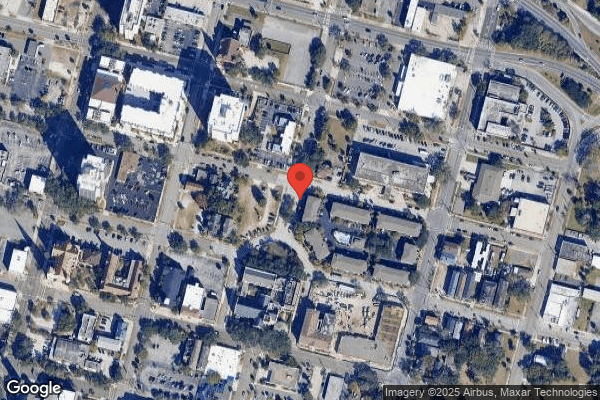

333 E ASHLEY ST, JACKSONVILLE, FL 32202 (904) 798-5300
For profit - Limited Liability company 120 Beds INFINITE CARE Data: November 2025
Trust Grade
75/100
#238 of 690 in FL
Last Inspection: October 2023

Over 2 years since last inspection. Current conditions may differ from available data.

Overview

North Bank Center for Rehabilitation and Healing holds a Trust Grade of B, indicating it is a good choice for care, though not without its flaws. Ranking #238 out of 690 facilities in Florida places it in the top half, and #17 out of 34 in Duval County means there are only a handful of local options that are better. The facility is improving, with a decrease in issues from 6 in 2021 to 5 in 2023, but staffing remains a concern with a turnover rate of 57%, higher than the state's average. Notably, there were incidents where medications were administered incorrectly, and there were concerns about infection control practices during medical tests, which could pose risks to residents. However, the facility has received no fines, indicating compliance with regulations, and has decent overall RN coverage, which is essential for monitoring resident health.

Trust Score
B
75/100
In Florida
#238/690
Top 34%
Safety Record
Low Risk
No red flags
Inspections
Getting Better
6 → 5 violations
Staff Stability
⚠ Watch
57% turnover. Above average. Higher turnover means staff may not know residents' routines.
Penalties
✓ Good
No fines on record. Clean compliance history, better than most Florida facilities.
Skilled Nurses
✓ Good
Each resident gets 44 minutes of Registered Nurse (RN) attention daily — more than average for Florida. RNs are trained to catch health problems early.
Violations
⚠ Watch
11 deficiencies on record. Higher than average. Multiple issues found across inspections.
★★★★☆
4.0
Overall Rating
★★★☆☆
3.0
Staff Levels
★★★★★
5.0
Care Quality
★★★☆☆
3.0
Inspection Score
Stable
2021: 6 issues
2023: 5 issues

The Good

  • 5-Star Quality Measures · Strong clinical quality outcomes
  • Full Sprinkler Coverage · Fire safety systems throughout facility
  • No fines on record

Facility shows strength in quality measures, fire safety.

The Bad

Staff Turnover: 57%

11pts above Florida avg (46%)

Frequent staff changes - ask about care continuity

Chain: INFINITE CARE

Part of a multi-facility chain

Ask about local staffing decisions and management

Staff turnover is elevated (57%)

9 points above Florida average of 48%

The Ugly 11 deficiencies on record

Oct 2023 4 deficiencies
CONCERN (D)

Potential for Harm - no one hurt, but risky conditions existed

ADL Care (Tag F0677)

Could have caused harm · This affected 1 resident

3. On 10/9/23 at 11:53 am, Resident #70 was observed lying in bed awake. He was nonverbal but smiled and nodded his head. His fingernails were elongated on each finger. He was scratching at his upper ...

Read full inspector narrative →
3. On 10/9/23 at 11:53 am, Resident #70 was observed lying in bed awake. He was nonverbal but smiled and nodded his head. His fingernails were elongated on each finger. He was scratching at his upper arms. On 10/10/23 at 10:55 am, Resident #70 was observed lying in bed awake. His fingernails on both hands remained elongated. On 10/10/23 at 11:35 am, a telephone interview was conducted with Resident #70's spouse. The spouse was asked about the resident's care at the facility. She stated, I've asked them to take care of his fingernails, it has been quite a while, and I haven't been able to check up on it again. I trim them sometimes when I come, but I can't get up there as much as I'd like to. On 10/11/23 at 9:08 am, Resident #70 was observed in bed. His fingernails remained elongated. On 10/12/23 at 11:15 am, LPN D was asked who was responsible for residents' fingernail cleaning and trimming. She stated, Everyone is responsible for nail care, the nurses, the CNAs, and myself. LPN D was asked when fingernail care was provided. She stated, Nail care is done on shower days and as needed. A review of the medical record for Resident #70 revealed diagnoses including encephalopathy and unspecified dementia. A review of the resident's Care Plan, dated 9/13/23, revealed a focus area, goal, and interventions which indicated that Resident #70 had an ADL Self-Care Deficit related to dementia, impaired balance, and limited mobility. Interventions included checking nail length, trimming and cleaning the nails on shower days and as necessary. Staff were to report any changes to the nurse. A review of the annual Minimum Data Set (MDS) assessment, with a reference date of 8/11/23, revealed that Resident #70 had a Brief Interview for Mental Status (BIMS) score of 00 of 15 possible points, indicating severe cognitive impairment. Resident #70 was also documented as requiring extensive one-person physical assistance for personal hygiene. Rejection of care behaviors were not documented as having been exhibited. 4. On 10/9/23 at 11:57 am, Resident #54 was observed in bed with overgrown facial hair. His mustache was grown past his upper lip and was in his mouth, and his beard was covering both of his cheeks as well as his neck. When he was asked how he preferred to keep his facial hair, he stated he did not like it this long, but I don't have any money for the barber shop. On 10/10/23 at 11:00 am, Resident #54 was observed in bed talking on the phone. His facial hair was in the same condition was was previously observed on 10/9/23 at 11:57 am. On 10/11/23 at 9:00 am, Resident #54 was observed in bed. His facial hair was in the same condition was was previously observed on 10/9/23 at 11:57 am and on 10/10/23 at 11:00 am. He stated he was going to request a shave today. On 10/12/23 at 1:00 pm, Resident #54 was observed sitting up in bed awake. His facial hair was in the same condition as was observed on 10/9, 10/10 and 10/11. He was asked if anyone had been in to shave him. He stated, I've asked and they are too busy. I asked last night on the evening shift but she never came back. He stated he preferred to be clean shaven, but I don't have any money for the barber. A review of the medical record for Resident #54, revealed a person centered Care Pplan dated 9/26/23 with a focus area for Activities of Daily Living (ADL) Self-Care Performance Deficit related to decreased mobility with interventions to include, but not limited to: Personal Hygiene: The resident requires (extensive assistance) by (1) staff member with personal hygiene, and has contractures of both hands. A review of the quarterly Minimum Data Set (MDS) assessment with an Assessment Reference Date (ARD) of 7/16/23, revealed that Resident #54 had a BIMS score of 12 out of 15 possible points, indicating moderate cognitive impairment. Resident #54 was also documented as requiring extensive one-person physical assistance with personal hygiene. Rejection of care behaviors were not documented as having been exhibited. A review of the facility's policy titled Restorative Nursing - ADLs Assistance (Bathing, Dressing, Grooming - Undated) revealed: The facility will provide restorative programming to assist residents in attaining and maintaining the highest practicable level of function . A resident will be eligible for restorative ADL programming if he/she demonstrates interest in improving or participating in self-performance of activities of daily living and requires skill practice and/or training in dressing, bathing, or grooming. Procedure: 1. c) Grooming: May include maintaining personal hygiene, planning the task, gathering supplies, combing hair, washing face and hands, brushing teeth, shaving, applying deodorant, applying make up, trimming nails, or use of adaptive equipment. In an interview with the Administrator on 10/11/23 at 8:10 am, she was asked if the facility had any other policies pertaining to ADLs and/or grooming. She stated no, this was their only policy. Based on observations, staff and resident interviews, medical record review, and facility policy review, the facility failed to ensure that four (Residents #29, #30, #70, and #54) of 31 residents sampled, received necessary services to maintain grooming and personal hygiene. Residents #29, #30, and #70 did not receive appropriate nail care. Resident #54's facial hair was overgrown, and his mustache was growing past his upper lip and into his mouth. The findings include: 1. On 10/09/23 at 11:45 am, Resident #29 was observed lying in bed awake. Her fingernails were observed to be elongated with purple polish only remaining at the tip of each nail and brown debris observed under each nail. She was asked how she preferred to wear her nails and she stated she did not like them to be long. They used to have girls that would come around and trim them, clean them, and polish them, but they don't have them here anymore. She was asked if she could remember who used to keep her nails clean, trimmed and polished. She stated, It was the girls from Activities, but they have new people now and they don't do nails. On 10/10/23 at 11:18 am, Resident #29 was observed lying in bed awake. Her fingernails were elongated with brown debris underneath. The nail tips were observed with grown-out purple nail polish. Resident #29 was asked for permission to photograph her fingernails. She agreed and photographs were taken. (Two photographs obtained, one of each hand.) On 10/11/23 at 12:50 pm, in an interview with Certified Nursing Assistant (CNA) F, she was asked who was responsible for caring for residents' fingernails. She stated, We keep them clean and trimmed, but if they are a diabetic, then the nurse takes care of them. She was asked when fingernail care was provided to the residents. She stated, It's when they need it. We check on shower days, but we can clean and trim them anytime they need it done. On 10/12/23 at 9:40 am, in an interview with Licensed Practical Nurse (LPN) D, she was asked who provided fingernail cleaning and trimming for the residents. She stated, Any CNAs, nurses or myself, and activity staff can also help with that. She was asked how often residents' fingernails were cleaned and trimmed. She stated, On shower days and as needed. On 10/12/23 at 9:50 am, LPN D was asked to observe Resident #29's fingernails. When she was asked if the resident's fingernails were trimmed and clean, she replied, No, they are pretty long and there is debris under her nails. She was asked why the resident had remnants of purple nail polish on the tip of each nail. The resident stated, Oh my, that polish is still showing? LPN D stated the Activities department assisted with polishing nails. The resident stated, No one has been in to polish my nails in over four months. On 10/12/23 at 12:50 pm, in an interview with CNA G, she was asked who provided fingernail care for residents. She stated, Whenever I see them long, I'll do it. The Activities staff will do the manicure and polish. She was asked if she was caring for Residents #29 and #30 today. She stated yes. She was asked if she had cleaned and trimmed their fingernails recently. She stated, I try to do the best I can with their nails. A medical record review for Resident #29 revealed diagnoses including type 2 diabetes and legal blindness. A review of the resident's quarterly Minimum Data Set (MDS) assessment, dated 7/21/23, revealed that Resident #29 required extensive assistance of one person for personal hygiene. No behaviors, including refusal/rejection of care were indicated. A review of the person-centered Care Plan revealed: Focus: (6/5/23) Resident has an (ADL) Activities of Daily Living Self-Care Performance Deficit; Goal: Resident will have ADL needs met through the review date; Interventions: Check nail length and trim and clean on bath day and as necessary. Resident requires assistance by staff with personal hygiene. Focus: (6/5/23) Resident has Potential/Actual Impairment to Skin Integrity; Goal: Resident will maintain or develop clean and intact skin by the review date; Intervention: Avoid scratching and keep hands from excessive moisture; keep fingernails short. 2. On 10/09/23 at 11:30 am, Resident #30 was observed lying in bed awake. Her fingernails on both hands were observed to be elongated with brown debris under each nail. The resident was asked at what length she preferred her nails. She stated, I want them trimmed and cleaned. I don't want them polished but I want them trimmed and clean. On 10/10/23 at 11:20 am, Resident #30 was observed lying in bed awake. Her fingernails were elongated with brown debris observed under each nail. She was asked for permission to photograph her hands. She agreed and photographs were taken. (Photographic evidence obtained) On 10/10/23 at 11:30 am, Licensed Practical Nurse (LPN)/Unit Manager D entered the room. Resident #30 asked LPN D to apply her arm splints. LPN D placed a splint on the resident's left hand/arm. The resident asked, What about my hand? LPN D stated, I can put a washcloth in your hand to keep it from closing. While placing the washcloth in the resident's hand, dead skin was observed to flake off of the resident's palm. The resident stated, No one washes my hands, that's why I've got all that dead skin. LPN D stated, They should be washing your hands twice a day. Resident #30 stated, Well they don't. That's dirt. I need soap and water. On 10/11/23 at 8:45 am, Resident #30 was observed lying in bed awake, watching TV. Her fingernails remained elongated with brown debris underneath. A medical record review for Resident #30 revealed diagnoses including unspecified dementia. A review of her quarterly Minimum Data Set (MDS) assessment, dated 8/2/23, revealed that Resident #30 required extensive assistance of one person for personal hygiene. No behaviors, including refusal/rejection of care were indicated. A review of the person-centered Care Plan for Resident #30 revealed: Focus (7/14/23) Resident has an ADL Self-Care Performance Deficit; Goal: (revised 9/16/23) Resident will demonstrate the appropriate use of adaptive device to increase ability through review date; Interventions: (revised 7/28/23) bathing/showering: Check nail length and trim and clean on bath day and as necessary. Report changes to the nurse. Focus: (7/14/23) Resident has Potential/Actual Impairment to Skin Integrity; Goal: Resident will maintain or develop clean and intact skin by the review date; Intervention: Avoid scratching and keep hands from excessive moisture; keep fingernails short.
CONCERN (D)

Potential for Harm - no one hurt, but risky conditions existed

Dental Services (Tag F0791)

Could have caused harm · This affected 1 resident

**NOTE- TERMS IN BRACKETS HAVE BEEN EDITED TO PROTECT CONFIDENTIALITY** Based on observation, interview, and record review, the facility failed to assist one (Resident #28) of one resident reviewed fo...

Read full inspector narrative →
**NOTE- TERMS IN BRACKETS HAVE BEEN EDITED TO PROTECT CONFIDENTIALITY** Based on observation, interview, and record review, the facility failed to assist one (Resident #28) of one resident reviewed for dental care, from a total sample of 31 residents, in obtaining routine and/or 24-hour emergency dental care. Failure to provide dental care could result in pain/discomfort, tooth loss, and infection. The findings include: On 10/09/23 at 12:11 pm, Resident #28 stated her teeth were falling off. She was observed trying to hold her tooth on the lower jaw and feeling it with her tongue. She stated she had problems chewing food because her teeth are all falling off. She stated she recently had one tooth fall off and was not sure of whether or not there were pieces of the tooth left in her mouth. She said she was not receiving dental care at the facility. She denied pain and stated she had learned to deal with it. I will make it. In an interview on 10/10/23 at 11:45 am, the resident's power of attorney (POA)/Daughter stated she visited the resident often and at unexpected times. Most of the time she was not notified about the resident's care. She added, I was not notified of Mom's broken glasses until I came in today. She revealed the broken glasses arm. When she was asked about Resident #28's dental services, she stated the resident had partial dentures, but they had been lost at the previous nursing home. She added that she tried to schedule an appointment for new ones, but the resident's dentist stated the resident had very tender gums and it would be painful trying to fit new ones. When she was asked if the resident was receiving additional services at the facility she said no. She was not aware of whether or not her mother had any dental issues or if anyone was checking her for that. She also mentioned that her mother stated she was having a hard time chewing her meals, but she the daughter not know if the facility had changed the resident's diet texture to make chewing easier. A review of the medical record revealed that Resident #28 was admitted to the facility on [DATE] with diagnoses including chronic kidney disease - stage three; vascular dementia, polyneuropathy, and acute angle-closure glaucoma. A review of the diet order dated 4/26/23, revealed a regular textured diet and thin consistency liquids. A review of the quarterly Minimum Data Set (MDS) assessment, with an assessment reference date (ARD) of 8/20/23, revealed that the resident had a Brief Interview for Mental Status (BIMS) score of 4 out of 15 possible points, indicating severe cognitive impairment. She required limited assistance for bed mobility, transfers, and toilet use, and supervision for eating. There were no swallowing or dental concerns identified. There was no care plan addressing the resident's dental status. In an interview with the Social Services Director (SSD) on 10/12/23 at 12:04 pm, she stated she placed Resident #28 on the list for a dental consultation upon admission. Upon initial evaluation, the dental company would then decide whether to continue with services or not. When she was asked about Resident #28's dental status, she confirmed the resident was not receiving dental services at the facility. She stated Resident #28 had not been accepted by the dental company affiliated with the facility due to her insurance (Medicaid pending upon admission). The SSD added that the facility changed dental providers around June 2023. She said the new company sent consent forms to the resident's representative and had not heard back yet. She was unable to produce confirmation of the consent form having been sent to the resident's representative. She was then asked about Resident #28's health coverage. She provided paperwork which indicated that Resident #28's Medicaid was approved on 8/18/23. A review of the facility's policy and procedure titled Dental Services (undated), revealed: The facility will assist residents in obtaining both routine and 24-hour emergency dental care. For Medicaid residents, the facility will provide all emergency dental services and those routine dental services to the extent covered under the Medicaid state plan. The facility will inform the resident of the deduction for the incurred medical expenses available under the Medicaid state plan and assist the resident in applying for the deduction. If any resident is unable to pay for the dental services, the facility should attempt to find alternative funding sources or delivery systems so that the resident may receive the services needed to meet their dental needs to maintain his/her highest practicable level of well being. .
CONCERN (E)

Potential for Harm - no one hurt, but risky conditions existed

Unnecessary Medications (Tag F0759)

Could have caused harm · This affected multiple residents

Based on observations, record reviews, and staff interviews, the facility failed to ensure a medication error rate of 5% or less based on four errors out of 27 opportunities for error, resulting in an...

Read full inspector narrative →
Based on observations, record reviews, and staff interviews, the facility failed to ensure a medication error rate of 5% or less based on four errors out of 27 opportunities for error, resulting in an error rate of 14.81% and involving three (Residents #66, #61, and #53) of seven residents observed during medication administration. Failure to administer medications correctly as ordered could result to side effects with serious harm to the residents. The findings include: During medication administration observation on 10/10/23 at 11:33 am, Licensed Practical Nurse (LPN) A was observed conducting point-of-care blood glucose testing for Resident #66. She obtained the resident's blood glucose level of 182 milligrams/deciliter (mg/dl). She reviewed the medication administration record (MAR) and stated the resident required four units of Novolog insulin per sliding scale. She obtained the multi-dose vial of Novolog and withdrew five units. As she was about to administer the medication, she was asked to clarify the dosage again and she confirmed she had drawn up five units in error. She pushed one unit off the syringe, then administered the remaining four units of insulin in the resident's right upper arm. A review of Resident #66's October 2023 MAR, revealed that the resident had orders for Novolog 100 units/milliliter administered per sliding scaled before meals. A review of the sliding scale revealed that 182 mg/dl required four units. (Copy obtained) On 10/10/23 at 11:56 am, LPN B was observed conducting point-of-care blood glucose testing for Resident #61. She obtained the resident's blood glucose level of 279 mg/dl. She then reviewed the October 2023 MAR and stated the resident needed four units of Lispro insulin. She obtained the Lispro Kwik Pen and dialed insulin to six units. After performing hand hygiene and donning gloves, she asked the resident where he would like the insulin administered. Resident #61 said, abdomen and lifted his shirt. LPN B then asked the resident, What section of the abdomen? As she was about to administer the medication, she was asked to clarify the dosage again. She said, Six units. She was asked to review the physician's order. She walked to the cart that was parked outside the door and said, Oh, it was supposed to be four units. She dialed the pen back to four units. She was asked how to prime the insulin pen to remove bubbles. She said, Add two more units. She could not appropriately explain how to prime the insulin pen. (Copy of the October MAR obtained) In an interview on 10/10/23 at 12:23 pm, the Director of Nursing (DON) was asked to explain the protocol for priming an insulin pen. She said, The nurse should push out two units of insulin then dial the pen to the appropriate setting per sliding scale. When asked if the nurses were trained to do that, she replied yes. She added that the facility conducted nursing competencies upon hire and annually thereafter, and they reviewed insulin administration at that time. Another medication administration observation was made on 10/11/23 at 9:50 am. LPN C was observed preparing medications for Resident #53. She obtained two tablets of Gabapentin 300 mg (milligrams), Gemeda 75 mg, and Potassium Chloride Extended Release (ER) 20 milliequivalents (meq). LPN C opened the Gabapentin capsules in a separate cup. She then obtained the remaining two medications and poured them in a pill crusher pouch and crushed them. She mixed the powered mixture in apple sauce and administered it to the resident who was seated in the dining room area. The nurse checked off the MAR as having administered the resident's medication. When she was asked to review the MAR, she confirmed that she had not administered either the Cholecalciferol (Vitamin D3) 125 micrograms (mcg) or the Cyanocobalamin (B12) 1000 mcg, but had checked them off as having been administered. (Copy obtained) She checked her medication cart and stated she did not have the right dosage of Vitamin D3 the cart. According to Mayo Clinic.org (https://www.mayoclinic.org/drugs-supplements/potassium-citrate-oral-route/proper-use/drg-20074773, accessed on 10/12/23 at 10:00 am), extended-release tablets should not be broken, crushed, chewed, or sucked because in doing so, they may cause irritation to the mouth or throat. A review of the facility's guideline titled Insulin Administration using an insulin Pen (undated), revealed how to use steps which included, but not limited to: 7. Wipe the tip of the pen where the needle will attach with an alcohol swab or cotton ball moistened with alcohol. 8. Remove the protective pull tab from the needle and screw it into the pen until snug (but not too tight). 9. Remove both the plastic outer cap and inner needle cap. 10. Look at the dose window and turn the dosage knob to 2 units. 11. Holding the pen with the needle pointing upwards, press the button until at least a drop of insulin appears. This will prime the needle and remove air from the needle. Repeat this step if needed unit a drop appears. 12. Dial the number of units ordered. A review of the facility's policy and procedure titled Administering Medication (revised April 2019), revealed: Medications are administered in a safe and timely manner, and as prescribed. The policy interpretation and implementation indicated: 4. Medications are administered in accordance with presciber orders, including any required time frame. 10. The individual administering the medication checks the label three (3) times to verify the right resident, right medication, right dosage, right time, and right method (route) of medication before giving the medication. 21. If a drug is withheld, refused, or given at a time other than the scheduled time, the individual administering the medication shall initial and circle the MAR space provided for that drug and dose. .
CONCERN (E)

Potential for Harm - no one hurt, but risky conditions existed

Infection Control (Tag F0880)

Could have caused harm · This affected multiple residents

Based on observation, interview, and a review of the facility's policies and procedures, the facility failed to maintain an infection prevention and control program designed to provide a safe and sani...

Read full inspector narrative →
Based on observation, interview, and a review of the facility's policies and procedures, the facility failed to maintain an infection prevention and control program designed to provide a safe and sanitary environment to help prevent the development and transmission of communicable diseases and infections during point-of-care testing for two (Residents #66 and #61) of two residents observed during point-of-care testing, out of seven residents observed during medication administration. Failure to adhere to infection control standards during point-of-care testing poses a risk to residents of acquiring communicable diseases. The findings include: On 10/10/23 at 11:33 am, Licensed Practical Nurse (LPN) A was observed conducting blood glucose testing for Resident# 66. She obtained a glucometer from a bag and placed it on the nurses' cart without a barrier. She obtained a lancet, alcohol wipes and a test trip, and placed them in a medication cup. She took the supplies to the resident's room and placed the glucometer on the resident's sink without a barrier as she performed hand hygiene. She went to the bedside and placed all of the supplies on a paper towel as she donned clean gloves. She cleaned the resident's right thumb and released the thumb after cleaning it to place the test trip in the glucometer. The resident's hand was contracted and was against his chest. The cleaned finger was touching the resident's gown. After placing the test trip in the glucometer, LPN A pricked the resident's finger and obtained a blood glucose reading of 182 milligrams per deciliter (mg/dl). She picked up all of the supplies and discarded them appropriately. She placed the used/soiled glucometer on the nurses' cart, doffed the gloves and performed hand hygiene, then she donned clean gloves and cleaned the glucometer with a Sani Wipe for two minutes. She did not allow it to air dry before placing it back in the bag. She stated each resident had their own glucometer. She also stated the facility had two glucometers in each medication cart that were shared between multiple residents. When asked if she cleaned the glucometer before use, she replied, We always put it back in the bag when its cleaned, so I assumed it was clean. I did not see any dirt on it either. LPN A confirmed that she did not use the barrier for the glucometer, and did not ensure that the blood collection site remained clean after cleaning it and before obtaining the blood sample. When asked how long the glucometer should be cleaned, she reviewed the Sani Wipe container and said three minutes. Another observation was made on 10/10/23 at 11:56 am. LPN B was observed conducting blood glucose testing for Resident #61. She obtained a glucometer from a bag in the medication cart. She got two lancets and three alcohol wipes and placed them in a medication cup. She took the glucometer bag with test strips, the glucometer and the other supplies that were in the medication cup to the resident's room and placed them on the resident's bedside table without a barrier. She performed hand hygiene and donned clean gloves. She pricked the resident's right middle finger and obtained a blood glucose reading of 279 mg/dl. She picked up the remaining alcohol wipes, the lancet, and the used/soiled glucometer and placed them on the medication cart. She discarded the used lancet and test trips, doffed the gloves, and performed hand hygiene. She then picked up the used/soiled glucometer with her bare hands, obtained Sani Wipes, cleaned the glucometer, and placed it on a medication cup to air dry. She then reviewed the October 2023 Medication Administration Record (MAR) and began preparing the insulin to administer without first performing hand hygiene. After administering the insulin, LPN A stated the glucometer was ready to be stored. She stated she forgot the glucometer bag in the resident's room and went to get it. When she was asked about the leftover supplies that were brought back from the resident's room and placed on the nurse's cart in a medication cup, she said, These are still clean. I did not use them. I will use them on my next resident. When she was asked if she had taken those items into Resident #61's room, she confirmed that she had, stating, Yes, but they are still clean. She was then asked about the glucometer bag that was left in the resident's room. She said she had always taken the bag to the resident's room because it held the test strips. She confirmed that the the glucometer was a shared glucometer used for more than one resident. A review of the facility's policy and procedure titled Blood Sampling - Capillary (Finger Sticks) (Revised September 2014), revealed: The purpose of this procedure is to guide the safe handling of capillary - blood sampling devices to prevent transmission of bloodborne diseases to residents and employees. The General Guideline included te following: Always ensure that blood glucose meters intended for reuse are cleaned and disinfected between residents' uses. Lancets and platforms must always be changed after use on each resident. Steps in the procedure were outlined as follows: 1. Wash hands. 2. [NAME] gloves. 3. Place blood glucose monitoring device on clean field. 4. Place a new lancet and disposable platform on the spring-loaded finger-stick device. 5. Wipe the area to be lanced with an alcohol pledget. 6. Obtain the blood sample following the manufacturer's instructions for the device. 7. Discard lancet and platform into the sharps container. 8. Following the manufacturer's instructions, clean and disinfect reusable equipment, parts and/or devices after each use. 9. Wash hands. 11. Replace blood glucose monitoring device in storage area after cleaning. A review of the facility's policy and procedure titled Infection Prevention and Control Program (Revised October 2018), revealed: An infection control program is established and maintained to provide a safe, sanitary, and comfortable environment, and to help prevent the development and transmission of communicable diseases and infections. The Policy interpretation and implementation, Section 11 - Prevention of Infection - indicated that the important facets of infection prevention included: 1. Identifying possible infection or potential complication of existing infection. 2. Instituting measures to avoid complication or dissemination. 3. Educating staff and ensuring that they adhere to proper techniques and procedures. The policy further indicated that those with potential direct exposure to blood and body fluids are trained in and required to use appropriate precautions and personal protective equipment. .
Jun 2023 1 deficiency
CONCERN (D) 📢 Someone Reported This

A family member, employee, or ombudsman was alarmed enough to file a formal complaint

Potential for Harm - no one hurt, but risky conditions existed

Report Alleged Abuse (Tag F0609)

Could have caused harm · This affected 1 resident

Based on staff and resident interviews, medical record review, and facility policy review, the facility failed to ensure that all alleged violations involving injuries of unknown origin were reported ...

Read full inspector narrative →
Based on staff and resident interviews, medical record review, and facility policy review, the facility failed to ensure that all alleged violations involving injuries of unknown origin were reported immediately, but not later than two hours after the allegation was made, if the events that caused the allegation involved abuse or resulted in serious bodily injury, or not later than 24 hours if the events that caused the allegation did not involve abuse and did not result in serious bodily injury, to the administrator of the facility and to other officials (including to the State Survey Agency and Adult Protective Services where state law provides for jurisdiction in Long-Term Care facilities) in accordance with State law through established procedures for one (Resident #1) in a sample of three residents. The findings include: A review of Resident #1's medical record revealed a nursing progress note written on 05/19/2023 at 7:10 a.m., which read: Resident slept good. Alert, oriented and verbally responsive. Around 6:00 a.m., when staff assigned to her were doing B/B (bowel and bladder) incontinent care, writer noticed right lower side of leg with discoloration and also right breast. At 7:00 a.m., informed DON (Director of Nursing)/management and in the building. Dr. (doctor's) answering service called . and waiting for call back. At 7:05 a.m., responsible party informed and thankful to writer. She wants her mother to have a pillow as protection because her mother is leaning to the right side. Give report to incoming nurse. A review of facility grievances revealed that a grievance was filed on 05/19/2023 on behalf of Resident #1 by her daughter. The grievance read: Describe the grievance as provided by resident/individual: Unexplained severe hematoma to R (right) breast, R side of back, R side of arm, R lateral leg from knee to ankle, L (left) upper lower arm, L leg, chest. My mother alleges two people, one white girl and one black man were helping her to the toilet without a lift or sit-to-stand from her wheelchair. My mother can't walk or stand. Describe the grievance as seen/heard by witness: N/A. In an interview with the Administrator on 06/19/2023 at 12:00 p.m., she was asked if she investigated the grievance from 05/19/2023 concerning Resident #1. She stated yes. She was asked whether an Immediate Federal Report and a 5-Day Federal Report for injury of unknown origin were completed. She stated, No, because we know where the injuries came from. She had been transferring with the sit-to-stand mechanical lift and was also on a blood thinner, Eliquis. The bruising came from being transferred when she could no longer bear the weight needed for the sit-to-stand lift. The daughter is who discovered the bruising and she alleged her mom had fallen, but she had not fallen. There was no fall. The bruising was all on her right side, and she leans to her right side in her wheelchair. She had X-rays done which were all negative. All staff were re-educated on the use of mechanical lifts. In a second interview with the Administrator on 06/19/2023 at 2:50 p.m., she was asked if there were any other investigations conducted other than the grievance investigation from 05/19/2023 for Resident #1. She stated no. She was asked when this grievance investigation was concluded. She stated, We notified the daughter on 5/25/23 of the resolution. She was asked to clarify who was caring for Resident #1 when the bruising occurred. She stated, I don't know who was caring for her. The grievance form was based on the daughter's feedback and the resident's feedback. She was asked if staff were attempting to transfer the resident to the toilet without a sit-to-stand device or were they using a transfer device. She stated, I'm not sure. I believe they were using the sit-to-stand device. She stated she did not know when this incident occurred. She did not know which staff were involved. When asked how the bruising was discovered, she stated, She did not have the discoloration a day prior to. The daughter comes in and provides hands-on care and there was no discoloration the day prior. The daughter discovered the bruising. She came in a couple of days after Mother's Day and she brought it to our attention. The daughter notified me personally. She came down to the office and told me and I started the grievance. The staff were already addressing it. The daughter said it supposedly occurred on the 14th. I don't know how or where she got that date from. The Administrator stated she observed the bruising the day it was reported. When asked to describe what she observed, she stated, It was discoloration below her right breast and on her side. There was nothing on the left side. When asked whether the source of the injury was observed by anyone, she stated no. She was asked if the injuries were discovered by another person. She stated, Yes, it was discovered a couple days after using the lift. It took a couple days for the discoloration to show up. She was asked if the source of the injury could be explained by the resident. She stated, No, the resident was not able to really give us what happened. In an interview with Employee A on 06/19/2023 at 3:05 p.m., she was asked when she was first notified about the bruising discovered on Resident #1. She stated May 19, 2023. When asked whether the event was reported to her by staff or family, she replied, By staff. By the floor nurse. She no longer works here. When asked whether she observed the bruises, she replied, At that time, no. When asked when she observed the resident's bruises, she stated, It was either that evening or the next morning. When asked to describe what she observed, she stated, Her breast was bruised from the bottom of her right breast and across the right breast to her side, and a long lateral bruise on the lower part of her right lateral leg. When she was asked what she did when the event was reported to her, she stated, I informed [Administrator] and [Regional Nurse]. I was also the Interim Director of Nursing (IDON) at that time and I wasn't really sure what to do, so I called them. She was asked what their response was. She stated, I think we had to report it to Agency for Health Care Administration (AHCA). I'm not sure if we reported it. As the Risk Manager, I had to do the investigation to interview the staff. Because it was such an odd location, we had to rule out that anything happened. Just to find out how the bruising happened. My thought process was how would she get bruising like that outside of a physical assault. She was asked if the source of the injury was observed by any person. She stated no. She was asked if the injury was discovered by another person. She stated, Yes, by the nurse. She was asked if the source of the injury could be explained by the resident. She stated, No, she wasn't able to say what happened. She was asked if the injury was suspicious because of the extent of the injury or the location of the injury. She stated yes to both. A review of the facility's policy titled Abuse, Neglect, Exploitation, and Misappropriation (undated) revealed: Policy: It is the policy of this facility to take appropriate steps to prevent abuse, neglect, exploitation, misappropriation and the occurrence of an injury of unknown source, and to ensure that all alleged violations of Federal and/or State laws are reported immediately to the Administrator, the Risk Manager, The Social Service Director, and the Director of Nursing. The Abuse Coordinator/Designee shall report any alleged violations of abuse or serious bodily injury immediately but not later than two hours to the Agency for Health Care Administration, the Adult Protective Services, and the local law enforcement if they feel a crime has occurred. If the alleged violation involves neglect, misappropriation of resident property, exploitation, or injuries of an unknown source and involves no serious bodily injury, it must be reported no later than 24 hours. 6. Reporting: Upon initial investigation, where suspicion that Abuse/Neglect/Exploitation may have occurred, the Abuse Coordinator/designee shall immediately report the alleged violation to AHCA (for Federal report), Adult Protective Services, and local law enforcement when appropriate. The Risk Manager/Designee will file the Immediate Federal Report with AHCA and then submit the summary and findings of the investigation with the 5-day Federal Report. .
Dec 2021 6 deficiencies
CONCERN (D)

Potential for Harm - no one hurt, but risky conditions existed

Deficiency F0558 (Tag F0558)

Could have caused harm · This affected 1 resident

**NOTE- TERMS IN BRACKETS HAVE BEEN EDITED TO PROTECT CONFIDENTIALITY** Based on observations, staff and resident interviews, and medical record review, the facility failed to ensure the call light wa...

Read full inspector narrative →
**NOTE- TERMS IN BRACKETS HAVE BEEN EDITED TO PROTECT CONFIDENTIALITY** Based on observations, staff and resident interviews, and medical record review, the facility failed to ensure the call light was within reach for one (Resident #62) of 29 sampled residents, for whom the facility had assessed and developed care plans. This action prevented the resident from requesting help when he needed it, leaving him vulnerable to not having his needs met. The findings include: On December 6th, 2021, at 11:30 AM, Resident #62 was observed sitting on a chair positioned to the right of his bed, watching television. His call bell was not within reach. (Photographic evidence obtained) It was wrapped around the left bed rail on the resident's bed, approximately four feet away from the resident. His water cup was dated 12/05/21. Call bell response time was tested, at which time the call bell was not audible in the room, however an unsampled certified nursing assistant (CNA) entered the room [ROOM NUMBER]-3 minutes later. On December 6th, 2021, at 12:48 PM, Resident #62 was observed sitting in a chair positioned to the right of his bed. His call bell was not within reach. (Photographic evidence obtained) The resident's water cup was observed on top of the bedside table with his room number written on it, but the cup was not dated. Resident #62's empty urinal was also on top of the bedside table. On December 7th, 2021, at 9:26 AM, Resident #62 was observed in his room, dressed and sleeping in a chair. His call bell was observed wrapped around the left upper bed rail, approximately four feet away from him. (Photographic evidence obtained) On December 8th, 2021, at 9:37 AM, Resident #62's call bell was wrapped around the left upper bed rail, approximately four feet away from him. He was sitting in a chair. A cup with fluids dated 12/8/21 was sitting on top of the bedside table. On December 8th, 2021, at 10:13 AM, Resident #62 was observed in his room sitting in a chair. His call bell was wrapped around his left upper bed rail, approximately four feet away from him. On December 9th, 2021, at 9:52 AM, Resident #62 was observed in his room sitting in a chair. His call bell was wrapped around the left upper bed rail, approximately four feet away from him. When asked how he summoned staff when he needed assistance, he replied, I shout. He stated he would like the call bell closer when he was not lying in bed. His urinal was behind the chair he was sitting in. When asked how he accessed his urinal, he stated he had to reach for it. On December 9th, 2021, at 2:31 PM, Licensed Practical Nurse (LPN) G was interviewed regarding call bell positioning and accessibility. She stated call light monitoring was done by both the nurses and CNAs. She further stated call lights must be put where residents can get to them. On December 9th, 2021, at 11:32 AM, a Social Services note dated 12/05/21, indicated Resident #62 would continue with long-term care placement. He was alert and oriented to self and surroundings. His speech was impaired. He required reminders. He was pleasant and cooperative. He interacted with his peers. A review of the nurses' notes dated December 3rd, 2021, revealed that staff assisted Resident #62 with activities of daily living (ADLs). He remained continent of bowel, but was occasionally incontinent of bladder. He transferred from bed to chair with one assist, and he ambulated using a four-wheeled walker. A review of the resident's quarterly Minimum Data Set (MDS) assessment, dated November 3rd, 2021, revealed that Resident #62 had a Brief Interview for Mental Status (BIMS) score of 12 out of a possible 15 points, indicating moderately impaired cognition. (Total possible BIMS score ranges are as follows: 13-15: cognitively intact, 08-12: moderately impaired, and 00-07: severe impairment) He required a one-person assist with transfers/walking in his room and the corridor, locomotion on and off the unit, and for toilet use. His balance was not steady, but he was able to stabilize without staff assistance. His range of motion (ROM) was limited for both lower extremities (BLEs). A walker was used as a mobility device. A review of Resident #62's care plan (CP), dated August 8th, 2020, documented: Focus: Resident has occasional to frequent incontinence at times. Toileting/incontinence management per facility protocol C. Goal: Resident will have reduced episodes of incontinence through next review date (NRD). Interventions included: Functional call light within easy reach and prompt staff response. Do frequent rounds when resident is in his room, as he may not use the call light due to cognitive deficit and physical limitation. Focus: Resident has diagnosis (Dx) of convulsions with reduced safety awareness due to mild cognitive impairment. He requires limited assistance from staff while ambulating. Ambulates with a walker. Goal: Resident will have minimized risk of fall-related injuries through NRD, related to visual deficit through NRD, will have no injuries due to falls and/or seizures through NRD. Interventions include: Functional call light and frequently used items within easy reach and visual field of resident. Prompt staff response. SR (side rails) up x 2 as an enabler for bed mobility PRN (as needed). Keep pathway clear of clutter, environmental hazards and items placed below resident field of vision. Provide environment with adequate lighting, free of glare. On December 9th, 2021, at 6:12 PM, the Administrator was asked for the facility's policy and procedure (P&P) for call lights. The P&P provided at 6:28 PM, stated each resident had a functioning call light at bedside, which relayed an audible tone at the nurses' desk when the resident needed to summons or communicate with a staff member. All new residents would be oriented to the function and proper use of call lights. It was expected that the call light would be answered within a reasonable amount of time. All staff were responsible for answering the call lights and checking on the residents for safety needs. If the responding staff member was not qualified to meet medical needs, they would relay the resident's needs to the nurse or appropriate staff member and respond to the resident accordingly. When residents were in bed, call lights would be secured near the resident for easy access. When residents were out of bed, the call light would be secured to a location near the resident for easy access. If the call light had an identified functional problem, a work order would be written, and maintenance would be notified to inspect and promptly repair the device. In such an event, staff would manually monitor the residents and meet their safety needs. .
CONCERN (D)

Potential for Harm - no one hurt, but risky conditions existed

Comprehensive Care Plan (Tag F0656)

Could have caused harm · This affected 1 resident

Based on observations, interviews, and record reviews, the facility failed to fully develop and/or implement a comprehensive person-centered care plan for one (Resident #71) of a total sample of twent...

Read full inspector narrative →
Based on observations, interviews, and record reviews, the facility failed to fully develop and/or implement a comprehensive person-centered care plan for one (Resident #71) of a total sample of twenty-nine residents. Specifically, Resident #71's care plans did not address medication administration on dialysis days, and the facility was not implementing her care plan for the provision of oxygen as per her physician's orders. The findings include: During an interview with Resident #71 on 12/06/21 at 12:00 p.m., she stated she received dialysis away from the facility on Tuesdays, Thursdays, and Saturdays. Resident #71 reported she was not on oxygen, however, an oxygen tank was observed sitting in the corner of her room, not in use. A review of Resident #71's medical record revealed an admission date of 7/26/21, and a diagnosis of End Stage Renal Disease (ESRD) requiring hemodialysis three times per week on Tuesdays, Thursdays, and Saturdays at the dialysis facility. She had a Brief Interview for Mental Status (BIMS) score of 15 out of a possible 15 points, indicating intact cognition, and she required extensive assistance with Activities of Daily Living (ADLs). A review of Resident #71's physician's orders revealed a 7/31/21 order for oxygen at 2 liters per minute (LPM) continuously via nasal cannula with a start date of 7/31/21. This order was discontinued on 12/09/21and a new order was written for supplemental oxygen at 2 liters per minute as needed. (Copies obtained) A review of Resident #71's Medication Administration Record (MAR) for November 2021 and December 2021, revealed that the nursing staff were signing for having administered oxygen to Resident #71. The MAR also revealed no oxygen therapy was provided and medications scheduled at 9:00 a.m. were missed on the resident's dialysis days. A review of Resident #71's Care Plans revealed no care plans addressing Resident #71's oxygen therapy or medication administration on dialysis days. An interview was conducted with Certified Nursing Assistant (CNA) F on 12/08/21 at 2:15 p.m. When asked what type of dialysis care/services training she had received, CNA F stated, No dialysis training. I get her dressed, make sure she eats, and have her ready for dialysis on time. When asked what type of training she'd received related to respiratory interventions, CNA F stated, The nurse handles all that. I just moisture her nose if it is sore. She is on oxygen. Lately, she hasn't been on it. An interview was conducted with Registered Nurse (RN) E on 12/09/21 at 12:53 p.m. When asked what type of dialysis care/services training he had received, RN E stated, no dialysis training. He confirmed that the resident was receiving hemodialysis three times per week. When asked about the resident's medication administration, RN E stated, [Resident #71] accepts her medications with no problem. If it's at a time she is gone, we can't give her medication. Yesterday, she left at 6:00 a.m., so we could not give her the 8:00 a.m. medication; we just left them here. If the time is past, we just don't give it. By the time she is back something else is due. When asked whether Resident #71 was currently receiving oxygen, RN E stated, Yes, the dialysis center has the orders. Another interview was conducted on 12/09/21 at 4:35 p.m. with Resident #71. She reported she was not receiving oxygen at the dialysis center. She stated, They give it to me if I need it. When asked whether she was receiving oxygen here at the facility, Resident #71 responded, no. During the interview, an oxygen tank was observed sitting in corner, not in use. (Photographic evidence obtained) An interview was conducted with the Director of Nursing (DON) on 12/09/21 at 5:47 p.m. When asked whether she was familiar with Resident #71 and if the resident was on oxygen, the DON replied, Yes, sometimes when she goes to dialysis. The DON stated, Most of the time she is not using it, her saturation goes to 96-97% on room air. When asked why Resident #71 had an order for continuous oxygen, the DON responded, When she started with us, she said she couldn't breathe. Tomorrow the physician comes and will review her chart. When asked why the nurses were signing the MAR for administration of oxygen if they were not administering oxygen to Resident #71, the DON replied, I'll check. When asked how she ensured the physician's orders were accurate, the DON replied, That is a med (medication) error. I will in-service staff to call the physician to change it if she is not using the oxygen. The facility's policy and procedure entitled Care of a Resident with End-Stage Renal Disease (ESRD) read, The resident's comprehensive care plan will reflect the resident's needs related to ESRD/dialysis care. (Photographic evidence obtained) The facility's policy and procedure for Oxygen Administration instructed staff to verify that there was a physician's order for this procedure. Staff were to review the physician's orders for facility protocol for oxygen administration and review the resident's care plan to assess for any special needs of the resident. (Photographic evidence obtained) .
CONCERN (D)

Potential for Harm - no one hurt, but risky conditions existed

Deficiency F0698 (Tag F0698)

Could have caused harm · This affected 1 resident

Based on observations, interviews, and record reviews, the facility failed to ensure that residents who required dialysis services received such services, consistent with professional standards of pra...

Read full inspector narrative →
Based on observations, interviews, and record reviews, the facility failed to ensure that residents who required dialysis services received such services, consistent with professional standards of practice, by failing to ensure ongoing communication with the dialysis facility regarding dialysis care and services for one (Resident #71) of two residents receiving hemodialysis from a total sample of twenty-nine residents. The findings include: During an interview with Resident #71 on 12/06/21 at 12:00 p.m., she stated she received dialysis away from facility on Tuesdays, Thursdays, and Saturdays. A review of Resident #71's medical record revealed an admission date of 7/26/21 with a diagnosis of End Stage Renal Disease (ESRD) requiring hemodialysis three times per week on Tuesdays, Thursdays, and Saturdays at the dialysis facility. She had a Brief Interview for Mental Status (BIMS) score of 15 out of a possible 15 points, indicating intact cognition, and she required extensive assistance with Activities of Daily Living (ADLs). A review of Resident #71's physician's orders revealed an order for dialysis on Tuesdays, Thursdays, and Saturdays, dated 8/3/21. An interview was conducted with Registered Nurse (RN) E on 12/09/21 at 12:53 p.m. When asked what type of training he'd received related to dialysis care and services, RN E stated, no dialysis training. RN E confirmed that Resident #71 was receiving hemodialysis three times per week and had an AV fistula (arteriovenous fistula - an abnormal connection between an artery and a vein in which blood flows directly from an artery into a vein) at her left chest. When asked at what point nursing monitored vital signs and weights, RN E stated, Every morning and anytime she receives hypertension medicines. The weight team track and monitor weights and weights are completed at the dialysis clinic. When asked how care was coordinated and communicated between the dialysis staff and the facility nurses, RN E stated, Vital signs are completed before she (Resident #71) leaves. If she has an issue, the dialysis center will notify us. An interview was conducted with the Director of Nursing (DON) on 12/09/21 at 5:47 p.m. When asked about Resident #71's weights and post-dialysis care, the DON stated, The fistula is checked for bruising and bleeding. When asked whether the Dialysis Communication forms were created at the facility or the dialysis center, the DON replied, The facility completes the top portion of the form, and the dialysis center completes the bottom of the page. On 12/09/21 at 4:48 p.m., a review of nine Dialysis Communication Forms revealed missing information as follows: 10/14/2021 - top portion of form weight and cycles per minute missing, nurse's signature missing (This was the only form available for review for October 2021.) 11/16/2021 - top portion of form weight missing, nurse's signature missing 11/18/2o21 - top portion of form weight missing, nurse's signature missing 11/20/2021 - top portion of form weight missing, room number missing, nurse's signature missing 11/23/2021 - top portion of form weight missing, nurse's signature missing 11/26/2021 - top portion of form weight missing, nurse's signature missing 11/30/2021 - top portion of form weight missing, nurse's signature missing 12/02/2021 - top portion of form weight missing, nurse's signature missing 12/04/2021 - top portion of form weight missing, nurse's signature missing 12/09/2021 - top portion of form weight missing, nurse's signature missing During an interview with the DON on 12/09/21 at 7:20 p.m., only the October 14, 2021 form was available for the month of October. No other October forms were available for review. When asked what the purpose of the dialysis communication forms was, the DON replied, The forms are very important. They have the blood pressures on them. She further stated, If blood pressures are low, Resident #71 can have a code. The facility uses the forms to communicate with the dialysis center on how the resident is doing. The DON reported that the facility initiated the form. The facility's policy and procedure for Care of a Resident with End-Stage Renal Disease (revised 8/3/2011), stated, Agreements between this facility and the contracted ESRD facility include all aspects of how the resident's care will be managed, including: how information will be exchanged between the facilities. (Photographic evidence obtained) .
CONCERN (D)

Potential for Harm - no one hurt, but risky conditions existed

Medication Errors (Tag F0758)

Could have caused harm · This affected 1 resident

**NOTE- TERMS IN BRACKETS HAVE BEEN EDITED TO PROTECT CONFIDENTIALITY** Based on record review and interview, the facility failed to monitor behaviors for one (Resident #31) of ten residents investig...

Read full inspector narrative →
**NOTE- TERMS IN BRACKETS HAVE BEEN EDITED TO PROTECT CONFIDENTIALITY** Based on record review and interview, the facility failed to monitor behaviors for one (Resident #31) of ten residents investigated for unnecessary medications, from a total of 29 residents in the sample. The findings include: A review of Resident #31's medical record revealed he was admitted to facility on 11/24/20 and was readmitted on [DATE]. His diagnoses included occlusion and stenosis of left carotid artery, cerebral infarction, hemipelgia, cirrhosis of liver, dementia with behaviors, unspecified dementia without behaviors, adult failure to thrive, repeated falls, cerebrovascular disease, and hypertension. Resident #31 was care planned for combative behaviors with interventions that included psychology evaluations and medications as needed. He also was care planned for potential for discomfort and side effects related to the use of psychotropic medications for Alzheimer's disease with interventions that included evaluate behaviors, administer medications and observe for adverse effects of medications. A review of the resident's Physician's Order Sheets for December 2021 revealed they included current orders for Seroquel two times a day for behavior and psychological symptoms of dementia, and Buspirone three times a day for anxiety. A review of the Medication Administration Record (MAR) for December 2021 revealed that no behaviors were being monitored in relation to the administration of Seroquel. An interview was conducted with Licensed Practical Nurse (LPN) H on 12/09/21 at 3:16 PM. She was asked if a resident was receiving Ativan or Seroquel whether they should be monitored for behaviors. LPN H replied, Yes. She was asked whether behaviors were being monitored for Resident #31's Seroquel medication, and she replied, No, Seroquel was started on 11/22/21. I'm not sure why they didn't put behavior monitoring on for that medication. The facility's policy and procedure for psychotropic medication administration was requested but was not received during the course of the survey. .
CONCERN (D)

Potential for Harm - no one hurt, but risky conditions existed

Deficiency F0760 (Tag F0760)

Could have caused harm · This affected 1 resident

**NOTE- TERMS IN BRACKETS HAVE BEEN EDITED TO PROTECT CONFIDENTIALITY** Based on observations, interviews, and record review, the facility failed to ensure residents were free of significant medicatio...

Read full inspector narrative →
**NOTE- TERMS IN BRACKETS HAVE BEEN EDITED TO PROTECT CONFIDENTIALITY** Based on observations, interviews, and record review, the facility failed to ensure residents were free of significant medication errors by failing to administer as-needed antihypertensive medications to residents for blood pressures at or above the parameters established by the physician for two (Resident #52 and Resident #22) of two residents reviewed, from a total of 29 residents in the sample. The findings include: 1. A review of the medical record for Resident #52 revealed an initial admission date of 3/2/2017. Her admitting diagnosis was partial intestinal obstruction. Secondary diagnoses included protein-calorie malnutrition and hypertension. A review of a Significant Change Minimum Data Set (MDS) assessment, dated 10/28/2021, revealed a Brief Interview for Mental Status (BIMS) score of 06 out of a possible 15 points, indicating severely impaired cognition. The assessment did not identify any behaviors or rejection of care and no history of falls. Resident #52 required extensive to total assistance with activities of daily living. A review of Resident #52's physician's orders revealed an order dated 11/10/2021 for clonidine 0.1 milligram (mg) tablet to be given every 6 hours as needed for a systolic blood pressure greater that 150 mmHg (millimeters of mercury). (Photographic Evidence Obtained) A review of Resident #52's blood pressure flow records for November and December 2021 revealed the following entries: 12/6/2021 7:35 a.m. 162/77 12/5/2021 9:21 a.m. 162/70 12/5/2021 1:56 a.m. 164/83 12/4/2021 11:26 p.m. 172/81 12/4/2021 3:52 a.m. 166/84 12/4/2021 12:18 a.m. 164/70 11/30/2021 9:47 p.m. 173/82 11/29/2021 5:57 p.m. 172/78 11/29/2021 10:07 a.m. 161/69 11/28/2021 10:47 p.m. 165/87 11/27/2021 8:34 p.m. 170/70 11/27/2021 3:55 p.m. 174/76 11/22/2021 10:28 p.m. 188/73 (Photographic Evidence Obtained) A review of the Medication Administration Records (MARs) for November and December 2021 revealed no documented administration of clonidine. (Photographic Evidence Obtained) On 12/09/2021 at 2:55 p.m., an interview was conducted with Registered Nurse (RN) A. She confirmed that she was assigned to care for Resident #52. She was asked to review Resident #52's blood pressure flow records and medication administration records. She stated she was not aware the resident had an order for as-needed clonidine. After reviewing the physician's order, the nurse stated, If those parameters are met, the medication should be given. A review of the pharmacy consults for October and November 2021 revealed no recommendations identified by the consultant pharmacist for the as-needed clonidine. 2. A review of the medical record for Resident #22 revealed an initial admission date of 1/17/2018. Her primary medical diagnosis was cerebral infarction. Secondary diagnoses included cerebrovascular disease and hypertension. A review of a quarterly Minimum Data Set (MDS) assessment dated [DATE], revealed a Brief Interview for Mental Status (BIMS) score of 09 out of a possible 15 points, indicating moderately impaired cognition. Resident #22 required extensive to total assistance with activities of daily living. A review of Resident #22's physician's orders revealed an order dated 9/29/2021 for clonidine 0.1 milligram (mg) tablet to be given every 8 hours as needed for a systolic blood pressure greater that 150 mmHg. (Photographic Evidence Obtained) A review of the medical record revealed the resident was transferred to the hospital and returned on 11/6/2021. Resident #22's blood pressure was documented as 181/70 on the admission nursing data collection upon returning from the hospital. A review of the medication administration record for November 2021 revealed no documented administration of clonidine. (Photographic Evidence Obtained) A review of Resident #22's blood pressure flow records for December 2021 revealed an entry dated 12/7/2021 at 7:36 p.m. with a blood pressure of 165/69. An entry dated 12/7/2021 at 11:32 p.m. revealed a blood pressure of 174/85. A review of the medication administration records for December 2021 revealed no documented administration of the as-needed clonidine. (Photographic Evidence Obtained) A provider progress note dated 11/10/2021 directed staff to notify the physician or nurse practitioner for chest pain, shortness of breath, or a systolic blood pressure greater than 160 mmHg or lower than 100 mmHg. A review of the nursing progress notes revealed no documentation to indicate the physician had been notified of the elevated blood pressures on 12/7/2021. (Photographic Evidence Obtained) During an interview on 12/09/2021 at 2:55 p.m. RN A, she was asked to review the physician's orders and blood pressure records for Resident #22. She reviewed the orders and again acknowledged that if the blood pressure parameters established by the physician had been met, the as-needed clonidine should have been administered. A review of the pharmacy consults for October and November 2021 revealed no recommendations identified by the consultant pharmacist for the as-needed clonidine. A review of the facility's medication administration policy titled Administering Medications revealed a directive for staff to administer medications in accordance with the orders. (Photographic Evidence Obtained) According to the American Heart Association (accessed 12/9/2021) at https://www.heart.org/en/health-topics/high-blood-pressure/the-facts-about-high-blood-pressure, high blood pressure (also referred to as HBP, or hypertension) is when your blood pressure, the force of blood flowing through your blood vessels, is consistently too high. When left untreated, the damage that high blood pressure does to your circulatory system is a significant contributing factor to heart attack, stroke and other health threats. .
CONCERN (F)

Potential for Harm - no one hurt, but risky conditions existed

Deficiency F0802 (Tag F0802)

Could have caused harm · This affected most or all residents

Based on observations, record reviews and interviews, the facility failed to employ staff with the appropriate competencies and skills sets to carry out the functions of the food and nutrition service...

Read full inspector narrative →
Based on observations, record reviews and interviews, the facility failed to employ staff with the appropriate competencies and skills sets to carry out the functions of the food and nutrition service. This had the potential to negatively impact all residents who received meals from the kitchen. The findings include: On 12/06/21 at 2:15 PM, observations were made of the low temperature dishwasher while being used by a dietary staff member. The dishwasher was observed at a temperature of 115 °F. Two more wash cycles were observed and the temperature never rose above 118 °F. Dietary Staff Member (DSM) I reported the dishwasher temperature should be 120 to 125° F. She was asked what temperature the dishwasher was at now, and she replied, I don't know, I have to get my glasses. DSM I was asked what the facility's process was at the beginning of washing dishes in the dishwasher. She stated, I let it run one time before I start doing dishes. I check it at the beginning, but I don't log until the end of washing dishes. DSM I retrieved her glasses and looked at the dishwashing machine while it ran. She reported that it reached 118 °F. She was asked what she did if the temperature was low, and she replied that she would log it and then get the supervisor. DSM I was asked to notify the Food Service Director (FSD) about the low dishwasher temperature she just read. The FSD was informed and he ran the machine again himself. It was still under 120°F. At this time the FSD did not give the kitchen staff any instructions or ask them to wait. Before leaving the kitchen, the FSD was asked if he told staff what to do in the dish room regarding cleaning the dishes and he replied, not yet. The December 2021 temperature log for the dishwasher was reviewed on 12/06/21 at 2:30 PM and revealed there was a dishwasher temperature and PPM (parts per million) already filled in for the night shift today, 12/6/21. The FSD was asked about the entries already filled in for today's night shift and he stated, The employee was getting a head of himself. The FSD was asked to check the sanitizer for the three-compartment sink, but he could not find a color key to compare the strip from the sink with it. After several minutes, he went to the office and retrieved a new bottle. On 12/06/21 at 5:00 PM, another visit to kitchen was made. The staff at the three-compartment sink were asked to check the sanitation level, but they could not find test strips or a strip bottle with a color key to test the PPM. They were hand washing dishes at of time of this observation. An interview was conducted with the FSD on 12/7/21 at 5:00 PM. He stated this morning, a representative from the facility's contracted water treatment/purification/cleaning/hygiene company was here and checked the dish machine. He stated the representative told him if the dishwasher temperature was higher then 120 °F, it would neutralize the sanitizer. He reported at the time of the visit, the representative did a couple of things to the dishwasher and it was working properly now. The representative's report was requested for review. It was received the following day, 12/8/21, at 3:00 PM. The report indicated the dishwashing maching should be at 120 to 140 °F during use and it was at 139°F the day of the representative's visit. (Copy obtained) On 12/8/21 at 11:15 AM, the FSD was asked if he had conducted an in-service with kitchen employees regarding the dishwasher. He replied, nothing official. I just had a talk with them. On 12/09/21 at 4:30 PM, the FSD was asked if he had conducted any formal training with the kitchen staff regarding the dishwasher. He replied no. He was asked to clarify the appropriate temperature the dishwasher should reach when running. He stated the dishwasher should be between 120 to 140°F. He said he was going with the representative's recommendations. He stated, Yes, I know I said the temperature should be no more than 120° F, but I am just going to go with our [contractor's] report. It was pointed out that the log's temperature ranges for a high temperature machine did not match the machine recommendations or the poster on the wall, and the FSD agreed it was confusing. (Copy of logs obtained) The FSD demonstrated the dishwasher again on this day. He had to run it four (4) times to get the temperature up over 120 °F for the wash cycle. 2. [NAME] K was observed obtaining food temperatures on 12/08/21 at 11:34 AM. She said the facility fortified a portion of the mash potatoes with a concentrated whey protein powder (Beneprotein). She was asked how much she added to the food and she replied, I put 15 scoops in mash potatoes, 1 scoop for every person that is on fortified potatoes. An interview was conducted with the Certified Dietary Manager (CDM) on 12/09/21 at 2:15 PM. She reported that the facility did fortify foods with packets of Benecalorie. She reported she believed only 4 to 5 residents were on fortified foods. She stated the recipe was 1 packet of Benecalorie added to a 1/2 cup of mashed potatoes. At 2:39 PM on 12/09/21, the FSD stated he was acting as the cook today and at lunch service he put six scoops of Beneprotein in the mashed potatoes. He stated, It was because it is what he saw the cook do. During this interaction between the CDM and FSD, the CDM told the FSD that it should be 1 packet of Benecalorie for 1/2 cup of mashed potatoes, and that he should be using Benecalorie not Beneprotein. The FSD was asked what training the kitchen staff had recevied related to dishwashing duties, and he replied, none. When asked about new employee training he stated, New employees learn from shadowing other staff members. A review of the facility's policy titled Sanitization revealed, Dishwashing machines must be operated using the following specifications: Low temperature dishwasher wash temperature 120° F and final rinse with 50 parts per million (PPM) hypochlorite for at least 10 seconds. (copy obtained) A review of the facility's policy titled Dishwashing Machine Use revealed, Food service staff required to operate the dishwashing machine will be trained in all steps of dishwashing machine use by the supervisor or a designee proficient in all aspects of proper use and sanitation. (Copy obtained) .
Understanding Severity Codes (click to expand)
Life-Threatening (Immediate Jeopardy)
J - Isolated K - Pattern L - Widespread
Actual Harm
G - Isolated H - Pattern I - Widespread
Potential for Harm
D - Isolated E - Pattern F - Widespread
No Harm (Minor)
A - Isolated B - Pattern C - Widespread

Questions to Ask on Your Visit

  • "Why is there high staff turnover? How do you retain staff?"
  • "Can I speak with families of current residents?"
  • "What's your RN coverage like on weekends and overnight?"

Our Honest Assessment

Strengths
  • • No major safety red flags. No abuse findings, life-threatening violations, or SFF status.
  • • No fines on record. Clean compliance history, better than most Florida facilities.
Concerns
  • • 11 deficiencies on record. Higher than average. Multiple issues found across inspections.
  • • 57% turnover. Above average. Higher turnover means staff may not know residents' routines.
Bottom line: Generally positive indicators. Standard due diligence and a personal visit recommended.

About This Facility

What is North Bank Center For Rehabilitation And Healing's CMS Rating?

CMS assigns NORTH BANK CENTER FOR REHABILITATION AND HEALING an overall rating of 4 out of 5 stars, which is considered above average nationally. Within Florida, this rating places the facility higher than 99% of the state's 100 nursing homes. This rating reflects solid performance across the metrics CMS uses to evaluate nursing home quality.
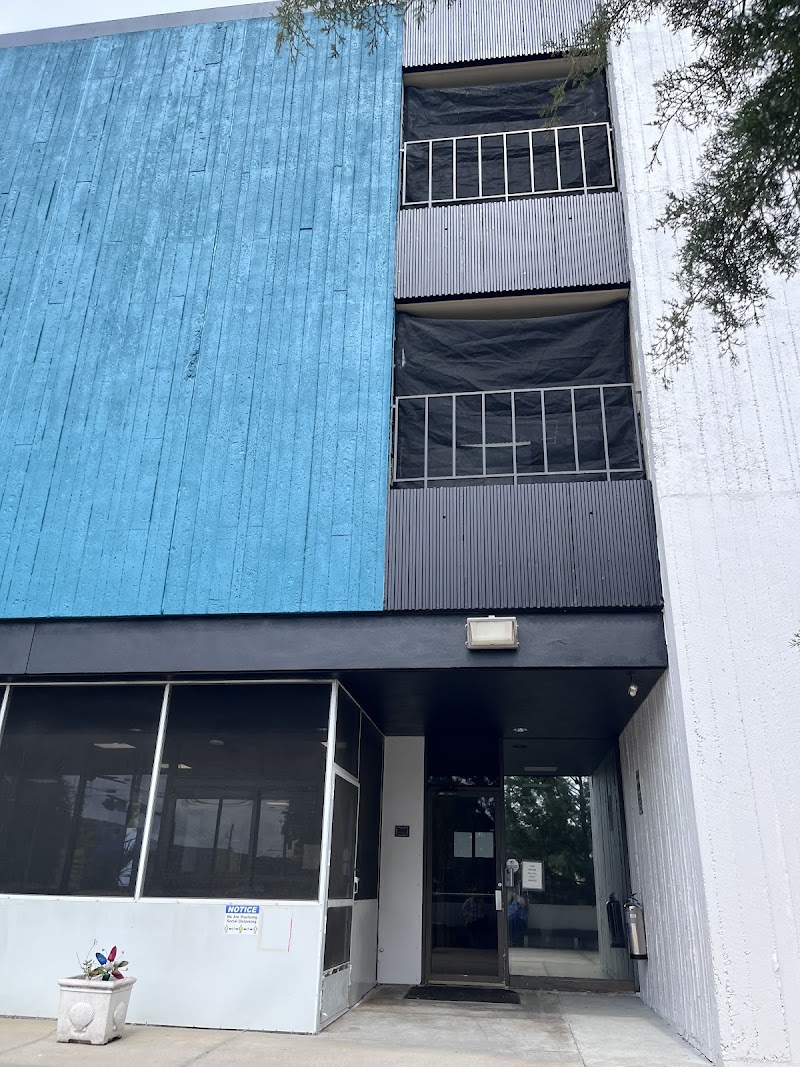
How is North Bank Center For Rehabilitation And Healing Staffed?

CMS rates NORTH BANK CENTER FOR REHABILITATION AND HEALING's staffing level at 3 out of 5 stars, which is average compared to other nursing homes. Staff turnover is 57%, which is 11 percentage points above the Florida average of 46%. High turnover can affect care consistency as new staff learn residents' individual needs.

What Have Inspectors Found at North Bank Center For Rehabilitation And Healing?

State health inspectors documented 11 deficiencies at NORTH BANK CENTER FOR REHABILITATION AND HEALING during 2021 to 2023. These included: 11 with potential for harm.
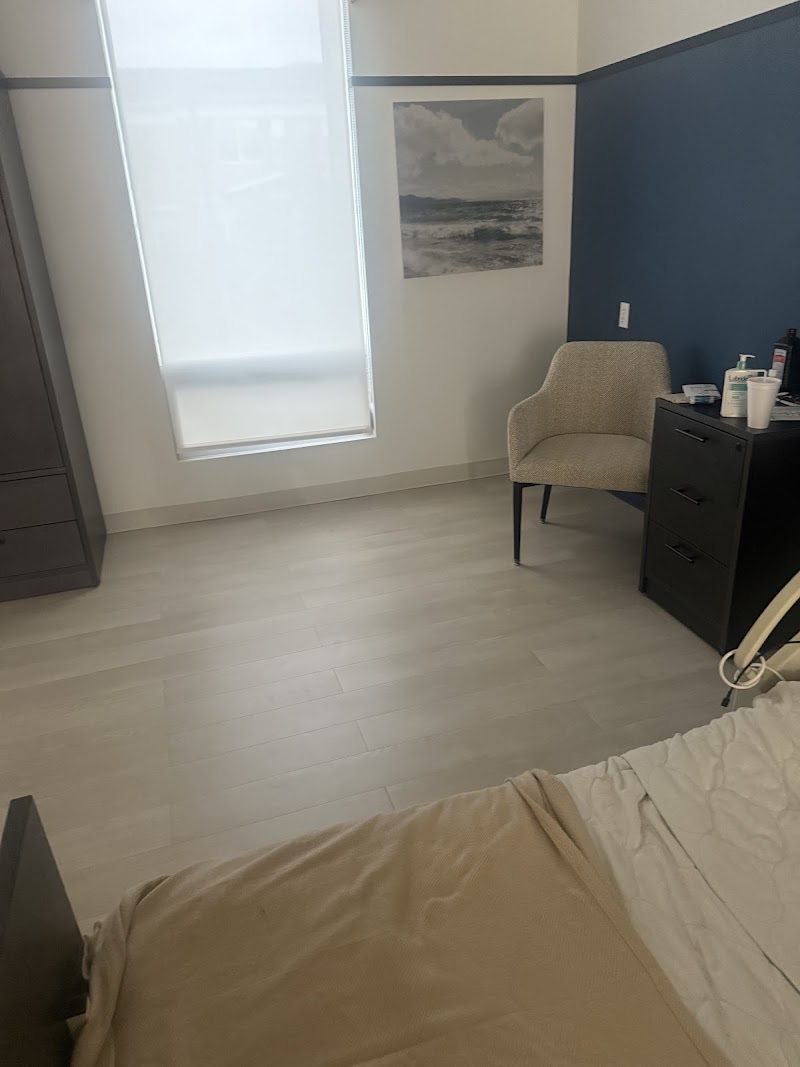
Who Owns and Operates North Bank Center For Rehabilitation And Healing?

NORTH BANK CENTER FOR REHABILITATION AND HEALING is owned by a for-profit company. For-profit facilities operate as businesses with obligations to shareholders or private owners. The facility is operated by INFINITE CARE, a chain that manages multiple nursing homes. With 120 certified beds and approximately 103 residents (about 86% occupancy), it is a mid-sized facility located in JACKSONVILLE, Florida.
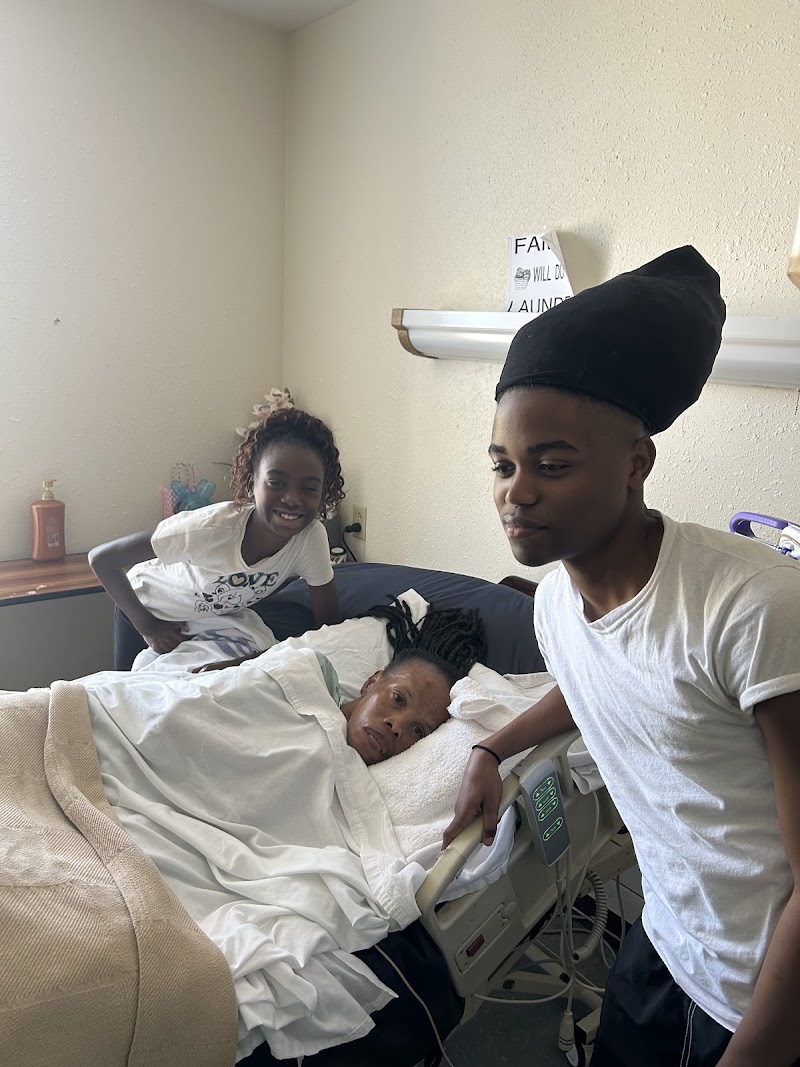
How Does North Bank Center For Rehabilitation And Healing Compare to Other Florida Nursing Homes?

Compared to the 100 nursing homes in Florida, NORTH BANK CENTER FOR REHABILITATION AND HEALING's overall rating (4 stars) is above the state average of 3.2, staff turnover (57%) is significantly higher than the state average of 46%, and health inspection rating (3 stars) is at the national benchmark.

What Should Families Ask When Visiting North Bank Center For Rehabilitation And Healing?

Based on this facility's data, families visiting should ask: "How do you ensure continuity of care given staff turnover, and what is your staff retention strategy?" "Can I visit during a mealtime to observe dining assistance and food quality?" "How do you handle medical emergencies, and what is your hospital transfer rate?" "Can I speak with family members of current residents about their experience?" These questions are particularly relevant given the facility's high staff turnover rate.

Is North Bank Center For Rehabilitation And Healing Safe?

Based on CMS inspection data, NORTH BANK CENTER FOR REHABILITATION AND HEALING has a clean safety record: no substantiated abuse findings (meaning no confirmed cases of resident harm), no Immediate Jeopardy citations (the most serious violation level indicating risk of serious injury or death), and is not on the Special Focus Facility watch list (a federal program monitoring the lowest-performing 1% of nursing homes). The facility has a 4-star overall rating and ranks #1 of 100 nursing homes in Florida. While no facility is perfect, families should still ask about staff-to-resident ratios and recent inspection results during their visit.

Do Nurses at North Bank Center For Rehabilitation And Healing Stick Around?

Staff turnover at NORTH BANK CENTER FOR REHABILITATION AND HEALING is high. At 57%, the facility is 11 percentage points above the Florida average of 46%. High turnover means new staff may not know residents' individual needs, medications, or preferences. It can also be disorienting for residents, especially those with dementia who rely on familiar faces. Families should ask: What is causing the turnover? What retention programs are in place? How do you ensure care continuity during staff transitions?

Was North Bank Center For Rehabilitation And Healing Ever Fined?

NORTH BANK CENTER FOR REHABILITATION AND HEALING has no federal fines on record. CMS issues fines when nursing homes fail to meet care standards or don't correct problems found during inspections. The absence of fines suggests the facility has either maintained compliance or corrected any issues before penalties were assessed. This is a positive indicator, though families should still review recent inspection reports for the full picture.

Is North Bank Center For Rehabilitation And Healing on Any Federal Watch List?

NORTH BANK CENTER FOR REHABILITATION AND HEALING is not on any federal watch list. The most significant is the Special Focus Facility (SFF) program, which identifies the bottom 1% of nursing homes nationally based on persistent, serious quality problems. Not being on this list means the facility has avoided the pattern of deficiencies that triggers enhanced federal oversight. This is a positive indicator, though families should still review the facility's inspection history directly.