PARK RIDGE NURSING CENTER
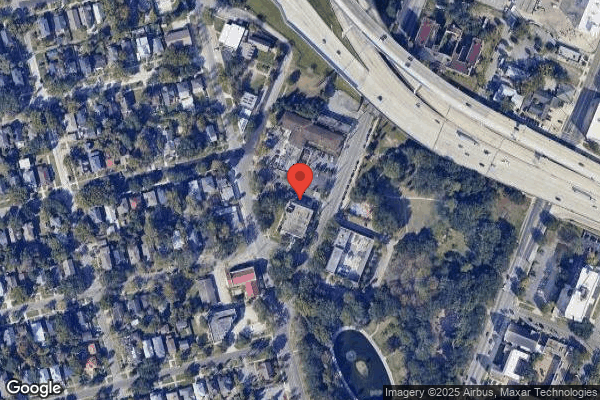
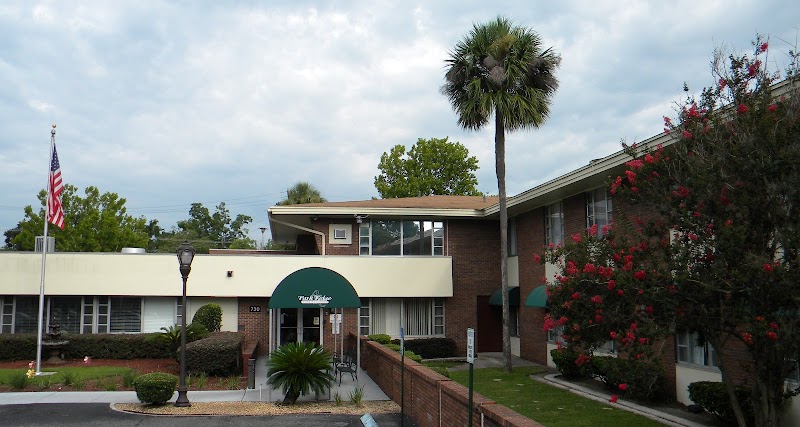
730 COLLEGE STREET, JACKSONVILLE, FL 32204 (904) 358-6711
For profit - Limited Liability company 104 Beds MAXIMUS HEALTHCARE GROUP Data: November 2025
Trust Grade
90/100
#88 of 690 in FL
Last Inspection: May 2024

Within standard 12-15 month inspection cycle. Federal law requires annual inspections.

Overview

Park Ridge Nursing Center in Jacksonville, Florida, has received an excellent Trust Grade of A, indicating a high level of care and service. Ranking #88 out of 690 facilities in Florida places it in the top half, and #6 out of 34 in Duval County means only a few local options are rated higher. The facility's trend is stable, maintaining three issues reported in both 2021 and 2024, but there are concerns about staffing, as the turnover rate is 53%, higher than the Florida average of 42%. Although there have been no fines, which is a positive sign, RN coverage is lacking compared to 96% of other facilities, potentially affecting the quality of care. Specific incidents include a failure to develop personalized care plans for residents and inadequate food handling practices, which could expose residents to health risks. Overall, while there are strengths in the facility, such as excellent overall ratings and no fines, families should be aware of these weaknesses in staffing and care practices.

Trust Score
A
90/100
In Florida
#88/690
Top 12%
Safety Record
Low Risk
No red flags
Inspections
Holding Steady
3 → 3 violations
Staff Stability
⚠ Watch
53% turnover. Above average. Higher turnover means staff may not know residents' routines.
Penalties
✓ Good
No fines on record. Clean compliance history, better than most Florida facilities.
Skilled Nurses
⚠ Watch
Each resident gets only 24 minutes of Registered Nurse (RN) attention daily — below average for Florida. Fewer RN minutes means fewer trained eyes watching for problems.
Violations
○ Average
6 deficiencies on record. Average for a facility this size. Mostly minor or procedural issues.
★★★★★
5.0
Overall Rating
★★★★☆
4.0
Staff Levels
★★★★★
5.0
Care Quality
★★★★☆
4.0
Inspection Score
Stable
2021: 3 issues
2024: 3 issues

The Good

  • 4-Star Staffing Rating · Above-average nurse staffing levels
  • 5-Star Quality Measures · Strong clinical quality outcomes
  • Full Sprinkler Coverage · Fire safety systems throughout facility
  • No fines on record

Facility shows strength in staffing levels, quality measures, fire safety.

The Bad

Staff Turnover: 53%

Near Florida avg (46%)

Higher turnover may affect care consistency

Chain: MAXIMUS HEALTHCARE GROUP

Part of a multi-facility chain

Ask about local staffing decisions and management

The Ugly 6 deficiencies on record

May 2024 3 deficiencies
CONCERN (D)

Potential for Harm - no one hurt, but risky conditions existed

Comprehensive Care Plan (Tag F0656)

Could have caused harm · This affected 1 resident

Based on observation, interview and record review, the facility failed to develop and implement a comprehensive person-centered care plan for each resident, consistent with the resident rights set for...

Read full inspector narrative →
Based on observation, interview and record review, the facility failed to develop and implement a comprehensive person-centered care plan for each resident, consistent with the resident rights set forth at §483.10(c)(2) and §483.10(c)(3), that includes measurable objectives and timeframes to meet a resident's medical, nursing, and mental and psychosocial needs that are identified in the comprehensive assessment for 1 of 23 residents sampled, Resident #32. The findings include: During a tour of the facility on 5/13/2024 at 12:40 pm Resident #32 was observed resting in his bed. The resident had the covers pulled up to his neck, fully covering his entire body from the neck down. The resident was greeted by members of the survey team. He attempted to respond verbally to the greeting; however, his speech was mumbled and unintelligible. While mumbling the resident pulled the covers down revealing his upper body. He lifted his left forearm. The survey team observed a white medical bandage with 5/8 and initials written in red ink near the center of the bandage. The resident was asked if the area caused him any pain. Again, he responded with unintelligible mumbles. (photographic evidence obtained) Review of the electronic medical record for Resident #32 revealed he was admitted into the facility on 4/26/2023. His most recent readmission was on 2/7/2024. His diagnoses included metabolic encephalopathy; major depressive disorder; esophagitis unspecified with bleeding; aphasia; peripheral vascular disease (PVD); unspecified dementia; anorexia; and cerebral infarction pneumonitis due to inhalation of food and vomit. Record review revealed physician orders which included treatment to skin tear left outer elbow, cleanse with wound cleanser and pat dry. Apply Xeroform, cover with dry dressing daily and as needed, if loose or soiled every day shift every other day for skin tear tx. Order date 5/8/2024. Per review of the treatment administration record (TAR) the treatment was completed on 5/10/2024, 5/12/2024, and 5/14/2024. Record review revealed a Care Plan with a review start date of 5/9/24 and a target completion date of 5/16/2024. Focuses included: I have a (actual/potential) impairment to my skin integrity r/t PVD, diabetes. Goal: I will be free of skin impairments through the review date. Interventions on 5/8/2024 and 5/13/2024 included: treatment as ordered and follow facility protocols for treatment of skin impairments. An interview was conducted on 5/15/2024 at 2:40 pm with Employee C, a licensed practical nurse (LPN). She stated she had been employed in the facility approximately 30 days. She stated she was familiar with Resident #32. She confirmed that the resident had a skin tear to his left forearm as well as a skin prep to his left heel. She stated she could not always make out what the resident was saying. She stated his vitals are taken everyday and he is checked to ensure he has been changed [incontinence care]. She was asked who was responsible for changing the resident's bandages. She replied that it was the responsibility of the nurses. She stated that she had done it before. She was asked to access the TAR to confirm when the bandage had been changed and the nurse who changed it. She replied that she was not familiar with how to do that. An interview was conducted on 5/15/2024 at 3:09 pm with Employee D, LPN. She stated she was familiar with Resident #32. She stated she changed the dressing on his left forearm on 5/14/2024 adding that it should be changed every other day. She stated there was confusion in the way the order was written. It was not to be changed daily. She stated she would update the order. She was asked if there were any concerns with the skin tear and/or bandage when she changed the dressing on 5/14/2024. She stated she didn't notice any problems when she changed the dressing adding that it was intact. She was asked to provide the dates the bandage had been changed prior to her changing it on 5/14/2024. She stated it should have been changed on 5/10/2024 and 5/12/2024. She confirmed if the bandage was changed as ordered it would have have reflected 5/12/2024 when she changed it on 5/14/2024. She advised the survey team that she didn't see any problems with that on 5/14/2024 when she changed the bandage. She confirmed the date of the order was 5/8/2024. In the presence of the survey team she reviewed the TAR. She confirmed that she signed off on the TAR indicating she changed the bandage on 5/14/2024. She stated Employee C signed off on the TAR on 5/10/2024 and 5/12/2024 indicating that she changed the bandage as ordered. An interview was conducted on 5/15/2024 at 3:25 pm with the Director of Nursing. She reviewed the TAR for Resident #32 with the surveyor. She confirmed the check in the box under the date indicated the treatment was done. She confirmed the treatment order was for every other day. She stated the bandage should have been changed 5/10/2024, 5/12/2024, and 5/14/2024. She was shown the picture of the dressing taken on 5/13/2024 at 12:40 pm reflecting 5/8/2024. She stated there should not have been a check mark under 5/10/2024 nor 5/12/2024 indicating the treatment was done. She stated the nurse should have documented why the treatment was not done. Record Review revealed the facility developed a policy for Wound Treatment Management. The policy was reviewed/revised on 1/4/2024. Per Policy Explanation and Compliance Guidelines: 1. Wound treatments will be provided in accordance with physician orders, including the cleansing method, type of dressing, and frequency of dressing change. .
CONCERN (D)

Potential for Harm - no one hurt, but risky conditions existed

Respiratory Care (Tag F0695)

Could have caused harm · This affected 1 resident

**NOTE- TERMS IN BRACKETS HAVE BEEN EDITED TO PROTECT CONFIDENTIALITY** Based on observations, staff interview, record review, and facility policy review , the facility failed to ensure that the resid...

Read full inspector narrative →
**NOTE- TERMS IN BRACKETS HAVE BEEN EDITED TO PROTECT CONFIDENTIALITY** Based on observations, staff interview, record review, and facility policy review , the facility failed to ensure that the resident, who required oxygen therapy was provided such care consistent with professional standards of practice, the comprehensive care plan, and physician's orders for one (Resident #18) of 23 residents sampled. The findings include: Observation on 05/13/24 at 12:19 PM revealed Resident #18's oxygen concentrator was set at 2 liters per minute (LPM), but the oxygen tubing was not placed in resident's nostrils. The tubing was observed uncovered and hanging close to floor. (photographic evidence obtained) Observation on 05/15/24 at 1:57 PM revealed Resident #18 being transferred back to bed via Hoyer lift with 2 staff assisting. Employee A, CNA, made resident comfortable in bed and then left the room. The resident's oxygen nasal cannula was not placed in her nostrils at this encounter. The tubing was in a bag hanging on the concentrator. (photographic evidence obtained) The surveyor waited in the room to observe the resident and to observe if the nurse would arrive to place nasal cannula. Employee A returned to the room and placed the resident's call light in reach. She left the room again. The resident's nasal cannula was not placed in her nostrils at this encounter. Record review revealed Resident #18, date of birth [DATE], was admitted to the facility on [DATE] with diagnoses of senile degeneration of the brain, contracture of muscle, dementia in other diseases classified elsewhere, moderate with anxiety, anorexia, arteriosclerotic heart disease, cough, abnormal posture, and allergy. A review of the Quarterly MDS dated [DATE] revealed Resident #18 had a Brief Interview for Mental Status (BIMS) of 11/15 required eating supervision or touching assistance. She required staff assistance with transfers and bed mobility, and required substantial/maximal staff assistance with toileting. She had a condition/chronic disease that may result in a life expectancy of less than 6 months and was also receiving oxygen therapy and hospice services during the lookback. A review of Resident #18's orders revealed she had orders including Oxygen 2-4L via nasal cannula continuously every shift. A review of the Care Plan revealed there was no care plan focus for oxygen therapy. A review of Community Hospice Notes revealed pertinent information that pertained to respiratory status and oxygen use of 2-3Lpm via nasal cannula with oxygen saturations ranging from 92-97 %. No concerns identified. On 05/15/24 at 2:16 PM an interview was conducted with Employee B, CNA, who had assisted Employee A transfer Resident #18 to bed. When asked what her role was in managing a resident's oxygen she stated, We don't manage the oxygen because it's a medicine. When asked what she would do if resident was using oxygen and had a change of condition she stated, I would get the nurse. When asked what the CNA's role is concerning residents who use oxygen she stated, If the tubing falls out of the nose, we can put it back in, or we go and get the nurse if something else needs to be done to it, but that's about it. Review of the policy, Oxygen Administration, Date Reviewed/Revised 01/04/24, revealed the following: Policy: Oxygen is administered to residents who need it, consistent with professional standards of practice, the comprehensive person-centered care plans, and the resident's goals and preferences. 1. Oxygen is administered under orders of a physician, except in the case of an emergency. .
CONCERN (D)

Potential for Harm - no one hurt, but risky conditions existed

Medical Records (Tag F0842)

Could have caused harm · This affected 1 resident

Based on observation, interview, and record review the facility failed to ensure medical records were maintained on each resident that are complete, accurately documented, readily accessible and syste...

Read full inspector narrative →
Based on observation, interview, and record review the facility failed to ensure medical records were maintained on each resident that are complete, accurately documented, readily accessible and systematically organized for one of 23 residents sampled, Resident #32. The findings include: During a tour of the facility on 5/13/2024 at 12:40 pm Resident #32 was observed resting in his bed. The resident had the covers pulled up to his neck, fully covering his entire body from the neck down. The resident was greeted by members of the survey team. He attempted to respond verbally to the greeting; however, his speech was mumbled and unintelligible. While mumbling the resident pulled the covers down revealing his upper body. He lifted his left forearm. The survey team observed a white medical bandage with 5/8 and initials written in red ink near the center of the bandage. The resident was asked if the area caused him any pain. Again, he responded with unintelligible mumbles. (photographic evidence obtained) Review of the electronic medical record for Resident #32 revealed he was admitted into the facility on 4/26/2023. His most recent readmission was on 2/7/2024. His diagnoses included metabolic encephalopathy; major depressive disorder; esophagitis unspecified with bleeding; aphasia; peripheral vascular disease (PVD); unspecified dementia; anorexia; and cerebral infarction pneumonitis due to inhalation of food and vomit. Record review revealed physician orders which included treatment to skin tear left outer elbow, cleanse with wound cleanser and pat dry. Apply Xeroform, cover with dry dressing daily and as needed, if loose or soiled every day shift every other day for skin tear tx. Order date 5/8/2024. Per review of the treatment administration record (TAR) the treatment was completed on 5/10/2024, 5/12/2024, and 5/14/2024. Record review revealed a Care Plan with a review start date of 5/9/24 and a target completion date of 5/16/2024. Focuses included: I have a (actual/potential) impairment to my skin integrity r/t PVD, diabetes. Goal: I will be free of skin impairments through the review date. Interventions on 5/8/2024 and 5/13/2024 included: treatment as ordered and follow facility protocols for treatment of skin impairments. An interview was conducted on 5/15/2024 at 2:40 pm with Employee C, a licensed practical nurse (LPN). She stated she had been employed in the facility approximately 30 days. She stated she was familiar with Resident #32. She confirmed that the resident had a skin tear to his left forearm as well as a skin prep to his left heel. She stated she could not always make out what the resident was saying. She stated his vitals are taken everyday and he is checked to ensure he has been changed [incontinence care]. She was asked who was responsible for changing the resident's bandages. She replied that it was the responsibility of the nurses. She stated that she had done it before. She was asked to access the TAR to confirm when the bandage had been changed and the nurse who changed it. She replied that she was not familiar with how to do that. An interview was conducted on 5/15/2024 at 3:09 pm with Employee D, LPN. She stated she was familiar with Resident #32. She stated she changed the dressing on his left forearm on 5/14/2024 adding that it should be changed every other day. She stated there was confusion in the way the order was written. It was not to be changed daily. She stated she would update the order. She was asked if there were any concerns with the skin tear and/or bandage when she changed the dressing on 5/14/2024. She stated she didn't notice any problems when she changed the dressing adding that it was intact. She was asked to provide the dates the bandage had been changed prior to her changing it on 5/14/2024. She stated it should have been changed on 5/10/2024 and 5/12/2024. She confirmed if the bandage was changed as ordered it would have have reflected 5/12/2024 when she changed it on 5/14/2024. She advised the survey team that she didn't see any problems with that on 5/14/2024 when she changed the bandage. She confirmed the date of the order was 5/8/2024. In the presence of the survey team she reviewed the TAR. She confirmed that she signed off on the TAR indicating she changed the bandage on 5/14/2024. She stated Employee C signed off on the TAR on 5/10/2024 and 5/12/2024 indicating that she changed the bandage as ordered. An interview was conducted on 5/15/2024 at 3:25 pm with the Director of Nursing. She reviewed the TAR for Resident #32 with the surveyor. She confirmed the check in the box under the date indicated the treatment was done. She confirmed the treatment order was for every other day. She stated the bandage should have been changed 5/10/2024, 5/12/2024, and 5/14/2024. She was shown the picture of the dressing taken on 5/13/2024 at 12:40 pm reflecting 5/8/2024. She stated there should not have been a check mark under 5/10/2024 nor 5/12/2024 indicating the treatment was done. She stated the nurse should have documented why the treatment was not done. Review of the facility policy for Documentation in Medical Record, reviewed/revised on 1/4/2024, revealed the following: Policy: Each resident's medical record shall contain an accurate representation of the actual experiences of the resident and include enough information to provide a picture of the resident's progress through complete, accurate, and timely documentation. Per Policy Explanation and Compliance Guidelines: 1. Licensed staff and interdisciplinary team members shall document all assessments, observations, and services provided in the resident's medical record in accordance with state law and facility policy. 3. Principles of documentation include but are not limited to: a. Documentation shall be factual, objective, and resident centered. i. False information shall not be documented. b. Documentation shall be accurate, relevant, and complete, containing sufficient details about the resident's care and/or responses to care.
Feb 2021 3 deficiencies
CONCERN (D)

Potential for Harm - no one hurt, but risky conditions existed

Quality of Care (Tag F0684)

Could have caused harm · This affected 1 resident

**NOTE- TERMS IN BRACKETS HAVE BEEN EDITED TO PROTECT CONFIDENTIALITY** Based on observations, interviews and record reviews, the facility failed to provide treatment and care in accordance with profe...

Read full inspector narrative →
**NOTE- TERMS IN BRACKETS HAVE BEEN EDITED TO PROTECT CONFIDENTIALITY** Based on observations, interviews and record reviews, the facility failed to provide treatment and care in accordance with professional standards of practice and the comprehensive person-centered care plan for one resident (Resident #26) receiving hospice services and for two (Resident #3 and #32) of seven residents observed during medication administration. The facility also failed to demonstrate the correct administration of a narcotic medication for one (Resident #17) of six sampled residents reviewed for medication storage from a total sample of 35 residents. The findings include: 1. During a tour of the facility on 02/03/21 at 11:42 AM, Resident #26 was observed in a wheelchair at the nurses' station. She was wearing blue, ankle-length non-skid socks. Mild, non-pitting edema was observed at both ankles. The resident was alert and oriented to self and denied having any pain. On 02/03/21 at 1:38 PM, Resident #26 was observed having lunch in her room at the bedside. She was wearing blue, ankle-length non-skid socks. Mild non-pitting edema was observed at both ankles. On 02/03/21 at 2:21 PM, during an interview with Employee G, Licensed Practical Nurse (LPN), he confirmed that Resident #26 had orders for compression stockings (TED hose) and did not have them on at the time. Employee G added that the certified nursing assistants (CNAs) were responsible for putting them on when getting the resident up and for taking them off in the evening. He added that the nurses were responsible for checking to ensure the compression stockings were on correctly and to assess for any signs of discomfort. When asked whether Resident #26 had compression stockings in her room, the nurse stated he was not sure. He stated there were more stockins in the medication room if the resident did not have any in her room. Employee G checked the resident's room and the medication room, but was unable to locate any TED hose. He then proceeded to the central supply room to look for more TED hose. A medical record review for Resident #26 revealed that she was admitted to the facility on [DATE] with a re-entry on 03/04/14. Her diagnoses included senile degeneration of the brain, cellulitis, pneumonia, schizophrenia, bipolar disorder, anxiety disorder, dementia without behaviors, localized edema and essential primary hypertension. A review of the physician's orders revealed orders for: Augumentin 500-125 one tablet two times a day (BID) for cellulitis, TED (Thrombo-Embolic Deterrent) hose (compression stockings) to bilateral lower extremities (BLE - lower legs) every day and evening shift related to edema, Tramadol 50 mg (milligrams) three times a day (TID) for chronic pain, Community Hospice diagnosis of senile degeneration of the brain, Aripiprazole 1 Milligram/ Milliliter (mg/ml), give 1 ml at bedtime (HS) for psychosis not due to substance abuse or known physiological condition, and Sertaline 12.5 mg every day (QD) for depression. A review of the quarterly minimum data set (MDS) assessment, dated 11/22/20, revealed that the resident had a brief interview for mental status (BIMS) score of 03 out of 15 possible points, indicating a severe cognitive impairment. The resident was assessed to require extensive assistance with transfers, bed mobility and toilet use, and supervision with eating. Resident #26 was careplanned for activities of daily living (ADL)/self care performance deficit related to dementia, unsteady balance, non-ambulatory status, limited mobility and joint pain. Interventions included TED hose as tolerated, observe/document/report to medical doctor any changes as needed (PRN) regarding any potential for improvement, reasons for self-care deficit, expected course and decline in function. A review of the Community Hospice nursing progress note, dated 12/9/2020, revealed that the resident was admitted to Community Hospice Palliative Care (CHPC) with senile degeneration of the brain. The resident required extensive assistance with ADLs and transfers to her wheelchair. She required assistance with meals, but was able to feed herself finger foods. She had a 2.6 pound weight gain from September to November 2020, but she now had bilateral ankle edema. [NAME] hose were ordered. A review of the Community Hospice refortification note, dated 12/17/20, revealed, Resident alert and oriented to person, poor appetite, assistance with all meals and care. Weight gain two pounds (lbs.) edema noted, so technically loss of weight - TEDs added, last Mid-Arm Circumference (MAC) 28 centimeters (cm), loss of 1 cm since March. She has had 6 lbs. loss since admission, she is weaker. Will recheck MAC and prealbumin. Further review of the progress notes for January 2021 and the Treatment Administration Record (TAR) for January 2021 revealed no documentation of TED hose. On 02/04/21 at 10:33 AM, the Director of Nursing (DON ) stated the CNAs were responsible for putting on the TED hose while getting the resident up in the morning. She added that the TED hose were to remain on as the resident could tolerate them or to be removed at bedtime. When asked if there was any documentation of the application and removal of TED hose, the DON stated there was no documentation, because the TED hose were supposed to be worn as tolerated. When asked how she ensured whether the resident tolerated the hose or refused them, she stated she was not sure as it was not documented. She added that the resident was on palliative care, so the compression stockings were for comfort only. There was no reason to document their application, removal or the resident's refusal to wear them. 2. During medication administration observation on 2/3/21 at 11:00 AM, Employee H, Licensed Practical Nurse (LPN), was observed alone as she prepared medications for Resident #3. Employee H pulled the following medications from the medication cart: Aspirin 81 milligram (mg) tablet, Magnesium 400 mg tablet, Vitamin D3 50 microgram (mcg) tablet, Potassium Chloride 20 milliequivalent (meq) tablet, Hydralazine 50 mg tablet, Amlodipine 10 mg tablet and Terazosin 2 mg tablet. She verified each medication label against the current Medication Administration Record (MAR) on the computer screen for accuracy of drug frequency, duration, dose and route. She stated she checked what was written on the Medication Administration Record (MAR) to ensure it matched what was written on the blister package of pills. Continued observation revealed that she poured the medications into a medication cup and gave the medications to be administered to Resident #3 to another Employee, LPN I. On 2/3/21 at 11:15 AM, Employee I, LPN, was observed administering the medications that were prepared by Employee H to Resident #3. Employee I was not present when Employee H prepared and verified the medications for Resident #3. Reconciliation of the observed medications administered with the resident's medical record did not reveal medication errors but Employee I, LPN, was not present during the medication preparation and she did not verify the medications with Employee H or the MAR prior to administering the medications. 3. During the medication administration observation on 2/3/21 at 11:40 AM, Employee H, LPN, was observed as she prepared medications for Resident #32. Employee H pulled the medication Simbrinza 1-02% (eye drops) from the medication cart. She verified the medication label against the current MAR on the computer screen for Resident #32. Employee I was observed behind the computer screen and did not participate when Employee H verified the medication for Resident#32. Employee H gave the eye-drops she prepared to be administered to Employee I, LPN. On 2/3/21 at 11:45 AM, Employee I, LPN, was observed administering the eye drops medication prepared by Employee H to Resident #32. During an interview with Employee I on 2/3/21 at 11:56 AM, she stated the internet went down earlier and Employee H was running behind on her medication administration. She further stated Employee H was new to the facility and she was trying to help her with her medication administration. Reconciliation of the observed eye-drops medication administered with the resident's medical record did not reveal medication errors but Employee I, LPN, did not verify the medication with Employee H or the MAR prior to administering the medication. An interview was conducted with Employee H, LPN, on 2/3/21 at 3:05 PM. She stated, I can see how this could be considered an error. I am not a new nurse. I am new to the facility and she (Employee I) was helping me catch up because the internet went down earlier. I should probably change the documentation because I did not give the medication for Resident #3 or Resident #32. During an interview with Employee I, LPN, on 2/4/21 at 4:45 PM, she stated she was still unsure what she did wrong. Employee I stated, I looked when [Employee H] was preparing the medications. During an interview with the Regional Director of Nursing on 2/4/21 at 4:50 PM, she stated her expectation was that during training periods, the nurse could allow trainees to document in the record while assisting with medication administration, but both nurses would verify the medications prior to administering them. 4. On 2/4/21 at 10:10 AM, an observation was made of the second-floor medication room refrigerator with the Director of Nursing (DON), revealing a medication card of Marinol 2.5 mg (with 22 capsules remaining) for Resident #17. On 2/4/21 at 10:15 AM, a review of the Narcotic Logbook with Employee G, LPN, revealed a discrepancy in the amount of a narcotic medication Marinol for Resident #17. The Narcotic Logbook, dated 2/3/21, showed the medication Marinol 2.5 mg and the amount remaining was recorded as 24 capsules for Resident #17. An immediate interview was conducted with Employee G on 2/4/2021 at 10:15 AM. Employee G stated during the morning medication administration, he administered one capsule of Marinol 2.5 mg for Resident #17 and forgot to sign it out of the Narcotic Logbook at 7:00 AM today. He was unable to account for the other capsule missing. He stated, I pulled the other Marinol early and that is wrong. I already put it in a pudding cup to melt because Resident #17 likes it that way, and I plan to give it at 4:00 PM. It's not the right procedure and I know that I am not supposed to do it this way. Employee G verified the amount remaining documented on the Narcotic logbook should always match what was in the locked refrigerator and locked cart for the resident. During an interview conducted on 2/4/2021 at 11:00 AM, the Regional DON stated an investigation was initiated immediately to determine the location of the missing capsule of Marinol 2.5 mg medication for Resident #17. She stated it was found that Employee G had pulled the dose early. The Regional DON stated, We found a pudding cup in his cart containing one round white tab and we compared it with the Marinol capsules and they did not match. He was relieved of his assignment and asked to give a written statement. His statement differed from his verbal account. He was escorted off the property pending investigation. We reported him to our human resources department and they will ask him to do a drug test. If he does not take the drug test, we will report him to the nursing board. The DON and myself inspected his cart and completed a narcotic count. We also spoke to the residents on his assignment and no other issues were found. He is on leave until the investigation is completed. On 02/04/21 at 11:30 AM, during an interview with Resident #17, she verified that she received her Marinol medication this morning and she did not have any concerns related to the administration of her medications. A medical record review revealed that Resident #17 was admitted to the facility on [DATE] with diagnoses of anemia and anorexia. A review of her physician's orders revealed an active order for the resident to have Marinol (controlled substance medication used to treat nausea and vomiting and as an appetite stimulant) 2.5 mg by mouth twice daily for anorexia (lack or loss of appetite for food). .
CONCERN (D)

Potential for Harm - no one hurt, but risky conditions existed

Medical Records (Tag F0842)

Could have caused harm · This affected 1 resident

**NOTE- TERMS IN BRACKETS HAVE BEEN EDITED TO PROTECT CONFIDENTIALITY** Based on observation, interview and record review, the facility failed to maintain medical records that were accurately document...

Read full inspector narrative →
**NOTE- TERMS IN BRACKETS HAVE BEEN EDITED TO PROTECT CONFIDENTIALITY** Based on observation, interview and record review, the facility failed to maintain medical records that were accurately documented in accordance with accepted professional standards of practice, by failing to ensure that an account of all controlled drugs was maintained for one (Resident #17) of six sampled residents reviewed for medication storage from a total of 35 sampled residents. The findings include: On 2/4/21 at 10:10 AM, an observation was made of the second-floor medication room refrigerator with the Director of Nursing (DON), revealing a medication card of Marinol 2.5 mg (with 22 capsules remaining) for Resident #17. On 2/4/21 at 10:15 AM, a review of the Narcotic Logbook with Employee G, LPN, revealed a discrepancy in the amount of a narcotic medication Marinol for Resident #17. The Narcotic Logbook, dated 2/3/21, showed the medication Marinol 2.5 mg and the amount remaining was recorded as 24 capsules for Resident #17. An immediate interview was conducted with Employee G on 2/4/2021 at 10:15 AM. Employee G stated during the morning medication administration, he administered one capsule of Marinol 2.5 mg for Resident #17 and forgot to sign it out of the Narcotic Logbook at 7:00 AM today. He was unable to account for the other capsule missing. He stated, I pulled the other Marinol early and that is wrong. I already put it in a pudding cup to melt because Resident #17 likes it that way, and I plan to give it at 4:00 PM. It's not the right procedure and I know that I am not supposed to do it this way. Employee G verified the amount remaining documented on the Narcotic logbook should always match what was in the locked refrigerator and locked cart for the resident. During an interview conducted on 2/4/2021 at 11:00 AM, the Regional DON stated an investigation was initiated immediately to determine the location of the missing capsule of Marinol 2.5 mg medication for Resident #17. She stated it was found that Employee G had pulled the dose early. The Regional DON stated, We found a pudding cup in his cart containing one round white tab and we compared it with the Marinol capsules and they did not match. He was relieved of his assignment and asked to give a written statement. His statement differed from his verbal account. He was escorted off the property pending investigation. We reported him to our human resources department and they will ask him to do a drug test. If he does not take the drug test, we will report him to the nursing board. The DON and myself inspected his cart and completed a narcotic count. We also spoke to the residents on his assignment and no other issues were found. He is on leave until the investigation is completed. On 02/04/21 at 11:30 AM, during an interview with Resident #17, she verified that she received her Marinol medication this morning and she did not have any concerns related to the administration of her medications. A medical record review revealed that Resident #17 was admitted to the facility on [DATE] with diagnoses of anemia and anorexia. A review of her physician's orders revealed an active order for the resident to have Marinol (controlled substance medication used to treat nausea and vomiting and as an appetite stimulant) 2.5 mg by mouth twice daily for anorexia (lack or loss of appetite for food). .
CONCERN (F)

Potential for Harm - no one hurt, but risky conditions existed

Food Safety (Tag F0812)

Could have caused harm · This affected most or all residents

Based on the kitchen food service observations, staff interviews, facility document review and facility policy and procedure review, the facility failed to follow proper sanitation and food handling p...

Read full inspector narrative →
Based on the kitchen food service observations, staff interviews, facility document review and facility policy and procedure review, the facility failed to follow proper sanitation and food handling practices to prevent the outbreak of foodborne illness with the potential to affect all but one of the residents in the facility (65 residents from a census of 66 residents). The facility failed to ensure that the dietary staff was trained and knowledgeable about the proper procedures for hand hygiene, disposable glove use, food storage, proper cooling methods and proper sanitation practices in the kitchen. Specific instruction on hand hygiene, food handling and sanitation is important in health care settings serving nursing home residents due to the risk of serious complications from foodborne illness as a result of their compromised health status. Unsafe food handling practices represent a potential source of pathogen exposure. The findings include: During the initial kitchen tour on 02/01/2021 at 9:52 AM, the floor around the ice machine had food debris (rice) in the grooves between the tiles and rust marks on the floor. There was grease and built-up dirt and debris on floors under the storage tables, racks, dish machine and ware washing sinks. Large baking pans and insulated domes and plate holders were wet nesting. The fryer had stuck-on grease on the sides and front. A pipe and electrical outlet from the floor to the ceiling was observed to have built-up dirt and debris. (Photographic evidence obtained) These observations were made again on 02/03/2021 at 11:50 AM and on 02/04/2021 at 9:42 AM. During observations of the kitchen and lunch meal service on 02/03/2021 from 11:30 AM until 12:20 PM, the Dietary Staff was observed: At 11:36 AM, Employee A, Food Preparation Cook, was observed to change her gloves without washing her hands after taking the temperature of the fortified soup. At 11:43 AM, Employee B did not wash her hands upon re-entering the kitchen. She began to wipe down the preparation area with a sanitizing cloth. She left the kitchen again at 11:48 AM. Upon returning to the kitchen she did not wash her hands. She went to the clean side of the dish room and picked up a baking tray from a rack of recently cleaned dishes. Her cell phone rang in her pocket. She took the phone out of her pocket and looked at it. She then put it back in her pocket and took the clean baking tray to the preparation table, thereby contaminating the clean tray. At 11:45 AM, Employee D was observed to leave the kitchen with meal tickets in her hands. She returned to the kitchen and did not wash or sanitize her hands. She proceeded to assist with meal tray preparation. At 11:50 AM, Employee C came back to the kitchen after delivering a tray cart to one of the nursing units for meal service. She did not wash her hands or sanitize her hands. She began to assemble more meal trays for food service. At 12:02 PM, Employee E came into the kitchen and washed his hands at the hand sink. When he was done, he shut the faucet off with his bare hands, thereby re-contaminating his hands, and then took a paper towel and dried his hands. He then went to the dirty side of the dish room and moved several soiled pans and racks. He then went to the mop bucket and began mopping the floor. When he was finished mopping the floor, without washing his hands, he donned a pair of latex gloves and proceeded to the clean side of the dish room. He moved clean pans out of the dish room to the preparation area. At 12:10 PM, Employee C was observed touching the soiled pans on the dirty side of the dish room. She then went to the clean side of the dish room and unloaded a rack without washing her hands in between the dirty side and the clean side, thereby contaminating the clean dishes. Her cell phone charging/head phone cord was hanging out of her pocket approximately 12 to 18 inches coming into contact with multiple surfaces in the kitchen. During an interview with Employee C at 12:15 PM, she stated she had not been trained to wash her hands with soap and water after working on the dirty side of the dish room before going to the clean side. She stated she was permitted to have her phone in her pocket at work. She did not know that she should wash her hands after touching her cell phone. During an interview with Employee D at 12:17 PM, she stated she had worked at this facility for two years. She thought she received training on handwashing and glove use about two weeks ago by the new Certified Dietary Manager (CDM). She stated she was trained to either wash her hands or sanitize her hands when she entered the kitchen. During observations of the kitchen on 02/04/2021 At 9:45 AM, Employee F washed his hands at the hand sink for 10 seconds and then shut the faucet off with his hands. He then took paper towels and dried his hands. At 9:50 AM, Employee F washed his hands at the hand sink for 10 seconds and then shut the faucet off with his hands. He then took paper towels and dried his hands. At 9:55 AM, he sanitized his hands with hand sanitizer and donned a pair of latex gloves. During an interview with Employee F on 02/04/2021 at 9:57 AM, he stated he had worked at the facility for a year and had received training on hand hygiene. During an interview with the CDM at 10:10 AM, she confirmed that dietary staff had to wash their hands with soap and water. Hand sanitizer was not enough. On 02/04/2021 at 10:20 AM, a large plastic container of chicken noodle soup was observed in the walk-in cooler. It appeared to be one gallon of soup. It was covered and date-marked 02/03/2021. During an interview with the CDM on 02/04/2021 at 10:25 AM, she stated the soup was homemade by her staff yesterday (02/03/2021). There was one resident in the facility who wanted soup for his dinner meal, so they made him soup every day. She stated the soup was placed in the container and then put in the walk-in cooler after dinner last night. When asked for the temperature log for the proper cooling of the soup, she stated she did not have one. She did not think the staff took the temperature of the soup as it cooled. She confirmed that the dietary staff closed the kitchen between 8:30 and 9:00 PM every night and returned the next day at approximately 5:30 AM. She confirmed no one was working last night to take the temperature of the cooling soup at two hours to make sure it reached 70 degrees Fahrenheit or below, and again at six hours to make sure it reached 41 degrees Fahrenheit or below, ensuring the soup had cooled quickly enough to prevent the growth of bacteria. Review of the dietary in-service training sheet dated 01/20/2021, revealed the subject of the training was sanitation and infection control. Proper sanitation and How to wash your hands was covered. The subject matter was presented by the CDM. Only dietary staff attended the training. (Copy obtained) Review of the facility policy and procedure entitled Hand Hygiene, Reference #4008, effective 11/01/2017, revealed it read: All staff shall use the hand-hygiene techniques as set forth in the following: Always after removing gloves. Procedure: Wash hands thoroughly, using rigorous scrubbing action for at least 15 seconds. Rinse hands and wrists under running water. Dry hands with clean paper towel. Turn off faucets with used paper towel and discard. (Copy obtained) Review of the facility policy and procedure entitled Handwashing/Hand Hygiene, revised August 2015, revealed: This facility considers hand hygiene the primary means to prevent the spread of infections. Vigorously lather hands with soap and rub them together, creating friction to all surfaces, for a minimum of 20 seconds (or longer) under a moderate stream of running water, at a comfortable temperature. Rinse hands thoroughly under running water. Hold hands lower than wrists. Dry hands thoroughly with paper towels and then turn off faucets with a clean, dry paper towel. Perform hand hygiene before applying non-sterile gloves. (Copy obtained) Review of the dietary staff training form entitled Wash Your Hands to Stop COVID-19 revealed: When? Before, during and after preparing food. After touching surfaces in common areas that may be frequently touched by other people. Scrub hands for at least 20 seconds. (Copy obtained) Reference: United States Food and Drug Administration Food Code 2017. 3. PUBLIC HEALTH AND CONSUMER EXPECTATIONS. Clean environment. Page 10. https://www.fda.gov (Accessed 0n 2/4/2021): It is a shared responsibility of the food industry and the government to ensure that food provided to the consumer is safe and does not become a vehicle in a disease outbreak or in the transmission of communicable disease. This shared responsibility extends to ensuring that consumer expectations are met and that food is unadulterated, prepared in a clean environment, and honestly presented. Reference: United States Food and Drug Administration Food Code 2017. Section 3-501.14 Cooling (A). Page 124. https://www.fda.gov (Accessed on 2/4/2021): (A) Cooked TIME/TEMPERATURE CONTROL FOR SAFETY FOOD shall be cooled: (1) Within 2 hours from 57ºC (135ºF) to 21ºC (70°F); P and (2) Within a total of 6 hours from 57ºC (135ºF) to 5ºC (41°F) or less. Reference: United States Food and Drug Administration Food Code 2017. Sections. 2-301.13 Special Handwash Procedures. 2-301.14 When to Wash. (A-I). Page 79. https://www.fda.gov (Accessed on 2/4/2021): FOOD EMPLOYEES shall clean their hands and exposed portions of their arms as specified under § 2-301.12 immediately before engaging in FOOD preparation including working with exposed FOOD, clean EQUIPMENT and UTENSILS, and unwrapped SINGLE-SERVICE and SINGLE-USE ARTICLESP and: (A) After touching bare human body parts other than clean hands and clean, exposed portions of arms; (B) After using the toilet room; (C) After caring for or handling SERVICE ANIMALS or aquatic animals as specified in ¶ 2-403.11(B); (D) Except as specified in ¶ 2-401.11(B), after coughing, sneezing, using a handkerchief or disposable tissue, using tobacco, eating, or drinking; (E) After handling soiled EQUIPMENT or UTENSILS; (F) During FOOD preparation, as often as necessary to remove soil and contamination and to prevent cross contamination when changing tasks; (G) When switching between working with raw FOOD and working with READY-TO-EAT FOOD; (H) Before donning gloves to initiate a task that involves working with FOOD; and (I) After engaging in other activities that contaminate the hands. .
Understanding Severity Codes (click to expand)
Life-Threatening (Immediate Jeopardy)
J - Isolated K - Pattern L - Widespread
Actual Harm
G - Isolated H - Pattern I - Widespread
Potential for Harm
D - Isolated E - Pattern F - Widespread
No Harm (Minor)
A - Isolated B - Pattern C - Widespread

Questions to Ask on Your Visit

  • "Can I speak with families of current residents?"
  • "What's your RN coverage like on weekends and overnight?"

Our Honest Assessment

Strengths
  • • Grade A (90/100). Above average facility, better than most options in Florida.
  • • No major safety red flags. No abuse findings, life-threatening violations, or SFF status.
  • • No fines on record. Clean compliance history, better than most Florida facilities.
Concerns
  • • No significant concerns identified. This facility shows no red flags across CMS ratings, staff turnover, or federal penalties.
Bottom line: Generally positive indicators. Standard due diligence and a personal visit recommended.

About This Facility

What is Park Ridge Nursing Center's CMS Rating?

CMS assigns PARK RIDGE NURSING CENTER an overall rating of 5 out of 5 stars, which is considered much above average nationally. Within Florida, this rating places the facility higher than 99% of the state's 100 nursing homes. This rating reflects solid performance across the metrics CMS uses to evaluate nursing home quality.
How is Park Ridge Nursing Center Staffed?

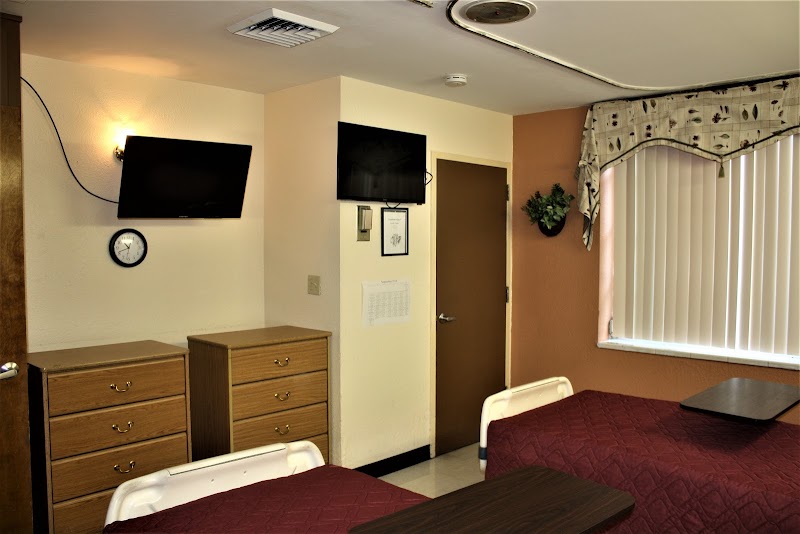
CMS rates PARK RIDGE NURSING CENTER's staffing level at 4 out of 5 stars, which is above average compared to other nursing homes. Staff turnover is 53%, compared to the Florida average of 46%.

What Have Inspectors Found at Park Ridge Nursing Center?

State health inspectors documented 6 deficiencies at PARK RIDGE NURSING CENTER during 2021 to 2024. These included: 6 with potential for harm.
Who Owns and Operates Park Ridge Nursing Center?

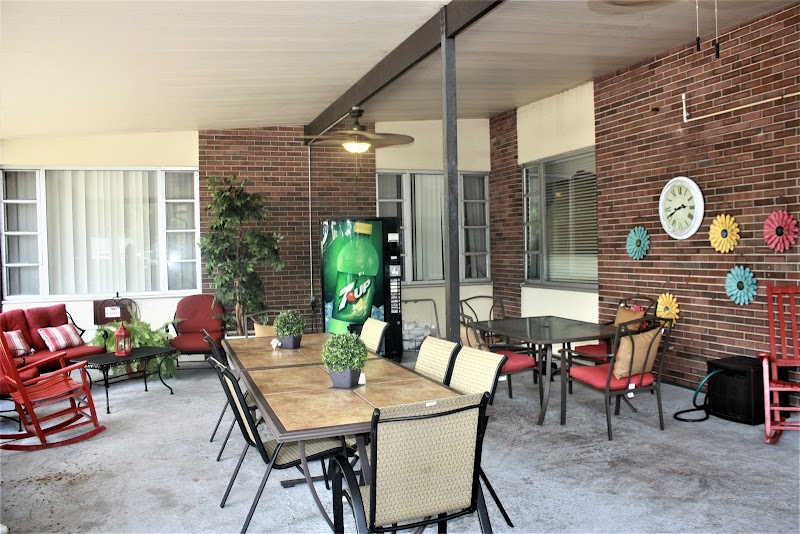
PARK RIDGE NURSING CENTER is owned by a for-profit company. For-profit facilities operate as businesses with obligations to shareholders or private owners. The facility is operated by MAXIMUS HEALTHCARE GROUP, a chain that manages multiple nursing homes. With 104 certified beds and approximately 81 residents (about 78% occupancy), it is a mid-sized facility located in JACKSONVILLE, Florida.

How Does Park Ridge Nursing Center Compare to Other Florida Nursing Homes?

Compared to the 100 nursing homes in Florida, PARK RIDGE NURSING CENTER's overall rating (5 stars) is above the state average of 3.2, staff turnover (53%) is near the state average of 46%, and health inspection rating (4 stars) is above the national benchmark.

What Should Families Ask When Visiting Park Ridge Nursing Center?

Based on this facility's data, families visiting should ask: "Can I visit during a mealtime to observe dining assistance and food quality?" "How do you handle medical emergencies, and what is your hospital transfer rate?" "Can I speak with family members of current residents about their experience?"

Is Park Ridge Nursing Center Safe?

Based on CMS inspection data, PARK RIDGE NURSING CENTER has a clean safety record: no substantiated abuse findings (meaning no confirmed cases of resident harm), no Immediate Jeopardy citations (the most serious violation level indicating risk of serious injury or death), and is not on the Special Focus Facility watch list (a federal program monitoring the lowest-performing 1% of nursing homes). The facility has a 5-star overall rating and ranks #1 of 100 nursing homes in Florida. While no facility is perfect, families should still ask about staff-to-resident ratios and recent inspection results during their visit.

Do Nurses at Park Ridge Nursing Center Stick Around?

PARK RIDGE NURSING CENTER has a staff turnover rate of 53%, which is 7 percentage points above the Florida average of 46%. Moderate turnover is common in nursing homes, but families should still ask about staff tenure and how the facility maintains care continuity when employees leave.

Was Park Ridge Nursing Center Ever Fined?

PARK RIDGE NURSING CENTER has no federal fines on record. CMS issues fines when nursing homes fail to meet care standards or don't correct problems found during inspections. The absence of fines suggests the facility has either maintained compliance or corrected any issues before penalties were assessed. This is a positive indicator, though families should still review recent inspection reports for the full picture.

Is Park Ridge Nursing Center on Any Federal Watch List?

PARK RIDGE NURSING CENTER is not on any federal watch list. The most significant is the Special Focus Facility (SFF) program, which identifies the bottom 1% of nursing homes nationally based on persistent, serious quality problems. Not being on this list means the facility has avoided the pattern of deficiencies that triggers enhanced federal oversight. This is a positive indicator, though families should still review the facility's inspection history directly.