SHANDS JACKSONVILLE MEDICAL CENTER
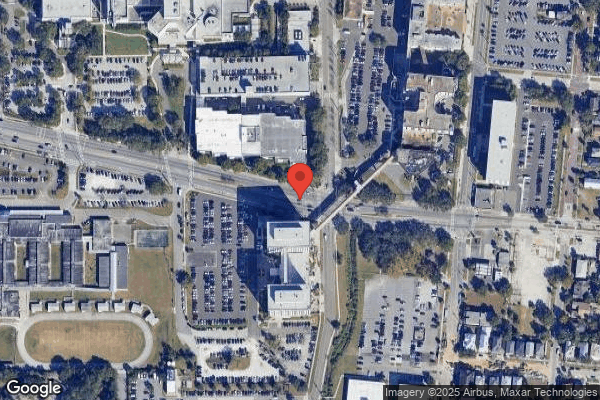
580 W 8TH STREET, JACKSONVILLE, FL 32209 (904) 244-1812
Non profit - Corporation 56 Beds Independent Data: November 2025
Trust Grade
95/100
#106 of 690 in FL
Last Inspection: April 2024

Within standard 12-15 month inspection cycle. Federal law requires annual inspections.

Overview

Shands Jacksonville Medical Center has received an impressive Trust Grade of A+, which indicates it is an elite facility with top-tier services. It ranks #106 out of 690 nursing homes in Florida, placing it in the top half, and #9 out of 34 in Duval County, meaning it is among the better local options. The facility is on an improving trend, reducing its issues from two in 2020 to none in 2024. Staffing is a strength, with a 5/5 rating and a low turnover rate of 17%, significantly better than the Florida average of 42%, which suggests that staff are stable and familiar with residents. While there are no fines, past inspections noted concerns regarding food handling practices and pest control in the kitchen, which could pose risks if not properly addressed. Overall, Shands Jacksonville Medical Center presents strong qualities with some areas for improvement, making it a solid option for families considering nursing care.

Trust Score
A+
95/100
In Florida
#106/690
Top 15%
Safety Record
Low Risk
No red flags
Inspections
Getting Better
2 → 0 violations
Staff Stability
✓ Good
17% annual turnover. Excellent stability, 31 points below Florida's 48% average. Staff who stay learn residents' needs.
Penalties
✓ Good
No fines on record. Clean compliance history, better than most Florida facilities.
Skilled Nurses
✓ Good
Each resident gets 172 minutes of Registered Nurse (RN) attention daily — more than 97% of Florida nursing homes. RNs are the most trained staff who catch health problems before they become serious.
Violations
✓ Good
Only 2 deficiencies on record. Cleaner than most facilities. Minor issues only.
★★★★★
5.0
Overall Rating
★★★★★
5.0
Staff Levels
★★★★★
5.0
Care Quality
★★★★★
5.0
Inspection Score
Stable
2020: 2 issues
2024: 0 issues

The Good

  • 5-Star Staffing Rating · Excellent nurse staffing levels
  • 5-Star Quality Measures · Strong clinical quality outcomes
  • Low Staff Turnover (17%) · Staff stability means consistent care
  • Full Sprinkler Coverage · Fire safety systems throughout facility
  • No fines on record
  • Staff turnover is low (17%)

    31 points below Florida average of 48%

Facility shows strength in staffing levels, quality measures, staff retention, fire safety.

The Bad

No Significant Concerns Identified

This facility shows no red flags. Among Florida's 100 nursing homes, only 1% achieve this.

The Ugly 2 deficiencies on record

Sept 2020 2 deficiencies
CONCERN (F)

Potential for Harm - no one hurt, but risky conditions existed

Food Safety (Tag F0812)

Could have caused harm · This affected most or all residents

Based on the kitchen food service observations, staff interviews, facility document review, and facility policy and procedure review, the facility failed to follow proper sanitation and food handling ...

Read full inspector narrative →
Based on the kitchen food service observations, staff interviews, facility document review, and facility policy and procedure review, the facility failed to follow proper sanitation and food handling practices to prevent the outbreak of foodborne illness. The facility failed to ensure that the dietary staff was trained and knowledgeable about the proper procedures for hand hygiene, disposable glove use, food storage, and proper sanitation practices in the kitchen. Specific instruction on hand hygiene, food handling, and sanitation is important in health care settings serving nursing home residents due to the risk of serious complications from foodborne illness as a result of their compromised health status. Unsafe food handling practices represent a potential source of pathogen exposure. Findings include: During the initial kitchen tour on 09/28/2020 from 10:33 AM until 11:25 AM with the Patient Services Manager (PSM) and the Quality Assurance (QA) Specialist, the hand sink nearest to the door did not have paper towels in the dispenser or a garbage can to dispose of paper towels. Employee C, a food preparation cook, was observed at 10:35 AM to doff one of his disposable gloves, take his phone out of his pocket with his bare hand, use the phone and return it to his pocket, take off his other glove and discard it, and don a new pair of gloves without washing his hands. He was observed again at approximately 10:43 AM to doff his gloves and don a new pair of gloves without washing his hands. Employee D was observed at 10:39 AM to open a bag of sliced bread and remove six slices of bread with her bare hands. She laid them out on the cutting board, went to the dish room to retrieve a spreader, went out of the kitchen to the retail section of the cafeteria and fill a quart size cup with chicken salad and return to the cutting board. She did not have gloves on, and she then went to wash her hands. After washing her hands and taking the paper towel to dry them, she turned the water off with her bare hand, thereby recontaminating her hand. She dried her hands, disposed of the paper towels, and donned a pair of disposable gloves. She then went back to the cutting board. She did not discard the bread slices but continued to make the sandwiches using the bread. The three door reach-in cooler had standing water in the bottom of the unit. No internal thermometer was found inside the unit. The salad bar cooler had no internal thermometer. The daily prep cooler had a bag of raw chicken pieces submerged in juice lying on a shelf with no tray under it to guard against leakage (Photographic evidence obtained). No internal thermometer was found. The walk in cooler had no internal thermometer. The walk in freezer had no internal thermometer. Food was observed on the floor (Photographic evidence obtained). In the ware washing area of the kitchen, stainless steel mixing bowls and baking pans were found to be wet nesting, stacked on top of each other with no chance to air dry. Flies were observed in the kitchen. Observation of the dish room and dish washing processes revealed Employee F working in the dish room by himself. He loaded the dirty dishes on the conveyor belt and then went to the other end of the machine and unloaded the clean dishes without doffing his contaminated gloves, washing his hands, and donning new gloves. He continued to do this without changing gloves or washing his hand during the whole observation from 10:33 AM until 11:25 AM. The hand washing sink in the dish room was blocked by several carts stored in the area. Flies were observed in the dish room. During a follow-up tour and lunch meal service observation on 09/29/2020 from 11:35 AM until 1:37 PM, the hand sink nearest to the door had no trash can to dispose of paper towel. The three door reach-in cooler still had standing water in the bottom and no internal thermometer. The QA Specialist moved a cardboard box that was sitting in the water. She stated she was not sure where the water was coming from. Stainless steel bowls were observed on the shelves in the ware washing area wet nesting. The QA Specialist stated they would have to get more shelving to allow for proper air drying of the pots and pans. The QA Specialist acknowledged that the missing internal thermometers did not just happen recently, and that the coolers had probably been without an internal thermometer for some time now. She did not know how long. One of the reach-in coolers near the tray line had an external digital thermometer display that was covered by a piece of tape. The QA Specialist laughed and pulled the tape off to indicate the thermometer was working. She stated, I keep it covered because I don't want the staff to rely on the external thermometer reading only. I want them to check the internal thermometer. The cooler did not have an internal thermometer. Standing water was observed on the floor of the kitchen under the prep sink and the counter. Employee F was instructed by the QA Specialist to mop up the floor. Water was observed on the floor under a shelving unit in the ware washing area of the kitchen. Flies were again observed in the kitchen. The food mixers in the bakery prep room were both dirty with crusted on food. The large mixer's mixing mechanism had rust and the outer seal was peeling off into the mixing bowl (Photographic evidence obtained). During an interview with the QA Specialist and the Chef at 1:29 pm, the Chef stated that the mixers were recently brought over from the main hospital and they have not been used. During the lunch meal service observation from 11:55 AM until 12:40 PM, Employee E, Culinary Supervisor, was observed to be plating food on the tray line. She did not change gloves when they became contaminated. QA Specialist, Employee I, Patient Services Supervisor, and Employee C all opened the door to the food warmer behind the tray line at different times during the meal tray preparations. After they touched the latch to the food warmer, Employee E then opened the door by touching the latch. After she touched the latch, she did not change her gloves. She went to the tray line and continued to plate the food with the same gloves. She then opened a bag of hamburger buns and took one bun out of the bag and put in on a plate with her contaminated gloves. She prepared a hamburger. She then went to the warmer, opened the door, and plated French fries on the plate with the hamburger. After putting the plate on cart for service, she went back to the tray line and kept plating food without changing her gloves or washing her hands. During an interview with Employee D on 09/29/2020 at 12:45 PM, she stated that she was not aware that she did not have gloves on when she took the bread out of the bread bag on 09/28/2020. She stated she should have had gloves on while making sandwiches. She did not remember shutting the faucet off with her bare hand after washing her hands. She has received training on hand hygiene and glove use. When asked what she should have done after touching the bread with her bare hands, she stated, I should have thrown it away. During an interview with Employee C on 09/29/2020 at 1:05 PM, he stated he remembered he used his phone on 09/28/2020, and that he keeps it in his back pocket while working. He did not remember whether or not he washed his hands after using the phone and prior to donning new disposable gloves. He stated he knew he should do that and has had training on hand hygiene and glove use. During an interview with the QA Specialist on 09/29/2020 at 1:10 PM, she confirmed that there is not a hand washing sink in the area of the tray line. She indicated the nearest hand washing sink 20 feet from the tray line located in the prep area of the kitchen. She confirmed that it was not located close enough for accessibility by Employee E while plating the food, and it is not convenient for her to change gloves and wash her hands often enough. She stated that she was aware of the flies in the kitchen, and she knew the pest control company had come in the last month to treat for them. She stated she thought the problem was due to a drain in the kitchen and water backing up into the kitchen, but that had been fixed. A second observation of the dish room from 1:15 PM until 1:37 PM revealed Employee F rinsed the dirty lunch dishes, loaded the dish machine, and started the conveyor belt. He did not doff his disposable gloves or wash his hands and don clean gloves before he went to the other end of the dish machine and removed the clean dishes from the machine, thereby recontaminating the dishes. Water was observed on the floor of the dish room under the sink used to rinse the dishes prior to loading them into the dish machine. A swarm of flies was observed in the dish room near the standing water on the floor. Food debris was stuck on the stainless steel chute under the rinse sink in the dish room. During an interview with Employee F on 09/29/2020 at 1:30 PM, he stated there is a hand wash sink in the dish room and indicated the hand sink that was blocked by the stored carts. He stated he does not use it. He stated he washes his hands in one of the sinks in the kitchen. The nearest sink to the dish room in the kitchen was observed to be 35 to 40 yards from the rinse sink in the dish room. He confirmed he had not changed his gloves when he went from the dirty side of the dish room to the clean side. He stated he had been trained to change his gloves and wash his hands prior to unloading the clean dishes. He confirmed that there has been a problem for some time now in the dish room with flies swarming near the rinse sink and water standing on the floor of the dish room. During an interview with the contracted pest control company representative on 09/29/2020 at 1:35 PM, he stated that he had been in the facility kitchen on 09/28/2020, but was not made aware of the swarming flies in the dish room. He bent down and took his flashlight and showed this surveyor the stuck on food debris on the wall and the stainless steel chute under the rinse sink. He stated that is a good food source for the flies. He stated the standing water is also a big problem because the flies are attracted to it. During an observation of the Transitional Care South Unit nutrition room, seventeen individual nutritional supplements were found to be expired (Photographic evidence obtained). One carton expired 09/14/2019. During an interview with Employee G, Certified Nursing Assistant, on 09/30/2020 at 1:35 pm, she looked at the expiration dates on the cartons and stated that the dietary staff are responsible for the rotation of the nutritional supplements. She did not know why the expired cartons were still available for use in the nutrition room. Review of the employee training entitled Infection Prevention and Control: Protect Yourself, Protect Others, dated 03/2020, revealed Employees C and E were not on the sign-in list indicating they had not received the training. No other training sign in sheets were provided. Review of the facility policy and procedure entitled Hand Hygiene, #F007, last revised on 01/2020 revealed it read: In the Food & Nutrition Services Department: All associates associated with the handling of food shall wash hands. Hands are washed with soap and water at the following times: Before handling food or clean utensils/dishes/equipment. Before putting on gloves. After handling soiled silverware/utensils. After removing gloves. After any other activity that may contaminate the hands. All hand wash sinks should be easily accessible with nothing blocking their access in food production, food service and dishwashing areas. Hand wash sinks should be clean and stocked with soap, paper towels and a covered waste receptacle. Use a paper towel to turn off the faucet to avoid contact with faucet germs (Copy obtained). Review of the facility policy and procedure entitled Disposable Glove Use, #F021, last revised on 01/2020 revealed it read: Disposable, non-latex gloves must be worn at the following times: When handling ready to eat foods. When handling clean utensils/dishes/equipment. When handling soiled dishware. Procedures: Hands must be washed before putting on and after removing disposable gloves when working in the kitchen. Disposable gloves must be changed, and hands washed when the gloves are dirty or ripped and when moving from one task to another, such as moving from handling dirty dishes to handling clean dishes (Copy obtained). .
CONCERN (F)

Potential for Harm - no one hurt, but risky conditions existed

Deficiency F0925 (Tag F0925)

Could have caused harm · This affected most or all residents

Based on observations, staff interviews, and facility document review, the facility failed to ensure the pest control service was effective. Failure to maintain a pest free kitchen allows the possibil...

Read full inspector narrative →
Based on observations, staff interviews, and facility document review, the facility failed to ensure the pest control service was effective. Failure to maintain a pest free kitchen allows the possibility of the spread of disease by pests and infection of the residents. The findings include: During the initial kitchen tour on 09/28/2020 from 10:33 AM until 11:25 AM, flies were observed in the kitchen and the dish room. During a follow-up tour and lunch meal service observation on 09/29/2020 from 11:35 AM until 1:37 PM, flies were again observed in the kitchen and the dish room. During an interview with the QA Specialist on 09/29/2020 at 1:10 PM, she stated that she was aware of the flies in the kitchen and she knew the pest control company had come in the last month to treat for them. She stated she thought the problem was due to a drain in the kitchen and water backing up into the kitchen, but that had been fixed. During an interview with Employee F, dish washer, on 09/29/2020 at 1:15 PM, he stated that there are many flies under the rinse sink in the dish room and it has been that way for some time now. Flies were observed to be swarming under the rinse sink in the dish room. During an interview with the contracted pest control company representative on 09/29/2020 at 1:35 PM, he stated that he had been in the facility kitchen on 09/28/2020, but was not made aware of the swarming flies in the dish room. He bent down and took his flashlight and showed this surveyor the stuck on food debris on the wall and the stainless steel chute under the rinse sink. He stated that is a good food source for the flies. He stated the standing water is also a big problem because the flies are attracted to it. Review of the facility Inspection Report dated 09/26/2020 revealed the contracted pest control company treated the facility for rats but not flies in the kitchen (Copy obtained). Review of the facility Inspection Report dated 09/25/2020 revealed the contracted pest control company noted no pest activity. The facility was treated for ants. (Copy obtained). Review of the facility Inspection Report dated 08/31/2020 revealed the contracted pest control company noted exclusion old walk-in door. Recommended exclusionary measure to inhibit pest entry. Recommended door sweep be replaced. Exposed food: Alternative food sources were noted during the inspection process. Actions: clear debris. Removal will help eliminate conductive conditions for pest activity. No pest activity noted. Cabinets under soda fountain still need to be cleaned out (Copy obtained). Review of the facility Inspection Report dated 08/28/2020 revealed the contracted pest control company noted no pest activity (Copy obtained). .
Understanding Severity Codes (click to expand)
Life-Threatening (Immediate Jeopardy)
J - Isolated K - Pattern L - Widespread
Actual Harm
G - Isolated H - Pattern I - Widespread
Potential for Harm
D - Isolated E - Pattern F - Widespread
No Harm (Minor)
A - Isolated B - Pattern C - Widespread

Questions to Ask on Your Visit

  • "Can I speak with families of current residents?"
  • "What's your RN coverage like on weekends and overnight?"

Our Honest Assessment

Strengths
  • • Grade A+ (95/100). Above average facility, better than most options in Florida.
  • • No major safety red flags. No abuse findings, life-threatening violations, or SFF status.
  • • No fines on record. Clean compliance history, better than most Florida facilities.
  • • Only 2 deficiencies on record. Cleaner than most facilities. Minor issues only.
Concerns
  • • No significant concerns identified. This facility shows no red flags across CMS ratings, staff turnover, or federal penalties.
Bottom line: Generally positive indicators. Standard due diligence and a personal visit recommended.

About This Facility

What is Shands Jacksonville Medical Center's CMS Rating?

CMS assigns SHANDS JACKSONVILLE MEDICAL CENTER an overall rating of 5 out of 5 stars, which is considered much above average nationally. Within Florida, this rating places the facility higher than 99% of the state's 100 nursing homes. This rating reflects solid performance across the metrics CMS uses to evaluate nursing home quality.

How is Shands Jacksonville Medical Center Staffed?

CMS rates SHANDS JACKSONVILLE MEDICAL CENTER's staffing level at 5 out of 5 stars, which is much above average compared to other nursing homes. Staff turnover is 17%, compared to the Florida average of 46%. This relatively stable workforce can support continuity of care.

What Have Inspectors Found at Shands Jacksonville Medical Center?

State health inspectors documented 2 deficiencies at SHANDS JACKSONVILLE MEDICAL CENTER during 2020. These included: 2 with potential for harm.

Who Owns and Operates Shands Jacksonville Medical Center?

SHANDS JACKSONVILLE MEDICAL CENTER is owned by a non-profit organization. Non-profit facilities reinvest revenue into operations rather than distributing to shareholders. The facility operates independently rather than as part of a larger chain. With 56 certified beds and approximately 49 residents (about 88% occupancy), it is a smaller facility located in JACKSONVILLE, Florida.

How Does Shands Jacksonville Medical Center Compare to Other Florida Nursing Homes?

Compared to the 100 nursing homes in Florida, SHANDS JACKSONVILLE MEDICAL CENTER's overall rating (5 stars) is above the state average of 3.2, staff turnover (17%) is significantly lower than the state average of 46%, and health inspection rating (5 stars) is much above the national benchmark.

What Should Families Ask When Visiting Shands Jacksonville Medical Center?

Based on this facility's data, families visiting should ask: "Can I visit during a mealtime to observe dining assistance and food quality?" "How do you handle medical emergencies, and what is your hospital transfer rate?" "Can I speak with family members of current residents about their experience?"

Is Shands Jacksonville Medical Center Safe?

Based on CMS inspection data, SHANDS JACKSONVILLE MEDICAL CENTER has a clean safety record: no substantiated abuse findings (meaning no confirmed cases of resident harm), no Immediate Jeopardy citations (the most serious violation level indicating risk of serious injury or death), and is not on the Special Focus Facility watch list (a federal program monitoring the lowest-performing 1% of nursing homes). The facility has a 5-star overall rating and ranks #1 of 100 nursing homes in Florida. While no facility is perfect, families should still ask about staff-to-resident ratios and recent inspection results during their visit.

Do Nurses at Shands Jacksonville Medical Center Stick Around?

Staff at SHANDS JACKSONVILLE MEDICAL CENTER tend to stick around. With a turnover rate of 17%, the facility is 29 percentage points below the Florida average of 46%. Low turnover is a positive sign. It means caregivers have time to learn each resident's needs, medications, and personal preferences. Consistent staff also notice subtle changes in a resident's condition more quickly. Registered Nurse turnover is also low at 22%, meaning experienced RNs are available to handle complex medical needs.

Was Shands Jacksonville Medical Center Ever Fined?

SHANDS JACKSONVILLE MEDICAL CENTER has no federal fines on record. CMS issues fines when nursing homes fail to meet care standards or don't correct problems found during inspections. The absence of fines suggests the facility has either maintained compliance or corrected any issues before penalties were assessed. This is a positive indicator, though families should still review recent inspection reports for the full picture.

Is Shands Jacksonville Medical Center on Any Federal Watch List?

SHANDS JACKSONVILLE MEDICAL CENTER is not on any federal watch list. The most significant is the Special Focus Facility (SFF) program, which identifies the bottom 1% of nursing homes nationally based on persistent, serious quality problems. Not being on this list means the facility has avoided the pattern of deficiencies that triggers enhanced federal oversight. This is a positive indicator, though families should still review the facility's inspection history directly.