

UNIVERSITY CROSSING

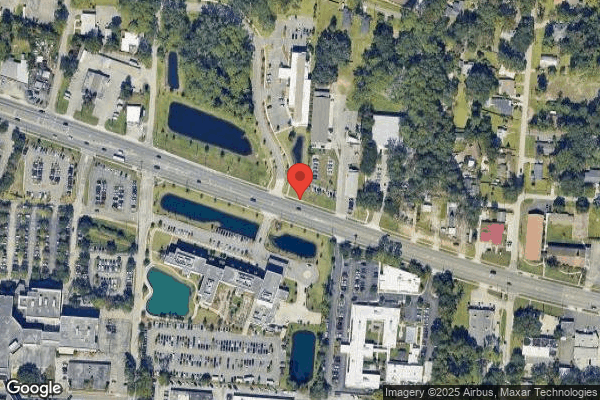
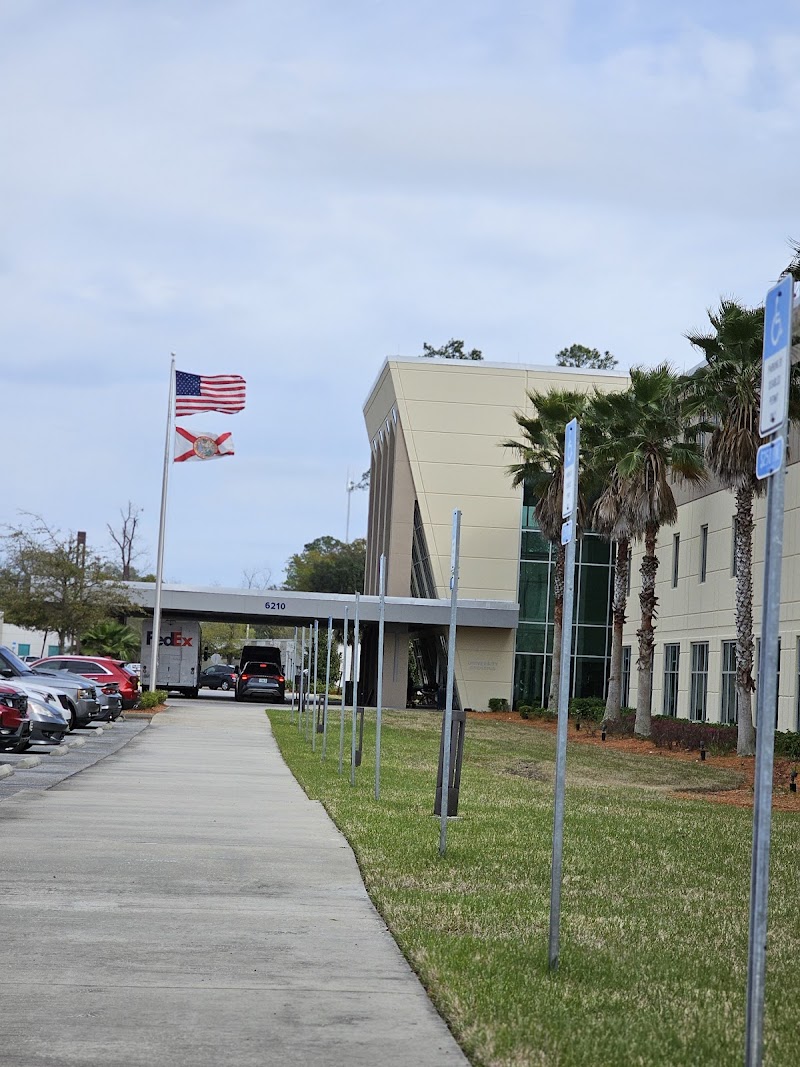
6210 BEACH BLVD, JACKSONVILLE, FL 32216 (904) 345-8100
Non profit - Corporation 111 Beds Independent Data: November 2025
Trust Grade
80/100
#297 of 690 in FL
Last Inspection: December 2024

Within standard 12-15 month inspection cycle. Federal law requires annual inspections.

Overview

University Crossing in Jacksonville, Florida, has a Trust Grade of B+, which means it is above average and recommended for families considering care options. It ranks #297 out of 690 facilities in Florida, placing it in the top half, and #21 out of 34 in Duval County, indicating only a few local facilities offer better care. Unfortunately, the facility's trend is worsening, with issues increasing from 1 in 2023 to 2 in 2024. Staffing is rated at 4 out of 5 stars, which is a positive sign, although the turnover rate of 48% is average for the state. There have been no fines, which is encouraging; however, there were some concerning incidents, such as a failure to properly date food items, risking foodborne illness, and not providing necessary grooming care for residents, which could impact their overall well-being.

Trust Score
B+
80/100
In Florida
#297/690
Top 43%
Safety Record
Low Risk
No red flags
Inspections
Getting Worse
1 → 2 violations
Staff Stability
⚠ Watch
48% turnover. Above average. Higher turnover means staff may not know residents' routines.
Penalties
✓ Good
No fines on record. Clean compliance history, better than most Florida facilities.
Skilled Nurses
✓ Good
Each resident gets 69 minutes of Registered Nurse (RN) attention daily — more than 97% of Florida nursing homes. RNs are the most trained staff who catch health problems before they become serious.
Violations
✓ Good
Only 5 deficiencies on record. Cleaner than most facilities. Minor issues only.
★★★★☆
4.0
Overall Rating
★★★★☆
4.0
Staff Levels
★★★★☆
4.0
Care Quality
★★★★☆
4.0
Inspection Score
Stable
2023: 1 issues
2024: 2 issues

The Good

  • 4-Star Staffing Rating · Above-average nurse staffing levels
  • 4-Star Quality Measures · Strong clinical quality outcomes
  • Full Sprinkler Coverage · Fire safety systems throughout facility
  • No fines on record

Facility shows strength in staffing levels, quality measures, fire safety.

The Bad

Staff Turnover: 48%

Near Florida avg (46%)

Higher turnover may affect care consistency

The Ugly 5 deficiencies on record

Dec 2024 2 deficiencies
CONCERN (D)

Potential for Harm - no one hurt, but risky conditions existed

ADL Care (Tag F0677)

Could have caused harm · This affected 1 resident

**NOTE- TERMS IN BRACKETS HAVE BEEN EDITED TO PROTECT CONFIDENTIALITY** Based on observations, interviews, and record review, the facility failed to ensure that one (Resident #151) of two residents re...

Read full inspector narrative →
**NOTE- TERMS IN BRACKETS HAVE BEEN EDITED TO PROTECT CONFIDENTIALITY** Based on observations, interviews, and record review, the facility failed to ensure that one (Resident #151) of two residents reviewed for activities of daily living (ADLs) assistance, out of 29 residents in the total survey sample, received necessary services to maintain good grooming and personal hygiene, specifically fingernail care. The findings include: A review of the medical record revealed that the resident was admitted to the facility on [DATE] with diagnoses including the following: Surgical aftercare following surgery on the circulatory system, acute combined systolic and diastolic heart failure, major depressive disorder, muscle weakness (generalized), hypertension, shortness of breath, diabetes mellitus and legal blindness. On 12/16/24 at 9:35 AM, Resident #151 was observed with the fingernails on both of his hands extending approximately 1/4 of an inch beyond the nail bed. When the resident was asked if he preferred having his fingernails at the current length, he replied that he asked facility staff to trim his nails and was told someone would come trim them. He further explained that he was fearful of scratching himself with such long nails. (Photographic evidence obtained) On 12/17/24 at 10:48 AM, Resident #151 was observed with the fingernails on both of his hands extending approximately 1/4 of an inch beyond the nail bed. (Photographic evidence obtained) On 12/19/24 at 10:45 AM, Resident #151 was observed with the fingernails on both of his hands extending approximately 1/4 of an inch beyond the nail bed. (Photographic evidence obtained) A review of the 2/6/24 minimum data set (MDS) assessment for Resident #151, revealed a brief interview for mental status (BIMS) score of 13 out of a possible 15 points, indicating intact cognition. He had had no indicators of psychosis, physical or verbal behaviors directed toward others, rejection of care, or wandering behaviors documented in the assessment. ADLs were documented as his having no impairment to the upper or lower extremities; eating and oral hygiene required set-up or clean-up assistance; toileting hygiene, lower body dressing and putting on/taking off footwear required partial to moderate assistance. The resident was assessed as independent for self-bathing/showering. Upper body dressing required supervision or touching assistance. For mobility, the resident required supervision or touching assistance. He received scheduled and as needed pain medication. On 12/19/24 at 10:56 AM, an interview was conducted with Certified Nursing Assistant (CNA) A, who reported she had worked at the facility for approximately seven and a half years. She explained that she completed rounds to check on residents every two hours and every hour for residents who were deemed a fall risk. During her rounds, she checked whether residents needed water, needed use the bathroom, or would like to participate in scheduled activities. She also observed her assigned residents' appearance. If a resident's nails appeared soiled, she would use an orange stick to clean underneath the nails. She explained that fingernails extending 1/4 of an inch would be considered too long for a male resident. If a resident's nails were long, she would tell her nurse because CNAs were not permitted to clip residents' fingernails. At 11:02 AM, CNA B observed Resident #151 and verified that his nails were too long and needed to be shortened. On 12/19/24 at 11:11 AM, an interview was conducted with Licensed Practical Nurse (LPN) B, who reported she was agency staff and had worked at the facility for three months. She explained that during administration of medication, she would conduct head-to-toe visual assessments of residents' appearances. She stated nail length beyond the nail bed is too long for a male resident. If the resident was okay with long nails, the resident's preference would be adhered to. She further explained that if she saw a male resident with quarter-of-an-inch long nails, she would ask a CNA what to do about trimming the resident's fingernails, as different facilities she works at through the agency had different practices regarding nail care. She stated she would notify the unit manager and request the resident's fingernails to be clipped. On 12/19/24 at 11:17 AM, LPN B was accompanied to the resident's location. She observed his fingernails and stated they were too long. A review of the facility's policy titled Podiatry and Nail Care (last reviewed 06/2024, effective date 10/2013), revealed that the purpose of the policy was to establish podiatry and nail care for the resident. The policy documented that the community would arrange for or make available foot and nail care. Procedure 1. Caregivers monitor the length and condition of the toe and finger nails of residents receiving bathing, dressing or grooming services. 3. Caregivers (CNAs and nursing) can provide nail care when indicated. .
CONCERN (D)

Potential for Harm - no one hurt, but risky conditions existed

Respiratory Care (Tag F0695)

Could have caused harm · This affected 1 resident

Based on observations, record review, and interviews, the facility failed to ensure that one (Resident #154) of one resident observed for respiratory care, from a total survey sample of 29 residents, ...

Read full inspector narrative →
Based on observations, record review, and interviews, the facility failed to ensure that one (Resident #154) of one resident observed for respiratory care, from a total survey sample of 29 residents, received respiratory care consistent with professional standards of practice and the resident's care plan. Resident #154 was not receiving oxygen at the flow rate ordered by the physician. The findings include: On 12/16/24 at 10:13 AM, Resident #154 was observed receiving oxygen through a nasal cannula at a flow rate of three liters per minute. (Photographic evidence obtained) On 12/17/24 at 10:35 AM, a second observation was made of Resident #154 receiving oxygen through a nasal cannula at a flow rate of three liters per minute. (Photographic evidence obtained) On 12/17/24 at 11:56 AM, a third observation was made of Resident #154 receiving oxygen through a nasal cannula at a flow rate of three liters per minute. (Photographic evidence obtained) A review of the resident's medical record revealed an admission date of 11/21/24 with diagnoses including acute respiratory failure with hypoxia, pulmonary hypertension, acute on chronic diastolic heart failure, chronic kidney failure - stage 4 (severe), atrial flutter, and dysphasia. A review of Resident #154's 12/6/24 minimum data set (MDS) assessment, revealed that the resident had a brief interview for mental status (BIMS) score of 13 out of a possible 15 points, indicating intact cognition. She displayed no rejection of care and received continuous oxygen therapy via nasal cannula. A review of the care plan initiated on 12/02/24, revealed a focus area for chronic obstructive pulmonary disease (COPD). The care plan goal noted the resident would be free of signs or symptoms of respiratory infections through the review date. Interventions included oxygen (02) settings via nasal cannula per the physician's orders. A review of the active physician's orders for Resident #154 revealed the following: Administer oxygen at 4 liters via nasal cannula with a start date of 11/21/24. An interview was conducted on 12/19/24 at 10:33 AM, with Licensed Practical Nurse (LPN) C, who reported she had worked at the facility for one year. She said she was assigned to Resident #154 and was aware that the resident received oxygen therapy. She was accompanied to the resident's room to check the resident's oxygen flow rate. She reported that the oxygen flow rate was set at 3 liters per minute. She was asked to check the resident's oxygen order. LPN C checked the orders and reported the order for oxygen was for 4 liters per minute via nasal cannula. She explained her process for residents receiving oxygen therapy included checking the resident in the morning at the beginning of her shift. She checked to ensure that the oxygen tubing was in place and the flow rate was accurate. An interview was conducted on 12/19/24 at 10:53 AM, with Certified Nursing Assistant (CNA) D, who reported that she had worked at the facility for two months. She explained that for residents who received oxygen therapy, she would make sure the nasal cannula was inserted correctly and look at the flow rate to ensure the flow rate was accurate. If she saw in inaccurate flow rate, she would inform the nurse. She explained that she was familiar with the Resident #154's care needs and never noticed that the resident's flow rate was inaccurate. A review of the facility's policy and procedure titled Medication Administration (last reviewed on 04/2024, effective 05/2024), revealed that the purpose of the policy was to ensure that all medications were administered safely, accurately, and in a timely manner. Medications are administered safely, accurately, and promptly in accordance with procedures specified. .
Jan 2023 1 deficiency
CONCERN (F)

Potential for Harm - no one hurt, but risky conditions existed

Food Safety (Tag F0812)

Could have caused harm · This affected most or all residents

**NOTE- TERMS IN BRACKETS HAVE BEEN EDITED TO PROTECT CONFIDENTIALITY** Based on kitchen food service observations, staff interviews, facility document review, and facility policy and procedure review...

Read full inspector narrative →
**NOTE- TERMS IN BRACKETS HAVE BEEN EDITED TO PROTECT CONFIDENTIALITY** Based on kitchen food service observations, staff interviews, facility document review, and facility policy and procedure review, the facility failed to follow proper sanitation and food handling practices to prevent the outbreak of foodborne illness, with the potential to affect all residents who consumed foods from the facility, by failing to date mark numerous open food packages in the dry storage room, the refrigerator, and the freezer. Food handling and sanitation is important in health care settings serving nursing home residents. Unsafe food handling practices represent a potential source of pathogen exposure. The findings include: A tour of the kitchen was conducted on 1/17/2023 at 8:20 a.m. During the tour, no date markings were observed on a bin filled with fresh vegetables, an open box filled with pineapples and melons, another open box filled with asparagus, or an open bag of brussels sprouts and carrots on the shelf in the walk-in refrigerator. There was no date marking observed on one open package of blueberries sitting on a shelf in the walk-in freezer. In the dry storage room, there was no date marking observed on one open bag of corn starch. On the opposite side in the dry storage room, on the bottom shelf, there were no date markings identified on four open pasta bags. The bread rack next to tray line had three open bundles of bread with no date markings. These observations were made again on 1/17/2023 at 12:47 p.m., 12:48 p.m., and 12:49 p.m. During the same time, new observations of a bin filled with carrots, one package of cauliflower and five lemons placed on top of a box, and an open box of tomatoes were on the shelf in the walk-in refrigerator with no date marking. (Photographic evidence obtained) A follow-up tour of the kitchen was conducted on 01/19/23 at 10:45 a.m. In the dry storage room, there was no date marking observed on one open bag of corn starch. On the opposite side in the dry storage room, on the bottom shelf, there were no date markings identified on four open pasta bags. The bread rack next to the tray line had two open bundles of bread with no date markings. No date markings were observed on the open bag of celery, vegetable bin filled with vegetables, open box of asparagus, open box of melons, or one package of cauliflower and five lemons placed on the shelf in the walk-in refrigerator. There was no date marking observed on one open package of blueberries or one open bag of biscuits sitting on a shelf in the walk-in freezer. (Photographic evidence obtained) An interview was conducted on 01/20/23 10:17 a.m. with Dietary Aide (DA) A, who confirmed that the facility policy for date marking was to ensure open food was covered, labeled, and dated, and that leftover bread was wrapped, date marked, and discarded after three days. An interview was conducted on 01/20/23 at 10:38 a.m. with [NAME] B, who stated he and the Director of Dining were responsible for food storage. He confirmed once a food item was opened, it was to be wrapped and dated before going back into the refrigerator, freezer, or dry storage shelf. Opened bread was to be wrapped and dated before placing it back on the rack. An interview was conducted on 01/20/23 at 10:51 a.m. with Director of Dining C, who stated currently it was a collective responsibility of all staff to maintain food storage standards. She confirmed that the facility policy for food storage and date marking was that opened foods should be labeled and dated. Opened bread was wrapped/twisted and dated. A review of the facility's policy and procedure entitled Food and Supply Storage (dated 1/2023), revealed: All food, non-food items and supplies used in food preparation shall be stored in such a manner as to prevent contamination to maintain the safety and wholesomeness of the food for human consumption. Procedures: Cover, label and date unused portions and open packages. Complete all sections on a [NAME] orange label or use the Medvantage/Freshdate labeling system. Products are good through the close of business on the date noted on the label . Date and rotate items; first in, first out (FIFO). Discard food past the use-by or expiration date. (Copy obtained) Reference: FDA Food Code 2022 Annex 5. Conducting Risk-Based Inspections Annex 5 - C. Intervention Strategies for Achieving Long-term Compliance. 4. Establish First-In-First-Out (FIFO) Procedures. Page 31. https://www.fda.gov/media/164194/download (Accessed on 1/23/2023): Product rotation is important for both quality and safety reasons. First-In-First Out (FIFO) means that the first batch of product prepared and placed in storage should be the first one sold or used. Date marking foods as required by the Food Code facilitates the use of a FIFO procedure in refrigerated, ready-to-eat, TCS foods. The FIFO concept limits the potential for pathogen growth, encourages product rotation, and documents compliance with time/temperature requirements. .
Jun 2021 2 deficiencies
CONCERN (D)

Potential for Harm - no one hurt, but risky conditions existed

Deficiency F0645 (Tag F0645)

Could have caused harm · This affected 1 resident

**NOTE- TERMS IN BRACKETS HAVE BEEN EDITED TO PROTECT CONFIDENTIALITY** Based on interviews and record reviews, the facility failed to ensure the completion of pre-admission screening for individuals...

Read full inspector narrative →
**NOTE- TERMS IN BRACKETS HAVE BEEN EDITED TO PROTECT CONFIDENTIALITY** Based on interviews and record reviews, the facility failed to ensure the completion of pre-admission screening for individuals with a mental disorder and individuals with an intellectual disability for one (Resident #39) of 27 residents in the sample. The findings include: A medical record review for Resident #39 indicated he was admitted to the facility on [DATE]. His diagnoses included intermittent, explosive disorder, bipolar disorder and schizophrenia. His physician's orders revealed orders for Paroxetine 30 milligrams (Mg) by mouth (PO) every day (QD) for depression, and Risperidone 1 mg two times a day (BID) for bipolar disorder. A 5-day admission Minimum Data Set (MDS) assessment revealed the resident had not been evaluated via Level II Pre-admission Screening and Resident Review (PASRR) to determine serious mental illness and/or mental retardation or related condition. Further review indicated that Resident #39 had a Brief Interview for Mental Status score (BIMS) of 07 out of 15 possible points, indicating severe cognitive impairment. The resident also reported feeling depressed or hopeless, feeling tired and having little energy for 2- 6 days, and received antispychotic and antidepressant medication for 7 days and antianxiety medication for 3 days during the look back period. His care plan indicated that he was on antianxiety, antidepressant and psychotropic medications related to anxiety, depression and bipolar disorders respectively. A review of the Level I PASRR dated 4/19/2021, Section 1, revealed the following: Schizophrenia onset prior to [AGE] years of age. Currently receiving services for mental illness (MI), and Intellectual disability (ID). Section II 1. indicated that Resident #39 had or may have had a disorder in functional limitation in major life activities that would otherwise be appropriate for the individual's developmental stage. Previously received services for MI and ID. Section IV was incomplete. (Copy obtained) A review of the Hospital Discharge summary dated [DATE], revealed: Past medical history indicated mental deficiency, schizophrenia, and intermittent explosive disorder. Resident's father described him as never having issues with depression, always just wild due to his schizophrenia and requiring seroquel, risperdal, and carbamazepine, and never on an anti-depressant. During an interview on 06/09/2021 at 12:35 PM, the Director of Nursing (DON) and the Assistant Director of Nursing (ADON) were asked about Resident #39's Level II PASRR. They confirmed that the level II PASRR was not completed. They also stated that Resident #39 lived in a group home owned by his parents prior to admission. When asked whether the resident had received a psychiatric evaluation, they stated, No. They added that the facility did not have a psychiatric physician and residents were evaluated on an as-needed basis by the hospital psychiatric physician. The DON stated the facility did not have a policy for PASRR. .
CONCERN (D)

Potential for Harm - no one hurt, but risky conditions existed

Deficiency F0761 (Tag F0761)

Could have caused harm · This affected 1 resident

**NOTE- TERMS IN BRACKETS HAVE BEEN EDITED TO PROTECT CONFIDENTIALITY** Based on observations, interviews, and record reviews, the facility failed to ensure that drugs and biologicals used in the faci...

Read full inspector narrative →
**NOTE- TERMS IN BRACKETS HAVE BEEN EDITED TO PROTECT CONFIDENTIALITY** Based on observations, interviews, and record reviews, the facility failed to ensure that drugs and biologicals used in the facility were safely stored for two (Residents #321 and #322) in a total sample of 27 residents. The findings include: 1. On 6/7/2021 at 10:30 AM, Resident #321 was observed lying in bed. There was a container of medication observed on the bedside table. (Photographic evidence obtained) Resident #321 stated in an interview on 6/7/21 at 10:35 AM that she was admitted to the facility on [DATE]. Upon arrival, she was notified that her transplant medication was not available. She stated she had to ask a friend to bring the medication from home, as she could not stay without it. She further stated she had been taking it as prescribed. A medical record review for Resident #321 indicated that she was admitted to the facility on [DATE] with a diagnosis of kidney transplant. Physician's orders included mycophenolate mofetil (Cellcept) capsule 250 milligrams (mg), give 750 mg every 12 hours for transplant. 2. On 6/7/2021 at 11:00 AM, Resident #322 was observed seated in a reclining chair with the bedside table in front of him. There was a bottle of nasal spray on the bedside table, and an anti-fungal powder was observed on the resident's nightstand. (Photographic evidence obtained) In an interview on 6/7/2021 at 11:30 AM, Resident #322 stated he used the nasal spray because at times, he got a dry nose due to the use of oxygen. When asked about the powder on the nightstand, he stated he had a groin infection and the nurses put the powder on daily. On 6/9/2021 at 1:00 PM, the nasal spray and the anti-fungal powder medications were still at the bedside. On 6/9/2021 at 2:08 PM, Employee B, Registered Nurse (RN), confirmed that the resident should not have the antifungal powder or nasal spray at the bedside, as the resident had not been assessed for self-administration of medication. She added that she would discuss it with the nurse responsible for the resident's care. A medical record review for Resident #322 indicated that the resident had skin irritation at the groin, and Chronic Obstructive Pulmonary Disease (COPD). Current physician's orders revealed an order for miconazole nitrate powder, apply to the groin for irritation, Oxygen 3 liters via nasal canula for COPD, Ipratropium-Albuterol solution 0.5-2.5 (3) Mg/3 Milliliters (ML) vial, inhale orally every 8 hours (scheduled) and every 8 hours as needed for COPD, Budesonide suspension 0.5mg/2ML inhale orally every 12 hours for COPD. There were no orders for nasal spray. In an interview on 6/9/2021 at 3:33 PM, Employee D, RN/Unit Manager, confirmed that the resident did not have orders for nasal spray, nor should he have medications at the bedside. When asked about Resident #321's and #322's assessments for self-administration, she stated neither resident had an assessment. She added Resident #322 was very forgetful and therefore not a good candidate for self-administration. She also mentioned that all medications were supposed to be in the medication/treatment carts at all times. Another interview was conducted with the Director of Nursing (DON) on 6/10/2021 at 9:00 AM. She stated when a resident arrived at the facility, nurses were to make every effort to ensure that he/she received their medications as ordered. She added there were times when some medications were not available due to insurance coverage, and residents were asked to bring in their home prescription. In this case, the nurse should have documentation indicating that the medication belonged to the resident, and medication should be administered by the nurse and not left at the bedside. The DON also stated medications received from the resident should be added to the inventory sheet. When asked about administration of over-the-counter medications, she stated no medications should be administered without a physician's order. A review of the facility's policy and procedure titled Nursing Medication Safety (Policy #UC NUR-014, revised on 05/2021) revealed: The purpose of this policy is to communicate safe medication practices to the nursing staff members, patients and their families and facilitate medication safety at all times throughout their stay. All RNs and LPNs will actively participate in safe medication practices in accordance with the procedures specified. 1.Medications are to be administered to the Guest/Residents only when prescribed by a licensed physician. 4. Safe storage and handling of medication: Upon delivery to nursing units, medications are kept in secure areas until administration. These areas include medication rooms, medication carts and refrigerators. 5. Requirements for specific type of orders i. Guest's own supply of medication of medication/self-administration: Policies and processes are not in place as guest are not to self-administer medication and/or maintain medication at the bedside. .
Understanding Severity Codes (click to expand)
Life-Threatening (Immediate Jeopardy)
J - Isolated K - Pattern L - Widespread
Actual Harm
G - Isolated H - Pattern I - Widespread
Potential for Harm
D - Isolated E - Pattern F - Widespread
No Harm (Minor)
A - Isolated B - Pattern C - Widespread

Questions to Ask on Your Visit

  • "Can I speak with families of current residents?"
  • "What's your RN coverage like on weekends and overnight?"

Our Honest Assessment

Strengths
  • • Grade B+ (80/100). Above average facility, better than most options in Florida.
  • • No major safety red flags. No abuse findings, life-threatening violations, or SFF status.
  • • No fines on record. Clean compliance history, better than most Florida facilities.
  • • Only 5 deficiencies on record. Cleaner than most facilities. Minor issues only.
Concerns
  • • No significant concerns identified. This facility shows no red flags across CMS ratings, staff turnover, or federal penalties.
Bottom line: Generally positive indicators. Standard due diligence and a personal visit recommended.

About This Facility

What is University Crossing's CMS Rating?

CMS assigns UNIVERSITY CROSSING an overall rating of 4 out of 5 stars, which is considered above average nationally. Within Florida, this rating places the facility higher than 99% of the state's 100 nursing homes. This rating reflects solid performance across the metrics CMS uses to evaluate nursing home quality.

How is University Crossing Staffed?

CMS rates UNIVERSITY CROSSING's staffing level at 4 out of 5 stars, which is above average compared to other nursing homes. Staff turnover is 48%, compared to the Florida average of 46%.

What Have Inspectors Found at University Crossing?

State health inspectors documented 5 deficiencies at UNIVERSITY CROSSING during 2021 to 2024. These included: 5 with potential for harm.

Who Owns and Operates University Crossing?

UNIVERSITY CROSSING is owned by a non-profit organization. Non-profit facilities reinvest revenue into operations rather than distributing to shareholders. The facility operates independently rather than as part of a larger chain. With 111 certified beds and approximately 99 residents (about 89% occupancy), it is a mid-sized facility located in JACKSONVILLE, Florida.

How Does University Crossing Compare to Other Florida Nursing Homes?

Compared to the 100 nursing homes in Florida, UNIVERSITY CROSSING's overall rating (4 stars) is above the state average of 3.2, staff turnover (48%) is near the state average of 46%, and health inspection rating (4 stars) is above the national benchmark.

What Should Families Ask When Visiting University Crossing?

Based on this facility's data, families visiting should ask: "Can I visit during a mealtime to observe dining assistance and food quality?" "How do you handle medical emergencies, and what is your hospital transfer rate?" "Can I speak with family members of current residents about their experience?"

Is University Crossing Safe?

Based on CMS inspection data, UNIVERSITY CROSSING has a clean safety record: no substantiated abuse findings (meaning no confirmed cases of resident harm), no Immediate Jeopardy citations (the most serious violation level indicating risk of serious injury or death), and is not on the Special Focus Facility watch list (a federal program monitoring the lowest-performing 1% of nursing homes). The facility has a 4-star overall rating and ranks #1 of 100 nursing homes in Florida. While no facility is perfect, families should still ask about staff-to-resident ratios and recent inspection results during their visit.

Do Nurses at University Crossing Stick Around?

UNIVERSITY CROSSING has a staff turnover rate of 48%, which is about average for Florida nursing homes (state average: 46%). Moderate turnover is common in nursing homes, but families should still ask about staff tenure and how the facility maintains care continuity when employees leave.

Was University Crossing Ever Fined?

UNIVERSITY CROSSING has no federal fines on record. CMS issues fines when nursing homes fail to meet care standards or don't correct problems found during inspections. The absence of fines suggests the facility has either maintained compliance or corrected any issues before penalties were assessed. This is a positive indicator, though families should still review recent inspection reports for the full picture.

Is University Crossing on Any Federal Watch List?

UNIVERSITY CROSSING is not on any federal watch list. The most significant is the Special Focus Facility (SFF) program, which identifies the bottom 1% of nursing homes nationally based on persistent, serious quality problems. Not being on this list means the facility has avoided the pattern of deficiencies that triggers enhanced federal oversight. This is a positive indicator, though families should still review the facility's inspection history directly.