VI AT LAKESIDE VILLAGE
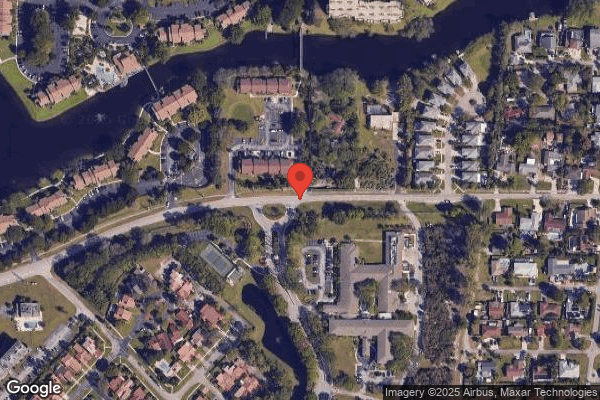
2782 DONNELLY DRIVE, LANTANA, FL 33462 (561) 963-2100
For profit - Partnership 60 Beds VI LIVING Data: November 2025
Trust Grade
95/100
#135 of 690 in FL
Last Inspection: August 2024

Within standard 12-15 month inspection cycle. Federal law requires annual inspections.

Overview

The VI at Lakeside Village in Lantana, Florida, has an impressive Trust Grade of A+, indicating it is an elite facility with top-tier services. It ranks #135 out of 690 facilities statewide, placing it in the top half of Florida, and #9 out of 54 facilities in Palm Beach County, which means there are only eight local options that are better. The facility's performance is stable, with three reported issues both in 2023 and 2024. Staffing is a strong point here, earning a perfect 5 out of 5 stars and a low turnover rate of 13%, significantly below the state average of 42%, ensuring consistent care for residents. While there have been no fines, which is excellent, the inspection findings noted several concerns, such as improper food handling practices that could lead to contamination, issues with maintaining cleanliness in resident rooms, and the failure to prepare food according to individual dietary needs for one resident. Overall, while the facility has many strengths, families should be aware of these specific weaknesses when considering care options.

Trust Score
A+
95/100
In Florida
#135/690
Top 19%
Safety Record
Low Risk
No red flags
Inspections
Holding Steady
3 → 3 violations
Staff Stability
✓ Good
13% annual turnover. Excellent stability, 35 points below Florida's 48% average. Staff who stay learn residents' needs.
Penalties
✓ Good
No fines on record. Clean compliance history, better than most Florida facilities.
Skilled Nurses
✓ Good
Each resident gets 90 minutes of Registered Nurse (RN) attention daily — more than 97% of Florida nursing homes. RNs are the most trained staff who catch health problems before they become serious.
Violations
○ Average
7 deficiencies on record. Average for a facility this size. Mostly minor or procedural issues.
★★★★★
5.0
Overall Rating
★★★★★
5.0
Staff Levels
★★★★☆
4.0
Care Quality
★★★★☆
4.0
Inspection Score
Stable
2023: 3 issues
2024: 3 issues

The Good

  • 5-Star Staffing Rating · Excellent nurse staffing levels
  • 4-Star Quality Measures · Strong clinical quality outcomes
  • Low Staff Turnover (13%) · Staff stability means consistent care
  • Full Sprinkler Coverage · Fire safety systems throughout facility
  • No fines on record
  • Staff turnover is low (13%)

    35 points below Florida average of 48%

Facility shows strength in staffing levels, quality measures, staff retention, fire safety.

The Bad

Chain: VI LIVING

Part of a multi-facility chain

Ask about local staffing decisions and management

The Ugly 7 deficiencies on record

Aug 2024 3 deficiencies
CONCERN (D)

Potential for Harm - no one hurt, but risky conditions existed

Deficiency F0805 (Tag F0805)

Could have caused harm · This affected 1 resident

**NOTE- TERMS IN BRACKETS HAVE BEEN EDITED TO PROTECT CONFIDENTIALITY** Based on observations, record review, and interviews, the facility failed to prepare food in a form designed to meet the residen...

Read full inspector narrative →
**NOTE- TERMS IN BRACKETS HAVE BEEN EDITED TO PROTECT CONFIDENTIALITY** Based on observations, record review, and interviews, the facility failed to prepare food in a form designed to meet the resident's individual need for 1 of 1 sampled resident who had a physician ordered mechanical soft ground diet, Resident #23. The findings included: Record review revealed Resident #23 was admitted to the facility on [DATE], was recently hospitalized on [DATE], and was readmitted to the facility on [DATE], with a diagnosis of Pneumonia. The record revealed Resident #23 had other diagnoses that included Dysphagia (difficulty swallowing), muscle weakness, Dementia, and a history of Covid-19 and obesity. Review of the Minimum Data Set (MDS) significant change assessment, dated 06/15/24, revealed Resident #23 had a Brief Interview for Mental Status (BIMS) score of 3, indicating severe cognitive impairment. This MDS assessment revealed Resident #23 had swallowing problems specified as holding foods in mouth / cheeks or residual food in mouth after meals. Review of Resident #23's care plan, last reviewed on 08/05/24, revealed the resident was at nutritional risk related to Dysphagia. The approach in the care plan noted that the resident's diet was upgraded from a pureed diet to a mechanical soft diet with ground meat. Review of Resident #23's physician diet order dated 07/04/24 listed the current diet order consistency was Mechanical Soft Ground. This diet order was signed by the physician on 07/05/24. Photographic Evidence Obtained. Observation in the main dining room on 08/13/24 at 1:36 PM revealed Resident #23 was served shredded pork. The meat had stringy pieces that were mostly 1/4-1/2 inches long. Resident #23 was observed with prolonged chewing. Photographic Evidence Obtained. The surveyor then went to the kitchen and requested a portion of ground meat from the cook, Staff D. Staff D explained that each plate was prepared to order. Staff D then used a chopping knife and chopped up the meat finely. He gave the plate to the surveyor to observe. This plate remained in the kitchen. Observation at this time revealed Staff B, the Food Service Manager (FSM), entered the food preparation area and he was made aware of the concern about the food texture. The surveyor then requested Staff B to go to the dining room to observe Resident #23's plate. In an interview at the dining room table on 08/13/24, at 1:50 PM, Staff B was asked to describe the prepared pork entrée that was on the resident's plate. Staff B stated the pork on Resident #23's plate was of a chopped texture, and clarified that it was not ground. In an interview in the dining room on 08/13/24 at 2:05 PM, the Registered Dietitian (RD), verified that Resident #23's diet order was for foods to be prepared with a mechanical soft ground texture. The RD explained, They don't do therapeutic (ground) diets here. They do regular, salt free pack, the chopped consistency or what we are calling mechanical soft, and we also do puree. The surveyor requested that the RD provide a copy of the diet manual that included a description of foods served on a mechanical soft ground diet. The RD provided a sheet of paper that listed Food items not allowed on mechanical soft diet. Specific breads, cereals, desserts, vegetables, potatoes, and fruits were listed. There was no mention of any meat items. This sheet had no identifying headings that referred to the name of a diet manual or the source of this listing. Photographic Evidence Obtained.
CONCERN (E)

Potential for Harm - no one hurt, but risky conditions existed

Safe Environment (Tag F0584)

Could have caused harm · This affected multiple residents

**NOTE- TERMS IN BRACKETS HAVE BEEN EDITED TO PROTECT CONFIDENTIALITY** Based on observation, interview, and record review, the facility failed to provided housekeeping and maintenance services necess...

Read full inspector narrative →
**NOTE- TERMS IN BRACKETS HAVE BEEN EDITED TO PROTECT CONFIDENTIALITY** Based on observation, interview, and record review, the facility failed to provided housekeeping and maintenance services necessary to maintain a sanitary, orderly, and comfortable interior for 12 of 32 resident rooms, 1 of 1 dining room, 1 of 1 community shower room, main entrance area, and 1 of 1 soiled utility room. The findings included: 1. During the initial resident screenings conducted on 08//12-13/24 conducted by the surveyors and the environment observation tour conducted on 08/14/24 at 10:00 AM with the Administrator and Director of Maintenance, the following observations were noted: a. Main Lobby Area: Floor carpeting was noted to have numerous large black stains. b. room [ROOM NUMBER]: The room Formica flooring was noted to have a large tear (15 inches) and was a potential trip hazard for the room residents, and the portable commode seat was noted to be rust laden. c. room [ROOM NUMBER]: bathroom floor heavily stained throughout, 1 of 4 bathroom lights not working, live ants noted in and around the wall air-conditioner unit (W-bed), air-conditioning unit noted to not be attached properly to the room wall. d. room [ROOM NUMBER]: Room walls (2) noted to be damaged and in disrepair, dresser drawers not closing (W-bed), and fall mat soiled (W-bed). e. room [ROOM NUMBER]: Bathroom floor noted to soiled and stained throughout, room floor soiled and stained throughout, wall air-conditioning unit not properly attached to the wall, and 1 of 4 bathroom lights not working. f. room [ROOM NUMBER]: Room floor stained throughout, no over-bed light pull cord (W-bed), large hole in wall (behind W-bed). g. room [ROOM NUMBER]: Bathroom toilet requires re-caulking to the floor, over bed light cord too short (W-bed), and dresser drawers not closing properly. h. room [ROOM NUMBER]: Bathroom emergency nurse call bell cord wrapped around the bathroom wall handrail. i. room [ROOM NUMBER]: Bathroom toilet requires re-caulking to the floor, room walls (3) damaged and in disrepair. And no over-bed light cord (W-bed). j. room [ROOM NUMBER]: Bathroom toilet required re-caulking to the floor, room floor stained throughout, bathroom toilet seat loose, and room walls damaged and in disrepair. k. room [ROOM NUMBER]: Room floor stained throughout, bathroom floor stained, and toilet required re-caulking to the floor. l. room [ROOM NUMBER]: Bathroom floor stained and soiled throughout, air-conditioning unit not properly attached to the room walls, and toilet requires re-caulking to the floor. m. room [ROOM NUMBER]: Bathroom floor stained throughout, and toilet requires re-caulking to the floor. Community Shower Room: Room entry door damaged and in disrepair, and discolored/stained wall tiles (Shower Stall #1). n. Soiled Utility Room: Interior of Specimen Refrigerator was soiled. o. Housekeeping Storage Room: Soiled equipment and chemicals stored with clean resident toilet and paper towel rolls. p. Hallway Hand Rails: the wall mounted handrails between Rooms #13-21 were noted to have large areas of peeling paint and exposed bare wood surfaces. Following the tour, the environment findings were again confirmed with the Administrator who stated that facility staff are not reporting housekeeping and maintenance issues with the receptionist who is responsible for contacting the housekeeping and maintenance department for their attention to the specific issues. 2. Observation of the main dining room on 08/13/24 at 8:00 AM accompanied with the Administrator and Director of Housekeeping, the following observations were noted: a. Three of six dining room chairs were noted to be soiled and stained with a white substance. b. The exterior of the [NAME] cupboard was soiled and stained. c. Dining room walls (4) were noted to have large black markings in numerous areas of the room. d. Accumulation of dust and dirt on window sills and furniture. e. Floor areas around the dining room tables were noted to have numerous pieces of food debris and were not cleaned following the dinner meal of 08/12/24. f. Numerous room windows (20) were heavily soiled and were not being cleaned on a regular basis. g. The exterior of the suctioning machine located on a back table was noted to be dirt and dust laden. h. Base boards throughout the dining room were soiled and stained. i. Five of 10 light fixture were noted to be heavily soiled and had evidence of dead insects. j. The exteriors of 4 of 4 food tray tray stands were rust laden and required to discarded . k. Soiled resident food trays were carried individually by staff uncovered through the dining room through the clean serving area, and into the kitchen. It was discussed with the Registered Dietitian that exposed soiled food trays are required to be covered at all times and not exposed to clean food preparation and serving areas. l. Observation of the dining room preparation area noted that soiled resident table linens (tabled cloths and napkins) are stored in uncovered barrels (2). m.) Observation of drinking glasses noted that the interiors of the glasses was covered with a white film (26 of 26 glasses). Following the tour, an interview was conducted with the Director of Maintenance who stated he only cleans the dining room floor and has no responsibility for the rest of the dining room issues. The Administrator confirmed all the surveyor findings.
CONCERN (F)

Potential for Harm - no one hurt, but risky conditions existed

Food Safety (Tag F0812)

Could have caused harm · This affected most or all residents

**NOTE- TERMS IN BRACKETS HAVE BEEN EDITED TO PROTECT CONFIDENTIALITY** Based on observations and interviews, the facility failed to store, prepare, distribute, and serve food in accordance with profe...

Read full inspector narrative →
**NOTE- TERMS IN BRACKETS HAVE BEEN EDITED TO PROTECT CONFIDENTIALITY** Based on observations and interviews, the facility failed to store, prepare, distribute, and serve food in accordance with professional standards for food service safety, sanitary conditions, and the prevention of foodborne illnesses. The findings included: 1. During the initial tour of the Main Kitchen on 08/12/24 at 9:05 AM, and accompanied by Staff B, the facility's [NAME] Supervisor, and Staff C, the Registered Dietitian (RD), the following was observed: a. A used serving spoon for the breakfast sweet potatoes rested on top of the plastic wrap that partially covered the sweet potatoes. There were plastic spoons observed in an uncovered metal tin, and placed on top of the steam table used on the tray line. The surveyor informed Staff B about the concerns of contaminated serving utensils and contaminated plastic utensils. b. Staff B was observed taking temperatures of foods on the steam table and did not sanitize the thermometer prior to taking the temperature of the sweet potatoes. Staff B was made aware of some possible risks associated with cross contamination. c. Staff C, RD, placed test strips for sanitizer into bucket #1 and bucket #2. The sanitizing solution in bucket #1 and bucket #2 did not meet the requirement for Ammonium compound to be 150 - 200 parts per million. The result of bucket #1 was a yellow color on the test strip, which indicated that there was no sanitizer (O parts per million) mixed into the solution. The result of bucket #2 was a light green color (100 parts per million) on the test strip, which indicated the sanitizing solution was too weak. d. The plastic container of thickener powder had no date written on the container nor on a label on the container. The container of thickener had dried food stuck to the exterior of the container. e. A metal screen like fixture with tiny holes, approximately 18 inches from the ceiling, and located in between the steam table and the oven exhaust, had many dark spots all over the surface. Staff B was made aware that this fixture needed to be clean to maintain sanitary conditions for food service. f. The walk-in refrigerator #8 had no thermometer inside the refrigerator. An empty thermometer clip was observed affixed to the wall inside the refrigerator close to the door. When surveyor questioned Staff B about where the thermometer was, Staff B said that there used to be a thermometer right here. Staff B pointed to the empty clip to the left of the entry door of the refrigerator. g. The cottage cheese best if used by date was 08/3/24. The Hummus use by date was 07/09/24. h. The fan covers on the upper back wall were dusty. Groupings of black specs were observed on the walls located between and around the fans. A concentration of black speck-like debris was observed sprinkled on the ceiling of the refrigerator in the area located on the rear walls near the fans. i. A cycle run of the dishwasher was performed. This dishwasher was a low temperature dishwasher and depended on the regulated sanitizer concentration of 50 parts per million (ppm) of chlorine to sanitize the dishes, glasses, and utensils adequately. The RD used a test strip to test the sanitizing solution. The test strip turned a pale lavender color which indicated a concentration between 0-10 ppm chlorine. The measured amount of sanitizing solution failed to meet the required 50 ppm chlorine. The RD used a second test strip and placed it on a cup that was wet from the dishwasher. The test strip turned a pale lavender color which indicated a concentration between 0-10 ppm chlorine. The test strip again failed to show the required amount of sanitizing solution. j. The clean side of the dishwasher run had residual pieces of food. k. The garbage pail was filthy with splattered food on top of garbage lid and on the exterior of the garbage pail. One half of plastic lid was missing. l. The Southbend oven had a build-up of grease on the interior and exterior surfaces. The top of the oven had food crumbs, dust, and stuck on residue. The oven drip trays were ladened with burned grease. m. The Hoshizaki reach-in refrigerator #5 had a puddle of water on the floor close to and under the unit. The surveyor made Staff B aware that this indicated a functional problem with this refrigerator. n. A drawer of knives and a drawer containing cooking spoons, spatulas, scoops, and whisks was dirty. The knives were removed from the drawer by the RD and they were sent to be washed. The empty drawer revealed a dirty paper with debris that lined the drawer. o. The [NAME] boiler was observed in use boiling soup. It was filthy with residual dried on food on exterior sides of the boiler. p. The ice machine was located in an area for dirty containers, bowls, pans, and garbage. q. A dirty, used apron hung in an area, located near the ice machine and the garbage. r. The food mixer was dirty with residual flour and dried on batter. s. The soda dispenser was rusty. t. A rack of uncovered trays was in the hallway next to the entry door of the kitchen. Photographic Eveidence Obtained of above findings. The findings were reviewed with Staff B and Staff C who agreed with these findings and communicated findings with sanitation of kitchen to the administrator. 2. During a follow-up visit to the kitchen on 08/12/24 at 11:30 AM, Staff B, the [NAME] Supervisor, was asked to take the temperatures of the foods prepared for lunch. The temperature of the broccoli did not meet the regulatory required temperature of 135'F (degrees Fahrenheit) or above. The temperature of approximately 20 portions of cooked broccoli was 122'F. The temperatures of 2 cold foods: cottage cheese, and shrimp salad, were not held at the required temperature of 41'F or below. The temperature of the cottage cheese in the fruit and cottage cheese plate measured 49'F. The shrimp salad measured 75'F. Photographic Eveidence Obtained of above findings. 3. During a follow-up visit to the kitchen on 08/14/24 at 11:36 AM, an interview with the RD revealed she thought the problem with the concentration of the dishwasher's sanitizing solution was because of a clogged tube that ran from the bucket of the sanitizer solution to the dishwashing machine. The RD showed the surveyors the bucket and the connecting tube to the dishwasher. The RD ran the dishwasher twice, and then she performed testing for adequate sanitizer strength. She touched three separate test strips to wet spots on cups that had gone through the dishwashing machine. All three test strips produced a pale lavender color which indicated a concentration between 0-10 ppm chlorine. The sanitizing solution failed to meet the requirement of 50 parts per million of chlorine. Photographic Eveidence Obtained of above findings.
Jun 2023 3 deficiencies
CONCERN (D)

Potential for Harm - no one hurt, but risky conditions existed

Deficiency F0561 (Tag F0561)

Could have caused harm · This affected 1 resident

**NOTE- TERMS IN BRACKETS HAVE BEEN EDITED TO PROTECT CONFIDENTIALITY** Based on interview and record review, the facility failed to accommodate a resident's choice or preference for showers, for 1 of...

Read full inspector narrative →
**NOTE- TERMS IN BRACKETS HAVE BEEN EDITED TO PROTECT CONFIDENTIALITY** Based on interview and record review, the facility failed to accommodate a resident's choice or preference for showers, for 1 of 12 sampled residents, Resident # 291. The findings included: Resident #291 was admitted to the facility on [DATE], for short term rehabilitation. Review of the MDS (Minimum Data Set) assessment dated [DATE] indicated it was very important to the resident to choose between a shower, bed bath, or sponge bath. It indicated she required partial assist with bathing with one-person assist. The Brief Interview for Mental Status (BIMS) score was 15 of 15, indicating she was cognitively intact. Review of the care plan, dated 06/07/23, stated she is able to verbalize personal preferences regarding activities of daily living (ADLs) as well as leisure activities. The goal was that the resident will confirm her personal preferences which will be honored to the extent possible daily. The approach included to assist in the resident's preference for bathing which is to be offered showers and choose to accept or not. On 06/12/23 at 10:30 AM, an interview was conducted with Resident #291 regarding choices and preferences. She stated she has not had a shower since she was admitted . She stated she didn't want it in the morning because she goes to therapy at 10:00 AM, and prefers to have a shower in the afternoon. On 06/14/23 at 9:00 AM, the resident stated she was offered a shower this morning but had told the staff she didn't want it because she had therapy at 10 o'clock. She told staff she prefers showers in the afternoon. No showers had been received yet. On 06/14/23 at 11:00 AM, an interview was conducted with the Certified Nursing Assistant, CNA B, who was assigned to the resident. She stated she asked the resident if she wanted a shower this morning but she said no. She stated she had not given the resident a shower this week. When asked if she asked the resident what time she would prefer to have a shower, she said no. On 06/14/23 at 1:30 PM, CNA B, reported to the surveyor that she gave the resident a shower today before lunch. On 06/14/23 at 2:00 PM, Resident #291 confirmed she received her first shower today. On 06/14/23 at 11:15 AM, the Staff Developer printed the bathing information for Resident #291 from 06/05/23-06/13/23. It noted 3 showers were given to the resident, on 06/05/23 by CNA D, and on 06/07/23 and 06/09/23 by CNA C. On 06/14/23 at 2:35 PM, an interview with CNA C was conducted, regarding the two showers she had marked for the resident last week (on 06/07/23 and 06/09/23). She confirmed she did not give the resident any showers, and she must of documented them in error. On 06/14/23 at 3:30 PM, an interview was conducted with Staff A, Registered Nurse, who was assigned to resident. She stated she did see the aide bring the resident back to her room after receiving a shower today.
CONCERN (D)

Potential for Harm - no one hurt, but risky conditions existed

Incontinence Care (Tag F0690)

Could have caused harm · This affected 1 resident

**NOTE- TERMS IN BRACKETS HAVE BEEN EDITED TO PROTECT CONFIDENTIALITY** Based on observation, interview, and record review, the facility failed to provide adequate catheter care for a resident with re...

Read full inspector narrative →
**NOTE- TERMS IN BRACKETS HAVE BEEN EDITED TO PROTECT CONFIDENTIALITY** Based on observation, interview, and record review, the facility failed to provide adequate catheter care for a resident with recurrent Urinary Tract Infections (UTI) for 1 of 1 sampled resident reviewed for catheter care, Resident #5. The findings included: A review of the Skills Checklist for Catheter Care documented, in part, for procedure: Use the first washcloth with soap and water to carefully wash around the catheter where it exits the urethra (opening on the penis). Hold the catheter where it exits the urethra with one hand. While holding the catheter, clean 3-4 inches down the catheter tube. Clean with strokes moving away from the urethra. Use a clean portion of the washcloth for each stroke. Resident #5 was admitted to the facility on [DATE]. A comprehensive assessment dated [DATE] documented the resident had severe cognitive impairment and required extensive to total two-person assistance with activities of daily living. The assessment further documented Resident #5 had an indwelling catheter (for urinary drainage) and had received antibiotics. Record review revealed Resident #5 was care planned for an indwelling urinary catheter, with an intervention to provide catheter care every shift and as needed, and anchor as ordered. A review of resident #5's physician orders revealed an order dated 05/23/23 for the indwelling catheter to be secured and anchored at all times and catheter care every shift as per protocol. An observation of catheter care for Resident #5 was conducted on 06/14/23 at 12:20 PM with Staff D, a Certified Nurse Assistant (CNA), and assisted by Staff E, a CNA. Staff D was observed cleaning / wiping the catheter going towards the urethra (opening of the penis) three times with separate wipes. Further observation revealed Resident #5's catheter was not secured or anchored. Staff D proceeded to pull back the resident's foreskin to clean the penis shaft. A heavy layer of thick white substance was observed under the resident's foreskin and around the penis. Staff D used approximately 10 wipes to remove the substance, to enable the completion of catheter care. An interview was conducted with the Director of Nursing (DON) on 06/14/23 at 2:00 PM. The DON was made aware of the above.
MINOR (C)

Minor Issue - procedural, no safety impact

Deficiency F0847 (Tag F0847)

Minor procedural issue · This affected most or all residents

Based on record review and interview, the facility failed to provide the Binding Arbitration Agreement in writing and failed to have evidence that a resident and/or the resident's representative ackno...

Read full inspector narrative →
Based on record review and interview, the facility failed to provide the Binding Arbitration Agreement in writing and failed to have evidence that a resident and/or the resident's representative acknowledged understanding of the Binding Arbitration Agreement. The census at the time of the survey was 47 residents with 17 of the residents being new admissions. The findings included: Review of the facility's admission packet documented, in part, Optional Arbitration Clause (If the parties to this Agreement do not wish to include the following arbitration provision, please indicate so by marking an X through this clause. Other parties shall also initial that X to signify their agreement to refuse arbitration). Any controversy or claim arising out of or relating to the Agreement, or the breach thereof, shall be settled by arbitration in accordance with the provisions of the Florida Arbitration Code found at Chapter 682, Florida Statutes, and judgment upon the award rendered by the arbitrator(s) may be entered in any court having jurisdiction. During an interview, on 06/14/23 at 9:14 AM with the Outreach Manager (Admissions and Marketing), when asked about the Binding Arbitration Agreement, the Outreach Manager replied, upon admission, the agreement is explained to the resident or the representative. When asked how the resident or representative acknowledges understanding of the agreement, the Outreach Manager replied, The entirety of the admission packet is good for thirty days and signing the admission packet acknowledges understanding of all of the packet. The Outreach Manager confirmed that the one paragraph in the admission packet was the only reference to the Binding Arbitration Agreement in the entirety of the admission packet. On 06/14/23 at approximately 1:30 PM, the Outreach Manager provided a copy of the facility's Binding Arbitration Agreement. The Outreach Manager stated that she had only had the entire written agreement for about a week. The Outreach Manager was not able to provide documentation of resident or representative acknowledging understanding the Binding Arbitration Agreement upon agreeing to or declining the agreement.
Feb 2022 1 deficiency
CONCERN (D)

Potential for Harm - no one hurt, but risky conditions existed

Comprehensive Care Plan (Tag F0656)

Could have caused harm · This affected 1 resident

Deficiency Text Not Available

Read full inspector narrative →
Deficiency Text Not Available
Understanding Severity Codes (click to expand)
Life-Threatening (Immediate Jeopardy)
J - Isolated K - Pattern L - Widespread
Actual Harm
G - Isolated H - Pattern I - Widespread
Potential for Harm
D - Isolated E - Pattern F - Widespread
No Harm (Minor)
A - Isolated B - Pattern C - Widespread

Questions to Ask on Your Visit

  • "Can I speak with families of current residents?"
  • "What's your RN coverage like on weekends and overnight?"

Our Honest Assessment

Strengths
  • • Grade A+ (95/100). Above average facility, better than most options in Florida.
  • • No major safety red flags. No abuse findings, life-threatening violations, or SFF status.
  • • No fines on record. Clean compliance history, better than most Florida facilities.
  • • 13% annual turnover. Excellent stability, 35 points below Florida's 48% average. Staff who stay learn residents' needs.
Concerns
  • • No significant concerns identified. This facility shows no red flags across CMS ratings, staff turnover, or federal penalties.
Bottom line: Generally positive indicators. Standard due diligence and a personal visit recommended.

About This Facility

What is Vi At Lakeside Village's CMS Rating?

CMS assigns VI AT LAKESIDE VILLAGE an overall rating of 5 out of 5 stars, which is considered much above average nationally. Within Florida, this rating places the facility higher than 99% of the state's 100 nursing homes. This rating reflects solid performance across the metrics CMS uses to evaluate nursing home quality.

How is Vi At Lakeside Village Staffed?

CMS rates VI AT LAKESIDE VILLAGE's staffing level at 5 out of 5 stars, which is much above average compared to other nursing homes. Staff turnover is 13%, compared to the Florida average of 46%. This relatively stable workforce can support continuity of care.

What Have Inspectors Found at Vi At Lakeside Village?

State health inspectors documented 7 deficiencies at VI AT LAKESIDE VILLAGE during 2022 to 2024. These included: 6 with potential for harm and 1 minor or isolated issues.

Who Owns and Operates Vi At Lakeside Village?

VI AT LAKESIDE VILLAGE is owned by a for-profit company. For-profit facilities operate as businesses with obligations to shareholders or private owners. The facility is operated by VI LIVING, a chain that manages multiple nursing homes. With 60 certified beds and approximately 50 residents (about 83% occupancy), it is a smaller facility located in LANTANA, Florida.

How Does Vi At Lakeside Village Compare to Other Florida Nursing Homes?

Compared to the 100 nursing homes in Florida, VI AT LAKESIDE VILLAGE's overall rating (5 stars) is above the state average of 3.2, staff turnover (13%) is significantly lower than the state average of 46%, and health inspection rating (4 stars) is above the national benchmark.

What Should Families Ask When Visiting Vi At Lakeside Village?

Based on this facility's data, families visiting should ask: "Can I visit during a mealtime to observe dining assistance and food quality?" "How do you handle medical emergencies, and what is your hospital transfer rate?" "Can I speak with family members of current residents about their experience?"

Is Vi At Lakeside Village Safe?

Based on CMS inspection data, VI AT LAKESIDE VILLAGE has a clean safety record: no substantiated abuse findings (meaning no confirmed cases of resident harm), no Immediate Jeopardy citations (the most serious violation level indicating risk of serious injury or death), and is not on the Special Focus Facility watch list (a federal program monitoring the lowest-performing 1% of nursing homes). The facility has a 5-star overall rating and ranks #1 of 100 nursing homes in Florida. While no facility is perfect, families should still ask about staff-to-resident ratios and recent inspection results during their visit.

Do Nurses at Vi At Lakeside Village Stick Around?

Staff at VI AT LAKESIDE VILLAGE tend to stick around. With a turnover rate of 13%, the facility is 33 percentage points below the Florida average of 46%. Low turnover is a positive sign. It means caregivers have time to learn each resident's needs, medications, and personal preferences. Consistent staff also notice subtle changes in a resident's condition more quickly. Registered Nurse turnover is also low at 13%, meaning experienced RNs are available to handle complex medical needs.

Was Vi At Lakeside Village Ever Fined?

VI AT LAKESIDE VILLAGE has no federal fines on record. CMS issues fines when nursing homes fail to meet care standards or don't correct problems found during inspections. The absence of fines suggests the facility has either maintained compliance or corrected any issues before penalties were assessed. This is a positive indicator, though families should still review recent inspection reports for the full picture.

Is Vi At Lakeside Village on Any Federal Watch List?

VI AT LAKESIDE VILLAGE is not on any federal watch list. The most significant is the Special Focus Facility (SFF) program, which identifies the bottom 1% of nursing homes nationally based on persistent, serious quality problems. Not being on this list means the facility has avoided the pattern of deficiencies that triggers enhanced federal oversight. This is a positive indicator, though families should still review the facility's inspection history directly.