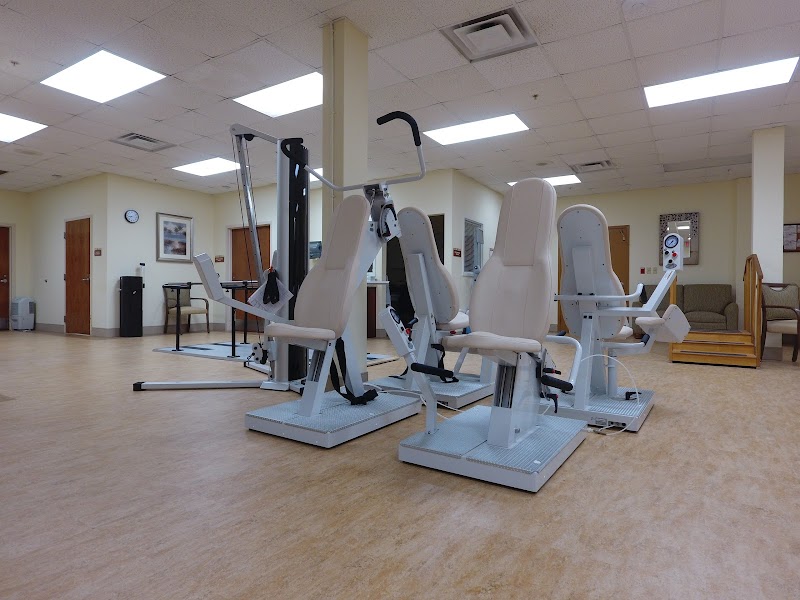
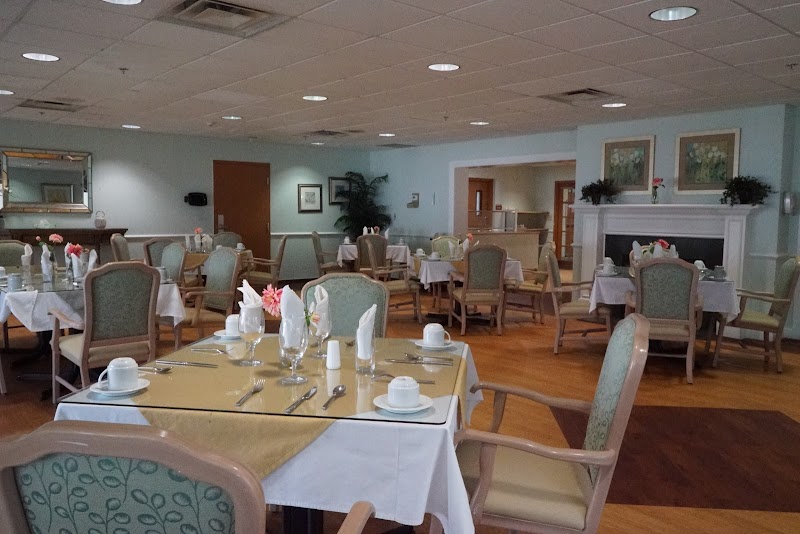
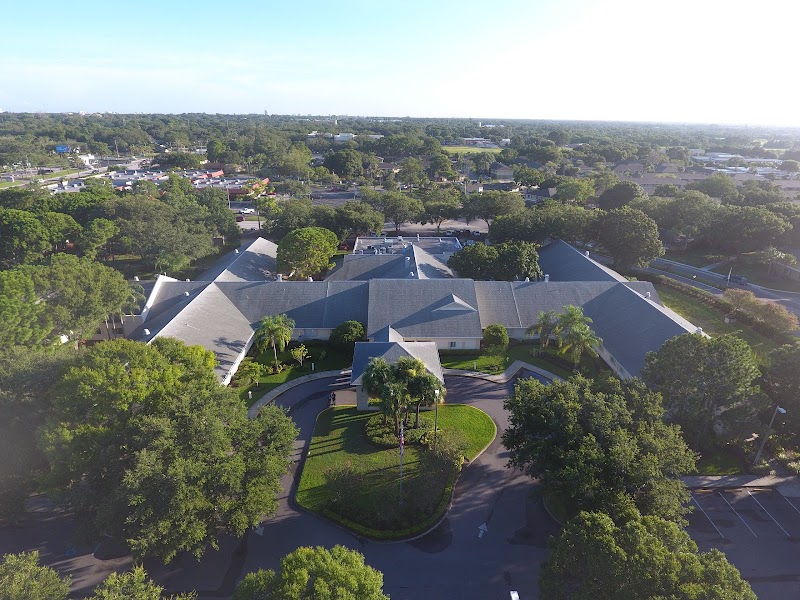
PALM GARDEN OF PINELLAS

200 16TH AVE SE, LARGO, FL 34641 (727) 585-9377
For profit - Individual 120 Beds PALM GARDEN HEALTH AND REHABILITATION Data: November 2025 2 Immediate Jeopardy citations
Trust Grade
9/100
#657 of 690 in FL
Last Inspection: May 2025

Inspected within the last 6 months. Data reflects current conditions.

Overview

Palm Garden of Pinellas has received a Trust Grade of F, indicating significant concerns about its quality of care. Ranking #657 out of 690 facilities in Florida places it in the bottom half, and at #60 out of 64 in Pinellas County, it is one of the least favorable options available. The facility is worsening, with issues increasing from 2 in 2024 to 15 in 2025. Staffing is rated average with a 3/5 star rating, but the turnover rate is concerning at 63%, significantly higher than the state average of 42%. Recent inspections revealed critical issues, including a resident being able to leave the facility unsupervised, which posed a serious safety risk. Additionally, the kitchen did not meet food safety standards, as staff were observed neglecting proper hygiene practices. While there are some strengths, such as good quality measures rated at 4/5, these serious weaknesses may raise concerns for families considering this nursing home for their loved ones.

Trust Score
F
9/100
In Florida
#657/690
Bottom 5%
Safety Record
High Risk
Review needed
Inspections
Getting Worse
2 → 15 violations
Staff Stability
⚠ Watch
63% turnover. Above average. Higher turnover means staff may not know residents' routines.
Penalties
○ Average
$10,039 in fines. Higher than 60% of Florida facilities. Some compliance issues.
Skilled Nurses
○ Average
Each resident gets 37 minutes of Registered Nurse (RN) attention daily — about average for Florida. RNs are the most trained staff who monitor for health changes.
Violations
⚠ Watch
30 deficiencies on record. Higher than average. Multiple issues found across inspections.
★☆☆☆☆
1.0
Overall Rating
★★★☆☆
3.0
Staff Levels
★★★★☆
4.0
Care Quality
★☆☆☆☆
1.0
Inspection Score
Stable
2024: 2 issues
2025: 15 issues

The Good

  • 4-Star Quality Measures · Strong clinical quality outcomes
  • Full Sprinkler Coverage · Fire safety systems throughout facility
  • No fines on record

Facility shows strength in quality measures, fire safety.

The Bad

1-Star Overall Rating

Below Florida average (3.2)

Significant quality concerns identified by CMS

Staff Turnover: 63%

17pts above Florida avg (46%)

Frequent staff changes - ask about care continuity

Federal Fines: $10,039

Below median ($33,413)

Minor penalties assessed

Chain: PALM GARDEN HEALTH AND REHABILITATI

Part of a multi-facility chain

Ask about local staffing decisions and management

Staff turnover is elevated (63%)

15 points above Florida average of 48%

The Ugly 30 deficiencies on record

2 life-threatening
May 2025 15 deficiencies
CONCERN (D)

Potential for Harm - no one hurt, but risky conditions existed

Assessment Accuracy (Tag F0641)

Could have caused harm · This affected 1 resident

**NOTE- TERMS IN BRACKETS HAVE BEEN EDITED TO PROTECT CONFIDENTIALITY** Based on interview and record review the facility failed to ensure the Minimum Data Set (MDS) was accurate related to discharge ...

Read full inspector narrative →
**NOTE- TERMS IN BRACKETS HAVE BEEN EDITED TO PROTECT CONFIDENTIALITY** Based on interview and record review the facility failed to ensure the Minimum Data Set (MDS) was accurate related to discharge reason for one (#106) of 50 sampled residents. Findings included: Resident # 106 was admitted to the facility on [DATE] and discharged on 03/25/2025. Review of the admission Record showed the diagnoses included but not limited to fracture of right femur. Review of the discharge MDS dated [DATE] showed Section A, Identification Information showed discharge status to 04. Short-Term General Hospital. Review of the progress notes dated 3/25/25 showed discharged to assisted living facility (ALF). Transported by ALF, sent with discharge instructions. During an interview on 05/14/2025 at 5:47 p.m. the MDS RN, (Registered Nurse) stated the MDS showed the resident was transferred to an acute hospital. She verified the progress note showed the resident was discharged to an ALF. The MDS RN stated the resident went to an ALF. The MDS RN stated the MDS had an error and needed to be modified. Requested and did not receive a facility policy on MDS accuracy expectations.
CONCERN (D)

Potential for Harm - no one hurt, but risky conditions existed

Deficiency F0645 (Tag F0645)

Could have caused harm · This affected 1 resident

**NOTE- TERMS IN BRACKETS HAVE BEEN EDITED TO PROTECT CONFIDENTIALITY** Based on record review and staff interview, the facility failed to complete and or update the Pre-admission Screening and Reside...

Read full inspector narrative →
**NOTE- TERMS IN BRACKETS HAVE BEEN EDITED TO PROTECT CONFIDENTIALITY** Based on record review and staff interview, the facility failed to complete and or update the Pre-admission Screening and Resident Reviews (PASARRs) for residents with a mental disorder and individuals with intellectual disability following qualifying mental health diagnoses for two (#12 and #6) of six residents reviewed for PASARRs. Findings included: 1. Review of the admission record for Resident #12 showed the resident was admitted to the facility on [DATE] and readmitted on [DATE] with primary diagnosis of dementia dated 9/22/24, and secondary diagnoses to include unspecified psychosis dated 9/21/20 and an adjustment disorder with depressed mood dated 6/17/21. Review of a level I PASARR for Resident #12 dated 5/8/24 revealed the primary diagnosis of Dementia was not checked. The review showed the Level I PASARR was incomplete, and a level II was not submitted for consideration following qualifying diagnoses. 2. A review of Resident #6's admission record revealed an initial admission date of 10/26/21 and a re-admission date of 9/26/23 with diagnoses to include an adjustment disorder with depressed mood. A review of Resident #6's Preadmission Screening and Resident Review (PASARR), dated 8/31/2020, revealed there were no diagnoses marked under section I, mental illness (MI) or suspected MI. On 5/13/25 at 2:13 p.m., an interview was conducted with the Nursing Home Administrator (NHA). She confirmed the level 1 PASARR for Resident #6 was not updated. She provided documentation showing the previous Director of Nursing (DON) attempted to update the level 1 PASARR, but did not submit it in the state vendor system. She said herself, the Director of Nursing (DON) and their corporate registered nurse (RN) are reviewing and updating PASARRs. She said all residents are screened for PASARRs upon admission to the facility. She said for those who are current residents they are reviewed during monthly psychiatry meetings. She said they review medications, new behaviors and/or diagnoses, then the PASARR is updated. The NHA stated the facility did not have a PASARR policy. The NHA stated they follow federal and state vendor guidelines.
CONCERN (D) 📢 Someone Reported This

A family member, employee, or ombudsman was alarmed enough to file a formal complaint

Potential for Harm - no one hurt, but risky conditions existed

ADL Care (Tag F0677)

Could have caused harm · This affected 1 resident

Based on observation, interview and record review, the facility failed to ensure personal hygiene needs were provided to one (#76) of two dependent residents sampled for Activities of Daily Living (AD...

Read full inspector narrative →
Based on observation, interview and record review, the facility failed to ensure personal hygiene needs were provided to one (#76) of two dependent residents sampled for Activities of Daily Living (ADL). Findings included: 1. On 05/12/25 at 02:03 PM Resident #76 was observed sitting in his specialty wheelchair with whiskers (long stiff hairs) growing on his face and food particles on his face and down his shirt. During an interview on 05/12/25 at 02:36 PM Resident #76's Responsible Party (RP) stated frequently finding Resident #76 unshaven and has informed the facility on multiple occasions of resident's preference to be shaved. The RP confirmed Rsident #76 was dependent on staff to complete ADLs. On 05/13/25 at 05:36 PM Resident #76 was observed lying in bed with whiskers growing on his face. Review of Resident #76 clinical record revealed the resident was a long term care resident with diagnosis that included cerebral infarction (stroke) and contracture of right wrist/hand. Review of the Resident #76's most recent quarterly Minimum Data Set (MDS) Assessment, dated 05/02/2025, revealed the resident was coded as a '00' for the Brief Interview for Mental Status, indicating the resident had severe cognitive impairment. The resident was coded as being dependent on staff for personal hygiene needs, which included facial grooming and cleaning. Review of the resident's care plan dated 01/26/2024 revealed a problem of ADL - Activities of Daily Living - Self Care and Mobility Deficit. Resident needs assistance with ADL's and is at risk of developing complications associated with decreased ADL self-performance related to right sided weakness. During an interview on 05/13/25 at 11:42 AM with Staff G, Certified Nursing Assistant (CNA) stated residents are provided facial grooming on shower days only and yes residents can develop whiskers in between showers. Staff G, CNA stat Resident #76 did not have any behaviors and did not have concerns when providing care for the resident. Staff G confirmed Resident #76 had significant whiskers. During an interview on 05/15/25 at 09:41 AM with Staff P, Registered Nurse (RN)/Unit Manager (UM) stated CNAs should provide facial grooming related to shaving everyday. Staff P, RN/UM stated ithe resident had a clean shave preference. Staff P stated the resident should be assisted with cleaning of the face and hands after all meals and as needed throughout the day. A policy related to ADLs for dependent residents was not received.
CONCERN (D)

Potential for Harm - no one hurt, but risky conditions existed

Deficiency F0688 (Tag F0688)

Could have caused harm · This affected 1 resident

**NOTE- TERMS IN BRACKETS HAVE BEEN EDITED TO PROTECT CONFIDENTIALITY** Based on observation, interview, and record review the facility failed to ensure devices for contracture prevention were provide...

Read full inspector narrative →
**NOTE- TERMS IN BRACKETS HAVE BEEN EDITED TO PROTECT CONFIDENTIALITY** Based on observation, interview, and record review the facility failed to ensure devices for contracture prevention were provided as ordered for two (#76 and #82) of two residents sampled. Findings included: 1. Multiple observations were conducted of Resident #76 without splints and braces. On 05/12/25 at 2:03 PM Resident #76 was observed in room seated in a wheelchair without any splints or braces on upper extremities. On 05/13/25 at 5:36 PM, Resident #76 was observed in bed without any splints or braces on upper extremities. On 05/14/25 at 9:15 AM, Resident #76 was observed in the day room seated in a wheelchair without any splints on. On 05/14/25 at 1:09 PM, Resident #76 was observed in his room seated in a wheelchair without any splints on. On 05/14/25 at 3:15 PM, Resident #76 was observed in bed sleeping without any splints on. On 05/14/25 at 5:32 PM, Resident #76 was observed in bed awake, without any splints on. During an interview on 5/12/25 at 2:35 PM Resident #76's family member stated they had not seen Resident #76 with splints on right hand. The family member stated visiting at various times and days. Family member stated mentioning this several times to the facility and they do not do anything. The family memeber said, Recently, I gave them a list of concerns at the care plan meeting related to Resident #76, and worsening of right wrist contracture was one of the concerns. Review of Resident #76's admission record showed Resident #76 was admitted to the facility on [DATE] with a diagnosis that included but not limited to Cerebral Infarction (stroke), hypertension, and other comorbidities. Review of Resident #76's quarterly Minimum Data Set (MDS) dated [DATE] showed the resident had a Brief Interview for Mental Status (BIMS) score of 00 out of 15 which indicated severe cognitive deficits. Section E Behaviors shows resident does not exhibit any behaviors. Section GG Functional Abilities showed the resident was totally dependent on staff for all Activities of Daily Living (ADLs), had impairments to one side, both upper and lower extremities. Section O Special Treatments, Procedures, and Programs showed the resident does not have a splint or brace. Review of Resident #76's Order Summary Report with active physician orders as of 05/15/25 showed: Order start date 6/13/24, Passive range of motion (ROM) to right hand/gentle stretching to right hand and wrist. Apply right [brand name] resting hand splint. Wear as tolerated, may be removed for care and laundering. Review of Resident #76's Occupational Therapy (OT) Discharge summary dated [DATE] showed the following discharge recommendations: Contracture management program as written. Resident #76 made consistent progress throughout treatment plan of wearing splint. Review of Resident #76's care plan initiated on 1/26/24 revealed the resident did not have a care plan in place related to contracture management. The care plan showed an ADL Self-Care and mobility deficit. Resident needs assistance with ADL's and is at risk of developing complications associated with decreased ADL self performance related to right sided weakness Date Initiated: 01/26/2024 Revision on: 01/26/2024 with the following interventions: Daily after a.m. (morning) care, passive ROM to right hand/gentle stretching to right hand and wrist. Apply right [brand name] resting hand splint. Wear as tolerated, may be removed for care and laundering. Date Initiated: 04/05/2024. If Resident #76 is noted to remove splint attempt to reapply Date Initiated: 08/28/2024. Review of the care plan showed Resident #76 did not have a care plan in place related to behaviors or refusing care. Review of Resident #76's nursing progress notes from January 2025 to May 2025 confirmed there were no documented behaviors or refusal of care. During mulptiple interviews related to Resdient #76 conducted on 05/14/25, Staff G, Certified Nursing Assistant (CNA), Staff D, CNA, and Staff H, CNA all confirmed caring for Resident #76 regularly and stated the resident was cooperative and did not wear any splints. They stated the resident did not have behaviors. Staff H, CNA stated if a resident needed splints it would be in the computer or the resident would just request the splint. During an interview on 05/14/25 at 05:47 PM Staff I, Licensed Practical Nurse (LPN) stated being familiar with Resident #76. Staff I, LPN stated the resident did not have behaviors, did not refuse care and stated they were not aware of splint usage. Staff L could not recall seeing the resident with splint on. Staff I, LPN stated if a resident had orders for splint or ROM the nurse is responsible to check the box and the CNAs should complete this task During an interview on 05/15/25 at 09:10 AM Staff E, CNA stated Resident #76 does not wear a splint. During staff interviews on 05/15/25 09:23 AM Staff F, LPN stated they were not aware of Resident #76 having a splint order. Staff F, LPN stated if resident had an order the CNAs carry this order out and the nurse checks the box. 2. During an interview and observation on 05/12/25 at 2:03 PM, Resident #82 was lying in bed no splint observed on hand stated no one has put on my splint since being discharged from OT, it sits in a box on the dresser. During an interview on 05/13/25 at 9:22 AM Resident #82 stated the splint was not offered or applied last night. Review of Resident #82's admission record showed Resident #82 was admitted to the facility on [DATE] with diagnoses to include atrial fibrillation and contracture of the right hand. Review of Resident #82's admission Minimum Data Set (MDS) dated [DATE] indicated the resident had a BIMS score of 15 out of 15 which indicated no cognitive deficits. Review of Resident #82's Order Summary Report with active physician orders as of 05/15/25 showed: Order start date 4/24/2025, Apply right hand splint at hours of sleep. Remove in AM for ADL's as tolerated. Check skin for integrity with application and removal Review of Resident #82's care plan showed an ADL Self-Care and mobility deficit - Resdient needs assistance with ADLs and is at risk of developing complications associated with decreased ADL self-performance related to disease process/condition, recent surgery, Weakness Date Initiated: 6/27/2024 with the following interventions, apply right hand splint at hours of sleep. Remove in a.m. Skin checks when applying and removing. To be worn as tolerated. Resident is able to remove independently. Date initiated 4/25/2025 Review of Resident #82's Splinting and Wheelchair Positioning Program dated 4/14/2025 revealed: the therapist's name who completed form, trained nursing and wrote: precautions - Check skin before and after application and notify therapy with any issues. Under the section Instructions and Adaptive Equipment: 1. Place hand splint into hand. 2. Wrap wrist strap and secure Velcro. 3. Gently straighten the ring and little finger within patients' tolerance. 4. Strap finger to Velcro. Note: Patient is able to remove himself and its okay if he does. To be worn as tolerated. Remove for care. A picture of the device on the resident is shown. Physicians Order to Say: Apply right hand splint at hours sleep. Remove in am for ADLs as tolerated. Provide skin checks. During an interview on 05/15/25 at 09413 AM Staff P, Registered Nurse (RN)/Unit Manager (UM) stated the CNAs put the splints on and they have instructions in the room. The Treatment Administration Record (TAR) has the order. The nurse check mark would indicate the nurse completed the task. If the resident refused the splint or ROM, then the nurse would need to indicate that in the TAR and document. Staff P, RN stated Resident #76 and Resident #82 both had hand splints. Staff P stated Resident #82 needed assistance with placing the hand splint on and does not know why it was not being put on the resident. During an interview on 05/15/25 at 11:53 AM the Director of Nursing (DON) stated the expectation is for the CNAs to place the resident splints on. The DON stated the nurse is responsible for completing the ROM. Review of an undated facility policy titled SPLINT and BRACE Program showed: Splints are to be worn according to the schedule outlined in the referral from therapy that then placed in tasks and the [NAME]. Therapy will train the CNAs and nursing team members how to put the device on and off with the specifics on the splinting program form. Each guest or resident with a splint will have a splint box or designated splint storage container when it is not in use. It should be labeled with the resident/guest's name and located in their room. The splinting program form will be stored in the top of the splint box for reference and any other place deemed appropriate by the center IDT (Interdisciplinary Team). Cleaning of the splint should be done according to manufacturer's guidelines. Always examine the resident/guest for red areas, pain, change in skin integrity, rash, ill fit, etc. Should something be observed when applying or removing the splint, notify the nurse and therapy immediately and do not put it on until directed to do so. Review of the facility's policy titled Restorative Functional Maintenance Nursing Program with a revision date of May, 2022 showed: The therapy department plays an important role in the Nursing Restorative/Functional Maintenance programming by providing resident screening for needs and assisting with the development of the restorative plan as needed. Follow up review of progress may also be provided by the therapist at regular intervals as needed. Should the resident experience lack of anticipated progress toward restorative goals or have a significant change in functional ability, the Restorative Nurse may refer the resident back to the therapist. Nursing restorative/functional programming may include, but is not limited to: Active and/or passive Range of Motion, Splint or brace assistance.
CONCERN (D)

Potential for Harm - no one hurt, but risky conditions existed

Deficiency F0698 (Tag F0698)

Could have caused harm · This affected 1 resident

**NOTE- TERMS IN BRACKETS HAVE BEEN EDITED TO PROTECT CONFIDENTIALITY** Based on observation, interview and record review the facility failed to ensure medications were administered prior to dialysis ...

Read full inspector narrative →
**NOTE- TERMS IN BRACKETS HAVE BEEN EDITED TO PROTECT CONFIDENTIALITY** Based on observation, interview and record review the facility failed to ensure medications were administered prior to dialysis appointments for one (#93) of one sampled resident. Findings included: On 05/14/2025 at 8:41 a.m. Resident #93 was observed sitting at her bedside. She was not eating her breakfast. She stated, not good to greetings, turned her back and would not engage in conversation. Resident #93 was admitted on [DATE] and readmitted on [DATE]. Review of the admission Record showed diagnoses included but not limited to pneumonia, End Stage Renal Disease (ESRD), gastrostomy, adult failure to thrive, diabetes, dependent on renal dialysis, muscle weakness, difficulty in walking, anemia, Cerebrovascular Accident (CVA), hypertension, cardiac pacemaker, depression, atrial fibrillation, generalized anxiety disorder. Review of the admission, Minimum Data Set (MDS) dated [DATE] showed Brief Interview for Mental Status (BIMS) score of 15 or cognitively intact. Section GG, Functional Abilities showed resident required partial to moderate assistance with toileting and showering. Section O, Special Treatments, Procedures, and Programs showed resident was on dialysis. Review of current physician orders for Resident #93 showed orders for dialysis on Monday, Wednesday and Friday. Amlodipine besylate 5 mg give 2 tablets in the morning for hypertension [HTN] ASA [Aspirin] 81 mg [milligrams] in the morning for coronary artery disease [CAD] Candesartan Cilexetil 32 MG [milligrams] Give 1 tablet by mouth in the morning for HTN Labetalol HCl 100 MG Give 3 tablet by mouth 3 times a day for HTN Review of the Medication Administration Record (MAR) for April 2025 showed: Amlodipine besylate 5 mg give 2 tablets in the morning for HTN was not given on 4/18, 4/21, 4/23, and 4/28/25 in the a.m. (morning), due to absent from center. ASA 81 mg in the morning for CAD was not given on 4/18, 4/21, 4/23, and 4/28/25, in the a.m., due to absent from center. Candesartan Cilexetil 32 MG Give 1 tablet by mouth in the morning for HTN was not given on 4/18, 4/21, 4/23, and 4/28/25 in the a.m. due to absent from center. Labetalol HCl 100 MG Give 3 tablet by mouth 3 times a day for HTN, was not given 4/18, 4/21, 4/23, 4/28, and 4/30/25 in the afternoon, due to absent from center. Augmentin 500-125 mg twice a day for pneumonia for 3 days as of 4/17/25, was not given on 4/19/25 in the a.m., due to absent from center. Ciprofloxacin HCL 500 mg twice a day for pneumonia for three days as of 04/16/2025, was not given on 4/19/25 in the a.m. due to absent from center. Review of the Medication Administration Record (MAR) for May 2025 showed: Amlodipine besylate 5 mg give 2 tablets in the morning for HTN was not given on 05/02, 05/05, 05/07, and 05/12/25 in the a.m. due to absent from center. ASA 81 mg in the morning for CAD was not given on 05/02, 05/05, 05/07, and 05/12/25, in the a.m., due to absent from center. Candesartan Cilexetil 32 MG Give 1 tablet by mouth in the morning for HTN was not given on 05/02, 05/05, 05/07, and 05/12/25, in the a.m. due to absent from center. Labetalol HCl 100 MG Give 3 tablet by mouth 3 times a day for HTN, was not given 05/02, 05/05, 05/07, 05/09, and 05/12/25 in the afternoon, due to absent from center. Review of the progress notes for resident #93 revealed On 05/14/25 at 9:47 a.m. (during survey), this writer spoke with the dialysis center which communicated it was recommended for blood pressure medication to be administer 3-4 hours before dialysis. Review of the care plans showed the resident had potential for complications related to dialysis for ESRD and required dialysis as of 04/16/2025. Interventions included but not limited to administer and monitor effectiveness of medications as ordered as of 04/16/2025; Communicate with dialysis center regarding medication, diet, and lab results as of 04/16/2025. Coordinate resident's care in collaboration with dialysis center as of 04/16/2025. Resident was antiplatelet therapy related to diagnosis of CAD as of 04/16/2025. Interventions included but not limited to administer medication as ordered as of 04/16/2025. During an interview on 05/14/2025 at 3:54 p.m. Staff A, Registered Nurse (RN) stated Resident #93 went to dialysis in the a.m., around 10 a.m. Staff A stated that if a resident misses their medication, they are to inform the medical provider for missed medications. During an interview on 05/14/2025 at 4:08 p.m. Staff B, Licensed Practical Nurse Unit Manager (LPN, UM) stated Resident #93 goes out to dialysis around 9:40 a.m. Staff B stated the nurse should let the doctor know right away about any medications not taken. Staff B stated they discussed today about changing the time of the medications for Resident #93. Staff B stated the nurse was talking to the dialysis center and the doctor about her medications and moving the medication times. Staff B, LPN, UM verified Resident #93 had not been getting her morning medications prior to dialysis. Staff B stated there was no reason why Resident #93 was not getting her medications before she left because she does not leave until 9:40 a.m. Staff B stated the nurses should have discussed with the doctor before today about the resident not getting her morning medication. During an interview on 05/15/2025 at 11:20 a.m. the Director of Nursing (DON) stated residents were to receive the medications as ordered by the doctor. The DON stated the nurse should be calling the doctor about not giving medications, for any reason. The DON stated the nurse should find out what the doctor would like the nurse to do. The DON verified there was no documentation regarding the medications not given for Resident #93. The DON reviewed the progress notes for Resident #93 and found no documentation regarding notifying the doctor of missing medications. The DON verified there was only documentation showing she was on a LOA (Leave of Absence). The DON stated she would expect to see the doctor notified. The DON stated there was a window for medication administration times in the morning. The DON stated she was not sure why Resident #93 did not get the medications before she left for dialysis. The DON stated it would depend on what the doctor said if the nurses were to give the medications before dialysis or not. The DON stated that the issue of medications not administered before dialysis had not come up before. Review of the facility's policy, Medication Administration, dated 07/2023 showed to administer the following according to the principles of medication administration, including the right medication, to the right guest / resident at the right time, and in the right dose and route. Procedure 1. Verify physician's orders for medications to be administered. 10. Read the Medication Administration Record (MAR) for the ordered medication, dose, route, and time. Verify / clarify orders as needed prior to administration 13. Verify the following, again, by comparing medication to MAR prior to administering: Correct guest / resident, correct medication, expiration date, dose and dosage form, route and time. Review of the facility's policy, Change in a Resident's Condition or Status, dated October 2014 showed the facility shall promptly notify the resident, his or her Attending Physician, and representative of changes in the resident's medical/mental condition and/or status. Procedure: 1. The Nurse Supervisor / Charge Nurse will notify the resident's Attending Physician or On-Call Physician when there has been among others, a reaction to medication and / or medication error, a need to alter the resident's medical treatment significantly and refusal of treatment, medications or meals (i.e. two (2) or more consecutive times).
CONCERN (D)

Potential for Harm - no one hurt, but risky conditions existed

Unnecessary Medications (Tag F0759)

Could have caused harm · This affected 1 resident

Based on observations, record reviews, and interviews, the facility failed to ensure the medication error rate was less than 5%. Thirty-three medication opportunities were observed, and two errors wer...

Read full inspector narrative →
Based on observations, record reviews, and interviews, the facility failed to ensure the medication error rate was less than 5%. Thirty-three medication opportunities were observed, and two errors were identified for Resident #1 resulting in an error rate of 6.06% Findings included: On 5/14/25 at 8:23 A.M. Staff M, Registered Nurse (RN) was observed administering medication to Resident #1. Prior to the medication administration, Staff M, RN obtained the following vital signs: pulse 95 and blood pressure 115/83. Staff M, RN administered the following medications: -Vitamin D 1000 Units -Tizanidine 2mg, 3 tablets -Oxycodone 10 mg -Methimazole 5 mg -Midodrine HCl 5 mg -Aspirin low dose 81 mg -Omeprazole 20 mg, 2 capsules -Quetiapine 400 mg -Duloxetine HCl 60 mg, 2 capsules -Bupropion SR 100 mg -Pregabalin 150 mg Following the medication administration observation, a review of the physician's orders for Resident #1 revealed Aspirin 325 MG Give 1 tablet by mouth in the morning for anticoagulant and Midodrine HCl 5 mg Give 1 tablet by mouth three times a day for hypotension hold for systolic blood pressure greater than 110. During an interview on 5/14/25 at 12:50 PM, Staff M, RN said, after administering Aspirin 81mg to Resident #1 she realized the wrong dose was given and the Midodrine 5 MG should not have been administered. During an interview on 5/14/25 at 12:50 PM with the Director of Nursing (DON) said nurses are expected to administer medications as ordered. Review of the facility's policy titled, General Dose Preparation and Medication, revised on 11/15/24 showed the following: Applicability procedures relating to general dose preparation and medication administration. Procedure: .Only prepare medications for one resident at a time, using a 3-way-check (i.e., comparing the medication to the MAR [Medication Administration Record] and to the prescription label) .Prior to administration of medication, facility staff should take all measures required by facility policy and applicable law, including, but not limited to the following: Verify each time a medication is administered that it is the correct medication, at the correct dose, at the correct route, at the correct rate, at the correct time, for the correct resident If necessary, obtain vital signs During medication administration, facility staff should take all measures required by facility policy and applicable law, including, but not limited to the following: . Facility staff should verify that the medication name and dose are correct when compared to the medication order on the medication administration record.
CONCERN (E)

Potential for Harm - no one hurt, but risky conditions existed

Deficiency F0565 (Tag F0565)

Could have caused harm · This affected multiple residents

Based on interview and record review, the facility failed to file and act upon grievances voiced during resident council meetings for 6 meetings on (4/30/25, 3/26/25, 2/26/25, 1/29/25, 12/31/24 and 11...

Read full inspector narrative →
Based on interview and record review, the facility failed to file and act upon grievances voiced during resident council meetings for 6 meetings on (4/30/25, 3/26/25, 2/26/25, 1/29/25, 12/31/24 and 11/29/24) of six Resident Council Meetings Minutes reviewed, with a potential to affect a census of 107. Findings included: During a Resident Council meeting conducted on 05/13/25 at 02:02 PM with seven participants, who regularly attend the Resident Council Meetings. The group confirmed on-going complaints related to the following: - Call light response time during mealtimes. Certified Nursing Assistants (CNAs) are removed to assist in the dining room. We have to wait for them to return to have our light answered. This is embarrassing at times, due to incontinent care needed. The CNAs are punished if they are late, we can hear them being paged to the dining room. One of the residents stated one time a CNA was in the middle of providing care and someone came looking for the CNA and told the CNA that she was in trouble for not being in the dining room. The resident said, You would think while providing care, I would take priority. - Missing laundry - they tell us we have to complete a grievance ourselves. This issue has been going on for months. - The facility changes the rules without informing us or asking us how the rule change affects us. The group shared about not being able to go outside on a regular basis. - Food likes/dislikes are not resolved. - Not being offered snacks after dinner. The residents stated they used to be offered but are not any longer. Review of the Resident Council meeting minutes revealed: - On 4/30/25 at 2:00 PM laundry is not returned timely or missing; maintenance takes a long time to fulfill requests; dietary likes/dislikes; and not being able to go outside. No documentation of follow-up was found. - On 3/26/25 at 2:00 PM laundry is not returned timely or missing; and dietary likes/dislikes. No documentation of follow-up was found. - On 2/26/25 at 2:00 PM laundry is not being returned timely or missing; dietary likes/dislikes; and residents would like to go outside if the weather permits. No documentation of follow-up was found. - On 1/29/25 at 2:00 PM laundry is not being returned timely or missing; and dietary likes/dislikes. No documentation of follow-up was found. - On 12/31/24 at 2:00 PM staffing during mealtimes; laundry not being returned timely or missing; and dietary likes/dislikes. No documentation of follow-up was found. - On 11/29/24 at 3:30 PM staffing during mealtimes; laundry not being returned timely or missing; maintenance taking a long time to fulfill requests; and dietary likes/dislikes. No documentation of follow-up was found. Review of the Grievance Log for May 2024 to May 2025 did not reveal any concerns from Resident Council. During an interview on 05/13/25 at 4:39 PM the Activity Director (AD) stated the resident council minutes are completed by the Resident Council President (RCP). The RCP invites me to attend their meetings and I do. If the RCP has concern then I take the concern to the Social Service or the Nursing Home Administrator (NHA). I do not complete a grievance form on behalf of the resident council group, I was told they need to complete individually. The RCP completes the minutes and brings them to me a few days after the meeting. I read the minutes and if there is a concern written I go back to the RCP and ask if a grievance form needed to be submitted. The AD stated, I do notice there are some consistent concerns from the group,such as staffing, laundry, and food. During a follow up interview on 05/13/25 at 05:26 PM the RCP stated staffing concerns are not discussed in minutes as we don't feel this would be necessary as no action is ever taken and doesn't do any good. The RCP stated the facility always said they staff over the minimum staffing requirements. During an interview on 05/14/25 at 03:15 PM the Social Service Director (SSD) said there had been no resident council grievances in the last 3 months. The SSD stated she didn't look back any further. During an interview on 05/15/25 at 4:42 PM the NHA stated not being aware the resident council concerns. The NHA had not asked to be in attendance to the resident council meetings in a long time, and has not received a request from the RCP to attend. Review of the facility's policy titled Life Enrichment Manual Services - Resident Council Meeting, dated 11/22 revealed: Guests/Residents will be provided the opportunity to meet together at least monthly in an organized group setting to discuss current issues/topics of their choice. These topics may include events, activities, resident rights, care, and service and concerns. In addition, a review of old business, problem resolution, and development of action plans may be discussed. The Life Enrichment Department staff will serve as facilitators for the meetings and will document minutes. The Resident Council will elect officers who will serve a term of one year. Procedure - 4. Record minutes and provide a copy to the Administrator for review. Record minutes on the Resident Council/ Minutes. Utilize the Resident Grievance Form for any issues requiring a follow up response. Ensure all concerns/grievances have resolution prior to the next meeting and share resolution with the Resident Council. 5. Distribute Resident Grievance form to the appropriate department. 7. Review Resident Council information at the QAPI meeting monthly for opportunities for improvement and to address any concerns/grievances.
CONCERN (E)

Potential for Harm - no one hurt, but risky conditions existed

Deficiency F0582 (Tag F0582)

Could have caused harm · This affected multiple residents

Based on record review and interviews, the facility failed to ensure residents reviewed for Beneficiary Protection Notification received the required Skilled Nursing Facility Advanced Beneficiary Noti...

Read full inspector narrative →
Based on record review and interviews, the facility failed to ensure residents reviewed for Beneficiary Protection Notification received the required Skilled Nursing Facility Advanced Beneficiary Notice (SNF-ABN) form prior to the end of Medicare part A services for two (#64 and #159) of three residents reviewed. Findings Included: Review of record revealed Resident #64 had Medicare A days remaining in the benefit period. The facility informed Resident #64 of Medicare part A services would be terminated on 4/24/25. Resident #64 was choosing to remain in the facility. The facility did not complete form SNF-ABN as required. Review of record revealed Resident #159 had Medicare part A days remaining in the benefit period. The facility informed Resident #159 Medicare part A services would be terminated on 5/6/25. Resident #159 was choosing to remain in the facility. The facility did not complete form SNF-ABN as required. During an interview on 05/15/25 at 02:42 PM the Social Service Director (SSD) stated being familiar with the Notice of Medicare Non-coverage (NOMNC) and the SNF-ABN. The SSD stated when the facility Interdisciplinary Team (IDT) determines a resident has met the desired goals and the resident is in need of continuing to remain in the facility, a NOMNC is issued by the social service department. Any other forms or conversations are issued by the business office. During an interview on 05/15/25 at 02:48 PM the Assistant Business Office Manager (ABOM) stated not being responsible for any forms related to Medicare. During an interview on 05/15/25 at 02:56 PM the Business Office Manager (BOM) stated not being responsible for any of the Medicare forms, and stated Social Services completed them. During an interview on 05/15/25 at 04:35 PM the Nursing Home Administrator (NHA) stated not being responsible for any of the Medicare forms and that social services or the business office completes them. Review of the facility's policy and procedure titled Business Office Manual MDS (Minimum Data Set)/Medicare Points and Guidelines - Denial notices Part A - Original Fee for Service Medicare & Medicare C Managed Care Plans Section 1000 with a revision date of Feb. 2, 2018 revealed: Policy: It is the policy of this Center to comply with Medicare guidelines upon admission and throughout the resident's stay as defined by the Centers for Medicare and Medicaid Services and our Medicare Administrative Contractor. The denial letters serve as the primary communication tool to communicate eligibility, reduction of services or discharge of Medicare covered services. Beneficiaries will be issued the proper notice(s), as mandated. The notices provides information to the beneficiary so that she/he can decide whether or not to get the care that may not be paid for by Medicare and assume financial responsibility. Procedures: 2. Part A Denial Letters issued at the end of All Skilled Services - There are two notices that are required to be issued when skilled services are ending and benefits are not exhausted for residents with traditional Medicare (also known as original fee for service Medicare). The 2 forms are the SNFABN (Form CMS 10055 (2018)) Skilled Nursing Facility Advance Beneficiary Notice and the Notice of Medicare Provider Non-Coverage Generic Notice (Form CMS 10123). The form CMS-10055 (2018) SNFABN applies to beneficiaries covered by original fee for service Medicare only.Three (3) to Five (5) days prior to the discharge of ALL skilled services for a beneficiary enrolled in Traditional Medicare, the SNFABN (Form CMS-10055 (2018)) must be discussed at the A.M. meeting and presented to Social Services Director or designee for signature & completion. The MDS Coordinator will present the partially completed SNFABN (Form CMS-10055 (2018)) to Social Services. The Social Service Director or designee will deliver and explain the notice to the patient or authorized representative, and obtain the patient or authorized representative's signature. This form is delivered at the same time the NOMNC (Form CMS-10123) is delivered. The original SNFABN (Form CMS-10055 (2018)) and the original Notice of Medicare Provider Non-Coverage (Form CMS 10123) must be filed in the business office financial folder. The Social Service Director, or designee, will keep a copy in a binder in the Social Service Office. Entries in the blanks may be typed or legibly hand-written and should be large enough for easy reading (approximately 12 point font).
CONCERN (E)

Potential for Harm - no one hurt, but risky conditions existed

Grievances (Tag F0585)

Could have caused harm · This affected multiple residents

**NOTE- TERMS IN BRACKETS HAVE BEEN EDITED TO PROTECT CONFIDENTIALITY** 2. During interviews on 5/12/25 at 1:46 PM and 05/13/25 at 09:46 AM Resident #92 stated speaking with multiple staff members, in...

Read full inspector narrative →
**NOTE- TERMS IN BRACKETS HAVE BEEN EDITED TO PROTECT CONFIDENTIALITY** 2. During interviews on 5/12/25 at 1:46 PM and 05/13/25 at 09:46 AM Resident #92 stated speaking with multiple staff members, including the dietary manager regarding his preferences not being followed. Resident #92 stated nothing changes and no follow up occurs, they don't listen. Review of the clinical record for Resident #92 shows resident was admitted on [DATE]. The resident's most recent quarterly Minimum Data Set, dated [DATE] shows resident is cognitively intact. A review of the Grievance Logs from February to May 2025, revealed a grievance for Resident #92 related to dietary/culinary preferences dated 2/13/25. The grievance reveals Resident #92 unhappy with dietary/culinary preferences, receiving cold food all meals, burnt toast, what he receives doesn't match what he requests. Has asked not to receive these items several times. The response on the form revealed: updated preferences - ticket now match dislikes, new toaster needed. In-serviced staff on following tickets. Resolution/Final Disposition: Toaster replaced on 3/20/25. The form shows the grievance was confirmed and grievant was satisfied with the resolution. The Resident signed the form on 2/21/25, the Nursing Home Administrator (NHA) signed on 2/24/25 and the grievance official signature on 2/21/25. No other follow up or grievances were found related to Resident #92's concerns. Review of the Grievance Log for May 2024 to May 2025 did not reveal any concerns from Resident Council. During an interview on 05/13/25 at 4:39 PM the Activity Director (AD) stated, I do notice there are some consistent concerns from the group, like staffing, laundry, and food. Review of the facility's policy titled Grievance Policy and Procedure with a revision date of March 2024 revealed: Purpose: F585 - The center recognizes the guest/resident/legal representative/family has the right to voice grievances to the center without discrimination and without fear of reprisal. The center team members are responsible for making prompt efforts to resolve a grievance and to keep the guest/resident appropriately updated on the progress being made toward resolution. Definitions: Prompt effort to resolve includes the center's acknowledgment of a grievance and to actively work toward a documented resolution of that grievance. Policy: The Grievance Official and Social Services personnel will serve as guest/resident liaisons/advocates in the concern grievance procedure. 1. The center will support the right of the guests/residents to file a grievance anonymously. 2. The center will make information available on how to file a grievance to the guest/resident/legal representative/family. This can be done by providing the information directly to the guest/resident and/or by posting the procedure in prominent locations throughout the center. 3. The name and contact information (business address and email address and business phone number) for the Grievance Official will be posted in prominent locations throughout the center. The Grievance Official is the Social Service Director/designee of the center. 4. The guest/resident has the right to file a grievance orally or in written format. 5. The center will make a prompt effort to resolve any grievance received. Grievances will be reviewed, investigated, resolved and documented in five days. 6. The center team members will immediately report all alleged violations involving neglect, abuse, injury of unknown origin, and/or misappropriation of guest/resident property following the center abuse prohibition policy. 7. The center will review with the guest/resident/legal representative/family the final resolution of the grievance. 8. The guest/resident/legal representative/family have the right to obtain a written decision regarding the grievance. 9. The center will maintain the grievance and any supportive documentation for a period of not less than 3 years. Procedure: The Grievance Official and Social Services personnel will serve as resident liaisons/advocates in the concern grievance procedure. 1. A grievance is defined as any formal expression (verbally or in writing) of interest regarding the well-being of a guest/resident. 2. Upon admission, the guest/resident/legal representative/ and family are informed of the right to voice grievances free from discrimination and/or reprisal. a. This information will include the mechanism for voicing concerns/grievances and will be provided with a copy of the center's grievance policy, upon request. 3. A description of the grievance procedure for voicing concerns/grievances, either individually or anonymously, will be prominently posted throughout the center informing of the right to file a grievance either orally (spoken) or in writing. 4. The center will designate a Grievance Official with whom the grievance can be filed and will post his or her name, business address (mailing and email) and business phone number. Any team member can write, or assist in the writing of a grievance. 5. The Grievance Official is the Social Service Director/designee. a. The Grievance Official is responsible for the following items: l . Overseeing the grievance process to include receiving and tracking grievances through to their conclusions to include the investigation, documentation of the summary and the follow up. 2. Leading any necessary investigations (including investigating responsibility for lost or damaged personal property to include dentures and eyeglasses). 3. Maintaining the confidentiality of all information associated with the grievance. 4. Coordinate with the center's Director of Quality Assurance, if the grievance meets criteria as an immediate reporting of alleged violation(s) involving abuse, neglect and/or misappropriation of guest/resident property. 5. The Grievance Official will close the grievance and reflect the conclusion/outcome of the grievance investigation or abuse investigation. 6. The Grievance Official will provide the guest/resident/legal representative with a written decision about the filed grievance upon request. 7. The grievances will be brought to the morning stand up meeting daily. They will be reviewed out loud with all the leadership team members. The grievance forms will come to the stand-up meeting daily until resolved. 8. The Grievance Official/designee will bring the Grievance Log monthly to the Quality Assurance and Performance Improvement (QAPI) meeting. 6. The center will make a prompt effort to resolve any grievance received. Grievances will be reviewed, investigated, documented and resolved within 5 business days. Every effort will be made to bring a resolution to the grievance. 7. The contact information of independent entities with whom a grievance may be filed such as: State Survey Agency, State Long-[NAME] Care Ombudsman program, or the Abuse hotline, will be posted in a prominent area of the center. 8. A designated area within the center for grievance collection will be identified so that each guest/resident/legal representative/family member may voice a concern anonymously or directly to the Grievance Official. a. Grievance forms will be available in the Social Service Department and may be returned to that office. They will also be available in other prominent areas of the center. (Social Service team members will maintain the stock in these areas). b. A grievance may be registered by telephone, mail, a visit to a team member's office, visit or direct outreach to any team members. Guests/Residents who are unable to prepare a written grievance without assistance, may elect to receive support from any center team members or third party chosen by the guest/resident. 9. Below is a list of items that the investigating team member will include on the grievance form and the Grievance Official will be responsible to assure is completed when a written decision is requested. A written decision will only be provided by the Grievance Official/designee. a.The date the grievance was received. b. The guest/resident name that is involved in the grievance. c. A summary of the guest/resident/legal representative/family grievance. (What is the grievance)? d. The steps that were taken to investigate the grievance. e. A summary of the pertinent findings or conclusions of the investigation regarding the grievance. f.A statement as to whether the grievance was confirmed or not confirmed. g. Documentation of any corrective action taken or to be taken by the center. 10. Upon receipt of the grievance, documentation on the grievance form will be initiated by the Grievance Official/designee or whichever professional team member receives the concern. Instructions for completion are outlined on the Addendum. a. The Grievance Official/designee will document the date the grievance is received on the Grievance Log and copies are made and distributed to the Executive Director and the referenced department representative. b. The Department Manager will initiate an investigation and complete the applicable portion of the grievance form to record the investigative process and actions taken. C. After the Department Manager completes the grievance form the signature and date areas must be completed. d. The grievance reports will be reviewed by the Executive Director, the Grievance Official/designee to assure that the guest/resident's interests are addressed and the final disposition is identified, including the guest/resident/legal representative/family are satisfied with the outcome. e. The Executive Director signs the form in the designated area after the Final Deposition is recorded. All grievances forms will be reviewed and maintained by the Executive Director/designee. 11. The signature of the person initiating the grievance is not required. A guest/resident will not be subject to retaliation by any center team members because of the grievance or a recommendation for change. 12. The person filing the grievance has the right to expect the center will make prompt efforts to resolve grievances and, upon request, have the right to obtain a written decision regarding the grievance. a. Upon request for a written decision regarding the grievance, the Grievance Official/ designee will complete the Grievance Decision Notification of Guest/Resident/Legal Representative/Family Grievance/Complaint/Concem and provide a copy to the person initiating the grievance. 13. In the event that the grievance is not resolved to the satisfaction of all parties involved, the following options may be employed after an IDT/IPOC meeting is held: a. Contact Center Executive Director, Nursing and Social Service Directors meet and discuss possible further resolutions. b. Contact Regional Director and/or Consultants. c.Contact Ombudsman. d. Contact area AHCA Agency Office. 14. The Social Service Director/designee will record each Concern/Grievance Report on the Concern/Grievance Log for each month and submit it to the Executive Director. a. The Concern/Grievance reports will be kept together with the monthly log. Group Grievances: 15. Group grievances generated in Resident Counsel meetings, or any other venue will be documented on the grievance form by the guests/residents or their designee. The grievance will be provided to the Grievance Official and the grievance process described in this policy will be initiated. The Grievance Official will assist Life Enrichment in resolving group grievances that resulted from the resident counsel. Based on interviews and record review, the facility failed to follow its policy related to documentation and resolution of grievances for two residents (#35 and #92) of 51 sampled residents. Findings included: 1. On 5/12/25 at 10:57 a.m., an interview was conducted with Resident #35. She said she has a physician ordered diet of no salt added (NAS). Resident #35 said she had concerns with the food being, Salty, specifically the meat. She stated, They are cooking with salt again. She said she was disappointed with the mother's day lunch as it was not appealing, appetizing, and not recognizable. She said she received food in a Styrofoam box yesterday morning. She stated it is, Every weekend. Resident #35 said the meal tray consistently doesn't come with condiments. She said when she talked to the kitchen manager about her concerns he says they are hiring. She feels like her grievances related to food are not resolved. A review of Resident #35's admission record revealed an original admission date of 12/11/20 and a re-admission date of 12/20/22 with diagnoses to include heart failure, unspecified, pulmonary hypertension, unspecified, morbid (severe) obesity due to excess calories, essential (primary) hypertension, and chronic kidney disease, stage 2 (mild). A review of Resident #35's quarterly Minimum Data Set (MDS), Section C - Cognitive Patterns, dated 3/28/25, revealed a Brief Interview for Mental Status (BIMS) of 15, indicating cognitively intact. A review of the facility's food committee minutes, dated 4/30/25, revealed the following, . Discussed the past 4 weeks of new menu -- likes & [and] dislikes. Soups need more flavor, more ingredients -- . Special food requests can be discussed with [Kitchen Manager] or the in-house dietician (here Weds [Wednesdays] & Thurs [Thursdays] in AM [morning]). Beef costs have gone up - New staff has been hired for kitchen. - 2 new chefs - 1 for AM & 1 for PM [afternoon]. - Gravies are salty -- Please send brown sugar with oatmeal . A review of the grievances revealed a documented grievance for Resident #35 dated 1/30/25 related to food and nutrition. The grievance revealed the resident's meal choices were not honored. The grievance showed the resident requested a grilled cheese sandwich but instead was given an egg salad sandwich that was two days old. Under summary of findings or conclusions, the grievance form showed Ticket had no specification on whether to give sub (substiotute) for chicken tenders. The greivance was marked confirmed and satisfied. No other grievances were documented for Resident #35 related to food concerns. Further review of grievances from 5/2024 to 5/2025 revealed no grievances documented from resident council or the facility's food committee. On 5/14/25 at 12:55 p.m., an interview was conducted with the Certified Dietary Manager (CDM). He said the facility's food committee takes place once a month. He said they discuss different topics including food concerns. The CDM said he tries to make it about the group, but if there are individual concerns he meets with them. He said most of the concerns presented at the food committee meetings are individualized issues. He said he speaks to Resident #35 frequently, especially at activities, where they discuss food concerns and, Dig into those issues. He said they have discussed she doesn't like some of the food and has provided feedback that the meat was tough or bland. He said he's informed Resident #35 that the menus are standardized based on the food program and dietitian's input. He said for residents on a NAS diet the kitchen uses salt free seasoning. The CDM said he follows up with Resident #35 about her food related concerns and encourages her to document a grievance on them. He said the common complaint from residents has been about condiments. The CDM said he has observed the kitchen staff on the tray line and pays attention to them putting condiments on the meal tray. He said he attended care plan meetings, and addresses likes/dislikes, as well as, discussing issues with food. He said he conducts customer service rounds that occur a few times a week which includes a set of residents he talks to. The CDM said during morning meetings food concerns are also discussed. He said food related grievances are brought to the Social Services Director (SSD) and then given to him. The CDM said in a day or two, he tries to return the resolved grievance back to the SSD. On 5/14/25 at 2:45 p.m., an interview was conducted with the SSD and the Social Services (SS) Assistant to review Resident #35's food related grievance. The SS assistant said the Business Manager had Resident #35 in their room rounds. She said the grievance was received in January 2025 at dinner. She said she didn't receive her documented preferences/alternate that day and instead receive a sandwich she didn't want. She said Resident #35 also didn't receive condiments on her tray. The SS assistant said the Business Manager asked Resident #35 how her grievance could be resolved, and her response was, I'd like there to be major improvement in food choices and quality. The SSD said grievances are reviewed in morning meetings and would have been given to the CDM. The SSD said steps were taken to update Resident #35's meal ticket to reflect her preferences and likes/dislikes. The SSD said the CDM spoke with the kitchen staff about condiments on the trays and ticket accuracy. The SSD said the grievance was resolved on 2/3/25, and Resident #35 signed on 2/4/25. The SSD said if there are additional grievances from Resident #35 they would, Open up a new grievance and follow the process all over again. The SSD and SS Assistant said they haven't received any more food concerns from Resident #35. The SSD said they have ambassador rounds, where all department managers have assigned residents.
CONCERN (E)

Potential for Harm - no one hurt, but risky conditions existed

Deficiency F0657 (Tag F0657)

Could have caused harm · This affected multiple residents

**NOTE- TERMS IN BRACKETS HAVE BEEN EDITED TO PROTECT CONFIDENTIALITY** 3. On 05/12/25 at 09:53 AM Resident #33 was observed lying in bed in a facility gown, just above resident elbow on the right up...

Read full inspector narrative →
**NOTE- TERMS IN BRACKETS HAVE BEEN EDITED TO PROTECT CONFIDENTIALITY** 3. On 05/12/25 at 09:53 AM Resident #33 was observed lying in bed in a facility gown, just above resident elbow on the right upper extremity red circular spots were noted. Resident stated having a rash that was extremely itchy. Resident continued this is much better, the physician visited and prescribed a cream the facility has been applying. Review of the admission Record showed Resident #33 was admitted to the facility on [DATE] with diagnoses that included but not limited to Generalized Anxiety Disorder, and Major Depressive Disorder. Review of Resident #33's Minimum Data Set (MDS) most recent quarterly assessment dated [DATE] revealed resident is cognitively intact, with a Brief Interview for Mental Status (BIMS) of 15/15. Review of Resident #33's Dermatology Provider Note dated 04/24/2025 revealed new resident to be seen per administration to rule out contagion. Diagnoses included but not limited to: Rash and other nonspecific skin eruption; Pruritus, unspecified; Xerosis cutis; Atrophic disorder of skin, unspecified. Assessment: . on examination, the patient is noted with a rash to the right chest, a scrape biopsy was performed to the right chest, patient tolerated well. Wound care is managing the patient's buttocks. Patient presents for evaluation of rash the rash is described as erythematous and patient reports pruritus. Medications order: Triamcinolone Acetonide 0.1% External Cream start 4/24/2025. Review of Resident #33's Care Plan showed: Focus - At risk for alteration and skin integrity related to: Edema, Fragile skin, Use of blood thinning medications and incontinence. revised 01/01/2025. The Goal: * intact skin will remain intact through next review, revised 2/17/2025; * lateral lower extremity dyskeratosis will be managed with treatment in place for 30 days date initiated 2/13/2025; * MASD [Moisture-Associated Skin Damage] to bilateral buttocks will improve with treatment in place date initiated 3/20/2025;* left inner thigh will resolve with treatment in place they initiated 5/9/2025; * wound to sacrum will improve with treatment in place date initiated 5/12/2025; * left breast fold will resolve with treatment in place 5/14/25 treatment updated for 10 days revised on 5/15/2025. The care plan did not show any interventions related to the the new rash on the resident's arm and chest on 4/24/2025. 4. During an interview on 5/12/25 at 2:35 PM Resident #76's responsible party (RP) stated not seeing hydration in Resident #76's room when visiting, especially in the evening. The RP stated being concerned that going from dinner to breakfast with no liquids was concerning. The RP stated bringing the concern to the facility on multiple occasions but the concern continues. During multiple observations of Resident #76's room on 05/12/25 at 2:03 PM, 05/13/25 at 5:36 PM, and on 05/14/25 at 1:09 PM there were no cups or liquids in room. Review of Resident #76's admission record showed Resident #76 was admitted to the facility on [DATE] with a diagnosis that included but not limited to Cerebral Infarction (stroke), hypertension, and other comorbidities. Review of Resident #76's quarterly Minimum Data Set (MDS) dated [DATE] indicated the resident had a Brief Interview for Mental Status (BIMS) score of 00 out of 15 which indicated severe cognitive deficits and resident is dependent on staff for Activity of Daily Living (eating and drinking). Review of Resident #76's Order Summary Report with active physician orders as of 05/15/25 showed: REGULAR diet, Pureed texture, Honey Thickened Fluids consistency 10/16/24 - revised 12/17/24. Review of Resident #76's Speech Therapy (SLP) Discharge summary dated [DATE] revealed diagnosis of Dysphagia and Recommendations not limited to: Nectar thick liquids (NTL), drink from cup only, check mouth for pocketing or residue after intake; alternate solids and liquids during meals, and close supervision. Review of Resident #76's Care Plan showed: Focus - Resident is at nutritional risk related to CVA [stroke], hypertension on mechanically altered diet 12% loss x 60 days. BMI [body mass index] greater than 19. 6.2% gain x 10 days BMI 19.6, within normal limits. BMI 18.7, within normal limits, -5.7% x 30, intake 76 to 100% most meals. Add large portions meat/meat alternate at meals. revised on 12/11/2024. The goal Resident will tolerate food/liquid consistency and have no significant weight change through review period, revised on 2/19/2025. Interventions: fortified foods with meals revised on 3/5/2024; monitor labs as ordered initiated 1/30/2024; Provide adaptive equipment as ordered scoop plate with meals revised on 5/28/2024; serve diet as ordered date initiated 1/30/2024; Weight per facility protocol revised on 2/19/2024. Review of this care plan revealed there were no interventions for swallowing or swallowing precautions. During an interview on 05/15/25 at 11:09 AM the MDS Coordinator confirmed the resident #33's care plan was not updated to reveal the treatment for the rash. The MDS Coordinator continued to state Resident #76's care plan did not reveal a swallowing issue the only care plan was related to nutrition and showed to follow the physician orders. During an interview on 05/15/25 at 11:53 AM the Director of Nursing (DON) stated the expectation is for the care plan to be updated when new issues are treated/updated. The DON continued to review the care plan for Resident #76 and confirmed the care plan did not specifically indicate what the problem is for Resident #76 related to the swallowing. Review of an undated facility policy titled Person-centered Comprehensive Care Plan revealed: Guideline: It is the practice of the center to develop and implement a person-centered comprehensive care plan that includes measurable objectives and timeframes to meet their preferences and goals, and address the guest/resident's nursing, medical, physical, mental, and psychosocial needs. The comprehensive care plan will be reviewed and revised by the interdisciplinary team after each assessment, including both comprehensive and quarterly review assessments and with significant changes in the guest/resident's condition. The interdisciplinary team will work collaboratively with the guest/resident, responsible party and/or family members to develop a comprehensive person-centered care plan that encompasses each guest/resident's personal preferences, goals, and objectives. The comprehensive person-centered care plan will be developed based on the Minimum Data Set (MDS) to assess the guest/resident's clinical condition, cognitive and functional status, and use of services. The comprehensive care plan will address the following: -Services to be furnished to attain or maintain the guest/resident's highest practicable physical, mental, and psychosocial well-being. -Needs and Strengths of the guest/resident. -Culturally Competent Care and Services/Preferences . -Guest/resident's refusal of care or services and center's action to provide education to guest/resident and/or representative. Based on observation, interview and record review, the facility failed to revise patient-centered care plans for four (#81, #37, #33 and #76) out of twenty-nine residents reviewed. Findings included: 1. During an interview on 5/13/25 at 1:44 P.M. Resident #81 stated loud noises were a trigger for him and he completes self-calming exercises. The resident stated he went to a quiet place when he felt anxious. A review of Resident #81's admission record showed an admission date of 4/15/25 with diagnoses to include bipolar disorder and Post Traumatic Stress Disorder (PTSD). A review of Resident's # 81's Medication Administration Record, dated May 2025, showed orders for Bupropion twice daily for depression, Lamotrigine twice daily for mood. A review of Resident #81's Trauma Informed Care Questionnaire (TICQ) dated 4/17/25, showed the resident had served in a war zone, thought his life was in danger and was seriously injured. A review of care plan showed Resident #81 initiated on 4/17/25 showed the resident has a significant trauma exposure related to history of prior service in war zone/exposure to war-related casualties and history of a serious car accident. The goal showed Resident # 81 will state feeling safe in the facility environment through the next review date, revised on 4/30/25. The interventions included: address resident in a calm, quiet and respectful manner, offer resident information and encourage active participation in the development of the resident care plan, psychiatry, and psychological services consultation will be requested as needed and staff will attempt to ensure a consistent and predictable routine for resident care and minimize unexpected changes. A review of Resident # 81's admission Minimum Data Set (MDS) dated [DATE], showed Section C, cognitive patterns Brief Interview for Mental Status Score (BIMS) of 15, indicating intact cognation. Review Section D, mood showed feeling down, depressed, or hopeless occurred 2 to 6 days. A review of Resident# 81's psychological evaluation dated 5/8/25 showed the resident's emotional functioning is sufficient to alter his baseline functioning and therefore, treatment is medically necessary. The resident may benefit from individual therapy to help reduce symptoms of depression. A review of Resident #81's visual/bedside Kardex (a document used by staff with care instructions specific to each resident) Report as of 5/15/25, sections related to safety, monitor, resident care, did not include trauma related care interventions. During an interview on 5/14/25 at 8:05 A.M. Staff M, Registered Nurse (RN) assigned to Resident #81 said she did not know if any of her residents had a PTSD diagnosis. During an interview on 5/14/25 at 2:35 P.M. with the Social Services Director (SSD) and the Social Service Assistant (SSA), the SSD said she completed Resident #81's TICQ on admission and does not recall what was on the form. The SSD stated the care plan including the interventions are initiated based on the residents' response to the questions. During an interview on 5/15/25 at 8:50 A.M. with Resident #81 and the SSD. Resident #81 said when he woke up in the mornings his anxiety level is at a 5. The SSD said, he does not have any triggers. The review of the care plan dated 4/17/25 and interview with SSD revealed Resident #81 was not assessed or care planned for triggers or retraumatization. 2. On 5/12/25 at 2:34 p.m., Resident #37 was observed lying down in bed. An observation of her hands, over the blanket, revealed her nails were approximately 1-1.5 inches long. She said she did not like them like that. Resident #37 was observed attempting to hide her hands and stated, I'm sorry they are like that. If they would give me something to cut or file them I would do it. On 5/14/25 at 9:48 a.m., an observation of Resident #37 revealed the same concerns observed on 5/12/25. On 5/14/25 at 9:49 a.m., an interview was conducted with Staff V, Certified Nursing Assistant (CNA). He confirmed Resident #37 was one of his assigned residents. He said nail care was provided on Sundays or on the residents' shower days. Staff V, CNA said there was a book at the nurse's station with resident's shower times and assigned days. A review of Resident #37's admission record revealed an admission date of 3/2/22. Further review of the admission record revealed diagnoses to include anxiety disorder, unspecified, unspecified psychosis not due to a substance or known physiological condition, major depressive disorder, recurrent, unspecified, repeated falls, adult failure to thrive, and personal history of transient ischemic attack (TIA), and cerebral infarction without residual deficits. A review of Resident #37's progress notes from 12/2024 to 5/15/25 revealed there was no documentation related to nail care to including cutting, trimming,filing or refusals. A review of Resident #37's tasks related to shower and bath days in the last 30 days revealed the following, Shower: Tuesday and Friday 3-11. A review of documented tasks revealed she received a shower on 4/22/25 and 4/29/25. A review of documented tasks revealed she received a bed bath on 4/18/25, 5/2/25, 5/6/25, 5/9/25, and 5/13/25. The review did not show the resident was offered nail care. A review of Resident #37's care plan revealed the following: - [Resident name] has ADL [activities of daily living] Self-Care and mobility deficit. She needs assistance with bathing, dressing, transfers and toileting related to weakness Date Initiated: 03/02/2022, Revision on: 06/12/2023, with interventions to include, Bathing preference shower and/or bed bath, BATHING- Total ASSIST x1 [1 person] GROOMING- Total Assist x1. Further review of the care plan revealed no documentation related to refusing nail care or preferring long nails. On 5/15/25 at 10:20 a.m., an interview was conducted with Staff O, CNA. She said she provided nail care including washing and cutting residents' nails. She said nail care is provided every day or as needed. Staff O, CNA said she followed the resident's care plan regarding nail care, such as preferences for their nails being cut. On 5/15/25 at 2:40 p.m., an interview with Staff P, Registered Nurse (RN)/Unit Manager (UM) was conducted. She stated nailcare is provided, Whenever it's needed. You can do nailcare if you walk by a resident whose nails are long and during their shower. She said a couple of weeks ago she started implementing that staff should look at the residents' nails after dining, such as cleaning them, when they put the resident in bed. She stated, It's on-going education and reminders. Staff P, RN/UM said Resident #37 was very picky and, It's a hit or miss, with nail care. She said, She likes them long as it's part of who she is. Staff P, RN/UM confirmed Resident #37's refusals for trimming her nails/preference for long nails is not in her care plan and stated, It should probably be documented.
CONCERN (E)

Potential for Harm - no one hurt, but risky conditions existed

Accident Prevention (Tag F0689)

Could have caused harm · This affected multiple residents

**NOTE- TERMS IN BRACKETS HAVE BEEN EDITED TO PROTECT CONFIDENTIALITY** Based on observation interview and record review the facility failed to provide an environment free from falls and failed to ens...

Read full inspector narrative →
**NOTE- TERMS IN BRACKETS HAVE BEEN EDITED TO PROTECT CONFIDENTIALITY** Based on observation interview and record review the facility failed to provide an environment free from falls and failed to ensure documentation of assessments and neurological checks post fall, for three (#93 #11 and #10) of three residents sampled. Findings included: 1. On 05/14/2025 at 8:41 a.m. Resident #93 was observed sitting at her bedside. She was not eating her breakfast. When greeted, she stated, not good. She turned her back and would not engage in conversation. Resident #93 was admitted on [DATE] and readmitted on [DATE]. Review of the admission Record showed diagnoses included but not limited to pneumonia, End Stage Renal Disease (ESRD), gastrostomy, adult failure to thrive, diabetes, dependent on renal dialysis, muscle weakness, difficulty in walking, anemia, Cerebrovascular Accident (CVA), hypertension, cardiac pacemaker, depression, atrial fibrillation, generalized anxiety disorder. Review of the admission, Minimum Data Set (MDS) dated [DATE] showed Brief Interview for Mental Status (BIMS) score of 15 or cognitively intact. Section GG, Functional Abilities showed resident required partial to moderate assistance with toileting and showering. Section O, Special Treatments, Procedures, and Programs showed resident was on dialysis. Review of the progress notes revealed the following: On 05/13/25 at 11:42 a.m. Interdisciplinary Note (IDT) note showed Resident was discussed with IDT team post incident (fall). Resident verbalized she was trying to self-transfer to wheelchair with ultimate goal of using restroom. Right shin abrasion noted, resident denied impact to head during event or delayed pain/discomfort. Resident education provided post event was regarding call light utilization, resident's physical limitations, and the importance of using the Wheelchair (w/c) brakes. Return demonstration shows effectiveness as well as verbal understanding. Resident was own responsible party and verbalized no call out needed at this time. On 05/13/2025, Fall Risk Evaluation showed a score of 17.0 meaning the resident was at risk for falls. On 05/12/2025, a Change in Condition (CIC) / SBAR (Situation, Background, Assessment, Recommendation), showed Falls, Nursing/observations, evaluation, and recommendations are: Heard someone calling out help me. Discovered resident laying on floor on her back with w/c (wheelchair) behind her, noted w/c brakes were not on, asked resident what happened stated I was trying to go to the bathroom, and I forgot to put my brakes on and fell. Primary Care Provider Feedback: none at this time. Reminders given to resident to ask for assistance. Review of the care plans showed Resident #93 was at risk for falls related to unsteady gait/balance as of 04/16/2025. Interventions included but not limited to encourage appropriate footwear as of 04/16/2025; place items used in easy reach and PT and OT to screen prn (as needed). Review of resident #93's electronic medical record (EMR) revealed neurological checks were not documented. Post fall neurological checks were requested and they were not provided. During an interview on 05/14/2025 at 4:08 p.m. Staff B, Licensed Practical Nurse/Unit Manager (LPN/UM) reviewed Resident #93's medical record for the 05/02/2025 fall. Staff B verified there was not a progress note regarding the fall including a description of the fall, and the assessment of the resident in the medical record. Staff B stated only a facility form was filled out. Staff B was unable to locate the neurological checks. 2. On 05/14/2025 at 8:42 a.m. and at 3:49 p.m. Resident #11 was observed sleeping in her bed. The bed was in low position. Review of the admission Record for Resident #11 revealed and admission date of 12/19/2023 and readmitted on [DATE] with diagnoses included but not limited to atrial fibrillation, Chronic Obstructive Pulmonary Disease (COPD), pulmonary fibrosis, diabetes, muscle weakness, difficulty in walking, unsteadiness on feet, heart failure, cognitive communication deficit, osteoporosis, pathological fracture, myasthenia gravis without exacerbation, Altered Mental Status, cardiac pacemaker, dementia, hypertension, and cardiomegaly. Review of the MDS dated [DATE] showed resident #11 had a BIMS score of 13, meaning cognitively intact. Section GG, Functional abilities showed she required partial/moderate assistance for toileting and showering. Review of progress notes revealed the following: On 04/18/2025 at 7:29 p.m. spoke with resident's [family member] regarding an unwitnessed fall. Vital signs stable. Small cut on right side of face. No complaints of pain. Doctor paged and made aware. On 04/20/2025 at 3:52 p.m. a Fall Risk Evaluation was performed revealing a score of 12 meaning the resident was at risk for falls. Review of an Advanced Registered Nurse Practitioner (ARNP) note dated 04/23/2025 showed facility staff requesting evaluation as resident had an unwitnessed fall at the end of last week. Resident does not appear to have injured herself, but they are stating that she was experiencing some increased back pain. Resident has a history of chronic pain as well as multiple old compression fractures to her lumbar and thoracic spine. Resident was seen and examined sitting up in the common area eating lunch, no other distress. Stated she started to feel better today. She denied specific complaints of chest pain, shortness of breath, nausea/vomiting, fever. She stated that her pain has been managed with her current pain medications. A progress note on 05/08/2025 at 2:30 a.m. showed - Resident got up into wheelchair with assist of one person. She complained of severe pain in her back and hard to breathe. Resident said, It's hurting so bad, 8 on a scale of 1 to 10. Her blood pressure was 130/94, pulse 75. Administered Morphine Sulfate 0.25 ml and Lorazepam 0.25 ml as per doctor's orders. Resident did not want ice on her back. Staff did massage back for10 minutes with minimal relief. Will continue to monitor for pain meds to work. On 05/08/2025 at 6:59 a.m. nurse called and spoke to [family member] and also notified hospice that resident had been transported to hospital for fall. On 05/08/2025 at 7:13 a.m., Change in Condition / SBAR for fall occurred in the morning, blood pressure showed 150/74 at 3:11 a.m., pulse 76 for 05/06/2025 at 3:07 p.m., respirations 19 on 05/08/2025 at 3:11 a.m. oxygen saturation 95% on 05/06/2025 at 3:07 p.m. Primary Notification on 05/08/2025 at 6:30 a.m. Recommendation to send resident out per request. Resident / Representative Notification of [family member] hospice and doctor on 05/08/2025 at 6:31 a.m. The Change in Condition / SBAR documented for 05/08/2025 fall did not include a description of the fall event and/an accurate assessment of the resident's status. On 05/08/2025 at 11:22 a.m. Resident returned to facility. Discoloration noted to bilateral lower extremities as well as bilateral upper extremities. CT (Computed Tomography) scans of head and c-spine were negative. Chest and pelvic x-ray negative for acute injury as well. [family member] at bedside upon return. Resident expresses discomfort. Floor nurse made aware and will follow. Call light placed within reach and bed placed in lowest position. On 05/09/2025 physician note showed the resident seen today for medication management, CHF, multiple ecchymosis and right head hematoma. Resident was seen in bed and appeared comfortable. Chart reviewed and resident had a fall on 05/08/2025. She was sent to the hospital ER (emergency room) for evaluation per her request. Resident returned later the same day to facility where she resides for long term care. Nurse reports resident was refusing pills (medications). No other concerns per nurse and plan of care was reviewed. An IDT progress note dated 05/09/2025 at 9:59 a.m. showed - Resident discussed with IDT team post incident. Resident recently admitted to Hospice care with diagnoses of ASHD (Atherosclerotic Heart Disease). Overall decline was noted. Resident appeared to be trying to get ready for the day. Care plan updated for during last rounds on 11 p.m. -7 a.m., staff to offer assistance with a.m. ADL care to prevent resident from self-ambulating for a.m. set up. Notify nurse for documentation if resident refuses at that time and continue to re-offer throughout a.m. Referral to therapy placed. [Family member] made aware of care plan changes. No delayed injury noted. Imaging in ER negative for acute injury. Review of the record showed on 05/09/2025 at 10:47 a.m., a Fall Risk Evaluation showed resident had a score of 14.0 meaning the resident was at risk for falls. Review of resident #11's electronic medical record (EMR) revealed neurological checks were not documented. Post fall neurological checks were requested and were not provided for the 04/18/2025 fall. There was no Change in Condition/SBAR documented for the fall on 04/18/2025. There was no assessment of the fall including description of event and assessment of the resident's status. Review of the care plans showed Resident #11 was at risk for falls related to weakness and unsteady gait as of 01/19/2023 and revised on 05/08/2023. Interventions included but not limited to during last rounds on 11 p.m. -7 a.m., staff to offer assistance with a.m. Activities of Daily Living (ADL) care to prevent resident from self-ambulating for a.m. set up as of 05/09/2025; 11 p.m. -7 a.m. shift to offer toileting throughout the overnight hour to discourage self-transfers as of 11/18/2024; encourage appropriate foot wear as of 01/19/2023; Place items within easy reach as of 01/19/2023. During an interview on 05/14/2025 at 3:54 p.m. Staff A, RN reviewed the documentation for Resident #11 RN verified there was no documentation or complete documentation regarding the 04/18/2025 fall nor 05/08/2025 fall in the medical record. During an interview on 05/14/2025 at 4:08 p.m. Staff B, LPN, UM stated she reviewed the medical record for Resident #11 regarding the 04/18/2025 fall. Staff B stated there was not a progress note regarding the fall. Staff B stated the staff did a Fall Risk Evaluation only. Staff B stated they referred the resident to therapy. Staff B stated there was no description of the fall in the medical record. She stated neurological checks are required for an unwitnessed fall. Staff B,LPN stated they perform neurological checks on paper. Staff B stated related to the 05/08/2025 fall, they sent the resident to the hospital. She stated the Change In Condition / SBAR just documents fall. Staff B, LPN confirmed there was no description of the fall in the Change in Condition nor was there a progress note. 3. On 05/14/2025 at 8:3 a.m. Resident #10 was lying in bed with the head of the bed elevated. Floor mats were in place. Her bed was in a low position. Resident #10 was admitted on [DATE]. Review of the admission Record showed diagnoses included but not limited to COPD, cognitive communication deficit, muscle weakness, difficulty in walking, history of falling. Review of the MDS dated [DATE] showed BIMs score of 08 or moderately impaired. Section GG Functional Abilities showed Resident #10 required maximum assistance for toileting and showering. Review of the progress notes showed the following: On 04/02/2025 at 8:53 p.m. Fall Risk Evaluation was performed with a score of 4.0 meaning the resident was at not at risk for falls. On 04/02/2025 at 10:18 p.m. resident found on floor in sitting position next to bed. Normal Range of Motion. No injuries or complaints of pain. Vitals within normal limits. Doctor and family notified. Change in Condition / SBAR performed. On 04/02/2025 at 10:23 p.m. a Change in Condition / SBAR for fall was documented. On 04/03/2025 at 7:45 a.m. a Fall Risk Evaluation was performed with a score of 23 meaning the resident was at risk for falls. A Change in Condition / SBAR for fall dated 04/08/2025 at 7:15 p.m. showed - Aide notified this nurse resident was sitting on floor beside bed. Resident alert and oriented x 3. Vitals within normal limits. Resident denied injury. No notable injuries. Resident stated she was trying to get up to take self to bathroom and slid off bed onto floor. Bed was in low position, call light within reach, but call light was not on. Resident assessed, no injury, assisted up on to bed and then to wheelchair and assisted to bathroom. Resident educated to use call light for assistance. Primary Care Provider responded with the following feedback: no new orders. On 04/09/2025 Resident discussed with IDT team post incident. Resident trying to ambulate to restroom without assistance. It was noted she was toileted less than 2 hours prior. Resident verbalizes no delayed pain/discomfort. Care plan reviewed and updated for Palm Program and low bed while in bed. Attempt to call out to family in regards. Line disconnected. Social services made aware. An IDT progress note dated 04/11/2025 showed Resident #10 was discussed with IDT team post fall. No delayed injury noted, and resident verbalizes no pain/discomfort. Resident noted to have been toileted within an hour prior to incident. Discovered sitting on floor against bathroom door with brief off. Resident verbalized she is aware she did not use her call light. Resident education provided regarding call light usage as well as severity of falling and risk for major injury. Understanding noted and returned demonstration appears effective. Per resident [family member] has been called enough and she preferred no call out in regard to education. Per nurse [family member] also has been giving resident verbal encouragement regarding call light usage. Referral to therapy placed as well. A Change in Condition / SBAR for fall dated 04/16/2025 at 12:45 a.m. showed - Blood pressure on 04/16/2025 at 1:15 a.m. 119/81; pulse 106 04/16/2025 at 1:15 a.m.; respiration 18 on 04/16/2025 at 1:15 a.m. Resident was found by aide on floor next to bed in a prone position trying to crawl. When this nurse asked the resident what she was doing she stated she was trying to go to the bathroom. Call light was not on but in resident's reach. Bed was in low position. Notified doctor that resident had behaviors earlier showing aggression toward staff and difficult to re-direct. Also notified this was third fall in two weeks. Doctor ordered resident to be sent to the ER for further evaluation and CT scan. Primary Care Provider responded with the following feedback: Send to ER for CT scan and evaluation. Further review of progress notes revealed the following:- On 04/16/2025 at 6:38 a.m. Resident returned from hospital with a sprained right ankle. Splint on ankle. Follow up with orthopedic. On 04/16/2025 at 6:42 a.m. doctor and family notified of resident returning. On 04/16/2025 at 11:02 a.m. Fall Risk Evaluation was performed with a score of 26.0 meaning the resident was at risk for falls. An IDT progress note dated 04/16/2025 at 11:12 a.m. showed - Resident discussed with IDT team post incident (fall). Resident returned from ER with diagnosis of right ankle sprain. Splint/brace in place. Resident verbalizes no discomfort this a.m. Per investigation, resident toileted less than 2 hours prior during 1st rounds of 11 p.m. -7 a.m. shift. Resident verbalized trying to go to closet to get clothes. Confusion noted. Care plan reviewed and updated for bilateral floor mats while in bed. Referral to therapy placed. Nurse Practitioner in house and reviewing medications for possible adjustment. Risk Manager called family in regards to fall. Family verbalized understanding regarding care plan changes and interventions with thanks given and no concerns noted. Verbalized understanding. A progress note dated 04/16/2025 at 6:49 p.m. revealed Resident #10 was sent to ER last night for fall. That was her 3rd fall in two weeks. Resident was returned back with a sprained right ankle. Resident has been very confused and called 911 herself demanding to go to ER. Review of the EMR revealed no Change in Condition/SBAR documented for transfer to hospital on [DATE]. There was no documentation to indicate the doctor was notified. Review of the progress notes showed the following: On 04/16/2025 at 7:25 p.m. the nurse called family and left message to call back to notify of resident going out to the hospital. On 04/17/2025 at 12:24 a.m. facility called hospital for an update. Resident was admitted for encephalopathy. On 04/22/2025 at 10:45 p.m. Resident readmitted from hospital via stretcher. Spoke with family, notified of arrival. Notified doctor of return. Gave orders to continue with hospital discharge orders and labs. On 04/22/2025, Fall Risk Evaluation, score of 11.0. On 04/25/2025 at 2:13 p.m. Change in Condition/SBAR for fall showed blood pressure 127/77 on 04/25/205 at 10:94 a.m.; pulse 79 at 04/25/205 at 10:94 a.m.; respirations 18 on 04/25/2025 at 10:04 a.m. All other areas blank. A progress note dated 04/25/2025 at 2:16 p.m. showed during routine round this resident (#10) was found sitting on the floor next to her wheelchair, apparently reaching for an object. Resident stated, I was trying to reach for my dentures. Resident also stated, I did not hit my head. No injuries noted during assessment. Will continue to monitor. No distress noted. All parties were notified. Review of a Change in Condition / SBAR for a fall on 04/26/2025 at 4:55 p.m. revealed Resident #10 was found sitting on the floor. Blood pressure 108/75 on 04/26/2025 at 6:51 p.m., pulse 97 04/26/2025 at 6:51 p.m. respirations 18 04/26/2025 at 6:51 p.m. Range of motion within normal limits. No blood. No complaint of pain. She stated that she was trying to reach the garbage can. She did not use the call light. Sitting back on her chair at the nursing station for safety. Started neuro checks. She was alert but confused. Doctor notified. Family notified. Primary Care Provider responded with the following feedback: none. On 04/26/2025 at 10;59 p.m. Fall Risk Evaluation was performed with a score of 13.0 meaning the resident was at risk for falls. On 04/27/2025, 2:05 p.m. Change in Condition/ SBAR for fall revealed . Nursing observations, evaluation, and recommendations are Resident was found sitting on the floor in sitting position. Range of Motion within normal limits. No blood. No complaint of pain. She stated that her foot got caught in wheelchair. She did not use the call light. She was sitting back in her chair at the nursing station for safety. Start neuro checks. She was alert but confused. Doctor notified. Family notified. Primary Care Provider responded with the following feedback: none. A Change in Condition/SBAR and progress note for fall dated 05/03/2025 at 5:40 p.m. showed the Resident was found sitting on the floor. Range of motion was within normal limits. No bruises, no blood. Resident denies any pain. Doctor notified. Family notified. Primary Care Provider responded with the following feedback: Range of Motion within normal limits, start neurological checks. On 05/03/2025 Fall Risk Evaluation was performed with a score of 15 meaning the resident was at risk for falls. An IDT progress note dated 5/052025 at 12:29 p.m. showed Resident #10 was discussed with IDT team post fall. Resident noted to have been brought back to nurse's stations moments prior to fall per weekend supervisor. Noted slightly soiled. Care plan reviewed and updated for staff to offer resident toileting prior to leaving dining room in dining room bathroom. Family made aware of care plan change day of event. Referral to therapy placed. Review of a Therapy Screen for change in condition dated 05/062025 at 9:11 a.m., showed initiated Therapy, please review and address screen. Referral to therapy completed. Review of Neurological checks provided for 04/08/2025, 04/09, 04/10, 04/11, 04/12, 04/13, 04/26, 04/27, 04/28, and 04/29/2025 revealed Neuro check assessments were conducted on these dates. The review showed Neurological checks were not documented on 04/02, 04/03, 04/04, 04/25,05/03, 05/04/2025 and on 05/05/2025. Review of the care plans showed Resident #10 was at risk for fall related to unsteady gait and weakness as of 04/02/205. Interventions included but not limited to resident education regarding call light usage and asking for assistance with ambulation, transfers, toileting etc. as of 04/11/2025. Bilateral floor mats while in bed as of 04/22/2025. Encourage appropriate foot wear as of 04/02/2025. Ensure trash can is within residents reach at bedside prior to leaving room. Staff to also offer to throw away any excess trash/clutter prior to leaving the room post patient care as of 04/28/2025. Low bed while in bed as of 04/22/2025. Palm Program as of 04/09/2025. Place items used in easy reach i.e. water, telephone, call lights as of 04/02/2025. PT and OT to screen prn as of 04/02/2025. Every 15-minute checks due to fall risk Ensure observation log is completed and returned to management as of 04/27/2025. Staff to offer resident assistance with denture application. If resident refuses, ensure that dentures are within reach as of 04/25/2025. Staff to offer resident usage of dining room bathroom prior to leaving lunch and dinner as of 05/05/2025. Staff to offer toileting assistance upon rising, before and after meals and every night as of 04/22/2025. During an interview on 05/14/2025 at 4:08 p.m. Staff B, LPN, UM stated the resident has had multiple falls. She was very impulsive. Staff B stated psych was working with the resident regarding medications. Staff B, LPN stated they had increased her medications. Staff B stated Resident #10's last fall was on 05/03/202 and they updated her care plans with interventions. During an interview on 05/15/2025 at 9:17 a.m. Director of Quality Assurance / Risk Manager (RM), The RM stated when a resident falls the nurses fill out a change in Condition / SBAR which includes a description of the fall and the assessment. The RM stated for Resident #93 they documented in the facility forms but that was not part of the medical record. The RM stated the nurse was to pass the neurological form during nurse to nurse and then it was to go to the UM and then to her or medical records clerk for scanning in the medical record. The RM stated for all unwitnessed falls a neurological check was to be performed. The RM stated they had initiated QAPI (Quality Assurance and Performance Improvement) on falls. The RM stated they have discovered the nurses are not documenting the falls in the medical record and are not performing the neurological checks. The RM stated the QAPI was only for preventing falls it did not include the documentation of the falls. The RM stated the possible negative outcome for not performing neurological checks was an injury to the brain or a subdural hematoma. The RM stated if the resident goes to the hospital they still have to do neurological checks when they get back, if the hospital did not perform a CT scan on the resident. The RM stated they were not required to do a progress note if they describe the fall in the Change in Condition/SBAR. The RM stated they have to document current vital signs on the Change in Condition / SBAR. The RM verified Resident #10 did not have neurological checks on the chart for the 04/16/2025, 04/25/2025, 05/03/2025 falls. The RM verified the 04/16/2025 SBAR for Resident #10 did not have accurate vital signs documented, they were from hours after the fall. The RM verified there was no documentation regarding the fall for Resident #11 on 04/18/2025, 04/20/2025 nor 05/08/2025. The RM stated the fall document for Resident #11 was in the facility forms only. The RM stated there was no documentation regarding the description of the fall, the assessment, which should include recent vital signs, skin impairments for Resident #11. The RM verified there were no neurological checks for Resident #93 for the fall on 05/12/2025. During an interview on 05/15/2025 at 11:20 a.m. the Director of Nursing (DON) stated the falls should be documented post and should include any pain, range of motion, current vital signs, (specific to the fall), and note if any skin tears. The DON stated the neurological checks were to be done for all unwitnessed falls. The DON stated they were to be done for 72 hours. The DON stated the nurses do neurological checks on paper. The DON stated the neurological form was kept at the desk. The DON stated the form was to be given to the RM. The DON stated the fall was to be documented in initially into the facility form and then the nurse should be filling out the Change in Condition/SBAR and should include most of the information about the fall. The DON stated the IDT met every morning, Monday through Friday and the supervisors monitor on weekends. The DON stated the care plans are to be updated after the fall. The DON stated the care plans are reviewed once the team gets together for any needed adjustments. Review of a facility policy titled Nursing/Risk Management - Risk Evaluation for Falls, revised July 2017, revealed a purpose to identify and address risk factors associated with resident falls, to determine the need for any special care, assistive device or equipment needs, assist with resident care planning needs and to confirm the continued accuracy of the evaluation. Post Fall - 1. Post fall a team meeting of all available should occur. The goal is to huddle, discuss and assess the area of the fall and surroundings prior to the end of shift. This meeting initiates the investigation process. The team should be comprised of the fall ambassador or therapist on duty that shift, nursing team members and housekeeping. The post fall evaluation should be completed by the nurse 2. Therapy should screen for every post fall event 3. Interdisciplinary team (IDT) note will be utilized for documentation of repeat fall review and new fall related interventions.
CONCERN (E)

Potential for Harm - no one hurt, but risky conditions existed

Deficiency F0699 (Tag F0699)

Could have caused harm · This affected multiple residents

**NOTE- TERMS IN BRACKETS HAVE BEEN EDITED TO PROTECT CONFIDENTIALITY** 2. During an interview and observation on 05/12/25 at 09:53 AM, Resident #33 was teary eyed and emotionally upset as she discuss...

Read full inspector narrative →
**NOTE- TERMS IN BRACKETS HAVE BEEN EDITED TO PROTECT CONFIDENTIALITY** 2. During an interview and observation on 05/12/25 at 09:53 AM, Resident #33 was teary eyed and emotionally upset as she discussed her prior nursing home experience. Resident #33 stated she was abused and treated badly at the previous nursing home. Resident #33 stated since being admitted to the facility no one had discussed the diagnosis of PTSD or any triggers that would cause her re-traumatization. Resident #33 stated being seen by psychology/psychiatrist at the facility. Review of the admission Record showed Resident #33 was admitted to the facility on [DATE] with diagnoses that included but not limited to Generalized Anxiety Disorder, and Major Depressive Disorder, and other comorbidities. Review of Resident #33's Minimum Data Set (MDS) most recent quarterly assessment dated [DATE] revealed resident was cognitively intact, with a Brief Interview for Mental Status (BIMS) score of 15/15. Review of Resident #33's Psychiatric Nurse Practitioner note dated 2/27/2025 revealed: Follow-up visit at SNF. A new problem has emerged Resident #33 made an allegation of abuse towards a staff member. She states that the staff member punched her multiple times in the head while adjusting the [total lift]. Resident #33 states the staff member did apologize to her after the incident. Resident #33 states she has had to use the [total lift] for over a year and had never had an incident with anyone like this while using the lift. The resident states the pain was enough that she asked for a pain pill after it happened. She is feeling better today but is scared to be in the care of that particular staff member otherwise resident is feeling safe in facility. Resident #33 has history of trauma in her previous facility and had another incident with staff member in this facility a few weeks ago. She is tearful when discussing these incidents. Review of Resident #33's Psychiatric Nurse Practitioner note dated 2/7/2025 revealed: Staff reported Resident #33 was recently harassed by another staff member that is currently being investigated. Resident #33 states a CNA (Certified Nursing Assistant) was very rough ., was harsh while providing care, and made Resident #33 feels scared while being provided personal care. Resident #33 reports that the same CNA was also very rude saying things like why are you wearing a wig you know you aren't going anywhere. Resident #33 so states that at a previous SNF (Skilled Nursing Facility) was horrible and she was abused while there. Resident #33 is anxious that the same thing will happen here. Review of Resident #33's Trauma Informed Care Questionnaire (TICQ) dated 3/3/25, 2/12/25, and 2/5/25 revealed all answers to the trauma questionnaire was documented as no. Review of Resident #33's record did not reveal a Brief Trauma Questionnaire (BTQ) or TICQ dated 3/5/2025 or after. Review of Resident #33's care plan showed a focus area dated 3/5/2025, Resident has a history of significant trauma exposure related to - reported history of abuse at prior nursing facility. The goal showed Resident #33 will state feeling of safety in the facility environment through the next review date. The interventions all dated 3/5/2025 showed psychiatry consult will be requested as needed, psychology services consult will be requested as needed, social services staff will complete the Brief Trauma Questionnaire (BTQ) with the resident. There were no triggers identified in the care plan. During an interview on 05/14/25 at 3:15 PM, Staff D, Certified Nursing Assistant (CNA) stated not being aware of any Residents in the facility with the diagnosis of PTSD or with a history of trauma. During an interview on 05/14/25 at 3:18 PM, Staff H, CNA stated being aware Resident #33 had a bad experience prior to this facility. Staff H, CNA stated did not know if Resident had any triggers. During an interview on 05/14/25 at 5:47 PM, Staff I, Licensed Practical Nurse (LPN) stated not being aware of Resident #33's past experiences or if any triggers were known. During an interview on 05/15/25 at 09:10 AM, Staff E, CNA stated being aware of Resident #33 had something but doesn't know exactly what and is not aware of any triggers. During an interview on 05/15/25 at 09:23 AM, Staff F, LPN stated being aware of Resident #33 past experience from speaking with resident. Staff F, LPN stated not being aware of any triggers. During an interview on 05/15/25 at 10:21 AM, Social Services Director (SSD) stated Resident #33 trauma evaluations were all with 'no' responses after the allegations. The SSD stated if during the questionnaire a 'yes' response was given, then we would discuss the event in detail and develop a care plan with triggers. During an interview on 05/15/25 at 11:53 AM the Director of Nursing (DON) stated the facility should try to identify triggers, if they could. The DON stated the care plan interventions will then flow over to the plan of care documentation the CNAs can view. Review of an undated facility policy titled Person-centered Comprehensive Care Plan revealed under guideline: It is the practice of the center to develop and implement a person-centered comprehensive care plan that includes measurable objectives and timeframes to meet their preferences and goals, and address the guest/resident's nursing, medical, physical, mental, and psychosocial needs. The comprehensive person-centered care plan will be developed based on the Minimum Data Set (MDS) to assess the guest/resident's clinical condition, cognitive and functional status, and use of services. The comprehensive care plan will address the following: . Trauma-informed Care, Interventions, and Potential Triggers. Based on interviews and record reviews the facility failed to ensure two residents (#81 and #33) out of three reviewed for mood and behavior received culturally competent trauma-informed care related to identifying triggers that may cause re-traumatization. Findings included: 1. During an interview on 5/13/25 at 1:44 P.M. Resident #81 stated loud noises were a trigger for him and he completes self-calming exercises. The resident stated when he felt anxious he would go to a quiet place. A review of Resident #81's admission record showed an admission date of 4/15/25 with diagnoses to include bipolar disorder and Post Traumatic Stress Disorder (PTSD). A review of Resident's # 81's Medication Administration Record (MAR), dated May 2025, showed orders for Bupropion twice daily for depression, Lamotrigine twice daily for mood. A review of Resident #81's Trauma Informed Care Questionnaire (TICQ) dated 4/17/25, showed the resident had served in a war zone, thought his life was in danger and was seriously injured. A review of care plan showed Resident #81 initiated on 4/17/25 showed the resident has a significant trauma exposure related to history of prior service in war zone/exposure to war-related casualties and history of a serious car accident. The goal showed Resident # 81 will state feeling safe in the facility environment through the next review date, revised on 4/30/25. The interventions included: address resident in a calm, quiet and respectful manner, offer resident information and encourage active participation in the development of the resident care plan, psychiatry, and psychological services consultation will be requested as needed and staff will attempt to ensure a consistent and predictable routine for resident care and minimize unexpected changes. A review of Resident #81's admission Minimum Data Set (MDS) dated [DATE], showed Section C, cognitive patterns Brief Interview for Mental Status Score (BIMS) of 15, indicating intact cognation. Review of section D, mood - showed feeling down, depressed, or hopeless occurred 2 to 6 days. A review of Resident# 81's psychological evaluation dated 5/8/25 showed the resident's emotional functioning is sufficient to alter his baseline functioning and therefore, treatment is medically necessary. The resident may benefit from individual therapy to help reduce symptoms of depression. A review of Resident #81's visual/bedside Kardex (a document used by staff with care instructions specific to each resident) Report as of 5/15/25, sections related to safety, monitor, resident care, did not include trauma related care interventions. During an interview on 5/14/25 at 8:05 A.M. Staff M, Registered Nurse (RN) assigned to Resident #81 said she did not know if any of her residents had a PTSD diagnosis. During an interview on 5/14/25 at 2:35 P.M. with the Social Services Director (SSD) and the Social Service Assistant (SSA), the SSD said she completed Resident #81's TICQ on admission and does not recall what was on the form. The SSD stated the care plan including the interventions are initiated based on the residents' response to the questions. During an interview on 5/15/25 at 8:50 A.M. with Resident #81 and the SSD. Resident #81 said when he woke up in the mornings his anxiety level is at a 5. The SSD said, he does not have any triggers. The review of the care plan dated 4/17/25 and interview with SSD revealed Resident #81 was not assessed or care planned for triggers or retraumatization.
CONCERN (E)

Potential for Harm - no one hurt, but risky conditions existed

Antibiotic Stewardship (Tag F0881)

Could have caused harm · This affected multiple residents

**NOTE- TERMS IN BRACKETS HAVE BEEN EDITED TO PROTECT CONFIDENTIALITY** 2. On 05/14/2025 at 8:34 a.m. Resident #38 was observed dozing in bed. Her breakfast was on her overbed table. The head of the b...

Read full inspector narrative →
**NOTE- TERMS IN BRACKETS HAVE BEEN EDITED TO PROTECT CONFIDENTIALITY** 2. On 05/14/2025 at 8:34 a.m. Resident #38 was observed dozing in bed. Her breakfast was on her overbed table. The head of the bed was elevated. Resident #38 was admitted on [DATE]Review of the admission Record showed diagnoses included but not limited to after care following a total knee replacement, sepsis due to Methicillin Resistant Staphylococcus Aureus (MRSA), infection and inflammatory reaction due to internal left knee prosthesis, intraspinal abscess and granuloma, enterocolitis due to clostridium difficile, difficulty in walking, heart failure, Rheumatoid arthritis. Review of the Minimum Data Set, dated [DATE] showed Section C, Cognitive Patterns, Brief Interview for Mental Status of 12, cognitively intact. Review of physician orders showed Cephalexin (Keflex) 500 mg twice day for MRSA left knee, suppressive therapy for life, no stop date as of 03/03/2025. Review of the Antibiotic Time Out dated 02/24/2025 showed Cephalexin 500 mg twice day. admitted on [DATE] with diagnosis of MRSA chronic to left knee wound. Evaluated the antibiotic with resident's medical provider. Continue with current antibiotic therapy. Discussed with provider the present Keflex antibiotic therapy with MRSA of left knee wound. Per hospital infectious disease physician, resident to remain on antibiotic therapy for chronic immunosuppression due to history of MRSA in past. Review of the care plans showed Antibiotics lifetime immunosuppression for history of MRSA as of 03/25/2025. Interventions included enhanced barrier precautions for history of MRSA as of 03/25/2025. Medication per order, notify MD for any concerns as of 03/25/2025. Review of the Hospitalist Progress Note dated 02/23/2025 showed Keflex 500 mg twice a daily, chronic suppressive therapy for life. Call Infectious Disease Doctor for refills. During an interview on 05/15/2025 at 11:20 a.m. the Director of Nursing (DON) stated that Resident #38 was on Keflex for MRSA, suppressive therapy for life. The DON stated the ID doctor put her on it. The DON stated the resident came from the hospital on that medication. The DON stated the Infection Control Preventionist (ICP) was following her, because of on the antibiotic. The DON stated she did not know if it was appropriate to be on long term antibiotic or not they were just following the ID doctors orders. During an interview on 05/15/2025 at 1:21 p.m. ICP stated Resident #38 came from the hospital with the antibiotic order from the ID doctor. ICP state they did not want us to take her off of the medication. The ICP stated he did not call the ID doctor personally to verify the orders. The ICP stated there were extensive notes from the hospital. The ICP stated he had heard of some cases in the past, where residents were left on long term antibiotics. The ICP stated Resident #38 did not have c-diff issues or was immune compromised. The ICP stated they had her on Enhanced Barrier Precautions (EBP) but was not following her on Antibiotic Stewardship. The ICP stated we have not been following her, we would only follow her if she had symptoms. The ICP stated she was on EBP due to the MRSA, she was compromised. The ICP stated we followed her initially, February 24, 2025. The ICP stated when she was admitted in February she had c-diff and MRSA in her surgical incision of the left knee. The ICP stated the c-diff resolved. The ICP stated the initial MRSA infection colonized and resolved. The ICP stated the Keflex was for the MRSA of the left knee and the chronic suppression for life came from the ID doctor. The ICP stated she was treated for a Urinary Tract Infection on 04/15/2025 and we followed her in Antibiotic Stewardship. The ICP stated the process was the resident to come off the Antibiotic Stewardship tracking when the resident finishes the antibiotic and not symptomatic anymore. The ICP stated if the resident was symptomatic we would be monitoring her again. The ICP stated he would be alerted to her having symptoms through the morning report which includes elevated temperature, change in condition, adverse vital signs, or other symptoms she may be having. The ICP stated we would then go through the Antibiotic Stewardship using the evidence-based surveillance criteria system. During an interview on 05/15/2025 at 4:39 p.m. the DON, verified order for Keflex 500 mg bid for life. The DON stated the ID doctor ordered it. The DON stated the new hospital record showed the resident was to be on Keflex 500 mg twice a day and to call the ID doctor for refills. The DON stated she did not call the ID doctor regarding the order. The DON stated they have seen the same order before from these ID doctors. The DON stated verified the hospitalist wrote the order on the hospital record. The DON stated the purpose of Antibiotic Stewardship was to try to ensure not to over utilize antibiotics. The DON stated the Medical Director was also the resident's medical provider in the facility. The DON stated the medical provider was writing the resident's orders for the Keflex now. The DON stated it would be up to her ID doctor or the medical doctor to review the antibiotic orders. The DON stated it was up to the medical provider, and they deem it (antibiotic) was for life. The DON stated it was up to the ID or the medical doctor to review. 3. Review of the facility's policy, Infection Prevention and Control Manual Antibiotic Stewardship & MDROs, effective 2020 showed it is the policy of this facility to provide efforts to optimize the use of antibiotics in order to maximize their benefits to residents, while minimizing both the rise of antibiotic resistance as well as adverse effects to patients from unnecessary antibiotic therapy. Antibiotic Stewardship will include an assessment process, use of evidence based criteria, efforts to identify the microbe responsible for disease, selecting the appropriate antibiotic along with documentation indicating the rational for use appropriate use dosing, route, and duration of antibiotic therapy; and to ensure discontinuation of antibiotics when they are no longer needed procedure 6. Prophylactic medication used in the facility will be limited based on practitioner documentation of rationale, risk, and benefits for use. Review of the facility's policy, Infection Prevention and Control Manual Antibiotic Stewardship & MDROs, effective 2020 showed antibiotic stewardship refers to systematic efforts to optimize the use of antibiotics - not just reduce the total volume used - to maximize their benefits to patients, while minimizing both the rise of antibiotic resistance as well as adverse effects to patients from unnecessary antibiotic therapy. The CDC indicates that antibiotics are among the most frequently prescribed medications in nursing homes with up to 70% of residents receiving at least one antibiotic when followed for over one year. The CDC defines Antibiotic Stewardship as a set of commitments and actions designed to optimize the treatment of infections while reducing the adverse events associated with antibiotic use. Stewardship involves identifying the like microbe responsible for disease, utilizing evidence based definitions when indicated; selecting the appropriate antibiotic along with documentation indicating the rationale for use, appropriate dosing, route, and duration of antibiotic therapy; and to ensure discontinuation of antibiotics when they are no longer needed. There are 7 core elements for Antibiotic Stewardship and nursing homes outlined by the CDC: Leadership Commitment Accountability Drug expertise Action Tracking Reporting Education Leadership Commitment: a well-defined leadership commitment to include: Policies and Procedures including evidence-based standards of practice promoting a judicious process for antibiotic use in the organization A solid communication system including nursing staff and prescribing practitioners including their organization system (policies, procedures, and protocols) for the use of antibiotics. This communication includes a system to identify any potential prescribing concerns to the infection preventionist, DON, Pharmacy Consultant and Medical Director for appropriate follow up timely. Culture change - the entire organization through education and support that promotes compliance with the organization's commitment to appropriate antibiotic use, monitoring, surveillance, tracking and correction of any identified concerns timely in an effort to provide quality care based on standards of practice. Accountability: The organization will identify positions that will have the authority to hold others accountable for compliance with the facility antibiotic stewardship program. Medical Director: Responsible for ensuring standards of antibiotic prescribing for quality are set and followed for the care of residents in the facility. DON: Responsible for ensuring proper Policies, Procedures and Protocols for care are in place to include the entire nursing process (assessment, plan, implementation, and follow up) for use of antibiotics in the care of the residents. The role of the DON will include adequate education and monitoring, to ensure the process is implemented, proper communication, evidence-based standards of practice vs. perceptions and expectations of all staff and their respective roles. Infection Preventionist: The IP will be responsible for surveillance, infection definition based on standards of practice, education, tracking, data management, analysis of data, communication with the DON, Medical and Consultant Pharmacists and ongoing system review. Drug Expertise: Organizations will want to ensure facility staff has the ability to consult and receive support from experts (Pharmacy Consultant, Physicians, etc.) that have received specialized training in infectious diseases and / or antibiotic stewardship. Tracking and Reporting: Tracking and reporting of antibiotic use and outcomes will be completed in the facility to identify adherence to facility policies and procedures, use and outcomes. Tracking will allow the facility to identify patterns, prevalence of antibiotic use as well as specific ordering data. Outcomes (i.e. adverse drug events, antibiotic resistant organisms, C- difficile infections, etc.) will be tracked by the Infection Preventionist and discussed with the Quality Assurance Committee for action planning. Education: Education on antibiotic stewardship will be provided to facility staff, practitioners, residents, and families / responsible parties. Educational programs provided to families can assist with understanding and work towards reduction in perceptions and misconceptions on the use of antibiotics in nursing homes. Based on interviews and record reviews the facility failed to monitor antibiotic prescribing practice to reduce antibiotic resistance in two (#38 and #85) of two residents reviewed for long term antibiotic use. Findings included: 1. Review of Resident # 85's admission record showed 5/13/24 initial admission date and 2/17/25 readmission date with diagnoses to include sepsis due to Methicillin Resistant Staphylococcus Aureus (MRSA) and Extended Spectrum Beta Lactamase (ESBL) resistance. Review of Resident #85's order summary report, active orders as of 5/15/25 showed Cephalexin 500mg give 1 capsule three times a day for infection until 4/2/26. Review of Resident #85's care plan, revised on 4/3/25 showed the following focus: resident is at risk for side effects of antibiotic therapy related to sepsis, 4/2/25 now on prophylaxis PO (oral) treatment for one year Goal: Resident # 85 will tolerate antibiotic therapy without complications. Interventions to include medications as ordered, monitor for signs and symptoms of intolerance of antibiotic, observe for diarrhea, rash, stomach issues, etc. and report any issues associated with the use of antibiotic. Review of a Resident #85's progress note from a local hospital, dated 2/9/25 showed Infectious Disease recommends .oral suppressive antibiotics with Keflex 500 4 times daily for 1 year. During an interview on 5/15/25 at 4:13 P.M. with the Director of Education (DOE)/ Infection Preventionist (IP) said on 2/17/25 Resident # 85 was added to the facility's antibiotic surveillance log and was removed from the log when intravenous antibiotic was discontinued. The DOE, IP said Resident #85 will receive antibiotics indefinitely for chronic immunosuppressive therapy. During an interview on 5/15/25 a 4:49 P.M. the Director of Nursing (DON) said the duration of antibiotic it is up to the physician if (the antibiotic) deemed to need long term.
CONCERN (F)

Potential for Harm - no one hurt, but risky conditions existed

Food Safety (Tag F0812)

Could have caused harm · This affected most or all residents

Based on observations and interviews, the facility did not ensure food safety standards were followed, in the kitchen and two of two nourishment rooms, as evidenced by improper infection control pract...

Read full inspector narrative →
Based on observations and interviews, the facility did not ensure food safety standards were followed, in the kitchen and two of two nourishment rooms, as evidenced by improper infection control practices including hand hygiene, ice buildup in the walk-in freezer, the dish machine and dumpster areas not maintained in a clean sanitary condition, and resident food items were not labeled/dated. Findings included: On 5/12/25 at 9:28 a.m., an initial tour of the kitchen was conducted. An interview and observation of Staff Q, Culinary Assistant was conducted while he was utilizing the dish machine. An observation of the top of the dish machine revealed a plastic water bottle. An observation of Staff Q, Culinary Assistant revealed he grabbed the plastic water bottle, drank from it, and placed it back on top of the dish machine. He said he was thirsty as the dish machine area was hot. Observations of the interior and bottom edges of the dish machine hood revealed multiple areas of brown and red discoloration. Further observation of the dish machine area revealed a white rag with light yellow-colored stains, on the top shelf of a utility rack, with clean kitchen items. The rag was in close proximity to clean items intended to hold beverages. Further observations of the dish machine area revealed Staff R, Culinary Assistant touched the rim of the garbage can, then went to the rack with clean items to retrieve kitchenware. An observation of Staff R, Culinary Assistant revealed he moved on to another task and did not perform hand hygiene after touching the garbage can. On 5/12/25 at 9:43 a.m. an observation of the walk-in freezer revealed a box of plant-based chicken tenders with ice buildup, approximately 3-4 inches in height on top of the food item. On 5/12/25 at 10:03 a.m. an observation of the dumpster revealed the right-side door was open. An interview with the Certified Dietary Manager (CDM) revealed all staff are responsible for cleanliness and closing the doors of the dumpster, but it mainly falls on the kitchen staff and maintenance. On 5/12/25 at 10:08 a.m. an observation of the refrigerator in the nourishment room, on the a-wing, revealed a carton of Ensure clear and two 32-ounce tubs of yogurt that were not labeled with a resident's information. He said the Ensure clear is not a nutritional supplement the facility provides, as he is the one who orders them. Further observation of the freezer in the a-wing nourishment room revealed a, Hot Pocket, with no resident information, as well as no date of expiration or when the original packaging was opened. On 5/12/25 at 10:17 a.m., an observation of the refrigerator in the nourishment room, on the c-wing, revealed a large bottle of juice that was not labeled with a resident's information. The CDM said he toured the nourishment rooms every morning, to include labeling and dating of items in the refrigerators and freezers. On 5/14/25 at 11:41 a.m., an observation was conducted of the lunch meal tray line in the kitchen. An observation of Staff T, Culinary Assistant revealed she was washing her hands with water without soap in the hand washing sink. She said she was allergic to soap and usually uses hot water to wash her hands. She said she could use sanitizer instead of soap and pointed to the 3-compartment sink and stated, There's sanitizer there. She was observed going to the area with the 3-compartment sink. An interview with Staff T, Culinary Assistant revealed she used the sanitizing solution in the 3-compartment sink to wash her hands. She said there wasn't a gel hand sanitizer available but thinks that it would be okay to use. At 11:44 a.m., an observation of Staff T, Culinary Assistant revealed she was on the tray line and scratched her neck, touched her glasses and was leaning over clean trays and the bottom part of insulated lids. Staff T, Culinary Assistant did not wash her hands. On 5/14/25 at 11:54 a.m Staff S, [NAME] was observed in the kitchen tray line plating food for the lunch meal service. She started plating food without conducting hand hygiene prior to this task. Staff S, [NAME] was observed touching the beverage and dessert cart in between plating the resident's food. At 11:56 a.m., an observation of Staff S, [NAME] revealed she was touching her pockets. Hand hygiene was not observed between these tasks. On 5/15/25 at 12:34 p.m., an interview with the CDM was conducted. He said the hood of dish machine has not been cleaned by kitchen staff and isn't part of their cleaning schedule. He stated, It might be under the maintenance cleaning schedule. The CDM stated the brown looking substance on the surface was rust, and confirmed it is not a cleanable surface. The CDM said maintenance completed a monthly inspection of the dish machine which included a, Touch up, cleaning of the hood. The CDM said staff are not supposed to have personal items or beverages while they are utilizing the dish machine. The CDM said the expectation was for staff not to have personal food or drinks in the kitchen area. He said there was a refrigerator in his office for personal items. He said in February 2025 staff were provided an in-service about cross contamination in work areas. The CDM said staff should be performing hand hygiene before starting new tasks. He said staff should be washing their hands after touching their face, hair, or any part of their body while handling food. The CDM said if staff are touching garbage cans, dirty dishes, or anything potentially soiled, they should be washing their hands. The CDM said he was not aware of a dietary staff member that could not use soap. He said all of this kitchen staff, including Staff T, Culinary Assistant, performed hand hygiene with soap during the demonstration in-services. He stated he would not expect dietary staff to wash their hands with the sanitizing solution in the 3-compartment sink. He stated, It would be potential cross contamination and an infection control issue. He stated, I'm not sure if that soap is approved for hand washing. The CDM said dumpster doors should be closed at all times to prevent pests and rodents. He stated, All departments have access to it and should be aware of closing the doors. He said he reviewed the nourishment rooms at least once or twice a day. The CDM confirmed resident items need to be labeled with their name and room number on them. The CDM said in orientation staff are educated about labeling and dating items in the nourishment refrigerators and freezers. A review of the facility's policy titled Handwashing - Culinary and Glove Use, dated 4/15/24, revealed the following, Purpose: Handwashing is necessary to prevent the spread of bacteria that may cause foodborne illnesses. Culinary team members shall clean their hands in a handwashing sink or approved automatic hand washing center and may not clean hands in a sink used for food preparation, ware washing, or in a service sink used for the disposal of mop water or similar waste. Further review of the policy revealed the following, . 6. Frequency of Handwashing: a. Culinary team members shall clean their hands and exposed portions of their arms immediately before engaging in food preparation including working with exposed food, clean equipment and utensils, and unwrapped single service and single use articles and also in the following situations: . ii. After hands have touched anything unsanitary i.e., garbage, soiled utensils/equipment, dirty dishes, etc. iii. Hands have touched bare human body parts other than clean hands (such as face, nose, hair etc.). iv. After coughing, sneezing, or blowing your nose, using tobacco, eating or drinking.x. After engaging in any activity that may contaminate the hands. A review of the facility's policy titled 3 Compartment Sink- Manual Warewashing Policy, dated 4/15/24, revealed the following under policy and compliance guidelines, . Warewashing sinks may not be used for handwashing. A review of the facility's policy titled Nourishment and Life Enrichment Refrigerator and Freezer Store, dated 11/1/24, revealed the following, Purpose: It is the right of the Residents/Guests of the center to have food brought in by family or other visitors, however, the food must be handled in a way to ensure the safety of the Resident/Guest. Further review of the policy revealed the following: -Guidelines: 1. Foods in the nourishment and life enrichment refrigerators can be kept for up to 3 days or per manufacturer guidelines (see #4 and# 7 for further information). Freezer foods once opened can be kept up to 90 days (3 months). 3. All food items that are prepared by the family members or visitors must be stored in the following manner: a Stored in an airtight container or Ziploc bag b. Labeled with the Resident/Guest name and room number c. Labeled with date of storage. 4. All food items that are pre-packed and sealed from the manufacturer must be labeled with Resident/Guest name and room number. These items will be held until the manufacturer's expiration date. A. After the manufacturer sealed food item is opened it may be resealed, labeled, dated and held for 3 days. b. Freezer foods after opening may be sealed, labeled, dated and held for 90 days. 5. Foods that are not easily identifiable without removing a cover, such as a bowl of applesauce with a lid with a lid; must also be labeled with content. A review of the facility's policy titled Resident personal food, dated 10/2024, revealed the following, Policy: All residents have the right for family members and visitors to provide preferred or requested foods and fluids from outside of the facility, except where the health and safety of the individual or other residents would be endangered. Items brought into the facility will be stored under sanitary conditions. Further review of the policy revealed the following, Procedure . 2. Labeled and dated perishable items may be stored under refrigeration in the nursing unit consistent with standards of food storage. (Photographic Evidence Obtained)
CONCERN (F)

Potential for Harm - no one hurt, but risky conditions existed

Infection Control (Tag F0880)

Could have caused harm · This affected most or all residents

**NOTE- TERMS IN BRACKETS HAVE BEEN EDITED TO PROTECT CONFIDENTIALITY** 4. On 05/15/2025 at 12:07 PM Staff U, Laundry Aide was observed placing clean laundry under his chin during laundry folding. Sta...

Read full inspector narrative →
**NOTE- TERMS IN BRACKETS HAVE BEEN EDITED TO PROTECT CONFIDENTIALITY** 4. On 05/15/2025 at 12:07 PM Staff U, Laundry Aide was observed placing clean laundry under his chin during laundry folding. Staff U let a sheet touch the floor while he was folding. Staff U stated he should not place the laundry under his chin. He stated he was trying to remember not to do that. He stated he did that at home when he folded his personal laundry. During an interview on 05/15/2025 at 1:21 PM the Infection Control Preventionist (ICP) stated hand sanitizing was to be used between each resident contact. He stated hand sanitizing was to be performed between each resident they pass a tray to. ICP stated they encourage the residents to hand sanitize also. The ICP stated the staff was to hand sanitize between each resident. The ICP stated the staff was to have their own hand sanitizer or use the machines on the wall. The ICP stated the staff had been educated regarding cleaning of multi-use equipment such as blood pressure cuffs, thermometers, pulse oximeters. The ICP stated the expectation was to clean the equipment between resident use. The ICP stated he educated the staff yesterday (05/14/2025) on how to use the manual or tower blood pressure cuffs because the wrist blood pressure cuffs if the cuffs cannot be cleaned adequately. The ICP stated the nebulizer was to be stored in a plastic bag at the bedside when not in use. The ICP stated the oxygen tubing should be dated. The ICP stated the tubing was changed weekly by a respiratory company and they were to date the tubing when they changed it. He stated the tubing was good for 7 days. The ICP stated the nurse can change the tubing as needed also. The ICP stated he was not aware of anyone being allergic to soap. The ICP stated he should be made aware of anyone being allergic to soap so we can make accommodations. The ICP stated anyone allergic to soap can use hand sanitizer. The ICP stated he gave an in-service in the kitchen in March 2025 at the sink, and no one stated they were allergic to soap. The ICP stated the kitchen manager should be watching his employees sanitizing their hands. The ICP stated it was not acceptable to put their hands into the 3-in-1 sink for sanitizing their hands. The ICP stated the nurses should be hand sanitizing during medication pass. The hand sanitizing should occur before preparing medicines, once the medications are ready, and before entering the resident room and upon exiting the resident room Review of the facility's policy titled Infection Prevention and Control Manual - Infection Surveillance - Overview dated December 2020 revealed: Purpose Infection prevention begins with routine and ongoing surveillance to identify possible communicable diseases or infections before they can spread to other persons in the facility or have the potential to cause, an outbreak. This facility has established a system, based upon national standards of practice and the facility assessment to closely monitor all residents who exhibit signs/symptoms of infection through ongoing surveillance including a systematic method for collecting, analyzing and interpretation of data, followed by dissemination of that information to identify infections, infection risks and outbreaks to those who can improve the outcomes for quality. The intent of surveillance is to identify possible communicable diseases or infections before they can spread to other persons in the facility. In addition, Surveillance is crucial in the identification of possible clusters, changes in prevalent organisms, or increases in the rate of infection promptly. The results should be used to plan infection control activities, direct in-service education, and identify individual resident problems in need of intervention. Two types of surveillance (process and outcome) implemented in healthcare facilities. I. Process Surveillance Process surveillance reviews practices directly related to resident care in order to identify whether the practices comply with facility infection prevention and control procedures and policies based on recognized guidelines. Examples of this type of surveillance include but are not limited to: *Monitoring of compliance with transmission-based precautions, * Proper hand hygiene, * The proper use and disposal of personal protective equipment, * Injection safety, * Point-of-care testing, * Urinary catheter care, * Wound care, * Invasive treatments, * Incontinent care, * Dialysis care, *Management of bloodborne pathogen exposure, * Cleaning and disinfection of products, equipment or environmental surfaces, * Handling, storing, processing and transporting linens according to procedure II. Outcome Surveillance The outcome surveillance process consists of collecting/documenting data on individual comparing the collected data to standard written definitions (criteria) ofinfections ¹. The Infection Preventionist or other designated staff reviews data (including residents with fever or purulent drainage, and cultures or other diagnostic test results consistent with potential infections) to detect clusters and trends and to be able to identify and report evidence of a suspected or confirmed HAI or communicable disease. The facility's program should choose to either track the prevalence of infections (existing/current cases both old and new) at a specific point or focus on regularly identifying new cases during defined time periods. When conducting outcome surveillance, the facility may choose to use one or more of the automated systems and authoritative resources that are available, and include definitions. Monitoring the implementation of the program, its effectiveness, the condition of any resident with an infection, and the resolution of the infection are considered an integral part of the healthcare facility surveillance. The healthcare facility monitors adherence to facility policies and procedures (e.g., dressing changes and transmission-based precaution procedures) to ensure consistent utilization of practice standards. Quality Assessment and Assurance Committee (QAA) 1. The designated IP or at least one of the individuals if there are more than one IP will regularly attend and report on the Infection Prevention and Control Program at the facility's quality assessment and assurance committee. 2. The responsibilities include active implementation and reporting on current Quality Assurance and Performance Improvement projects. A review of the facility's policy titled Handwashing - Culinary and Glove Use, dated April 15, 2024, revealed the following, Purpose: Handwashing is necessary to prevent the spread of bacteria that may cause foodborne illnesses. Culinary team members shall clean their hands in a handwashing sink or approved automatic hand washing center and may not clean hands in a sink used for food preparation, ware washing, or in a service sink used for the disposal of mop water or similar waste. Further review of the policy revealed the following, . 6. Frequency of Handwashing: a. Culinary team members shall clean their hands and exposed portions of their arms immediately before engaging in food preparation including working with exposed food, clean equipment and utensils, and unwrapped single service and single use articles and also in the following situations: . ii. After hands have touched anything unsanitary i.e., garbage, soiled utensils/equipment, dirty dishes, etc. iii. Hands have touched bare human body parts other than clean hands (such as face, nose, hair etc.). iv. After coughing, sneezing, or blowing your nose, using tobacco, eating or drinking.x. After engaging in any activity that may contaminate the hands. A review of the facility's policy titled, 3 Compartment Sink- Manual Warewashing Policy, dated April 15, 2024, revealed the following under policy and compliance guidelines, . Warewashing sinks may not be used for handwashing. 3. On 05/12/25 at 09:43 AM and 05/13/25 at 12:57 PM in room [ROOM NUMBER] bed by the window was observed with a nebulizer mask sitting on top of the nightstand unbagged next to the resident's bed. On 05/12/25 at 10:15 AM in room [ROOM NUMBER] bed by the window was observed with a nebulizer mask sitting on top of the nightstand unbagged next to the resident's bed. Based on observations interviews, and policy reviews the facility failed to ensure, 1. Respiratory equipment and supplies were dated and stored in a sanitary manner in seven rooms (134, 133, 143, 137,113, 120 and 126) of 65 rooms toured, and did not ensure Hand Hygiene was performed during two medication administration observations and 3. failed to ensure hand hygiene was performed during dining and kitchen tours during two (5/12/25 and 5/14/25) of four days of survey and 4. did not ensure clean linen was handled in a manner to prevent cross contamination during one of one laundry facility tours. Findings Included: 1. During a tour on 5/12/25 at 9:29 A.M. in room [ROOM NUMBER], a nebulizer mask was observed uncovered laying in the top drawer of the resident's bedside table and the in use nasal canula was not dated. During a tour on 5/13/25 at 9:43 A.M. in room [ROOM NUMBER], a nebulizer treatment mask was observed lying on top of a see through a plastic bag. During a tour on 5/13/25 at approximately 10:00 A.M. in room [ROOM NUMBER], a Continuous Positive Airway Pressure (CPAP) mask was observed lying uncovered on top of the bedside table with a back scratcher lying on top. An uncovered nebulizer mask was placed on the countertop located near the foot of the bed. During a tour on 5/13/25 at 9:58 A.M. in room [ROOM NUMBER] an uncovered CPAP mask was observed lying on top of the bedside table and the opening to the mask was exposed. The prefilled bubble humidifier plastic bottle was placed directly on the floor. (Photographic evidence obtained) During an interview on 5/14/25 at 2:30 P.M. Staff B, Licensed Practical Nurse (LPN) , Unit Manager (UM) said the nebulizer mask should be rinsed after each use, dried and placed in a bag. Staff B stated each week a vendor changes and labels oxygen supplies. She said nasal canula's should be labeled with the date it was changed. Staff B, LPN, UM said staff are expected to date oxygen supplies. During a review of a facility grievance form, dated 5/8/25 showed an unidentified resident's family member reported nebulizer masks uncovered. During breakfast and lunch observations on 5/12/24 and 5/13/24, Staff J, Certified Nursing Assistant (CNA) delivered trays to residents on Unit C and did not offer hand hygiene prior to or during delivery of the meal trays. During an interview on 5/14/25 at 8:54 AM, Staff J, CNA said she always offer residents hand hygiene with meal tray delivery. She did not say why she did not offer hand hygiene during these encounters. During medication administration observation on 5/14/25 at 8:05 A.M. on Unit C with Staff M, Registered Nurse (RN). Staff M, RN missed five opportunities for hand hygiene, prior to and after using the thermometer, a wrist blood pressure cuff and a finger pulse oximeter and placing the items on top of the medication cart. Staff M, RN did not perform hand hygiene prior to administering medications, while holding a medication cup with medications for Resident #214, and prior to placing sugar packets from a different resident on their bedside table. Staff M, RN did not perform hand hygiene before touching another resident's medication cup. During an interview on 5/14/25 at 12:50 P.M Staff M, RN, confirmed she did not perform hand hygiene according to the facility policy during medication administration. On 5/14/25 at 10:56 A.M. Medication administration observation was condcuted with Staff F, Licensed Practical Nurse (LPN). Staff F, LPN did not perform HH prior to entering and after leaving Resident #41's room. He placed gloves prior to obtaining finger stick blood glucose and removed gloves after the test was completed without performing hand hygiene. While wearing gloves Staff F, LPN cleaned and disinfected the glucometer machine without performing hand hygiene. Staff F, LPN prepped medications without gloves. Staff F, LPN then placed and removed gloves prior to administering insulin without performing hand hygiene. Staff F , LPN performed HH did not perform HH before and after glove use while obtaining blood glucose level, cleaning the glucometer and administering insulin. During an interview on 5/14/25 at approximately 11:26 A.M Staff F, LPN confirmed he did not perform hand hygiene and stated, should have. An interview was condcuted on 5/14/25 at 2:06 P.M. with Staff M, LPN, UM. Staff M, LPN,UM said, Staff should wash hands before and after leaving the room when all else fails wash your hands. 2. On 5/12/25 at 9:28 AM an interview and observation of Staff Q, Culinary Assistant was conducted as he was utilizing the dish machine. An observation of the top of the dish machine revealed a plastic water bottle. An observation of Staff Q, Culinary Assistant revealed he grabbed the plastic water bottle, drank water from it, and placed it back on top of the dish machine. He said he was thirsty as the dish machine area was hot. Further observations of the dish machine area revealed Staff R, Culinary Assistant touched the rim of the garbage can, then went to the rack with clean items to retrieve kitchenware. An observation of Staff R, Culinary Assistant revealed he moved on to another task and did not perform hand hygiene after touching the garbage can, (Photographic Evidence Obtained). On 5/12/25 at 11:56 AM an observation of the dining room during the lunch meal was conducted. An observation of the Human Resources (HR) Director revealed he was assisting with providing coffee to residents. He was not observed performing hand hygiene before providing the beverages. Further observations of the HR Director revealed he provided coffee to one resident, then put a sugar substitute in another resident's cup and stirred the beverage. Observations of the HR Director revealed he touched the outside of the garbage can when throwing a food item away. Further observations of the HR Director, during the lunch meal service in the dining room, revealed he touched the arm rests and handles of resident's wheelchairs, as well as his belt, face and eye. Throughout these observations hand hygiene was not observed. On 5/12/25 at 12:50 AM an observation of the Staffing Coordinator/Certified Nursing Assistant (CNA), in the dining room during the lunch meal, revealed he sat down next to a resident to assist with feeding. An observation of the Staffing Coordinator/CNA revealed he did not perform hand hygiene prior to assisting with feeding the resident. He was observed touching the handle of the resident's wheelchair, their plate and assisting with providing them a beverage. Further observation of the Staffing Coordinator/CNA revealed he touched and wiped his eyes, with the collar of his shirt, while assisting with feeding the resident. On 5/14/25 at 11:41 AM an observation was conducted of the lunch meal tray line in the kitchen. An observation of Staff T, Culinary Assistant revealed she was washing her hands with water in the hand washing sink. She said she was allergic to soap and usually uses hot water to wash her hands. She said she could use sanitizer instead of soap, pointed to the 3-compartment sink and stated, There's sanitizer there. She was observed going to the area with the 3-compartment sink. An interview with Staff T, Culinary Assistant revealed she used the sanitizing solution in the 3-compartment sink to wash her hands. She said there wasn't a gel hand sanitizer available but thinks that it would be okay to use. At 11:44 a.m., an observation of Staff T, Culinary Assistant revealed she was on the tray line and scratched her neck, touched her glasses and was leaning over clean trays and the bottom part of insulated lids. On 5/14/25 at 11:54 AM an observation was conducted in the kitchen where Staff S, [NAME] was plating food for the lunch meal service. She started plating food without conducting hand hygiene prior to this task. Staff S, [NAME] was observed touching the beverage and dessert cart in between plating the resident's food. At 11:56 a.m., an observation of Staff S, [NAME] revealed she was touching her pockets. Hand hygiene was not observed between these tasks. On 5/15/25 at 11:41 AM an interview with the Director of Nursing (DON) was conducted. She said staff are educated on using hand gel during the meal service. She said upon hire staff are educated on hand hygiene. The DON stated, They are re-educated on hand hygiene all the time. She said staff should be performing hand hygiene between residents when serving meals. The DON said if staff are setting the tray down and not touching residents, they don't have to use hand gel. She said she conducts observations every day during dining and confirmed there are opportunities for improvement related to hand hygiene. On 5/15/25 at 1:04 AM an interview was conducted with the Certified Dietary Manager (CDM). He said staff are not supposed to have personal items or beverages while they are utilizing the dish machine. The CDM said the expectation is staff should not have personal food or drinks in the kitchen area. He said there is a refrigerator in his office for personal items. He said in February 2025 staff were provided an in-service about cross contamination in working areas. He stated, They should be well versed in infection control because they've completed quizzes and videos. He said his expectations for the dietary staff related to hand hygiene are the following, put their hair restraint first, wash their hands when they come in the kitchen, start one task, finish that task then remove the gloves, and wash their hands. The CDM said staff should be performing hand hygiene before starting new tasks. He said staff should be washing their hands after touching their face, hair, or any part of their body while handling food. The CDM said if staff are touching garbage cans, dirty dishes, or anything potentially soiled, they should be washing their hands. He stated wearing gloves is, Preferable if you're grabbing utensils, plates, anything that is going to the residents' mouth. The CDM said in February 2025 he provided an in-service/re-education to 13 kitchen staff about hand washing. He said he demonstrated, staff did a return demonstration, and he provided them a quiz to complete. The CDM said he is not aware of a dietary staff member that can't use soap. He said all of this kitchen staff, including Staff T, Culinary Assistant, performed hand hygiene with soap during the demonstration in-services. He said he would not expect dietary staff to wash their hands with the sanitizing solution in the 3-compartment sink. He stated, It would be potential cross contamination and an infection control issue. He stated, I'm not sure if that soap is approved for hand washing. On 5/13/25 at 9:19 AM an observation was conducted in room [ROOM NUMBER]. A nebulizer mask and machine was observed on the seat of the resident's recliner. The mask and machine were not stored in a bag, (Photographic Evidence Obtained).
Apr 2024 2 deficiencies 2 IJ
CRITICAL (J) 📢 Someone Reported This

A family member, employee, or ombudsman was alarmed enough to file a formal complaint

Immediate Jeopardy (IJ) - the most serious Medicare violation

Free from Abuse/Neglect (Tag F0600)

Someone could have died · This affected 1 resident

**NOTE- TERMS IN BRACKETS HAVE BEEN EDITED TO PROTECT CONFIDENTIALITY** Based on observations, interviews and record reviews, the facility failed to protect the resident's right to be free from neglec...

Read full inspector narrative →
**NOTE- TERMS IN BRACKETS HAVE BEEN EDITED TO PROTECT CONFIDENTIALITY** Based on observations, interviews and record reviews, the facility failed to protect the resident's right to be free from neglect by not ensuring one resident (#1) of six residents at risk for elopement with a known history of exit seeking behaviors, and an expressed desire to leave the facility, was provided supervision and services to prevent elopement. Resident #1, on 3/25/2024 at approximately 4:15 p.m., exited the facility without being seen by staff members. Resident #1 exited through an ambulance side (C-Wing) entrance door of the facility, which was equipped with an electromagnetic locking device (a magnetic lock that was unlocked when de-energized and required power to remain locked). Resident #1 was able open the door by punching the security code into the keypad beside the door. She walked out of the door and around the outside of the facility for approximately 13 minutes. She traveled approximately 0.3 miles, along a 2-lane road, across this busy road and continued walking 0.5 miles down a well-traveled 6-lane road for 16 minutes. The staff at the facility did not know Resident #1 was missing. The facility staff neglected to ensure supervision or safety of Resident #1. Resident #1 was seen by a staff member who was on her way back to the facility from escorting another resident to an appointment at approximately 4:40 p.m. Resident #1 was picked up by the facility van with staff members and returned to the facility at 4:45 p.m. on 3/25/2024. The resident was not located for approximately 30 minutes. This failure created a situation that resulted in a worsened condition and the likelihood for serious injury and or death to Resident #1 and resulted in the determination of Immediate Jeopardy on 3/25/2024. The findings of Immediate Jeopardy were determined to be removed on 4/10/2024 and the severity and scope was reduced to a D after verification of removal of immediacy of harm. Findings included: Review of the facility's policy and procedure titled Abuse, Neglect, Exploitation and Misappropriation, dated September 2023 a 15-page document shows: Policy: The center recognizes each resident's right to be free from abuse, neglect, and exploitation (ANE), misappropriation of resident property. This includes, but is not limited to, freedom from corporal punishment, voluntary seclusion and any physical or chemical restraint not required to treat the resident's symptoms. This includes the center's identification of resident's whose personal histories render them at risk for abusing other residents, and development of interventions strategies to prevent occurrences, observing for changes that would trigger abusive behavior, reassessment of the interventions on a regular basis. On page 7, under the section titled Definitions - Neglect is defined in statute 483.5 is the failure of the center, its team members or service providers to provide goods and services to a resident that are necessary to avoid physical harm, pain, mental anguish, or emotional distress. This occurs when the center was aware of or should have been aware of, goods or services that the resident(s) required but the center failed to provide them resulting in or may result in physical harm, pain, mental anguish, or emotional distress. This does not mean that all services must be provided by the center but that the center is responsible to ensure that the resident receives the necessary/required services. Goods and services fall into categories. Those categories are structures and processes and individual. On page 9, under the section titled Procedures for Prevention reveals: . The center identifies, correct, and intervenes in situations of alleged abuse, neglect, and exploitation (ANE) and misappropriation of resident property and focuses on the following areas for prevention: . e. supervision of staff . On page 14, under 7. Investigation: A thorough investigation will be conducted, as the center has a zero tolerance for abuse of any form. The DQA/designee will initiate procedures for conducting the investigation. The investigation shall include the following but is not limited to this list: a. The type of allegation (as defined previously in this policy and procedure) may include the following: o Confiscating photographs and/or recordings of residents, with any type of equipment (e.g., cameras, smartphones, and other electronic devices) that contain inappropriate images or record situations such as a resident dressing or undressing, bathing, using the bathroom, having intimate relations, or any situation which breaches the resident's right to privacy. Additionally, under no circumstances should these images or recordings be kept, shared, or disseminated via any type of text, e-mail, image sharing, or social media application. o Confiscating photographs or recordings of a resident that were obtained without the explicit written consent from the resident and/or their family. b. What occurred, when, where and to whom? By whom? Get a physical description or identify the alleged suspect if possible. c. Describe the injury and any treatment. d. Interview witnesses separately; interview caregivers, roommates; get statements; observe/document demeanor; include names, and addresses, emails, and phone numbers of actual witnesses. e. Document cognitive status of victim, resident witnesses; document if credible/believable. f. Obtain signed statement from alleged suspect, if possible. g. Review alleged suspects' past performance and reputation. h. Describe action taken to protect resident. i. Note any bias between alleged suspect and witness. j. If agency personnel, obtain information from agency. k. Use observation of your own and others that may be identified during interviews. l. If sexual abuse is alleged, document regarding physical examination; obtain copy or statement from examiner. m. If neglect is alleged, identify team members, length of time, and outcome to resident. n. If exploitation is alleged, identify items and value. o. Review schedules and assignments. p. Review any medications that may cause the resident to bruise easily or be related to the nature of the injury. q. Review center Policy and Procedures for unsafe techniques used by the team members. r. Review training logs to ensure abuse prevention training. s. Review the nurse's notes and other records for information about the incident. t. Secure all physical evidence. It is important to complete an investigation that allows for decision making that is strongly supported. 8. Corrective Action If an investigation verifies an allegation the center must take appropriate corrective action to protect the residents. The implementation of the corrective action should have oversight and be evaluated for effectiveness. The center Quality Assessment and Assurance Committee shall monitor the reporting and investigation of the alleged violations. All corrective actions will be documented. Acts of abuse directed towards residents are absolutely prohibited. Such acts are cause for disciplinary action, including up to termination of employment, reporting to licensing boards and possible criminal prosecution. Review of Resident #1's preadmission Medical Certification for Medicaid Long Term Care Services and Patient Transfer Form, with a Physician Certification date of 2/25/2024, showed under Section C: Decision Making Capacity, Resident #1 required a surrogate for medical decision making. The transfer form showed under Section S: Physical Function, Resident #1 ambulated with assistance and required no assistive devices to ambulate. The transfer form showed under Section U: Mental/Cognitive Status at Transfer, Resident #1 was alert and disoriented but could follow simple instructions. Review of Resident #1's admission record showed Resident #1 was admitted to the facility on [DATE] with diagnoses of presence of left artificial shoulder joint, aftercare following joint replacement surgery; presence of cardiac pacemaker; hypertension; anxiety disorder; atherosclerotic heart disease without angina; muscle weakness; and cognitive communication deficit. Review of Resident #1's progress notes dated 2/26/2024 at 1:20 p.m., authored by Staff G, Licensed Practical Nurse (LPN) showed a note under Type: Clinical Admission, under the section titled: Mental Status: Resident #1's level of cognitive impairment: Mild impairment (some confusion). The evaluation showed under Mood and Behavior: Resident is agitated. Resident is anxious. Anxious - Unknown if change in mood. Agitated - Unknown if change in mood. Resident is currently experiencing unwanted behavior(s). Review of Resident #1's progress notes dated 2/26/24 at 4:13 p.m., the Social Service Director wrote, Spoke with case manager from the senior apartments where she lives. The case manager reported that she has been off her medications for a while and is not well mentally. Resident has been confused for a while. Review of Resident #1's Elopement Evaluation dated 2/27/2024 at 7:31 a.m., showed a Score of 6. A score value of 1 or higher indicated at Risk of Elopement. Review of Resident #1's care plan showed a problem area date initiated 2/27/2024, Resident #1 is at risk for elopement related to wandering/desire to go home. Goal: Will not have any unsafe elopement episodes through review, date initiated: 2/28/2024. The resident will not leave facility unattended, date initiated 2/27/2024. The resident's safety will be maintained, date initiated 2/27/2024. Interventions included: Engage resident with purposeful activities date initiated: 2/27/2024. Provide reorientation to surroundings, environment, date initiated 2/27/2024. Resident added to elopement book, date initiated 2/27/2024. 1:1 due to high elopement risk, date initiated 3/25/2024. Review of the Initial Plan of Care Summary dated 2/28/2024, on admission showed under the section titled, Summary of Care Plan Goals, Resident is an Elopement risk of 6 (add to elopement). A review of Resident #1's Minimum Data Set (MDS) assessment with an Assessment Reference Date (ARD) of 3/3/2024, showed under Section C - Cognitive Patterns, a Brief Interview for Mental Status (BIMS) score of 8/15, which indicated moderate impaired cognition. Review of Resident #1's progress notes dated 3/22/2024 at 2:38 p.m., authored by Staff N, Registered Nurse (RN) showed a note Type: COMMUNICATION - with Physician. A telephone call with the Advanced Practiced Registered Nurse (APRN) revealed that resident has had an increase in wandering since her fall on this week. Resident has started wandering into other resident rooms over the past couple of days and today repeatedly got into other residents' beds. Resident is usually easy to redirect but has become belligerent over the course of the day. CNA reports that resident is urinating more frequently today. New order received for UA C&S (urinalysis with a culture and sensitivity) to rule out UTI (urinary tract infection). Review of Resident #1's progress notes dated 3/25/2024 at 5:00 p.m. and authored by the Director of Nursing (DON), showed LATE ENTRY, notified by staff that resident was observed off the property and on the sidewalk that runs in front of the church across the street. A Certified Nursing Assistant (CNA) that was on an escort was returning from an appointment with another resident and observed the resident. CNA immediately came into the facility to notify staff and staff went to bring resident back. Resident was on the sidewalk with her cell phone and her bowl of ice cream she got from Life Enrichment (activities). When asked where she was going, she said to get more ice cream because hers was melted. She was placed on 1:1. When she spoke to another staff member, she reported she was out looking at apartments. Resident #1 was not noted to be in any distress. CNA provided her with a shower. CNA and resident sitting together and conversing. Review of Resident #1's progress notes dated 3/26/2024 at 6:29 p.m., and authored by Staff P, LPN showed Resident discharged with meds and belongings to another Skilled Nursing Facility at 6 pm. Transferred via wheelchair van with one attendant. Vital signs stable. No skin issues noted at this time. Resident has no complaints and is looking forward to transfer. An interview was conducted on 4/8/2024 at 2:37 p.m., with Staff F, CNA. Staff F stated, I was not [Resident #1's] assigned CNA; I am the one who found [Resident #1]. I routinely work on the front hall, so I don't see exit doors, unless I go over to them. I recall [Resident #1] wandering consistently throughout the building. I do not recall her going into the lobby, those are the only doors I can see on my assignment. [Resident #1] would wander the facility, go into other resident rooms, lay down and sleep in other's beds. On the day of the event, 3/25/2024 at approximately 4:45 p.m., I was coming back with another resident from an appointment, in a non-facility van. I just happened to look out the van window and saw a person with a red shirt on. I said to the van driver, 'I think that is our residents'. The van driver refused to stop. As soon as we pulled up to the facility, I ran out of the van to the receptionist and asked her if Resident #1 was here. The receptionist called 'Code Green' which is a missing resident. The business office manager (BOM) overheard me with the receptionist and came out of the office. The BOM and I ran out of the facility to where I had seen the resident. I saw the resident on Seminole Boulevard past the church. When we got to the resident, we waited for the [facility] van to pick us up. Resident #1 was fine, asked us for more ice cream. The van arrived shortly after we reached the resident. We all got in the van and the van driver returned us to the facility. Resident #1 was wearing a short sleeve red t-shirt, shorts, socks, and sneakers. An interview was conducted on 4/8/2024 at 2:08 p.m., with Staff G, LPN who was Resident #1's routine nurse for the 7:00 a.m. to 3:00 p.m. shift. Staff G recalled Resident #1 and stated [she] was very confused, argumentative, always exit seeking. [Resident #1] continuously stated desire to go home and carried a purse. [Resident #1] walked around the whole building, not just this unit. Staff G continued, [Resident #1] would go up to (exit) doors, push on the door. The door would be locked, and [Resident #1] would turn around and continue walking another way. An interview was conducted on 4/8/2024 at 2:15 p.m., with Staff H, CNA. Staff H recalled Resident #1. Staff H stated, [Resident #1] would walk around a lot. I've seen [Resident #1] at the doors trying to exit and would become upset when I would tell her that she should not be there (near the door) and to come over to where I am and go to activities. [Resident #1] would shout at me, 'no one is going to tell me what to do.' An interview was conducted on 4/8/2024 at 2:30 p.m., with Staff I, CNA. Staff I regularly worked with Resident #1 and stated [Resident #1] was very sociable and liked to go to activities. [Resident #1] wandered around the facility on a regular basis, always going into other resident rooms, would lay down in their beds, always carried her purse. [Resident #1] would not stop talking about going home, she definitely did not want to be here. An interview was conducted on 4/9/2024 at 10:30 a.m. with Staff L, CNA. Staff L confirmed being assigned to Resident #1 regularly and was assigned to Resident #1 the evening of the elopement. Staff L stated, she recalled seeing Resident #1 the evening of 3/25/2024 when she came on shift. Staff L stated I thought [Resident #1] was in activities. I did not realize she was gone until after the 'Code Green' was called. An interview was conducted on 4/9/2024 at 3:30 p.m. with Staff E, LPN. Staff E stated [Resident #1] continuously walked around the building. I usually worked here (A Wing), and she lived on the other (C Wing). I would redirect her to go back to her wing. The evening of the elopement, I remember seeing [Resident #1] here on A wing and redirected her over to C wing. I did not know she was missing until the 'Code Green'. I don't recall any door alarms sounding that evening until after [Resident #1] had returned. A telephone interview was conducted on 4/9/2024 at 3:10 p.m., with Resident #1's primary care Advanced Practice Registered Nurse (APRN). The APRN stated he was quite familiar with Resident #1, as he had seen her several times. The APRN stated [Resident #1] was admitted to the hospital for a shoulder replacement, with expectation of discharge to home the same day. The resident had no record of dementia or cognition issues in the medical records prior to the surgery. The anesthesia affected her cognition and caused a decline, as well as an infection developed in the incision. [Resident #1] showed an improvement in the hospital and was discharged to this facility for short term rehabilitation. During the course of treatment, [Resident #1's] cognition was improving 'quite a bit'. Although, she still lacked the safety awareness to make an informed decision regarding her surroundings. The facility did call me regarding the resident's increase in behaviors. The APRN continued to state, an order for a UA was ordered on 3/22/24 and resulted on 3/26/24. He said the results were not of concern, and he suggested the facility follow up with the physician at the new facility. The APRN stated, I was made aware of the situation (elopement) upon my visit the following day, actually they could have told the answering service the night before. A telephone interview was conducted on 4/9/24 at 4:12 p.m. with the Resident Representative (RR) of Resident #1. The RR stated the facility told him Resident #1 went outside. He found out later through the resident's good friend, that Resident #1 walked about a ¼ mile down the road. The facility did not tell the RR any specifics of the incident. The RR stated he had no problems until he found that out. The RR stated Resident #1 lived on her own prior to admission to the hospital for surgery. The RR stated Resident #1's memory problems had been getting worse prior to entering the facility over the past couple of months. The RR stated Resident #1 had a little case of dementia going on but was not sure if she had been diagnosed with dementia. The RR stated Resident #1 was great when on her meds but 'just isn't right' when she doesn't take them. The RR did not know what medications Resident #1 was routinely on. The facility did not communicate any sort of increase in behaviors. Just stated your mother walked out of the building, and we need to find her a new place within the next 12 hours. A telephone interview was attempted on 4/9/2024 at 3:30 p.m., with Resident #1's friend (RF) who visited her daily. RF did not answer the phone call and a message was left. On 4/11/2024 at 3:02 p.m., the RF returned the call. The RF stated, She visited her friend every day. She stated [Resident #1] went to the hospital for an elective shoulder replacement. The RF stated, [Resident #1] was fine with just a little memory issue prior to surgery. She was supposed to come home right after surgery. Although, she had some sort of reaction to the anesthesia and was in recovery for a while. When [Resident #1] woke up from anesthesia her memory was awful and had not come back yet. She is doing better but not great. The facility really was good to us. [Resident #1] really improved while at the facility. We even went to lunch but that turned out to instigate her desire to go home. She became fixated on going home. After that experience, I did not take her out of the facility. One day I went home and when I returned the next, [Resident #1] was on 1:1. She had a staff companion that did not leave her. The staff member told me she got out. [Resident #1] admitted to me that she left because she wanted to go home. Later that night, [Resident #1's] (family member) called and told me she had eloped. The facility told him [Resident #1] is not safe in their facility and had to find another. The RF stated the facility had found [Resident #1] another place that had a better environment where Resident #1 would be safer. An interview was conducted on 4/8/2024 at 12:20 p.m. with the Director of Quality Assurance (DQA) and DON. The DON and DQA stated, Resident #1 eloped from the facility on 3/25/2024. During the investigation into Resident #1's elopement, the facility developed the following timeline of events through staff interviews and indoor and outdoor video camera observations. The DQA and DON said they determined Resident #1's most likely route determined was: Resident #1 exited the facility via the C wing ambulance entrance. Resident #1 walked around the facility and crossed the road out front of the facility and down the sidewalk of the main road near the facility. They stated, We picked her up with the facility van at the Assisted Living Facility just past the church. The DON stated [Resident #1] refused to tell us how she exited. [Resident #1] stated, I wouldn't be able to get out again if I told you. We (the facility) had a couple of staff ask [Resident #1] the question. [Resident #1] never did tell us. [Name of another state oversight agency] investigator told us [Resident #1] told him she had the code. We (facility) determined [Resident #1] heard the code given to Staff D, CNA when she exited the facility. Review of the facility's investigation showed interviews were conducted with numerous staff members. None of the interviews showed a staff member observed Resident #1 leave the facility. Nor did the interviews reveal a staff member heard the door alarm. Review of the facility's interview with Staff D, Agency CNA showed she was new to the facility and did not know where staff were supposed to enter/exit. Staff D added that there were several codes given to her to get into the different areas of the facility. The interview showed: When Staff D was asked how she was able to leave through the C-Wing side door, she said someone gave her the code when she was leaving. A telephone interview was attempted on 4/9/2024 at 1:20 p.m., 4/10/2024 at 9:05 a.m. and 3:00 p.m. with Staff D, CNA. Staff D, CNA was the agency staff member who exited the facility via the C wing ambulance entrance/exit on 3/25/2024 at 4:11 p.m. The phone call was not returned by Staff D, CNA. During review of the facility's staff interviews the Regional Maintenance Assistant's (RMA) interview showed, the RMA saw Resident #1 in the back of the building but was under the impression Resident #1 was a guest. The facility conducted a root cause analysis of the elopement and determined Resident #1 was able to leave the facility due to unauthorized use of C wing ambulance entry/exit by door, codes being shared with non-staff individuals, and staff failing to recognize signs of elopement as evidence by Resident #1's increased elopement seeking behavior prior to the event. The Regional Maintenance Assistant was unavailable for interview during the time of the survey. On 4/9/2024 at 2:25 p.m., an observation of the route traveled by Resident #1 from the facility to the Assisted Living Facility down the road, showed Resident #1 walked approximately 1 mile away from the facility: Resident #1 exited the C wing entrance/exit door. - Turned right and continued to walk on the sidewalk around the facility passing the Outpatient Therapy entrance. The sidewalk continued toward the back of the facility, passing the back of the Therapy Department. Located here were therapy steps with handrail on each side. - The sidewalk brought you to the back of the facility, near a small building structure and parking lot to the left and the facility to the right. The resident continued to walk off the sidewalk, on broken pavers to the parking lot behind the building near the kitchen entrance/exit and dumpsters. The parking lot was uneven and cracked. - Resident #1 exited the facility property onto the 2-lane road with a speed limit of 35 mph (miles per hour). - She turned right onto a 4-lane road with a large median in the middle, the road enters a large apartment complex, speed limit 35 mph and walks 0.2 miles. - She turned right onto a busy 2-lane subdivision road with a speed limit of 35 mph and Resident #1 was then seen at the A wing ambulance entrance/exit (via camera) sidewalk proceeding to main driveway of the facility. Resident #1 exited the facility parking lot. - She turned right back onto a busy 2-lane subdivision road with a speed limit of 35 mph and walked 0.3 miles, crossed the subdivision street, speed limit of 35 mph (numerous apartments/business'/homes, located on this busy street). - She turned left onto the main highway near the facility for 0.5 miles. This main highway was a heavily traveled road, 6-lanes of traffic (3 each way with a median separating the lanes, plus turn lanes) Speed limit 45 mph. (Photographic Evidence Obtained) On 4/8/24 at 4:05 p.m., an observation was conducted of the main road and the road where the facility was located. The traffic was heavy. Numerous cars were seen on both sides of the main road. Three cars on the main road were waiting to turn onto the road the facility was on. Two cars were waiting to turn onto the main road from the road the facility was located on. (Photographic Evidence Obtained) On 4/9/2024 at 4:00 p.m., an observation was conducted of all the roads Resident #1 had traveled. The roads were highly traveled with busy traffic, uneven terrain, and obstacles like curbs and parking bumpers. (Photographic Evidence Obtained) The weather in [NAME], Florida according to localconditions.com on 3/25/2024 was clear with a temperature range between 78- and 80-degrees F when Resident #1 eloped. An interview was conducted on 4/8/2024 at 12:20 p.m. with the DQA and DON. The DQA stated Resident #1's return to the facility, a skin assessment was performed, and Resident #1 had no injuries from the elopement. The DON stated Resident #1 was in good spirits and requested more ice cream. An interview was conducted on 4/9/2024 at 2:30 p.m. with the NHA. The NHA stated a third-party vendor was contacted on 3/26/2024 to inspect all exit/entry doors for proper function. The third-party vendor completed inspection on 3/29/2024 noting all doors work as they should at this time. During an interview with the DON and the DQA on 4/8/2024 at 12:20 p.m. The DON stated the facility had changed all the door codes. Only staff members being permitted to have the exit codes for the facility. The DON stated all facility staff had in-service education related to elopement and the elopement policy, abuse, neglect, and exploitation, the leave of absence (LOA) policy, and identification of wandering/elopement behaviors, which was started on 3/26/2024 and continue. Facility's immediate actions to remove the Immediate Jeopardy included: - 3/25/2024, Resident #1 was returned to the facility and a body audit was completed with no new findings. Resident #1's PCP was notified, and no new orders were given. - 3/25/2024, Resident #1 was placed on 1:1. - 3/25/2024, an updated elopement risk evaluation was completed for Resident #1 by DON. - 3/25/2024 Resident #1's care plan and Kardex (CNAs key resident information from the care plan) reviewed to include 1:1 supervision. - 3/25/2024 facility wide resident count occurred; all residents were accounted for. - 3/26/24: DON/designee initiated 100% audit of all residents to identify for at risk for wandering. All assessments were completed, one resident was added to the log. Orders, care plans, Kardex, and elopement binders were updated for all identified residents. - 3/26/24: Maintenace completed 100% audit of all entrance/exit doors in the facility to ensure all doors were locked and functioning properly for delayed egress. - 3/26/24: Education initiated for CNA staff related to exit seeking behaviors, place resident on 1:1 then call supervisor. - 3/26/24: Education initiated for all staff related to elopement policy and elopement drill, Elopement risk, utilization of what door staff are to use and no sharing codes with non-staff. - 3/26/24: Education initiated for all staff related to abuse, neglect, and exploitation. - 3/25/2024 Quality Assurance & Performance Improvement (QAPI) implanted. - 3/26/2024 Ad Hoc QAPI, meeting held to review plan. - 4/3/2024 Ad Hoc QAPI, meeting held to review plan and progress. Changes made to plan (codes). - 4/8/2024 Ad Hoc QAPI, meeting held to review plan and progress. Verification of the facility's removal actions was conducted by the survey team on 4/10/2024. Review of facility education was conducted. Staff roster provided by NHA and DON. 142 total staff members. All staff members were educated related to abuse, neglect, and exploitation, elopement policy and protocols (focus on supervision), LOA policy, and elopement risk/exit seeking behaviors and notification, place resident with new/increased exit seeking behaviors on 1:1 notify supervisor, which was completed on 4/3/2024. A sample of two residents at risk for elopement were reviewed for verification of elopement evaluations, care plans/Kardex and pictures present in the elopement books at all locations. Review of the two residents showed elopement evaluations were completed, care plans/Kardex updated, and pictures were present in the electronic medical record and elopement risk books. A sample of seven of the entry/exit doors were reviewed to verify functioning of electronic Mag Lock devices. Review of the seven doors showed proper placement and functioning of electronic Mag Lock devices and code keypads at time of visit. Interviews were conducted with 68 staff members, including 13 Licensed Nurses, 23 CNAs, 6 dietary staff, 7 therapy staff, 6 housekeeping staff, and 13 other staff members. The staff members were able to state that they had been trained and were knowledgeable about the[TRUNCATED]
CRITICAL (J) 📢 Someone Reported This

A family member, employee, or ombudsman was alarmed enough to file a formal complaint

Immediate Jeopardy (IJ) - the most serious Medicare violation

Accident Prevention (Tag F0689)

Someone could have died · This affected 1 resident

**NOTE- TERMS IN BRACKETS HAVE BEEN EDITED TO PROTECT CONFIDENTIALITY** Based on observations, interviews, and record review, the facility failed to ensure one resident (#1) of six residents at risk f...

Read full inspector narrative →
**NOTE- TERMS IN BRACKETS HAVE BEEN EDITED TO PROTECT CONFIDENTIALITY** Based on observations, interviews, and record review, the facility failed to ensure one resident (#1) of six residents at risk for elopement, was provided with supervision and services related to the resident's cognitive deficits, lack of safety awareness, and confusion before admission to the facility. The facility staff failed to ensure the supervision and safety of Resident #1 on 3/25/2024 at approximately 4:15 p.m. Resident #1 exited the facility through an ambulance side (C Wing) entrance door that was equipped with an electromagnetic locking device (a magnetic lock that unlocked when de-energized and required power to remain locked). Resident #1 was able open the door by punching the security code into the keypad beside the door. She walked out of the door and around the outside of the facility for approximately 13 minutes and then traveled approximately 0.3 miles along a 2-lane road, crossed this busy road and continued walking 0.5 miles down a well-traveled 6-lane road for 16 minutes. Resident #1 was seen by another staff member who was on the way back to the facility from escorting another resident to an appointment at approximately 4:40 p.m. Resident #1 was picked up by the facility van by staff members and returned to the facility at 4:45 p.m. on 3/25/2024. The resident was not located for approximately 30 minutes. The facility failed to take action to prevent the resident from exiting the facility by not determining and providing the necessary level of supervision, and not distinguishing the resident from visitors of the facility. This failure created a situation that resulted in the likelihood of a worsened condition, serious injury and or death to Resident #1 and resulted in the determination of Immediate Jeopardy on 3/25/2024. The findings of Immediate Jeopardy were determined to be removed on 4/10/2024 and the severity and scope was reduced to a D after verification of removal of the immediacy. Findings included: An interview was conducted on 4/8/2024 at 2:37 p.m., with Staff F, Certified Nursing Assistant (CNA). Staff F stated, I was not [Resident #1's] assigned CNA; I am the one who found [Resident #1]. I routinely work on the front hall, so I don't see exit doors, unless I go over to them. I recall [Resident #1] wandering consistently throughout the building. I do not recall her going into the lobby, those are the only doors I can see on my assignment. [Resident #1] would wander the facility, go into other resident rooms, lay down and sleep in other's beds. On the day of the event, 3/25/2024 at approximately 4:45 p.m., I was coming back with another resident from an appointment, in a non-facility van. I just happened to look out the van window and saw a person with a red shirt on. I said to the van driver, 'I think that is our resident'. The van driver refused to stop. As soon as we pulled up to the facility, I ran out of the van to the receptionist and asked her if [Resident #1] was here. The receptionist called Code Green, which is a missing resident. The business office manager (BOM) overheard me with the receptionist and came out of the office. The BOM and I ran out of the facility to where I had seen the resident. I saw the resident on Seminole Boulevard past the church. When we got to the resident, we waited for the facility van to pick us up. [Resident #1] was fine, asked us for more ice cream. The van arrived shortly after we reached the resident. We all got on the van and the van returned us to the facility. [Resident #1] was wearing a short sleeve red t-shirt, shorts, socks, and sneakers. Review of Resident #1's progress note, dated 3/25/2024 at 5:00 p.m. and authored by the Director of Nursing (DON), showed: LATE ENTRY, notified by staff that resident was observed off the property and on the sidewalk that runs in front of the church across the street. A Certified Nursing Assistant (CNA) that was on an escort was returning from an appointment with another resident and observed the resident. CNA immediately came into the facility to notify staff and staff went to bring resident back. Resident was on the sidewalk with her cell phone and her bowl of ice cream she got from Life Enrichment [Activities]. When asked where she was going, she said to get more ice cream because hers was melted. She was placed on 1:1. When she spoke to another staff member, she reported she was out looking at apartments. [Resident #1] was not noted to be in any distress. CNA provided her with a shower. CNA and resident sitting together and conversing. On 4/8/24 at 4:05 p.m., an observation was conducted of the main road and the road where the facility was located. The traffic was heavy. Numerous cars were seen on both sides of the main road. Three cars on the main road were waiting to turn onto the road the facility was on. Two cars were waiting to turn onto the main road from the road the facility was located on. (Photographic Evidence Obtained) On 4/9/2024 at 4:00 p.m., an observation was conducted of all the roads Resident #1 had traveled. The roads were highly traveled with busy traffic, uneven terrain, and obstacles like curbs and parking bumpers. (Photographic Evidence Obtained) The weather in [NAME], Florida according to localconditions.com on 3/25/2024 was clear with a temperature range between 78- and 80-degrees F when Resident #1 eloped. Review of Resident #1's progress note, dated 3/22/2024 at 2:38 p.m. and authored by Staff N, Registered Nurse (RN), showed: Type: COMMUNICATION - with Physician. A telephone call with the Advanced Practiced Registered Nurse (APRN) revealed that resident has had an increase in wandering since her fall on this week. Resident has started wandering into other resident rooms over the past couple of days and today repeatedly got into other residents' beds. Resident is usually easy to redirect but has become belligerent over the course of the day. CNA reports that resident is urinating more frequently today. New order received for UA C&S (urinalysis with a culture and sensitivity) to rule out UTI (urinary tract infection). Review of Resident #1's progress note, dated 3/26/2024 at 5:17 p.m. and authored by Staff O, Licensed Practical Nurse (LPN), showed: spoke with APRN, ok to collect urine via straight catheter and send it to lab stat for analysis, this writer was able to obtain urine via straight catheter, no distress to resident, lab called and stat pick up for urine given to technician, lab will be out within 2 hours to pick up specimen. Review of Resident #1's care plan showed a Problem, initiated 2/27/2024, as (Resident #1) is at risk for elopement related to wandering/desire to go home. Goal: Will not have any unsafe elopement episodes through review, initiated: 2/28/2024. The resident will not leave facility unattended, initiated 2/27/2024. The resident's safety will be maintained, initiated 2/27/2024. Interventions included: Engage resident with purposeful activities initiated: 2/27/2024. Provide reorientation to surroundings, environment, initiated 2/27/2024. Resident added to elopement book, initiated 2/27/2024. 1:1 due to high elopement risk, initiated 3/25/2024. Review of Resident #1's preadmission Medical Certification for Medicaid Long Term Care Services and Patient Transfer Form, with a Physician Certification date of 2/25/2024, showed under Section C: Decision Making Capacity, Resident #1 required a surrogate for medical decision making. The transfer form showed under Section S: Physical Function, Resident #1 ambulated with assistance and required no assistive devices to ambulate. The transfer form showed under Section U: Mental/Cognitive Status at Transfer, Resident #1 was alert and disoriented but could follow simple instructions. Review of Resident #1's admission Record showed Resident #1 was admitted to the facility on [DATE] with diagnoses of presence of left artificial shoulder joint, aftercare following joint replacement surgery; presence of cardiac pacemaker; hypertension; anxiety disorder; atherosclerotic heart disease without angina; muscle weakness; and cognitive communication deficit. Review of Resident #1's progress note, dated 2/26/2024 at 1:20 p.m. and authored by Staff G, LPN, showed a note under Type: Clinical Admission, under the section titled: Mental Status: Resident #1's level of cognitive impairment: Mild impairment (some confusion). The evaluation showed under Mood and Behavior: Resident is agitated. Resident is anxious. Anxious - Unknown if change in mood. Agitated - Unknown if change in mood. Resident is currently experiencing unwanted behavior(s). Review of the Social Service Director's progress note, dated 2/26/24 at 4:13 p.m., revealed, Spoke with case manager from the senior apartments where she lives. The case manager reported that she has been off her medications for a while and is not well mentally. Resident has been confused for a while. Review of Resident #1's Elopement Evaluation, dated 2/27/2024 at 7:31 a.m., showed a score of 6. A score value of 1 or higher indicated at Risk of Elopement. Review of Resident #1's progress note, dated 3/26/2024 at 6:29 p.m. and authored by Staff P, LPN showed: Resident discharged with meds and belongings to another Skilled Nursing Facility at 6 pm. Transferred via wheelchair van with one attendant. Vital signs stable. No skin issues noted at this time. Resident has no complaints and is looking forward to transfer. A review of Resident #1's physician's orders showed the following: - An order dated 2/26/2024 for Buspirone 10 mg (milligrams) by mouth twice a day for diagnosis of anxiety. - An order dated 2/26/2024 for Paroxetine 20 mg by mouth at night for diagnosis of depression. - An order dated 2/27/2024 for Hydroxyzine 25 mg by mouth once daily as needed for diagnosis of anxiety. - An order dated 2/26/2024 for Trihexyphenidyl 5 mg by mouth twice a day for diagnosis of Parkinson's. Review of the Initial Plan of Care Summary, dated 2/28/2024, showed under the section titled, Summary of Care Plan Goals, Resident is an Elopement risk of 6 (add to elopement). A review of Resident #1's Minimum Data Set (MDS) assessment with an Assessment Reference Date (ARD) of 3/3/2024, showed under Section C - Cognitive Patterns, a Brief Interview for Mental Status (BIMS) score of 8/15, which indicated moderate impaired cognition. According to the National Institutes of Health, wandering behavior is one of the most important and challenging management aspects in persons with dementia. Wandering behavior in people with dementia is associated with an increased risk of falls, injuries, and fractures, as well as going missing or being lost from a facility. This causes increased distress in caregivers at home and in healthcare facilities. The approach to the comprehensive evaluation of the risk assessment, prevention, and treatment needs more strengthening and effective measures as the prevalence of wandering remains high in the community. Both the caregiver and clinicians need a clear understanding and responsibility of ethical and legal issues while managing and restraining the people with Dementia. The consequences of the wandering can vary from minor injury on the body to severe injury and death. The persistent wandering behavior and weak gait and balance have been shown to increase the risk of falls, fractures, and accidents in people with dementia. (https://www.ncbi.nlm.nih.gov/pmc/articles/PMC8543604/#:~:text=Outcome%20of%20Wandering%20in%20Dementia,to%20severe%20injury%20and%20death.&text=The%20persistent%20wandering%20behavior%20and,fractures%2C%20and%20accidents%20in%20PwD.) An interview was conducted on 4/8/2024 at 2:08 p.m. with Staff G, LPN, who was Resident #1's routine nurse for the 7:00 a.m. to 3:00 p.m. shift. Staff G recalled Resident #1 and stated, [she] was very confused, argumentative, always exit seeking. [Resident #1] continuously stated desire to go home and carried a purse. [Resident #1] walked around the whole building, not just this unit. Staff G continued, [Resident #1] would go up to (exit) doors, push on the door. The door would be locked, and [Resident #1] would turn around and continue walking another way. An interview was conducted on 4/8/2024 at 2:15 p.m. with Staff H, CNA. Staff H recalled Resident #1. Staff H stated, [Resident #1] would walk around a lot. I've seen [Resident #1] at the doors trying to exit and would become upset when I would tell her that she should not be there (near the door) and to come over to where I am and go to activities. [Resident #1] would shout at me, 'no one is going to tell me what to do.' An interview was conducted on 4/8/2024 at 2:30 p.m. with Staff I, CNA. Staff I regularly worked with Resident #1 and stated [Resident #1] was very sociable and liked to go to activities. [Resident #1] wandered around the facility on a regular basis, always going into other resident rooms, would lay down in their beds, always carried her purse. [Resident #1] would not stop talking about going home, she definitely did not want to be here. An interview was conducted on 4/8/2024 at 2:50 p.m. with Staff M, CNA. Staff M stated, I remember [Resident #1], mostly nice, always carried her purse, would go in others' (residents) rooms, and was frequently found in their beds. [Resident #1] would try to get out the door but would just walk around when she noticed it would not open. I was not assigned to [Resident #1], but we all would redirect her. An interview was conducted on 4/8/2024 at 3:20 p.m. with Staff K, CNA. Staff K stated, .took care of her sometimes, I was not responsible for her on the day she eloped. I remember working that day. I did not even know [Resident #1] was missing until the Code [NAME] was called. I don't recall hearing an alarm going off, until after the resident's return. Then they (management) started testing the doors. An interview was conducted on 4/9/2024 at 10:30 a.m. with Staff L, CNA. Staff L confirmed being assigned to Resident #1 regularly and was assigned to Resident #1 the evening of the elopement. Staff L stated, she recalled seeing Resident #1 the evening of 3/25/2024 when she came on shift. Staff L stated, I thought [Resident #1] was in activities. I did not realize she was gone until after the Code [NAME] was called. An interview was conducted on 4/9/2024 at 3:30 p.m. with Staff E, LPN. Staff E stated, [Resident #1] continuously walked around the building. I usually worked here (A Wing), and she lived on the other (C Wing). I would redirect her to go back to her wing. The evening of the elopement, I remember seeing [Resident #1] here on A Wing and redirected her over to C Wing. I did not know she was missing until the Code Green. I don't recall any door alarms sounding that evening until after [Resident #1] had returned. A telephone interview was conducted on 4/9/2024 at 3:10 p.m. with Resident #1's primary care APRN. The APRN stated he was quite familiar with Resident #1, as he had seen her several times. The APRN stated, [Resident #1] was admitted to the hospital for a shoulder replacement, with expectation of discharge to home the same day. The resident had no record of dementia or cognition issues in the medical records prior to the surgery. The anesthesia affected her cognition and caused a decline, as well as an infection developed in the incision. [Resident #1] showed an improvement in the hospital and was discharged to this facility for short term rehabilitation. During the course of treatment, [Resident #1's] cognition was improving 'quite a bit'. Although, she still lacked the safety awareness to make an informed decision regarding her surroundings. The facility did call me regarding the resident's increase in behaviors. The APRN continued to state, an order for a UA was ordered on 3/22/24 and resulted on 3/26/24. He said the results were not of concern, and he suggested the facility follow up with the physician at the new facility. The APRN stated, I was made aware of the situation (elopement) upon my visit the following day, actually they could have told the answering service the night before. A telephone interview was conducted on 4/9/24 at 4:12 p.m. with the Resident Representative (RR) of Resident #1. The RR stated the facility told him Resident #1 went outside. He found out later, through the resident's good friend, that Resident #1 walked about a ¼ mile down the road. The facility did not tell the RR any specifics of the incident. The RR stated he had no problems until he found that out. The RR stated Resident #1 lived on her own prior to admission to the hospital for surgery. The RR stated Resident #1's memory problems had been getting worse prior to entering the facility over the past couple of months. The RR stated Resident #1 had a little case of dementia going on but was not sure if she had been diagnosed with dementia. The RR stated Resident #1 was great when on her meds but just isn't right when she doesn't take them. The RR did not know what medications Resident #1 was routinely on. The facility did not communicate any sort of increase in behaviors. Just stated your mother walked out of the building, and we need to find her a new place within the next 12 hours. A telephone interview was attempted on 4/9/2024 at 3:30 p.m. with Resident #1's friend (RF) who visited her daily. RF did not answer the phone call and a message was left. On 4/11/2024 at 3:02 p.m. the RF returned the call. The RF stated, She visited her friend [Resident #1] every day. She stated [Resident #1] went to the hospital for an elective shoulder replacement. The RF stated, [Resident #1] was fine with just a little memory issue prior to surgery. She was supposed to come home right after surgery. Although, she had some sort of reaction to the anesthesia and was in recovery for a while. When [Resident #1] woke up from anesthesia her memory was awful and had not come back yet. She is doing better, but not great. The facility really was good to us. [Resident #1] really improved while at the facility. We even went to lunch, but that turned out to instigate her desire to go home. She became fixated on going home. After that experience, I did not take her out of the facility. One day I went home and when I returned the next (day), [Resident #1] was on 1:1. She had a staff companion that did not leave her. The staff member told me she got out. [Resident #1] admitted to me that she left because she wanted to go home. Later that night, [Resident #1's] (family member) called and told me she had eloped. The facility told him [Resident #1] is not safe in their facility and had to find another. The RF stated the facility found Resident #1 another place that had a better environment where Resident #1 would be safer. An interview was conducted on 4/8/2024 at 12:20 p.m. with the Director of Quality Assurance (DQA) and DON. The DON and DQA stated, Resident #1 eloped from the facility on 3/25/2024. During the investigation into Resident #1's elopement, the facility developed the following timeline of events through staff interviews and review of the indoor and outdoor video camera observations: - 4:08 p.m. via interview with Staff E, LPN Resident #1 seen inside facility on A Wing and was redirected back to C Wing. - 4:11 p.m. Staff D, CNA was captured by camera footage outside the C Wing camera (ambulance entrance) walking toward parking lot, this is in the front of building. Staff D, CNA was leaving the facility at the end of her shift. - 4:11 p.m. Resident #1 was captured by camera footage inside the building on C Wing by the nurse's station facing the C Wing hall. At the end of this hallway is the exit door to the parking lot (C Wing ambulance entrance/exit). - 4:14 p.m. Resident #1 was captured by camera footage outside the C Wing ambulance entrance facing the parking lot. - 4:16 p.m. Resident #1 was captured by camera footage outside the therapy department's back door, near the outside therapy steps (rear of facility). - 4:18 p.m. Resident #1 was captured by camera footage by the kitchen, near the construction area, witnessed by the Regional Maintenance Director. - 4:19 p.m. Resident #1 was captured by camera footage outside by the dumpster walking toward the rear of the building. - 4:27 p.m. Resident #1 was captured by camera footage outside the A Wing ambulance entrance/exit walking away from the building toward the front parking lot. - 4:27 p.m. Resident #1 was captured by camera footage outside the A Wing ambulance entrance/exit walking on the sidewalk toward the main entrance of the front parking lot. - 4:37 p.m. Staff F, CNA observed Resident #1 on the sidewalk of the main road, past the church on the corner. - 4:40 p.m. Staff F, CNA was captured by camera footage in the portico of the front lobby entrance. - 4:43 p.m. the facility van was captured by camera footage driving away from the facility on 16th Ave. - 4:45 p.m. the facility van was captured by camera footage in the portion of the front lobby entrance. - 4:45 p.m. Resident #1 was back in the facility. The DQA and DON continued to state they determined Resident #1's most likely route determined was: Resident #1 exited the facility via the C Wing ambulance entrance. Resident #1 walked around the facility and crossed the road out front of the facility and down the sidewalk of the main road near the facility. They stated, We picked her up with the facility van at the assisted living facility just past the church. The DON stated, [Resident #1] refused to tell us how she exited. [Resident #1] stated, I wouldn't be able to get out again if I told you. We (the facility) had a couple of staff ask [Resident #1] the question. [Resident #1] never did tell us. The [name of another regulatory agency] investigator told us [Resident #1] told him she had the code. We (facility) determined [Resident #1] heard the code given to [Staff D, CNA] when she exited the facility. During the continued interview with the DQA and DON, the DQA stated Resident #1's return to the facility, a skin assessment was performed, and Resident #1 had no injuries from the elopement. The DON stated Resident #1 was in good spirits and requested more ice cream. The DON stated the facility had changed all the door codes. Only staff members were permitted to have the exit codes for the facility. The DON stated all facility staff had in-service education related to elopement and the elopement policy, abuse, neglect, and exploitation, the leave of absence (LOA) policy, and identification of wandering/elopement behaviors, which was started on 3/26/2024 and continues. On 4/9/2024 at 2:25 p.m. an observation of the route traveled by Resident #1 from the facility to the assisted living facility down the road, showed Resident #1 walked approximately 1 mile away from the facility: - Resident #1 exited the C Wing entrance/exit door. - Turned right and continued to walk on the sidewalk around the facility passing the Outpatient Therapy entrance. The sidewalk continued toward the back of the facility, passing the back of the Therapy Department. Located here were therapy steps with handrail on each side. - The sidewalk brought you to the back of the facility, near a small building structure and parking lot to the left and the facility to the right. The resident continued to walk off the sidewalk, on broken pavers to the parking lot behind the building near the kitchen entrance/exit and dumpsters. The parking lot was uneven and cracked. - Resident #1 exited the facility property onto the 2-lane road with a speed limit of 35 mph (miles per hour). - She turned right onto a 4-lane road with a large median in the middle, the road enters a large apartment complex, speed limit of 35 mph, and walked 0.2 miles. - She turned right onto a busy 2-lane subdivision road with a speed limit of 35 mph and Resident #1 was then seen at the A Wing ambulance entrance/exit (via camera) sidewalk proceeding to the main driveway of the facility. Resident #1 exited the facility parking lot. - She turned right back onto a busy 2-lane subdivision road with a speed limit of 35 mph and walked 0.3 miles, crossed the subdivision street, speed limit of 35 mph (numerous apartments/business'/homes, located on this busy street). - She turned left onto the main highway near the facility for 0.5 miles. This main highway was a heavily traveled road, 6-lanes of traffic (3 each way with a median separating the lanes, plus turn lanes), speed limit of 45 mph. (Photographic Evidence Obtained) Review of the facility's investigation showed interviews were conducted with numerous staff members. None of the interviews showed a staff member observed Resident #1 leave the facility. Nor did the interviews reveal a staff member heard the door alarm. Review of the facility's interview with Staff D, CNA showed she was new to the facility and did not know where staff were supposed to enter/exit. Staff D, CNA added that there were several codes that were given to her to get into the different areas of the facility. The interview showed: When [Staff D, CNA] asked how she was able leave through the C-Wing side door, she said someone gave her the code when she was leaving. The interview reviewed showed Staff D, CNA was not able to tell the name of the person given her the code nor if she was a center's staff member. During review of the facility's staff interviews the Regional Maintenance Assistant's (RMA) interview showed, the RMA saw Resident #1 in the back of the building but was under the impression Resident #1 was a guest. The facility conducted a root cause analysis of the elopement and determined Resident #1 was able to leave the facility due to unauthorized use of C Wing ambulance entry/exit by door, codes being shared with non-staff individuals, and staff failing to recognize signs of elopement as evidence by Resident #1's increased elopement seeking behavior prior to the event. A telephone interview was attempted on 4/9/2024 at 1:20 p.m., 4/10/2024 at 9:05 a.m. and 3:00 p.m. with Staff D, CNA. Staff D, CNA was the agency staff member who exited the facility via the C wing ambulance entrance/exit on 3/25/2024 at 4:11 p.m. The phone call was not returned by Staff D, CNA. The Regional Maintenance Director was unavailable for interview during the time of the survey. An interview was conducted on 4/9/2024 at 2:30 p.m. with the Nursing Home Administrator (NHA). The NHA stated a third-party vendor was contacted on 3/26/2024 to inspect all exit/entry doors to check for proper function. The third-party vendor completed the inspection on 3/29/2024, noting all doors work as they should at this time. Review of the facility's policy and procedure titled, Risk Management - Elopement, dated November 2022, showed: Policy: It is the policy of this center that an elopement risk evaluation is completed upon admission. All guest/residents will be evaluated for elopement risk upon admission, quarterly, and with the change in condition or significant event. An elopement risk identification notebook will be maintained at key locations in the center to alert team members of those guests/residents deemed at risk for elopement. Procedure: 1. If the guest/resident is identified as an elopement risk based on the evaluation, a care plan will be developed to reduce elopement risk. Center team members will provide supervision and engage the guest/resident as needed to minimize wandering or exit seeking behavior according to the plan of care. 2. Guests/residents identified at risk for elopement will have a Resident Identification Sheet completed, and a copy of a recent color photograph of the guest/resident will be attached. a. The photo should be taken when the guest/resident is awake and dressed for the day. b. Pertinent information will be included to assist the search activities. 3. The completed Resident Identification Sheet will be added to the Elopement Risk notebooks located at each Nurse's Station and at the front desk. The DQA will be responsible for maintaining and updating the Elopement Risk Notebooks. Review of the facility's policy and procedure titled, Risk Management - Missing Guest/Resident, dated November 2022, showed: Policy: The purpose of this policy is to clearly define guest/resident elopement and to provide guidance and management of all reports of missing guest/residents. Definition of Elopement: Elopement occurs when a guest/resident leaves the premises or a safe area without the center's knowledge and supervision, if necessary. If any guest/resident should leave the premises at any time without following the center's procedures for a voluntary leave, the missing guest/resident procedure should begin immediately. If a guest/resident attempts to leave the center or a safe area and a team member is aware of the occurrence/visualizes the guest/resident and immediately accompanies the guest/resident and returns the guest/resident to the center, it will not be considered an elopement, as the guest/resident in this case was always under a team member supervision. If an alert guest/resident leaves the property without signing out, they will be encouraged to return to the center and will be reeducated on the center's Leave of Absence (LOA) process. Repeated failures to follow the center's process for LOA may lead to formal discharge notice. Procedure: 1. It is the responsibility of all team members to report any guest/resident attempting to leave the premises, or suspected of being missing, to the Charged Nurse immediately who will then notify others (see below). 2. Should a team member observe a guest/resident leaving the premises without authorization, he/she should: a. Attempt to prevent the departure. b. Obtain assistance from other team members in the immediate vicinity, if necessary. c. Instruct other team members to inform Charge Nurse or Director of Clinical Services that a guest/resident is attempting to leave or has left the premises. d. Be courteous in preventing the departure and in returning the guest/resident to the center. e. If possible, the team member should stay with the guest/resident until additional [TRUNCATED]
Mar 2023 7 deficiencies
CONCERN (D)

Potential for Harm - no one hurt, but risky conditions existed

Comprehensive Assessments (Tag F0636)

Could have caused harm · This affected 1 resident

**NOTE- TERMS IN BRACKETS HAVE BEEN EDITED TO PROTECT CONFIDENTIALITY** Based on observation, interview and medical record review, the facility failed to ensure an active comprehensive assessment for ...

Read full inspector narrative →
**NOTE- TERMS IN BRACKETS HAVE BEEN EDITED TO PROTECT CONFIDENTIALITY** Based on observation, interview and medical record review, the facility failed to ensure an active comprehensive assessment for one Resident (#24) out of one, total of thirty seven, sampled for accurate psychiatric and mood disorder diagnosis. Findings included: On 03/28/2023 at 9:49 a.m. Resident # 24 was observed from her door way sitting up in her bed eating her breakfast. She looked at the open door and stated outloud help me. Resident #24 waved her hand that gestured to come here, and as she was approached she stated move me over it hurts to sit on my bottom. A nurse was in the hallway and was informed of the resident need, he stated she will say that over and over, she does it all the time. Medical record review of the admission Record form revealed Resident #24 had resided at the facility for over five years and is geriatric in age. The form contained diagnosis information that listed schizoaffecive disorder, bipolar type and major depressive disorder. Review of Psychiatric Nurse Practitioner Progress note dated 04/06/2022 revealed Problem (Prob.): Her condition today does not allow [resident #24 name] to describe her symptoms. EXAM: [resident #24 name] condition today does not allow cognition to be formally tested. DIAGNOSES: The following Diagnoses are based on currently available information and may change as additional information becomes available: Unspecified dementia without behavioral disturbance, Psychotic disorder with delusions due to known physiological condition. Review of Minimum Data Set, dated [DATE] at 10:57 a.m. reflected Resident #24 had received 7 days of anxiety medication. Review of Minimum Data Set (MDS) dated [DATE] at 10:57 a.m. revealed Resident #24 did not had an anxiety disorder. Further review of MDS dated [DATE] at 10:57 a.m. reflected Resident #24 did not have bipolar or psychotic disorder (other than schizophrenia). Review of Physician orders dated 06/23/2023 revealed Buspirone HCI tablet 5 mg (milligram) give 1 tablet by mouth three times a day for anxiety. On 03/29/2023 at 1:44 p.m. an interview was conducted with Minimum Data Set Coordinator. She confirmed Resident #24's MDS was omitted of the diagnosis of anxiety, bipolar, and psychiatric disorders. The facility denied having a procedure or policy in place for the accuracy of the Minimum Data Sheet. Minimum Data Set The Minimum Data Set (MDS) is part of the federally mandated process for clinical assessment of all residents in Medicare and Medicaid certified nursing homes. This process provides a comprehensive assessment of each resident's functional capabilities and helps nursing home staff identify health problems. [DATE]. Minimum Data Set 3.0 Public Reports - accessed at https://www.cms.gov > Computer-Data-and-Systems on 03/30/2023.
CONCERN (D) 📢 Someone Reported This

A family member, employee, or ombudsman was alarmed enough to file a formal complaint

Potential for Harm - no one hurt, but risky conditions existed

Deficiency F0685 (Tag F0685)

Could have caused harm · This affected 1 resident

Based on observation, interview and medical record review, the facility failed to ensure one (#90) out of two residents sampled for communication and sensory were provided care and treatment in timely...

Read full inspector narrative →
Based on observation, interview and medical record review, the facility failed to ensure one (#90) out of two residents sampled for communication and sensory were provided care and treatment in timely manner for a hearing deficit. Findings included: On 03/27/2023 at 9:50 a.m. Resident #90 was observed in her bedroom and was receptive to an interview. She appeared comfortable as she talked about her short term rehabilitation that extended into long term care. During the interview process Resident #90 asked the surveyor to talk louder on multiple occasions indicating a hearing deficit. She stated I'm very hard of hearing. She went on to say the facility had sent her out to an audiologist appointment last month, but he did nothing. He didn't even look into my ears. He told me my hearing loss could be from something else. Resident #90 repeated he did nothing for me. Medical record review of the admission Record form for Resident #90 diagnosis list did not reflect a deficit in hearing. Review of Resident #90 progress notes dated: 02/15/2023 at 11:56 a.m. revealed Communication with Physician Note Text: call to primary care provided (PCP) to report that resident states she had difficulty hearing out of her left ear. Resident also report a sharp pain in the ear from time to time. Upon examination with otoscope it was noted that there was some ear wax in the left ear cannel, no redness or swelling noted at time of examination. Will have resident seen by audiologist to assess. Progress notes dated 02/16/2023 at 11:21 a.m. revealed Has audiology appointment with [name of audiologist] on Feb. 21, 2023 @1:00 p.m. transport wheelchair Transport resident aware of appointment and transport with no concerns at this time, Signed by Staff member B, Certified Clinical Specialist. Further review of medical record revealed an omission of the audiology appointment findings for 02/21/2023 that Resident #90 stated she had attended. On 03/28/2023 at 3:00 p.m. an interview was conducted with the Social Worker Assistant (SWA) and was asked for assistance in locating Resident #90 audiology report findings from her appointment on 02/21/2023. The SWA stated I'll look for them. 03/28/23 03:10 p.m. Resident #90 was observed lying in her bed and stated both ears hurt. It's not just my left ear, but the left ear is worse. Resident #90 said it has been going on for a while now and described feeling a pop then a clicking sound followed by a sharp pain sensation. She stated, have you ever been on an airplane when your ears feel like they're filling up, popping, and then followed by pain? Well, that's how it feels and am not on a airplane. Resident #90 went on to state I went to the audiologist appointment, he wouldn't even test me for the test. On 03/28/2023 at 3:20 p.m. a second interview was conducted with the SWA who stated, the audiologist would not take her insurance. She said she would be call the audiologist office for a report. On 03/29/2023 at 9:17 a.m. an interview was conducted with the Director of Nursing (DON). She stated Resident #90 has an audiology appointment for April 25. She said that the facility had been in the process of trying to get a brand-new audiologist to come to the facility. The DON said we have a new audiologist that is coming in on Friday, but was unaware if the new Audiologist would see the resident at that time. She spoke about the process of the resident needing to sign up for the service. The DON stated as of now we are keeping the appointment that is scheduled for April 25 just in case. She went on to say we have since received new orders for debrox drops for Resident #90 ears. On 03/29/2023 at 9:23 a.m. an interview was conducted Staff Member B, Certified Clinical Specialist who confirmed she had set up the appointment for Resident #90 audiologist appointment on 02/21/2023. She said the audiologist had seen her but could not recall what the resident had told her after she returned. She said had called the audiologist office and informed them it was for cleaning out her ears, and possible hearing aids, saying I then provided them with her insurance number. Staff B went on to say she could not remember if her insurance had changed from the time the appointment was made to the actual appointment date (a four-day period). She said she would look into if a change of pay had occurred. The facility did not have a policy or procedure in place for a hearing services. Prior to exiting the facility on 03/30/2023 at 4:50 p.m. no information was provided from the facility for Resident #90 audiologist appointment on 02/21/2023 and no information was provided related to a payer change.
CONCERN (D) 📢 Someone Reported This

A family member, employee, or ombudsman was alarmed enough to file a formal complaint

Potential for Harm - no one hurt, but risky conditions existed

Pharmacy Services (Tag F0755)

Could have caused harm · This affected 1 resident

**NOTE- TERMS IN BRACKETS HAVE BEEN EDITED TO PROTECT CONFIDENTIALITY** Based on observations, record reviews, and interviews, the facility failed to provide medications at the time of admission to tw...

Read full inspector narrative →
**NOTE- TERMS IN BRACKETS HAVE BEEN EDITED TO PROTECT CONFIDENTIALITY** Based on observations, record reviews, and interviews, the facility failed to provide medications at the time of admission to two (#216 and #212) out of five residents sampled unnecessary medications. Findings included: 1. The admission Record for Resident #216 identified the resident was admitted on Tuesday, 3/21/23 with diagnoses not limited to subsequent encounter for closed fracture with routine healing nondisplaced trimalleolar fracture of right lower leg, unspecified chronic obstructive pulmonary disease, and restless legs syndrome. An Admission/readmission note, dated 3/21/23 at 4:30 p.m., identified that the resident was admitted on [DATE], had left foot foot drop, and had dental implants that needed to be adjusted. The Discharge Medications summary, received from the acute care facility that Resident #216 had been discharged from included orders for Cyclobenzaprine (Flexeril) 10 milligram (mg) three times daily. The summary identified that the resident received the last dose of Cyclobenzaprine at 1:50 p.m. on 3/21/23. The summary indicated that the resident was to receive Gabapentin 800 mg three times a day which the last dose was administered at 1:49 p.m. on 3/21/23. A review of Resident #216's March Medication Administration Record (MAR) included the following: - Cyclobenzaprine 10 mg oral tablet three times a day for muscle spasms, ordered at 6:37 p.m. on 3/21/23. - Gabapentin 800 mg one tablet by mouth three times a day for pain, ordered at 7:22 p.m. on 3/21/23. The MAR identified that on 3/21/23 at bedtime (HS) staff had documented 9 for the administration of the residents Cyclobenzaprine and Gabapentin. According to the MAR legend, 9 identified Other/See Nurse notes. The nursing note, dated 3/21/23 at 10:21 p.m., indicated Cyclobenzaprine 10 mg tablet New Admit; has not been delivered. The nursing note, dated 3/21/23 at 10:22 p.m., indicated Gabapentin 800 mg tablet New Admit; has not been delivered. Review of the available medications held in the facility's automated medication dispensing system identified: - 4 tablets of Flexeril (Cyclobenzaprine) 5 mg were available. - 8 capsules of Neurontin (Gabapentin) 100 mg were contained and; - 8 capsules of Neurontin (Gabapentin 300 mg were available. 2. The admission Record identified that Resident #212 was admitted on Thursday, 9/8/22 with diagnoses not limited to unspecified organism pneumonia, unspecified chronic obstructive pulmonary disease, acute and chronic respiratory failure with hypoxia, and malignant neoplasm of unspecified part of unspecified bronchus or lung. The Medication Discharge Report received from the residents' acute care facility that was faxed to the facility at 9:58 a.m. on 9/8/22 indicated that the resident was ordered Prednisone 10 milligram (mg) before a meal and at bedtime, Pantoprazole 40 mg twice a day before meals, Albuterol 2 puffs every 6 hours while awake as needed, ascorbic acid 500mg daily, Budesonide-foremother 2 puffs daily, calcium carbonate 600 mg chewable tablet once a day, Cholecalciferol 1000 international units once a day, Citalopram 20 mg once a day, cyanocobalamin 500 microgram (mcg) once a day, Ipratropium-Albuterol 3 milliliter (mL) nebulizer 6 times a day as needed, metoprolol tartrate 25 mg twice a day, multivitamin with minerals once a day, and Spironolactone 50 mg once a day. The Admission/readmission note, dated 9/8/22, that Resident #212 arrived at 2:00 p.m. to the unit. The note identified that the right lung sounds of the resident were abnormal, left lung sounds were clear to auscultation (cta), and that the resident had an occasional moist sounding non-productive cough. The Physician/Physician Assistant/Nurse Practitioner (MD/PA/NP) note, dated 9/9/22 at 10:56 p.m., identified that the resident denied shortness of breath (SOB), DuoNeb helped, meds were available as needed, and that the nurse was to offer the DuoNeb as needed. The note indicated that during the residents hospitalization oncology was consulted for malignant pleural effusion. A review of Resident #212's September Medication Administration Record (MAR) and progress notes indicated the following medications were not administered as ordered: - 9/9/22 at 5:24 a.m., Budesonide-Formoterol Fumarate Aerosol awaiting delivery from pharmacy. medication not available. - 9/9/22 Spironolactone 50 mg in the morning, no documentation that the medication was administered in the morning. - 9/10 and 9/11/22 Citalopram 20 mg in the morning, documented 9. The progress note, dated 9/10/22, documented not available, Pharmacy notified. Medication to be delivered. The progress note, dated 9/11/22, documented not in as of yet. - On 9/9/22, there was no documentation on the MAR that indicated that Spironolactone was administered. The progress notes on 9/9/22 did not include a note that would identify if Spironolactone was administered or not. - On 9/10-9/12/22, staff documented 9 for the administration of Spironolactone. The progress note, dated 9/10 at 12:05 p.m., indicated that Spironolactone was not administered not available, Pharmacy notified. Medication to be delivered. The note on 9/11 indicated that Spironolactone was not yet avail(able). The progress note related to the administration of Spironolactone indicated that the medication was ordered. Review of Resident #212's progress notes indicated that on 9/11/22 at 6:20 p.m. the resident was assessed and found to be short of breath, lethargic, and reported to be having more pain. The physician was notified and orders were received for laboratory studies including an urinalysis and a chest x-ray to assess fluid status to see if pleural effusion needed to be drained. The chest x-ray was reported at 1:47 p.m. on 9/12/22 and concluded bilateral lower lobe infiltrates. The progress notes identified that at 2:22 p.m. on 9/12/22 a new order was received for Levofloxacin 750 mg orally every day for 7 days. The MAR indicated that the antibiotic Levofloxacin was not scheduled to start till 9:00 a.m. on 9/13/22, approximately 18 hours and thirty-eight minutes after the order was received. A review of automated medication dispensing systems list indicated that 8 tablets of 250 mg Levofloxacin were stocked for administration. A note on 9/9/22 at 1:22 p.m. indicated that staff did call the pharmacy and inquired when the admission medications were to be sent and received a response that the medications were to come out today. A review of the progress notes did not indicate that the physician was notified of any of the missed medications. On 3/29/23 at 4 p.m. Staff Member A, Registered Nurse/Unit Manager, reported the procedure for admissions was to introduce the resident to the room and enter discharge medications into the computer. The staff member stated the staff member would put medication orders into the computer, print out a face sheet and medication list then fax them to the pharmacy requesting to supply on the next run. Staff A stated that the pharmacy delivered at 4 p.m. the medications have to be in (the computer) before 11 a.m. and to make the 11 p.m. delivery time the medications have to be by 2 p.m. Staff A reported usually puts the meds in (the computer), especially if ahead of time, will put in pending till the resident arrives, then the nurse confirms the medications with the physician once the resident was here. The staff member stated that the residents should be getting medications at bedtime the day of admission if they are able to pull from the automated system. On 3/29/23 at 4:33 p.m. the Director of Nursing (DON) reported that medications after admission should be received the next day and if available in the automated delivery system that medications should be pulled when due. The Pharmacy Consultant stated, on 3/30/23 at 12:41 p.m., that expectation was delivery depends on what time they (facility) send the orders to the pharmacy, if medications don't arrive staff should be calling the pharmacy and asking them. The pharmacy information indicated that on Monday - Friday if (medications) order by 12 p.m. delivery window was 1-6 hours of 4 p.m., if ordered by 6:00 p.m. the delivery window was within 1-6 hours of 11 p.m., and if ordered by 11 p.m. delivery would be within 1-6 hours of 4 a.m. The policy - Receipt of Interim/Stat/Emergency Deliveries, effective 12/1/07 and revised 5/1/19, 11/21/16, and 1/1/22, identified that This Policy 5.2 sets forth the procedures relating to the receipt of emergency medication deliveries. The policy included the following: - 1. Facility should immediately notify Pharmacy when Facility receives from a Physician/Prescriber a medication order that may require an interim/stat/emergency delivery. - 2. If a necessary medication is not contained with Facility's interim/stat/emergency supply, and Facility determines that an interim/stat/emergency delivery is necessary, Facility should arrange with Pharmacy for one of the following actions: -- 2.1 For Pharmacy to include the interim/stat/emergency medication(s) in an earlier scheduled delivery or a special deliver, as required,
CONCERN (D)

Potential for Harm - no one hurt, but risky conditions existed

Drug Regimen Review (Tag F0756)

Could have caused harm · This affected 1 resident

**NOTE- TERMS IN BRACKETS HAVE BEEN EDITED TO PROTECT CONFIDENTIALITY** Based on observations, record review, and interviews, the facility failed to ensure the Consulting Pharmacist recommendations we...

Read full inspector narrative →
**NOTE- TERMS IN BRACKETS HAVE BEEN EDITED TO PROTECT CONFIDENTIALITY** Based on observations, record review, and interviews, the facility failed to ensure the Consulting Pharmacist recommendations were addressed in a timely manner for one (#4) out of five residents sampled for the task of unnecessary medications. Findings included: Resident #4 was observed, on 3/27/23 at 7:34 a.m., sitting in a wheelchair between the two beds in the room. On 3/28/23 at 9:10 a.m., the resident was observed sitting in a wheelchair in between the two beds of the room. The resident was observed on 3/29/23 at 8:55 a.m., sitting in wheelchair at the units nursing station and was able to propel self. A review of the admission Record identified that Resident #4 was originally admitted on [DATE] and recently readmitted on [DATE]. The record included diagnoses not limited to Type 2 Diabetes Mellitus and moderate protein-calorie malnutrition. The review of Resident #4's active physician orders indicated the following orders: - Insulin Detemir solution 100 unit/milliliter (mL) - Inject 15 unit subcutaneously in the morning for Type 2 Diabetes Mellitus (T2DM), started on 3/16/23. - Insulin Detemir solution 100 unit/milliliter (mL) - Inject 10 unit subcutaneously in the evening for Type 2 Diabetes Mellitus (T2DM), started on 3/17/23. - Novolog FlexPen solution pen-injector 100 unit/mL (Insulin Aspart) - Inject as per sliding scale: if 151-200 = 2 units; 201-250 = 4 units; 251-300 = 6 units; 301-350 = 8 units; 351-400 = 10 units; 401-500 = 15 units administer and call physician (MD), subcutaneously before meals and at bedtime for Diabetes Mellitus, started on 7/28/22. The pharmacy's Consultation Report, dated 10/15/22, commented that Resident #4's dose of Levemir was recently changed on 7/23/22, but I am unable to locate a follow up lab assessment to evaluate the result of that change. The consultant's recommendation was Please consider monitoring a A1c on the next convenient lab day. This report was unsigned by the provider and did not include documentation that the facility had responded to the recommendation. The pharmacy consulting report, dated 11/11/22, did not identify no new irregularities. The pharmacy consulting report, dated 12/6/22, did not identify no new irregularities. The pharmacy's Consultation Report, dated 1/9/23, commented REPEATED RECOMMENDATION from 10/15/22: Please respond promptly to assure facility compliance with Federal regulations. The report that Resident #4's dose of Levemir had been changed on 7/23/22 and the consultant was unable to locate any follow up lab assessment. Recommendation: Please consider monitoring a A1c on the next convenient lab day. Handwritten in the corner of the report was 3/29/23 and initials. A review of Resident #4's Hemoglobin A1c laboratory results identified that on 7/19/22 the residents result was 10.1, which was high as the reference range was 4.0-6.0. The Hemoglobin A1c results on 7/20/22 was 10.1 (high), the Hemoglobin A1c on 7/21/22 was 10.0 (high), and on 7/23/22 the Hemoglobin A1c that was collected at 6:00 a.m. was 9.6 (high). A physician order dated 3/22/23 indicated that Resident #4 was to have a Complete Blood Count (CBC), Comprehensive Metabolic Panel (CMP), and a Hemoglobin A1c laboratory was to drawn every night shift every 3 month(s) starting on the 1st for 1 day(s) for routine labs. The Order Summary Report indicated that this order was to start on 4/1/23. An order, dated 3/28/23 at 10:06 p.m., identified that the resident was to have a Hemoglobin A1c (HGBA1C) drawn every night shift every 3 months starting on the 28th for 2 days related to Type 2 Diabetes Mellitus without complications. The order report identified that the HGBA1C was to be drawn on 3/28/23. The Hemoglobin A1c results, drawn on 3/29/23, indicated a level of 7.2 which continued to be high. On 3/29/23 at 1:17 p.m., the Director of Nursing (DON) stated that the Unit Manager's were putting the (pharmacy) recommendations in the physician books and the previous pharmacist had the wrong doctors name on them, the physicians were signing them but follow up was not being done. The DON reported being unable to locate the (physician) signed January recommendation and did not know if the physician had seen it (recommendation) or not. She identified that a performance improvement plan (PIP) was started in January. The DON stated that she had called last night (3/28/23) and informed staff that an A1c needed to be drawn and was awaiting the results. The Consultant Pharmacist stated, on 3/30/23 at 12:41 p.m., that the recommendations would ideally be addressed within 30 days, would expect them to be done by the next month. The consultant reported that a Hemoglobin A1c should be drawn every 6 months to a year and that a A1c was recommended in February. The facility policy - Medication Regimen Review, effective 12/1/07 revised on 11/28/16 and 3/3/20, identified that This Policy 9.1 sets forth procedures relating to the medication regimen review (MRR). The procedure indicated that: - 7. Facility should encourage Physician/Prescriber or other Responsible Parties receiving the MRR and the Director of Nursing to act upon the recommendations contained in the MRR. -- 7.1 For those issues that require Physician/Prescriber intervention, Facility should encourage Physician/Prescriber to either accept and act upon the recommendations contained within the MRR or reject all of some of the recommendations contained in the MRR and provide an explanation as to why the recommendation was rejected. -- 7.2 The attending physician should document in the residents' health record that the identified irregularity has been reviewed and what, if any, action has been taken to address it. - 8. Facility should alert the Medical Director where MRR's are not addressed by the attending physician in a timely manner. - 11. The attending physician should address the consultant pharmacist's recommendation no later than their next scheduled visit to the facility to assess the resident, either 0 or 60 days per applicable regulation.
CONCERN (D)

Potential for Harm - no one hurt, but risky conditions existed

Antibiotic Stewardship (Tag F0881)

Could have caused harm · This affected 1 resident

**NOTE- TERMS IN BRACKETS HAVE BEEN EDITED TO PROTECT CONFIDENTIALITY** Based on interviews and record reviews, the facility failed to follow infection prevention and control procedures related to ant...

Read full inspector narrative →
**NOTE- TERMS IN BRACKETS HAVE BEEN EDITED TO PROTECT CONFIDENTIALITY** Based on interviews and record reviews, the facility failed to follow infection prevention and control procedures related to antibiotic stewardship for two (#12 and #28) of three resident reviewed for prophylactic antibiotic use. Findings include: 1. According to admission records, Resident #12 was a [AGE] year old female admitted on [DATE] from a local hospital after suffering an unwitnessed ground level fall. Her past medical history included atrial fibrillation with implanted cardiac pacemaker, type 2 diabetes mellitus, congestive heart failure, anxiety disorder, major depressive disorder, severe dementia, and urinary frequency. Review of Resident #12's medical record revealed an antibiotic order dated 6/4/22 for Hiprex Tablet (Methenamine Hippurate) 1 gram two times daily for chronic Urinary Tract Infection (UTI) prophylaxis. Further review of Resident #12's medical record failed to show consideration of the risks versus benefits supporting long term use of antibiotic mediation for UTI prophylaxis. 2. According to admission records, Resident #28 was a [AGE] year old female long term resident admitted on [DATE]. Her past medical history included right lower leg cellulitis, chronic kidney disease, anxiety disorder, type 2 diabetes mellitus, major depressive disorder, and anxiety disorder. On 03/27/23 at 07:44 AM Resident #28 was interviewed in her room and communicated she was on intravenous antibiotics for cellulitis of her right leg. Resident was observed with a Peripherally Inserted Central Catheter (PICC) in her left inner upper arm. Review of Resident #28's medical record revealed two active antibiotic orders; Vancomycin 1.7 grams intravenous daily for cellulitis, and Nitrofurantoin (Macrobid) macrocrystal capsule 100 milligrams by mouth daily for UTI prophylaxis dated 10/14/21. Further review of Resident #28's medical record failed to reveal consideration of the risks versus benefits supporting long term use of antibiotic mediation for UTI prophylaxis. A phone interview was conducted with the Consultant Pharmacist on 03/30/23 at 12:54 PM. During the interview he stated that he had mixed feelings on antibiotic prophylaxis for prevention of UTIs but current consensus is not to use antibiotics prophylactically. He said UTIs are difficult to prevent and sometimes families want antibiotics. The Consultant Pharmacist reviewed notes on Resident #28 and confirmed she had been on the Nitrofurantoin since 10/14/21 and recommendations to discontinue the medication were made on 2/4/21, 5/7/21 and 3/7/22 with no action was taken. The facility policy Infection Prevention and Control Manual Antibiotic Stewardship and MDROs dated December 2020 revealed: -Stewardship involves identifying the microbe responsible for disease, utilizing evidence based definitions when indicated; selecting the appropriate antibiotic along with documentation including rationale for use, appropriate dosing, route, and duration of antibiotic therapy; and ensure discontinuation of antibiotics when they are no longer needed. -Tracking and Reporting: Tracking and reporting of antibiotic use and outcomes will be completed in the facility to identify adherence to facility policy and procedures, use and outcomes. Tracking will allow the facility to identify patterns, prevalence of antibiotic use as well as specific ordering data. Outcomes (i.e. adverse drug events, antibiotic resistance organisms, C difficile infections, etc.) will be tracked by the infection Preventionist and discussed with the Quality Assurance Committee for action planning. -Paragraph 6 under Procedure Prophylactic medication use in the facility will be limited based on practitioner documentation of rationale, risk, and benefits for use.
CONCERN (E)

Potential for Harm - no one hurt, but risky conditions existed

PASARR Coordination (Tag F0644)

Could have caused harm · This affected multiple residents

**NOTE- TERMS IN BRACKETS HAVE BEEN EDITED TO PROTECT CONFIDENTIALITY** 2. Review of Resident #66's medical record was conducted. The admission record revealed an initial admission date of 12/28/22 an...

Read full inspector narrative →
**NOTE- TERMS IN BRACKETS HAVE BEEN EDITED TO PROTECT CONFIDENTIALITY** 2. Review of Resident #66's medical record was conducted. The admission record revealed an initial admission date of 12/28/22 and diagnoses that included, dementia and anxiety disorder. The admission Minimum Data Set (MDS) assessment dated [DATE] revealed active diagnoses that included non-Alzheimer's dementia and anxiety disorder. Review of active physician orders revealed Resident #66 was prescribed Alprazolam for anxiety/agitation two times a day, Remeron at bedtime for depression, and Mirtazapine at bedtime for depression. The PASRR Level I document for Resident #66's admission, dated 11/25/22, had no diagnoses documented in Section I, all questions in Section II were documented as no, and section IV was documented as No diagnosis or suspicion of SMI (serious mental illness) or ID (intellectual disability) indicated. Level II PASRR evaluation not required. There were no additional PASARR documents in Resident #66's medical record. Interview with the facility Administrator (NHA) on 3/30/23 at 10:04 a.m. confirmed there was no facility policy related PASRR and no procedure in place for ensuring PASRRs were update. She reported that with the changes of who was qualified to complete PASRRs, they had a break in their system and need for updates wasn't getting triggered since their Social Services staff did not have the required qualifications to complete them. Based on observation, interview, and medical record review, the facility failed to ensure that two (#24 and #66) out of two sampled residents had a Preadmission Screening and Resident Review (PASRR) that reflected an accurate screen decision-making for mental illness or suspected mental illness. Findings included: 1. On 03/28/2023 at 9:49 a.m. Resident # 24 was observed from her door way sitting up in her bed eating her breakfast. She looked at the open door and stated outloud help me. Resident #24 waved her hand that gestured to come here, and as she was approached she stated move me over it hurts to sit on my bottom. A nurse was in the hallway and was informed of the resident need, he stated she will say that over and over, she does it all the time. The nurse and a certified nursing assistant assisted the resident. Resident #24 thanked staff over and over again, as she stated she was no longer in pain. Medical record review of the admission Record form revealed Resident #24 had resided at the facility for over five years and is geriatric in age. The form contained diagnosis information that listed schizoaffecive disorder, bipolar type and major depressive disorder. Review of Psychiatric Nurse Practitioner Progress note dated 04/06/2022 revealed Problem (Prob.): Her condition today does not allow (Resident #24 name) to describe her symptoms. EXAM: (resident #24 name) condition today does not allow cognition to be formally tested. DIAGNOSES: The following Diagnoses are based on currently available information and may change as additional information becomes available: Unspecified dementia without behavioral disturbance, Psychotic disorder with delusions due to known physiological condition. Review of Preadmission Screening and Resident Review (PASRR) dated 02/19/2018 revealed Section I: PASRR Screen Decision-Making A. MI or suspected MI (check all that apply) areas checked: Anxiety Disorder, and other: Depression. Findings are based on: Documented History and Medications. Areas that were not checked as medical record reflected included Bipolar Disorder, Psychotic Disorder and Schizoaffective disorder. On 03/29/23 at 1:20 p.m. and interview was conducted with the Social Worker Assistant (SWA) and Social Worker Director (SWD). They revealed they were unaware if a resident is diagnosed after admission with a new serious mental illness (SMI) the current PASRR screen would reviewed for accuracy. The SWD stated I would need to look at the facility policy. On 03/29/2023 at 1:30 p.m. an interview was conducted with the Regional Director of Clinical Services who confirmed she was aware of the focus on PASRR accuracy, and said the company has already started to look into them. At 2:00 p.m. the Regional Director of Clinical Services said the facility did not have a policy or procedure in place for PASRR. She stated we follow what is regulated by the state.
CONCERN (E)

Potential for Harm - no one hurt, but risky conditions existed

Deficiency F0679 (Tag F0679)

Could have caused harm · This affected multiple residents

**NOTE- TERMS IN BRACKETS HAVE BEEN EDITED TO PROTECT CONFIDENTIALITY** Based on observations, interviews, and record review, the facility failed to ensure identification of need, and development and ...

Read full inspector narrative →
**NOTE- TERMS IN BRACKETS HAVE BEEN EDITED TO PROTECT CONFIDENTIALITY** Based on observations, interviews, and record review, the facility failed to ensure identification of need, and development and implementation of an individualized one to one activities program to support the physical, mental, and psychosocial well-being for two residents diagnosed with dementia (Resident #108 and Resident #66) out of two sampled residents. Findings included: 1. Multiple observations of Resident #108 were conducted. She was not observed engaged in activity programming during any observations. On 03/27/23 from 12:15 p.m. to 12:45 p.m. Resident #108 was observed in her wheelchair out of her room on her unit (C wing) verbally agitated and calling out for help and asking for her son. Initially she was in front of the nurse's station and then was moved by Staff C, Certified Nursing Assistant (CNA) and placed in hallway in front of her room with a tray table in front of her where she continued to call out and exhibit verbal agitation. Multiple staff were in the area but nobody addressed or engaged her. On 03/28/23 beginning at 9:30 a.m., Resident #108 was observed in her wheelchair alone at a table in the resident lounge area on her unit (C wing) with breakfast tray. The television was on without sound in the room. There was a hospice staff member present at another table in the room documenting, no other staff or residents were in the room. No staff were observed engaging with Resident #108, she had finished eating and was sitting with her meal ticket in her hand looking at it. Eventually a CNA removed her breakfast tray and she was left there just sitting alone at the table until 9:50 a.m. when a nurse entered the room and wheeled the resident closer to the television and then left the area. Resident #108 was observed sitting where the nurse left her, not attending to the television, and with no other stimulation or materials to engage her. She began pulling and picking at her clothes and the arm of her chair and then at 10:05 a.m. she was observed attempting to get out of her wheelchair and onto the couch. A therapy department staff member was passing by the lounge as Resident #108 was attempting to get out of her wheelchair, intervened and re-directed her back into the wheelchair and wheeled her out into the hall and placed her in front of the nurse's station and left the area. Other staff were in the area and at the nurse's station but nobody attended to or engaged the resident. At 10:08 a.m. the resident was observed fiddling with her shirt. At 10:20 a.m. a therapist arrived and wheeled her off the unit for a therapy session. On 03/28/23 at 2:00 p.m. Resident #108 was observed alone in her room. She did not have a roommate. Personal belongings were not observed in the room. She was seated in her wheelchair and the television was on without sound. On 03/29/23 Resident #108 was observed in her wheelchair out of her room on the unit throughout the morning, not engaged in any activity programming. On 03/29/23 at 12:40 p.m. Resident #108 was observed seated in her wheelchair asleep in front of the nurse's station. On 03/29/23 at 3:09 p.m. Resident #108 was observed in her room seated in her wheelchair with tray table in front of her. On the tabletop was television remote, activities daily pamphlet, and a cup with hydration. The television was off and nobody was in the room with her. The resident was calling out and exhibiting verbal agitation. On 03/30/23 at 9:20 a.m. Resident #108 was observed eating breakfast in bed in her room. Nobody was present with her in the room. The television was off. She was engageable and confused and said, I don't know what's going on. There was an activities calendar posted on the wall across the room by the door (Resident #108 was in the bed by the window) and there were some magazines on the dresser across the room from her bed out of her reach. An interview was conducted with Resident #108's nurse, Staff D, Licensed Practical Nurse (LPN) on 03/29/23 at 9:46 a.m. He reported the resident was significantly confused and had periods of agitation and and was hard to redirect in those times, but that generally she was calm and engageable. He did not have input about activities programming. An interview was conducted with Staff C, CNA on 03/30/23 at 9:23 a.m. She reported Resident #108 did not attend activities because she didn't like it. She stated sometimes she would put the resident in the hallway so she could see what was going on. Review of Resident #108's medical record revealed an admission record with admission date of 02/21/23 and diagnoses that included dementia with agitation, major depressive disorder, and cognitive communication deficit. The Minimum Data Set (MDS) assessment dated [DATE] revealed a Brief Interview for Mental Status (BIMS) score of 7 which meant the resident was moderately cognitively impaired. Section F, Preferences for Customary Routines and Activities, in the MDS revealed information about activity preferences had been gathered from the resident. Preferences revealed it was not very important to the resident to have books, newspapers, and magazines to read, it was somewhat important to the resident to listen to music, be around animals, do things with groups of people, engage in favorite activities, go outdoors, and participate in religious services. Section F revealed it was very important to the resident to keep up with the news. Section G of the MDS revealed Resident #108 was dependent on staff for transfers and mobility and required extensive assist for Activities of Daily Living (ADL) except for eating which was documented as requiring supervision. There was no focus area for activities. An interview was conducted with the facility Activities Director on 03/29/23 at 4:31 p.m. She reported her department was fully staffed. Regarding Resident #108 she stated that a staff member visited her each morning to invite her to activity and either she refused or if a group was attempted, she was disruptive to others. Regarding 1:1 activity program, she stated that residents who were assigned 1:1 were seen twice a week, but that Resident #108 was not on a 1:1 program. She stated that since it had been brought to her attention she would put Resident #108 on a 1:1 activities program. A follow up interview was conducted with the Activities Director on 03/30/23 at 9:40 a.m. She confirmed the only documentation for activities participation for Resident #108 was for self-directed activity which she stated meant watching television in the room or using materials on her own in her room. She reported she had updated Resident #108's care plan to include 1:1 activity program 3 times a week, and had initiated education with Activities staff to ensure they were documenting properly. Regarding process for identifying need for 1:1 programming for a resident she responded, if they aren't coming out of their room or not able to come out of their room for medical issues, I'll put them on 1:1, then if things change I may take them off. Review of Resident #108's care plan following interview with Activities Director revealed focus area initiated on 03/30/23 for activities: [Resident #108] is comfortable in room setting, 1:1 visit will be provided or independent activity in comfort of own room. Conversation, crafts, reading, Therapeutic touch, hand massage, TV, family visit encourage to attend group programs .[Resident #108] will be accepting of 1:1 visits with Life Enrichment staff and engage actively for a minimum of 15 minutes 3 times per week through next review . 2. Multiple observations of Resident #66 were conducted. She was not observed engaged in activity programming during any observations. On 03/27/23 from 9:07 a.m. to 9:35 a.m. the resident was observed in bed crying loudly, exhibiting distress. At 12:10 p.m. on 03/27/23 the resident was observed in bed asleep. On 03/28/23 the resident was observed in bed throughout the morning crying out loudly, exhibiting distress. Her door was maintained closed for periods of that time. No attempts to engage the resident in activity or redirection were observed from any staff members. On 3/28/23 at 1:59 p.m. Resident #66 was observed in bed asleep. Her roommate was in the room watching television and the door was open. On 03/29/23 at 9:04 a.m. Resident #66 was observed in bed, was not crying out. On 03/29/23 at 9:46 a.m. the resident was observed in bed crying out, exhibiting distress. Her nurse, Staff D, LPN was at bedside administering medications, he spoke to her in a calm tone and offered and provided beverage, she calmed during the interaction and the began crying again. On 03/29/23 from 9:46 a.m. to 11:53 a.m. Resident #66 was in bed crying, exhibiting distress. At 12:40 p.m. and 3:05 p.m. on 12/29/23 she was observed asleep in bed. On 03/30/23 at 9:15 a.m. Resident #66 was again in bed crying out. There was an Activities bulletin out of her reach on the dresser, printed in English. An interview was conducted with Staff C, CNA on 03/27/23 at 9:35 a.m. She confirmed the resident was Spanish speaking but also spoke and understood some English. She stated the crying behavior was typical most mornings and said it was usually because she missed her family, said that was why she was crying that morning. Staff C confirmed that she herself spoke Spanish and generally communicated with the resident in Spanish. She did not have any input about activities program. An interview was conducted with Resident #66's nurse Staff D, LPN on 03/29/23 9:46 a.m. He confirmed communication with the resident was complicated by her dementia diagnosis and language, but she did understand and speak some English. He confirmed he had cared for her since her admission to the facility and she had always demonstrated the crying agitated behavior and often it was because she wanted her family or wanted company. He did not have any input about activities engagement, but stated she tended to become calm when someone was with her, that she responded well to calm approach, holding her hand, providing comfort, but that the floor staff did not have time to just sit with her. Review of Resident #66's medical record revealed an admission record with admission date of 12/28/22 and diagnoses that included dementia, anxiety disorder, and hemiplegia (paralysis of one side of the body). The MDS assessment dated [DATE] revealed a BIMS score of 99 which meant the resident was not able to complete the interview. Section C revealed the resident had short term and long term memory problems and moderately impaired cognitive skills for daily decision making. Section D revealed the resident had experienced and exhibited feeling down, depressed, or hopeless. Section F revealed information about activity preferences was obtained from family members. Preferences revealed it was somewhat important to the resident to listen to music, be around animals, go outdoors, participate in religious activities, and keep up with the news. Doing things with groups of people was documented as not very important to the resident. Doing favorite activities was documented as very important to the resident. Section G of the MDS revealed Resident #66 required extensive assist for transfers, mobility, and ADL performance. The care plan revealed a focus are for activities initiated 01/06/23, revised 03/30/23: [Resident #66] is alert with confusion prefers spending leisure time in bed and watches TV family visit often. [Resident #66] primary language is Spanish and can understand English 1:1 visit will be offered 3x a week and encourage to attend group programs of interest .Provide Spanish translated materials for in room activities. Interviews were conducted with the Activities Director on 03/29/23 at 4:31 p.m. and 03/30/23 at 9:40 a.m. Regarding Resident #66 she reported a staff member visited her every morning, provided the daily activity bulletin, and invited her to activities but either she refused or if group was attempted she was disruptive to others. She stated the staff put on Spanish channels on her television for her. She stated Resident #66 wasn't on a 1:1 program because she had a lot of family involvement and they visited often. She confirmed family visits didn't take the place of facility's responsibility for providing for activity program to support resident engagement. She confirmed there was no activities documentation for Resident #66 aside for self-directed activity which she stated meant watching television. She reported she would be putting Resident #66 on 1:1 program now that it had been brought to her attention. Care plan updated 03/30/23 revealed 1:1 program. Facility policy titled Life Enrichment Manual dated 11/2022 revealed: Life enrichment programs are developed and implemented to meet the individualized physical, mental, Spiritual, and psychosocial/emotional needs of the guest/resident as well as promoting self expression and choice. Activities refer to any endeavor, other than routine activities of daily living, in which a guest/resident participates that enhances his/her sense of well-being and that promotes or enhances physical, cognitive, and emotional health. Life enrichment programs are designed and adapted to be person-appropriate and to promote self-esteem, pleasure, comfort, education, creativity, success, and independence. Procedure: 1. Initiate a Life Enrichment evaluation and plan of care within five (5) business days of admission. 4. Inform the nursing team of the guest's/resident's life enrichment interests and request assistance with transferring guest/resident to activities as indicated. 5. Document guest/resident participation.
Jul 2021 6 deficiencies
CONCERN (D)

Potential for Harm - no one hurt, but risky conditions existed

Comprehensive Care Plan (Tag F0656)

Could have caused harm · This affected 1 resident

**NOTE- TERMS IN BRACKETS HAVE BEEN EDITED TO PROTECT CONFIDENTIALITY** 2. On 6/28/2021 at 9:39a.m., Resident #24 was observed in bed and his call bell was not within reach because the cord coming out...

Read full inspector narrative →
**NOTE- TERMS IN BRACKETS HAVE BEEN EDITED TO PROTECT CONFIDENTIALITY** 2. On 6/28/2021 at 9:39a.m., Resident #24 was observed in bed and his call bell was not within reach because the cord coming out of the call bell panel was only 3 inches in length. (Photographic evidence obtained). On 6/28/2021 at 10:35a.m., this surveyor tested the call bell in Resident #24's room and it was working. On 6/29/2021 at 8:08a.m., Resident #24 was observed in bed eating his breakfast and the call bell was observed to have a longer cord, however, the call bell was hanging down over the nightstand in front of the drawers and not within reach of Resident #24. A review of the facility's Policy and Procedure Nursing/Call Light/Answering with an effective date of October 2014 on 7/1/2021 revealed the following: Purpose: The purpose of this procedure is to respond to the resident's requests and needs. Key Procedural Points: 4. When the resident is in bed or confined to a chair be sure the call light is within easy reach of the resident. Procedure: 5. Make the resident as comfortable as possible. Position the call light within easy reach of the resident. (Photographic evidence obtained). Review of Resident #24's Care Plan (4/9/2021-4/11/2021) on 7/1/2021 found that Resident #24 was at risk for falls related to a history of cerebrovascular accident (CVA) with left hemiparesis, weakness and limited mobility, with interventions of place items in easy reach i.e. (for example) water, telephone, call lights. (Photographic evidence obtained). During an interview conducted on 6/28/2021 at 9:40a.m., Resident #24 confirmed that the call bell was not within his reach (cord length was 3 inches). Resident #24 stated, The pull cord is busted. During an interview conducted on 6/29/2021 at 8:11a.m., Resident #24 confirmed that the call bell was not within his reach. Resident #24 stated, No, I can't reach it. During an interview conducted on 6/29/2021 at 8:12a.m., Staff C confirmed that the call bell should be within resident #24's reach. Yes, it should be. During an interview conducted on 7/1/2021 at 9:45a.m., the Director of Nursing (DON) confirmed that call bells should be within resident's reach. The DON stated, Within reach. Based on observations, staff & resident interview and record review, the facility failed to ensure two of thirty-six sampled residents' (#57, #24)'s care plan interventions were implemented related to: 1. Resident #57's left hand splint not applied consistent with the Activities of Daily Living (ADL) care plan, during two of four days observed (6/28/2021, 6/29/2021); 2. Staff did not ensure a call light cord was placed within #24's reach during two of four days observed (6/28/2021, 6/29/2021). Findings included: 1. Review of the current Physician's Order Sheet, for the month of 6/2021 for Resident # 57, found: - Apply splint to the L hand after A.M. care till bed time as tolerated. May remove the splints for meals, check skin integrity with application and removal every day and evening shift. Order date 6/8/2021. On 6/28/2021 at 12:56 p.m. Resident #57 was observed in her room and lying in bed with her Head Over Bed position at approximately 45 degrees. She was observed with the over the bed table in front of her with a nurse seated next to her and assisting with her meal. Resident # 57 was accepting bites with staff assistance. After Resident #57 was finished with her meal and, during observations at 12:56 p.m., 1:10 p.m., and 2:00 p.m., she was not out of her bed. Resident #57 was observed with a Left hand contracture to include her fingers/extremities, and was not wearing a splint during all observations in the a.m. and the afternoon. On 6/29/2021 at 7:35 a.m. Resident #57 was observed in her room under the bed covers with her Head Over bed position at approximately 45 degrees. She was awake and with call light placed within her reach. She was not wearing a left hand splint. After the breakfast meal with observations of resident #57 in her room at 8:20 a.m. and 10:00 a.m., 1:15 p.m., her Left hand was observed with no splint/brace applied. On 6/29/2021 at 1:45 p.m. resident #57's room was approached and she was observed seated upright in bed at 45 degrees and under the covers. The call light was placed within her reach. She was resting with eyes closed. Her hands were observed over the bed linen and on her lap. Both hands appeared to be contracted and with no splints or hand rolls in place. Resident #57 could not be interviewed to see why she was not wearing her Left hand splint. At 2:00 p.m. an interview was conducted with the resident's nursing aide, Employee A, who stated she did not know why Resident #57 was not wearing her Left hand splint. She indicated she should be wearing it. She noted that Resident #57 refused to wear it at times. However, Employee A revealed that she had not spoken with a nurse related to resident refusing to wear the splint. Also, she was unaware if Resident #57 was care planned with behaviors of refusing to wear the splint. On 6/30/2021 at 8:45 a.m. after the breakfast meal, Resident #57's Left hand was observed with the Left hand splint. Interview with the CNA Employee K, who was assigned to the resident, revealed that she applied the splint after breakfast this a.m. She was aware that the resident should have the brace on all day, and to be taken off only during meals. Employee K explained that, usually, the 7-3 shift staff would apply the splint after the breakfast meal. She also stated that the resident refused, at times, to wear the splint, but had not passed any of that information along to nursing in the past. Review of the medical record revealed Resident #57 was admitted to the facility on [DATE] and readmitted on [DATE]. Review of the advance directives found the resident had a Medical and Financial decision maker in place. Review of the admission diagnosis sheet revealed diagnoses to include: Left side Hemiplegia, Stiffness joints, Muscle weakness, Failure to thrive, Legal blindness, Glaucoma, Dementia, and Depression. Review of the Minimum Data Set (MDS) 5 day assessment dated [DATE] revealed: (Cognition/BIMS score - 9 of 15); (ADL - Eating is extensive assist with one person, Dressing is total, Toilet use is extensive with one person, Personal Hygiene is total). Review of the progress notes dated, revealed: - 4/29/2021 15:00 - Left hand finger contractions noted causing fingers to press into palm. Palm cleansed skin noted to be moist, will continue to monitor for any change in hand condition. There was no documented notes from 2/1/2021 to current that reflected Resident 3 57 refused use of the Left hand splint, which was ordered on 6/8/2021. Also, there were no notes indicating use of the splint. Review of the current care plans with next review, date 8/12/2021, revealed the following: - Potential pain related to history of headaches, Left hand pain r/t contracture, has reported pain to L foot in the past but unable to elaborate and no hx/evidence of trauma, with interventions in place. - Has Activities of Daily Living self care deficit as evidenced by: Stroke, Hemiplegia, Blindness due to Glaucoma. Preferences for no male CNA for personal care, refuses to wear face mask with interventions to include: Left hand splint on in AM after care for remove every day and evening shift hours as tolerated. Review of the last Occupational Therapy discharge assessment, dated 6/21/2021, revealed Resident #57 reached her highest practicable level, which had been achieved with interventions to include: Splinting for the Left hand with patient and or caregiver training related to proper positioning in wheelchair and don/doff of the splint for the Left hand. On 6/30/2021 at 11:10 a.m. an interview with the Rehabilitation Director revealed that Resident #57 was no longer on Physical Therapy (PT) and Occupational Therapy (OT) case load. She indicated that the resident was discharged from both PT/OT and had been on the restorative nursing program for use of Left hand splint and range of motion exercises. The Rehabilitation Director revealed that when the resident was on OT case load they were using a Left palm guard but the resident would refuse to wear it. She revealed that since then, there has been an order for Resident #57 to utilize a Left hand splint and as far as she knew, the resident had not refused to wear that device. Though Resident #57 had been off of PT/OT case load, the Rehabilitation Director was unaware that for the past couple of days (6/28/2021, and 6/29/2021), she was observed without the splint. She confirmed, in the electronic record, there were no documented notes within the past month of Resident #57 refusing to wear the Left hand splint. On 7/1/2021 at 9:38 a.m. an interview was completed with the A wing Unit Manager who confirmed, for those residents who require use of and utilize orthotics or splints for contracture prevention, they should be assisted with the device in the a.m. by CNAs with oversight from floor nurses. She revealed that if a resident were to refuse the orthotic or splint, it should be documented in the nurse notes and also confirmed that should the resident continually refuse this device, it should be care planned to show this behavior. On 7/1/2021 at 1:30 p.m. the Director of Nursing did not have a specific implementation of care plan interventions policy and procedure for review.
CONCERN (D)

Potential for Harm - no one hurt, but risky conditions existed

Incontinence Care (Tag F0690)

Could have caused harm · This affected 1 resident

**NOTE- TERMS IN BRACKETS HAVE BEEN EDITED TO PROTECT CONFIDENTIALITY** Based on observations, record review, and interviews the facility failed to discontinue an indwelling catheter as prescribed by ...

Read full inspector narrative →
**NOTE- TERMS IN BRACKETS HAVE BEEN EDITED TO PROTECT CONFIDENTIALITY** Based on observations, record review, and interviews the facility failed to discontinue an indwelling catheter as prescribed by the physician and in a timely manner for a resident who did not have a diagnosis which supported the use of a catheter for one (#85) out of four residents sampled for urinary catheters. Findings included: An observation was conducted on 6/28/21 at 10:01 a.m., of Resident #85 lying in bed with a urinary drainage bag hanging from the bed frame. The tubing appeared to have straw-colored sediment in it. At 1:31 p.m., the resident stated that there were no problems with the catheter. A review of the Physician Orders for Resident #85 identified an order, dated 6/28/21 at 3:57 p.m., that instructed staff to Discontinue Foley Catheter, every evening shift for 1 day. The resident's Treatment Administration Record (TAR) indicated that the discontinuation of the Foley Catheter was scheduled and completed on 6/29/21. During a visit with Resident #85 on 6/30/21 at 11:32 a.m., the urinary catheter tubing contained yellow-gold liquid, as observed attached to a urinary drainage bag hanging from the bottom of the resident's wheelchair. The catheter tubing was observed lying on the floor under the resident's feet. The resident stated he did not know if staff had removed the catheter then had to replace it, don't know anything about that. At 11:40 a.m. on 6/30/21, Staff Member E, Licensed Practical Nurse (LPN), stated she did not get in report that the foley was supposed to be taken out and that she could find time to take it (catheter) out today. She confirmed that the urinary catheter tubing was on the floor and they need to adjust. Staff Member F, Unit Manager, stated, on 6/30/21 at 11:43 a.m., that he transcribed the order to discontinue Resident #85's Foley catheter yesterday and that Staff E had asked him about it and he had reviewed the progress notes and they did not reveal why the resident continued to have a urinary catheter. Staff F stated that the resident had come from the hospital with it (catheter) and that the resident did not have a diagnosis related to the continued use of the catheter. The Director of Nursing (DON) reviewed, on 6/30/21 at 12:25 p.m., Resident #85's TAR and spoke with Staff Member F, who confirmed that the resident continued to have a Foley urinary catheter. She confirmed that the checkmark above the nurse's initials on 6/29/21 of the TAR indicated that the discontinuation of the resident's Foley catheter had been completed. The DON acknowledged that if the catheter had been reinserted there would be a progress note indicating the reason for the reinsertion. She reviewed the Daily Skilled Note and confirmed that it did not indicate that the resident had a catheter. According to the admission Record, Resident #85 was admitted on [DATE]. The Electronic Medical Record (EMR) included diagnoses not limited to unspecified fracture of Right pubis subsequent encounter for fracture with routine healing, Type 2 Diabetes Mellitus with diabetic chronic kidney disease, atherosclerotic heart disease of native coronary artery without angina pectoris, and essential (primary) hypertension. The Admission/5-day Minimum Data Set (MDS), dated [DATE], for Resident #85 identified a Brief Interview of Mental Status score of 12, indicative of moderate cognitive impairment. The MDS indicated that the resident had an indwelling urinary catheter and no active diagnosis involving the Genitourinary system. On 6/30/21 at 1:28 p.m., the DON stated that the facility does attempt to discontinue Foley catheters within 72 hours (3 days) of the resident's admission if they do not have a diagnosis to support the ongoing use of a catheter. She stated the facility reviews admission during morning meetings and if they have a diagnosis for the Foley catheter. She reviewed Resident #85's EMR and confirmed that the resident did not have a diagnosis that supported the necessity of having a Foley catheter and that is should have been discontinued within the 72 hours of the resident's admission on [DATE]. A review of Resident #85's care plan indicated that resident was at risk for complications related to use of indwelling catheter. The policy Catheter and Drainage Bag Care, effective October 2014 and revised August 2017, identified the purpose of the policy was to minimize the risk of bladder infection, maintain skin integrity and to provide safe and proper care of the resident with an indwelling urinary catheter. The policy did instruct staff to secure drainage bag to the bed or wheelchair in such a manner that neither the bag nor the spigot touches the floor and when resident is in bed position drainage bag on side of bed opposite the doorway is possible.
CONCERN (D)

Potential for Harm - no one hurt, but risky conditions existed

Drug Regimen Review (Tag F0756)

Could have caused harm · This affected 1 resident

**NOTE- TERMS IN BRACKETS HAVE BEEN EDITED TO PROTECT CONFIDENTIALITY** Based on observations, record reviews, and interviews, the facility failed to ensure Pharmacy Recommendations were addressed by ...

Read full inspector narrative →
**NOTE- TERMS IN BRACKETS HAVE BEEN EDITED TO PROTECT CONFIDENTIALITY** Based on observations, record reviews, and interviews, the facility failed to ensure Pharmacy Recommendations were addressed by the provider for one (#73) of five residents sampled for the mandatory task of Unnecessary Medications. Findings included: On 6/29/21 at 4:06 p.m., Resident #73 was observed lying in bed with the head of the bed upright. The Electronic Medical Record (EMR) identified that the resident was admitted on [DATE]. The EMR included diagnoses not limited to anxiety disorder and depression. A review of the physician orders for Resident #73 found that the resident received the psychotropic medication, Alprazolam (Xanax) 0.25 milligram (mg) three times a day related to anxiety and Percocet 5-325 mg every (q) 4 hours as needed (prn) for non-acute pain. A Consultation Report from the Consultant Pharmacist, dated 5/19/21, indicated that Resident #73 received the benzodiazepine, Alprazolam three times a day for anxiety and there was no documentation of failure/contraindication to first-line therapies documented in the medical record. The Consultant recommended to please discontinue Alprazolam, Alprazolam tapering as indicated (e.g., decreasing the dose by no more than 25% or 10-12% in high risk residents, every 2 weeks) while concurrently monitoring for reemergence of target behaviors and/or withdrawal symptoms. The recommendation asked the physician to consider the alternative buspirone 5 mg twice daily increasing as tolerated 5 mg/day every 3 days, in divided doses until the desired maintenance dose was achieved. The rationale for the recommendation was for anxiety-based disorders, benzodiazepine's are considered second-line therapy and are generally reserved for short-term management. Older adults have a greater sensitivity to adverse effects of benzodiazepine's (e.g., drowsiness, confusion, falls). The Consultation Report was not signed by the physician and a handwritten note instructed to see note from Advanced Registered Nurse Practitioner (ARNP) 6/14. A Consultation Report, dated 6/7/21, indicated that the Consultant Pharmacist identified that Resident #73 had an as needed (prn) order for Percocet 5-325 mg every (q) 4 hours (hrs) prn for pain since at least 10/24/2020. The pharmacist recommended to reduce prn analgesic therapy with the end goal of discontinuation or until the lowest effective dose was achieved. The report instructed that if this routine analgesic is to continue, it is recommended that a) the prescriber document an assessment of risk versus benefit indicating that it continues to be a valid therapeutic intervention for this individual; and b) the facility interdisciplinary team ensures ongoing monitoring for effectiveness and adverse effects. The report asked the physician to indicate by a notation if they accepted the recommendation as written, accepted the recommendation with modifications, or declined the recommendations with a rationale. The report was not signed by the physician and a handwritten note instructed to see note from ARNP 6/14. On 6/30/21 at 12:25 p.m., the Director of Nursing (DON) stated that the facility does not have the physician sign the Pharmacist recommendations, didn't you see the note to see the ARNP note, and was noncommittal as to whether the pharmacist had to review the ARNP notes to locate if the physician had reviewed the recommendations, she stated we can start having them sign it. The Advanced Practitioner Registered Nurse (APRN) Evaluation, dated 6/14/21, indicated that Resident #73 was in no acute distress and had no complaints. The Assessment and Plan of the Evaluation indicated that on 6/14 the APRN renewed prescriptions for Percocet and Xanax and discussed case (with) nursing. The evaluation note did not indicate that APRN had reviewed the Consultant Pharmacist recommendations from May and June 2021. The Consultant Pharmacist stated, on 7/1/21 at 8:58 a.m., that the expectation was that the physician addressed the recommendations in the shortest time possible. He stated that he believed the regulation was that the physician had to address the actual recommendations and had no issues with the facility getting a recommendation. On 7/1/21 at 9:41 a.m., the APRN confirmed he did address the Pharmacist recommendations and did sign the recommendations. He stated they just faxed a bunch of them, maybe 30, which is rare, usually they put them in my folder. The APRN indicated that the facilty would put the recommendations in a folder on the Rehabilitation unit, he would sign them, and then would put them in another folder to be filed. He confirmed he did not write See note from ARNP 6/14 on either May or June 2021's pharmacy recommendation, he stated if he had seen them he would have signed it and taken the 30 seconds to write a reason for his rejection of the recommendation or that Psychology was following the resident if it was regarding a psychotropic medication. He stated that the case discussion with nursing, as noted in his evaluation on 6/14/21, was general: how was the resident, any issues going on then would speak with the resident. The APRN reiterated that he would not write see note from ARNP on the pharmacy recommendations. The Psychiatry APRN progress note, dated 6/8/21, indicated that Resident #73 was receiving the psychotropic medications: Cymbalta, Xanax, and Trazodone. The recommendations/plan indicated there were no changes and to monitor and follow up as needed. The note indicated that the Psychiatry APRN had met with the Interdisciplinary treatment team to evaluate safety and efficacy of psychotropic medications but did not identify that the pharmacy recommendation for discontinuing Alprazolam and prescribing Buspirone was discussed. The policy, Medication Regimen Review, effective 12/01/07 and revised 11/28/16, 3/20/20, and 6/11/21, indicated that the For those issues that require Physician/Prescriber intervention, Facility should encourage Physician/Prescriber to either accept and act upon the recommendations contained within the Medication Regimen Review (MRR), or reject all or some of the recommendations contained in the MRR an provide and explanation as to why the recommendation was rejected. The MRR procedures indicated that The attending physician should document in the residents' health record that the identified irregularity has been reviewed and what, if any, action has been taken to address it. If the attending physician has decided to make no change in the medication, the attending physician should document the rationale in the residents' health record. Procedure 11 of the policy identified that the attending physician should address the consultant pharmacist's recommendation no later that their next scheduled visit to the facility to assess the resident either 30 or 60 days per applicable regulation.
CONCERN (D)

Potential for Harm - no one hurt, but risky conditions existed

Unnecessary Medications (Tag F0759)

Could have caused harm · This affected 1 resident

Based on observations, interviews, and record review, the facility failed to ensure that the medication error rate was less than 5.00%. Twenty-nine medication administration opportunities were observe...

Read full inspector narrative →
Based on observations, interviews, and record review, the facility failed to ensure that the medication error rate was less than 5.00%. Twenty-nine medication administration opportunities were observed, and two errors were identified for two (#97 and #204) of seven residents observed. These errors constituted a 6.8% medication error rate. Findings included: 1. On 6/29/21 at 8:07 a.m., an observation of medication administration with Staff Member G, Licensed Practical Nurse (LPN), was conducted with Resident #97. Staff G, LPN was observed administering the following medications: - Vitamin C 500 milligram (mg) oral tablet - Aspirin 81 mg chewable tablet - Furosemide 20 mg oral tablet - Multivitamin oral tablet - Acidophilus oral capsule A review of the physician orders indicated that Resident #97 was ordered to receive a Multivitamin with mineral - one capsule by mouth one time a day for skin impairment. 2. On 6/29/21 at 11:55 a.m., an observation of medication administration with Staff Member G, Licensed Practical Nurse (LPN), was conducted with Resident #204. Staff G, LPN was observed administering the following medications: - Novolog 100 unit/milliliter (mL) Flex Pen - 4 units subcutaneously Staff G was observed, prior to the administration, place an insulin pen needle on the Flex Pen, dial the dose selector to 2 units and depress the selector while holding the pen parallel to the floor and ejecting insulin into the sharp box attached to the medication cart. The staff member dialed the selector to 4 units and injected insulin into Resident #204. Immediately following the administration, she stated they (the facility) told her during orientation that she had to prime the Flex pen and it was to get the insulin into the needle and remove the air from the pen. She confirmed that by holding the pen parallel to the floor the air bubble would have been in the middle of the pen and not ejected from the pen when primed. On 8:58 a.m. on 7/1/21, the Consultant Pharmacist stated that staff should follow physician orders and Insulin pens should be primed per manufacturer. The Director of Nursing stated, on 7/1/21 at 10:07 a.m., the facility was looking at getting rid of insulin pens and confirmed that the air bubble would have been in the middle of the insulin pen when the staff member primed the pen while holding it parallel to the floor. The facility reported not having a policy related to following physician orders. According to the manufacturers' medication insert, (https://www.novomedlink.com/content/dam/novonordisk/novomedlink/resources/generaldocuments/NovoLog%20FlexPen%20IFU%20PDF_LOCKED.pdf.), an airshot should be given before each injection as small amounts of air may collect in the cartridge during normal use. The instructions indicated that to avoid injecting air and to ensure proper dosing: - Turn the dose selector to select 2 units; - Hold your NovoLog Flex Pen with the needle pointing up. Tap the cartridge gently with your finger a few times to make any air bubbles collect at the top of the cartridge. - Keep the needle pointing upwards, press the push-button all the way in. The dose selector returns to 0 (zero).
CONCERN (D)

Potential for Harm - no one hurt, but risky conditions existed

Deficiency F0761 (Tag F0761)

Could have caused harm · This affected 1 resident

**NOTE- TERMS IN BRACKETS HAVE BEEN EDITED TO PROTECT CONFIDENTIALITY** Based on observations, record reviews, and interviews the facility failed to ensure drugs and biologicals were stored & labeled ...

Read full inspector narrative →
**NOTE- TERMS IN BRACKETS HAVE BEEN EDITED TO PROTECT CONFIDENTIALITY** Based on observations, record reviews, and interviews the facility failed to ensure drugs and biologicals were stored & labeled with currently accepted professional principles regarding 1. Narcotic containers not permanently affixed in 2 (A Wing & C Wing) of 2 refrigerators 2. Insulin pens and eye drops not labeled with Expiration dates or expired in 2 of 3 medication carts (A-1 and C-5) & and 3. Narcotic count not reconciled in one (A-1) of 2 medication refrigerators. Findings included: 1. On [DATE] at 2:46 p.m., an observation was conducted with Staff J, LPN, of the A-wing medication room. The observation revealed a gray metal locked box inside the medication refrigerator. The locked box was unattached to the refrigerator. She stated that narcotics were kept in the locked box. She confirmed that she could walk out of the room with the box as it was not permanently affixed to the refrigerator. Staff J stated the facility was trying to glue the box to the shelf but she told them it was not going to work. An observation was conducted with the DON, on [DATE] at 3:24 p.m., of the C-wing medication room. The medication refrigerator was not locked. The gray narcotic box was affixed to a removable glass shelf. The DON confirmed the findings and stated the box was double locked as the box and the room were locked. She confirmed that the glass shelf could be removed from the refrigerator. 2. On [DATE] at 10:49 a.m., an observation was conducted with Staff Member G, LPN, of the C-4 medication cart. The observation revealed an unopened Levemir insulin pen that was labeled to refrigerate until opened. Staff G confirmed the findings and stated that the pen should have been refrigerated as labeled. On [DATE] at 1:54 p.m., an observation was conducted with Staff Member I, LPN, of the medication cart C-5. The observation revealed a Humalog 100 unit/mL insulin pen was opened and undated. Staff I confirmed that the pen was opened and had been received by the facility on [DATE]. Photographic evidence was obtained. A Novolog Insulin Flexpen was observed with other insulin pens. The Flexpen was opened, undated with an open date, labeled with an expiration date of [DATE]. The observation revealed an opened bottle of Latanoprost 0.005% eye drops. The bottle was not dated with an open date. The pharmacy label indicated that the drops were to be discarded after 42 days. The label indicated that the facility had received the medication on [DATE]. 3. On [DATE] at 11:00 a.m., an observation was conducted with Staff Member H, Licensed Practical Nurse (LPN), of the A-1 medication cart. The staff member identified that the facility counts the narcotics twice a day, before and after the shift. She reported that there were 17 blister cards in the cart and one bottle in the medication refrigerator. The nurse unlocked the narcotic box in the refrigerator and was unable to locate the bottle of Lorazepam that the Controlled Medication Utilization Record, located in the Controlled Substance binder on the A-1 cart, indicated that on [DATE] the bottle contained 11.25 milliliters (mL). When she was unable to locate the bottle she stated, oh the Director of Nursing (DON) did something with it yesterday. Staff H confirmed that she had not verified that the bottle of Lorazepam was in the refrigerator that morning, she stated that normally does but this morning it was hurry hurry go go. Immediately following the observation, the DON was interviewed and reported that someone had brought her the bottle this morning due to the label being unreadable. The DON stated that she should have removed the Utilization Record from the controlled substance binder, used by staff to count/track the scheduled medications. The DON stated that Staff Member F, Unit Manager (UM), should have informed Staff Member H that the bottle of Lorazepam had been removed from the refrigerator and that the Controlled Medication Utilization Record should have been removed from the binder. On [DATE] at 3:02 p.m., Staff Member F stated that the Corporate nurse had given him the bottle of Lorazepam and that the normal procedure would have been to give it the DON so she could waste the medication. The staff member reported that the medication and the Utilization Record were to kept together until the medication was wasted. Staff F stated staff were to subtract the medication administered from the count record and that the record should have indicated that the corporate nurse had taken the Lorazepam out of rotation. He stated that he thought Staff H had been there when the medication was removed. The Controlled Medication Utilization Record indicated that on [DATE] the bottle of Lorazepam contained 11.25 milliliters. The policy, Inventory Control of Controlled Substances, effective [DATE] and revised [DATE] and [DATE], indicated the following: - Facility should ensure that the incoming and outgoing nurses count all Schedule II controlled substances and other medications with a risk of abuse or diversion at the change of each shift or at least once daily and document the results on the Controlled Substance Count Verification/Shift Count Sheet. - - Reconcile the total number of controlled medications on hand, add newly received medications to the inventory, and remove medications that are completed or discontinued from the inventory, pursuant to the Controlled Substance Verification/Shift Count Sheet. 4. The policy Storage and Expiration of Medications, Biological's, Syringes, and Needles, effective [DATE] and revised [DATE], [DATE], indicated that the policy sets the procedures relating to the storage and expiration dates of medications, biological's, syringes, and needles. The policy identified the following: - Facility should ensure that medications and biological's that: (1) have an expired date on the label; (2) have been retained longer than recommended by manufacturer or supplier guidelines; or (3) have been contaminated or deteriorated, are stored separate from other medications until destroyed or returned to the pharmacy or supplier. - Once any medication or biological package is opened, Facility should follow manufacturer/supplier guidelines with respect to expiration dates for opened medications. Facility staff should record the date opened on the medication container when the medication has a shortened expiration date once opened. -- Facility staff may record the calculated expiration date based on date opened on the medication container.
CONCERN (D)

Potential for Harm - no one hurt, but risky conditions existed

QAPI Program (Tag F0867)

Could have caused harm · This affected 1 resident

Based on observation, record review, interviews, policy review, and review of the facility's Plan of Correction, the facility failed to ensure that it had a functioning Quality Assurance Committee. Th...

Read full inspector narrative →
Based on observation, record review, interviews, policy review, and review of the facility's Plan of Correction, the facility failed to ensure that it had a functioning Quality Assurance Committee. The facility was actively involved in the effective creation, implementation and monitoring of the Plan of Correction for deficient practice identified during a recertification survey and complaint investigation conducted on 6/28/2021 through 7/1/2021; F759 and F761 were cited. On 09/07/2021 deficient practice was identified related to F759 and F761. The facility had developed a Plan of Correction with a completion date 07/31/2021. Findings included: 1). The facility developed a Plan of Correction related to on-going compliance with 1. medication error rate was less than 5.00% and drugs and topical biologicals were stored and labeled with currently accepted professional principles. 2). The facility developed a plan of correction that included: Education on the 5 rights of medication administration. Randomly audit med pass 2 times a week for 2 months and then 1 time a week for 1 month. The results of the audits will be reported to the Quality Assurance Performance Improvement Program (QAPI) monthly for 3 months. 3). During the revisit survey on 09/07/2021, the facility failed to ensure the medication error rate was less than 5.00%; twenty-six medication administration opportunities were observed, and five errors were identified for two residents (# 2 and 5) of eight residents observed. These errors constituted a 19.23% medication error rate. 4). Review of the facility policy title 'General Dose Preparation and Medication Administration' dated 12/01/07 Applicability: This policy 6.0 sets forth the procedures relating to general dose preparation and medication administration. Facility staff should refer to the facility policy regarding medication administration and should comply with applicable law and the State Operations Manual when administering medications. 4). Prior to the administration of medication, facility staff should take all measures required by facility policy and applicable law, including but not limited to the following: Facility staff should: verify each time a medication is administered that is the correct medication, at the correct dose, at the correct route, at the correct rate, at the correct time. 5). On 9/7/2021 at 8:35 a.m. an observation of medication administration was conducted alongside Staff Member D, Registered Nurse (RN) for Resident#2. After Staff D prepared eight of the medications she stated, I can't find the ordered folic acid. She was overheard asking a staff member for the medication. Staff D returned to the medication cart and said they only had Folic Acid in 400 microgram (mcg) tablets. She stated, I'll just give two of the 400 mcg that will be 800 mcg (0.8 mg) and write a note. Staff D administered the oral medications to the resident, and then provided the Symbicort inhaler. Medication reconciliation revealed Physician order date 12/14/2020 read for Folic Acid tablet 1 mg for folic deficiency and Symbicort aerosol 160-4.5 MCG 2 puffs inhale orally two times a day for Chronic Obstructive Pulmonary Disease (COPD) Use with spacer chamber dated on 12/12/2021. A spacer chamber was not used when administered. 6). At 2:25 p.m. an interview was conducted with the Director of Nursing (DON) she confirmed that if the correct dosage of medication was not available it should not be substituted. Additionally, the ordering Physician would need to be notified. She said she would investigate why the Symbicort was not administered with the ordered spacer chamber. She stated, she is an agency nurse that has been here for a while now. 7). At 4:25 p.m. on 9/7/2021 a medication observation was conducted alongside Staff Member E, Licensed Practical Nurse (LPN) for Resident #5. Staff E said she was unable to find the ASA [aspirin] EC [enteric coated] 81 milligrams (mg). She continued to prepare the medications then stated the Remeron 7.5 mg is missing. The resident was administered medications and the ASA EC 81 mg and Remeron 7.5 mg were omitted. The DON stopped by the medication cart and asked if something was missing. Staff E told her about the missing ASA and Remeron. The DON said the staff member that works in central supply just left the facility. Stated she is driving to the pharmacy. Medication reconciliation revealed physician order date 2/22/20 for Lamotrigine tablet 200 mg give 1 tablet by mouth one time a day for mood regulation - give right after dinner. The facility had identified that the dinner meal is served between 5:00 and 5:30 p.m. At 4:33 p.m. on 9/7/2021 during an interview Staff E stated, I did not see that it said to give after dinner. 8). During the revisit survey on 09/07/2021 the facility failed to ensure drugs and biologicals were stored and labeled in accordance with acceptable professional practices as evidenced by: 1) topical biologicals stored with oral medications in two ( A-2 and A-1) of three medication carts observed; and 2) medications not dated when opened and not stored beyond the expiration date in three (A-2, A1 and C-1) of three medication carts observed. 9). The facility developed a plan of correction that included: Educated licensed staff un-opened insulin pens should be refrigerated until opening for use and the need to date eye drops and insulin when opened and monitor for expiration. Medication cart audits to be conducted 2 times a week for 1 month and weekly thereafter. The results will be reported to the QAPI monthly for 3 months. 10). On 9/7/2021 at 11:30 a.m. medication cart A-2 was observed with Staff Member F, Licensed Practical Nurse (LPN) The cart revealed a small plastic bag that contained a tube of antibiotic eye ointment. The packaging did not contain a date when it was first opened. Additionally, a small brown glass bottle read 'nitroglycerin sublingual tablets.' The seal on the bottle was no longer intact and it did not have a pharmacy label. Staff F confirmed the bottle had been opened and said she did not know who it had belonged to. Additional observations revealed an insulin Novolog pen with an expiration date of 9/3/2021; a box that contained Levemir insulin revealed the pharmacy label had been changed - where it had read 20 units was crossed off with red pen and manually written was '10.' During an interview conducted as part of the observation, Staff F stated, we don't have pharmacy stickers on this unit to put on the label. The third drawer of the medication cart revealed stored topical biologicals stored next to oral medications; two bags of antibiotic topical power indicating to apply under bilateral breasts were observed, including a roll-on pain reliever and a tube of topical gel indicated for pain. Staff F stated I keep them in the cart. so, I know were there at. I know they shouldn't be there. Photographic evidence was obtained. 11). At 12:10 p.m. on 9/7/2021 an observation was conducted alongside Staff Member B, Registered Nurse of the medication cart A-1. The observation revealed an insulin vial that had been opened, without out a date when first opened, a box Santyl ointment, two boxes labeled Combivent inhaler without an open on date, a bottle of opened eye drops without an opened-on date, and a Novolog insulin pen with an expiration date of 8/29/2021. Photographic evidence was obtained. 12). At 12:35 p.m. on 9/7/2021 medication cart C-1 was observed alongside Staff Member G, Registered Nurse. The cart revealed three Levemir insulin pens; one pen had been opened and it did not contain an opened-on date, and the other two insulin pens, which had not been opened contained pharmacy directions that read refrigerate until opened. Additionally, two separate bags of prefilled syringes for Aplisol 0.1 milliliter were identified with directions to keep refrigerated, an opened box of calcium spray which did not contain an opened-on date, and an opened box that contained a Breo inhaler which did not contain an opened-on date. Staff G confirmed the findings of the observations. 13). At 1:30 p.m. on 9/7/2021 an interview was conducted with the Director of Nursing (DON) she said that the unit manager usually will check the medication carts. But she had worked over the weekend and didn't look at carts on Monday. The DON said the normal process for auditing the carts is primarily the night shift. But we have had some irregularity with staffing and are using agency routinely now. She confirmed that the eleven to seven shift nurses are supposed to be auditing the medication carts. She confirmed it is her expectation that the carts are free from expired medications. 14). On 09/07/2021 at 5:20 p.m. an interview was conducted the Risk Manager / Assistant Director of Nursing. She said the last Quality Assurance Meeting was conducted in July 2021. She stated, no meeting was conducted in August 2021. She said she has been ill at the time. The Risk Manager said that she is the one responsible for scheduling the month meetings. She said in July 2021 they had a meeting about the Plan of Correction, and all department heads including the Medical Director were involved in the process. The Risk Manager said she was responsible for the Plan of Correction and spoke about performing the audits on the medication storage. She confirmed education was provided on medication storage, labeling and training for insulin pens, stating they must be refrigerated until opened for use, eye drops, and insulin are to be dated when opened, and to monitor for expiration dates. She stated we will restart the audits again. Regroup and start the process again. She stated they had spoken about the medication error rate and how they had performed competencies. Then she stated but we have different nurses now. We use agency nurses. We will have to restart the audits. 15). A review of the facility policy QAPI -Nursing, Social Services, Risk Management effective date: 02/20/2018 revision Date: May 2018. Read Each center must develop, implement, maintain and effective comprehensive, data driven Quality Assurance and Performance Improvement Program that focuses on indicator or the outcomes of care and quality of life. QAPI identifies opportunities for improvement, addresses gaps in system, and involves performance improvement plans with monitoring of interventions.
Understanding Severity Codes (click to expand)
Life-Threatening (Immediate Jeopardy)
J - Isolated K - Pattern L - Widespread
Actual Harm
G - Isolated H - Pattern I - Widespread
Potential for Harm
D - Isolated E - Pattern F - Widespread
No Harm (Minor)
A - Isolated B - Pattern C - Widespread

Questions to Ask on Your Visit

  • "What changes have you made since the serious inspection findings?"
  • "Why is there high staff turnover? How do you retain staff?"
  • "Can I speak with families of current residents?"
  • "What's your RN coverage like on weekends and overnight?"

Our Honest Assessment

Strengths
  • • Licensed and certified facility. Meets minimum state requirements.
Concerns
  • • Multiple safety concerns identified: 2 life-threatening violation(s). Review inspection reports carefully.
  • • 30 deficiencies on record, including 2 critical (life-threatening) violations. These warrant careful review before choosing this facility.
  • • $10,039 in fines. Above average for Florida. Some compliance problems on record.
  • • Grade F (9/100). Below average facility with significant concerns.
Bottom line: Trust Score of 9/100 indicates significant concerns. Thoroughly evaluate alternatives.

About This Facility

What is Palm Garden Of Pinellas's CMS Rating?

CMS assigns PALM GARDEN OF PINELLAS an overall rating of 1 out of 5 stars, which is considered much below average nationally. Within Florida, this rating places the facility higher than 0% of the state's 100 nursing homes. A rating at this level reflects concerns identified through health inspections, staffing assessments, or quality measures that families should carefully consider.

How is Palm Garden Of Pinellas Staffed?

CMS rates PALM GARDEN OF PINELLAS's staffing level at 3 out of 5 stars, which is average compared to other nursing homes. Staff turnover is 63%, which is 17 percentage points above the Florida average of 46%. High turnover can affect care consistency as new staff learn residents' individual needs. RN turnover specifically is 63%, which is notably high. RNs provide skilled clinical oversight, so turnover in this role can affect medical care quality.

What Have Inspectors Found at Palm Garden Of Pinellas?

State health inspectors documented 30 deficiencies at PALM GARDEN OF PINELLAS during 2021 to 2025. These included: 2 Immediate Jeopardy (the most serious level, indicating potential for serious harm or death) and 28 with potential for harm. Immediate Jeopardy findings are rare and represent the most serious regulatory concerns. They require immediate corrective action.

Who Owns and Operates Palm Garden Of Pinellas?

PALM GARDEN OF PINELLAS is owned by a for-profit company. For-profit facilities operate as businesses with obligations to shareholders or private owners. The facility is operated by PALM GARDEN HEALTH AND REHABILITATION, a chain that manages multiple nursing homes. With 120 certified beds and approximately 106 residents (about 88% occupancy), it is a mid-sized facility located in LARGO, Florida.

How Does Palm Garden Of Pinellas Compare to Other Florida Nursing Homes?

Compared to the 100 nursing homes in Florida, PALM GARDEN OF PINELLAS's overall rating (1 stars) is below the state average of 3.2, staff turnover (63%) is significantly higher than the state average of 46%, and health inspection rating (1 stars) is much below the national benchmark.

What Should Families Ask When Visiting Palm Garden Of Pinellas?

Based on this facility's data, families visiting should ask: "What changes have been made since the serious inspection findings, and how are you preventing similar issues?" "How do you ensure continuity of care given staff turnover, and what is your staff retention strategy?" "Can I visit during a mealtime to observe dining assistance and food quality?" "How do you handle medical emergencies, and what is your hospital transfer rate?" These questions are particularly relevant given the facility's Immediate Jeopardy citations and the facility's high staff turnover rate.

Is Palm Garden Of Pinellas Safe?

Based on CMS inspection data, PALM GARDEN OF PINELLAS has documented safety concerns. Inspectors have issued 2 Immediate Jeopardy citations (the most serious violation level indicating risk of serious injury or death). The facility has a 1-star overall rating and ranks #100 of 100 nursing homes in Florida. Families considering this facility should ask detailed questions about what corrective actions have been taken since these incidents.

Do Nurses at Palm Garden Of Pinellas Stick Around?

Staff turnover at PALM GARDEN OF PINELLAS is high. At 63%, the facility is 17 percentage points above the Florida average of 46%. Registered Nurse turnover is particularly concerning at 63%. RNs handle complex medical decisions and coordinate care — frequent RN changes can directly impact care quality. High turnover means new staff may not know residents' individual needs, medications, or preferences. It can also be disorienting for residents, especially those with dementia who rely on familiar faces. Families should ask: What is causing the turnover? What retention programs are in place? How do you ensure care continuity during staff transitions?

Was Palm Garden Of Pinellas Ever Fined?

PALM GARDEN OF PINELLAS has been fined $10,039 across 2 penalty actions. This is below the Florida average of $33,179. While any fine indicates a compliance issue, fines under $50,000 are relatively common and typically reflect isolated problems that were subsequently corrected. Families should ask what specific issues led to these fines and confirm they've been resolved.

Is Palm Garden Of Pinellas on Any Federal Watch List?

PALM GARDEN OF PINELLAS is not on any federal watch list. The most significant is the Special Focus Facility (SFF) program, which identifies the bottom 1% of nursing homes nationally based on persistent, serious quality problems. Not being on this list means the facility has avoided the pattern of deficiencies that triggers enhanced federal oversight. This is a positive indicator, though families should still review the facility's inspection history directly.