SOUTH CAMPUS CARE CENTER AND REHAB
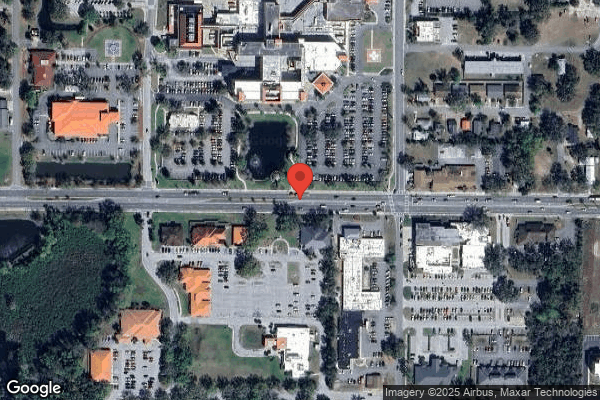

715 E DIXIE AVE, LEESBURG, FL 34748 (352) 728-3020
For profit - Corporation 120 Beds GOLD FL TRUST II Data: November 2025
Trust Grade
55/100
#425 of 690 in FL
Last Inspection: July 2024

Within standard 12-15 month inspection cycle. Federal law requires annual inspections.

Overview

South Campus Care Center and Rehab in Leesburg, Florida, has a Trust Grade of C, which means it is average, sitting in the middle of the pack for nursing homes. It ranks #425 out of 690 facilities in Florida, placing it in the bottom half overall, and #15 out of 17 in Lake County, indicating limited local options. The facility's performance is improving, with issues decreasing from 8 in 2024 to just 2 in 2025. However, staffing is a concern with a rating of 2 out of 5 stars and a high turnover rate of 68%, significantly above the state average of 42%. Notably, while there have been no fines recorded, there have been concerns about safety and cleanliness, such as a greasy kitchen environment and a resident's room with a loose baseboard that had not been repaired promptly. Overall, while there are strengths in some quality measures and the absence of fines, the staffing issues and specific safety concerns are important factors for families to consider.

Trust Score
C
55/100
In Florida
#425/690
Bottom 39%
Safety Record
Low Risk
No red flags
Inspections
Getting Better
8 → 2 violations
Staff Stability
⚠ Watch
68% turnover. Above average. Higher turnover means staff may not know residents' routines.
Penalties
✓ Good
No fines on record. Clean compliance history, better than most Florida facilities.
Skilled Nurses
○ Average
Each resident gets 32 minutes of Registered Nurse (RN) attention daily — about average for Florida. RNs are the most trained staff who monitor for health changes.
Violations
⚠ Watch
27 deficiencies on record. Higher than average. Multiple issues found across inspections.
★★★☆☆
3.0
Overall Rating
★★☆☆☆
2.0
Staff Levels
★★★★☆
4.0
Care Quality
★★★☆☆
3.0
Inspection Score
Stable
2024: 8 issues
2025: 2 issues

The Good

  • 4-Star Quality Measures · Strong clinical quality outcomes
  • Full Sprinkler Coverage · Fire safety systems throughout facility
  • No fines on record

Facility shows strength in quality measures, fire safety.

The Bad

3-Star Overall Rating

Near Florida average (3.2)

Meets federal standards, typical of most facilities

Staff Turnover: 68%

22pts above Florida avg (46%)

Frequent staff changes - ask about care continuity

Chain: GOLD FL TRUST II

Part of a multi-facility chain

Ask about local staffing decisions and management

Staff turnover is elevated (68%)

20 points above Florida average of 48%

The Ugly 27 deficiencies on record

Apr 2025 2 deficiencies
CONCERN (D) 📢 Someone Reported This

A family member, employee, or ombudsman was alarmed enough to file a formal complaint

Potential for Harm - no one hurt, but risky conditions existed

Medical Records (Tag F0842)

Could have caused harm · This affected 1 resident

2) During an observation on 4/29/2025 at 12:00 PM with the DON Resident #1 had a wound dressing on his left leg dated 4/26. Review of Resident #1's physician order dated 3/26/2025 read, Wound care to...

Read full inspector narrative →
2) During an observation on 4/29/2025 at 12:00 PM with the DON Resident #1 had a wound dressing on his left leg dated 4/26. Review of Resident #1's physician order dated 3/26/2025 read, Wound care to left lateral malleolus: cleanse w/NS [with normal saline], apply Iodosorb & [and] cover w/border gauze. Review of Resident #1's Wound Assessment Report dated 4/16/2025 documented the left lateral malleolus wound had a resolved status. Review of Resident #1's Treatment Record Administration for the month of April 2025 for wound care to the left lateral malleolus wound documented blank entries on 4/10/2025, 4/13/2025, 4/15/2025, 4/17/2025, 4/18/2025, 4/21/2025, 4/22/2025, and 4/27/2025. Review of Resident #1's Treatment Record Administration for the month of April 2025 for the left lateral malleolus wound care documented on 4/28/2025 wound care was provided. During an interview on 4/29/2025 at 1:45 PM the DON stated, [Resident #1's name] wound had resolved since April 16. The nurse should have discontinued the order. The staff should be checking off when the wound care is completed and not checking off the treatment record if treatment is not being done, only signing off if the treatment is completed. The treatment record is to be filled out accurately to represent the care provided. During an interview on 4/29/2025 at 2:53 PM Staff B, Registered Nurse/Wound Care Nurse stated, [Resident #1's name] wound was healed about a week ago, it was healed. I should have discontinued the order and put in a progress note regarding the wound being resolved. If the staff are doing the wound care nurses should check it off in the treatment record, if they are not doing the wound care, it should not be checked off. If they have any questions, they can let me know or reach out to the provider. During an interview on 4/29/2025 at 5:51 PM Staff C, LPN stated, I didn't do wound care for Resident #1 on 4/28/2025. I checked off doing the treatment by mistake. Review of the facility policy and procedure titled Wound Care with an issued date of 4/1/2022 read, Policy: It will be the policy of this facility to provide assessment and identification of residents at risk of developing pressure injuries, other wounds and the treatment of skin impairment. Procedure: 10. Document in the clinical record when treatments are performed. Review of the facility policy and procedure title Charting and Documentation with an issued date of 4/1/2022 read, Policy: It is the policy of this facility that services provided to the resident, or any changes in the resident's medical or mental condition, shall be documented in the resident's clinical record as is needed. Procedure: Observations, medication administration, services performed, etc., should be documented in the resident's clinical records. Based on record reviews and interviews the facility failed to document blood glucose levels and administration of insulin for one of 3 residents, Resident #1, reviewed for medication administration, and 1 of 3 residents, Resident #1, reviewed for wound care. Findings include: 1) Review of Resident #1's medical record documented a medical diagnosis of diabetes mellitus (DM) type 2. Review of the physician order dated 2/20/2025 for Resident #1 read, Insulin Lispro subcutaneous solution pen 100 unit/ml (milliliter), inject 4 units subcutaneously before meals for DM and Insulin Glargine Solostar Subcutaneous Solution Pen-Injector 100 unit/ml, inject 15 units subcutaneously at bedtime for DM. Review of the physician order dated 2/21/2025 for Resident #1 read, Glucose monitoring before meals and at bedtime for DM. Review of the medication administration record for April 2025 for Resident #1 did not provide documentation of the administration for Insulin Lispro for April 27th at 4:30 PM, Insulin Glargine for April 27th at 9:00 PM, and did not provide documentation of Resident #1's blood glucose levels for April 27th at 4:30 PM and 9:00 PM. During an interview on 4/29/2025 at 3:17 PM Staff A, License Practical Nurse (LPN) stated, I worked a double shift that day and I forgot to document the blood glucose levels and the administration of the insulin. During an interview of 4/29/2025 at 5:25 PM the Director of Nursing (DON) stated, My expectations are that the nurses document glucose serum levels and medication administration accurately in real time.
CONCERN (E) 📢 Someone Reported This

A family member, employee, or ombudsman was alarmed enough to file a formal complaint

Potential for Harm - no one hurt, but risky conditions existed

Safe Environment (Tag F0584)

Could have caused harm · This affected multiple residents

2) During an observation on 4/29/2025 at 9:15 AM of Resident #7's room there was a loose baseboard with dry wall debris that spans the length of Resident #7's bed. (Photographic evidence obtained) Dur...

Read full inspector narrative →
2) During an observation on 4/29/2025 at 9:15 AM of Resident #7's room there was a loose baseboard with dry wall debris that spans the length of Resident #7's bed. (Photographic evidence obtained) During an interview on 4/29/2025 at 9:15 AM Resident #7 stated, I do not know what happened to the wall. I think it was water damage. It [the wall baseboard] has been that way for some time now. During an interview on 4/29/2025 at 3:26 PM the Regional Plan Operator stated, [Resident #7's name] room shows up in our report on 4/7/2025 . The floor is given a critical category and would need to be corrected in four hours. Baseboard damage should be repaired right away. [Resident #7's name] baseboard should have been repaired right away. During an interview on 4/29/2025 at 4:13 PM the Director of Nursing stated, A critical entry in the maintenance log is right way and a medium entry should be repaired by the end of the day. Review of the facility policy and procedure titled Environment of Care with an issued date of 4/1/2022 read, Policy: It will be the policy of this facility to provide the residents with a safe, comfortable and homelike environment. Based on observations and interviews, the facility failed to provide a clean homelike environment for 2 of 9 residents, Residents #1 and #7, reviewed for environment. Findings include: 1) During an observation on 4/29/2025 at 10:39 AM of Resident #1's room and bathroom there were tiles noted to be missing along the wall of the sink and toilet, these were located along the baseboard of the wall. The bathtub does have a rust colored discoloration near the faucet and brown staining on the tile along the wall. (Photographic evidence obtained) During an interview on 4/29/2025 at 3:20 PM the Regional Plan Operator stated, The condition of the tiles and bathtub were not acceptable and needed to be fixed. During an interview on 4/29/2025 at 3:40 PM the EVS (Environmental Services) Manager stated, The bathtub discoloration is not to his expectations for cleanliness.
Jul 2024 8 deficiencies
CONCERN (D)

Potential for Harm - no one hurt, but risky conditions existed

Assessment Accuracy (Tag F0641)

Could have caused harm · This affected 1 resident

**NOTE- TERMS IN BRACKETS HAVE BEEN EDITED TO PROTECT CONFIDENTIALITY** Based on observation, interview, and record review, the facility failed to ensure assessments accurately reflect the resident's ...

Read full inspector narrative →
**NOTE- TERMS IN BRACKETS HAVE BEEN EDITED TO PROTECT CONFIDENTIALITY** Based on observation, interview, and record review, the facility failed to ensure assessments accurately reflect the resident's status for 1 (Resident #109) of 3 residents reviewed for range of motion and 1 (Resident #20) of 2 residents reviewed for gastrostomies. Findings include: 1. During an observation on 7/21/2024 at 10:05 AM, Resident #109 was lying in bed guarding his right arm with his left hand. During an interview on 7/21/2024 at 10:05 AM, Resident #109 was asked if he was able to move both arms without limitations, he nodded No and touched his right hand. When asked if he was able to move both lower extremities without limitation he nodded No. Review of Resident #109's admission record documented resident was admitted on [DATE] with diagnosis including but not limited to hemiplegia and hemiparesis following cerebral infarction affecting right dominant side and muscle weakness. Review of the Minimum Data Set (MDS) admission assessment dated [DATE], documented in Section GG titled Functional Abilities and Goals that Resident #109 had no impairment in his upper or lower extremities. Review of Resident #109's physiatry [medical specialty that focuses on function, independence and quality of life for people with disabilities] progress note, dated 7/16/2024 read, Transition of Care: Mobility and ADL (activity of daily living) deficits secondary to intraparenchymal hemorrhage. His condition is complicated by muscle weakness, difficulty walking and aphasia. Chief complaint: Mobility and ADL deficits secondary to intraparenchymal hemorrhage. His condition is complicated by muscle weakness, difficulty walking and aphasia. History of present illness: Patient is a 53 y/o (year old) Male with PMH (past medical history) significant for abdominal wall abscess, acute hypoxic respiratory failure, acute renal failure requiring dialysis, anemia, aphasia, cerebral vascular accident with right-sided body involvement, constipation, dysphagia, heart disease, hypertension, metabolic encephalopathy, neurogenic bladder, paroxysmal atrial fibrillation, and deep vein thrombosis prophylaxis, who was admitted to South Campus Rehabilitation and Nursing for skilled nursing and rehabilitation secondary to deficits in mobility and ADL's . Musculoskeletal Exam: Tone: Patient with decreased tone to bilateral upper and lower extremities. Stability: Joints are stable with no joint laxity or subluxation. Palpation: No tenderness to palpation of b/l UE and LE (bilateral upper extremities and lower extremities). Range of Motion: Functional range of motion to left upper and left lower extremity. Decreased range of motion to right upper extremity and right lower extremity . During an interview on 7/23/2024 at 9:02 AM, Staff D, Certified Nursing Assistant (CNA), stated [Resident #109 name] has impairment on his right leg; he will not do anything with that leg. He is a Hoyer lift [resident is transferred using a mechanical lift]. I would say he has impairment on lower extremities and somewhat of impairment on one side of upper extremities. During an interview on 7/23/2024 at 12:23 PM, Staff E, Physical Therapist (PT), stated I took care of resident [Resident #109]. He has right side impairment due to his cardiovascular accident. During an interview on 7/23/2024 at 1:10 PM, Staff F, Physical Therapist Assistant (PTA), stated Resident is moderate to maximum assist. Resident has impairment on one side of his body; the side of his stroke. During an interview on 7/23/2024 at 1:12 PM, Staff G, Certified Occupational Therapist Assistant (COTA), stated, Resident has right sided weakness; he is able to use his left side. 2. During an observation on 7/23/2024 at 12:30 PM Resident #20 was lying in bed, gastric tube noted on left side of abdomen with clean dressing dated 7/23/2024. Nursing staff administering medication via gastric tube. Review of Resident #20's physician's order dated 4/11/2024 read, Nepro 80 ml (milliliters)/hour via g-tube (gastric tube) on at 1800 [6:00 PM] and off at 400 [4:00 AM] two times a day for supplement on at 1800 and off at 0400. Review of Resident #20's physician's order dated 7/02/2024 read, Enteral Feed order every shift Nepro continuous @ (at) 90ml/hr x 10 hours (90 milliliters per hour times 10 hours) (ON @ 1800; OFF @ 0400). Review of the MDS Quarterly assessment dated [DATE], documented in Section K titled Swallowing /Nutritional Status that Resident #20 had no feeding tube while a resident of the facility. During an interview on 7/23/2024 at 1:21 PM, Staff H, MDS Coordinator stated [Resident 109's name] does have upper and lower extremity impairments; the MDS was coded incorrectly. [Resident #20's name] does have a gastric tube and receives feedings and medication via gastric tube. Her MDS was coded incorrectly. Review of the facility policy and procedure titled, MDS Assessments with a last review date of 11/29/2023, read, Policy: It will be the policy of this facility to complete MDS assessments in accordance with the RAI (Resident Assessment Instrument) manual guidelines.
CONCERN (D)

Potential for Harm - no one hurt, but risky conditions existed

ADL Care (Tag F0677)

Could have caused harm · This affected 1 resident

**NOTE- TERMS IN BRACKETS HAVE BEEN EDITED TO PROTECT CONFIDENTIALITY** Based on observation, interview and record review, the facility failed to ensure residents who needed assistance to perform acti...

Read full inspector narrative →
**NOTE- TERMS IN BRACKETS HAVE BEEN EDITED TO PROTECT CONFIDENTIALITY** Based on observation, interview and record review, the facility failed to ensure residents who needed assistance to perform activities of daily living (ADLs) received assistance for 1 of 3 residents reviewed for ADL care, Resident #367. Findings include: Review of Resident #367's admission record showed the resident was most recently admitted on [DATE] with the diagnoses including acute respiratory failure with hypoxia, morbid (severe) obesity due to excess calories, chronic obstructive pulmonary disease (COPD), type 2 diabetes mellitus, difficulty in walking, need for assistance with personal care, other abnormalities of gait and mobility, muscle weakness, hyperlipidemia, constipation, essential (primary) hypertension, low back pain, gout, opioid dependence, personal history of malignant neoplasm of prostate, gastrointestinal hemorrhage, headache, obstructive sleep apnea, hypo-osmolality and hyponatremia, chronic diastolic (congestive) heart failure, chronic kidney disease, and anemia. During an observation on 7/21/2024 at 10:16 AM, Resident #367 had long and untrimmed fingernails with dark substance under nail beds. During an interview on 7/21/2024 at 10:16 AM, Resident #367 stated, I like my fingernails to be cut. Last time they were cut at home. During an observation on 7/22/2024 at 8:13 AM, Resident #367 had long and untrimmed fingernails with dark substance under nail beds. During an observation with Staff D, Certified Nursing Assistant (CNA), on 7/23/2024 at 8:25 AM, Resident #367 had long and untrimmed fingernails with dark substance under nail beds. During an interview on 7/23/2024 at 8:25 AM, Staff D, CNA, confirmed that the Resident #367's fingernails were long and untrimmed with dark substance underneath, and they needed to be cut. Review of Resident #367's care plan dated 7/11/2024 showed it read, Focus: Resident needs assist with ADLs . Interventions . Assist/provide ADL care and support as needed. During an interview on 7/23/2024 at 8:56 AM, the Director of Nursing (DON) stated, They [residents] get nail care on shower days and as needed. Review of the facility policy and procedure titled ADL Care and Assistance issued on 4/1/2022 and last reviewed on 11/29/2023 showed the policy read, Policy: IT will be the policy of this facility to provide the resident with Activities of Daily Living (ADL) care and assistance while attempting to maintain the highest practicable level of function for the resident.
CONCERN (D)

Potential for Harm - no one hurt, but risky conditions existed

Quality of Care (Tag F0684)

Could have caused harm · This affected 1 resident

Based on interview and record review, the facility failed to ensure the residents received medication per physician orders for 1 (Resident #37) of 7 residents reviewed for medication administration. ...

Read full inspector narrative →
Based on interview and record review, the facility failed to ensure the residents received medication per physician orders for 1 (Resident #37) of 7 residents reviewed for medication administration. Findings include: Review of Resident #37's physician's order, dated 1/14/2024, read Acetaminophen Tablet 325mg (milligrams) give 2 tablets by mouth every 4 hours as needed for mild pain, level 1-3, related to pain, unspecified (R52) not to exceed 3gm (grams)/3000mg per 24 hours . Review of Resident #37's Medication Administration Record (MAR) for June 2024 documented the resident received Acetaminophen Tablet 325mg on June 2 at 0429 [4:29 AM] for a pain level of 4, June 3 at 0500 [5:00 AM] for a pain level of 5, June 6 at 0929 [9:29 AM] for a pain level of 7, June 7 at 0053 [12:53 AM] for a pain level of 7, June 13 at 1423 [2:23 PM] for a pain level of 4, June 14 at 0447 [4:47 AM] for a pain level of 4, June 15 at 1907 [7:07 PM] for a pain level of 10, June 16 at 0500 [5:00 AM] for a pain level of 5, June 26 at 0101 [1:01 AM] for a pain level of 7, June 27 at 0050 [12:50 AM] for a pain level of 7 and at 2352 [11:52 PM] for a pain level of 8. Review of Resident #37's Medication Administration Record (MAR) for July 2024 documented the resident received Acetaminophen Tablet 325mg on July 10 at 0453 [4:53 AM] for a pain level of 4, July 11 at 0610 [6:10 AM] for a pain level of 7, July 13 at 2118 [9:18 PM] for a pain level of 4, July 21 at 1610 [4:10 PM] for a pain level of 7 and on July 23 at 0508 [5:08 AM] for a pain level of 4. During an interview on 7/23/2024 at 11:20 AM, the Director of Nursing (DON) stated I did see where the nurses gave the medication when [Resident 37's name] pain level exceeded the ordered parameters. The nursing staff are expected to follow the parameters when they are in place and if any questions should get clarification from the medical doctor. Review of the facility policy and procedure titled Medication Administration' with a last review date of 11/29/2023 read, Policy: It will be the policy of this facility to administer medications in a timely manner and as prescribed by the physician, unless otherwise clinically indicated or necessitated by other circumstances such as lack of availability or medication or refusals of medications by the resident.
CONCERN (D)

Potential for Harm - no one hurt, but risky conditions existed

Respiratory Care (Tag F0695)

Could have caused harm · This affected 1 resident

**NOTE- TERMS IN BRACKETS HAVE BEEN EDITED TO PROTECT CONFIDENTIALITY** Based on observation, record review, and interview, the facility failed to ensure residents received oxygen according to physici...

Read full inspector narrative →
**NOTE- TERMS IN BRACKETS HAVE BEEN EDITED TO PROTECT CONFIDENTIALITY** Based on observation, record review, and interview, the facility failed to ensure residents received oxygen according to physician order for 1 of 3 residents sampled for respiratory care, Resident #366. Findings include: Review of Resident #366's admission record showed the resident was admitted on [DATE] with the diagnoses including diabetes mellitus due to underlying condition, chronic obstructive pulmonary disease, overreactive bladder, nondisplaced fracture of lateral malleolus of right fibula, chronic systolic (congestive) heart failure, depression, dementia, obstructive sleep apnea, atherosclerotic heart disease, repeated falls, muscle weakness, essential (primary) hypertension, morbid (severe) obesity due to excess calories, and anxiety disorder. During an observation on 7/21/2024 at 9:50 AM, Resident #366 was in bed, receiving oxygen through nasal cannula at 3.5 liters per minute (LPM). During an interview on 7/21/2024 at 9:51 AM, Resident #366 stated, I need oxygen at 2 liters 24/7. During an observation on 7/22/2024 at 8:15 AM, Resident #366 was in bed, receiving oxygen through nasal cannula at 4 LPM. During an observation on 7/22/2024 at 2:20 PM with Staff I, Registered Nurse (RN), Unit Manager, Resident #366 was in bed receiving oxygen via nasal cannula at 4 LPM. During an interview on 7/22/2024 at 2:20 PM, Staff I, RN, Unit Manager, confirmed that the resident was receiving oxygen at 4 LPM and stated that it needed to be 2 LPM. During an interview on 7/22/2024 at 2:27 PM, the Director of Nursing (DON), stated, The nurses have to check that, and we have to follow the physician orders. Review of Resident #366's physician order dated 7/16/2024 read, Oxygen concentrator 2 liters via nc [nasal cannula] every shift for prophylaxis. Review of Resident #366's care plan dated 7/16/2024 read, Focus: Resident needs oxygen constantly or intermittently to aide in breathing. Intervention: O2 [oxygen] at 2 liters per minute . Resident needs O2 constantly or as needed. Review of the facility policy and procedure titled Respiratory Care issued on 4/1/2022 and last reviewed on 11/29/2023 read, It is the policy of this facility to provide respiratory care and safe oxygen administration to meet the needs of the residents. Procedure: 1. Verify that there is a physician's order for respiratory procedures or oxygen use. Review the physician's order for oxygen administration.
CONCERN (D)

Potential for Harm - no one hurt, but risky conditions existed

Deficiency F0761 (Tag F0761)

Could have caused harm · This affected 1 resident

Based on observation, interview, and record review, the facility failed to ensure the drugs and biologicals used in the facility were stored in accordance with currently accepted professional principl...

Read full inspector narrative →
Based on observation, interview, and record review, the facility failed to ensure the drugs and biologicals used in the facility were stored in accordance with currently accepted professional principles for unattended medications in 1 unit of 3 units. Findings Include: During an observation on 7/21/2024 at 9:25 AM in Resident #109's room, there was one unopened packet of zinc oxide formula barrier cream on top of the room drawer. [photographic evidence obtained] Review of Resident #109's physician's orders on 7/21/2024 did not document orders for medication self-administration. During an observation on 7/21/2024 at 9:37 AM of Resident #38's room, there was one unopened packet of zinc oxide formula barrier cream on top of resident's bedside table. [photographic evidence obtained] Review of Resident #38's physician's orders on 7/21/2024 did not document orders for medication self-administration. During an observation on 7/21/2024 at 9:38 AM of Resident #78's room, there were two packets of unopened oxide formula barrier cream on top of resident's television table. [photographic evidence obtained] Review of Resident #78's physician's orders on 7/21/2024 did not document orders for medication self-administration. During an observation on 7/21/2024 at 9:45 AM of Resident #51's room, there was two open packets halfway filled of oxide formula barrier cream on top of resident's drawer. [photographic evidence obtained] Review of Resident #51's physician's orders on 7/21/2024 did not document orders for medication self-administration. During an interview on 7/23/2024 at 1:25 PM, the Director of Nursing stated medications shouldn't be unsecured at resident's bedside. [Resident #38's name, Resident #51's name, Resident #78's name and Resident #109's name] are not able to self-administer medication. Review of the facility policy titled, Medication/Biological Storage with a last review date of 11/29/2023, read, Policy: It will be the policy of this facility to store medications, drugs and biologicals in a safe, secure and orderly manner.
CONCERN (D)

Potential for Harm - no one hurt, but risky conditions existed

Infection Control (Tag F0880)

Could have caused harm · This affected 1 resident

Based on observation, interview, and record review, the facility failed to ensure staff performed hand hygiene while providing dining services and failed to ensure staff used appropriate personal prot...

Read full inspector narrative →
Based on observation, interview, and record review, the facility failed to ensure staff performed hand hygiene while providing dining services and failed to ensure staff used appropriate personal protective equipment while providing high contact direct care to residents on enhanced barrier precautions to prevent the possible spread of infection and communicable diseases. Findings include: 1. During an observation on 7/22/2024 at 12:00 PM, Staff A, Certified Nursing Assistant (CNA), entered Resident #105's room and delivered a meal tray. Staff A exited the room and returned with a drink. Staff A exited the room and did not perform hand hygiene. Staff A walked down the hall and entered another resident's room and quickly exited the room. Staff A entered Resident #12's room and without performing hand hygiene started to assist the resident with lunch meal. Staff A stood at the room doorway and went back into the room. Staff A lifted Resident #20's plate cover and asked if the resident was hungry and wanted to eat. Staff A, without performing hand hygiene, returned to Resident #12's side of the room and began to assist the resident with meal. Staff A stood next to the bed, walked to the trash can, and readjusted the trash can closer to the side of the wall. Staff A, without performing hand washing, returned to Resident #12's side and retrieved Resident #12's fork and continued to assist with feeding. During an interview on 7/22/2024 at 12:23 PM, Staff A, stated, I did not perform hand hygiene in between the residents. I should have performed hand hygiene when entering the room and after touching the trash can. During an observation on 7/22/2024 at 12:41 PM, Staff B, CNA, was assisting Resident #105 with the lunch meal. Staff B exited the room and placed meal tray back on the meal cart. Staff B walked down the hall and did not perform hand hygiene. Resident #27 was sitting in a wheelchair at the room doorway asking for a drink. Staff B retrieved her cup and placed it on top of the meal cart. Staff B removed a clear plastic cup, poured a drink for Resident #27 and handed the cup to the resident. During an interview on 7/22/2024 at 12:47 PM, Staff B, CNA, stated, I should have done hand hygiene in between the residents. [Resident #27's name] wanted iced tea. I did not do hand hygiene, and I should have. 2. During an observation on 7/23/2024 at 11:30 AM, Staff C, Registered Nurse (RN), entered Resident #266's room. Resident #266's room door had an enhanced barrier sign posted on the entrance door with a bin containing personal protective equipment outside of the room. Staff C donned gloves but did not don a gown. Staff C inspected Resident #266's midline and cleaned the needleless connector with an alcohol swab and flushed the midline with normal saline. Staff C removed her gloves and performed hand hygiene. Staff C exited the resident room and returned with a port protector. Staff C entered Resident #266's room and donned gloves but did not don a gown. Staff C placed the port protector on Resident #226's midline needleless connector. During an interview on 7/23/2024 at 11:44 AM, Staff C, RN, stated, [Resident #266's name] is on enhanced barrier precautions due to his midline. I should have donned a gown when administering the flush via the IV [intravenous] line. During an interview on 7/23/2024 at 1:50 PM, the Director of Nursing stated, Staff are expected to wear gloves and gown when providing direct care if a resident has enhanced barrier precautions and the staff should be performing hand hygiene in between residents when passing out meal trays or assisting with dinning. During an interview on 7/23/2024 at 3:09 PM, the Infection Preventionist stated, The staff should be donning gloves and gown when they are going to provide direct care to a resident who has enhanced barrier precautions. The staff should be performing hand hygiene between residents. If they are assisting with feeding a resident, the staff should perform hand hygiene, don gloves and not touch the resident's food or anything in the room while feeding the resident. Review of the facility policy and procedure titled Enhanced Barrier Precautions with the last review date of 11/29/2023, showed the policy read, Policy: It will be policy of this facility to implement enhanced barrier precautions for preventing transmission of novel or targeted multidrug-resistant organism. Definitions: Enhanced barrier precautions refer to the use of gown and gloves for certain residents during specific high-contact resident acre activities that have been found to increase risk for transmission of multidrug-resistant organisms. Review of the facility policy and procedure titled Hand Hygiene with the last review date of 11/29/2023, showed the policy read, Policy: This facility considers hand hygiene the primary means to prevent the spread of infections. Procedure . 5. Use an alcohol-based hand rub containing at least 62% alcohol; or, alternatively, soap (antimicrobial or non-antimicrobial) and water for the following situations . b. Before and after direct contact with residents . p. Before and after assisting a resident with meals.
CONCERN (E)

Potential for Harm - no one hurt, but risky conditions existed

Food Safety (Tag F0812)

Could have caused harm · This affected multiple residents

Based on observations, interviews, and policy review, the facility failed to ensure food was stored, covered, labeled, or discarded in the kitchen walk-in coolers and dry storage areas and maintained ...

Read full inspector narrative →
Based on observations, interviews, and policy review, the facility failed to ensure food was stored, covered, labeled, or discarded in the kitchen walk-in coolers and dry storage areas and maintained standards of practice for cleaning and sanitary conditions in the dietary department. Findings included: An initial walk-through of the kitchen was conducted on 7/21/24 at 9:00 AM with the Dietary Manager (DM). An observation was made at 9:08 AM of two large full containers of cottage cheese with an expiration date of 7/14/24. An observation was made in the walk-in cooler of a large metal bowl of a fruit type mixture with no identifying label or date. An observation was made in the kitchen of a dirty cloth and a dirty metal scrubby left on the sink and not in a Santi-container or solution. An observation was made in the dish room of 3 large 5-gallon containers of chemicals for the dish machine stored on the floor. (photographic evidence obtained) An interview was conducted with the Dietary Manager (DM) at 9:15 AM. The DM confirmed he observed the two large cottage cheese containers with an expiration date of 7/14/24. The DM stated the containers should have been used before the expiration date or discarded. The DM confirmed he observed the large bowl of a fruit type mix and that the bowl did not have an identifying label or date and there should have been a label and date on the container. The DM confirmed the 5-gallon containers were not on a shelf or roller dolly and stated the 5-gallon containers of chemicals should not have been stored on the floor. The DM confirmed the dirty rag and scrubby left on the 3-compartment sink counter should have been put in the clean sanitizing container. A follow up walk through was conducted on 07/22/24 at 06:38 AM with the DM. An observation was made of a large buildup of dirt, grime, and debris on the walls, ceiling, and metal-type conduit pipes running up beside the food steam table and around throughout the kitchen. An observation was made in the kitchen of 5 partial packages of hamburger and hot dog buns, sliced wheat and white bread with no open date on each of the 5 packages. (photographic evidence obtained) A second interview was conducted with the DM on 7/22/24 at 7:08 AM related to the buildup of dirt and debris on the walls, ceiling and conduit pipes. The DM confirmed the buildup of dirt, grime and debris was visible around and close to the food steam table area and throughout the kitchen and should have been cleaned to prevent a buildup. The DM confirmed that the cleaning policy included non-food contact surfaces. Review of the policy titled Refrigerated Storage dated 10/01/23 and with a revision date 11/29/23 read, Policy: Refrigerated items should be properly stored, labeled and maintained by dietary staff. 4. Dietary staff will label, date, and monitor refrigerated food, including but not limited to leftovers to ensure use-by-dates, or frozen are discarded. Review of the policy titled Kitchen Sanitation dated 10/01/23 and with a revision date 11/29/23 read, Policy: It will be the policy of the facility that the food service area and equipment shall be maintained in a clean and sanitary manner. 13. Kitchen and dining room surfaces not in contact with food shall be cleaned on a regular schedule and frequently enough to prevent accumulation of grime.
MINOR (C)

Minor Issue - procedural, no safety impact

Staffing Information (Tag F0732)

Minor procedural issue · This affected most or all residents

Based on observation, interview and record review, the facility failed to ensure nurse staffing information was posted on a daily basis. Findings include: During an observation on 7/21/2024 at 9:04 A...

Read full inspector narrative →
Based on observation, interview and record review, the facility failed to ensure nurse staffing information was posted on a daily basis. Findings include: During an observation on 7/21/2024 at 9:04 AM, the nurse staffing information posted at the entrance lobby was dated 7/19/2024. During an interview on 7/21/2024 at 9:04 AM, Staff J, Licensed Practical Nurse (LPN) Supervisor, confirmed that the staffing information posted at the entrance lobby was dated 7/19/2024 and it had not been updated. During an interview on 7/22/2024 at 3:02 PM, the Administrator stated, The Staffing Coordinator is responsible for preparing the weekend staffing information and the receptionist is responsible for displaying it. The information was prepared but not displayed. Review of the facility policy and procedure titled Staff Postings issued on 4/1/2022 and last reviewed on 11/29/2023, read, Policy: It will be the policy of this facility to display staff posting information for visitors, families, residents and staff to be able to see. Procedure: 1. Nurse Staffing Information: (1) Data requirements. The facility will post the following information on a daily basis.
Nov 2023 2 deficiencies
CONCERN (D) 📢 Someone Reported This

A family member, employee, or ombudsman was alarmed enough to file a formal complaint

Potential for Harm - no one hurt, but risky conditions existed

Medical Records (Tag F0842)

Could have caused harm · This affected 1 resident

Based on record review and interview, the facility failed to maintain accurate and complete medical records for 2 of 3 residents reviewed for documentation, Residents #1 and #10. Findings include: 1. ...

Read full inspector narrative →
Based on record review and interview, the facility failed to maintain accurate and complete medical records for 2 of 3 residents reviewed for documentation, Residents #1 and #10. Findings include: 1. Review of Resident #1's admission record revealed the resident was admitted to the facility with the diagnoses including unspecified right femur fracture, respiratory failure, type 2 diabetes mellitus, anemia, chronic pain, right knee, left knee right hand contracture, unspecified atrial fibrillation, adult failure to thrive, atherosclerosis of coronary artery bypass grafts without angina pectoris, unspecified heart failure, unspecified seizures, status post colostomy, presence of cardiac pacemaker, and essential hypertension. Review of Resident #1's physician order dated 9/21/2023 reads, Medihoney wound burn dressing external gel, apply to left inner ankle topically every day shift for stage two, cleanse with normal saline, pat dry, apply Medihoney to open area, cover with clean dry dressing. Review of Resident #1's Treatment Administration Record (TAR) for October 2023 showed no entries documented for administration of wound treatment to left inner ankle on 10/6/2023, 10/11/2023, 10/13/2023, 10/14/2023, 10/16/2023, and 10/20/2023. Review of Resident #1's physician order dated 9/21/2023 reads, Medihoney wound burn dressing external gel, apply to left outer ankle topically every day shift for stage two, cleanse with normal saline, pat dry, apply Medihoney to open area, cover with clean dry dressing. Review of Resident #1's TAR for October 2023 showed no entries documented for administration of wound treatment to left outer ankle on 10/5/2023, 10/11/2023, 10/13/2023, 10/14/2023, 10/16/2023, and 10/18/2023. Review of Resident #1's physician order dated 9/21/2023 reads, Xeroform oil emulsion gauze external pad apply to right knee topically every day shift for skin tear, cleanse with normal saline pat dry, apply Xeroform to open area, cover with clean dry dressing. Review of Resident #1's TAR for October 2023 showed no entries documented for administration of wound treatment to right knee on 10/5/2023, 10/11/2023, 10/13/2023, 10/14/2023, 10/16/2023, and 10/18/2023. Review of Resident #1's physician order dated 10/6/2023 reads, Wound care left lateral ankle, cleanse wound with normal saline, pat dry, apply Medihoney and cover with clean border gauze one time a day for wound care. Review of Resident #1's TAR for October 2023 showed no entries documented for administration of wound treatment to left lateral ankle on 10/11/2023, 10/13/2023, 10/14/2023, 10/16/2023, 10/18/2023 and 10/20/2023. Review of Resident #1's physician order dated 10/6/2023 reads, Wound care left medial ankle cleanse wound with normal saline, pat dry, apply Medihoney and cover with clean bordered gauze one time a day for wound care. Review of Resident #1's TAR showed no entries documented for administration of wound treatment to left medial ankle on 10/11/2023, 10/13/2023, 10/14/2023, 10/16/2023, 10/18/2023 and 10/20/2023. 2. Review of Resident #10's admission record revealed the resident was admitted to the facility with the diagnoses including unspecified dementia, acquired absence of right leg below the knee, polyneuropathy unspecified, presence of cardiac pacemaker, depression, unspecified anxiety disorder, unspecified anemia, and hyperlipidemia. Review of Resident #10's physician order dated 10/27/2023 reads, Wound care, apply betadine to left medial foot daily and leave open to air every day shift for DTI [Deep Tissue Injury]. Review of Resident #10's TAR for November 2023 showed no entries documented for administration of wound treatment to left medial foot on 11/4/2023 and 11/9/2023. During an interview on 11/15/2023 at 9:35 AM, the Director of Nursing stated, All treatments should be signed and documented as completed by the nurses. There are treatments that are not documented on [Resident #1 and Resident #10's names]. There should be complete documentation. Review of the policy and procedure titled Wound Care issued on 4/1/2022 reads, Policy: It will be the policy of this facility to provide assessment and identification of residents at risk of developing pressure injuries, other wounds and the treatment of skin impairment . 6. Care procedures and treatments shall be performed according to physician orders . 10. Document in the clinical record when treatments are performed.
CONCERN (D) 📢 Someone Reported This

A family member, employee, or ombudsman was alarmed enough to file a formal complaint

Potential for Harm - no one hurt, but risky conditions existed

QAPI Program (Tag F0867)

Could have caused harm · This affected 1 resident

Based on record review and interview, the facility failed to utilize the Quality Assessment and Process Improvement (QAPI) process to monitor the effectiveness of its performance improvement activitie...

Read full inspector narrative →
Based on record review and interview, the facility failed to utilize the Quality Assessment and Process Improvement (QAPI) process to monitor the effectiveness of its performance improvement activities to ensure that improvements are sustained for the concerns identified with documentation of wound care. Findings include: Review of the policy and procedure titled Quality Assurance and Performance Improvement (QAPI) Program issued on 4/1/2022 reads, Policy: It will be the policy of this facility, including a facility that is part of a multiunit chain, to develop, implement, and maintain an effective, comprehensive, data-driven QAPI program that focuses on indicators of the outcomes of care and quality of life. Procedure: 1. The facility shall maintain documentation and demonstrate evidence of its ongoing QAPI program. This may include but is not limited to systems and reports demonstrating systematic identification, reporting, investigation, analysis and prevention of adverse events; and documentation demonstrating the development, implementation, and evaluation of corrective actions or performance improvement activities . 5. The governing body and/or executive leadership (or organized group or individual who assumes full legal authority and responsibility for operation of the facility) is responsible and accountable for ensuring that the QAPI program identifies and prioritizes problems and opportunities that reflect organizational process, functions and services provided to residents based on performance indicator data, and resident and staff input and other information, corrective actions address gaps in systems and are evaluated for effectiveness. Review of Resident #1's physician order dated 9/21/2023 reads, Medihoney wound burn dressing external gel, apply to left inner ankle topically every day shift for stage two, cleanse with normal saline, pat dry, apply Medihoney to open area, cover with clean dry dressing. Review of Resident #1's Treatment Administration Record (TAR) for October 2023 showed no entries documented for administration of wound treatment to left inner ankle on 10/6/2023, 10/11/2023, 10/13/2023, 10/14/2023, 10/16/2023, and 10/20/2023. Review of Resident #1's physician order dated 9/21/2023 reads, Medihoney wound burn dressing external gel, apply to left outer ankle topically every day shift for stage two, cleanse with normal saline, pat dry, apply Medihoney to open area, cover with clean dry dressing. Review of Resident #1's TAR for October 2023 showed no entries documented for administration of wound treatment to left outer ankle on 10/5/2023, 10/11/2023, 10/13/2023, 10/14/2023, 10/16/2023, and 10/18/2023. Review of Resident #1's physician order dated 9/21/2023 reads, Xeroform oil emulsion gauze external pad apply to right knee topically every day shift for skin tear, cleanse with normal saline pat dry, apply Xeroform to open area, cover with clean dry dressing. Review of Resident #1's TAR for October 2023 showed no entries documented for administration of wound treatment to right knee on 10/5/2023, 10/11/2023, 10/13/2023, 10/14/2023, 10/16/2023, and 10/18/2023. Review of Resident #1's physician order dated 10/6/2023 reads, Wound care left lateral ankle, cleanse wound with normal saline, pat dry, apply Medihoney and cover with clean border gauze one time a day for wound care. Review of Resident #1's TAR for October 2023 showed no entries documented for administration of wound treatment to left lateral ankle on 10/11/2023, 10/13/2023, 10/14/2023, 10/16/2023, 10/18/2023 and 10/20/2023. Review of Resident #1's physician order dated 10/6/2023 reads, Wound care left medial ankle cleanse wound with normal saline, pat dry, apply Medihoney and cover with clean bordered gauze one time a day for wound care. Review of Resident #1's TAR showed no entries documented for administration of wound treatment to left medial ankle on 10/11/2023, 10/13/2023, 10/14/2023, 10/16/2023, 10/18/2023 and 10/20/2023. During an interview on 11/14/2023 at 2:05 PM, the Director of Nursing (DON) stated, I was made aware that there were concerns from the EMS [Emergency Medical Services] staff. I did review the record and we did identify that after he [Resident #1] was readmitted in June. He [Resident #1] no longer had routine orders for suprapubic catheter care. There was no daily documentation of the suprapubic catheter care. There was no documentation that the staff assessed the insertion site for any problems or signs of infection. There was no documentation that the resident had his catheter bag changed and no orders to see the urologist to have the catheter changed based on the review of his medical record. We did do a PIP [Performance Improvement Plan] for this and educated staff. I have been auditing. Also, I did review the chart and that was when I found that he had no orders for care or to had his suprapubic changed. I did not realize that his wound care was not documented as completed. I suppose I should have found this when I reviewed his chart. I did not do a PIP related to documentation of wound care. I suppose I should have. I did not audit all wounds to see if wound care was being documented. Review of the policy and procedure titled Wound Care issued on 4/1/2022 reads, Policy: It will be the policy of this facility to provide assessment and identification of residents at risk of developing pressure injuries, other wounds and the treatment of skin impairment . 6. Care procedures and treatments shall be performed according to physician orders . 10. Document in the clinical record when treatments are performed.
Mar 2023 9 deficiencies
CONCERN (D)

Potential for Harm - no one hurt, but risky conditions existed

Deficiency F0558 (Tag F0558)

Could have caused harm · This affected 1 resident

**NOTE- TERMS IN BRACKETS HAVE BEEN EDITED TO PROTECT CONFIDENTIALITY** Based on observation, interview, and record review, the facility failed to ensure accommodate resident needs were accommodated b...

Read full inspector narrative →
**NOTE- TERMS IN BRACKETS HAVE BEEN EDITED TO PROTECT CONFIDENTIALITY** Based on observation, interview, and record review, the facility failed to ensure accommodate resident needs were accommodated by failing to have functioning call light system for 1 of 3 residents reviewed for falls, Resident #102. Findings include: During an observation on 3/12/2023 at 9:57 AM, Resident #102 was in bed with a bell noted on top of the bedside table. During an interview on 3/13/2023 at 9:57 AM, Resident #102 stated, My call light has not been working for four months now. Maintenance came in and the part they brought did not work. That was months ago. The staff will not answer when I ring the bell. They never come. During an interview on 3/13/2023 at 9:58 AM, Resident #30 stated, I will turn my light on when he needs help. During an observation on 3/13/2023 at 10:00 AM, Resident #102 pressed the call light. The light did not turn on outside of the room. During an observation on 3/14/2023 at 10:35 AM, Resident #102 was ringing the bell. Staff I, Licensed Practical Nurse (LPN), was in the hallway. No assistance was provided to Resident #102. Observation ended at 10:40 AM. During an observation on 3/14/2023 at 12:51 PM, Resident #102 rang the bell. Staff I, LPN, was on floor. Staff I did not address the call ringing. Resident #102 rang the bell again at 12:53 PM. Staff J, Certified Nursing Assistant (CNA), was on the floor with food trays and Staff I, LPN, was passing medication. No staff member provided assistance to Resident #102. Observation ended at 1:01 PM. Review of Resident #102's admission records revealed the resident was admitted to the facility on [DATE] with the diagnoses including traumatic subdural hemorrhage without loss of consciousness, difficulty in walking, muscle weakness, cognitive communication deficit, repeated falls, history of falling, and adult failure to thrive. Review of Resident #102's care plan initiated on 9/27/2022 reads, [Resident #102's name] is at risk for falls and/or fall related injury r/t [related to]: impaired mobility, respiratory failure, cardiac conditions, DM [diabetes mellitus], weakness, shortness of breath upon exertion, impaired balance, unsteady gait, uses w/c [wheelchair] as a primary mode of locomotion, h/o [history of] frequent falls, UTI [Urinary Tract Infection] upon 1st admission, use of opioids and psychotropic medication . Interventions: 1/13/23: Educate resident to use call bell when assistance is needed. Review of Resident #30's Quarterly Minimum Data Set (MDS) dated [DATE], reads, Section C. Cognitive Patterns: C0500. BIMS Summary Score: 14. During an interview on 3/14/2023 at 1:36 PM, the Director of Maintenance stated that he was aware call light was not working. He stated, We have been having problems getting parts. It is an old system. The new part has been ordered. We have not received it. During an interview on 3/14/2023 at 2:13 PM, Staff A, License Practical Nurse (LPN), Unit Manager, stated, I was not aware [Resident #102's name] call light was not working. Normally a report would be placed in the computer system. Depending what the issue is, maintenance will come and look at the bulb outside to see if that is the reason it is not turning on. If that does not work, they will order parts. During an interview on 3/14/2023 at 2:29 PM, Staff J, CNA, stated, Yes, I was aware his call light is not working. Most of the time, he will have his roommate use his call light to call staff. I did not hear the bell ring. If I am close to the room, I might hear it but if I am away from the room, I am not able to hear the bell ring. During an interview on 3/14/2023 at 2:31 PM, Staff I, LPN, stated, I was not aware [Resident #102's name] call bell was not functioning. I have not noticed the bell he has on top of his bedside table. I did not hear the bell. I was doing other things. During an interview on 3/15/2023 at 8:08 AM, the Director of Nursing stated, I was not aware of [Resident #102's name] call light. I would have offered resident if he would like to move to another room. Review of the facility policy and procedure titled Call Lights last reviewed on 1/19/2023, reads, Procedure . 3. The call light should be plugged in at all times with the exception of occurrences when the system is under repair or malfunctioning, in which case an alternative system of Staff notification for need of assistance may be utilized.
CONCERN (D)

Potential for Harm - no one hurt, but risky conditions existed

Deficiency F0638 (Tag F0638)

Could have caused harm · This affected 1 resident

Based on record review and interview, the facility failed to ensure quarterly Minimum Data Set (MDS) assessments were completed in a timely manner for 7 of 12 residents reviewed for resident assessmen...

Read full inspector narrative →
Based on record review and interview, the facility failed to ensure quarterly Minimum Data Set (MDS) assessments were completed in a timely manner for 7 of 12 residents reviewed for resident assessments, Residents #22, #37, #68, #79, #88, #110, and #112, in a total sample of 52 residents. Findings include: Review of the Minimum Data Set (MDS) with the MDS Coordinator revealed the following: Resident #22: Assessment Type: Quarterly, Assessment Reference Date: 2/8/2023, Status: 35 days overdue; Resident #37: Assessment Type: Quarterly, Assessment Reference Date: 2/13/2023, Status: 30 days overdue; Resident #68: Assessment Type: Quarterly, Assessment Reference Date: 2/8/2023, Status: 35 days overdue; Resident #79: Assessment Type: Quarterly, Assessment Reference Date: 1/26/2023, Status: 44 days overdue; Resident #88: Assessment Type: Quarterly, Assessment Reference Date: 2/15/2023, Status: 28 days overdue; Resident #110: Assessment Type: Quarterly, Assessment Reference Date: 2/12/2023, Status: 31 days overdue; Resident #112: Assessment Type: Quarterly, Assessment Reference Date: 2/18/2023, Status: 25 days overdue. During an interview on 3/14/2023 at 9:10 AM, the MDS Coordinator verified the completion and transmission status of the minimum data set assessments for Residents #22, #37, #68, #79, #88, #110, and #112. She verified the assessments were overdue. Review of the facility policy and procedure titled MDS Assessments issued on 4/1/2022 reads, Policy: It will be the policy of this facility to complete MDS assessments in accordance with the RAI [Resident Assessment Instrument] manual guidelines. Procedures: 1. The Resident Assessment Coordinator is responsible for ensuring that the Interdisciplinary Team conducts timely and appropriate resident assessments and reviews according to the following requirements . a . (2) Quarterly Assessment- Conducted not less frequently than three (3) months following the most recent OBRA [Omnibus Budget Reconciliation Act] assessment of any type . (4) Annual Assessment (Comprehensive)- Conducted not less than once every twelve (12) months.
CONCERN (D)

Potential for Harm - no one hurt, but risky conditions existed

Comprehensive Care Plan (Tag F0656)

Could have caused harm · This affected 1 resident

**NOTE- TERMS IN BRACKETS HAVE BEEN EDITED TO PROTECT CONFIDENTIALITY** 2. During an observation on 3/12/2023 at 10:05 AM, Resident #19 was lying in bed, resting with eyes closed. Heels were laying on...

Read full inspector narrative →
**NOTE- TERMS IN BRACKETS HAVE BEEN EDITED TO PROTECT CONFIDENTIALITY** 2. During an observation on 3/12/2023 at 10:05 AM, Resident #19 was lying in bed, resting with eyes closed. Heels were laying on top of the mattress without being offloaded. During an observation on 3/13/2023 at 7:56 AM, Resident #19 was lying in bed, with heels laying on top of the bed without being offloaded. During an observation on 3/14/2023 at 12:50 PM, Resident #19 was lying in bed, wearing non-skid socks. Both heels were on top of the mattress, without being offloaded. Review of Resident #19's admission records revealed the resident was admitted to the facility on [DATE] with diagnoses including cerebral infraction, dementia in other disease classified elsewhere, unspecified severity with other behavioral disturbance, chronic kidney disease, orthostatic hypotension, interstitial pulmonary disease, gastro esophageal reflux disease, other seizures, difficulty in walking, muscle weakness, cachexia, pain, hypothyroidism, major depressive disorder, transient cerebral ischemic attack, hypotension, cramp and spasm, polyneuropathy, and anorexia. Review of the physician order dated 8/4/2022 for Resident #19 reads, Offload heels when in bed. Review of Resident #19's care plan initiated on 5/28/2021 reads, Focus: [Resident #19's name] has a potential for skin impairment/pressure ulcers r/t [related to]: impaired mobility, incontinence of bowel, incontinence of bladder, need for staff assistance, receives ASA and anticoagulant. She presents with skin tear to R [right] thigh- resolved . Interventions . Float heels while in bed. Date Initiated date: 7/13/2022. During an interview on 3/14/2023 at 1:26 PM, Staff A, License Practical Nurse (LPN), Unit Manager, confirmed that Resident #19 was lying in bed with heels not being offloaded. She stated that she expected Resident #19 to be offloaded every time she is lying in bed. Staff A was not able to locate offloading boots for resident in the room. Staff A stated she would go find a pair of boots to place on Resident #19's feet. During an interview on 3/15/2023 at 10:25 AM, the Director of Nursing (DON) stated, [Resident #19's name] has no skin concerns at this time. I do not feel that her feet needed to be offloaded. Review of the facility policy and procedure titled Repositioning and Support last reviewed on 1/19/2023, reads, Policy: It will be the policy of this facility to provide evaluation of the resident's repositioning needs, to aid in the development of a care plan for repositioning as needed, to promote comfort for all bed-bound or chair-bound residents, to attempt to prevent skin breakdown, promote circulation and provide pressure relief for residents. Based on observation, interview, and record review, the facility failed to implement a comprehensive person-centered care for 2 of 3 residents reviewed for comprehensive care plans, Residents #19 and #116, in a total sample of 52 residents. Findings include: 1. Review of the admission record for Resident #116 documented the diagnoses including encounter for other orthopedic aftercare, unspecified dementia, anemia, unspecified atrial fibrillation, dysphasia oral pharyngeal phase, essential primary hypertension, unspecified protein calorie malnutrition, iron deficiency anemia secondary to blood loss, heart failure, atherosclerotic heart disease of native coronary artery without angina pectoris, personal history of other venous thrombosis and embolism, thrombocytopenia, and unspecified malignant neoplasm of skin. During an observation on 3/13/2023 at 8:05 AM, Resident #116 was in bed on a low air loss mattress lying on back. During an observation on 3/14/2023 at 8:51 AM, Resident #116 was on a low air mattress in bed lying on back. During an observation on 3/14/2023 at 10:30 AM, Resident #116 was on a low air loss mattress in bed lying on back. During an observation on 3/14/2023 at 12:30 PM, Resident #116 was on a low air loss mattress in bed lying on back. During an observation on 3/14/2023 at 2:30 PM, Resident #116 was lying on back in bed. Review of the report titled Tissue Analytics dated 3/13/2023 for Resident #116 reads, Location: Buttocks. Measurements: Length: 4.04 cm. Width: 2.94 cm . Wound status: Worsening . Pressure Reduction/Offloading: Ensure compliance with turning protocol, Wedge/foam cushion for offloading. Wheelchair Cushion, Speciality [Sic.] bed. Review of Resident #116's care plan initiated on 3/12/2023 reads, Focus: [Resident #116's name] is noted to have skin impairment as follows: pressure ulcers present to bilateral buttocks, left posterior thigh, and surgical site to right stump due to recent AKA [Above Knee Amputation], friction injury to mid back . Interventions: Administer medications for wound healing as ordered, observed for effectiveness and SEs [side effects]. Provide nutritional supplements as ordered to promote wound healing. Registered Dietitian consult as needed. Pressure reducing mattress to bed. Pressure reducing cushion to w/c [wheelchair]. Keep sheets clean, dry, and as wrinkle free as possible. Use proper positioning, transferring, and turning techniques to minimize friction. Perform wound treatments as ordered. Wound care physician services to follow. Observe wound for sx/sx [signs and symptoms] of infection and for significant decline; update physician if noted. During an interview on 3/14/2023 at 2:17 PM, Staff G, Registered Nurse (RN), stated, The patient should be offloaded at all times with a wedge foam. There is not one here. During an interview on 3/14/2023 at 2:25 PM, Staff F, Certified Nursing Assistant (CNA), stated, I have not assisted him in repositioning every few hours. We have been busy. He has been on his back. I don't think there is a wedge to place under him. We do have access to the care plans. We get report about the residents and if they have any new skin concerns and we report any new areas to nurses. During an interview on 3/14/2023 at approximately 2:45 PM, Staff C, Licensed Practical Nurse (LPN), stated, I have been very busy today and really don't know if he was repositioned. I don't know what the wound care doctor recommended. Review of the facility policy and procedure titled Comprehensive Assessments and Care Plans issued on 4/1/2022 reads, Standard: It will be the standard of this facility to make a comprehensive assessment of a resident's needs, strengths, goals, life history and preferences, using the resident assessment instrument (RAI) specified by CMS. Guidelines . 8. The facility will develop and implement a comprehensive person-centered care plan for each resident consistent with the resident rights set forth at 483.10(c)(1) and 483.10(c)(3), that includes measurable objectives and timeframes to meet a resident's medical, nursing and mental and psychological needs that are identified in the comprehensive assessment . 11. The services provided or arranged by the facility, as outlined by the comprehensive care plan, will be provided by qualified persons in accordance with each resident's written plan of care and will also be culturally-competent and trauma-informed.
CONCERN (D)

Potential for Harm - no one hurt, but risky conditions existed

Deficiency F0658 (Tag F0658)

Could have caused harm · This affected 1 resident

**NOTE- TERMS IN BRACKETS HAVE BEEN EDITED TO PROTECT CONFIDENTIALITY** Based on observation, interview, and record review, the facility failed to ensure medications were administered in a timely mann...

Read full inspector narrative →
**NOTE- TERMS IN BRACKETS HAVE BEEN EDITED TO PROTECT CONFIDENTIALITY** Based on observation, interview, and record review, the facility failed to ensure medications were administered in a timely manner for 3 of 7 residents observed for medication administration, Residents #79, # 371, and #30, and failed to ensure physician ordered bed rail adaptations were in place 1 of 6 residents reviewed for safety, Resident #83. Findings include: 1. During an observation on 3/14/2023 at 10:12 AM, Staff H, License Practical Nurse (LPN), entered Resident #79's room and informed the resident the medication was late and asked if she would like to take her medication. Resident #79 agreed to take her medication. Staff H administered one tablet of Aspirin 325 milligrams (mg), one tablet of Amlodipine Besylate 10 mg and 120 milliliters (ml) of Med Pass 2.0. During an interview on 3/14/2023 at 10:20 AM, Staff H, LPN, stated, Medications are late due to facility not allowing medication pass when food is being delivered or when residents are eating. Review of Resident #79's Medication Administration Record (MAR) for March 2023 revealed Amlodipine Besylate tablet 10 mg scheduled for 9:00 AM, Buffered Aspirin tablet 325 mg scheduled for 9:00 AM, and 120 milliliters of Med Pass 2.0 scheduled for 9:00 AM. Review of Resident #79's Medication Admin Audit Report dated 3/14/2023 revealed scheduled time of 9:00 AM and administration time of 10:17 AM for Amlodipine Besylate tablet 10 mg, scheduled time of 9:00 AM and administration time of 10:24 AM for Med Pass 2.0, and scheduled time of 9:00 AM and administration time of 10:17 AM for Buffered Aspirin tablet 325 mg. During an observation on 3/14/2023 at 10:28 AM, Staff C, LPN, entered Resident #371's room and administered Risperidone 0.25 mg and 90 milliliters of Med Pass 2.0. During an interview on 3/14/2023 at 10:32 AM, Staff C, LPN, stated, This is my first time here in the facility. I had to do an IV medication administration. Then a surveyor came to speak to me. Then pharmacy came and I had to stop, and I had to put away meds. The unit manager was busy. Review of Resident #371's MAR for March 2023 revealed Risperidone oral tablet 0.25 mg scheduled for 9:00 AM and House Nutritional Supplement scheduled for 9:00 AM. Review of Resident #371's Medication Admin Audit Report dated 3/14/2023 revealed scheduled time of 9:00 AM and administration time of 10:33 AM for Risperidone Oral Tablet 0.25 mg and scheduled time of 9:00 AM and administration time of 10:32 AM for House Nutritional Supplement 90 ml. During an observation on 3/14/2023 at 10:51 AM, Staff I, LPN, entered Resident #30's room and administered 10 mg of Baclofen, 220 mg of Zinc Sulfate, 325 mg of Ferrousul, one capsule of Lactobacillus, and 500 mg of Vitamin C. During an interview on 3/14/2023 at 10:51 AM, Staff I, LPN, stated, Medication was late because during breakfast. We are not supposed to pass out medication until trays are removed. Review of Resident #30's MAR for March 2023 revealed Ferrousul Tablet 352 mg scheduled for 9:00 AM, Lactobacillus Capsule scheduled for 9:00 AM, Vitamin C tablet 50 mg scheduled for 9:00 AM, Zinc Sulfate tablet 220 mg scheduled for 9:00 AM, and Baclofen tablet 10 mg scheduled for 9:00 AM. Review of Resident #30's Medication Admin Audit Report dated 3/14/2023 revealed scheduled time of 9:00 AM and administration time of 10:51 AM for Baclofen tablet 10 mg, scheduled time of 9:00 AM and administration time of 10:51 AM for Lactobacillus Capsule, scheduled time of 9:00 AM and administration time of 10:51 AM for FerrouSul tablet 325 mg, scheduled time of 9:00 AM and administration time of 10:51 AM for Vitamin C tablet 500 mg, and scheduled time of 9:00 AM and administration time of 10:51 AM for Zinc Sulfate tablet 220 mg. During an interview on 3/15/2023 at 8:13 AM, the Director of Nursing (DON) stated, Staff are able to pass out medications while breakfast is served. It is a misinterpretation because we do not allow cleaning while trays are out on the floor. Review of the facility policy and procedure titled Medication Administration with a last review date of 1/19/2023, reads, Procedure . 3. Medications should be administered in a timely manner and in accordance with the physician's orders . 2. During an observation on 3/12/2023 at 9:52 AM, Resident #83 was sitting in bed watching television. There was no padding on his 1/4 side rails. During an observation on 3/13/2023 at 7:50 AM, Resident #83 was resting in bed with eyes closed. There was no padding on his 1/4 side rails. During an interview on 3/13/2023 at 7:50 AM, Resident #83 stated, The facility has not put pads on his side rails before. I have never refused. Resident #83 confirmed he has a history of seizures but has not had a seizure in the facility. Review of Resident #83's admission records revealed the resident was admitted to the facility on [DATE] with a diagnosis including psychotic disorder with hallucinations due to known physiology condition, other muscle spasm, paranoid schizophrenia, delusional disorders, lack of coordination and seizures. Review of the physician order dated 12/5/2022 for Resident #83 revealed, Padded side rails due to seizure. During an interview on 3/13/2023 at 1:21 PM, Staff A, License Practical Nurse, Unit Manager, confirmed that Resident #83 had an order for padded side rails and the side rails were not padded. During an interview on 3/14/2023 at 2:20 PM, Staff A, LPN, Unit Manager, stated, [Resident #83's name] has padded side rails as a precaution, just in case he has seizure activity, the padding will protect him from injuring himself. [Resident #83's name] has not had a seizure since he has been here in the facility. During an interview on 3/15/2023 at 8:10 AM, the DON stated, I would expect for staff to follow orders and make sure the pads were in place. If a resident has a seizure, they move around in bed. Review of the facility policy and procedure titled Bed Rails with a last review date of 1/19/2023, reads, Procedure . 2. Bed rails with padding may be used to prevent resident injury in situations of uncontrollable movement disorders such as epilepsy, seizure disorder or Huntington's Chorea.
CONCERN (D)

Potential for Harm - no one hurt, but risky conditions existed

ADL Care (Tag F0677)

Could have caused harm · This affected 1 resident

**NOTE- TERMS IN BRACKETS HAVE BEEN EDITED TO PROTECT CONFIDENTIALITY** Based on observation and interview, the facility failed to ensure residents received the necessary services for personal hygiene...

Read full inspector narrative →
**NOTE- TERMS IN BRACKETS HAVE BEEN EDITED TO PROTECT CONFIDENTIALITY** Based on observation and interview, the facility failed to ensure residents received the necessary services for personal hygiene for 2 of 2 residents sampled for activities of daily living, Residents #25 and #87, in a total of 52 residents. Findings include: During an interview on 3/12/2023 at 10:38 AM, Resident #25 stated, I do not get a shower sometimes because they do not have enough linens and towels to do it. When I get a bed bath or shower, it is often late in the day due to waiting for linens and I like to get up in my wheelchair in the mornings. Review of Resident #25's admission record revealed the resident was admitted to facility on 9/24/2016 with diagnoses including osteoarthritis, major depressive disorder, multiple sclerosis, chronic fatigue, pain, contracture left hand, abnormal posture, and muscle weakness. Review of Resident #25's Quarterly Minimum Data Set (MDS) dated [DATE] denoted the resident as total dependence for bathing with two persons physical assistance. During an observation on 3/13/2023 at 9:45 AM, Tuscany linen cart had no towels, washcloths, sheets or bed pads available. During an interview on 3/13/2023 at 2:22 PM, Staff K, Certified Nursing Assistant (CNA), stated, We sometimes have a problem having the linens to do our showers in the AM. I try to get my showers started before breakfast if I have linens to do them. During an interview on 3/14/2023 at 10:30 AM, Resident #87 stated, I do not get my showers on the second shift sometimes due to the staff saying they do not have linens to do the showers. Review of Resident #87's medical records revealed the resident was admitted to the facility on [DATE] with diagnoses including central cord syndrome at unspecified level of cervical spinal cord, spinal stenosis cervical region, need for assistance with personal care, muscle weakness, hemiplegia unspecified affecting right dominant side, pain, and hypertension. Review of Resident #87's Quarterly MDS dated [DATE] denoted the resident needed one-person physical assistance for personal hygiene and two-persons physical assistance for transfer. Review of Resident #87's intervention/ task list for February 2023 and March 2023 revealed 97- Not Applicable for 2/10/2023, 2/22/2023, 2/27/2023, 3/1/2023, 3/3/2023, and 3/13/2023, and no information 2/20/2023, 2/24/2023, and 3/10/2023. During an interview on 3/14/2023 at 11:03 AM, the Laundry Manager stated, There is not a laundry staff working from 10 PM until 6 AM. The linens are stocked every day when they are cleaned. Towels are getting thrown away. Some of the laundry staff thought that they could not bring out clean linens during the meal delivery.
CONCERN (D)

Potential for Harm - no one hurt, but risky conditions existed

Quality of Care (Tag F0684)

Could have caused harm · This affected 1 resident

**NOTE- TERMS IN BRACKETS HAVE BEEN EDITED TO PROTECT CONFIDENTIALITY** Based on observation, interview, and record review, the facility failed to ensure residents received treatment and care in accor...

Read full inspector narrative →
**NOTE- TERMS IN BRACKETS HAVE BEEN EDITED TO PROTECT CONFIDENTIALITY** Based on observation, interview, and record review, the facility failed to ensure residents received treatment and care in accordance with professional standards of practice for 1 of 3 residents with central venous access devices, Resident #106. Findings include: During an observation on 3/14/2023 at 7:41 AM, Staff C, Licensed Practical Nurse (LPN), entered Resident #106's room to administer a normal saline flush (used before and after medication administration to prevent mixing of medication). Staff C administered 10 milliliters of normal saline intravenously. Staff C did not check for line patency via blood return, (the procedure used to determine line patency, to verify the line is opened and not blocked), prior to administering the normal saline flush. During an observation on 3/14/2023 at 8:42 AM, Staff C, LPN, administered Cefepime (an antibiotic) IV (intravenous) to Resident #106. Staff C did not administer a normal saline flush or check PICC (peripherally inserted central catheter) line patency prior to administering the medication. Review of the admission record for Resident #106 documented the resident was admitted to the facility on [DATE] with the diagnoses including local infection of the skin and subcutaneous tissue unspecified, type 2 diabetes mellitus with diabetic polyneuropathy, morbid obesity, pressure ulcer of sacral region, essential (primary) hypertension, unspecified atrial fibrillation, heart failure, unspecified, gastroparesis, acquired absence of right leg below the knee, and major depressive disorder. Review of the physician orders dated 3/8/2023 for Resident #106 reads, Normal Saline flush solution (Sodium Chloride Flush) use 10 cc [cubic centimeter] intravenously for prophylaxis. Flush central venous catheter with 10 ml [milliliter] before and after medication administration. During an interview on 3/14/2023 at 9:15 AM, Staff C, LPN, stated, I did not check to see if there was a blood return before I gave the normal saline and the antibiotic. I should have. During an interview on 3/14/2023 at 2:10 PM, Staff D, Registered Nurse, Unit Manager, stated, We need to flush the PICC line. We should verify line placement prior to using a central line. Review of the facility policy and procedure titled IV Infusions issued on 4//1/2022 reads, Policy: It is the policy of this facility to provide administration of intravenous fluids, medications and electrolytes for the purposes of hydration and management of infections or other medical conditions. Procedure . 6. Administer IV medications, fluids and flushes per physician orders.
CONCERN (D)

Potential for Harm - no one hurt, but risky conditions existed

Laboratory Services (Tag F0770)

Could have caused harm · This affected 1 resident

**NOTE- TERMS IN BRACKETS HAVE BEEN EDITED TO PROTECT CONFIDENTIALITY** Based on interview and record review, the facility failed to provide laboratory services to meet the needs of 1 of 6 residents r...

Read full inspector narrative →
**NOTE- TERMS IN BRACKETS HAVE BEEN EDITED TO PROTECT CONFIDENTIALITY** Based on interview and record review, the facility failed to provide laboratory services to meet the needs of 1 of 6 residents reviewed for Medication Regimen, Resident #29. Findings include: Review of Resident #29's admission records revealed the resident was admitted to the facility on [DATE] with diagnoses including adult failure to thrive, unspecified protein-calorie malnutrition, anxiety disorder, anemia, other seizures, essential hypertension, unspecified atrial fibrillation, cardiomegaly, chronic kidney disease, major depressive disorder, and chronic obstructive pulmonary disease. Review of the physician order dated 3/7/2021 for Resident #29 reads, Keppra level every night shift every 90 day(s). Review of Resident #29's medical records did not reveal a Keppra lab result for the month or February 2023 or March 2023. Review of Resident #29's Treatment Administration Record for February 2023 revealed Keppra level was completed on 2/25/2023. Review of the Treatment Administration Record for March 2023 revealed no staff initials. Review of Resident #29's lab results report dated 11/29/2022 revealed Keppra results of lower than 5.0 ug/ml, which was flagged as L (Low). Review of Resident #29's lab results report dated 3/14/2023 reads, Cancelled. [Staff's name] has rejected- Keppra- on 3/14/2023. Reason: Specimen Hemolyzed Upon Arrival to Laboratory. Please recollect: red top. Additional info. During an interview on 3/14/2023 at 6:24 AM, the Director of Nursing (DON) stated, We did not draw labs for Keppra for [Resident #29s name] because it was scheduled for February 29, 2023. This past February only had 28 days, so the Keppra lab did not trigger in the system. During an interview on 3/15/2023 at 8:05 AM, the DON stated, Keppra labs are important because we need to monitor therapy level for seizures. Review of the facility policy and procedure titled Diagnostics Labs Radiology Notification with a last review date of 1/19/2023, reads, Policy: It will be the policy of this facility to provide or obtain timely laboratory, radiology and diagnostic services when ordered by a physician; physician assistant (PA); nurse practitioner (NP) or clinical nurse specialist (CNS) in accordance with State law, including scope of practice laws.
CONCERN (D)

Potential for Harm - no one hurt, but risky conditions existed

Infection Control (Tag F0880)

Could have caused harm · This affected 1 resident

**NOTE- TERMS IN BRACKETS HAVE BEEN EDITED TO PROTECT CONFIDENTIALITY** Based on observation, interview, and record review, the facility failed to ensure residents received treatment and care in accor...

Read full inspector narrative →
**NOTE- TERMS IN BRACKETS HAVE BEEN EDITED TO PROTECT CONFIDENTIALITY** Based on observation, interview, and record review, the facility failed to ensure residents received treatment and care in accordance with professional standards of practice for 1 of 3 residents with central venous access devices, Resident #106, in a total sample of 52 residents. Findings include: During an observation on 3/14/2023 at 7:41 AM, Staff C, Licensed Practical Nurse (LPN), entered Resident #106 's room to administer a normal saline flush. Staff C did not perform hand hygiene, donned gloves and removed the peripherally inserted central catheter (PICC) line from a mesh stockinette on Resident #106's right upper arm. Staff C removed a green cap off the hub of the insertion site, turned to retrieve the normal saline flush, dropped the PICC line resulting in the hub resting on the skin of Resident #106's right arm. Staff C did not clean the needleless connector, administered 10 milliliters of normal saline intravenously and reapplied the same green cap to the hub. During an observation on 3/14/2023 at 8:42 AM, Staff C, LPN, administered Cefepime IV (intravenous) to Resident #106. Staff C did not perform hand hygiene and donned gloves. Staff C did not clean the needleless connector. Review of the admission record for Resident #106 documented the resident was admitted to the facility on [DATE] with the diagnoses including local infection of the skin and subcutaneous tissue unspecified, type 2 diabetes mellitus with diabetic polyneuropathy, morbid obesity, pressure ulcer of sacral region, essential (primary) hypertension, unspecified atrial fibrillation, heart failure, unspecified, gastroparesis, acquired absence of right leg below the knee, and major depressive disorder. Review of the physician orders dated 3/8/2023 for Resident #106 reads, Normal Saline flush solution (Sodium Chloride Flush) use 10 cc [cubic centimeter] intravenously for prophylaxis. Flush central venous catheter with 10 ml [milliliter] before and after medication administration. During an interview on 3/14/2023 at 9:15 AM, Staff C, LPN, stated, I don't need to clean the hub [needleless connector]. It has the special green cap on it. When it fell, I should have cleaned it. I should have washed my hands before I put on my gloves. During an interview on 3/14/2023 at 2:10 PM, Staff D, Registered Nurse, Unit Manager, stated, We need to clean the hub of the PICC line every time we access it to give medications or flush it.
CONCERN (E)

Potential for Harm - no one hurt, but risky conditions existed

Respiratory Care (Tag F0695)

Could have caused harm · This affected multiple residents

**NOTE- TERMS IN BRACKETS HAVE BEEN EDITED TO PROTECT CONFIDENTIALITY** 2. During an observation on 3/12/2023 at 10:06 AM, Resident #84 was lying in bed with oxygen running at 3.5 liters per minute vi...

Read full inspector narrative →
**NOTE- TERMS IN BRACKETS HAVE BEEN EDITED TO PROTECT CONFIDENTIALITY** 2. During an observation on 3/12/2023 at 10:06 AM, Resident #84 was lying in bed with oxygen running at 3.5 liters per minute via nasal cannula. Oxygen machine had brown splatter stains. Passive Nebulizer treatment mask was lying on top of the right side night table. During an interview on 3/12/2023 at 10:07 AM, Resident #84 stated, The nurse will adjust my oxygen. I am not sure what the stains are. It was dirty since they gave it to me. During an observation on 3/13/2023 at 7:54 AM, Resident #84 was lying in bed resting with eyes closed. Oxygen was running at 4 liters per minute via nasal cannula. Oxygen machine had brown stains. Review of Resident #84's admission records revealed the resident was admitted to the facility on [DATE] with diagnoses including acute embolism and thrombosis of unspecified deep veins of left lower extremities, generalized anxiety disorder, psoriasis, allergic rhinitis due to pollen, anemia, morbid (severe) obesity due to excess calories, major depressive disorder, emphysema, and chronic obstructive pulmonary disease. Review of the physician order dated 1/4/2023 for Resident #84 reads, Continuous oxygen 2L [liter] via Nasal cannula every shift for prophylaxis related to chronic obstructive pulmonary disease. During an interview on 3/14/2023 at 11:00 AM, the (DON) confirmed Resident #84's oxygen was running at 3.5 liters per minute. Based on observation, interview, and record review, the facility failed to ensure residents received respiratory care services consistent with professional standards of practice for 3 of 6 residents reviewed for oxygen administration, Residents #84, #227, and #321, in a total sample of 52 residents. Findings include: 1. During an observation on 3/12/2023 at 1:01 PM, Resident #321 was lying in bed with oxygen running at 3.5 liters per minute via nasal cannula. During an observation on 3/13/2023 at 8:43 AM, Resident #321 was lying in bed with oxygen running at 4 liters per minute via nasal cannula. Review of Resident #321's admission records revealed the resident was admitted to the facility on [DATE] with the diagnoses including contracture on right knee, right hand, and left knee, other muscle spasm, atherosclerosis of coronary artery bypass graft(s) without angina pectoris, unspecified atrial fibrillation, adult failure to thrive, sick sinus syndrome, heart failure, peripheral vascular disease, unspecified convulsions, presence of cardiac pacemaker, hemiplegia and hemiparesis following unspecified cerebrovascular disease affecting right dominant side, shortness of breath, and essential (primary) hypertension. Review of the physician order dated 12/2/2020 for Resident #321 reads, Continuous O2 [oxygen] at 2 L/Min [liter/minute] via NC [Nasal Cannula] q [every] shift. During an interview on 3/14/2023 at 7:44 AM, Staff A, Licensed Practical Nurse (LPN), Unit Manager, stated, The O2 is set to 2.5 liters per minute and should be set to 2 liters per minute. This is the incorrect setting. During an interview on 3/15/2023 at 9:33 AM, the Director of Nursing (DON) stated, Nurses are to look at the physician order and verify O2 settings are correct when administering oxygen. 3. During an observation on 3/12/2023 at 12:20 PM, Resident #227 was resting in bed with oxygen running at 4 liters via nasal cannula. Tubing was not labeled and dated. During an observation on 3/13/2023 at 8:34 AM, Resident #227 was resting in bed with oxygen running at 2 liters via nasal cannula. During an observation on 3/13/2023 at 1:04 PM, Resident #227 stated, I am not able to touch the oxygen. I can't reach it and am too weak to do it. During an interview on 3/13/2023 at 1:55 PM, Staff E, LPN stated, This oxygen is not at the right amount. It should be at 3 liters via nasal cannula. Review of Resident #227's admission records documented that the resident was admitted to the facility on [DATE] with the diagnoses including malignant neoplasm (cancer) of esophagus, malignant neoplasm of the bronchus or lung, secondary malignant neoplasm of the liver and intrahepatic bile duct, unspecified protein calorie malnutrition, dysphagia (difficulty swallowing), and adult failure to thrive. Review of the physician orders for Resident #227 dated 2/24/2023 reads, Continuous O2 at 3L via NC q shift. During an interview on 3/14/2023 at 2:05 PM, the Director of Nursing (DON) stated, All oxygen should be running at the ordered amount. Nurses should check daily to make sure it is. They should be following physician orders. Review of the facility policy and procedure titled Oxygen Administration issued on 2/1/2022 reads, Procedure . 4. Oxygen therapy is administered by way of an oxygen mask, nasal cannula, and/or nasal catheter as is ordered by the physician or required to provide for the needs of the resident.
Sept 2021 6 deficiencies
CONCERN (D)

Potential for Harm - no one hurt, but risky conditions existed

Incontinence Care (Tag F0690)

Could have caused harm · This affected 1 resident

Based on observation, interview, and record review the facility failed to ensure appropriate care and services were provided for catheter care for 1 of 6 residents, Resident #78, in a total sample of ...

Read full inspector narrative →
Based on observation, interview, and record review the facility failed to ensure appropriate care and services were provided for catheter care for 1 of 6 residents, Resident #78, in a total sample of 37 residents. Photographic Evidence Findings: Review of Resident #78's facility medical record revealed Resident #78 had a diagnosis of Hydronephrosis with obstructive uropathy (a condition that causes excessive fluid in the kidney due to a backup of urine), neuromuscular bladder dysfunction (a condition where there is a lack of bladder control due to a brain, spinal cord or nerve problems), hypertension and peripheral autonomic neuropathy (a disorder that occurs when there is damage to the nerves that control body functions). During an observation of Resident #78 on 9/27/2021 at 12:12 PM the resident's catheter drainage bag was laying on the floor with urine observed in the tubing. Resident #78 stated, My bladder feels full, like I have to urinate. (Photographic Evidence). During an interview on 9/27/2021 at 12:15 PM Staff A, Licensed Practical Nurse (LPN) stated, The bag is very full and needs to be emptied, the catheter bag should not be on the floor, the tubing is full of urine and cannot drain like it should. During an observation on 9/28/21 at 2:12 PM Resident #78 was observed sitting up in his wheelchair with his urinary catheter tubing touching the floor. During an interview on 9/28/2021 at 2:14 PM Staff C, LPN stated, Tubing should not be on the floor or kinked, it promotes UTI's (urinary tract infections). Review of the policy and procedure titled, Catheter Care, Urinary revision date September 2021 read: Purpose: The purpose of the procedure is to prevent catheter-associated urinary infection. General Guidelines Infection Control 2b. Be sure the catheter tubing and drainage bag are kept off of the floor.
CONCERN (D)

Potential for Harm - no one hurt, but risky conditions existed

Respiratory Care (Tag F0695)

Could have caused harm · This affected 1 resident

Based on observation, interview and record review the facility failed to ensure residents receive respiratory care services for oxygen consistent with professional standards of practice for 1 of 3, re...

Read full inspector narrative →
Based on observation, interview and record review the facility failed to ensure residents receive respiratory care services for oxygen consistent with professional standards of practice for 1 of 3, residents, Resident #74, in a total sample of 37 residents. Findings: Review of Resident #74's facility medical record revealed the resident had a diagnosis to include cerebral vascular accident (a stroke), atrial fibrillation (an irregular heartbeat), coronary artery disease (heart disease), diabetes mellitus, status post gastrostomy tube, and peripheral vascular disease. Review of physician's orders dated 12/1/2020 read: Continuous O2 [oxygen] at 2 l/min [liters per minute] via NC [nasal cannula] for decreased oxygenation. On 9/27/2021 at 1:15 PM Resident #74 was observed being administered oxygen at four liters via nasal cannula. On 9/29/2021 at 8:10 AM Resident #74 was observed being administered oxygen at four liters per minute via nasal cannula On 9/29/2021 at 8:15 AM Staff C, Licensed Practical Nurse (LPN) stated, The oxygen is running at four liters, let me verify the order and change it to two liters via nasal cannula. We do walking rounds and these should be checked during walking rounds. I did not check this morning during walking rounds. On 9/29/21 at 10:31 AM Staff M, Registered Nurse (RN) stated, The nurse should be doing walking rounds and checking equipment and making sure the oxygen is running at the correct amount. 0n 9/29/2021 at 1:30 PM the Director of Nursing (DON) stated, Oxygen should be administered at the rate that it is ordered. Review of the policy and procedure titled, Oxygen Administration, revision date April 2021 read: 1. Verify there is a physician order for this procedure. Review the physicians orders or facility protocol for oxygen administration.
CONCERN (E)

Potential for Harm - no one hurt, but risky conditions existed

Deficiency F0761 (Tag F0761)

Could have caused harm · This affected multiple residents

Based on observation, interview, and record review the facility failed to ensure all drugs and biologicals used in the facility were stored and labeled in accordance with currently accepted profession...

Read full inspector narrative →
Based on observation, interview, and record review the facility failed to ensure all drugs and biologicals used in the facility were stored and labeled in accordance with currently accepted professional standards for 5 of 6 medication carts. Findings: On 9/27/2021 at 9:10 AM an observation of Medication Cart #1 with Staff A, Licensed Practical Nurse (LPN) showed there was one cup of unidentified medications in the top drawer, that contained 11 medications, one unopened Basaglar Insulin flex pen that was not refrigerated per pharmacy instructions, one unopened Levemir insulin flex pen not refrigerated per pharmacy instructions, two opened bottles of Dorzolamide 2% eye drops with no date opened or expiration date, one opened bottle of Atropine 1% eye drops with no date opened or expiration date, one opened bottle of Brimonidine eye drops with no date opened or expiration date and one unopened bottle of NovoLog insulin that was not refrigerated per pharmacy instructions. On 9/27/2021 at 9:25 AM an observation of Medication Cart #2 with Staff A, LPN showed there was one opened bottle of artificial tears with no date opened or expiration date and one opened bottle of Latanoprost 0.005% eye drops, with no date opened or expiration date. During an interview conducted on 9/27/2021 at 9:35 AM, Staff A, LPN stated, I was needing to go give a breathing treatment and put the cup of medications in there when I did that. I know they should be labeled with what they are and who they are for. All medications eye drops, and insulins should have the date they are opened and when they expire. All Insulin should stay in the refrigerator until we need them and open them. On 9/27/2021 at 9:40 AM an observation of Medication Cart #3 with Staff B, LPN showed there was one opened Levemir Insulin Flex pen with no date opened or expiration date, one unopened Levemir Insulin Flex pen that was not refrigerated per pharmacy instructions, and one opened bottle of Systane eye drops with no date opened or expiration date. During an interview conducted on 9/27/2021 at 9:55 AM, Staff B, LPN stated, All medications should be refrigerated if that is what the pharmacy sticker says. Insulin and eye drops should have the dates they are opened and when they expire. On 9/27/2021 at 10:12 AM an observation of Medication Cart #5 with Staff D, LPN showed there was one unopened bottle of Novolog Insulin with pharmacy instructions to refrigerate and one opened Novolog Insulin flex pen with no date opened or expiration date. During an interview conducted on 9/27/2021 at 10:15 AM, Staff D, LPN stated, insulin should have the date they are opened and when they expire. Insulin should stay in the refrigerator until we open them. During an observation of Medication Cart #6 with Staff E, LPN on 9/27/2021 at 10:25 AM there were two unopened Latanoprost eye drops that were not refrigerated per pharmacy instructions, and one opened bottle of Timolol eye drops with an open date of 7/25/2021. During an interview conducted on 9/27/2021 at 10:40 AM Staff E, LPN stated, If medications say to keep refrigerated, they should be until we are ready to use them, the eye drops are expired and should not be on the cart. Review of the policy and procedure titled, Storage of Medications, revision date of April 2007, approval date 1/31/2021 read: Policy Statement: The facility shall store all drugs and biologicals in a safe, secure, and orderly manner. Policy Interpretation and Implementation: 1. Drugs and biologicals shall be stored in the packaging, containers, or other dispensing systems in which they are received. Only the issuing pharmacy is authorized to transfer medications between containers. 4. The facility shall not use discontinued, outdated, or deteriorated drugs and biologicals. All such drugs shall be returned to the dispensing pharmacy or destroyed. 9. Medications requiring refrigeration must be stored in the refrigerator located in the drug room at the nurse's station or other secure location. Medications must be stored separately from food and must be labeled accordingly. Review of the policy and procedure titled, Labeling of Medication Containers, revised April 2021 read: All medications maintained in the facility are properly labeled in accordance with current state and federal guidelines and regulations. Policy interpretation and Implementation: 3. Labels for individual resident medications include all necessary information such as: h. The expiration date when applicable.
CONCERN (F)

Potential for Harm - no one hurt, but risky conditions existed

Accident Prevention (Tag F0689)

Could have caused harm · This affected most or all residents

**NOTE- TERMS IN BRACKETS HAVE BEEN EDITED TO PROTECT CONFIDENTIALITY** Based on observation, interview, and record review the facility failed to ensure the resident environment remains as free of acc...

Read full inspector narrative →
**NOTE- TERMS IN BRACKETS HAVE BEEN EDITED TO PROTECT CONFIDENTIALITY** Based on observation, interview, and record review the facility failed to ensure the resident environment remains as free of accident hazards as is possible by failing to maintain a safe kitchen environment. Findings: During an initial tour of the kitchen beginning at approximately 8:55 AM on 9/27/2021, the kitchen equipment floor and walls had a visible layer of grease on them. The area next to the oven/stove under the overhead vent, both the floor and the walls had a layer of grease. The fryer had a layer of grease covering the back splash and the entirety of the front of the equipment. The front of the oven/stove had a layer of grease. The white tiled walls down to the floor and covering the baseboard had a layer of grease. The tiled wall area across from the steam table, which was next to carts with clean tableware used on the tray line, was covered in grease. The ceiling had foil duct work running the length of the kitchen, to the left of the stove/oven cooking area. The ductwork had a layer of grease which had debris stuck to it. The reach in cooler near the stove/oven area had a layer of grease on the outside of the unit. There were two pots observed on the gas stove heating. The gas burner was observed on high heat. Suddenly, at approximately 9:20 AM, a medium size pot of butter, which was heating on the back burner of the gas stove caught fire in the pot. The butter had been left heating on the stove with no one in attendance. The [NAME] moved the pot and the flames died down for a couple seconds then [NAME] up again. She called for help and then the fire stopped again. When the [NAME] called out for assistance, there was no quick response from the four staff in the area. She moved the pot to the nearby deep sink and turned the water on it. The flames died down for a couple of seconds then with a sudden upsurge the flames shot straight upward about three to four feet, then the flames died down. After about 20 seconds, moving closer to the cooking and sink area again, the flames shot upward touching the ceiling and then rolled about four to five feet along the ceiling. The flames were about two feet wide. The flames stopped again. (Photographic Evidence) During an interview with the Cook/Staff G on 9/27/2021 at approximately 9:40 AM she stated she had no information regarding any training on kitchen fires. During an interview with the Assistant Kitchen Manager/Staff F on 9/28/2021 at 7:00 AM he stated the only training the kitchen staff received, especially about grease fires, was from the facility's maintenance worker. He stated they should have used the gray fire extinguisher, or put the lid on the pot, or turned down the heat. He verified moving the pot into the deep sink and turning on the water was not the proper response. He had no information as to why the staff did not assist the Cook. He did not provide documentation of training. During an interview with the Dietary Aide/Staff J on 9/28/2021 at 7:10 AM he stated he was not sure if he had training for fire safety in the kitchen. During an interview with the Dietary Aide/Staff H on 9/28/2021 at 7:15 AM she stated she did not have any special training for the kitchen. During an interview with the Certified Dietary Manager/Staff L on 9/28/2021 at approximately 7:30 AM, she provided no information regarding training. During an interview with the Cook/Staff K on 9/28/2021 at approximately 7:35 AM she could not verbalize any safety trainings she has completed. During an interview with the Regional Dietary Manager (RDM) on 9/28/2021 at approximately 11:00 AM he stated the facility's Maintenance Staff/I provided the ongoing staff training for safety. Documentation was requested, none was provided. The RDM did not provide information regarding new employee orientation or other safety training for employees who work in the kitchen. He stated on the job training is provided for the different positions in the kitchen which include daily safety. There was no documentation provided of on the job training completed for fire safety for the kitchen staff. During an interview with the Maintenance Staff/Staff I on 9/30/2021 at 12:00 PM he verified the light grease accumulation throughout the kitchen and the importance of cleaning the grease on a regular basis. He stated the staff should have assisted the cook in handling the overheated pot, the staff should have communicated to each other about the food that was still cooking on the stove, the staff should have used a lid on the pot and the extinguisher to stop the fire. Review of the facility policy and procedure titled, Sanitization reads under number 3, All equipment, food contact surfaces and utensils, shall be washed to remove or completely loosen soils by using the manual or mechanical means necessary and sanitized using hot water and/or chemical sanitizing solutions. Review of number 16 revealed the following directive, Kitchen and dining room surfaces not in contact with food shall be cleaned on a regular schedule and frequently enough to prevent accumulation of grime.
CONCERN (F)

Potential for Harm - no one hurt, but risky conditions existed

Food Safety (Tag F0812)

Could have caused harm · This affected most or all residents

Based on observation, interview, and record review the facility failed to store, prepare, distribute and serve food in accordance with professional standards for food service safety by failing to main...

Read full inspector narrative →
Based on observation, interview, and record review the facility failed to store, prepare, distribute and serve food in accordance with professional standards for food service safety by failing to maintain a clean and sanitary kitchen environment. Findings: During an initial tour of the kitchen beginning at approximately 8:55 AM on 9/27/2021, the kitchen equipment floor and walls had a visible layer of grease on them. The area next to the oven/stove under the overhead vent, both the floor and the walls had a layer of grease. The fryer had a layer of grease covering the back splash and the entirety of the front of the equipment. The front of the oven/stove had a layer of grease. The white tiled walls down to the floor and covering the baseboard had a layer of grease. The tiled wall area across from the steam table, which was next to carts with clean tableware used on the tray line, was covered in grease. The ceiling had foil duct work running the length of the kitchen, to the left of the stove/oven cooking area. The ductwork had a layer of grease which had debris stuck to it. The reach in cooler near the stove/oven area had a layer of grease on the outside of the unit. In the walk-in cooler, there were two opened and unlabeled plastic bags containing cookie dough and biscuit dough. There were four cases of vegetables observed on the walk-in cooler floor. (Photographic Evidence). During an interview with the Certified Dietary Manager/Staff L on 9/27/2021 at 11:00 AM she verified the grease on the kitchen equipment and walls. She verified they did not get the grease off the floors. She said she did not have any documentation for trainings regarding cleanliness. During an interview with the Maintenance Staff/Staff I on 9/30/2021 at 12:00 PM he verified the light grease accumulation throughout the kitchen and the importance of cleaning the grease on a regular basis. Review of the facility policy and procedure titled, Sanitization reads under number 3, All equipment, food contact surfaces and utensils, shall be washed to remove or completely loosen soils by using the manual or mechanical means necessary and sanitized using hot water and/or chemical sanitizing solutions. Review of number 16 revealed the following directive, Kitchen and dining room surfaces not in contact with food shall be cleaned on a regular schedule and frequently enough to prevent accumulation of grime.
MINOR (C)

Minor Issue - procedural, no safety impact

Staffing Information (Tag F0732)

Minor procedural issue · This affected most or all residents

Based on observation, interview, and record review the facility failed to ensure posted staffing information was accurate and current. Findings: On 9/27/21 at 8:50 AM while entering the facility fro...

Read full inspector narrative →
Based on observation, interview, and record review the facility failed to ensure posted staffing information was accurate and current. Findings: On 9/27/21 at 8:50 AM while entering the facility front lobby it was observed that a staffing roster was posted on the wall outside of the Administrator's office. The staffing roster was dated Saturday September 25, 2021. During an interview on 9/27/21 at 9:27 AM the Administrator confirmed the staffing roster was dated 9/25/2021. The staff member that handles staffing and the roster was off for the weekend and the front desk personnel should have posted the weekend schedule. During an interview on 9/29/21 at 9:33 AM the Director of Nursing (DON) stated, the facility has a dedicated staff member that is responsible for the posting of the roster on a daily basis. The person who does the scheduling works Monday through Friday and is responsible for putting a draft schedule together for the weekends and the person assigned to the front desk is responsible for posting the daily schedule for the weekend shifts. She stated that this expectation was not met this weekend. The staff did not post the daily schedule for Saturday, Sunday and Monday.
Understanding Severity Codes (click to expand)
Life-Threatening (Immediate Jeopardy)
J - Isolated K - Pattern L - Widespread
Actual Harm
G - Isolated H - Pattern I - Widespread
Potential for Harm
D - Isolated E - Pattern F - Widespread
No Harm (Minor)
A - Isolated B - Pattern C - Widespread

Questions to Ask on Your Visit

  • "Why is there high staff turnover? How do you retain staff?"
  • "Can I speak with families of current residents?"
  • "What's your RN coverage like on weekends and overnight?"

Our Honest Assessment

Strengths
  • • No major safety red flags. No abuse findings, life-threatening violations, or SFF status.
  • • No fines on record. Clean compliance history, better than most Florida facilities.
Concerns
  • • 27 deficiencies on record. Higher than average. Multiple issues found across inspections.
  • • Grade C (55/100). Below average facility with significant concerns.
  • • 68% turnover. Above average. Higher turnover means staff may not know residents' routines.
Bottom line: Mixed indicators with Trust Score of 55/100. Visit in person and ask pointed questions.

About This Facility

What is South Campus And Rehab's CMS Rating?

CMS assigns SOUTH CAMPUS CARE CENTER AND REHAB an overall rating of 3 out of 5 stars, which is considered average nationally. Within Florida, this rating places the facility higher than 0% of the state's 100 nursing homes. This mid-range rating indicates the facility meets federal standards but may have areas for improvement.

How is South Campus And Rehab Staffed?

CMS rates SOUTH CAMPUS CARE CENTER AND REHAB's staffing level at 2 out of 5 stars, which is below average compared to other nursing homes. Staff turnover is 68%, which is 22 percentage points above the Florida average of 46%. High turnover can affect care consistency as new staff learn residents' individual needs. RN turnover specifically is 64%, which is notably high. RNs provide skilled clinical oversight, so turnover in this role can affect medical care quality.

What Have Inspectors Found at South Campus And Rehab?

State health inspectors documented 27 deficiencies at SOUTH CAMPUS CARE CENTER AND REHAB during 2021 to 2025. These included: 25 with potential for harm and 2 minor or isolated issues.

Who Owns and Operates South Campus And Rehab?

SOUTH CAMPUS CARE CENTER AND REHAB is owned by a for-profit company. For-profit facilities operate as businesses with obligations to shareholders or private owners. The facility is operated by GOLD FL TRUST II, a chain that manages multiple nursing homes. With 120 certified beds and approximately 114 residents (about 95% occupancy), it is a mid-sized facility located in LEESBURG, Florida.

How Does South Campus And Rehab Compare to Other Florida Nursing Homes?

Compared to the 100 nursing homes in Florida, SOUTH CAMPUS CARE CENTER AND REHAB's overall rating (3 stars) is below the state average of 3.2, staff turnover (68%) is significantly higher than the state average of 46%, and health inspection rating (3 stars) is at the national benchmark.

What Should Families Ask When Visiting South Campus And Rehab?

Based on this facility's data, families visiting should ask: "How do you ensure continuity of care given staff turnover, and what is your staff retention strategy?" "Can you walk me through typical staffing levels on day, evening, and night shifts?" "Can I visit during a mealtime to observe dining assistance and food quality?" "How do you handle medical emergencies, and what is your hospital transfer rate?" These questions are particularly relevant given the facility's high staff turnover rate and the below-average staffing rating.

Is South Campus And Rehab Safe?

Based on CMS inspection data, SOUTH CAMPUS CARE CENTER AND REHAB has a clean safety record: no substantiated abuse findings (meaning no confirmed cases of resident harm), no Immediate Jeopardy citations (the most serious violation level indicating risk of serious injury or death), and is not on the Special Focus Facility watch list (a federal program monitoring the lowest-performing 1% of nursing homes). The facility has a 3-star overall rating and ranks #100 of 100 nursing homes in Florida. While no facility is perfect, families should still ask about staff-to-resident ratios and recent inspection results during their visit.

Do Nurses at South Campus And Rehab Stick Around?

Staff turnover at SOUTH CAMPUS CARE CENTER AND REHAB is high. At 68%, the facility is 22 percentage points above the Florida average of 46%. Registered Nurse turnover is particularly concerning at 64%. RNs handle complex medical decisions and coordinate care — frequent RN changes can directly impact care quality. High turnover means new staff may not know residents' individual needs, medications, or preferences. It can also be disorienting for residents, especially those with dementia who rely on familiar faces. Families should ask: What is causing the turnover? What retention programs are in place? How do you ensure care continuity during staff transitions?

Was South Campus And Rehab Ever Fined?

SOUTH CAMPUS CARE CENTER AND REHAB has no federal fines on record. CMS issues fines when nursing homes fail to meet care standards or don't correct problems found during inspections. The absence of fines suggests the facility has either maintained compliance or corrected any issues before penalties were assessed. This is a positive indicator, though families should still review recent inspection reports for the full picture.

Is South Campus And Rehab on Any Federal Watch List?

SOUTH CAMPUS CARE CENTER AND REHAB is not on any federal watch list. The most significant is the Special Focus Facility (SFF) program, which identifies the bottom 1% of nursing homes nationally based on persistent, serious quality problems. Not being on this list means the facility has avoided the pattern of deficiencies that triggers enhanced federal oversight. This is a positive indicator, though families should still review the facility's inspection history directly.