LONGWOOD HEALTH AND REHABILITATION CENTER
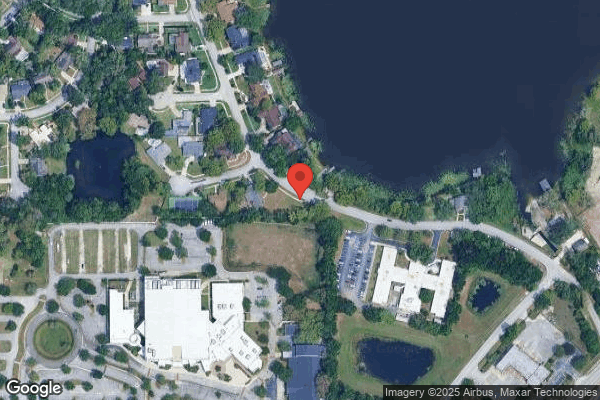
1520 S GRANT ST, LONGWOOD, FL 32750 (407) 339-9200
For profit - Limited Liability company 120 Beds SIMCHA HYMAN & NAFTALI ZANZIPER Data: November 2025 6 Immediate Jeopardy citations
Trust Grade
0/100
#524 of 690 in FL
Last Inspection: April 2024

Within standard 12-15 month inspection cycle. Federal law requires annual inspections.

Overview

Longwood Health and Rehabilitation Center has received a Trust Grade of F, indicating poor performance with significant concerns about care quality. It ranks #524 out of 690 facilities in Florida, placing it in the bottom half, and #10 out of 10 in Seminole County, meaning there are no better local options. The facility's situation is worsening, with issues increasing from 7 in 2023 to 18 in 2024. Staffing is a relative strength with a 4/5 star rating, but the 54% turnover rate is concerning, exceeding the state average. However, the facility has faced significant fines totaling $78,798, which is higher than 87% of Florida facilities, suggesting ongoing compliance problems. Additionally, there have been critical incidents, including a failure to honor a resident's advance directive regarding CPR, leading to unnecessary and painful resuscitation efforts, and neglect in providing necessary respiratory care for an oxygen-dependent resident with a tracheostomy, which could have been life-threatening. Overall, while there are some staffing strengths, serious and critical issues raise significant concerns about the quality of care at this facility.

Trust Score
F
0/100
In Florida
#524/690
Bottom 25%
Safety Record
High Risk
Review needed
Inspections
Getting Worse
7 → 18 violations
Staff Stability
⚠ Watch
54% turnover. Above average. Higher turnover means staff may not know residents' routines.
Penalties
✓ Good
$78,798 in fines. Lower than most Florida facilities. Relatively clean record.
Skilled Nurses
✓ Good
Each resident gets 44 minutes of Registered Nurse (RN) attention daily — more than average for Florida. RNs are trained to catch health problems early.
Violations
⚠ Watch
34 deficiencies on record. Higher than average. Multiple issues found across inspections.
★★☆☆☆
2.0
Overall Rating
★★★★☆
4.0
Staff Levels
★★★★★
5.0
Care Quality
★☆☆☆☆
1.0
Inspection Score
Stable
2023: 7 issues
2024: 18 issues

The Good

  • 4-Star Staffing Rating · Above-average nurse staffing levels
  • 5-Star Quality Measures · Strong clinical quality outcomes
  • Full Sprinkler Coverage · Fire safety systems throughout facility
  • No fines on record

Facility shows strength in staffing levels, quality measures, fire safety.

The Bad

2-Star Overall Rating

Below Florida average (3.2)

Below average - review inspection findings carefully

Staff Turnover: 54%

Near Florida avg (46%)

Higher turnover may affect care consistency

Federal Fines: $78,798

Well above median ($33,413)

Moderate penalties - review what triggered them

Chain: SIMCHA HYMAN & NAFTALI ZANZIPER

Part of a multi-facility chain

Ask about local staffing decisions and management

The Ugly 34 deficiencies on record

6 life-threatening 1 actual harm
Nov 2024 2 deficiencies 2 IJ
CRITICAL (J) 📢 Someone Reported This

A family member, employee, or ombudsman was alarmed enough to file a formal complaint

Immediate Jeopardy (IJ) - the most serious Medicare violation

Deficiency F0578 (Tag F0578)

Someone could have died · This affected 1 resident

**NOTE- TERMS IN BRACKETS HAVE BEEN EDITED TO PROTECT CONFIDENTIALITY** Based on interview, and record review, the facility failed to implement procedures to ensure a resident's wishes related to heal...

Read full inspector narrative →
**NOTE- TERMS IN BRACKETS HAVE BEEN EDITED TO PROTECT CONFIDENTIALITY** Based on interview, and record review, the facility failed to implement procedures to ensure a resident's wishes related to health care treatments and procedures at the end of life were followed and failed to honor an Advance Directive that reflected the decision to withhold Cardiopulmonary resuscitation (CPR) for 1 of 8 residents reviewed for Advanced Directives of a total sample of 8 residents, (#1). These failures contributed to resident #1 receiving CPR in violation of an explicit wish for a natural and dignified death. There was likelihood resident #1 experienced severe pain, and could have suffered broken bones, organ damage and a prolonged dying process. On [DATE] at approximately 11:48 PM, resident #1 was observed unresponsive in his wheelchair at the nurse's station. He was taken to his room where a licensed nurse initiated CPR without first verifying the resident's code status in the medical record. Emergency Medical Services (EMS) arrived at the facility at midnight and continued to provide CPR for another 20 minutes before resident #1 was transported to the hospital where he was intubated and stabilized until his wife requested life support be withdrawn. The facility failed to honor the resident's wishes not to be resuscitated and the physician order for Do Not Resuscitate. The facility's failure to honor the right to choose withholding of lifesaving interventions placed all residents with a Do Not Resuscitate Order (DNRO) Advance Directive at risk for serious psychosocial harm, physical trauma, and a prolonged, undignified death from unwanted resuscitation efforts. This failure resulted in Immediate Jeopardy starting on [DATE]. The Immediate Jeopardy was removed [DATE] based on verification of the facility's corrective actions. The scope and severity of the deficiency was decreased to a D, no actual harm with potential for more than minimal harm that is not Immediate Jeopardy. Findings: Cross reference F678. Resident #1, an [AGE] year-old male, was admitted to the facility on [DATE] with diagnoses including fracture of right femur, senile degeneration of brain, unspecified dementia, dysphagia (trouble swallowing), and chronic kidney disease stage III. Review of the Minimum Data Set (MDS) admission assessment with assessment reference date of [DATE] revealed resident #1 had a Brief Interview for Mental Status score of 02/15 which indicated he had severe cognitive impairment. A care plan for Advance Directives was initiated [DATE] which indicated resident #1 had an established Full Code order in place and identified his wife as his proxy and emergency contact. Review of the electronic medical record (EMR) revealed a care plan minutes form from [DATE], scanned into the miscellaneous documents. The form indicated those in attendance included resident #1's wife, the Director of Nursing (DON) and the Assistant Director of Nursing (ADON). Under resident/family concern was written, change code status to DNR. Review of resident #1's EMR revealed a State of Florida Do Not Resuscitate Order (DNRO) form signed by resident #1's wife on [DATE]. A Nurses Progress Note dated [DATE] at 1:07 AM revealed Certified Nursing Assistant (CNA) A observed resident #1 was unresponsive and notified nurse. Licensed Practical Nurse (LPN) B arrived on the scene, assessed the resident and confirmed he was unresponsive. The note indicated resident #1 was immediately transferred to his room where staff initiated CPR at 11:51 PM, and emergency services were called at 11:54 PM. EMS arrived on the scene at midnight and continued to provide resuscitation efforts. Resident #1 was transferred to a nearby hospital by EMS at 12:20 AM. A Social Services progress note dated [DATE] revealed resident #1's wife was contacted regarding his change in condition. The note indicated the caller was informed by his wife resident #1 had been intubated at the hospital and expired 30 minutes after the he was taken off the ventilator. On [DATE] at 9:55 AM, the DON reported she was in the care plan meeting with resident #1's wife on [DATE]. The DON recalled she had a conversation with resident #1's wife regarding his code status. She explained resident #1 received hospice services at home prior to entering the hospital but he came into the facility as Full Code. The DON stated she explained the difference between Full Code and DNR to the resident's wife who then decided she wanted resident #1 to be a DNR. She then called the Social Service Assistant (SSA) and informed her of the wife's wish to be a DNR. The DON recalled the wife then signed the DNRO form. She stated she told the ADON to contact the doctor and to update resident #1's code status in the EMR. The DON recalled Licensed Practical Nurse (LPN) B called her in the middle of the night to inform her of the code. She explained she questioned LPN B because the wife had signed the DNRO form earlier that day. LPN B informed the DON that resident #1 was listed as Full Code in the EMR. The DON explained she spoke to the ADON later that morning who stated she had forgotten to update the EMR with the change in resident #1's code status. She confirmed LPN B should have checked the EMR and the Code Status Binder to confirm the code status per facility policy. The DON acknowledged resident #1 was a DNR at the time CPR was performed. In a phone interview on [DATE] at 12:32 PM, the ADON confirmed she was in the care plan meeting on [DATE]. She recalled resident #1's wife wanted him to be a DNR and she went with the SSA to sign the DNRO form. She acknowledged the DON told her the wife signed the form and asked her to update the EMR with the new code status. The ADON recalled she was busy with another staff member and had asked the DON to remind her. She explained the DON did not remind her and she forgot to update the EMR. The ADON explained any nurse could have updated the EMR with the new code status. She said she did not know why someone else did not do it. In a phone interview on [DATE] at 10:14 AM, the SSA stated she was called into the care plan meeting and was told resident #1 had a DNRO form at home. The SSA informed resident #1's wife she had a DNRO form in her office that could be signed and would be activated that day. She explained resident #1's wife signed the form. The SSA reported she uploaded a scan of the form to the EMR and placed a copy in the Code Status Binder on the code cart on the unit on the afternoon of [DATE]. She stated the following morning she was told resident #1 was found unresponsive and the nurses provided CPR. Once she got to the facility, the SSA discovered resident #1's code status had not been updated in the EMR. On [DATE] at 8:54 AM, LPN B stated she was assigned to resident #1 on the night of [DATE]. She recalled seeing resident #1 in his wheelchair by the nurse's station. LPN B reported as she was rounding, she heard another staff member announce a Code Blue. She stated resident #1 had been found unresponsive and she assisted with getting him to his room and into the bed. LPN B stated she asked for someone to check his code status and heard someone reply he was a Full Code. She explained she asked again if he was a Full Code, and the person said it again. LPN B reported she then began chest compressions at 11:51 PM. She stated she alternated compressions with other nurses until EMS arrived. LPN B recalled she then went outside the room to verify the resident's code status for herself when she first switched off with another nurse. LPN B stated the code cart was in the resident's room. She acknowledged she did not check the Code Status Binder located on the cart to verify resident #1's code status. She reported EMS arrived at midnight and took over CPR. She stated EMS continued chest compressions through the time they transported resident #1 to the hospital at 12:20 AM. In a phone interview on [DATE] at 3:05 PM, LPN C confirmed she worked the night of [DATE]. She stated she heard another nurse call a Code Blue from the other wing and ran over to assist. LPN C recalled she assisted getting resident #1 into bed. She did not recall who started the chest compressions but stated she did participate in providing CPR to resident #1. She stated she thought LPN B checked resident #1's code status but was not aware of where she got the information. LPN C acknowledged she did not verify resident #1's code status as CPR was already in progress. In a phone interview on [DATE] at 2:32 PM, Registered Nurse (RN) D confirmed she was working the night of [DATE]. She recalled hearing a Code Blue called on the opposite unit and ran to that unit. RN D stated when she arrived at resident #1's room, LPN B and LPN C were already there. She explained she saw LPN B performing chest compressions. RN D reported that she alternated with LPN B and LPN C to perform CPR on resident #1. She stated she thought the code status had been confirmed since CPR was already in progress. RN D recalled she saw resident #1 was identified as Full Code in the EMR but acknowledged she did not check the Code Status Binder on the code cart to verify. In a phone interview on [DATE] at 12:02 PM, resident #1's wife confirmed she signed the DNRO on [DATE] during a care plan meeting at the facility. She explained her husband received hospice care previously at home and had been a DNR. She stated the facility called her sometime during the night after she had signed the new DNRO to inform her of the Code Blue and that her husband was being sent to the hospital. Resident #1's wife stated she did not know why they performed CPR since their wishes were for DNR. She reported the hospital called her on [DATE] at approximately 1:00 AM to update her on her husband's status. She told them she did not want her husband to be intubated. She explained the hospital staff informed her he had already been intubated. Resident #1's wife stated she went to the hospital that morning and talked with a doctor in order to get the tube removed. She recalled two doctors had to sign off and the tubes were removed around 10:00 AM. She explained she sat with her husband, holding his hand until he passed away a short time later at 10:30 AM. Resident #1's wife explained she had signed the DNRO because she did not want to prolong his life and did not want him to suffer. She stated her husband did not want to suffer either. On [DATE] at 11:13 AM, the Administrator stated the DON called her on [DATE] at approximately 12:30-12:45 AM to inform her of CPR being provided to resident #1. She explained an investigation was initiated that morning. The Administrator reported the ADON failed to update the EMR with the correct code status. She acknowledged the nurses should have verified resident #1's code status in the EMR and Code Status Binder on the code cart before initiating CPR. The Administrator verified this resulted in resident #1 being provided life saving measures against his wishes. The Facility's policy and procedure for Advanced Directives and Code Status dated [DATE] read, It is the policy of the facility to honor Advanced Directives, Code Status and Do Not Resuscitate Orders in accordance with Stated and Federal Regulations. Review of the immediate corrective measures implemented by the facility revealed the following, which were verified by the survey team: *On [DATE] a medical record audit was completed for current residents to ensure DNR forms were present in the electronic medical record for residents with DNR orders. *On [DATE] through [DATE] current licensed nurses were educated on resident's rights regarding treatment and Advanced Directives by the Director of Nursing/delegate. * 40 out of 41 total licensed nurses received education; 98% of nurses: On [DATE] 10 out of 41 nurses completed the education, 24% of nurses, On [DATE] an additional 29 of 41 nurses completed their education, 71% of nurses. On [DATE] an additional 1 of 41 nurses completed the education, 2%. 1 remaining licensed nurse to receive education upon return from leave and prior to working next shift. *New hire nurses at the facility will receive the above education during orientation and prior to working an assignment. *On [DATE] through [DATE] current licensed nurses participated in mock code drills: *18 out of 41 total Licensed Nurses participated in mock code drills; 44% of nurses: On [DATE] 11 out of 41 nurses participated in mock code drills, 27% of nurses. On [DATE] 7 out of 41 nurses participated in mock code drills, 17%. 23 remaining licensed nurses to participate in mock code drills upon return from leave and prior to working next shift. *New hire nurses at the facility will participate in a mock code drill during orientation and prior to working an assignment. *On [DATE] through [DATE] residents and/or responsible parties for current residents residing in facility were interviewed by Social Services/Delegate to validate current physician orders for code status reflect resident and/or responsible party's current wishes for code status. Code status updated, if applicable based on interviews conducted. *Ad Hoc Quality Assurance and Performance Improvement (QAPI) meeting on [DATE] completed with Medical Director, Administrator, and additional Interdisciplinary team (IDT) members on the adherence to CPR policy and policy and procedure for Resident Rights Regarding Treatment and Advance Directives and a review of the root cause analysis was completed. *As part of the ongoing Quality Assurance Assessment (QAA) process, an ad hoc QAPI was conducted on [DATE] that included the Medical Director, Administrator, Director of Nursing and additional IDT members to review the plan viability on the Advance Directives process, code process and results of audits. No discrepancies or concerns were noted related to Advanced Directive code status standards and guidelines. Interviews conducted on [DATE] with 10 licensed nurses across all shifts indicated they were knowledgeable of Advance Directives and where to verify the code status in the EMR and the code status binder prior to providing CPR. The surveyors validated the education with attendance sheets for Code Blue drills and in-services. Review of QAPI audits revealed daily Code Blue drills were conducted per performance improvement plan. The resident sample was expanded to include four additional residents, three who elected DNR status and one with Full Code status. Interviews and record reviews revealed no concerns for residents #2, #3, #4, #5, #6, #7, and #8 related to Advance Directives.
CRITICAL (J) 📢 Someone Reported This

A family member, employee, or ombudsman was alarmed enough to file a formal complaint

Immediate Jeopardy (IJ) - the most serious Medicare violation

Deficiency F0678 (Tag F0678)

Someone could have died · This affected 1 resident

**NOTE- TERMS IN BRACKETS HAVE BEEN EDITED TO PROTECT CONFIDENTIALITY** Based on record review, and interview, licensed nurses failed to follow the facility's policy and procedure for Cardiopulmonary ...

Read full inspector narrative →
**NOTE- TERMS IN BRACKETS HAVE BEEN EDITED TO PROTECT CONFIDENTIALITY** Based on record review, and interview, licensed nurses failed to follow the facility's policy and procedure for Cardiopulmonary Resuscitation (CPR) related to verification of resuscitation or code status in an emergency for 1 of 8 residents reviewed for Advanced Directives, of a total sample of 8 residents, (#1). On [DATE] at approximately 11:48 PM, resident #1 was observed unresponsive in his wheelchair at the nurse's station. He was taken to his room where a licensed nurse initiated CPR without first verifying the resident's code status in the medical record. Emergency Medical Services (EMS) arrived at the facility at midnight and continued to provide CPR for another 20 minutes before resident #1 was transported to the hospital where he was intubated and stabilized. The facility failed to honor the resident's wishes not to be resuscitated and physician's order for Do Not Resuscitate. The facility's failure to ensure staff followed procedures related to honoring an Advanced Directive to withhold CPR contributed to resident #1 suffering unwanted, aggressive resuscitation efforts and placed all residents who had valid DNROs at risk for serious injury/impairment/prolonged death. This failure resulted in Immediate Jeopardy starting on [DATE]. The Immediate Jeopardy was removed on [DATE]. The scope and severity of the deficiency was decreased to a D, no actual harm with potential for more than minimal harm that is not Immediate Jeopardy. Findings: Cross reference F578. Resident #1, an [AGE] year-old male, was admitted to the facility on [DATE] with diagnoses including fracture of right femur, senile degeneration of brain, unspecified dementia, dysphagia (difficulty swallowing), and chronic kidney disease stage III. Review of the Minimum Data Set admission assessment with assessment reference date of [DATE] revealed resident #1 had a Brief Interview for Mental Status score of 02/15 which indicated he had severe cognitive impairment. Review of the electronic medical record (EMR) revealed a care plan minutes form dated [DATE] scanned into the miscellaneous documents. The form indicated those in attendance at the meeting included resident #1's wife, the Director of Nursing (DON) and the Assistant Director of Nursing (ADON). Under resident/family concern was written, change code status to DNR. Review of resident #1's EMR revealed a State of Florida Do Not Resuscitate Order (DNRO) form dated [DATE] that was signed by the resident's wife and his attending physician. The document showed the resident representative's signature under the statement, Being informed of my right to refuse cardiopulmonary resuscitation (CPR), including artificial ventilation, cardiac compression, endotracheal intubation and defibrillation, direct that CPR be withheld or withdrawn from me. The physician's statement read, I direct the withholding or withdrawal of CPR from the patient in the event of the patient's cardiac or respiratory arrest. Resident #1's EMR contained a physician order dated [DATE] which read, Full Code. The Facility's policy and procedure for Advanced Directives Code Status dated [DATE] read, It is the policy of the facility to honor Advanced Directives, Code Status and Do Not Resuscitate Orders in accordance with State and Federal regulations. The form indicated a resident's code status should be verified by the physician's order tab in the EMR and the corresponding form should be visualized in the code status binder. A Nurse's Progress Note dated [DATE] at 1:07 AM, revealed Certified Nursing Assistant (CNA) A observed resident #1 was unresponsive and notified the nurse. Licensed Practical Nurse (LPN) B arrived on the scene, assessed resident #1 and confirmed he was unresponsive. The note indicated resident #1 was immediately transferred to his room and staff initiated CPR at 11:51 PM and emergency services were called 11:54 PM. Emergency Medical Services (EMS) arrived on the scene at midnight and continued to provide resuscitation efforts. Resident #1 was transferred to the hospital by EMS at 12:20 AM. On [DATE] at 9:55 AM, the DON reported she was in the care plan meeting with resident #1's wife on [DATE]. The DON recalled she had a conversation with resident #1's wife regarding his code status. The DON stated she explained the difference between Full Code and DNR to the wife who then decided to sign a DNRO. The DON explained she asked the Social Services Assistant (SSA) to assist the wife with the DNRO and directed the Assistant Director of Nursing (ADON) to contact resident #1's physician and to update the EMR. She recalled Licensed Practical Nurse (LPN) B called her in the middle of the night to inform her of the code. The DON state she questioned LPN B because the wife had signed a DNRO form. LPN B informed her resident #1 was listed as Full Code in the EMR. The DON acknowledged the EMR had not been updated and resident #1 was a DNR at the time CPR was performed. In a phone interview on [DATE] at 12:32 PM, the ADON confirmed she attended the care plan meeting on [DATE]. She recalled resident #1's wife signed a DNRO. She acknowledged the DON told her to contact the doctor and update the EMR with the new code status. The ADON stated she was busy with another staff member and asked the DON to remind her. She explained she forgot to update the EMR. The ADON stated any nurse could have updated the EMR with the new code status. In a phone interview on [DATE] at 10:14 AM, the SSA confirmed she met with resident #1's wife who signed a DNRO form on [DATE]. The SSA reported she uploaded the form to the EMR and placed a copy in the Code Status Binder on the crash cart on the afternoon of [DATE]. She stated the following morning she was told resident #1 coded and the nurses provided CPR. Once she got to the facility, the SSA discovered the code status had not been updated in the EMR. On [DATE] at 4:09 PM, Certified Nursing Assistant (CNA A) confirmed she was the assigned CNA for resident #1 on [DATE]. She recalled resident #1 was in his wheelchair at the nurse station and he was not moving or breathing. She notified a nurse who called a code blue. CNA A reported staff responded to the call, and she assisted in getting resident to his room and into bed. She explained she stepped outside the room and the nurses took over. CNA A stated she did not know who verified resident #1's code status or who started resuscitation efforts. She did recall seeing the crash cart in the room but did not know who brought it. On [DATE] at 8:54 AM, LPN B stated she was assigned to resident #1 on the night of [DATE]. She described the sequence of events on [DATE], the day resident #1 received CPR. She recalled hearing another staff member announce a Code Blue. LPN B stated she observed resident #1 was unresponsive at nurse station and she assisted with getting him to his room and into the bed. LPN B explained she asked for someone to check code status and heard someone say he was a Full Code. She asked again if he was a Full Code, and the person said it again. LPN B reported she then began chest compressions at 11:51 PM. She stated she switched off with other nurses until EMS arrived at midnight. LPN B recalled she went outside the room to verify resident's code status for herself when she first switched off with another nurse. LPN B stated the crash cart was in the resident's room. She acknowledged she only checked the computer and did not check the Code Status Binder to verify resident #1's code status. She reported EMS took over CPR when they arrived. LPN B stated EMS continued chest compressions until 12:20 AM when they transported resident #1 to the hospital. In a phone interview on [DATE] at 3:05 PM, LPN C confirmed she was working the night of [DATE]. She stated she heard another nurse calling a Code Blue from the other wing and ran over to assist. LPN C recalled she assisted getting resident into bed. She did not recall who started chest compressions but stated she did participate in providing CPR to resident #1. She stated she was sure LPN B checked resident #1's code status. She reported LPN B came back to the room and stated he was a Full Code. She did know how LPN B verified the code status. LPN C acknowledged she did not verify resident #1's code status as CPR had already started. In a phone interview on [DATE] at 2:32 PM, Registered Nurse (RN) D confirmed she was working the night of [DATE]. She recalled hearing a code blue called on the opposite unit and ran to that unit. RN D stated when she arrived LPN B and LPN C were already in resident #1's room. She explained she saw LPN B performing chest compressions. RN D reported that she traded off with LPN B and LPN C to perform CPR. She stated she thought code status had been confirmed since CPR had been started. RN D recalled she later saw resident #1 was a full code in the EMR. She acknowledged she did not check before CPR began and did not check the Code Status Binder on the crash cart to verify. In a phone interview on [DATE] at 12:02 PM, resident #1's wife confirmed she signed a DNRO on [DATE] during a care plan meeting. She stated the facility called her sometime during the night and informed her of the code and her husband being transferred to the hospital. Resident #1's wife stated she did know why they did that since he was a DNR. She reported the hospital called her on [DATE] at approximately 1:00 AM to update her on resident #1's status. She told the caller she did not want her husband to be intubated. She explained the caller informed her he had already been intubated. Resident #1's wife stated she went to the hospital that morning and had to talk with a doctor to get the tube removed. She recalled two doctors had to sign off and the tubes were eventually removed around 10:00 AM. She stated she went into the room and sat with her husband holding his hand until he passed away at 10:30 AM. Resident #1's wife explained she had signed the DNRO because she did not want to prolong his life and did not want him to suffer. She stated her husband did not want to suffer either. On [DATE] at 11:13 AM, the Administrator stated the DON called her on [DATE] around 12:30-12:45 AM and informed her of CPR being provided to resident #1. She explained an investigation was initiated that morning. The Administrator reported that resident #1's wife had signed a DNRO and the ADON failed to update the EMR with the correct code status. She acknowledged the nurses should have verified resident #1's code status in the EMR and Code Status Binder on the crash cart per policy. The Administrator verified this resulted in a resident with a DNR being provided CPR. Review of the immediate corrective measures implemented by the facility revealed the following, which were verified by the survey team: *On [DATE] through [DATE] current licensed nurses were educated on facility's CPR policy and on procedure for performing a code to include confirmation of resident code status prior to initiating CPR. Post test and code procedure competencies completed to validate comprehension. *39 of 41 total licensed nurses received education; 95% of nurses: On 11/1 5/2024 10 out of 41 nurses completed the education, 24% of nurses, On [DATE] an additional 29 of 41 nurses completed their education, 71% of nurses. 2 remaining licensed nurse to receive education upon return from leave and prior to Working next shift. *New hire nurses at the facility will receive the above education during orientation and prior to working an assignment. *On [DATE] through [DATE] current licensed nurses participated in Mock Code Drills: *18 of 41 total licensed nurses participated in mock code drills; 44% of nurses On [DATE] 11 out of 41 nurses participated in mock code drills, 27% of nurses, On [DATE] 7 out of 41 nurses participated in mock code drills, 17%. 23 remaining licensed nurses to participate in mock code drills upon return from leave and prior to working next shift. *New hire nurses at the facility will participate in a mock code drill during orientation and prior to working an assignment. *Ad Hoc QAPI on [DATE] completed with Medical Director, Administrator, Director of Nursing and additional IDT members on the adherence to CPR policy and checking the residents code status prior to initiating CPR. Interviews conducted on [DATE] with 10 licensed nurses across all shifts indicated they were knowledgeable of Advanced directives and where to verify the code status in the EMR and the code status binder prior to providing CPR. The surveyors validated the education with attendance sheets for code blue drills and in-services. Review of QAPI audits revealed daily code blue drills were conducted per performance improvement plan. The resident sample was expanded to include four additional residents, 3 who elected DNR status and 1 with Full Code status. Interviews and record reviews revealed no concerns for residents #2, #3, #4, #5, #6, #7, and #8 related to Advanced directives. Based on the facility's corrective actions, the survey team determined the immediate jeopardy was removed [DATE].
Apr 2024 16 deficiencies
CONCERN (D)

Potential for Harm - no one hurt, but risky conditions existed

Safe Environment (Tag F0584)

Could have caused harm · This affected 1 resident

**NOTE- TERMS IN BRACKETS HAVE BEEN EDITED TO PROTECT CONFIDENTIALITY** Based on observation, interview, and record review, the facility failed to replace a broken bed in a timely manner to promote th...

Read full inspector narrative →
**NOTE- TERMS IN BRACKETS HAVE BEEN EDITED TO PROTECT CONFIDENTIALITY** Based on observation, interview, and record review, the facility failed to replace a broken bed in a timely manner to promote the right to a comfortable environment for 1 of 5 residents reviewed for environmental concerns, out of a total sample of 43 residents, (#24); and failed to clean and store resident care items appropriately in a shared bathroom in 1 of 32 rooms on the B Wing, (room [ROOM NUMBER]). Findings: 1. Review of the medical record revealed resident #24, an [AGE] year old female, was admitted to the facility on [DATE] and readmitted on [DATE] with diagnoses including diffuse large cell lymphoma, generalized muscle weakness, stroke with left side weakness and paralysis, spondylosis (degenerative changes in the spine), arthropathy (joint disease), and right hip fracture. The Minimum Data Set (MDS) Discharge-Return Anticipated assessment with assessment reference date of 3/25/24 revealed the resident's short-term memory was intact and she had independent cognitive skills for daily decision making. The document indicated resident #24 required partial to moderate assistance for toileting hygiene, bathing, dressing, and personal hygiene, and was always incontinent of bowel and bladder. Review of the medical record revealed resident #24 had a care plan for decreased ability to perform activities of daily living (ADLs) initiated on 11/13/23. The goals were the resident would participate in ADLs as tolerated and have her ADL needs met. The interventions directed nurses and Certified Nursing Assistants (CNAs) to, Arrange resident/patient environment as much as possible to facilitate ADL performance. On 4/08/24 at 11:13 AM, resident #24 stated the remote control for her bed stopped working on the weekend and it was not replaced until this morning. The resident explained she was forced to sleep seated in an upright position overnight. The resident used her arm to demonstrate the head of her bed was stuck at an angle of approximately 60 degrees. She said, The CNAs tried to fix the bed and they really tried to help but they couldn't do anything. It was so hard for them to even try and change my brief sitting up. They had to pull me down to the bottom of the bed. They told me the maintenance people don't work on the weekend and they did not consider that as an emergency. Resident #24 stated she now had mild left shoulder discomfort as a result of attempts to find a comfortable position for sleep while the head of her bed remained upright. On 4/10/24 at 1:01 PM, CNA D stated she was assigned to resident #24 during the 7:00 AM to 3:00 PM shift on Sunday 4/07/24. She recalled the resident's bed broke soon after lunchtime. CNA D said, She was sitting up pretty high. I had to rock her from side to side [to change her]. She said it was uncomfortable. CNA D stated she initiated an electronic work order and also reported the broken bed to the assigned nurse, Licensed Practical Nurse (LPN) C. On 4/10/24 at 1:20 PM, the Maintenance Director explained he was on call on the weekends and also had a Maintenance Assistant who attended to issues in the building on the weekends and after hours if necessary. He stated no staff contacted him regarding resident #24's broken bed over the weekend, and he was not aware of the concern until informed by Central Supply staff on Monday morning. The Maintenance Director stated anything that occurred in a resident room required immediate attention and staff could have replaced the broken bed with one of the many unoccupied beds in the facility. On 4/10/24 at 1:31 PM, the Central Supply Coordinator explained when he arrived at work on Monday, 4/08/24 at approximately 6:20 AM, nursing staff informed him of concerns regarding resident #24's bed. He verified the resident was in a seated position and he recalled, She was not fully upright, but she was in a position that I deemed uncomfortable. The Central Supply Coordinator validated there were functional beds available in empty rooms. On 4/12/24 at 10:36 AM, the Director of Nursing (DON) stated staff members could have switch out the resident's broken bed or called maintenance staff. He explained it was common sense and said, I think it was horrible. She should not have had to sleep in an upright bed. 2. On 4/08/24 at 11:58 AM, there were four plastic bath basins stacked on the lid of the toilet in the shared bathroom of room B-12. A gray bed pan was wedged between the grab bar and wall beside the toilet, and a dirty urinal hung from the grab bar. In addition, there were four containers of shaving cream on the right side of the sink. The resident care items were not labeled with names, room and bed information, or stored in plastic bags. On 4/09/24 at 8:57 AM, there were two bath basins on the lid of the toilet and the urinal still hung from the grab bar. A crusted dark yellow to brown substance was noted inside the bottom of the urinal. Four containers of shaving cream remained on the right side of the sink. On 4/10/24 at 1:49 PM, the location and condition of the bath basins, urinal, and shaving cream were unchanged. On 4/10/24 at 1:52 PM, the Evening Shift LPN Nursing Supervisor validated the bath basins and urinal in bathroom of room B-12 were not labeled to designate which of the residents in the semi-private room used the items. He confirmed the resident care items should be kept clean and stored in clear plastic bags. The resident in Bed A stated he used the shared bathroom and thought the urinal and basins belonged to the resident in Bed B. On 4/11/24 at 9:34 AM, there was an unlabeled hairbrush and four containers of shaving cream on the sink in the room B-12 bathroom. The resident in Bed A said, I don't know whose it is. It could be mine. On 4/12/24 at 10:38 AM, the DON stated residents' personal care items should be appropriately labeled and stored in plastic bags. He confirmed the bottles of shaving cream and the hairbrush should have been labeled and returned to the appropriate resident's drawer after use. The DON acknowledged there were concerns related to infection control and environmental cleanliness. He stated CNAs were responsible for storing residents' items appropriately and housekeeping staff should alert nursing staff if items were improperly stored or needed. Review of the facility's policy and procedure for Safe and Homelike Environment, revised 4/11/23, revealed the facility would provide a safe, clean, comfortable, and homelike environment to ensure residents received care and services safely. The document indicated the facility would provide necessary housekeeping and maintenance services to achieve that goal. The policy revealed the environment included residents' rooms and bathrooms and it defined sanitary conditions as those that prevented the spread of disease-causing organisms by methods such as ensuring resident care equipment was clean and properly stored. The policy revealed instructions to staff to, Report any furniture in disrepair to Maintenance promptly [and] report any unresolved environmental concerns to the Administrator.
CONCERN (D)

Potential for Harm - no one hurt, but risky conditions existed

Report Alleged Abuse (Tag F0609)

Could have caused harm · This affected 1 resident

**NOTE- TERMS IN BRACKETS HAVE BEEN EDITED TO PROTECT CONFIDENTIALITY** Based on interview, and record review, the facility failed to report an alleged violation of neglect for 1 of 2 residents review...

Read full inspector narrative →
**NOTE- TERMS IN BRACKETS HAVE BEEN EDITED TO PROTECT CONFIDENTIALITY** Based on interview, and record review, the facility failed to report an alleged violation of neglect for 1 of 2 residents reviewed for abuse, of a total sample of 43 residents, (#38). Findings: Cross reference F689 Resident #38 was admitted to the facility on [DATE] and readmitted [DATE] with diagnoses including schizoaffective disorder, anxiety disorder, fracture of fifth metacarpal bone of left hand, muscle weakness, lack of coordination, and repeated falls. Review of the Minimum Data Set quarterly assessment with assessment reference date of 3/21/24 revealed resident #38 had a Brief Interview for Mental Status score of 13 which indicated she was cognitively intact. The document indicated the resident walked independently and had one fall without injury and one fall with injury during the last 90 days. The medical record contained a care plan revised on 10/09/23 which indicated resident #38 was at risk for falls related to deconditioning, weakness, medication use and cognition. Interventions included one-to-one supervision for safety which was initiated 1/29/24. A physician order dated 3/19/24 read, One to One Supervision [related to] behaviors/fall risk every shift. Review of resident #38's medical record revealed a progress notes written by Licensed Practical Nurse (LPN) A dated 4/05/24. The note indicated LPN A observed resident #38 walking in the hallway alone at approximately 11:15 PM. The resident was observed with blood on her nose and stated she fell in-between the bedside table and the walker when she was by herself because the sitter left before another one came. Review of facility assignment sheets revealed Certified Nursing Assistant (CNA) B was assigned to resident #38 on 4/05/24. On 4/11/24 at 1:59 PM, CNA B confirmed she was assigned to sit one-to-one with resident #38 during the 3 PM to 11 PM shift on 4/05/24. She stated resident #38 required one-to-one supervision for safety because of her multiple falls. CNA B recalled another employee was scheduled to relieve her but had not shown up. She explained she spoke to the 3 PM to 11 PM Supervisor on B-Wing who told her the employee was finishing her shift on B-Wing and would then come to relieve her. CNA B stated she returned to A-Wing and asked another employee at the desk to watch resident #38 until the 11 PM to 7 PM relief came over from B-Wing. CNA B reported she thought the other person was going to sit one-to-one with the resident. CNA B stated she went to resident #38's room, gathered her belongings and left the unit. On 4/11/24 at 2:25 PM, LPN A stated she was working on A-Wing the night of 4/05/24. She recalled she arrived a little late for her shift and observed resident #38 walking down the hall with blood on her nose from what appeared to be a scratch. LPN A reported the one-to-one sitter was not with resident #38 at the time. LPN A recalled resident #38 stated she fell between the bed and walker hitting her nose. LPN A stated she spoke to co-workers who informed her the one-to-one sitter left earlier. On 4/11/24 at 2:58 PM, the 3 PM to 11 PM Supervisor stated he was approached by CNA B at approximately 10:30 PM on 4/05/24, who told him she had enough and wanted to go home. The 3 PM to 11 PM Supervisor clarified CNA B came to B-Wing without resident #38. He stated he told CNA B the shift ended at 11:00 PM and to go back to the unit and sit one-to-one with resident #38 as assigned until the shift ended. He reported he observed CNA B go back to A-Wing so he went back into the office and continued his work. The 3 PM to 11 PM Supervisor stated he later learned CNA B left before the shift ended and notified the Director of Nursing (DON) and Assistant Director of Nursing (ADON) the next morning via a messaging service they used to communicate. He stated the message included information that CNA B left her shift early without permission. He explained if she wanted to leave early because of a stressful one-to-one assignment, maybe she was not the right person to do the assignment. He re-iterated he did not give her permission to leave, and if she left early, it was against his direct order. The 3 PM to 11 PM Supervisor stated he did not receive any response from the DON or ADON, and was not questioned as to what happened or asked to provide a statement. On 04/11/24 at 5:48 PM, the DON and Regional Nursing Consultant verified resident #38 experienced an unwitnessed fall with minor injury on 4/05/24. The DON explained the one-to-one sitter assigned to resident #38 left her shift early before she was relieved. He clarified the expectation was the one-to-one sitter should not have left and should have remained with the resident until she was relieved by another staff. He acknowledged CNA B's actions could possibly be neglect. The DON explained the 3 PM to 11 PM Supervisor sent him a message via messaging service, but he did not have an audible notification to alert him there was a message and was not aware of the situation until Monday morning, 4/08/24. He acknowledged an allegation or suspicion of neglect should have been reported immediately and the report filed within 24 hours. The DON and Regional Nurse Consultant stated the report would be filed today (4/11/24). He reported CNA B was removed from the schedule as of 4/11/24. Review of staffing schedule and assignment sheets provided by the Staffing Coordinator revealed CNA B was scheduled to work 4/05/24, 4/06/24, 4/07/24, 4/08/24, 4/10/24 and 4/11/24. The staffing schedule and assignment sheets showed CNA B was assigned to sit one-to-one with resident #38 on 4/05/24, 4/07/24, 4/08/24 and 4/10/24. The facility's Abuse, Neglect and Exploitation policy and procedure revised 11/16/23 indicated the facility would have written procedures which included reporting of all alleged violations to the Administrator/designee, state agency, adult protective services and to all other required agencies within specified timeframes. The document clarified reporting should be no later than 24 hours if the events that caused the allegation did not involve abuse and did not result in serious bodily injury. The document read, The facility will make efforts to ensure all residents are protected from physical and psychosocial harm, as well as additional abuse, during and after the investigation. Examples include but are not limited to: . D. Room or staffing changes, if necessary to protect the resident(s) from the alleged perpetrator.
CONCERN (D)

Potential for Harm - no one hurt, but risky conditions existed

Accident Prevention (Tag F0689)

Could have caused harm · This affected 1 resident

**NOTE- TERMS IN BRACKETS HAVE BEEN EDITED TO PROTECT CONFIDENTIALITY** Based on interview, and record review, the facility failed to provide appropriate supervision to prevent a fall with minor injur...

Read full inspector narrative →
**NOTE- TERMS IN BRACKETS HAVE BEEN EDITED TO PROTECT CONFIDENTIALITY** Based on interview, and record review, the facility failed to provide appropriate supervision to prevent a fall with minor injury for 1 of 5 residents reviewed for accidents, of a total sample of 43 residents, (#38). Findings: Cross reference F609 Resident #38 was admitted to the facility on [DATE] and readmitted [DATE] with diagnoses including schizoaffective disorder, anxiety disorder, fracture of fifth metacarpal bone of left hand, muscle weakness, lack of coordination, and repeated falls. Review of the Minimum Data Set quarterly assessment with assessment reference date of 3/21/24 revealed resident #38 had a Brief Interview for Mental Status score of 13 which indicated she was cognitively intact. The document indicated the resident walked independently and had one fall without injury and one fall with injury during the previous 90 days. A care plan with revision date 10/09/23 indicated resident #38 was at risk for falls related to deconditioning, weakness, medication use and cognition. Interventions included one-to-one supervision for safety which was initiated 1/29/24. Review of resident #38's medical record revealed a physician order dated 3/19/24 for one-to-one supervision every shift related to behaviors and fall risk. The resident demographic sheet listed the resident as high risk for fall with one-on-one supervision. Review of the facility's incident log revealed resident #38 had a witnessed fall on 2/11/24, a witnessed fall on 3/09/24 and an unwitnessed fall on 4/05/24. Review of resident #38's medical record revealed a progress note written by Licensed Practical Nurse (LPN) A dated 4/05/24. The note indicated LPN A observed resident #38 walking in the hallway alone at approximately 11:15 PM. The resident was observed with blood on her nose and stated she fell in-between the bedside table and the walker when she was by herself because the sitter left before another one came. On 4/11/24 at 1:59 PM, Certified Nursing Assistant (CNA) B confirmed she was assigned to sit one-to-one with resident #38 during the 3-11 shift on 4/05/24. She stated resident #38 required one-to-one supervision for safety because of her multiple falls. CNA B recalled another employee was scheduled to relieve her but was not there yet. She explained she spoke to the 3 PM to 11 PM Supervisor on B-Wing who told her the employee was finishing her shift on B-Wing and would then come to relieve her. CNA B stated she returned to A-Wing and asked another employee to watch resident #38 until relief came. CNA B explained she thought the other employee was going to sit one-to-one with resident #38, so she gathered her belongings and left. On 4/11/24 at 2:25 PM, LPN A stated she was working on A-Wing the night of 4/05/24. She recalled when she arrived, she observed resident #38 walking down the hall with blood on her nose from a scratch. LPN A stated the one-to-one sitter was not with resident #38 at the time. LPN A recalled resident #38 said she fell between the bed and walker hitting her nose. LPN A stated she spoke to co-workers who informed her the one-to-one sitter left earlier. On 4/11/24 at 2:58 PM, the 3 PM to 11 PM Supervisor stated he was approached by CNA B at approximately 10:30 PM on 4/05/24. He recalled CNA B came to B-Wing alone without resident #38 and told him she had enough and wanted to go home. He stated he told CNA B her shift ended at 11:00 PM and to go back to the unit and sit one -on-one with resident #38 as assigned until the shift ended. He reported he observed CNA B going back to A-Wing and he went back into the office and continued his work. The 3 PM to 11 PM Supervisor stated he later learned CNA B left her shift early and he notified the Director of Nursing (DON) and Assistant Director of Nursing (ADON) the next morning via a messaging service they use to communicate. He stated the message included information that CNA B left her shift early without permission. He explained if she wanted to leave early because of a stressful one -on-one assignment, maybe she was not the person to do it. He re-iterated he did not give her permission to leave. On 04/11/24 at 5:48 PM, the DON and Regional Nursing Consultant verified resident #38 experienced an unwitnessed fall with minor injury on 4/05/24. The DON reviewed the fall on 4/05/24 and reported resident #38 came out from her room into the hallway and reported she had fallen in her room. Resident #38 had blood on her nose from what looked like a scratch. He explained resident #38 was supposed to be on one -on-one supervision due to her fall risk. He stated resident #38 was impulsive with poor safety awareness and had previous falls so she was placed on one -on-one supervision purely for her safety. The DON acknowledged resident #38 fell after the one -on-one sitter left her unsupervised. The DON stated the expectation was a one -on-one sitter would remain with the resident until relieved by another staff member. He stated, She should not have left. The facility's Accidents and Supervision policy and procedure revised 10/18/22 read, Supervision is an intervention and a means of mitigating accident risk. The facility will provide adequate supervision to prevent accidents. Adequacy of supervision: a. Defined by type and frequency [and] b. Based on the individual resident's assessed needs and identified hazards in the resident environment.
CONCERN (D)

Potential for Harm - no one hurt, but risky conditions existed

Unnecessary Medications (Tag F0759)

Could have caused harm · This affected 1 resident

**NOTE- TERMS IN BRACKETS HAVE BEEN EDITED TO PROTECT CONFIDENTIALITY** Based on observation, interview, and record review, the facility failed to administer medications as ordered by the physician fo...

Read full inspector narrative →
**NOTE- TERMS IN BRACKETS HAVE BEEN EDITED TO PROTECT CONFIDENTIALITY** Based on observation, interview, and record review, the facility failed to administer medications as ordered by the physician for 1 of 3 residents observed during the medication administration task, of a total sample of 43 residents, (#65). There were 2 errors in 29 opportunities for a medication error rate of 6%. Findings: Review of the medical record revealed resident #65, an [AGE] year old male, was admitted to the facility on [DATE] and readmitted on [DATE]. His diagnoses included encephalopathy (brain disorder), pulmonary embolism (blood clot in the lung), chronic obstructive pulmonary disease (COPD), and a history of COVID-19. The Minimum Data Set Quarterly assessment with assessment reference date of 3/05/24 revealed resident #65 had unclear speech. The resident's Brief Interview for Mental Status score was 12, which indicated moderate cognitive impairment. Review of the medical record revealed resident #65 had a care plan for respiratory issues related to shortness of breath. The goal was the resident would be free of signs and symptoms of respiratory distress and maintain optimal functioning. The interventions instructed nurses to provide medications and respiratory treatments as ordered. Review of the Order Summary Report revealed physician orders for Fluticasone Propionate 50 micrograms per actuation (mcg/act), give one spray in both nostrils once daily for congestion; and Spiriva Respimat inhaler 2.5 mcg/act, two puffs inhaled orally once daily for shortness of breath. Fluticasone propionate is a nasal steroid drug indicated for the management of inflammation and irritation of nasal mucous membranes. Spiriva Respimat is a bronchodilator that is used to treat narrowing of the airways in the lungs (retrieved on 4/22/24 from www.drugs.com). On 4/09/24 at 9:09 AM, Registered Nurse (RN) H prepared to administer resident #65's scheduled 9:00 AM medications. She reviewed the electronic medical record, retrieved a bottle of eye drops from the top drawer of the medication cart, and then placed nine pills in a medication cup. RN H entered the resident's room and administered the pills and eye drops. With slurred speech and hand signals, resident #65 asked RN H about the rest of his medication. She responded, This is everything. During medication reconciliation, review of the resident #65's Medication Administration Record (MAR) and physician orders revealed RN H omitted his scheduled 9:00 AM doses of Fluticasone Propionate nasal spray and Spiriva Respimat inhaler during the medication administration task. On 4/09/24 at 6:05 PM, the B Wing Unit Manager (UM) stated she discussed the concern related to the omission of some of resident #65's medications with RN H via telephone. The UM stated RN H acknowledged she did not administer the inhaler and nasal spray during medication administration observation, but she returned to the resident later that morning to give those medications. On 4/09/24 at 6:10 PM, the Assistant Director of Nursing stated her expectation was nurses would administer all scheduled medications when at the bedside. She stated she did not understand why RN H gave resident #65's pills and eye drops during the observed task, but omitted the inhaler and nasal spray. Review of the facility's policy and procedure for Medication Administration, revised in October 2023, revealed medications would be administered as ordered by the physician, in accordance with professional standards of practice. The document contained compliance guidelines and instructions to review the MAR to identify the medication to be administered, compare the container and/or label with the MAR, and administer the medication as ordered.
CONCERN (D)

Potential for Harm - no one hurt, but risky conditions existed

Deficiency F0761 (Tag F0761)

Could have caused harm · This affected 1 resident

Based on observation and interview, the facility failed to keep medication under direct observation when not secured in a locked compartment, to prevent unauthorized access by residents, staff, and/or...

Read full inspector narrative →
Based on observation and interview, the facility failed to keep medication under direct observation when not secured in a locked compartment, to prevent unauthorized access by residents, staff, and/or visitors, on 1 of 2 medication carts on the B Wing. Findings; On 4/08/24 at 1:59 PM, Registered Nurse (RN) J walked away from her medication cart at the B Wing nurses' station and entered a resident's room at the far end of the hallway. She performed a blood glucose check and returned to the medication cart. On 4/08/24 at 2:04 PM, a small medication cup with one large white pill was observed on the left side of RN J's medication cart. The medication cup was partially covered with the towel placed on top of the cart to catch moisture from a pitcher of water. RN J stated the cup contained one Gabapentin pill. She confirmed she pulled the medication earlier in the shift and discovered the resident was not in her room, so she did not administer the drug. RN J explained she did not secure the pill in the drawer of the medication cart, instead she tucked the cup under the towel. She acknowledged the Gabapentin pill was unattended while she left the area to perform the blood glucose check. RN J stated she left the pill on top of the medication cart for about 10 to 15 minutes. She was informed the pill was visible and accessible to anyone in the vicinity of the nurses' station. RN J argued that residents never stood beside her medication cart and she said, Nobody would take a pill from there. Gabapentin is an anticonvulsant medicine used to treat partial seizures, nerve pain from shingles, and restless leg syndrome. It works on the chemical messengers in the brain and nerves and can cause drowsiness, dizziness, and life-threatening breathing problems (retrieved on 4/23/24 from www.drugs.com/gabapentin.html). On 4/08/24 at 2:20 PM, the Assistant Director of Nursing stated it was unacceptable for RN J to leave a pill in a cup on top of an unattended medication cart. She verified medications should be secured in a locked compartment if not in direct sight of the nurse. The facility's policy and procedure for Medication Storage, revised on 5/04/22, revealed all drugs would be stored in locked compartments. The document read, During a medication pass, medications must be under the direct observation of the person administering medications or locked in the medication storage area/cart.
CONCERN (D)

Potential for Harm - no one hurt, but risky conditions existed

Deficiency F0806 (Tag F0806)

Could have caused harm · This affected 1 resident

**NOTE- TERMS IN BRACKETS HAVE BEEN EDITED TO PROTECT CONFIDENTIALITY** Based on observation, interview, and record review, the facility failed to provide meals that met dietary requirements and prefe...

Read full inspector narrative →
**NOTE- TERMS IN BRACKETS HAVE BEEN EDITED TO PROTECT CONFIDENTIALITY** Based on observation, interview, and record review, the facility failed to provide meals that met dietary requirements and preferences according to the plan of care for 1 of 11 residents reviewed during the dining observation task, of a total sample of 43 residents, (#8). Findings: Review of the medical record revealed resident #8, a [AGE] year old male, was admitted to the facility on [DATE] with diagnoses including Multiple Sclerosis, generalized muscle weakness, lack of coordination, and mild protein-calorie malnutrition. The Minimum Data Set (MDS) Quarterly assessment with assessment reference date of 3/18/24 revealed resident #8 had adequate hearing and vision, clear speech, clear comprehension, and was able to express his ideas and wants. The resident had a Brief Interview for Mental Status score of 15, which indicated he was cognitively intact. The MDS assessment revealed resident #8 had functional limitation in range of motion with impairment of all extremities and required partial to moderate assistance for eating. The document showed the resident did not have a swallowing disorder or dental issues, and did not require a therapeutic diet. Resident #8 had a care plan for nutritional problems, initiated on 1/10/23. The interventions included provide and serve diet as ordered, monitor and record meal intake, and the Registered Dietitian (RD) was to evaluate the resident and make recommendations as needed. Review of the Order Summary Report revealed resident #8 had a physician order dated 1/31/23, for a regular diet with finger foods texture. Review of a Grievance Form dated 10/05/23 revealed resident #8 asked to speak with a representative from the dietary department related to his dislikes, and regarding receiving only chicken for lunch and dinner. The document indicated the facility's Certified Dietary Manager (CDM) met with the resident and discussed his preferences and options for lunch and dinner meals. Review of a Nutrition Risk Screen dated 12/19/23 revealed resident #8 received a regular diet with finger foods and thin liquids, and a House Shake supplement three times daily with meals. The document indicated his meal intake was 50% to 100% with some refusals, and the resident exhibited a moderate decrease in food intake. The assessment revealed resident #8 was malnourished. Review of a Quarterly Nutrition/Dietary note dated 3/20/24, revealed resident #8 continued to receive House Shake supplements three times daily with meals, and his meal intake was 25% to 100%. On 4/08/24 at 11:37 AM, resident #8's mother stated her son had difficulty feeding himself with utensils and he was supposed to get finger foods. She explained although finger foods were noted on every meal slip, he often received inappropriate food items including oatmeal, rice, and corn. Resident #8 interjected to complain that he also received chicken almost every day for both lunch and dinner. He stated Certified Nursing Assistants (CNAs) were busy and usually did not have time to feed him, so he wanted foods he could pick up easily with his fingers. On 4/08/24 at 12:21 PM, the meal cart was outside resident #8's room. The Assistant Director of Nursing stood at the cart and explained she checked the contents of every tray against the meal slip to verify accuracy. She checked resident #8's tray and then handed it to the CNA who took it to his room. Review of the lunch meal slip revealed resident #8 was to receive finger foods to include bell pepper strips, grilled cheese sandwich cut in squares, garlic bread cut in quarters, rice squares, sugar cookies, whole milk, hot coffee or tea, and a House Shake. His dislikes were listed as gravy, pork, and spaghetti. Observation of the meal showed resident #8 received breaded chicken, pasta with a small amount of red sauce on top, green beans, a whole garlic roll, a salad, and fruits. On 4/08/24 at 12:25 PM, resident #8 and his mother explained staff usually dropped off the tray and left the room without opening containers. The mother stated her son enjoyed salads but he could not uncover the bowl or open the dressing packets and mix them into the salad. She stated she visited the facility three days weekly and usually set up the salad and fed him herself as tossed salad was not a finger food. On 4/08/24 at 12:35 PM, the CDM audited resident #8's lunch tray and confirmed the food provided did not reflect the menu options on the meal slip. He said, We really screwed up on this one.I'm shocked. It's horrible that he got pasta, something he did not like. He validated the resident should have received items he could pick up easily with his fingers. The CDM acknowledged there were many choices of finger foods for all meals. The CDM explained he reviewed residents' preferences quarterly and updated them as indicated. On 4/09/24 at 1:26 PM, resident #8 pointed to his plate and said, I got chicken again and did not eat it. Observation of the meal showed two large pieces of chicken, green beans, elbow macaroni, a dinner roll and an empty salad bowl. The resident explained his mother visited and fed him the salad. On 4/09/24 at 1:32 PM, the CDM checked resident #8's tray and stated the items provided were listed as finger foods in the Meal Tracker software and approved by the RD. He was asked if he expected the resident to pick up green beans and elbow macaroni although he had difficulty grasping items. He repeated that the meal was selected by the computer as appropriate for a resident who required finger foods. The CDM was informed resident #8 received pasta again despite it being listed as a dislike. When the CDM explained the resident disliked spaghetti, not all pasta, resident #8 explained he did not like any pastas. On 4/09/24 at 1:52 PM, the CDM stated he just spoke to resident #8's mother on the phone and learned the resident had not been drinking the House Shakes provided three times daily as he did not like them. The CDM stated he was not aware resident #8 was not consuming the House Shake and stated the RD should have been informed. Review of the facility's policy and procedure for Resident Food Preferences, revised in November 2015, revealed individual food preferences would be assessed upon admission and communicated to the interdisciplinary team. The policy indicated when possible, staff would interview the resident directly to determine current preferences and document them in the care plan.
CONCERN (D)

Potential for Harm - no one hurt, but risky conditions existed

Deficiency F0840 (Tag F0840)

Could have caused harm · This affected 1 resident

**NOTE- TERMS IN BRACKETS HAVE BEEN EDITED TO PROTECT CONFIDENTIALITY** Based on observation, interview, and record review, the facility failed to ensure services furnished to a resident by an outside...

Read full inspector narrative →
**NOTE- TERMS IN BRACKETS HAVE BEEN EDITED TO PROTECT CONFIDENTIALITY** Based on observation, interview, and record review, the facility failed to ensure services furnished to a resident by an outside agency were arranged for 1 of 1 resident reviewed for Dialysis care, of a total sample of 43 residents, (#10). Findings: Resident #10 was admitted on [DATE] and readmitted on [DATE] with diagnoses that included metabolic encephalopathy (brain dysfunction due to chemical imbalance), type 2 diabetes, congestive heart failure, chronic kidney disease stage 4 (severe), and dependence on dialysis. On 4/10/24 at 10:33 AM, resident #10 was observed in her wheelchair. She stated she went to dialysis yesterday. She got a snack bag to take with her. Her left arm Dialysis fistula site was clean and dry. The Minimum Data Set Significant Change assessment with assessment reference date 3/24/24, revealed resident #10 depended on dialysis. Review of resident #10's medical records revealed physician orders for hemodialysis on Tuesdays, Thursdays, and Saturdays. Multiple communication sheets were exchanged between the dialysis center and the facility, and a nurse assessment was conducted upon return to the facility. On 4/11/24 at 4:04 PM, the B-wing Unit Manager stated resident #10 was picked up at 8:30 AM every Tuesday, Thursday, and Saturday. She explained resident #10 had a scheduled chair time for dialysis at the renal dialysis center at 9:00 AM and returned to the facility at approximately 2:30 PM. When she returned, the nursing assessment was completed, which included checking the bruit and thrill of the hemodialysis fistula. The facility was unable to provide the contract or written agreement that showed how dialysis service would be furnished between the facility and resident #10's Dialysis center. On 4/11/24 at 4:54 PM, the Director of Nursing stated this facility did not have an arrangement or contract for outside services, with the dialysis center to provide service for resident #10's hemodialysis.
CONCERN (E)

Potential for Harm - no one hurt, but risky conditions existed

Deficiency F0657 (Tag F0657)

Could have caused harm · This affected multiple residents

**NOTE- TERMS IN BRACKETS HAVE BEEN EDITED TO PROTECT CONFIDENTIALITY** Based on interview and record review, the facility failed to ensure care plan meetings were attended by residents and/or their r...

Read full inspector narrative →
**NOTE- TERMS IN BRACKETS HAVE BEEN EDITED TO PROTECT CONFIDENTIALITY** Based on interview and record review, the facility failed to ensure care plan meetings were attended by residents and/or their representatives, and the required members of the interdisciplinary team (IDT) for 2 of 4 residents reviewed for care planning, of a total sample of 43 residents, (#8 and #24). Findings: 1. Review of the medical record revealed resident #8, a [AGE] year old male, was admitted to the facility on [DATE] with diagnoses including Multiple Sclerosis, hypertension, depression, anxiety, generalized muscle weakness, and mild protein-calorie malnutrition. The resident's face sheet listed his mother as his emergency contact, and included her address, telephone number, and email contact information. The Minimum Data Set (MDS) Annual assessment with assessment reference date (ARD) of 12/22/23 revealed resident #8 was interviewed regarding his preferences. The document indicated the resident felt it was very important to have family involved in discussions about his care. Review of the MDS Quarterly assessment with ARD of 3/18/24 revealed resident #8 had adequate hearing and vision, clear speech, clear comprehension, and was able to express his ideas and wants. The resident had a Brief Interview for Mental Status score of 15 which indicated he was cognitively intact. On 4/08/24 at 11:37 AM, resident #8 stated he had never been invited to a care plan meeting or participated in any IDT meetings in his room. Resident #8's mother was at his bedside and she explained since her son's admission to the facility in December 2022, she attended the first and only care plan meeting in January 2024. The resident's mother stated the facility did not send invitation letters ahead of time and staff were aware email was not her preferred method of communication. She confirmed it was very important to her and her son to be involved in discussions regarding all aspects of his care. Resident #8 validated attendance at care plan meetings would be beneficial as the care team could address his concerns. Review of Care Plan Meeting Minute forms revealed from December 2022 to April 2024, the facility scheduled five care plan meetings for resident #8. Attendance sheets showed four of the five meetings, the admission meeting on 1/03/23 and Quarterly meetings on 4/20/23, 7/06/23, and 10/31/23, were not attended by the resident or his mother. The forms showed none of the five meetings were attended by a Certified Nursing Assistant (CNA), and there was no representative from the Dietary department at the meeting on 4/20/23. The attendance sheet for the meeting on 7/06/23 was signed by an MDS nurse only and indicated the meeting was rescheduled. However, there was no documentation in the medical record to show the meeting was ever held. On 4/10/24 at 4:40 PM, MDS Coordinator F explained it was essential for residents and/or their representatives to be invited to and participate in care plan meetings. He acknowledged the care plan meeting minutes indicated resident #8's mother only attended the recent annual care plan meeting on 1/11/24. He confirmed the facility should make efforts to accommodate preferences for location and time of care plan meetings to ensure all necessary participants were involved. MDS Coordinator F reviewed resident #8's medical record and confirmed there was no evidence the resident ever received an invitation or attended a care plan meeting. He verified there were no IDT progress notes regarding any care plan meeting discussions for this resident. 2. Review of the medical record revealed resident #24, an [AGE] year old female, was admitted to the facility on [DATE] and readmitted on [DATE] with diagnoses including diffuse large cell lymphoma, generalized muscle weakness, stroke with left side weakness and paralysis, spondylosis (degenerative changes in the spine), arthropathy (joint disease), and right hip fracture. The resident's face sheet listed her son and granddaughter as emergency contacts and included their contact information. The MDS admission assessment with ARD of 11/17/23 revealed resident #24 was interviewed regarding her preferences. The document indicated the resident felt it was very important to have family or a close friend involved in discussions about her care. The MDS Discharge-Return Anticipated assessment with ARD of 3/25/24 revealed the resident's short-term memory was intact and she had independent cognitive skills for daily decision making. On 4/08/24 at 11:16 AM, resident #24 stated she did not recall receiving either written or verbal invitations to care plan meetings. Review of the medical record revealed no documentation of an admission care plan meeting in November 2023. A Care Plan Meeting Minutes form dated 2/22/24 indicated a quarterly meeting was attended by resident #24, and only two members of the IDT, MDS Coordinator E and the Social Services Assistant. On 4/10/24 at 4:30 PM, MDS Coordinator F confirmed care plan meetings should be held on admission and then quarterly. He validated resident #24's medical record did not include care plan meeting invitations for the resident and her representatives or documentation of a care plan meeting on admission. MDS Coordinator E explained the purpose of the care plan meeting was to identify and discuss the resident's needs to ensure the provision of appropriate care and services. She verified the meetings should be attended by MDS staff, Unit Managers, and representatives of the Therapy, Dietary, and Activities department. MDS Coordinator E explained the facility was running behind with care plan meetings, and some meetings either did not take place or were not attended by the required members of the IDT. On 4/12/24 at 10:43 AM, the Director of Nursing stated his expectation was residents and/or their representatives and all required members of the IDT would participate in care plan meetings. He verified MDS staff were to document a summary of the discussions in the medical record after the meeting to ensure all team members were aware of concerns, requests, and changes in the plan of care. Review of the facility's policy and procedure for Comprehensive Care Plans, revised on 7/27/22, revealed the care planning process would incorporate the resident's preferences in developing the goals of care. The document indicated the care plan would be prepared by an IDT that included at least a Registered Nurse and Certified Nursing Assistant who were familiar with the resident's needs, a member of Food and Nutrition Services, and the resident and/or the representative. The policy revealed additional staff would attend as determined by the resident's needs. The document indicated the care plan would be reviewed and revised by the IDT after each comprehensive and quarterly MDS assessment.
CONCERN (E)

Potential for Harm - no one hurt, but risky conditions existed

Deficiency F0676 (Tag F0676)

Could have caused harm · This affected multiple residents

**NOTE- TERMS IN BRACKETS HAVE BEEN EDITED TO PROTECT CONFIDENTIALITY** Based on observation, interview, and record review, the facility failed to provide timely and appropriate treatment and services...

Read full inspector narrative →
**NOTE- TERMS IN BRACKETS HAVE BEEN EDITED TO PROTECT CONFIDENTIALITY** Based on observation, interview, and record review, the facility failed to provide timely and appropriate treatment and services to maintain and/or improve the ability to perform activities of daily livings (ADLs) related to eating for 1 of 1 resident reviewed for decline in ADLs, of a total sample of 43 residents, (#8). Findings: Review of the medical record revealed resident #8, a [AGE] year old male, was admitted to the facility on [DATE] with diagnoses including Multiple Sclerosis, generalized muscle weakness, lack of coordination, unspecified muscle contracture, and mild protein-calorie malnutrition. The Minimum Data Set (MDS) Quarterly assessment with assessment reference date of 3/18/24 revealed resident #8 had adequate hearing and vision, clear speech, clear comprehension, and was able to express his ideas and wants. The resident had a Brief Interview for Mental Status score of 15, which indicated he was cognitively intact. The MDS assessment revealed resident #8 had functional limitation in range of motion with impairment of all extremities and he required partial to moderate assistance for eating. The document indicated resident #8 last received Occupational Therapy services from 1/02/23 to 2/22/23, and he did not receive Restorative Nursing Program Services during the 7-day look back period. Resident #8 had a care plan for decreased ability to perform ADLs including eating, initiated on 1/04/23. The goal was the resident would maintain the highest possible level of ADL ability as evidenced by his ability to perform ADLs. The interventions included, monitor the resident for decline in ADL function and refer to therapy if a decline in ADLs was noted, provide therapy services as ordered by the physician, and monitor for complications of immobility and contractures. A care plan for nutritional problems, initiated on 1/10/23, revealed resident #8 had inconsistent meal intake and required finger foods. The goal was resident #8 would maintain adequate nutritional status. The interventions included provide and serve diet as ordered, monitor and record meal intake, and the Registered Dietitian was to evaluate the resident and make recommendations as needed. On 4/08/24 at 11:37 AM, resident #8's mother stated she attended a care plan meeting approximately three months ago, during which she discussed concerns regarding her son's ability to feed himself. She explained he was supposed to receive finger foods due to limited mobility in his hands, but the kitchen often gave him oatmeal, rice or corn even though he could not use utensils. The resident's mother recalled, They said they would find a curved spoon for him so he could feed himself. We asked for therapy and they said he is on the list. She verified the facility had not yet started therapy to work on his eating skills and he had not been provided with a specialty utensil. Review of resident #8's Annual Care Plan Meeting Minutes form dated 1/11/24 revealed attendees included his mother and father, representatives from the Nursing and Social Services departments, Advanced Practice Registered Nurse (APRN) G, and the Certified Dietary Manager (CDM). The meeting was not attended by any staff from the therapy department and there was no documentation of discussions regarding therapy services or adaptive utensils. On 4/10/24 at 5:53 PM, the CDM recalled resident #8's last care plan meeting and discussions with the resident's parents. The CDM confirmed he suggested an adaptive spoon for resident #8 as a possible approach to improve his food options and intake. He stated to his knowledge, he could not make a therapy referral but he expected the Nursing department to follow up. The CDM said, I never heard anything about it after that. On 4/11/24 at 9:41 AM, Licensed Practical Nurse (LPN) C stated she was regularly assigned to care for resident #8. She confirmed the resident had limited mobility in his hands, but he could grasp and hold some items. LPN C said, It might be beneficial for him to have a device to feed himself. On 4/11/24 at 9:46 AM, resident #8 expressed interest in an adaptive spoon as he felt he would be able to eat a wider selection of foods if he were able to feed himself. On 4/11/24 at 10:02 AM, the Director of Rehabilitation explained all residents in the facility were screened by therapy staff at least quarterly, to identify if they would benefit from therapy services. She stated the quarterly screening was a brief, general screening, but staff could complete a screening request form if a specific area of concern was identified. The Director of Rehabilitation confirmed she did not receive a screening request form after resident #8's care plan meeting in January. She verified referrals were important as they provided the opportunity for therapy staff to evaluate, identify, and treat ADL concerns. The Director of Rehabilitation stated resident #8's quarterly screenings done on 6/24/23, 9/16/23, 12/22/23, and 3/19/24 did not result in recommendations for therapy services. She provided a Patient Observation(s) for Therapy Form dated 4/09/24, completed by the Director of Nursing (DON), that indicated resident #8, Needs help eating. On 4/11/24 at 1:01 PM, APRN G recalled the care plan meeting discussion regarding adaptive devices for self-feeding. She stated although resident #8 was expected to decline due to his disease process, he could maintain or possibly increase strength in his upper extremities and participate in his ADLs with therapy interventions. On 4/12/24 at 10:43 AM, the DON verified someone from the Nursing department should have referred resident #8 for therapy services after the care plan meeting in January 2024. He explained once he was made aware, he investigated, and completed the referral form himself. The DON said, I feel that the facility should have helped him to continue feeding himself. The facility's policy and procedure for Activities of Daily Living (ADLs), revised 11/29/22, revealed the facility would ensure a resident's abilities in ADLs did not deteriorate unless unavoidable. Review of the facility's policy and procedure for Adaptive Feeding Equipment, revised in January 2024, revealed residents who required assistance in feeding were potential candidates for adaptive utensil use, as determined by the Occupational Therapist. The document indicated residents who needed assistance should be referred to therapy services and if treatment was deemed necessary, a plan would be developed to include use of adaptive equipment. The policy revealed the Dietary department would be notified of the resident's need for adaptive equipment and the appropriate utensil would be placed on the resident's meal trays.
CONCERN (E)

Potential for Harm - no one hurt, but risky conditions existed

ADL Care (Tag F0677)

Could have caused harm · This affected multiple residents

**NOTE- TERMS IN BRACKETS HAVE BEEN EDITED TO PROTECT CONFIDENTIALITY** Based on observation, interview, and record review, the facility failed to provide adequate activities of daily living care (ADL...

Read full inspector narrative →
**NOTE- TERMS IN BRACKETS HAVE BEEN EDITED TO PROTECT CONFIDENTIALITY** Based on observation, interview, and record review, the facility failed to provide adequate activities of daily living care (ADLs) for dependent residents related to shaving and nail care for 3 of 5 residents reviewed for ADLs, of a total sample of 43 residents, (#73, #77, and #83). Findings: 1. Review of the medical record revealed resident #83, a [AGE] year old male, was admitted to the facility on [DATE] and readmitted on [DATE] with diagnoses including stroke with left side weakness and paralysis, adult failure to thrive, and generalized muscle weakness. Review of the Minimum Data Set (MDS) Significant change in status assessment with assessment reference date (ARD) of 2/09/24 revealed resident #83 had a Brief Interview for Mental Status (BIMS) score of 14, which indicated he was cognitively intact. The MDS assessment showed resident #83 exhibited no behavioral symptoms and did not reject evaluation or care that was necessary to achieve his goals for health and well-being. The resident had functional limitation in range of motion with impairment to his upper and lower extremities on one side. The document revealed resident #83 was dependent on staff for personal hygiene and bathing. Resident #83 had a care plan for risk for decreased ability to perform ADLs related to chronic disease process and recent illness, initiated on 3/29/23. The interventions instructed nursing staff to assist the resident with ADLs including bathing. On 4/08/24 at 4:43 PM, inspection of resident #83's hands revealed all fingernails were dirty, with a significant amount of dark brown to black substance underneath all nails. The right hand fingernails were approximately 1/3 inch long and the left hand fingernails were longer. When asked if he wanted staff to provide nail care, resident #83 said, Of course, I want my nails to be trimmed and clean. They haven't done my nails in a while. It's been maybe two or three months. On 4/08/24 at 4:44 PM, the Assistant Director of Nursing (ADON) confirmed resident #83's fingernails were dirty and too long. She validated the length of his fingernails as 1/3 inch and longer. The resident informed the ADON he wanted his fingernails cut, but he had not reminded the Certified Nursing Assistants (CNAs) for a while. The ADON explained it was unnecessary for residents to remind staff to perform ADL care. Review of resident #83's Weekly Skin Evaluation forms revealed nurses completed full-body evaluations on 3/18/24, 3/26/24, and 4/02/24. The forms showed the nurses did not note the condition of the resident's fingernails. Review of an ADL flow sheet dated 3/14/24 to 4/11/24 revealed CNA documentation of one refusal of a bath during the 30-day look back period. 2. Review of the medical record revealed resident #77, an [AGE] year old male, was admitted to the facility on [DATE] and readmitted on [DATE]. His diagnoses included dementia and the need for assistance with personal care. The MDS Quarterly assessment with ARD of 3/13/24 revealed resident #77 had a BIMS score of 8, which indicated moderate cognitive impairment. The MDS assessment showed resident #77 exhibited no behavioral symptoms and did not reject evaluation or care that was necessary to achieve his goals for health and well-being. The resident required substantial to maximal assistance for personal hygiene. Review of resident #77's medical record revealed he had a care plan for ADL self-care deficit initiated on 10/11/22. The interventions indicated the resident required assistance of one staff member for personal hygiene. A care plan for hospice services due to end-stage heart failure, initiated on 3/24/23, had a goal for the resident to be comfortable through his end of life journey. The interventions included provide ADL support. On 4/08/24 at 10:09 AM, resident #77 had long, bristly, unkempt facial hair on his cheeks, chin, and neck. The resident's hair was long and messy, and the fingernails on both hands were long, jagged, and sharp, with a dark brown substance wedged under all nails. Resident #77 rubbed his face and stated he would like to be shaved, but more than anything, he wanted a haircut. On 4/08/24 at 10:58 AM, resident #77's assigned nurse, Registered Nurse (RN) J, confirmed all residents had designated shower days. When asked if she monitored her assigned residents' personal hygiene and supervised CNAs to ensure ADL care was done, RN J stated she assumed CNAs knew what to do and when to do it. On 4/08/24 at 11:01 AM, RN J assessed resident #77's hands and described his fingernails as dirty and long. She acknowledged the resident needed to be shaved. RN J stated she did not notice the ADL concerns when she administered his medication earlier that shift. On 4/08/24 at 11:03 AM, CNA I confirmed she was assigned to care for resident #77 during the 7:00 AM to 3:00 PM shift. She was informed the resident had dirty fingernails, unshaved facial hair, and an overall unkempt appearance. She stated she attempted personal hygiene care within the last hour, but the resident refused. On 4/08/24 at 4:21 PM, resident #77 remained unshaved and his fingernails were still long, jagged, and dirty. On 4/08/24 at 4:59 PM, resident #77's ADL status was unchanged. The B Wing Unit Manager (UM) assessed the resident and validated the findings related to nail care and shaving. She stated he was scheduled to have a bath today on the day shift and the assigned CNA should have provided full personal hygiene care. Resident #77 confirmed he still wanted to be shaved, get a haircut, and have his fingernails cut. Review of resident #77's Weekly Skin Evaluation forms revealed nurses completed full-body evaluations on 3/18/24, 3/26/24, 3/29/24, and 4/05/24. The forms did not show documentation regarding the condition of the resident's fingernails. Review of an ADL flow sheet dated 3/16/24 to 4/09/24 revealed no CNA documentation of refusal of a bath during the 30-day look back period. 3. Review of the medical record revealed resident #73, a [AGE] year old male, was admitted to the facility on [DATE] and readmitted on [DATE]. His diagnoses included traumatic subdural hemorrhage (brain bleed), seizures, and carpal tunnel syndrome. Review of the MDS Quarterly assessment with ARD of 12/26/23 revealed resident #73 had clear speech, clear comprehension, and was able to express his ideas and wants. The resident's BIMS score was 14, which indicated he was cognitively intact. He exhibited no behavioral symptoms and did not reject evaluation or care that was necessary to achieve his goals for health and well-being. The MDS assessment showed resident #73 was dependent on staff for personal hygiene and bathing. Resident #73 had a care plan for ADL self-care performance deficit related to weakness and decreased mobility, initiated on 4/21/22. The interventions included total dependence on one staff member for bathing, extensive assistance of one staff member for personal hygiene, and perform skin inspection. On 4/08/24 at 10:37 AM, resident #73 had an excessive amount of facial hair. His long whiskers covered both cheeks, his chin and extended down his neck towards the collarbones. The resident stated he asked a few times, but had not been shaved since he transferred to the B Wing from the other unit approximately three months ago. He recalled a CNA on the other unit used to shave him regularly with an electric razor. Resident #73 confirmed he would prefer to get rid of the untidy hair on his cheeks and neck, and keep a moustache with a neatly trimmed goatee. On 4/08/24 at 4:55 PM, the B Wing UM discussed the concerns identified regarding inadequate personal hygiene care for residents #73, #77, and #83. The UM stated she monitored the ADL status of residents on the B Wing by randomly spot-checking to ensure CNAs performed ADL care as required. She explained simply documenting refusal of care was not enough, and she expected nurses and CNAs to offer encouragement and intervene to promote acceptance of necessary care. The UM verified baths and nail care were to be provided at a minimum of twice weekly. She stated nurses and CNAs on all shifts were responsible for inspecting residents' overall ADL and hygiene status and provide care as necessary. On 4/12/24 at 10:48 AM, the Director of Nursing (DON) stated nurses were ultimately responsible for observing their assigned residents' ADL status and ensuring appropriate personal hygiene care was provided. He explained opportunities to identify concerns related to nail care included when CNAs performed or assisted with hand hygiene before meals and when nurses conducted weekly skin evaluations. He verified assistance with bathing, nail care, and shaving should be provided on scheduled days and as needed. He explained all refusals of care should be reported to the nurse and recorded by the CNA as three or more instances would trigger an alert for the UM. Review of the job description for Certified Nursing Assistant, dated April 2020, revealed the CNA would perform direct care duties under the supervision of licensed nurses. Essential duties included the provision of personal care such as bathing and grooming, daily and as needed. The facility's policy and procedure for Activities of Daily Living, revised on 11/29/22, revealed staff would provide ADL care and services including bathing and grooming. The document read, A resident who is unable to carry out activities of daily living will receive the necessary services to maintain good nutrition, grooming, and personal and oral hygiene.
CONCERN (E)

Potential for Harm - no one hurt, but risky conditions existed

Deficiency F0694 (Tag F0694)

Could have caused harm · This affected multiple residents

**NOTE- TERMS IN BRACKETS HAVE BEEN EDITED TO PROTECT CONFIDENTIALITY** Based on observation, interview, and record review, the facility failed to ensure care and services for intravenous (IV) cathete...

Read full inspector narrative →
**NOTE- TERMS IN BRACKETS HAVE BEEN EDITED TO PROTECT CONFIDENTIALITY** Based on observation, interview, and record review, the facility failed to ensure care and services for intravenous (IV) catheters according to standards of practice for 2 of 2 residents reviewed for IV catheter care, of a total sample of 43 residents, (#90, & #108). Findings: 1. Resident #90 was admitted to the facility on [DATE] and readmitted on [DATE]. His diagnoses included diabetes, diabetic neuropathy, chronic obstructive pulmonary disease, displaced left femur, Methicillin Resistant Staphylococcus Aureus (MRSA), chronic kidney disease, and hypertension. On 4/08/24 at 1:52 PM, resident #90 was in bed in his room. He had a peripherally inserted central line catheter (PICC) to his left upper arm with a semi-permeable dressing dated 3/31/24. He said he was getting intravenous medication for a, MRSA infection. A peripherally inserted central catheter, also called a PICC line, is a long, thin tube that's inserted through a vein in your arm .(retrieved on 4/23/24 from www.mayoclinic.org). Review of resident #90's medical record revealed a Physician order dated 4/05/24 to observe catheter site every shift before and after medication administration and dressing changes for redness, swelling, warmth and or loosening or soiled dressing. There was another order dated 4/05/24 that incorrectly identified the type of IV resident #90 had as a Midline instead of a PICC. The order read for nurses to change the Midline dressing every week on Wednesday with transparent dressing. On 4/08/24 at 1:49 PM, when asked why resident #90's dressing had not been changed for 8 days, since 3/31/24, the Assistant Director of Nursing stated PICC dressings were changed on Wednesdays. She explained because the resident had been readmitted to the facility on a Friday, the PICC dressing was not due to be changed until the next Wednesday, 4/10/24 . The Infusion Nurses Society specified IV site care frequency was based on type of dressing: Transparent semipermeable dressings should be changed every 5-7 days and gauze dressings should be changed every 2 days, (retrieved on 4/23/24 from www.sciencedirect.com). 2. Resident #108, a [AGE] year-old female was admitted to the facility on [DATE] and readmitted on [DATE]. Her diagnoses included systemic Lupus (autoimmune disease), convulsion, disease of spinal cord and encounter for surgical aftercare following surgery on the nervous system. On 4/08/24 at 1:16 PM, resident #108 sat in a wheelchair in her room. She had a Midline IV catheter on her right upper arm. The dressing site had a semipermeable dressing dated 3/22/24. She stated nurses used the Midline for blood draws in the hospital, but the IV tubing was getting bothersome and she planned to ask the nurse to remove it. On 4/08/24 at 1:22 PM, assigned Licensed Practical Nurse (LPN) C observed resident #108's Midline dressing on her right upper arm dated 3/22/24. LPN C, confirmed resident #108's Midline dressing had not been changed in 17 days but should have been changed every 7 days, per nursing standards of practice. A few minutes later, LPN C stated there were no orders to perform flushes or dressing changes for resident #108's Midline. Review of resident #108's Physician orders revealed no orders for dressing changes or flushes for the resident's Midline IV since she was readmitted to the facility on [DATE] . A midline catheter is a small tube used to give treatments and to take blood samples. The catheter is inserted into a vein in your arm. The end of a midline, inside your body, does not go past the top of your armpit. The midline catheter can stay in place up to 30 days, (retrieved on 4/26/24 from www.drugs.com) On 4/08/24 at 1:27 PM, the B-wing Unit Manager (UM) confirmed the Midline dressing dated 3/22/24. The B-wing UM explained resident #108 was readmitted to the facility from an acute care hospital on 3/28/24 with a Midline IV dressing dated 3/22/24. She stated the protocol was for the nurse to review the admitting orders with the Physician, make the Physician aware of the IV, and obtain orders for the IV such as dressing changes, IV flushes, or discontinuance if not in use. On 4/09/24 at 1:48 PM, the Director of Nursing (DON) stated nurses should contact the physician for orders because the facility had no standing orders to address PICC'S or Midline IVs. The DON confirmed both resident #90's PICC dressing and resident #108's Midline dressing should have been changed at least every seven days per facility policy and nursing standards. Review of the undated, PICC/Midline/CVAD Dressing Change policy revealed PICC's, and Midline dressings should be changed weekly or more frequently if soiled to decrease the potential for infection as ordered by the Physician.
CONCERN (E)

Potential for Harm - no one hurt, but risky conditions existed

Pharmacy Services (Tag F0755)

Could have caused harm · This affected multiple residents

**NOTE- TERMS IN BRACKETS HAVE BEEN EDITED TO PROTECT CONFIDENTIALITY** Based on observation, interview, and record review, the facility failed to provide pharmaceutical services related to timely acq...

Read full inspector narrative →
**NOTE- TERMS IN BRACKETS HAVE BEEN EDITED TO PROTECT CONFIDENTIALITY** Based on observation, interview, and record review, the facility failed to provide pharmaceutical services related to timely acquisition and proper administration of physician-ordered medication to meet the needs of 3 of 6 residents reviewed for Medication Administration, of a total sample of 43 residents, (#73, #77, and #98). Findings: 1. Review of the medical record revealed resident #77, an [AGE] year old male, was admitted to the facility on [DATE] and readmitted on [DATE]. His diagnoses included hypotension (low blood pressure), heart failure, atherosclerotic heart disease, and chest pain. Review of the Order Summary Report revealed resident #77 had a physician order dated 12/19/23 for Midodrine HCl 10 milligrams (mg), give one tablet by mouth every eight hours for hypotension. The order included a parameter to hold the medication for a systolic blood pressure (SBP) of greater than 120 millimeters of mercury (mm/Hg). Midodrine is a cardiovascular drug that works by constricting blood vessels and increasing blood pressure. It is prescribed to treat low blood pressure which causes severe dizziness or light-headedness that affects daily life (retrieved on 4/24/24 from www.drugs.com/mtm/midodrine.html). The American Heart Association indicates blood pressure is recorded as two numbers, and the first or upper number, the systolic blood pressure, measures how much pressure blood exerts against artery walls when the heart contracts (retrieved on 4/24/24 from www.heart.org/en/health-topics/high-blood-pressure/understanding-blood-pressure-readings). Review of resident #77's Medication Administration Records (MARs) from January 2024 to April 2024 revealed Midodrine 10 mg was not held according to the physician's parameter for SBPs greater than 120 mm/Hg as follows: In January 2024, nurses administered 23 of 93 doses for SBPs from 121 to 133 mm/Hg. In February 2024, nurses administered 11 of 87 doses for SBPs from 122 to 148 mm/Hg. In March 2024, nurses administered 10 of 93 doses for SBPs from 121 to 129 mm/Hg. In April 2024, nurse administered 2 of 29 doses for SBPs from 122 to 126 mm/Hg. On 4/10/24 at 5:29 PM, the Assistant Director of Nursing (ADON) confirmed nursing documentation on resident #77's MARs indicated nurses administered his Midodrine 10 mg in error, on several occasions when it should have been held for blood pressure levels above the limit set by the physician. The ADON acknowledged it was a risk to administer this medication if the resident's SBP was above 120 mm/Hg as it might cause a significant, unintended increase in blood pressure. She stated her expectation was nurses would read physician orders thoroughly and administer medications as ordered. 2. Review of the medical record revealed resident #73, a [AGE] year old male, was admitted to the facility on [DATE] and readmitted on [DATE]. His diagnoses included traumatic subdural hemorrhage (brain bleed), seizures, and carpal tunnel syndrome. Review of the Medication Review Report for the period January to April 2024 revealed resident #73 had a physician order dated 3/06/24 for Artificial Tears Ointment, instill 0.25 inch in both eyes at bedtime for irritation. On 4/08/24 at 10:31 AM, resident #73 stated he had a concern related to persistent, itchy and watery eyes. He recalled a provider visited him over a month ago and determined he needed eye medication. The resident said, I never heard from them about eye drops after that. I am still having the same problem. My eyes still water. On 4/09/24 01:40 PM, resident #73's assigned nurse, Registered Nurse (RN) H, checked the electronic medical record and verified he had a physician order for eye ointment. She checked all drawers of the medication and treatment carts but did not find any eye medication for the resident. The B Wing Unit Manager (UM) was informed of resident #73's concern. On 4/09/24 at 2:00 PM, the B Wing UM stated she contacted the pharmacy and discovered the order for resident #73's eye ointment was never filled by the pharmacy as it was a stock medication, not a prescription medication. On 4/09/24 at 5:48 PM, the B Wing UM stated the Central Supply Coordinator informed her the facility did not stock Artificial Tears Ointment. She explained she went through the central supply stock and logs and there was no evidence the eye ointment was ever acquired for resident #73. The UM stated any of the nurses scheduled to give the eye ointment should have called the pharmacy and notified the physician when they discovered the medication was not available. She stated she interviewed two of the nurses who documented administration of the eye ointment and they informed her they used facility stock lubricant eye drops since the prescribed ointment was not available. The UM validated it was not acceptable for nurses to administer a substitute medication without a physician order or borrow from another resident's supply. 3. Review of the medical record revealed resident #98, a [AGE] year old male, was admitted to the facility on [DATE] with diagnoses including stroke with right side paralysis, generalized muscle weakness, and contact dermatitis (skin inflammation and rash). Review of resident #98's Order Summary Report revealed physician orders dated 4/02/24 for a dermatology consult for a rash on his back, and Clindamycin Phosphate 1% gel, apply to affected areas on the trunk three times daily for 30 days for acne. On 4/09/24 at 8:56 AM, from the hallway outside resident #98's room, he was overheard as he loudly complained he had not received a necessary ointment for a skin condition. When the Activities Assistant exited the room, she confirmed resident #98 told her nurses had not administered his ointment for several days. On 4/09/24 at 9:04 AM, resident #98 stated he had an extensive rash on his back, shoulders, and chest. He lifted his shirt and showed numerous raised red areas and pustules scattered on his torso. The resident said, I am to be getting a cream three times daily. I last got it late Thursday. They said they would order it and then they said you can't get it on the weekend. Resident #98 expressed frustration regarding the missed doses as the rash bothered him and he wanted the treatment to be done as ordered by the physician On 4/09/24 at 9:25 AM, RN H checked all drawers of the medication and treatment carts and confirmed there was no container of Clindamycin Phosphate 1% gel for resident #98. Review of resident #98's MAR for April 2024 revealed he received three doses of Clindamycin Phosphate 1% gel daily as ordered from Wednesday 4/03/24 at 9:00 AM to Friday 4/05/24 at 5:00 PM. The document showed the medication was not available or not given from Saturday 4/06/24 at 9:00 AM to Wednesday 4/10/24 at 9:00 AM, except for Sunday 4/07/24 at 9:00 AM and 1:00 PM. Review of the pharmacy Delivery Tracking form revealed the initial tube of resident #98's Clindamycin Phosphate 1% gel was placed in tote for delivery to the facility on 4/03/24 at 1:40 AM. The document indicated a second tube was ordered on 4/09/24 at 9:59 AM and placed in the tote a few hours later at 1:47 PM. On 4/09/24 at 5:59 PM, the B Wing UM stated she applied resident #98's ointment on Thursday 4/04/24. She recalled the tube was very small and she could not verify whether or not he received the ointment as prescribed over the weekend. The UM stated she was not aware the medication was not available until RN H was informed of the resident's complaints this morning. The UM explained she called the pharmacy to request a larger size tube and the medication would be delivered later today. On 4/11/24 at 2:39 PM, the B Wing UM stated she could not explain how the nurse documented administration of the Clindamycin Phosphate 1% gel if it was not re-ordered and delivered on the weekend. She said, I am telling you what I was told. On 4/11/24 at 2:47 PM, RN K confirmed she did not apply the scheduled 9:00 AM dose of resident #98's Clindamycin Phosphate 1% gel yesterday morning as she could not locate the box. She verified the resident received his first dose from the new tube at 1:00 PM yesterday, 4/10/24. RN K explained the tube was very small and would last only two to three days. On 4/11/24 at 2:52 PM, the Evening Shift Nursing Supervisor stated on Saturday 4/06/24, he saw resident #98's tube of Clindamycin Phosphate 1% gel. He stated the small tube was almost empty and there was not enough medication to cover the resident's rash. He stated to his knowledge the medication was not available over the weekend. He stated he would not speculate as to why the day shift nurse on Sunday 4/07/24 documented administration of medication that was unavailable. The Evening Shift Nursing Supervisor stated nurses were expected to re-order medication before it was finished and call the pharmacy if clarification was necessary. The facility's policy and procedure for Pharmacy Services, revised 4/17/23, revealed the facility would provide pharmaceutical services that reflected current standards of practice and met the needs of each resident. The document indicated the facility would adhere to procedures that ensured accurate acquiring, receiving, dispensing, and administering of all routine and emergency drugs.
CONCERN (E)

Potential for Harm - no one hurt, but risky conditions existed

Medical Records (Tag F0842)

Could have caused harm · This affected multiple residents

**NOTE- TERMS IN BRACKETS HAVE BEEN EDITED TO PROTECT CONFIDENTIALITY** Based on interview and record review, the facility failed to ensure the medical record accurately reflected administration of a ...

Read full inspector narrative →
**NOTE- TERMS IN BRACKETS HAVE BEEN EDITED TO PROTECT CONFIDENTIALITY** Based on interview and record review, the facility failed to ensure the medical record accurately reflected administration of a prescribed eye ointment over a 34-day period for 1 of 6 residents reviewed for medication administration, of a total sample of 43 residents, (#73). Findings: Review of the medical record revealed resident #73, a [AGE] year old male, was admitted to the facility on [DATE] and readmitted on [DATE]. His diagnoses included traumatic subdural hemorrhage (brain bleed), seizures, and carpal tunnel syndrome. Review of the Medication Review Report for the period January to April 2024 revealed resident #73 had a physician order dated 3/06/24 for Artificial Tears Ointment, instill 0.25 inch in both eyes at bedtime for irritation. On 4/08/24 at 10:31 AM, resident #73 stated he had a concern related to persistent, itchy and watery eyes. He recalled a provider visited him over a month ago and determined he needed eye medication. The resident explained he had never received any medication for his eyes even though he mentioned it to a few nurses. Review of resident #73's Medication Administration Record (MAR) for March and April 2024 revealed the document was initialed by 13 nurses over 34 days to indicate they administered the Artificial Tears Ointment to both eyes at bedtime as ordered. On 4/09/24 at 2:00 PM and 5:48 PM, the B Wing UM stated after she was informed of the conflict between resident #73's statement and documentation in his medical record, she contacted the pharmacy. The UM explained she discovered the order for the resident's eye ointment was never filled by the pharmacy, and there was no evidence Central Supply ever ordered it. She validated resident #73 did not receive the eye ointment although multiple nurses documented it was given. The UM stated it was wrong for nurses to sign off on medication that was not administered. On 4/12/24 at 10:29 AM, the Director of Nursing (DON) acknowledged it was significant that all nurses assigned to resident #73 for over 30 days signed the MAR to verify a medication administration task that did not actually occur. He explained it was essential for the medical record to accurately show the care and services provided for residents. The DON added that physicians relied on the accuracy of the medical record to determine the effectiveness or outcome of prescribed medications and treatments. The facility's policy and procedure for Documentation in Medical Record, revised on 11/28/23, read, Each resident's medical record shall contain an accurate representation of the actual experiences of the resident. The document indicated false information should not be documented.
CONCERN (E)

Potential for Harm - no one hurt, but risky conditions existed

Infection Control (Tag F0880)

Could have caused harm · This affected multiple residents

**NOTE- TERMS IN BRACKETS HAVE BEEN EDITED TO PROTECT CONFIDENTIALITY** Based on observation, interview, and record review, the facility failed to perform hand hygiene and change gloves during wound c...

Read full inspector narrative →
**NOTE- TERMS IN BRACKETS HAVE BEEN EDITED TO PROTECT CONFIDENTIALITY** Based on observation, interview, and record review, the facility failed to perform hand hygiene and change gloves during wound care to prevent cross-contamination for 1 of 1 resident reviewed for pressure ulcers, (#90), of a total sample of 43 residents; failed to disinfect a glucometer according to manufacturer's instructions and facility policy and procedures, failed to appropriately dispose of a used sharp, and failed to ensure appropriate infection control practices prior to medication administration. Findings: 1. Resident # 90 was admitted to the facility on [DATE] and readmitted on [DATE]. His diagnoses included diabetes, diabetic neuropathy, chronic obstructive pulmonary disease, displaced left femur, Methicillin resistant Staphylococcus aureus, chronic kidney disease, and hypertension. On 4/08/24 at 1:34 PM, resident #90's left foot was observed with a gauze dressing. The resident stated he had an infected wound on the bottom of his foot. Review of the Treatment Administration Record revealed physician orders for wound care dated 4/05/24 included daily treatment of the resident's left foot. The order directed nurses to cleanse with saline solution, apply medical honey and gauze, and cover with kerlix(roll gauze). On 4/10/24 at 11:16 AM, the Wound nurse prepared to perform wound care for resident #90's left foot wound. She explained the resident had a wound infection and staff were required to wear personal protective equipment (PPE) when providing care. The wound nurse prepared a barrier sheet with square gauze, roll gauze, and a bottle of saline. The Wound nurse performed hand hygiene, removed a gown and gloves from the caddy on the door, and donned them. She placed the barrier with supplies on resident #90's overbed table. The Wound nurse repositioned resident #90's left leg on a pillow and removed the dressing which was saturated with moderate serosanguinous (blood and serous fluid) drainage from the left foot wound. Still wearing the same gloves, the Wound nurse picked up the bottle of saline, poured it onto a square gauze pad, and now cleaned the left foot wound. She opened another gauze square and patted dry the wound bed. Then she squeezed the medical honey onto a tongue depressor and smeared it onto the wound bed. The Wound nurse applied a dry 4-inch x 4-inch gauze over the medical grade honey, then wrapped the left foot wound with the roll gauze dressing and secured it with tape. After the dressing change was completed, the wound nurse doffed her PPE, performed hand hygiene, and exited resident #90's room. The wound nurse validated she did not perform hand hygiene or change gloves between dirty and clean tasks after she removed resident #90's dirty dressing and cleaned the infected wound. Healthcare personnel should use an alcohol-based hand rub or wash with soap and water for the following: Before moving from work on a soiled body site to a clean body site on the same patient, (retrieved on 04/23/24 from www.CDC.gov). On 4/10/24 at 11:28 AM, the Assistant Director of Nursing (ADON) expressed her concern when informed of the break in infection control during resident #90's left foot wound care when the Wound nurse did not change gloves or perform hand hygiene. A review of the facility's policy and procedure for Hand Hygiene, revised on 5/21/22, revealed hand hygiene was indicated and would be performed before and after handling clean or soiled dressings, using soap and water or alcohol-based hand rub. 2. On 4/08/24 at 1:59 PM, Registered Nurse (RN) J retrieved a glucose meter or glucometer, a lancet or needle, an alcohol wipe package, and a testing strip from her medication cart. She explained she had to check a resident's blood glucose level. On 4/08/24 at 2:01 PM, RN J donned a pair of gloves, placed the testing strip in the glucometer, pricked the resident's finger with the lancet, and held the finger to guide blood drops onto the strip. Once she obtained the blood glucose reading, RN J held the lancet, strip, and alcohol pad in her palm and removed her glove by rolling it inside out to collect the items inside the glove. On 4/08/24 at 2:02 PM, RN J returned to her medication cart and dropped the rolled gloves into the open trash container on the right side of the cart and placed the glucometer on top of the cart. When asked if there was a designated container for sharps such as needles and lancets, RN J pointed to the hard plastic box located above the open trash container on the medication cart. She verified, I just rolled the needle up in my gloves and dropped it in the trash. RN J did not perform hand hygiene after removing her gloves. On 4/08/24 at 2:04 PM, RN J picked up the glucometer without gloves, unlocked the medication cart, and dropped the device into the top drawer without cleaning or disinfecting it. She confirmed the glucometer was the only one in the medication cart and she used it for all residents on her assignment who required blood glucose monitoring. When asked about the required frequency for cleaning and disinfecting the device, RN J said I cleaned the glucometer at the start of the shift. I will clean at the end of shift. She stated she already used the glucometer approximately four times during the shift. RN J did not perform hand hygiene after touching the glucometer. On 4/08/24 at 2:10 PM, RN J extracted a small medication cup from underneath a towel on the left side of the medication cart. Without performing hand hygiene, RN J unlocked the medication cart and retrieved two blister packs of pills from a drawer. She punched pills from the packs into the medication cup and took the cup to a resident's room. On 4/08/24 at 2:14 PM, RN J returned to the medication cart. She confirmed she did not perform hand hygiene after removing the gloves she used for the fingerstick procedure, after handling the glucometer, or prior to preparing pills for administration. RN J explained she did not have a container of hand sanitizer on or near the medication cart, but she acknowledged there was hand sanitizer available in wall dispensers nearby. On 4/08/24 at 2:20 PM, the ADON was informed of concerns related to RN J's infection control practices. She confirmed lancets should always be placed in designated sharps containers to prevent needlestick injuries to nursing and housekeeping staff. The ADON explained the facility's policy and manufacturer's instructions indicated nurses were to disinfect the glucometer after use on each resident. She stated her expectation was nurses would perform hand hygiene by using hand sanitizer or washing hands with soap and water after removing gloves and definitely before doing medication pass. Review of the facility's policy and procedure for Glucometer Disinfection (undated) revealed a purpose to provide guidelines for the disinfection of glucose monitoring devices to prevent transmission of blood borne diseases to residents and employees. The document indicated devices would be cleaned and disinfected after each use according to manufacturer's instructions for multi-resident use. The policy revealed glucometers were to be disinfected with a registered healthcare disinfectant that was effective against viruses including human immunodeficiency virus (HIV), Hepatitis C, and Hepatitis B. The procedure instructed nurses to don gloves, obtain the blood sample, remove and discard the gloves, and perform hand hygiene before exiting the room. Next, nurses would retrieve two disinfectant wipes, one to clean, and the second to disinfect the device. The nurse would then discard the disinfectant wipes in the trash and perform hand hygiene. The policy indicated the glucometer should be allowed to air dry. Review of the glucometer manufacturer's Instruction Manual revealed a recommendation to clean and disinfect the device with a disinfectant detergent or germicidal wipe between use on patients. The document read, Contact with blood presents a potential infection risk and instructed healthcare professionals to wash hands after removing gloves. The instructions on the container of Germicidal Disposable Wipes provided by the facility revealed the wet time to ensure proper disinfection of devices was two minutes. The facility's policy and procedure for Hand Hygiene, revised on 5/21/22, read, Staff will perform proper hand hygiene procedures to prevent the spread of infection to other personnel, residents, and visitors. The document indicated the use of gloves did not replace hand hygiene and staff should wash hands or use hand sanitizer before donning gloves, immediately after removing gloves, and after handling items potentially contaminated with blood. Review of the facility's policy and procedure for Medication Administration, revised in October 2023, revealed medication would be administered .in accordance with professional standards of practice, in a manner to prevent contamination or infection. The document included the instruction for nurses to wash hands prior to medication administration.
CONCERN (F)

Potential for Harm - no one hurt, but risky conditions existed

Deficiency F0726 (Tag F0726)

Could have caused harm · This affected most or all residents

Based on observation, interview, and record review, the facility failed to ensure licensed nurses had the skills and competencies to provide care and services, according to plans of care, to meet the ...

Read full inspector narrative →
Based on observation, interview, and record review, the facility failed to ensure licensed nurses had the skills and competencies to provide care and services, according to plans of care, to meet the needs of all residents in the facility. Findings: Cross reference F676, F677, F694, F755, F759, F761, F806, F842, and F880. During the facility's Recertification survey from 4/08/24 to 4/12/24, the following concerns were identified and discussed with members of nursing management and nursing administration: On 4/08/24 at 1:48 PM, the Director of Nursing (DON) was informed of findings related to both residents in the facility who had intravenous (IV) access sites. He was made aware an admission nurse did not identify and document one resident's IV site and none of the assigned nurses assessed the site or questioned the lack of physician orders, therefore no care and services were ordered or provided until the facility was notified by State Survey Agency staff. The DON was informed the other resident's IV dressing was not changed according to physician orders. He validated the nurses did not follow the facility's protocols. On 4/08/24 at 2:20 PM, the Assistant Director of Nursing (ADON) was informed of concerns related to a nurse who left medication unattended on top of the medication cart, and the same nurse's infection control practices related to disposal of a used sharp, not performing hand hygiene after removal of gloves and prior to medication administration, and failure to disinfect a blood glucose meter after use. She was made aware the nurse recalled only a brief orientation which did not include competency checks, and expressed minimal knowledge of the policies and procedure reviewed with her. On 4/09/24 at 5:48 PM, the B Wing Unit Manager (UM) confirmed all nurses assigned to a resident failed to appropriately pursue acquisition of an ordered eye ointment. She verified 13 nurses completed daily documentation for over one month to indicate the medication was given, although it was never in the facility. The UM explained during her investigation, she interviewed two of the 13 nurses who inaccurately documented administration of the eye ointment, and they informed her they used an alternate medication without informing the physician. On 4/09/24 at 5:59 PM, the B Wing UM was informed another resident did not receive a prescribed skin ointment for several days as nurses did not contact the pharmacy to ensure timely delivery of the medication. On 4/09/24 at 6:10 PM, the ADON discussed a nurse's omission of medications during medication pass observation. She confirmed nurses were to administer all medications as ordered by the physician and document administration at the time it occurred. On 4/10/24 at 11:28 AM, the ADON was informed of infection control concerns identified during wound care observation related to a nurse who did not change her gloves or perform hand hygiene throughout the procedure. On 4/10/24 at 5:29 PM, the ADON confirmed during a 3-month period, several nurses administered multiple doses of a blood pressure medication outside of the physician-ordered parameter. She acknowledged the nurses' actions indicated they either did not carefully read or comprehend the order. On 4/12/24 at 10:43 AM, the DON acknowledged direct care nurses and nursing management failed to identify a resident's declining ability to feed himself and initiate a therapy referral in a timely manner. He was informed of concerns related to personal hygiene tasks including nail care and shaving that were not performed regularly as evidenced by the unkempt appearance of residents. The DON stated nurses were ultimately responsible for observing their assigned residents' personal hygiene during all interactions throughout the shift, supervising Certified Nursing Assistants to ensure care was given, and documenting all refusal of care. On 4/10/24 at 5:11 PM, the ADON explained she was the facility's Staff Development Coordinator. She stated after the all-staff general orientation, she met with every newly hired nurse to review her expectations. The ADON confirmed she used the facility's written policies and procedures to educate nurses before they were placed on resident care assignments. She stated she felt nurses were provided with adequate education during orientation and they performed some competencies. The ADON confirmed the facility did not conduct an annual skills fair or review competencies at regular intervals to ensure all nurses possessed or maintained the skills necessary to care for residents. The ADON validated the concerns identified during the Recertification survey related to the performance of some nurses. She acknowledged the nurses did not meet the facility's expectations, adhere to policies and procedures, and reflect basic standards of nursing practice. The ADON said, The nurses are not doing what they were trained to do. On 4/10/24 at approximately 5:30 PM, the ADON acknowledged on 4/08/24 at 2:20 PM, when she was informed of the concerns regarding the nurse who was not aware of the facility's policy and procedures for disinfecting the glucose meter, she stated the device could be cleaned and disinfected with a disinfectant wipe or alcohol. The ADON was informed the facility's policy and procedure for Glucometer Disinfection and the manufacturer's manual specified use of a registered healthcare disinfectant, not an alcohol wipe. She provided a document titled Glucometer Cleaning and Disinfection Competency (undated) which instructed nurses to clean and disinfect the meter with either a bleach wipe or an alcohol wipe, both of which were approved. The ADON acknowledged although nurses were provided with registered healthcare disinfectant wipes for the task, the competency document did not reflect the facility's policy. She was unable to provide any competencies for the nurse who did not disinfect the glucose meter. On 4/10/24 at 12:34 PM, the Corporate Director of Education acknowledged the nursing competency for glucose meter disinfection indicated use of alcohol was appropriate. She explained when she was made aware of the issue, the ADON was provided with a new competency document that did not include the use of alcohol. The Corporate Director of Education stated the company planned to move towards standardized competencies with a requirement for all nurses to perform return demonstrations. She acknowledged all nurses, even experienced ones, needed a thorough orientation to the facility's policies and procedures as protocols differed by setting. On 4/12/24 at 10:07 AM, the DON provided a Competency Based Orientation packet that included checklists with performance objectives related to topics including infection control practices and policies, universal precautions, provision of nursing care, nursing documentation, understanding equipment use and disinfection, resident advocacy, and safe medication administration. The DON confirmed there was no evidence the packet or preceptor checklists were being utilized to verify competencies of newly hired and current staff nurses. He explained the ADON was also the Staff Development Coordinator and the Restorative Nurse, and the combination of those roles in a single job description presented challenges for adequate monitoring of nursing education. Review of the Facility Assessment, approved on 2/29/24, revealed a purpose to determine the resources needed to competently care for the facility's residents. The document indicated the resources included, All personnel, including managers, staff (both employees and those who provide services under contract), and volunteers, as well as their education and/or training and any competencies related to resident care. The Facility Assessment revealed the facility's training program involved an orientation process and ongoing training, and staff would be trained on policies and procedures consistent with their roles. The document indicated nurses would be trained on topics to include compliance and ethics, effective communication, resident rights, and infection control.
MINOR (C)

Minor Issue - procedural, no safety impact

Staffing Information (Tag F0732)

Minor procedural issue · This affected most or all residents

Based on observation, interview, and record review, the facility failed to post required nurse staffing information daily, and failed to retain the postings for a minimum of 18 months, to ensure accur...

Read full inspector narrative →
Based on observation, interview, and record review, the facility failed to post required nurse staffing information daily, and failed to retain the postings for a minimum of 18 months, to ensure accurate and comprehensive data was accessible to residents and/or visitors. Findings: On Monday 4/08/24 at 9:34 AM, the facility's nurse staffing information was posted in the lobby to the right of the receptionist's desk. The document included the name of the facility, the census, categories of licensed and certified nursing staff, and the hours they worked. The posting was dated Thursday 4/04/24, and did not reflect current data. Photographic evidence was obtained. On 4/09/24 at 2:28 PM, the Staffing Coordinator verified she was responsible for creating and posting the nurse staffing form. She explained she did not work last Friday or over the weekend; therefore, the posting from Thursday 4/04/24 was not updated until she returned to work on Monday 4/08/24. The Staffing Coordinator stated the Weekend Nursing Supervisor was responsible for creating and/or posting the document on Saturdays and Sundays. The Staffing Coordinator was asked to provide nurse staffing forms for January 2023, but she was unable to do so. She explained she assumed her role in October 2023 and was informed of the 18-month retention requirement shortly after she started work. The Staffing Coordinator searched the facility's records and did not find any nurse staffing posting forms prior to August 2023. The facility's policy and procedure for Nurse Staffing Posting Information, revised on 11/28/22, read, It is the policy of this facility to make nurse staffing information readily available in a readable format to residents and visitors at any given time. The policy indicated the staffing sheets would be posted prominently on a daily basis and retained for a minimum of 18 months.
Jul 2023 1 deficiency
CONCERN (D) 📢 Someone Reported This

A family member, employee, or ombudsman was alarmed enough to file a formal complaint

Potential for Harm - no one hurt, but risky conditions existed

Deficiency F0624 (Tag F0624)

Could have caused harm · This affected 1 resident

**NOTE- TERMS IN BRACKETS HAVE BEEN EDITED TO PROTECT CONFIDENTIALITY** Based on interview, and record review, the facility failed to provide an appropriate discharge plan for 1 of 3 residents reviewe...

Read full inspector narrative →
**NOTE- TERMS IN BRACKETS HAVE BEEN EDITED TO PROTECT CONFIDENTIALITY** Based on interview, and record review, the facility failed to provide an appropriate discharge plan for 1 of 3 residents reviewed for appropriateness of discharge, (#2). Findings: Resident #2 was a [AGE] year old, admitted to the facility on [DATE]. Her last readmission to the facility was 6/14/23 following hospitalization due to a fall in the facility. Her diagnoses included Intellectual Disorder, mild, Schizoaffective Disorder, Bipolar type, history of Rhabdomyolysis, unspecified fall, anemia, thyroid gland disease, and anxiety disorder. The resident's medical record contained a Florida Preadmission Screening and Resident Review (PASRR) Level II Determination Summary Report completed at the acute care hospital on 1/19/23. The report documented a summary of medical and social history that documented her condition and previous living arrangement prior to hospitalization which was an assisted living facility. The assessment noted a skilled nursing home placement at the time of assessment was appropriate to include physical, occupational, speech therapy along with psychiatric medication management and supportive counseling. The PASRR recommendation showed the following: She should be monitored for symptoms of mood liability or psychosis, and any problems should be reported to treatment team. It appears that these services cannot be effectively provided in a less restrictive environment at this time, but it is recommended that every effort be made to transition her to a less restrictive setting, such as assisted living facility or group home, with an application for Agency for Persons with Disabilities (APD) services, once she has completed her rehabilitation services . On 7/18/23 at 2:30 PM, the facility's Administrator indicated the resident had completed her therapy at the facility and there had been no referral or application made to the APD for resident #2. Review of the clinical record confirmed there was no documentation found that showed a referral or application was made to APD to assist the resident in any transition, services, or care. Review of the resident's medical record showed she had been served a 30 day facility initiated discharge notice (AHCA Form 3120-0002) on 6/22/23. The form documented the location to which the resident was to be discharged to, listed the name and address of the resident's Power of Attorney (POA). The form noted the Reason for Discharge of Transfer was Your needs cannot be met at this facility. Resident requires mental health support, preferably in a small environment. Nursing progress showed the resident was cooperative, taking medications and requiring direction and redirection with activities of daily living. The documentation also showed the resident displayed inappropriate behaviors and required redirection numerous times but behaviors calmed and no violent or out of control situations elevated to violence or harm or danger. The record did not show any specific barriers to her care in the Care Plan section concerning not being able to meet her needs or any barrier to care concerning refusal of treatment by POA. The client was [NAME] Acted once by the facility physician on 2/3/23 for Patient refusing care, verbally abusive, physically combative, throwing objects at people. Pt with acute psychotic behaviors. The resident was transported to a local [NAME] Act facility for evaluation by a psychiatrist. She was seen and returned to the nursing facility on 2/4/23 with no new orders documented. On 7/19/23 at 11:30 AM, the Administrator stated the facility had been trying to care for the resident but the resident's Power of Attorney (POA) had refused psychiatric services at the facility. Review of the monthly physician progress notes did not show or document the resident's needs could not be met at the facility. On 7/18/23, the surveyor was provided a physician progress note dated 7/18/23 that read: Patient hypomanic at present. Redirection with intermittent success. Negative for falls, trauma, fever, cough, vomiting, diarrhea, respiratory distress, limb swelling, rash, skin lesions, signs/symptoms of bleeding, or other acute clinical changes. The patient's sister/POA refuses medical and psychiatric physician recommendations regarding medication regimen due to this constant obstacle. We have discussed with the patient's POA on multiple occasions that we are trying to optimize the patient's psychiatric condition, however, the patient's POA continuously refuses medication changes. The patient would be better served at a more appropriate facility.
Mar 2023 4 deficiencies 4 IJ
CRITICAL (J) 📢 Someone Reported This

A family member, employee, or ombudsman was alarmed enough to file a formal complaint

Immediate Jeopardy (IJ) - the most serious Medicare violation

Free from Abuse/Neglect (Tag F0600)

Someone could have died · This affected 1 resident

**NOTE- TERMS IN BRACKETS HAVE BEEN EDITED TO PROTECT CONFIDENTIALITY** Based on interview and record review, the facility failed to protect the resident's right to be free from neglect by not assessi...

Read full inspector narrative →
**NOTE- TERMS IN BRACKETS HAVE BEEN EDITED TO PROTECT CONFIDENTIALITY** Based on interview and record review, the facility failed to protect the resident's right to be free from neglect by not assessing and providing immediate and necessary respiratory care and services for an oxygen dependent resident with a tracheostomy to prevent repeated dislodgement and subsequent death for 1 of 1 resident reviewed for tracheostomy status of a total sample of 7 residents, (#1). A tracheostomy (also called a tracheotomy) is an opening surgically created through the neck into the trachea (windpipe) to allow air to fill the lungs. The person with a tracheotomy breathes through the tracheostomy tube (trach tube) rather than through the nose and mouth (retrieved on [DATE] from www.hopkinsmedicine.org). Removal of a trach tube, or decannulation, is a medical emergency and can be fatal as respiratory and cardiac compromise and/or failure can occur quickly. Resident #1 was admitted to the facility on [DATE] with a diagnosis of respiratory failure and at risk for falls. He breathed through a tracheostomy tube and was dependent on continuous oxygen therapy. Within hours of his admission, resident #1 pulled out his tracheostomy tube on [DATE] at approximately 2:00 AM and had to be transferred to the hospital Emergency Department (ED) for replacement of the tube or cannula. He returned to the facility at approximately 5:00 AM, but a couple of hours later at approximately 7:00 AM, resident #1 again removed his tracheostomy tube and had to be transported to the hospital ED for reinsertion of another cannula. He returned to the facility on [DATE] at approximately at 1:30 PM. Despite two trips to the hospital within a 12-hour period for the decannulation emergencies, the facility did not provide increased supervision to mitigate his behavioral symptoms and ensure the safety and well-being of resident #1. Later that evening, on [DATE] at approximately 7:30 PM, Registered Nurse (RN) B passed resident #1's room and observed him face down on the floor. She notified the resident's assigned nurse, RN A, who checked the resident then went to the nurses' station to call 911, leaving the resident face down on the floor with RN B and Certified Nursing Assistant (CNA) C in the room. A police officer arrived at 7:36 PM and entered resident #1's room where he observed CNA C, but there was no licensed nurse present to assess and monitor the resident's status. Emergency Medical Services (EMS) personnel who arrived soon after the police officer, rolled the resident onto his back, discovered he was not connected to an oxygen source, and found him to be without a pulse and respirations. EMS personnel immediately initiated Cardiopulmonary Resuscitation (CPR) but they were unsuccessful in reviving resident #1 and he was pronounced dead at 7:56 PM. The facility's failure to assess and provide immediate care for an oxygen dependent resident with a tracheostomy after a fall contributed to resident #1's demise, and placed all residents dependent on oxygen or had tracheostomy at risk for serious injury/impairment/death. This failure resulted in Immediate Jeopardy starting on [DATE]. The Immediate Jeopardy was removed on [DATE]. The scope and severity of the deficiency was decreased to D, no actual harm, with potential for more than minimal harm, that is not Immediate Jeopardy after verification of the facility's immediate corrective actions. Findings: Cross Reference F684, F695, F726. Review of the medical record revealed resident #1 was a [AGE] year-old male who was admitted to the facility on [DATE] and readmitted on [DATE]. His diagnoses included acute/chronic respiratory failure, tracheostomy status, diabetes, hypertension, and feeding tube. The Florida Agency for Health Care Administration 5000-3008 Medical Certification for Medicaid Long-Term Care Services and Patient Transfer Form dated [DATE] revealed resident #1's primary diagnosis was chronic respiratory failure. The document indicated he was alert and disoriented but could follow simple instructions. The form noted the resident's trach tube size was 4 and that he received oxygen via a trach collar. The Initial Respiratory Evaluation, Treatment Plan And Recommendations dated [DATE] revealed the resident's treatment diagnosis was respiratory failure (Trach). The document showed the required size of the resident's trach and indicated an extra trach and back-up trach were available, and Respiratory Therapy (RT) would provide trach care three days a week. Resident #1's admission physician orders dated [DATE] included full code or full resuscitation status, oxygen at 5 liters per minute via trach collar, tracheostomy care every day shift. Resident #1 had a baseline care plan initiated on [DATE] for risk for respiratory complications related to shortness of breath and tracheostomy. The care plan approaches included administer medications/treatments per physician orders, administer oxygen via nasal cannula as ordered, observe for signs and symptoms of respiratory complication, and notify the physician of abnormal findings. The BIMS (Brief Interview For Mental Status) Evaluation with effective date of [DATE] at 1:10 PM, revealed a score of 5, that indicated the resident had severe cognitive impact. A progress note documented by RN A dated [DATE] at 11:59 PM, revealed the resident took off trach x 2 and refused oxygen. A progress note dated [DATE] at 1:57 AM, revealed RN D found the resident's oxygen mask on the floor, and his trach was out. The documentation indicated RN D attempted to reinsert the trach, but due to resistance, resident #1 was sent out to the hospital for trach replacement. A progress note dated [DATE] at 4:57 AM, revealed the resident returned to the facility from the hospital at 4:15 AM with a trach in place, and he was connected to oxygen via a trach collar. Nursing documentation on [DATE] revealed that at 7:00 AM the trach was pulled out again, and the resident was sent out to the hospital. A progress note dated [DATE] at 1:36 PM, read, Resident alert and responsive, returned from ED visit this AM post trach cannula removal, increase agitation, restlessness. Returned with new orders for Lorazepam 0.5 mg via G-tube every 8 hours as needed. Lorazepam is a medication used to treat anxiety (retrieved on [DATE] from www.webmd.com). A progress note documented by Registered Nurse (RN) A on [DATE] at 7:35 PM, read, Resident was on the floor face down. On assessment responded to name when called and had a pulse. 911 was called immediately at 7:35 PM and ambulance was in at 7:38 PM . Ambulance was given resident documents and went into the room to transfer resident out to the hospital. Started CPR on resident and resident later died at 7:56 PM. Review of the eInteract Change in Condition Evaluation with effective date [DATE] at 7:35 PM revealed the resident fell from his bed and was observed on the floor face down. The document noted 911 was called and the resident expired at 7:56 PM. An eInteract Transfer Form with effective date of [DATE] at 7:35 PM, revealed the resident's most recent blood pressure, pulse, respiration, and temperature were obtained on [DATE] at 1:30 PM. His most recent oxygen saturation level was checked on [DATE] at 7:50 AM, and his last blood glucose level obtained on [DATE] at 4:47 PM. The medical record contained no documentation of assessment findings or vital signs for the resident after he was discovered on the floor. Review of the resident's clinical record revealed no documentation to indicate resident #1's physician was made aware of his actions related to pulling out his trach and being transferred to the ED on two separate occasions. There was no documentation to show any actions including increased observations were implemented after each decannulation to prevent reoccurrence, and no evidence of communication with the physician regarding the resident's escalating agitation with potentially harmful behavioral symptoms. Review of the resident #1's Medication Administration Record (MAR) revealed nurses did not administer the anti-anxiety drug Lorazepam although he exhibited restless behavior. The medical record showed no documentation to reflect completion of a thorough nursing assessment including verification of the presence and position of the trach, or that he was connected to oxygen. There was no evidence nurses attempted to ensure resident #1 had a patent airway and was not lying on the trach tubing to obstruct his airway after he was found face down on the floor. On [DATE] at 8:10 AM, in a telephone interview, the investigating law enforcement officer assigned to resident #1's case recalled he arrived on scene on [DATE] between 9:30 PM and 10:00 PM and found resident #1's body still on the floor. He stated he interviewed the two nurses involved in the incident and discovered the charge nurse was not initially informed of the resident's fall to the floor. The investigating officer stated his findings were that facility staff called 911 on [DATE] at 7:33 PM, and the first officer arrived at 7:47 PM. He explained when the officer entered the resident's room, his body camera footage showed the resident was on the floor face down, and only one staff, later identified to be Certified Nursing Assistant (CNA) C, who was not trained in CPR, was in the room with the resident. The investigating officer stated when the responding officer asked the CNA if the resident was still breathing, she had a confused look and bent down to look at the resident. The responding officer turned to alert a nurse and observed EMS personnel approaching the room. The investigating officer verbalized the body camera footage showed EMS personnel arrived approximately 30 seconds after the responding officer. He stated the assigned nurse, RN B reported she assessed the resident's condition, respiration, and pulse, noted he was still breathing, and left him on the floor. When he asked why the resident was not moved, the assigned nurse explained she did not move him for fear of causing further injury. RN B reported she left the room to call EMS and the other nurse stayed behind, while the CNA arrived to change the resident who had been incontinent of bowel and bladder and kept eyes on him until EMS arrived. The responding officer was not able to confirm if the resident was breathing when EMS arrived, but during review of the body camera footage, the investigating officer heard the voice of an EMS personnel say, We've got nothing, which suggested the resident had no pulse. He recalled shortly after that announcement, the video footage showed EMS personnel started CPR which included three rounds of chest compressions and use of Epinephrine, a drug used to stimulate the heart during cardiac arrest, but eventually they called the resident's time of death at 7:56 PM. The investigating officer explained RN B informed the responding officer she did not leave the resident's room until the Fire Department came. However, when she was informed video footage of the police officer's body camera was shared, RN B altered her statement to explain she left resident #1's room when she knew EMS was in the building. The interviews and activities at the scene were recorded by the responding officer's body camera. On [DATE] at 7:42 AM, in a telephone interview, RN A confirmed resident #1 was on her assignment on [DATE] during the 3:00 PM to 11:00 PM shift. She recalled the off-going day shift nurse told her the resident went to the hospital overnight because he pulled out his trach and would not allow nurses to replace it. RN A was informed the resident received Lorazepam in the hospital and returned to the facility with a prescription for the drug. She acknowledged she received instruction to administer the Lorazepam if resident #1 became aggressive. RN A recalled resident #1 was calm when she administered his routine medication and checked his blood glucose at about 5:00 PM. She stated the last time she saw him was at 6:45 PM and the tubing that connected the oxygen to the trach mask was around his neck. She stated she removed and rearranged the trach oxygen tubing and observed the resident moving his hands up and down. She explained she continued passing medication until approximately 7:35 PM when RN B informed her a resident was on the floor. She stated they both went in to check and resident #1 was on the floor, face down. RN A said the resident's trach was in place, he was breathing, and his color was good. She recalled he had a bowel movement, so she asked CNA C to change him but advised her to be careful in moving the resident. She stated she then went to the nurses' station, called 911, reported that the resident was on the floor face down, and was told to make him comfortable but not move him, and have his medical record available for EMS. RN A could not recall if she informed the 911 operator the resident had a tracheostomy. RN A confirmed she directed a police officer and the EMS personnel to the resident's room when they arrived, and soon after, she found out they initiated CPR. RN A stated when she found the resident face down on the floor, she did not have time to check his blood pressure and only checked for a pulse and noted he was breathing and comfortable. She could not say if resident #1 was lying on his trach when she evaluated him. On [DATE] at 2:02 PM, in a telephone interview, RN B recalled on [DATE] she saw legs on the floor in resident #1's room when she walked past the doorway. She stated she called RN A, who came into the room, got down on the floor, tapped the resident on his shoulder, and he responded. RN B recalled RN A commented that his response was not at his baseline status, and she did not want to turn him over onto his back as she was afraid he might have suffered a fracture. RN B confirmed she was not able to see the resident's trach and could not see if he was lying on the trach oxygen tubing. RN B added she knew the resident was breathing as she heard him making grunting and moaning noises. She verbalized that RN A left the room to call 911 as CNA C removed the resident's soiled brief and cleaned up the floor while the resident remained face down on the floor. RN B confirmed she was not in the resident's room when paramedics arrived as she left to take care of her assigned residents. On [DATE] at 2:41 PM, in a telephone interview, CNA C stated she was assigned to resident #1 on [DATE], but at the time he fell she was assigned to monitor residents at risk for falls in the day room. CNA C explained during the change of shift report, the off-going CNA told her to monitor resident #1 closely as he already went out to the hospital twice because he pulled out his trach. She said the resident was not placed on one-to-one observation. CNA C stated RN A told her she needed help, and as soon as another staff member relieved her in the day room she went to resident #1's room. She recalled the resident was on the floor face down, and a sheet was on the floor. She explained she removed the sheet and the resident's soiled brief but did not get to clean him up as she had to move a table and chair to accommodate EMS personnel to work. On [DATE] at 10:59 AM, an interview was conducted with the Administrator, the Director of Nursing (DON), and the Regional Consultant Nurse. The DON stated the night shift staff verbalized they rounded on resident #1 on [DATE], and on his return from the hospital on [DATE] at 4:57 AM, CNAs and nurses increased the frequency of rounding. During review of the resident's clinical record, the DON confirmed there was no documentation to indicate staff initiated increased supervision for the resident. The DON explained information regarding increased frequency of rounding was based on statements obtained from the nurse and CNA assigned to the resident on the 11:00 PM to 7:00 AM shift from [DATE] to [DATE]. When asked what interventions were put in place to protect the resident's trach tube after he returned to the facility on [DATE] at 1:36 PM, the DON stated the resident was not agitated and did not need a dose of the newly ordered Lorazepam. He validated the resident was not placed on one-to-one observation to ensure he did not decannulate himself again. The DON explained RN A last saw the resident at 6:45 PM, when she adjusted the trach oxygen tubing that was stuck by his head, and he allowed the nurse to untangle it. He stated the resident was confused but calm when RN A left the room. The Administrator and DON stated the facility conducted an incident investigation and a Root Cause Analysis (RCA) showed Fall due to confusion of the resident, initiated some kind of movement and fell out of bed. The Administrator, DON, and Regional Consultant Nurse stated the facility felt the resident received appropriate care after he fell from his bed; however, the incident investigation and RCA did not identify and address the failure to assess the resident's tracheostomy and lack of an oxygen source as contributing factors to his death. Review of the EMS Patient Care Record-Admin/Hospital form with call date/time of [DATE] at 7:35 PM revealed EMS personnel arrived at the facility and found the resident unresponsive, lying prone on the floor next to his bed, and his hands and arms up to his forearm appeared pale. The document revealed the resident's fall from bed was unwitnessed, and when he was noticed on the ground by another staff member walking past his room, they called 911 and left him in that position. Documentation read, According to the staff, he was transported to [name of hospital] last night at [1:57 AM] for pulling his trach out and returned at [4:15 AM]. He pulled his trach out again and was transported to [name of hospital] at [7:34 AM] this morning and returned around [1:30 PM]. His nurse advised they gave him Ativan at the hospital so when she was assessing him at the beginning of her shift, he was acting loopy and drowsy. The EMS form revealed the resident was rolled onto his back and on assessment, no radial or carotid pulse was present and CPR was initiated. The document indicated the resident was usually on 5 liters of oxygen, and it was noticed that the oxygen tube was not attached to his trach. The form read, After 5 cycles of CPR, [patient] remained in asystole (a condition in which the heart ceases to beat) and was pronounced dead at [7:56 PM]. An essential duty and responsibility listed on the Job description for Registered Nurse with date of [DATE] read, Document in EHR (Electronic Health Record) in an informative and descriptive manner that reflects the care provided to the resident, as well as the resident's response to care. The policy Medical Emergency Response implemented on 11/2020, and reviewed/revised on [DATE] read, the employee who first witnesses or is first on the site of a medical emergency, that are trained, will initiate immediate action, including CPR as appropriate, basic first aid and summon for assistance . A nurse will: Assess the situation and determine the severity of the emergency. Stay with the resident .If the resident experiences cardiac arrest, the facility must provide basic life support, including CPR, prior to the arrival of emergency medical services. The facility's policy Abuse, Neglect and Exploitation with implementation date of 11/2020 and reviewed/revised date of [DATE] described neglect as a failure of the facility, its employees, or service providers to provide goods and services to a resident that are necessary to avoid physical harm, pain, mental anguish, or emotional distress. Review of the immediate actions to remove the Immediate Jeopardy implemented by the facility as stated in their accepted Immediate Jeopardy Removal Plan revealed the following, which were verified by the surveyor: *On [DATE], an Ad Hoc Quality Assurance Performance Improvement (QAPI) committee meeting was held to discuss the identified non-compliance and staff education. Attendees included the Administrator, DON, and the Medical Director. The facility discussed and determined a root cause for the incident. *On [DATE], the Regional Nurse Consultant and Regional Director of Operations educated the Administrator and DON on their responsibility to ensure nursing staff receive education and competency to provide quality care to the residents. *On [DATE], an Ad Hoc QAPI committee meeting was held with the Medical Director present to revisit and revise the RCA for the incident. The facility's incident/accident policy was reviewed and revised to include if a serious injury is known or suspected, a nurse remains with the resident and designate a staff member to announce Code Blue, if necessary, notify the physician and call 911 as needed. * On [DATE], the Regional Nurse Consultant and Regional Director of Operations educated the facility management on Incident/Accidents, Abuse and Neglect, responding to medical emergencies and the facility's fall prevention program policy. Education included that in a medical emergency a nurse will assess the resident, stay with the resident, and designate a staff member to announce a Code Blue if necessary, notify the physician and call 911 as needed. Post-tests were completed to validate competency of education received. * On [DATE], the Administrator/designee initiated education with facility and contract employees on Incident/Accidents, Abuse and Neglect, responding to medical emergencies and the facility fall prevention program policy. Education included that in a medical emergency a nurse will assess the resident, stay with the resident, and designate a staff member to announce a Code Blue if necessary, notify the physician and call 911 as needed. Post-tests were completed to validate competency of education received. *On [DATE], the Administrator/designee continued education with facility and contract employees on incident/accidents, abuse and neglect, responding to medical emergencies and the facility fall prevention program policy. Post-tests were completed to validate competency of education received. Newly hired staff will be educated during orientation and agency nurses will be educated prior to accepting nursing assignments. 110 of 129 equaling 86% facility and contract staff were educated with posttests. Remaining facility and contract staff will receive education prior to accepting assignment. * On [DATE], licensed nurses were educated on facility oxygen administration policy with post-tests to validate competency and were provided further education on responding to medical emergencies with a focus on assessing the resident for injuries and respiratory complications and remaining with the resident until emergency medical personnel arrive and assume care of the resident. Return demonstrations were completed to validate nurse competency. * On [DATE], there were no residents with a tracheostomy currently residing in the facility. The facility will schedule an outside Respiratory Therapy vendor to provide in-person training to the nurse managers and additional nurses in the facility. The facility will not accept tracheostomy dependent residents until their Licensed nurses have been trained on providing tracheostomy care with return demonstration to validate competency. Newly hired nurses will receive training and competency evaluation during orientation period. Newly hired staff will be educated during orientation and agency nurses will be educated prior to accepting nursing assignments. 110 of 129 equaling 86% facility and contract staff were educated with posttests. Remaining facility and Newly hired staff will be educated during orientation and agency nurses will be educated prior to accepting nursing assignments. Review of the in-service attendance sheets revealed staff signatures to reflect participation in education on topics including Incident/Accident, Fall Prevention Program, Medical Emergency Response, and Abuse/Neglect. On [DATE], interviews were conducted with six RNs, two LPN, 6 CNAs, one Central supply personnel, and one Floor tech. All verbalized understanding of the education provided. The facility currently had no other tracheostomy dependent resident. The resident sample was expanded to include additional residents who were at risk for falls, and two residents who were deceased . Observations, interviews, and record reviews revealed no concerns for residents #2, #5, #6, #7, #8 and #9 related to fall prevention interventions, and change in condition.
CRITICAL (J) 📢 Someone Reported This

A family member, employee, or ombudsman was alarmed enough to file a formal complaint

Immediate Jeopardy (IJ) - the most serious Medicare violation

Quality of Care (Tag F0684)

Someone could have died · This affected 1 resident

**NOTE- TERMS IN BRACKETS HAVE BEEN EDITED TO PROTECT CONFIDENTIALITY** Based on interview, and record review, the facility failed to provide emergency care and services for an oxygen dependent reside...

Read full inspector narrative →
**NOTE- TERMS IN BRACKETS HAVE BEEN EDITED TO PROTECT CONFIDENTIALITY** Based on interview, and record review, the facility failed to provide emergency care and services for an oxygen dependent resident with a tracheostomy to prevent the dislodgement of life saving device after a fall for 1 of 7 sampled residents, (#1). A tracheostomy (also called a tracheotomy) is an opening surgically created through the neck into the trachea (windpipe) to allow air to fill the lungs. The person with a tracheotomy breathes through the tracheostomy tube (trach tube) rather than through the nose and mouth (retrieved on [DATE] from www.hopkinsmedicine.org). Removal of a trach tube, or decannulation, is a medical emergency and can be fatal as respiratory and cardiac compromise and/or failure can occur quickly. Resident #1 was admitted to the facility on [DATE] with a diagnosis of respiratory failure and a risk alert for falls. He breathed through a tracheostomy tube and was dependent on continuous oxygen therapy. Within hours of his admission, resident #1 pulled out his tracheostomy tube on [DATE] at approximately 2:00 AM and had to be transferred to the hospital Emergency Department (ED) for replacement of the tube or cannula. He returned to the facility at approximately 5:00 AM, but a couple of hours later at approximately 7:00 AM, resident #1 again removed his tracheostomy tube and had to be transported to the hospital ED for reinsertion of another cannula. He returned to the facility on [DATE] at approximately at 1:30 PM. Despite two trips to the hospital within a 12-hour period for the decannulation emergencies, the facility did not provide increased supervision to mitigate his behavioral symptoms and ensure the safety and well-being of resident #1. Later that evening, on [DATE] at approximately 7:30 PM, Registered Nurse (RN) B passed resident #1's room and observed him face down on the floor. She notified the resident's assigned nurse, RN A, who checked the resident then went to the nurses' station to call 911, leaving the resident face down on the floor with RN B and Certified Nursing Assistant (CNA) C in the room. A police officer arrived at 7:36 PM and entered resident #1's room where he observed CNA C, but there was no licensed nurse present to assess and monitor the resident's status. Emergency Medical Services (EMS) personnel who arrived soon after the police officer, rolled the resident onto his back, discovered he was not connected to an oxygen source, and found him to be without a pulse and respirations. EMS personnel immediately initiated Cardiopulmonary Resuscitation (CPR) but they were unsuccessful in reviving resident #1 and he was pronounced dead at 7:56 PM. The facility's failure to properly assess and respond to a medical emergency for an oxygen-dependent resident with a tracheostomy contributed to resident #1's death, and placed all residents who had a tracheostomy or depended on continuous oxygen therapy at risk for serious injury/impairment/death. These failures resulted in Immediate Jeopardy starting on [DATE]. The Immediate Jeopardy was removed on [DATE]. The scope and severity of the deficiency was decreased to D, no actual harm, with potential for more than minimal harm, that is not Immediate Jeopardy after verification of the facility's immediate corrective actions. Findings: Cross Reference F600, F695, F726 Resident #1 was a [AGE] year-old male, admitted to the facility on [DATE], and was readmitted to the facility on [DATE]. His diagnoses included, acute/chronic respiratory failure, non-traumatic ischemic infarction of muscle, tracheostomy dependent and feeding tube. The Florida Agency for Health Care Administration 5000-3008 Medical Certification for Medicaid Long-Term Care Services and Patient Transfer Form dated [DATE] revealed resident #1's primary diagnosis was chronic respiratory failure. The document indicated he was alert, but disoriented, and could follow simple instructions. His Trach size was 4 and he received oxygen via a trach collar. Resident #1's admission physician orders dated [DATE] included full code or full resuscitation status, oxygen at 5 liters per minute via trach collar, and tracheostomy care every day shift. The BIMS (Brief Interview For Mental Status) Evaluation dated [DATE] at 1:10 PM revealed a score of 5 out of 15 that indicated the resident had severe cognitive impact. The Initial Respiratory Evaluation, Treatment Plan And Recommendations dated [DATE] revealed the resident's treatment diagnosis was respiratory failure (Trach). The document showed the required size of the resident's trach and indicated an extra trach and back-up trach were available, and Respiratory Therapy (RT) would provide trach care three days a week. The Fall Risk Evaluation dated [DATE] revealed resident #1 was considered at risk for falls with a score of 13. A total score of 10 or greater would be considered High risk for potential falls. Resident #1 had a baseline care plan initiated on [DATE] for risk for respiratory complications related to shortness of breath and tracheostomy. The care plan approaches included administer medications/treatments per physician orders, administer oxygen via nasal cannula as ordered, observe for signs and symptoms of respiratory complication, and notify the physician of abnormal findings. Nursing progress notes documented the resident's oxygen mask was on the floor and the resident's trach was out on [DATE] at 1:57 AM. The nurse, RN D attempted to reinsert the trach but was unable to and the resident was transferred to the hospital for trach replacement. The resident returned to the facility at 4:15 AM and at 7:00 AM, his trach was pulled out again. The resident was transferred to the hospital a second time for trach replacement and returned on [DATE] at 1:36 PM. The note read, Resident alert and responsive, returned from ED visit this AM post trach cannula removal, increase agitation, restlessness. A progress note documented by RN A on 2/24/ 23 at 7:35 PM read, Resident was on the floor face down. On assessment responded to name when called and had a pulse. 911 was called immediately at 7:35 PMand ambulance was in at 7:38 PM. With a policeperson walked into the building at 7:36 PM.Ambulance was given resident documents and went into the room to transfer resident out to the hospital. Started CPR on resident and resident later died at 7:56 PM. Review of the eInteract Change in Condition Evaluation with effective date [DATE] at 7:35 PM revealed the resident fell from his bed and was observed on the floor face down. The document noted 911 was called and the resident expired at 7:56 PM. An eInteract Transfer Form with effective date of [DATE] at 7:35 PM revealed that the resident's most recent blood pressure, pulse, respiration, and temperature were obtained on [DATE] at 1:30 PM. His most recent oxygen saturation level was checked on [DATE] at 7:50 AM, and his last blood glucose level obtained on [DATE] at 4:47 PM. The medical record contained no documentation of assessment findings or vital signs for the resident after he was discovered on the floor. The resident's clincial record showed no documentation to reflect completion of a thorough nursing assessment including verification of the presence and position of the trach, or that he was connected to oxygen. There was no evidence nurses attempted to ensure resident #1 had a patent airway and was not lying on the trach tubing to obstruct his airway after he was found face down on the floor. On [DATE] at 8:10 AM, in a telephone interview, the investigating law enforcement officer assigned to resident #1's case recalled he arrived on scene on [DATE] between 9:30 PM and 10:00 PM and found resident #1's body still on the floor, face up. He stated he interviewed the two nurses involved in the incident and discovered the charge nurse was not initially informed of the resident's fall to the floor. The investigating officer stated his findings were that facility staff called 911 on [DATE] at 7:33 PM and the first officer arrived at 7:47 PM. He explained when the officer entered the resident's room, his body camera footage showed the resident was on the floor face down, and only one staff, later identified to be Certified Nursing Assistant (CNA) C, who was not trained in CPR, was in the room with the resident. The investigating officer stated when the responding officer asked the CNA if the resident was still breathing, she had a confused look and bent down to look at the resident. The responding officer turned to alert a nurse and observed EMS personnel approaching the room. The investigating officer verbalized the body camera footage showed EMS personnel arrived approximately 30 seconds after the responding officer. He stated the assigned nurse, RN B reported she assessed the resident's condition, respiration, and pulse, noted he was still breathing, and left him on the floor. When he asked why the resident was not moved, the assigned nurse explained she did not move him for fear of causing further injury. RN B reported she left the room to call EMS and the other nurse stayed behind, while the CNA arrived to change the resident who had been incontinent of bowel and bladder. urine, and the kept eyes on him until EMS arrived. The responding officer was not able to confirm if the resident was breathing when EMS arrived, but during review of the body camera footage, the investigating officer heard the voice of an EMS personnel say, We've got nothing, which suggested the resident had no pulse. He recalled shortly after that announcement, the video footage showed EMS personnel started CPR which included three rounds of chest compressions and use of epinephrine, a drug used to stimulate the heart during cardiac arrest, but eventually they called the resident's time of death at 7:56 PM. The investigating officer explained RN B informed the responding officer she did not leave the resident's room until the Fire Department came. However, when she was informed video footage of the police officer's body camera was shared, RN B altered her stated to explain she left resident #1's room when she knew EMS was in the building. The interviews and activities at the scene were recorded by the responding officer's body camera. On [DATE] at 7:42 AM, in a telephone interview, RN A confirmed resident #1 was on her assignment on [DATE] during the 3:00 PM to 11:00 PM shift. She recalled the off-going day shift nurse told her the resident went to the hospital overnight because he pulled out his trach and would not allow nurses to replace it. RN A recalled resident #1 was calm when she administered his routine medication and checked his blood glucose at about 5:00 PM. She stated the last time she saw him was at 6:45 PM and the tubing that connected the oxygen to the trach mask was around his neck. She stated she removed and rearranged the trach oxygen tubing and observed the resident moving his hands up and down. She explained she continued passing medication until approximately 7:35 PM when RN B informed her a resident was on the floor. She stated they both went in to check and resident #1 was on the floor, face down. RN A said the resident was breathing, and his color was good. She explained she did not have time to check his blood pressure, and verbalized that all she checked was his pulse, and she left him lying on the floor face down. RN A stated she has worked with residents with a trach before, however she could not say if resident #1 was lying on his trach when he was found on the floor face down. RN A stated that when she called the resident's son to notify him of the resident's fall, and that she was going to send him to the hospital, the son asked why no one was watching him. She did not have an answer for him, telling him she had to prepare the documents for transfer. She recalled he had a bowel movement, so she asked CNA C to change him but advised her to be careful in moving the resident. She stated she then went to the nurses' station, called 911, reported that the resident was on the floor face down, and was told to make him comfortable but not move him, and have his medical record available for EMS. RN A could not recall if she informed the 911 operator the resident had a tracheostomy. RN A confirmed she directed a police officer and the EMS personnel to the resident's room when they arrived, and soon after, she found out they initiated CPR. RN A stated when she found the resident face down on the floor, she did not have time to check his blood pressure and only checked for a pulse and noted he was breathing and comfortable. She confirmed she had worked with residents with tracheostomies before; however, she could not say if resident #1 was lying on his trach when she evaluated him. On [DATE] at 10:59 AM, an interview was conducted with the Administrator, the Director of Nursing (DON), and the Regional Consultant Nurse. The DON stated the night shift staff verbalized they rounded on resident #1 on [DATE], and on his return from the hospital on [DATE] at 4:57 AM, CNAs and nurses increased the frequency of rounding. During review of the resident's clinical record, the DON confirmed there was no documentation to indicate staff initiated increased supervision for the resident. The DON explained information regarding increased frequency of rounding was based on statements obtained from the nurse and CNA assigned to the resident on the 11:00 PM to 7:00 AM shift from [DATE] to [DATE]. When asked what interventions were put in place to protect the resident's trach tube after he returned to the facility on [DATE] at 1:36 PM, the DON stated the resident was not agitated and he validated the resident was not placed on one-to-one observation to ensure he did not decannulate himself again. The DON explained RN A last saw the resident at 6:45 PM, when she adjusted the trach oxygen tubing that was stuck by his head, and he allowed the nurse to untangle it. He stated the resident was confused but calm when RN A left the room. The Administrator and DON stated the facility conducted an incident investigation and a Root Cause Analysis (RCA) showed Fall due to confusion of the resident, initiated some kind of movement and fell out of bed. The Administrator, DON, and Regional Consultant Nurse stated the facility felt the resident received emergency care; however, the incident investigation and RCA did not identify and address the failure to assess the resident's tracheostomy and lack of an oxygen source as contributing factors to his death. On [DATE] at 2:02 PM, in a telephone interview, RN B recalled on [DATE] she saw legs on the floor in resident #1's room when she walked past the doorway. She stated she called RN A, who came into the room, got down on the floor, tapped the resident on his shoulder, and he responded. RN B recalled RN A commented that his response was not at his baseline status, and she did not want to turn him over onto his back as she was afraid he might have suffered a fracture. RN B confirmed she was not able to see the resident's trach and could not see if he was lying on the trach oxygen tubing. RN B added she knew the resident was breathing as she heard him making grunting and moaning noises. She verbalized that RN A left the room to call 911 as CNA C removed the resident's soiled brief and cleaned up the floor while the resident remained face down on the floor. RN B confirmed she was not in the resident's room when paramedics arrived as she left to take care of her assigned residents. On [DATE] at 2:41 PM, in a telephone interview, CNA C stated she was assigned to resident #1 on [DATE], but at the time he fell she was assigned to monitor residents at risk for falls in the day room. CNA C explained during the change of shift report, the off-going CNA told her to monitor resident #1 closely as he already went out to the hospital twice because he pulled out his trach. She said the resident was not placed on one-to-one observation. CNA C stated RN A told her she needed help, and as soon as another staff member relieved her in the day room she went to resident #1's room. She recalled the resident was on the floor face down, and a sheet was on the floor. She explained she removed the sheet and the resident's soiled brief but did not get to clean him up as she had to move a table and chair to accommodate EMS personnel to work. Review of the EMS Patient Care Record-Admin/Hospital form with call date/time of [DATE] at 7:35 PM revealed EMS personnel arrived at the facility and found the resident unresponsive, lying prone on the floor next to his bed, and his hands and arms up to his forearm appeared pale. The document revealed the resident's fall from bed was unwitnessed, and when he was noticed on the ground by another staff member walking past his room, they called 911 and left him in that position. Documentation read, According to the staff, he was transported to [name of hospital] last night at [1:57 AM] for pulling his trach out and returned at [4:15 AM]. He pulled his trach out again and was transported to [name of hospital] at [7:34 AM] this morning and returned around [1:30 PM]. His nurse advised they gave him Ativan at the hospital so when she was assessing him at the beginning of her shift, he was acting loopy and drowsy. The EMS form revealed the resident was rolled onto his back and on assessment, no radial or carotid pulse was present and CPR was initiated. The document indicated the resident was usually on 5 liters of oxygen, and it was noticed that the oxygen tube was not attached to his trach. The form read, After 5 cycles of CPR, [patient] remained in asystole (a condition in which the heart ceases to beat) and was pronounced dead at [7:56 PM]. The facility's policy Medical Emergency Response implemented on 11/2020, and reviewed/revised on [DATE] read, the employee who first witnesses or is first on the site of a medical emergency, that are trained, will initiate immediate action, including CPR as appropriate, basic first aid and summon for assistance . A nurse will: Assess the situation and determine the severity of the emergency. Stay with the resident .If the resident experiences cardiac arrest, the facility must provide basic life support, including CPR, prior to the arrival of emergency medical services. Review of the immediate actions to remove the Immediate Jeopardy implemented by the facility as stated in their accepted Immediate Jeopardy Removal Plan revealed the following, which were verified by the surveyor: * On [DATE], an Ad Hoc Quality Assurance Performance Improvement (QAPI) committee meeting was held to discuss the identified non-compliance and staff education. Attendees included the Administrator, DON, and the Medical Director. The facility discussed and determined a root cause for the incident. * On [DATE], the Regional Nurse Consultant and Regional Director of Operations educated the Administrator and DON on their responsibility to ensure nursing staff receive education and competency to provide quality care to the residents. * On [DATE], an Ad Hoc QAPI committee meeting was held with the Medical Director present to revisit and revise the RCA for the incident. The facility's incident/accident policy was reviewed and revised to include if a serious injury is known or suspected, a nurse remains with the resident and designate a staff member to announce Code Blue, if necessary, notify the physician and call 911 as needed. * On [DATE], the Regional Nurse Consultant and Regional Director of Operations educated the facility management on Incident/Accidents, Abuse and Neglect, responding to medical emergencies and the facility's fall prevention program policy. Education included that in a medical emergency a nurse will assess the resident, stay with the resident, and designate a staff member to announce a Code Blue if necessary, notify the physician and call 911 as needed. Post-tests were completed to validate competency of education received. * On [DATE], the Administrator/designee initiated education with facility and contract employees on Incident/Accidents, Abuse and Neglect, responding to medical emergencies and the facility fall prevention program policy. Education included that in a medical emergency a nurse will assess the resident, stay with the resident, and designate a staff member to announce a Code Blue if necessary, notify the physician and call 911 as needed. Post-tests were completed to validate competency of education received. * On [DATE], the Administrator/designee continued education with facility and contract employees on incident/accidents, abuse and neglect, responding to medical emergencies and the facility fall prevention program policy. Post-tests were completed to validate competency of education received. Newly hired staff will be educated during orientation and agency nurses will be educated prior to accepting nursing assignments. 110 of 129 equaling 86% facility and contract staff were educated with posttests. Remaining facility and contract staff will receive education prior to accepting assignment. * On [DATE], licensed nurses were educated on facility oxygen administration policy with post-tests to validate competency and were provided further education on responding to medical emergencies with a focus on assessing the resident for injuries and respiratory complications and remaining with the resident until emergency medical personnel arrive and assume care of the resident. Return demonstrations were completed to validate nurse competency. * On [DATE], there were no residents with a tracheostomy currently residing in the facility. The facility will schedule an outside Respiratory Therapy vendor to provide in-person training to the nurse managers and additional nurses in the facility. The facility will not accept tracheostomy dependent residents until their Licensed nurses have been trained on providing tracheostomy care with return demonstration to validate competency. Newly hired nurses will receive training and competency evaluation during orientation period. Review of the in-service attendance sheets revealed staff signatures to reflect participation in education on topics including Incident/Accident, Fall Prevention Program, Medical Emergency Response, and Abuse/Neglect. On [DATE], interviews were conducted with six RNs, two LPN, six CNAs, one Central supply personnel, and one Floor tech. All verbalized understanding of the education provided. The facility currently had no other oxygen-dependent residents with tracheostomies. The resident sample was expanded to include additional residents who were at risk for falls, utilized oxygen and two residents who were deceased . Observations, interviews, and record reviews revealed no concerns for residents #2, #5, #6, #7, #8 and #9 related to fall prevention interventions, and change in condition.
CRITICAL (J) 📢 Someone Reported This

A family member, employee, or ombudsman was alarmed enough to file a formal complaint

Immediate Jeopardy (IJ) - the most serious Medicare violation

Respiratory Care (Tag F0695)

Someone could have died · This affected 1 resident

**NOTE- TERMS IN BRACKETS HAVE BEEN EDITED TO PROTECT CONFIDENTIALITY** Based on interview and record review, the facility failed to provide necessary respiratory care and services for an oxygen-depen...

Read full inspector narrative →
**NOTE- TERMS IN BRACKETS HAVE BEEN EDITED TO PROTECT CONFIDENTIALITY** Based on interview and record review, the facility failed to provide necessary respiratory care and services for an oxygen-dependent resident with a tracheostomy to prevent repeated dislodgements of the life-saving device for 1 of 1 resident reviewed for tracheostomy status, (#1), and failed to ensure oxygen therapy was administered as ordered by the physician for 1 of 2 residents reviewed for oxygen use, (#2), of a total sample of 7 residents. A tracheostomy (also called a tracheotomy) is an opening surgically created through the neck into the trachea (windpipe) to allow air to fill the lungs. The person with a tracheotomy breathes through the tracheostomy tube (trach tube) rather than through the nose and mouth (retrieved on [DATE] from www.hopkinsmedicine.org). Removal of a trach tube, or decannulation, is a medical emergency and can be fatal as respiratory and cardiac compromise and/or failure can occur quickly. Resident #1 was admitted to the facility on [DATE] with a diagnosis of respiratory failure and a risk alert for falls. He breathed through a tracheostomy tube and was dependent on continuous oxygen therapy. Within hours of his admission, resident #1 pulled out his tracheostomy tube on [DATE] at approximately 2:00 AM and had to be transferred to the hospital Emergency Department (ED) for replacement of the tube or cannula. He returned to the facility at approximately 5:00 AM, but a couple of hours later at approximately 7:00 AM, resident #1 again removed his tracheostomy tube and had to be transported to the hospital ED for reinsertion of another cannula. He returned to the facility on [DATE] at approximately at 1:30 PM. Despite two trips to the hospital within a 12-hour period for the decannulation emergencies, the facility did not provide increased supervision to mitigate his behavioral symptoms and ensure the safety and well-being of resident #1. Later that evening, on [DATE] at approximately 7:30 PM, Registered Nurse (RN) B passed resident #1's room and observed him face down on the floor. She notified the resident's assigned nurse, RN A, who checked the resident then went to the nurses' station to call 911, leaving the resident face down on the floor with RN B and Certified Nursing Assistant (CNA) C in the room. A police officer arrived at 7:36 PM, and entered resident #1's room where he observed CNA C, but there was no licensed nurse present to assess and monitor the resident's status. Emergency Medical Services (EMS) personnel who arrived soon after the police officer, rolled the resident onto his back, discovered he was not connected to an oxygen source, and found him to be without a pulse and respirations. EMS personnel immediately initiated Cardiopulmonary Resuscitation (CPR) but they were unsuccessful in reviving resident #1 and he was pronounced dead at 7:56 PM. The facility's failure to develop and implement appropriate approaches to maintain optimal respiratory status, and failure to properly assess and respond to a medical emergency for an oxygen-dependent resident with a tracheostomy contributed to resident #1's death, and placed all residents who had a tracheostomy or depended on continuous oxygen therapy at risk for serious injury/impairment/death. These failures resulted in Immediate Jeopardy starting on [DATE]. The Immediate Jeopardy was removed on [DATE]. The scope and severity of the deficiency was decreased to D, no actual harm, with potential for more than minimal harm, that is not Immediate Jeopardy after verification of the facility's immediate corrective actions. Findings: Cross Reference F600, F684, and F726. 1. Review of the medical record revealed resident #1 was a [AGE] year-old male who was admitted to the facility on [DATE] with diagnoses including acute/chronic respiratory failure, tracheostomy status, diabetes, hypertension, and gastrostomy tube or feeding tube. He was transferred back to the hospital soon after he arrived at the facility. A Hospital Internal Medicine History and Physical note dated [DATE] explained resident #1 was just discharged from [name of the hospital] last night to SNF (Skilled Nursing Facility). Upon arrival at the SNF, they rerouted him to [name of the hospital] stating that their facility did not have the capability of taking care of patients with trach. They said that they were unaware that he had a trach when they accepted him. A hospital Internal Medicine progress note with a date of service of [DATE] at 1:57 PM, revealed while in the hospital, resident #1 required wrist restraints. The note indicated the hospital was in process of weaning use of the restraints and the resident was down to mittens only. His principal problem was noted as chronic respiratory failure, and his active problem was listed as Tracheostomy dependent. Resident #1's medical record showed the facility readmitted him eight days later, on [DATE]. The Florida Agency for Health Care Administration 5000-3008 Medical Certification for Medicaid Long-Term Care Services and Patient Transfer Form dated [DATE] revealed resident #1's primary diagnosis was chronic respiratory failure. The document indicated he was alert and disoriented but could follow simple instructions. The form noted the resident's trach tube size was 4 and that he received oxygen via a trach collar. Resident #1's admission physician orders dated [DATE] included full code or full resuscitation status, oxygen at 5 liters per minute via trach collar, tracheostomy care every day shift, and Eliquis 5 milligram (mg) daily for blood clot prevention. The BIMS (Brief Interview For Mental Status) Evaluation with effective date of [DATE] at 1:10 PM, revealed a score of 5, that indicated the resident had severe cognitive impairment. The Initial Respiratory Evaluation, Treatment Plan And Recommendations dated [DATE] revealed the resident's treatment diagnosis was respiratory failure (Trach). The document showed the required size of the resident's trach and indicated an extra trach and back-up trach were available, and Respiratory Therapy (RT) would provide trach care three days a week. The Tracheostomy Flow Sheet revealed assessments conducted on [DATE] at 1:10 PM, and on [DATE] at 3:20 PM, noted the resident was on oxygen at 5 liters per minute, tracheostomy care was provided, and a spare trach and a handheld manual resuscitation bag valve mask were available. The Fall Risk Evaluation dated [DATE] revealed resident #1 was considered at risk for falls with a score of 13. A total score of 10 or greater was considered High risk for potential falls. The Skilled Evaluation with effective date of [DATE] revealed the resident's initial admission was on [DATE] and showed the resident was alert with some forgetfulness, oxygen device/delivery was by trach, and nutrition was via tube feed. The Respiratory Therapy Treatment Note with Clinical Assessment date of [DATE] revealed the resident arrived at the facility with a trach and was alert and stable. Resident #1 had a baseline care plan initiated on [DATE] for risk for respiratory complications related to shortness of breath and tracheostomy. The care plan approaches included administer medications/treatments per physician orders, administer oxygen via nasal cannula as ordered, observe for signs and symptoms of respiratory complications, and notify the physician of abnormal findings. A progress note documented by RN A dated [DATE] at 11:59 PM, revealed the resident took off his trach two times and refused oxygen. A progress note dated [DATE] at 1:57 AM, revealed RN D found the resident's oxygen mask on the floor, and his trach was out. The documentation indicated RN D attempted to reinsert the trach, but due to resistance, resident #1 was sent out to the hospital for trach replacement. A progress note dated [DATE] at 4:57 AM, revealed the resident returned to the facility from the hospital at 4:15 AM with a trach in place, and he was connected to oxygen via a trach collar. Nursing documentation on [DATE] revealed that at 7:00 AM the trach was pulled out again, and the resident was sent out to the hospital. A progress note dated [DATE] at 1:36 PM, read, Resident alert and responsive, returned from ED visit this AM post trach cannula removal, increase agitation, restlessness. Returned with new orders for Lorazepam 0.5 mg via G-tube every 8 hours as needed. Lorazepam is a medication used to treat anxiety (retrieved on [DATE] from www.webmd.com). A progress note documented by RN A on 2/24/ 23 at 7:35 PM, read, Resident was on the floor face down. On assessment responded to name when called and had a pulse. 911 was called immediately at 7:35 PM and ambulance was in at 7:38 PM. With a policeperson walked into the building at 7:36 PM.Ambulance was given resident documents and went into the room to transfer resident out to the hospital. Started CPR on resident and resident later died at 7:56 PM. Review of the eInteract Change in Condition Evaluation with effective date [DATE] at 7:35 PM, revealed the resident fell from his bed and was observed on the floor face down. The document noted 911 was called and the resident expired at 7:56 PM. An eInteract Transfer Form with effective date of [DATE] at 7:35 PM, revealed the resident's most recent blood pressure, pulse, respiration, and temperature were obtained on [DATE] at 1:30 PM. His most recent oxygen saturation level was checked on [DATE] at 7:50 AM, and his last blood glucose level was obtained on [DATE] at 4:47 PM. The medical record contained no documentation of assessment findings or vital signs for the resident after he was discovered on the floor. Clinical record review revealed no documentation to indicate resident #1's physician was made aware of his actions related to pulling out his trach and being transferred to the ED on two separate occasions. There was no documentation to show any actions were taken after each decannulation to prevent reoccurrence, and no evidence of communication with the physician regarding the resident's escalating agitation with potentially harmful behavioral symptoms. Review of resident #1's Medication Administration Record (MAR) revealed nurses did not administer the anti-anxiety drug Lorazepam although he exhibited restless behavior. The medical record showed no documentation to reflect completion of a thorough nursing assessment including verification of the presence and position of the trach, or that he was connected to oxygen. There was no evidence that nurses attempted to ensure resident #1 had a patent airway and was not lying on the trach tubing to obstruct his airway after he was found face down on the floor. On [DATE] at 8:10 AM, in a telephone interview, the investigating law enforcement officer assigned to resident #1's case recalled he arrived on scene on [DATE] between 9:30 PM and 10:00 PM, and found resident #1's body still on the floor, face up. He stated he interviewed the two nurses involved in the incident and discovered the charge nurse was not initially informed of the resident's fall to the floor. The investigating officer stated his findings were that facility staff called 911 on [DATE] at 7:33 PM, and the first officer arrived at 7:47 PM. He explained when the officer entered the resident's room, his body camera footage showed the resident was on the floor face down, and only one staff, later identified to be Certified Nursing Assistant (CNA) C, who was not trained in CPR, was in the room with the resident. The investigating officer stated when the responding officer asked the CNA if the resident was still breathing, she had a confused look and bent down to look at the resident. The responding officer turned to alert a nurse and observed EMS personnel approaching the room. The investigating officer verbalized the body camera footage showed EMS personnel arrived approximately 30 seconds after the responding officer. He stated the assigned nurse, RN B reported she assessed the resident's condition, respiration, and pulse, noted he was still breathing, and left him on the floor. When he asked why the resident was not moved, the assigned nurse explained she did not move him for fear of causing further injury. RN B reported she left the room to call EMS and the other nurse stayed behind, while the CNA arrived to change the resident who had been incontinent of bowel and bladder and kept eyes on him until EMS arrived. The responding officer was not able to confirm if the resident was breathing when EMS arrived, but during review of the body camera footage, the investigating officer heard the voice of an EMS personnel say, We've got nothing, which suggested the resident had no pulse. He recalled shortly after that announcement, the video footage showed EMS personnel started CPR which included three rounds of chest compressions and use of Epinephrine, a drug used to stimulate the heart during cardiac arrest, but eventually they called the resident's time of death at 7:56 PM. The investigating officer explained RN B informed the responding officer she did not leave the resident's room until the Fire Department came. However, when she was informed video footage of the police officer's body camera was shared, RN B altered her statement to explain she left resident #1's room when she knew EMS was in the building. The interviews and activities at the scene were recorded by the responding officer's body camera. On [DATE] at 11:47 AM, the B Wing Licensed Practical Nurse (LPN) Unit Manager (UM) stated resident #1 was admitted to the B Wing on [DATE] between 1:00 PM and 2:00 PM. She recalled the Respiratory Therapist (RT) was at the facility to ensure all the required equipment and devices were set up correctly. She stated the resident's trach was in place and intact and he was calm. The UM verbalized that on Friday [DATE] at 2:31 AM, she received a notification via email that the resident was sent to the hospital via 911. She recalled when she came to work later that morning, she was made aware the resident decannulated himself and although staff attempted to reinsert the trach, resident #1 was resisting and 911 had to be called. She stated the resident returned to the facility with a new trach but a short time after his return, at about 7:00 AM, he was sent out to the hospital again for the same reason. The UM stated he returned to the facility at about 12:30 PM or 1:00 PM, with a newly inserted trach and a prescription for Lorazepam 0.5 mg via his G-tube. She stated resident #1 received the antianxiety medication in the hospital prior to returning to the facility. The UM stated that on [DATE] at 7:33 PM, she received another email indicating 911 was again called from the B Wing nurses' station for resident #1. She said she was notified the following day, on [DATE], that the resident had fallen out of bed and passed away. She was told the family was called, the Medical Examiner was involved, and the police and EMS came. On [DATE] at 12:40 PM, an interview was conducted with the Administrator and the Director of Nursing (DON). They confirmed they were knowledgeable of the sequence of events related to resident #1's admission and two transfers to the hospital for emergency services after self-decannulation. The DON stated on [DATE] at about 7:30 PM, he was informed the resident coded or stopped breathing, when EMS personnel were in the facility. The Administrator stated the Weekend Supervisor notified him of the incident. He verbalized after interviewing the Weekend Supervisor and reviewing the resident's medical chart, it appeared the resident coded after EMS personnel entered the facility. On [DATE] at 7:42 AM, in a telephone interview, RN A confirmed resident #1 was on her assignment on [DATE] during the 3:00 PM to 11:00 PM shift. She recalled the off-going day shift nurse told her the resident went to the hospital overnight because he pulled out his trach and would not allow nurses to replace it. RN A was informed the resident received Lorazepam in the hospital and returned to the facility with a prescription for the drug. She acknowledged she received instruction to administer the Lorazepam if resident #1 became aggressive. RN A recalled resident #1 was calm when she administered his routine medication and checked his blood glucose at about 5:00 PM. She stated the last time she saw him was at 6:45 PM and the tubing that connected the oxygen to the trach mask was around his neck. She stated she removed and rearranged the trach oxygen tubing and observed the resident moving his hands up and down. She explained she continued passing medication until approximately 7:35 PM when RN B informed her a resident was on the floor. She stated they both went in to check and resident #1 was on the floor, face down. RN A said the resident's trach was in place, he was breathing, and his color was good. She recalled he had a bowel movement, so she asked CNA C to change him but advised her to be careful in moving the resident. She stated she then went to the nurses' station, called 911, reported the resident was on the floor face down, and was told to make him comfortable but not move him, and have his medical record available for EMS. RN A could not recall if she informed the 911 operator the resident had a tracheostomy. RN A confirmed she directed a police officer and the EMS personnel to the resident's room when they arrived, and soon after, she found out they initiated CPR. RN A stated when she found the resident face down on the floor, she did not have time to check his blood pressure and only checked for a pulse and noted he was breathing and comfortable. She confirmed she had worked with residents with tracheostomies before; however, she could not say if resident #1 was lying on his trach when she evaluated him. On [DATE] at 10:59 AM, an interview was conducted with the Administrator, the DON, and the Regional Consultant Nurse. The DON stated the night shift staff verbalized they rounded on resident #1 on [DATE], and on his return from the hospital on [DATE] at 4:57 AM, CNAs and nurses increased the frequency of rounding. During review of the resident's clinical record, the DON confirmed there was no documentation to indicate staff initiated increased supervision for the resident. The DON explained information regarding increased frequency of rounding was based on statements obtained from the nurse and CNA assigned to the resident on the 11:00 PM to 7:00 AM shift from [DATE] to [DATE]. When asked what interventions were put in place to protect the resident's trach tube after he returned to the facility on [DATE] at 1:36 PM, the DON stated the resident was not agitated and did not need a dose of the newly ordered Lorazepam. He validated the resident was not placed on one-to-one observation to ensure he did not decannulate himself again. The DON explained RN A last saw the resident at 6:45 PM, when she adjusted the trach oxygen tubing that was stuck by his head, and he allowed the nurse to untangle it. He stated the resident was confused but calm when RN A left the room. The Administrator and DON stated the facility conducted an incident investigation and a Root Cause Analysis (RCA) showed Fall due to confusion of the resident, initiated some kind of movement and fell out of bed. They explained residents were re-evaluated for fall risk and the Regional Consultant Nurse conducted audits of skin assessment for newly admitted residents and reviewed wound treatment orders for the month of February 2023. The Administrator, DON, and Regional Consultant Nurse stated the facility felt the resident received emergency care; however, the incident investigation and RCA did not identify and address the failure to assess the resident's tracheostomy and lack of an oxygen source as contributing factors to his death. On [DATE] at 2:02 PM, in a telephone interview, RN B recalled on [DATE] she saw legs on the floor in resident #1's room when she walked past the doorway. She stated she called RN A, who came into the room, got down on the floor, tapped the resident on his shoulder, and he responded. RN B recalled RN A commented that his response was not at his baseline status, and she did not want to turn him over onto his back as she was afraid he might have suffered a fracture. RN B confirmed she was not able to see the resident's trach and could not see if he was lying on the trach oxygen tubing. RN B added she knew the resident was breathing as she heard him making grunting and moaning noises. She verbalized that RN A left the room to call 911 as CNA C removed the resident's soiled brief and cleaned up the floor while the resident remained face down on the floor. RN B confirmed she was not in the resident's room when paramedics arrived as she left to take care of her assigned residents. On [DATE] at 2:32 PM, in a telephone interview, the RN Weekend Supervisor stated that on [DATE], he was not aware resident #1 fell until he saw the EMS crew entering the building. He stated he followed them to the B Wing, where additional EMS personnel were already in the resident's room. The Weekend Supervisor recalled one of the nurses told him the resident fell from his bed, was still breathing, and 911 was called. The Weekend Supervisor stated when EMS personnel left the facility he attempted to enter resident #1's room, but a police officer told him he could not go in as it was the scene of an active investigation. The Weekend Supervisor explained the facility's usual post-fall process was for a staff member to locate him and he would assess the resident. The Weekend Supervisor stated he was informed the resident had a trach, used supplemental oxygen, and had anxiety. He acknowledged he was not sure if the resident got any anti-anxiety medication, and he was not aware that increased observation was initiated for the resident, except that the assigned nurse and CNA continued to round and check on the resident. On [DATE] at 2:41 PM, in a telephone interview, CNA C stated she was assigned to resident #1 on [DATE], but at the time he fell she was assigned to monitor residents at risk for falls in the day room. CNA C explained during the change of shift report, the off-going CNA told her to monitor resident #1 closely as he already went out to the hospital twice because he pulled out his trach. She said the resident was not placed on one-to-one observation. CNA C stated RN A told her she needed help, and as soon as another staff member relieved her in the day room she went to resident #1's room. She recalled the resident was on the floor face down, and a sheet was on the floor. She explained she removed the sheet and the resident's soiled brief but did not get to clean him up as she had to move a table and chair to accommodate EMS personnel to work. On [DATE] at 3:29 PM, in a telephone interview, the Medical Director stated he was notified of the incident with resident #1 after the fact. He was aware the resident was sent to the hospital a couple times, and recalled he was told the resident had stable vital signs when he was on the floor. The Medical Director verbalized that when the resident was lying face down, his airway would not necessarily be compromised. He explained the resident could have been compromised for several reasons. The Medical Director acknowledged he had lots of questions but thought everything was done to the scope of the ability and training of staff. He stated staff had basic competencies. Review of the EMS Patient Care Record-Admin/Hospital form with call date/time of [DATE] at 7:35 PM, revealed EMS personnel arrived at the facility and found the resident unresponsive, lying prone on the floor next to his bed, and his hands and arms up to his forearm appeared pale. The document revealed the resident's fall from bed was unwitnessed, and when he was noticed on the ground by another staff member walking past his room, they called 911 and left him in that position. Documentation read, According to the staff, he was transported to [name of hospital] last night at [1:57 AM] for pulling his trach out and returned at [4:15 AM]. He pulled his trach out again and was transported to [name of hospital] at [7:34 AM] this morning and returned around [1:30 PM]. His nurse advised they gave him Ativan at the hospital so when she was assessing him at the beginning of her shift, he was acting loopy and drowsy. The EMS form revealed the resident was rolled onto his back and on assessment, no radial or carotid pulse was present and CPR was initiated. The document indicated the resident was usually on 5 liters of oxygen, and it was noticed that the oxygen tube was not attached to his trach. The form read, After 5 cycles of CPR, [patient] remained in asystole (a condition in which the heart ceases to beat) and was pronounced dead at [7:56 PM]. The facility's policy for Tracheostomy Care implemented in [DATE] and reviewed/revised on [DATE] read, The facility will ensure that residents who need respiratory care, including tracheostomy care and tracheal suctioning, is provided such care consistent with professional standards of practice.The facility will ensure staff responsible for providing tracheostomy care.are trained and competent according to professional standards of practice. The facility's policy for Medical Emergency Response implemented in [DATE], and reviewed/revised on [DATE] read, The employee who first witnesses or is first on the site of a medical emergency, that are trained, will initiate immediate action, including CPR as appropriate, basic first aid and summon for assistance.A nurse will: Assess the situation and determine the severity of the emergency. Stay with the resident.If the resident experiences cardiac arrest, the facility must provide basic life support, including CPR, prior to the arrival of emergency medical services. Review of the Facility Assessment dated [DATE], indicated services and care offered was based on the residents' needs and special care needs included tracheostomy care. Review of the immediate actions to remove the Immediate Jeopardy implemented by the facility as stated in their accepted Immediate Jeopardy Removal Plan revealed the following, which were verified by the surveyor: * On [DATE], an Ad Hoc Quality Assurance Performance Improvement (QAPI) committee meeting was held to discuss the identified non-compliance and staff education. Attendees included the Administrator, DON, and the Medical Director. The facility discussed and determined a root cause for the incident. * On [DATE], the Regional Nurse Consultant and Regional Director of Operations educated the Administrator and DON on their responsibility to ensure nursing staff receive education and competency to provide quality care to the residents. * On [DATE], an Ad Hoc QAPI committee meeting was held with the Medical Director present to revisit and revise the RCA for the incident. The facility's incident/accident policy was reviewed and revised to include if a serious injury is known or suspected, a nurse remains with the resident and designate a staff member to announce Code Blue, if necessary, notify the physician and call 911 as needed. * On [DATE], the Regional Nurse Consultant and Regional Director of Operations educated the facility management on Incident/Accidents, Abuse and Neglect, responding to medical emergencies and the facility's fall prevention program policy. Education included that in a medical emergency a nurse will assess the resident, stay with the resident, and designate a staff member to announce a Code Blue if necessary, notify the physician and call 911 as needed. Post-tests were completed to validate competency of education received. * On [DATE], the Administrator/designee initiated education with facility and contract employees on Incident/Accidents, Abuse and Neglect, responding to medical emergencies and the facility fall prevention program policy. Education included that in a medical emergency a nurse will assess the resident, stay with the resident, and designate a staff member to announce a Code Blue if necessary, notify the physician and call 911 as needed. Post-tests were completed to validate competency of education received. * On [DATE], the Administrator/designee continued education with facility and contract employees on incident/accidents, abuse and neglect, responding to medical emergencies and the facility fall prevention program policy. Post-tests were completed to validate competency of education received. Newly hired staff will be educated during orientation and agency nurses will be educated prior to accepting nursing assignments. 110 of 129 equaling 86% facility and contract staff were educated with posttests. Remaining facility and contract staff will receive education prior to accepting assignment. * On [DATE], licensed nurses were educated on facility oxygen administration policy with post-tests to validate competency and were provided further education on responding to medical emergencies with a focus on assessing the resident for injuries and respiratory complications and remaining with the resident until emergency medical personnel arrive and assume care of the resident. Return demonstrations were completed to validate nurse competency. * On [DATE], there were no residents with a tracheostomy currently residing in the facility. The facility will schedule an outside Respiratory Therapy vendor to provide in-person training to the nurse managers and additional nurses in the facility. The facility will not accept tracheostomy dependent residents until their Licensed nurses have been trained on providing tracheostomy care with return demonstration to validate competency. Newly hired nurses will receive training and competency evaluation during orientation period. Review of the in-service attendance sheets revealed staff signatures to reflect participation in education on topics including Incident/Accident, Fall Prevention Program, Medical Emergency Response, and Abuse/Neglect. On [DATE], interviews were conducted with six RNs, two LPN, six CNAs, one Central supply personnel, and one Floor tech. All verbalized understanding of the education provided. The facility currently had no other oxygen-dependent residents with tracheostomies. The resident sample was expanded to include additional residents who were at risk for falls, utilized oxygen and two residents who were deceased . Observations, interviews, and record reviews revealed no concerns for residents #2, #5, #6, #7, #8 and #9 related to fall prevention interventions, and change in condition. A concern was identified related to oxygen use for resident #2 that resulted in noncompliance that was not Immediate Jeopardy. 2. Review of the medical record revealed resident #2 was an [AGE] year-old male, admitted to the facility on [DATE] with diagnoses including encephalopathy, acute respiratory failure, and traumatic subdural hemorrhage. The resident had a physician order dated [DATE] for oxygen therapy at 2 Liters per minute (LPM) continuously via nasal cannula. On [DATE] at 9:50 AM and 11:30 AM, resident #2 was seated in his wheelchair close to the nurses' station. He wore oxygen that infused at 3 LPM via nasal cannula that was connected to an oxygen concentrator. On [DATE] at 11:37 AM, the resident's oxygen flow rate was observed with the A Wing LPN UM. She confirmed the Oxygen flow rate was set at 3 LPM, and she confirmed it should be set at 2 LPM. The resident's physician orders were reviewed with the UM, and she validated the resident was admitted on [DATE], and his physician ordered oxygen at 2 LPM. The A Wing LPN UM stated the resident's assigned nurses should check his oxygen settings every shift to ensure oxygen therapy was administered as ordered. On [DATE] at 3:24 PM, the DON stated oxygen therapy required a physician order and she
CRITICAL (J) 📢 Someone Reported This

A family member, employee, or ombudsman was alarmed enough to file a formal complaint

Immediate Jeopardy (IJ) - the most serious Medicare violation

Deficiency F0726 (Tag F0726)

Someone could have died · This affected 1 resident

**NOTE- TERMS IN BRACKETS HAVE BEEN EDITED TO PROTECT CONFIDENTIALITY** Based on interview and record review, the facility failed to ensure nursing staff had the appropriate competencies and skill set...

Read full inspector narrative →
**NOTE- TERMS IN BRACKETS HAVE BEEN EDITED TO PROTECT CONFIDENTIALITY** Based on interview and record review, the facility failed to ensure nursing staff had the appropriate competencies and skill sets to adequately conduct assessments, and develop and implement interventions to provide routine care and emergency services for an oxygen-dependent resident with a tracheostomy for 1 of 1 resident reviewed for tracheostomy status, of a total sample of 7 residents, (#1). A tracheostomy (also called a tracheotomy) is an opening surgically created through the neck into the trachea (windpipe) to allow air to fill the lungs. The person with a tracheotomy breathes through the tracheostomy tube (trach tube) rather than through the nose and mouth (retrieved on [DATE] from www.hopkinsmedicine.org). Removal of a trach tube, or decannulation, is a medical emergency and can be fatal as respiratory and cardiac compromise and/or failure can occur quickly. Resident #1 was admitted to the facility on [DATE] with a diagnosis of respiratory failure and a risk alert for falls. He breathed through a tracheostomy tube and was dependent on continuous oxygen therapy. Within hours of his admission, resident #1 pulled out his tracheostomy tube on [DATE] at approximately 2:00 AM and had to be transferred to the hospital Emergency Department (ED) for replacement of the tube or cannula. He returned to the facility at approximately 5:00 AM, but a couple of hours later at approximately 7:00 AM, resident #1 again removed his tracheostomy tube and had to be transported to the hospital ED for reinsertion of another cannula. He returned to the facility on [DATE] at approximately at 1:30 PM. Despite two trips to the hospital within a 12-hour period for the decannulation emergencies, the facility did not provide increased supervision to mitigate his behavioral symptoms and ensure the safety and well-being of resident #1. Later that evening, on [DATE] at approximately 7:30 PM, Registered Nurse (RN) B passed resident #1's room and observed him face down on the floor. She notified the resident's assigned nurse, RN A, who checked the resident then went to the nurses' station to call 911, leaving the resident face down on the floor with RN B and Certified Nursing Assistant (CNA) C in the room. A police officer arrived at 7:36 PM and entered resident #1's room where he observed CNA C, but there was no licensed nurse present to assess and monitor the resident's status. Emergency Medical Services (EMS) personnel who arrived soon after the police officer, rolled the resident onto his back, discovered he was not connected to an oxygen source, and found him without a pulse and respirations. EMS personnel immediately initiated Cardiopulmonary Resuscitation (CPR) but they were unsuccessful in reviving resident #1 and he was pronounced dead at 7:56 PM. The facility's failure to develop and implement an appropriate plan of care to prevent decannulation, and failure to conduct a thorough assessment with proper response to a medical emergency contributed to resident #1's death and placed all residents with tracheostomies at risk for serious injury/impairment/death. These failures resulted in Immediate Jeopardy starting on [DATE]. The Immediate Jeopardy was removed on [DATE]. Findings: Cross Reference F600, F684, and F695. Review of the medical record revealed resident #1 was a [AGE] year-old male who was admitted to the facility on [DATE] and readmitted on [DATE]. His diagnoses included acute/chronic respiratory failure, tracheostomy status, diabetes, hypertension, and gastrostomy tube or feeding tube. A progress note documented by RN A dated [DATE] at 11:59 PM revealed the resident took off trach two times and refused oxygen. A progress note dated [DATE] at 1:57 AM, revealed RN D found the resident's oxygen mask on the floor, and his trach was out. The documentation indicated RN D attempted to reinsert the trach, but due to resistance, resident #1 was sent out to the hospital for trach replacement. A progress note dated [DATE] at 4:57 AM, revealed the resident returned to the facility from the hospital at 4:15 AM with a trach in place, and he was connected to oxygen via a trach collar. Nursing documentation on [DATE] revealed that at 7:00 AM the trach was pulled out again, and the resident was sent out to the hospital. A progress note dated [DATE] at 1:36 PM, read, Resident alert and responsive, returned from ED visit this AM post trach cannula removal, increase agitation, restlessness. Returned with new orders for Lorazepam 0.5 mg via G-tube every 8 hours as needed. Lorazepam is a medication used to treat anxiety (retrieved on [DATE] from www.webmd.com). A progress note documented by RN A on 2/24/ 23 at 7:35 PM, read, Resident was on the floor face down. On assessment responded to name when called and had a pulse. 911 was called immediately at 7:35 PM and ambulance was in at 7:38 PM. With a policeperson walked into the building at 7:36 PM.Ambulance was given resident documents and went into the room to transfer resident out to the hospital. Started CPR on resident and resident later died at 7:56 PM. On [DATE] at 7:42 AM, in a telephone interview, RN A confirmed resident #1 was on her assignment on [DATE] during the 3:00 PM to 11:00 PM shift. She recalled the off-going day shift nurse told her the resident went to the hospital overnight because he pulled out his trach and would not allow nurses to replace it. RN A was informed the resident received Lorazepam in the hospital and returned to the facility with a prescription for the drug. She acknowledged she received instruction to administer the Lorazepam if resident #1 became aggressive. RN A recalled resident #1 was calm when she administered his routine medication and checked his blood glucose at about 5:00 PM. She stated the last time she saw him was at 6:45 PM and the tubing that connected the oxygen to the trach mask was around his neck. She stated she removed and rearranged the trach oxygen tubing and observed the resident moving his hands up and down. She explained she continued passing medication until approximately 7:35 PM when RN B informed her a resident was on the floor. She stated they both went in to check and resident #1 was on the floor, face down. RN A said the resident's trach was in place, he was breathing, and his color was good. She recalled he had a bowel movement, so she asked CNA C to change him but advised her to be careful in moving the resident. She stated she then went to the nurses' station, called 911, reported that the resident was on the floor face down, and was told to make him comfortable but not move him, and have his medical record available for EMS. RN A could not recall if she informed the 911 operator the resident had a tracheostomy. RN A confirmed she directed a police officer and the EMS personnel to the resident's room when they arrived, and soon after, she found out they initiated CPR. RN A stated when she found the resident face down on the floor, she did not have time to check his blood pressure and only checked for a pulse and noted he was breathing and comfortable. She confirmed she had worked with residents with tracheostomies before; however, she could not say if resident #1 was lying on his trach when she evaluated him. On [DATE] at 2:02 PM, in a telephone interview, RN B stated she saw resident #1 on the floor and alerted his assigned nurse, RN A. She recalled RN A entered the room, got down on the floor, tapped the resident on his shoulder, and he responded. RN B recalled RN A commented that his response was not at his baseline status, and she did not want to turn him over onto his back as she was afraid he might have suffered a fracture. RN B confirmed she was not able to see the resident's trach and could not see if he was lying on the trach oxygen tubing. RN B added she knew the resident was breathing as she heard him making grunting and moaning noises. She stated RN A left the room to call 911, and when CNA C arrived she left the CNA with the resident, who was still face down on the floor. RN B acknowledged she did not remain in the room to monitor the resident's respiratory, cardiac, or neurological status while RN A called for assistance. She confirmed she did not wait with the resident until EMS personnel arrived, instead she left to take care of her assigned residents. On [DATE] at 3:05 PM, RN D stated she was assigned to resident #1 on the 11:00 PM to 7:00 AM shift on [DATE], his first night in the facility. RN D recalled the resident pulled out his trach and she attempted to reinsert the device. She explained resident #1 was resistant to her efforts and she had to arrange for him to be transferred to the hospital for replacement of the trach. RN D stated she rarely took care of residents with tracheostomies and felt she needed more training in that area. RN D did not recall receiving education, attending in-services, or completing a post-test regarding tracheostomy care on [DATE]. On [DATE] at 4:43 PM, and on [DATE] at 2:50 PM, the DON stated verbal education on tracheostomy care was provided to nurses on [DATE] during the 3:00 PM to 11:00 PM, and 11:00 PM to 7:00 AM shifts. When informed RN D could not recall participating in any such in-service even though her name was on the attendance sheet, the DON declined to comment. When asked about staff competency, the DON verbalized the facility's last competency exercises for tracheostomy care were done in [DATE]. He stated licensed nurses had their competency assessed by return demonstration method and/or pre-tests and post-tests. The DON stated he contacted the Respiratory Therapist regarding documentation of the training and competencies done in [DATE] but none were found. He explained there was no evidence of competencies for tracheostomy care in the education folders he reviewed. The DON stated he had been on staff since [DATE], and resident #1 was the first resident admitted to the facility with a tracheostomy since [DATE]. Review of the resident's clinical record revealed no documentation to indicate resident #1's physician was made aware of his actions related to pulling out his trach and being transferred to the ED on two separate occasions. There was no documentation to show any actions were taken after each decannulation to prevent reoccurrence, and no evidence of communication with the physician regarding the resident's escalating agitation with potentially harmful behavioral symptoms. Nursing progress notes showed assigned nurses did not collaborate with the Weekend Nursing Supervisor or other members of nursing management to adjust staffing to meet resident #1's need for increased supervision. Review of resident #1's Medication Administration Record (MAR) revealed nurses did not administer the anti-anxiety drug Lorazepam although he exhibited restless behavior. The medical record showed no documentation to reflect completion of a thorough nursing assessment including verification of the presence and position of the trach, or that he was connected to oxygen. There was no evidence nurses attempted to ensure resident #1 had a patent airway and was not lying on the trach tubing to obstruct his airway after he was found face down on the floor. The job description for the Director of Nursing dated [DATE] revealed the DON was to manage the overall operations of the Nursing Department in accordance with.standards of nursing practices.to maintain excellent care of all residents' needs. The policy for Tracheostomy Care implemented in [DATE], and reviewed/revised on [DATE] read, The facility will ensure that residents who need respiratory care, including tracheostomy care and tracheal suctioning, is provided such care consistent with professional standards of practice.The facility will ensure staff responsible for providing tracheostomy care.are trained and competent according to professional standards of practice. Review of the Facility Assessment dated [DATE], revealed the assessment was completed to determine the resources necessary to care for the residents competently during the day-to- day operations of the facility and during emergencies. The assessment addressed staff competencies necessary to provide the level and types of care needed for the resident population, and indicated the facility considered the clinical characteristics of the resident population to determine the skills and competencies required to meet the resident needs. Review of the immediate actions to remove the Immediate Jeopardy implemented by the facility as stated in their Immediate Jeopardy Removal Plan revealed the following, which were verified by the surveyor: *On [DATE], an Ad Hoc Quality Assurance Performance Improvement (QAPI) committee meeting was held to discuss the identified non-compliance and staff education. Attendees included the Administrator, DON, and the Medical Director. The facility discussed and determined a root cause for the incident. *On [DATE], an Ad Hoc QAPI committee meeting was held with the Medical Director present to revisit and revise the RCA for the incident. The facility's incident/accident policy was reviewed and revised to include if a serious injury is known or suspected, a nurse remains with the resident and designate a staff member to announce Code Blue, if necessary, notify the physician and call 911 as needed. *On [DATE], the Regional Nurse Consultant and Regional Director of Operations educated the facility management on Incident/Accidents, Abuse and Neglect, responding to medical emergencies and the facility's fall prevention program policy. Education included that in a medical emergency a nurse will assess the resident, stay with the resident, and designate a staff member to announce a Code Blue if necessary, notify the physician and call 911 as needed. Post-tests were completed to validate competency of education received. *On [DATE], the Administrator/designee initiated education with facility and contract employees on Incident/Accidents, Abuse and Neglect, responding to medical emergencies and the facility fall prevention program policy. Education included that in a medical emergency a nurse will assess the resident, stay with the resident, and designate a staff member to announce a Code Blue if necessary, notify the physician and call 911 as needed. Post-tests were completed to validate competency of education received. *On [DATE], the Administrator/designee continued education with facility and contract employees on incident/accidents, abuse, and neglect, responding to medical emergencies and the facility fall prevention program policy. Post tests were completed to validate competency of education received. Newly hired staff will be educated during orientation and agency nurses will be educated prior to accepting nursing assignments. 110 of 129 equaling 86% facility and contract staff were educated with post-tests. Remaining facility and newly hired staff will be educated during orientation, and agency nurses will be educated prior to accepting nursing assignments. *On [DATE], licensed nurses were educated on the facility oxygen administration policy with post-test to validate competency and were provided further education on responding to medical emergencies with a focus on assessing the resident for injuries and respiratory complications and remaining with the resident until emergency medical personnel arrive and assume care of the resident. Return demonstration completed to validate nurse competency. *On [DATE], there were no residents currently residing in the facility with a tracheostomy. The facility will schedule an outside Respiratory Therapy vendor to provide in-person training to the nurse managers and additional nurses in the facility. The facility will not accept tracheostomy dependent residents until their Licensed nurses have been trained on providing tracheostomy care with return demonstration to validate competency. Newly hired nurses will receive training and competency evaluation during orientation period. Review of the in-service attendance sheets revealed staff signatures to reflect participation in education on topics including Medical Emergency Response, Abuse/Neglect, and Fall Prevention Program with evidence of post-tests. On [DATE], interviews were conducted with six RNs and two LPN. They verbalized understanding of the education provided.
Jan 2023 2 deficiencies
CONCERN (D) 📢 Someone Reported This

A family member, employee, or ombudsman was alarmed enough to file a formal complaint

Potential for Harm - no one hurt, but risky conditions existed

Pharmacy Services (Tag F0755)

Could have caused harm · This affected 1 resident

**NOTE- TERMS IN BRACKETS HAVE BEEN EDITED TO PROTECT CONFIDENTIALITY** Based on observation, interview, and record review, the facility failed to ensure medications were appropriately given for 1 of ...

Read full inspector narrative →
**NOTE- TERMS IN BRACKETS HAVE BEEN EDITED TO PROTECT CONFIDENTIALITY** Based on observation, interview, and record review, the facility failed to ensure medications were appropriately given for 1 of 5 sampled residents, (#4). Findings: Resident #4 was admitted to the facility on [DATE] with diagnoses of chronic obstructive pulmonary disease, chronic kidney disease, diabetes, and hypertension. Review of the resident's medical record noted medication ordered on 8/5/22 that included Potassium Chloride Extended Release tablet 20 milliequivalents (mEq) 1 tablet by mouth one time a day at 9:00 AM. On 1/05/23 at 11:12 AM, resident #4 was observed lying in bed. He was alert and oriented to person and place. A medication cup was noted on his bedside table that contained 1 large white pill, broken in half. Resident #4 stated it was his Potassium medication that he would take later. It's a big pill so I wait a bit before taking it. On 1/05/23 at 11:33 AM, Licensed Practical Nurse (LPN) A Unit Manger (UM) came into the resident's room and acknowledged the medication pill broken in half left at the bedside table in a medication cup. She confirmed the nurse was responsible to stay with the resident until the medication was taken. On 1/5/23 at 11:40 AM, Registered Nurse (RN) A accompanied by LPN A UM entered resident #4's room and confirmed the medication broken in half in the medicine cup on the bedside table was the resident's medication, Potassium. RN A said, I left it on the bedside table because the resident preferred to take it last. She acknowledged the medication should not be left on the bedside table. She explained resident #4 did not self-administer medications, and had not been assessed safe to self-administer his medications. On 1/5/23 at 12:24 PM, the Director of Nursing (DON) stated residents needed to be assessed safe to self-administer their medications. The DON noted if the resident could safely administer their medications, the medications would be in a locked box in the resident's room with a key for the nurse and the resident. He reiterated medications should not be left on the bedside table. He said medications should be administered in a timely manner, and it was the responsibility of the nurse to make sure the resident took the medication before leaving the room. Review of the facility's Administering Medications Policy copyright 2022 The Compliance Store, LLC revealed under policy explanations and Compliance Guidelines 15. Observe resident consumption of medication. 17. Sign MAR after administered.
CONCERN (D) 📢 Someone Reported This

A family member, employee, or ombudsman was alarmed enough to file a formal complaint

Potential for Harm - no one hurt, but risky conditions existed

Medical Records (Tag F0842)

Could have caused harm · This affected 1 resident

**NOTE- TERMS IN BRACKETS HAVE BEEN EDITED TO PROTECT CONFIDENTIALITY** Based on interview, and record review, the facility failed to ensure accuracy of documentation for administration of medication ...

Read full inspector narrative →
**NOTE- TERMS IN BRACKETS HAVE BEEN EDITED TO PROTECT CONFIDENTIALITY** Based on interview, and record review, the facility failed to ensure accuracy of documentation for administration of medication for 1 of 5 sampled residents, (#4). Findings: Resident #4 was admitted to the facility on [DATE] with diagnoses of diabetes, hypertension chronic obstructive pulmonary disease, and chronic kidney disease. On 1/05/23 at 11:12 AM, while conducting an interview with resident #4, a medication cup with a large large white pill broken in half was noted on the resident's bedside table. The resident stated, that's my Potassium, haven't taken it yet, will take it later. It's a big pill so I wait a bit before taking it. Review of the Medication Administration Record (MAR) showed inaccurate documentation as Potassium Chloride ER tablet 20 milliequivalents (mEq) was signed as administered on 1/05/23 at 9:00AM. On 1/5/23 at 11:40 AM, Registered Nurse (RN) A accompanied by Licensed Practical Nurse (LPN) A Unit Manager (UM) entered resident #4's room and confirmed the medication broken in half in the medicine cup on the bedside table was the resident's medication, Potassium. RN A said, yes, I signed already that the medication was administered. She acknowledged she should have observed the resident take his medication before she signed the MAR that indicated she had administered the medication and the resident had taken the medication. On 1/5/23 at 12:24 PM, the Director of Nursing (DON) stated medications should not be left on the bedside table. He stated medications should be passed in a timely manner, and it was the responsibility of the nurse to make sure the resident took the medication before documenting it was administered. Review of the facility Administering Medications Policy copyright 2022 The Compliance Store, LLC revealed under policy explanations and Compliance Guidelines 15. Observe resident consumption of medication. 17. Sign MAR after administered.
Oct 2022 2 deficiencies
CONCERN (E)

Potential for Harm - no one hurt, but risky conditions existed

ADL Care (Tag F0677)

Could have caused harm · This affected multiple residents

**NOTE- TERMS IN BRACKETS HAVE BEEN EDITED TO PROTECT CONFIDENTIALITY** Based on observation, interview and record review, the facility failed to provide adequate personal hygiene related to nail care...

Read full inspector narrative →
**NOTE- TERMS IN BRACKETS HAVE BEEN EDITED TO PROTECT CONFIDENTIALITY** Based on observation, interview and record review, the facility failed to provide adequate personal hygiene related to nail care and shaving for 3 of 4 residents reviewed for activities of daily living, (ADLs) of a total sample of 51 residents, (#103, #111, and #665). Findings: 1. Resident #103 was admitted to the facility on [DATE] and readmitted on [DATE] with diagnoses of gastrointestinal bleed (GI bleed), dementia, respiratory failure, and anxiety disorder. Review of the Minimum Data Set (MDS) assessment dated [DATE] revealed he had a Brief Interview for Mental Status (BIMS) score of 5 indicating he had severe cognitive impairment. He required extensive assistance of one person with personal hygiene and dressing and was totally dependent for bathing needs. On 10/10/22 at 1:45 PM, resident #103's fingernails to both hands were noted to be, long, jagged, and dirty. There was dark brown to black debris noted underneath all fingernails. On 10/10/22 at 5:27 PM, the 200 hall Unit Manager (UM) acknowledged nail care needed to be done for resident #103. She stated her expectation was for Certified Nursing Assistants (CNAs) to keep the resident's nails clean and trimmed. 2. Resident #111 was admitted to the facility on [DATE] with diagnoses of atrial fibrillation, urinary tract infection, and type 2 diabetes. Review of the MDS assessment dated [DATE] revealed he had a BIMS score of 15 indicating he was cognitively intact. He required extensive assistance of 2 persons for personal hygiene and was totally dependent for his bathing needs. The CNA [NAME] indicated resident #111 required extensive assistance of 2 staff persons for personal hygiene and oral care. On 10/10/22 at 1:56 PM, resident #111 was resting in bed and his fingernails to both hands were long, approximately 1/3 inch, with dark brown to black substance underneath. The resident turned his hands over with palms up to show the debris under his nails. He explained he used to have a nail clipper at one point but hasn't seen it for a while. He could not recall when he last had his nails cut. The resident stated his hands were not washed today before breakfast or lunch. Resident #111 stated he definitely wanted his fingernails cut. On 10/10/22 at 5:30 PM, CNA A acknowledged resident #111's fingernails were not acceptable. She said, Absolutely too long and dirty. CNA A stated no one should have to eat with their hands that dirty. Resident #111's dinner tray was in front of him and the resident was eating. He stated no staff checked his hands or cleaned them before dinner. 3. Resident #665 was admitted to the facility on [DATE] with diagnoses of congestive heart failure, urinary tract infection, and atrial fibrillation. Review of the MDS assessment dated [DATE] revealed he a BIMS score of 12 indicating he had moderate cognitive impairment. He required extensive assistance of one person for personal hygiene, dressing, and was totally dependent for his bathing needs. On 10/10/22 at 1:00 PM, the resident was observed in bed. His fingernails to both hands were long and dirty with dark brown substance under all fingernails. He had a full beard and moustache, that was uneven and unkempt. Resident #665 stated he liked to be shaved but he needed someone to do it for him. On 10/10/22 at 5:21 PM, CNA B stated today was her first time caring for the resident. She confirmed that his fingernails were long and dirty. She said it was the CNAs responsibility to ensure the resident was shaved and his nails cleaned and trimmed. On 10/10/22 at 5:24 PM, the UM observed resident #665's fingernails and acknowledged no one should be eating with fingernails like that. She confirmed staff should assist residents with hand hygiene before and after every meal and nailcare should be provided at least on shower days. Resident #665 reiterated he required assistance with shaving. The Unit Manager stated it was the responsibility of all nursing staff to provide hygiene care for the residents. A review of the facility's CNA Job Description dated April 2020 Essential Duties & Responsibilities: Provide personal care (i.e., grooming, bathing, dressing, oral care, etc.) of residents daily and as needed. Review of the facility's Nail Care Policy, revised 6/07/21 noted, Routine cleaning and inspection of nails will be provided during ADL care and on an ongoing basis. Routine nail care, to include trimming and filing, will be provided on a regular schedule and as need arises.
CONCERN (E)

Potential for Harm - no one hurt, but risky conditions existed

Accident Prevention (Tag F0689)

Could have caused harm · This affected multiple residents

**NOTE- TERMS IN BRACKETS HAVE BEEN EDITED TO PROTECT CONFIDENTIALITY** 2. Resident #45 was admitted to the facility on [DATE] with diagnoses that included cerebral atherosclerosis, Alzheimer's Diseas...

Read full inspector narrative →
**NOTE- TERMS IN BRACKETS HAVE BEEN EDITED TO PROTECT CONFIDENTIALITY** 2. Resident #45 was admitted to the facility on [DATE] with diagnoses that included cerebral atherosclerosis, Alzheimer's Disease, maxillary fracture, emphysema, dementia and compression fracture of T11-T12 vertebrae. Review of the MDS quarterly assessment with assessment reference date (ARD) 8/10/22 revealed resident #45's BIMS score was 6 which indicated she had severe cognitive impairment. She required extensive assistance for activities of daily living (ADLs) and had unsteady balance. A care plan initiated 2/15/22 indicated resident #45 was at risk for falls related to confusion, gait/balance problems, incontinence, poor communication/comprehension and was unaware of safety needs. Interventions included bilateral fall mats while in bed. Review of resident #45's medical record revealed a physician order dated 6/13/22 for bilateral floor mats while in bed. On 10/10/22 at 12:59 PM, 10/10/22 at 4:25 PM and 10/11/22 at 8:31 AM, resident #45 was observed in bed. Bilateral floor mats were not in place at bedside as ordered. 3. Resident #67 was admitted to the facility on [DATE] with diagnoses of cerebral vascular disease, Alzheimer's disease, insomnia and delusional disorders. Review of the MDS quarterly assessment with ARD 8/18/22 revealed resident #67 had a BIMS score of 3 which indicated she had severe cognitive impairment. She required extensive assistance with ADLs and had unsteady balance. A care plan initiated 2/23/21 and revised 5/23/22 indicated resident #67 was at risk for falls related to cognitive loss/decline, medication side effects, impaired balance and history of falls. Interventions included bilateral fall mats. Review of resident #67's medical record revealed a physician order dated 8/04/22 for floor mats. On 10/10/22 at 11:25 AM, 10/10/22 at 2:44 PM and 10/11/22 at 8:30 AM, resident #67 was observed in bed. Bilateral floor mats were not in place as ordered. 4. Resident #26 was admitted to the facility on [DATE] with diagnoses including cerebrovascular disease, dementia, repeated falls, transient ischemic attack and osteoporosis. Review of the MDS significant change assessment with ARD 7/25/22 revealed resident #26 had a BIMS score of 3 which indicated she had severe cognitive impairment. She required extensive assistance with ADLs and had unsteady balance. A care plan initiated 1/28/22 and revised 8/05/22 indicated resident #26 was at risk for falls related to confusion, gait/balance problems, incontinence, repeated falls, psychoactive drug use and was unaware of safety needs. Interventions included bilateral fall mats. Review of resident #26's medical record revealed a physician order dated 8/24/22 for floor mats at bedside while resident was in bed. On 10/11/22 at 8:31 AM, resident #26 was observed in bed. One floor mat was observed on the left side of resident's bed between the bed and the wall. There were no floor mats on the other side of the bed. On 10/11/22 at 9:08 AM, the Assistant Director of Nursing (ADON) stated bilateral floors mats were one of the interventions used for a resident identified as a fall risk resident. He observed resident #45 in bed and confirmed she had no floor mats at beside. He stated he was unsure whether or not she required bilateral floor mats. The ADON observed resident #67 in bed and confirmed she did not have floor mats in place. He stated he was unsure if she was identified as a fall risk. The ADON observed resident #26 in bed and confirmed she only had one floor mat in place. On 10/11/22 at 9:13 AM, the B-Wing UM stated she did not think resident #67 was identified as a fall risk. The UM reviewed resident #67's Electronic Medical Record (EMR) and confirmed there was a physician order for floor mats. The UM reviewed resident #26's EMR and confirmed a physician order for floors mats. She reviewed resident #26's care plan and confirmed she should have bilateral floor mats. The UM reviewed resident #45's EMR and confirmed a physician order for floor mats. She reviewed resident #45's care plan and confirmed she should have bilateral floor mats. The ADON was present and informed the UM resident #45 and resident #67 did not have any floor mats in place and resident #26 only had one floor mat in place. Based on observation, interview, and record review, the facility failed to ensure fall interventions were in place for 4 of 6 residents reviewed for falls out of a total sample of 51 residents, (#32, #45, #26, and #67). Findings: 1. Review of resident #32's medical record revealed she was admitted to the facility on [DATE] with diagnoses of Alzheimer's disease, dementia, anemia, and anxiety. Review of the Minimum Data Set (MDS) quarterly assessment with Assessment Reference Date of 8/6/22 revealed a Brief Interview for Mental Status interview was not conducted because the resident was rarely or never understood. The MDS showed resident #32 depended on staff for transfers and toileting and required extensive assistance from staff for bed mobility. Review of resident #32's care plan for falls, revised 4/30/21, identified she was at risk for falls related to weakness, unsteadiness, decreased safety awareness, medication side effects, impaired vision, and history of falls. The care plan included interventions of bed bolsters, bed in low position, and bilateral floor mats. Review of a Post-Fall Evaluation dated 10/10/22 revealed resident #32 had an unwitnessed fall without injury. The nurse wrote, Observed resident on floor next to right side of bed. The evaluation specified resident #32 was not using footwear or an assistive device and there were no environmental factors present at the time of the fall. The immediate new measure put in place after the fall was frequent checks to coincide with neuro checks. On 10/11/22 at 9:43 AM, resident #32 was observed lying in bed with her eyes closed. Her bed was placed against the wall, with bolsters on the right side of the bed and there were no floor mats present. On 10/11/22 at 12:58 PM, she was sitting in a wheelchair in her room and there were no floor mats visible in her room. On 10/11/22 at 1:07 PM, Certified Nursing Assistant (CNA) C indicated she was not sure if resident #32 was supposed to have floor mats. She stated she used to have floor mats and her bed was always against the wall with bolsters on both sides of the bed to prevent her from falling. CNA C stated she was not aware of any recent falls for resident #32. CNA C noted resident #32 was not able to use her call light for assistance. CNA C reviewed the resident's care plan and noted floor mats was one of the interventions listed. She reported she did not know where the floor mats were and confirmed there were not in resident #32's room. On 10/12/22 at 10:05 AM, Registered Nurse (RN) D stated resident #32 required total care and 2-staff for transfers. RN C indicated resident #32 had not sustained any recent falls. She stated resident #32 did not use her call light when she needed help. RN D explained it was the CNA's responsibility to place floor mats by the bed when the resident was in bed. On 10/13/22 at 10:30 AM and 1:53 PM, the Director of Nursing (DON) explained it was her expectation the CNAs and nurses reviewed and familiarized themselves with the resident's care plan. The DON indicated CNAs and nurses performed rounding at change of shift and discussed residents' care. The DON explained it was important to discuss any recent changes to interventions to the resident's care. The DON reviewed the details surrounding resident #32's fall on 10/10/22 and stated the incident occurred at 2:35 AM. The DON said according to the report, resident #32 was observed on the floor by her assigned nurse. She explained she obtained witness statements from staff assigned to resident #32, and the resident had not sustained any injuries. On 10/13/22 at 2:23 PM, during a telephone interview, Licensed Practical Nurse (LPN) E explained she was seated at the nurses' station working on documentation when she heard someone talking words she couldn't understand coming from resident #32's room located across from where she was seated. She indicated she went in the room and found resident #32 lying supine on the floor, looking up. LPN E stated there was no mat on the floor. She stated resident #32 was in bed sleeping when she performed her rounds at the start of her shift at 11:00 PM. LPN E explained resident #32 did not sustain any injuries and she was assisted back to bed. She stated she knew resident #32 was supposed to wear a crisscross belt when up in the wheelchair and recalled she had floor mats before but did not know why the mats were not in the room that night. LPN E stated she did not review residents' care plan routinely and could not confirm if the floor mats were listed under the fall interventions. On 10/13/22 at 2:37 PM, the DON stated this incident was unfortunate and she was not aware LPN E had not reviewed the resident's care plan. The DON indicted it was her expectation for the nursing staff to be knowledgeable of care plan interventions for their residents. Review of the facility's policy titled Fall Prevention Program revised on 4/9/21 read, Each resident's risk factors and environmental hazards will be evaluated when developing the resident's comprehensive plan of care. Interventions will be monitored for effectiveness. Review of the facility's policy titled Comprehensive Care Plans revised on 7/27/22 revealed qualified staff responsible for carrying out interventions specified in the care plan to be notified of their roles and responsibilities for carrying out the interventions, initially and when changes are made.
Jan 2021 7 deficiencies 1 Harm
SERIOUS (G)

Actual Harm - a resident was hurt due to facility failures

Pressure Ulcer Prevention (Tag F0686)

A resident was harmed · This affected 1 resident

**NOTE- TERMS IN BRACKETS HAVE BEEN EDITED TO PROTECT CONFIDENTIALITY** Based on observation, interview and record review, the facility failed to provide care and services to identify, monitor and tre...

Read full inspector narrative →
**NOTE- TERMS IN BRACKETS HAVE BEEN EDITED TO PROTECT CONFIDENTIALITY** Based on observation, interview and record review, the facility failed to provide care and services to identify, monitor and treat pressure ulcers for 1 of 2 residents reviewed for pressure ulcers, of a total sample of 33 residents, (#45). The facility's failure to evaluate alterations in skin integrity and implement appropriate treatments timely resulted in actual harm. Resident #45 was identified with 3 new facility acquired unstageable pressure ulcers by the surveyor from 1/13-1/14/21. The resident had 1 unstageable pressure ulcer to the coccyx and 1 on the left ankle and 1 unstageable deep tissue injury to the right heel. The facility failed to do weekly skin checks and failed to apply skin prep to the resident's heels for prevention as ordered in the month prior to the survey. The facility failed to identify wounds at an early stage and failed to initiate timely treatment and preventive measures. Findings: According to the National Pressure Ulcer Advisory Panel (NPUAP), There are Stage 1 to 4 pressure ulcers, unstageable and suspected deep tissue injury (SDTI) .Unstageable Pressure Injury: Obscured full-thickness skin and tissue loss Full-thickness skin and tissue loss in which the extent of tissue damage within the ulcer cannot be confirmed because it is obscured by slough or eschar. If slough or eschar is removed .A Deep Tissue Pressure Injury: is a persistent non-blanchable deep red, maroon or purple discoloration .Pain and temperature change often precede skin color changes .This injury results from intense and/or prolonged pressure . (The National Pressure Injury Advisory Panel website at www.npiap.com accessed on 1/17/21). Resident #45 was admitted to the facility on [DATE] with diagnoses that included toxic encephalopathy, dementia with Lewy bodies, adult failure to thrive, osteoarthritis, cervical disc degeneration, moderate protein calorie malnutrition, fibromyalgia, chronic pain, cirrhosis of liver and muscle weakness. The resident's admission Minimum Data Set (MDS) assessment dated [DATE] indicated she had moderate cognitive impairment, was totally dependent on 1-2 persons for all her activities of daily living, was bedbound, unable to turn herself in bed and always incontinent of urine and occasionally incontinent of bowel. The MDS assessment showed resident #45 did not .reject evaluation or care necessary to achieve the resident's goals for health and wellbeing . and had no pressure ulcers. Review of resident #45's medical record revealed a care plan revised on 12/10/20 for skin breakdown related to being admitted with excoriation to buttocks. Interventions directed nurses to complete weekly skin assessments and Certified Nursing Assistants (CNAs) to monitor skin during bathing daily, especially over bony prominences, and report abnormalities to nurse. Nursing staff were to provide incontinence care after each episode and as needed, check residents skin when assisting with daily care on shower/bathing days, report any redness, sores, skin tears, bruises, blisters, rashes .to nurse. Resident #45 also had care plan for potential for pressure ulcer development related to immobility and incontinence that was initiated on 12/10/20. The goals were that resident would have intact skin, free of redness, blister or discoloration. Interventions included; administer treatments as ordered and monitor for effectiveness, and follow facility policies and protocols for prevention and treatment of skin breakdown. On 1/12/21 at 12:02 PM, the Nursing Home Administrator (NHA) said that since care concerns were identified during the survey, staff were instructed to do head to toe assessments of all residents today. The NHA stated, not acceptable for nurses to just be looking at orders in the electronic health record, they should be looking at the resident too. On 1/13/21 at 9:35 AM, resident #45's door was closed but she could be heard from the hallway crying out. The assigned Licensed Practical Nurse (LPN) A was standing outside of the resident's room at the medication cart. Upon entry to the room, resident #45's roommate said the resident was yelling like this all night. The resident was observed in bed on a regular mattress with her eyes closed. She could not answer any questions but repeated, God help me, what am I going to do. LPN A exited the room and then returned. She said she would give the resident Tylenol for pain. She administered the crushed medication in apple sauce to the resident by mouth. LPN A was requested to remove the sheets off the resident for an observation of the resident's skin. The resident's legs were contracted and bent with no pillows between her knees and her lower extremities. The resident's ankles were rubbing together. The LPN then moved the resident's legs apart. The left medial ankle had [NAME] size area of brownish eschar with redness around the wound. The right medial heel had a prune sized dark purplish/red area. LPN A indicated no prior knowledge of the wounds on the resident's lower extremities. On 1/13/21 at 10:10 AM, the Director of Nursing (DON) entered resident #45's room and acknowledged the wounds on resident #45's lower extremities. The DON said since all residents had a head to toe assessment by a nurse yesterday, the wounds should have been assessed at that time. The resident was not currently able to tolerate an observation of her bottom as she yelled out that she was hurting all over. On 1/13/21 at 12 PM, Certified Nursing Assistant (CNA) C was observed sitting at the bedside feeding resident #45 her lunch meal. The resident was sitting up approximately 60 degrees and was lying on a regular mattress. The resident repeatedly yelled out, please let me go, this is awful. CNA C said that yelling out was the resident's usual behavior. CNA C said that she had not observed any open areas to the resident's buttock area when she provided care to her this morning. She added that there was only redness and she applied barrier cream. CNA C added that she was not the resident's usual care giver. She revealed it was her first time caring for the resident in 2 1/2 weeks. CNA C denied seeing any skin breakdown on the resident's ankles or heels 2 1/2 weeks ago, when she last cared for the resident. On 1/14/21 at 10:48 AM, CNA D said she was assigned to resident #45's care on Monday 1/11/21 and Tuesday 1/12/21 of this week on the day shift. She said she gave the resident a complete bed bath and did not see any wounds on her lower extremities. She added that she saw a dime sized open area on her bottom which she reported to the nurse, (LPN B). She was not aware what LPN B did after she reported the skin breakdown to her. CNA D added the open area on the resident's bottom was present when she provided care on 1/11 and 1/12/21. She stated she did not see a dressing on the open area. CNA D added that one can identify if the resident was in pain when she moaned. On 1/14/21 at 1:06 PM, a telephone call was made to LPN B but she did not return the call by the end of survey on 1/15/21. Review of resident #45's medical record revealed orders dated 11/18/20 for nurses to do weekly skin checks on Thursdays 7-3 shift. Another order dated 11/19/20 was to apply skin prep and offload heels every shift. It was noted that the last skin check was completed on 12/10/20, 33 days ago. The last application of skin prep and offloading of heels was done on 12/18/20, 25 days ago. On 1/13/21 at 4:28 PM, the B Wing Unit Manager (UM) said that she obtained orders on 12/10/20 for skin prep to residents #45's heels and did not see any breakdown of her inner ankle/heel areas at that time. She checked the resident's medical record and could not find any nursing documentation of weekly skin checks since December 2020. She acknowledged the weekly skin checks and skin prep treatments orders to the resident's heel did not get entered into the facility's electronic system when the facility switched from paper to electronic medical records (EMR) on 12/18/20-12/19/20. She said she saw the eschar on residents #45's left ankle and the discolored purplish area to right medial heel but she had not put her skin observation in the EMR. UM B did not indicate during this interview that she saw any breakdown on the resident's buttocks/coccyx. The UM did not provide an answer when asked about the process when CNAs identified new areas of skin concern. She acknowledged that CNAs should do a head to toe observation of the resident's skin every time they gave a bath. She said that if any skin issues are identified, the nurse should be notified. She added the nurse should then do a head to toe assessment of the residents' skin and report and new areas of breakdown/wounds to the physician and obtain orders for treatment. The UM verified that resident #45's eschar wound to left inner ankle did not happen overnight and stated, all I know is that it was not there when I did skin prep to her heels on 12/10/20. The UM acknowledged the wound would not have become so advanced if the orders had been entered in the EMR. She added that if the nurses had applied the skin prep to the heels as ordered 3 times per day, they may have identified skin breakdown sooner. On 1/14/21 at 8:57 AM, interviews were conducted with the DON, Regional Nurse and NHA. The following surveyor findings were discussed with the administrative team: 1.) CNA D who was assigned to the resident on 1/11 and 1/12/21 identified new breakdown on the resident's bottom. CNA D said she reported the breakdown to LPN B. There was no evidence that LPN B assessed the resident's skin breakdown, notified the physician or obtained new treatment orders. 2.) The facility did a whole house skin audit of all residents the night of 1/12/21. The B wing UM did not call the physician or obtain treatment orders for new areas of concern on the resident's bottom or lower extremities. 3.) Resident #45 was heard hollering through closed doors out in the hallway on 1/13/20. The surveyor and LPN A entered the resident's room and observed resident with eschar to wound on the left inner ankle and discolored area to right medial heel. An observation of the resident's buttock area could not be done at this time because she was in too much distress/discomfort. 4.) An interview with the B wing UM revealed that orders for skin checks and skin prep to the heels were not entered in the EMR when the facility switched from paper records to electronic records in the middle of December 2020. The orders for weekly skin checks were not entered for resident #45 and the nurses failed to identify skin breakdown. CNAs did not report any new areas of breakdown to the nurses when they provided care to the resident. The DON said the wound physician had been contacted and had seen the resident this morning. She stated that in addition to wounds of the lower extremities, an unstageable wound on the sacrum was identified this morning. The DON noted that CNAs were to complete a Stop and Watch tool if they observed any skin issues during resident care. The Regional Nurse stated, there is no excuse, the staff should have identified and treated breakdown sooner. She said the facility switched from paper to EMR and the nurse managers were responsible for entering the orders into the electronic medical record on 12/7/21. The EMR went live on 12/17/20. The previous DON was responsible and should have validated all orders were entered correctly. She said the previous DON no longer worked at the facility. On 1/12/21 at 9:56 AM, the NHA said that UM B Wing was suspended pending neglect investigation as she failed to complete a thorough head to toe skin assessment of resident #45 and failed to notify the physician or obtain treatment orders for skin breakdown. The NHA added that nurses were responsible for providing the needed care to residents. The UM did not get any treatment orders for resident #45's wounds on her coccyx, inner ankle and heel wounds. Review of the Initial Wound Evaluation and Management Summary note by the wound care physician dated 1/14/21 revealed that resident #45 had the following wounds all due to pressure of greater than 2 days duration: Site #1 Unstageable (due to necrosis) left medial ankle wound measured 1.4 centimeters (cm.) by 1.7 cm. by unmeasurable depth. Wound has moderate amount of serous drainage, 30% slough (dead tissue) and 70% other viable tissue. Site #2 Unstageable Deep Tissue Injury (DTI) of the right medial heel measured 1.9 cm. by 1 cm. by unmeasurable depth. Wound presents as blood filled blister. Site #3 Unstageable (due to necrosis) medial coccyx wound measured 3 cm. by 2.8 cm. by unmeasurable depth. Wound presents with 75% thick adherent devitalized necrotic tissue and 25% viable tissue. The Wound MD's recommendations read, Float heels in bed, obtain consent for debridement, reposition per facility protocol, turn side to side and front to back in bed every 1-2 hours if able, low air loss mattress .Dressing treatment plan . On 1/14/21 at 2:13 PM, a telephone interview was conducted with the wound care medical doctor. He said he saw resident #45 this morning and she had 3 unstageable pressure ulcers; 1 on the sacrum, 1 on the left medial ankle and 1 on the right medial heel. He stated the cause of the 3 wounds was pressure. He said her left ankle had been rubbing against her other ankle which caused the breakdown. The wound MD stated, they missed it. The Wound MD acknowledged that resident #45 suffered 3 facility acquired unstageable pressure ulcers. The wound doctor acknowledged the facility's failure to identify wounds timely and implement appropriate treatment contributed to advanced wound stage which may have been prevented if the skin areas had been identified and treated sooner. Review of the Pressure Injury Prevention and Management policy and procedure dated 11/7/20 revealed, The facility is committed to the prevention of avoidable pressure injuries and the promotion of healing of existing injuries .Avoidable means the resident developed a pressure ulcer/injury and the facility did not do one or more of the following: evaluate the resident's clinical condition and risks factors; define and implement interventions that are consistent with resident needs resident goals, and professional standards of practice; monitor and evaluate the impact of interventions; or revise the interventions as appropriate .The facility shall establish and utilize a systematic approach for pressure injury prevention and management including prompt assessment and treatment .Licensed nurses will conduct a full body skin assessment on all resident upon admission/re-admission, weekly and after any newly identified pressure injury. Findings will be documented in the medical record .Nursing assistants will inspect skin during bath and will report any concerns to the resident's nurse immediately after the task .The RN (registered nurse) Unit Manager, or designee, will review all relevant documentation regarding skin assessments, pressure injury risk, progression towards healing an compliance at least weekly .The attending physician will be notified : The presence of new pressure injury upon identification .
CONCERN (D)

Potential for Harm - no one hurt, but risky conditions existed

Safe Environment (Tag F0584)

Could have caused harm · This affected 1 resident

Based on observation, interview, and record review the facility failed to provide maintenance of resident equipment in good repair for 3 of 64 rooms, (A-11 B, B-2, B-25). Findings: 1. On 1/12/21 at 9...

Read full inspector narrative →
Based on observation, interview, and record review the facility failed to provide maintenance of resident equipment in good repair for 3 of 64 rooms, (A-11 B, B-2, B-25). Findings: 1. On 1/12/21 at 9:55 AM, the right upper side rail in room A-11 B bed was noted to be bent inwards about 45 degrees. On 1/13/21 at 9:26 AM, the Maintenance Director said room A-11 B bed's side rail wasn't snapped together right. Review of maintenance request log from the computerized system did not indicate a maintenance request for room A-11 B bed's side rail to be repaired. On 1/14/21 at 11:04 AM, Certified Nursing Assistant (CNA) G said the resident in A-11 bed B used the side rail to pull himself in bed daily. On 1/14/21 at 12:26 PM, the Administrator said she was concerned about the bed rail being loose and bent so far as it was used as a fall prevention intervention. On 1/14/21 at 12:25 PM, the Administrator said staff did room audits each day. She was unable to retrieve the audits for room A-11 B to see if any maintenance needs were reported. On 1/14/21 at 3:45 PM, the Maintenance Director said facility wide bed audits including side rails were completed by maintenance between the 15th and the 22nd of each month. He said he had not looked at room A-11 B bed side rails until the surveyor brought it to his attention. 2. On 01/11/21 at 11:01 PM and 1 PM, room B-2 and B-25's air conditioning (AC) and heating wall units were noted under the window by bed B. There were multiple irregular shaped whitish pieces of loose lint, about the size of pencil heads, observed inside the openings of the air deflector vents. Air blew through the vents out into the rooms. Mesh metal grills were seen under the deflector vents and noted to be rust in color with rust colored residue. At 3:50 PM and 4:55 PM, the Maintenance Director and Administrator acknowledged these finding. Review of the facility's electronic environmental maintenance and repair program log for the months of December 2020 and January 2021, did not reveal any entries of notification from staff or work orders that the above AC & heating wall units needed to be cleaned. On 1/14/21 at 4:15 PM, the Maintenance Director and Administrator stated repair program log did not include work orders for rooms' AC and heating units. They stated that the repair program system did not include a routine schedule for deep cleaning of the AC and heating wall units. Review of the facility's Preventative Maintenance Program policy and procedure included the following: A preventative Maintenance programs shall be developed and implemented to ensure the provision of a safe, functional, sanitary, and comfortable environment for resident, staff, and the public .The Maintenance Director is responsible for developing and maintaining a schedule of maintenance services to ensure that the buildings, ground, and equipment are maintained in a safe and operable manner .The Maintenance Director shall assess all aspects of the physical plant to determine if preventive maintenance (PM) is required .The Maintenance Director shall develop a calendar to assist with keeping track of all tasks
CONCERN (D)

Potential for Harm - no one hurt, but risky conditions existed

Quality of Care (Tag F0684)

Could have caused harm · This affected 1 resident

**NOTE- TERMS IN BRACKETS HAVE BEEN EDITED TO PROTECT CONFIDENTIALITY** Based on observation, interview and record review, the facility failed to provide necessary care in accordance with the plan of ...

Read full inspector narrative →
**NOTE- TERMS IN BRACKETS HAVE BEEN EDITED TO PROTECT CONFIDENTIALITY** Based on observation, interview and record review, the facility failed to provide necessary care in accordance with the plan of care and professional standards of practice for 1 of 1 resident reviewed for diabetes, out of 5 resident observed for medication administration. The failure of the facility to provide the necessary care had the potential to cause negative outcome to the resident's physical health, (#38). Findings: Resident #38 was admitted to the facility on [DATE] with diagnoses of diabetes, chronic kidney disease, and heart failure. The resident's diabetic care plan initiated on 6/26/20 included goal that she be free from signs/symptoms of hypo/hyperglycemic reactions on a daily ongoing basis. The interventions included to do finger stick/blood sugars as ordered and prn (as needed), give insulin as ordered .report to doctor. On 1/12/21 at 11:45 AM, Licensed Practical Nurse (LPN) A checked the resident blood sugar at the bedside prior to lunch meal. The nurse used finger stick device to prick the resident's left index finger and the meter result read 361. The nurse then went back to the medication cart and dialed Novolog Flex Pen insulin to total of 12 units. The nurse then administered the 12 units of insulin into the resident's left upper arm. The resident proceeded to eat her lunch meal. At this time, LPN A did not indicate that she was going to give any more insulin or call the physician about the elevated blood sugar reading. A review of the medical record post medication administration revealed current physician orders dated 8/17/20 for Novolog Flex Pen Solution inject 12 units subcutaneous (SQ) with meals for DM (Diabetes Mellitus) and Novolog Flex Pen Solution as per sliding scale: if blood sugar between 0-149 give 0 units, 150-199 = 2 units, 200-249=3 units, 250-299=6 units and 300-349=8 units SQ before meals and at bedtime for diabetes mellitus. On 1/12/21 at 1:35 PM, the B wing Unit Manager (UM) said that LPN A was at lunch and had not informed her of any concerns regarding resident #38's blood sugar being high or need to call the physician. The UM checked the resident's orders and said that since her blood sugar was 361 prior to lunch, LPN A should have given an additional 8 units of Novolog insulin, for a total of 20 units. The UM then rechecked the resident's blood sugar and said that it was now even higher at 381. On 1/13/21 at 1:45 PM, LPN A in the presence of the UM stated that she had not given the additional insulin or called the physician about the resident's blood sugar, because the computer indicated the resident was out of parameter. The UM stated that LPN A should have either called the physician regarding the elevated blood sugar result or informed her the resident's blood sugar was out of parameter prior to leaving the unit for lunch. On 1/13/21 at 1:47 PM, the Director of Nursing (DON) said LPN A should have immediately called the physician or notified the UM of the resident's high blood sugar results prior to leaving the unit for her lunch break. On 1/14/21 at 3:15 PM, the Administrator was asked to provide a policy and procedure for diabetes. The Administrator said that they followed the American Diabetic Association's guidelines. Although much attention is rightly focused on hypoglycemia (low blood sugar), persistent hyperglycemia (high blood sugar) increases the risk of dehydration, electrolyte abnormalities, urinary incontinence, dizziness, falls . LTC (long term care) are guided by preventing hypoglycemia while avoiding extreme hyperglycemia . (https://care.diabetesjournals.org).
CONCERN (D)

Potential for Harm - no one hurt, but risky conditions existed

Respiratory Care (Tag F0695)

Could have caused harm · This affected 1 resident

**NOTE- TERMS IN BRACKETS HAVE BEEN EDITED TO PROTECT CONFIDENTIALITY** Based on observation, interview, and record review, the facility failed to follow protocol for weekly oxygen tubing changes for ...

Read full inspector narrative →
**NOTE- TERMS IN BRACKETS HAVE BEEN EDITED TO PROTECT CONFIDENTIALITY** Based on observation, interview, and record review, the facility failed to follow protocol for weekly oxygen tubing changes for 1 of 4 residents sampled for respiratory care out of 33 total sampled residents, (#66). Findings: Resident #66 was admitted to the facility on [DATE], with chronic obstructive pulmonary disease, chronic respiratory failure, coronary artery disease, dementia, and diabetes. A review of the resident's physician orders dated 12/8/20 read, Oxygen via NC (Nasal Cannula) at 2 LPM (liters per minute). On 1/12/21 at 9:55 AM and 1/13/21 at 10:02 AM, resident #66 was observed in bed with Oxygen on via NC as prescribed. A label was noted on the oxygen tubing dated 12/5/20. On 1/13/21 at 5 PM, resident #66 was observed in bed and appeared asleep with oxygen in place via NC as prescribed. The resident's oxygen tubing was observed with unit manager UM of the B Wing. She stated the date on the oxygen tubing read, 12/5/20 and she did not know their new company policy regarding how often tubing should be changed. On 1/13/21 at 5:05 PM, the Director of Nurses (DON) stated it was the facility policy that oxygen tubing be changed weekly. She acknowledged resident # 66's tubing was not changed for 39 days. The facility's policy Oxygen Administration (no date) read, Change oxygen tubing and mask/cannula weekly and as needed if it becomes soiled or contaminated .
CONCERN (D)

Potential for Harm - no one hurt, but risky conditions existed

Deficiency F0919 (Tag F0919)

Could have caused harm · This affected 1 resident

**NOTE- TERMS IN BRACKETS HAVE BEEN EDITED TO PROTECT CONFIDENTIALITY** Based on observation, interview and record review, the facility failed to maintain a functioning call light for 1 of 89 resident...

Read full inspector narrative →
**NOTE- TERMS IN BRACKETS HAVE BEEN EDITED TO PROTECT CONFIDENTIALITY** Based on observation, interview and record review, the facility failed to maintain a functioning call light for 1 of 89 residents reviewed for call light functioning, (#19). Findings: Resident #19 was admitted on [DATE] with diagnoses of traumatic subdural hemorrhage with loss of consciousness, Parkinson's Disease, adjustment disorder with anxiety, major depression, osteoarthritis, and history of falling. On 1/12/21 at 9:55 AM, resident #19 was observed lying in bed with the call light draped on his side rail. He had a bulb call light and when pressed, there was an audible sound of air. The bulb depressed but the light on the wall did not turn red indicating the call light was activated. The light above the outside door indicating the call light was activated did not turn on. There was no audible sound at the nurses' station that a call light had been activated. Resident #19 repeatedly pressed the call light 10 times until the wall light turned on and the light outside the door activated and turned red, sounding a noise at the nurses' station. On 1/12/21 at 10:15 AM, the Environmental Service Director said they did audits of every room daily that included checking the call lights. She did not explain how this call light was missed. Resident #19 explained his call light was not functioning for a few weeks and he thought it had a hole in it. At this time the Administrator pressed the bulb call light, but it did not activate the wall light indicator or the outside door indicator. Review of the Interdisciplinary Care Note with Late Entry, dated 12/29/20 read that resident #19 was reviewed during Interdisciplinary Team meeting regarding fall on 12/23/20. Interventions were to check on resident #19 frequently . and encourage use of call light On 1/14/21 at 11:04 AM, Certified Nursing Assistant G said resident #19 used the call light daily. On 1/14/21 at 11:11 AM, Registered Nurse H said resident #19 used the call light daily as he needs help and falls a lot. On 1/14/21 at 12:26 PM, the Administrator said she was concerned about resident #19's call light not working since it was a fall prevention intervention. The Administrator noted the staff did rounds in each room daily. She stated the room round audits were filed in a box and not organized. She was unable to locate the last room round for resident #19 to identify whether the call light issue was brought to the facility's attention.
CONCERN (E)

Potential for Harm - no one hurt, but risky conditions existed

Deficiency F0694 (Tag F0694)

Could have caused harm · This affected multiple residents

Based on observation, interview and record review, the facility failed to provide dressing changes for 45 days and flushes for 26 days for a midline intravenous (IV) catheter according to current prof...

Read full inspector narrative →
Based on observation, interview and record review, the facility failed to provide dressing changes for 45 days and flushes for 26 days for a midline intravenous (IV) catheter according to current professional standards of practice for 1 of 1 residents with IV, of a total sample of 33 residents, (#45). Findings: On 1/12/21 at 10:20 AM, resident #45 was observed lying in bed in her room. She had a midline IV inserted in her left upper arm with dressing dated 11/28. A midline catheter is put into a vein by the bend in your elbow or your upper arm . The midline tube ends in a vein below your armpit .midline catheter may allow you to receive long-term intravenous (IV) medicine or treatments .(www.drugs.com). On 1/12/21 at 10:35 AM, Licensed Practical Nurse (LPN) B said she was resident #45's assigned nurse today and yesterday. The resident had an IV to the left upper arm. The IV dressing was dated 11/28 and a securing device under clear transparent dressing was soiled with black substance approximately 1 inch circular area. LPN B said that she had not checked the IV site today or yesterday as the resident did not have any IV medications, flushes or dressing changes ordered. LPN B acknowledged that the standard of practice for IV care was, the dressing should be changed weekly and IV catheter flushed every shift. On 1/12/21 at 10:43 AM, the Director of Nursing (DON) and Regional Registered Nurse (RN) noted the outdated and soiled IV dressing for resident # 45. The DON said the nurses missed this since 11/28 and should have called the physician for orders. The standard of practice would be for nurses to check the site at least daily. On 1/12/21 at 11:05 AM, the B Wing Unit Manager (UM) said she did not know why the resident's IV dressing had not been changed for 45 days and stated, I am not sure, it's a shocker and could lead to sepsis. On 1/12/21 at 11:35 AM, the Regional RN said the last time a nurse flushed the IV was on 12/18/20. The nurse should have noticed the dressing needed to be changed and called the physician for orders. On 1/12/21 at 12:02 PM, the Nursing Home Administrator (NHA) acknowledged that nurses had not flushed the IV line for 25 days or changed the dressing for 45 days. It is not acceptable for nurses to just look in the electronic medical record (EMR) for orders, they should look at the resident too. On 1/15/21 at approximately 11 AM, the NHA said that she was investigating resident # 45's IV care. The resident had at least 10 or more nurses who were assigned and responsible for care. Review of the medical record revealed the facility switched from paper medical records to electronic medical records (EMR) on 12/18/20. A physician order dated 11/28/20 read, flush IV with sodium chloride solution 10 milliliters before and after medication administration and every shift when not in use. The order was not carried over to the facility's new EMR. The DON could not locate any orders for nurses to be checking the IV site or perform dressing changes since inserted on 11/28/20. A care plan for IV therapy was not found in the paper or EMR. The facility's policy and procedure, Midline Dressing Changes dated October 2019 read, Midline catheter dressings will be changed at specified intervals, or when needed, to prevent catheter-related infections associated with contaminated .soiled catheter site dressings .change midline catheter 24 hours after insertion if placed with gauze, every 7 days or if wet, dirt . The facility's policy and procedure Flushing Midline and Central Line IV Catheters dated 2017 read, Midline and central line IV catheters will be flushed to maintain patency .at regular intervals .
MINOR (B)

Minor Issue - procedural, no safety impact

Assessment Accuracy (Tag F0641)

Minor procedural issue · This affected multiple residents

**NOTE- TERMS IN BRACKETS HAVE BEEN EDITED TO PROTECT CONFIDENTIALITY** Based on interview and record review, the facility failed to accurately reflect the discharge status on the resident's Minimum D...

Read full inspector narrative →
**NOTE- TERMS IN BRACKETS HAVE BEEN EDITED TO PROTECT CONFIDENTIALITY** Based on interview and record review, the facility failed to accurately reflect the discharge status on the resident's Minimum Data Set (MDS) assessment for 1 of 36 sampled residents, (#93). Findings: Resident #93 was admitted to the facility on [DATE] for therapy and nursing services. On 11/19/2020 she was discharged from the facility. The resident's discharge summary was dated 11/19/2020 and was signed by the facility's interdisciplinary team. It indicated the resident was discharged to her daughter's home with home health care services per the physician's order. Resident #93's MDS discharge assessment dated [DATE], revealed in section A2100 for Discharge Status that she was discharged to an acute hospital setting rather than to the community. It indicated the discharge was planned and her return was not anticipated. On 1/13/21 at 11:45 AM, the MDS coordinator, Administrator, and Director of Nursing acknowledged the location of resident #93's discharge on the 11/19/2020 discharge MDS was incorrect. They stated the resident went home with her daughter. The MDS coordinator said she did not realize that she had incorrectly assessed the discharge status under section A2100 as Code 03 to acute hospital, rather than Code 1 to the community (home). Review of the Center's for Medicare and Medicaid (CMS) Resident Assessment Instrument Version 3.0 Manual included the following instructions to facility personnel who were responsible for the residents' MDS assessments: Review the medical record including the discharge plan and discharge orders for documentation of discharge location .if discharge location is a private home .select Code 01, community . If an MDS assessment is found to have errors that incorrectly reflect the resident's status, then that assessment must be corrected. .
Understanding Severity Codes (click to expand)
Life-Threatening (Immediate Jeopardy)
J - Isolated K - Pattern L - Widespread
Actual Harm
G - Isolated H - Pattern I - Widespread
Potential for Harm
D - Isolated E - Pattern F - Widespread
No Harm (Minor)
A - Isolated B - Pattern C - Widespread

Questions to Ask on Your Visit

  • "What changes have you made since the serious inspection findings?"
  • "Can I speak with families of current residents?"
  • "What's your RN coverage like on weekends and overnight?"

Our Honest Assessment

Strengths
  • • Licensed and certified facility. Meets minimum state requirements.
Concerns
  • • Multiple safety concerns identified: 6 life-threatening violation(s), 1 harm violation(s), $78,798 in fines. Review inspection reports carefully.
  • • 34 deficiencies on record, including 6 critical (life-threatening) violations. These warrant careful review before choosing this facility.
  • • $78,798 in fines. Extremely high, among the most fined facilities in Florida. Major compliance failures.
  • • Grade F (0/100). Below average facility with significant concerns.
Bottom line: This facility has 6 Immediate Jeopardy findings. Serious concerns require careful evaluation.

About This Facility

What is Longwood Center's CMS Rating?

CMS assigns LONGWOOD HEALTH AND REHABILITATION CENTER an overall rating of 2 out of 5 stars, which is considered below average nationally. Within Florida, this rating places the facility higher than 0% of the state's 100 nursing homes. A rating at this level reflects concerns identified through health inspections, staffing assessments, or quality measures that families should carefully consider.
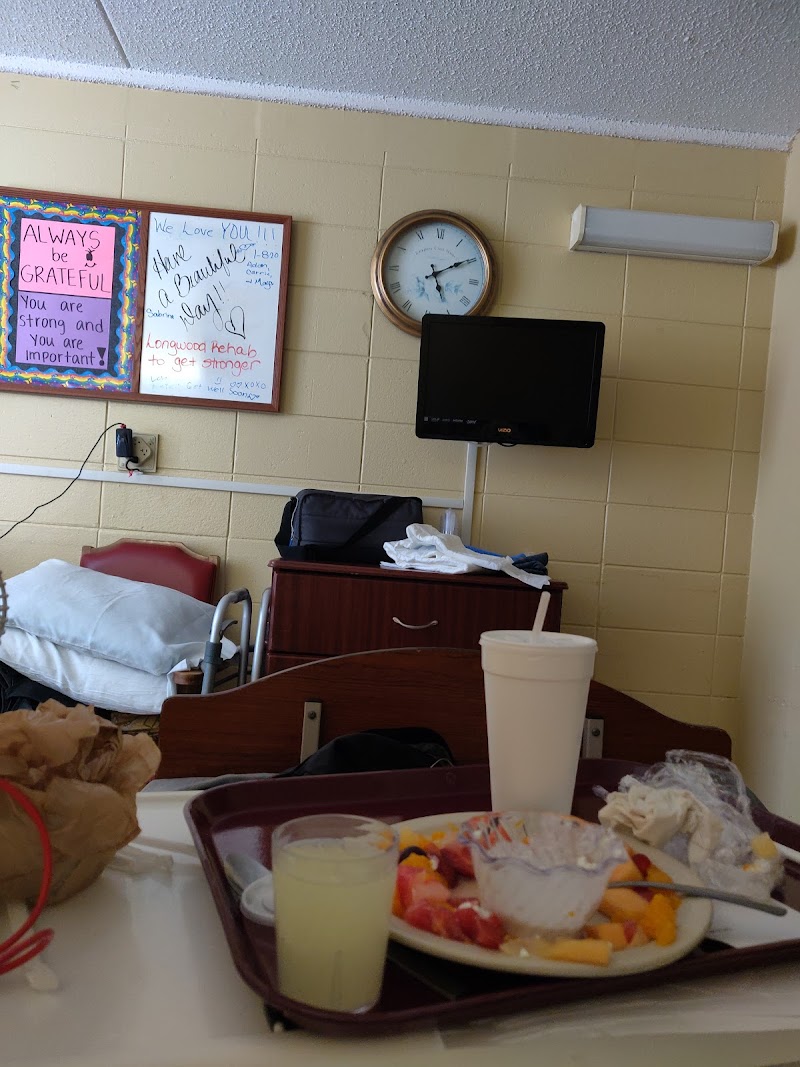
How is Longwood Center Staffed?

CMS rates LONGWOOD HEALTH AND REHABILITATION CENTER's staffing level at 4 out of 5 stars, which is above average compared to other nursing homes. Staff turnover is 54%, compared to the Florida average of 46%. RN turnover specifically is 62%, which is notably high. RNs provide skilled clinical oversight, so turnover in this role can affect medical care quality.

What Have Inspectors Found at Longwood Center?

State health inspectors documented 34 deficiencies at LONGWOOD HEALTH AND REHABILITATION CENTER during 2021 to 2024. These included: 6 Immediate Jeopardy (the most serious level, indicating potential for serious harm or death), 1 that caused actual resident harm, 25 with potential for harm, and 2 minor or isolated issues. Immediate Jeopardy findings are rare and represent the most serious regulatory concerns. They require immediate corrective action.
Who Owns and Operates Longwood Center?

LONGWOOD HEALTH AND REHABILITATION CENTER is owned by a for-profit company. For-profit facilities operate as businesses with obligations to shareholders or private owners. The facility is operated by SIMCHA HYMAN & NAFTALI ZANZIPER, a chain that manages multiple nursing homes. With 120 certified beds and approximately 109 residents (about 91% occupancy), it is a mid-sized facility located in LONGWOOD, Florida.
How Does Longwood Center Compare to Other Florida Nursing Homes?

Compared to the 100 nursing homes in Florida, LONGWOOD HEALTH AND REHABILITATION CENTER's overall rating (2 stars) is below the state average of 3.2, staff turnover (54%) is near the state average of 46%, and health inspection rating (1 stars) is much below the national benchmark.

What Should Families Ask When Visiting Longwood Center?

Based on this facility's data, families visiting should ask: "What changes have been made since the serious inspection findings, and how are you preventing similar issues?" "Can I visit during a mealtime to observe dining assistance and food quality?" "How do you handle medical emergencies, and what is your hospital transfer rate?" "Can I speak with family members of current residents about their experience?" These questions are particularly relevant given the facility's Immediate Jeopardy citations.

Is Longwood Center Safe?

Based on CMS inspection data, LONGWOOD HEALTH AND REHABILITATION CENTER has documented safety concerns. Inspectors have issued 6 Immediate Jeopardy citations (the most serious violation level indicating risk of serious injury or death). The facility has a 2-star overall rating and ranks #100 of 100 nursing homes in Florida. Families considering this facility should ask detailed questions about what corrective actions have been taken since these incidents.

Do Nurses at Longwood Center Stick Around?

LONGWOOD HEALTH AND REHABILITATION CENTER has a staff turnover rate of 54%, which is 8 percentage points above the Florida average of 46%. Moderate turnover is common in nursing homes, but families should still ask about staff tenure and how the facility maintains care continuity when employees leave.

Was Longwood Center Ever Fined?

LONGWOOD HEALTH AND REHABILITATION CENTER has been fined $78,798 across 3 penalty actions. This is above the Florida average of $33,867. Fines in this range indicate compliance issues significant enough for CMS to impose meaningful financial consequences. Common causes include delayed correction of deficiencies, repeat violations, or care failures affecting resident safety. Families should ask facility leadership what changes have been made since these penalties.

Is Longwood Center on Any Federal Watch List?

LONGWOOD HEALTH AND REHABILITATION CENTER is not on any federal watch list. The most significant is the Special Focus Facility (SFF) program, which identifies the bottom 1% of nursing homes nationally based on persistent, serious quality problems. Not being on this list means the facility has avoided the pattern of deficiencies that triggers enhanced federal oversight. This is a positive indicator, though families should still review the facility's inspection history directly.