TUSKAWILLA NURSING AND REHAB CENTER
1024 WILLA SPRINGS DR, WINTER SPRINGS, FL 32708 (407) 699-5506
For profit - Limited Liability company 98 Beds SOVEREIGN HEALTHCARE HOLDINGS Data: November 2025
Trust Grade
83/100
#133 of 690 in FL
Last Inspection: June 2024

Within standard 12-15 month inspection cycle. Federal law requires annual inspections.

Overview

Tuskawilla Nursing and Rehab Center has a Trust Grade of B+, indicating it is above average and recommended for families considering care. It ranks #133 out of 690 nursing facilities in Florida, placing it in the top half, and is the best option out of 10 facilities in Seminole County. The facility is improving, with issues decreasing from 6 in 2023 to just 1 in 2024. Staffing is rated 4 out of 5 stars, but the turnover rate is 53%, which is average for the state. However, the facility has faced some concerning incidents, including a serious failure to ensure a cognitively impaired resident was free from physical restraints, which could lead to psychological harm, and a lack of thorough investigation into a resident's potential elopement risk. While there are notable strengths, such as high ratings in overall quality measures, these weaknesses should be considered carefully by families.

Trust Score
B+
83/100
In Florida
#133/690
Top 19%
Safety Record
Moderate
Needs review
Inspections
Getting Better
6 → 1 violations
Staff Stability
⚠ Watch
53% turnover. Above average. Higher turnover means staff may not know residents' routines.
Penalties
○ Average
$16,104 in fines. Higher than 72% of Florida facilities. Some compliance issues.
Skilled Nurses
✓ Good
Each resident gets 42 minutes of Registered Nurse (RN) attention daily — more than average for Florida. RNs are trained to catch health problems early.
Violations
○ Average
9 deficiencies on record. Average for a facility this size. Mostly minor or procedural issues.
★★★★★
5.0
Overall Rating
★★★★☆
4.0
Staff Levels
★★★★★
5.0
Care Quality
★★★★☆
4.0
Inspection Score
Stable
2023: 6 issues
2024: 1 issues

The Good

  • 4-Star Staffing Rating · Above-average nurse staffing levels
  • 5-Star Quality Measures · Strong clinical quality outcomes
  • Full Sprinkler Coverage · Fire safety systems throughout facility
  • No fines on record

Facility shows strength in staffing levels, quality measures, fire safety.

The Bad

Staff Turnover: 53%

Near Florida avg (46%)

Higher turnover may affect care consistency

Federal Fines: $16,104

Below median ($33,413)

Minor penalties assessed

Chain: SOVEREIGN HEALTHCARE HOLDINGS

Part of a multi-facility chain

Ask about local staffing decisions and management

The Ugly 9 deficiencies on record

1 actual harm
Jun 2024 1 deficiency
CONCERN (D)

Potential for Harm - no one hurt, but risky conditions existed

Investigate Abuse (Tag F0610)

Could have caused harm · This affected 1 resident

**NOTE- TERMS IN BRACKETS HAVE BEEN EDITED TO PROTECT CONFIDENTIALITY** Based on interview, and record review, the facility failed to thoroughly investigate a possible elopement for 1 of 2 resident re...

Read full inspector narrative →
**NOTE- TERMS IN BRACKETS HAVE BEEN EDITED TO PROTECT CONFIDENTIALITY** Based on interview, and record review, the facility failed to thoroughly investigate a possible elopement for 1 of 2 resident reviewed for elopement, of a total sample of 32 residents, (#22). Findings: Resident #22 was admitted to the facility on [DATE] with diagnoses including dementia, major depressive disorder, psychotic disorder with delusions and cognitive communication deficit. Review of the Minimum Data Set quarterly assessment with Assessment Reference Date 5/12/24 noted resident #22 had long-term and short-term memory problems and had severely impaired cognitive skills for daily decision making. The assessment showed resident #22 wandered 4 to 6 days out of 7 and used a wander/elopement alarming device daily. The medical record contained a care plan revised 11/16/23 which indicated resident #22 was at risk for elopement as evidenced by impaired safety awareness. Interventions included the use of an alerting bracelet and picture of resident to be kept in elopement binders. The most recent revision to interventions was 1/19/23. Review of the facility Elopement Drills revealed a drill with sign-in sheet dated 6/05/24. The drill sheet indicated a resident with a wander alert bracelet tripped the alarm at the front door. The alarm sounded and the nurse checked the alarm panel without delay. The nurse immediately directed a Certified Nursing Assistant (CNA) to go to the front door where she then observed resident #22 directly outside the front door and she returned him to the unit. On 6/19/24 at 3:36 PM, CNA A stated she worked the night resident #22 set off the front alarm. She recalled Registered Nurse (RN) C sent CNA F to the front door. CNA A stated she remained on the unit. She recalled the Administrator came to the facility that night because the resident had gotten out the front door and staff completed an in-service on elopement. On 6/19/24 at 3:41 PM, Licensed Practical Nurse (LPN) B stated she was working the night resident #22 pushed the front door and got outside the door. She stated she heard the alarm at the nurses' station, and she then checked each resident on the unit as per policy. She recalled she heard resident #22 got out the front door but not very far. She stated the Administrator came in and held an in-service and a mock drill that same day. On 6/19/24 at 3:47 PM, RN C confirmed she worked the night resident #22 set off the front door alarm. She recalled she gave him his medication at approximately 8:00 PM. RN C said she was at the nurses' station when she heard the alarm. She remembered she immediately turned and looked at the panel and saw it was the front door alarm. RN C explained CNA F was standing at the nurses' station and she sent CNA F to the front door at once. RN C stated the alarm was turned off and sounded again. RN C recalled she went to the front door and observed CNA F just outside the door with resident #22. On 6/19/24 at 3:59 PM, LPN D stated she had worked the night of 6/05/24. She recalled she heard an overhead announcement at approximately 8:30 PM, which indicated a resident was missing. She stated she immediately started checking her residents. LPN D stated a CNA got the resident and brought him back inside the building. She recalled the Administrator came in a little later and did a walk through, then had everyone sign an in-service attendance sheet. On 6/20/24 at 11:16 AM, CNA F confirmed she worked the night of 6/05/24. She recalled resident #22 was by the nurses' station when she went to answer a call light. When she returned to the nurses' station, resident #22 was no longer there. She stated the alarm went off and she went to the front door to check the area. She explained she saw the resident right outside the door and immediately went out to get him. CNA F stated he came back inside without any resistance. CNA F reported resident #22 did wander at times but had never seen him go to the front door previously. She stated the Administrator came to the facility that night and did an in-service with staff. CNA F recalled she told him what she knew but she was not asked to provide a written statement of what happened that night until 6/18/24. Review of the incident log provided by the facility revealed no record of an incident report for the possible elopement on 6/05/24. Review of the medical record for resident #22 revealed no progress note was documented by staff regarding the incident on 6/05/24. A new elopement risk evaluation was not completed following the incident. On 6/19/24 at 5:44 PM, the Administrator stated he went to the facility the night of 6/05/24 after he was notified a resident set off the exit alarm. He reported he spoke to the nurse and CNA assigned to resident #22 and got verbal statements that evening. The Administrator acknowledged he did not have statements from any other employees nor did not obtain written statements from the assigned nurse and CNA until 6/18/24. He explained he viewed video of the incident that night and created a timeline from the video but did not preserve the video itself. The Administrator reported resident #22 was considered an elopement risk but had never left the facility previously. He did not know why resident #22 tried on this date. The Administrator explained he thought questioning the two assigned staff members and watching the video was enough to determine resident #22 did not elope and therefore used the experience as a drill. The Administrator could not answer why staff did not complete a new elopement risk screening or incident report. He also could not explain why there were no progress notes relating to the incident. The Administrator acknowledged documentation of the incident including his investigation could have been better. The facility's policies and procedure for Resident Elopement dated 8/2023 indicated when the resident was returned to the facility, the Director of Nursing or Charge nurse would complete an Incident/Accident report, document in the resident's medical record, investigate how the resident exited and review and update care plans.
May 2023 2 deficiencies
CONCERN (D)

Potential for Harm - no one hurt, but risky conditions existed

Deficiency F0571 (Tag F0571)

Could have caused harm · This affected 1 resident

**NOTE- TERMS IN BRACKETS HAVE BEEN EDITED TO PROTECT CONFIDENTIALITY** Based on observation, interview, and record review, the facility charged costs for transportation not specifically requested by ...

Read full inspector narrative →
**NOTE- TERMS IN BRACKETS HAVE BEEN EDITED TO PROTECT CONFIDENTIALITY** Based on observation, interview, and record review, the facility charged costs for transportation not specifically requested by 1 of 1 resident reviewed for allocation of personal funds out of a total sample of 37 residents, (#54). Findings: Review of resident #54's medical record revealed she was admitted to the facility on [DATE], and readmitted from an acute care hospital on 3/24/2022. Her diagnoses included diabetic retinopathy, cataracts in both eyes, diabetes mellitus with complications, left above the knee amputation, depression, and anxiety. The Minimum Data Set quarterly assessment with Assessment Reference Date 5/12/2023 noted the resident required corrective lenses for sight and scored 12 out of 15 on the Brief Interview for Mental Status, that indicated the resident had mild cognitive impairment. The assessment noted the resident required extensive staff assistance for Activities of Daily living, and she depended on staff to assist with locomotion off the unit. Review of the Order Summary Report showed medication orders for Cyclopentolate eye drops to the right eye for eye surgery, ordered 11/08/2022, Ketorolac eye drops to the left eye for eye surgery, ordered 11/08/2022, Prednisolone eye drops to the left eye for cataracts, ordered 4/17/2023, and orders for ophthalmology appointments scheduled outside the facility on 2/22/2023, 4/03/2023, 4/17/2023, 4/18/2023, and 5/15/2023. The comprehensive care plan included focus for impaired vision related to diabetic retinopathy, dependence on glasses, and cataracts in both eyes. The care plan noted the resident required staff assistance with mobility, transfers, and dressing, related to impaired cognitive functioning, anxiety, and depression, On 5/22/2023 at 11:46 AM, resident #54 stated she had been having difficulty with the facility assisting her with transportation so she could get to her eye doctor appointments. She explained she recently had surgery and was very concerned because she had blurry vision and discomfort. She said she had transportation benefits included in her Medicaid plan at no cost to her, but the facility wanted her to use the community bus service and she had to pay for it. She said she was worried as it's very expensive. On 5/25/2023 at 9:30 AM, the [NAME] Unit Manager said residents were transported by various service providers to medical appointments outside the facility. She explained some residents had Medicaid benefits for it, and those who didn't have family available to take them often used the community bus service that required, money in their account. On 5/25/2023 at 10:00 AM, the Social Services Director explained she assisted residents with transportation arrangements to medical appointments outside of the facility. She said it was a tedious process to make transport appointments through many of the Medicaid benefits providers. She explained resident #54 sometimes became distressed about getting to her eye doctor appointments and the facility had enrolled her in the community bus service a few months prior. On 5/26/2023 at 11:39 AM, the Business Office Manager explained fees for the community bus service were withdrawn from the resident's trust account when they have one. She said the facility paid for the service if residents did not have a trust account. She recalled resident #54's son had recently set up an account for her. She provided a, Resident Statement Landscape form that showed debits for bus fare. During a telephone interview on 5/26/2023 at 12:25 PM, resident #54's son said there had been several times in the past his mother was distressed about her transportation. He said he reached out to the Social Services Director multiple times for help over the past months, but he never received any responses. He explained he was concerned because his mother told him she needed money for the bus, and she was very distressed because she didn't have the cash for the fare. He said he reached out to the Medicaid case worker who assured him there was no cost transportation benefits available, and recalled the resident often had difficulty with being assisted by staff to get to the pickup location on time. He stated he set up an account for his mother to help her with her distress over the [NAME]. On 5/26/2023 at 11:50 AM, the Social Services Director recalled enrolling resident #54 in the community bus service program. She said she did not offer other choices, and she did not have a list. She checked the medical record and acknowledged there were no notes or care plan to note resident #54 or her family representative specifically chose to use the bus. She said all resident preferences and choices should be included in the plan of care, and she would make sure she included them in the future. She explained the facility uses the bus service because oftentimes the transportation benefit service provider, doesn't work out. The facility's admission packet included information titled, Nursing Home Resident Rights and Responsibilities, that read, (a) 5. The facility may not impose a charge against the personal funds of a resident for any item or service for which payment is made under Title XVII or Title XIX of the Social Security Act. (i) The right to be fully informed, in writing and orally, . during his or her stay, of services available in the facility and or charges for such services, including any charges for services not covered under Title XVII or Title XIX of the Social Security Act or not covered by the basic per diem rates .
CONCERN (D)

Potential for Harm - no one hurt, but risky conditions existed

PASARR Coordination (Tag F0644)

Could have caused harm · This affected 1 resident

**NOTE- TERMS IN BRACKETS HAVE BEEN EDITED TO PROTECT CONFIDENTIALITY** Based on interview, and record review, the facility failed to refer a resident with a newly evident mental disorder for Level II...

Read full inspector narrative →
**NOTE- TERMS IN BRACKETS HAVE BEEN EDITED TO PROTECT CONFIDENTIALITY** Based on interview, and record review, the facility failed to refer a resident with a newly evident mental disorder for Level II Preadmission Screening and Resident Review (PASARR) evaluation and determination for 1 of 1 resident reviewed for PASARR, out of a total sample of 37 residents, (#67). Findings: Resident #67 was admitted to the facility on [DATE] with active diagnoses including bipolar disorder, metabolic encephalopathy, major depressive disorder, anxiety disorder and unspecified dementia. Review of the Minimum Data Set (MDS) admission assessment with assessment reference date (ARD) of 4/26/23 revealed resident #67 had a Brief Interview for Mental Status (BIMS) score of 03 which indicated she was severely cognitively impaired. The document indicated her active diagnoses included anxiety disorder, depression (other than bipolar) and bipolar disorder. Review of resident #67's electronic medical record (EMR) revealed a care plan initiated 4/25/23 for use of psychotropic medications related to anxiety disorder, behavior management, depression and bipolar disorder. The interventions included to identify common behavioral expressions and expected responses to interventions and implement appropriate, individualized person-centered interventions and to describe how the behaviors impact the resident and others (e.g., increases resident distress, dangerous to the resident or others). Resident #67's EMR contained a Level I PASARR dated 4/24/23 which did not indicate she had a mental illness (MI) diagnosis. The Medical Certification for Medicaid Long-Term Care Services and Patient Transfer Form (3008) sent from the hospital at time of admission indicated resident #67 had a diagnosis of bipolar disorder. Resident #67's EMR contained a progress noted dated 4/26/23 which read, Resident was admitted with DX (diagnosis) of Bipolar Disorder. On 5/26/23 at 11:04 AM, the Social Services Director (SSD) stated the admissions department usually obtained a resident's PASARR prior to admission. She explained the clinical team then reviewed the PASARR upon admission. The SSD stated she was responsible for completing a new PASARR if one was not sent upon admission or contained incorrect information. She reviewed resident #67's Level I PASARR and acknowledged the screening did not indicate resident #67 had a MI diagnosis. The SSD reviewed the 3008 transfer form sent from the hospital upon admission and verified it indicated resident #67 had a diagnosis of bipolar disorder. She acknowledged the PASARR was inaccurate. The SSD explained she was on vacation at the time of resident #67's admission. She was unsure if a new PASARR had been completed or if resident #67 had been referred for a Level II screening. On 5/26/23 at 1:02 PM, the Director of Nursing (DON) stated resident #67's PASARR was reviewed upon admission and was identified as inaccurate. She explained she did not have access to complete a new PASARR screening and the SSD was on vacation. The DON stated she reached out to a sister facility for assistance in completing a new PASARR. The sister facility agreed but did not send one over. The DON acknowledged the Level I PASARR screening for resident #67 was inaccurate upon admission and she was not referred for a Level II PASARR evaluation and determination.
May 2023 3 deficiencies 1 Harm
SERIOUS (G) 📢 Someone Reported This

A family member, employee, or ombudsman was alarmed enough to file a formal complaint

Actual Harm - a resident was hurt due to facility failures

Deficiency F0604 (Tag F0604)

A resident was harmed · This affected 1 resident

**NOTE- TERMS IN BRACKETS HAVE BEEN EDITED TO PROTECT CONFIDENTIALITY** Based on interview, and record review, the facility failed to ensure a vulnerable, cognitively impaired resident was free of phy...

Read full inspector narrative →
**NOTE- TERMS IN BRACKETS HAVE BEEN EDITED TO PROTECT CONFIDENTIALITY** Based on interview, and record review, the facility failed to ensure a vulnerable, cognitively impaired resident was free of physical restraint for 1 resident reviewed for restraint and seclusion, of a total of 5 sampled residents (#1). This failure could have resulted in the potential for multiple types of injuries, and even death. Using the reasonable person concept there was potential for psychosocial harm such as agitation, aggression, anxiety, development of delirium, feelings of imprisonment or restriction of freedom of movement. Findings Resident #1, a 95- year-old male, was admitted to the facility on [DATE]. His diagnoses included generalized anxiety disorder, major depressive disorder, cerebral infarction, cardiac pacemaker, history of falls, and malignant neoplasm of prostate. The resident's admission Minimum Data Set (MDS) assessment with Assessment Reference Date of 3/22/23, revealed the resident's cognition was moderately impaired with a Brief Interview for Mental Status (BIMS) score of 8 out of 15. The assessment noted resident #1 required extensive assistance of two staff persons for bed mobility, dressing, and personal hygiene, and was dependent on staff for transfers, and toilet use. Section P indicated restraint was not used for the resident. Review of the resident's admission Data Set assessment dated [DATE] indicated the resident was admitted to the facility from home. The document indicated the resident had intermittent confusion, and he was chair/bed bound. A Fall Risk Evaluation dated 3/22/23 revealed a score of 14.00 which indicated the resident was assessed as being at risk for falls. Documentation on the form revealed that a score above 10, indicated the resident was assessed to be at risk for falls. On 5/11/23 at 10:24 AM, the [NAME] Wing Licensed Practical Nurse / Unit Manager (LPN/UM) recalled resident #1 was admitted to the facility two to three months ago. She said he was assessed to be at risk for falls, and shortly after his admission, the resident had a fall from his wheelchair and had two recent falls while he was in bed. The UM stated that it was her understanding that a sheet was used to help to keep the resident in bed on 5/06/23. She verbalized the facility was a restraint free facility. The LPN/UM said that about a week ago, there was a change in the resident's condition, and he was noted to be more anxious at nights. She recalled the Advance Registered Nurse Practitioner (ARNP) was made aware and recommended a psych consult/follow-up visit. The UM stated the resident was not placed on any additional medication, since he was already on psychotropic medication, Trazadone at nights. Trazadone: This medication is used to treat depression. It may help to . Decrease anxiety. (Retrieved on 5/22/23 from www.WebMD.com) On 5/11/23 at 11:27 AM, LPN A confirmed she was assigned to resident #1 on the 11 PM to 7 AM shift on 5/05/23. She recalled she made rounds with the off going nurse LPN D. She recalled the resident was in a low bed, with his legs coming off the bed. LPN A stated she removed the blanket from the bottom of the resident's legs and placed them back in the bed and covered him. She verbalized she did not notice any sheet tied across the resident. LPN A recalled she was in another hallway caring for residents, and the resident's assigned Certified Nursing Assistant (CNA) B came to get her and showed her the resident had a sheet around his mid-section tied to both sides of the resident's bed frame. LPN A recalled they tried to remove the sheet, but could not get it untied, and she had to cut the knot with her scissors. She explained the resident was lying with his arms at his side, and he would not be able to turn, get up, or sit up with the sheet tied around him, and attached to both sides of the bed. She recalled the restraint was noted between 1:30 AM and 2:00 AM, and she did not know who tied the resident with the sheet. She said the only staff on the shift along with her were two other CNAs. She said the resident's assigned CNA alerted her to the incident, and said she did not know who did it, and the other CNAs also denied any knowledge of the incident. LPN A stated she cared for the resident prior to the incident of 5/06/23, and the resident was confused, and was not able to make his needs known. She stated he was at risk for falls, was not resistant to care, and did not exhibit any aggressive behavior. On 5/11/23 at 12:26 PM, the Administrator stated he received a phone call on 5/06/23 from 7 AM to 3 PM CNA C who informed him that she received report from the off going CNA B that she discovered a sheet tied across the resident's mid abdomen attached to the bed frame. CNA C reported that CNA B said she went into the resident's room to provide care when she made the discovery. The Administrator recalled he contacted the staff who worked on the 3 PM to-11 PM shift on 5/05/23, and LPN D denied any knowledge of the resident being tied down with a sheet. He stated the Weekend Supervisor who informed him was made aware of the incident by LPN A. The Administrator stated he arrived at the facility around 8:40 AM on 5/06/23 and reviewed the video surveillance footage which showed CNA E entering and exiting the resident's room a lot. At 9:47 AM the Administrator recalled he went to talk with the resident who had a BIMS of 08/15 and his roommate who had a BIMS of 12/15, and both residents denied having knowledge of the incident. At 12:55 PM he called Law enforcement, and a deputy visited forty-five minutes later, and asked for resident #1's medical record and the names and phone numbers of all staff who cared for the resident. He noted LPN A was interviewed by the deputy at that time. He said the deputy assessed the resident's room, took pictures, and prior to his exit, he informed the facility they would be investigating abuse. The Administrator indicated he called CNA E who was the resident's assigned CNA on the 3 PM to 11 PM shift on 5/05/23, and she denied having any knowledge of a sheet tied across the resident. On 5/08/23 he reviewed the video surveillance in depth, and the video footage revealed that on 5/05/23 at 9:08 PM, CNA E went into the resident's room with a sheet and emerged five minutes later empty handed, without the sheet. At 9:36 PM, LPN D went into the resident's room, came out at 9:38 PM and talked and gestured to CNA E in the hallway. The Administrator verbalized he spoke to both LPN D and CNA E on 5/08/23, and both denied being aware of the sheet tied across the resident. He said he reviewed the surveillance video footage with them, and they still denied they knew there was a sheet tied across the resident and tied to both sides of the bed frame. He stated video footage showed both LPN D and CNA E in the resident's room several times during their shift. On 5/11/23 at 1:12 PM, the Director of Nursing (DON) stated she was notified by the Administrator on 5/06/23, that LPN A, and CNA B discovered resident #1 had a sheet over him that was tied to the bed frame. The DON stated she was told the resident was checked, assessed, and had no adverse effect. She recalled she came to the facility on 5/06/23, and spoke with the resident, along with the deputy who spoke Spanish, and the resident did not remember the event. She spoke with the resident's roommate, and he did not notice anything out of the ordinary. The DON stated the facility was a restraint free facility. On 5/11/23 at 1:37 PM, CNA B confirmed she was assigned to resident #1 on the 11 PM to 7 AM shift on 5/05/23. She recalled she was told by off going CNA E that the resident was trying to get out of bed. CNA B verbalized she started making rounds about 1 AM and got to resident #1's room about 2 AM. She recalled that when she went into the resident's room, he was in bed with his blanket across him. She recalled she pulled the blanket back to provide care for the resident, and noted he had a top sheet tied across his abdomen, which was attached to both sides of his bed frame. CNA B stated she tugged on the knot to remove the sheet the sheet but it was tight. She said she then went to get his assigned nurse, LPN A. She recalled the LPN was caring for another resident, so she had to wait, and they got back to resident #1's room around 3 AM. She explained to the LPN what she discovered. The CNA said she and LPN A attempted to remove the sheet, but it was tied tightly and the knot was tied to the frame. She explained the more they tried to move the bed to loosen the knot, the more it was stuck in the frame. She reported that LPN A ended up cutting the sheet off the resident with her scissors, and they threw the sheet in the thrash. The CNA stated LPN A said she would take care of it and would talk with the two CNAs and the nurse from the previous shift. CNA B reported that in the morning she waited to be relieved, and when CNA C came, she told her about the incident, and immediately CNA C called the Administrator. She informed him of the incident, and she reported her discovery to both the oncoming weekend supervisor and the Administrator. CNA B said usually when she had the resident, he would place his leg over the side of the bed, and when she instructed him to put his leg back in bed he would laugh and then do as asked. She stated the resident did not refuse care, and him being tied to the bed was a form of abuse. On 5/11/23 at 2:08 PM, LPN D recalled that on 5/05/23 around 7:30 PM to 8:00 PM, she did a dressing to resident #1's left heel and spoke to him in Spanish. LPN D said sometimes the resident was confused and did not comprehend what was said. The LPN stated that when she went down the hallway, she glanced into the resident's room, and he had his legs over the side of his bed, and his cover sheet was up to his chest. LPN D recalled she said, what are you doing, she lifted the cover, and placed his legs back in the bed. She verbalized that around 9:30 to 10:00 PM, CNA E was sitting in the hallway doing her charting. She recalled she told the CNA to keep an eye on the resident, because he kept trying to get out of bed. She told the CNA that the resident was a fall risk, he could fall, and she did not want any falls to occur on her shift. LPN D recalled she told CNA E that if the resident continued to attempt to get out of bed, she should inform her, so that they could get him up in his wheelchair, and place him at the nurses' station. LPN D stated that when LPN A came in, they did walking rounds starting from the back of the hall to the front. When they went into resident #1's room, he had his legs over the side of the bed, and his sheet was below his waist. The LPN stated she placed his feet back in bed and continued giving report to LPN A. She stated she did not see any sheet tied across the resident and tied to both sides of the bed frame, and verbalized she heard about the incident on 5/06/23 when the Administrator called her. She said she was shocked, and had no idea why someone would do that, verbalizing that (action) was against the law. On 5/11/23 at 2:53 PM, CNA E confirmed she was assigned to resident #1 on the 3 PM to 11 PM shift on 5/05/23. She recalled that when she came to work, the resident was sitting in his wheelchair at the nurses' station. He went to the dining room for supper, and then he was sitting in the hallway, and was placed to bed probably around 8 PM. CNA E said she checked on the resident, because lately he had been falling from his low bed. She said that during the shift, the resident would often have his legs over the side of his bed. She would place his legs back in bed, and a couple minutes later he would have his legs over the side of the bed again. She said every twenty minutes she observed him with his legs over the side of his bed. CNA E said LPN D told her that she found the resident with no gown on. She said the LPN told her she placed a gown on him and repositioned him. The CNA said she went to check on the resident and his sheet, and blanket were on the floor, and his legs were out of the bed. She said she told the 11 PM to 7 AM CNA to be sure to keep an eye on the resident because he was trying to get out of bed. CNA E stated she did not place a sheet across the resident and tied it to the bed frame. She verbalized that on 5/06/23 she saw a text on her phone from the Administrator instructing her to come to the facility. She reported she was interviewed by the Administrator, he documented the interview, and she signed the statement. The CNA denied tying a sheet across the resident, and said she observed the resident every thirty minutes, and would have seen if he was tied down with a sheet. On 5/11/23 at 3:38 PM, in a telephone interview CNA C stated she worked from 6:45 AM to 11:00 PM on the weekends. She explained when she came to work on 5/06/23, she was informed by CNA B that resident #1 was tied to the bed frame so tightly, they had to cut him out. CNA C stated she was in disbelief. She recalled CNA B said she told LPN A who wanted to talk to the evening nurse about it. CNA C recalled she told CNA B, we have to tell someone important. She said she called the Administrator and left a voice message. When the Administrator called back, she told him about the incident, and what CNA B told her. The Administrator then spoke with CNA B. On 5/11/23 at 4:07 PM, the video recording for 5/05/23 was reviewed with the Administrator. The recording noted that at 6:59 PM CNA E rolled the mechanical lift to resident #1's room door. At 7:00 PM, she transferred the resident via wheelchair from the nurse station to his room. At 7:03 PM, CNA E came out of the resident's room, retrieved the mechanical lift, and re-entered the resident's room. CNA E remained in the resident's room for approximately eleven minutes. At 7:14 PM, she placed the mechanical lift in the hallway. At 9:08 PM, CNA E walked from the clean linen room with a sheet into resident #1's room. At 9:14 PM, the CNA exited the resident's room empty handed. On 5/11/23 at 4:40 PM, in a telephone interview, Registered Nurse (RN) Weekend Supervisor stated that on 5/06/23 at 7 AM, she was met by CNAs B and C in the hallway, who told her they wanted to talk to her regarding an incident that happened overnight. She explained CNA B told her she found the resident with a sheet across his chest, and the sheet was tied on both sides to the frame of his bed. She stated she spoke with the Administrator and was directed to do a full head to toe skin assessment on the resident. The Weekend Supervisor stated the resident was asleep when they walked into the room, and when she started to evaluate him, he woke up. She verbalized he had no injury, red areas, or bruising, and exhibited no behavior. On 5/12/23 at 10:55 AM, in a telephone interview, resident #1's daughter said the facility informed her of the incident of 5/06/23 and she was very surprised that someone would do that. She recalled she was told by various staff members the facility did not use restraints, and she never expected that would be done to her father. She explained her father was forgetful and his logic was not there. The resident's daughter indicated she would have been very upset if he had sustained any skin issues or was hurt in any way. She said she would not want it to happen again. On 5/12/23 at 12:47 PM, in a telephone interview, the Psych ARNP said she saw resident #1 on 5/08/23. She recalled she was told the resident's blanket was tight over him. She said she assessed him and he had no issues and his affect was good. She explained the resident was not able to voice his concerns or recall the incident due to confusion. The ARNP stated she was not aware the sheet was tied to the bedframe, and scissors had to be used to cut and release the sheet. 5/12/23 1:18 PM, the DON stated the facility did not have a policy pertaining to physical restraints since the facility was a restraint free facility. She said the policy for Abuse, Neglect and Exploitation covered seclusion. The facility's learning module Protecting Resident Rights in Nursing Facilities copyright 2017 Relias Learning, Section 2: Resident Rights read, Freedom from restraints All residents have the right to be free from restraints, both chemical and physical, used for the purposes of discipline or convenience AND not used to treat a resident's medical symptoms . Restraints must only be used as a last resort or when medically necessary for the treatment of a medical condition. The facility's policy Abuse &Neglect Prohibition with effective date of 10/24/2022 documented that Involuntary seclusion was the separation of a resident from other residents or confinement to his or her room (with or without roommates) against the resident's will, or the will of the resident's legal representative.
CONCERN (D) 📢 Someone Reported This

A family member, employee, or ombudsman was alarmed enough to file a formal complaint

Potential for Harm - no one hurt, but risky conditions existed

Report Alleged Abuse (Tag F0609)

Could have caused harm · This affected 1 resident

**NOTE- TERMS IN BRACKETS HAVE BEEN EDITED TO PROTECT CONFIDENTIALITY** Based on interview, and record review, the facility failed to report an alleged violation of abuse within the regulatory guideli...

Read full inspector narrative →
**NOTE- TERMS IN BRACKETS HAVE BEEN EDITED TO PROTECT CONFIDENTIALITY** Based on interview, and record review, the facility failed to report an alleged violation of abuse within the regulatory guidelines for 1 of 1 resident reviewed for restraint and seclusion of a total sample of 5 residents, (#1). Findings: Resident #1, a 95- year-old male, was admitted to the facility on [DATE]. His diagnoses included generalized anxiety disorder, major depressive disorder, cerebral infarction, cardiac pacemaker, history of falls, and malignant neoplasm of prostate. The resident's admission Minimum Data Set (MDS) assessment with Assessment Reference Date of 3/22/23, revealed the resident's cognition was moderately impaired with a Brief Interview for Mental Status (BIMS) score of 8 out of 15. The assessment noted resident #1 required extensive assistance of two staff persons for bed mobility, dressing, and personal hygiene, and was dependent on staff for transfers, and toilet use. Section P indicated restraint was not used for the resident. On 5/11/23 at 11:27 AM, Licensed Practical Nurse (LPN) A confirmed she was assigned to resident #1 on the 11 PM to 7 AM shift on 5/05/23. LPN A recalled she was in another hallway caring for residents when the resident's assigned Certified Nursing Assistant (CNA) B came to get her. She said they proceeded to resident #1's room and the resident had a sheet around his mid-section tied to both sides of the resident's bed frame. LPN A recalled they tried to remove the sheet, but could not get it untied. She said she had to cut the knot with her scissors. She said the resident was lying with his arms at his side, could not turn, get up or sit up. She recalled the restraint was noted by CNA B between 1:30 AM to 2:00 AM. LPN A said she did not report the finding to anyone since the resident did not have any injuries and added she was going to report it later in the morning. LPN A acknowledged the restraint was discovered between 1:30 AM to 2:00 AM and was not reported until approximately 7:15 AM to the oncoming supervisor. She verbalized she should have documented the incident, and initiated an incident report, but she did not. The LPN did not give a reason for the omission. On 5/11/23 at 12:26 PM, the Administrator stated he received a phone call on 5/06/23 from 7 AM to 3 PM shift CNA C who informed him that she received report from off going CNA B of a sheet tied across the resident's mid abdomen attached to the bed frame. CNA C reported that CNA B said she went in to provide care for the resident when she made the discovery. The Administrator stated he did not know why the incident was not reported to him immediately. He said it was discovered on the 11 PM to 7 AM shift, and the expectation was that staff would notify the Administrator, Director of Nursing (DON), and Abuse Coordinator immediately of any unusual occurrence or event. He confirmed the incident was not submitted to the relevant State agencies in the required regulatory timeframe. On 5/11/23 at 1:12 PM, the DON explained she was notified by the Administrator on 5/06/23, that LPN A, and CNA B discovered resident #1 had a sheet over him that was tied to the bed frame. She conveyed the incident should have been reported immediately. She noted all staff had education abuse abuse and neglect, and that any suspicion of abuse was to be reported immediately. On 5/11/23 at 1:37 PM, CNA B confirmed she was assigned to resident #1 on the 11 PM to 7 AM shift on 5/05/23. She recalled at about 2 AM, the resident was in bed with his blanket across him. She said she pulled the blanket back to provide care for the resident, and noted a top sheet tied across his abdomen that was tied to both sides of the bedframe. CNA B said she tried to remove the sheet but it was tight and she called for the assigned nurse, LPN A. She recalled the LPN was caring for another resident, so she had to wait, and they got back to resident #1's room around 3 AM. She said the knot was tied to the frame where the bed moved up and down, and the more they tried to move the bed to loosen the knot, the more it stuck in the frame. She said LPN A ended up cutting the sheet off the resident with her scissors, and they threw the sheet in the thrash. The CNA stated LPN A said she would take care of it and would talk with the two CNAs and nurse from the previous shift. The facility's policy Abuse & Neglect Prohibition with effective date of 10/24/2022 read, the center will investigate any alleged abuse/neglect . in accordance with state or federal law. The center will report such allegations to the state, .The center will report immediately but no later than 2 hours after forming the suspicion if the events that caused the allegation involve abuse. The facility's policy Incident Reporting for Residents or Visitors revised on 1/13/2017 directs that All incidents and unusual occurrences involving a resident will be documented and reported so as to meet all regulatory (state, and federal) requirements.
CONCERN (D) 📢 Someone Reported This

A family member, employee, or ombudsman was alarmed enough to file a formal complaint

Potential for Harm - no one hurt, but risky conditions existed

Comprehensive Care Plan (Tag F0656)

Could have caused harm · This affected 1 resident

**NOTE- TERMS IN BRACKETS HAVE BEEN EDITED TO PROTECT CONFIDENTIALITY** Based on interview, record review, and surveillance video recording, the facility failed to consistently implement care plan int...

Read full inspector narrative →
**NOTE- TERMS IN BRACKETS HAVE BEEN EDITED TO PROTECT CONFIDENTIALITY** Based on interview, record review, and surveillance video recording, the facility failed to consistently implement care plan interventions for transfers with a mechanical lift for 2 of 2 residents of a total sample of 5 residents, (#1, #2). Findings 1. Resident #1, a 95- year-old male, was admitted to the facility on [DATE]. His diagnoses included generalized anxiety disorder, major depressive disorder, cerebral infarction, cardiac pacemaker, low back pain, history of falls, and malignant neoplasm of prostate. The resident's admission Minimum Data Set (MDS) assessment with Assessment Reference Date (ARD) of 3/22/23, revealed the resident's cognition was moderately impaired with a Brief Interview for Mental Status (BIMS) score of 8 out of 15. The assessment noted resident #1 required extensive assistance of two staff persons for bed mobility, dressing, and personal hygiene, and was dependent on staff for transfers, and toilet use. On 5/11/23 at 2:53 PM, Certified Nursing Assistant (CNA) E confirmed she was assigned to resident #1 on the 3 PM to 11 PM shift on 5/05/23. She recalled that when she came to work, the resident was sitting in his wheelchair at the nurses' station. He went to the dining room for supper, and then he was sitting in the hallway, and was transferred to bed probably around 8 PM. CNA E stated the resident required a mechanical lift for transfers. She acknowledged she transferred the resident from his wheelchair to his bed with the mechanical lift by herself. She said she knew that two persons were required to transfer residents with mechanical lift, but when there were three CNAs on the unit, they were busy. She stated she transferred the resident by herself as the other CNAs were busy. She said she did not ask the nurse to help her. She verified the resident's care plan/[NAME] indicated he required two persons for transfer with a mechanical lift. On 5/11/23 at 3:49 PM, CNA F stated he was assigned to resident #1 on prior shifts. He stated the resident was a fall risk and required transfer with a mechanical lift with two persons. On 5/11/23 at 4:07 PM, video recording for 5/05/23 was reviewed with the Administrator. The recording showed at 6:59 PM, CNA E rolled the mechanical lift to resident #1's room door. At 7:00 PM, she transferred the resident via wheelchair from the nurses' station to his room. At 7:08 PM, CNA E came out of the resident's room, retrieved the mechanical lift, and re-entered the resident's room and remained there for eleven minutes. At 7:14 PM she placed the mechanical lift in the hallway. On 5/12/23 at 1:06 PM, the Director of Nursing (DON) stated staff were educated on hire, annually, and as needed regarding mechanical lift, and following the resident's care plan. She stated CNA E told them she did not request assistance from anyone to transfer resident #1 who required a mechanical lift for transfers. An intervention on the resident's care plan for ADL (Activities of Daily Living) self-care performance initiated/created on 3/18/23 and revised on 3/20/23, noted Transfers:2 person assist with (mechanical) lift. 2. Resident #2 was admitted to the facility on [DATE] with diagnoses including ataxia, fibromyalgia,, muscle weakness, and Parkinson's disease. The resident's quarterly MDS assessment with ARD of 4/23/23 revealed the resident's cognition was intact with a BIMS score of 13 out of 15. The assessment noted resident #2 required extensive assistance of two staff persons for bed mobility and was totally dependent on staff for transfers. On 5/12/23 at 2:46 PM, resident #2 stated she was bed ridden and staff transferred her from bed to chair twice a week with a mechanical lift for showers. She said sometimes the transfer was done by one staff person but there should be two staff. The resident's ADL self-care performance care plan initiated 10/14/22 with revision on 5/03/23 indicated Transfers were via mechanical lift with two persons assist. The facility's policy Resident Transfer: Mechanical Lift revised on 8/29/2017 read, A mechanical lift is used to safely facilitate transfers of residents whose functional ability .requires use of a lift. Mechanical lifts requires a 2- person assist.
Feb 2023 1 deficiency
CONCERN (D) 📢 Someone Reported This

A family member, employee, or ombudsman was alarmed enough to file a formal complaint

Potential for Harm - no one hurt, but risky conditions existed

Transfer Requirements (Tag F0622)

Could have caused harm · This affected 1 resident

**NOTE- TERMS IN BRACKETS HAVE BEEN EDITED TO PROTECT CONFIDENTIALITY** Based on interview and record review, the facility failed to meet the requirements for discharge prior to issuing a discharge no...

Read full inspector narrative →
**NOTE- TERMS IN BRACKETS HAVE BEEN EDITED TO PROTECT CONFIDENTIALITY** Based on interview and record review, the facility failed to meet the requirements for discharge prior to issuing a discharge notice for 1 of 3 resident reviewed for discharge (#1). Findings: Resident #1's medical record revealed the resident was admitted to the facility on [DATE] with diagnoses including dementia, atrial fibrillation, chronic obstructive pulmonary disease, and heart failure. The Minimum Data Set (MDS) quarterly assessment with the assessment reference date of 11/21/22 revealed resident #1 had a Medicare and Medicaid number. Resident #1 had a Brief Interview for Mental Status (BIMS) score of 12 out 15 which indicated she had moderate cognitive impairment. A 15 indicates an intact cognitive response. The assessment indicated Resident #1 required extensive to total assistance with Activities of Daily Living (ADLs) and did not plan to return to the community. Resident #1's electronic medical record (EMR) demographic information revealed her primary payer source was Medicaid pending. A discharge care plan, initiated 9/11/21 and revised 12/02/21, indicated Resident #1's discharge goal was long-term care. Review of the Order Summary Report, retrieved 2/02/23, did not reveal a physician's order for discharge, discharge planning, or referral to outside services for discharge. Resident #1's EMR did not reveal any progress notes regarding discharge. The record contained a Nursing Home Transfer and Discharge Notice dated 12/08/22. The document stated the reason for discharge or transfer read, Your bill for services at this facility has not been paid after reasonable and appropriate notice to pay. The notice was signed by the Social Services Director (SSD). In a phone interview on 2/02/23 at 12:09 PM, Resident #1's sister and Durable Power of Attorney (DPOA) confirmed she received a Nursing Home Transfer and Discharge Notice from the facility. She stated she was working with an attorney to get Medicaid approval for Resident #1 but the application was still pending. On 2/02/23 at 11:45 AM, the Social Services Director recalled Resident #1 was issued a Nursing Home Transfer and Discharge Notice for non-payment. She explained an appeal was filed and the resident remained in the facility. On 2/02/23 at 12:25 PM, the Business Office Manager (BOM) stated the Medicaid process for Resident #1 started in November 2021. She explained Resident #1's attorney filed the Medicaid application. She recalled the original application was denied due to lack of documents to determine benefits. The BOM stated another application was filed in May 2022 by Resident #1's attorney which had not been approved. The BOM reviewed Residents #1's account and reported a past due balance of $50,000 since the Medicaid application had not been approved. She explained the past due balance was the reason the Nursing Home Transfer and Discharge Notice was issued. The BOM clarified Resident #1's sister was sending the estimated patient liability every month which is the amount a resident would owe if Medicaid was approved. On 2/02/23 at 3:07 PM, the Administrator stated he was aware a Nursing Home Transfer and Discharge Notice was issued to Resident #1. He clarified the SSD and BOM would have initiated the notice. He explained the facility attempted to work with Resident #1's sister to get Medicaid approval but she did not provide the documentation needed to submit a Medicaid application. The Administrator acknowledged he was aware Resident #1's sister was working with an attorney to apply for Medicaid. The Administrator could not recall Resident #1's primary payer at the time and was not aware if the facility had received any money toward resident #1's account. In a meeting with the Administrator, SSD and BOM on 2/02/23 at 3:15PM, the SSD acknowledged she signed the Nursing Home Transfer and Discharge Notice form. She explained she had a conversation with the BOM and Resident #1's sister regarding the notice. The SSD stated she reviewed the form with Resident #1's sister to be sure she understood the form and her right to appeal. The BOM re-iterated the original Medicaid application dated November 2021 was denied. She acknowledged Resident #1's sister paid privately for November 2021 through May 2022 when a new application was filed. At that time, Resident #1's primary payer was switched from private pay to Medicaid pending. The BOM confirmed Resident #1's sister has been sending the estimated patient liability since May 2022 to present. The Administrator was unable to state why a Nursing Home Transfer and Discharge Notice was issued to a Medicaid pending resident who was paying the estimated patient liability.
Jul 2021 2 deficiencies
CONCERN (D)

Potential for Harm - no one hurt, but risky conditions existed

Deficiency F0694 (Tag F0694)

Could have caused harm · This affected 1 resident

**NOTE- TERMS IN BRACKETS HAVE BEEN EDITED TO PROTECT CONFIDENTIALITY** Based on observation, interview, and record review, the facility failed to provide intravenous (IV) care and services according ...

Read full inspector narrative →
**NOTE- TERMS IN BRACKETS HAVE BEEN EDITED TO PROTECT CONFIDENTIALITY** Based on observation, interview, and record review, the facility failed to provide intravenous (IV) care and services according to standards of practice and plan of care for 1 of 1 resident reviewed for IV care of a total sample of 40 residents, (#66). Findings: Resident #66 was admitted to the facility on [DATE] from an acute care hospital with diagnoses including fractured patella, arthritis due to bacteria right knee, and Methicillin Resistant Staphylococcus Aureus (MRSA) infection. The resident had a Peripherally Inserted Central Catheter (PICC) line present in his left arm for antibiotics upon admission to the facility. A PICC line is a long, thin tube that's inserted through a vein in your arm and passed through to the larger veins near your heart A PICC line gives your doctor access to the large central veins near the heart. It's generally used to give medications A PICC line requires careful care and monitoring for complications, including infection and blood clots (https://www.mayoclinic.org). On 7/12/21 at 12:10 PM, resident #66 was observed lying in bed. He had a PICC line in his right upper arm covered with a dressing dated 7/3. The PICC line was covered with a clear dressing and the tape around the dressing was gray and dirty. The resident said he was getting IV antibiotics by the PICC line for infection in his right knee. He added that the nurses had not changed the PICC line dressing since 7/3, 9 days ago. He said he wanted the dressing changed and had not refused any care to the PICC line. A review of the resident's care plan initiated on 6/15/21 for IV Therapy included interventions to Observe PICC site for signs and symptoms of infection/infiltration, monitor IV line for patency, flush as ordered and prn (as needed) and dressing changes as ordered Review of the residents' Electronic Medical Record (EMR) revealed a physician order dated 7/1/21 to, Flush PICC line each lumen,10 ml (milliliters) NS (normal saline) every shift. Another order dated 7/1/21 read, measure arm circumference at site every week with dressing change and every shift every 7 days. An additional order dated 7/1/21 read, Change PICC line dressing every week (transparent dressing) every evening shift on Thursday. A review of the Medication/Treatment Administration Records and EMR showed no documentation the resident's PICC line dressing was changed on 7/3 as noted on the dressing. The EMR noted the last time the PICC line dressing was changed was 7/1/21 which did not match the date on the dressing. On 7/12/21 at 12:20 PM, the resident's assigned Registered Nurse (RN) C noted the resident's outdated and soiled IV dressing. RN C could not explain what the standard of practice was regarding the frequency of IV dressing changes and indicated she would need to check the facility policy. On 7/12/21 at 1:06 PM, the Director of Nursing (DON) said the standard of practice was to change transparent PICC line dressings at least every 7 days or more often if soiled. She did not explain why the resident's PICC line dressing had not been changed. She reviewed resident #66's medical record and noted there was no evidence that he refused his PICC line dressing change. The DON said if he refused, the nurses should have documented in the medical record and educated the resident regarding potential for complications such as sepsis (blood infection). The DON added, if the resident refused care the nurses on the following shifts should have attempted to provide the needed care. She explained the nurses should have looked at the IV site when doing the flushes and should have noticed that it was due to be changed from 7/10 to 7/11. On 7/13/21 at 3:39 PM, RN D said she worked on the 7-3 shift Saturday 7/10 and only documented that resident #66 refused his medication. RN D added that she knew his PICC line dressing was due to be changed and did not document his refusal of IV dressing change or education regarding potential for infection. She said she did not report the resident's IV dressing needed to be changed to the oncoming shift nurse. On 7/14/21 at 1:08 PM, RN B said she worked the day shift on 7/10 and 7/11 and was assigned to resident #66. RN B said she signed the Medication Administration Record (MAR) and flushed his PICC line both days. She said the IV dressing looked soiled but the resident did not want the dressing changed at that time. She said she did not document doing any education with the resident of potential for infection if dressing was soiled and not changed. On 7/15/21 at 3:19 PM, RN E said he worked 7/10 and 7/11 on the 11:00 PM to 7:00 shift. He said he did not notice the date or that the IV dressing was dirty when he flushed the line as it was dark in the residents' room. He could not recall if the prior nurse had informed him the resident's IV dressing needed to be changed. He could not remember if the resident had declined prior attempts to change the dressing. He noted that PICC line dressing should be changed every 72 hours and as needed. Attempts were made to interview RN G and F who also provided care to the resident on 7/10 to 7/11 but the nurses did not return the calls. The facility's policy and procedure, Central Vascular Access Device (CVAD) revised May 1, 2016 read, Licensed nurses according to state law and facility policy. The nurse is responsible and accountable for obtaining and maintaining competence with infusion therapy CVADs include: Peripherally Inserted Central Catheter (PICC) The catheter insertion site is a potential entry site for bacteria that may cause a catheter-related infection. A transparent dressing is the preferred dressing Sterile dressing change using transparent dressing is performed: 24 hours post insertion or upon admission, at least weekly, if the integrity of the dressing has been compromised (wet, loose or soiled)
CONCERN (D)

Potential for Harm - no one hurt, but risky conditions existed

Respiratory Care (Tag F0695)

Could have caused harm · This affected 1 resident

**NOTE- TERMS IN BRACKETS HAVE BEEN EDITED TO PROTECT CONFIDENTIALITY** Based on observation, interview and record review, the facility failed to ensure respiratory therapy was provided as per physici...

Read full inspector narrative →
**NOTE- TERMS IN BRACKETS HAVE BEEN EDITED TO PROTECT CONFIDENTIALITY** Based on observation, interview and record review, the facility failed to ensure respiratory therapy was provided as per physician orders for 2 of 2 residents of a total sample of 40 residents, (#23, #136). Findings: 1. Review of resident #23's medical record revealed he was re-admitted to the facility on [DATE] with diagnoses of Chronic Obstructive Pulmonary Disease (COPD), chronic respiratory failure and dependence on supplemental oxygen. On 7/12/21 at 10:30 AM, resident #23 was observed in his room sitting up in bed. He was alert and oriented to person, place, and time. He received oxygen via nasal cannula (NC) attached to a portable oxygen concentrator set at 4.25 liters per minute (LPM). He said, he used oxygen because his breathing was not good. The resident had a care plan dated 9/5/20 for impaired gas exchange/ineffective airway clearance related to history of COPD exacerbation, shortness of breath and wheezing at times with intervention to provide oxygen via nasal cannula per physician orders. On 7/12/21 at 10:40 AM, the resident's assigned Registered Nurse (RN) B checked the physician orders and said the resident was ordered oxygen at 2 LPM. RN B said she had already given the resident's morning medications but had not observed the oxygen concentrator's flow rate. On 7/12/21 at 10:43 AM, the East Wing Unit Manager (UM) entered resident #23's room and checked the setting on the oxygen concentrator. She said it was set at 4.25 LPM and the resident was not getting oxygen as ordered. The UM then adjusted the rate to 2 LPM and asked the resident if he had adjusted his settings. He denied changing the settings. The UM said the assigned nurse should have checked the oxygen settings when she gave his morning medications. On 7/12/21 at 1:15 PM, the Director of Nursing (DON) said the expectation was that nurses check the oxygen setting every time they entered a resident's room. She explained that a resident with COPD could become more short of breath if given too much oxygen. 2. Review of resident 136's medical record revealed she was admitted to the facility from an acute care hospital on 7/2/21 with diagnoses of metastatic breast cancer, chronic renal failure, anemia and sepsis. Review of the Agency for Health Care Administration (AHCA) Transfer Form 5000-3008 from the hospital dated 7/2/21 noted Oxygen at 2 LPM continuous via NC. A physician order for Oxygen dated 7/5/21 read, Oxygen at 2 LPM via NC and for nurses to check every shift. On 7/13/21 at 9:45 AM, resident #136 was in her room lying in bed. She was alert and oriented to person and place. The resident had oxygen via concentrator with the flow rate set at 1.5 LPM. On 7/13/21 at 2:32 PM, the East Wing UM entered resident #136's room and checked the oxygen setting. She said there was something wrong with the concentrator as the ball on the flow rate was moving up and down. She was informed the rate was at 1.5 LPM, the same as observed earlier. The UM acknowledged the resident did not receive oxygen as ordered a 2 LPM. On 7/13/21 at 2:43 PM, the resident's assigned nurse, RN A said he had checked resident #136's oxygen flow rate earlier today while he was standing near the concentrator. He said it was between 3-4 LPM. LPN A said he did not know the order was for 2 LPM. On 7/13/21 at 2:43 PM, the East Wing UM said nurses should be looking at the oxygen concentrator settings at eye level and not from standing position. Review of the policy dated 5/22/18 and titled, Oxygen Administration read, The purpose of this procedure. A resident will need oxygen therapy when hypoxemia (low oxygen in blood) occurs The resident's disease, physical condition, and age will help determine the most appropriate method of administration. A licensed nurse or a respiratory care practitioner performs this procedure Check physician's order
Understanding Severity Codes (click to expand)
Life-Threatening (Immediate Jeopardy)
J - Isolated K - Pattern L - Widespread
Actual Harm
G - Isolated H - Pattern I - Widespread
Potential for Harm
D - Isolated E - Pattern F - Widespread
No Harm (Minor)
A - Isolated B - Pattern C - Widespread

Questions to Ask on Your Visit

  • "Can I speak with families of current residents?"
  • "What's your RN coverage like on weekends and overnight?"

Our Honest Assessment

Strengths
  • • Grade B+ (83/100). Above average facility, better than most options in Florida.
Concerns
  • • 9 deficiencies on record, including 1 serious (caused harm) violation. Ask about corrective actions taken.
  • • $16,104 in fines. Above average for Florida. Some compliance problems on record.
Bottom line: Generally positive indicators. Standard due diligence and a personal visit recommended.

About This Facility

What is Tuskawilla Nursing And Rehab Center's CMS Rating?

CMS assigns TUSKAWILLA NURSING AND REHAB CENTER an overall rating of 5 out of 5 stars, which is considered much above average nationally. Within Florida, this rating places the facility higher than 99% of the state's 100 nursing homes. This rating reflects solid performance across the metrics CMS uses to evaluate nursing home quality.
How is Tuskawilla Nursing And Rehab Center Staffed?

CMS rates TUSKAWILLA NURSING AND REHAB CENTER's staffing level at 4 out of 5 stars, which is above average compared to other nursing homes. Staff turnover is 53%, compared to the Florida average of 46%.

What Have Inspectors Found at Tuskawilla Nursing And Rehab Center?

State health inspectors documented 9 deficiencies at TUSKAWILLA NURSING AND REHAB CENTER during 2021 to 2024. These included: 1 that caused actual resident harm and 8 with potential for harm. Deficiencies causing actual harm indicate documented cases where residents experienced negative health consequences.
Who Owns and Operates Tuskawilla Nursing And Rehab Center?

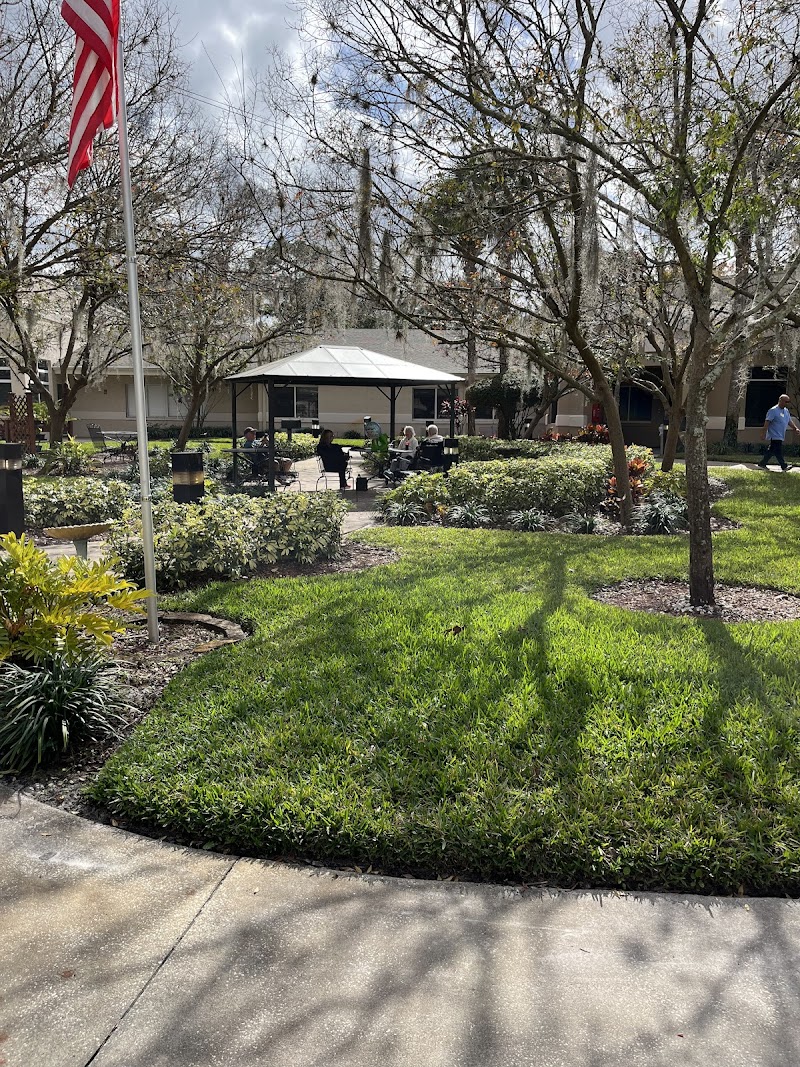
TUSKAWILLA NURSING AND REHAB CENTER is owned by a for-profit company. For-profit facilities operate as businesses with obligations to shareholders or private owners. The facility is operated by SOVEREIGN HEALTHCARE HOLDINGS, a chain that manages multiple nursing homes. With 98 certified beds and approximately 91 residents (about 93% occupancy), it is a smaller facility located in WINTER SPRINGS, Florida.
How Does Tuskawilla Nursing And Rehab Center Compare to Other Florida Nursing Homes?

Compared to the 100 nursing homes in Florida, TUSKAWILLA NURSING AND REHAB CENTER's overall rating (5 stars) is above the state average of 3.2, staff turnover (53%) is near the state average of 46%, and health inspection rating (4 stars) is above the national benchmark.

What Should Families Ask When Visiting Tuskawilla Nursing And Rehab Center?

Based on this facility's data, families visiting should ask: "Can I visit during a mealtime to observe dining assistance and food quality?" "How do you handle medical emergencies, and what is your hospital transfer rate?" "Can I speak with family members of current residents about their experience?"

Is Tuskawilla Nursing And Rehab Center Safe?

Based on CMS inspection data, TUSKAWILLA NURSING AND REHAB CENTER has a clean safety record: no substantiated abuse findings (meaning no confirmed cases of resident harm), no Immediate Jeopardy citations (the most serious violation level indicating risk of serious injury or death), and is not on the Special Focus Facility watch list (a federal program monitoring the lowest-performing 1% of nursing homes). The facility has a 5-star overall rating and ranks #1 of 100 nursing homes in Florida. While no facility is perfect, families should still ask about staff-to-resident ratios and recent inspection results during their visit.

Do Nurses at Tuskawilla Nursing And Rehab Center Stick Around?

TUSKAWILLA NURSING AND REHAB CENTER has a staff turnover rate of 53%, which is 7 percentage points above the Florida average of 46%. Moderate turnover is common in nursing homes, but families should still ask about staff tenure and how the facility maintains care continuity when employees leave.

Was Tuskawilla Nursing And Rehab Center Ever Fined?

TUSKAWILLA NURSING AND REHAB CENTER has been fined $16,104 across 3 penalty actions. This is below the Florida average of $33,240. While any fine indicates a compliance issue, fines under $50,000 are relatively common and typically reflect isolated problems that were subsequently corrected. Families should ask what specific issues led to these fines and confirm they've been resolved.

Is Tuskawilla Nursing And Rehab Center on Any Federal Watch List?

TUSKAWILLA NURSING AND REHAB CENTER is not on any federal watch list. The most significant is the Special Focus Facility (SFF) program, which identifies the bottom 1% of nursing homes nationally based on persistent, serious quality problems. Not being on this list means the facility has avoided the pattern of deficiencies that triggers enhanced federal oversight. This is a positive indicator, though families should still review the facility's inspection history directly.