TAMPA LAKES HEALTH AND REHABILITATION CENTER
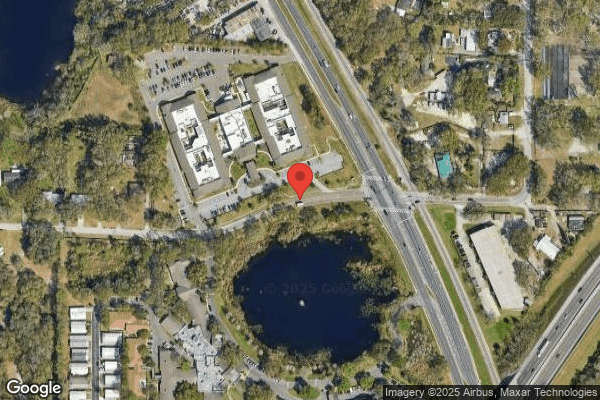
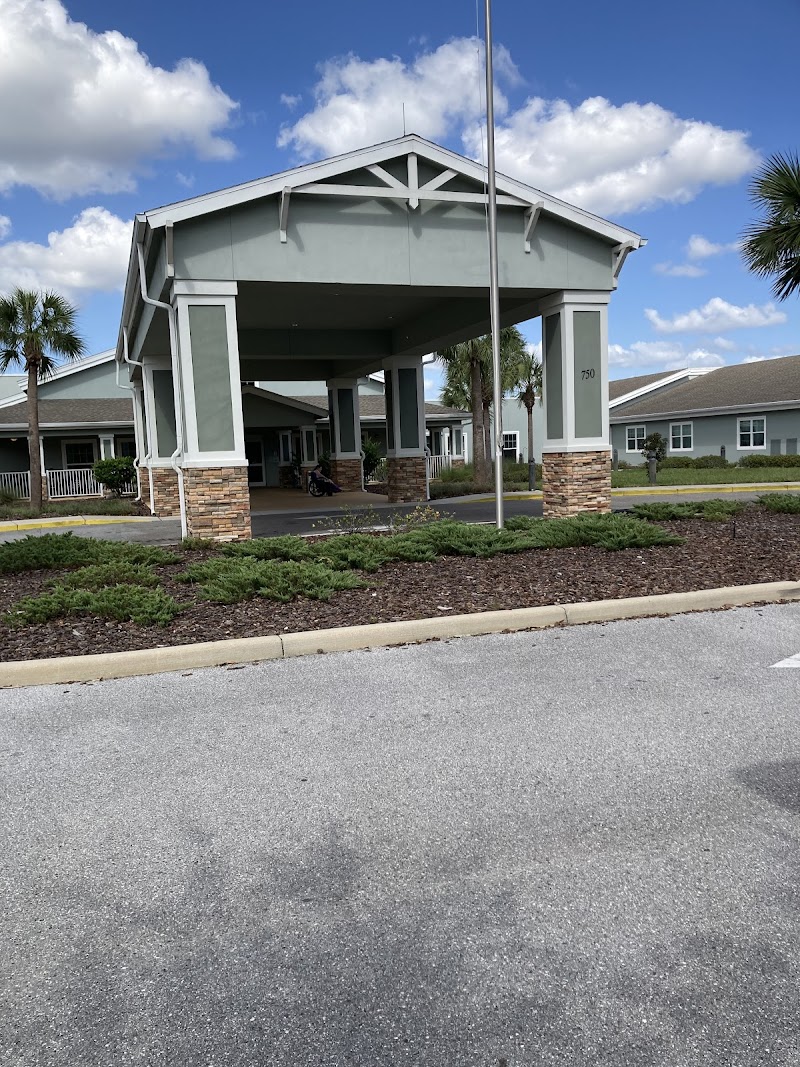
750 HAYES RD, LUTZ, FL 33549 (813) 559-1500
For profit - Limited Liability company 179 Beds SUMMITT CARE II, INC. Data: November 2025
Trust Grade
75/100
#290 of 690 in FL
Last Inspection: January 2025

Within standard 12-15 month inspection cycle. Federal law requires annual inspections.

Overview

Tampa Lakes Health and Rehabilitation Center has a Trust Grade of B, which indicates it is a good choice, standing solidly among nursing facilities. It ranks #290 out of 690 in Florida, placing it in the top half of all facilities statewide, and #7 out of 28 in Hillsborough County, meaning only six local options are better. However, the facility is experiencing a worsening trend, with issues increasing from 2 in 2024 to 5 in 2025. Staffing is a concern, with a turnover rate of 54%, which is above the state average, but the facility has no fines on record, indicating compliance with regulations. Specific incidents of concern include unclean ice machines in the kitchen and failure to maintain proper temperatures for dishwashing equipment, as well as incomplete mental health assessments for some residents. Overall, while there are strengths in quality measures and no fines, the staffing turnover and recent inspection findings raise valid concerns for families considering this facility.

Trust Score
B
75/100
In Florida
#290/690
Top 42%
Safety Record
Low Risk
No red flags
Inspections
Getting Worse
2 → 5 violations
Staff Stability
⚠ Watch
54% turnover. Above average. Higher turnover means staff may not know residents' routines.
Penalties
✓ Good
No fines on record. Clean compliance history, better than most Florida facilities.
Skilled Nurses
○ Average
Each resident gets 41 minutes of Registered Nurse (RN) attention daily — about average for Florida. RNs are the most trained staff who monitor for health changes.
Violations
⚠ Watch
16 deficiencies on record. Higher than average. Multiple issues found across inspections.
★★★★☆
4.0
Overall Rating
★★★☆☆
3.0
Staff Levels
★★★★★
5.0
Care Quality
★★★☆☆
3.0
Inspection Score
Stable
2024: 2 issues
2025: 5 issues

The Good

  • 5-Star Quality Measures · Strong clinical quality outcomes
  • Full Sprinkler Coverage · Fire safety systems throughout facility
  • No fines on record

Facility shows strength in quality measures, fire safety.

The Bad

Staff Turnover: 54%

Near Florida avg (46%)

Higher turnover may affect care consistency

Chain: SUMMITT CARE II, INC.

Part of a multi-facility chain

Ask about local staffing decisions and management

The Ugly 16 deficiencies on record

Jan 2025 5 deficiencies
CONCERN (D)

Potential for Harm - no one hurt, but risky conditions existed

Deficiency F0757 (Tag F0757)

Could have caused harm · This affected 1 resident

**NOTE- TERMS IN BRACKETS HAVE BEEN EDITED TO PROTECT CONFIDENTIALITY** Based on observations, interviews, and record review, the facility failed to monitor blood pressure before administering medicat...

Read full inspector narrative →
**NOTE- TERMS IN BRACKETS HAVE BEEN EDITED TO PROTECT CONFIDENTIALITY** Based on observations, interviews, and record review, the facility failed to monitor blood pressure before administering medication ordered for increased blood pressure for one resident (Resident #36) of six residents reviewed for medication regimens. Findings included: During an interview and observation on 1/6/25 at 11:51 A.M., Resident #36 was lying in bed and said he was outside and recently returned to his room. He also said he was feeling lightheaded. Resident #36 said the lightheaded occurs at least twice each week and he reported feeling lightheaded to the nurses several times. Review of admission Record showed Resident #36 was admitted to the facility on [DATE], with a diagnosis of essential hypertension. Review of Resident #36's quarterly Minimum Data Set (MDS) assessment dated [DATE] showed under Section C - Cognitive Patterns, a Brief Interview for Mental Status (BIMS) score of 14, indicating cognition is intact. Review of Resident #36's Order Summary Report, active orders as of 1/1/25, showed an order dated 10/28/24 for Metoprolol Succinate ER (Extended Release) Oral Tablet 24 Hour 50 mg (milligrams) give 1 tablet by mouth in the morning for increase blood pressure. Review of the Medication Administration Report for December 2024 showed vital signs every evening shift and blood pressures ranged from 109/70 to 161/56. During an interview on 1/8/25 at 9:56 A.M., Staff O, Registered Nurse (RN), Unit Manager (UM) said the order for metoprolol for Resident #36 should have an order to check supplemental blood pressure, they should be checking it and there are no parameters ordered. Review of Resident #36's Order Summary Report, active orders as of 1/8/25, showed an order dated 1/8/24 with a start date of 1/9/24 for Metoprolol Succinate ER Oral Tablet Extended Release 24 Hour 50 mg give 1 tablet by mouth in the morning for HTN (high blood pressure) hold for systolic BP (blood pressure) less than 110 mmHg (millimeters of mercury) and/or heart rate less than 60. During an interview on 1/9/25 at 1:44 P.M., Staff P, Licensed Practical Nurse (LPN) said he always checks blood pressure before administering medications if they're ordered for increased blood pressure. During an Interview on 1/9/25 at 1:46 P.M., the Director of Nursing (DON) said her expectations for orders without listed parameters are for staff to verify parameters do not exist and notify the resident's physician. Review of Medline Plus article (https://medlineplus.gov/druginfo/meds/a682864.html#how) titled Metoprolol, last revised on 9/15/23, showed Side Effects may include dizziness or lightheadedness.
CONCERN (D)

Potential for Harm - no one hurt, but risky conditions existed

Medical Records (Tag F0842)

Could have caused harm · This affected 1 resident

Based on observations and interviews, the facility did not ensure the privacy of resident information on three (AB, BB, and EB) of six units in the facility. Findings included: An observation was co...

Read full inspector narrative →
Based on observations and interviews, the facility did not ensure the privacy of resident information on three (AB, BB, and EB) of six units in the facility. Findings included: An observation was conducted during a facility tour on 1/6/25 at 10:15 a.m. of a list posted, facing the main hall, on the AB unit nurses' station with resident names, room numbers, and the type of therapy they are receiving. There was also a paper lying on the counter with a resident name and doctor's order, and another paper showing the resident census with medical information. The tour also revealed the document with resident names, room number, and type of therapy was posted, facing the main halls on the BB and EB units. The documents remained posted all on three units on 1/7/25 and 1/8/25. An observation was conducted on 1/7/25 at 9:37 a.m. of a computer screen on the wall on the BB unit, open, with a resident's medical record visible. No staff were in the vicinity at the time. An observation was conducted on 1/8/25 at 10:00 a.m. of a medication cart computer on the BB unit, open, with resident information on the screen. No staff were at the cart and a visitor was observed walking past the open screen. Staff J, Registered Nurse (RN) returned to the medication cart. She confirmed the screen should have been locked and said staff are educated to make sure the screen is closed. An interview was conducted on 1/8/25 at 4:22 p.m. with Staff M, Licensed Practical Nurse (LPN) and Staff F, Certified Nursing Assistant (CNA). They both stated computer screens should be locked, and papers should be turned over so resident information is not visible. Both staff members reviewed the posted document with resident names, room number and types of therapy being provided and agreed the document contained personal resident information and should not be posted. Staff M, LPN said the document is supposed to be in the nurses station, not facing the hall. An interview was conducted on 1/8/25 at 4:30 p.m. with the Director of Nursing (DON). She said staff should always lock their computers when they are not at them working and paperwork should not be left on the nurses' station counter where it could be seen by others. The DON also confirmed the document with resident, names, rooms, and therapy posted on the AB, BB, and EB nurses' stations should be in the nurses' station, not visible to residents or visitors. Review of a facility policy titled HIPAA [Health Insurance Portability and Accountability Act] Guidelines-Computer Terminals/Workstations, effective 11/1/2013, showed: Policy Computer terminals and workstations will be positioned/shielded to ensure that resident and facility information is protected from public view or unauthorized access. Interpretation and Implementation 1. Insofar as practical/feasible, computer terminals/workstations will be positioned or shielded so that screens are not visible to the public or to unauthorized staff. Encryption of ePHI [Electronic Protected Health Information] will be implemented if reasonable and appropriate. 2. Only authorized users are granted access to resident and facility information. Such access is limited to specific, defined, documented and approved applications and level of access rights. 3. A user may not leave his/her workstation or terminal unattended for long periods of time (e.g., breaks, lunch, meetings, etc.) unless the terminal screen is cleared, and the user is logged off. Each user must log off at the end of his/her work shift. 4. A user must clear the terminal screen if the workstation or terminal is left briefly unattended. 5. All hard copy printed information must be positioned in such a manner that it cannot be viewed or read by the public or unauthorized staff. . Photographic Evidence Obtained
CONCERN (E)

Potential for Harm - no one hurt, but risky conditions existed

Deficiency F0645 (Tag F0645)

Could have caused harm · This affected multiple residents

**NOTE- TERMS IN BRACKETS HAVE BEEN EDITED TO PROTECT CONFIDENTIALITY** Based on record reviews and interviews, the facility failed to ensure the Preadmission Screening and Resident Review (PASRR) Lev...

Read full inspector narrative →
**NOTE- TERMS IN BRACKETS HAVE BEEN EDITED TO PROTECT CONFIDENTIALITY** Based on record reviews and interviews, the facility failed to ensure the Preadmission Screening and Resident Review (PASRR) Level II were completed to ensure recommended services were provided for residents with mental illness (MI) or suspected MI for four residents (Resident #49, Resident #111, Resident #131, and Resident #40) of sixty-seven sampled residents. Findings included: Review of Resident #49's admission Record showed Resident #49 was admitted to the facility on [DATE] with a primary diagnosis of senile degeneration of the brain. Other diagnoses include major depressive disorder, visual hallucinations, and delusional disorders. Review of Resident #49's Level I PASRR screen dated 09/07/2024 showed in Section II: Other Indications for PASRR Screen Decision-Making, under question 5: Does the individual have a primary diagnosis of dementia or related neurocognitive disorder (including Alzheimer's disease)?: No, was marked. Section II also showed a Level II PASRR evaluation must be completed if the individual has a primary or secondary diagnosis of dementia or related neurocognitive disorder (including Alzheimer's disease). The screen showed under Section IV: PASRR Screen Completion, Individual may be admitted to a Nursing Facility (check one of the following): No diagnosis or suspicion of Serious Mental Illness or Intellectual Disability indicated. Level II PASRR evaluation not required, was marked. Review of Resident #111's admission Record showed Resident #111 was admitted to the facility on [DATE] with a primary diagnosis of senile degeneration of the brain. Other diagnoses include major depressive disorder and post-traumatic stress disorder. Review of Resident #111's Level I PASRR screen dated 09/07/2024 showed in Section II: Other Indications for PASRR Screen Decision-Making, under question 5: Does the individual have a primary diagnosis of dementia or related neurocognitive disorder (including Alzheimer's disease)?: Yes, was marked. The screen showed in Section II, under question 7: Does the individual have validating documentation to support the dementia or related neurocognitive disorder (including Alzheimer's disease)?: Yes, was marked. Section II also showed a Level II PASRR evaluation must be completed if the individual has a primary or secondary diagnosis of dementia or related neurocognitive disorder (including Alzheimer's disease). The screen showed under Section IV: PASRR Screen Completion, Individual may be admitted to a Nursing Facility (check one of the following): No diagnosis or suspicion of Serious Mental Illness or Intellectual Disability indicated. Level II PASRR evaluation not required, was marked. Review of Resident #131's admission Record revealed an original admission date of 6/14/2024, and a re-admission date of 10/30/24. Resident #131's admission Record revealed diagnoses including Alzheimer's disease, restlessness and agitation, unspecified dementia, unspecified severity, with other behavioral disturbance, panic disorder [episodic paroxysmal anxiety], major depressive disorder, recurrent, moderate, other specified persistent mood disorders, and generalized anxiety disorder. Review of Resident #131's Level I PASRR screen dated 01/06/2025 showed in Section II: Other Indications for PASRR Screen Decision-Making, under question 5: Does the individual have a primary diagnosis of dementia or related neurocognitive disorder (including Alzheimer's disease)?: Yes, was marked. The screen showed in Section II, under question 7: Does the individual have validating documentation to support the dementia or related neurocognitive disorder (including Alzheimer's disease)?: Yes, was marked. Section II also showed a Level II PASRR evaluation must be completed if the individual has a primary or secondary diagnosis of dementia or related neurocognitive disorder (including Alzheimer's disease). The screen showed under Section IV: PASRR Screen Completion, Individual may be admitted to a Nursing Facility (check one of the following): No diagnosis or suspicion of Serious Mental Illness or Intellectual Disability indicated. Level II PASRR evaluation not required, was marked. Review of Resident #40's admission Record revealed Resident #40 was admitted on [DATE]. Resident #40's admission Record revealed diagnoses including senile degeneration of the brain, major depressive disorder, bipolar disorder, dementia, and anxiety disorder. Review of Resident #40's Level I PASRR screen dated 10/24/2024 showed in Section II: Other Indications for PASRR Screen Decision-Making, under question 5: Does the individual have a primary diagnosis of dementia or related neurocognitive disorder (including Alzheimer's disease)?: Yes, was marked. The screen showed in Section II, under question 7: Does the individual have validating documentation to support the dementia or related neurocognitive disorder (including Alzheimer's disease)?: Yes, was marked. Section II also showed a Level II PASRR evaluation must be completed if the individual has a primary or secondary diagnosis of dementia or related neurocognitive disorder (including Alzheimer's disease). The screen showed under Section IV: PASRR Screen Completion, Individual may be admitted to a Nursing Facility (check one of the following): No diagnosis or suspicion of Serious Mental Illness or Intellectual Disability indicated. Level II PASRR evaluation not required, was marked. Review of the facility policy titled Admission/Social Services-Pre-admission Screening for Resident Review (PASRR), revised October 2015 revealed the following: Overview: The purpose of PASRR is to ensure individuals who are being considered for placement in a nursing facility are evaluated for serious mental illness and/ or intellectual disability and are offered the most integrated setting appropriate for their long-term care needs (including determining whether a nursing facility is appropriate). All persons, regardless of payer or age, needing admission to a nursing facility must first be screened for possible mental illness (MI) or the presence of an intellectual disability (ID) or both (Level I). If a mental illness (MI) or intellectual disability (ID) appears to exist, the person must be referred for further evaluation (Level II) before nursing facility admission The Level II PASRR screen must be done prior to admission for all persons seeking admission except when the following exemption applies for a provisional admission: - Individuals who are discharged from a hospital into a nursing facility after receiving acute impatient care, and require NF services, for which they receive an inpatient hospital care, may be admitted to the nursing facility if a physician certifies on the AHCA 3008 form before admission that the individual is likely to require less than 30 days of NF services. Policy for PASRR: The Admissions Coordinator is responsible for ensuring that the Level I PASRR Screen and Level II PASRR evaluation and determination, if applicable, are completed prior to admission. Procedure: . 2. When applicable, our request for a Level II evaluation is made using the attached [State Survey Agency] Medserv I Form 004, Part B, November 2011. This request must be sent to the comprehensive assessment and review for long-term care services (CARES) unit. CARES will make the referral to the substance abuse and mental health (SAMH) and/ or agency for persons with disabilities (APD) and they should complete the evaluation within 7 to 9 days and forward it to the admitting nursing facility .
CONCERN (E)

Potential for Harm - no one hurt, but risky conditions existed

Food Safety (Tag F0812)

Could have caused harm · This affected multiple residents

Based on observations, interviews, and record review, the facility failed to follow professional standards for food service safety in the facility kitchen, three of six dining areas, and two of six no...

Read full inspector narrative →
Based on observations, interviews, and record review, the facility failed to follow professional standards for food service safety in the facility kitchen, three of six dining areas, and two of six nourishment rooms. Findings included: On 1/6/25 at 9:23 a.m., a tour of the facility's kitchen was conducted with the Assistant Food Service Director. Observations revealed a white foam cup with a straw and lunchbox on the drying rack, where clean kitchenware and other items were stored. The Assistant Food Service Director stated the cup and lunchbox belonged to a staff member. She motioned to the staff member and stated, it's her breakfast. On 1/6/25 at 9:47 a.m., three staff members were observed in the dish machine area. Observations revealed one dietary aide was scraping and discarding food off of plates. A second staff member, Staff H, Dietary Aide, was observed rinsing off kitchenware and putting the items into the dish machine. Staff E, Dietary Aide was placing clean plates and other kitchenware on the rack to dry. Staff H, Dietary Aide was asked which type of dish machine it was, she responded it was a high temperature dish machine. The Assistant Food Service Director corrected her and stated it was a low temperature dish machine. A review of the sanitizing log for the dish machine was conducted with Staff E, Dietary Aide and the Assistant Food Service Director. Staff E, Dietary Aide stated he did not take or record the sanitizing temperatures. He stated if he were to do them, he would check what the sanitizing solution buckets indicated and record that information for the temperatures. Further observations of the sanitizing solution log for the dish machine, with the date of 1/6/25, revealed the initials written down were not his. The Assistant Food Service Director stated those initials were the day cooks. She confirmed Staff E, Dietary Aide should be taking and recording the sanitizing solution temperatures on the log. The Assistant Food Service Director was observed demonstrating and educating Staff E, Dietary Aide on how to test the sanitizing solution, what parts per million (ppm) they are looking for, and what she expected to be recorded on the log. On 1/6/25 at 9:29 a.m., observations and interviews regarding the holding freezer were conducted with the Assistant Food Service Director. The holding freezer contained two cases of food that were not labeled or dated and appeared to be opened. One of the boxes observed was frozen hamburger patties and the other box contained French fries. The Assistant Food Service Director confirmed they should have been labeled and dated when they were opened. At 9:35 a.m., observations of the walk-in cooler revealed a container of black olives had approximately three penny sized white spores in the liquid. The Assistant Food Service Director proceeded to throw away the container of olives. She stated the olives were not going to be used for resident meals as they were not on the menu today. At 9:36 a.m., further observations of the walk-in cooler revealed a box containing loose lettuce pieces stored in a plastic bag, open, and exposed to the air. Two fruit plates were observed on a mobile rack in the walk-in cooler, with a date of 1/5/25. The Assistant Food Service Director could not confirm if 1/5/25 was the use by date or the prepared date. She proceeded to remove the two fruit plates. On 1/6/25 at 12:21 p.m., observations of the nourishment room in the 100 unit were conducted. The refrigerator and freezer temperature log was observed to be filled out through 1/7/25. Observations of the refrigerator revealed one carton of Glucerna 1.5 with an expiration date of 1/1/25, one carton of Peptamen Intense Very High Protein (VHP) with a use by date of 11/19/24, and a cup of what appeared to be macaroni and cheese labeled 1/5/25. At the time of the observation, the cup of macaroni and cheese did not indicate a resident name or room number. (Photographic Evidence Obtained) On 1/6/25 at 12:23 p.m., observations revealed Staff E, Dietary Aide entered the 100-unit dining area with a meal cart and proceeded to put prepared food on the steam table. At 12:33 p.m., he was observed putting on gloves before starting to handle food. Throughout the dining observation, Staff E, Dietary Aide wore the same gloves while also touching and opening cupboards. At 12:47 p.m., he was observed wiping his gloved hands with a napkin as it appeared to have food particles on them, but did not take the gloves off. From approximately 12:33 p.m. to 12:55 p.m., Staff E, Dietary Aide, was not observed changing gloves while serving food and doing other tasks. On 1/6/25 at 12:29 p.m., observations of the 200-unit dining area revealed no food temperatures were taken or recorded by the dietary staff. At 12:38 p.m., observations revealed soup started to be served. Observations of a dietary aide revealed they were not wearing gloves while handling and serving the soup to residents. A few minutes after the initial observation, another staff member provided gloves to the dietary aide. An observation was conducted on 1/6/25 at 12:37 p.m. of a staff member serving food on the BB unit food line with a hairnet on with two braids pulled out of the hairnet on each side of her face, leaving her hair uncovered while scooping food onto resident plates. The food was observed being delivered to the food line from the kitchen until the end of service. During that time, no temperatures were taken, however, after service, the temperature log at the BB unit food line had food temperatures documented for that meal. On 1/6/25 at 12:55 p.m., an interview with Staff E, Dietary Aide revealed he does not take or record food temperatures on the tray line in the dining area. He confirmed he did not take or record food temperatures for the 1/6/25 lunch meal in the 100-unit dining area. On 1/6/25 at 4:08 p.m., observations of the nourishment room in the 200-unit were conducted. Observations of the refrigerator revealed resident food not dated to include a pie, broccoli salad, unknown item from [Vendor name], and a container of dessert dated 12/24/24. Further observations of the refrigerator revealed a lunch box containing food items and beverages with no date identified. A to-go container was observed with a date of, 1/6, but no resident name or room number was identified on the container. The refrigerator and freezer temperature log was observed to be filled out through 1/7/25. (Photographic Evidence Obtained) On 1/7/25 at 9:38 a.m., a review of the food temperature log for the 100-unit dining area was conducted. Observations of the log revealed food temperatures on 1/6/25 were completed for lunch. (Photographic Evidence Obtained) On 1/7/25 at 10:26 a.m., a review of the 100-unit nourishment room refrigerator revealed the same concerns identified on 1/6/25. (Photographic Evidence Obtained) On 1/8/25 at 12:02 p.m., observations revealed Staff D, Dietary Aide entered the 100-unit dining area with a meal cart. At 12:05 p.m., Staff D, Dietary Aide was observed washing his hands and putting on gloves. At 12:08 p.m., he was observed putting food on the steam table and started serving soup at approximately 12:11 p.m. At 12:12 p.m., Staff D, Dietary Aide was observed touching various drawer handles to obtain placemats. He was observed putting placemats on the dining tables in front of seated residents, while wearing the same gloves he put on at the beginning of the meal service. From 12:05 p.m. to 12:32 p.m., Staff D, Dietary Aide wore the same gloves and there was no observation of him changing them. On 1/8/25 at 12:04 p.m., an observation revealed Staff R, Dietary Aide entered the 600-unit dining area with a meal cart. Observations revealed she opened the meal cart, removed the covered food trays, and placed them on the steam table. Staff R, Dietary Aide was observed removing aluminum foil covering a tray of lasagna with ungloved hands. She was not observed performing hand hygiene before removing the aluminum foil from the tray of lasagna. Further observations of Staff R, Dietary Aide revealed she discarded the aluminum foil in the garbage and put serving ware on top of the covered food trays on the steam table. After that task, she was observed putting on gloves and started to serve soup. Staff R, Dietary Aide was observed at the sink running water over a scoop and using a rag to wipe it off. Her hands were observed to be ungloved throughout this task. Another observation in the 600-unit dining area revealed, Staff S, Dietary Aide pulled down her hair band, touched her face, and left the dining area. Upon her return to the dining area, she was observed passing a bowl to another staff member with an ungloved hand. She was observed removing aluminum from a covered food tray and putting the tray on the steam table. Staff S, Dietary Aide did not have gloves on and was not observed performing hand hygiene when these tasks were conducted. On 1/9/25 at 10:44 a.m., an interview with the Assistant Food Service Director regarding the process for taking and recording the food temperatures revealed they are completed in the kitchen, before the meal carts go out to the units. She stated one of the reasons temperatures are not taken and recorded on the units is due to an audit. The Assistant Food Service Director stated there was an audit taking place, requested by the Nursing Home Administrator (NHA), from 1/5/25 - 1/7/25. She stated the NHA was asking for random checks of meal temperatures on the units. A review of the audit logs was conducted with the Assistant Food Service Director to reveal the 200, 300, and 400 units were included in the audits. On 1/9/25 at 10:47 a.m., a follow up interview with the Assistant Food Service Director revealed dietary staff are responsible for everything in the nourishment room, except for formula and, Med pass items. She stated dietary staff responsibilities included cleaning the refrigerator, stocking, dating, reviewing expiration dates, and rotating items. The Assistant Food Service Director stated every morning she completed rounds of the nourishment rooms, To make sure everything is up to par. She also stated her rounds included restocking if needed, review of refrigerator and freezer temperatures, and review of expiration dates and labeling of resident's personal food items. The Assistant Food Service Director confirmed during her rounds she checked if formula was expired. She stated if she saw expired formula she would discard them. A review of dish machine competencies/education provided by the Assistant Food Service Manager revealed a date of 1/2/2024. The staff members in the observation on 1/6/25 are not indicated on the attendance log. On 1/9/25 at 2:20 p.m., an interview with the Director of Nursing (DON) revealed food that belongs to the resident, brought to the facility by a family member, should be discarded after three days. A review of the facility policy titled Food Holding and Service, undated, revealed the following Policy: To ensure that all food served by the facility is of good quality and safe for consumption, all food will be held and served according to the Florida Food Code and HACCP (Hazard Analysis and Critical Control Points) guidelines. Further review of the policy revealed under Procedure, the facility will take and record the temperatures of all food prior to service. A review of the facility policy titled Food Storage, undated, revealed the following Policy: To ensure that all food served by the facility is of good quality and safe for consumption, all food will be stored according to the Florida Food Code and HACCP guidelines. Further review of the policy revealed the following Procedure: . 2. Refrigerators . c. Date and label all refrigerated foods. d. Use all leftovers within 48 hours. Discard items that are over 48 hours old. A review of the facility policy titled Employee Sanitation, undated, revealed the following Policy: The kitchen employees of the facility will practice good sanitation practices in accordance with the Florida Food Code in order to minimize the risk of infection and food borne illness. Further review of the policy revealed the following, Procedure: . d. Employees will not eat or drink in food storage and preparation areas, or in areas containing exposed food or unwrapped utensils, or where utensils are cleaned or stored. 5. Hand washing a. Employees must wash their hands at designated hand washing facilities at the following times: i. After touching bare human body parts other than clean hands . v. During food preparation, as often as necessary to remove soil and contamination and prevent cross contamination when changing tasks. vii. After engaging in other activities that contaminate the hands . 6. Use of Gloves . c. Change gloves: i. Between each food preparation task. ii. After touching items, utensils or equipment not related to task. iii. After touching a source of contamination v. When damaged, soiled or when
CONCERN (E)

Potential for Harm - no one hurt, but risky conditions existed

Infection Control (Tag F0880)

Could have caused harm · This affected multiple residents

**NOTE- TERMS IN BRACKETS HAVE BEEN EDITED TO PROTECT CONFIDENTIALITY** Based on observations, interviews, and record review, the facility did not ensure proper infection control practices related to ...

Read full inspector narrative →
**NOTE- TERMS IN BRACKETS HAVE BEEN EDITED TO PROTECT CONFIDENTIALITY** Based on observations, interviews, and record review, the facility did not ensure proper infection control practices related to 1.) failing to ensure proper hand hygiene was conducted after exiting the room of one resident (Resident #578) of one resident on contact precautions for clostridium difficile (C. diff), 2.) failing to ensure proper storage of respiratory masks on one unit (AB/100 unit) of six units, and 3.) failing to ensure appropriate hand hygiene was performed by staff and offered to residents on two units (AB/100 unit and BB/200 unit) of six units during meal service. Findings included: 1. An observation was conducted on 1/6/25 at 12:23 p.m. of Resident #578's room, which had a contact precaution sign posted on the door. A staff member was observed donning personal protective equipment (PPE), removing it while exiting the room, then using alcohol-based hand rub (ABHR). The contact precaution sign showed everyone must: perform hand hygiene with alcohol-based hand rub (ABHR) or soap and water before entering and exiting. Review of Resident #578's January 2025 Order Listing Report showed the resident was on contact precautions for C. diff starting 12/27/24. Review of admission Records showed Resident #578 was admitted on [DATE] with diagnoses including acute respiratory failure, sepsis, and bacteremia. Review of Resident #578's Lab Results Report showed a positive result for C. diff antigen and C. diff toxins on 12/28/24. An interview was conducted on 1/8/25 at 3:30 p.m. with Staff F, Certified Nursing Assistant (CNA) and Staff L, CNA. They both confirmed Resident #578 was on contact precautions, but they did not know why. They said for contact precaution rooms, they wear a gown and gloves to enter the room and then either wash their hands or use alcohol-based hand rub when they exit. They both stated they followed the sign on the door for what to do with the precaution rooms. An interview was conducted on 1/9/25 at 12:15 p.m. with Staff J, Registered Nurse (RN). She said Resident #578 was on contact precautions for C. diff. She also said staff wore a gown and gloves to enter the room and can use hand sanitizer (ABHR) to clean their hands. Staff J, RN said they follow the sign on the door. 2. An observation was conducted on 1/6/25 at 10:29 a.m. in room [ROOM NUMBER] of a respiratory mask on the bedside table uncovered. An additional mask was in the top drawer, unbagged, with the end of the resident's oxygen tubing lying on the floor. The mask remained on the bedside table, unbagged, and uncovered on 1/8/25 and 1/9/25. An observation was conducted on 1/6/25 at 12:21 p.m. in room [ROOM NUMBER] A of a respiratory mask on the bedside table uncovered. The mask remained unbagged and uncovered on the bedside table on 1/9/25. An interview was conducted on 1/9/25 at 11:26 a.m. with Staff Q, Licensed Practical Nurse (LPN). She said residents with respiratory masks should have a clear bag at their bedside and the masks should be stored in the bag when not in use. Staff Q, LPN also said if staff see the masks out they should place them in a bag. An interview was conducted on 1/9/25 at 11:44 a.m. with the facility's Respiratory Therapist (RT). She said all respiratory masks should be bagged when taken off the resident, which helps prevent them from getting dirty and/or falling on the floor. The RT said she had placed bags in all the rooms that needed them with the resident's name for staff to place the masks in. The RT also said she had just come from room [ROOM NUMBER] where she saw the respiratory mask uncovered on the bedside table. 3. An observation was conducted on 1/6/25 at 12:37 p.m. of lunch service on the BB/200 unit. Residents were observed being brought into the dining room for lunch. At no point were the residents offered hand hygiene wipes, alcohol-based hand rub, or hand washing prior to eating their lunch. There was a sink with soap available in the dining room. An additional observation was conducted on 1/8/25 at 12:35 p.m. of lunch service on the BB/200 unit. Residents were observed being brought into the dining room for lunch. No hand hygiene options were offered to residents before the meal. On 1/6/25 from 12:16 p.m. to 1:03 p.m., the AB/100 unit dining area was observed for lunch. Observations of the dining area revealed four dining tables with three to four residents at each table. Staff members were observed in the dining area included Staff G, CNA, Staff F, CNA, and Staff C, CNA. Residents were not observed being offered hand sanitizer or hand washing before eating. Staff were not observed performing hand hygiene prior to meal service or between passing of individual resident meals. At 12:46 p.m., Staff F, CNA was observed assisting Resident #718 with eating. Staff F, CNA did not perform hand hygiene before assisting this resident with eating her meal. Prior to assisting Resident #718, Staff F, CNA was observed assisting with passing of meal trays to the residents sitting in the AB/100 unit dining area. On 1/8/25 at 12:02 p.m., the AB/100 unit dining area was observed for lunch. The same concerns, observed on 1/6/25, related to hand hygiene not being offered to residents before eating or during the lunch meal service was observed. At 12:08 p.m., Staff B, RN was observed reviewing and writing on meal tickets, directly to the left of the steam table, as Staff D, Dietary Aide was serving food. From 12:08 p.m. to 12:32 p.m., Staff B, RN was observed touching plates with food and handing them to another staff member to provide to residents. Staff B, RN was not observed performing hand hygiene after handling the meal tickets and touching the plates with food being provided to residents. On 1/8/25 at 12:51 p.m., an interview with Resident #569 revealed staff don't offer or provide hand hygiene to her before meals. She stated she has wipes located in the bathroom she uses to clean her hands before eating. She confirmed she was not offered hand hygiene for breakfast or lunch that day. On 1/9/25 at 12:16 p.m., an interview with Staff C, CNA revealed hand hygiene is offered and performed in resident's rooms before they come to the dining area. She stated hand hygiene is also offered to residents who dine in their rooms. Staff C, CNA stated staff perform hand hygiene, All the time. On 1/9/25 at 12:23 p.m., an interview with Resident #19 revealed staff don't offer or provide hand hygiene to her before meals. She stated, I could do it myself, but it would be hard, and pointed to her right arm. Resident #19 stated, It would be nice if it was offered. On 1/9/25 at 12:28 p.m., an interview with Staff B, RN revealed the CNA's offered and perform hand hygiene for residents. She confirmed she sometimes helps with the dining meal service, including feeding residents who need assistance or passing trays. Staff B, RN stated when she assisted with the dining meal service the residents are already seated at the table, therefore, they had hand hygiene completed in their rooms. She stated when she passes meal trays to resident rooms she washes her hands, every three rooms. On 1/9/25 at 12:32 p.m., an interview with Staff A, Unit Manager (UM) for the AB/100 unit revealed hand hygiene should be offered to residents during morning care, before and after meals, if they touch their wheelchairs, and as needed. She stated her expectations for staff is to perform hand hygiene when they care for residents and remove personal protective equipment (PPE) in between passing trays and when they are working in the kitchen/dining areas. On 1/9/25 at 12:37 p.m., an interview with Resident #153 revealed staff don't offer or provide hand hygiene to her before meals. An interview was conducted on 1/9/25 at 12:24 p.m. with the facility's Infection Preventionist (IP). He said if a resident was on contact precautions for C. diff, staff should wear a gown and gloves, then wash their hands with soap and water. He confirmed Resident #578 tested positive for C. diff and staff should have been using soap and water to clean hands, not alcohol-based hand rub. He also confirmed the sign posted on the resident's door did say alcohol-based hand rub could have been used. He said they did not have a sign with enteric contact precautions. The IP said when he placed the sign, he told staff the resident was on precautions for C. diff, and they should have passed it along to the next shift so staff would know to use soap and water when exiting Resident #578's room. The IP confirmed all respiratory masks should be stored in a bag and not left uncovered on the bedside tables. He said if staff see a mask uncovered, they should place it in a bag. When asked about residents being offered hand hygiene before meals the IP said, that would be a great practice. He confirmed they did not offer residents hand hygiene options prior to eating. Review of a facility policy titled Clostridium Difficile, revised July 2014, showed the following: Policy Statement Preventative measures will be taken to prevent the occurrence of Clostridium difficile infections among residents and precautions will be taken while caring for residents with C. difficile (to prevent transmission of C. difficile to others). Policy Interpretation and Implementation 11. When caring for residents with diarrhea or fecal incontinence caused by C. difficile, staff will maintain vigilant hand hygiene. Hand washing with soap and water is superior to ABHR for the mechanical removal of C. difficile spores from hands 12. Glove use when caring for residents with C. difficile infection, washing hands with soap and water upon exiting the room of a resident with C. difficile infection and strict adherence to hand hygiene in general is considered best practice. Review of a facility policy titled Use of CPAP/BIPAP/APAP, undated, showed: Purpose: To provide guidance for use of CPAP (continuous positive airway pressure therapy) or BIPAP (bi-level positive airway pressure therapy) or APAP (auto-adjusting positive airway pressure therapy) for the treatment of obstructive sleep apnea (OSA). Care and Maintenance: - Store equipment when not in use. Photographic Evidence Obtained
May 2024 1 deficiency
CONCERN (D) 📢 Someone Reported This

A family member, employee, or ombudsman was alarmed enough to file a formal complaint

Potential for Harm - no one hurt, but risky conditions existed

Deficiency F0558 (Tag F0558)

Could have caused harm · This affected 1 resident

**NOTE- TERMS IN BRACKETS HAVE BEEN EDITED TO PROTECT CONFIDENTIALITY** Based on observation, interview, and record review, the facility failed to ensure reasonable accommodation of needs related to w...

Read full inspector narrative →
**NOTE- TERMS IN BRACKETS HAVE BEEN EDITED TO PROTECT CONFIDENTIALITY** Based on observation, interview, and record review, the facility failed to ensure reasonable accommodation of needs related to wheelchair use for one (Resident #3) of four sampled residents. Findings included: On 5/15/24 at 10:18 a.m., Resident #3 was observed using his phone while lying down in bed. Resident #3 reported he had resided at the facility for 2 years. Resident #3 stated his concern of not having a wheelchair at that time. He stated he had spine surgery and had difficulty walking. Resident #3 revealed he was dependent on the wheelchair to ambulate. He stated he relied on staff to get him in and out of bed and into the wheelchair. He stated staff used the [Mechanical] lift with two people assisting him. Resident #3 stated he did not have a wheelchair at that time because it was being borrowed. He stated one staff member asked for his permission to take the wheelchair because it was needed for measurements. He stated he could not remember who the first staff member was. He said a second occurrence of borrowing the wheelchair happened two days ago. He stated Staff D, Unit Manager (UM)/Registered Nurse (RN) asked for his permission to borrow the wheelchair he used. Resident #3 stated the wheelchair had not been returned for his use. A second interview with Resident #3 on 5/15/24 at 10:46 a.m. revealed he had not been able to get out of bed for two days. He stated if he wanted to get out of bed he could not because he did not have access to the wheelchair at that time. He stated his family came to visit and they did not take him out because he did not have his wheelchair. Resident #3 stated, I feel like I'm being picked on. Why did they take this wheelchair and not someone else's? A review of the admission Record for Resident #3 showed an admission date to the facility of 7/18/22 and diagnoses to include history of falling, low back pain, unspecified, muscle spasm of back, hemiplegia and hemiparesis following cerebral infarction affecting left non-dominant side, muscle weakness (generalized), contracture, left knee, and pain in left knee. A review of Resident #3's care plan initiated on 7/19/22 showed a focus of, [Resident #3] has an ADL [Activities of Daily Living] self-care performance deficit r/t [related to] morbid obesity, history of CVA [Cerebrovascular accident] with left side weakness, activity intolerance, deconditioning. The goal, with an initiated date of 12/23/22, a revision date of 5/13/2024, and a target date of 5/25/24, revealed the following: The resident will maintain current level of function in ADLS through the review date. The interventions included the following: LOCOMOTION: The resident uses a wheelchair for locomotion. A review of the medical record to include progress notes and current care plan showed there was no documentation of Resident #3 refusing to get out of bed. A review of Resident #3's quarterly Minimum Data Set (MDS) dated [DATE] showed a Brief Interview for Mental Status (BIMS) score of 15, which indicated intact cognition. Section GG - Functional Abilities and Goals showed the following: - Mobility Devices - B. Wheelchair, response: yes. A review of Resident #3's Therapy Screen dated 5/2/24 showed the current level of transfer is dependent and ambulation is none. An interview conducted on 5/15/24 at 11:02 a.m. with Staff D, UM/RN. She revealed she asked permission from Resident #3 to borrow the wheelchair and her intention was not to take it indefinitely. She stated before borrowing the wheelchair from Resident #3, she confirmed with the Director of Therapy/Physical Therapist (PT), it belonged to the facility . She stated Resident #3 was hesitant at first and told her, It's mine. She stated after explaining to Resident #3 that it was to try on another resident, then he gave permission. She stated the wheelchair was borrowed to see if it fit another resident who resided in another room on the unit. Staff D confirmed it was therapy's role to evaluate if the wheelchair fit or not. Staff D confirmed Resident #3 needed assistance with ADLs and ambulating. Staff D was aware Resident #3 had not been out of bed since she took the wheelchair out of his room. She stated the resident sometimes refused to get up. Staff D stated she had not returned the wheelchair yet. An interview conducted on 5/15/24 at 11:25 a.m. with the Director of Therapy/PT. He revealed Resident #3's wheelchair was borrowed to assess another resident. He stated, Taking [Resident #3's] wheelchair was the quickest way to do it. The Director of Therapy stated the trial/assessment should not take long to complete. He confirmed therapy staff normally did the trial/assessment for residents. The Director of Therapy stated [the other resident] was on the caseload today, 5/15/24, for assessment with Resident #3's wheelchair. He stated, We haven't got to that point yet. The plan is to do it today. The Director of Therapy stated he was not aware Staff D removed the wheelchair from Resident #3 ahead of the assessment with therapy and that it was not returned. He stated Resident #3 did not like to get out of bed. The Director of Therapy stated if the wheelchair was Resident #3's personal property he would not have taken it and would have respected his wishes if Resident #3 said no to taking the wheelchair. For residents that need to be evaluated by therapy, the Director of Therapy stated there was a therapy referral form. He stated staff also communicated face to face or by phone with himself and his team. An interview was conducted on 5/15/24 at 4:16 p.m. with the Director of Nursing (DON). She stated for residents that needed a wheelchair assessment, she expected that the nursing staff would communicate with therapy. The DON stated she spoke to Staff D. She stated therapy wanted to try a specific wheelchair and that was why Staff D borrowed Resident #3's wheelchair. She stated in the conversation with Staff D, she asked Resident #3 if it was okay to remove the wheelchair from his room. The DON agreed that the wheelchair was not returned in a timely manner. She stated she was not sure where the wheelchair was these past two days. She agreed that it was not acceptable that the resident would not have his wheelchair accessible to him. Review of the facility policy titled, Resident Rights, revealed the following in section (a) Resident Rights: The resident has a right to a dignified existence, self-determination, and communication with and access to persons and services inside and outside the facility, including those specified in this section. The policy further revealed in section (1), A Facility must treat each resident with respect and dignity and care for each resident in a manner and in an environment that promotes maintenance or enhancement of his or her quality of life .
Mar 2024 1 deficiency
CONCERN (F) 📢 Someone Reported This

A family member, employee, or ombudsman was alarmed enough to file a formal complaint

Potential for Harm - no one hurt, but risky conditions existed

Food Safety (Tag F0812)

Could have caused harm · This affected most or all residents

Based on observations, interviews, and record review the facility failed to ensure kitchen equipment was maintained in a clean manner for 1 of 1 ice machines located in the kitchen and related to ice/...

Read full inspector narrative →
Based on observations, interviews, and record review the facility failed to ensure kitchen equipment was maintained in a clean manner for 1 of 1 ice machines located in the kitchen and related to ice/water dispensers located on 6 of 6 (Cabana Bay, Anchor Bay, Blueray Bay, Dolphin Bay, Emerald Bay, Florida Bay) living units. Findings included: An interview with the Dietary Manager (DM) on 3/13/24 at 8:59 AM revealed the main kitchen housed a large ice machine. She reported that there were ice/water dispensers in each of the 6 Chef Kitchens. A tour of the facilities kitchen and 6 Chef Kitchens revealed a large ice machine in the kitchen. Inspection of the ice machine revealed a white substance lining the inner left side of the ice machine walls. The ice machine had a wire rack located on the inside of the unit used to store the scoop. The scoop was noted to be lying sideways on the ice with the handle touching the ice. The Dietary Manager took the scoop off the ice and placed it on the rack. She did not notify any of the kitchen staff about the contaminated ice. She reported the scoop should have been on the rack when it was not in use. Tour of Chef Kitchens on each of the 6 living units revealed the following: -Cabana Bay-Ice/water dispenser noted with white and brown substance around the spout and white substance in the spill tray. -Anchor Bay-Ice/water machine with white and brown substance around the spout and white substance in the spill tray. - Blueray Bay-Ice/water machine with white substance around the spout and white and brown substance in the spill tray and settled water in the spill tray. -Dolphin Bay-Ice/water machine with brown and white substance around the spout and white substance in the spill tray. -Emerald Bay-Ice/water machine with white and brown substance around the spout. -Florida Bay-Ice/water machine with white and brown substance around the spout and white substance in the spill tray. An interview on 3/13/24 at 9:30 AM with the Dietary Manager revealed the substance is lime scale and the maintenance department is responsible for maintaining and cleaning the ice/water dispensers. An interview on 3/13/24 at 9:48 AM with the Maintenance Director revealed the maintenance department is responsible for maintenance and cleaning of the ice/water machines on all six units and the ice/water machines are cleaned weekly by maintenance. He reported for the one ice machine in the kitchen the maintenance department checks the filter and checks for mold, mildew and limescale once a month. He reported if there is mold, mildew or white lime scale present they empty the ice machine, clean it and then set it back up. A review of the facility policy titled Ice Machine, with a date of 2016 revealed the following: The facility will maintain the ice machine, scoop and storage container in a sanitary manner to minimize the risk of food hazards. The ice machine will be cleaned once per month or more often as needed. The scoop and storage container will be cleaned once each day.
May 2023 1 deficiency
CONCERN (D) 📢 Someone Reported This

A family member, employee, or ombudsman was alarmed enough to file a formal complaint

Potential for Harm - no one hurt, but risky conditions existed

Deficiency F0573 (Tag F0573)

Could have caused harm · This affected 1 resident

**NOTE- TERMS IN BRACKETS HAVE BEEN EDITED TO PROTECT CONFIDENTIALITY** Based on record review, staff interview, and family interview, the facility failed to provide a requested medical record for one...

Read full inspector narrative →
**NOTE- TERMS IN BRACKETS HAVE BEEN EDITED TO PROTECT CONFIDENTIALITY** Based on record review, staff interview, and family interview, the facility failed to provide a requested medical record for one Resident (#2) reviewed for access to medical records. Findings included: Resident #2 was originally admitted on [DATE], hospitalized on [DATE], and discharged home on [DATE] according to the clinical record. During an interview with the facility Medical Records Coordinator on [DATE] at 3:21 PM, she was asked to explain the procedure for a resident or family requesting a copy of their medical record. The Medical Records Coordinator stated she gives the resident or family an authorization for release form, she will scan the paper record, and send it up to Corporate. The facility medical records consists of both electronic information and paper information. The Medical Records Coordinator would wait for the response from corporate and then would forward the medical record to corporate. Corporate sends the medical record from their headquarters with a letter of approval. The Medical Records Coordinator stated it normally takes about 3 days. The Medical Records Coordinator said that the facility would charge for copies of the medical record. The resident or family would have to pay up front before receiving the medical records. After payment, the resident or family would receive a paper copy of their medical record. The facility Medical Records Coordinator provided a copy of the Authorization for Release of Health Care Information signed by Resident #2's family member on [DATE] to request Resident #2's medical records and billing records for continued medical care and insurance. Additionally, the Medical Records Coordinator provided a copy of a letter dated [DATE] from the facility's attorneys that was sent via email to the Medical Records Coordinator regarding the Authorization for Release of Health Care Information. The letter documented that the request for the medical records was determined to be HIPAA (Health Insurance and Portability and Accountability Act (federal health care privacy of information rule)) and the facility attorneys would send further correspondence and an invoice for copy reproduction and postage charges. The Medical Records Coordinator showed a copy of a letter sent via email to the facility Risk Manager on the same date to authorize the facility to send the resident's paper record to attorneys. The facility Medical Records Coordinator was asked for documentation that Resident #2's family member received the medical record that they requested. The Medical Records Coordinator could not find any proof that the medical record was sent to the resident's family. The Medical Records Coordinator tried to call the attorney group several times, but did not ask to speak to anyone. The surveyor asked the Medical Records Coordinator if the family paid the facility for the copy reproduction and postage charges for the medical record. The Medical Records Coordinator stated the Business Office would have documentation of payment by the family. On [DATE] at 3:25 PM, an interview was conducted with the Business Office Manager (BOM). The BOM was asked if they have a receipt or documentation of Resident #2's payment for copies of their medical record. She looked through several receipt books, but could not find it. She said she would have to look for the information. At 4:20 PM, on [DATE], the Medical Records Coordinator provided a copy of the receipt for $20.22, dated [DATE] for payment by Resident #2's family for copies of the requested medical records. At that time, the Medical Records Coordinator stated that they are still looking for documentation to show that the family of Resident #2 received the requested medical record from corporate. During an interview with the Director of Nursing (DON), on [DATE] at 4:23 PM, the DON was asked if she knew if Resident #2's family received a copy of the medical record they requested. She said she would try to find out. At the exit on [DATE] at 4:50 PM, the facility Administrator stated that they could not find any proof that the family of Resident #2 received a copy of the medical record they requested. During an interview with Resident #2's daughter on [DATE] at 9:24 AM, the day after the investigation survey, she stated that they still have not received a copy of the medical record they requested. Resident #2's wife stated during a telephone interview on [DATE] at 10:50 AM, that she has not received the copy of the medical record and that she went in person to the facility to pay for a copy of the medical record in [DATE]. In an email from the Administrator to the surveyor on [DATE] at 11:58 AM, documented the following: The Administrator did not hear back from the attorney group. They did not have proof that they had sent records to the requestor. The Administrator requested they do so and the firm [attorneys] confirmed with the Administrator that they have sent the records. Unfortunately the Administrator was unable to prove otherwise, The facility policy for Medical Records - Access and Release (not dated and no facility name) included the following: AUTHORIZED ACCESS . . 2. All requests for medical records shall be directed to the Medical Records Department. The facility Administrator and/or Risk Manager shall be notified of any attorney request for records. 3. Release of information from the medical record shall be carried out in accordance with all applicable legal, accrediting and regulatory agency rules and requirements. . 6. Patients and their legal representatives shall have access to their medical records in accordance with state law. RELEASE OF RECORDS (General) . 1. All requests for information contained in the medical record shall be directed to the Medical Records Department for processing. 2. The Medical Records Department shall review each request and verify the following: -The legitimacy of the request. The purpose for the request must be described in the request along with the part(s) of the record to be released and to whom. - The authenticity of the signature. The signature on the request should be compared with the patient or responsible party. - Return inappropriate request to the requesting party with a cover letter explaining the reason the request was rejected. Include with the letter a blank authorization form (a sample is attached) if appropriate. 3. Review the medical record for completeness and any documentation of drug/alcohol abuse, psychiatric care and HIV information. 4. Photocopy the part(s) of the record to be released. 5 Calculate the fee for copying, if appropriate. 6. Forward the copied record and the bill for copying to the requesting party. 7. The request for record and signed authorization shall be placed, under a separate tab in the patient's medical record. RELEASE OF RECORDS (By Requesting Party) . .9. Patient/Family Member/Responsible Party - Request must be in writing and accompanied by written authorization if the requesting party is someone other than the patient. - Release information as requested according to State regulation. - Charge for copies according to current schedule. The facility policy for Medical Records - Response to Request for Medical Records (not dated and no facility name) included the following: POLICY . Any request for medical records should be made in writing and directed to the facility Administrator or Designee. The Administrator or Designee will ensure that a copy of the request is forward to the facility attorney for review. The facility is required by state and federal law to protect the confidentiality of every resident's private health information. No record shall be released to any party until advised to do so by facility attorney. PROCEDURE . Prior to sending the request for medical records to the facility attorney for review, the Administrator or Designee will ensure the request includes: 1. Completed Authorization for Release of Medical Information form 2. Resident face sheet 3. Evidence of authority to receive private health information (if request is not made by the resident): a. Power of Attorney (for living resident) b. Health Care Surrogate or Health Care Proxy (with statement of incapacity) c. Guardianship documents d. Letter of Administration (for a deceased resident) The Administrator or Designee will send the request to the facility attorney in a secure format. NO FURTHER ACTION SHOULD BE TAKEN AT THIS TIME UNTIL DIRECTED TO DO SO BY FACILITY ATTORNEY. The facility attorney will review the request to determine whether it complies with all applicable Federal and State regulations regarding the release of medical records. If the request does not comply with the applicable regulations, the attorney will inform the requesting party, in writing, advising of the reason(s) why the record cannot be released. A copy of that email will be forwarded to the facility. If the request complies with the applicable regulations, the facility attorney will advise the facility in writing the request is HIPAA compliant and instruct the facility on how to proceed. Upon receipt of written instruction from the attorney to release the record, the Administrator or Designee will coordinate the preparation of the record. Any record that is in paper form at the facility should scanned into an electronic format. The facility should report the time spent to produce the record in electronic form to the attorney. The facility attorney will use this to generate an invoice. If records are requested in paper form, copy work will be completed at the facility for records of 100 pages or less. If the number of pages exceeds 100 the record may be taken to a copy service for copying. A facility employee will remain with the record at all times. After copying, the original record and one copy of the record will be stored in a secure location in the facility. The second copy of the record will be sent to the facility attorney that can be tracked. The facility should keep a copy of the record that was sent to the facility attorney regardless of the format it was produces as. The facility attorney will generate an invoice and send it to the requesting part and copy the facility. The facility attorney will release records to the requestor only after payment has been made. It is the facilities [sic] responsibility to notify the facility attorney when payment has been made for the requested records. The facility attorney will notify the facility administrator or Designee when the record has been sent to the requestor. The facility Administrator or Designee is responsible for maintaining a log of all record request and a file for each request. The log should contain the following information: 1. Resident name 2. Date request was received 3. Name of requesting party 4. Date request was sent to the facility attorney 5. Disposition of request (e.g. record released on [DATE] or record not released at discretion of facility attorney).
Oct 2022 3 deficiencies
CONCERN (D)

Potential for Harm - no one hurt, but risky conditions existed

Deficiency F0657 (Tag F0657)

Could have caused harm · This affected 1 resident

**NOTE- TERMS IN BRACKETS HAVE BEEN EDITED TO PROTECT CONFIDENTIALITY** Based on observations, record review, and interviews, the facility failed to review and revise the care plan related to behavior...

Read full inspector narrative →
**NOTE- TERMS IN BRACKETS HAVE BEEN EDITED TO PROTECT CONFIDENTIALITY** Based on observations, record review, and interviews, the facility failed to review and revise the care plan related to behaviors for one resident (Resident #98) out of the sampled five residents. Findings included: On 10/26/22 at 10:02 a.m., Staff G, assigned Certified Nursing Assistant (CNA), reported Resident #98 was on 1:1 due to an altercation she had with Resident #52. She tore his skin on his arm. Resident #98 had been on 1:1 for about three months. She was put on 1:1 after the incident occurred. On 10/27/22 at 11:00 a.m., Resident #98 was observed in bed sleeping. Staff J, assigned (CNA), was in the room at that time and stated Resident #98 was on 1:1 due to her behaviors. He reported she was very calm today but was very aggressive with other residents on Tuesday. Staff J, CNA, reported Resident #98 was mostly aggressive with residents in the dining room. She likes to grab at people. On 10/27/22 at 10:45 a.m., Staff H, assigned Licensed Practical Nurse (LPN) stated Resident #98 was aggressive and would aim for anyone. One time she pulled her hair and wouldn't let go stated Staff H, LPN. She goes after everyone. She looks sweet but she was very aggressive. She's on 1:1 and had been for a few months stated Staff H, LPN. On 10/27/22 at 10:50 a.m., Staff I, LPN, Unit Manager, confirmed Resident #98 was on 1:1 due to being aggressive. A review of the admission Record revealed Resident #98 was initially admitted to the facility on [DATE] with diagnoses that included but were not limited to other psychotic disorder not due to a substance or known physiological condition and unspecified dementia, unspecified severity, with other behavioral disturbance. Section C Cognitive Patterns of the Minimum Data Set (MDS) dated [DATE] indicated 99 in the section for the Brief Interview for Mental Status (BIMS) score. 99 indicated the resident was unable to complete the interview. Section E Behavior of the MDS indicated Resident #98 did not exhibit physical or verbal behavioral symptoms. A review of the Progress Notes revealed the following notes: 09/20/22 08:34 Medication Administration Note indicated the resident was on 1:1 but not aggressive that morning 08/26/22 08:37 Physician Note indicated recent aggression towards neighbor. Physically contacted fellow resident with trauma to that resident's arm 07/04/22 15:52 Nursing Note revealed Resident #98 was having aggressive behavior 07/04/22 10:39 Nursing Note revealed the family was notified about the resident's aggressive behavior towards another resident A review of the care plans for Resident #98 revealed: -a care plan in place related to Activities of Daily Living (ADL) self-care performance deficit related to aggressive behavior initiated on 09/22/20. The latest intervention for this care plan was revised 05/20/22. -a care plan in place related to behaviors of cursing at staff and biting and hitting during care. The latest intervention for this care plan was revised 10/05/20. -a care plan in place related to dementia with behaviors. The latest intervention for this care plan was revised 09/22/20. The care plans were not revised related to aggressive behavior towards staff and residents after the incident that occurred on 07/04/22. The care plans did not reflect that Resident #98 was on 1:1. On 10/27/22 at 11:15 a.m., the Risk Manager confirmed Resident #98 had been on 1:1 since the incident happened in July. On 10/27/22 at 11:45 a.m., the Director of Nursing (DON) reported Resident #98 was put on 1:1 to keep her separated from Resident #52. She reported she was not aware that the resident was aggressive with staff and other residents. She would expect the care plan to include interventions related to her aggressive behaviors after the incident occurred. A review of the policy provided by the facility Person Centered Care Plan revised 12/2016 revealed the following: The facility's IDT, in coordination with the resident, the resident's family or representative, develops and maintains this care plan in an effort to attain and/or maintain the highest level of function the resident may be expected to reach.
CONCERN (D)

Potential for Harm - no one hurt, but risky conditions existed

Deficiency F0849 (Tag F0849)

Could have caused harm · This affected 1 resident

Based on record review and interview, the facility failed to ensure collaborative communication with Hospice Services for one (#60) of two residents reviewed. Findings included: A review of the admis...

Read full inspector narrative →
Based on record review and interview, the facility failed to ensure collaborative communication with Hospice Services for one (#60) of two residents reviewed. Findings included: A review of the admission Face Sheet for Resident #60 revealed an admission date to the facility of 8/22/22 and a readmission date of 9/21/22. Documented diagnosis included, but not limited to, Parkinson's Disease, Pancreatitis, Chronic Obstructive Airway Disease (COPD), Epilepsy, Bipolar Disorder, Major Depressive Disorder, and Dementia. Review of the Physician's Orders revealed: -Admit to [Name of Hospice] on 09/21/2022 related to Parkinson's Disease. Review of the Care Plan showed the following: -Terminal diagnosis r/t [related to] Dx [diagnosis] Parkinson's, dated 09/02/2022. Interventions included, work cooperatively with hospice team to ensure the resident's spiritual, emotional, intellectual, physical and social needs are met. Continued review of the clinical record revealed no hospice notes or hospice care plans. On 10/26/2022 at 10:07 AM an interview was conducted with Staff E, Medical Records. Staff E stated hospice notes are either in the hard chart or the resident would have a separate hospice binder. The hard chart was reviewed with Staff E, and she confirmed hospice notes were not present. At that time Staff E reviewed the electronic medical record (EMR) and confirmed the resident was admitted to hospice on 09/21/2022 and there were no hospice records contained within the EMR. An interview was conducted on 10/26/2022 at 10:15 AM with Staff F, Licensed Practical Nurse (LPN). The LPN said there was no hospice binder for this resident and she was unaware who visited the resident from hospice. On 10/26/2022 at 10:22 AM an interview was conducted with the Director of Nursing (DON). The DON confirmed hospice notes should be in chart or the resident should have a separate hospice binder containing the hospice notes and hospice care plans. A subsequent interview was conducted on 10/26/2022 at 12:47 PM with the DON. The DON stated it is her expectation hospice notes and care plans be located within the resident's facility record. The DON also confirmed Resident #60 had been under care of hospice at the facility for greater than 30 days. Review of a facility-provided policy, undated and titled 'Nursing-Hospice Communication' revealed: Purpose: To promote continuity of care, the facility will facilitate regular and comprehensive communication with the Hospice provider for each resident receiving Hospice Care. Policy: hospice communication may be done through meetings with member(s) of the IDT [interdisciplinary team] team, and/or physician or nursing documentation. Documentation provided through Hospice services.
CONCERN (D)

Potential for Harm - no one hurt, but risky conditions existed

Deficiency F0885 (Tag F0885)

Could have caused harm · This affected 1 resident

**NOTE- TERMS IN BRACKETS HAVE BEEN EDITED TO PROTECT CONFIDENTIALITY** Based on record review and interviews, the facility failed to notify residents, families, and representatives following the admi...

Read full inspector narrative →
**NOTE- TERMS IN BRACKETS HAVE BEEN EDITED TO PROTECT CONFIDENTIALITY** Based on record review and interviews, the facility failed to notify residents, families, and representatives following the admission of two (#61 and #100) out of two residents who tested positive, and were cared for, with COVID-19 precautions. Findings included: During an interview, on 10/27/22 at 1:03 p.m., the Infection Preventionist (IP) reported that the facility currently had two residents who had been admitted to the facility after testing positive at the hospital. The IP identified Resident #61 had been admitted on [DATE] and Resident #100 was re-admitted on [DATE]. The Director of Nursing stated, during the IP interview, the Nursing Home Administrator was responsible for the automatic calls regarding COVID and was unsure if a call was made after either Resident #61 or Resident #100 were admitted . The facility had provided a copy of the last automatic calls made to families, residents, and representatives that was done at 2:44 p.m. on 10/19/22. The facility identified in the update on 10/19/22 that the last identified COVID-19 positive person was on 10/10/22, that there was no new positive staff and one resident was isolating with COVID-19. The listing of positive staff members identified a Certified Nursing Assistant had tested positive on 10/22/22. The admission Record for Resident #61 indicated that the resident was re-admitted on [DATE] with a diagnosis of COVID-19. The admission Record identified the the onset of COVID-19 was 10/20/22. The lab results from an acute facility indicated that the resident PCR COVID-19 test was positive on 10/21/22. The admission Record for Resident #100 indicated that the resident was re-admitted on [DATE] with a diagnosis of COVID-19. The admission Record identified the onset of the residents' COVID-19 was 10/25/22. The lab results from an acute facility indicated that the resident had a positive PCR COVID-19 dated 10/25/22. The policy - COVID-19 Pandemic Plan, dated 3/2/20 and most recently revised 10/2022, included the following: - Residents and resident representatives will be notified: -- Following the occurrence of either a single confirmed infection of COVID-19 OR three or more residents or staff with new-onset of respiratory symptoms occurring with 72 hours of each other. The Nursing Home Administrator (NHA) stated, on 10/27/22 at 1:52 p.m., stated they (the facility) did not have to notify residents, families, and/or representatives if a resident was admitted with it (COVID-19), only if they had a positive in the building. She reported she does an automatic call weekly to update. On 10/27/22 at 2:16 p.m., the NHA stated the policy said they had to notify following an occurrence of a confirmed case. She reported if she misinterupted the policy and the facility can notify moving forward and that the weekly updates contain information regarding COVID admissions.
May 2021 5 deficiencies
CONCERN (D)

Potential for Harm - no one hurt, but risky conditions existed

Resident Rights (Tag F0550)

Could have caused harm · This affected 1 resident

**NOTE- TERMS IN BRACKETS HAVE BEEN EDITED TO PROTECT CONFIDENTIALITY** Based on observations, and staff interview, the facility failed to ensure dignity was maintained during dining for one (#50) of ...

Read full inspector narrative →
**NOTE- TERMS IN BRACKETS HAVE BEEN EDITED TO PROTECT CONFIDENTIALITY** Based on observations, and staff interview, the facility failed to ensure dignity was maintained during dining for one (#50) of 46 sampled residents. On one of four days observed a staff member administered medications to a resident while dining on the 600 unit dining room. The resident had to stop eating in order to receive these medications. Findings included: On 5/5/2021 at 8:20 a.m. Resident #50 was observed seated in her wheelchair, positioned at a table in the 600 unit (Florida Bay) dining/activity room. She was just served and set up with her lunch meal tray. A Certified Nursing Assistant (CNA), employee G was observed to get resident #50 started with her meal and then walked away to assist other residents. Resident #50 began to self feed slowly and was able to bring spoonfuls of food to her mouth on her own. While she was self feeding, and at 8:32 a.m. a Registered Nurse, employee J was observed at a medication cart parked/positioned in the hallway across and in-between resident rooms [ROOM NUMBERS]. The medication cart was positioned just outside the dining/activity room. Employee J was observed to prepare and pour medications in various cups to include liquids and pill form. Also, she prepared a small cup of applesauce. At 8:33 a.m. she walked from her medication cart, through the dining/activity room to resident #50. When Employee J arrived at the table, resident #50 was spoon feeding herself with food items. There was another resident seated at the same table, across from resident #50. Further, there were nine other residents in the same room during the time of the observation. Employee J asked resident #50 if she could give her her medications. Resident #50 did not answer. Employee J waited until resident #50 took another spoonful of food and then proceeded to gently hold the resident's hand down so she could assist giving medications to the resident both via liquid form and pill form. The resident took all the medications, however she did have to stop eating for approximately five minutes while taking all the medications. At 8:46 a.m. Employee J was interviewed. The nurse indicated that resident #50 did not need to take the medications directly with food and said I just needed to give her the medications. The nurse confirmed that she does not normally work on this (600) unit and that she is a Floating nurse. She also confirmed that when she did bring the medications to the resident, that she did ask her to stop eating so she could take the medications. The nurse also confirmed that there were other residents in the dining room and in the area when she provided and assisted the resident with her medications. On 5/5/2021 at 1:00 p.m. an interview with the Director of Nursing (DON) revealed that the expectations when passing medications are to do so while residents are in their rooms and not out in the open, and not while dining and in a space with other residents. The DON revealed unless the resident has an order to take medications with meals, it is not acceptable for nurses to provide medications during dining service, while residents are dining with others. The DON later confirmed Resident #50 does not have any type of medications that have to be provided at and during meals. The DON did not have any specific policy/procedure related to medication pass during meal service. Review of resident #50's medical record revealed resident #50 was admitted to the facility 12/3/2019 and readmitted on [DATE]. Review of the admission diagnoses sheet revealed diagnoses to include dementia. Review of the current Minimum Data Set (MDS) Quarterly dated 3/10/2021, revealed, Cognition/Brief Interview Mental Status score 3 of 15, which indicates very low cognitive function. Review of the current Physician's Order Sheet (POS) dated for the month of 5/2021 revealed no medications or treatments to be given/administered at meal service or during meals. Further, review of the current care plans with next review date 6/15/2021 also did not indicate any interventions to pass and give medications at or during meals. Resident #50 was unable to say if she was ok with receiving and taking medications during meal service, while in the dining room with others.
CONCERN (D)

Potential for Harm - no one hurt, but risky conditions existed

Comprehensive Care Plan (Tag F0656)

Could have caused harm · This affected 1 resident

**NOTE- TERMS IN BRACKETS HAVE BEEN EDITED TO PROTECT CONFIDENTIALITY** Based on observations, staff interview and medical record review, the facility failed to ensure eight (#50, #66, #7, #22, #39, #...

Read full inspector narrative →
**NOTE- TERMS IN BRACKETS HAVE BEEN EDITED TO PROTECT CONFIDENTIALITY** Based on observations, staff interview and medical record review, the facility failed to ensure eight (#50, #66, #7, #22, #39, #109, #8, and #35) of thirteen sampled residents who were ordered and to receive drinking adaptive equipment, were provided with that equipment during four of four days observed (5/4/2021, 5/5/2021, 5/6/2021, and 5/7/2021), for six meal service observations. According to the residents' care plans, they should have received 2 handled cups or built up eating utensils with each meal. Findings included: On 5/4/2021 at 9:50 a.m. it was determined through tour of the kitchen and interview with the Certified Dietary Manager (CDM), that the facility's dish washing machine was broken and the facility was using paper and plastic ware and would continue with that during all foreseeable meal services. 1) On 5/4/2021 at 12:15 p.m. resident #50 was observed seated in a high back wheelchair, positioned at a table in the 600 unit dining/activity room. She was served her meal on plastic and paper utensils and dishware. Further observations revealed she was served liquid in a white Styrofoam cup. She did not drink from it. Staff occasionally asked her if she wanted to drink her juice. Review of the meal ticket revealed resident #50 should have received a 2 handled cup with nosey lid. She did not receive this drinking adaptive equipment. On 5/5/2021 at 7:38 a.m. the resident was observed in the 600 unit dining/activity room. She was seated in a high back wheelchair and positioned at a table with one other resident seated across from her. Resident #50 was observed dressed for the day and well groomed. Resident #50 had a small plastic cup with colored liquid in it. She could not reach it should she want to get it on her own. There were no handles on this plastic cup. At 8:20 a.m. the resident was served her meal and the meal tray was placed in front of her by Certified Nursing Assistant (CNA) employee G. The meal was served on paper and plastic containers and consisted of: Eggs, French Toast, Sausage Gravy, Styrofoam cup of orange juice. The cup had no handles or nosey lid. During the meal service, employee G picked up a plastic fork and knife and began to cut up the resident's food into bite sized pieces. While cutting up the food, the Aide stood up and at the right side of the resident. She cut up food for four minutes from 8:22 a.m. to 8:26 a.m. Review of the meal ticket placed next to the resident's meal, revealed: Utilize Two handled cup with Nosey lid. The resident was not served any type of handled cup for breakfast meal. This was confirmed by employee G. At 8:28 a.m. resident #50 picked up the cup with her hands shaking. She brought the Styrofoam cup to her mouth and tried to drink the orange juice. She was observed to spill orange juice on her shirt collar area. Employee G walked by and assisted the cup back to the table. At 8:34 a.m. the 600 (Florida Bay) Unit Manager sat down next to resident #50 and assisted her with her meal. She at times brought the Styrofoam cup to the resident's mouth and the resident took sips from it. It was determined that the resident could not take sips of liquid form the Styrofoam cup on her own without spilling it on her. The Unit Manager sat with her for about three minutes and then left to assist another resident. On 5/6/2021 at 8:20 a.m. resident #50 was observed assisted out from her room and positioned at a table in the 600 unit dining/activity room. She was brought out to the dining room so she could eat her breakfast meal. At 8:33 a.m. resident #50 received her breakfast tray, which served on paper and plastic. She received two liquid drinks in white colored Styrofoam cups. Neither had nosey lids or handles. After an aide, employee F set up the meal for the resident, she walked away and resident began to eat on her own but very slowly. At 8:40 a.m. resident #50 was observed dropping food onto her upper shirt while using a spoon. She then grabbed her cup with shaking hands and tried to take a sip. She spilled some orange juice out on her shirt. Review of the meal ticket revealed: To use two handled cup with nosey lid On 5/6/2021 at 12:35 p.m. resident #50 was observed in the 600 dining/activity room and was seated in her high back wheelchair and at a table with her lunch meal in front of her. She was served her meal on paper and plastic and received two Styrofoam cups with liquid. None of the cups had handles or nosey lid. She was observed a times trying to bring the cup to her mouth and spilled liquid onto her shirt. She did not receive a 2 handled cup with nosey lid. On 5/7/2021 at 8:22 a.m. employee G served and set up resident #50 with her meal, while in the 600 unit dining/activity room. The meal was served on paper and plastic with divided Styrofoam container. Further, resident #50 was served two cups of liquid, one orange juice and one water, which were both in Styrofoam cups. Neither had handles on them. Also, cups did not have any type of cut out device. Interview with the aide employee G provided the meal ticket for review. The meal ticket indicated resident was to receive a 2 handled nosey cup with a cut out during all meals. She confirmed that she had not seen the adaptive drinking equipment and that there were several others on this unit that required eating or drinking adaptive equipment. She confirmed that the entire facility has been using paper and plastic the past few days and she just realized that residents do not get the adaptive eating and drinking equipment. Further observations from 8:25 a.m. through to 8:32 a.m. revealed that the resident did pick up the Styrofoam cup of liquid and brought to her mouth. She was observed to spill liquid on her shirt when doing so. An aide removed the Styrofoam cup from the resident's reach at 8:35 a.m. Staff never returned during this meal service with another drink for the resident. At 8:30 a.m. an interview with an aide employee K, who set up all the meal trays for the residents this a.m. in the 600 unit, revealed she was aware the dish machine was not working for the past few days and that the facility was and is using paper and plastic only for meal services. She was asked if residents utilized adaptive eating equipment, what do they do to ensure they are using it. She was not sure at this time because the facility was on paper and plastic eating ware. Then the dietary aide employee L, who was at the steam table and serving plates, revealed, I know that we are using paper and plastic, but I need to make sure the adaptive equipment comes from the kitchen. She was asked if the kitchen had a three compartment sink to wash dishes and she confirmed that they do. She also confirmed that adaptive eating/drinking equipment could be washed in the three compartment sink. She was not sure why for the past few days there was no adaptive eating/drinking equipment for residents to use when the dish washing machine was broken. Review of resident #50's medical record revealed she was admitted to the facility on [DATE] and readmitted on [DATE]. Review of the advance directives revealed the resident had a responsible party in place. Review of the dx. sheet revealed diagnoses to include Dementia, Adult Failure to Thrive, and depression. Review of the current Minimum Data Set (MDS) Quarterly assessment dated [DATE], revealed, (Cognition/Brief Interview Mental Status/ BIMS score 3 of 15, which indicated very low cognition and not interviewable); (Activities of Daily Living/ADL - Supervision and Set up only for Eating Review of the Nutrition Screening and Data Collection for Skilled Nursing Facilities assessment dated [DATE] revealed in Feeding ability, resident is set up with assist/adaptive equipment. Review of the current Physician's Order Sheet (POS) dated for the month of 5/2021 revealed the resident was ordered for the following: 2 Handled cup with nose cut-out attachment and plate guard for all meals as tolerated (order date 6/8/2020). Review of the current care plans with next review date 6/15/2021 revealed: *ADL self care performance deficit related to CVA, Dementia, Impaired balance with interventions in place to include: EATING - Adaptive equipment as ordered. *Nutrition problems or potential nutrition problem related to low BMI, variable PO intake, Diet restrictions, comfort measures with interventions to include but not limited to: Adaptive equipment as ordered. On 5/7/2021 at 10:30 a.m. the Director of Nursing provided the following information, OptimaSolutions Adaptive Device Master dated 5/7/2021 with names of residents who require and utilize eating adaptive equipment, and what type of equipment they are to utilize. The report included the following residents: 1. Resident #66 - use of 2 Handled Sippy Cup (admitted on [DATE]) 2. Resident #7 - use of Bent Handled Fork, Bent Handled Spoon, Two Handled Cup (admitted on [DATE]) 3. Resident #22 - use of Nosey Cup (admitted on [DATE]) 4. Resident #50 - use of Plate Guard, Two Handled Cup w/Nosey Lid (admitted on [DATE]) 5. Resident #39 - use of Rocker Knife (admitted on [DATE]) 6. Resident #109 - use of Transparent Two Handle Mug With Concave Lid (admitted on [DATE]) 7. Resident #8 - use of Weighted Cup, Weighted Utensils (admitted on [DATE]) 8. Resident #35 - Weighted Utensils (admitted on [DATE]) Interview with Occupational Therapist employee M on 5/7/2021 revealed that when a resident is assessed and therapy recommends with physician's orders with regards to adaptive eating/drinking equipment, it is the expectation that the resident utilizes the equipment for each meal. She further confirmed that there should not be any meal services missed with regards to use of adaptive eating equipment. Employee M confirmed that she found out this a.m. that all residents to include #66, #7, #22, #50, #39, #109, #8, and #35 had not received their adaptive drinking equipment since 5/4/2021. On 5/7/2021 at 9:45 a.m. an interview with the Kitchen Dietary Manager confirmed that residents who required use of adaptive drinking equipment, did not receive that adaptive equipment since 5/4/2021, the same date as when the dish washing machine broke. The Dietary Manager revealed that they should have provided them out on the floor and there would be no reason that they could not be washed after each use by using the three compartment sink. She revealed, it just got away from me and I didn't think about the adaptive eating/drinking equipment., and I was just concerned getting paper and plastic out to the floor. It was verified through the current care plan review and current physician's order sheet dated for month 5/2021, residents #66, #7, #22, #50, #39, #109, #8, and #35 did not receive adaptive drinking equipment or built up eating utensils as per dietary/activities of daily living interventions for four days, (5/4/2021, 5/5/2021. 5/6/2021, and 5/7/2021).
CONCERN (D)

Potential for Harm - no one hurt, but risky conditions existed

ADL Care (Tag F0677)

Could have caused harm · This affected 1 resident

**NOTE- TERMS IN BRACKETS HAVE BEEN EDITED TO PROTECT CONFIDENTIALITY** Based on observation, interview and record review, the facility failed to ensure one Resident #27 received showers according to ...

Read full inspector narrative →
**NOTE- TERMS IN BRACKETS HAVE BEEN EDITED TO PROTECT CONFIDENTIALITY** Based on observation, interview and record review, the facility failed to ensure one Resident #27 received showers according to the shower schedule. Resident #27 did not receive any showers for the last 30 days of 5 sampled residents. Findings Included: During an interview with Resident #27 on 5/4/21 at 10:50 a.m. he stated his last shower was about two to three weeks ago and his last bed bath was almost two weeks ago. He stated his skin gets very flaky and dry if he does not get washed and shaved daily or every other day. Resident #27 stated his face was last shaved at least a week ago and he stated that he is itchy on his head, face and chest from not getting washed. He stated that he has asked for a shower but his shower days are on Tuesday and Thursday from 3 to 11 shift and they don't even ask him to shower or get a bed bath. During a interview on 5/05/21 at 12:15 p.m. Resident #27 stated that he will demand a shower if he doesn't get one by tomorrow since he has only had a few baths in the last month. The resident stated again he is supposed to get a shower on the 3 to 11 shift but that does not happen often. The resident stated he has flaky skin and really needs to have his face shaved. During an interview with Staff member X, RN unit manager on 5/5/21 at 12:17 p.m. She asked the resident when he received a shower last and he stated it was at least a couple weeks or so ago. During an interview with Resident #27 on 5/5/21 at 5:04 p.m. He stated he is very happy that he finally got a shower. He was observed without white flaky skin on his chest, face and head. He stated that he was even told if he wanted another one tomorrow (Thursday) he could get one. The resident was so happy and stated he felt so clean and no longer itchy. Resident #27 stated his head feels so much better too. During an interview with Resident #27 on 5/7/21 at 9:40 a.m. he stated he did get a shower last around 9 p.m. and wanted to be shaved but it was late so he will ask today since he has not been shaved yet and has family coming on Saturday. Review of the activities of daily living documentation for the last 30 days of showers revealed from 4/7/21 to 5/4/21, Resident #27 did not receive a shower and received 7 bed baths. One shower was completed on 5/5/21. Review of the Minimum Data Set (MDS) for Brief interview for mental status (BIMS) revealed the resident with a score of 15, cognitively intact. Section G0120. Bathing reflected the resident required physical help in part of bathing activity with one person physical assist. Resident #27 was admitted on [DATE] with diagnoses of muscle wasting and atrophy of left and right upper arm, and contracture of muscle right and left hand. Review of the care plan focus area revealed: The resident has a self-care deficit related to activity intolerance, limited mobility, limited range of motion. Interventions include: bathing and showering to provide a sponge bath when a full bath or shower cannot be tolerated. Personal Hygiene: the resident requires assistance by 1 staff with personal hygiene and oral care. During an interview on 5/06/21 at 3:03 p.m. with the Director of Nursing (DON), she stated that her expectation would be to have showers twice a week and as needed. Review of the facility policy for Bathing/Shower, effective January 1999, one page reflected: Purpose to promote cleanliness, stimulate circulation, and assist in relation. Review of the facility policy for bathing/bed bath, effective January 1999, one page reflected: Purpose to cleanse the skin, provide circulation, and provide an opportunity for observation and assessment.
CONCERN (E)

Potential for Harm - no one hurt, but risky conditions existed

Deficiency F0688 (Tag F0688)

Could have caused harm · This affected multiple residents

**NOTE- TERMS IN BRACKETS HAVE BEEN EDITED TO PROTECT CONFIDENTIALITY** 2) Resident #13 was admitted to the facility with diagnoses of left knee contracture and right knee contracture, according to th...

Read full inspector narrative →
**NOTE- TERMS IN BRACKETS HAVE BEEN EDITED TO PROTECT CONFIDENTIALITY** 2) Resident #13 was admitted to the facility with diagnoses of left knee contracture and right knee contracture, according to the face sheet in the admission record. A review of the MDS assessment dated [DATE] revealed that Resident #13 had a BIMS score of 99, indicating severe cognitive impairment. Further review of the assessment reflected Resident #13 required extensive assistance to total dependence of two persons for ADLs (activities of daily living). Review of the physician's orders in the electronic medical record reflected an order dated 3/7/21 apply bilateral knee splints daily as tolerated every shift. A review of the care plan dated 3/6/21 indicated Resident #13 had an ADL self care performance deficit. Interventions included bilateral knee splints as ordered and as tolerated. Review of the care instructions for CNAs (certified nurse's assistants), Dressing/Splint Care, reflected Bilateral knee splints as ordered and as tolerated. A review of the TAR (treatment administration record) in the medical record for the month of May showed electronic signatures for each shift (7a-3p, 3p-11p, and 11p-7a) indicating the splints had been applied. On 5/04/21 at 10:35 AM an observation was conducted. Resident #13 was lying in his bed with the head of the bed lower than than foot. His knees were both contracted and bent to his left side. There were no splinting devices observed and there was no support between his knees. On 5/06/21 at 8:58 AM an observation was conducted. Resident #13 was in his bed sitting in an upright position. His knees were both contracted and bent under him positioned to his left side. A pillow was positioned behind the left leg. There wasn't any support between the knees or any splinting devices on his legs. There was a pair of contracture boots sitting in the wheel chair across from the end of his bed. On 5/07/21 at 10:36 AM an observation was conducted. Resident #13 was in bed with the head of the bed elevated to about forty-five degrees. The bilateral knee contracture boots were sitting on the wheel chair across from the foot of the bed. On 5/07/21 at 10:38 AM an interview was conducted with Staff W, restorative CNA. Staff W, CNA said she is a restorative CNA. She is pulled to the floor a lot so she can't do restorative, so she hasn't been putting Resident #13's splints on. Staff W, CNA said since Monday this week she hasn't done any restorative. She doesn't know if the CNAs put the splints on. She confirmed Resident #13 was not wearing his splints. She said she is going to put them on him now. On 5/07/21 at 11:47 AM an interview was conducted with Staff X, RN (registered nurse) unit manager. Staff X, RN said restorative or therapy puts the splinting devices on. CNAs can put them on if they have been trained to. If they haven't, they can ask for assistance from one of the nurses or other staff who are able to help with them. Staff X, RN unit manager was not aware that Resident #13 wasn't getting the splints. 3) Resident #85 was admitted to the facility with diagnoses of dementia and schizophrenia, according to the face sheet in the admission record. Review of the physician's orders in the electronic medical record reflected an order dated 3/521, apply bilateral hand splints for up to 6 hours daily as tolerated daily as needed and every day shift. A review of the 4/7/21 MDS assessment revealed a BIMS score of 3, indicating severe cognitive impairment. Further review of the assessment showed Resident #85 required extensive assistance to total dependence of two persons for ADLs. Additional review showed Resident #85 had impairment on both sides of her upper extremities. A review of the TAR in the medical record reflected the hand splints were scheduled on the 7a-3p shift, and had been signed during the month of May. Review of the care instructions for CNAs under Dressing/Splint Care revealed Bilateral hand splints as ordered/ or as tolerated by patient. Bilateral hand splints per restorative program. A review of the care plan dated 7/10/18 reflected Resident #85 has impaired physical mobility and/or joint impairment. Interventions included bilateral hand splints per restorative program. Further review showed Resident #85 had a self care deficit with dressing, bathing, and grooming related to impaired mobility and cognitive deficit. Requires staff assistance with ADL care. Decreased ROM (range of motion) to BUE (bilateral upper extremities). An intervention dated 1/7/21 reflected bilateral hand splints as ordered or tolerated by patient. On 5/04/21 at 1:54 PM an observation was conducted in Resident #85's room. Resident #85's right wrist was noted to be contracted. The left hand was not observed at the time because it was beneath the covers. A splinting device for a hand was observed in a chair at the foot of the bed. On 5/05/21 at at 12:13 PM an observation was conducted in Resident #85's room. A wrist splint was noted in the chair at the foot of the bed. The right wrist was observed to be contracted. The left wrist was not visible during the observation, due to being beneath the covers. On 5/05/21 at 1:45 PM an interview was conducted with the resident's CNA, Staff FF. Staff FF, CNA said Resident #85 only gets the splint when she is up. On 5/05/21 at 4:52 PM an interview was conducted with Staff U, RN, the resident's nurse. Staff U, RN said if the splint doesn't feel right or it's uncomfortable and they want it off at two hours than it's ok to remove it. They would document if they applied it and if they refused it would be documented. On 5/06/21 at 9:14 AM another observation was conducted in Resident #85's room. Resident #85 was in her bed with her eyes closed. Her right wrist was observed again to be contracted and without any splinting device. The left hand was also not observed since it was under the covers. A wrist splint was observed in a chair at the foot of the bed. On 5/06/21 at 9:29 AM an interview was conducted with Staff T, RN unit manager. Staff T, RN said there are residents with multi podus boots, hand splints, and one with a shoulder brace. They are all scheduled under restorative. She said she wasn't sure about Resident #85's hand splint. The order is categorized as restorative. There are some residents that put their own on. Resident #85's order indicates bilateral hand splints for up to six hours as tolerated daily, every day shift. She was up a couple days ago when she was out here and she had them on. She is up when she is alert. That is not always. Her mentation fluctuates. Sometimes she is just very sleepy and other times she will be alert and talking to you. The CNAs put the splints on. They are in the [NAME] (care instructions for CNAs). The nurse signs it on the TAR. They both see the order. She opened the TAR and showed it had been documented for the month of May. On 5/07/21 at 11:14 AM an interview was conducted with Staff V, CNA, the resident's CNA. Staff V, CNA said Resident #85 required total care. She is not really alert. Sometimes she says things, but she is not all the way alert. She wears a hand splint. We use the hand splint only when she is up. We put splints on, and restorative does too. Review of the policy, Restorative Nursing - Contracture Prevention and Management - Splint/Brace Assistance, dated September 2010, reflected the following: Purpose The contracture prevention and management program is designed to assist the resident by promoting normal joint alignment and positioning, preventing or reducing contractures and facilitating daily living skills and mobility. Clinical conditions that may place a resident at risk for decreased range of motion (ROM) are immobilization, weakness or deformities arising out of neurological deficits (strokes, multiple sclerosis, cerebral palsy, and polio), pain, spasms, and immobility associated with arthritis or late stage Alzheimer's disease. In addition, a reduction in range of motion may occur because of injury or surgical procedures, weakness or paralysis. Procedure: 4. Should skilled therapy not be indicated or skilled goals have been met with the likelihood of continued improvement, the OT (occupational therapist) or PT (physical therapist) will assist in the development of a restorative splinting/brace program. 5. Verify that the resident is able and willing to participate and obtain a physician order. 6. Record the program in the resident's comprehensive plan of care. 7. The program should be carried out as ordered by the resident's physician. Based on observation, interview and record review, the facility failed to ensure three Residents (#27, #13 and #85) received restorative therapy of five residents sampled. Findings Included: 1) During an interview with Resident #27 on 5/4/21 at 10:50 a.m. he stated he has not had restorative therapy in at least 3 weeks. The resident said staff told him they are short staffed and that's why he has not had restorative therapy. The resident stated the staff lost parts to his boots he used to wear in bed with the kickstand on them and wore them once or twice. He stated he has not had any one ask or put on his splint that goes on his right hand in weeks. Review of the treatment administration record reflected on 5/4/21 the resident was administered the right wrist/hand splint for 4 to 6 hours 5 days per week or as tolerated During an interview with Resident #27 on 5/5/21 at 5:04 p.m. he stated no one has asked him or applied his hand splint today and has not seen it in several weeks. Resident #27 stated he wears the soft boots to protect his heels but they are not the boots with the kickstands he used to wear before the staff lost the pieces. Review of the treatment administration record reflected on 5/5/21, the resident was administered the right wrist/hand splint for 4 to 6 hours for 5 days per week or as tolerated. Review of the treatment administration record from 4/20/21 to 5/5/21 reflected Resident #27 having the right wrist/hand splint applied every day as checked off by the nurses. Review of the Restorative Nursing program referral/plan revealed therapy referral for restorative nursing program 3 to 5 times per week with the splint 5 times a week. Referred for Range of motion and splints/braces. Problem/assessment: at risk for increased contracture in Bilateral upper extremities and at risk of functional decline. Interventions: right wrist/hand splint 4 to 6 hours as tolerated 5 times a week. Active range of motion for bilateral upper extremity joints, 10 reps for 2 sets. Passive range of motion for bilateral upper extremity joints with sustain stretching at the end range, 10 reps for 1 set as tolerated. Goal to reduce risk for progression of joint contracture. Signed by the restorative aide and Restorative nurse on 4/9/21. Review of the Restorative nursing flow sheet for May was blank and April did not show the right wrist hand splint applied after 4/12/21. Active range of motion and passive range of motion completed 8 times after 4/9/21. The Resident was admitted on [DATE] with diagnoses of muscle wasting, atrophy of left and right upper arm, muscle weakness, hemiplegia, and contracture of muscle on the right and left hand. Review of physicians orders revealed: Apply bilateral podus boots 4 hours daily or as tolerated, use knee wedge to right knee area every night and as tolerated dated 3/5/21. Apply right wrist/hand splint for 4 to 6 hours, 5 days per week or as tolerated, every day shift and as needed dated 4/19/21. Bilateral heel protectors when in bed as tolerated, may remove for skin checks and hygiene, every shift to protect dated 8/17/20. Restorative nursing program for a minimum of 3 days per week as tolerated. Bilateral upper extremity active range of motion (AROM) for 2 sets of 10 reps or as tolerated. Bilateral upper extremity passive range of motion (PROM) with sustain stretching at end range for 1 set of 10 reps or as tolerated, dated 4/19/21. Review of the Minimum data set (MDS) dated [DATE] revealed the resident had a brief interview of mental status (BIMS) score of 15, cognitively intact. Review of the care plan revealed the resident had a self-care deficit related to limited mobility, limited range of motion. Interventions included: apply bilateral podus boots as ordered/tolerated. Apply knee wedge to right knee area as tolerated every evening. Bilateral hand/wrist splints as ordered and as tolerated, revised on 4/20/21. Bilateral heel protectors while in bed. Restorative nursing as ordered revised on 5/5/21. During an interview on 5/07/21 at 12:54 p.m. with Staff member W, CNA restorative, she stated she has not done restorative care this week. She confirmed she has been getting monthly resident weights and working as a CNA on the units every day that she has worked. She stated she worked as a restorative aide about 3 full days last week. Resident #27 receives upper and lower extremity range of motion. Staff member W, CNA confirmed the last time she worked with him was last Friday. Staff member W, CNA confirmed he has hand splints, and that he used to refuse to wear the right hand splint because it hurt so therapy was supposed to make him a new one. Staff member W, CNA said she saw him with it the other day, maybe last week. Staff member W, CNA confirmed she has not documented on restorative care. Staff member W, CNA stated the right hand splint is kept in the drawer, closet or the chair and he will have restorative today. Staff member W, CNA confirmed he is supposed to wear the podus boots(hard boots) every day but since working the floor as an aide he has not had them on since April. On 5/7/21 at 1:15 p.m. Staff member W, CNA asked the resident where his splint was and did not observe the splint in the 4 drawer dresser. She asked the resident again and he said it should be in the drawers. After looking again the CNA found a bag with a splint and stated, Is this It?, I have not seen this one! Resident #27 stated, That's my new splint therapy ordered that no one has put on me. Staff member W, CNA asked if she could go ahead and put the splint on and the resident agreed. During an interview on 5/07/21 at 1:32 p.m. with the Director of Rehabilitation (DOR), he stated Resident #27 was referred to restorative on 4/7/21. The DOR stated he was not tolerating his right hand splint and they made home another one. The DOR said they do not follow the residents placed on restorative and was not aware the resident was not getting restorative therapy as ordered. During an interview with Staff member U, RN on 5/5/21 at 4:45 p.m., she stated the facility has one certified nurse assistant (CNA) that completes restorative care and another restorative aide on medical leave. Staff member U, RN stated the schedule for restorative varies and when she is not working then restorative does not get done. Staff member U, RN stated she recently took on the restorative program and was not aware that it was not getting done. She stated that so far for the month of May she did not have any real time documentation on record for any residents and confirmed that April was not complete either. She said she will start a plan of correction and come up with a plan for the restorative program. Review of the policy for restorative nursing effective 9/2010, two pages, reflected: Restorative Nursing Program flow sheet: 1. The restorative nurse will initiate documentation of each completed restorative nursing referral/ plan by implementing the restorative nursing program flow sheet. 2. The restorative nursing program flow sheet will indicate the resident's name, room number, and restorative plan. 3. The restorative nursing assistant will initial the corresponding box to indicate completion of interventions of the program and will record minutes spent in that activity. Should the resident refuse to participate for any reason, the Restorative nurse or designee should be notified. Refusal will be indicated by placing the letter R in the corresponding box on the flow sheet. 4. The restorative nursing assistant will also complete a narrative restorative nursing program summary each week. The weekly summary will include the resident's level of participation, ability and willingness to continue with program and progress toward goals. 5. The restorative nurse will complete a monthly summary of the resident/patient's level of participation, ability and willingness to participate, progress toward goals and will note whether the current program will be continued, revised or discontinued. 7. The resident/patient's physician will be notified of changes and written orders will be obtained if the program is discontinued. Review of the facility policy for documentation, clinical, revised 4/19, 3 pages, reflected: Purpose: The facility clinical staff will document the provision of care and services according to nursing standards and regulatory requirements. When completed, documentation will accurately reflect the clinical care and other services provided to the resident and ensure that the appropriate information is available to all interdisciplinary team members. Documentation in the medical record of each resident should provide: 1. A complete account of the resident's care treatment and response to the care. 2. Information for the physician when prescribing medications and managing care and treatments. 3. A description of care and services that can be used for measuring the quality of care provided to the resident. Documentation Guidelines: 1. All entries in the medical record should be accurate, legible, dated, and timed.
CONCERN (F)

Potential for Harm - no one hurt, but risky conditions existed

Food Safety (Tag F0812)

Could have caused harm · This affected most or all residents

Based on observations, staff interview and facility record review, the facility failed to ensure kitchen equipment was operating to meet manufacturer specifications regarding one of one mechanical dis...

Read full inspector narrative →
Based on observations, staff interview and facility record review, the facility failed to ensure kitchen equipment was operating to meet manufacturer specifications regarding one of one mechanical dish washing machine on one of four days observed (5/4/2021). It was determined the facility had a High Temperature dish machine and the wash and rinse temperatures were below the minimum requirements. Findings included: On 5/4/2021 at 9:15 a.m. a tour of the kitchen was conducted with the Certified Dietary Manager (CDM). In the dish machine room the CDM and employee A revealed that they operated a High temperature Dish Cleaning Machine. During the time of the observation, employee A was operating the machine and there were several crates of clean dishes that had run through. Interview with employee A revealed that the Wash temperature should reach at least 165 degrees F., and the Rinse temperature should reach at least 180 degrees F. This was confirmed by the CDM. Observations of the temperature read out gauges located on the machine, revealed print that read, Wash High Temp - 150 degrees F., and Rinse High temp - 180 degrees F. At 9:18 a.m. the CDM asked employee A to run the machine to demonstrate the wash and rinse temperatures. Employee A placed a crate of dishes in the washing compartment, closed the door/lid and the machine turned on and began to wash. Reading the gauges on the machine, the wash temp reached 147 degrees F. and did not go higher. After the wash cycle, the machine then made a heavy click and hot water is then filled in to start the rinse cycle. Once the rinse cycle began the gauges were observed and the rinse gauge reached only 175 degrees F. and did not go higher. This surveyor asked employee A if they have to prime the machine every day and in between meal services to ensure the water was heated appropriately. Employee A and the CDM both confirmed that they do and that they had already did that this a.m. She said the machine was fine because she had already run several crates of dishes. The surveyor at 9:24 a.m. asked for another opportunity to observe the machine during its wash/rinse process. Employee A then ran another crate of dishes in the machine. After the door was closed, the machine began its wash cycle. The wash cycle only reached 148 degrees F. and did not go any higher. Once the wash cycle was completed and the rinse cycle clicked over, the rinse temperature only reached 178 degrees F. and did not go any higher. This was confirmed by both employee A and the CDM. Employee A and the CDM were asked how they monitor the wash and rinse temperatures for each meal service. Employee A pointed to the Dish Machine Temperature Log, which was hanging on the wall. She confirmed that before each wash service to include Breakfast, Lunch and Dinner, they log wash and rinse temperatures. She and the CDM both confirmed there were no documented temperatures for this a.m. on 5/4/2021 and no documented temperatures logged for all three meal services for the day before, on 5/3/2021. Neither employee A and the CDM could show if the machine was working appropriately since the dinner meal service on 5/3/2021. Photographic evidence was taken of both the temperature log and the dish machine temperature gauges. At 12:22 p.m. the CDM revealed that the facility maintenance department was responsible for maintaining the machine and ensuring the temperatures are as per machine specifications. She also revealed that the maintenance man came in this a.m. to check on the machine, tried to make adjustments and could not get the required 150 degrees F. for wash and 180 degrees F. for rinse. She did say however, that moving on they will be using paper until a machine repair company can come out and repair it. She further confirmed that she does not know if the machine was not working properly this a.m. before the observations, and there were no indications of log temperatures from the day before on 5/3/2021. Interview with the Maintenance Director confirmed that the Dish Machine was not running according to machine specifications and would have to have a repair company come out and look at it and repair it. Review of the facility's Dish Machine Temperature Log dated for two months reviewed to include 5/2021 and 4/2021, revealed: Minimum Wash temperatures should reach at least 150 degrees F. Also revealed Minimum Final Rinse temperatures should reach at least 180 degrees F. Review of the 4/2021 month log for all three meal services revealed 4/1/2021 through 4/16/2021 had appropriate wash and rinse temperatures documented. However, dates 4/17/2021 through to 4/27/2021 revealed out of service, paper in use. It was verified from the Certified Dietary Manager that the machine received some maintenance that was not temperature related and had to wait for a part to be installed before using, and therefore the machine was out of service for eleven days. She further confirmed they used paper and plastic during those days. However, further review of the 4/2021 Dish Machine temperature log revealed there were no documented temperatures during all three meal services on 4/28/2021 and 4/29/2021. This was confirmed by the CDM. There were appropriate temperatures for both wash and rinse documented for the last day, 4/30/2021. Review of the 5/2021 month log for all three meal services revealed 5/1/2021 - 5/2/2012 had appropriate wash and rinse temperatures documented. However, there were no documented temperatures for all meal services on 5/3/2021. The CDM confirmed that staff must not have documented on that date, which was just one day ago, and one day prior to observing machine not meeting required wash and rinse temps. The CDM and dietary aide (employee A) did not know if the machine was not running appropriately the day before as there was no documented evidence. Both confirmed that the machine is not at optimum wash and rinse temps for today 5/4/2021. On 5/6/2021 the Nursing Home Administrator provided the facility's Mechanical Cleaning and Sanitizing of Utensils policy and procedure with date 2016, for review. The policy states: The facility will follow the cleaning and sanitizing requirements of the Florida Food Code for mechanical cleaning in order to ensure that all utensils and equipment are thoroughly cleaned and sanitized to minimize the risk of food hazards. Under the procedure section of the policy #1, revealed: Use only an approved dish machine that is properly installed and maintained. Operate the dish machine as instructed in the manufacturer's directions. Schedule and complete regular maintenance inspections. #8 of the procedure section revealed: If a machine that uses hot water for sanitizing is in use, follow these guidelines; (b) Water must be maintained at not less than the temperatures stated below, depending on the type of machine; ii. Single tank, sanitary rack, single temperature machine: Wash temperature 165 degrees F., and Final rinse temperature 165 degrees F.; (c) Temperatures must be monitored and recorded during each wash/rinse cycle. A sample Dish Machine Temperature and Sanitizing Log follows this policy. On 5/7/2021 the Nursing Home Administrator provided the (Brand name) SERIES Installation, Operation, and Service Manual for its in house Dish Cleaning Machine and dated 6/6/2015. Page #2 of the manual and under the Specifications section revealed the following: (Brand name) HH NB/(Brand name) HH S: Wash Temperature (minimum) 150 degrees F.; and Rinse Temperature (minimum) 180 degrees F.
Understanding Severity Codes (click to expand)
Life-Threatening (Immediate Jeopardy)
J - Isolated K - Pattern L - Widespread
Actual Harm
G - Isolated H - Pattern I - Widespread
Potential for Harm
D - Isolated E - Pattern F - Widespread
No Harm (Minor)
A - Isolated B - Pattern C - Widespread

Questions to Ask on Your Visit

  • "Can I speak with families of current residents?"
  • "What's your RN coverage like on weekends and overnight?"

Our Honest Assessment

Strengths
  • • No major safety red flags. No abuse findings, life-threatening violations, or SFF status.
  • • No fines on record. Clean compliance history, better than most Florida facilities.
Concerns
  • • 16 deficiencies on record. Higher than average. Multiple issues found across inspections.
Bottom line: Generally positive indicators. Standard due diligence and a personal visit recommended.

About This Facility

What is Tampa Lakes Center's CMS Rating?

CMS assigns TAMPA LAKES HEALTH AND REHABILITATION CENTER an overall rating of 4 out of 5 stars, which is considered above average nationally. Within Florida, this rating places the facility higher than 99% of the state's 100 nursing homes. This rating reflects solid performance across the metrics CMS uses to evaluate nursing home quality.
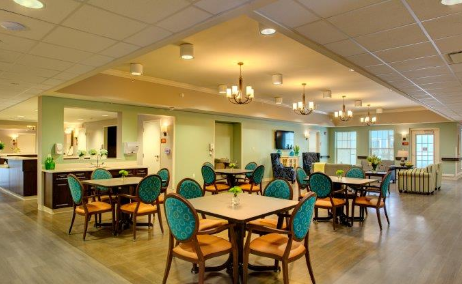
How is Tampa Lakes Center Staffed?

CMS rates TAMPA LAKES HEALTH AND REHABILITATION CENTER's staffing level at 3 out of 5 stars, which is average compared to other nursing homes. Staff turnover is 54%, compared to the Florida average of 46%.

What Have Inspectors Found at Tampa Lakes Center?

State health inspectors documented 16 deficiencies at TAMPA LAKES HEALTH AND REHABILITATION CENTER during 2021 to 2025. These included: 16 with potential for harm.

Who Owns and Operates Tampa Lakes Center?

TAMPA LAKES HEALTH AND REHABILITATION CENTER is owned by a for-profit company. For-profit facilities operate as businesses with obligations to shareholders or private owners. The facility is operated by SUMMITT CARE II, INC., a chain that manages multiple nursing homes. With 179 certified beds and approximately 173 residents (about 97% occupancy), it is a mid-sized facility located in LUTZ, Florida.
How Does Tampa Lakes Center Compare to Other Florida Nursing Homes?

Compared to the 100 nursing homes in Florida, TAMPA LAKES HEALTH AND REHABILITATION CENTER's overall rating (4 stars) is above the state average of 3.2, staff turnover (54%) is near the state average of 46%, and health inspection rating (3 stars) is at the national benchmark.

What Should Families Ask When Visiting Tampa Lakes Center?

Based on this facility's data, families visiting should ask: "Can I visit during a mealtime to observe dining assistance and food quality?" "How do you handle medical emergencies, and what is your hospital transfer rate?" "Can I speak with family members of current residents about their experience?"

Is Tampa Lakes Center Safe?

Based on CMS inspection data, TAMPA LAKES HEALTH AND REHABILITATION CENTER has a clean safety record: no substantiated abuse findings (meaning no confirmed cases of resident harm), no Immediate Jeopardy citations (the most serious violation level indicating risk of serious injury or death), and is not on the Special Focus Facility watch list (a federal program monitoring the lowest-performing 1% of nursing homes). The facility has a 4-star overall rating and ranks #1 of 100 nursing homes in Florida. While no facility is perfect, families should still ask about staff-to-resident ratios and recent inspection results during their visit.

Do Nurses at Tampa Lakes Center Stick Around?

TAMPA LAKES HEALTH AND REHABILITATION CENTER has a staff turnover rate of 54%, which is 8 percentage points above the Florida average of 46%. Moderate turnover is common in nursing homes, but families should still ask about staff tenure and how the facility maintains care continuity when employees leave.

Was Tampa Lakes Center Ever Fined?

TAMPA LAKES HEALTH AND REHABILITATION CENTER has no federal fines on record. CMS issues fines when nursing homes fail to meet care standards or don't correct problems found during inspections. The absence of fines suggests the facility has either maintained compliance or corrected any issues before penalties were assessed. This is a positive indicator, though families should still review recent inspection reports for the full picture.

Is Tampa Lakes Center on Any Federal Watch List?

TAMPA LAKES HEALTH AND REHABILITATION CENTER is not on any federal watch list. The most significant is the Special Focus Facility (SFF) program, which identifies the bottom 1% of nursing homes nationally based on persistent, serious quality problems. Not being on this list means the facility has avoided the pattern of deficiencies that triggers enhanced federal oversight. This is a positive indicator, though families should still review the facility's inspection history directly.