MARGATE HEALTH AND REHABILITATION CENTER
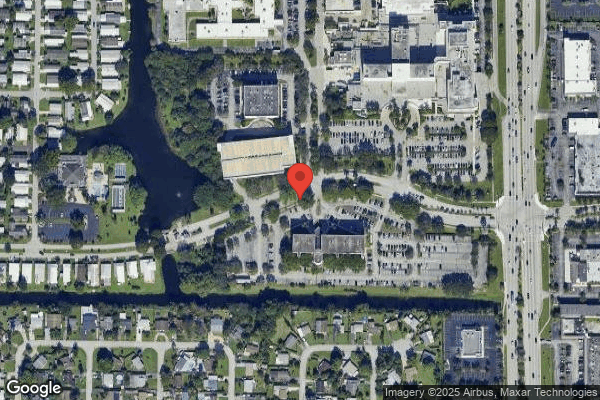
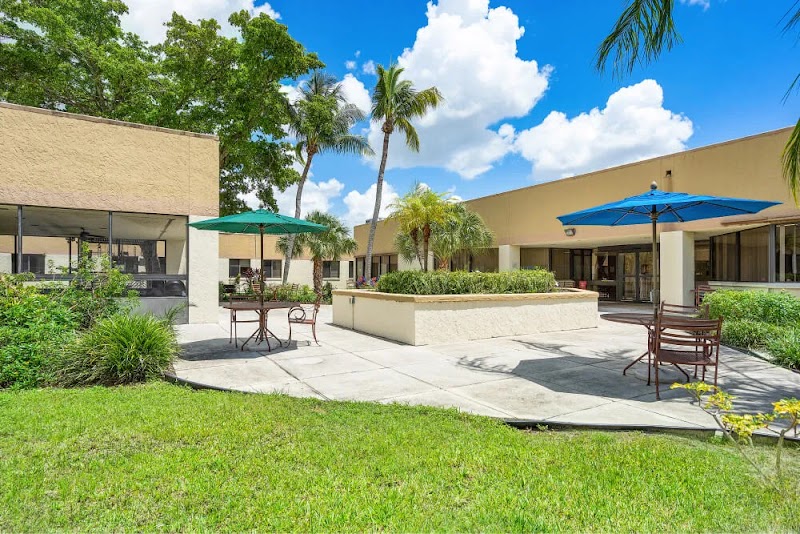
5951 COLONIAL DRIVE, MARGATE, FL 33063 (954) 979-6401
For profit - Limited Liability company 170 Beds ONYX HEALTH Data: November 2025
Trust Grade
80/100
#78 of 690 in FL
Last Inspection: November 2024

Within standard 12-15 month inspection cycle. Federal law requires annual inspections.

Overview

Margate Health and Rehabilitation Center has a Trust Grade of B+, which means it is above average and recommended for families considering their options. It ranks #78 out of 690 facilities in Florida, placing it in the top half, and #5 out of 33 in Broward County, indicating it is one of the better local choices. The facility is improving, with the number of issues decreasing from 9 in 2023 to 5 in 2024. Staffing is average at 3/5 stars, with a 33% turnover rate, which is better than the state average, suggesting some staff stability. Notably, the facility has not incurred any fines, which is a positive sign, and it offers more RN coverage than many facilities, enhancing patient care. However, there have been concerns, such as staff not providing necessary assistance during meals for residents and failures in food safety protocols, highlighting areas where improvements are needed.

Trust Score
B+
80/100
In Florida
#78/690
Top 11%
Safety Record
Low Risk
No red flags
Inspections
Getting Better
9 → 5 violations
Staff Stability
○ Average
33% turnover. Near Florida's 48% average. Typical for the industry.
Penalties
✓ Good
No fines on record. Clean compliance history, better than most Florida facilities.
Skilled Nurses
✓ Good
Each resident gets 43 minutes of Registered Nurse (RN) attention daily — more than average for Florida. RNs are trained to catch health problems early.
Violations
⚠ Watch
22 deficiencies on record. Higher than average. Multiple issues found across inspections.
★★★★★
5.0
Overall Rating
★★★☆☆
3.0
Staff Levels
★★★★★
5.0
Care Quality
★★★★☆
4.0
Inspection Score
Stable
2023: 9 issues
2024: 5 issues

The Good

  • 5-Star Quality Measures · Strong clinical quality outcomes
  • Full Sprinkler Coverage · Fire safety systems throughout facility
  • No fines on record
  • Staff turnover below average (33%)

    15 points below Florida average of 48%

Facility shows strength in quality measures, fire safety.

The Bad

Staff Turnover: 33%

13pts below Florida avg (46%)

Typical for the industry

Chain: ONYX HEALTH

Part of a multi-facility chain

Ask about local staffing decisions and management

The Ugly 22 deficiencies on record

Nov 2024 4 deficiencies
CONCERN (D)

Potential for Harm - no one hurt, but risky conditions existed

ADL Care (Tag F0677)

Could have caused harm · This affected 1 resident

**NOTE- TERMS IN BRACKETS HAVE BEEN EDITED TO PROTECT CONFIDENTIALITY** Based on observations, interviews and record reviews, the facility failed to provide assistance during dining for 1 of 2 sampled...

Read full inspector narrative →
**NOTE- TERMS IN BRACKETS HAVE BEEN EDITED TO PROTECT CONFIDENTIALITY** Based on observations, interviews and record reviews, the facility failed to provide assistance during dining for 1 of 2 sampled residents reviewed for activities of daily living (ADLs), (Resident # 100). The findings included: A review of the facility's policy titled, Activities of Daily Living (ADL), Supporting, revised on January 2024 documented the following: Residents will be provided with care, treatment and services as appropriate to maintain or improve their ability to carry out activities of daily living (ADLs). Residents who are unable to carry out activities of daily living independently will receive the services necessary to maintain good nutrition, grooming, personal and oral hygiene. Record review revealed that Resident #100 was admitted to the facility on [DATE] with diagnosis of Hemiplegia, unspecified affecting right dominant side and Anemia. The Minimum Data Set (MDS) quarterly assessment dated [DATE] revealed that the Brief Interview of Mental Status (BIMS) score documented that Resident #100 was severely impaired. Section GG of the MDS showed that Resident #100 needs substantial/maximal assistance during dining. A review of the Order Summary Report revealed the following: an order dated 12/21/2022 for regular diet pureed texture, honey/ moderately thick consistency, Fortified foods one time a day which was dated 04/30/2023, and an order for Enteral Feed Jevity 1.5, 250 milliliters (ml) bolus 3 times a day which was dated 07/17/2024. In an observation conducted on 11/04/2024 at 8:45 AM, Resident #100 was observed in her room attempting to eat her breakfast from the tray, without staff in the room. Resident #100 was just staring at her breakfast plate and not attempting to eat alone. About 10 minutes later, Resident #100 was observed still unattended with her breakfast tray. In an observation conducted on 11/04/2024 at 12:50 PM, Resident #100 was observed in her room looking at her lunch tray with an expression of discomfort on her face. About 20 minutes later, Resident #100 was still observed unattended and attempting to eat on her own without much success. In an observation conducted on 11/05/2024 at 8:11 AM, Resident #100 was observed in her room eating and spilling whitish food like substance from the breakfast tray that resembled cold cereal. In an observation conducted on 11/05/2024 from 12:41 PM to 12:56 PM, Resident #100 was observed in her room dressed in a hospital gown that was stained with food particles as she was attempting to eat alone. During that 15-minute period it was also noticed that most of the plate was spilled on the top part of Resident #100's gown. At 1:42 PM, the lunch tray was taken out of the room and Resident #100 was partially cleaned but not around her gown area. A thorough review of Resident #100's Care Plan dated 11/19/2024 stated the following: Observe meal intake, and report lack of intake. In an interview conducted on 11/06/2024 at 10:00 AM with Staff D, Minimum Data Set (MDS) assessment Coordinator for Long Term Care (LTC) was asked the meaning of substantial/maximal assistance during dining for Resident #100. She stated that staff would need to provide more than 50% of the work while feeding Resident #100. This would require handover hand assistance during the entire mealtime. According to Staff D, staff would be doing most of the work and be present throughout the feeding process. In an interview conducted on 11/06/2024 at 10:20 AM with Staff E, Certified Nursing Assistant (CNA), she stated Resident #100 can eat alone and doesn't need assistance. She further stated that Resident #100 usually eats between 50 to 75 % of her food. In an interview conducted on 11/06/2024 at 10:30 AM with the facility's clinical Dietitian she stated that Resident #100 has a varied intake of meals and that she is also on tube feeding regimen to substitute for the remaining intake of meals. The goal is to eventually decrease the tube feeding until most of Resident #100's intake comes from the diet by mouth. The Dietitian also reported that Resident #100 needs assistance with her meals and it is important to eat her meals since they are fortified for added nutritional value.
CONCERN (D)

Potential for Harm - no one hurt, but risky conditions existed

Deficiency F0790 (Tag F0790)

Could have caused harm · This affected 1 resident

**NOTE- TERMS IN BRACKETS HAVE BEEN EDITED TO PROTECT CONFIDENTIALITY** Based on observation, interviews and record review, the facility failed to provide emergency dental service for 1 of 1 sampled r...

Read full inspector narrative →
**NOTE- TERMS IN BRACKETS HAVE BEEN EDITED TO PROTECT CONFIDENTIALITY** Based on observation, interviews and record review, the facility failed to provide emergency dental service for 1 of 1 sampled resident reviewed for dental services (Resident #125). The findings included: Record review revealed Resident #125 was admitted to the facility on [DATE] with diagnoses that included Aphasia following cerebral infarction, Cerebral infarction, and Type 2 diabetes mellitus. Her Brief Interview for Mental Status (BIMS) score was 1 (indicating severe cognitive impairment), on the quarterly Minimum Data Set (MDS) with a assessment reference date of 08/30/24. On 11/04/24 at 10:30 AM Resident #125 was interviewed as part of the initial screening process. She could not answer questions asked but when the surveyor asked if she had pain she nodded yes and grabbed the left side of her face. The surveyor then spoke with Staff A, a Registered Nurse (RN), relaying that the resident indicated to the surveyor that she had pain on the left side of her face. An additional interview was conducted with the resident on 11/05/24 at 1:55 PM in her room. She was asked how she was feeling today and she pointed to the left side of her face. When asked if it was the same pain as yesterday she nodded yes. When asked if it was tooth pain she nodded yes. An interview was conducted with Staff A on 11/05/24 at 2:00 PM regarding if the resident was given anything for pain yesterday. She responded that she did not remember but if she did, it would be documented in the computer. Staff A was asked if the resident had been complaining of tooth pain and Staff A stated that she did not know. A review of the documentation for 11/04/24 revealed the resident did not receive any pain relief and there was no nursing documentation relating to tooth pain. An interview was conducted Staff B, a Social Worker, on 11/05/24 at 2:15 PM. Staff B was asked if the resident had been seen by the dentist. She called the dental service that provides care to the facility. They stated she had not been seen. Staff B stated she was not on the list to be seen by the dentist. She was then asked what the procedure was after a dental consult order was put in. She stated the nurse would usually notify the Social Worker to make the appointment but maybe it slipped through the cracks because the resident went into long term recently. A review of progress notes revealed prn (as needed) medication administration of (Acetaminophen tablet 325 milligrams 2 tablets by mouth every 6 hours as needed for pain) was administered on the following days for tooth pain: 11/06/24, 11/05/24, 10/15/24 for toothache 7/10 (pain level), 10/11/24 for toothache 7/10, 10/04/24 for a toothache 7/10, 10/02/24 for a toothache 8/10, 09/13/24 for toothache 7/10, and 09/07/24 for toothache 7/10. On 09/07/24 a dental consult was ordered. The dentist saw the resident on 10/21/24. Record review revealed the facility did not reach out to the dentist when the resident continued to complain of tooth pain and the dentist had not yet come to see her. On 11/06/24 at 3:24 PM, the dentist called the surveyor. He stated he was unable to determine when the office received the referral from the facility to see Resident #125. He stated he did not think it was on 09/07/24 because he was in the facility after that and before 10/21/24 and she was not seen at that time. He said he did not realize the resident had tooth pain because she would have been seen earlier in that case. He stated it could have been his fault that there was a delay but he can't say for sure. He stated there had been change in social workers in the facility and problems with communication. On 11/07/24 at 9:13 AM, an interview was conducted with Staff C, a Licensed Practical Nurse, regarding what she would do if her resident had tooth pain. She stated she would ask when it started, is it new, how bad is the pain, give pain medication if the resident has an order, see if it was effective or not, and notify the doctor.
CONCERN (D)

Potential for Harm - no one hurt, but risky conditions existed

Deficiency F0805 (Tag F0805)

Could have caused harm · This affected 1 resident

**NOTE- TERMS IN BRACKETS HAVE BEEN EDITED TO PROTECT CONFIDENTIALITY** Based on observations, interviews and record review, the facility failed to provide food in a form that meets the needs for the ...

Read full inspector narrative →
**NOTE- TERMS IN BRACKETS HAVE BEEN EDITED TO PROTECT CONFIDENTIALITY** Based on observations, interviews and record review, the facility failed to provide food in a form that meets the needs for the Mechanical Soft Diets, during dining observations for 6 residents out of 37 residents on a Mechanical Soft Diet (Resident #127, Resident #22, Resident #101, Resident #47, Resident #104 and Resident #24). The findings included: A review of the facility's diet guidelines (provided by the clinical dietitian) which was titled, Eating Guide for Mechanical Soft Diets dated 2022 documented the following: Recommended vegetables that are well cooked, diced such as carrots, peas, green beans, beets, butternuts, squash and wax beans. It further documented that the starches like pasta need to be diced soft pasta or noodles. 1. Record review documented that Resident #127 was readmitted to the facility on [DATE] with diagnoses of Cognitive Communication Deficit. The Significant change Minimum Data Set (MDS) assessment dated [DATE], documented a Brief Interview of Mental Status (BIMS) score of 09 which is moderate cognitive impairment. In an observation conducted on 11/04/24 at 12:54 PM in the Restorative dining room, Resident #127, was observed eating on her own. Closer observation revealed a lunch meal with the following: a Mechanical soft/easy to chew diet. The tray had pasta, chicken parmesan, garlic bread, and California vegetables (carrots, broccoli, and cauliflower). Closer observation revealed that the California vegetables were over 2 inches in length and partially cooked. This Surveyor attempted to cut through the carrots, broccoli, cauliflower, and the white pasta using a fork. A strong force was applied attempting to cut through the above food items which was difficult. 2. Record review revealed that Resident #22 was admitted on [DATE] with diagnoses of Dementia and type 2 Diabetes. the 5-day MDS assessment documented a BIMS score of 03, which is severe cognitive impairment. In an observation conducted on 11/04/24 at 1:00 PM, Resident #22 was observed eating in her room on her own. Closer observation revealed a lunch meal with the following: a Mechanical soft/easy to chew diet. The tray had pasta, chicken parmesan, garlic bread, and California vegetables (carrots, broccoli, and cauliflower). Closer observation revealed that the California vegetables were over 2 inches in length and partially cooked. This Surveyor attempted to cut through the carrots, broccoli, cauliflower, and the white pasta using a fork. A strong force was applied attempting to cut through the above food items which was difficult. In this observation, Resident #22 said that she is not eating the California vegetables on her lunch tray because it makes her sick and she is not able to cut the vegetables. 3. Record review revealed Resident #101 was admitted to the facility on [DATE] with diagnoses of Hyperlipidemia and Hypertension. The Quarterly MDS 09/17/24 documented a BIMS score of 04, which is severe cognitive impairment. In an observation conducted on 11/4/24 at 1:00 PM, Resident #101 was observed eating on his own. Closer observation revealed a lunch meal with the following: a Mechanical soft/easy to chew diet. The tray had pasta, chicken parmesan, garlic bread, and California vegetables (carrots, broccoli, and cauliflower). Closer observation revealed that the California vegetables were over 2 inches in length and partially cooked. This Surveyor attempted to cut through the carrots, broccoli, cauliflower, and the white pasta using a fork. A strong force was applied attempting to cut through the above food items which was difficult. 4. Record review revealed that Resident #47 was admitted to the facility on [DATE], with diagnoses of Dementia and Depression. The Quarterly MDS assessment dated [DATE] documented a BIMS score of 02, which is severe cognitive impairment. In an observation conducted on 11/6/24 at 12:15 PM, Resident #47 was noted in the room with the lunch meal. The meal ticket was noted with a Mechanical soft/easy to chew diet. The lunch plate was noted with long strands of pasta (not diced), Mechanical soft shrimps and Bermuda Vegetable blend (carrots, broccoli, peppers, and string beans) that were more than 2 inches in length and not well cooked. 5. Record review revealed Resident #104 was readmitted to the facility on [DATE] with diagnoses of Hypertension and Type 2 Diabetes. The Quarterly MDS assessment dated [DATE] has a BIMS score of 09, which is moderate cognitive impairment. In an observation conducted on 11/06/24 at 12:14 PM, Resident #104 was noted in the room with the lunch meal. The meal ticket was noted with a Mechanical soft/easy to chew diet. Closer observation showed a lunch plate with a Bermuda Vegetable blend that were more than 2 inches in length and not well cooked. 6. Record review revealed that Resident #24 was admitted to the facility on [DATE] with Chronic Respiration Failure. The significant change MDS assessment dated [DATE] documented a score of 00 for the BIMS, which was unable to be completed. In an observation conducted on 11/06/24 at 12:16 PM, Resident #24 was eating her lunch meal. Closer observation showed a meal ticket with Mechanical soft/easy to chew diet. The lunch plate was noted with long strands of pasta, Mechanical soft shrimp and Bermuda Vegetable blend (carrots, broccoli, peppers, and string beans) that were more than 2 inches in length and not well cooked. 7. In an observation conducted on 11/6/24 at 12:27, Resident #127 was noted in the dining room eating her lunch meal. The meal ticket was noted with a Mechanical soft/easy to chew diet. The meal plate was noted with long strands of pasta, Mechanical soft shrimps and Bermuda Vegetable blend (carrots, broccoli, peppers, and string beans) that were more than 2 inches in length. In this observation this Surveyor attempted to cut through the spring beans using the fork and was not able to cut through even with using strong force. 8. In an observation conducted on 11/06/24 at 12:47 PM, Resident #127 was in the dining room eating her lunch meal. Closer observation revealed Bermuda Vegetable blend (carrots, broccoli, peppers, and string beans) that were more than 2 inches in length. In this observation, Resident #127 attempted to cut through the green beans using a fork but was not able too. She then said to this Surveyor this is too hard to cut. In an interview conducted on 11/07/24 at 9:09 AM with the facility's Speech Therapist, she was asked about the Mechanical soft diet/easy to chew diet. The vegetables need to be soft enough so when you put a fork into it, it should be easily cut through. She further said that it should not be difficult to cut or be tough. In an interview conducted on 11/07/24 at 9:20 AM with the facility's Dietitian she said that the vegetables on the Mechanical soft diet need to be soft and said, easy to crunch through.
CONCERN (E)

Potential for Harm - no one hurt, but risky conditions existed

Infection Control (Tag F0880)

Could have caused harm · This affected multiple residents

**NOTE- TERMS IN BRACKETS HAVE BEEN EDITED TO PROTECT CONFIDENTIALITY** 3.) According to CDC, Enhanced Barrier Precautions included the following: Everyone must clean their hands including when both e...

Read full inspector narrative →
**NOTE- TERMS IN BRACKETS HAVE BEEN EDITED TO PROTECT CONFIDENTIALITY** 3.) According to CDC, Enhanced Barrier Precautions included the following: Everyone must clean their hands including when both entering and leaving the room. Providers and Staff must also; wear gloves and a gown for the following: high-contact care resident care activities, dressing, bathing-showering; transferring; changing linens, providing hygiene, changing briefs or assisting with toileting, device care or use: central line, urinary catheter, feeding tube, tracheostomy; Wound Care any skin opening requiring a dressing. https://www.cdc.gov/long-term-care-facilities/media/pdfs/EBP-KeepResidentsSafe-Poster-508.pdf. Resident # 116 was originally admitted on [DATE] and readmitted on [DATE], with diagnoses including Unspecified dementia, Dysphagia-oropharyngeal phase (swallowing difficulty occurs when food or liquid is moved from mouth to throat), generalized muscle weakness, (DTI) Deep Tissue Injury of left bunion and Sacral wound Stage 4 pressure ulcer. Record review of physician order dated 08/05/24 with active status during this survey on 11/07/24, revealed Enhanced Barrier Precaution: Maintain Enhanced Barrier Precautions for Sacral Wound. Further review of Nursing Care plan dated 08/05/24, 08/09/24 and 08/14/24 revealed Resident #116 requires EBP (enhanced barrier precaution) related to open wound. The interventions related to EBP included: educate resident, responsible party or caregivers regarding enhanced barrier precaution, follow infection control guidelines as indicated, maintain enhanced barrier precaution as indicated during dressing, bathing/showering, transferring. providing hygiene, changing linens, changing briefs or assisting with toileting, device care or IV access line care, urinary catheter care, feeding tube care, tracheostomy/ventilator care, ostomy care, or during wound care. Additional record review of weekly skin check dated 11/02/24, revealed that wound care was administered to sacrum per doctor's order. Additional note revealed that a forehead scab was resolving after a fall resulting to hematoma. Further review of wound care progress notes dated 11/04/24 revealed Resident #116 remains on wound care for stage 4 wound to sacrum. The wound was noted with moderate serosanguinous drainage with no bad odor. The surrounding areas were noted to be flat and intact, with 70% pink coloration of soft healthy/adequate granulation tissue,10% exposed ligaments, and 30% epithelized tissue. The wound was stable, with no significant changes. A review of MDS ( Minimum Data Set) Section C dated 11/05/24, revealed a score of 10 indicating Resident #116 has a mild cognitive impairment. MDS' Section GG -A on eating: the ability to use suitable utensils to bring food and/or liquid to the mouth and swallow food and/or liquid once the meal is placed before the resident, revealed Resident #116 requires moderate set up or clean up assistance. Section GG-I on Personal hygiene: the ability to maintain personal hygiene, including washing/drying face and hands, revealed Resident #116 requires substantial and maximal assistance. Section E0800 on Rejection of Care-Presence & Frequency: if resident reject evaluation or care (e.g. ADL assistance) that is necessary to achieve the resident's goals for health and well-being, revealed a 0-score, indicating behavior is not exhibited by Resident#116. During an observation on 11/06/24 at 09:30 AM, a CDC Enhanced Barrier Precaution sign was posted on Resident #116's door. Staff J, a [NAME] Wing Unit Manager answered the call light of Resident# 116, who was sitting on a wheelchair in front of a table containing a breakfast tray. Staff J, a Unit Manager pressed the light switch off on the wall. She proceeded to adjust the breakfast table, then repositioned Resident #116's right and left lower legs and socked feet. Closer observation revealed scattered brownish skin discoloration on the anterior portion of both lower legs. Staff J, a Unit Manager was not wearing any personal protective equipment like gloves. She told Resident #116 that she will feed her. Closer observation revealed Resident #116's spoon was buried under the pureed brown and yellow colored food. There were linens and a pillow on top of a chair, related to the Maintenance Staff removing all bed linens earlier to fix Resident #116's bed and to replace mattress. Without hand hygiene after touching Resident's lower legs, and feet, Staff J, a Unit Manager grabbed and bunched all the bed linens, including a red blanket with no gloves. She left the room without performing hand hygiene and came back with a pillowcase which she used for a pillow on top of a chair. Staff J, a Unit Manager did not perform hand hygiene when she left the room again and came back with a plastic bag, where she placed Resident #116's bed linens, and pillow using bare hands. She placed all plastic contained linens and a pillow inside Resident's locker. Resident #116 stated she was cold, so Staff J using her bare hands placed Resident #116's red blanket on top of Resident's neck, chest, arms and middle body. Staff J, a Unit Manager left the room one more time and came back holding a blue PPE (Personal Protective Equipment) gown. She donned a PPE gown but did not put on gloves. Staff J, a Unit Manager sat on a now empty chair and started to feed Resident # 116. She was not observed encouraging Resident #116 to perform any hand hygiene, nor give her hand sanitizer, or wet towel with soap before eating. Staff J did not perform any hand hygiene herself before feeding Resident #116. After she poured the contents of a boxed supplement in a container, Staff J, a Unit Manager asked Resident # 116 to hold the container. During an interview with the Administrator on 11/07/24 at 1:00 PM, the above observation was shared. Based on review of policy and procedure, observation, interview and record review, the facility failed to 1) don appropriate personal protective equipment (PPE)/aprons while handling resident linen/gowns, during a Laundry Room Tour, 2) ensure that it donned appropriate (PPE)/gloves for a resident during a Glucometer Observation Demonstration for 1 of 2 sampled residents observed, (Resident #110,) and 3) appropriate (PPE) with a resident on Enhanced Barrier Protections (EBP) In accordance to CDC (Center for Disease Control and Prevention) guidelines and recommendations for 1 of 35 residents observed for EBP, Resident #116. The findings included: 1) Record review of the un-dated facility policy and procedure titled, Laundry provided by the Director of Nursing (DON) documented in the Policy Statement: Standard: It will be the standard of this facility to use guidance from the most current infection control guidelines provided by the Centers for Disease Control (CDC) Infection Control Policy and Procedure Manual Volume I and II, as it relates to Contaminated/Isolation Room Cleaning to assist with the prevention in the transmission of infectious agents within the healthcare setting. Guideline: A. The employee will don with the appropriate Personal Protective Equipment (PPE) per facility standard and guidelines Precautions to Prevent Transmission of Infectious Agents, prior top handling contaminated linen or clothing. 1. Contaminated/Isolation Laundry Procedures will consist of: a) Employee must wear appropriate PPE while sorting resident linens and personal clothing. b) Employee should not allow linen or resident personal items (clean or dirty) to touch their clothing or uniform . During a Laundry Room tour conducted on 11/05/24 at 10:24 AM with the Director of Maintenance/Housekeeping, two (2) of the facility ' s laundry room aides were observed folding up clean resident linens and resident gowns in a facility uniform; allowing the resident's clean gowns and linen to come into contact with their uniforms. An interview was conducted consecutively, with both of the laundry aides, Staff H and Staff I, regarding their wear and use of the facility ' s uniform in the laundry, and both laundry aides revealed that they wear the same facility uniforms, while in the process of folding up clean resident linens and resident gowns, from home to work and back home again; both aides were observed directly folding and handling clean resident linens and resident gowns, without wearing (PPE)/aprons. An interview was conducted on 11/05/24 at 10:28 AM, with the Maintenance/Housekeeping Director, and he acknowledged that the laundry aides should be wearing aprons atop their uniforms, while folding up clean resident linens and resident gowns. The facility laundry staff aides did not don an apron, while folding up clean resident linens and resident gowns, until after surveyor intervention. The Administrator further recognized and acknowledged on 11/05/24 at 10:34 AM, that appropriate PPE/aprons should always be worn in the laundry room area by facility staff, while folding up clean resident linens and resident gowns; this was not done. 2) Review of the facility policy and procedure on 11/04/24 at 2:36 PM titled Blood Sampling - Capillary (Finger Sticks) provided by the DON reviewed January 2024 documented in the Policy Statement: Purpose: The purpose of this procedure is to guide the safe handling of capillary-blood sampling devices to prevent transmission of bloodborne diseases to residents and employees. Equipment and Supplies .4. Personal protective equipment (e.g. gloves); .General Guidelines: 1. Always ensure that blood glucose meters intended for reuse are cleaned and disinfected between resident uses .Steps in the Procedure .2. [NAME] gloves 9. Remove gloves, and discard into appropriate receptacle . Resident #110 was admitted to the facility on [DATE] with diagnoses which included Diabetes Mellitus, Dementia, Hemiplegia and Hemiparesis, Gastrostomy Tube, Atherosclerotic Heart Disease and Hypertension. She had a Brief Interview Mental Status (BIM) score indicating (severe impairment). During a Blood Sugar Level (BSL) Accucheck reading observation conducted for Resident #110 on 11/04/24 at 11:14 AM, Staff F, a Licensed Practical Nurse (LPN), was observed using the Microdot minute wipes to initially clean the Glucometer machine prior to resident use. However, Staff F, was observed, first donning a pair of gloves (PPE) to utilize during the first Glucometer machine cleaning and check. Staff F, was actually observed cleaning the Glucometer machine with her bare hands. Next, Staff F, then sanitized her hands and gathered the supplies and went to the resident, who agreed to have this surveyor observe the Accucheck being performed. Staff F, then washed her hands again for 30-45 seconds, donned a clean pair of gloves and proceeded to take Resident #110 ' s blood sugar sample from her left hand-third finger. Again, Staff F, nurse was observed using the Microdot minute wipes in order to clean the Glucometer machine between uses, and she allowed it to air dry for 2-4 minutes. However, again Staff F, was not observed, first donning a pair of gloves after completing the second Glucometer cleaning and check; for resident use. Staff F, had been observed again, cleaning the used Glucometer machine with her bare hands. Next, the nurse sanitized her hands and gathered the supplies again and went to the resident's room and she again agreed to have this surveyor observe the Accucheck being performed. The nurse then washed her hands again for 30-45 seconds, donned a clean pair of gloves, and then proceeded to re-check the resident ' s blood sugar at 11:53 AM, from the left hand ring fourth (4th) finger. Resident #110 had received an 8 oz. carton of liquid Boost Glucose Control as provided by Staff F. Staff F, then washed her hands for 30-45 seconds, applied a pair of gloves and then drew up four (4) units of Novolin R flex pen and administered it in the Resident #110's left upper arm; after she was observed first wiping the resident's skin area down with an alcohol pad prior to and after the injection. Finally, Staff F threw the used lancets into the sharp's container, removed her gloves and washed her hands for approx. 35 -40 seconds. On 08/19/23 the original and on 11/04/24 the current physician's orders documented to, check blood glucose via finger stick one time a day related to Diabetes Mellitus due to underlying condition with Hyperglycemia. An interview was conducted with Staff F a (Licensed Practical Nurse), LPN, on 11/04/24 at 2:54 PM, regarding her not wearing PPE (gloves) during the Glucometer Observation, and she acknowledged that she did not wear any PPE (gloves) during the Glucometer cleaning, and she indicated that she should have. An interview was conducted with Staff G a (Registered Nurse), RN Unit Manager for the South Wing, on 11/04/24 at 3 PM regarding Staff F, not wearing PPE (gloves) during the Glucometer Observation and she also acknowledged that gloves should have been worn during the Glucometer Observation, for Resident #110. Record review of Resident #110 ' s Medication Administration Record (MAR) for November 2024 documented that Resident #110 was ordered the following two (2) injectable and two (2) oral Hypoglycemic medications: Basalar Kwikpen inject 60 units subcutaneously at bedtime related to Diabetes Mellitus due to underlying condition with Hyperglycemia, and Novolin R Flexpen insulin inject as per sliding scale related to Diabetes Mellitus due to underlying condition with Hyperglycemia. Record review of the Resident #110's original Enhanced Barrier Precaution (EBP) Care plan initiated 04/18/24 and revised 07/16/24 documented to Maintain enhanced barrier precaution as indicated during dressing, bathing/showering, transferring. providing hygiene, changing linens, changing briefs or assisting with toileting, device care or Intravenous (IV) access line care, urinary catheter care, feeding tube care, tracheostomy/ventilator care, ostomy care, or during wound care. In summary, the nurse was observed cleaning the Glucometer machine for resident use, a total of four (4) separate times, with her bare hands, without first donning a pair of gloves (PPE). The DON further recognized and acknowledged that on 11/04/24 at 3:15 PM that PPE should always be worn during resident Glucometer cleaning and care; this was not done.
Feb 2024 1 deficiency
CONCERN (D) 📢 Someone Reported This

A family member, employee, or ombudsman was alarmed enough to file a formal complaint

Potential for Harm - no one hurt, but risky conditions existed

Deficiency F0569 (Tag F0569)

Could have caused harm · This affected 1 resident

**NOTE- TERMS IN BRACKETS HAVE BEEN EDITED TO PROTECT CONFIDENTIALITY** Based on interview and record review, the facility failed to provide 1 of 3 sampled residents during closed record review, Resid...

Read full inspector narrative →
**NOTE- TERMS IN BRACKETS HAVE BEEN EDITED TO PROTECT CONFIDENTIALITY** Based on interview and record review, the facility failed to provide 1 of 3 sampled residents during closed record review, Resident #1, a personal refund within 30 days of discharge and a final itemized accounting bill. The findings included: Record review of the facility's policy, titled, Refund Policy, revised on April 2017, documented, Any funds on deposit with the facility shall be refunded upon the request of the resident, resident representative, or resident's estate. The Policy Interpretation and Implementation, documented, in part: Within 30 days of resident's discharge or death, the facility will refund the resident's personal funds and provide a final accounting of those funds to the resident, the resident's representative, or the resident's estate. Inquiries concerning refunds should be referred to the Administrator or to the business office. Record review of the closed clinical and financial records for Resident #1 on 02/21/24, noted the resident had an admission date of 09/14/23 with diagnoses that included Aftercare Following Hip Surgery and Fracture of the Right and Left Patella. Resident #1 was discharged on 11/21/23. Further review of the clinical record revealed on 11/10/23, the resident received an insurance Notice of Medical Non-Coverage, dated 11/10/23, indicating the last day of skilled care coverage would be 11/13/23. Review of Resident #1's social service notes documented the resident stated to the facility she was not ready for discharge home and requested another week of skilled therapy at the facility. Further record review of social service revealed the resident lost the first appeal with the insurance company but had won a second Reconsideration Appeal. The facility had requested of the resident pay privately ($3,480.00) for this additional week, until the insurance appeal's cost and billing, were determined and paid to the facility. Further review revealed the facility failed to provide Resident #1 with a requested itemized final bill upon the resident's discharge to home on [DATE]. Further review of Resident #1's financial records noted that private payment in the amount of $3,480.00 exceeded the facility's monthly charge of $3,305.00 by $175.00. An interview was conducted with the facility's Administrator and Business Office Manager on 02/21/24 at 10:00 AM. The Business Office Manger stated that the $175.00, which was to be refunded to the resident, was not paid within 30 days of discharge because the insurance company had not submitted their final billing statement to the facility. An interview was conducted via telephone with Resident #1 on 02/22/24 at 5:00 PM, who stated there were numerous calls and e-mails to the facility requesting an itemized final billing statement and refund. The resident stated the facility failed to reply to the requests. On 02/23/24 at 4 PM, Resident #1 e-mailed a copy of a refund check that was mailed to her from the facility, dated 02/21/24 in the amount of $175, which was approximately 3 months after her discharge from the facility.
Dec 2023 1 deficiency
CONCERN (D) 📢 Someone Reported This

A family member, employee, or ombudsman was alarmed enough to file a formal complaint

Potential for Harm - no one hurt, but risky conditions existed

Quality of Care (Tag F0684)

Could have caused harm · This affected 1 resident

**NOTE- TERMS IN BRACKETS HAVE BEEN EDITED TO PROTECT CONFIDENTIALITY** Based on review of policy and procedure, record review and interview, the facility failed to ensure that the resident was seen b...

Read full inspector narrative →
**NOTE- TERMS IN BRACKETS HAVE BEEN EDITED TO PROTECT CONFIDENTIALITY** Based on review of policy and procedure, record review and interview, the facility failed to ensure that the resident was seen by a Dermatologist for diagnostic follow-up, based on signs, symptomatology and per physician's written order, for 1 of 4 sampled residents, reviewed (Resident #4). The findings included: Review of the facility policy and procedure titled Physician Orders provided by the Director of Nursing (DON) revised July 2020 documented in the Policy Statement: Orders for .treatments will be consistent with principles of safe and effective order writing. Nursing staff must follow safe and effective transcription of physician's orders and safe and effective ./treatment .Policy Interpretation and Implementation 4. Nurse must follow physician orders as prescribed, any changes in physician orders must be communicated to physician and a new order must be obtained and transcribed . Review of Resident #4's closed record, it was revealed the Resident was re-admitted to the facility on [DATE] with diagnoses which included Diabetes Mellitus Type II with Hyperglycemia, Parkinsonism, Peripheral Vascular Disease, Atherosclerotic Heart Disease, Generalized Anxiety Disorder, Malignant Neoplasm of Unspecified Testis, Hypertension and Cerebral Infarction. He had a Brief Interview Mental Status (BIM) score of 14 (cognitively intact). On 10/12/23 the physician's written order documented: Dermatology Consult diagnosis Rash/Itching to back and bilateral lower extremities. Subsequent record review revealed that Resident #4's physician documented in two (2) different progress notes, one (1) dated 10/09/23 and the other dated 10/24/23, that Resident #4 was noted to have a generalized rash on abdomen .using Benadryl with no improvement, twice documenting the need for a Dermatology evaluation/assessment to be done as ordered. An interview was conducted on 12/21/23 at 5:14 PM with Staff A, a Certified Nursing Assistant (CNA), in which she was asked whether or not Resident #4 had a reddened rash on his body. Staff A responded by saying, yes, and he had some cream that was put all over his body, for his itching and scratching, which she said he had for some time. An interview was conducted on 12/22/23 at 10:56 AM with Staff B, a Licensed Practical Nurse (LPN), in which she was asked about the reddish rash located on Resident #4's body. Staff B acknowledged that Resident #4 had medicated cream ordered and applied to the rashes located mainly on his back and in his Abdominal Thoracic area. Staff B went on to say that Resident #4 had been scratching for a period of time, and he had been ordered some Benadryl for this. Staff B added that she was unable to recall whether or not Resident #4 had ever been seen by a Dermatologist. During an interview conducted with the Infection Control Nurse, on 12/21/23 at 2:53 PM, she stated that she had been aware that Resident #4 had been having a skin issue, which required follow-up by a Dermatologist. She explained that she tried assisting one of the resident's assigned nurses, in contacting the Dermatologist office, in order to have them come out to the facility to see this resident. The Infection Control Nurse stated that she could not recall whether or not Resident #4 was actually seen, at any time, in the facility by a Dermatologist. Further record review of Resident #4's care plans documented the following .Focus: 1) Resident noted with dry lower extremities, 2) Resident has a rash noted to chest & upper back and, 3) Resident was re-admitted with Skin alteration and is at risk for further skin breakdown Interventions include: . Dermatology consult as needed and provide any needed treatments per MD order. Goals: Resident will have resolved/decreased risk of infection by next review date, Resident's rash will resolve and Resident will minimize risk for further skin breakdown daily through next review date; this was not done. During an interview and side-by-side record review conducted on 12/22/23 at 1:47 PM with Staff C, RN, Unit Manager of the [NAME] wing, she stated that she had seen and reviewed the 10/12/23 physician's order for Resident #4 to have a Dermatology consult for diagnosis: Rash/itching to back and bilateral lower extremities. However, she revealed that Resident #4 had never been seen by any Dermatologist for his skin condition during his facility stay. Since Resident #4 was scheduled but failed to keep an appointment with a Dermatologist, Staff C was asked the following question: did you make any other attempts to call any other Dermatologist during that time, in order to have this resident's skin condition assessed and evaluated, per the physician's order? Her response was, no. Furthermore, Staff C acknowledged that she had not made any notation in the resident's medical record documenting her prior contact with the Dermatologist office in order to schedule, or re-schedule an evaluation for this resident, as ordered, prior to discharge. Staff C went on to say that she had not contacted her supervisor, nor the resident's attending physician, to notify them of the above. Record review of the resident's documented pain scale level for the month of October 2023 revealed that on six (6) days-October 4th, 8th, 11th, 12th, 13th and 29th; each ranged from 3-9/10. The weekly computerized skin check forms for Resident #4 dating from 09/21/23 through 10/26/23 did not documBased on review of policy and procedure, record review and interview, the facility failed to ensure that the resident was seen by a Dermatologist for diagnostic follow-up, based on signs, symptomatology and per physician's written order, for 1 of 4 sampled residents, reviewed (Resident #4). The findings included: Review of the facility policy and procedure titled Physician Orders provided by the Director of Nursing (DON) revised July 2020 documented in the Policy Statement: Orders for .treatments will be consistent with principles of safe and effective order writing. Nursing staff must follow safe and effective transcription of physician's orders and safe and effective ./treatment .Policy Interpretation and Implementation 4. Nurse must follow physician orders as prescribed, any changes in physician orders must be communicated to physician and a new order must be obtained and transcribed . Review of Resident #4's closed record, it was revealed the Resident was re-admitted to the facility on [DATE] with diagnoses which included Diabetes Mellitus Type II with Hyperglycemia, Parkinsonism, Peripheral Vascular Disease, Atherosclerotic Heart Disease, Generalized Anxiety Disorder, Malignant Neoplasm of Unspecified Testis, Hypertension and Cerebral Infarction. He had a Brief Interview Mental Status (BIM) score of 14 (cognitively intact). On 10/12/23 the physician's written order documented: Dermatology Consult diagnosis Rash/Itching to back and bilateral lower extremities. Subsequent record review revealed that Resident #4's physician documented in two (2) different progress notes, one (1) dated 10/09/23 and the other dated 10/24/23, that Resident #4 was noted to have a generalized rash on abdomen .using Benadryl with no improvement, twice documenting the need for a Dermatology evaluation/assessment to be done as ordered. An interview was conducted on 12/21/23 at 5:14 PM with Staff A, a Certified Nursing Assistant (CNA), in which she was asked whether or not Resident #4 had a reddened rash on his body. Staff A responded by saying, yes, and he had some cream that was put all over his body, for his itching and scratching, which she said he had for some time. An interview was conducted on 12/22/23 at 10:56 AM with Staff B, a Licensed Practical Nurse (LPN), in which she was asked about the reddish rash located on Resident #4's body. Staff B acknowledged that Resident #4 had medicated cream ordered and applied to the rashes located mainly on his back and in his Abdominal Thoracic area. Staff B went on to say that Resident #4 had been scratching for a period of time, and he had been ordered some Benadryl for this. Staff B added that she was unable to recall whether or not Resident #4 had ever been seen by a Dermatologist. During an interview conducted with the Infection Control Nurse, on 12/21/23 at 2:53 PM, she stated that she had been aware that Resident #4 had been having a skin issue, which required follow-up by a Dermatologist. She explained that she tried assisting one of the resident's assigned nurses, in contacting the Dermatologist office, in order to have them come out to the facility to see this resident. The Infection Control Nurse stated that she could not recall whether or not Resident #4 was actually seen, at any time, in the facility by a Dermatologist. Further record review of Resident #4's care plans documented the following .Focus: 1) Resident noted with dry lower extremities, 2) Resident has a rash noted to chest & upper back and, 3) Resident was re-admitted with Skin alteration and is at risk for further skin breakdown Interventions include: . Dermatology consult as needed and provide any needed treatments per MD order. Goals: Resident will have resolved/decreased risk of infection by next review date, Resident's rash will resolve and Resident will minimize risk for further skin breakdown daily through next review date; this was not done. During an interview and side-by-side record review conducted on 12/22/23 at 1:47 PM with Staff C, RN, Unit Manager of the [NAME] wing, she stated that she had seen and reviewed the 10/12/23 physician's order for Resident #4 to have a Dermatology consult for diagnosis: Rash/itching to back and bilateral lower extremities. However, she revealed that Resident #4 had never been seen by any Dermatologist for his skin condition during his facility stay. Since Resident #4 was scheduled but failed to keep an appointment with a Dermatologist, Staff C was asked the following question: did you make any other attempts to call any other Dermatologist during that time, in order to have this resident's skin condition assessed and evaluated, per the physician's order? Her response was, no. Furthermore, Staff C acknowledged that she had not made any notation in the resident's medical record documenting her prior contact with the Dermatologist office in order to schedule, or re-schedule an evaluation for this resident, as ordered, prior to discharge. Staff C went on to say that she had not contacted her supervisor, nor the resident's attending physician, to notify them of the above. Record review of the resident's documented pain scale level for the month of October 2023 revealed that on six (6) days-October 4th, 8th, 11th, 12th, 13th and 29th; each ranged from 3-9/10. The weekly computerized skin check forms for Resident #4 dating from 09/21/23 through 10/26/23 did not document any descriptive information nor interventions done; it was only documented as, no new skin impairment noted at this time. The nursing progress notes reviewed from 09/12/23 thru 10/30/23 (well-over one month) contained no documentation of skin progression, no clarifying description, nor any response to treatment for Resident #4's on-going fragile, compromised skin condition or status, at the time. During the survey, the Surveyor, along with the facility Administration, attempted to call the referring dermatologist office, with the phone number provided to the resident and the resident's family upon discharge. It was discovered and revealed that an incorrect phone number/information had been provided to the resident and his family, for follow-up. The DON recognized and acknowledged that on 12/22/23 at 3 PM there was a written physician's order for Resident #4 to have a Dermatologist consult prior to discharge from the facility; this was not done even after the resident's own general primary physician wrote an order for (any available) Specialist Dermatological consult, weeks prior to the resident's discharge from the facility. ent any descriptive information nor interventions done; it was only documented as, no new skin impairment noted at this time. The nursing progress notes reviewed from 09/12/23 thru 10/30/23 (well-over one month) contained no documentation of skin progression, no clarifying description, nor any response to treatment for Resident #4's on-going fragile, compromised skin condition or status, at the time. During the survey, the Surveyor, along with the facility Administration, attempted to call the referring dermatologist office, with the phone number provided to the resident and the resident's family upon discharge. It was discovered and revealed that an incorrect phone number/information had been provided to the resident and his family, for follow-up. The DON recognized and acknowledged that on 12/22/23 at 3 PM there was a written physician's order for Resident #4 to have a Dermatologist consult prior to discharge from the facility; this was not done even after the resident's own general primary physician wrote an order for (any available) Specialist Dermatological consult, weeks prior to the resident's discharge from the facility.
Aug 2023 8 deficiencies
CONCERN (D)

Potential for Harm - no one hurt, but risky conditions existed

Resident Rights (Tag F0550)

Could have caused harm · This affected 1 resident

Based on observation, record review and interviews, the facility failed to refer to residents requiring assistance, in a dignified manner during dining observation on the south wing (Resident #46, #10...

Read full inspector narrative →
Based on observation, record review and interviews, the facility failed to refer to residents requiring assistance, in a dignified manner during dining observation on the south wing (Resident #46, #105, # 129, #132 and #143). The findings included: Review of the facility's policy titled Assistance with Meals reviewed on January 2023, documented .Residents Requiring Full Assistance: residents who cannot feed themselves will be fed with attention to safety, comfort and dignity, for example .avoiding the use of labels when referring to residents (e.g., feeders) . On 08/07/23 at 12:26 PM, in-room dining observations for the facility's south wing was conducted. Observation revealed Staff A, Licensed Practical Nurse (LPN) at the food cart reviewing the resident's lunch trays. At 12:31 PM, during the observation, Staff A informed the Certified Nursing Assistants (CNAs) the trays left in the cart were for the feeders. At 12:50 PM, an interview was conducted with Staff A, LPN who stated that CNA's were going to take care of the feeders. Staff A was asked which residents the trays left in the cart belong to and stated Resident #46, #105, #129, 132 and #143. Staff A added that any other feeders trays will be in the second cart. On 08/07/23 at 12:58 PM, observation revealed Staff A, feeding Resident #129 in the resident's room. Subsequently, an interview was conducted with Staff A who stated, we have more 'feeders' to feed, but did not want to wait because the food will get cold. On 08/07/23 at 1:01 PM, observation revealed two lunch trays inside the food cart for Resident #105 and #143. Observation revealed Staff B, CNA walking down the hallway and she was asked why trays were in the cart. Staff A stated Resident #105 and #143 were feeders. Consequently, Staff C, CNA walked to the food cart, picked up Resident #143's tray and stated the resident's daughter will feed her. On 08/07/23 at 1:05 PM, observation revealed Staff A,CNA feeding Resident #105 in her room. On 08/07/23 at 1:06 PM, observation revealed Resident #46 and #132 being fed by the facility staff in their room. On 08/07/23 at 2:32 PM, an interview was conducted with Staff A, who stated that the staff used to call the residents feeders before. Staff A added that she was in-serviced a few months ago, because feeders was not a correct word to say and added she messed up today. Staff A stated, I want to be honest with you, I forgot what word to use. On 08/07/23 at 2:51 PM, an interview was conducted with Staff B, CNA who confirmed that she called the residents feeders. Staff B stated she was supposed to say need assistance with meals. On 08/09/23 at 8:29 AM, during an interview, the facility's weekend supervisor was asked to submit Assistance with Feeding policy and was apprised that a nurse and a CNA called residents feeders. The supervisor stated she will inform the Director of Nursing (DON). On 08/09/23 at 9:22 AM, surveyor was approached by the DON who asked why the request of the Assistance with Feeding policy. The DON was informed that a nurse and a CNA called the residents feeders. The DON stated that was an old term, longtime ago. The DON stated that the staff were using the wrong terminology. She further stated the staff have been educated, reeducated and she will continue to educate them.
CONCERN (D)

Potential for Harm - no one hurt, but risky conditions existed

Deficiency F0558 (Tag F0558)

Could have caused harm · This affected 1 resident

**NOTE- TERMS IN BRACKETS HAVE BEEN EDITED TO PROTECT CONFIDENTIALITY** Based on observation and interview, the facility failed to provide 1 of 1 sampled residents (Resident #12) with reasonable accom...

Read full inspector narrative →
**NOTE- TERMS IN BRACKETS HAVE BEEN EDITED TO PROTECT CONFIDENTIALITY** Based on observation and interview, the facility failed to provide 1 of 1 sampled residents (Resident #12) with reasonable accomodations of personal needs and room preferences. The findings included: During the initial screening of Resident #12 on 08/07/23 at 9 AM, it was noted the resident wanted to speak to the surveyor concerning his room issues. The alert and oriented resident stated that he has an old bed, which does not raise high enough when receiving ADL (Activities of Daily Living) care from staff. He further stated that staff have to hover over him and almost lay on top of the bed during care. The resident stated that he has requested from nursing and maintenance numerous times over the past 2 months for a new bed that raises to a higher level. Resident #12 stated he was told there are new beds in the facility that raise to a higher level, but there was not a new bed available for him and he could not have a new bed. The resident also went on to state that his furniture is not placed correctly in his private room, that causes him to hit the dresser and walls. Observation on 08/07/23 noted that there were numerous large areas of damage to the room walls and the exterior of the room dresser was heavily damaged. On 08/08/23 during an observation of Resident #12 room with the Corporate Maintenance Director, the resident's room issues were confirmed. The Director stated that a new bed would be issued to the resident along with wall repairs, new dresser, wall hanging of the television , and new arrangement of the furniture. On 08/09/23 during an observation of the room of Resident #12 , it was noted that a new bed had been issued to the resident. The resident stated to the surveyor that the bed raises to a higher level during care and is very happy , but unhappy that it took the intervention of the surveyor to meet his needs. Further observation of the room noted that the holes had not been repaired, a new dresser had not been issued, the television was not hung on the wall and the room furniture had not been re-arranged to meet the needs of Resident #12. Review of the clinical record for Resident #12 noted the following: Date of re-admission: [DATE] Diagnoses: Paraplegia, Disorder of Nervous System, Contracture to R (Right) & L (Left) Hand and R & L Foot and Insomnia. MDS (MinimumData Set) quarterly assessment dated [DATE]: Section B: Understood & Understands Section C: BIMS (Brief Interview for Mental Status) score= 15 ( No Cognition Issues) Section D: No Mood Issues Section G: Extensive to Total Dependence Section O: Special Treatment - IV Medication Section J: Health Conditions - Pain Current Care Plan Review: Chronic Pain Impaired/Decreased Mobility Anxiety & Restlessness Extensive Assist with ADL (Activities of Daily Living) Care
CONCERN (D)

Potential for Harm - no one hurt, but risky conditions existed

Safe Environment (Tag F0584)

Could have caused harm · This affected 1 resident

Based on observation, interview, and record review, the facility failed to maintain a safe environment for the residents. Specifically, unlocked sharps container cabinets which were lacking the proper...

Read full inspector narrative →
Based on observation, interview, and record review, the facility failed to maintain a safe environment for the residents. Specifically, unlocked sharps container cabinets which were lacking the proper internal red box in Resident #152 and #136's rooms, and several additional resident rooms, which were easily accessible. The findings include: 1) During the initial tour of the facility conducted on 08/07/23 at 9:51 AM, in Resident #152's room, the surveyor observed an unlocked sharps container cabinet which was lacking the proper internal red box. Inside the unlocked sharps container cabinet, there were 4 used razors noted. A secondary tour was conducted on 08/08/23 at 9:55 AM, in Resident #152's room, the surveyor observed the sharps container cabinet remained unlocked and was still lacking the proper internal red box. Inside the unlocked sharps container cabinet, there remained the same 4 used razors. Review of Resident #152's record revealed she had a Brief Interview of Mental Status (BIMS) score of 12, which indicates she was moderately cognitively impaired. 2) During the initial tour of the facility conducted on 08/07/23 at 10:08 AM, in Resident #136's room, the surveyor observed an unlocked sharps container cabinet which was lacking the proper internal red box. Inside the unlocked sharps container cabinet, there was a used blood glucose lancet noted. A secondary tour was conducted on 08/08/23 at 9:54 AM, in Resident #136's room, the surveyor observed the sharps container cabinet remained unlocked and was still lacking the proper internal red box. Inside the unlocked sharps container cabinet, there remained the same used blood glucose lancet. Review of Resident #136's record revealed she had a BIMS of 11, which indicates she was moderately cognitively impaired. Additional observations were conducted on 08/07/23 which revealed a total of 15 of the 35 rooms on the facility's [NAME] Wing had sharps container cabinets which were lacking the proper internal red box. Approximately half of these cabinets were unlocked but had no sharp objects present inside. During an environmental tour of the facility conducted with facility administration and maintenance on 08/08/23, these areas of concern were discussed.
CONCERN (D)

Potential for Harm - no one hurt, but risky conditions existed

Incontinence Care (Tag F0690)

Could have caused harm · This affected 1 resident

**NOTE- TERMS IN BRACKETS HAVE BEEN EDITED TO PROTECT CONFIDENTIALITY** Based on record review, policy reveiw, observations and interview, the facility failed to follow the Urinary Catheter Care polic...

Read full inspector narrative →
**NOTE- TERMS IN BRACKETS HAVE BEEN EDITED TO PROTECT CONFIDENTIALITY** Based on record review, policy reveiw, observations and interview, the facility failed to follow the Urinary Catheter Care policy, and failed to ensure staff provided urinary catheter care and peri care consistent with accepted standards of practice during Foley/peri-care provided for 1 of 1 sampled residents reviewed for urinary catheter care(Resident #142). The findings included: Review of the facility's policy, titled, Catheter Care, Urinary reviewed on January 2023 documented, in part the urinary bag must be held or positioned lower than the bladders at tall times to prevent urine in the tubing and drainage bag from flowing into the urinary bladder .be sure the catheter tubing and drainage bag are kept off the floor .empty the drainage bag regularly .empty the collection bag at least every eight (8) hours .wash the resident's genitalia and perineum thoroughly .with nondominant hand separate the labia of the female resident .maintain the position of this hand throughout the procedure .observe the urethral meatus .cleanse around the urethral meatus . Review of Resident #142's clinical record documented an admission on [DATE] with readmissions on 04/01/23, 04/28/23 and 06/27/23. The resident's diagnoses included Sepsis, Pressure Ulcer of Sacral Region, Stage 4, Recurrent, Mild Chronic Pain Syndrome, Obstructive and Reflux Uropathy, Dementia with Mood Disturbance, Neuropathy, Malnutrition, and Muscle Weakness. Review of Resident #142's Minimum Data Set (MDS) significant change assessment dated [DATE] documented a Brief Interview of the Mental Status (BIMS) score of 14 indicating that the resident had intact cognition. The assessment documented under Functional Status that the resident needed extensive assistance from the staff to complete the activities of daily living. Review of Resident #142's care plan titled Resident is at risk for complications including urinary infections related to need for indwelling catheter initiated on 06/14/23 and revised on 07/12/23, documented interventions that included: catheter care every shift, keep drainage bag from touching the floor, position drainage bag below level of the bladder. Review of Resident #142's physician order dated 06/27/23 documented, Foley Catheter Care every shift. Review of Resident #142's physician order dated 06/27/23 documented, Monitor Foley Catheter output every shift. On 08/07/23 at 10:50 AM, an interview was conducted with Resident #142 who stated that she had a Foley catheter for a longtime and was told they were going to remove but they had not. The resident added that the Foley bag was full. On 08/07/23 at 11:00 AM, observation revealed a urinary drainage bag full of dark amber urine (over 1,000 cc) and the bag was touching the floor. The bag had a privacy pouch covering the front of the bag only. On 08/09/23 at 8:44 AM, observation revealed Resident #142 in bed with her head down and feet up. An interview was conducted with the resident who stated she was in pain. The call device light was activated and the Wound Care Nurse (WCN) came in to the room and repositioned the resident. Further observation revealed Resident #142's urinary drainage bag was on the resident's right side of the bed facing the room door. The drainage bag had approximately 300 cubic centimeters (cc) of amber urine in it and the bag was touching the floor. The resident agreed with Foley Care observation. On 08/09/23 at 8:47 AM, observation revealed Staff C, CNA came in to Resident #142's room. An interview was conducted with Staff C and agreed to do Foley and Peri Care at 10:00 AM. On 08/09/23 at 8:49 AM, observation revealed Resident #142's urinary drainage bag continue to be touching the floor. Observation revealed the WCN was in the resident's room and was apprised that observations revealed the resident's Foley bag was touching the floor on 08/07/23 and today (08/09/23). Observation revealed the WCN donned gloves and repositioned the bed, so the Foley bag did not touch the floor. During the interview, the weekend supervisor came into the room. Subsequently, a side by side reveiw of the photographic evidence taken on 08/07/23 of Resident #142's urinary bag touching the floor and full of urine, was shown to the WCN and the weekend supervisor. On 08/09/23 at 9:05 AM, observation revealed Staff C, holding Resident #142's urinary bag above the bladder level. Staff C was instructed by the surveyor to lower the urinary bag. Staff C stated, I know. The Assistant Director of Nursing (ADON) instructed the Staff C about the same. An interview was conducted with Staff C who stated that when she comes in the morning, if the urinary bag is full, she empties the bag. Staff C added that sometimes when she is doing care, she checks the bag and empties it. Staff C stated that she empties the residents Foley urinary bag at the end of the shift. On 08/09/23 at 10:18 AM, observation of Peri care/Foley care for Resident #142 performed by Staff C, and assisted by the ADON started. Observation revealed Staff C performed hand washing, donned gloves and removed the resident's brief. The Foley tubing was noticed to be anchored. Staff C pulled a wipe and wiped each outer/inguinal side of the resident's labia, then with a clean wipe, she wiped the middle area of the labia from top to bottom twice with the same wipe. Observation revealed Staff C did not separate Resident #142's labia to clean inner side of the labia. Staff C removed her pair of gloves, performed hand washing, donned gloves, rinsed and dried the area. Staff C then proceeded to clean the catheter tubing by wiping the tubing with one wipe with strokes from the point of insertion down twice with the same wipe and without turning the wipe to a clean side. Staff C was observed doing this same step one more time. Observation revealed the ADON was observing Staff C during this step. Staff C looked at the surveyor and stated she was done with the Foley care. Immediately following the Foley care, a joint interview was conducted with Staff C, and the ADON. Staff C was asked if she should separate the resident's labia to clean between the labia (inner/inside). Staff C stated she did it. Staff C was apprised she was observed cleaning the outer side and the middle, but that she did not separate the labia. The ADON was asked if she noticed the same as the surveyor did and stated she was not looking at that time. On 08/09/23 at 10:52 AM, an interview was conducted with the Director of Nursing (DON) who was apprised of the findings. The DON stated that maybe Staff C did not understand because of her language. Staff C was responding appropriately to questions asked. On 08/09/23 at 11:01 AM, a joint interview was conducted with the ADON and the DON. The ADON stated she was not looking when the CNA was cleaning the resident's labia. On 08/09/23 at 11:21 AM, an interview was conducted with Staff C, CNA who stated she had been working in the facility for 20 years. Staff C stated that she emptied Resident #142 on 08/07/23 morning because the 11 PM - 7 AM shift did not empty it. Staff C stated the bag had 1,000 cc. A side by side review of the resident's urine record documented by Staff C confirmed that she documented a urinary output of 1,000 cc on 08/07/23 for her day shift.
CONCERN (D)

Potential for Harm - no one hurt, but risky conditions existed

Tube Feeding (Tag F0693)

Could have caused harm · This affected 1 resident

**NOTE- TERMS IN BRACKETS HAVE BEEN EDITED TO PROTECT CONFIDENTIALITY** 2) Review of Resident #45's clinical record documented an admission to the facility on [DATE] with no readmissions. The resident...

Read full inspector narrative →
**NOTE- TERMS IN BRACKETS HAVE BEEN EDITED TO PROTECT CONFIDENTIALITY** 2) Review of Resident #45's clinical record documented an admission to the facility on [DATE] with no readmissions. The resident's diagnoses included Chronic Respiratory Failure, Pressure Ulcer of Sacral Region, Stage 4, Type 2 Diabetes Mellitus, Gastrostomy (Feeding tube), Dementia and Heart Failure. Review of Resident #45's Minimum Data Set (MDS) quarterly assessment dated [DATE] documented a Brief Interview of the Mental Status (BIMS) score of 0, indicating that the resident had severe cognition impairment. The assessment documented under Functional Status the resident needed total assistance from the staff to complete the activities of daily living. Review of Resident #45's care plan titled Resident requires tube feeding initiated on 02/10/23 and revised on 05/25/23 documented an intervention that read .follow physician orders regarding nutrition order . Review of Resident #45's care plan titled Resident is at risk for complications related to PEG (tube feeding) tube placement initiated on 02/08/23 and revised on 05/25/23 documented an intervention that read .administer tube feeding as per MD order . Review of Resident #45's physician orders dated 07/03/23 documented Enteral feed order (tube feeding) every shift Jevity 1.5 at 70 millimeters (ml) per hour, 20 hours a day via PEG (on at 2:00 PM; off at 10:00 AM) with auto flush PEG tube with 55 ml/hour water. On 08/07/23 at 3:10 PM, observation revealed Resident #45 in bed with his eyes open. The surveyor attempted to interview the resident, who was not responding to questions asked. Continued observation revealed the resident had a Jevity 1.5 cal tube feeding formula bottle running at 70 ml per hour. The bottle label was dated 08/07/23, start time 0600 (6:00 AM). Further observation revealed the bottle had over 1500 ml (full bottle) of the formula remaining in the bottle, indicating that no feeding formula had been infused. The amount that the resident should have received from 6:00 AM to 10:00 AM was 280 ml and 70 ml from 2:00 PM to 3:00 PM for a total of 350 ml in five hours. Resident #45 had 350 ml of his feeding formula missing. (Photographic evidence obtained). On 08/08/23 at 9:10 AM, observation revealed Resident #45 in bed, with his eyes closed. Further observation revealed the same bottle formula (Jevity 1.5 cal) hanged on 08/07/23 (bottle label read 08/07/23 start time 0600 (6:00 AM) was connected and running at 70 ml per hour. The bottle had approximately 150 ml left of the formula to be infused. The bottle was hanged for more than 24 hours. Photographic evidence obtained. On 08/10/23 at 8:38 AM, an interview was conducted with the facility's Dietitian. The Dietitian stated Resident #45 was a tube feeder. The Dietitian was apprised that she was labeling the resident. The Dietitian replied the resident was on enteral feeding. The Dietitian stated the resident was getting Jevity 1.5 cal at 70 ml per hour for 20 hrs a day, on at 2:00 PM and comes off at 10:00 AM. The Dietitian stated that Resident #45 formula volume infused was supposed to be 1400 ml in 20 hours. Subsequently, a side by side review of photographic evidence was conducted with the Dietitian. The Dietitian confirmed the formula bottle was full on 08/07/23 at 3:10 PM. The Dietitian stated that 630 ml of the feeding formula should have been infused. On 08/10/23 at 9:45 AM, a joint side by side review of Resident #45's tube feeding photographic evidence taken on 08/07/23 and 08/08/23 related to the resident's tube feeding formula was conducted with the Assistant Director of Nursing (ADON) and the Director of Nursing (DON). The DON stated that she did not know what happened on 08/07/23 and his tube feeding delay. The ADON was apprised that Resident #45 did not receive his tube feeding as per physician's order on 08/07/23. On 08/10/23, the surveyor attempted to interview Staff A regarding Resident #45's tube feeding, however, she was not available. On 08/10/23 at 10:45 AM, an interview was conducted with Staff F, Licensed Practical Nurse (LPN) who stated she stopped Resident #45's tube feeding at 10 AM and will resume the current hanging bottle at 2:00 PM. Staff F added that the bottle was good for 24 hours. Staff F was asked about the formula volume infused during her shift and stated that the machine volume was not cleared. Staff F added that at the end of the shift she multiples the rate by the hours infused and documentd it. Staff F, LPN stated there were no issues with Resident #45's tube feeding or the machine functioning. On 08/10/23 at 11:12 AM, an interview was conducted with Staff G, CNA who stated that she does Resident #45's care after the feeding is stopped at 10:00 AM and she will not need to have his tube feeding stopped during her shift. Staff G stated there were no issues with the feeding pump and the resident did not have any vomiting. Based on observation, interview and record review, the facility failed to ensure the physician ordered gastric tube feeding for 2 of sampled residents (Resident's #16 and #45) were followed. The findings included: 1) During the review of the clinical record of Resident #16 on 08/07/23 the following were noted: Date Of admission: [DATE] - (Re-admission) Diagnoses; Alzheimer's, Dysphagia, Protein-Calorie Malnutrition, Iron Deficiency, Sacral Pressure Ulcer, and Dementia, Current Physician Nutritional Orders dated: 08/4/23 - Jevity 1.5 @ 65 ml/hr - X 20 hours - 1300 ml- with flush 55 ml X 20 hours - on at 2 PM and off at 10 am. 8/1/23 - Fe supplement Elix 5 ml BID (twice daily) 7/29/23 - Ascorbic Acid 2.5 ml BID - Fe def 6/8/23 - Prostat 30 ml BID via G tube 5/23/23 - Wt (weight) Loss due to edema 5/10/23 - MVI 5 ml Daily 5/6/23 - Folic Acid 1 mg via G tube 5/5/23 - NPO (nothing by mouth) - Dysphagia Weight History: 8/4/23 = 123# (pounds) 7/10/23 = 132.8# 5/23/23 = 139# 5/8/23 = 143 # 4/10/23 - 111.8 # Height = 60 (inches) BMI (Body Mass Index) = 24 Current Quarterly MDS (Minimum Data Set) assessment, dated 06/30/23: Section B : No Speech, Rarely understood & no understands Section C: No BIMS- Rarely understood Section D: No Mood assessm- never understood/understands Section G: Total ;Dependence Section K : 60/133 #, Weight gain /Feeding Tube Section M : Yes - Pressure Ulcer - Stage 4 Section O: Tube Feeding A review of the August 2023 MAR (Medication Administration Record) for Resident #16 on 08/09/23 noted that the Enteral Feed Order of Jevity 1.5 at 65 ml per hour X 20 hours via peg had been initialed as administered on 08/09/23 by Staff E. Review of Progress Note dated 08/04/23 noted the resident's current body weight of 123.4 # is down 9.4 # (14 %significant X 90 days, and up 12% significant in 180 days), Weight loss expected due to history of edema, Resident's son notified of weight change and requested Jevity 1.5 feeding be increased to 65 ML until 1300 ml infused, Auto Flush 50 ml to run alongside Start at 2 PM - feeding will provide 1950 cal, 83 gm Pro - 2080 free water. During a routine observation of Resident #16 on 8/9/23 at 8:30 am noted Jevity 1.5 infusing at 55 ml/hour. Further observation of the tube feeding label noted that the feeding was documented as hung on 8/09/23 and started at 6:50 AM, Further observation noted that there was over 400 ml left in the bag. Resident #16 was sleeping at time of observation. It was also noted that the tube feeding container was leaking at the tubing connection site. The feeding was noted to be dripping down the tubing and onto the floor. Directly following the surveyor's observation, an interview was conducted with the medication nurse on 08/09/23 at 9 AM concerning why the physician ordered tube feeding rate of Jevity 1.5 was not being administered. Staff E stated to the surveyor that she did not review the Medication Administration Record of Resident #16 she started the tube feeding at the incorrect rate of 55 ml per hour. Staff E stated the last time she worked the tube feeding administration rate was Jevity 1.5 at 55 ml per hour X 20 hours. It was also noted during the interview and observation, the tube feeding label of 55 ml had been covered over with black marker and a rate of 65 ml was written on the label.
CONCERN (D)

Potential for Harm - no one hurt, but risky conditions existed

Pharmacy Services (Tag F0755)

Could have caused harm · This affected 1 resident

**NOTE- TERMS IN BRACKETS HAVE BEEN EDITED TO PROTECT CONFIDENTIALITY** Based on observations, interviews, policy and record review, the facility failed to ensure pharmaceutical services provided the ...

Read full inspector narrative →
**NOTE- TERMS IN BRACKETS HAVE BEEN EDITED TO PROTECT CONFIDENTIALITY** Based on observations, interviews, policy and record review, the facility failed to ensure pharmaceutical services provided the accurate administing of all drugs, as evidened by failure to administer scheduled medications in a timely manner for 6 of 7 sampled residents (Residents #2, #63, #97, #103, #116, and #121). The findings included: The facility's policy, titled, Administering Medications revised April, 2019 and reviewed January 2023 revealed Medications are administered in accordance with prescriber orders, including any required time frame. 1. Resident #2 was admitted to the facility on [DATE] with Multiple Sclerosis, Cerebral Palsy, Diabetes Mellitus. On 08/03/23, the resident was placed on droplet and contact precautions. On 08/08/23 at 11:12 AM while interviewing Staff D, Licensed Practical Nurse, (LPN) this surveyor observed a cup with medications in it on the top of the medication cart. Staff D stated they were the 9:00 AM medication for Resident #2. She stated she was not yet finished with her 9:00 AM medication pass. Seventeen (17) medications were due at 9:00 AM for Resident #2 and 3 medications were due to be given at 10:00 AM. 9:00 AM scheduled medications included: Senna S tablet give 2 tablets 2 times a day was given 11:17 AM next dose due 5:00 PM Klonopin tablet 0.5mg give 0.25 mg once a day was given 11:29 AM Eliquis 5 mg two times a day was given 11:26 AM next dose due 5:00 PM Potassium tablet once a day was given 11:19 AM Omeprazole tablet delayed release 2 times a day was given 11:19 AM next dose due 5:00 PM Metformin HCL tablet 2 times a day was given 11:17 AM next dose due 5:00 PM Methenamine Hippurate tablet 2 times a day was given 11:18 AM next dose due 5:00 PM Furosemide 20 mg once a day was given 11:26 AM Levetiracetam 1500 mg 2 times a day was given 11:26 AM next dose due 5:00 PM Thera-M tablet once a day was given 11:17 AM Cranberry capsule once daily was given 11:17 AM Prozac once a day given 11:19 AM UTI-Stat Liquid two times a day given 11:28 AM next dose due 5:00 PM Carbamazepine suspension 2 times a day given 11:29 AM next dose due 5:00 PM Fosfomycin Tromethamine Packet once daily given 11:46 AM Nifedipine ER tablet extended release once daily given 11:46 AM Lidocaine patch topically daily given 11:46 AM 10:00 AM medication: Prednisone 1 tablet 2 times a day given 11:17 AM next dose due 5:00 PM Vitamin C one time a day was given 11:17 AM Zinc once daily was given 11:17 AM On 08/09/23 at 8:45 AM, an interview was conducted with the Director of Nurses (DON). This surveyor explained to the DON the lateness of the medications given to Resident #2 on 08/08/23 and asked for a medication administration audit report for the Resident #2 and the 6 additional residents on transmission based precaution who were all located in the 200 unit and given medication by Staff D. On 08/09/23, she presented the reports of the 7 residents on transmission based precautions for 08/08/23. 2. Resident #63, a dialysis resident, had Sevelamer Carbonate oral packet 2.4 grams (GM) ordered for 7:30 AM. It was to be given with meals. It was administered at 10:40 AM on 08/08/23. The next dose of Sevelamer Carbonate oral packet 2.4 grams was scheduled for 12:30 PM and was given at 2:38 PM. Eldertonic Oral Liquid which is an appetite stimulant to be given before meals at 4:30 PM was given at 8:38 PM by Staff H, a registered nurse (RN). Sevelamer Carbonate oral packet 2.4 grams which was scheduled for 5:30 PM with a meal was given at 8:38 PM. 3. Resident #97, a resident who had a cerebral infarction, was given Eliquis 2.5mg at 8:38 PM by Staff H which was scheduled for 5:00 PM. 4. Resident #103, a resident with hypertension, was given Amlodipine 10mg for hypertension at 11:00 AM by Staff D. It was scheduled for 9:00 AM. Atenolol 50mg due at 9:00 AM was given at 11:07 AM by Staff D. 5. Resident #116, a COVID positive resident, was given Cefedinir capsule 300 mg for the COVID infection at 11:48 AM instead of the scheduled 9:00 AM dose, by Staff D. Decadron tablet 6 mg for inflammation was given at 11:48 AM instead of 9:00 AM, by Staff D. Apixaban 5 mg used to prevent blood clots, was given at 12:25 PM instead of 9:00 AM, by Staff D. Gabapentin for neuropathy (nerve pain) was given at 12:25 PM instead of 9:00 AM by Staff D. Baclofen 5 mg for spasms was given at 12:48 PM instead of 9:00 AM, by Staff D. 6. Resident #121, a resident with Diabetes Mellitus, was given Glipizide 5 mg at 12:45 PM, instead of 9:00 AM, by Staff D. Glipizide is an oral diabetes medication. Two other medications for diabetes, Alogliptin Benzoate tablet given at 12:46 PM and scheduled for 9:00 AM, and Januvia tablet was given at 2:20 PM and were scheduled for 9:50 AM. After review of this report, this was further discussed with the DON on 08/09/23 at 1:00 PM who stated she had begun inservices with the nurses and already had inserviced Staff D.
CONCERN (D)

Potential for Harm - no one hurt, but risky conditions existed

Deficiency F0810 (Tag F0810)

Could have caused harm · This affected 1 resident

**NOTE- TERMS IN BRACKETS HAVE BEEN EDITED TO PROTECT CONFIDENTIALITY** Based on observation, interview and record review, the facility failed to provide special physician ordered eating utensils for ...

Read full inspector narrative →
**NOTE- TERMS IN BRACKETS HAVE BEEN EDITED TO PROTECT CONFIDENTIALITY** Based on observation, interview and record review, the facility failed to provide special physician ordered eating utensils for 1 of 1 sampled residents to assist when consuming meals (Resident #60). The findings included: During the observation of the lunch meal in the Main Dining Room on 8/7/23 at 12:15 PM, it was noted that the meal ticket for Resident #60 documented weighted utensils with all meals . Further observation noted that weighted utensils (fork, knife and spoon) were not provided with the lunch. It was noted that only a non-weighted built-up fork was provided, with a non-weighted built-up spoon still wrapped in plastic and no adaptive knife. Resident #60 was noted to have only the use of the right hand and could have benefited from a weighted spoon and knife. During the observation the surveyor requested the Director of Therapy to view the associated issues of the adaptive utensils. The Director confirmed the findings of the surveyor and stated that Resident #60 was assessed for weighted utensils with meals and was receiving only a non-weighted built-up fork with meals. During an interview with Resident #60, following the lunch meal observation, he was noted to state that he could benefit from the weighted utensils and would try the weighted knife and spoon. A review of the clinical record of Resident #60 revealed the following: Date of admission: [DATE] Diagnoses: Cerebral Palsy, Bipolar Disorder, Dementia, and Hemiplegia. Current Physician Orders: MD (medical doctor) Orders: 11/02/20: Weighted utensils and scoop dish during every meal 08/03/20 - Regular Diet 11/22/22 - Nutritional Treat BID (twice daily) L & D (lunch & dinner) Weight History: 8/4/23 =144.8 # (pounds) 6/12/23=143# 12/14/22 =140# BMI (Body Mass Index)=22 Ht (height) = 68 (inches) Current MDS (Minimum Data Set) assessment review noted the following: 6/30/23 - Quarterly Sec B: Understood 7 Understands Sec C: BIMS (Brief Internew for Mental Status) Score = 14 (Cogntively Intact) Sec D: No Mood Issues Sec G : Eat - Independent Sec K : No Swallow /68/142# Sec M: No Pressure Ulcer Review of current care plan dated 07/06/23 noted: * Nutritional Risk - Weighted Utensils and scoop dish during every meal Review of Occupational Therapy Plan of Care dated 11/12/20 and submitted by the Director of Therapy on 08/08/23 noted documentation indicating, Resident #60 discharge is self feeding requiring modified independence utilizing adaptive utensils of weighted fork/spoon and scoop dish to self feed without spillage in the LTC (long term care) environment of this facility.
CONCERN (E)

Potential for Harm - no one hurt, but risky conditions existed

Food Safety (Tag F0812)

Could have caused harm · This affected multiple residents

Based on observation, interview and record review, the facility failed to store, prepare, distribute and serve food in accordance with professional standards for food service safety that include: ensu...

Read full inspector narrative →
Based on observation, interview and record review, the facility failed to store, prepare, distribute and serve food in accordance with professional standards for food service safety that include: ensure dish-machine is sanitizing dishware as per regulatory requirement, ensure the expired foods were discarded from the food supply, ensure that policy regarding left-over foods is followed, ensure exhaust hoods are cleaned and serviced on a regular basis, and ensure that food preparation equipment are cleaned and sanitized on a regular basis. The findings included: Review of the facility's Food Storage Policy and Procedure noted the following: * Foods are covered , labeled and dated. * Potentially hazardous foods are discarded after 7 days of preparation or after thawing if not cooked. During the initial kitchen/food service observation tour conducted on 08/07/23 at 9 AM, and accompanied with the Certified Dietary Manager (CDM), the following were noted: (a) Observation of the dish room noted that the staff were utilizing the machine for resident dishes. The CDM stated that the dish machine was a high temperature machine, and the surveyor requested a temperature test. Following 3 test, the machine failed to reach a final rinse temperature of a minimum of 180 degrees F. Dietary staff in the room stated that the machine is a low temperature machine and 3 test were conducted and failed to reach the regulatory chemical (bleach) levels. Following the chemical testing, staff attempted to prime the chemical sanitizing agent and further testing noted the machine passed the chemical test. Following the testing it was discussed with the CDM that the machine must pass the chemical testing prior to washing. It was also discussed that the dish machine should not require priming the chemical sanitizer. (b) Observation of the walk-in refrigerator noted that the entry door gaskets were in disrepair and had large tear areas. It was discussed with the CDM that the torn gaskets could potentially effect the temperature of the unit. Photographic Evidence Obtained. (c) During the observation of the walk-in refrigerator it was noted that there were two 5-pound containers of Cottage Cheese with manufacturers expiration dates of 07/28/23. The CDM stated that the containers of cottage cheese should have been removed and discard by the expiration date. The CDM further stated the Food Left Over Policy was not being followed. Photographic Evidenced Obtained. (d) During the observation of the walk-in refrigerator it was noted that there was approximately 20 pounds of defrosted raw chicken located on the bottom food storage shelf. Further observation noted that the label date on the chicken was 7/26/23. It was discussed with the CDM that the raw chicken had been in the refrigerator for 13 days and should not be prepared for resident consumption. The CDM also stated that the Food Left Over/Thawing Policy was not followed. Photographic Evidence Obtained. (e) During the observation of the dish machine room, the following were noted: < The interior of the dish machine hood exhaust was heavily rust laden. < Two of two ceiling vents were noted to be rust laden. < Soiled cleaning cloths (3) were noted to be hanging from clean dish storage shelves. Photographic Evidence Obtained (f) Observation of the tray assembly line noted that the exterior of the entire 15 feet of the tray line was heavily soiled and rust laden. Photographic Evidence Obtained. (g) The door gaskets of Reach-in refrigerator #1 were noted to be laden with a black mold type substance. It was discussed with the CDM that the unit is not being properly cleaned and sanitized on a regular basis. (h) Observation of the main hood system noted that the inside of the hood had a build-up of dirt and dust. It was discussed with the CDM that the hood unit should be listed on the preventative maintenance log for proper cleaning. Photographic Evidence Obtained On 08/07/23 the sanitation issue and photographs were reviwed and confirmed with the Administrator
Apr 2022 8 deficiencies
CONCERN (D)

Potential for Harm - no one hurt, but risky conditions existed

Safe Environment (Tag F0584)

Could have caused harm · This affected 1 resident

Based on observations, interviews and record review the facility failed to provide a safe, clean, comfortable, and homelike environment for 6 of 6 sampled residents, Resident #54, #55, #65, #112, #120...

Read full inspector narrative →
Based on observations, interviews and record review the facility failed to provide a safe, clean, comfortable, and homelike environment for 6 of 6 sampled residents, Resident #54, #55, #65, #112, #120, #294. The findings included: Review of policy titled Maintenance Service with a revised date of December 2009 revealed the maintenance service shall be provided to all areas of the building, grounds, and equipment. Establishing priorities in providing service. The Maintenance Director is responsible for maintaining the following records/reports, work order requests utilizing TELS (a building management system). 1) On 04/04/22 at 11:46 AM, an observation was made of Resident #120's armoire with the bottom drawer protruding and crooked and unable to be pushed in (photographic evidence obtained). 2) On 04/04/22 at 11:27 AM, an observation was made of Resident #294's room there were 4 brown stains on the ceiling and the footboard of the bed, the laminate was peeling off with sharp edges exposed (photographic evidence obtained). 3) On 04/04/22 at 1:42 PM, an observation was made of Resident #112's overbed trapeze which was observed having dried unknown matter and with chipped paint (photographic evidence obtained). 4) During observations conducted on 04/04/22 at 10:36 AM, and 3:35 PM, 04/05/22 at 10:08 AM and 04/06/22 at 10:21 AM, Resident #65's outer bathroom floor base board was observed as, ripped/tearing away from the wall. 5) On 04/04/22 at 9:45 AM, observation revealed Resident #55's wall behind the resident's bed was in disrepair. The wall paint was scrapped and the bed rail was torn. Resident #55's bed footboard revealed the laminate across the top of the board was chipped. On 04/04/22 at 12:19 PM, during an interview with Resident #55's relative, he stated he was concerned about the resident's old bed and pointed at the bed footboard and its chipped laminate. On 04/05/22 at 8:15 AM, observation revealed Resident #55's wall behind the bed, the bed rail and the bed footboard continued to be in disrepair. 6) On 04/04/22 at 12:51 PM, observation revealed Resident #54's dresser and nightstand noted that the laminate was peeled off. On 04/05/22 at 8:45 AM, observation revealed Resident #54's dresser and nightstand noted that the laminate continued to be in disrepair. During a tour on 04/07/22 at 9:47 AM with the Director of Maintenance and the Regional Director of Dietary Procurement, the Regional Director of Dietary Procurement stated that they were aware of some of the issues prior to buying the facility and they are on the docket to be fixed. During an interview conducted on 04/07/22 at 10:15 AM with the Director of Maintenance, he stated residents can report issues to any staff, staff enter issues/concerns into the TELS computer system, maintenance is notified by computer and phone, they prioritize the work based on importance for the resident. The TELS system also notifies maintenance department if a ticket sits too long, and maintenance staff can put in notes such as waiting on parts. Once the work is completed maintenance staff closes out the ticket.
CONCERN (D)

Potential for Harm - no one hurt, but risky conditions existed

Assessment Accuracy (Tag F0641)

Could have caused harm · This affected 1 resident

**NOTE- TERMS IN BRACKETS HAVE BEEN EDITED TO PROTECT CONFIDENTIALITY** 2) Resident #74 was admitted to the facility on [DATE] with a medical history significant for a Stroke, Depression, Inability to...

Read full inspector narrative →
**NOTE- TERMS IN BRACKETS HAVE BEEN EDITED TO PROTECT CONFIDENTIALITY** 2) Resident #74 was admitted to the facility on [DATE] with a medical history significant for a Stroke, Depression, Inability to talk and swallow, presence of a percutaneous endoscopic gastrostomy tube (PEG--used for infusing tube feedings directly into a resident's stomach), dementia, and muscle weakness. A review of the Quarterly Minimum Data Set (MDS) completed on 03/05/22 shows Resident #74's Brief Interview of Mental Status (BIMS) score was 99, meaning the resident was unable to participate in the assessment due to her mental status. This MDS showed Resident #74 was coded as being under Hospice services, however there were no orders for hospice. The resident had an active physician order for Full Code status, and no notes or care plans were found to indicate that there was a change in her status to Hospice services. Further review of older MDS's (dated 12/03/21, 09/02/21, 07/19/21, 04/20/21, 01/18/21, 10/18/20, and 07/18/20) all showed the resident was not under hospice services at any other time. An interview was conducted on 04/06/22 at 9:20 with Staff B, Minimum Data Set (MDS) Coordinator. When asked how long she has worked at the facility, she stated for 17 years. When asked how often MDS and Care Plan assessments are completed, she stated she does her assessments with admissions, quarterly, and if there is a significant change noted for a resident. Staff B clarified that a significant change is determined if a resident is changed to hospice or dialysis, has multiple or changing wounds, has a change in walking status, suffers from a stroke, or has a decline or improvement in 2 or more care areas on the MDS assessment. When asked how she receives the information to complete the MDS's and Care Plans, Staff B said she reviews the resident's charts, hospital records, physician's notes, asks resident's families, and attends care plan meetings. When the surveyor asked her about Resident #74's Quarterly MDS, completed on 03/05/22, showing that the resident is coded as hospice, she agreed it had been coded in error and that Resident #74 was not on hospice. Based on interviews and record reviews, the facility failed to accurately code the Minimum Data Set (MDS) for 2 of 30 sampled residents reviewed for MDS accuracy (Resident #74 and Resident #53). The finding included: 1) A chart review showed that Resident #53 was readmitted to the facility on [DATE] with diagnoses of End Stage Renal Disease, Anemia, and Peripheral Vascular Disease. A review of the Physicians' orders showed that Resident #53 had a hospice consult dated 02/04/22 and was admitted to hospice on 02/11/22. Further review of the significant change MDS dated [DATE] which was 6 days after Resident #53 was admitted to hospice, under section O, did not show that Resident #53 was coded as being on hospice. Further review of the Nutrition screening note dated 02/22/22, showed that Resident #53 was on hospice care due to end-stage disease. A review of the care plan for Resident #53 showed that a hospice care plan was not initiated until 03/04/22 which was about 3 weeks later. An interview was conducted on 04/06/22 at 9:20 A.M. with Staff B, Minimum Data Set (MDS) Coordinator, who stated that she did not code Resident #53 for hospice on the significant MDS that she completed on 02/17/22. She also stated that any residents that are on hospice, will be communicated in the morning meetings, and the billing department will send her a change of billing notice once the resident is on hospice. In an interview conducted on 04/06/22 at 9:37 AM, the Director of Nursing, stated that because they have so many residents on hospice, any new hospice residents will be communicated to MDS in the morning meetings. Within a few days, she expects the MDS office to update the care plan, and the MDS to reflect the changes. She further reported that if the hospice company does not leave the paperwork in the paper chart, the team may not know that the resident is now on hospice.
CONCERN (D)

Potential for Harm - no one hurt, but risky conditions existed

ADL Care (Tag F0677)

Could have caused harm · This affected 1 resident

**NOTE- TERMS IN BRACKETS HAVE BEEN EDITED TO PROTECT CONFIDENTIALITY** Based on observation, interview, and record review, the facility failed to identify the need for assistance with fingernail groo...

Read full inspector narrative →
**NOTE- TERMS IN BRACKETS HAVE BEEN EDITED TO PROTECT CONFIDENTIALITY** Based on observation, interview, and record review, the facility failed to identify the need for assistance with fingernail grooming (Resident #119 and Resident #129); and failed to provide assistance during dining (Resident #11) for 3 out of 4 sampled residents reviewed for Activities of Daily Living (ADL). The findings included: Review of facility job description on 04/06/22 at 1:13 PM for Certified Nursing Assistant (CNA) provided by the (DON) effective 05/01/18 indicated the following: Summary: Perform activities of daily living for the residents assigned under the direction and supervision of a Nurse. Is responsible for assisting nursing in providing resident care. Essential Duties and Responsibilities: Provide personal care to residents, including bathing (bed, shower, tub, whirlpool) shampooing, combing hair, oral care, personal hygiene, shaving, nail care and dressing . Review of facility's un-dated policy and procedure on 04/06/22 at 1:25 PM for Care of Fingernails/Toenails, provided by the (DON) revised November 2001 indicated this procedure may involve potential/direct exposure to blood, body fluids, infectious diseases, air contaminants, and hazardous chemicals Purpose: The purposes of this procedure are to clean the nail bed, to keep nails trimmed/to prevent infections Key procedural points: 1. Nails can be cleaned during bath care .Steps in the Procedure 10. Trim fingernails in an oval shape and toenails straight across. 11. Smooth the nails with a nail file or emery board, if necessary. Apply lotion if requested . 1) During an initial observational tour conducted on 04/04/22 at 10:05 AM, Resident #119 was noted to have long, dirty, unkempt fingernails on both hands(Photographic evidence obtained). Resident #119 was re-admitted to the facility on [DATE] with diagnoses which included Dementia, Cerebrovascular Accident (CVA) and Diabetes Mellitus Type II. He had a Brief Interview Mental Status (BIM) score of 13 (cognitively intact). On 04/04/22 at 10:16 AM a brief interview was conducted with Resident #119, in which he was asked if he prefers his fingernails long or if he would like to have his fingernails to be trimmed and cut. He replied that he remembers telling someone here at the facility, about trimming his fingernails once, but nothing happened. During a second observational tour conducted on 04/04/22 at 1:40 PM, Resident #119 was still noted to have long, dirty, unkempt fingernails on both hands. During a third observational tour conducted on 04/04/22 at 3:28 PM, Resident #119 was still noted to have long, dirty, unkempt fingernails on both hands. During a fourth observational tour conducted on 04/05/22 at 9:52 AM, Resident #119 was still noted to have long, dirty, unkempt fingernails on both hands. During a fifth observational tour conducted on 04/05/22 at 2:46 PM, Resident #119 was still noted to have long, dirty, unkempt fingernails on both hands. During a sixth observational tour conducted on 04/06/22 at 10:07 AM, Resident #119 was still noted to have long, dirty, unkempt fingernails on both hands. Record review of Resident #119's Monthly CNA ADL (Activities of Daily Living) Flowsheet Record dated 03/25/22 thru 03/31/22 revealed that the resident's ADLs for Personal Hygiene indicated that the resident required limited to total assistance of one (1) person physical assistance. Record review of Resident #119's Care plan initiated 03/27/19 and revised 03/21/22 indicated Focus: Resident #119 has self-care deficits related to CVA with right and left Hemiparesis, Arthritis and Knee Pain. Interventions: allow the resident the opportunity to perform the task themselves prior to offering assistance .set up items needed for (ADLs) and keep desired items within easy reach .Goal: Resident #119 will maintain his optimal level of (ADL) functions through next review date. Further record review of the Minimum Data Set (MDS) sections A and G dated 03/15/22 for Resident #119 indicated that the resident is totally dependent requiring one (1) person physical assistance. However, Resident # 119's fingernail care had not been done, on the dates from 04/04/22 thru 04/06/22; until after surveyor inquisition/intervention. An interview was conducted with Staff N, a certified nursing assistant (CNA) on 04/06/22 at 11:05 AM, in which she revealed that they had not provided fingernail care to Resident #119 and she said that it is the responsibility of the CNAs to clean and trim the residents fingernails. She further acknowledged that the resident's fingernails were long, sharp, untrimmed, and unkempt. An interview was conducted with Staff O, a Registered Nurse on 04/06/22 at 11:09 AM, regarding Resident #119's long, unkempt nails and he also agreed that Resident #119's fingernails were long, sharp, untrimmed and unkempt. 2) During an observational tour conducted on 04/04/22 at 10:10 AM, Resident #129 was observed with long, dirty, sharp, jagged fingernails on both hands (Photographic evidence obtained). Resident #129 was admitted to the facility on [DATE] with diagnoses which included Peripheral Vascular Disease, Osteoporosis and Glaucoma with blindness in one (1) eye. She had a Brief Interview Mental Status (BIM) score of 15 (cognitively intact). On 04/04/22 at 10:19 AM a brief interview was conducted with Resident #129 in which she was also asked if she prefers her fingernails long or if she would like to have her fingernails to be trimmed, and cut and she also replied that she remembers telling someone here about trimming her fingernails once, but nothing happened. During a second observational tour conducted on 04/04/22 at 1:37 PM, Resident #129 was observed with long, dirty, sharp, jagged fingernails on both hands. During a third observational tour conducted on 04/04/22 at 3:30 PM, Resident #129 was observed with long, dirty, sharp, jagged fingernails on both hands. During a fourth observational tour conducted on 04/05/22 at 9:55 AM, Resident #129 was observed with long, dirty, sharp, jagged fingernails on both hands. During a fifth observational tour conducted on 04/05/22 at 2:48 PM, Resident #129 was observed with long, dirty, sharp, jagged fingernails on both hands. During a sixth observational tour conducted on 04/06/22 at 10:12 AM, Resident #129 was observed with long, dirty, sharp, jagged fingernails on both hands. An interview was conducted with Staff N, a certified nursing assistant (CNA) on 04/06/22 at 11:16 AM, in which she revealed that they had not provided fingernail care to Resident #129, and she said that it is the responsibility of the CNAs to clean and trim the residents fingernails. She further acknowledged that the resident's fingernails were long, sharp, untrimmed, and unkempt. An interview was conducted with Staff O, a Registered Nurse on 04/06/22 at 11:22 AM, regarding Resident #129's long, unkempt nails and he also acknowledged that Resident #129's fingernails were long, sharp, untrimmed and unkempt. Record review of the Resident #129 's Monthly CNA ADL (Activities of Daily Living) Flowsheet Record dated 03/29/22 thru 03/31/22 revealed that resident's (ADL)s for Personal Hygiene indicated that the resident required extensive to total dependence with one (1) person physical assistance. Record review of the Resident ##129 's Care plan initiated 08/30/19 and revised 01/19/22 indicated Focus: Resident #129 requires supervision with most (ADL's) secondary to impaired vision due to being legally blind, has existing diagnosis: Glaucoma with subjective complaints of visual distortion. Interventions: allow the resident the opportunity to perform the task themselves prior to offering assistance .set up items needed for (ADLs) and keep desired items within easy reach .Goal: Resident #129 will maintain her optimal level of (ADL) functions through next review date. Further record review of the Minimum Data Set (MDS) sections A and G dated 03/18/22 for Resident #129 Indicated that limited assistance with setup help An interview was conducted with the Activities Director on 04/06/22 at 11:30 AM in which she stated that her department has been doing fingernail polishing and filing for all of the residents every Tuesday from 2-4 PM in the facility's Activity room, by either one (1) of her three (3) activities assistants or done by herself. However, she added that her department is not allowed to cut any of the resident's fingernails. The Activities Director said that her department has not provided nail care service to Resident #119 nor for Resident #129. She added that if her staff were to see a resident with long, dirty fingernails that she would alert the Assistant Director of Nursing (ADON) of the wing involved and to let them know to follow-up with the resident. The Director also acknowledged that Resident # 119's and Resident #129 fingernails were all long, untrimmed and unkempt. On 04/06/22 at 11:27 AM, An interview was conducted with Staff M, a Registered Nurse/Assistant Director of Nursing (RN/ADON), for the North 1 Unit, regarding Resident #129's fingernails being long, sharp and untrimmed and they she agreed that it is the responsibility of the CNAs to clean and trim the residents nails and they further acknowledged that the resident's fingernails were long and that they should have been cleaned/trimmed/cut. On 04/06/22 at 11:45 AM, An interview was conducted with the Director of Nursing (DON) regarding Resident #119's and Resident #129's fingernails being long, dirty, sharp and untrimmed and she also acknowledged that it is the responsibility of the CNAs to clean and trim the residents nails and she further acknowledged that the resident's fingernails were long and dirty and that they should have been cleaned/trimmed/cut. Resident #119's and Resident #129's fingernails were not cleaned and trimmed, until after surveyor inquisition/intervention. 3) Review of the facility's policy provided by the Director of Nursing titled Activities of Daily Living (ADLs), supporting revised in March 2018 documented .appropriate care and services will be provided for residents who are unable to carry out ADLs independently .in accordance with the plan of care, including appropriate support and assistance with: .dining (meals and snacks) .a resident's ability to perform ADLs will be measured using clinical tools, including the MDS (Minimum Data Set) .MDS definitions: supervision- oversight, encouragement or cueing provided . 4) Review of Resident #11, clinical record documented an admission to the facility on [DATE] with no readmission. The resident's diagnoses included, Parkinson's Disease, Essential Hypertension, Adjustment Disorder with Mixed Anxiety and Depressed Mood and Major Depressive Disorder with Psychotic Symptoms. Review of Resident #11's Minimum Data Set (MDS) comprehensive (admission) assessment dated [DATE] documented a Brief Interview of the Mental Status (BIMS) score of 13 of 15, indicating that the resident had no cognitive impairment. The assessment documented under Functional Status that the resident needed supervision (oversight, encouragement, or cueing) with eating and needed extensive assistance from the staff for transfers, toilet use and personal hygiene. Review of Resident #11's MDS quarterly assessment dated [DATE] documented a Brief Interview of the Mental Status (BIMS) score of 03 of 15 indicating that the resident had severe cognitive impairment. The assessment documented under Functional Status that the resident needed supervision (oversight, encouragement, or cueing) with eating and needed extensive assistance from the staff for transfers, toilet use and personal hygiene. Review of Resident #11's MDS quarterly assessment dated [DATE] documented a Brief Interview of the Mental Status (BIMS) score of 11 of 15 indicating that the resident had moderately severe cognition impairment. The assessment documented under Functional Status that the resident needed supervision (oversight, encouragement, or cueing) with eating and was total dependent on staff for transfer and dressing. Review of Resident #11's care plan titled (Residents name) is at risk for malnutrition related to .history of Parkinson's disease, recent weight loss .revised on 01/20/22 documented an intervention that read allow adequate time to consume food/fluids provided .provide adequate supervision/assistance as indicated with meals . Review of the resident's care plan titled (Residents name) has self-care deficits related to ADL (activities of daily living) self-care performance deficit related to .new diagnosis of Parkinson's disease .no revision date . documented an intervention that read provide assistance as needed . Review of Resident #11's meals intake record documented an intake of 50% for breakfast and lunch from 04/04/22 to 04/06/22. On 04/04/22 at 10:45 AM, observation revealed Resident #11 lying in her bed, eyes open. The surveyor attempted to conduct an interview with the resident, however, and she was mumbling and was not able to answer questions asked. On 04/04/22 at 1:12 PM, observation revealed Resident #11 in her room with her lunch tray in front of her. On 04/04/22 at 1:20 PM, observation revealed the resident continued to be in her room sitting in bed with her lunch tray in front of her and she was staring at the wall in front of her. Further observation revealed the TV set, next to the wall she was staring at was off. On 04/04/22 at 1:27 PM, observation revealed the resident continued to be in her room sitting in bed with her lunch tray in front of her and drinking milk from a cup. Further observation revealed the residents' utensils (fork and knife) were clean and on top of each other. The meat was not cut up into pieces. Observation revealed the resident only consumed a cup of milk from her lunch tray, less than 25% meal intake. On 04/04/22 at 1:28 PM, observation revealed Staff R, Certified Nursing Assistant (CNA) entered the room across from Residents 11 and did not enter her room to encourage her or cue her to eat as per the most recent MDS assessment. On 04/04/22 at 1:30 PM, observation revealed Staff S, CNA, collecting resident's lunch trays, but did not enter Resident #11's room to check on the status of the resident with her tray. On 04/04/22 at 1:35 PM, observation revealed Staff R, CNA, entered Resident #11's room and removed the residents lunch tray without encouraging, cuing or assisting the resident with her meal, Staff R removed the residents' tray. The resident intake was 25 % of her meal. On 04/05/22 at 8:20 AM, observation revealed Resident #11 in bed with her breakfast tray across from her. The resident had her eyes closed. The surveyor attempted to interview the resident, however, she was asleep. On 04/05/22 at 8:28 AM, observation revealed Staff R, entered Resident #11's room, stirred up the resident's grits (hot cereal) and with a spoonful of grits, she guided the resident's hand to her mouth. Further observation revealed Resident #11 continued to eat the girts herself after Staff R cued and assisted her. Subsequently, an interview was conducted with Staff R. She stated Resident #11 fed herself and that sometimes she was sleepy and she helped her for breakfast. Staff R stated she was coming back to help the resident. On 04/05/22 08:36 AM, observation revealed Staff R brought a chair to Resident #11's room and proceeded to assist the resident with feeding. On 04/05/22 at 8:41 AM, observation revealed Staff R, feeding Resident #11. Observation revealed the resident ate 100% of her grits and was also chewing on the sausage. Staff R stated the resident ate with no problem. On 04/05/22 at 8:45 AM, observation revealed Staff R, removed the resident tray. A side-by-side review of the tray was conducted with Staff R and she stated the resident ate 75% of her breakfast with assistance. On 04/06/22 at 7:46 AM, observation revealed Staff R, entered Resident #11's room and delivered her roommate breakfast tray. Further observation revealed Resident #11 had a spoon in her hand and was feeding herself grits. On 04/06/22 at 8:04 AM, observation revealed Staff R, entered Resident #11's room and stood by the resident bedside. The resident was observed staring at the wall and holding the spoon high. Staff R asked the resident if she was eating. Resident #11 did not respond. Further observation revealed the resident continued to feed herself her grits. Furthermore, observation revealed the residents' scrambled eggs, the pieces of bread, the milk and the juice were untouched. On 04/06/22 at 8:07 AM, observation revealed Resident #11 with her eyes closed, asleep, holding a piece of bread. The resident's scrambled eggs, the milk, and the juice remained untouched. On 04/06/22 at 8:18 AM, observation revealed Resident #11 asleep, eyes closed with her breakfast tray in front of her. Further observation revealed no staff entering her room to provide cues, or encouragement with the meal. On 04/06/22 at 8:19 AM, observation revealed the facility's Director of Nursing (DON) entered Resident #11's room and covered the scrambled egg with the plate lid. Further observation revealed the DON did not encourage or cue the resident to eat. The DON left the room at 8:22 AM. On 04/06/22 at 8:27 AM, multiple observations revealed Resident #11 did not receive supervision, encouragement or cuing during breakfast time from 8:04 AM until 8:32 AM. Multiple observations revealed the resident dozing off, her eyes closed with the food tray in front of her since 7:45 AM. On 04/06/22 at 8:32 AM, observation revealed Staff T, CNA entered Resident #11's room and encouraged the resident to eat more. Observation revealed Staff T standing next to the resident and assisting the resident to drink her milk. Further observation revealed no chair noted in the resident's room for the staff to sit and assist Resident #11 with eating. On 04/06/22 at 8:33 AM, an interview was conducted with Staff T and stated she was not the assigned aide for Resident #11. Staff T confirmed the resident ate a slice of bread and her grits thus far. On 04/06/22 at 8:38 AM, observation revealed Staff T, brought a chair to the resident's room and proceeded to feed the resident. Subsequently, observation revealed Staff T feeding Resident #11. The resident drank her glass of milk and ate half of the scrambled egg with assistance. On 04/06/22 at 8:39 AM, observation revealed Staff R, CNA, Resident #11's regular assigned aide entered her room. Consequently, an interview was conducted with Staff R and stated the resident ate her grits and the bread by herself. She stated she left the room because the resident was eating and she was feeding other residents. Staff R stated she had to help Resident #11 to eat on 04/05/22 and she ate 75% of the meal. Staff R stated she was assigned to Resident #11 on 04/04/22. She was apprised that the resident only drank her milk (25%) and that she was not assisted with eating. On 04/06/22 at 8:41 AM, a joint interview was conducted with Staff R and Staff T, and was asked if she believed Resident #11 should be provided with eating/feeding assistance and stated Yes. They both were apprised that Resident #11 had been staring at the wall with her meal tray in front of her and had not been timely assisted. Staff R, stated Resident #11 was independent with eating/feeding. On 04/06/22 at 8:48 AM, observation revealed Staff T, removed Resident #11's tray from her room. She stated the resident ate 50% of her breakfast with assistance. On 04/07/22 at 8:58 AM, an interview was conducted with Staff U, a Registered Nurse (RN) who stated Resident #11 was sometimes alert and oriented to place, person, and time. She stated sometimes the resident was not feeding herself and when they fed her, she ate. On 04/07/22 at 10:32 AM, an interview was conducted with Staff R, who stated she fed Resident #11 today for breakfast and that she ate 100%. Subsequently, a side-by-side review of the resident's meal intake record was conducted with Staff R. She was apprised that based on surveyor's observation of Residents #11's meal tray on 04/04/22 for lunch time, the resident did not eat 50% of her lunch as she reported. On 04/07/22 at 9:12 AM, a joint interview was conducted with the Corporate Minimum Data Set (MDS) consultant and Staff B, MDS Coordinator. The Corporate MDS consultant stated that Resident #11's BIMS of 11 indicated moderate cognition impairment. Staff B, stated the resident required supervision with eating. The Coordinator stated the assessment information came off of the CNA tasks. She was asked how she would know if the residents had any changes related to eating. She stated the staff will come to her and that she goes to the floor periodically. Staff B stated that supervision with eating meant providing Resident #11 with encouragement and cuing when eating her meals. On 04/07/22 at 10:27 AM, an interview was conducted with the facility's Director of Social Services (DSS). The DSS stated she did a face to face Brief Interview of Mental Status (BIMS) with Resident #11 in 01/20/22. She stated she had not heard of any cognition changes from the staff. The DSS added that the residents is incapacitated by her Primary Care Physician and her husband is the proxy. On 04/07/22 at 12:29 PM, during an interview, the DON was apprised of multiple observations of Resident #11 and not been encouraged/cuing or assisted during meals. She stated the resident fluctuated between meal intake and time. She stated that if the resident needs supervision with eating, they need to go into the room and see if she is eating and see if there are any issues.
CONCERN (D)

Potential for Harm - no one hurt, but risky conditions existed

Deficiency F0692 (Tag F0692)

Could have caused harm · This affected 1 resident

**NOTE- TERMS IN BRACKETS HAVE BEEN EDITED TO PROTECT CONFIDENTIALITY** Based on observation, interview and record review, the facility failed to maintain acceptable parameters of nutritional status a...

Read full inspector narrative →
**NOTE- TERMS IN BRACKETS HAVE BEEN EDITED TO PROTECT CONFIDENTIALITY** Based on observation, interview and record review, the facility failed to maintain acceptable parameters of nutritional status and failed to provide nutritional interventions in a timely manner for 1 of 6 sampled residents (Resident # 69) reviewed for nutrition. The findings included: A review of the facility's policy titled Nutritional Assessment dated 10/18/21 showed the following: the nutritional assessment will be a systematic, multidisciplinary process that includes gathering and interpreting data and using that data to help defined meaningful interventions for the resident at risk for with impaired nutrition. In an observation conducted on 04/04/22 at 1:00 PM, Resident #69 was observed with his lunch meal. At 1:07 PM, he was observed eating on his own with no assistance from staff with the tray 10% consumed. At 1:20 PM, Resident #69 consumed only 20% of his lunch meal. In this observation, Resident #69 stated that he has not been eating well and that he does not like the food choices provided for him. A chart review showed that Resident #69 was readmitted to the facility on [DATE] with diagnoses of Protein Calories Malnutrition, Dysphagia, and Anemia. The physician's orders showed a diet for Regular texture with no additional nutrition supplements ordered. The Minimum Data Set (MDS) dated [DATE] showed that Resident #69 had a Brief Interview of Mental Status (BIMS) score of 15, which is cognitively intact. A review of the weight log showed that the following weights were recorded: on 02/11/22 upon readmission he was at 152 pounds, on 02/20/22 he was at 145 pounds (5 pounds weight loss), and on 03/08/22 he had an additional 2-pound weight loss. This showed a 4.45 percent weight loss from 02/11/22 to 03/08/22. A Nutrition risk assessment note dated 02/15/22 showed that Resident #69 was at risk for malnutrition and that he is eating 76 percent to 100 percent of his meals. It further showed that Resident #69's Ideal Body Weight was 154 pounds, and he will be followed for intake of meals and weight changes. Some of the interventions were to follow up with nutritional recommendations and interventions as needed. Further review of the chart did not show any nutritional interventions or notes that were done since readmission on [DATE]. The care plan dated 03/15/22 showed that Resident #69 will maintain adequate nutrition by consuming greater than or equal to 75% of most meals by the next review date. The CNA's (Certified Nursing Assistants) Documentation of the percentage consumed showed that Resident #69 ate the following percentage of his meals from 03/23/22 to 03/31/22: 2 meals at 26% to 50%, 8 meals at 51% to 75%, and 9 meals at 76% to 100%. In an observation conducted on 04/06/22 at 3:20 PM, showed that a new weight was taken for Resident #69 after the surveyor requested. A new updated weight was noted at 140 pounds which showed that Resident #69 had a significant weight loss of 7.89 percent. In this observation, Resident #69 said that he has not been eating well and that he has not had much of an appetite. In an interview conducted on 04/06/22 at 11:55 AM, Staff C, Dietary Technician, stated that she has been working in the facility full time and that the Registered Dietitian comes in on the weekends and at night. All residents will have an admission assessment with their weight taken upon admission, 3 days after admission, weekly for 4 weeks, and monthly thereafter. Follow-up notes are done during care planning and any weight loss changes will be reported by the Restorative Certified Nursing Assistants (CNA). Staff C further said that she will go see the residents for any updated food preferences and any supplements they may like. For an intake of meals, she often looks at the CNA's percent documentation to see how well the residents are eating. When asked by the surveyor as to why Resident #69 did not have a follow-up note addressing the 7 pounds weight loss since 03/08/22 she said unfortunately, he did not get triggered for weight loss. She then said he would benefit from a supplement and said, knowing him he would probably refuse when asked how she knows that he will refuse, she said, I should not say that. When showing the percentage intake of meals for Resident #69, she acknowledged that he ate about 50% of his meals daily. In an interview conducted on 04/06/22 at 3:35 PM, Staff C stated that she visited Resident #69 and provided him with nutritional supplements, and updated his menu preferences. In an interview with the Director of Nursing on 04/07/22 at 12:30 PM, she acknowledged all findings.
CONCERN (D)

Potential for Harm - no one hurt, but risky conditions existed

Tube Feeding (Tag F0693)

Could have caused harm · This affected 1 resident

**NOTE- TERMS IN BRACKETS HAVE BEEN EDITED TO PROTECT CONFIDENTIALITY** Based on observations, interviews, and record review, the facility failed to assure that enteral nutrition has been followed by ...

Read full inspector narrative →
**NOTE- TERMS IN BRACKETS HAVE BEEN EDITED TO PROTECT CONFIDENTIALITY** Based on observations, interviews, and record review, the facility failed to assure that enteral nutrition has been followed by the practitioner's order for 2 of 3 sampled residents (Resident #104 and #65) reviewed for tube feeding. The findings included: A review of the facility's policy titled Feeding Systems, dated October 2019, showed the following: confirm the physician's order in place for enteral feeding and to discard feeding bag and administration set every twenty-four hours. 1) In an observation for Resident #104, conducted on 04/04/22 at 11:00 AM, a tube feeding bottle (Jevity 1.5) was on hold. Closer observation showed that the tube feeding bottle was at the 750 millimeters (ml) mark out of a 1000 ml bottle. The bottle had a date of 04/04/22 with a start time of 2 AM, running at 55 ml an hour. A tube feeding that started at 2 AM and ran at 55 ml an hour should have had 495 ml of formulary infused and not the 250 ml left in the bottle. Another observation conducted on 04/05/22 at 10:45 AM, showed a tube feeding bottle (Jevity 1.5) running at 55 ml an hour. Closer observation showed that the tube feeding bottle had a start time of 5:15 AM and was at the 950 ml mark out of a 1000 ml bottle. A tube feeding that was infused at 55 ml an hour should have had 275 ml of formulary infused and not the 50 ml that was infused. An observation conducted on 04/06/22 at 8:00 AM, showed a tube feeding bottle with (Jevity 1.5) running at 55 ml an hour. Closer observation showed that the bottle was started at 6:15 AM, with a date of 04/06/22. The tube feeding was at the 1000 ml mark out of a 1000 ml capacity bottle. The tube feeding that started at 6:15 AM on 04/06/22 should have been at the 890 ml mark as per Physicians' orders. In an observation conducted on 04/07/22 at 8:07 AM, the tube feeding (Jevity 1.5) ran at 55 ml an hour. Closer observation showed that the Tube feeding bottle was started at 6:15 AM and dated 04/06/22. The bottle was at the 300 ml mark out of a 1000 ml bottle. A chart review showed that Resident #104 was admitted on [DATE] with diagnoses of Dementia, Gastrostomy Malfunction, and Unspecific Protein and Calorie Malnutrition. An order was noted for enteral feeding of Jevity 1.5 at 55 ml an hour times 21 hours at 2:00 PM and off at 11:00 AM which was dated 02/17/22. The care plan dated 03/07/2022 showed that Resident #104 is at risk of complications related to tube feeding and to administer the tube feeding as ordered. A risk screen conducted on 12/25/21 showed that Resident #104 is tolerating his tube feeding and that the current tube feeding order is meeting his needs as per order. In an interview conducted on 04/07/22 at 8:25 AM, with Staff A, a Licensed Practical Nurse (LPN) stated that Resident #104 is tolerating his tube feeding with no residuals. He further said that the tube feeding was already running when he arrived this morning. In an interview conducted on 04/07/22 at 1:20 PM, with Staff G, Clinical Dietitian, she was told that the multiple observations conducted on Resident #104, did not show that the tube feeding was running as per physician's orders. She further acknowledged all findings. 2) During an observation for Resident #65, conducted on 04/04/22 at 11:11 AM, a tube feeding (TF) bottle (Glucerna 1.5) was noted in the room, not running. Closer observation showed that the tube bottle was started on 04/02/22 at 2 AM at 50cc/hr. The (TF) in the room showed that it was on the 650 ml mark out of a 1000 ml bottle. The (TF) which started on 04/02/22 at 50 ml/h should have already been discarded on 04/04/22 by 11 AM. The infusion rate of 50 x 21 hours would have provided 1,050 ml, in total, which should have been infused by 04/03/22, and a new bottle should have been started on this date, as well. (Photographic evidence obtained.) Record review revealed Resident #65 was re-admitted to the facility on [DATE] with diagnoses which included Dementia, Cerebral Infarction, Hemiplegia/Hemiparesis, Epilepsy, Diabetes Mellitus Type II and Glaucoma with right eye blindness. He had a Brief Interview Mental Status (BIM) score of 3 (severely impaired). A review of Resident #65's physician orders read the following: nothing by mouth (NPO) diet, (NPO) texture two times a day Glucerna 1.5 @ (at) 50mL/hr. x 21 hrs./day via PEG (On @ 2pm, Off @ 11am); every six (6) hours flush enteral tube with 250cc water. In another observation conducted on 04/04/22 at 3:12 PM, the same (TF) bottle was running at 50ml/hr. Closer observation showed that a new sticker was placed over the old sticker which showed that the same bottle was hung on 04/04/22. An interview was conducted on 04/07/22 at 10:27 AM, with Staff F, Registered Nurse (RN) regarding the following questions: When was the TF hung? She replied, the tube feeding comes off at 11 AM and is resumed/placed on at 2 PM. What is the order? She replied that the order is for Glucerna 1.5 @ 50mL/hr. x 21 hrs./day via PEG (On @ 2pm, Off @ 11am). Was it running this morning when you started your shift? She answered, yes. Is/has the resident been tolerating the tube feeding well? She answered, yes. On 03/02/22 Resident #65's care plan documented that he is at risk for malnutrition-related to dependence on enteral feeding for nutrition and hydration with the nutritional deficit and potential for dehydration. Interventions include providing tube feeding as ordered. Goals are for the resident to receive adequate nutrition and hydration.
CONCERN (D)

Potential for Harm - no one hurt, but risky conditions existed

Deficiency F0761 (Tag F0761)

Could have caused harm · This affected 1 resident

**NOTE- TERMS IN BRACKETS HAVE BEEN EDITED TO PROTECT CONFIDENTIALITY** Review of policy titled Storage of Medications with no date revealed compartments containing drugs and biologicals are locked wh...

Read full inspector narrative →
**NOTE- TERMS IN BRACKETS HAVE BEEN EDITED TO PROTECT CONFIDENTIALITY** Review of policy titled Storage of Medications with no date revealed compartments containing drugs and biologicals are locked when not in use, and trays or carts used to transport such items are not left unattended. (Compartments include, but are not limited to drawers, cabinets, rooms, refrigerators, cart, and boxes). On 04/05/22 at 11:18 AM, during a med cart review with Staff I-LPN of the south wing med cart #1, it was discovered that the second drawer down from the top on the right side of the cart had 1 loose pill (photographic evidence obtained). During an interview conducted on 05/05/22 at 11:20 AM with Staff I-LPN she stated that there should not be any loose pills in the med cart. Example 5), on 04/05/22 at 2:17 PM during a med cart review with Staff J-LPN of the north wing med cart #2 it was discovered that the second drawer down from the top on the right side of the cart had a half of a pill and a quarter of a pill loose (photographic evidence obtained). During an interview conducted on 04/05/22 at 2:20 PM with Staff J when asked about the loose pills in the med cart she stated she did not put them there. 2) During observational room rounds conducted on 04/04/22 at 10:23 AM of Resident #103, it was observed that there was an (OTC) bottle of Systane Lubricant eyedrops with an expiration date of 11/21 sitting on his over-the-bedside table. The eye medication bottle was unsecured, in plain sight and accessible to other residents, staff members and visitors (Photograhic evidence obstained). Resident #103 was originally admitted to the facility on [DATE] with diagnoses which included Hip Fracture, Hypertension, Malnutrition and Depression. He had a Brief Interview Mental Status (BIM) score of 15 (cognitively intact). During a brief interview with Resident #103 on 04/04/22 at 10:38 AM, this surveyor inquired of Resident #103, regarding the eye medication bottle on his over-the-bedside table, the resident replied that he uses the non-prescription eye medication himself whenever he needs it, and he added that he brought in the bottle himself some time ago. . On 04/04/22 at 1:51 PM, Resident #103 was observed to have an (OTC) bottle of Systane Lubricant eyedrops with an expiration date of 11/21 sitting on his over-the-bedside table unsecured, in plain sight and accessible to other residents, staff members and visitors. On 04/04/22 at 3:41 PM Resident #103 was observed to have an (OTC) bottle of Systane Lubricant eyedrops with an expiration date of 11/21 sitting on his over-the-bedside table unsecured, in plain sight and accessible to other residents, staff members and visitors. On 04/05/22 at 10:02 AM Resident #103 was still observed to have an (OTC) bottle of Systane Lubricant eyedrops with an expiration date of 11/21 sitting on his over-the-bedside table unsecured, in plain sight and accessible to other residents, staff members and visitors. An interview was conducted on 04/05/22 at 1:08 PM with Resident #103's nurse, Staff F, a Registered Nurse (RN), and with Staff M, a Registered Nurse/Assistant Director of Nursing (RN/ADON), for the North 1 Unit, regarding the eye medication bottle observed on Resident #103's over-the-bedside table and they both acknowledged that the eye medication bottle should not have been there. During an interview conducted on 04/05/22 at 1:25 PM with Staff M, an (RN/ADON), for the North 1 Unit, she indicated that Resident #103 does not self-administer any of his own medications and neither was he assessed to be able to do. Side-by-side record review was conducted with Staff M, an (RN/ADON), for the North 1 Unit, in which it was noted that neither Resident #103's hard copy chart nor his computerized Point-Click-Care (PCC) medical record indicated that the resident had any self-assessment completed in order for him to be to administer his own medications. Furthermore, there was no order on Resident #103's Medication Administration Record (MAR) for this over-the-counter (OTC) medication to be administered to this resident. On 04/05/22 at 2:08 PM the Director of Nursing (DON) further acknowledged and recognized that the (OTC) eye drop medications should not have been left at the resident's bedside. Review of facility policy and procedure on 04/06/22 at 11:56 AM for Storage of Medications provided by the (DON) effective date October 2010 indicated Policy: Drugs and biologicals should be stored in a safe, secure and orderly manner .Policy Interpretation and Implementation 3. No discontinued, outdated or deteriorated drugs or biologicals are available for use in this Center. All such drugs are destroyed 7. Drugs are stored in an orderly manner in cabinets, drawers or carts. Review of facility policy and procedure on 04/06/22 at 12:06 PM for Administration of Drugs provided by the (DON) effective date October 2010 indicated Policy: Drugs will be administered in a timely manner and prescribed by the resident's attending physician or the Center's Medical Director. Policy Interpretation and Implementation: 1. Only licensed medical and nursing personnel or other lawfully authorized staff members may prepare, administer, and record drugs. 2. Drugs must be administered in accordance with the written orders of the attending physician. 3. All current drugs and dosage schedules must be recorded on the resident's Electronic Medication Administration Record (eMAR) Based on observations, interviews and record review, the facility failed to secure medications for 2 of 2 sampled residents, (Resident #103 and #117) reviewed during the initial pool; failed to ensure a treatment cart was locked while unattended; and failed to ensure medications were secured during medication cart review in the facility's north and south wings. The findings included: Review of the facility's policy titled Storage of Medications no revision date noted documented Drugs and Biological's should be stored in a safe, secure, and orderly manner .in cabinets, drawers, or carts . 1) Review of Resident #117's clinical record documented an admission to the facility on [DATE] with no readmission. The resident's diagnoses included, in part, Generalized Anxiety Disorder, Atrial Fibrillation, Essential Hypertension, and Retention Of Urine. Review of Resident #117's Minimum Data Set (MDS) admission assessment dated [DATE] documented a Brief Interview of the Mental Status (BIMS) score of 13 of 15, indicating that the resident had no cognition impairment. The assessment documented under Functional Status that the resident needed extensive assistance from the staff with her Activities of Daily Living (ADLs) including transfers, dressing and toilet use. Review of Resident #117's physician order dated 03/10/22 documented, CycloSPORINE Emulsion 0.05 % Instill 1 drop in both eyes, every 12 hours for dry eyes due to inflammation. Physician order dated 03/10/22 documented, Difluprednate Emulsion 0.05 % Instill 1 drop in both eyes two times a day for dry eyes. Review of Resident #117's March and April 2022 Medication Administration Record (MAR) documented CycloSPORINE Emulsion 0.05 % Instill 1 drop in both eyes every 12 hours for dry eyes due to inflammation and Difluprednate Emulsion 0.05 % Instill 1 drop in both eyes two times a day for dry eyes, administered as ordered. On 04/04/22 at 10:29 AM, observation revealed Staff H, a Licensed Practical Nurse (LPN) entered Resident #117's room, closed the door and on her way out the resident's room, she came to the door and asked for pain medication. On 04/04/22 at 10:34 AM, an interview was conducted with Resident #117 and stated that she had been in the facility for over three weeks and believed she was going home the next day. Observation revealed a small clear plastic zip lock bag on top of the resident bed. The bag contained two eye drops bottle. During the interview, Resident #117 stated the facility staff was administering two eye drops sometime during the day and sometimes twice a day. She did not know if the drops were the same that she had in the bag. She stated the staff were bringing the eye drops from their cart. The resident stated she uses Durezol eye drops for her right eye and did not know the reason for the drops. The resident added that she administered herself the eye drops when they did not bring it to her. A side-by-side review of the resident's eye drops bottle in the zip lock bag was conducted with Resident #117. One bottle read Durezol 0.05% ophthalmic a second bottle read Olopatadine Hydrochloride 0.1% for topical ophthalmic use only. The resident stated she used Olopatadine Hydrochloride for allergies on her left eye. During the interview, Resident #117 confirmed Staff H entered the room and gave her a pain pill. On 04/05/22 at 8:53 AM, an interview was conducted with Staff H, LPN and acknowledged she gave Resident #117 pain medication on 04/04/22 in the morning. Staff H was asked if she noticed the resident had a zip lock bag with two bottles of eye drops on top of her bed. Staff H stated she did not see her zip lock bag with eye drops on her bed and that she was not familiar with the resident. Staff H stated the residents are not supposed to have any medications in their room. On 04/05/22 08:57 AM, an interview was conducted with Staff P, a Registered Nurse (RN). She stated residents are not supposed to have medications with them and added usually they are collected upon on admission. A side-by-side review of Resident #117's April 2022 Medication Record Administration (MAR) was conducted with Staff P. The review revealed the resident was receiving CycloSPORINE 0.05% every 12 hours for dry eyes due to inflammation, ordered on 03/10/22 and was scheduled for 9:00 AM and 9:00 PM. The resident was receiving Difluprednate emulsion 0.05% 1 drop in both eyes twice a day for dry eyes ordered on 03/23/22 and was scheduled for 9:00 AM and 5:00 PM. On 04/05/22 at 9:10 AM, during the interview, Staff P was asked to check Resident #117's zip lock bag for the bottles of eye drops. Observation revealed the resident had a bottle of Icy Hot (an over-the-counter pain ointment) on her hand and was waving at Staff P with the bottle. During an interview, Resident #117 stated the nurse, took her eye drops bottle today (04/05/22). On 04/05/22 at 9:24 AM, an interview was conducted with Staff Q, Assistant Director of Nursing (ADON) and stated that she saw that Resident #117 had a bag with bottles of eye drops and took them from her to compare with what they had ordered for her. A side-by-side review of the resident's eye drops retrieved by Staff Q and her current physician eye drops was conducted with Staff Q and Staff P. Staff Q stated they had a physician order for one eye drop (Durezol) same as Difluprednate emulsion 0.05% but not for Olopatadine Hydrochloride 0.1%. Staff Q stated the residents are to bring the medications they bring from home to the nurse at the desk. She added that if they did not have an order for the medication, they will call the doctor to let them know. She stated usually, they give the medications back to the family. On 04/05/22 at 9:48 AM, during an interview, Staff Q, ADON (Assistant Director of Nursing), it was stated that on the date of admission, the nurse, and the Certified Nursing Assistant (CNA) will go over the residents' property/belongings. Staff Q, was apprised Resident #117 had a bottle of Icy Hot ointment on her hand while conducting a review of the resident's room with Staff P. She was apprised that Staff P did not retrieve the bottle from the resident. On 04/07/22 at 12:45 PM, during an interview with the Director of Nursing (DON) she was apprised of the findings.
CONCERN (D)

Potential for Harm - no one hurt, but risky conditions existed

Deficiency F0808 (Tag F0808)

Could have caused harm · This affected 1 resident

**NOTE- TERMS IN BRACKETS HAVE BEEN EDITED TO PROTECT CONFIDENTIALITY** Based on observations, interviews, and record review, the facility failed to follow the physician's orders for a therapeutic die...

Read full inspector narrative →
**NOTE- TERMS IN BRACKETS HAVE BEEN EDITED TO PROTECT CONFIDENTIALITY** Based on observations, interviews, and record review, the facility failed to follow the physician's orders for a therapeutic diet (mechanical soft) for 2 of 2 sampled residents, reviewed for nutrition (Residents #122 and Resident #76). This had the potential to affect 79 residents on a mechanical soft diet. The findings included: A review of the Nutrition Care Manual under section Dysphagia Level 3: Advanced or Mechanical Soft, showed the following: no hard sticky, or crunchy foods, foods should be moist, meat cut up and chopped, food particles are served in bite-sized pieces and less than 1 inch. (https://www.nutritioncaremanual.org/topic.cfm?ncm_toc_id=273657). The Nutrition education for a mechanical soft diet which was provided by the facility's Speech Therapist showed the following: Raw vegetables are not allowed on the mechanical soft diet and only well-cooked vegetables. 1. A record review for Resident #122 showed that he was readmitted to the facility on [DATE]. Order dated 04/20/18 for a No added salt, mechanical soft diet. Review of Speech Therapy Evaluation dated 05/10/18 showed the following: Treatment diagnosis of dysphagia and will safely consume mechanical soft foods (NDD Level 2) diet with the use of compensatory strategies using verbal and visual cues with no overt signs or symptoms of aspiration or oral dysphagia to meet nutritional needs via PO (by mouth) intake. In an observation conducted on 04/04/22 at 12:30 PM for the lunch meal, Resident#122 was observed with his lunch meal. Closer observation showed that he had a mechanical soft diet with chopped chicken, dry overcooked rice, and chopped and diced beets. Closer observation showed a large piece of raw parsley on the plate (photographic evidence obtained). In an observation conducted on 04/06/22 at 11:35 AM, during the lunch tray line, Staff D, Cook, was observed plating a mechanical soft diet lunch meal. Closer observation showed that she placed a large piece of raw parsley on the plate before handing it out to be placed in the meal cart. In this observation, she stated that the parsley is used for garnish on all the mechanical soft diets and all pureed diets. When asked by the surveyor if it is also placed on the regular diets she said no An interview was conducted on 04/07/22 at 10:20 AM, with Staff E, Speech-Language Pathologist (SLP), who stated that the facility has only one type of mechanical soft diet that is chopped up with lots of gravy. All vegetables need to be steamed and soft and then said if it is soft and chopped up well it is okay, and residents on the mechanical soft diet should not have any raw vegetables. Staff E further said that she usually observes residents during mealtimes to make sure they are provided with the correct food consistencies. When showed Resident #122's picture with the parsley that was provided on his mechanical soft diet she said, the rice looked too hard and dry and needed gravy to make it soften. When asked if the raw parsley on the plate was a choking hazard, she said yes. According to Staff E, the kitchen did not have any mechanical soft diet resources that she gave to them. In an interview conducted on 04/07/22 at 10:40 AM, Staff D, stated that the raw parsley that was observed on the tray line the day before is used for garnish on all regular diets and that the mechanical soft diets/pureed diets she uses parsley flakes. Staff D further said that she will sometimes use slices of raw lemon for garnish as well. When asked if the raw parsley should be placed on a mechanical soft diet consistency, she said no. Staff D reported that the parsley is not part of any recipes but that it used to be. According to Staff D, there is a diet spreadsheet in the kitchen with all the foods allowed on each diet consistency. In an interview conducted on 04/07/22 at 12:00 PM, Staff G, Consultant Dietitian, acknowledged all findings. 2) During a lunch observation conducted on 04/04/22 at 1:09 PM, Resident #76 was observed feeding herself. Closer observation showed a meal ticket for a mechanical soft, low concentrated sweets (LCS), no added salt (NAS), regular texture, thin consistency diet. However, there was a portion of green, leafy Parsley garnish also noted to be on her lunch along-side of her chopped meat, diced beets, and rice portions. Resident #76 was re-admitted to the facility on [DATE] with diagnoses which included Chronic Obstructive Pulmonary Disease, Morbid (severe) Obesity and Gastroesophageal Reflux Disease. She had a Brief Interview Mental Status (BIM) score of 11 (moderately impaired). A record review showed that Resident #76 had a diet order documented for LCS/NAS regular texture thin Liquids Small Portions with Lunch and Dinner dated 04/03/19. A review of the Speech Language Pathologist screening form dated 03/09/22 showed that Resident #76 requires a mechanical soft diet for ten (10) days which was never provided or captured in the Physician's orders. (Photographic evidence obtained of incorrect meal provided to Resident #76.) Further review of the care plan revised on 03/08/22 showed that Resident #76 was to be provided the diet as ordered for LCS/NAS regular texture thin Liquids Small Portions with Lunch and Dinner. A brief interview was conducted with Resident #76 on 04/04/22 at 1:11 PM, who stated that her rice grains on the lunch plate were somewhat hard like little kernels, as she was eating it.
CONCERN (D)

Potential for Harm - no one hurt, but risky conditions existed

Deficiency F0825 (Tag F0825)

Could have caused harm · This affected 1 resident

**NOTE- TERMS IN BRACKETS HAVE BEEN EDITED TO PROTECT CONFIDENTIALITY** Based on observations, interviews, and record review the facility failed to provide rehab services for 1 of 1 sampled residents,...

Read full inspector narrative →
**NOTE- TERMS IN BRACKETS HAVE BEEN EDITED TO PROTECT CONFIDENTIALITY** Based on observations, interviews, and record review the facility failed to provide rehab services for 1 of 1 sampled residents, Resident #108. The findings included: 1) Resident #108 was admitted to the facility on [DATE] with a medical history significant for sciatica after a fall, blood clot, and shortness of breath. During the initial interview conducted on 04/04/22 at 9:55 AM with Resident #108, she stated she was upset that she had not been receiving rehabilitation services during her stay at this facility. She stated she was in this facility because she hospitalized after she suffered a fall and has not been able to walk since, but no one can tell her why she is unable to walk. She said she wants to become stronger so she can feed herself again and participate better in her activities of daily living. Review of Resident #108's Minimum Data Set (MDS) completed on 03/01/22 showed her Brief Interview of Mental Status (BIMS) score was 14, which indicates she was mentally intact. Further review of this MDS indicated Resident #108's assessed functional status showed she needed extensive assistance with two or more staff members for bed mobility and was totally dependent on two or more staff members for toileting. Review of Resident 108's admission MDS completed on 08/29/21 showed that initially she required extensive assistance of one staff member for bed mobility and toileting. This indicates Resident #108 had a regression of functional status from her admission assessment in August to the reassessment in March. No active orders were noted in Resident #108's chart for physical or occupational therapy or for restorative nursing services. Review of the Physical Therapy Discharge note written on 09/30/21 revealed that Resident #108 had four goals of therapy-bed mobility, walking, transferring, and patient education and training. All goals were described as not met according to the therapy discharge note. Further review of the Occupational Therapy Discharge note also written on 09/30/21 revealed that Resident #108 had three goals of therapy-dressing, toileting, and transfers. All goals were described as not met according to the therapy discharge note. Review of the Care Plan completed on 03/15/22 showed care plans in place for Resident #108 regarding the deficit in her ability to preform her activities of daily living and her risk for falls due to her decreased mobility. Both of these areas had interventions in place including staff to assist with bed mobility, transfers, positioning, and toileting and also preforming range of motion exercises to increase Resident #108's mobility. An interview was conducted on 04/06/22 at 12:25 PM with Staff K, Therapy Director. She stated she has worked at this facility for two and a half years. When asked how often residents are assessed for therapy, she said any resident, family, or staff member can ask for a therapy consult. The surveyor asked if a resident can be reassessed after they have already been treated by the therapy team. She stated that residents can be reassessed at any time if the resident, family, or staff member verbalizes there has been a decline in the resident's functional status. An interview was conducted on 04/07/22 at 9:15 AM with Staff L, Occupational Therapist and Staff K, Therapy Director. Staff L said he has worked at this facility for 10 years. When asked how the therapy department determines therapy goals for residents, he stated the therapists do a complete evaluation of the resident, determine what the resident's baseline functional status is, and determine what their goal is for their functional status. He said the therapists determine how often and for how many weeks the resident receives therapy based on the evaluation. He said the resident's goals are assessed as needed and at each reevaluation, which is on the pre-determined end of care date. When the resident reaches their end date, the therapist can determine with the resident and family if continuing therapy is required. He said if the resident's goals are not met, the therapists assess for why and if there are alternate interventions that can be used to help meet the goals. When asked why Resident #108 was discontinued from therapy services since all of her goals were not met, Staff K stated that there was room for further improvement; she said that if Resident #108 had reached her potential for therapy at that end of therapy date, then the note would have stated that. She said Resident #108 was reevaluated on 04/06/22 for occupational therapy services and that she would be reevaluated on 04/07/22 for physical therapy. She said occupational therapy was going to begin working with her again to help her reach her potential for therapy.
Understanding Severity Codes (click to expand)
Life-Threatening (Immediate Jeopardy)
J - Isolated K - Pattern L - Widespread
Actual Harm
G - Isolated H - Pattern I - Widespread
Potential for Harm
D - Isolated E - Pattern F - Widespread
No Harm (Minor)
A - Isolated B - Pattern C - Widespread

Questions to Ask on Your Visit

  • "Can I speak with families of current residents?"
  • "What's your RN coverage like on weekends and overnight?"

Our Honest Assessment

Strengths
  • • Grade B+ (80/100). Above average facility, better than most options in Florida.
  • • No major safety red flags. No abuse findings, life-threatening violations, or SFF status.
  • • No fines on record. Clean compliance history, better than most Florida facilities.
  • • 33% turnover. Below Florida's 48% average. Good staff retention means consistent care.
Concerns
  • • 22 deficiencies on record. Higher than average. Multiple issues found across inspections.
Bottom line: Generally positive indicators. Standard due diligence and a personal visit recommended.

About This Facility

What is Margate Center's CMS Rating?

CMS assigns MARGATE HEALTH AND REHABILITATION CENTER an overall rating of 5 out of 5 stars, which is considered much above average nationally. Within Florida, this rating places the facility higher than 99% of the state's 100 nursing homes. This rating reflects solid performance across the metrics CMS uses to evaluate nursing home quality.
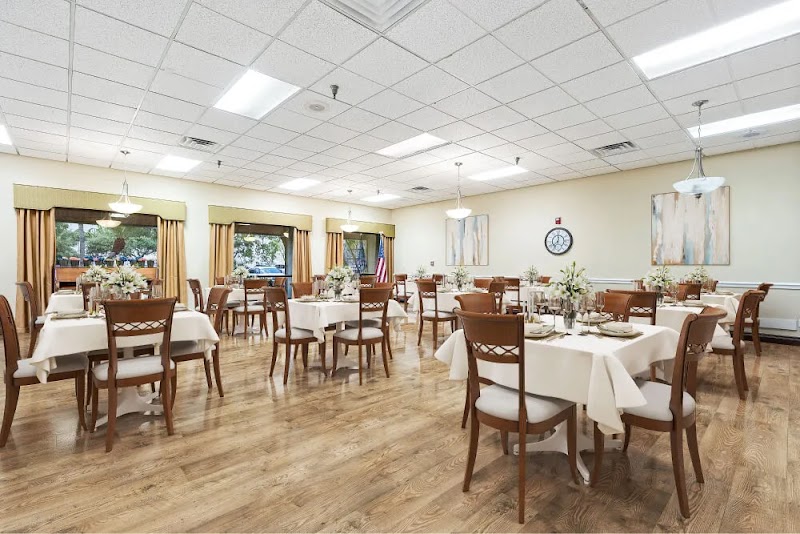
How is Margate Center Staffed?

CMS rates MARGATE HEALTH AND REHABILITATION CENTER's staffing level at 3 out of 5 stars, which is average compared to other nursing homes. Staff turnover is 33%, compared to the Florida average of 46%. This relatively stable workforce can support continuity of care. RN turnover specifically is 60%, which is notably high. RNs provide skilled clinical oversight, so turnover in this role can affect medical care quality.

What Have Inspectors Found at Margate Center?

State health inspectors documented 22 deficiencies at MARGATE HEALTH AND REHABILITATION CENTER during 2022 to 2024. These included: 22 with potential for harm.
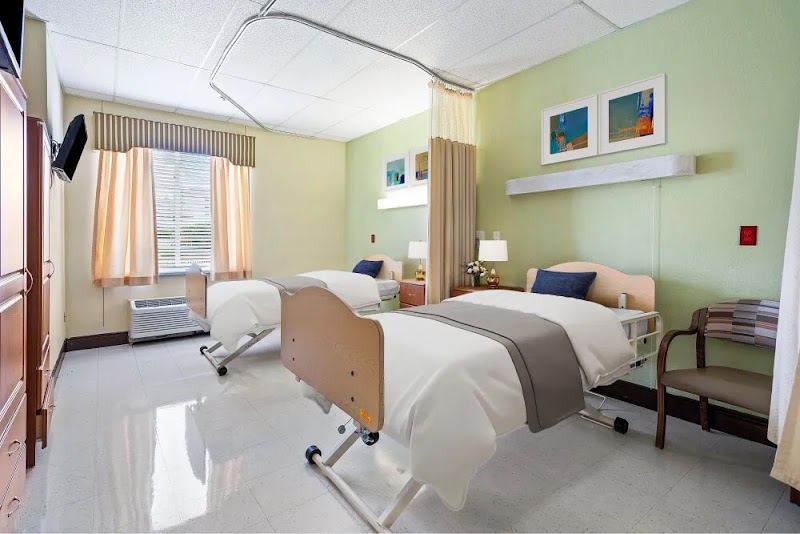
Who Owns and Operates Margate Center?

MARGATE HEALTH AND REHABILITATION CENTER is owned by a for-profit company. For-profit facilities operate as businesses with obligations to shareholders or private owners. The facility is operated by ONYX HEALTH, a chain that manages multiple nursing homes. With 170 certified beds and approximately 155 residents (about 91% occupancy), it is a mid-sized facility located in MARGATE, Florida.
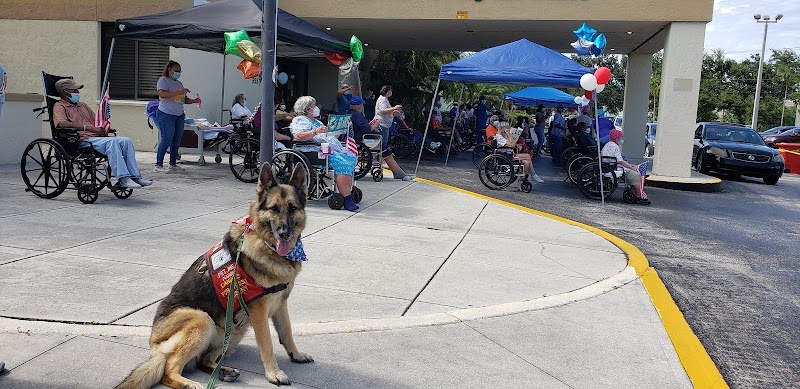
How Does Margate Center Compare to Other Florida Nursing Homes?

Compared to the 100 nursing homes in Florida, MARGATE HEALTH AND REHABILITATION CENTER's overall rating (5 stars) is above the state average of 3.2, staff turnover (33%) is significantly lower than the state average of 46%, and health inspection rating (4 stars) is above the national benchmark.

What Should Families Ask When Visiting Margate Center?

Based on this facility's data, families visiting should ask: "Can I visit during a mealtime to observe dining assistance and food quality?" "How do you handle medical emergencies, and what is your hospital transfer rate?" "Can I speak with family members of current residents about their experience?"

Is Margate Center Safe?

Based on CMS inspection data, MARGATE HEALTH AND REHABILITATION CENTER has a clean safety record: no substantiated abuse findings (meaning no confirmed cases of resident harm), no Immediate Jeopardy citations (the most serious violation level indicating risk of serious injury or death), and is not on the Special Focus Facility watch list (a federal program monitoring the lowest-performing 1% of nursing homes). The facility has a 5-star overall rating and ranks #1 of 100 nursing homes in Florida. While no facility is perfect, families should still ask about staff-to-resident ratios and recent inspection results during their visit.

Do Nurses at Margate Center Stick Around?

MARGATE HEALTH AND REHABILITATION CENTER has a staff turnover rate of 33%, which is about average for Florida nursing homes (state average: 46%). Moderate turnover is common in nursing homes, but families should still ask about staff tenure and how the facility maintains care continuity when employees leave.

Was Margate Center Ever Fined?

MARGATE HEALTH AND REHABILITATION CENTER has no federal fines on record. CMS issues fines when nursing homes fail to meet care standards or don't correct problems found during inspections. The absence of fines suggests the facility has either maintained compliance or corrected any issues before penalties were assessed. This is a positive indicator, though families should still review recent inspection reports for the full picture.

Is Margate Center on Any Federal Watch List?

MARGATE HEALTH AND REHABILITATION CENTER is not on any federal watch list. The most significant is the Special Focus Facility (SFF) program, which identifies the bottom 1% of nursing homes nationally based on persistent, serious quality problems. Not being on this list means the facility has avoided the pattern of deficiencies that triggers enhanced federal oversight. This is a positive indicator, though families should still review the facility's inspection history directly.