MARIANNA NURSING AND CARE CENTER
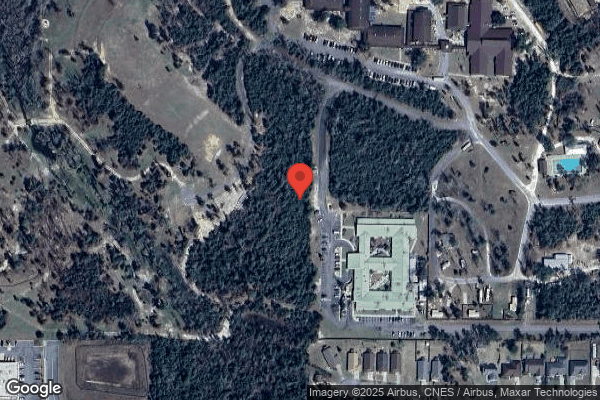
2600 FOREST GLEN TRAIL, MARIANNA, FL 32446 (850) 526-2000
For profit - Individual 120 Beds BENJAMIN LANDA Data: November 2025
Trust Grade
75/100
#234 of 690 in FL
Last Inspection: May 2025

Inspected within the last 6 months. Data reflects current conditions.

Overview

Marianna Nursing and Care Center has a Trust Grade of B, indicating it is a good choice for families seeking care, as it falls within the 70-79 range. In Florida, it ranks #234 out of 690 facilities, placing it in the top half, but it is last in Jackson County, at #4 out of 4, meaning there are no better local options. The facility is currently worsening, with issues increasing from 2 in 2024 to 3 in 2025. Staffing is a mixed bag; it has a 3 out of 5 star rating, but a 60% turnover rate is concerning, which is higher than the state average. On the positive side, the center has not incurred any fines, which is a good sign of compliance, but it has less RN coverage than 96% of Florida facilities, suggesting potential gaps in nursing oversight. Recent inspections revealed concerning incidents, such as staff failing to follow sanitation guidelines in the kitchen, which could risk food contamination, and a CNA entering a resident's room without proper protective gear, which could lead to infection spread. Additionally, privacy issues were noted in two resident rooms, where curtains did not provide adequate visual privacy. Families should weigh these strengths and weaknesses carefully when considering this facility.

Trust Score
B
75/100
In Florida
#234/690
Top 33%
Safety Record
Low Risk
No red flags
Inspections
Getting Worse
2 → 3 violations
Staff Stability
⚠ Watch
60% turnover. Above average. Higher turnover means staff may not know residents' routines.
Penalties
✓ Good
No fines on record. Clean compliance history, better than most Florida facilities.
Skilled Nurses
⚠ Watch
Each resident gets only 23 minutes of Registered Nurse (RN) attention daily — below average for Florida. Fewer RN minutes means fewer trained eyes watching for problems.
Violations
✓ Good
Only 5 deficiencies on record. Cleaner than most facilities. Minor issues only.
★★★★☆
4.0
Overall Rating
★★★☆☆
3.0
Staff Levels
★★★★☆
4.0
Care Quality
★★★★☆
4.0
Inspection Score
Stable
2024: 2 issues
2025: 3 issues

The Good

  • 4-Star Quality Measures · Strong clinical quality outcomes
  • Full Sprinkler Coverage · Fire safety systems throughout facility
  • No fines on record

Facility shows strength in quality measures, fire safety.

The Bad

Staff Turnover: 60%

14pts above Florida avg (46%)

Frequent staff changes - ask about care continuity

Chain: BENJAMIN LANDA

Part of a multi-facility chain

Ask about local staffing decisions and management

Staff turnover is elevated (60%)

12 points above Florida average of 48%

The Ugly 5 deficiencies on record

May 2025 3 deficiencies
CONCERN (D)

Potential for Harm - no one hurt, but risky conditions existed

Infection Control (Tag F0880)

Could have caused harm · This affected 1 resident

Resident #45 An observation of Resident #45 was conducted on 5/12/25 at 1:14 PM. Signage indicating contact precautions were in place and that staff should clean hands then don gown and gloves prior t...

Read full inspector narrative →
Resident #45 An observation of Resident #45 was conducted on 5/12/25 at 1:14 PM. Signage indicating contact precautions were in place and that staff should clean hands then don gown and gloves prior to entering the room were observed on the resident's room door. Employee C (agency Certified Nursing Assistant) was observed to enter Resident #45's room to serve the resident's lunch meal. Employee C did not don a gown or gloves prior to entering the resident's room. Employee C was observed to touch the resident's overbed table with her bare hands while serving the resident's lunch meal. A review of Resident #45's record revealed a current physician's order for contact isolation beginning on 5/11/25. The record revealed the resident was placed on contact isolation due to ESBL bacteria (extended-spectrum beta-lactamase) being detected in the urine. An interview was conducted with Employee C on 5/12/25 at 2:55 PM. She stated she forgot to apply a gown and gloves prior to entering Resident #45's room to serve the lunch meal. An interview was conducted with Employee D (Infection Preventionist) on 5/14/25 at 10:06 AM. Employee D stated all staff should don a gown and gloves when entering the contact precautions room to serve trays, especially if they make contact with the resident or environmental surfaces. She stated the facility provides this education to agency staff when they are utilized in their package for working in the facility. A review of Employee C's temporary Certified Nursing Assistant education packet revealed she had education regarding infection control prevention and hand hygiene competency dated 2/4/25. The education did not specifically speak to contact precautions however; the instructions were on the resident's door. Review of the facility policy for Categories of Isolation Precautions (November 2019) revealed staff should wear a gown and gloves when entering a contact precautions isolation room. Based on observations, interviews and facility policy review, the facility failed to implement contact isolation procedures for 1 of 1 resident sampled for contact isolation (Resident #25) and failed to implement infection control techniques for 1 of 1 resident sampled for enteral feeding. (Resident # 204) The findings include: Resident #204 Resident #204's medical record revealed a physician's order to give a bolus of enteral feeding (a medical procedure that provides nutrients directly into the gastrointestinal (GI) tract through a tube). The physician's order stated Enteral Feed Order five times a day; Enteral Feeding: Nutren 1.5 bolus 1 carton 5x/day with 150cc H2O flush before and after each feeding. On 5/13/25 at 4:15 PM, an observation was conducted with Staff A, Licensed Practical Nurse (LPN). She was observed washing her hands and donning clean gloves. She had a container on a clean towel over the bedside table. She grabbed the container with the left hand and touched the bathroom door with the right hand. She filled the container with water from the bathroom's sink. She proceeded with the feeding after filling the container with tap water without changing gloves. On 5/13/25 at 6:02 PM, an interview was conducted with Staff A, LPN. She stated she takes responsibility of her actions and states she should have changed gloves after touching the bathroom's sink. A review of facility policy Feeding Systems dated October 2019 was conducted. Policy stated Protective barriers that may be needed: handwashing and gloves (as indicated). Facility policy further stated Procedure guidelines for bolus feedings: wash hands.
CONCERN (D)

Potential for Harm - no one hurt, but risky conditions existed

Deficiency F0914 (Tag F0914)

Could have caused harm · This affected 1 resident

**NOTE- TERMS IN BRACKETS HAVE BEEN EDITED TO PROTECT CONFIDENTIALITY** Based on observations and staff interviews, the facility failed to ensure each resident bedroom was equipped to provide full vis...

Read full inspector narrative →
**NOTE- TERMS IN BRACKETS HAVE BEEN EDITED TO PROTECT CONFIDENTIALITY** Based on observations and staff interviews, the facility failed to ensure each resident bedroom was equipped to provide full visual privacy for 2 of 19 sampled resident rooms. (rooms [ROOM NUMBERS]) The findings include: An observation of room [ROOM NUMBER] bed B (occupied) was conducted with the Director of Environmental Services on 5/14/25 at 2:41 PM. The privacy curtain was measured and it was about 4 feet too short in width to provide full privacy. He stated he was not aware of a facility process to check the curtains to ensure they provided full visual privacy to the resident. An observation of room [ROOM NUMBER] bed B (occupied) was conducted with the Director of Maintenance on 5/14/25 at 4:23 PM. The privacy curtain was measured and the curtain was about 4 feet too short in width to provide full visual privacy to the resident. An interview was conducted with the Administrator on 5/14/25 at 4:28 PM. She stated she was not sure of the facility process for checking privacy curtains and the housekeeping director was new and had started in January.
CONCERN (E)

Potential for Harm - no one hurt, but risky conditions existed

Food Safety (Tag F0812)

Could have caused harm · This affected multiple residents

Based upon observations, interviews and review of facility kitchen policy, the facility failed to provide clean and sanitary conditions in food service areas to prevent contamination of food and food ...

Read full inspector narrative →
Based upon observations, interviews and review of facility kitchen policy, the facility failed to provide clean and sanitary conditions in food service areas to prevent contamination of food and food storage areas. The facility failed to follow proper sanitation guidelines for kitchen equipment. The findings include: On 5/12/25 at 10:40 AM an initial observation tour of the kitchen area was conducted with the Dietary Manager. The dishwasher area had a black hose across the floor, connected to the opposite wall of the dish room to a dishwasher leaking water, with water flowing onto the floor. A clear plastic covering was observed over the hose and faucet connector. The Dietary manager stated it's been like that becuase they can't find a hose to fit the connection properly. (photo obtained) It was also noted that a discolored black substance was on the wall behind and in between the dish room area where dishes entered into thedishwasher. A red bucket was observed on the floor under the dish room sink, with a drainage area observed to have a dark discolored substance around the drainage grate and floor tiles. A discolored black substance was noted below the table on pipes, tile floor, and wall. A discolored area with a rust like appearance with black colored particles was observed on the wall, the aluminum backing, and on the top covering of the dishwasher table. The table on the opposite side of the dishwasher where the dishes exit was observed with a brownish discolored substance on the table, underneath the table on the bottom shelf where a bin of multiple bowls was stacked into it, sitting on a rust like discolored shelf. Upon exiting the dishwasher area, a dietary cart was observed sitting in the kitchen area with a clear plastic container of unidentifiable items and a bin with multiple bowls stacked inside the bin at different angles on the top shelf of the cart, the bottom shelf contained an oblong aluminum container with a paint brush and miscellaneous items stacked into it with yellow food particles observed on the railing of the cart. The stove and oven appeared to have cooking pans stacked on top of the burners, and beside the burners. A dark discoloration was observed on the range, around the burners, and on the backsplash of the stove. The oven doors appeared to have a grease like brown substance on them. The fryer baskets next to the stove and oven had food particles along the side of the fryer splash guard with a black and brown discoloration on it and in the grooves of the fryer. One fryer basket had food left in the basket. The standing mixer had multiple items stacked on top of it with attachments sitting in the bowl, dried food particles on the attachments. The food prep table shelves were observed with miscellaneous items sitting on them. The shelves have a rust-like appearance. The food warmer and tray line table have a rust like appearance on the doors, shelves, and bottom of the table. The glass surrounding the top of food warmer had food particles splattered on them. The floor tiles under and bedside the refrigerator near the drain lines appear to be greenish black, with drain areas noted with cracked tile surrounding the drain, with dark brown, black discoloration surrounding drain and on the exposed pipes from the refrigerator. The ice machine was observed to be full of ice, but the lid was noted with a foam like seal with a discolored black, dark green substance on it. Inside the ice machine on the back and sides of ice machine a discolored black substance was noted on them. The Dietary Manager revealed that the dietary staff is responsible for the daily cleaning of all kitchen equipment and is done on a daily basis. When asked about cleaning logs for the kitchen, the Dietary Manager responded, We don't do the cleaning logs, its just part of our daily chores to do. When asked about the last time the kitchen was cleaned and floors cleaned, she responded that maintenance is supposed to come pressure wash the floors, but she did not know when it would happen next. On 5/12/25 at 11:45 AM, a dining room observation revealed 22 residents were in the dining room. A staff member entered the dining room sorting and distributing meal tickets without washing her hands. A dietary staff member from the kitchen brought a dietary cart into the dining room. The cart was observed with multiple filled glasses with ice in them. The glasses did not have any lids sitting on top of the cart. A staff member filled glasses with tea and distributed them to residents without washing her hands. A second staff member entered the dining room at 12:05 PM using appropriate hand sanitizer prior to and in between each resident she served. Staff member B (a Registered Nurse) entered the dining room area without washing or sanitizing her hands and assisted a resident with opening his milk carton using her bare hands and uses her index finger to pull and open the milk carton for resident to drink his milk from the spout of the milk carton. Then she proceeded to another resident at another table and performed the same task without washing or sanitizing her hands. Staff member J (another Registered Nurse) entered the dining room and observed residents being served meals and assised as needed without washing or sanitizing her hands. Hand-sanitizer dispensers were available for staff on the walls in the dining room in between the kitchen dietary doors and the opposite wall. A follow-up kitchen tour was completed on 5/13/25 and 5/14/25 with the Dietary Manager and Staff Member G (Dietary). They revealed that cleaning is done on a daily basis, but no cleaning schedule is posted. The manager stateds everyone knows what they need to do. An interview was conducted on 5/14/25 with the Dietitian. She revealed her expectation of cleaning and sanitation practices of the kitchen and that food service areas should be up to state and federal standards or above those standards. Upon describing and sharing findings of the kitchen and food service areas on day one of the survey, she acknowledged that the kitchen and food service areas were not up to or above state and federal guidelines. Policy and procedures for cleaning and sanitation of food services areas on 5/13/25 stated, food service staff will maintain the sanitation of the dining and food service areas through compliance with a written comprehensive cleaning schedule. Procedure for cleaning and sanitation: the food service manager will record all cleaning and sanitation tasks needed for the department, a cleaning schedule will be posted for all cleaning tasks, and staff will initial the tasks as completed. Ice machine policy revealed ice will be produced and handled in a manner to keep it free from contamination with the procedure listing to include ice machines will be maintained in a clean and sanitary condition to prevent ice contamination. Policies for food safety and sanitation revealed that all local, state, and federal standards and regulations are followed in order to assure a safe and sanitary food service department. Food service managers responsibility included sanitary conditions are maintained in the storage, preparation, and serving areas. Personnel follow sanitary practices and follow proper cleaning and sanitizing instructions for all kitchen equipment. Cleaning schedules are posted and followed. Regular inspections are made by the food service manager or designee to assure food safety. A review of policy for maintenance of dish machine stated, the dish machine will be regularly cleaned and de-limed as needed. Dish machine general cleaning in-service includes deliming of the machine should take place once a week to prevent scale build up and keep water flowing properly.
Feb 2024 2 deficiencies
CONCERN (D)

Potential for Harm - no one hurt, but risky conditions existed

Safe Environment (Tag F0584)

Could have caused harm · This affected 1 resident

**NOTE- TERMS IN BRACKETS HAVE BEEN EDITED TO PROTECT CONFIDENTIALITY** Based on observations and interview, the facility failed to maintain a safe and clean environment for 7 of 62 occupied rooms. (R...

Read full inspector narrative →
**NOTE- TERMS IN BRACKETS HAVE BEEN EDITED TO PROTECT CONFIDENTIALITY** Based on observations and interview, the facility failed to maintain a safe and clean environment for 7 of 62 occupied rooms. (Rooms 314, 316, 404, 405, 407, 409, 411) The findings include: On 2/19/24 at 12:30 PM, during the initial tour of the facility, the following environmental issues were observed: In occupied room [ROOM NUMBER], a rusted toilet seat riser was in use inside the bathroom. In occupied room [ROOM NUMBER], the drawer and armoire had layers of paint peeling. In occupied room [ROOM NUMBER], a brown substance was observed on the wall. In occupied room [ROOM NUMBER], the dresser and armoire had peeled off layers of paint and there was a hole on the wall. In occupied room [ROOM NUMBER], the wall and ceiling had bubbled paint and a water-like stain around the ceiling and air conditioning unit. In occupied room [ROOM NUMBER], there was paint peeling on the wall and the toilet seat riser inside the bathroom was rusted. In occupied room [ROOM NUMBER], there was a rusted toilet seat riser inside the bathroom. (Photographic evidence was obtained of all above issues) On 2/22/24 at 10:15 AM, a follow up tour was conducted with the Maintenance Director. He stated the toilet seat risers in rooms 314, 409 and 411 will be replaced with new ones. He further stated the peeling layers on the furniture on room [ROOM NUMBER] will be fixed and the hole on the wall repatched and paint over, as well as the brown-colored stain on room [ROOM NUMBER] will be cleaned and painted over. Upon looking at the bubbled paint on rooms [ROOM NUMBERS], he stated the facility will need to investigate the cause of it and will make some repairs.
CONCERN (D)

Potential for Harm - no one hurt, but risky conditions existed

Tube Feeding (Tag F0693)

Could have caused harm · This affected 1 resident

Based on observations, staff interviews, and resident record review, the facility failed to implement and follow the recommendations of the Registered Dietician (RD) for 1 of 1 residents sampled for e...

Read full inspector narrative →
Based on observations, staff interviews, and resident record review, the facility failed to implement and follow the recommendations of the Registered Dietician (RD) for 1 of 1 residents sampled for enteral feeding. (Resident #64) The findings include: On 02/21/24 at 9:05 AM, an interview with Staff B, a Licensed Practice Nurse (LPN), was conducted. Staff B stated that Resident #64's used to receive continuous enteral feeding (24 hours a day). She stated the enteral feeding was changed some time in January 2024. Resident #64's Treatment Administration Record (TAR) was reviewed with Staff B. The TAR revealed, on 01/11/2024, an entry for Jevity 1.5 (a nutritional supplement) to be infused at 65 ml/hr for 20 hours a day (to be discontinued between 10:00 am and 2:00 pm). This order was confirmed with Staff B. On 02/21/24 at 9:57 AM, an interview was conducted with Staff A, a licensed practical nurse (LPN) and unit manager. Staff Member A stated that the tube feeding is now scheduled to run at 22 continuous hours per day. Staff Member A then accessed Resident #64's electronic medical record (EMR) and realized the resident's enteral feeding was ordered for 20 hours per day. Staff Member A stated she must have confused the continuous feed with another resident. On 02/21/24 at 10:00 AM, an additional review of Resident #64's EMR revealed a dietary progress notes from the RD dated 02/06/2024, which identified the resident to be overweight / borderline obese with a BMI (body mass index) higher than desired for a bed bound and tube fed resident. The resident's current weight was documented at 174 pounds with a BMI of 29.9. The RD estimated the resident's nutritional needs, based on current weight adjustment, and documented a target weight of 133 lbs. The RD's recommendations indicated to decrease Jevity rate to 55 mL/hr and change water flush to 45 mL/hr. Weekly weights for 3 weeks and draw CMP (Comprehensive Metabolic Panel - lab work). Additional review of the record revealed a failure to identify the completion of weekly weights and failed to include the results of a CMP. On 02/21/24 at 10:39 AM, Resident #64 was observed in bed in high position with a tube feed infusing at 65 ml/hr. On 02/22/24 at 10:13 AM, a follow-up interview was conducted with Staff B, LPN, to inquire about the procedure for new dietitian recommendations. Staff B indicated that when the dietitian made recommendations, these were communicated to the unit manager who processed them from there. Staff B, LPN was unsure of the entire process as she was not involved in that part. On 02/22/24 at 10:20 AM, a follow-up interview was conducted with Staff A, LPN, to clarify the process when new recommendations were received from the dietitian. Staff A indicated that the dietitian emailed the Interdisciplinary team (IDT), which included upper management. The unit manager on the applicable unit would then take the recommendations to the provider for orders, and the unit manager would then put the new orders in the EMR. She acknowledged that the current dietitan recommendations did not match the current order.
Understanding Severity Codes (click to expand)
Life-Threatening (Immediate Jeopardy)
J - Isolated K - Pattern L - Widespread
Actual Harm
G - Isolated H - Pattern I - Widespread
Potential for Harm
D - Isolated E - Pattern F - Widespread
No Harm (Minor)
A - Isolated B - Pattern C - Widespread

Questions to Ask on Your Visit

  • "Why is there high staff turnover? How do you retain staff?"
  • "Can I speak with families of current residents?"
  • "What's your RN coverage like on weekends and overnight?"

Our Honest Assessment

Strengths
  • • No major safety red flags. No abuse findings, life-threatening violations, or SFF status.
  • • No fines on record. Clean compliance history, better than most Florida facilities.
  • • Only 5 deficiencies on record. Cleaner than most facilities. Minor issues only.
Concerns
  • • 60% turnover. Above average. Higher turnover means staff may not know residents' routines.
Bottom line: Generally positive indicators. Standard due diligence and a personal visit recommended.

About This Facility

What is Marianna Nursing And's CMS Rating?

CMS assigns MARIANNA NURSING AND CARE CENTER an overall rating of 4 out of 5 stars, which is considered above average nationally. Within Florida, this rating places the facility higher than 99% of the state's 100 nursing homes. This rating reflects solid performance across the metrics CMS uses to evaluate nursing home quality.

How is Marianna Nursing And Staffed?

CMS rates MARIANNA NURSING AND CARE CENTER's staffing level at 3 out of 5 stars, which is average compared to other nursing homes. Staff turnover is 60%, which is 14 percentage points above the Florida average of 46%. High turnover can affect care consistency as new staff learn residents' individual needs.

What Have Inspectors Found at Marianna Nursing And?

State health inspectors documented 5 deficiencies at MARIANNA NURSING AND CARE CENTER during 2024 to 2025. These included: 5 with potential for harm.

Who Owns and Operates Marianna Nursing And?

MARIANNA NURSING AND CARE CENTER is owned by a for-profit company. For-profit facilities operate as businesses with obligations to shareholders or private owners. The facility is operated by BENJAMIN LANDA, a chain that manages multiple nursing homes. With 120 certified beds and approximately 103 residents (about 86% occupancy), it is a mid-sized facility located in MARIANNA, Florida.

How Does Marianna Nursing And Compare to Other Florida Nursing Homes?

Compared to the 100 nursing homes in Florida, MARIANNA NURSING AND CARE CENTER's overall rating (4 stars) is above the state average of 3.2, staff turnover (60%) is significantly higher than the state average of 46%, and health inspection rating (4 stars) is above the national benchmark.

What Should Families Ask When Visiting Marianna Nursing And?

Based on this facility's data, families visiting should ask: "How do you ensure continuity of care given staff turnover, and what is your staff retention strategy?" "Can I visit during a mealtime to observe dining assistance and food quality?" "How do you handle medical emergencies, and what is your hospital transfer rate?" "Can I speak with family members of current residents about their experience?" These questions are particularly relevant given the facility's high staff turnover rate.

Is Marianna Nursing And Safe?

Based on CMS inspection data, MARIANNA NURSING AND CARE CENTER has a clean safety record: no substantiated abuse findings (meaning no confirmed cases of resident harm), no Immediate Jeopardy citations (the most serious violation level indicating risk of serious injury or death), and is not on the Special Focus Facility watch list (a federal program monitoring the lowest-performing 1% of nursing homes). The facility has a 4-star overall rating and ranks #1 of 100 nursing homes in Florida. While no facility is perfect, families should still ask about staff-to-resident ratios and recent inspection results during their visit.

Do Nurses at Marianna Nursing And Stick Around?

Staff turnover at MARIANNA NURSING AND CARE CENTER is high. At 60%, the facility is 14 percentage points above the Florida average of 46%. High turnover means new staff may not know residents' individual needs, medications, or preferences. It can also be disorienting for residents, especially those with dementia who rely on familiar faces. Families should ask: What is causing the turnover? What retention programs are in place? How do you ensure care continuity during staff transitions?

Was Marianna Nursing And Ever Fined?

MARIANNA NURSING AND CARE CENTER has no federal fines on record. CMS issues fines when nursing homes fail to meet care standards or don't correct problems found during inspections. The absence of fines suggests the facility has either maintained compliance or corrected any issues before penalties were assessed. This is a positive indicator, though families should still review recent inspection reports for the full picture.

Is Marianna Nursing And on Any Federal Watch List?

MARIANNA NURSING AND CARE CENTER is not on any federal watch list. The most significant is the Special Focus Facility (SFF) program, which identifies the bottom 1% of nursing homes nationally based on persistent, serious quality problems. Not being on this list means the facility has avoided the pattern of deficiencies that triggers enhanced federal oversight. This is a positive indicator, though families should still review the facility's inspection history directly.