SOLARIS HEALTHCARE IMPERIAL


900 IMPERIAL GOLF COURSE BLVD, NAPLES, FL 34110 (239) 591-4800
Non profit - Corporation 113 Beds SOLARIS HEALTHCARE Data: November 2025
Trust Grade
60/100
#420 of 690 in FL
Last Inspection: November 2024

Within standard 12-15 month inspection cycle. Federal law requires annual inspections.

Overview

Solaris Healthcare Imperial has a Trust Grade of C+, indicating it is slightly above average, but still has room for improvement. It ranks #420 out of 690 facilities in Florida, placing it in the bottom half, and #5 out of 11 in Collier County, meaning only a few local options are better. Unfortunately, the facility is worsening, with issues increasing from 6 in 2022 to 10 in 2024. Staffing is a strength, earning 4 out of 5 stars with a low turnover rate of 10%, which is well below the state average. However, they have concerning fines of $29,738, higher than 76% of Florida facilities, indicating repeated compliance problems. Additionally, there were serious incidents found during inspections, including inadequate investigation of resident falls and delays in answering call lights for residents, which could lead to injuries. There were also concerns regarding the care of a resident with a catheter, which was not secured properly, putting them at risk for infection. Overall, while the staffing and quality measures are positive aspects, the facility must address significant compliance issues to ensure resident safety.

Trust Score
C+
60/100
In Florida
#420/690
Bottom 40%
Safety Record
Moderate
Needs review
Inspections
Getting Worse
6 → 10 violations
Staff Stability
✓ Good
10% annual turnover. Excellent stability, 38 points below Florida's 48% average. Staff who stay learn residents' needs.
Penalties
○ Average
$29,738 in fines. Higher than 60% of Florida facilities. Some compliance issues.
Skilled Nurses
○ Average
Each resident gets 37 minutes of Registered Nurse (RN) attention daily — about average for Florida. RNs are the most trained staff who monitor for health changes.
Violations
⚠ Watch
18 deficiencies on record. Higher than average. Multiple issues found across inspections.
★★★☆☆
3.0
Overall Rating
★★★★☆
4.0
Staff Levels
★★★★★
5.0
Care Quality
★★☆☆☆
2.0
Inspection Score
Stable
2022: 6 issues
2024: 10 issues

The Good

  • 4-Star Staffing Rating · Above-average nurse staffing levels
  • 5-Star Quality Measures · Strong clinical quality outcomes
  • Low Staff Turnover (10%) · Staff stability means consistent care
  • Full Sprinkler Coverage · Fire safety systems throughout facility
  • No fines on record
  • Staff turnover is low (10%)

    38 points below Florida average of 48%

Facility shows strength in staffing levels, quality measures, staff retention, fire safety.

The Bad

3-Star Overall Rating

Near Florida average (3.2)

Meets federal standards, typical of most facilities

Federal Fines: $29,738

Below median ($33,413)

Moderate penalties - review what triggered them

Chain: SOLARIS HEALTHCARE

Part of a multi-facility chain

Ask about local staffing decisions and management

The Ugly 18 deficiencies on record

1 actual harm
Nov 2024 9 deficiencies 1 Harm
SERIOUS (G) 📢 Someone Reported This

A family member, employee, or ombudsman was alarmed enough to file a formal complaint

Actual Harm - a resident was hurt due to facility failures

Accident Prevention (Tag F0689)

A resident was harmed · This affected 1 resident

**NOTE- TERMS IN BRACKETS HAVE BEEN EDITED TO PROTECT CONFIDENTIALITY** Based on review of facility policy and procedure, record review and staff interviews, the facility failed to thoroughly investig...

Read full inspector narrative →
**NOTE- TERMS IN BRACKETS HAVE BEEN EDITED TO PROTECT CONFIDENTIALITY** Based on review of facility policy and procedure, record review and staff interviews, the facility failed to thoroughly investigate falls and implement adequate interventions to prevent falls and fall related injury for 1 (Resident #24) of 3 residents reviewed who were identified as being at risk for falls and sustained multiple falls at the facility. The findings included: The facility policy Incident Report and Investigation Guidelines documented, All falls, altercations, elopements/unplanned exits, alleged neglect, alleged misappropriation or exploitation of resident property or other events leading to harm or injury to a visitor or resident (incidents) occurring in the facility or on facility property will be documented and investigated and recorded on an Incident Report and Investigation form. A thorough investigation of each incident shall be completed by the Director of Nursing (DON), Charge Nurse or Supervisor, and the facility Risk Manager. An adverse incident is an event over which the facility personnel could exercise control and which is associated in whole or in part with the facility's interventions, rather than the condition for which such interventions occurred, and which results in death, brain or spinal damage, permanent disfigurement, fracture or dislocation of bones or joints, a limitation of neurological, physical or sensory function, any condition that required the transfer of the resident within or outside of the facility to a unit providing a more acute level of care due to the adverse incident. The facility shall initiate an investigation and notify state and local authorities as required. Review of the clinical record revealed Resident #24 was a vulnerable [AGE] year old female with an admission date of 2/27/23. Diagnoses included syncope and collapse, dementia, muscle weakness, history of falling and fracture of superior rim of right pubis, subsequent encounter for fracture with routine healing, The Quarterly Minimum Data Set (MDS) (standardized assessment tool that measures health status in nursing home residents) with an assessment reference date of 8/8/24 documented Resident #24 required partial to moderate assistance with toilet transfers. The MDS noted Resident #24's cognitive skills for daily decision making were severely impaired. The care plan initiated 2/27/23 identified the resident was at risk for falls related to weakness and history of falls. The interventions included, maintain bed in low position when in use. Cue for safety awareness, place call bell in reach. Review of the record showed a fall report dated 8/3/24 at 4:36 am., indicating Resident #24 had an unwitnessed fall and was found sitting on the floor next to her bed. The resident complained of pain to right arm and leg. The physician was notified and ordered x-rays of the right arm and leg. There was no documentation of the position of the resident's bed or the call light. On 8/3/24 the care plan was updated with the intervention of one floor mat on the door side of the bed when in bed. The follow up nursing documentation from 8/3/24 thorough 8/8/24 documented no reports of pain. On 8/23/24, an incident report documented, Resident was being transferred to commode by certified nursing assistant (CNA), resident's right leg gave out and staff lowered her to the floor. The form documented the resident had right upper leg pain. The physician was notified and ordered an X-ray of the hip with or without pelvis. The X-ray results documented no evidence of acute fracture or dislocation. Review of Resident #24's fall care plan revealed no evidence the care plan was updated with new interventions based on the root cause of the incident to prevent further incidents of falls. Review of the nursing progress notes documented the following: On 8/24/24 at 2:38 p.m., no complaints of pain or discomfort. On 8/24/24 at 6:32 p.m., denies any pain or discomfort. On 8/25/24 at 10:08 p.m., no pain or discomfort referred. On 8/26/24 at 6:17 a.m., no pain or discomfort referred. On 8/27/24 at 7:50 a.m., the DON documented Resident grabbing right mid-thigh stated it hurts. Pain noted called ARNP (Advanced Registered Nurse Practitioner) ordered stat femur right x-ray. On 8/28/24 the ARNP documented, Patient seen and examined today for follow up visit. Patient seen in her room, sitting in wheelchair. Nursing notes patient had a fall on 8/23/24 , she was being assisted by nursing staff when her right leg gave way and she was lowered to the ground. X-ray of hip was ordered and negative for any acute findings. Patient was complaining of right thigh pain yesterday and x-ray of femur was ordered and negative for any acute findings. Patient reports she is having pain to her right thigh area. Have ordered Voltaren gel (Medication applied to the skin to treat pain.) as well as a muscle relaxer. No swelling or bruising noted on examination. Will continue to monitor closely for any changes. On 8/28/24 at 8:56 p.m., the nursing progress note documented the resident was transferred to the dining room for dinner. Observed resident grimacing and rubbing her right thigh at 4:40 p.m. On 9/9/24 at 8:10 a.m., the DON documented Resident holding right leg up states it hurts. ARNP notified to order possible CT (computerized tomography) scan since both x-rays were negative. Resident #24 was sent to a diagnostic testing facility on 9/10/24 for a CT (computerized tomography) scan of the upper right leg. The findings available on 9/11/24 documented acute mildly displaced fracture of the right superior pubic ramus extending to the anterosuperior acetabular column and the posterior aspect of the inferior pubic ramus adjacent to the ischial tuberosity. On 9/11/124 at 5:00 p.m., the progress note documented: Resident CT scan revealed a pelvic fracture. DON arranged for Orthopedic consult for the end of the month. Notified resident's emergency contact of CT scan result and resident to follow up with orthopedic at end of this month. On 11/21/24 at 11:16 a.m., in an interview the DON said Resident #24 did not have pain from her fall on 8/3/24. She had a second fall on 8/27/24, she was lowered to the floor by a CNA. The aid had her in the bathroom with a transfer of 1 assist and her leg gave out. The CNA lowered the resident to the floor. On the fall on 8/3/24, a hip x-ray was negative and the nurses' notes all documented no pain. On 8/28/24 she was complaining of pain in the right mid-thigh so they ordered a stat right femur x ray. The ARNP documented on the fall and stated she had pain and the x-ray was negative. The resident reported pain in the right hip area and the ARNP ordered Voltaren gel and a muscle relaxer, Tylenol as needed and she stated there was no swelling or bring noted on her examination. On 9/9/24 the resident started to complain of her right leg hurting and the ARNP was notified and ordered a CT scan. She went for the CT scan on 9/10/24 and on 9/11/24 we got the results. The fracture was caused by her being lowered to the floor. The DON confirmed she did not have documentation of a complete and thorough investigation after the fracture was identified and said it was related to the fall on 8/23/24, not a fall but lowered to the ground. The DON confirmed Resident #24's fracture was an injury of an unknown cause then clarified it was from the lowering to the floor on 8/23/24. She confirmed she did not do an investigation of the fracture and said the Risk Manager would have done that. On 11/21/24 at 11:50 a.m., in an interview the Risk Manager said after the first fall on 8/3/24 Resident #24 did not complain of pain and during the three days post fall monitoring she had no additional pain. The Risk Manager said it wasn't until the resident was lowered to the floor on 8/23/24 that she had reported pain. The Risk Manager said You know how it can be they have an x- ray and it's negative and later an injury shows up on further testing. I read the nurse's notes, and she had no pain. I based the fracture on the nurse's documentation of no pain. She was lowered to the floor on 8/23/24 and that is how she sustained the fractured identified on 9/10/23. The Risk Manager confirmed she did not have documentation of a complete and thorough investigation of the fall on 8/23/24 and did not report the event to the appropriate State Agency once the fracture was identified. The Risk Manager said, I don't have an investigation; I told you already. I'm not answering that. I know what you want me to say but I'm not going to say that. She said, the resident had no pain after the fall on 8/3/24. I did not need to investigate the fracture because she did not complain of pain until after she was lowered to the floor on 8/23/24.
CONCERN (D) 📢 Someone Reported This

A family member, employee, or ombudsman was alarmed enough to file a formal complaint

Potential for Harm - no one hurt, but risky conditions existed

ADL Care (Tag F0677)

Could have caused harm · This affected 1 resident

Based on observation, clinical record review, review of facility's policy and procedure, resident and staff interviews, the facility failed to provide the necessary assistance with activities of daily...

Read full inspector narrative →
Based on observation, clinical record review, review of facility's policy and procedure, resident and staff interviews, the facility failed to provide the necessary assistance with activities of daily living for 1 (Resident #53) of 1 resident observed with urine filled containers at bedside. The findings included: The facility policy Activities of Daily Living (ADL), Supporting documented Residents who are unable to carry out activities of daily living independently will receive the services necessary to maintain good nutrition, grooming, and personal and oral hygiene. Review of the clinical record revealed Resident #53 had an admission date of 1/27/23 with diagnoses including schizophrenia, depression, tremors, anxiety and dementia. Review of the care plan initiated on 4/26/23 identified the problem: Incontinent of bowel and bladder. The goal for the resident specified incontinent needs will be met. The approaches documented Assist with changing brief when noted to be soiled or wet. Resident continues to keep urinals on floor. Continues to be educated on infection control. On 11/18/24 at 9:29 a.m., Resident #53 was observed in bed. The room had a pungent urine odor. Four urinals were observed stored on the floor next to the bed. Two of the urinals were half full. In an interview Resident #53 said he had to have four urinals since no one came to empty the urinals. Photographic evidence obtained. On 11/18/24 at 12:00 p.m., Resident #53 was observed in bed. Two urinals filled of urine and two empty urinals were observed stored on the floor next to the resident's bed. In an interview Resident #53 said no one had come to empty the urinals. The shared room remained with a pungent urine odor. On 11/19/24 at 8:52 a.m., Resident #53 was observed in bed. The room remained with a pungent urine odor. One urinal was on the floor. One urinal completely full of urine and one half full urinal were observe stored on the floor in a wash basin. Resident #53 said he emptied the urinals during the day since staff do not assist him. He said that was why he needed to have more than one urinal. On 11/19/24 at 3:27 p.m., in an interview Certified Nursing Assistant (CNA) Staff P said Resident # 53 will drink 10 cups of coffee and asks for ice water all night. He drinks a lot and does not like to get up and use the toilet. He will only use the toilet for bowel movements. At night he uses the urinals. He keeps four of them because he drinks so much that he urinates all the time. We will ask him to use the toilet, but he refuses and you can't force him to do it. He is able to do everything himself. The only time he wants us there is when he showers because he is afraid of falling. We empty the urinals at the end of the shift and when needed. He can do it himself, but he won't. On 11/19/24 at 3:40 p.m., in an interview CNA Staff P said he was assigned to Resident #53 for the afternoon shift and said, The resident insists on keeping the urinals, four of them on the floor. They gave him the washbasin yesterday to keep them off of the floor. He will go to the dining room and drink four to six glasses of ice tea. Then he comes back to his room and uses the urinal. He can go to the bathroom, but he won't do it. He urinates so much. On 11/19/24 at 4:14 p.m., during a joint observation of the resident's room, the Director of Nursing (DON) verified the resident's room had a very strong smell of urine. The DON said Resident #53 kept the urinals on the floor and said it was addressed in his care plan. She said , He will put them on the floor, I know it is an infection control issue, but the resident will not keep them in a basin, he puts them on the floor. On 11/20/24 at 3:30 p.m., in an interview the DON said Resident #53 had a care plan for the use of the urinals, and he was non-compliant. The DON said, He can use the toilet, and he can empty them, but he won't. I have spoken to him, and he laughs at me and will not do it. The DON confirmed Resident #53 resided in the facility due to a diagnosis of schizophrenia and could not take care of himself. She said she did not exactly how often the CNAs emptied the urinals. The DON confirmed it was the facility's responsibility to take care of the resident and manage the infection control concern with the urinals stored on the floor.
CONCERN (D)

Potential for Harm - no one hurt, but risky conditions existed

Deficiency F0688 (Tag F0688)

Could have caused harm · This affected 1 resident

Based on observation, review of the clinical record, review of facility policy and procedures and staff interviews, the facility failed to provide care and services to prevent a decline in range of mo...

Read full inspector narrative →
Based on observation, review of the clinical record, review of facility policy and procedures and staff interviews, the facility failed to provide care and services to prevent a decline in range of motion for 1 (Resident #50) of 1 resident reviewed with an orthotic device. The findings included: The facility policy Orthotic's documented, An orthotic is a device, sometimes called a brace or splint that is used to properly position a body part for the purpose of function, rest or protection of a joint . A resident with a condition that warrants the use of an orthosis will ideally be assessed through an interdisciplinary process and a plan of care will be established to address the use of the orthotic device. Benefits of orthotic: Prevent or reduce contractures and deformity by applying prolonged, steady stretches of tight muscles/joint structures. Maintain proper joint positioning and alignment. Reduce pain and or increase functional use of extremity by applying support for involved joint (s). Promote skin integrity and improve hygiene. Review of the clinical record revealed Resident #50 had a readmission date of 10/23/24 with diagnoses of Parkinson's disease, sepsis, hemiplegia (partial or complete paralysis on one side of the body), protein calorie malnutrition, and depression. Review of the care plan initiated 12/28/21 noted the resident was at risk for skin integrity alteration due to decreased mobility, history of cerebral vascular accident and left hand edema (swelling). The care plan noted Resident #50 was to wear a left hand splint at all times, except for hygiene. On 11/18/24 at 11:02 a.m., and 11/19/24 at 9:29 a.m., Resident #50 was observed in bed with a splint applied to his left hand. The soft padded palm protector of the splint was positioned on the resident's wrist, not the palm. On 11/19/24 at 10:16 a.m., in a joint observation of the resident's splint, Occupational Therapists (OT) Staff Q and Staff R confirmed the splint was not properly applied to Resident #50's left hand. Staff Q and Staff R said they had no photograph or written instructions for the application of the splint. OT Staff Q said the resident was not currently receiving therapy services and attempted to reapply the splint. Staff Q said the resident had increased tone (tight muscles and stiff or rigid movements) and the Certified Nursing Assistants (CNAs) should be opening the hand during care, cleaning the left hand and then placing the splint. Staff Q said the large, rolled part of the splint should be placed in the residents hand and then the Velcro straps applied. Staff Q said the splint is used to keep the resident's hand from contracting further and keep the fingers from digging into his palm. She said the resident's hand was very stiff and tight but was able to open the fingers to apply the splint. Review of the Treatment Administration Record dated 11/19/24 showed Registered Nurse Staff M signed for the application of the splint to Resident #50's left hand. On 11/20/24 at 9:22 a.m., during an observation of the resident's left hand, the splint was not properly applied. The hand roll for the palm was around the resident's wrist. On 11/20/24 at 10:00 a.m., in an interview CNA Staff S said she said she was not aware Resident #50 had a splint for the left hand and said she did not know who was responsible to apply the splint. She said, I don't know anything about it. On 11/20/24 at 10:11 a.m., in an interview CNA Staff T said she was assigned to care for the resident today. She said she did not know anything about the resident having a splint for his left hand. Staff T said I do not know, and I don't know how to apply it. The CNA said I think someone else puts it on, maybe the nurse. On 11/20/24 at 11:13 a.m., in an interview with the Director of Nursing said the CNAs were responsible to apply the splint for Resident #50. The DON confirmed she did not have documentation of education with the staff regarding the proper application of the splint.
CONCERN (D) 📢 Someone Reported This

A family member, employee, or ombudsman was alarmed enough to file a formal complaint

Potential for Harm - no one hurt, but risky conditions existed

Respiratory Care (Tag F0695)

Could have caused harm · This affected 1 resident

Based on observation, review of facility policy and procedure, review of the clinical record, resident and staff interviews, the facility failed to maintain respiratory equipment in a sanitary manner ...

Read full inspector narrative →
Based on observation, review of facility policy and procedure, review of the clinical record, resident and staff interviews, the facility failed to maintain respiratory equipment in a sanitary manner for 2 (Residents #64 and #23) of 2 residents reviewed. The findings included: The facility Policies and Practices- Infection Control documented This facility's infection control policies and practices are intended to facilitate maintaining a safe, sanitary and comfortable environment and to help prevent and manage transmission of diseases and infections. The objectives of our infection control policies and practices are to: a. Prevent, detect, investigate, and control infections in the facility. b. Maintain a safe, sanitary, and comfortable environment for personnel, residents, visitors and the general public. 1. Review of the clinical record revealed Resident #64 had an admission date of 5/28/24 with diagnoses obstructive and reflux uropathy, chronic kidney disease with heart failure and stage 1 through stage 4 chronic kidney disease, history of malignant neoplasm of the prostate, and urinary tract infections (UTI's), and chronic obstructive pulmonary disease. On 11/18/24 at 9:23 a.m., during an observation, Resident #64 was noted to have a Bi -Pap (non-invasive breathing machine that delivers pressurized air into the airways) and a nebulizer machine (turns liquid medicine into a mist that is inhaled) on top of his nightstand. Both machines had a mask that was uncovered and lying on top of the machines. Resident #64 said the facility takes care of the equipment and he used both machines on a daily basis. Photographic evidence obtained. 2. Review of the clinical record revealed Resident #23 had an admission date of 10/16/23. Diagnoses included the need for assistance with personal care, muscle weakness, and emphysema (chronic obstructive pulmonary disease that damages the air sacs in the lungs). On 11/18/24 at 9:52 a.m., during an observation Resident #23 was in her room in bed. It was noted she had a nebulizer machine on her nightstand and the mask was uncovered and lying on the night stand. Photographic evidence obtained. On 11/20/24 at 9:26 a.m., during an observation Resident #23's nebulizer mask was uncovered on the nightstand. In an interview Resident #23 said she uses the nebulizer machine because she has difficulty breathing at times. On 11/19/24 at 4:05 p.m., in an interview the Director of Nursing (DON) confirmed the nebulizer and Bi-PAP masks should be in a plastic bag and not lying on top of the nightstands when not in use. The DON said, The nurse is responsible to ensure that the masks are covered after administration of the medication.
CONCERN (D) 📢 Someone Reported This

A family member, employee, or ombudsman was alarmed enough to file a formal complaint

Potential for Harm - no one hurt, but risky conditions existed

Medication Errors (Tag F0758)

Could have caused harm · This affected 1 resident

**NOTE- TERMS IN BRACKETS HAVE BEEN EDITED TO PROTECT CONFIDENTIALITY** Based on record review and staff interviews, the facility failed to ensure 1 (Resident #70) of 5 residents reviewed had a diagno...

Read full inspector narrative →
**NOTE- TERMS IN BRACKETS HAVE BEEN EDITED TO PROTECT CONFIDENTIALITY** Based on record review and staff interviews, the facility failed to ensure 1 (Resident #70) of 5 residents reviewed had a diagnosis, and rationale for the use of antipsychotic medication. The findings included: Clinical record review revealed Resident #70 was admitted to the facility on [DATE]. Diagnoses included Anxiety Disorder, Mood Disorder, and Hallucinations. A physician's order dated 11/5/24 read, quetiapine [Seroquel] tablet; 25 mg; 0.5 tablet at bedtime. No diagnosis for the use of the Seroquel (antipsychotic) was documented in the order. On 11/21/24 at 12:15 p.m., in an interview the DON verified there was no diagnosis documented on the physician's order for Seroquel for Resident #70.
CONCERN (D) 📢 Someone Reported This

A family member, employee, or ombudsman was alarmed enough to file a formal complaint

Potential for Harm - no one hurt, but risky conditions existed

Deficiency F0882 (Tag F0882)

Could have caused harm · This affected 1 resident

Based on observation, record review, facility policy and practices review and staff interview, the facility failed to ensure the Infection Preventionist had the required qualifications to perform the ...

Read full inspector narrative →
Based on observation, record review, facility policy and practices review and staff interview, the facility failed to ensure the Infection Preventionist had the required qualifications to perform the role of Infection Preventionist. The findings included: The facility policy Infection Preventionist documented The Infection Preventionist is responsible for coordinating the implementation and updating of our established infection prevention and control policies and practices. The Infection Preventionist shall keep abreast of changes in infection prevention and control guidelines and regulations to ensure our facility's protocols remain current and aid in preventing and controlling the spread of infections. On 11/20/24 at 12:39 p.m., Registered Nurse (RN) Staff M, Infection Preventionist was observed changing Resident #50's dressing to the left ischeal wound. Two CNAs repositioned Resident #50 to the right side. A nonstick border dressing was observed on the resident's left ischium and a very large foam dressing covered the resident's rectum and both upper buttocks. Staff M donned a disposable gown, entered the room, washed her hands and applied clean gloves. She placed the dressings and the Dakins solution on a towel on the bedside table. She left the room, and returned with additional wound care supplies. Staff M did not change the gown or the gloves upon reentering the resident's room. She used wet wipes to clean feces around the dressing. Staff M did not remove the soiled gloves or performed hand hygiene. With the soiled gloves on, she opened three drawers of the nightstand looking for wet wipes. She then opened the bedroom door with the soiled gloves on and asked staff to bring more wet wipes. Staff M used the wet wipes to clean more feces around the wound. She doffed the gloves, and donned a pair of clean gloves without washing her hands or performing hand hygiene. Staff M removed the soiled dressing exposing a foul smelling wound approximately the size of a baseball with slough, necrotic tissue in the center of the wound bed. Staff M did not remove the gloves used to remove the soiled dressing. She cleansed the wound with Dakins solution and applied skin prep to the intact skin surrounding the wound. Staff M removed the gloves. She did not perform hand hygiene and applied a new pair of gloves. She applied the Dakins solution to three 4 by 4 gauze dressings which she inserted into the wound. She covered the wound with a Telfa (non stick) border dressing On 11/20/24 at 3:17 p.m., in an interview Infection Preventionist Staff M said yes you have to change gloves and do hand hygiene during glove changes. If touching other surfaces the gloves would be contaminated, I would expect the nurses to change gloves. Review of the Infection Preventionist's personnel record revealed she started the Centers for Disease Control Infection Preventionist training in 2019 but did not complete all 17 training modules required.
CONCERN (E) 📢 Someone Reported This

A family member, employee, or ombudsman was alarmed enough to file a formal complaint

Potential for Harm - no one hurt, but risky conditions existed

Incontinence Care (Tag F0690)

Could have caused harm · This affected multiple residents

**NOTE- TERMS IN BRACKETS HAVE BEEN EDITED TO PROTECT CONFIDENTIALITY** 3. The facility policy Catheter Care, Urinary with a revision date of 1/7/20 documented Be sure the catheter tubing and drainage...

Read full inspector narrative →
**NOTE- TERMS IN BRACKETS HAVE BEEN EDITED TO PROTECT CONFIDENTIALITY** 3. The facility policy Catheter Care, Urinary with a revision date of 1/7/20 documented Be sure the catheter tubing and drainage bag are kept off the floor. Ensure that the catheter remains secured to reduce friction and movement at the insertion site. (note: Catheter tubing should be secured to the residents inner thigh.). Review of the clinical record revealed Resident #64 had an admission date of 5/28/24 with diagnoses obstructive and reflux uropathy, chronic kidney disease with heart failure and stage 1 through stage 4 chronic kidney disease, history of malignant neoplasm of the prostate, and urinary tract infections (UTI's), and chronic obstructive pulmonary disease. Review of Resident #64's care plan identified a Problem: Has Supra pubic catheter related to obstructive uropathy. The goal for the resident was to be free from any preventable infection or trauma related to the catheter. The interventions instructed staff to secure the catheter to prevent pulling or accidental removal. Provide assist with peri care every shift and as needed. Keep the catheter bag covered for privacy. Keep the catheter tubing free of kinks. The record showed on 10/23/24 Resident #64 had a positive urine culture with the bacteria Escherichia Coli and was treated with antibiotics. On 11/18/24 at 9:48 a.m., Resident #64 was observed in his room in his wheelchair. (w/c) The resident was noted to have a suprapubic catheter. The tubing and drainage bag were coiled around the front wheel of the w/c. The room had a very strong odor of urine. There was no drainage bag holder on the w/c for the resident to secure the catheter drainage bag. Photographic evidence obtained. On 11/19/24 at 8:51 a.m., Resident #64's suprapubic catheter drainage bag was observed coiled up and resting on the front wheel of the w/c. There was no drainage bag holder on the w/c, On 11/19/24 at 4:10 p.m., in an interview the Director of Nursing said the resident will remove the catheter from the bedside and wrap it around the front of the w/c while he goes into the bathroom. She said, I put a black bag there for him and educated him. 4. Review of the clinical record revealed Resident #50 was admitted to the facility on [DATE] with diagnoses including Parkinson's disease, sepsis, hemiplegia, and protein calorie malnutrition. Resident #50 had an indwelling urinary catheter. Review of the physician order showed an order dated 11/19/24 to secure the catheter tubing and check every shift. On 11/20/24 at 12:39 p.m., the resident's indwelling urinary catheter tubing was not secured to the resident's thigh to prevent friction and movement at the insertion site. Infection Preventionist Staff M was present during the observation and verified the urinary catheter tubing was not secured. Based of observation, medical record review and facility policy review, the facility failed to assess bladder incontinence for 2 (Residents #37, and #92) of 2 residents reviewed for incontinence, and failed to provide appropriate care of indwelling urinary catheters for 2 (Residents #64 and #50) of 2 sampled residents observed with urinary catheters. The findings included: Review of the facility policy for the BOWEL AND BLADDER REHABILITATION PROGRAM reads, General Guidelines 1. The initiation of a continence program requires the consent and cooperation of the resident/responsible party. 2. The continence program must be individualized and resident centered to decrease or prevent urinary incontinence in order to minimize or avoid negative consequences of incontinence. 3. Steps to ensure that the resident receives appropriate treatment and services to restore urinary continence include: Determining if the resident is currently experiencing some level of incontinence or is at risk of developing urinary incontinence. Completing an accurate, thorough assessment of factors that may predispose the resident to having urinary incontinence. Restorative Nurse Manager or Licensed Nurse completing the Urinary Continence Evaluation on admission, quarterly, annually, and when a significant change in resident condition occurs. 1. Clinical Record review revealed Resident #37 was admitted to the facility on [DATE] with a history of Parkinson's Disease. Diabetes, Chronic Kidney Disease, and Depression. The Quarterly Minimum Data Set (MDS) assessment dated [DATE] noted the resident's cognition was moderately impaired with a Brief Mental Interview Status (BIMS) score of 10. The MDS noted Resident #37 was frequently incontinent of bowel and bladder. On 11/19/24 at 8:40 a.m., Resident #37 was able to answer interview questions appropriately. The resident was oriented to time, place, and person. Resident #37 said staff told him to go in his brief. Resident #37 said he did not have a problem with incontinence until he was admitted to the facility. Review of Resident #37's electronic record showed no documentation of a Urinary Continence Evaluation. On 11/19/24 at approximately 2:00 p.m., in an interview the Director of Nursing verified Resident #37 had not been assessed for Urinary Incontinence and the potential for bladder training. 2. Clinical record review revealed Resident #92 was admitted to the facility on [DATE] with a history of Diabetes, General Weakness, Obesity, and Depression. The admission MDS assessment with a target date of 10/23/24 noted the resident's cognition was intact with a BIMS score of 15. The MDS noted Resident #92 was frequently incontinent of urine and was not on a bladder retraining program. On 11/18/24 at 1:21 p.m., in an interview Resident #92 said she was incontinent of urine. She said at times she cannot make to the restroom because she takes a diuretic and staff at times take 30 minutes to assist her to the bathroom. Review of Resident #92's electronic record showed no documentation of a Urinary Continence Evaluation. On 11/19/24 at approximately 2:00 p.m., in an interview the Director of Nursing verified Resident #37 had not been assessed for Urinary Incontinence and the potential for bladder retraining.
CONCERN (E) 📢 Someone Reported This

A family member, employee, or ombudsman was alarmed enough to file a formal complaint

Potential for Harm - no one hurt, but risky conditions existed

Deficiency F0725 (Tag F0725)

Could have caused harm · This affected multiple residents

**NOTE- TERMS IN BRACKETS HAVE BEEN EDITED TO PROTECT CONFIDENTIALITY** Based on observation, interview, and record review the facility failed to maintain sufficient staffing to ensure call lights wer...

Read full inspector narrative →
**NOTE- TERMS IN BRACKETS HAVE BEEN EDITED TO PROTECT CONFIDENTIALITY** Based on observation, interview, and record review the facility failed to maintain sufficient staffing to ensure call lights were answered in a timely manner for 7 (Resident #94, #70, #63, #37, #22, #73, and #200) of 7 residents sampled. The failure to respond to call lights in a timely manner places residents at increased risks for injuries related to falls. The findings included: On 11/18/24 at 11:05 a.m., in an interview Resident #94 said it can take between ten to thirty minutes for staff to respond to a call light. Resident #94 said the lack of staff response occurred more often on the 3:00 p.m. to 11:00 p.m. shift. Resident #94 was observed to activate the call light on 11/18/24 at 11:06 a.m. Resident #94 said he should not have to wait more than five minutes. On 11/18/24 at 11:18 a.m., Certified Nursing Assistant, Staff H responded to the resident's call light. When asked how long a resident had to wait for the call light to be answered, Staff H said two to five minutes. Staff H said he could not answer the call light sooner since he was in another room assisting another resident. On 11/18/24 at 11:20 a.m., in an interview Resident #70 said when he uses the call light staff took 30 minutes all the time to respond. Resident #70 said he was incontinent because he did not get assistance to the bathroom quick enough. On 11/18/24 at 12:12 p.m., in an interview Resident #63 said she has to wait 30 minutes for staff to respond to the call light. The resident said it happened every week, more often at night. On 11/19/24 at 8:34 a.m., in an interview Resident #37 said he has to wait 30 minutes for staff to answer the call light. Resident #37 happens a couple times each week and at no particular time. On 11/19/24 at 9:30 a.m. in an interview Resident #22 said staff do not answer the call light at night. Resident #22 said there were times she had to wait 45 minutes for staff to answer the call light. Resident #22 said she did not feel she should have to wait more than 20 minutes for staff to respond to her call light. Resident #22 said she stopped using her call light at night because staff do not respond. On 11/19/24 at 9:35 a.m., in an interview Resident #73 said It takes up to 45 minutes for someone to answer her call light. Review of the grievance log for October 2024 showed grievances dated 10/10/24, 10/11/24, and 10/22/24 of residents complaining of call light response time. All three grievances documented the issue was resolved. On 11/20/24 at 11:41 a.m. The Social Service Director (SSD) said She has had complaints regarding call light response time in the last three months. The SSD States the expectation for call light response time is 15 to 20 minutes. She could not say if this was a policy or verbally instructed to staff and residents. She said she would get back with me. On 11/20/24 11:48 a.m., in an interview the Administrator said the expectation of call light response time is 10 to 15 minutes. When asked about emergency call lights response in the bathrooms, the Administrator responded, All call lights in general. She said this was not written in a policy. She indicated the expectation was verbally passed on to residents and staff. The Administrator provided documentation of staff receiving instructions in call light response times dating to June of 2024. The Administrator provided documentation of weekly call light audits which had no documentation of the time the call lights were being monitored, and, who was monitoring the call lights. On 11/20/24 at 10:15 a.m., during a Resident Council meeting, members complained CNAs take 15 minutes or longer to answer call lights. The residents attending the meeting said it happens often. On 11/20/24 at 1:18 p.m., the Resident Council Presidents said the call light response time does come up in the meetings. She said her understanding is it should not take more than 15 minutes for staff to respond to call lights. The Resident Council President said she had heard from other residents that at night it can take more than an hour for staff to respond to the lights. She said in the council meeting she just remembers residents complaining it takes longer than 15 minutes. Review of the Resident Council minutes showed no documentation of residents complaining of call light response times. Review of the clinical record revealed Resident #200 was admitted to the facility on [DATE] with a history of head injury and laceration above the right eye related to a fall. On 11/22/24 at 12:30 p.m., Resident #200's call light was observed to be engaged. Upon entering the room, Resident #200 was observed sitting next to his bed in a wheelchair. The resident was wearing a surgical mask. A contusion and a wound was observed to the resident's right eye. The resident said he had initiated his call light, and no one came. The resident said his call light had been on for about 10 minutes. The resident said he was admitted to the facility on [DATE]. Resident #200 said he sustained the injury to the left eye when he fell at home while attempting to go to the bathroom. The resident said he turned on his call light because he was wondering why his lunch was not here yet. The resident's call light was answered on 11/22/24 at 12:35 p.m. On 11/22/24 at 12:35 p.m., in an interview the DON said during the initial care plan meeting, residents are informed call light response time should be between 10 to 15 minutes but it was not documented.
CONCERN (E) 📢 Someone Reported This

A family member, employee, or ombudsman was alarmed enough to file a formal complaint

Potential for Harm - no one hurt, but risky conditions existed

Infection Control (Tag F0880)

Could have caused harm · This affected multiple residents

Based on observation, review of facility policy and procedure, review of the clinical record and staff interviews the facility failed to store resident care equipment in a sanitary manner for 2 (Resid...

Read full inspector narrative →
Based on observation, review of facility policy and procedure, review of the clinical record and staff interviews the facility failed to store resident care equipment in a sanitary manner for 2 (Residents #23 and #53) of 6 residents reviewed and failed to follow infection prevention during wound care for 1 (Resident #50) of 1 resident observed for wound care. The findings included: The facility Policies and Practices- Infection Control documented This facility's infection control policies and practices are intended to facilitate maintaining a safe, sanitary and comfortable environment and to help prevent and manage transmission of diseases and infections. The objectives of our infection control policies and practices are to: a. Prevent, detect, investigate, and control infections in the facility. b. Maintain a safe, sanitary, and comfortable environment for personnel, residents, visitors and the general public. 1. On 11/20/24 at 12:39 p.m., Registered Nurse (RN) Staff M, Infection Preventionist was observed changing Resident #50's dressing to a left ischeal wound. Two CNAs repositioned Resident #50 to the right side. A nonstick border dressing was observed on the resident's left ischium and a very large foam dressing covered the resident's rectum and both upper buttocks. Staff M donned a disposable gown, entered the room, washed her hands and applied clean gloves. She placed the dressings and the Dakins solution on a towel on the bedside table. She left the room, and returned with additional wound care supplies. Staff M did not change the gown or the gloves upon reentering the resident's room. She used wet wipes to clean feces around the dressing. Staff M did not remove the soiled gloves or performed hand hygiene. With the soiled gloves on, she opened three drawers of the nightstand looking for wet wipes. She then opened the bedroom door with the soiled gloves on and asked staff to bring more wet wipes. Staff M used the wet wipes to clean more feces around the wound. She doffed the gloves, and donned a pair of clean gloves without washing her hands or performing hand hygiene. Staff M removed the soiled dressing exposing a foul smelling wound approximately the size of a baseball with slough, necrotic tissue in the center of the wound bed. Staff M did not remove the gloves used to remove the soiled dressing. She cleansed the wound with Dakins solution and applied skin prep to the intact skin surrounding the wound. Staff M removed the gloves. She did not perform hand hygiene and applied a new pair of gloves. She applied the Dakins solution to three 4 by 4 gauze dressings which she inserted into the wound. She covered the wound with a Telfa (non stick) border dressing On 11/20/24 at 3:17 p.m., in an interview Infection Preventionist Staff M said yes you have to change gloves and do hand hygiene during glove changes. If touching other surfaces the gloves would be contaminated, I would expect the nurses to change gloves. 2. On 11/18/24 at 12:00 p.m., Resident #53 was observed in bed. Two urinals filled of urine and two empty urinals were observed stored on the floor next to the resident's bed. In an interview Resident #53 said no one had come to empty the urinals. The shared room remained with a pungent urine odor. On 11/19/24 at 8:52 a.m., Resident #53 was observed in bed. The room remained with a pungent urine odor. One urinal was on the floor. One urinal completely full of urine and one half full urinal were observe stored on the floor win a wash basin. Resident #53 said he emptied the urinals during the day since staff do not assist him. He said that was why her needed to have more than one urinal. On 11/19/24 at 3:27 p.m., in an interview Certified Nursing Assistant (CNA) Staff P said We empty the urinals at the end of the shift and when needed. He can do it himself, but he won't. On 11/19/24 at 4:14 p.m., during a joint observation of the resident's room, the Director of Nursing (DON) verified the resident's room had a very strong smell of urine. The DON said Resident #53 kept the urinals on the floor and said it was addressed in his care plan. She said , He will put them on the floor, I know it is an infection control issue, but the resident will not keep them in a basin, he puts them on the floor. On 11/20/24 at 3:30 p.m., in an interview the DON said Resident #53 had a care plan for the use of the urinals, and he was non-compliant. The DON said, He can use the toilet, and he can empty them, but he won't. I have spoken to him, and he laughs at me and will not do it. The DON confirmed Resident #53 resided in the facility because he had schizophrenia and could not take care of himself. She said she did not exactly how often the CNAs were emptying the urinals. The DON confirmed it was the facility's responsibility to take care of the resident and manage the infection control concern with the urinals stored on the floor. 3 Review of the clinical record revealed Resident #23 had an admission date of 10/16/23 with diagnoses including the need for assistance with personal care, muscle weakness, and emphysema (chronic obstructive pulmonary disease that damages the air sacs in the lungs). On 11/18/24 at 9:52 a.m., during an observation Resident #23 was in her room in bed. It was noted she had a nebulizer machine on her nightstand and the mask was stored uncovered. Photographic evidence obtained. On 11/20/24 at 9:26 a.m., during an observation Resident # 23's nebulizer mask was uncovered on the nightstand. In an interview Resident #23 said she uses the nebulizer machine because she has difficulty breathing at times. On 11/19/24 at 4:05 p.m., in an interview the Director of Nursing confirmed the nebulizer and Bi-PAP masks should be in a plastic bag and not lying on top of the nightstands. She said the nurse was responsible to ensure that the masks are covered after administration of medications
Aug 2024 1 deficiency
CONCERN (E) 📢 Someone Reported This

A family member, employee, or ombudsman was alarmed enough to file a formal complaint

Potential for Harm - no one hurt, but risky conditions existed

Deficiency F0760 (Tag F0760)

Could have caused harm · This affected multiple residents

Based upon interview and record review, the facility failed to ensure residents were free from significant medication errors by not administering medications in accordance with prescriber's orders for...

Read full inspector narrative →
Based upon interview and record review, the facility failed to ensure residents were free from significant medication errors by not administering medications in accordance with prescriber's orders for 1 (Resident #1) of 3 residents reviewed receiving anti-coagulant medications. The findings included: Record review of Resident #1's chart revealed he had been discharged to the facility from the hospital on 7/17/24. The hospital discharge indicated he was to continue receiving Lovenox 110 mg (milligrams) injections every 12 hours (anticoagulant medication that prevents blood clots from forming in the bloodstream). The hospital discharge paperwork also indicated the Lovenox injections were to continue for 1 month then likely convert to an oral anticoagulant after that. The Skilled Nursing facility physician progress note on 8/14/24 indicated Lovenox twice a day for 1 month (8/20/24) and change to Eliquis on 8/21/24. (Eliquis is an anticoagulant medication.) On 8/27/24 at 9:45 a.m., the Director of Nursing (DON) provided a witness statement from Staff A Registered Nurse (RN) that said on 8/14/24 Staff A had received a verbal order from the physician to transition Resident #1 from Lovenox injections to Eliquis by mouth to start on 8/21/24. A review of Resident #1's physician orders showed Eliquis 5 mg 1 tab twice a day was entered with a start date of 8/14/24. Lovenox was still ordered at this time. A review of the Medication Administration Record (MAR) for August 2024 showed Eliquis was given twice on 8/15/24, 8/16/24 and once in the morning of 8/17/24. The MAR also showed Lovenox 110 mg sq (subcutaneous) was given twice on 8/15/24, 8/16/24 and once in the morning of 8/17/24. A nursing progress note dated 8/17/24 indicated Resident was weak and had vomited a lot of blood. The doctor was notified, and Resident #1 was sent to the Emergency Room. He did not return to the facility. On 8/27/24 at 2:20 p.m., the DON said Staff A had received a verbal order from the physician. She said Staff A made an error in transference, the Eliquis ended up being entered with the wrong start date and Resident #1 ended up receiving 2 anticoagulant medications increasing the risk for bleeding/hemorrhage. She said Staff A no longer works at the facility and they have been doing in-servicing as well as audits and plan to do so for a while.
Jul 2022 6 deficiencies
CONCERN (D)

Potential for Harm - no one hurt, but risky conditions existed

Deficiency F0578 (Tag F0578)

Could have caused harm · This affected 1 resident

**NOTE- TERMS IN BRACKETS HAVE BEEN EDITED TO PROTECT CONFIDENTIALITY** Based on interview and record review, the facility failed to ensure the clinical record accurately reflected the residents' wish...

Read full inspector narrative →
**NOTE- TERMS IN BRACKETS HAVE BEEN EDITED TO PROTECT CONFIDENTIALITY** Based on interview and record review, the facility failed to ensure the clinical record accurately reflected the residents' wishes for advance directives for 2 (Resident #48 and #55) of 2 residents reviewed for advance directives. The failure to accurately document residents' wishes for advance directives has to potential to negatively impact the care received at the end of life. The findings included: The facility's policy titled, Do Not Resuscitate Order revised [DATE] noted, . Do not resuscitate (DNR) orders will remain in effect until the resident (or legal representative) provides the facility with a signed and dated request to end the DNR order.The attending physician must be informed of the resident's request to terminate the DNR order. Review of the clinical record revealed Resident #48 was admitted to the facility on [DATE]. The clinical record contained a Florida Do not Resuscitate Order form dated [DATE] and signed by Resident #48 and the physician. The Do not Resuscitate Order form directed the withholding or withdrawing of cardiopulmonary resuscitation in the event of the resident's cardiac or respiratory arrest. On [DATE] the physician signed an attestation noting Resident #48 lacked capacity to give informed consent and make medical decision. On [DATE] the documentation in the clinical record noted Resident #48's daughter was informed the resident no longer had capacity to give informed consent and make medical decisions. The resident's daughter accepted the appointment as health care proxy on behalf of Resident #48. Review of the clinical record progress note dated [DATE] at 12:43 p.m., showed the resident's daughter was at the facility and would like to remove Resident #48's DNR status and make him a full code. The nurse documented the DNR was removed from the chart. Review of the medical record for Resident #48 revealed an active physician's order for Resident #48 written on [DATE] indicating Resident #48's code status was DNR. The demographic sheet noted Resident #48's CPR status was Full Code indicating CPR should be initiated if the resident's heart stopped beating or respiration ceased. The information in the demographic sheet contradicted the active physician's order in Resident #48's medical record. On [DATE] at 10:11 a.m., Licensed Practical Nurse (LPN) Staff B said staff find code status for a resident in several places. He said you can check the demographic sheet and see the Code Status written under the resident's picture, the physician's orders, the Medication Administration Record, or the advance directive documents. He said all should be the same and reflect the latest wishes of the resident or their Health Care Proxy. He said if someone codes, time is of the essence if you need to give the resident CPR. On [DATE] at 12:23 p.m., in a telephone interview Resident #48's Health Care Proxy confirmed Resident #48 was a Full Code and CPR should be initiated for Resident #48 if his heart stopped beating or he stopped breathing. On [DATE] at 5:02 p.m., the Social Service Director confirmed Resident #48's Health Care Proxy was the one making health care decisions for the resident. He verified the discrepancy in the clinical record and confirmed on [DATE] the health care proxy had requested to change the code status to a full code. Review of the clinical record for Resident #55 indicated an admission date of [DATE]. Review of the clinical record revealed an incapacity letter dated [DATE] indicating Resident #55 lacked capacity to give informed consent and make medical decision. The clinical record noted on [DATE] the resident's daughter accepted the appointment as a health care proxy to give informed consent and make medical decisions on behalf of Resident #55. The clinical record contained a State of Florida Do Not Resuscitate Order form dated [DATE] signed by Resident #55's health care proxy and physician directing the withholding or withdrawing of cardiopulmonary resuscitation from the patient in the event of cardiac or respiratory arrest. The active physician's orders dated [DATE] noted Resident #55's code status to be full code (Provide CPR in the event of cardiac or respiratory arrest). The order contradicted the Healthcare Proxy's documented wishes for DNR status. On [DATE] at 11:55 a.m., Resident #55's Health Care Proxy said Resident #55 is a DNR. On [DATE] at 5:22 p.m., The Director of Nursing (DON) confirmed the clinical Record for Residents #48 and #55 contained contradicting information for Code Status. She confirmed the physician's order the residents was incorrect and would have to be corrected. On [DATE] at 1:25 p.m., the administrator said the physician orders for both residents should have been updated with the correct information when their code status changed. She said it was a problem the facility would need to correct.
CONCERN (D)

Potential for Harm - no one hurt, but risky conditions existed

Deficiency F0679 (Tag F0679)

Could have caused harm · This affected 1 resident

**NOTE- TERMS IN BRACKETS HAVE BEEN EDITED TO PROTECT CONFIDENTIALITY** Based on observations, record review, and staff interview the facility failed to ensure 2 (Residents #77 and #79) of 2 resident'...

Read full inspector narrative →
**NOTE- TERMS IN BRACKETS HAVE BEEN EDITED TO PROTECT CONFIDENTIALITY** Based on observations, record review, and staff interview the facility failed to ensure 2 (Residents #77 and #79) of 2 resident's activity programs reviewed were conducted on a continuous basis. The lack of an ongoing activity program and a lack of contact and interaction with the community could lead to a decline in the residents' self-esteem, physical, mental, and psychosocial well-being. The findings included: 1. On 7/18/22 observed Resident #77 at 11:32 a.m., 12:45 p.m., 1:30 p.m., 2:15 p.m. and 3:00 p.m., in her room sitting in her wheelchair without the television (TV) on, not involved/engaged in an activity program. On 7/19/22 observed Resident #77 at 10:00 a.m., 11:45 a.m., and 3:00 p.m., in her room sitting in her wheelchair without the TV on, not involved/engaged in an activity program. On 7/20/22 observed Resident #77 at 9:00 a.m., in her room sitting in her wheelchair without the TV on, not involved/engaged in an activity program. On 7/20/22 review of Resident #77's medical record noted Resident #77 was admitted to the facility on [DATE]. The Activity Director wrote on 6/21/22 Resident #77 was alert with confusion but can answer some questions. She discussed activities they could provide and offer with the resident and would contact Resident #77's daughter for more information regarding Resident #77's activity needs. An activity plan of care was created on 6/21/22 stating Resident #77 preferred to stay in her room at this time, with a goal for Resident #77 to express her desire to enjoy group, individual or leisure activities as tolerated. The activity care plan noted Resident #77 enjoys music, outdoor, reading. Staff was to encourage activities, out of room socialization, provide activity agenda of all events and escort the resident to and from activities. 2. On 7/18/22 observed Resident #79 at 11:02 a.m., 1:45 p.m., 2:10 p.m. and 3:00 p.m., in his room in bed wearing a hospital gown. The TV was on, but the volume was muted. During the multiple observations, Resident #79 was not involved and/or engaged in an activity program. On 7/19/22 observed Resident #79 at 11:05 a.m., 1:47 p.m., and 3:20 p.m., in his room in bed wearing a hospital gown. The TV was on, but the volume was muted. During the multiple observations, Resident #79 was not involved and/or engaged in an activity program. On 7/20/22 observed Resident #79 at 8:22 a.m., and 9:30 a.m., in his room in bed wearing a hospital gown. The TV was on, but the volume was muted. Resident #79 was not involved and/or engaged in an activity program. On 7/20/22, review of Resident #79's medical record noted an admission date of 10/06/20. An activity progress note dated 7/12/22 stated Resident #79 was alert with confusion and under hospice care. Resident #79 ate all meals in bed, catholic services once a week and would have one-to-one room visits as tolerated. An activity plan of care, dated 4/18/22 and edited on 7/11/22 stated Resident #79 did not attend group activities at this time due to decline, would do one-to-one activity as needed and as tolerated. The activity goal stated they would try to engage the resident in one-to-one, individual or group activities as tolerated. They would have the catholic channel on and in room communion as needed, they would invite Resident #79 to music, outdoors, food and holiday events as tolerated, and the facility team would transport Resident #79 to and from the activity programs as needed and as tolerated. On 7/20/22 at 10:12 a.m., Certified Nursing Assistant (CNA) Staff H said she had been working at the facility for several years. She said she had worked with Resident #77 and Resident #79 and while they were confused at times, they were cooperative and easy to work with. She said she was unaware of any reason why Resident #77 or Resident #79 could not attend out of room activities. On 7/20/22 at 11:26 a.m., the Activity Director (AD) said she had been working at the facility for 15 to 16 years. She said when a resident was admitted to the facility, she was required do an activity assessment within 72 hours which reviewed their activity likes, dislikes, and hobbies. She obtained this information from the resident, family, and friends which she used to develop the resident's activity plan of care. She said the facility had activities in the facility and for residents who could not and/or did not leave their rooms, she developed in room one-on-one activities to meet their needs. She said a resident who was on a one-on-one in room received 3 room visits a week which lasted 10 to 20 minutes. The AD reviewed Resident #77's medical record and confirmed she was admitted to the facility on [DATE] and she had written a progress note on 6/21/22 which stated Resident #77 liked to stay in her room and she would contact Resident #77's daughter for more information regarding Resident #77's activity needs. The AD said she created an activity plan of care for Resident #77 on 6/21/22, stating Resident #77 preferred to stay in her room. She said the goal of the activity plan of care was for Resident #77 to enjoy group, individual or leisure activities in and out of her room as tolerated. The AD confirmed Resident #77's activity care plan further stated the activity department would encourage Resident #77 to attend out-of-room socialization, music, and attend outdoors activities. The AD said since Resident #77 liked to stay in her room she placed Resident #77 on their in room one-on-one activity program. The AD said after reviewing the activity tracking forms she keeps for each resident on the one-on-one program, she is unable to find documentation the activity department had invited Resident #77 to any out of room activity and/or documentation they had conducted any one-on-one activities with Resident #77 at this time. The AD said Resident #79 was admitted to the facility on [DATE] and used to attend all the facility activity programs. She said over the past several weeks Resident #79's health had declined, and he now liked watching and listening to the Catholic TV station and was on the one-on-one activity program. The AD said after reviewing the activity tracking form for residents on the one-on-one activity program she was only able to find documentation the activity department had conducted a one-on-one activity program with Resident #79 on 7/10/22 and 7/16/22. The AD said after reviewing the activity departments documentation for residents on their one-on-one activity program, she was unable to find documentation Resident #77 and Resident #79 received and engaged in an activity program on a routine basis to ensure they did not have a decline in the residents' self-esteem, physical, mental, and psychosocial well-being.
CONCERN (D)

Potential for Harm - no one hurt, but risky conditions existed

Deficiency F0700 (Tag F0700)

Could have caused harm · This affected 1 resident

Based on observation, record review, facility policy review, and staff interviews, the facility failed to ensure 2 (Resident #65 and #80) of 4 residents reviewed for accidents were assessed for altern...

Read full inspector narrative →
Based on observation, record review, facility policy review, and staff interviews, the facility failed to ensure 2 (Resident #65 and #80) of 4 residents reviewed for accidents were assessed for alternative interventions prior to the use of assist rails and side rails. This had the potential to have assist rails and side rails installed when alternatives with less chance of negative consequences could be utilized. The findings included: The facility policy, Proper Use of Side Rails (revised 1/17/18) documented, The purpose of these guidelines are to ensure the safe use of side rails as resident mobility aids and to prohibit the use of side rails as restraints unless necessary to treat a resident's medical symptoms. General Guidelines 6. Less restrictive interventions that will be incorporated include: a. Providing restorative care to enhance abilities to stand freely and walk. b. Providing trapeze to increase bed mobility c. Placing the bed lower to the floor and surrounding the bed with a soft mat. d. Equipping the resident with a device that monitors attempts to rise. e. Providing staff monitoring at night with periodic assisted toileting for residents attempting to arise to use the bathroom. f. Furnishing visual and verbal reminders to use the call bell for residents who can comprehend this information. 7. Documentation will indicate if less restrictive approaches are not successful, prior to considering the use of side rails. 1. On 7/18/22 at 4:00 p.m., Resident #65 was observed in bed with a scoop mattress (mattress with raised sides used to prevent falls) and quarter upper side rails raised on both sides of the bed. A review of Resident #65's clinical record showed an admission date of 6/8/19. Diagnoses included, hemiplegia (paralysis of one side of the body) and hemiparesis (muscle weakness of one side of the body) following cerebral infarction affecting left dominant side. A consent for use of side rails was signed by the resident on 6/24/19. The record contained a physician order dated 3/6/22 for two assist rails for bed mobility. An Interdisciplinary Side Rail Evaluation form dated 6/24/19 documented Evaluation of Alternatives Tried: call bell in reach, scheduled or prompted toileting program, safety perimeter mattress with bolsters/safety perimeter, placement of assistive devices at bedside. The form included a section for documentation to include if the interventions were effective that was not completed prior to the use of the side rails. On 7/20/22 at 8:50 a.m., in an interview the Director of Nursing (DON) confirmed there was no documentation to indicate if less restrictive approaches were or were not successful, prior to the use of side rails for Resident #65. 2. On 7/19/22 at 9:48 a.m., Resident #80 was observed in bed with assist rails on bed both sides of the bed in the raised position. A review of Resident #80's clinical record showed an admission date of 10/28/21. Diagnoses included dementia, anxiety, restlessness, and agitation. The clinical record showed a consent for use of side rails form signed by Resident #80 on 11/30/21. A physician order dated 3/6/22 documented two assist rails for bed mobility. The clinical record showed no documentation of alternate interventions attempted prior to the use of the assist rails. On 7/20/22 at 8:50 a.m., in an interview the DON confirmed there was no documentation to indicate if less restrictive approaches were attempted and if the interventions were successful, prior to the use of the assist rails for Resident #80.
CONCERN (D)

Potential for Harm - no one hurt, but risky conditions existed

Unnecessary Medications (Tag F0759)

Could have caused harm · This affected 1 resident

Based on observation, review of facility policy and procedures, clinical record review, resident and staff interviews, the facility failed to ensure its medication error rate remains below 5%. 25 oppo...

Read full inspector narrative →
Based on observation, review of facility policy and procedures, clinical record review, resident and staff interviews, the facility failed to ensure its medication error rate remains below 5%. 25 opportunities were observed, four medication errors were identified resulting in a medication error rate of 20 %. The findings included: The facility policy IIA2: Medication Administration - General Guidelines (revised 1/2018), documented Medications are administered in accordance with written orders of the prescriber. 1. On 7/18/22 at 9:47 a.m., Registered Nurse (RN) Staff A was observed to prepare and administer nine different medications to Resident #16, including one tablet of Multiple Vitamin with Minerals and one tablet of Sertraline (antidepressant) 100 milligrams (mg). Upon reconciliation of the observation with the physician's orders, it was revealed an order to administer a daily multiple vitamins without minerals and Sertraline 150 mg daily. 2. On 7/18/22 at 10:45 a.m., RN Staff A was observed to prepare and administer 15 different medications to Resident #29, including one tablet of Theravit Multiple Vitamin and two tablets of Acetaminophen of 325 mg each. RN Staff A handed the medication cup to the resident. Resident #29 expressed concern to RN Staff A and said two tablets appeared different from what she usually takes. RN Staff A identified the two tablets as Tylenol 325 mg. Resident #29 informed RN Staff A that she usually received Tylenol Arthritis 650 mg tablets. RN Staff A did not respond to Resident #29's concerns and the resident accepted the medications. Upon reconciliation of the observation with the physicians' orders, it was revealed an order to administer Thera M Plus (Ferrous Fumarate), a multiple vitamin and iron product used to treat vitamin and iron deficiency and a physician's order to administer two tablets of Acetaminophen Arthritis 650 mg. The Physicians orders instructed to administer Fish Oil Concentrate 1000 mg capsule daily. The Fish Oil Concentrate was not administered to Resident #29. RN Staff A documented in the electronic medication administration record she had administered the Fish Oil Concentrate capsule to Resident #29. On 7/19/22 at 1:21 p.m., the Director of Nursing (DON) said RN Staff A had informed her of the medication errors made during the medication administration observation.
CONCERN (D)

Potential for Harm - no one hurt, but risky conditions existed

Deficiency F0761 (Tag F0761)

Could have caused harm · This affected 1 resident

Based on observation, review of facility policy and staff interviews, the facility failed to ensure proper labeling of medications in 1(North Unit Cart, B Hall) of 3 medication carts observed. The fac...

Read full inspector narrative →
Based on observation, review of facility policy and staff interviews, the facility failed to ensure proper labeling of medications in 1(North Unit Cart, B Hall) of 3 medication carts observed. The facility failed to ensure expired medications were not retained longer than the expiration date in 1 (South Unit) of 2 medication storage rooms observed and 1(South Unit Cart, B Hall) medication cart. This has the potential for expired medications to be administered to residents. The findings included: The facility policy Medication Storage in the Facility revised January 2018 documented, Expiration dating (beyond use dating). . Drugs dispensed in the manufacturer original container will be labeled with the manufacturer's expiration date. When the original seal of a manufacturers container or vial is initially broken, the container or vial will be dated. The nurse shall place a date opened sticker on the medication and enter the date opened . The expiration date of the vial or container will be 30 days unless the manufacturer recommends another date . All expired medications will be removed from the active supply and destroyed in the facility, regardless of the amount remaining. 1. On 7/18/22 at 9:25 a.m., observation of the South Unit medication room's refrigerator with Registered Nurse (RN) Staff C, showed four prefilled syringes of Tuberculin PPD (purified protein derivative) testing solution with the expiration dates of 7/7/22, 7/10/22 and 7/13/22. RN Staff C confirmed the four syringes had expired and should have been discarded. Photographic evidence obtained. 2. On 7/18/22 at 10:15 a.m., observation of the North Unit, B Hall medication cart with RN Staff A showed an open box with a bottle of stock Care All eye drops. The box and the bottle were not labeled with the date it was first opened and did not specify a resident's name on the label, making it impossible to determine when to discard the medication and the resident the medication was to be used for. RN staff A confirmed the box, and the bottle were not properly labeled and should have been discarded. 3. On 7/19/22 at 9:07 a.m., observation of the South Unit, B Hall medication cart with RN Staff C, showed a bottle of Vitamin E 1000-unit capsules. The manufacturers expiration date was 6/22. RN Staff C confirmed the medication had expired and should not have been stored in the medication cart.
CONCERN (D)

Potential for Harm - no one hurt, but risky conditions existed

Deficiency F0849 (Tag F0849)

Could have caused harm · This affected 1 resident

Based on interview and record review, the facility failed to ensure collaboration of hospice services regarding medication for 1 resident (#28) of 8 hospice residents at the facility. Coordination of ...

Read full inspector narrative →
Based on interview and record review, the facility failed to ensure collaboration of hospice services regarding medication for 1 resident (#28) of 8 hospice residents at the facility. Coordination of care between facility services and hospice services ensures the highest level of comfort and care at the end-of-life. The findings included: Review of the Nursing Facility Services Agreement - Hospice Routine Home Care Agreement: Page 2 (d) Hospice Services means (iii) physician services to the extent that these services are not provided by the attending physician, (viii) drugs and biologicals. Coordination of Care: Page 7 [c] Ensuring the facility communicates with the Hospice medical director, the hospice patient's attending physician, and other practitioners participating in the provision of care as needed to coordinate hospice care with medical care provided by other physicians. Professional Management Responsibility: Page 12 (g) Physician's Orders. Hospice shall provide appropriate orders 24 hours per day, 7 days per week for all needed services including drugs and biologicals necessary for palliation and management of pain symptoms. On 7/19/22 at 12:00 p.m., Resident #28 was observed at the facility in her room lying in bed with her daughter sitting in a chair by her side. Resident #28's daughter said the resident was admitted to hospice last week for end-of-life care. Review of the medical record revealed a Hospice admission Agreement for Resident #28 was initiated on 7/13/22. Review of the Hospice Binder revealed the Hospice admission Registered Nurse (RN) visited Resident #28 at the facility on 7/13/22. On 7/19/22 at 5:01 p.m., review of the Hospice Binder at the nurse's desk revealed one page of hand-written hospice medications were initiated for Resident #28 on 7/13/22 at 5:30 p.m. The Hospice medications included: Acetaminophen 650 milligram (mg) suppository, one suppository per rectum, every four hours, as needed for fever. Bisacodyl 10 mg suppository, one suppository, per rectum, daily as needed for constipation. Ativan 0.5 mg tablet, one tablet, oral/sublingual, every two hours, as needed for anxiety/restlessness. Atropine 1%, three drops oral/sublingual every 2 hours, as needed, for increased secretions. Roxanol 5 mg, oral/sublingual, every two hours, as needed, for pain or dyspnea (Difficulty breathing). Oxygen 2.0 liters per minute, via nasal cannula, for dyspnea. On 7/19/22 at 5:01 p.m., Licensed Practical Nurse (LPN) Staff G said when a resident is admitted to hospice, hospice writes new orders that include medications such as Ativan and Atropine drops. She said those medications are added to the facility medication orders as well as the Medication Administration Record (MAR). Staff G said the facility nurse gives all medications including the hospice medications. On 7/19/22 at 5:15 p.m., review of the facility physician orders and MARs for Resident #28 revealed the hospice medication orders were not included in the medication list for Resident #28. On 7/19/22 at 5:20 p. m, review of the progress notes for Resident #28 revealed no documentation indicating the facility physician was made aware of the new hospice orders. On 7/20/22 at 05:32 p.m., the Director of Nursing (DON) said Resident #28 was admitted to Hospice on 7/13/22. She said she was working at the nurse's desk and saw the Hospice admission Nurse when he was at the facility. She said she met with the Hospice admission Nurse but was not aware of any new hospice medication orders. She opened the Hospice binder at the nurse's desk and confirmed there were hospice orders written on 7/13/22 for Resident #28. She acknowledged the orders had been in the binder for 7 days, but the medications were not available for Resident #28. She said she had not contacted the facility physician about the new orders or added them to the facility orders or MAR. She said it was her job as the desk nurse to do those things, but she did not. On 7/21/22 at 12:55 p.m., during a telephone interview with the Visiting Hospice Registered Nurse she said she was made aware of the problem with Resident #28's hospice orders this morning. She said it was a mix up with the admission Hospice Registered Nurse, and she did not know how it happened. She confirmed the facility nurses give the hospice medications to Resident #28 while she is in the facility. On 7/21/22 at 1:40 p.m., the administrator said she was made aware of the problem with Resident #28's hospice orders. She said it is a problem the facility will have to resolve with the hospice company.
Jan 2021 2 deficiencies
CONCERN (D)

Potential for Harm - no one hurt, but risky conditions existed

Pressure Ulcer Prevention (Tag F0686)

Could have caused harm · This affected 1 resident

**NOTE- TERMS IN BRACKETS HAVE BEEN EDITED TO PROTECT CONFIDENTIALITY** Based on observation, review of the clinical record, review of facility policies and procedures and staff interview, the facilit...

Read full inspector narrative →
**NOTE- TERMS IN BRACKETS HAVE BEEN EDITED TO PROTECT CONFIDENTIALITY** Based on observation, review of the clinical record, review of facility policies and procedures and staff interview, the facility failed to maintain documentation of accurate skin evaluation and interventions to prevent the development of pressure injury for 1 (Resident #372) of 3 residents reviewed with wounds. The findings included: Review of the facility's policy and procedure titled Pressure Injury Risk Assessment with a revision date of 1/7/20 revealed the purpose of this procedure is to provide guidelines for the assessment and identification of residents at risk of developing pressure injury(s). The general guidelines of the policy noted Pressure injury(s) are usually formed when a resident remains in the same position for an extended period of time causing pressure or a decrease circulation (blood flow) to that area, which destroys the tissues . A pressure injury risk assessment will be completed upon admission, with each additional assessment; quarterly, annually and with significant changes .Because a resident at risk can develop a pressure injury within 2 to 6 hours of the onset of the pressure, the at-risk resident needs to be identified and have interventions implemented promptly to attempt to prevent pressure injury(s) .Skin will be assessed for the presence of developing pressure injury(s) on a weekly basis or more frequently if indicated. Review of the clinical record revealed Resident #372 was admitted on [DATE] with a diagnosis of right femur fracture and weakness. Resident #372 required assistance with personal care. On 1/11/21 at 10:00 a.m., during an interview Resident #372 said she was living independently at home, had a fall and fractured her right leg. The resident said she was receiving physical and occupational therapy at the facility. Review of the admission skin assessment dated [DATE] revealed Resident #372 had a right hip surgical site with 17 staples. The skin assessment did not document the presence of a pressure injury. Review of the admission Braden scale (tool used to predict pressure ulcer risk) revealed Resident #372 scored a 17 indicating the resident was at risk for developing a pressure injury. The MDS (Minimum Data Set) assessment with a target date of 11/9/20 revealed Resident #372 was not admitted with a pressure ulcer and required extensive physical assistance of 2 persons for bed mobility, transfer, and toilet use. The care plan (documents interventions to address the resident's needs) initiated on 11/20/20 documented Resident #372 was not able to complete activities of daily living independently due to a recent hip fracture. Review of the weekly skin observation dated 11/25/20 revealed documentation Resident #372 scored a 16 (at risk) on the current pressure ulcer risk score. The nurse documented none on the skin Treatment/Interventions. Review of the weekly skin observation dated 12/2/20 revealed documentation Resident #372 scored a 0 (very high risk) on the current pressure ulcer risk score. The nurse documented none on the skin Treatment/Interventions. Review of the physician's progress note dated 12/18/20 revealed Resident #372 developed a stage 2 (wound that expands into deeper layers of the skin) pressure ulcer on the buttocks midline measuring 1.6 centimeters (cm) in length by 0.5 cm in width and 0.1 cm in depth., with 20% of the wound covered in necrotic yellow slough (dead tissue). The physician documented excision of the necrotic (dead tissue) yellow slough. On 12/23/20 the nurse documented Resident #372 scored a 0 (very high risk) for a pressure ulcer, had no wound or red areas and had no skin treatment or intervention. The skin observation was not accurate and did not document the presence of the pressure ulcer acquired at the facility. On 1/14/21 at 9:12 a.m., in an interview, the Director of Nursing (DON) confirmed Resident #372 had an in house acquired pressure wound. She provided an undated, typed paper which she signed that read Pressure relieving w/c [wheelchair] cushion on admit, house barrier cream [brand name] applied since admit, added low loss air mattress with sign of skin breakdown (split in the crease started) put on by nurse. Treatment ordered. On 1/14/21 at 11:19 a.m., in an interview, the Registered Nurse (RN) designated Wound Care RN, said each nurse working is responsible to complete the weekly assigned skin observations as assigned. The RN said she does weekly wound rounds with the wound care physician. The RN said she does not review the weekly skin observations once they were completed. On 1/14/21 at 12:00 p.m., in an interview, the DON said there was no process in place for the review of the weekly skin observations to ensure they were accurate. The DON said she was aware of the missing skin observations and inaccurate documentation on the skin observation forms. On 1/14/21 at 12:13 p.m., with Resident #372's consent the wound was observed. Observed an open area to the coccyx Approximately 1.0 cm by 0.5 cm., with redness to the surrounding skin extending approximately 3.0 cm.
CONCERN (D)

Potential for Harm - no one hurt, but risky conditions existed

Incontinence Care (Tag F0690)

Could have caused harm · This affected 1 resident

Based on observation, review of the facility's policies and procedure, resident and staff interview, the facility failed to maintain appropriate infection prevention practices in the management of the...

Read full inspector narrative →
Based on observation, review of the facility's policies and procedure, resident and staff interview, the facility failed to maintain appropriate infection prevention practices in the management of the urinary catheter tubing and collection bag to prevent potential contamination and infection for 2 (Resident #372 and #25) of 5 sampled residents with indwelling urinary catheters. The findings included: The facility's policy titled Catheter Care, Urinary with a revision date of 1/7/20 read The purpose of this procedure is to prevent catheter-associated urinary tract infections. The policy specified to use standard precautions when handling or manipulating the drainage system and be sure the catheter tubing and drainage bag are kept off the floor. 1. Review of the clinical record revealed Resident #372 had a Foley catheter inserted in the bladder to drain urine due to an obstruction. The MDS (Minimum Data Set) assessment with a target date of 11/9/20 revealed Resident #372 required extensive physical assistance of 2 persons for bed mobility, transfer, and toilet use. On 1/11/21 at 10:00 a.m., Resident #372 was observed in a wheelchair. The urinary drainage tubing was resting on the floor next to the wheelchair. Resident #372 said the catheter was inserted the night prior but could not recall the reason. Resident #372 was not aware the tubing of the drainage bag was on the floor and was not able to adjust the tubing without staff assistance. ** Photographic evidence obtained** On 1/11/21 at 12:46 p.m., Resident #372's urine collection bag was observed stored in a privacy bag. The privacy bag was on the floor next to the resident. ** Photographic evidence obtained** 2. Review of the clinical record revealed Resident #25 had a diagnosis of urinary retention requiring the use of a Foley catheter. Review of the laboratory results revealed on 12/25/20 Resident #25 was diagnosed with a urinary tract infection. On 1/11/21 at 11:02 a.m., Resident #25 was observed in a wheelchair. The emptying spout of the catheter's drainage bag was resting on the floor. Resident #25 was not able to provide information regarding the placement of the catheter drainage bag. On 1/13/21 at 9:00 a.m., and 1/14/21 at 9:00 a.m., Resident #25 was observed in bed. The catheter's drainage bag was resting on the metal base of the over the bed table. **Photographic evidence obtained** On 1/14/21 at 9:13 a.m., in an interview, Registered Nurse Staff A said catheter drainage bags were to be covered and off the floor. Staff A confirmed Resident #25's catheter drainage bag was not covered and was not positioned to prevent contact with the frame of the bedside table. On 1/14/21 at 9:18 a.m., in an interview, Certified Nursing Assistant Staff N said catheter drainage bags were to be off the floor and in a privacy bag.
Understanding Severity Codes (click to expand)
Life-Threatening (Immediate Jeopardy)
J - Isolated K - Pattern L - Widespread
Actual Harm
G - Isolated H - Pattern I - Widespread
Potential for Harm
D - Isolated E - Pattern F - Widespread
No Harm (Minor)
A - Isolated B - Pattern C - Widespread

Questions to Ask on Your Visit

  • "Can I speak with families of current residents?"
  • "What's your RN coverage like on weekends and overnight?"

Our Honest Assessment

Strengths
  • • 10% annual turnover. Excellent stability, 38 points below Florida's 48% average. Staff who stay learn residents' needs.
Concerns
  • • 18 deficiencies on record, including 1 serious (caused harm) violation. Ask about corrective actions taken.
  • • $29,738 in fines. Higher than 94% of Florida facilities, suggesting repeated compliance issues.
Bottom line: Mixed indicators with Trust Score of 60/100. Visit in person and ask pointed questions.

About This Facility

What is Solaris Healthcare Imperial's CMS Rating?

CMS assigns SOLARIS HEALTHCARE IMPERIAL an overall rating of 3 out of 5 stars, which is considered average nationally. Within Florida, this rating places the facility higher than 0% of the state's 100 nursing homes. This mid-range rating indicates the facility meets federal standards but may have areas for improvement.

How is Solaris Healthcare Imperial Staffed?

CMS rates SOLARIS HEALTHCARE IMPERIAL's staffing level at 4 out of 5 stars, which is above average compared to other nursing homes. Staff turnover is 10%, compared to the Florida average of 46%. This relatively stable workforce can support continuity of care.

What Have Inspectors Found at Solaris Healthcare Imperial?

State health inspectors documented 18 deficiencies at SOLARIS HEALTHCARE IMPERIAL during 2021 to 2024. These included: 1 that caused actual resident harm and 17 with potential for harm. Deficiencies causing actual harm indicate documented cases where residents experienced negative health consequences.
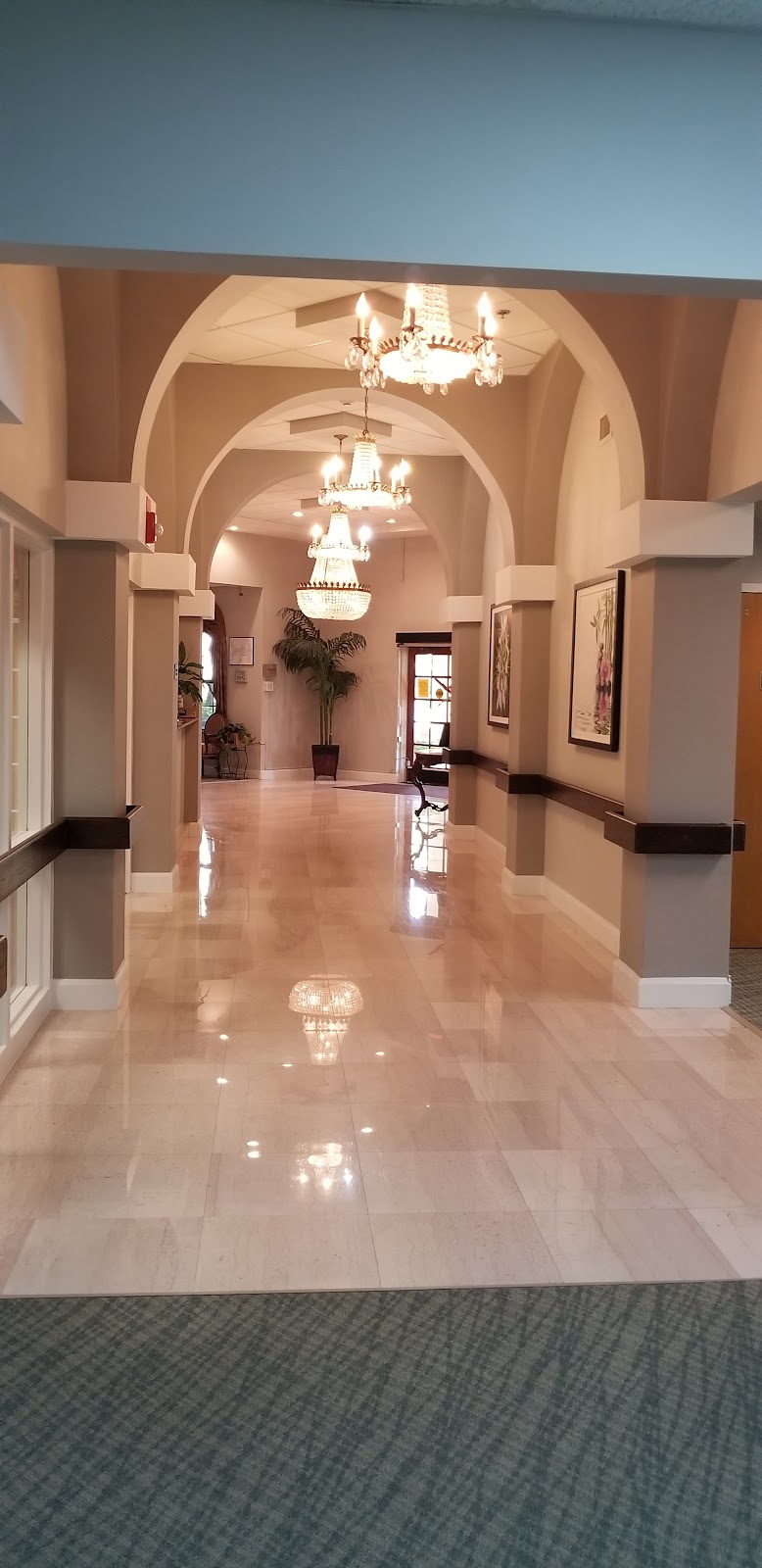
Who Owns and Operates Solaris Healthcare Imperial?

SOLARIS HEALTHCARE IMPERIAL is owned by a non-profit organization. Non-profit facilities reinvest revenue into operations rather than distributing to shareholders. The facility is operated by SOLARIS HEALTHCARE, a chain that manages multiple nursing homes. With 113 certified beds and approximately 95 residents (about 84% occupancy), it is a mid-sized facility located in NAPLES, Florida.
How Does Solaris Healthcare Imperial Compare to Other Florida Nursing Homes?

Compared to the 100 nursing homes in Florida, SOLARIS HEALTHCARE IMPERIAL's overall rating (3 stars) is below the state average of 3.2, staff turnover (10%) is significantly lower than the state average of 46%, and health inspection rating (2 stars) is below the national benchmark.

What Should Families Ask When Visiting Solaris Healthcare Imperial?

Based on this facility's data, families visiting should ask: "Can I visit during a mealtime to observe dining assistance and food quality?" "How do you handle medical emergencies, and what is your hospital transfer rate?" "Can I speak with family members of current residents about their experience?"

Is Solaris Healthcare Imperial Safe?

Based on CMS inspection data, SOLARIS HEALTHCARE IMPERIAL has a clean safety record: no substantiated abuse findings (meaning no confirmed cases of resident harm), no Immediate Jeopardy citations (the most serious violation level indicating risk of serious injury or death), and is not on the Special Focus Facility watch list (a federal program monitoring the lowest-performing 1% of nursing homes). The facility has a 3-star overall rating and ranks #100 of 100 nursing homes in Florida. While no facility is perfect, families should still ask about staff-to-resident ratios and recent inspection results during their visit.

Do Nurses at Solaris Healthcare Imperial Stick Around?

Staff at SOLARIS HEALTHCARE IMPERIAL tend to stick around. With a turnover rate of 10%, the facility is 35 percentage points below the Florida average of 46%. Low turnover is a positive sign. It means caregivers have time to learn each resident's needs, medications, and personal preferences. Consistent staff also notice subtle changes in a resident's condition more quickly. Registered Nurse turnover is also low at 8%, meaning experienced RNs are available to handle complex medical needs.

Was Solaris Healthcare Imperial Ever Fined?

SOLARIS HEALTHCARE IMPERIAL has been fined $29,738 across 1 penalty action. This is below the Florida average of $33,376. While any fine indicates a compliance issue, fines under $50,000 are relatively common and typically reflect isolated problems that were subsequently corrected. Families should ask what specific issues led to these fines and confirm they've been resolved.

Is Solaris Healthcare Imperial on Any Federal Watch List?

SOLARIS HEALTHCARE IMPERIAL is not on any federal watch list. The most significant is the Special Focus Facility (SFF) program, which identifies the bottom 1% of nursing homes nationally based on persistent, serious quality problems. Not being on this list means the facility has avoided the pattern of deficiencies that triggers enhanced federal oversight. This is a positive indicator, though families should still review the facility's inspection history directly.