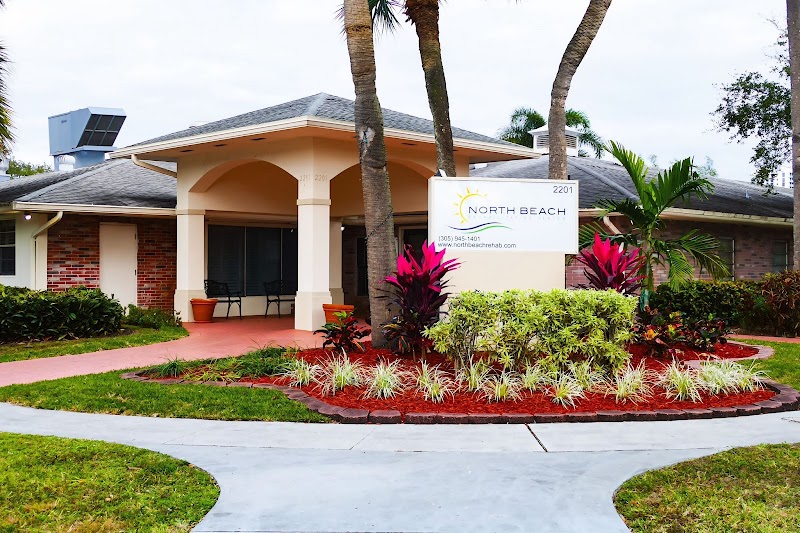
NORTH BEACH HEALTHCARE AND REHABILITATION CENTER

2201 NE 170TH STREET, NORTH MIAMI BEACH, FL 33160 (305) 945-1401
For profit - Limited Liability company 99 Beds GOLD FL TRUST II Data: November 2025 6 Immediate Jeopardy citations
Trust Grade
0/100
#652 of 690 in FL
Last Inspection: January 2025

Within standard 12-15 month inspection cycle. Federal law requires annual inspections.

Overview

North Beach Healthcare and Rehabilitation Center has received a Trust Grade of F, indicating significant concerns about the facility's operations and care quality. Ranking #652 out of 690 in Florida places it in the bottom half of nursing homes statewide, and at #51 out of 54 in Miami-Dade County, it is among the least favorable options in the area. Unfortunately, the facility is worsening; the number of reported issues increased from 6 in 2024 to 10 in 2025. While staffing is rated average with a turnover rate of 28%, which is better than the state average, there are serious red flags: the facility has incurred $117,329 in fines, higher than 91% of Florida facilities, suggesting repeated compliance problems. Additionally, there have been critical incidents, including a failure to supervise a resident who wandered out of the facility and has not been located since January 2024, raising serious safety concerns.

Trust Score
F
0/100
In Florida
#652/690
Bottom 6%
Safety Record
High Risk
Review needed
Inspections
Getting Worse
6 → 10 violations
Staff Stability
✓ Good
28% annual turnover. Excellent stability, 20 points below Florida's 48% average. Staff who stay learn residents' needs.
Penalties
✓ Good
$117,329 in fines. Lower than most Florida facilities. Relatively clean record.
Skilled Nurses
✓ Good
Each resident gets 48 minutes of Registered Nurse (RN) attention daily — more than average for Florida. RNs are trained to catch health problems early.
Violations
⚠ Watch
39 deficiencies on record. Higher than average. Multiple issues found across inspections.
★☆☆☆☆
1.0
Overall Rating
★★★☆☆
3.0
Staff Levels
★★★★☆
4.0
Care Quality
★☆☆☆☆
1.0
Inspection Score
Stable
2024: 6 issues
2025: 10 issues

The Good

  • 4-Star Quality Measures · Strong clinical quality outcomes
  • Low Staff Turnover (28%) · Staff stability means consistent care
  • Full Sprinkler Coverage · Fire safety systems throughout facility
  • No fines on record
  • Staff turnover is low (28%)

    20 points below Florida average of 48%

Facility shows strength in quality measures, staff retention, fire safety.

The Bad

1-Star Overall Rating

Below Florida average (3.2)

Significant quality concerns identified by CMS

Federal Fines: $117,329

Well above median ($33,413)

Significant penalties indicating serious issues

Chain: GOLD FL TRUST II

Part of a multi-facility chain

Ask about local staffing decisions and management

The Ugly 39 deficiencies on record

6 life-threatening
Jan 2025 10 deficiencies
CONCERN (D)

Potential for Harm - no one hurt, but risky conditions existed

Deficiency F0558 (Tag F0558)

Could have caused harm · This affected 1 resident

**NOTE- TERMS IN BRACKETS HAVE BEEN EDITED TO PROTECT CONFIDENTIALITY** Based on observation, interview and record review, the facility failed to ensure one (Resident # 398) out of three sampled resid...

Read full inspector narrative →
**NOTE- TERMS IN BRACKETS HAVE BEEN EDITED TO PROTECT CONFIDENTIALITY** Based on observation, interview and record review, the facility failed to ensure one (Resident # 398) out of three sampled residents devices was in place to alert staff in the event of an emergency as evidence by Resident 398's call light and phone were observed out of the resident's reach. The findings include: During observation on 01/06/25 at 08:30 AM Resident #398 was observed slouched over in bed eating breakfast. The resident's call light was noted hanging behind the bed and her telephone was observed on top of the overhead light. On 01/07/25 at 09:30 AM; Resident #398 was observed resting in bed and the call light was observed hanging behind the bed. Review of Resident # 398's medical records revealed the resident was admitted to the facility on [DATE]. Clinical diagnoses include Epilepsy, Unspecified, not intractable, and without status epilepticus. Review of the Physician's Orders Sheet for 11/04/2024 revealed Resident #398 orders include: Bedrails for positioning and or enabling, bedrail x 2 quarters. Review of Resident #398 's Significant Change Minimum Data Set (MDS) dated [DATE] revealed the resident is cognitively appropriate and require maximal assistance for care is required. Review of Resident # 398's Care Plans revealed the Resident has a self-care deficit with dressing, grooming, bathing, needs assistance with personal care tasks, mobility skills, impaired mobility and generalized weakness. Interventions include: Encourage/remind the resident to ask for assistance as needed and staff to anticipate resident's needs with activities of daily living (ADLs). During an interview on 01/09/25 at 12:42 PM Staff G, Licensed Practical Nurse (LPN) revealed the call light should be within reach of residents at all times and rounds should be done every two hours. Review of the facility's policies regarding call light indicates: to ensure that the call light is accessible to the resident when in bed, from the shower or bathing facility and from the floor.
CONCERN (D)

Potential for Harm - no one hurt, but risky conditions existed

Comprehensive Care Plan (Tag F0656)

Could have caused harm · This affected 1 resident

**NOTE- TERMS IN BRACKETS HAVE BEEN EDITED TO PROTECT CONFIDENTIALITY** Based on interviews and record review facility failed to implement a nutritional care plan for one resident out of seven residen...

Read full inspector narrative →
**NOTE- TERMS IN BRACKETS HAVE BEEN EDITED TO PROTECT CONFIDENTIALITY** Based on interviews and record review facility failed to implement a nutritional care plan for one resident out of seven residents sampled (Resident #297) as evidenced by staff failed to notify the physician about an incident of aspiration reported by an alert and oriented resident. There were 94 residents residing in the facility at the time of survey. The findings included: Observation and interview on 01/06/25 at 10:03 AM. Resident#297 was in bed awake and alert in bed and a breakfast tray was noted at the bedside. Resident #297 was asked about the choking incident; Resident#297 stated: A chunk of food went too deep in my throat because I need to blend my food, but I cannot have a blender in the room because it's a fire hazard. When it happened, I was screaming and my roommate helped me by wrapping his arms around my belly and squeezing until the food popped out of my mouth. The nurse was present while my roommate was helping me but did not intervene. During an interview on 01/09/25 at 10:01 AM. Staff A, Licensed Practical Nurse (LPN) stated, I did not witness [Resident#297] choking. During the evening medication administration and while I was in the room, [Resident#297] told me, 'If it weren't for my roommate, I wouldn't be here because something got caught in my throat while I was eating.' At that time, I assessed [Resident#297], and [Resident # 297] reported being okay. I also offered to call [Resident#297's] daughter, but the Resident declined. I even asked [Roommate] if he knew the maneuver to help expel food if caught in someone's throat. [Roommate] told me he helped [Resident #297], and everything is fine. There was no documentation, and I did not call the physician. I should have documented and reported the incident to the physician. I continued to monitor [Resident #297] that day and over the weekend and no eating problems arose. Record review of Resident #297's demographic face sheet revealed an admission date of 12/16/2024 with diagnosis that included Abdominal Hernia without obstruction or gangrene. Review of a Care Plan initiated on 12/20/2024 revealed Resident #297 had the potential for nutritional problem related to comorbidities that included: abdominal hernia and diverticulum of bladder with a goal to maintain adequate nutritional status as by 03/17/2025. The interventions included: Observe for signs and symptoms of chewing/swallowing difficulties and aspiration; notify physician if noted. Record review of a December 2024 physician's orders sheet revealed Resident #297 was receiving a Gluten Free diet, regular texture and thin liquids. Record review of an admission Minimum Data Set (MDS) referenced dated 12/22/24 indicated Resident # 297 is cognitively intact and needed set up and clean up assistance for eating and oral hygiene. On 01/09/25 at 3:24 PM, the Director of Nursing revealed she had no knowledge of any choking incident involving Resident #297 and stated: If a nurse is made aware of an incident it should be documented and reported to the physician. Record review of a policy titled, Care Plans, Comprehensive Person-Centered dated 2001 MED-PASS, Inc. (Revised March 2022) revealed A comprehensive, person-centered care plan that includes measurable objectives and timetables to meet the resident's physical, psychosocial and functional needs is developed and implemented for each resident. Policy Interpretation and Implementation 3. The care plan interventions are derived from a thorough analysis of the information gathered as part of the comprehensive assessment. 8. Services provided for or arranged by the facility and outlined in the comprehensive care plan are: 1. provided by qualified persons.
CONCERN (D)

Potential for Harm - no one hurt, but risky conditions existed

Quality of Care (Tag F0684)

Could have caused harm · This affected 1 resident

**NOTE- TERMS IN BRACKETS HAVE BEEN EDITED TO PROTECT CONFIDENTIALITY** Based on observations, interviews, and record reviews, the facility failed to provide quality of care for two residents (Residen...

Read full inspector narrative →
**NOTE- TERMS IN BRACKETS HAVE BEEN EDITED TO PROTECT CONFIDENTIALITY** Based on observations, interviews, and record reviews, the facility failed to provide quality of care for two residents (Resident #297 and Resident #398) out of twenty-three sampled residents, as evidenced by a Licensed Practical Nurse (LPN) failed to notify the physician and document an incident of food aspiration reported by Resident #297 and failure to position Resident# 398 appropriately during meals to prevent aspiration. There were 94 residents residing in the facility at the time of survey. The findings included: Resident #297 Observation and interview on 01/06/25 at 10:03 AM. Resident#297 was in bed awake alert and oriented bed; a breakfast tray was noted at the bedside. When asked about the choking incident; Resident#297 stated: A chunk of food went too deep in my throat because I need to blend my food, but I cannot have a blender in the room because it's a fire hazard. When it happened, I was screaming and my roommate helped me by wrapping his arms around my belly and squeezing until the food popped out of my mouth. The nurse was present while my roommate was helping me but did not intervene. Resident#297 uncovered tray and an uneaten meat patty was noted on the plate. During an interview on 01/09/25 at 10:01 AM. Staff A, Licensed Practical Nurse (LPN) stated, I did not witness [Resident#297] choking. During the evening medication administration and while I was in the room, [Resident#297] told me, 'If it weren't for my roommate, I wouldn't be here because something got caught in my throat while I was eating.' At that time, I assessed [Resident#297], and [Resident # 297] reported being okay. I also offered to call [Resident#297's] daughter, but the Resident declined. I even asked [Roommate] if he knew the maneuver to help expel food if caught in someone's throat. [Roommate] told me he helped [Resident #297], and everything is fine. There was no documentation, and I did not call the physician. I should have documented and reported the incident to the physician. I continued to monitor [Resident #297] that day and over the weekend and no eating problems arose. Record review of Resident #297's demographic face sheet revealed an admission date of 12/16/2024 with diagnosis that included Abdominal Hernia without obstruction or gangrene. Review of a Care Plan initiated on 12/20/2024 revealed Resident #297 had the potential for nutritional problem related to comorbidities that included: abdominal hernia and diverticulum of bladder with a goal to maintain adequate nutritional status as by 03/17/2025. The interventions included: Observe for signs and symptoms of chewing/swallowing difficulties and aspiration; notify physician if noted. Record review of a December 2024 physician's orders sheet revealed Resident #297 was receiving a Gluten Free diet, regular texture and thin liquids. Record review of an admission Minimum Data Set (MDS) referenced dated 12/22/24 indicated Resident # 297 is cognitively intact and needed set up and clean up assistance for eating and oral hygiene. On 01/09/25 at 3:24 PM, the Director of Nursing revealed she had no knowledge of any choking incident involving Resident #297 and stated: If a nurse is made aware of an incident it should be documented and reported to the physician. Resident# 398 During observation on 01/06/2025 at 08:30 AM Resident #398 was observed slouched over in bed eating breakfast. During observation on 01/06/25 at 12:30 PM Resident #398 was observed in a reclined position while eating and drinking during lunch. Review of the medical records for Resident #398 revealed the resident was admitted to the facility on [DATE]. Clinical diagnoses included but not limited to: Epilepsy, Unspecified, not intractable, without status epilepticus. Review of the Physician's Orders Sheet for 11/04/2024 revealed Resident #398 had orders that included but not limited to: Bedrails for positioning and/or enabling, bedrail x 2 quarters Review of Resident #398 's Significant Change Minimum Data Set (MDS) dated [DATE] revealed Resident # 398 is cognitively intact and maximal assistance for care is required. Review of Resident # 398's Care Plans revealed the Resident has a self-care deficit with dressing, grooming, bathing related to (r/t): as evidenced by needs assistance with personal care tasks, mobility skills, impaired mobility and generalized weakness. Interventions include- Bedrails for positioning and/or enabling bedrail x 2 quarters and staff to anticipate resident's needs with activities of daily living (ADLs). Interview on 01/09/2025 at 12:34 PM; with Staff G, Licensed Practical Nurse (LPN) stated: If a resident is eating they should be sitting at least at a 45-to-90-degree angle; [Resident #398] normally eats in dining room or her room, she is an independent eater but needs help with setting up her tray and the CNAs (Certified Nursing Assistants) helps to position her in bed. Staff makes frequent rounds in room to prevent choking.
CONCERN (D)

Potential for Harm - no one hurt, but risky conditions existed

Accident Prevention (Tag F0689)

Could have caused harm · This affected 1 resident

**NOTE- TERMS IN BRACKETS HAVE BEEN EDITED TO PROTECT CONFIDENTIALITY** Based on observations, interviews and record reviews facility failed to provide adequate supervision to ensure an environment fr...

Read full inspector narrative →
**NOTE- TERMS IN BRACKETS HAVE BEEN EDITED TO PROTECT CONFIDENTIALITY** Based on observations, interviews and record reviews facility failed to provide adequate supervision to ensure an environment free of safety hazards for two residents (#9, #17) out of 23 sampled residents as evidenced by boxes of cigarettes and electrical cigarette at Resident #9's bedside and a shaving razor at Resident #17's bedside. There were 94 residents residing in the facility at the time of survey. The findings included: On 01/06/25 at 9:32 AM Resident #9 was observed in bed, the open nightstand drawer had two boxes of cigarettes inside. (photo submitted). On 01/06/25 at 9:35 AM, Staff A, Licensed Practical Nurse (LPN) was asked if residents are allowed to keep cigarettes in room. Staff A, LPN replied, No. During a side-by-side observation of the open drawer in Resident #9's room Staff A, LPN stated, I will check about the cigarettes. Staff A left the room and returned with the Director of Nursing (DON). The DON removed the two packs of cigarettes and educated Resident #9 that these items were not allowed. Record review of a demographic sheet for Resident#9 revealed an admission date of 9/13/24 with diagnosis that included: Encounter for Surgical aftercare following surgery of the digestive system and Quadriplegia. On 01/08/25 at 11:08 AM while observing the smoking area, Staff F, Activities Aide revealed: All the smoking supplies are kept in a locked compartment which is kept at the front desk and only the receptionist and maintenance have a key. Staff F showed a compartment with boxes of smoking supplies, each box was labeled with residents' names. Staff F, Activities Aide further stated: I hand out the smoking supplies to the residents. The residents are not allowed to take any smoking supplies into their room. I ensure the residents return the lighter to me. During another observation on 01/08/25 at 1:27 PM, in Resident # 9's room, a box of cigarette and an electric cigarette were noted in an open drawer in Resident #9's room (photographic evidence). Resident #9 was asked about the understanding of the smoking policy, Resident #9 stated: I smoke in the patio, and I get my supplies from my friend and the staff keep it. The staff transported me to the patio to smoke. I am aware that I should not keep cigarettes in my drawer. The DON was informed of the cigarettes observed in the resident's room. The DON entered Resident #9's room and removed the electric cigarette and a box of cigarettes and reeducated Resident #9. On 01/08/25 at 1:45 PM Staff E, Certified Nursing Assistant (CNA) stated, I check [Resident#9's] drawers daily and inform the nurse if there are any smoking items inside. Every time the staff remove items, Resident#9 gets more. I always see the electric cigarette in the drawer and sometime in the bed and I have informed the nurse. Once I witnessed Resident #9 smoking the electric cigarette in his room and I informed the nurse. Record review of Resident#9's Quarterly Minimum Data Set (MDS) with a reference date of 12/20/24 indicate Resident # 9 is cognitively intact, required set up/clean up assistance for eating, supervision/ touching assistance for oral hygiene and dependent for transfer. Review of an admission MDS reference dated 09/19/24 documented Yes for current tobacco use. Review of a Care Plan initiated on 09/16/2024 and revised on 11/13/2024 revealed Resident #9 desired to smoke, has been assessed as able to smoke with supervision. Resident or responsible party have been informed of the facility smoking policy and had a history of not being compliant with smoking policy with a goal to demonstrate safe smoking practices thru 12/25/2024. The interventions included: Maintain smoking materials in designated area. Review of the electronic health record of Resident #9 revealed a Smoking assessment dated [DATE] which indicated Resident #9 had the cognitive and physical ability to smoke safely and must request smoking materials from staff. Review of a policy titled, SMOKING POLICY-RESIDENTS effective date: 9/15/2022 revealed Policy: The Center will establish and maintain a safe designated smoking area and safe smoking practices for the residents. Smoking is only allowed in the designated outdoor areas of the facility and during designated times. Procedures: 4. Smoking shall be prohibited in any room, ward, or compartment where flammable liquids, combustible gases, or oxygen is used or stored and in any hazardous location, and such area shall be posted with signs that read NO SMOKING or shall be posted with the international symbol for no smoking. 7. The Center will retain and store all smoking materials, including matches, lighters, cigarettes, cigars, and any other smoking implement for all residents who wish to smoke. 11. Electronic cigarettes and vaping are permitted, but only in the facility designated smoking areas. 1. The same rules that apply to regular tobacco cigarettes also apply to electronic smoking and vaping materials. 2. Electronic cigarettes and vaping materials, including the liquids, will be retained and stored by nursing staff On 01/06/25 at 11:23 AM Resident #17 was observed in bed with oxygen in progress via nasal cannula. A shaving razor was observed inside a napkin box on the side table (photographic evidence). Staff A, LPN was notified and removed the shaving razor. Staff A, LPN revealed the Resident # 17's son brought the shaving razor. On 01/06/25 at 11:35 AM Staff C, CNA revealed Resident#17 was not given a shaving razor by the CNA and the shaving razor was not noticed during rounds or during hygiene care. Record review of a demographic sheet for Resident#17 revealed an admission date of 8/16/22 readmission: [DATE] with diagnosis that included: Major Depressive Disorder. Review of a Discharge Return Anticipated MDS for Resident#17 reference dated 11/21/24 indicated Resident # 17's cognitive status is undetermined; required supervision/touching assistance for eating/oral hygiene and dependent for toileting/shower/bathe/transfer. Review of a Care Plan initiated on 06/28/2024 and revised on 09/27/2024 revealed Resident#17 had a self-care deficit and decreased mobility and requires set-up to supervision with eating and extensive to total assistance with the rest of Activities of Daily Living (ADL). Goal: Resident #17 will allow staff to assist with ADLs as deemed necessary for proper hygiene and safety thru 12/03/2024. Interventions included: Provide hands-on assistance with dressing, grooming, bathing as needed and staff to anticipate resident's needs with ADLs. Review of a Policy titled, Safety and Supervision of Residents 2001 MED-PASS, Inc. (Revised July 2017) revealed Policy Statement: Our facility strives to make the environment as free from accident hazards as possible. Resident safety and supervision and assistance to prevent accidents are facility-wide priorities. Policy Interpretation and Implementation: Facility-Oriented Approach to Safety: 2. Safety risks and environmental hazards are identified on an ongoing basis through a combination of employee training, employee monitoring, and reporting processes; QAPI reviews of safety and incident/accident data; and a facility-wide commitment to safety at all levels of the organization. Individualized, Resident-Centered Approach to Safety. Implementing interventions to reduce accident risks and hazards shall include the following: 2. Resident supervision is a core component of the systems approach to safety.
CONCERN (D)

Potential for Harm - no one hurt, but risky conditions existed

QAPI Program (Tag F0867)

Could have caused harm · This affected 1 resident

Based on interview and record review, the facility failed to demonstrate effective plan of actions were implemented to correctly identify quality deficiencies in the problem area related to repeated d...

Read full inspector narrative →
Based on interview and record review, the facility failed to demonstrate effective plan of actions were implemented to correctly identify quality deficiencies in the problem area related to repeated deficient practices for F558 Reasonable Accommodations Needs/Preferences, F761 Label/Store Drugs and Biologicals, F880 Infection Prevention & Control, These deficient practices have the potential to affect 94 residents residing in the facility at the time of the survey. The findings included: Review of the facility's survey history revealed, during a recertification survey with exit dated August 31, 2023, F558 Reasonable Accommodations Needs/Preferences was cited related to the facility failure to ensure reasonable accommodations related call lights. F761 Label/Store Drugs and Biologicals, F880 Infection Prevention & Control. Interview with Administrator on 01/09/2025 at 4:00 PM. He revealed the QAPI (Quality Assurance and Performance Improvement) meetings are held on the second Tuesday of each month or as needed. He stated that QAPI committee members are Administrator, Director of Nursing, Assistant Director of Nursing, Medical Records, MDS Coordinator, Staff Coordinator, Activities Director, Social Services Director, Rehabilitation Director, admission Director, Maintenance Director, Housekeeping Director, Dietary Manager, Medical Director. Human Resources Director, Corporate Officer. During the morning meetings and clinical meetings, they reviewed the last meeting and focused on the deficiencies the facility had for the last survey. Quality Assurance is continuously monitored and communicated with the department heads and tracked to ensure the correct actions implemented. Record review of Quality Assurance/Quality Assurance Performance Improvement QAPI/QAA Goals/Purpose Statement: Our purpose is to provide excellent quality resident/patient care and services. Quality is defined as meeting or exceeding the needs, expectations and requirements of the patients cost-effectively while maintaining good resident/patient outcomes and perceptions of patient care. NBRC has a Performance Improvement Program which systematically monitors, analyses and improves its performance to improve resident/ patient outcomes. It recognizes that the value in healthcare is the appropriate balance between good measures, excellent care and services and cost. We will monitor our operations for compliance with federal and state regulations.
CONCERN (E)

Potential for Harm - no one hurt, but risky conditions existed

Safe Environment (Tag F0584)

Could have caused harm · This affected multiple residents

Based on observations, record review, and interviews the facility failed to provide a safe environment for all residents, as evidenced by one out of three dryer lint traps in the laundry room observed...

Read full inspector narrative →
Based on observations, record review, and interviews the facility failed to provide a safe environment for all residents, as evidenced by one out of three dryer lint traps in the laundry room observed full of lint. There were 94 residents residing in the facility at the time of survey. The findings included: On 01/09/25 at 8:51 AM a laundry tour was conducted with the Director of Housekeeping. Observation in the clean room revealed three dryers and one was not in progress. The dryer that was not in progress was noted with a large amount of lint. Review of a log posted on the wall revealed the lint traps are scheduled to be signed bi hourly after dryer lint traps are cleaned. There were two signatures missing and it was last signed at 9:00 PM on 1/8/24 (photographic evidence). Staff D, Housekeeping/laundry personnel revealed the lint trap had not been cleaned yet and explained the protocol and purpose for cleaning the dryers' lint traps I am responsible to clean lint trap hourly and then sign the lint log. I forgot to sign the log and didn't get a chance to clean the trap because I got busy. I am aware that it is a potential fire hazard. The facility does not have a policy for cleaning of the lint traps per the Director of Nursing.
CONCERN (E)

Potential for Harm - no one hurt, but risky conditions existed

Transfer Notice (Tag F0623)

Could have caused harm · This affected multiple residents

**NOTE- TERMS IN BRACKETS HAVE BEEN EDITED TO PROTECT CONFIDENTIALITY** 3) Record review of the Demographic Face Sheet for Resident #10 documented the resident was admitted on [DATE] with a diagnosis ...

Read full inspector narrative →
**NOTE- TERMS IN BRACKETS HAVE BEEN EDITED TO PROTECT CONFIDENTIALITY** 3) Record review of the Demographic Face Sheet for Resident #10 documented the resident was admitted on [DATE] with a diagnosis of Hemiplegia, emphysema and hypertension. The resident was discharged on 10/08/2024 to the hospital. Review of the Physician's Orders Sheet (POS) dated 10/08/2024 for Resident #10 documented to send the resident to the local hospital. Review of the Ombudsman Nursing Home Transfer and Discharge Notice for Resident #10 documented the notice was sent with the resident to the hospital on [DATE] with an effective date of 10/08/2024. The location to which the resident is to be transferred or discharged was a local hospital. Further review revealed the form was faxed with no response and the Ombudsman line was busy. The facility did not follow up with the Ombudsman. 4) Record review of the Demographic Face Sheet for Resident #24 documented the resident was admitted on [DATE] with a diagnosis of diabetes mellitus, hypertensive heart disease and chronic obstructive pulmonary disease. The resident was discharged on 10/19/2024 to the hospital. Review of the Physician's Orders Sheet (POS) dated 10/19/2024 for Resident #24 documented to send the resident to the local hospital. Review of the Ombudsman Nursing Home Transfer and Discharge Notice for Resident #24 documented the notice was sent with the resident to the hospital on [DATE] with an effective date of 10/19/2024. The location to which the resident is to be transferred or discharged was a local hospital. Further review revealed the form was faxed with no response and the Ombudsman line was busy. The facility did not follow up with the Ombudsman. 5) Record review of the Demographic Face Sheet for Resident #73 documented the resident was admitted on [DATE] with diagnosis that include parkinsonism. The resident was discharged on 11/02/2024 to the hospital. Review of the Physician's Orders Sheet (POS) dated 11/02/2024 for Resident #73 documented to send the resident to the local hospital. Review of the Ombudsman Nursing Home Transfer and Discharge Notice for Resident #73 documented the notice was sent with the resident to the hospital on [DATE] with an effective date of 11/02/2024. The location to which the resident is to be transferred or discharged was a local hospital. Further review revealed the form was faxed with no response and the Ombudsman line was busy. The facility did not follow up with the Ombudsman. Interview with the Director of Nursing (DON) on 1/09/25 at 9:33 AM. She stated, On 11/02/2024, the resident did not respond to the attention we give her. Assistance was given to the food but she did not respond with the swallowing. Food had to be unpack from her mouth. Nothing eaten from breakfast and lunch. MD was called made him aware and order to send resident to Aventura hospital for evaluation. Family and supervisor made aware. We have been calling the Ombudsman asking for an alternative number to send the faxes. We keep getting a busy signal. They told us we can't email it in. This has been going on for months. Interview with Medical Records Staff on 1/09/25 at 11:11 AM. She stated, I emailed the Ombudsman forms on yesterday for November 2024 and December 2024 for patients discharged . Before that I would fax them monthly and would receive a busy signal. She confirmed that she did not follow up with the Ombudsman concerning an alternative way to send the transfer forms. Interview with the Ombudsman on 1/09/25 at 1:25 PM. She revealed that she had not been receiving the Ombudsman forms weekly nor monthly. She has given the contact information on where to send the Ombudsman forms and has informed the facility that they can email them. On yesterday, 1/08/25 she received the Ombudsman forms for the months of November 2024 and December 2024 via email. Review of a policy titled, Transfer or Discharge Notice (undated) revealed Policy Statement: Residents and/or representatives are notified in writing, and in a language and format they understand, at least thirty (30) days prior to a transfer or discharge. Policy Interpretation and Implementation 1. the name, address, email and telephone number of the entity which receives appeal hearing requests;1. The name, address, and telephone number of the Office of the State Long-term Care Ombudsman; A copy of the notice is sent to the Office of the State Long-Term Care Ombudsman at the same time the notice of transfer or discharge is provided to the resident and representative. Based on record review and interviews facility failed to notify the Office of the Ombudsman about the transfer of five residents (#17, #16 #10, #24, #73) out of 23 residents sampled, as evidenced by reports of unsuccessful fax transmittals for The Notice of Transfer/Discharge Letter to The Office of The Ombudsman for December and November 2024. There were 94 residents residing in the facility at the time of survey. The findings included: 1) Record review of a demographic sheet revealed Resident#17 was admitted on [DATE], hospitalized on [DATE] and readmitted on [DATE] with diagnosis that include: Chronic Obstructive Pulmonary Disease (COPD) and Acute Respiratory Failure with Hypoxia and Cough Record review of a narrative nurses note dated 11/21/2024 revealed Resident #17 was transferred from the facility via emergency services and admitted to a local hospital for Acute respiratory failure. Record review of the electronic health record revealed a signed Bed Hold policy dated 11/21/24. The fax notification sent to The Office of the Ombudsman for Resident #17's transfer to the hospital dated 11/26/24 revealed the line was busy. 2) Record review of a demographic sheet revealed Resident #16 was admitted on [DATE] and had a hospital leave on 10/9/24. Record review of a Discharge return anticipated MDS with reference date of 10/9/24 Sections: A (identification) revealed Discharge was unplanned to a short-term general hospital. Record review of Resident #16's physician's order sheet revealed an order dated 10/10/24 to transfer the resident to nearby hospital for PEG (percutaneous endoscopic gastrostomy) tube placement. Record review of a Narrative Nurses note dated 10/9/2024 revealed Resident #16 was transferred to a nearby hospital for PEG placement. The fax confirmation of notification sent to the Office of the Ombudsman for Resident #16's transfer to the hospital dated 11/01/24 revealed the line was busy. Interview on 01/08/25 at 09:22 AM, the medical records personal stated: I am responsible for sending the Nursing Home Transfer and Discharge Notice to the office of the Ombudsman. I send it via fax. I send notices every other week. The fax confirmation does say busy, and I will get back to you with the answer. On 01/09/25 at 10:26 AM, the medical records staff revealed all transfer notices for November and December 2024 were not confirmed as received by the Ombudsman.
CONCERN (E)

Potential for Harm - no one hurt, but risky conditions existed

Deficiency F0761 (Tag F0761)

Could have caused harm · This affected multiple residents

Observation on 01/06/25 at 09:32 AM Resident #9 was in bed with eyes closed, a medicine cup with a small pink pill was noted on the bed next to Resident #9 (photo evidence). Resident #9's nightstand d...

Read full inspector narrative →
Observation on 01/06/25 at 09:32 AM Resident #9 was in bed with eyes closed, a medicine cup with a small pink pill was noted on the bed next to Resident #9 (photo evidence). Resident #9's nightstand drawer was open, and a bottle labeled Vitamin C was observed inside (see photo evidence). On 01/06/25 at approximately 9:38 AM, Staff A, Licensed Practical Nurse (LPN) stated: I did not give [Resident#9] any medication. No medications can be kept in the residents' rooms without staff present. Staff A, LPN entered the resident's room with the surveyor and removed cup with the pink pill and disposed of it in the puncture resistant container in the medication cart. Staff A, LPN returned with the Director of Nursing (DON) and the DON removed the bottle labeled Vitamin C and educated Resident #9. Observation and interviews on 01/06/25 at 11:23 AM Resident #17 was awake, alert, oriented, two inhalers were observed inside a tissue box on Resident #17's side table (photo taken). Staff A, Licensed Practical Nurse (LPN) was made aware and removed the item and reeducated resident. Resident# 17 revealed a family member brought in the inhalers. Record review of a Policy titled, Medication Labeling and Storage (undated) revealed the facility stores all medications and biologicals in locked compartments under proper temperature, humidity and light controls. Only authorized personnel have access to keys. Policy Interpretation and Implementation: Medication Storage: 1. Medications are stored in an orderly manner in cabinets, drawers, carts, or automatic dispensing systems. Each resident's medications are assigned to an individual cubicle, drawer, or other holding area to prevent the possibility of mixing medications of several residents. Based on observation, interview and record review, the facility failed to ensure drugs and biologicals used in the facility are stored properly; as evidenced by observation revealed discontinued medication observed on Medication Cart, medications left unattended, staff placed insulin in pocket, undated open sterile water for inhalation in medication room, staff's personal items noted on counter in Medication Room and medications observed at bedside. Observation on 01/06/25 at 08:59 AM of South Medication Cart #1 with Staff I, Licensed Practical Nurse (LPN), discontinued medication Dificid (fidaxomicin) 200 mg (milligrams) for Resident #92 was noted in the top drawer of the cart. Review of order written on 12/13/24 documented: Give 200 mg by mouth two times a day for C-Diff until 12/24/24. Review of the Medication Administration Record (MAR) revealed the medication was administered from 12/14/24 to 12/24/24. Interview on 01/06/2025 at 08:59 AM Staff I, LPN (Licensed Practical Nurse revealed the resident started receiving the medication on 12/14/24 and of the South Cart on 01/06/25 at 08:59 AM with Staff I, LPN (Licensed Practical Nurse) Interview on 01/06/25 at 9:16 AM Staff I, LPN acknowledged the Dificid (fidaxomicin) 200 mg (milligrams) for Resident#92 was discontinued and should not have been on the cart. Staff I, LPN revealed all nurses are responsible for checking their cart for discontinued and expired medications. The night supervisor collects the expired and discontinued medications for them to be returned to the pharmacy. During an interview on 01/09/25 at 03:25 PM, the Director Of Nursing (DON) stated: The nurses should be checking the cart before and after the shift; the last nurse that gave the medication should have removed the medication. On 01/06/2024 at 10:00 AM, during medication administration observation with Staff J, Registered Nurse (RN) on the North Wing's Cart 2. Staff J, RN prepared medications that included 30 ml (milliliters) liquid supplement for Resident #64. Staff J, RN proceeded to administer the liquid supplement that was in a medication cup but the refused it; Staff J, RN placed the cup containing the supplement on the tray with the medication cup with pills and the liquid supplement spilled in the medication cup that had the pills. Before exiting the room, Staff J, RN explained to the resident that she needed to discard the pills and return with new pills. Upon returning to the medication cart Staff J revealed there was no drug disposal system in the cart, and she will check in the med room. On 01/06/25 at 10:14 AM, Staff J went to find a drug disposal system in the room located on the north wing behind the nurses station but did not find the drug disposal system. Staff J, RN revealed they will need to get the drug disposal container in the DON's office. Staff J went to get it; Staff J and RN exited the medication room leaving the door open and the unattended on the counter. Staff J returned three minutes later with a large drug disposal system container and dispose of the medications. Interview on 01/06/25 at 10:18 AM, Staff J, RN revealed she is aware the medications should not be left unattended and stated: I thought it was ok because you (surveyor) were there. Upon further observation, Staff J, RN was asked about the items on the counter that included lunch bags/container and the two refrigerators. Staff J, RN revealed the lunch boxes belonged to staff, and the lower locked refrigerator is for insulins and the top refrigerator is for residents' food from family. Both refrigerators were inspected and the upper refrigerator that stored residents' food temperature was noted at 50 degrees Fahrenheit; there were undated labeled grocery store type plastic bags that had resident's names. On 01/06/25 at 11:05AM during an observation of the South Med Room with Staff H, LPN, an undated open bottle with Sterile water for inhalation in plastic bag and an Oxygen Humidifier bottle with water in a plastic bag was noted on the top shelf in the Med Room. On 01/06/25 at 11: 25 AM Staff H, LPN revealed the bottles should have been dated when they opened and needed to be removed; all nurses are responsible for checking the medication rooms. Observation on 01/06/25 at 11:46 AM, Staff J, RN completed Resident #51's blood glucose check and revealed resident needed insulin was not available on the cart. On 01/06/25 at 12:05 PM, Staff J, RN went to the medication room and retrieved the insulin from the refrigerator. Staff J explained the insulin is cold so she will need to wait for the medication to get warm. Staff J placed the insulin in her pocket and went to assist with passing meal trays. On 01/06/25 at 12:15 PM, Staff J, RN removed the insulin from her pocket and placed it in the top drawer of the cart. During an interview on 01/06/24 at 12/24/2024 Staff J, RN revealed she was not aware the insulin should not be placed in her pocket. Interview on 01/09/24 at 3:18 PM the DON revealed the nurse reported the concerns medications should never be left unattended, and the nurse should not have placed the insulin in her pocket for infection control reasons. Regarding the lunch boxes in the room, the DON indicated staff should not leave lunch boxes/personal items in that room because there is a break room for staff.
CONCERN (E)

Potential for Harm - no one hurt, but risky conditions existed

Food Safety (Tag F0812)

Could have caused harm · This affected multiple residents

Based on observation, interview and record review, the facility failed to store food under sanitary condition by ensuring 1) the resident's foods were dated, the refrigerator was working properly and ...

Read full inspector narrative →
Based on observation, interview and record review, the facility failed to store food under sanitary condition by ensuring 1) the resident's foods were dated, the refrigerator was working properly and 2) there was no thermometer in the refrigerator in the snack/nourishment refrigerator on the resident's unit. This has the potential to affect 89 out of 94 residents who eat orally residing in the facility at the time of the survey and the potential to affect 55 out of 57 residents who eat orally residing on the North Wing and affect 34 out of 36 residents who eat orally residing on the South Wing. The findings included: Record review of the Foods Brought by Family/Visitors Policy and Procedure (revision date March 2022); Policy Statement-Food brought to the facility by visitors and family is permitted. Facility staff will strive to balance resident choice and a homelike environment with the nutritional and safety needs of residents; Policy Interpretation and Implementation-5b) Containers are labeled with the resident's name, the item and the use by date. Review of the Refrigerators and Freezers Policy and Procedure (revision date December 2014); Policy Statement-This facility will ensure safe refrigerator and freezer maintenance, temperatures and sanitation and will observe food expiration guidelines; Policy Interpretation and Implementation-1) Acceptable temperature ranges are 35 degrees Fahrenheit (F) to 40 degrees F and less than 0 degrees F; 2) Monthly tracking sheets for all refrigerators and freezers will be posted to record temperatures; 3) Monthly tracking sheets will include time, temperature, initials and action taken and 4) All food shall be appropriately dated to ensure proper rotation by expiration dates. Observation of the North Wing Nourishment Pantry with the Long Term Care Supervisor on 1/06/25 at 10:19 AM revealed the refrigerator was 50 degrees F (Fahrenheit). The refrigerator had three plastic bags which contained resident's foods that were labeled but not dated. Photographic evidence submitted. Observation of the South Wing Nourishment Pantry on 01/06/25 10:23 AM revealed the refrigerator did not contain a thermometer. The refrigerator contained resident's foods dated and labeled. Photographic evidence submitted. Observation and interview with Staff A, Licensed Practical Nurse (LPN) South Wing Nurse on 1/06/25 at 10:24 AM of the South Wing Nourishment Pantry Refrigerator. She stated, Everything should be dated and there is no thermometer in the refrigerator. Interview with the Director of Nursing (DON) on 1/09/25 at 9:43 AM. She confirmed there should be a thermometer in the pantry refrigerator, the temperature in the refrigerator should be 40 degrees F and below and resident's food in the pantry refrigerators should be dated. Record review of the North Wing Daily Freezer/Refrigerator/Cooler/Reach In/Nourishment Temperature Log for January 2025 documented on 1/06/25 at 1:00 AM, the refrigerator temperature was 40 degrees F and on the South Wing Daily Freezer/Refrigerator/Cooler/Reach In/Nourishment Temperature Log for January 2025 documented on 1/06/25 at 6:00 AM, the refrigerator temperature was 38 degrees F.
CONCERN (E)

Potential for Harm - no one hurt, but risky conditions existed

Infection Control (Tag F0880)

Could have caused harm · This affected multiple residents

Based on observations, record review, and interviews the facility failed to follow infection prevention and control practices with one out of two vital signs machines in the facility and one out of th...

Read full inspector narrative →
Based on observations, record review, and interviews the facility failed to follow infection prevention and control practices with one out of two vital signs machines in the facility and one out of three dryer lint traps in the laundry room, as evidenced by staff member not disinfecting the vital signs machine after measuring a resident's blood pressure and Clean laundry (curtains) stored in washing area. The findings included: 1) On 01/06/25 at 8:03 AM Staff A, Licensed Practical Nurse (LPN) was observed measuring a resident's blood pressure using a vital sign machine. Afterwards, Staff A, LPN placed the used vital sign machine in the hallway near the nursing station. Staff A, LPN then returned to administering medications. Staff A, LPN did not disinfect machine or cuff and no sanitizing wipes were observed in the vital signs machine's basket. On 01/06/25 at 9:32 AM Staff A, LPN was asked about the protocol after using the blood pressure machine on a resident, Staff A, LPN stated: The protocol is to disinfectant with the Sanitizing cloths. I was supposed to clean the machine but forgot. Record review of a Policy titled, Infection Control Guidelines for All Nursing 2005 MED-PASS, Inc. (Revised August 2012) Purpose: To provide guidelines for general infection control while caring for residents. 1. Standard Precautions will be used in the care of all residents in all situations regardless of suspected or confirmed presence of infectious diseases. Standard Precautions apply to blood, body fluids, secretions, and excretions regardless of whether they contain visible blood, non-intact skin, and/or mucous membranes. On 01/09/25 at 12:09 PM, interview with the Infection Preventionist revealed there are two vital signs machines in the facility. Staff are responsible to disinfect the vital signs machines with disinfectant wipes after usage to prevent any cross contamination or break outs throughout the facility. Also revealed there are two vital signs machines. On 01/09/25 at 8:51 AM a Laundry Tour was conducted with The Director of Housekeeping. Upon entrance to the wash area there was a cart partially covered with linens in a plastic bag (photo submitted) The Director of Housekeeping revealed the plastic bag contained clean curtains that were being stored in the wash area for purposes of space. Record review of a Policy titled, Departmental (Environmental Services) Infection Control Departmental (Environmental Services) Laundry and Linen revealed Level I: Purpose: The purpose of this procedure is to provide a process for the safe and aseptic handling, washing, and storage of linen. General Guidelines: Standard Precautions 1. Separate soiled and clean linen always.
Feb 2024 6 deficiencies 5 IJ
CRITICAL (J) 📢 Someone Reported This

A family member, employee, or ombudsman was alarmed enough to file a formal complaint

Immediate Jeopardy (IJ) - the most serious Medicare violation

Free from Abuse/Neglect (Tag F0600)

Someone could have died · This affected 1 resident

**NOTE- TERMS IN BRACKETS HAVE BEEN EDITED TO PROTECT CONFIDENTIALITY** Based on observation, interviews and record review, the facility failed to protect one (Resident #1) out of three residents samp...

Read full inspector narrative →
**NOTE- TERMS IN BRACKETS HAVE BEEN EDITED TO PROTECT CONFIDENTIALITY** Based on observation, interviews and record review, the facility failed to protect one (Resident #1) out of three residents sampled during the time of this survey. The facility's staff (Staff A Licensed Practical Nurse (LPN), Staff C LPN and Staff D, Certified Nursing Assistant) failed to supervise and implement adequate measure to prevent the elopement of Resident #1 who was exit seeking, wandered the unit, and wandered near exit doors. The facility neglected to adequately monitor and address Resident #1's displayed exit seeking behaviors and intent of elopement. The facility's system failure, lack of adequate supervision and a failure in ensuring an adequate alert monitoring system was in place allowed the resident to elope undetected by staff on 1/19/2024 at 1:34 AM on foot and the facility's staff did not begin the search until 2:50 AM and did not find the resident. The facility is located in an area where there is heavy 40 miles per hour 2 lane traffic. The resident still has not been located at the time of the survey. Refer to F 607, F 689, F 835, and F 867. The findings included: Record review of the facility's policy titled, Abuse, Neglect, Exploitation and Misappropriation Prevention Program Policy and Procedure revision date was on 04/2021, the policy documented: The facility will provide a safe resident environment and protect all residents from abuse. Therefore, each resident has the right to be free from abuse, neglect, misappropriation of resident property and exploitation of any type by anyone. Neglect means failure of the facility, its employees or service providers to provide goods and services to a resident that are necessary to avoid physical harm, pain, mental anguish, or emotional distress. A prompt thorough investigation will be conducted by the facility immediately. Review of the Demographic Face Sheet for Resident #1 documented the resident was initially admitted on [DATE] with a diagnosis that include but not limited to Alzheimer's disease, seizures, and glaucoma. Review of Resident's #1's Elopement care plan dated 4/21/2021 documented the resident has a potential for elopement risk related to cognitive impairment, who was exit seeking, wandered the unit and wandered near exit doors; Goal: Resident will be safe and will refrain from leaving facility unsupervised thru the next review date; Interventions: Perform frequent observations of residents whereabouts every shift; Provide redirection when observed going towards exit door; Apply alarm bracelet as ordered on right wrist; Verify placement every shift and check for proper functioning weekly. Review of the progress notes documented the following: Dated 1/19/2024 time stamped 06:25-Narrative Nurses Note: 1900 during initial round, resident was seen walking around the hallway and was redirected to her room. 2130 resident was found walking in the hallway again and said, I want to go home. Due meds given and was putting back to her bed. All safety measures were in place. 2300 while passing by the laundry area, noticed the resident was getting her hair groomed by a CNA( Certified Nursing Assistant). 0000 observed resident putting to bed by her CNA and stayed in the room with her to make sure she stays in bed. 0030 resident was observed walking out of her room towards the nursing station. Initiated and placed resident in a chair to sit in the nurse's station. 1:19 am observed resident standing in front of nurses station counter and was redirected to her room. 1:22 AM observed resident walking in hallway while doing routine check and redirected back to her room. 2:40 AM while making routine round alarm heard, resident was . missing from assigned room. Initiated elopement protocol, code green initiated. 3:25 AM police . notified about resident missing. ADON (Assistant Director of Nursing) was notified. Message left for family member. Medical doctor was notified. The progress notes written by Staff C, Licensed Practical Nurse (LPN). Dated 1/19/2024 time stamped 10:30 AM Narrative Nurses Note: Administrator spoke to the family when she returned the call. Administrator informed the family about patient elopement and gave the family the report of the actual situation. Review of the Physician's Order Sheets (POS) and Medication Administration Records (MAR) for December 2023 and January 2024 documented the resident was receiving the following medications: Namenda 10mg (milligrams) tab (tablet) 1 tab PO (by mouth) BID (twice a day) for mood; Donepezil HCL (hydrochloric acid) 10mg tab 1 tab PO HS (at night) for dementia and apply [wander management] alarm bracelet to right wrist. Check for placement shift and functioning Q (every) week. Report any issues immediately to supervisor. The order start date was 8/24/2022. The [wander management] alarm bracelet was checked every day for December 2023 and January 2024 and indicated the resident was wearing it. Review of the Elopement Risk Assessment/Evaluation dated 3/23/2023 and 6/29/2023 documented: The resident is at low risk for elopement, does not wander and has never eloped. On 1/30/2024 at 9:54 AM, the Administrator/Risk Manager/QAA (Quality Assessment and Assurance) stated: I received a call at approximately 3:30 AM and received a report of a missing person and they didn't retrieve the person. I immediately got in my car and was on my way to the facility for coming to assist with the search. I called [local state agency] and they accepted the case. The [local law enforcement] was in contact with the facility. On 1/19/2024, the incident occurred. I submitted the one-day report to the [local state agency] with the information given. When I arrived, to the facility the corporate team and other Administration personnel were at the facility investigating the elopement. The investigation was ongoing with the corporate team. I participated in QA (quality assurance) with the department heads. I reached out to the resident's family member. I let her know her great aunt was missing, and we are actively looking for her and would provide updates. The resident's niece let us know that she missed out on the calls from the facility earlier. The resident's niece stated the resident's responsible party on file was currently in a nursing home and is hard to reach. The resident remains missing at this time. The [ local state agency] five (5) day report indicated the elopement was attributed to the lack of supervision by the two (2) nurses- one (1) Registered Nurse (RN), one (1) Licensed Practical Nurse (LPN) and one (1) Certified Nursing Assistant (CNA), they were all placed on suspension on 1/19/2024. We immediately got to work on the response plan. The findings were as stated in the [local state agency] 5-day report, the allegation of neglect was substantiated. The [wander management] alarm bracelet red light never came on but the door with the egress alarm did go off. On 1/30/2024 at 10:06 AM, the Registered Nurse (RN), Regional Clinical Director stated: Based on the footage from the camera, it appears that the resident did not have an [wander management] alarm bracelet on, the red light did not go off as it should when a resident with a [wander management] bracelet gets near the exit door. She did not have a [wander management] alarm bracelet. The egress door alarm did go off. We educated the licensed nurses to review the elopement assessment. Clinical and non-clinical staff and agency staff were educated on elopement and abuse and neglect, and this would include ongoing education with new hires. The nurses and CNA involved in the resident's elopement were terminated and reported to the board of nursing. On 1/30/2024 at 10:36 AM, Staff A, Licensed Practical Nurse (LPN) via telephone stated, I was working on the 11-7 AM shift on 1/19/2024, I was sitting at the desk and doing daily assessments and the resident was sitting with me, she got up and walked to the side. At 1900 I prepared to make rounds, upon making rounds all 30 residents were accounted for awake and alert. I accepted Medication Cart #2 keys, counted narcotics, and started with med pass. Around 11:30 PM, I stopped to eat. At around 12:00 AM, I started charting sitting at the desk. At that time the resident was at the nursing station with me. The resident got up and walked around the South side of the nursing station. Between 1:45 AM, the call light went off in room [ROOM NUMBER], bed C, I went to assess the resident. When I returned to the nurse's station I saw the light at the back door blinking. I realized that someone had opened or touched the door. I went to the door to check it. I never heard an alarm on the door go off. I just saw the red-light blinking. I was facing the door and went to check the resident's (Resident #1) room and she was not in the room. I went to the resident's room because she was the only resident that was up at that time by the nurses' station. I was not the nurse assigned to the resident. I alerted everyone and a code green was called, and we started the search. I took my truck and drove around the facility looking for the resident. Sometimes the resident would be up at night at the nurse's station. This was common for her to be up at night. I don't recall her having on an [wander management] alarm bracelet. I then ran into the [law enforcement officer] and brought the [law enforcement officer] back to the facility to take a profile of the resident we were looking for. I was suspended from the facility on 1/19/2024. They didn't tell me how long I would be suspended and then I resigned on 1/23/2024. On 1/30/2024 at 10:59 AM, Staff B, RN (Registered Nurse) via telephone stated: The staff realized that the resident was missing, and we started a search. I called the ADON (Assistant Director of Nursing) to let administration know what was going on. I was the RN in the building that night. I was assigned to the South wing. [ Staff C, LPN] was assigned to the resident. On 1/30/2024 at 11:04 AM, Staff C, LPN via telephone stated, I am busy at the moment and doing something. Call me back in five hours. Attempted a second contact at the designated time and did not receive any response. On 1/30/2024 at 11:08 AM, Staff D, Certified Nursing Assistant (CNA) via telephone stated: After 11:00 PM, I signed into work. I made rounds and I didn't see the patient in the room. I told the nurse [Staff C, LPN] and she said the patient is here with me. The resident liked to walk around. I go to the laundry room and pick up my cart. The patient was in the hallway. I talked to her and told her to come with me. I took her to her room and had her sit on the bed. Every day she walked around. [Staff A, LPN and Staff C, LPN] were at the nursing station. I noticed the patient was missing at 2:30 AM. I made rounds; I didn't see the patient in her room. I called the nurse and told her I could not find the resident. I opened the bathroom door, and I didn't see her. I went outside and I didn't see her. On 1/30/2024 at 11:35 AM observation of the video of the resident exiting the building and interview with the Regional Director of Operations stated, The resident walked out of the door and the alarm for the door went off and the nurse [Staff A, LPN] was sitting at the North wing nurses station and did not get up. The resident was wearing an alarm bracelet and the alarm on the [wander management] alarm bracelet did not sound off. According to our investigation and interviews with the nurses, the resident was not wearing a [wander management] alarm bracelet. I have been checking the ME's (Medical Examiner's) office every day since the resident left. She has not been found yet. During observational review of the facility's video footage via the computer that was approximately 3 to 4 minutes in duration with the Regional Director of Operations on 1/30/2024 at 11:35 AM. The video footage revealed that on 1/19/2024 at 1:33 AM, Resident #1 was dressed in a black dress with pink socks and a white blanket wrapped around her shoulders was pacing back and forth in the North wing hallway, during this time Staff A, LPN was sitting at the North wing nurses station with her head down. On 1/19/2024 at 1:34 AM Resident #1 pushed the door without any difficulty at 1:34 AM on 1/19/2024 and exited the facility undetected by staff. The resident walked out of the facility with no assistive device and proceeded through the north egress (emergency exit) double door that lead to the facility's courtyard on the north wing. The alarm on the exit door was not audible for staff to hear throughout the facility within the care areas beyond the double doors. The scope and severity of F600, was lowered to a (D) for No actual harm with a potential for more than minimal harm that is not immediate jeopardy as of 2/01/2024. The scope and severity were lowered as a result of the facility's corrective actions implemented as of 2/01/2024. These corrective actions were verified by the survey team through observation, record review and interview from 1/30/2024 to 2/01/2024. The facility's immediate jeopardy removal plan included: The staff (128 persons) at 100% were in-serviced/trained on 1/19/2024 to 1/29/2024, regarding: how to respond to call lights promptly, elopement drills, codes, and emergencies responses, how to respond to door alarms, competency for elopement training, how to deal with patients that have behaviors, behavior management for exit seeking resident, abuse, neglect and exploitation training, accidents, and hazards and the QAPI process with the administrative team. The facility conducted a thorough inspection of all eight (8) exit doors and their existing alarm systems to make sure they are in working order in the facility, each exit door has a wander guard alarm, a screamer alarm (installed 1/19/2024) and an egress maglock (magnetic lock) alarm with a 15 second opening delay. The alarm systems are audible and can be heard at their loudest in the area where it goes off and is reasonably audible throughout the facility. Nurses are assigned to check residents with wander guards at least once per shift for placement and functionality. The Elopement Risk Book was revised on 01/28/2024, contains-List of Residents, Guidelines for elopement /Unsafe Wandering Prevention, Facility Floor Plan, Pictures of Residents for elopement, Face sheets, Elopement Drill Schedule, and Elopement Mock Drills protocol. A 6-foot fence was installed to the north courtyard to ensure that residents are not able to exit to the neighborhood and busy streets from the facility's courtyard on the north wing. Maintenance staff or their qualified designee will conduct weekly door audits to ensure all doors are in proper working order, including checking that the alarm is audible at the nursing station and care areas. An audit of all residents who reside in the facility was conducted to evaluate the risk of leaving the facility without informing staff and/or if they may desire to leave the facility. Additional Audits-Dated 1/19/2024 to 1/27/24; Elopement Drill Audit, Dated 1/20/2024 to 1/28/2024; [Wander management alarm] bracelet Audit, Dated 1/21/2024 to 1/26/2024; Daily Door Audits (All shifts), Dated 1/21/2024 to 1/27/2024; Elopement Drill/Actual Event Evaluation, Dated 1/28/2024; Facility Search Grid.
CRITICAL (J) 📢 Someone Reported This

A family member, employee, or ombudsman was alarmed enough to file a formal complaint

Immediate Jeopardy (IJ) - the most serious Medicare violation

Abuse Prevention Policies (Tag F0607)

Someone could have died · This affected 1 resident

**NOTE- TERMS IN BRACKETS HAVE BEEN EDITED TO PROTECT CONFIDENTIALITY** Based on record reviews and interviews, the facility failed to implement their abuse and neglect policy as evidenced by staffs' ...

Read full inspector narrative →
**NOTE- TERMS IN BRACKETS HAVE BEEN EDITED TO PROTECT CONFIDENTIALITY** Based on record reviews and interviews, the facility failed to implement their abuse and neglect policy as evidenced by staffs' failure implement the facility's policy related to wandering and elopement and failed to provide care and services including adequate supervision for one (Resident #1) out of three residents sampled. This deficient practice enabled Resident #1 to exit the facility at 1:34 AM on 01/19/2024, undetected. The facility's system failure, lack of adequate supervision and a failure in ensuring an adequate and effective alert monitoring system was in place, allowed the resident to elope undetected. The resident has not been located as of 02/01/2024. The findings included: Review of the facility policy titled Abuse, Neglect, Exploitation and Misappropriation Prevention Program revised April 2021 documented: Residents have the right to be free from abuse, neglect, misappropriation of resident property and exploitation. This includes but not limited to freedom from corporal punishment, involuntary seclusion, verbal, mental, sexual, or physical abuse, and physical or chemical restraint nit required to treat the resident's symptoms. Policy Interpretation and Implementation The resident abuse, neglect and exploitation or misappropriation of property by anyone including, but not necessarily limited to: 2. Develop and implement policies and protocols to prevent and identify: a. abuse or mistreatment of residents b. neglect of residents; and/or c. theft, exploitation, or misappropriation of resident property 6. Provide staff orientation and training/orientation programs that include topics such as abuse prevention, identification and reporting of abuse, stress management, and handling verbally or physically aggressive resident behavior. 7. implement measures to address factors that may lead to abusive situations, for example: a. Adequately prepare staff for caregiving responsibilities. 8. Identify and investigate all possible incidents of abuse, neglect, mistreatment, or misappropriation of resident property. 11. Establish and implement a QAPI review and analysis of reports, allegations or findings of abuse, neglect mistreatment or misappropriation of property. Record review of the facility's policy titled Wandering and Elopements revision date March 2019 documented: The facility will identify residents who are at risk of unsafe wandering and strive to prevent harm while maintaining the least restrictive environment for residents. Policy Interpretation and Implementation 1 If identified as a risk for wandering, elopement, or other safety issues, the resident's care plan will include strategies and interventions to maintain the resident's safety. 2 If an employee observes a resident leaving the premises, he/she should: a. Attempt to prevent the resident from leaving in a courteous manner. b. Get help from other staff members in the immediate vicinity, if necessary; and c. Instruct another staff member to inform the charge nurse or director of nursing services that a resident is attempting to leave or has left the premises. 3 If a resident is missing, initiate the elopement/missing resident emergency procedure: a. Determine if the resident is out on an authorized leave or pass. b. If the resident was not authorized to leave, initiate a search of the building(s) and premises; and c. If the resident is not located, notify the administrator and the director of nursing services, the resident's legal representative, the attending physician, law enforcement officials, and (as necessary) volunteer agencies (i.e. emergency management, rescue squads, etc.) 4 When the resident returns to the facility, the director of nursing services or charge nurse shall: a. Examine the resident for injuries. b. contacts the attending physician and report findings and conditions of the resident. c. notifies the resident's legal representative (sponsor) d. notify search teams that the resident has been located. e. complete and file an incident report; and f. document relevant information in the resident's medical record Review of the medical records for Resident #1 revealed the resident was admitted to the facility on [DATE] and re-admitted on [DATE]. Clinical diagnoses included but not limited to: Alzheimer's disease, Dementia, anxiety, and Seizures. Review of the Physician's Orders Sheet for January 2024 revealed Resident #1 had orders that included but not limited to: order dated 8/24/2022- Apply/maintain [wander management] alarm bracelet to right wrist. Check for placement and functioning every shift. Report any issues immediately to the supervisor. Medications Include: Namenda Tablet 10 MG (Memantine HCl)-Give 1 tablet by mouth two times a day for mood. Donepezil HCl Tablet 10 MG-Give 1 tablet by mouth at bedtime for dementia. Record review of the Electronic Medication Administration Record (EMAR) for 1/1/2024 to1/18/2024 revealed Resident #1 was checked off on the EMAR as having an [wander management] alarm bracelet on by assigned nurses. Record review of Resident #1 's Quarterly Minimum Data Set (MDS) dated [DATE] revealed: Section C for Cognitive Pattern documented Brief Interview for Mental Status score (BIMS) 5 on a 0-15 scale indicating the resident is cognitively impaired. Section E for behaviors documented Resident experiences Delusions (misconceptions or beliefs that are firmly held, contrary to reality). Resident wandered 1to 3 days. Section GG for Functional abilities documented no impairment of upper and lower extremity, no mobility devices used, supervision for sitting to standing position, chair to bed transfer, toilet transfer, tub/shower transfer, and walking 10 feet. Partial assistance for walking 50 feet and substantial assistance for walking 150 feet.and Section P for restraints documented wander elopement alarm used daily. Review of the Elopement Risk Assessment/Evaluation dated 3/23/2023 and 06/29/2023 documented: Score of 0-9. LOW RISK for elopement. No interventions at this time. Record review of Resident #1's most recent Psychological consult dated 2/2021 documented: Resident appears calm, cooperative, in no apparent distress at this time. Record review of Resident #1 's Elopement Care Plans Reference Date 04/12/2021 revealed: Resident has a potential for elopement due to: cognitive impairment, has periods of increased confusion, is exit seeking, is (I) ambulatory, wanders the unit & wanders near exit doors, has a history of elopement. 01/19/2024 elopement. Interventions Include: Educate resident/responsible party regarding sign out procedures as needed. Perform frequent observations of resident's whereabouts every shift. Provide redirection when observed going towards exit doors. Encourage resident to participate in activities of choice; provide 1:1s as needed. Apply [wander management] alarm bracelet as ordered (R) wrist. Verify placement every shift. Check for proper functioning weekly. Include resident in Elopement Book and Update physician and responsible party if resident elopes. Review of the Narrative Nurses notes for Resident #1 dated 01/19/2024 timestamped 06:25 documented: Administrator spoke to the family member when she returned the call, Administrator informed the family about patient elopement and give the family the report of actual situation. 1900 During initial rounds, resident was seen walking around the hallway and was redirected to her room. Resident was found walking in the hallway again and said, I want to go home. Medications due were given to the resident and resident was placed in bed. All safety measures were in place. At 2300 while passing by the laundry area, nurse noticed the resident was getting her hair groomed by a Certified Nursing Assistant (CNAs). At 0000 observed resident being put to bed by her CNAs and stayed in the room with her to make sure she stayed in bed. At 0030 Resident was observed walking out of her room towards the nursing station. Initiated and placed resident in a chair to sit in the nurse's station. At 1:19 AM observed the resident standing in front of nurses' station counter and redirected to her to her room. At 1:22 AM observed resident walking in the hallway while doing routine check and redirected back to her room. At 2:40 AM while making routine rounds, alarm heard, resident was found missing from assigned room. Initiated elopement protocol, code green initiated. At 3:25 AM police .notified about the resident missing. Assistant Director of Nursing (ADON) was notified, message left for family member, medical doctor was notified. The National Weather Service (www.weather.gov) Climate Data for the Miami area on January 19, 2024, ranged from temperatures of 69 degrees Fahrenheit (F) to 77 degrees F. Interview on 01/30/2024 at 10:00 AM Administrator (NHA), Risk Manager, Quality Assurance (QA), stated: I received a call at approximately 3:00 AM to 3:30 AM on 1/19/2024, I was out of town, I got report that there was a missing person at the facility, immediately I got in the car and was on my way to facility, When I got to the facility the corporate response team were already there. I called the police, [Local State Agency] and made the report on my way to the facility. [Local State Agency] accepted the case, I submitted the immediate report to Agency for Health Care Administration (AHCA), when I arrived at the facility the corporate team and other Administration personnel were at the facility investigating the elopement. The investigation was ongoing with the corporate team. I participated in QA with the department heads, I reached out to the resident's family members, the resident's niece let us know that she missed out on the calls from the facility earlier, the resident's niece stated the resident's responsible party on file was currently in a nursing home and is hard to reach. I was placed on leave/suspension on 1/19/2024 by the corporate team while the investigation continued. I was reinstated on Friday afternoon 1/26/2024. The AHCA five (5) day report indicated the elopement was attributed to the lack of supervision by the two (2) nurses- one (1) Registered Nurse (RN), one (1) Licensed Practical Nurse (LPN) and one (1) Certified Nursing Assistant (CNA), they were all placed on suspension on 1/19/2024. The resident is still missing at this time, we immediately got to work on the response plan. The findings were as stated in the AHCA 5-day report, it was substantiated. The [wander management] alarm bracelet red light never came on but the door with the egress alarm did go off. Interview on 1/30/2024 at 10:15 AM The Regional Clinical Director (RCD) stated: Based on the footage from the camera, it appears that the resident did not have a [wander management] alarm bracelet on, the red light did not go off as it should when a resident with a [wander management] alarm bracelet gets near the exit door. The egress door alarm did go off. Clinical and non-clinical staff and agency staff were educated on elopement, and abuse and neglect and this would include ongoing education with new hires. The nurses and CNA involved in the resident's elopement were terminated and reported to the board of nursing. Interview on 1/30/2024 at 10:36 AM Licensed Practical Nurse (LPN) (Staff A) via telephone stated: I was working on the 11 to 7 AM shift on 1/19/2024, all I remember is that I was sitting at the desk doing skin assessments checks, the resident was sitting with me, she got up and walked to the side. At 1900 I clocked in and made rounds, the 30 residents were accounted for, awake and alert, I accepted Medication Cart #2 keys, counted narcotics and started with med pass, around 11:30 PM ,I stopped to eat, at 12:00 AM I started charting sitting at the desk, at this time resident was at nursing station with me, resident got up and walked around the south side of the nurses station, between 1:45 AM the call light went off in room [ROOM NUMBER] bed C, I went to assess the resident, when I returned to the nurse's station I saw the light at the back door blinking, I realized that someone had opened or touched the door, I went to the door. I never heard an alarm go off, I just saw the red-light blinking, I went to check the resident's room, the resident was not in the room, I alerted everyone, and a code green was called, I went to the resident's room because she was the only resident that was up at that time by the nurses' station. I took my truck and went around the facility looking for the resident. Sometimes the resident would be up at night at the nurse's station, I do not recall if the resident had on an [wander management] Alarm bracelet. I then ran into the police officer and brought the officer back to the facility to take a profile of the resident we were looking for. I was not the nurse assigned to the resident. I was suspended from the facility on 1/19/2024 and I ended up resigning on 1/23/2024. Interview on 1/30/24 at 11:03 AM Registered Nurse (RN) (Staff B) via telephone stated: On 1/19/2024, the staff realized that the resident was missing, we started a search, I called the ADON (Assistant Director of Nursing to let administration know what was going on. I was the RN in the building that night, I was assigned to the South Wing. [Staff C, LPN] was assigned to the resident. Interview on 1/30/2024 at 11:07 AM Staff C, LPN via telephone stated: I am busy at the moment, call back in 5 hours.Another surveyor on the team called Staff C back at the designated time and did not receive any response. Interview on 1/30/2024 at 11:09 AM CNA (Staff D) via telephone stated: I started to work at 11:00 PM on 1/18/2024, I did my rounds, I did not see the resident in her room, I called Staff C and told her, the resident was not in her room, the nurse said the resident was at the nurses' station. I went to get linen to start doing my job, I saw the resident in the hallway, I took her by the hand and led her into her room and had her sit on the bed. Everyday this resident walks around. The nurses [Staff A and Staff C] were at the nursing station. Around 2:30 AM I made my rounds, I did not see the resident in her room, I called the nurse and told her I could not find the resident, I checked all the rooms and the shower rooms, I checked outside and did not find the resident. Staff D ended the interview and hung up the phone. Interview on 1/30/2024 at 11:40 AM Regional Director of Operations (RDO) showed surveyors a video dated 1/19/2024 via the computer that lasted approximately 3 to 4 minutes (time stamped 1:31 AM to 1:34 AM) in duration, depicting Resident #1 walking back and forth in the hallway on the north wing/unit and eventually exiting through the door leading to the unfenced/open courtyard. The video also shows a nurse sitting at the nurse's station on the north wing/unit. The RDO stated: According to our investigation and interviews with the nurses, the resident was not wearing an [wander management] alarm bracelet. Interview on 1/31/2024 at 7:36 AM the NHA stated: According to the footage the resident left the facility around 1:33 AM, based on the staff account the search for the resident started at 2:30 AM. Interview on 1/31/2024 at 7:39 AM the Regional Clinical Director (RCD) stated: I interviewed all the staff before the shift was over, I interviewed [Staff A], she stated she was in the resident's room, I was busy doing resident care, no mention of what resident she was taking care of, we let the nurses know (Staff A and Staff C) we reviewed the camera footage and showed [Staff A] the camera footage. [Staff A] acknowledged she was sitting at the desk, stated she did hear an alarm .thought it was a call light or a resident who I know that really does not need anything. We asked her if she heard the alarm, [Staff A] replied, yes I heard the alarm. The video showed that [Staff A] did not get up from the nurses' station when the alarm went off. The RCD stated: In the immediate report the information about [Staff A] responding to the South Egress note is a typo by the NHA, he was driving from [NAME] in his car and doing the report at the time. On 12/20/2023 the [wander management] alarm bracelet was checked specifically for this resident. [Staff As stated] she heard the alarm go off, thought it was a call light. Staff in the facility responded to the alarm at 2:30AM. According to the orders the maintenance Director checks the [wander management] Alarm bracelet monthly, the last audit for the resident's [wander management] Alarm bracelet was completed on 12/20/2023. According to the video the alarm started going off at 1:33 AM and staff responded at 2:30 AM. Three staff members got into their cars and went in opposite directions searching for the resident for approximately 30 minutes. The alarm was turned off by the Maintenance Director at approximately 4:00 AM on 1/19/2024. No one on the staff on the morning of 1/19/2024 had a code to turn off the alarm. The resident was being closely monitored at the nurse's station from the night of 1/18/2024 into the morning of 1/19/2024. The resident's room is right next to the nursing station, and she was monitored frequently. Interview on 1/31/2023 at 7:57AM, the Maintenance Director stated: I was checking the [wander management] Alarm bracelet weekly before the incident and currently they are checked daily every shift. I check the alarm using the [wander management] alarm bracelet tag remote hand-held device by setting off the alarms at each exit door. I test the [wander management] alarm bracelet to see if the [wander management] alarm bracelet is active and if the battery is low and I check the resident's [wander management] alarm bracelets against the exit doors. On 12/20/2023 the resident's [wander management] alarm bracelet was checked, and it was functioning according to the audit received from the facility. Interview on 1/31/2024 at 9:41AM; the Assistant Director of Nursing (ADON) stated: I was contacted at 3:30AM on 1/19/2024, by Registered Nurse [Staff B] who stated that [Resident #1] is missing, and the staff have searched all over the building and outside of the facility and they did not find the resident. She then stated that they called the police around 3:20 AM and the police told them that there was a lady that was hit by a train near the facility .I cannot remember hearing the alarm going off when I was on the phone with [Staff B]. I know the nurse was on the south wing when she was speaking to me on the phone [Staff B] attempted to contact other administrative personnel, I was the first person to answer, after speaking with the nurse, I called the NHA and corporate personnel who answered. When I came to the facility around 6:00 AM, there were two police officers at the facility and they wanted to see all the exit doors, I had the maintenance director show the police officers all the exit doors, The Director of Nursing (DON) and myself drove around the facility looking for the resident. The road was blocked off by the railroad tracks close to the facility, we saw the cops there, they told us that an older female was hit by the train, and she did not have any identifiable information on her. I believe the cops said the person passed away and was sent to Medical Examiner's office and they were awaiting confirmation on the identification of the person who was killed. We have not received any information as to who was hit by the train and killed on 1/19/2024. Interview on 2/1/2024 at 8:07AM Maintenance Director stated: The exit/egress door alarms are monitored weekly by activating the door-pushing up against the door, waiting for the 15 second door opening delay, making sure the alarm sounds once the door is opened, the maglock ensures the 15 second delay before the door opens, once someone tries to open the door. I then open the door, close the door, then reset the alarm, and make sure that the door is locked. The screamers, which are the red boxes located on the inside on the top of the door were installed on 1/19/2024, they are battery operated. A key is needed to turn the screamers off once the door is opened after the 15 second delay. The [wander management] alarm bracelet monitors are all installed close to the exit doors and are checked for proper functioning. Interview on 2/1/2024 at 1:16 PM the Director of Nursing (DON) stated: As of 1/27/2024 we have two residents on elopement risk, we had an additional resident on elopement risk that went to the hospital on 1/27/2024. The two residents currently on elopement risk have orders for [wander management] alarm bracelets, the residents' names and pictures are in the elopement book, their rooms are located close to the North Wing nurses' station. We have 1 elopement book at each nursing station (North and South), one at the reception desk at the entrance of the building and one in the therapy room. The nursing staff are instructed to check placement every shift and functionality daily. For functionality nurses have to physically take the resident close to an exit door and make sure that the [wander management] alarm bracelet is active, this new order was placed into practice starting 1/19/2024. The two residents that are currently on elopement risk are confused residents, they may have periods of clear cognition, [Resident #2] ambulates with a slow gate sometimes, [Resident #3] is always in her wheelchair. [Resident #1] had a [wander management] in place, the 7:00 AM to 7:00 PM north wing nurse on 1/18/2024 was interviewed and stated the resident had a [wander management] alarm bracelet on during her shift, the 7:00 PM to 7:00 AM nurse (Staff C) stated that the resident did not have a [wander management] alarm bracelet, but she signed at the beginning of the shift that the resident did have a [wander management] alarm bracelet on. In the interview later on 1/19/2024 [Staff C] stated that the resident did not have an [wander management] Alarm bracelet. The DON stated we always had the elopement risk book in the 4 locations mentioned. When I started working here in March 2023 the elopement books were in place already. [Resident #1] was on the elopement risk list in the book. We have a facility educator (ADON) who conducts education and training and in addition a corporate educator, NHA, DON, ADON, and supervisors are the master drill persons in charge during the elopement drills at the facility that is done every shift (3 shifts) starting 1/19/2024. The scope and severity of F607 was lowered to a (D) for No actual harm with a potential for more than minimal harm that is not immediate jeopardy as of 02/01/2024. The scope and severity were lowered as a result of the facility's corrective actions implemented as of 02/01/2024. These corrective actions were verified by the survey team through observation, record review and interview on 01/30/2024 to 02/01/2024. The facility's immediate jeopardy removal plan included: The staff (128 persons) at 100% were in-serviced/trained on 1/19/2024 to1/29/24, regarding: how to respond to call lights promptly, elopement drills, codes, and emergencies responses, how to respond to door alarms, competency for elopement training, how to deal with patients that have behaviors, behavior management for exit seeking resident, abuse, neglect and exploitation training, accidents, and hazards and the QAPI process with the administrative team. The facility conducted a thorough inspection of all eight (8) exit doors and their existing alarm systems to make sure they are in working order in the facility, each exit door has an [wander management] alarm, a screamer alarm (Installed 1/19/2024) and an egress maglock (magnetic lock) alarm with a 15 second opening delay. The alarm systems are audible and can be heard at their loudest in the area where it goes off and is reasonably audible throughout the facility. Nurses are assigned to check residents with [wander management] alarm bracelets at least once per shift for placement and functionality. The Elopement Risk Book was revised on 01/28/2024, contains-List of Residents, Guidelines for elopement /Unsafe Wandering Prevention, Facility Floor Plan, Pictures of Residents for elopement, Face sheets, Elopement Drill Schedule, and Elopement Mock Drills protocol. A 6-foot fence was installed to the north courtyard to ensure that residents are not able to exit to the neighborhood and busy streets from the facility's courtyard on the north wing. Maintenance staff or their qualified designees, conduct weekly door audits to ensure all doors are in proper working order, including checking that the alarm is audible at the nursing station and care areas. An audit of all residents who reside in the facility was conducted to evaluate the risk for leaving the facility without informing staff and/or if they may desire to leave the facility. Additional Audits-Dated 1/19/2024 to 1/27/2024; Elopement Drill Audit, Dated 1/20/2024 to/128/2024; [wander management] alarm bracelet Audit, Dated 1/21/2024 to1/26/2024; Daily Door Audits (all shifts), Dated 1/21/2024 to 1/27/2024; Elopement Drill/Actual Event Evaluation, Dated 1/28/2024; Facility Search Grid. On 02/01/2024 at 8:18 AM during an observation, inspection and walk through with the facility's Maintenance Director, the eight (8) exit doors in the facility were inspected and opened to make sure the [wander management] alarm bracelet, screamers and door alarms were in working order. When pushed open all 8 exit door alarms went off (alarmed) before and after the 15 second door opening delay, the alarms were loud/audible in the immediate area and could be heard throughout the facility. All 8 exit doors were equipped with screamer alarms, egress maglock door alarms and [wander management] alarm bracelet monitors that were tested and were all in working order. A 6-foot fence was installed around the courtyard in the north wing unit. These corrective actions were verified by the survey team through observation, record review and interview on 01/30/2024 to 02/01/2024.
CRITICAL (J) 📢 Someone Reported This

A family member, employee, or ombudsman was alarmed enough to file a formal complaint

Immediate Jeopardy (IJ) - the most serious Medicare violation

Accident Prevention (Tag F0689)

Someone could have died · This affected 1 resident

**NOTE- TERMS IN BRACKETS HAVE BEEN EDITED TO PROTECT CONFIDENTIALITY** Based on observation, interviews and record review, the facility failed to provide adequate supervision and a secured environmen...

Read full inspector narrative →
**NOTE- TERMS IN BRACKETS HAVE BEEN EDITED TO PROTECT CONFIDENTIALITY** Based on observation, interviews and record review, the facility failed to provide adequate supervision and a secured environment for one (Resident #1) out of three sampled residents with exit seeking behaviors. This deficient practice enabled Resident #1 to exit the facility at 1:34 AM on 01/19/2024, undetected. The facility's system failure, lack of adequate supervision and failure in ensuring an adequate and effective alert monitoring system was in place, allowed the resident to elope undetected. The resident has not been located as of 02/01/2024. The findings included: Record review of the facility's policy titled Wandering and Elopements revision date March 2019 documented: The facility will identify residents who are at risk of unsafe wandering and strive to prevent harm while maintaining the least restrictive environment for residents. Policy Interpretation and Implementation 1 If identified as a risk for wandering, elopement, or other safety issues, the resident's care plan will include strategies and interventions to maintain the resident's safety. 2 If an employee observes a resident leaving the premises, he/she should: a. Attempt to prevent the resident from leaving in a courteous manner. b. Get help from other staff members in the immediate vicinity, if necessary; and c. Instruct another staff member to inform the charge nurse or director of nursing services that a resident is attempting to leave or has left the premises. 3 If a resident is missing, initiate the elopement/missing resident emergency procedure: a. Determine if the resident is out on an authorized leave or pass. b. If the resident was not authorized to leave, initiate a search of the building(s) and premises; and c. If the resident is not located, notify the administrator and the director of nursing services, the resident's legal representative, the attending physician, law enforcement officials, and (as necessary) volunteer agencies (i.e. emergency management, rescue squads, etc.) 4 When the resident returns to the facility, the director of nursing services or charge nurse shall: a. Examine the resident for injuries. b. contacts the attending physician and report findings and conditions of the resident. c. notifies the resident's legal representative (sponsor) d. notify search teams that the resident has been located. e. complete and file an incident report; and f. document relevant information in the resident's medical record Review of the facility's policy titled Accidents and Incidents-Investigating and Reporting revision date July 2017 documented: All accidents or incidents involving residents, employees, visitors, vendors etc., occurring on our premises shall be investigated and reported to the Administrator. Policy Interpretation and Implementation 1 The Nurse Supervisor/Charge Nurse and/or the department director or supervisor shall promptly initiate and document investigation of the accident or incident. Review of the facility's policy titled Safety and Supervision of Residents revision date July 2017 states: Our facility strives to make the environment as free from accident hazards as possible. Resident safety and supervision and assistance to prevent accidents are facility-wide priorities. Review of the medical records for Resident #1 revealed the resident was admitted to the facility on [DATE] and re-admitted on [DATE]. Clinical diagnoses included but not limited to: Alzheimer disease, Dementia, and seizures. Review of the Physician's Orders Sheet for January 2024 revealed Resident #1 had orders that included but not limited to: 8/24/2022- Apply/maintain [wander management] Alarm bracelet to right wrist. Check for placement and functioning every shift. Report any issues immediately to the supervisor. Record review of the Electronic Medication Administration Record (EMAR) for 1/1/2024 to 1/18/2024 revealed Resident #1 was checked off on the EMAR that the resident had the [wander management alarm bracelet] on by assigned nurses. Record review of Resident #1 's Quarterly Minimum Data Set (MDS) dated [DATE] revealed: Section C for Cognitive Pattern documented Brief Interview for Mental Status (BIMS) score of 5 on a 0-15 scale indicating the resident is cognitively impaired. Section E for behaviors documented Resident experiences Delusions (misconceptions or beliefs that are firmly held, contrary to reality). Resident wandered 1 to 3 days. Section GG for Functional abilities documented no impairment of upper and lower extremity, no mobility devices used, supervision for sitting to standing position, chair to bed transfer, toilet transfer, tub/shower transfer, and walking 10 feet. Partial assistance for walking 50 feet and substantial assistance for walking 150 feet. Section P for restraints documented wander elopement alarm used daily. Review of the Elopement Risk Assessment/Evaluation dated 3/23/2023 and 06/29/2023 documented: Score of 0-9. LOW RISK for elopement. No interventions at this time. Record review of Resident #1's most recent Psychological consult dated 2/2021 documented: Resident appears calm, cooperative, in no apparent distress at this time. Record review of Resident #1's Elopement Care Plans Reference Dated 04/12/2021 revealed: Resident has a potential for elopement due to: has cognitive impairment, has periods of increased confusion, is exit seeking, is (I) ambulatory, wanders the unit & wanders near exit doors, has a history of elopement. 01/19/2024 elopement. Interventions Include: Educate resident/responsible party regarding sign out procedures as needed. Perform frequent observations of resident's whereabouts every shift. Provide redirection when observed going towards exit doors. Encourage resident to participate in activities of choice; provide 1:1s as needed. Apply [wander management alarm bracelet] as ordered (R) wrist. Verify placement every shift. Check for proper functioning weekly. Include resident in Elopement Book and Update physician and responsible party if resident elopes. Review of the Narrative Nurses notes for Resident #1 dated 01/19/2024 timestamped 06:25 documented: Administrator spoke to the family member when she returned the call, Administrator informed the family about patient elopement and give the family the report of actual situation. 1900 During initial rounds, resident was seen walking around the hallway and was redirected to her room. Resident was found walking in the hallway again and said, I want to go home. Medications due were given to the resident and resident was placed in bed. All safety measures were in place. At 2300 while passing by the laundry area, nurse noticed the resident was getting her hair groomed by a Certified Nursing Assistant (CNA). At 0000 observed resident being put to bed by her CNA and stayed in the room with her to make sure she stayed in bed. At 0030 Resident was observed walking out of her room towards the nursing station. Initiated and placed resident in a chair to sit in the nurses' station. At 1:19 AM observed the resident standing in front of nurses' station counter and redirected to her to her room. At 1:22 AM observed resident walking in the hallway while doing routine check and redirected back to her room. At 2:40 AM while making routine rounds, alarm heard, resident was found missing from assigned room. Initiated elopement protocol, code green initiated. At 3:25 AM police .notified about the resident missing. Assistant Director of Nursing (ADON) was notified, message left for family member, medical doctor was notified. The National Weather Service Climate Data for the Miami area January 19, 2024, ranged from temperatures of 69 degrees Fahrenheit (F) to 77 degrees F (http://www.weather.gov/). During an interview on 01/30/2024 at 10:00 AM, the Administrator (NHA), Risk Manager, Quality Assurance (QA), stated: I received a call at approximately 3:00 to 3:30 AM on 1/19/2024, I was out of town, I got report that there was a missing person at the facility, immediately I got in the car and was on my way to facility, When I got to the facility the corporate response team were already there. I called the police, [State Agency] and made the report on my way to the facility. [State Agency] accepted the case, I submitted the immediate report to AHCA (Agency for Healthcare Administration), when I arrived at the facility the corporate team and other administration personnel were at the facility investigating the elopement. The investigation was ongoing with the corporate team. I participated in QA with the department heads. I reached out to the resident's family members, the resident's niece let us know that she missed out on the calls from the facility earlier, the resident's niece stated the resident's responsible party on file was currently in a nursing home and is hard to reach. I was placed on leave/suspension on 1/19/2024 by the corporate team while the investigation continued. I was reinstated on Friday afternoon 1/26/2024. The AHCA five (5) day report indicated the elopement was attributed to the lack of supervision by the two (2) nurses- one (1) Registered Nurse (RN), one (1) Licensed Practical Nurse (LPN) and one (1) Certified Nursing Assistant (CNA), they were all places on suspension on 1/19/2024. The resident is still missing at this time, we immediately got to work on the response plan. The findings were as stated in the AHCA 5-day report, it was substantiated. The [wander management] alarm bracelet red light never came on but the door with the egress alarm did go off. Interview on 1/30/2024 at 10:15 AM, the Regional Clinical Director (RCD) stated: Based on the footage from the camera, it appears that the resident did not have an [wander management] alarm bracelet on, the red light did not go off as it should when a resident with a [wander management alarm bracelet] gets near the exit door. The egress door alarm did go off. Clinical and non-clinical staff and agency staff were educated on elopement, and abuse and neglect and this would include ongoing education with new hires. The nurses and CNA involved in the resident's elopement were terminated and reported to the board of nursing. Interview on 1/30/24 at 10:36 AM LPN, Staff A via telephone stated: I was working on the 11:00 to 7:00 AM shift on 1/19/2024, all I remember is that I was sitting at the desk doing skin assessments checks, the resident was sitting with me, she got up and walked to the side. At 1900 I clocked in and made rounds, the 30 residents were accounted for, awake and alert. I accepted Medication Cart #2 keys, counted narcotics, and started with med pass, around 11:30 PM, I stopped to eat, at 12:00 AM I started charting sitting at the desk, at this time the resident was at nursing station with me. The resident got up and walked around the south side of the nurses station, between 1:45 AM the call light went off in room [ROOM NUMBER] bed C, I went to assess the resident, when I returned to the nurses' station I saw the light at the back door blinking, I realized that someone had opened or touched the door, I went to the door. I never heard an alarm go off, I just saw the red-light blinking, I went to check the resident's room, the resident was not in the room, I alerted everyone, and a code green was called, I went to the resident's room because she was the only resident that was up at that time by the nurses' station. I took my truck and went around the facility looking for the resident. Sometimes the resident would be up at night at the nurse's station, I do not recall if the resident had on a [ wander management] alarm bracelet. I then ran into the police officer and brought the officer back to the facility to take a profile of the resident we were looking for. I was not the nurse assigned to the resident. I was suspended from the facility on 1/19/2024 and I ended up resigning on 1/23/2024. Interview on 1/30/2024 at 11:03 AM, Registered Nurse (RN) (Staff B) via telephone stated: On 1/19/2024, the staff realized that the resident was missing, we started a search, I called the Assistant Director of Nursing (ADON) to let administration know what was going on. I was the RN in the building that night, I was assigned to the South Wing. [Staff C, LPN] was assigned to the resident. Interview on 1/30/2024 at 11:07 AM Licensed Practical Nurse (LPN) (Staff C) via telephone stated: I am busy at the moment, call back in 5 hours. Another surveyor on the team called Staff C back at the designated time and did not receive any response. Interview on 1/30/2024 at 11:09 AM Staff D, via telephone stated: I started to work at 11:00 PM on 1/18/2024, I did my rounds, I did not see the resident in her room, I called [Staff C] and told her, the resident was not in her room, the nurse said the resident was at the nurses' station. I went to get linen to start doing my job, I saw the resident in the hallway, I took her by the hand and led her into her room and had her sit on the bed. Everyday this resident walks around. The nurses [Staff A and Staff C] were at the nursing station. Around 2:30 AM I made my rounds, I did not see the resident in her room, I called the nurse and told her I could not find the resident, I checked all the rooms and the shower rooms, I checked outside and did not find the resident. Staff D then ended the interview and hung up the phone. Interview on 1/30/2024 at 11:40 AM, the Regional Director of Operations (RDO) showed surveyors a video dated 01/19/2024 time stamped from 1:31 AM to 1:34 AM via the computer, depicting the resident walking back and forth in the hallway for approximately 3 to 4 minutes in duration on the north wing/unit and eventually exiting through the door leading to the unfenced/open courtyard. The video also shows a nurse sitting at the nurse's station on the north wing/unit. RDO stated according to our investigation and interviews with the nurses, the resident was not wearing an [wander management] alarm bracelet. Interview on 1/31/2024 at 7:36 AM the NHA stated: According to the footage the resident left the facility around 1:33 AM, based on the staff account the search for the resident started at 2:30 AM. Interview on 1/31/2024 at 7:39 AM the Regional Clinical Director (RCD) stated: I interviewed all the staff before the shift was over, I interviewed [Staff A], she stated she was in the resident's room, I was busy doing resident care, no mention of what resident she was taking care of, we let the nurses know (Staff A and Staff C) we reviewed the camera footage and showed [Staff A] the camera footage. [Staff A] acknowledged she was sitting at the desk, stated she did hear an alarm, I thought it was a call light or a resident who I know that really does not need anything. We asked her if she heard the alarm, [Staff A] replied, yes I heard the alarm. The video showed that [Staff A] did not get up from the nurse's station when the alarm went off. The RCD stated in the immediate report the information about Staff A responding to the South Egress note is a typo by the NHA, he was driving from [NAME] in his car and doing the report at the time .When I interview the day shift nurse stated the [wander management alarm bracelet] was off. [Staff A] stated she heard the alarm go off, thought it was a call light. Staff in the facility responded to the alarm at 2:30 AM. According to the orders the maintenance Director checks the [wander management alarm] monthly, the last audit for the resident's [wander management alarm] was completed on 12/20/2023. According to the video the alarm started going off at 1:33 AM but staff responded at 2:30 AM. Three staff members got into their cars and went in opposite directions searching for the resident for approximately 30 minutes. The alarm was turned off by the Maintenance Director at approximately 4:00 AM on 1/19/2024. None on the staff on the morning of 1/19/2024 had a code to turn off the alarm. The resident was being closely monitored at the nurse's station from the night of 1/18/23 into the morning of 1/19/2023. The resident's room is right next to the nursing station, and she was monitored frequently. Interview on 1/31/2023 at 7:57 AM, the Maintenance Director stated: I was checking the [wander management alarm] weekly before the incident and currently they are checked daily every shift. I check the alarm using the [wander management alarm bracelet] .by setting off the alarms at each exit door. I test the [wander management alarm] to see if the [ wander management alarm bracelet]is active and if the battery is low and I check the resident's [wander management] Alarm bracelets against the exit doors. On 12/20/23 the resident's [wander management] alarm bracelet, and it was functioning according to the audit received from the facility. Interview on 1/31/2024 at 9:41 AM, the Assistant Director of Nursing (ADON) stated: I was contacted at 3:30 AM on 1/19/2024, by Registered Nurse (Staff B) who stated that [Resident #1] is missing, and the staff have searched all over the building and outside of the facility and they did not find the resident. She then stated that they called the police around 3:20 AM and the police told them that there was a lady that was hit by a train near the facility. I cannot remember hearing the alarm going off when I was on the phone with Staff B. I know the nurse was on the south wing when she was speaking to me on the phone. Staff B attempted to contact other administrative personnel, I was the first person to answer, after speaking with the nurse, I called the NHA and corporate personnel who answered. When I came to the facility around 6:00 AM, there were two police officers at the facility and they wanted to see all the exit doors, I had the maintenance director show the police officers all the exit doors. The Director of Nursing (DON) and myself drove around the facility looking for the resident. The road was blocked off by the railroad tracks close to the facility, we saw the cops there, they told us that an older female was hit by the train, and she did not have any identifiable information on her. I believe the cops said the person passed away and was sent to Medical Examiner's office and they were awaiting confirmation on the identification of the person who was killed. We have not received any information as to who was hit by the train and killed on 1/19/2024. Interview on 2/1/2024 at 8:07 AM, the Maintenance Director stated: The exit/egress door alarms are monitored weekly by activating the door-pushing up against the door, waiting for the 15 second door opening delay, making sure the alarm sounds once the door is opened, the maglock ensures the 15 second delay before the door opens, once someone tries to open the door. I then open the door, close the door, then reset the alarm, and make sure that the door is locked. The screamers, which are the red boxes located on the inside on the top of the door were installed on 1/19/2024, they are battery operated. A key is needed to turn the screamers off once the door is opened after the 15 second delay. The [wander management alarm] monitors are all installed close to the exit doors and are checked for proper functioning. During an interview on 2/1/2024, at 1:16 PM the Director of Nursing (DON) stated: As of 1/27/2024 we have two residents on elopement risk, we had an additional resident on elopement risk that went to the hospital on 1/27/2024. The two residents currently on elopement risk have orders for [wander management bracelets], the residents' names and pictures are in the elopement book, their rooms are located close to the North Wing nurses' station. We have 1 elopement book at each nursing station (North and South), one at the reception desk at the entrance of the building and one in the therapy room. The nursing staff are instructed to check placement every shift and functionality daily. For functionality nurses have to physically take the resident close to an exit door and make sure that the [wander management bracelet] is active, this new order was placed into practice starting 1/19/2024. The two residents that are currently on elopement risk are confused residents, they may have periods of clear cognition, [Resident #2] ambulates with a slow gate sometimes, [Resident #3] is always in her wheelchair. [Resident #1] had [wander management bracelet] in place, the 7:00 AM to 7:00 PM north wing nurse on 1/18/2024 were interviewed and stated the resident had a [wander management bracelet] on during her shift, the 7:00 PM to 7:00 AM nurse [Staff C] stated that the resident did not have a [wander management alarm bracelet], but she signed at the beginning of the shift that the resident did have a [wander management bracelet] on. In the interview later on 1/19/2024 [Staff C] stated that the resident did not have a [wander management bracelet]. We always had the elopement risk book in the 4 locations mentioned. When I started working here in March 2023 the elopement books were in place already. [Resident #1] was on the elopement risk list in the book. We have a facility educator [ADON] who conducts education and training and in addition a corporate educator. NHA, DON, ADON, and supervisors are the master drill persons in charge during the elopement drills at the facility that is done every shift (3 shifts) starting 1/19/2024. The scope and severity of F689 was lowered to a (D) for No actual harm with a potential for more than minimal harm that is not immediate jeopardy as of 02/01/2024. The scope and severity were lowered as a result of the facility's corrective actions implemented as of 02/01/2024. These corrective actions were verified by the survey team through observation, record review and interview on 01/30/2024 to 02/01/2024. The facility's immediate jeopardy removal plan included: The staff (128 persons) at 100% were in-serviced/trained from 1/19/2024 to 1/29/2024, regarding: how to respond to call lights promptly, elopement drills, codes, and emergencies responses, how to respond to door alarms, competency for elopement training, how to deal with patients that have behaviors, behavior management for exit seeking resident, abuse, neglect and exploitation training, accidents, and hazards and the QAPI process with the administrative team. The facility conducted a thorough inspection of all eight (8) exit doors and their existing alarm systems to make sure they are in working order in the facility, each exit door has a [ wander management alarm], a screamer alarm installed 1/19/2024 and an egress maglock (magnetic lock) alarm with a 15 second opening delay. The alarm systems are audible and can be heard at their loudest in the area where it goes off and is reasonably audible throughout the facility. Nurses are assigned to check residents with [wander management alarm bracelets] at least once per shift for placement and functionality. The Elopement Risk Book was revised on 01/28/2024, contains-List of Residents, Guidelines for elopement /Unsafe Wandering Prevention, Facility Floor Plan, Pictures of Residents for elopement, Face sheets, Elopement Drill Schedule, and Elopement Mock Drills protocol. A 6-foot fence was installed to the north courtyard to ensure that residents are not able to exit to the neighborhood and busy streets from the facility's courtyard on the north wing. Maintenance staff or their qualified designees will conduct weekly door audits to ensure all doors are in proper working order, including checking that the alarm is audible at the nursing station and care areas. An audit of all residents who reside in the facility was conducted to evaluate residents at risk for leaving the facility without informing staff and/or if they may desire to leave the facility. Additional Audits-Dated 1/19-27/2024; Elopement Drill Audit, Dated 1/20-28/2024; [wander management alarm] Audit, Dated 1/21-26/2024; Daily Door Audits (All shifts), Dated 1/212024 to 1/27/2024; Elopement Drill/Actual Event Evaluation, Dated 1/28/2024; Facility Search Grid. On 02/01/2024 at 8:18 AM during an observation, inspection and walk through with the facility's Maintenance Director, the eight (8) exit doors in the facility were inspected and opened to make sure the [wander management alarm], screamers and door alarms were in working order. When pushed open all 8 exit door alarms went off (alarmed) before and after the 15 second door opening delay, the alarms were loud/audible in the immediate area and could be heard throughout the facility. All 8 exit doors were equipped with screamer alarms, egress maglock door alarms and [wander management] alarm bracelet monitors that were tested and were all in working order. A 6-foot fence was observed to have been installed around the courtyard in the north wing unit.
CRITICAL (J) 📢 Someone Reported This

A family member, employee, or ombudsman was alarmed enough to file a formal complaint

Immediate Jeopardy (IJ) - the most serious Medicare violation

Administration (Tag F0835)

Someone could have died · This affected 1 resident

**NOTE- TERMS IN BRACKETS HAVE BEEN EDITED TO PROTECT CONFIDENTIALITY** Based on record reviews,observations and interviews the facility's administration failed to implement, provide, and ensure effec...

Read full inspector narrative →
**NOTE- TERMS IN BRACKETS HAVE BEEN EDITED TO PROTECT CONFIDENTIALITY** Based on record reviews,observations and interviews the facility's administration failed to implement, provide, and ensure effective and efficient preventative measures were in place to prevent the neglect and elopement of one resident (Resident #1) out of three sampled residents who displayed exit seeking behaviors. As evidenced by inadequate safety measures that included failure to ensure exit door alarm was audible in all areas of the facility in the event of an emergency and failure by staff to implement assigned level of supervision for resident #1 who had exit seeking behaviors, wandered the unit and wandered near exit doors and had the potential for elopement. These deficient practices enabled resident #1 to exit the facility undetected at 1:34 AM through a north egress (emergency exit) back door in the back of the facility on foot on 1/19/2024 placing the resident at risk for harm and or injury. The findings included: Record review of the facility's policy titled, Abuse, Neglect, Exploitation and Misappropriation Prevention Program Policy and Procedure revision date was on 04/2021, the policy documented: The facility will provide a safe resident environment and protect all residents from abuse. Therefore, each resident has the right to be free from abuse, neglect, misappropriation of resident property and exploitation of any type by anyone. Neglect means failure of the facility, its employees or service providers to provide goods and services to a resident that are necessary to avoid physical harm, pain, mental anguish, or emotional distress. A prompt thorough investigation will be conducted by the facility immediately. Review of the facility's policy titled, Wandering and Elopements Policy and Procedure revised March 2019 documented: Policy Heading: The facility will identify residents who are at risk of unsafe wandering and strive to prevent harm while maintaining the least restrictive environment for residents. Policy Interpretation and Implementation: 1) If identified as at risk for wandering, elopement, or other safety issues, the resident's care plan will include strategies and interventions to maintain the resident's safety and 3) If a resident is missing, initiate the elopement/missing resident emergency procedure. Review of the Job Description for the Nursing Home Administrator documented: The Administrator is responsible for developing, managing, and supervising the overall functions of the facility in accordance with current Federal, state, and local standards and established nursing policies and procedures. He/she is also responsible for providing a positive, caring, and homelike environment for the residents. Review of the Job Description for the Director of Nursing documented: The Director of Nursing is responsible for planning, organizing, developing, and directing the day-to-day functions of the nursing department in accordance with current Federal, state, and local standards and established nursing policies and procedures. He/she is also responsible for providing a positive, caring, and homelike environment for the residents. Review of the Job Description for the Assistant Director of Nursing documented: The Assistant Director of Nursing is responsible for supervising the day-to-day nursing activities in accordance with current Federal, state, and local standards and established nursing policies and procedures. In the absence of the Director of Nursing Services, he/she is charged with carrying out the resident care policies. He/she is also responsible for providing a positive, caring, and homelike environment for the residents. Review of the Job Description for the Registered Nurse documented: The primary purpose of your job description is to provide direct nursing care the residents and to supervise the day-to-day nursing activities performed by nursing assistants. Such supervision must be in accordance with current federal, state, and local standards, guidelines and regulations that govern our facility and as may be required by the Director of Nursing services to ensure that the highest degree of quality care is maintained at all times. He/she is also responsible for providing a positive, caring, and homelike environment for the residents. Review of the Job Description for the Licensed Practical Nurse documented: The Licensed Practical Nurse is responsible for providing professional care in accordance with established nursing policies and procedures. He/she is also responsible for providing a positive, caring, and homelike environment for the residents. Review of the Job Description for the Certified Nursing Assistant documented: The Certified Nursing Assistant is responsible for providing professional care in accordance with established certified nursing assistant policies and procedures. He/she is also responsible for providing a positive, caring, and homelike environment for the residents. Based on observational tour of the facility's parameter increased risk factors included the fact that, the Facility is in an area that is congested with heavy traffic, with 40 miles per hour 2 lane traffic each way. Review of Resident's #1 Elopement care plan dated 4/21/2021 documented the resident has a potential for elopement risk related to cognitive impairment, who was exit seeking, wandered the unit and wandered near exit doors; Goal: Resident will safe and will refrain from leaving facility unsupervised thru the next review date; Interventions: Perform frequent observations of residents whereabouts every shift; Provide redirection when observed going towards exit door; Apply alarm bracelet as ordered on right wrist; Verify placement every shift and Check for proper functioning weekly. Review of the progress notes documented the following: Dated 1/19/2024 time stamped 06:25-Narrative Nurses Note: 1900 during initial round, resident was seen walking around the hallway and was redirected to her room. 2130 resident was found walking in the hallway again and said, I want to go home. Due meds given and was putting back to her bed. All safety measures were in place. 2300 while passing by the laundry area, noticed the resident was getting her hair groomed by a CNA. 0000 observed resident putting to bed by her CNA and stayed in the room with her to make sure she stays in bed. 0030 resident was observed walking out of her room towards the nursing station. Initiated and placed resident in a chair to sit in the nurse's station. 1:19 AM observed resident standing in front of nurses station counter and was redirected to her room. 1:22 AM observed resident walking in hallway while doing routine check and redirected back to her room. 2:40 AM while making routine round alarm heard, resident was found missing from assigned room. Initiated elopement protocol, code green initiated. 3:25 AM police were notified about resident's missing. ADON (Assistant Director of Nursing) was notified. Message left for family member. Medical doctor was notified. The progress notes were written by Staff C, Licensed Practical Nurse (LPN). Dated 1/19/24 time stamped 10:30-Narrative Nurses Note: Administrator spoke to the family when she returned the call. Administrator informed the family about patient elopement and gave the family the report of the actual situation. Review of the Physician's Order Sheets (POS) and Medication Administration Records (MAR) for December 2023 and January 2024 documented the resident's medications and an or to apply [wander management alarm bracelet] to right wrist, check for placement each shift and functioning Q (every) week. Report any issues immediately to supervisor. The order start date was 8/24/2022. The [wander management alarm bracelet] was checked every day for the month of December 2023 and January 2024 and indicated the resident was wearing it. Review of the Elopement Risk Assessment/Evaluation dated 3/23/2023 and 6/29/23 documented: The resident is at low risk for elopement, does not wander and has never eloped. On 1/30/24 at 9:54 AM, the Administrator/Risk Manager/QAA (Quality Assessment and Assurance) stated: I received a call at approximately 3:30 AM and received a report of a missing person and they didn't retrieve the person. I immediately got in my car and was on my way to the facility for coming to assist with the search. I called [ local state agency] and they accepted the case. The [local law enforcement] was in contact with the facility. On 1/19/2024, the incident occurred. I submitted the one-day report to the [local state agency] with the information given. When I arrived, to the facility the corporate team and other administration personnel were at the facility investigating the elopement. The investigation was ongoing with the corporate team. I participated in QA (quality assurance) with the department heads. I reached out to the resident's family member. I let her know her great aunt was missing, and we are actively looking for her and would provide updates. The resident's niece let us know that she missed out on the calls from the facility earlier. The resident's niece stated the resident's responsible party on file was currently in a nursing home and is hard to reach. The resident remains missing at this time. The [local state agency] five (5) day report indicated the elopement was attributed to the lack of supervision by the two (2) nurses- one (1) Registered Nurse (RN), one (1) Licensed Practical Nurse (LPN) and one (1) Certified Nursing Assistant (CNA), they were all placed on suspension on 1/19/2024. We immediately got to work on the response plan. The findings were as stated in the [local state agency] 5-day report, the allegation of neglect was substantiated. The [wander management alarm], red light never came on but the door with the egress alarm did go off. On 1/30/2024 at 10:06 AM, the Registered Nurse (RN), Regional Clinical Director stated, Based on the footage from the camera, it appears that the resident did not have a [wander management alarm] bracelet on, the red light did not go off as it should when a resident with a [wander management alarm] gets near the exit door. She did not have a [wander management alarm] bracelet. The egress door alarm did go off. We educated the licensed nurses to review the elopement assessment. Clinical and non-clinical staff and agency staff were educated on elopement and abuse and neglect, and this would include ongoing education with new hires. The nurses and CNA involved in the resident's elopement were terminated and reported to the board of nursing. On 1/30/2024 at 10:36 AM, Staff A, Licensed Practical Nurse (LPN) via telephone stated: I was working on the 11-7 AM shift on 1/19/2024, I was sitting at the desk and doing daily assessments and the resident was sitting with me, she got up and walked to the side. At 1900 I prepared to make rounds, upon making rounds all 30 residents were accounted for awake and alert. I accepted Medication Cart #2 keys, counted narcotics, and started with med pass. Around 11:30 PM, I stopped to eat. At around 12:00 AM, I started charting sitting at the desk. At that time the resident was at the nursing station with me. The resident got up and walked around the South side of the nursing station. Between 1:45 AM, the call light went off in room [ROOM NUMBER], bed C, I went to assess the resident. When I returned to the nurse's station I saw the light at the back door blinking. I realized that someone had opened or touched the door. I went to the door to check it. I never heard an alarm on the door go off. I just saw the red-light blinking. I was facing the door and went to check the resident's (Resident #1) room and she was not in the room. I went to the resident's room because she was the only resident that was up at that time by the nurses' station. I was not the nurse assigned to the resident. I alerted everyone and a code green was called, and we started the search. I took my truck and drove around the facility looking for the resident. Sometimes the resident would be up at night at the nurse's station. This was common for her to be up at night. I don't recall her having on an [wander management alarm] bracelet. I then ran into the [law enforcement officer] and brought the [law enforcement officer back] to the facility to take a profile of the resident we were looking for. I was suspended from the facility on 1/19/2024. They didn't tell me how long I would be suspended and then I resigned on 1/23/2024. On 1/30/2024 at 10:59 AM, Staff B, RN (Registered Nurse) via telephone stated: The staff realized that the resident was missing, and we started a search. I called the ADON (Assistant Director of Nursing) to let administration know what was going on. I was the RN in the building that night. I was assigned to the South wing [ Staff C, LPN] was assigned to the resident. On 1/30/2024 at 11:04 AM, Staff C, LPN via telephone stated: I am busy at the moment and doing something. Call me back in five hours. Attempted a second contact at the designated time and did not receive any response. On 1/30/2024 at 11:08 AM, Staff D, Certified Nursing Assistant (CNA) via telephone stated: After 11:00 PM, I signed into work. I made rounds and I didn't see the patient in the room. I told the nurse [Staff C, LPN] and she said the patient is here with me. The resident liked to walk around. I go to the laundry room and pick up my cart. The patient was in the hallway. I talked to her and told her to come with me. I took her to her room and had her sit on the bed. Every day she walked around. [Staff A, LPN] and [Staff C, LPN] were at the nursing station. I noticed the patient was missing at 2:30 AM. I made rounds; I didn't see the patient in her room. I called the nurse and told her I could not find the resident. I opened the bathroom door, and I didn't see her. I went outside and I didn't see her. On 1/30/2024 at 11:35 AM observation of the video of the resident exiting the building and interview with the Regional Director of Operations stated: The resident walked out of the door and the alarm for the door went off and the nurse [Staff A, LPN] was sitting at the North wing nurses station and did not get up. The resident was wearing an alarm bracelet and the alarm on the [wander management alarm] did not sound off. According to our investigation and interviews with the nurses, the resident was not wearing a [wander management alarm] bracelet. I have been checking the ME's (Medical Examiner's) office every day since the resident left. She has not been found yet. During observational review of the facility's video footage via the computer approximately 3-4 minutes in duration with the Regional Director of Operations on 1/30/2024 at 11:35 AM. The video footage revealed that on 1/19/2024 at 1:33 AM, Resident #1 was dressed in a black dress with pink socks and a white blanket wrapped around her shoulders was pacing back and forth in the North wing hallway, during this time Staff A, LPN was sitting at the North wing nurses station with her head down. On 1/19/2024 at 1:34 AM Resident #1 pushed the door without any difficulty at 1:34 AM on 1/19/2024 and exited the facility undetected by staff. The resident walked out of the facility with no assistive device and proceeded through the north egress (emergency exit) double door that lead to the facility's courtyard on the north wing. The alarm on the exit door was not audible for staff to hear throughout the facility within the care areas beyond the double doors. On 1/31/2024 at 7:35 AM, the Administrator stated: Around 1:33 AM the resident left out of the door of the facility. The search was started about an hour later at 2:30 AM. The Elopement book is kept at the front desk, at each nursing station and in the therapy room. The Elopement book contains the resident's picture, search grids, what to do in case of an elopement and a check list. On 1/31/2024 at 7:38 AM, RN, Regional Clinical Director stated: We interviewed everyone on the shift. At first, she was helpful [Staff A, LPN] She said she was in the resident's room. I was busy doing resident care . and no mention of what resident she was taking care of. We let the nurses know [Staff A, LPN and Staff C, LPN] we had reviewed the camera footage and showed Staff A] the camera footage. [Staff A] acknowledged, she was sitting at the North nurses' station. She stated she did hear an alarm .thought it was a call light or a resident who .really does not need anything. We asked her if she heard the alarm, [Staff A, LPN] replied, yes I heard the alarm. The video showed that [Staff A] did not get up from the nurse's station when the alarm went off. The alarm is audible for up to 110 ft. It was a typo in the report done by the Administrator. It should be the North egress door, not the South egress door. Her [wander management alarm] bracelet was checked on 12/20/2023. She did have a [wander management alarm] bracelet. The maintenance person checks the [wander management alarm] monthly and nursing checks every shift. The resident was not placed on one to one because the resident was being closely monitored at the nurses' station that night, her room is next to the nurses' station, and she is checked on frequently. [Staff A, LPN] stated she heard the alarm go off, thought it was a call light. Staff in the facility responded to the alarm at 2:30 AM. According to the orders, the Maintenance Director checks the [wander management alarm] monthly, the last audit for the resident's [wander management alarm] was completed on 12/20/2023. According to the video the alarm started going off at 1:33 AM, staff responded at 2:30 AM. Three staff members got into their cars and went in opposite directions searching for the resident for approximately 30 minutes. The alarm was turned off by the Maintenance Director at approximately 4:00 AM on 1/19/2024. No one on staff on the morning of 1/19/2024 had a code to turn off the alarm. The resident was being closely monitored at the nurse's station from the night of 1/18/2024 into the morning of 1/19/2024. The resident's room is right next to the nursing station, and she was monitored frequently. On 1/31/2024 at 7:57 AM, the Maintenance Director stated, I checked the [wander management alarm] weekly before the incident and now it is checked every day. I have a [wander management alarm] bracelet and I set off the alarm on each door. For the residents, I have a device if the [wander management alarm] bracelet is active or if the battery is low. For the resident, she was last checked on 12/20/2023 and it was functioning. For the alarm bracelets tag, it is placed on the resident, I take it to the door to make sure it is activated. The area outside the North egress door is an outside parking area/street. Since the incident, there is a 6 feet fence enclosing the area. On 1/31/2024 at 9:41 AM, Assistant Director of Nursing (ADON) stated: It was 3:30 in the morning, Thursday going into Friday in the morning, my phone rings. [Staff B, RN] said I have some bad news. She started to tell me [ Resident #1] was missing. They searched all over the building, staff went looking for her outside of the building and they have not found her. She then went on to say, they called the [local law enforcement] at 3:20 AM or 3:25 AM, the police told them there was a lady hit by a train, near here. I don't remember if the alarm was ringing while we were on the phone. [Staff B, RN] was on the South wing when she called me. She tried to contact the Administrator and was not able to. I tried to contact the Administrator, but he didn't answer. I tried to contact the DON (Director of Nursing) and she didn't answer. I contacted [RN, Regional Clinical Director] about the incident. When I got here to the facility after 6:00 AM, two [local law enforcement officers] were here and they wanted to see all of the exit doors. The Maintenance Director showed them all of the exit doors. The DON and myself drove around the facility to look for the resident. The road was blocked by [local law enforcement officers] and they told us that a lady was hit by a train, and she didn't have any ID (identification) on her. They said the person passed away and was sent to the Medical Examiner's office and they were waiting for confirmation for identification of the person. We still have not received confirmation as to who that was. On 2/01/2024 at 8:07 AM, the Maintenance Director stated: The exit/egress door alarms are monitored weekly by activating the door-pushing up against the door, waiting for the 15 second door opening delay, making sure the alarm sounds once the door is opened, the maglock ensures the 15 second delay before the door opens, once someone tries to open the door. I then open the door, close the door, then reset the alarm, and make sure that the door is locked. The screamers, which are the red boxes located on the inside on the top of the door were installed on 1/19/2024, they are battery operated. A key is needed to turn the screamers off once the door is opened after the 15 second delay. The wander guard monitors are all installed close to the exit doors and are checked for proper functioning. All exit doors are checked weekly, even before the incident. The scope and severity of F835 was lowered to a (D) for No actual harm with a potential for more than minimal harm that is not immediate jeopardy as of 2/01/2024. The scope and severity were lowered as a result of the facility's corrective actions implemented as of 2/01/2024. These corrective actions were verified by the survey team through observation, record review and interview on 1/30/2024 to 2/01/2024. The facility's immediate jeopardy removal plan included: The staff (128 persons) at 100% were in-serviced/trained on 1/19/2024 to 1/29/2024, regarding: how to respond to call lights promptly, elopement drills, codes, and emergencies responses, how to respond to door alarms, competency for elopement training, how to deal with patients that have behaviors, behavior management for exit seeking resident, abuse, neglect and exploitation training, accidents, and hazards and the QAPI (Quality Assurance Performance Improvement) process with the administrative team. The facility conducted a thorough inspection of all eight (8) exit doors and their existing alarm systems to make sure they are in working order in the facility, each exit door has a [wander management alarm], a screamer alarm (Installed 1/19/2024) and an egress maglock alarm with a 15 second opening delay. The alarm systems are audible and can be heard at their loudest in the area where it goes off and is reasonably audible throughout the facility. Nurses are assigned to check residents with wander guards at least once per shift for placement and functionality. The Elopement Risk Book was revised on 01/28/2024, contains-List of Residents, guidelines for elopement /Unsafe Wandering Prevention, Facility Floor Plan, Pictures of Residents for elopement, Face sheets, Elopement Drill Schedule, and Elopement Mock Drills protocol. A 6-foot fence was installed to the north courtyard to ensure that residents are not able to exit to the neighborhood and busy streets from the facility's courtyard on the north wing. Maintenance staff or their qualified designees, conduct weekly door audits to ensure all doors are in proper working order, including checking that the alarm is audible at the nursing station and care areas. An audit of all residents who reside in the facility was conducted to evaluate at risk for leaving the facility without informing staff and/or if they may desire to leave the facility. Additional Audits-Dated 1/19/2024 to 1/27/2024; Elopement Drill Audit, Dated 1/20/2024 to 1/28/2024; [wander management alarm bracelet] Audit, Dated 1/21/2024 to 1/26/2024; Daily Door Audits (All shifts), Dated 1/21/2024 to 1/27/2024; Elopement Drill/Actual Event Evaluation, Dated 1/28/2024; Facility Search Grid.
CRITICAL (J) 📢 Someone Reported This

A family member, employee, or ombudsman was alarmed enough to file a formal complaint

Immediate Jeopardy (IJ) - the most serious Medicare violation

QAPI Program (Tag F0867)

Someone could have died · This affected 1 resident

Based on interview and record review, the facility's quality assurance and assessment committee failed to identify quality concerns to implement effective plans of action related to adequate supervisi...

Read full inspector narrative →
Based on interview and record review, the facility's quality assurance and assessment committee failed to identify quality concerns to implement effective plans of action related to adequate supervision resulting in repeated deficient practice. The facility's history includes deficient practice for failing to supervise residents resulting in elopement within the past 10 months. The previous incident resulted in the identification of immediate jeopardy that occurred when another resident eloped from the facility undetected on 3/19/2023 and was found deceased . The facility had surveys with IJ levels citations in the previous three years during surveys. The facility was cited for Free of Accident Hazards, Supervision, Devices, Administration and Quality Assurance and Assessment. On 1/19/2024, the facility was negligent and failed to provide adequate supervision and effective services to prevent the elopement of one (Resident #1) out of three sampled residents with exit seeking behaviors, resulting in Resident #1 eloping from the facility at 1:34 AM, through an egress (emergency exit) back door in the back of the facility on foot undetected. These repeated deficient practices have the potential to affect any of the residents residing in the facility. Refer to F 600, F 607, F 689 and F835. The findings included: Record review of the facility's Quality Assurance Performance Improvement (QAPI) Program Policy and Procedure (revised February 2020) documented the following: Policy-This facility shall develop, implement and maintain an ongoing, facility-wide, data-driven QAPI Program that is focused on indicators of the outcomes of care and quality of life for our residents; QAPI purpose is a type of quality management program which takes a systematic, interdisciplinary, comprehensive and data-driven approach to maintaining and improving safety and quality. Policy Explanation and Compliance Guidelines: 1) The QAPI program includes the establishment of a Quality Assessment and Assurance (QAA) Committee and a written QAPI Plan; 2) The QAA Committee shall be interdisciplinary and shall: b) Meet at least quarterly and as needed to coordinate and evaluate activities under the QAPI program; 3) b) Policies and procedures for feedback, data collection systems and monitoring, c) Process addressing how the committee will conduct activities necessary to identify and correct quality deficiencies. Key components of this process include, but are not limited to, the following: i.) Tracking and measuring performance, iii.) Identifying and prioritizing quality deficiencies, iv.) Systematically analyzing underlying causes of systemic quality deficiencies and v.) Developing and implementing corrective action or performance improvement activities. Review of the Quality Assurance and Performance Improvement (QAPI) Committee Meeting Sign-in Sheets dated 11/30/2023, 12/20/2023 and 1/11/2024 documented the facility had a QAA Committee meeting monthly. Attendees included: Administrator/Risk Manager, Medical Director, Director of Nursing (DON), Infection Control and Prevention Officer, Admissions Coordinator, Rehab Director, Social Services Director, Dietitian, Business Office Manager, Activities Director, Food Service Director, MDS (Minimum Data Set) Coordinator, Maintenance Director, Housekeeping Director, Human Resources Manager and Licensed Nurses. On 2/01/2024 at 3:33 PM, the Administrator/Risk Manager/QAA stated, The QAA Committee meets every month on the second Thursday of the month. The committee consist of the Medical Director, Administrator, DON, and all interdisciplinary team members. The purpose of QAA is to use evidence-based data, reports and feedback to identify trends and capitalize on systems that are working and if any negative trends to put measures in place to remedy those. The facility's removal plan also indicates: The Administrator and the department heads were educated on the QAPI/QAA Processes with emphasis on identifying quality concerns to implement effective plans of action related to adequate supervision resulting in repeated deficient practice to include failure to supervise residents in previous incidents resulting in an immediate jeopardy. The facility held an Adhoc QAPI on 1/19/24 regarding the following below to check for compliance: March 20, 2023, last IJ deficiencies Last Annual survey cited deficiencies. On 1/31/24, as part of the continuation of the Adhoc QAPI initiated on 1/19/24, the administrator conducted a meeting with the interdisciplinary team on the following Immediate jeopardy deficient practice received from the Agency for Health Care Administration (AHCA) office on the following areas as stated above, (F600, F607, F689, F835, F867). - Included in the discussion is the plan of correction initiated and some completed prior to this meeting. The following education and/or corrective actions were completed on 1/26/24 as follows: F 600 Abuse and Neglect, F 607, F 689, F 835,F 867 Education Plan: The staff, newly hired staff, and agency staff will be educated on the following below: F 600 Abuse/Neglect, F 607, F 689 with emphasis on Resident with an exit seeking behavior, F 835 administration ,867 QAPI/QAA Process Elopement drill with emphasis on prompt and timely response to door alarms Behavior Management on Resident with Exit Seeking behavior. The physician's order for [wander management] includes checking for placement q shift and function daily for licensed nurses. Upon receipt of physician order for [wander management], the licensed nurse will transcribe this to the Medical record (ETAR/EMAR). The licensed nurse who received the order will apply the [wander management] when available, however in the event that it is not, the resident will be placed on a one-on-one supervision until the [wander management system] becomes available. The succeeding shift will check for placement and location of the [wander management] as observed. In order to monitor the accuracy of the medical record documentation, the 7P-7A licensed nurses will perform an audit of physician orders with emphasis on the [wander management] placement and physically check the placement and location of the The Administrator and the department heads were educated on the QAPI/QAA Processes with emphasis on identifying quality concerns to implement effective plans of action related to adequate supervision resulting in repeated deficient practice to include failure to supervise residents in previous incidents resulting in an immediate jeopardy. The facility held an Adhoc QAPI on 1/19/24 regarding the following below to check for compliance: March 20, 2023, last IJ deficiencies Last Annual survey cited deficiencies. On 1/31/24, as part of the continuation of the Adhoc QAPI initiated on 1/19/24, the administrator conducted a meeting with the interdisciplinary team on the following Immediate jeopardy deficient practice received from the Agency for Health Care Administration (AHCA) office on the following areas as stated above, (F600, F607, F689, F835, F867). - Included in the discussion is the plan of correction initiated and some completed prior to this meeting. The following education and/or corrective actions were completed on 1/26/24 as follows: F 600 Abuse and Neglect, F 607, F 689,F 835,F 867 Education Plan The staff, newly hired staff, and agency staff will be educated on the following below: F 600 Abuse/Neglect, F 607 F 689 with emphasis on Resident with an exit seeking behavior. F 835 Administration F 867 QAPI/QAA Process Elopement drill with emphasis on prompt and timely response to door alarms. Behavior Management on Resident with Exit Seeking behavior. The physician's order for [wander management] includes checking for placement q shift and function daily for licensed nurses. Upon receipt of physician order for [wander management], the licensed nurse will transcribe this to the Medical record (ETAR/EMAR). The licensed nurse who received the order will apply the [wander management] when available, however in the event that it is not, the resident will be placed on a one-on-one supervision until the [wander management] becomes available. The succeeding shift will check for placement and location of the [wander management] as observed. In order to monitor the accuracy of the medical record documentation, the 7P-7A licensed nurses will perform an audit of physician orders with emphasis on the [wander management] placement and physically check the placement and location of the equipment on the resident. DON/ADON/Nurse Supervisor and/or designee will evaluate the [wander management] order process daily to ensure implementation and accuracy. admission Process on reviewing newly admitted and re-admitted resident's medical record with emphasis on Elopement assessment and order for [wander management] as needed. The staff will be educated on the DOOR ALARM SYSTEMS: Types of Alarms in Building Mag Lock Alarm (15 seconds to respond)- Sound: Audible continuous alarming sound. Exit Alarm Screamer- Sound: Audible- High Pitch continuous sound activated when door is opened. [Wander management] alarm: Sound: Audible High Pitch continuous sound activated when a [wander management] crosses the threshold. [Wander management] Annunciator is located at each Nursing Station and Front Desk and identifies the specific exit door that is open and activated by Wander Guard. If necessary, education will be provided via telephone and/or mail to ensure compliance is attained by the DON/Staff Developer/designee. Elopement education/competency will be changed from once a year to twice a year. Elopement drill will be done by the regional/consultant team on a quarterly basis x 1 year. The education set forth above will continue for the newly hired employees and staff agency. Monitoring will be ongoing. The DON and/or designee will conduct an elopement drill every shift starting on 1/19/2024 x 14 days then daily x 7 days then weekly for 4 weeks and monthly thereafter. Elopement book audits will be completed by the DON and/or designee daily x 14 days then weekly x 4 weeks then monthly thereafter. Residents with [wander management] will be audited for placement q shift and functioning daily. The maintenance director will check the [wander management] system functioning daily. Nursing will monitor the [wander management] order process daily. Results of audits will be reported to the QAPI committee monthly to sustain compliance. Exit doors will be monitored q shift for alarm functioning x 14 days then daily x 4 weeks then weekly thereafter. Random Door alarm staff response observation. Education and competency will be monitored by the Regional Clinical Educator and/or designee for 100% completion and will continue to newly hired employees and agency staff. The revised elopement packet will be shared with existing contracted staffing agencies. Elopement education and competency will be done twice a year. Discussed audits/findings in the monthly QAA/QAPI meeting to sustain compliance; may revise POC as needed. The findings will be shared with the [consultant company] for additional oversight. DON/ADON/Nurse Supervisor and/or designee will evaluate the [wander management] order process daily to ensure implementation and accuracy. admission Process on reviewing newly admitted and re-admitted resident's medical record with emphasis on Elopement assessment and order for [wander management] as needed. The staff will be educated on the DOOR ALARM SYSTEMS: Types of Alarms in Building Mag Lock Alarm (15 seconds to respond)- Sound: Audible continuous alarming sound. Exit Alarm Screamer- Sound: Audible- High Pitch continuous sound activated when door is opened. Wander Guard Alarm: Sound: Audible High Pitch continuous sound activated when a [wander management] crosses the threshold. [Wander management] Annunciator is located at each Nursing Station and Front Desk and identifies the specific exit door that is open and activated by [wander management system]. If necessary, education will be provided via telephone and/or mail to ensure compliance is attained by the DON/Staff Developer/designee. Elopement education/competency will be changed from once a year to twice a year. Elopement drill will be done by the regional/consultant team on a quarterly basis x 1 year. The education set forth above will continue for the newly hired employees and staff agency. Monitoring will be ongoing. The DON and/or designee will conduct an elopement drill every shift to start on 1/19/2024 x 14 days then daily x 7 days then weekly for 4 weeks and monthly thereafter. Elopement book audits will be completed by the DON and/or designee daily x 14 days then weekly x 4 weeks then monthly thereafter. Residents with [wander management] will be audited for placement q shift and functioning daily. The maintenance director will check the [wander management] system functioning daily. Nursing will monitor the: The Administrator and the department heads were educated on the QAPI/QAA Processes with emphasis on identifying quality concerns to implement effective plans of action related to adequate supervision resulting in repeated deficient practice to include failure to supervise residents in previous incidents resulting in an immediate jeopardy. The facility held an Adhoc QAPI on 1/19/24 regarding the following below to check for compliance: March 20, 2023, last IJ deficiencies. Last Annual survey cited deficiencies. On 1/31/24, as part of the continuation of the Adhoc QAPI initiated on 1/19/24, the administrator conducted a meeting with the interdisciplinary team on the following Immediate jeopardy deficient practice received from the Agency for Health Care Administration (AHCA) office on the following areas as stated above, (F600, F607, F689, F835, F867). Included in the discussion is the plan of correction initiated and some completed prior to this meeting. The following education and/or corrective actions were completed on 1/26/24 as follows: F 600 Abuse and Neglect, F 607, F 689, F 835, F 867 Education Plan: The staff, newly hired staff, and agency staff will be educated on the following below: F 600 Abuse/Neglect 607, F 689 with emphasis on Resident with an exit seeking behavior., F 835 Administration 867 QAPI/QAA Process. Elopement drill with emphasis on prompt and timely response to door alarms. Behavior Management on Resident with Exit Seeking behavior. The physician's order for [wander management] includes checking for placement q shift and function daily for licensed nurses. Upon receipt of physician order for [wander management] the licensed nurse will transcribe this to the Medical record (ETAR/EMAR). The licensed nurse who received the order will apply the [wander management] when available, however in the event that it is not, the resident will be placed on a one-on-one supervision until the [wander management system] becomes available. The succeeding shift will check for placement and location of the [wander management]] as observed. In order to monitor the accuracy of the medical record documentation, the 7P-7A licensed nurses will perform an audit of physician orders with emphasis on the [wander management] placement and physically check the placement and location of the equipment on the resident. DON/ADON/Nurse Supervisor and/or designee will evaluate the [wander management] order process daily to ensure implementation and accuracy. admission Process on reviewing newly admitted and re-admitted resident's medical record with emphasis on Elopement assessment and order for [wander management] as needed. The staff will be educated on the DOOR ALARM SYSTEMS: Types of Alarms in Building. Mag Lock Alarm (15 seconds to respond)- Sound: Audible continuous alarming sound .Exit Alarm Screamer- Sound: Audible- High Pitch continuous sound activated when door is opened. [Wander management Alarm]: Sound: Audible High Pitch continuous sound activated. The Administrator and the department heads were educated on the QAPI/QAA Processes with emphasis on identifying quality concerns to implement effective plans of action related to adequate supervision resulting in repeated deficient practice to include failure to supervise residents in previous incidents resulting in an immediate jeopardy. The facility held an Adhoc QAPI on 1/19/24 regarding the following below to check for compliance: March 20, 2023, last IJ deficiencies. Last Annual survey cited deficiencies. On 1/31/24, as part of the continuation of the Adhoc QAPI initiated on 1/19/24, the administrator conducted a meeting with the interdisciplinary team on the following Immediate jeopardy deficient practice received from the Agency for Health Care Administration (AHCA) office on the following areas as stated above, (F600, F607, F689, F835, F867). Included in the discussion is the plan of correction initiated and some completed prior to this meeting. The following education and/or corrective actions were completed on 1/26/24 as follows: F 600 Abuse and Neglect, F 607, F 689, F 835, F 867 .The staff, newly hired staff, and agency staff will be educated on the following below: F 600 Abuse/Neglect 607, F 689 with emphasis on Resident with an exit seeking behavior. F 835 Administration 867 QAPI/QAA Process, Elopement drill with emphasis on prompt and timely response to door alarms, Behavior Management on Resident with Exit Seeking behavior. The physician's order for [wander management] includes checking for placement q shift and function daily for licensed nurses. Upon receipt of physician order for wander management], the licensed nurse will transcribe this to the Medical record (ETAR/EMAR). The licensed nurse who received the order will apply for the [wander management] when available, however in the event that it is not, the resident will be placed on a one-on-one supervision until the [wander management] becomes available. The succeeding shift will check for placement and location of the [wander management] as observed. In order to monitor the accuracy of the medical record documentation, the 7P-7A licensed nurses will perform an audit of physician orders with emphasis on the [wander management] placement and physically check the placement and location of the equipment on the resident. DON/ADON/Nurse Supervisor and/or designee will evaluate the [wander management] order process daily to ensure implementation and accuracy admission Process on reviewing newly admitted and re-admitted resident's medical record with emphasis on Elopement assessment and order for [wander management] as needed. The staff will be educated on the DOOR ALARM SYSTEMS: Types of Alarms in Building. Mag Lock Alarm (15 seconds to respond)- Sound: Audible continuous alarming sound . Exit Alarm Screamer- Sound: Audible- High Pitch continuous sound activated when door is opened. [Wander management] alarm: Sound: Audible High Pitch continuous sound activated when a [wander management] crosses the threshold. [Wander management] Annunciator is located at each Nursing Station and Front Desk and identifies the specific exit door that is open and activated by [Wander management] If necessary, education will be provided via telephone and/or mail to ensure compliance is attained by the DON/Staff Developer/designee. Elopement education/competency will be changed from once a year to twice a year. Elopement drill will be done by the regional/consultant team on a quarterly basis x 1 year. The education set forth above will continue for the newly hired employees and staff agency. Monitoring will be ongoing. The DON and/or designee will conduct an elopement drill every shift starting on 1/19/2024 x 14 days then daily x 7 days then weekly for 4 weeks and monthly thereafter. Elopement book audits will be completed by the DON and/or designee daily x 14 days then weekly x 4 weeks then monthly thereafter. Residents with [wander management] will be audited for placement q shift and functioning daily. The maintenance director will check the [wander management] system functioning daily. Nursing will monitor the [wander management] order process daily. Results of audits will be reported to the QAPI committee monthly to sustain compliance. Exit doors will be monitored q shift for alarm functioning x 14 days then daily x 4 weeks then weekly thereafter. Random Door alarm staff response observation. Education and competency will be monitored by the Regional Clinical Educator and/or designee for 100% completion and will continue to newly hired employees and agency staff. The revised elopement packet will be shared with existing contracted staffing agencies. Elopement education and competency will be done twice a year. Discussed audits/findings in the monthly QAA/QAPI meeting to sustain compliance; may revise POC (Plan Of Correction) as needed. The findings will be shared with the [consulting company] for additional oversight. [Wander management] Annunciator is located at each Nursing Station and Front Desk and identifies the specific exit door that is open and activated by [Wander management]. If necessary, education will be provided via telephone and/or mail to ensure compliance is attained by the DON/Staff Developer/designee. Elopement education/competency will be changed from once a year to twice a year. Elopement drill will be done by the regional/consultant team on a quarterly basis x 1 year. The education set forth above will continue for the newly hired employees and staff agency. Monitoring will be ongoing. The DON and/or designee will conduct an elopement drill every shift starting on 1/19/2024 x 14 days then daily x 7 days then weekly for 4 weeks and monthly thereafter. Elopement book audits will be completed by the DON and/or designee daily x 14 days then weekly x 4 weeks then monthly thereafter. Residents with [wander management] will be audited for placement q shift and functioning daily. The maintenance director will check the [wander management] system functioning daily. Nursing will monitor the [wander management] order process daily. Results of audits will be reported to the QAPI committee monthly to sustain compliance. Exit doors will be monitored q shift for alarm functioning x 14 days then daily x 4 weeks then weekly thereafter. Random Door alarm staff response observation. Education and competency will be monitored by the Regional Clinical Educator and/or designee for 100% completion and will continue to newly hired employees and agency staff. The revised elopement packet will be shared with existing contracted staffing agencies. Elopement education and competency will be done twice a year. Discussed audits/findings in the monthly QAA/QAPI meeting to sustain compliance; may revise POC as needed. The findings will be shared with the [consultants] for additional oversight. Results of audits will be reported to the QAPI committee monthly to sustain compliance. Exit doors will be monitored q shift for alarm functioning x 14 days then daily x 4 weeks then weekly thereafter. Random Door alarm staff response observation. Education and competency will be monitored by the Regional Clinical Educator and/or designee for 100% completion and will continue to newly hired employees and agency staff. The revised elopement packet will be shared with existing contracted staffing agencies. Elopement education and competency will be done twice a year. Discussed audits/findings in the monthly QAA/QAPI meeting to sustain compliance; may revise POC as needed. On 1/30/2024 to 2/01/2024, the corrective actions that were verified by the survey team related the facility's Quality Assurance and Performance Improvement (QAPI) Committee failure to identify quality concerns to implement effective plans of action related to adequate supervision resulting in repeated deficient practice included: The staff (128 persons) at 100% were in-serviced/trained on 1/19/2024-1/29/2024, regarding: how to respond to call lights promptly, elopement drills, codes, and emergencies responses, how to respond to door alarms, competency for elopement training, how to deal with patients that have behaviors, behavior management for exit seeking resident, abuse, neglect and exploitation training, accidents, and hazards and the QAPI process with the administrative team. The facility conducted a thorough inspection of all eight (8) exit doors and their existing alarm systems to make sure they are in working order in the facility, each exit door has a wander guard alarm, a screamer alarm (Installed 1/19/2024) and an egress maglock alarm with a 15 second opening delay. The alarm systems are audible and can be heard at their loudest in the area where it goes off and is reasonably audible throughout the facility. Nurses are assigned to check residents with wander guards at least once per shift for placement and functionality. The Elopement Risk Book was revised on 01/28/2024, contains-List of Residents, Guidelines for elopement /Unsafe Wandering Prevention, Facility Floor Plan, Pictures of Residents for elopement, Face sheets, Elopement Drill Schedule, and Elopement Mock Drills protocol. A 6-foot fence was installed to the north courtyard to ensure that residents are not able to exit to the neighborhood and busy streets from the facility's courtyard on the north wing. Maintenance staff or their qualified designees, conduct weekly door audits to ensure all doors are in proper working order, including checking that the alarm is audible at the nursing station and care areas. An audit of all residents who reside in the facility was conducted to evaluate at risk for leaving the facility without informing staff and/or if they may desire to leave the facility. Additional Audits-Dated 1/19-27/2024; Elopement Drill Audit, Dated 1/20-28/2024; [ wander management alarm] bracelet Audit, Dated 1/21/2024 to 1/26/2024; Daily Door Audits (All shifts), Dated 1/21/2024 to 1/27/2024; Elopement Drill/Actual Event Evaluation, Dated 1/28/2024; Facility Search Grid.
CONCERN (D) 📢 Someone Reported This

A family member, employee, or ombudsman was alarmed enough to file a formal complaint

Potential for Harm - no one hurt, but risky conditions existed

Medical Records (Tag F0842)

Could have caused harm · This affected 1 resident

**NOTE- TERMS IN BRACKETS HAVE BEEN EDITED TO PROTECT CONFIDENTIALITY** Based on record review and interview, the facility failed to maintain an accurate record for one (Resident #1) out of three resi...

Read full inspector narrative →
**NOTE- TERMS IN BRACKETS HAVE BEEN EDITED TO PROTECT CONFIDENTIALITY** Based on record review and interview, the facility failed to maintain an accurate record for one (Resident #1) out of three residents reviewed for elopement. The resident had a doctor's order to wear an alarm bracelet and it was documented the resident wore the alarm bracelet every day on each shift, but the resident was not wearing said alrm bracelt as documented in the medical record. The findings included: Record review of the Demographic Face Sheet for Resident #1documented the resident was initially admitted on [DATE] and readmitted [DATE] with diagnosis that include but not limited to Alzheimer's disease and seizures. Review of the Minimum Data Set (MDS) Quarterly Assessment for Resident #1 dated 12/25/2023 documented the resident's Mental Status (BIMS) Summary Score had a BIMS Summary Score of 03 out of 15 indicating severe cognitive impairment and the resident was not able to make her needs known. The resident required partial to moderate assistance for ADL (Activities of Daily Living). The resident had unclear speech, moderately impaired vision with no corrective lenses, had wandering behavior that occurred and a wander/elopement alarm was used daily. Review of the Physician's Order Sheets (POS) and Medication Administration Records (MAR) for December 2023 and January 2024 documented: apply [wander management alarm] bracelet to right wrist. Check for placement shift and functioning q (every) week. Report any issues immediately to supervisor. The order start date was 8/24/2022. The [wander management alarm] bracelet was checked every day for the month of December 2023 and January 2024 and indicated the resident was wearing it. Review of Resident's #1 Elopement care plan dated 4/21/2021 documented the resident has a potential for elopement risk related to cognitive impairment, who was exit seeking, wandered the unit and wandered near exit doors; Goal: Resident will safe and will refrain from leaving facility unsupervised thru the next review date; Interventions: Perform frequent observations of residents whereabouts every shift; Provide redirection when observed going towards exit door; Apply alarm bracelet as ordered on right wrist; Verify placement every shift and check for proper functioning weekly. Review of the Elopement Risk Assessment/Evaluation dated 3/23/2023 and 6/29/2023 documented: The resident is at low risk for elopement, does not wander and has never eloped. On 1/30/2024 at 10:06 AM, the Registered Nurse (RN), Regional Clinical Director stated: Based on the footage from the camera, it appears that the resident did not have a [wander management] bracelet on, the red light did not go off as it should when a resident with a [wander management] gets near the exit door. She did not have an [wander management] bracelet. On 1/30/2024 at 10:36 AM, Staff A, Licensed Practical Nurse (LPN) via telephone stated: I was working on the 11:00 to 7:00 AM shift on 1/19/2024, I was sitting at the desk and doing daily assessments and the resident was sitting with me, she got up and walked to the side. At 1900 I prepared to make rounds, upon making rounds all 30 residents were accounted for awake and alert. I accepted Medication Cart #2 keys, counted narcotics, and started with med pass. Around 11:30 PM, I stopped to eat. At around 12:00 AM, I started charting sitting at the desk. At that time the resident was at the nursing station with me. The resident got up and walked around the South side of the nursing station. Between 1:45 AM, the call light went off in room [ROOM NUMBER], bed C, I went to assess the resident. When I returned to the nurse's station I saw the light at the back door blinking. I realized that someone had opened or touched the door. I went to the door to check it. I never heard an alarm on the door go off. I just saw the red-light blinking. I was facing the door and went to check the resident's (Resident #1) room and she was not in the room. I went to the resident's room because she was the only resident that was up at that time by the nurses' station. I was not the nurse assigned to the resident. I alerted everyone and a code green was called, and we started the search. Sometimes the resident would be up at night at the nurses' station. This was common for her to be up at night. I don't recall her having on an [wander management alarm] bracelet. On 1/30/2024 at 11:35 AM, during observation with Regional Director of Operations of the video showing Resident #1 exiting the building the Regional Director of Operations stated: The resident walked out of the door and the alarm for the door went off and the nurse [Staff A, LPN] was sitting at the North wing nurses' station and did not get up. The resident was wearing an alarm bracelet and the alarm on the [wander management] alarm bracelet did not sound off. According to our investigation and interviews with the nurses, the resident was not wearing a [wander management alarm] bracelet. On 1/31/2024 at 7:38 AM, the RN, Regional Clinical Director stated, Her [wander management] a bracelet alarm was checked on 12/20/2023. She did have a [wander management alarm] bracelet. The maintenance person checks the [ wander management] alarm bracelet monthly and nursing checks every shift. The resident was not placed on one to one because the resident was being closely monitored at the nurses' station that night, her room is next to the nurses' station, and she is checked on frequently. On 12/20/2023 the [wander management] alarm bracelet was checked specifically for this resident. On 1/31/2024 at 7:57 AM, the Maintenance Director stated: I checked the [wander management] alarm bracelets weekly before the incident and now it is checked every day. I have a [ wander management] alarm bracelets tag and I set off the alarm on each door. For the resident, she was last checked on 12/20/2023 and it was functioning.
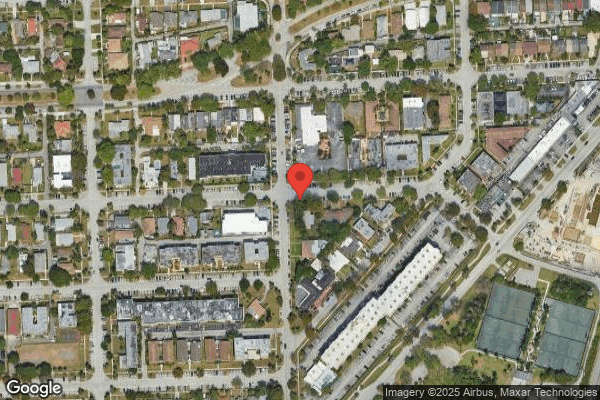
Aug 2023 10 deficiencies
CONCERN (D)

Potential for Harm - no one hurt, but risky conditions existed

Resident Rights (Tag F0550)

Could have caused harm · This affected 1 resident

Based on observations, record reviews, and interviews, the facility failed to treat with respect and dignity two out of two residents (Residents #68 and #79) who was observed during dining, as evidenc...

Read full inspector narrative →
Based on observations, record reviews, and interviews, the facility failed to treat with respect and dignity two out of two residents (Residents #68 and #79) who was observed during dining, as evidenced by failure to staff member standing while feeding the resident. This deficient practice had a potential to affect the health and wellbeing of all 28 residents who were dependent with eating. Findings included: Observation on 08/29/23 at 12:33 PM revealed Staff F, Certified Nursing Assistant (CNA), was feeding Resident #68 while she was standing over the resident. On 08/29/23 at 12:33 PM, when asked why she was standing up assisting the residents with dining, Staff F stated that Resident #68 and Resident #79 were feeders. On 08/29/23 at 12:43 PM, observed Staff F was feeding Resident #79 while she was standing over the resident. On 08/31/23 at 11:59 AM, interview with Staff F regarding assisting residents with eating, Staff F stated, For the ones who can't feed themselves, I have to sit them in sitting position, so they can digest the food properly. You will take a seat per say. I don't sit all the time. I wash my hands before and after feeding. Review of the facility's Assistance with Meals policy and procedure Revised March 2022 revealed: Policy statement: Residents shall receive assistance with meals in a manner that meets the individual needs of each resident. Policy Interpretation and Implementation: Residents requiring full assistance: 1. Nursing staff will remove food trays from the food cart and deliver the trays to each resident's room. 2. Residents who cannot feed themselves will be fed with attention to safety, comfort and dignity, for example: a. Not standing over the residents while assisting them with meals; b. Keep interactions with other staff to a minimum while assisting residents with meals; c. Avoiding the use of labels when referring to residents (e.g , feeders).
CONCERN (D)

Potential for Harm - no one hurt, but risky conditions existed

Deficiency F0558 (Tag F0558)

Could have caused harm · This affected 1 resident

**NOTE- TERMS IN BRACKETS HAVE BEEN EDITED TO PROTECT CONFIDENTIALITY** Based on observation, interview and record review, the facility failed to ensure reasonable accommodations of residents' need fo...

Read full inspector narrative →
**NOTE- TERMS IN BRACKETS HAVE BEEN EDITED TO PROTECT CONFIDENTIALITY** Based on observation, interview and record review, the facility failed to ensure reasonable accommodations of residents' need for 5 (Residents #15, #48, #59, #63 & #392) out of 6 sampled residents, as evidenced by call lights were not within reach for the residents and a residents room light did not turn off. This facility's deficient practice had the potential to affect any of the 95 residents residing in the facility at the time of the survey. The findings included: 1. Observation on 08/28/23 at 08:57 AM revealed, resident # 63 was observed sleeping. The call light was seen wrapped around the right bed rail, pointing down to the floor. No distress or anxiety was noted in the resident. (Photographic evidence). Observation on 08/29/2023 at 10:12 AM revealed, resident # 63 was lying on his bed, awake. No distress or anxiety was noted in the resident. It was observed that the call light was found on the floor. (Photographic evidence). Observation on 08/31/2023 at 08:17 AM revealed, resident # 63 was sleeping. The call light was observed wrapped around the right bed rail, pointing down to the floor. (Photographic evidence). 2. Observation on 08/28/2023 at 09:03 AM revealed, resident # 48 was lying on her bed watching television. The call light was observed wrapped around the left bed rail and out of reach for the resident. No distress or anxiety was noted in the resident. (Photographic evidence). Observation on 08/29/2023 at 10:13 AM revealed, resident # 48 was sleeping in bed. The call light was observed wrapped around the left bed rail and out of reach for the the resident. (Photographic evidence). Observation on 08/31/2023 at 08:16 AM revealed, resident #48 was lying on her bed. The call light was observed wrapped around the left bed rail and out of resident's reach. (Photographic evidence). 3. Observation on 08/28/2023 at 08:59 AM revealed, resident # 59 was lying on her bed, awake. The resident was talking to an imaginary person. The call light was observed wrapped around the left bed rail, pointing down to the floor. (Photographic evidence). Observation on 08/29/2023 at 10:10 AM revealed, resident # 59 was lying on her bed. The call light was observed within reach of the resident. (Photographic evidence). Observation on 08/31/2023 at 10:35 AM revealed, resident # 59 was sleeping in bed. The call light was observed on the floor. (Photographic evidence). Interview with Staff D, Certified Nursing Assistant (CNA) on 08/31/23 at 10:23 AM. She stated, the call light should be within the resident's reach. She stated, if the resident had a dominant side the call light should be on the side the resident was able to call for assistance. She stated, she didn't know what happened with the resident # 63 because she did rounds on this resident to check on him and the call light was within reach. Interview with Staff E, Certified Nursing Assistant (CNA) on 08/31/23 at 10:32 AM. She stated, the call light must be placed where its reachable for the resident. She stated, when she provided care to the resident at the end, before she leaves the room, she made sure the call light was in the right place. Interview with Staff F, Certified Nursing Assistant (CNA) on 08/31/23 at 10:36 AM. She stated, the protocol for the call light to be placed within resident reach. She stated, if the resident had a non-dominant side, the call light had to be placed at the other side. She stated, when she provided care to resident #59 the call light was within reach. Se stated she doesn't know what happened when the call light was on the floor and maybe the resident had thrown it out of the bed. Interview with the Director of Nursing (DON) on 08/31/2023 at 11:05 AM, the DON stated, the nursing staff had in-service education about the call light should be reachable by the residents, if they need call for assistance, and to answer the call light as soon as possible. 4. Observation on 08/28/23 at 08:42 AM revealed, Resident #15 was lying in bed watching television, the call light out of reach of resident. On 08/31/23 at 11:26 AM Staff C, (CNA) stated that she has been working in the facility for over three years and her daily shift is five days a week from 7:00 AM to 3:30 PM. Usually she takes care of 8 to 10 residents a day. When she provides care to the resident every day, after she finishes, she is supposed to make sure that the resident is comfortable, and the resident has the call light within reach to be able to use it in case of any emergency. Record review of the Policy and Procedures for Answering the Call Light revised in September 2022 revealed, Purpose: The purpose of this procedure is to ensure timely responses to the resident's requests and needs. General Guidelines: 5-Ensure that the call light is accessible to the resident when in bed, from the toilet, from the shower or bathing facility and from the floor. 5. Observation on 08/31/23 at 08:51 AM showed Resident #392 was in bed eating breakfast and observed all the lights were on in room [ROOM NUMBER]A. On 08/31/23 at 08:51 AM, Resident #392 was interviewed about the care and services received. Resident #392 stated, They don't come here. They don't fix nothing. The light stays on all night. I told them it's not working, but they don't come to fix it. I told the nurses. I don't know their names. I told different ones; all the ones who come to my room. They said they will fix it, but they never come. Interview with the with the maintenance director on 08/31/23 at 12:13 PM, he stated, I am not sure if there was an order for the light, but I can check. We have a system, when the staff go to a room and notice something wrong or the residents tell them something is wrong, they're supposed to enter it into the system. I don't have a work order for the light. When somebody tells us there's a problem, we open a work order for it, we fix it, and we close it out. Review of the facility's Maintenance Service Policy and Procedures dated December 2009 included: Policy statement: Maintenance service shall be provided to all areas of the building, grounds, and equipment. 1. The maintenance department is responsible for maintaining the buildings, grounds, and equipment in a safe and operable manner at all times. 2. Functions of maintenance personnel include, but are not limited to: a. Maintaining the building in compliance with current federal, state, and local laws, regulations, and guidelines. b. Maintaining the building in good repair and free from hazard. e. Maintaining lighting levels that are comfortable, and assuring that exit lights are in good working order. f. Establishing priorities in providing repair services. i. Providing routinely scheduled maintenance service to all areas. 3. The maintenance director is responsible for developing and maintaining a schedule of maintenance service to assure that the building, grounds, and equipment are maintained in a safe and operable manner.
CONCERN (D)

Potential for Harm - no one hurt, but risky conditions existed

Deficiency F0645 (Tag F0645)

Could have caused harm · This affected 1 resident

**NOTE- TERMS IN BRACKETS HAVE BEEN EDITED TO PROTECT CONFIDENTIALITY** Based on observations, interview, and record review, the facility failed to ensure the Preadmission Screening and Resident Revie...

Read full inspector narrative →
**NOTE- TERMS IN BRACKETS HAVE BEEN EDITED TO PROTECT CONFIDENTIALITY** Based on observations, interview, and record review, the facility failed to ensure the Preadmission Screening and Resident Review (PASARR) Level I for mental illness (MD) or intellectual disability (ID) was completed at the time of admission for resident one (Resident # 59) out of one residents investigated for PASARR. This deficiency had the potential to affect 95 residents residing in the facility at the time of the survey. The findings included: Observation on 08/28/2023 at 08:59 AM revealed, resident # 59 was lying on her bed, awake. The resident was talking and nobody was in the room. No distress or anxiety was noted with the resident. Observation on 08/29/2023 at 10:10 AM revealed, resident # 59 was lying in her bed, awake. No distress or anxiety was noted wit the resident. Observation on 08/31/2023 at 10:35 AM revealed, resident # 59 was sleeping in bed. No distress or anxiety was noted with the resident. Record review of the clinical records for Resident #1 revealed, the resident was admitted to the facility on [DATE] and readmitted on [DATE]. Clinical diagnoses included, but were not limited to, Unspecified Atrial Fibrillation; Unspecified Dementia with Behavioral Disturbance; Major Depressive Disorder, Recurrent, Unspecified; Altered Mental Status, Unspecified; Unspecified Psychosis Not Due to a Substance or Known Physiological Condition. Record review of PASARR Level I dated 09/03/2021 revealed, no identification of any mental diagnosis under 1A. Section 1B was not checked for Serious Mental Illness (SMI). Section 2, 3 (A/B) and 4 (A/B) were checked, No. Record review of admission Minimum Data Set (MDS) Section A Identification Information dated 09/10/2021 revealed, section A1500 - Is the resident currently considered by the state level II PASARR process to have serious mental illness and/or intellectual disability or a related condition? The answer was documented as - No. Record review of Physician Orders dated 09/04/2021 revealed, the resident was receiving Fluoxetine HCL (Hydrochloride) Capsule 10 milligrams, Give 1 capsule by mouth one time a day related to Major Depressive Disorder, Recurrent, Unspecified. Record review of Medication Administration Record (MAR) for the month of August 2023 revealed, the resident was receiving Fluoxetine HCL Capsule 10 milligrams. Give 1 capsule by mouth one time a day related to Major Depressive Disorder, Recurrent, Unspecified as ordered. Record review of Quarterly MDS Section C, Cognitive Patterns dated 12/04/2021 revealed, the resident's Brief Interview for Mental Status (BIMS) summary score was 00 out of 15, indicating severe cognitive impairment. Section I Active Diagnoses dated 12/04/202 revealed, the resident's diagnoses were depression and psychosis disorder. Section N, Medications dated 12/04/2021 revealed, the resident was receiving antidepressants and antipsychotic medications seven days a week. Record review of Care Plan initiated on 9/4/2021 with the next review date 9/5/2023 revealed care plans for, The resident had the potential for adverse side effects related to the use of psychotropic medications: antidepressant for depression, sleep aid for insomnia. Goal: Resident will remain free from adverse side effects related to use of psychotropic medications through the next review date. · Resident will receive the lowest effective dose of psychotropic medication to ensure maximum functional ability through the next review date. Interventions: Administer psychotropic medications as ordered. Observe for effectiveness of psychotropic medications. Observe for adverse side effects related to psychotropic med use; report to physician if noted. Educate resident/family on potential risk/benefits of psychotropic medication use. Laboratories as ordered, report findings to physician. Abnormal Involuntary Movement Scale (AIMS) assessment as indicated. Psychotropic review for dose reduction as able Psychiatry Services or Psychological Services as ordered. Observe for changes in mood/behavior; report to physician if noted. Interview with Staff A, Licensed Practical Nurse (LPN) on 08/31/23 at 08:35 AM revealed, she stated the resident was not aggressive, but confused. The Resident was alert but not oriented. She stated, the resident is very quiet and pleasant with the staff and other residents. She was not able to request assistance. The resident's family was very involved in the resident's care; the resident was assisted by the Certified Nursing Assistant with some tasks that she can't do it by herself. Her appetite is good, and the resident tolerated medication with no problem. Interview with Social Services Director on 08/31/23 at 09:07 AM revealed, she stated, she reviewed the hospital discharge and reviewed the Level I PASARR. She stated, she didn't review this residents Level I PASARR, because the resident was admitted in 2021. She stated she will correct the Level I PASRR with diagnosis and resubmit it again. Interview with the Social Services Director on 08/31/23 at 11:29 AM revealed, she stated, the Level I PASARR was submitted for resident # 59. Record review of the Policies and Procedures for admission Criteria revised in March 2019 revealed, Policy Statement: Our facility admits only residents whose medical and nursing care needs can be met. Policy Interpretation and Implementation: 9- All new admissions and readmissions are screened for mental disorders (MD), intellectual disabilities (ID) or related disorders (RD) per the Medicaid Pre-admission Screening and Resident Review (PASRR) process. a- The facility conducts a Level I PASRR screen for all potential admissions, regardless of payer source, to determine if the individual meets the criteria for a MD, ID, or RD.
CONCERN (D)

Potential for Harm - no one hurt, but risky conditions existed

Deficiency F0655 (Tag F0655)

Could have caused harm · This affected 1 resident

**NOTE- TERMS IN BRACKETS HAVE BEEN EDITED TO PROTECT CONFIDENTIALITY** Based on interview and record review, the facility failed to develop a smoking and oxygen care plan for resident # 12 and #192 o...

Read full inspector narrative →
**NOTE- TERMS IN BRACKETS HAVE BEEN EDITED TO PROTECT CONFIDENTIALITY** Based on interview and record review, the facility failed to develop a smoking and oxygen care plan for resident # 12 and #192 out of 14 sampled residents reviewed at the time of the survey for oxygen and smoking. The findings included: 1. Resident #12 record review on Smoking revealed, the resident was admitted to the facility on [DATE]. Record review of the resident's diagnoses included, but were not limited to, Osteomyelitis, Unspecified, Type 2 Diabetes Mellitus with Unspecified Complication, Acute Respiratory Failure With Hypoxia, Peripheral Vascular Disease, Unspecified, Mood (Effective) disorder, Hypothyroidism, Unspecified, Sepsis, Unspecified Organism, Bipolar disorder, Anemia in other Chronic disease Classified Elsewhere. Record review of the residents care plans revealed, the facility did not develop a smoking Care Plan for the resident. Record review of the admission Minimum Data Set (MDS) dated [DATE] revealed, the resident Brief Interview for Mental Status (BIMS) score was a 15 out of 15, indicating the resident was cognitively intact and that he is a tobacco user. Interview with the Director of nursing (DON) on 08/30/23 at12:03 PM revealed, the assessment was done but the care plan was missing. Interview with the MDS Coordinator on 08/30/23 at 12:09 PM it was revealed, there should be a smoking care plan for the resident, and there wasn't one and this was an oversight. The MDS Coordinator reported, usually when the resident is admitted she checks the assessment and does the care plan. On 08/30/23 at12:45 PM after the interview with the MDS coordinator, she provided a hand written copy of a care plan and she stated; I forgot that I did this at the time of admission but I forgot to put it in the system. Record review of the Smoking Policy - Residents revealed, the Effective date of 09/15/2022, that included: The center will establish and maintain a safe designated smoking area and safe smoking practices for the residents. Smoking is only allowed in the designated area of the facility and during designated times. Smoking is not allowed during inclement weather. Oxygen is not permitted within 50 feet from the designated smoking area. The center will have safety equipment available in the designated smoking areas including: a fire blanket, smoking apron, a fire extinguisher, and non-combustible self-closing ashtray. Procedures: 2. If resident is identified during the smoking assessment by the interdisciplinary team to require assistance, supervision with smoking, the Center will include the appropriate information in the care plan. 2. Resident #192 record review for Oxygen revealed, the resident was admitted to the facility on [DATE]. Record review revealed, the resident's diagnoses included, but were not limited to, Acute on Chronic Diastolic Congestive Heart Failure, Atherosclerosis Heart Disease of Native Coronary Artery without Angina Pectoris, Malignant Neoplasm of Pancreas, Type 2 Diabetes Mellitus with other specified Complications, Type 2 Diabetes Mellitus with Diabetic Peripheral Angiopathy Without Gangrene, Dependence on Renal Dialysis, Shortness of breath, Record review of the care plans revealed, the facility did not develop an Oxygen Care Plan for the resident. Record review of the admission MDS dated [DATE] revealed, the residents BIMS score was 15 out of 15 indicating the resident was cognitively intact and that the rest of MDS was in progress. Interview with Staff A, Licensed Practical Nurse (LPN) on 08/30/23 at 08:54 AM revealed that she has been working in the facility for over a year. Staff A reported, I have not been working since last Thursday, today is my first day back. The Oxygen that resident has now, was put by the night shift nurse. I have not given the medication yet. During an interview with the Director of Nursing (DON) on 08/30/23 at 9:00 AM it was reported, she did not know why the resident was receiving Oxygen and that maybe the orders came from the hospital where she was admitted , and they forgot to put it in the system. Interview with the MDS Coordinator on 08/30/23 at 12:13 PM revealed, the assessment was not completed but, at least the base line care plan should've been completed. Interview with Staff B, LPN, on 08/31/23 at 11:50 AM revealed, she has been working in the facility since February of this year 2023 and she works three days a week, 12 hours shift. Staff B reported, if she sees a new resident using oxygen, she will go to PCC (Point Click Care) to verify if there is an order and to make sure the resident has the accurate amount of oxygen liters set. We are supposed to check the oxygen every shift. If there is no order, I will stop the oxygen immediately and I will call the doctor to see if resident needs the order and if the doctor can provide me the order by phone. Record review for the Policies and procedures for Medication and Treatment dated Revised July 2016 included: Medication and Treatments Orders: Policy Statement: Orders for medications and treatments will be consistent with principles of safe and effective order writing. Policy Interpretation and Implementation 1. Medication shall be administered only upon the written order of person duly licensed and authorized to prescribe such medication in this state. 2. Only authorized, licensed practitioner, or individuals authorized to take verbal orders from practitioners, shall be allowed to write orders in medical records. 4. All Drugs and biological orders shall be written, dated, and signed by the person lawfully authorized to give such an order. 5. The signing of orders shall be by signature or a personal computer key. Signature stamps may not be used. 7. Verbal orders must be recorded immediately in the resident's chart by the person receiving the order and must include prescriber's last name, credentials, the date and the time of the order. 9. Orders for medications must include: a. Name and strength of the drug; b. Number of dose, start and stop date, and/or specific duration of therapy; c. Dosage and frequency of administration; d. Route of administration; e. Clinical condition or symptoms for which the medication is prescribed; and f. Any interim follow-up requirements (pending culture and sensitivity reports, repeat labs, Therapeutic medication monitoring, etc.) Record review for the policy and procedure for Oxygen Administration dated Revised October 2010 included: Purpose: The purpose of this procedure is to provide guidelines for safe oxygen administration. Preparation: 1. Verify that there is a Physician's order for this procedure. Review the physician's orders or facility protocol for oxygen administration. 2. Review the resident's care plan to assess for any special needs of the resident. 3. Assemble the equipment and supplies as needed. Record review for the policy and procedure for Care Plan, Comprehensive Person-Centered dated Revised on March 2022 included: Policy Statement: A comprehensive, person-centered care plan that includes measurable objectives and timetable to meet the resident's physical, psychosocial and functional needs is developed and implemented for each resident. Policy Interpretation and Implementation: 1. The interdisciplinary team (IDT), in conjunction with the resident and his/her family or legal representative, develops and implements a comprehensive, person-centered care plan for each resident. 2. The comprehensive, person-centered care plan is developed within seven (7) days of the completion of the required MDS assessment (Admission, Annual or Significant Change in Status), and no more than 21 days after admission.
CONCERN (D)

Potential for Harm - no one hurt, but risky conditions existed

Staffing Information (Tag F0732)

Could have caused harm · This affected 1 resident

Based on observation, interview, and record review, the facility failed to have daily nurse staffing posted prior to the beginning of shifts on 2 of 2 nurses' stations. This had the potential to affec...

Read full inspector narrative →
Based on observation, interview, and record review, the facility failed to have daily nurse staffing posted prior to the beginning of shifts on 2 of 2 nurses' stations. This had the potential to affect the 95 residents who resided in those units at the time of this survey. The findings included: During an observation at the South Nurse's station, on 08/28/2023 at 07:48 AM, it was noted that the staffing information posted was dated Sunday, 08/27/2023 but belonged to the 3-11 PM shift, not the 7AM-3PM shift. (Photo Evidence Obtained). During an observation at the North Nurse's station on 08/28/2023 at 07:50 AM, it was noted that the staffing information posted was dated Tuesday, 08/22/2023 and belonged to 7 AM-3PM shift. (Photo Evidence Obtained). Interview with Staff G, Licensed Practical Nurse (LPN) on 08/28/23 at 08:35 AM, it was reported, the protocol is to update the nursing board, to review the schedule and write it on the board. He stated, he made a mistake, he changed the staff on the board, but didn't change the date. Interview with Director of Nursing on 08/28/23 at 08:24 AM revealed, she stated, the protocol to update the nursing board included, the nurse in charge was to update the board following the schedule. She stated, she was aware that the nursing board was not updated in the morning.
CONCERN (D)

Potential for Harm - no one hurt, but risky conditions existed

Pharmacy Services (Tag F0755)

Could have caused harm · This affected 1 resident

Based on observation, record review, and interview, the facility failed to ensure the accuracy of narcotic records on two out of four medication carts reviewed. There were 95 residents residing at the...

Read full inspector narrative →
Based on observation, record review, and interview, the facility failed to ensure the accuracy of narcotic records on two out of four medication carts reviewed. There were 95 residents residing at the facility at the time of the survey. The findings included: On 08/29/23 at 11:29 AM, during an observation on medication cart two on the North Wing with Staff H, LPN (Licensed Practical Nurse). The narcotic book revealed on 8/28/23, there were 14 cards/containers for the day/night shifts. On 8/29/23, the narcotic book revealed the night shift had a count of 14, and the day shift nurse had a count of 13. Staff H, LPN and the Surveyor counted that there were 13 controlled substances on the medication cart. When asked, Where is the 14th medication? Staff H stated, I received 13 narcotic medications. (See photographic evidence.) On 08/29/23 at 02:13 PM, during an observation of medication cart two on the South Wing with Staff I, LPN. An oral solution of Lorazepam 2 mg (milligram) per one ml (milliliters) had 21 ml in its container. The latest dose was given on 8/22/23 at 08:58pm. The amount on hand was 24 ml, the amount given was 1 ml and the amount remaining was 22 ml. Record review of the Lorazepam 2 mg per one ml controlled drug disposition record revealed, the physician order stated to give one ml sublingually every 6 hours as needed for agitation, anxiety, or seizures. On 8/3/23, it stated that 30 ml were in the container. It was documented, on 8/3/23 at 8:15 p.m. 29 ml was on hand, one ml was given with 28 remaining. On the next line it stated, on 8/14/23 at 03:17pm, 0.5 ml was given with 27 ml remaining. It was documented on 8/22/23 at 11:29 am. 25 ml was on hand, one ml was given and 24 ml was remaining. On 8/22/23 at 08:58pm, 24 ml was on hand, one ml was given, and 22 ml was remaining. On 08/29/23 at 02:25 PM during an interview with Staff I, LPN, it was asked, What is the facility's policy for counting and recording narcotics? Staff I, LPN stated, The nurses perform narcotic count checks between shifts. The incoming nurse counts bingo cards and the nurse going off has the book to verify the count. Liquid medications should be placed on a flat surface and go by the level of the liquid. On 08/30/23 at 02:51 PM, during an interview with the Director of Nursing (DON), the DON was shown and the concerns about the narcotic count and narcotic records on medication carts were discussed. The DON stated, For the North Wing cart, the previous sheet stated 13 medications, and on the new sheet the nurse wrote 14. It was a transcribing error. On the South Wing, one nurse gave medications on 8/21/23. The nurse did not record it on the written documentation but it's in the electronic health record. I have a signed a note that the nurse gave one ml and recorded 0.5 ml on the narcotic record. When asked, What is the facility's policy on narcotic counts and narcotic documentation? The DON stated, Nurses are to make sure administration of medication is documented, records are accurate, and no errors should be found in the documentation. That's why we have two nurses to check the count and records. We will immediately do an education and in-services with the nursing staff. Review of facility's policy titled, Controlled Substances dated Revised April 2019 states: The purpose statements stated the facility complies with all laws, regulations, and other requirements related to handling, storage, disposal, and documentation of controlled medications. In the section titled, Policy Interpretation and Implementation. 8) Controlled substances are reconciled upon receipt, administration, disposition, and at the end of each shift. In the section titled, Upon Receipt. A) The nurse receiving the medication and the individual delivering the medication verify the name, dose, and quantity of each controlled substance being delivered. In the section titled, Upon Administration. A) The nurse administering the medication is responsible for recording 2) The name, strength, and dose of medication 5) The quantity of the medication remaining. In the section titled, At the end of each shift, A) Controlled medications are counted at the end of each shift. The nurse coming on duty and the nurse going off duty determine the count together. B) Any discrepancies in the controlled substance count are documented and reported to the Director of Nursing Services immediately.
CONCERN (D)

Potential for Harm - no one hurt, but risky conditions existed

Deficiency F0761 (Tag F0761)

Could have caused harm · This affected 1 resident

**NOTE- TERMS IN BRACKETS HAVE BEEN EDITED TO PROTECT CONFIDENTIALITY** Based on observation, record review, and interviews, the facility failed to ensured medications were securely stored as evidence...

Read full inspector narrative →
**NOTE- TERMS IN BRACKETS HAVE BEEN EDITED TO PROTECT CONFIDENTIALITY** Based on observation, record review, and interviews, the facility failed to ensured medications were securely stored as evidenced by one loose medication pill found on the floor of a resident's room and loose pills found on two out of four carts checked. There were 95 residents residing in the facility at the time of the survey. The findings include: On 08/28/23 at 09:15 AM, in room [ROOM NUMBER], an orange pill with the writing G/500 was found on the floor near the door. (See photographic evidence) On 08/28/23 at 09:30 AM, the pill was given to Staff G, LPN (Licensed Practical Nurse). Staff G was asked, This pill was found on the floor, what is it, and did you give medications to the resident yet? Staff G stated, I did not give medications to room [ROOM NUMBER] yet. This medication may be Methocarmolol 500 mg which is given every twelve hours. The last administration time was on the night shift. It was stated that Methocarbamol Tablet 500 MG is a muscle relaxer to treat muscle spasms and pain. On 08/29/23 at 11:29 AM, during an observation of cart two on the North Wing with Staff H, LPN. A white pill with the writing of 2204/ TV was found. Staff H disposed of the medication in a drug buster. On 08/29/23 at 02:13 PM, during an observation and interview of cart 2 on the South Wing with Staff I, LPN, a medication pill with the writing of C/ 128, a broken half-blue pill, and a white pill with the writing of 1/C were found. When asked, What is the facility's policy regarding loose pills found on carts and cleaning medication carts? Staff I stated, When loose pills are found in the cart, we are to put it in the pill destroyer and clean our carts on our shift. On 08/30/23 02:51 PM, during an interview with the Director of Nursing (DON) about, the loose pills found on the medication carts and a medication pill found on the floor. The DON stated, We should not have any loose pills on carts. Nurses are to discard the medication when found. We did an all-cart check this morning. Medication carts are to be kept neat. Review of facility's policy titled, Storage of Medications dated Revised November 2020. The purpose statement states, the facility stores all drugs and biologicals in a safe, secure, and orderly manner. In the section titled, Policy Interpretation and Implementation. 3) The nursing staff is responsible for maintaining medication storage and preparation areas in a clean, safe, and sanitary manner.
CONCERN (D)

Potential for Harm - no one hurt, but risky conditions existed

QAPI Program (Tag F0867)

Could have caused harm · This affected 1 resident

Based on interview and record review, the facility failed to demonstrate effective plan of actions were implemented to correctly identify quality deficiencies in the problem area related to repeated d...

Read full inspector narrative →
Based on interview and record review, the facility failed to demonstrate effective plan of actions were implemented to correctly identify quality deficiencies in the problem area related to repeated deficient practices for F695 Respiratory/tracheotomy Care and Suctioning and F880 Infection Prevention and Control. This practice has the potential to increase the risk of negative resident outcomes and to affect all 95 residents residing in the facility at the time of this survey. The findings included: Record review of the facility's survey history revealed, during a recertification survey with exit date 08/25/22 Respiratory/Tracheotomy Care and Suctioning and Infection Prevention and Control. During an interview on 08/31/23 at 01:09 PM, the Administrator: They meet monthly with all department Medical Director, Administrator, Director of Nursing, Assistant Director of Nursing, HIA, MDS Coordinator, Central Supply/Staffing, Activities Director, Social Service Director, Rehab Director, Human Resources Director, admission Director, Maintenance Director, Housekeeping Director, Food Service Director, Medical Director. The Administrator stated, We have Performance Improvement Plans (PIPs) for Abuse and Federal Reporting and notification of changes, initially there was weekly audits and now monthly audits. Grievance reviews, any more responses required, and any that has been reported, has been reported. Any significant of change has been notified to the proper parties. Urinary Tract Infection (UTI) and Dehydration, through [NAME] report, because residents being sent to the hospital had had hydration issues. Staff has been educated and a hydration program has been started, the residents have a daily hydration program. In the last month there were no discharges done with hydration issues. UTI's went down from 8 to 4. We go thru everything else in the QAPI process. Review of the Policies and Procedures titled 2023 QAPI Plan included: Policy Statement: The Quality Assurance and Performance Improvement Program is overseen and implemented by the QAPI (Quality Assurance and Performance Improvement) Committee, which reports its findings, actions and results to the Administrator and Governing Body. Quality Assurance and Performance Improvement Program (PIPs): The facility shall develop, implement, and maintain an ongoing, facility-wide, data-driven QAPI Program that is focused on indicators of the outcomes of care and quality of life for our residents. Policy objectives of QAPI Program are to: 1. Provide a means to measure current and potential indicators for outcomes of care and quality of life. 2. Provide a means to establish and implement performance improvement projects to correct identified negative or problematic indicators. 3. Reinforce and build upon effective systems and processes related to delivery of quality care and service. 4. Establish systems through which to monitor and evaluate corrective actions. Implementations: 1. The QAPI Committee oversees implementation of our QAPI Plan, which is the written component describing the specifics of the QAPI program, how the facility will conduct its QAPI functions, and the activities of the QAPI Committee. 2. The QAPI plan describes the process for identifying and correcting quality deficiencies. Key components of this process include: a. Tracking and measuring performance. b. Establishing goals and thresholds for performance measurement. c. Identifying and prioritizing quality deficiencies. d. Systematically analyzing underlying causes of systematic quality deficiencies. e. Developing and implementing corrective action of performance improvement activities; and f. Monitoring or evaluating the effectiveness of corrective action/performance improvement activities and revising as needed. 3. The committee meets monthly to review reports, evaluate data, monitor QAPI-related activities and make adjustments to the plan.
CONCERN (D)

Potential for Harm - no one hurt, but risky conditions existed

Infection Control (Tag F0880)

Could have caused harm · This affected 1 resident

**NOTE- TERMS IN BRACKETS HAVE BEEN EDITED TO PROTECT CONFIDENTIALITY** Based on observation, interviews, and record review, the facility failed to ensure infection control practices related to hand h...

Read full inspector narrative →
**NOTE- TERMS IN BRACKETS HAVE BEEN EDITED TO PROTECT CONFIDENTIALITY** Based on observation, interviews, and record review, the facility failed to ensure infection control practices related to hand hygiene was implemented during dining observation. As evidenced by staff failure to sanitize hands while passing resident meal trays. This deficient practice has the potential to cause cross contamination and affect all residents in the facility. There were 95 residents residing in the facility at the time of this survey. The indings included: Observation on 08/28/23 at 12:08 PM Staff F, Certified Nursing Assistant (CNA), brought 3 food trays to room [ROOM NUMBER], then Staff F set up the plates for the residents. Observed Staff F come out of the room, not washing her hands, and picked up some linens on a cart. Observed Staff F left with the linens and came back to the food cart. Observed Staff F without washing her hands grabbed a pot on top of the food cart and poured some juice in a cup. Staff F then took a food tray and left. Staff F did not wash her hands during the whole process. On 08/28/23 at 12:39 PM, observed Staff I, License Practical Nurse (LPN), took a food tray from the cart and took it to room [ROOM NUMBER]; Staff I did not wash her hands. Observed Staff I come back, picked up a food tray and left it in room [ROOM NUMBER]; Staff I did not wash her hands. Observed Staff I come back to the food cart, got some juice and took it to room [ROOM NUMBER], and still not washing her hands. Staff I came to the food cart, picked up a food trays for room [ROOM NUMBER] and did not wash her hands. Staff I came back and took a food tray to room [ROOM NUMBER], then used hand sanitizer. On 08/31/23 at 11:59 AM, during an interview with Staff F, she stated, the procedures is the nurse has to give it (food tray) to me. When I go to the room I have to knock on the door. I have to put the tray on the table and ask them if they like juice, coffee, or water. Then I will tell them enjoy the meals and have a nice day. That's for the ones who can feed themselves. We have hand sanitizer in the rooms and in the hallways. I wash my hands in the room after putting it on the table after each food tray. When my hands become sticky, I go and wash them with water. That's the way I do it. I don't have hand sanitizer with me. On 08/31/23 at 02:14 PM, during an interview with with Staff I regarding assistance with dining and infection control. Staff I stated, As a nurse, when the trays come to the floor, I have to check the menu list for the diet to make sure it's correct. Then I pass the trays to the CNAs. The procedures for infection control is I have to wash my hands before and after each trays. Review of the facility's Handwashing/Hand Hygiene Policy and procedures Revised August 2019 included: Policy statement: This facility considers hand hygiene the primary means to prevent the spread of infections. Policy interpretation and implementation: 1. All personnel shall be trained and regularly in-serviced on the importance of hand hygiene in preventing the transmission of healthcare-associated infections. 2. All personnel shall follow the handwashing/hand hygiene procedures to help prevent the spread of infections to other personnel, residents, and visitors. 3. Hand hygiene products and supplies (sinks, soap, towels, alcohol-based hand rub, etc.) shall be readily accessible and convenient for staff use to encourage compliance with hand hygiene policies. 6. Wash hands with soap (antimicrobial or non-antimicrobial) and water for the following situations: a. When hands are visibly soiled; and b. After contact with a resident with infectious diarrhea including, but not limited to infections caused by norovirus, salmonella, shigella and and C. difficile. 7. Use an alcohol-based hand rub containing at least 62% alcohol; or, alternatively, soap (antimicrobial or non-antimicrobial) and water for the following situations: o. Before and after eating or handling food; p. Before and after assisting a resident with meals. Procedures Washing Hands: 1. Wet hands first with water, then apply an amount of product recommended by the manufacturer to hands. 2. Rub hands together vigorously for at least 15 seconds, covering all surfaces of the hands and fingers. Rinse hands with water and dry thoroughly with a disposable towel. 4. Use a towel to turn off the faucet. 5. Avoid using hot water, because repeated exposure to hot water may increase the risk of dermatitis. Using Alcohol-based hand rubs: 1. Apply generous amount of product to palm of hand and rub hands together. 2. Cover all surfaces of hands fingers until hands are dry. 3. Follow manufacturers' directions for volume of product to use.
CONCERN (E)

Potential for Harm - no one hurt, but risky conditions existed

Respiratory Care (Tag F0695)

Could have caused harm · This affected multiple residents

**NOTE- TERMS IN BRACKETS HAVE BEEN EDITED TO PROTECT CONFIDENTIALITY** Based on observations, record reviews, and interviews, the facility failed to obtain physician's order for oxygen therapy for fi...

Read full inspector narrative →
**NOTE- TERMS IN BRACKETS HAVE BEEN EDITED TO PROTECT CONFIDENTIALITY** Based on observations, record reviews, and interviews, the facility failed to obtain physician's order for oxygen therapy for five (#2, #46, #87, #192, and #242) residents out of fourteen residents who were receiving oxygen treatment. The findings included: 1. During observations for resident #2 on 08/28/23 at 09:28 AM, the Resident was seen with oxygen by nasal cannula at 2.5 liters a minute (LPM). Resident #2 stated, I have asthma and I'm able to walk. On 08/29/23 at 11:25 PM, the resident was seen with oxygen via nasal cannula. On 08/29/23 at 03:07 PM, the Resident was resting in bed with eyes closed. On 08/30/23 at 11:17 AM, the resident was observed with oxygen at two liters by nasal cannula. (See photo evidence) Record review revealed a medical diagnosis of Chronic Obstructive Pulmonary Disease. Record review of the residents physician orders revealed, there were no orders for oxygen. Record review for Resident#2 revealed, in Minimum Data Set (MDS), Quarterly dated 5/24/23 revealed, in Section C: Cognitive Patterns, a Brief Interview of Mental Status (BIMS) score was a four meaning severe cognitive impairment. In section G: Functional Status, locomotion on the unit was total dependence by one-person physical assist. In section: J: Health Conditions, no symptoms of shortness of breath. In section O: Special Treatments, Procedures, and Programs - Yes, to Oxygen therapy. Review of the care plans for Resident #2 stated, A potential for complications of respiratory distress related to Chronic Obstructive Pulmonary Disease and a history of Bronchitis. The goal stated Resident #2 will remain free from signs and symptoms of respiratory distress thru the next review. Interventions were oxygen saturations as ordered and administering oxygen as ordered. On 08/30/23 at 01:08 PM, in an interview with Staff J, LPN (Licensed Practical Nurse). When asked, Does Resident #2 have oxygen orders? Staff J, LPN stated, I'm activating the resident's oxygen orders. The education instructor told me to place orders. Record Review of the physician orders for resident #2 revealed, oxygen at two liters per minute via nasal cannula oxygen was placed on 8/30/23 at 1:04 PM. 2. In observations for Resident #46, on 08/28/23 at 09:08 AM, Resident #46 was observed on 3 LPM vis nasal cannula. On 08/29/23 at 10:43 AM, the oxygen concentrator was on at 3 LPM, but the nasal cannula wasn't on the resident. On 08/30/23 at 11:21 AM, the oxygen was at 2LPM via nasal cannula. (See photographic evidence) Record review of of the residents medical diagnoses revealed, nontraumatic intracerebral hemorrhage. Record review of the physician orders revealed, there was no orders for oxygen. Record review for Resident #46 revealed, in the MDS, for a Significant Change dated 8/25/23 revealed, in section C: Cognitive Patterns, the BIMS score was a three meaning the resident had severe cognitive impairment. In G: Functional Status, locomotion on the unit was total dependence. In section J: Health Conditions, shortness of breath or trouble breathing when sitting at rest and flat was a yes. In section O - Special Treatments, Procedures, and Programs. Oxygen was not available to answer. Review of the care plans for Resident #46 revealed, A potential for complications of respiratory distress related to a history of respiratory insufficiency. The goal was Resident #46 will remain free from signs and symptoms of respiratory distress thru the next review. Interventions were to administer medications as ordered, observe for effectiveness and side effects. On 08/30/23 at 01:15 PM, in an interview with Staff J, LPN, when asked, Does Resident #46 have oxygen orders? Staff J stated, Resident #46 is under hospice, and they place orders for the residents. Staff J stated, Orders are placed on an order sheet and uploaded to an electronic health record. Record Review of the physician orders for resident #46 revealed, oxygen at 3 LPM via nasal cannula was placed on 8/30/23 at 2:41 PM. 3. During observations for Resident #87, on 08/28/23 at 08:37 AM, Resident #87 was eating breakfast and had oxygen at 2 LPM via nasal cannula, but the cannula was off. On 08/29/23 at 10:49 AM. Resident #87 was on 2 LPM OF oxygen via nasal cannula. On 08/30/23 at 11:25 AM, Resident #87 was resting in bed with 2 LPM of oxygen via nasal cannula. (See photo evidence) Record review of the medical diagnosis revealed, Chronic Obstructive Pulmonary Disease. Record review of the residents physician orders revealed, there were no orders for oxygen. Record review for Resident #87 revealed, in the MDS admission dated 8/1/23. In section C: Cognitive Patterns, the BIMS score was a 13 meaning the resident was cognitively intact. In section G: Functional Status, Locomotion on the unit was extensive assistance with one-person physical assist. In section J: Health Conditions, shortness of breath or trouble breathing when lying flat was a yes. In section O: Special Treatments, Procedures, and Programs. Oxygen was a Yes. Review of the care plans for Resident #87 revealed, A potential for complications of respiratory distress related to chronic obstructive pulmonary disease. The goal was Resident will be able to maintain a patent airway and will not exhibit any signs and symptoms of respiratory distress. Interventions were to administer medications as ordered, observe for effectiveness and side effects. Elevate head of bed above 30 degrees as needed to minimize shortness of breath. In an interview on 08/30/23 at 01:06 PM, Staff J, LPN, was asked, Does Resident #87 have orders for oxygen? Staff J stated, I will get oxygen orders for the resident. I will call the doctor. Record Review of the physician orders for resident #87 revealed, oxygen at 2 LPM with humidification was placed on 8/30/23 at 11:41 PM. On 08/30/23 at 02:51 PM, during an interview with the Director of Nursing (DON), it was discussed that Residents #87, #46, and #2 did not have orders for oxygen therapy. The DON stated, For Resident #46, his oxygen order is new. Lately, he has been in and out of the hospital. He is a recent hospice admission. Hospice doesn't have access to our electronic health record. 5. Observation of Resident # 242 on 08/28/2023 at 8:43 AM revealed, the resident was sleeping in bed and the resident had a oxygen via nasal cannula at 2 Liters Per Minute (LPM), with an oxygen concentrator at the bedside. Observation of Resident # 242 on 08/29/2023 at 10:11 AM revealed, the resident was lying in his bed with his eye open. The Resident was nonverbal. The resident was observed with oxygen via nasal cannula at 2 LPM. Observation of Resident # 242 on 08/30/2023 at 08:48 AM revealed, the resident was sleeping in bed. The resident was observed with oxygen via nasal cannula at 2 LPM. Record review of the clinical records for Resident # 242 revealed, the resident was admitted to the facility on [DATE]. Clinical diagnoses included, but were not limited to, Hemiplegia and Hemiparesis following Cerebral Infarction Affecting Left Non-Dominant Side; Respiratory Failure, Unspecified with Hypercapnia; Respiratory Failure, Unspecified with Hypercapnia; Type 2 Diabetes Mellitus Without complications. Record review of physician orders for oxygen revealed, there were no orders for oxygen for resident # 242. Record review of Treatment Administration Record for the month of August 2023 revealed, there were no oxygen treatment for resident # 242. Record review of the admission Minimum Data Set (MDS) Section C, Cognitive Patterns dated 08/12/2023 revealed, the resident Brief Interview for Mental Status (BIMS) summary score was 00 out of 15, indicating severe cognitive impairment. Section O, Special Treatments, Procedures and Programs dated 08/12/2023 revealed, the resident was using oxygen. Record review of Care Plan initiated on 8/10/2023 and the next review date 11/21/2023 revealed a care plan for, The resident had the potential for complications of respiratory distress related to impaired mobility, Accident Cerebrovascular (CVA) with left hemiparesis, End-Stage Renal Disease (ESRD), Anemia, Diabetes Mellitus, Acute Renal Failure (ARF), Hypothyroidism. Goal: Resident will be able to maintain patent airway and will not exhibit any signs/symptoms of respiratory distress. Interventions: Administer medications as ordered; observe for effectiveness and side effects. Administer supplemental oxygen as ordered. Elevate Head of Bed >30 degrees as needed to minimize Shortness of Breath. Observe for signs /symptoms or respiratory infection and/or distress; notify physician as indicated. During an interview with Staff B, Licensed Practical Nurse (LPN) on 08/31/23 at 10:28 AM, she stated, she reviewed the resident when the shift started. She stated, she made rounds to see the residents and the nurse leaving informed her about residents' issues. She stated, resident # 242 had oxygen set up at 2 LPM. She stated, she followed the physician orders. She stated, there was an order for the oxygen. She stated, she realized the orders were written on 08/30/2023 and the resident had oxygen since he was admitted on [DATE]. Interview with Director of Nursing on 08/31/23 at 10:42 AM, she stated the residents usually came with oxygen when they were admitted from the hospital. She stated, the order had to be written immediately when the resident was admitted . She stated, as soon you write the order in the computer it transferred to the treatment record. She stated, the physician order for the resident was written on 08/30/2023 and the resident was admitted since 08/09/2023. Record review for the Policies and procedures for Medication and Treatment dated Revised July 2016 included: Medication and Treatments Orders: Policy Statement: Orders for medications and treatments will be consistent with principles of safe and effective order writing. Policy Interpretation and Implementation 1. Medication shall be administered only upon the written order of person duly licensed and authorized to prescribe such medication in this state. 2. Only authorized, licensed practitioner, or individuals authorized to take verbal orders from practitioners, shall be allowed to write orders in medical records. 4. All Drugs and biological orders shall be written, dated, and signed by the person lawfully authorized to give such an order. 5. The signing of orders shall be by signature or a personal computer key. Signature stamps may not be used. 7. Verbal orders must be recorded immediately in the resident's chart by the person receiving the order and must include prescriber's last name, credentials, the date and the time of the order. 9. Orders for medications must include: a. Name and strength of the drug; b. Number of dose, start and stop date, and/or specific duration of therapy; c. Dosage and frequency of administration; d. Route of administration; e. Clinical condition or symptoms for which the medication is prescribed; and f. Any interim follow-up requirements (pending culture and sensitivity reports, repeat labs, Therapeutic medication monitoring, etc.) Record review for the policy and procedure for Oxygen Administration dated Revised October 2010 included: Purpose: The purpose of this procedure is to provide guidelines for safe oxygen administration. Preparation: 1. Verify that there is a Physician's order for this procedure. Review the physician's orders or facility protocol for oxygen administration. 2. Review the resident's care plan to assess for any special needs of the resident. 3. Assemble the equipment and supplies as needed. 4. Resident #192 record review for Oxygen revealed, the resident was admitted to the facility on [DATE]. Record review revealed, the resident's diagnoses included, but were not limited to, Acute on Chronic Diastolic Congestive Heart Failure, Atherosclerosis Heart Disease of Native Coronary Artery without Angina Pectoris, Malignant Neoplasm of Pancreas, Type 2 Diabetes Mellitus with other specified Complications, Type 2 Diabetes Mellitus with Diabetic Peripheral Angiopathy Without Gangrene, Dependence on Renal Dialysis, Shortness of breath, Record review of the care plans revealed, the facility did not develop an Oxygen Care Plan for the resident. Record review of the admission MDS dated [DATE] revealed, the residents BIMS score was 15 out of 15 indicating the resident was cognitively intact and that the rest of MDS was in progress. Interview with Staff A, Licensed Practical Nurse (LPN) on 08/30/23 at 08:54 AM revealed that she has been working in the facility for over a year. Staff A reported, I have not been working since last Thursday, today is my first day back. The Oxygen that resident has now, was put by the night shift nurse. I have not given the medication yet. During an interview with the Director of Nursing (DON) on 08/30/23 at 9:00 AM it was reported, she did not know why the resident was receiving Oxygen and that maybe the orders came from the hospital where she was admitted , and they forgot to put it in the system. Interview with the MDS Coordinator on 08/30/23 at 12:13 PM revealed, the assessment was not completed but, at least the base line care plan should've been completed. Interview with Staff B, LPN, on 08/31/23 at 11:50 AM revealed, she has been working in the facility since February of this year 2023 and she works three days a week, 12 hours shift. Staff B reported, if she sees a new resident using oxygen, she will go to PCC (Point Click Care) to verify if there is an order and to make sure the resident has the accurate amount of oxygen liters set. We are supposed to check the oxygen every shift. If there is no order, I will stop the oxygen immediately and I will call the doctor to see if resident needs the order and if the doctor can provide me the order by phone.
Jun 2023 2 deficiencies
CONCERN (D) 📢 Someone Reported This

A family member, employee, or ombudsman was alarmed enough to file a formal complaint

Potential for Harm - no one hurt, but risky conditions existed

Notification of Changes (Tag F0580)

Could have caused harm · This affected 1 resident

**NOTE- TERMS IN BRACKETS HAVE BEEN EDITED TO PROTECT CONFIDENTIALITY** Based on interview and record review, the facility failed to honor resident rights to notify family of change in condition for o...

Read full inspector narrative →
**NOTE- TERMS IN BRACKETS HAVE BEEN EDITED TO PROTECT CONFIDENTIALITY** Based on interview and record review, the facility failed to honor resident rights to notify family of change in condition for one (Resident #11) out of three sampled residents for change in condition, in regard to transfer to hospital which resulted in surgery. This deficient practice has the potential to affect all 95 residents residing at the facility at the time of the complaint investigation. The finding included: Record Review of Resident #11's Minimum Data Set (MDS)- Significant Change in Status dated 10/13/2022 and admit date : [DATE] revealed: Section C-Cognitive Patterns revealed a Brief Interview for Mental Status (BIMS) score of 15 meaning the resident was cognitively intact. Record Review of Resident #11's Care Plan with Date Initiated: 07/22/2022 and Revision on: 08/19/2022 revealed: Resident status-post FALL 8/13/22, Resident noted sitting on the floor in her bathroom. 8/19/22- resident noted lying on ground in the patio. With complaint of pain to the right leg. Goals and Interventions included but were not limited to: Assist to wheel to destinations with date initiated: 07/22/2022, Educate/remind resident to request assistance prior to ambulation/transfers as needed with date initiated: 07/22/2022. Record Review of Resident #11's Progress Notes revealed that on an Narrative Nurses Note dated 8/23/2022 revealed that resident has increased pain to right leg. Requesting pain medication that is not available for the patient. Called MD and received order to transfer patient to [local hospital]. Record Review of Resident #11's Incident file revealed a handwritten note on 8/24/22 with the following information Doctor called to report that CT scan showed Right hip fracture and is scheduled for surgery. During an interview with resident #11's family member on 06/14/2023 at 8:46 AM, it was reported, The hospital nurse called and asked me about her bruises on her whole right arm and told me she was at the hospital. I called the facility and nobody never called me back. She broke her hip and got surgery, they did not let me know, they told me that my [ ]was pushing herself in her wheelchair and fell. But I came to find out that it was one of the people from dialysis pushing her and that she fell from the wheelchair. She was getting dialysis at the nursing home. I talked to the director and he called the nurse and asked the nurse about what happened and he said yes she fell but it will never happen again. [Resident #11] .told me that somebody was pushing her. During an interview on 06/15/2023 at 8:36AM with the Nursing Home Administrator (NHA) and Director of Nursing (DON), Surveyor asked about any interaction between him and Resident #11's family members, the NHA stated, let me refresh my memory. When asked if a resident has a BIMS score of 15 would they still notify the family about any change in condition, the NHA and DON stated, we still notify the family members when anything happens, unless the patient would not desire for them to by notified as they are alert and oriented x4. During record review there was no documentation found about notifying the family member of the transfer of Resident #11 to the [local hospital] on 8/23/2022 and the surgery she underwent. Review of the document titled, Change in a Resident's Condition or Status, Revised February 2021 revealed: Policy Statement: Our facility promptly notifies the resident, his or her attending physician, and the resident representative of changes in the resident's medical/mental and/or status (e.g., changes in level of care, billing/payments, resident rights, etc.). Policy Interpretation and Implementation 1. The nurse will notify the resident's attending physician or physician on call when there has been a(an): a. Accident or incident involving the resident. b. Discovery of injuries of an unknown source. c. Significant change in the resident's physical/emotional/mental condition. d. Need to transfer the resident to a hospital/treatment center. 2. A significant change of condition is a major decline or improvement in the resident's status that: a. Will not normally resolve itself without intervention by staff or by implementing standard disease-related clinical interventions (is not self-limiting) b. Impacts more than one area of the resident's health status; c. Requires interdisciplinary review and/or revision to the care plan; and d. Ultimately is based on the judgement of the clinical staff and the guidelines outlined in the Resident Assessment Instrument. 3. Unless otherwise instructed by the resident, a nurse will notify the resident's representative when: a. There is a significant change in the resident's physical mental, or psychosocial status; b. It is necessary to transfer the resident to a hospital/treatment center
CONCERN (D) 📢 Someone Reported This

A family member, employee, or ombudsman was alarmed enough to file a formal complaint

Potential for Harm - no one hurt, but risky conditions existed

Report Alleged Abuse (Tag F0609)

Could have caused harm · This affected 1 resident

**NOTE- TERMS IN BRACKETS HAVE BEEN EDITED TO PROTECT CONFIDENTIALITY** Based on interviews and record reviews, the facility failed to file a report per federal requirements for one resident (Resident...

Read full inspector narrative →
**NOTE- TERMS IN BRACKETS HAVE BEEN EDITED TO PROTECT CONFIDENTIALITY** Based on interviews and record reviews, the facility failed to file a report per federal requirements for one resident (Resident #11) out three residents who were investigated for falls, most specifically in regard to major bodily injury of a known source. This deficient practice has the potential to affect all 95 residents residing at the facility at the time of the complaint investigation. The findings included: Record Review of Resident #11's Minimum Data Set (MDS)- Significant Change in Status dated 10/13/2022 and admit date : [DATE] revealed: Section C-Cognitive Patterns revealed a Brief Interview for Mental Status (BIMS) score of 15 meaning the resident was cognitively intact. Section G-Functional Status revealed: Bed mobility-Extensive assistance with two+ person physical assist, Transfer-Total dependence with two+ person physical assist, Locomotion on and off unit-Supervision with one person physical assist. Functional Limitation in Range of Motion revealed: Upper extremity-No impairment, Lower extremity-Impairment on both sides. Mobility Devices: Wheelchair. Review of the MDS Section J-Health Conditions revealed: Fall History on Admission/Entry or Reentry revealed: Has the resident had any falls since admission/entry or reentry or the prior assessment whichever is more recent? No Other orthopedic surgery- J2510. Repair fractures of the pelvis, hip, leg, knee, or ankle (not foot)-No selection, blank A. Did the resident have a fall any time in the last month prior to admission/entry or reentry? No B. Did the resident have a fall any time in the last 2-6 months prior to admission/entry or reentry? No C. Did the resident have any fracture related to a fall in the 6 months prior to admission/entry or reentry? No Record Review of Resident #11's diagnoses revealed that the resident has diagnoses to include but were not limited to: Generalized Edema, Difficulty in Walking, Unsteadiness on Feet, Pain in Right Hip dated 9/27/22, Fall from Non-Moving Wheelchair Initial Encounter dated 8/26/2022, Displaced Intertrochanteric Fracture of Right Femur, Subsequent Encounter for Closed Fracture with Routine Healing dated 8/26/2022, Other Specified Disorders of Bone Density and Structure, Unspecified site dated 8/19/2022, Unilateral Primary Osteoarthritis, Right Hip dated 8/19/2022. Record Review of Resident #11's Care Plan with Date Initiated: 07/22/2022 and Revision on: 08/19/2022 revealed: Resident status-post FALL 8/13/22, Resident noted sitting on the floor in her bathroom. 8/19/22- resident noted lying on ground in the patio. With complaint of pain to the right leg. Goals and Interventions included but were not limited to: Assist to wheel to destinations with date initiated: 07/22/2022, Educate/remind resident to request assistance prior to ambulation/transfers as needed with date initiated: 07/22/2022. Record Review of Resident #11's Progress Notes revealed that on an Alert Note dated 8/19/2022 Staff member was called to patio to assess. Upon entrance observed resident lying on ground in right lateral position, complaining of pain to the right leg. Call placed to Medical Doctor (MD) response pending. Call placed to daughter [ .] made aware of fall. On an Alert Note dated 8/19/2022 Staff was called to patio to assess. Upon entrance observed resident lying on ground in right lateral position. complaining of pain to the right leg. No bruising, swelling, shortening or lateral rotation of extremity noted. Resident assisted up by 4 attendants and placed back in her wheelchair as she insisted. On a Narrative Nurses Note dated 8/19/2022 revealed X-RAY right hip done result pending. On a Narrative Nurses Note dated 8/23/2022 revealed that resident has increased pain to right leg. Requesting pain medication that is not available for the patient. Called MD and received order to transfer patient to [local hospital]. On a Narrative Nurse Note dated 8/26/2022 revealed patient was readmitted from [local hospital], alert and oriented x3, spoke with daughter [ . ] and informed her that patient arrived and refusing treatment, daughter states she understands no distress noted. Record Review of Resident #11's Progress Notes revealed a Skin Wound Note dated 8/27/2022 with the following information: Right Proximal Hip, Right Proximal Hip: surgical incision with 11 staple 8.7 X 1.0 Light serous drainage 100% dermis, Will be seen by wound specialist upon next visit. Record Review of Resident #11's Progress Notes revealed a Narrative Nurses Note dated 8/27/2022 with the following information: Patient readmit to room [ROOM NUMBER]-A, skin warm to touch. Wound care nurse assess skin from Head to Toes, Noted wounds to Right Heel, Left Heel, Right med Foot, Right Proximal Hip, Right Med Hip, Right distal Hip, Left First Toe. Left Lateral Foot. Left arm shunt for Dialysis and bruises to bilateral arms and Left Hip. Place call to MD, Advanced Registered Nurse Practitioner covering for the doctor, treatment order given and carried out. Record Review of Physician Progress Note dated 8/31/2022 in regard to Resident #11's status revealed that the resident had a Chief Complaint of right hip and lower extremities pain. She presented to the hospital with right hip pain status post (s/p) fall out of wheelchair resulting in a right sided 3 part intertrochanteric femur fracture. Patient underwent trochanteric intramedullary nail. Then, she was transferred to North Beach Rehab Center for continuity of care and rehabilitation. Patient complained of significant pain on the right hip and lower extremities, not alleviated with current medications. The pain is described as aching with associated burning sensation. The pain interferes with activities of daily living, and it is ranked as an 8/10 on Visual Analogue Scale (VAS). Chart was reviewed and case discussed with nursing staff. No family member at bedside at the time of my visit. Record Review of document titled, Radiology: Hip Unilateral with or without pelvis 2-3 view dated 10/11/2022, interpretation/diagnosis Pain in Right Hip with comparison to Xray done on August 19, 2022, with findings as follows: There is a new right compression hip screw placed since the prior study. This appears to be in satisfactory position. There is deformity of the proximal right femur. Bony structures are osteopenic. There are degenerative changes present. No destructive process. There is vascular calcification within the soft tissues. Conclusion: Right compression hip screw stabilizing nondisplaced fracture of the proximal right femur. Follow up recommended as indicated clinically. Record Review of documents titled, Fall With Major Injury List with 8/1/22-6/13/23 Resident #11 was not listed. There were only 4 other residents listed but Resident #11's name was not one of those names. Record Review of Incidents By Incident Type revealed: Fall Incidents- Resident #11 was listed with the following dates and times: 8/19/22 11:33 AM and 8/13/22 1:55 PM. Record Review of [local hospital] documentation for Resident #11 with admit date [DATE], Reason for consult was code hip and History of Present Illness Resident #11's, [AGE] year-old woman who presented after having fallen from her wheelchair. She sustained a right femur intertrochanteric fracture for which she is scheduled for urgent surgery today. She received pain medication and is somewhat somnolent. She denies a history of angina or cardiac conditions, but the patient has multiple comorbid conditions and also presents with elevated Blood Pressures. History is mostly from ALF paperwork sent with patient, some history from patient. Trauma consulted for admission for hip fracture; patient made hip alert, orthopedics already consulted. Record Review of the document titled, Resident Abuse Investigation Report Form for Resident #11's Fall Incident revealed Location of Incident was Outside Patio, date Incident occurred and Reported 8-19-22, Name of Individual Reporting Incident: Dialysis Nurse, Resident injured: No visible injuries. Resident stated she has pain in her leg. Summary of interview with person(s) reporting the incident: Staff stated that he was assisting resident to get over the threshold. He stated the chair went forward suddenly and Resident #11 fell forward landing on her right side. Resident interview: Resident refused to answer questions. She just wanted to be allowed to be smoking. Summary of interview with staff members having contact with the resident during the period of the incident: Dialysis nurse was asked to call for assistance. Nurse sated he was concerned because resident refused the morning session of dialysis stating she will do it later. He attempted several times throughout the morning when he met her in the hallway wheeling herself. Summary interview with resident's family members/visitors: Family made aware of fall and plan Xray. Summary of investigator's findings: Resident refused to go to dialysis and dialysis nurse was attempting to convince resident to go as she was insisting on smoking. She asked for assistance to get over the door threshold and he returned and push the button at the same time assisting her as she was wheeling over the door threshold. Wheelchair rolled forward quickly causing resident to fall forward suddenly. Results of findings and corrective action taken reported to: Administrator, Date 8-19-22 by Former Director of Nursing. Additional Comments: On 8-23-22 resident transferred to [local hospital] for increased complaining of leg pain. Interview and Record Review with the Nursing Home Administrator (NHA) and Director Of Nursing (DON) on 06/15/2023 at 8:36 AM. The Nursing Home Administrator stated I am the Risk Manager in conjunction with the Director of Nursing. The DON stated that she was hired earlier this year. When NHA and DON were asked about Resident #11 status the NHA stated she was discharged , let me check where she was discharged . He proceeded to check Resident #11's records. The DON stated, the Resident went to an appointment and was hospitalized , it was an appointment with a vascular surgeon, and they did not specify why, the reason of transfer was low heart rate. When asked about Resident #11's falls with or without injuries the DON reviewed the Resident's records and stated, the Resident was awake and alert, sitting in room in bathroom she said she was trying to go to the bathroom by herself and fell from wheelchair. At that time the Medical Doctor (MD) was notified, Xray of bilateral hips was ordered, they educated the patient on call light use and they verbalize that she understood to use call light, this was on 8/13/22. When prompted about a second fall the DON reviewed the Resident's records and stated, the next fall was on 8/19/2022, the nurse says she was called to the patio and the nurse went to the patio to assess the patient that had a fall, the patient was found on right lateral position, she was complaining of pain in right leg, she had swollen and shortening or lateral rotation of extremity, they assess her and assisted her to her wheelchair. They ordered Xray-STAT (term used as directive to medical personnel during in an emergency situation, means instantly), family and MD were notified. When asked about if the resident sustained any injuries she stated, I will have to check if she sustained any injuries at this time, I do not see any fractures for that last one. When prompted to an Xray in October 2022. She reviewed Resident #11's Xray results then she stated, in October there was another result, it was compression in hip, screw in hip and deformity of proximal right femur, osteopenic of bone, they describe as deformity not fracture, she had a screw and the osteopenia, and the screw caused the deformity, apparently it was not due to a fall as there is vascular calcification. I see on the notes that she had a follow up with vascular and this was not due to fracture. The resident went to see a vascular surgeon and an angioplasty was done in December; this was not a fracture. Surveyor prompted DON to go to a progress note dated 8/31/22 in regard to a mentioned fracture she stated, I can tell you that everything was related to the screw previously mentioned, everything was related to the deformity, and everything was followed up with vascular. There is an MD note on 8/31/22, the fall was on 8/19 and 8/13. She started reading the note and stated, she presented to the hospital with right hip pain, apparently that femur fracture was before she was admitted here, she has a history of hip fracture and was placed for rehabilitation, they do not say when the fall was, when they did the Xray, she already had a screw. It describes a history of not an acute fracture. My understanding from what I am reading on that doctor's note is that she had the screw in place already as we did an Xray, and she already had the screw. When prompted to Narrative Nurse Note dated 8/26/2022 with context pt re admitted from [local hospital], alert and oriented x3. spoke with daughter [] and informed her that pt. arrived and refusing treatment. daughter states she understands no distress noted, the DON stated, this was due to pain in right leg this was the reason for this hospitalization. Upon all this complaining of pain she was referred to vascular, they found the calcification of veins then she was referred to vascular. On that Xray that was mentioned before, there is no fracture and a few days later she kept complaining of pain and she was sent out on the 23rd and she returned on the 26th, which is this note. During a Phone Interview with the Registered Nurse/Physician Dialysis and in the presence of NHA and DON on 06/15/2023 at 9:40 AM. When asked about the Resident #11, he stated yes, I remembered Resident #11. Surveyor stated yesterday when you were interviewed what was your answer when I asked if there were any incidents with the resident, what did you state? He said, No. Then surveyor proceeded and asked one more time, were there any incidents that you know of that involve Resident #11? He stated, yes, there was one day that she fell down and she had a hip fracture, she was sent to the hospital after. I remembered that she had a fall. When asked about transferring patients from their rooms to the dialysis room he stated, we do not transfer the patient from the dialysis room to their room or from their room to the dialysis room. It is our policy not to. I remember that before the patient starts the treatment, we go to see if they are ready, we go to their room to remind them to get the dialysis. The reason I remember that day, the dialysis was ready, and she took a little long, so I went to check again and at that time she was wheeling herself down the hallway, she was going to get a smoke and she was trying to get over the hump, and I saw her fall down. I got the DON, and with other staff we helped her get into the chair. When asked if he was assisting the resident or touching the wheelchair at the time of the fall he stated, I was not touching the chair I was walking up to her and then she tried to get over the hump with her wheelchair and she fell forward. When asked about Resident #11 reason for hospitalizations, the Nursing Home Administrator stated, I just do not recall right now, I remembered why she was hospitalized , I just don't recall right now, I am trying to recall I apologize. After speaking with Social Services Director, the Nursing Home Administrator rejoined the interview and he stated, I do remember, I'm pretty sure this is the resident, the fall she had on the patio, the dialysis person was trying to get her over the hump, the threshold as she was having trouble, the dialysis gentleman was trying to help. Everybody afterwards met and we discussed this. She alleged a fall. I remember I spoke with the dialysis person, the dialysis company, with the internal team and the resident. We did have a discussion all around with everyone and we realized that the intention was for him to assist her there was not issue in him assisting her. Surveyor asked about documentation, and he stated that the former DON had everything, and he was going to provided it as soon as he found it. He stated, for the dates, I need to verify the dates, we should have some notation indicating that. I remember discussing with the former DON, she was obtaining statements from everyone. I remember telling her to let the corporate nurse know. When the family called concerning what happened, there was no allegation of an injury. If there is an injury related to a fall it all depends on the circumstances we file a report, I need to get the investigation papers to find out. The DON in charge and Corporate Nurse are not here anymore. When asked about the protocol to follow when there is a fall with injury, he stated, when there is a fall with injury the protocol is, we do an investigation, we obtain statements, and we notify family, doctors, place interventions for that, and we do a root cause analysis. He also sated, we did recognize this issue and we got cited for Quality Assurance and Performance Improvement (QAPI) last survey, we got a Performance Improvement Plan (PIP) going for falls, and we have seen a dramatic improvement in regard of falls, also for falls we file all the right avenues, we make sure it is done in a timely manner and we notify everybody. At 10:10 AM on 06/15/2023 the Nursing Home Administrator stated, we did find the investigation report for Resident #11. He reviewed the investigation report binder and he stated, We did obtain the statements of all involve parties including the Registered Nurse/Physician Dialysis. There is a written investigation, we did an initial Xray, and this came back negative. When asked about State or Federal reporting, he stated, We did know of the fractured hip; however, this was completely out of our control and there is nothing we could have done to prevent this further and that is what the investigation determined. The adverse event, again the investigation determined that it was beyond our control, and it did not require the subsequent adverse reporting, we do a very thorough investigation determination, and this did not require as we could have not done anything further to prevent this. Record Review of of the policy and procedure, Standards and Guidelines: SG Adverse Event Reporting FL, Policy Number: 12.08.010, Section: Risk Management, Issued: 10/1/2004, Revised 3/27/2021 documents, Standard: It will be the standard of this facility to ensure that events determined to be adverse are timely identified, investigated, and reported to the facility risk manager as defined by the Florida statutes. In the event of a potential adverse event, the facility administrator will be notified as soon as possible, but no later than 3 days after the occurrence of the event. An adverse event is defined as an event over which the facility could exercise control, and which is associated in whole or in part the facility's interventions, rather than the condition for which such interventions occurred which results in the following: Fracture/dislocation of a bone or joint Transfer to a higher level of care Guidelines: 1. Once an event occurs within the facility, the staff has 3 days to make the facility risk manager (nursing home administrator or designee) aware. 2. The facility risk manager completes a preliminary investigation within 1 day to determine whether the event should be reported. 3. If the event is determined to be adverse, the event is reported online within 15 days of the occurrence of the event. 4. The risk manager will conduct a complete investigation into the event by interviewing residents, staff, and witnesses of the event, and reviewing 24-hour reports, medical records, and care plans. 5. To complete the adverse report: a. Describe the facts of the occurrence clearly and concisely. b. The report should be reviewed and approved by the facility risk manager, Director of Nursing or Executive Director. c. Must include the who, what, when, and why of the event. d. Report must include the corrective or proactive actions that have been put into place to prevent it from happening again. e. Adverse events reported to the agency are discussed at the monthly risk management/quality assurance meeting for trends and recommendations by the committee to prevent further events. f. All adverse event reports and supplemental investigational reports will be kept in the facility for 7 years. g. Adverse event reports are not discoverable. Adverse events are not to be copied or reviewed by others outside the facility without the express consent of the Executive Director. h. Staff will be in-serviced on hire and annually on the need for immediate reporting within the require time frame for any potential adverse event.
Mar 2023 3 deficiencies 1 IJ
CRITICAL (J) 📢 Someone Reported This

A family member, employee, or ombudsman was alarmed enough to file a formal complaint

Immediate Jeopardy (IJ) - the most serious Medicare violation

Accident Prevention (Tag F0689)

Someone could have died · This affected 1 resident

**NOTE- TERMS IN BRACKETS HAVE BEEN EDITED TO PROTECT CONFIDENTIALITY** Based on record reviews, observations and interviews, the facility failed to provide appropriate supervision to prevent an elope...

Read full inspector narrative →
**NOTE- TERMS IN BRACKETS HAVE BEEN EDITED TO PROTECT CONFIDENTIALITY** Based on record reviews, observations and interviews, the facility failed to provide appropriate supervision to prevent an elopement of one (resident#1) out of five sampled residents with wandering and exit seeking behaviors. Resident #1 eloped from the facility on 03/19/23 between 10:30 to 11:30 AM undetected. Resident #1 was found at 11:30 am four blocks away from the facility by the law enforcement. This situation resulted in immediate jeopardy. On 03/30/2023 the facility's Immediate Jeopardy Removal Plan was verified by the survey team through record review and interviews. It was determined the IJ was removed on 3/29/2023. The scope and severity was reduced to a (D), no actual harm that is not immediate jeopardy. The findings included: Record review of the facility's Elopement policy and procedures dated March 2023, the Policy Statement documents: Staff shall investigate and report all cases of missing residents. The Policy and Interpretation documents: 1. Staff shall promptly report any resident who tries to leave the premises or is suspected of being missing to the Charge Nurse or Director of Nursing. 2. If an employee observes a resident leaving the premises, he/she should: a. Attempt to prevent the departure in a courteous manner. b. Get help from other staff members in the immediate vicinity, if necessary; and c. Instruct another staff member to inform the Charge Nurse or Director of Nursing Services that a resident has left the premises. 4. If an employee discovers that a resident is missing from the facility, he/she shall a. Determine if the resident is out on out on an authorized leave of pass; b. If the resident was notauthorized to leave, initiate a search of the building(s) and premises; c. If the resident is not located, notify the Administrator and the Director of Nursng Services, the residents legal representative (sponsor), the attending physician, law enforcement officials and (as necessary) volunteer agencies (i.e. Emergency Management, Rescue squads, etc.) d. Provide search teams with resident identification information; and e. Initiate an extensive search of the surrounding area. Review of the clinical records face sheet revealed, Resident #1 had an initial admission date of 01/09/2023 and discharged on 03/24/23 to another nursing home. The clinical diagnoses included: Hemiplegia following Cerebral Infarction affecting Right Dominant Side, Infection, and Inflammatory reaction due to other urinary stents, Other Cerebral Infarction due to Occlusion or Stenosis of Small Artery, Hematuria Unspecified, Type 2 Diabetes Mellitus with Hyperglycemia, Other Reduced Mobility, Other Lack of Coordination, Dysarthria and Anarthria following Cerebral Infarction, Difficulty in Walking, Unsteady on feet, Cognitive Communication Deficit. Review of Resident #1's Comprehensive Nursing Evaluation dated 01/09/23 revelaed: Elopement Risk Assessment - Alert and Oriented x2, History of elopement/wandering - Do not wander/has never eloped. Mobility - Total or mostly dependent in locomotion, Adjustment to facility placement - Content with placement, Elopement Risk Score - 2 - Score of 0-9. NOT AT RISK for elopement. No interventions at this time. Review of Resident #1's Minimum Data Set (MDS 3.0) Summary dated 01/16/23 revealed: Section C- Cognitive Patterns a Brief Interview for Mental Status (BIMS) score 10 - indicating Moderate cognitive impairment, Behavior- Not exhibited. Review of Staff B, Licensed Practicial Nurse (LPN) nurse progress note for Resident #1, dated 03/19/23 at 12:12 PM revealed, that Resident #1 is in bed, Vital Signs stable, Alert and Oriented. Denies any discomfort or distress at this time. Breakfast served and resident consumed 80% without difficulty. Resident transfers self from bed to wheelchair and propels self around the facility. AM medications given to resident, and he swallowed with no distress. At approximately 10:30 AM resident wheeled himself to the patio around the vending machine. At 11:51 AM, Facility received an outside call-in reference to resident #1 and was informed that resident was out of the facility down the street with the police. I immediately called the administrator and went to retrieve the resident. Resident returned to facility at 12:07PM, head to toe assessment performed. No injuries or distress noted. Resident voiced no problems or distress, placed on one to one and Staff B, LPN was assigned to resident. Will continue to monitor resident for changes. Review of the Baseline Care Plan of Resident #1 dated on 01/10/23 revealed, Focus: Resident does not display any sliding scale of cognitive impairment. Goal: Resident will maintain with current level of cognitive function. Intervention: Encourage resident to make decisions; assist as needed. Focus: Resident #1 has a potential for elopement due to he is able to wheel self in wheelchair and was noted to be out of the facility without notifying the facility prior. Goal: Resident will remain safe and will refrain from leaving facility unsupervised thru the next review date. Intervention: Social worker to initiate discharge planning to a more appropriate setting for the resident. Record review of Resident #1's Psychological Evaluation dated 03/20/23 reveals, Reason for referral: confused thinking, Inappropriate behavior, Anxiety, Anxious/irritable mood, Elopement. Patient [ .] reports to have 2 children with whom he has regular contact. Patient is cognitively intact oriented X3, and able to participate in and provide useful information for this initial diagnostic evaluation. Patient does have a cognitive communication deficit and/or other underlying cognitive issues at the moment. Patient was administered the screening test SLUMS (St. Louis University Mental Status Exam); he scored a 10 of 24 points. I do believe this is true representation of his abilities. His motivation was low, and his speech was slow. Patient reports difficulty adjusting to long-term stay at this facility and wants to return home. Patient reports loss of interest, feeling down, depressed, or hopeless and trouble falling asleep. Patient reports some passive death wishes. Patient reports poor communication with ex-wife. Patient would like to begin therapy while at the facility. Record review of Resident #1's Psychiatric evaluation dated 03/20/23 revealed; [AGE] years old client with multiple comorbid medical conditions and no reported history of mental illness seen for initial evaluation-capacity, continuity of care and supportive therapy. Reported, increasingly confused, leaving facility without pass over the last 24 hours. Without any resulting major incident or injuries, Patient is Alert and Oriented times 2 (AAOX2) with slurred speech and periods of confusion, experiencing challenges with self-care, and activities of daily living (ADLs). Interview on 03/28/23 at 10:45 AM with the Administrator revealed, the day of the incident happened, Resident #1 was seen at about 10:30 AM by the Staff B, Licensed Practical Nurse (LPN). Resident #1 was sitting in his wheelchair. Then Resident #1 went to the patio. Staff B/LPN received a call by 11:50 AM on 03/19/2023 from the police stating that the resident was found about 4 blocks away at 11:30 AM, across the street at another Nursing Home. Staff B/LPN went to bring the resident back to the facillity. Staff C, Certified Nursing Assistant (C N A) dropped off Staff B/LPN to bring resident #1 back to the facility. A head to toe assessment was done, and there were no apparent issues. Resident #1 was placed on one-to-one supervision and a wander guard was placed on resident #1. While checking the resident they did an immediate recount of the residents. The Administrator came to the facility at 12:03 PM on 03/19/2023, he was notified at 11:53 AM. By 12:05PM, all residents were counted, and all the exit doors were checked. The first encounter with the resident was completed, the Administrator spoke to the resident and he stated, he went to look for his wife because his television was not working. Resident #1 stated that he left the facility threw the front door. Resident #1 stated that the reason why he could go threw the front door was because nobody was in reception area. The front door was programmed to go off the timer and unlock from 9:30 AM to 7:00 PM on Sundays, when the front desk receptionist was there. When administrator interviewed the receptionist, it was reported, she came late to work because she had a flat tire. Based on the Receptionist punch card, she arrived at 10:37 AM on 03/19/2023, and she was asked whether she notified anybody about being late, she replied, No. Interview on 03/28/23 at 12:06 PM with Staff B/LPN revealed, she was working at the time of the incident on 03/19/23. Before the incident happened, she did not notice any signs of Resident #1 wanted to leave the facility, or wandering. Resident #1 was alert and oriented. She was the regular nurse attending the resident and he never showed a desire of wanting to leave. That Sunday her schedule was 7:00 AM to 7:30 PM. That day she gave the medication to Resident #1 who was in his room. Normally the was resident is in his room and on the patio. The last time that she saw Resident #1 that day was around 10:30ish. Because he came to ask her for some ice at the nurses station, because he wanted to go to the patio to have a soda. The patio is an area enclosed inside the facility. There are no doors from the patio that lead to the outside. All doors in the facility are locked with a keypad. In the case of the front door, the receptionist has a clicker to let people in and out. She stated, the day of the incident; to my knowledge the door was locked. Later that day she heard that door was not locked because the door was on a timer. The facility has a weekend receptionist sitting in the front desk during the day, supervising the ins and outs. She observed staff was there, but was not aware of the time of her arrival. She received the phone call from the receptionist who transferred the call stating that there was a nurse from the other facility asking if the facility has a resident under the name of [Resident #1's], she stated, yes, and she continued saying that she was a nurse from another nursing home, close by and that the police was in that facility with the resident. I then called the administrator, gave the residents location and I went to the location where the resident was with another Certified Nursing Assistant (CNA) , Staff C, who drove me. At the time, we did not have a supervisor onsite. The Nurse who has been working in the facility the longest would be the in-charge nurse. When I arrived at the location, I provided the police my information and I pushed the resident in the wheelchair back to the facility. The Resident was normal, and not agitated. When I asked the resident why he was on the street, he said, I just wanted to go out. When she came back the Administrator was in the facility already. A full assessment was conducted, there were no injuries, everything was normal. After that we got together, and a CNA was placed on one-to one supervision and her assignments were split with other staff. The resident did not say how he got out. The nurse stated that the receptionist did not call stating that she was going to be late arriving to the facility. She did not know who the direct supervisor of the receptionist was. Interview on 03/28/23 at 12:48 PM with Staff C/CNA revealed, she was very familiar with the resident who eloped, she was in charge of taking care of the resident. Resident #1 never indicated about wanting to leave. He just talked about wanting to go back to his house. He was a very nice quiet man. Resident #1 never wandered or looked for an exit while he was in the facility. The day of the incident, Staff C/CNA provided care to the resident, she had two residents to take care of in the room where the Resident #1 was, and she left their room at around 10:20 AM. Resident #1 sometimes managed to go to the bathroom by himself, but he needed assistance because he used to lose his balance. Resident #1 used to go outside to buy soda in the vending machine located in the patio. When she went to his room at around 11:30ish Staff C/CNA, did not see him there, and at the same time, Staff B/LPN received a call about Resident#1 being at another facility. Staff C/CNA and Staff B/LPN went to the facility in a car and Staff B/LPN stayed with the resident and brought him back from the other facility. Resident #1 could not talk too much and when asked why he was there, he stated that he just wanted to go home. On 03/30/2023 the facility's Immediate Jeopardy Removal Plan was verified by the survey team through record review and interviews. The following was verified: 1. Reviewed Resident #1's records, a head-to-toe assessment completed on 03/19/2023 after the resident came back to the facility. There was notification to the residents physician and family. 2. Reviewed the Elopement risk binder with residents' pictures and demographics in place. All residents assessed for at risk of elopement have an updated care plan in place which reflects the residents' condition. 3. Reviewed Resident #1's Elopement Risk Evaluation conducted on 03/20/2023. 4. Reviewed the head count conducted on 03/19/2023 as stated in the removal plan where it was identified the resident was not in the facility, and statement signed by NHA on 03/19/2023 where it confirmed all residents were accounted for. 5. Reviewed Egress door audits conducted on 03/19/2023 by Maintenance staff which revealed all doors were working properly. 6. Reviewed binder with pictures and demographics of residents (5) assessed at risk of elopement. 7. Reviewed the assessments, care plan and validated with interview with the charge nurse/unit manager in the Removal Plan as stated by the NHA. 8. Reviewed the Ad-Hoc Quality Assurance Performance Improvement Meeting held on 03/20/2023, resident leaving the facility, Root Cause Analysis, Interventions based on Root Cause Analysis, Charter Performance Improvement Plan. 9. Psychologist evaluation reviewed for resident #1. 10. Reviewed Resident Council meeting attendance sheet and minutes of discussion of policy on Signing Out (Out on pass) dated 03/20/2023. 11. Reviewed discharge documentation and notification to Ombudsman which revealed a safe discharge. 12. Review of photocopy of Proof of the facility sending a copy of policy and procedure of the Residents' Leave of Absence (LOA) to family and residents' representative. 13. Reviewed Education provided by the NHA and Director of Nurses (DON) to all staff from facility on 03/19/2023, 03/20/2023, 03/21/2023, 03/23/2023, 03/28/2023 and 03/29/2023. Education topics reviewed and verified staff showed understanding and knowledge of all of them. (Verified by interview) 14. Reviewed documentation completed on drills conducted by administration from 03/19/2023 to 03/23/2023. As stated during the interview conducted with the NHA those drills will be conducted weekly for all shifts and for 4 weeks, then monthly thereafter. (Newly hired employee list provided and verified attendance at the training). 15. Observation conducted during this survey visit revealed all egress doors are locked and armed. As stated in the removal plan, the facility installed a new enhanced security system at the front door which switched from automatic to always closed to ensure continuous supervision of in and out of the facility. 16. Reviewed audits conducted daily from 03/19/2023 to 03/30/2023 of all doors (lobby door and all egress doors and wander guard monitoring system). 17. Reviewed the Risk Management/Quality Assurance Process Improvement Committee AD-Hoc Meeting Minutes' attendance sheet dated 03/20/2023 and 03/29/2023. 18. Reviewed audits and attendance sheet for AD-Hoc meetings done on 03/20/2023 and 03/29/2023. 19. Reviewed Ad-Hoc meeting signings sheet with the topic discussed as stated in the plan of removal. 20. Reviewed Ad-Hoc meeting dated 03/29/2023 sign-in sheets with the topic discussed about actions to remove IJ F 689. 21. Administrator stated today they have scheduled an Ad Hoc QAPI meeting after survey exit and the plan is to continue doing until IJ removal. The scope and severity was reduced to a D.
CONCERN (E) 📢 Someone Reported This

A family member, employee, or ombudsman was alarmed enough to file a formal complaint

Potential for Harm - no one hurt, but risky conditions existed

Administration (Tag F0835)

Could have caused harm · This affected multiple residents

Based on observations, record reviews and interviews, the facility's administration failed to implement, provide and ensure that effective and efficient preventative measures were in place to prevent ...

Read full inspector narrative →
Based on observations, record reviews and interviews, the facility's administration failed to implement, provide and ensure that effective and efficient preventative measures were in place to prevent the elopement of one resident (Resident #1) out of five sampled residents who were assessed as an elopement risk. As evidenced by inadequate safety measures that included an unlocked and unalarmed door at the entrance, and failure to ensure a system was in place to cover staff working at the reception desk with a pattern of tardiness reporting to work. This deficient practice enabled resident #1 to exit the facility undetected between 10:30am and 10:37 am on 03/19/2023 through the main door at the entrance of the facility placing the resident at risk for harm and or injury Refer to F 689 and F 867. The findings included: Record review of the facility's Policy and Procedure on the Administrator dated March 2021 revealed: Policy Statement: A licensed administrator is responsible for the day-to-day functions of the facility. Policy Interpretation and Implementation 1. The governing board of this facility has appointed an administrator who is duly licensed in accordance with current federal and state requirements. The administrator is responsible for, but not limited to: a. Managing day-to-day functions of the facility. b. Implementing established resident care policies, personnel policies, safety and security policies, and other operational policies and procedures necessary to remain in compliance with current laws, regulations, and guidelines governing long-term care facilities; h. Ensuring that the facility admits only those residents for whom it can provide adequate care; A complete outline of the administrator's duties and responsibilities is contained on his/her job description. Review of the job description for job titled, Administrator dated 1/1/2025 revealed: Purpose of Your Job Position: The primary purpose of your position is to direct the day-to-day functions of the facility in accordance with current federal, state, and local standards, guidelines and regulations that govern nursing facilities to assure that the highest degree of quality care can be provided to our residents at all times. Duties and Responsibilities: Administrative Functions: -Plan, develop, organize, implement, evaluate, and direct the facility's programs and activities in accordance with guidelines issued by the [NAME] President (VP) of Operations. -Develop and maintain written policies and procedures and professional standards of practice that govern the operation of the Facility. - Assist the HR (Human Resources) Director and department directors in the development of written job descriptions and performance-based job evaluations for each staff position. -Establish rapport in and among departments so that each can realize the importance of teamwork. -Assist department directors in the development, use, and implementation of departmental policies and procedures and professional standards of practice. -Ensure that all employees, residents, visitors, and the general public follow the Facility's established policies and procedures. -Assist in developing plans of correction for cited deficiencies. Ensure such plans incorporate timetables and methods of monitoring to ensure that such deficiencies do not recur. -Delegate a responsible staff member to act on your behalf when you are absent from the Facility. Personnel Functions: -Delegate administrative authority, responsibility, and accountability to other staff personnel as deemed necessary to perform their assigned duties. -Consult with department directors concerning the operation of their departments to assist in eliminating and correcting problem areas, and/or improvement of services. -Counsel and discipline personnel, as requested or as necessary. -Terminate employment of personnel when necessary, documenting and coordinating such actions with the HR Delegate. Review of the job description for job titled, Director of Nursing Services dated 1/1/2015 revealed: Purpose of Your Job Position: The primary purpose of your position is to plan, organize, develop, and direct the overall operation of our Nursing Service Department in accordance with current federal, state, and local standards, guidelines, and regulations that govern our Facility and as may be directed by the Administrator to ensure that the highest degree of quality care is maintained at all times. Duties and Responsibilities: Administrative Functions -Plan, develop, organize, implement, evaluate, and direct the nursing services department, as well as its programs and activities, in accordance with current rules, regulations, and guidelines that govern the nursing care facilities. -Develop, maintain, and periodically update written policies and procedures that govern the day-to-day functions of the nursing services department. -Maintain a reference library of written nursing material (i.e., PDR'S, Regulations, Standards of Practice, etc.) that will assist the nursing service department in meeting the day-to-day needs of resident. -Develop, implement, and maintain an ongoing quality assurance program for the nursing service department. Review of the job description for job titled Registered Nurse, undated, revealed: Purpose of Your Job Position: The primary purpose of this position is to provide direct nursing care to the residents, and to supervise the day-to-day nursing activities performed by Nursing Assistants and Licensed Practical Nurses in accordance with the Nurse Practice Act; current federal, state, and local standards; guidelines, and regulations that govern the Facility, and as may be required by the Director of Nursing Services or Assistant Director of Nursing to ensure the highest degree of quality care is maintained at all times. Duties and Responsibilities: Administrative Functions: -Direct the day-to-day functions of the nursing assistants in accordance with current rules, regulations, and guidelines that govern the long-term care facility. -Ensure that all nursing personnel assigned to you comply with the written policies and procedures established by this Facility. -Ensure that all nursing service personnel comply with the procedures set forth in the Nursing Service Procedure Manual. -Make written and oral reports/recommendations concerning the activities of your shift as required. Review of the job description for job titled Licensed Practical Nurse Job Description, undated, revealed: Purpose of Your Job Position: The primary purpose of your this position is to provide direct nursing care to the residents, and to supervise the day-to-day nursing activities performed by Nursing Assistants in accordance with the Nurse Practice Act; current federal, state, and local standards; guidelines, and regulations that govern the Facility, and as may be required by the Director of Nursing Services or Assistant Director of Nursing to ensure the highest degree of quality care is maintained at all times. Duties and Responsibilities: Administrative Functions: -Direct the day-to-day functions of the nursing assistants in accordance with current rules, regulations, and guidelines that govern the long-term care facility. -Ensure that all nursing personnel assigned to you comply with the written policies and procedures established by this Facility. -Ensure that all nursing service personnel comply with the procedures set forth in the Nursing Service Procedure Manual. -Make written and oral reports/recommendations concerning the activities of your shift as required. Review of the job description for job titled, Certified Nursing Assistant dated 1/1/2015 revealed: Purpose of Your Job Position: The primary purpose of your position is to provide each of your assigned residents with routine daily nursing care and services in accordance with the resident's assessment and care plan, and any other duties that may be directed by your supervisors. Duties and Responsibilities: Administrative Functions: -Use of wristband or photo card file to identify residents before administering treatments, serving meals, etc. as necessary -Record all entries on flow sheets, notes, charts, and computer programs in an informative and descriptive manner. -Use only authorized abbreviations established by the Facility when recording information. -Report all changes in the resident's condition to the Nurse Supervisor/Charge Nurse as soon as practical. -Report all accidents and incidents you observe on the shift that they occur. Review of the job description for job titled, Human Resources Director dated 1/1/2015 revealed: Purpose of Your Job Position: The primary purpose of your position is to direct the Human Resources Department in accordance with current applicable federal, state, and local standards, guidelines, and regulations, and as directed by the Administrator, to assure that quality personnel are interviewed, trained, and employed. Duties and Responsibilities: Administrative Functions: -Assist in planning, developing, organizing, implementing, evaluating, and directing the Human Resources Delegate (e.g., developing Human resources policy manuals, employee job descriptions, performance evaluations, etc.) -Assist in determining departmental staffing, evaluate employee performances, and make recommendations to the administrator concerning wage and salary adjustments, hiring, terminations, transfers, etc. -Develop, implement, and maintain an adequate personnel record filing system that meets the needs of the Facility and complies with current employment practices. -Prepare, recommend, and maintain records and procedures for controlling personnel transactions and reporting personnel data. -Assist the Facility in developing personnel policies. -Interpret department policies and procedures to personnel, residents, visitors, etc., as necessary or required. Personnel Functions: -Counsel and discipline personnel, as requested or as necessary. -Maintain attendance records and records of counseling, warning, and other disciplinary action taken against employees. -Terminate employment of personnel when necessary, documenting, and coordinating such actions with the department directors and Administrator. Review of the job description (and employment contract) for the job titled, Receptionist (Ward Clerk) dated on 07/20/2022 and signed by employee and HR revealed: Purpose of Your Job Position: The primary purpose of your position is to operate a multi-line telephone system to answer incoming calls and to direct callers to appropriate personnel by performing the following duties. Duties and Responsibilities: Administrative Functions: -Greet visitors and direct to appropriate office and/or resident room. -Provide directions and information to visitors, guests, residents, sales representatives, etc. -Ensure guests and visitors abide by existing rules, as directed. -Monitor visitor access and sign-in process. Review of the Receptionist for the weekends' employment contract dated on 07/20/2020 and signed by the Receptionist and Human Resources Director revealed, the Receptionist for the weekends was hired as a part time employee and her working hours were from 09:00am-07:30pm. Record review of the Policy and Interpretation on Elopement revised 03/2023 revealed: Policy Statement: Staff shall investigate and report all cases of missing residents. Policy Interpretation and Implementation Staff shall promptly report any resident who tries to leave the premises or is suspected of being missing to the Charge Nurse or Director of Nursing. Record review of the work order dated 03/20/2023 revealed, a repair and programming of the front door entrance was completed after the elopement incident occurred. The work order reads under Onsite repair of the main door and described, Upon arrival to site began troubleshooting. Checked and found the door was unlocked, but it was connected to timer. From today customers do not want to use the timer at the front door. Bypassed the timer and connected clicker to the front door. Tested the clicker and the [ ] keypad both working fine. Tested multiple times with the customer before leaving, the door will stay locked all times. Completed all aspects of this service request. During an interview with the Nursing Home Administrator on 03/28/2023 at 10:45 am it revealed Resident #1 involved in the elopement incident was seen by his nurse about 10:30am in his room by the entrance, then he went to the patio. The NHA stated Resident #1's nurse, Staff B/Licensed Practical Nurse received a call from the police at about 11:50am. The police informed them they found Resident #1 across the street from another facility located in the area, and they reported it to the police at 11:30am. Resident #1's nurse went with another staff member who was Resident #1's Certified Nursing Assistant (CNA)/Staff C, and Resident #1 was brought back to the facility while they conducted an immediate recount. The NHA stated during his first encounter with Resident #1 he stated he left by the front door, and he asked if there was someone in the front door and Resident #1 stated there was no one. The NHA explained that prior to the elopement incident the front door was programmed in a timer to remain unlocked when the front desk reception person was there from 09:30am-07:00pm on Sunday. The NHA explained the person covering the front desk was supposed to be there at 09:00am, she was supposed to be monitoring and supervising. The NHA stated when he interviewed the staff scheduled to be covering the front desk that Sunday (the Receptionist who is no longer working in the facility), said she arrived around 10:30am, she was running later because she had a flat tire. The NHA stated he verified she came at 10:37 am, and he asked the Receptionist if she notified someone and she responded she did not. The NHA clarified the staff at the front desk was instructed to report if she was late or not coming to Human Resources, to him as Administrator, or to the Director of Nursing. The NHA stated the following date, the front doors were secured by the vendor, and they did facility elopement drills on all shifts starting on Monday. The NHA explained they called back the staff covering the front desk reception for the weekend, did one to one education and counseling, and she was reprimanded for not providing timely and effective communication to the supervisors, educated on reporting residents behaviors with tendency to elopement to nurses, and she was also identified as the cause on the root analysis for not providing timely notification. The NHA stated that another root cause identified was the door not to be programmed to be locked from 09:30am-07:00pm. The NHA added that the (Receptionist) was educated that even with the front door locked all the time, she is responsible for supervising the residents and area. During an interview with the facility's Human Resources (HR) on 03/30/2023 at 02:00pm, it was revealed she was the immediate supervisor for the receptionist who came to work late the day of the elopement incident. The Receptionist was hired on 07/20/2022. Human resources stated the Receptionist was aware that in any situation where she was going to be late or needed to call out, she should have reported to Human resources as the direct supervisor or to the NHA. Human Resources stated since the Receptionist started working in the facility, whenever she was to be absent, she reported in advance and the arrangement was made to have someone covering the front desk. When Human Resources was asked if the day of the incident was the first time the Receptionist was late, the HR responded, from what I know she was always on time. The HR Director added that If the Receptionist came late at some point before the elopement incident, she never reported to her (HR) as her direct supervisor, maybe to the NHA. The HR stated she does not know if she was late before the day of Resident #1's elopement, she was never informed the Receptionist came late. (At this time during the interview, this surveyor asked Human Resources for documentation such as timecard of the Receptionist). Record review on 03/30/2023 at 02:10pm of the Receptionist's timecard from the last six months revealed the staff scheduled to cover the front desk on the facility's reception was late most of the days she was supposed to come to work (scheduled for the weekends) at 09:00 am, and on other days she was leaving earlier than scheduled to finish her shift at 7:30 pm. The timecard reviewed from 11/01/2022-03/19/2023 the reception staff was late 11 days of the 12 days of work (which resulted in coming to work after 09:00am when the door was unlocked by the timer as it was before the incident). During that period of record reviewed on two days the Receptionist left earlier than at 07:30 pm as she was scheduled, and before the time the door was locked (after 07:00pm by the timer). During a second interview with the facility's Human resources on 03/20/2023 at 02:25 pm while showing the timecard where it was found a tardiness pattern of staff scheduled to cover the reception, it revealed she just realized the staff (receptionist) was late numerous times, but she was not aware of that. Asked if in her job description she was supposed to check on the Receptionist's attendance as her supervisor, the HR Director stated, she was supposed to check on her timecard, but she did not do it. Interview with the NHA in front of the HR Director as he came in HR's office on 03/30/2023 at 02:35 pm and asked if he was aware of the pattern of tardiness of the Receptionist at the front desk the day of the elopement incident revealed the NHA looked at the Human Resources, and stated she made him aware once the Receptionist came late, and she was verbally reprimanded over the phone, but there was no documentation was in the Receptionist's file.
CONCERN (E) 📢 Someone Reported This

A family member, employee, or ombudsman was alarmed enough to file a formal complaint

Potential for Harm - no one hurt, but risky conditions existed

QAPI Program (Tag F0867)

Could have caused harm · This affected multiple residents

**NOTE- TERMS IN BRACKETS HAVE BEEN EDITED TO PROTECT CONFIDENTIALITY** Based on interview and record review, the facility's quality assurance and assessment committee failed to identify quality conce...

Read full inspector narrative →
**NOTE- TERMS IN BRACKETS HAVE BEEN EDITED TO PROTECT CONFIDENTIALITY** Based on interview and record review, the facility's quality assurance and assessment committee failed to identify quality concerns to implement effective plans of action related to adequate supervision resulting in repeated deficient practice. The facility's history includes deficient practice for failing to supervise residents in a previous incident resulting in elopement resulting in the identification of immediate jeopardy that occurred when another resident eloped from the facility undetected on [DATE] and was found deceased by law enforcement leaning over in an alley across the street in front of the gym at the facility. The facility was cited for not being Free of Accident Hazards, Supervision, and Devices and Administration. On [DATE], the facility failed to provide adequate supervision and effective services to prevent the elopement of one (Resident #1) out of five sampled residents with exit seeking behaviors, resulting in Resident #1 eloping from the facility approximately between 10:30am and 10:37am, through the main door, which was unlocked and unalarmed, and located in the facility's lobby area. This deficient practice enabled resident #1 to exit the facility undetected between 10:30am and 10:37 am on [DATE] through the main door at the entrance of the facility placing the resident at risk for harm and or injury. These repeat deficient practices have the potential to affect any of the 91 residents residing in the facility. Refer to F 689 and F 835. The findings included: Record review of facility's history revealed, the facility had repeat deficient practices for substandard quality of care identified at F689 during a complaint investigation survey conducted on [DATE]. Record review of Quality Assurance Improvement Plan and Quality Assurance and Assessment Program established in 2022 and revised in 2023 revealed: I. QAPI/QA&A Goals/ Purpose Statement Our purpose is to provide excellent quality resident/patient care and services. Quality is defined as meeting or exceeding the needs, expectations and requirements of the patients cost-effectively while maintaining good resident/patient outcomes and perceptions of patient care . We will monitor our operations for compliance with federal and state regulations. II. Scope b. Our QAPI Plan addresses: i. Clinical care- .We will also be specifically monitoring on an on-going basis compliance with regulatory non-compliance issues identified via all deficiencies cited against the Facility and the previous Facility operator in the last 2 years of AHCA survey. Record review of Policy and Procedure Quality Assurance and Performance Improvement (QAPI) Program: Policy Statement: This facility shall develop, implement, and maintain an ongoing, facility-wide, data-driven QAPI Program that is focused on indicators of the outcomes of care and quality of life for our residents. Policy Interpretation and Implementation The objectives of the QAPI Program are to: 1. Provide a means to measure current and potential indicators for outcomes of care and quality of life. 2. Provide a means to establish and implement performance improvement projects to correct identified negative or problematic indicators. 3. Reinforce and build upon effective systems and processes related to the delivery of quality care and services. 4. Establish systems through which to monitor and evaluate corrective actions. Authority 1. The owner and/or governing body of our facility is ultimately responsible for the QAPI Program. 3.- The Administrator is responsible for assuring that this facility's QAPI program complies with federal, state, and local regulatory agency requirements. 4.- The QAPI Committee reports directly to the Administrator. Implementation 2. The QAPI plan describes the process for identifying and correcting quality deficiencies. Key components of this process included: c. Identifying and prioritizing quality deficiencies. f. Monitoring and evaluating the effectiveness of corrective action/performance improvement activities and revising as needed. Record review of Policy and Procedure on Administrator dated [DATE]: Policy Statement: A licensed administrator is responsible for the day-to-day functions of the facility. Policy Interpretation and Implementation 1. The governing board of this facility has appointed an administrator who is duly licensed in accordance with current federal and state requirements. The administrator is responsible for, but not limited to: a. Managing day- to- day functions of the facility; b. Implementing established resident care policies, personnel policies, safety and security policies, and other operational policies and procedures necessary to remain in compliance with current laws, regulations, and guidelines governing long-term care facilities; h. Ensuring that the facility admits only those residents for whom it can provide adequate care; During an interview with the Nursing Home Administrator on [DATE] at 10:45 am it revealed Resident #1 involved in the elopement incident was seen by his nurse about 10:30am in his room by the entrance, then he went to the patio. The NHA stated Resident #1's nurse/Staff B/Licensed Practical Nurse received a call from the police at about 11:50am. The police informed them they found Resident #1 right across from another facility located in the area, and they reported it to the police at 11:30am. Resident #1's nurse went with another staff member who was Resident #1's Certified Nursing Assistant (CNA)/Staff C, and Resident #1 was brought back to the facility while they conducted an immediate recount. The NHA stated during his first encounter with Resident #1 he stated he left by the front door, and he asked if there was someone in the front door and Resident #1 stated there was no one. The NHA explained that prior to the elopement incident the front door was programmed in a timer to remain unlocked when the front desk reception person was there from 09:30am-07:00pm on Sunday. The NHA explained the person covering the front desk was supposed to be there at 09:00am, she was supposed to be monitoring and supervising. The NHA stated when he interviewed staff scheduled to be covering the front desk that Sunday (the Receptionist who is no longer working in the facility), she said she arrived around 10:30am, she was running later because she had a flat tire. The NHA stated he verified she came at 10:37 am, and he asked the Receptionist if she notified someone, and she responded she did not. The NHA clarified the staff at the front desk was instructed to report if she was late or not coming to Human Resources, to him as Administrator, or to the Director of Nursing. The NHA stated the following date, the front doors were secured by the vendor, and they did a facility's elopement drills in all shifts starting on Monday. The NHA explained they called back the staff covering the front desk reception for the weekend, did one to one education and counseling, and she was reprimanded for not providing timely and effective communication to the supervisors, educated on reporting residents behaviors with tendency to elopement to nurses, and she was also identified as the cause on the root analysis for not providing timely notification. The NHA stated that another root cause identified was the door not to be programmed on to be locked from 09:30am-07:00pm. The NHA added that staff (Receptionist) was educated that even with the front door locked all the time she is responsible for supervising the residents and area. They also had a Resident Council meeting on the same day, Monday, and educated them on leaving out on pass and avoiding elopement and residents' welfare. They did check the elopement books to make sure they were up today, they did it by station and made sure all protocols were in place. By the end of last week, they completed elopement evaluations for all residents (redone in all residents), and they will be doing weekly and monthly audits to make sure they are in compliance. In a further interview with the NHA on [DATE] at 10:24 am revealed the facility QAPI Committee meets monthly and as needed and all members report to the meetings. The NHA explained all corrective actions implemented to remove the IJ during this survey, and listed all measures they have implemented after the incident of Resident #1's elopement. The NHA stated the Maintenance Director or designee has been doing the daily audits to ensure the proper functioning of all doors and wander guards. This morning they did the last one so far. After the IJ the removal plan included to keep the daily audit for 30 days and then weekly for four weeks and then monthly thereafter until substandard compliance. The plan is to keep it monthly. The NHA stated they started the drills the same day of the incident and they completed drills for all shifts, and they are going to continue doing the drills weekly and then monthly thereafter. The Administrator and DON had the first QAPI Ad Hoc Meeting on [DATE] and after the IJ they held another QAPI Ad Hoc meeting where everyone participated (Medical Director participated over the phone due to the short notice). The meeting's topic was F689 Removal Plan for IJ. It was discussed in order to make sure about safety or residents to continue monthly and as needed meetings (QAPI) and to discuss and review all the findings for the audits to ensure substandard compliance. For the daily meetings they are having an AD Hoc meeting until IJ is removed. NHA added the facility QAPI Committee meets monthly and as needed and all members report to the meetings. They discuss all pertinent findings for their PIPs and in this case the Ad-Hoc Committee meeting meets to discuss topics related to deficiencies and plans of correction or removal plan like they did yesterday. Interview with the NHA on [DATE] at 11:00 am on why the administration and the QAPI Committee did not put in effect measures such as the ones that were implemented after the incident, and to prevent this elopement from happening revealed the following: According to the NHA's statements he started working here on 02/2022, and he agreed that previously they had another elopement incident, but it was different. The NHA stated now as the facility's administrator, he did not see the need to have the door locked in the front to prevent the elopement occurred this year, he stated he did not see there was a requirement to have the door in the front locked. The NHA explained, we also have to consider this is the resident's home and front door should be something accessible, because that door has a wander guard which will sound if a resident at risk of elopement try to leave the facility because they have the wander guards. The NHA added that once they have someone scheduled to be here at the front desk, as far as supervision it is covered. Regarding to the supervision on the floor by nurses and CNAs, the NHA stated they were following Resident #1's care plan, monitoring behavior, supervising within the 2 hours, they were following the care plan and supervision for all residents at elopement risk, but there is always unpredictability, and it happened when the person in the front desk did not come on time and did not notify anyone.
Aug 2022 8 deficiencies
CONCERN (D)

Potential for Harm - no one hurt, but risky conditions existed

Comprehensive Assessments (Tag F0636)

Could have caused harm · This affected 1 resident

Based on record review and interview, the facility failed to ensure residents were assessed at least every twelve months as evidenced by failure to complete a comprehensive Minimum Data Set (MDS) asse...

Read full inspector narrative →
Based on record review and interview, the facility failed to ensure residents were assessed at least every twelve months as evidenced by failure to complete a comprehensive Minimum Data Set (MDS) assessment within the required time frame every 12 months for six (Resident #13, Resident # 3, Resident # 12, Resident # 4, Resident # 10, and Resident #1) of ten residents reviewed during completion of the resident assessment facility task. There were 83 residents residing in the facility at the time of the survey. The findings included: Record review of the facility's policy titled MDS Completion and Submission Timeframe's revised July 2017 revealed: Our facility will conduct and submit resident assessments in accordance with current federal and state submission timeframe's. 1. The Assessment Coordinator or designee is responsible for ensuring that resident assessments are submitted to CMS' QIES Assessment Submission and Processing (ASAP) system in accordance with current federal and state guidelines. 2. Timeframes for completion and submission of assessments is based on the current requirements published in the Resident Assessment Instrument (RAI) Manual. Review of the facility's policy titled Electronic Transmission of the MDS revised April 2022 revealed: All MDS assessments (e.g., admission, annual, significant change, quarterly review, etc.) and discharge and reentry record will be completed and electronically encoded into the facility's MDS information system and transmitted to CMS QIES Assessment Submission and Processing (ASAP) system in accordance with current OBRA regulations governing the transmission of MDS data. 6. The MDS Coordinator is responsible for ensure that appropriate edits are made prior to transmitting MDS data and that feedback and validation reports from each transmission are maintained for historical purposes and for tracking. Review of the facility's MDS information system in the Electronic Health Record (EHR) revealed the following: Resident #13 had a an annual comprehensive MDS assessment opened with an Assessment Reference Date (ARD) of 7/10/22. The system indicated this MDS was not completed until 8/21/22. The MDS was transmitted on 8/24/22. The last comprehensive MDS assessment for Resident #13 was completed 7/27/21. Resident #3 had an annual comprehensive MDS assessment opened with an ARD of 7/6/22. The system indicated this MDS was not completed until 8/12/22. The MDS was transmitted on 8/23/22. The last comprehensive MDS assessment for Resident #3 was completed on 7/27/21. Resident #12 had an annual comprehensive MDS assessment opened with an ARD of 7/10/22. The system indicated this MDS was not completed until 8/21/22. The MDS was transmitted on 8/24/22. The last comprehensive MDS assessment for Resident #12 was completed on 7/27/21. Resident #4 had an annual comprehensive MDS assessment opened with an ARD of 7/5/21. The system indicated this MDS was not complotted until 8/11/22. The MDS was transmitted on 8/23/22. The last comprehensive MDS assessment for Resident #4 was completed on 7/24/21. Resident #10 had an annual comprehensive MDS assessment opened with an ARD of 6/30/22. The system indicated this MDS was not completed until 8/10/22. The MDS was transmitted on 8/23/22. The last comprehensive MDS assessment for Resident #10 was completed on 7/21/21. Resident #1 had an annual comprehensive MDS assessment opened with and ARD of 7/2/22. The system indicated this MDS was not completed. The status was still in progress. The last comprehensive MDS assessment for Resident #1 was a significant change assessment completed on 7/14/21. Review of the above data in the facility's electronic MDS information system with the MDS Coordinator confirmed the MDS assessments were completed late. They were not completed within 14 days of the established ARD date and the comprehensive assessments were not completed at least every 12 months (within 366 days of the previous comprehensive assessment). Interview with the MDS Coordinator on 8/25/22 at 10:17 AM revealed, she has been in this position for three months. The time frame for submission of an MDS once it is locked and completed is 14 days. I cannot remember seeing any completed MDS that have not been submitted. I try to do a submission once a week. An MDS must be completed within 14 days of the ARD date and then submitted within 14 days of completion. I started three months ago it had been almost a month since the previous MDS Coordinator left. I believed she left on 4/1/22 and I came in on 4/25/22. On 8/25/22 at 3:57 PM the MDS Coordinator revealed all residents must have an MDS done at least every three months. The next ARD date is generated in the system based on the date of the last quarterly MDS assessment. The comprehensive assessments must be done at least yearly after three quarterly assessments are done. The comprehensive assessments include completion of the care area assessments (CAAs). If a resident has a significant change assessment this would be a comprehensive assessment, and this will change the due date for the next annual. Once the significant change is done, the system will generate ARDs for the next three quarterly assessments and the next comprehensive assessment will be due in a year. Interview with the Director of Nursing on 8/25/22 at 4:11 PM revealed, in between MDS Coordinators the facility had a someone from the corporate office helping to complete MDS assessments until the current MDS Coordinator was hired. There was about a month from the time the previous coordinator left, and the current person was hired. The Corporate MDS Coordinator was coming to the facility once or twice a week.
CONCERN (D)

Potential for Harm - no one hurt, but risky conditions existed

Deficiency F0638 (Tag F0638)

Could have caused harm · This affected 1 resident

Based on record review and interview, facility failed to ensure minimum data set (MDS) assessments were completed at least once every three months for ten (Resident #7, Resident # 13, Resident # 6, Re...

Read full inspector narrative →
Based on record review and interview, facility failed to ensure minimum data set (MDS) assessments were completed at least once every three months for ten (Resident #7, Resident # 13, Resident # 6, Resident # 3, Resident # 12, Resident # 4, Resident # 10, Resident # 9, Resident # 1 and Resident # 8) of 10 residents reviewed during completion of the Resident Assessment facility task. There were 83 residents residing in the facility at the time of the survey. The findings included: Record review of the facility's policy titled MDS Completion and Submission Timeframe's revised July 2017 revealed: Our facility will conduct and submit resident assessments in accordance with current federal and state submission timeframe's. 1. The Assessment Coordinator or designee is responsible for ensuring that resident assessments are submitted to CMS QIES assessment submission and processing (ASAP) system in accordance with current federal and state guidelines. 2. Timeframes for completion and submission of assessments is based on the current requirements published in the Resident Assessment Instrument Manual. Review of the facility's policy titled Electronic Transmission of the MDS revised April 2022 revealed: All MDS assessments (e.g., admission, annual, significant change, quarterly review, etc.) and discharge and reentry record will be completed and electronically encoded into the facility's MDS information system and transmitted to CMS QIES Assessment Submission and Processing (ASAP) system in accordance with current OBRA regulations governing the transmission of MDS data. 6. The MDS Coordinator is responsible for ensure that appropriate edits are made prior to transmitting MDS data and that feedback and validation reports from each transmission are maintained for historical purposes and for tracking. Review of the facility's MDS information system in the Electronic Health Record (EHR) revealed the following: Resident #7 had a quarterly MDS assessment opened with an ARD of 7/10/22. The system indicated this MDS was not completed until 8/4/22. The MDS was transmitted on 8/23/22. The last assessment was a quarterly MDS completed on 4/16/22. Resident #13 had a an annual comprehensive MDS assessment opened with an Assessment Reference Date (ARD) of 7/10/22. The system indicated this MDS was not completed until 8/21/22. The MDS was transmitted on 8/24/22. The last assessment was a quarterly MDS completed on 4/16/22. Resident #6 had a quarterly MDS assessment opened with an ARD of 7/11/22. The system indicated this MDS was not completed until 8/4/22. The MDS was transmitted on 8/23/22. The last assessment was a quarterly MDS completed on 4/16/22. Resident #3 had a an annual comprehensive MDS assessment opened with an ARD of 7/6/22. The system indicated this MDS was not completed until 8/12/22. The MDS was transmitted on 8/23/22. The last assessment was a quarterly MDS completed on 4/11/22. Resident # 12 had an annual comprehensive assessment opened with an ARD of 7/10/22. The system indicated this MDS was not completed until 8/21/22. The MDS was transmitted on 8/24/22. The last assessment was a quarterly MDS completed on 4/15/22. Resident # 4 had an annual comprehensive assessment opened with an ARD of 7/5/21. The system indicated this MDS was not completed until 8/11/22. The MDS was transmitted on 8/23/22. The last assessment was a quarterly MDS completed on 4/7/22. Resident # 10 had an annual comprehensive assessment opened with an ARD of 6/30/22. The system indicated this MDS was not completed until 8/10/22. The MDS was transmitted on 8/23/22. The last assessment was a quarterly MDS completed on 4/5/22. Resident # 9 had a quarterly MDS assessment opened with an ARD of 7/12/22. The system indicated this MDS was not completed until 8/12/22. The MDS was transmitted on 8/23/22. The last assessment was a quarterly MDS completed on 4/17/22. Resident # 1 had an annual comprehensive MDS assessment opened with and ARD of 7/2/22. The system indicated this MDS was not completed. The status was still in progress. The last assessment was a quarterly assessment completed on 4/2/22. Resident # 8 had a quarterly MDS assessment opened with an ARD of 7/17/22. The system indicated this MDS was not completed until 8/17/22. The MDS was transmitted on 8/23/22. The last assessment was a quarterly MDS completed on 4/17/22. Review of the above data in the facility's electronic MDS information system with the MDS Coordinator confirmed the MDS assessments were completed late. They were not completed within 14 days of the established ARD date and the assessments were not completed at least every three months (within 92 days of the previous assessment). Interview with the MDS Coordinator on 8/25/22 at 10:17 AM revealed, she has been in this position for three months. The time frame for submission of an MDS once it is locked and completed is 14 days. I cannot remember seeing any completed MDS that have not been submitted. I try to do a submission once a week. An MDS must be completed within 14 days of the ARD date and then submitted within 14 days of completion. I started three months ago it had been almost a month since the previous MDS Coordinator left. I believed she left on 4/1/22 and I came in on 4/25/22. On 8/25/22 at 3:57 PM the MDS Coordinator revealed, all residents must have an MDS done at least every three months. The next ARD date is generated in the system based on the date of the last quarterly MDS assessment. The comprehensive assessments must be done at least yearly after three quarterly assessments are done. The comprehensive assessments include completion of the care area assessments (CAAs). If a resident has a significant change assessment this would be a comprehensive assessment, and this will change the due date for the next annual. Once the significant change is done, the system will generate ARDs for the next three quarterly assessments and the next comprehensive assessment will be due in a year. Interview with the Director of Nursing on 8/25/22 at 4:11 PM revealed, in between MDS Coordinators the facility had a someone from the corporate office helping to complete MDS assessments until the current MDS Coordinator was hired. There was about a month from the time the previous coordinator left, and the current person was hired. The Corporate MDS Coordinator was coming to the facility once or twice a week.
CONCERN (D)

Potential for Harm - no one hurt, but risky conditions existed

MDS Data Transmission (Tag F0640)

Could have caused harm · This affected 1 resident

Based in record review and interview, the facility failed to ensure Minimum Date Set (MDS) assessments were transmitted to The Centers for Medicare and Medicaid Services (CMS) Quality Improvement Eval...

Read full inspector narrative →
Based in record review and interview, the facility failed to ensure Minimum Date Set (MDS) assessments were transmitted to The Centers for Medicare and Medicaid Services (CMS) Quality Improvement Evaluation System (QIES) Assessment Submission and Processing System (ASAP) within 14 days of the final completion date for two (Resident #7 and Resident # 6) of ten residents reviewed during completion of the Resident Assessment facility task. The findings included: Record review of the facility's policy titled MDS Completion and Submission Timeframe's revised July 2017 revealed: Our facility will conduct and submit resident assessments in accordance with current federal and state submission timeframe's. 1. The Assessment Coordinator or designee is responsible for ensuring that resident assessments are submitted to CMS QIES Assessment Submission and Processing (ASAP) system in accordance with current federal and state guidelines. 2. Timeframes for completion and submission of assessments is based on the current requirements published in the Resident Assessment Instrument Manual. Review of the facility policy titled Electronic Transmission of the MDS revised April 2022 revealed: All MDS assessments (e.g., admission, annual, significant change, quarterly review, etc.) and discharge and reentry record will be completed and electronically encoded into the facility's MDS information system and transmitted to CMS QIES Assessment Submission and Processing (ASAP) system in accordance with current OBRA[Omnibus Budget Reconciliation Act] regulations governing the transmission of MDS data. 6. The MDS Coordinator is responsible for ensure that appropriate edits are made prior to transmitting MDS data and that feedback and validation reports from each transmission are maintained for historical purposes and for tracking. Review of the facility's MDS information system in the Electronic Health Record (EHR) revealed the following: Resident #7 had a quarterly MDS assessment opened with an ARD of 7/10/22. The system indicated this MDS was completed on 8/4/22. The MDS was not transmitted and accepted until 8/23/22. Resident #6 had a quarterly MDS assessment opened with an ARD of 7/11/22. The system indicated this MDS completed on 8/4/22. The MDS was not transmitted and accepted until 8/23/22. Interview with the MDS Coordinator on 8/25/22 at 10:17 AM revealed she has been in this position for three months. The time frame for submission of an MDS once it is locked and completed is 14 days. I cannot remember seeing any completed MDS that have not been submitted. I try to do a submission once a week. An MDS must be completed within 14 days of the ARD date and then submitted within 14 days of completion. I started three months ago it had been almost a month since the previous MDS Coordinator left. I believed she left on 4/1/22 and I came in on 4/25/22. On 8/25/22 at 3:57 PM the MDS Coordinator revealed all resident must have an MDS done at least every three months. The next ARD date is generated in the system based on the date of the last quarterly MDS assessment. The comprehensive assessments must be done at least yearly after three quarterly assessments are done. The comprehensive assessments include completion of the care area assessments (CAAs). If a resident has a significant change assessment this would be a comprehensive assessment, and this will change the due date for the next annual. Once the significant change is done, the system will generate ARDs for the next three quarterly assessments and the next comprehensive assessment will be due in a year.
CONCERN (D)

Potential for Harm - no one hurt, but risky conditions existed

Assessment Accuracy (Tag F0641)

Could have caused harm · This affected 1 resident

**NOTE- TERMS IN BRACKETS HAVE BEEN EDITED TO PROTECT CONFIDENTIALITY** Based on observation, record review and interview, the facility failed to ensure the Elopement Risk Evaluation for one (Resident...

Read full inspector narrative →
**NOTE- TERMS IN BRACKETS HAVE BEEN EDITED TO PROTECT CONFIDENTIALITY** Based on observation, record review and interview, the facility failed to ensure the Elopement Risk Evaluation for one (Resident #54) out of two residents reviewed for elopement risk was completed. There were five residents coded as wanderers out of the 83 residents residing in the facility at the time of the survey. The findings included: Observation of Resident #54 on 8/22/22 at 10:08 AM revealed the resident sitting in a wheelchair watching television in her room. The resident was observed not wearing an alarm bracelet. Another observation conducted on 8/24/22 at 12:37 PM revealed the resident sitting up in a low bed, with bed rails and the television on. Review of the Demographic Face Sheet for Resident #54 documented the resident was admitted on [DATE] with a diagnosis of cerebral atherosclerosis, altered mental status, schizophrenia, hypertension, chronic atrial fibrillation, major depressive disorder, psychosis, anxiety disorder and insomnia. Review of the Minimum Data Set (MDS) Quarterly Assessment for Resident #54 dated 6/09/22 documented the resident's Mental Status (BIMS) Summary Score had a BIMS Summary Score of 02 out of 15 indicating cognitive impairment and the resident was not able to make her needs known. Delusions were noted and Section E was coded as wandering behavior of this type occurred daily. Section P was coded as wander/elopement alarm not used. Review of the Physician's Order Sheet (POS) for July 2022 and August 2022 documented the resident received psychotropic medications for schizophrenia, major depressive disorder, psychosis, anxiety disorder and insomnia. There was no order for an alarm bracelet. Review of the Elopement Risk Care Plan for Resident #54, written 3/15/22 documented the resident has cognitive impairment, is ambulatory, is able to wheel self in a wheelchair, wanders the unit and wanders near exit doors and Interventions: Perform frequent observations of residents whereabouts every shift; Provide redirection when observed going towards exit doors. Review of the Elopement Risk Evaluation for Resident #54 revealed no documentation was noted. Interview with Staff F, Licensed Practical Nurse (LPN) on 8/25/22 at 1:30 PM. She stated, She is alert not oriented. She does not have an alarm bracelet. She takes psychotropic drugs and has behaviors. I have seen her trying to go to exit doors in her wheelchair. Interview with Staff G, Certified Nursing Assistant (CNA) on 8/25/22 at 1:52 PM. She stated, She goes around the place in her wheelchair by the doors. She does not wear a bracelet. Interview and record review with the Director of Nursing (DON) on 8/25/22 2:58 PM. She stated, I have five wanders in the building. She does wander around the building in her wheelchair. She does not have an elopement risk evaluation completed. She has a care plan for wandering. The elopement risk evaluation is done by a nurse. Subsequent interview at 4:06 PM with the DON. She stated, An elopement risk evaluation should have been completed. I assessed her myself a few minutes ago and I have completed an Elopement Risk Evaluation on her. Review of the Elopement Risk Evaluation for Resident #54 received on 8/25/22 at 4:06 PM documented the evaluation was completed on 8/25/22 and the elopement risk score was 8, indicating low risk. Review of the facility's Wandering, Unsafe Resident Policy and Procedure, revised 8/2014 documented: Policy Statement-The facility will strive to prevent unsafe wandering while maintaining the least restrictive environment for residents who are at risk for elopement. Policy Interpretation and Implementation: 1) The staff will identify residents who are at risk for harm because of unsafe wandering (including elopement), 2) The staff will assess at-risk individuals for potentially correctable risk factors related to unsafe wandering and 3) The resident's care plan will indicate the resident is at risk for elopement or other safety issues.
CONCERN (D)

Potential for Harm - no one hurt, but risky conditions existed

Respiratory Care (Tag F0695)

Could have caused harm · This affected 1 resident

**NOTE- TERMS IN BRACKETS HAVE BEEN EDITED TO PROTECT CONFIDENTIALITY** Based on observation, interview, and record review the facility failed to provide appropriate respiratory care and services rela...

Read full inspector narrative →
**NOTE- TERMS IN BRACKETS HAVE BEEN EDITED TO PROTECT CONFIDENTIALITY** Based on observation, interview, and record review the facility failed to provide appropriate respiratory care and services related to Tracheostomy (Trach) care for one (Resident #43) out of one resident in the facility that required tracheostomy care. As evidenced by Resident #43 trach was not being capped during awake time and trach collar not being changed as ordered. There were 83 residents residing in the facility at the time of the survey. The Findings Included: On 08/22/22 at 09:47 AM Resident # 43 was observed in room with trach in place, an oxygen concentrator was in the room but not in use and tube feeding supplement noted but the tube feeding was not running. On 8/23/22 at 1:00 PM Resident #43 was noted to be alert and oriented times four. The resident had difficulty annunciating words and preferred to be asked yes or no and short answer questions. On 8/23/22 at 1:35 PM Resident #43 observed with no red cap on the trach. The trach collar was observed in place with no odor and no visible stains noted. The resident was asked if his trach is usually capped when he is awake. Resident #43 stated the cap has been missing for over 2 months and my trach collar is not being changed. Review of the medical records for Resident #43 revealed the resident was admitted to the facility on [DATE]. Clinical diagnoses included but not limited to: Respiratory Failure unspecified with Hypoxia or Hypercapnia, other voice and resonance disorders and tracheostomy status. Review of the Physician's Orders Sheet for August 2022 revealed Resident #43 had orders that included but not limited to: Cap trach with red cap at bedside when resident wakes up. Remove cap at bedtime for sleep. Check resident for respiratory distress or asymmetrical chest expansion. Report and document any irregularities, have size 4 cuffless trach at bedside. Oxygen saturation report to doctor (MD) if less than 90%. Strict aspiration precautions every shift related to tracheostomy status, change trach inner cannula as needed, change trach collar and tie as needed for drainage, cleanliness, function, tracheal suctioning as needed. Review of Resident # 43's quarterly Minimum Data Set (MDS) dated [DATE] revealed in Section C for Cognitive Patterns-Brief Interview for Mental Status (BIMS) documented a score of 14 out of 15 indicating the resident is cognitively intact. Section G for Functional Status documented the resident required extensive assistance for bed mobility, total dependence for transfer, eating, toilet use. Section J for Health Conditions documented no scheduled pain medications received in the last 5 days, shortness of breath when lying flat, no falls and Section O for Special Treatments, Procedures, and Programs documented oxygen, suctioning and tracheostomy care received in the last 14 days. Review of Resident #43 's care plans with reference date 3/11/2022 revealed: Resident # 43 has a potential for complications of respiratory distress related to diagnosis of: trach use, with history of respiratory failure secondary to motor vehicular accident, non-compliant with treatment plan removing apparatus at times. Interventions: Resident will be able to maintain patent airway and will not exhibit signs of respiratory distress daily thru next review, resident will remain free from signs and symptoms of respiratory distress thru next review, cap trach with red cap when resident wakes up, remove cap at bedtime for sleep, pulmonology consult as per orders, speaking valve and trach capping per MD order, trach collar, trach capping and speaking valve per MD order, oxygen saturation (02 stat) as ordered, administer oxygen as ordered, elevate head of bed (HOB) greater than (>) 30 degrees as needed to minimize shortness of breath (SOB), encourage resident to take rest breaks with activity to minimize SOB as needed, perform tracheostomy site care as ordered, change inner cannula of tracheostomy as ordered, and perform tracheostomy suctioning as ordered Review of Resident # 43's Electronic Treatment Administration Record (ETAR) revealed trach color not signed off as being change from June 1, 2022, to August 23, 2022. Nurses signed off for the trach cap as being on at bedtime and off when awake daily for June 2022, July 2022, and August 1 to August 24, 2022. Review of nursing progress notes dated 8/24/2022 at 12:32 PM documented: Order received from MD to change trach collar and tie weekly and as needed for drainage, cleanliness, function. On 8/23/22 at 1:50 PM, Licensed Practical Nurse (Staff D) was asked about Resident # 43' s trach red cap, Staff D stated, yes he supposed to have a cap on his trach, let me check with the DON [Director of Nursing]. On 8/24/22 at 7:41 AM Resident #43 was observed in bed awake, trach not capped, new trach collar observed in place, tube feeding was off, bilateral heel protectors, several pillows in bed used for positioning, no distress noted, Resident #43 stated they still don't have the cap for my trach. On 08/24/22 at 11:33 AM, the Assistant Director of Nursing (ADON) stated: I have been working here for almost 2 months, this resident went several times to the Ear Nose and Throat (ENT) doctor for appointments and we send trach supplies with him, I believe they change the trach collar and cannula at his appointments. The ADON was informed by the surveyor that the resident's ETAR sheets for June, July and August for trach collar change was blank and no one signed off for the changing of the resident's trach collar in at least 3 months. The ADON stated that she will review the resident's orders and make some changes. A side-by-side observation of Resident # 43 was conducted with the surveyor and the ADON in Resident #43's room. During the observation the resident was in bed with HOB elevated, the trach was not capped. Resident # 43 stated, I am still waiting on my cap for the trach. The ADON looked around the resident's nightstand area and showed the surveyor a red cap in a sealed package. The ADON then stated that she will put it on the resident's trach. On 8/24/22 at 11:49 AM Registered Nurse (Staff A) stated, I have been working here since the beginning of July 2022, I have only worked with this resident twice and I have never changed his trach collar, one of the nurses told me that the resident will be getting rid of the trach because this resident eats by mouth, he is on a soft texture diet and he usually eats all his food and he swallows his pills whole. On 08/24/22 at 02:18 PM, Staff E, a Licensed Practical Nurse (LPN), was observed performing tracheostomy care and capped the trach with the red cap.
CONCERN (D)

Potential for Harm - no one hurt, but risky conditions existed

QAPI Program (Tag F0867)

Could have caused harm · This affected 1 resident

Based on observations, interview and record review, the facility failed to demonstrate effective plan of actions were implemented to correct identified quality deficiencies in the problem area related...

Read full inspector narrative →
Based on observations, interview and record review, the facility failed to demonstrate effective plan of actions were implemented to correct identified quality deficiencies in the problem area related to repeated deficient practices for F 880( Infection Prevention and Control) as evidenced by the facility's failure to implement infection control procedures for four (Resident # 342, Resident # 345, Resident # 346 and Resident # 347) out of five residents reviewed for transmission based precautions. There were 83 residents residing in the facility at the time of the survey. The findings included: Review of the facility's survey history revealed, during a recertification survey with exit dated February 6, 2020, Infection Prevention and Control was cited related to the facility failure to properly handle potentially contaminated linen with appropriate measures to prevent cross transmission. During this survey with exit date of August 25, 2022, the facility failed to ensure Personal Protective Equipment (PPE) and TBP signage for transmission-based precautions related to droplet precautions for presumptive Coronavirus (COVID-19) on admission for Resident # 342, Resident # 345, Resident # 346 and Resident # 347. During an interview with the Administrator and the Director of Nursing on 08/25/22 at 03:20 PM. The Administrator stated that the Quality Assurance/Quality Assurance Performance Improvement (QA/QAPI) meetings takes place the second Wednesday of every month. the QA/QAPI meetings members consist of: Administrator, Director of Nursing, Assistant Director of Nursing, Medical Director, Activities Director, Medical Record Director, Minimum Data Set (MDS) Coordinator, admission Director, Housekeeping Director, Food Services Director, Maintenance Director and Staff coordinator. The Administrator stated that during the Quality Assurance and Performance Improvement meetings issues such as Infection Control, Urinary Tract Infection, COVID-19 Outbreaks and practices, screening, testing, donning and doffing Personal Protection Equipment (PPE), hand washing was reviewed. The Director of Nursing (DON) stated that for Infection Prevention and Control, facility will conduct a facility wide education on all Infection Prevention Control practices, including prevention for Covid -19 outbreaks notification include more than visitation and eliminate transmission risk. Notification about vaccination, education on how to wear face masks and Personal Protection Equipment.
CONCERN (E)

Potential for Harm - no one hurt, but risky conditions existed

Infection Control (Tag F0880)

Could have caused harm · This affected multiple residents

**NOTE- TERMS IN BRACKETS HAVE BEEN EDITED TO PROTECT CONFIDENTIALITY** Based on observation, record review and interview, the facility failed to implement infection control procedures for four (Resid...

Read full inspector narrative →
**NOTE- TERMS IN BRACKETS HAVE BEEN EDITED TO PROTECT CONFIDENTIALITY** Based on observation, record review and interview, the facility failed to implement infection control procedures for four (Resident #342, Resident # 345, Resident #346 and Resident #347) out of five newly admitted residents reviewed for Transmission Based Precautions (TBP); as evidenced by Personal Protective Equipment (PPE) and TBP signage not posted in front of the residents' doors. This had the potential to affect the 83 residents residing at the facility at the time of the survey. The Findings Included: On 8/22/22 at 08: 00 AM, facility staff were observed placing 3 compartment rolling cabinets with PPE equipment next to Resident # 342, Resident #345, Resident #346 and Resident #347 room doors in the hallways and TBP signage on the doors Review of the medical records for Resident #342 revealed the resident was admitted to the facility on [DATE]. Clinical diagnoses included but not limited to: Chronic Obstructive Pulmonary Disease Review of the Physician's Orders Sheet for August 2022 revealed Resident #342 had orders that included but not limited to: 8/20/22-Isolation: Droplet Precautions - Presumptive for COVID-19 on admission every shift for 10 Days. Record review of Resident #342's Covid-19 tests revealed: 8/19/22 -last Covid-19 test/Negative, 8/22/22-last Covid-19/Negative. Review of the medical records for Resident # 345 revealed the resident was admitted to the facility on [DATE]. Clinical diagnoses included but not limited to: Orthopedic aftercare following surgical amputation Review of the Physician's Orders Sheet for August 2022 revealed Resident #345 had orders that included but not limited to: 8/19/22-Droplet/Contact Isolation Precautions due to not fully vaccinated. Review of Resident #345's Covid-19 tests revealed: 8/18/22 -last Covid-19 test/Negative, 8/22/22-last Covid-19/Negative. Review of the medical records for Resident # 346 revealed the resident was admitted to the facility on [DATE]. Clinical diagnoses included but not limited to: Chronic Congestive Heart failure. Review of the Physician's Orders Sheet for August 2022 revealed Resident #346 had orders that included but not limited to: 8/22/22-Contact/Droplet Isolation Precautions due to not fully vaccinated. Record review of Resident #346's Covid-19 tests revealed: 8/19/22 -last Covid-19 test/Negative, 8/22/22-last Covid-19/Negative Review of the medical records for Resident # 347 revealed the resident was admitted to the facility on [DATE]. Clinical diagnoses included but not limited to: Type II Diabetes Mellitus. Review of the Physician's Orders Sheet for August 2022 revealed Resident #347 had orders that included but not limited to: 8/22/22-Isolation: Contact/ Droplets Precautions - For COVID-19 every shift for 14 Days. Record review of Resident #347's Covid-19 tests revealed: 8/19/22 -last Covid-19 test/Negative, 8/22/22-last Covid-19/Negative. On 08/23/22 at 01:05 PM, the Director of Nurse (DON) was told about the missing PPE for new admissions on precautionary contact/droplet precautions. The DON stated that the PPE and TBP signs should have been placed at the residents' door upon admission. We do have PPE equipment available and nurses, Certified Nursing assistants (CNAs) and other staff know where to obtain PPE in the facility. 08/24/22 at 02:03 PM, the Assistant Director of Nursing (ADON) was told about the missing PPE for new admissions on precautionary contact/droplet precautions. The ADON revealed that the PPE and TBP signs should have been placed at the residents' door upon admission. I will be doing an In-service with all the nurses today. All the residents were tested on Monday (8/22/22) night for Covid-19, all the new admissions were negative. On 08/25/22 at 03:57 PM Licensed Practical Nurse, South Wing (Staff B) was asked about the facility's procedure for new admissions from the hospital. Staff B stated: Once we get report from the hospital nurse, we get information about the resident, we then make sure the room is ready and make sure we have all the PPE equipment needed for TBP set and ready at the door and also inform the rest of staff working when the patient arrives. On 08/25/22 at 04:03 PM Licensed Practical Nurse, North Wing (Staff C) stated , I have been working here less than two weeks, when we get new admissions, the room should be prepared for the resident, ask the resident questions to find out how oriented they are, receive report from the medical team that we receive the patient from and make sure we have all essential supplies that the resident needs, if the resident is to be on TBP, make sure all the PPE is available at the door of the room the resident is assigned to. Review of the facility's policy and procedures titled, Isolation-Initiating Transmission Based Precautions revision date 01/2012 states: When Transmission Based Precautions are implemented, the Infection Preventionist (or designee) shall: a: Ensure that protective equipment (i.e., gloves, gowns, masks etc.) is maintained near the resident's room so that everyone entering the room can access what they need. B: Post the appropriate notice on the room entrance door and on the front of the resident's chart so that all personnel will be aware of precautions or be aware that they must first see a nurse to obtain additional information about the situation before entering the room.
CONCERN (E)

Potential for Harm - no one hurt, but risky conditions existed

Room Equipment (Tag F0908)

Could have caused harm · This affected multiple residents

**NOTE- TERMS IN BRACKETS HAVE BEEN EDITED TO PROTECT CONFIDENTIALITY** Based on observation, interview and record review the facility failed to maintain essential kitchen equipment, the gas stove in ...

Read full inspector narrative →
**NOTE- TERMS IN BRACKETS HAVE BEEN EDITED TO PROTECT CONFIDENTIALITY** Based on observation, interview and record review the facility failed to maintain essential kitchen equipment, the gas stove in safe operating condition. The smell of gas was noted upon entrance to the facility and in the hallway. This has the potential to affect 80 residents who eat orally out of 83 residing in the facility. The findings include: Record review of the Supplies and Equipment, Use of Policy and Procedure, (no written date available) documented: Policy Statement: Personnel must use assigned equipment and supplies with care to promote safety. Policy Interpretation and Implementation: 1) Equipment must be ready for safe use at all times of the day and night to serve the resident's needs. Care should be exercised in the handling and in the use of our equipment to prevent damage or breakage, 4) Report all needed repairs to the Environmental Services/Maintenance Director. Observation upon entrance to the facility on [DATE] at 7:30 AM, the smell of gas was noted. Interview with the Assistant Director of Nursing (ADON) on [DATE] at 7:32 AM was alerted that the smell of gas was noted upon entrance to the facility. Interview with the Administrator on [DATE] at 7:41 AM was alerted that the smell of gas was noted upon entrance to the facility. Observation during the initial kitchen tour on [DATE] at 8:03 AM with the Certified Dietary Manager (CDM) noted the smell of gas. Observation and Interview with the Administrator and Maintenance Director on [DATE] at 8:25 AM. The Maintenance Director revealed that he checked and there was no gas leak and that he doesn't smell any odors. The Administrator revealed that he didn't smell any gas odors either. Observation upon entrance to the facility on [DATE] at 7:15 AM, the smell of gas was noted. Interview with the Administrator on [DATE] at 7:18 AM was alerted that the smell of gas was noted upon entrance to the facility. Interview with the Administrator and the Gas Service Technician on [DATE] at 12:13 PM. The service technician revealed he conducted a tour of the facility and he did not detect any smell of gas. He revealed that there were two pilots on the range in the kitchen that were partially blocked and needed to be in-serviced. He suggested that until the pilots are in-serviced that the kitchen staff shut off the gas lever at night. Interview with the Administrator on [DATE] at 12:54 PM revealed he contacted a service repairman which will be coming to the facility to service the gas range in the kitchen and that the kitchen staff will be in-serviced on the proper usage of the gas range. Review of a written statement received from the Administrator on [DATE] at 2:00 PM documented: On [DATE], the gas company recommended that the facility's kitchen stove should get services because two of the pilots are not staying lit. The technician recommended that the gas to the stove should be shut off at night, when the kitchen is no longer being utilized. Once the stove gets serviced and the identified area is remedied, there is no need to shut off the gas at night as the system will be in full working order. The facility has scheduled a service company today, [DATE] to service the pilots. The facility's maintenance technician has also in-serviced the dietary staff on how to shut off the gas to the stove at the end of the day as an extra precaution. Review of the Kitchen In-service Sign In Sheet dated [DATE] documented the dietary staff was in-serviced and the Topic was: How to Turn Off Gas at End of the Day. Interview with the CDM on [DATE] at 9:30 AM. She revealed the Regional Manager came on yesterday and he did the in-service for the kitchen staff. He explained, when we leave in the evening, put the gas lever down and in the morning use the lighter to light the stove. All kitchen employees received in-service. She stated, I have never smelled the gas. They came yesterday to in-service the stove. Interview with Staff H, [NAME] on [DATE] at 11:36 AM. He revealed that he received the in-service on Monday, [DATE]. In the in-service they discussed turning off the gas at night before they go home. Interview with the Regional Culinary Director on [DATE] at 11:38 AM. He revealed the kitchen staff was in-serviced on shutting the gas off at the end of the night. The gas range was serviced last night and to check with the Maintenance Director on what occurred. Interview with the Maintenance Assistant on [DATE] at 11:47 AM. He revealed the service company changed the pilots on the gas stove. Interview with the Maintenance Director on [DATE] at 11:48 AM. He revealed one pilot was repaired and one pilot was installed on the gas stove. If the pilot wasn't replaced, then we would have to shut off the gas. So, because the pilot was replaced, we don't have to shut the gas off. Review of the Service Company Technician Notes dated [DATE] documented: Arrived on site and checked in with Administrator. He stated that range with open burner was not functioning, one pilot repaired, one pilot installed. All burners cleaned. Now all pilots and burners are fine. Informed Administrator gas does not need to shut off at night. Also, Administrator requested to check the boiler room as extra precaution. I used leak detector, checked all pipe junction and gas line. No gas leak found in the boiler room. Review of the Service Company Invoice dated [DATE] documented the service was provided on [DATE] for the oven gas leak, two pilots not staying lit.
Understanding Severity Codes (click to expand)
Life-Threatening (Immediate Jeopardy)
J - Isolated K - Pattern L - Widespread
Actual Harm
G - Isolated H - Pattern I - Widespread
Potential for Harm
D - Isolated E - Pattern F - Widespread
No Harm (Minor)
A - Isolated B - Pattern C - Widespread

Questions to Ask on Your Visit

  • "What changes have you made since the serious inspection findings?"
  • "Can I speak with families of current residents?"
  • "What's your RN coverage like on weekends and overnight?"

Our Honest Assessment

Strengths
  • • 28% annual turnover. Excellent stability, 20 points below Florida's 48% average. Staff who stay learn residents' needs.
Concerns
  • • Multiple safety concerns identified: 6 life-threatening violation(s), $117,329 in fines. Review inspection reports carefully.
  • • 39 deficiencies on record, including 6 critical (life-threatening) violations. These warrant careful review before choosing this facility.
  • • $117,329 in fines. Extremely high, among the most fined facilities in Florida. Major compliance failures.
  • • Grade F (0/100). Below average facility with significant concerns.
Bottom line: This facility has 6 Immediate Jeopardy findings. Serious concerns require careful evaluation.

About This Facility

What is North Beach Healthcare And Rehabilitation Center's CMS Rating?

CMS assigns NORTH BEACH HEALTHCARE AND REHABILITATION CENTER an overall rating of 1 out of 5 stars, which is considered much below average nationally. Within Florida, this rating places the facility higher than 0% of the state's 100 nursing homes. A rating at this level reflects concerns identified through health inspections, staffing assessments, or quality measures that families should carefully consider.

How is North Beach Healthcare And Rehabilitation Center Staffed?

CMS rates NORTH BEACH HEALTHCARE AND REHABILITATION CENTER's staffing level at 3 out of 5 stars, which is average compared to other nursing homes. Staff turnover is 28%, compared to the Florida average of 46%. This relatively stable workforce can support continuity of care.

What Have Inspectors Found at North Beach Healthcare And Rehabilitation Center?

State health inspectors documented 39 deficiencies at NORTH BEACH HEALTHCARE AND REHABILITATION CENTER during 2022 to 2025. These included: 6 Immediate Jeopardy (the most serious level, indicating potential for serious harm or death) and 33 with potential for harm. Immediate Jeopardy findings are rare and represent the most serious regulatory concerns. They require immediate corrective action.

Who Owns and Operates North Beach Healthcare And Rehabilitation Center?

NORTH BEACH HEALTHCARE AND REHABILITATION CENTER is owned by a for-profit company. For-profit facilities operate as businesses with obligations to shareholders or private owners. The facility is operated by GOLD FL TRUST II, a chain that manages multiple nursing homes. With 99 certified beds and approximately 92 residents (about 93% occupancy), it is a smaller facility located in NORTH MIAMI BEACH, Florida.

How Does North Beach Healthcare And Rehabilitation Center Compare to Other Florida Nursing Homes?

Compared to the 100 nursing homes in Florida, NORTH BEACH HEALTHCARE AND REHABILITATION CENTER's overall rating (1 stars) is below the state average of 3.2, staff turnover (28%) is significantly lower than the state average of 46%, and health inspection rating (1 stars) is much below the national benchmark.

What Should Families Ask When Visiting North Beach Healthcare And Rehabilitation Center?

Based on this facility's data, families visiting should ask: "What changes have been made since the serious inspection findings, and how are you preventing similar issues?" "Can I visit during a mealtime to observe dining assistance and food quality?" "How do you handle medical emergencies, and what is your hospital transfer rate?" "Can I speak with family members of current residents about their experience?" These questions are particularly relevant given the facility's Immediate Jeopardy citations.

Is North Beach Healthcare And Rehabilitation Center Safe?

Based on CMS inspection data, NORTH BEACH HEALTHCARE AND REHABILITATION CENTER has documented safety concerns. Inspectors have issued 6 Immediate Jeopardy citations (the most serious violation level indicating risk of serious injury or death). The facility has a 1-star overall rating and ranks #100 of 100 nursing homes in Florida. Families considering this facility should ask detailed questions about what corrective actions have been taken since these incidents.

Do Nurses at North Beach Healthcare And Rehabilitation Center Stick Around?

Staff at NORTH BEACH HEALTHCARE AND REHABILITATION CENTER tend to stick around. With a turnover rate of 28%, the facility is 18 percentage points below the Florida average of 46%. Low turnover is a positive sign. It means caregivers have time to learn each resident's needs, medications, and personal preferences. Consistent staff also notice subtle changes in a resident's condition more quickly.

Was North Beach Healthcare And Rehabilitation Center Ever Fined?

NORTH BEACH HEALTHCARE AND REHABILITATION CENTER has been fined $117,329 across 2 penalty actions. This is 3.4x the Florida average of $34,252. Fines at this level are uncommon and typically indicate a pattern of serious deficiencies, repeated violations, or failure to correct problems promptly. CMS reserves penalties of this magnitude for facilities that pose significant, documented risk to resident health or safety. Families should request specific documentation of what issues led to these fines and what systemic changes have been implemented.

Is North Beach Healthcare And Rehabilitation Center on Any Federal Watch List?

NORTH BEACH HEALTHCARE AND REHABILITATION CENTER is not on any federal watch list. The most significant is the Special Focus Facility (SFF) program, which identifies the bottom 1% of nursing homes nationally based on persistent, serious quality problems. Not being on this list means the facility has avoided the pattern of deficiencies that triggers enhanced federal oversight. This is a positive indicator, though families should still review the facility's inspection history directly.