NORTH DADE NURSING AND REHABILITATION CENTER
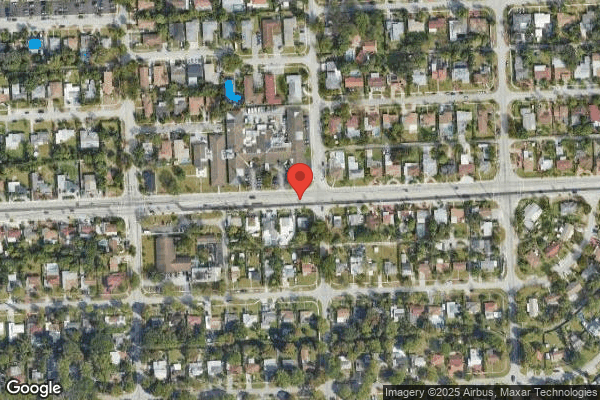
1255 NE 135TH STREET, NORTH MIAMI, FL 33161 (305) 891-6850
For profit - Limited Liability company 245 Beds VENTURA SERVICES FLORIDA Data: November 2025 5 Immediate Jeopardy citations
Trust Grade
0/100
#533 of 690 in FL
Last Inspection: August 2024

Within standard 12-15 month inspection cycle. Federal law requires annual inspections.

Overview

North Dade Nursing and Rehabilitation Center has received a Trust Grade of F, indicating significant concerns about the facility's operations and care quality. Ranking #533 out of 690 facilities in Florida places it in the bottom half, and #45 out of 54 in Miami-Dade County means there are only a few facilities in the area that perform worse. Although the facility is improving, with issues dropping from 20 to 4 over the past year, it still has a long way to go. Staffing is a positive aspect, with a turnover rate of 0%, which is much lower than the state average, but the overall rating is only 2 out of 5 stars, indicating below-average performance. However, the facility faced serious issues, including a critical incident where a resident with exit-seeking behavior was not adequately supervised and was found deceased in a locked closet 12 days later, highlighting significant safety and supervision failures.

Trust Score
F
0/100
In Florida
#533/690
Bottom 23%
Safety Record
High Risk
Review needed
Inspections
Getting Better
20 → 4 violations
Staff Stability
○ Average
Turnover data not reported for this facility.
Penalties
⚠ Watch
$142,068 in fines. Higher than 96% of Florida facilities. Major compliance failures.
Skilled Nurses
○ Average
Each resident gets 40 minutes of Registered Nurse (RN) attention daily — about average for Florida. RNs are the most trained staff who monitor for health changes.
Violations
⚠ Watch
54 deficiencies on record. Higher than average. Multiple issues found across inspections.
★★☆☆☆
2.0
Overall Rating
★★☆☆☆
2.0
Staff Levels
★★★★★
5.0
Care Quality
★☆☆☆☆
1.0
Inspection Score
Stable
2024: 20 issues
2025: 4 issues

The Good

  • 5-Star Quality Measures · Strong clinical quality outcomes
  • Full Sprinkler Coverage · Fire safety systems throughout facility
  • No fines on record

Facility shows strength in quality measures, fire safety.

The Bad

2-Star Overall Rating

Below Florida average (3.2)

Below average - review inspection findings carefully

Federal Fines: $142,068

Well above median ($33,413)

Significant penalties indicating serious issues

Chain: VENTURA SERVICES FLORIDA

Part of a multi-facility chain

Ask about local staffing decisions and management

The Ugly 54 deficiencies on record

5 life-threatening 2 actual harm
Jun 2025 4 deficiencies
CONCERN (D) 📢 Someone Reported This

A family member, employee, or ombudsman was alarmed enough to file a formal complaint

Potential for Harm - no one hurt, but risky conditions existed

Accident Prevention (Tag F0689)

Could have caused harm · This affected 1 resident

**NOTE- TERMS IN BRACKETS HAVE BEEN EDITED TO PROTECT CONFIDENTIALITY** Based on observations, interviews and record review, the facility failed to provide a safe environment for one (Resident #2) out...

Read full inspector narrative →
**NOTE- TERMS IN BRACKETS HAVE BEEN EDITED TO PROTECT CONFIDENTIALITY** Based on observations, interviews and record review, the facility failed to provide a safe environment for one (Resident #2) out of three residents sampled as evidenced by observations of an electric water kettle sitting on the bedside table and plugged in the electrical receptacle next to the bed. There were 211 residents present in the facility at the time of the survey. The findings included: Record review of the facility's policy titled Accidents and Incidents (dated 3/2021) documented: Policy-It is the policy of the facility to report Accidents and Incidents in accordance to State and Federal regulations; Procedure: The facility will provide and environment that is free from accident hazards over which the facility has control and provides supervision to each resident to prevent avoidable accidents. This includes: a) Identifying hazards and risks, b) Evaluating and analyzing hazards and risks, c) Implementing interventions to reduce hazards and risks and d) Monitoring for effectiveness and modifying interventions when necessary. Observation and interview of Resident #2 on 6/30/25 at 7:35 AM, revealed the resident sitting in a chair in his room, watching television. On the bedside table was an electric water kettle, instant coffee and coffee creamer. The electric water kettle was plugged in the electrical receptacle next to the bed. He stated, I have it because they won't make me coffee when I want it and I make my own. Please don't tell them that I have it. Resident #2 had a roommate. Photographic evidence submitted. Review of the Demographic Face Sheet for Resident #2 documented the resident was admitted to the facility on [DATE] with diagnoses to include congestive heart failure, hypertension and major depressive disorder. Review of the Minimum Data Set (MDS) admission Assessment for Resident #2 dated 4/17/2025 documented the resident's Mental Status (BIMS) Summary Score had a BIMS Summary Score of 14 out of 15 indicating no cognitive impairment and able to make own decisions. The resident required partial moderate to substantial/maximal assistance for ADLs (Activities of Daily Living). A second observation of Resident #2 on 6/30/25 at 12:15 PM, revealed the resident sitting in a chair in his room, eating lunch. On the bedside table was an electric water kettle, instant coffee and coffee creamer. The electric water kettle was plugged in the electrical receptacle next to the bed. On 6/30/2025 at 1:38 PM, interview with the Director of Nursing (DON). She stated, He tends to buy his own products. He had a coffee pot before when the staff did rounds and it was removed. On 6/30/2025 at 2:58 PM, interview with the Social Services Director. He stated, This is the second time with the coffee maker. The first time was an actual coffee maker and the staff removed it.
CONCERN (D) 📢 Someone Reported This

A family member, employee, or ombudsman was alarmed enough to file a formal complaint

Potential for Harm - no one hurt, but risky conditions existed

Deficiency F0800 (Tag F0800)

Could have caused harm · This affected 1 resident

**NOTE- TERMS IN BRACKETS HAVE BEEN EDITED TO PROTECT CONFIDENTIALITY** Based on observations, interviews and record review, the facility failed to provide a well-balanced diet to meet special dietary...

Read full inspector narrative →
**NOTE- TERMS IN BRACKETS HAVE BEEN EDITED TO PROTECT CONFIDENTIALITY** Based on observations, interviews and record review, the facility failed to provide a well-balanced diet to meet special dietary needs for one diabetic (Resident #1) out of three residents sampled. There were 40 diabetic residents out of the 211 residents present in the facility at the time of the survey. The findings included: Record review of the facility's policy titled Nutrition and Hydration (revised 6/2021) documented: Policy-Residents within the facility will maintain adequate parameters of nutritional and hydration status, to the extent possible, to ensure each resident is able to maintain the highest practicable level of well-being; Policy Explanation and Compliance Guidelines: 1) The facility will: a) Provide nutritional and hydration care and services to each resident, consistent with the resident's comprehensive assessment, b) Recognize, evaluate and address the needs of every resident, including but not limited to, the resident at risk or already experiencing impaired nutrition and hydration, c) Provide a therapeutic diet taking into account the resident's clinical condition and preferences and d) Resident's diet order is communicated to the dietary department by completing a dietary communication slip and 2) Based on the resident's comprehensive assessment, the facility will ensure each resident: c) Is offered a therapeutic diet when there is a nutritional problem and the health care provider orders a therapeutic diet. Observation and interview of Resident #1 on 6/30/25 at 7:43 AM, revealed the resident sitting in a chair in his room and received his breakfast tray. The breakfast tray consisted of: Boiled egg (1), Oatmeal (1 bowl), Toast (2 slices), Regular Sugar (3 packets), Regular grape jelly (1 packet), Coffee (1 cup). The tray did not include a meat, a choice of Vitamin C juice, sugar substitutes and sugar-free jelly. The resident revealed via a Spanish translator that he eats what his roommate tells him to eat on the food tray because he is diabetic. He doesn't use the regular sugar or regular jelly. They don't send him a diabetic sugar or jelly on his food tray. Photographic evidence submitted. Review of the Breakfast Diet Card for Resident #1 documented the resident consumed a Regular, LCS (Low Concentrated Sweets), NAS (No Added Salt) diet; Boiled Egg no shell or scrambled, Sausage or ham. To be served: Choice of Vitamin C juice (6 ounces), Oatmeal or Frosted Flakes Cereal (1/2 cup or ¾ cup), Scrambled eggs, Crispy bacon Strip (1 strip), Biscuit (1 each), Jelly (1 packet), Margarine (1 each) Whole milk (8 ounces), Coffee/Hot tea (6 ounces), Sugar, Pepper (1 each). Review of the Demographic Face Sheet for Resident #1 documented the resident was admitted on [DATE] with a diagnosis of diabetes mellitus, hypertension, hemiplegia, protein-calorie malnutrition and hyperlipidemia. Review of the Minimum Data Service (MDS) Quarterly assessment dated [DATE] for Resident #1 documented the resident's Mental Status (BIMS) Summary Score was 11, indicating mild cognitive impairment and able to make his needs known. The resident required partial to moderate to substantial/maximal assistance for ADLs (activities daily living) and supervision or touching assistance for eating. A therapeutic diet was prescribed for the resident. Review of the Physician's Order Sheets (POS) dated May 2025 and June 2025 for Resident #1 documented the resident was on a LCS (Low Concentrated Sweets), NAS (No Added Salt), Regular texture and Thin consistency. The resident receives Insulin Aspart Subcutaneous Solution Pen-injector 100 unit/ml (milliliters) inject 4 unit subcutaneously before meals related to diabetes mellitus with hyperglycemia, Insulin Aspart Subcutaneous Solution Pen-injector 100 unit/ml inject as per sliding scale subcutaneously before meals for hyperglycemia related to diabetes mellitus with hyperglycemia and Insulin Glargine Solution 100 unit/ml inject 6 unit subcutaneously every 12 hours related to diabetes mellitus. Review of the Nutrition care plan (written 2/05/2025) for Resident #1 documented the following: Focus: Resident is at risk for nutritional and or hydration deficits as evidenced by hyperglycemia and hemiplegia; Goal: Resident will show no s/s (signs and symptoms) of dehydration (dry skin, dry cracked lips, concentrated urine, increased confusion, abnormal labs that may indicate dehydration) thru NRD (next review date) x (times) 90D (90 days); Interventions: LCS, NAS diet, Regular texture and Thin consistency; Offer meal substitute as needed/requested; Review/counsel on prescribed diet, including any negative outcomes of non-adherence as applicable. A second observation of Resident #1 on 6/30/25 at 12:14 PM, revealed the resident sitting in a chair in his room, eating lunch. The lunch tray consisted of: Black beans, Rice, Chopped Baked Chicken, Unfrosted Banana Cake and Orange Drink. The tray did not include navy bean soup, buttered carrots or any vegetable, coffee or tea and sugar substitutes. Review of the Lunch Diet Card for Resident #1 documented the resident consumed a Regular, LCS (Low Concentrated Sweets), NAS (No Added Salt) diet. To be served: Navy Bean Soup (6 oz. ladle), Baked Chicken (3 ounces protein), Rice/Arroz (1/2 cup), Buttered Carrots (#8 scoop = ½ cup), Banana Cake (1 piece), Coffee/Tea (6 ounces), Sugar, Pepper (1 each). Review of the facility's Weekly Four Cycle Menu LCS/NAS diet documented the following: 1) Week 3 on Monday, 6/30/2025 residents received at breakfast: Choice of Vitamin C juice, Oatmeal or Frosted Flakes Cereal, Scrambled eggs, Crispy bacon Strip, Biscuit, Diet Jelly, Margarine, Whole milk, Coffee/Hot tea, Sugar Substitute and Pepper and 2) Week 3 on Monday, 6/30/2025 residents received at lunch: Navy Bean Soup, Baked Chicken, Rice/Arroz, Buttered Carrots, Unfrosted Banana Cake, Coffee/Tea, Sugar Substitute and Pepper. Review of Food and Beverage Preferences for Resident #1 dated 6/09/25 documented the resident disliked pancakes, desserts and sweets of any kind and no rice. On 6/30/2025 at 3:22 PM, interview with the Diet Technician (DT). She stated, LCS/NAS Regular diet with thin consistency. He is a diabetic. Yes, the meal ticket says LCS/NAS diet. We have [sugar substitute] and have diabetic jelly for diabetics. On 6/30/2025 at 3:46 PM, interview with the Dietary Manager. He stated, He had oatmeal, boiled egg, coffee, with regular sugar and regular jelly. I have diabetic jelly and [sugar substitute] for diabetics. He should not have gotten the regular sugar and jelly for breakfast. For lunch, I used substitute for navy bean soup which was black bean soup and for buttered carrots substituted peas. He should have had peas on his plate. Review of the Facility Assessment, updated 2/29/2024, date reviewed with QAPI Committee 2/29/2024 documented the facility has a diverse patient population and the Nutrition department provided individualized dietary requirements, liberal diets, specialized diets, tube feeding, cultural or ethnic dietary needs.
CONCERN (D) 📢 Someone Reported This

A family member, employee, or ombudsman was alarmed enough to file a formal complaint

Potential for Harm - no one hurt, but risky conditions existed

Menu Adequacy (Tag F0803)

Could have caused harm · This affected 1 resident

**NOTE- TERMS IN BRACKETS HAVE BEEN EDITED TO PROTECT CONFIDENTIALITY** Based on observations, interviews and record review, the facility failed to ensure that menus were followed for nutritional adeq...

Read full inspector narrative →
**NOTE- TERMS IN BRACKETS HAVE BEEN EDITED TO PROTECT CONFIDENTIALITY** Based on observations, interviews and record review, the facility failed to ensure that menus were followed for nutritional adequacy to meet special dietary needs for one diabetic (Resident #1) out of three residents sampled. There were 40 diabetic residents out of the 211 residents present in the facility at the time of the survey. The findings included: Observation and interview of Resident #1 on 6/30/25 at 7:43 AM, revealed the resident sitting in a chair in his room and received his breakfast tray. The breakfast tray consisted of: Boiled egg (1), Oatmeal (1 bowl), Toast (2 slices), Regular Sugar (3 packets), Regular grape jelly (1 packet), Coffee (1 cup). The tray did not include a meat, a choice of Vitamin C juice, sugar substitutes and sugar-free jelly. The resident revealed via a Spanish translator that he eats what his roommate tells him to eat on the food tray because he is diabetic. He doesn't use the regular sugar or regular jelly. They don't send him a diabetic sugar or jelly on his food tray. Photographic evidence submitted. Review of the Breakfast Diet Card for Resident #1 documented the resident consumed a Regular, LCS (Low Concentrated Sweets), NAS (No Added Salt) diet; Boiled Egg No shell or scrambled, Sausage or ham. To be served: Choice of Vitamin C juice (6 ounces), Oatmeal or Frosted Flakes Cereal (1/2 cup or ¾ cup), Scrambled eggs, Crispy bacon Strip (1 strip), Biscuit (1 each), Jelly (1 packet), Margarine (1 each) Whole milk (8 ounces), Coffee/Hot tea (6 ounces), Sugar, Pepper (1 each). Review of the Demographic Face Sheet for Resident #1 documented the resident was admitted on [DATE] with a diagnosis of diabetes mellitus, hypertension, hemiplegia, protein-calorie malnutrition and hyperlipidemia. Review of the Minimum Data Service (MDS) Quarterly assessment dated [DATE] for Resident #1 documented the resident's Mental Status (BIMS) Summary Score was 11, indicating mild cognitive impairment and able to make his needs known. The resident required partial to moderate to substantial/maximal assistance for ADLs (activities daily living) and supervision or touching assistance for eating. A therapeutic diet was prescribed for the resident. Review of the Physician's Order Sheets (POS) dated May 2025 and June 2025 for Resident #1 documented the resident was on a LCS (Low Concentrated Sweets), NAS (No Added Salt), Regular texture and Thin consistency. The resident receives Insulin Aspart Subcutaneous Solution Pen-injector 100 unit/ml (milliliters) inject 4 unit subcutaneously before meals related to diabetes mellitus with hyperglycemia, Insulin Aspart Subcutaneous Solution Pen-injector 100 unit/ml inject as per sliding scale subcutaneously before meals for hyperglycemia related to diabetes mellitus with hyperglycemia and Insulin Glargine Solution 100 unit/ml inject 6 unit subcutaneously every 12 hours related to diabetes mellitus. Review of the Nutrition care plan (written 2/05/2025) for Resident #1 documented the following: Focus: Resident is at risk for nutritional and or hydration deficits as evidenced by hyperglycemia and hemiplegia; Goal: Resident will show no s/s (signs and symptoms) of dehydration (dry skin, dry cracked lips, concentrated urine, increased confusion, abnormal labs that may indicate dehydration) thru NRD (next review date) x (times) 90D (90 days); Interventions: LCS, NAS diet, Regular texture and Thin consistency; Offer meal substitute as needed/requested; Review/counsel on prescribed diet, including any negative outcomes of non-adherence as applicable. A second observation of Resident #1 on 6/30/25 at 12:14 PM, revealed the resident sitting in a chair in his room, eating lunch. The lunch tray consisted of: Black beans, Rice, Chopped Baked Chicken, Unfrosted Banana Cake and Orange Drink. The tray did not include navy bean soup, buttered carrots or any vegetable, coffee or tea and sugar substitutes. Review of the Lunch Diet Card for Resident #1 documented the resident consumed a Regular, LCS (Low Concentrated Sweets), NAS (No Added Salt) diet. To be served: Navy Bean Soup (6 oz. ladle), Baked Chicken (3 ounces protein), Rice/Arroz (1/2 cup), Buttered Carrots (#8 scoop = ½ cup), Banana Cake (1 piece), Coffee/Tea (6 ounces), Sugar, Pepper (1 each). Review of the facility's Weekly Four Cycle Menu LCS/NAS diet documented the following: 1) Week 3 on Monday, 6/30/2025 residents received at breakfast: Choice of Vitamin C juice, Oatmeal or Frosted Flakes Cereal, Scrambled eggs, Crispy bacon Strip, Biscuit, Diet Jelly, Margarine, Whole milk, Coffee/Hot tea, Sugar Substitute and Pepper and 2) Week 3 on Monday, 6/30/2025 residents received at lunch: Navy Bean Soup, Baked Chicken, Rice/Arroz, Buttered Carrots, Unfrosted Banana Cake, Coffee/Tea, Sugar Substitute and Pepper. Review of Food and Beverage Preferences for Resident #1 dated 6/09/25 documented the resident disliked pancakes, desserts and sweets of any kind and no rice. On 6/30/2025 at 3:22 PM, interview with the Diet Technician (DT). She stated, LCS/NAS Regular diet with thin consistency. He is a diabetic. Yes, the meal ticket says LCS/NAS diet. We have [sugar substitute] and have diabetic jelly for diabetics. On 6/30/2025 at 3:46 PM, interview with the Dietary Manager. He stated, He had oatmeal, boiled egg, coffee, with regular sugar and regular jelly. I have diabetic jelly and [sugar substitute] for diabetics. He should not have gotten the regular sugar and jelly for breakfast. For lunch, I used substitute for navy bean soup which was black bean soup and for buttered carrots substituted peas. He should have had peas on his plate. Review of the Menu Substitution Log dated 6/30/25 documented the lunch planned menu items were substituted. The planned menu item was Buttered Carrots and was substituted for peas and the planned menu item for dessert was Banana Cake and was substituted for Yellow cake, no frosting. Review of the Facility Assessment, updated 2/29/2024, date reviewed with QAPI Committee 2/29/2024 documented the facility has a diverse patient population and the Nutrition department provided individualized dietary requirements, liberal diets, specialized diets, tube feeding, cultural or ethnic dietary needs.
CONCERN (D) 📢 Someone Reported This

A family member, employee, or ombudsman was alarmed enough to file a formal complaint

Potential for Harm - no one hurt, but risky conditions existed

QAPI Program (Tag F0867)

Could have caused harm · This affected 1 resident

Based on interview and record review, the facility failed to demonstrate effective plan of actions were implemented to correctly identify quality deficiencies in the problem area related to repeated d...

Read full inspector narrative →
Based on interview and record review, the facility failed to demonstrate effective plan of actions were implemented to correctly identify quality deficiencies in the problem area related to repeated deficient practices for F689 Accidents Hazards and F803 Menus Meet Resident Needs and Followed. These deficient practices have the potential to affect 211 residents residing in the facility at the time of the survey. The findings included: Record review of Quality Assurance and Performance Improvement (QAPI) policy and procedure (issue date June 2021). The purpose of the committees is to review and analyze facility related data, evaluate improvement plans effectiveness and direct appropriate actions for the facility response. Systems failures and/or in-depth analysis of processes are addressed through development of a QAPI. QAPI requires a systematic review of data, identification of the root cause(s) of the systems failure and implementation of corrective actions. Review of the facility's survey history revealed, during a recertification survey with exit dated August 1, 2024, F689 Accidents Hazards and F803 Menus Meet Resident Needs and Followed were cited. Review of the Quality Assurance and Performance Improvement (QAPI) Committee Meeting Sign-in Sheets dated 4/22/25, 5/20/25 and 6/24/25: documented the facility had a QAA Committee meeting monthly. Attendees included: Administrator, Medical Director, Director of Nursing (DON) and other department heads. Interview with the Administrator on 06/30/2025 at 5:07 PM. She revealed the QAPI (Quality Assurance and Performance Improvement) meetings are held on the third Tuesday of each month or as needed. She stated that QAPI committee members are Administrator, Medical Director, Director of Nursing, Assistant Director of Nursing, Infection Preventionist, Risk Manager, Social Services Director, Dietary Manager, Maintenance Director, Human Resources, Activity Director, Restorative, Housekeeping/Laundry Supervisor, Registered Dietitian, Business Office Manager, Unit Managers and Pharmacy. She stated, The purpose of the QAPI committee is to ensure all departments are in compliance with policies and procedures and regulatory statures.
Sept 2024 6 deficiencies 4 IJ
CRITICAL (J) 📢 Someone Reported This

A family member, employee, or ombudsman was alarmed enough to file a formal complaint

Immediate Jeopardy (IJ) - the most serious Medicare violation

Free from Abuse/Neglect (Tag F0600)

Someone could have died · This affected 1 resident

**NOTE- TERMS IN BRACKETS HAVE BEEN EDITED TO PROTECT CONFIDENTIALITY** Based on observations, interviews, record review, the facility failed to protect the resident's right to be free from neglect as...

Read full inspector narrative →
**NOTE- TERMS IN BRACKETS HAVE BEEN EDITED TO PROTECT CONFIDENTIALITY** Based on observations, interviews, record review, the facility failed to protect the resident's right to be free from neglect as evidence by; Resident #1 a vulnerable resident with exit seeking behaviors who voiced intent to leave the facility and refused to sign an Against Medical Advice (AMA) was not adequately supervised and monitored by the facility's staff who did not see the resident exit the facility. Resident #1 was found decomposed in a locked closet 12 days after the facility documented he left the facility AMA. Refer to F607, F689 and F835 The findings include: Observation on 09/04/24 at 9:36 AM with the [NAME] President of Operations and the Regional Director of Operations of the space within which Resident #1 was found revealed the space was located in the rear dining room that is used for activities located in the J Unit, cameras were observed in the dining area. The door to the closet where Resident # 1 was found had a Key Entry Lever Handle Lock; there were several boxes and a working toilet that had boxes stacked on it. The Regional Director of Operations revealed the room was previously used as a shower room and is now storage closet. A tour of the area outside the dining/activities area revealed the two emergency exit doors had alarms that required a code prior to opening surveillance cameras were noted on the building's exterior. When asked if the cameras were working The [NAME] President of Operations revealed the cameras were not working and were left in place by the previous owner. Review of Resident # 1's admission Records revealed an admission date of 08/14/24. The contacts information documentation indicated the resident as Self, the emergency contact #1 listed daughter, #2 Granddaughter and contact information listed for two sisters. Review of the clinical records revealed diagnoses that included but not limited to: Altered Mental Status, Cognitive Communication Deficit, Cerebral Infarction, Difficulty in Walking and Diabetes Mellitus. Review of Resident #1's August 2024 Physician's Order Sheets and Medication Administration Records revealed the resident was receiving medications that included but not limited to Lorazepam Tablet 0.5 mg 1 tablet by mouth two times a day for anxiety; Seroquel Oral Tablet 100 mg 1 tablet by mouth at bedtime for Agitation related to altered mental status. There was an order for Psych consult for diagnosis of agitation with revision dated 8/18/2024 that according to the Director of Nursing the resident did not receive because he was no longer in the facility. Review of Resident #1' Care Plans initiated 08/20/2024 Revision on: 08/28/2024 revealed Resident #1 is at risk for falls related to Unsteady gait and Vision impairment; Goal: Resident will be free of fall related injuries by next review date. Interventions: .Check at frequent intervals to monitor for unsafe actions and intervene promptly. Focus- risk for further alteration; in neurological functioning related to history of Cardiovascular Attack (Stroke) and Cerebrovascular Disease.; Date Initiated: 08/21/2024. Revision on: 08/28/2024. Risk for complications of abnormal blood sugar related to diagnosis of Diabetes Mellitus date initiated: 08/21/2024, Revision on: 08/28/2024. Review of Resident #1's 5- Day Minimum Data Set (MDS) dated [DATE] indicated the resident vision is impaired, Brief Interview of Mental Status Score (BIMS) documented 12 out of 15 to suggest Resident #1 was moderately impaired cognitively. Had wandering behavior that occurred 1 to 3 days; Required supervision or touching assistance for eating, oral hygiene; substantial/maximal assistance for toileting, lower body dressing; partial/moderate assistance for upper body dressing; Frequently incontinent. The resident was receiving Antipsychotic, Antianxiety and Antiplatelet medications. No wander/elopement alarms used. Review of Resident # 1's Elopement Risk Assessment/Evaluation dated 8/21/24 completed and documented by the DON revealed an at-risk score of 11.0 meaning the resident was a high risk for elopement. Resident #1 was being monitored for behaviors since his admission on 08/14 /24 until; the behavior monitoring sheets documentation revealed on 8/17/24 during the day shift he had behaviors and was given food, on 8/20/24 he had behaviors during the night shift and was given food, he had behaviors during the day shift on 08/22/24 which documented refer to progress note. Review of the progress notes written by Registered Nurse (RN); Staff D dated 08/22/24 time stamped 15:50 documented: Around 1:00 PM resident noted as agitated requesting to leave the facility. When asked why, resident stated that he just did not want to be here anymore. Resident noted as self-responsible, made supervisor aware. Teaching provided regarding a facilitated transfer and supervisor called family but no answer. Resident refused and stated that he was leaving. Teaching provided regarding risks. Presented AMA however resident refused to sign. Resident then left facility alert and oriented in no distress. Will make another attempt to inform family. Review of the Discharge Without Physician's Approval Form Dated 8/22/24 revealed the resident had not signed above the line that indicated Signature of Resident the above the date line was dated 8-22-24. The Licensed Practical Nurse Unit Manager for the 7:00 AM to 3:00 PM shift confirmed it was his signature that was noted below the blank resident signature line. Review of Narrative Note written by the Assistant Director of Nursing (ADON) revealed; (General) dated 8/22/2024 timestamped 20:20: Call placed to [local community-based agency] for wellness check, spoke to [representative for the community based agency] who stated only local police do wellness checks however would document call. [local police department] was contacted for a wellness check and an address was provided. Review of Narrative note written by the ADON dated 8/23/2024 time stamped 12:44 documented: Resident daughter and granddaughter arrived at the facility, no concerns voiced however stated that the resident does not like to stay in one place for a long period of time and is violent and agitated at times. Family thanked staff for contacting [local community-based agency] and [local law enforcement] for the wellness check. Review of the facility's ABUSE LOG for August 2024 revealed, Resident #1 was listed on the abuse log for neglect on 8/22/24 related to Resident #1 and was unsubstantiated; Date 8/26/24; [Local community-based agency] called-8/22/24; Accepted/Rejected-Rejected; Allegations-Neglect; 5-Day Federal-9/02/24; Comments-Unsubstantiated. The facility's ELOPEMENT INCIDENT LOG for August 2024 had no incidents of elopements. Review of the Agency for Healthcare Administration (AHCA) Immediate Report dated 09/03/2024 included but not limited to: Date of Incident: 08/22/2024 13:10; Type of Incident-Neglect; Notified: Resident representative, Law Enforcement, Abuse Registry; Description of Incident: On 8/26/24 at 11:00 AM, [sister] and her daughter, visited the facility and spoke with [Administrator] and [Director of Nursing), stating they feel Memorial Regional Hospital was negligent for not diagnosing and notifying facility that her brother has dementia. They are upset that resident chose to leave the facility against medical advice on 8/22/2024 and went out into the streets instead of contacting them (written by Licensed Practical Nurse (LPN) Supervisor 8/26/2024 1:24:20 PM). On 8/22/2024, [Resident #1] left the facility against medical advice. Resident was encouraged to stay and complete his stay or to wait for his family to be discharged but refused and said he is fine, doesn't need to be here and that he takes care of himself. Resident was alert and oriented, voiced no safety concerns, complaints, concerns or change in his behavior at the time of his leaving AMA. Resident's family was notified. A call was placed to [local community-based agency] to notify resident left AMA to request a wellness check since resident left facility alone and would not wait for family. [Local community-based agency] stated they would record the call but that only law enforcement does wellness checks. Law enforcement was notified. Law enforcement stated resident was not at his last known address and was not at any area hospital During an interview on 9/04/24 at 10:46 AM the 7:00 AM to 3:00 PM Licensed Practical Nurse (LPN) Nurse Manager revealed; Resident #1 was sitting in a wheelchair on the day he left. The resident was anxious and restless. He was Creole speaking and spoke a little English. He was assessed and he wanted to leave the facility. We educate the patient and tell him the risks of him leaving. He was still restless, would stand up in the chair and re-directed him. I went to the morning meeting, when I came back I saw the nurse, [Staff D, RN] talking to the resident trying to redirect him. We spoke to him, and he didn't want to accept what we were trying to tell him. I looked in the [computer program] to see if the resident was self-responsible and I noted that he was, I let the DON know. We presented to the resident the AMA documentation, educated him on it and he refused to sign it, and he was anxious. I left him with the nurse. He had anxious behavior the day he left. He would go to different rooms and had exit seeking behaviors. The Nurse Manager was asked if he saw Resident #1 leaving the facility and if anyone escorted the resident from the facility. He stated: I didn't see him walk out the building. When I came to his room, his belongings were still in his room. The nurse [Staff D] didn't tell everybody that the patient went AMA. The staff was asking about the resident. The LPN Nurse Manager was asked to explain the facility's policy and procedure when a resident is being discharged , he explained: When a resident is being discharged and the resident is self-responsible, education is given by the nurse who is in charge. If they leave without medical advice, the medication will not go with them. I am not sure if the family was called when the resident was anxious. According to this resident, he wanted to go home. Vitals were stable. He was given food. He was in a wheelchair, but he could walk. The Administrator was notified by the nurse. I am not sure if the Administrator went to talk to the resident. The Certified Nursing Assistant (CNAs) assigned to the resident was providing care to another resident. We let the doctor know, let the family know, we give them the paperwork. I think the nurse called the doctor. I don't know what the doctor say. He was anxious but not in an aggressive way. I was made aware he went AMA after lunch around 1:00 PM. She didn't tell me [Staff D] right away that the resident went AMA. The Nurse Manager was asked if Resident #1 ate lunch that day and where did the resident usually eat his lunch. The Nurse manager stated: He would eat lunch in his room or in the hallway. The nurse manager was asked how he came to the conclusion that Resident # 1 was AMA if no one saw the resident exit the facility and may just be missing, because his belongings were still in his room. He revealed he did not see the resident leave the facility. During an interview on 09/04/24 at 11:26 AM the Resident # 1's assigned Certified Nursing Assistant (CNA), Staff B on the day of the incident reported he spoke a little bit of English but mostly spoke Creole. On the day of the incident at first he was in bed, afterwards he was cleaned and transferred to the wheelchair. He was in the hallway close to the nurses' station. In the morning during her rounds, he told her he wanted leave wanted to go home. Staff B stated: I expressed to my supervisor, [Staff A]. They went to talk to him [Staff A and Staff D]. I was moving about going to see about my other residents. This was my second time working with him on that day. He was very anxious, he would go from to bed, walking opening doors, by the exit doors. The nurse knew he was going from room to room. He would stand by the exit door right outside of his room. I only work here three days a week. He was combative and would argue with you. I would say to him come back to your room, if I saw him going to another room. Once we let our supervisor know if we see the resident wandering. I wasn't informed that he went AMA. When I left on my shift at 3:00 PM, he was in his wheelchair on the floor. I came back to work on the following Tuesday, I was made aware he was missing. During an interview on 9/04/24 at 1:19 PM the Nursing Home Administrator (NHA) reported after 1:00 PM on 8/22/2024 she was alerted that a resident was missing. We started looking for the resident in the building and out of the building. Some of us went driving around. Code green was called and that means someone is missing. A few minutes after we had gone driving around, [Staff A] called me and told me that he wasn't missing but he left AMA. He was dealing with the nurse and the resident when he said he wanted to leave, and he refused to sign the AMA form. When he told me it wasn't an elopement, and we went back to the building. The weather was bad, and I asked [ Staff A] did he say where he was going. The NHA was asked if anyone escorted the resident out of the building. She stated: Nobody escorted him out of the building, and we didn't know which way he went. Since it was bad weather, we called [local community-based agency] to do a wellness check and the family house was nearby. [Local community-based agency] told us they don't do wellness checks anymore and to call [local law enforcement] and we did. [Law enforcement] went to the address (niece), and he wasn't there. When the police went to the house they decided to file a missing person report. Since the facility became aware a missing person report had been filed with the police by the family after the wellness check was completed and the resident was not located. The NHA reported staff checked both inside and outside of the facility and when asked how they were able to confirm all area were checked within the facility she did not provide an answer. The NHA was asked why they did not continue searching in the facility every day and open all doors in the facility, no answer was provided. The NHA stated all hospitals were checked and areas close to the facility. The NHA was asked if they called the police to get any updates an if she was positive all areas were checked and if anyone had considered looking in that closet and asking for a key to open it. She stated she never thought of that. The NHA was asked if no one heard sounds from the closet or smelled anything while activities were being done in that area she said no. The NHA acknowledged she was unable to confirm if a thorough search was completed within the facility on 08/22/2024. We wanted to keep looking for him so some of use kept looking him, driving around the area. The next day on the 23 rd the daughter and the granddaughter came to the building to meet with me, [DON and ADON]. The daughter said he likes to walk the street and live on the street. His usual spot is by [local hospital]. We called the police that we had spoken to and gave them the information so they could look as well . On 8/26/24 the following Monday, the sister and the niece came to the building, asking questions regarding the situation me and (DON). The niece said he had dementia; we checked the chart and there was no documentation in our chart or the hospital chart that he had dementia. She said she was going to talk to the hospital because that was neglectful to not use that as a diagnosis. We did a neglect report on 8/26/24 and we unsubstantiated it. He was alert and oriented times three on our chart and the hospital's chart. I completed the 5-day report on yesterday. On 9/02/24, I got a call from [DON] around 8:30 AM that they found a body in the closet. Somebody was saying that there was a bad odor. The maintenance assistant started looking in the vents and rooms and couldn't find the smell. He had housekeeping come and open the door for him and he found the body was decomposed. [DON] called me, and I came straight over. The cops were here, the area was closed off and we couldn't go back there. At that point, the detective was asking questions and interviewing the staff. The medical examiner took the body and when the detective was done we started cleaning the area. The NHA was asked if she should have been notified that the resident was agitated and wants to leave AMA and be notified of all AMAs, she stated: Sometimes they notify me if a resident leaves AMA. They are supposed to educate the resident about what AMA means. The NHA was as asked if it was unusual for a resident to leave without taking their belongings. She stated: I went in his room and his things were there. We have had some AMAs, and they have left their things because they had too many things. The NHA was asked if she was sure everywhere in the facility was checked including that specific closet. She stated: The DON said he checked that closet, but it was locked. It was an old shower room, and we had been using it as a storage room for boxes and papers. I wasn't aware that it could lock from the inside. When asked why they did not get the keys so the door could be unlocked and checked she did not respond. On 9/04/24 at 1:49 PM, the Director of Nursing (DON) revealed on the afternoon of the incident someone told him that a resident was missing, he went to look for the resident in the area. When he returned to the facility he was told the resident went out AMA. Late that afternoon, it was about to rain, he asked the Administrator and the ADON, if a wellness check needed to be done. The ADON called [local community-based agency], and they told her they do not do a wellness checks anymore and to call the police. The police was called, and they told the police what happened. The DON reported he went back out to search for the resident and did not find the resident. The police asked should we file a missing person's report, and I said no because he filed an AMA. [Staff A], LPN the Supervisor and [Staff D], RN the nurse for the resident signed on the AMA form. We had procedures in place for elopement and AMA. The DON was asked if he was positive all areas in the facility was checked. He reported everywhere was checked. The DON reported he did not know the resident was agitated and wanted to leave. During an interview via telephone on 09/05/2024 at 1:16 PM, the Medical Director was asked if he was notified of Resident #1 wanting to leave the facility AMA. He stated, I was not notified. I became aware of the incident while I was in the facility on Thursday (08/22/2024) that afternoon around 2:00 PM to 3:00 PM and was told they were looking for a missing resident. He reported, if a resident wishes to leave AMA and is alert the resident will need to sign the AMA form, if the resident is unable to sign and they have a proxy the proxy will need to sign, if the proxy cannot be located to sign a guardian will be appointed to sign. When a Resident is agitated even if they are responsible for themselves, the staff cannot let that resident leave AMA. An agitated resident should be sent to the hospital; and the family or emergency contacts should be notified. Review of the facility's policy titled, Abuse, Neglect, Exploitation and Misappropriation Prevention Program Policy and Procedure revision date was on 10/2022, the policy documented: The facility will provide a safe resident environment and protect all residents from abuse. Therefore, each resident has the right to be free from abuse, neglect, misappropriation of resident property and exploitation of any type by anyone. Neglect means failure of the facility, its employees or service providers to provide goods and services to a resident that are necessary to avoid physical harm, pain, mental anguish or emotional distress. A prompt thorough investigation will be conducted by the facility immediately. Review of the facility's policy titled Transfer and Discharge (including AMA. Date Implemented 3/2020 and Date reviewed and revised 6/2023; indicated: Item 13-Discharge Against Medical Advise (AMA). a. The resident and family/legal representative should be informed of risks involved, the benefits of staying at the facility, and alternatives to both. Under no circumstances will the facility force, pressure or intimidate a resident into leaving AMA. b. The physician should be notified of the intended AMA discharge and encourage to speak with the resident to encourage them to stay at the facility. c. Documentation of this notification should be entered in the nurses' notes by the nursing department. The social services designee should document any discussions held with the resident/family in the service services progress notes if present. d. Notify Adult Protection Services, or other entity, as appropriate if self-neglect is suspected. Document accordingly.
CRITICAL (J) 📢 Someone Reported This

A family member, employee, or ombudsman was alarmed enough to file a formal complaint

Immediate Jeopardy (IJ) - the most serious Medicare violation

Abuse Prevention Policies (Tag F0607)

Someone could have died · This affected 1 resident

**NOTE- TERMS IN BRACKETS HAVE BEEN EDITED TO PROTECT CONFIDENTIALITY** Based on record reviews and interviews, the facility failed to implement their abuse and neglect policy as evidenced by staff fa...

Read full inspector narrative →
**NOTE- TERMS IN BRACKETS HAVE BEEN EDITED TO PROTECT CONFIDENTIALITY** Based on record reviews and interviews, the facility failed to implement their abuse and neglect policy as evidenced by staff failure to provide care and services including adequate supervision for one (Resident number 1) out of three residents sampled during the time of this survey. This deficient practice has the potential to affect all residents residing in the facility. This enabled resident number 1 to go missing from the facility undetected on 8/22/24. The resident was not located until 8:30 AM on 9/02/24 deceased in a locked closet and his body was decomposed. Refer to F600, F689 and F835 The findings included: Record review of the facility's policy titled, Abuse, Neglect, Exploitation and Misappropriation Prevention Program Policy and Procedure revision date was on 10/2022, the policy documented: The facility will provide a safe resident environment and protect all residents from abuse. Therefore, each resident has the right to be free from abuse, neglect, misappropriation of resident property and exploitation of any type by anyone. Neglect means failure of the facility, its employees or service providers to provide goods and services to a resident that are necessary to avoid physical harm, pain, mental anguish or emotional distress. A prompt thorough investigation will be conducted by the facility immediately. Review of the facility's Policies and Procedures titled Missing Resident with dated issued 06/11/2020 indicates: It is the intent of the facility to be aware of its resident's, usual habits and location as reasonably practicable. This is with he intent of not invading privacy but to identify a possible missing resident. Procedure: 1. In the event that any staff member identifies that they cannot find a resident in a place that resident is anticipated to be, the staff member will alert their supervisor for assistance, once affirming that the resident was not signed out on leave. 2. The supervisor would assume control of the search. 3. The supervisor would alert staff of the identity of the resident and direct designated staff to participate in the search. 4. The supervisor in charge of the will not assume that resident has left facility and will: a. Re-affirm if the resident could be out of the facility on authorized leave the facility where reaffirming for resident could be out of the facility on an authorized or pass by reviewing the facility sign on process. b. Determine if it's prudent to call the resident's family or other visitors. If there is a possible concern that resident was taken out potentially they did not sign the resident out. c. If the resident is not authorized to leave facility independently. Initiate a search of the facility and premises by assigning staff to look in various areas. d. If the resident is not located is not located in a reasonable amount of time, the Administrator and Director of Nursing (DON), the resident's representative, the attending physician and law-enforcement official will be notified as indicated . e. If the resident remains unable to be located and or is not authorized to leave the facility independently; Initiate an extensive search of the surrounding areas. 5. When a missing person is not located within the confines of the facility building, then the supervisor in charge would direct designated staff to participate in an outside facility grounds search which may include but is not limited to the roof of the building, the parking lot and any outside parked vehicle, etc. 6. In the event that a staff member observes attempting a resident attempting to leave premises without supervision, and is concerned that the resident would not normally be a be appropriate to do so independently , the staff member will: a. call for assistance then calmly approach the resident (attempting to initiate a friendly chat as possible), and in a courteous manner attempt to redirect or guide the resident back to the facility; b. if the resident is upset or agitated and is not easily redirected or guided, the staff member will continue walking with the resident either next to or behind them to provide support, supervision and safety . Review of the Demographic Face Sheet for Resident number 1 documented the resident was initially admitted on [DATE] with diagnoses that included but not limited to cerebral infarction, difficulty in walking, cognitive communication deficit and altered mental status. Review of the Minimum Data Service (MDS) 5-Day assessment dated [DATE] for Resident number 1 documented the resident's Brief Interview of Mental Status (BIMS) Summary Score was 12, indicating moderate cognitive impairment and able to make his needs known, vision was impaired with no corrective lenses, wandering behavior was noted, required partial/moderate to substantial/maximal assistance for ADLs (activities daily living) and there was no wander/elopement alarms used. Review of the Physician's Order Sheets (POS) and Medication Administration Records (MAR) for August 2024 documented the resident was receiving the following medications: Lorazepam tablet 0.5 mg (milligrams) give 1 tablet by mouth two times a day for anxiety; Seroquel oral tablet 100 mg give 1 tablet by mouth at bedtime for agitation related to altered mental status and a psych consult was written for a diagnosis of agitation on 8/18/2024. The resident did not have an order for a wander elopement alarm bracelet. Review of the Behaviors Monitoring Sheets for August 2024 documented the resident's behaviors were monitored on 8/14/24-8/22/24 at day, evening and night shift. On 8/17/24 day shift he had behaviors and was given food (code 7); On 8/20/24 night shift he had behaviors and was given food (code 7) and on 8/22/24 day shift he had behaviors and refer to progress note (code 9). Review of care plan's written 8/15/24 for Resident number 1 documented the resident had a discharge care plan and had wishes to return/be discharged to community/prior living arrangements and resident had a falls care plan and was at risk for falls related to unsteady gait, vision impairment. The resident did not have a wandering/elopement care plan. Review of the progress notes documented the following: Dated 8/15/2024 time stamped 04:58 Behavior Note: Resident was washed and made comfortable in bed still taking off clothes redirected with food beverage peri care polite conversation. Resident still taken off clothing pass on to 7-3 shift to follow up; Dated 8/18/2024 time stamped 05:37 Behavior Note: Resident walking in hallway going in other resident rooms and yelling redirected with food beverage peri care and polite conversation. Resident went to bed and resting comfortable, pass on to 7-3 shift to follow up; Dated 8/18/2024 time stamped 21:16 Narrative Note (General): Overheard a resident yelling Don't hit me. Immediately responded and noted Resident#1 coming out of another resident's room. Resident assessed and complained of pain to left shoulder, back, and head. No open area and no bruising noted. Resident rated pain as a 3 on a 0-10 pain scale. PRN (as needed) pain medicine given. Resident confused and alert to person. Assisted resident back to his room. Call placed to MD (medical doctor). MD made aware and no new orders given. Call placed to resident's sister; Dated 8/22/2024 time stamped 15:50 Narrative Note (General): Around 1 PM resident noted as agitated requesting to leave the facility. When asked why resident stated that he just did not want to be here anymore. Resident noted as self-responsible, made supervisor aware. Teaching provided regarding a facilitated transfer and supervisor called family but no answer. Resident refused and stated that he was leaving. Teaching provided regarding risks. Presented AMA (against medical advice) however resident refused to sign. Resident then left facility alert and oriented in no distress. Will make another attempt to inform family; Dated 8/22/2024 time stamped 20:20 Narrative Note (General): Call placed to [ local community-based agency] for wellness check, spoke to [local community-based agency] who stated only local police do wellness checks however would document call. [Local police] was contacted for a wellness check and an address was provided and dated 8/23/2024 time stamped 12:44 Narrative Note (General): Resident daughter and granddaughter arrived at the facility, no concerns voiced however stated that the resident does not like to stay in one place for a long period of time and is violent and agitated at times. Family thanked staff for contacting [local community-based agency] and [police for the wellness check]. Review of the Elopement Risk Assessment/Evaluation dated 8/15/24 documented: The resident upon his admission was not at risk for elopement and a score of three. Review of the Against Medical Advice Form (AMA) for Resident number 1 dated 8/22/24 documented the resident did not sign the form and two signatures were documented below the resident's signature line. The signatures were the Staff A, Licensed Practical Nurse (LPN), Nurse Unit Manager 7:00 AM to 3:00 PM shift and Staff D, Registered Nurse (RN) 7:00 AM to 3:00 PM shift. The facility's Transfer and Discharge policy indicated in Item 13: Discharge Against Medical Advise (AMA). a. The resident and family/legal representative should be informed of risks involved, the benefits of staying at the facility, and alternatives to both. Under no circumstances will the facility force, pressure or intimidate a resident into leaving AMA. b. The physician should be notified of the intended AMA discharge and encourage to speak with the resident to encourage them to stay at the facility. c. Documentation of this notification should be entered in the nurses' notes by the nursing department. The social services designee should document any discussions held with the resident/family in the service services progress notes if present. d. Notify Adult Protection Services, or other entity, as appropriate if self-neglect is suspected. Document accordingly. On 9/04/24 at 10:46 AM, Staff A, Licensed Practical Nurse (LPN), Nurse Unit Manager 7:00 AM to 3:00 PM shift stated, The resident was sitting in a wheelchair on the day he left. He was restless, anxious. He was Creole speaking and a little English. We assessed him. He stated, He wanted to leave the facility. We educate the patient and told him the risks of him leaving. He was still restless, would stand up in the chair and we re-directed him. I went to the morning meeting, when I came back I saw the nurse, [Staff D], RN talking to the resident trying to redirect him. We spoke to him, and he didn't want to accept what we were trying to tell him. I looked in the [computer program] to see if the resident was self-responsible and I noted that he was, I let the DON (Director of Nursing) know. We presented to the resident the AMA (against medical advice) documentation, educated him on it and he refused to sign it, and he was anxious. I left him with the nurse. He had anxious behavior the day he left. He would go to different rooms and had exit seeking behaviors. I didn't see him walk out the building. When I came to his room, his belongings were still in his room. The nurse [Staff D], RN didn't tell everybody that the patient went AMA. The staff was asking about the resident. The procedure when a resident being discharged we present the resident is self-responsible to self, education is given by the nurse, who is in charge with the nurse. If they leave without medical advice, the medication will not go with them. I am not sure if the family was called when the resident was anxious. According to this resident, he wanted to go home. Vitals were stable. He was given food. He was in a wheelchair, but he could walk. The Administrator was notified by the nurse. I am not sure if the Administrator went to talk to the resident. The Certified Nursing Assistant (CNA) assigned to the resident was providing care to another resident. We let the doctor know, let the family know, we give them the paperwork. I think the nurse called the doctor. I don't know what the doctor say. He was anxious but not in an aggressive way. I was made aware; he went AMA after lunch around 1:00 PM. She didn't tell me [Staff D], RN right away the resident went AMA. He would eat lunch in his room or in the hallway. On 9/04/24 at 11:26 AM, Staff B, Certified Nursing Assistant (CNA) 7:00 AM to 3:00 PM shift stated, I was assigned to him. I made rounds, he was alert and talkative. He spoke a little bit of English but spoke mostly Creole. At first he was in bed, afterwards he was cleaned and transferred to the wheelchair. He was in the hallway close to the nurses' station. In the morning when I did rounds, he was telling me he wanted to leave. I asked him why he said he wanted to go home. I expressed to my supervisor, [Staff A], LPN. They went to talk to him [ Staff A, LPN] and Staff D, RN. I was moving about going to see about my other residents. My second time working with him on that day. He was very anxious, he would go from bed to bed, walking and opening doors, stand by the exit doors. The nurse knew he was going from room to room. He would stand by the exit door right outside of his room. I only work here three days a week. He was combative and would argue with you. I would say to him come back to your room, if I saw him going to another room. We would let our supervisor know if we see the resident wandering. I wasn't informed that he went AMA. When I left on my shift at 3:00 PM, he was in his wheelchair on the floor. I came back to work on the following Tuesday, I was made aware he was missing. On 9/04/24 at 1:19 PM with the Administrator/Risk Manager stated, Somebody had alerted me that there was a missing resident on 8/22/24 after 1:00 PM. We started looking for the resident in the building and out of the building. Some of us went driving around. Code green was called and that means someone is missing. A few minutes after we had gone driving around, [Staff A], LPN the Supervisor called me and told me that he wasn't missing but he left AMA. He was dealing with the nurse and the resident when he said he wanted to leave, and he refused to sign the AMA form. When he told me that I said it wasn't an elopement and we went back to the building. The weather was bad, and I asked [Staff A], LPN did he say where he was going. Nobody escorted him out of the building, and we didn't know which way he went. Since it was bad weather, we called [local agency] to do a wellness check, and the family house was nearby. [local community-based agency] told us they don't do wellness checks anymore and to call local law enforcement and we did. Law enforcement went to the address (the resident's niece), and he wasn't there. When the police went to the house they decided to file a missing person report. We wanted to keep looking for him so some of us, kept looking for him. We were driving around the area looking for him. The next day on the 23 rd the daughter and the granddaughter came to the building to meet with me, the DON (director of nursing) and the ADON (Assistant Director of Nursing). The daughter said he likes to walk the street and live on the street. His usual spot is by [local hospital]. We called the police that we had spoken to and gave them the information so they could look as well. On 8/26/24 the following Monday, the sister and the niece came to the building, asking questions regarding the situation to me and [DON]. The niece said he had dementia. We checked the chart and there was no documentation in our chart or the hospital chart that he had dementia. She said she was going to talk to the hospital because that was neglectful to not use that as a diagnosis. We did a neglect report on 8/26/24 and we unsubstantiated it. He was alert and oriented times three on our chart and the hospital's chart. I completed the 5-day report on yesterday. On 9/02/24, I get a call from [the DON] around 8:30 AM that they found a body in the closet. Somebody was saying that there was a bad odor. The maintenance assistant started looking in the vents and rooms and couldn't find the smell. He had housekeeping come and open the door for him and he found the body was decomposed. [DON] called me, and I came straight over. The cops were here, the area was closed off and we couldn't go back there. At that point, the detective was asking questions and interviewing the staff. The medical examiner took the body and when the detective was done we started cleaning the area Sometimes they notify me if a resident leaves AMA. On 9/04/24 at 1:49 PM, the Director of Nursing (DON) stated, On that day, somebody told me in the afternoon that a resident was missing. I went out and looked for the resident. I looked around and I came back. I was informed the resident went out AMA. Late that afternoon, it was about to rain, I asked the Administrator and the ADON, do you think we need to do a wellness check. ADON called the [local community-based agency], and they said they don't do a wellness check anymore and to call the police. We called the police, explained to the police what happened. I went back out and drove around to look for him. I went all the way to the [local hospital] and I didn't see him. I couldn't find the resident. The police asked should we file a missing person's report, and I said no because he filed an AMA. [Staff A], LPN the Supervisor and [Staff D], RN the nurse for the resident signed on the AMA form. We had procedures in place for elopement and AMA which is a part of the education plan. I don't know if he had a psych consult. Subsequent interview with the DON on 9/04/24 at 3:18 PM. He stated, The resident never received a psych consult. He was gone by the time the psychiatrist came to see him. On 9/04/24 at 2:08 PM with the Maintenance Assistant via Spanish translator he revealed the nurses called him because of the bad smell. He checked the attic in J wing, the AC duct. He went to the dining room because the smell was strong. The door was locked, housekeeping opened the door. When he opened the door he found the body. Only saw the legs and he left quickly. He called another staff member and he came and looked. On 9/05/24 at 7:24 AM Staff E, Registered Nurse (RN) 11:00 PM to 7:00 AM shift stated, He had the behaviors of wandering. He would go into other patients room and the patients would get mad. He was very mean and angry. I gave him a choice to go to his room. Sometimes he would go and if not I would have him take a chair and sit down. He spoke a little bit of English. On 9/05/24 at 9:35 AM via telephone Staff D, Registered Nurse (RN) 7:00 AM to 3:00 PM shift stated, He was my patient, and I was in the hallways. At 11:22 AM, I gave him his medication. I moved on to my next patient. The CNA around 1:00 PM or 2:00 PM and she said to me he wanted to leave. I went to talk to the supervisor [Staff A], LPN. I tell him the CNA report to me that the patient wanted to leave. He said we have to talk to the patient. He cannot leave. He would have to sign a paper, AMA form. He refused to sign the form. If he want to leave, he had to sign the paper. When he refused to sign the paper, [Staff A], LPN said that two people have to sign the form before the patient can leave. [Staff A], LPN signed the paper first and I signed the paper next. I left and took care of my other patients. I didn't see the resident after that. The procedure for AMA give them the paper to sign and they can go. I did not call the doctor. Once I left the supervisor [Staff A], LPN he said he would take care of it. He was alert and oriented times three. That morning, he did not have any wandering behavior. Sometimes I would see him wandering into other patients room. I would talk to him in Creole don't go in the room he would come back around. He would walk around and go everywhere. I would have to say yes [Staff A], LPN told the social services. I don't know if she came to see him.
CRITICAL (J) 📢 Someone Reported This

A family member, employee, or ombudsman was alarmed enough to file a formal complaint

Immediate Jeopardy (IJ) - the most serious Medicare violation

Accident Prevention (Tag F0689)

Someone could have died · This affected 1 resident

**NOTE- TERMS IN BRACKETS HAVE BEEN EDITED TO PROTECT CONFIDENTIALITY** Based on observations, interviews, record review, the facility failed to ensure the facility's environment was safe and resident...

Read full inspector narrative →
**NOTE- TERMS IN BRACKETS HAVE BEEN EDITED TO PROTECT CONFIDENTIALITY** Based on observations, interviews, record review, the facility failed to ensure the facility's environment was safe and residents were adequately supervised, as evidenced by one (Resident #1) out of three vulnerable resident sampled with exit seeking behaviors voice his intent to leave the facility refused to sign an Against Medical Advice (AMA). was not adequately supervised and monitored by the facility's staff who did not see the resident exit the facility The facility had an unsecured closet that was being used for storage that Resident #1 entered undetected. Resident #1 decomposed body was found for 12 days after staff reported the resident left the facility AMA. Refer to F600, F607 and F835 The findings include: Observation on 09/04/24 at 9:36 AM with the [NAME] President of Operations and the Regional Director of Operations of the space within which Resident #1 was found revealed the space was located in the rear dining room that is used for activities located in the J Unit, cameras were observed the dining area which the facility's administrative staff said were nonfunctional cameras. The door to the closet where Resident # 1 was found had a Key Entry Lever Handle Lock; there were several boxes and a working toilet that had boxes stacked on it. The Regional Director of Operations revealed the room was previously used as a shower room and is now storage closet. A tour of the area outside the dining/activities area revealed the two emergency exit doors had alarms that required a code prior to opening surveillance cameras were also noted on the building's exterior. When asked if the cameras were working The [NAME] President of Operations revealed the cameras were not working and were left in place by the previous owner. Review of Resident # 1's admission Records revealed an admission date of 08/14/24. The contacts information documentation indicated the resident as Self, the emergency contact #1 listed daughter #2 Granddaughter and contact information listed for two sisters. Review of the clinical records revealed diagnoses that included but not limited to: Altered Mental Status, Cognitive Communication Deficit, Cerebral Infarction, Difficulty in Walking and Diabetes Mellitus. Review of Resident #1's August 2024 Physician's Order Sheets and Medication Administration Records revealed the resident was receiving medications that included but not limited to Lorazepam Tablet 0.5 mg 1 tablet by mouth two times a day for anxiety; Seroquel Oral Tablet 100 mg 1 tablet by mouth at bedtime for Agitation related to altered mental status. There was an order for -Psych consult for diagnosis of agitation with revision dated 8/18/2024 that according to the Director of Nursing the resident did not receive because he was no longer in the facility. Review of Resident #1 admission care plans dated 8/15/24 revealed The resident resident had a falls care plan and was at risk for falls related to unsteady gait, had vision impairment and no care plan for wandering/elopement vision impairment. Care Plans initiated 08/20/2024 Revision on: 08/28/2024 revealed Resident #1 is at risk for falls related to Unsteady gait and Vision impairment. Goal: Resident will be free of fall related injuries by next review date. Interventions: .Check at frequent intervals to monitor for unsafe actions and intervene promptly. Focus ;risk for further alteration; in neurological functioning related to history of Cardiovascular Attack (Stroke) and Cerebrovascular Disease.; Date Initiated: 08/21/2024. Revision on: 08/28/2024. Risk for complications of abnormal blood sugar related to diagnosis of Diabetes Mellitus date initiated: 08/21/2024, Revision on: 08/28/2024. Review of Resident #1's 5- Day Minimum Data Set (MDS) dated [DATE] indicated the resident vision is impaired, was moderately impaired cognitively and had wandering behaviors that occurred 1 to 3 days. and there was no wander/elopement alarms used. Review of Resident # 1's ELOPEMENT RISK ASSESSMENT/EVALUATION dated 8/21/24 completed and documented by the DON revealed an at-risk score of 11.0 meaning the resident was a high risk for elopement Resident #1 was being monitored for behaviors since his admission on 08/14 /24 until; the behavior monitoring sheets documentation revealed on 8/17/24 during the day shift he had behaviors and was given food, on 8/20/24 he had behaviors during the night shift and was given food, he had behaviors during the day shift (date of the incident) which documented refer to progress note. Review of the progress notes written by Registered Nurse (RN); Staff D dated 08/22/24 time stamped 15:50 documented: Around 1:00 PM resident noted as agitated requesting to leave the facility. When asked why, resident stated that he just did not want to be here anymore. Resident noted as self-responsible, made supervisor aware. Teaching provided regarding a facilitated transfer and supervisor called family but no answer. Resident refused and stated that he was leaving. Teaching provided regarding risks. Presented AMA however resident refused to sign. Resident then left facility alert and oriented in no distress. Will make another attempt to inform family. Review of the Discharge Without Physician's Approval Form Dated 8/22/24 revealed the resident had not signed above the line that indicated Signature of Resident the above the date line was dated 8-22-24. A signature belonging to the Licensed Practical Nurse Unit Manager (Staff A) was noted below the blank resident signature line. Review of Narrative Note written by the Assistant Director of Nursing (ADON) revealed; (General) dated 8/22/2024 timestamped 20:20: Call placed to [local community-based agency] for wellness check, spoke to [local community based agency staff] who stated only local police do wellness checks however would document call. [Local police department] was contacted for a wellness check and an address was provided. Review of Narrative note written by the ADON dated 8/23/2024 time stamped 12:44 documented: Resident daughter and granddaughter arrived at the facility, no concerns voiced however stated that the resident does not like to stay in one place for a long period of time and is violent and agitated at times. Family thanked staff for contacting [local community-based agency] and [local law enforcement] for the wellness check. Review of the facility's ABUSE LOG: Dated August 2024 revealed, Resident #1 was listed on the abuse log for neglect on 8/22/24 and was unsubstantiated; Date 8/26/24; [Local community-based agency] called-8/22/24; Accepted/Rejected-Rejected; Allegations-Neglect; 5-Day Federal-9/02/24; Comments-Unsubstantiated. The facility's ELOPEMENT INCIDENT LOG for August 2024 had no incidents of elopements. During an interview on 9/04/24 at 10:46 AM the 7:00 AM to 3:00 PM Licensed Practical Nurse (LPN) Nurse Manager revealed; Resident #1 was sitting in a wheelchair on the day he left. The resident was anxious was restless and anxious. He was Creole speaking and spoke a little English. He was assessed and he wanted to leave the facility. We educate the patient and tell him the risks of him leaving. He was still restless, would stand up in the chair and re-directed him. I went to the morning meeting, when I came back I saw the nurse, [Staff D, RN] talking to the resident trying to redirect him. We spoke to him, and he didn't want to accept what we were trying to tell him. I looked in the [computer program] to see if the resident was self-responsible and I noted that he was, I let the DON know. We presented to the resident the AMA documentation, educated him on it and he refused to sign it, and he was anxious. I left him with the nurse. He had anxious behavior the day he left. He would go to different rooms and had exit seeking behaviors. The Nurse Manager was asked if he saw Resident #1 leaving the facility and if anyone escorted the resident from the facility. He stated: I didn't see him walk out the building. When I came to his room, his belongings were still in his room. The nurse [Staff D] didn't tell everybody that the patient went AMA. The staff was asking about the resident. The LPN Nurse Manager explained the facility's policy and procedure when a resident is being discharged , he explained when a resident is being discharged and the resident is self-responsible, education is given by the nurse, who is in charge with the nurse. If they leave without medical advice, the medication will not go with them. I am not sure if the family was called when the resident was anxious. According to this resident, he wanted to go home. Vitals were stable. He was given food. He was in a wheelchair, but he could walk. The Administrator was notified by the nurse. I am not sure if the Administrator went to talk to the resident. The Certified Nursing Assistant (CNAs) assigned to the resident was providing care to another resident. We let the doctor know, let the family know, we give them the paperwork. I think the nurse called the doctor. I don't know what the doctor say. He was anxious but not in an aggressive way. I was made aware he went AMA after lunch around 1:00 PM. She didn't tell me [Staff D] right away that the resident went AMA. The Nurse Manager was asked if Resident #1 ate lunch that day and where did the resident usually eat his lunch. The Nurse manager stated, He would eat lunch in his room or in the hallway. The nurse manager was asked how he came to the conclusion that Resident # 1 was AMA if no one saw the resident exit the facility and may just be missing. and may have possibly be missing because his belongings were still in his room. He revealed he did not see the resident leave the facility. During an interview on 09/04/24 at 11:26 AM the Resident # 1's assigned Certified Nursing Assistant (CNA), Staff B on the day of the incident reported he spoke a little bit of English but mostly spoke Creole. On the day of the incident at first he was in bed, afterwards he was cleaned and transferred to the wheelchair. He was in the hallway close to the nurses' station. In the morning during her rounds, he told her he wanted leave wanted to go home. Staff B stated: I expressed to my supervisor, [Staff A]. They went to talk to him (Staff A and Staff D]. I was moving about going to see about my other residents. This was my second time working with him on that day. He was very anxious, he would go from to bed, walking opening doors, by the exit doors. The nurse knew he was going from room to room. He would stand by the exit door right outside of his room. I only work here three days a week. He was combative and would argue with you. I would say to him come back to your room, if I saw him going to another room. Once we let our supervisor know if we see the resident wandering. I wasn't informed that he went AMA. When I left on my shift at 3:00 PM, he was in his wheelchair on the floor. I came back to work on the following Tuesday, I was made aware he was missing. During an interview on 9/04/24 at 1:19 PM the Nursing Home Administrator (NHA) reported after 1:00 PM on 8/22/2024 she was alerted that a resident was missing. We started looking for the resident in the building and out of the building. Some of us went driving around. Code green was called and that means someone is missing. A few minutes after we had gone driving around, [Staff A] called me and told me that he wasn't missing but he left AMA. He was dealing with the nurse and the resident when he said he wanted to leave, and he refused to sign the AMA form. When he told me it wasn't an elopement, and we went back to the building. The weather was bad, and I asked [Staff A] did he say where he was going. The NHA was asked if anyone escorted the resident out of the building. She stated: Nobody escorted him out of the building, and we didn't know which way he went. Since it was bad weather, we called (local community-based agency] to do a wellness check and the family house was nearby. [Local community-based agency] told us they don't do wellness checks anymore and to call local law enforcement and we did. Law enforcement went to the address (niece), and he wasn't there. When the police went to the house they decided to file a missing person report. (Since the facility became aware a missing person report had been filed with the police by the family after the wellness check was completed and the resident was not located. The NHA reported staff checked both inside and outside of the facility and when asked how they were able to confirm all area were checked within the facility she did not provide an answer. The NHA was asked why they did not continue searching in the facility every day and open all doors in the facility, no answer was provided the NHA stated all hospitals were checked and areas close to the facility the NHA was asked if they called the police to get any updates. The NHA was asked if they are positive all areas were checked and if anyone had considered looking in that closet and asking for a key to open it she stated she never thought of that. The NHA was asked if no one heard sounds from the closet or smelled anything while activities were being done in that area she said no. the NHA acknowledged she was unable to confirm if a thorough search was completed within the facility on 08/22/2024). We wanted to keep looking for him so some of use kept looking him. Driving around the area. The next day on the 23 rd the daughter and the granddaughter came to the building to meet with me, [ DON and ADON]. The daughter said he likes to walk the street and live on the street. His usual spot is by [local hospital]. We called the police that we had spoken to and gave them the information so they could look as well . On 8/26/24 the following Monday, the sister and the niece came to the building, asking questions regarding the situation me and (DON). The niece said he had dementia; we checked the chart and there was no documentation in our chart or the hospital chart that he had dementia. She said she was going to talk to the hospital because that was neglectful to not use that as a diagnosis. We did a neglect report on 8/26/24 and we unsubstantiated it. He was alert and oriented times three on our chart and the hospital's chart. I completed the 5-day report on yesterday. On 9/02/24, I got a call from [DON] around 8:30 AM that they found a body in the closet. Somebody was saying that there was a bad odor. The maintenance assistant started looking in the vents and rooms and couldn't find the smell. He had housekeeping come and open the door for him and he found the body was decomposed. [DON] called me, and I came straight over. The cops were here, the area was closed off and we couldn't go back there. At that point, the detective was asking questions and interviewing the staff. The medical examiner took the body and when the detective was done we started cleaning the area. The NHA was asked if she should have been notified that the resident was agitated and wants to leave AMA and also be notified of all AMAs, she stated: Sometimes they notify me if a resident leaves AMA. They are supposed to educate the resident about what AMA means. The NHA was as asked if it was unusual for a resident to leave without taking their belongings. She stated: I went in his room and his things were there. We have had some AMAs, and they have left their things because they had too many things. The NHA was asked if she was sure everywhere in the facility was checked including that specific closet. She stated: The DON said he checked that closet, but it was locked. It was an old shower room, and we had been using it as a storage room for boxes and papers. I wasn't aware that it could lock from the inside. When asked why they did not get the keys so the door could be unlocked and checked she did not respond. On 9/04/24 at 1:49 PM, the Director of Nursing (DON) revealed on the afternoon of the incident someone told him that a resident was missing, he went to look for the resident in the area. When he returned to the facility he was told the resident went out AMA. Late that afternoon, it was about to rain, he asked the Administrator and the ADON, if a wellness check needed to be done. The ADON called [local community-based agency], and they told her they do not do a wellness checks anymore and to call the police. The police was called, and they told the police what happened. The DON reported he went back out to search for the resident and did not find the resident. The police asked should we file a missing person's report, and I said no because he filed an AMA. [Staff A], LPN the Supervisor and [Staff D], RN the nurse for the resident signed on the AMA form. We had procedures in place for elopement and AMA. The DON was asked if he was positive all areas in the facility was checked. He reported everywhere was checked. The DON reported he did not know the resident was agitated and wanted to leave. During an interview via telephone on 09/05/2024 at 1:16 PM, the Medical Director was asked if he was notified of Resident #1 wanting to leave the facility AMA. He stated, I was not notified. I became aware of the incident while I was in the facility on Thursday (08/22/2024) that afternoon around 2:00 PM to 3:00 PM and was told they were looking for a missing resident. He reported, if a resident wishes to leave AMA and is alert the resident will need to sign the AMA form, if the resident is unable to sign and they have a proxy the proxy will need to sign, if the proxy cannot be located to sign a guardian will be appointed to sign. When a Resident is agitated even if they are responsible for themselves, the staff cannot let that resident leave AMA. An agitated resident should be sent to the hospital; and the family or emergency contacts should be notified. Review of the facility's policy titled, Abuse, Neglect, Exploitation and Misappropriation Prevention Program Policy and Procedure revision date was on 10/2022, the policy documented: The facility will provide a safe resident environment and protect all residents from abuse. Therefore, each resident has the right to be free from abuse, neglect, misappropriation of resident property and exploitation of any type by anyone. Neglect means failure of the facility, its employees or service providers to provide goods and services to a resident that are necessary to avoid physical harm, pain, mental anguish or emotional distress. A prompt thorough investigation will be conducted by the facility immediately. Review of the facility's policy titled Transfer and Discharge (including AMA. Item 13-Discharge Against Medical Advise (AMA) Date Implemented 3/2020 and Date reviewed and revised 6/2023; indicated: a. The resident and family/legal representative should be informed of risks involved, the benefits of staying at the facility, and alternatives to both. Under no circumstances will the facility force, pressure or intimidate a resident into leaving AMA. b. The physician should be notified of the intended AMA discharge and encourage to speak with the resident to encourage them to stay at the facility. c. Documentation of this notification should be entered in the nurses' notes by the nursing department. The social services designee should document any discussions held with the resident/family in the service services progress notes if present. d. Notify Adult Protection Services, or other entity, as appropriate if self-neglect is suspected. Document accordingly.
CRITICAL (J) 📢 Someone Reported This

A family member, employee, or ombudsman was alarmed enough to file a formal complaint

Immediate Jeopardy (IJ) - the most serious Medicare violation

Administration (Tag F0835)

Someone could have died · This affected 1 resident

**NOTE- TERMS IN BRACKETS HAVE BEEN EDITED TO PROTECT CONFIDENTIALITY** Based on record reviews and interviews the facility's administrative staff failed to ensure staff implemented a safe AMA dischar...

Read full inspector narrative →
**NOTE- TERMS IN BRACKETS HAVE BEEN EDITED TO PROTECT CONFIDENTIALITY** Based on record reviews and interviews the facility's administrative staff failed to ensure staff implemented a safe AMA discharge process by failing to monitor/escort a resident leaving the facility; failed to communicate and ensure efficient preventative measures to prevent the neglect of one resident (Resident number 1) out of three sampled residents who displayed exit seeking behaviors. As evidenced by failure by staff to implement assigned level of supervision for resident number 1 who was at risk for elopement, had exit seeking behaviors, wandered the unit and near exit doors and voiced his intent to leave the facility. These deficient practices enabled Resident number 1 to go missing from the facility undetected on [DATE]. The resident was not located until 8:30 AM on [DATE] deceased and decomposing in a locked closet. Refer to F600, F607 and F689 The findings included: Review of the Job Description for the Nursing Home Administrator documented: The Administrator is responsible for developing, managing and supervising the overall functions of the facility in accordance with current Federal, state and local standards and established nursing policies and procedures. He/she is responsible for providing a positive, caring and homelike environment for the residents. Review of the Job Description for the Director of Nursing documented: The Director of Nursing is responsible for planning, organizing, developing and directing the day-to-day functions of the nursing department in accordance with current Federal, state and local standards and established nursing policies and procedures. He/she is responsible for providing a positive, caring and homelike environment for the residents. Review of the Job Description for the Assistant Director of Nursing documented: The Assistant Director of Nursing is responsible for supervising the day-to-day nursing activities in accordance with current Federal, state and local standards and established nursing policies and procedures. In the absence of the Director of Nursing Services, he/she is charged with carrying out the resident care policies. He/she is responsible for providing a positive, caring and homelike environment for the residents. Review of the Job Description for the Director of Social Services documented: The primary purpose is to plan, organize, develop and direct the overall operation of the facility social services department in accordance with current federal, state and local standard guidelines and regulations and to assure that the facility is maintained in a clean, safe and comfortable manner. Record review of the facility's policy titled, Abuse, Neglect, Exploitation and Misappropriation Prevention Program Policy and Procedure revision date was on 10/2022, the policy documented: The facility will provide a safe resident environment and protect all residents from abuse. Therefore, each resident has the right to be free from abuse, neglect, misappropriation of resident property and exploitation of any type by anyone. Neglect means failure of the facility, its employees or service providers to provide goods and services to a resident that are necessary to avoid physical harm, pain, mental anguish or emotional distress. A prompt thorough investigation will be conducted by the facility immediately. Review of the facility's policy titled, Residents at Risk for Elopement Policy and Procedure issued [DATE] documented: Policy Guidelines: The facility strives to promote resident safety and protect the rights and dignity of the residents. The facility maintains a process to assess all residents for risk for elopement, implement risk reduction strategies for those identified as an elopement risk, institute measures for resident identification at the time of admission and conduct a coordinated resident search in the event of a missing resident. II Definitions: Wandering refers to a cognitively impaired resident's ability to move about inside the facility aimlessly, but often with purpose and without an appreciation of personal safety needs and who may enter a dangerous situation. III Procedural Components: A. Assessment: 2) An elopement risk evaluation is completed on all residents on admission and with a change in condition or mental status; 4) g. iv. Exit-seeking (the resident is intent on leaving the unit or facility, looking for exits and hovering at exits waiting for the opportunity to leave with someone or pushing on a door); B. Risk Reduction Measures: 1) Interventions that may be used for residents identified as high risk for elopement include: b) Room placement close to common areas such as the nurses' station and away from exits and f) Transfer to a more suitable or more secured unit. Review of the facility's policy titled, Missing Resident Policy and Procedure issued [DATE] documented: Policy: It is the intent of the facility to be aware of its resident's usual habits and locations as reasonably practicable. Procedure: 1) In the event that any staff member identifies that they cannot find a resident in a place that the resident is anticipated to be, the staff member will alert their supervisor for assistance once affirming that the resident was not signed out on leave; 2) The supervisor would assume control of the search; 3) The supervisor would alert staff of the identity of the resident and direct designated staff to participate in the search; 4) The supervisor in charge of the search will not assume that the resident has left the facility and will: b) Determine if it is prudent to call the Residents family or other visitors if there is a possible concern that the resident was taken out and potentially they did not sign the resident out; c) If the resident is not authorized to leave the facility independently, initiate a search of the facility and premises by assigning staff to look in various areas; d) If the resident is not located in a reasonable amount of time, the Administrator and the Director of Nursing (DON), the resident's representative, the Attending Physician and law enforcement officials will be notified as indicated and e) If the resident remains unable to be located and or is not authorized to leave the facility independently, initiate an extensive search of the surrounding area. Review of the Demographic Face Sheet for Resident #1documented the resident was initially admitted on [DATE] with diagnoses that included but not limited to cerebral infarction, difficulty in walking, cognitive communication deficit and altered mental status. Review of the Minimum Data Service (MDS) 5-Day assessment dated [DATE] for Resident #1 documented the resident's Brief Interview of Mental Status (BIMS) Summary Score was 12, indicating moderate cognitive impairment and able to make his needs known Review of care plan's written [DATE] for Resident #1 documented the resident had a discharge care plan and had wishes to return/be discharged to community/prior living arrangements and resident had a falls care plan and was at risk for falls related to unsteady gait, vision impairment. The resident did not have a wandering/elopement care plan. Review of the Elopement Risk Assessment/Evaluation dated [DATE] documented: The resident upon his admission was not at risk for elopement and a score of three. Review of Resident # 1's Elopement Risk Assessment/Evaluation dated [DATE] completed and documented by the DON revealed an at-risk score of 11.0 meaning the resident was a high risk for elopement Review of the Against Medical Advice Form (AMA) for Resident #1 dated [DATE] documented the resident did not sign the form and two signatures were documented below the resident's signature line. The signatures were the Staff A, Licensed Practical Nurse (LPN), Nurse Unit Manager 7:00 AM to 3:00 PM shift and Staff D, Registered Nurse (RN) 7:00 AM to 3:00 PM shift. On [DATE] at 1:19 PM during an interview the Administrator/Risk Manager stated, Somebody had alerted me that there was a missing resident on [DATE] after 1:00 PM. We started looking for the resident in the building and out of the building. Some of us went driving around. Code green was called and that means someone is missing. A few minutes after we had gone driving around, [Staff A], LPN the Supervisor called me and told me that he wasn't missing but he left AMA. He was dealing with the nurse and the resident when he said he wanted to leave, and he refused to sign the AMA form. When he told me that I said it wasn't an elopement and we went back to the building. The weather was bad, and I asked [Staff A], LPN did he say where he was going. Nobody escorted him out of the building, and we didn't know which way he went. Since it was bad weather, we called [local agency] to do a wellness check, and the family house was nearby. [local community-based agency] told us they don't do wellness checks anymore and to call local law enforcement and we did. Law enforcement went to the address (the resident's niece), and he wasn't there. When the police went to the house they decided to file a missing person report. We wanted to keep looking for him so some of us, kept looking for him. We were driving around the area looking for him. The next day on the 23rd the daughter and the granddaughter came to the building to meet with me, the DON (director of nursing) and the ADON (Assistant Director of Nursing). The daughter said he likes to walk the street and live on the street. His usual spot is by [local hospital]. We called the police that we had spoken to and gave them the information so they could look as well. On [DATE] the following Monday, the sister and the niece came to the building, asking questions regarding the situation to me and [DON]. The niece said he had dementia. We checked the chart and there was no documentation in our chart or the hospital chart that he had dementia. She said she was going to talk to the hospital because that was neglectful to not use that as a diagnosis. We did a neglect report on [DATE] and we unsubstantiated it. He was alert and oriented times three on our chart and the hospital's chart. I completed the 5-day report on yesterday. On [DATE], I get a call from [the DON] around 8:30 AM that they found a body in the closet . [DON] called me, and I came straight over. The cops were here, the area was closed off and we couldn't go back there. At that point, the detective was asking questions and interviewing the staff. The NHA was asked about the protocol when a resident is leaving AMA and if she is notified; the NHA stated: Sometimes they notify me if a resident leaves AMA.
CONCERN (E) 📢 Someone Reported This

A family member, employee, or ombudsman was alarmed enough to file a formal complaint

Potential for Harm - no one hurt, but risky conditions existed

Medical Records (Tag F0842)

Could have caused harm · This affected multiple residents

**NOTE- TERMS IN BRACKETS HAVE BEEN EDITED TO PROTECT CONFIDENTIALITY** 2) On 9/4/24 at 10:10 AM Resident #3 was observed seated on the bed eating lunch. An identification bracelet with the resident's...

Read full inspector narrative →
**NOTE- TERMS IN BRACKETS HAVE BEEN EDITED TO PROTECT CONFIDENTIALITY** 2) On 9/4/24 at 10:10 AM Resident #3 was observed seated on the bed eating lunch. An identification bracelet with the resident's name was observed on the wheelchair next to Resident #3. Resident #3 stated, I placed the name bracelet on my wheelchair to keep it safe. Record review of a list provided by facility of all residents at risk for Elopement revealed Resident #3 was at risk for Elopement. Record review of demographic sheet for Resident #3 revealed an admission date of 9/30/21 and readmission date of 12/12/23 with diagnosis that included Schizophrenia. Record review of the Quarterly Minimum Data Set (MDS) with reference date 6/20/24, Section C (Cognitive status) revealed a Brief Interview for Mental Status score of 12 out of 15 indicating moderate cognitive impairment. Section E (Behaviors) revealed Resident #3 had not exhibited wandering behaviors and Section P (restraints) revealed none were used. Record review of Care Plan initiated on 04/30/24 and revised on 6/1/24 revealed Resident #3 had behaviors of wandering with no purpose and a goal of Resident #3 will not have complications related to wandering behaviors thru next review with interventions that included: Maintenance to do monthly [wander management system] system check. Record review of the physician's order sheet revealed an order dated 6/6/24 for Risperidone oral tablet one milligram direction give one tablet by mouth two times a day for Schizophrenia, monitor behavior, mood, sleep, and appetite and an order dated 6/7/24 for Behavior Code 1: Agitated directions document # of times behavior occurred each shift every shift. Record review of Electronic Health record revealed an assessment of Elopement Risk dated 4/30/24 with a total score of 11, indicating a risk for Elopement. On 9/4/24 at 2:10 PM Staff G, Licensed Practical Nurse (LPN) stated: I am the nurse for [Resident #3] today. I am not aware if [Resident #3] is at risk for elopement, but we have an Elopement Book that is kept at the nursing station. the nurse showed surveyor the Elopement Book, Resident #3 was listed, and a picture provided. Staff G further stated: We have interventions in place to monitor residents who are at risk for elopement and [Resident #3] does not have a [wander management system]. On 9/4/24 at 3:10 PM; when asked about the wander systems check; the Maintenance Director stated, We do not do [wander management system] checks. Record review of Attestation from Facility revealed the facility does not use a [wander management system]. Review of the progress notes written by Registered Nurse (RN); Staff D dated 08/22/24 time stamped 15:50 documented:: Around 1:00 PM resident noted as agitated requesting to leave the facility. When asked why, resident stated that he just did not want to be here anymore. Resident noted as self-responsible, made supervisor aware. Teaching provided regarding a facilitated transfer and supervisor called family but no answer. Resident refused and stated that he was leaving. Teaching provided regarding risks. Presented AMA however resident refused to sign. Resident then left facility alert and oriented in no distress. Will make another attempt to inform family. On 09/04/24 at 11:49 AM surveyor on the team attempted to contact Staff D and a voice message left with call back number. Record review of Policy and Procedure: Documentation in Medical record Date implemented: 4/2020 Date Reviewed/Revised: 10/2023 Policy: Each resident ' s medical record shall contain an accurate representation of the actual experiences of the resident and include enough information to provide a picture of the resident ' s progress through complete, accurate, and timely documentation. Policy Explanation and Guidelines: 6. Corrections to a medical record shall be made to clarify inaccurate information. a. Only the individual who made the original entry shall correct the entry. Based on observation record review and interviews the facility failed to ensure residents' medical records are accurate in accordance with accepted professional standards and practices for two (Resident #1 and Resident #3) out of three residents sampled, as evidenced by an Elopement Risk Assessment information for Resident#1 was struck out by the Director of Nursing (DON) when written by the Assistant Director of Nursing (ADON); and a progress note for Resident #1 that indicated Resident #1 left Against Medical Advice (AMA) without staff observation of Resident #1 exiting the facility and an Elopement Care Plan for Resident #3 noted with interventions that included a monthly [wander management system] check inconsistent with an attestation from the facility stating [wander management systems] are not used, These practices has the potential to affect any of the residents residing in the facility. 1) Review of the Demographic Face Sheet for Resident #1 documented the resident was initially admitted on [DATE] with diagnoses that included but not limited to cerebral infarction, difficulty in walking, cognitive communication deficit and altered mental status. Review of the Minimum Data Service (MDS) 5-Day assessment dated [DATE] for Resident number 1 documented the resident's Brief Interview of Mental Status (BIMS) Summary Score was 12, indicating moderate cognitive impairment and able to make his needs known, vision was impaired with no corrective lenses, wandering behavior was noted, required partial/moderate to substantial/maximal assistance for ADLs (activities daily living) and there was no wander/elopement alarms used. Review of the Physician's Order Sheets (POS) and Medication Administration Records (MAR) for August 2024 documented the resident was receiving the following medications: Lorazepam 1 tablet by mouth two times a day for anxiety; Seroquel oral tablet at bedtime for agitation related to altered mental status and a psych consult was written for a diagnosis of agitation on 8/18/2024. Review of the Behaviors Monitoring Sheets for August 2024 documented the resident's behaviors were monitored on 8/14/24-8/22/24 at day, evening and night shift. On 8/17/24 day shift he had behaviors and was given food (code 7); On 8/20/24 night shift he had behaviors and was given food (code 7) and on 8/22/24 day shift he had behaviors and refer to progress note (code 9). Review of care plan's written 8/15/24 for Resident number 1 documented the resident had a discharge care plan and had wishes to return/be discharged to community/prior living arrangements and resident had a falls care plan and was at risk for falls related to unsteady gait, vision impairment. The resident did not have a wandering/elopement care plan. Review of the Elopement Risk Assessment/Evaluation for Resident number 1 dated 8/21/24 documented the resident was at risk with a score of 11.0. He was described as independently ambulatory, very confused, comatose, combative, depressed, or psychotic and impulsive behavior. The evaluation was documented by the Assistant Director of Nursing. On 8/22/24 time stamped 16:07 by the Director of Nursing (DON) documented the Elopement Risk Assessment/Evaluation was incomplete and the documentation was incorrect. On 9/04/24 at 1:49 PM during an interview the Director of Nursing (DON) stated, [Assistant Director of Nursing] (ADON) made a statement, and the elopement evaluation was struck out. On 9/04/24 at 2:49 PM the ADON stated, I did the elopement risk evaluation on 8/21/24. It was done on the wrong person. It was supposed to be for [another resident]. On 8/21/24, I placed the elopement risk in the wrong chart as I was working in two charts at once. As I was going to conduct an interview with [Resident#1], I noted another resident with exit seeking behavior in which I redirected then documented. I then went to talk to the staff to closely monitor him. I then went to clinical meeting and accidentally placed the elopement risk in [Resident #1's] chart as it was still open. The elopement risk was then struck out. [Resident #1's] Elopement Risk was done on 8/15/24 upon his admission and he was not at risk for elopement. He had a score of three. Review of the statement written concerning Elopement Risk Assessment/Evaluation documented: On 8/21/24, I placed the elopement risk in the wrong chart as I was working in two charts at once. As I was going to conduct an interview with [Resident #1], I noted another resident with exit seeking behavior in which I redirected then documented. I then went to talk to the staff to closely monitor him. I then went to clinical meeting and accidentally placed the elopement risk in [Resident #1's] chart as it was still open. The elopement risk was then struck out. Review of the Elopement Risk Assessment/Evaluation dated 8/15/24 documented: The resident upon his admission was not at risk for elopement and a score of three.
CONCERN (E) 📢 Someone Reported This

A family member, employee, or ombudsman was alarmed enough to file a formal complaint

Potential for Harm - no one hurt, but risky conditions existed

QAPI Program (Tag F0867)

Could have caused harm · This affected multiple residents

Based on interview and record review, the facility's quality assurance and assessment committee failed to identify quality concerns to implement effective plans of action related to adequate supervisi...

Read full inspector narrative →
Based on interview and record review, the facility's quality assurance and assessment committee failed to identify quality concerns to implement effective plans of action related to adequate supervision resulting in repeated deficient practice. The facility's history includes deficient practice for failing to supervise residents and was cited for Free of Accident Hazards, Supervision, Devices and Quality Assurance and Assessment (QA&A).during survey with Event ID # 4HN11, exit date 08/02/2024 with noncompliance cited at a scope and severity (S/S) of No actual harm with potential for more than minimal harm that is not immediate jeopardy (D). Additional during survey Event ID # 8CDC11, exit date 06/04/2024 QA&A with noncompliance cited at a S/S of D. During survey Event ID # 4E6811, exit date 09/20/2023 Administration was cited at S/S of Actual harm that is not immediate jeopardy (G). On 8/22/2024, the facility was negligent and failed to provide adequate supervision and effective services to prevent harm resulting in the death of one (Resident #1) out of three sampled residents with exit seeking behaviors, resulting in Resident #1 being found deceased in a locked room in the rear of the building after twelve days of being unaccounted for. These repeated deficient practices has the potential to affect any of the residents residing in the facility. Refer to F607, F689 and F835 The findings included: Record review of the facility's Quality Assurance Performance Improvement (QAPI) Program Policy and Procedure (revised 6/10/2021) documented the following: Policy-It is the policy of this facility to develop, implement, and maintain an effective, comprehensive, data-driven QAPI program that focuses on indicators of the outcomes of care and quality of life. Policy Explanation and Compliance Guidelines: 3. The QAPI plan will address the following elements: f. Process to ensure care and services delivered meet accepted standards of quality. Review of the Quality Assurance and Performance Improvement (QAPI) Committee Meeting Sign-in Sheets dated 6/12/2024, 7/9/2024 and 8/26/2024 documented the facility had a QAA Committee meeting monthly. Attendees included: Administrator/Risk Manager, Human Resources Manager, Rehab Director, Business Office Manager, Infection Control and Prevention Officer, Housekeeping Director, Social Services Director, Dietitian, MDS (Minimum Data Set) Coordinator, Medical Director, Activities Director, Food Service Director, and Regional Clinical Director, Director of Nursing (DON), and Assistant Director of Nursing (ADON). On 9/5/24 at 2:50 PM, the Administrator/Risk Manager/QAA stated, The QAA Committee meets every month on the second Thursday of the month. The committee consist of the Medical Director, Administrator, DON and all interdisciplinary team members and sometimes the pharmacy and a CNA. The purpose of QAA is to review systems that are in place and review the reports of each department head to see where we can improve. We prioritize our Plans of Improvement by what mostly affect residents 'safety. We report to our corporate officers. We are currently working on Elopements, AMA and QAPI. We have a system for tracking adverse incidents by keeping a log and go over it the morning meetings and we do root causes analysis and the five whys to determine the causes of the event. Staff communicate concerns to the QAA committee by coming directly to myself or attending a monthly town hall meeting that includes an open forum. We have done audits on previous AMAs for last 90 days to make sure all steps were followed and if an error is found we know to educate. .
Aug 2024 12 deficiencies
CONCERN (D)

Potential for Harm - no one hurt, but risky conditions existed

Resident Rights (Tag F0550)

Could have caused harm · This affected 1 resident

**NOTE- TERMS IN BRACKETS HAVE BEEN EDITED TO PROTECT CONFIDENTIALITY** During observation on 07/29/24 at 08:20 AM Resident #48 was in front of room door sitting in wheelchair with no pants on and gen...

Read full inspector narrative →
**NOTE- TERMS IN BRACKETS HAVE BEEN EDITED TO PROTECT CONFIDENTIALITY** During observation on 07/29/24 at 08:20 AM Resident #48 was in front of room door sitting in wheelchair with no pants on and genitals exposed; Resident # 48 stated: I need some clothes. 07/29/24 at 08:35 AM Licensed Practical Nurse (Staff K) called for help from other staff to get the resident some clothes, no one responded. 07/29/24 at 08:38 AM staff member came to see what Staff K needed. Staff K, spoke with the staff member and they both entered the resident's room to give care. Review of the medical records for Resident #48 revealed the resident was admitted to the facility on [DATE]. Clinical diagnoses included but not limited to: Schizophrenia, major depressive disorder, anxiety disorder, vascular dementia, unspecified severity, with other behavioral disturbance. Review of the Physician's Orders Sheet for July 2024 revealed Resident #48 had orders that included but not limited to: Haloperidol by mouth in the morning and evening related to schizophrenia. Depakene oral solution by mouth two times a day related to schizophrenia. Ativan tablet by mouth at bedtime related to anxiety disorder. Trazodone tablet 1 tablet by mouth every morning and at bedtime related to major depressive disorder. Record review of Resident # 48's Quarterly Minimum Data Set (MDS) dated [DATE] revealed: Section C for Cognitive Patterns documented Brief Interview for Mental status score 6, on a 0-15 scale indicating the resident is cognitively impaired. Section E for Behavior documented resident reject evaluation or care one to three days. Section N for medications documented resident is taking antidepressants, antianxiety and antipsychotic medications. Resident #76 On 07/29/24 at 08:40 AM Resident #76 was observed seated in a wheelchair with no shoes or socks on propelling himself around the facility using his feet. Several staff were in attendance on the hallways; at 08:55 AM the Rehabilitation Director brought the resident a pair of blue shoe socks to put on. Review of the medical records for Resident #76 revealed the resident was re-admitted to the facility on [DATE]. Clinical diagnoses included but not limited to: Metabolic Encephalopathy Record review of Resident # 76's Quarterly Minimum Data Set (MDS) dated [DATE] revealed: Section C for Cognitive Patterns documented Brief Interview for Mental status score 14, on a 0-15 scale indicating the resident is cognitively intact. Interview on 07/31/24 at 07:51 AM assistant Director of Nursing (ADON) stated we need to do an in-service on dignity, making sure staff is documenting the behaviors of the resident, especially in this facility, we have to make sure the residents are being provided the care they need at all times, if the resident is resistant to care we notify the physician (MD) for orders and directions to help aid in the care of the resident. Interview on 07/31/24 at 11:15 AM; the 7:00 AM to 3:00 PM A Wing Certified Nursing Assistant (Staff H) stated: If I see a resident with no clothes, no shoes on, whether the resident is assigned to me or not I will help the patient to get what they need. If the patient is a difficult patient, I will ask someone to help me with the patient. Interview on 07/31/24 at 11:49 AM Certified Nursing Assistant (Staff I) stated: If I observe a resident walking around with no clothes or shoes on, I will take the resident back to their room and dress them and make sure they are taken care of. Interview on 07/31/24 at 12:03 PM; Certified Nursing Assistant (Staff J) from the 7:00 AM to 3:00 PM shift, stated: if I see a resident in the facility walking around with no footwear or clothes on, I will approach the resident, redirect them to their room and put clothes and shoes on the resident. Review of the facility policy titled Promoting and Maintaining Resident Dignity Revision Date 4/2023 states: It is the practice of this facility to protect and promote resident rights and treat each resident with respect and dignity as well as care for each resident in a manner and in an environment, that maintains or enhances resident's quality of life by recognizing each resident's individuality. Compliance Guidelines: All staff members are involved in providing care to residents to promote and maintain resident dignity and respect resident rights. When interacting with resident, pay attention to treat the resident as an individual. Based on observations, interview, and record review the facility failed to promote and ensure residents are treated in a dignified manner and treated with respect; for four out of the 36 residents sampled. (Resident #201, Resident #159, Resident #48 and Resident #76). As evidenced by 1) staff observed standing while feeding Resident #201 with breakfast. 2)Resident #201 and 159 did not receive their food tray until half an hour after the other two roommates. 3) Staff referred to the residents that need assistance with eating as feeders and 4) Resident #48 in view of staff and other residents was wearing no pants with genitals exposed and Resident # 76 was wearing no socks or shoes propelling in wheelchair around the facility. There were 208 residents residing in the facility at the time of the survey. The findings included: 1) Observation on 07/29/2024 at 12:26 PM trays arrived for residents that ate in rooms, one nurse and three Certified Nursing Assistants (CNAs) started serving trays immediately. Further observation revealed that Resident # 102 and Resident # 159 did not receive their meal trays, but their roommates had received meal trays and were eating. On 07/29/24 at 12:51 PM, Staff A, CNA revealed at the time of the meals depending on the area assigned, she can have one or three feeders that needs assistance. If two feeders are in the same room, after finishing with him/her, the other feeder is assisted. Observation on 07/29/24 at 12:54 PM the tray for Resident #201 was served and assisted with his meal. Observation on 07/29/24 at 12:55 PM the tray for Resident #159 was brought by the kitchen staff. On 07/29/24 at 12:55 PM Staff C, Licensed Practical Nurse (LPN) stated: At the time of the meals all the CNAs have been assigned their section and they assist all the feeders that they have in their section. If there are not enough staff, they have to wait a few minutes. Record review of Resident #201's demographic face sheet revealed an admission date of 05/02/2024 with diagnosis that included unspecified dementia. Review of the Discharge Return Anticipated Minimum Data Set (MDS) dated [DATE] section C for cognitive status revealed a Brief Mental Status (BIMS) score of undetermined. Section GG for functional status revealed dependent for eating. Section K for swallowing status revealed no or unknown. Review a care plan initiated on 5/2/2024 and Target Completion Date on 8/23/2023 for diagnosis of Parkinson's and is at risk for injury and decline in function related to tremors and involuntary muscle movements On 07/30/24 at 07:53 AM Staff B was observed standing while assisting Resident #201 with his breakfast; when asked if she knew how to assist the residents with their meals she stated, I always assist the resident standing up, when I do not find a chair. On 08/01/24 at 07:46 AM Resident #159 stated he has been living in the facility for over a year already. He reported: Sometimes it takes a while for the staff to come, I assume it's because they are busy. When they serve the food sometimes some residents had to wait a little longer than usual ones because the staff are busy or there are not enough. Review of Resident #159's clinical records indicated an initial admission date of 05/03/2023. Clinical diagnoses include but not limited to Chronic obstructive pulmonary disease. Review of Resident #159's Significant Change Minimum Data Set (MDS) dated [DATE] section C for cognitive status revealed a Brief Mental Status (BIMS) score of 15 out of 15; indicating Resident # 159 is cognitively intact.
CONCERN (D)

Potential for Harm - no one hurt, but risky conditions existed

Assessment Accuracy (Tag F0641)

Could have caused harm · This affected 1 resident

**NOTE- TERMS IN BRACKETS HAVE BEEN EDITED TO PROTECT CONFIDENTIALITY** Based on interview and record review, the facility failed to accurately code the Minimum Data Set (MDS) for one resident (Reside...

Read full inspector narrative →
**NOTE- TERMS IN BRACKETS HAVE BEEN EDITED TO PROTECT CONFIDENTIALITY** Based on interview and record review, the facility failed to accurately code the Minimum Data Set (MDS) for one resident (Resident #145) out of the 36 sampled residents. There were 56 residents residing in the facility that are smokers. The finding included: Review of Resident # 145's admission records an initial admission date of 11/28/2022. Record review of the Annual Minimum Data Set (MDS) dated [DATE] Sections C-Cognitive Patterns/Brief Interview for Mental Status (BIMS) was 05 out of 15, indicating severe cognitive impact. Section J-Health Conditions item J1300. Current Tobacco Use was checked No. Record review of Care plan dated Date 6/16/2024, Target Completion Date 9/14/2024 revealed that the facility had not done a care plan for the resident. Interview with MDS Coordinator on 07/31/24 at 02:23 PM. she stated: This was coded by my assistance who is no longer working in the facility. If the residents is not coded properly in the MDS it would not create the care plan thus the reason why there is not a smoker care plan. Review of the facility's Policy & Procedure titled Resident assessment dated 03/202 documented: It is the policy of the facility to the following procedures related to the proper documentation and utilization of a resident's Minimum Data Set (MDS) to ensure a comprehensive and accurate assessment of residents will be completed in the format and in accordance with time frames stipulated by the Department of Health Service Center for Medicare and Medicaid Services. This assessment system will provide a comprehensive, accurate, standardized, reproducible assessment of each resident's functional capacities and assist staff to identify health problems for care plan development. A resident's Minimum Data Set (MDS) is completed by interdisciplinary team. During the initial assessment period. date is collected by resident observation and communication as a primary source of information.
CONCERN (D)

Potential for Harm - no one hurt, but risky conditions existed

Deficiency F0645 (Tag F0645)

Could have caused harm · This affected 1 resident

**NOTE- TERMS IN BRACKETS HAVE BEEN EDITED TO PROTECT CONFIDENTIALITY** Based on record review and interview, the facility failed to ensure a level 1 Preadmission Screening and Resident Review (PASRR)...

Read full inspector narrative →
**NOTE- TERMS IN BRACKETS HAVE BEEN EDITED TO PROTECT CONFIDENTIALITY** Based on record review and interview, the facility failed to ensure a level 1 Preadmission Screening and Resident Review (PASRR) was completed accurately prior to readmission and failed to revise the screening following admission for one (1) Resident (#107). There were 208 residents residing in the facility at the time of the survey. The findings Included: During observations on 07/29/24 at 08:10 AM Resident #107 was in bed asleep. On 07/30/24 at 08:58 AM Resident # 107 was in bed awake. On 07/31/24 at 09:31 AM resident in bed asleep. Review of the medical records for Resident #107 revealed, the resident was admitted to the facility on [DATE]. Clinical diagnoses included but were not limited to: Major depressive Disorder and Anxiety Disorder and Unspecified psychosis not due to a substance or known physiological condition. Record Review of Resident #107's Level I PASRR (Preadmission Screening and Resident Review) documented Section I: PASRR Screen Decision Making: A: Mental Illness (MI) or suspected MI (check all that apply) - only Psychosis Disorder checked off. Findings based on documented history were-Section II Other indicators for PASRR screening Decision-Making: All checked - no. Does individual have validating documentation to support dementia or related Neurocognitive disorder - no. Section III Not a provisional admission. Section IV. No diagnosis or suspicion of Serious Mental Illness (SMI) or Intellectual Disability (ID) indicated. Level II PASRR evaluation not required. PASRR Level I completed by a Social Worker at the hospital on [DATE]. Record Review of Resident #107's Psychological Consultation dated 3/18/24 documented: resident previously, as unspecified psychosis, pseudobulbar affect, insomnia admits to good sleep/appetite, continued improvement of mood/psychotic signs and symptoms, denies thoughts at this time, appears alert and oriented, calm/cooperative Review of the Physician's Orders Sheet for July 2024 revealed, Resident #107 had orders the following medications by mouth that included but not limited to: Pramipexole Dihydrochloride Oral Tablet by mouth three times a day related to Parkinson's disease without dyskinesia, without mention of fluctuations. Mirtazapine Tablet at bedtime related to Major depressive disorder, Quetiapine Fumarate oral tablet in the evening related to unspecified psychosis not due to a substance or known physiological condition. Lorazepam oral tablet every 8 hours for anxiety. Record review of Resident # 107's Annual Minimum Data Set (MDS) dated [DATE] revealed: Section A 1500 resident is currently not considered by the state level II PASRR process to have a SMI or ID or a related condition. Section C for Cognitive Patterns documented Brief interview for mental status score (BIMS), 15 on a 0-15 scale indicating the resident is cognitively intact. Section I for Active diagnosis documented Anxiety disorder, Psychosis and Depression Disorder. Section N for Medications documented resident is taking antidepressants, antipsychotics, opioids and antianxiety medications. Section O for Special Treatments documented no special treatments received. Record review of Resident #107 's Care Plans Reference Date 06/02/24 revealed: Resident is at risk for drug related side effects due to use of psychotropic medications for the diagnosis of: Anxiety, Major Depressive, Psychosis: readmitted on [DATE] continue with of care. readmitted on [DATE] continue with of care. Date Initiated: 12/20/2022. Interventions include Assess for fall risk and precautions needed. Encourage activities as tolerated. Medicate as ordered. Psych consult/evaluation as needed. Monitor behavior and mood every shift and document. Monitor for behavior/mood changes. Observe for decline in function therapy screen as needed. Interview on 07/31/24 at 07:16 AM the Assistant Director of Nursing (ADON) stated: The initial PASRR level 1 only have psychotic disorder checked off, the anxiety and depression diagnosis was added when the resident came back from the hospital on 3/16/24. If the resident goes out to the hospital and returned with new diagnosis, the psychiatric physician (MD) sees the resident, assesses the resident, confirmed the diagnosis and then it gets added to the PASRR. The last time the resident was seen by the psychologist was on 3/18/24. According to the MD's assessment of the resident the Psychiatric MD did not add the anxiety and Depression diagnosis. The resident is currently receiving medications for major depression and anxiety. I will have the psych MD see the resident again, do a ten day look back for behaviors, and conduct a level one resident review and update the PASRR. Review of the facility's dated 3/2021 states: It is the policy of the facility to assure that all residents admitted to the facility receive pre-admission screening and resident review, in accordance with state and federal regulations.
CONCERN (D)

Potential for Harm - no one hurt, but risky conditions existed

Comprehensive Care Plan (Tag F0656)

Could have caused harm · This affected 1 resident

**NOTE- TERMS IN BRACKETS HAVE BEEN EDITED TO PROTECT CONFIDENTIALITY** Based on interview and record review, facility failed to develop a Smoking care plan for Resident # 145 out of one resident revi...

Read full inspector narrative →
**NOTE- TERMS IN BRACKETS HAVE BEEN EDITED TO PROTECT CONFIDENTIALITY** Based on interview and record review, facility failed to develop a Smoking care plan for Resident # 145 out of one resident reviewed for discharge care plan at the time of the survey. there were 208 residents residing in the facility at the time of survey. The findings included: Record review of admission Record revealed the resident was admitted to the facility on [DATE]. Record review of Medical Diagnosis revealed the resident's diagnosis included, but were not limited to, Anemia, Hypertension, Arthritis, Cataracts, glaucoma, or macular degeneration and insomnia, Record review of Care plan dated Date 6/16/2024, Target Completion Date 9/14/2024 revealed that the facility had not done a care plan for resident Interview with MDS Coordinator on 07/31/24 at 02:23 PM, she reported the Minimum Data Set (MDS) was coded by her assistance who is no longer working in the facility. If the residents is not coded properly in the MDS it would not create the care plan thus the reason why there is no smoker care plan.
CONCERN (D)

Potential for Harm - no one hurt, but risky conditions existed

Quality of Care (Tag F0684)

Could have caused harm · This affected 1 resident

**NOTE- TERMS IN BRACKETS HAVE BEEN EDITED TO PROTECT CONFIDENTIALITY** Based on observations, record review and interviews facility failed to provide treatment and care for a skin condition for one r...

Read full inspector narrative →
**NOTE- TERMS IN BRACKETS HAVE BEEN EDITED TO PROTECT CONFIDENTIALITY** Based on observations, record review and interviews facility failed to provide treatment and care for a skin condition for one resident (Resident #8) out of eleven residents sampled as evidenced by Resident # 8's right foot was noted to be dry and scaly while in bed. There were 208 residents residing in the facility at the time of survey. The findings included: On 07/29/24 at 8:50 AM an observation was made of Resident #8 in bed and the right foot exposed from under linens. Resident #8's right foot appeared dry and scaly. Record review of demographic sheet for Resident #8 revealed an admission date of 3/19/2012 and readmission date of 1/1/20222 with diagnosis that included Hemiplegia and Hemiparesis affecting left non-dominant side and Peripheral Vascular Disease. Record review of physician order sheet revealed orders dated 12/27/23 for Weekly Skin Check. Record review of Quarterly Minimum Data Set (MDS) dated [DATE] Section C (cognitive status) revealed a Brief Mental Status Score of 15 out of 15 indicated cognition was intact. Section GG (functional status) revealed Resident #8 was dependent for shower bathing and lower body dressing. Section M (Skin) revealed no Infection of the foot, no Open lesion(s) and no Diabetic foot ulcer(s). Record review of Care Plan Initiated on 5/17/2023 and revised on 11/27/2023 revealed Resident #8 had a problem with Impaired Skin Integrity with xerosis to bilateral legs. Goal for Resident to have no signs of infection and will decrease in size by next review date with a target Date of 11/13/2024. Interventions included: Inspect skin daily and report any changes, Weekly skin audit, and Use moisturizers, barrier creams and Wound/skin treatment as ordered. Record review of electronic record revealed a Weekly skin Audit dated 7/29/24 that indicated Resident #8's skin was dry, warm to touch, color normal for ethnicity, turgor appropriate for age. Currently no complaints of pain or discomfort. On 08/01/24 at 10:00 AM; Surveyor approached Staff O, Licensed Practical Nurse, (LPN) and asked if there were any treatments ordered for Resident #8's feet. Staff replied, there is no physician order for lotion or applications for {Resident #8's] feet at this time. Staff O, LPN was notified about the observation of Resident #8's dry scaly skin on the right foot and Staff O, LPN notified the Assistant Director of Nursing (ADON). On 08/01/24 at 10:03 AM; the ADON informed the surveyor that a skin assessment was completed after being notified by Staff O, LPN and it was determined that Resident #8's skin on lower extremities looked dry. I will notify the physician for a dermatology consult; a weekly skin assessment was completed on 7/29/2024 but no abnormalities were noted. Record review of Policy titled Skin Integrity Date Implemented: 4/202 Date Reviewed/ Revised: 5/2023 Policy: It is the policy of this facility to provide proper treatment and care to maintain skin integrity. This policy pertains to the prevention and management of skin impairment. Policy Explanation and Compliance Guidelines: 3. Interventions for Prevention and to Promote Healing b. Topical treatments in accordance with current standards of practice will be provided for all residents who have a skin impairment.
CONCERN (D)

Potential for Harm - no one hurt, but risky conditions existed

Accident Prevention (Tag F0689)

Could have caused harm · This affected 1 resident

**NOTE- TERMS IN BRACKETS HAVE BEEN EDITED TO PROTECT CONFIDENTIALITY** On 07/29/24 at 9:19 AM Resident #84 was observed awake and alert in bed. A blue shaving razor observed at bedside on side table...

Read full inspector narrative →
**NOTE- TERMS IN BRACKETS HAVE BEEN EDITED TO PROTECT CONFIDENTIALITY** On 07/29/24 at 9:19 AM Resident #84 was observed awake and alert in bed. A blue shaving razor observed at bedside on side table. No staff present. (photo evidence) Record review of demographic sheet for Resident #84 revealed an admission date 10/3/2023 with diagnosis that included Need for Assistance with Personal Care. Record review of -Quarterly Minimum Data Set (MDS) with reference date 7/10/2024 Section C (Cognitive Status) revealed a Brief Mental Status Score of 14 out of 15 indicated the resident is cognitively intact. Section E (behaviors) revealed behaviors of rejection of care occurred 1 to 3 days. Section GG (Functional Status) revealed Resident #84 required substantial assistance for personal hygiene. Section N (medications) revealed R#84 was taking Diuretic, Antiplatelets, and Hypoglycemic medications. Record review of a Care Plan initiated on 10/3/2023 and started on 7/10/24 revealed Resident #84 was At Risk for Falls with a goal of Resident will not have a significant fall/fall with injury through the next review date. The Interventions included: Anticipate and meet resident's needs as needed and check the environment for clutter or trip hazards, and is well lit, assist and encourage resident to wear well-fitting and non-slip footwear as needed. On 07/29/24 at 9:20 AM Staff Q, Licensed Practical Nurse (LPN) stated: I do rounds when I come on shift. Today when I did my rounds there was no shaving razors at the bedside of [Resident #84]. Staff Q, LPN entered Resident#84's room and removed shaving razor from Resident #84's bedside. Staff Q, LPN further reported the shaving razors are kept in the medication room given to Certified Nursing assistants as needed. 07/29/24 at 11:15 AM Staff M, Certified Nursing Assistant (CNA) stated: I do rounds and check each resident and make sure there are no medications or objects that can harm the resident in room. I get the shaving razors from the supply room, and I did not bring a shaving razor into the room of [Resident#84] today. On 08/01/24 at 12:51 PM. The Director of Nursing (DON) stated: If residents are alert enough to shave themselves safely they can keep the shaving razors at the bedside. This might affect the safety of any confused resident who may wander onto the room. On 07/30/24 at 9:33 AM Staff L, Certified Nursing assistant (CNA) observed walking in hallway with a tied bag of dirty linens. Staff L, CNA entered The Soiled utility/Biohazard room on the E Nursing wing, without using a code or key. On 07/30/24 at 9:35 AM Staff N, Floor Tech observed entering the Soiled Utility /Biohazard room on the E Nursing wing without using a code or key. On 07/30/24 at 1:07 PM; the Director of Nursing (DON) toured the Soiled Utility/Biohazard room with the surveyor and stated: The doors should be kept locked. The DON opened the Soiled utility/Biohazard room without using a code or key in The E and J wing without a code or key. On 07/30/24 at 1:10 PM Staff N, Floor Tech stated: I entered The Soiled Utility/Biohazard room without entering a code because the door lock isn't working. On 07/30/24 at 1:12 PM Staff L, CNA stated: I entered The Soiled Utility room without entering a code because sometimes the door is left open. On 07/30/24 at 1:15 PM The Environmental Supervisor stated: I fixed the Soiled Utility/Biohazard room door it was unable to be locked due to something being stuck inside the latch. Now staff can use the code to enter. On 07/31/24 at 11:17 AM after a tracheostomy care observation; the Respiratory Therapist was observed carrying the used materials in a tied biohazard bag and entering the Soiled Utility/Biohazard room on The J wing without using a code or key. On 07/31/24 at 12:02 PM, the Respiratory Therapist stated: There is a code for the Soiled Utility Room/Biohazard room but today I opened it without a code without realizing it because usually there is someone inside to open the door for me. On 08/01/24 at 12:54 PM the DON stated: The Soiled Utility Room/Biohazard room door is to be kept locked to ensure safety for our residents. I was not aware that the doors were not locking, we changed the locks. Record review of Policy entitled Regulated (Biohazard) Medical Waste date Implemented 3/2021 Policy: It is the policy of this facility to ensure that regulated medical waste is managed, handled, stored, and transported as per Federal, State and local guidelines and regulations. 16. Storage of regulated medical waste should be under conditions that minimize or prevent foul odors, be well-ventilated, and in accessible to pests. Review of the facility policy titled Reporting Accidents and Hazards dated 3/2020 states: The facility will provide an environment that is free from accidents hazards over which the facility has control and provides supervision and assistive devices to each resident to prevent avoidable accidents. This includes: a. Identifying hazards and risks b. evaluating and analyzing hazards and risks c. implementing interventions to reduce hazards and risk d. Monitoring for effectiveness and modifying interventions when necessary Based on observation, interview, and record review the facility failed to ensure the safety of two vulnerable residents (Resident #12 and Resident # 84) out of 40 residents sampled. As evidenced by an open toiletry bag full of shaving razors was observed on Resident #12's overbed table and a shaving razor was observed on Resident # 84's bedside table. Failed to ensure two Soiled Utility/Biohazard rooms, were locked. There were 208 residents residing in the facility at the time of survey. The findings Included: During observation 7/29/24 at 08:15 AM Resident #12 was in bed watching television, an open toiletry bag full of razors was on the overbed table, (Photo available). On 07/30/24 at 07:56 AM Resident #12 was in bed awake he revealed the Director of Nursing (DON) took away his bag of razors from him and it has his money in it, he wants the bag back, when Resident #12 was asked if he is allowed to have a bag of razors with him, the resident refused to answer and reported he wanted to see the DON. Interview on 07/31/24 at 08:22 AM Registered Nurse (Staff G) 7-3 PM shift, A wing, stated: This resident does not like anyone to touch his personal items, on Monday, I went in the resident's room and saw the razors on the table, I educated the resident about safety, I told him we have to store the razors and give it back to him when he needs them, the resident got mad, and did not want me to touch his stuff. The resident is allowed to shave himself if he wants but the CNAs (Certified Nursing Assistant) is in the room with the resident during the care time. Once the resident is finished with his care, all the razors are supposed to be taken out of the room and stored in the medication room. Interview on 07/31/24 at 09:29 AM; Assistant Director of Nursing (ADON) stated: The resident is alert and oriented, the resident shaves himself, in the presence of staff, the resident is not allowed to have those razors exposed at the bedside, it is a safety issue for the resident and the other residents in the facility. Moving forward, I spoke to the resident about not being able to have those razors at the bedside with him. Interview on 07/31/24 at 12:03 PM; Certified Nursing Assistant (Staff J),7-3 PM shift, stated: I am assigned to the resident daily, the resident shaves himself sometimes or he would ask me to shave him, I stay in the room with him when he shaves himself and when he is finished with the razor I put it in the sharps container. The razors are kept in the resident's closed drawer in a zipped bag, I never leave the razors with him. Review of the medical records for Resident #12 revealed the resident was admitted to the facility on [DATE]. Clinical diagnoses included but not limited to: Schizophrenia and Major depressive disorder Review of the Physician's Orders Sheet for July 2024 revealed Resident #12 had orders that included but not limited to: Fluoxetine 10 mg capsule-give 10 mg by mouth one time a day related to major depressive disorder. Risperdal tablet 1 mg (Risperidone)-give 1 mg by mouth two times a day related to other schizophrenia. Record review of Resident # 12's Quarterly Minimum Data Set (MDS) dated [DATE] revealed: Section C for Cognitive Patterns documented Brief interview for Mental Status score 15, on a 0-15 scale indicating the resident is cognitively intact. Section E for behaviors documented no behaviors exhibited. Section N for Medications documented resident is taking antidepressants, antianxiety, antipsychotic, diuretic and hypoglycemic medications. Record review of Resident # 12's Care Plans Dated 06/30/24 revealed: Resident has a self-care deficit and needs staff assistance to perform and complete ADL's secondary to: impaired mobility, has left hemiparesis, weakness Date Initiated: 04/20/2022. Resident will be able to wash and dry face and hands, comb hair and complete upper body dressing with assistance through the next review date. Interventions include- 1/2 bilateral siderail as ordered. Allow resident to perform task at own pace. Break tasks into subtasks to make them easier to follow/complete. Call light in reach and promptly answered. Observe for decline from current function and report if identified. Praise all completed tasks no matter how small. Provide assistance only in the areas difficult for the resident. Allow the resident to do for self as much as possible. Setup needed basic items, washcloth, soap/water, towel, comb, etc. and keep within easy reach daily and as needed.
CONCERN (D)

Potential for Harm - no one hurt, but risky conditions existed

Deficiency F0761 (Tag F0761)

Could have caused harm · This affected 1 resident

Based on observations, interviews and record review the facility the failed to ensure medications are secured and properly stored on the facility's E wing and medication at bedside for two (Resident #...

Read full inspector narrative →
Based on observations, interviews and record review the facility the failed to ensure medications are secured and properly stored on the facility's E wing and medication at bedside for two (Resident #96 and Resident #98) out of eleven sampled residents as evidenced by the E Nursing unit medication cart was observed unlocked and unattended. Observation of a bottle of nasal spray, eye drops, and Ammonium Lactate Lotion at Resident #96's bedside, a bottle of Ammonium Lactate lotion observed on the side table in front of Resident #98. There were 208 residents residing in the facility at the time of survey. On 07/29/24 at 8:57 AM an observation was made of an unlocked medication cart unattended in The E Nursing unit. (photo evidence) On 07/29/24 at 9:02 AM Staff R, Registered Nurse (RN) exited a resident's room and returned to cart. Approached by surveyor. Staff R, RN stated The medication cart should always be locked when unattended for residents' safety, I left it unlocked because I was not a far distance from the cart. On 07/29/24 at 9:04 AM an observation was made of a bottle of nasal spray, a bottle of eye drops, and a bottle of Ammonium Lactate Lotion at the bedside of Resident#96. (photo evidence) On 07/29/24 at 9:53 AM an observation was made of a bottle of Ammonium Lactate lotion was observed on the side table in front of Resident#98. (photo evidence) On 07/29/24 at 10:32 AM; The Assistant Director of Nursing (ADON) stated: Residents are not allowed to have any medications at the bedside unless it has been ordered by the physician. The ADON was informed that Resident #96 and Resident #98 have medications at the bedside. The ADON stated: [Resident #98 and Resident #96] do not have current orders to keep any medication at the bedside it should administered by staff. I will notify the physician. On 07/29/24 at 10:58 AM Staff Q, Licensed Practical Nurse (LPN) stated: When I did round this morning, I did not observe any medications or lotions at the bedside of [Resident #96]. On 07/29/24 at 11:15 AM Staff L, Certified Nursing Assistant (CNA) stated: I did not see any medications at the bedside for [Resident #96] today. On 07/29/24 at 10:46 AM Staff P, LPN stated: I do rounds when I come shift and check. I look to make sure there are lotions or medications at the bedside to prevent any harm for the resident. The CNAs check daily and if they see any medications in the room unattended, they tell the nurse. On 07/29/24 at 10:52 AM Staff L, CNA: I do rounds when I start my shift to make sure the residents don't have any medications If I see that I report to the nurse. I did not see any lotion on [Resident #98's] side table. On 08/01/24 at 12:57 PM The Director of Nursing (DON) stated: I assign one staff member daily to clean drawers and remove any things that aren't supposed to be in the drawer. Residents are not allowed to keep any medications at the bedside. DON further stated the medication carts should be locked while unattended. Record review of POLICY titled Labeling of Medications Storage of Drugs and biologicals date implemented: 11/28/2019 revealed policy: It is the policy of this facility to ensure that all medications and biologicals used in the facility will be labeled and stored in accordance with current state, federal, regulations. Storage of Drugs Safe and secure storage (including proper temperature controls, appropriate humidity and light controls, limited access, and mechanisms to minimize loss or diversion) of all medication.
CONCERN (D)

Potential for Harm - no one hurt, but risky conditions existed

Dental Services (Tag F0791)

Could have caused harm · This affected 1 resident

**NOTE- TERMS IN BRACKETS HAVE BEEN EDITED TO PROTECT CONFIDENTIALITY** Based on observation, interview and record review, the facility failed to assure that emergency dental services were provided fo...

Read full inspector narrative →
**NOTE- TERMS IN BRACKETS HAVE BEEN EDITED TO PROTECT CONFIDENTIALITY** Based on observation, interview and record review, the facility failed to assure that emergency dental services were provided for one (Resident number186) out of one resident who triggered for dental. This practice has the potential to decrease resident's ability to reach their highest potential. The findings included: Record review of the facility's policy titled Dental Services (issued date 3/2021) documented: Policy-It is the policy of the facility to provide Dental Services in accordance to State and Federal regulations; Procedure: 1) The facility will provide from an outside source routine and emergency dental services to meet the needs of each resident and 2) The facility will provide necessary assist the resident by: a) making appointments and b) arranging for transportation to and from the dentist's office. Observation and interview with Resident number 186 on 7/29/24 at 9:55 AM revealed the resident sitting up in bed, watching television with right leg amputee below the knee and missing teeth were noted. The resident stated, I have not seen the dentist since I have been here. I want to see the dentist. Review of the Demographic Face Sheet for Resident number 186 documented the resident was initially admitted on [DATE] with a diagnosis of diabetes mellitus, hypertension, peripheral vascular disease, epilepsy and acquired absence of right leg below knee. Review of the Minimum Data Service (MDS) Quarterly assessment dated [DATE] for Resident number 186 documented the resident's Mental Status (BIMS) Summary Score was 13, indicating no cognitive impairment and able to make her needs known and she required partial to moderate assistance for ADLs (activities daily living) and setup assistance for eating. Review of the Physician's Order Sheets (POS) dated July 2024 and August 2024 for Resident number 186 documented the resident was on a LCS (Low Concentrated Sweets), NAS (No Added Salt), Limited Fat diet, Regular texture and Thin liquids consistency and a dental consult with a diagnosis of toothache (revision date 7/08/2024). Review of the Nutrition care plan (written 1/29/2024) for Resident number 186 documented the following: Focus: Resident is at risk for nutritional and or hydration deficits as evidenced by diabetes mellitus, epilepsy and hypertension; Goal: Resident will show no s/s (signs and symptoms) of dehydration (dry skin, dry cracked lips, concentrated urine, increased confusion, abnormal labs that may indicate dehydration) thru NRD (next review date) x (times) 90D (90 days); Interventions: Diet- LCS, NAS, Limited Fat diet, Regular texture and Thin liquids consistency; Dental consult as needed and oral care daily and PRN (as needed). Review of the electronic health records for Resident number 186 revealed no dental consult was available and the resident did not see the dentist. On 8/01/24 at 12:01 PM, interview with the Director of Social Services. She stated, She has a dental consult on 12/06/24 at 8:30 AM made by the social services assistant who no longer works here. I don't know when she wrote it. The dental consult was written on a sticky note for the resident. It was not brought to my attention that she had a doctor note on 7/08/24 for a dental consult. She has Medicaid [ ] and not everyone takes it. Observation and interview with Resident number 186 on 8/01/24 at 12:58 PM revealed the resident sitting in a wheelchair in the hallway with right leg amputee below the knee and missing teeth. She stated, I have pain in my tooth. I'm about to ask for something for the pain. On 8/01/24 at 1:12 PM, a subsequent interview with the Director of Social Services. She stated, We called [ ] dental services and she now has a dentist appointment on 8/08/24. I called the ARNP (Advanced Registered Nurse Practitioner) and told him that the resident is in pain and I received medical clearance for the resident for dental extraction. I talked to the resident and she said she was in pain and was going to ask for Tylenol. Review of the Medical Clearance for Dental Extraction form dated 8/01/24 documented the physician gave medical clearance for a dental extraction for Resident number 186. On 8/01/24 at 2:04 PM, interview with Staff S, Licensed Practical Nurse (LPN). He stated, She is alert and oriented times three and able to make her needs known. She requires partial to moderate assistance for ADLs. The physician gave the authorization for the resident to have a dental consult on 7/08/24. The nurse who took the authorization should have forwarded the information to the oncoming nurse. The resident was given Tylenol 500 mg PRN for pain. On 8/01/24 at 2:42 PM, interview and record review of the July POS with the Director of Nursing (DON). He stated, Nobody told me in the morning meeting that she had an order from the doctor for a dental consult on 7/08/24. Yes, she did have an order from the doctor on 7/08/24. Review of the Electronic Medication Administration Record (EMAR) dated August 1, 2024 for Resident number 186 documented the resident received Tylenol 325 mg (milligrams) give 2 tabs (tablets) PO (by mouth) every 6 hours PRN for mild pain with a pain level 3.
CONCERN (D)

Potential for Harm - no one hurt, but risky conditions existed

Menu Adequacy (Tag F0803)

Could have caused harm · This affected 1 resident

**NOTE- TERMS IN BRACKETS HAVE BEEN EDITED TO PROTECT CONFIDENTIALITY** Based on observation, interview and record review, the facility failed to assure that menus are developed and prepared to meet r...

Read full inspector narrative →
**NOTE- TERMS IN BRACKETS HAVE BEEN EDITED TO PROTECT CONFIDENTIALITY** Based on observation, interview and record review, the facility failed to assure that menus are developed and prepared to meet resident choices including their cultural and ethnic needs for one (Resident number 186) out of one resident who triggered for food. The findings included: Observation and interview with Resident number 186 on 7/29/24 at 9:57 AM revealed the resident sitting up in bed, watching television with right leg amputee below the knee and missing teeth were noted. The resident stated, The food is also lousy. They give us a ham and cheese sandwich on Sundays. Who wants to eat a ham and cheese sandwich on a Sunday. Review of the Demographic Face Sheet for Resident number 186 documented the resident was initially admitted on [DATE] with a diagnosis of diabetes mellitus, hypertension, peripheral vascular disease, epilepsy and acquired absence of right leg below knee. Review of the Minimum Data Service (MDS) Quarterly assessment dated [DATE] for Resident number 186 documented the resident's Mental Status (BIMS) Summary Score was 13, indicating no cognitive impairment and able to make her needs known and she required partial to moderate assistance for ADLs (activities daily living) and setup assistance for eating. Review of the Physician's Order Sheets (POS) dated July 2024 and August 2024 for Resident number 186 documented the resident was on a LCS (Low Concentrated Sweets), NAS (No Added Salt), Limited Fat diet, Regular texture and Thin liquids consistency. Review of the Nutrition care plan (written 1/29/2024) for Resident number 186 documented the following: Focus: Resident is at risk for nutritional and or hydration deficits as evidenced by diabetes mellitus, epilepsy and hypertension; Goal: Resident will show no s/s (signs and symptoms) of dehydration (dry skin, dry cracked lips, concentrated urine, increased confusion, abnormal labs that may indicate dehydration) thru NRD (next review date) x (times) 90D (90 days); Interventions: Diet- LCS, NAS, Limited Fat diet, Regular texture and Thin liquids consistency; Offer meal substitute as needed/requested. Review of the Diet Card for Resident number 186 documented the resident consumed a LCS, NAS, Limited Fat diet, Regular texture with Thin liquid consistency. Review of the facility's Weekly Four Cycle Menu documented the following: 1) Week 1 on Sunday, 6/16/24 residents received at lunch: Hot Roast Beef Sandwich on Hamburger Bun, Baked Potato, Buttered Carrots, Strawberries & Whipped Topping and for dinner: Ham and Cheese Sandwich on Hamburger Bun, Crispy French Fries, Chilled Beets, Gelatin Cubes for dinner; 2) Week 1 on Sunday, 7/14/24 residents received at lunch: Hot Roast Beef Sandwich on Hamburger Bun, Baked Potato, Buttered Carrots, Strawberries & Whipped Topping and for dinner: Ham and Cheese Sandwich on Hamburger Bun, Crispy French Fries, Chilled Beets, Gelatin Cubes for dinner and 3) Week 1 on Sunday, 8/11/24 residents will receive at lunch: Hot Roast Beef Sandwich on Hamburger Bun, Baked Potato, Buttered Carrots, Strawberries & Whipped Topping and for dinner: Ham and Cheese Sandwich on Hamburger Bun, Crispy French Fries, Chilled Beets, Gelatin Cubes for dinner. On 8/01/24 at 8:51 AM, interview and record review with the Dietary Manager. She stated, The residents were complaining about the same food being repeated on the four cycle menus and there were no changes. I have asked for new menus for six months. The residents wanted a change. She confirmed that on Week 1 for Sunday 6/16/24 and 7/14/24 for lunch a hot roast beef sandwich was served on a hamburger bun and a ham and cheese sandwich on a hamburger bun for dinner was served and whenever Week 1 Cycle Menu is used on Sundays the residents will be served a hot roast beef sandwich for lunch on a hamburger bun and a ham and cheese sandwich on a hamburger bun for dinner. Record review of the correspondence between the Dietary Manager and the Registered Dietitian (RD) for an outsourced company that develops the menus for the facility from March 18, 2024 to May 24, 2024 revealed changes were not made to the menu to be implemented. On 8/01/24 at 1:30 PM, interview with the RD, Regional Consultant. She stated, The menu is outsourced. They are approved by a dietitian and were signed by a dietitian on 7/14/24. I am strictly a clinical dietitian. She refused to comment on the menu selections. Review of the Facility Assessment, updated 2/29/2024, date reviewed with QAPI Committee 2/29/2024 documented the facility has a diverse patient population and the Nutrition department provided individualized dietary requirements, liberal diets, specialized diets, tube feeding, cultural or ethnic dietary needs.
CONCERN (D)

Potential for Harm - no one hurt, but risky conditions existed

Food Safety (Tag F0812)

Could have caused harm · This affected 1 resident

Based on observation, record review and interview the facility failed to ensure food was prepared under sanitary conditions as evidenced by failure to maintain equipment in the nourishment pantry in a...

Read full inspector narrative →
Based on observation, record review and interview the facility failed to ensure food was prepared under sanitary conditions as evidenced by failure to maintain equipment in the nourishment pantry in a clean sanitary manner. This was observed in one of three nourishment pantries and has the potential to affect thirty-five out of forty residents who eat orally residing on the J unit in the facility at the time of the survey. The findings include: Record review of the facility's policy titled Safety Awareness (issued date 3/2021) documented: Policy-It is the policy of the facility to provide Safety Awareness in accordance to State and Federal regulations; Procedure: 2) The facility will maintain all essential mechanical, electrical and patient care equipment in safe operating condition. Observation of the J Unit Floor Nourishment Pantry Room on 7/30/24 at 11:31 AM with Staff S, Licensed Practical Nurse (LPN) revealed the following: Microwave used to warm up resident's foods was not clean, had brown, dried substances and contained brown-like rust stains in the microwave. Photographic evidence submitted. On 7/30/24 at 11:33 AM, interview with Staff S, LPN confirmed the microwave contained brown like rust stains in the microwave. On 7/31/24 at 8:36 AM, interview with the DON confirmed the microwave contained brown like rust stains in the microwave and would be replaced.
CONCERN (D)

Potential for Harm - no one hurt, but risky conditions existed

Room Equipment (Tag F0908)

Could have caused harm · This affected 1 resident

Based on observation, interview and record review, the facility failed to ensure a microwave used for residents was in good repair. The microwave in the Nourishment Pantry Room contained brown-like ru...

Read full inspector narrative →
Based on observation, interview and record review, the facility failed to ensure a microwave used for residents was in good repair. The microwave in the Nourishment Pantry Room contained brown-like rust stains. This has the potential to affect thirty-five out of forty residents who eat orally residing on the J unit in the facility at the time of the survey. The findings included: Record review of the facility's policy titled Safety Awareness (issued date 3/2021) documented: Policy-It is the policy of the facility to provide Safety Awareness in accordance to State and Federal regulations; Procedure: 2) The facility will maintain all essential mechanical, electrical and patient care equipment in safe operating condition. Observation of the J Unit Floor Nourishment Pantry Room on 7/30/24 at 11:31 AM with Staff S, Licensed Practical Nurse (LPN) revealed the following: Microwave used to warm up resident's foods was not clean, had brown, dried substances and contained brown-like rust stains in the microwave. Photographic evidence submitted. On 7/30/24 at 11:33 AM, interview with Staff S, LPN confirmed the microwave contained brown like rust stains in the microwave. On 7/31/24 at 8:36 AM, interview with the DON confirmed the microwave contained brown like rust stains in the microwave and would be replaced.
CONCERN (E)

Potential for Harm - no one hurt, but risky conditions existed

QAPI Program (Tag F0867)

Could have caused harm · This affected multiple residents

Based on observations, interview and record review, the facility's quality assurance and assessment committee (QAA) failed to demonstrate effective plan of actions were implemented to correct identifi...

Read full inspector narrative →
Based on observations, interview and record review, the facility's quality assurance and assessment committee (QAA) failed to demonstrate effective plan of actions were implemented to correct identified quality deficiencies in the problem areas related to repeated deficient practices; as evidenced by, review of the facility's history revealed during the survey with exit dated 03/24/2023 the facility was cited for these repeated deficiencies identified during this survey with exit dated 08/01/24 related to: F584 Safe/ Clean/ Comfortable/ Homelike Environment, F641 Accuracy of Assessments, F645 PASRR Screening for Mental Disorder/ Intellectual Disability, F656 Develop/implement comprehensive care plan, F684 Quality of Care, F791 Routine/Emergency Dental Services, F761 Label/Store Drugs & Biologicals and F867 QAPI/QAA Improvement Activities. This pattern of repeated deficient practice has the potential to affect any of the 208 residents residing in the facility at the time of the survey. The findings included: Review of the Quality Assurance and Performance Improvement (QAPI) Committee Meeting Sign-in Sheets dated 5/29/24,6/12/24, and 7/9/24 documented the facility had a QAA Committee meetings monthly. Attendees included: Administrator, Medical Director, Director of Nursing (DON), Assistant Director of Nursing (ADON), Infection Control Preventionist/Risk Manager, Dietary Manager, Clinical Dietician, Director of Housekeeping, Director of Maintenance, Director of therapy, Director of Human resources, Director of admissions, Director of Business office, Director of Social Services, Director of Activities, MDS (Minimum Data Set) Coordinator, and Consultant Pharmacist. Interview on 7/26/24 at 9:34 AM with the Director of Nursing/Quality Assurance (QA), Administrator/QA; revealed: The QAA Committee meets every month on the second Thursday of the month, the last meeting was held on 07/09/24. The committee consists of the Medical Director, Administrator, DON, Assistant Director of Nursing (ADON), corporate staff, pharmacy representative and all interdisciplinary team members. The focus of QA committee is to review all the departmental reports, anything we notice that is wrong, review how we fix the issues and what to do to improve. We do audits and discuss the interventions at the next meeting to see how well what we put in place is working. Record review of the facility policy and procedure titled Quality Assurance Performance Improvement (QAPI), implemented June 2021 indicates: It is the policy of this facility to develop, implement, and maintain an effective, comprehensive, data-driven QAPI program that focuses on indicators of the outcomes of care and quality of life. Policy Explanation and Compliance Guidelines: 11. Governance and Leadership a) The governing body and/or executive leadership is responsible and accountable for the QAPI program. b) Governing oversight responsibilities include, but are not limited to the following: I. Approving the QAPI plan annually, and as needed. II. Ensuring the program is ongoing, defined, implemented, maintained and addresses identified concerns. III. Ensuring the program is sustained during transitions in leadership and staffing. IV. Ensuring the program is adequately resourced, including ensuring staff time, equipment, and technical training as needed. V. Ensuring the program identifies and prioritizes problems and opportunities that reflect organizational processes, functions, and services provided to residents based on performance indicator data and resident and staff input, and other information. VI. Ensuring that corrective actions address gaps in systems and are evaluated for effectiveness. VII. Setting clear expectations around safety, quality, rights, choice and respect. c) The QAA Committee shall communicate its activities and the progress of its subcommittee PIPs to the governing body (if leadership role is greater than the administrator) at least quarterly, with a formal meeting no less than annually. d) The QAA Committee shall submit supporting documentation of ongoing QAPI activities to the governing body upon request. e) QAPI training that outlines and informs staff of the elements of QAPI and goals of the facility will be mandatory for all staff.
Jun 2024 2 deficiencies
CONCERN (D) 📢 Someone Reported This

A family member, employee, or ombudsman was alarmed enough to file a formal complaint

Potential for Harm - no one hurt, but risky conditions existed

Medical Records (Tag F0842)

Could have caused harm · This affected 1 resident

**NOTE- TERMS IN BRACKETS HAVE BEEN EDITED TO PROTECT CONFIDENTIALITY** Based on record review and interviews, the facility failed to ensure adequate information was documented in the medical records ...

Read full inspector narrative →
**NOTE- TERMS IN BRACKETS HAVE BEEN EDITED TO PROTECT CONFIDENTIALITY** Based on record review and interviews, the facility failed to ensure adequate information was documented in the medical records for one (Resident #2) out of three residents reviewed for admission, transfer and discharge rights. As evidenced by the medical records for Resident #2 was not documented in accordance with accepted professional standards/practices, that require residents' records to be complete, accurate, organized and contain sufficient information. The facility's staff were unable to provide factual information related to Resident # 2's status after leaving the facility to the hospital via emergency services. The findings included: Review of the Demographic Face Sheet for Resident #2 documented Resident #2 was admitted on [DATE] with a diagnosis that include but not limited to diabetes mellitus, bipolar disorder, atherosclerotic heart disease, dementia, cerebral infarction and hypertension. The resident was discharged to the hospital on 8/02/2023. Review of the Minimum Data Set (MDS) admission assessment dated [DATE] for Resident #2 documented the resident's Mental Status (BIMS) Summary Score was 01, indicating severe cognitive impairment, required extensive assistance for ADLs (activities of daily living). Review of the Physician's Orders Sheet (POS) dated May 2023 through August 2023 for Resident #2 revealed the resident received Insulin for diabetes mellitus and a blood thinner to prevent blood clots. Review of the progress notes for Resident #2 documented the following: On 8/2/2023, around 8:59 resident had a complaint with pain in the left neck and right-side pain. After assessment, vital signs were taken, weakness on right side slurred speech was noted. Call was placed to the MD (medical doctor). New order was received to transfer resident to a local hospital via emergency services with diagnosis abnormal blood pressure. Emergency services arrived shortly after and transferred resident via stretcher in a gown accompanied by three attendants. There was no further documentation to indicate if the facility's staff communicated with the receiving hospital to verify if the resident made it to the hospital. There was no documentation to indicate if the facility's staff communicated with the resident's family/representative regarding the residents status. There was no information documented to indicate if the facility followed up at any point either with the resident's representative or the hospital to check on the resident's status. Review of the Hospital Transfer Form for Resident #2 dated 8/02/23 documented the resident was transferred to a local hospital for abnormal vital signs. On 6/04/24 at 8:25 AM, interview with Registered Nurse (RN), MDS (Minimum Data Coordinator). She stated, His discharge care plan was to be discharged back to the community. His BIMS score was 01 and he was not able to make his decisions. He was discharged to the hospital on 8/02/23 due to a stroke. On 6/04/24 at 8:52 AM, interview with the Social Services Director. She stated, I am responsible for discharge back to the community ALF (assisted living facility), ILF (independent living facility), home or transfer to another facility. Social services are responsible for discharge care planning. At the beginning he was here for short term. He was discharged to the hospital. I didn't do his discharge; Nursing did his discharge. On 6/04/24 at 9:07 AM, interview with the Marketing Director via telephone. She stated, My responsibility is as a liaison between the facility and the hospital. I only do clinical. I sent the paperwork and the facility let me know if they can take the patient. We never said that we were not going to take him back. We explained to the case manager that we did not have a bed for him at the moment. We asked them to give us more time. When they call, they expect for you to accept the patient on that same day. They were discharging the resident and did not do any discharge planning. I don't know if there was a denial of insurance. Any correspondence with the case manager would be with Admissions. You can ask [Admissions Director] if there was a denial letter for him. Denied saying to cite reason of not accepting patient back is that 'they learned the patient has assets'. If he has assets he will not qualify for Medicaid but would qualify for Medicare. On 6/04/24 at 9:55 AM, interview with the Admissions Director. She stated, My responsibility is once the Marking Director gets the referral, we take the referral and send it to the Director of Nursing to review it. Once we get the approval we then go and run the financial and get an authorization from the insurance. He was discharged on 8/02/23, he went to [local hospital]. When I checked the referral system, [] there were no results found for him. There was never a referral back to us for us to readmit him. If there was, he would be found in the system. On 6/04/24 at 10:25 AM, interview with the Business Office Manager. She stated, My responsibilities are on a day to day to update the census, manage resident trust accounts, Medicaid pending doing the applications and documents needed, update payor trees such as primary, secondary payor sources and request authorization for long term care here in the facility. When he went to the hospital, he had 11 days of Medicare remaining. His primary payor source was Medicare. He was supposed to return from the hospital. I wouldn't know if he had any assets. [] who is the Medicare Coordinator, would know that information and her office is at [], one of our sister facilities. On 6/04/24 at 11:03 AM, interview with the Medicare Coordinator via telephone. She stated, When we applied for Medicaid for him in 2023, he was denied due to him having assets. He was over assets. If he had more than $2,000, he would be disqualified. On 6/04/24 at 11:06 AM, interview with the Admissions Director. She stated, I went into another [local hospital] portal and the patient was at another [local hospital]. We don't know how he was sent there. There was a referral sent to us on 9/26/23 from the [local hospital] in the afternoon and I sent it to the DON. The DON answered the following day and said okay to admit him. I went back on the hospital portal and put the patient is accepted clinically. Please let us know when the patient is ready for discharge. They never answered back to us to send the patient back. On 6/04/24 at 12:37 PM, interview and record review with the current Director of Nursing. He stated, I was not working here, when this resident went out to the hospital. I started working here in September 2023. On 8/02/23, around 8:59 resident complained about pain in left of neck and right-side pain. After assessment Vital signs, weakness on right side slurred speech Call placed to MD, new order received to transfer resident to [local hospital] via [emergency services] with diagnosis of abnormal BP (blood pressure). [emergency services] arrived shortly after and transferred resident via stretcher in a gown accompanied by three attendants. When a resident is sent to the hospital, a follow-up call by nursing should be made to the hospital to confirm if the resident was admitted . I don't see any notes that say that a call was made to the hospital. Further review of the medical records requested from the local hospital that Resident #2 went to when he was transferred from the facility via local emergency department. The records revealed Resident #2 was admitted to the hospital on [DATE] and discharged on 08/07/2023; the records documented: The patient clinical condition and symptoms improved, stable to be discharged back to skilled nursing facility. However further review indicated Resident #2 remained in the hospital until 08/23/2023 and was discharged to another nursing home.
CONCERN (D) 📢 Someone Reported This

A family member, employee, or ombudsman was alarmed enough to file a formal complaint

Potential for Harm - no one hurt, but risky conditions existed

QAPI Program (Tag F0867)

Could have caused harm · This affected 1 resident

Based on record review and interview, the facility's quality assurance and assessment committee failed to identify quality concerns in order to implement effective plans of action related to maintaini...

Read full inspector narrative →
Based on record review and interview, the facility's quality assurance and assessment committee failed to identify quality concerns in order to implement effective plans of action related to maintaining accurate medical records resulting in repeated deficient practice. The facility was cited F842- Resident Records ? Identifiable Information in March 2023; again during this survey. The findings included: Record review of the facility's Quality Assurance Performance Improvement (QAPI) Program Policy and Procedure (issued June 2021) documented the following: Policy-It is the policy of this facility to develop, implement and maintain an effective, comprehensive, data-driven QAPI program that focuses on indicators of the outcomes of care and quality of life. Policy Explanation and Compliance Guidelines: 1) The QAPI program includes the establishment of a Quality Assessment and Assurance (QAA) Committee and a written QAPI Plan; 2) The QAA Committee shall be interdisciplinary and shall: b) Meet at least quarterly and as needed to coordinate and evaluate activities under the QAPI program; 3) b) Policies and procedures for feedback, data collection systems and monitoring, c) Process addressing how the committee will conduct activities necessary to identify and correct quality deficiencies. Key components of this process include, but are not limited to, the following: Tracking and measuring performance, Identifying and prioritizing quality deficiencies, Systematically analyzing underlying corrective action or performance improvement activities and Monitoring and evaluating the effectiveness of corrective action/performance improvement activities and revising as needed. Review of the Quality Assurance and Performance Improvement (QAPI) Committee Meeting Sign-in Sheets dated 3/25/24, 4/29/24 and 5/29/24 documented the facility had a QAA Committee meeting monthly. Attendees included: Administrator, Medical Director, Director of Nursing (DON), Social Services Director, Rehab Therapy Director, Maintenance Director, Business Office Manager, Admissions Director, Human Resources Manager, MDS (Minimum Data Set) Coordinator, Pharmacy and Licensed Nurses. On 5/04/24 at 2:41 PM, interview with the Administrator/QAA. She stated, The QAA Committee meets monthly on the second Wednesday of the month. The committee consists of the Medical Director, Administrator, DON and department heads. The purpose of QAA is to talk about if there are any issues, how to fix them, special projects we want to implement, and how to move the building forward. Every department gives their report, and we discuss how to improve.
Sept 2023 2 deficiencies 2 Harm
SERIOUS (G) 📢 Someone Reported This

A family member, employee, or ombudsman was alarmed enough to file a formal complaint

Actual Harm - a resident was hurt due to facility failures

Safe Transfer (Tag F0626)

A resident was harmed · This affected 1 resident

**NOTE- TERMS IN BRACKETS HAVE BEEN EDITED TO PROTECT CONFIDENTIALITY** Based on record review and interviews, the facility failed to permit a resident to return to the facility for one (Resident #2) ...

Read full inspector narrative →
**NOTE- TERMS IN BRACKETS HAVE BEEN EDITED TO PROTECT CONFIDENTIALITY** Based on record review and interviews, the facility failed to permit a resident to return to the facility for one (Resident #2) out of three residents reviewed for admission, transfer and discharge rights. Resident #2 was transferred to the hospital on [DATE], and was not permitted to return to the facility he had lived in since [DATE]. Resident #2 was in the hospital from [DATE] to [DATE]. The resident was ready for discharge from the hospital on [DATE] and was not allowed to return to the facility due to not having a payor source. The deficient practice enabled the facility to initiate a discharge while resident #2 was in the hospital and did not permit the resident to return to his home which created psychosocial harm to resident #2. The findings included: Record review of the facility's policy titled, Transfer and Discharge Requirements (Revised Date 3/2021) received on [DATE] at 9:37 AM documented: Policy-It is the policy of the facility to transfer and discharge the resident according to state and federal regulations; Procedure-1) The facility will permit each resident to remain in the facility and not transfer or discharge the resident from the facility unless: a) The transfer or discharge is necessary for the resident's welfare and the resident's needs cannot be met in the facility, 2) When the facility transfers or discharges a resident under any of the circumstances, the resident's clinical record will include documentation related to the reason for the discharge or transfer, 3) When a discharge or transfer is initiated by the nursing home, the nursing home administrator employed by the nursing home that is discharging or transferring the resident, or an individual employed by the nursing home who is designated by the nursing home administrator to act on behalf of the administration, must sign the notice of discharge or transfer and 9) At least 30 days prior to any proposed transfer or discharge, a facility must provide advance notice of the proposed transfer or discharge to the resident. Subsequent review of another copy of the facility's policy received on [DATE] at 11:26 AM documented: 17) The resident will be permitted to return to the facility upon discharge from the acute care setting. Review of the facility's policy titled, admission Policy (Issued Date 09/2019) documented: Policy-It is the policy of the facility to provide admissions according to state and federal regulations; Procedure-1) No potential or current resident will be requested or required to a) Waive any rights afforded by state, local and federal law applicable to nursing facilities. Review of the Demographic Face Sheet for Resident #2 documented, the resident was admitted on [DATE] with a diagnoses of cerebral infarction, atherosclerotic heart disease, chronic kidney disease, hypertension, insomnia, hemiplegia and shortness of breath. The resident was discharged on [DATE] to the hospital, readmitted to the facility on [DATE] and was discharged to the hospital on [DATE]. Review of the Facility assessment dated [DATE] documented: The facility may accept residents with, or residents may develop the following common disease, conditions, physical and cognitive disabilities or combinations of conditions that require complex medical care and management for the following: Heart/Circulatory System (Hypertension, Atherosclerotic Heart Disease), Neurological System (Hemiplegia, Cerebral Infarction), Genitourinary System (Chronic Kidney Disease), Respiratory System (Shortness of Breath); If it is determined that the facility is able to meet the needs of the resident, the individual will be admitted . Review of the Minimum Data Set (MDS) Quarterly assessment dated [DATE] for Resident #2 documented, the resident's Mental Status (BIMS) Summary Score was not scored, indicating severe cognitive impairment, required total dependence with one person physical assist for ADLs (activities of daily living) and the resident did not expect to be discharged to the community and will not be returning back to the community. Review of the Physician's Orders Sheet (POS) dated [DATE] through [DATE] for Resident #2 documented, the resident received the following: Oxygen at 2 liters via N/C (nasal cannula) every 8 hours PRN (as needed) for shortness of breath, Trazodone HCL (hydrochloride) 50mg (milligram) tab 1 tab (tablet) PO (by mouth) HS (at night) for insomnia and Plavix 75mg tab 1 tab PO in the morning for atherosclerotic heart disease. The resident had doctor's order for the following: Transfer resident to [ ] local hospital via 911, Diagnosis: Respiratory Distress (dated [DATE]) and Transfer Resident to [ ] local hospital for Diagnosis: Seizure (dated [DATE]). Review of the Resident's #2's discharge care plan dated [DATE] documented the plans were for the resident to remain in the facility. Review of the Ombudsman Nursing Home Transfer and Discharge Notice for Resident #2 documented, the notice was sent with the resident to the hospital on [DATE] with an effective date of [DATE]. The location to which the resident is to be transferred or discharged was a local hospital. The Reason for Discharge or Transfer: Your needs cannot be met in this facility. Okay to transfer resident to [ ] local hospital emergency room via emergency services for evaluation of seizure. The form was not signed nor dated by the resident and the resident was notified verbally. Review of the discharge summary progress note for Resident #2 dated [DATE] at 23:51 documented: Around 11:30 PM, resident noted with seizures. Two episodes of seizures noted. Call placed to [ ] local emergency services. Order received to transfer resident to [ ] local hospital North for active seizures. On [DATE] at 9:38 AM, interview with the Social Services Director. She stated, I am responsible for discharge back to the community ALF (assisted living facility), ILF (independent living facility), home or transfer to another facility. Social services is responsible for discharge care planning. I am not in charge of this discharge because he went to the hospital. His discharge care plan was for the resident to remain in the facility dated [DATE]. On [DATE] at 11:09 AM, interview with the facility's Marketing Director. She stated, My responsibility is as a liaison between the facility and the hospital. I only do clinical. I send the paperwork and the facility let me know if they can take the patient. The resident does not have legal status. The resident had been here for a long time. He came during (Coronavirus Disease) COVID and was working on his legal status and never got it done. He was not discharged back here because we were trying to get documents such as ID (identification) to prove legal status. If the patient doesn't have legal status, he can't come back because there is no payor source. Recently we obtained a social security number but that is not enough. The resident is still in the hospital. [ ] is the Director of Case Management at a [ ] local hospital. We had a conversation with [ ] Director of Case Management since the resident had been in the hospital and we told him we could bring him back with a letter LOA (letter of absence of hospital billing/Letter of Agreement), but [ ], Director of Case Management refused. Last week I spoke to the [ ] Director of Case Management and he wants me to bring back the resident with [ ] health insurance that will cover only 20%. [ ] is in Corporate and she oversees all the facilities for admissions. Record review with the Marketing Director of text messages starting on [DATE] with the Director of Case Management at the local hospital documented the facility agreed to take back the resident with an LOA but the Director of Case Management at the local hospital refused to provide the LOA. When the Marketing Director was asked for clinical documentation between the Director of Case Management at a local hospital, she revealed that the only communication documented was via text messages. On [DATE] at 12:16 PM via telephone, interview with the Regional Director of Marketing and Admissions. She stated, He was able to be readmitted but we requested that he be under the contract with [ ] local hospital. We have a special contract with [ ] local hospital and it entails that they can place a resident who doesn't have insurance, they can do an LOA. Then [ ] the local hospital pays for their stay. I remember this case, I have been in correspondence with [ ] who is at [ ] the local hospital. [ ] said she would look into it. She said [ ] Director of Case Management never called her and asked about the LOA. But I spoke to [ ] and she said she would get back to me. [ ] Director of Case Management at [ ] the local hospital never gave [ ] the information. If they would have said the patient was not eligible for LOA, we would have taken the patient back. We would take the patient back today. On [DATE] at 12:57 PM, during interview with the Admissions Director. She stated, My responsibility is once the Marking Director gets the referral, we take the referral and send it the Director of Nursing to review it. Once we get the approval we then go and run the financial and get an authorization from the insurance. The resident went to the hospital and the case manager from the hospital and the marketing director communicated with text messages that we needed a letter of agreement (LOA). She was the one that communicated with him. We will take the patient back but with a LOA. First time he came he had insurance. He had no insurance when he was here. We took him back when he went out on [DATE] because he went to [ ] another local hospital and we don't have an agreement with them. On [DATE] at 1:10 PM, during interview with the Director of Nursing (DON)(This is the facility's previous DON). She stated, When a resident is transferred to the hospital, we send the labs, list of medications, transfer paper, the bed hold is given and a copy uploaded in the system. On [DATE], around 11:15 resident was noted with labored breathing and congestion. A breathing treatment was given and a call was placed to the medical doctor. A new order was received to transfer resident to a local hospital via emergency services with a diagnosis of respiratory distress. Emergency services arrived shortly after and transferred the resident to the hospital. On [DATE], the resident was re-admitted to the facility. On [DATE], around 11:30 PM, the resident was noted with seizures. Two episodes of seizures were noted. A call was placed to emergency services. An order was received to transfer the resident to a local hospital with a diagnosis of active seizures. The resident did not return to the facility. On [DATE] at 1:38 PM, during interview with the Administrator. She stated, I know he was discharged to [ ] a local hospital. [ ] Director of Case Management from [ ] local hospital said that he would be returning with a contract. We have a [ ] local hospital contract for residents that don't have status. The person at [ ] a local hospital wasn't complying with [ ] Director of Case Management who was at [ ] local hospital main campus, which is their internal issue. We are prepared to take him back. We called [ ] local hospital today to tell them we would take the resident back but he was discharged . He was discharged on [DATE] but I do not know where he went. Review of the hospital records for Resident #2 dated [DATE] to [DATE] revealed the local hospital listed over fifty nursing homes contacted between two counties to find placement for the resident after the facility refused to readmit the resident. They couldn't get another nursing home to take the resident until they found someone to become the residents health care proxy. The hospital was able to find the residents daughter and she became his health care proxy and they were able to get another nursing home to accept the resident. Based on the hospital's Social Services notes dated [DATE], the resident had an active discharge order on [DATE]. The hospital was providing the resident PT (Physical Therapy), OT (Occupational Therapy) and ST (Speech Therapy), services the facility could have provided. On [DATE] at 12:04 PM via telephone, interview with the Director of Clinical Resource Department for a local hospital. He stated, Through [ ] a clinical program we send all the clinical information and the referrals. The initial referral goes through [ ] a clinical program. I did communicate with [ ] the Marketing Director through text messages but the communication was mainly through [ ] a clinical program. The issue that I had with this patient, was that this patient was living there for more than two years. I don't know how they were getting paid before and the patient was admitted to [ ] a local hospital and we tried to admit him back and they refused. The answer from the facility for not taking the patient back was the Medicare was inactive and they didn't want to pay for the resident. We reached out to our finance team about the Medicare and because of the resident's status, the residency was not renewed. If the legal status is going to expire, they should have had a social worker renew their status. What they wanted to do was a letter of agreement. For the letter of agreement, [ ] the local hospital pays out of the state taxes. We will pay for the admission to the facility. The patient had [ ] Medicaid. I did not want to give them a letter of agreement because the resident had a payor source which was [ ] Medicaid. We had a lot of back and forth about this patient. Medicare was still active in their system and they felt, they shouldn't have to pay for him. There reason for not taking the resident back was because it was not enough from [ ] Medicaid to cover the skill care for long term for the resident. [ ] Medicaid would not give us authorization. They gave us authorization thirty days later and then I contacted [ ] Marketing Director and the facility refused to take the resident back. We always try to push to send the patient back to where they come from because their belongings are there. We found the daughter in another [ ] state, and she thought her father was deceased . She came to the hospital and now is the proxy for her father. We contacted numerous nursing homes to find placement for the patient but they declined to admit the patient. The patient went to [ ] nursing home. They have an email from [ ] Medicaid. On [DATE] at 11:26 AM, interview and record review with the current DON. He stated, I have been the new DON for three weeks. The Transfer and Discharge Requirements Policy & Procedure dated [DATE] given earlier was revised today to include Number 17: The resident will be permitted to return to the facility upon discharge from the acute care setting. The same policy and procedure received on [DATE] at 9:37 AM, for the Transfer and Discharge Requirements Policy & Procedure dated [DATE] obtained from the Administrator did not include Number 17: The resident will be permitted to return to the facility upon discharge from the acute care setting. On [DATE] at 11:39 AM, interview with the Administrator. She stated, In the Admission, Transfer and Discharge Policy and Procedure, I expect the staff to follow the policy. Basically, what the policy says. If the patient is discharged to the hospital they should be readmitted to the facility. The facility did not complete the paperwork for a facility-initiated discharge, because we did intend to take the resident back. I was not involved in the discharge process, because he went out for a clinical reason, and I was aware of him going out to the hospital. [ ] Staff A, LPN (Licensed Practical Nurse) and the ADON (Assistant Director of Nursing) signed the nursing home transfer and discharge notice on [DATE]. A notice of discharge was not sent to the resident at the hospital while hospitalized . The resident's payor source was Medicare Part A, B and D. Medicaid was pending. Subsequent interview and record review of admissions and discharges from [DATE] to [DATE] on [DATE] at 1:46 PM with the Administrator. She stated, One hundred and twenty eight residents were sent to the hospital and allowed to return during the time period, that the resident [Resident #2] was not allowed to return. He was the only one that didn't return back.
SERIOUS (G) 📢 Someone Reported This

A family member, employee, or ombudsman was alarmed enough to file a formal complaint

Actual Harm - a resident was hurt due to facility failures

Administration (Tag F0835)

A resident was harmed · This affected 1 resident

**NOTE- TERMS IN BRACKETS HAVE BEEN EDITED TO PROTECT CONFIDENTIALITY** Based on record review and interviews, the facility's administration failed to implement, provide and ensure an effective and ef...

Read full inspector narrative →
**NOTE- TERMS IN BRACKETS HAVE BEEN EDITED TO PROTECT CONFIDENTIALITY** Based on record review and interviews, the facility's administration failed to implement, provide and ensure an effective and efficient discharge process was in place for one resident (Resident #2) out of three sampled residents who were discharged . Resident #2 was transferred to the hospital on [DATE], and was not permitted to return to the facility he had lived in since [DATE]. Resident #2 was in the hospital from [DATE] to [DATE]. The resident was ready for discharge from the hospital on [DATE] and was not allowed to return to the facility due to not having a payor source. The deficient practice enabled the facility to initiate a discharge while resident #2 was in the hospital and did not permit the resident to return to his home which created psychosocial harm to resident #2. The findings included: Record review of the facility's Administration Policy and Procedure (issued 3/2021) documented the following: It is the policy of the facility to provide appropriate Administration in accordance to State and Federal regulations. Procedure: 1) The facility shall comply with all applicable standards and rules of the agency and shall be under the administrative direction and charge of a licensed administrator, 4) Facility Management is responsible to assist the administrator in overseeing the day to day operations of all departments in the facility, 6) Responsible to monitor each department's activities and communications to elevate performance per facility policies and legal requirements, 11) Develop and maintain written policy and procedures that govern day to day operations of the facility, 14) Ensure resident care is provided in accordance with facility policies and meets professional standards of care and 15) Attend the quality assurance committee, safety meetings as well as other oversight functions to ensure quality resident care. Review of the Job Description for the Nursing Home Administrator documented: The Administrator is responsible for developing, managing and supervising the overall functions of the facility in accordance with current Federal, state and local standards and established nursing policies and procedures. He/she is also responsible for providing a positive, caring and homelike environment for the residents. Review of the Job Description for the Director of Nursing documented: The Director of Nursing is responsible for planning, organizing, developing and directing the day to day functions of the nursing department in accordance with current Federal, state and local standards and established nursing policies and procedures. He/she is also responsible for providing a positive, caring and homelike environment for the residents. Review of the Job Description for the Director of Social Services documented: The Director of Social Services is to plan, organize, develop and direct the overall operation of the facility social services department in accordance with current federal, state and local standards, guidelines and regulations and as directed by the Administrator. He/she is also responsible for providing a positive, caring and homelike environment for the residents. Review of the Job Description for the Marketing Director documented: The Marketing Director is responsible for assisting the admissions team in managing referral sources, community outreach, admissions process and marketing programs for the facility, guiding and strategizing a marketing program for services that assures strong relationships with hospitals and payor satisfaction. Review of the Job Description for the Admissions Coordinator documented: The Admissions Coordinator is responsible for obtaining required information and admit residents in an efficient manner in accordance with established facility policies and procedures and as directed by your supervisor. Review of the Job Description for the Bookkeeper/Business Office documented: The Bookkeeper/Business Office is responsible for assisting in the day to day bookkeeping functions of the facility in accordance with current acceptable accounting practices and as directed by the Administrator, Director of Finance or accountant. Review of the Job Description for the Public Relations/Marketing Director known as the Regional Director of Marketing and Admissions documented: The Public Relations/Marketing Director is responsible to plan, develop, organize, implement, evaluate and direct the facility public relations and marketing programs and activities in order to maintain the resident census. Review of the Demographic Face Sheet for Resident #2 documented, the resident was admitted on [DATE] with a diagnoses of cerebral infarction, atherosclerotic heart disease, chronic kidney disease, hypertension, insomnia, hemiplegia and shortness of breath. The resident was discharged on [DATE] to the hospital, readmitted to the facility on [DATE] and was discharged to the hospital on [DATE]. Review of the Facility assessment dated [DATE] documented: The facility may accept residents with, or residents may develop the following common disease, conditions, physical and cognitive disabilities or combinations of conditions that require complex medical care and management for the following: Heart/Circulatory System (Hypertension, Atherosclerotic Heart Disease), Neurological System (Hemiplegia, Cerebral Infarction), Genitourinary System (Chronic Kidney Disease), Respiratory System (Shortness of Breath); If it is determined that the facility is able to meet the needs of the resident, the individual will be admitted . Review of the Minimum Data Set (MDS) Quarterly assessment dated [DATE] for Resident #2 documented, the resident's Mental Status (BIMS) Summary Score was not scored, indicating severe cognitive impairment, required total dependence with one person physical assist for ADLs (activities of daily living) and the resident did not expect to be discharged to the community and will not be returning back to the community. Review of the Physician's Orders Sheet (POS) dated [DATE] through [DATE] for Resident #2 documented, the resident received the following: Oxygen at 2 liters via N/C (nasal cannula) every 8 hours PRN (as needed) for shortness of breath, Trazodone HCL (hydrochloride) 50mg (milligram) tab 1 tab (tablet) PO (by mouth) HS (at night) for insomnia and Plavix 75mg tab 1 tab PO in the morning for atherosclerotic heart disease. The resident had doctor's order for the following: Transfer resident to [ ] local hospital via 911, Diagnosis: Respiratory Distress (dated [DATE]) and Transfer Resident to [ ] local hospital for Diagnosis: Seizure (dated [DATE]). Review of the Resident's #2's discharge care plan dated [DATE] documented the plans were for the resident to remain in the facility. Review of the Ombudsman Nursing Home Transfer and Discharge Notice for Resident #2 documented, the notice was sent with the resident to the hospital on [DATE] with an effective date of [DATE]. The location to which the resident is to be transferred or discharged was a local hospital. The Reason for Discharge or Transfer: Your needs cannot be met in this facility. Okay to transfer resident to [ ] local hospital emergency room via emergency services for evaluation of seizure. The form was not signed nor dated by the resident and the resident was notified verbally. Review of the discharge summary progress note for Resident #2 dated [DATE] at 23:51 documented: Around 11:30 PM, resident noted with seizures. Two episodes of seizures noted. Call placed to [ ] local emergency services. Order received to transfer resident to [ ] local hospital North for active seizures. On [DATE] at 9:38 AM, interview with the Social Services Director. She stated, I am responsible for discharge back to the community ALF (assisted living facility), ILF (independent living facility), home or transfer to another facility. Social services is responsible for discharge care planning. I am not in charge of this discharge because he went to the hospital. His discharge care plan was for the resident to remain in the facility dated [DATE]. On [DATE] at 11:09 AM, interview with the facility's Marketing Director. She stated, My responsibility is as a liaison between the facility and the hospital. I only do clinical. I send the paperwork and the facility let me know if they can take the patient. The resident does not have legal status. The resident had been here for a long time. He came during (Coronavirus Disease) COVID and was working on his legal status and never got it done. He was not discharged back here because we were trying to get documents such as ID (identification) to prove legal status. If the patient doesn't have legal status, he can't come back because there is no payor source. Recently we obtained a social security number but that is not enough. The resident is still in the hospital. [ ] is the Director of Case Management at a [ ] local hospital. We had a conversation with [ ] Director of Case Management since the resident had been in the hospital and we told him we could bring him back with a letter LOA (letter of absence of hospital billing/Letter of Agreement), but [ ], Director of Case Management refused. Last week I spoke to the [ ] Director of Case Management and he wants me to bring back the resident with [ ] health insurance that will cover only 20%. [ ] is in Corporate and she oversees all the facilities for admissions. Record review with the Marketing Director of text messages starting on [DATE] with the Director of Case Management at the local hospital documented the facility agreed to take back the resident with an LOA but the Director of Case Management at the local hospital refused to provide the LOA. When the Marketing Director was asked for clinical documentation between the Director of Case Management at a local hospital, she revealed that the only communication documented was via text messages. On [DATE] at 12:16 PM via telephone, interview with the Regional Director of Marketing and Admissions. She stated, He was able to be readmitted but we requested that he be under the contract with [ ] local hospital. We have a special contract with [ ] local hospital and it entails that they can place a resident who doesn't have insurance, they can do an LOA. Then [ ] the local hospital pays for their stay. I remember this case, I have been in correspondence with [ ] who is at [ ] the local hospital. [ ] said she would look into it. She said [ ] Director of Case Management never called her and asked about the LOA. But I spoke to [ ] and she said she would get back to me. [ ] Director of Case Management at [ ] the local hospital never gave [ ] the information. If they would have said the patient was not eligible for LOA, we would have taken the patient back. We would take the patient back today. On [DATE] at 12:57 PM, during interview with the Admissions Director. She stated, My responsibility is once the Marking Director gets the referral, we take the referral and send it the Director of Nursing to review it. Once we get the approval we then go and run the financial and get an authorization from the insurance. The resident went to the hospital and the case manager from the hospital and the marketing director communicated with text messages that we needed a letter of agreement (LOA). She was the one that communicated with him. We will take the patient back but with a LOA. First time he came he had insurance. He had no insurance when he was here. We took him back when he went out on [DATE] because he went to [ ] another local hospital and we don't have an agreement with them. On [DATE] at 1:10 PM, during interview with the Director of Nursing (DON)(This is the facility's former DON). She stated, When a resident is transferred to the hospital, we send the labs, list of medications, transfer paper, the bed hold is given and a copy uploaded in the system. On [DATE], around 11:15 resident was noted with labored breathing and congestion. A breathing treatment was given and a call was placed to the medical doctor. A new order was received to transfer resident to a local hospital via emergency services with a diagnosis of respiratory distress. Emergency services arrived shortly after and transferred the resident to the hospital. On [DATE], the resident was re-admitted to the facility. On [DATE], around 11:30 PM, the resident was noted with seizures. Two episodes of seizures were noted. A call was placed to emergency services. An order was received to transfer the resident to a local hospital with a diagnosis of active seizures. The resident did not return to the facility. On [DATE] at 1:38 PM, during interview with the Administrator. She stated, I know he was discharged to [ ] a local hospital. [ ] Director of Case Management from [ ] local hospital said that he would be returning with a contract. We have a [ ] local hospital contract for residents that don't have status. The person at [ ] a local hospital wasn't complying with [ ] Director of Case Management who was at [ ] local hospital main campus, which is their internal issue. We are prepared to take him back. We called [ ] local hospital today to tell them we would take the resident back but he was discharged . He was discharged on [DATE] but I do not know where he went. Review of the hospital records for Resident #2 dated [DATE] to [DATE] revealed the local hospital listed over fifty nursing homes contacted between two counties to find placement for the resident after the facility refused to readmit the resident. They couldn't get another nursing home to take the resident until they found someone to become the residents health care proxy. The hospital was able to find the residents daughter and she became his health care proxy and they were able to get another nursing home to accept the resident. Based on the hospital's Social Services notes dated [DATE], the resident had an active discharge order on [DATE]. The hospital was providing the resident PT (Physical Therapy), OT (Occupational Therapy) and ST (Speech Therapy), services the facility could have provided. On [DATE] at 12:04 PM via telephone, interview with the Director of Clinical Resource Department for a local hospital. He stated, Through [ ] a clinical program we send all the clinical information and the referrals. The initial referral goes through [ ] a clinical program. I did communicate with [ ] the Marketing Director through text messages but the communication was mainly through [ ] a clinical program. The issue that I had with this patient, was that this patient was living there for more than two years. I don't know how they were getting paid before and the patient was admitted to [ ] a local hospital and we tried to admit him back and they refused. The answer from the facility for not taking the patient back was the Medicare was inactive and they didn't want to pay for the resident. We reached out to our finance team about the Medicare and because of the resident's status, the residency was not renewed. If the legal status is going to expire, they should have had a social worker renew their status. What they wanted to do was a letter of agreement. For the letter of agreement, [ ] the local hospital pays out of the state taxes. We will pay for the admission to the facility. The patient had [ ] Medicaid. I did not want to give them a letter of agreement because the resident had a payor source which was [ ] Medicaid. We had a lot of back and forth about this patient. Medicare was still active in their system and they felt, they shouldn't have to pay for him. There reason for not taking the resident back was because it was not enough from [ ] Medicaid to cover the skill care for long term for the resident. [ ] Medicaid would not give us authorization. They gave us authorization thirty days later and then I contacted [ ] Marketing Director and the facility refused to take the resident back. We always try to push to send the patient back to where they come from because their belongings are there. We found the daughter in another [ ] state, and she thought her father was deceased . She came to the hospital and now is the proxy for her father. We contacted numerous nursing homes to find placement for the patient but they declined to admit the patient. The patient went to [ ] nursing home. They have an email from [ ] Medicaid. On [DATE] at 11:26 AM, interview and record review with the current DON. He stated, I have been the new DON for three weeks. The Transfer and Discharge Requirements Policy & Procedure dated [DATE] given earlier was revised today to include Number 17: The resident will be permitted to return to the facility upon discharge from the acute care setting. The same policy and procedure received on [DATE] at 9:37 AM, for the Transfer and Discharge Requirements Policy & Procedure dated [DATE] obtained from the Administrator did not include Number 17: The resident will be permitted to return to the facility upon discharge from the acute care setting. On [DATE] at 11:39 AM, interview with the Administrator. She stated, In the Admission, Transfer and Discharge Policy and Procedure, I expect the staff to follow the policy. Basically, what the policy says. If the patient is discharged to the hospital they should be readmitted to the facility. The facility did not complete the paperwork for a facility-initiated discharge, because we did intend to take the resident back. I was not involved in the discharge process, because he went out for a clinical reason, and I was aware of him going out to the hospital. [ ] Staff A, LPN (Licensed Practical Nurse) and the ADON (Assistant Director of Nursing) signed the nursing home transfer and discharge notice on [DATE]. A notice of discharge was not sent to the resident at the hospital while hospitalized . The resident's payor source was Medicare Part A, B and D. Medicaid was pending. On [DATE] at 11:54 AM, interview with the Business Office Manager. She stated, I have been in this position for a year. My responsibilities are on a day to day to update the census, manage resident trust accounts, Medicaid pending doing the applications and documents needed, update payor trees such as primary, secondary payor sources and request authorization for long term care here in the facility. I collect the documents and [ ] our Medicaid Coordinator was doing the application for Medicaid. I remember [ ] Medicaid Coordinator saying that he had immigration issues and was pending Medicaid for a while until we came up with the charity case. His primary payor source was charity care. Basically, our company came up with this payor source for residents that have issues with legal status. Prior to us coming up with charity care, he was Medicaid pending. At one time he had Medicare. On the face sheet there was a Medicare number for the resident. He was Medicaid pending. We didn't use the Medicare number was because it was ineligible effective [DATE]. The charity case started [DATE]. When he was initially admitted to our facility he was admitted under [ ] Medicaid [ ] which was basically for therapy services. We had four residents, under [NAME] Care and we currently have only three. Subsequent interview and record review of admissions and discharges from [DATE] to [DATE] on [DATE] at 1:46 PM with the Administrator. She stated, One hundred and twenty eight residents were sent to the hospital and allowed to return during the time period, that the resident [Resident #2] was not allowed to return. He was the only one that didn't return back.
Mar 2023 18 deficiencies 1 IJ
CRITICAL (J)

Immediate Jeopardy (IJ) - the most serious Medicare violation

Infection Control (Tag F0880)

Someone could have died · This affected 1 resident

**NOTE- TERMS IN BRACKETS HAVE BEEN EDITED TO PROTECT CONFIDENTIALITY** During an interview on 3/24/2023 at 8:02AM, the Infection Preventionist (IP), Registered Nurse stated, I have been the Infection...

Read full inspector narrative →
**NOTE- TERMS IN BRACKETS HAVE BEEN EDITED TO PROTECT CONFIDENTIALITY** During an interview on 3/24/2023 at 8:02AM, the Infection Preventionist (IP), Registered Nurse stated, I have been the Infection Preventionist for over a year now at this facility. I have done re-education with all nurses on how to clean, disinfect and sanitize the glucometer properly and the right product to clean with. Some of the staff refer to the cleaning products as alcohol instead of Sani-wipes. On 3/22/2023, and 3/24/2023 we started training all our nursing staff on the cleaning, disinfecting, and sanitizing of the glucometers, all our in-house nursing staff have been trained. Our agency nurses receive training over the phone and as they come to the facility for an assignment before they start working. The cleaning product that we are using to clean, sanitize and disinfect the glucometers is an approved product by the manufacturer of the glucometers according to the instructions. The Infection Preventionist reported regarding the residents on transmission-based precautions, the facility has 3 residents on contact precautions for Candida Auris, 1 resident on contact precautions for Disseminated Mycobacterium Intracellular Complex (DMAC) and 3 residents on droplet precautions for Covid-19 precautions/new admission. The rooms that residents on transmission-based precautions are in have the appropriate signage on the door, personal protective equipment by the room for staff to use, and biohazard bins in the room for disposal of PPE. The residents on transmission-based precautions are not on modified contact precautions, anyone that enter these residents' rooms must wear the full personal protective equipment provided (gowns, gloves, face shield, N95 mask) and dispose of used PPE in the biohazard bin in the room prior to exiting. The residents on transmission-based precaution for Candida Auris will be on contact precautions for as long as they are in the facility. The residents on transmission-based precaution for COVID-19 precautions will be on droplet precautions for 10 days. All staff are trained in the correct use of personal protective equipment, Infection control education to the staff at the facility is ongoing and is completed monthly. The Infection Preventionist stated that staff are monitored for compliance regarding wearing personal protective equipment and handwashing by doing random observations of staff while they are actively working with residents on the units. If the observed staff is performing a task incorrectly, corrections and re-education are made immediately. The corrections/re-education is also discussed at our weekly meetings and monthly quality assurance meetings. The facility's approved IJ Removal Plan was verified as completed on 3/24/2023, with the IJ Removal effective on 3/23/2023. The following was verified: On 3/22/2023, the Charge Nurse interceded and reviewed the policy with the Staff H, RN. The glucometers were removed from the cart, cleaned, and disinfected and the drawer for the glucometers was cleaned and disinfected. On 3/22/2023, Staff H was removed from her assignment and the staff agency was notified. On 3/22/2023, the Director of Nurses (DON) and the Assistant Director of Nurses (ADON) checked the carts and confirmed the appropriate disinfectant wipes were available to clean the glucometers. On 3/22/2023, the DON, ADON and Infection Preventionist, began retraining all licensed nurses currently working including agency nurses using the facility policy for cleaning the glucometers and validating the training with return demonstration using a competency compliance audit tool which includes the steps that need to be implemented to reduce the risk for transmission of blood borne pathogens. Only nurses who successfully pass the validation competency will be allowed to work. On 3/22/2023, the DON/ADON reviewed the list of diagnoses of the resident with an order for blood glucose monitoring. There was only one resident on the nurse's assignment with orders for blood glucose monitoring. No residents on her assignment were noted with a diagnosis related to blood borne pathogens. An Inservice for the 3:00 PM to 11:00 PM and 11:00PM to 7:00 AM licensed nurses to be conducted by the clinical nursing staff utilizing the facility glucometer cleaning policy and procedure by a return demonstration validation competency. The nurses must successfully complete the competency as a return demonstration of the in service provided prior to beginning the med pass. The licensed nurses were educated to follow manufacturer's guidelines regarding the contact time of the disinfecting product. The licensed nurses will keep the glucometer wet for maximal kill time indicated on the disinfecting agent product label. Glucometers that have been cleaned and disinfected will be placed in a plastic bag and placed in the top drawer of the medication cart. On 3/22/2023, all licensed nurses on the 3:00 PM to 11:00PM shift were re-educated at the beginning of the shift by the Infection Preventionist. All nurses successfully completed their return demonstration competency as validation of the teaching provided. On 3/22/2023, a log for contracted nursing agency staff was created which is to be maintained at the receptionist desk to confirm agency staff scheduled to work has received the contracted staff orientation and has also received education on the facility glucometer cleaning policy and procedure, followed by a return demonstration competency to validate education received. Agency staff who have not received orientation will be educated prior to beginning their shift. On 3/22/2023, an Ad Hoc Quality Assurance meeting was held, members present included the NHA/RM (Nursing Home Administrator/Risk Manager), DON, ADON, Social Services Director, Infection Preventionist, Unit Managers, Activity Director, MDS (Minimum Data Set) Coordinator, Regional Director of Clinical Services, and the alternate Medical Director. The performance improvement plan was approved at the Ad Hoc meeting. On 3/22/2023, the licensed nurses 11:00 PM to 7:00 AM shift were re-educated by the nursing supervisor on the glucometer cleaning policy and return demonstration to validate education received. On 3/23/2023, the licensed nurses on the 7:00 AM to 3:00 AM shift were re-educated by the Infection Preventionist/designee on the glucometer policy followed by a return demonstration competency. The nurse manager/supervisor or designee on each unit will review the daily schedule to ensure all licensed nurses including agency nurses have received glucometer cleaning training and successfully completed the return demonstration competency prior to beginning their med pass. Any clinical nursing staff identified by the nurse manager who has not received the training will be trained prior to beginning their shift. Newly hired clinical nursing staff will receive training during their general orientation. To validate the education received and successful completion of return demonstration competencies is followed the DON, ADON, Infection Preventionist designee will observe licensed nurses including agency nurses cleaning the glucometer to ensure the licensed nurses follow the facility infection control policy. The Infection Preventionist, ADON or designee will make daily rounds and observe infection control practices of the areas listed above to ensure the staff follow the facility infection control guidelines. For staff who fail their observation are to be immediately re-educated and required to complete the training/competency checklist. As of 3/23/2023 44 out of 55 licensed nurses employed have been educated and successfully completed the return demonstration competency validation. Eleven out of 55 licensed nurses were contacted by phone to be educated on the facility glucometer cleaning policy and gave a verbal demonstration over the phone. The nurses who were educated by phone will have a hands-on demonstration conducted prior to beginning their shift. 100% were educated in person or by phone. The facility currently uses 5 agency nurses in which all 5 nurses have been educated on the cleaning policy and successfully completed return demonstration to validate education received. The Infection Preventionist/designee will observe at least 6 nurses cleaning the glucometer each shift daily for 2 weeks, then weekly for 4 then monthly for 2 months. 7. On 3/20/2023 at 6:00 AM, upon entrance into the facility and during tour of the facility a strong urine odor was noted. During an observation on 3/24/2023 at 10:45 AM, a strong urine odor was noted on the G Wing. The surveyor knocked on Resident # 146's door and the resident responded yes, and the surveyor entered the room. Upon entering the room, the floor was noted to be covered in urine and Resident # 146 was standing by the bed urinating on the floor. The nurse was notified, and she called the housekeeping immediately. During an interview with Staff G, a Licensed Practical Nurse (LPN) /UnitManager on 03/24/2023 at 11:20 AM; Staff G stated that Resident # 146 urinated on his room floor many times. She encouraged him to call for assistance every time he was going to go to the bathroom, but he continued to do it. The resident had behaviors and there was no way to redirect him. Review of the facility's Infection Prevention and Control Program policy and procedure dated 6/2020, revised on 9/29/2021 revealed in part, Policy: It is the policy of the facility to ensure that the Infection Control Program is designed to prevent, identify, report, investigate and control the spread of infections and communicable disease for all residents, staff, volunteers, visitors, and other individuals providing services under a contractual arrangement; provide a safe, sanitary and comfortable environment; and to help prevent the development and transmission of disease and infection, in accordance with State and Federal Regulations and national guidelines. The Procedures included, but was not limited to: 1. The facility will establish and maintain an infection prevention and control program under which it: a. Prevents, identifies, reports, investigates, and controls the spread of infections and communicable disease in the facility. b. Conducts surveillance for early detection of infections, clusters/ outbreaks, and reportable diseases and to track and trend surveillance data. c. Decides when and how isolation should be applied to an individual resident. d. Prohibits staff with a communicable infection or disease or infected skin lesions. from direct contact with residents or their food, if direct contact will transmit the disease/infection; and e. Maintains a record of incidents and corrective actions related to infection. prevention and control. f. Ensure compliance with state and federal regulations regarding infection control. Based on observation, record review and interview, the facility failed to follow Infection Prevention and Control Policies and Procedure. This affected 1) One (1) out of 41 residents receiving Accuchecks/blood glucose monitoring (Resident #136). The facility failed to appropriately clean and disinfect a blood glucose monitoring device that was being used for multiple residents. The likelihood existed for cross contamination, increased risk for exposure and being infected with a blood borne pathogen through the use of the contaminated blood glucose monitoring device. 2) Three (3) out of 7 residents on Isolation Precautions (Resident #119, Resident#195, Resident #265). Staff were observed entering resident rooms without putting on proper Personal Protective Equipment (PPE). 3) Two (2) out of 33 residents on the [NAME] unit had a blood appearing substance on the floor and on a blanket (Resident #134 and Resident #9). 4) Two (2) out 33 residents on the [NAME] unit were observed with an overflowing biohazard garbage container with a red bag and an overflowing regular garbage container in their rooms (Resident #136 and Resident #195). At the time of the survey, the facility had 11 residents with diagnoses of Bloodborne Pathogens. This deficient practice had the potential to affect 207 residents admitted to the facility at the time of the survey. Based on the findings with Resident #136 on 3/22/2023, it was determined the findings represented Immediate Jeopardy (IJ) to the health and safety of the residents. After receiving an acceptable IJ Removal Plan, it was determined the IJ had been removed effective 3/23/2023. The findings included: 1. On 03/22/2023 at 8:25 AM, a medication observation was completed with Staff H, Registered Nurse from a staffing agency on the [NAME] Unit/G-Unit. Staff H was observed to take the resident, blood pressure, administer Simethicone 80 mg, 1 tab crushed, via the Percutaneous Gastrostomy Tube (PEG) mixed with 30 cc (cubic centimeters) of water, and gave medication in 60 cc of water, a small amount of medication remained in the medicine cup and 10cc of water was added to give the remaining crushed medication, then the PEG was flushed with 30 cc water. Staff G, Licensed Practical nurse Unit Manager used hand sanitizer, put on gloves, clean Resident #136's finger with an alcohol prep pad, pricked the residents finger and used the [BRAND NAME]multi PERSON USE Blood Glucose Monitoring System. The glucose level was 129. Staff H administered Glargine Insulin Pen subcutaneously into Resident #136 right abdomen. Staff H took the needle off the insulin pen and took it to the medication cart sharps container instead using the sharps container in the resident's room. Staff H was not observed to clean the glucose monitoring device at the resident's bedside and brought the device out of the resident's room and placed it in a top drawer on the medication cart. Staff H signed out the administration of the Simethicone 80 mg, but did not add the glucose level of to the electronic medical record. Staff G, Licensed Practical Nurse (LPN), Unit Supervisor was standing near the medication cart and explained, this was an extra glucose monitoring, and it did not need to be documented. This glucose monitoring was completed to check the glucose prior to administering the Glargine insulin. On 3/22/2023 at 9:15AM, Staff H was asked, Did you clean the glucometer/glucose monitoring device? Staff H replied, she cleaned it. Staff H was asked when she cleaned the glucometer. Staff H replied, stating that she cleaned it while she was in the resident's room. Staff H was asked what she did cleaned it with, and she replied: with an alcohol wipe. When asked to show what she used, Staff H opened the top drawer of the medication cart, and took out an alcohol wipe. Staff G was standing next to the medication cart and intervened and explained to Staff H that this was incorrect. Staff G demonstrated cleaning the glucose monitoring device with the purple top, [brand] Medical and Commercial Disinfecting Wipes for Virucidal, Bactericidal, Fungicidal, Pseudomonad, Tuberculocidal on environmental surfaces. On 3/22/2023 from 9:27AM to 10:34AM, 5 additional residents medication observations were completed on [NAME] wing (AC) medication Cart, the (A) wing, the (D) wing, and the East wing. There was no additional glucose monitoring completed during these observations. Review of the facility's policy and procedure for Disinfecting Glucometers dated 4/18/2020 documents, the title of the policy is Cleaning and Disinfecting Policy: It is the policy of the facility to clean and disinfect multi-patient use blood glucose meters. Resident to resident transmission of blood-borne pathogens is a well-known risk when using lancets, needles, and syringes. Blood glucose monitors that are shared among residents must be cleaned and disinfected. Procedures: 1. Apply gloves before performing a blood glucose test. Glucose monitoring, administration of insulin, and any other procedure that involves potential exposure to blood or body fluids. 2. Dispose of used finger stick devices and lancets at the point of use in an approved sharps container. Do not reuse needles, syringes, or lancets. 3. Remove gloves and wash hands. 4. Apply new gloves. 5. Thoroughly clean and disinfect all visible soil or blood from glucometer with Sani-cloth. 6. If the Resident has C-Diff, thoroughly cleans, and disinfect all visible soil or blood from glucometer with PDI Orange Top Sani-Cloth Bleach Wipes. 7. Perform hand hygiene (i.e., hand washing with soap and water or use of an alcohol-based hand rub) immediately after removal of gloves and before touching other medical supplies intended for use on other residents. 8. Follow manufacturer's guidelines for cleaning and disinfecting of glucose meters. Specific guidelines for glucose meters may vary with the manufacturer. Keep glucometer wet for maximal kill time indicated on disinfecting agent product label. 9. In the absence of manufacturer's recommendations, the glucometer is considered a semi-critical device, follow policy for cleaning semi-critical devices. NOTE: When selecting a disinfecting cleaning product, review the required contact time. Nursing is to understand and demonstrate the necessary length of time the disinfectant must be in contact with the glucometer. Each disinfectant has specific instructions. You may have multiple shared glucometers which are alternated between clean and disinfection status (i.e., Glucometer 1 is in use and then while glucometer 1 is being disinfected, glucometer 2 is in use.) Staff H did not follow the facility's policy and procedures for Cleaning and Disinfecting Blood Glucometer. Review of the blood glucose monitoring machine manufacturer's instructions revealed, Caring for the system documents, To minimize the risk of transmission of blood borne pathogens, the cleaning and disinfection procedure should be performed as recommended in the instructions below. After disinfection, users should remove gloves and wash hands before testing the next patient. And other body fluids on the exterior of the meter and lancing device before performing the disinfection procedure. The disinfection procedure is needed to prevent transmission of blood borne pathogens. The meter should be cleaned and disinfected after use on each patient. The Blood Glucose Monitoring system may only be used for testing multiple patients on Standard Precautions and the manufacturers disinfection procedures are followed. Any disinfectant product containing these EPA registration numbers may be used on this device. Cleaning: 1. Wear appropriate protective gear such as disposable gloves. 2. Open the cap of the disinfectant container, pull out wipe. 3. Wipe the entire surface of the meter 3 times horizontally and 3 times vertically using one towelette to clean blood and other body fluids. 4. Dispose of the used towelette in the trash bin. The meter should be cleaned prior to each disinfection step. Note: No actual drying off the meter is required before starting the disinfecting procedure. Disinfecting: 5. Pull out 1 towelette and wipe the entire surface of the meter 3 times horizontally and 3 times vertically using a new towelette to remove blood borne pathogens. 6. Dispose of the used towelette in a trash bin. 7. Allow exteriors to remain wet for the corresponding contact time for each disinfectant. 8. After disinfectant, the users gloves should be removed to be thrown away and hands washed before proceeding to the next patient. Staff H did not follow the manufacturer's instructions for cleaning and disinfecting the facility's [Company/Brand Name] Multi, Blood Glucose Monitoring System. 2. Observation on 3/20/2023 at 6:27AM revealed Resident #195 and Resident #265, had a blue Stop sign and Special Droplet/Contact Precautions sign on their doors. The sign gave directions for only essential personnel should enter the room. Everyone must clean hands when entering and leaving the room. Wear a NIOSH [National Institute for Occupational Safety and Health] approved N95 or equivalent or higher-level respirator at all time, wear eye protection, gown, and glove at the door. A cart with Personal Protective Equipment was observed next to Resident #265's door. At 6:36 AM, Staff P, a Certified Nursing Assistant (CNA) was observed to enter Resident #265's room without a gown and gloves. Staff P was wearing a mask. Observation on 3/20/2023 at 6:55AM, Staff Q, a C N A was observed to go partially enter into Resident #195's room. Staff Q was observed to be wearing an N 95 mask, the staff member was not observed to use hand sanitizer or to put on a gown. Observation on 3/20/2023 at 7:56 AM, Staff Q entered Resident #195's room without putting on a gown. Staff Q was observed to come out of the room and put on a gown and went back into Resident #195's room. 3. Observation on 3/21/2023 at 7:29 AM in Resident #134's room, an alcohol wipe was observed on the floor, and it appeared to have blood on it. 4. Observation on 3/21/2023 at 8:07 AM, the biohazard garbage container with a red bag was overflowing with garbage in Resident #136's room. 5. Observation on 3/21/2023 at 8:19AM, a blood appearing substance was observed on Resident #9's blanket. 6. Observation on 3/21/2023 at 9:01 AM, Resident #119 had an isolation sign on the door with a stop sign, Modified Contact Precautions Everyone Must: Staff to sanitize hands before entering & upon exiting. Providers and Staff Must Also: Put on gloves before room entry. Discard gloves before room exit. Put on gown before room entry. Discard gown before room exit. Do not wear the same gown and gloves for the care of more than one person. Use dedicated or disposable equipment. Clean and disinfect shared equipment with bleach wipes. Resident #119 was diagnosed with Candida Auris. The Maintenance Director was observed to walk into Resident #119's room without sanitizing hands, and putting on a gown. The Maintenance Director was observed to leave the room without sanitizing his hands. On 3/21/2023 at 10:03 AM, the Maintenance Director was interviewed about entering Resident #119's room with no PPE. The Maintenance Director reported they are replacing the resident's mattress. He did not see the isolation signs until he was walking out of the door. He reports, he went to the nurses station about the door being open. The nurse told him the resident had been in isolation for over 10 days. On 3/22/23 at 1:15PM, Staff G, LPN, and Unit Supervisor was informed about staff entering the rooms of residents on isolation precautions without PPE for Resident #119, Resident #195 and Resident #265. On 3/22/23 at 1:45 PM Staff G , unit Managerreported Staff H had never worked on her unit before. Staff H had worked on other units. Staff G reports this morning she was trying to orient Staff H, but Staff H had already started taking care of the residents. Staff G reports, she was talking to Staff H about the type of residents on the unit. The unit was noted to have residents with tracheostomies, PEGs, and residents on isolation precautions.
CONCERN (D)

Potential for Harm - no one hurt, but risky conditions existed

Deficiency F0578 (Tag F0578)

Could have caused harm · This affected 1 resident

**NOTE- TERMS IN BRACKETS HAVE BEEN EDITED TO PROTECT CONFIDENTIALITY** Based on record review and interview, the facility failed to provide documentation of informing two (2) out of 38 sampled reside...

Read full inspector narrative →
**NOTE- TERMS IN BRACKETS HAVE BEEN EDITED TO PROTECT CONFIDENTIALITY** Based on record review and interview, the facility failed to provide documentation of informing two (2) out of 38 sampled residents about advance directives for Resident #9 and Resident #146. The findings included: 1. During the review of the electronic medical record for Resident #9, it was noted the resident was admitted to the facility on [DATE]. The residents diagnoses included but were not limited to Rheumatoid Arthritis, Essential Hypertension and Alzheimers Disease. The resident was documented as a Do Not Resuscitate (DNR) and was receiving Hospice services. The record was reviewed for the residents or family's receipt of advance directive information. This information was not found. During interview on 3/24/2023 at 1:29PM with the Director of Social Services a request was made for the advance directive information for resident #9. On 03/24/2023 at 3:23 PM, a Durable Power of Attorney form dated 3/17/2017 for fiduciary duties and a Physicians Evaluation of capacity to make health care decisions, signed by the attending physician on 02/20/2023 and it wasn't signed by a consulting physician. A form documenting that advance directive information was provided to the resident or family was not provided as requested. 2. During the review of the electronic medical record for Resident #146, it was noted the resident was admitted to the facility on [DATE]. The residents diagnosis included but were not limited to Seizures, Altered Mental Status and Unspecified Psychosis. The resident had an order for a full code. The record was reviewed for the residents or family's receipt of advance directive information. This information was not found. During interview on 3/24/2023 at 1:29PM with the Director of Social Services a request was made for the advance directive information for resident #9 and #146. On 3/24/2023 at 3:23 PM, a physician evaluation for incapacity dated 7/12/2022, signed by Attending MD and a Consulting Physician on 8/8/2022. A form documenting that advance directive information was provided to the resident or family was not provided as requested. A review of the facility's policy and procedure for Advance Directives dated 3/1/2021 was completed. The Policy Intent: It is the policy of the facility to honor Advance Directives in accordance to State and Federal Regulations. Procedure: 1. The facility will have written policies and procedures which delineate the nursing home's position with respect to the state law and rules relative to advance directives. 2. The policies must not condition treatment or admission upon whether or not the individual has executed or waived an advance directive. In the event of conflict between the facility's policies and procedures and the individuals advance directive, provision should be made in accordance with Section 765.1105, F.S. 3. The facility's policy must include: Providing each adult individual at the time of admission as a resident, with a copy of Health Care Advance Directives-The Patients Right to Decide . 4. The facility will provide each adult individual, at the time of admission as a resident, with written information concerning the nursing home's policies respecting advance directives; and provide documentation of the existence of an advance directive within the medical record. 5. The facility will place a copy of the individuals advance directive a part of the individuals medical record.
CONCERN (D)

Potential for Harm - no one hurt, but risky conditions existed

Grievances (Tag F0585)

Could have caused harm · This affected 1 resident

**NOTE- TERMS IN BRACKETS HAVE BEEN EDITED TO PROTECT CONFIDENTIALITY** Based on observations, record review and interviews, the facility failed to respond to grievances for one (Resident #120) out of...

Read full inspector narrative →
**NOTE- TERMS IN BRACKETS HAVE BEEN EDITED TO PROTECT CONFIDENTIALITY** Based on observations, record review and interviews, the facility failed to respond to grievances for one (Resident #120) out of one resident reviewed for grievances. The resident's brother established communication with the facility concerning complaints about the brother's care with rehabilitation and was not informed of the results of the grievance. There were 207 residents residing in the facility at the time of the survey. The findings included: Record review of the facility's policy titled, Grievance (written 3/01/2022) documented the following: Intent: It is the policy of the facility to have a grievance process in accordance to State and Federal regulations; Procedure: 1) The facility will have a grievance procedure available to its residents and their families. The grievance procedure must include: a) An explanation of how to pursue redress of a grievance, e) Each nursing home facility shall maintain records of all grievances and a report, subject to agency inspection, of the total number of grievances handled, a categorization of the cases underlying the grievances and the final disposition of the grievances and f) Each facility must respond to the grievance within a reasonable time after its submission. Observation of Resident #120 on 3/20/2023 at 9:50 AM revealed the resident lying in bed, watching TV. Interview with Resident #120's brother via telephone on 3/21/2023 at 2:15 PM revealed that he spoke with someone in the facility last week about his brother receiving physical and speech therapy to make him stronger. He revealed that no one had gotten back with him yet about it and if his brother would be receiving physical and speech therapy. Review of the Demographic Face Sheet for Resident #120 documented the resident was admitted on [DATE] with a diagnoses to include metabolic encephalopathy, cerebral infarction, speech and language deficits, psychosis, hypertension and anxiety disorder. Review of the Minimum Data Set (MDS) Quarterly Assessment for Resident #120 dated 3/08/2023 documented the resident's Mental Status (BIMS) Summary Score had a BIMS Summary Score of 09 out of 15 indicating mild cognitive impairment. The resident required extensive assistance with one person physical assist for ADLs (Activities of Daily Living) and received SLP (Speech Language Pathology) Therapy Start Date-6/02/2022, Therapy End Date-6/16/2022; OT (Occupational Therapy): Therapy Start Date-6/02/2022, Therapy End Date-8/18/2022 and PT (Physical Therapy): Therapy Start Date-6/02/2022, Therapy End Date-8/17/2022. Review of the grievance log for Resident #120 dated December 2021-March 2023 revealed there were no grievances noted for the resident. Review of the Social Services Progress Notes for Resident #120 dated 3/13/2023 at 15:56:00 documented the resident's brother, inquire to have more therapy. Therapy was made aware. Interview with the Social Services Director on 3/24/2023 at 10:10 AM. She stated, I wrote the social services note on 3/13/23 for therapy. I let therapy know and did not write a grievance. I did not follow up with therapy to see what they did and the brother was not notified. Review of the PT/OT Screen Referral for Resident #120 dated 3/13/2023 documented the following: Diagnosis: Unsteady gait; Family request; Resident has maintain PLOF (prior level of function), no change in condition noted. Therapy not indicated at this time. Interview with the Director of Rehabilitation on 3/24/2023 at 11:01 AM. She stated, He is not currently on caseload. He received PT and OT services on 6/01/2022 to 8/18/2022 and SLP services on 6/02/2022 to 6/16/2022. I've screened him quarterly and he is still at the same function. He has had no decline or improvement and continues to remain at previous level of function. A screening was done on 3/13/2023 and he is not eligible for therapy at this time. We discuss the resident in the clinical meeting every morning. I don't know if the resident's brother was notified of his brother's status.
CONCERN (D)

Potential for Harm - no one hurt, but risky conditions existed

Transfer Notice (Tag F0623)

Could have caused harm · This affected 1 resident

**NOTE- TERMS IN BRACKETS HAVE BEEN EDITED TO PROTECT CONFIDENTIALITY** Based on record review and interview, the facility failed to provide a notice to the Ombudsman concerning a discharge to the hos...

Read full inspector narrative →
**NOTE- TERMS IN BRACKETS HAVE BEEN EDITED TO PROTECT CONFIDENTIALITY** Based on record review and interview, the facility failed to provide a notice to the Ombudsman concerning a discharge to the hospital for one (Residet #211) out of three residents reviewed for hospitalization. The findings included: Record review of the facility's policy titled, Transfer and Discharge Requirements (written [DATE]) documented the following: Policy: It is the policy of the facility to transfer and discharge the resident according to State and Federal regulations; Procedure: 2) When the facility transfers or discharges a resident, the resident's clinical record will include documentation related to the reason for the discharge or transfer, 4) When a discharge or transfer is initiated by the nursing home, the nursing home administrator employed by the nursing home that is discharging or transferring the resident or an individual employed by the nursing home who is designated by the nursing home administrator to act on behalf of the administration, must sign the notice of discharge or transfer, 11) The notice must be in writing and must contain all information required by state and federal law, rules or regulations. Such document must include a means for a resident to request the local long-term care ombudsman council to review the notice and request information about or assistance with initiating a fair hearing with the department's Office of Appeals Hearings. A copy of the notice must be placed in the resident's clinical record and a copy must be transmitted to the resident's legal guardian or representative and to the local ombudsman council within 5 business days after signature by the resident or resident designee. Closed record review of the Demographic Face Sheet for Resident #211 documented the resident was admitted on [DATE] with a diagnosis of end stage renal disease, diabetes mellitus, chronic obstructive pulmonary disease, respiratory failure, dependence on renal dialysis, heart failure, hypertension, schizophrenia and anxiety disorder. The resident was discharged to the hospital on [DATE]. The resident was readmitted to the facility on [DATE] and discharged to the hospital on [DATE]. Review of the Minimum Data Set (MDS) admission assessment dated [DATE] for Resident # 211 documented the resident's Mental Status (BIMS) Summary Score was 15 out of 15, indicating no cognitive impairment, able to make own decisions, required extensive assistance with one person physical assist for ADLs (activities of daily living) and received oxygen therapy and dialysis services. Review of the Physician's Order Sheets (POS) for Resident # 211 dated [DATE], February 2023 documented the resident received insulin for diabetes mellitus, Buspirone HCL for anxiety disorder, inhalation aerosol for chronic obstructive pulmonary disease, Olanzapine for schizophrenia, Lorazepam for anxiety disorder and insomnia, oxygen for shortness of breath and received in-house dialysis services. Review of the Medication Administration Record (MAR) for Resident # 211 dated [DATE], February 2023 documented the resident received medications as ordered by the medical doctor. Review of the care plans for Resident # 211 (written [DATE]; reviewed & updated) documented the resident had care plans for ADLs, ESRD (end stage renal disease), diabetes mellitus, hypertension, cardiovascular, psychotropic meds, falls, skin integrity, oxygen, nutrition and hydration. The goals and interventions were appropriate. Review of the Progress Notes for Resident # 211 documented the following: Dated [DATE] at 15:00-Narrative Note: Late Entry-Resident received from dialysis unresponsive. Vital signs taken. MD was at the facility at that time, order received to call 911. Awake for the rescue to arrive. Resident transfer to [local hospital] for further evaluation; Dated [DATE] at 6:40 AM-Narrative Note: Late Entry-Resident noted with breathing difficulties with a respiratory rate of 22 with O2 nasal cannula in place. Prompt intervention in administering breathing treatment to alleviate breathing difficulties that benefit resident only for short period of time and resident is observed in and out of consciousness. Vital signs taken 911 was called for rescue; noted that resident status is deteriorating from difficulty breathing to cardiac arrest. In process, CPR initiated. Call placed to attending physician who gave order to transfer resident to hospital. Review of the Ombudsman Form for Resident # 211 dated [DATE] and [DATE] documented the discharge and transfer form was completed but it was not documented when the form was sent to the Ombudsman. Interview with the Social Services Director on [DATE] at 10:04 AM. She stated, We send them every Friday to the Ombudsman. The February form was not sent to the Ombudsman. The form was found in the nurses' station. The January form was sent to the Ombudsman.
CONCERN (D)

Potential for Harm - no one hurt, but risky conditions existed

Deficiency F0625 (Tag F0625)

Could have caused harm · This affected 1 resident

**NOTE- TERMS IN BRACKETS HAVE BEEN EDITED TO PROTECT CONFIDENTIALITY** 2) Review of the medical records for Resident #62 revealed the resident was admitted to the facility on [DATE]. Clinical diagnos...

Read full inspector narrative →
**NOTE- TERMS IN BRACKETS HAVE BEEN EDITED TO PROTECT CONFIDENTIALITY** 2) Review of the medical records for Resident #62 revealed the resident was admitted to the facility on [DATE]. Clinical diagnoses included but not limited to: Encounter for Palliative Care, Acute Respiratory Distress, Do Not Resuscitate (DNR) and Hospice. Resident #62 was discharged to the hospital on [DATE] for altered mental status and readmitted on [DATE]. Further Review of Resident #62's medical records revealed: Resident #62's Bed hold policy for Discharge Return Anticipated on [DATE] was not completed. Review of the Physician's Orders Sheet for [DATE] revealed Resident #62 had orders that included but not limited to: Morphine Sulfate (Concentrate) Oral Solution 20 MG/ML-Give 0.5 ML sublingually every 2 hours as needed for SOB. Record review of Resident # 62's Significant Change Minimum Data Set (MDS) dated [DATE] revealed: Section B for Hearing and vision documented adequate hearing and vision and clear speech. Section C for Cognitive Patterns documented Brief Interview for Mental Status Score (BIMS)- 12 on a 0-15 scale indicating the resident is cognitively moderately impaired. Section E for behaviors documented no behaviors exhibited. Section G for Functional Status Documented-Bed mobility-extensive assistance, Transfer-Total Dependence, Toilet use, personal hygiene, and Eating-supervision. One person's assistance required. Section J for Health Conditions documented No falls, received no scheduled or as needed pain medications in the last 5 days. Section N for Medications documented resident received insulin, antipsychotic, antidepressants, and diuretics in the last 7 days. Section O for special Programs, Procedures and Treatments documented resident received Occupational therapy and Hospice care in the last 14 days. Review of the discharge summary progress note for Resident # 62 dated [DATE] timestamped 14:40 late entry documented: Chest X- Ray result received, and Nurse Practitioner made aware, order received to send resident out via 911 related to pulmonary edema diagnosis. Resident transferred hospital; responsible party made aware. Interview on [DATE] at 04:25 PM the Social Services Director stated that when a resident goes to the hospital the nurse fills out the paperwork, it is then given to medical records, social services then fax the ombudsman letter to their office once a week, usually on Fridays. Regarding the bed hold policy, the Social Services Director stated: I will find out who takes care of that and let you know. On [DATE] at 04:54 PM the Social Services Director presented the discharge transfer notification to Ombudsman for Resident # 62 and stated the facility does not do bed hold policies because the facility is not up to 95% capacity. 3) During an observation on [DATE] at 07:55 AM Resident #175 was observed in bed. The head of bed elevated and tube feeding running at 50 milliliters per hour (ml/hr.) and flush at 50 ml/hr. and oxygen in place via nasal cannula at 2 liters per minute. Review of the medical records for Resident #175 revealed the resident was admitted to the facility on [DATE]. Clinical diagnoses included but not limited to: Osteomyelitis, unspecified. Resident #175 was discharged to the hospital on [DATE] for altered mental status and readmitted on [DATE]. Further Review of Resident #175's medical records revealed the bed hold policy for the discharge return anticipated on [DATE] was not completed. Review of Resident #175 's admission Minimum Data Set (MDS) dated [DATE] revealed: . Section B for Hearing and vision documented adequate hearing and vision and unclear speech Section C for Cognitive Patterns documented Brief Interview for Mental Status Score is unable to be determined. Section G For Functional Status documented resident is total dependence for Activities of Daily Living (ADLS) with one person assistance. Section J for Health Conditions documented No falls, no shortness of breath. Section N for Medications documented resident received insulin, anticoagulants, antibiotics, and diuretics in the last 7 days. Section O for Special Programs, Procedures and Treatments documented resident received oxygen in the last 14 days. Interview on [DATE] at 04:25 PM, the Social Services Director stated when a resident goes to the hospital the nurse fills out the paperwork, it is then given to medical records, social services then fax the ombudsman letter to their office once a week, usually on Fridays. Regarding the bed hold policy; I will find out who takes care of that and let you know. On [DATE] at 04:54 PM, the Social Services Director presented the discharge transfer notification to Ombudsman for Resident # 175 and stated the facility does not do bed hold policies because the facility is not up to 95% capacity. Based on record review and interview, the facility failed to provide a bed hold policy to the resident concerning a discharge to the hospital for three (Resident # 211, Resident #175 and Resident # 62) out of three residents reviewed for hospitalization. The findings included: 1) Record review of the facility's policy titled, Bed Hold Notice Upon Transfer (written 11/2019) documented the following: Policy: At the time of transfer for hospitalization or therapeutic leave, the facility will provide to the resident and/or resident representative written notice which specifies the duration of the bed-hold policy and addresses information explaining the return of the resident to the next available bed; Policy Explanation and Compliance Guidelines: 1) Before a resident is transferred to the hospital or goes on therapeutic leave, the facility will provide to the resident and/or the resident representative written information that specifies: a) The duration of the state bed-hold policy, if any, during which the resident is permitted to return and resume residence in the nursing facility, 5) The facility will keep a signed and dated copy of the bed-hold notice information given to the resident and/or resident representative in the resident's file. Closed record review of the Demographic Face Sheet for Resident #211 documented the resident was admitted on [DATE] with a diagnosis of end stage renal disease, diabetes mellitus, chronic obstructive pulmonary disease, respiratory failure, dependence on renal dialysis, heart failure, hypertension, schizophrenia and anxiety disorder. The resident was discharged to the hospital on [DATE]. The resident was readmitted to the facility on [DATE] and discharged to the hospital on [DATE]. Review of the Minimum Data Set (MDS) admission assessment dated [DATE] for Resident # 211 documented the resident's Mental Status (BIMS) Summary Score was 15 out of 15, indicating no cognitive impairment, able to make own decisions, required extensive assistance with one person physical assist for ADLs (activities of daily living) and received oxygen therapy and dialysis services. Review of the Physician's Order Sheets (POS) for Resident # 211 dated [DATE], February 2023 documented the resident received insulin for diabetes mellitus, Buspirone HCL for anxiety disorder, inhalation aerosol for chronic obstructive pulmonary disease, Olanzapine for schizophrenia, Lorazepam for anxiety disorder and insomnia, oxygen for shortness of breath and received in-house dialysis services. Review of the Medication Administration Record (MAR) for Resident # 211 dated [DATE], February 2023 documented the resident received medications as ordered by the medical doctor. Review of the care plans for Resident #211 (written [DATE]; reviewed & updated) documented the resident had care plans for ADLs, ESRD (end stage renal disease), diabetes mellitus, hypertension, cardiovascular, psychotropic meds, falls, skin integrity, oxygen, nutrition and hydration. The goals and interventions were appropriate. Review of the Progress Notes for Resident # 211 documented the following: Dated [DATE] at 15:00-Narrative Note: Late Entry-Resident received from dialysis unresponsive. Vital signs taken. MD was at the facility at that time, order received to call 911. Awake for the rescue to arrive. Resident transfer to [local hospital] for further evaluation, Dated [DATE] 06:40-Narrative Note: Late Entry-Resident noted with breathing difficulties with a respiratory rate of 22 with O2 nasal cannula in place. Prompt intervention in administering breathing treatment to alleviate breathing difficulties that benefit resident only for short period of time and resident is observed in and out of consciousness. Vital signs taken 911 was called for rescue; noted that resident status is deteriorating from difficulty breathing to cardiac arrest. In process, CPR initiated. Call placed to attending physician who gave order to transfer resident to hospital. Review of the Bed Hold Policy Form for Resident # 211 revealed there were no bed hold policies documented in the resident's chart for hospital transfers dated [DATE] and [DATE]. Interview with the Director of Nursing (DON) on [DATE] at 2:56 PM. She stated, When a resident is transferred out to the hospital they are supposed to receive a bed hold policy. On [DATE], the resident was received from dialysis unresponsive. Vital signs were taken. The MD (medical doctor) was at the facility at that time, order received to call 911. He was awake for the rescue to arrive. The resident was transfer to the hospital for further evaluation. On [DATE], the resident was noted with breathing difficulties with a respiratory rate of 22 with oxygen nasal cannula in place. Vital signs were taken, 911 was called for rescue; noted that resident status is deteriorating from difficulty breathing to cardiac arrest. In process, CPR initiated. Call placed to attending physician who gave order to transfer resident to hospital.
CONCERN (D)

Potential for Harm - no one hurt, but risky conditions existed

Assessment Accuracy (Tag F0641)

Could have caused harm · This affected 1 resident

**NOTE- TERMS IN BRACKETS HAVE BEEN EDITED TO PROTECT CONFIDENTIALITY** Based on observation, record review, and interview, the facility failed to document an accurate Minimum Data Set (MDS) related t...

Read full inspector narrative →
**NOTE- TERMS IN BRACKETS HAVE BEEN EDITED TO PROTECT CONFIDENTIALITY** Based on observation, record review, and interview, the facility failed to document an accurate Minimum Data Set (MDS) related to oxygen use for one (1) out of 61 residents receiving respiratory treatment (Resident #134). The finding included: Observation on 03/21/2023 at 07:29 AM revealed, Resident #134 in bed asleep, the resident had tube feeding Nepro with Carbohydrates, 45 cc(cubic centimeters) per hour, a water flush 40 cc/hr. The resident was receiving oxygen at 1 1/2 liters per minute via nasal cannula, with a humidifier bottle dated 3/12, the bag on oxygen canister was dated 3/12. Observation of Resident #134 on 03/24/23 at 02:00 PM, revealed the resident was receiving oxygen at 1 1/2 liters via nasal cannula. During the review of Resident #134's clinical records it was noted that the resident had a physician order for oxygen at 2 liters via nasal cannula continuous. Review of Residents #134's care plan indicated the resident is at risk for ineffective breathing pattern related to: Pulmonary Edema and Respiratory Failure. With a goal of [ ] will demonstrate an effective respiratory rate, depth and pattern, increase activity tolerance and no stated discomfort thru NRD (next review date). Adjust head of bed and body positioning to assist ease of breathing. Administer medication/oxygen as ordered. Arrange activities to allow adequate rest and increase activities as tolerated. Instruct resident in relaxation techniques. Keep HOB elevated to facilitate easy respirations. Monitor lab reports and refer to MD. Monitor lung sounds, pallor, cough and character of sputum. Monitor resident's anxiety and give support/assistance as needed. Monitor respiratory rate, depth and effort. On 03/24/23 at 02:12 PM, Staff G, a Licensed Practical Nurse and Unit Manager for the [NAME] unit was asked to check the oxygen order for Resident #134, she checked the electronic medical record and reported the oxygen was ordered for 2 liters per minute. Staff G was was asked to check the resident's oxygen concentrator. Staff G acknowledged the oxygen was set at 1 1/2 liters per minute and increased the oxygen to 2 liters. Review of Resident #134's Quarterly Minimum Data Set (MDS) assessment reference dated 3/5/2023, did not document the use of oxygen in section O100. Resident # 134's admission MDS with assessment reference dated 12/3/2022 documented in section O100 - oxygen was in use. During an interview on 03/24/2023 at 01:13 PM with Staff S, Registered Nurse (RN), MDS coordinator. Staff S was asked whether, the MDS Quarterly dated 3/5/2023 should be marked for oxygen in section O100-C-Oxygen. Staff S reported, yes. The facility's staff did not document the use of oxygen on the Quarterly MDS assessment reference date 3/5/2023.
CONCERN (D)

Potential for Harm - no one hurt, but risky conditions existed

Comprehensive Care Plan (Tag F0656)

Could have caused harm · This affected 1 resident

**NOTE- TERMS IN BRACKETS HAVE BEEN EDITED TO PROTECT CONFIDENTIALITY** Based on observation, record review and interview, the facility failed to implement a written care plan related to skin integrit...

Read full inspector narrative →
**NOTE- TERMS IN BRACKETS HAVE BEEN EDITED TO PROTECT CONFIDENTIALITY** Based on observation, record review and interview, the facility failed to implement a written care plan related to skin integrity and dental for one resident (Resident # 91) out of 38 sampled residents. The findings included: 1) Observation and interview of Resident # 91 on 3/21/2023 at 9:16 AM revealed the resident lying in bed, wearing glasses and was missing top and lower teeth. The resident was scratching his arms and abdomen area. He lifted the blanket and showed bumps on his arm and abdomen area. He revealed via a Spanish translator that he had been itching and was not receiving anything for it. He revealed he had not seen the dentist and would like to see one. Review of the Demographic Face Sheet for Resident #91 documented the resident was admitted on [DATE] with a diagnoses to include diabetes mellitus, insomnia, hypertension, Hyperlipidemia and major depressive disorder. Review of the Physician's Order Sheets (POS) for Resident # 91 dated January 2023, February 2023, March 2023 documented no orders for dental consult, weekly skin check every Wednesday and no medication for itching was noted. The resident had an order on 3/20/2022 for Ketoconazole Gel 2% to apply to affected areas .topically in the morning for itching related to diabetes mellitus for two weeks. The order was not renewed. Review of Resident #91's skin integrity care plan dated 10/20/2021 documented the resident was at risk for alteration in skin integrity; Goal: Will maintain skin integrity with daily skin prevention through the next review date; Intervention: Inspect skin daily for any changes and notify nurse as needed; Monitor skin daily during care and report first signs of breakdown; Weekly skin audit. Review of Resident # 91's dental care plan dated 10/10/2022 documented the resident exhibits likely or obvious dental caries or broken teeth, missing teeth; Goal: Will not develop any oral/dental complications through next review date; Interventions: Dental consult and treatment as needed and ordered. Review of the Weekly Skin Audit for Resident n# 91 dated 3/16/2023 documented the following: Skin is intact with no open area at this time. There was no weekly skin audit conducted on 3/22/2023. Review of the Weekly Skin Summary for Resident # 91 dated 3/16/2023 documented the following: Skin Condition: Other skin problems-No boxes were checked. There was no weekly skin summary conducted on 3/22/2023. Review of the Dental Consult for Resident #91 revealed there was no dental consult noted in the resident's chart. A dental consult for the resident was received from the Social Services Director on 3/24/23. The resident last received a dental consult on 2/08/2021. Interview with the Social Services Director on 3/24/2023 at 10:14 AM. She stated, He was seen by the dentist on 2/08/2021. He didn't say he wanted to go to the dentist. I will speak to him about seeing the dentist. Interview and record review with Staff D, Licensed Practical Nurse (LPN) on 3/24/2023 at 11:57 AM. She stated, He is alert and oriented times two. He is limited assistance for ADLs. No medications for itching were prescribed for the resident. I did the skin check weekly. I never seen anything on his arms but he had red marks on his stomach. Last week when I checked him, I didn't see anything. Interview with the Director of Nursing (DON) on 3/24/2023 at 3:38 PM. She stated, The resident had an order on 3/20/2022 for Ketoconazole Gel 2% to apply to an affected areas .topically in the morning for itching related to diabetes mellitus for two weeks. We called the doctor today and he gave an order to continue with the gel and ordered a dermatologist consult. Review of the facility's policy titled Care Plans dated 3/1/21 states: It is the policy of the facility to create Care plans in accordance to State and Federal regulations. Procedure 2: The care plan must consist of a physician's order, diagnosis, medical history, physical exam and rehabilitative or restorative potential.
CONCERN (D)

Potential for Harm - no one hurt, but risky conditions existed

Quality of Care (Tag F0684)

Could have caused harm · This affected 1 resident

**NOTE- TERMS IN BRACKETS HAVE BEEN EDITED TO PROTECT CONFIDENTIALITY** Based on observation, record review and interview, the facility failed to provide treatment and care related to skin integrity f...

Read full inspector narrative →
**NOTE- TERMS IN BRACKETS HAVE BEEN EDITED TO PROTECT CONFIDENTIALITY** Based on observation, record review and interview, the facility failed to provide treatment and care related to skin integrity for one resident (Resident # 91) out of one resident reviewed for skin conditions. The findings included: Observation and interview of Resident # 91 on 3/21/2023 at 9:16 AM revealed the resident lying in bed. The resident was scratching his arms and abdomen area. He lifted the blanket and showed bumps on his arm and abdomen area. He revealed via a Spanish translator that he had been itching and was not receiving anything for it. Review of the Demographic Face Sheet for Resident # 91 documented the resident was admitted on [DATE] with a diagnoses to include diabetes mellitus, insomnia, hypertension, hyperlipidemia and major depressive disorder. Review of the Minimum Data Set (MDS) Quarterly Assessment for Resident # 91 dated 1/08/2023 documented the resident's Mental Status (BIMS) Summary Score had a BIMS Summary Score of 07 out of 15 indicating mild cognitive impairment and the resident required extensive assistance with one person physical assist for ADLs (Activities of Daily Living). Review of the Physician's Order Sheets (POS) for Resident # 91 dated January 2023, February 2023, March 2023 documente weekly skin check every Wednesday and no medication for itching was noted. The resident had an order on 3/20/2022 for Ketoconazole Gel 2% to apply to an affected areas .topically in the morning for itching related to diabetes mellitus for two weeks. The order was not renewed. Review of Resident number 91's skin integrity care plan dated 10/20/2021 documented the resident was at risk for alteration in skin integrity; Goal: Will maintain skin integrity with daily skin prevention through the next review date; Intervention: Inspect skin daily for any changes and notify nurse as needed; Monitor skin daily during care and report first signs of breakdown; Weekly skin audit. Review of the Weekly Skin Audit for Resident # 91 dated 3/16/2023 documented the following: Skin is intact with no open area at this time. There was no weekly skin audit conducted on 3/22/2023. Review of the Weekly Skin Summary for Resident # 91 dated 3/16/23 documented the following: Skin Condition: Other skin problems-No boxes were checked. There was no weekly skin summary conducted on 3/22/23. Interview and record review with Staff D, Licensed Practical Nurse (LPN) on 3/24/2023 at 11:57 AM. She stated, He is alert and oriented times two. He is limited assistance for adls. No medications for itching were prescribed for the resident. I did the skin check weekly. I never seen anything on his arms but he had red marks on his stomach. Last week when I checked him, I didn't see anything. Interview with the Director of Nursing (DON) on 3/24/23 at 3:38 PM. She stated, The resident had an order on 3/20/22 for Ketoconazole Gel 2% to apply to an affected areas . topically in the morning for itching related to diabetes mellitus for two weeks. We called the doctor today and he gave an order to continue with the gel and ordered a dermatologist consult.
CONCERN (D)

Potential for Harm - no one hurt, but risky conditions existed

Respiratory Care (Tag F0695)

Could have caused harm · This affected 1 resident

**NOTE- TERMS IN BRACKETS HAVE BEEN EDITED TO PROTECT CONFIDENTIALITY** Based on observations, interviews, and record review the facility failed provide respiratory services to meet professional stand...

Read full inspector narrative →
**NOTE- TERMS IN BRACKETS HAVE BEEN EDITED TO PROTECT CONFIDENTIALITY** Based on observations, interviews, and record review the facility failed provide respiratory services to meet professional standards for two residents (Resident #118 and Resident #134) out of the 38 sampled residents. Resident # 118 was receiving oxygen without a physician's order and Resident # 134 oxygen was not being administered at the rate ordered by the physician. The findings included: 1) During observation on 03/20/23 at 07:44 AM Resident #118 was observed in bed asleep with tube feeding in place and infusing. The resident was receiving oxygen at 2 liters per minute via nasal cannula. On 03/20/2023 at 10:19 AM Resident # 118 was observed in room awake and oxygen running at 2 liters per minute via nasal cannula. During an observation on 03/20/23 at 10:21 AM Resident #118 was observed in bed awake. The resident did not respond to questions. On 03/21/2023 at 07:36 AM Resident #118 was observed in bed with 02 running at 2 liters per minute via nasal cannula no distress noted. On 03/22/2023 at 07:39 AM, Resident 118 was observed in bed with 02 running at 2 liters per minute via nasal cannula. Review of the medical records for Resident #118 revealed, the resident was admitted to the facility on [DATE]. Clinical diagnoses included but not limited to: Influenza due to other identified influenza virus with other respiratory manifestations, Other specified sepsis and Dysarthria and Anarthria. Review of Resident #118's Physician's Orders Sheet for March 2023 revealed, there were no orders for oxygen in the resident's records until 03/22/2023. The order was for oxygen at 2 liters per minute via nasal cannula continuously every shift for shortness of breath. Record review of Resident #118 's admission Minimum Data Set (MDS) dated [DATE] revealed: Section C for Cognitive Patterns documented the resident's Brief Interview for Mental Status Score (BIMS) is 12 out of 15 indicating the resident is moderately impaired. Section G for Functional Status documented the resident requires total dependence for activities of daily living with one person assistance. Section J for Health Conditions documented the resident experiences shortness of breath or trouble breathing with exertion. Section O-for Special Treatments, Procedures, and Programs documented the resident received oxygen in the last 14 days. Record review of Resident #118 's Care Plans Reference Date 01/31/2023 revealed: Resident is at risk for ineffective breathing pattern related to: history of COVID and flu. Resident will demonstrate an effective respiratory rate, depth, and pattern, increase activity tolerance and no stated discomfort through next review date. Interventions include but not limited to: Adjust head of bed and body positioning to assist ease of breathing. Administer medication/oxygen as ordered. Keep head of bed elevated to facilitate easy respirations .Monitor respiratory rate, depth, and effort. During an interview on 03/22/2023 at 08:13 AM, Licensed Practical Nurse (Staff A) stated: Today is my first day working on this side. When Staff A was asked about the oxygen order for Resident # 118, Staff A stated, I will look it up. Staff A could not find an order for 02 to be administered to Resident #118. Staff A stated: I saw the resident this morning on my rounds, he has his oxygen on, I received report from the off going Agency Registered Nurse (Staff O) and she stated everything was fine in my area. Interview on 03/22/2023 at 08:40 AM Registered Nurse, Staff B stated, I am going to find out what happened, I am going to call the resident's doctor (MD) to see if the resident needs oxygen, the resident's oxygen saturation currently is 98 on oxygen via nasal cannula, we are going to remove the oxygen for 30 minutes to see how the resident 02 saturation is and let the MD know. Interview on 03/22/2023 at 08:46 AM, the Registered Nurse Supervisor for the D Wing, Staff C stated: This resident was just transferred to my unit a couple weeks ago, I will need to double check his orders, what I will do is call the MD and go from there. On 03/22/2023 at 08:48 AM Registered Nurse, Staff B stated: I spoke to the resident's Physician Assistant (PA) and explained the situation concerning the residents' oxygen, the PA said to keep the oxygen on continuously. The PA ordered a chest x-ray and prescribed Albuterol every 8 hours, and oxygen at 2 liters per minute via nasal cannula continuously. We took him off the oxygen for a test and in 5 minutes the resident desaturated to 93. Review of the facility's policy titled Respiratory Care and Oxygen Administration revised 10/2022 states: It is the standard of this facility to provide guidelines for respiratory care and safe oxygen administration. Guidelines: 1. Verify that there is a physician's order for respiratory procedures or oxygen use. Review the physician's orders for oxygen administration, nebulizer treatments, inhalers, trach care, chest tube/PleurX care, non-invasive ventilation system (BiPAP), continuous positive airway pressure (CPAP) or medication Administration. 2) Observation on 03/21/2023 at 07:29 AM revealed, Resident #134 in bed asleep, the resident had tube feeding infusing at 45 cc(cubic centimeters)/hour, a water flush 40 cc/hr. The resident was receiving Oxygen at 1 1/2 liters/minute via nasal cannula, with a humidifier bottle dated 3/12, the bag on O2 canister was dated 3/12. Observation of Resident #134 on 03/24/2023 at 02:00 PM, revealed the resident was receiving oxygen at 1 1/2 liters via nasal cannula. On 03/24/2023 at 02:12 PM, Staff G, Licensed Practical Nurse and Unit Manager for the [NAME] unit was asked to check the oxygen order for Resident #134, she checked the electronic medical record and reported the oxygen was ordered for 2 liters/min and she was asked to check the residents oxygen concentrator. Staff G acknowledged the oxygen was set at 1 1/2 liters/min. She then increased the oxygen to 2 liters. During the review of Resident #134's Physicians orders, the resident had a physician order for oxygen at 2 liters via nasal cannula continuous. The residents Quarterly MDS assessment reference date was 3/5/2023, did not document the use of oxygen in section O 100. The resident admission MDS assessment reference date was 12/3/2022 documented in section O 100 - oxygen was in use. Review of the residents care plan for At risk for ineffective breathing pattern related to: Pulmonary Edema and Respiratory Failure. With a goal of [Resident #134] will demonstrate an effective respiratory rate, depth and pattern, increase activity tolerance and no stated discomfort thru NRD (next review date). Adjust head of bed and body positioning to assist ease of breathing. Administer medication/oxygen as ordered. Arrange activities to allow adequate rest and increase activities as tolerated. Instruct resident in relaxation techniques. Keep head of bed elevated to facilitate easy respirations. Monitor lab reports and refer to MD. Monitor lung sounds, pallor, cough and character of sputum. Monitor resident's anxiety and give support/assistance as needed.
CONCERN (D) 📢 Someone Reported This

A family member, employee, or ombudsman was alarmed enough to file a formal complaint

Potential for Harm - no one hurt, but risky conditions existed

Pharmacy Services (Tag F0755)

Could have caused harm · This affected 1 resident

**NOTE- TERMS IN BRACKETS HAVE BEEN EDITED TO PROTECT CONFIDENTIALITY** Based on observation, record review and interview, the facility failed to provide pharmacy services according to the facility's ...

Read full inspector narrative →
**NOTE- TERMS IN BRACKETS HAVE BEEN EDITED TO PROTECT CONFIDENTIALITY** Based on observation, record review and interview, the facility failed to provide pharmacy services according to the facility's policies and procedures for 4 out of 7 residents observed during the medication administration (Resident #56, Resident#136, Resident#144 and Resident #171) and 1 out of 1 resident reviewed during the medication storage task (Resident #2). Two medication rooms and 5 medication carts were reviewed during the medication storage task. The findings included: 1. Observation of medication administration for Resident #171 on 3/22/2023 at 8:01 AM with Staff I, Registered Nurse on the [NAME] Unit, Cart 1, revealed Staff I signed out the medication prior to administering Amlodipine 5 mg (milligram), Vitamin C 500 mg, Aspirin 81 mg and Ferrous Sulfate 325 mg. Prior to administering the medications Staff I saved the medications and the electronic medication administration record turned from orange/yellow to green. Staff I then administered the medications. After returning to the medication cart, Staff I was asked about the screen turning green and acknowledged she had signed out the medication prior to administration. 2. Observation of medication administration for Resident #136 on 3/22/2023 at 8:25 AM with Staff H, Registered Nurse on the [NAME] Unit, Cart 2, staff H, put Simethicone 125 mg, 1 tablet in the medicine cup. Staff H checked the medication administration record again and discarded the 125 mg tablet and poured Simethicone 80 mg in the medicine cup. Staff H was asked, did she discard the 125 tablet and she responded, yes. The correct dose was given. 3. Observation of the medication administration for Resident #56 on 3/22/2023 at 10:00AM with Staff J, Registered Nurse, A Cart. Staff J went to the residents room to confirm she was going to administer the resident Oxycodone 5-325 mg for pain. Upon returning to the medication cart, it was observed, the computer screen was not locked allowing access to the resident medication record. Staff R, Licensed Practical Nurse/Unit Manager on the [NAME] wing was observed to lock the computer screen. 4. Observation of the medication administration for Resident #144 on 3/22/2023 at 10:34AM with Staff D, Licensed Practical Nurse on the East cart. As Staff D was pouring the residents medications, she did not click Y (Yes) after each medication had been placed in the medication cup to ensure she was aware of each medication that was placed in the medication cup and the tablets were crushed. After entering Resident #144's room Staff D placed the medication cup on the residents bedside on the opposite side of the room and went to the bathroom leaving the medications unattended and out of her sight. One of the residents 3 roommates (Resident #142) was in the room and walking around near his bed. After Staff D, had administered Vitamin C 500 mg, One Daily Multivitamin 1 tab, Prostat 30 cc (cubic centimeters) liquid, Metoprolol Tartrate 50 mg, Haloperidol 5 mg, Levetiracetam 15 cc and Valproic Acid 250 mg/5 cc, 20 cc liquid it was called to her attention that she didn't mark Y as each medication was pulled and left the medications unattended while washing her hands. 5. Observation of Staff N, Registered Nurse from a staffing agency on 3/23/2023 at 6:45AM, Staff N was asked to demonstrate cleaning the glucometer, she did not have the correct disinfecting wipes on cart 2 on the G wing/[NAME], so she went to cart 1 to get the correct wipes, after returning to cart 2 it was called to her attention that she had left the medication cart unlocked and the computer screen was left unlocked on a residents electronic medication administration record. The DON was on the unit at the time and was notified about the medication cart being unlocked, the computer screen being left open and that the correct disinfectant wipes were not on the cart. The DON instructed Staff N to lock the cart even if she is a few steps from the cart and to lock the computer screen. 6. Observation and interview of the East unit medication storage room and the double locked refrigerator on 3/2/2023 at 8:21AM with staff L, Registered Nurse for Restorative Nursing revealed, (24) vials of Ativan 2 mg for Resident #2. During the narcotic count on the East wing cart D & E (Cart D & E is one of the medication carts on the East wing) with Staff K, LPN, it was observed that the Medication Monitoring/Control Record was not accurate. The form revealed 27 vials of Ativan 2 mg/ml (milligrams per milliliters) was received, 2 vials had been used and this should have left 25 vials, but there were 24 vials of Ativan in the double locked refrigerator. There was an 1800 time noted on one line of the control record without a signature, date, the amount left on hand. The numbers on the control record were unclear. Staff K, was asked if she had counted the Ativan at shift change and she reported, she only counted the pills and did not count the Ativan because she did not have a key to the refrigerator. The supervisor kept that key. Review of Resident #2's electronic medication administration record revealed the medication (Ativan) was not listed as a physician ordered medication. Interview on 03/23/2023 at 11:15 AM, the Assistant Director of Nurses (ADON) revealed a copy to show the Ativan was given at 18:13 on 3/10/2023, but it was not signed out. The ADON reported, the medication was automatically discontinued after 14 days and the DC (discontinue) date for the medication was 3/11/2023. Interview on 03/23/2023 at 11:35 AM, the ADON was asked about the facility's policy for returning medications to the pharmacy. The ADON reported after discontinuation they take the medication out of the cart and pharmacy picks it up. For narcotics, they have to wait for the pharmacy to come for destruction and this is done monthly. Review of the facility's undated policy and procedure for Medication Preparation for Dispensing. The Policy documents, All medications will be prepared (blister card, vials, Artromick box) and administered in a manner consistent with the general requirements outlined in this policy. The procedure included in part: F. Medications, biologicals or chemicals of any kind are never to be left unattended on top of cart. J. 1. Follow appropriate medication administration guidelines (e.g., rotating insulin injection sites, providing food and fluid with medication, shaking medication before pouring, etc) Review of the facility's undated policy and procedure for Inventory Control of Drugs. The Policy: Controlled drugs are inventoried and documented under proper conditions with regard to security and state/federal regulations. The procedure in part documents: B. Schedule III - V Controlled Substances: Counted per facility policy and in accordance with state regulations. This includes back up medications in the facility. Review of the facility's undated policy and procedure for Schedule II Controlled Substance Medication documents, the Policy in part, This policy is to ensure adherence to state and federal laws relating to the dispensing of schedule II controlled substances medications, In non emergency situation, schedule II controlled medication will not be dispensed without a written or electronic prescription .In order to dispense Schedule III-V controlled medications, an oral, written, or electronic prescription is required. L. Discontinuation of Controlled Substances 1. Controlled medications, which have been discontinued due to physician order, patient discharge, or patient death, must be destroyed per facility policy. 2. As per state and federal regulations, CDS (controlled dangerous substances) medication may not be returned to [ ] for credit.
CONCERN (D) 📢 Someone Reported This

A family member, employee, or ombudsman was alarmed enough to file a formal complaint

Potential for Harm - no one hurt, but risky conditions existed

Deficiency F0761 (Tag F0761)

Could have caused harm · This affected 1 resident

Based on observation, record review and interview, the facility failed to store medications in accordance with the facility's policy and procedures. This affected 1 out of 1 resident reviewed during t...

Read full inspector narrative →
Based on observation, record review and interview, the facility failed to store medications in accordance with the facility's policy and procedures. This affected 1 out of 1 resident reviewed during the medication storage review (Resident #2). Two medication rooms and 5 medication carts were reviewed during the medication storage task. This has the potential to affect all 207 residents in the facility at the time of the survey. The findings included: 1. Observation of the medication cart D and E with Staff K, Licensed Practical Nurse (LPN) on 03/23/2023 at 8:51 AM revealed six loose unidentified pills in the medication cart drawers. 2. Observation on 03/23/2023 at 12:08 PM with staff M, LPN, on [NAME] Cart B, two loose unidentified pills were found in the medication cart drawers. 3. Observation and interview of the East unit medication storage room and the double locked refrigerator on 3/2/2023 at 8:21AM with staff L, Registered Nurse for Restorative Nursing revealed, 24 vials of Ativan 2 mg for Resident #2. During the narcotic count on the East wing cart D & E (Cart D & E is one of the medication carts on the East wing) with Staff K, LPN, it was observed that the Medication Monitoring/Control Record was not accurate. The form revealed 27 vials of Ativan 2mg/ml (milligrams per milliliters) was received from the pharmancy, 2 vials had been used and this should have left 25 vials, but there were 24 vials of Ativan in the double locked refrigerator. There was an 1800 (6:00PM) time on one line of the control record without a signature, date, and the amount left on hand. The numbers on the control record were unclear. Staff K, was asked if she had counted the Ativan at shift change and she reported, she only counted the pills and did not count the Ativan because she did not have a key to the refrigerator. The supervisor kept that key. Review of Resident #2's electronic medication administration record revealed the medication was not listed as a physician ordered medication. During an interview on 03/23/2023 at 11:15 AM, the Assistant Director of Nurses (ADON) revealed a copy to show the Ativan was given at 18:13 on 3/10/2023, but it was not signed out. The ADON reported, the medication was automatically discontinued after 14 days and the DC (discontinue) date for the medication was 3/11/2023. Interview on 03/23/2023 at 11:35 AM, the ADON was asked: What is the facility's policy for returning medications to the pharmacy? The ADON reported after DC they take the medication out of the cart and pharmacy picks it up. For narcotics, they have to wait for the pharmacy to come for destruction and this is done monthly. Review of the facility's undated policy and procedure for Medication Preparation for Dispensing. The Policy documents, All medications will be prepared (blister card, vials, Artromick box) and administered in a manner consistent with the general requirements outlined in this policy. The procedure included in part: B. 2. Medication carts are clean, well stocked and organized. Review of the facility's undated policy and procedure for Inventory Control of Drugs. The Policy: Controlled drugs are inventoried and documented under proper conditions with regard to security and state/federal regulations. The procedure in part documents: B. Schedule III - V Controlled Substances: Counted per facility policy and in accordance with state regulations. This includes back up medications in the facility. Review of the facility undated policy and procedure for Schedule II Controlled Substance Medication documents, the Policy in part, This policy is to ensure adherence to state and federal laws relating to the dispensing of schedule II controlled substances medications, In non emergency situation, schedule II controlled medication will not be dispensed without a written or electronic prescription .In order to dispense Schedule III-V controlled medications, an oral, written, or electronic prescription is required. L. Discontinuation of Controlled Substances 1. Controlled medications, which have been discontinued due to physician order, patient discharge, or patient death, must be destroyed per facility policy. 2. As per state and federal regulations, CDS (controlled dangerous substances) medication may not be returned to [ ] for credit.
CONCERN (D)

Potential for Harm - no one hurt, but risky conditions existed

Dental Services (Tag F0791)

Could have caused harm · This affected 1 resident

**NOTE- TERMS IN BRACKETS HAVE BEEN EDITED TO PROTECT CONFIDENTIALITY** Based on observation, record review and interview, the facility failed to ensure dental service was provided for one resident (R...

Read full inspector narrative →
**NOTE- TERMS IN BRACKETS HAVE BEEN EDITED TO PROTECT CONFIDENTIALITY** Based on observation, record review and interview, the facility failed to ensure dental service was provided for one resident (Resident # 91) out of one resident reviewed. This practice has the potential to affect all 207 residents present in the facility at the time of the survey. The findings included: Record review of the facility's policy titled, Dental Services (written 3/2021) documented the following: Policy: It is the policy of the facility to provide Dental Services in accordance to State and Federal regulations; Procedure: 1) The facility will provide from an outside source routine and emergency dental services to meet the needs of each resident; 2) The facility will provide necessary assist the resident by: a) making appointments and b) arranging for transportation to and from the dentist's office. Review of the facility's policy titled, Social Services (written 3/2021) documented the following: Policy: It is the policy of the facility to provide Social Services in accordance to State and Federal regulations; Procedure: 2) The facility will provide medically-related social services to attain or maintain the highest practicable physical, mental and psychosocial well-being of each resident. These service might include: d) Making referrals and obtaining services from outside entities. Observation and interview of Resident #91 on 3/21/2023 at 9:16AM revealed the resident lying in bed, wearing glasses and was missing top and lower teeth. He revealed via a Spanish translator he had not seen the dentist and would like to see one. Review of the Demographic Face Sheet for Resident #91 documented the resident was admitted on [DATE] with a diagnoses to include diabetes mellitus, insomnia, hypertension, hyperlipidemia and major depressive disorder. Review of the Minimum Data Set (MDS) admission Assessment for Resident # 91 dated 10/08/2022 documented the resident's Mental Status (BIMS) Summary Score had a BIMS Summary Score of 07 out of 15 indicating mild cognitive impairment. The resident required extensive assistance with one person physical assist for ADLs (Activities of Daily Living), dental none of the above were marked. Review of the Minimum Data Set (MDS) Quarterly Assessment for Resident # 91 dated 1/08/2023 documented the resident's Mental Status (BIMS) Summary Score had a BIMS Summary Score of 07 out of 15 indicating mild cognitive impairment. The resident required extensive assistance with one person physical assist for ADLs (Activities of Daily Living), Supervision with setup help only for eating and required a Mechanically altered diet. Review of the Physician's Order Sheets (POS) for Resident # 91 dated January 2023, February 2023, March 2023 documented no orders for a dental consult. Review of Resident #91's dental care plan dated 10/10/2022 documented the resident exhibits likely or obvious dental caries or broken teeth, missing teeth; Goal: Will not develop any oral/dental complications through next review date; Interventions: Dental consult and treatment as needed and ordered. Review of the Dental Consult for Resident # 91 revealed there was no dental consult noted in the resident's chart. A dental consult for the resident was received from the Social Services Director on 3/24/23. The resident last received a dental consult on 2/08/2021. Interview with the Social Services Director on 3/24/2023 at 10:14 AM. She stated, He was seen by the dentist on 2/08/2021. He didn't say he wanted to go to the dentist. I will speak to him about seeing the dentist.
CONCERN (D)

Potential for Harm - no one hurt, but risky conditions existed

Garbage Disposal (Tag F0814)

Could have caused harm · This affected 1 resident

Based on observation, interview and policy review the facility failed to assure the garbage and refuse area was clean and flattened cardboard boxes were properly disposed and contained on the facility...

Read full inspector narrative →
Based on observation, interview and policy review the facility failed to assure the garbage and refuse area was clean and flattened cardboard boxes were properly disposed and contained on the facility grounds. The findings included: Record review of the Dietary Disposal of Garbage and Rubbish Policy and Procedure (dated 3/01/2021) documented: Policy: It is the policy of the facility to provide care and services related to the disposal of garbage and rubbish in accordance with State Requirements; Procedure: 7) Garbage should not accumulate or be left outside the dumpster. Observation of the outside of the facility near the garbage and refuse area with the Food Service Director (FSD) on 3/20/2023 at 6:28 AM. The area had two garbage bins with one used for garbage and one for recyclables. There were fourteen flattened cardboard boxes leaning against the wall on the ground and not contained in the recycling bin. Photographic evidence submitted. Interview with the FSD on 3/20/2023 at 6:29 AM. She stated, We are not responsible for these boxes on the ground.
CONCERN (D)

Potential for Harm - no one hurt, but risky conditions existed

Medical Records (Tag F0842)

Could have caused harm · This affected 1 resident

**NOTE- TERMS IN BRACKETS HAVE BEEN EDITED TO PROTECT CONFIDENTIALITY** Based on record review and interview, the facility failed to ensure complete and accurate documentation of resident's Advanced D...

Read full inspector narrative →
**NOTE- TERMS IN BRACKETS HAVE BEEN EDITED TO PROTECT CONFIDENTIALITY** Based on record review and interview, the facility failed to ensure complete and accurate documentation of resident's Advanced Directives for 1 (Resident #175) out of 38 sampled residents. The findings included: During observation on 03/20/23 at 07:55 AM Resident # 175 was observed in bed. The head of bed the bed was elevated, tube feeding was running at 50 milliliters per hour (ml/hr.), flush at 50 ml. Oxygen (02) was in place and running at 2 Liters per minute (LPM)via nasal cannula. On 03/21/23 at 08:26 AM Resident # 175 was observed in bed, with the head of the bed elevated, the tube feeding was off, and oxygen was running at 2 LPM via nasal cannula. No distress noted. On 03/22/23 at 07:36 AM Resident #175 was observed in bed asleep, the tube feeding was running, and oxygen was in place at 2 LPM via nasal cannula. Review of the medical records for Resident #175 revealed Resident #175 was admitted to the facility on [DATE]. Clinical diagnoses included but not limited to: Osteomyelitis, unspecified. Review of Resident # 175's Physician's Orders Sheet for March 2023 documented orders dated 02/2/2023 Full Code Status and on the profile page on the electronic health records Full code was documented. Record review of Resident #175 's admission Minimum Data Set (MDS) dated [DATE] revealed: Section C for Cognitive Patterns documented Brief Interview for Mental Status Score was unable to be determined. Section G For Functional Status documented resident is total dependence for Activities of Daily Living (ADLS) with one person assistance. Record review of Resident #175 's Care Plans revealed: no documentation regarding advanced directives. Further review of the medical records for Resident #175 revealed the resident had a Do Not Resuscitate (DNR), order on file signed by MD on 12/30/2022. On 03/23/2023 at 02:57 PM during an interview, the Social Services Director (SSD) reported that the DNR on file is not valid because the resident's representative did not sign it, it needs to be signed by both the Medical Doctor (MD) and the resident or resident representative. The DNR was signed by the MD on 12/30/2022. When asked if there is any documentation noting if the resident's representative was contacted or attempts made to contact the resident's representative regarding the DNR signature request. The Social Services Director stated she will check the computer system. The Social Services Director was unable to find any documentation on file regarding resident's representative being contacted to sign the DNR document. Review of the facility policy and procedure titled Advanced Directives dated 3/1/2021 states: The facility will provide each adult individual, at the time of admission as a resident, with written information concerning the nursing home's policies respecting advance directives; and provide documentation of the existence of an advance directive within the medical record.
CONCERN (D)

Potential for Harm - no one hurt, but risky conditions existed

Deficiency F0849 (Tag F0849)

Could have caused harm · This affected 1 resident

**NOTE- TERMS IN BRACKETS HAVE BEEN EDITED TO PROTECT CONFIDENTIALITY** Based on observation, record review and interview the facility failed to maintain communication with hospice to ensure continuat...

Read full inspector narrative →
**NOTE- TERMS IN BRACKETS HAVE BEEN EDITED TO PROTECT CONFIDENTIALITY** Based on observation, record review and interview the facility failed to maintain communication with hospice to ensure continuation of care for 1 (Resident #153) out of 6 residents on hospice care, as evidenced by no updated hospice communication notes available in Resident #153's medical records. This had the potential to affect the 207 residents residing in the facility at the time of this survey. The Findings Included: During observation on 03/20/2023 at 06:47 AM resident in bed asleep, call light on bed, no distress noted. On 03/21/2023 at 08:25 AM Resident #153 was observed in bed asleep, no distress noted. On 03/22/2023 at 07:30 AM Resident #153 was observed in bed asleep, no distress noted. On 03/22/2023 10:42 AM Resident #153 observed in wheelchair in room, rolling around, no distress noted. On 01/18/2023 at 08:36 AM Resident #153 was observed in bed asleep. Tube feeding running at correct rate, no distress noted. Review of Resident #153's hospice contract documented: 11/14/2014 hospice contract effective, signed by [Hospice Company] General Manager and the Nursing Home Administrator (NHA). Review of the available hospice notes for Resident #153 revealed a note dated 02/03/2023 to be the most recent hospice note. The other notes available in the hospice communication hospice binder were dated: 01/10/23, 11/01/2022, 07/08/2022, 06/20/2022 Psychosocial /Spiritual updated comprehensive assessment and 06/16/2022-Do not resuscitate order effective. Further review of the medical records for Resident #153 revealed the resident was admitted to the facility on [DATE] and admitted to hospice on 09/30/2022. Clinical diagnoses included but not limited to: Encounter for Palliative Care. 06/16/2022 Do Not Resuscitate (DNR), and-Hospice Care. Record review of Resident #153's Quarterly Minimum Data Set (MDS) dated [DATE] revealed: Section C for Cognitive Patterns documented Brief Interview for Mental Status Score (BIMS) 6, on a 0-15 scale indicating the resident has severe cognitive impairment. Section G for Functional Status documented resident required supervision for eating, and extensive assistance for all other Activities of Daily Living (ADLs) with one person assistance. Section O for Special Treatments, Procedures, and Programs documented that the resident received hospice care in the last 14 days. Record review of Resident # 153's Care Plans Reference Date 12/19/2022 revealed the resident has a DNR and is receiving hospice services. Resident care will be coordinated between the integrated efforts of Hospice and facility staff daily through the next review date. Interventions Include: Evaluate need for additional staff as need to meet the resident's needs. Hospice nurse will assist in coordinating the needs of the resident. Hospice will ensure that continued residency is agreeable to resident, representative, and the facility. Interview on 03/23/2023 at 12:20 PM, Registered Nurse Supervisor D unit (Staff C) was asked about hospice services and hospice communication notes, Staff C stated: There is a binder that we use for hospice to sign when they come to the facility, and they discuss any areas of concern with the staff here before they leave. Hospice staff visits at least 2 to 3 times a week, I see the Hospice Certified Nursing assistant (CNAs) more often. They sign in, in the hospice book and leave their notes in the book after a visit. On 03/23/2023 at 12:57 PM, reviewed the hospice communication book for Resident #153 from staff, was dated 02/03/2023 as the most recent hospice communication notes available in hospice binder. Review of the Facility's Policy and Procedure titled Hospice Program, revision date January 2014, stated: When a resident participates in the hospice program, a coordinated plan of care between the facility, hospice agency and resident/family will be developed and shall include directives for managing pain and other uncomfortable symptoms. The care plan shall be revised and updated as necessary to reflect the resident's status.
CONCERN (E) 📢 Someone Reported This

A family member, employee, or ombudsman was alarmed enough to file a formal complaint

Potential for Harm - no one hurt, but risky conditions existed

Safe Environment (Tag F0584)

Could have caused harm · This affected multiple residents

Based on observations and interviews and records reviewed the facility failed to provide a safe, clean, comfortable, and homelike environment, as evidenced by strong urine odor noted throughout the fa...

Read full inspector narrative →
Based on observations and interviews and records reviewed the facility failed to provide a safe, clean, comfortable, and homelike environment, as evidenced by strong urine odor noted throughout the facility. 2) unclean, disrepair unkempt environment to include disrepair toilet in Resident # 51) unclean ceiling in resident room (Resident # 91). This deficient practice has the potential to affect all residents residing in the facility at the time of this survey. The findings included: 1) On 3/20/23 at 6:00 AM, upon entrance into the facility and during tour of the facility a strong urine ordor was noted. During the tour on Wing A and Wing B of the facility on 03/20/2023 at 06:00 AM, a strong urine odor. During the observational tour of Wing D and E on 03/20/2023 at 06:15 AM, there was a strong urine odor noted. On 03/20/2023 at 06:37 AM a strong urine odor was noted on Wing G during the observational tour. On 03/21/2023 at 07:30 AM there continued to be a strong urine odor noted on Wing D. On 03/21/2023 at 08:00 AM there was a strong urine odor on Wing G. On 03/23/2023 at 07:44 AM there was a strong urine odor noted on Wing D and E. On 03/23/2023 at 08:05 AM, there was a strong urine odor on Wing G. On 03/24/2023 at 10:38 AM, a strong urine odor was noted on Wing B. During an observation on 24/2023 at 10:45 AM, a strong urine odor was noted on the Wing G. The surveyor knocked on Resident # 146's door and the resident responded yes and the surveyor entered the room. Upon entering the room the floor was noted to be covered in urine and Resident # 146 was standing by the bed urinating on the floor. The nurse was notified and she called the housekeeping immediately. During an interview with the Housekeeping Director on 03/24/2023 at 08:41 AM. The Housekeeping Director revealed that sometimes when the staff were changing the residents the facility smelled like that, but there is nothing they can do. She stated they are not allowed to spray any chemicals, because it is not healthy for the residents. She stated they use a chemical in the water to prevent the smell and they cleaned the resident's room as soon as the nursing staff finished changing the residents. In an interview on 03/24/2023 the facility's Administrator stated for the the smell in the facility she will investigate what chemicals are being used by Housekeeping Department. Review of the facility's Policies and Procedures for Physical Environment Section Housekeeping and Maintenance issued 03/2020 revealed Policy: It is the policy of the facility to provide a safe environment in accordance with State and Federal Regulations. Procedure: 5) The facility will provide a safe, functional, sanitary, and comfortable environment for residents, 9) The facility will provide a. housekeeping and maintenance services necessary to maintain a sanitary, orderly, and comfortable interior. 2) Observation of Resident # 51 on 3/20/2023 at 9:00 AM revealed the resident sitting in a wheelchair in his room. Observation of the resident's room revealed the toilet in disrepair. The water in the toilet was running and the sound was loud. (Photographic evidence submitted) Observation and interview with the Maintenance Director on 3/24/2023 at 8:14 AM. He confirmed the toilet water was running and not in good repair. He revealed he would work on it and fix it. 3) Observation of Resident # 91 on 3/21/23 at 9:15 AM revealed the resident lying in bed, wearing glasses. Observation of the resident's room revealed a long line and a crack in the ceiling with a brown, rust like water spot on the ceiling. (Photographic evidence submitted) Observation and interview with the Maintenance Director on 3/24/23 at 8:06 AM. He stated, The reason for the rust like brown spot is because the building had a leaking pipe on Sunday night and it was fixed Monday morning. Now, it is dry and we primed it and it will be used to compounded and painted. We started working on it first thing this morning, when the Life Safety surveyor, pointed it out to us on yesterday.
CONCERN (E)

Potential for Harm - no one hurt, but risky conditions existed

Deficiency F0645 (Tag F0645)

Could have caused harm · This affected multiple residents

**NOTE- TERMS IN BRACKETS HAVE BEEN EDITED TO PROTECT CONFIDENTIALITY** Based on observations, interviews and record review, facility failed to ensure the Preadmission Screening and Resident Review (P...

Read full inspector narrative →
**NOTE- TERMS IN BRACKETS HAVE BEEN EDITED TO PROTECT CONFIDENTIALITY** Based on observations, interviews and record review, facility failed to ensure the Preadmission Screening and Resident Review (PASRR) Level I for serious mental illness (SMI) or intellectual disability (ID) was completed at the time of admission for one resident (Resident #40) and failed to request Level II PASRR for eight residents (Resident # 40, Resident #63, Resident # 28, Resident # 34, Resident #146, Resident #118 and Resident #120 and Resident #53) out of twelve residents whose PASRR were reviewed. This deficient practice had the potential to affect 207 residents residing in the facility at the time of the survey. The findings included: 1) Observation of Resident #40 on 03/24/2023 at 11:32 AM; revealed the resident lying on his bed, watching television. No distress or anxiety was noted. Resident stated he was doing well. Review of the clinical records for Resident # 40 revealed the resident was admitted to the facility on [DATE]. Clinical diagnoses include, but not limited to, Essential (Primary) Hypertension; Major Depressive Disorder, Recurrent, Unspecified; Unspecified Psychosis Not Due to a Substance or Known Physiological Condition; Type 2 Diabetes Mellitus without Complications. Record review of Level I Preadmission Screening of Resident Review (PASRR) dated 03/07/2023 Section I Screen Decision Making Section A was not marked as the resident had diagnosis of serious mental illness. Section IV PASRR Screen Completion stated the resident had no mental illness or suspicion. The form revealed the resident was not a provisional admission. Record review of physician's orders dated 03/14/2021 revealed the resident was receiving Fluoxetine HCL capsule 10 milligrams, 1 capsule by mouth one time a day for Major Depressive Disorder, Recurrent, Unspecified. Review of the Medication Administration Record for March 2023 revealed the resident received Fluoxetine HCL capsule of 10 milligrams as ordered. Review of Annual Minimum Data Set (MDS) Section C for Cognitive Pattern dated 01/21/2023 revealed the resident's Brief Interview for Mental Status (BIMS) summary score was 12 of 15 indicating the resident has moderately impaired cognition. Review of Annual MDS Section I Active Diagnosis dated 01/21/2023 revealed the resident's diagnosis were depression and psychotic disorder. Review of Annual MDS Section N for Medications dated 01/21/2023 revealed the resident was receiving antidepressant medication seven days in a week. Antipsychotic medication was discontinued on 01/15/2023. Review of Resident # 40's Care Plan initiated on 01/09/2020 and the next review date 04/26/2023 revealed the resident was at risk for adverse medications effects secondary to the use of: Antipsychotic and antidepressants. Goal: Risk for complications related to psychosis medications will be minimized daily through the next review date. Interventions: Administer medications as prescribed. Dose reduction at least twice per year if indicated. Monitored resident for adverse effects of medication such as: dizziness, drowsiness, insomnia, sedation, weakness, unsteadiness, depression, headache, hypotension, abdominal discomfort, decreased appetite and report to physician. Observed and monitored for adverse reactions to medications. Psychiatrist consultation as needed. During an interview with Resident # 40 on 03/24/2023 at 10:50 AM. Resident # 40 stated he was feeling well, but had pain in his back and the nurse gave medication for it, and he was feeling better now. Resident # 40 stated that he likes to stay in his room watching television. Interview with Staff D, a Licensed Practical Nurse (LPN) on 03/24/2023 at 11:23 AM. She stated the resident was quiet, not aggressive, very cooperative with the staff when care is provided, he had no behaviors, tolerated the medication very well and she monitored the resident's mood and behavior before administering the medications. 2) Observation of Resident # 63 on 03/23/2023 at 8:03 AM; revealed the resident was sitting in his bed having breakfast. Observation of Resident # 63 on 03/24/2023 at 09:05 AM; revealed the resident was seated on his bed watching television. Review of Resident #63's clinical records revealed the resident was admitted to the facility on [DATE]. Clinical diagnoses included, but were not limited to, Major Depressive Disorder, Recurrent, Unspecified; Other Schizophrenia; Cardiac Arrhythmia, Unspecified; Insomnia, Unspecified. Review of PASRR Level I dated 03/14/2023 revealed identification of a mental diagnosis under 1A. Section 1B was checked for Serious Mental Illness. Section 4 revealed the individual had no diagnosis or suspicion of serious mental illness (SMI) or intellectual disability (ID) indicated. Level II PASRR evaluation not required. Review of physician orders dated 06/25/2021 revealed the resident was receiving Remeron (Mirtazapine) tablet 15 milligrams; 1 tablet by mouth at bedtime related to Insomnia, Unspecified. Review of Medication Administration Records for March 2023 revealed the resident was receiving Remeron tablet 15 milligrams as ordered. Record review of Resident #63's Care Plan initiated on 08/30/2016 and the next review date 04/03/2023 revealed the resident was at risk for mood and behavior related to taking items off the dirty tray. 11/01/2022 Resident is an attention seeker and perseverative thinker. Resident stating that he was being followed by the government and was concerned that the government was intercepting his packages. Goal: the resident will have a stable mood and behavior and no demonstrations of problem behavior observed or documented through the next review date. Interventions: Administer medications as ordered and monitor for adverse side effects, reported to physician as indicated. Asked the resident what is causing behavior and attempt to resolve issue where possible. Continue to approach in a calm reassured manner. Always maintain a pleasant mood/tone of voice. Coordinated care with family as needed. Follow up psychiatrist consult as ordered or needed. Give space when resident is agitated or restless. Monitor mood, behavior, and document as needed. Provide a safe environment. Reoriented /redirected calmly. Record review of Resident #63's Care Plan initiated on 08/13/2016 and the next review date 04/03/2023 the resident was noted with diagnosis of Schizophrenia and Depression and currently taking antidepressant medication for depression. Goal: Resident's mood will be managed with current medication regime as evidenced by resident continued interaction with staff and will continue to leave room for activities daily through the next review date. Interventions: Assisted resident/family/caregivers to identify strengths, positive coping skills and reinforced these. Encouraged the resident to participate in activities and pursue life within the facility daily through the next review date. Invited the resident to activities and encouraged participation. Monitored/documented to determine if problems are related to external causes. Psychiatrists consult as ordered or as needed. Spend time talking to the resident, family, encouraged to express feelings. Record review of Resident #63's Medicare 5-days Minimum Data Set (MDS) Section C for Cognitive Patterns dated 03/23/2023 revealed the resident's Brief Interview for Mental Status (BIMS) summary score was 15 of 15 meaning the resident is cognitively intact. Section I for Active Diagnosis dated 03/23/2023 revealed the resident had Depression and Schizophrenia. Section N for Medications dated 03/23/2023 revealed the resident was receiving antidepressant medication. Record review of Behavior Notes dated 02/12/2023 revealed the resident was observed with aggressive behavior toward another resident and was non-complaint with re-direction, yelling at staff. The resident continued to display inappropriate behavior. Teaching provided, however the resident continued to be the same. Call place to physician, no new order at this moment. Will continue to monitor the resident. Record review of Behavior Notes dated 11/28/2022 Around 02:50 PM the housekeeping supervisor went to speak with the resident about the items that had already been returned to him last week, when the resident started yelling at her. The resident stated to the housekeeping supervisor I'm talking shut the hell up. The resident was redirected and then called the police. Call placed to physician; new order received for psych consultation. Interview with Staff E, Licensed Practical Nurse (LPN) on 03/24/2023 at 09:48 AM. Staff E stated the resident was sometimes non-compliant. The resident refused to receive care, refused to take the medications even though she talked to him calmly, he had to be redirected and she would leave and return later, then the resident would take the medications. 3) Observation of Resident #28 on 03/21/2023 at 3:06 PM. Revealed the resident was on modified contact precautions. Resident # 28 reported someone had made him feel afraid, but he did not remember the person, and he had told the Director of Nursing and it was taken care of. On 03/23/2023 at 09:20 AM, Resident #28 was observed sleeping in his bed. No distress or anxiety was noted. Record review of the clinical records for Resident #28 revealed the resident was admitted to the facility on [DATE] and readmitted on [DATE]. Clinical diagnoses included, but were not limited to, Schizophrenia, Unspecified; Anemia Unspecified; Colostomy Status. Record review revealed Resident #28 was transferred to a local hospital on [DATE] due to wound care. Record review of Resident #28's PASRR Level I dated 03/14/2023 revealed identification of a serious mental illness under 1A. Section 1B was checked for Serious Mental Illness. Section 4 revealed the individual had no diagnosis or suspicion of serious mental illness (SMI) or intellectual disability (ID) indicated. Level II PASRR evaluation not required. Record review of Resident #28's physician orders dated 03/19/2023 revealed the resident was receiving Risperdal (Risperidone) Oral tablet 0.5 milligrams; 1 tablet by mouth once a day related to Schizophrenia, Unspecified. Orders dated 03/19/2023 revealed the resident was receiving Seroquel (Quetiapine Fumarate) Oral tablet 25 milligrams. Give 0.5 tablet by mouth once a day related to Schizophrenia, Unspecified. Orders dated 03/19/2023 revealed the resident was receiving Seroquel (Quetiapine Fumarate) Oral tablet 25 milligrams; 1 tablet by mouth at bedtime related to Schizophrenia, Unspecified. Review of order dated 03/23/2023 revealed the resident was receiving Oxycodone oral tablet 5-325 milligrams Controlled drug. Give 1 tablet by mouth every shift for moderate severe pain (4-10) prior to wound care. Review of the Medication Administration Record for March 2023 revealed the resident was receiving medications as ordered. Record review of Resident #28's Quarterly Minimum Data Set (MDS) Section C for Cognitive Patterns dated 03/08/2023 revealed the resident's Brief Interview for Mental Status (BIMS) summary score was 15 of 15 indicating the resident is cognitively intact. Review of Quarterly MDS Section I for Active Diagnosis dated 03/08/2023 revealed the resident had Schizophrenia. Review of Quarterly MDS Section N for Medications dated 03/08/2023 revealed the resident was not receiving medication. Medications were ordered on 03/19/2023. Record review of Resident #28's Care Plan initiated on 03/09/2023 target completion date 03/13/2023. The resident was at risk for drug related side effects due to the use of psychotropic medications. Diagnosis: Schizophrenia. Goal: The resident will remain free of drug related side effects through the next review date. Interventions: Assessed for fall risk and precautions needed. Encouraged the resident to participate in activities as tolerated. Licensed Nurse to follow up behavior monitoring sheet. Medicated as ordered. Psychiatrist consultation/evaluation as needed. Monitor behavior and mood every shift and documented. Monitor for adverse side effects of drugs (lethargy, dizziness, increased confusion, gait disturbance). Monitored for behavior/mood changes. Notify Social Services Director of any changes in behavior pattern. Observed the resident for decline in function. Physical/Occupational Therapy screen as needed. Reported changes to physician as needed. During an interview with Staff G LPN/Unit Manager on 03/24/23 at 11:00 AM. Staff G reported that Resident #28 was transferred to the hospital yesterday afternoon. The wound care doctor was in the facility and ordered to transfer the resident to the hospital. On 03/24/2023 at 12:50 PM; Staff G stated that Resident # 28 had never reported being afraid of staff. Record review of Resident #28's Behavior Notes revealed a late entry note dated 12/22/2022 that documented: Resident refused medication administration. Teaching provided and encouragement given. Resident was informed on the use of his medications in relation to his diagnosis however he continued to refuse. Call placed to physician, cannot be reach, message left. The resident will continue to be encouraged to comply with care and medication administration as ordered. The resident was alert, awake and oriented to person, place, time, and situation and noted as self- responsible. A call placed to guardianship and one of his contacts listed, cannot be reached message left. Will follow up in the morning. 4) Observation of the Resident #34 on 03/23/23 10:09 AM; revealed the resident was sleeping, naked with his legs hanging off and down the bed. Staff were called to position him, and the resident responded very aggressively to the staff. On 03/24/2023 at 09:20 AM Resident #34 was observed sleeping in his bed and with his legs down the bed. Staff F Registered Nurse (RN) came to have the resident repositioned and resident responded aggressively, and Staff F left the resident alone. Record review of t Resident #34's clinical records revealed the resident was admitted to the facility on [DATE]. Clinical diagnoses include, but are not limited to, Paranoid Schizophrenia; Other Seizures; Other Secondary Parkinsonism; Anxiety Disorder, Unspecified; Conduct Disorder, Childhood-Onset Type. Record review of PASRR Level I dated 03/14/2023 revealed identification of a mental diagnosis under 1A. Section 1B was checked for Serious Mental Illness. Section 4 revealed the individual had no diagnosis or suspicion of serious mental illness (SMI) or intellectual disability (ID) indicated. Level II PASRR evaluation not required. Review of orders dated 03/07/2022 revealed the resident was receiving Trazodone HCL tablet 150 milligrams. Give 1 tablet by mouth twice a day for Agitation/Aggressive Behaviors related to Schizophrenia. Monitor behavior, mood, sleep, and appetite. Orders dated 03/07/2022 revealed the resident was receiving Buspirone HCL tablet 15 milligrams, 1 tablet by mouth three times a day for anxiety. Orders dated 03/07/2022 revealed the resident was receiving Depakene Solution 250 milligrams/5 milliliters (Valproate Sodium), 10 milliliters by mouth twice a day related to Paranoid Schizophrenia. Orders dated 06/10/2022 revealed the resident was receiving Quetiapine Fumarate tablet 300 milligrams, 1 tablet by mouth twice a day related to Paranoid Schizophrenia. Orders dated 10/06/2022 revealed the resident was receiving Haloperidol Tablet 10 milligrams. Give 10 milligrams by mouth twice a day related to Paranoid Schizophrenia. Orders dated 10/06/2022 revealed the resident was receiving Haloperidol Decanoate Solution. Inject 150 milligrams intramuscular every 1 month, starting on the 15th for 1 day related to Paranoid Schizophrenia. Review of the Medication Administration Record for March 2023 revealed the resident was receiving medications as ordered. Record review of Resident #34's Care Plan initiated on 01/12/2021 revealed the resident was at risk for drug related side effects due to use of psychotropic medications. Diagnosis: Anxiety, Depression, Schizophrenia, Psychosis. Goal: the resident will remain free of drug related to side effects through next review date. Interventions: Assessed for fall risk and precautions needed. Encouraged the resident to participate in activities as tolerated. License Nurse to follow up behavior monitoring sheet. Medicate the resident as ordered. Psychiatrist consultation/evaluation as needed. Monitor behavior and mood every shift and documented. Monitor for adverse side effects of drugs (lethargy, dizziness, increased confusion, gait disturbance). Monitor ed for behavior/mood changes. Notify Social Services Director of any change in behavior pattern. Observed for decline in function. Physical/Occupational Therapy screen as needed. Report changes to physician as needed. Record review of Annual Minimum Data Set (MDS) Section C for Cognitive Patterns dated 01/15/2023 revealed the Brief Interview for Mental Status (BIMS)summary score was 00 of 15 suggesting the resident has severe cognitive impairment Review of Annual MDS Section I for Health Diagnosis dated 01/15/2023 revealed the resident's diagnosis were Anxiety, Depression and Schizophrenia. Review of Annual MDS Section N for Medications revealed the resident was receiving antipsychotics, antianxiety and antidepressant medications. Record review of Behavior Notes revealed a late entry dated 01/04/2023 indicating: Resident noted lying on the floor, attempted to assist resident back to bed however the resident refused by shaking his head. Teaching and encouragement were provided but the resident refused to get up. Ensured resident was safe and offered a pillow for comfort. The resident refused the pillow. Safety measures in place will continue to do frequent rounds and encourage the resident to lay on his bed. Physician made aware of behavior; order received to continue with frequent rounds. Care plan to be updated to reflect behavior. 5) Observation of the Resident #146 on 03/23/2023 at 11:05 AM; revealed the resident seated on his bed, drinking water. He did not answer the questions asked. On 03/24/2023 at 10:45 AM; Resident #146 was observed in his room seated on his bed. The floor in the room was covered with urine because the resident had urinated on the floor in front of his bed, placing the resident at risk of falling. The surveyor immediately called the nurse and the housekeeping staff who came immediately to clean the room. The resident appeared anxious and agitated. Review of the clinical records for Resident #146 revealed the resident was admitted to the facility on [DATE] and readmitted on [DATE]. Clinical diagnoses include, but are not limited to, Other Sepsis; Unspecified Psychosis not Due to a Substance or Known Physiological Condition; Major Depressive Disorder, Recurrent, Unspecified; Type 2 Diabetes Mellitus without Complications. Review of Resident #146's PASRR Level I dated 03/14/2023 revealed identification of a mental diagnosis under 1A. Section 1B was checked for Serious Mental Illness. Section 4 revealed the individual had no diagnosis or suspicion of serious mental illness (SMI) or intellectual disability (ID) indicated. Level II PASRR evaluation not required. Review of Resident #146's physician orders dated 12/08/2021 revealed the resident was receiving Temazepam Capsule 15 milligrams *Controlled Drug*, 1 capsule by mouth at bedtime related to Insomnia, Unspecified. Orders dated 12/08/2021 revealed the resident was receiving Quetiapine Fumarate tablet 300 milligrams; 1 tablet by mouth at bedtime related to Unspecified Psychosis not due to a Substance or known Physiological Condition. Orders dated 01/16/2022 revealed the resident was receiving Lorazepam tablet 0.5 milligrams. *Controlled Drug*; 0.5 milligrams by mouth two times a day for Anxiety. Orders dated 01/18/2022 revealed the resident was receiving Haloperidol tablet 10 milligrams; 10 milligrams two times a day related to Unspecified Psychosis not due to a Substance or known Physiological Condition. Orders dated 04/23/2022 revealed the resident was receiving Buspirone HCL tablet 15 milligrams: 1 tablet by mouth three times a day for Anxiety. Orders dated 04/23/2022 revealed the resident was receiving Quetiapine Fumarate tablet 100 milligrams: 1 tablet by mouth in the morning for Unspecified Psychosis. Orders dated 09/29/2022 revealed the resident was receiving Depakene Solution 250 milligrams/5 milliliters (Valproate Sodium): 5 milliliters by mouth every 8 hours related to Anxiety Disorders, Unspecified. Orders dated 02/26/2023 revealed the resident was receiving Levetiracetam Solution 100 milligrams /milliliters; 15 milliliters by mouth every 12 hours related to Anxiety Disorders, Unspecified. Review of the Medication Administration Record for March 2023 revealed the resident was receiving medications as ordered. Review of Resident #146's Quarterly Minimum Data Set (MDS) Section C for Cognitive Patterns dated 01/28/2023 revealed the Brief Interview for Mental Status (BIMS)summary score was 04 of 15 indicating the resident severely impaired cognitively. Section I for Active Diagnosis dated 01/28/2023 revealed the resident's diagnosis were Anxiety, and Psychotic Disorder. Section N for Medications revealed the resident was receiving antipsychotics, antianxiety and hypnotic medications. Review of Resident #146's Care Plan initiated on 10/21/2021 and next review date 04/30/2023 revealed the resident was at risk for drug related side effects due to use of psychotropic medications. Goal: The resident will remain free of drug related side effects through the next review date. Interventions: Assess for fall risk and precautions needed. Encouraged activities as tolerated. License Nurse to follow/up behavior monitoring sheet. Medicated as ordered. Psychiatrist consultation/evaluation as needed. Monitored behavior and mood every shift and documented. Monitored for adverse side effects of drugs (lethargy, dizziness, increase in confusion, gait disturbance). Monitored for behavior/mood changes. Notify Social Services Director about any changes in behavior pattern. Observed for decline in function. Physical/Occupational therapy as needed. Reported changes to physician as needed. Review of Resident #146's Behavior Notes dated 02/09/2022 revealed Around 08:00 AM placed call to physician regarding aggressive behavior toward roommate. New order received for psychiatrist consult and 1:1 monitoring until seen by psychiatrist. Review of Resident #146's Behavior Notes/Progress Note/Consult date 02/12/2022 revealed resident with multiple comorbidities medical conditions, and previously diagnosed as Unspecified Psychosis, Anxiety disorder and insomnia was seen for psychiatrist consult, continuity of care and supportive therapy. Resident is room reported involved in an altercation between residents; otherwise maintained good sleep and appetite, with continue improvement of mood/psychotic signs and symptoms; appeared alert and oriented to person and place, calm and passive on approach, with periods of confusion, no overt/elicited psychosis, in no apparent distress at present. Treatment plan: Continue current treatment. Encouraged the resident to participate in activities to encourage cognitive functions. Monitored mood, behavior, sleep, and appetite. Continue psychotherapy as indicated. Medication change: No changes currently. During an interview with Staff G, a Licensed Practical Nurse (LPN) on 03/24/2023 at 11:20 AM; Staff G stated that Resident # 146 urinated on his room floor many times. She encouraged him to call for assistance every time he was going to go to the bathroom, but he continued to do it. The resident had behaviors and there was no way to redirect him. 6) Observation of Resident #118 on 03/23/2023 at 9:15 AM. The Resident was observed sleeping with tube feeding in place and running. On 03/24/2023 at 08:15 AM, Resident # 118 was observed sleeping with tube feeding in place running and no distress noted. Record review of the clinical records for Resident #118 revealed the resident was admitted to the facility on [DATE]. Clinical diagnoses include, but are not limited to, Other Specified Sepsis; Type 2 Diabetes Mellitus without Complications; Unspecified Psychosis not due to a Substance or Known Physiological Condition; Major Depressive Disorder, Recurrent, Unspecified. Record review of Resident #118's PASRR Level I dated 03/14/2023 revealed identification of a mental diagnosis under 1A. Section 1B was checked for Serious Mental Illness. Section 4 revealed the individual had no diagnosis or suspicion of serious mental illness (SMI) or intellectual disability (ID) indicated. Level II PASRR evaluation not required. Review of Resident #118's orders dated 01/31/2023 revealed the resident was receiving Trazodone HCL Oral tablet 100 milligrams; 1 tablet via tube feeding at bedtime related to Major Depressive Disorder, Recurrent, Unspecified. Orders dated 01/31/2023 revealed the resident was receiving Risperidone oral tablet 3 milligrams; 3 milligrams via tube feeding two times a day related to Unspecified Psychosis not due to a Substance or Known Physiological Condition. Orders dated 01/31/2023 revealed the resident was receiving Trazodone HCL Oral tablet 50 milligrams. Give 1 tablet via tube feeding one time a day related to Major Depressive Disorder, Recurrent, Unspecified. Review of the Medication Administration Record for March 2023 revealed the resident was receiving medications as ordered. Record review of admission Minimum Data Set (MDS) Section C for Cognitive Patterns dated 02/07/2023 revealed the Brief Interview for Mental Status (BIMS)summary score was 12 of 15 meaning the resident moderately impaired cognitively. Section I for Active Diagnosis dated 02/07/2023 revealed the resident's diagnosis were Depression and Psychotic Disorder. Section N for Medications revealed the resident was receiving antipsychotics and antidepressant medications. Review of Resident #118's Care Plan initiated on 01/31/2023 and the next review date 05/21/2023 revealed the resident was at risk for drug related side effects due to use of psychotropic medications: Depression and Psychosis. Goal: the resident will remain free of drugs related side effects through next review date. Interventions: Assess for fall risk and precautions needed. Encouraged activities as tolerated. License Nurse to follow/up behavior monitoring sheet. Medicated as ordered. Psychiatrist consultation/evaluation as needed. Monitored behavior and mood every shift and documented. Monitored for adverse side effects of drugs (lethargy, dizziness, increase in confusion, gait disturbance). Monitored for behavior/mood changes. Notify Social Services Director about any changes in behavior pattern. Observed for decline in function. Physical/Occupational therapy as needed. Reported changes to physician as needed. Interview with Staff E, a Licensed Practical Nurse (LPN) on 03/24/2023 at 09:15 AM. Staff E stated the resident was admitted recently. The resident was quiet and tolerated the medications well and did not get out of his bed and slept a lot, and had no aggressive behavior since he was admitted . 7) Observation of Resident #120 on 03/23/2023 at 10:10 AM, revealed the resident in bed watching television. No distress or anxiety was noted. On 03/24/2023 at 02:10 PM, Resident #120 was observed seated in his wheelchair on the patio interacting with another resident. No distress or anxiety was noted. Review of the clinical records for Resident #120 revealed the resident was admitted to the facility on [DATE]. Clinical diagnoses include, but not limited to, Metabolic Encephalopathy; Dementia in other Diseases Classified Elsewhere, Unspecified Severity, without Behavioral Disturbance, Psychotic Disturbance, Mood Disturbance and Anxiety; Unspecified Psychosis not due to a substance or Known Physiological Condition; Anxiety Disorder, Unspecified; Other Symptoms and signs involving Appearance and Behavior. Record review of Resident #120's Level I Preadmission Screening of Resident Review (PASRR) dated 03/14/2023 Section I Screen Decision Making Section A was marked as the resident had diagnosis of mental illness, it revealed the resident had currently receiving services for Mental Illness. Section II for other indicators for PASRR had no response. Section III PASRR Provisional admission revealed the resident was not a provisional admission. Section IV PASRR Screen Completion stated the resident had no mental illness or suspicion. Record review of orders dated 06/03/2022 revealed Resident #120 was receiving Quetiapine Fumarate tablet 100 milligrams. Give 2 tablets by mouth two times a day for Unspecified Psychosis. Record review of Medication Administration Record for the month of March revealed the resident was receiving medications as ordered. Record review of Quarterly Minimum Data Set (MDS) Section C or Cognitive Patterns dated 03/08/2023 revealed the Brief Interview for Mental Status (BIMS)summary score was 09 out of 15 indicating moderate cognitive impairment. Section I for Active Diagnosis dated 03/08/2023 revealed the resident's diagnosis was Psychotic Disorder. Section N for Medications revealed the resident was receiving antipsychotics medications. Record review of Resident #120's Care Plan initiated on 06/01/2022 and the next review date 06/10/2023 revealed the resident was at risk for drug related side effects due to use of psychotropic medications. Diagnosis: Psychosis. Goal: The resident will remain free of drug related side effects through the next review date. Interventions: Assess for fall risk and precautions needed. Encouraged activities as tolerated. License Nurse to follow/up behavior monitoring sheet. Medicated as ordered. Psychiatrist consultation/evaluation as needed. Monitored behavior and mood every shift and documented. Monitored for adverse side effects of drugs (lethargy, dizziness, increase in confusion, gait disturbance). Monitored for behavior/mood changes. Notify Social Services Director about any changes in behavior pattern. Observed for decline in function. Physical/Occupational therapy as needed. Reported changes to physician as needed. Record review of Resident #120's Behavior Notes dated 10/17/2022 revealed the resident stated, I am going to punch my roommate in his face, when ask what happen, he stated I don't want to be disturbed Resident transferred to a different room. Psychologist and Psychiatrist came to see resident. The resident was calm in his new room. Will continue to monitor resident behavior. Interview with Staff D, Licensed Practical Nurse (LPN) on 03/24/2023 at 03:25 PM. Staff D stated the resident was a pleasant resident but sometimes he got agitated and yelled at the staff, and had to be redirected and wait until he calmed down. Staff D explained that the resident got better after the medication was administered. During an interview with the Social Services Director on 03/24/2023 at 12:15 PM. The Social Services Director stated that the admission Department oversees PASRR before a resident is admitted . She stated she started to work at the facility as Social Services Director on March 6, 2023 and the admission Director and the Director of Nursing took care of Level I PASRR for residents to be admitted . During an interview with the admission Director on 03/24/2023 at 12:20 PM. The Admission's Director stated that when a resident is admitted the hospital sends the Level I PASRR to them (the facility) to review the form is checked to ensure it is completed, and the diagnosis is on the form. If the form is not completed, it is sent back to the hospital. Then the Director of Nursing and the Assistant Director of Nursing would oversee reviewing the Level I PASRR, before the resident is admitted . The Director of Nursing and Assistant Director of Nursing revealed during an interview on 03/24/2023 at 12:48 PM; that the facility protocol for Level I PASRR was the hospital sends the form to the admission Department to review and to check if the form is completed with diagnosis and resident's [TRUNCATED]
CONCERN (E)

Potential for Harm - no one hurt, but risky conditions existed

QAPI Program (Tag F0867)

Could have caused harm · This affected multiple residents

Based on observations, interview and record review, the facility failed to demonstrate effective plan of actions were implemented to correct identified quality deficiencies in the problem area related...

Read full inspector narrative →
Based on observations, interview and record review, the facility failed to demonstrate effective plan of actions were implemented to correct identified quality deficiencies in the problem area related to repeated deficient practices cited during this survey for: F585-Grievances F623- Notice Requirements Before Transfer/Discharge; F641 Accuracy of Assessments; F645 PASARR Screening; F695 Respiratory/Tracheostomy Care and Suctioning; F761 Label/Store Drugs and Biologicals; F849 Hospice Services. These repeat deficient practices has the potential to affect 207 residents residing in the facility at the time of survey. The finding included: Record review of the facility's survey history revealed, during a recertification conducted on December 6, 2021, through December 9, 2021 the facility was cited F623 Notice Requirement before Transfer/Discharge was cited as the facility failed to provide the Nursing Home Notice of Transfer Discharge to the resident and or representative and the office of the Long-Term Care Ombudsman; F641 Accuracy of Assessments due to failure to accurately code the minimum data set (MDS); F645 due to the facility's failure ensure each resident was screened for a Preadmission Screening and Resident Review (PASRR) Level I for a Serious Mental Illness (SMI) or Intellectual Disability (ID) prior to admission for one resident; F695 was was cited as the facility failed to provide appropriate Respiratory and Tracheostomy care services related to failure to provide tracheostomy care for one Resident by not changing a resident's tracheostomy collar for two weeks and failed to ensure appropriate handling of nasal cannula and administration of oxygen; F761 for failure to provide safe and secure storage of biologicals; F849 for failure to coordinate care related to hospice services. During a complaint survey with exit dated 08/03/2022 the facility was cited F585 for grievances related to the facility's failure to address and resolve grievance/ concern voiced by a resident. In an interview with the facility's Administrator on 03/24/2023 at 3:44 PM. She stated that Quality Assurance and Performance Improvement (QAPI) meetings are held on the third Wednesday of every month. The members of the QAPI committee were the Administrator, Director of Nursing, Assistant Director of Nursing, Medical Director, Social Services Director, Minimum Data Set (MDS) Coordinator, Dietary Director, Activities Director, admission Director, Maintenance Director, Housekeeping Director, Department Heads. The Administrator was informed of repeat deficient practices and identified concerns. The Administrator revealed they were ensuring all residents have the correct Level I and II of PASRR and the issues with PASRR Level I and Level II will be solved soon. The facility had grievance deficiencies in the past and the facility hired a new Social Services Director, and she was receiving education training. For Advance Directives, bed hold and discharge, resident assessment, Care Plan issues, Respiratory Care, Pharmacy Procedures and Storage, and Infection Control. The administrator acknowledged the concerns and revealed plans to correct will include audits and education.
Dec 2021 10 deficiencies
CONCERN (D)

Potential for Harm - no one hurt, but risky conditions existed

Transfer Notice (Tag F0623)

Could have caused harm · This affected 1 resident

**NOTE- TERMS IN BRACKETS HAVE BEEN EDITED TO PROTECT CONFIDENTIALITY** Based on record review and interview, the facility failed to provide the Nursing Home Notice of Transfer Discharge to the reside...

Read full inspector narrative →
**NOTE- TERMS IN BRACKETS HAVE BEEN EDITED TO PROTECT CONFIDENTIALITY** Based on record review and interview, the facility failed to provide the Nursing Home Notice of Transfer Discharge to the resident and or representative and the Office of the Long-Term Care Ombudsman for one (Resident #192) of three residents reviewed for discharge and/or hospitalization. The findings included: Record review of the census data revealed Resident #192 was admitted to the facility on [DATE] and transferred to the hospital on 9/7/2021 and discharged on 9/15/2021. Review of the hybrid medical record revealed a bed hold policy on file dated 9/7/2021 and a Resident Transfer Form dated 9/7/2021, but there was no Nursing Home Notice of Transfer Discharge Form on file in the paper or electronic health record. On 12/09/2021 at 1:17 PM, the Medical Records Assistant (Staff A) was asked if there was a Nursing Home Notice of Transfer Discharge form for Resident #192, Staff A presented the Resident's Transfer Form. Staff A stated she was told by the ADON (Assistant Director of Nursing) that the facility did not start to use the AHCA (Agency for Healthcare Administration) form until September 2021and this was after this resident was sent to the hospital. Interview with the ADON on 12/09/2021 at 1:40 PM revealed she started to work at the facility as the ADON on 9/13/2021. The ADON stated: I realized the facility was not using the AHCA Nursing Home Notice of Transfer Discharge Form. I did an in-service with the Licensed Nurses on the requirement to complete this form and now we are using the correct AHCA form for transfers and discharges. This resident was transferred to the hospital before I trained the staff. Record review of in-service documents revealed an in-service was conducted on 10/7/2021. Contents included : AHCA Nursing Home Transfers and Discharge Notice.
CONCERN (D)

Potential for Harm - no one hurt, but risky conditions existed

Comprehensive Assessments (Tag F0636)

Could have caused harm · This affected 1 resident

**NOTE- TERMS IN BRACKETS HAVE BEEN EDITED TO PROTECT CONFIDENTIALITY** Based in record review and interview, the facility failed to ensure residents were assessed at least every twelve months as evid...

Read full inspector narrative →
**NOTE- TERMS IN BRACKETS HAVE BEEN EDITED TO PROTECT CONFIDENTIALITY** Based in record review and interview, the facility failed to ensure residents were assessed at least every twelve months as evidenced by failure to complete an annual comprehensive Minimum Data Set (MDS) assessment for one (Resident #6) of four residents reviewed during completion of the facility task for Resident Assessment. The findings included: Review of the electronic health record (EHR) on 12/07/2021 included a review of the MDS assessments for Resident #6. The record revealed an annual MDS with an Assessment Reference Date (ARD) of 10/24/2021 was in progress. The EHR did not indicate the MDS had been completed or accepted. The last completed and accepted MDS was a quarterly MDS dated [DATE]. Review of the EHR on 12/9/2021 revealed Resident #6's annual MDS with an ARD of 10/24/2021 was now completed and accepted. Review of the transmission report revealed the MDS was submitted on 12/8/2021. Interview with the Corporate MDS Coordinator on 12/9/2021 at 6:05 PM revealed Resident #6's annual MDS was actually completed on 12/8/2021. The ARD was 10/24/2021. The MDS was also submitted on 12/8/2021. We recognized about two to three months ago we had a problem completing the MDS assessments. Our MDS Coordinator resigned in July. We had two staff doing MDS and one left so it was impossible to complete all of the MDS on time. The current MDS Coordinator started on 9/6/2021. We have someone who works on the schedule monthly. They open up the MDS so we can see what is in progress. We are still catching up with the people we recently hired. We are currently working the MDS assessments from November. As soon as the MDS are completed they are submitted. We transmit twice a week. Review of the facility policy titled MDS Assessment Completion and Accuracy date 9/2020 revealed quarterly assessments are done for residents every 3 months, at least every 92 days following a comprehensive assessment. Annual, entry, discharge, and re-entry assessments are completed following the guidelines indicated in the Final Rule and the RAI MDS Version 3.0 Guidelines.
CONCERN (D)

Potential for Harm - no one hurt, but risky conditions existed

Deficiency F0637 (Tag F0637)

Could have caused harm · This affected 1 resident

**NOTE- TERMS IN BRACKETS HAVE BEEN EDITED TO PROTECT CONFIDENTIALITY** Based on record review and interview, the facility failed to ensure the Significant Change Minimum Data Set (MDS) assessment was...

Read full inspector narrative →
**NOTE- TERMS IN BRACKETS HAVE BEEN EDITED TO PROTECT CONFIDENTIALITY** Based on record review and interview, the facility failed to ensure the Significant Change Minimum Data Set (MDS) assessment was submitted in a timely manner for one (Resident #3) out of four residents that were triggered for late MDS submissions. The MDS record was over 120 days old. There were 197 residents residing in the facility at the time of the survey. The findings included: Record review of the Minimum Data Set (MDS) Assessment Completion and Accuracy Policy and Procedure (written 9/2020) documented: Policy: It is the policy of the facility to adhere to the following procedures related to the proper documentation and utilization of a resident's Minimum Data Set (MDS) to ensure a comprehensive and accurate assessment of residents will be completed in the format and in accordance with time frames. This assessment will provide a comprehensive, accurate, standardized, reproducible assessment of each resident's functional capacities and assist staff to identify health problems for care plan development; Procedure: 3) Assessments are also completed for residents who have experienced a Significant Change. Within 14 days after the facility determines or should have determined, that there has been a significant change in the resident's physical or mental condition; 5) The assessment will accurately reflect the resident's status. Review of the Demographic Face Sheet for Resident #3 documented the resident was originally admitted on [DATE] with a diagnosis that included but not limited to encounter for palliative care, dementia, major depressive disorder and psychosis. Review of the Resident Assessment screen for Resident #3 documented there was a MDS record over 120 days old. Review of the MDS Significant Change, dated 9/23/21 for Resident #3 documented the status as in progress. Interview with the Registered Nurse (RN), Regional MDS Coordinator on 12/09/21 at 5:50 PM revealed, Resident #3 was admitted on [DATE] .The admission MDS was done on 7/24/21. The Resident was discharged from hospice on 9/13/21. A significant change MDS was done on 9/23/21. The MDS Coordinator, Staff H RN, submitted the MDS on 12/06/21 and closed it on 12/03/21. The Regional MDS Coordinator stated, We didn't have staff to complete. This building has struggled with MDS Coordinators since the month of June .we completed as much as we can. I hired PRN people to help and transferred someone from another building to help out in MDS.
CONCERN (D)

Potential for Harm - no one hurt, but risky conditions existed

Deficiency F0638 (Tag F0638)

Could have caused harm · This affected 1 resident

**NOTE- TERMS IN BRACKETS HAVE BEEN EDITED TO PROTECT CONFIDENTIALITY** Based on record review and interview, the facility failed to ensure the Quarterly Minimum Data Set (MDS) assessment was submitte...

Read full inspector narrative →
**NOTE- TERMS IN BRACKETS HAVE BEEN EDITED TO PROTECT CONFIDENTIALITY** Based on record review and interview, the facility failed to ensure the Quarterly Minimum Data Set (MDS) assessment was submitted in a timely manner for two (Resident #1, Resident #2) out of four residents that were triggered for late MDS submissions. The MDS records were over 120 days old. There were 197 residents residing in the facility at the time of the survey. The findings included: Record review of the MDS Assessment Completion and Accuracy Policy and Procedure (written 9/2020) documented: Policy: It is the policy of the facility to adhere to the following procedures related to the proper documentation and utilization of a resident's Minimum Data Set (MDS) to ensure a comprehensive and accurate assessment of residents will be completed in the format and in accordance with time frames. This assessment will provide a comprehensive, accurate, standardized, reproducible assessment of each resident's functional capacities and assist staff to identify health problems for care plan development; Procedure: 4) Quarterly assessments are also done for residents every 3 months, at least every 92 days following a comprehensive assessment; 5) The assessment will accurately reflect the resident's status. Review of the Demographic Face Sheet for Resident #1 documented the resident was originally admitted on [DATE] with a diagnoses that included chronic obstructive pulmonary disease, psychosis and major depressive disorder. Review of the Resident Assessment screen for Resident #1 revealed a MDS record that was over 120 days old. Review of the Demographic Face Sheet for Resident #2 documented the resident was originally admitted on [DATE] with a diagnoses that included schizophrenia, major depressive disorder and anxiety disorder. Review of the Resident Assessment screen for Resident #2 documentation revealed the MDS recorded was over 120 days old. Interview with the Registered Nurse (RN), Regional MDS Coordinator on 12/09/21 at 5:53 PM revealed, for Resident #1 the 10/22/21 Quarterly MDS was completed on 11/18/21 and that it was late, 7/22/21 Quarterly MDS was completed on 8/06/21 and that it was late, 4/22/21 Quarterly MDS was completed on 5/07/21 and that it was late. For Resident #2 the 4/23/21 Quarterly MDS was completed late on 5/10/21. She stated, We didn't have staff to complete. This building has struggled with MDS Coordinators since the month of June. When we didn't have staff, we completed as much as we can .hired PRN people to help and transferred someone from another building to help out in MDS.
CONCERN (D)

Potential for Harm - no one hurt, but risky conditions existed

Assessment Accuracy (Tag F0641)

Could have caused harm · This affected 1 resident

**NOTE- TERMS IN BRACKETS HAVE BEEN EDITED TO PROTECT CONFIDENTIALITY** Based on record review and interview, facility failed to accurately code the minimum data set (MDS) for one (Resident #192) of o...

Read full inspector narrative →
**NOTE- TERMS IN BRACKETS HAVE BEEN EDITED TO PROTECT CONFIDENTIALITY** Based on record review and interview, facility failed to accurately code the minimum data set (MDS) for one (Resident #192) of one resident reviewed for discharge as evidenced by incorrect coding related to the discharge location. There were 197 residents residing in the facility at the time of the survey. The findings included: Record review of the census data revealed Resident #192 was admitted to the facility on [DATE] and transferred to the hospital on 9/7/2021 and discharged on 9/15/2021. Review of the discharge, return anticipated Minimum Data Set (MDS) assessment dated [DATE] revealed Section A Entry / discharge reporting was coded discharge, return anticipated. Type of discharge - unplanned. discharge date [DATE]. Discharge status: Another nursing home or Swing bed. Review of Interact Transfer Form Note dated 9/7/2021 revealed Resident # 192's most recent admission was 10/14/2019 for Long Term Care. The resident was transferred out to (name of hospital) Reason for Transfer: Shortness of Breath. Transfer was unplanned. Review of the nursing progress notes dated 9/7/2021 revealed MD (Medical Doctor) called, order to transfer resident to hospital with diagnosis of respiratory distress and vomiting. Resident transferred via stretcher. Interview with the MDS Coordinator (Staff H) on 12/9/2021 at 6:10 PM revealed: If this resident was transferred to the hospital the MDS should have been coded to reflect discharge to acute hospital as the discharge location. Review of the facility policy titled MDS Assessment Completion and Accuracy dated 9/2020 revealed the assessments will accurately reflect the resident's status. Each individual who completes a portion of the assessment must sign and certify the accuracy of that portion of the assessment. The completed MDS is verified and signed by the MDS Coordinator.
CONCERN (D)

Potential for Harm - no one hurt, but risky conditions existed

Deficiency F0645 (Tag F0645)

Could have caused harm · This affected 1 resident

**NOTE- TERMS IN BRACKETS HAVE BEEN EDITED TO PROTECT CONFIDENTIALITY** Based on record review and interview the facility failed to ensure each resident is screened for a Preadmission Screening and Re...

Read full inspector narrative →
**NOTE- TERMS IN BRACKETS HAVE BEEN EDITED TO PROTECT CONFIDENTIALITY** Based on record review and interview the facility failed to ensure each resident is screened for a Preadmission Screening and Resident Review (PASARR) Level I for a Significant Mental Disorder (SMD) or intellectual disability (ID) prior to admission for one (Resident #3) out of one resident triggered for PASARR Level I. The PASARR was completed and dated after the resident was discharged from the local hospital and readmitted to the facility. There were 197 residents residing in the facility at the time of the survey. The findings included: Record review of the Preadmission Screening and Resident Review (PASARR) Policy and Procedure (written 3/2021) documented: Policy: It is the policy of the facility to assure that all residents admitted to the facility receive a Pre-admission Screening and Resident Review, in accordance with State and Federal Regulations; Procedure: 1) The facility will coordinate assessments with the pre-admission screening and resident review (PASARR) program. Review of the Demographic Face Sheet for Resident #3 documented the resident was originally admitted on [DATE] with a diagnoses that include encounter for palliative care, dementia, major depressive disorder, insomnia, and psychosis. The resident was discharged to the hospital on [DATE] and readmitted to the facility on [DATE]. Review of the admission Minimum Data Set (MDS) dated [DATE] for Resident #3 documented not considered by the state level II PASARR. Record review of the closed and current record for Resident #3 documented the PASARR Level I was not found. Review of the PASARR LEVEL I form dated 12/07/21 was received from the facility on 12/08/21 at 1:17 PM. PASARR Level I form documented the form was completed at a local hospital on [DATE]. The PASARR Level I documented no Level II evaluation was required. Interview with Staff A, Medical Records Assistant on 12/09/21 at 7:57 AM, revealed the PASARR Level I was not in the closed record and to ask the DON (Director of Nursing), any questions about the PASARR Level I dated 12/07/21. On 12/09/21 at 8:21 AM, during an interview the DON stated: The resident was admitted here in July 2021. The PASARR was never done on the resident. The admission person called the hospital to get a copy of the PASARR and it was dated on 12/07/21. The resident was readmitted to the facility from the hospital on [DATE]. On 12/09/21 at 2:40 PM, during an interview the Director of Admissions revealed, the process for PASARR is if the patient is brand new from home, the PASARR should have been done by the facility. If the patient comes from the hospital, the patient comes in with the PASARR. If the patient goes out to the hospital and stays less than 30 days with no mental changes, we are to use the same PASARR on file. When they came to me and asked me about the PASARR, I called the Social Worker at the hospital and asked them to fax me a copy of the PASARR. The date on the PASARR is 12/07/21.
CONCERN (D)

Potential for Harm - no one hurt, but risky conditions existed

Deficiency F0685 (Tag F0685)

Could have caused harm · This affected 1 resident

**NOTE- TERMS IN BRACKETS HAVE BEEN EDITED TO PROTECT CONFIDENTIALITY** Based on interview, observation,and record review the facility failed to provide vision services for one (Resident #84) of one r...

Read full inspector narrative →
**NOTE- TERMS IN BRACKETS HAVE BEEN EDITED TO PROTECT CONFIDENTIALITY** Based on interview, observation,and record review the facility failed to provide vision services for one (Resident #84) of one resident reviewed for vision as evidenced by failure to arrange an ophthalmology appointment for evaluation of vision for replacement of damaged glasses. There were 197 residents residing in the facility at the time of the survey. The findings included: During an interview Resident #84 on 12/07/2021 at 9:53 AM, Resident #84 stated: I need glasses to read close. I had surgery on one eye before I came here and I may need surgery on the other. I have not seen and eye doctor since I came here. Observation on 12/7/2021 at 9:53 AM revealed Resident #84 on the patio without corrective glasses. On 12/09/2021 at 5:10 PM, Resident # 84 revealed : I do not know the name of the person I spoke to about needing glasses to read but they all know my glasses are broken. I came here with glasses and they broke. Both of the arms are missing. The nurse knows, they all know, I have not been offered to see an eye doctor and I still do not have glasses. Record review of the census data revealed Resident #84 was admitted to the facility on [DATE]. No diagnoses related to vision deficits. Record review of the admission Minimum Data Set (MDS) dated [DATE] revealed Resident #84's vision was adequate with corrective glasses. The brief interview for mental status (BIMS) score was 14 out of 15 which indicated intact cognitive function. Record review of the initial social service assessment dated [DATE] revealed: Section: Identifying Information: 8a. Last Vision Exam : Unknown 8b. Do you need to see an eye doctor. Yes, No or Unable to determine (none checked). admission Note: Vision, dental and podiatry consult offered, resident not interest not interested at this time. Record review of the quarterly social service assessment dated [DATE] revealed: Section: Identifying Information: 8a. Last Vision Exam : Unknown 8b. Do you need to see an eye doctor. Yes, No or Unable to determine (none checked). Additional information: Adjusting well to facility, no reported concerns. Record review of the quarterly social service assessment dated [DATE] revealed: Section: Identifying Information: 8a. Last Vision Exam : Unknown 8b. Do you need to see an eye doctor. Yes, No or Unable to determine (none checked). Additional information: .no reported concerns. Interview with the Nursing Home Administrator on 12/9/2021 at 6:00 PM revealed the vision consults are filed in the clinical record. Interview with the Social Service Assistant (Staff J) on 12/9/2021 at 7:03 PM revealed Resident #84 has not had a vision consult since admission. Review of the facility policy and procedure titled Hearing and Vision Services dated 11/28/19 revealed: Policy: It is the policy of this facility to ensure that residents have access to and receive proper treatment and assistive devices to maintain hearing and vision abilities. Procedure: 1. The facility will utilize the comprehensive assessment process for identifying and assessing vision and hearing abilities in order to provide person centered care 2. Employees should refer any identified need for hearing or vision services/appliances to the social worker/social service designee. 3. The social worker/social service designee is responsible for assisting, and their families, in locating and utilizing any available resources for the provision of the vision or hearing services the resident needs.
CONCERN (D)

Potential for Harm - no one hurt, but risky conditions existed

Respiratory Care (Tag F0695)

Could have caused harm · This affected 1 resident

**NOTE- TERMS IN BRACKETS HAVE BEEN EDITED TO PROTECT CONFIDENTIALITY** Based on observations, record review and interviews the facility fail to provide appropriate Respiratory and tracheostomy care s...

Read full inspector narrative →
**NOTE- TERMS IN BRACKETS HAVE BEEN EDITED TO PROTECT CONFIDENTIALITY** Based on observations, record review and interviews the facility fail to provide appropriate Respiratory and tracheostomy care services to meet professional standards as evidenced by: 1)failure to provide tracheostomy care for one out of one Resident (#176) out of one resident sampled for tracheostomy of the 2 residents that had tracheostomy in the facility; as evidenced by failure to change tracheostomy collar for two weeks. 2) The facility failed to ensure appropriate handling and administration of oxygen nasal cannula and tubing for 2 (Resident # 496 and Resident # 81) out of 32 residents receiving respiratory treatments at the time of the survey. The Findings Included: 1) On 12/08/21 at 12:58 PM, during observation of tracheostomy care for Resident # 176 performed by Staff B, a Licensed Practical Nurse (LPN) revealed Staff B provided treatment that included suctioning oxygenated status. Resident #176 Trach collar observed dated 11/22/21. Staff B did not change the tracheostomy collar. Record review of medical records revealed Resident #176 was initially admitted on [DATE] and readmitted on [DATE]. Clinical diagnosis included but not limited to: Respiratory Failure, Acute Pulmonary Edema, Tracheostomy Status, and Pneumonia unspecified organism. Record review of the physician order sheet for Resident #176 revealed Resident had orders for suction via trach as needed (PRN), change trach collar and tubing every Sunday 11:00 PM to 7:00 AM shift and as needed, continue oxygen at 35% by PSI compressor via trach every shift, monitor trach sight every shift for signs of bleeding, change inner cannula (trach size #6) everyday 11:00 PM to 7:00 AM shift, provide tracheostomy care every shift Observation of Resident #176 12/09/2021 at 09:27 am revealed the tracheostomy collar in place dated 11/22/21. Nursing staff did not change the resident's trach collar on 11/28/21 and 12/5/21 as ordered. Record review of medical records revealed Resident #176 was initially admitted on [DATE] and readmitted on [DATE]. Clinical diagnosis included but not limited to: Respiratory Failure, Acute Pulmonary Edema, Tracheostomy Status, and Pneumonia unspecified organism. Record review of the physician order sheet for Resident #176 revealed Resident had orders for suction via trach as needed (PRN), change trach collar and tubing every Sunday 11-7 shift and as needed, continue oxygen at 35% by PSI compressor via trach every shift, monitor trach sight every shift for signs of bleeding, change inner cannula (trach size #6) everyday 11-7 shift, provide tracheostomy care every shift Review of the Treatment and Medication Administration Records ( Tar and MAR) for Resident #176 revealed signed off documentation for the 11:00 PM to 7:00 AM shift for 12/5/21 indicating that the trach collar was changed. Record review of the Quarterly Minimum Data Set (MDS) dated [DATE] revealed: Section C for Cognitive Patterns-Brief Interview for Mental Status Score is 12 on a 0-15 scale indicating Resident #176 have an intact cognitive response. Section G-Functional Status-Extensive assistance with two-person assistance required for activities of daily living. Section J- health conditions-No shortness of breath in the last 5 days. Section O-Special treatments-received oxygen and tracheotomy care in the last 14 days Record review of the care plan dated 10/28/21, revealed the Focus: Resident #176 has a tracheotomy, Respiratory Failure. The Goal: Resident #176 will be free from respiratory infection over the next review date. The Interventions: Change inner cannula every shift and PRN, check trach site for redness, swelling, bleeding and skin excoriation, extra trach at bed side every shift. Keep extra trach kit and ambu bag at bedside, keep trach site and dressing clean and dry, monitor trach site for s/s of infection every shift, mouth care every shift, observe for signs and symptoms (s/s) of infection such as fever, SOB (shortness of breath), change in trach secretions, observe trach secretions for color, odor, consistency and amount, Respiratory therapy as needed, Suction trach every shift and as needed, Trach care every shift and as needed, Trach size #6. Head of bed up at least 45 degrees, use sterile technique when performing trach care. On 12/08/21 at 1:20 PM, Staff B, LPN was asked about the date of 11/22/21, on Resident #176's trach collar. Staff B, LPN stated that the trach collar change is done on the 11:00 PM to 7:00 AM shift , and she did not change it because it was not wet or dirty and the resident is used to having his full trach care done on the 11:00 PM to 7:00 AM shift and usually will told staff if he needed more suctioning or if something is wet or uncomfortable. On 12/09/21 at 09:34 AM, during record review and interview Staff C, LPN Charge Nurse was asked who the nurses are for the 11:00 PM to 7:00 AM shift that worked on 12/5/21 on the G wing. Staff C stated, there really is no regular nurse, we don't have that much staff. The nurse that worked on 12/5/21 was Licensed Practical Nurse, (Staff D). During the interview Staff C stated: As the charge nurse I would make sure that all the nurses orders and treatments are signed off. Review of the Medication Administration Record (MAR) for Resident #176 Staff C acknowledged that Staff D on 12/5/21 signed off that trach collar was changed. Staff C, LPN Charge Nurse then stated that Staff D, LPN is a regular 11:00 PM to 7:00 AM nurse on the G wing. On 12/09/21 at 09:44 AM, during a telephone interview Staff D, LPN was asked Staff D about Resident #176's trach care, Staff D stated that he had changed the resident's trach collar on 12/5/21 and ended the phone conversation. Staff C, LPN Charge nurse was present at the time of the telephone interview with Staff D, LPN. On 12/09/21 at 09:47 AM, a side by side observation was conducted with Staff C of Resident #176's tracheostomy collar. Staff C acknowledged the date on Resident #176's trach collar was 11/22/21 and stated, that is [Staff D] handwriting. On 12/09/21 at 1:00 PM, during an interview the Director of Nursing (DON) was told about Resident #176's tracheostomy collar. The DON stated that the nurses need to follow MD (Medical Doctor) orders and not to sign off on treatments that were not completed. In addition, DON stated Resident #176 is alert and oriented and wanted to know if Resident #176 refused the trach collar care. The surveyor informed the DON that there is no documentation in nurses' progress notes that indicated the resident refused care on 12/5/21. 2) During Observation on 12/06/21 at 08:57 AM Resident #81 was observed sitting in bed eating breakfast, oxygen tubing on floor (photo taken). During observation on 12/08/21 at 04:21 PM Resident #81 in bed asleep, the oxygen tubing was observed in bag on concentrator dated 12/7/21. Record review of medical records for Resident #81 revealed resident was admitted to the facility initially on 04/05/19 and readmitted on [DATE]. Clinical diagnoses included but not limited to: Unspecified Atrial Flutter, and Unspecified Dementia without behavioral disturbance Record review of the physician order sheet for Resident # 81 revealed Resident#81 had orders for oxygen at 2 liters per minute (LPM) as needed for indicator shortness of breath. Record review of the Annual Minimum Data Set (MDS) dated [DATE] revealed: Section C for Cognitive Pattern-Brief Interview of Mental Status Score 8, on a scale of 0-15, indicating Resident # 81 has moderate impairment. Section G for functional status-resident requires supervision for activities of daily living and Section O for Special Treatments- No oxygen received in the last fourteen days Record review of Resident #81 care plan revealed the care plan for oxygen is in progress Interview with Licensed Practical Nurse (LPN), Staff F on 12/08/21 at 09:20 AM revealed Resident #81 have an order for oxygen as needed. Staff F stated: '[ Resident # 81] had breathing issues and we got an order for oxygen, every day he has to take his oxygen for at least an hour and then he goes off to his activities. The surveyor explained to Staff F the above observations related to the oxygen tubing on the floor and that the oxygen concentrator was on side of the bed for Resident # 81. Staff F, LPN explained that maybe when the curtain was pulled for privacy the oxygen concentrator ended up in the wrong resident's area and the oxygen belongs to the Resident #81. On 12/09/21 at 07:50 AM, during an interview the Director of Nursing (DON) stated that Resident #81 did not get an order for oxygen until 12/8/21, so he should not have been on any oxygen. The surveyor explained to the DON that the resident was never observed on oxygen and that the oxygen tubing (nasal cannula) was on the floor attached to oxygen concentrator in Resident # 81's room. The DON stated that the resident does not have a care plan for oxygen as yet because they have 14 days after diagnosis to enter the information in the system. In addition, the DON added that the resident indicator for oxygen was SOB related to Atrial flutter which is presently one of the resident diagnoses. 3) During observation on 12/06/21 at 09:04 AM, Resident #496 was observed in bed, the nasal cannula tubing for oxygen was on the floor, (photo taken) medication at bedside, (photo taken). During observation on 12/07/21 at 12:18 PM Resident # 496 was in bed, oxygen running at 2 Liters Per Minute (LPM), Staff F performing a Blood Sugar check on resident, no distress noted. Review of the medical records revealed Resident # 496 was initially admitted on [DATE], readmitted on [DATE] and Discharge to hospital on [DATE] for Hypotension complications. Clinical diagnoses included but not limited to: Shortness of Breath and Bronchitis Record review of the physician order sheet for Resident # 496 revealed the resident had orders for oxygen at 2 LPM via nasal cannula continuously every shift. Start Date 11/29/21. Record review of the Quarterly Minimum Data Set (MDS) dated [DATE] revealed: Section C for cognitive patterns -Brief Interview of mental Status score is 4 out of 15, indicating Resident #496 has a severe cognitive impairment. Section G for functional status indicated the resident required extensive assistance with one person assistance required for Activities of Daily Living (ADL). Section J for health conditions No pain medication received in last 5 days, no shortness of breath. Section O-No oxygen received in last 14 days. Review of the Facility Policy and Procedure titled Standards and Guidelines: SG Respiratory Care and Oxygen Administration and dated 3/2020 states: Trach care and suctioning, and chest tube/PleurX care should be provided per physician orders and as needed. Supplies and tubing should be changed out to maintain infection control quality weekly and as needed.
CONCERN (D)

Potential for Harm - no one hurt, but risky conditions existed

Deficiency F0761 (Tag F0761)

Could have caused harm · This affected 1 resident

**NOTE- TERMS IN BRACKETS HAVE BEEN EDITED TO PROTECT CONFIDENTIALITY** Based on observations, record review and interviews the facility fail to provide safe and secure storage of biologicals for one ...

Read full inspector narrative →
**NOTE- TERMS IN BRACKETS HAVE BEEN EDITED TO PROTECT CONFIDENTIALITY** Based on observations, record review and interviews the facility fail to provide safe and secure storage of biologicals for one Resident (#176) out of 39 residents sampled The Findings Included: During observation on 12/06/21 at 09:04 AM, Resident #496 in bed, peg tube running 40 ml/hour, Glucerna, dated 12/6/21/, medication at bedside, (photo taken). Review of the medical records revealed Resident # 496 was initially admitted on [DATE], readmitted on [DATE] and discharged to hospital on [DATE] for Hypotension complications. Clinical diagnoses included but not limited to: Shortness of Breath and Bronchitis. Record review of the Quarterly Minimum Data Set (MDS) dated [DATE] revealed: Section C for cognitive patterns -Brief Interview of mental Status score is 4 on a 0-15 scale, indicating Resident #496 has a severe cognitive impact. Section G for functional status- Extensive assistance with one person assistance required for Activities of Daily Living. Section J for health conditions No pain medication received in last 5 days, no shortness of breath. On 12/08/21 at 09:00 AM, Charge Nurse, Staff E, Licensed Practical Nurse was asked about Resident #496 having medication at the bed side, Staff E, LPN Charge Nurse stated the medication found in the resident's room is Nystop, this is usually used by the wound care nurse, they must have been getting ready to start or finish wound care and left it there by mistake. On 12/08/21 at 09:11 AM Staff F,LPN was asked about Resident# 496 having medication at the bedside. Staff F, LPN stated that as far as the medication being at the bedside, I did not see it there because of course I would have taken it out of the room and discard it correctly. On 12/09/21 at 08:25 AM, during an interview the Director of Nursing (DON) was asked about the medication (Nystop) found at the resident's bedside. The DON stated I will investigate and find out why it was there. That medication should be on the treatment cart and not in the resident's room. While the nursing staff are doing their rounds someone should have noticed the medication and remove it from the resident's room . Review of the undated facility's Policy and procedure titled Medication-Storage and Disposal states: Both prescription and over the counter medications for residents will be centrally stored, centrally stored medications will be kept in a locked medication cart or in the medication room at all times
CONCERN (D)

Potential for Harm - no one hurt, but risky conditions existed

Deficiency F0849 (Tag F0849)

Could have caused harm · This affected 1 resident

**NOTE- TERMS IN BRACKETS HAVE BEEN EDITED TO PROTECT CONFIDENTIALITY** Based on record review and interview, the facility failed to coordinate care related to hospice for one resident (Resident # 88)...

Read full inspector narrative →
**NOTE- TERMS IN BRACKETS HAVE BEEN EDITED TO PROTECT CONFIDENTIALITY** Based on record review and interview, the facility failed to coordinate care related to hospice for one resident (Resident # 88) out of one resident reviewed of the fifteen resident receiving hospice services. Written documentation was not available in the medical records related to Resident #88 being discharged from hospice services. This practice had the potential to increase the risk of negative resident outcomes and to affect all fifteen hospice residents residing in the facility at the time of this survey. The findings included: Record review of admission Record for Resident # 88 revealed the resident was admitted to the facility on [DATE]. Medical diagnoses include, but not limited to, traumatic subarachnoid hemorrhage without Loss of consciousness, subarachnoid hemorrhage from anterior communicating artery; contusion and laceration of Cerebrum with loss of consciousness of unspecified duration . Review of physician orders revealed order dated 02/24/2021 to admit the Resident to hospice for diagnosis subarachnoid hemorrhage. Record review of Quarterly Minimum Data Set (MDS) Section O dated 10/06/2021 revealed Resident # 88 was under hospice care. Review of care plan dated 10/07/2021 and target completion date 10/21/2021 revealed the resident was being followed by hospice services for the following Diagnosis: Traumatic Subarachnoid Hemorrhage without loss of consciousness. Goal: Resident Quality of life, of dying and dignity, will be maintained daily through next review date. Interventions: Alleviate spiritual and psychological distress; Provide emotional support to family members and guide toward recognizing the loss of their loved one not merely ending, but an opportunity for a new beginning; provide pain control as ordered; Stay in touch with Hospice for any changes and updates. Record review of Hospice records dated 10/07/2021 revealed the Medical Director/Hospice Physician certified that the resident's prognosis was six months or less if the disease runs its normal course. Date of Face to Face Encounter 10/01/2021. On 12/09/2021 at 9:15 AM, during an interview, the Hospice Nurse stated that the resident was no longer in Hospice Care. He had an encounter with the resident face to face on 10/01/2021, and the physician had made the decision, due to the resident's prognosis was six months or less, the disease ran its normal course and he had called the resident's family but he could not reach them. Review of Facility Notification of Hospice Admission/Change dated 11/05/2021 revealed the effective date of Resident # 88's discharge from hospice was 11/05/2021. Review of a note to the doctor from the facility revealed an order dated 12/09/2021 that indicated communication method: phone; order ID:1627379; order summary: resident was discharged from hospice services as 11/05/2021, documentation in place; confirmed by Unit Manager. Review of the Inpatient Care Services Agreement was made effective on October 14, 2020, between the Skilled Nursing Facility and the Hospice Services revealed in Article II Hospice Obligations 2.5 Coordination of Care: Hospice shall identify an individual (Hospice Designee), who is a member of the Interdisciplinary Team, responsible for the implementation of the provisions of this Agreement, and any amendments thereto, in conjunction with the Skilled Nursing Facility Designee. The name of the Hospice Designee shall be communicated to Skilled Nursing Facility, in writing, at the time of admission of a resident, or as soon thereafter as possible. The Hospice Designee is responsible for: a)providing overall coordination of the Hospice Services with the Skilled Nursing Facility Designee; and b)communicating with Skilled Nursing Facility representatives and other health care providers participating in the provision of care for the terminal illness and related conditions and other conditions to ensure quality of care for the Resident and family. Article III, Skilled Nursing Facility Obligations: 3.2 Coordination of Services c) ensuring that Skilled Nursing Facility communicates with the Hospice Medical Director, resident's Attending Physician, and other practitioners participating in the provision of care to the resident as needed to coordinate the hospice care with the medical care provided by others physicians; and obtaining the following information from the Hospice: i) the most recent Hospice Plan of care specific to each patient; vii) Hospice physician and attending physician orders specific to each resident. Interview with Director of Nursing (DON) on 12/09/2021 at 1:23 PM revealed, normally the hospice nurse and the hospice company should communicate that the resident was no longer with hospice care. The Hospice representative should communicate with the Charge Nurse on the wing where the resident was residing, the Director of Nursing, Social Services Director, and the family should be notified that the resident was no longer on hospice care. The DON added that nobody from Hospice contacted the facility to inform them that Resident #88 was no longer on hospice care. The DON added that she will call them and followed up. Record review of Facility Policy and Procedure for Hospice Services Facility date implemented 11/2019 reviewed and revised by: Administrator, Director of Nursing and Social Services, revealed Policy: It is the policy of this facility to provide and/or arrange for hospice services in order to protect a resident's right to a dignified existence, self-determination, and communication with, and access to, persons and services inside and outside the facility. Policy Explanation and Compliance Guidelines: 2i) The written agreement must set out at least the following: 4)A communication process, including how the communication will be documented between the facility and the hospice provider, to ensure that the needs of the resident are addressed and met 24 hours per day.
Understanding Severity Codes (click to expand)
Life-Threatening (Immediate Jeopardy)
J - Isolated K - Pattern L - Widespread
Actual Harm
G - Isolated H - Pattern I - Widespread
Potential for Harm
D - Isolated E - Pattern F - Widespread
No Harm (Minor)
A - Isolated B - Pattern C - Widespread

Questions to Ask on Your Visit

  • "What changes have you made since the serious inspection findings?"
  • "Can I speak with families of current residents?"
  • "What's your RN coverage like on weekends and overnight?"

Our Honest Assessment

Strengths
  • • Licensed and certified facility. Meets minimum state requirements.
Concerns
  • • Multiple safety concerns identified: 5 life-threatening violation(s), 2 harm violation(s), $142,068 in fines. Review inspection reports carefully.
  • • 54 deficiencies on record, including 5 critical (life-threatening) violations. These warrant careful review before choosing this facility.
  • • $142,068 in fines. Extremely high, among the most fined facilities in Florida. Major compliance failures.
  • • Grade F (0/100). Below average facility with significant concerns.
Bottom line: This facility has 5 Immediate Jeopardy findings. Serious concerns require careful evaluation.

About This Facility

What is North Dade's CMS Rating?

CMS assigns NORTH DADE NURSING AND REHABILITATION CENTER an overall rating of 2 out of 5 stars, which is considered below average nationally. Within Florida, this rating places the facility higher than 0% of the state's 100 nursing homes. A rating at this level reflects concerns identified through health inspections, staffing assessments, or quality measures that families should carefully consider.

How is North Dade Staffed?

CMS rates NORTH DADE NURSING AND REHABILITATION CENTER's staffing level at 2 out of 5 stars, which is below average compared to other nursing homes.

What Have Inspectors Found at North Dade?

State health inspectors documented 54 deficiencies at NORTH DADE NURSING AND REHABILITATION CENTER during 2021 to 2025. These included: 5 Immediate Jeopardy (the most serious level, indicating potential for serious harm or death), 2 that caused actual resident harm, and 47 with potential for harm. Immediate Jeopardy findings are rare and represent the most serious regulatory concerns. They require immediate corrective action.

Who Owns and Operates North Dade?

NORTH DADE NURSING AND REHABILITATION CENTER is owned by a for-profit company. For-profit facilities operate as businesses with obligations to shareholders or private owners. The facility is operated by VENTURA SERVICES FLORIDA, a chain that manages multiple nursing homes. With 245 certified beds and approximately 212 residents (about 87% occupancy), it is a large facility located in NORTH MIAMI, Florida.

How Does North Dade Compare to Other Florida Nursing Homes?

Compared to the 100 nursing homes in Florida, NORTH DADE NURSING AND REHABILITATION CENTER's overall rating (2 stars) is below the state average of 3.2 and health inspection rating (1 stars) is much below the national benchmark.

What Should Families Ask When Visiting North Dade?

Based on this facility's data, families visiting should ask: "What changes have been made since the serious inspection findings, and how are you preventing similar issues?" "Can you walk me through typical staffing levels on day, evening, and night shifts?" "Can I visit during a mealtime to observe dining assistance and food quality?" "How do you handle medical emergencies, and what is your hospital transfer rate?" These questions are particularly relevant given the facility's Immediate Jeopardy citations and the below-average staffing rating.

Is North Dade Safe?

Based on CMS inspection data, NORTH DADE NURSING AND REHABILITATION CENTER has documented safety concerns. Inspectors have issued 5 Immediate Jeopardy citations (the most serious violation level indicating risk of serious injury or death). The facility has a 2-star overall rating and ranks #100 of 100 nursing homes in Florida. Families considering this facility should ask detailed questions about what corrective actions have been taken since these incidents.

Do Nurses at North Dade Stick Around?

NORTH DADE NURSING AND REHABILITATION CENTER has not reported staff turnover data to CMS. Staff turnover matters because consistent caregivers learn residents' individual needs, medications, and preferences. When staff frequently change, this institutional knowledge is lost. Families should ask the facility directly about their staff retention rates and average employee tenure.

Was North Dade Ever Fined?

NORTH DADE NURSING AND REHABILITATION CENTER has been fined $142,068 across 4 penalty actions. This is 4.1x the Florida average of $34,500. Fines at this level are uncommon and typically indicate a pattern of serious deficiencies, repeated violations, or failure to correct problems promptly. CMS reserves penalties of this magnitude for facilities that pose significant, documented risk to resident health or safety. Families should request specific documentation of what issues led to these fines and what systemic changes have been implemented.

Is North Dade on Any Federal Watch List?

NORTH DADE NURSING AND REHABILITATION CENTER is not on any federal watch list. The most significant is the Special Focus Facility (SFF) program, which identifies the bottom 1% of nursing homes nationally based on persistent, serious quality problems. Not being on this list means the facility has avoided the pattern of deficiencies that triggers enhanced federal oversight. This is a positive indicator, though families should still review the facility's inspection history directly.