VILLA MARIA NURSING CENTER
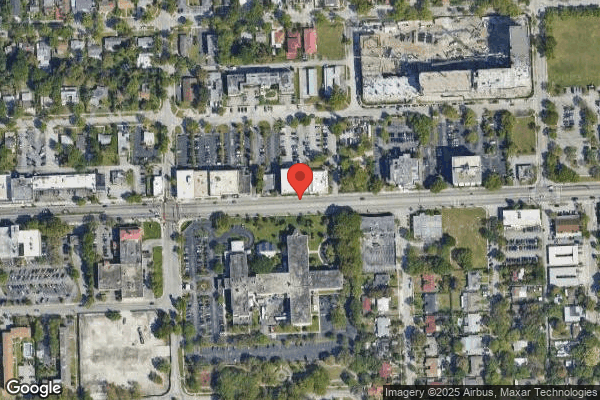
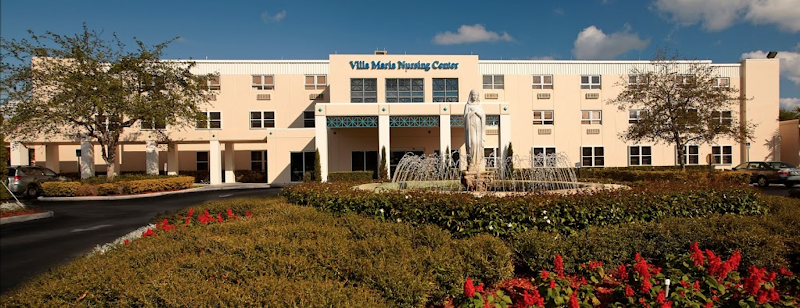
1050 NE 125TH STREET, NORTH MIAMI, FL 33161 (305) 891-8850
Non profit - Corporation 212 Beds Independent Data: November 2025 3 Immediate Jeopardy citations
Trust Grade
0/100
#580 of 690 in FL
Last Inspection: July 2025

Inspected within the last 6 months. Data reflects current conditions.

Overview

Villa Maria Nursing Center in North Miami has received a Trust Grade of F, indicating significant concerns regarding the facility's quality and care. It ranks #580 out of 690 nursing homes in Florida, placing it in the bottom half of facilities statewide, and #48 out of 54 in Miami-Dade County, suggesting limited local options for better care. The facility is worsening, with issues increasing from six in 2024 to ten in 2025. Staffing has a moderate rating of 3 out of 5 stars, with a turnover rate of 33%, which is below the state average, but there are concerns about RN coverage being lower than 84% of facilities in Florida. Alarmingly, the facility has incurred $128,210 in fines, indicating compliance issues, and has faced critical incidents such as failing to maintain fire safety systems and allowing a cognitively impaired resident to exit the facility undetected, exposing them to serious risks. Overall, while there are some strengths in staffing stability, the numerous critical deficiencies raise serious red flags for potential residents and their families.

Trust Score
F
0/100
In Florida
#580/690
Bottom 16%
Safety Record
High Risk
Review needed
Inspections
Getting Worse
6 → 10 violations
Staff Stability
○ Average
33% turnover. Near Florida's 48% average. Typical for the industry.
Penalties
✓ Good
$128,210 in fines. Lower than most Florida facilities. Relatively clean record.
Skilled Nurses
⚠ Watch
Each resident gets only 27 minutes of Registered Nurse (RN) attention daily — below average for Florida. Fewer RN minutes means fewer trained eyes watching for problems.
Violations
⚠ Watch
24 deficiencies on record. Higher than average. Multiple issues found across inspections.
★★☆☆☆
2.0
Overall Rating
★★★☆☆
3.0
Staff Levels
★★★★★
5.0
Care Quality
★☆☆☆☆
1.0
Inspection Score
Stable
2024: 6 issues
2025: 10 issues

The Good

  • 5-Star Quality Measures · Strong clinical quality outcomes
  • Full Sprinkler Coverage · Fire safety systems throughout facility
  • No fines on record
  • Staff turnover below average (33%)

    15 points below Florida average of 48%

Facility shows strength in quality measures, fire safety.

The Bad

2-Star Overall Rating

Below Florida average (3.2)

Below average - review inspection findings carefully

Staff Turnover: 33%

13pts below Florida avg (46%)

Typical for the industry

Federal Fines: $128,210

Well above median ($33,413)

Significant penalties indicating serious issues

The Ugly 24 deficiencies on record

3 life-threatening
Sept 2025 4 deficiencies 2 IJ
CRITICAL (J) 📢 Someone Reported This

A family member, employee, or ombudsman was alarmed enough to file a formal complaint

Immediate Jeopardy (IJ) - the most serious Medicare violation

Free from Abuse/Neglect (Tag F0600)

Someone could have died · This affected 1 resident

**NOTE- TERMS IN BRACKETS HAVE BEEN EDITED TO PROTECT CONFIDENTIALITY** Based on observation, record reviews and interviews, the facility neglected to provide a secure environment for one (Resident #1...

Read full inspector narrative →
**NOTE- TERMS IN BRACKETS HAVE BEEN EDITED TO PROTECT CONFIDENTIALITY** Based on observation, record reviews and interviews, the facility neglected to provide a secure environment for one (Resident #1) out of three sampled resident that displayed exit seeking behaviors and intent of elopement. As evidenced by cognitively impaired Resident #1 whose diagnoses include Dementia, and unsteady gait exited the facility undetected by staff on 8/04/2025 at 4:24 PM and ambulated 0.7 miles from the facility in temperatures that temperature ranged between a high of 92 degrees and a low of 80 degrees Fahrenheit according to AccuWeather, and was found by law enforcement at 4:46 PM wandering in a neighborhood that has high traffic volume and busy intersections. These deficient practices increased the risk for Resident #1 to be hit by an automobile and suffer major injury based on the facility's location and where Resident #1 was found are in areas with high traffic volume and busy intersections.Refer to F689.The findings included:Record review of the facility's policy titled, Suspected Adult, Disabled Person or Elderly Abuse/Neglect/ Exploitation protocol implementation date was on 12/2000, the policy documented: The facility will provide a safe resident environment and protect all residents from abuse. Therefore, each resident has the right to be free from abuse, neglect and corporal punishment of any type by anyone. Neglect means failure of the facility, its employees or service providers to provide goods and services to a resident that are necessary to avoid physical harm, pain, mental anguish or emotional distress. A prompt thorough investigation will be conducted by the facility immediately. Review of the Demographic Face Sheet for Resident #1 documented the resident was initially admitted on [DATE] with a diagnosis of Dementia, Pneumonia, and unsteadiness on feet.Review of Resident #1's Elopement care plan dated 7/21/2025 documented the resident is an elopement risk as evidenced by wandering with diagnosis of dementia; Goal: Resident will have no unauthorized departure from facility through next review date; Interventions: Place photograph on wander list; Redirect attention away from exit areas when wandering; Prompt and assist with meaningful activity attendance daily to keep occupied and Identify resident as an elopement risk and alert staff to monitor location on unit.Review of the facility's timeline of events documented the following: On 8/4/2025 a code pink was activated.Missing [Resident #1] was playing Bingo around 3:00 PM in auditorium. Activity concluded at 4:00 PM. Patient was waiting to be transported to his room. Upon staff's arrival, staff found empty wheelchair. The surrounding areas by wheelchair was checked. Patient's room was also checked. Code Pink was called at 4:45 PM. Search throughout whole facility, patio, parking lot. Social Worker called 911 to file police report. At 5:41 PM. [local law enforcement] returned Social Worker's phone call to notify Social Worker that patient was in [residential neighborhood], police called [local emergency services] and the patient was transported to [local hospital] via ambulance. Social Worker notified all staff members. Nurse manager notified daughter. Daughter relieved patient was found safe and is medically stable. Resident Returned to facility on 8/4/2025 at around 9:30 PM accompanied by the daughter. Review of the Physician's Order Sheets (POS) and Medication Administration Records (MAR) for July 2025 and August 2025 documented the resident was receiving the following medications: Donepezil HCL (hydrochloric acid) 10mg (milligrams) tab (tablet) 1 tab PO (by mouth) HS (at night) for dementia; Meclizine HCL 12.5mg tab 1 tab PO TID (three times a day) for dizziness and Memantine HCL 10mg tab 1 tab PO daily for Alzheimer's disease.Review of the Elopement Risk Assessment/Evaluation dated 7/21/2025 documented: The resident was at high risk for elopement and wandering. Keep one copy of patient's/resident's photograph in the medical record and another at the security gate; Place a PINK armband on the resident.On 9/04/25 at 3:10 PM the Risk Manager stated, On 08/04/2025 in the afternoon between 4:30 PM we were called by the staff that they couldn't find the patient, and he was not in the wheelchair. We let the staff activate Code Pink. When she realized he was not in his wheelchair, she called the nurse and told the nurse to check in the patient's room because he is not down here in the wheelchair. The nurse proceeded to check the room, and he was not there. Once they came down to the patio and realized he was not there, Code Pink was activated. After 30 minutes he was not found, the police department was called and notified. I went to the security guard and asked if he saw anything. There was a transport van leaving the facility and a visitor that had come early. He opened the gate for the van and the visitor. He said he did not see the resident. At the same time, there was a car at the gate trying to enter and he was taking care of that. I told the security that they can only open one gate at a time from now on. The police department called back the Social Worker to let us know that the resident was found at 4:46 PM and [local emergency] was called to send the resident to [local hospital] for further evaluation.On 9/04/2025 at 3:34 PM, Staff A, Certified Nursing Assistant (CNA) Activities Assistant stated, On that day we played bingo, normally we transport the residents from downstairs but on that day his family came to visit and brought him down on their own. We finished the bingo and escort the residents to the elevators one by one back to their room. When I came back down, I saw his wheelchair was empty; the second time I saw the wheelchair empty and told my co-worker. I called the nurse and told him he was missing. I took the wheelchair upstairs and the nurse said let's go downstairs on the patio to look for him. We went back downstairs, and he was not there. We then called Code Pink. Three staff members were in the bingo, two help with transporting the residents back upstairs and one staff member stays downstairs with the remaining residents. The staff member that stayed downstairs did not see the resident leave from his wheelchair.Interview on 9/04/2025 at 4:05 PM, Staff B, Security Officer stated, I work 6:00 AM to 2:00 PM and I'm working over today to help them. I was not here when the resident left the facility. We have a book here for residents who may try to elope. The book has a picture of the resident and information about the resident. The resident [Resident #1] picture was in here before, but it has since been removed since he is no longer here.Interview on 9/05/2025 at 8:26 AM, Staff C, Licensed Practical Nurse (LPN) for the 3:00 PM to 11:00 PM shift via telephone stated, I work 3:00 to 11:00 PM shift. I came in at 3:00 PM, I went downstairs and saw him in bingo in the auditorium. Then the shift started; I got a call from Activities asking if the patient was in his room. I checked the bathroom. We started looking for him and called Code Pink. [NAME] staff was looking for him. Social Services called the police, and [local emergency] was called. We got a call saying the patient was found and taken to [local hospital].On 9/05/2025 at 8:36 AM, Staff D, CNA for the 3:00 PM to 11:00 PM shift stated, I work 3:00 PM to 11:00 PM shift. That day I came and I did rounds. When I went inside the room, I didn't see the patient. I had a report that said the patient was at bingo in the auditorium. I went downstairs to the auditorium, and he was in the bingo sitting in a wheelchair. I went back upstairs. That was the last that I saw of him. I was in the building when they called Code Pink. Everyone started looking for the patient. He had a wristband on his arm.On 9/05/2025 at 8:47 AM, Staff E, CNA Activities Assistant stated, Before each assistant would rotate and take the residents back up to the floor. The new policy is one would stay in the auditorium and the other two would take them back to their rooms. I work 8:30 AM to 5:30 PM shift. From what I can recall, the family member brought him down to bingo that ended around 4:00 PM and we were transporting them back to their floors. and noticed one of the residents was missing. I immediately started searching for him. I went outside, went past the gate and did not see him. By that time [Staff A], CNA Activities Assistant had called the nurse to let her know he was missing. They called the police, and the police found him. The DON went to the hospital to identify the patient.On 9/05/2025 at 8:55 AM, Staff F, Activity Recreational Assistant via telephone stated, I work 8:30 AM to 5:00 PM shift. I remember on August 4th we were having bingo. I was transporting a patient back to their room and we saw a patient wheelchair and the patient was missing. I called my co-worker [Staff A], Activities Assistant to ask if she had seen the resident. [Staff A], Activities Assistant and we notified the nurse if he was in the room, and she said no. We began to search, and we didn't find the patient we announced Code Pink.We were still searching for the resident, and the police was called. I didn't know he was at risk for elopement. A procedure was put in place after the incident to take residents who are at risk for elopement back upstairs first then take the remaining residents. On 9/05/2025 at 9:03 AM, Staff G, Security Officer via telephone stated, I work 2:00 PM to 10:00 PM. I have been working here for more than three months. My responsibilities are to secure anything coming in or out of the building, make sure that not anybody is allowed to come in and out, I must watch them. We used to have both gates opened at the same time. New procedure is to make sure one gate is opened at a time. On that day I had medical emergency working and the van was waiting to go out and there was another person trying to come into the building. I was looking at the ID for the person trying to come into the building and did not see anyone walking out of the gate. I only saw the person walking out when they showed me the video.On 9/05/2025 at 9:16 AM, Staff H, Receptionist via telephone stated, I work 3:00 PM to 8:00 PM. I have been working here for two years. On that day I came and checked my books for the patient. They called me to page the Code Pink, and they told me to look and I didn't see anything. I did not see him at the door. Any patient I see, I would check my book and call the nurse to come and get them. My responsibilities are to answer the phones and assist family members coming into the building.On 9/05/2025 at 9:38 AM, the Registered Nurse, Assistant Director of Nursing (ADON) stated, I work 8:00 AM to 4:00 PM. On 8/4 that day the daughter took the patient downstairs to the patio. She left him with activities. We didn't really know if he was in activities. After the activities lady said she couldn't find the patient and announced code pink. We were looking for the patient in the stairs, around the building, everywhere. After we couldn't find him, the social worker called the police. We continued looking for the patient, called the Administrator and the Risk Manager. They found out the police found the patient and took him to [local hospital]. Pink band was on the patient. If the patient takes it off, we put it around the ankle. His was on the ankle.On 9/05/2025 at 11:44 AM, the Registered Nurse, Director of Nursing (DON) stated, I got a call from [], the ADON, that there was an elopement and I told him that I would be there. As I was driving to the facility, I was searching for him. I took one of my nursing assistants and was informed he was at [hospital]. I went to the hospital to confirm he was there. I confirmed that he was there and spoke with the ER (Emergency Room) nurse and resident. He appeared to be stable, alert and responsive. I notified the daughter that I saw her father. She wanted me to take him back to the facility, but I told her no and she must speak with the hospital. I came back to the facility and met with the team and started in-servicing staff on elopement. The staff said they did everything, they called the code and did a search. Our new procedure: In-service the security at the gate, that when one gate opens, the other one is closed. Discussed more about elopement. There should always be someone there when the patients are down for activities. Ensured that the assignments for the nurses and the CNAs document who are at risk for elopement.On 9/05/2025 at 11:52 AM, the Administrator stated, I am two minutes from my house and get a call from the ADON that one of the residents was missing and they couldn't find him. Code pink was called, and I turned around and came back. The Engineering Director and I looked at the video footage. We saw the resident and how he was able to leave. He was in communication with one of the visitors and he was telling him to stop following him. We got a call from the police saying that he was found. The facility communicated with the daughter and that he had been found. After communicating with the daughter, she said that she didn't want anything to be done at the hospital and wanted him to come back to the facility. We also communicated with the medical director. The daughter went to the hospital and brought him back to the facility. He was put on 1:1 and then transitioned to 30-minute rounding. The Risk Manager was in-servicing the staff about the elopement and had a long conversation with the guard at the gate. The next day formal in-services started, and we started a root cause and analysis. We looked at film and came up with solutions. We have a new process: One gate at time to be opened and the guards must put their eyes on who is leaving. When he left there was no one in the lobby to see him leave.
CRITICAL (J) 📢 Someone Reported This

A family member, employee, or ombudsman was alarmed enough to file a formal complaint

Immediate Jeopardy (IJ) - the most serious Medicare violation

Accident Prevention (Tag F0689)

Someone could have died · This affected 1 resident

**NOTE- TERMS IN BRACKETS HAVE BEEN EDITED TO PROTECT CONFIDENTIALITY** Based on observation, record reviews and interviews, the facility failed to provide a secure environment that with adequate supe...

Read full inspector narrative →
**NOTE- TERMS IN BRACKETS HAVE BEEN EDITED TO PROTECT CONFIDENTIALITY** Based on observation, record reviews and interviews, the facility failed to provide a secure environment that with adequate supervision and an effective monitoring system; for one (Resident #1) out of three sampled residents that displayed exit seeking behaviors and intent of elopement; as evidenced by: 8/04/2025 at 4:24 PM Resident #1 who is impaired cognitively with diagnoses of Dementia and unsteady gait left the facility undetected by staff and was found at 4:46 PM on 8/04/25 by law enforcement 0.7 miles from the facility wandering in a neighborhood that has high traffic volume and cross streets this deficient practice increased the risk for the resident to be hit by an automobile that could have resulted in the likelihood of an adverse outcomes, sustained serious injury, serious harm or death. According to Accu weather.com on that day the temperature ranged between a high of 92 degrees and a low of 80 degrees Fahrenheit that could have caused Resident #1 to succumb to heat stroke. Refer to F600. The findings include: Record review of the facility's policy titled, Elopement/Code Pink revised May 2012 and reviewed August 2025 documented: Policy Statement: It is the policy of the Facility to provide a safe and secure environment for all residents. Purpose: 1) To assure the safety and security of all residents, 2) To establish policies and procedures in the event of a missing resident and 3) To train and maintain staff awareness of the importance of resident safety and security.Review of the facility's policy titled, Accident Hazards/Supervision/Devices revised February 2025 documented: Policy Statement: The resident environment will remain as free of accident hazards as is possible.Each resident will receive adequate supervision and assistive devices to prevent accidents. This includes:1) Identifying hazards and risks, 2) Evaluating and analyzing hazards and risks, 3) Implementing interventions to reduce hazards and risks and 4) Monitoring effectiveness and modifying interventions.Review of the Demographic Face Sheet for Resident #1 documented the resident was initially admitted on [DATE] with a diagnosis of Dementia, Pneumonia, and unsteadiness on feet.Review of Resident's #1's Elopement care plan dated 7/21/2025 documented the resident is an elopement risk as evidenced by wandering with diagnosis of dementia; Goal: Resident will have no unauthorized departure from facility through next review date; Interventions: Place photograph on wander list; Redirect attention away from exit areas when wandering; Prompt and assist with meaningful activity attendance daily to keep occupied and Identify resident as an elopement risk and alert staff to monitor location on unit. Review of the facility's timeline of events documented the following: On 8/4/2025 a code pink was activated.Missing Resident #1 was playing Bingo around 3:00 PM in auditorium. Activity concluded at 4:00 PM. Patient was waiting to be transported to his room. Upon staff's arrival, staff found empty wheelchair. The surrounding areas by wheelchair was checked. Patient's room was also checked. Code Pink was called at 4:45 PM. Search throughout whole facility, patio, parking lot. Social Worker called 911 to file police report at 5:41 PM. [Local law enforcement] returned Social Worker's phone call to notify Social Worker that patient was in [residential neighborhood], police called [local emergency services] and the patient was transported to [local hospital] via ambulance. Social Worker notifiedall staff members. Nurse manager notified daughter. Daughter relieved patient was found safe and is medically stable. Resident Returned to facility 8/4/2025 at around 9:30 PM accompanied by the daughter.Review of the Physician's Order Sheets (POS) and Medication Administration Records (MAR) for July 2025 and August 2025 documented the resident was receiving the following medications: Donepezil HCL (hydrochloric acid) 10mg (milligrams) tab (tablet) 1 tab PO (bymouth) HS (at night) for dementia; Meclizine HCL 12.5mg tab 1 tab PO TID (three times a day) for dizziness and Memantine HCL 10mg tab 1 tab PO daily for Alzheimer's disease. Review of the Elopement Risk Assessment/Evaluation dated 7/21/2025 documented: The resident was at high risk for elopement and wandering. Keep one copy of patient's/resident's photograph in the medical record and another at the security gate; Place a PINK armband on the resident.On 9/04/25 at 3:10 PM the Risk Manager stated, On 8/04/2025 in the afternoon between 4:30 PM we were called by the staff that they couldn't find the patient, and he was not in the wheelchair. We let the staff activate Code Pink. When she realized he was not in his wheelchair, she called the nurse and told the nurse to check in the patient's room because he is not down here in the wheelchair. The nurse proceeded to check the room, and he was not there. Once they came down to the patio and realized he was not there, Code pink was activated. After 30 minutes he was not found, the police department was called and notified. I went to the security guard and asked if he saw anything. There was a transport van leaving the facility and a visitor that had come early. He opened the gate for the van and the visitor. He said he did not see the resident. At the same time, there was a car at the gate trying to enter and he was taking care of that. I told the security that they can only open one gate at a time from now on. The police department called back the Social worker to let us know that the resident was found at 4:46 PM and [ local emergency] was called to send the resident to [ local hospital] for further evaluation.On 9/04/2025 at 3:34 PM, Staff A, Certified Nursing Assistant (CNA) Activities Assistant stated, On that day we played bingo. Normally we transport the residents from downstairs but on that day his family came to visit and brought him down on their own. We finished the bingo. We escort the residents to the elevators one by one back to their room. When I came back down, I saw his wheelchair was empty. The second time I saw the wheelchair empty and told my co-worker. I called the nurse and told him he was missing. I took the wheelchair upstairs and the nurse said let's go downstairs on the patio to look for him. We went back downstairs, and he was not there. We then called Code Pink. Three staff members were in the bingo, two help with transporting the residents back upstairs and one staff member stays downstairs with the remaining residents. The staff member that stayed downstairs did not see the resident leave from his wheelchair.On 9/04/2025 at 4:05 PM, Staff B, Security Officer stated, I work 6:00 AM to 2:00 PM and I'm working over today to help them. I was not here when the resident left the facility. We have a book here for residents who may try to elope. The book has a picture of the resident and information about the resident. The resident [Resident #1] picture was in here before, but it has since been removed since he is no longer here.On 9/05/2025 at 8:26 AM, Staff C, Licensed Practical Nurse (LPN) for the 3:00 PM to 11:00 PM shift via telephone stated, I work 3:00 to 11:00 PM shift. I came in at 3:00 PM, I went downstairs and saw him in bingo in the auditorium. Then the shift started; I got a call from Activities asking if the patient was in his room. I checked the bathroom. We started looking for him and called Code Pink. [NAME] staff was looking for him. Social Services called the police, and [local emergency] was called. We got a call saying the patient was found and taken to [local hospital]. On 9/05/2025 at 8:36 AM, Staff D, CNA for the 3:00 PM to 11:00 PM shift stated, I work 3:00 PM to 11:00 PM shift. That day I came and I did rounds. When I went inside the room, I didn't see the patient. I had a report that said the patient was at bingo in the auditorium. I went downstairs to the auditorium, and he was in the bingo sitting in a wheelchair. I went back upstairs. That was the last that I saw of him. I was in the building when they called Code Pink. Everyone started looking for the patient. He had a wristband on his arm. On 9/05/2025 at 8:47 AM, Staff E, CNA Activities Assistant stated, Before each assistant would rotate and take the residents back up to the floor. The new policy is one would stay in the auditorium and the other two would take them back to their rooms. I work 8:30 AM to 5:30 PM shift. From what I can recall, the family member brought him down to bingo. Bingo ended around 4:00 PM and we were transporting them back to their floors. and noticed one of the residents was missing. I immediately started searching for him. I went outside, went past the gate and did not see him. By that time [Staff A], CNA Activities Assistant had called the nurse to let her know he was missing. They called the police, and the police found him. The DON went to the hospital to identify the patient.On 9/05/2025 at 8:55 AM, Staff F, Activity Recreational Assistant via telephone stated, I work 8:30 AM to 5:00 PM shift. I remember on August 4th we were having bingo. I was transporting a patient back to their room and we saw a patient wheelchair and the patient was missing. I called my coworker [Staff A], CNA Activities Assistant to ask if she had seen the resident. [Staff A], CNA Activities Assistant and we notified the nurse if he was in the room and she said no. We began to search, and we didn't find the patient we announced Code Pink. We were still searching for the resident, and the police was called. I didn't know he was at risk for elopement. A procedure was put in place after the incident to take residents who are at risk for elopement back upstairs first then take the remaining residents.On 9/05/2025 at 9:03 AM, Staff G, Security Officer via telephone stated, I work 2:00 PM to 10:00 PM. I have been working here for more than three months. My responsibilities are to secure anything coming in or out of the building, make sure that not anybody isallowed to come in and out, I must watch them. We used to have both gates opened at the same time. New procedure is to make sure one gate is opened at a time. On that day I had medical emergency working and the van was waiting to go out and there was another person trying to come into the building. I was looking at the ID for the person trying to come into the building and did not see anyone walking out of the gate. I only saw the person walking out when they showed me the video.On 9/05/2025 at 9:16 AM, Staff H, Receptionist via telephone stated, I work 3:00 PM to 8:00 PM. I have been working here for two years. On that day I came and checked my books for the patient. They called me to page the Code Pink, and they told me to look and I didn't see anything. I did not see him at the door. Any patient I see, I would check my book and call the nurse to come and get them. My responsibilities are to answer the phones and assist family members coming into the building. On 9/05/2025 at 9:38 AM, the Registered Nurse, Assistant Director of Nursing (ADON) stated, I work 8:00 AM to 4:00 PM. On 8/4 that day the daughter took the patient downstairs to the patio. She left him with activities. We didn't really know if he was inactivities. After the activities lady said she couldn't find the patient and announced code pink. We were looking for the patient in the stairs, around the building, everywhere. After we couldn't find him, the social worker called the police. We continued looking for the patient, called the Administrator and the Risk Manager. They found out the police found the patient and took him to [local hospital]. Pink band was on the patient. If the patient takes it off, we put it around the ankle. His was on the ankle.On 9/05/2025 at 11:44 AM, the Registered Nurse, Director of Nursing (DON) stated, I got a call from [], the ADON, that there was an elopement and I told him that I would be there. As I was driving to the facility, I was searching for him. I took one of my nursing assistants and was informed he was at [hospital]. I went to the hospital to confirm he was there. I confirmed that he was there and spoke with the ER (Emergency Room) nurse and resident. He appeared to be stable, alert and responsive. I notified the daughter. She wanted me to take him back to the facility, but I told her no and she must speak with the hospital. I came back to the facility and met with the team and started in-servicing staff on elopement. The staff said they did everything, they called the code and did a search. Our new procedure: In-service the security at the gate, that when one gate opens, the other one is closed. Discussed more about elopement. There should always be someone there when the patients are down for activities. Ensured that the assignments for the nurses and the CNAs document who are at risk for elopement.On 9/05/2025 at 11:52 AM, the Administrator stated, I am two minutes from my house and get a call from the ADON that one of the residents was missing and they couldn't find him. Code pink was called, and I turned around and came back. The Engineering Director and I looked at the video footage. We saw the resident and how he was able to leave. He was in communication with one of the visitors and he was telling him to stop following him. We got a call from the police saying that he was found. The facility communicated with the daughter and that he had been found. After communicating with the daughter, she said that she didn't want anything to be done at the hospital and wanted him to come back to the facility. We also communicated with the medical director. The daughter went to the hospital and brought him back to the facility. He was put on 1:1 and then transitioned to 30-minute rounding. The Risk Manager was in-servicing the staff about the elopement and had a long conversation with the guard at the gate. We have a new process: One gate at time to be opened and the guards must put their eyes on who is leaving. We reviewed the books for people at elopement risk, but we also added the wanders. When he left there was no one in the lobby to see him leave.
CONCERN (D) 📢 Someone Reported This

A family member, employee, or ombudsman was alarmed enough to file a formal complaint

Potential for Harm - no one hurt, but risky conditions existed

Administration (Tag F0835)

Could have caused harm · This affected 1 resident

**NOTE- TERMS IN BRACKETS HAVE BEEN EDITED TO PROTECT CONFIDENTIALITY** Based on observations, record reviews and interviews the facility's administration failed to implement, provide and ensure an ef...

Read full inspector narrative →
**NOTE- TERMS IN BRACKETS HAVE BEEN EDITED TO PROTECT CONFIDENTIALITY** Based on observations, record reviews and interviews the facility's administration failed to implement, provide and ensure an effective and efficient preventative measures were in place to prevent the neglect and elopement of one resident (Resident #1) out of three sampled residents who displayed exit seeking behaviors. As evidenced by inadequate safety measures that included failure to ensure residents were not able to leave the premise of the facility and failure by staff to implement assigned level of supervision for resident #1 who was a high risk for elopement. These deficient practices enabled resident #1 to exit the facility undetected at 4:24 PM through an electronic gate in the front of the facility on foot on 8/04/25 placing the resident at risk for harm and or injury. There were 191 residents residing in the facility at the time of the survey.The findings included:Record review of the facility's policy titled, Suspected Adult, Disabled Person or Elderly Abuse/Neglect/ Exploitation protocol implementation date was on 12/2000, the policy documented: The facility will provide a safe resident environment and protect all residents from abuse. Therefore, each resident has the right to be free from abuse, neglect and corporal punishment of any type by anyone. Neglect means failure of the facility, its employees or service providers to provide goods and services to a resident that are necessary to avoid physical harm, pain, mental anguish or emotional distress. A prompt thorough investigation will be conducted by the facility immediately.Record review of the facility's policy titled, Elopement/Code Pink revised May 2012 and reviewed August 2025 documented: Policy Statement: It is the policy of the Facility to provide a safe and secure environment for all residents. Purpose: 1) To assure the safety and security of all residents, 2) To establish policies and procedures in the event of a missing resident and 3) To train and maintain staff awareness of the importance of resident safety and security.Review of the Job Description for the Executive Director (Nursing Home Administrator) documented: The Administrator is responsible for developing, managing and supervising the overall functions of the facility in accordance with current Federal, state and local standards and established nursing policies and procedures. He/she is also responsible for providing a positive, caring and homelike environment for the residents.Review of the Job Description for the Director of Nursing documented: The Director of Nursing is responsible for planning, organizing, developing and directing the day to day functions of the nursing department in accordance with current Federal, state and local standards and established nursing policies and procedures. He/she is also responsible for providing a positive, caring and homelike environment for the residents.Review of the Job Description for the Activities Assistant documented: The Activities Assistant is responsible for instructing and leading various activity/recreation programs and transporting and assisting residents to and from activity/recreational programs.Review of the Job Description for the Risk Manager documented: The Risk Manager is responsible for coordinating programs for risk identification, risk analysis, risk control and risk reduction.Review of the Job Description for the Security Officer documented: The Security Officer is responsible to maintain safe and secure environment for customers and employees by patrolling, monitoring and guarding entrance points and gate of the facility.Review of the Job Description for the Receptionist documented: The Receptionist is responsible for answering the telephone, directs visitors and residents, maintains security by following safety procedures and oversees the front reception area.Based on observational tour of the facility's parameter increased risk factors included the fact that, the facility is located in an area that has high traffic volume and busy intersections. Both locations where the facility is located and the location where the resident was found later that day, are high traffic areas with busy two laned roads and four laned cross streets.According to Accu weather.com on that day of August 4, 2025, the temperature ranged between a high of 9 degrees and a low of 80 degrees Fahrenheit.Review of the Demographic Face Sheet for Resident #1 documented the resident was initially admitted on [DATE] with a diagnosis of dementia, pneumonia, hypertension and unsteadiness on feet.Review of Resident's #1 Elopement care plan dated 7/21/25 documented the resident is an elopement risk as evidenced by wandering with diagnosis of dementia; Goal: Resident will have no unauthorized departure from facility through next review date; Interventions: Place photograph on wander list; Redirect attention away from exit areas when wandering; Prompt and assist with meaningful activity attendance daily to keep occupied and Identify resident as an elopement risk and alert staff to monitor location on unit. Review of the facility's timeline of events documented the following: On 8/4/2025 a code pink was activated. Missing Resident #1 was playing Bingo around 3:00 PM in auditorium. Activity concluded at 4:00 pm. Patient was waiting to be transported to his room. Upon staff's arrival, staff found empty wheelchair. Surrounding areas by wheelchair checked. Patient's room was also checked. Code Pink was called at 4:45 PM. Search throughout whole facility, patio, parking lot. Social Worker called 911 to file police report at 5:41 PM. [ ] local law enforcement returned Social Worker's phone call to notify Social Worker that patient was in [ ] residential neighborhood, police called [ ] local emergency services and the patient was transported to [ ] local hospital via ambulance. Social Worker notified all staff members. Nurse manager notified daughter. Daughter relieved patient was found safe and is medically stable. Resident Returned to facility 8/4/2025 at around 9:30 pm accompanied by the daughter.Review of the Elopement Risk Assessment/Evaluation dated 7/21/25 documented: The resident was at high risk for elopement and wandering. Keep one copy of patient's/resident's photograph in the medical record and another at the security gate; Place a PINK armband on the resident. On 9/04/25 at 3:10 PM the Risk Manager stated, On 8/04/2025 in the afternoon between 4:30 PM we were called by the staff that they couldn't find the patient, and he was not in the wheelchair. We let the staff activate Code Pink. When she realized he was not in his wheelchair, she called the nurse and told the nurse to check in the patient's room because he is not down here in the wheelchair. The nurse proceeded to check the room, and he was not there. Once they came down to the patio and realized he was not there, Code Pink was activated. After 30 minutes he was not found, the police department was called and notified. I went to the security guard and asked if he saw anything. There was a transport van leaving the facility and a visitor that had come early. He opened the gate for the van and the visitor. He said he did not see the resident. At the same time, there was a car at the gate trying to enter and he was taking care of that. I told the security that they can only open one gate at a time from now on. The police department called back the Social Worker to let us know that the resident was found at 4:46 PM and [local emergency] was called to send the resident to [local hospital] for further evaluation. On 9/05/2025 at 9:03 AM, Staff G, Security Officer via telephone stated, I work 2:00 PM to 10:00 PM. I have been working here for more than three months. My responsibilities are to secure anything coming in or out of the building, make sure that not anybody is allowed to come in and out, I must watch them. We used to have both gates opened at the same time. New procedure is to make sure one gate is opened at a time. On that day I had medical emergency working and the van was waiting to go out and there was another person trying to come into the building. I was looking at the ID for the person trying to come into the building and did not see anyone walking out of the gate. I only saw the person walking out when they showed me the video.On 9/05/2025 at 9:16 AM, Staff H, Receptionist via telephone stated, I work 3:00 PM to 8:00 PM. I have been working here for two years. On that day I came and checked my books for the patient. They called me to page the Code Pink, and they told me to look and I didn't see anything. I did not see him at the door. Any patient I see, I would check my book and call the nurse to come and get them. My responsibilities are to answer the phones and assist family members coming into the building.On 9/05/2025 at 9:38 AM, the Registered Nurse, Assistant Director of Nursing (ADON) stated, I work 8:00 AM to 4:00 PM. On 8/4 that day the daughter took the patient downstairs to the patio. She left him with activities. We didn't really know if he was in activities. After the activities lady said she couldn't find the patient and announced code pink. We were looking for the patient in the stairs, around the building, everywhere. After we couldn't find him, the Social Worker called the police. We continued looking for the patient, called the Administrator and the Risk Manager. They found out the police found the patient and took him to [local hospital]. Pink band was on the patient. If the patient takes it off, we put it around the ankle. His was on the ankle. On 9/05/2025 at 11:52 AM, the Administrator stated, I am two minutes from my house and get a call from the ADON that one of the residents was missing and they couldn't find him. Code pink was called, and I turned around and came back. The Engineering Director and I looked at the video footage. We saw the resident and how he was able to leave. He was in communication with one of the visitors and he was telling him to stop following him. We got a call from the police saying that he was found. The facility communicated with the daughter and that he had been found. After communicating with the daughter, she said that she didn't want anything to be done at the hospital and wanted him to come back to the facility. We also communicated with the medical director. The daughter went to the hospital and brought him back to the facility. He was put on 1:1 and then transitioned to 30-minute rounding. The next day formal in-services started, and we started a root cause and analysis. We looked at film and came up with solutions. We have a new process: One gate at time to be opened and the guards must put their eyes on who is leaving. When he left there was no one in the lobby to see him leave.
CONCERN (D) 📢 Someone Reported This

A family member, employee, or ombudsman was alarmed enough to file a formal complaint

Potential for Harm - no one hurt, but risky conditions existed

QAPI Program (Tag F0867)

Could have caused harm · This affected 1 resident

Based on record review and interviews, the facility's quality assurance and assessment committee failed to identify quality concerns to implement effective plans of action related to adequate supervis...

Read full inspector narrative →
Based on record review and interviews, the facility's quality assurance and assessment committee failed to identify quality concerns to implement effective plans of action related to adequate supervision resulting in repeated deficient practice. The facility's history includes deficient practice for failing to supervise residents resulting in possible accidents. The facility was cited for Free of Accident Hazards, Supervision, Devices, Administration and Quality Assurance and Assessment on July 31, 2025. On 8/04/2025, the facility was negligent and failed to provide adequate supervision and effective services to prevent the elopement of one (Resident #1) out of three sampled residents with exit seeking behaviors, resulting in Resident #1 eloping from the facility at 4:24 PM, through an electronic gate in the front of the facility on foot undetected. These repeated deficient practices have the potential to affect any of the 191 residents residing in the facility.The findings included: Record review of the facility's Quality Assurance Performance Improvement (QAPI) Program Policy and Procedure (implemented December 2004) documented the following: Policy-This facility shall develop, implement and maintain an effective, comprehensive, data-driven QAPI program that is focused on indicators of the outcomes of care and quality of life for our residents; QAPI purpose is a type of quality management program which takes a systematic, interdisciplinary, comprehensive and data-driven approach to maintaining and improving safety and quality. Guidelines for Governance and Leadership: 1) The QAPI program includes the establishment of a Quality Assessment and Assurance (QAA) Committee and a written QAPI Plan; 2) The QAA Committee shall be interdisciplinary and shall: b) Meet at least quarterly and as needed to coordinate and evaluate activities under the QAPI program; 3) b) Policies and procedures for feedback, data collection systems and monitoring, c) Process addressing how the committee will conduct activities necessary to identify and correct quality deficiencies. Key components of this process include, but are not limited to, the following: i.) Tracking and measuring performance, iii.) Identifying and prioritizing quality deficiencies, iv.) Systematically analyzing underlying causes of systemic quality deficiencies and v.) Developing and implementing corrective action or performance improvement activities.Review of the Quality Assurance and Performance Improvement (QAPI) Committee Meeting Sign-in Sheets dated 6/17/25, 7/15/25 and 8/19/25 documented the facility had a QAA Committee meeting monthly. Attendees included: Executive Director, DON, Medical Director, Director of Social Services, Director of Activities, Dietitian, MDS Coordinator, Director of Case Management, Director of Housekeeping/Laundry Services, Risk Manager, Infection Control, Director of Health Information Management, Fiscal Services, Pharmacist, Data Analyst, Laboratories and Community Liaison.Interview with the Director of Nursing/QAA on 9/05/25 at 2:27 PM. She stated, The QAA Committee meet monthly and we meet on the third Tuesday of the month. The committee members consist of the Administrator, DON, Medical Director and Department Heads. The purpose of the QAA committee is to bring forth any concerns that we may have and that we may need to address patient concerns and quality of care.
Jul 2025 6 deficiencies
CONCERN (D)

Potential for Harm - no one hurt, but risky conditions existed

Resident Rights (Tag F0550)

Could have caused harm · This affected 1 resident

Based on observations, interviews and records reviewed, the facility failed to ensure one (Resident #72) out of the eleven residents that eat independently had a dignified dining experience. As eviden...

Read full inspector narrative →
Based on observations, interviews and records reviewed, the facility failed to ensure one (Resident #72) out of the eleven residents that eat independently had a dignified dining experience. As evidence by during the lunch meal in the dining room Resident # 72 did not receive a meal tray while the table mate had received her meal and had started eating. The findings included: During dining observation on 07/28/2025 there were 11 residents in the dining room, seated with two residents per table. At approximately 11:55 AM when the meal cart arrived staff members distributed the meal trays. Resident #72 was seated with another resident when the meal cart arrived. The resident seated with Resident #72 was served and had started eating but Resident #72 was not served.On 07/28/2025 at 12:22 PM, Staff A, Certified Nursing Assistant (CNA), reported that Resident #72's tray had not been included in the cart, due to an error in the kitchen.A review of the seating arrangements confirmed that Resident #72 was assigned to table #3. This designation is part of the facility's established dining plan, ensuring residents are seated according to structured guidelines during meal services.Interview with Staff A Certified Nursing Assistant (CNA) on 07/28/2025 at 12:32 PM revealed the resident did not receive a meal during the scheduled dining period. She reported that the kitchen staff had failed to deliver Resident #72's meal tray to the dining room as expected and the oversight originated in the kitchen, resulting in the absence of the resident's meal.Interview with Director of Nursing (DON) on 07/31/2025 at 11:45 AM. She stated the resident was present in the dining room during meal service, despite not being assigned to dine in that location. This occurrence was the result of an error, and Resident # 72's presence there was unintentional.Interview on 07/31/2025 at 1:05 PM, the Food Service Director revealed the kitchen staff served meal trays based on a list provided by the charge nurse. This list indicated which residents were assigned to eat in the dining room. During tray line service, the trays were distributed according to the information specified on that list to ensure proper meal delivery. However, he was not certain about the specific events that occurred on that day. Record review of the Policy and Procedures for Residents Rights revised on 11/28/2016 revealed: Residents Rights a) The resident has a right to a dignified existence, self-determination and communication with and access to person and services inside and outside the facility including those specified in this section. 1) A facility must treat each resident with respect and dignity and care for each resident in a manner and in an environment that promotes maintenance or enhancement of his or her quality of life, recognizing each resident's individuality. The facility must protect and promote the rights of the residents.
CONCERN (D)

Potential for Harm - no one hurt, but risky conditions existed

Safe Environment (Tag F0584)

Could have caused harm · This affected 1 resident

**NOTE- TERMS IN BRACKETS HAVE BEEN EDITED TO PROTECT CONFIDENTIALITY** Based on observation, interview and record review, the facility failed to provide housekeeping and maintenance services to ensur...

Read full inspector narrative →
**NOTE- TERMS IN BRACKETS HAVE BEEN EDITED TO PROTECT CONFIDENTIALITY** Based on observation, interview and record review, the facility failed to provide housekeeping and maintenance services to ensure a sanitary clean homelike environment as evidenced by six resident areas observed unsanitary and in disrepair on the facility's third floor (North Unit and East Unit). The findings include.Observation on 07/28/25 starting at 08:30 AM during the initial resident and room screenings on the facility's 3rd floor North/East Unit revealed: room [ROOM NUMBER]- The wall was water damaged, water noted on the floor under the air conditioner, the base board was detached, and the air condition unit was falling off the wall (Photographic evidence).room [ROOM NUMBER] - Wall damaged on the outside of the room, the hand sanitizer dispenser had been ripped off the wall and the concrete underlayer of the wall visible (Photographic evidence).room [ROOM NUMBER]- Heavily stained bedside chair, the air conditioning unit noted falling off the wall. (Photographic evidence).room [ROOM NUMBER]- The air conditioning unit detached from wall.room [ROOM NUMBER]- Water on the floor at the base of the air conditioning unit.room [ROOM NUMBER]- Water on the floor at the base of the air condition unit. Interview on 07/30/2025 at 08:45 AM, the Director of Environmental services stated: I schedule five (5) female housekeepers for 7:00AM to 3:00 PM shift, two (2) housekeepers for 2:00 PM to10:00 PM shift, for laundry three (3) staff in the morning and 3 three in the afternoon. Housekeepers that work on the floor clean and sanitize the residents' rooms, bathrooms and common areas and pick up the garbage daily. The house keepers also are responsible for cleaning all furniture in the residents' room daily. We are currently working on replacing some of the residents' bedside chairs. Interview on 07/30/2025 at 8:56 AM, the Director of Maintenance stated: If there is a maintenance issue the staff place a ticket in the [] system that we used at the facility for staff to report maintenance issues. After the maintenance issue is reported, the maintenance staff is alerted via telephone of the issue, the technician on duty will immediately check out the issue, maintenance staff would replace or fix the issue in a timely manner. We have had some reports of issues with the air condition units, I am not sure of the specific rooms, there are some air condition units in residents' rooms that need to be fixed, I personally make rounds to check and make sure issues are fixed/resolved. Review of the facility policy and procedure titled Resident Environment revision date 10/16/24 states: The organization creates and maintains a supportive environment for all residents, which preserves dignity and facilitates a positive self-image. Any electrical appliances brought must be checked by the engineering department and approved for use.
CONCERN (D)

Potential for Harm - no one hurt, but risky conditions existed

Accident Prevention (Tag F0689)

Could have caused harm · This affected 1 resident

**NOTE- TERMS IN BRACKETS HAVE BEEN EDITED TO PROTECT CONFIDENTIALITY** Based on observation, interview and record review, the facility failed provide a safe environment in accordance with the facilit...

Read full inspector narrative →
**NOTE- TERMS IN BRACKETS HAVE BEEN EDITED TO PROTECT CONFIDENTIALITY** Based on observation, interview and record review, the facility failed provide a safe environment in accordance with the facility's policy related to accident hazards for two vulnerable residents (Resident #10 and Resident #73) out of five sampled residents; as evidenced Resident #10 who is at risk for falls was observed in bed with the right-side floor mat positioned against the wall, presenting a potential safety hazard and an unattended open container with disinfecting wipes with ingredients that pose serious health and safety risks observed on Resident #73's bedside table.The findings include: Resident #10 On 07/18/25 at 09:17 AM during observation Resident #10 in bed, one (1) floor mat on left side facing the bed, one (1) 1 floor mat positioned against the wall on right side (Photographic evidence). Review of the medical records for Resident #10 revealed the resident was admitted to the facility on [DATE]. Clinical diagnoses included but not limited to: Muscle weakness, Bilateral primary osteoarthritis of knee, Unspecified open angle glaucoma, Abnormalities of gait and mobility. Review of the Physician’s Orders Sheet for July 2025 revealed Resident #10 had orders that included but not limited: Bilateral floor mats when in bed every shift. Record review of Resident # 10’s Significant Change Minimum Data Set (MDS) dated [DATE] revealed: Section C for Cognitive Patterns documented Brief Interview for Mental status Score (BIMS) 3 on a 0-15 scale, indicating the resident is cognitively impaired. Section E for Behaviors documented no behaviors exhibited. Section GG for Functional Abilities documented the resident is dependent for care. Section J for Health Conditions documented one (1)-fall without injury since prior assessment. Record review of Resident # 10’s Care Plans Reference Date 02/12/25 revealed the Resident has potential for falls related to decreased safety awareness… Interview on 07/30/2025 at 09:30 AM Licensed Practical Nurse (LPN), (Staff D) assigned nurse for Resident #10 stated: “We check on those residents at least every hour… Every morning all staff have to check the fall list to see which residents have floor mats and make sure the floor mats are in place when the residents are in bed.” Interview on 07/30/2025 at 09:39 AM, Staff E, Certified Nursing assistant (CNA) stated: “I am assigned to [Resident #10] …for my assigned residents with floor mats, I check on them at least every hour. When the resident is in bed, I make sure the floor mats are on each side of the bed, when the resident is out of bed the floor mats are stored in a plastic bag against the wall. Review of the facility policy and procedure titled “Falls Program” revision date 10/16/24 states: The falls program is a facility wide, multi-disciplinary program whose purpose is to properly identify residents who are at risk for falls and potential environmental risks which may facilitate accidents resulting in resident injury. Resident #73 Observation on 07/28/2025 at 09:37 AM, Resident #73 was in bed with eyes closed; an open container of disinfectant wipes [] was observed on the resident’s bedside table. Record review of Resident #73's demographic sheet revealed the resident was admitted on [DATE] with diagnoses that include Cerebral Infarction (CVA) and Unspecified Dysphagia. Record review of a Quarterly Minimum Data Set (MDS) Section for cognitive patterns revealed a Brief Interview of Mental Status (BIMS) summary score was 7 out of 15 which indicates severe cognitive impairment. The section for Functional abilities revealed the resident was dependent on Activities of daily living (ADLs). Record Review of a care plan 01/27/2025 revealed Resident #73 required total maximum assistance with most ADL tasks and mobility due to functional decline status post CVA. Goal: Will maintain highest practicable level of participation without decline over the next 90 days. Interventions: Hot liquids handling requires assistance as ordered Review of the disinfectant wipes [] container information revealed manufacturer warning and contents that included: Quaternary/high-alcohol formula (14.85%, Ethyl Alcohol 72.50%, Quaternary Ammonium Compounds 0.33%. Hazardous Identification included: Acute toxicity- Inhalation (Category 4), Flammable Liquids (Category 2), Serious Eye Damage/Eye Irritation (Category 2A), Specific Organ Toxicity (Single Exposure- Category 3). Container should be kept tightly closed and stored locked up. Potential exists for harm if used inappropriately including but not limited to, ingestion. Interview on 07/31/2025 at 01:22 PM, when asked about the open container of disinfectant wipes on Resident # 73’s bedside table; the Nursing Supervisor stated: Any harmful objects like scissors or anything sharp cannot be kept inside a patient's room. No disinfectant wipes can be kept inside any patients' rooms. The reason is because some patients are disoriented or not alert and can put those wipes in their mouth. To ensure patient's safety and prevent hazardous items from being kept inside patients' rooms, I make rounds first thing in the morning and every 2 hours after that. Interview on 07/31/2025 at 12:55 PM, Staff G, Licensed Practical Nurse (LPN) was asked about the use and storage of the disinfectant wipes; Staff G, LPN stated: We use the disinfectant like [brand] to clean the blood pressure machines only. That is the alcohol type disinfectant, and it should also only be kept with the blood pressure machines not inside patients’ rooms. If I see a disinfectant wipes bottle at the patient’s bedside, I will definitely remove it immediately…disinfectant wipes are not allowed to be kept inside the patient’s room because it is like a chemical and some patients who are not alert and oriented, might place them inside their mouths and possibly cause harm. Interview on 07/31/2025 at 03:04 PM, the Director of Nursing (DON) stated: Disinfectant wipes are not allowed to be kept in patients' rooms but if residents cannot move, then I do not see how they can be at risk. Record Review of the facility policy and procedure titled Accident Hazards/Supervision/Devices, undated indicates the following: The facility must ensure that the resident environment remains as free from accident hazards as possible. The facility ensures that all staff (e.g. interdisciplinary/nursing/professional, administrative, maintenance, etc.) are involved in observing and identifying potential hazards in the environment, while taking into consideration the unique characteristics and abilities of each resident. The facility ensures that reasonable efforts to identify hazards and risk factors for each resident. Protocol: This facility established and utilize a systematic approach to address resident risk and environmental hazards to minimize the likelihood of accidents. Identification of Hazards and Risks- the process through which the facility becomes aware of potential hazards in the resident environment and the risk of a resident having an avoidable accident.
CONCERN (D)

Potential for Harm - no one hurt, but risky conditions existed

Respiratory Care (Tag F0695)

Could have caused harm · This affected 1 resident

**NOTE- TERMS IN BRACKETS HAVE BEEN EDITED TO PROTECT CONFIDENTIALITY** Based on observation, interview and record review, the facility failed to ensure oxygen therapy was delivered as prescribed for ...

Read full inspector narrative →
**NOTE- TERMS IN BRACKETS HAVE BEEN EDITED TO PROTECT CONFIDENTIALITY** Based on observation, interview and record review, the facility failed to ensure oxygen therapy was delivered as prescribed for one (Resident #44) out of one resident who has a primary diagnosis of acute respiratory failure. As evidenced by observations of Resident # 41's Nasal Canula not in the resident's nostrils increasing the resident's risk for respiratory distress.The findings include:During an observation on 07/28/2025 at 8:48 AM, revealed Resident # 41's Oxygen (02) running at 2 Liters per minute (lpm) with the via nasal canula (NC) not positioned in the resident's nostrils. The surveyor alerted Certified Nursing Assistant (CNA) to position the NC in the resident's nostril. Staff C revealed Resident #41 is her patient and she checks on the resident frequently during her shift.Observation on 07/30/2025 at 8:51 AM revealed Resident #41 in bed awake, with 02 running at 2 lpm the NC was not in the resident's nostril and was observed in the resident's mouth. The surveyor alerted assigned CNA, (Staff C) who reported she was just in the resident's room, and she had placed the oxygen tubing correctly in the resident's nostrils.Review of medical records for Resident #41 revealed the resident was admitted to the facility on [DATE]. Clinical diagnoses included but not limited to: Acute Respiratory Failure.Review of the Physician's Orders Sheet for July 2025 revealed Resident #41 had orders that included but not limited to: Apply oxygen via nasal cannula at 2 Liters per minute continuously.Record review of Resident # 41's Quarterly Minimum Data Set (MDS) dated [DATE] revealed: Section C for Cognitive Patterns documented Brief Interview for Mental status Score (BIMS)-unable to determined. Section J for Health Conditions documented Shortness of breath or trouble breathing with exertion, when sitting at rest, when lying flat. Section O for Special Treatments documented resident is receiving oxygen therapyRecord review of Resident #1 's Care Plans Reference dated 07/28/25 revealed: Resident has the potential for shortness of breath and alteration in respiratory status due to respiratory failure. Interventions include-Administer oxygen, respiratory treatments as ordered, document as needed use and effectiveness. Monitor for episodes of shortness of breath. Monitor frequency, duration, activity level and interventions that are successful. Monitor for signs and symptoms of respiratory distress: increased secretions, cough, increased shortness of breath, wheezing, elevated temperature.Interview on 07/31/2025 at 8:25 AM Licensed Practical Nurse (LPN), (Staff B) stated she is the assigned nurse for Resident #41, she does rounds for the residents every hour rotating with the assigned Certified Nursing Assistant to check on all the residents, vital signs including the oxygen saturation for residents are completed every shift and as needed. The last time she checked Resident #41's oxygen saturation was during her shift yesterday and the resident was within her normal limits and during frequent rounds the resident showed no distress. Stated she completed her start of shift rounds today and the resident was in no distress; she has not started checking her assigned residents' vital signs for her shift as yet.Review of the facility policy and procedures titled, Respiratory Therapy Services revision date 10/16/24 states: It is the policy of the facility to provide respiratory services to patients/residents when ordered by a physician. To ensure that all residents/patients in the facility have access to prescribed respiratory therapy services when medically indicated.
CONCERN (D)

Potential for Harm - no one hurt, but risky conditions existed

QAPI Program (Tag F0867)

Could have caused harm · This affected 1 resident

Based on observations, interviews, and record review, the facility failed to demonstrate that effective actions were implemented through its Quality Assurance and Performance Improvement (QAPI) progra...

Read full inspector narrative →
Based on observations, interviews, and record review, the facility failed to demonstrate that effective actions were implemented through its Quality Assurance and Performance Improvement (QAPI) program to correct previously identified quality deficiencies under F550 (Resident Rights) related to failing to ensure Resident # 72 had a dignified dining experience, as evidenced by Resident #72 was not provided with a meal tray in a timely manner while her table mate was served and had started eating. The findings included: Review of the facility's survey history revealed during a recertification survey with exit dated 03/15/2024 the facility was cited F550 related to dignity concerns related to an indwelling urinary catheter drainage collection bag that was not fully covered with the privacy bag.During this survey with exit date 07/31/2025, the facility was again cited F550 for failing to ensure dignity during dining related to Resident #72 who was seated at a table for two in the dining room and was not provided with a meal tray while her table mate was served and had started eating. On 07/31/2025 at 2:20 PM, the Director of Nursing and the Administrator revealed the QAA committee includes interdisciplinary members and meetings are held monthly, and the last meeting was held on 07/15/2025. The interdisciplinary members use daily meetings, incident reports, and audit tools to track concerns.Review of the Policy and procedure titled Quality Assurance and Performance Improvement revealed, the primary objectives of the QAPI program are to monitor the quality of care and services provided, identify areas requiring improvement, and implement effective, data-driven changes throughout the facility to ensure high standards of resident-centered care. The program emphasizes active engagement of facility leadership, staff, residents, family representatives, and other relevant stakeholders in the quality improvement process. It outlines the establishment of systematic processes to evaluate care and services, determine when in-depth analysis is necessary, and address root causes of identified issues. Additionally, the policy supports the implementation of sustainable improvements and sets clear expectations related to patient safety, quality of care, individual rights, personal choice, and respect for all residents.
CONCERN (D)

Potential for Harm - no one hurt, but risky conditions existed

Infection Control (Tag F0880)

Could have caused harm · This affected 1 resident

**NOTE- TERMS IN BRACKETS HAVE BEEN EDITED TO PROTECT CONFIDENTIALITY** Based on observation, interview and record review the facility failed to ensure infection control standards and procedures were ...

Read full inspector narrative →
**NOTE- TERMS IN BRACKETS HAVE BEEN EDITED TO PROTECT CONFIDENTIALITY** Based on observation, interview and record review the facility failed to ensure infection control standards and procedures were followed for two out of two residents (#25 and Resident #201) sampled for tube feeding. As evidenced by enteral feeding caps were noted stored uncovered on Resident #25 bedside chair and Resident #201's enteral feeding tube line open stored with the open end uncapped. The findings include: Resident # 201 Observation on 07/28/2025 at 11:23 AM revealed Resident #201 in bed with eyes closed; the feeding tube was left uncapped leaking on the feeding pump. Dry residue was noted on the pump surface [Photographic evidence]. Record review of Resident # 201 medical records revealed the resident was admitted on [DATE]. Clinical diagnoses include multiple sclerosis and gastrostomy status. Review of physician orders for July 2025 revealed orders for Jevity 1.5 @45 ml x 20 hrs on at 1300 (1:00 PM) off at 0900 (9:00 AM) via Enteral tube every shift. Review of the care plan, reviewed on 05/18/2025 documented resident #201 was at risk for gastrointestinal distress and aspiration due to the gastrostomy tube. Risk of complications related to GT placement… cleansing the insertion site daily, and monitoring for signs of infection. Review of the Minimum Data Set (MDS) assessment dated [DATE] indicated Resident #201 is cognitively intact, dependent on activities of daily living and received more than 50% of nutritional intake via tube feeding. Resident #25 On 7/28/2025 at 8:44 AM, Resident #25 in bed awake, Enteral Feeding inactive-Jevity, supplement, water and syringe dated 07/28/25, two (2) Enteral Feeding tubing caps observed on the bedside chair uncovered (Photographic evidence). On 07/29/2025 at 10:48 AM Resident #25 in bed asleep, Enteral Feeding not running. Two (2) Enteral Feeding tubing caps stored on the bedside chair uncovered (Photographic evidence). On 07/30/2025 at 8:56 AM Resident #25 in bed awake, Enteral Feeding running at correct rate, two (2) Enteral Feeding tubing caps observed on the bedside chair uncovered (Photographic evidence). Review of the medical records for Resident # 25 revealed the resident was admitted to the facility on [DATE]. Clinical diagnoses included but not limited to: Gastrostomy. Review of the Physician’s Orders Sheet for July 2025 revealed Resident #25 orders that included but not limited to: Enteral Feeding-Jevity 1.5 at 55 milliners per hour (ml/hr.) x 22 hours daily, on at 12 Noon off at 10:00 AM. Water auto flush 45ml/hr. x 22 hours via enteral tube. Interview on 07/30/2025 at 10:14 AM, Staff B, Licensed Practical Nurse (LPN), stated: “ I am the assigned nurse for [Resident # 25] the enteral feeding orders are off at 10:00 AM and on at 12:00 PM, When the feeding is turned off at 10:00 AM, if I am keeping the supplement for the 12:00 PM start time, I make sure to clean the feeding equipment, cap the end of the feeding tubing and make sure the tubes are not touching any other areas during storage. When the feeding tubing caps are not being used, they are stored in the bag with the feeding syringe to keep them clean and sanitary. During an interview 07/31/2025 at 11:36 AM, the Director of Nursing (DON) revealed the feeding tubes are to be always capped to maintain hygiene and prevent contamination. If a cap is unavailable, the tube must be placed in a protective bag. The photographic evidence of the uncapped and leaking tube feeding line was presented and the DON acknowledge the infection control concerns. Review of the facility’s policy and procedures titled, “Infection Control Plan” revision date 10/25/24 states: The goal of this facility is to establish a comprehensive Infection Control Program, to ensure that the organization has a functioning coordinated process in place, to reduce the risks of endemic and epidemic nosocomial infections in residents and healthcare workers and to optimize use of resources through a strong preventive program.
Mar 2024 6 deficiencies 1 IJ (1 facility-wide)
CRITICAL (L)

Immediate Jeopardy (IJ) - the most serious Medicare violation

Safe Environment (Tag F0921)

Someone could have died · This affected most or all residents

⚠️ Facility-wide issue

Based on observation, interview and records reviewed, the facility failed to ensure a safe environment endangering the life of all occupants in the facility. The facility failed to maintain the Fire A...

Read full inspector narrative →
Based on observation, interview and records reviewed, the facility failed to ensure a safe environment endangering the life of all occupants in the facility. The facility failed to maintain the Fire Alarm system and failed to maintain the faulty fire panel. These deficient practices places all occupants of the facility at risk for smoke inhalation, serious burns, or death in the event of fire. The facility also failed to notify the residents and their representatives of the system failures. These findings resulted in the determination of Immediate Jeopardy that started on January 5th, 2024. Cross reference Event PFKY21 The findings included: On March 12, 2024 it was revealed during the Life Safety Coded surveyor that all of the 15 second magnetic door locks on all of the exit doors fire doors (egress) that would allow individuals to exit the facility during an emergency were not working, and the flashing lights that would alert individuals in event of a fire were not working. The facility started a fire watch on January 5, 2024 and instead of having the requirement of having a designated person assigned to solely to the fire watch the facility documented that the floor supervisors are conducting the fire watch. During an interview with Maintenance Supervisor on March 15, 2024 at 12:33 PM. He stated that the fire alarm was undergoing routine inspections and at one point the fire alarm was not working properly. He stated it followed the normal procedures to submit all documents to the company who oversees repairs. It was repaired but the work was not completed. He stated it happened again and the company came but realized the work was not completed. He stated the facility administration is trying to get estimates and bids to assess the fire alarm panel replacement or repairs. During an interview with Nursing Home Administrator on March 15, 2024 at 12:45 PM. He stated the building is old and they had an addition. He stated the maintenance inspections were done weekly, monthly, and quarterly. The alarm company in charge came and tried to fix the motherboard (panel) which is too old, it could not be fixed. He stated the company tried to integrate a new panel, but it could not be integrated. He stated the panel does not send signals to the door to work properly. The facility is in the process to replace the fire panel. He stated that the facility is asking for an estimate and bids for the fire alarm. He stated the new system will be wireless. The Administrator was asked if the residents, residents family and representatives were notified of the system failures. The Administrator revealed that the residents, family nor their representatives were not notified. Review of the facility's Policies and Procedures for Utilities Management Plan Effective date: 04/01/2009 revised on 11/19/2018 reviewed on 01/26/2024 revealed Scope: Utilities and the operating systems provide support to all areas and aspects of the healthcare environment. Therefore, the provision of a safe and comfortable environment for the patients, staff and visitors of Catholic Health Services facilities and the consistent and reliable performance of the critical operating systems is the goal of the Utilities Management Plan. Objectives: The objectives for the Utility Systems Program are developed from information gathered during routine and special risk assessment activities, annual evaluation for the previous years' program activities, performance monitoring and environmental tours. The objectives for this Plan are Provision of a safe, controlled, and comfortable environment for patients, staff members, and other individuals in the facility.
CONCERN (D)

Potential for Harm - no one hurt, but risky conditions existed

Resident Rights (Tag F0550)

Could have caused harm · This affected 1 resident

**NOTE- TERMS IN BRACKETS HAVE BEEN EDITED TO PROTECT CONFIDENTIALITY** Based on observations, interview and record review facility failed to ensure dignity for a one resident (Resident #175) with an ...

Read full inspector narrative →
**NOTE- TERMS IN BRACKETS HAVE BEEN EDITED TO PROTECT CONFIDENTIALITY** Based on observations, interview and record review facility failed to ensure dignity for a one resident (Resident #175) with an indwelling catheter out of 10 residents sampled as evidenced by the resident's urinary drainage collection bag not fully covered. The findings included: On 03/12/2024 at 9:21 AM, Resident#175 was observed seated in a wheelchair in his room. Resident #175 had an indwelling urinary catheter with the drainage collection bag not fully covered by the dignity bag. Resident #175 stated: I prefer the leg bag because it allows me more freedom and privacy. 03/12/2024 at 9:25 AM, Resident #175 was observed in wheelchair in the front of his door outside his room with Staff C, Certified Nursing Assistant (CNA) standing behind him. Staff F was standing nearby told Staff C that it was okay for Resident #175 to go to therapy. The surveyor then brought to Staff F attention that Resident #175's urinary drainage collection bag was not covered with the dignity bag. At that time Staff F requested Staff C to return Resident #175 to his room to properly cover the urinary drainage collection bag. Record review of demographic sheet for Resident #175 revealed an admission date of 2/15/2024 with diagnosis that included Benign Prostatic Hyperplasia (BPH). Record review of admission MDS dated [DATE] Section C for cognitive status revealed a Brief Mental Status Score of 15 out of a scale of 0-15 indicated no cognitive impairment. Section GG for functional status revealed supervision/set up assistance required for eating and oral hygiene, substantial/maximal assistance required for toileting and shower/bathe and partial/moderate assistance required for dressing and personal hygiene. Section H for bowel and bladder revealed an indwelling catheter. Record review of physician orders revealed an order dated 2/15/2024: Change indwelling urinary catheter bag twice monthly, change indwelling urinary catheter monthly, diagnosis for indwelling urinary catheter is BPH. Record review of Care Plan dated 2/27/2024 for increased risk for infection related to indwelling catheter revealed interventions included: Make sure drainage bag hangs below level of bladder and is covered when out of bed. On 03/13/2024 at 9:46 AM Staff E, Licensed Practical Nurse (LPN) stated that the urinary catheter drainage bag must be covered with a dignity bag to provide dignity. Dignity bags are available in storage.I will do frequent rounds to ensure staff are implementing this strategy and an in-service for all staff regarding dignity bags. On 03/12/2024 at 9:42 AM Staff F, LPN stated residents with indwelling urinary drainage catheter should have a dignity bag covering the drainage bag to provide dignity for the resident. I normally check residents before they leave the unit to make sure the urinary collection bag is covered inside a dignity bag, but I was unable to with Resident #175 because I did not check this time because I was administering medications down the hallway. 03/12/2024 at 10:05 AM, Staff C, CNA stated the protocol for transporting a resident with an indwelling urinary catheter is to ensure the collection bag is inside a dignity bag to provide privacy for that resident.I did not ensure the collection bag was fully covered because I saw a dignity bag but didn't realize it didn't fully cover the drainage bag and forgot to check before transporting the resident out of room. I will make sure to cover the drainage bag for any resident who I transport to therapy who has an indwelling urinary catheter before I leave that room with that resident. On 03/13/2024 at 9:46 AM Staff E, LPN stated indwelling urinary catheter drainage bags must be covered with a dignity bag to provide dignity. Stated dignity bags are available in the storage room.I will make more frequent rounds to ensure staff are implementing this strategy and I will do an in-service for all staff everyone regarding dignity bags. On 03/14/2024 at 4:22 PM, The DON stated for residents with an indwelling catheter the drainage bag should be always covered with the dignity bag. I will re-educate staff about the indwelling catheter and dignity and require a return demonstration. On 03/15/2024 at 10:54 AM Staff D, CNA stated: I transport the residents from their room to rehab. I have been doing this since 1984. When transporting residents with indwelling catheters before I leave the room with the resident, I make sure the drainage bag is not touching the floor, not full and properly hanging on the wheelchair. On 03/15/2024 at 11:43 AM Staff G, CNA stated: For residents who have indwelling urinary catheters bags I make sure the bag is always covered. Record review of The facility's Policy and Procedure effective date 5/1/2002 and review date 2/14/2024, Subject: Resident Privacy/ Dignity, Policy: The facility ensures that all resident care procedures are performed in consideration of their privacy. Procedure: During any procedure, the resident will be provided with privacy to the maximum degree possible.
CONCERN (D)

Potential for Harm - no one hurt, but risky conditions existed

MDS Data Transmission (Tag F0640)

Could have caused harm · This affected 1 resident

**NOTE- TERMS IN BRACKETS HAVE BEEN EDITED TO PROTECT CONFIDENTIALITY** Based on interview and record review, facility failed to electronically transmit the Discharge- Return Anticipated Minimum Data ...

Read full inspector narrative →
**NOTE- TERMS IN BRACKETS HAVE BEEN EDITED TO PROTECT CONFIDENTIALITY** Based on interview and record review, facility failed to electronically transmit the Discharge- Return Anticipated Minimum Data Set (MDS) to Centers of Medicare and Medicaid (CMS) within 14 days for one (Resident # 159) out of four residents who were discharged to a short-term general hospital. The findings included: Record review of the clinical records for Resident # 159 revealed the resident was admitted to the facility on [DATE] and discharged to a short-term general hospital on [DATE]. Discharge Return Anticipated MDS Section A Identification Information dated 12/04/2023 revealed the resident was discharged to a short-term general hospital. Discharge Return Anticipated MDS dated [DATE] was not electronically transmitted within 14 days of completion. Discharge Return Anticipated MDS dated [DATE] was transmitted on 03/14/2024. Interview with Regional MDS Coordinator on 03/15/2024 at 01:23 PM. She stated the assessment was completed but not transmitted after completion. She stated the MDS coordinator forgot to transmit on time after completion. She stated the facility MDS Coordinator validated and transmitted on 03/14/2024. Review of Policy and Procedures for Resident Assessment Instrument (RAI) and the Interdisciplinary Care Planning Process Effective 05/28/2008 revised 11/28/2016 reviewed on 02/22/2024 revealed Purpose: The Resident Assessment Instrument (RAI) is a regulatory framework mandated by Centers of Medicare and Medicaid (CMS). The facility will make a comprehensive assessment of the resident's needs, strengths, goals, life history and preferences using the RAI. It will be used as an interdisciplinary comprehensive assessment tool to coordinate the overall care of each patient/resident in the nursing center. The goals of care are to maximize and prevent decline of level of independence, functional capacity, and quality of life, and prevent complications. Guidelines/Procedure: E-The completed RAI data will be transmitted to the state as per regulatory time frames.
CONCERN (D)

Potential for Harm - no one hurt, but risky conditions existed

Assessment Accuracy (Tag F0641)

Could have caused harm · This affected 1 resident

**NOTE- TERMS IN BRACKETS HAVE BEEN EDITED TO PROTECT CONFIDENTIALITY** 3) On 03/12/2024 at 10:23 AM Resident#166 was observed in bed with oxygen in progress at a rate of three Liters per minute via n...

Read full inspector narrative →
**NOTE- TERMS IN BRACKETS HAVE BEEN EDITED TO PROTECT CONFIDENTIALITY** 3) On 03/12/2024 at 10:23 AM Resident#166 was observed in bed with oxygen in progress at a rate of three Liters per minute via nasal cannula from a concentrator. Record review of Resident # 166's demographic sheet revealed admission dates of 5/19/2023, 6/21/2023, and 7/3/2023. Diagnosis included Emphysema. Record review of Quarterly Minimum Data Set (MDS) dated [DATE] Section C for cognitive status revealed a Brief Mental Status Score of 15 on a scale of 0-15 indicating no cognitive impairment. Section GG revealed Resident #166 was dependent for all Activities of Daily Living (ADL). Section J for Health Conditions revealed Resident #166 had shortness of breath/trouble breathing with exertion and Section O for Special treatments revealed Oxygen therapy not coded. Record review of physician's orders revealed order date 11/4/2023 apply oxygen via nasal cannula at a rate of two Liters per minute continuous. Further record revealed order date 1/27/2024 apply oxygen via nasal cannula at three Liters per minute continuous. Record review of Care Plan 5/30/2023 for shortness of breath, alteration in respiratory status revealed interventions included: administer oxygen, respiratory treatments as ordered. Monitor for episodes of shortness of breath. Monitor frequency, duration, activity level and interventions that are successful. Monitor for signs and symptoms of respiratory distress. 03/15/2024 at 11:19 AM, MDS coordinator stated the process for coding special treatments code in Section O once it is signed in the Medication Administration Records (MAR) and a visual assessment is done, Oxygen is not coded in Section O for Special Treatments for Resident #166. There is an order for oxygen, and I see that the nurses have signed off in the MAR for oxygen. I do not know why it was missed. I will make the correction now. Review of the facility's Policy and Procedures for Resident Assessment. effective 04/06/2005 reviewed 02/14/2024 revealed the policy: It is the policy of this facility that each resident admitted to the institution shall receive a complete head-to toe admission observation/assessment by a qualified individual so that a plan of care can be developed to best meet the needs of the resident. The observation/assessment of the care or treatment required to meet the needs of the resident will be ongoing throughout the resident's facility stay, with the observation/assessment process individualized to meet the needs of the resident population. Based on Interview and record review, the facility failed to accurately code the Minimum Data Set (MDS) for three residents (Residents # 86, # 29 and #166 ) out of three resident's whose MDS assessments were reviewed at the time of survey. The findings included: 1) Review of admission records revealed Resident # 86 was admitted to the facility on [DATE]. Record review of the Care Plan dated 12/05/2023 with annual review 12/13/2023 revealed, Focus: Resident is at nutrition and or hydration risk as evidenced by consuming less than 75% of food and/or fluids at most meals missing/broken teeth. Record review of Quarterly Minimum Data Set (MDS) Section A dated 02/14/2024 revealed in section L for Oral/Dental - None. On 03/14/2024 at 10:40 AM the Social Service Director stated that the resident received her partial dentures on 01/25/2024. Resident has not complaint about not fitting them properly. If a complaint arises, I will expedite it and have again a dentist appointment to check and review it but, as far as I know the resident has not complaint about her denture. The dentist is coming tomorrow, and I will make sure that he will see her. On 03/14/24 at 11:24 AM Resident # 86 stated she has not told anybody about the issues with her denture. They should know that I have issues with my denture, The dentist came last month but my dentures were not bothering me, now they are. On 03/14/2024 at 11:50 AM the MDS Coordinator stated that she did not mark denture on the quarterly MDS because it did not ask for dentures. 'The resident did not tell me that she was wearing denture. 2) Record Review of admission records revealed Resident # 29 was admitted to the facility on [DATE]. Record review of Medical Diagnosis revealed the resident's diagnosis included, but were not limited to, Pneumonia due to Coronavirus disease. Benign Prostatic Hyperplasia without lower urinary tract symptoms; Bipolar disorder, Schizophrenia, Unspecified. Record review of the Care Plan, dated 12/05/2023 with annual review 12/13/2023 revealed the resident is able to go to a designated area to smoke without injury to self or others. Goal: The resident will comply with facility smoking policy as evidenced by observation of policy adherence without injury to self or others over the next 90 days. Interventions: Determine the need for safety devices such as smoker's apron personal alarm and instruct on use as needed. Maintain cigarettes and lighters in a safe location. Redirect resident if noted to be smoking in a non-designated area. Provide supervision while smoking cessation strategy explaining risks and consequences of continued tobacco use. Ongoing observation of resident's ability and willingness to be compliant with policy. Notify family, social services with any concerns. Educate resident and family on the facility's smoking policy. Explain and demonstrate to resident and family where the facility's designated smoking areas are located. Record review of Annual MDS Section J dated 11/08/2023 revealed the resident did not use tobacco. Review of the smokers list revealed the Resident # 29-time preferences to smoke are after breakfast (9-9:30 AM) after lunch (1:00 PM-1:30 PM) Dinner (Occasionally). Comments: The resident doesn't require assistance; self-propels himself on/off units and outside to patio safely, aware of all smoking policy and procedures. If the resident is non-complaint with location of smoking. Review of the smoking assessment date 01/26/2024 revealed the resident summary evaluation: Resident may smoke independently. The resident must request smoking materials from staff. Resident/resident representative/family have been informed of smoking procedures. Resident is aware of all smoking protocol; however, he does not want to be bothered at times and has the tendency to be non-complaint. He stated that I don't need any apron to smoke. Resident smokes safely: Yes Resident utilizes ashtrays safely and properly: Yes. Resident is able to extinguish cigarettes safely and completely when finished smoking: Yes. Interview with MDS Coordinator on 03/14/2024 at 11:50 AM. She stated her assistant was the one in charge. She will ask the assistant what reason for the correction. The MDS coordinator acknowledged that the MDS for Residents #166, #86 and # 29 were not coded accurately.
CONCERN (D)

Potential for Harm - no one hurt, but risky conditions existed

Accident Prevention (Tag F0689)

Could have caused harm · This affected 1 resident

**NOTE- TERMS IN BRACKETS HAVE BEEN EDITED TO PROTECT CONFIDENTIALITY** 3) On 03/12/2024 at 11:51 AM Resident#23 was observed in bed, the floor mat folded up and leaned against the wall. (see photo ev...

Read full inspector narrative →
**NOTE- TERMS IN BRACKETS HAVE BEEN EDITED TO PROTECT CONFIDENTIALITY** 3) On 03/12/2024 at 11:51 AM Resident#23 was observed in bed, the floor mat folded up and leaned against the wall. (see photo evidence) Record review of demographic face sheet revealed an admission date of 8/30/2023 with diagnosis that included Diabetes Mellitus. Record review of Quarterly Minimum Data Set (MDS) dated [DATE] revealed Section C for cognitive status revealed a Brief Mental Status (BIMS) score of 0 on a scale of 0-15 indicated severe cognitive impairment. Section E for behaviors revealed no indicators of psychosis, no rejection of care and no wandering. Section GG for Functional status revealed dependent for all Activities of Daily Living (ADL). Section J revealed no falls since last assessment. Record review of physician orders revealed an order dated 9/5/2022 for one floor mat when in bed every shift. Record review of Care Plan dated 11/9/21 for status post fall on 11/7/2021, interventions included: keep floor mat in place, bed in lowest position. On 03/12/2024 at 9:40 AM Staff M, Licensed Practical Nurse (LPN) Stated there is an order for the floor mat for [Resident #23]. Stated : The floor mat is supposed to be always on the floor while the resident is in bed unless the staff is giving care. It was folded up against the wall because a staff member checked the resident's vitals and removed them. When I made rounds in the morning the floor mat was in place. I will continue to make rounds to ensure floor mat is in place. On 03/12/2024 at 9:50 AM Staff N, Certified Nursing Assistant (CNA) stated: I am aware of an order for [Resident #23] to have a floor mat in place for safety to prevent injury in case she falls. I removed the floor mat to get closer to the resident to take her vitals. I forgot to put the floor mat back in place. I have now placed the floor mat in place. On 03/13/2024 at 9:33 AM Staff E, LPN stated: The floor mats are for residents who are trying to get out of bed but cannot walk. The floor mats can be removed during hygiene care or when staff are assisting residents eat but must be placed back on floor if resident remains in bed. I do frequent rounds to make sure the floor mats are in place. I will educate staff to make sure they are rounding. We have a huddle at the end of the shift to discuss with current and oncoming shift pertinent interventions needed for residents. On 03/15/2024 at 9:15 AM, Staff J LPN stated: When a resident falls I get an order for floor mats. The floor mats should always be in place when residents are in the bed. The floor mats can be folded and placed in a plastic bag when the resident is out of bed and during ADL care. The housekeeping staff take floor mats out of room to clean, and I replace the floor mats at that time. On 03/11/2024 at 3:57 PM Resident#171 was observed seated on the side of bed, one floor mat was on left side of bed in place, no floor mat on right side. On 03/12/2024 at 3:25 PM, Resident #171 was observed in bed with one floor mat folded and leaned against the wall and the other floor mat partially folded on the floor on the right side of the resident's bed. (see photo evidence) Record review of demographic face sheet revealed an admission date of 9/15/2023 with diagnosis that included Hemiplegia and Hemiparesis following cerebral infarction affecting right dominant side. Record review of Quarterly Minimum Data Set (MDS) dated [DATE] revealed Section C for cognitive status revealed a Brief Mental Status (BIMS) score of 5 on a scale of 0-15 indicating severe cognitive impairment. Section GG for functional status revealed substantial/maximal assist for dressing and dependent for shower/bathe, toileting, personal hygiene. Section H for bowel and bladder revealed always incontinent of bowel and bladder. Section J revealed fall without injury. Record review of physician orders revealed an order dated 11/6/2023 for bilateral floor mats when in bed. Record review of nursing note dated 10/28/2023 revealed Resident #171 was found on floor at his bedside laying on his right side. Record review of Incident log revealed on 10/28/23 at 12:10 PM Resident #171 was found on floor mattress without any injury. Record review of care plan dated 11/17/2023 for status post fall. Interventions bed to low position with floor mats in place, staff should make frequent rounds to check resident, call bell near and monitor every two to three hours and as needed when in room for safety and comfort. On 03/12/2024 at 4:29 PM, Staff K, Registered Nurse (RN) stated: I started my shift today at 3:00PM. When I started my shift, I made rounds and visualized each resident. There is an order for bilateral floor mats for [Resident#171] while in bed. I don't know why it was not in place. I will do frequent rounds to ensure the floor mats are in place. I will communicate with CNAs to reinforce need for floor mats to be in place. 03/15/2024 at 9:30 AM, Staff I, CNA stated: I am working on the third floor. Floor mats are to prevent injury for residents who try to get out of bed but cannot walk. We remove the floor mats when we are giving care to residents or when the resident is out of bed. However, as soon as resident is in bed, we have to make sure floor mats in place. I have residents with one or two floor mats depending on the order. The nurse tells me what the order is. On 03/15/24 at 9:54 AM, Environment Service Director stated: Housekeeping deliver the floor mats, clean, and replace them as needed. When housekeeping removes the floor mats for cleaning, we immediately replace the dirty one with a clean one if the resident is in bed. The purpose of the floor mats is for safety. On 03/15/2024 at 11:45 AM Staff H, CNA stated: The floor mats are in place to prevent injury for residents who tend to fall and should be in place whenever residents are in bed. When I am giving care or feeding residents, I fold the floor mats and place them in a plastic bag until I am finished and then I replace the floor mats if the residents stay in bed. On 03/15/2024 at 10:36 AM Staff L, CNA stated: When the resident is at risk for falls, they have floor mats. The floor mats should always be in place. When I am giving care to the resident I remove the floor mats and fold them and place them in a plastic bag and once I am done giving care I put the floor mat back in place. On 03/14/2024 at 04:15 PM the Director of Nursing stated: All admissions are evaluated by restorative nursing for the need for floor mat. If the resident had a fall and cannot walk independently, we get an order for low bed and floor mats to prevent an injury after a fall. The floor mats should be in place while the resident is in bed. Floor mats can be removed, folded, and placed in a plastic bag when staff are providing care or if a resident refuses the floor mat. Once the resident is back in bed or the staff is finished with care, the floor mats must be placed back on floor. Staff assigned to the resident are responsible for making sure the floor mats are in place as ordered. The charge nurse also monitors to make sure the floor mats are in place. I will educate staff about floor mats and the purpose. 2) On 03/11/2024 at 11:33 AM, during observation and interview Resident #71 was sitting in a wheelchair and had a fall alert bracelet. Resident #71 stated, I can't open my right hand and move my arm. It's difficult. I fell and broke my arm in three places. Review of the clinical records revealed an order for bilateral floor mats and a recent fall with a shoulder fracture. On 03/12/2024 at 10:05 AM. Resident #71 was in the room. It was observed that there were no bilateral floor mats on the floor. The mats were up against the wall. On 03/12/2024 at 11:58 AM. It was observed that Resident #71 was resting in bed with eyes closed with no bilateral floor mats in place or room. (See photo evidence) On 03/13/2024 at 11:19 AM. It was observed that Resident #71 had no bilateral floor mats in place or the room, and the resident was not present. On 03/14/2024 at 09:10 AM. It was observed that Resident #71 was in a wheelchair and receiving medication from a nurse. On 03/14/2024 at 02:57 PM. It was observed that Resident #71 was in bed with eyes closed with no bilateral floor mats in place or in the room. Review of the Physician's orders revealed an order on 2/8/24 for bilateral floor mats when in bed and an order on 2/27/2024 for safety device: bilateral floor mats when in bed every shift. Review of the treatment administration record for Resident #71 revealed Nursing staff had signed off on the order for bilateral floor mats when in bed order every shift from March 1 to March 14, 2024. On 03/14/2024 at 03:02 PM. In an interview with Staff A LPN (Licensed Practical Nurse) was asked if Resident #71 had any fall in the past and interventions in place. Staff A revealed the resident has orders for bilateral floor mats. Staff A was asked where the mats were. Staff A stated: She hasn't had a fall since she been here. Her arm was dislocated from the right shoulder joint. She had this before coming here. She is to have floor mats. I can get them from therapy, the Director of Nursing, Housekeeping. The CNAs (Certified Nursing Assistants) put them in a bag and put them away. I don't know where the Aids put them. On 03/14/2024 at 03:12 PM, in an interview with Staff B, CNA was asked about if Resident #71 was on fall precautions. Staff B stated: The bed is to be low; she doesn't try to get out of bed. I place the tray table on her left side. She can't use her right arm. We don't have any fall mats. She hasn't had a fall since being here. I would have to get them by restorative nursing. On 03/14/2024 at 03:19 PM. In an interview the Assistant Director of Nursing (ADON) was asked about Resident #71's medical history, and if the resident has fall precautions and has orders for floor mats. The ADON stated, [Resident #71] has a dislocation of the right shoulder. We have everyone on fall precautions. What is important is floor mats and placing the bed in a low position. There is an order for bilateral floor mats while in bed. She used to have floor mats. I saw it the other day. They may have removed them to clean them. On 03/15/2024 at 11:16 AM. In an interview with the Director of Nursing. When asked about residents that are on fall precautions and orders for the bilateral floor mats, and the expectations for nurses and CNAs. The Director of Nursing stated: Safety if they had a fall and side rails for the resident to be able to be mobile in bed. The floor mats are to avoid a hard fall and a cushion on the floor. Staff are to be taught when providing care to remove the floor mats and place them back. Housekeeping move and put it back. They have to clean under the mat. We are going to provide in-services and educate. We are going to have each nurse a sheet, which tells the nurse which residents are to have floor mats. It's updated, where there's a change in the floor mats to communicate who needs a mat on their assignment, Housekeeping will be in-service. Review of the medical diagnosis revealed Parkinson's disease, muscle weakness, abnormalities of gait and mobility, and dislocation of the right shoulder joint. Review of admission Minimum Data Set, dated [DATE]. In section C: Cognitive Patterns, the brief interview of mental status was a 13 suggesting the resident is cognitively intact. In section E: Behavior, no behaviors were noted. In section GG: functional abilities and goals, the upper extremity was checked for impairment on one side, and the lower extremities were impaired on both sides. In section J: Health, for fall history it was checked yes that the resident had a fall anytime in the last month before the last month before admission or reentry. It was checked yes that the resident had a fracture related to a fall in the last six months before admission or reentry. Review of the care plan dated 2/19/2024 revealed Resident #71 has the potential for falls related to a history of falls, impaired gait and balance, use of psychotropic medications, and Parkinson's disease. Resident #71 is status post-recent fall with a right shoulder fracture. The goal was injuries related to falls will be minimized with daily intervention, redirecting, and the use of assistive devices during the next 90 days. Estimated 5/19/2024. The intervention was bilateral floor mats when in bed as ordered. Falling star program as indicated per facility protocol. Review of the facility's policies titled Falls program. Last reviewed date 2/14/2024. The policy statement was the fall program is a facility-wide, multi-disciplinary program whose purpose is to properly identify residents who are at risk for falls and potential environmental risks that may facilitate accidents resulting in resident injury. In the section titled Procedure 2. A Resident fall screening will include, but may not be limited to a. history of falling, secondary diagnosis, ambulatory aid, gait, and mental status. 4. Resident's identified as medium risk based on the Morse Fall Scale screening parameters should be considered for placement on the Falling Star program; residents identified as being high risk should be placed on the falling star program. In section, moderate interventions, place on ambulation program and floor mats. Based on observations, record review, and interviews, the facility failed to provide a safe environment by following physician orders to place floor mats for four residents ( #36, #71, #23 and #171) out of four residents reviewed for fall precautions. As evidenced by the Residents had a physician's order for bilateral floor mats while in bed and they were not in place. The findings include: Observation of Resident # 36 on 03/11/2024 at 10:57 AM. The resident was in bed sleeping. It was observed that the floor mats were folded and leaning against the wall. (Photographic evidence). Observation of Resident # 36 on 03/13/2024 at 09:19 AM. The resident was lying on her bed, awake. The floor mat was placed on one side of the bed, and the other mat was folded leaning against the wall. (Photographic evidence). Record review of the clinical records for Resident # 36 revealed the resident was admitted to the facility on [DATE]. Clinical diagnoses include, but not limited to, Type 2 Diabetes, Age-related Osteoporosis without Current Pathologic Fracture and Hemiplegia. Record review of the Physician Orders revealed an order dated 11/02/2016 for Fall Precautions and Safety Precautions. Order dated 12/17/2019 Hourly rounds for safety measure and fall prevention. Order dated 11/09/2016 Bilateral floor mats when in bed. Record review of the Quarterly Minimum Date Set (MDS) Section C Cognitive Patterns revealed the Brief Interview of Mental Status (BIMS) summary score was 03 out of 15 that suggests the resident has severe cognitive impairment. Review of the Quarterly MDS Section GG Functional Abilities and Goals revealed the resident needed partial/moderate assistance for oral hygiene, upper body dressing, The resident was dependent for toileting hygiene, shower/bathe, lower body dressing. Record review of Task for the month of March 2024 revealed the bilateral floor mats were documented as place while resident was in bed. Review of Fall Care Plan 12/11/2017 revised on 01/25/2024 The resident had the potential for falls related to history of falls for impaired gait and balance. Goal: Injuries related to falls will be minimized with daily intervention, re-directing and the use of assistive devices during the next 90 days. Interventions: Evaluate as needed by rehabilitation and nursing for safety equipment and interventions to reduce fall risk. Monitor clinical concerns that may contribute to poor safety awareness such as: Maintain bed in the lowest position bilateral floor mats. Interview with the Risk Manager on 03/15/2024 at 09:42 AM. She stated that floor mats are interventions to prevent the resident's fall. She stated that if the order was bilateral floor mats, it should be placed on both sides of bed, and she does not know why the floor mats were folded and leaning by the wall for this resident. Interview with Staff P Certified Nursing Assistant (CNA) on 03/15/2024 at 11:37 AM. She stated the floor mats should be on both sides of the bed, but she took one up to serve the lunch to the resident and after lunch the floor mats leaned by the wall should be placed on the floor. Interview with Staff O Licensed Practical Nurse (LPN) on 03/15/2024 at 11:40 AM. She stated that the floor mat was folded, waiting to serve lunch to the resident. She stated after lunch the floor mat will be in place by the bed. Record review of Policies and Procedures Fall Program Effective 04/06/2005 revised on 12/21/2017 and last reviewed date 02/14/2024. Policy: The Fall Program is a facility wide, multi-disciplinary program whose purpose is to properly identify residents who are at risk for falls and potential environmental risks which may facilitate accidents resulting in resident injury. Procedure: 2-a Resident fall screening will include but may not be limited to: History of falling, secondary diagnosis, ambulatory aid, gait, and mental status. 4- Residents identified as medium risk based on the Morse Fall Scale screening parameters should be considered for placement on the Falling Star program; residents identified as being high risk should be placed on the falling star program. In section: Moderate Interventions: Place on Ambulation Program and Floor Mats.
CONCERN (F)

Potential for Harm - no one hurt, but risky conditions existed

Administration (Tag F0835)

Could have caused harm · This affected most or all residents

Based on interview and record review facility failed to administer in a manner that enables it to use its resources effectively and efficiently to attain or maintain the highest practicable physical, ...

Read full inspector narrative →
Based on interview and record review facility failed to administer in a manner that enables it to use its resources effectively and efficiently to attain or maintain the highest practicable physical, mental, and psychological well-being of each resident. This deficiency had the potential to affect 197 residents residing in the facility, staff, and visitors at the time of survey. Cross Reference Event ID # PFKY21 The findings included: Interview with Maintenance Supervisor on 03/15/2024 at 12:33 PM. He stated that the fire alarm was undergoing routine inspections and at one point the fire alarm was not working properly. He stated it followed the normal procedures to submit all documents to the company who oversees repairs. It was repaired but the work was not completed. He stated it happened again and the company came but we realized the work was not completed. He stated the facility administration is trying to get estimates and bids to assess the fire alarm panel replacement or repairs. Interview with Nursing Home Administrator on 03/15/2024 at 12: 45 PM. He stated the building is old and they had an addition. He stated the maintenance inspections were done weekly, monthly, and quarterly. The alarm company in charge came and tried to fix the motherboard (panel) which is too old, it couldn't be fixed. He stated the company tried to integrate a new panel, but it couldn't be integrated. He stated the panel does not send signals to the door to work properly. The facility is in the process to replace the fire panel. He stated that the facility is asking for an estimate and bids for the fire alarm. He stated the new system will be wireless. Review of Policies and Procedures for Utilities Management Plan Effective date: 04/01/2009 revised on 11/19/2018 reviewed on 01/26/2024 revealed Scope: Utilities and the operating systems provide support to all areas and aspects of the healthcare environment. Therefore, the provision of a safe and comfortable environment for the patients, staff and visitors of Catholic Health Services facilities and the consistent and reliable performance of the critical operating systems is the goal of the Utilities Management Plan. Objectives: The objectives for the Utility Systems Program are developed from information gathered during routine and special risk assessment activities, annual evaluation for the previous years' program activities, performance monitoring and environmental tours. The objectives for this Plan are: Provision of a safe, controlled, and comfortable environment for patients, staff members, and other individuals in the facility. Review of Policies and Procedures for Safety Management Plan Effective on 04/01/2009 and reviewed on 02/14/2024 revealed Scope: The Safety Management Plan describes the program used to manage a safety program to reduce the risk of injury for patients, staff, and visitors for Catholic Health Services Facilities. Safety risks may arise from the structure of the physical environment, from the performance of everyday tasks, or they are related to situations beyond the organization's control, such as the weather. Safety incidents are most often accidental. Fundamentals: A-Department heads and managers need appropriate information and training to develop an understanding of safe working conditions and safe work practices within their area of responsibility. B-Safe working conditions and practices are established by using knowledge of safety principles to educate staff, design appropriate work environments, purchase appropriate equipment and supplies, and monitor the implementation of the processes and policies. C-Safety is dynamic. Regular evaluation of the environment for work practices and hazards is required to maintain a current relevant safety program. The program should change as needed to respond to identified risks, hazards, and regulatory compliance issues.
Dec 2022 8 deficiencies
CONCERN (D) 📢 Someone Reported This

A family member, employee, or ombudsman was alarmed enough to file a formal complaint

Potential for Harm - no one hurt, but risky conditions existed

Safe Environment (Tag F0584)

Could have caused harm · This affected 1 resident

Based on observation, interview, and record review, the facility failed to provide a safe and homelike environment. Findings include: On 11/28/2022 starting at 9:40 AM, during the initial tour of 3rd ...

Read full inspector narrative →
Based on observation, interview, and record review, the facility failed to provide a safe and homelike environment. Findings include: On 11/28/2022 starting at 9:40 AM, during the initial tour of 3rd floor of the facility, the following were observed: The restroom door in Resident #12's room was crooked and hard to close and a tile was missing in the restroom, the commode in the restroom of Resident #1's room noted with a reddish brown discoloration, white substance on the water tap and a missing tile in the restroom in Resident #100's room, white substance on the water tap in the bathtub in the restroom in Resident #140's room, white substance on the water tap and a missing part of water tap in the bathtub in the restroom in Resident #89's room, white substance on the water tap in the bathtub in the restroom in Resident #139's room (Photographic evidence was obtained). During a tour on 11/30/2022 at 4:35 PM to 4:40 PM, an interview was conducted with the Maintenance Director, and the Environmental Services, who confirmed that the were missing tiles on the restrooms in rooms and the white spots on the water tap, and the reddish brown discoloration on the commode. Review of the facility policy and procedure titled Work Order Process: Maintenance Responsibility reviewed on 8/21/2022 reads, Purpose: To define the responsibility of the individual departments pertaining to maintenance of equipment and facilities . Procedure: The Engineering Department through inspections of the building and through PM checks made on equipment will attempt to locate and repair any defect found. The ultimate responsibility of inspection and repair must, of course, rest with the department head assigned to operate the equipment since they and/or employees alone should be first to notice any malfunction.
CONCERN (D)

Potential for Harm - no one hurt, but risky conditions existed

Comprehensive Assessments (Tag F0636)

Could have caused harm · This affected 1 resident

Based on record review and interview the facility failed to ensure a minimum data set (MDS) assessment was completed in a timely manner for 1 resident, Resident #152, of 4 residents reviewed for timel...

Read full inspector narrative →
Based on record review and interview the facility failed to ensure a minimum data set (MDS) assessment was completed in a timely manner for 1 resident, Resident #152, of 4 residents reviewed for timely submission of the MDS. Findings include: Review of Resident #152's nurses notes, dated 7/20/22, showed Resident #152 had discharged from the facility to a private home/apartment with no home health services. Review of Resident #152's MDS records showed the facility had completed an Entry MDS on 7/3/2022 and completed an 5 Day admission MDS on 7/9/22. Review of Resident #152's MDS records did not show the facility had completed and Discharge Return Not Anticipated MDS following Resident #152's discharge from the facility. / During an interview on 11/29/2022 at 2:14 PM, Staff A, MDS Coordinator, verified Resident #152 was discharged from the facility on 7/20/2022. During an interview on 11/29/2022 at 3:00 PM, Staff A, MDS Coordinator, verified a Discharge Return Not Anticipated MDS had not been completed after Resident #152 was discharge from the facility on 7/20/2022.
CONCERN (D)

Potential for Harm - no one hurt, but risky conditions existed

Assessment Accuracy (Tag F0641)

Could have caused harm · This affected 1 resident

**NOTE- TERMS IN BRACKETS HAVE BEEN EDITED TO PROTECT CONFIDENTIALITY** Based on record review and interview the facility failed to accurately document the dental status of one resident (Resident #59)...

Read full inspector narrative →
**NOTE- TERMS IN BRACKETS HAVE BEEN EDITED TO PROTECT CONFIDENTIALITY** Based on record review and interview the facility failed to accurately document the dental status of one resident (Resident #59) out of two sampled for dental the discharge status for one (Resident #199) out of four residents sampled for discharge status review. Findings include: 1. Record review showed Resident #199 was admitted to the facility on [DATE] with diagnoses including: aftercare following joint replacement surgery, muscle weakness, cognitive communication deficit, and hypertensive heart disease without heart failure. Resident #199 was discharged on 10/20/22. Review of Resident #199's Minimum Data Set (MDS) Discharge Return Not Anticipated assessment dated [DATE] showed Section A denotes resident as discharged to acute hospital on [DATE]. Review of Resident #199's nursing notes showed a note dated 10/20/22 at 8:14 PM which read, Patient discharge from Villa [NAME] Nursing Center in stable condition with no respiration distress noted. and a note on 10/20/22 at 7:54 PM which read, Resident discharged to private home/ apartment with no home health services. During an interview with Staff A, Minimum Data Set (MDS) Coordinator on 11/29/22 at 02:02 PM, she confirmed Resident #199 discharged home and the MDS dated [DATE] was inaccurate. During an interview conducted on 11/30/22 at 10:45 AM with the facility's Social Services Director, she verified resident is denoted as going to acute hospital and the denotation is an error. 2. Review of the medical records for Resident #59 revealed the resident was admitted on [DATE] with the diagnoses including insomnia, COVID-19, other chest pain, Orthostatic hypotension, Vitamin D deficiency, constipation, atherosclerotic heart disease of native coronary artery without angina pectoris, mild cognitive impairment of uncertain of unknown etiology, anxiety disorder, hyperlipidemia, hypothyroidism, essential (primary) hypertension, cognitive communication deficit, muscle weakness (generalized), weakness, spinal stenosis, lumbar region without neurogenic claudication, presence of right artificial hip joint, cervical disc disorder at C4-C5 level with radiculopathy, multiple myeloma not having achieved remission. Review of quarterly MDS dated [DATE] under Section L- Oral/Dental Status showed the option B. No natural teeth or tooth fragment(s) (edentulous), was blank. Review of quarterly MDS dated [DATE] under Section L- Oral/Dental Status showed the option B. No natural teeth or tooth fragment(s) (edentulous), was blank. Review of Patient Progress Report dated 10/7/2022 reads, Notes: Patient presents for follow up on existing P/dentures. Patient states that has not wear existing partials because was not aware she has them. Patient seems confused. U/L Partials were found in the drawer. L/P fit well on the edentulous spaces however U/P was not fitting well due migration of remaining teeth. On edentulous area of tooth #7, the space has been reduced, adjustments were done to make partial fit. Patient was wearing partial while doing adjustments but requested to remove them soon after finish alleging they are very hard and bother. Explained to the patient that partials should be wear in daily basis to avoid migration of remaining teeth to the edentulous areas which will interfere with the fitting of U/L partials in the future. No follow up needed. Review of the progress note dated 7/22/2022, reads, Assessments/Plans: Partially edentulous maxillary and mandibular arches Patient presents for 2nd visit in U/L partial dentures fabrication. Bite registration was taken, shade selected. Review of the progress note dated 7/5/2022, reads, Assessments/Plans: Partially edentulous maxillary and mandibular arches Patient presents for first visit in U/L partial dentures fabrication. Review of the progress note dated 8/5/2022 reads, Assessments/Plans: Partially edentulous maxillary and mandibular arches Patient presents for 3rd visit in U/L partial dentures fabrication. Wax try was done; CR confirmed. Review of the progress note dated 9/6/2022 reads, Assessments/Plans: Partially edentulous maxillary and mandibular arches Patient presents for last visit in U/L partial dentures fabrication . During an interview on 12/1/2022 at 9:30 AM, the MDS Coordinator checked the MDS dated [DATE] and confirmed that option B. No natural teeth or tooth fragment(s) (edentulous) was blank. A policy on accurate completion of Minimum Data Set Assessments was requested and Staff A replied, We follow the Resident Assessment Instrument (RAI).
CONCERN (D)

Potential for Harm - no one hurt, but risky conditions existed

Infection Control (Tag F0880)

Could have caused harm · This affected 1 resident

Based on observation, interview and record review the facility failed to follow accepted infection control practice standards for intravenous medication administration in 2 out of 2 observations of in...

Read full inspector narrative →
Based on observation, interview and record review the facility failed to follow accepted infection control practice standards for intravenous medication administration in 2 out of 2 observations of intravenous medication administration out of a total of 6 medication administration observations. Findings include: During an observation of medication administration on 11/29/2022 at 1:35 PM Staff B, Registered Nurse (RN) entered Resident #167's room with a Styrofoam tray with the 100 milliliter(ml) bag of Meropenem 500 mg, 4 alcohol wipes, and a 5 ml syringe of Normal saline to administered Meropenem 500 mg IV ( intravenously). There was IV tubing on the IV pump, the tubing was not labeled with the date or time that it was hung, the end of the IV tubing did not have an end cap on it and was connected to a needleless port on the IV tubing. Staff B, RN attached the bag of Meropenem to the IV tubing, then removed the end of the tubing from the needleless port and placed the exposed end of the IV tubing directly on the Styrofoam tray, and removed the air from the tubing. Staff B, RN clean the midline catheter port for less than 1 second with one wipe of the alcohol and connected the IV tubing to the midline catheter port and started the Meropenem. During an interview on 11/28/2022 at 2:55 PM Staff B, RN stated, I should not have used that tubing, I should have gotten new tubing. I should have cleaned the needless connector longer During an observation of Medication administration on 11/30/2022 at 11:55 AM Staff C, Licensed Practical Nurse (LPN) entered Resident # 458's room with all supplies, attached a 100 ml bag of Unasyn 3 grams to the IV tubing and cleared the air from the IV line. Staff C, LPN cleaned the needleless connector for less than 1 second and connected the IV tubing to the midline catheter needleless connector. During an interview on 11/30/2022 at 12:15 PM Staff C, LPN stated, I should have cleaned the connector for longer than I did, I guess I was just very nervous. During an interview conducted on 11/30/2022 the Assistant Director of Nursing ( ADON) stated, Staff should all clean the port for at least 5 seconds. During an interview conducted on 11/30/2022 the Director of Nursing ( DON) stated, I expect all nurses to follow infection control standards for IV infusions, it is important they do this and clean the connectors for longer than 1 second. Review of the policy and procedure titled Administration Set/Tubing Changes last approval date of 1/28/2022 reads, Policy: Administration sets and tubing will be changed at specific intervals in order to prevent infections associated with contaminated IV therapy equipment. General Guidelines: 1. Manage all IV equipment, including administration sets, using aseptic technique and observing standard precautions. 5. Change devices that are added to tubing such as extension sets, filters, stopcocks, end caps, or any other devices when tubing is changed. Use only needleless equipment., 6. Label all tubing with start and change date and time. Change and then label accordingly any tubing that is observed not to have a label., 7. Apply a sterile end cap to the end of primary tubing when it is disconnected.
CONCERN (E)

Potential for Harm - no one hurt, but risky conditions existed

Quality of Care (Tag F0684)

Could have caused harm · This affected multiple residents

**NOTE- TERMS IN BRACKETS HAVE BEEN EDITED TO PROTECT CONFIDENTIALITY** Based on observation, interview and record review the facility failed to provide care and services for central venous access dev...

Read full inspector narrative →
**NOTE- TERMS IN BRACKETS HAVE BEEN EDITED TO PROTECT CONFIDENTIALITY** Based on observation, interview and record review the facility failed to provide care and services for central venous access devices in accordance with professional standards of practice for 2 out of 2 residents with midline catheters ( Resident #167 and #458) out of a a total sample of 54 residents. Findings include: Review of the medical record documented Resident #167 was readmitted to the facility on [DATE] with the following diagnoses: Right ankle osteomyelitis ( an infection of the bone), hypertension ( high blood pressure), hyperlipidemia ( high cholesterol), atherosclerotic heart disease ( thickening and narrowing of the arteries of the heart), a history of a left below the knee amputation, peripheral artery disease ( a condition which narrows blood vessels and causes less blood flow to the legs), and diabetes mellitus. During an observation on 11/28/2022 at 10:36 AM Resident #167 was observed resting in bed with a right arm midline catheter ( a special type of intravenous catheter that is placed in a major vein for administering medications) that was dated 11/16/2022 and had a 2 x 2 gauze under a transparent dressing. During an observation on 11/28/2022 at 2:35 PM, Resident #167 was observed resting in bed with a transparent dressing with a 2 x 2 gauze dressing under the transparent dressing dated 11/16/2022. Review of the physician orders dated 11/16/2022 reads, Insert midline for IV ( intravenous) AB ( antibiotics) every 8 hours x 6 weeks, every shift. Review of the physician orders dated 11/22/2022 reads, Change dressing to midline weekly 1 x/wk( week) Tuesday first date 11/22/2022. Review of the IV Access insertion form for Resident # 167 documented that a right cephalic vein midline catheter was inserted on 11/16/2022 at 4:36 PM. Review of the Treatment administration record does not document any midline catheter dressing change completed on 11/22/2022. During an interview on 11/28/2022 at 2:35 PM Staff B, Registered Nurse stated, The date on the dressing looks like 11/16/2022, it should have been changed already. I don't think there is anything wrong with the dressing. I guess there should not be gauze under the dressing. I will get the dressing changed. There is an order for the dressing to be changed. During an interview on 11/30/2022 at 1: 40 PM the Director of Nursing stated, I did not know that the dressings have had gauze under the transparent dressings. They should be changed more frequently if they are like that. We should be able to see the insertion site for the line and evaluate that when we give the antibiotics. 2. Review of the medical record documented Resident # 458 was admitted to the facility on [DATE] with a readmission on [DATE] with the following diagnoses: post operative infection, and intra-abdominal abscess. During an observation on 11/28/22 at 1:30 PM Resident #458 was observed resting in bed with a right upper arm midline line catheter with a 2 x 2 gauze under a transparent dressing that was dated 11/26/2022. During an observation on 11/29/22 at 9:00 AM Resident #458 was observed resting in bed with a right upper arm midline catheter with transparent dressing with a 2 x 2 gauze under the dressing dated 11/26/2022. Review of the physician orders there were no dressing change orders for the midline dressing. Review of the Treatment administration record (TAR) does not document any midline catheter dressing changes. Review of progress notes, TAR and medication administration record indicate there are no measurements of the external catheter length. During an observation of medication administration conducted on 11/30/2022 at 11:55 AM, Staff C, Licensed Practical Nurse ( LPN) assembled all supplies to administer midline Intravenous antibiotic, staff administered 5 milliliters of normal saline flush and did not verify line placement by checking for blood return prior to administering the normal saline or antibiotic. During an interview conducted on 11/30/2022 at 12:15 PM Staff C, LPN stated, I should have checked for blood return before I gave the flush or the antibiotic. I don't know why I didn't. During an interview conducted on 11/29/2022 at 1:32 PM the Assistant Director of Nursing ( DON) stated, There should not be gauze under the transparent dressing. It should be changed. I don't see that there are any orders for the dressing to get changed. I don't see that there are any measurements of the catheter length. During an interview conducted on 11/30/2022 at 1:45 PM the Director of Nursing ( DON) stated, All mid line catheters should have dressing changes ordered and there shouldn't be any gauze under the transparent dressings. and documented in the medical record. It is our policy to get external catheter lengths , they should be documented. Review of the policy and procedure titled Insertion of PICC and Mid-line catheters policy # 2119 review date of 8/22/2022 reads, Policy: The facility will insert PICC ( peripherally inserted central catheter) lines and midlines only if there is a physician order; insertion will be performed by a registered nurse ( RN) who is certified and qualified in the procedure. Monitoring and maintenance of PICC or Mid-Line catheter: At the time of insertion, the catheter length will be measured and documented in the medical record. If the patient is admitted with a PICC or Mid-line, the nurse shall obtain this information from the transferring facility. The licensed nurse will monitor external catheter length when administering medications and at the time of dressing changes; if there is a question of possible migration of the catheter he/she will notify the attending physician for further orders. Transparent dressings will be used at site of insertion. The dressing shall be changed upon admission or at 24 hours post insertion, weekly and as needed. Dressings shall be labeled with date and time.
CONCERN (E)

Potential for Harm - no one hurt, but risky conditions existed

Food Safety (Tag F0812)

Could have caused harm · This affected multiple residents

Based on observation, interview and record review, the facility failed to store, prepare, distribute, and serve food in accordance with professional standards for food service safety. Findings include...

Read full inspector narrative →
Based on observation, interview and record review, the facility failed to store, prepare, distribute, and serve food in accordance with professional standards for food service safety. Findings include: During the initial tour of the kitchen conducted on 11/28/22 beginning at 9:00 AM, the drip pans located below the gas range were observed to be lined with aluminum foil and contain a buildup of food sediment on them. The sealant around the hood vent above the gas range was observed to be peeling and hanging from the hood vent. In the walk-in freezer, a single unwrapped and unlabeled ground beef patty was observed on a metal wire shelf. Also observed on the shelf was a pan of lasagna with a date tag on it which had been ripped partially off, making the date frozen unreadable. An open box containing an unsealed bag of ground beef patties was observed on a second shelf below the single patty. Ice buildup was observed on a box on a wire shelf below the coolant equipment. During the tray line observation conducted on 11/29/22 beginning at 7:35 AM, one cart of resident trays was being plated and placed on the cart to be taken to the floor. The Kitchen Manager tested the temperature of a carton of whole milk and a single serve yogurt both which were selected from stock being used for tray filling and both temperatures were found to be 46 degrees Fahrenheit. Review of facility policy, titled food safety labeling guidance and procedure for our teams, dated 12/4/17 and reviewed on 1/28/22, showed it read, procedure C. Date mark ready to eat foods that have been prepared on site or commercially prepared and opened being held for more than 24 hours with date to be consumed. D. Purchased ready to eat foods removed from original container and not served during the next meal must be labeled and date. During an interview conducted on 11/28/22 at 9:10 AM, with the facilities kitchen manager, she verified the unlabeled on packaged food in the freezer, the icicles on the box in the freezer and the torn label on the lasagna in the freezer. she confirmed that all foods should be labeled and dated correctly and the ice buildup in the freezer was not supposed to be on the box. She further confirmed the trees under the range should have been cleaned out and the sealant it around the hood vent needs to be repaired. Review of facility policy titled work order process: Maintenance responsibility dated 8/21/22 showed it read, Procedure: The Engineering Department through inspections of the building and through PM checks made on equipment will attempt to locate and repair any defect found.
MINOR (C)

Minor Issue - procedural, no safety impact

Deficiency F0847 (Tag F0847)

Minor procedural issue · This affected most or all residents

Based on record review and interview the facility failed to ensure the arbitration agreements presented to 3 residents, Resident #55, Resident #124 and Resident #201, of 3 residents reviewed explicitl...

Read full inspector narrative →
Based on record review and interview the facility failed to ensure the arbitration agreements presented to 3 residents, Resident #55, Resident #124 and Resident #201, of 3 residents reviewed explicitly granted the resident or his or her representative the right to rescind the agreement within 30 calendar days of signing the agreement. Findings include: Review of the facility Voluntary Binding Arbitration Agreements presented to Resident #55 on 11/2/2022, presented to Resident #124 on 11/11/2022 and presented to Resident #201 on 11/18/2022 failed to explicitly grant the resident or his or her representative the right to rescind the agreement within 30 calendar days of signing the agreement. During an interview on 11/29/2022 at 2:28 PM, the Administrator confirmed the facility arbitration agreement had not yet been revised to include explicitly granting the resident or his or her representative the right to rescind the agreement within 30 calendar days of signing the agreement. During interview on 11/30/2022 at or about 8:36 AM, the Administrator reported the facility had revised the arbitration form to include explicitly granting the resident or his or her representative the right to rescind the agreement within 30 calendar days of signing the agreement but facility staff had not used the revised form.
MINOR (C)

Minor Issue - procedural, no safety impact

Deficiency F0848 (Tag F0848)

Minor procedural issue · This affected most or all residents

Based on record review and interview the facility failed to ensure the arbitration agreements presented to 3 residents, Resident #55, Resident #124 and Resident #201, of 3 residents reviewed provided ...

Read full inspector narrative →
Based on record review and interview the facility failed to ensure the arbitration agreements presented to 3 residents, Resident #55, Resident #124 and Resident #201, of 3 residents reviewed provided for the selection of a venue convenient to both parties. Findings include: Review of the facility Voluntary Binding Arbitration Agreements presented to Resident #55 on 11/2/2022, presented to Resident #124 on 11/11/2022 and presented to Resident #201 on 11/18/2022 failed to show the arbitration agreement provided for the selection of a venue convenient to both parties. During an interview on 11/29/2022 at 2:28 PM, the Administrator confirmed the facility arbitration agreement had not yet been revised to provide for the selection of a venue convenient to both parties. During interview on 11/30/2022 at or about 8:36 AM, the Administrator reported the facility had revised the arbitration form to include the provision for the selection of a venue convenient to both parties but facility staff had not used the revised form.
Understanding Severity Codes (click to expand)
Life-Threatening (Immediate Jeopardy)
J - Isolated K - Pattern L - Widespread
Actual Harm
G - Isolated H - Pattern I - Widespread
Potential for Harm
D - Isolated E - Pattern F - Widespread
No Harm (Minor)
A - Isolated B - Pattern C - Widespread

Questions to Ask on Your Visit

  • "What changes have you made since the serious inspection findings?"
  • "What safeguards are in place to prevent abuse and neglect?"
  • "Can I speak with families of current residents?"
  • "What's your RN coverage like on weekends and overnight?"

Our Honest Assessment

Strengths
  • • 33% turnover. Below Florida's 48% average. Good staff retention means consistent care.
Concerns
  • • Multiple safety concerns identified: Federal abuse finding, 3 life-threatening violation(s), $128,210 in fines. Review inspection reports carefully.
  • • 24 deficiencies on record, including 3 critical (life-threatening) violations. These warrant careful review before choosing this facility.
  • • $128,210 in fines. Extremely high, among the most fined facilities in Florida. Major compliance failures.
  • • Grade F (0/100). Below average facility with significant concerns.
Bottom line: This facility has a substantiated abuse finding. Extreme caution advised. Explore alternatives.

About This Facility

What is Villa Maria Nursing Center's CMS Rating?

CMS assigns VILLA MARIA NURSING CENTER an overall rating of 2 out of 5 stars, which is considered below average nationally. Within Florida, this rating places the facility higher than 0% of the state's 100 nursing homes. A rating at this level reflects concerns identified through health inspections, staffing assessments, or quality measures that families should carefully consider.
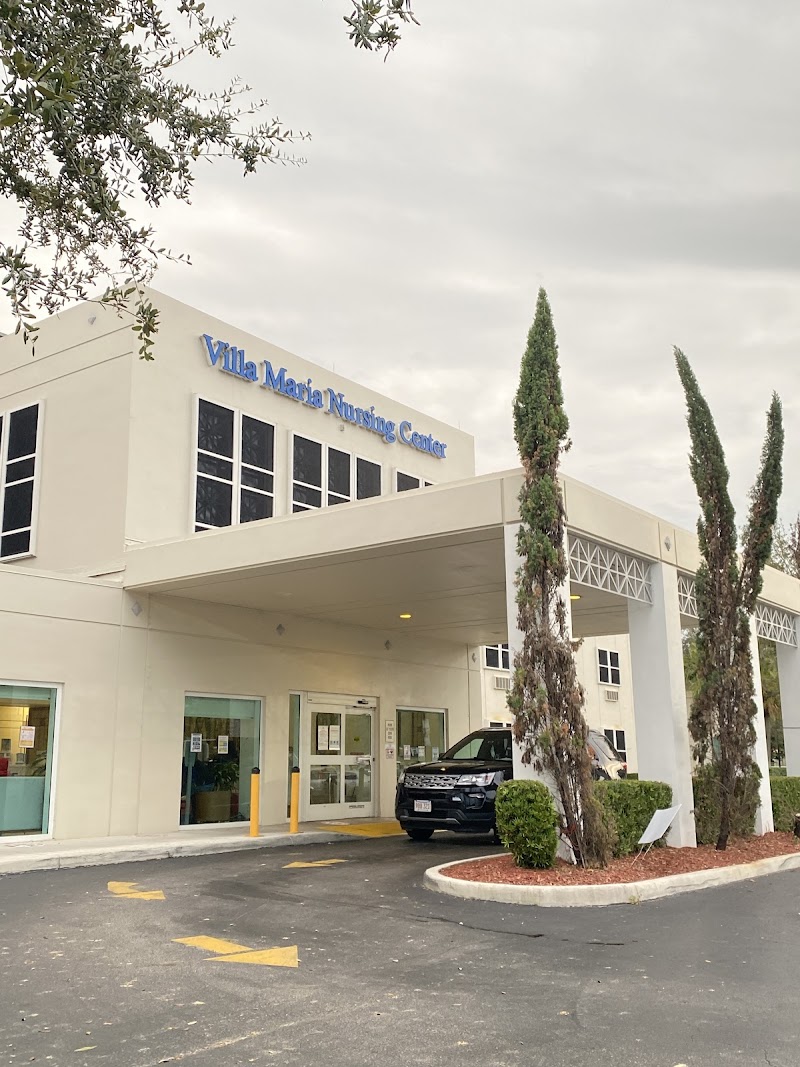
How is Villa Maria Nursing Center Staffed?

CMS rates VILLA MARIA NURSING CENTER's staffing level at 3 out of 5 stars, which is average compared to other nursing homes. Staff turnover is 33%, compared to the Florida average of 46%. This relatively stable workforce can support continuity of care.

What Have Inspectors Found at Villa Maria Nursing Center?

State health inspectors documented 24 deficiencies at VILLA MARIA NURSING CENTER during 2022 to 2025. These included: 3 Immediate Jeopardy (the most serious level, indicating potential for serious harm or death), 19 with potential for harm, and 2 minor or isolated issues. Immediate Jeopardy findings are rare and represent the most serious regulatory concerns. They require immediate corrective action.
Who Owns and Operates Villa Maria Nursing Center?

VILLA MARIA NURSING CENTER is owned by a non-profit organization. Non-profit facilities reinvest revenue into operations rather than distributing to shareholders. The facility operates independently rather than as part of a larger chain. With 212 certified beds and approximately 188 residents (about 89% occupancy), it is a large facility located in NORTH MIAMI, Florida.
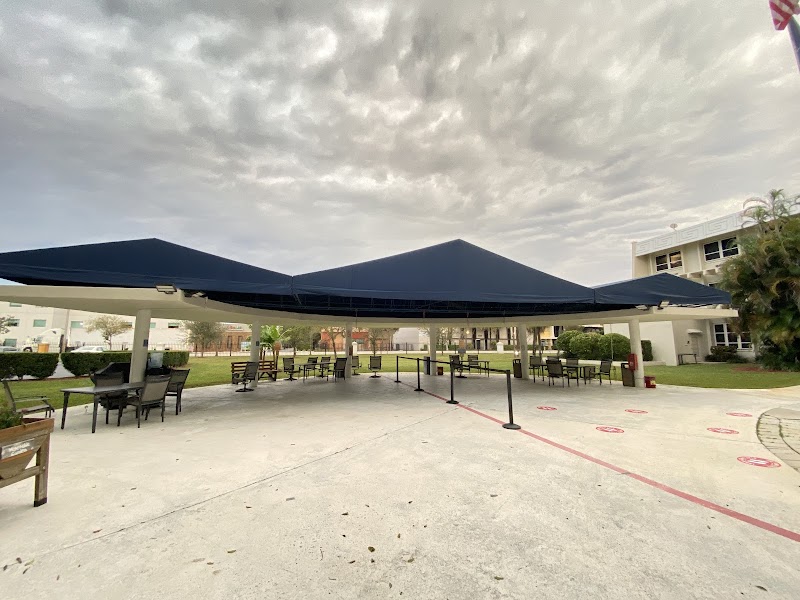
How Does Villa Maria Nursing Center Compare to Other Florida Nursing Homes?

Compared to the 100 nursing homes in Florida, VILLA MARIA NURSING CENTER's overall rating (2 stars) is below the state average of 3.2, staff turnover (33%) is significantly lower than the state average of 46%, and health inspection rating (1 stars) is much below the national benchmark.

What Should Families Ask When Visiting Villa Maria Nursing Center?

Based on this facility's data, families visiting should ask: "What changes have been made since the serious inspection findings, and how are you preventing similar issues?" "What safeguards and monitoring systems are in place to protect residents from abuse or neglect?" "Can I visit during a mealtime to observe dining assistance and food quality?" "How do you handle medical emergencies, and what is your hospital transfer rate?" These questions are particularly relevant given the facility's Immediate Jeopardy citations and the substantiated abuse finding on record.

Is Villa Maria Nursing Center Safe?

Based on CMS inspection data, VILLA MARIA NURSING CENTER has documented safety concerns. The facility has 1 substantiated abuse finding (meaning confirmed case of resident harm by staff or other residents). Inspectors have issued 3 Immediate Jeopardy citations (the most serious violation level indicating risk of serious injury or death). The facility has a 2-star overall rating and ranks #100 of 100 nursing homes in Florida. Families considering this facility should ask detailed questions about what corrective actions have been taken since these incidents.

Do Nurses at Villa Maria Nursing Center Stick Around?

VILLA MARIA NURSING CENTER has a staff turnover rate of 33%, which is about average for Florida nursing homes (state average: 46%). Moderate turnover is common in nursing homes, but families should still ask about staff tenure and how the facility maintains care continuity when employees leave.

Was Villa Maria Nursing Center Ever Fined?

VILLA MARIA NURSING CENTER has been fined $128,210 across 2 penalty actions. This is 3.7x the Florida average of $34,361. Fines at this level are uncommon and typically indicate a pattern of serious deficiencies, repeated violations, or failure to correct problems promptly. CMS reserves penalties of this magnitude for facilities that pose significant, documented risk to resident health or safety. Families should request specific documentation of what issues led to these fines and what systemic changes have been implemented.

Is Villa Maria Nursing Center on Any Federal Watch List?

VILLA MARIA NURSING CENTER is not on any federal watch list. The most significant is the Special Focus Facility (SFF) program, which identifies the bottom 1% of nursing homes nationally based on persistent, serious quality problems. Not being on this list means the facility has avoided the pattern of deficiencies that triggers enhanced federal oversight. This is a positive indicator, though families should still review the facility's inspection history directly.