PALM GARDEN OF OCALA
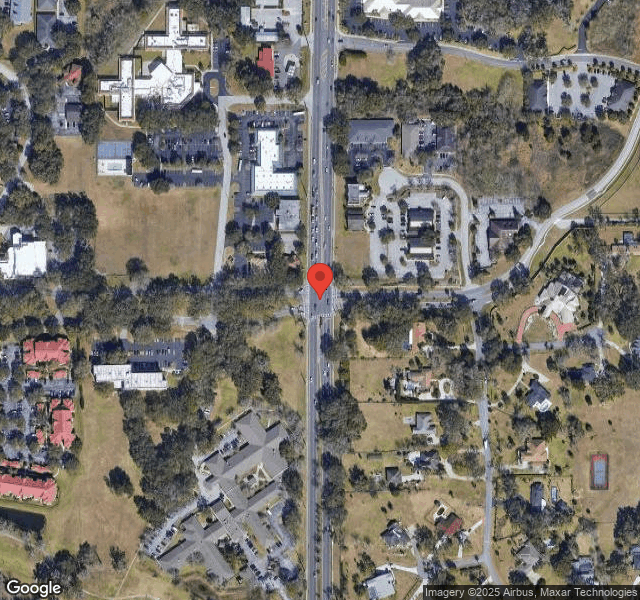

2700 SW 34TH ST, OCALA, FL 34474 (352) 854-6262
For profit - Limited Liability company 180 Beds PALM GARDEN HEALTH AND REHABILITATION Data: November 2025
Trust Grade
68/100
#250 of 690 in FL
Last Inspection: June 2025

Inspected within the last 6 months. Data reflects current conditions.

Overview

Palm Garden of Ocala has a Trust Grade of C+, indicating it is decent and slightly above average among nursing homes. It ranks #250 out of 690 facilities in Florida, placing it in the top half of the state, and #5 out of 11 in Marion County, meaning only four local options are better. The facility is improving, having reduced issues from seven in 2024 to six in 2025, but it still faces challenges, including $8,512 in fines, which is average for the state. Staffing is average with a 3/5 rating, and the turnover rate is at 52%, which is higher than the state average. However, the nursing home has less RN coverage than 97% of Florida facilities, which may impact the quality of care provided. Specific incidents reported by inspectors include a resident with Huntington's disease who fell and suffered injuries, indicating possible gaps in care planning and supervision. Additionally, there were findings where the facility failed to implement proper care plans for residents at risk for falls and those needing respiratory care, suggesting a need for improvements in care coordination. While the facility has strengths, such as good quality measures, families should weigh these concerns when considering Palm Garden of Ocala for their loved ones.

Trust Score
C+
68/100
In Florida
#250/690
Top 36%
Safety Record
Moderate
Needs review
Inspections
Getting Better
7 → 6 violations
Staff Stability
⚠ Watch
52% turnover. Above average. Higher turnover means staff may not know residents' routines.
Penalties
✓ Good
$8,512 in fines. Lower than most Florida facilities. Relatively clean record.
Skilled Nurses
⚠ Watch
Each resident gets only 19 minutes of Registered Nurse (RN) attention daily — below average for Florida. Fewer RN minutes means fewer trained eyes watching for problems.
Violations
⚠ Watch
18 deficiencies on record. Higher than average. Multiple issues found across inspections.
★★★★☆
4.0
Overall Rating
★★★☆☆
3.0
Staff Levels
★★★★★
5.0
Care Quality
★★★☆☆
3.0
Inspection Score
Stable
2024: 7 issues
2025: 6 issues

The Good

  • 5-Star Quality Measures · Strong clinical quality outcomes
  • Full Sprinkler Coverage · Fire safety systems throughout facility
  • No fines on record

Facility shows strength in quality measures, fire safety.

The Bad

Staff Turnover: 52%

Near Florida avg (46%)

Higher turnover may affect care consistency

Federal Fines: $8,512

Below median ($33,413)

Minor penalties assessed

Chain: PALM GARDEN HEALTH AND REHABILITATI

Part of a multi-facility chain

Ask about local staffing decisions and management

The Ugly 18 deficiencies on record

1 actual harm
Jun 2025 6 deficiencies
CONCERN (D)

Potential for Harm - no one hurt, but risky conditions existed

Assessment Accuracy (Tag F0641)

Could have caused harm · This affected 1 resident

**NOTE- TERMS IN BRACKETS HAVE BEEN EDITED TO PROTECT CONFIDENTIALITY** Based on record review and interview, the facility failed to ensure Minimum Data Set (MDS) assessments accurately reflected the ...

Read full inspector narrative →
**NOTE- TERMS IN BRACKETS HAVE BEEN EDITED TO PROTECT CONFIDENTIALITY** Based on record review and interview, the facility failed to ensure Minimum Data Set (MDS) assessments accurately reflected the resident's status for 2 of 8 residents reviewed for oxygen therapy (Resident #19 and #99). Findings include: 1) Review of Resident #19's admission record showed an admission date of 6/27/2024 with the diagnoses including chronic systolic (congestive) heart failure, acute pulmonary edema, dyspnea, dependence on supplemental oxygen, and anxiety disorder. Review of Resident #19's physician order dated 2/20/2025 read, Oxygen at 2 LPM [Liters Per Minute] via N/C [Nasal Cannula] PRN [as needed] as needed for Shortness of Breath, No Humidity. Review of Resident #19's quarterly MDS assessment dated [DATE] showed no entries documented for receiving oxygen therapy under Section O- Special Treatments, Procedures and Programs. 2) Review of Resident #99's admission record showed an admission date of 8/30/2024 with the diagnoses including chronic obstructive pulmonary disease with (acute) exacerbation, pneumonia, adult failure to thrive, chronic kidney disease, stage 3b, heart failure, atrial fibrillation, essential (primary) hypertension, and emphysema. Review of Resident #99's physician order dated 2/27/2025 read, Oxygen at 2 liters PRN via NC as needed for Shortness of Breath. Review of Resident #99's quarterly MDS assessment dated [DATE] showed no entries documented for receiving oxygen therapy under Section O- Special Treatments, Procedures and Programs. During an interview on 6/12/2025 at 6:43 AM, the Director of Nursing stated, I expect that all MDS information should be coded accurately. They [Residents #19 and #99] each have oxygen orders. During an interview on 6/12/2025, the MDS Coordinator stated, These [Residents #19 and #99's] MDSs are not accurate. They [Residents #19 and #99] do have oxygen. We do not have a policy that we use.
CONCERN (D)

Potential for Harm - no one hurt, but risky conditions existed

Accident Prevention (Tag F0689)

Could have caused harm · This affected 1 resident

Based on observation, interview, and record review, the facility failed to ensure residents were free of accident hazards for 1 of 5 residents reviewed for dining (Resident #70). Findings include: Dur...

Read full inspector narrative →
Based on observation, interview, and record review, the facility failed to ensure residents were free of accident hazards for 1 of 5 residents reviewed for dining (Resident #70). Findings include: During an observation on 6/10/2025 at 11:05 AM, Resident #70 was sitting in a wheelchair in the hallway with a gait belt and walker. Staff A, Physical Therapist (PT), was in front of Resident #70 with a clear plastic cup containing water. Staff A gave the cup to Resident #70. Resident #70 started drinking water from the cup. Staff B, Licensed Practical Nurse (LPN), asked Staff A if Resident #70 was supposed to be given regular thin liquids because she believed Resident #70 was on a thickened liquid diet. Staff A, PT, stated, She [Resident #70] is doing well with it. Staff B, LPN, stated she would need clarification after checking the order in the computer and reading out loud Resident #70 had a thickened liquid diet order. Staff B stated she would go get clarification from the speech therapist and walked away from the medication cart. Staff A tried to remove the cup from Resident #70's hand and the resident took a large drink from the water cup. Staff A removed the cup from Resident #70's hands. Resident #70 coughed twice after drinking the regular thin water. Review of Resident #70's physician order dated 6/3/2025 read, Regular diet, Mechanical Soft texture, Nectar Thickened Fluids consistency. Review of Resident #70's Fiberoptic Endoscopic Evaluation of Swallowing dated 6/2/2025 read, Reason for Referral: to objectively assess swallow function . Laryngeal exam reveals no significant secretions. Right arytenoid partially prolapsed and sagging anteriorly. Mild arytenoid bilateral edema and erythema. Mild erythema along posterior aspect of true vocal fold. Complete mobility of arytenoids and true vocal folds. Patient had difficulty intermittently with volitional swallows and reduced ability to complete a breath hold on command. Patient presents with mild-moderate oropharyngeal dysphagia. Oral phase negatively impacted by reduced bolus containment resulting in spillage of liquids to the pyriform sinuses (L>R). Slightly prolonged but adequate mastication and transport appreciated. Clear oral cavity following trails. Pharyngeal phase negatively impacted by mistimed laryngeal vestibule closure and suspected reduced hyolaryngeal excursion needed for epiglottic inversion resulting in bolus cascading over the epiglottic rim. Suspected adequate tongue base retraction and adequate pharyngeal constriction evidenced by trace diffuse residuals that independently clear with second swallow and/or liquid wash. Swallow initiated at the lateral channels for liquids promptly after spillage and the valleculae for solids. Trace penetration to the level of the vocal folds that ejects with throat clear response during the swallow on single straw sip thin liquid in isolation. Trace penetration over the interarytenoid space occurs during the swallow with immediate ejection on cup and straw sips thin liquids intermittently. Deep penetration to the level of the vocal folds occurs on cup sip thin liquids during the swallow following larger bite of mixed consistency peaches with immediate, throat clear response; however, further cued cough (patient produced throat clears) further assisted in ejection of penetration. Trace penetration to the level of vocal folds occurs on ½ cup sips nectar thick liquids during swallow that ejects with spontaneous throat clear. Aspiration during the swallow occurs on cued, large, consecutive cup sips thin liquids with immediate, ineffective coughing. No other penetration nor aspiration observed including on solids, ½ cup sips nectar thick liquids, or consecutive straw sip nectar thick liquids as well. Safety of the swallow is impacted by spillage and mistiming of the swallow on liquids. Additionally a fatigue factor appears to be a factor as well. Patient with numerous risk factors identified for risk of aspiration including prolonged NPO [nothing by mouth] status, reliance on peg tube feeds, reduced mobility, and dysphagia. Efficiency of the swallow is mostly compensated with independent swallows and extra time for the oral phase time. Consideration for mechanical soft solids and nectar thick liquids per SLP [Speech Language Pathologist] discretion. Patient may benefit from a meal [not legible] prior to full oral advancement per SLP discretion as well. Therapeutic trails of thin liquids and regular solids could be considered per SLP discretion given relatively preserved sensation of airway invasion. Recommendations . Liquid consistency: IDDSI [International Dysphagia Diet Standardization Initiative] 2 Mildly Thick/Nectar. Review of Resident #70's nutrition risk progress note dated 6/4/2025 read, Diet Order and Intake: Regular, mechanical soft, nectar thick liquids . Nutrition Summary and Recommendations: Resident was upgraded by SLP from NPO to Mechanical soft, nectar thick liquids. Review of Resident #70's Speech Therapy Treatment Encounter Note dated 6/5/2025 read, Session focused on trails of thing liquids (water) via open cup. Pt [patient] observed with . intermittent throat clearing, requiring max verbal cueing to achieve functional cough . A: Pt continues with s/s [signs/symptoms] of dysphagia with thin liquids and known aspiration of thin fluids on recent FEES [Fiberoptic Endoscopic Evaluation of Swallowing] (6/2). Review of Resident #70's Speech Therapy Treatment Encounter Note dated 6/10/2025 read, Session focused on trails of thin liquids and completion of swallow strengthening exercises. Pt observed to take single cup sips of thin liquid with . occasional impulsivity with increase rate of intake, improved with verbal cueing, reflexive cough following sequential or large sips. Review of Resident #70's eInteract SBAR (Situation, Background, Assessment, Recommendation) Summary for Providers dated 6/10/2025 read, Signs and Symptoms Identified: other change in condition. 1a. List the other change: patient given liquids outside of recommended diet order. Started on: 6/10/2025 . B2. Respiratory Status Evaluation: 2a. Describe respiratory changes: 4. Cough . Review Findings and Provider Notifications: 4. Summarize your observations, evaluation and recommendations: patient was observed being given thin liquids by other staff member. patient was observed drinking the thin liquids. staff member informed that patient is on a nectar thick consistency. cup of water thrown away. made contact with speech therapy to clarify. ARNP, all upper management and daughter made aware of situation. new orders given for chest xay [sic]. Provider Notification and Feedback: Recommendation: chest x ray, 72 hour monitoring. Review of Resident #70's progress note dated 6/10/2025 at 11:30 AM read, As this Nurse was preparing medications at med cart, therapist approached med cart and retrieved plastic cup and poured water from the pitcher in the cup. This Nurse observed therapist giving the water cup to patient in the hallway that is on Nectar thick consistency liquids. Therapist was told patient is on thickened liquids, where she stated that patient is doing good and been upgraded. Therapist was asked to throw cup of water away so I could clarify with speech therapy. Before cup could be taken from patient, she began to drink the water quickly and coughed afterwards. Water cup was thrown into garbage, made contact with speech therapist who notified me that patient is still currently on nectar thick liquids. ARNP notified with new orders for chest xray and 72 hour monitoring. All upper management and Daughter made aware of situation. Review of Resident #70's progress note dated 6/10/2025 at 12:32 PM read, Note Text: patient given fluids outside of recommended diet orders, cough noted. ARNP [Advance Registered Nurse Practitioner] new order for chest xray. Review of Resident #70's physician order dated 6/10/2025 read, Chest xray related to cough, portable due to fall risk one time only for cough for 1 Day. Review of the written statement authored by Staff A, PT, dated 6/10/2025 read, I, [Staff A's name], had been gait training [Resident #70's name]. [Resident #70's name] requested water as she sat in her w/c [wheelchair]. I obtained water, reminded pt to sip a small sip and the swallow. [Resident #70's name] did so with no problems. Her nurse said that pt [patient] gets nectar thick liquid. I recalled, apparently in error, that at last week's staff meeting, pt was upgraded to thin liquids. I took the water from the patient, and in the process pt tried to take another sip after I had asked her to stop. I immediately asked DOR [Director of Rehabilitation] & SLP to clarify pt's status with liquids. I had not checked [name of electronic medical record software] because I thought I knew already. Review of the written statement authored by Staff B, LPN, dated 6/10/2025 read, As I was standing at my med cart preparing medication, the therapist [Staff A's name] approaches my cart and retrieved a small plastic cup off my cart and poured water from the pitcher in the cup. I observed [Staff A's name] handing the water cup to [Resident #70's name]. I explained that the patient is on thickened liquids. The therapist stated to me that she's doing fine and has been upgraded. I told therapist I am not aware of patient being upgraded and I needed to clarify with the speech therapist. I asked [Staff A's name] to please take the cup from the patient. Patient then started to drink water faster before the cup was taken from her hand. Water cup was thrown in the garbage and I made contact with speech therapist who states she has not been upgrade and remains on nectar thick liquids. During an interview on 6/10/2025 at 11:15 AM, Staff B, LPN, stated, I went to speak with the speech therapist and she stated she has been working with [Resident #70's name] while drinking thin fluids but for nursing she [Resident #70] is still on thickened liquids and is not supposed to be given thin fluids. The physical therapist [Staff A] came to my cart and poured water out of the pitcher and gave it to [Resident #70's name]. The resident was not supposed to get thin liquids. I did not know she was pouring the water to give it to the resident only after I saw her drinking from the cup and that's when I told her I needed to get clarification. Normally staff will always ask the nurse before giving anything to drink or eat to the resident even if they are sitting in the hallway and the resident request water to drink they have to first ask the nurse. [Staff A's name] did not ask me what was [Resident #70's name] fluid consistency order before giving her the water. The water that was given to [Resident #70's name] was not thickened. During an interview on 6/10/2025 at 11:42 AM, the Speech Therapist stated, She [Resident #70] had a TIA [Transient Ischemic Attack] and we are working on dysphagia therapy. She [Resident #70] was NPO with peg tube and her and her daughter had a goal to be po [by mouth] and we did a swallow study two Fridays ago and decided a mechanical with thickened liquids was more appropriate. Since the swallow study we have been working with [Resident #70's name] to transition her to thin liquid. She is doing pretty well on the swallow study. She has impulsivity that she is drinking more at once when drinking. We are working on the use of swallow strategies. I think in small quantities no, within the next two weeks she should transition to thin liquids. Nectar thick is definitely safe. If she [Resident #70'] was to be drinking thin liquids daily and with that lack of strategy, it would definitely be unsafe. We should just keep the thin liquids just to be given by speech therapy for now. I think because what we are looking for is the consistency with the strategies to see how independent she. The risk for aspiration pneumonia is low but aspiration itself is deficiently a risk. I believe staff should check diet order in [name of electronic medical record software] that is the most up to date diet recommendation. This has not happened before when a resident is given the wrong diet consistency that I am aware of. During an interview on 6/10/2025 at 12:21 PM, the Director of Nursing stated, [Staff A's name] was removed from schedule and gave a statement. We are reporting the incident. The staff are supposed to check the diet orders before giving anything to the residents. Non nursing staff should ask nursing to look in [name of electronic medical record software] and everyone should verify orders before giving the residents anything to eat or drink. There is potential for aspiration. The staff should have stop immediately when the nurse verbalized the concern of the diet consistency. During an interview on 6/10/2025 at 12:39 PM, Staff B, PT, stated, I have worked with [Resident #70's name] since she was admitted . I was doing gait training in the hallway with the resident. I said do you need water and she [Resident #70] said no and then she said yes. Two weeks ago in the rehab meeting, speech therapist said she had upgraded her [Resident #70] diet and was changing the resident from peg tube to regular diet and they were evaluating the resident to see if she could get enough calories with eating food. I recalled that as she had been upgraded to thin liquids, so I did not check [name of electronic medical record software] to check her status I thought I knew it. I gave her water in a cup. I told her to take a sip and swallow and take her time. The nurse told me she [Resident #70] is nectar and at that point I thought there was some kind of mix up I told her to stop and she grab the cup even harder to take another drink. Two weeks ago she was not taking anything by mouth. If I had understood that it was nectar I would not have attempted to give her water at all. We are to look at [name of electronic medical record software] and verify the diet but like I said I thought I knew and I did not do that [check system to verify diet]. I never made a mistake like that before. Obviously having swallowing issue and giving them the wrong consistency they can choke. She did cough but at the end when she took the big drink. It should not have happened. I did not remove it [water cup] immediately because I had confusion and was surprised that she [Resident #70] was not on thin liquids. Once I understood I did removed the cup. She had half of the water in the cup still when I took the water cup away. During an interview on 6/10/2025 at 1:13 PM, the Registered Dietician stated, The standard is to check on [name of electronic medical record software] the eMAR [electronic medication administration record] system and verify the diet there. The consistency may varied it is ordered by speech therapy due to swallow difficulties determine by the speech therapy. [Resident #70's name] first was admitted she was NPO and continuous tube feeding. Speech upgraded her on 6/3 to a mechanical soft nectar thickened diet. I saw her on 6/4 to adjust her feeding tube since her diet was upgraded. [Resident #70's name] should not be given regular thin fluids unless directed by a speech therapist. Consistencies are important due to the risk of aspiration. To my knowledge this has never happened before. During an interview on 6/10/2025 at 12:49 PM, the Director of Rehabilitation Services stated, The first thing staff have to do is go to [name of electronic medical record software] and look at the diet. This is the only way to really know what is the correct diet for the patient. I do not recall resident diet we talk about the upgrade and goals what needs to be done to move forward. I cannot recall if the speech therapist specifically mention the diet during the weekly meeting. We don't talk about the in-depth details just a brief overview. The protocol and guideline would be to check the diet. The best practice is not to assume, the best practice is to check [name of electronic medical record software]. This has never happen before in my department. We do not want them to choke and it is standards of practice to follow the plan of care of the patient and diet is part of the plan of care of a patient. Cough is the very first thing that would happen. The key is consistency if someone is given all day long all the time the wrong consistency then there is a risks of aspiration pneumonia. This resident is beginning trained with speech therapy. The notes shows they are on their way to being progress to upgrade the resident. They did a swallowing study and they felt it was the time to start with the progression of the diet. During an interview on 6/10/2025 at 12:58 PM, the Speech Therapist stated, Last Tuesday we had a weekly meeting and whomever is working with the resident they speak and I announce the result of the swallow study. The therapist could ask me any questions at that point if they have any questions. During an interview on 6/10/2025 at 2:29 PM, the Medical Director stated, [Resident #70's name] has history of CVA [cerebrovascular accident], pharyngeal dysphagia. If given the wrong consistency there is always a risk for a potential aspiration pneumonia. [Resident #70's name] was NPO and now upgraded thicken nectar. In theory, staff should have verified diet and safeguard the residents. It's the resident's rights to drink but it is also their resident rights to drink the proper consistency. Review of the facility policy and procedure titled Thickened Liquid Policy with the last review date of 5/31/2025 read, Purpose: The center provides commercially-prepared thickened liquids, as prescribed, to residents/guest who require them. Definitions: Thickened liquids refers to liquids in which the consistency has been altered to facilitate safe, oral intake. They are ordered as part of treatment for disease or clinical condition, such as dysphagia due to a stroke, cancer, multiple sclerosis, or other neuromuscular disease. Policy Explanation and Compliance Guidelines: 1. Thickened liquids are provided only when ordered by a physician/practitioner or when ordered by a registered dietitian or speech-language pathologist who has been delegated to write diet order, to the extent allowed by state law. 2. The use of thickened liquids will be based on the resident's/guest's individual needs as determined by the resident's /guest's assessment . 9. Thickened liquid should be available between meals for additional hydration. Review of the facility policy and procedure titled Therapeutic Diet Orders-Policy with the last review date of 5/31/2025 read, Purpose: The center provides all residents/guest with food in the appropriate form and/or the appropriate nutritive content as prescribed by a physician, and/or assessed by the interdisciplinary team to support the resident's/guest's treatment/plan of care in accordance with his/her goals and preferences. Definitions: Mechanically Altered Diet is one in which the texture or consistency for food is altered to facilitate oral intake. Examples include soft solids, pureed foods, ground meat, and thickened liquids. Policy Explanation and Compliance Guidelines . 5. Culinary and nursing team members are responsible for providing therapeutic diets in the appropriate form and/or the appropriate nutritive content as prescribed.
CONCERN (D)

Potential for Harm - no one hurt, but risky conditions existed

Deficiency F0757 (Tag F0757)

Could have caused harm · This affected 1 resident

**NOTE- TERMS IN BRACKETS HAVE BEEN EDITED TO PROTECT CONFIDENTIALITY** Based on record review and interview, the facility failed to ensure residents' medication regimens were free from unnecessary an...

Read full inspector narrative →
**NOTE- TERMS IN BRACKETS HAVE BEEN EDITED TO PROTECT CONFIDENTIALITY** Based on record review and interview, the facility failed to ensure residents' medication regimens were free from unnecessary antibiotic use for 1 of 3 residents reviewed for active infections (Resident #165). Findings include: Review of Resident #165's admission record showed the resident was admitted on [DATE] with diagnoses including essential (primary) hypertension, fracture of right femur, history of falling, peripheral vascular disease, and non-infective gastroenteritis and colitis. Review of Resident #165's physician orders showed an order dated 6/7/2025 for stool test for Clostridium difficile (C. diff) one time only for loose stool for 1 day. Review of Resident #165's physician orders showed an order dated 6/7/2025 for administration of Vancomycin HCl (Hydrochloride) oral capsule 125 MG (milligram) 1 capsule by mouth four times a day for prophylaxis. Review of Resident #165's lab results dated 6/8/2025 for C. diff. showed a negative result. Review of Resident #165's physician orders showed an order dated 6/8/2025 for administration of Vancomycin HCl Oral Capsule 125 MG, 1 capsule by mouth four times a day for prophylaxis. Review of Resident #165's Medication Administration Record (MAR) for June 2025 showed the resident received Vancomycin HCl 125 mg oral capsule on 6/7/2025 at 6:00 PM, 6/8/2025 at 12:00 AM, 6:00 AM, 12:00 PM and 6:00 PM, 6/9/2025 at 12:00 AM, 6:00 AM, 12:00 PM and 6:00 PM, 6/10/2025 at 12:00 AM, 6:00 AM, 12:00 PM and 6:00 PM, 6/11/2025 at 12:00 AM, 6:00 AM, 12:00 PM and 6:00 PM, and 6/12/2025 at 12:00 AM and 6:00 AM. Review of Resident #165's progress note dated 6/11/2025 at 2:07 PM read Stool sample negative. Patient returned to [Room number]. patient notified of room change and agreeable. Review of Resident #165's physician order dated 6/11/2025 read, Vancomycin HCl Oral Capsule 125 MG (Vancomycin HCl), Give 1 capsule by mouth four times a day for Prophylaxis until 06/15/2025 23:59 [11:59 PM]. During an interview on 6/12/2025 at 10:20 AM, the Infection Preventionist stated, The resident should have had Vancomycin discontinued after the results of the stool sample came back negative for C. diff on June 8, 2025. Review of the facility policy and procedure titled Infection Prevention and Control Manual Antibiotic Stewardship and MDROs [Multidrug Resistant Organisms] with an effective date of December 2020 and the last review date of 5/31/2025 read, Policy: It is the policy of this facility to provide systematic efforts to optimize the use of antibiotics in order to maximize their benefits to residents, while minimizing both the rise of antibiotic resistance as well as adverse effects to patients from unnecessary antibiotic therapy. Antibiotic stewardship will include an assessment process, use of evidence-based criteria, efforts to identify the microbe responsible for disease, selecting the appropriate antibiotic along with documentation indicating the rationale for use, appropriate dosing, route, and duration of antibiotic therapy; and to ensure discontinuation of antibiotics when they are no longer needed.
CONCERN (D)

Potential for Harm - no one hurt, but risky conditions existed

Food Safety (Tag F0812)

Could have caused harm · This affected 1 resident

**NOTE- TERMS IN BRACKETS HAVE BEEN EDITED TO PROTECT CONFIDENTIALITY** Based on observation, interview, and record review, the facility failed to ensure foods were stored in a safe and sanitary manne...

Read full inspector narrative →
**NOTE- TERMS IN BRACKETS HAVE BEEN EDITED TO PROTECT CONFIDENTIALITY** Based on observation, interview, and record review, the facility failed to ensure foods were stored in a safe and sanitary manner in the main kitchen and in 1 of 3 nourishment rooms of the facility. Findings include: During an observation while conducting a tour of the main kitchen on 6/9/2025 at 9:08 AM with the Dietary Supervisor, there were one unwrapped peperoni pizza sitting on top of a cardboard box located on the third shelf with no opened date or expiration date, and one 5-pound plastic container of sour cream sitting on the second shelf with a date of 5/10/25 written in black marker in the walk-in cooler. During an interview on 6/9/2025 at 9:12 AM, the Dietary Supervisor acknowledged the unwrapped, undated pizza and stated, That should be wrapped up with a use by date on it. The Dietary Supervisor could not clarify if 5/10/25 was the opened date or the expiration date of the sour cream. The Dietary Supervisor stated, I think that is the opened date. It [the container of sour cream] should have been discarded. During an observation while conducting a tour of the nourishment rooms on 6/9/2025 at 9:40 AM with the Dietary Supervisor, in Nourishment room [ROOM NUMBER] on Hallway 400, there was one grey grocery bag with a clear plastic bowl of fruit containing strawberry and grapes sitting on the bottom shelf of the refrigerator, without an expiration date or a label identifying to whom the food belongs to. During an interview on 6/9/2025 at 9:40 AM, the Dietary Supervisor stated, All food brought in should be labeled with the resident's name, and the date it was brought in. Review of the facility policy and procedure titled Food Labeling & Dating- Refrigeration with the last review date of 5/31/2025 read, 2. The food shall be stored covered, marked for contents, and dated when placed in the refrigerator or freezer . 6. The discard day or date may not exceed the manufacturer's use-by-date, or seven days, whichever is earliest. The date of opening or preparation counts as day 1. Review of the facility policy and procedure titled Nourishment and Life Enrichment Refrigerator and Freezer Storage with an effective date of November 1, 2024 and the last review date of 5/31/2025 read, 1. Foods in the nourishment and Life Enrichment Refrigerators can be kept for up to 3 days or per manufacture guidelines . 3. All food items that are prepared by the family members or visitors must be stored in the following manner: a. Stored in an air-tight container or Ziploc bag, b. labeled with the Resident/Guest name and room number, c. labeled with a date of storage.
CONCERN (E)

Potential for Harm - no one hurt, but risky conditions existed

Comprehensive Care Plan (Tag F0656)

Could have caused harm · This affected multiple residents

Based on observation, interview, and record review, the facility failed to develop and implement a comprehensive care plan for 1 of 2 residents reviewed for accidents (Resident #70), 2 of 5 residents ...

Read full inspector narrative →
Based on observation, interview, and record review, the facility failed to develop and implement a comprehensive care plan for 1 of 2 residents reviewed for accidents (Resident #70), 2 of 5 residents reviewed for insulin administration (Residents #82 and #167), and 1 of 8 residents reviewed for oxygen therapy (Resident #166). Findings include: 1) During an observation on 6/10/2025 at 8:07 AM, Resident #70 was lying in bed. The bed was in a low position. There was one fall mat on the right side of the bed. There was a fall mat stored behind a chair in the resident room (Photographic evidence obtained). During an observation on 6/11/2025 at 7:54 AM, Resident #70 was lying in bed. The bed was in a low position. There was one fall mat on the right side of the bed. There was a fall mat stored behind a chair in the resident room. Review of Resident #70's care plan initiated on 4/21/2025 read, Focus: At risk for falls related to general weakness, impaired mobility, advanced age, poor safety awareness, right sided hemi [hemiplegia], dm [diabetes mellitus], gout, g-tube [gastrostomy tube], incontinence of bowel and bladder . Interventions . Floor mats at bedside while in bed. During an interview on 6/11/2025 at 12:09 PM, Staff B, Licensed Practical Nurse (LPN), stated, [Resident #70's name] should always have bilateral floor mats while she is in bed. During an interview on 6/11/2025 at 1:34 PM, the Director of Nursing (DON) stated, [Resident #70's name] is care planned for fall mats, which means there should be a fall mat placed on each side of bed while the resident is lying in the bed. Staff should be making sure fall mats are put down when she is in bed. 2) Review of Resident #82's physician order dated 4/12/2025 read, ACCU-CHECK BID [twice a day], Call MD [Medical Doctor] for further orders if BS [Blood Sugar] over 200 two times a day for DM. Review of Resident #82's electronic Medication Administration Record (eMAR) progress note dated 4/28/2025 read, ACCU-CHECK BID, Call MD for further orders if BS over 200 two times a day for DM, pt [patient] refused despite education on importance of BS check. Review of Resident #82's eMAR progress note dated 4/29/2025 read, ACCU-CHECK BID, Call MD for further orders if BS over 200 two times a day for DM, refused, education provided by nurse, continues to refuse, says she is fine. No pt. ate dinner, no signs of hyper/hypoglycemia noted at this time. Review of Resident #82's eMAR progress note dated 5/5/2025 read, ACCU-CHECK BID, Call MD for further orders if BS over 200 two times a day for DM, Resident states, I don't do that. Review of Resident #82's care plan did not show a focus for refusal of accuchecks due to diabetic diagnosis. During an interview on 6/11/2025 at 12:02 PM, the MDS (Minimum Data Set)/Care Plan Coordinator stated, [Resident #82's name] should have been care planned for refusal of accu-check. She frequently refuses her accu-checks for her diabetes. I look at progress notes daily and nurses are supposed to let us know if there is anything we have missed we can go ahead and care plan it. During an interview on 6/11/2025 at 1:32 PM, the DON stated, [Resident #82's name] care plan should have had a focus of refusals. If nursing knows something they can let the coordinator know. The care plan coordinator can also look and add any focus herself. 3) Review of Resident #167's physician order dated 3/7/2025 read, ACCU-CHECK two times a day for DM. Review of Resident #167's physician order dated 3/11/2025 read, Insulin Lispro (1 Unit Dial) Subcutaneous Solution Pen-injector 100 UNIT/ML [milliliter] (Insulin Lispro), Inject as per sliding scale: if 160-199= 4 units, 200-239= 5 units, 240-279= 6 units, 280-319= 8 units, 320-359= 9 units, 360-399= 11 units, less than 70 or greater than 400 call MD [Medical Doctor], subcutaneously before meals and at bedtime for DM Type 2. Review of Resident #167's eMAR progress note dated 4/4/2025 read, ACCU-CHECK two times a day for DM, refused her accucheck, educated by nurse, aox4 [alert and oriented]. Review of Resident #167's eMAR progress note dated 4/20/2025 read, ACCU-CHECK two times a day for DM, states don't worry about taking that tonight MD aware, education provided. Review of Resident #167's care plan did not show a focus for refusal of accuchecks due to diabetic diagnosis. During an interview on 6/11/2025 at 12:05 PM, the MDS/Care Plan Coordinator stated, [Resident #167's name] should have been care planned for refusal of accucheck. The staff have not told me about it. Unit Manager job is to review the progress notes. My system is not set up to look at eMAR. I have to click the special button to view eMAR notes. 4) During an observation on 6/9/2025 at 9:34 AM, Resident #166 was lying in bed, receiving oxygen via nasal cannula at 3 liters per minute. During an observation on 6/10/2025 at 8:16 AM, Resident #166 was lying in bed, receiving oxygen via nasal cannula at 3 liters per minute. Review of Resident #166's physician order dated 4/16/2025 read, Oxygen at 2 LPM [Liters Per Minute] Via N/C [Nasal Cannula] PRN [as needed] every shift. Review of Resident #166's care plan dated 4/16/2025 showed no focus for oxygen therapy. During an interview on 6/11/2025 at 12:07 PM, the MDS/Care Plan Coordinator stated, I do not see a focus for oxygen for [Resident #166's name]. I will need to add it to the care plan. The focus should have been added on his admission. During an interview on 6/11/2025 at 1:30 PM, the DON stated, I would expect [Resident #166's name] have a care plan focus for oxygen. Review of the facility policy and procedure titled Person-centered Comprehensive Care Plan with the last review date of 5/31/2025 read, Guideline: It is the practice of the center to develop and implement a person-centered comprehensive care plan that includes measurable objectives and timeframes to meet their preferences and goals, and address the guest/resident's nursing, medical, physical, mental and psychosocial needs. The comprehensive care plan will be developed within 7 days after completion of the comprehensive assessment and no more than 21 days after admission. The comprehensive care plan will be reviewed and revised by the interdisciplinary team after each assessment, including both comprehensive and quarterly review assessment and with significant changes in the guest/resident's condition.
CONCERN (E)

Potential for Harm - no one hurt, but risky conditions existed

Respiratory Care (Tag F0695)

Could have caused harm · This affected multiple residents

Based on observation, interview, and record review, the facility failed to ensure residents received respiratory care as ordered by physician for 4 of 8 residents reviewed for respiratory services (Re...

Read full inspector narrative →
Based on observation, interview, and record review, the facility failed to ensure residents received respiratory care as ordered by physician for 4 of 8 residents reviewed for respiratory services (Residents #19, #66, #166 and #51). Findings include: 1) During an observation on 6/9/2025 at 9:27 AM, Resident #19 was in bed, receiving oxygen at 4 liters per minute via nasal cannula. The oxygen concentrator was on the left side of the bed outside of the resident's reach. During an interview on 6/9/2025 at 9:27 AM, Resident #19 stated, I don't touch the oxygen. The nurses do that. They take it off and put it on for me. Review of Resident #19's physician order dated 2/20/2025 read, Oxygen at 2 LPM [liters per minute] via N/C [nasal cannula] PRN [as needed] as needed for Shortness of Breath. No Humidity. During an interview on 6/10/2025 at 7:47 AM, Staff E, Licensed Practical Nurse (LPN), stated, The oxygen is not running at the right amount. 2) During an observation on 6/9/2025 at 12:19 PM, Resident #66 was receiving oxygen at 5 liters per minute via nasal cannula from an oxygen concentrator. The oxygen concentrator was on the left side of the resident's bed, outside of the resident's reach. During an interview on 6/9/2025 at 12:19 PM, Resident #66 stated, I never touch my oxygen. They (the staff) do that. Review of Resident #66's physician order dated 2/27/2025 read, Oxygen at 3 LPM via n/c PRN every shift for Shortness of Breath. During an interview on 6/11/2025 at 11:48 AM, Staff E, LPN, stated, Her oxygen is supposed to be at 3 liters not at 5 liters. We should check on oxygen every day. I usually do that after I do meds (medications). 3) During an observation on 6/9/2025 at 9:34 AM, Resident #166 was lying in bed, receiving oxygen via nasal cannula at 3 liters per minute. During an observation on 6/10/2025 at 8:16 AM, Resident #166 was lying in bed, receiving oxygen via nasal cannula at 3 liters per minute. Review of Resident #166's physician order dated 4/16/2025 read, Oxygen at 2 LPM via N/C PRN every shift. During an interview on 6/11/2025 at 12:10 PM, Staff B, LPN, stated, I have never known [Resident #166's name] to adjust the flow rate for his oxygen. I have never seen him touching it. The respiratory therapist comes twice a week and is the one who will adjust the oxygen rate. [Resident #166's name] has orders for oxygen to be at 2 liters via nasal cannula as needed. During an interview on 6/11/2025 at 12:10 PM, Staff B, LPN, stated, [Resident #166's name] oxygen is running at 3 liters per minute and it should be set at 2 liters per minute. I will have to adjust the flow rate. During an interview on 6/11/2025 at 1:30 PM, the Director of Nursing (DON) stated, The staff should check the oxygen flow rate and make sure it is running at the rate that it is ordered. 4) During an observation on 6/9/2025 at 10:00 AM, Resident #51 was lying in bed with her eyes closed, receiving oxygen via nasal cannula at 5 liters per minute. Review of Resident #51's physician order dated 3/20/2025 read, Oxygen at 3 LPM via N/C continuously every shift. During an interview on 6/11/2025 at 8:12 AM, Staff C, Registered Nurse, stated, I don't know how that happened. She [Resident #51] has COPD [Chronic Obstructive Pulmonary Disease] and shouldn't receive high levels of oxygen. I will go in and ensure it stays at the ordered 3 liters per minute.
Dec 2024 1 deficiency 1 Harm
SERIOUS (G) 📢 Someone Reported This

A family member, employee, or ombudsman was alarmed enough to file a formal complaint

Actual Harm - a resident was hurt due to facility failures

Accident Prevention (Tag F0689)

A resident was harmed · This affected 1 resident

**NOTE- TERMS IN BRACKETS HAVE BEEN EDITED TO PROTECT CONFIDENTIALITY** Based on interview and record review the facility failed to ensure adequate supervision during toileting to prevent an accident ...

Read full inspector narrative →
**NOTE- TERMS IN BRACKETS HAVE BEEN EDITED TO PROTECT CONFIDENTIALITY** Based on interview and record review the facility failed to ensure adequate supervision during toileting to prevent an accident resulting in head injury and transferred to a higher level of care for 1 of 3 residents reviewed for accident prevention (Resident #1). Findings include: Review of Resident #1's admission record documented diagnosis to include wedge compression fracture of first and fifth lumbar vertebra, Huntington's Disease, and ataxia (poor muscle control that affects balance and coordination). Review of the fall risk assessment for Resident #1 dated 12/14/2024, revealed a score of 13. A Score 10 or higher indicated the resident is at high risk of falls. Review of Resident #1's progress note dated 12/18/2024 documented, Late entry. Staff A, CNA [Certified Nursing Assistant] reports toileting resident and allowed her privacy and upon return to bathroom resident on left side appearing to bleeding {sic} from head. Resident states 'I fell.' Review of Resident #1's progress note dated 12/19/2024 documented, Resident returned from ER visit, skin assessment was completed. Resident with skin tear/abrasion to her left lateral leg .bruising to her left eye and a small, raised area to the left lateral forehead. There was a raised area/protrusion to the right shoulder with bruising to the area. Review of Resident #1's care plan, date initiated 10/19/2024 and revised 12/19/2024, documented Resident at risk for falls related to general weakness, impaired mobility, ataxia, Huntington's Disease, 1st lumbar vertebra fracture, 5th lumbar vertebra fracture, failure to thrive, poor safety awareness, impulsiveness, incontinent of bowel and bladder and opioid/psychotropic medication use. Resident #1's care plan documented fall precaution interventions that included Guest is not to be in bathroom without staff present. Date added to care plan: 12/16/2024. During interview on 12/18/2024 at 2:02 PM, the Director of Nursing stated Staff A, CNA found the resident [Resident #1] bleeding on the bathroom floor has been suspended. He had been suspended pending investigation because he had not followed Resident #1's care plan related to supervision in the bathroom. The certified nursing assistant should have known to check the [NAME] [a documentation system that enables nurses to write, organize, and easily reference key patient information that shapes their nursing care plan] for any care plan intervention updates. The Director of Nursing added the resident's [Resident #1] care plan had been updated to include not leaving her alone in the bathroom following a previous fall. During an interview on 12/19/2024 at 9:35 AM, the Director of Quality Assurance stated an aide told me the patient was in the dining room. She [Resident #1] asked to go to bathroom. He [Staff A] told me he asked staff how much assistance she [Resident #1] needed and was told one. I also interviewed the Unit Manager who verified she saw the aide answer the call light. The person that told him [Staff A] that [Resident #1] required assistance of one staff member should have also told him don't leave her alone. Review of Resident #1's hospital records titled Emergency Department Note dated 12/18/2024 documented, General/Constitutional: MS [Medical Status] Head: 2 superficial lacerations to the left frontal scalp with surrounding edema. EM-MDM [Evaluation and Management-Medical Decision Making]: Traumatic Injury. Physical exam significant for 2 superficial lacerations to the left frontal scalp with surrounding edema, A&Ox2 [alert and oriented times 2, is someone who knows who they are and where they are, but not what time it is or what is happening to them] baseline for the patient, cervical, thoracic, and lumbar spine tenderness. ED [emergency department] Discharge Plan. Clinical Impression: Closed head injury.
Mar 2024 6 deficiencies
CONCERN (D)

Potential for Harm - no one hurt, but risky conditions existed

Deficiency F0658 (Tag F0658)

Could have caused harm · This affected 1 resident

Based on observation, interview, and record review the facility failed to ensure medications were administered according to professional standards of practice and quality for 4 of 5 observations for m...

Read full inspector narrative →
Based on observation, interview, and record review the facility failed to ensure medications were administered according to professional standards of practice and quality for 4 of 5 observations for medication administration, Residents #603, #138, #36, and #17. Findings include: During an observation of medication administration on 3/6/2024 at 8:39 AM with Staff C, Licensed Practical Nurse (LPN) for Resident #603, Staff C, LPN did not vigorously cleanse the right single lumen peripherally inserted catheter (PICC) needleless connector, did not allow the needleless connector to fully dry, attached 0.9% normal saline and flushed the PICC line without verifying placement by checking for blood return. Review of the admission record for Resident #603 documented admission diagnosis of pneumonia, aspergillosis (an infection caused by aspergillus, a common mold), acute upper respiratory infection, unspecified atrial fibrillation (an irregular heartbeat), type 2 diabetes mellitus, atherosclerotic heart disease of native coronary artery without angina pectoris (chest pain), heart failure, and end stage renal disease. Review of Resident #603's physician orders dated 3/3/2024 read, Sodium chloride flush intravenous solution 0.9% use 10 ml [milliliters] intravenously every shift for flush. During an interview on 3/6/2024 at 9:15 AM Staff C, LPN stated, I did not check for blood return and when I flushed, I should have pulled back to see if there was a blood return [method used to verify appropriate placement]. I do think I should have let the connector dry before I flushed it; I did not let it dry. During an observation of medication administration on 3/7/2024 at 6:01 AM Staff D, Registered Nurse (RN) was at the medication cart preparing medications for three residents, Residents #36, #17, and #138 at the same time. At 6:02 AM Staff D, RN entered Resident #36's room, with Resident #36, #17, and #138's medications, administered Resident #36's medications. At 6:03 AM Staff D, RN entered Resident #17's room, with Resident #17 and #138's medications, administered Resident #17's medications. At 6:06 AM Staff D entered Resident #138's room and administered Resident #138's medications. During an interview on 3/7/2024 at 6:14 AM Staff D, RN stated, I should not have prepared the medications at the same time, and I should not have brought medications into another residents room. Review of the policy and procedure titled, General Dose Preparation and Medication Administration effective date 12/1/2007, with a last approval date of 1/30/2024 read, Procedure: 3. Dose Preparation: Facility should take all measures required by Facility policy and Applicable Law, including but not limited to the following: 3.2 Facility staff should only prepare medications for one resident at a time.
CONCERN (D)

Potential for Harm - no one hurt, but risky conditions existed

ADL Care (Tag F0677)

Could have caused harm · This affected 1 resident

**NOTE- TERMS IN BRACKETS HAVE BEEN EDITED TO PROTECT CONFIDENTIALITY** Based on observation, interview, and record review, the facility failed to ensure residents who are unable to carry out activiti...

Read full inspector narrative →
**NOTE- TERMS IN BRACKETS HAVE BEEN EDITED TO PROTECT CONFIDENTIALITY** Based on observation, interview, and record review, the facility failed to ensure residents who are unable to carry out activities of grooming and personal hygiene receive these necessary services for 1 of 4 residents, Resident #12. Findings include: Review of Resident #12's medical record documented the resident was admitted on [DATE] with a diagnosis of: cardiomegaly, mild protein-calorie malnutrition; nontraumatic hematoma of soft tissue; carpal tunnel syndrome, unspecified upper limb; lesion of ulnar nerve, right upper limb; history of falling; unspecified dementia; unspecified severity without behavioral disturbance, psychotic disturbance, mood disturbance and anxiety; other idiopathic peripheral autonomic neuropathy; contracture, right hand. During an observation on 3/4/24 at 12:30 PM Resident #12 was sitting up in bed eating lunch. The fingernails of both resident's hands were long and dirty. The resident's hair was unkempt and matted. During an interview on 3/4/24 at 12:30 PM, Resident #12's son stated, I have to ask numerous times before his hair is washed. He can't ambulate and was not taken to be showered. He needs a Hoyer lift to be taken to the shower. There is no Hoyer lift for him to be showered. I have to keep on the staff to get personal care done. During an interview on 03/6/24 at 12:30 PM when Resident #12 was asked when he had his last shower, he stated, When I was at home. During an interview on 3/6/24 at 12:58 PM Staff F, Certified Nurse Assistant, (CNA) stated, We do not have the equipment for a long shower bed on the 800 Hall. Since COVID, we are not allowed to take the resident from the 800 Hall on a long shower bed down to the 100 Hall to the shower room, it's between the nourishment room and bathroom. On the 800 Hall the spa does not have a shower. A shower is in each of the resident's room and the long shower bed does not fit. Review of Resident #12's task sheet documented the resident had one shower in the past 30 days on 2/28/24. There were no resident refusals documented on the task sheet in the past 30 days. Bed baths were given on 2/8/24, 2/15/24, 2/19/24, 3/4/24, and 3/6/24. Not applicable was documented for 2/7/24, 2/9/24, 2/14/24, 2/27/24, 3/1/24, 3/2/24, and 3/6/24.
CONCERN (D)

Potential for Harm - no one hurt, but risky conditions existed

Quality of Care (Tag F0684)

Could have caused harm · This affected 1 resident

Based on record review and interview the facility failed to ensure medications were managed in accordance with professional standards for 1 of 5 residents, Resident #111, reviewed for medications. Fi...

Read full inspector narrative →
Based on record review and interview the facility failed to ensure medications were managed in accordance with professional standards for 1 of 5 residents, Resident #111, reviewed for medications. Findings include: Review of Resident #111's admission Record, date of initial admission 5/17/2023, documented the resident was admitted with diagnoses that included type 2 diabetes mellitus with unspecified complications. Review of Resident #111's physician order dated 1/6/2024 read, Lantus Subcutaneous Solution 100 Unit/ML [milliliter] (Insulin Glargine) Inject 30 unit subcutaneously two times a day for DM [diabetes mellitus]. Review of Resident #111's medication administration record (MAR) for the period of 2/1/2024-2/29/2024 documented the resident refused the Lantus medication 18 times, was not administered the medication 15 times coded as 9 Other/See Nurse Notes and was not administered the medication 12 times coded as 5 Hold/See Nurse Notes. Review of the MAR for the period of 3/1/2024-3/6/2024 documented Resident #111 refused the Lantus medication 4 times, was not administered the medication 2 times coded as 9 Other/See Nurse Notes and was not administered the medication 3 times coded as 5 Hold/See Nurse Notes. Review of Resident #111's medical record for the period of February 1, 2024, through March 5, 2024, did not contain documentation of Resident #111's physician or advance registered nurse practitioner being notified of Resident #111's medication refusals or of the medication not being administered as ordered by the physician. During an interview on 3/6/2024 beginning at 8:42 AM, the Director of Nursing (DON) verified Resident #111's medical record for the period of February 1, 2024 through March 5, 2024 did not contain documentation of Resident #111's physician or advanced registered nurse practitioner being notified of Resident #111's medication refusals or of the medication not being administered as ordered by the physician. The DON said the physician, or the advanced registered nurse practitioner should be notified when medications are refused or not administered as ordered by the physician. During an interview on 3/7/2024 beginning at 8:26 AM, Resident 111's Advanced Registered Nurse Practitioner stated, I don't recall getting notified of [Resident #111's name] medication refusals and medication not being administered as ordered. I would want to be notified. I would have stopped the Lantus. Had I been notified of [Resident #111's name] medication refusals and that the medication was not being administered as ordered, I would have looked for trends and might have stopped the Lantus. I would have used the information to make treatment decisions. Review of the policy and procedure titled, Change in a Residents Condition or Status, last reviewed 1/30/2024, read 1. The Nurse Supervisor/Charge Nurse will notify the resident's Attending Physician or On-Call Physician when there has been - A need to alter the resident's medical treatment significantly; Refusal of treatment, medications or meals.
CONCERN (D)

Potential for Harm - no one hurt, but risky conditions existed

Incontinence Care (Tag F0690)

Could have caused harm · This affected 1 resident

Based on observation, interview, and record review the facility failed to provide appropriate treatment and services to prevent possible urinary tract infections for 1 of 3 residents, Resident #67 rev...

Read full inspector narrative →
Based on observation, interview, and record review the facility failed to provide appropriate treatment and services to prevent possible urinary tract infections for 1 of 3 residents, Resident #67 reviewed for indwelling urinary catheters. Findings include: Review of the admission record documented Resident #67 was admitted to the facility with the following diagnoses: type 2 diabetes mellitus without complications, occlusion and stenosis of the left carotid artery, essential (primary) hypertension, atherosclerotic heart disease of the native coronary artery without angina pectoris (chest pain), seizures, pressure ulcer sacral region, hypothyroidism, heart failure unspecified, unspecified dementia without behavioral disturbances, and major depressive disorder. Review of Resident #67's physician orders dated 1/31/2024 read, Indwelling catheter #16 FR [French] per 10 ml [milliliter] DX [diagnosis] unstageable sacral wound. During an observation on 3/4/2024 at 12:33 PM Resident #67 was in bed, the urinary catheter drainage bag was resting on the floor attached to the bed with the urinary catheter tubing looped and the urine unable to drain into the urinary catheter drainage bag, the tubing was filled with urine. Review of Resident #67's care plan implementation date of 1/31/2024 read, At risk for complications r/t [related to] use of indwelling catheter for US [unstageable] sacral wound: anchor to thigh to decrease trauma, keep bag below level of bladder. During an observation on 3/5/2024 at 8:19 AM Resident #67 was observed in bed with the urinary catheter drainage bag attached to the bed and resting on the floor. There was urine within the urinary catheter tubing, the urinary catheter tubing was looped and the urine was unable to drain from the tubing into the urinary catheter drainage bag. During an observation on 3/6/2024 at 9:35 AM Resident #67 was observed resting in bed, the urinary catheter drainage bag and tubing were observed on the floor not attached to the bed. The urinary catheter tubing was looped on the floor with urine collected in the entire length of the tubing and unable to drain into the urinary catheter drainage bag. The urinary catheter bag did not have any urine in it. Resident #67 stated, My belly hurts and pointed to her lower abdomen. During an interview on 3/6/2024 at 9:36 AM Staff A, Certified Nursing Assistant (CNA) confirmed the catheter drainage bag was on the floor with looped tubing and was unable to drain into the urinary catheter drainage bag. During an observation on 3/6/2024 at 9:36 AM Staff A, CNA bent over, picked up the urinary catheter drainage bag from the floor, stood up and lifted the urinary catheter drainage bag to her eye level, with the urinary catheter drainage bag approximately two feet above the level of the resident's bladder. Staff A, CNA emptied the tubing while holding the catheter drainage bag above the level of the resident's bladder for approximately two minutes. Then Staff A, CNA attached the urinary catheter drainage bag to the bed, the bag was observed to be resting on the floor with the urinary catheter tubing looped on the floor. Staff A, CNA then donned gloves and emptied the urinary catheter drainage bag of 575 milliliters of amber colored urine. The drainage spout was observed touching the collection container. Staff A let go of the drainage spout and it was observed touching the floor while Staff A emptied the collection container in the bathroom. During an observation on 3/6/2024 at 9:42 AM Staff A, CNA performed incontinence care on Resident #67. Staff A assembled the supplies of warm soapy water, and washcloths. Staff A, CNA took a washcloth and wiped from Resident #67's back to front one time, took another washcloth, and wiped back to front and with the same washcloth wiped down the entire length of the urinary catheter and urinary catheter tubing to the urinary catheter drainage bag. During an interview on 3/6/2024 at 9:45 AM Staff A, CNA stated, [Resident #67's name] is a fall risk. She tries to get out of bed so the bag [urinary catheter drainage bag] will always be on the floor when we have the bed in the lowest position. I should not have put the catheter bag above the bladder. I didn't really know I was doing it, I got nervous. I didn't realize that I used the same washcloth to wipe down the tubing I shouldn't have. During an interview on 3/6/24 at 10:03 AM Staff B, Licensed Practical Nurse (LPN) stated, The catheter bag should not be on the floor and should be able to drain properly. It should not have loops in the tubing. Even with her bed in the lowest position we can maintain her tubing without kinks or loops in it, we just place it further away from her. During an interview on 3/6/24 at 3:12 PM the Director of Nursing (DON) stated, I just can't believe she did that. It is not acceptable to have the catheter above the level of the bladder and the catheter bags should not be on the floor. This is not acceptable practice. We do have training for pericare and catheter care upon hire and annually training is done. She should have known better. Review of the policy and procedure titled, Catheter Care Indwelling with an original date of 7/2023, last approval date of 1/30/2024 read, Purpose: To provide safe and proper care of a guest/resident with an indwelling catheter by evaluating elimination status, minimizing risk of bladder infection, and maintaining skin integrity. Procedure: 7. Wash hands and apply gloves. 8. Cleanse entire perineal area with soap and water or perineal wash, unless otherwise ordered. Females- separate labia and cleanse from center to thigh and front to back. 18. Position catheter and drainage bag below the level of the guest/resident bladder to facilitate flow of urine.
CONCERN (D)

Potential for Harm - no one hurt, but risky conditions existed

Food Safety (Tag F0812)

Could have caused harm · This affected 1 resident

Based on observation and interview, the facility failed to ensure the kitchen environment was kept clean and sanitary in accordance with professional standards. (Photographic evidence obtained). Findi...

Read full inspector narrative →
Based on observation and interview, the facility failed to ensure the kitchen environment was kept clean and sanitary in accordance with professional standards. (Photographic evidence obtained). Findings include: During the kitchen tour on 3/4/2024 at 9:15 AM with the Certified Dietary Manager (CDM), there was brownish water overflowing from a floor drain next to the food prep area in the main kitchen. During an interview on 3/4/2024 at 9:15 AM, the CDM stated, It has been like that for a few days, and I will have to have maintenance look at it. During a follow up visit of the kitchen on 3/5/2024 at 6:45 AM, brownish water was overflowing from the floor drain next to the food prep area in the main kitchen. During a follow-up visit to the kitchen on 3/6/2024 at 10:00 AM, there was brownish water overflowing from the floor drain next to the food prep area in the main kitchen. During an interview on 3/6/2024 at 10:00 AM, the CDM stated, The problem is that we could not get the top off the drain to clean it out, and maintenance has called the plumber. During an interview on 3/6/2024 at 10:20 AM, the Plant Maintenance Director stated, I did not know about the clogged drain in the main kitchen. There has not been any calls made to the plumber, and there has not been a work order for the kitchen since November 7th of 2023. Review of the policy and procedure titled, Kitchen Sanitation with the last review date of 1/30/24, read, Policy: The culinary staff shall maintain the sanitation of the dietary department through compliance with the posted comprehensive cleaning schedules.
CONCERN (E)

Potential for Harm - no one hurt, but risky conditions existed

Infection Control (Tag F0880)

Could have caused harm · This affected multiple residents

Based on observation, interview, and record review the facility failed to prevent the possible spread of infection for residents on contact isolation, during hydration pass, and medication administrat...

Read full inspector narrative →
Based on observation, interview, and record review the facility failed to prevent the possible spread of infection for residents on contact isolation, during hydration pass, and medication administration. Findings include: 1) Review of the admission record for Resident #52 documented diagnosis to include acute kidney failure, type 2 diabetes mellitus, chronic kidney disease stage 3, personal history of transient ischemic attack (TIA) and cerebral infarction (a stroke) and essential (primary) hypertension. Review of the document titled, Lab results report for Resident #52 dated 3/3/2024 read, C. [Clostridium] Difficile Molecular [a highly sensitive and specific test for the presence of a toxin-producing C. difficile organism] result positive. 1st call attempt-3/4/2024 7:25 PM- unable to reach nurse. Critical result called to [Staff name] on 3/5/2024 9:35 AM by [laboratory staff name]. Review of Resident #52's physician orders dated 3/5/2024 read, Contact precautions every shift for C. Diff [Clostridium Difficile] for 14 days. During an observation of Resident #52's room on 3/5/2024 at 1:14 PM it showed isolation signage for special contact isolation on the doorway with isolation supplies outside the door. Staff E, Certified Nursing Assistant (CNA) was observed entering Resident #52's room without donning personal protective equipment (PPE), did not perform hand hygiene, and touched the resident's overbed table and bedrails with ungloved hands, picked up Resident #52's meal tray and exited Resident #52's room without performing hand hygiene. Staff E placed the meal tray in the food cart, did not perform hand hygiene, and went into Resident #95's room. Staff E removed the meal tray from Resident #95's overbed table and exited the room without performing hand hygiene and returned the meal tray to the meal cart. Staff E entered Resident #39's room without performing hand hygiene and removed the meal tray placing it in the meal cart. Review of the Special Contact precautions signage on Resident #52's door read, Before entering everyone MUST: perform hand hygiene with alcohol-based hand rub (ABHR) or soap and water, wear gown before entering and remove upon exiting, wear gloves, before entering and remove upon exiting. Before exiting, everyone MUST: Wash hands with soap and water. During an interview on 3/5/2024 at 1:19 PM Staff E, CNA stated I believe he is on isolation for C. Diff. I didn't gown or glove before going into his [Resident #52's] room to get his tray. I did not wash my hands after I removed his tray and went to the other two rooms. I should have done that. I did touch his overbed table and his lunch tray. 2) During an observation on 3/06/2024 at 10:27 AM Staff A, CNA was observed donning PPE without performing hand hygiene, entering Resident #52's room, went to the bedside, got Resident #52's Styrofoam cup from the bedside, and exited the room to get ice from the ice chest in front of the door. Staff A left the Styrofoam cup on the cart the ice chest was sitting on, removed gloves, without performing hand, and threw the gloves in a trash receptacle at the doorway. Without performing hand hygiene Staff A, CNA, obtained ice from the chest. Staff A, CNA donned gloves without performing hand hygiene, entered the resident's room, placed the ice filled cup at Resident #52's bedside, removed the PPE, did not perform hand hygiene, exited the room, and went to Resident #95's room to provide ice water. During an interview on 3/6/2024 at 10:32 AM Staff A, CNA stated, I did everything right. I got gloves and a gown like it says. I did not wash my hands. I knew that he was on isolation for C. Diff. I should have washed my hands, that's what the sign says, to use soap and water. During an interview on 3/6/2024 at 3:12 PM the Director of Nursing stated, I expect staff to adhere to all contact precautions and to wash their hands. Review of the policy and procedure titled, Transmission Based Precautions with a last approval date of 1/30/2024 read, Transmission based precautions are used when the route of transmission is not completely interrupted using standard precautions alone and the pathogen may have multiple routes of transmission. Transmission based precautions are divided into: Contact precautions; droplet precautions, and airborne precautions. Precautions in place when symptomatic infections are not deemed colonized by the resident physician or center infection preventionist. 1. Contact precautions: wear PPE (personal protective equipment) gown and gloves for all interactions that may involve contact with the resident or potentially contaminated areas in the resident environment. A. Use when microorganisms are spread with direct or indirect contact with the resident or the resident environment. 3) During an observation of medication administration on 3/6/2024 at 8:39 AM with Staff C, Licensed Practical Nurse (LPN) for Resident #603, Staff C, LPN did not perform hand hygiene and prepared the resident's medications, donned gloves without performing hand hygiene, entered the resident's room and obtained a blood glucose. Staff C, LPN doffed the gloves without performing hand hygiene donned gloves, cleaned the needleless connector for less than 1 second of the resident's right single lumen peripherally inserted catheter (PICC), and did not allow the needleless connector to fully dry, and attached 0.9% normal saline and flushed the PICC line without verifying placement by checking for blood return. Staff C, LPN let the hub of the needleless connector come in contact with the resident's skin while she prepared the antibiotic and intravenous tubing line. Staff C, LPN attached the antibiotic without cleaning the hub of the needleless connector. Staff C, LPN doffed the gloves and left the resident's room returning to the medication cart to prepare another residents medication without performing hand hygiene. During an interview on 3/6/2024 at 8:44 AM Staff C, LPN stated, I didn't realize the connector was touching her skin. I should have cleaned it again. I do think I should have let the connector dry before I flushed it, I did not let it dry. We should wash our hands when we do meds and change gloves. During an observation of medication administration on 3/7/2024 at 5:59 AM Staff D, Registered Nurse (RN) was observed approaching the medication cart, did not perform hand hygiene and began to prepare medications for three residents, Residents #36, #17 and #138, at the same time. Staff D, RN brought the medications of the residents to each room. At 6:01 AM Staff D, RN entered Resident #36's room and without performing hand hygiene, assisted the resident up in bed, using the bed control to elevate Resident #37's head of the bed, and administered the residents medications. Staff D, RN picked up the medications for Residents #17 and #138, exited Resident #37's room without performing hand hygiene and entered Resident # 17's room. At 6:03 AM without performing hand hygiene; administered Resident #17's medications. Staff D, RN picked up Resident #138's medications, exited Resident #17's room without performing hand hygiene. At 6:06 AM Staff D, RN entered Resident #138's room without performing hand hygiene or donning gloves performed an accucheck to obtain a blood glucose level. Staff D, RN administered three units of insulin in Resident #138's left arm without cleansing the arm with a alcohol swab, performing hand hygiene, or donning gloves. Staff D, RN then administered Resident #138's oral medications and returned to the medication cart without performing hand hygiene. During an interview on 3/7/2024 at 6:10 AM Staff D, RN stated, I shouldn't have done that. I shouldn't have gotten all the meds [medications] at the same time. I shouldn't have gotten the accucheck without gloves on. I should have washed my hands. I should have used alcohol before I gave the insulin. Review of the policy and procedure titled, General Dose Preparation and Medication Administration with an effective date of 12/1/2007, and last approval date of 1/30/2024 read, Procedure: 2. Prior to preparing or administering medications, authorized and competent Facility staff should follow Facility's infection control policy (e.g., handwashing). Review of the policy and procedure titled, Hand Hygiene with a last approval date of 1/30/2024 read, Purpose: The purpose of this procedure is to provide guidelines to employees for proper and appropriate hand hygiene techniques that will aid in the prevention of the transmission of infections. When to wash hands: Appropriate fifteen (15) to twenty (20) second hand washing must be performed under the following conditions: 3. Before performing invasive procedures. 4. Before preparing and handling medications. 7. After contact with blood, body fluids, secretions, excretions, mucous membranes, or broken skin. 8. After handling items potentially contaminated with a resident's blood, body fluids, excretions or secretions.
Oct 2022 5 deficiencies
CONCERN (D)

Potential for Harm - no one hurt, but risky conditions existed

Assessment Accuracy (Tag F0641)

Could have caused harm · This affected 1 resident

**NOTE- TERMS IN BRACKETS HAVE BEEN EDITED TO PROTECT CONFIDENTIALITY** Based on record review and interview, the facility failed to ensure the assessment accurately reflected the resident's status fo...

Read full inspector narrative →
**NOTE- TERMS IN BRACKETS HAVE BEEN EDITED TO PROTECT CONFIDENTIALITY** Based on record review and interview, the facility failed to ensure the assessment accurately reflected the resident's status for 1 of 3 residents sampled for discharge review, Resident #147. Findings include: Review of Resident #147 progress note dated 8/5/2022 reads pt. [patient] in bed no apparent distress skin warm to touch, VS (vital signs) taken and recorded all WNL (within normal limits), pt. is able to voice his needs, denied pain and discomfort when asked, wife and son at bed side waiting for discharged info [information] pt went home with family about 12 noon. Review of Resident #147 Minimum Data Set (MDS) dated [DATE] read Section A0310, Type of Assessment: Discharge assessment-return not anticipated. Section A2000 discharge date [DATE], Discharge Status: Acute Hospital. Review of Resident #145 IDT (interdisciplinary team) Discharge summary dated [DATE] read B. Final Summary- Social Services: 10. Guest Family request discharge to home today 8/5/22. Baycare hh [Home Health] ordered per request. No equipment needed. During an interview on 10/26/2022 at 2:33 PM the Care Plan Specialist stated the resident was discharged to home but the assessment was marked discharged to acute hospital by mistake. During an interview on 10/26/2022 at 3:00 PM the Director of Quality Assurance stated the facility does not have a written policy for Minimum Data Set (MDS), the facility follows Resident Assessment Instrument (RAI).
CONCERN (D)

Potential for Harm - no one hurt, but risky conditions existed

Respiratory Care (Tag F0695)

Could have caused harm · This affected 1 resident

**NOTE- TERMS IN BRACKETS HAVE BEEN EDITED TO PROTECT CONFIDENTIALITY** Based on observation, interview, and record review, the facility failed to ensure that a resident who needed respiratory care re...

Read full inspector narrative →
**NOTE- TERMS IN BRACKETS HAVE BEEN EDITED TO PROTECT CONFIDENTIALITY** Based on observation, interview, and record review, the facility failed to ensure that a resident who needed respiratory care received such care consistent with professional standards of practice for 1 sampled resident, Resident #130, out of 28 residents who needed respiratory care. Findings include: During an observation on 10/24/2022 at 3:28 PM, Resident #130 did not have any nasal cannula or mask to receive oxygen. During an interview on 10/24/2022 at 3:28 PM, Resident #130 stated, I am supposed to be on oxygen 24 hours. During an observation on 10/26/2022 at 8:25 AM, Resident #130 was receiving oxygen at 3.5 L/min (liters per minute) via N/C (nasal cannula). During an interview on 10/26/2022 at 8:25 AM, when asked about the dose of oxygen, Resident #130 stated, They gave me two. Review of Resident #130's medical records revealed the resident was admitted on [DATE] and readmitted on [DATE] with the diagnoses including osteomyelitis, gastrointestinal hemorrhage, anemia, chronic obstructive pulmonary disease, shortness of breath, atrial fibrillation, heart failure, hyperlipidemia, MRSA (Methicillin-resistant Staphylococcus aureus), presence of cardiac and vascular implant and graft, personal history of COVID-19 (Coronavirus Disease), GERD (Gastroesophageal reflux disease), essential hypertension, hypokalemia, muscle weakness, personal history of other malignant neoplasm of bronchus and lung, personal history of pulmonary embolism, personal history of transient ischemic attach (TIA), and cerebral infarction without residual deficits, presence of artificial knee joint bilateral, long term use of opiate analgesic, long term use of anticoagulants, encounter for fitting and adjustment of urinary device, dependence on supplemental oxygen. pain in right shoulder, dysphagia oropharyngeal phase, dysphagia pharyngoesophageal phase. Review of the physician orders dated 9/29/2022 for Resident #130 reads, Oxygen at 2 LPM [Liter Per Minute] via N/C or mask, every shift. Review of the physician orders dated 9/29/2022 for Resident #130 reads, Oxygen continuously every shift. Review of Resident #130's care plan dated 9/6/2022 reads, Focus: [Resident #130's name] has potential for difficulty breathing related to history of COVID-19, COPD, SOB (shortness of breath), history of lung cancer, and history of pulmonary embolism. Goals: [Resident #130's name] will be maintained at their respiratory baseline with a patent airway and unlabored respirations through next review . [Resident #130's name] will have no complications related to COPD, SOB, history of lung cancer, history of COVID-19, and history of pulmonary embolism through next review . Administer medications as ordered . O2 [oxygen] as ordered . Focus: [Resident #130's name] has oxygen therapy r/t [related to] SOB. Goals: [Resident #130's name] will have no s/sx [signs and symptoms] of poor oxygen absorption through the review date. Give medications as ordered by physician. Monitor/ document side effects and effectiveness Oxygen at 2 LPM via n/c continuous. During an interview on 10/26/2022 at 3:15 PM, Staff A, LPN (Licensed Practical Nurse), confirmed that the oxygen was at 3.5 L/min. She stated, I think it should be 2. During an interview on 10/26/2022 at 3:22 PM, the Director of Nursing (DON) stated that she expected the staff to follow physician orders for administration of oxygen. Review of the policy and procedure titled Oxygen Administration revised in June 2017, last approved on 12/29/2021, reads, Purpose: The purpose of this procedure is to provide guidelines for safe oxygen administration. Oxygen is to be administered by licensed team members only . Procedure: Check physician order to determine prescribed rate and method of oxygen administration.
CONCERN (D)

Potential for Harm - no one hurt, but risky conditions existed

Deficiency F0761 (Tag F0761)

Could have caused harm · This affected 1 resident

Based on observation, interview and record review, the facility failed to ensure drugs and biologicals used in the facility were labeled in accordance with currently accepted professional principles. ...

Read full inspector narrative →
Based on observation, interview and record review, the facility failed to ensure drugs and biologicals used in the facility were labeled in accordance with currently accepted professional principles. Findings include: An observation on October 25, 2022 at 9:10 AM of the 500 hall medication cart with Staff A, Licensed Practical Nurse (LPN) and Director of Nursing (DON) revealed 3 insulin pens were opened and undated in the cart. An envelope for Resident #141 in 503 W contained 1 Humulin 70/30 KwikPen with order date of 10/23/22 without an open date. Another envelope for Resident #141 contained an insulin pen, Humulin 70/30 KwikPen with order date of 10/13/22 without an open date. An envelope for Resident #149 in 505 D contained an insulin pen, Insulin Asparte Protamine 70/30 with an order date of 10/13/22 without an open date. The LPN was observed to uncap each pen and observe that each pen did have medication missing (photographic evidence obtained). During an interview on October 25, 2022 at 9:10 AM Staff A, LPN stated Insulin pens should be labeled with an open date, I should have checked the cart. This pen for [Resident #141 name] with an order date of 10/13/22 is used, the pen with order date 10/23/22 might be new due to the date, I am not sure. The pen for [Resident #149 name] has also been used. During an interview on October 25, 2022 at 9:30 AM with the DON stated my expectation is for the nurses to check dates for the insulin pens in the cart. Review of the Policy and Procedure titled 5.3 Storage and Expiration Dating of Medication, Biologicals, effective date of 12/01/07 and a revision date of 7/21/22 reads B. Facility should ensure that medications and biologicals are stored in an orderly manner in cabinets, drawers, carts, refrigerators/freezers of sufficient size to prevent crowding. 5. Once a medication or biologic package is opened, facility should follow manufacturer/supplier guidelines with respect to expiration dates for opened medications. Facility staff should record the date opened on the primary medication container (vial, bottle, inhaler) when the medication has a shortened expiration date once opened or opened. 5.1 Facility staff may record the calculated expiration date based on the date opened on the primary medication container. Review of Omni Care Insulin Storage Recommendation sheet reads Cartridges/Pens if Unopened a Humulin 70/30 pen 10 days. For opened Cartridges/Pens a Humulin 70/30 pen 10 days. Cartridges/Pens if Unopened Insulin Asparte Protamine 70/30 14 days, opened Asparte Protamine 70/30 14 days.
CONCERN (D)

Potential for Harm - no one hurt, but risky conditions existed

Medical Records (Tag F0842)

Could have caused harm · This affected 1 resident

**NOTE- TERMS IN BRACKETS HAVE BEEN EDITED TO PROTECT CONFIDENTIALITY** Based on observation, interview and record review, the facility failed to ensure medical records were accurately documented in a...

Read full inspector narrative →
**NOTE- TERMS IN BRACKETS HAVE BEEN EDITED TO PROTECT CONFIDENTIALITY** Based on observation, interview and record review, the facility failed to ensure medical records were accurately documented in accordance with accepted professional standards and practices for 1 of 3 residents reviewed, Resident #76. Findings include: During an observation on 10/24/2022 at 10:00 AM, Resident #76 was in her bed. The resident had scratches on her both arms from elbow to the tip of fingers. She had a band aid on the back of her left hand. During an interview on 10/24/2022 at 10:23 AM, Resident #76 stated, The scratches is from me. I am bad about that. They remind me not to scratch. I scratch them while asleep. During an observation on 10/25/2022 at 9:30 AM, Resident #76 was in her bed with no Geri sleeves. During an observation on 10/26/2022 at 1:25 PM, Resident #76 was in her bed with no Geri sleeves. During an observation on 10/27/2022 at 10:20 AM, Resident #76 was in her bed with no Geri sleeves. Review of Resident #76's medical records revealed the resident was admitted on [DATE] with the diagnoses including metabolic encephalopathy, neurosyphilis, enterocolitis due to clostridium difficile, adult failure to thrive, unspecified severe protein calorie malnutrition, other idiopathic peripheral autonomic neuropathy, spinal stenosis, other intervertebral disc degeneration, lumbar fusion, pressure ulcer of sacral region, stage 1, functional quadriplegia, weakness, muscle weakness, anemia, history of falling, colostomy status, encounter for attention to colostomy, long term use of antibiotics, other disturbances of skin sensation, major depressive disorder, recurrent, mild, essential (primary) hypertension, gastro-esophageal reflux disease without esophagitis, cognitive communication deficit, dysphagia, pharyngoesophageal, dysphagia, oropharyngeal, and hypocalcemia. Review of Resident #76's care plan dated 9/4/2022, reads, Focus: [Resident #76's name] has potential for alteration in skin integrity related to: fragile skin, right arm skin tear, bowel and bladder incontinence. Goals: Skin will remain intact through next review. Interventions: Geri sleeves to both arms. Review of Resident #76's admission MDS (Minimum Data Set) dated 9/4/2022 reads, Section C. Cognitive Patterns: C0500. BIMS [Brief Interview Mental Status] Summary Score: 10 [moderately impaired]. Review of Resident #76's Treatment Administration Record (TAR) showed Geri sleeves to both arms (ensure placement) every shift for prevention showed the resident had Geri Sleeves administered on Day, evening, night shifts from October 1 through October 24, 2022. Evening shift on October 25 was blank. On 10/26/2022 the sleeves were administered. The TAR does not show the code for refusal. During an interview on 10/27/2022 at 1:08 PM, Staff E, LPN (Licensed Practical Nurse), stated, She [Resident #76] wanted to have her arm breathe a little bit. I didn't have the opportunity to document that. She doesn't tolerate and refuses them. During an interview on 10/28/2022 at 2:15 PM, the Director of Nursing (DON) stated that the resident refused the sleeves, and the staff were not documenting the refusal of Geri sleeves correctly on the TAR. Review of the facility policy titled Charting and Documentation revised in December 2020 and last reviewed on 12/29/2021 reads, Purpose: The purpose of this procedure is to provide a complete account of the resident's care treatment, response to the care, signs, symptoms, etc., as well as the progress of the resident's care . Rules for Charting and Documentation: 1. Chart all pertinent changes in the resident's condition, reaction to treatments, medication, etc., as well routine observations. 2. Be concise, accurate, complete and use objective terms. Avoid brief, monotonous, and meaningless entries . 6. Refusals should be documented on the MAR (Medication Administration Record)/TAR.
MINOR (C)

Minor Issue - procedural, no safety impact

Comprehensive Assessments (Tag F0636)

Minor procedural issue · This affected most or all residents

Based on interview and record review the facility failed to ensure minimum data set assessments were completed and transmitted in a timely manner for 38 residents (Resident #2, 3, 4, 5, 6, 9, 8, 10, 1...

Read full inspector narrative →
Based on interview and record review the facility failed to ensure minimum data set assessments were completed and transmitted in a timely manner for 38 residents (Resident #2, 3, 4, 5, 6, 9, 8, 10, 11, 12,13, 14, 15, 23, 24, 25, 26, 27, 28, 29, 32, 33, 35, 36, 37, 39, 40, 41, 42, 43, 48, 49, 50, 51, 59, 109, 111) of 38 residents reviewed for resident assessment. Findings include: Resident records were reviewed to determine the completion and transmission status of sampled residents' minimum data set assessments. The review revealed the following: Resident #2 Assessment Type: Quarterly Assessment Reference Date: 8/31/22 Status: 41 days overdue Assessment Type: Full Assessment Reference Date: 3/9/22 Status: 230 days overdue Resident #3 Assessment Type: Quarterly Assessment Reference Date: 8/31/22 Status: 42 days overdue Resident #4 Assessment Type: Quarterly Assessment Reference Date: 8/30/22 Status: 43 days overdue Resident #5 Assessment Type: Quarterly Assessment Reference Date: 8/31/22 Status: 42 days overdue Resident #6 Assessment Type: Quarterly Assessment Reference Date: 8/12/22 Status: 61 days overdue Resident #8 Assessment Type: Quarterly Assessment Reference Date: 8/19/22 Status: 54 days overdue Resident #9 Assessment Type: Quarterly Assessment Reference Date: 8/17/22 Status: 56 days overdue Resident #10 Assessment Type: Quarterly Assessment Reference Date: 9/9/22 Status: 32 days overdue Resident #11 Assessment Type: Quarterly Assessment Reference Date: 9/5/22 Status: 35 days overdue Resident #12 Assessment Type: Quarterly Assessment Reference Date: 9/18/22 Status: 23 days overdue Resident #13 Assessment Type: Quarterly Assessment Reference Date: 8/11/22 Status: 61 days overdue Resident #14 Assessment Type: Quarterly Assessment Reference Date: 9/20/22 Status: 21 days overdue Resident #15 Assessment Type: Quarterly Assessment Reference Date: 9/20/22 Status: 22 days overdue Resident #23 Assessment Type: Quarterly Assessment Reference Date: 8/13/22 Status: 59 days overdue Resident #24 Assessment Type: Quarterly Assessment Reference Date: 8/14/22 Status: 59 days overdue Resident #25 Assessment Type: Quarterly Assessment Reference Date: 8/17/22 Status: 55 days overdue Resident #26 Assessment Type: Quarterly Assessment Reference Date: 8/15/22 Status: 58 days overdue Resident #27 Assessment Type: Quarterly Assessment Reference Date: 8/18/22 Status: 54 days overdue Resident #28 Assessment Type: Quarterly Assessment Reference Date: 8/18/22 Status: 55 days overdue Resident #29 Assessment Type: Quarterly Assessment Reference Date: 8/21/22 Status: 51 days overdue Resident #32 Assessment Type: Quarterly Assessment Reference Date: 8/24/22 Status: 49 days overdue Resident #33 Assessment Type: Quarterly Assessment Reference Date: 9/21/22 Status: 21 days overdue Resident #35 Assessment Type: Quarterly Assessment Reference Date: 9/2/22 Status: 39 days overdue Resident #36 Assessment Type: Quarterly Assessment Reference Date: 8/28/22 Status: 44 days overdue Resident #37 Assessment Type: Quarterly Assessment Reference Date: 8/28/22 Status: 44 days overdue Resident #39 Assessment Type: Quarterly Assessment Reference Date: 9/11/22 Status: 30 days overdue Resident #40 Assessment Type: Quarterly Assessment Reference Date: 9/16/22 Status: 25 days overdue Resident #41 Assessment Type: Quarterly Assessment Reference Date: 9/16/22 Status: 25 days overdue Resident #42 Assessment Type: Quarterly Assessment Reference Date: 9/19/22 Status: 23 days overdue Resident #43 Assessment Type: Quarterly Assessment Reference Date: 9/19/22 Status: 22 days overdue Resident #48 Assessment Type: Quarterly Assessment Reference Date: 9/4/22 Status: 37 days overdue Resident #49 Assessment Type: Quarterly Assessment Reference Date: 9/10/22 Status: 31 days overdue Resident #50 Assessment Type: Quarterly Assessment Reference Date: 9/13/22 Status: 29 days overdue Resident #51 Assessment Type: Quarterly Assessment Reference Date: 9/16/22 Status: 26 days overdue Resident #59 Assessment Type: Quarterly Assessment Reference Date: 9/13/22 Status: 28 days overdue Resident #109 Assessment Type: Quarterly Assessment Reference Date: 9/2/22 Status: 39 days overdue Resident #111 Assessment Type: Quarterly Assessment Reference Date: 8/20/22 Status: 53 days overdue During an interview on 10/26/2022 at 9:24 AM, the Minimum Data Set Coordinator Specialist confirmed the resident assessments had not been completed in a timely manner.
Understanding Severity Codes (click to expand)
Life-Threatening (Immediate Jeopardy)
J - Isolated K - Pattern L - Widespread
Actual Harm
G - Isolated H - Pattern I - Widespread
Potential for Harm
D - Isolated E - Pattern F - Widespread
No Harm (Minor)
A - Isolated B - Pattern C - Widespread

Questions to Ask on Your Visit

  • "Can I speak with families of current residents?"
  • "What's your RN coverage like on weekends and overnight?"

Our Honest Assessment

Strengths
  • • Licensed and certified facility. Meets minimum state requirements.
Concerns
  • • 18 deficiencies on record, including 1 serious (caused harm) violation. Ask about corrective actions taken.
Bottom line: Mixed indicators with Trust Score of 68/100. Visit in person and ask pointed questions.

About This Facility

What is Palm Garden Of Ocala's CMS Rating?

CMS assigns PALM GARDEN OF OCALA an overall rating of 4 out of 5 stars, which is considered above average nationally. Within Florida, this rating places the facility higher than 99% of the state's 100 nursing homes. This rating reflects solid performance across the metrics CMS uses to evaluate nursing home quality.

How is Palm Garden Of Ocala Staffed?

CMS rates PALM GARDEN OF OCALA's staffing level at 3 out of 5 stars, which is average compared to other nursing homes. Staff turnover is 52%, compared to the Florida average of 46%.

What Have Inspectors Found at Palm Garden Of Ocala?

State health inspectors documented 18 deficiencies at PALM GARDEN OF OCALA during 2022 to 2025. These included: 1 that caused actual resident harm, 16 with potential for harm, and 1 minor or isolated issues. Deficiencies causing actual harm indicate documented cases where residents experienced negative health consequences.

Who Owns and Operates Palm Garden Of Ocala?

PALM GARDEN OF OCALA is owned by a for-profit company. For-profit facilities operate as businesses with obligations to shareholders or private owners. The facility is operated by PALM GARDEN HEALTH AND REHABILITATION, a chain that manages multiple nursing homes. With 180 certified beds and approximately 171 residents (about 95% occupancy), it is a mid-sized facility located in OCALA, Florida.
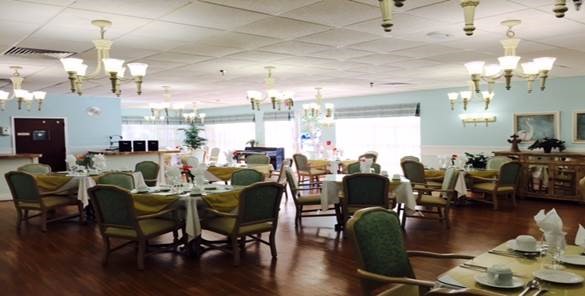
How Does Palm Garden Of Ocala Compare to Other Florida Nursing Homes?

Compared to the 100 nursing homes in Florida, PALM GARDEN OF OCALA's overall rating (4 stars) is above the state average of 3.2, staff turnover (52%) is near the state average of 46%, and health inspection rating (3 stars) is at the national benchmark.

What Should Families Ask When Visiting Palm Garden Of Ocala?

Based on this facility's data, families visiting should ask: "Can I visit during a mealtime to observe dining assistance and food quality?" "How do you handle medical emergencies, and what is your hospital transfer rate?" "Can I speak with family members of current residents about their experience?"

Is Palm Garden Of Ocala Safe?

Based on CMS inspection data, PALM GARDEN OF OCALA has a clean safety record: no substantiated abuse findings (meaning no confirmed cases of resident harm), no Immediate Jeopardy citations (the most serious violation level indicating risk of serious injury or death), and is not on the Special Focus Facility watch list (a federal program monitoring the lowest-performing 1% of nursing homes). The facility has a 4-star overall rating and ranks #1 of 100 nursing homes in Florida. While no facility is perfect, families should still ask about staff-to-resident ratios and recent inspection results during their visit.

Do Nurses at Palm Garden Of Ocala Stick Around?

PALM GARDEN OF OCALA has a staff turnover rate of 52%, which is 6 percentage points above the Florida average of 46%. Moderate turnover is common in nursing homes, but families should still ask about staff tenure and how the facility maintains care continuity when employees leave.

Was Palm Garden Of Ocala Ever Fined?

PALM GARDEN OF OCALA has been fined $8,512 across 1 penalty action. This is below the Florida average of $33,164. While any fine indicates a compliance issue, fines under $50,000 are relatively common and typically reflect isolated problems that were subsequently corrected. Families should ask what specific issues led to these fines and confirm they've been resolved.

Is Palm Garden Of Ocala on Any Federal Watch List?

PALM GARDEN OF OCALA is not on any federal watch list. The most significant is the Special Focus Facility (SFF) program, which identifies the bottom 1% of nursing homes nationally based on persistent, serious quality problems. Not being on this list means the facility has avoided the pattern of deficiencies that triggers enhanced federal oversight. This is a positive indicator, though families should still review the facility's inspection history directly.