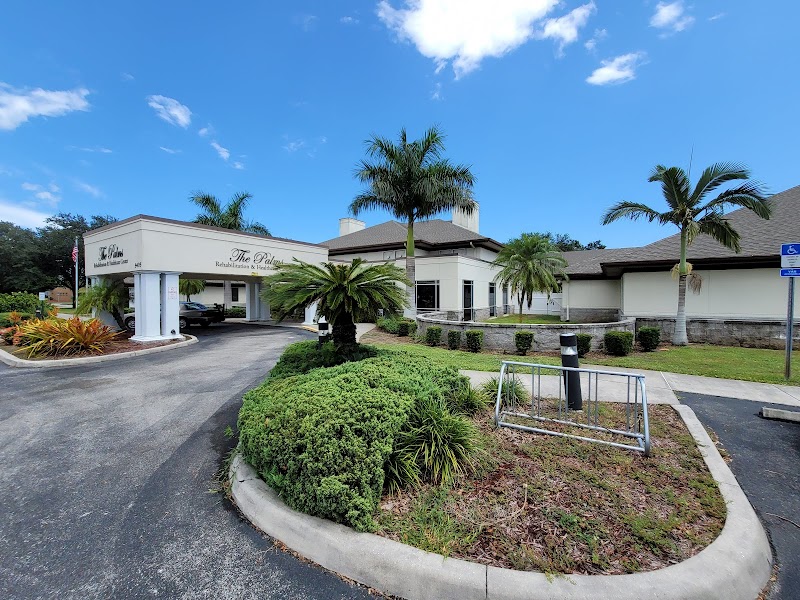
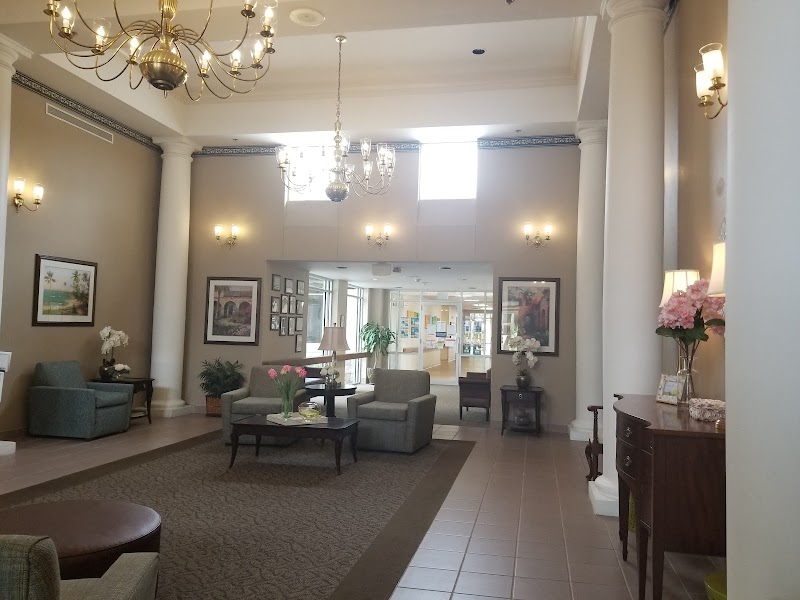
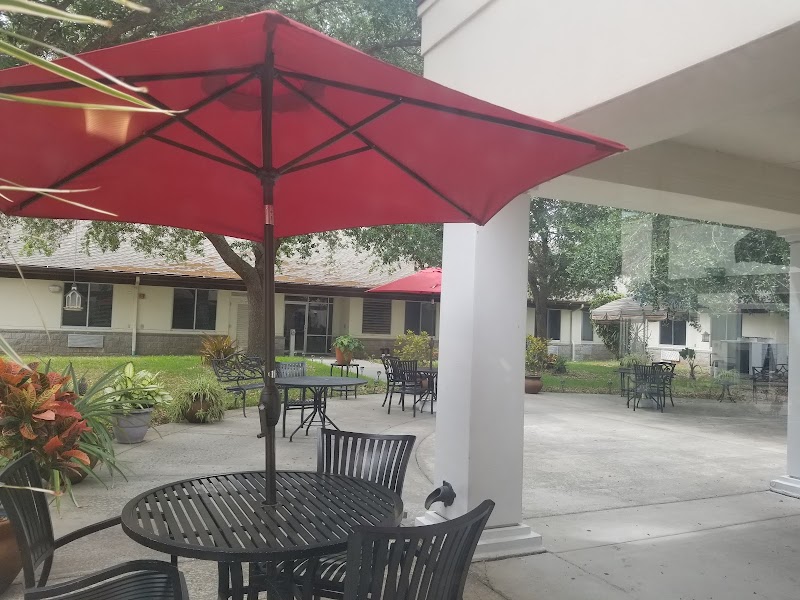
AVIATA AT PALM BAY

5405 BABCOCK ST NE, PALM BAY, FL 32905 (321) 722-0660
For profit - Limited Liability company 120 Beds AVIATA HEALTH GROUP Data: November 2025 2 Immediate Jeopardy citations
Trust Grade
29/100
#325 of 690 in FL
Last Inspection: June 2024

Within standard 12-15 month inspection cycle. Federal law requires annual inspections.

Overview

Aviata at Palm Bay has a Trust Grade of F, indicating poor performance with significant concerns about resident care. It ranks #325 out of 690 nursing homes in Florida, placing it in the top half statewide, and #6 out of 21 in Brevard County, meaning there are only five local options that are better. The facility is showing signs of improvement, as issues have decreased from 9 in 2024 to 2 in 2025. Staffing is average, with a turnover rate of 42%, which aligns with the state average, and they have an average RN coverage level, meaning that while there are enough nurses, they may not be exceeding expectations. However, the facility has faced serious issues, including critical failures to prevent a resident from wandering unsupervised, which put her at risk of serious harm, as well as inadequate discharge processes that resulted in actual harm for some residents.

Trust Score
F
29/100
In Florida
#325/690
Top 47%
Safety Record
High Risk
Review needed
Inspections
Getting Better
9 → 2 violations
Staff Stability
○ Average
42% turnover. Near Florida's 48% average. Typical for the industry.
Penalties
⚠ Watch
$21,693 in fines. Higher than 79% of Florida facilities, suggesting repeated compliance issues.
Skilled Nurses
○ Average
Each resident gets 31 minutes of Registered Nurse (RN) attention daily — about average for Florida. RNs are the most trained staff who monitor for health changes.
Violations
⚠ Watch
21 deficiencies on record. Higher than average. Multiple issues found across inspections.
★★★☆☆
3.0
Overall Rating
★★★☆☆
3.0
Staff Levels
★★★★☆
4.0
Care Quality
★★★☆☆
3.0
Inspection Score
Stable
2024: 9 issues
2025: 2 issues

The Good

  • 4-Star Quality Measures · Strong clinical quality outcomes
  • Full Sprinkler Coverage · Fire safety systems throughout facility
  • No fines on record
  • Staff turnover below average (42%)

    6 points below Florida average of 48%

Facility shows strength in quality measures, fire safety.

The Bad

3-Star Overall Rating

Near Florida average (3.2)

Meets federal standards, typical of most facilities

Staff Turnover: 42%

Near Florida avg (46%)

Typical for the industry

Federal Fines: $21,693

Below median ($33,413)

Minor penalties assessed

Chain: AVIATA HEALTH GROUP

Part of a multi-facility chain

Ask about local staffing decisions and management

The Ugly 21 deficiencies on record

2 life-threatening 1 actual harm
Mar 2025 2 deficiencies
CONCERN (D) 📢 Someone Reported This

A family member, employee, or ombudsman was alarmed enough to file a formal complaint

Potential for Harm - no one hurt, but risky conditions existed

Deficiency F0624 (Tag F0624)

Could have caused harm · This affected 1 resident

**NOTE- TERMS IN BRACKETS HAVE BEEN EDITED TO PROTECT CONFIDENTIALITY** Based on interview, and record review, the facility failed to ensure physician's ordered discharge medications were timely provi...

Read full inspector narrative →
**NOTE- TERMS IN BRACKETS HAVE BEEN EDITED TO PROTECT CONFIDENTIALITY** Based on interview, and record review, the facility failed to ensure physician's ordered discharge medications were timely provided for 1 of 3 residents reviewed for Admission, Transfer, and Discharge, of a total sample of 8 residents, (#7). Findings: Review of the medical record revealed resident #7, a [AGE] year old female was admitted to the facility from a Long Term Care hospital on 8/17/24, and re-admitted after re-hospitalization from an acute care hospital on [DATE]. The resident's diagnoses included left-side paralysis, altered mental status, muscle weakness, unsteadiness on feet, cerebrovascular (brain vessel) disease, chronic atrial fibrillation (heart rhythm dysfunction), high blood pressure, anxiety disorder, anemia (low blood iron), presence of pacemaker, abnormal coagulation (blood clotting), major depressive disorder, insomnia, Urinary Tract Infection (UTI), Extended Spectrum Beta Lactamase (ESBL) (bacteria in urine) resistance, and resistance to multiple antimicrobial drugs (antibiotics). The most recent comprehensive Minimum Data Set Significant Change Assessment with an Assessment Reference Date (ARD) of 10/17/24 noted during the look back periods, resident #7 scored 15 out of 15 on the Brief Interview for Mental Status that indicated she was cognitively intact, and no behaviors or rejections of evaluation or care occurred. The assessment showed the resident required substantial/maximum staff assistance to complete Activities of Daily Living (ADL), was dependent for functional mobility, did not walk, was always incontinent of bladder and bowel functions, reported occasional 6 out of 10 (0-10 scale) pain, and received high-risk anti-depressant, anti-coagulant (blood thinner), opioid, and intravenous (IV) antibiotic medications. The MDS Discharge Assessment with an ARD of 12/23/24 showed resident #7 was discharged to Home/Community with Provision of Current Reconciled Medication List to Resident at Discharge provided by Verbal and Paper-based Route Transmission to Resident. Discharge Planning occurred for the resident to return to the community with an un-named Local Contact Agency (LCA) referral. The Care Plan Report focuses included: potential for fluid deficit related to acute infection, complications related to UTI, pain, altered cardiovascular (heart vessels), high blood pressure, and diuretic (fluid removing), anti-depressant, anti-anxiety, and anti-coagulant (blood thinner) medication use with interventions to monitor for complications. The Medication Administration Record (MAR) showed physician's medication orders for resident #7 at discharge included: Diltiazem 120 Milligrams (MG) once daily for blood pressure, Duloxetine 60 MG once daily for depression, Lasix 20 MG once daily for pleural effusion (lung fluid), Magnesium 400 MG twice daily for low magnesium, Metoprolol 50 MG twice daily for blood pressure, Pantoprazole 40 MG once daily for acid reflux, Potassium Chloride 40 Milliequivalent's (mEq) once daily for low potassium, and Coumadin 2 MG once every evening for blood clot prevention. The Discharge Plan and Instructions completed by the Social Services Director noted resident #7 was discharged home with family via non-emergency medical transportation services, medical equipment, and follow up care provided by Home Health Care (HHC) services. The form read, . resident will be having a safe discharge, location: home with nephew. Resident has pharmacy, HHC and DME (Durable Medical Equipment) in place . Medication list provided upon discharge to the new provider . In a telephone interview, on 3/05/25 at 11:18 AM, resident #7's daughter recalled when her mother discharged home on [DATE], two days before the Christmas holiday, she didn't have all of her prescription medications on hand at home nor were they sent to her local pharmacy. She said she called the facility and was told they were not a pharmacy and they could not deliver any medications. She said she had to come to the facility and pick up the medications, but there were only one or two Coumadin pills. She explained she was very upset and worried, especially about the blood thinner because her mother previously had a stroke. On 3/04/25 at 2:24 PM, the Social Services Director explained that discharge planning started on admission and at that time, she collected information from the resident or family about who their community physician was, and what pharmacy they used so nurses would have it to ensure prescriptions were included for a safe discharge. She recalled when resident #7 discharged , the former Unit Manager was leaving and there was some missing items from nursing she had to complete. She said she did not have credentials to obtain physician's orders for medications and recalled on 12/24/24, Christmas Eve, the Director of Nursing (DON) had resident #7's daughter on the phone and she reported the resident was missing her prescription medications. The Social Services Director said she thought the Medical Director was called for assistance but there was an issue because the pharmacy was closed for the holiday and the resident's daughter had to come and pick up the left over medications. On 3/04/25 at 2:56 PM, the DON recalled on 12/24/24 after resident #7 was discharged , he received a call from her daughter who was upset the facility had not sent medications or prescriptions to the resident's pharmacy. The DON said it had been over 24 hours since the resident left, so he called the physician for permission to allow her to pick up the resident's unused supply from the facility. He said she was upset because there were only approximately two Coumadin pills left. The DON explained, he told the resident's daughter she also had the option of going to a walk-in clinic or asking their Primary Care Physician (PCP) for a refill to the pharmacy. Review of resident #7's HHC nurses notes dated 12/24/24 showed the resident was not provided prescriptions or medications when she discharged from the facility on 12/23/24, and no medications were in the home. On 3/05/25 at 10:50 AM, Registered Nurse (RN) D recalled on or about 12/25/24, resident #7's daughter came to the facility after the resident discharged to retrieve her facility supply of prescription medications. The nurse explained he gave her the medications after he confirmed by telephone with the DON it was okay. On 3/04/25 at 3:12 PM, in a telephone interview, the resident's community Registered Pharmacist (RPh) checked their records and said the facility's APRN called in resident #7's prescriptions on 12/26/25, three days after the resident discharged . On 3/05/25 at 1:30 PM, the DON said nurses were responsible to ensure discharge medications were provided. He conveyed it was important for the facility to ensure residents were provided with adequate prescription medications by either their left over supplies with an doctor's order, a written prescription, or sent/called to their pharmacy. The DON explained the timing of Christmas Eve and the resident's pharmacy closing made it more difficult to get the medications called in. Review of the facility's standards and guidelines titled Interdisciplinary Discharge Planning dated 11/30/14 noted Care Management was responsible for coordination and contact for necessary outside services.
CONCERN (D) 📢 Someone Reported This

A family member, employee, or ombudsman was alarmed enough to file a formal complaint

Potential for Harm - no one hurt, but risky conditions existed

Quality of Care (Tag F0684)

Could have caused harm · This affected 1 resident

**NOTE- TERMS IN BRACKETS HAVE BEEN EDITED TO PROTECT CONFIDENTIALITY** Based on observation, interview, and record review, the facility failed to ensure a laboratory specimen was obtained and submitt...

Read full inspector narrative →
**NOTE- TERMS IN BRACKETS HAVE BEEN EDITED TO PROTECT CONFIDENTIALITY** Based on observation, interview, and record review, the facility failed to ensure a laboratory specimen was obtained and submitted per physician's orders for 1 of 4 residents reviewed for Quality of Care, of a total sample of 8 residents, (#7). Findings: Review of the medical record revealed resident #7, a [AGE] year old female was admitted to the facility from a Long Term Care hospital on 8/17/24, and re-admitted after re-hospitalization from an acute care hospital on [DATE]. The resident's diagnoses included left-side paralysis, altered mental status, muscle weakness, unsteadiness on feet, cerebrovascular (brain vessel) disease, chronic atrial fibrillation (heart rhythm dysfunction), high blood pressure, anxiety disorder, anemia (low blood iron), presence of pacemaker, abnormal coagulation (blood clotting), major depressive disorder, insomnia, Urinary Tract Infection (UTI), Extended Spectrum Beta Lactamase (ESBL) (bacteria in urine) resistance, and resistance to multiple antimicrobial drugs (antibiotics). The most recent comprehensive Minimum Data Set Significant Change Assessment with an Assessment Reference Date of 10/17/24 noted during the look back periods, resident #7 scored 15 out of 15 on the Brief Interview for Mental Status exam that indicated she was cognitively intact. The assessment indicated resident #7 had no behaviors and no rejections of evaluation or care occurred. The assessment showed the resident required substantial/maximum staff assistance to complete Activities of Daily Living (ADL), was dependent for functional mobility, did not walk, was always incontinent of bladder and bowel functions, reported occasional 6 out of 10 (0-10 scale) pain, and received high-risk anti-depressant, anti-coagulant (blood thinner), opioid, and intravenous (IV) antibiotic medications. The Order Summary Report showed a physician's orders for Vancomycin Pre-Dose blood tests from 10/23/24 to 10/29/24, Vancomycin IV 1250 Milligrams for infection every other day from 10/15/24 to 10/31/24, removal of the IV catheter on 11/06/24, and Urinalysis and Culture (bacteria identification) on 11/12/24 and 12/20/24. The Care Plan Report focuses included: potential for fluid deficit related to acute infection, and complications related to UTI with interventions to obtain and monitor lab and diagnostic work; report results to physician and follow up as indicated. On 3/05/24 at 3:00 PM, Licensed Practical Nurse (LPN) C checked resident #7's medical record and recalled that she took a verbal order from Advanced Practical Registered Nurse (APRN) D for a urinalysis and culture because the resident had altered mental status. The nurse explained she normally collected the specimen right away but could not remember if she had collected it. She said she normally passed on to the oncoming shift when she wasn't able to collect a specimen and stated, it's important to collect it and get it sent timely to treat any infection. The December 2024 Treatment Administration Record (TAR) noted a Urinalysis/Urine Culture for altered mental status was signed by LPN A on 12/21/24 at 12:17 PM. The TAR Schedule read, SENT Uncollected 12/20/24. On 3/06/25 at 11:15 AM, the Director of Nursing (DON) said LPN A was on leave and unavailable for an interview. On 3/05/24 at 1:50 PM, LPN B explained nurses entered urine lab orders into the computer, printed a requisition, collected the specimen, stored it in the refrigerator for the Phlebotomist to pick up and transport to the lab, and noted the same on the hand-written monthly log kept in the lab binder on the nursing unit. The nurse stated it was very important to pass on to the oncoming shift if a specimen wasn't collected. Review of resident #7's Urinalysis Lab Results Report of 12/23/24 showed no results. The laboratory provider report dated 12/23/24 had no results and read, scheduled: 12/21/24 7:00 AM. On 03/05/25 at 1:30 PM, The DON said APRN D no longer worked at the facility. Unsuccessful attempts were made to reach APRN D by telephone on 3/05/25 at 3:12 PM and 3/06/25 at 11:02 AM. In a telephone interview on 3/05/24, the Customer Service Representative of the laboratory provider checked their records and said notes showed on 12/23/24, the facility called about resident #7's urine results and was informed the Phlebotomist noted to their nurses there was no specimen in the refrigerator for pick-up. The representative explained the specimen was reported as uncollected to the facility. On 3/05/25 at 1:03 PM, the Unit Manager said she was in the supervisor role for about 2 weeks. She checked the laboratory specimen log binder and explained nurses noted on hand written forms that urine specimens had been collected and stored in the refrigerator for pick up by the Phlebotomist. She was unable to locate the December 2024 log. On 3/06/25 at 11:45 AM, the Unit Manager recalled on 3/05/24, she contacted the lab about resident #7's urine test ordered on 12/20/24. She said the lab indicated to her they never received the specimen and their Phlebotomist noted it was not in the unit's refrigerator. She provided specimen logs she was able to locate that were missing November and December 2024 records. On 3/06/25 at 11:20 AM, the DON said he wasn't sure what happened with resident #7's urine specimen and it was possible the nurse signed it off in error. The DON explained he expected nurses to timely collect urine specimens, store them in the unit refrigerator, report to oncoming nurses if they hadn't collected it, and notify the physician if there were issues or concerns about collections. The DON said they were unable to locate the December logs and the former Unit Manager was responsible for their safe storage. Review of the Lab Book kept at the nurses' station included orders and specimen processing instructions for nurses that noted hand-written logs were used to note the status and location of specimens for Phlebotomists to pick up and transport to the lab.
Aug 2024 1 deficiency
CONCERN (D) 📢 Someone Reported This

A family member, employee, or ombudsman was alarmed enough to file a formal complaint

Potential for Harm - no one hurt, but risky conditions existed

Accident Prevention (Tag F0689)

Could have caused harm · This affected 1 resident

**NOTE- TERMS IN BRACKETS HAVE BEEN EDITED TO PROTECT CONFIDENTIALITY** Based on observation, interview, and record review, the facility failed to ensure adequate supervision was provided to prevent e...

Read full inspector narrative →
**NOTE- TERMS IN BRACKETS HAVE BEEN EDITED TO PROTECT CONFIDENTIALITY** Based on observation, interview, and record review, the facility failed to ensure adequate supervision was provided to prevent elopement for 1 of 3 residents reviewed for elopement, of a total sample of 3 residents, (#1). Review of the medical record revealed resident #1, a [AGE] year old male was admitted to the facility from an acute care hospital on [DATE] with diagnoses that included Traumatic Brain Injury (TBI), psychosis, persistent mood disorders, cognitive impairment, lack of coordination, and difficulty in walking. The most recent Quarterly Minimum Data Set Assessment with an Assessment Reference Date of 7/25/24 noted during the look back periods, resident #1 had impaired vision and he scored 8 out of 15 on the Brief Interview for Mental Status that indicated he was moderately cognitively impaired. The assessment showed there were no behaviors towards himself or others, signs or symptoms of delirium, rejections of evaluations or care, or wandering, and he scored 0 out of 27 on the resident mood interview that indicated no depression. Resident #1 was able to walk independently and did not have any falls since the prior assessment. The assessment indicated an active discharge plan with community referrals was in place. Resident #1 had a care plan for self-care ADL performance deficits related to cognitive deficits, TBI, psychosis, and mood disorder, and for history of behaviors related to wandering in rooms, removing wander alarm device, agitation, destruction of facility equipment, refusal of medications, and setting off fire alarms with a history of 1-to-1 supervision. Interventions included electronic wander alarm device and 1-to-1 supervision. Additional care plans included trouble concentrating related to depression, TBI, right visual impairment, and impaired cognition/thought processes/short term memory loss. Interventions included to cue, re-orient, and supervise as needed. A Statement of Incapacity signed by Medical Doctor (MD) L on 11/22/23 and MD M on 1/03/24 documented the resident was incapable of making his own decisions. On 8/25/24 at 8:20 AM, resident #1 was observed in his room, sitting on the bed, eating breakfast. RN E was nearby, sitting in a chair and said he was assigned to 1-to-1 supervision of the resident. The resident said he wasn't from the area, and his mother lived about 2 hours away, but he thought he had been at the facility for about a year. The next day on 8/26/24 at 12:32 PM, resident #1 was observed walking independently out of his bathroom toward his bed. He sat down on the bed in his room and picked up his cell phone to correctly demonstrate his ability to use the phone to call his mother and 911. The resident stated, I won't go out the window again; wherever I have to be is where I have to be. In a telephone interview on 8/25/24 at 3:44 PM, resident #1's mother recalled that on 8/04/24 at approximately 6:00 AM, she received a call from the facility that her son was missing, and it looked like he climbed out of the window in his room. She said her son was supposed to be transferred to an Assisted Living Facility (ALF) a few days prior and he was very upset when it didn't happen. She explained, she was very worried, even though he was physically able to get around. Resident #1's mother said she tried to call her son, but he didn't answer, and after a couple hours, she decided to drive herself over and try to find him. She said her son called her back while she was driving, and she was able to safely locate him by his descriptions of a parking lot near the facility. She said she convinced him to go with her and transported him back to the facility, about a half mile down the road. Resident #1's mother was upset when she explained she believed facility staff didn't check on him enough because he was physically independent. She stated, They pretty much left him alone other than when they went to give him his medications; he would always be somewhere else in the facility. Review of the Family Medicine Progress Note dated 7/02/24 read, He is doing well, history of traumatic brain injury and is unable to care for himself . requires close safety monitoring and help with ADLs . Eating and sleeping well at night, mood and behavior stable . nurse denies any issues or concerns . Awake and oriented x 1. The Admission/readmission Data Collection assessment dated [DATE] noted the resident was cognitively impaired, independently mobile, had poor decision making skills, and was at risk for elopement. The Elopement Risk Evaluations dated 12/30/24, 1/08/24, and 5/30/24 documented the resident was not at risk for elopement and not oblivious to safety needs. The Elopement Risk Evaluation dated 8/04/24, after the elopement indicated the resident was at risk for elopement, and he was oblivious to safety needs. On 8/26/24 at 9:14 AM, the Social Services Director explained that after a failed discharge to an ALF on 8/01/24, resident #1 was disappointed and upset. She said the transfer didn't occur because of insurance issues. She said the resident received psychiatric services, and after the elopement incident, 1-to-1 supervision was implemented. She recalled during a facility stand down meeting approximately 3 months prior, the resident had damaged the television and the wall in his room. She said she contacted his mother, and she apologized. She stated, When the discharge didn't happen the behaviors got worse because he was upset and furious. On 8/26/24 at 9:54 AM, the Maintenance Director recalled resident #1's television was found to have cracks and appeared to have been purposefully damaged. He said the wall was also damaged and it looked like it had been punched. He said the resident denied responsibility for the damage however, there wasn't a roommate, and no one witnessed how it happened. The Maintenance Director said the window in resident #1's room had a small, removable, security screw-type device to prevent the window from being opened all the way which was in place at the top of the window when the resident eloped on 8/04/24. The single screw was removed by resident #1 using force and he was able to open the window enough to climb out and exit the facility. The Maintenance Director demonstrated the facility had since installed similar, but more secure devices at the top and bottom of all the windows to prevent the windows from being opened as easily to allow exit. In a telephone interview on 8/27/24 at 12:12 PM, Certified Nursing Assistant (CNA) D recalled he worked the 11:00 PM to 7:00 AM shift on 8/04/24, and resident #1 was included in his assignment. The CNA explained he last saw the resident in his room lying in bed sleeping at approximately 11:00 PM when he did his rounds. He said he was very familiar with the resident, and explained resident #1 did not like to be disturbed during the night, and was able to use the bathroom without assistance. He recalled, at approximately 6:00 AM, the nurse went to the room to check on the resident and found the window open with the screen missing. He said when staff checked further, they found the resident's belongings were scattered about the room and outside the window. He explained they searched the facility but were unable to locate the resident anywhere inside nor outside, and the police were called. The CNA conveyed he normally checked on all residents as much as possible, and understood the expectations were that staff were supposed to check on residents at least every 2 hours. In a telephone interview with Registered Nurse (RN) A, she recalled on 8/03/24 she worked the 7:00 PM to 7:00 AM shift, and had resident #1 on her assignment. The RN said she last saw the resident around 10:00 PM when she administered medications. She said around 6:00 AM, she went into the resident's room, saw the open window without a screen, and realized the resident wasn't there. She said she immediately asked CNA D if he knew where the resident was, and he said he last saw him between 11:00 PM and 12:00 AM. She conveyed, nurses expect CNAs to check on all residents even if they're independent and stated, They are supposed to check more than that. On 8/27/24 at 11:52 AM, the 100 Hall Unit Manager recalled around 6:00 AM on 8/04/24, staff notified her by phone that resident #1 could not be located. She explained, three days prior, the resident was upset after an unsuccessful transfer to an ALF. She said staff told her the resident wanted the door closed during the night and stated, They should at least open the door and look in. In an interview with the Regional Director of Clinical Services, Nursing Home Administrator (NHA), and Director of Nursing (DON) on 8/26/24 at 2:09 PM, the NHA conveyed the facility investigated the incident and determined that staff failed to conduct regular rounds throughout the night to ensure the resident remained sleeping in his room. She explained, the facility re-educated their staff after the incident and stated, Even if people are independent, we still need to check on them. The DON stated, They should have checked on him at least. The Regional Director of Clinical Services stated, They're supposed to check every 2 hours. Review of the facility's standards and guidelines dated 8/01/20 and titled Elopement/Wandering Risk Guideline read, . If a patient/resident is identified as being at risk complete an Elopement Risk Alert and obtain a photograph. Initiate individualized interventions in the patient/resident Care Plan and [NAME] . The Facility Assessment Tool dated 3/18/24 read, . you may accept residents with, or your residents may develop, the following common diseases, conditions, physical and cognitive disabilities, or combinations of conditions that require complex medical care and management: . Psychosis . impaired cognition, mental disorder, depression, . Behavior that Needs interventions . Traumatic Brain Injuries . Using our facility admission evaluation process, residents are carefully evaluated preadmission to ensure that we can meet their needs and have the required competencies and training to do so. The facility will adjust staff as needed based on the acuity level of care needed to meet the needs of the following: 1-1 supervision . Manage the medical conditions and medication-related issues causing psychiatric symptoms and behavior, identify and implement interventions to help support individuals with issues such as dealing with anxiety, care of someone with cognitive impairment, care of individuals with depression, trauma/PTSD (Post Traumatic Stress Disorder), other psychiatric diagnoses, intellectual or developmental disabilities.
Jun 2024 2 deficiencies
CONCERN (D)

Potential for Harm - no one hurt, but risky conditions existed

PASARR Coordination (Tag F0644)

Could have caused harm · This affected 1 resident

**NOTE- TERMS IN BRACKETS HAVE BEEN EDITED TO PROTECT CONFIDENTIALITY** Based on interview and record review, the facility failed to complete a Preadmission Screening And Resident Review (PASARR) for ...

Read full inspector narrative →
**NOTE- TERMS IN BRACKETS HAVE BEEN EDITED TO PROTECT CONFIDENTIALITY** Based on interview and record review, the facility failed to complete a Preadmission Screening And Resident Review (PASARR) for a resident later identified with a Mental Illness (MI), for one of six residents reviewed for PASRR, of a total sample of 40 residents, (#47). Findings: Resident # 47 was admitted to the facility on [DATE] with diagnoses including hypertension, type 2 diabetes, and dementia. She had a Level I PASARR completed in the hospital on [DATE] which indicated a Level II PASARR evaluation was not required. Review of the medical record indicated a diagnosis of major depressive disorder was added on 3/16/21 and a diagnosis of schizophrenia was added on 7/27/21. Schizophrenia was listed as a primary diagnosis. The medical record showed the facility failed to repeat a Level I PASARR or refer the resident for Level II evaluation after a new diagnosis for possible MD/ID were added. Review of the Significant Change Minimum Data Set (MDS) assessment dated [DATE] Section A indicated no serious mental illness and no PASARR completed. This conflicted with information submitted in Section I-Active Diagnoses of the assessment with documentation of anxiety disorder, depression, psychotic disorder, and schizophrenia as current diagnoses. Section E indicated the resident had physical behaviors directed toward others for 4-6 days in the lookback period which placed the resident at significant risk for physical illness or injury, interfered with resident care, and significantly interfered with residents' participation in activities or social interactions. The assessment also indicated these behaviors put others at risk for physical injury, and significantly disrupted care or the living environment. Review of the Quarterly MDS assessment dated [DATE], Section A also contained no documentation of any PASARR being completed. Section I of the assessment, active diagnoses included psychotic disorder and schizophrenia. Section E of the assessment indicated resident #47 had physical behaviors directed toward others on 1-3 days during the lookback period, and rejection of care. Review of a Care Coordination Note dated 3/11/21 written by the Psychiatric Nurse Practitioner read: To perform regular psychotropic meeting and to see this patient in order to consider gradual dose reductions (GDR). Regular appropriate GDRs are necessary in elderly patients, and it is necessary to discuss it in psychotropic meetings where decisions are made with input from nursing home treatment team members. Today I attended a clinical meeting and met with the DON, Social Services, Unit in Charge and nursing staff to discuss patient's clinical case. Patient is unstable requiring med changes: as per collected information and interview, it appears that patient is unstable .The symptoms are occurring almost daily and causing severe distress. Continue medication: Seroquel 200 mg day-schizophrenia. Review of a psychiatry Subsequent Note dated 4/24/24 read: Assessments and Plan: As per collected information and interview it appear that the patient is stable . But as patient has underlying psychiatric disorders the symptoms can exacerbate on periodic basis in the facility setting, we will follow up with this patient intermittently. On 6/13/24 at 10:01 AM, the Social Service Director stated a new diagnosis was considered a change in condition which would require a review of the current level I PASARR and require a new level I PASARR to be submitted. The Social Service Director indicated the new PASARR could possibly trigger the need for a Level II PASARR to be completed. Policy and Procedure for Preadmission Screening and Resident Review (PASARR) dated 11/08/21 read: . The purpose is to ensure that the residents with SMI (Serious Mental Illness) or ID (Intellectual Disability) receive the care and services they need in the most appropriate setting. Social Services are responsible for coordinating significant change updates of these screenings, conducted by the appropriate agency. These results along with the results from the previous years will be kept in the appropriate sections of the residents' records.
CONCERN (D)

Potential for Harm - no one hurt, but risky conditions existed

Deficiency F0645 (Tag F0645)

Could have caused harm · This affected 1 resident

**NOTE- TERMS IN BRACKETS HAVE BEEN EDITED TO PROTECT CONFIDENTIALITY** 2. Review of the medical record revealed resident #21 was admitted to the facility on [DATE] from the hospital. Her diagnosis in...

Read full inspector narrative →
**NOTE- TERMS IN BRACKETS HAVE BEEN EDITED TO PROTECT CONFIDENTIALITY** 2. Review of the medical record revealed resident #21 was admitted to the facility on [DATE] from the hospital. Her diagnosis included cerebral infarction (stroke), anxiety disorder, alcohol abuse, brief psychotic disorder, and major depressive disorder. Resident # 21's Quarterly Minimum Data Set (MDS) assessment with assessment reference date of 3/23/24 revealed the resident scored 00 out of 15 on the Brief Interview for Mental Status which indicated she had severely impaired cognitive skills for daily decision making. The Quarterly MDS also noted that the resident did not exhibit behavior symptoms or rejection of care that was necessary to achieve the resident's goals for health and well-being. Review of resident # 21's medical record revealed a behaviors care plan initiated on 8/14/23 and revised on 11/29/23 that indicated the resident had behaviors of screaming at staff and nursing students. Interventions included provide positive interaction and explain procedures before starting them and psychiatric consult as needed. On 6/12/24 at 12:10 PM, the Social Service Director stated she had been working at the facility since 5/16/24 and it was her responsibility to ensure the residents' Level I and Level II PASARRs were completed and submitted timely. She also stated residents are to have Level I PASARRs submitted prior to admission, if a resident was diagnosed with a new mental illness diagnosis, or if there was a change in condition. She verified resident #21 was diagnosed with depressive disorder, anxiety disorder, and psychotic disorder on 6/27/23, however, only the depressive disorder diagnosis was listed on the Level I PASARR submitted on 6/27/23. The Social Service Director acknowledged the resident's anxiety and psychotic disorder diagnosis should have been included on the Level I PASARR. She confirmed the Level I PASARR was inaccurate and another Level I PASARR should have been submitted with the correct diagnosis. 3. Review of the medical record revealed resident #66 was admitted to the facility on [DATE] from the hospital. Her diagnosis included major depressive disorder, schizoaffective disorder, and type 2 diabetes. Resident # 66's Quarterly Minimum Data Set assessment with assessment reference date of 3/23/24 revealed the resident scored 15 out of 15 on the Brief Interview for Mental Status which indicated she did not have any cognitive impairment. The Quarterly MDS also noted the resident did not exhibit behavior symptoms or rejection of care that was necessary to achieve the resident's goals for health and well-being. Review of resident # 66's medical record revealed a care plan that included antipsychotic therapy related to diagnosis of schizoaffective disorder and behaviors of refusing insulin, refusing to eat at times, and refusing medications initiated on 10/07/22 and revised on 4/08/24. Resident #66's Order Summary Report and the Medication Administration Record showed the resident had an order for Abilify 15 milligram (mg) by mouth at bedtime for psychosis related to schizoaffective disorder. On 6/12/24 4:10 PM, Social Service Director verified resident # 66 was admitted on [DATE] with a Level I PASARR completed on 12/22/21 that triggered for a Level II PASARR to be performed. She stated a Level II PASARR had not been submitted until today, 6/12/24. She acknowledged the Level II PASARR should have been submitted when the Level I triggered for the Level II in December 2021. The facility policies and procedures for Preadmission Screening and Resident Review revised 11/08/21 read, The center will assure that all Serious Mentally Ill and Intellectually Disabled residents receive appropriate pre-admission screening according to Federal/State guidelines. The purpose is to ensure that the residents with SMI or are ID receive the care and services they need in the most appropriate setting. It is the responsibility of the center to assess and assure that the appropriate preadmission screenings, either Level I or Level II, are conducted and results obtained prior to admission .If it is learned after admission that a PASARR Level II screening is indicated, it will be the responsibility of Social Services to coordinate and/or inform the appropriate agency to conduct the screening and obtain the results. Based on interview and record review, the facility failed to ensure the Preadmission Screening and Resident Review (PASARR) was accurately completed prior to accepting a new admission, (#92), failed to request Level I, (#21) and Level II evaluations, (#66), for 3 of 6 residents reviewed for PASARR, of a total sample of 40 residents. Findings: 1. Resident #92's medical record revealed he was admitted to the facility on [DATE] from another skilled nurse facility (SNF) with diagnoses including bipolar disorder, depressive disorder, dementia and anxiety. Resident #92's PASARR form dated 1/13/24 was inaccurate and did not reflect that the resident had a serious mental illness (SMI). Review of the psychiatry note dated 2/13/24 included diagnoses of bipolar disorder as well. The resident also had a care plan for behaviors initiated on 2/14/24 and activities of self-care performance deficit which included diagnosis of bipolar disorder on 2/29/24. Further review of the medical record for resident #92 revealed a Psychiatry Evaluation Note dated 2/14/24 and also included diagnosis of bipolar disorder. On 6/11/24 at 4:40 PM, the Social Services Director verified resident #92's Level I PASARR that was done on 1/13/24 prior to his admission to the facility was inaccurate and should have been re-done to include his diagnosis of bipolar disorder which is a SMI. She explained the purpose of doing a Level I PASARR was to determine if he needed further evaluation through completion of a Level II PASARR. Since the Level I PASARR was inaccurate they did not know if the resident would have needed a Level II assessment. The Social Services Director explained she had just started working at this facility in May of this year and could not say why the prior Social Services staff did not do another assessment. She added, the purpose of doing PASARR was to ensure the resident received psychology, psychiatric or other resources which provide outside services if needed. On 6/12/24 at 9:54 AM, the Regional nurse verified it would have been the facility's Social Service Department responsibility to ensure the PASARR was accurate and to re-assess if not, to ensure the resident got any needed services for his SMI. The Regional nurse explained if the resident had come from the hospital, it would have been the responsibility of the hospital liaison to ensure accuracy but since he came from another SNF and had prior diagnosis of bipolar disorder it was the facility Social Services Director's responsibility.
Apr 2024 6 deficiencies 2 IJ
CRITICAL (J) 📢 Someone Reported This

A family member, employee, or ombudsman was alarmed enough to file a formal complaint

Immediate Jeopardy (IJ) - the most serious Medicare violation

Free from Abuse/Neglect (Tag F0600)

Someone could have died · This affected 1 resident

**NOTE- TERMS IN BRACKETS HAVE BEEN EDITED TO PROTECT CONFIDENTIALITY** Based on observation, interview, and record review, the facility failed to protect the resident's right to be free from neglect ...

Read full inspector narrative →
**NOTE- TERMS IN BRACKETS HAVE BEEN EDITED TO PROTECT CONFIDENTIALITY** Based on observation, interview, and record review, the facility failed to protect the resident's right to be free from neglect by not ensuring staff implemented measures to mitigate the risk and prevent elopement for 1 of 3 residents reviewed for Elopement, of a total sample of 23 residents, (#1). These failures contributed to the elopement of resident #1 and placed her at risk for serious injury, impairment, and/or death. While resident #1 was out of the facility unsupervised, there was likelihood she could have fallen, been accosted by unknown persons, become lost or been hit by a vehicle. On 12/28/2023 at approximately 3:30 PM, resident #1, a vulnerable [AGE] year old female was admitted to the facility from the hospital. While she was at the hospital, doctors determined she was at risk of wandering unsafely without 24-hour supervision, and she required care and services to monitor her and implement measures to ensure freedom from harm and prevent known risks of endangerment. On 12/30/23 at approximately 12:00 PM, the facility failed to provide appropriate care and services to prevent a physically and cognitively impaired vulnerable resident, assessed to be an elopement risk from exiting the facility unsupervised. The resident was allowed to exit the building and walked approximately 0.3 miles down a heavily trafficked 4 lane highway with speed limit of 45 miles per hour. The route along the way was noted to have uneven, sloped terrain/pavement, curbs, and a retention ditch. The facility was unaware of the resident's elopement until she was returned to the facility by her daughter who received a phone call from police when the resident was found wandering at a nearby pharmacy. The facility failed to implement preventive interventions per standards of care to mitigate the resident's risk of elopement. The facility's failure to identify the need for adequate supervision and ensure a secure environment contributed to resident #1's elopement and placed all residents who wandered at risk. This failure resulted in Immediate Jeopardy starting on 12/30/23. The Immediate Jeopardy was removed on 1/12/24 and the facility corrected the noncompliance at F600 on 1/19/24. The noncompliance at F600 was determined to be past noncompliance. Findings: Cross reference F689 Review of the medical record revealed resident #1 was admitted to the facility from an acute care hospital on [DATE] with diagnoses including encephalopathy (brain dysfunction), cognitive communication deficit, dementia, lack of coordination, difficulty in walking, unsteadiness on feet, muscle weakness, stroke, heart attack, and pulmonary embolism (blood clot in a lung). The admission Data Collection form dated 12/28/23 revealed resident #1 was alert, confused, oriented only to person, and did not require assistive mobility devices. The assessment identified resident #1 was at risk for elopement, received high-risk anticoagulant (blood thinner) medication, and had poor balance and an unsteady gait (walking pattern). The Minimum Data Set 5-day assessment with Assessment Reference Date 12/31/23 revealed resident #1 was unable to complete the Brief Interview for Mental Status (BIMS). The Staff Assessment for Mental Status noted the resident had short term and long term memory problems. She was unable to recall the current season, location of her room, staff name and faces, nor what type of facility she was at. Staff documented Cognitive Skills for Daily Decision Making as moderately impaired. No behaviors were noted, and wandering was noted as having occurred in the past 1 to 3 days. Walking and using up to 4 steps were noted as independent, and she used a wheelchair with supervision. The hospital Discharge Summary documented resident #1 required 24-hour supervision. The Cognition Status and Precautions read, Fall risk, impulsive, poor insight, poor judgement, easily distracted, memory deficit., and coordination section read, . difficulty following commands and poor planning and sequencing. The Florida Agency for Health Care Administration 5000-3008 Medical Certification for Medicaid Long Term Care Services and Patient Transfer Form dated 12/27/23 revealed resident #1's decision making capacity required a surrogate. She was at risk for falls, and required assistance with transfers and ambulation. Review of physician's orders dated 12/28/23 revealed resident #1 required a responsible party to go out of the facility, and received the high-risk medication Apixaban twice daily for blood clot prevention with monitoring for abnormal bleeding. Review of Order Audit reports noted orders were entered by the Weekend Supervisor on 1/01/24 and were backdated to 12/30/23 at 11:42 AM, for a wander prevention device and monitoring. The Functional Status Evaluation/admission noted the resident needed assistance from another person when walking from room to room and planning regular tasks. The form showed evaluations for how the resident usually bent or stooped from standing, went up and down 1 or more steps, and/or a curb, and walked 10 feet or more on uneven or sloping surfaces (indoor or outdoor) such as turf or gravel was not attempted due to a medical condition or safety concern, and a wheelchair had normally been used in the previous 7 days. A Transfer/Mobility Status Criteria assessment dated [DATE] noted the resident needed hands on support when moving from sitting to standing with a gait belt. The Physical Therapy Evaluation Assessment Summary completed on 12/29/23 noted the resident was referred to therapy for decreased functional mobility, strength, functional limitations with ambulation, balance, and increased need for assistance from others. She presented with balance deficits, decreased insight, safety awareness, strength and cognition impairments. The assessment documented the resident required stand by assistance for bed mobility, transfers, and ambulation without an assistive device for 250 feet with safety instructions when challenged with obstacles. Her gait speed indicated she functioned at limited community ambulator level, and she was at risk for falls. An Elopement Risk Evaluation completed after the elopement incident dated 12/30/23, noted her Wandering Risk score was 3 out of 3 that indicated she was at high risk for elopement. The Elopement Risk Evaluation section included positive responses to the following: independently mobile (ambulatory or wheelchair), cognitively impaired with poor decision making, exit-seeking behaviors, wandering oblivious to safety needs, and ability to exit the facility. The evaluation noted staff were to report all residents at risk to the Director of Clinical Services and on the 24-hour report. The Baseline Care Plan dated 12/28/23 documented resident #1 was at risk of falling. The care plan did not include preventive measures or interventions for elopement risks. A Care Plan Focus was initiated on 12/30/23 after the elopement incident for elopement risk/wanderer, related to impaired cognition, dementia, and ambulatory status. The goal noted the resident would not leave the facility unattended and included interventions for an electronic monitoring device placed on her left ankle and one-one supervision. An Elopement Risk Evaluation dated 12/30/23 completed after the elopement, noted her Wandering Risk score was 3 out of 3 that indicated she was at high risk for elopement. The Elopement Risk Evaluation section included positive responses to the following: independently mobile (ambulatory or wheelchair), cognitively impaired with poor decision making, exit-seeking behaviors, wandering oblivious to safety needs, and ability to exit the facility. The evaluation noted staff were to report all residents at risk to the Director of Clinical Services and on the 24-hour report. The admission Data Collection form dated 12/28/23 completed by Registered Nurse (RN) A noted resident #1 was alert, confused, oriented only to person, and she did not require assistive mobility devices. The assessment identified the resident was at risk for elopement, received high-risk anti-coagulant (blood thinner) medication, and she had poor balance and an unsteady gait. During an interview with RN A on 4/01/24 at 4:16 PM, he recalled he completed resident #1's admission assessments on 12/28/23 soon after she had arrived at approximately 3:30 PM, on a Thursday. The RN explained, he determined the resident was a high elopement risk, she wandered around the facility, and she was, exit-seeking. He said nurses had standing physician's orders to implement a wander prevention device and/or increased supervision if needed. The RN stated, I didn't put a wander prevention device on her, that was my mistake; I should have put a wander prevention device on her. On 4/03/24 at 3:32 PM, the Director of Nursing (DON) explained the Interdisciplinary Team (IDT) discussed all new admissions every weekday morning during clinical meetings. He said all risk assessments, orders, and medication reconciliation, and 24-hour reports were reviewed to identify any concerns. He said there was nothing abnormal about the day following resident #1's admission. The DON acknowledged the resident was assessed as high elopement risk by RN A on the admission Data Collection form on 12/28/23. He noted there were no safety interventions implemented like a wander prevention device or increased supervision prior to her elopement and stated, the team should have caught it. On 4/02/24 at 1:54 PM, Licensed Practical Nurse (LPN) E recalled resident #1 was included in her assignment during the 7:00 AM to 3:00 PM shift on 12/29/23, the day after the resident was admitted . She said the resident was very anxious at the beginning of the shift, and more comfortable later when her daughter visited. She explained it was the nurse's duty to implement a wander prevention device or increased supervision. She indicated the information and photo was then placed in Elopement Risk binders kept at all nurses' stations, therapy, and reception when residents were identified as exit seeking. The LPN said resident #1 did not have a wander prevention device nor increased staff supervision at the end of her shift. On 4/02/24 at 1:09 PM, the Discharge Planner LPN recalled resident #1 was included in her assignments when she worked regular shifts on 12/29/23 during 3:00 PM to 11:00 PM, and 12/30/23 during 7:00 AM to 3:00 PM, the day the resident eloped. She explained, nurses were expected to implement elopement precautions when wandering or risk was identified that included a wander prevention device first and/or 15-minute checks. She said the resident did not have a wander prevention device nor increased supervision during her shifts before she eloped. She explained, early into the 7:00 AM to 3:00 PM shift on 12/30/23, she observed the resident pacing, looking for her daughter. She stated, we came to the conclusion she was maybe looking to leave. The LPN did not explain why elopement precautions were not implemented before the resident exited the facility, unsupervised. The Change in Condition form completed by the Discharge Planner, LPN on 12/30/23 read, . resident left facility unattended, law enforcement notified family, and family returned the resident to the facility . On 4/04/24 at 2:19 PM, Certified Nursing Assistant (CNA) B recalled on 12/30/23, prior to the elopement at approximately 11:00 AM, resident #1 was confused and wandered the facility. She said the resident was exit-seeking, panicking, and upset because she was looking for her daughter and said she wanted to go home. The CNA explained she became concerned the resident may attempt to leave the building through the front entrance. She said she let nurses know about her concerns and she called the Receptionist. She provided the Receptionist with a detailed physical description and alerted her to look out for the resident. The CNA stated, she was ready to go; she was waiting for the right opportunity for an open door; she had her purse and everything ready; she was just trying to find the right outing. In a joint interview on 4/03/24 at 10:40 AM with the DON and Regional Clinical Director, the DON said resident #1 should have had a wander prevention device in place immediately after she was identified as high elopement risk. She explained elopement precautions should have been implemented before she got out when other nurses and CNAs became concerned. The Regional Clinical Director indicated the facility's investigation revealed the Receptionist neglected to verify who the resident was before she opened the door and the admitting nurse identified the resident as high risk for elopement but neglected to initiate any interventions. In a telephone interview with the former Medical Director on 4/05/24 at 10:33 AM, he recalled resident #1's elopement incident and said the facility had notified him. He explained the root cause was nurses lack of timely implementation of safety precautions and stated, she fell through the cracks. On 4/05/24 at 12:50 PM, the current Medical Director said he was aware of the elopement incident. He explained, residents at risk of elopement with cognitive deficits were especially vulnerable as they were not well protected without supervision outside the facility. He stated, trying to prevent serious injuries from occurring is important to all residents. The facility's standards and guidelines titled, Abuse Neglect, Exploitation, and Misappropriation, N-1265, dated 11/28/17 read, . Neglect is the failure of the center, it's employees or service providers to provide goods and services to a resident that are necessary to avoid physical harm, pain, mental anguish, or emotional distress. Examples include but are not limited to: . Failure to adequately supervise a resident known to wander from the facility without the staff knowledge. The Facility Assessment Tool dated 3/27/24 read, . Using our facility admission evaluation process, residents are carefully evaluated pre admission to ensure that we can meet their needs and have the required competencies and training to do so . Review of the facility's corrective corrective actions were verified by the survey team and included the following: On 12/30/23 at 1:00 PM, resident #1 was assessed by nurses and no injuries were noted. The resident was placed on 1:1 supervision with an electronic wander prevention device until she was discharged home on [DATE]. *On 12/30/23, at 1:00 PM, a facility wide head count was conducted to ensure all residents were accounted for. *On 12/30/23, the facility reviewed all current residents' records to ensure no other residents were affected. *On 12/30/23, the facility reviewed the previous 30 days admissions to ensure elopement assessments were accurate and interventions were in place for any identified elopement risks. *On 12/30/23, the facility conducted one on one training with RN A for elopement evaluation accuracy and timely interventions for identified residents at risk. Education was provided to all staff responsible for Receptionist duties on visitor sign in/out processes and the importance of identity validation prior to unlocking the door for exit. Any future new staff appointed for Reception desk responsibilities to receive the same training. *On 12/30/23, a visitor badge requirement was implemented. *From 12/30/23 to 1/02/24, facility nursing management completed quality reviews for all residents identified as at risk for elopement to ensure accuracy of orders, care plans, assessments, [NAME], and precaution binders were in place and accurate with every shift daily monitoring of wander prevention device placements and daily exit door functions. *On 12/31/23, the facility ordered additional electronic monitoring devices and created a par level to ensure availability of adequate supply. *On 1/01/24, the Maintenance Director conducted facility wide door function, safety, and security checks and no concerns were identified. *From 1/01/24 to 1/12/24, daily elopement drills were conducted across all shifts. The frequency of drills were reduced to weekly through 1/27/24 and continued monthly for ongoing review of improvements as needed. *From 1/03/24 to 1/12/24, 100% of all licensed nurses were educated on elopement assessments and timely implementation of safety interventions for any resident identified at risk. *On 1/08/24, the facility's clinical leadership ensured 100% of current residents had accurate records of elopement evaluations and did not identify any additional concerns. *On 12/30/23, the facility filed an Immediate Federal report related to the allegation of neglect for resident #1 and initiated a full investigation. *From 12/30/23 to 1/19/24, Ad Hoc Quality Improvement Performance Committee meetings were held for root cause analysis, plan of correction, and monitoring. *On 1/05/24, the facility submitted a 5-day report to the State Agency (SA). *From 12/30/23 to 1/12/24, 100% of the facility's regular and contracted staff received education on facility policy and procedures for elopement procedures and from 12/29/23 to 1/12/24, the facility educated 100% of their facility staff for identification of neglect. This was confirmed with post tests. *Additional QAPI meetings held 1/2/24, 1/5/24, 1/12/24 and 1/18/24 to discuss plan of correction progress. Review of the in-service attendance sheets noted staff participated in education on the topics listed above. From 4/04/24 to 4/05/24, interviews were conducted with 27 staff members who represented all shifts. The facility's staff included 53 CNAs, and 34 licensed nurses. All staff, including 15 CNAs, 4 LPNs, 4 RNs, 1 Housekeeper, 1 Receptionist, 1 Social Services Director, and 1 Certified Occupational Therapy Assistant (COTA) verbalized their understanding of the education provided. The resident sample was expanded to include 2 additional residents identified as at risk for elopement/neglect. Observations, interviews, and record reviews revealed no concerns related to elopement for residents #2, and #3.
CRITICAL (J) 📢 Someone Reported This

A family member, employee, or ombudsman was alarmed enough to file a formal complaint

Immediate Jeopardy (IJ) - the most serious Medicare violation

Accident Prevention (Tag F0689)

Someone could have died · This affected 1 resident

**NOTE- TERMS IN BRACKETS HAVE BEEN EDITED TO PROTECT CONFIDENTIALITY** Based on observation, interview, and record review, the facility failed to provide adequate supervision and a secure environment...

Read full inspector narrative →
**NOTE- TERMS IN BRACKETS HAVE BEEN EDITED TO PROTECT CONFIDENTIALITY** Based on observation, interview, and record review, the facility failed to provide adequate supervision and a secure environment to prevent elopement for 1 of 3 sampled residents reviewed for elopement, of a total sample of 23 residents, (#1). These failures contributed to the elopement of resident #1 and placed her at risk for injury, impairment, or even death. While resident #1 was out of the facility unsupervised, there was high likelihood she could have fallen and sustained serious injury, become lost, been accosted by a stranger, or hit by a car and died. On [DATE] at approximately 3:30 PM, resident #1, a vulnerable [AGE] year-old female was admitted to the facility from the hospital. While at the hospital, she was determined to be at risk of wandering unsafely without 24-hour supervision and required care and services to monitor her to ensure her safety. On [DATE] at 12:05 PM, resident #1 exited the facility's front entrance when the receptionist unlocked the door for her to leave the facility. She walked through a parking lot, turned right, and continued along uneven terrain and sloped declines. She headed northward along uneven, cracked sidewalks, past a retention ditch, through another parking lot at a major intersection until she reached and entered a local retail pharmacy. The store's staff alerted law enforcement after they became concerned resident #1 might be lost. Law enforcement officers found resident #1's daughter's phone number in the resident's pocket and contacted her. The resident's daughter immediately came to the store and transported her mother back to the facility at approximately 1:00 PM. The resident's whereabouts were unknown to the facility until her daughter brought her back, one hour after she left. The facility's failure to identify and provide adequate supervision and ensure a secure environment contributed to resident #1's elopement and placed all residents who wandered at risk. This failure resulted in Immediate Jeopardy starting on [DATE]. The Immediate Jeopardy was removed on [DATE] and the facility corrected the noncompliance at F689 on [DATE]. The noncompliance at F689 was determined to be past noncompliance Findings: Cross reference F600 Review of the medical record revealed resident #1 was admitted to the facility from an acute care hospital on [DATE] with diagnoses including encephalopathy (brain dysfunction), cognitive communication deficit, dementia, lack of coordination, difficulty in walking, unsteadiness on feet, muscle weakness, stroke, heart attack, and pulmonary embolism (blood clot in a lung). The admission Data Collection form dated [DATE] revealed resident #1 was alert, confused, oriented only to person, and did not require assistive mobility devices. The form also indicated resident #1 was at risk for elopement, received high-risk anticoagulant medication, and had poor balance and an unsteady gait (walking pattern). The Minimum Data Set 5-day assessment with Assessment Reference Date [DATE] revealed resident #1 was unable to complete the Brief Interview for Mental Status (BIMS). The Staff Assessment for Mental Status noted the resident had short term and long-term memory problems, she was unable to recall the current season, location of her room, staff name and faces, nor what type of facility she was at. Staff documented Cognitive Skills for Daily Decision Making as moderately impaired. No behaviors were noted, and wandering was noted as occurred 1 to 3 days. Walking and using up to 4 steps were noted as independent, and she used a wheelchair with supervision. The hospital Discharge summary dated [DATE] documented resident #1 required 24-hour supervision. The cognition status and precautions read, Fall risk, impulsive, poor insight, poor judgement, easily distracted, memory deficit , and coordination read, . difficulty following commands and poor planning and sequencing. In a telephone interview on [DATE] at 2:15 PM, resident #5's daughter recalled she received a telephone call from local police who informed her that her mother had been outside the pharmacy and was assisted inside by store employees. She said she was shocked because she had been assured her mother would be placed in the facility's secure dementia unit when she was admitted . Resident #1's daughter said another facility was not able to accommodate her mother because they didn't have a locked unit. She said when she arrived at the store she had to calm her mother down as she was even more confused than usual, scared, and was crying because she thought she was in trouble. Resident #1's daughter said the police officer told her he had called the facility to inquire if she was a resident but was told by facility staff they didn't know who she was. Resident #1's daughter explained when she arrived at the facility with her mother, the staff had not realized resident #1 had been missing for an hour and told her she must have just left the facility. She said she had to stay with her mother for hours after she returned, and she decided it was safer to take her home with family. Resident #1's daughter explained she was very upset and repeatedly thought about how her mother could have been gravely injured or died. She said she could not understand how her mother got out of the facility through the front door as the Receptionist had to unlock the door for anyone to exit. On [DATE] at 3:13 PM, in a telephone interview, the manager at the local pharmacy store recalled he was working on [DATE] when resident #1 entered the store. He explained the resident was confused and scared as she thought someone was following her. He said the resident told him she had walked from another area of the county (approximately 15 miles away) but he believed her story didn't seem accurate and thought she could be lost. He said the resident gave him her daughter's phone number from a piece of paper in her pocket and store staff contacted local police. On [DATE] at 10:40 AM, the Director of Nursing (DON) and Regional Clinical Director acknowledged resident #1 eloped from the facility on [DATE] at approximately 12:05 PM. The DON stated the resident was last seen by staff as she entered her room at approximately 12:00 PM the same day. The DON explained, shortly after her admission, resident #1 was assessed by the admitting Registered Nurse (RN) A to be a high elopement risk but the nurse had not implemented the appropriate preventive measures to safely monitor her for wandering. He said the facility's investigation of the incident revealed staff had alerted the Receptionist that resident #1 was exit seeking with her detailed physical description approximately one hour before she exited the facility unsupervised. The DON said the Receptionist's account was the resident exited with a group of visitors unnoticed. Review of the video footage on the Regional Clinical Director's cellular phone however, showed resident #1 was alone, spoke to the Receptionist, pointed towards the door, and walked out of the building unsupervised after the Receptionist unlocked the door for her at 12:05 PM. The resident was dressed appropriately, wore shoes and carried a purse. She headed to the right as she exited the facility and then was not visible on the video camera. On [DATE] at 4:16 PM, RN A recalled he completed resident #1's admission assessments on [DATE] soon after she arrived at the facility at approximately 3:30 PM, on a Thursday. The RN explained, he determined resident #1 was a high elopement risk, she wandered around the facility, and was, Exit-seeking. He said nurses had standing physician orders to implement an electronic wander prevention device and/or increased supervision if needed. The RN stated, I didn't put (an electronic wander prevention device) on her, that was my mistake; I should have put (an electronic wander prevention device) on her. Review of the Order Summary Report with physician orders dated [DATE] revealed resident #1 required a responsible party to go out of the facility and received high-risk medication Apixaban twice daily for blood clot prevention along with monitoring for abnormal bleeding. The Baseline Care Plan completed on [DATE] noted resident #1 was at risk for falls. The care plan did not include a focus for, or interventions related to elopement risk. The electronic [NAME] for Certified Nursing Assistants (CNA)s did not note any alerts or precautions for wandering, exit-seeking, or elopement. On [DATE] at 3:32 PM, the DON explained the Interdisciplinary Team (IDT) discussed all new admissions every weekday morning during clinical meetings. He said all risk assessments, orders, and medication reconciliation were reviewed to identify any concerns. He said there was nothing abnormal about the day following resident #1's admission. The DON acknowledged the resident was assessed as high elopement risk by RN A on the admission Data Collection form on [DATE]. He explained appropriate safety interventions, like an an electronic wander prevention device, increased supervision or placement of the resident's information into the elopement precaution binders were not implemented prior to her elopement. He stated, The team should have caught it. On [DATE] at 1:54 PM, Licensed Practical Nurse (LPN) E recalled resident #1 was on her assignment during the 7:00 AM to 3:00 PM shift on [DATE], the day after the resident was admitted . She said resident #1 was very anxious at the beginning of the shift, and more comfortable later when her daughter visited. LPN E explained it was the nurse's duty to implement an electronic wander prevention device or increased supervision and place high risk resident information and photo into the elopement risk binders kept at all nurses' stations, therapy, and in reception when residents were identified as exit seeking. LPN E said resident #1 did not have an electronic wander prevention device nor had increased staff supervision on [DATE] at the end of her shift. On [DATE] at 1:09 PM, the Discharge Planner LPN recalled resident #1 was included in her assignments when she worked regular shifts on [DATE] from 3:00 PM to 11:00 PM and [DATE] from 7:00 AM to 3:00 PM, the day resident #1 eloped. She explained, nurses were expected to implement elopement precautions such as an electronic wander prevention device and/or 15-minute checks when a resident was found to be wandering or if a wander risk was identified. The Discharge Planner LPN said resident #1 did not have an electronic wander prevention device nor increased supervision during her shifts before she eloped. She explained, early into the 7:00 AM to 3:00 PM shift on [DATE], she observed resident #1 pacing and looking for her daughter. The Discharge Planner LPN stated, We came to the conclusion she was maybe looking to leave. The Discharge Planner LPN did not explain why safety precautions were not implemented before the resident left the facility unsupervised as per facility procedure. Review of the medical record revealed after resident #1 eloped on [DATE], a Care Plan focus was initiated for elopement risk/wanderer related to impaired cognition, dementia, and ambulatory status. The goal noted the resident would not leave the facility unattended and included interventions for an electronic wander prevention device placed on her left ankle and one-to-one supervision. In a telephone interview with the former Medical Director on [DATE] at 10:33 AM, he recalled the facility had notified him of resident #1's elopement incident. He explained the root cause was the nurse's lack of timely implementation of safety precaution interventions and stated, She fell through the cracks. On [DATE] at 12:50 PM, the current Medical Director said he assumed the position on [DATE] and was aware of the elopement incident. He explained, residents at risk of elopement with cognitive deficits were especially vulnerable as they were not well protected without supervision outside the facility. The Medical Director stated, Trying to prevent serious injuries from occurring is important to all residents. Telephone calls were made on [DATE] at 2:12 PM and 5:56 PM to the Receptionist who was no longer employed at the facility. She did not return the calls. Review of the facility's standards and guidelines dated [DATE] titled Clinical Guideline Elopement/Wandering Risk read, . To evaluate and identify patients/residents that are at risk for elopement and develop individualized interventions. If a patient/resident is identified as being at risk complete an Elopement Risk Alert and obtain a full body photograph. Initiate patient centered interventions based on resident's risk. Document patient centered interventions in the patient/resident Care Plan and [NAME]. If utilizing a wander monitoring system device check placement of the device every shift and functionality every day. Maintain the Elopement Risk Alerts in an easily accessible location. Review of the facility's corrective actions were verified by the survey team and included the following: *On [DATE], the facility reviewed all current resident records to ensure no other residents were affected. *On [DATE], the facility reviewed the previous 30 days admissions to ensure elopement assessments were accurate and interventions were in place for any identified elopement risks. *On [DATE], the facility conducted one-on-one training with RN A for elopement evaluation accuracy and timely interventions for identified residents at risk. Education was provided to all staff responsible for Receptionist duties on visitor sing in/out processes and importance of identity validation prior to unlocking the door for exit. Any future new staff appointed for Reception desk responsibilities to receive the same training. *On [DATE], a visitor badge requirement was implemented. *From [DATE] to [DATE] facility nursing management completed quality reviews for all residents identified as at risk for elopement to ensure accuracy of orders, care plans, assessments, [NAME], and precaution binders were in place and accurate with every shift daily monitoring of wanderguard placements and daily exit door functions. *On [DATE], the facility ordered additional electronic monitoring devices and created a par level to ensure availability of adequate supply. *From [DATE] to [DATE], daily elopement drills were conducted across all shifts. The frequency of drills were reduced to weekly through [DATE] and continued monthly for ongoing review of improvements as needed. *From [DATE] to [DATE], 100% of all licensed nurses were educated on elopement assessments and timely implementation of safety interventions for any resident identified at risk. *On [DATE], the facility's clinical leadership ensured 100% of current residents had accurate records of elopement evaluations and did not identify any additional concerns. *On [DATE], the facility filed an Immediate Federal report related to the allegation of neglect for resident #1 and initiated a full investigation. *From [DATE] to [DATE], Ad Hoc Quality Improvement Performance Committee meetings were held for root cause analysis, plan of correction, and monitoring. *On [DATE], the facility submitted a 5-day report to the State Agency. *From [DATE] to [DATE], 100% of the facility's regular and contracted staff received education on facility policy and procedures for elopement and drill procedures. This was confirmed with post tests. *Additional QAPI meetings held [DATE], [DATE], [DATE] and [DATE] to discuss plan of correction progress. Review of the in-service attendance sheets noted staff participated in education on the topics listed above. From [DATE] to [DATE], interviews were conducted with 27 staff members who represented all shifts. The facility's staff included 53 CNAs, and 34 licensed nurses. All staff, including 15 CNAs, 4 LPNs, 4 RNs, 1 Housekeeper, 1 Receptionist, 1 Social Services Director, and 1 Certified Occupational Therapy Assistant verbalized their understanding of the education provided. The resident sample was expanded to include 2 additional residents identified as at risk for elopement. Observations, interviews, and record reviews revealed no concerns related to Elopement for residents #2, and #3.
SERIOUS (G) 📢 Someone Reported This

A family member, employee, or ombudsman was alarmed enough to file a formal complaint

Actual Harm - a resident was hurt due to facility failures

Transfer Requirements (Tag F0622)

A resident was harmed · This affected 1 resident

**NOTE- TERMS IN BRACKETS HAVE BEEN EDITED TO PROTECT CONFIDENTIALITY** Based on interview, and record review, the facility failed to ensure an appropriate discharge process to the community was follo...

Read full inspector narrative →
**NOTE- TERMS IN BRACKETS HAVE BEEN EDITED TO PROTECT CONFIDENTIALITY** Based on interview, and record review, the facility failed to ensure an appropriate discharge process to the community was followed for facility-initiated discharges for 2 of 3 residents reviewed for discharge status of a total sample of 23 residents, (#21 and #29). The facility's failure to safely discharge a resident to the community resulted in actual harm. Findings: 1. Review of resident #21's medical record revealed she was initially admitted to the facility on [DATE] and readmitted on [DATE] with diagnoses including type 2 diabetes, right below the knee amputation, absence of left toes, anxiety, anemia, chronic heart failure and mood disorder. She was discharged home on 2/21/24. Review of the Minimum Data Set (MDS) admission assessment with Assessment Reference Date of 1/12/24 revealed a Brief Interview for Mental Status score of 15 out of 15 which indicated intact cognition. The MDS assessment showed resident #21 had impairment on one side in the lower extremity, and used a wheelchair for mobility She required substantial/maximum assistance for toileting hygiene and showers/baths. Review of resident #21's physician orders included the following: On 2/19/24, Urinalysis (UA) with culture and sensitivity reflex sediment pathology (Cytology/cell blood) for Urinary Tract Infection (UTI). On 2/21/24, Cleanse right lateral leg surgical site with normal saline, pat dry, apply Xeroform and cover with bordered gauze dressing every other day. On 2/21/24, Resident may discharge with medications, belongings, Physical Therapy (PT), Occupational Therapy (OT), Skilled Nursing (SN)/wound care services, Durable Medical Equipment (DME) to include wheelchair. Review of resident #21's care plan included a discharge plan initiated on 1/15/24. The focus read, HHC (Home Health Care) of choice, DME and services as needed. The goal showed resident #21 would be able to communicate the required assistance post-discharge and the services required to meet her needs before discharge. Review of resident #21's medical record showed she was initially evaluated by behavioral services on 1/05/24 and most recently on 2/09/24. The progress notes revealed resident #21 suffered from depression, anxiety and insomnia and mentioned she was feeling depressed because she had no income, was not progressing with PT, and had a scab on her leg that could prevent her from using her prosthetic leg. Review of resident #21's progress notes in the medical record showed the following entries: *2/1/24 Weekly Interdisciplinary Team (IDT) Utilization Review note included financial concerns commercial insurance authorization approved until 3/16/24 and resident was not wearing her prosthetic leg due to right below knee amputation (R BKA) wound. *2/8/24 Weekly IDT Utilization Review note indicated resident was non-ambulatory and the discharge plan was to go home alone the week of 2/20/24. *2/16/24 Weekly IDT Utilization Review note revealed discharge plan was to go home the week of 2/20/24 and financial concerns read, LCD (local coverage determination) 2/19. Nursing concerns included dressing to right lateral thigh every other day and not wearing prosthetic due to R BKA wound. *2/21/24 UA result reviewed by APRN (Advanced Practice Registered Nurse) awaiting for sensitivity. Review of Lab Results Report dated 2/20/24 revealed abnormal results. The UA showed the urine contained a very cloudy appearance, with blood, protein, leukocytes present and nitrite was positive. The culture report was finalized on 2/22/24 and showed the presence of Escherichia Coli (E. coli; a bacteria) in the urine. The sensitivity report included a list of antibiotics that would work best to treat the bacteria. When treated promptly and properly, lower urinary tract infections rarely lead to complications. But left untreated, UTIs can cause serious health problems. Complications of a UTI may include repeated infections . Permanent kidney damage from a kidney infection due to an untreated UTI. Sepsis, a potentially life-threatening complication of an infection. This is a risk especially if the infection travels up the urinary tract to the kidneys (Retrieved from the Mayo Clinic website at www.mayoclinic.org on 2/09/24). Review of a physician note dated 2/17/24 revealed resident #21 reported urinary frequency and Oxybutynin 5 milligram (mg) was ordered. The note read, Physical therapy reports patient is now weightbearing on prosthetic and was able to take several steps. Complication: patient has scab on back of stump, which has rubbed on prosthetic, and has some bleeding. Wound care to assist and treat. Review of the Baseline Care Plan and Summary dated 1/05/24 revealed a manual wheelchair was identified as equipment needed. Review of a PT Evaluation note dated 1/05/24 revealed resident #21 reported she lived alone in a first-floor apartment with 5-7 steps to enter. At her previous level of function she was walking independently using no assistive device with a right lower extremity (RLE) prosthetic. She had fallen once in the past year and had residual limb wound that led to infection. Review of a PT Discharge Summary note dated 2/20/24 showed goal to improve the ability to safely transfer to standing position from sitting in a chair, wheelchair, or side of the bed with supervision or stand by assist was not met. A comment read, Sit to stand without prosthesis on moderate assist. Another goal read, Patient will ambulate with RW (rolling walker) using prosthesis 150 ft (feet) SBA (standby assist) to allow for patient to walk into bathroom. Documentation showed this goal was upgraded on 2/08/24 and resident #21 was able to use the prosthesis on the RLE per the physician, but due to an open area on the posterior lateral aspect of the right lower leg it was recommended to withhold the use of the prosthesis until healed. The ambulation and stair/curbs Functional Skills Assessment showed they had not attempted the assessment due to medical conditions or safety concerns. The note indicated resident #21 was discharged home at wheelchair level. The PT discharge recommendations included home health services, a wheelchair, and a slide board. Review of an OT Progress Report dated 2/15/24 read, Patient was steadily progressing toward goals once allowed to use prosthesis, patient is now restricted again from using prosthesis which is hindering progress. It also read, RLE stump shape has changed and the prosthesis is not fitting correctly and the prosthesis company has been called in order to assess fit of device. Review of an OT Discharge Summary note dated 2/20/24 revealed, Once granted use of prosthesis patient made substantial gains toward goals. Unfortunately experienced a decline once use of prosthesis was declined to potential of developing a wound. The OT discharge recommendations read, Therapy recommendations are for patient to stay at facility to continue services until patient is able/allowed to use prosthesis safely. Review of the Discharge Plan and Instructions form dated 2/21/24 revealed resident #21 was discharged home alone in a wheelchair van. The form showed the name of the insurance intermediary for the home health services, wound care services and medical equipment supplier. The reason for discharge read, insurance issued NOMNC (Medicare non-coverage). The form incorrectly showed the skin was intact. On 4/02/24 at 10:58 AM, during a telephone interview, resident #21 stated the day before her discharge, she was called into the Social Services office and told her insurance cut her off and she was being discharged the next day. She indicated she was informed if she wanted to stay longer, it would cost her $300 something per day. The resident stated she was told she had used her insurance days but she knew she had used less than 50 days, not the 60 she had available, and they could have waited for her to get her wheelchair before discharging her. She explained her discharge was unsafe. She shared she was sent home with a transport company the facility arranged with no way to get around . stuck. She stated she had a hard time getting to and from the bathroom without a wheelchair and fell the second day after being home. The resident noted she had not received HHC services and did not have a wheelchair and was admitted to the hospital. She recalled before she was discharged from the facility, she had been told she could borrow a wheelchair from the facility but was later told she could not borrow it. On 4/04/24 at 7:28 AM, during a second telephone interview, resident #21 stated she told the facility she lived alone, did not have a wheelchair and had no one to help her. She indicated she was told by Social Services she would be discharged the next day and a wheelchair would be delivered the following day. She recalled she asked how she could appeal the discharge decision and was told appeals were only for Medicare patients. She stated she asked about the Ombudsman information and was told if she wanted to stay it would cost about $371.00 each day. The resident said she was not given the results of the urinalysis and was told to follow up with her Primary Care Physician. She mentioned she learned she had a UTI when she was re-admitted to the hospital the day after she was discharged home. She said she fell on her butt in the bathroom and had to call 911. She indicated she now had another wound as a result of the fall. The resident explained she was in the hospital for 12 days and received intravenous antibiotic therapy to treat the UTI for 5 days. While crying, she stated, How do you go home non-weight bearing, with no wheelchair and no way to get around? She indicated therapists knew she needed a wheelchair to move around, and needed to ensure she had one before she was discharged . She stated while at the facility, she could not walk, and had not practiced using a walker to ambulate to the bathroom or in her room. She said she was upset and felt the facility sent me home to fall and die. On 4/02/24 at 5:42 PM, the Rehabilitation Director stated resident #21 received PT and OT from 1/5/24 to 2/20/24 and as long as she had her prosthesis, she was able to do pretty good. She explained the facility did not perform home evaluations for residents discharged to the community. The Rehabilitation Director stated she shared therapy recommendations with the Discharge Planner. She explained staff from the prosthesis company came and provided a new sleeve to resident #21. On 4/03/24 at 9:30 AM, the Discharge Planner explained her responsibilities included setting up HHC services and equipment and helping a resident transition from the facility to home. She stated the discharge planning process began on admission and it was determined by the resident's progress and their insurance. She stated resident #21 came with a contract from the hospital and they already knew she would be discharged on 2/21/24. She stated resident #21 knew she was going to be discharged and never expressed a desire to stay long term in the facility, or she would have initiated a different process. She indicated resident #21 needed HHC services with PT, OT, SN, wound care and requested a wheelchair the day before she left. She mentioned resident #21 had one at home, but wanted a bigger one. The Discharge Planner stated she followed therapy and physician's recommendations for discharge. She indicated she followed up with HHC, DME and insurance intermediaries to ensure equipment was delivered and services were initiated. She stated resident #21's wheelchair order was made last minute on the day before she was discharged when the resident told her she did not have one at home. She explained she spoke with therapy about discharging this resident and they said she had a wheelchair and assistance at home. She remembered she received a call from resident #21 wanting to know when her wheelchair would be delivered the day after she discharged home. The Discharge Planner recalled she told resident #21 it would be delivered on 2/22/24. She indicated resident #21 told her she was in the hospital, but she did not ask why. She acknowledged safety was important for discharged residents. On 4/03/24 at 10:50 AM, the South Wing Unit Manager (UM) explained resident #21's urine specimen was collected and picked up by the laboratory on 2/20/24. She indicated the result report was posted in resident #21's medical record on 2/22/24 at 11:57 AM, but by then, she was discharged from the facility. She clarified they received the lab results before resident #21 was discharged but were waiting for the sensitivity results. The UA report showed cloudy urine, and was positive for protein, blood, and bacteria. She indicated resident #21 knew she had an outstanding lab, so she had to follow up with her Primary Care Provider. She explained she did not know who reviewed the report but that person should have notified the physician and entered a progress note with the information. She indicated resident #21 would have needed antibiotics to treat her infection. The UM read the progress note entered on 2/21/24 which indicated the APRN was aware of the UA results and was waiting for the sensitivity results. UM stated she did not know if the sensitivity result was ever reported to the APRN. On 4/03/24 at 1:19 PM, Occupational Therapy Assistant (OTA) F explained resident #21 worked with him to regain her independence with the activities of daily living (ADLs). He stated she was improved but a wound on her stump impeded the use of her prosthesis. He indicated as time progressed, she was allowed to use the prosthesis again, and got better standing up and performing her ADLs. He recalled about a week later she had another skin breakdown from wearing the prosthesis which did not fit perfectly as she had not used it while in the hospital. He explained staff from a prosthesis company visited resident #21, took measurements and mentioned not to use the prosthesis until the wound was completely healed. He stated they did not know the exact date she would be discharged , and learned resident #21 was going home one day in advance of her discharge. He stated he went over with resident #21 what she needed to do to be safe at home as she would not be able to transfer properly without her prosthesis. OTA F indicated he knew a wheelchair, slide board and home care services would be ordered. He stated resident #21 needed assistance from someone if the wheelchair and the slide board were not available. He indicated she would not be able to move safely without the assistance of another person. He recalled she was not comfortable going home and in his professional opinion, it would have been better if she stayed in the facility until her wound healed and the prosthesis was in place. OTA F stated his understanding of her discharge was the insurance was not going to pay past that day and she would have been financially responsible. On 4/03/24 at 2:24 PM, PT G stated resident #21 had skin graft and a R BKA. She indicated resident #21 was initially non-weightbearing, and they worked on leg strengthening while she needed extensive assistance. PT G explained, on 2/08/24 resident #21 was given the approval to use the prosthesis by her surgeon and she was happy to use it again. PT G indicated this did not go well and resident #21 developed an open area soon after she used it. She explained resident #21 was seen by the prosthesis company staff and they agreed with their recommendation of not using the prosthetic leg until the new wound healed because it could lead to infection. She indicated after making progress they had to revert to practice bed-to-chair and chair-to-toilet transfers and simulate the movements because resident #21 was unable to use her prosthesis. She recalled resident #21 did not attempt to transfer by herself because she was afraid to fall, she knew she was weak, and she was working to build her strength. She stated resident #21 had fallen at home prior to being admitted to the facility. PT G explained resident #21 mentioned her understanding of the discharge was she would have a wheelchair at home readily available. PT G indicated resident #21 was not safe to be at home without a wheelchair and a slide board. She explained they had not performed gait training as that was not indicated with the wound. She stated she was under the impression the Discharge Planner was working on getting additional days approved from the insurance and she was very shocked to learn her insurance did not approve additional time. PT G explained she did not write an explicit recommendation for resident #21 to stay longer for additional therapy but it was implied and concluded when the insurance cuts a resident, that became the financial determination. On 4/03/24 at 3:10 PM, the Rehabilitation Director indicated she did not know the OT recommendation was for resident #21 to continue with therapy. She stated he wrote the recommendation on the discharge note but did not tell her. She said she did not ask the Discharge Planner to file an appeal or request additional time from the insurance. She confirmed neither the PT nor the OT evaluation mentioned resident #21 had a wheelchair prior to her admission to the facility. She stated lending a wheelchair to resident #21 while she got one from the DME would not have been a problem. On 4/03/24 at 3:42 PM, Registered Occupational Therapist (OTR) H confirmed he signed off the OT Discharge Summary note dated 2/20/24 which was completed by OTA F. He stated he had started working for the company a week or so prior to resident #21's discharge and had never seen her. He indicated resident #21 was discussed with the therapy team and everyone was aware, The patient would not be safe to go home. OTR H stated he agreed with their recommendation and signed off the note. He mentioned they needed to ensure residents were discharged to a safe environment with the required assistance and proper equipment. He mentioned that based on the OT notes he read about resident #21, she needed the assistance of a caregiver and the wheelchair at home. On 4/03/24 at 4:22 PM, the Director of Nursing (DON) and Regional Nurse Consultant stated the facility should have contacted resident #21 and informed her of the lab results and potentially faxed the results to her PCP. The DON indicated the APRN did not order antibiotics after the resident was discharged . He mentioned there should have been a follow up regarding the lab results with the resident or her Primary Care Provider. The DON mentioned their former Administrator made the final decision to discharge residents even if the IDT disagreed with him. On 4/03/24 at 4:59 PM, the Social Service Director reviewed resident #21's Psychosocial Evaluation she completed on 1/11/24. She indicated she learned resident #21's plan was to be a short-term resident and return home. The Social Service Director stated resident #21 lived independently in her own apartment and had a boyfriend that came over and helped her all the time. She indicated resident #21 had a wheelchair at home and told the Discharge Planner she wanted a larger one, Just as she was to leave the facility. On 4/03/24 at 5:58 PM, Certified Nursing Assistant (CNA) I recalled resident #21 mentioned she was being discharged home. CNA I stated she asked the resident if she had any help at home and her response was she did not have anybody to help her. CNA I stated she asked her, How are you going home if you do not have anyone to help you? She stated her boyfriend did not help her. CNA I asked if she had any other relatives to help her and asked if she thought it was safe for her to go home. The resident responded she was not sure and said, It is what it is. CNA I stated resident #21 had mixed emotions about the discharge. When asked if she mentioned her conversation to the nurse or UM, she stated she did not and was not working when resident #21 was discharged . On 4/05/24 at 11:27 AM, APRN D stated he visited the facility 3 days a week but was available on call every day. He explained he reviewed the lab results on the computer and nurses also called him with results. He indicated he did not recall if resident #21 had any signs or symptoms of a UTI when he ordered the UA with culture and sensitivity for her. He explained when a patient was asymptomatic, he preferred to wait for the sensitivity results to not impede antibiotic effectiveness. APRN D stated since she was discharged from the facility on 2/21/24, he would not, Typically be in her chart, so he would not have seen the UA culture and sensitivity results. He explained if he had been notified, his recommendation would be to notify the Primary Care Provider of the results. He indicated when a resident was discharged , they instructed them to follow up with their Primary Care Provider within 5-7 days. APRN D mentioned once she left the facility, resident #21 was under the care of her Primary Care Provider, but it did not mean they would not share the information they had. He said the potential outcome of an untreated UTI included the potential to become a bladder infection, which could progress to kidney infection, urosepsis, and ultimately septic shock. He explained a person with diabetes had a compromised immune system and she would have required antibiotics to treat the UTI. 2. Review of resident #29's medical record revealed she was admitted to the facility on [DATE] with diagnoses that included status post-surgery of the digestive system, rheumatoid arthritis, chronic obstructive pulmonary (lung) disease, and chronic pain syndrome. Review of the MDS admission assessment with Assessment Reference Date of 3/20/24 revealed resident #29 had a Brief Interview for Mental Status score of 15 out of 15 which indicated she was cognitively intact. The MDS assessment showed resident #29 used a walker or wheelchair. She required setup or clean-up assistance for toileting hygiene and showers/bathe and supervision or touching assistance for lower body dressing and personal hygiene. Review of resident #29's physician orders revealed an order dated 4/02/24 which read, Resident may d/c (discharge) home with meds, belonging, PT/OT/SN and wound care services, DME to include standard wheelchair. Review of a Physician Progress Note dated 4/01/24 read, Patient seen and examined at bedside today. She says she was told she's going home tomorrow but no one has talked to her about it. She has been having dysuria for two days. A UA was collected last night after I was informed of this. Discussed starting empiric abx (antibiotic) today. Review of a Progress Note dated 4/02/24 read, Resident discharged home this morning at 11:30 AM. Family accompanied her out. Medications with resident. Treatment to abdominal dressing completed before she went home. Education provided on how to wash surgical wound and the dressing that is needed to be put on. Dressing supplies sent home with resident. To follow up with her PCP 7-10 days. Antibiotic for her UTI called into her pharmacy by Dr. [name of physician]. Resident did get her dose this am (morning) before she left. Review of a Progress Note dated 3/29/24 revealed a Weekly IDT utilization review meeting included the discharge date was planned for 4/02/24. The note listed financial concerns as of 3/31/24 and nursing concerns for a wound to the abdomen. Review of a Discharge Plan and Instructions form dated 4/02/24 revealed resident #29 was discharged home with home health services, medical equipment and wound care services. On 4/04/24 at 12:26 PM, during a telephone interview, resident #29 stated she learned she was discharged from the facility on the day she was sent home by her ex-husband who went to pick her up to bring her to a doctor's appointment. She explained on 4/02/24 her ex-husband got to her room and asked her, Did you know you are discharged today? Well you are. She stated she told him she did not know so he left the room and found out she was scheduled to be discharged at 1:30 PM. She indicated the facility knew she was going to a doctor's appointment that afternoon. She explained she had an abdominal surgical wound and had been lying on her couch since Tuesday waiting for someone to change her dressing. She stated she had not received a call or services from a home health agency as she was told she would. She mentioned she had macular degeneration, was blind and was unable to change the wound dressing by herself. She stated her ex-husband did not live with her and only assisted with medical appointments. She said, My ex-husband stuck stuff he got from the nursing home on my coffee table, but I cannot see, and I do not know what medications or paperwork he received from them. She added, I cannot speak any longer because I am in a lot of pain, and hung up. On 4/04/24 at 12:38 PM, during a telephone interview, a representative from the Home Health Agency stated they received the referral for services for resident #29 on 4/03/24. She indicated their liaison spoke with the facility's Discharge Planner and told her they were unable to accept the patient because they did not take her insurance. On 4/04/24 at 3:38 PM, the Social Service Director stated she recalled resident #29 went home with her ex-husband. She stated she lived independently, received assistance whenever needed, and her vision was good. The Social Service Director indicated the Discharge Planner was not in today and she was not aware the Home Health Agency did not accept resident #29. On 4/05/24 at 1:17 PM, the Administrator stated her expectation was the Discharge Planner faxed and confirmed DME and HHC orders with the appropriate agency to ensure they were providing the services as ordered to the discharged residents. Review of the job description for the Discharge Planner signed on 5/09/23 revealed job functions included planning and coordinating activities related to discharge planning. The duties and responsibilities included assessing patients and families for post discharge needs and informing patients and families on discharge planning options based on diagnoses, prognoses, resources, and preferences related to home care services. Review of the job description for the Director of Social Services signed by the SSD on 3/21/23 revealed duties and responsibilities included to keep abreast of current federal and state regulations and participate in discharge planning. Review of the facility policy and procedure titled Transfer/Discharge Notification & Right to Appeal revised on 10/24/22 read, Transfer and discharges of residents, initiated by the center (facility initiated) will be conducted according to Federal and/or State regulatory requirements. The policy included the facility would provide and document sufficient preparation and orientation, In a form and manner that the resident understands, to ensure safe and orderly transfer or discharge. Review of the facility policy and procedure titled Discharge Planning dated 11/30/14 revealed after a resident was discharged home or to other facility, a follow-up call or if necessary, a home visit would be performed within 24 to 48 hours, To ascertain that community services/referrals are indeed being provided according to the discharge plan. The policy directed staff to document the after-discharge contact on a social service progress note. The form read, Should pre-scheduled services not be provided or arranged, the social worker will make every attempt to coordinate services and follow-up again. Review of the facility policy and procedure titled Interdisciplinary Discharge Planning dated 11/30/14 read, If the interdisciplinary team determines the resident is at risk regarding discharge, Social Services is to notify a local agency for at risk persons in the community.
CONCERN (D) 📢 Someone Reported This

A family member, employee, or ombudsman was alarmed enough to file a formal complaint

Potential for Harm - no one hurt, but risky conditions existed

Deficiency F0567 (Tag F0567)

Could have caused harm · This affected 1 resident

**NOTE- TERMS IN BRACKETS HAVE BEEN EDITED TO PROTECT CONFIDENTIALITY** Based on interview, and record review, the facility failed to obtain written authorization to manage personal funds for 1 of 3 r...

Read full inspector narrative →
**NOTE- TERMS IN BRACKETS HAVE BEEN EDITED TO PROTECT CONFIDENTIALITY** Based on interview, and record review, the facility failed to obtain written authorization to manage personal funds for 1 of 3 residents reviewed for personal funds, of a total sample of 23 residents, (#23). Findings: Review of resident #23's medical record revealed she was admitted to the facility on [DATE]. Her diagnoses included history of falls, pathological fracture of right humerus, osteoporosis, and muscle weakness. Resident #23 was discharged from the facility on 1/16/23. Review of the Minimum Data Set admission Assessment with Assessment Reference Date of 12/13/22 revealed resident #23 had a Brief Interview for Mental Status score of 13 which indicated she was cognitively intact. Resident #23's medical record revealed she made all decisions for her care. On 4/02/24 at 8:23 AM, during a telephone interview, resident #23 explained she lived at the facility for a couple of months and received therapy services. She indicated months after she was discharged , the facility in error received her alimony payments which totaled $1500.00. She said the facility cashed the check without her consent. The resident stated after several calls, the facility returned the money minus $116.18, a balance they said she owed them. She stated she spoke with the facility's billing staff and was told this amount would be refunded, but to this date she had not received the money. She shared she lived on a limited income, and this had created a hardship for her. Review of a voided check image showed a check dated 10/02/23 in the amount of $1,383.82 payable and mailed to the original sender and not resident #23. On 4/03/24 at 12:14 PM, the Business Office Manager (BOM) stated she was responsible for posting money received to residents' accounts for patient liability. The BOM recalled resident #23 had spoken to her regarding the checks received by the facility in error. The BOM explained those checks were deposited into their operating account, and she understood they needed to issue a refund. She explained a refund check was made for $1,380.82 and not the $1500.00 they had received because resident #23 owed them money. She said their refund policy included they would deduct any amount owed to the facility. She confirmed resident #23 did not open a trust account and did not consent for them to keep the $116.18. On 4/04/24 at 12:00 PM, the BOM's assistant explained they usually knew what the checks were for when they came in the mail. She stated they did not deposit checks that were not payable to the facility, but the envelope containing the checks payable to resident #23 must have been addressed to the facility, otherwise they would not have opened it. She indicated since checks were not payable to the facility, they should not have cashed them. She explained when an envelope was addressed to a resident, they gave it back to the receptionist to rescind and send back to her since resident #23 was no longer a resident of the facility. She stated their Corporate office made the decision to issue a refund minus the amount she owed. She confirmed the facility did not obtain a written consent from resident #23 to manage her personal funds. On 4/04/24 at 1:18 PM, the BOM explained resident #23's alimony checks had never been received by the facility previously. She stated the facility had no idea the checks were alimony checks. The BOM indicated the facility did not get checks payable to residents and the checks they handled were all payable to the facility. She acknowledged the checks in question were payable to resident #23 but stated a message on top of the check read, Please post this payment for our mutual customer. She indicated they assumed that was a payment for her account since she had a balance. The BOM explained if the envelope was addressed to the resident, they would not have opened it. She indicated once they spoke with resident #23, they understood the checks were sent to the facility in error and did not accept any more checks. She indicated they submitted a refund request for $1500.00 through a refund portal but the refund was processed by their Corporate office. On 4/05/24 at 1:17 PM, the Administrator stated her understanding was any checks that came to the facility were deposited into their operating account and applied to the resident's balance. She stated at the time they received resident #23's alimony checks, she had an outstanding balance, and it was their policy to cover that before processing a refund. Review of the admission Agreement signed by resident #23 on 12/23/22 read, The Center will refund any overpayment due to the Patient within state and or federal guideline. In the event of the Patient's death or discharge, refunds and any of the Patient's personal property remaining in the center will be returned to the Patient, Patient's estate, or other personal authorized by law pursuant to state and federal law. The Patient may, but is not required, to deposit personal spending money to be maintained in accordance with state and federal laws, when necessary, by the Center. The Patient must sign an authorization form, and the Center will not charge additional fee for this service.
CONCERN (E) 📢 Someone Reported This

A family member, employee, or ombudsman was alarmed enough to file a formal complaint

Potential for Harm - no one hurt, but risky conditions existed

Transfer Notice (Tag F0623)

Could have caused harm · This affected multiple residents

**NOTE- TERMS IN BRACKETS HAVE BEEN EDITED TO PROTECT CONFIDENTIALITY** Based on interview and record review, the facility failed to notify the residents or their representatives of a facility-initiat...

Read full inspector narrative →
**NOTE- TERMS IN BRACKETS HAVE BEEN EDITED TO PROTECT CONFIDENTIALITY** Based on interview and record review, the facility failed to notify the residents or their representatives of a facility-initiated discharge in a timely manner and in writing and failed to submit a copy of the notice to the State Long-Term Care (LTC) Ombudsman for 3 of 3 residents reviewed for discharge status out of a total sample of 23 residents, (#21, #28 and #29). Findings: 1. Resident #21 was readmitted to the facility on [DATE] with diagnoses including type 2 diabetes, right below the knee amputation, absence of left toes, anxiety, anemia, chronic heart failure and mood disorder. She was discharged home on 2/21/24. On 4/04/24 at 7:28 AM, resident #21 stated she was verbally informed she would be discharged the day before she went home. She indicated she asked the facility how to appeal her insurance's decision for discharge and was told it only applied to Medicare patients. She asked for the Ombudsman's information but did not receive it and was told if she wanted to stay it would cost her about $371.00 a day. She stated she signed a discharge form as she was wheeled out of the facility and did not receive any copies of the documents she signed. 2. Resident #28 was admitted to the facility on [DATE] with diagnoses including urinary tract infection, muscle weakness, difficulty in walking, Parkinsonism, and dementia. She was discharged home on 4/03/24. On 4/04/24 at 2:52 PM, during a telephone interview with resident #28's son, he stated he thought she was going to be in the facility longer. He explained he was told the insurance did not approve her to stay longer. He indicated a second appeal was not an option mentioned by the facility. He stated he was told you either come pick her up or you need to pay the $1,400.00 for the 4 days since the insurance coverage ended when your appeal was lost. The son explained his mother was by herself during the day while he worked and he was afraid for her as she was still weak, a fall risk and could hurt herself. He stated he felt pressured to take her home and did not have any other option. He said he was not aware of the services of the LTC Ombudsman's office. On 4/04/24 at 3:41 PM, the Social Services Director (SSD) stated resident #28 went home yesterday, and the discharge paperwork was completed by the Discharge Planner. She indicated she had verified the discharge plans upon admission and did not have any information about the discharge. 3. Resident #29 was admitted to the facility on [DATE] with diagnoses including status post-surgery of digestive system, rheumatoid arthritis, and chronic pain syndrome. She was discharged home on 4/02/24. On 4/04/24 at 12:26 PM, resident #29 stated she learned she was going home the same day she was discharged . She explained her ex-husband came to the facility to take her to a doctor's appointment, and he was told she would be discharged with him that day. Review of the medical records revealed no evidence of notification to the LTC Ombudsman's Office for residents #21, #28, or #29. There was no evidence of a written notification of discharge given to residents #28 and #29. Review of a Nursing Home Transfer and Discharge Notice for resident #21 was signed by the resident on 2/21/24, the same day she was sent home. On 4/03/24 at 4:22 PM, the Regional Nurse Consultant stated she had not seen the Agency for Healthcare Administration (AHCA) Nursing Home Transfer and Discharge Notice used for the discharges of non-Medicare residents. She indicated she was not sure of the appeal processes for commercial insurance. On 4/04/24 at 3:20 PM, the SSD stated the Medical Records Coordinator was responsible for sending transfer and discharge notifications to the LTC Ombudsman. She indicated residents #28 and #29 did not receive the AHCA Nursing Home Transfer and Discharge Notice because their payors were not Medicare. On 4/05/24 at 9:13 AM, the Medical Records Coordinator explained she did not send any documents to the Ombudsman, as that was done by the Discharge Coordinator or the SSD. She explained she uploaded the forms to the residents' medical records when she received them. The Medical Records Coordinator indicated the SSD told her she could not find evidence of the Ombudsman notification for discharges in 2024. She explained she was asked to handle the bed hold and transfer to hospital forms in March 2024, but not the discharges. On 4/05/24 at 1:17 PM, the Administrator stated the SSD was responsible for all notifications to the Ombudsman. Review of the facility policy and procedure titled Transfer/Discharge Notification & Right to Appeal revised on 10/24/22 read, Transfer and discharges of residents, initiated by the center (facility initiated) will be conducted according to Federal and/or State regulatory requirements. The policy disclosed, Before a center transfers or discharges a resident the center must: Notify the resident and resident representative(s) of the transfer or discharge and the reasons for the move in writing (in a language and manner they understand). The Center must send a copy of the notice to a representative of the Office of the State Long-Term Care Ombudsman. Record the reasons for the transfer or discharge in the resident's medical record.
CONCERN (E) 📢 Someone Reported This

A family member, employee, or ombudsman was alarmed enough to file a formal complaint

Potential for Harm - no one hurt, but risky conditions existed

QAPI Program (Tag F0867)

Could have caused harm · This affected multiple residents

Based on interview and record review, the facility failed to ensure implementation of policies to include thorough monitoring of previously identified areas of concern and adequately track performance...

Read full inspector narrative →
Based on interview and record review, the facility failed to ensure implementation of policies to include thorough monitoring of previously identified areas of concern and adequately track performance to ensure prior improvement measures for discharge notifications were realized and sustained. Findings: Cross reference F623 Review of the facility's policy, Quality Assurance and Performance Improvement (QAPI) revised 10/24/22 read, The center will monitor department performance systems to identify issues or adverse events. Center will review department system data. If a quality deficiency is identified, the committee will oversee the development of corrective action(s). The facility was cited at F623, Notice Requirements Before Transfer/Discharge , §483.15(c)(3) (6)(8), Code of Federal Regulations, during the last complaint survey conducted 6/07/23. Review of the Plan of Correction (POC) which served as the facility's allegation of compliance with the alleged citations, approved by the QAPI committee on 7/06/23 read, SSD (Social Services Director) was re-educated by the regional nurse on 6/15/23 regarding the components of this regulation with emphasis on appropriate notification of discharges to the Ombudsman. The POC included the Executive Director or designee would conduct quality monitoring of discharges through morning meeting to ensure appropriate notification to the Ombudsman was completed weekly for four weeks then biweekly and PRN (as needed). The POC revealed the findings were reported to the QAPI committee monthly. During the current survey, F623 was again identified with no continued oversight of the before mentioned citation. On 4/05/24 at 1:17 PM, the Administrator stated she was ultimately responsible for overseeing the operation of the facility. She explained they performed audits and monitored processes to remain in compliance. She stated the SSD was responsible for the Ombudsman notification and she was unaware this was not being done as required.
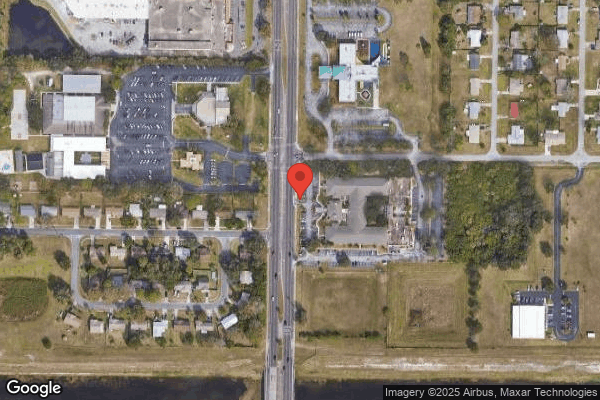
Jun 2023 3 deficiencies
CONCERN (D) 📢 Someone Reported This

A family member, employee, or ombudsman was alarmed enough to file a formal complaint

Potential for Harm - no one hurt, but risky conditions existed

Comprehensive Care Plan (Tag F0656)

Could have caused harm · This affected 1 resident

**NOTE- TERMS IN BRACKETS HAVE BEEN EDITED TO PROTECT CONFIDENTIALITY** Based on interview, and record review, the facility failed to implement the plan of care and obtain a physician order for discha...

Read full inspector narrative →
**NOTE- TERMS IN BRACKETS HAVE BEEN EDITED TO PROTECT CONFIDENTIALITY** Based on interview, and record review, the facility failed to implement the plan of care and obtain a physician order for discharge for 1 of 1 resident out of a total sample of 5 residents reviewed for Admission, Transfer and Discharge Rights, (#1). Findings: Resident #1 was initially admitted to the facility on [DATE] then readmitted on [DATE] from the hospital with diagnoses of pressure ulcer left buttock, type 2 diabetes, and urinary retention. He was discharged on 5/27/23 to another facility out of state. Review of the Minimum Data Set (MDS) significant change assessment dated [DATE] revealed a Brief Interview for Mental Status (BIMS) score of 15 out of 15 which indicated the resident was cognitively intact. The assessment noted the resident required extensive assistance from staff for transfers, toileting, and personal hygiene. Review of a Care Plan initiated 9/3/21 and revised on 11/24/21 noted the resident wished to return to home with family with interventions to establish a pre-discharge plan with resident/representative, evaluate progress and revise plan as needed. Review of nurses progress note dated 5/27/23 at 2:11 PM, read, resident discharged . A Social Services note dated 5/29/23 at 11:12 AM, revealed resident #1 was discharged out of state to Virginia. Review of physician orders 5/1/23 through 5/27/23 revealed no order for the resident to be discharged . On 6/7/23 at 7:40 PM, the Administrator and the Director of Nursing (DON) confirmed there was no physician discharge order for resident #1. The DON stated a discharge order was to be obtained from the doctor, entered into the electronic system, and medications sent to the pharmacy. He stated residents discharged from the facility should have a physician order for discharge. Review of the facility policy and procedure for Physician Orders with a revision date of 3/3/21 revealed the center will ensure that Physician orders are appropriately and timely documented in the medical record.
CONCERN (D) 📢 Someone Reported This

A family member, employee, or ombudsman was alarmed enough to file a formal complaint

Potential for Harm - no one hurt, but risky conditions existed

Deficiency F0661 (Tag F0661)

Could have caused harm · This affected 1 resident

**NOTE- TERMS IN BRACKETS HAVE BEEN EDITED TO PROTECT CONFIDENTIALITY** Based on interview, and record review, the facility failed to complete a discharge summary that included a final summary of the ...

Read full inspector narrative →
**NOTE- TERMS IN BRACKETS HAVE BEEN EDITED TO PROTECT CONFIDENTIALITY** Based on interview, and record review, the facility failed to complete a discharge summary that included a final summary of the resident's stay in the facility, reconciliation of discharge medications, and a post discharge plan of care for 2 of 2 residents out of a sample of 5 residents reviewed for Admission, Transfer and Discharge Rights (#1, #2). Findings: 1. Resident #1 was readmitted to the facility on [DATE] with an original admission date of 7/26/21. His diagnoses included paraplegia, chronic bladder-neck obstruction, type 2 diabetes, atrial fibrillation, depressive disorder, and chronic pressure ulcer. Review of the medical record revealed the resident was discharged on 5/27/23 to a facility out of state. A care plan initiated 9/3/21 and revised on 11/24/21 noted the resident wished to return to home with family with interventions to establish a pre-discharge plan with resident/representative, evaluate progress and revise plan as needed. A Discharge Plan and Instructions form dated 5/26/23 at 9:11 AM, noted the form was blank including advance directive, physician information, pharmacy, office visits, home health services, medical equipment, summary of stay, reason for discharge, services provided, care plan goals, labs, diagnostics, skin, pain evaluations, discharge summaries for activity, social services, nursing, nutrition, therapy, and treatment summary. There was no discharge summary in the medical record. 2. Resident #2 was admitted to the facility on [DATE] with previous admission on [DATE] with diagnoses of chronic respiratory failure with hypoxia, hypertension, dependence on oxygen, cardiopulmonary disease, anxiety disorder, and unsteadiness on feet. Resident #2 was discharged home on 5/25/23. Review of the Minimum Data Set (MDS) discharge assessment with assessment reference date (ARD) 5/25/23 showed Brief Interview Mental Status (BIMS) score of 14 out of 15 which indicated the resident was cognitively intact. A Social Services progress note dated 5/25/23 at 11:55 AM, noted the resident was discharged home today per son. A Discharge Plan and Instructions form dated 5/25/23 at 11:28 AM, showed no documentation for receiving medical equipment, the functional Mobility/Self Care Skills section was blank, along with the nutrition section. The discharge summaries section for activity, nursing, and therapy were blank. The section for discharge body audit of skin was blank and there was no discharge summary located in the medical record for resident #2. On 6/7/23 at 6:56 PM, the Director of Nursing (DON) stated the residents were supposed to have discharge summaries. He confirmed resident #1 and resident #2 did not have discharge summaries in their medical records. He stated all departments were to complete the discharge summaries for their sections and sign the form. He stated it should have been checked by Social Services to ensure all sections were completed when the resident was discharged . On 6/7/23 at 7:07 PM, the Social Services Director stated it was the nursing department's responsibility for making sure the discharge summaries were completed. She explained she did not receive any orientation regarding discharge summaries, it was not mentioned. Review of the facility's Policies and Procedures Interdisciplinary Discharge Summary with effective date 11/30/14 showed when the facility anticipates discharge, a resident must have a discharge summary completed that includes a recapitulation of the residents stay. Social service personnel or designee will initiate the interdisciplinary Discharge Summary and the following departments from Social services, Nursing Services, Dietary Services, Community Life, Rehab Services will give a final summary regarding the resident's stay in the facility on the Interdisciplinary Discharge Summary. The medical records personnel or designee will ensure the completed Discharge Summary is placed in the resident's medical record.
CONCERN (E) 📢 Someone Reported This

A family member, employee, or ombudsman was alarmed enough to file a formal complaint

Potential for Harm - no one hurt, but risky conditions existed

Transfer Notice (Tag F0623)

Could have caused harm · This affected multiple residents

**NOTE- TERMS IN BRACKETS HAVE BEEN EDITED TO PROTECT CONFIDENTIALITY** Based on record review, and interview, the facility failed to notify the Office of the State Long Term Care (LTC) Ombudsman of r...

Read full inspector narrative →
**NOTE- TERMS IN BRACKETS HAVE BEEN EDITED TO PROTECT CONFIDENTIALITY** Based on record review, and interview, the facility failed to notify the Office of the State Long Term Care (LTC) Ombudsman of residents' transfers and discharges from 4/14/23 through 06/6/23 including 1 of 5 sampled residents, (#2). Findings: Resident #2 was admitted to the facility on [DATE] and discharged home on 5/25/23. Review of resident #2's medical record revealed no documentation of notification to the Long-Term Care (LTC) Ombudsman's office. On 6/07/23 at 11:48 AM, the Director of Nursing (DON) stated he was not sure of the timeframe for notification to the Ombudsman for resident transfers and discharges. He noted that was handled by the Social Services Director. On 06/7/23 at 2:53 PM, the Social Services Director stated notification to the Ombudsman had not been done since December 2022. She stated the previous social worker left in March 2023 and she took over at that time. I didn't know anything about it. She stated she had not received any training in her orientation for notifying the Ombudsman of resident transfers and discharges. She noted, I just found out today that the Ombudsman notification is the responsibility of Social Services. On 6/07/23 at 3:50 PM, an email reply from the Ombudsman's office revealed the last discharge they received was a 30-day notice dated 4/13/23. The email noted the facility faxed the transfers and discharges to the office, and they had not received any other notices from the facility since 4/13/23. On 6/07/23 at 4:04 PM, the Administrator stated the facility ensured the Ombudsman's office was aware of all residents discharged and transferred from the facility. She explained the transfer or discharge form was completed and presented to the Ombudsman when they visited the facility. She stated she did not know the Social Services Director was not aware to send notifications to the Ombudsmen. She stated notification to the Ombudsman was the responsibility of the Social Services Director. She confirmed there were no specific times for sending notifications to the Ombudsman's office. She stated the last time the Ombudsman was notified of resident's transfers and discharges was April of this year (2023). She said, I do not have any documentation of the Ombudsman reviewing the notifications while visiting the facility. She stated the facility had a binder for the Ombudsman to review the notifications but unable to locate it at this time. On 06/7/23 at 6:03 PM, the Administrator and Social Services Director both confirmed they had not located the notification binder for residents discharged and transferred. Review of the facility policy and procedure for Transfer/Discharge Notification and Right to Appeal with a revision date of 10/24/22, revealed before a center transfers or discharges a resident, the center must send a copy of the notice to a representative of the Office of the State Long-Term Care Ombudsman.
Sept 2022 7 deficiencies
CONCERN (D)

Potential for Harm - no one hurt, but risky conditions existed

Deficiency F0571 (Tag F0571)

Could have caused harm · This affected 1 resident

**NOTE- TERMS IN BRACKETS HAVE BEEN EDITED TO PROTECT CONFIDENTIALITY** Based on interview and record review, the facility failed to obtain a written authorization for disbursements from the resident ...

Read full inspector narrative →
**NOTE- TERMS IN BRACKETS HAVE BEEN EDITED TO PROTECT CONFIDENTIALITY** Based on interview and record review, the facility failed to obtain a written authorization for disbursements from the resident trust account for 1 of 1 resident reviewed for personal funds out of a total sample of 57 residents (#54). Findings: Resident #54's medical record revealed she was originally admitted to the facility on [DATE] and readmitted from an acute care hospital on 2/06/22. Her diagnoses included heart failure, type 2 diabetes, history of COVID-19, chronic kidney disease and dependence on renal dialysis. Review of the Minimum Data Set Quarterly Assessment with Assessment Reference Date of 7/05/22 revealed resident #54 had a Brief Interview for Mental Status score of 15 which indicated she was cognitively intact. Resident #54's medical record revealed she made all the decisions for her care. On 8/29/22 at 12:12 PM, resident #54 stated she learned from other residents they received $130.00 every month but that was not her case. Resident #54 explained she spoke with someone at the business office about a month ago and was told they would check on her account, but no one had returned to update her. On 8/31/22 at 3:59 PM, the Business Office Manager (BOM) stated he handled the resident trust accounts, collected payments, and printed out statements which were mailed to the residents or their responsible parties as required. The BOM explained the statements from the resident trust accounts were sent quarterly to the residents or the responsible party listed on the resident's medical record. He explained if the resident was also the responsible party, the statement was delivered to the resident's room by the Activities Director. The BOM confirmed resident #54 was approved for Medicaid on 8/26/21 and she would receive a standard monthly allowance of $130.00. The BOM explained resident #54 was not set up to receive her allowance because there was an agreement with the previous BOM to use the money towards an outstanding balance resident #54 had with the facility when she was under private pay. The BOM stated the account pre-dated him, and it appeared resident #54's allowance was being used to pay the balance owed to the facility. The BOM noted he did not find a signed written agreement from resident #54 authorizing the facility to take her monthly Medicaid allowance and apply it to the balance owed. The BOM confirmed he spoke with resident #54 about 3 weeks ago when she inquired about her Medicaid allowance. The BOM explained after he reviewed her account, he updated the resident about his findings and told her he was still working on trying to figure out what happened. The BOM concluded the $130.00 was applied to the balance owed and confirmed the $130.00 was not transferred to resident #54's trust account. The BOM stated this was not a practice he followed. The BOM confirmed the resident's statement was being mailed to her son's address instead of delivering it to her in the facility. The BOM confirmed he had not given resident #54 a copy of her statement when he spoke with her. The BOM did not know if resident #54 received her quarterly statements. On 8/31/22 at 5:26 PM, the Administrator stated she was not aware resident #54 was not receiving her $130.00 monthly allowance as required. On 9/01/22 at 10:24 AM, the Divisional Director of Business Office Services (DDBOS) explained the $130.00 was being applied to the resident #54's balance based on a verbal agreement between the former BOM with the family and the resident. The DDBOS stated the resident's trust account worked like a bank and residents should had signed a form authorizing this monthly transaction, but they did not have it. The DDBOS stated she did not have the answers as of why this was done this way. The DDBOS confirmed the facility had no evidence resident #54 or her family approved the use of her $130.00 monthly allowance. On 9/01/22 at 2:59 PM, the DDBOS confirmed the former BOM did not document the verbal agreement in resident #54's medical record. The DDBOS stated the facility did not have a copy of the financial agreement signed by the resident on admission. On 9/01/22 at 10:13 AM, resident #54 indicated she neither gave verbal authorization nor signed an agreement with the facility to take her monthly $130.00. She stated her son never mentioned she was getting any bills from the facility at his address, and she had not seen any statements or bills during her time there. Review of the facility policy Resident Trust Fund (RTF) - Resident Fund Withdrawal Tickets, revised on 10/2021, read, All disbursements made from the RTF must be documented with a properly signed withdrawal ticket. Review of the facility policy Resident Trust Fund - RTF Quarterly Statement, revised on 2/26/21, read, The BOM is responsible for ensuring that complete and correct addresses are in the computer system for all residents. The procedure included, A signed copy of in-house statements should be obtained as acknowledgement from all competent residents and filed with copies of mailed statements. Review of the Bill of Rights for Residents of Nursing Homes revealed long-term care residents had the right to manage their own financial affairs and be informed of the cost of services.
CONCERN (D)

Potential for Harm - no one hurt, but risky conditions existed

ADL Care (Tag F0677)

Could have caused harm · This affected 1 resident

**NOTE- TERMS IN BRACKETS HAVE BEEN EDITED TO PROTECT CONFIDENTIALITY** Based on observation, interview and record review, the facility failed to provide assistance with activities of daily living (AD...

Read full inspector narrative →
**NOTE- TERMS IN BRACKETS HAVE BEEN EDITED TO PROTECT CONFIDENTIALITY** Based on observation, interview and record review, the facility failed to provide assistance with activities of daily living (ADLs) related to nail care for 1 of 2 dependent residents reviewed for ADLs out of a total sample of 57 residents (#43). Findings: Resident #43 medical record revealed the resident was admitted to the facility on [DATE] with diagnoses including brain bleed, speech/language disorder from stroke, seizures, and paralysis to the right/dominant side of his body. The Minimum Date Set (MDS) Quarterly Assessment, dated 6/29/22, revealed he had severely impaired cognition and indicated he did not reject evaluation or care necessary to achieve the resident's goals for health and well-being. The assessment indicated resident #43 required extensive assistance from one staff for bed mobility, transfers, dressing and for personal hygiene. The document showed resident #43 had functional impairment in both his upper and lower extremities on one side of his body that interfered with daily function or placed him at risk for injury. Resident #43 had a care plan for ADL self-care performance deficit related to previous stroke and paralysis to the right side of his body. Interventions included total assistance with bathing and extensive assistance with personal hygiene. An additional intervention dated 3/30/20 was for staff to check nail length and trim and clean on bath day and as necessary. The intervention specified for staff to report any changes to the nurse. Resident #43 had an additional care plan for potential impairment to skin integrity dated 3/30/20. The goal was for skin breakdown to be minimized through management of nursing interventions. Interventions included staff to prevent resident #43 from scratching and keeping his fingernails short. Review of the July 2022 and August 2022 Medication Administration Records revealed resident #43 did not have any documented behaviors as monitored by nurses every shift as ordered through the two-month period prior to the survey. Review of the Certified Nursing Assistant (CNA) Visual/Bedside [NAME] Report, dated 9/01/22, revealed direction for CNAs under Resident Care to keep fingernails short. Under the Bathing area, it directed CNAs to check nail length, trim and clean on bath day and as necessary. It directed the CNA to report any changes to the nurse. Review of the CNAs Task Flowsheet showed bathing documented as given by CNAs on 8/16/22, 8/18/22, 8/23/22, 8/24/22, 8/25/22, 8/29/22, and 8/30/22. On 8/29/22 at approximately 10:40 AM, resident #43 was observed in the hallway in his wheelchair. The nails on his left hand were clean and trim, but the nails on his right, paralyzed side were very long, yellowed and thickened. He was alert and when asked about his long nails he said Yes. On 8/29/22 at 12:45 PM, resident #43 was again observed in the hallway in his wheelchair. The fingernails on his right hand were long and yellow, with the nail on his thumb and last three fingers the longest. On 8/30/22 at 3:35 PM, resident #43 was again in his wheelchair in the hallway. His nails were still long, the nail on his first finger was shorter than the rest, but jagged and thick. On 8/30/22 at 4:32 PM, resident #43's assigned CNA C verified his nails on his right hand were over a half inch long and very thick. She stated she had wondered who should cut resident #43's long nails on his right hand. She stated she had noticed the length of them previously but confirmed she had never mentioned them to the assigned nurse. She stated she was unable to cut the nails on his right hand herself because of how thick they were. CNA C stated nails should be cleaned daily and cut whenever the resident was given a shower or bath, especially to keep the nails trim so they don't scratch themselves. She was unable to say why she never notified the nurse or anyone else of not being able to cut his nails on the right hand. On 8/30/22 at approximately 4:51 PM, the South Wing Unit Manager (UM) confirmed resident #43's long nails on his right hand. She stated sometimes resident #43 did not always let them cut his nails. She was unable to provide documentation that showed staff had offered to cut his nails and he refused. The resident was asked if he would allow staff to cut his nails and he nodded yes. The UM was also unable to find documentation that showed the condition of resident #43's nails on his right hand as yellow and extremely thickened. She stated the podiatrist had seen resident #43 but he does not cut fingernails, she stated sometimes therapy helps to cut the resident's nails. She stated that although resident #43 did not use that hand, there was a risk of the nails being infected, unclean or could cause a skin tear inadvertently. She confirmed that the physician had not been notified of resident #43's nails on his right hand as far as she knew. Review of resident #43's medical record did not reveal any documentation of refusals by resident #43 for nail care and documentation of the condition of his nails by staff. There was no documentation of notification by staff to the physician of resident #43's refusal of nail care or report of difficulty cutting his nails due to their thickened condition. On 8/30/22 at 5:44 PM, the South Wing UM stated she notified resident #43's doctor and he was coming to see him for his nails. In interviews on 8/31/22 at 12 PM and 9/02/22 at 6 PM, the Medical Director stated resident #43's nails needed to be treated for a fungal infection and he indicated they might fall off. He stated the nails were unable to be cut with regular clippers and they would need to order a special tool to trim them. He stated his expectation was nurses should notify the physician if the resident was not receiving recommended or planned care due to the resident's refusal or other reasons. On 9/01/22 at 2:40 PM, the Director of Nursing (DON) stated the expectation was for CNAs to clean and cut resident's nails when they were bathed. She explained part of the care included cleaning and trimming the nails. She stated she expected CNAs to notify they nurse if a resident refuses care or if there was some reason they were unable to cut or clean them. She explained the nurse was expected to determine why the resident refused care or the CNA was unable to provide the care and notify the physician so further guidance could be provided. Review of the Job Description Nurse Tech I, dated 11/01/06, revealed the primary purpose of the position as a CNA was to provide assigned residents with routine daily nursing care and services in accordance with the resident's assessment and care plan.
CONCERN (D)

Potential for Harm - no one hurt, but risky conditions existed

Quality of Care (Tag F0684)

Could have caused harm · This affected 1 resident

**NOTE- TERMS IN BRACKETS HAVE BEEN EDITED TO PROTECT CONFIDENTIALITY** Based on observation, interview and record review, the facility failed to follow the physician's order for wound treatment for 1...

Read full inspector narrative →
**NOTE- TERMS IN BRACKETS HAVE BEEN EDITED TO PROTECT CONFIDENTIALITY** Based on observation, interview and record review, the facility failed to follow the physician's order for wound treatment for 1 of 2 sampled residents reviewed for skin condition out of a total sample of 57 residents (#50). Findings: Resident #50's medical record revealed the resident was initially admitted on [DATE], then readmitted on [DATE]. Her diagnoses included atrial fibrillation, history of falling, primary open-angle glaucoma, macular degeneration and unsteadiness on feet. Her most recent quarterly Minimum Data Set (MDS) with an Assessment Reference Date of 06/26/22 revealed she had a Brief Interview for Mental Status (BIMS) score of 13, indicating her cognition was intact. She required supervision for bed mobility and transfers, supervision with one staff physical assistance for toilet use and personal hygiene and used a manual wheelchair for mobility. Review of physician's orders, dated 08/24/22, read, Clean wound with normal saline, pat dry, then apply steri-strips, leave it open to air. It did not specify the location of the wound. There was also no documentation about the frequency of the order. Her care plan, initiated on 08/24/22, read, The resident has a skin tear: leg . Interventions were to monitor/document location, size and treatment of skin tear, report abnormalities . treatment per orders . On 08/29/22 at 12:57 PM, resident #50 was observed sitting on her wheelchair dressed in day clothes. She had a covered dressing on her left upper shin, dated 08/27/22, that had initials CM. On 08/30/22 at 12:37 PM, resident #50 sat at the side of her bed with the same dressing still noted on her left upper shin. On 08/31/22 at 11:24 AM, the dressing was observed with wrinkled edges and remained unchanged. On 08/31/22 at 11:31 AM, Licensed Practical Nurse (LPN) A stated the only treatment for resident #50 was to apply a pillow under her calf while in bed as tolerated. She confirmed there was no other treatment ordered for her. On 08/31/22 at 11:40 AM, the North Wing Unit Manager stated resident #50 had a treatment order for her leg but the directions were not clearly written. She also stated the order was supposed to be a onetime order, the wound was supposed to be left open to air, and not covered. She acknowledged the nurses did not follow the physician order. The facility's policy and procedures for Dressing Change, revised on 12/06/2017, read, Policy: A clean dressing will be applied by a nurse to a wound as ordered to promote healing. Sterile dressing will only be used only if specifically ordered.
CONCERN (D)

Potential for Harm - no one hurt, but risky conditions existed

Respiratory Care (Tag F0695)

Could have caused harm · This affected 1 resident

**NOTE- TERMS IN BRACKETS HAVE BEEN EDITED TO PROTECT CONFIDENTIALITY** Based on observation, interview and record review, the facility failed to ensure a resident received supplemental oxygen as orde...

Read full inspector narrative →
**NOTE- TERMS IN BRACKETS HAVE BEEN EDITED TO PROTECT CONFIDENTIALITY** Based on observation, interview and record review, the facility failed to ensure a resident received supplemental oxygen as ordered for 1 of 1 resident reviewed for respiratory care out of 57 total sampled residents (#29). Findings: Resident #29's medical record revealed she was admitted to the facility on [DATE] and readmitted from an acute care hospital on 5/19/22. Her diagnoses included obstructive sleep apnea (OSA), cardiomyopathy, and type 2 diabetes. The Minimum Data Set (MDS) quarterly assessment with Assessment Reference Date of 6/15/22 revealed resident #29 had a Brief Interview for Mental Status score of 15 which indicated she was cognitively intact. The MDS revealed resident #29 used oxygen therapy in the previous 14 days. The quarterly assessment noted no rejection of care necessary to obtain goals for her health and well-being. The medical record revealed a physician's order dated 7/14/22 for Continuous Positive Airway Pressure (CPAP) at night and as needed (PRN) as tolerated with 2 liters per minute (l/min) of oxygen at night related to OSA. A second order read, Oxygen 2 l/min with CPAP at night and PRN. The nurse's progress note on 7/09/22 revealed oxygen and CPAP were not in use. Nurse's progress note on 7/28/22 and 8/02/22 revealed oxygen was not in use but the CPAP was used. Resident #29's care plan, dated 6/27/22 for risk of complications related to OSA, revealed a goal for the resident to have no signs/symptoms of poor oxygen absorption. The interventions included to change the tubing/mask as ordered, give medications as ordered, and oxygen via nasal canula at 2 liters at night. On 8/29/22 at 11:42 AM, resident #29 stated she had not used the CPAP because the mask was too big, and someone had ordered a new one about 2 weeks ago, but she had not received it. She explained she had been weeks without using the CPAP and she felt tired when CPAP was not used. Resident #29 indicated she did not use oxygen. There was no oxygen concentrator or supplies observed in her room. On 8/30/22 at 10:29 AM, resident #29 indicated she did not have a good night because the CPAP was still not used. She explained the CPAP was to be used at night. The CPAP machine was observed on the nightstand with a face mask covered in a plastic bag. On 8/31/22 at 11:54 AM, Certified Nursing Assistant (CNA) L explained he worked from 7 AM to 3 PM, received report from the night shift CNA, and he checked his residents when he first came in the morning. CNA L stated resident #29 was in bed and he had not seen her using a CPAP machine. He was not aware of any issues with the CPAP. On 8/31/22 at 3:11 PM, Licensed Practical Nurse (LPN) M stated resident #29 was alert and oriented, and she did not see the CPAP on the resident when she came in at 7 AM. She was not aware of any issues with the CPAP for resident #29. Resident #29's Treatment Administration Record revealed nurses documented CPAP with oxygen given at night 29 out of 31 days in August 2022. On 9/01/22 at 1:35 PM, the North Wing Unit Manager (UM) explained resident #29 needed a new mask which the Respiratory Therapist (RT) ordered and was on its way to the facility. At 2:43 PM, the UM went into resident #29's room and confirmed there was no oxygen tank, concentrator or supplies in the room. The UM stated nurses did not follow the physician's order for oxygen use. Resident #29 stated she did not have oxygen in her room. The UM indicated the nurses should have ensured oxygen was in place. On 9/01/22 at 4:19 PM, the Director of Nursing (DON) explained resident #29 had been transferred to the hospital a couple of times and once had an order for oxygen at night to keep her oxygen saturation above 95% while waiting for the CPAP. The DON acknowledged the oxygen was not in the resident's room. Review of the facility Oxygen Therapy policy dated 8/28/17 revealed the procedure included to review the physician's order and gather the necessary equipment.
CONCERN (E)

Potential for Harm - no one hurt, but risky conditions existed

Deficiency F0688 (Tag F0688)

Could have caused harm · This affected multiple residents

**NOTE- TERMS IN BRACKETS HAVE BEEN EDITED TO PROTECT CONFIDENTIALITY** 11. Resident #25's medical records revealed she was admitted on [DATE]. Her diagnoses included hemiplegia and hemiparesis follow...

Read full inspector narrative →
**NOTE- TERMS IN BRACKETS HAVE BEEN EDITED TO PROTECT CONFIDENTIALITY** 11. Resident #25's medical records revealed she was admitted on [DATE]. Her diagnoses included hemiplegia and hemiparesis following cerebral vascular accident (stroke) affecting her left dominant side, cerebral infarction, type 2 diabetes mellitus, epilepsy, and chronic pain syndrome. Her admission MDS assessment with ARD 6/08/22 noted a BIMS of 15/15 which indicated the resident's cognition was intact. No episodes for rejection of care were noted. She required extensive assistance for bed mobility, transferring, and toilet use. Her pain level was reported as 7/10. Speech-Language Pathology (SLP) services began on 6/03/22, OT services began on 6/02/22, and PT services began on 6/02/22. SLP, OT, and PT services were noted as ongoing. The resident had falls on 7/02/22, 7/12/22, 8/12/22, and 8/27/22. Active therapy orders included: OT 3 times a week for 2 weeks, PT 3 times a week for 4 weeks, and SLP 5 times a week for 4 weeks. The Therapy Communication to Restorative Nursing Program form dated 8/13/22 read, Current Functional Status: standby/contact guard assist for transfers. Independent with bed mobility. Problems/Needs: Decreased Balance, Decreased Strength, Recommendations/Approaches: Active, assistive, and passive range of motion to bilateral lower extremities 20 repetitions. Precautions: Falls and decreased functional ability. The comprehensive care plan did not include a Restorative Nursing Program. On 9/01/22 at 10:20 AM, RNP CNA P stated he could not produce documentation to show which residents were receiving services with the RNP. He explained he was the only full-time trained CNA who provided RNP services with the assistance of a per-diem CNA who didn't work very often. He explained the RNP orders were not entered into the computer, and he did not record either through the Electronic Medical Record (EMR) or by a handwritten log what residents he had provided treatments, or any other details for when any treatment had been provided. He produced a stack of papers referred to as orders and a handwritten list of residents with splints retrieved from a cabinet in the resident shower room as the only documentation he used, and he was responsible for signing receipt of the order form on from the Director of Rehabilitation. He stated there was no place to document RNP services were completed. He said orders were not followed, treatment was inconsistent, and There is nobody in charge of the restorative program. On 9/01/2022 at 10:50 AM, the North Unit Manager (UM) explained that coordination of the RNP is completed during the clinical meeting. She indicated she didn't know what the documentation looked like, and she was not responsible for entering anything related to the RNP into the medical record. She stated the ADON in the past was responsible to oversee and coordinate the RNP but there hasn't been a dedicated person in the past year since she has been in the UM role. On 9/01/22 at 10:59 AM, the ADON stated she has been employed at the facility since 8/15/22 and she hasn't been trained or oriented to any responsibilities related to the RNP program. On 9/01/22 at 12:39 PM, the Director of Rehabilitation stated the RNP program has orders with specific plans and treatments, and not all residents will get an RNP program. She explained quarterly screens are conducted to check on progress. She was unable to provide any information about how long a resident should be on a program, or how the RNP CNA would have direction for how long to conduct RNP services. On 9/01/22 12:50 PM, the DON stated there is no set expectation for how long a resident is to receive RNP services and there is no RNP Nurse. She indicated that normally there is an ADON in charge of the program, but there hasn't been one since approximately 1.5 years ago. She stated there has been no communication to the RNP CNA to discontinue services. The current process is that therapy produces the order and plan by providing it to the RNP CNA to carry out the plan. She explained that therapy educates and trains the RNP CNA as needed. She stated MDS updates the care plan for the RNP from a copy of the order from therapy. On 9/01/22 at 2:17 PM, RNP CNA Q stated she works for the facility as aa as needed (PRN) RNP CNA, and on average she may work a total of 8 days to include every other weekend. She explained her duties and time are split on average 50/50 working solely as a CNA and providing RNP services. She indicated she provided exercises, splints, weights, and dining assistance, and documents her tasks in the hallway on the Electronic Medical Record (EMR). She stated she keeps a list of residents to treat in her locker. On 9/01/22 at 2:54 PM, RNP CNA P stated he could not provide a list of the RNP case load, and he kept a list of residents who required splints in a locker. He explained that on this day he was pulled from RNP services to transport a resident to an outside provider appointment and there are days no RNP services are provided to any resident. On 9/01/22 at 6:16 PM, the Regional Director stated, We have established there is really no restorative program. The process we know is broken. Therapy gives the plan to the restorative aide. There hasn't been a nurse to determine who should still be on it. We know we don't have a program, so we have to put it in place. I haven't been able to locate any documentation to determine what RNP CNA P has done. On 9/01/22 at 6:25 PM, the Director of Rehabilitation stated she was working with the RNP CNA directly and she started giving the only copy of therapy RNP recommendations to him at least a year and a half ago. She explained the former process as reviewing the RNP program with the restorative team every 2 weeks. She stated she has discussed the problems about the program with the DON and has attempted to brainstorm with her but there was no follow up. She could not recall if she had brought up issues in a group. She indicated that the RNP was needed so residents could continue to progress. On 9/02/22 at 1:37 PM, resident #25 was observed sitting on the edge of her bed. She stated she last received therapy services about 3-4 days ago and feels she requires extra assistance for walking, weakness in her left arm, a history of stroke, and seizures. She explained she has not received any RNP services but has been assisted by the full time RNP CNA working as a CNA. She said if she did not continue to receive therapy services, she believed she would have a decline in her self-functioning abilities. On 9/02/22 at 4:42 PM, the MDS Coordinator stated, We don't really have a restorative program . it has been approximately 2 years since there was one up and running. She further explained she does not claim any RNP services provided on the MDS, and restorative days have reported as zero because there is nowhere to get the correct information. She indicated in the past there was a binder that contained documentation for her to mark RNP services were provided on the MDS. She stated the DON updates the care plans for RNP programs in the absence of an ADON. She stated the ongoing RNP issues have been discussed in meetings and everyone should have been aware. 12. Resident #69's medical records revealed he was admitted on [DATE]. His diagnoses included atherosclerotic heart disease of native coronary artery with angina, type 2 diabetes mellitus, acute respiratory failure with hypoxia, and repeated falls. His Quarterly MDS assessment with ARD 7/23/22 noted a BIMS of 8/15 which indicated he was not cognitively intact. No episodes for rejection of care were noted. He required extensive assistance with transferring and toilet care. Pain was reported as 4/10, occasional. There was 1 fall with minor injury noted. SLP services began on 7/13/22, OT services began on 1/14/22, ended 3/31/22, and PT services began on 6/13/22. SLP, and PT services were noted as ongoing. Active orders included PT evaluation and treatment as indicated, OT evaluation and treatment as indicated, SLP to continue ST services 5 times a week for 4 weeks for cognitive linguistic deficits with current POC. The Therapy Communication to Restorative Nursing Program form dated 8/09/22 read, Current Functional Status: Modified Independence with stand to sit/stand pivot transfer bed < (less than) 7 wheelchair, supervision of 2 ambulation with 4-wheeled walker up to 300 feet, modified independence with bed mobility. Problems/Needs: To maintain current level of function and prevent functional decline. Recommendations/Approaches: Ambulation with 4-wheeled walker with supervision up to 300 feet. Precautions: Fall risk standard. The comprehensive care plan did not include a Restorative Nursing Program. On 9/02/22 at 5:18 PM, Physical Therapist R validated the RNP recommendations from therapy dated 8/09/22. She could not confirm whether the resident received any RNP services. She stated there was potential for decreased walking ability, muscle weakness in the legs, and functional decline without RNP services. She explained It's not serious, but there's going to be a decline. The negative impact is that he may need more assistance. 13. Resident #52's medical record revealed she was admitted to the facility on [DATE]. Her diagnoses included cerebral infarction, lack of coordination, unsteadiness on feet, frontal lobe and executive function deficit following cerebral infarction, and cognitive communication deficit. Her Quarterly MDS assessment with ARD 6/30/22 noted a BIMS of 5/15 which indicated she was not cognitively intact. She required extensive assistance for bed mobility, transferring, and toilet use. SLP services began on 6/27/22, OT services began on 6/24/22, and PT services began on 6/24/22. SLP, OT, and PT services were noted as ongoing. Active orders included OT evaluation and treatment as indicated, PT evaluation and treatment as indicated, ST evaluation and treatment as indicated. The Therapy Communication to Restorative Nursing Program form dated 8/22/22 read, Current Functional Status: patient is stand by assistance with bed mobility, patient is contact guard assistance with sit to stand and wheelchair-chair/bed transfer, patient ambulates 75-100 feet SPC and contact guard assist/minimum assist. Problems/Needs: Patient has decreased strength in right > (greater than) left extremities, patient has decreased balance, patient requires assistance with transfers and ambulation. Recommendations/Approaches: Ambulate patient with SPC 75-100 feet with wheelchair follow and contact guard assist/minimum assist, or sit to stand from wheelchair to chair/bed times 10 repetitions. Precautions: Fall risk, Hemiparesis right extremities. The comprehensive care plan did not include a Restorative Nursing Program. 17. Resident #17's medical record revealed the resident was admitted to the facility on [DATE] and readmitted [DATE] with diagnoses including hemiplegia, hemiparesis, cerebrovascular disease, muscle weakness and contracture of left hand. Review of the physician's orders revealed an order dated 8/12/22 for the resident to be discharged from skilled occupational therapy services to restorative nursing program effective 8/09/22. Review of the Therapy Communication to Restorative Nursing Program form for resident #17 dated 8/09/22, revealed a recommendation for restorative staff to provide maximum assistance to resident to don the left-hand splint for three to four hours wear time or as tolerated. Resident #17's medical record did not reveal any documentation that the services were provided or that she refused. 18. Resident #78's medical record revealed the resident was admitted to the facility on [DATE] and readmitted [DATE] with diagnoses including fracture of the lower end of right radius, fracture of lower end of right ulna, lack of coordination, muscle weakness and acute respiratory failure. Review of the physician's orders revealed an order dated 8/22/22 for the resident to be discharged from skilled occupational therapy services to restorative nursing program effective 8/09/22. Review of the Therapy Communication to Restorative Nursing Program form for resident #78 dated 8/18/22, revealed a recommendation for restorative staff to assist resident in performing upper body exercises and to cue resident to breathe throughout. Resident #78's medical record did not reveal any documentation the services were provided or that she refused. 19. Resident #97's medical record revealed the resident was admitted to the facility on [DATE] and readmitted [DATE] with diagnoses including cerebrovascular disease, reduced mobility, difficulty walking, muscle weakness and chronic obstructive pulmonary disease. Review of the physician orders revealed an order dated 8/12/22 for the resident to be discharged from skilled occupational therapy services to restorative nursing program effective 8/09/22. Review of the Therapy Communication to Restorative Nursing Program form for resident #97 dated 8/12/22, revealed a recommendation for restorative staff to gently stretch the resident's lower extremities in all directions, move hip up/down and in/out, bend and straighten knees, move ankles up/down. The form indicated each movement should be performed in three sets of 10 repetitions for each leg. Resident #97's medical record did not reveal any documentation that the services were provided or that he refused. Policies and procedures on Restorative Nursing Services, revised 08/24/17, read, Policy: Restorative Nursing will be provided to residents as indicated upon evaluation to assist in achieving the highest practicable level of physical functioning as possible . The designated Restorative Nurse will determine appropriate programs and treatment, utilizing information provided by various disciplines and in accordance with residents' plan of care . Based on observation, interview and record review, the facility failed to ensure residents referred to the restorative nursing program (RNP) received the recommended treatments and exercises to maintain or improve mobility and function for 19 of 19 residents reviewed for RNP, out of a total sample of 57 residents (#43, 93, 34, 18, 62, 83, 7, 21, 23, 85, 25, 69, 52, 59, 19, 11, 17, 78 & 97). Findings: 1. Resident #43 was admitted to the facility on [DATE] with diagnoses that included brain bleed (stroke), seizures, and paralysis to the right/dominant side of his body. The Minimum Date Set (MDS) Quarterly Assessment, dated 6/29/22, revealed he had severely impaired cognition and indicated he had no physical, verbal, or other behaviors towards others and did not reject evaluation or care necessary to achieve the resident's goals for health and well-being. The assessment indicated resident #43 required extensive assistance from one staff for bed mobility, transfers, dressing and for personal hygiene. The document showed resident #42 had functional impairment in both his upper and lower extremities on one side of his body that interfered with daily function or placed him at risk for injury. The assessment indicated resident #43 received no days of RNP. Resident #43 had a care plan for activities of daily living (ADLs) self-care performance deficit related to previous stroke and paralysis to the right side of his body. Interventions included monitor, document and report any changes, potential for improvement or declines in function, Physical Therapy/Occupational Therapy (PT/OT) evaluation and treatment as ordered and directed staff to refer to therapy care plans. Resident #43's medical record did not contain a care plan addressing his risk for contracture of his paralyzed side or for wearing of a splint or exercises to prevent contractures. Review of the Order Summary Report for active orders, dated 8/31/22, revealed resident #43 had an order to discontinue (DC) skilled OT with direction for the resident to continue to wear the right-hand splint for six hours as tolerated dated 1/27/22. Resident #43 had an order to continue skilled OT for three times a week for four weeks starting on 7/04/22. An additional order to DC OT services and continue to wear a right hand splint for six hours as tolerated was dated on 9/15/21. A current DC order for the most recent OT was not found. Review of the Therapy Communication to Restorative Nursing Program PT referral dated 6/17/22 revealed resident #43 had a recommendation for exercise on the recumbent cross trainer machine at level 7 for a duration of 15 minutes to maintain his current level of function and prevent functional decline. Review of the Therapy Communication to Restorative Nursing Program OT referral dated 7/17/22 revealed recommendations for RNP to put on and take off the splint to the right upper extremity for 6 hours daily and for passive range of motion (PROM) exercises to the right upper extremity in all planes to decrease contractures. On 8/29/22 at approximately 10:40 AM, resident #43 was observed in the hallway in his wheelchair. He was alert but had unintelligible speech. He was not wearing a splint on his right arm. On 8/29/22 at 12:45 PM, resident #43 was observed in the hallway in his wheelchair. He did not have a splint on his right hand, and he indicated that his right side was paralyzed by picking up the right arm with the left hand and moving it around. On 8/30/22 at 10:15 AM, resident #43 was observed in his wheelchair near the door to the lobby. He was dressed and alert and did not have a splint on his right hand. On 8/30/22 at 3:35 PM, resident #43 was observed in his wheelchair in the hallway. He was not wearing a splint on his right hand. On 8/30/22 at 4:32 PM, Certified Nursing Assistant (CNA) C was unsure if resident #43 was supposed to wear a splint on his right arm. She stated she recalled seeing one a while back, but she had not seen it recently and was not sure where it was. With resident #43's permission, CNA C searched resident #43's drawers and found the splint in a bottom drawer next to his bed. She stated it was the splint he used to wear. CNA C was unsure who was supposed to apply resident #43's splint, and said it wasn't the CNA's job to do it, maybe therapy or the nurses. On 8/30/22 at 4:46 PM, assigned Licensed Practical Nurse (LPN) B stated she did not know anything about resident #43's splint. She stated she did not hear anything about it in report and she had not seen it. She was not sure who was supposed to apply the splint. On 8/30/22 at approximately 4:51 PM, the South Wing Unit Manager (UM) stated the restorative aide was supposed to apply resident #43's splint. She verified the order in the computer to DC occupational therapy and for resident #43 to continue to wear the right-hand splint as tolerated for 6 hours. She was unable to find any documentation in resident #43's record concerning application of his right-hand splint other than the order. She explained when therapy discharged the residents, they wrote a referral to the RNP and gave them the paperwork describing the exercises or applications they need performed. The South Wing UM was unable to find a care plan for resident #43's splint and for prevention of reduced range of motion (ROM) to his right paralyzed side. She stated resident #43 was supposed to wear the splint to prevent his hand from contracting over time and to keep it more stable. In interviews on 8/30/22 at 5:22 PM, 5:44 PM and on 9/02/22 at 4:41 PM, the MDS coordinator confirmed there was no care plan addressing resident #43's need for a splint but stated there should be. She stated the restorative nurse role was part of the Assistant Director of Nursing's (ADON) responsibilities but since there was no ADON it fell to the Director of Nursing (DON). The MDS coordinator indicated she had not been able to claim RNP hours on the residents' MDS assessments for a very long time because there was no documentation of RNP being done for anyone. On 9/01/22 at 9:43 AM, Restorative CNA P stated he and part time Restorative CNA Q received the referrals from therapy for the RNP program but there was no one running the program since the ADON left several years ago. Restorative CNA P was not able to say when or if he had last placed resident #43's splint on his arm as per his referral. He was not able to find resident #43's referral in the large pile of loose referral sheets he kept in the cabinet. He was able to produce a handwritten list which he stated was his cheat sheet that listed the residents who required splints. Resident #43 was listed on the paper, but it did not give direction as to how often or how long the residents on the list were supposed to wear the splints. Restorative CNA P stated there was no schedule for which residents needed RNP or when to see them. He stated some days he was not able to get any of the RNP work done because the referrals had piled up since there was no one running the program to evaluate and discharge the residents when they no longer needed the program. He related therapy kept bringing more and more referrals and said, Restorative is just not getting done. Restorative CNA P revealed he hadn't documented RNP on the residents because no one had set up the program for him to document since the ADON left several years ago. He stated he often did, everything but restorative, when he was at work because he was often asked to work an assignment when staffing was short or was asked to take residents to appointments as there was no transportation person. He stated in addition, he had to weigh all of the residents in the facility which usually took him 3 or 4 days to finish by himself. Restorative CNA P related he and Restorative CNA Q were pulled in so many different ways. He explained other CNAs could help with the RNP program to do the exercises or the splints if only they were trained to do it. He explained a few of the CNAs who had been around might know how but they expected him to do it. He stated due to his limited time he would prioritize who he would see for restorative services. The Restorative CNA explained he would decide to see the residents he felt really wanted it and would decide to not see residents like those in the dementia unit who were walking around all day. Review of the CNA Task Flowsheet did not reveal RNP documentation by CNAs during the 30-day look back period starting on 9/01/22. In interviews on 9/01/22 at 12:50 PM and 3:46 PM, the DON stated that since she had been at the facility over the past 18 months there had not been an ADON to run the RNP, so it fell on her to do it. She stated she attempted at first to run it but didn't have the manpower. She stated the two Restorative CNAs were left to run the program themselves and continued to get referrals from therapy. She explained the Restorative CNAs were not being supervised and said, it's not successful and we have to staff to the needs of the residents. She confirmed Restorative CNAs P and Q were both often pulled to cover floor assignments or to take residents to appointments. She acknowledged that one full time Restorative CNA was not enough to complete all the work for RNP, especially when they were asked to cover other functions in the facility. The DON could not answer if residents had to go back on therapy case load due to not having the RNP services available. In interviews on 9/01/22 at 5:52 PM and 6:16 PM, the Regional Nurse stated the RNP process was broken and explained therapists were giving the referrals to the CNAs to manage the program when it should be the Restorative nurse. She said, No one had been in place to do it and when they had filled the position, they did not stay long enough to manage the program. She stated they were unable to say which residents were supposed to be on RNP and were unable to locate any documentation from the Restorative CNAs that indicated residents had been seen. Review of the document OT Recertification for the dates 7/04/22-8/02/22 revealed resident #43 had a goal to tolerate wearing his right-hand splint for six hours to prevent further contracture. At baseline, the document indicated on 6/06/22 the resident tolerated the splint for five hours, and on 7/04/22 he tolerated the splint for five-to-six-hour intervals with no signs of redness or skin breakdown. In interviews on 8/30/22 at 5:24 PM, 9/01/22 at 12:36 PM and 6:26 PM, the Therapy Director stated the Restorative CNA was supposed to apply resident #43's splint and was to notify the nurse or therapy if he was not wearing it. She stated Restorative CNA P had not come to them to say he wasn't wearing it. She explained during the therapy discharge process, the therapist writes the referral for RNP if they felt it would help the resident to maintain their progress. She stated there was no expectation of how long the RNP should last but said they would usually get the exercises at least two to three times a week. She stated for residents who were supposed to wear splints to prevent contractures RNP would be continuous, unless there was documentation, they could not tolerate it. The Therapy Director stated the RNP should be documented by Restorative CNAs and the Restorative Nurse and should document if the resident refused care as well. She stated there had not been a nurse to run the RNP for several years and the DON had not been able to keep up with it herself. The Therapy Director related when there was an ADON to run the restorative program, it ran well and was organized. She stated Restorative CNA P had complained that he was pulled to work in other roles at the facility and had been unable to keep up with RNP himself. She stated if a resident mentioned they had not gotten restorative services, she would mention it to Restorative CNA P and he would go see them unless he was pulled to do something else. The Therapy Director explained she knew they needed a nurse to run the program and thought the facility would hire someone to run it. She stated she discussed the problem with the DON at one point, but she thought it Got lost. In interviews on 9/02/22 at 11:39 AM and 4:36 PM, Physical Therapist R stated she held a Doctorate degree in PT and completed PT assessments including the discharge assessment on residents. She stated residents were referred to the RNP by therapists when they were discharged from therapy to prevent loss of function or declines in mobility. She confirmed most residents who received therapy were referred to the RNP for at least some period and explained the RNP was important for them to prevent loss of the abilities they had gained. She confirmed the OT summary recommendations for the period of 5/13/22 until discharge from therapy on 7/15/22. Physical Therapist R stated she could not say if resident #43 received the RNP per his referrals and had potential for increased contractures. She stated residents who had a decline in function would be picked up for therapy caseload again. Review of the OT Discharge Summary for the dates of service 5/13/22 to 7/15/22 revealed Restorative Program Established/Trained with resident #43 currently cooperative with the RNP and functional maintenance program. The functional maintenance listed splint and brace and listed the program as established and trained on donning the splint with skin check and the wear schedule. The document indicated the prognosis to maintain the current level of function was good with consistent staff follow through. 2. Resident #93's medical record revealed the resident was admitted to the facility on [DATE] with diagnoses including dementia, cognitive communication deficit, osteoarthritis, lack of coordination, difficulty in walking, and muscle weakness. The MDS Annual assessment dated [DATE] revealed resident #93 had moderate cognitive impairment and did not reject evaluation or care necessary to achieve the resident's goals for health and well-being. The assessment indicated resident #93 required extensive assistance from one staff for bed mobility, transfers, and dressing and was totally dependent on staff for locomotion and toileting. The document showed resident #93 was not steady during transitions and required staff assistance to stabilize herself. The special treatments, procedures and programs section of the assessment revealed resident #93 had OT from 1/06/22 to 4/13/22, but she did not have any RNP days. Resident #93 had a care plan initiated on 8/30/18 for potential for injury related to impaired mobility, weakness, gait/balance problems and incontinence with a goal to not injure herself in a fall. Interventions included OT and PT to evaluate and treat but did not include any interventions related to RNP. Resident #93 had additional care plans for self-care deficit related to dementia, impaired mobility, and impaired balance/gait. The care plan also had interventions for OT and PT but did not include interventions related to RNP. Review of the Order Summary Report dated 9/02/22 revealed resident #93 had OT orders to evaluate and treat on 1/06/22 and again on 7/20/22. There were no RNP orders found. Review of the CNA Task Flow Sheet revealed Restorative was entered on 11/21/18 and included entries such as # of minutes, programs, % of task completed, tolerance and verbal cues. There was no documentation during the 30-day look back period starting on 9/02/22. On 9/02/22 at 12:41 PM, resident #93 sat in her wheelchair in her room alert and oriented to person and place. She stated she was back on therapy case load due to her weakness and explained Restorative CNA P had sometimes done exercises in the hall with her in the past such as holding the handrail and bending her knees. She stated Restorative CNA P got sick at some point and he never came back. She stated, I deteriorated after that, and described her legs got weaker. Now she said she was in therapy again to strengthen her legs so she could transfer and stand better. On 9/02/22 at 2:32 PM via telephone, the son of resident #93 stated he visited his mother at the facility frequently. He stated over the past few years the facility had stopped a lot of programs and he noticed his mother has had some declines. He stated she was back on therapy now. Review of the Therapy Communication to Restorative Nursing Program referral from PT dated 4/19/22, revealed that resident #93 required minimal assistance with sit to stand transfer with pull to stand technique using the siderail. PT described her problems as bilateral lower extremity weakness and decreased standing balance. The recommendations included sit to stand exercises with the side rails for several sets and active assistance bed exercises on both legs for lower extremity flexibility and motion. On 9/02/22 at 2:55 PM, Physical Therapist R stated resident #93 was on case load now for transfers and contractures of the ankles. She stated PT just picked her up again when she noticed the contractures of her ankles. Physical Therapist R said resident #93 was on therapy case load until 4/19/22 and commenced again on 7/20/22. She stated upon discharge on [DATE], resident #93 needed maximum assistance to walk 5 feet with a two-wheeled walker, and minimum to moderate assistance with transfers. Her bilateral ankles passive was measured at -8 degrees, still within functional limits she stated. Dorsiflexion is the motion of bending your foot up towards your shins the normal range between 10 and 20 degrees depending on the angle of the knee (retrieved from www.physiopedia.com on 9/09/22 at 9:33 AM). Physical Therapist R acknowledged she was not sure if resident #93 received the restorative exercises prescribed by PT but was picked up on caseload again on 7/20/22 for contractures of the ankles. She stated upon re-evaluation by PT on
CONCERN (E)

Potential for Harm - no one hurt, but risky conditions existed

Deficiency F0725 (Tag F0725)

Could have caused harm · This affected multiple residents

Based on observation, interview, and record review the facility failed to ensure adequate nurse staffing to meet the needs of residents who required splinting and range of motion services through the ...

Read full inspector narrative →
Based on observation, interview, and record review the facility failed to ensure adequate nurse staffing to meet the needs of residents who required splinting and range of motion services through the Restorative Nursing Program (RNP) for 19 of 19 residents reviewed who were referred to the RNP of a total sample of 57 residents (#78, 97, 25, 62, 52, 69, 17, 83, 59, 21, 11, 18, 85, 23, 43, 19, 34, 93 & 7). Findings: Cross reference F688 and F835. Review of the Facility Assessment with most recent revision date 3/28/22 indicated Restorative Nursing and Contracture Care as part of the needed service and care provided by the facility to its residents. The document indicated the majority of the facility's residents were geriatric and required assistance from one or two staff for activities of daily living (ADLs). The assessment revealed staffing was a function of census and acuity and assignments would be made with respect to hours required to sufficiently meet the care needs of the residents on all shifts. On 9/02/22 at 11:39 AM, Physical Therapist (PT) R stated she held a Doctorate degree in physical therapy and completed PT assessments including the discharge assessment on residents. She stated residents were referred to the restorative nursing program by therapists when they were discharged from therapy to prevent loss of function or decline in mobility. She explained the RNP was important for residents to prevent them from losing what they had gained in therapy and confirmed most residents who received therapy were referred to the RNP for at least some period. In interviews on 9/01/22 at 9:43 AM and 2:53 PM, Restorative Certified Nursing Assistant (CNA) P stated he had worked at the facility as the Restorative CNA approximately 20 years. He opened an unlocked cabinet in the shower room on the North unit and pulled out a loose, large pile of RNP referrals which dated back to September 2021. He had another pile of referrals in a binder on the shelf which he said were from at least 2019. He explained he did not have a list of residents who received restorative nursing care but motioned to the pile of referrals and a handwritten list of residents that needed splints. Restorative CNA P stated there was no schedule for which residents needed RNP or when to see them. He stated some days he was not able to get any of the RNP work done. Restorative CNA P stated he was the only Restorative CNA who worked full time at the facility and explained restorative CNA Q was only scheduled every other weekend to cover when he was off. He stated therapy gave him referrals to the RNP when the residents were discharged from therapy. The Restorative CNA explained no one ran the program since the previous Assistant Director of Nursing (ADON) had left several years ago so the referrals piled up and no one ever got discharged from RNP. He explained the previous ADON ran the RNP program and would enter the resident's referrals into the CNA tasks in the computer and he would document what he did with the residents there. He stated he was trained to apply the recommended splints or perform the exercises, but he was unable to get it done. The Restorative CNA related that in addition to the tasks required for RNP he was also tasked to weigh the residents in the facility which took at least 3 to 4 days to complete. He continued, he also was often tasked to take residents to appointments or to cover for the assigned CNAs if there was a call out or shortage. He indicated for example, he had just come back from taking a resident to an appointment instead of doing restorative work. The Restorative CNA stated he often did, Everything but restorative. He stated he was unable to document any RNP work that he did complete as there was no designated place for him to document his work since the last ADON left. Restorative CNA P stated therapy just kept bringing more and more referrals and said, Restorative is just not getting done. He stated restorative CNA Q and himself were pulled in, So many different ways. He stated there was a third Restorative CNA who quit because she kept getting pulled to work an assignment and not RNP. Restorative CNA P stated he was told by the last ADON that restorative was not supposed to last forever, but he explained since there was no one running the program there was no one to discharge the residents and they kept piling up. Restorative CNA P stated the other CNAs could help with the RNP program to do the exercises or the splints if only they were trained to do it. He explained a few of the CNAs who had been around might know how but they expected him to do it. He stated due to his limited time he would prioritize who he would see for restorative services. The restorative CNA explained he would decide to see the residents who asked or really needed him and would decide to not see the residents like those in the dementia unit who were walking around all day. On 8/30/22 at 4:32 PM, CNA C stated CNAs did not apply splints to residents who needed them and was unaware of who was responsible to put them on. She recalled that therapy sometimes applied them but was unsure of who applied them when the resident was no longer on therapy. On 9/02/22 at 2:24 PM, CNA E stated there were assigned Restorative CNAs to perform RNP exercises and apply splints to residents and the assigned CNAs did not do that. On 9/02/22 at 2:29 PM, CNA G stated she had no training to perform RNP with the residents. On 9/02/22 at 2:30 PM, CNA F stated Restorative CNAs P and Q were assigned to administer the RNP exercises and application of splints, but said they were often given a floor assignment when there wasn't enough staff. On 9/02/22 at 2:48 PM, CNA K stated she did not do RNP exercises with residents on the locked memory care unit, she stated the Restorative CNAs had not come to do RNP with the residents on the memory care unit for a long time. On 9/02/22 at 4:41 PM, the Minimum Data Set (MDS) Coordinator stated the facility didn't really have a Restorative Nursing Program. She stated the facility used to have a RNP nurse that ran the program, but they hadn't had it up and running for a couple of years. She explained the way the program should work was for the nurse to receive the consults from therapy, enter the orders and the care plan into the computer then communicate with MDS and the rest of the RNP team regarding each resident's plan. She further explained the forms would go in a book and there should be documentation from the Restorative CNA and from the Restorative Nurse. She stated they had not been able to claim hours in the MDS for the RNP. She stated the Director of Nursing (DON) was supposed to fill the role of the Restorative Nurse since the ADON position was unfilled but said it had not been done. She stated staffing was a challenge for them at this time. She explained everyone worked multiple roles, such as covering the medication carts when staffing was low, but she felt everyone knew it was not up and running when it should have been. In interviews on 9/01/22 at 12:50 PM and 3:46 PM, the DON stated since she had been at the facility for the past 18 months there had not been an ADON to run the RNP, so it fell on her to do it. She stated she tried to do it at first but, She didn't have the manpower. She explained she tried in the beginning but said she could not keep up with it by herself. She stated she did not have enough staff to assign the task to another nurse because they had been short a Unit Manager and an MDS/Care Plan Nurse at different times. She explained she didn't feel there was anyone else she could assign to the RNP task. She stated the problem was discussed with the Director of Rehabilitation who was aware of the problem, but they did not put any actions in place to resolve the matter. She stated the two Restorative CNAs were left to run the program themselves and continued to get the referrals from therapy. She explained the Restorative CNAs were not being supervised and said, It's not successful . we have to staff to the needs of the residents. She confirmed Restorative CNAs P and Q were both often pulled to cover floor assignments or to take residents to appointments. The DON elaborated the caseload might be less if there was someone in the RNP nurse position to run it. The DON stated the facility did not have a transportation aide, so Restorative CNA P was often asked to do it. She acknowledged that one full time Restorative CNA was not enough Restorative staff to complete all the work for RNP, especially when they were asked to cover other functions in the facility. The DON could not answer if residents had to go back on therapy case load due to not having the RNP services available. On 9/01/22 at 1:16 PM, the Staffing Coordinator stated she worked with the DON to schedule the staff based on the census. She stated sometimes they had to pull a staff member for assignments such as to sit one on one with a resident, and if there was a last-minute call out, she would ask the Restorative CNA to cover the assignment but not usually for the whole shift. On 9/01/22 at 5:52 PM, the Regional Nurse stated the Restorative Nurse's position had not been filled for over a year. She stated the facility had hired several ADONs over the past several years after the previous ADON had left, but she indicated none of them remained in the role long enough to take on the responsibilities of the RNP Nurse. Review of the undated document provided by the facility titled, ADON LIST indicated the last successfully filled ADON position ended December 2018. The document revealed of the nine ADONS who were hired in the role after 2018, three stayed in the position for less than one month, the others worked for approximately six months or less. On 9/01/22 at 6:16 PM, after the facility was unable to provide the requested list of residents referred to the RNP program, the Regional Nurse stated, We all know the process is broken, and explained the therapists were giving the referrals to the CNA when the Restorative Nurse should manage that. She said, No one had been in place to do it. She stated they were unable to say which residents were supposed to be on the RNP and they were unable to locate any documentation from the Restorative CNA that indicated residents had been seen. On 9/01/22 at 6:26 PM and 9/02/22 at approximately 11:50 AM, the Therapy Director stated Restorative CNA P would sometimes complain he was getting pulled from Restorative to do other assignments and could not complete his work. When asked why therapy continued to send referrals to the Restorative CNAs when they knew there was no nurse running the program, she explained she had spoken to the DON concerning the lack of a Restorative Nurse and thought they would hire someone to help do it. In a telephone interview on 9/02/22 at 6 PM, the Medical Director stated he had been with the facility for 5 years and the previous ADON left shortly after he started. He stated there had been talk about the need for a Restorative Nurse at that time. The Medical Director explained after the ADON left, there was no consistent ADON to fill the RNP role and run the program. He recalled it being a manpower issue. The Medical Director stated he was neither aware of only one full time restorative CNA employed for the RNP, nor aware the CNA was often pulled to do other tasks at the facility. He confirmed he was not notified residents had not received the RNP as recommended. The Medical Director could not recall any recent discussion of how to fill the role of the Restorative Nurse or how to manage the program without one. He confirmed without the recommended exercises, residents could be at a higher risk for falls or other accidents. The Medical Director stated it was important for the nursing staff to carry out the recommendations made by therapists to prevent declines in residents' functions and abilities. He stated his expectation was for nursing to notify him if residents were not getting the program as ordered. Review of the undated Job Description Director of Nursing I revealed the primary purpose of the position was responsibility to plan, organize, develop and direct the overall operation of the facility's nursing services to ensure the highest degree of quality care was maintained at all times. The duties and responsibilities included recruitment and hiring of a sufficient number of qualified nursing staff to deliver efficient resident care. Review of the undated Job Description Executive Director I revealed the duties and responsibilities included recruitment, hiring and orientation/training for enough qualified staff to carry out facility programs and services.
CONCERN (E)

Potential for Harm - no one hurt, but risky conditions existed

Administration (Tag F0835)

Could have caused harm · This affected multiple residents

Based on interview and record review, the facility failed to utilize its resources effectively to adequately provide staff for the Restorative Nursing Program (RNP) to ensure residents received needed...

Read full inspector narrative →
Based on interview and record review, the facility failed to utilize its resources effectively to adequately provide staff for the Restorative Nursing Program (RNP) to ensure residents received needed therapy services. Findings: Cross reference F688 and F725. On 09/01/22 at 09:43 AM, Restorative Certified Nursing Assistant (CNA) P acknowledged the RNP was not done. He also stated there used to be three Restorative CNAs but then she resigned and now they were down to two. Restorative CNA P confirmed he had a stack of referrals in his cabinet as far as a year ago which were not done. He added he continued to receive new referrals but nobody could determine who needed to be removed from the program. He admitted he could not perform all the tasks as expected. He stated he was overwhelmed. On 9/01/22 at 1:16 PM, the Staffing Coordinator (SC) confirmed she staffed according to the facility census. She stated she attempted to staff one or two CNAs over the usual number, but sometimes sataff called off. She explained she tried to replace the open position but may have to pull another employee until she could get it covered. She acknowledged the restorative CNAs were used to work as floor CNAs on occasion. On 9/01/22 at 3:46 PM, the Director of Nursing (DON) stated she was responsible for the Restorative Nursing Program (RNP). She recalled she attempted to run the RNP herself when the Assistant Director of Nursing (ADON) resigned. She explained she was unable to keep up with the program on her own and did not have anyone else to help due to their workloads. The DON verified the Restorative CNAs were assigned to do other duties when there was a call off and would not be able to complete the RNP on those days. She stated the department heads had discussed the RNP staffing problem, but did not come to a solution. The DON reported she was unable to oversee the program effectively and the residents did not receive consistent restorative services. On 9/01/22 at 6 PM, the Divisional Director of Clinical Services confirmed the Restorative Nurse's role had not been filled in over a year. She acknowledged the facility had no documentation to support whether restorative therapy services were being provided. She stated, We know the process is broken. On 9/01/22 at 6:25 PM, the Director of Rehabilitation (DOR) stated the previous ADON was in charge of the RNP and kept the program organized and running well a couple of years ago. She explained the program declined when the ADON resigned. The DOR stated she began working with the Restorative CNA directly about a year and a half ago. She explained there were times when the Restorative CNA would say he had another assignment, and he would not be able to provide restorative services that day. She recalled she discussed her concerns regarding the RNP with the DON and was informed the facility was going to get another ADON to run the program. The DOR stated she was going to try and run the RNP herself, but it was too much. On 9/02/22 at 4:41 PM, the Minimum Data Set (MDS) Coordinator stated the facility did not have an RNP. She explained the Therapy Department would write the program and give the recommendations to the Restorative CNAs, but the program was not really up and running. She reported there was no RNP Nurse, and the Restorative CNAs were not documenting sessions. The MDS Coordinator stated she could not enter minutes into the MDS if they were not documented. She verbalized everyone knew there were problems with the RNP but the facility had not found a solution. On 9/02/22 at 5:59 PM, the Medical Director stated when he first came to the facility, there was an ADON who managed the RNP. He recalled after she left, no one was really managing the program. He explained there was a manpower issue with the operation of the RNP. He stated he was not aware the Restorative CNA had filled in for assignments other than restorative services or that he was unable to see the residents on restorative. The Medical Director could not recall any discussion with the Administrator or DON regarding how to adequately cover the restorative program. On 9/02/22 at 6:20 PM, the Nursing Home Administrator stated she was first made aware of problems with the RNP in July 2021. She recalled she was told the facility had a program, but it was not running properly. The Administrator explained there was no specific person to oversee the RNP. She stated the Restorative CNAs provided services, but residents may not have gotten as many days of restorative care that they needed if the Restorative CNA was pulled to do other tasks. The Administrator acknowledged she had not audited or monitored the program. On 09/02/22 at 6:30 PM, review of the job description for Executive Director I (Administrator) read, The primary purpose of the Executive Director is to direct day-to-day functions of the facility in accordance with current federal, state and local standards, guidelines, and regulations that govern nursing facilities to ensure that the highest degree of quality care can be provided to residents at all times .Duties and Responsibilities . 5. Recruit, hire and provide orientation/training for a sufficient number of qualified staff to carry out facility programs and services . The Facility Assessment Tool, revised on 03/28/22, read, Part 2: Services and care we offer based on our residents' needs . Mobility and fall/fall with injury prevention . transfers, ambulation, restorative nursing, contracture prevention/care . Therapy . PT/OT, Speech/Language, Respiratory, management of braces, splints and prosthetics .
Understanding Severity Codes (click to expand)
Life-Threatening (Immediate Jeopardy)
J - Isolated K - Pattern L - Widespread
Actual Harm
G - Isolated H - Pattern I - Widespread
Potential for Harm
D - Isolated E - Pattern F - Widespread
No Harm (Minor)
A - Isolated B - Pattern C - Widespread

Questions to Ask on Your Visit

  • "What changes have you made since the serious inspection findings?"
  • "Can I speak with families of current residents?"
  • "What's your RN coverage like on weekends and overnight?"

Our Honest Assessment

Strengths
  • • 42% turnover. Below Florida's 48% average. Good staff retention means consistent care.
Concerns
  • • Multiple safety concerns identified: 2 life-threatening violation(s), 1 harm violation(s). Review inspection reports carefully.
  • • 21 deficiencies on record, including 2 critical (life-threatening) violations. These warrant careful review before choosing this facility.
  • • $21,693 in fines. Higher than 94% of Florida facilities, suggesting repeated compliance issues.
  • • Grade F (29/100). Below average facility with significant concerns.
Bottom line: Trust Score of 29/100 indicates significant concerns. Thoroughly evaluate alternatives.

About This Facility

What is Aviata At Palm Bay's CMS Rating?

CMS assigns AVIATA AT PALM BAY an overall rating of 3 out of 5 stars, which is considered average nationally. Within Florida, this rating places the facility higher than 0% of the state's 100 nursing homes. This mid-range rating indicates the facility meets federal standards but may have areas for improvement.

How is Aviata At Palm Bay Staffed?

CMS rates AVIATA AT PALM BAY's staffing level at 3 out of 5 stars, which is average compared to other nursing homes. Staff turnover is 42%, compared to the Florida average of 46%. This relatively stable workforce can support continuity of care.

What Have Inspectors Found at Aviata At Palm Bay?

State health inspectors documented 21 deficiencies at AVIATA AT PALM BAY during 2022 to 2025. These included: 2 Immediate Jeopardy (the most serious level, indicating potential for serious harm or death), 1 that caused actual resident harm, and 18 with potential for harm. Immediate Jeopardy findings are rare and represent the most serious regulatory concerns. They require immediate corrective action.

Who Owns and Operates Aviata At Palm Bay?

AVIATA AT PALM BAY is owned by a for-profit company. For-profit facilities operate as businesses with obligations to shareholders or private owners. The facility is operated by AVIATA HEALTH GROUP, a chain that manages multiple nursing homes. With 120 certified beds and approximately 111 residents (about 92% occupancy), it is a mid-sized facility located in PALM BAY, Florida.

How Does Aviata At Palm Bay Compare to Other Florida Nursing Homes?

Compared to the 100 nursing homes in Florida, AVIATA AT PALM BAY's overall rating (3 stars) is below the state average of 3.2, staff turnover (42%) is near the state average of 46%, and health inspection rating (3 stars) is at the national benchmark.

What Should Families Ask When Visiting Aviata At Palm Bay?

Based on this facility's data, families visiting should ask: "What changes have been made since the serious inspection findings, and how are you preventing similar issues?" "Can I visit during a mealtime to observe dining assistance and food quality?" "How do you handle medical emergencies, and what is your hospital transfer rate?" "Can I speak with family members of current residents about their experience?" These questions are particularly relevant given the facility's Immediate Jeopardy citations.

Is Aviata At Palm Bay Safe?

Based on CMS inspection data, AVIATA AT PALM BAY has documented safety concerns. Inspectors have issued 2 Immediate Jeopardy citations (the most serious violation level indicating risk of serious injury or death). The facility has a 3-star overall rating and ranks #100 of 100 nursing homes in Florida. Families considering this facility should ask detailed questions about what corrective actions have been taken since these incidents.

Do Nurses at Aviata At Palm Bay Stick Around?

AVIATA AT PALM BAY has a staff turnover rate of 42%, which is about average for Florida nursing homes (state average: 46%). Moderate turnover is common in nursing homes, but families should still ask about staff tenure and how the facility maintains care continuity when employees leave.

Was Aviata At Palm Bay Ever Fined?

AVIATA AT PALM BAY has been fined $21,693 across 5 penalty actions. This is below the Florida average of $33,296. While any fine indicates a compliance issue, fines under $50,000 are relatively common and typically reflect isolated problems that were subsequently corrected. Families should ask what specific issues led to these fines and confirm they've been resolved.

Is Aviata At Palm Bay on Any Federal Watch List?

AVIATA AT PALM BAY is not on any federal watch list. The most significant is the Special Focus Facility (SFF) program, which identifies the bottom 1% of nursing homes nationally based on persistent, serious quality problems. Not being on this list means the facility has avoided the pattern of deficiencies that triggers enhanced federal oversight. This is a positive indicator, though families should still review the facility's inspection history directly.