PALM CITY NURSING & REHAB CENTER
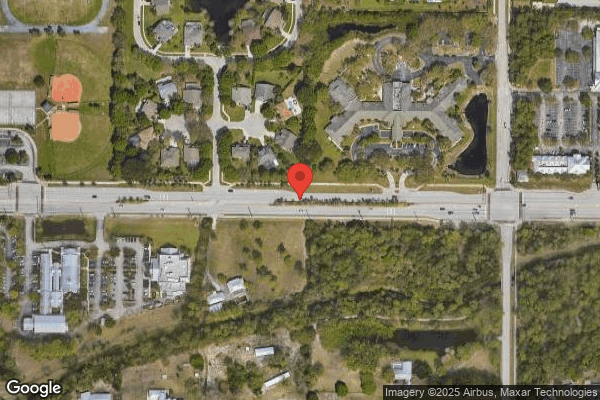
2505 SW MARTIN HWY, PALM CITY, FL 34990 (772) 288-0060
For profit - Corporation 120 Beds SOVEREIGN HEALTHCARE HOLDINGS Data: November 2025
Trust Grade
70/100
#249 of 690 in FL
Last Inspection: July 2024

Within standard 12-15 month inspection cycle. Federal law requires annual inspections.

Overview

Palm City Nursing & Rehab Center has a Trust Grade of B, indicating it is a good choice for families seeking care, though not without some concerns. It ranks #249 out of 690 facilities in Florida, placing it in the top half, and #2 out of 6 in Martin County, meaning only one other local option is rated higher. However, the facility's trend is worsening, with the number of issues increasing from 4 in 2023 to 7 in 2024. Staffing is a relative strength, with a 3/5 star rating and a turnover rate of 34%, which is better than the state average of 42%, suggesting that many staff members stay long-term. On the downside, specific incidents include failures to follow approved meal menus for residents, inadequate food safety practices leading to potential contamination, and unsanitary conditions in common areas that could pose risks to resident safety. Overall, while there are strengths in staffing and a solid trust grade, families should be aware of the facility's worsening trend and specific concerns noted in inspections.

Trust Score
B
70/100
In Florida
#249/690
Top 36%
Safety Record
Low Risk
No red flags
Inspections
Getting Worse
4 → 7 violations
Staff Stability
○ Average
34% turnover. Near Florida's 48% average. Typical for the industry.
Penalties
✓ Good
No fines on record. Clean compliance history, better than most Florida facilities.
Skilled Nurses
○ Average
Each resident gets 31 minutes of Registered Nurse (RN) attention daily — about average for Florida. RNs are the most trained staff who monitor for health changes.
Violations
⚠ Watch
21 deficiencies on record. Higher than average. Multiple issues found across inspections.
★★★★☆
4.0
Overall Rating
★★★☆☆
3.0
Staff Levels
★★★☆☆
3.0
Care Quality
★★★★☆
4.0
Inspection Score
Stable
2023: 4 issues
2024: 7 issues

The Good

  • Full Sprinkler Coverage · Fire safety systems throughout facility
  • No fines on record
  • Staff turnover below average (34%)

    14 points below Florida average of 48%

Facility shows strength in fire safety.

The Bad

Staff Turnover: 34%

12pts below Florida avg (46%)

Typical for the industry

Chain: SOVEREIGN HEALTHCARE HOLDINGS

Part of a multi-facility chain

Ask about local staffing decisions and management

The Ugly 21 deficiencies on record

Jul 2024 7 deficiencies
CONCERN (D)

Potential for Harm - no one hurt, but risky conditions existed

Comprehensive Care Plan (Tag F0656)

Could have caused harm · This affected 1 resident

**NOTE- TERMS IN BRACKETS HAVE BEEN EDITED TO PROTECT CONFIDENTIALITY** Based on observations, interviews and record reviews, the facility failed to develop and implement care plans related resident's...

Read full inspector narrative →
**NOTE- TERMS IN BRACKETS HAVE BEEN EDITED TO PROTECT CONFIDENTIALITY** Based on observations, interviews and record reviews, the facility failed to develop and implement care plans related resident's noncompliance with fluid restrictions and failed to develop and implement care plans to encourage staff and resident to adhere to fluid restrictions for 1 of 5 sampled residents reviewed for Nutrition / Hydration, Resident #10. The findings included: Record review revealed Resident #10 was admitted to the facility on [DATE] and admitted to Hospice on 06/18/24. Review of the resident's most recent complete assessment, a Significant change Minimum Data Set (MDS), dated [DATE], revealed Resident #10 had a Brief Interview for Mental Status (BIMS) score of 13, indicating the resident was cognitively intact. Resident #10's diagnoses )DX) at the time of the assessment included: Coronary Artery Disease, Heart Failure, Hypertension, Hypernatremia, Hyperlipidemia, Arthritis, Osteoporosis, Cardiac Murmur, Muscle weakness, Need for assistance with personal care, Difficulty in walking, Symbolic dysfunctions, Personal history of Transient Ischemic Attack (TIA) and Cerebral Infarction, Encounter for palliative care. Review of Resident #10's orders included: Fluid Restriction: 1000ml - every shift for NURSING - Day: 120ml; Evening: 120ml; Night: 60ml; DIETARY - Breakfast: 360ml; Lunch:180ml; Dinner: 160ml - 06/01/24 with a start date of 06/02/24. On 07/16/24 at 8:14 AM, Resident #10 was observed in bed sleeping with assorted fluids, including bottled beverages and two 16-ounce foam cups of water on the overbed table, dresser and an additional table to resident's right side of bed. During an interview, on 07/16/24 at 1:55 PM, with the Registered Dietitian (RD/LD), when asked about the fluid restrictions, the RD/LD replied, she was not seen by me, she was seen by the previous dietitian, that restriction would come from cardiology or nephrology. On 07/17/24 at approximately 8:30 AM, Resident #10 was observed in bed with a 16-ounce foam cup for hydration on the overbed table, and additional fluids throughout the room. Resident #10 refused to be interviewed. During an interview, on 07/17/24 at 10:33 AM, with the Director of Nursing (DON) and the Staff Development Coordinator, when asked about the fluids and cups of water in the resident's room while the resident had ordered fluid restrictions, the DON stated that she needed to be in contact with the physician that ordered the restrictions. The DON further stated, She is on Hospice, and she is very noncompliant, she is even refusing her meds and stuff. Her daughter brings that stuff (referring to bottles of soda and beverages). I talked to the hospice nurse today and told her that she was noncompliant, she said that she would reach out to the doctor about the fluid restrictions. During an interview, on 07/17/24 at 12:05 PM with the Nurse Practitioner (NP), when asked about the fluid restrictions for Resident #10, the NP replied, Hospice was supposed to have discontinued the fluid restrictions. She was on Lasix in the hospital and is not compliant with her medications. On 07/18/24 at 7:31 AM, Resident #10 was observed in bed awake, responsive and declined to be interviewed. During an interview, on 07/18/24 at 9:21 AM, with Staff A, Licensed Practical Nurse (LPN), when asked about providing hydration to the residents, Staff A replied, all staff do hydration, the CNAs [Certified Nursing Assistnats] are responsible for passing hydration at the beginning of the shift. She is no longer on restrictions (confirmed as of 07/17/24). During an interview, on 07/18/24 at 9:31 AM, with Staff D, CNA, when asked about Resident #10 having orders for fluid restrictions, Staff D stated that she was not aware of the restrictions and was providing hydration during the week. On 07/18/24 11:11 AM, the DON stated the facility did not have a policy to address fluid restrictions, we go by what the doctor's order is. Further review of Resident #10's health records revealed there was no care plan to address the resident's fluid restrictions and no care plan to address the resident and family being noncompliant with the fluid restrictions, while the resident's care plan for Nutrition/hydration contradicted the resident's fluid restrictions. Resident #10's care plan for nutrition and hydration, initiated on 09/15/22, documented, Resident is at risk for decreased nutritional status & dehydration r/t [related to] recent hospitalization for non pressure chronic ulcer to LLE [left lower extremity] with cellulitis / MRSA [Methicillin Resistant Staph Aures], TIA, Anemia, Osteoporosis BMI [Basil Mertabolic Index] <23 06/19/24 admitted on Hospice services DX: Cerebral Atherosclerosis. Interventions to the care plan included: o Encourage PO [oral] fluids Date Initiated: 09/15/2022 Created on: 09/15/2022 Created by: name (RN) o Observe for s/s [signs and symptoms] dehydration: i.e. poor skin turgor, dry mucous membranes, labs, concentrated urine, elevated temps and sudden changes in cognition and behaviors Date Initiated: 09/15/2022 Created on: 09/15/2022. During an interview, on 07/18/24 at 9:21 AM, with Staff A, LPN, when asked about Resident #10's fluid restrictions, Staff A replied, her daughter and granddaughter are always here. All staff do hydration, the CNAs are responsible for passing hydration at the beginning of the shift. She is no longer on restrictions. Fluid restrictions were confirmed, by record review, to be discontinued on 07/17/24 after surveyor intervention. During an interview, on 07/18/24 at 9:44 AM, with Staff B, MDS Coordinator, when asked about Resident #10's care plan, Staff B replied, when I do the admission assessment it triggers the interim care plans (baseline care plans) and then we develop them and personalize the care plan from there. The MDS Coordinator acknowledged the lack of a care plan for the resident and family's noncompliance. When asked about the care plan for nutrition / hydration contradicting the fluid restrictions, the Staff B replied, I took out the Encourage the PO fluid intake yesterday. During an interview, on 07/18/24 at 11:11 AM, the Director Of Nursing stated the facility did not have a policy to address fluid restrictions, we go by what the doctor's order is.
CONCERN (D) 📢 Someone Reported This

A family member, employee, or ombudsman was alarmed enough to file a formal complaint

Potential for Harm - no one hurt, but risky conditions existed

Quality of Care (Tag F0684)

Could have caused harm · This affected 1 resident

**NOTE- TERMS IN BRACKETS HAVE BEEN EDITED TO PROTECT CONFIDENTIALITY** Based on interviews and record review, the facility failed to follow physicians' orders by not administering medications timely ...

Read full inspector narrative →
**NOTE- TERMS IN BRACKETS HAVE BEEN EDITED TO PROTECT CONFIDENTIALITY** Based on interviews and record review, the facility failed to follow physicians' orders by not administering medications timely for 3 of 3 sampled residents reviewed for residents who received Parkinson's medications, affecting Residents #21, #25, and #310. The findings included: Review of the facility's procedural guidelines, titled, Medication Pass and Med Pass with Medication Cart, with an updated date of 06/28/23, included, in part, the following: Purpose: To assure the most complete and accurate implementation of physician's orders and to optimize drug therapy for each resident by providing for administration of drugs in an accurate, safe, timely, and sanitary manner. Guidance Steps in the Procedure: 7. Administer medications within 60 minutes of the scheduled time. Unless otherwise specified by the physician, routine medications are administered according to the established medication administration schedule for the center. For example, if the medication is ordered for 8:00 AM, it must be given between 7:00 AM and 9:00 AM in order to be considered timely. 1. Record review for Resident #310 revealed the resident was admitted to the facility on [DATE] and discharged from the facility on 05/17/24. Resident #310's diagnoses included Parkinson's Disease Without Dyskinesia Without Mention of Fluctuations, Hereditary and Idiopathic Neuropathy, Muscle Weakness, Unspecified Lack of Coordination Review of the Minimum Data Set (MDS) for Resident #310 dated 05/17/24 documented in Section C a Brief Interview of Mental Status (BIMS) score of 13, indicating an intact cognitive response. Revie of the Physician's Orders for Resident #310 revealed an order dated 05/01/24 for Entacapone Oral Tablet 200 MG Give 1 tablet by mouth five times a day for Parkinson's give with carbidopa-levodopa. Review of the Physician's Orders for Resident #310 revealed an order dated 05/01/24 Ropinirole HCl Oral Tablet 1 MG Give 1 tablet by mouth three times a day for Parkinson's Review of the Physician's Orders for Resident #310 revealed an order dated 05/01/24 for Sinemet Oral Tablet 25-100 MG (Carbidopa-Levodopa) Give 1 tablet by mouth five times a day for Parkinson's give with Entacapone. Review of the time stamp administration of Entacapone, Sinemet (Carbidopa-Levodopa) and Ropinirole from 05/02/24 to 05/08/24 for Resident #310 revealed the following: For the medication Entacapone: 05/02/24 scheduled 8:00 AM given at 9:06 AM 05/02/24 scheduled 4:00 PM given 5:24 PM 05/03/24 scheduled 8:00 AM given 9:05 AM 05/03/24 scheduled 12:00 PM given 1:01 PM 05/04/24 scheduled 4:00 PM given 6:08 PM 05/06/24 scheduled 8:00 AM given 9:08 AM 05/06/24 scheduled 4:00 PM given at 6:08 PM 05/07/24 scheduled 4:00 PM given 5:45 PM 5/08/24 scheduled 4:00 PM given 7:02 PM. For the medication Sinemet (Carbidopa-Levodopa): 05/02/24 scheduled 8:00 AM given at 9:06 AM 05/02/24 scheduled 4:00 PM given 5:24 PM 05/03/24 scheduled 8:00 AM given 9:05 AM 05/03/24 scheduled 12:00 PM given 1:01 PM 05/4/24 scheduled 4:00 PM given 6:08 PM 05/06/24 scheduled 8:00 AM given 9:08 AM 05/06/24 scheduled 4:00 PM given at 6:08 PM 05/07/24 scheduled 4:00 PM given 5:46 PM 5/08/24 scheduled 4:00 PM given 7:02 PM. For the medication Ropinirole: 05/02/24 scheduled 2:00 PM given 3:05 PM 05/03/24 scheduled 6:00 PM given 7:34 PM 05/08/24 scheduled 6:00 PM given 8:09 PM. In summary, the documentation indicated the medication was not given timely (more than 1 hour before or 1 hour after scheduled time) on several occasions and as late as 2 hours and 2 minutes. During a telephone interview conducted on 07/15/24 at 11:05 AM with the spouse of Resident #310 who was asked about the resident's Parkinson's medications, the spouse stated the resident was prescribed a medication for restless leg syndrome with his Parkinson's medications and it affected the resident in a negative way. When asked to explain what this meant, the spouse stated they (facility) had to cut back on the Carbidopa Levodopa because he was having peak doses episode of dyskinesia with limbs flailing all over the place and the mobility was not what it was before being admitted to the facility. When asked about the medications being administered in a timely manner, the resident and the spouse stated the medications were often given late. 2. Record review for Resident #21 revealed the resident was admitted to the facility on [DATE] with diagnoses including: Dementia and Parkinsonism. Review of the MDS for Resident #21 dated 05/07/24 documented in section C, a BIMS could not be completed due to the resident is rarely / never understood. Review of the Physician's Orders for Resident #21 revealed an order dated 11/13/23 for Mirapex Tablet 1 MG (Pramipexole Dihydrochloride) give 1 tablet by mouth three times a day for Parkinson's Review of the Physician's Orders for Resident #21 revealed an order dated 11/13/23 for Carbidopa-Levodopa Tablet 25-100 MG give 1 tablet by mouth three times a day for Parkinson's Disease. Review of the time stamp administration of Carbidopa-levodopa and Mirapex for Resident #21 revealed the following: For the medication Carbidopa-Levodopa: 07/01/24 scheduled for 7:00 AM given 8:39 AM 07/02/24 scheduled 4:00 PM given 5:17 PM 07/03/24 scheduled 4:00 PM given 5:24 PM 07/05/24 scheduled 4:00 PM given 5:09 PM 07/06/24 scheduled 4:00PM given 6:34 PM 07/10/24 scheduled 4:00 PM given 5:49 PM 07/11/24 scheduled 4:00 PM given 7:42 PM 07/12/24 scheduled 11:00 AM given 1:48 PM 07/15/24 scheduled 11:00 AM given 1:21 PM. For the medication Mirapex: 07/05/24 scheduled 2:00 PM given 3:07 PM 07/13/24 scheduled Upon R (6:00 AM -10:00 AM) given 11:11 AM 07/15/24 scheduled Upon R (6:00 AM -10:00 AM) given at 1:23 PM. In summary, the documentation indicated the medication was not given timely (more than 1 hour before or 1 hour after scheduled time) on several occasions and as late as 1 hour and 34 minutes. 3. Record review for Resident #25 revealed the resident was originally admitted to the facility on [DATE] with most recent readmission date of 04/09/24. The resident's diagnoses included: Dementia and Parkinsonism Review of the MDS for Resident #25 dated 07/11/24 documented in Section C, a BIMS score of 6 indicating severe cognitive impairment Review of the Physician's Orders for Resident #25 revealed an order dated 04/09/24 for Carbidopa-Levodopa Oral Tablet 25-100 MG (Carbidopa-Levodopa) give 1 tablet by mouth every 6 hours for Parkinsons. Review of the time stamp for Ropinirole and Carbidopa-Levodopa for Resident #25 revealed the following: For the medication Carbidopa-Levodopa: 07/02/24 scheduled 6:00 PM given 7:55 PM 07/04/24 scheduled 12:00 AM given 1:03 AM 07/04/24 scheduled 12:00 PM given 1:36 PM 07/05/24 scheduled 12:00 PM given 2:38 PM 07/06/24 scheduled 6:00 PM given 7:12 PM 07/07/24 scheduled 12:00 PM given at 1:06 PM 07/09/24 scheduled 12:00 AM given at 1:17 AM 07/09/24 scheduled 12:00 PM given 1:49 PM 07/09/24 scheduled 6:00 PM given 7:17 PM 07/10/24 scheduled 12:00 AM given 1:04 AM 07/10/24 scheduled 12:00 PM given 1:01 PM 07/10/24 scheduled 6:00 PM given 7:25 PM 07/11/24 scheduled 12:00 PM given 1:03 PM. In summary, the documentation indicated the medication (med) was not given timely (more than 1 hour before or 1 hour after scheduled time) on several occasions and as late as 1 hour and 38 minutes. During an interview conducted on 07/17/24 at 9:15 AM with Staff J, Licensed Practical Nurse (LPN), Staff J stated she has worked at the facility for 2 months. When asked about med administration times, she said some meds have a specific time to be given and we have a 1 hour window prior and 1 hour window after to give the medication. She said some meds have an upon time and that has a bigger window to give the med but still have 1 hour prior and 1 hour after to give the medication. If for some reason a medication was given late, she said she would notify the doctor and document a reason why it was not given in a progress note. During an interview conducted on 07/17/24 at 9:45 AM with Staff L, LPN, was asked about med administration times. The LPN said we have 1 hour before and 1 hour after the medication is scheduled to give the medication. When asked if a medication is given late what she does, she said she would document why the medication was given late. During an interview conducted on 07/18/24 at 12:20 PM with the Director of Nursing (DON), the DON was asked if she would consider a medication given outside of the 1 hour before or 1 hour after a scheduled time or time frame (prior or upon), the DON said she could not say. When asked if it would be considered 'following the physicians' orders', she said it may be considered not following the doctors' orders.
CONCERN (D)

Potential for Harm - no one hurt, but risky conditions existed

Incontinence Care (Tag F0690)

Could have caused harm · This affected 1 resident

**NOTE- TERMS IN BRACKETS HAVE BEEN EDITED TO PROTECT CONFIDENTIALITY** Based on observations, interviews and record review, the facility failed to ensure ongoing care to prevent infection prevention ...

Read full inspector narrative →
**NOTE- TERMS IN BRACKETS HAVE BEEN EDITED TO PROTECT CONFIDENTIALITY** Based on observations, interviews and record review, the facility failed to ensure ongoing care to prevent infection prevention for 1 of 1 sampled resident reviewed for indwelling urinary catheter (Foley) care as evidenced by lack of documentation (Resident #90). The findings included: Review of the facility's policy, titled, Catheter Care and Services, with a revised date of 06/2024 included, in part, the following: A resident with or without an indwelling catheter, receives the appropriate care and services to prevent urinary tract infections to the extent possible. Under Section titled Documentation: Assessments/evaluations, care plans, orders and or nursing measures as appropriate. Record review for Resident #90 revealed the resident was admitted to the facility on [DATE] with diagnoses that included: Unspecified Dementia and Neuromuscular Dysfunction of Bladder. Review of the Minimum Data Set (MDS) for Resident #90 dated 06/18/24 documented in Section C a Brief Interview of Mental Status (BIMS) score of 4 indicating severe cognitive impairment. In Section H under Indwelling catheter (including suprapubic catheter and nephrostomy tube) is answered 'yes'. Review of the Certified Nursing Assistant (CNA) Tasks for Resident #90 from 07/08/24 to 07/17/24 revealed no documentation to indicate indwelling urinary catheter care was provided. Review of the Care Plan for Resident #90 dated 06/07/24 with a focus on the resident has Indwelling Catheter r/t [related to] Neurogenic bladder and is at risk for complications. The goal for the Resident to have decreased risk of s/s [signs and symptoms] of a UTI [Urinary Tract Infection] & [and] other complications r/t catheter through review date. The interventions included: Catheter care with warm water & soap. Review of the Physician's Orders for Resident #90 revealed an order dated 06/06/24 for Diagnosis for Indwelling Catheter: neurogenic bladder. Review of the current Physician's Orders for Resident #90 revealed no orders for indwelling urinary catheter (Foley) care. On 07/17/24 at 2:01 PM, an observation of indwelling urinary (Foley) catheter care provided to Resident #90 performed by Staff H, Certified Nursing Assistant (CNA), and assisted by the Registered Nurse Staff Development Coordinator was with no concerns. During an interview conducted on 07/17/24 at 9:15 AM with Staff J, Licensed Practical Nurse (LPN), the LPN stated she has worked at the facility for 2 months. When asked how often Foley care is provided, she said it is provided daily by the CNAs. When asked where they document the Foley care, she said it would be under tasks and it would pop up under tasks for the CNA to (prompt) them to document. During an interview conducted on 07/17/24 at 3:21 PM with Staff K, Certified Nursing Assistant (CNA), Staff K stated he has worked at the facility for 18 years. When asked where they document Foley care, he said they do not document Foley care, it is in the care plan. When asked if he provides Foley care, he said every day, on every shift. When asked where this is documented, he said it is documented under incontinence care that the resident has a Foley. During an interview conducted on 07/17/25 at 3:33 PM with Staff B, MDS (Minimum Data Set) coordinator, she stated she has worked at the facility for 25 years. When asked where a CNA would document Foley care, she said it would be in the task section. When asked where the Foley care documentation is for Resident #90, she said it is in Tasks under the toileting / brief change. When asked what options the CNA have to document, she said they can document incontinence care provided showing the resident has a Foley (indwelling catheter). When asked where the CNA can document actual Foley care provided, she acknowledged there is no place for the CNA to document Foley care provided. She said it is on the [NAME] under bowel and bladder; it has catheter care with warm water and soap. She stated she enters the intervention on the care plan and attaches it to the CNA [NAME]. During an interview conducted on 07/18/24 at 8:40 AM with Staff I, CNA, she stated she has worked at the facility for 6 months. When asked about providing care for residents with indwelling urinary (Foley) catheter, she said we provide the care at least once a shift and she does it every time the resident goes to the bathroom or is incontinent. When asked where she documents the catheter care, she said there is no option to document the catheter care, there is no option to document. There was no documented evidence Resident #90 was provided Foley care.
CONCERN (D)

Potential for Harm - no one hurt, but risky conditions existed

Deficiency F0692 (Tag F0692)

Could have caused harm · This affected 1 resident

**NOTE- TERMS IN BRACKETS HAVE BEEN EDITED TO PROTECT CONFIDENTIALITY** Based on observations, interviews and record reviews, the facility failed to monitor weights appropriately and failed to ensure ...

Read full inspector narrative →
**NOTE- TERMS IN BRACKETS HAVE BEEN EDITED TO PROTECT CONFIDENTIALITY** Based on observations, interviews and record reviews, the facility failed to monitor weights appropriately and failed to ensure weights are accurate for 2 of 5 sampled residents reviewed for nutrition, Residents #29, and #78; and failed to adhere to fluid restrictions for 1 of 5 sampled residents reviewed for Nutrition, Resident #10. Th findings included: The facility's policy, titled, Weight Measurements, with a reference date of 08/2023, documented, in part, the following: Frequency of Measurements and Calculations: Residents are weighed weekly, monthly, or according to physician orders. Residents should be weighed at the same time of day, in similar clothing and using the same scale. Any significant or progressive loss or gain is noted and reported to the resident's attending physician, family, or responsible party and documented in the medical record. Note all new admits are weighed weekly for 30 days. 1. Record review revealed Resident #29 was admitted to the facility on [DATE]. Review of the resident's most recent complete assessment, a quarterly Minimum Data Set (MDS), dated [DATE], Resident #29 had a Brief Interview for Mental Status (BIMS) score of 05, indicating a severe cognitive impairment. The document revealed: Setup or clean up assistance for dining. The resident's diagnoses (DX) at the time of the assessment included: Anemia, Coronary Artery Disease, Heart Failure, Hypertension, Obstructive Uropathy, Hyperlipidemia, Non-Alzheimer's dementia, Chronic Lung Disease, Presence of cardiac pacemaker, Paroxysmal Atrial Fibrillation, Mood disorder, GERD (Gastroesophageal Reflux Disease), Osteoarthritis, Muscle weakness, Overactive bladder, Lack of coordination, Cognitive communication deficit. The MDS documented that the resident did not have any swallowing disorders and no dental concerns. Review of Resident #29's care plan for nutrition, initiated on 01/17/24 with a revision date of 04/23/24, documented, Resident is at risk for decreased nutritional status and dehydration r/t [related to] chronic kidney disease and atherosclerotic heart disease. The goal of the care plan was documented as, Resident will be free from significant weight changes through the review date. Resident will continue to tolerate diet. Continue plan of care. Date Initiated: 01/17/2024. Revision on: 02/06/2024. Target Date: 07/29/2024. Interventions to the care plan included: o RD/DTR [Registered Dietician / Doctor] to evaluate as needed. Date Initiated: 01/17/2024 o Weights as ordered. Date Initiated: 01/17/2024. Resident #29's physician's orders included: Regular diet, Regular texture - 01/23/24 Weights every 30 days - 07/07/24. Further review of the resident's electronic health record (EHR) revealed that there were no orders for nutritional supplements. Resident #29's weights taken in the facility were documented as the following: 07/11/24 - 137 lbs (pounds), sit down scale. 07/07/24 - 139 lbs, sit down scale. 04/19/24 - 235 lbs, with wheelchair. 04/12/24 - 165 lbs, sit down scale. 04/03/24 - 165 lbs, sit down scale. 03/02/24 - 172 lbs, sit down scale. 01/17/24 - 187 lbs, sit down scale. Resident #29's weight according to a hospital transfer form (3008) documented a weight of 198 lbs. on 01/17/24. A Nutrition Risk Screen, dated 01/23/24 documented Resident #29's weight as 187 lbs. A Physician / Practitioner Progress note, dated 05/02/24, documented a weight of 187 lbs. A Physician Consult note, dated 07/02/24 documented that the resident was alert and oriented x 3. A Physician / Practitioner Visit Note, dated 07/03/24, documented a weight of 235 lbs. During review of the resident's documented weights, the following were noted: Resident #29 was not weighed per facility protocol of weekly for the first four weeks after admission of 01/17/24. Resident #29 was not weighed from 01/17/24 to 03/02/24. There was a 70-pound weight gain documented from 04/12/24 to 04/19/24, with no verification (re-weight) done to ensure the weights were accurate. There were no weights documented from 04/19/24 to 07/07/24. There was a 96-pound weight loss documented from 04/19/24 to 07/07/24, with no verification done to ensure the weights were accurate. Further review of the resident's record revealed: The documented weight loss was not identified by the facility. There were no interventions implemented to address weight loss. There was no documentation of the resident refusing to be weighed. During an interview, on 07/15/24 at 9:54 AM when Resident #29 was asked of any concerns with weight loss, Resident #29 stated that he had lost 15 pounds and is trying to get the weight back. The resident stated, Breakfast is good. Lunch and dinner, sometimes good sometimes bad, depends on who is in the kitchen. I don't like certain vegetables. You can only get what they have - sometimes they offer substitutions. Resident #29 further stated that he had no diet restrictions. The resident stated, There isn't usually anything else that I can get for a meal. When asked about being assessed by the Dietitian, Resident #29 replied, I don't know the Dietitian, I haven't seen one. My daughter brings me things that I like. During an interview on 07/17/24 at 12:10 PM, with the Nurse Practitioner (NP), when asked about the resident voicing concerns about the 15-pound weight loss, the NP replied, the daughter refused any type of stimulant after we found a weight loss. The weights that I use are from the documentation in the record. 2. Record review revealed Resident #78 was admitted to the facility on [DATE]. Review of the resident's most recent assessment, a Quarterly MDS dated [DATE], Resident #78 had a BIMS score of 14, indicating that the resident was cognitively intact. The MDS documented the resident required setup or clean up assistance for eating. Resident #78's diagnoses at the time of the assessment included: Anemia, CAD, Hypertension, PVD (Peripheral Vascular Disease), Hyperlipidemia, Malnutrition, Depression, Chronic Lung Disease, Acute Metabolic Acidosis, partial Intestinal Blockage. Muscle weakness, Difficulty in walking, Thrombocytosis, Allergic Rhinitis, Interstitial Pulmonary Disease, Intussusception, and Osteoarthritis. The MDS documented that Resident #78 had weight loss and was not on a prescribed weight loss regimen. Resident #78's care plan for nutrition, initiated on 07/20/23 with a revision date of 03/13/24, documented, Resident is at risk for decreased nutritional status & dehydration r/t recent hospitalization for compression fracture of L-4, cancer, COPD, CKD (Chronic Kidney Disease), Depression, and Small Bowel Obstruction. He is currently experiencing a significant weight loss which occurred during hospitalization. The goal of the care plan was documented as, Resident will be free from significant weight changes through the review date. Date Initiated: 07/20/2023 Revision on: 04/18/2024 Target Date: 10/14/2024. Interventions to the care plan included: Weights as ordered Date Initiated: 03/05/24 Created on: 07/20/23. Revision on: 03/05/24. Weights as ordered Date Initiated: 02/25/24 Created on: 02/25/24. Resident #78's diet orders included: Regular diet, Regular texture - double portions w-B [with breakfast] - 03/13/24. Fortified Foods with meals - 03/13/24. Nutritional Treat with meals for nutritional support w L/D [with lunch and dinner]- 06/14/24. Further review of the resident's orders revealed no order for monitoring weights. Resident #78's weights were documented as follows: 07/11/24 - 159 pounds 06/11/24 - 164 pounds 03/05/24 - 172 pounds 02/25/24 - 187 pounds 01/15/24 - 179 pounds. During the review of the resident's weights, the following were noted: There were no weights documented between 03/05/24 and 06/11/24 - more than three months. There was no documentation of resident refusing weights. On 01/15/2024, the resident weighed 179 lbs. On 07/11/2024, the resident weighed 159 pounds which is a -11.17 % Loss. The weight loss was not identified by the facility. There were no interventions implemented to address weight loss, except for 03/13/24 and 06/14/24. During an interview, on 07/15/24 at 3:30 PM, with Resident #78, when asked of any concerns with weight loss or gain, Resident #78 replied, I got weighed a couple of weeks ago. I was somewhere around 170 pounds and now I am down in the 150s. 3. During an interview, on 07/16/24 at 2:03 PM with the Registered Dietitian, when asked about assessing a resident for weight loss, the Registered Dietitian replied, we are a contract company, I don't know what happened to the previous dietitian, I never got to meet her, I only am able to follow up with what she has done. When asked about the facility's protocols for monitoring residents' weights, the Registered Dietitian replied, the protocol is when they are first admitted , they are to be weighed, once a week for the first four weeks that they are here. When I am here, I run a weight report from the day that I am there to the previous month. If it is not me, I go back 6 months in my report. Anyone that meets my significant criteria (5%, 7%, 10%) I will follow up with them. We are to do that every month. When the Registered Dietitian was shown the documentation of the residents' weights, the Registered Dietitian acknowledged that the residents should have been reweighed on several occasions and that there should have been some interventions based on the reweights. During an interview, on 07/17/24 at 10:20 AM, with the Staff Development Coordinator (SDC), when asked of the responsibility for weighing the residents, the SDC replied, all of the CNAs are responsible for weights, we put the numbers on the board and the nurses tell them. If we need re-weights, it is put on the board. There is a paper at the beginning of the month for the list of residents that need to be weighed and re-weighted. If it is out of 2-3 pounds change, then reweights are done. Whatever the weight was, we do a reweight to validate that the weight is correct. We try to make sure that they are weighed by the same method, clothing, time of day. We try to do the re-weight if not the same day, within 24 hours. During an interview, on 07/18/24 at 8:47 AM, with Staff C, CNA, when asked about weighing the residents, Staff C replied, there is a list - once a month we get a list, and we give the weights to the nurse. During an interview, on 07/18/24 at 9:13 AM, with Staff A, LPN, when asked about documenting the weights, Staff A replied, I normally compare to the previous one and we document, if we have to do a re-weight, we tell the dietitian and the Director of Nursing (DON) if they lose weight, we check to make sure it is correct and compare to the previous one. Staff A acknowledged that there were multiple opportunities that Resident #29 should have been re-weighed and there was no documentation for the missing weights. 4. Record review revealed Resident #10 was admitted to the facility on [DATE] and admitted to Hospice on 06/18/24. Review of the resident's most recent complete assessment, a Significant change Minimum Data Set (MDS), dated [DATE], Resident #10 had a Brief Interview for Mental Status score of 13, indicating the resident was 'cognitively intact'. Resident #10's diagnoses at the time of the assessment included: Coronary Artery Disease, Heart Failure, Hypertension, Hypernatremia, Hyperlipidemia, Arthritis, Osteoporosis, Cardiac Murmur Muscle weakness, Need for assistance with personal care, Hereditary and idiopathic neuropathy, Difficulty in walking, Symbolic dysfunctions, Personal history of Transient Ischemic Attack (TIA) and Cerebral Infarction, and Encounter for palliative care. Resident #10's orders included: Fluid Restriction: 1000ml - every shift for NURSING - Day: 120ml; Evening: 120ml; Night: 60ml; DIETARY - Breakfast: 360ml; Lunch: 180ml; Dinner: 160ml - 06/01/24 with a start date of 06/02/24. On 07/16/24 at 8:14 AM, Resident #10 was observed in bed sleeping with assorted fluids, including bottled beverages and two 16-ounce foam cups of water on the over bed table, dresser and an additional table to resident's right side of bed. During an interview, on 07/16/24 at 1:55 PM, with the Registered Dietitian (RD/LD), when asked about the fluid restrictions, the RD/LD replied, she was not seen by me, she was seen by the previous dietitian, that restriction would come from cardiology or nephrology. On 07/17/24 at approximately 8:30 AM, Resident #10 was observed in bed with 16-ounce foam cup for hydration on the overbed table, and additional fluids throughout the room. On 07/17/24 at 10:33 AM, an interview with the Director of Nursing (DON) revealed the resident is noncompliant and family bring in bottles of soda and beverages to the resident. On 07/17/24 at 12:05 PM, an interview with the Nurse Practioner (NP) revealed, Hospice was supposed to have d/c [discontinued] the fluid restrictions. She was on Lasix in the hospital and is not compliant with her medications. Provided documentation of education related to fluid restrictions. During an interview, on 07/18/24 at 9:21 AM, with Staff A, LPN, when asked about providing hydration to the residents, Staff A replied, all staff do hydration, the CNAs are responsible for passing hydration at the beginning of the shift. She [Resident #10] is no longer on restrictions (confirmed as of 07/17/24). During an interview, on 07/18/24 at 9:31 AM, with Staff D, CNA, when asked about Resident #10 having orders for fluid restrictions, Staff D stated that she was not aware of restrictions and was providing hydration during the week. On 07/18/24 11:11 AM, the DON stated the facility did not have a policy to address fluid restrictions, we go by what the doctor's order is.
CONCERN (D)

Potential for Harm - no one hurt, but risky conditions existed

Pharmacy Services (Tag F0755)

Could have caused harm · This affected 1 resident

Based on record review and interview, the facility failed to ensure narcotic medications removal was documented in the medication administration records (MARs) for 3 of 6 sampled residents reviewed fo...

Read full inspector narrative →
Based on record review and interview, the facility failed to ensure narcotic medications removal was documented in the medication administration records (MARs) for 3 of 6 sampled residents reviewed for medications (Residents #88, #10 & #46). The findings included: On 07/18/24 at 11:26 AM, during the medication storage review process six (6) residents were selected for review. Three of those residents had discrepancies in their records. Record review revealed Resident #88 had physician orders of Tramadol 50 mg every 8 hours as needed for pain. The controlled medication utilization record was compared against the July 2024 Medication Administration Records (MARs), revealing there were discrepancies. The controlled medication utilization record showed the Tramadol was removed on 07/01/24 at 11:02 AM, and 07/07/24 at 3 AM but there was no documentation in the MARs to reflect this removal and administration to the resident. Record review revealed Resident #10 had physician order of Lorazepam 0.5 mg every 4 hours as needed for anxiety. The controlled medication utilization record was compared against the July 2024 MARs, and revealed there was a discrepancy. The controlled medication utilization record showed the Lorazepam was removed on 07/13/24 at 6:50 PM, but there was no documentation in the MARs to reflect this removal and administration to the resident. Record review revealed Resident #46 had physician order of Alprazolam 0.25 mg by mouth once a day as needed for anxiety. The controlled medication utilization record was compared against the July 2024 MARs, and revealed there was a discrepancy. The controlled medication utilization record showed the Alprazolam was removed on 07/17/24 at 7:36 PM, but there was no documentation in the MARs to reflect this removal and administration to the resident. On 07/18/24 at 12:01 PM, an interview was held with the Director Of Nursing (DON). She was made aware of the findings related to the lack of documentation for the narcotic removal.
CONCERN (D)

Potential for Harm - no one hurt, but risky conditions existed

Unnecessary Medications (Tag F0759)

Could have caused harm · This affected 1 resident

**NOTE- TERMS IN BRACKETS HAVE BEEN EDITED TO PROTECT CONFIDENTIALITY** Based on observations, interviews, and record review, the facility failed to maintain medication error rate less than 5% for 2 o...

Read full inspector narrative →
**NOTE- TERMS IN BRACKETS HAVE BEEN EDITED TO PROTECT CONFIDENTIALITY** Based on observations, interviews, and record review, the facility failed to maintain medication error rate less than 5% for 2 of 32 opportunities identified while observing medication pass affecting Residents #32 and #99. The medication error rate was calculated to be 6.25 % (percent). The findings included: Review of the facility's procedural guidelines, titled, Medication Pass and Med Pass with Medication Cart, with an updated date of 06/28/23, included, in part, the following: Purpose: To assure the most complete and accurate implementation of physician's orders and to optimize drug therapy for each resident by providing for administration of drugs in an accurate, safe, timely, and sanitary manner. Guidance Steps in the Procedure: 7. Administer medications within 60 minutes of the scheduled time. Unless otherwise specified by the physician, routine medications are administered according to the established medication administration schedule for the center. For example, if the medication is ordered for 8:00 AM, it must be given between 7:00 AM and 9:00 AM in order to be considered timely. 1. Record review for Resident #32 revealed the resident was admitted to the facility on [DATE] with diagnoses including: Dementia and Other Seizures. Review of the Physician's order for Resident #32 revealed an order dated 07/03/24 for Depakote Sprinkles Delayed Release [DR] 125mg give 2 caps by mouth three times a day for seizures. On 07/15/24 at 4:30 PM, a medication (med) pass observation was conducted with Staff M, Registered Nurse (RN), who was working on the odd side west unit med cart. The RN proceeded to administer Divalproex (Depakote) DR 125mg 2 caps by mouth to Resident #32. Review of the Medication Administration Record (MAR) documented the resident had received the last dose of Depakote at 2:00 PM on 07/15/24. During an interview conducted on 07/15/24 at 4:35 PM with Staff M, who stated she has worked at the facility since November 2023, when asked about medication administration times, she said she had an hour before and an hour after the medication is scheduled to be given. During an interview conducted on 07/15/24 at 5:35 PM with the Director of Nursing (DON) who was asked about med administration times, what specifically Prior indicated, the DON stated they are more liberal with their medication times and Prior would indicate prior to bedtime. When asked to clarify if there was a time frame associated with the Prior to bedtime, she said it could be from 5:00 PM to 8:00 PM depending on when the resident goes to bed. When asked if they keep a log of when a resident goes to bed, she said no they do not. When brought to her attention, the Person-Centered Medication Administration Schedule indicated prior to bed is 6:00 PM to 10:00 PM. She said let's look at a specific resident. Upon the DON reviewing the medication order for Resident #32 for Divalproex DR (Delayed Release) 125mg under the scheduling details, it listed the 'prior to bedtime frame' as 6:00 PM to 10:00 PM. 2. Record review for Resident #99 revealed the resident was admitted to the facility on [DATE] with diagnoses that included: Essential (Primary) Hypertension, Peripheral Vascular Disease, and Atherosclerotic Heart Disease of Native Coronary Artery without Angina Pectoris. Review of the Physician's orders for Resident #99 revealed an order dated 05/30/24 for Lisinopril 10mg give 1 tablet by mouth one time a day for hypertension. Review of the Medication Administration Record (MAR) for Resident #99 revealed Staff F, RN, marked 9, indicating other see nurse progress note, on 07/18/24 for the medication Lisinopril. Review of the nurse progress notes for Resident #99 for 07/18/24 revealed no nurse progress note. On 07/18/24 at 8:30 AM, a med pass observation with Staff F, RN, who was working on the odd side west unit med cart. The RN proceeded 'to hold' the medication Lisinopril 10mg for Resident #99 after obtaining a blood pressure of 114/73. There were no blood pressure parameters to hold the medication. During an interview conducted on 07/18/24 at 11:55 AM with Staff F, who was asked if there were any parameters to hold the blood Lisinopril for Resident #99, he said no. When asked why he held the Lisinopril for Resident #99, he stated it was nursing judgement call. During an interview conducted on 07/18/24 at 12:20 PM with the Director of Nursing (DON) who was asked if she would consider a medication given outside of the 1 hour before or 1 hour after a scheduled time or time frame (prior or upon), the DON said she could not say. When asked if it would be considered following the physician's orders, she said it may be considered not following the doctor's orders. When asked about holding a blood pressure medication for a resident without parameters to hold the medication, she said the nurse would need to do an assessment and would need to know the baseline blood pressure. When asked about Resident #99 and holding the blood pressure medication Lisinopril for a blood pressure of 114/73, she said she would call the doctor to see if the blood pressure medication should be held.
CONCERN (D)

Potential for Harm - no one hurt, but risky conditions existed

Deficiency F0761 (Tag F0761)

Could have caused harm · This affected 1 resident

**NOTE- TERMS IN BRACKETS HAVE BEEN EDITED TO PROTECT CONFIDENTIALITY** Based on observations, interviews and record review, the facility failed to secure medications at the bedside for 2 of 115 resid...

Read full inspector narrative →
**NOTE- TERMS IN BRACKETS HAVE BEEN EDITED TO PROTECT CONFIDENTIALITY** Based on observations, interviews and record review, the facility failed to secure medications at the bedside for 2 of 115 residents (Resident #72 & #83); failed to secure medication during medication administration (Resident #102); and failed to secure the medication cart while unattended for 1 of 5 med carts The findings included: Review of the facility's procedural guidelines, titled, Medication Storage Room, with an updated date of 06/28/24, included the following, in part: Under Medication Storage Area: Medication storage areas are secure when not under direct supervision of a nurse. 1. Record review for Resident #72 revealed the resident was admitted originally on 07/03/23 with most recent readmission on [DATE] and diagnoses that included: Type 2 Diabetes Mellitus without Complications, Bilateral Primary Osteoarthritis of Knee, and Spinal Stenosis. Review of the Minimum Data Set (MDS) assessment for Resident #72 dated 06/10/24 revealed in Section C, a Brief Interview of Mental Status (BIMS) score of 14 indicating an intact cognitive response. Record review for Resident #72 revealed no Self-Administration of Medication Evaluation. On 07/15/24 10:20 AM, an observation was made of Resident #72 lying in bed with a box of medications on a table across from the foot of her bed. In the box, there was a bag of Vicks Vapocool cough drops, Opcon-A eye allergy relief drops, and a bottle of Ibuprofen. On 07/16/24 at 9:30 AM, a second observation was made of Resident #72 lying in bed with a box of medications on a table across from the foot of her bed. In the box, there was a bag of Vicks Vapocool cough drops, Opcon-A eye allergy relief drops, and a bottle of Ibuprofen. On 07/17/24 at 9:58 AM, a side by side observation was made with Staff L, Licensed Practical Nurse (LPN), of Resident #72 lying in her bed with a box of medications including Vicks Vapocool cough drops, Opcon-A eye allergy relief drops, and a bottle of Ibuprofen. An interview was conducted on 07/15/24 at 10:20 AM with Resident #72 who was asked about the medications. She said she 'does not use them all of the time, some things she has not used for a year.' Resident #72 said the staff know about the medications and it is all right for her to have them because she does not use them much. An interview was conducted on 07/17/24 at 9:58 AM with Staff L who acknowledged Resident #72 had medications at the bedside and she should not have the meds at the bedside. Staff L said this was a very good observation and thanked the surveyor for bringing it to her attention. She sais she would address this immediately with the unit manager and the resident. 2. Record review for Resident #83 revealed the resident was originally admitted to the facility on [DATE] with readmission on [DATE] with diagnoses that included: Unspecified Dementia, Unspecified Symptoms and Signs Involving Cognitive Functions and Awareness, Cognitive Communication Deficit, Gastro-Esophageal Reflux Disease without Esophagitis. Review of the MDS assessment for Resident #83 dated 06/20/24 revealed in Section C, a BIMS score of 6, indicating severe cognitive impairment. Review of the Physician's Orders for Resident #83 revealed an order dated 12/28/23 for a 'Regular diet Regular texture.' On 07/15/24 at 10:30 AM, an observation was made of Resident #83 sleeping in bed with the nightstand top drawer open and inside the drawer were Ricola cough drops. Photographic Evidence Obtained. On 07/16/24 at 9:20 AM, a second observation was made of Resident #83 sitting up in bed eating breakfast with the nightstand top drawer was open and inside were the Ricola cough drops. On 07/17/24 at 9:55 AM, a side by side observation was made with Staff L, LPN, of Resident #83 lying in her bed with the nightstand next to bed and the top drawer was open. Three (3) Ricola cough drops were inside. Staff L immediately removed the cough drops. An interview was conducted on 07/17/24 at 9:56 AM with Staff L who was asked about the cough drops at the bedside for Resident #83. She said this is a problem, the resident should not have these at the bedside, and she is on a soft diet. Staff L acknowledged the resident should not have the cough drops at the bedside, as they are a medication. 3. Record review for Resident #102 revealed the resident was admitted to the facility on [DATE] with diagnoses including: Chronic Obstructive Pulmonary Diseases (COPD), and Chronic Respiratory Failure with Hypoxia. Review of the Physician's orders for Resident #102 revealed an order for Umeclidinium-Vilanterol (Anoro Ellipta) Inhalation Aerosol Powder Breath Activated 62.5-25mcg/ACT 1 puff inhale orally one time a day for COPD. On 07/17/24 at 9:05 AM, during a medication pass observation with Staff J, LPN, for Resident #102 after administering medications including Anoro Ellipta, she left the Anoro Ellipta inhaler on dresser across from the resident (out of the LPN's sight) while she went into the resident's bathroom to throw trash away and wash hands. An interview was conducted on 07/17/24 at 9:15 AM with Staff J who stated she has worked at the facility for 2 months. When asked why she left the inhaler on the dresser out of her sight while washing hands in the resident's bathroom, she said she did not want to bring the medication into the bathroom to cause any kind of cross contamination. When asked could she have put the inhaler on the resident's overbed table and rolled the overbed table to the bathroom doorway so she could keep the inhaler in her sight while washing her hands, she said yes. She acknowledged she should have kept the inhaler in her sight at all times. Staff J stated when asked about residents having medications at the bedside, that residents are not allowed to have medications at the bedside, if she saw medications at the bedside for a resident, she would ask her supervisor what to do, all medications should be locked up. 4. On 07/17/24 from 8:18 AM to 8:20 AM, an observation was made of the med cart left unlocked and unattended outside of room [ROOM NUMBER]. An interview was conducted on 07/17/24 at 8:22 AM with Staff A, LPN, who stated she has worked at the facility at the facility for 11 months. When asked if the med cart located outside of room [ROOM NUMBER] was assigned to her today, she said yes. When asked about the med cart being unlocked and left unattended, she said she is not supposed to leave the cart unlocked when she is away from the cart. Staff A LPN acknowledged she left the med cart unlocked and unattended.
Oct 2023 1 deficiency
CONCERN (D) 📢 Someone Reported This

A family member, employee, or ombudsman was alarmed enough to file a formal complaint

Potential for Harm - no one hurt, but risky conditions existed

Deficiency F0697 (Tag F0697)

Could have caused harm · This affected 1 resident

**NOTE- TERMS IN BRACKETS HAVE BEEN EDITED TO PROTECT CONFIDENTIALITY** Based on clinical and administrative record review and staff interview, the facility must ensure that residents received treatme...

Read full inspector narrative →
**NOTE- TERMS IN BRACKETS HAVE BEEN EDITED TO PROTECT CONFIDENTIALITY** Based on clinical and administrative record review and staff interview, the facility must ensure that residents received treatment and care in accordance with professional standards of practice, the comprehensive care plan, and the resident's choices, related to pain management. This is evidenced by the facility failure to follow the physician order for pain management for 1 of 3 sampled residents reviewed for pain management, Resident # 1. The findings included: Review of the clinical record for Resident #1 revealed the resident was admitted to the facility on [DATE] with diagnoses that included Aftercare following Joint Replacement surgery, unilateral primary Osteoarthritis, left hip, Multiple Sclerosis, Takotsubo Syndrome, Chronic Pain Syndrome, and Muscle Spasm. Review of the 09/27/23 Minimum Data Set Assessment (MDS) documented Resident #1's Pain Assessment identifed the resident has had pain or hurting anytime in the last 5 days. The resident frequently experienced pain or hurting over the last 5 days and the pain has limited her day to day activities. The resident rated her pain level over the past five days at seven (7) on the pain scale of 0-10, with zero being no pain and ten being as the worst pain. The facility identified a problem, initiated 09/21/23, that the resident has acute/chronic pain related to recent left total hip replacement, muscle spasms an chronic pain syndrome. She is at risk for constipation due to decreased mobility, use of narcotic medication, and history of constipation. The interventions included Analgesics as ordered; Discuss with resident the need to request pain medications before pain becomes severe; Evaluate characteristics of pain: location, severity on a scale of 0-10, and frequency; Monitor for side effects of pain medication; Note any change in usual activity attendance patterns or refusal to attend activities related to sign and symptoms or complaints of pain/discomfort; and Observe for signs of relief/effectiveness with interventions. Further review of the physician orders and the Medication Administration Record (MAR) revealed the staff failed to follow the physician orders regarding the resident's pain medication. The physician prescribed for the resident to receive Oxycontin ER (Extended Release) 20 mg every 12 hours routinely. The physician's order was transcribed as every 12 hours as needed. The resident was also prescribed Oxycodone 10 mg i. r. (Immediate Release) give 2 tablets every 4 hours as needed for severe pain. The facility failed to administer the Extended-release medication as prescribed, as follows: In September 2023, the resident should have received 19 doses from September 21 - September 30. The resident received 10 doses of the routinely prescribed medications which were documented as removed to be administered, according to the Controlled Medication Utilization Record as follows: 09/22/23 - 6:15 AM and 9:16 PM (15 hours) 09/23/23 - 2:29 AM - no further doses given on 09/23/23 09/24/23 - 3:41 PM 09/25/23 - 2:09 PM 09/26/23 - 11:23 PM 09/27/23 - 6:01 PM 09/28/23 - 9:45 PM 09/29/23 - 9:44 AM 09/30/23 - 10:29 AM. In October 2023, the resident should have received 17 doses from October 1 - October 9. The resident received only 10 doses as follows: 10/01/23 - 12:10 PM 10/02/23 - 12:49 AM and 1:43 PM 10/03/23 - 6:18 PM 10/04/23 - 10:00 AM 10/05/23 - 8:12 AM 10/06/23 - 8:50 AM 10/07/23 - 9:55 AM 10/08/23 - 7:45 AM 10/09/23 - 12:59 AM. A telephone interview was conducted on 10/24/23 in the morning with Resident #1, who expressed that her pain medication was not given correctly. She stated the staff failed to give her one pain pill every 12 hours as it was ordered and the other pain medication was to be administered in between, if the routine medication didn't maintain the pain but they kept giving her the 'as needed' medication which acted immediately but wasn't long acting so she expressed that she had to keep asking for pain medication. An interview was conducted on 10/24/23 at 3:20 PM with the Licensed Practical Nurse (LPN), Staff A. Staff A confirmed she transcribed the medication incorrectly. The facility staff continued to administer the medication incorrectly for the entire 19-day admission for Resident #1, despite that the pharmacy label documented the medication was written as prescribed by the physician.
Apr 2023 3 deficiencies
CONCERN (D)

Potential for Harm - no one hurt, but risky conditions existed

Pharmacy Services (Tag F0755)

Could have caused harm · This affected 1 resident

Based on observation, record review, policy review, and interview, the facility failed to ensure medication reconciliation of controlled substances were accurate for 3 of 4 sampled residents reviewed,...

Read full inspector narrative →
Based on observation, record review, policy review, and interview, the facility failed to ensure medication reconciliation of controlled substances were accurate for 3 of 4 sampled residents reviewed, Residents #7, 84, and 86. The findings included: A review of the facility policy, titled, Nurses' Medication Storage Room Guidelines, revealed, in part, that there is an accurate record of receipt and disposition of drugs. A review of the facility policy, titled, Medication Pass Guidelines revealed, in part, record the name, dose, route, and time of the medication on the Medication Administration Record (MAR). Initial the record after the medication is administered to the resident. Record the reason for not administering if not administered. a. On 04/27/23 at approximately 11:30 AM, an observation of the medication cart on the 200 wing, east even cart, with Staff A, Licensed Practical Nurse (LPN), revealed Resident #86 had an order for Oxycodone 5 milligrams (mg) every 4 hours as needed (PRN) for pain. A review of the medication count was correct. A review of the Controlled Medication Utilization Record revealed the Oxycodone was signed out on 04/19/23 at 0600 (6:00 AM). A subsequent review of the Medication Administration Record (MAR) did not have documentation of the Oxycodone being administered at that date and time. b. On 04/27/23 at approximately 12:15 PM, an observation of the medication cart on the 100 wing, west odd cart with Staff B, a Licensed Practical Nurse (LPN) revealed Resident #7 had an order for Norco 5-325 mg every 6 hours as needed (PRN) for pain. A review of the medication count was correct. A review of the Controlled Medication Utilization Record revealed the Norco was signed out on 04/27/23 at 0304 (3:04 AM). A subsequent review of the Medication Administration Record (MAR) did not have documentation of the Norco being administered to the resident at that date and time. c. On 04/27/23 at approximately 12:15 PM, an observation of the medication cart on the 100 wing, west odd cart with Staff B, an LPN revealed Resident #84 had an order for Norco 5-325 mg every 6 hours as needed (PRN) for pain. A review of the medication count was correct. A review of the Controlled Medication Utilization Record revealed the Norco was signed out on 04/25/23 at 1500 (3:00 PM) and 1505 (3:05 PM). A subsequent review of the Medication Administration Record (MAR) revealed documentation of the Norco being administered on 04/25/23 at 1504 (3:04 PM). Staff B, LPN stated that possibly this was documented as being removed twice, but when the count was reviewed, it was correct. Staff B, LPN was unable to explain the reason for the mediation being removed and not documented in the record. On 04/27/23, at approximately 2:00 PM, a review of the above findings was reviewed with the Director of Nursing.
CONCERN (D)

Potential for Harm - no one hurt, but risky conditions existed

Drug Regimen Review (Tag F0756)

Could have caused harm · This affected 1 resident

3. A review of the pharmacy recommendations for Resident #75 revealed the pharmacy consultation report completed for December 1 through December 31, 2022, was not responded to in a timely manner by th...

Read full inspector narrative →
3. A review of the pharmacy recommendations for Resident #75 revealed the pharmacy consultation report completed for December 1 through December 31, 2022, was not responded to in a timely manner by the resident's physician. The recommendation for a Lipid Panel and CMP (comprehensive metabolic panel) was not acknowledged by the resident's physician until 03/27/23 and the labs were completed on 03/28/23. On 04/28/23 at approximately 10:15 AM, the Director Of Nursing provided QAPI (Quality Aurance and Performance Improvement) review that identified a concern with timeliness of physician addressing pharmacy recommendations date 04/20/23 although they were aware of concern in March 2023. There was no evidence of a complete full house audit documented. The pharmacy recommendations used as examples for full house audit were faxed on 04/25/23, according to stamped date on the faxed forms but dated on PIP (Performance Improvement Plan) as being completed on 04/24/23. Based on record review, interview, and policy review, the facility failed to ensure timely review and follow-up of pharmacy recommendations for 3 of 5 sampled residents, Resident #12, #72 and #75. The findings included: Review of the policy. titles, '9.1 Medication Regimen Review' revised 03/03/20, documented in part, 7. Facility should encourage Physician/Prescriber or other Responsible Parties receiving the MRR (Monthly Regimen Review) and the Director of Nursing to act upon the recommendations contained within the MRR. 7.1 For those issues that require Physician/Prescriber intervention, Facility should encourage Physician/Prescriber to either accept and act upon the recommendations contained within the MRR or reject all or some of the recommendations contained in the MRR and provide an explanation as to why the recommendation was rejected. 7.2 The attending physician should document in the residents' health record that the identified irregularity has been reviewed and what, if any, action has been taken to address it. 7.2.1 If the attending physician has decided to make no change in the medication, the attending physician should document the rationale in the residents' health record. 8. Facility should alert the Medical Director where MRRs are not addressed by the attending physician in a timely manner. 11. The attending physician should address the consultant pharmacist's recommendation no later than their next scheduled visit to the facility to assess the resident, either 30 or 60 days per applicable regulation. 1. Review of the pharmacist's Consultant Report (report that documented the Medication Regimen Review/MRR) dated 03/01/23, revealed Resident #12 received the medication Methotrexate weekly for Arthritis but did not receive a Folic Acid supplement. This report recommended the addition of Folic Acid 1 mg (milligram) daily for Resident #12. This Consultation Report was signed by the physician on 03/18/23 with agreement to the pharmacy recommendation. Review of the record revealed a current order dated 03/17/23 for Folic Acid 400 mcg (micrograms), which was less than half the pharmacist's recommended dose and physician agreement, to be given daily as the supplement. This order was entered into the electronic record by the Unit Manager. During an interview on 04/28/23 at 10:35 AM, the Unit Manager was asked about the discrepancy between the pharmacy recommendation and the current order. The Unit Manager explained that the Folic Acid 400 mcg dose was part of their formulary, or stock medication. The Unit Manager stated she discussed the dose with the physician who agreed to use the stock medication. Review of the record and further review of the pharmacy recommendation lacked evidence for the use of the lower dose of medication. The Unit Manager agreed she failed to enter notation in the medical record related to the change from the pharmacy recommendation. 2. Review of the pharmacist's Consultant Report dated 12/14/22 revealed Resident #72 had a low TSH (thyroid stimulating hormone) level on 11/01/22, and was currently receiving Levothyronxine (medication for the thyroid) 112 mcg daily. This report recommended the reduction of the resident's Levothyroxine to 100 mcg daily, and to obtain a follow-up TSH in 6 to 8 weeks. The Consultation Report for December 2022 was signed by the physician on 03/07/23, with a handwritten note already completed. Review of the orders revealed the Levothyronxine 112 mcg dose was discontinued on 03/13/23, and changed to 110 mcg that same day, nearly three months after the pharmacist's recommendation. The orders also lacked the 6 to 8 week follow-up TSH order. During an interview on 04/27/23 at 12:57 PM, the Unit Manager was shown the December 2022 pharmacist's Consultation Report. The Unit Manager agreed the dose of Levothyroxine was changed on 03/13/23, and was unable to locate a follow-up TSH in 6 to 8 weeks.
CONCERN (D)

Potential for Harm - no one hurt, but risky conditions existed

Unnecessary Medications (Tag F0759)

Could have caused harm · This affected 1 resident

Based on observation, interview, record review, and policy review, the medication error rate was 7.4 percent. Two (2) medication errors were identified while observing a total of 27 opportunities, aff...

Read full inspector narrative →
Based on observation, interview, record review, and policy review, the medication error rate was 7.4 percent. Two (2) medication errors were identified while observing a total of 27 opportunities, affecting 2 of 11 sampled residents observed, Residents #158 and #81. The findings included: 1. Review of the policy, titled, Eye Drops revised 04/25/17, documented, in part, Procedure: . 10. Pull lower lid gently downward to expose conjuctival sac [area of inner lower eye lid]. Instill eye drop per order in conjunctival sac. A medication pass observation was made on 04/26/23 beginning at 9:24 AM with Staff C, Licensed Practical Nurse (LPN), for Resident #158. The LPN obtained the medication Cyclosporin ophthalmic emulsion 0.05%, an antibiotic eye drop, to instill into the resident's left eye. Upon administration of the eye drop, the LPN stated, 'gonna go in the corner,' and administered the eye drop into the inner corner of the residents left eye, directly over the tear duct. During an interview on 04/26/23 at 9:33 AM, when asked why she administered the eye drop in the corner of the resident's eye, the LPN explained another nurse had taught her the drop would spread out over the eye better if placed in the corner of the resident's eye. 2. Review of the policy, titled, Subcutaneous Injection (page 17 of 18 of the Medication Administration policy), documented, in part, Insulin Injection: Assure type of insulin, unit dosage and syringe is correct. Guidance Steps in the Procedure: 1. Verify physician's orders. A medication pass observation was made on 04/26/23 beginning at 3:30 PM with Staff D, LPN, for Resident #81. The LPN obtained the resident's blood sugar level and verbalized the reading to be 288 [mg/dl]. The LPN returned to the medication cart and entered the blood sugar reading into the electronic medical record (EMR). The LPN obtained the resident's Lispro insulin via insulin pen, showed the surveyor she had dialed 4 units, and verbally confirmed the amount to administer was 4 units. Upon return to the resident's room, Staff D stated, I have your insulin for you . four units. The LPN again confirmed the blood sugar level was 288, retrieving the reading again from the glucometer (the device used to measure the blood sugar level). Review of the record revealed the current order for the Lispro insulin dated 01/23/23, was for the insulin to be administered as per a sliding scale. This order documented, should the blood sugar level be between 250 and 299, the nurse should administer 6 units of Lispro insulin. During an interview on 04/26/23 at 4:20 PM, when asked if she administered any additional medications or insulin to Resident #81, since the medication pass observation of 3:30 PM, Staff D stated she had not. Staff D was asked to look at the current sliding scale order for the Lispro insulin, and she confirmed the order documented to give 6 units of insulin for a blood sugar level of 288. The LPN stated when she put the blood sugar reading of 288 into the computer, the electronic medical record auto populated the dosage to administer as 4 units, not 6 units as per order. During a subsequent interview on 04/26/23 at 4:40 PM, Staff D explained she looked back at her entry in the electronic Medication Administration Record (MAR) and noted she entered an incorrect blood sugar level of 248, instead of 288, and that was why the electronic MAR told her to give the 4 units. Further review of the electronic MAR revealed the LPN had entered a blood sugar level of 228, instead of the actual blood sugar level of 288.
Jan 2022 10 deficiencies
CONCERN (D)

Potential for Harm - no one hurt, but risky conditions existed

Grievances (Tag F0585)

Could have caused harm · This affected 1 resident

**NOTE- TERMS IN BRACKETS HAVE BEEN EDITED TO PROTECT CONFIDENTIALITY** 2) On 01/13/22 at 11:00 AM review of grievance policy dated 08/30/18 indicated the purpose was to support each resident's right ...

Read full inspector narrative →
**NOTE- TERMS IN BRACKETS HAVE BEEN EDITED TO PROTECT CONFIDENTIALITY** 2) On 01/13/22 at 11:00 AM review of grievance policy dated 08/30/18 indicated the purpose was to support each resident's right to voice grievances and to ensure that after a grievance has been received, the facility will actively work through to a conclusion while communicating progress to the resident and/or anyone working on their behalf in a timely manner. This policy shall be made available, upon request, for resident and/or anyone working on their behalf. Procedure included: when a resident, or anyone acting on their behalf, has a grievance, a staff member shall encourage and assist the resident, or person acting on the resident's behalf, to file a grievance with the facility using the grievance report. On 01/10/22 at 9:51 AM, Resident #382 stated she has been fighting with the facility since admission (on 01/07/22) regarding her medication-Omeprazole 40 mg. Resident #382 added she has GERD (gastro esophageal reflux disease, a digestive disease in which stomach acid or bile irritates the food pipe lining), and the GERD has been causing a lot of pain, to the point she has to squeeze her chest in order to get relief, and she cannot tolerate coffee and orange juice. Resident #382 said, the facility has provided Omeprazole in a pill form, she doesn't want it in a pill form, and she wanted it in capsule form which provide better relief for her. She further added, she has been taking Omeprazole in capsule form for 20 years. Resident #382 said; the facility provided Nexium instead of ensuring she received the Omeprazole 40 mg in capsule form. Resident #382 voiced she has been refusing the Nexium the facility provided, as it does not work for her. She informed the facility she had 90 days' supply of Omeprazole 40 mg at home, in capsule form, and her husband would bring it in for her to be self-administered. On 01/13/22 at 9:14 AM, an interview was held with the west wing unit Manager (UM), who revealed Resident #382 had voiced concern about the Omeprazole, and the facility has provided the Omeprazole to Resident #382, but in the pill form. She confirmed the resident preferred it in capsule form. The UM said the facility had informed Resident #382 that the capsule form was not available, and the pharmacy provided it under Nexium instead. On 01/13/22 at 9:27 AM, while interviewing the [NAME] wing unit Manager, the regional nurse consultant, asked the unit Manager whether Resident # 382 had voiced concerns regarding the Omeprazole before? The Unit Manager said yes. When the surveyor asked the regional nurse consultant should the facility have tried to obtain an order for the Capsule form to address Resident #382's concern? The regional Nurse consultant stated, the facility should be able to order the Omeprazole in capsule form for the resident. She then instructed the unit Manager to contact the attending doctor or the advance practical registered nurse (APRN) for an order. At this time, the UM was noted on the phone, and voiced she has obtained an order for the Omeprazole 40 mg in the capsule form. At 9:32 AM, the regional nurse consultant indicated the medication was on its way, and she instructed the unit manager to make sure there is an order in place. On 01/13/22 at 9:56 AM, a subsequent interview was held with the regional nurse consultant, and an inquiry was made regarding grievances. The surveyor asked for a filed grievance regarding the medication concern. She revealed if a resident voiced a concern, there should be a grievance file to address the concern based on the facility policy. The regional nurse consultant voiced, the Omeprazole 40 mg capsules form requires a prescription, the pill form does not come in 40 mg, it comes in 20 mg and does not require a prescription. The regional nurse consultant voiced that somebody went to the pharmacy to pick up the capsule form for Resident # 382 today (01/13/22). She revealed she has apologized to Resident # 382. During an additional interview with the regional nurse consultant on 01/13/22 at 10:42 AM, she confirmed there was no grievance file to address the medication concerns, and added she spoke to the [NAME] wing unit Manager who also confirmed there was no grievance filed for Resident #382. Record review revealed, Resident # 382 was admitted to the facility on [DATE]. Review of a Physician order, dated 01/08/22, revealed an order for Nexium (Esomeprazole Magnesium) Capsule Delayed Release 40M give 1 capsule by mouth one time a day for GERD, that was discontinued on 01/10/22. There was another Physician order dated 01/11/22 for Nexium Capsule Delayed Release 40 MG (Esomeprazole Magnesium) give 1 capsule by mouth in the morning for GERD. Review of the progress note dated 01/10/22 at 5:56 PM documented Resident #382 had concerns regarding Nexium. Review of a Physician progress note dated 01/10/22 at 10:29, documented, chief complaint: abdominal pain, nausea and vomiting with hematemesis, liquid output from ostomy. Interval history: status post hospitalization for abdominal pain, nausea vomiting with hematemesis (vomiting blood), liquid output from ostomy. CT scan 01/02/2022 demonstrated diverting colostomy in left mid abdomen, prominent dilated small bowel with a transition zone in nondilated loops of bowel, postulated to adhesions or early bowel obstruction. There is distention of the stomach and reflux of liquid into the esophagus. Surgery evaluated nasogastric tube was placed putting out copious amounts of coffee-ground. Obstruction resolved and patient tolerating diet. Based on interview, and record review, the facility failed to address a residents' grievance in a timely manner for 2 of 2 sampled residents reviewed for grievances, Resident #66, and Resident #382. The findings included: 1) During an interview on 01/10/22 at 12:41 PM, the daughter of Resident #66 stated that her mother's quilt went missing about 6 months ago, when visitors could not come in to visit during COVID times. When she was allowed to visit, she went looking for the quilt and was unable to find it, she addressed her concerns with a case manager and then again in December 2021 with the Administrator. A review of the grievance log revealed there is no grievance documented for this concern. During an interview on 01/12/22 at 8:56 AM with the Administrator (NHA), she acknowledged that she spoke to the daughter of this resident in 12/21 and was aware of the daughter's concerns about the missing quilt, she mentioned it to me, and I looked in laundry, but forgot to call her to tell her that I did not see it. The surveyor asked if there was a grievance on this concern and the NHA stated yes. The surveyor requested to see the grievance. On 01/12/22 at 12:15 PM, the Administrator handed the surveyor a grievance document for this concern dated 01/12/22. The Administrator acknowledged that a grievance was not completed previously.
CONCERN (D)

Potential for Harm - no one hurt, but risky conditions existed

Deficiency F0679 (Tag F0679)

Could have caused harm · This affected 1 resident

**NOTE- TERMS IN BRACKETS HAVE BEEN EDITED TO PROTECT CONFIDENTIALITY** 3) Record review for Resident #69, revealed Resident #69 was admitted to the facility on [DATE], with diagnoses included: anxiet...

Read full inspector narrative →
**NOTE- TERMS IN BRACKETS HAVE BEEN EDITED TO PROTECT CONFIDENTIALITY** 3) Record review for Resident #69, revealed Resident #69 was admitted to the facility on [DATE], with diagnoses included: anxiety disorder. The admission minimum data set (MDS) assessment, reference date 12/23/21 recorded, Resident #69's brief interview for mental status score was 13, indicating he was cognitively intact. This MDS recorded under section F for Preferences- that it was somewhat important for Resident # 69 to have books, newspapers, and magazines to read. It was somewhat important for him to listen to music he likes. It was very important for him to do things with groups of people. It was very important for him to do his favorite activities. The MDS indicated, the primary respondent for daily and activity preferences was Resident # 69. The MDS further recorded Resident #69 required extensive assistance by the staff with activity of daily living such as: Bed mobility, transfer, locomotion on and off unit, dressing, and personal hygiene. A review of the recreation/activity assessment dated [DATE], indicated Resident #69's recreation interests/needs included: Group, Own Room, day/activities room, inside facility/off unit, indoor, and outdoor with passive participation. The recreation/activity assessment recorded, the activity care plan decision was by Resident #69, he can communicate his needs and choose his own daily activity. Review of Psychiatry evaluation note dated 12/18/21 revealed Resident #69 was on Trazadone 25 mg by mouth at bedtime for depression. An additional record review evidenced Resident #69 was fully vaccinated. On 01/12/22 at 3:49 PM an interview was held with the Activity Director, who stated Resident #69 was social, and he likes to converse. When asked for evidence from the Activity Director of group activity participation for Resident #69, as per his preference, voiced she did not have any documentation for group activity participation for him. At 4:02 PM the nursing home Administrator joined the interview process; and was made aware of Resident #69's lack of activity concern. On 01/10/22 at 9:33 AM, Resident #69 stated, he is not happy at all at the facility, he does nothing all day, there is no activity at the facility, he sits in his room, he is bored, he is thinking of all type of crazy expletives. On 01/10/22 at 12:31 PM, Resident #69 was observed sitting up in wheelchair, the TV was on, but Resident #69 kept both eyes closed. He was not observed participating in activity. On 01/10/22 at 1:19 PM, Resident #69 was observed propelling himself in the wheelchair, roaming in his room aimlessly, he was not participating in activity. On 01/11/22 at 9:20 AM, Resident #69 was observed lying in bed, there was no activity. On 01/11/22 at 10:39 AM, Resident #69 was noted lying in bed, watching TV. He voiced, he hasn't been in activity. He stated, the facility doesn't have anything going on, there is no activities, he likes music, and bingo. He added he has been to places where there are activities such as bingo and music. He said he just lays here and watches TV and is getting bored. On 01/11/22 at 12:13 PM, Resident #69 was noted sitting up in wheelchair, the TV was on. He stated, I am bored, all day I do this, there's nothing to do. On 01/12/22 at 11:32 AM Resident #69 was observed sitting up in wheelchair, in his room, with his right hand on his face looking at the wall. The TV was on, he turned his back away from the TV, he was not participating in activity. Based on observation, interview and record review, the facility failed to provide ongoing activity program to meet the residents' needs for 3 of 6 sampled residents reviewed for activities, Residents #1, #532, #69. The findings included: 1). Resident #1 was initially admitted on [DATE] and discharged on 06/10/21. Resident was readmitted for current stay on 01/03/22. According to a 'Resident Data Set' evaluation, completed on 01/03/22, Resident #1 had a BIMS score of 8, indicating 'moderately impaired'. A 'Therapeutic Recreation/Activity Review', date 01/07/22, documented that the resident did not require a care plan for activities as, This resident can communicate her needs and preferences and her own independent leisure activity. Activity staff will visit for social interaction and provide activity supplies. The assessment documented resident's participation in the assessment. The assessment documented that Resident #1's interests for Activities included: Group activities, Independent activities, Day/Activity Room activities, Inside facility/off unit activities, Indoor and Outdoor activities. The assessment documented that an Activity care plan was not required as, (Resident) is able to make needs known & choose her own daily activities. She is interested in attending and participating in group activities, bingo, ice cream socials & music events as tolerated. During an interview with Resident #1, on 01/11/22 at 10:08 AM, when Resident #1 was asked about participation in activities, Resident #1 replied that she had not seen any Activities staff since being admitted . Resident #1 did not have a care plan for Activities. 2). Resident #532 was admitted for current stay on 01/05/22. admission assessment, dated 01/05/22, documented resident with a BIMS score of 6, indicating 'severe cognitive impairment.' A Therapeutic Recreation/Activity Review, dated 01/07/22, documented resident participation in assessment. The assessment documented that Resident #532 did not require an activities care plan as, (Resident) is able to make her needs known and choose her own daily activities. She is interested in attending and participating in group activities, bingo, ice cream socials & music events as tolerated Resident #532's care plan, initiated on 01/05/22, documented, (Resident) is self directed in choosing her preferred activities, both group and independent. The goal of the care plan was documented as, (Resident) will continue to make her own choices regarding daily activities by next review period with a target date of 01/20/22. Interventions to the care plan were documented as: * Invite and offer assistance to activities of potential interest * Respect residents right to choose to attend planned group activities or not as desired During an interview with Resident #532, on 01/11/22 at 10:14 AM, when asked about activities, Resident #532 replied that she had not seen any staff from the Activities department. During an interview with the Activities Director and the Activities Assistant, on 01/12/22 at 9:31 AM, when asked of Resident #1 and Resident #532's participation in activities and where it was documented, the Activities Director (AD) replied, in the I-PAD. We can document in the computer as well. She (the Activities Assistant) does all of the documenting. (Activities Assistant confirmed that she does the documentation). The AD confirmed it is written in the care plans to respect their decision to participate or not. If they decline, it isn't documented. The newer folks, we don't know them as well as the Long-term patients. They both (Resident #1 and Resident #532) like Rock and Roll music. I go around with this (pointing to an activity cart containing books, magazines, drawings and coloring, word search and crossword). She (Resident #1) does her own independent thing and I go see her twice a week with the cart. When asked for documentation of residents being invited to the group activities and activities that are of interest based on the assessment, the Activities Director stated that there was no such documentation of the residents being invited to, attending or declining invitation to attend activities.
CONCERN (D)

Potential for Harm - no one hurt, but risky conditions existed

Quality of Care (Tag F0684)

Could have caused harm · This affected 1 resident

**NOTE- TERMS IN BRACKETS HAVE BEEN EDITED TO PROTECT CONFIDENTIALITY** 2) Subsequent record review revealed Resident #72 was admitted to the facility on [DATE] with diagnoses included: Atrial fibrill...

Read full inspector narrative →
**NOTE- TERMS IN BRACKETS HAVE BEEN EDITED TO PROTECT CONFIDENTIALITY** 2) Subsequent record review revealed Resident #72 was admitted to the facility on [DATE] with diagnoses included: Atrial fibrillation and other dysrhythmias, coronary artery disease (CAD), and Heart failure (HF). The admission minimum data set (MDS) assessment reference date 12/15/21 indicated a brief interview for mental status score of 13, indicating Resident #72 was cognitively intact. The MDS recorded Resident #72 required extensive assistance by the staff for activity of daily living. A review of the comprehensive Care Plan, revealed, Resident #72 was at risk for altered cardiovascular status related to CHF and CAD. Interventions included: Monitor weights as ordered, and monitor / document / report to MD as needed for any signs and symptoms of Congestive Heart Failure included: weight gain unrelated to intake. Additional review of Resident #72's records lacked any evidence for omitting weights on the mentioned dates. A review of dietary Note dated 01/10/2022 written by the Dietitian for Weight/Wound review, indicated a body mass index (BMI) of 25.7 which reflects overweight status, Resident #72 was on daily weights monitoring for CHF with diuretic use, weight fluctuations anticipated. On 01/12/22 at 1:42 PM an interview was held with the Dietitian, she revealed, nursing staff were to enter daily weights in the computer system. The nursing staff have orders in place for daily weights. On 01/12/22 at 1:46 PM an interview was held with the [NAME] wing unit Manager, a side by side review of Resident #72's record was conducted with her and interview, in the presence of the Dietitian. Both staff were not able to provide evidence for weight monitoring on the mentioned dates above. On 01/12/22 at 2:10 PM, an interview was held with the Director of nursing (DON), she was made aware of the concerns with the lack of daily weights, and voiced she would look for them. At 3:03 PM, the DON revealed she was not able to find the weights on the mentioned dates. Clinical record review for Resident #72, revealed a physician order, dated 12/10/2021, for 'daily weights in the morning for congestive heart failure (CHF)'. A review of the computer system under the weight tab was conducted. Review of December 2021 and January 2022 medication and treatment administration records (MARs and TARs) lacked evidence of daily weights monitoring for the following dates: 12/12/21, 12/16/21, 12/21/21, 12/25/21, 12/26/21, 12/30/21, 01/02/22, 01/04/22, and 01/09/22. Based on record review and interview, the facility failed to follow physician orders for obtaining blood sugar levels and blood pressure parameters and notify the physician when the resident's blood sugar level was below 60 or above 250 for 2 of 2 sampled residents reviewed for following physician orders, Resident #20 and Resident #72; and failed to follow physician's orders to obtain daily weights for 1 of 2 sampled residents reviewed for following physician's orders, Resident #72. The findings included: 1) A record review for Resident #20 revealed that this resident was admitted to the facility on 12/20/20 with a diagnosis to include Type II Diabetes, Chronic Kidney Disease, Hypertension, Atrial-Fibrillation, Congestive Heart Failure, Cardiac Pacemaker, Muscle Weakness, Neuropathy, Difficulty Walking, Morbid Obesity, and Chronic Obstructive Pulmonary Disease. A review of the Physician Orders, revealed documentation that Resident #20 was to haved accu checks four times a day. Blood sugars less than 60 or greater than 250 to notify the physician. This order was noted to be active with a start date of 09/24/21. A review of the December 2021 and January 2022 documented the following days the blood sugars (BS)were above 250, out of parameter range and the physician was not notified. a. At 7:30 AM on the following date: 12/06/21 - BS 252 b. At 11:30 AM on the following dates: 12/17/21-BS 253 12/20/21-BS 264 12/25/21-BS 254 12/29/21-BS 268 12/30/21-BS 254 01/08/22-BS 281 c. At 4:30 PM on the following date: 12/03/21-BS 261 d. At 9:00 PM on the following dates: 01/02/22-BS 266 01/08/22-BS 289 01/10/22-BS 258. During an interview on 01/11/22 at 1:15 PM, with the Director of Nursing (DON), she stated that the nurses can document in the MAR (Medication Administration Record) that the physician was notified, there is a spot for them to do that and then it migrates over to the progress note. The DON reviewed the progress notes and acknowledged she does not see documentation of notifying physician when the BS were out of parameters. During an interview on 01/12/22 at 9:15 A.M., with Staff H- RN (registered nurse), if I have to notify physician, I would notify the physician and document in progress notes or you can go into the MAR. The surveyor asked the nurse to pull up BS to show surveyor the documents where she notified the physician of BS that were outside parameters. She acknowledged she had several outside the parameters, stated, I don't notify the physician they are ok, then stated the doctor is usually in building and will tell them but does not document anywhere. During an interview on 01/12/22 at 10:00 AM with Staff G-RN, Unit Manager, she looked at orders and read orders about notifying the physicians. She said, I would document under the progress notes. She then looked for a BS that she did on 12/30/2, with a BS of 254. She reviewed the progress notes and was unable to find a notification to the physician.
CONCERN (E)

Potential for Harm - no one hurt, but risky conditions existed

Safe Environment (Tag F0584)

Could have caused harm · This affected multiple residents

**NOTE- TERMS IN BRACKETS HAVE BEEN EDITED TO PROTECT CONFIDENTIALITY** 3) On 01/10/22 beginning at 10:51 AM, observations of the corridors of the East and [NAME] unit and throughout the facility and ...

Read full inspector narrative →
**NOTE- TERMS IN BRACKETS HAVE BEEN EDITED TO PROTECT CONFIDENTIALITY** 3) On 01/10/22 beginning at 10:51 AM, observations of the corridors of the East and [NAME] unit and throughout the facility and common areas, revealed that the hand rails that residents were observed utilizing to propel themselves through the units and corridors were secured to the walls with raw and unfinished wood that was absorbent and uncleanable, with the potential for residents to obtain skin tears and splinters to their hands. It was also noted that there was accumulation of residue and debris, including used single use gloves. Based on observation and interview, the facility failed to provide housekeeping and maintenance services necessary to maintain a sanitary, orderly, and comfortable interior for 2 of 2 residential wings (East & West). The findings included: During the original environment tours conducted on 01/11/22 and 0112/22, and the final environment tour conducted on 01/13/22 at 9:45 AM, accompanied with the facility's Director Of Maintenance and Director Of Housekeeping, the following were noted: 1) East Wing: * Community shower #1 was noted to have a large thick black mold type substance covering the ceiling air-condition vent and surrounding ceiling area. It was also noted an additional large black mold type substance on the shower stall wall and floor. The room floor was also noted to be heavily stained and soiled with trash and what appeared to be hair. It was discussed with the Directors that there was a potential health hazard to facility residents utilizing the shower room. Following the observation, the room was closed and locked to prevent resident use until terminal cleaned and sanitized. * Community shower #2 was noted exposed sharp edges of plastic on wall edges, and privacy curtain was note wide enough to provide resident privacy during showering. * Patio door exit door was heavily scratched and required repair and repainting. * Exterior of clean utility room door was heavily scratched and scuffed. * East Nursing Station - Floor area soiled with trash debris, and hair, and soiled broom and dust pan stored in rear of the station. * room [ROOM NUMBER] - Room and bathroom floor heavily stained, bathroom vanity vinyl laminate exterior was stripped exposing raw wood, toilet seat was heavily worn and required replacement, and room wall scratched and scuffed. * room [ROOM NUMBER] - Bathroom floor had large areas of black stains, bathroom walls large scratches and scuffs, and bathroom door damaged with scratches and scuff marks. * room [ROOM NUMBER] - Exterior of bathroom door noted be damaged with large numerous scratches and scuff marks, toilet noted to need re-caulking to the floor, over commode seat was rust laden and ready to break, and 1 of 6 dresser drawers was missing pull knob. * room [ROOM NUMBER] - Room and bathroom floors heavily stained, exterior of over-bed table was pitted and rusted, and 2 pull knobs missing on dresser drawers. * room [ROOM NUMBER] - The room floor area located near the room entrance way noted to have ½ inch separation and room floor heavily black stained. * room [ROOM NUMBER] - Bathroom floor heavily black stained, base of toilet molded, privacy curtain between beds to small to ensure resident privacy, privacy curtain stained with unknown matter, and exterior of bathroom door scratched and scuffed. * room [ROOM NUMBER] - Room floor heavily back stains. * room [ROOM NUMBER] - Privacy curtain between beds was too short to provide resident's privacy. * Ceiling tiles stained in hallway between(6) rooms between rooms #223 - #225. 2) [NAME] Wing: * Central Linen Storage Room - The ceiling mounted air-conditioning vent and adjacent ceiling area was noted to have a thick layer of black mold type substance. It was further noted that the vent was located directly over shelves that contained clean resident linens. The floor of the small storage room was also noted to be soiled and stained. After the observation, the Directors noted that the linens be removed and rewashed and also a terminal cleaning and sanitizing to the room and vent. * Community Shower #1 - The room floor was soiled and stained, the shower stall floor drain was rusted and clogged with debris, and the room walls required repainting. * Community Shower #2 - Room wall corners were noted to have broken plastic edges with sharp points, the front exterior had a large crack from top to bottom, the sink vanity exterior was broken resulting in exposure of raw wood, and 1 of 3 ceiling lights were not working. * room [ROOM NUMBER] - Room floor and bathroom floor had black stained areas., and the exterior of the sink vanity was broken result in exposure of raw wood. * room [ROOM NUMBER] - Room and bathroom walls damages with large scratches and scuff marks, bathroom floor noted top have large areas of black stains, and the bathroom nurse call light cord was wrapped 3 times around the wall handrail. * room [ROOM NUMBER] - Wall damage and room window, and dresser drawers missing pull handles. * room [ROOM NUMBER] - Bathroom floor noted to be have large black stains, bathroom base boards pulling away from the walls, room floor had large black stains, , and exterior of bathroom door was damaged. * room [ROOM NUMBER] - Room floor had areas of tape put down due to floor damage, and bathroom floor noted to have large black stains. * room [ROOM NUMBER] - Bathroom floor soiled and large areas of black stains. Following the 01/12/22 tour, the Director were interviewed concerning the tour findings. It was revealed that the East and [NAME] Wings have a maintenance / housekeeping Log Book that staff are required to report and housekeeping / maintenance issues. The Director stated that the logbooks are checked 2-3 times per day. It was further discussed that staff are not reporting housekeeping/maintenance issues. All the 01/12/22 tour findings were reviewed with the administrator.
CONCERN (E)

Potential for Harm - no one hurt, but risky conditions existed

Deficiency F0800 (Tag F0800)

Could have caused harm · This affected multiple residents

Based on observation, interview, and record review, the facility failed to provide a nourishing, palatable, well-balanced diet that met the nutritional needs of 88 of 88 facility residents, that inclu...

Read full inspector narrative →
Based on observation, interview, and record review, the facility failed to provide a nourishing, palatable, well-balanced diet that met the nutritional needs of 88 of 88 facility residents, that included; Regular Diet: Sampled Residents' #1, #56, #36, #69, #53, #40, #27, #24, #9, ,#51, #19, #14, #71, #63, #52; Puree Diet: Sampled Residents' #22, #39, #48; and Mechanical Soft Diet: Sampled Resident's; #57, #66, #14, #26, #72, and #39. The findings included: 1. During the observation of the lunch meal on 01/10/22 at 11:30 AM, it was noted that the approved lunch menu was not followed for Regular Diets: Sampled Residents' #1, #56, #36, #69, #53, #40, #27, #24, #9, ,#51, #19, #14, #71, #63, #52; Puree Diet; Sampled Residents' #22, #39, #48, and Mechanical Soft Diet: Sampled Residents' #57, #66, #14, #26, #72, and #39. Interview with the breakfast/lunch cook (Staff A) stated that she does not follow the approved menu and prepares what ever she thinks the residents would like to eat for meals. Staff A also stated that often food is not delivered prior to the preparation of the meal. 2. During the observation of the lunch meal in the main kitchen on 01/10/22 and 01/11/22, it was noted that the breakfast/lunch cook (Staff A) failed to follow approved standardized recipes for the lunch and breakfast meal. Interview with Staff A revealed that the recipe ingredients for entrees (Chicken with Peach Sauce), starch (Rice Pilaf), vegetables (Normandy Vegetables), and desserts (Pound Care with Creme) were not followed. Observation during the breakfast meal on 01/11/22 noted that the menu documented fresh fruit for Regular and Therapeutic Diets. There was no fresh fruit prepared and served. It was also noted that no fruit substitute was replaced. Interview with Dietary Manager and [NAME] (Staff A) noted that they were unaware that the approved menu included fresh fruit and also noted there was no fresh fruit in supply. 2. During the observation of the lunch meal on the East Wing on 01/11/22, it was noted that the meal was served over 2 hours late resulting in numerous residents becoming anxious and angry concerning the late meal service. Because of the late service, numerous residents left the dining area and meal consumption intake was very poor. The late meal service affected 47 residents residing on the east wing the included sampled Residents #57, 51, #19, #14, #26, #71, #63, #52, #22, #49, #27, #24, and #9. 3. During individual interviews conducted on 01/10/22, it was noted that residents stated the following; Resident #4 - Breakfast does not come until 9:45 AM and dinner at 7:05 PM on a daily basis; I hate being served plastic silverware; Disposable dishes in no class; and The menu is not being followed and food quality is poor. Resident #27 - The food trays come late all the time; Breakfast at 10 AM and dinner at 7 PM; I hate the plastic silverware as I cannot cut anything with it; and The facility food is terrible. Resident #24 - I complain that there is never any fresh fruit being served. No fresh salads are not being served; If you ask for fresh fruits you only get canned fruit cocktail and I hate that; and The menu is not being followed. Resident #9 - I think they ran out of food last night; I got a cold sandwich that I did not order; I think everyone got a cold sandwich; The menu is not being followed. 4. During the observation of the lunch meal service in the main kitchen on 01/10/22 at 11:30 AM and the breakfast meal of 01/11/22, it was noted that there was insufficient staff to carry out the functions of the dietary department. Interview with the Dietary Manager(DM) revealed that the department is short 4 dietary aides and 1 cook position. On 01/10/22, it was noted that nursing Certified Nursing Assistance (CNA) are scheduled daily to work in the dietary department due to insufficient dietary staff. The DM stated that on 01/11/22 the lunch dinner meals were short 4 dietary aides due to illness or 'no show no call' in sick. The DM stated that the CNA's working in the kitchen have not been properly trained in dietary policies and procedures.
CONCERN (E)

Potential for Harm - no one hurt, but risky conditions existed

Deficiency F0802 (Tag F0802)

Could have caused harm · This affected multiple residents

Based on observation, interview, and record review, it was determined that the facility failed to employ sufficient staff with appropriate skills to carry out the functions of the food and nutrition s...

Read full inspector narrative →
Based on observation, interview, and record review, it was determined that the facility failed to employ sufficient staff with appropriate skills to carry out the functions of the food and nutrition services for 88 of 88 residents which included Sample Residents; #1, #56, #36, #69, #53, #49, #27, #24, #9, #57, #51, #19, #14, #26, #71, #63, #52, #22, #39, #48, #66, #26, and #72. The findings included: 1. During the observation of the lunch meal in the main kitchen on 01/10/22 and breakfast meal of 01/11/22, it was noted that the approved menu was not being followed for residents with Regular Diet , Mechanical Soft Diet, and Pureed Diet. Interview with the breakfast/lunch cook (Staff A) at the time of the observations noted to stated she does not follow the approved menu and makes her own decision of what she will prepare and serve on a daily basis, Staff A was also noted to state that the facility does not have food deliveries on a regular and timely basis to follow the approved menu. Staff A stated that she has not had in-service training on: following the approved menu, therapeutic diets, and following standardized menu recipes. 2. During the initial sanitation tour of the kitchen /food service department on 01/10/22 it was noted that a nursing Certified Nursing Assistance (CNA-Staff B) was working within the department. During an interview with the Dietary Manager (DM) at the time of the observation it was noted that the facility does not employ sufficient dietary staff. The DM stated that the dietary Department has 4 dietary Aides open position and 1 cook position vacancies. The DM further stated that on 01/11/22 4 Dietary Aides did not show for work due to illness and no call no show for work. The DM further stated it is necessary for CNA staff to work in the kitchen in order for resident meals to be prepared and served. Interview conducted with Staff B stated he works daily in the Dietary Department for over the past 2 weeks and has not had any job training fro the dietary aide position. 3. During the observation of the breakfast meal on 01/13/22 it was noted that the Maintenance Director was delivering resident meal tray carts to the East and [NAME] Units. Further observation conducted on 01/13/22 noted the Director was working in the main kitchen and was coming into contact with prepared food, food preparation surfaces, and food serving surfaces. Following the observations, the surveyor requested to the Director that he is only allowed in the dietary department for maintenance repairs. The Director stated that the facility administration requested his assistance in the main kitchen. 4. During the observation of the lunch meal on 01/11/22 on the East Unit, it was noted that there meal tray delivery time of 12 PM was not followed. Further observation noted that 12 residents were seated in the dining area since 11:30 AM. Continued observations noted that meal trays were not served to the East Unit until 2 PM. During the 2 hours wait it was noted that the 12 residents in the dining area became anxious and angry to not receiving their meals. Some of the residents were removed by staff due to the anxiety. It was noted that the last resident finished the lunch meal after 2:30 PM. Interview with the Dietary Manager, following the lunch meal observation, noted to state that there was insufficient dietary staff to prepare and serve the meal. 5. During the observation of the breakfast and lunch meal on 01/13/22, it was noted that the residents were being served foods on disposable dishware. Interview with the Dietary Manager (DM) revealed that the department does not have sufficient staffing and further stated that he had to make the choice of cooking/preparing residents' meals or wash residents' dishware. The DM stated that he needed to cook/ prepare meals and made the decision to serve residents' meals on disposable dishware. 6. Individual resident interviews concerting food issues on 01/10/22, revealed the following: Resident #4 - Breakfast does not come until 9:45 AM and dinner at 7:05 PM on a daily basis. I hate being served plastic silverware. Disposable dishes in no class. Resident #27 - The food trays come late all the time. Breakfast at 10 AM and dinner at 7 PM. I hate the plastic silverware as I cannot cut anything with it. The facility food is terrible. Resident #24 - I complain that there is never any fresh fruit being served. No fresh salads are not being served. If you ask for fresh fruits you only get canned fruit cocktail and I hate that. The menu is not being followed. Resident #9 - I think they ran out of food last night I got a cold sandwich that I did not order. I think everyone got a cold sandwich. The menu is not being followed.
CONCERN (E)

Potential for Harm - no one hurt, but risky conditions existed

Deficiency F0805 (Tag F0805)

Could have caused harm · This affected multiple residents

Based on obserevation, interview, and record review, it was determined that the facility failed to prepare oatmeal in a form designed to meet the needs of 10 residents (includes Residents #22, #39, an...

Read full inspector narrative →
Based on obserevation, interview, and record review, it was determined that the facility failed to prepare oatmeal in a form designed to meet the needs of 10 residents (includes Residents #22, #39, and #48) with physician ordered dysphagia pureed diet. The findings included: During the observation of the breakfast meal in the main kitchen on 01/11/22 at 7:30 AM accompanied with the facility's Licensed Dietitian, the following was noted: 1) The cooked pureed oatmeal identified by the cook (Staff A) appeared to be very lump and had notable large pieces of Oatmeal. At the request of the surveyor , at taste test of the pureed cooked cereal was conducted along with the facility's Dietitian. The result of the testing noted the cereal was not smooth and had large chunks of Oatmeal. The surveyor requested that the Oatmeal not be served to Pureed residents until the mixture was blended to the correct smooth pureed consistency. 2) Interview conducted with the breakfast/lunch cook (Staff A) on 01/11/22 revealed that she does not follow standardized recipes for the preparation of pureed foods. She stated that she was unaware of consistency of pureed foods for the prevention of potential aspiration for dysphagia residents. Staff A also stated she did not have specific training for the preparation of pureed diets and was unaware of residents specific nutritional needs with a diagnosis of dysphagia. A review of the facility diet census for 01/10/22 noted that there were currently 10 residents with physician ordered dysphagia pureed diets. Of these 10 residents it was noted that 3 of the residents were sampled including Residents #22, #39, #48.
CONCERN (E)

Potential for Harm - no one hurt, but risky conditions existed

Deficiency F0809 (Tag F0809)

Could have caused harm · This affected multiple residents

Based on Observation, interview, and record review, it was determined that the facility failed to provide meals at regular times comparable to normal times in the facility for 47 residents residing on...

Read full inspector narrative →
Based on Observation, interview, and record review, it was determined that the facility failed to provide meals at regular times comparable to normal times in the facility for 47 residents residing on the East Wing. Of the 47 residents it was noted that the following were sampled residents #40, #27, #24, #9, #57, #51, 19, #14, #26, #71, #63, #52, #22. The findings included: During the observation of the lunch meal on 01/11/22 at 11:30 AM, it was noted the 12 facility residents were seated in the East Dining Room awaiting the delivery of the lunch meal . Further observation noted at 12:30 PM the residents began get visually and verbally upset that the lunch meal had not been delivered. At 1:15 PM it was noted that 2 residents ( Resident # 14) became very upset , began to yell and had to be taken away from the dining room area to reduce their anxiety with the late meal. At 1:15 PM the surveyor contacted the administrator and requested to be informed of why the late meal service was occurring. The administrator stated she was unaware why the issue was occurring. At 1:35 PM the first food cart arrived to the East Wing however only some of the 12 residents seated in the dining groom room received a tray. Specifically it was noted that 5 residents did not receive their lunch tray and had to sit and watch other residents eat their lunch meal while seated at the same table. At 2:10 PM the lunch trays finally arrived to the East wing and were served to the 5 residents. Continued observation noted that that the last residents seated in the dining room (including Resident #19) and residents eating in room ( including Resident #71) finished eating the lunch meal at 2:35 PM. Following the lunch meal observation an interview was conducted with the Dietary Manager (DM) on 01/12/22 at 2:45 PM concerning the late meal service on the East Wing. The DM stated that the dietary department has been short staffed since his hire 1 week ago. Further stated that nursing CNA's had to be scheduled to work in the dietary department on a daily basis. The DM also included that on 01/12/22 short staffed by 4 dietary aides and 1 cook. The DM stated that the 4 dietary aides absent on 01/12/22 included 2 illness and 2 no show no call. Following the DM the Administrator was interviewed concerning the meal time and dietary staff shortages. It was noted that the administrator was aware of the shortages and steps had been put into place to hire new dietary staff. It was also noted that an action plan had not been developed concerning the meal and staffing issues and the surveyor requested that an action plan be developed and submitted to the surveyor for review on 01/13/22. On 01/11/22 interviews were conducted with 4 residents residing on the East Wing concerning food and meal times . The findings of the interviews included the following: Resident #4 - Breakfast does not come until 9:45 am and dinner at 7:05 PM on a daily basis. I hate being served on plastic dishes and silverware, I feel that's no class. Resident #27 - The food trays come late all the time. Breakfast served at 10 AM and dinner at 7 PM. I am served disposable dishes and I hate the plastic silverware as I cannot cut anything. Resident #24 - I complain that there is never any fresh fruit being served. No fresh salads are not being served. If you ask for fresh fruits you only get canned fruit cocktail and I hate that. Resident #9 -I think they ran out of food last night I got a cold sandwich that I did not order . I think everyone got a cold sandwich .
CONCERN (F)

Potential for Harm - no one hurt, but risky conditions existed

Menu Adequacy (Tag F0803)

Could have caused harm · This affected most or all residents

Based on observatioin , interview, and record review, it was determined that the facility failed to follow the approved menu for 88 of 88 facility residents that included: Regular Diet: Sampled Reside...

Read full inspector narrative →
Based on observatioin , interview, and record review, it was determined that the facility failed to follow the approved menu for 88 of 88 facility residents that included: Regular Diet: Sampled Residents #1, #56, #36, #69, #53, #40, #27, #24, #9, ,#51, #19, #14, #71, #63, #52, , Puree Diet; Sampled Residents #22, #39, #48, Mechanical Soft Diet: Sampled Residents; #57, #66, #14, #26, #72, and #39. The findings included; 1) During the review of the approved menu for the lunch meal of 01/10/22 , the following were noted: *Regular Diet - Chicken Breast (3 ounce) with Spiced Peach Sauce, [NAME] Pilaf (#8 scoop), Normandy Vegetables (#8 Scoop), Pound Cake with Creme (1 slice). Mechanical Soft - Ground Chicken (#8 scoop) with 1 ounce Spiced Peach Soft, [NAME] Pilaf with 1 ounce of Thick [NAME] Sauce, Pureed Bread/Roll or Slurry , and Pureed Pond Cake with Creme Sauce. Pureed Diet - Pureed [NAME] Pilaf (#8 Scoop), Pureed Normandy vegetable (#8 scoop), Pureed Bread/Roll or Slurry, and Pureed/Slurry Pound Cake with Creme (#10 Scoop) Interview with the Breakfast/Lunch [NAME] (Staff #A) on 01/10/22 noted she stated that she often does not follow the approved facility menu, and further stated the she determined what the residents don't like to eat and prepares other foods. Staff also stated that often menu foods are not delivered in time and is forced to change the menu. The interview was witnessed and discussed with the DM and facility Dietitian. 2) During the review of the approved facility menu for the breakfast meal of 01/12/22, the following were noted; * Regular Diet - Serving (#8 scoop /half cup of Seasonal Fruit * Mechanical Soft Diet - Serving (#8 scoop) of Soft Canned Fruit (NO Pineapple or Fruit Cocktail) * Pureed Diet - Serving (#8 scoop) of Pureed Canned fruit (No Pineapple or fruit Cocktail) Observation of the tray assembly line in the Main Kitchen on 01/12/22 at 7:30 AM noted that the seasonal fruit, canned fruit, and pureed fruit was not prepared or served for the meal. Interview with the Dietary manager and facility Dietitian at the time of the observation revealed that the menu and dietary spread sheet was not reviewed by the morning cook (Staff A) to ensure that the approved menu was going to be followed.
CONCERN (F)

Potential for Harm - no one hurt, but risky conditions existed

Food Safety (Tag F0812)

Could have caused harm · This affected most or all residents

Based on observation and interview, it was determined that the facility failed to store, prepare, distribute and serve food in accordance with professional standards for food serve safety; including e...

Read full inspector narrative →
Based on observation and interview, it was determined that the facility failed to store, prepare, distribute and serve food in accordance with professional standards for food serve safety; including ensure fresh ice is not being contaminated, silverware is handled in a safe and sanitary manor, cooking equipment is free of carbon build-up, and food storage shelving are being cleaned properly. The findings included; 1) During the kitchen/food service sanitation tour conducted on 01/10/22 at 9 AM accompanied with the Dietary Manager (DM), the following were noted: (a) Observation of the interior of the commercial ice machine noted the sides and top had a large growth of black mold type matter. The top of the ice level was in contact with the black mold type matter. The surveyor stated to the DM that there was potential that the ice was contaminated and there was a potential risk of resident illness. The surveyor requested that the machine be unplugged and drained and thoroughly sanitized prior to use. On 01/10/22 it was noted that an outside refrigeration/ice machine vendor was sanitizing and servicing the commercial ice machine. *Photographic evidence obtained. (b) Observation of the walk-in refrigerator noted large rust laden area on the entry door and on the interior walls of the unit. Further noted that 12 of 12 food storage shelves were soiled with dried food matter. *Photographic evidence obtained. (c) Observation of the walk in refrigerator noted that foods were not being stored on shelving to prevent possible contamination. Specifically cases of raw eggs (2) and fresh fruits (grapes) were being stored on the bottom shelf together. The surveyor discussed that there was possible food contamination if broken raw eggs came in contact with the fresh fruits. The surveyor requested that fresh fruit be washed and stored above the cases of raw eggs. (d) Observation of the commercial convection ovens noted that 2 of 2 ovens were soiled with large areas of black carbon. it was discussed with the DM the ovens had not been properly cleaned in some time and needs to be put on regular cleaning basis. The DM further stated that 1 of the ovens was not even operational. *Photographic evidence obtained. (e) Cooked eggs (5) were noted to be located on a pan on the preparation table . An interview with the cook noted that the eggs were leftover from the breakfast meal, but were intended for use for egg salad. At the request of the surveyor the temperature of the cooked eggs was taken by use of the facility's calibrated thermometer. The temperature was recorded at 126 degrees F. The surveyor informed that the eggs were not being held at the required temperature of 41 degrees F or below, or 135 degrees F or above. (f) The walls of the food preparation area near the 3-compartment sink were noted soiled and to have numerous areas of dried food matter. *Photographic evidence obtained. (g) Observation noted 3 of 3 food preparation skillet pans exteriors covered with a layer of thick black carbon. *Photographic evidence obtained. (h) The trash bin located at the hand wash sink failed to have a cover. *Photographic evidence obtained. (i) Observation of the dish machine room noted that the ceiling mounted air-conditioning vent located in the middle of the room was heavily soiled and covered with a black mold type substance. It was also noted the walls of the room and the exterior of the dish machine were heavily soiled. The surveyor discussed with the DM that clean dishes, cart, staff can become contaminated and requested that the vent, dish machine, and room walls be properly cleaned on 01/10/22. *Photographic evidence obtained. 2) Observation of the trash/dumpster area on 01/10/22 at 9:45 AM accompanied with the Dietary Manager noted that the ground area surrounding the dumpster was littered heavily with tray, rotting food, and discarded PPE . The area with infectious waste bins were noted to have the ground surface molded and build up of vegetation and leaves. The surveyor requested that the issues be reported to the Administrator and Infection Control staff for immediate attention. *Photographic evidence obtained. 3) During the subsequent second tour of the main kitchen on 01/10/22 at 11:30 AM, it was noted a staff member who is a CNA in the facility that has been scheduled for dietary staff was not handling clean silverware in sanitary manor. Specifically the silverware was not washed and sanitized properly and was put into silverware tubes with the eating portion in up position. The surveyor requested to have Staff cease rolling the contaminated silverware and have the silverware re-sanitized and stored properly prior to handling. 4) During the subsequent third tour of the main kitchen on 01/11/22 at 11:30 AM, it was noted a staff member who is a CNA in the facility that has been scheduled for dietary staff, was not handling clean silverware in sanitary manner. Specifically the silverware was not washed and sanitized properly and was put into silverware tubes with the eating portion in up position. The surveyor requested to have Staff cease rolling the contaminated silverware and have the silverware re-sanitized and stored properly prior to handling. 5) During routine observations of the Main Kitchen on 01/13/22 at 8:45 AM it was noted 3 separate observations of the Director of Maintenance in kitchen preparation and serving areas. The Director was observed helping out with the breakfast meal service. The surveyor requested that the Director not be in the kitchen to assist with meals unless it is for kitchen repairs. It was also discussed the issues of contamination potential of the Director assisting with food preparing and serving.
Understanding Severity Codes (click to expand)
Life-Threatening (Immediate Jeopardy)
J - Isolated K - Pattern L - Widespread
Actual Harm
G - Isolated H - Pattern I - Widespread
Potential for Harm
D - Isolated E - Pattern F - Widespread
No Harm (Minor)
A - Isolated B - Pattern C - Widespread

Questions to Ask on Your Visit

  • "Can I speak with families of current residents?"
  • "What's your RN coverage like on weekends and overnight?"

Our Honest Assessment

Strengths
  • • No major safety red flags. No abuse findings, life-threatening violations, or SFF status.
  • • No fines on record. Clean compliance history, better than most Florida facilities.
  • • 34% turnover. Below Florida's 48% average. Good staff retention means consistent care.
Concerns
  • • 21 deficiencies on record. Higher than average. Multiple issues found across inspections.
Bottom line: Mixed indicators with Trust Score of 70/100. Visit in person and ask pointed questions.

About This Facility

What is Palm City Nursing & Rehab Center's CMS Rating?

CMS assigns PALM CITY NURSING & REHAB CENTER an overall rating of 4 out of 5 stars, which is considered above average nationally. Within Florida, this rating places the facility higher than 99% of the state's 100 nursing homes. This rating reflects solid performance across the metrics CMS uses to evaluate nursing home quality.
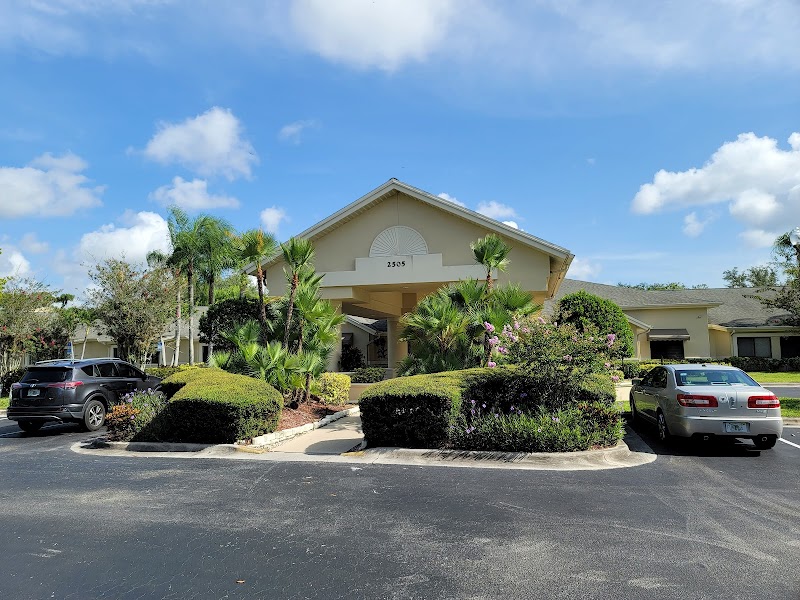
How is Palm City Nursing & Rehab Center Staffed?

CMS rates PALM CITY NURSING & REHAB CENTER's staffing level at 3 out of 5 stars, which is average compared to other nursing homes. Staff turnover is 34%, compared to the Florida average of 46%. This relatively stable workforce can support continuity of care.

What Have Inspectors Found at Palm City Nursing & Rehab Center?

State health inspectors documented 21 deficiencies at PALM CITY NURSING & REHAB CENTER during 2022 to 2024. These included: 21 with potential for harm.

Who Owns and Operates Palm City Nursing & Rehab Center?

PALM CITY NURSING & REHAB CENTER is owned by a for-profit company. For-profit facilities operate as businesses with obligations to shareholders or private owners. The facility is operated by SOVEREIGN HEALTHCARE HOLDINGS, a chain that manages multiple nursing homes. With 120 certified beds and approximately 113 residents (about 94% occupancy), it is a mid-sized facility located in PALM CITY, Florida.
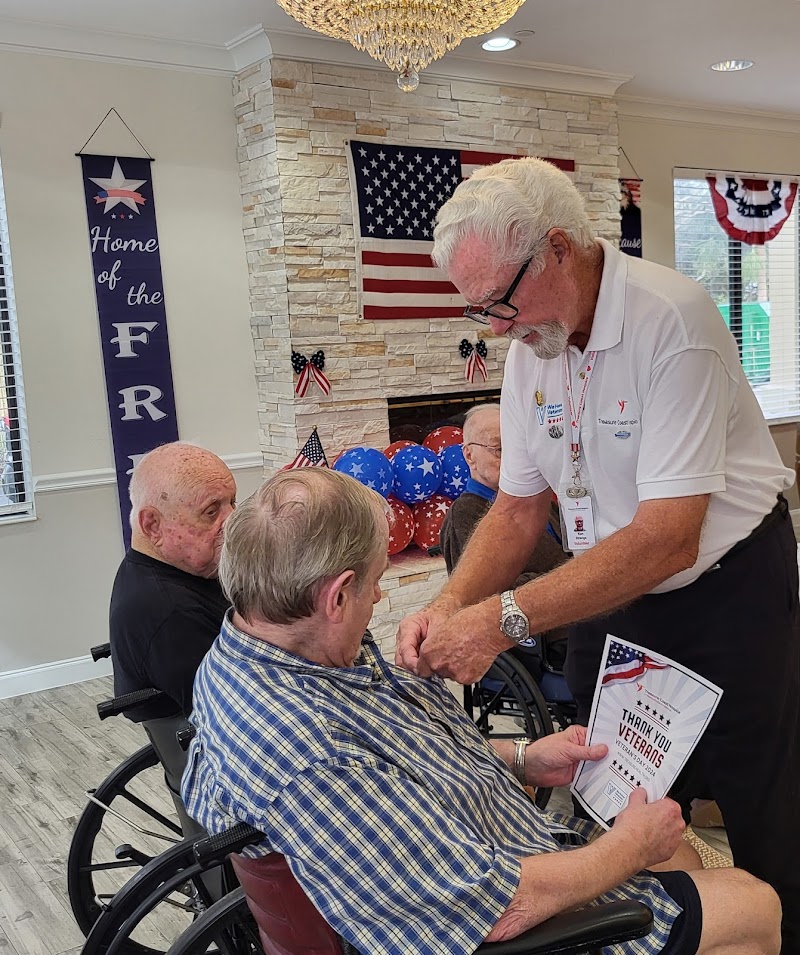
How Does Palm City Nursing & Rehab Center Compare to Other Florida Nursing Homes?

Compared to the 100 nursing homes in Florida, PALM CITY NURSING & REHAB CENTER's overall rating (4 stars) is above the state average of 3.2, staff turnover (34%) is significantly lower than the state average of 46%, and health inspection rating (4 stars) is above the national benchmark.

What Should Families Ask When Visiting Palm City Nursing & Rehab Center?

Based on this facility's data, families visiting should ask: "Can I visit during a mealtime to observe dining assistance and food quality?" "How do you handle medical emergencies, and what is your hospital transfer rate?" "Can I speak with family members of current residents about their experience?"

Is Palm City Nursing & Rehab Center Safe?

Based on CMS inspection data, PALM CITY NURSING & REHAB CENTER has a clean safety record: no substantiated abuse findings (meaning no confirmed cases of resident harm), no Immediate Jeopardy citations (the most serious violation level indicating risk of serious injury or death), and is not on the Special Focus Facility watch list (a federal program monitoring the lowest-performing 1% of nursing homes). The facility has a 4-star overall rating and ranks #1 of 100 nursing homes in Florida. While no facility is perfect, families should still ask about staff-to-resident ratios and recent inspection results during their visit.

Do Nurses at Palm City Nursing & Rehab Center Stick Around?

PALM CITY NURSING & REHAB CENTER has a staff turnover rate of 34%, which is about average for Florida nursing homes (state average: 46%). Moderate turnover is common in nursing homes, but families should still ask about staff tenure and how the facility maintains care continuity when employees leave.

Was Palm City Nursing & Rehab Center Ever Fined?

PALM CITY NURSING & REHAB CENTER has no federal fines on record. CMS issues fines when nursing homes fail to meet care standards or don't correct problems found during inspections. The absence of fines suggests the facility has either maintained compliance or corrected any issues before penalties were assessed. This is a positive indicator, though families should still review recent inspection reports for the full picture.

Is Palm City Nursing & Rehab Center on Any Federal Watch List?

PALM CITY NURSING & REHAB CENTER is not on any federal watch list. The most significant is the Special Focus Facility (SFF) program, which identifies the bottom 1% of nursing homes nationally based on persistent, serious quality problems. Not being on this list means the facility has avoided the pattern of deficiencies that triggers enhanced federal oversight. This is a positive indicator, though families should still review the facility's inspection history directly.