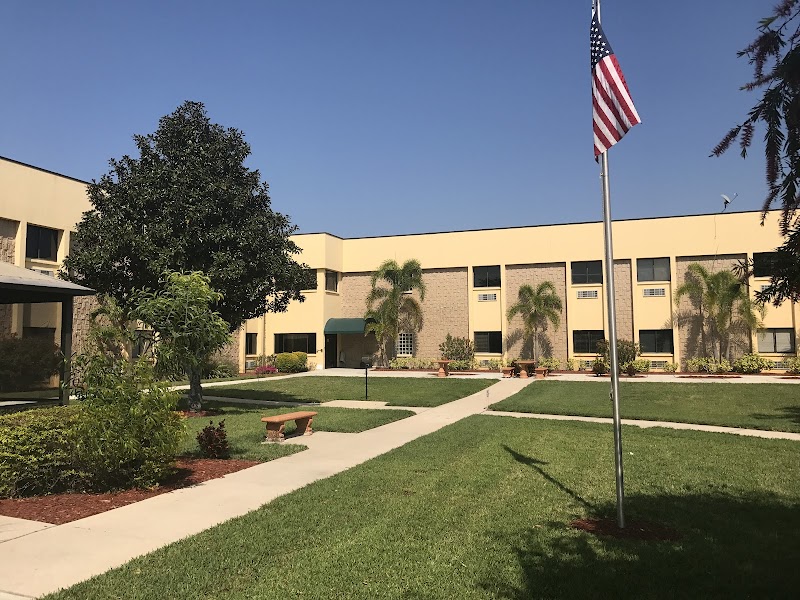
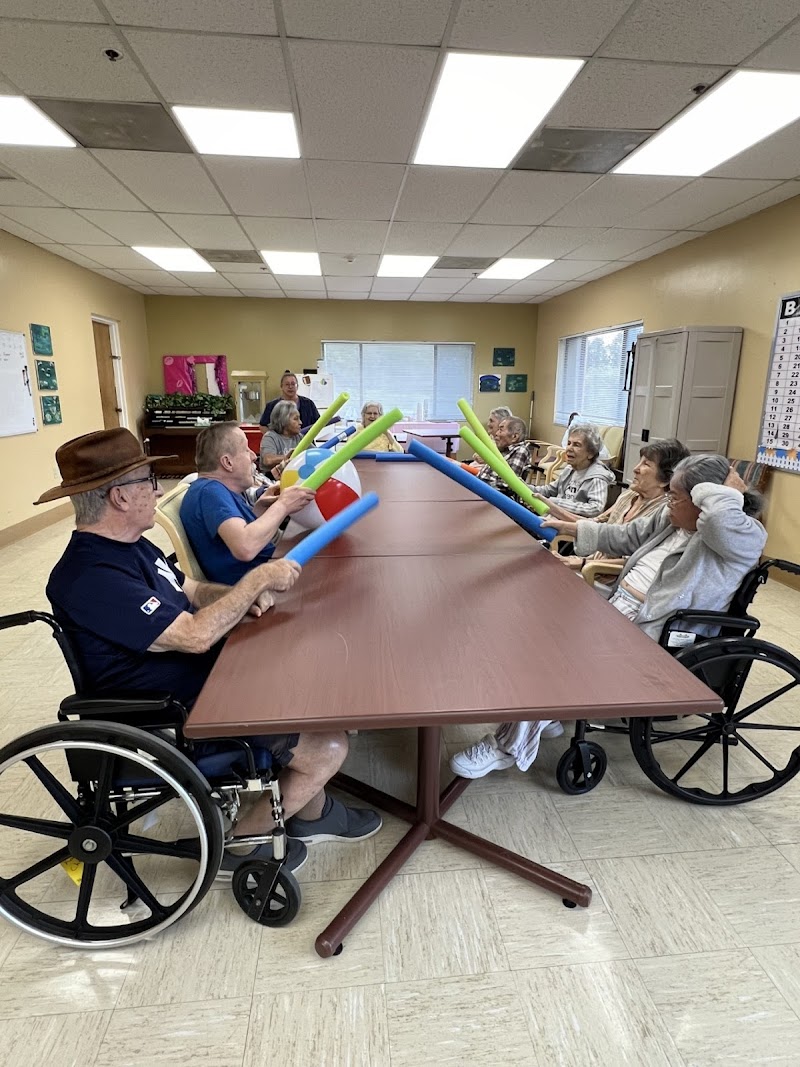
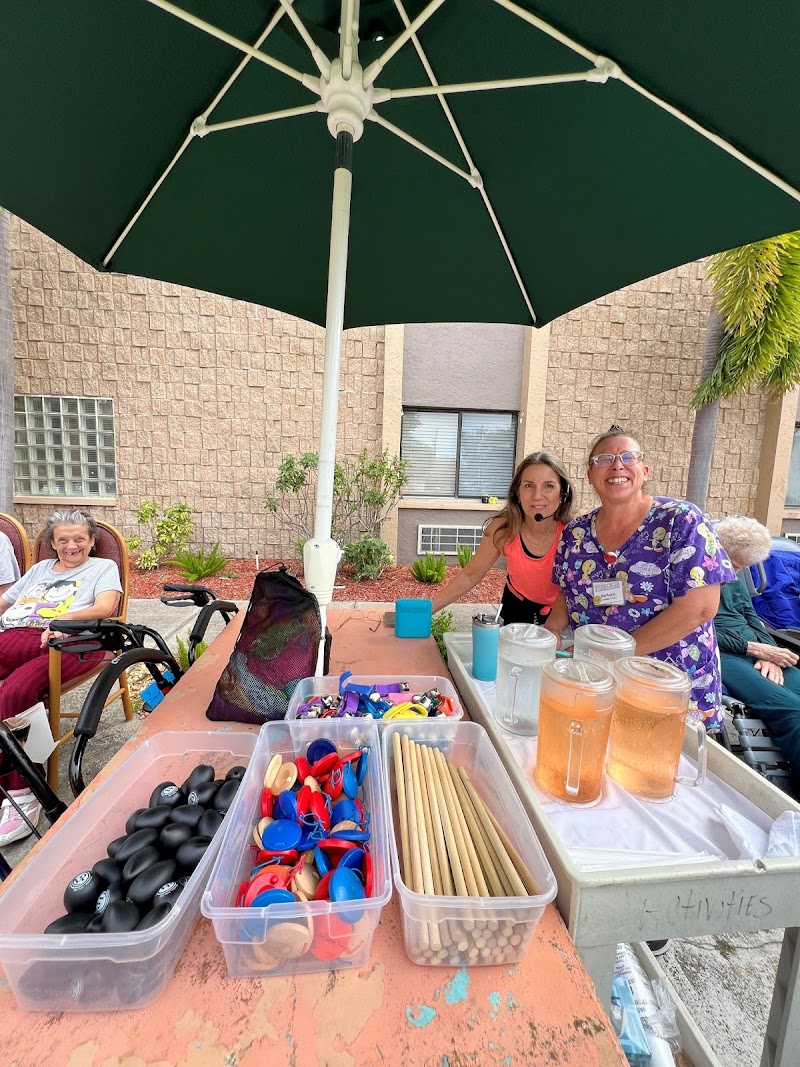
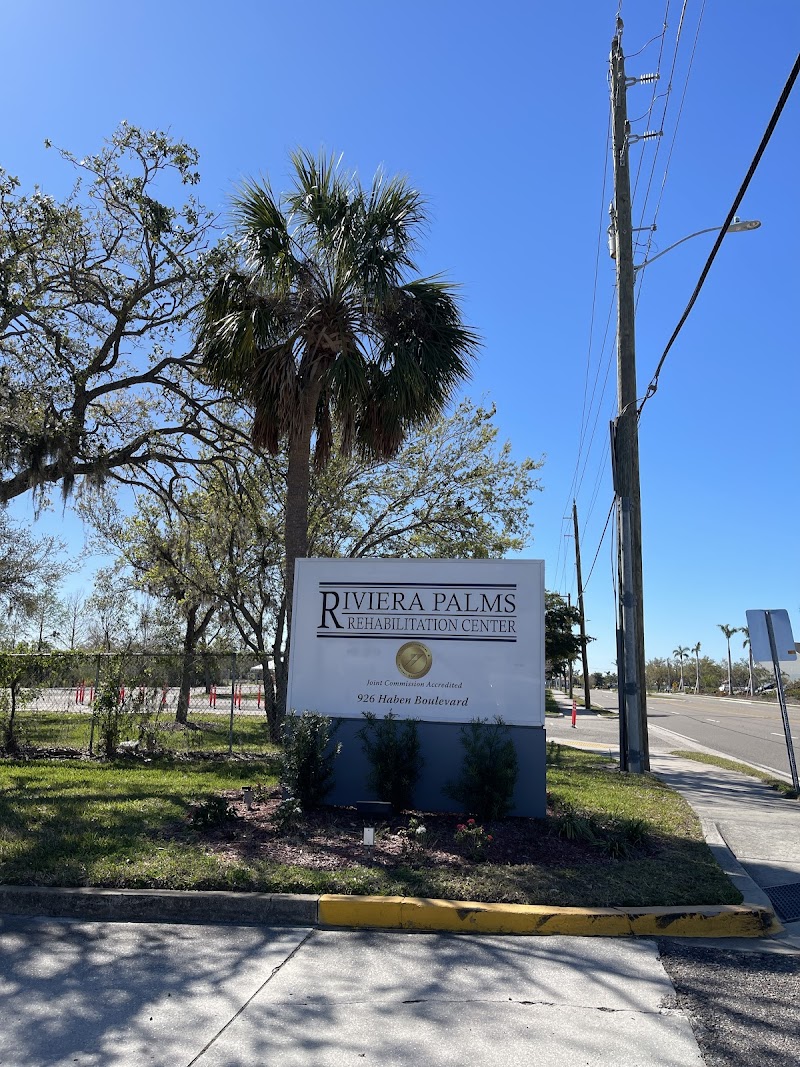
RIVIERA PALMS REHABILITATION CENTER

926 HABEN BLVD, PALMETTO, FL 34221 (941) 722-0553
For profit - Limited Liability company 120 Beds SOVEREIGN HEALTHCARE HOLDINGS Data: November 2025 2 Immediate Jeopardy citations
Trust Grade
6/100
#555 of 690 in FL
Last Inspection: June 2025

Inspected within the last 6 months. Data reflects current conditions.

Overview

Riviera Palms Rehabilitation Center has a Trust Grade of F, indicating significant concerns about the quality of care provided. It ranks #555 out of 690 facilities in Florida, placing it in the bottom half, and #10 out of 12 in Manatee County, meaning only two local options are worse. The facility's condition is worsening, with issues increasing from 6 in 2023 to 8 in 2025. Staffing is a relative strength with a rating of 4 out of 5 stars, but the 44% turnover rate is average, suggesting some instability. Notably, there have been critical incidents, such as a resident suffering a major injury from a fall due to inadequate supervision and a failure to recognize the need for timely medical intervention, raising serious concerns about the care residents receive.

Trust Score
F
6/100
In Florida
#555/690
Bottom 20%
Safety Record
High Risk
Review needed
Inspections
Getting Worse
6 → 8 violations
Staff Stability
○ Average
44% turnover. Near Florida's 48% average. Typical for the industry.
Penalties
✓ Good
No fines on record. Clean compliance history, better than most Florida facilities.
Skilled Nurses
○ Average
Each resident gets 37 minutes of Registered Nurse (RN) attention daily — about average for Florida. RNs are the most trained staff who monitor for health changes.
Violations
⚠ Watch
21 deficiencies on record. Higher than average. Multiple issues found across inspections.
★★☆☆☆
2.0
Overall Rating
★★★★☆
4.0
Staff Levels
★★★★★
5.0
Care Quality
★☆☆☆☆
1.0
Inspection Score
Stable
2023: 6 issues
2025: 8 issues

The Good

  • 4-Star Staffing Rating · Above-average nurse staffing levels
  • 5-Star Quality Measures · Strong clinical quality outcomes
  • Full Sprinkler Coverage · Fire safety systems throughout facility
  • No fines on record
  • Staff turnover below average (44%)

    4 points below Florida average of 48%

Facility shows strength in staffing levels, quality measures, fire safety.

The Bad

2-Star Overall Rating

Below Florida average (3.2)

Below average - review inspection findings carefully

Staff Turnover: 44%

Near Florida avg (46%)

Typical for the industry

Chain: SOVEREIGN HEALTHCARE HOLDINGS

Part of a multi-facility chain

Ask about local staffing decisions and management

The Ugly 21 deficiencies on record

2 life-threatening 1 actual harm
Jun 2025 8 deficiencies 2 IJ
CRITICAL (J)

Immediate Jeopardy (IJ) - the most serious Medicare violation

Free from Abuse/Neglect (Tag F0600)

Someone could have died · This affected 1 resident

**NOTE- TERMS IN BRACKETS HAVE BEEN EDITED TO PROTECT CONFIDENTIALITY** Based on interviews and record review the facility failed to protect the resident's right to be free from neglect for one reside...

Read full inspector narrative →
**NOTE- TERMS IN BRACKETS HAVE BEEN EDITED TO PROTECT CONFIDENTIALITY** Based on interviews and record review the facility failed to protect the resident's right to be free from neglect for one resident (#59) out of two residents sampled for abuse/neglect. The facility neglected to properly report, assess, document, and intervene in a timely manner for Resident #59 related to an unwitnessed fall with major injury that occurred on [DATE]. This lack of intervention resulted in physical pain and suffering for the resident until his death on [DATE]. This failure created a situation that resulted in a worsened condition and the likelihood for serious injury and or death to Resident #59 and resulted in the determination of Immediate Jeopardy on [DATE]. The findings of Immediate Jeopardy were determined to be removed on [DATE] and the severity and scope was reduced to a D after verification of removal of immediacy of harm. Findings included: Resident #59 was admitted to the facility on [DATE] with diagnoses to include: dementia, coronary artery disease, atrial fibrillation, hypertension, failure to thrive, major depression disorder, insomnia, and cardiac pacemaker. The resident was placed in Hospice care on [DATE]. A review of the Minimum Data Set (MDS), dated [DATE], revealed Resident #59 had a Brief Interview of Mental Status score of 00, indicating severe cognitive impairment. A review of the Order Summary Report, dated [DATE], for Resident #59 revealed the following: -Regular diet, soft and bite sized texture, thin liquids consistency -Alerting bracelet: located on left ankle, check for placement every shift -Do Not Resuscitate, Palliative Care -Hospice Diagnosis: Cerebral Atherosclerosis -May go on leave with supervision -Citalopram Hydrobromide oral tablet 40 milligram (mg) one time a day for depression -Depakote sprinkles 250 mg twice a day for depression -Morphine Sulphate 0.25 milliliter (ml) every 4 hours as needed (PRN) for pain 5-10/SOB (shortness of breath) order started on [DATE] -Trazodone Hydrochloride 25 mg daily at bedtime -STAT (Emergent) x-ray Right hip ordered [DATE] -Lorazepam 0.5 mg every 8 hours for anxiety/agitation/restlessness/sob started [DATE] -Morphine Sulphate 0.25 ml every six hours for chronic pain and continue PRN Morphine started [DATE] -Release body to FH (funeral home) [DATE] A review of a radiology report, dated [DATE] revealed: X-ray Right Hip Acute intertrochanteric fracture of the right femur with varus angulation and mild displacement. Lesser trochanteric avulsion fragment is mildly displaced. No dislocation. No other fractures are identified. Moderate right and mild left hip arthrosis. Conclusion: Acute fracture of the right hip. A review of the Care Plan for Resident #59 revealed the following: Focus: Risk for falls--initiated [DATE] Interventions included: 1:1 supervision started on [DATE] and completed on [DATE] Family educated not to transfer resident [DATE] Post event skin check [DATE] Focus: Right Hip fracture-initiated [DATE] Interventions included: Monitor signs/symptoms complications related to mobility alteration; joint stiffness/pain, swelling, decline in mobility/self-care, contracture formation, creaking/clicking with joint movement, pain after exercise/weight bearing. A review of the Progress Notes for Resident #59 revealed the following: -[DATE] post fall review completed reads: 3/31 at 915 a.m. Therapy walking by room and saw resident become unsteady and fall. nonskid socks floor not wet. call light within reach. adequate lighting. -[DATE] Resident fall--no nursing notes indicating the event occurred at all -[DATE] Resident family is at bedside and reporting that resident is having pain to right hip. Resident does not verbalize pain but grimaces with movement. MD notified and stat X-ray ordered. -[DATE] LATE ENTRY: IDT (Interdisciplinary team) note-for [DATE] at 1640 CNA (Certified Nursing Assistant) found resident on the floor and notify nurse. Nurse assessed resident and full ROM (range of motion) to all extremities. Nurse attempted to get resident off the floor and resident was being combative, kicking and hitting the staff. After giving resident some space making sure there was no items around resident that would harm him. Resident was able to assist with transfer and 2 other staff members helped. He was placed back on his w/c (wheelchair) and brought to the dining room. Snack given and resident ate it without discomfort. No complaints of pain or facial grimacing noted. He had a small skin tear to his elbow. Cleansed with NS (normal saline) and LOTA (left open to air). Hospice was notified with NNO (no new orders) at this time. Resident [family member] came in about an hour after incident . He was notified of incident, and he stayed to assist with dinner resident ate 100% of his dinner and [family member] stated he transferred his dad back to bed and he complained of pain. He stated, I hope I didn't hurt him. Nurse educated son on not transferring resident without staff assistance. Medications administered and resident is resting in bed . -[DATE] IDT note: CNA reported resident was on the floor on [DATE] at 1640 p.m. Nurse assessed resident and full ROM to all extremities. Son came in to assist resident with dinner and transferred resident to bed without waiting for assistance. He was educated by nurse on calling for assistance he stated, He complained of pain I hope I didn't hurt him. Resident was medicated at the time. Following day resident was not complaining of pain and continued his normal activities without difficulties .On [DATE] Resident [family member] took resident outside to the courtyard as usual without any concerns. She brought him back to his room and transferred him to bed without assistance. She then grabbed hospice nurse and told her that her dad was complaining of pain. Hospice ordered X-ray of right hip, and result obtained with right trochanteric fracture mild displaced . [DATE] Resident with family at bedside. No VS noted, pronounced by 2. MD notified, order to release body received. Spouse notified. Hospice notified. Resident passed at 1045 a.m. -[DATE] Minimally responsive to verbal/tactile stimulation. Per family report, no longer able to swallow and is not accepting fluids .lethargic. -[DATE] Resident with family at bedside. No vital signs noted., pronounced by 2 A review of the Narcotic Log for Resident #59 revealed a prn pain medication order for Morphine Sulphate was available since [DATE]. No pain medications were administered to the resident until after the unwitnessed fall on [DATE]. The first doses of Morphine were administered on [DATE] after an X-ray was taken and confirmed a fracture to the right hip. On [DATE] at 2:56 p.m. an interview was conducted with the Director of Nursing (DON). The DON stated Resident #59 had a fall on [DATE] but it was not reported to her until [DATE]. She stated the incident was reported by a family member to the hospice nurse and her at the same time. She stated she had no knowledge of the fall prior to [DATE] and she could find no notes related to the fall on [DATE] in the progress notes. The DON stated an investigation was started but no other reports were filed related to the incident. The DON stated the family member reported to the hospice nurse that an aide told her Resident #59 had a fall on [DATE]. The DON said during an interview with Staff D, CNA, she told her on [DATE] she saw Resident #59 on the floor by the roommates bed, and the door to the room, and he was laying on his right side. Staff D, CNA told the DON she notified Staff B, Registered Nurse (RN), and the nurse came to do an assessment. The DON stated this was an unwitnessed fall. The DON said she spoke with Staff B, RN to take a statement about the incident. The DON stated, Staff B, RN said she assumed this was a behavior problem because the resident would be on the floor occasionally. The DON stated Staff B, RN did not call the doctor, notify the DON, or report the incident as a fall. The DON said Staff D, CNA told her the resident did not complain of pain and was put in a wheelchair after being found on the floor. The DON said the aide told her a family member helped Resident #59 back to bed after dinner, and mentioned the resident had pain so she went to tell the nurse. The DON said the family member was unaware the resident was found on the floor at the time. The DON stated the nurse noted a scratch to the elbow at the time and said the resident had no obvious signs of pain. The DON stated the nurse said Resident #59 was combative when they tried to get him off the floor and it took three of them. The DON said she spoke with other nurses and aides who provided care to Resident #59 on [DATE] and they reported no pain was observed. The DON said hospice ordered an X-ray to be done stat on [DATE]. The DON stated the resident complained of pain when she went in to assess him after finding out about the fall. She stated, He definitely had pain when I moved his leg around. The DON stated the family member said the resident was complaining of pain. She said the X-ray results came back with confirmation of a fracture. She stated, she completed the investigation and determined the nurse did not follow policy and report the incident as an unwitnessed fall immediately. On [DATE] at 4:51 p.m. an interview was conducted with Staff B, RN. Staff B stated she was familiar with the resident and had cared for him intermittently because she was a float person. She stated she would provide care once or twice a week for Resident #59. Staff B, RN, stated on [DATE] she was coming on shift, and she had just finished counting narcotics. She said Staff D, CNA came to her to let her know Resident #59 was on the floor and she did not know what happened. She stated the resident would get on the floor sometimes and sometimes he would need help to get up. She stated she went to see the resident and noticed a scratch on his arm, and she called for help. She said Resident #59 was combative and it took three of them to get him up and put him in a wheelchair. Staff B, RN stated the resident was kicking them and, His range of motion seemed fine to me because he kicked me in the stomach, so I assumed it was one of his get down on the floor days. She said, I documented the incident somewhere, but I do not recall exactly where. The nurse stated the resident sat in his wheelchair until his family member came at dinner time around 6:00 p.m. The nurse stated the family member took the resident back to his room and the aide told her the family member put Resident #59 back to bed and said the resident was uncomfortable. The nurse stated it was time for the night medications, so she gave the resident some Lorazepam and Trazodone. She said she left around 11:00 p.m. after her shift and she did not do another assessment on Resident #59. Staff B, RN stated she found out two days later the resident was injured. She said she could not say it was a fall because the incident was unwitnessed. She stated for the residents that are care planned and get down on the floor she would not report the incident. She stated she did provide care for Resident #59 after the incident and he was always in bed, agitated, and receiving Morphine for the pain. She stated she was not aware if Resident #59 had a previous fall or if he was care planned for falls. An interview was conducted on [DATE] at 10:56 a.m. with Staff D, CNA. Staff D stated, On [DATE] I went down the hall to check on all my residents and I saw the resident on the floor by the roommates bed. I checked on him and he was ok, so I went and got the nurse, I did not touch him or move him. The nurse came down to see the resident. She took vitals and looked at his head. Then three of us picked him up off the floor. He was combative swinging, punching and kicking us so that is why we had three people. He was placed in his wheelchair. Staff D stated Resident #59 did not speak so he could not say he was in pain, and they would have to see if he had a grimace to know if he was in pain. She said she did not see the resident do that. She stated she wheeled the resident to the dining room and gave him a cookie. She said he sat in the chair and ate his cookie. She said she did not see him again until after dinner and he was in his room with a family member who had helped him back into bed. She said the family member told her the resident had pain and stated, I hope I did not hurt him. She said she informed the nurse what the family member told her. She said on [DATE] a family member told her she heard the resident had a fall and she asked me what happened. She stated she told the family member she had found the resident on the floor on [DATE]. She said they took x-rays and found out the resident had a fracture. She stated when she found the resident on the floor she did what she was supposed to do and notified the nurse. She stated she did not tell anyone else. The aide stated she had received education on reporting falls and had signed a paper yesterday. An interview was conducted on [DATE] at 11:16 a.m. with the NHA and the DON. The NHA stated she did not report the incident because she felt finding the resident on the floor was not the cause of the injury. She stated she felt after looking at all the information and doing the investigation the injury occurred when the family member admitted transferring the father to the bed and stated, I hope I did not hurt him. The DON and the NHA stated the nurse did not follow the proper policy and procedure required for a change of status, or unwitnessed fall and report it immediately to the DON. An interview was conducted on [DATE] at 3:51 p.m. with Staff C, Hospice RN. Staff C, RN stated she had taken care of Resident #59 the entire time he was in hospice care at the facility. She stated he was declining from dementia, and he was still eating some and was able to get out of bed and take walks with his family. She stated due to his dementia he was always combative, and he had a few falls while at the facility. She stated he did not speak, and he could be hard to handle but he had never hurt himself before. She stated he was never able to get up and walk or get into a wheelchair by himself, he always needed assistance. She stated prior to the fall he was having a slow decline due to dementia that was typical for the disease. She stated he had started to lose weight and was weak. She stated she was in to see the resident early in the morning of the 14th. She said they had him up in a wheelchair. She said she was seeing another patient when an aide told her the family member wanted to talk to her. Staff C, RN stated the family member told her there was something not right and informed me the facility had found him on the floor a few days before. She said that was the first time she had heard of a fall. She said she informed the DON, the nurse, and the unit manager and none of them appeared to know he was on the floor at all. She said she got an order for an X-ray, and they determined he had a fracture. She stated the family was very involved in the care of Resident #59 and spent many hours a day with him. She stated the family was able to properly assist the resident from a wheelchair to the bed. The hospice doctor gave orders for him to remain in bed and have pain medication around the clock as well as needed. The RN stated a meeting was held with the family and the decision was to allow the resident to just receive comfort measures and pain management for the fracture. She stated the family members were able to tell when the resident was in pain and they would call and let her know if he was comfortable or if he needed more. She stated Ativan was added for agitation as he got closer to death. She stated prior to the fracture he did not appear to be in a lot of pain and really did not require the Morphine that was ordered for him. She stated she was not aware that the resident would throw himself on the floor and it was not ever relayed to her he did so. A telephone interview was conducted on [DATE] at 4:24 p.m. with the Power of Attorney (POA) for Resident #59. The POA stated she was notified by another family member on [DATE] that the resident had a fracture, and he had been found on the floor a couple of days before. The POA stated a family member who was visiting on the 14th observed the resident during a transfer to the bed and the resident yelling in pain. The family member told her she went to the hospice nurse and asked the nurse to come and see the resident and informed her of the incident from [DATE] when he was found on the floor. The POA stated she was not informed of the resident being found on the floor and the nurse never even filed a report or told the doctor. The POA stated the family has been assisting the resident with all of his care and they were capable of assisting him in and out of bed. She stated they knew how to be careful, go slowly, and pivot him into the bed. The POA said on [DATE] when the family helped him at dinner and then took him back to his room he had pain when moving and it was reported by the family member to the facility nursing staff. The POA stated prior to the hip fracture they were getting him up in his chair and taking him to meals. She said they would take him outside for a walk and he never had pain. The POA stated they did have some type of normal routine prior to the fall. The POA stated the doctor said surgery was not an option, and he was too weak to be treated so the best thing we could do is keep him comfortable. A telephone interview was conducted on [DATE] at 9:09 a.m. with the Primary Care Provider (PCP) for Resident #59. The PCP stated he had taken care of Resident #59 for 40 years and knew the entire family well. He stated the resident suffered from bad dementia and was quite combative. The doctor stated the resident had trouble walking and had a history of falls. He stated he received a call from the family about a hip problem and told him the resident had a broken hip. The PCP stated after a discussion with the family it was decided Resident #59 had no quality of life and due to dementia he would not be a candidate for an operation. The PCP stated it was decided to just provide palliative care and pain medications for the fracture. The doctor stated he heard there was a fall, but no one had witnessed the fall so he was not aware of the details. He stated he was not notified on [DATE] of a fall and did not find out until [DATE] when the family called him. The doctor stated Resident #59 had a high tolerance for pain and when he went to see him he was on medications, and his pain was about a six. He stated the resident could withstand a lot of pain. A review of the facility policy entitled Abuse and Neglect Prohibition, revised 8/2023, revealed the following: Policy: Each resident has the right to be free from mistreatment, neglect, abuse, involuntary seclusion, exploitation, and misappropriation of property. Fundamental information: Neglect means failure to provide goods and services necessary to avoid physical harm, mental anguish, or mental illness. Procedure: Training 1 The center will train each employee regarding these policies. Prevention 3 Staff will be instructed to report any signs of stress from family and other individuals involved with the resident that may lead to abuse, neglect, or misappropriation of resident property, and intervene as appropriate. 4 Residents identified by staff as being self-injurious or exhibiting abusive behavior, which requires professional services not provided in the center, will be reviewed by the physician and treatment plans modified as appropriate. A review of the facility policy entitled Procedural Guidelines: Change in Condition, revised 9/2023 revealed the following: Purpose: The center will inform the resident, consult with the resident's physician, and notify the resident's family member or legal representative when there is a change requiring such notification. Fundamental Information: Situations requiring notification include: 1 An accident involving the resident which: -Resulting in injury. -Potential to require physician intervention. 2 A significant change in the resident's physical, mental, or psychosocial status that is , a deterioration in health, mental, or psychosocial status in life-threatening conditions or clinical complications. 6 Upon the identification of a change in condition in a resident, the nurse will complete an evaluation of the resident's status, and document findings on the SBAR Change in Condition in the resident's medical record. A review of the facility policy entitled Incident Reporting for Residents or Visitors, revised 8/2023, revealed the following: Policy: All accidents and unusual occurrences involving a resident or visitor will be documented and reported so as to meet all regulatory requirements. Fundamental Information: Adverse Event-An untoward, undesirable, and usually unanticipated event that causes death or serious injury to risk thereof. Procedure 1 When an unusual occurrence is discovered, the employee making the discovery will notify his or her immediate supervisor of the discovery. The supervisor will notify the Administrator and DON immediately. 8 The person discovering the event must complete the Incident/Accident Report prior to completing the shift. Facility immediate actions to remove the Immediate Jeopardy included: A. Reported to the Abuse Hotline. Completed on [DATE] B. The 1-day report was submitted to AHCA. Completed on [DATE] C. Review of facility staff for current background checks. Completed [DATE] D. Licensed staff will be re-educated on the centers policy on Change of Condition and AI\TE to include recognition, assessment, interventions, documentation, and reporting of a change in condition or unwitnessed falls to determine if an injury exists in a timely manner. Completed 100% (16 RN's, 17 LPN's, and 53 CNA's) by 5 pm on [DATE]. E. All staff will be re-educated prior to working their next scheduled shift regarding abuse, neglect, exploitation allegations. Ongoing. F. New hire orientation will continue to have education to include Change of Condition and ANE to include recognition, assessment, interventions, documentation, and reporting of a change in condition or unwitnessed falls to determine if an injury exists in a timely manner. The facility does not utilize agency or temporary staff. G. Licensed and certified staff will have retention questions after education to gauge competency of timely recognition, notification, documentation, timely assessment and reporting a change in condition are completed. Verification of the facility's removal plan was conducted by the survey team on [DATE]. On [DATE] interviews with facility staff was conducted for 4 RN's, 12 CNA's, and 3 LPN's to verify education and training had been completed related to topics to include: change of status, abuse/neglect, reporting, unwitnessed falls, resident assessments, and documentation of all unusual occurrences. All staff were able to voice understanding of the policies and processes required to provide competent care to residents. The staff interviewed have worked across all shifts. A review of the sign in sheets was conducted to verify education and training was completed as outlined in the IJ removal plans. --In-service topic completed for nursing staff members to include Change in Condition, Stop and Watch Alerts, ANE and signed off for 102 employees and was completed on [DATE]. --In-service topic completed for nursing staff members to include Pain Evaluation and signed off for 90 employees and was completed on [DATE]. --In-service topic completed for all other employees to include Change in Condition, ANE, and Stop and Watch Alerts and signed off for 100% of staff was completed on [DATE]. Based on verification of the facility's Immediate Jeopardy removal plan the immediate jeopardy was determined to be removed on [DATE] and the non-compliance was reduced to a scope and severity of D.
CRITICAL (J)

Immediate Jeopardy (IJ) - the most serious Medicare violation

Deficiency F0726 (Tag F0726)

Someone could have died · This affected 1 resident

**NOTE- TERMS IN BRACKETS HAVE BEEN EDITED TO PROTECT CONFIDENTIALITY** Based on observations, interviews, and record review, the facility failed to ensure licensed nursing staff were knowledgeable an...

Read full inspector narrative →
**NOTE- TERMS IN BRACKETS HAVE BEEN EDITED TO PROTECT CONFIDENTIALITY** Based on observations, interviews, and record review, the facility failed to ensure licensed nursing staff were knowledgeable and competent to provide care and services for four residents (#59, #74, #29, and #35) out of forty residents sampled related to: 1) failure to recognize and provide treatment for an unwitnessed fall; 2) failure to follow physician orders for laboratory testing; 3) failure to provide a safe hazard free environment; and 4) failure to complete resident identification prior to administration of medications. This failure created a situation that resulted in a worsened condition and the likelihood for serious injury and or death to Resident #59 and resulted in the determination of Immediate Jeopardy on 6/04/2025. The findings of Immediate Jeopardy were determined to be removed on 6/05/2025 and the severity and scope was reduced to a D after verification of removal of immediacy of harm. Findings included: 1. Resident #59 was admitted to the facility on [DATE] with diagnoses to include: dementia, coronary artery disease, atrial fibrillation, hypertension, failure to thrive, major depression disorder, insomnia, and cardiac pacemaker. The resident was placed in Hospice care on 2/7/2025. A review of the Minimum Data Set (MDS), dated [DATE], revealed Resident #59 had a Brief Interview of Mental Status score of 00, indicating severe cognitive impairment. A review of the Order Summary Report, dated May 2025, for Resident #59 revealed the following: -Regular diet, soft and bite sized texture, thin liquids consistency -Alerting bracelet: located on left ankle, check for placement every shift -Do Not Resuscitate, Palliative Care -Hospice Diagnosis: Cerebral Atherosclerosis -May go on leave with supervision -Citalopram Hydrobromide oral tablet 40 milligram (mg) one time a day for depression -Depakote sprinkles 250 mg twice a day for depression -Morphine Sulphate 0.25 milliliter (ml) every 4 hours as needed (PRN) for pain 5-10/SOB (shortness of breath) order started on 2/03/2025 -Trazodone Hydrochloride 25 mg daily at bedtime -STAT (Emergent) x-ray Right hip ordered 5/14/2025 -Lorazepam 0.5 mg every 8 hours for anxiety/agitation/restlessness/sob started 5/22/2025 -Morphine Sulphate 0.25 ml every six hours for chronic pain and continue PRN Morphine started 5/22/2025 -Release body to FH (funeral home) 5/26/2025 A review of a radiology report, dated 5/14/2025 revealed: X-ray Right Hip Acute intertrochanteric fracture of the right femur with varus angulation and mild displacement. Lesser trochanteric avulsion fragment is mildly displaced. No dislocation. No other fractures are identified. Moderate right and mild left hip arthrosis. Conclusion: Acute fracture of the right hip. A review of the Care Plan for Resident #59 revealed the following: Focus: Risk for falls--initiated 3/1/2025 Interventions included: 1:1 supervision started on 4/3/2025 and completed on 4/7/2025 Family educated not to transfer resident 5/16/2025 Post event skin check 4/3/2025 Focus: Right Hip fracture-initiated 5/15/2025 Interventions included: Monitor signs/symptoms complications related to mobility alteration; joint stiffness/pain, swelling, decline in mobility/self-care, contracture formation, creaking/clicking with joint movement, pain after exercise/weight bearing. A review of the Progress Notes for Resident #59 revealed the following: -4/3/25 post fall review completed reads: 3/31 at 915 a.m. Therapy walking by room and saw resident become unsteady and fall. nonskid socks floor not wet. call light within reach. adequate lighting. -5/12/25 Resident fall--no nursing notes indicating the event occurred at all -5/14/25 Resident family is at bedside and reporting that resident is having pain to right hip. Resident does not verbalize pain but grimaces with movement. MD notified and stat X-ray ordered. -5/14/25 LATE ENTRY: IDT (Interdisciplinary team) note-for 5/12/2025 at 1640 CNA (Certified Nursing Assistant) found resident on the floor and notify nurse. Nurse assessed resident and full ROM (range of motion) to all extremities. Nurse attempted to get resident off the floor and resident was being combative, kicking and hitting the staff. After giving resident some space making sure there was no items around resident that would harm him. Resident was able to assist with transfer and 2 other staff members helped. He was placed back on his w/c (wheelchair) and brought to the dining room. Snack given and resident ate it without discomfort. No complaints of pain or facial grimacing noted. He had a small skin tear to his elbow. Cleansed with NS (normal saline) and LOTA (left open to air). Hospice was notified with NNO (no new orders) at this time. Resident [family member] came in about an hour after incident . He was notified of incident, and he stayed to assist with dinner resident ate 100% of his dinner and [family member] stated he transferred his dad back to bed and he complained of pain. He stated, I hope I didn't hurt him. Nurse educated son on not transferring resident without staff assistance. Medications administered and resident is resting in bed . -5/15/25 IDT note: CNA reported resident was on the floor on 5/12/25 at 1640 p.m. Nurse assessed resident and full ROM to all extremities. Son came in to assist resident with dinner and transferred resident to bed without waiting for assistance. He was educated by nurse on calling for assistance he stated, He complained of pain I hope I didn't hurt him. Resident was medicated at the time. Following day resident was not complaining of pain and continued his normal activities without difficulties .On 5/14/25 Resident [family member] took resident outside to the courtyard as usual without any concerns. She brought him back to his room and transferred him to bed without assistance. She then grabbed hospice nurse and told her that her dad was complaining of pain. Hospice ordered X-ray of right hip, and result obtained with right trochanteric fracture mild displaced . 5/26/25 Resident with family at bedside. No VS noted, pronounced by 2. MD notified, order to release body received. Spouse notified. Hospice notified. Resident passed at 1045 a.m. -5/17/25 Minimally responsive to verbal/tactile stimulation. Per family report, no longer able to swallow and is not accepting fluids .lethargic. -5/26/25 Resident with family at bedside. No vital signs noted., pronounced by 2 A review of the Narcotic Log for Resident #59 revealed a prn pain medication order for Morphine Sulphate was available since 2/04/2025. No pain medications were administered to the resident until after the unwitnessed fall on 5/12/2025. The first doses of Morphine were administered on 5/14/2025 after an X-ray was taken and confirmed a fracture to the right hip. On 6/03/2025 at 2:56 p.m. an interview was conducted with the Director of Nursing (DON). The DON stated Resident #59 had a fall on 5/12/25 but it was not reported to her until 5/14/25. She stated the incident was reported by a family member to the hospice nurse and her at the same time. She stated she had no knowledge of the fall prior to 5/14/25 and she could find no notes related to the fall on 5/12/25 in the progress notes. The DON stated an investigation was started but no other reports were filed related to the incident. The DON stated the family member reported to the hospice nurse that an aide told her Resident #59 had a fall on 5/12/25. The DON said during an interview with Staff D, CNA, she told her on 5/12/25 she saw Resident #59 on the floor by the roommates bed, and the door to the room, and he was laying on his right side. Staff D, CNA told the DON she notified Staff B, Registered Nurse (RN), and the nurse came to do an assessment. The DON stated this was an unwitnessed fall. The DON said she spoke with Staff B, RN to take a statement about the incident. The DON stated, Staff B, RN said she assumed this was a behavior problem because the resident would be on the floor occasionally. The DON stated Staff B, RN did not call the doctor, notify the DON, or report the incident as a fall. The DON said Staff D, CNA told her the resident did not complain of pain and was put in a wheelchair after being found on the floor. The DON said the aide told her a family member helped Resident #59 back to bed after dinner, and mentioned the resident had pain so she went to tell the nurse. The DON said the family member was unaware the resident was found on the floor at the time. The DON stated the nurse noted a scratch to the elbow at the time and said the resident had no obvious signs of pain. The DON stated the nurse said Resident #59 was combative when they tried to get him off the floor and it took three of them. The DON said she spoke with other nurses and aides who provided care to Resident #59 on 5/13/25 and they reported no pain was observed. The DON said hospice ordered an X-ray to be done stat on 5/14/25. The DON stated the resident complained of pain when she went in to assess him after finding out about the fall. She stated, He definitely had pain when I moved his leg around. The DON stated the family member said the resident was complaining of pain. She said the X-ray results came back with confirmation of a fracture. She stated, she completed the investigation and determined the nurse did not follow policy and report the incident as an unwitnessed fall immediately. On 06/03/2025 at 4:51 p.m. an interview was conducted with Staff B, RN. Staff B stated she was familiar with the resident and had cared for him intermittently because she was a float person. She stated she would provide care once or twice a week for Resident #59. Staff B, RN, stated on 5/12/25 she was coming on shift, and she had just finished counting narcotics. She said Staff D, CNA came to her to let her know Resident #59 was on the floor and she did not know what happened. She stated the resident would get on the floor sometimes and sometimes he would need help to get up. She stated she went to see the resident and noticed a scratch on his arm, and she called for help. She said Resident #59 was combative and it took three of them to get him up and put him in a wheelchair. Staff B, RN stated the resident was kicking them and, His range of motion seemed fine to me because he kicked me in the stomach, so I assumed it was one of his get down on the floor days. She said, I documented the incident somewhere, but I do not recall exactly where. The nurse stated the resident sat in his wheelchair until his family member came at dinner time around 6:00 p.m. The nurse stated the family member took the resident back to his room and the aide told her the family member put Resident #59 back to bed and said the resident was uncomfortable. The nurse stated it was time for the night medications, so she gave the resident some Lorazepam and Trazodone. She said she left around 11:00 p.m. after her shift and she did not do another assessment on Resident #59. Staff B, RN stated she found out two days later the resident was injured. She said she could not say it was a fall because the incident was unwitnessed. She stated for the residents that are care planned and get down on the floor she would not report the incident. She stated she did provide care for Resident #59 after the incident and he was always in bed, agitated, and receiving Morphine for the pain. She stated she was not aware if Resident #59 had a previous fall or if he was care planned for falls. An interview was conducted on 6/04/2025 at 10:56 a.m. with Staff D, CNA. Staff D stated, On 5/12/25 I went down the hall to check on all my residents and I saw the resident on the floor by the roommates bed. I checked on him and he was ok, so I went and got the nurse, I did not touch him or move him. The nurse came down to see the resident. She took vitals and looked at his head. Then three of us picked him up off the floor. He was combative swinging, punching and kicking us so that is why we had three people. He was placed in his wheelchair. Staff D stated Resident #59 did not speak so he could not say he was in pain, and they would have to see if he had a grimace to know if he was in pain. She said she did not see the resident do that. She stated she wheeled the resident to the dining room and gave him a cookie. She said he sat in the chair and ate his cookie. She said she did not see him again until after dinner and he was in his room with a family member who had helped him back into bed. She said the family member told her the resident had pain and stated, I hope I did not hurt him. She said she informed the nurse what the family member told her. She said on 5/14/2025 a family member told her she heard the resident had a fall and she asked me what happened. She stated she told the family member she had found the resident on the floor on 5/12/2025. She said they took x-rays and found out the resident had a fracture. She stated when she found the resident on the floor she did what she was supposed to do and notified the nurse. She stated she did not tell anyone else. The aide stated she had received education on reporting falls and had signed a paper yesterday. An interview was conducted on 6/04/2025 at 11:16 a.m. with the NHA and the DON. The NHA stated she did not report the incident because she felt finding the resident on the floor was not the cause of the injury. She stated she felt after looking at all the information and doing the investigation the injury occurred when the family member admitted transferring the father to the bed and stated, I hope I did not hurt him. The DON and the NHA stated the nurse did not follow the proper policy and procedure required for a change of status, or unwitnessed fall and report it immediately to the DON. An interview was conducted on 6/04/2025 at 3:51 p.m. with Staff C, Hospice RN. Staff C, RN stated she had taken care of Resident #59 the entire time he was in hospice care at the facility. She stated he was declining from dementia, and he was still eating some and was able to get out of bed and take walks with his family. She stated due to his dementia he was always combative, and he had a few falls while at the facility. She stated he did not speak, and he could be hard to handle but he had never hurt himself before. She stated he was never able to get up and walk or get into a wheelchair by himself, he always needed assistance. She stated prior to the fall he was having a slow decline due to dementia that was typical for the disease. She stated he had started to lose weight and was weak. She stated she was in to see the resident early in the morning of the 14th. She said they had him up in a wheelchair. She said she was seeing another patient when an aide told her the family member wanted to talk to her. Staff C, RN stated the family member told her there was something not right and informed me the facility had found him on the floor a few days before. She said that was the first time she had heard of a fall. She said she informed the DON, the nurse, and the unit manager and none of them appeared to know he was on the floor at all. She said she got an order for an X-ray, and they determined he had a fracture. She stated the family was very involved in the care of Resident #59 and spent many hours a day with him. She stated the family was able to properly assist the resident from a wheelchair to the bed. The hospice doctor gave orders for him to remain in bed and have pain medication around the clock as well as needed. The RN stated a meeting was held with the family and the decision was to allow the resident to just receive comfort measures and pain management for the fracture. She stated the family members were able to tell when the resident was in pain and they would call and let her know if he was comfortable or if he needed more. She stated Ativan was added for agitation as he got closer to death. She stated prior to the fracture he did not appear to be in a lot of pain and really did not require the Morphine that was ordered for him. She stated she was not aware that the resident would throw himself on the floor and it was not ever relayed to her he did so. A telephone interview was conducted on 6/04/2025 at 4:24 p.m. with the Power of Attorney (POA) for Resident #59. The POA stated she was notified by another family member on 5/14/2025 that the resident had a fracture, and he had been found on the floor a couple of days before. The POA stated a family member who was visiting on the 14th observed the resident during a transfer to the bed and the resident yelling in pain. The family member told her she went to the hospice nurse and asked the nurse to come and see the resident and informed her of the incident from 5/12/25 when he was found on the floor. The POA stated she was not informed of the resident being found on the floor and the nurse never even filed a report or told the doctor. The POA stated the family has been assisting the resident with all of his care and they were capable of assisting him in and out of bed. She stated they knew how to be careful, go slowly, and pivot him into the bed. The POA said on 5/12/25 when the family helped him at dinner and then took him back to his room he had pain when moving and it was reported by the family member to the facility nursing staff. The POA stated prior to the hip fracture they were getting him up in his chair and taking him to meals. She said they would take him outside for a walk and he never had pain. The POA stated they did have some type of normal routine prior to the fall. The POA stated the doctor said surgery was not an option, and he was too weak to be treated so the best thing we could do is keep him comfortable. A telephone interview was conducted on 6/05/2025 at 9:09 a.m. with the Primary Care Provider (PCP) for Resident #59. The PCP stated he had taken care of Resident #59 for 40 years and knew the entire family well. He stated the resident suffered from bad dementia and was quite combative. The doctor stated the resident had trouble walking and had a history of falls. He stated he received a call from the family about a hip problem and told him the resident had a broken hip. The PCP stated after a discussion with the family it was decided Resident #59 had no quality of life and due to dementia he would not be a candidate for an operation. The PCP stated it was decided to just provide palliative care and pain medications for the fracture. The doctor stated he heard there was a fall, but no one had witnessed the fall so he was not aware of the details. He stated he was not notified on 5/12/25 of a fall and did not find out until 5/14/25 when the family called him. The doctor stated Resident #59 had a high tolerance for pain and when he went to see him he was on medications, and his pain was about a six. He stated the resident could withstand a lot of pain. 2. On 6/2/25 at 1:26 p.m., an observation of Resident #74 revealed she was seated in a wheelchair by the nurse's station with an activity book in her hand. She was observed looking at the activity book and turned the pages. A review of Resident #74's admission record revealed an admission date of 8/3/23 with diagnoses to include unspecified dementia, unspecified severity, without behavioral disturbance, psychotic disturbance, mood disturbance, and anxiety, major depressive disorder, recurrent, unspecified, and cognitive communication deficit. A review of Resident #74's physician orders revealed the following: -Sertraline Hydrochloride [HCl] tablet 100 milligrams (mg) give 1 tablet by mouth at bedtime for depression, with a start date of 11/22/24. -Depakote tablet delayed release 125 MG (divalproex sodium) give 1 tablet by mouth two times a day for mood disorder related to unspecified dementia, unspecified severity, without behavioral disturbance, psychotic disturbance, mood disturbance, and anxiety; major depressive disorder, recurrent, unspecified, with a start date of 4/7/25. -Depakote [also known as Valproate or Valproic Acid] level every night shift every 6 month(s) starting on the last day of month for 1 day(s), with an order date of 7/24/24, start date of 7/31/24, and no end date. A review of Resident #74's care plan revealed the following: -[Resident #74] is at risk for complication of Antidepressant Medication Therapy r/t [related to] Depression Date Initiated: 02/08/2024, with interventions to include, . Consult with pharmacy, provider to consider dosage reduction when clinically appropriate. Date Initiated: 02/08/2024 . Monitor for side effects and adverse reactions of psychoactive medications: anticholinergic effects, irregular heartbeat, drowsiness, unsteady gait, tardive dyskinesia, EPS [Extrapyramidal symptoms] (shuffling gait, rigid muscles, shaking), frequent falls, refusal to eat, difficulty swallowing, dry mouth, depression, suicidal idealizations, social isolation, blurred vision, diarrhea, fatigue, insomnia, loss of appetite, weight loss, muscle cramps nausea, vomiting, behavior symptoms not usual to the person. Date Initiated: 02/08/2024 . Monitor ongoing s/s [signs and symptoms] of depression unaltered by antidepressant meds: Sad, irritable, anger, never satisfied, crying, shame, worthlessness, guilt, suicidal ideations, neg. [negative] mood/comments, slowed movement, agitation, disrupted sleep, fatigue, lethargy, does not enjoy usual activities, changes in cognition, changes in weight/appetite, fear of being alone or with others, unrealistic fears, attention seeking, concern with body functions, anxiety, constant reassurance, Psych [psychiatry] evaluation as indicated. -[Resident #74] is at risk for complications r/t Anticonvulsant medication use Date Initiated: 06/12/2024, with interventions to include, . Consult with pharmacy, provider to consider dosage reduction when clinically appropriate. Date Initiated: 06/12/2024 . Educate family/caregivers about risks, benefits and the side effects of medications. Date Initiated: 06/12/2024 . Monitor for side effects and adverse reactions of psychoactive medications: anticholinergic effects, irregular heartbeat, drowsiness, unsteady gait, tardive dyskinesia, EPS (shuffling gait, rigid muscles, shaking), frequent falls, refusal to eat, difficulty swallowing, dry mouth, depression, suicidal idealizations, social isolation, blurred vision, diarrhea, fatigue, insomnia, loss of appetite, weight loss, muscle cramps nausea, vomiting, behavior symptoms not usual to the person. Date Initiated: 06/12/2024 . Monitor ongoing s/s of depression unaltered by antidepressant meds: Sad, irritable, anger, never satisfied, crying, shame, worthlessness, guilt, suicidal ideations, mood/comments, slowed movement, agitation, disrupted sleep, fatigue, lethargy, does not enjoy usual activities, changes in cognition, changes in weight/appetite, fear, of being alone or with others, unrealistic fears, attention seeking, concern with body functions, anxiety, constant reassurance. A review of Resident #74's laboratory (lab) results for Depakote levels revealed they were completed on 8/1/24 with no other lab results for Depakote found in the medical record. A review of Resident #74's Treated Administration Record (TAR), dated January 2025, revealed the following order marked as completed, Depakote level every night shift every 6 month(s) starting on the last day of month for 1 day(s) -Start Date 7/31/2024. A review of Resident #74's progress notes from 9/2024 to 6/2025 revealed no documentation related to Depakote levels being completed or notification to the medical provider (MD) about labs not being completed. On 6/3/25 at 5:36 p.m., an interview was conducted with the Director of Nursing (DON). She said the order on the TAR alerts the nurse of when a lab needs to be completed. She said Resident #74's lab order was placed for the night shift to complete. The DON stated the check mark in the TAR means, It was completed. She said she would look in the lab book to see if there was Depakote level results for Resident #74. A review of March 2025 pharmacy recommendations was completed with the DON which revealed the following comments, [Resident #74] receives Divalproex Sodium [also known as Depakote] DR [delayed release] does not have trough concentration documented in the medical record since August 21,2024. The DON stated, The resident was off of Depakote per her [family member's] request. The [family member] wanted her off the medication. She said she thinks Resident #74 was not taking Depakote from January 2025 to April 2025. A review of Resident #74's discontinued physician orders for Depakote, from 10/2024 to 4/2025, revealed the following: -Depakote tablet delayed release 125 MG (divalproex sodium) give 2 tablet by mouth two times a day for depression, with a start date of 10/29/24 and end date of 1/14/25. -Depakote tablet delayed release 125 MG (divalproex sodium) give 1 tablet by mouth two times a day for depression, with a start date of 1/15/25 and end date of 3/3/25. -Depakote tablet delayed release 125 MG (divalproex sodium) give 1 tablet by mouth two times a day for depression related to unspecified dementia, unspecified severity, without behavioral disturbance, psychotic disturbance, mood disturbance, and anxiety; major depressive disorder, recurrent, unspecified, with a start date of 3/22/25 and end date of 4/7/25. On 6/4/25 at 9:23 a.m., a follow-up interview with the DON was conducted. She said she checked the lab book and did not find Depakote lab results for Resident #74. The DON said the unit manager (UM) was calling the lab to see if it was completed and if there are results. O 6/4/25 at 9:49 a.m., an interview was conducted with Staff G, Licensed Practical Nurse (LPN)/UM. She said the lab orders are reflected on the TAR. Staff G, LPN/UM stated, The 11:00 a.m. - 7:00 p.m. shift takes care of the lab. She said the nurse would see the lab order in the resident's TAR, then they would prepare the lab requisition, and put it in the lab book for the lab staff member when they arrive. Staff G, LPN/UM said she looked at the 24-hour report in the mornings and on Monday's they look at the 72-hour report for lab orders that need to be completed. She stated the Depakote lab order for Resident #74 was a standing order and it was a Glitch in the system. She said Staff H, Regional Nurse Consultant and former DON put in the original order which should have been triggered to complete every 6 months, but the order didn't populate. She stated, It didn't populate the next day that I had a lab to follow-up on. Staff G, LPN/UM confirmed the lab order did populate on the TAR for the nurse that night on 1/31/25. She said the check mark on the TAR for Depakote levels, on 1/31/25, meant the nurse signed off and acknowledged they were going to prepare the requisition for the lab. She said it did not mean the lab was completed. Staff G, LPN/UM said she had not been able to find a lab requisition for Resident #74. She said she spoke to the Medical Director today to let him know it was a missed lab. Staff G, LPN/UM said she received orders from the Medical Director to get the lab completed today and to change the Depakote level labs to be completed annually. She said there should have been documentation about what happened with the lab orders, if the MD was notified, and if the MD still wanted the lab completed and if so, then it needed to be re-ordered. On 6/4/25 at 4:48 p.m., the DON said the facility does not have a policy related to following physician orders, including lab orders. 3. During an observation on 06/02/2025 at 9:55 a.m., A pink disposable razor was identified on top of the toilet bowl of Resident #29's bathroom. (photographic evidence obtained) Review of Resident #29's Quarterly Minimum Data Set (MDS), dated [DATE], revealed a Brief Interview Mental Status (BIMS) score of 05 out of 15, indicating severe cognitive impairment. During an interview on 06/02/2025 at 2:17 p.m., Staff N, Certified Nursing Assistant (CNA), stated razors are kept by staff and brought out when residents need them. She observed the pink razor on the back of the toilet and stated she believed it belonged to Resident #29's roommate because of the cognition level of the two residents. She stated the razor did not look like it came from the facility because the razors from the facility are blue. During an interview on 06/03/2025 at 12:29 p.m., Staff O, CNA stated she assists residents with shaving. She stated they have disposable razors that they use. Once the razor has been used it is tossed. During an interview on 06/03/2025 at 1:36 p.m. Staff P, CNA, stated razors should not be in the rooms of the residents, CNA's get the razors from the supply room on shower days. They are put in a sharps container once they have been used. All residents need assistance with using a razor and cannot use them on their own. During an interview on 06/03/2025 at 1:38 p.m., Staff Q, Licensed Practical Nurse (LPN), stated razors are only used on shower days. Sometimes family members bring in big bag of supplies and when they go into the residents' rooms, they find items they should not have. When they find the items, they usually take the items from the residents and educate the family. She said they do not know what the family is bringing in to the facility. During an interview on 06/03/2025 at 4:49 p.m., Staff R, LPN, stated she was assigned to Resident #29 and her roommate. She stated Resident #29 requires assistance to go to the bathroom so she would not enter the bathroom by herself. She stated Resident #29 cannot use a razor by herself because of her cognition and there should not be a razor in her room. During an interview on 06/03/2025 at 5:20 p.m., the Director of Nursing (DON), stated family can bring any items of preference if it is not prescription or over-the-counter medications. Family can bring in razors for an alert and oriented resident. The family goes to the nurse station with the items so everything can be labeled and inventoried. Alert and oriented residents who could use razors on their own have a lock box to keep these items in. The razor found in Resident #29's bathroom belonged to Resident #29. It was brought in by Resident #29's son and they sent out a text for education. It cannot be Resident 29's roommate because she does not have family to bring in items. 4. Resident #35's admission record revealed an admission date of 2/25/25 with diagnoses to include heat failure, hypertension and Diabetes Type 2. During a medication administration observation on 6/4/25 at 4:33 P.M. with Staff M, Registered Nurse (RN) administered Zofran and Tylenol extra strength to Resident #35 and did not verify the resident's identification prior to allowing the resident to take the medication. During an interview on 6/5/25 at 2:00 P.M. the Director of Nursing (DON) said staff are expected to verify resident identification prior to administering medications for safety. A review of the facility policy titled General Dose Preparation and Medication Administration, effective 12/1/07; revised 11/15/24 revealed the following: 3. Verify each time medication is administered that it is the correct resident. 5. During medication administration facility staff should take all measures required by facility policy and applicable law, including, but not limited to the following: 5.1 Verify resident identification per facility policy (e.g.; picture, armband, name). A review of the facility policy entitled Abuse and Neglect Prohibition, revised 8/2023, revealed the following: Policy: Each resident has the right to be free from mistreatment, neglect, abuse, involuntary seclusion, exploitation, and misappropriation of property. Fundamental information: Neglect means failure to provide goods and services necessary to avoid physical harm, mental anguish, or m[TRUNCATED]
CONCERN (D)

Potential for Harm - no one hurt, but risky conditions existed

Safe Environment (Tag F0584)

Could have caused harm · This affected 1 resident

**NOTE- TERMS IN BRACKETS HAVE BEEN EDITED TO PROTECT CONFIDENTIALITY** Based on observations, record review and interviews, the facility failed to maintain a home-like environment for two rooms (124,...

Read full inspector narrative →
**NOTE- TERMS IN BRACKETS HAVE BEEN EDITED TO PROTECT CONFIDENTIALITY** Based on observations, record review and interviews, the facility failed to maintain a home-like environment for two rooms (124, 174) out of twenty-nine rooms sampled. Findings included: During a facility tour on 06/02/2025 at 9:30 a.m. room [ROOM NUMBER]'s bathroom was observed with a towel wrapped around the bottom of the toilet. During an interview on 6/2/2025 at 10:30 a.m. with Staff V, Certified Nursing Assistant (CNA), she stated she has to put a towel on the bathroom floor in room [ROOM NUMBER] for the resident's safety. She stated whenever the toilet is flushed, water leaks on the floor. She stated she had reported the problem to maintenance. During an interview 06/05/2025 at 10:37 a.m. with Staff X, Maintenance Assistant. Staff X stated he was notified about the toilet in room [ROOM NUMBER] a week ago, but he had to order a part to do the repair. He stated the parts came in last Thursday, but he did not have time to fix the toilet. During an interview on 06/05/2025 at 10:37 a.m. with Staff W, Regional Director of Maintenance (RDOM). He stated if a toilet has a leak, it should be fixed immediately. He stated if the repair involved a part that needed to be replaced, then his expectations was for someone in the maintenance department to go to the store to purchase the part and fix the problem immediately. 2. On 6/2/25 at 1:33 p.m., an observation of the bathroom in room [ROOM NUMBER] was conducted. Observations of the bottom right side of the shower revealed two tan colored tiles were missing, exposing a pipe with brown colorization on the pipe. On 6/5/25 at 10:15 a.m., an interview and tour was conducted with the Maintenance Technician and Staff W, Regional Director of Maintenace (RDOM). The RDOM stated, The CNAs [Certified Nursing Assistants] put in work orders. The Maintenance Technician stated staff tell him about issues verbally, but he encouraged them to put work orders in the system. The RDOM stated the facility staff have guardian angel rounds which included checking resident rooms every day. He said the findings from the guardian angel rounds are discussed in the daily morning meeting. The Regional Maintenance Director said himself and the Maintenance Technician have a notebook to document concerns when they complete their rounds. He stated staff are asked to put what needs to be repaired in the maintenance log but, That doesn't always happen. The Regional Maintenance Director stated, Our eyes are the CNAs and nurses as they go in the room daily. The Maintenance Technician confirmed he had a work order for room [ROOM NUMBER] but it was related to one of the residents' mattress. A tour of the bathroom with the Maintenance Technician revealed he did not know about the missing tiles in the shower. He confirmed he does check the bathroom during his rounds. He stated the previous residents in that room would use the shower as storage for equipment, therefore he did not see the missing tiles. On 6/5/25 at 10:36 a.m., an interview conducted with Staff F, Housekeeper revealed the hall including room [ROOM NUMBER] was typically her assignment. She confirmed she cleaned the bathroom in room [ROOM NUMBER] and said she was aware of the missing tiles. Staff F, Housekeeper said she did not report it. She said there was another room that also has the same missing tiles. She said she thought maintenance took care of that in their rounds. Staff F, Housekeeper stated she thought she had to report if there was something wrong with the toilets, walls, or anything under the area of housekeeping. On 6/5/25 at 11:08 a.m., an interview with Staff E, CNA revealed she had room [ROOM NUMBER] on her assignment. Staff E, CNA confirmed she goes into the bathroom because she assisted one of the residents with setting her up to use the sink. She said she had not looked at the shower and did not notice the tile was missing. On 6/5/25 at 12:47 p.m., Staff H, Regional Nurse Consultant (RNC) said the facility did not have a home-like environment policy. On 6/5/25 at 10:30 a.m., the RDOM stated the facility did not have a policy related to the environment.
CONCERN (D)

Potential for Harm - no one hurt, but risky conditions existed

Deficiency F0605 (Tag F0605)

Could have caused harm · This affected 1 resident

**NOTE- TERMS IN BRACKETS HAVE BEEN EDITED TO PROTECT CONFIDENTIALITY** Based on observation, record review and interview, the facility failed to monitor side effects of Antipsychotic and Antidepressa...

Read full inspector narrative →
**NOTE- TERMS IN BRACKETS HAVE BEEN EDITED TO PROTECT CONFIDENTIALITY** Based on observation, record review and interview, the facility failed to monitor side effects of Antipsychotic and Antidepressant medications for one (Resident #82) out of five residents sampled. Findings Included: During an observation on 06/02/2025 at 10:12 a.m., Resident #82 was observed sitting in a wheelchair in her room sleeping. During an observation on 06/02/2025 at 1:16 p.m., Resident #82 was observed sleeping in a wheelchair in the 2nd floor dining room. Review of Resident #82's admission record revealed an admission date of 03/24/2025. Resident #82 was admitted to the facility with diagnosis to include Major Depressive Disorder, Recurrent, Unspecified, Unspecified Dementia, Unspecified Severity, Without Behavioral Disturbance, Psychotic Disturbance, Mood Disturbance, And Anxiety. Review of Resident #82 Medicare 5 Day Minimum Data Set (MDS) dated [DATE], revealed Section C. Cognitive Patterns, revealed a Brief Interview Mental Status (BIMS) of 03 out of 15 showing severe cognitive impairment. Review of Section N. Medications revealed Resident #82 is taking Antipsychotic and Antidepressant medications. Review of Resident #82's orders revealed: 03/24/2025 Fluoxetine HCl Capsule 10 milligram (MG) Give one capsule by mouth in the morning for depression. 04/03/2025 Mirtazapine Oral Tablet 7.5 MG (Mirtazapine) Give one tablet by mouth at bedtime for Depression. 03/24/2025 Quetiapine Fumarate Tablet 25 MG Give one tablet by mouth one time a day for mood disorder Medication should be administered as close to scheduled time as possible. 03/24/2025 Quetiapine Fumarate Tablet 50 MG Give 1 tablet by mouth at bedtime for mood disorder medication should be administered as close to scheduled time as possible. The review showed there were no orders for side effect monitoring of Antidepressant and Antipsychotic medications. Review of Resident #82's Treatment Administration Record (TAR) revealed no side effect monitoring for Antipsychotic and antidepressant medications. Review of Resident #82's Care Plan dated 03/24/2025 revealed: Focus: Resident #82 uses Psychotropic Medication Therapy related to Depression The goal showed Resident #82 will be maintained on the lowest effective dose of Antidepressant medication through the review date. Interventions included: Consult with pharmacy, provider to consider dosage reduction when clinically appropriate; Educate family/caregivers about risks, benefits and the side effects of medications; Evaluate other factors potentially causing insomnia, for example: environment (excessive heat, cold, or noise), lighting, inadequate physical activity, facility routines, caffeine/medications; Monitor for side effects and adverse reactions of psychoactive medications: anticholinergic effects, irregular heartbeat, drowsiness, unsteady gait, tardive dyskinesia, EPS (shuffling gait, rigid muscles, shaking), frequent falls, refusal to eat difficulty swallowing, dry mouth, depression, suicidal idealizations, social isolation, blurred vision, diarrhea, fatigue, insomnia, loss of appetite, weight loss, muscle cramps nausea, vomiting, behavior symptoms not usual to the person; Monitor ongoing signs/symptoms of depression unaltered by antidepressant meds: Sad, irritable, anger, never satisfied, crying, shame, worthlessness, guilt, suicidal ideations, mood/comments, slowed movement, agitation, disrupted sleep, fatigue, lethargy, does not enjoy usual activities, changes in cognition, changes in weight/appetite, fear of being alone or with others, unrealistic fears, attention seeking, concern with body functions, anxiety, constant reassurance; Psych consult as indicated. A second focus on the same care plan showed Resident #82 is taking an anticonvulsant related to Depression. Goal: Resident #82 will be maintained on the lowest effective dose of anticonvulsant medication. Interventions included: Cueing, reorientation as needed; Discuss with resident/family/caregivers any concerns, fears, issues regarding diagnosis or treatments; Encourage resident to engage in activities that will help improve co-ordination; Monitor for tremors, rigidity, dizziness, changes in level of consciousness, slurred speech, poor coordination, decline in range of motion, gait disturbances, insomnia, dysphasia, behavior changes, changes in motor responses; Psych services, as indicated. During an interview on 06/05/2025 at 10:49 a.m., Staff Q, Licensed Practical Nurse (LPN), stated residents on Antipsychotic or antidepressant medications may have any side effects so they need to be monitored. An order is put in by the unit manager for monitoring. When the order is put in it shows up on the TAR and that is where the nurse documents. She reviewed Resident #82's orders and stated Resident #82 does not have anything. Resident #82 has been refusing her medications so they would not need to monitor for side effect of the medication. During an interview on 06/05/2025 at 10:52 a.m., Staff U, LPN, Unit Manager (UM), stated Residents on Antipsychotic or antidepressant medications have an order for monitoring of side effects of those medications. The nurse's documents the side effects on the TAR. She reviewed Resident #82's orders and stated I do not see the stand-alone order. I am going to add the order now. During an interview on 06/05/2025 at 11:59 a.m., the Director of Nursing (DON) stated residents on antipsychotics/antidepressants should for be monitored for side effects. There is an order for side effect monitoring, which adds it to the TAR. The nurses document any side effects on the TAR. Nurses also document side effects in the progress notes. Resident #82 should have monitoring orders. During an interview on 06/05/2025 at 12:03 p.m., the Pharmacy Consultant stated there should be side effect monitoring for residents. He looks at the nurses notes or doctors notes for any side effect concerns. It's a good standard of practice to monitor the side effects for residents on any medication. He would assume that staff would just know to look for side effects and a stand-alone order for monitoring side effects would not be needed. Review of the facility's policy titled Psychotropic Medication Assessment and Monitoring, dated 08/2023 revealed: Purpose - That each resident's entire drug/medication regiment is managed and monitored to promote or maintain the resident's highest practicable mental, physical, and psychosocial well-being. Procedure: (c). The interdisciplinary team assesses and monitors the appropriateness, effectiveness, and side effects associated with psychotropic medications for each resident via the MDS process. The resident, and when indicated the family or responsible person, will be included in this process. The consultant pharmacist reviews the use of the psychotropic medication order as part of each drug regimen review and monitors for: timely completion of reassessments; reassessment for trial reduction in dose as per acceptable standards of practice, if there is a change in behavior or clinical status; and (d). Monitoring of residents receiving antipsychotic medication will be completed by a licensed nurse as per acceptable standards of practice using the behavior of monitoring record.
CONCERN (D)

Potential for Harm - no one hurt, but risky conditions existed

Report Alleged Abuse (Tag F0609)

Could have caused harm · This affected 1 resident

**NOTE- TERMS IN BRACKETS HAVE BEEN EDITED TO PROTECT CONFIDENTIALITY** Based on interviews and record review the facility failed to report an injury of unknown origin for one resident (#59) out of 40...

Read full inspector narrative →
**NOTE- TERMS IN BRACKETS HAVE BEEN EDITED TO PROTECT CONFIDENTIALITY** Based on interviews and record review the facility failed to report an injury of unknown origin for one resident (#59) out of 40 sampled residents. Findings included: Resident #59 was admitted to the facility on [DATE] with diagnoses to include: dementia, coronary artery disease, atrial fibrillation, hypertension, failure to thrive, major depression disorder, insomnia, and cardiac pacemaker. The resident was placed in Hospice care on 2/7/2025. A review of the Minimum Data Set (MDS), dated [DATE], revealed Resident #59 had a Brief Interview of Mental Status score of 00, indicating severe cognitive impairment. A review of the Order Summary Report, dated May 2025, for Resident #59 revealed the following: -Regular diet, soft and bite sized texture, thin liquids consistency -Alerting bracelet: located on left ankle, check for placement every shift -Do Not Resuscitate, Palliative Care -Hospice Diagnosis: Cerebral Atherosclerosis -May go on leave with supervision -Citalopram Hydrobromide oral tablet 40 milligram (mg) one time a day for depression -Depakote sprinkles 250 mg twice a day for depression -Morphine Sulphate 0.25 milliliter (ml) every 4 hours as needed (PRN) for pain 5-10/SOB (shortness of breath) order started on 2/03/2025 -Trazodone Hydrochloride 25 mg daily at bedtime -STAT (Emergent) x-ray Right hip ordered 5/14/2025 -Lorazepam 0.5 mg every 8 hours for anxiety/agitation/restlessness/sob started 5/22/2025 -Morphine Sulphate 0.25 ml every six hours for chronic pain and continue PRN Morphine started 5/22/2025 -Release body to FH (funeral home) 5/26/2025 A review of a radiology report, dated 5/14/2025 revealed: X-ray Right Hip Acute intertrochanteric fracture of the right femur with varus angulation and mild displacement. Lesser trochanteric avulsion fragment is mildly displaced. No dislocation. No other fractures are identified. Moderate right and mild left hip arthrosis. Conclusion: Acute fracture of the right hip. A review of the Care Plan for Resident #59 revealed the following: Focus: Risk for falls--initiated 3/1/2025 Interventions included: 1:1 supervision started on 4/3/2025 and completed on 4/7/2025 Family educated not to transfer resident 5/16/2025 Post event skin check 4/3/2025 Focus: Right Hip fracture-initiated 5/15/2025 Interventions included: Monitor signs/symptoms complications related to mobility alteration; joint stiffness/pain, swelling, decline in mobility/self-care, contracture formation, creaking/clicking with joint movement, pain after exercise/weight bearing. A review of the Progress Notes for Resident #59 revealed the following: -5/12/25 Resident fall--no nursing notes indicating the event occurred at all -5/14/25 Resident family is at bedside and reporting that resident is having pain to right hip. Resident does not verbalize pain but grimaces with movement. MD notified and stat X-ray ordered. -5/14/25 LATE ENTRY: IDT (Interdisciplinary team) note-for 5/12/2025 at 1640 CNA (Certified Nursing Assistant) found resident on the floor and notify nurse. Nurse assessed resident and full ROM (range of motion) to all extremities. Nurse attempted to get resident off the floor and resident was being combative, kicking and hitting the staff. After giving resident some space making sure there was no items around resident that would harm him. Resident was able to assist with transfer and 2 other staff members helped. He was placed back on his w/c (wheelchair) and brought to the dining room. Snack given and resident ate it without discomfort. No complaints of pain or facial grimacing noted. He had a small skin tear to his elbow. Cleansed with NS (normal saline) and LOTA (left open to air). Hospice was notified with NNO (no new orders) at this time. Resident [family member] came in about an hour after incident . He was notified of incident, and he stayed to assist with dinner resident ate 100% of his dinner and [family member] stated he transferred his dad back to bed and he complained of pain. He stated, I hope I didn't hurt him. Nurse educated son on not transferring resident without staff assistance. Medications administered and resident is resting in bed . -5/15/25 IDT note: CNA reported resident was on the floor on 5/12/25 at 1640 p.m. Nurse assessed resident and full ROM to all extremities. Son came in to assist resident with dinner and transferred resident to bed without waiting for assistance. He was educated by nurse on calling for assistance he stated, He complained of pain I hope I didn't hurt him. Resident was medicated at the time. Following day resident was not complaining of pain and continued his normal activities without difficulties .On 5/14/25 Resident [family member] took resident outside to the courtyard as usual without any concerns. She brought him back to his room and transferred him to bed without assistance. She then grabbed hospice nurse and told her that her dad was complaining of pain. Hospice ordered X-ray of right hip, and result obtained with right trochanteric fracture mild displaced . On 6/03/2025 at 2:56 p.m. an interview was conducted with the Director of Nursing (DON). The DON stated Resident #59 had a fall on 5/12/25 but it was not reported to her until 5/14/25. She stated the incident was reported by a family member to the hospice nurse and her at the same time. She stated she had no knowledge of the fall prior to 5/14/25 and she could find no notes related to the fall on 5/12/25 in the progress notes. The DON stated an investigation was started but no other reports were filed related to the incident. The DON stated the family member reported to the hospice nurse that an aide told her Resident #59 had a fall on 5/12/25. The DON said during an interview with Staff D, CNA, she told her on 5/12/25 she saw Resident #59 on the floor by the roommates bed, and the door to the room, and he was laying on his right side. Staff D, CNA told the DON she notified Staff B, Registered Nurse (RN), and the nurse came to do an assessment. The DON stated this was an unwitnessed fall. The DON said she spoke with Staff B, RN to take a statement about the incident. The DON stated, Staff B, RN said she assumed this was a behavior problem because the resident would be on the floor occasionally. The DON stated Staff B, RN did not call the doctor, notify the DON, or report the incident as a fall. The DON said Staff D, CNA told her the resident did not complain of pain and was put in a wheelchair after being found on the floor. The DON said the aide told her a family member helped Resident #59 back to bed after dinner, and mentioned the resident had pain so she went to tell the nurse. The DON said the family member was unaware the resident was found on the floor at the time. The DON stated the nurse noted a scratch to the elbow at the time and said the resident had no obvious signs of pain. The DON stated the nurse said Resident #59 was combative when they tried to get him off the floor and it took three of them. The DON said she spoke with other nurses and aides who provided care to Resident #59 on 5/13/25 and they reported no pain was observed. The DON said hospice ordered an X-ray to be done stat on 5/14/25. The DON stated the resident complained of pain when she went in to assess him after finding out about the fall. She stated, He definitely had pain when I moved his leg around. The DON stated the family member said the resident was complaining of pain. She said the X-ray results came back with confirmation of a fracture. She stated, she completed the investigation and determined the nurse did not follow policy and report the incident as an unwitnessed fall immediately. On 06/03/2025 at 4:51 p.m. an interview was conducted with Staff B, RN. Staff B stated she was familiar with the resident and had cared for him intermittently because she was a float person. She stated she would provide care once or twice a week for Resident #59. Staff B, RN, stated on 5/12/25 she was coming on shift, and she had just finished counting narcotics. She said Staff D, CNA came to her to let her know Resident #59 was on the floor and she did not know what happened. She stated the resident would get on the floor sometimes and sometimes he would need help to get up. She stated she went to see the resident and noticed a scratch on his arm, and she called for help. She said Resident #59 was combative and it took three of them to get him up and put him in a wheelchair. Staff B, RN stated the resident was kicking them and, His range of motion seemed fine to me because he kicked me in the stomach, so I assumed it was one of his get down on the floor days. She said, I documented the incident somewhere, but I do not recall exactly where. The nurse stated the resident sat in his wheelchair until his family member came at dinner time around 6:00 p.m. The nurse stated the family member took the resident back to his room and the aide told her the family member put Resident #59 back to bed and said the resident was uncomfortable. The nurse stated it was time for the night medications, so she gave the resident some Lorazepam and Trazodone. She said she left around 11:00 p.m. after her shift and she did not do another assessment on Resident #59. Staff B, RN stated she found out two days later the resident was injured. She said she could not say it was a fall because the incident was unwitnessed. She stated for the residents that are care planned and get down on the floor she would not report the incident. She stated she did provide care for Resident #59 after the incident and he was always in bed, agitated, and receiving Morphine for the pain. She stated she was not aware if Resident #59 had a previous fall or if he was care planned for falls. An interview was conducted on 6/04/2025 at 10:56 a.m. with Staff D, CNA. Staff D stated, On 5/12/25 I went down the hall to check on all my residents and I saw the resident on the floor by the roommates bed. I checked on him and he was ok, so I went and got the nurse, I did not touch him or move him. The nurse came down to see the resident. She took vitals and looked at his head. Then three of us picked him up off the floor. He was combative swinging, punching and kicking us so that is why we had three people. He was placed in his wheelchair. Staff D stated Resident #59 did not speak so he could not say he was in pain, and they would have to see if he had a grimace to know if he was in pain. She said she did not see the resident do that. She stated she wheeled the resident to the dining room and gave him a cookie. She said he sat in the chair and ate his cookie. She said she did not see him again until after dinner and he was in his room with a family member who had helped him back into bed. She said the family member told her the resident had pain and stated, I hope I did not hurt him. She said she informed the nurse what the family member told her. She said on 5/14/2025 a family member told her she heard the resident had a fall and she asked me what happened. She stated she told the family member she had found the resident on the floor on 5/12/2025. She said they took x-rays and found out the resident had a fracture. She stated when she found the resident on the floor she did what she was supposed to do and notified the nurse. She stated she did not tell anyone else. The aide stated she had received education on reporting falls and had signed a paper yesterday. An interview was conducted on 6/04/2025 at 11:16 a.m. with the NHA and the DON. The NHA stated she did not report the incident because she felt finding the resident on the floor was not the cause of the injury. She stated she felt after looking at all the information and doing the investigation the injury occurred when the family member admitted transferring the father to the bed and stated, I hope I did not hurt him. The DON and the NHA stated the nurse did not follow the proper policy and procedure required for a change of status, or unwitnessed fall and report it immediately to the DON. A telephone interview was conducted on 6/05/2025 at 9:09 a.m. with the Primary Care Provider (PCP) for Resident #59. The PCP stated he had taken care of Resident #59 for 40 years and knew the entire family well. He stated the resident suffered from bad dementia and was quite combative. The doctor stated the resident had trouble walking and had a history of falls. He stated he received a call from the family about a hip problem and told him the resident had a broken hip. The PCP stated after a discussion with the family it was decided Resident #59 had no quality of life and due to dementia he would not be a candidate for an operation. The PCP stated it was decided to just provide palliative care and pain medications for the fracture. The doctor stated he heard there was a fall, but no one had witnessed the fall so he was not aware of the details. He stated he was not notified on 5/12/25 of a fall and did not find out until 5/14/25 when the family called him. The doctor stated Resident #59 had a high tolerance for pain and when he went to see him he was on medications, and his pain was about a six. He stated the resident could withstand a lot of pain. A review of the facility policy entitled Incident Reporting for Residents or Visitors, revised 8/2023, revealed the following: Policy: All accidents and unusual occurrences involving a resident or visitor will be documented and reported so as to meet all regulatory requirements. Fundamental Information: Adverse Event-An untoward, undesirable, and usually unanticipated event that causes death or serious injury to risk thereof. Procedure 1 When an unusual occurrence is discovered, the employee making the discovery will notify his or her immediate supervisor of the discovery. The supervisor will notify the Administrator and DON immediately. 8 The person discovering the event must complete the Incident/Accident Report prior to completing the shift. A review of the facility policy entitled Procedural Guidelines: Change in Condition, revised 9/2023 revealed the following: Purpose: The center will inform the resident, consult with the resident's physician, and notify the resident's family member or legal representative when there is a change requiring such notification. Fundamental Information: Situations requiring notification include: 1 An accident involving the resident which: -Resulting in injury. -Potential to require physician intervention. 2 A significant change in the resident's physical, mental, or psychosocial status that is , a deterioration in health, mental, or psychosocial status in life-threatening conditions or clinical complications. 6 Upon the identification of a change in condition in a resident, the nurse will complete an evaluation of the resident's status, and document findings on the SBAR Change in Condition in the resident's medical record.
CONCERN (D)

Potential for Harm - no one hurt, but risky conditions existed

Comprehensive Care Plan (Tag F0656)

Could have caused harm · This affected 1 resident

**NOTE- TERMS IN BRACKETS HAVE BEEN EDITED TO PROTECT CONFIDENTIALITY** Based on observation, record review and interview the facility failed to ensure a person centered care plan was implemented rela...

Read full inspector narrative →
**NOTE- TERMS IN BRACKETS HAVE BEEN EDITED TO PROTECT CONFIDENTIALITY** Based on observation, record review and interview the facility failed to ensure a person centered care plan was implemented related to communication for one resident (#31) out of 24 residents sampled. Findings Included: During an observation on 06/02/2025 at 9:46 a.m., Resident #31 was observed lying in bed dressed in a hospital gown. Resident #31 was only able to respond to yes or no questions. Review of Resident#31 admission record revealed and admission date of 10/29/2021. Resident #31 was admitted to the facility with diagnosis to include Hemiplegia and Hemiparesis Following Cerebral Infarction Affecting Left Non-Dominant Side, Essential (Primary) Hypertension, Anemia, Unspecified, Hyperlipidemia, Unspecified, Aphasia, Muscle Weakness (Generalized), Other Abnormalities of Gait and Mobility, Dysphagia, Oral Phase, Personal History of Transient Ischemic Attack (Tia), And Cerebral Infarction Without Residual Deficits. Review of Resident #31's Quarterly Minimum Data Set (MDS) dated [DATE] revealed Section B. Hearing Speech and Vision revealed Speech Clarity, unclear speech, makes self-understood, sometimes understood, and ability to understand others, usually understands. Section C. Cognitive patterns revealed a Brief Interview Mental Status (BIMS) of 00 out of 15 showing severe cognitive impairment. Review of Resident #31's care plan dated 10/29/2021 revealed no care plan for communication. During an interview on 06/02/2025 with Staff S, Certified Nursing Assistant (CNA) stated Resident #31 requires assistance with his meals. She stated he is nonverbal but will shake his head to yes or no questions. During an interview on 06/04/2025 at 2:19 p.m., Speech Therapist stated she does speech Screenings quarterly with Resident #31. She stated he was nonverbal and can answer yes or no questions. The Speech Therapist said, He should be care planned for his communication. During an interview on 06/04/2025 at 2:26 p.m., Staff T, MDS Coordinator, stated Resident #31 communicates by gestures and shakes his head to yes or no questions. It is obvious when you speak with him how he communicates. Staff would know how he communicates by looking at Kardex. The Kardex tells you about the resident. I do not see a communication care plan for him. He has a cognitive function care plan, and it is the same as communication. During an interview on 06/05/2025 at 3:56 p.m., the Director of Nursing (DON), stated Resident #31 was nonverbal and answers yes or no questions. She stated staff uses the Kardex to know how to communicate with the residents. She would expect Resident #31 to have a communication care plan. Review of the facility's policy titled Comprehensive Person-Centered Care Plans dated 08/2023 revealed, Policy: The center will develop a comprehensive person-centered care plan for each resident that includes measurable objectives and timetables to meet a resident's medical, nursing, mental and psychosocial needs that are identified in the comprehensive assessment.
CONCERN (D)

Potential for Harm - no one hurt, but risky conditions existed

Deficiency F0679 (Tag F0679)

Could have caused harm · This affected 1 resident

**NOTE- TERMS IN BRACKETS HAVE BEEN EDITED TO PROTECT CONFIDENTIALITY** Based on observation, interview, and document review, the facility failed to offer resident centered activities for two dependen...

Read full inspector narrative →
**NOTE- TERMS IN BRACKETS HAVE BEEN EDITED TO PROTECT CONFIDENTIALITY** Based on observation, interview, and document review, the facility failed to offer resident centered activities for two dependent residents (#77 and #99) of two reviewed for activities. Findings included : During an observation and interview on 6/4/25 at 12:33 P.M., Resident #99 was sitting in a wheelchair close to her over the bed table with a writing pad. When spoken to the resident pointed to her family member to respond. The family member said Resident #99 is not capable of doing activities on her own. The family member stated when the resident resided on the first floor he would take her outside. Review of Resident #99's admission record revealed an initial admission on [DATE] and an admission date on 5/30/25 with diagnoses to include apraxia (neurological disorder that affects movement), dysphonia (voice impairment), dysarthria and anarthria, disorder of the central nervous system, abnormalities of gait and mobility. Review of Resident #99's activities evaluation dated 5/30/25, revealed current interests include crafts/arts, Scottish music listening to country music, educational/intellectual activities, and interest participating in happy hour and food social events. In section EF, considerations revealed resident enjoys group activities that provide music and movement Review of a Resident #99's progress note effective 5/6/25 revealed .enjoys small group activities that provide sensory stimulation and social comfort like music, outdoor activities, Review of Resident #99's care plan revealed the following focus: Person-Centered Care. The goal showed [Resident #99's] preferences will be honored by staff when providing care. (created on 4/30/25 and revised on 6/3/25). Interventions included: Enjoys being around animals such as pets, enjoys listening to music, enjoys participating in their favorite activities Focus: [Resident #99] is self-directed in choosing preferred activities, both group and independent. Goal: [Resident #99] will continue to make own choices regarding daily activities . (created on 5/6/25 and revised on 6/3/25). Interventions included: offer activity material for resident to pursue diversified activities and remain occupied in/out of room such as .CD player and music, coloring books .listening to Scottish music and country, social gatherings with husband and friends, continue assistance with dance performance as dance instructor . Review of Resident #99's documentation survey report dated May 25 revealed participation in ice cream/food social and outdoor activity/outing once in 29 days and reading/newspaper two times in 29 days. From 6/1/25 to 6/5/25 no activities of Resident #99's interest were offered. During an observation and interview on 6/4/25 at 12:57 P.M. Resident #77 was observed lying in bed and a visitor was assisting the resident to eat. Resident #77 said he does not get up out of bed daily. Review of Resident #77's admission revealed 3/23/25, admission date with diagnoses to include, Parkinson's Disease, dementia, abnormalities of gait and mobility. Review of Resident #77's activities evaluation, dated 4/1/25, revealed preferences to include small group activities, .day room activities .Resident #77's likes include old tunes, magazines, news. pet visits, crosswords The resident requires reminders/cues .needs a wheelchair to get to and from activity areas. Review of Resident #77's progress notes dated, 4/1/25 revealed Resident is alert and cooperative with staff. Not interested at this time in group settings. Will remail active in room with self-directed activities, family visits and therapy Review of Resident #77's care plan revealed the following: Focus: Person-Centered Care. The goal showed: [Resident #77's] preferences will be honored by staff when providing care. (created on 3/28/25 and revised on 4/10/25). Interventions includeed: Enjoys being around animals such as pets, enjoys listening to music, enjoys participating in their favorite activities Focus: [Resident #77's] is self-directed when choosing preferred activities, both group and independent (created 4/1/25 and revised on 4/10/25). Interventions included: offer activity material for resident to pursue diversified activities and remail occupied in and out of room. Review of Resident #77's documentation survey report dated May 25 revealed participation in activities other than talking/conversation showed reading/newspaper/magazines activity occurred on three of 31 days. During an interview on 6/4/25 at 12:37 P.M. Staff I, Certified Nursing Assistant (CNA) said she has not observed the activity staff assist Resident #99 with in-room activities. During an interview on 6/5/25 at 10:35 A.M. Staff K, CNA said activity staff do not come into the residents' room for activities, visitors and we talk with the resident. During an interview on 6/5/25 and 12:36 P.M. the Activities Director (AD) said, each day the Daily Chronicle is given to all residents by activity department staff and the distribution daily one to one visitation are completed. The AD said she completes an assessment for all new admissions, develop plan of care related to activities and the resident's participation in activities are documented daily. During an interview on 6/5/25 at 1:19 P.M. with Staff L, CNA, Activities Assistant (AA) said on 6/4/25 and 6/5/25 Resident #99 was sleeping when she distributed the Daily Chronicle, and she did not communicate with the resident. Staff L, CNA, AA said activities are provided to residents who come down to the activity. During an interview on 6/5/25 at 2:00 P.M. the Director of Nursing (DON) said every resident should participate in activities and participation or no participation should be documented. During an interview on 6/5/25 at 2:23 P.M. the Nursing Home Administrator (NHA) said resident's activities should be person centered .I understand the concern. Review of the facility's June 2025 activity calendar showed room visits are offered twice weekly. Review of facility's policy titled activity program, revised 8/2023 revealed the following policy: Each center provides an ongoing program of activities designed to meet (in accordance with the comprehensive assessment) the interests and the physical, mental, and psychosocial well-being of each resident. The procedure showed: -Individualized and group activities are provided that: -Reflect the schedules, choices, and rights of the residents, are offered at hours convenient to the residents, including evenings, holidays, and weekends, and reflect the cultural and religious interests of the residents -The activity program consists of individual and small and large group activities that are designed to meet the needs and interests of each resident and includes, at a minimum: -Social activities: Indoor and outdoor activities .creative activities, intellectual and educational activities, . individualized activities, In-room activities . -The activity program is designed to encourage restoration to self-care and maintenance of normal activity, which is geared to the individual resident's needs. When developing the resident's activity and social care plans, the resident will be given an opportunity to choose when, where, and how he or she will participate in activities and social events .activities are scheduled daily .adequate space and equipment are provided to ensure that needed services identified the resident's plan of care are met. -Documentation: Document the resident's participation in activities or refusal to participate in the progress notes as needed. Document refusals in the care plan.
CONCERN (D)

Potential for Harm - no one hurt, but risky conditions existed

Accident Prevention (Tag F0689)

Could have caused harm · This affected 1 resident

**NOTE- TERMS IN BRACKETS HAVE BEEN EDITED TO PROTECT CONFIDENTIALITY** Based on observation, record review and interview, the facility failed to ensure a safe environment free from hazards for one (R...

Read full inspector narrative →
**NOTE- TERMS IN BRACKETS HAVE BEEN EDITED TO PROTECT CONFIDENTIALITY** Based on observation, record review and interview, the facility failed to ensure a safe environment free from hazards for one (Resident #29) out of 24 residents sampled. Findings Included: During an observation on 06/02/2025 at 9:55 a.m., A pink disposable razor was identified on top of the toilet bowl of Resident #29's bathroom. (photographic evidence obtained) During an interview on 06/02/2025 at 2:13 p.m., Resident #29 stated she uses the restroom in her room. She stated she was not sure whose razor was in the bathroom and thought it may belong to her roommate. During a phone interview on 06/04/2025 at 10:40 a.m., Resident #29's family member stated he would not bring in a razor for Resident #29 because it is sharp and would not be safe for her to use on her own. Review of Resident #29's admission record revealed a re-admission date of 05/15/2020 and an initial admission date of 01/08/2020. Resident #29 was admitted to the facility with diagnosis to include Hemiplegia and Hemiparesis Following Cerebral Infarction Affecting Right Dominant Side, Type 2 Diabetes Mellitus with Diabetic Neuropathy, Unspecified, Other Lack of Coordination, Unspecified Abnormalities of Gait and Mobility, Unspecified Lack of Coordination, Cognitive Communication Deficit, and Other Symptoms and Signs Involving Cognitive Functions and Awareness. Review of Resident #29's Quarterly Minimum Data Set (MDS) dated [DATE] Section C. Cognitive Patterns revealed a Brief Interview Mental Status (BIMS) of 05 out of 15 showing Severe cognitive impairment. Review of Resident #29's care plan dated 04/22/2025 revealed: Focus: Resident #29 has impaired cognitive function/impaired thought process related to cognitive deficit, history of Cerebrovascular accident, history of Transient ischemic attack. Goal: Attempts for residents to communicate basic needs on a daily basis will be provided through the review date.Interventions included: Cue, reorient and supervise as needed; engage resident in simple, structured activities that avoid overly demanding tasks, keep routine consistent and try to provide consistent care as much as possible; Medications as ordered; monitor any changes in cognitive function, specifically changes in: decision making, memory recall, general awareness, level of consciousness, mental status and/or difficulty, expressing self/understanding others. During an interview on 06/02/2025 at 2:17 p.m., Staff N, Certified Nursing Assistant (CNA), stated razors are kept by staff and brought out when residents need them. She observed the pink razor on the back of the toilet of room [ROOM NUMBER] and stated she believed it belongs to Resident #29's roommate because of the cognition level of the two residents. She stated this razor does not look like it came from the facility because the razors from the facility are blue. During an interview on 06/03/2025 at 12:29 p.m., Staff O, CNA stated she assists residents with shaving. She stated they have disposable razors that they use.Staff O state once the razor has been used it is tossed. During an interview on 06/03/2025 at 1:36 p.m. Staff P, CNA, stated razors should not be in the rooms of the residents. CNA's get the razors from the supply room on shower days. They are put in a sharps container once they have been used. All residents need assistance with using a razor and cannot use them on their own. During an interview on 06/03/2025 at 1:38 p.m., Staff Q, Licensed Practical Nurse (LPN), stated Razors are only used on shower days. Sometimes family members bring in big bag of supplies and when they go into the residents' rooms, they find items they should not have. When they find the items, they usually take the items from the residents and educate the family. They don't know what the family is bringing in. During an interview on 06/03/2025 at 4:49 p.m., Staff R, LPN, stated she was assigned to Resident #29 and her roommate. She stated Resident #29 requires assistance to go to the bathroom so she would not enter the bathroom by herself. She stated Resident #29 could not use a razor by herself because of her cognition and there should not be a razor in her room. During an interview on 06/03/2025 at 5:20 p.m., the Director of Nursing (DON), stated family, can bring any items of preference if it is not prescription or over-the-counter medications. Family can bring in razors for an alert and oriented resident. The DON stated the family goes to the nurse station with the items so everything can be labeled and inventoried. Alert and oriented residents who could use razors on their own have a lock box to keep these items in. The DON stated, It cannot be Resident 29's roommate because she does not have family to bring in items. The facility was asked to provide a policy related to hazards. The facility did not have a policy.
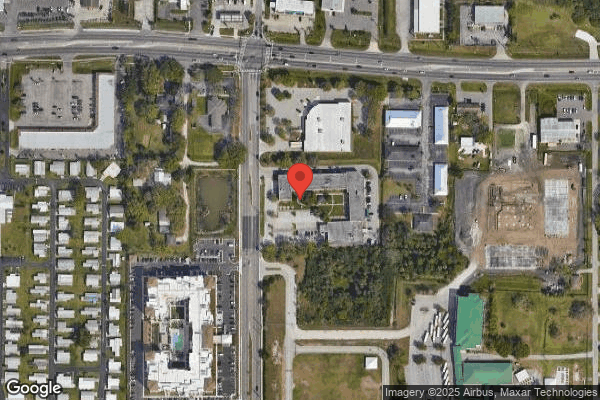
Jan 2023 6 deficiencies
CONCERN (D)

Potential for Harm - no one hurt, but risky conditions existed

Deficiency F0558 (Tag F0558)

Could have caused harm · This affected 1 resident

**NOTE- TERMS IN BRACKETS HAVE BEEN EDITED TO PROTECT CONFIDENTIALITY** Based on observation and interview the facility failed to reasonably accommodate the needs for one resident (#5) related to not ...

Read full inspector narrative →
**NOTE- TERMS IN BRACKETS HAVE BEEN EDITED TO PROTECT CONFIDENTIALITY** Based on observation and interview the facility failed to reasonably accommodate the needs for one resident (#5) related to not placing the call light within the resident's reach of six residents sampled for environmental concerns. Findings included: On 01/23/23 at 9:32 a.m. Resident #5 was heard calling from her room stating, Can you help me? Put this call light where I can reach it. Resident #5 was observed sitting in her wheelchair facing towards the foot of her bed. The call light was observed clipped to the head of the bed out of her reach. Staff K, Certified Nursing Assistant (CNA) came into Resident #5's room and moved the call light from the head of the bed to the foot of her bed and within her reach. Review of Resident #5's admission Record revealed she was re-admitted to the facility on [DATE] from an acute care hospital. Her medical diagnoses included but were not limited to hemiplegia and hemiparesis following nontraumatic subarachnoid hemorrhage affecting the left non-dominant side, polyneuropathy, contracture, left wrist, abnormalities of gait and mobility, unsteadiness on feet, muscle weakness, lack of coordination, and pain. Review of Resident #5's Minimum Data Set (MDS) Section C, Cognitive Patterns, dated 12/30/2022, revealed a Brief Interview for Mental Status (BIMS) score of 13 out 15, indicating the resident was cognitively intact. An additional observation was conducted on 01/24/23 at 10:12 a.m. of Resident #5 sitting next to her bed in a wheelchair facing towards the foot of the bed. The call light was observed clipped by the pillow at the head of the bed. The resident stated, Can you hand me my call bell? I can't reach it. Then at 10:14 a.m. Staff J, Licensed Practical Nurse (LPN) came into the room and clipped the resident's call light onto the bed next to the resident and asked the resident if she could reach it. The resident demonstrated she could reach the call light and thanked the nurse. An interview was conducted on 01/26/23 at 12:48 p.m. with the Director of Nursing (DON) who indicated Resident #5 was able to use her call light. She also stated the resident was able to self-propel around her room. Another interview with the DON was conducted on 1/26/23 at 01:36 p.m. and she stated the facility does not have a policy related to call lights.
CONCERN (D)

Potential for Harm - no one hurt, but risky conditions existed

Comprehensive Care Plan (Tag F0656)

Could have caused harm · This affected 1 resident

**NOTE- TERMS IN BRACKETS HAVE BEEN EDITED TO PROTECT CONFIDENTIALITY** Based on observations, record review and staff interview, the facility failed to ensure a care planned intervention related to h...

Read full inspector narrative →
**NOTE- TERMS IN BRACKETS HAVE BEEN EDITED TO PROTECT CONFIDENTIALITY** Based on observations, record review and staff interview, the facility failed to ensure a care planned intervention related to having the bed positioned in the lowest position was implemented for one resident (#3) of forty-two sampled residents for three days (1/23/2023, 1/24/2023, and 1/26/2023) of four days observed. Findings included: On 1/23/2023 during a tour of the facility at approximately 10:45 a.m., Resident #3 was observed in her room lying in bed. Resident #3 was lying on a specialized mattress with raised bolsters to assist with fall prevention. The bed was elevated approximately three feet above its lowest position. The bed adjustment remote was placed on the foot of the bed and no staff were present in or around the resident's room. On 1/23/2023 at 2:00 p.m. Resident #3 was again observed in her room with the bed elevated approximately three feet from the lowest position with the remote at the foot of the bed. An attempt to interview the resident about her bed positioning indicated she was not able to answer questions related to her care and service. When asked about the bed remote on her bed she said, I don't know what that is. She was asked if she can move the bed on her own with the remote and she replied, I might be able to. On 1/24/2023 at 9:11 a.m. Resident #3 was observed in her room in bed. The bed was observed in a medium/high position with the top of the mattress elevated approximately three feet up from the floor. The bed remote was within her reach. On 1/25/2023 at 7:08 a.m. Staff B, Certified Nursing Assistant (CNA) was observed by Resident #3's room. He was interviewed about Resident #3's bed positioning, and Staff B replied, She (Resident #3) usually hangs her feet and leg off the side of the bed and she has not had any recent falls, I believe. Staff C, CNA stopped by the area and was interviewed along with Staff B. Staff B confirmed Resident #3 was on his assignment today and has had her many times before. Staff B and C did not know how the bed should be positioned for Resident #3 and indicated Resident #3 can adjust her bed on her own and they keep the remote for the bed within her reach. They were asked if Resident #3 was at risk for falls and they both indicated they believed that she was. On 1/26/2023 at 7:30 a.m. Resident #3 was observed in her room resting comfortable with the bed elevated and the top of the mattress was approximately three feet up off the floor. On 1/26/2023 at 8:12 a.m. Resident #3 was observed from the hall through the open door of her room using the bed remote to move the bed up and down several times. Resident #3 stopped the bed in a mid-high position where the top of the mattress was approximately three feet up off the floor. Both of the resident's feet were hanging off the left side of the bed mattress. Review of Resident #3's admission Record revealed she was admitted to the facility on [DATE] with diagnoses including but not limited to: dementia, hemiplegia, and contracture to the left hand. Review of the Minimum Data Set (MDS) Annual Assessment, dated 11/14/2022, revealed the following: Section C - Cognitive Patterns a Brief Interview for Mental Status (BIMS) score of 3 out of 15, indicating severe cognitive impairment. Section G - Functional Status indicated the resident required extensive assistance with Activities of Daily Living (ADLs) to include bed mobility. Review of the current care plans with the next review date of 2/1/2023 included the following areas: - Falls related to impaired mobility (High Risk) an identified interventions to include but not limited to: Bed in low position while in bed. - Has alteration in neurological status related to CVA (Cerebrovascular Accident) with left sided hemiparesis with interventions in place. - Has impaired cognitive function/impaired thought process r/t dementia an identified interventions to include cue, reorient and supervise as needed. The current care plans were silent related to Resident #3 utilizing the bed remote. On 1/26/2023 at 8:55 a.m. an interview with the second floor unit nurse Staff D Licensed Practical Nurse (LPN), who was assigned to Resident #3 during the 7-3 shift on 1/24/2023, 1/25/2023, and 1/26/2023, and confirmed she knows the resident well. Staff D stated Resident #3 was a fall risk and her bed should be in the lowest position. Staff D was unable to confirm if the resident should have the bed remote to self-adjust her bed position. Staff D confirmed Resident #3 was lying in bed and it was not in its lowest position and that she should be in bed with the bed in a lower position. Staff D stated she would check the orders and care plan and that she did not know if the floor CNAs were aware Resident #3 was care planned to be in a low bed position when in bed. On 1/26/2023 at 9:15 a.m. an interview with the second floor Unit Manager Staff A, Registered Nurse (RN) stated she knows Resident #3 and her care expectations. She was not sure if Resident #3 should be in a low bed when in bed but would check the orders. Staff A reviewed the medical record and confirmed that when in bed, Resident #3 should always have the bed in the lowest position. She did not have any documentation to support implementation of this care planned intervention, nor did she know if her floor staff were knowledgeable to follow this care planned intervention. Staff A confirmed Resident #3 has not had a recent fall but she was at risk for falls. Staff A was also not aware Resident #3 was moving the bed from low to high and high to low positions by using the bed remote herself. She confirmed residents at risk for falls should have the bed in a low position. If the resident has cognitive deficits, the bed remote control should not be available to them. Review of the policy titled, Comprehensive Person-Centered Care Plans, effective date 10/24/2022, revealed: The center will develop a comprehensive person-centered care plan for each resident that is individualized and includes measurable objectives and timetables to meet a resident's medical, nursing, mental and psychosocial needs that are identified in the comprehensive assessment. Each resident will have a person-centered comprehensive care plan developed and implemented to meet his or her preferences and goals, and address the resident's medical, physical, mental and psychosocial needs. Comprehensive care plan will be consistent with resident goals and right to be informed and participate in his/her treatment. Additionally, under the Fundamental Information Section the policy documented: A comprehensive care plan will be: iii. Reviewed and revised by the interdisciplinary team after each assessment, including both the comprehensive and quarterly review assessments and as changes in the resident's care and treatment occur. Any member of the interdisciplinary team may enter the updates to the comprehensive care plan under the guidance of a registered nurse who is responsible for the resident. The comprehensive plan of care should include the following: - Reflect current standards of professional practice .; - Be periodically reviewed and revised by the interdisciplinary team as change in the resident's care and treatment occur. Additionally, under the Procedure section the policy documented: - .Communicate care plan changes on an ongoing basis to all members of the interdisciplinary team. - Re-evaluate and modify care plans: As needed to reflect changes in care, service and treatment.
CONCERN (D) 📢 Someone Reported This

A family member, employee, or ombudsman was alarmed enough to file a formal complaint

Potential for Harm - no one hurt, but risky conditions existed

Unnecessary Medications (Tag F0759)

Could have caused harm · This affected 1 resident

Based on observation, record review, and interview the facility failed to ensure the medication error rate was less than 5.00%. Thirty medication administration opportunities were observed with three ...

Read full inspector narrative →
Based on observation, record review, and interview the facility failed to ensure the medication error rate was less than 5.00%. Thirty medication administration opportunities were observed with three errors identified for three residents (#451, #13, and #203) of eight residents sampled constituting a 10.00% medication error rate. Findings included: 1. A medication administration observation was conducted on 1/24/23 at 9:43 a.m. with Staff G Licensed Practical Nurse (LPN) for Resident #451. Staff G administered: -Amlodipine 10 milligram (MG) -Furosemide 20MG tablet -Aspirin 81MG tablet -Ferrous sulfate 325mg (65 Fe (iron)) MG tablet -2 tablets of Calcium Acetate 667 MG. At the time Staff G dispensed the Calcium Acetate medication, an observation was made of the Calcium Acetate order on the electronic medical record on 1/24/23 at 9:44 a.m. The medication was highlighted in red. Staff G, LPN indicated the medication order was red because it was late. Staff G confirmed it was scheduled to be given at 8:30 a.m. and confirmed it was over an hour after it was due. She confirmed the medication order showed the medication was to be given with meals and the resident needed it for medical management for kidney failure. Review of Resident #451's physician orders for January 2023 revealed, Calcium Acetate Oral Tablet 667MG (Calcium Acetate (Phosphate Binder)) Give 2 tablets by mouth with meals for CKD (chronic kidney disease), with a start date of1/22/23 and with no end date. Review of the Medication Administration Recorded (MAR) for January 2023 revealed Calcium Acetate Oral Tablet 667MG was scheduled at 8:30 a.m., 12:30 p.m., and 5:30 p.m. Review of Resident #451's Progress Notes from 1/1/23 to 1/26/23 was conducted and there was no evidence of the physician being notified of the late medication. 2. A medication administration observation was conducted on 1/25/23 at 11:15 a.m. with Staff D, LPN for Resident #203. Staff D obtained Resident #203's blood sugar with an accu-check machine which resulted in a blood sugar reading of 379. Staff D reviewed the physician's orders for the Lispro insulin sliding scale order and said the sliding scale only went as high as 350. Staff D stated, I am going to call the physician. Staff D called the physician and obtained an order to administer 8 units of Lispro insulin. On 1/25/23 at 11:28 a.m. Staff D stated, I feel like these pens never give the right amount of insulin with these needles. Staff D removed the Lispro KwikPen (insulin pen) from her medication cart, compared it to the physician orders, placed the needle on the tip of the insulin pen, and dialed the insulin pen to 8 units. She sanitized her hands, put on gloves, went into Resident 203's room, cleaned the resident's right lower quadrant of her abdomen with an alcohol wipe and administered the insulin medication. She then removed the needle, discarded the needle into the sharp's container, removed her gloves, sanitized her hands, went back out to her medication cart located outside of the resident's room, placed the medication back into the cart and documented the medication administration. On 1/25/23 at 11:35 a.m. Staff D, LPN was interviewed, and she stated, We are not supposed to prime the needle because I don't think the pen will let you push it twice once you dial it to how many units they need. Staff D, LPN then dispensed Junamet 50-500mg (SITagliptin-metformin HCL) tablet to Resident #203. 3. A medication administration observation was conducted on 1/25/23 at 4:23 p.m. with Staff I, LPN for Resident #13. Staff I, LPN obtained Resident #13's blood sugar with an accu-check machine which resulted in a blood sugar reading of 241. Staff I removed the Novolog Flex Pen from the medication cart, compared it to the physician orders, placed the needle on the tip of the insulin pen, and dialed the insulin pen to 2 units. He then sanitized his hands, put on gloves, went into the resident's room, cleaned the resident's left upper arm with an alcohol wipe and administered the insulin medication. He then removed the needle, discarded the needle into the sharp's container, removed his gloves, sanitized his hands, went back out to his medication cart, located just outside the resident's door, placed the medication back into the cart and documented the medication administration. Immediately after he documented the medication administration and he stated, You don't need to prime the needle, you just put the needle on and it's ready to go. Review of Resident #13's physician orders for January 2023 revealed an order for Novolog solution 100unit/ML (milliliter) inject as per sliding scale if 200-250 = 2units .subcutaneous before meals and at bedtime for diabetes before bedtime. An interview was conducted with Staff G, LPN on 1/25/22 at 11:07 a.m. and she stated, When you have an insulin pen you place the needle onto the tip of the pen, dial it to the amount of units you want to administer, clean the area you are going to inject with an alcohol pad and push the pen onto the skin and slowly push the button to inject the insulin. You do not have to prime the pen I don't think, that would be news to me, and I would have to look that up. An interview was conducted on 1/26/23 at 9:48 a.m. with the Director of Nursing (DON), she indicated she would have to look up the policy and the process related to insulin pens and priming the needle prior to administration. She confirmed the calcium acetate should have been administered as ordered. On 01/26/23 at 11:03 a.m. an interview with the DON was conducted and she stated the facility's policy indicates to follow the manufacturer's guidelines related to insulin pens. According to NovoLog (insulin aspart) injection FlexPen Instructions For Use .Giving the airshot before each injection(Retrieved on 1/26/2023 from https://www.novo-pi.com/novolog.pdf) revealed: Before each injection small amounts of air may collect in the cartridge during normal use. To avoid injecting air and to ensure proper dosing: E. Turn the dose selector to select 2 units (see diagram E). F. Hold your NovoLog® FlexPen® with the needle pointing up. Tap the cartridge gently with your finger a few times to make any air bubbles collect at the top of the cartridge (see diagram F). G. Keep the needle pointing upwards, press the push-button all the way in (see diagram G). The dose selector returns to 0. A drop of insulin should appear at the needle tip. If not, change the needle and repeat the procedure no more than 6 times. According to instructions titled, INSULIN LISPRO KWIKPEN - insulin lispro injection, solution instructions for use, (Retrieved on 1/26/2023 from https://uspl.lilly.com/lispro/lispro.html#ug1) revised on 2/2020, revealed: .Priming your Pen Prime before each injection. Priming your Pen means removing the air from the Needle and Cartridge that may collect during normal use and ensures that the Pen is working correctly. If you do not prime before each injection, you may get too much or too little insulin Step 6: To prime your Pen, turn the Dose Knob to select 2 units. Step 7: Hold your Pen with the Needle pointing up. Tap the Cartridge Holder gently to collect air bubbles at the top. Step 8: Continue holding your Pen with Needle pointing up. Push the Dose Knob in until it stops, and 0 is seen in the Dose Window. Hold the Dose Knob in and count to 5 slowly. You should see insulin at the tip of the Needle. If you do not see insulin, repeat priming steps 6 to 8, no more than 4 times. If you still do not see insulin, change the Needle and repeat priming steps 6 to 8 Review of the facility's policy and procedure titled, Medication Pass Guidelines, revised on 4/25/2017, revealed: Purpose: To assure the most complete and accurate implementation of physicians' medication orders and to optimize drug therapy for each resident by providing for administration of drugs in an accurate, safe, timely, and sanitary manner. To systematically distribute medications to residents in accordance with state and federal guidelines. Fundamental Information . Physician's Orders- Medications are administered in accordance with written orders of the attending physician . Procedure .7. Administer medications within 60 minutes of the scheduled time. Unless otherwise specified by the physician, routine medications are administered according to the established medication administration schedule for the facility .
CONCERN (D)

Potential for Harm - no one hurt, but risky conditions existed

Medical Records (Tag F0842)

Could have caused harm · This affected 1 resident

**NOTE- TERMS IN BRACKETS HAVE BEEN EDITED TO PROTECT CONFIDENTIALITY** Based on record review and interviews the facility failed to ensure the correct medical diagnosis was documented in a resident's...

Read full inspector narrative →
**NOTE- TERMS IN BRACKETS HAVE BEEN EDITED TO PROTECT CONFIDENTIALITY** Based on record review and interviews the facility failed to ensure the correct medical diagnosis was documented in a resident's medical record. The failed practice was true for one resident (#32) of 42 sampled residents. Findings included: A record review of Resident #32's medical record showed a diagnosis of Post Traumatic Stress Disorder (PTSD) that was initiated on 10/26/21. The quarterly Minimum Data Set (MDS), dated [DATE], showed PTSD in Section I - Active Diagnoses. There was no care plan focus for PTSD. There was no completed PASRR Level II. During an interview on 01/26/23 at 9:00 a.m. the Nursing Home Administrator (NHA) stated that a PASRR Level II would be looked into as to whether one had been completed or not. In an additional interview on 01/26/23 at 9:25 a.m. the NHA stated that Resident #32 did not have PTSD and that the diagnosis of PTSD on the medical diagnosis page was in error. The NHA stated that no one knew how the diagnosis was placed in error on Resident #32's medical record and that [physician name] was not going to be happy because that error in diagnosis had been filtered into the doctor's notes as well.
CONCERN (E)

Potential for Harm - no one hurt, but risky conditions existed

Deficiency F0657 (Tag F0657)

Could have caused harm · This affected multiple residents

**NOTE- TERMS IN BRACKETS HAVE BEEN EDITED TO PROTECT CONFIDENTIALITY** Based on observation, medical record review and interview, the facility failed to ensure care plans were revised to reflect the ...

Read full inspector narrative →
**NOTE- TERMS IN BRACKETS HAVE BEEN EDITED TO PROTECT CONFIDENTIALITY** Based on observation, medical record review and interview, the facility failed to ensure care plans were revised to reflect the current care status for two residents (#66 and #3) of forty-two sampled residents, related to Activities of Daily Living (ADLs) for eating assistance (#66), and impaired mobility and contracture management (#3). Findings included: 1. On 1/23/2023 at 12:30 p.m. Resident #66 was observed in her room and lying on her side on top of the bed eating her lunch meal. Her lunch meal tray was on the bedside table which was positioned slightly above head level and she was observed feeding herself with no problems. She appeared slow to eat but comfortable and able to feed herself. No staff were present in the room from 12:30 p.m. to 1:08 p.m. when a staff member came to remove the lunch tray. On 1/24/2023 at 7:45 a.m. Resident #66 was observed resting comfortably in bed with her eyes closed and the lights off. Further observation at 7:56 a.m. revealed Staff B, Certified Nursing Assistant (CNA) bringing the resident's breakfast tray to her room. Prior to him going in the room, Staff B was asked to present the meal ticket and food items for observation. The meal ticket indicated Controlled Carbohydrate (CCHO) diet, mechanical texture, thin liquids. Resident #66 received two waffles and one container of syrup, mechanical meat, scrambled eggs, bowl of hot cereal/oatmeal, carton of whole milk, cup of water, and a cup of orange juice. Staff B stated that Resident #66 eats on her own with some set up and very little cueing. He set the tray on the bedside table, woke the resident, then took the lids off and left the room. Resident #66 was still resting in bed with eyes closed at 8:17 a.m. and had not consumed any of her meal. Then at 8:27 a.m. Staff B, CNA stated the resident was pushing the tray away after cueing twice by him and another CNA. He said they would wait a bit longer and try again before removing the tray and stated there are times when she does not eat in the morning even after cued. Staff B reiterated that Resident #66 is able to eat on her own and does not require any eating assistance or any physical assistance with eating devices. Staff B was observed checking on Resident #66 three times to cue her to eat from 7:56 a.m. to 8:44 a.m. Staff were not observed providing meal assistance and by 8:44 a.m. Resident #66 consumed 0% of her meal. On 1/24/2023 at 12:45 p.m., after the lunch meal, Resident #66's tray was observed with 50 - 75% of her meal consumed. Staff C, CNA was interviewed and confirmed the amount of the meal that consumed was 50-75%. Review of the Resident #66's admission Record revealed she was admitted to the facility on [DATE] and readmitted on [DATE]. Review of the diagnosis sheet revealed diagnoses to include: sequelae cerebrovascular disease, muscle weakness, , hypertension, dysphagia, and dementia. Review of the Minimum Data Set (MDS), dated [DATE], revealed in Section G - Functional Status for ADLs for Eating as extensive assistance with one person assistance. The Nutrition Assessment, dated 10/27/2022, showed Section 11. Ability to feed was self checked as - Dependent on staff with all meals. Review of the current care plans, with the next review date of 2/13/2023, included the following Focus areas: - [Resident #66] has an ADL self-care performance deficit r/t (related to) impaired mobility, initiated on 10/19/22, and with interventions in place to include but not limited to: EATING = 1 Person Assistance. - [Resident #66] is at risk for decreased nutritional status & dehydration r/t dementia, UTI (urinary tract infection), hx ABT (history of antibiotics), behaviors, weight fluctuations with cellulitis, edema, weeping of LE (lower extremities), therapeutic diet, varied PO (oral) intake, confusion, requires strong encouragement to eat, resistant to care and refuses medications at times .H/o (History of) significant weight fluctuations. Recent hospitalization for suspected CVA (cerebral vascular accident), returned with weakness and swallowing difficulties. Triggering for wt (weight) loss . Varying meal intakes, needs encouragement with meals, dysphagia. Mech (mechanical) soft diet with soft bread products. Intake mostly 25-50% . Interventions included but not limited to: Assist with meals as needed, Diet as ordered, Encourage resident to eat meals in the dining room as able, as tolerated. On 1/24/2023 at 7:38 a.m. Resident #66 was observed in her room awake with the room light on and lying in bed. Then at 7:44 a.m. Staff T, Social Services Director (SSD) was observed bringing Resident #66 her meal tray and placed it on the table. He and Staff B, CNA tried to elevate the head of the bed for the resident so she would be more comfortable eating and in a better eating position. Resident #66 cursed at both Staff B, CNA and Staff T, SSD and told them to leave her flat. They explained she needed to be in a better position and she refused. The breakfast tray was set up. She cursed at them and the two staff members decided to leave the room to let her calm down. Resident #66 was then observed at 7:46 a.m. flat in bed laying on her right side facing the bedside table on the side of her bed. She was reaching for the food with a fork and appeared able to get bites of food on her own. Resident #66 was able to drink from her milk carton without difficulty. On 1/24/2023 between 7:57 a.m. and 8:04 a.m. Staff C, CNA and Staff A, Registered Nurse (RN) were observed to assist Resident #66's roommate with their meal and not Resident #66. On 1/24/2023 at 8:20 a.m. Resident #66 was interviewed and said she had no concerns with her breakfast meal. She consumed over 75% of her meal and most of her liquids. She was asked if she could eat comfortably and use the fork to get food and she replied, I can do it, ok. Staff C, CNA was interviewed at 8:28 a.m. on 1/24/2023. Staff C said the resident can eat on her own and usually consumes around 50 - 75% of her meal. She rarely refuses breakfast or lunch but sometimes refuses dinner. Staff C explained the resident had a recent hospitalization and required eating assistance when she was readmitted . She has gotten better and is now able to eat on her own without any staff assistance. Review of the CNA ADL Flow/Task sheet for the month of 1/2023 revealed most meals were consumed independently without assistance. There were nine meals out of twenty nine meals that required supervision oversight. There was one day marked as dependent on staff with eating. Review of a dietary progress note, dated 1/24/2023, at 10:37 a.m. documented - Resident has been stabilized with weights. There was no noting with relation to what type of eating assistance the resident required or if the resident needed assistance at all. On 1/26/2023 at 10:08 a.m. an interview with the Registered Dietician Tech revealed Resident #66 was being monitored for weight loss and eating activities. She revealed when the resident returned from the hospital sometime in 10/2022, she required a lot of eating assistance from staff and has been getting better. To her knowledge she no longer required eating assistance and was able to eat on her own with very little to no supervision. On 1/26/2023 at 10:50 a.m. an interview with the Care Plan/Minimum Data Set (MDS) coordinators Staff E, Licensed Practical Nurse (LPN) and Staff F, LPN was conducted. Staff E and F confirmed the MDS assessment and care plan currently reflect Resident #66 required one person assistance with meals and that she had progressively gotten better since her last hospitalization and readmission on [DATE]. They stated there had not been any information from the nurses and aides indicating what the resident's eating assistance needs were. Staff E and F confirmed they had not reviewed the CNA ADL Flow Sheets . Staff E and F reviewed the ADL Flow Sheets for the past two months and confirmed Resident #66 improved with eating and would be more at the supervision with set up only, rather than extensive assistance. They further confirmed the care plan should have been revised to reflect the resident was/is able to eat on her own since at least 12/2022. Staff E said eating assistance with one person assistance was interpreted as a staff member was to be in the room and physically assisting the resident with eating, and with staff handling the eating utensils. She revealed - Resident #66's care plan should have been revised around 12/2022 to reflect no longer needing any type of physical assistance. 2. On 1/23/2023 at 10:45 a.m. Resident #3 was observed in her room lying in bed and her bare feet were exposed out from the covers. During the interview Resident #3 was only able to answer some simple yes and no questions and unable to answer questions related to her care and services. On 1/24/2023 at 9:11 a.m. Resident #3 was observed in her room, in bed with her feet bare and free from foam boots/splints. On 1/24/2023 at 2:30 p.m. Resident #3 was observed in the dining room attending a group activity. Resident #3 was observed seated in her [specialized] chair. She was observed wearing non-skid socks with her feet propped up on both foot pedals and not wearing foam boots/splints. On 1/25/2023 at 7:00 a.m. Resident #3 was observed in her room and lying in bed half under the covers with her lower body exposed and with her right leg hanging off the side of the bed with both feet bare and without any type of foam boots and/or splints. Then at 7:08 a.m. Staff B, CNA was asked if the resident wore any type of splints or foam boots while in bed and he replied, I don't believe so, I have not seen her with any on. On 1/25/2023 at 9:30 a.m. Resident #3 was observed in her room seated in her [specialized chair], and both of her feet were positioned on the chair foot pedals with both feet only in white and blue non-skid socks. The resident was not observed with foam boots/splints on. Her room was observed free from any type of foam boots/splints. On 1/25/2023 at 10:20 a.m. the resident was observed participating in a group activity in the first floor activities/dining room. The resident was observed seated in her [specialized]chair and both of her feet were observed positioned on the chair foot pedals in white and blue non-skid socks. There was no evidence of the resident wearing any type of splints/boots on either of her feet. On 1/25/2023 at 1:02 p.m. Resident #3 was being assisted back to her room and was observed still without foam boots on. On 1/26/2023 at 7:30 a.m. Resident #3 was observed in her room, lying flat in bed, under the covers with her legs and feet exposed. The resident was observed with bare feet and not wearing foam boots. Review of the admission Record revealed Resident #3 was admitted to the facility on [DATE] Review of the diagnosis sheet revealed diagnoses to include but not limited to: dementia, hemiplegia and hemiparesis following cerebral infarction affecting left non-dominant side and muscle weakness. Review of the Annual Minimum Data Set (MDS) assessment, dated 11/14/2022, revealed the following: Section C - Cognitive Patterns a Brief Interview for Mental Status (BIMS) score of 3 out of 15, indicating severe impairment; Section G - Functional Status showed for Activities of Daily Living (ADLs) for Bed Mobility as extensive assist with two person assist, Personal Hygiene as extensive assistance with one person assist, has impaired function on one side upper extremity, and impairment one side lower extremity. Review of the current care plans, with the next review date of 2/1/2023 revealed the following Focus areas: - Left upper extremity contracture, specifically to wrist, digits, and elbow, with interventions in place to include: Straighten and bend left digits x 15 repetitions. Straighten and bend left wrist x15 repetitions. Straighten and bend left elbow x 15 repetitions. Turn palm up and down x 15 repetitions. - ADL self-care performance deficit r/t impaired mobility with interventions in place to include: May use [specialized] lift with 2 person assist with transfers, . Foam boots while in bed and in chair. A restorative care assessment was conducted on 1/7/2022. The assessment revealed: Problem was LUE (left upper extremity) Contracture/decreased ROM (range of motion). The goals included: Decrease risk for further contracture, reduce pain, facilitate proper positioning. The approaches included: Provide gentle passive range of motion to all joints to left arm with focus on returning forearm and wrist to neutral position. The restorative assessment indicated to provide approaches at least three times a week. No other restorative notes since the 1/7/2022 assessment were present in the medical record. There was no documented evidence within the resident's medical record for the months of 1/2023 and 12/2022 of Resident #3 receiving left upper extremity contracture exercise maintenance. There were no sections in the Medication/Treatment Administration Records during 1/2023 and 12/2022 revealing any type of left upper extremity contracture exercise maintenance. On 1/26/2023 at 8:55 a.m. an interview was conducted with Staff D, LPN, who cared for the resident on the 7:00 a.m. to 3:00 p.m. shift for the dates of 1/24/2023, 1/25/2023, and 1/26/2023. She stated she knows the resident well and she was aware the resident has foam boots to wear while in bed and in her chair. She said that it was typically the responsibility of the wound care nurse to don and doff the boots daily. Staff D stated the wound care nurse, as of about one week prior to this interview, no longer works at the facility and that may be the reason why the resident has not had the foam boots applied. On 1/26/2023 at 9:15 a.m. in an interview Staff A, Registered Nurse (RN) Second Floor Unit Manager stated she knows Resident #3 and her care expectations. She was not sure if the resident had been wearing foam boots while in bed but would follow up and review the chart. After reviewing the chart and care plan she confirmed the resident has interventions for foam boots while in bed and in chair. Staff A confirmed the wound care nurse would have been initially responsible for evaluating all residents in the building for foam boots and other pressure relieving devices. Staff A stated it was the responsibility of the certified nursing assistants to don and doff the pressure relieving devices, including foam boots. Staff A was unaware if the resident had care plan interventions for the left hand wrist exercises for the contracture. She reviewed the medical chart and identified a care plan problem area for the left hand contracture with interventions for multiple left hand/wrist exercises. Staff A stated the restorative program would conduct the wrist exercises, but the resident was no longer receiving restorative nursing care. Staff A could not produce documentation to show the hand/wrist exercises were offered, conducted or refused. She said there was no real way to monitor in the chart whether the exercises were effective or not, or if were completed daily. A follow up interview with the Second Floor Unit Manager Staff A, RN on 1/26/2023 at 9:52 a.m. revealed she spoke with both the care plan team and the restorative nursing staff. She said the foam boots were resolved but it was not documented or removed from the care plan interventions. She also confirmed that during her conversation with the restorative nurse the left hand exercises were resolved and should have been removed from the care plan. On 1/26/2023 at 10:50 a.m. an interview with the Care Plan/MDS coordinators Staff E, LPN and Staff F, LPN was conducted. Staff E indicated Resident #3 has not used the boots in a long time, she used them when she was seen by the restorative nursing program. Staff E and F both agreed this intervention should have been revised or removed from the care plan back in 11/2022. Both staff members stated since the resident no longer receives restorative nursing the left hand/wrist exercises should have been removed at the last care plan conference in 11/2022. Review of the Comprehensive Person-Centered Care Plans policy, dated 10/24/2022 , revealed: The Policy section as: The center will develop a comprehensive person-centered care plan for each resident that is individualized and includes measurable objectives and timetables to meet a resident's medical, nursing, mental and psychosocial needs that are identified in the comprehensive assessment. Each resident will have a person-centered comprehensive care plan developed and implemented to meet his or her preferences and goals, and address the resident's medical, physical, mental and psychosocial needs. Comprehensive care plan will be consistent with resident goals and right to be informed and participate in his/her treatment. Under the Fundamental Information Section the policy documented: A comprehensive care plan will be: iii. Reviewed and revised by the interdisciplinary team after each assessment, including both the comprehensive and quarterly review assessments and as changes in the resident's care and treatment occur. Any member of the interdisciplinary team may enter the updates to the comprehensive care plan under the guidance of a registered nurse who is responsible for the resident. The comprehensive plan of care should include the following: - Reflect current standards of professional practice .; - Be periodically reviewed and revised by the interdisciplinary team as change in the resident's care and treatment occur. Additionally, under the Procedure section the policy documented: - .Communicate care plan changes on an ongoing basis to all members of the interdisciplinary team. - Re-evaluate and modify care plans: As needed to reflect changes in care, service and treatment.
CONCERN (E)

Potential for Harm - no one hurt, but risky conditions existed

Deficiency F0698 (Tag F0698)

Could have caused harm · This affected multiple residents

**NOTE- TERMS IN BRACKETS HAVE BEEN EDITED TO PROTECT CONFIDENTIALITY** Based on interviews and record review the facility failed to ensure communication between the facility and dialysis centers cons...

Read full inspector narrative →
**NOTE- TERMS IN BRACKETS HAVE BEEN EDITED TO PROTECT CONFIDENTIALITY** Based on interviews and record review the facility failed to ensure communication between the facility and dialysis centers consistent with professional standards of practice for ensuring ongoing assessment and oversight of the resident before, during, and after dialysis treatments for three residents (#6, #97, and #90) out of three sampled residents. Findings included: 1. Interview was conducted with Resident #90 on 01/23/2023 at 11:31 a.m. She confirmed she received hemodialysis treatment at a community provider three days per week. She stated she was not aware of any communication forms sent between the facility and the provider. On 01/25/2023 at 2:32 p.m. the resident was interviewed and confirmed she had been to the dialysis center for treatment that day. Review of Resident #90's medical record was conducted. The admission Record revealed she was admitted to the facility on [DATE] with diagnoses that included end stage renal disease, type 2 diabetes mellitus, and dependence on renal dialysis. The Minimum Data Set (MDS) dated [DATE] revealed a Brief interview for Mental Status (BIMS) score of 15 which meant the resident was cognitively intact. Physician orders for January 2023 revealed dialysis treatment three times per week. The care plan revealed a focus area for dialysis and interventions that included Send dialysis communication form with resident and be sure to retrieve information from resident on return initiated 01/05/2023. An interview was conducted with Staff D, Licensed Practical Nurse (LPN) on 01/25/2023 at 12:43 p.m. She revealed a blank paper form titled, Dialysis Communication and stated the form was used for every dialysis appointment for the facility residents. She stated the facility nurse was responsible for completing the top portion of the form and sending it to the dialysis center either with the resident in paper form or via fax. Staff D stated the dialysis center was responsible to complete the bottom portion of the form and return it either with the resident in paper form or via fax. Staff D stated completed forms were filed in each resident's medical chart at the nurses' station on their unit. Review of Resident #90's medical chart on her unit was reviewed on 01/25/2023 and no dialysis communication forms were found. An interview was conducted with Staff G, LPN on 01/25/2023 1:40 p.m. She confirmed she was Resident #90's assigned nurse that day/shift and she had been assigned to her on 01/24/2023 as well. Regarding the process for communication with the dialysis centers for pre/during/post treatment clinical information, she stated she wasn't too familiar with what the facility's process was currently. She stated that in the recent past the facility wasn't allowed to have dialysis binders with communication forms or send binders or paper communication forms to the dialysis centers because of COVID (coronavirus disease), and so the process was for the nurse to complete the top portion of the communication form and fax it to the dialysis center, but that the center didn't send anything back. She stated when a resident returned from dialysis treatment the process was to take their vitals and generally assess them and ideally write a dialysis note. Staff G stated she thought the facility was getting back to the dialysis binder system now but wasn't sure. She stated when they had the binder system in the past it worked well. An interview was conducted with Staff A, Registered Nurse (RN) Unit Manager (UM) for Resident #90's unit on 01/25/2023 at 2:33 p.m. Regarding facility process related to dialysis communication forms she said, I may need to check to give you information on the process. She stated she didn't know for certain what the process was. The blank dialysis communication form that had been provided by Staff D, LPN was revealed to Staff A, RN and she stated, we don't use those forms. Staff A stated, usually when they (residents) come back from dialysis the center faxes a form and then the nurse puts it in the chart, we don't have the nurses fill anything out to send with the resident. Staff A reviewed Resident #90's medical chart at the nurses' station and confirmed there were no dialysis communication forms in the chart and confirmed that was where that information should be filed. Staff A followed up on 01/25/2023 at 5:10 p.m. and reported the following: no paper communication forms were used because the dialysis centers weren't accepting them, no information was sent from the facility to the dialysis provider regarding the residents on their treatment days, the dialysis centers faxed a communication report to the facility after the resident completed their treatment and the nurse was expected to collect it and read it, if the dialysis center did not fax a form then the nurse or the UM was supposed to call the center and request it. Staff A stated there were no reports from the dialysis center for Resident #90 and she had called them after previous interview and requested them and they were to fax them to the facility that day. Form CMS-802 (Centers for Medicare and Medicaid Services) completed by the facility was reviewed and two additional residents receiving dialysis treatment were selected for review: Resident # 6 and Resident #97. 2. Review of Resident #97's medical record was conducted. The admission Record revealed she was admitted to the facility on [DATE] with diagnoses that included end stage renal disease, type 2 diabetes mellitus, and dependence on renal dialysis. Physician orders for January 2023 revealed dialysis treatment three times per week. The care plan revealed a focus area for dialysis with interventions that included, send dialysis communication form with resident and be sure to retrieve information from resident on return, initiated 01/11/2023. The medical chart on the resident's unit was reviewed on 01/25/2023 at 5:00 p.m. and no dialysis communication forms were found. 3. Review of Resident #6's medical record was conducted. The admission Record revealed she was admitted to the facility on [DATE] with diagnoses that included dementia, end stage renal disease, and dependence on renal dialysis. Physician orders for January 2023 revealed dialysis treatment three times per week. The care plan revealed a focus area for dialysis with interventions that included, send dialysis communication form with resident and be sure to retrieve information from resident on return initiated 06/01/2022. The medical chart on the resident's unit was reviewed on 01/25/2023 at 5:00 p.m. and no dialysis communication forms were found. An interview was conducted with Staff I, LPN on 01/25/2023 at 4:59 p.m. He confirmed he was the assigned nurse for Resident #6, had worked at the facility for one year, and routinely cared for residents who received dialysis treatment. Staff I stated he did not know anything about a dialysis communication form. He said because he worked 3:00 p.m. to 11:00 p.m. shift, generally residents had already returned from their dialysis treatments when he came on shift. He stated he had been instructed that the expectation when a resident returned from dialysis treatment was to check the dialysis port, take vitals, ensure no new orders, and write a progress note. Regarding how he would know if there were new orders he said, Sometimes they [the dialysis center] call. Staff I stated he was not aware of any expectation to call the center for report and stated he was not aware of anything/information that the facility was responsible to send with the resident or communicate to the dialysis center. An interview was conducted with Staff O, RN, UM for Resident #6's and Resident #97's units on 01/25/2023 at 5:30 p.m. Regarding communication with dialysis centers she said, We don't send anything with the resident because of COVID. She stated the dialysis centers were supposed to send a form to the facility after dialysis treatment and said, They usually fax the communication form and the three to eleven nurse is supposed to put it in the resident's chart. Staff O stated the facility called the dialysis centers and requested the form if it wasn't sent and said, Usually I call because the fax comes to my attention. Regarding the purpose of communication between facility and dialysis centers, Staff O said, I know we always need the weight but I'm not sure honestly about it. An interview was conducted with the Director of Nursing (DON) on 01/26/2023 at 8:17 a.m. stated the expectation would be for facility nurses to complete the top portion of the form and send it with the resident to their dialysis appointment in the binder. She stated that system was being implemented as of today. The DON stated she had not been aware that the communication process wasn't happening with dialysis centers until it was brought to her attention. Review of facility policy titled, Dialysis, revised 06/23/2015, revealed a section titled, Continuity of Care and Communication: -Send Dialysis Communication Form (SHC 215-26) with resident for every treatment. -Coordinate care plans with dialysis clinic to assure continuity of care.
Nov 2022 2 deficiencies 1 Harm
SERIOUS (G) 📢 Someone Reported This

A family member, employee, or ombudsman was alarmed enough to file a formal complaint

Actual Harm - a resident was hurt due to facility failures

Accident Prevention (Tag F0689)

A resident was harmed · This affected 1 resident

**NOTE- TERMS IN BRACKETS HAVE BEEN EDITED TO PROTECT CONFIDENTIALITY** Based on observation, record review, interviews, and photographic evidence, the facility failed to ensure adequate supervision a...

Read full inspector narrative →
**NOTE- TERMS IN BRACKETS HAVE BEEN EDITED TO PROTECT CONFIDENTIALITY** Based on observation, record review, interviews, and photographic evidence, the facility failed to ensure adequate supervision and assistance devices to prevent accidents for one (Resident #5) of eight residents reviewed for falls. Findings Included: On 11/21/2022 at 10:21 a.m. an announcement was overheard to respond to a code green room (number). At 10:23 a.m., Resident #5 was observed lying on the floor of his bedroom. He was on his stomach with his head facing the doorway entrance. The left side of his face was on the floor resting in a pool of bright red colored blood. The tips of his toes were resting just prior to the border edge of a floor mat. The bed frame was angled away from the resident and raised up over four to five inches in height. Staff B, Certified Nursing Assistant, CNA assisted along with another staff member and rolled the resident to his back and a pillow was placed under his head. The left side of his head revealed an approximate two-to-three-inch open laceration. The open area continued to excrete blood at a slow rate onto the white pillowcase cover. The resident's right eye was observed with different shades and tints of purple, green, and yellow toned colors. The right eyebrow contained a large amount of thick matted black debris. At 10:35 a.m., the Director of Nursing (DON) entered the room and instructed a staff member to get ice. Staff A, Registered Nurse (RN) entered the room and stated 911 was on their way as she started to perform vial signs. A medical record review was conducted and revealed Resident #5 was admitted to the facility five months earlier and said to be geriatric in age. The medical diagnosis listed anxiety, cognitive communication deficit, insomnia, major depression, repeated falls, and opioid dependence. A review of the incident reports provided by the facility revealed Resident #5 was observed on the floor on 10/03/2022 at 11:50 p.m. And a fall was listed on 11/15/2022 at 02:43 a.m. and on 11/21/2022 at 10:57 a.m. A review of Resident #5's care plans revealed the following information. Focus: Fall dated 9/11/2022, Goals: Will resume usual activities without further incident through the next review target date 02/16/2023, Interventions: bed in low position while in bed dated 08/08/2022, Encourage to wear soft helmet (as tolerated) dated 08/08/2022, up for breakfast if awake dated 10/03/2022, psych consult for sleeping meds dated 10/06/2022, hourly sleep observation x 3 days dated 11/15/2022 and soft helmet at all times as tolerated dated 11/17/2022. On 11/21/2022 at 2:40 p.m., Staff A, RN stated she had known Resident #5 for two months. She confirmed the resident had a fall a week or so ago. She said this one (11/21/2022) was the first fall on her shift. She stated, He is confused and will get up on his own. When he sits with me at the nursing station, he will just suddenly stand up, he's impulsive. Staff A indicated she was able to understand him when he needed something. She said, Just this morning he was yelling in his room. I had asked him if he wanted juice and he responded yes by accepting it. I think I recall he might have been a one on one at one time but not sure. She said when she was on the unit passing medications, I make a point of checking on him frequently she then repeated because he is very impulsive. She confirmed the resident had a helmet and would wear it when out of bed. She said, I was told the helmet was in the laundry. On 11/21/2022 at 2:48 p.m., an interview was conducted with Staff C, Certified Nursing Assistant. She confirmed she knew Resident #5 and said today, 11/21/2022, was the second time she was assigned to him. Staff C said when she arrived this morning around 7:00 a.m. she saw the resident standing in his room. She stated, I dropped everything I was holding and went into his bedroom. She said she sat him down on his bed and assisted him with his morning (adls) activities of daily living. She said he was cooperative and wanted to lie back in bed after he was dressed. She said the nurse had informed her to watch him because he was a fall risk. She indicated she was also caring for ten additional residents. She said, Every time I walk passed his room, I always look inside to see what he is doing. She confirmed she knew he was to wear a helmet. She stated, it wasn't in the room. On 11/21/2022, at 3:30 p.m., an interview was conducted with the Nursing Home Administrator (NHA) along with Staff E, Registered Nurse, Unit manager of the first floor. She confirmed on 10/03/2022 at 11:50 p.m. Resident #5 had an unwitnessed fall. She stated the nurse observed the resident on the floor outside his bathroom. She said he was found incontinent at the time of the incident. The NHA stated the resident had denied pain and was put back to bed. After he was put in bed he stated my hip hurt. The nurse took vital signs and called the physician. The resident was assessed by the nurse and sent to the hospital emergency room (ER). Staff E stated the ER findings were of a left hip fracture. The NHA stated, On 10/06/2022 we did a psych consult for his sleep restlessness; and offer up for breakfast if awake. A review of hospital records dated 10/04/2022 revealed the results of a Computed Tomography scan (CT SCAN) with Findings: Osseous structures: Nondisplaced fractures involving the left acetabulum with intra-articular extension at its superior and medial aspects. Partial visualized fracture involving L3 vertebral body, possibly acute. Suspected nondisplaced right sacral fracture best seen on sagittal image 54. IMPRESSION:1. Nondisplaced left acetabular fractures. 2. Partial visualized fracture involving the L3 vertebral body. 3. Nondisplaced right sacral fracture. A review of the Interdisciplinary Team (IDT) notes dated 10/06/2022 revealed the following. Review of the fall incident on 10/03/2022: had previous interventions in place and staff continue to anticipate resident needs with each encounter. Resident continues to be impulsive with poor safety awareness. The NHA was asked about Resident #5's fall that occurred on 11/15/2022, at 2:43 a.m. She confirmed the fall was unwitnessed and in his bedroom. She said the last time the resident was seen was at 1:20 a.m. The NHA stated Again in the middle of the night; they had initiated sleep observations. She said she believed they did a pie chart for three days. But it was after the first physician order for Melatonin. She went on to say the resident already had a lot of the Ativan. She said, We were trying to move from the Ativan to a sleep medication. She indicated that a therapy referral was requested. Review of the PIE chart revealed a form titled BLADDER TRAINING EVALUATION PIE a single line crossed out the word BLADDER with hand written notation WAKE. The form contained Resident #5's name with a handwritten notation sleep. The cart appeared to contain three days of documented data. Further review reflected the form was omitted of the month, day, or year when it was performed. Review of Hospital records titled Reexamination/ Reevaluation dated 11/15/2022 Notes: I have reviewed the physical exam findings and corresponding history which have indicated that the patient is present to the emergency department with complaints of a fall at his nursing home along with a complex subcutaneous laceration to his right upper eyebrow. Additionally, the patient had his laceration approximated without any complication (see procedural note). Procedure Laceration repair Description/ repair Laceration 4 cm in length. Face: right, upper, eyebrow. Shape: flap, Depth: subcutaneous. Skin closure: # 6 sutures, with 4 -0 Nylon, simple technique, interrupted technique. Discharge History of Present Illness: The patient presents following fall. The onset was 1 hours ago. The occurrence was single episode. The fall was described as lost balance. The location where the incident occurred was at home. Location: Right anterior head scalp. The character of symptoms is pain, swelling and bleeding. The degree at present is moderate. Risk factors consist of age and Multiple falls and Alzheimer's. Associated symptoms: Facial lacerations. Review of Physician notes dated 11/16/2022 past medical history (PMX) repeated falls, fractures, dementia per nurse fell last night around 2 am and went to ER (emergency room) long term resident admitted for hospice and dementia. Wearing a helmet due to falls, alert and oriented. Wheelchair bound. Skin sutures remain intact above right eye, swelling and ecchymosis continues on right eye. Left knee wound. Sutures out in 5 days (11/21/2022) Discontinue Ativan, Tylenol 500 mg two times a day (BID), melatonin at night. The NHA confirmed Resident #5 had an unwitnessed fall this morning (11/21/2022) she stated the Unit Manger said the helmet was in the laundry. When asked what was the process when the helmet went to the laundry, the NHA said she did not have a procedure for that. She said , We used it to try to protect him, he had the ability to remove it. On 11/21/2022 at 3:56 p.m., an interview was conducted with Resident #5's physician and confirmed he knew the resident since he had been at the facility. He confirmed he was informed of the fall that occurred today(11/21/2022). He confirmed the resident was confused with a cognitive deficit. He indicated he was not aware the resident had an intervention for a helmet to be worn as tolerated. The Physician was informed the resident helmet was not in place this morning during his fall. He did not respond. The facility was asked for their policy and procedures related to falls. On 11/21/2022 at 2:25 p.m. the NH provided a copy of their policy titled Code [NAME] -Fall that did not contain a date. Code Green- code [NAME] denotes an individual has fallen. The announcement should include the location, for instance code green, room [ROOM NUMBER] or code green, west side courtyard Assigned staff should respond. Assessed the person who has fallen prior to moving them. If safer, move them to a place of comfort. If assessment determines it is unsafe to move call 911, provide first aid and if needed, ad provide comfort (a pillow, blanket, etc ).
CONCERN (E) 📢 Someone Reported This

A family member, employee, or ombudsman was alarmed enough to file a formal complaint

Potential for Harm - no one hurt, but risky conditions existed

Pharmacy Services (Tag F0755)

Could have caused harm · This affected multiple residents

Based on record review and interviews, the facility failed to ensure pharmaceutical services to establish a system of disposition of controlled drugs for two (Residents #2 and #3) of two residents rev...

Read full inspector narrative →
Based on record review and interviews, the facility failed to ensure pharmaceutical services to establish a system of disposition of controlled drugs for two (Residents #2 and #3) of two residents reviewed for Fentanyl Patch use. Findings include: A review of Resident #2's Minimum Data Set (MDS) entry assessment, documented an admission of 10/10/2022 and a discharge date of 10/18/2022. On 11/21/2022 at approximately 3:30 p.m., an interview was conducted with the Nursing Home Administrator (NHA). The NHA reported she had received an allegation of abuse from Resident #2's daughter as a result of a phone call on 10/28/2022, when the daughter stated she did not understand how we sent her mother to an appointment in the condition she was in, the Urologist had assessed Resident #2 and called 911. The NHA said, the daughter said the resident was hallucinating. The NHA reported she had conducted an investigation, and she had not seen any interventions prior to the resident going to the appointment. There were no changes that would indicate to identify to a nurse. The NHA said, she looked at the orders, she had received a Fentanyl patch and had not identified any concerns related to the Fentanyl patch. On 11/21/2022 at 1:50 p.m., an interview was conducted with the Director of Nursing (DON) and the Director of Clinical Services (DCS), Registered Nurse (RN) and a review was conducted of Resident #2's Controlled Medication Utilization Record for the physician ordered Fentanyl 50 MCG (microgram)/HR (hour) patch, 1 patch transdermal every 3 days non acute pain. Five patches were documented to have been received by the facility on 10/12/2022. The control sheet documented the following administration dates: 10/14/2022, 8:28 a.m., one given, 4 remaining, no wasting documentation. 10/17/2022, 8:21 a.m., one given, 3 remaining, no wasting documentation. During the interview with the DON, she confirmed the removal of the patch should be documented. She stated, when the patch was removed, they should have another nurse (two persons) to remove and document the wasting (disposal) of the patch. The DCS stated, I would have to see what the process is here. The DON stated, when she reviewed the clinical record for Resident #2, I did see documentation of the removal of the patch. On 11/21/2022 at 12:45 p.m., an interview was conducted with Staff F, Registered Nurse (RN). She reported she had seen a Fentanyl patch in her medication cart, but no residents currently had the patch. A review of her medication cart revealed the presence of one patch for Resident #3. Staff F, RN reported Resident #3 had discharged from the facility. A review of the control sheet for the Fentanyl patch reflected the patch was received by the facility on 10/07/2022. A review of Resident #3's clinical chart, documented an admission of 03/28/2022. A review of Resident #3's 10/2022 Medication Administration Record (MAR) reflected a physician order for a Fentanyl Patch 72-hour 12 MCG/HR, apply 1 patch transdermally at bedtime every 3 days for chronic pain, start date of 08/30/2022, discontinue date of 10/082022. The MAR reflected administration of the Fentanyl Patch on 10/02/2022 and 10/05/2022. No documentation was available to indicate the removal or wasting of the removed patch. Resident #3's clinical chart reflected a discharge date of 10/07/2022. A phone interview was conducted on 11/21/2022 at 11:03 a.m. with the facility pharmacist consultant. She stated, sometimes on the Medication Administration Record (MAR), you would see an physician order for on and off on the same order. Sometimes it is a separate order. Sometimes there is a separate order for a check and verify every day or it may be on the control sheets. Two nurses should be observing the patch disposal once it is removed from the resident. She stated she prefers the on/off schedule. She confirmed the removed patch could potentially have medication still present. That was why there was a process for the destruction (wasting). Yes, it was her expectation the patch removal should be documented somehow. A review of the facility's Medication Destruction policy, revised 10/24/2022, documented the purpose: To destroy medications in accordance with state and federal guidelines. To ensure that disposal methods for controlled medications involved a secure and safe method to prevent diversion and/or accidental exposure. To ensure Fentanyl Transdermal patches are not misused, diverted, or cause accidental exposure. Procedure: 1. Drug forms that are prohibited from being placed in a waste container will be disposed of in a Drug Buster container, unless otherwise prohibited by state regulation. Note: Fentanyl transdermal patch present a unique situation given the multiple boxed warnings, and the substantial amount of Fentanyl remaining in the patch after removal, creating a potential for abuse, misuse, diversion, or accidental exposure. Due to the life-threatening risks associated with exposure to or ingestion of the patch licensed staff will dispose of used Fentanyl patches by folding the patch in half and placing in a Drug Buster container. 2. The destruction of controlled medications must be documented in accordance with state and federal regulations.
May 2021 5 deficiencies
CONCERN (D)

Potential for Harm - no one hurt, but risky conditions existed

Resident Rights (Tag F0550)

Could have caused harm · This affected 1 resident

**NOTE- TERMS IN BRACKETS HAVE BEEN EDITED TO PROTECT CONFIDENTIALITY** Based on observations, staff interview and medical record review, the facility failed to maintain a dignified dining experience ...

Read full inspector narrative →
**NOTE- TERMS IN BRACKETS HAVE BEEN EDITED TO PROTECT CONFIDENTIALITY** Based on observations, staff interview and medical record review, the facility failed to maintain a dignified dining experience for one of thirty-four sampled residents (#20), during two of four days observed (5/11/2021, and 5/12/2021). Staff were observed not providing timely meal set up and eating assistance, stood up and behind the resident while assisting with eating, and stopped the meal feeding assistance several times to reposition a resident. Findings included: On 5/11/2021 at 11:58 a.m. the first floor dining room was observed for the lunch meal observation. There were six tables each table with a plastic see through partition to ensure resident social distancing while eating. There were seven residents in the room, seated in their wheelchairs or Broada reclining chairs and awaiting their meal service. At 12:01 p.m. staff brought in a tray cart and three employees began to serve and set up trays. At 12:02 p.m. a table was served with two residents. Resident #20, while seated in a reclining Broada chair was provided with her meal and placed in front of her and with the lid still on. A Staff member left the area to assist passing out the rest of the trays. At 12:03 p.m. staff served each resident and set up their meal for them. However, Resident #20 was still observed with her meal in front of her and with the lid on and also she was observed reclined back in her Broada chair. Two of the three employees left the room. One Certified Nursing Assistant (CNA), Employee A stood at the doorway and watched the room. Finally at 12:15 p.m. employee A walked up to Resident #20 and sat down next to her and removed the lid of the tray and assisted with feeding her. This happened after the resident sat with her meal in front of her with the lid on for thirteen minutes. The Aide, employee A took forkful of food and brought it up to Resident #20's mouth. Resident #20 accepted the bites of food that were brought to her mouth. At 12:18 p.m. employee A stood up, walked back behind the resident and repositioned her up, while seated in the Broada chair. The chair evidently reclined back very slowly, while she was assisting Resident #20 with her meal. At 12:21 p.m. the Aide employee A again stood up and walked back to the back of the Broada chair and had to reposition the chair that slowly reclined back. Resident #20 had to stop eating for a couple of minutes. At 12:24 p.m. the Aide employee A again had to stop assisting the resident with eating to get up and reposition the chair from a reclined position to a seated upright position. The Aide now had to stop assisting the resident with eating three times now and each time did not explain to Resident #20 what she was doing. The resident was visibly accepting bites of food when the Aide did assist. Employee A was asked about the reclined Broada chair that kept slowly falling back. She said that she normally assists Resident #20 with her meals and that the chair was not broken before. She asked another employee who passed by the dining room to get therapy. The Rehab Director, employee B came into the room and employee A told her the chair kept falling back very slowly. The Rehab Director, employee B proceeded to walk behind the resident and pulled the chair up abruptly and without warning the resident or telling her what she was doing. After being repositioned, employee A sat down again and assisted Resident #20 with her meal. On 5/12/2021 at 7:20 a.m. the first floor dining room was observed with six tables and with plastic see through partitions to separate residents and to promote social distancing. There were twelve residents seated at these six tables. There were three staff in the room to include two aides and one Registered Nurse. At 7:35 a.m. the meal cart was brought into the room. The staff started passing meal trays to residents in the room immediately. Employee A was observed to grab a tray from the cart and placed it on a table in front of a Resident #20. The tray lid was left on and employee A walked away to assist other residents with their meal set up. Fourteen minutes later at 7:49 a.m. employee A then came to Resident #20 and sat down and began to assist her with eating. Resident #20's table mate was observed already eating her meal at 7:36 a.m. Once employee A attempted to assist Resident #20 with eating, she accepted the bites of food that were brought to her mouth. Resident #20 is not able to be interviewed related to her care and services due to her impaired cognition. Interview with employee A was asked why she had left Resident #20 with her meal tray in front of her with the lid on for a long period of time. She revealed it's hard to have to serve and set up meals for others in the room and assist Resident #20 with her meal at the same time. Employee A was asked why she would serve the tray and leave it with the lid on. She said she had to do that because all residents at the same table had to be served the same time. However, she confirmed she had just left the tray with the lid on, while the table mate had already started eating. Employee A confirmed Resident #20 needed both cueing and eating assistance with her meals. On 5/14/2021 at 11:30 a.m. an interview with the Rehabilitation Director, employee B revealed that she was called by staff on 5/11/2021 during the lunch meal service because resident #20, while seated in her Broada chair, kept falling back slowly. She said it was brought to her attention that the Broada chair may have been slipping back. She confirmed she came in the room and she and employee A both tried to move the chair up and down and then used the brake handles and it seemed to be working fine after that. The Rehabilitation Director was asked if she and employee A notified the resident and let her know what they were doing prior to moving and repositioning her. She said that she did not remember but that they should always explain positioning procedures prior to doing it. She also confirmed that resident #20 was eating during the time they repositioned her. On 5/14/2021 at 1:00 p.m. an interview with the Director of Nursing revealed that it is a Standard of Practice for staff to serve and set up resident meals in rooms and dining room in a timely manner and that residents, to include Resident #20 were assisted with cueing and eating assistance during the same time as table mates. She confirmed that trays are not to be passed and placed on the table and left with the lid on for long periods of time. The Nursing Home Administrator was interviewed on 5/14/2021 at 2:30 p.m. She confirmed that residents while dining in the dining rooms are to be served and set up fully with their meals and are not to be left with the lid on and not assisted for long periods of time. She also confirmed that when staff are repositioning residents while seated in their chairs, staff are to talk with them and let them know what they are doing before they reposition. The Administrator also revealed that staff should not be stopping with eating assistance a number of times during the meal service. Review of Resident #20's medical record revealed she was admitted to the facility on [DATE]. Review of the advance directives revealed she had a Power of Attorney (POA) in place. Review of the diagnosis sheet revealed a diagnosis to include but not limited to Dementia. Review of the record contained an Incapacity statement signed and dated 10/18/2019 by the Physician. Review of the most current Minimum Data Set (MDS) Quarterly assessment, dated 3/7/2021 revealed: (Cognition/Brief Interview Mental Status BIMS score 00-15, which indicated resident #20 was deemed not interviewable); (Activities of Daily Living ADL - Eating was Extensive assistance with one person assist). The Nursing Home Administrator provided the Resident Dignity & Personal Privacy policy and procedure dated with last revision on 4/4/2019 for review. The policy indicated, Policy: The facility provides care for residents in a manner that respects and enhances each resident's dignity, individuality, and right to personal privacy. Under the Fundamental Information section, revealed: Dignity means that when interacting with residents, staff carries out activities that assist the resident in maintaining and enhancing his or her self-esteem and self-worth. Each resident's right to personal privacy includes the confidentiality of his or her personal and clinical affairs. Under the Procedure section of the policy, #1 revealed: Care for residents in a manner that maintains dignity and individuality with inclusion of residents in conversation.
CONCERN (D)

Potential for Harm - no one hurt, but risky conditions existed

Report Alleged Abuse (Tag F0609)

Could have caused harm · This affected 1 resident

**NOTE- TERMS IN BRACKETS HAVE BEEN EDITED TO PROTECT CONFIDENTIALITY** Based on review of resident medical records, the Medical Examiner's (ME) report, and facility policies/procedures and interviews...

Read full inspector narrative →
**NOTE- TERMS IN BRACKETS HAVE BEEN EDITED TO PROTECT CONFIDENTIALITY** Based on review of resident medical records, the Medical Examiner's (ME) report, and facility policies/procedures and interviews with the Staffing Agency Administrator, Nursing Home Administrator (NHA), the Director of Nursing (DON), Regional Nurse Consultant (RNC), nursing staff members, the facility Medical Director, and Resident #71's family member the facility failed to correctly report an allegation of neglect for one (Resident #71) of thirty-four sampled residents. Findings included: Review of an Immediate Federal Report, #104360, filed by the facility on [DATE] revealed the reporting person was the Administrator, regarding Resident #71, the alleged perpetrator was Staff U, CNA (Certified Nursing Assistant), the date and time of the incident was [DATE] at 3:21 p.m., type of incident was listed as Neglect, and the resident's representative, Law Enforcement and the Abuse Registry had all been notified. The Description of the Incident was Resident #71 was observed on the floor by CNA, the Facility's Immediate Response was Resident was sent out to the hospital for evaluation. Immediate investigation started. Review of a Five Day Federal report, #104360, revealed the reporting person was the Administrator, regarding Resident #71, the alleged perpetrator was Staff U, CNA (Certified Nursing Assistant), the date and time of the incident was [DATE] at 3:21 p.m., type of incident was listed as Neglect, and the resident's representative, Law Enforcement and the Abuse Registry had all been notified. The Description of the Incident was Resident #71 was observed on the floor by CNA, the Facility's Immediate Response was Resident was sent out to the hospital for evaluation. Immediate investigation started. The Investigative findings showed the facility reviewed the resident's record and the resident does not ambulate nor move independently in bed and has had no prior falls. Staff U, CNA's statement in the report showed she was providing care to Resident #71, and during the provision of care she needed to get additional supplies. The CNA left the resident on her side since the resident was continuing to have a BM. As the CNA came out of the bathroom she witnessed the resident moving, then observed her legs hanging off the left side of the bed, before she could reach the resident she rolled off the side of the bed to the floor. The CNA immediately got the nurse. The responding nurse confirms she observed Resident #71 on the floor next to the bed; she exhibited signs of discomfort when attempting to mover her lower extremities. The resident was kept comfortable on the floor until 911 arrived; MD notified and resident transferred to the hospital for further evaluation. Although the facility did not suspect abuse or neglect, it was determined after thorough investigation (including but not limited to interviews, observations and record reviews as indicated) that the allegation is not substantiated; there was no intent to cause harm. The facility also evaluated for crimes against the elderly and determined that no crime occurred. The facility indicated on the report Resident #71 was sent out for evaluation and would not be returning to the facility. The report did not indicate that Resident #71 had any fractures or that Resident #71 had died. A review of the discharge summary from the hospital dated [DATE] at 8:58 p.m. for Resident #71 revealed a hospital course note: [AGE] year-old with history of severe dementia (bedridden), atrial fibrillation (no anticoagulants), who was a trauma alert via ground Emergency Medical Services (EMS) on [DATE] after a fall from her bed at Assisted Living Facility. Patient was found to have bilateral femur fractures, pubic ramus fracture, lumbar compression fracture, and a type 2 odontoid fracture of indeterminate age. Orthopedics and Neurosurgery were consulted after trauma evaluation. However, patient was hemodynamically unstable with mean arterial pressure (MAP) <65 requiring Intravenous Fluids (IVF). Initially, plans were to take patient to operating room after medical optimization. Patient remained slightly hypotensive, and hemoglobin dropped from 10.7 to 8.6 within 3 hours of initial labs. 2 units packed red blood cells (PRBC) ordered. Discussion was had at length with the patient's daughter. Patient was made Do Not Resuscitate (DNR). After further discussion with the Doctor, the daughter expressed interest in hospice. Hospice consult placed and patient's daughter spoke with them regarding the transition of the patient from the hospital into hospice care. Patient discharged to hospice at this time. A review of the Medical Examiner Report dated [DATE] for Resident #71, case number 21-00408 revealed the following summary and opinion: The decedent was a [AGE] year-old woman who was in her usual state at her long-term care facility on February 20, 2021, when she had a fall from bed. At that time, she was noted to have deformities of her lower extremities and accompanying pain. She was taken to the hospital, where initial evaluation included x-rays that confirmed bilateral femoral fractures. She remained in her severely demented state and was admitted for further evaluation and care. Of note, her past medical history included osteopenia and osteoarthritis, hypertension, atrial fibrillation, and heart disease. She underwent additional evaluation including multiple computerized tomographic scans (CT scans) that also identified fractures of the right pubic ramus and symphysis. An additional sacral fracture was noted. Spinal compression fractures were also identified, however these were felt to be chronic. Finally, an additional fracture of the odontoid process (upper cervical fracture) was also noted; however, it was found to be age indeterminate, and it is not clear if that was a pre-existent injury, and whether or not it had any impact on her current status. No operative intervention was performed, and she was transferred to the hospice center shortly thereafter. She subsequently expired on February 22, roughly two days following the initial fall. While it is not clear whether or not the spinal and odontoid fractures were acute and contributory to her rapid decline and death, clearly the pelvic and femoral fractures played a prominent role in her clinical course. Additionally, her underlying comorbidities, especially the dementia and hypertensive cardiovascular disease that included atrial fibrillation, also played a significant role. Finally, her advanced age certainly impacted her ability to overcome these injuries. Accordingly, it is my opinion that, based on all of the above information, gleaned from review of medical records and other investigative sources, that the cause of death is sequelae of blunt impact injuries including femoral and pelvic fractures. Contributory causes include dementia, hypertensive cardiovascular disease, and advance age. Because the events were set in motion by an apparent accidental fall, the manner of death is best certified as accident. A review of the facility medical record for Resident #71 revealed an admission date of [DATE] and diagnoses including dementia, adult failure to thrive, atrial fibrillation, hypertension, pseudobulbar affect, gastrostomy tube, lack of coordination, dysphagia, cognitive communication deficit and generalized muscle weakness. A review of the physician order summary indicated Resident #71 was to be provided full resuscitation efforts in the event of a code situation. A review of the Quarterly Minimum Data Set (MDS) assessment completed on [DATE] revealed in section C, the Brief Interview of Mental Status (BIMS) was unable to be conducted due to the resident being rarely/never understood. Section G, functional status, revealed Resident #71 was totally dependent on two persons physical assist for bed mobility and transfers. Section H, bladder, and bowel revealed Resident #71 was always incontinent of bowel and bladder. Section J, health conditions, revealed Resident #71 did not have a condition or chronic disease that may result in a life expectancy of less than 6 months, nor had any falls since admission/entry or reentry prior to the assessment. A review of the nursing progress notes revealed a note dated [DATE] at 6:04 p.m. written by Staff T, Licensed Practical Nurse (LPN) as follows: Called to room [ROOM NUMBER] by CNA related to resident fall. Found resident flat on her back beside her bed, her head was against two feet of the intravenous pole. Pole was moved, pillow placed under resident's head and resident assessed for injury. Her eyes were open; however, she was not tracking my voice. She was nonverbal. Vital signs taken, 160/80-100-18-97.7. Was able to range upper extremities without eliciting pain. However, resident grabbed both right and left legs, and moaned when I attempted to touch lower extremities. Did not range lower extremities due to this reason. Left lower extremity appeared externally rotated. Resident covered with blanket and left on the floor, with CNA. Call placed to Doctor, call placed to 911 operator, call placed to daughter, and daughter was updated. Emergency Medical Technicians (EMT's) to facility by 3:05 p.m. and resident out via 911 at 3:15 p.m. Second call placed to daughter to update her regarding being sent to the hospital. Doctor returned call and updated regarding resident status. On [DATE] at 1:24 p.m. an interview was conducted with the Staffing Agency Administrator for whom Staff U, Agency Certified Nursing Assistant (CNA) was employed. The Administrator stated she had taken a statement from Staff U, CNA after the incident on [DATE] at the facility. She stated Staff U was placed on a leave from working until an investigation from the facility was completed. The Administrator stated the facility NHA called her on [DATE] to tell her the incident had been unsubstantiated, however, the facility did not want Staff U, CNA to return to the facility for work again. She indicated she was not aware of any other agencies that investigated the incident or their findings. She stated the employee was back on the schedule and working. On [DATE] at 3:47 p.m. a telephone interview was conducted with Staff U, agency CNA. Staff U stated she thought all the investigations were already done because she was told by the agency she works for, everything was cleared. Staff U stated on the day of the incident she went to go and clean up Resident #71 and the resident continued to have more bowel movement. She stated she left the resident lying on her left side in the bed facing the window and the resident fell out of the bed. She stated the resident's bed was next to the door. Staff U stated she took about 10 steps to the bathroom to get more supplies. She stated when she turned around the resident's legs were hanging over the side of the bed and the legs brought the resident down and she fell to the floor. Staff U stated the resident landed on her hip and was curled up on her side. She stated she called for help and people came into the room. She did not recall who came into the room. She indicated Staff T, LPN came into the room to assess the resident. She stated 911 was called and they took the resident to the hospital. She stated she had been a certified nursing assistant for two years and had been working in the facility as an agency staff member for the previous two months. She stated she was working doubles for them to help with staffing. She stated it was the first time she had a fall with a resident. Staff U revealed she had no orientation to the facility when she first started working there. She stated she was just learning by dealing with the resident because you do not get any real report. She stated the facility had a lot of agency staff so there was no one who really knew the residents. She stated she was really upset because she was helping the facility by working a lot and she believed they were trying to throw her under the bus. She stated she had not worked at the facility since the time of the incident. She became emotional on the phone and stated she found out later on what happened to the resident. On [DATE] at 4:11 p.m. a telephone interview was conducted with Staff T, LPN. Staff T, LPN stated she was the nurse on duty at the time of the fall for Resident #71. She stated she remembered she had just finished up a medication administration and she was restocking her medication cart. She remembered the incident occurred toward the end of the day shift. Staff T, LPN stated Staff U, CNA came running up to her and asked her to come quick because a resident had fallen. Staff T stated she asked Staff U who had fallen? Staff U explained Resident #71 had fallen and Staff T, LPN stated she was in shock because Resident #71 was immobile, and she could not understand how the resident would fall. Staff T, LPN stated Resident #71 was not able to move herself around in a bed at all. Staff T stated she knew the resident well and had been working with Resident #71 for about 8 months. Staff T stated Resident #71 was and had always been an assist of two and one person should never have been performing incontinence care. She stated Staff U, CNA told her she had just left the resident to go into the bathroom to find some rags. Staff T, LPN stated later Staff U tried to say the resident jumped out to the bed but that was not what she had stated to her. Staff T stated she went to the room and found the bed at hip level and the patient on the floor on her back between the two beds. Staff T stated the resident's head was on the foot of the IV pole. She stated she moved the pole and put a pillow under her head. She stated she knew the resident was hurt badly. Staff T stated the resident was in pain and did not want her to touch her at all. Staff T stated she knew both of the resident's legs were in bad shape because they appeared rotated. She stated she put a blanket on the resident and asked other staff members to go get her blood pressure cuff. Staff T stated she had the aides stay with the resident and she called 911 and got all paperwork ready. Staff T, LPN stated she told Staff U, CNA to stick around so she could get her statement down about the incident but when she looked for her, after the resident had been taken to the hospital, Staff U had already left the building. Staff T, LPN stated they tried to contact Staff U but could not. She stated Staff U had left a statement saying the resident jumped out of the bed but that was not true. Staff T, LPN was emotional on the phone and crying during the interview. She stated the incident with Resident #71 was the reason she decided to leave the facility. She just did not feel like residents were safe there. Staff T, LPN stated she found out from other staff members that Resident #71 was taken into hospice care because her family was told she could not survive the surgery. She later found out the resident died. Staff T, LPN stated she wrote a statement about everything she was telling the surveyor. Staff T, LPN stated she believed Staff U, CNA absolutely knew she had done something she should not have done. She stated she felt at the very least the aide should have rolled the resident to her back and lowered the bed before she walked away from the resident. Staff T, LPN stated the procedures are nursing 101 for resident safety. On [DATE] at 9:52 a.m. an interview was conducted with Staff Y, CNA. Staff Y stated she knew Resident #71 very well. She stated she was present on the day of [DATE] when the resident fell. She stated she ran into the room and she saw Resident #71 on her back on the floor between the two beds in the room. Staff Y stated when she entered the room the bed was in the highest position. She stated Staff U, CNA told her she was providing care to the resident and she had her rolled on her left side away from her facing the other bed. She stated Staff U told her she was trying to change her and while she was doing that the resident across the hall and the roommate were both yelling at her to help them. She stated Staff U told her the roommate needed her to turn down the air in the room because her arm was cold and insisted, she do it right away. She stated Staff U told her she left Resident #71 turned on the left side with the bed in the current position and went to turn down the air in the room when the resident fell off the bed. Staff Y, CNA stated the resident was not able to move on her own but if you left her on the side and her legs flopped over the bed that would be all it took for her to fall. She stated she did not understand why you would roll the resident away from you in the first place. She stated you always roll them toward you for safety. She stated Staff U said the resident hit the floor the moment she left her. Staff Y stated Resident #71 never moved, so if the resident had been placed on her back and the bed lowered, she would not have been able to roll off the bed. Staff Y, CNA indicated she had given the exact statement to the Administrator at the time of the incident. Staff Y stated Staff U was so upset after the incident she left the building before anyone could take her statement and they needed to call her back to get it from her. Staff Y stated at the time of the incident Resident #71 was in a lot of pain. She stated although she could not verbalize it when she looked at her on the floor, she could see her eyes wide open, and you could tell she was in pain. On [DATE] at 10:39 a.m. an interview was conducted with Resident #56. A review of the MDS assessment dated [DATE] for Resident #56 revealed a BIMS score of 15, indicating intact cognition. The resident indicated she was the roommate of Resident #71 at the time of the incident on [DATE]. Resident #56 stated the incident was burned into the brain. Resident #56 stated she pushed the call light to be changed and Staff U, CNA came in to answer the light. She stated Staff U told her she was going to take care of Resident #71 first and Resident #56 agreed. Resident #56 stated she used to be a certified nursing assistant herself. Resident #56 explained Staff U, CNA was taking care of resident #71 and she went into the bathroom. She stated Staff U was standing in the bathroom and she heard a loud noise. She stated things were flying all over the room. She stated she looked over and the curtain was closed but she could see Resident #71 lying on the floor. Resident #56 stated Staff U came out of the bathroom screaming NO! Resident #56 stated she told her it was too late, and Resident #71 was going to die now. She stated Staff Y, CNA came into the room and said, her leg is broken. Resident #56 stated she told Staff Y that Staff U had done it. Resident #56 was adamant that Staff U, CNA was 100% at fault. She stated Resident #71 was always very quiet and was not necessarily able to speak loudly for herself. She stated What I saw and heard is permanently stained in my brain. My story has never changed. On [DATE] at 9:31 a.m. a telephone interview was conducted with Resident #71's daughter. She indicated she was the Power of Attorney (POA) for Resident #71. The daughter stated just a few days before the fall she was speaking with all of the therapy staff about her mother. She stated the therapy staff had indicated her mother was looking better and they were seeing improvement. She stated she had hopes that maybe she could visit and take her mother outside in a wheelchair or on an outing. The daughter was emotional on the phone and stated she understood her mother was ill and was [AGE] years old, but the conversation she had with therapy really gave her some hope. She stated on [DATE] she received a phone call from the nurse on duty who told her that her mother fell out of the bed and the girl who was cleaning her up had left her to go get something and when she turned back around her mother had fallen on the floor. She indicated 911 was called and the facility sent her mother to the hospital. She stated she was told that her mother had both femurs broken and due to her condition, the doctors were debating putting her on a respirator and possibly needed to do surgery right away. The daughter stated she was told by the doctors that due to the seriousness of the injuries they were not sure her mother would survive the surgery. The daughter stated she was then told her mother also had a break in her neck. The daughter stated after consultation with the medical team, she decided to place her mother in hospice care rather than take the risk of surgery and put her mother through all the pain and suffering. She stated her mother was transferred to the Hospice House and passed away the next day. The daughter indicated an autopsy had been completed for Resident #71. She stated the ME indicated her mother died as a result of the injuries she sustained during the fall. Again, the daughter reiterated how hopeful she was after speaking with the therapist just days before the fall. She stated she was so upset over all this and felt as though she had been robbed of more time with her mother. She asked, Why would anyone walk away and leave my mother unattended when she was in the condition she was in? She stated she hoped no other family ever has to go through this type of loss because it was not necessary. On [DATE] at 4:40 p.m. an interview was conducted with the Medical Director for the facility. Multiple attempts had been made to reach the Primary Care Physician with no success. The Medical Director stated he did not treat the resident, but he had been a part of discussions at the time of the resident's fall with the previous NHA. He stated they sat down and talked about the need to educate the staff on the care that lead to the incident. He stated the staff needed to be educated to avoid these types of falls and they came up with an education and training plan. He stated his recall was that this was an Agency staff member, and he would expect them to send the facility more qualified staff. He stated he did notify the Primary Care Physician right away to let him know the circumstances. He stated he believed this is unfortunate for any resident to have injuries. The Medical Director stated they have a very fragile population that is living longer and longer, and expectations are getting higher. He stated we are in a national crisis with nursing. He stated there needs to be training of staff and leadership that has hands on training with all aides and nurses. He believes training needs to be continuous and staff need to check in on residents more often to provide safety. When asked what he thought could be done differently in the facility he stated he thought management had to have accountability to the entire staff and beef up the middle management in the facility. He stated maybe they should have a 24-hour Assistant Director of Nursing to roam the facility and keep an eye on what the staff is doing. He stated the facility needed to get people in to generate good help. On [DATE] at 2:46 p.m. an interview was conducted with the NHA, DON, and RNC to review the investigation involving the incident on [DATE] with Resident #71. The NHA stated the investigation was done by the previous Administrator. She stated all agencies were notified as required and the local police department was contacted. The reason for the report was listed as neglect. The DON at the time was also involved in the investigation. The NHA indicated a review of the [NAME], care plan, and medical record for Resident #71 was completed. She stated the care plan and the [NAME] both indicated total assist but did not list by how many staff members. The report indicated the staff had followed the plan of care and the incident was not substantiated. The NHA stated they completed staff interviews with Staff U, agency CNA and Staff T, LPN who were involved in the incident. She indicated interviews with Staff Y, CNA, who responded to assist, and Resident #71's roommate were also conducted. She stated the interviews revealed Staff U, CNA was providing incontinence care at the bedside and the resident had an additional bowel movement, so Staff U, CNA determined she needed additional supplies. The NHA stated Staff U positioned the resident in the middle of the bed but kept her on the left side. The NHA stated when Staff U came out of the bathroom the resident had her legs off the bed and the resident fell to the ground before the aide could get to the resident. The NHA stated according to the report Staff Y, CNA arrived after hearing a call for help and stayed with Resident #71 while Staff U ran to get the nurse. The NHA stated Staff T, LPN came to the room and assessed the resident and immediately contacted the physician. The nurse called 911 and Resident #71 was sent to the hospital. The NHA stated they had no contact with the hospital and did not have any hospital records to review at the time of the investigation that she could determine from looking at the reports. A review of the facility policy entitled Abuse and Neglect Prohibition with a revised date of [DATE] indicated the following: Policy: Each resident has the right to be free from mistreatment, neglect, abuse, involuntary seclusion, exploitation, and misappropriation of property. Fundamental Information: Definitions Neglect means failure to provide goods and services necessary to avoid physical harm, mental anguish, or mental illness. Identification: 2 The facility Quality Assessment and Assurance Committee will investigate occurrences, patterns and trends that may indicate the presence of abuse, neglect, or misappropriation of resident property to determine the direction of the investigation/interventions, through analysis of systems, audits, and reports. Investigation: 1 The facility will conduct an investigation of any alleged abuse/neglect or misappropriation of resident property in accordance with state and federal law. 3 The facility will report reportable investigation findings in accordance with state law, including to the state survey agency within 5 working days of the incident, and if the alleged violation is verified, appropriate corrective action will be taken. Protection: 2 The facility will make referrals to the appropriate state agencies as necessary, to ensure the protection for the resident or resident's property. Reporting and Response: 1 The facility will report all allegations and substantiated occurrences of abuse, neglect, and misappropriation of property to the state/federal agency and law enforcement officials as designated by state/federal law. 2 The facility will report to the corporate office in accordance with reporting procedures via risk guide. 3 The facility will report any occurrences of abuse by registered or certified staff or the State Board as required by state law. 4 Policies and facility procedures will be analyzed and modified as necessary by the Quality Assurance Committee so as to meet the full intent of the law. A review of the facility job description for Administrator with a revised date of [DATE] indicated the following: Summary: The incumbent is responsible for the overall management of the facility. Plans, develops, directs, monitors, and supports all operational, administrative, clinical, human resources, customer service, and fiscal activities for the facility's programs and services. Essential duties and responsibilities Serves as the Risk Manager of the center Ensures the quality and appropriateness of resident/patient care meets or exceeds company and regulatory standards. Makes sure facility is a safe, clean, comfortable, and appealing environment for residents, patients, visitors, and staff in accordance with company guidelines. Ensures all required records are maintained and submitted, as appropriate, in an accurate and timely manner. Completes required forms and documents in accordance with company policy and state and/or federal regulations. Manages all aspects of state or federal government survey processes.
CONCERN (D)

Potential for Harm - no one hurt, but risky conditions existed

Transfer Notice (Tag F0623)

Could have caused harm · This affected 1 resident

**NOTE- TERMS IN BRACKETS HAVE BEEN EDITED TO PROTECT CONFIDENTIALITY** 3. A record review conducted on [DATE] of Resident #33's Agency for Health Care Administration (AHCA) Form 3120-0002 (Discharge ...

Read full inspector narrative →
**NOTE- TERMS IN BRACKETS HAVE BEEN EDITED TO PROTECT CONFIDENTIALITY** 3. A record review conducted on [DATE] of Resident #33's Agency for Health Care Administration (AHCA) Form 3120-0002 (Discharge Notice) revealed the following: Date Notice was given: [DATE] Effective Date: [DATE] Resident transferring from Nursing Facility to Hospital Reason for Discharge or Transfer: Your needs cannot be met at this facility. Explanation: Resident sent out to the hospital for pain in hip. The date as to when the Discharge Notice was given to the Local Long Term Care Ombudsman Council was not completed The AHCA Form 3120-0002 (Discharge Notice) was not signed by Resident #33 and/or their responsible party. (photographic evidence obtained) During an interview conducted on [DATE] at 9:25 am, the Social Services Director confirmed that Resident #33's AHCA Form 3120-0002 (Discharge Notice) was not signed by Resident #33 and/or their responsible party. In-addition the Social Services Director confirmed that the AHCA Form 3120-002 (Discharge Notice) did not have a date as to when the AHCA Form 3120-0002 (Discharge Notice) was given. The Social Service Director stated, I found out that the fax number to the Ombudsman was incorrect, so now we are sending it to the correct number. On [DATE] at 9:25 a.m. an interview was conducted with the Social Service Director (SSD), employed at the facility since 10/2021, who provided evidence and documentation on how he provides residents and or representatives with Discharge Notices. He revealed that the notices are filled out by himself and then given to either the resident upon leaving the facility or will send them to the resident or representatives address of record. The SSD confirmed that the second page of the discharge notice was not signed by either the nursing home administrator or the physician or his/her designee for residents #72 and #70. He provided other examples that showed the Administrator/Designee, the Physician/Designee never signed the notice, nor was there evidence to show the Ombudsman office was sent the notice. The SSD revealed he believed that once the notice is sent to the representative or resident, they sign and send the notice back to the facility, he would then have the Administrator and Physician sign and then send the completed document to the local Ombudsman and for facility records. Interview on [DATE] at 3:00 p.m. with the Nursing Home Administrator, employee S verified that all discharge notices need to be completely filled out and with Administrator/Designee and Physician/Designee signature prior to giving and or sending out to the resident and or his/her representative. She confirmed that practice that the notices are sent to the resident and representative to sign and then send back to have the Administrator and Physician sign, was not correct. The Nursing Home Administrator, employee S then provided the Transfer & Discharge policy and procedure for review. The policy was last revised on [DATE]. Review of the policy under Purpose, revealed: The transfer and discharge process is designated to provide a safe and orderly transfer or discharge from the facility. The Discharge planning process revealed: The facility will develop and implement discharge planning process that focuses on the resident's discharge goals and preparing residents to be active partners in post-discharge care, effective transition of the resident from SNF to post-SNF care, and the reduction of factors leading to preventable readmissions. The Discharge section of the policy revealed: Moving the resident to a non-institutional setting such as home, or discharge without expectations of return. The Discharge section, #1 revealed: The interdisciplinary team will involve the resident and resident representative in the development of the discharge plan and communicate to the resident and resident representative of the final plan encompassing the residents goals to the extent possible. Under the Unplanned Hospital Transfer section, #4, revealed: The facility will complete the Resident Transfer Form and provide a copy of the form for transfer and retain a copy of the transfer form for the clinical record. #5 revealed: Notify the family or responsible party of the pending transfer, and the reasons for the move. #7 revealed: Write discharge note to include: ( c ) Name of provider who provided orders/and or was notified of transfer, (d) Name of resident representative who was notified of the transfer. Based on medical record review, facility record review and staff interviews, the facility failed to ensure upon resident discharge from the facility, staff provided complete discharge notices to three of thirty-four sampled residents (#72, #121, and #33) and failed to send notice of discharge to the Ombudsman's office. Findings included: 1. On [DATE] review of resident #72's closed medical record revealed he had originally been admitted to the facility on [DATE]. Review of the progress notes dated [DATE] revealed Resident #72 was admitted with a fracture and for aftercare. Review of the Hospital discharge summary (Form 3008), dated [DATE] revealed resident was alert and oriented x 3. Review of the advance directives revealed resident #72 was his own responsible party and decision maker. Review of progress notes dated [DATE] revealed Resident #72 was discharged and sent to the Hospital. Review of a progress note dated [DATE] 17:00 (5:00 p.m.) Late entry revealed, Nurse observed the resident leaning against the bathroom wall on his right side. The nurse and the CNA lowered the resident to the floor to begin CPR (Cardio pulmonary Resuscitation), and 911 was called staff members continued CPR until EMS (Emergency Medical Services) and firefighters took over CPR. EMS was able to obtain a pulse on the resident and the resident was transferred to Hospital with EMS. Resident was last seen alert and oriented x 3 with no complaints by staff around 16:30. Further review of the closed medical record and electronic record revealed Resident #72 did not return from hospital. On [DATE] the Social Services Director provided the Discharge Notice for review. The form Agency For Health Care Administration Nursing Home Transfer and Discharge Notice indicated the following information: Name of Resident #72, Name of Resident #72's family member and address, Date of Notice given - [DATE], Date Effective - [DATE], Reason for Discharge - Your needs could not be met in the facility, Explanation - Change of Condition. The second page of the Discharge notice was blank, there was no indication of who the notice was presented by, received by, given to and there was no indication that the Discharge Notice was sent to the Local Long Term Care Ombudsman Council. 2. Review of Resident #121's closed medical record revealed she was readmitted to the facility on [DATE] and discharged on [DATE] with no return to the facility. Review of the advance directives revealed the resident had a Health Care Proxy in place. Review of the nurse progress notes dated [DATE] 20:00 revealed, Resident has abnormal arterial Doppler related lower extremities. Notified Physician and stated to send to the emergency room for observation. Notified Power of Attorney. Interview on [DATE] at 9:50 a.m. with the Social Service Director revealed he did not have any evidence of the Discharge Notice related to the resident's discharge to the hospital on [DATE]. He further confirmed that he has no evidence that the Local Long Term Ombudsman Council was notified of the discharge either. He further confirmed the discharge was not planned and the resident did not return to the facility. Resident #121 could not be interviewed related to her discharge from the facility.
CONCERN (D)

Potential for Harm - no one hurt, but risky conditions existed

Deficiency F0761 (Tag F0761)

Could have caused harm · This affected 1 resident

**NOTE- TERMS IN BRACKETS HAVE BEEN EDITED TO PROTECT CONFIDENTIALITY** Based on observations, interviews, and policy review the facility did not ensure appropriate labeling of three opened insulin pe...

Read full inspector narrative →
**NOTE- TERMS IN BRACKETS HAVE BEEN EDITED TO PROTECT CONFIDENTIALITY** Based on observations, interviews, and policy review the facility did not ensure appropriate labeling of three opened insulin pens of seven insulin pens in one medication cart (medication cart #1) of four medication carts on one of four nursing units (unit one). Findings included: On [DATE] at 12:45 PM an observation was conducted on unit one during the medication storage inspection of medication cart one with Staff F, LPN (licensed practical nurse). There were two insulin aspart pens and one Novolog insulin pen that were opened and did not have open dates labeled on them. Each pen had a bright orange sticker marked with open date: indicating they should be labeled with an open date. Staff F, LPN confirmed they had not been labeled with an open date, Staff F, LPN said the regional nurse had just been in checking the medication cart. The label on the Novolog pen indicated it had to be discarded twenty-eight days after opening. The insulin aspart labels indicated they needed to be discarded twenty-eight days after opening. On [DATE] at 2:22 PM an interview was conducted with the DON (director of nursing). The DON said the insulin has to be labeled with the open date because they expire in a certain time frame after the open date, depending on the insulin type. On [DATE] at 4:20 PM a telephone interview was conducted with the consultant pharmacist. She said she likes the open date to be labeled on the package or vial. Without an open date we assume the insulin is expired. The only date on it would be the date dispensed. When it is taken out the refrigerator it should be dated. They expire within so many days after opening. The consultant pharmacist said she checked the medication carts last month. Review of the policy, Drug Labeling, dated [DATE], reflected the following findings: Purpose All drugs and biologicals must be properly labeled and legible at all times. Procedure 1. Individual prescription drug container labels must contain: (bullet 5) appropriate cautionary and/or accessory labels 9. Notify pharmacy of medications not properly labeled and remove from stock.
CONCERN (D)

Potential for Harm - no one hurt, but risky conditions existed

Deficiency F0805 (Tag F0805)

Could have caused harm · This affected 1 resident

**NOTE- TERMS IN BRACKETS HAVE BEEN EDITED TO PROTECT CONFIDENTIALITY** Based on record review, observations, interviews, and policy review the facility did not ensure food was served in a form the re...

Read full inspector narrative →
**NOTE- TERMS IN BRACKETS HAVE BEEN EDITED TO PROTECT CONFIDENTIALITY** Based on record review, observations, interviews, and policy review the facility did not ensure food was served in a form the residents could tolerate and according their therapeutic diet orders for one (#60) of three residents receiving pureed diets without orders for mechanical soft snacks. Findings included: Resident #60 was admitted to the facility with a diagnosis of dysphagia, according to the face sheet in the admission record. A review of the MDS assessment dated [DATE] reflected that a brief interview for mental status (BIMS) could not be completed because Resident #60 is rarely/never understood, indicating severe cognitive impairment. Review of Section K, swallowing/nutritional status, reflected that Resident #60 was on a mechanically altered diet. Review of the physician ' s orders in the medical record reflected a diet order dated 7/30/20 Regular diet, Pureed texture. Review of the CNA (certified nursing assistant) care instructions in the medical record reflected Diet as ordered Puree diet, current as of 5/13/21. Review of the dietary slip for Resident #60 reflected a regular puree diet. A review of the care plan revised on 8/2/20, revealed Resident #60 is at risk for decreased nutritional status and dehydration r/t (related to) enterocolitis d/t (due to) AFTT (adult failure to thrive), Afib, intracerebral hemorrhage, Alzheimer ' s disease, dementia, hypertension, gastrostomy status, osteoarthritis (OA), history of cancer, MDD (major depressive disorder), GERD (gastroesophageal reflux disorder), aphasia, anxiety, dependent on enteral feeds as sole source of nutrition support, advanced age, poor po (by mouth) intake, abnormal labs at admission. Interventions included diet as ordered Puree diet. A review of the speech therapy SLP (speech language pathology) evaluation and plan of treatment, dated 2/11/21 reflected a diagnosis of dysphagia, oropharyngeal phase. The clinical bedside assessment of swallowing reflected solids/foods assessed =pureed foods. On 5/13/21 at 12:52 PM an observation was conducted in the dining room on the first floor. Resident #60 was sitting in her wheel chair at a table with a lunch tray in front of her. The meal slip on the tray indicated Resident #60 was on a pureed diet. The lunch meal on her tray was pureed, however, there was a cookie on the tray also. The cookie was not mechanically altered in any way. The plate was covered with a napkin and her silverware indicating Resident #60 was finished eating. The cookie was visible from beneath the napkin on top of the dinner plate of the half eaten pureed meal. On 5/13/21 at 12:54 PM an interview was conducted with Staff G, RN (registered nurse). Staff G, RN said she was from another facility and was here helping out today. Staff G, RN said she doesn't know Resident #60, but a pureed diet does not get a cookie. They would get an alternate like a pudding. On 5/13/21 at 1:09 PM an interview was conducted with the CDM (certified dietary manager). He said he is present during the tray line service if the staff are behind. He was not present during the tray line today. Residents on pureed diets would receive a pureed cookie or pudding. He was asked if they pureed any cookies today and he said he didn't think so. The dessert was a sugar cookie. The dietary aid would puree the cookie in a blender with a little bit of milk. The CDM said usually two dietary aides will check the trays. On 5/13/21 at 1:13 PM an interview was conducted with Staff K, dietary aid and Staff L, dietary aid. Staff K, dietary aid said she was on the tray line with Staff L, dietary aid today. Staff K said residents on pureed diets can have a magic cup, ice cream or pureed dessert. They don ' t get a cookie. Anyone on puree got ice cream or a magic cup. Staff L, dietary aid, is the double checker at the end. Staff K and Staff L both said they did not recall putting cookies on pureed trays. Staff L, dietary aide said she put either ice cream or magic cups on them. The CDM who was present during the interview, said the reason residents on pureed diets can't have a cookie is because they could choke. On 5/13/21 at 4:09 PM an interview was conducted with Staff P, CNA (certified nurse's assistant) who said she looks at the ticket to see if it's pureed, mechanical soft, or there any allergies. Sometimes the kitchen makes mistakes so you have to look at the ticket and make sure its right. On 5/13/21 at 4:40 PM an interview was conducted with Staff O, CNA. Staff O, CNA said you look on the meal ticket for the diet orders, consistency and allergies. If you see they served the wrong texture you would take the slip to dietary with the tray and get the proper texture. You would not serve the wrong consistency, you could choke them. On 5/14/21 at 8:59 AM in an interview with the NHA (nursing home administrator) she confirmed that Resident #60 does not get pleasure foods. On 5/14/21 at 12:29 PM an interview was conducted with the DON who confirmed resident #60 should not have been given a cookie. A review of the policy, Diet Formulary, revised 2/21/17, revealed the following: Purpose The facility provides each resident with a regular and therapeutic diet, as ordered by the physician. Procedure 4. The diet formulary available in the facility includes: c. Therapeutic diets-defined as any deviation form the regular diet. d. Mechanically altered diets-a mechanically altered diet is any diet with texture alterations. ii. Pureed is a dysphagia pureed level 1. All foods should be pureed to a pudding like consistency, including breads and bakery products.
Understanding Severity Codes (click to expand)
Life-Threatening (Immediate Jeopardy)
J - Isolated K - Pattern L - Widespread
Actual Harm
G - Isolated H - Pattern I - Widespread
Potential for Harm
D - Isolated E - Pattern F - Widespread
No Harm (Minor)
A - Isolated B - Pattern C - Widespread

Questions to Ask on Your Visit

  • "What changes have you made since the serious inspection findings?"
  • "What safeguards are in place to prevent abuse and neglect?"
  • "Can I speak with families of current residents?"
  • "What's your RN coverage like on weekends and overnight?"

Our Honest Assessment

Strengths
  • • No fines on record. Clean compliance history, better than most Florida facilities.
  • • 44% turnover. Below Florida's 48% average. Good staff retention means consistent care.
Concerns
  • • Multiple safety concerns identified: Federal abuse finding, 2 life-threatening violation(s), 1 harm violation(s). Review inspection reports carefully.
  • • 21 deficiencies on record, including 2 critical (life-threatening) violations. These warrant careful review before choosing this facility.
  • • Grade F (6/100). Below average facility with significant concerns.
Bottom line: This facility has a substantiated abuse finding. Extreme caution advised. Explore alternatives.

About This Facility

What is Riviera Palms Rehabilitation Center's CMS Rating?

CMS assigns RIVIERA PALMS REHABILITATION CENTER an overall rating of 2 out of 5 stars, which is considered below average nationally. Within Florida, this rating places the facility higher than 0% of the state's 100 nursing homes. A rating at this level reflects concerns identified through health inspections, staffing assessments, or quality measures that families should carefully consider.

How is Riviera Palms Rehabilitation Center Staffed?

CMS rates RIVIERA PALMS REHABILITATION CENTER's staffing level at 4 out of 5 stars, which is above average compared to other nursing homes. Staff turnover is 44%, compared to the Florida average of 46%. This relatively stable workforce can support continuity of care.

What Have Inspectors Found at Riviera Palms Rehabilitation Center?

State health inspectors documented 21 deficiencies at RIVIERA PALMS REHABILITATION CENTER during 2021 to 2025. These included: 2 Immediate Jeopardy (the most serious level, indicating potential for serious harm or death), 1 that caused actual resident harm, and 18 with potential for harm. Immediate Jeopardy findings are rare and represent the most serious regulatory concerns. They require immediate corrective action.

Who Owns and Operates Riviera Palms Rehabilitation Center?

RIVIERA PALMS REHABILITATION CENTER is owned by a for-profit company. For-profit facilities operate as businesses with obligations to shareholders or private owners. The facility is operated by SOVEREIGN HEALTHCARE HOLDINGS, a chain that manages multiple nursing homes. With 120 certified beds and approximately 106 residents (about 88% occupancy), it is a mid-sized facility located in PALMETTO, Florida.

How Does Riviera Palms Rehabilitation Center Compare to Other Florida Nursing Homes?

Compared to the 100 nursing homes in Florida, RIVIERA PALMS REHABILITATION CENTER's overall rating (2 stars) is below the state average of 3.2, staff turnover (44%) is near the state average of 46%, and health inspection rating (1 stars) is much below the national benchmark.

What Should Families Ask When Visiting Riviera Palms Rehabilitation Center?

Based on this facility's data, families visiting should ask: "What changes have been made since the serious inspection findings, and how are you preventing similar issues?" "What safeguards and monitoring systems are in place to protect residents from abuse or neglect?" "Can I visit during a mealtime to observe dining assistance and food quality?" "How do you handle medical emergencies, and what is your hospital transfer rate?" These questions are particularly relevant given the facility's Immediate Jeopardy citations and the substantiated abuse finding on record.

Is Riviera Palms Rehabilitation Center Safe?

Based on CMS inspection data, RIVIERA PALMS REHABILITATION CENTER has documented safety concerns. The facility has 1 substantiated abuse finding (meaning confirmed case of resident harm by staff or other residents). Inspectors have issued 2 Immediate Jeopardy citations (the most serious violation level indicating risk of serious injury or death). The facility has a 2-star overall rating and ranks #100 of 100 nursing homes in Florida. Families considering this facility should ask detailed questions about what corrective actions have been taken since these incidents.

Do Nurses at Riviera Palms Rehabilitation Center Stick Around?

RIVIERA PALMS REHABILITATION CENTER has a staff turnover rate of 44%, which is about average for Florida nursing homes (state average: 46%). Moderate turnover is common in nursing homes, but families should still ask about staff tenure and how the facility maintains care continuity when employees leave.

Was Riviera Palms Rehabilitation Center Ever Fined?

RIVIERA PALMS REHABILITATION CENTER has no federal fines on record. CMS issues fines when nursing homes fail to meet care standards or don't correct problems found during inspections. The absence of fines suggests the facility has either maintained compliance or corrected any issues before penalties were assessed. This is a positive indicator, though families should still review recent inspection reports for the full picture.

Is Riviera Palms Rehabilitation Center on Any Federal Watch List?

RIVIERA PALMS REHABILITATION CENTER is not on any federal watch list. The most significant is the Special Focus Facility (SFF) program, which identifies the bottom 1% of nursing homes nationally based on persistent, serious quality problems. Not being on this list means the facility has avoided the pattern of deficiencies that triggers enhanced federal oversight. This is a positive indicator, though families should still review the facility's inspection history directly.