PRUITTHEALTH - PANAMA CITY
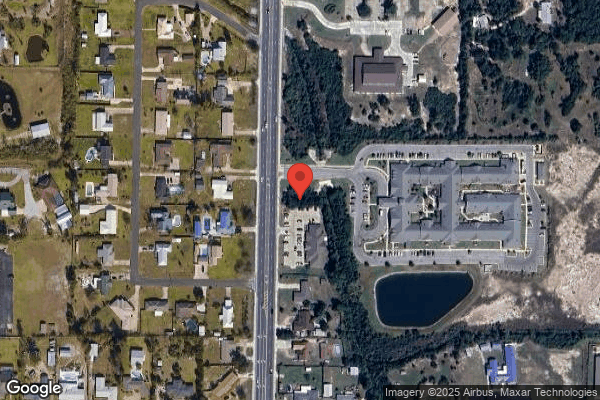

3212 JENKS AVENUE, PANAMA CITY, FL 32405 (850) 771-1521
For profit - Individual 101 Beds PRUITTHEALTH Data: November 2025
Trust Grade
80/100
#261 of 690 in FL
Last Inspection: April 2025

Within standard 12-15 month inspection cycle. Federal law requires annual inspections.

Overview

PruittHealth - Panama City has a Trust Grade of B+, indicating it is recommended and above average in quality. It ranks #261 out of 690 facilities in Florida, placing it in the top half, but is #5 out of 5 in Bay County, meaning there are better options nearby. The facility's trend is worsening, with issues increasing from 1 in 2022 to 6 in 2025, which raises concerns about its oversight. Staffing is a strength, with a 4/5 rating and RN coverage better than 76% of Florida facilities, though turnover is at 50%, which is average for the state. While there have been no fines, there are concerning incidents, such as failing to report allegations of missing narcotics and neglecting to cover a resident's urinary catheter bag, both of which compromise residents' dignity and safety.

Trust Score
B+
80/100
In Florida
#261/690
Top 37%
Safety Record
Low Risk
No red flags
Inspections
Getting Worse
1 → 6 violations
Staff Stability
⚠ Watch
50% turnover. Above average. Higher turnover means staff may not know residents' routines.
Penalties
✓ Good
No fines on record. Clean compliance history, better than most Florida facilities.
Skilled Nurses
✓ Good
Each resident gets 50 minutes of Registered Nurse (RN) attention daily — more than average for Florida. RNs are trained to catch health problems early.
Violations
○ Average
7 deficiencies on record. Average for a facility this size. Mostly minor or procedural issues.
★★★★☆
4.0
Overall Rating
★★★★☆
4.0
Staff Levels
★★★★☆
4.0
Care Quality
★★★★☆
4.0
Inspection Score
Stable
2022: 1 issues
2025: 6 issues

The Good

  • 4-Star Staffing Rating · Above-average nurse staffing levels
  • 4-Star Quality Measures · Strong clinical quality outcomes
  • Full Sprinkler Coverage · Fire safety systems throughout facility
  • No fines on record

Facility shows strength in staffing levels, quality measures, fire safety.

The Bad

Staff Turnover: 50%

Near Florida avg (46%)

Higher turnover may affect care consistency

Chain: PRUITTHEALTH

Part of a multi-facility chain

Ask about local staffing decisions and management

The Ugly 7 deficiencies on record

Aug 2025 1 deficiency
CONCERN (D) 📢 Someone Reported This

A family member, employee, or ombudsman was alarmed enough to file a formal complaint

Potential for Harm - no one hurt, but risky conditions existed

Report Alleged Abuse (Tag F0609)

Could have caused harm · This affected 1 resident

**NOTE- TERMS IN BRACKETS HAVE BEEN EDITED TO PROTECT CONFIDENTIALITY** Based on record review, staff interview, and policy review, the facility failed to report all alleged violations of misappropria...

Read full inspector narrative →
**NOTE- TERMS IN BRACKETS HAVE BEEN EDITED TO PROTECT CONFIDENTIALITY** Based on record review, staff interview, and policy review, the facility failed to report all alleged violations of misappropriation of resident property to the State Survey Agency and adult protective services for 1 of 1 sampled allegations of misappropriation of resident property. (Resident #1)The findings include:During a review of the facility investigation documentation for an alleged drug diversion, it was revealed on [DATE] that the Director of Health Services (DHS) was made aware of a possible drug diversion for a card of 59 oxycodone (narcotic pain medication) 10 mg tablets for Resident #1. The card of oxycodone was missing and the narcotic sheet for the oxycodone was located in medical records with a line drawn through the sheet. On [DATE] at 11:56 AM, the DHS called Staff A (Licensed Practical Nurse) and requested she return to the facility for a meeting. On [DATE] at 12:30 PM, Staff A returned to the facility and met with the DHS and Facility Administrator. Staff A was asked where the missing card of 59 oxycodone 10 mg tablets was located. Staff A first stated that she destroyed them in the medication room since the resident had expired. After further questioning regarding Staff A not following the policy for destroying medications, she then stated she took all 59 oxycodone tablets home, and she could go home and get them. On [DATE] at 2:30 PM, Staff A returned to the facility with a full card of 59 tablets of Oxycodone 10 mg tablets which was taped completely on the back of the card with black electrical tape. The tablets were verified to be Oxycodone tablets by the pharmacist. An interview was conducted with the DHS on [DATE] at 3:07 PM. She stated she did not consider the drug diversion an allegation of misappropriation of property and did not report it as a federal report to the State Agency. A follow-up interview was conducted with the DHS on [DATE] at 8:32 AM. She stated the facility did not report the drug diversion to adult protective services because they only followed the adverse incident path. The facility policy for Investigation of Patient Abuse, Neglect, Exploitation, Mistreatment, and Misappropriation of Property (revised [DATE]) revealed on page 3, .a written report of the investigation and follow-up should be submitted to the appropriate agency within five working days of the occurrence, unless otherwise indicated. If indicated, the Ombudsman and the law enforcement agency should also be notified. Review of the facility policy for Controlled Substances for Healthcare Centers (revised [DATE]) revealed on page 8: any major discrepancy, a pattern of discrepancies, or evidence of apparent criminal activity will be reported to the Administrator and the Consultant Pharmacist. A determination will be made by the Administrator, the Consultant Pharmacist and executive management staff concerning possible notification of police or other law enforcement agencies and any other action to be taken.
Apr 2025 5 deficiencies
CONCERN (D)

Potential for Harm - no one hurt, but risky conditions existed

Resident Rights (Tag F0550)

Could have caused harm · This affected 1 resident

Based on observations, record review, and staff interviews, the facility failed to honor the resident's right to dignity by leaving a urinary catheter bag uncovered for 1 of 2 residents reviewed for d...

Read full inspector narrative →
Based on observations, record review, and staff interviews, the facility failed to honor the resident's right to dignity by leaving a urinary catheter bag uncovered for 1 of 2 residents reviewed for dignity. (Resident #50) The findings include: Observations of Resident #50 were conducted on 4/6/25 at 1:07 PM, 4/7/25 at 11:48 AM, 4/7/25 at 3:06 PM, and 4/8/25 at 8:29 AM. During all observations, the resident was in bed and had a urinary catheter bag attached to the bedside. The catheter bag was not covered during any of the observations. Another observation of Resident #50 was conducted with the Director of Health Services (DHS) on 4/8/25 at 10:00 AM. The resident was in bed and facing the open doorway to her room. The urinary catheter bag was uncovered, attached to the bed, and visible from the doorway. At this time, the DHS stated the urinary catheter should be covered. A review of the resident's medical record revealed the resident had a current physician order for a urinary catheter. An interview was conducted with the Corporate Nurse Consultant (CNC) on 4/8/25 at 3:15 PM. The CNC reported the facility did not have a policy that refered to covering a urinary catheter.
CONCERN (D)

Potential for Harm - no one hurt, but risky conditions existed

Deficiency F0554 (Tag F0554)

Could have caused harm · This affected 1 resident

**NOTE- TERMS IN BRACKETS HAVE BEEN EDITED TO PROTECT CONFIDENTIALITY** Based on observations, resident interviews, staff interview, record review, and policy review, the facility failed to ensure the...

Read full inspector narrative →
**NOTE- TERMS IN BRACKETS HAVE BEEN EDITED TO PROTECT CONFIDENTIALITY** Based on observations, resident interviews, staff interview, record review, and policy review, the facility failed to ensure the interdisciplinary team assessed and determined residents were capable of self-administration of medications prior to allowing 3 of 20 sampled residents to self-administer medications. (Resident #16, #41, and #56) The findings include: Resident #16 An observation of Resident #16 was conducted on 4/6/25 at 11:41 AM. The resident was up in a wheelchair in his room. A small medication containing 2 white pills was observed to be on the overbed table. (Photographic evidence was obtained.) Resident #16 was interviewed and indicated the pills were Tylenol. An interview was conducted with Employee F (licensed practical nurse) on 4/6/25 at 2:32 PM. She stated she did not leave the Tylenol at the bedside and the resident was assessed to self-administer only his eye drops. An interview was conducted with the Director of Health Services (DHS) on 4/7/25 at 12:59 PM. The DHS stated the resident reported a nurse brought him the Tylenol when he was in the restroom and he asked the nurse to leave them so he could take the Tylenol when he exited the restroom. He reported he forgot to take the Tylenol when he exited the restroom. A review of Resident #16's medical record revealed an observation form for self-administration of medications dated 8/9/24 indicating the resident was only allowed to self administer his eye drops. Resident #56 An observation of Resident #56 was conducted on 4/6/25 at 10:52 AM. The resident was sitting in a chair in his room. A bottle of [NAME] nasal spray was observed to be sitting on the bedside table. (Photographic evidence was obtained) At this time, the resident stated he purchased the nasal spray and was not sure if the nursing staff was aware he had the spray. He stated he had been administering the [NAME] nasal spray to himself. An interview was conducted with Employee F on 4/6/25 at 2:29 PM. Employee F stated the resident was not prescribed [NAME] nasal spray, medications were not supposed to be stored at the bedside, and the resident had not been assessed to self-administer the nasal spray. Resident #41: On 04/06/25 at 10:53 AM and 1:57 PM, Resident #41 was observed with a medicine cup with medications in it on the bedside table. (Photographic evidence obtained) On 04/06/25 at 02:30 PM, Employee F was interviewed regarding the medications at the bedside. She stated she was very busy at this time. On 04/07/25 at 08:54 AM, Resident #41 was once again observed with a medicine cup with medication in it at the bedside table. Staff K, a Registered Nurse, was interviewed concerning Resident #41. She apologized and proceeded to remove the medications from the bedside table. On 04/07/25 at 01:20 PM, the Director of Health Services (DHS) was interviewed regarding the medications found at the bedside for two days. She stated that Resident #41 was not assessed for self-medication and this should not have occurred. On 04/07/25, a record review of Resident #41 confirmed there was not a physician order or a care plan for medication self-administration. Review of the facility policy for Self-Administration Assessment Form (revised 1/28/20) reveals each patient/resident who desires to self-administer medication is permitted to do so if the healthcare center's Licensed Nurse and physician have determined that the practice would be safe for the resident and the other residents of the healthcare center. If the resident desires to self-administer medications, an assessment is conducted by the Licensed Nurse to asses the individual's cognitive, physical, and visual ability to carry out this responsibility. Bedside storage of medications is permitted only when it does not present a risk to confused residents who wander into the rooms of, or room with, residents who self-administer. The manner of storage prevents access by other residents.
CONCERN (D)

Potential for Harm - no one hurt, but risky conditions existed

Deficiency F0657 (Tag F0657)

Could have caused harm · This affected 1 resident

Based on observations, record review, staff interviews, and policy review, the facility failed to revise the plan of care to reflect refusal of treatment for 1 of 2 sampled residents reviewed for limi...

Read full inspector narrative →
Based on observations, record review, staff interviews, and policy review, the facility failed to revise the plan of care to reflect refusal of treatment for 1 of 2 sampled residents reviewed for limited range of motion. (Resident #35) The findings include: Observations of Resident #35 were conducted on 4/6/25 at 11:03 AM, 4/7/25 at 11:45 AM, 4/7/25 at 3:02 PM, and 4/8/25 at 8:34 AM. The resident was in bed and her left hand was observed to be contracted into a fist during the observations and no splint device was in place. Resident #35's quarterly minimum data set (MDS), with an assessment reference date (ARD) of 2/20/25, indicated that the resident has functional limitation in her range of motion of one upper extremity and that the resident was not receiving any therapy, range of motion services, splinting, or bracing. The diagnosis list revealed that the resident had a diagnosis of contracture to left hand added on 3/23/23. A review of the resident's plan of care dated 10/4/23 and revised 3/4/25 revealed that the resident required splint/brace assistance to her left elbow and hand. The restorative nursing intervention care plan indicated that staff should follow the guidelines of occupational therapy: check for any skin compromised areas, gently extend fingers, place finger separated palm protector hand splint on her left hand, tolerating up to 8 hours once a day. The care plan did not include any resident refusal of the splint treatment. An interview was conducted with Employee H (a Certified Nursing Assistant) on 4/8/25 at 8:51 AM. She stated that Resident #35's left hand was badly contracted and turned outward. The resident holds her left hand to her chest and has a fit if it is stretched. Employee H stated that most of the time she is not able to place the splints on the resident because the resident stated they hurt too much. She stated, at times, the resident's left hand had an odor if staff were not able to clean the hand. An interview was conducted with Employee J (the Registered Nurse in charge of restorative care) on 4/8/25 at 9:11 AM. She stated that Resident #35 was on the restorative program for splinting of the left hand and elbow. She stated that the resident does not like to wear the splints. She reviewed the point of care splinting documentation for the last 13 days and stated the resident had refused the splints on 5 days, the splints were applied 2 days, and the splints were not documented as performed for 6 days. An additional interview was conducted with Employee J on 4/8/25 at 11:14 AM. She stated that Resident #35 had, at times, refused the splints to the hand and elbow since the care plan was initiated in 2023. An interview was conducted with Employee I (the Licensed Practical Nurse in charge of care plans) on 4/8/25 at 11:23 AM. Employee I stated that, if the resident was refusing splinting, the care plan should have been updated to include her refusal of care. The policy for Care Plans (revised 7/27/23) states: Care Plan Review and Update: 1. Comprehensive care plans should be reviewed not less than quarterly according to the OBRA MDS schedule, following the completion of the assessment. Care plan updates/ reviews will be performed within 7 days of each quarterly assessment, each acute change in condition, and as needed following each hospital stay. 2. Discontinued problems, goals or approaches should be indicated directly on the care plan. A line should be drawn through the discontinued item. Updates to the care plans should be made with any changes in condition at the time the change in condition occurred. For MatrixCare users, all updates are made electronically. 3. All updates to care plans are to be dated and signed. The Master Care Plan will be electronically updated and printed following the completion of Comprehensive OBRA assessments. For MatrixCare users, Care Plans are maintained electronically. 4. Care plans will be updated by nurses, Case Mix Directors (CMD), or any other interdisciplinary team member so that the care plan will reflect the patient/resident's needs at any given moment.
CONCERN (D)

Potential for Harm - no one hurt, but risky conditions existed

Quality of Care (Tag F0684)

Could have caused harm · This affected 1 resident

Resident #39 Observations of Resident #39 were conducted on 4/7/25 at 2:07 PM, 4/7/25 at 11:51 AM, and 4/7/25 at 3:09 PM. During these observations, the resident was in bed and an undated pink dressin...

Read full inspector narrative →
Resident #39 Observations of Resident #39 were conducted on 4/7/25 at 2:07 PM, 4/7/25 at 11:51 AM, and 4/7/25 at 3:09 PM. During these observations, the resident was in bed and an undated pink dressing was observed on her right lower leg. The resident was not able to recall when the dressing was last changed. Another observation of Resident #39 was conducted with the Director of Health Services (DHS) on 4/8/25 at 1:41 PM. The resident was in bed and continued to have an undated pink dressing on her right lower leg. At this time, the DHS confirmed the dressing was not dated and stated all dressings should be dated. A telephone interview was conducted with Employee G (licensed practical nurse) on 4/9/25 at 9:18 AM. Employee G stated she forgot to date the dressing she applied to Resident #39's leg on 4/7/25. A review of the resident's current physician orders revealed an order dated 4/3/25 to cleanse the wound on the right lower leg with normal saline, pat dry, and apply a dry dressing once a day on Monday, Wednesday, and Friday until healed. A review of the undated facility procedure for Dressing a Wound revealed that the dressing applied should be labeled with the date, time and initials of the individual who applied the dressing. Based on observations, interviews, review of the electronic medical record (EMR), and review of the facility's policies and procedures, the facility failed to ensure that residents received treatment and care in accordance with professional standards of practice for 2 of 19 residents sampled. (Resident #295 and #39) The findings include: Resident #295 On 04/06/25 at approximately 03:39 PM, an observation was made of Resident #295's central venous catheter (CVC) (a long, flexible tube inserted into a vein, to deliver fluids, medications, and blood products) in the right upper extremity (RUE). The transparent dressing on the CVC was dated 3/27/25. On 04/07/25 at approximately 12:28 PM, Resident #295's transparent dressing on the CVC in the RUE still had a date of 3/27/25. When interviewed about it, Resident #295 stated, the nurse is supposed to change the dressing today. However, on 04/08/25 at approximately 09:54 AM, thes CVC dressing was still dated 3/27/25. The resident stated, yesterday the nurse told me she was going to have to find the supplies to change the dressing, but the dressing was not changed. On 04/08/25 at approximately 12:37 PM, an interview was conducted with Staff D, a licensed practical nurse (LPN). The LPN confirmed that the dressing on Resident #295's CVC in the RUE was dated 3/27/25. The LPN confirmed there was not an order in the EMR to change the dressing or orders for care of the central line. On 04/08/25 at approximately 01:05 PM, an interview with the Director of Health Services (DHS) was conducted. The DHS stated, when a resident is admitted with an intravenous catheter (IV) of any type there should be orders to care for the IV. During a review of active and discontinued orders in the EMR, no orders for care of a CVC or dressing changes for the CVC were found. A document found in the EMR named Patient Eval, dated 3/31/25 indicated IV access- (MIDLINE). (photographic evidence obtained). A document found in the EMR named 3008, which was a discharge summary and transfer form from the hospital to the long-term care facility dated 3/27/25, indicated Resident #295 had a Midline inserted 3/27/25. (photographic evidence obtained). The facility policy named Central Infusion Access Devices (effective 11/25/2015, reviewed: 6/18/24 and revised 4/17/19) states that the dressing should be changed once a week, flushing all unused lumen per central vascular access device protocol.
CONCERN (D)

Potential for Harm - no one hurt, but risky conditions existed

Deficiency F0761 (Tag F0761)

Could have caused harm · This affected 1 resident

Based on observations and interviews, the facility failed to store all drugs and biologicals in locked compartments for 1 of 3 medication administrations observed on 4/8/2025. The findings include: ...

Read full inspector narrative →
Based on observations and interviews, the facility failed to store all drugs and biologicals in locked compartments for 1 of 3 medication administrations observed on 4/8/2025. The findings include: On 4/8/25 at approximately 9:19 AM, an observation of medication administration was conducted with Staff A, a licensed practical nurse (LPN). The LPN began pulling medications for a resident. The LPN then left the cart in the hall with the cup of medication unsecured on top of the cart while she went into a resident's room to take her temperature. The LPN could not see the medication that was left unattended while she was in the room. When the nurse came out of the room, she acknowledged that she left the medications unsecured and outside of the locked compartment in the medication cart.
Oct 2022 1 deficiency
CONCERN (D)

Potential for Harm - no one hurt, but risky conditions existed

Deficiency F0554 (Tag F0554)

Could have caused harm · This affected 1 resident

Based on observation, interview and record review, the facility failed to ensure the interdisciplinary team assessed and determined a resident was capable of self-administration of medications prior t...

Read full inspector narrative →
Based on observation, interview and record review, the facility failed to ensure the interdisciplinary team assessed and determined a resident was capable of self-administration of medications prior to allowing 1 of 21 sampled residents to self-administer medications. (Resident #54) The findings include: An observation of Resident #54 was conducted on 10/24/22 at 10:35 AM. One Albuterol inhaler and one Incruse Ellipta inhaler was observed sitting on the over bed table. The resident stated she forgot to give the inhalers back to the nurse and confirmed the nurse left the inhalers for her to self-administer. She stated the nurse would come back and get them later. An interview was conducted with Employee D (Licensed Practical Nurse) on 10/24/22 at 11:00 AM. She stated she did not know where the Albuterol inhaler came from and has picked up the inhalers from Resident #54's room. She leaves the Incruse in her room to give the resident time to take it, then goes back to the room and retrieves the medication. She is not sure if Resident #54 has been evaluated to self-administer her medications. She did not watch her take the medication. She confirmed the facility does not allow her to leave medications unlocked at the bedside. Review of Resident #54's electronic medical record revealed a quarterly self-administration of medication observation dated 9/3/22 indicating the resident does not want to self-administer medications and staff are to administer the resident's medications. The evaluation section revealed the resident is not appropriate to self-administer any medications. Review of the admission minimum data set with an assessment reference date of 9/7/22 revealed the resident has a BIMS (brief interview for mental status) of 14 indicating she is cognitively intact. Review of the facility policy for Self-Administration Assessment Form (revised 1/28/20) revealed each patient/resident who desires to self-administer medication is permitted to do so if the healthcare center's Licensed Nurse and physician have determined that the practice would be safe for the resident and the other residents of the healthcare center. If the resident desires to self-administer medications, an assessment is conducted by the Licensed Nurse to assess the individual's cognitive, physical, and visual ability to carry out this responsibility. Bedside storage of medications is permitted only when it does not present a risk to confused residents who wander into the rooms of, or room with, residents who self-administer. The manner of storage prevents access by other residents.
Understanding Severity Codes (click to expand)
Life-Threatening (Immediate Jeopardy)
J - Isolated K - Pattern L - Widespread
Actual Harm
G - Isolated H - Pattern I - Widespread
Potential for Harm
D - Isolated E - Pattern F - Widespread
No Harm (Minor)
A - Isolated B - Pattern C - Widespread

Questions to Ask on Your Visit

  • "Can I speak with families of current residents?"
  • "What's your RN coverage like on weekends and overnight?"

Our Honest Assessment

Strengths
  • • Grade B+ (80/100). Above average facility, better than most options in Florida.
  • • No major safety red flags. No abuse findings, life-threatening violations, or SFF status.
  • • No fines on record. Clean compliance history, better than most Florida facilities.
Concerns
  • • No significant concerns identified. This facility shows no red flags across CMS ratings, staff turnover, or federal penalties.
Bottom line: Generally positive indicators. Standard due diligence and a personal visit recommended.

About This Facility

What is Pruitthealth - Panama City's CMS Rating?

CMS assigns PRUITTHEALTH - PANAMA CITY an overall rating of 4 out of 5 stars, which is considered above average nationally. Within Florida, this rating places the facility higher than 99% of the state's 100 nursing homes. This rating reflects solid performance across the metrics CMS uses to evaluate nursing home quality.

How is Pruitthealth - Panama City Staffed?

CMS rates PRUITTHEALTH - PANAMA CITY's staffing level at 4 out of 5 stars, which is above average compared to other nursing homes. Staff turnover is 50%, compared to the Florida average of 46%.

What Have Inspectors Found at Pruitthealth - Panama City?

State health inspectors documented 7 deficiencies at PRUITTHEALTH - PANAMA CITY during 2022 to 2025. These included: 7 with potential for harm.

Who Owns and Operates Pruitthealth - Panama City?

PRUITTHEALTH - PANAMA CITY is owned by a for-profit company. For-profit facilities operate as businesses with obligations to shareholders or private owners. The facility is operated by PRUITTHEALTH, a chain that manages multiple nursing homes. With 101 certified beds and approximately 95 residents (about 94% occupancy), it is a mid-sized facility located in PANAMA CITY, Florida.

How Does Pruitthealth - Panama City Compare to Other Florida Nursing Homes?

Compared to the 100 nursing homes in Florida, PRUITTHEALTH - PANAMA CITY's overall rating (4 stars) is above the state average of 3.2, staff turnover (50%) is near the state average of 46%, and health inspection rating (4 stars) is above the national benchmark.

What Should Families Ask When Visiting Pruitthealth - Panama City?

Based on this facility's data, families visiting should ask: "Can I visit during a mealtime to observe dining assistance and food quality?" "How do you handle medical emergencies, and what is your hospital transfer rate?" "Can I speak with family members of current residents about their experience?"

Is Pruitthealth - Panama City Safe?

Based on CMS inspection data, PRUITTHEALTH - PANAMA CITY has a clean safety record: no substantiated abuse findings (meaning no confirmed cases of resident harm), no Immediate Jeopardy citations (the most serious violation level indicating risk of serious injury or death), and is not on the Special Focus Facility watch list (a federal program monitoring the lowest-performing 1% of nursing homes). The facility has a 4-star overall rating and ranks #1 of 100 nursing homes in Florida. While no facility is perfect, families should still ask about staff-to-resident ratios and recent inspection results during their visit.

Do Nurses at Pruitthealth - Panama City Stick Around?

PRUITTHEALTH - PANAMA CITY has a staff turnover rate of 50%, which is about average for Florida nursing homes (state average: 46%). Moderate turnover is common in nursing homes, but families should still ask about staff tenure and how the facility maintains care continuity when employees leave.

Was Pruitthealth - Panama City Ever Fined?

PRUITTHEALTH - PANAMA CITY has no federal fines on record. CMS issues fines when nursing homes fail to meet care standards or don't correct problems found during inspections. The absence of fines suggests the facility has either maintained compliance or corrected any issues before penalties were assessed. This is a positive indicator, though families should still review recent inspection reports for the full picture.

Is Pruitthealth - Panama City on Any Federal Watch List?

PRUITTHEALTH - PANAMA CITY is not on any federal watch list. The most significant is the Special Focus Facility (SFF) program, which identifies the bottom 1% of nursing homes nationally based on persistent, serious quality problems. Not being on this list means the facility has avoided the pattern of deficiencies that triggers enhanced federal oversight. This is a positive indicator, though families should still review the facility's inspection history directly.