ST ANDREWS BAY SKILLED NURSING AND REHABILITATION

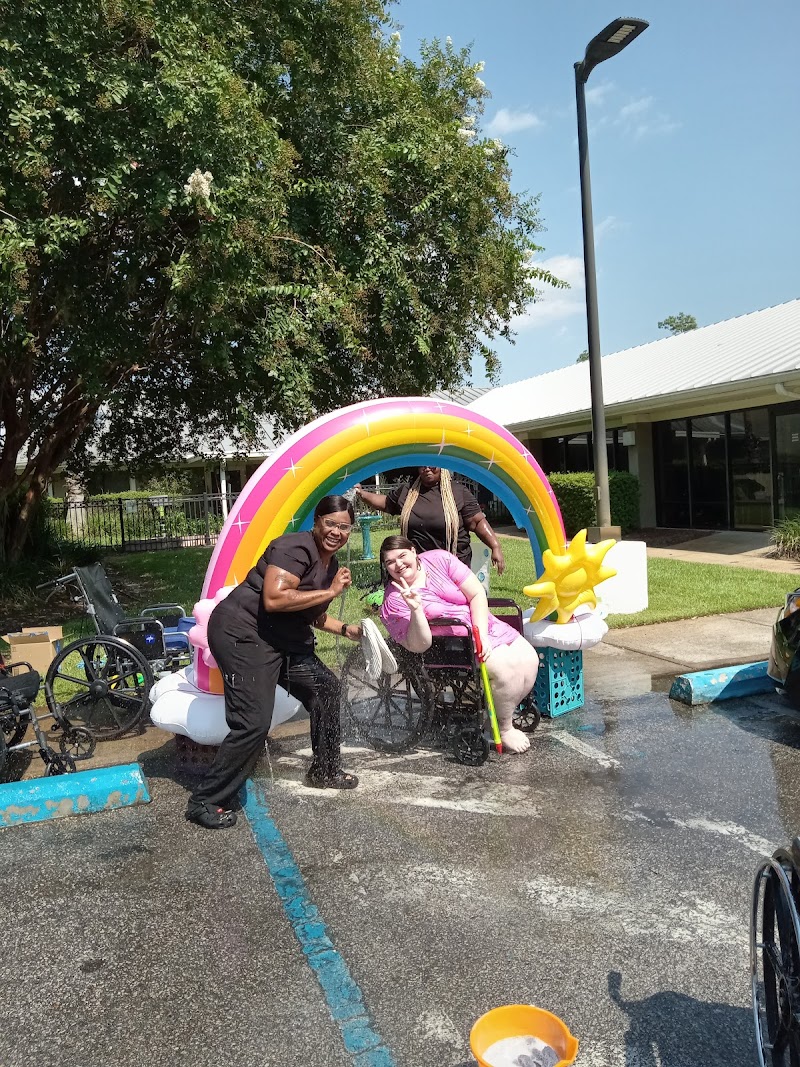
2100 JENKS AVE, PANAMA CITY, FL 32405 (850) 763-0446
For profit - Limited Liability company 120 Beds SIMCHA HYMAN & NAFTALI ZANZIPER Data: November 2025
Trust Grade
90/100
#119 of 690 in FL
Last Inspection: May 2025

Inspected within the last 6 months. Data reflects current conditions.

Overview

St. Andrews Bay Skilled Nursing and Rehabilitation has received an excellent Trust Grade of A, indicating a high level of care and reliability. It ranks #119 out of 690 facilities in Florida, placing it in the top half, and #2 out of 5 in Bay County, meaning there is only one local facility that is rated higher. The facility is improving, with issues decreasing from 2 in 2024 to 1 in 2025. Staffing is average with a 3/5 star rating and a turnover rate of 52%, which is close to the state average. While there have been no fines reported, which is a positive sign, the nursing home currently has less RN coverage than 98% of other facilities in Florida, which raises some concerns about the level of nursing oversight. Specific incidents noted in inspections include a failure to monitor the long-term use of certain medications for a resident, which could have serious implications for their health, and another case where a resident's care plan was not properly implemented, potentially affecting their comfort and safety. Additionally, a resident expressed significant pain but there were discrepancies in their medication records, suggesting possible issues with pain management. Overall, while St. Andrews Bay has many strengths, particularly in its ratings and absence of fines, families should consider the staffing and medication management concerns when making their decision.

Trust Score
A
90/100
In Florida
#119/690
Top 17%
Safety Record
Low Risk
No red flags
Inspections
Getting Better
2 → 1 violations
Staff Stability
⚠ Watch
52% turnover. Above average. Higher turnover means staff may not know residents' routines.
Penalties
✓ Good
No fines on record. Clean compliance history, better than most Florida facilities.
Skilled Nurses
⚠ Watch
Each resident gets only 18 minutes of Registered Nurse (RN) attention daily — below average for Florida. Fewer RN minutes means fewer trained eyes watching for problems.
Violations
○ Average
8 deficiencies on record. Average for a facility this size. Mostly minor or procedural issues.
★★★★★
5.0
Overall Rating
★★★☆☆
3.0
Staff Levels
★★★☆☆
3.0
Care Quality
★★★★★
5.0
Inspection Score
Stable
2024: 2 issues
2025: 1 issues

The Good

  • Full Sprinkler Coverage · Fire safety systems throughout facility
  • No fines on record

Facility shows strength in fire safety.

The Bad

Staff Turnover: 52%

Near Florida avg (46%)

Higher turnover may affect care consistency

Chain: SIMCHA HYMAN & NAFTALI ZANZIPER

Part of a multi-facility chain

Ask about local staffing decisions and management

The Ugly 8 deficiencies on record

May 2025 1 deficiency
CONCERN (D)

Potential for Harm - no one hurt, but risky conditions existed

Drug Regimen Review (Tag F0756)

Could have caused harm · This affected 1 resident

**NOTE- TERMS IN BRACKETS HAVE BEEN EDITED TO PROTECT CONFIDENTIALITY** Based on record review, staff interviews, and policy review, the facility failed to ensure that the consultant pharmacist identi...

Read full inspector narrative →
**NOTE- TERMS IN BRACKETS HAVE BEEN EDITED TO PROTECT CONFIDENTIALITY** Based on record review, staff interviews, and policy review, the facility failed to ensure that the consultant pharmacist identified and reported irregularities related to the long-term use of an anti-psychotic medication and thyroid medication for 1 of 5 sampled residents reviewed for unnecessary medications. (Resident #20) The findings include: Resident #20's medical record revealed the resident was admitted to the facility on [DATE] with a diagnosis of Diabetes Mellitus. The current physician's orders revealed the resident received Levothyroxine Sodium 50 mcg (thyroid medication) by mouth daily for hypothyroidism since 6/16/23 and Abilify 15 mg tablet (anti-psychotic medication) orally daily for bipolar disorder with an original start date for the medication of 11/15/22. The record revealed no current physician's orders for laboratory testing related to these medications. The physician's order history revealed no laboratory tests had ever been ordered to check the resident's thyroid stimulating hormone (TSH) or free T4 (a test to assess thyroid function and the levels of the active thyroid hormone) since the resident had started the Levothyroxine Sodium in 2023. Additionally, no physician's orders to routinely monitor the resident's fasting blood glucose related to the use of Abilify. The most recent laboratory data in the resident's record was from a hospital visit on 2/8/24. The result of the laboratory data on 2/8/24 revealed the resident's glucose was abnormal. The last 12 months of consultant pharmacist medication regimen reviews (5/2024- 4/2025) revealed no recommendation to assess a TSH, free T4, or fasting blood glucose related to the use of the Levothyroxine Sodium and Abilify. The package insert manufacturer information for Abilify tablets accessed at: https://www.accessdata.fda.gov/drugsatfda_docs/label/2025/021436s046s050lbl pdf#page=66 on 5/22/25 at 2:40 PM revealed the following: Patients with an established diagnosis of diabetes mellitus who are started on atypical antipsychotics should be monitored regularly for worsening of glucose control. Patients with risk factors for diabetes mellitus (e.g., obesity, family history of diabetes) who are starting treatment with atypical antipsychotics should undergo fasting blood glucose testing at the beginning of treatment and periodically during treatment. Any patient treated with atypical antipsychotics should be monitored for symptoms of hyperglycemia including polydipsia, polyuria, polyphagia, and weakness. Patients who develop symptoms of hyperglycemia during treatment with atypical antipsychotics should undergo fasting blood glucose testing. In some cases, hyperglycemia has resolved when the atypical antipsychotic was discontinued; however, some patients required continuation of anti-diabetic treatment despite discontinuation of the suspect drug. An interview was conducted with the Director of Nursing (DON) on 5/21/25 at 3:57 PM. The DON stated the provider was ordering stat laboratory testing and she would attempt to obtain the blood sample. The DON confirmed there was no other evidence of laboratory testing completed for the resident. A telephone interview was conducted with the Consultant Pharmacist on 5/22/25 at 9:23 AM. He stated nothing really comes to mind for any laboratory testing that should be completed for the long-term use of Abilify, but he would look it up. He would expect at least an annual TSH and T4 test with the use of Levothyroxine. He then stated he was not aware of any recommended laboratory tests to be conducted routinely with the use of Abilify. The facility's policy for Consultant Pharmacist Reports IIIA1: Medication Regimen Review (May 2022) states, The consultant pharmacist performs a comprehensive review of each resident's medication regimen and clinical record at least monthly. The medication regimen review (MRR) includes evaluating the resident's response to medication therapy to determine that the resident maintains the highest practicable level of functioning and preventing or minimizing adverse consequences related to medication therapy. The MRR also involves a thorough review of the resident records and may include collaboration with other members of the interdisciplinary team, collaboration with the resident, family members or other resident representatives. MRR also involves reporting of findings with recommendations for improvement. All findings and recommendations are reported to the director of nursing and the attending physician, the medical director and the administrator.
Feb 2024 2 deficiencies
CONCERN (D)

Potential for Harm - no one hurt, but risky conditions existed

Comprehensive Care Plan (Tag F0656)

Could have caused harm · This affected 1 resident

Based on observation, interview, record review the facility failed to implement the care plan of 1 of 27 sampled residents. (Resident #89) The findings include: Observations: On 02/12/2024 at 07:15 PM...

Read full inspector narrative →
Based on observation, interview, record review the facility failed to implement the care plan of 1 of 27 sampled residents. (Resident #89) The findings include: Observations: On 02/12/2024 at 07:15 PM, an observation was made of Resident #89 lying in bed on his back with the head of his bed elevated at a 30-degree angle. On 02/13/2024 at 09:00 AM, Resident #89 was observed lying on his back with his head turned to right side. No wedge or extra pillow was observed to be on the bed. On 02/13/2024 at 11:30 AM, an observation was made of Resident #89 lying in bed on his back with his head straight. On 02/13/2024 at 03:12 PM, an observation of Resident #89 was made lying on his back with the head of the bed elevated. This was an indication that the resident had been pulled up in bed. He was still lying on his back. On 2/14/2024 at 10:10 AM, an observation of Resident #89 revealed him lying in bed on his back. On 02/14/2024 at 11:24 AM, Resident #89 was observed lying on his back with no pillow or wedge on the bed. On 02/15/24 at 09:36 AM, Resident #89 was observed lying on his back in bed with the head of bed elevated. Record review: On approximately 02/14/2024, a record review was conducted for Resident #89. Resident #89 had a care plan initiated for bed mobility on 05/24/2023 indicating that Resident #89 required assistance by 2 staff to turn and reposition in bed every 2 hours and as needed due to a diagnosis of Hemiplegia and Hemiparesis Cerebral Infarction affecting left non dominant side that had impaired his mobility. Interviews: On 02/14/2024 at 02:49 PM, an interview was conducted with Certified Nurse Assistant (CNA) F. She explained she tries to do frequent checks on Resident #89 since he can't reposition himself, and he is often soiled. She indicated that she had not turned Resident #89 at all today. On 02/15/2024 at approximately 09:40 AM, an interview was conducted with Licensed Practical Nurse (LPN) E. LPN E explained she asked the CNA about Resident #89 being turned yesterday. She indicated that the CNA's place a pillow under the resident. On 02/25/2024 at 10:15 AM, the Director of Nursing was interviewed. She stated that documentation should be in the Electronic Health Record indicating where staff are turning residents and that staff should be using a wedge or pillow every 2 hours. She acknowledged that Resident #89 had not been positioned as ordered. She did state that Certified Nurse Assistants are trained on care plans and positioning upon hire.
CONCERN (D)

Potential for Harm - no one hurt, but risky conditions existed

Medical Records (Tag F0842)

Could have caused harm · This affected 1 resident

Based on resident interview, record reviews, staff interviews, and facility policy review, the facility failed to ensure complete and accurate medical records for 1 of 1 residents sampled for pain man...

Read full inspector narrative →
Based on resident interview, record reviews, staff interviews, and facility policy review, the facility failed to ensure complete and accurate medical records for 1 of 1 residents sampled for pain management. The findings include: On 2/12/24 at 7:38 PM, an interview was conducted with Resident #21. During the interview, the resident was grimacing and indicated that she had constant paint of a level of 8-9 out of 10 (on a scale of 0 being no pain and 10 being the worst pain). She further stated the last time she received pain medication was 4:00 PM that day. A review of Resident #21's medical record was conducted. A physician's order stated to receive oxycodone (a controlled pain medication) 7.5 mg 1 tablet every 4 hours as needed for acute pain. A review of the resident's Medication Administration Record (MAR) revealed the resident received 14 doses of 1 tablet oxycodone. A review of the resident's narcotic controlled record sheet revealed oxycodone had been documented as pulled 17 times, totaling 17 tablets. There was 1 pill left inside the bottle of a total of 18. On 2/14/24 at 9:14 AM, an interview was conducted with Staff B, a Licensed Practical Nurse (LPN). She reviewed Resident #21's MAR and compared this with the narcotic sheet for oxycodone and verified the amount of pills recorded on the narcotic record sheet and the amount of pills recorded on the MAR did not match. She stated the facility's protocol was to notify the unit manager when a discrepancy occurs. On 2/14/24 at 11:38 AM, an interview was conducted with Director of Nursing (DON). The DON reviewed Resident # 21's narcotic sheet for oxycodone as well as Resident # 21's MAR and stated she was not aware of that discrepancy until this moment. A review of the facility's policy titled Medication Administration (revised 10/23) was conducted. The policy stated, Sign MAR after administration, If medication is a controlled substance, sign narcotic book , and correct any discrepancies and report to nurse manager.
Nov 2022 5 deficiencies
CONCERN (D) 📢 Someone Reported This

A family member, employee, or ombudsman was alarmed enough to file a formal complaint

Potential for Harm - no one hurt, but risky conditions existed

ADL Care (Tag F0677)

Could have caused harm · This affected 1 resident

**NOTE- TERMS IN BRACKETS HAVE BEEN EDITED TO PROTECT CONFIDENTIALITY** Based on observations, interviews, and record reviews the facility failed to provide nail care to dependent residents for 2 of 6...

Read full inspector narrative →
**NOTE- TERMS IN BRACKETS HAVE BEEN EDITED TO PROTECT CONFIDENTIALITY** Based on observations, interviews, and record reviews the facility failed to provide nail care to dependent residents for 2 of 6 residents sampled for Activities for Daily Living (ADL) residents, (Residents #309 and #46). The findings include: Resident #309 An observation was made of resident #309 on 11/1/22 at approximately 12:10 PM. The resident was observed lying in bed, observed multiple long fingernails with brown matter under the nails. An additional observation was made on 11/1/22 at approximately 4:06 PM. The resident's family member was at the bedside and noted the fingernails continued to be long, and dirty, and stated she wants the nails to be trimmed, but doesn't know how to get that done. The fingernail on the forefinger of the right hand was broken to the quick. The family member lifted the sheet to expose the resident's feet. The toenails on both feet were long, thick and yellow and the nails on the left 2nd and 3rd toes were rolled under, embedded in the skin. The nail on the left 5th toe was long, thick, and yellow. Additional observations were made on 11/2/22 at 8:19 AM, 11/2/22 at 9:45 AM, which revealed continued long, dirty nails. A review of record revealed a brief interview for mental status (BIMS) score of 3, which indicates severely impaired cognition. On 11/2/22 at approximately 9:12 AM, an interview was conducted with staff O, certified nursing assistant, (CNA) who stated she was assigned to the resident for the day and stated when she notices a resident's nails are long, she will cut the nails, including the toenails if the resident is not a diabetic. She stated she was not aware of the resident's long nails. On 11/02/22 at approximately 10:00 AM, an observation of the resident and an interview with staff H, Licensed Practical Nurse, (LPN) was conducted. Staff H stated the expectation is that resident's nails are cleaned when they are given a bath, or when needed, and the fingernails should be trimmed to the tip of the finger, unless the resident is diabetic, then the nurse must trim the fingernails. She further stated the CNAs are not allowed to trim the toenails at all. Staff H observed the nails in the surveyor's presence and confirmed the 5th digit on the right hand had brown matter under the nail, and measured the nail as 0.5 centimeters (cm) past the tip of the finger, the left thumb nail had brown matter under the nail, was jagged and measured 0.5 cm beyond the tip of the finger, the forefinger of the left hand was greater than 0.5 cm beyond the end of the fingertip. Staff H confirmed the right great toe was greater than 0.5 cm beyond the tip of the toe, the nail on the 3rd digit on the right foot was curled under and was embedded in the skin at the upper back of the toe, the great toe on the left great toe was greater than 0.5 cm beyond the tip of the toe, and the nails on the 2nd and 3rd digits of the left foot were curled under and embedded into the upper back of the toe. An interview was conducted with the Director of Nurses, (DON) on 11/2/22 at approximately 11:01 AM, who confirmed resident's nails should be trimmed during the bath unless a diabetic, then the nurse should trim them. White, [NAME] Resident #46 An observation was made of resident #46 on 11/1/22 at approximately 12:15 PM. The resident was observed lying in bed, observed multiple long fingernails with brown matter under the nails. Additional observations were made 11/01/22 at 4:06 PM, 11/02/22 at 9:05 AM, and 11/02/22. A review of medical record revealed a diagnosis of psychoses and depression. The record also revealed a brief interview for mental status (BIMS) score of 9, which indicates moderately impaired cognition. On 11/2/22 at approximately 10:30 AM, an observation of the resident and an interview with staff H, Licensed Practical Nurse, (LPN) was conducted. She measured the fingernails and confirmed brown matter under the nails. Measurements included left thumb was 0.5 cm beyond the tip of the finger, left middle finger 0.5 cm beyond the tip of finger and the little finger or pinkie was 1.0 cm beyond the tip of finger. Right index finger was 1.0 cm beyond the tip of finger, right middle finger was 0.5 cm beyond the tip of finger and right pinkie was 1.0 cm beyond the tip of finger. Review of policy titled Nail care implemented on 5/1/21 revealed routine cleaning and inspection of nails will be provided during ADL care on an ongoing basis. The policy further states routine nail care, to include trimming and filing will be provided. Nail care will be provided between scheduled occasion as the need arises.
CONCERN (D)

Potential for Harm - no one hurt, but risky conditions existed

Tube Feeding (Tag F0693)

Could have caused harm · This affected 1 resident

Based on observation, record review, staff interviews, and policy review the facility failed to provide physician ordered treatment to prevent complications of enteral feeding tubes for 1 of 2 sampled...

Read full inspector narrative →
Based on observation, record review, staff interviews, and policy review the facility failed to provide physician ordered treatment to prevent complications of enteral feeding tubes for 1 of 2 sampled residents with enteral feeding tubes. (resident #62) The findings include: Observations of resident #62's Percutaneous Endoscopic Gastrostomy (PEG) tube insertion site were conducted on 10/31/22 at 2:45 PM and 4:21 PM. The dressing on the tube site was observed to be dated 10/27/22 and the resident stated it was supposed to be changed daily. The Director of Nursing (DON) observed the tube site dressing on 10/31/22 at 4:21 PM, and confirmed the dressing on the tube site was dated 10/27/22. A PEG tube is a tube surgically placed into the stomach through the abdominal wall that allows for liquid food to be given. Review of resident #62's electronic medical record revealed a current physician treatment order dated 10/26/21 stating cleanse peg tube site with warm, soapy water once daily and pat dry, apply split sponge to site and secure with tape every day and as needed every night shift. Review of the treatment administration record (TAR) for October 2022 revealed the treatment was signed as completed by nursing staff on October 28, 29, and 30, 2022 and no refusals were documented. The TAR revealed employee B, Licensed Practical Nurse (LPN) signed the treatment was completed on 10/28/22 and employee C, LPN signed the treatment was completed on 10/29/22 and 10/30/22. A telephone interview was conducted with employee B, LPN, on 11/1/22 at 2:52 PM. Employee B, stated the treatment was overlooked and an error. A telephone interview was conducted with employee C, LPN, on 11/1/22 at 3:10 PM. Employee C verified her initials on the treatment record and stated she did not complete a dressing change for resident #62. Review of the facility policy regarding Care of Feeding Tubes (implemented 5/1/21) revealed it is a policy of the facility to utilize feeding tubes in accordance with current clinical standards of practice, with interventions to prevent complications to the extent possible. Direction for staff on how to provide the following care will be provided examination and cleaning of the insertion site in order to identify, lessen, or resolve possible skin irritation and local infection.
CONCERN (D)

Potential for Harm - no one hurt, but risky conditions existed

Food Safety (Tag F0812)

Could have caused harm · This affected 1 resident

Based on observation, staff interview, and policy review the facility failed to ensure staff serve food in a sanitary manner during 1 of 2 dining observations. (lunch 10/31/22) The findings include: A...

Read full inspector narrative →
Based on observation, staff interview, and policy review the facility failed to ensure staff serve food in a sanitary manner during 1 of 2 dining observations. (lunch 10/31/22) The findings include: An observation of the lunch meal was conducted on 10/31/22 at 11:40 AM. Employee A, Certified Nursing Assistant (CNA) was observed to serve a resident a bowl of soup, and touched the eating end of a spoon before handing the spoon to the resident. At 11:45 AM, Employee A, CNA, touched her surgical face mask with her bare hand and pulled it down while speaking to a resident. Employee A then used the same bare hand to serve soup to a resident and did not wash or sanitize her hands after touching her face. An interview was conducted with Employee A on 10/31/22 at 2:30 PM. She stated she had received training regarding safe food handling and should not touch the end of the utensil the resident eats with. She also confirmed she should wash or sanitize her hands after touching her face or mask before serving food. Review of the facility policy regarding Dietary/Food Handling (revised April 2001) revealed food handlers must wash their hands after personal body functions and before handling any food surfaces.
CONCERN (D)

Potential for Harm - no one hurt, but risky conditions existed

Deficiency F0825 (Tag F0825)

Could have caused harm · This affected 1 resident

**NOTE- TERMS IN BRACKETS HAVE BEEN EDITED TO PROTECT CONFIDENTIALITY** Based on observations, interviews and record review, the facility failed to ensure residents who required assistance with eating...

Read full inspector narrative →
**NOTE- TERMS IN BRACKETS HAVE BEEN EDITED TO PROTECT CONFIDENTIALITY** Based on observations, interviews and record review, the facility failed to ensure residents who required assistance with eating/dining received restorative dining services for 1 of 1 resident sampled for weight loss. (Resident #38) The findings include: An observation on 11/01/22 at approximately 8:45 AM, revealed that Resident #38 was observed in her room sitting up in the wheelchair with a sling under her. There was a breakfast tray sitting in front of the resident still covered. She was not eating her breakfast. The bedside table and food were not near the resident. A follow up observation was conducted on 11/01/22 at 9:11 AM, during which staff member Q, Certified Nursing Assistant (CNA) was in the room and brushing the resident #38's hair. The breakfast tray and bedside table were still sitting in the same position as the earlier observation. The surveyor lifted the lid to the breakfast tray to identify what food had been eaten. No food had been consumed from the plate. The CNA then reached over to the bedside table and handed the resident a glass of what appeared to be the ordered vanilla shake. The CNA stated, She will not eat if we give her the shake. A record review was conducted for resident #38 which revealed she had a 29-pound weight loss over the last 4 months, per the facility's weight documentation on 6/22/22 the resident weight 129 pounds, there was no weights for July, on 8/23/22 - 101.2 pounds, on 9/8/22 - 101 pounds, 9/15/22 - 99 pounds, 9/22/22 - 99.4 pounds, 10/4/22 - 98 pounds, 10/18/22 - 99.4 pounds, and on 10/25/22 - 100 pounds. A review of Resident #38's care plan dated 4/22/22 and revised on 10/24/22 revealed a focus area regarding risk for weight variance related to therapeutic diet, mechanically altered diet, gastroesophageal reflux disease and thickened liquids. The resident was to have her trays set up with supervision and cueing and to assist with meals as needed. The resident was to participate in Restorative Dining and needed to be up and in dining room before 11:30. She required extensive assist with eating dated on the 10/24/2022 care plan. Further review of the care plan revealed the goal for Resident #38 was to have no significant weight loss of 5% in 30 days or 7.5 % in 90 days (revised 5/5/22). Care plan interventions dated 8/26/22 restorative dining as ordered. The resident was to have her trays set up with supervision and cueing and to assist with meals as needed. A review of the resident's dietary orders dated 5/24/22 revealed she was to be on a consistent carbohydrate diet with pureed texture, nectar consistency, and fortified foods for additional calories. An order dated 10/21/22 added supplements that included a vanilla house shake two times a day. She was referred to speech therapy on 8/17/22 with documented concerns of takes two hours to feed and will not open mouth wide enough to eat. Review of the quarterly Minimum Data Set (MDS) dated [DATE] revealed Resident #38 had a brief interview for mental status (BIMS) score of 06, indicating severe cognitive impairment. She required supervision and assistance for eating. The resident was non-ambulatory and used a wheelchair for mobility. The resident was to have a mechanically and therapeutic altered diet. Resident #38 had a Significant Change MDS assessment dated [DATE]. The Significant Change MDS indicated weight loss and a current weight of 99 pounds, had lost 10% of her body weight. And that she was a Restorative Dining participant. An interview was conducted on 10/31/22 at approximately 12:11 PM, staff member P, CNA. She stated, It is hit or miss when the food gets here and when the residents are brought down to us. Sometimes everyone is here for meals and sometimes they are not. It is hit or miss. An interview was conducted on 11/01/22 at approximately 9:00 AM, with the Restorative Manager. The Restorative Manager stated she did ask staff S, Licensed Practical Nurse (LPN) to make sure the residents were up this morning for breakfast and brought to the restorative dining area. She stated that no residents were brought to restorative dining. She stated she had approximately six residents in restorative dining. The Restorative Manager stated, She just did not bring them down there like I asked her. An interview was conducted on 11/01/22 at approximately 9:38 AM, staff member T, LPN, who stated, The Restorative Dining residents are supposed to be up by 7 AM daily. The night shift is supposed to have them up. We do have a problem with them doing that. An interview was conducted on 11/02/22 9:51 AM, with the Director of Nursing (DON). She stated there are approximately 6-7 in Restorative Dining. I was just made aware that none of them were up for restorative dining this morning. Our restorative program for Resident # 38 is to cue her to eat. We want to keep our residents as independent as possible, as far as eating. The DON stated that the night shift staff were to get the restorative residents up by 7 AM and that a recent staff meeting had been conducted regarding the need for the Restorative Dining residents to be up and in the dining area by the specified time. The DON stated, I will be addressing this on a different level as far as getting the residents up for restorative dining. An interview was conducted on 11/02/22 at approximately 3:30 PM, with staff member V, Dietician. Staff member V stated there was a list of residents with weight loss and that Resident #38 was to participate in Restorative Services and be supervised by the staff during her meals.
CONCERN (D)

Potential for Harm - no one hurt, but risky conditions existed

Safe Environment (Tag F0921)

Could have caused harm · This affected 1 resident

Based on observation, staff interviews, and policy review the facility failed to ensure resident personal hygiene items were stored in a sanitary manner for 1 of 20 sampled residents (resident #60) an...

Read full inspector narrative →
Based on observation, staff interviews, and policy review the facility failed to ensure resident personal hygiene items were stored in a sanitary manner for 1 of 20 sampled residents (resident #60) and failed to maintain the main dining room glass exterior door in a safe manner. The findings include: Resident #60 Observations of resident #60's shared bathroom were conducted on 10/31/22 at 12:51 PM, 11/1/22 at 2:32 PM, 11/3/22 at 9:01 AM, and 11/3/22 at 11:20 AM. A blue toothbrush was observed to be in an open emesis basin on top of the sink and was not labeled or in a storage container and a urine collection hat was observed in the floor. The urine collection hat was not labeled or stored in a bag or storage container. (Photographic evidence obtained.) An interview was conducted with Employee D, Certified Nursing Assistant (CNA) on 11/3/22 at 11:20 AM. She observed the toothbrush and urine collection hat. She stated resident #60 had indicated the blue toothbrush was her toothbrush. Employee D stated she had worked in the facility for about 2 months and she did not know how the items were supposed to be stored. An interview was conducted with the Director of Nursing (DON) on 11/3/22 at 11:32 AM. The DON stated resident #60 was not care planned for refusals to properly store personal items. Review of the facility policy regarding Resident Personal Belongings (implemented 5/1/21) revealed the facility will ensure resident belongings are kept in a neat and orderly fashion and maintained in each resident's room. Main Dining Room Glass On 10/31/22 at 11:40 AM, an observation of the dining room glass exit door revealed the glass was cracked the entire length of the 2 window panes. (Photographic evidence obtained.) An interview was conducted with the Administrator on 11/3/22 at 10:23 AM. The Administrator stated this must have happened last Thursday when the yard maintenance was being done.
Understanding Severity Codes (click to expand)
Life-Threatening (Immediate Jeopardy)
J - Isolated K - Pattern L - Widespread
Actual Harm
G - Isolated H - Pattern I - Widespread
Potential for Harm
D - Isolated E - Pattern F - Widespread
No Harm (Minor)
A - Isolated B - Pattern C - Widespread

Questions to Ask on Your Visit

  • "Can I speak with families of current residents?"
  • "What's your RN coverage like on weekends and overnight?"

Our Honest Assessment

Strengths
  • • Grade A (90/100). Above average facility, better than most options in Florida.
  • • No major safety red flags. No abuse findings, life-threatening violations, or SFF status.
  • • No fines on record. Clean compliance history, better than most Florida facilities.
Concerns
  • • No significant concerns identified. This facility shows no red flags across CMS ratings, staff turnover, or federal penalties.
Bottom line: Generally positive indicators. Standard due diligence and a personal visit recommended.

About This Facility

What is St Andrews Bay Skilled Nursing And Rehabilitation's CMS Rating?

CMS assigns ST ANDREWS BAY SKILLED NURSING AND REHABILITATION an overall rating of 5 out of 5 stars, which is considered much above average nationally. Within Florida, this rating places the facility higher than 99% of the state's 100 nursing homes. This rating reflects solid performance across the metrics CMS uses to evaluate nursing home quality.
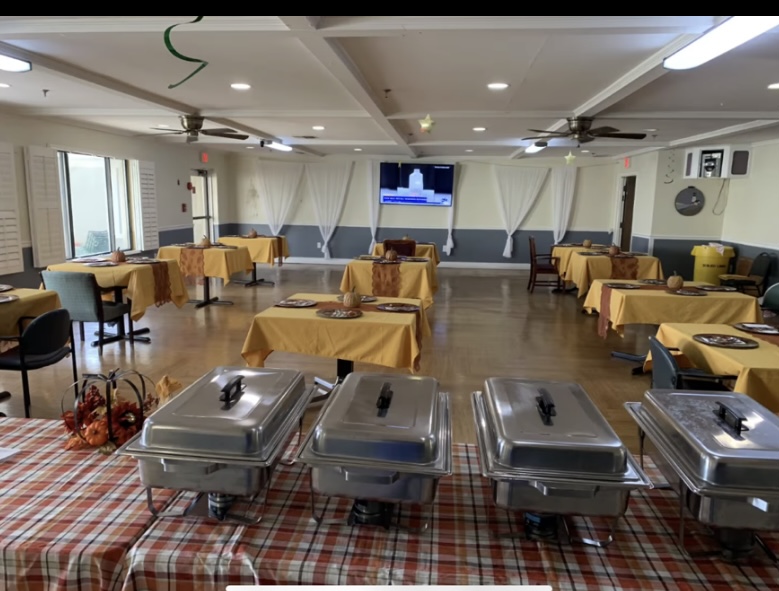
How is St Andrews Bay Skilled Nursing And Rehabilitation Staffed?

CMS rates ST ANDREWS BAY SKILLED NURSING AND REHABILITATION's staffing level at 3 out of 5 stars, which is average compared to other nursing homes. Staff turnover is 52%, compared to the Florida average of 46%.

What Have Inspectors Found at St Andrews Bay Skilled Nursing And Rehabilitation?

State health inspectors documented 8 deficiencies at ST ANDREWS BAY SKILLED NURSING AND REHABILITATION during 2022 to 2025. These included: 8 with potential for harm.
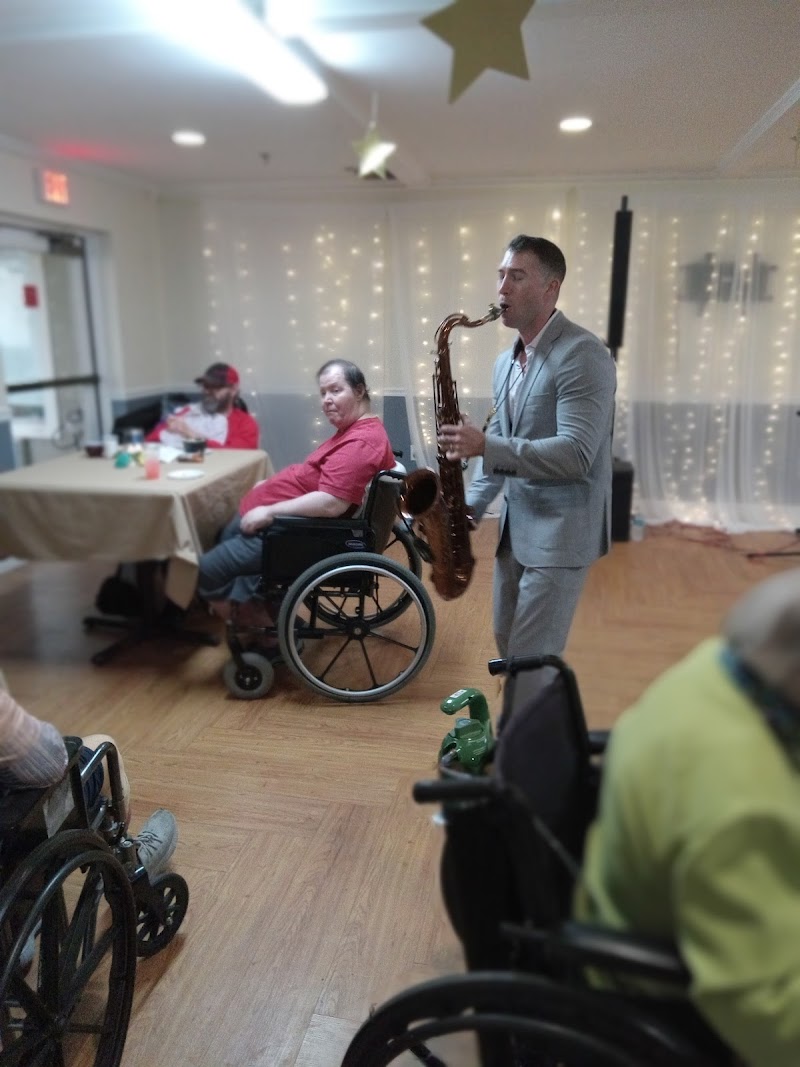
Who Owns and Operates St Andrews Bay Skilled Nursing And Rehabilitation?

ST ANDREWS BAY SKILLED NURSING AND REHABILITATION is owned by a for-profit company. For-profit facilities operate as businesses with obligations to shareholders or private owners. The facility is operated by SIMCHA HYMAN & NAFTALI ZANZIPER, a chain that manages multiple nursing homes. With 120 certified beds and approximately 112 residents (about 93% occupancy), it is a mid-sized facility located in PANAMA CITY, Florida.
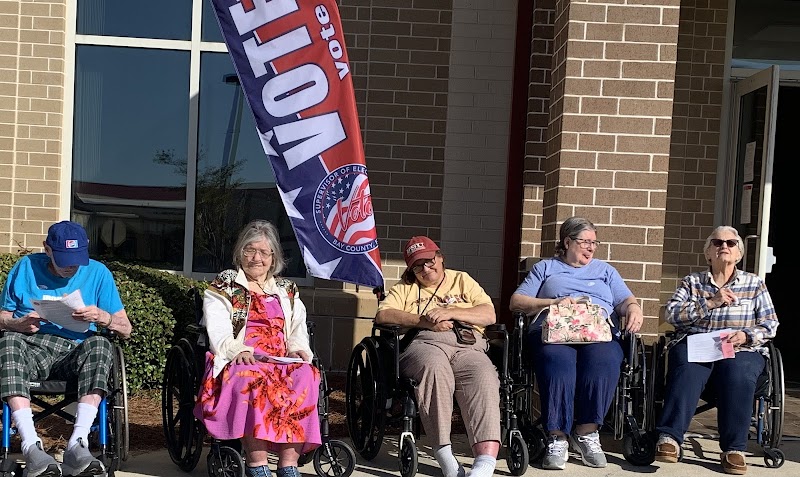
How Does St Andrews Bay Skilled Nursing And Rehabilitation Compare to Other Florida Nursing Homes?

Compared to the 100 nursing homes in Florida, ST ANDREWS BAY SKILLED NURSING AND REHABILITATION's overall rating (5 stars) is above the state average of 3.2, staff turnover (52%) is near the state average of 46%, and health inspection rating (5 stars) is much above the national benchmark.

What Should Families Ask When Visiting St Andrews Bay Skilled Nursing And Rehabilitation?

Based on this facility's data, families visiting should ask: "Can I visit during a mealtime to observe dining assistance and food quality?" "How do you handle medical emergencies, and what is your hospital transfer rate?" "Can I speak with family members of current residents about their experience?"

Is St Andrews Bay Skilled Nursing And Rehabilitation Safe?

Based on CMS inspection data, ST ANDREWS BAY SKILLED NURSING AND REHABILITATION has a clean safety record: no substantiated abuse findings (meaning no confirmed cases of resident harm), no Immediate Jeopardy citations (the most serious violation level indicating risk of serious injury or death), and is not on the Special Focus Facility watch list (a federal program monitoring the lowest-performing 1% of nursing homes). The facility has a 5-star overall rating and ranks #1 of 100 nursing homes in Florida. While no facility is perfect, families should still ask about staff-to-resident ratios and recent inspection results during their visit.

Do Nurses at St Andrews Bay Skilled Nursing And Rehabilitation Stick Around?

ST ANDREWS BAY SKILLED NURSING AND REHABILITATION has a staff turnover rate of 52%, which is 6 percentage points above the Florida average of 46%. Moderate turnover is common in nursing homes, but families should still ask about staff tenure and how the facility maintains care continuity when employees leave.

Was St Andrews Bay Skilled Nursing And Rehabilitation Ever Fined?

ST ANDREWS BAY SKILLED NURSING AND REHABILITATION has no federal fines on record. CMS issues fines when nursing homes fail to meet care standards or don't correct problems found during inspections. The absence of fines suggests the facility has either maintained compliance or corrected any issues before penalties were assessed. This is a positive indicator, though families should still review recent inspection reports for the full picture.

Is St Andrews Bay Skilled Nursing And Rehabilitation on Any Federal Watch List?

ST ANDREWS BAY SKILLED NURSING AND REHABILITATION is not on any federal watch list. The most significant is the Special Focus Facility (SFF) program, which identifies the bottom 1% of nursing homes nationally based on persistent, serious quality problems. Not being on this list means the facility has avoided the pattern of deficiencies that triggers enhanced federal oversight. This is a positive indicator, though families should still review the facility's inspection history directly.