CONCERN
(D)
Potential for Harm - no one hurt, but risky conditions existed
Safe Environment
(Tag F0584)
Could have caused harm · This affected 1 resident
**NOTE- TERMS IN BRACKETS HAVE BEEN EDITED TO PROTECT CONFIDENTIALITY** Based on observation and interview, it was determined that the facility failed to provide housekeeping and maintenance services ...
Read full inspector narrative →
**NOTE- TERMS IN BRACKETS HAVE BEEN EDITED TO PROTECT CONFIDENTIALITY** Based on observation and interview, it was determined that the facility failed to provide housekeeping and maintenance services necessary to maintain a sanitary, orderly, and comfortable interior for 1 (South Wing) of 2 residential wings.
The findings included:
During the Environment Tour conducted on 03/21/22 at 8 AM, and 03/22/22 at 3 PM, accompanied with Administrator, and Infection Control Perfectionist, the following were noted:
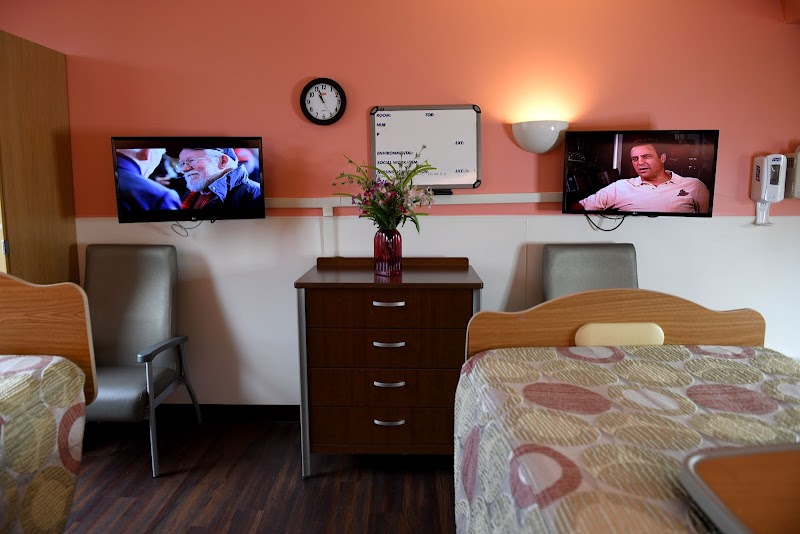
room [ROOM NUMBER]:
(a) Window Shade (1 of 2) - noted to be heavily soiled with large areas dried red/matter.
(b) Window (1 of 2) - noted the window film was peeling off the entire surface area .
(c) Room Clock- located on wall, noted not to be working - time on clock was 9 AM.
(d) Bathroom - noted emergency call cord was wrapped around wall hand rail . Could not be activated when attempting to activate due to the cord wrapping.
(e) Bathroom - noted large soaked towel on floor - no staff noted in the room.
(f) Above bed wallboard - noted wall board located over B-bed to have large areas of dried tape.
(g) Ceiling tiles (2) - located in center of room was noted to have large areas of stained/dried red/brown matter.
(h) Room Walls - areas of peeling paint and unknown areas of dried matter.
room [ROOM NUMBER] - Noted bathroom floor area around the toilet was in disrepair and heavily worn.
room [ROOM NUMBER] - Noted bathroom floor area around the toilet was in disrepair and heavily worn. Full urinal located on overbed table next to breakfast tray.
room [ROOM NUMBER] - The over bed light cord was out of reach for the resident residing in the B-bed due to the position of the bed. The bathroom emergency call cord was wrapped twice around the wall hand rail. The light could not be activated due to the cord wrapping.
Photographic evidence obtained for all examples.
CONCERN
(D)
Potential for Harm - no one hurt, but risky conditions existed
ADL Care
(Tag F0677)
Could have caused harm · This affected 1 resident
**NOTE- TERMS IN BRACKETS HAVE BEEN EDITED TO PROTECT CONFIDENTIALITY** Based on observations, interviews, and record review, the facility failed to provide fingernail grooming for 1 of 1 sampled resi...
Read full inspector narrative →
**NOTE- TERMS IN BRACKETS HAVE BEEN EDITED TO PROTECT CONFIDENTIALITY** Based on observations, interviews, and record review, the facility failed to provide fingernail grooming for 1 of 1 sampled residents reviewed for activities of daily living (Resident #38).
The findings included:
Review of the facility's policy titled, Providing Nail Care, revised on 01/12/21, documented the following: Assessments of resident nails will be conducted on a regular basis to determine condition of the resident's nail condition, needs, and preferences for nail care, if possible. Routine cleaning and inspection of nails will be provided during activities of daily living (ADL) care on an ongoing basis. Routine nail care, to include trimming and filing, will be provided on a regular schedule. Nail care will be provided between scheduled occasions as the need arises.
Review of the Certified Nurse Assistant (CNA) job description documented that CNAs were to assist patients with tending to personal care and activities of daily living, including bathing, grooming and eating.
Review of the record documented that Resident #38 was admitted to the facility on [DATE] with diagnoses which included: Atrial Fibrillation, Hyperlipidemia, Hypertension, and Pulmonary Fibrosis.
Review of Section C of the admission Minimum Data Set (MDS) dated [DATE] documented that Resident #38 had a Brief Interview for Mental Status score of 15, which indicated that he was cognitively intact. Review of Section G of the admission MDS dated [DATE] documented that Resident #38 required limited assistance with one person physical assist for personal hygiene.
Review of the Care Plan dated 01/19/22 documented that Resident #38 required limited assistance with personal hygiene related to muscle weakness. Goals were for Resident #38 to be cleaned, groomed, and free of odor daily. Interventions were to assist him with ADLs and shower three times a week.
During an observation conducted on 03/21/22 at 11:46 AM, Resident #38 was observed with long fingernails that were about 1/4 inch past the tips of his fingers. Closer observation showed that there was black residue underneath his fingernails. When asked about his fingernails, Resident #38 stated, I want them cut. I have asked them so many times but they don't cut them.
During an observation conducted on 03/21/22 at 2:04 PM, Resident #38 was still observed with long fingernails that were about 1/4 inch past the tips of his fingers. Closer observation showed that there was still black residue underneath his fingernails. When asked about his fingernails, Resident #38 stated No one came to do anything.
During an observation conducted on 03/22/22 at 8:40 AM, Resident #38 was still observed with long fingernails that were about 1/4 inch past the tips of his fingers. Closer observation showed that there was still black residue underneath his fingernails. Resident #38 asked the surveyor to ask a staff member to come cut his fingernails
During an observation conducted on 03/22/22 at 2:44 PM, Resident #38 was still observed with long fingernails that were about 1/4 inch past the tips of his fingers. Closer observation showed that there was still black residue underneath his fingernails.
During an observation conducted on 03/22/22 at 5:49 PM, Resident #38 was still observed with long fingernails that were about 1/4 inch past the tips of his fingers. Closer observation showed that there was still black residue underneath his fingernails.
During an observation conducted on 03/23/22 at 8:56 AM, Resident #38 was still observed with long fingernails that were about 1/4 inch past the tips of his fingers. Closer observation showed that there was still black residue underneath his fingernails. Resident #38 stated that he still wanted his fingernails cut and asked the surveyor if staff were going to cut his fingernails.
During an observation conducted on 03/23/22 at 11:21 AM, Resident #38 was still observed with long fingernails that were about 1/4 inch past the tips of his fingers. Closer observation showed that there was still black residue underneath his fingernails. Resident #38 stated that he still wanted his fingernails cut.
During an interview conducted on 03/23/22 at 11:32 AM, Staff A, CNA, stated that all CNAs were responsible for cutting/cleaning residents' fingernails. She further stated, If they are in your assignment, then you're responsible for cutting their nails. Staff A stated that she checked fingernails once a week to see if they needed to be cleaned/cut. She further stated that if a resident asked to have their fingernails cut, she would cut them and if she was busy, she would tell the resident that she would come back later in the day to cut their fingernails. According to her, no residents had asked for their nails to be cut. When asked about Resident #38, she stated that he had not asked for his nails to be cut. Staff A then accompanied the surveyor to look at Resident #38's fingernails. Staff A acknowledged that they were long and stated, Yes, they need to be cut.
During an interview conducted on 03/23/22 at 12:18 PM, the Director of Nursing (DON) stated that CNAs were responsible for cleaning/cutting fingernails. She stated that documentation of fingernail care refusal was kept at the nursing station on a census. The DON then accompanied surveyor to ask Staff B, Registered Nurse/Unit Manager, for documentation of fingernail care refusal. Staff B stated that she did not have it and that she gave it to the Assistant Director of Nursing (ADON).
During an interview conducted on 03/23/22 at 12:40 PM, the ADON reviewed the Nail Care Audit dated 03/08/22 with the surveyor which showed that there was no documentation that Resident #38 refused fingernail care. The surveyor informed the ADON of the findings and the ADON stated that Resident #38 will sometimes refuse fingernail care. When asked for documentation of fingernail care refusal, the ADON stated that the Nail Care Audit dated 03/08/22 was the only form that she had and that if Resident #38 had refused, staff should have documented it on there.
Review of all notes under the Notes tab in Epic (electronic charting system) dated 03/01/22 - 03/23/22 showed that there was no documentation of Resident #38 refusing fingernail care.
During an interview conducted on 03/23/22 at 12:57 PM, the DON stated that she did not have any notes at this time showing that Resident #38 refused fingernail care.
During an interview conducted on 03/23/22 at 2:16 PM, the DON stated that that she did not have any notes at this time showing that Resident #38 refused fingernail care.
On 03/24/22 at 8:30 AM, the DON approached the surveyor and provided the surveyor with a handwritten form which documented that Resident #38 refused nail care on Sunday. Closer observation showed that there was no date to indicate on which Sunday nail care was refused.
During an interview conducted on 03/24/22 at 8:53 AM, Resident #38 was asked if he refused nail care on Sunday (03/20/22). Resident #38 stated, I actually asked them to cut my nails on Sunday. I didn't refuse. When asked if he refused fingernail care over the weekend, Resident #38 stated that he did not refuse nail care over the weekend and that he has never refused fingernail care.
CONCERN
(D)
Potential for Harm - no one hurt, but risky conditions existed
Respiratory Care
(Tag F0695)
Could have caused harm · This affected 1 resident
**NOTE- TERMS IN BRACKETS HAVE BEEN EDITED TO PROTECT CONFIDENTIALITY** Based on observation, record review, interview and review of policy and procedure, it was determined that the facility failed to...
Read full inspector narrative →
**NOTE- TERMS IN BRACKETS HAVE BEEN EDITED TO PROTECT CONFIDENTIALITY** Based on observation, record review, interview and review of policy and procedure, it was determined that the facility failed to 1) ensure that it dated and properly labeled the oxygen tubing for 3 of 3 sampled residents observed receiving oxygen therapy (Resident #20, Resident #80 and Resident #52. And, 2) failed to ensure that it properly administered ordered oxygen therapy as per physician order for 1 of 3 sampled residents observed, Resident #20.
The findings included:
Review of the facility policy and procedure on 03/24/22 at 10:45 AM for Standard Practice Oxygen Therapy Techniques provided by the Director of Nursing (DON) reviewed February 2021 indicated Policy: Oxygen therapy devices will be set-up and used under the following guidelines. Purpose: to provide safe, effective Oxygen therapy in an effort to therapeutically raise arterial oxygen tension Aerosol Devices. Indications 1) Aerosol devices are employed to deliver a particulate mist to the tracheobronchial tree in an attempt to correct a humidity deficit 11) All aerosol devices from flowmeter to, and including resident connector will be changed once a week. Aerosol device and drainage bag are to be dated when changed
Review of the facility policy and procedure on 03/24/22 at 10:51 AM for Medication Administration (Oxygen as a medication for administration) provided by the (DON) effective July 2015 indicated Policy---to administer medications in a safe and effective manner .
Review of the facility policy and procedure on 03/24/22 at 11:13 AM for Standard Practice Oxygen Therapy provided by the (DON) updated March 2021 indicated Policy: Oxygen therapy will be provided by the Respiratory Therapy Department to residents in Memorial Manor in response to verbal or written orders from attending physicians under the following guidelines. Purpose: to describe the routine methods of delivery of oxygen and the goals of the Respiratory Therapy Department for providing safe, effective therapy. Procedure: 1. orders for Oxygen therapy must comply with accepted standards set by the policy concerning physicians orders of Respiratory Therapy 3. All aerosol devices will be changed on Monday by the 7-3 shift personnel.
Review of facility licensed Respiratory Therapist job description on 03/24/22 at 11:26 AM dated 09/15/21 indicated for patients with Cardiopulmonary Disorders. Responsibilities: delivers and assesses response to ordered therapy per plan of care. Monitors, documents and communicates patient condition as appropriate. Evaluates respiratory care policies and procedures based on patient outcomes, current research, and best practices Assesses patient condition and delivers appropriate treatment.
Review of facility licensed Unit Manager Nurse job description on 03/24/22 at 11:47 AM indicated that they manage the daily operations of the assigned departments. Job responsibilities: Assesses the quality of patient care delivered. Evaluates needs of patients and families and provides patient and family centered care .
Review of facility licensed nurse job description on 03/24/22 at 12:07 PM revealed a Job Summary: Provides direct resident care using the nursing process in or/as supervised and delegated by a registered nurse, provides direct resident care in accordance with applicable scope and standards of practice and with the policies, values and mission of the organization. Job responsibilities: plans, implements and evaluates resident care based on assessment to optimize outcomes and maximizes available resources. Monitors, records and communicates resident condition as appropriate or contributes to the assessment of patients by collecting data for analysis. Performs plan of car interventions .Performs treatments and administers medications in accordance with established policies and procedures. Collaborates as needed across disciplines to coordinate resident care .Administers medications .and all treatments in accordance with established policy and procedure.
1) During an observational screening tour conducted on 03/21/22 at 12 PM Resident #20 was noted to have oxygen infusing at two (2) liters per minute via oxygen concentrator, but there was no label or date noted on the oxygen tubing as to when it was last changed by facility staff.
Photographic evidence obtained of Resident #20's oxygen tubing with no label or date noted.
Resident #20 was admitted to the facility on [DATE] with diagnoses which included Dementia, Coronary Artery Disease and Hypertension. She had a Brief Interview Mental Status (BIM) score of 0. (severely impaired).
On 03/21/22 at 1:59 PM, Resident #20 was noted to have oxygen infusing at two (2) liters per min via oxygen concentrator, but there was still no label or date noted on the oxygen tubing as to when it was last changed.
On 03/22/22 at 10:14 AM, Resident #20 was noted to have oxygen infusing at two (2) liters per min via oxygen concentrator, but there was still no label or date noted on the oxygen tubing as to when it was last changed.
On 03/22/22 at 2:36 PM, Resident #20 was noted to have oxygen infusing at two (2) liters per min via oxygen concentrator, but there was still no label or date noted on the oxygen tubing as to when it was last changed.
On 03/23/22 at 9:52 AM, Resident noted to have oxygen infusing at 2 liters per min via oxygen concentrator, but there was still no label or date noted on the tubing as to when it was last changed.
On 03/23/22 at 10:02 AM, a computerized record review conducted of the Resident #20's current physician's orders dated 11/26/21 which indicated Oxygen therapy routine method of oxygen administration: Nasal cannula administer two (2) liters/minute; keep oxygen saturation % greater than 92% continuous.
On 03/23/22 at 10:24 AM, record review of Resident #20's nursing care plan dated 10/01/19 indicated Problem: the resident was at risk for respiratory difficulties related to limited mobility. Interventions: Administer oxygen as needed. Medications as ordered. Goal: resident will be managed with interventions in place through next review date.
2) During an observational screening tour conducted on 03/21/22 at 12:04 PM Resident #80 was noted to have oxygen infusing at two (2) liters per min via oxygen concentrator, but there was no label or date noted on the oxygen tubing as to when it was last changed by facility staff. Resident #80 was admitted to the facility on [DATE] with diagnoses which included Traumatic Brain Injury, Hemiplegia/Hemiparesis, Seizures and Bipolar Disorder. She had a Brief Interview Mental Status (BIM) score of 15 (cognitively intact). Photographic evidence obtained of Resident #80's oxygen tubing with no label or date noted on it.
On 03/21/22 at 2:01 PM Resident #80 was noted to have oxygen infusing at two (2) liters per min via oxygen concentrator, but there was still no label or date noted on the oxygen tubing as to when it was last changed.
On 03/22/22 at 10:15 AM Resident #80 was noted to have oxygen infusing at two (2) liters per min via oxygen concentrator, but there was still no label or date noted on the oxygen tubing as to when it was last changed.
On 03/22/22 at 2:38 PM Resident #80 was noted to have oxygen infusing at two (2) liters per min via oxygen concentrator, but there was still no label or date noted on the oxygen tubing as to when it was last changed.
On 03/23/22 at 9:57 AM Resident #80 was noted to have oxygen infusing at two (2) liters per min via oxygen concentrator, but there was still no label or date noted on the oxygen tubing as to when it was last changed.
On 03/23/22 at 10:07 AM, Resident #80's current physician's orders dated 11/26/21 which indicated Oxygen therapy routine method of oxygen administration: Nasal cannula administer two (2) liters/minute; keep oxygen saturation % greater than 92% continuous.
On 03/23/22 at 10:32 AM, record review of Resident #80's nursing care plan dated 10/01/19 indicated Problem: the resident was at risk for respiratory difficulties related to limited mobility. Interventions: Administer oxygen as needed. Medications as ordered. Goal: resident will be managed with interventions in place through next review date.
On 03/23/22 at 12:36 PM, an interview was conducted with Staff C, a Licensed Practical Nurse (LPN) and with Staff B, a Registered Nurse (RN)/Unit Manager (UM), regarding the Resident #20 and Resident #80's oxygen tubing undated/unlabeled and they both acknowledged that the resident's oxygen tubings should have been labeled and dated as to when they were last changed by staff; this was not done.
3) During an observational screening tour conducted on 03/21/22 at 12:38 PM Resident #52 was receiving oxygen at two (2) liters via oxygen concentrator, but with no label or date noted as to when the oxygen tubing was last changed by facility staff. Resident #52 was admitted to the facility on [DATE] with diagnoses which included Intracerebral Hemorrhage, Psychosis, Agitation, Anxiety and Depressive Disorder. She had a Brief Interview Mental Status (BIM) of (severely impaired). Photographic evidence obtained of Resident #52's oxygen tubing with no label or date noted on it.
On 03/22/22 at 12:22 PM, Resident #52 was receiving oxygen at two (2) liters via oxygen concentrator, but still with no label or date noted as to when the oxygen tubing was last changed.
On 03/22/22 at 3:20 PM, Resident #52 was receiving oxygen at two (2) liters via oxygen concentrator, but still with no label or date noted as to when the oxygen tubing was last changed.
On 03/23/22 at 10:28 AM, Resident #52 was receiving oxygen at two (2) liters via oxygen concentrator, but still with no label or date noted as to when the oxygen tubing was last changed.
On 03/23/22 at 11:18 AM, an interview was conducted with the facility's Respiratory Therapy Director, regarding the Resident #52's oxygen tubing should be changed every week and he further acknowledged that none of the resident's oxygen tubings had dates on them to directly indicate exactly when they had been changed by Respiratory staff; this was not done.
On 03/23/22 at 11:24 AM Resident #52's current physician's orders dated 11/26/21 which indicated Oxygen therapy routine method of oxygen administration: Nasal cannula administer two (2) liters/minute; keep oxygen saturation % greater than 92% continuous.
On 03/23/22 at 11:36 AM, record review of Resident #52's nursing care plan dated 10/01/19 indicated Problem: the resident was at risk for respiratory distress due to shortness of breath/wheezing/cough. Interventions: assess respiratory status. Ongoing oxygen and respiratory treatments as needed per medical doctor (MD) order. Goal: will have no respiratory distress through next review date.
On 03/23/22 at 12:40 PM, an interview was conducted with Staff E, a Registered Nurse (RN) and with Staff B, a Registered Nurse (RN)/Unit Manager (UM), regarding the Resident #52's oxygen tubing undated/unlabeled and they both acknowledged that the resident's oxygen tubing should have been labeled and dated as to when it was last changed by staff; this was not done.
4) During an observational screening tour conducted on 03/22/22 at 10:14 AM Resident #20's oxygen was not noted to be infusing into the resident as ordered. The end of the resident's oxygen tubing was not attached/connected to the oxygen concentrator to allow the resident to receive her ordered infusion of oxygen therapy from the machine, which was on and currently running.
On 03/22/22 at 02:36 PM, Resident #20 was noted to not be receiving her ordered oxygen. The end of the resident's oxygen tubing was still not attached/connected to the oxygen concentrator machine to allow the resident to receive her ordered infusion of oxygen therapy from the machine which was still on and currently running.
On 03/23/22 at 10:02 AM, a computerized record review conducted of the Resident #20's current physician's orders dated 11/26/21 which indicated Oxygen therapy routine method of oxygen administration: Nasal cannula administer two (2) liters/minute; keep oxygen saturation % greater than 92% continuous.
On 03/23/22 at 10:24 AM, record review of Resident #20's nursing care plan dated 10/01/19 indicated Problem: the resident was at risk for respiratory difficulties related to limited mobility. Interventions: Administer oxygen as needed. Medications as ordered. Goal: resident will be managed with interventions in place through next review date.
On 03/23/22 at 10:50 AM, an interview was conducted with the facility's Respiratory Therapy Director, regarding Resident #20's oxygen therapy tubing not connected and not being infused as ordered and he acknowledged that the resident's oxygen should have been connected and administered as ordered by Respiratory staff; this was not done.
On 03/23/22 at 11:15 AM, an interview was conducted with Staff C, a Licensed Practical Nurse (LPN) and with Staff B, a Registered Nurse (RN)/Unit Manager (UM), regarding Resident #20's oxygen therapy tubing not connected and not being infused as ordered and they both acknowledged that the resident's oxygen should have been connected and administered as ordered; this was not done.
It was noted that Resident #20's ordered oxygen therapy had been off/disconnected/not infusing for more than a minimum of four (4) hours that day, during the survey.
The Director of Nursing (DON) further acknowledged that all of the resident's oxygen tubing should have been labeled and dated as to when it was last changed by staff and that the resident's oxygen should have been connected and administered as ordered; this was not done.
CONCERN
(D)
Potential for Harm - no one hurt, but risky conditions existed
Deficiency F0761
(Tag F0761)
Could have caused harm · This affected 1 resident
**NOTE- TERMS IN BRACKETS HAVE BEEN EDITED TO PROTECT CONFIDENTIALITY** Based on observation, interview, record review and review of policy and procedure, it was determined that the facility failed to...
Read full inspector narrative →
**NOTE- TERMS IN BRACKETS HAVE BEEN EDITED TO PROTECT CONFIDENTIALITY** Based on observation, interview, record review and review of policy and procedure, it was determined that the facility failed to 1) ensure that it secured over-the-counter (OTC) topical medications for 3 of 27 sampled residents observed, (Resident #297, Resident #9, and Resident #61) and 2) failed to discard resident's expired OTC topical medication left at bedside for 1 of 27 sampled residents observed Resident #297.
The findings included:
Review of the facility policy and procedure on [DATE] at 2 PM for Storage of Medications provided by the Director of Nursing effective [DATE] indicated that Medications and biologicals are stored safely, securely and properly, following manufacturer's recommendations or those of the supplier. The medication supply is accessible only to licensed nursing personnel, pharmacy personnel or staff members lawfully authorized to administer medications Outdated, contaminated or deteriorated medications and those in containers that are cracked, soiled or without secure closures are immediately removed from inventory, disposed of according to procedures for medication disposal.
1) On [DATE] at 10:21 AM during observational room rounds, it was noted that on Resident #297's bedside dresser there was a used tube of (OTC) topical Menthol 0.44% and Zinc Oxide Ointment 20.625% with an expiration date of 07/21; it was visible, accessible and unsecured, to other residents, staff members and visitors. Photographic evidence obtained of tube of (OTC) topical Menthol 0.44% and Zinc Oxide Ointment 20.625%.
Resident #297 was re-admitted to the facility on [DATE] with diagnoses which included Stroke with left hemiplegia, Morbid Obesity and Depression. She had a Brief Interview Mental Status (BIM) score of 15 (cognitively intact).
On [DATE] at 11:34 AM, it was noted that on Resident #297's bedside dresser there was a used tube of (OTC) topical Menthol 0.44% and Zinc Oxide Ointment 20.625% with an expiration date of 07/21; it was visible, accessible and unsecured, to other residents, staff members and visitors.
Record review of the resident's Medication Administration Record (MAR) revealed that Resident #297 had previously been prescribed (OTC) Menthol 0.44% -Zinc Oxide 20.625% (Calmoseptine) ointment one (1) topical application to sacrum/buttock daily and as needed (PRN) for redness starting [DATE]. However, it was noted that there were currently no scheduled doses.
2) On [DATE] at 10:47 AM, during observational room rounds, it was noted on the Resident #9's bedside table that there was a used tube of (OTC) tube of topical Muscle Rub with an expiration date of 03/23; it was visible, accessible and unsecured, to other residents, staff members and visitors.
Resident #9 was admitted to the facility on [DATE] with diagnoses which included Paraplegia, Depression and Neurogenic Bowel and Bladder. He had a Brief Interview Mental Status (BIM) score of 14 (cognitively intact). Photographic evidence obtained of tube of (OTC) tube of topical Muscle Rub.
On [DATE] at 1:51 PM, it was noted on Resident #9's bedside table that there was a used tube of (OTC) tube of topical Muscle Rub with an expiration date of 03/23; it was visible, accessible and unsecured, to other residents, staff members and visitors.
Record review revealed that Resident #9 was currently prescribed (OTC) Methly Salicylate 15% and Menthol 10% one (1) topical application twice daily.
3) On [DATE] at 3:04 PM, during observational room rounds, it was noted that on Resident #61's bedside dresser there was a small round used container of (OTC) topical Menthol 0.44% and Zinc Oxide Ointment 20.6% with no expiration date noted; it was visible, accessible and unsecured, to other residents, staff members and visitors. Photographic evidence obtained of (OTC) topical Menthol 0.44% and Zinc Oxide Ointment 20.6%.
Resident #61 was admitted to the facility on [DATE] with diagnoses which included C2 Spinal Cord Injury, Diabetes Mellitus Type II and Major Depressive Disorder. He had a Brief Interview Mental Status (BIM) score of 14 (cognitively intact).
On [DATE] at 11:07 AM, during a Wound Care Observation conducted with the Wound care nurse for Resident #61, it was noted that there was a thirty-two (32) oz. bottle of liquid Hydrogen Peroxide located in a basket at the bedside, on his bedroom dresser tabletop.
Further record review revealed that Resident #61 was currently prescribed (OTC) Methly Salicylate 15% and Menthol 10% one (1) topical application twice daily. However, there was no order noted for the liquid Hydrogen Peroxide.
On [DATE] at 12:31 PM an interview was conducted with Staff C, a Licensed Practical Nurse (LPN), regarding the (OTC) topical Menthol 0.44% and Zinc Oxide Ointment 20.625% with an expiration date of 07/21 for Resident #297 and the (OTC) tube of topical Muscle Rub for Resident #9, left unattended and unsecured at both of the resident's bedsides. She acknowledged that the medications should not have been there and should have been properly secured or discarded, if expired; this was not done.
On [DATE] at 12:45 PM an interview was conducted with Staff D, an (LPN), regarding (OTC) topical Menthol 0.44% and Zinc Oxide Ointment 20.6% with no expiration date for Resident #61, left unattended and unsecured at both of the resident's bedsides and she acknowledged that the medication should not have been there and should have been properly secured; this was not done.
On [DATE] at 1 PM an interview was conducted with Staff B, a Registered Nurse (RN)/Unit Manager (UM), regarding the (OTC) topical Menthol 0.44% and Zinc Oxide Ointment 20.625% with an expiration date of 07/21 for Resident #297 and for Resident #61 and the (OTC) tube of topical Muscle Rub for Resident #9, all left unattended and unsecured at each of the resident's bedsides. She further acknowledged that the medications should not have been there and should have been properly secured or discarded, if expired; this was not done.
There was no assessment performed for any of these residents to ensure that they were able to administer their own medications at the bedside; the facility administers the medications for them, per Staff B, a Registered Nurse (RN)/Unit Manager (UM).
Further review revealed none of three residents were assessed by the facility, as being able to safely and responsibly, self-administer their own medications.
Furthermore, the unattended/unsecured OTC medications were removed from the resident's bedsides, after surveyor intervention.
The Director of Nursing (DON) further acknowledged and recognized that Resident #297, Resident #61 and Resident #9's, unattended and unsecured medications should not have been left at their bedsides and should have been properly secured or discarded, if expired; this was not done.
CONCERN
(D)
Potential for Harm - no one hurt, but risky conditions existed
Dental Services
(Tag F0791)
Could have caused harm · This affected 1 resident
**NOTE- TERMS IN BRACKETS HAVE BEEN EDITED TO PROTECT CONFIDENTIALITY** Based on observation, interview, record review and review of policy and procedure, it was determined that the facility failed to...
Read full inspector narrative →
**NOTE- TERMS IN BRACKETS HAVE BEEN EDITED TO PROTECT CONFIDENTIALITY** Based on observation, interview, record review and review of policy and procedure, it was determined that the facility failed to provide dental care services to meet the needs of the resident by not making appointments and arranging for transportation to and from the dental services location for 1 of 1 sampled residents reviewed for dental care (Resident #28).
The findings included:
Review of facility policy and procedure for Dental Services provided by the Director of Nursing (DON) reviewed May 2016, indicated that Policy: in order to promote good oral hygiene and mouth care to the residents of Memorial Manor, dental services will be made available. Procedure: 1. Residents have the right to use their own community dentist. 2. Residents who have Medicaid Managed Assistance Plans have dental coverage and will be able to receive care and services in accordance with their plan .6. The nursing staff will perform oral assessments.
Review of facility licensed Unit Manager Nurse job description on 03/24/22 at 11:47 AM, indicated that manages the daily operations of the assigned departments. Job responsibilities: Assesses the quality of patient care delivered. Evaluates needs of patients and families and provides patient and family centered care .
Review of facility licensed nurse job description on 03/24/22 at 12:07 PM, indicated that Job Summary: Provides direct resident care using the nursing process in or/as supervised and delegated by a registered nurse, provides direct resident care in accordance with applicable scope and standards of practice and with the policies, values and mission of the organization. Job responsibilities: plans, implements and evaluates resident care based on assessment to optimize outcomes and maximizes available resources. Monitors, records and communicates resident condition as appropriate or contributes to the assessment of patients by collecting data for analysis. Performs plan of car interventions .Performs treatments and administers medications in accordance with established policies and procedures. Collaborates as needed across disciplines to coordinate resident care .Administers medications .and all treatments in accordance with established policy and procedure.
Review of facility policy and procedure on 03/24/22 at 12:19 PM for Social Worker Job Description provided by the (DON) indicated that Job Summary: Provides assessment, planning, counseling and education to patients. Job Responsibilities: .Interviews and assesses patients and/or patient's family, caregivers and/or legal representatives. Determines prioritizes, provides and/or arranges for needed internal and external services/interventions
During observational room rounds conducted on 03/21/22 at 12:26 PM of Resident #28, it was observed that he only had approximately eleven (11) portions/remnants of his normally occurring thirty-two (32) full-sized adult teeth, in his mouth. Photographic evidence obtained.
A brief interview was conducted with Resident #28, in which he conveyed to this surveyor that he had not been seen by a dentist in over two (2) years and would like to follow-up with one. He added that sometimes when he chews it does hurt. He elaborated by stating that he recalls mentioning this to one of the facility staff members sometime ago, but nothing ever happened.
Resident #28 was re-admitted to the facility on [DATE] with diagnoses which included Deep Vein Thrombosis (DVT), Gastroesophageal Reflux (GERD), Neurogenic Bladder, Hyperlipidemia, Paraplegia, Depression and Anemia. He had a Brief Interview Mental Status (BIM) score of 15 (cognitively intact).
During an interview conducted on 03/23/22 at 2:21 PM with Staff D, a Licensed Practical Nurse (LPN) for Resident #28, she acknowledged that the resident had dental issues that need to be addressed; this was not offered to him by her. And, she added that he has not been to see a dentist, to her knowledge.
Further review revealed there were no physician's orders related to/regarding dental services for this resident.
Review of the Annual MDS (Minimum Data Set) assessment dated [DATE], revealed the assessment did not indicate whether or not Resident #28's natural teeth or tooth fragments-edentulous, were assessed.
The resident's facility computerized quarterly care plan dated 10/11/21 documented to provide resident with necessary dental care on a regular basis and as needed and Problem: Resident #28 is at risk for dental problems due to some missing teeth. Interventions: assist resident with dental hygiene needs, monitor resident's oral cavity for redness, swelling, bleeding, pain, difficulty chewing/eating .Dental evaluation and follow-up as needed (PRN); this was not done.
Record review of Resident #28's two (2) most recent Interdisciplinary Team (IDT) meetings dated 10/21/21 and 01/20/22, did not identify or make any references to the resident's current/on-going dental status/ issues, nor whether this was being addressed or discussed, at any point during his facility stay.
An interview was conducted with the Social Services Director on 03/23/22 at 1:15 PM regarding the resident's dental insurance coverage and his last dental appointment and she stated that she does not take care of this; she said that the North wing Unit Manager handles this for the residents on her unit.
There was no Social Services documentation nor any nursing notes documentation in the record to reflect that Resident #28 had received any dental care/visits during his two and one-half (2.5) year facility stay.
On 03/23/22 at 2:20 PM, an interview was conducted with Staff B, a Registered Nurse (RN)/Unit Manager (UM), regarding the Resident #28's dental consults and she indicated that the Resident #28 has not been seen by a dentist during his 2.5- year facility stay. She acknowledged that the resident had dental issues that need to be addressed; this was not offered to him by her. And, she added that he has not been to see a dentist, to her knowledge, since he has been residing in the facility and she also stated that she is responsible for scheduling all of the resident's dental appointments on her unit.
Record review of Resident #28's eligibility verification request documentation revealed that Resident #28 has currently had Full-Medicaid insurance coverage effective ever since 03/01/22. An appointment was not scheduled for the resident until April 2022, after surveyor intervention.
The (DON) further acknowledged and recognized that dental care and services were to be provided to the resident during his facility stay; this was not done.
CONCERN
(E)
Potential for Harm - no one hurt, but risky conditions existed
Food Safety
(Tag F0812)
Could have caused harm · This affected multiple residents
**NOTE- TERMS IN BRACKETS HAVE BEEN EDITED TO PROTECT CONFIDENTIALITY** Based on observations, interviews, and record review, the facility failed to maintain food safety requirements with storage, pre...
Read full inspector narrative →
**NOTE- TERMS IN BRACKETS HAVE BEEN EDITED TO PROTECT CONFIDENTIALITY** Based on observations, interviews, and record review, the facility failed to maintain food safety requirements with storage, preparation, and distribution in accordance with professional standards for food service safety which included: failure to maintain sanitary conditions and failure to maintain adequate holding temperatures.
The findings included:
1.
During the initial tour of the kitchen conducted on 03/21/22 at 8:45 AM, accompanied by the Executive Chef and Operations Manager, the following were noted:
a.
A lanyard with about 10 keys was stored on top of the food preparation table. The Executive Chef acknowledged that the keys should not have been stored on top of the food preparation table.
b.
In the Victory reach-in refrigerator, one plastic container with about 40 hotdogs was missing a label with a use by date.
c.
In the reach-in cooler, one opened package of Swiss cheese had an open date of 03/03/22. The Executive Chef stated that opened products were to be used within 7 days after opening and that the Swiss cheese should have been discarded.
d.
In the dry storage area, a coat was stored on top of the shelving racks containing food products.
e.
In the dry storage area, one 15 ounce can of Gandules Verdes was observed with a dent.
f.
In the dry storage area, one 18-quart plastic storage bin of dried northern beans was missing a label with a use by date.
g.
In the walk-in refrigerator, one 6-quart plastic container of peach slices was observed with a use by date of 03/19/22.
h.
In the walk-in freezer, one package of oven ready whole grain breaded Alaska [NAME] fillet portions was left open and uncovered. The Executive Chef acknowledged that this put the fillet portions at risk of contamination.
i.
In the paper goods dry storage area, one rolling cart containing clean aprons was stored over a puddle/drain. Closer observation showed that the strings of the clean aprons were hanging out of the cart and laying in the puddle. The Executive Chef acknowledged that this contaminated the clean aprons.
j.
One light bulb was out over the dishwashing machine.
2.
During a tour of the South Wing Nourishment Room conducted on 03/21/22 at 9:15 AM, the flooring underneath the shelving was observed with a moderate amount of debris.
In an interview conducted on 03/23/22 at 4:19 PM, the Food Service Director was informed of the findings and acknowledged all findings.
3) During a follow-up observations of the kitchen/Food Service Department on 03/22/22 at 7:30 AM and 03/23/33 at 11:30 AM, the temperatures of the hot and cold foods on the lunch tray assembly line were taken by the use of the facility's calibrated bayonet food thermometer. The temperature testing results noted that hot foods were not being held and the regulatory requirement of 135 degrees F or greater and cold foods were not being held at the regulatory requirement of 41 degrees F or below, as per the following:
Fried Eggs (3) = 130 degrees F
Dannon Yogurt - (5 individual) = 45 degrees F
Hamburger Patties (3) = 120 degrees F
Chefs Salad (3) - including ham,turkey, and egg = 50 Degrees F
Beet & Onion Salad (28 individual) = 51 degrees F