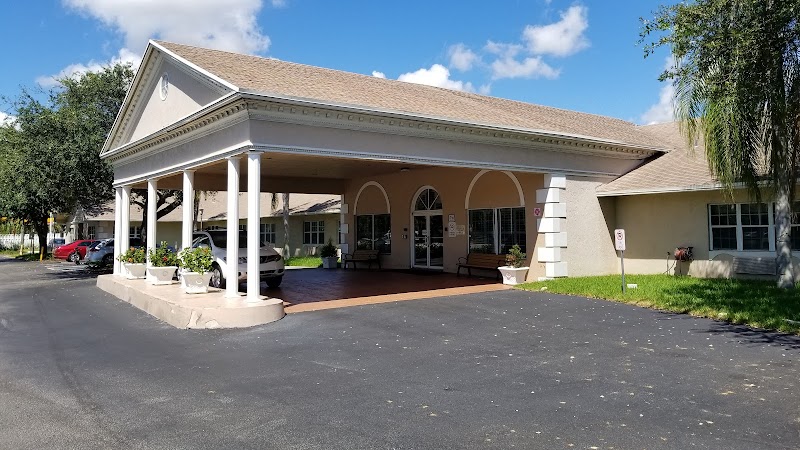
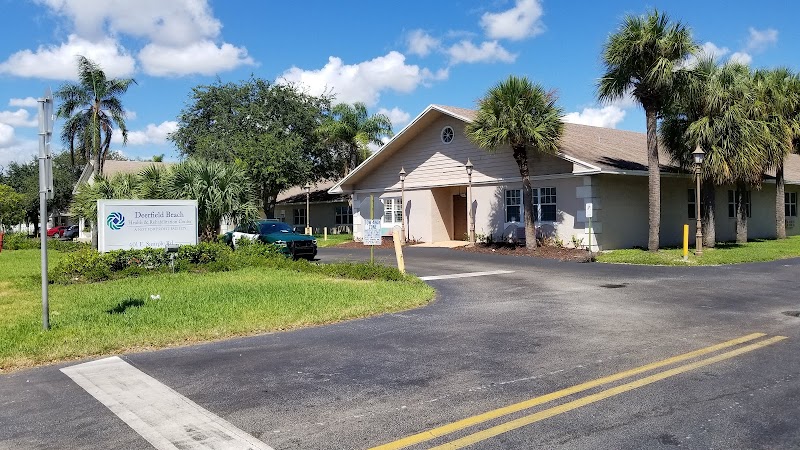
DEERFIELD BEACH HEALTH AND REHABILITATION CENTER

401 EAST SAMPLE ROAD, POMPANO BEACH, FL 33064 (954) 941-4100
Non profit - Corporation 194 Beds FLORIDA INSTITUTE FOR LONG-TERM CARE Data: November 2025
Trust Grade
60/100
#202 of 690 in FL
Last Inspection: March 2025

Within standard 12-15 month inspection cycle. Federal law requires annual inspections.

Overview

Deerfield Beach Health and Rehabilitation Center has a Trust Grade of C+, which means it is considered decent and slightly above average among nursing homes. Ranking #202 out of 690 facilities in Florida places it in the top half, while its county rank of #12 out of 33 indicates that only a few local options are better. Unfortunately, the facility's trend is worsening, with the number of reported issues increasing from 1 in 2024 to 8 in 2025. Staffing is a strength here, earning a 4/5 star rating, with a low turnover rate of 25%, which is well below the state average of 42%. However, the facility has faced $36,089 in fines, which is average, suggesting some compliance concerns. Specific incidents have raised alarms, including failures to monitor the nutritional status of residents, resulting in significant weight loss for some, and a report of a resident waiting for assistance to get out of bed without any staff responding to her call. While the facility does have good RN coverage, being better than 76% of Florida nursing homes, these issues highlight the need for improvement in resident care and timely response to their needs.

Trust Score
C+
60/100
In Florida
#202/690
Top 29%
Safety Record
Moderate
Needs review
Inspections
Getting Worse
1 → 8 violations
Staff Stability
✓ Good
25% annual turnover. Excellent stability, 23 points below Florida's 48% average. Staff who stay learn residents' needs.
Penalties
✓ Good
$36,089 in fines. Lower than most Florida facilities. Relatively clean record.
Skilled Nurses
✓ Good
Each resident gets 48 minutes of Registered Nurse (RN) attention daily — more than average for Florida. RNs are trained to catch health problems early.
Violations
⚠ Watch
26 deficiencies on record. Higher than average. Multiple issues found across inspections.
★★★★☆
4.0
Overall Rating
★★★★☆
4.0
Staff Levels
★★★★★
5.0
Care Quality
★★★☆☆
3.0
Inspection Score
Stable
2024: 1 issues
2025: 8 issues

The Good

  • 4-Star Staffing Rating · Above-average nurse staffing levels
  • 5-Star Quality Measures · Strong clinical quality outcomes
  • Low Staff Turnover (25%) · Staff stability means consistent care
  • Full Sprinkler Coverage · Fire safety systems throughout facility
  • No fines on record
  • Staff turnover is low (25%)

    23 points below Florida average of 48%

Facility shows strength in staffing levels, quality measures, staff retention, fire safety.

The Bad

Federal Fines: $36,089

Above median ($33,413)

Moderate penalties - review what triggered them

Chain: FLORIDA INSTITUTE FOR LONG-TERM CAR

Part of a multi-facility chain

Ask about local staffing decisions and management

The Ugly 26 deficiencies on record

2 actual harm
Mar 2025 8 deficiencies
CONCERN (D)

Potential for Harm - no one hurt, but risky conditions existed

Grievances (Tag F0585)

Could have caused harm · This affected 1 resident

**NOTE- TERMS IN BRACKETS HAVE BEEN EDITED TO PROTECT CONFIDENTIALITY** Based on observations, interviews, and record review, the facility failed to address a grievance in a timely manner, regarding p...

Read full inspector narrative →
**NOTE- TERMS IN BRACKETS HAVE BEEN EDITED TO PROTECT CONFIDENTIALITY** Based on observations, interviews, and record review, the facility failed to address a grievance in a timely manner, regarding personal belongings for 1 of 1 sampled resident (Resident #90) reviewed for grievances. The findings included: Review of the facility's policy titled, Grievance/Concern Management, dated November 2024, included the following: Policy: These rights also include the right to prompt efforts by the facility to resolve resident concerns, including concerns/grievances with respect to the behavior of other residents. Procedure: 4. The NHA (Administrator) is responsible for oversight of the concern process. 5. Social Services will monitor and document resident/representative satisfaction upon completion of the investigation and the summary of findings/conclusion. 6. Social Service Director in collaboration with the NHA will be the Grievance Official at the facility. 7. The facility leadership team will review and discuss concerns and the progress of an investigation(s) and resolution(s). 8. The department involved will document the concern and record the resident/resident representative's satisfaction with the resolution to the concern. 11. Concerns are tracked, trended, and reported in the monthly Quality Assessment, assurance and Compliance Committee Meeting. 13. Complete a concern report investigation with summary and conclusion. 14. Social services staff will provide information regarding compliance line information for unresolved concerns. Record review revealed Resident #90 was initially admitted on [DATE] and re-admitted on [DATE] with diagnoses including Type 2 Diabetes Mellitus with Diabetic Chronic Kidney Disease, Dependence on Renal Dialysis, Hereditary and Idiopathic Neuropathy, Atherosclerosis of other Coronary Artery Bypass Graft(S) With other Forms of Angina Pectoris, Muscle Weakness (Generalized), and Encounter for other Specified Surgical Aftercare. Review of Section C of the Minimum Data Set (MDS) assessment dated [DATE] revealed that Resident #90 had a Brief Interview for Mental Status (BIMS) of 15 out of 15, which indicated that he was cognitively intact. During an interview conducted on 03/03/25 at 10:57 AM with Resident #90, who reported he had to go to the hospital two and a half months ago because of a heart attack. He further reported when he returned to the facility, all his personal belongings were gone, which included his iPad, pictures of his family, and clothing. He stated he has asked the Unit Manager, Social Services, and the Administrator for updates on his belongings, and he has not received a response. Resident #90 stated he felt horrible because when he returned, he had to wear someone else's clothes to his Dialysis treatment. He also stated that when he kept asking for information, the facility put a grievance on his behalf. However, there's been no resolution, and it has been over two months. Further record review documented Resident #90 was a long-term resident and was discharged to the hospital on [DATE] and returned to the facility on [DATE]. Review of the grievance log revealed Resident #90 had an active grievance on 12/19/24. Review of the 12/19/24 grievance/concern report documented by Social Services revealed Resident #90 reported his items have not returned to him since he came back from the hospital. In the same form under resolution, it stated Spoke with resident and brother, request receipts so items can be replaced. The report was signed by Staff I, Social Services Director and the Administrator on 12/19/24. No other documentation or investigation was noted in the grievance report. During an interview conducted on 03/04/25 at 3:19 PM with Staff I, Social Services Director, who stated she has worked at the facility for about a year. She stated that any staff member can assist a resident with a grievance, and all grievances come to social services where they will be distributed to the proper department to be investigated; once the department has resolved the grievance, the report is returned to social services. Staff I stated if they have not received a resolve report from the department, usually within a week, social services will follow up with the department. In addition, she stated any unresolved grievances are discussed in the morning meetings with the administration team. Staff I stated she filed the grievance on behalf of Resident #90. She also noted that she spoke with Resident #90 and his brother to request receipts for the items in order to replace them. In addition, she stated that when a resident is discharged to the hospital, the nursing staff packs resident's belongings in a box and maintenance personnel places the boxed items in the storage room. She stated she spoke with the resident and informed him of the ongoing investigation (however, when asked for documentation of the investigation, none was provided). During an interview conducted on 03/04/25 at 3:35 PM with Staff L, Registered Nurse (RN) and Unit Manager, who stated she has worked at the facility for 10 years and a unit manager for 2 years. She stated that if a resident is discharged to the hospital, the items will be boxed and placed in the storage room; if the resident is long term care, the personal belongings are usually held in their room for a week or so. Staff L stated once the resident returns to the facility maintenance brings the belongings back to the resident's room. She stated that for Resident #90 they have looked in the storage but have not found any of his items. She noted speaking to the resident about obtaining receipts to replace the items. An observation of the storage room and an interview were conducted on 03/04/25 at 3:59 PM with Staff K, Maintenance Assistant. He stated that he has worked at the facility for 2 years. He stated nursing staff will contact him when a resident's boxed items need to be picked up and stored and are only stored in one room. Staff K stated that he has looked for Resident #90's boxed items but has not found anything. He noted that they keep a discharged Resident Storage (DRS) Log in the storage room. He stated he picks up the box from nursing, then brings it to the storage room and he writes the following information in the Storage log: Resident's name, room number, date stored, how many boxes, if family is notified and if family picks the box up. Review of the DRS log for 2024 revealed Resident #90's boxed items were never registered as stored in the storage room. A copy of the DRS 2024 log was obtained. During an interview conducted on 03/06/25 at 3:08 PM with the Administrator, who stated she has been at the facility since October 2024 as the Assistant Administrator, and has been the Interim Administrator since 02/03/25. She stated that during morning meetings Social Services would let the team know of any unresolved grievances. She stated she spoke with Resident #90's brother regarding the missing items, and she mentioned that they would reimburse the items if he can find the receipts; however, she did not discuss with the brother or Resident #90 about any reimbursement for any current expenses the brother has done to replace Resident #90's clothing. She stated she believes Staff L spoke with the resident and explained the reimbursement process and that the items cannot be found. At this time, the Administrator was shown Resident #90's grievance report (which shows her signature), and she acknowledged that the report was not filled out correctly and that no follow-up or investigation was done.
CONCERN (D)

Potential for Harm - no one hurt, but risky conditions existed

Deficiency F0692 (Tag F0692)

Could have caused harm · This affected 1 resident

**NOTE- TERMS IN BRACKETS HAVE BEEN EDITED TO PROTECT CONFIDENTIALITY** Based on observations, interviews, and record review, the facility failed to assist during dining and provide nutritional supple...

Read full inspector narrative →
**NOTE- TERMS IN BRACKETS HAVE BEEN EDITED TO PROTECT CONFIDENTIALITY** Based on observations, interviews, and record review, the facility failed to assist during dining and provide nutritional supplements in a timely manner for 1 of 6 sampled residents reviewed for nutrition (Resident #288); and the facility failed to accurately assess the nutritional status of 1 out of 2 sampled residents reviewed for tube feeding (Resident #158). The findings included: 1. Record review revealed that Resident #288 was admitted to the facility on [DATE] with diagnoses of Macular Degeneration and Muscle Wasting. The admission Minimum Data Set (MDS) assessment dated [DATE] showed that Resident #288 had a Brief Interview of Mental Status (BIMS) score of 12, which was moderately cognitively impaired. Section B of this MDS showed that Resident #288's vision was severely impaired. In an observation conducted on 03/03/25 at 12:32 PM, Resident #288 was noted in her room with the lunch tray. Resident #288's family member was at the side table assisting Resident #288 with her lunch tray. The meal was noted to have pork steak, mashed potatoes, green beans, and Jello. No nutritional supplements were noted on the meal tray. In this observation, the Resident's family member said that she usually had no one at the bedside to assist her with her meals and that she was blind. In an observation conducted on 03/04/25 at 8:18 AM, Resident #288's tray was barely touched, and no staff was in the room to assist her with her meal. The breakfast tray was noted to have regular fortified oatmeal, french toast, sausage patty, juice, and a carton of milk that was not opened. A continued observation at 12:28 PM showed that the breakfast tray was taken away by staff. In an observation conducted on 03/04/25 at 12:28 PM, Resident #288 was in the room eating her lunch meal without staff assistance. She was observed trying to eat her food with her hands. Continued observation at 12:42 PM showed no staff in the room and Resident #288 ate about 20% of her meal. The lid covers were not taken off from her drinks or the banana pudding container. A review of the Weights log showed the following weights for Resident #288: On 02/21/25, a weight of 124 pounds. On 02/25/25, a weight of 118.6 pounds. On 02/27/25, a weight of 118.2 pounds. The nutrition follow up note dated 02/28/25 showed the following: Resident #288 had a significant weight loss of 4.7% in 7 days. Resident #288 requires assistance with meals for all feedings. Discussed the importance of good intake with all meals. In this note, Staff B, Registered Dietitian recommended to add Magic Cup (nutritional supplement) for lunch and dinner to provide an additional 580 calories and 18 grams of protein a day. The care plan dated 02/21/25 showed that Resident #288 had an impaired cognitive function related to dementia. Impaired visual function related to Glaucoma and Macular Degeneration. It further showed that the Resident needed one person's assistance for eating and was at nutritional risk with nutritional supplements in place. A review of the Medication Administration Record did not show that an order for Magic Cup was placed after it was recommended on 02/28/25. In an interview conducted on 03/04/25 at 12:30 PM with the Food Service Director, he stated that the facility's Dietitian enters the Magic Cup into the electronic system as an order. He then puts the order in the meal tracker, which shows up on the meal ticket for the specific residents. In an interview conducted on 03/06/25 at 9:13 AM with Staff A, a Registered Dietitian, he stated that the Magic Cup is added to the task section in the electronic system. It has also been added to the meal tracker for the kitchen staff and will show up on the meal ticket. He was responsible for adding the supplements to the electronic system and the meal tracker. Once added, the Magic Cup would come up on the tray for lunch and dinner every day. When asked by the Surveyor, Staff A could not show the Magic cup on the meal tracker or in the electronic system and then said, she must have overlooked it. A weight was taken on 03/06/25 as per the Surveyor's request, which showed that Resident #288 was 114 pounds. This showed a significant weight loss of 8% from 02/21/25 to 03/06/25. 2. A record review revealed that Resident #158 was admitted to the facility on [DATE] with diagnoses of Dementia, Muscle Wasting, and Protein Calorie Malnutrition. The Quarterly Minimum Data Set (MDS) dated [DATE] showed that Resident #158 had a Brief Interview of Mental Status score of 08, which is moderate cognitively impaired. A review of the Physician's Orders showed an order for tube feeding Jevity 1.5 (tube feeding type), 240 milliliters to be administered 3 times per 24 hours during waking hours, dated 02/05/25. In an observation conducted on 03/03/25 at 12:40 PM, Resident #158 was observed in the room eating his lunch tray. The meal ticket was noted as a mechanical soft bite size. Resident #158 ate 100% of his lunch meal independently. In an interview conducted on 03/04/25 at 8:24 AM, Resident #158 stated that he ate all his breakfast this morning. A review of the Medication Administration record showed that for February 2025, Resident #158 received tube feeding bolus feeding 3 times a day. The Quarterly Nutrition Evaluation dated 02/5/25 showed the following: Resident #158 was on a Regular diet with Jevity 1.5, 240 milliliters bolus feeding three times a day. He appeared well-nourished and hydrated, enjoying his meals and getting enough food. He continued with weight gain and decreased tube feeding and meal intake. It was recommended to further decrease the tube feeding at this time due to the continued good meal intake. In an interview conducted on 03/06/25 at 8:44 AM, Staff C, Licensed Practical Nurse, stated that Resident #158 was on tube feeding bolus 3 times a day, that it was given as ordered, and that he was tolerating the feeding well. A review of the Monthly Nutritional Risk Evaluation dated 03/05/25 completed by Staff B, Registered Dietitian, showed the following: High-risk category because Resident #158 was on tube feeding. For the Enteral feeding order (section D), Staff B completed the Not Applicable (NA). Staff B completed NA for the number of calories from the enteral feeding. For the amount of protein provided by the Enteral feeding, Staff B completed NA, and for the total free water provided by the Enteral feeding, Staff B completed NA. In this note, Staff B did not address the calories and protein provided by the tube feeding. In an interview conducted on 03/06/25 at 8:51 AM, with Staff A, Registered Dietitian, he stated that Resident #158 was on bolus tube feeding 3 times a day which provided an extra 1080 calories and 45.9 grams of protein. When asked about section D that was completed by Staff C, Staff A stated that it should have been filled out with the correct information. He further said that the goal was to wean Resident #158 off the tube feeding and provide his nutritional needs by mouth.
CONCERN (D)

Potential for Harm - no one hurt, but risky conditions existed

Respiratory Care (Tag F0695)

Could have caused harm · This affected 1 resident

**NOTE- TERMS IN BRACKETS HAVE BEEN EDITED TO PROTECT CONFIDENTIALITY** Based on observations, interviews and record reviews, the facility failed to provide proper care and documentation of the trache...

Read full inspector narrative →
**NOTE- TERMS IN BRACKETS HAVE BEEN EDITED TO PROTECT CONFIDENTIALITY** Based on observations, interviews and record reviews, the facility failed to provide proper care and documentation of the tracheostomy and failed to assess the resident for self-care of tracheostomy for 1 of 1 sampled resident reviewed for tracheostomy care (Resident #87). The facility also failed to properly date the oxygen tubing for 1 of 1 sampled resident reviewed for oxygen therapy (Resident #4); and failed to properly store the nebulizer mask for 1 of 1 sampled resident reviewed for respiratory therapy (Resident #21). The findings included: Review of the facility's policy titled, Tracheostomy Suctioning Competency Skills Checklist undated, revealed the following: Purpose: Tracheostomy (Trach) care is the process of aseptically cleaning the tracheostomy tube and soma site. The buildup of mucus and rubbing of the tracheostomy tube can irritate the skin around the stoma. The skin around the stoma should be cleaned at least twice a day to prevent odor, irritation, and infection. Procedure: Gather supplies: trach care kit or gather supplies non-sterile gloves, sterile gloves, trach ties (if soiled), suction kit, disposable inner cannula, extra sterile, saline and non-sterile 4 x 4's, bag to discard dressing/items in. Prepare trach care kit and supplies on worksurface area. Put on sterile gloves found in kit. Review of the facility's policy titled, Policy and Procedure Oxygen Therapy November 2023, revealed the following: Policy: Oxygen is provided to residents based on physician's orders to supplement oxygen as needed per disease process. Procedure: 2. Practice standard precautions. Education: 5.Oxygen Devices a. Nasal cannula v. Change out weekly and as needed (PRN). vi. Place in a labeled bag when not in use. f. Partial Rebreather Mask ix. Place in a labeled bag when not in use. 1) Record review for Resident #87 revealed the resident was admitted to the facility on [DATE] with diagnoses that included the following: Tracheostomy Status, Dependence on Supplemental Oxygen, and Malignant Neoplasm of Pharynx. Review of Section C of the Minimum Data Set (MDS) assessment dated [DATE] revealed that Resident #87 had a Brief Interview for Mental Status (BIMS) of 14 out of 15, which indicated that he was cognitively intact. Review of the Physician's Orders showed that Resident #87 had an order dated 01/14/25 for Trach care: Cleanse tracheostomy site with normal saline, pat dry. Change inner cannula. Cover with drain sponge daily and as needed, during the day shift. Review of the February and March 2025 Treatment Administration Record (TAR) documented that Resident #87 received tracheostomy care as per the physician's orders indicated above. Additionally, a review of the March 2025 TAR audit report revealed Resident #87's Trach care was documented as administered on 03/01/25 at 7:53 AM, 03/02/25 at 8:08 AM, 03/03/25 at 8:00 AM and on 03/05/25 at 11:41 AM. On 03/04/25 no documentation or administration time was documented for Trach care. A review of the Care Plan dated 01/24/25 documented that Resident #87 had behavioral problem of intermittently removing inner cannula with interventions to document behaviors and explain procedures to the resident. A review of the Care Plan dated 02/12/25 documented that Resident #87 was noted to refuse trach care, with interventions to encourage participation/interaction by the resident as possible during care and give clear explanations of all care activities. Record review of the nursing progress notes from 02/12/25 to 03/05/25 revealed no documentation of Resident #87 refusing trach care or have been observed performing self-tracheostomy care. In addition, there was no record of an assessment conducted by the facility to assure Resident #87 can self-perform trach care safely and aseptically. During the initial tour conducted on 03/03/25 at 12:07 PM, Resident #87 was observed with a tracheostomy and was walking with his walker in the hallway towards the nurses' station; however, the tracheostomy was not covered. Resident #87 stated he was waiting for the nurse to do his breathing treatment. On 03/03/25 at 3:15 PM, Resident #87 was again observed in the hallway near his room standing with his walker and was holding a clean Trach collar. He then stated he was waiting for the nurse to help him change the collar. He was then asked who cleans the Trach, he pointed to himself. He stated he knows how to do it, but it is hard to change the collar by himself. An interview was conducted on 03/04/25 at 1:09 PM with Staff J, Registered Nurse (RN), who stated she has worked at the facility for 18 months. She stated that if a resident refuses treatment or medication, she writes it in the progress notes and calls the physician. An interview was conducted on 03/05/25 at 1:50 PM with Resident #87, who was asked if the nurse had provided Trach care today. He stated no but would like the nurse to change his trach collar. He stated he has had the Trach for 6 years and has learned how to change the canula and clean the trach prior to coming to the facility; however, he was not educated on how to clean it in this facility, and there has not been a nurse present when he does the Trach care. During an interview conducted on 03/05/25 at 2:55 PM with Staff H, Licensed Practical Nurse (LPN) who stated she has worked at the facility for 23 years. She acknowledged that she has not performed Trach care for Resident #87 today; however, he often lets her know when he wants his trach collar changed. She stated that she only changes the collar and cleans the area around the trach and Resident #87 usually cleans the inner canula and sometimes he is seen with the canula in his hand. Staff H also stated that Resident #87 does not often require suction and therefore, she does not do it. At this time, this surveyor mentioned to Staff H that Resident #87 has been waiting for her to change his collar and will observe her provide Trach care to Resident #87. While waiting for Staff H to provide Trach care, Resident #87 was observed in the hallway with his walker and was coughing. He walked into his room, grabbed a towel, walked back into the hallway and placed the towel over the Trach to catch the phlegm as he was trying to bring it up. Then, Resident #87 was asked if the nurse assist him to remove the phlegm using the suction machine, he stated no and that he knows how to use the suction machine and sometimes does use it to clear out the phlegm. At 3:15 PM, Resident #87 was still waiting for Staff H to provide trach care. This surveyor returned to the nurses' station to locate Staff H. There were a few staff members at the nurses' station including the nurse supervisor and the Staff Development Coordinator (SDC). The nurse supervisor asked the surveyor if the incoming nurse could provide the trach care since it was change of shifts. The nurse supervisor, the SDC, and the Director of Nursing (DON) were informed that Staff H had documented in Resident #87's TAR that she had already provided Trach care this morning, however she did not perform the care. A tracheostomy care observation was conducted on 03/05/25 at 3:24 PM with Staff H for Resident #87. Staff H gathered the supplies from the medication storage room in a zippered bag. Staff H was joined by the SDC for assistance. Staff H introduced herself to Resident #87 and advised that she was going to perform tracheostomy care. The resident's room door was closed for privacy. Staff H and the SDC washed their hands, donned on gown, mask and gloves. Then, the bedside table was cleaned and waited to dry then, the protector was placed on table, and the supplies were laid out on the table which included saline, a trach care kit, and a trach collar. Staff H removed the collar from the package and adjusted the straps and then placed it back in the package. Resident #87 was asked to lay down and the soiled collar was removed. At this time, Resident #87 had a cough with phlegm, and he used a towel to clean up the phlegm from the trach opening (Neither nurse asked the resident if he wanted to be suctioned). Then Staff H removed her gloves and washed her hands. She returned to the bedside table and opened the trach care kit and removed the sterile gloves, however, did not put the sterile gloves on, instead picked up the saline container and reached inside of the trach care kit without donning the sterile gloves. At this point, the SDC told her to get another trach kit from the drawer next to the resident's bed. Without performing hand hygiene, Staff H opened the second trach care kit and dumped all its contents on the bedside table including the sterile gloves package which ended up under the sterile gauze. She was about to move aside the sterile supplies to get to the gloves when the SDC mentioned to her to get another kit. Staff H got another kit from the drawer and without performing hand hygiene grabbed the sterile gloves package and fumbled with the sterile gloves and was unable to put them on and touched all the sterile gloves with her ungloved right hand. At this point, the SDC asked if it was okay to take over the procedure. The surveyor agreed. The SDC went to retrieve another trach care kit from the drawer but there were no more and stated she would get a few from the storage room. The SDC left the room for about 7-8 minutes during this time Resident #87 was sitting at the edge off his bed waiting. The SDC returned to Resident #87's room with a few trach care kits, saline and clean scissors. The SDC followed sterile procedure, the soiled disposable inner cannula was removed and replaced with a new clean cannula. On 03/06/25 at 10:40 AM, an interview was conducted with the SDC. She stated that currently in the facility there is only one resident that has a Trach. She acknowledged that Staff H was educated on 11/09/23 and on 12/07/23 after last year's re-certification survey, in which Staff H had difficulty performing Trach care during that survey. She also stated that competencies are provided if a resident is admitted to the facility with a Trach or as needed. If there is no resident admitted to the facility with a Trach throughout the year, then the education is done annually since there is no need to provide the trach care. In addition, she acknowledged that all nurses performed the Trach care procedure 100% after last year's survey and therefore there was no need to conduct competencies throughout the year. During an interview on 03/06/25, the surveyor discussed these concerns with the Facility Administrator and the DON. 2) Record review revealed Resident # 4 was admitted to the facility on [DATE] with diagnoses that included Gastroesophageal Reflux Disease without Esophagitis, and Dependence on Supplemental Oxygen. A review of the admission Minimum Data Set (MDS) assessment dated [DATE], documented the resident is rarely or never understood, regarding cognition. A record review of orders dated 01/15/25 revealed oxygen at 2 Liters per minute via nasal cannula continuously for shortness of breath; Change and date respiratory equipment tubing weekly & prn (as needed). Review of the Medication Administration Record (MAR) revealed a check mark and initials on 02/26/25 parallel to change oxygen tubing & set-up weekly every night shift every Wednesday, label tubing with date when changed, with an order date of 01/15/2025 at 10:54 PM. A further review of March MAR did not reveal an oxygen tubing change on 03/03/25. The MAR box for change oxygen tubing & set-up every night shift, every Wednesday, label tubing with date when changed, with an order date of 01/15/25 had an x, indicating it was not done on 03/03/25. A review of page 9 of the March MAR on the box with change oxygen tubing & set-up weekly as needed, label tubing with date when changed with an order date of 01/15/24, with a PRN (as needed), had no check mark, x mark, numbers and initials on 03/03/25, indicating it was not done. During an observation conducted on 03/03/25 at 11:54 AM, Resident #4's oxygen tubing had a date of 03/3/25. 3) A record review revealed Resident #21 was admitted to the facility on [DATE] with the diagnoses that included Shortness of Breath, Major Depressive Disorder, and Metabolic Encephalopathy. A review of Minimum Data Set (MDS) assessment dated [DATE] revealed a Brief Interview for Mental Status (BIMS) score of 6, indicating impaired mental cognition. A review of orders dated 02/16/25 revealed to change nebulizer set up and tubing every week, every night shift, and every Wednesday, label tubing with date when changed and as needed. An additional review of orders dated 12/23/24 revealed to change the oxygen tubing and set up weekly, every night shift, every Wednesday, label tubing with date when changed. An additional review of the MAR dated 02/2025 revealed a check mark with numbers and a letter on 02/26/25 parallel to change nebulizer set up and tubing every week every night shift, every Wednesday, label tubing with date when changed, with an order date of 02/17/25 at 2:59 PM, indicating the nebulizing tubing and set up were changed. A further review of 02/2025 the MAR revealed a checkmark with numbers and a letter on 02/26/25 parallel to the box of change oxygen tubing & set-up weekly every night shift, every Wednesday, label tubing with date when changed, with an order date of 12/22/24 at 8:02 AM, indicating the oxygen tubing was changed. On the MAR order box indicating to change nebulizer set up and tubing every week as needed, label tubing with date when changed, PRN, with an order date of 02/17/25 at 2:59 PM, there were x marks observed from 02/01/25 to 02/16/25, and empty boxes from 02/17/25 until 02/28/25 indicating there were no changes done. Additional review of the MAR on the box with change oxygen tubing & set-up weekly as needed, label tubing with date when changed, PRN, with an order date of 12/22/2024 at 8:02 AM , revealed no x, letters, and numbers indicating there were no activities during the month of February. During an observation conducted on 03/03/25 at 11:04 AM, Resident #21's green nebulizing tubing was not enclosed in a plastic bag. It was on top of a portable oxygen machine. A plastic bag was on top of the green nebulizing tubing with black ink written data including 02/20/25, venti R, Resident#21's room number, and nasal cannula. In an interview conducted with Staff N, Registered Nurse (RN) on 03/03/25 at 11:55 AM, was asked how they care for oxygen tubing and nebulizing tubing, responded that We change them according to doctor's orders. In another interview conducted with Staff T, Licensed Practical Nurse (LPN) on 03/03/25 at 12:10 PM, was asked how she cares for resident with oxygen, and nebulizing treatments, responded I make sure the nebulizing tubing is contained in a plastic bag when not in use. I make sure that I check the oxygen tubing, and the nebulizing tubing are cleaned and dated.
CONCERN (D)

Potential for Harm - no one hurt, but risky conditions existed

Deficiency F0699 (Tag F0699)

Could have caused harm · This affected 1 resident

**NOTE- TERMS IN BRACKETS HAVE BEEN EDITED TO PROTECT CONFIDENTIALITY** Based on observations, interviews and record reviews, the facility failed to identify a resident's Post-Traumatic Stress Disorde...

Read full inspector narrative →
**NOTE- TERMS IN BRACKETS HAVE BEEN EDITED TO PROTECT CONFIDENTIALITY** Based on observations, interviews and record reviews, the facility failed to identify a resident's Post-Traumatic Stress Disorder (PTSD) trigger to deliver competent trauma informed care and failed to initiate a care plan identifying a specific PTSD trigger for a trauma informed care for 1 of 1 sampled resident (Resident #103), reviewed for [NAME]-Informed Care. The findings included: A review of the facility's policy titled, Trauma Informed Care revealed one of the policy purposes is for accounting for resident's experiences and preferences in order to eliminate or mitigate triggers that may cause re-traumatization of the resident. The document also revealed the admission Nurse will: attempt to obtain additional information regarding triggers from family, resident representative, resident and records; communicate the PTSD (Post Traumatic Stress Disorder) to team using 24-hour report, shift to shift report progress notes and [NAME]. Additionally, the document revealed that Social Services will develop a comprehensive person-centered care plan that addresses specific triggers and appropriate interventions. A review of a document titled' Trauma-Informed Care revealed to know the resident triggers (p. 8, Provide Person Centered Care); and all Staff that care for a resident will need to know their triggers and interventions that minimize or eliminate re-traumatization ( p. 9, Take aways). A record review of document dated 11/11/24 and titled In Service Training Record for Trauma Informed Care Policy, with objectives to provide services for residents who have experienced mental or psychosocial adjustment difficulty, or who have history of trauma or have diagnoses of PTSD, revealed the signatures of 40 attendees including Certified Nursing Assistants (CNAs), Licensed Practical Nurses (LPNs), Registered Nurses (RNs), and Unit Managers (UMs). Review revealed Resident #103 was admitted to the facility on [DATE] with diagnoses that included Disease of the Spinal Cord, Quadriplegia, Major Depressive Disorder, and PTSD. A further record review of the Minimum Data Set (MDS) assessment dated [DATE], Section C revealed a Brief Interview for Mental Status (BIMS) score of 15, indicating good mental cognition. A review of progress notes by the Advanced Practice Registered Nurse (APRN) related to Psychiatry consult, dated 03/05/25, revealed Resident #103's diagnoses included Depression, Major in remission, Generalized Anxiety Disorder, PTSD, and Schizoaffective Disorder. The following were the recommendations: To include a continuing monitoring of mood or behavioral changes, efficacy, and side effects, and Psychiatry to be notified. There were no written recommendations related to Resident #103's PTSD trigger. A review of other notes found on the Medication Administration Record (MAR) dated March 2025 revealed Psychiatry, Dietary, Restorative, Physical Therapy (PT), and Occupational Therapy (OT) consults, Activities of Daily Living (ADL), Neuro education and retraining group treatment when appropriate, with resident/care giver education and discharge planning. There was no information regarding Resident #103's PTSD trigger. A review of a care plan initiated on 07/16/23, with a revision date of 09/17/24 and a target date of 03/17/25, in Point Click Care (PCC is a Nursing Home Electronic Health Record {EHR}), revealed Trauma Informed Care, with a focus on quadriparesis and suicidal ideations. The documented goals were: Staff will make efforts to avoid flashback or trigger; Staff will assist in managing the resident's response to the trigger; and the frequency or severity of resident's trauma-related signs and symptoms will not increase. There was no focus for Resident #103's PTSD and the resident specific trigger was not identified. The care plan interventions include: Coordinate psychology or psychiatric services on admission and as needed; Encourage to express feeling, concerns and thoughts; Provide with meaningful activities. There were no documented goals, or interventions related to Resident #103's PTSD trigger. A review of a care plan initiated on 11/05/24, with a target date of 03/17/25 revealed a focus on Trauma-Informed Care. The documented goals were: The frequency or severity of resident trauma related signs and symptoms will not increase; Coordinate support groups as requested; Encourage to express feeling, concerns and thoughts, Observe for reported symptoms of a trigger. There were no documented focus, goals, or interventions for PTSD specific trigger for Resident #103. A review of the Certified Nursing Assistant (CNA) Task form dated 02/22/25 to 03/06/25 revealed check marks for behavior monitoring but no monitoring for Resident #103's specific trigger. In an interview conducted with Resident #103 on 03/04/25 3:00 PM, was asked how long he knew about his PTSD, responded Since 2001. He added that it started after a ceiling fell on him while he was sleeping. When asked if anything triggers his PTSD, he stated, Yes, loud noises. When asked if facility Staff had asked him about his triggers, he responded, No Staff from the facility ever asked me about my triggers. In an interview conducted on 03/04/25 at 3:19 PM with Staff W, Licensed Practical Nurse (LPN), was asked if she had known Resident #103's triggers, responded, Sometimes Resident #103 get scared. She added there was no documentation in PCC that identifies Resident #103's triggers. When asked if she had asked Resident #103 if there are thoughts, sound, and smell, that could trigger him, she responded, she had never asked the resident. In an interview conducted on 03/04/25 at 3:43 PM with Staff P, Certified Nursing Assistant, CNA, who has been working in the facility for almost 30 years, was asked regarding PTSD responded, I do not know PTSD. When asked again if she received in service regarding PTSD, responded, Yes. When asked if there is a resident on residing at the facility who has PTSD, she responded, No one has PTSD on this unit. When informed that Resident #103 has PTSD, she responded, she has never taken care of Resident #103, and she has never answered his call light. In an interview with Staff R, RN, on 03/05/25 at 3:53 PM, who has been working in the facility for 10 years, was asked regarding PTSD, responded, It is a stress problem when a resident has problems in his house. She added that she cares for a lot of these residents by talking to them. When asked if she knew how to identify triggers for residents with PTSD(s), she responded, The way they are talking. When asked if there is a current resident with PTSD on her unit, she responded, No. When asked if she knew Resident #103 has PTSD, she did not respond. When asked if she knew any PTSD triggers for Resident #103, she responded, Agitation, talking, needing something, and talking loud. When asked how she identified and avoided triggers for Resident #103, she responded that she avoided triggers by talking to him and helping him. When asked again about Resident #103's triggers for clarification, she responded, When he needs help or something. When asked regarding any of her PTSD training and in-service, she responded, There were no in services regarding PTSD. When asked how she documents PTSD in PCC, she responded , I never had a problem with the resident. He never reacted or received a trigger from him during my shift. When asked again about the Resident#103's PTSD trigger, she responded The trigger is when he has a problem. When asked on how to document PTSD trigger in PCC, she responded There is no documentation of PTSD in progress notes, but she is able to check the care plan for PTSD. In an interview conducted on 03/04/25 at 4:10 PM with Staff I, Social Worker (SW), who stated she has been working in the facility for almost 2 years, was asked regarding the process of admitting a PTSD resident, responded she will initiate a trauma care plan and make a referral to both a Psychiatrist and a Psychologist, which would be documented as consultation orders by Staff Nurses. When asked if the PTSD triggers are documented in the resident's care plan, she responded, We initiate a Trauma- Informed care plan, talk to resident and ask what the triggers are. When asked about common resident triggers, she emphasized, The triggers sometimes feel like a little depressed. She added that she will document the PTSD, speak with the resident, and identify the resident's PTSD triggers. When asked how she would coordinate and communicate the care of PTSD diagnosed residents with Nurses, she responded, Most of the time there is no trigger, so I based my care plan based on the PTSD diagnosis. She added that if there is no trigger, there is nothing to report to the Nurses. The Nurses can continue providing care for the resident like they normally would care for other residents, and because the PTSD diagnosed resident is seen by both the Psychiatrist and Psychologist, the medications might be controlling the PTSD. In another interview with Resident #103 with Staff I, SW on 03/04/25 04:36 PM, was asked about his triggers, responded, She knows that my triggers are loud noises. Staff I, SW did not say a word and just looked at the resident on 03/04/25 at 4:39 PM. In an interview with Staff Q, SW on 03/06/25 10:50 AM, who has been working in the facility for 1.5 years, was asked if the facility has a PTSD resident, responded, There is one. When asked if this resident told her about his triggers, she responded, I had few and short encounters with the resident. During those encounters, he never mentioned his triggers, and he is being followed by a Psychologist.
CONCERN (D)

Potential for Harm - no one hurt, but risky conditions existed

Deficiency F0725 (Tag F0725)

Could have caused harm · This affected 1 resident

**NOTE- TERMS IN BRACKETS HAVE BEEN EDITED TO PROTECT CONFIDENTIALITY** Based on review of policy and procedure, record review and interview, it was determined that the facility failed to ensure that ...

Read full inspector narrative →
**NOTE- TERMS IN BRACKETS HAVE BEEN EDITED TO PROTECT CONFIDENTIALITY** Based on review of policy and procedure, record review and interview, it was determined that the facility failed to ensure that it maintained sufficient nursing staff, on a 24-hour basis to provide nursing and related services to residents, in order to maintain the highest practicable physical, mental, and psychosocial well-being of each resident, as determined by resident assessments and individual plans of care. The findings included: Record review of the facility policy and procedure titled, Staffing provided by the Director of Nursing (DON) effective August 2024 documented in the Policy Statement: The Administrator and the DON are responsible to ensure sufficient nursing staff to provide nursing and related services to attain or maintain the highest practicable, physical, mental and psychosocial well-being of each resident, as required by federal law and sufficient state law requirements (including minimum staffing ratios. The projected staffing plans are re-evaluated on an ongoing basis through reviews conducted by the Facility. The facility Administrator and the DON should evaluate staffing on a daily basis. Procedure: Establish Facility Projected Staffing Levels. 1. Monitor the census and resident special care needs daily .3. Adjust staffing throughout the day based on census and resident special care needs changes. 4. Develop daily staffing patterns that allocate positions per unit, per shift, and by assignment. 5. Monitor to ensure minimum Staffing Standard levels are always maintained Ongoing Monitoring. 1. Monitor open position and call-offs throughout the day and respond to staffing needs as needed . On the Staffing Calculations Form for the three (3) months of January, February and March 2025 it was documented that the licensed nursing staff daily average hours were recorded as less than 1.0 hour on two (2) days: Sunday 01/26/25 and Sunday 02/09/25 for dates-of-service (DOS). Resident #126 was re-admitted to the facility on [DATE] with diagnoses which included Paraplegia, Anxiety Disorder, Major Depressive Disorder, Hypotension and Polyneuropathy. She had a Brief Interview Mental Status (BIM) score of 15 indicative of intact cognition. An interview was conducted with Resident #126 on 03/03/25 at 1:40 PM, in which she indicated that it does bother her that on the weekends, the facility is sometimes short staffed affecting her overall care needs. During an interview conducted on 03/05/25 at 4:30 PM with the current Staffing Coordinator, she indicated that she was aware of the regulations for reporting sufficient nurse staffing. However, she acknowledged that she had still underreported, in the time frame of 01/26/25 thru the current two (2) week schedule ending on: 03/01/25, the licensed nursing staff daily average hours less than 1.0 hour (1 nurse to 40 residents), on the following two (2) days: Sunday 01/26/25 and Sunday 02/09/25 for DOS; due to call-offs that were not replaced. On 03/06/25 at 10:50 AM an interview was conducted with Staff D, a CNA (Certified Nursing Assistant), in which she verbalized that sometimes the facility is short-staffed on the weekends and she may be asked to sometimes stay over or work a little later. During an interview conducted on 03/06/25 at 10:52 AM with Staff S, a Registered Nurse (RN), in which she verbalized that sometimes the weekend staffing could be low in which they would be short a nurse on the floor, due to a call-off. An interview was conducted with the Director of Nursing (DON), on 03/06/25 at 3:20 PM regarding the licensed nursing staff daily average hours recorded as below/less than 1.0 hour for DOS and she also acknowledged that staffing needs are to be provided per the regulations. A side-by-side record review was conducted with the Administrator in which it was revealed for the three (3) months of January, February and March 2025 that the licensed nursing staff daily average hours were recorded as less than 1.0 hour on two (2) days, for DOS. In fact, there were two (2) weekend days identified during the time frame of 01/26/25 thru the current two (2) week schedule ending on: 03/01/25, as having low licensed nursing staff hours. The Administrator further recognized and acknowledged on 03/06/25 at 3:25 PM that sufficient nursing staff should have been maintained, on a 24-hour basis, for DOS.
CONCERN (D)

Potential for Harm - no one hurt, but risky conditions existed

Deficiency F0761 (Tag F0761)

Could have caused harm · This affected 1 resident

Based on review of policy and procedure, observation and interview, the facility failed to secure medication carts for 3 of 8 sampled medication carts observed (Medication cart back and front C-wing a...

Read full inspector narrative →
Based on review of policy and procedure, observation and interview, the facility failed to secure medication carts for 3 of 8 sampled medication carts observed (Medication cart back and front C-wing area and back area of B-wing); and, failed to ensure keys to the medication carts are secured at all times, for 1 of 8 sampled Medication carts observed, (D-wing). The findings included: Record review of the facility policy and procedure titled, Storage of Medication provided by the Director of Nursing (DON) reviewed 2007 documented in the Policy Statement: Medications and biologicals are stored properly, following manufacturer's or provider pharmacy recommendations, to keep their integrity and to support safe, effective drug administration. The medication supply shall be accessible only to licensed nursing personnel, pharmacy personnel, or staff members lawfully authorized to administer medications. Procedures: .3. In order to limit access to prescription medications, only licensed nurses, pharmacy staff, and those lawfully authorized to administer medications .are allowed access to medication carts. Medication rooms, cabinets and medication supplies should remain locked when not in use or attended to by persons with authorized access 1) During an observational tour of the C-wing on 03/04/25 at 9:53 AM, the Medication cart for the C-wing back area residents, was observed to be left unlocked, unattended and accessible in the hallway to residents, employees and visitors. Staff J, a Registered Nurse (RN), was observed walking away from the unlocked medication cart, going into the medication room behind a closed door and leaving the medication cart out of her line of sight for several minutes. Photographic Evidence Obtained. An interview was conducted on 03/04/25 at 9:55 AM with Staff J, in which she acknowledged that the medication cart was unlocked and should have been secured. 2) On 03/04/25 at 2:59 PM during a subsequent hallway round of the C-wing, it was observed that the Medication cart for the C-wing front area residents, had been left unlocked, unattended and accessible for residents in the hallway, to residents, employees and visitors. There was no nurse observed near or in the vicinity of the unlocked medication cart. An interview was conducted on 03/04/25 3 PM with Staff T a Licensed Practical Nurse (LPN), in which she acknowledged that the medication cart was unlocked and should have been secured. On 03/04/25 at 3:02 PM an interview was conducted with Staff G, an RN, Unit Manager (UM) for the C-wing, in which she also acknowledged that the medication carts should have been locked and secured. 3) On 03/05/25 at 11:50 AM during a third subsequent hallway round of the B-wing, it was observed that the medication cart for the back-end B-wing area, was left unlocked, unattended, and accessible to residents, employees and visitors; out of the line of sight of the nurse. On 03/05/25 at 11:52 AM an interview was conducted with Staff U, an LPN, in which she acknowledged that the medication cart should have been kept locked. During an interview conducted on 03/05/25 at 11:53 AM with Staff N, an RN/UM for the B-wing, also acknowledged that the medication cart should have been locked. In fact, the medication carts were not locked and secured, until after surveyor intervention. The DON further recognized and acknowledged on 03/04/25 at 3:38 PM, that all three (3) of the medication carts should have been locked and secured, at all times. 4) During an interview on 03/03/25 at 10:00 AM Resident # 337 stated she has to sometimes wait to get her pain medication and she can only have it every 6 hours as needed. When she was in the hospital she was getting the same medication every 4 hours. On 03/04/25 at 5:05 PM an observation was made of a set of keys in the narcotic book located on top of the med cart located and the D Wing nursing station. During an interview conducted on 03/04/25 at 5:00 PM with Resident #337 stated she requested pain medication (Oxycodone) at 4:00 PM today and still has not received the medication and it has been about an hour, she was told her nurse hasn't come. During an interview conducted on 03/04/25 at 5:05 PM with Staff Registered Nurse (RN) who stated she has worked at the facility for 11 years. When asked about the keys on the med cart located at the D Wing nursing station, she stated another nurse brought her keys to the med cart and she had something in her hand and she told the other nurse to just put the keys in the narcotic book that was left on top of the med cart. During an interview conducted on 03/04/25 at 5:15 PM with the Registered Nurse Unit Manager (RN UM) stated she left to go on a break off the floor and gave her keys to the Registered Nurse (RN) Supervisor so a nurse could go into the med cart to get the pain medication to administer to Resident #337. During an interview conducted on 03/04/25 at 5:29 PM with the RN Supervisor who was asked about the keys left on the med cart next to D Wing nursing station, he stated the other nurse was busy so he just left the keys on the cart in the narcotic book. When asked if he thought this was best practice, he smiled at the surveyor and stated probably not.
CONCERN (D)

Potential for Harm - no one hurt, but risky conditions existed

Deficiency F0865 (Tag F0865)

Could have caused harm · This affected 1 resident

Based on observations, interviews and record review the facility failed to ensure an effective QAPI plan in place to prevent repeated deficiencies for 3 out of 10 previously cited deficiencies (F584 S...

Read full inspector narrative →
Based on observations, interviews and record review the facility failed to ensure an effective QAPI plan in place to prevent repeated deficiencies for 3 out of 10 previously cited deficiencies (F584 Safe/Clean/Comfortable/Homelike Environment, F692 Nutrition/Hydration Status Maintenance , F695 Respiratory/Tracheostomy Care and Suctioning). The findings included: Review of the facility's policy titled, Quality Assessment, Assurance, and Compliance (QAA&C) Committee with an effective date of August 2024 included in part the following: The facility will form a QAA&C Committee, designed to review and analyze facility based-evidence data, develop, and implement process improvement plans, monitor effectiveness of plans, and ensure resources are allocated to ensure improvements. Quality Assurance Performance Improvement (QAPI) requires a systematic review of data, identification of the root cause(s) of the systems variances, and implementation of corrective actions using Plan, Do, Study, Act (PDSA). QAPI plans should be developed identifying the root cause(s) of the variance, addressing specific residents impacted, identification and protection of other residents that may be impacted, staff education and competency, and monitoring of the plan of action. 1. F584 Safe/Clean/Comfortable/Homelike Environment cited 11/09/23 included in part the following: failed to ensure all areas and equipment are in good repair. Missing and crumbling plaster and vents with black mold-like substance. Refer to current citation for F584 Safe/Clean/Comfortable/Homelike Environment. 2. F692 Nutrition/Hydration Status Maintenance cited 11/09/23 included in part the following: facility failed to provide nutritional interventions in a timely manner, failed to assist during dining. Refer to current citation for F692 Nutrition/Hydration Status Maintenance. 3. F695 Respiratory/Tracheostomy Care and Suctioning cited 11/09/23 included in part the following: facility failed to provide proper tracheostomy care and maintain a sterile field during tracheostomy care. Refer to current citation for F695 Respiratory/Tracheostomy Care and Suctioning. Review of the QAPI meeting agenda for 12/08/23 documented the committee reviewed the annual survey plan of correction. Review of the QAPI meeting agenda for 01/12/24 documented the committee reviewed the survey citations and audits. Review of the QAPI meeting agenda for 02/09/24 documented the committee reviewed the annual survey corrections and deficiencies. Review of the QAPI meeting agenda for 03/08/24 documented the committee reviewed the annual survey corrections and deficiencies. During an interview conducted on 03/06/25 at 12:00 PM with the Administrator and the Director of Nursing they stated they have a monthly QAPI meeting. They have had ongoing audits and education, as well as collecting data, tracking and trending since last survey for nutrition (including supplements assisting with feeding), tracheostomy care (education and competencies), and environment (including resident rooms, air conditioning vents). The environment, nutrition concerns and tracheostomy care have been discussed monthly in QAPI as they are an ongoing QAPIs. In summary the facility has collected data and had meetings to discuss QAPI but lacked measurable goals indicating if the individual QAPIs have improved, stayed the same or worsened to know if the QAPI has been effective.
CONCERN (E)

Potential for Harm - no one hurt, but risky conditions existed

Safe Environment (Tag F0584)

Could have caused harm · This affected multiple residents

**NOTE- TERMS IN BRACKETS HAVE BEEN EDITED TO PROTECT CONFIDENTIALITY** 2) A record review showed that Resident #287 was admitted to the on 02/27/25 with diagnoses of Type 2 Diabetes, Altered Mental S...

Read full inspector narrative →
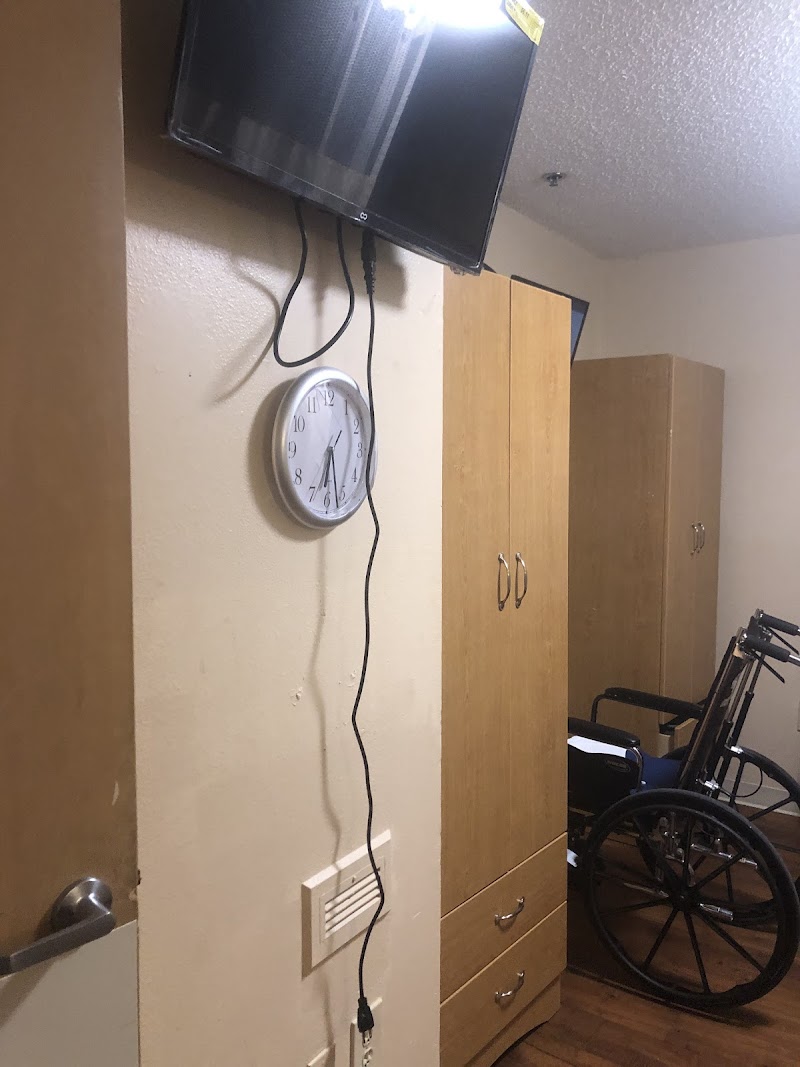
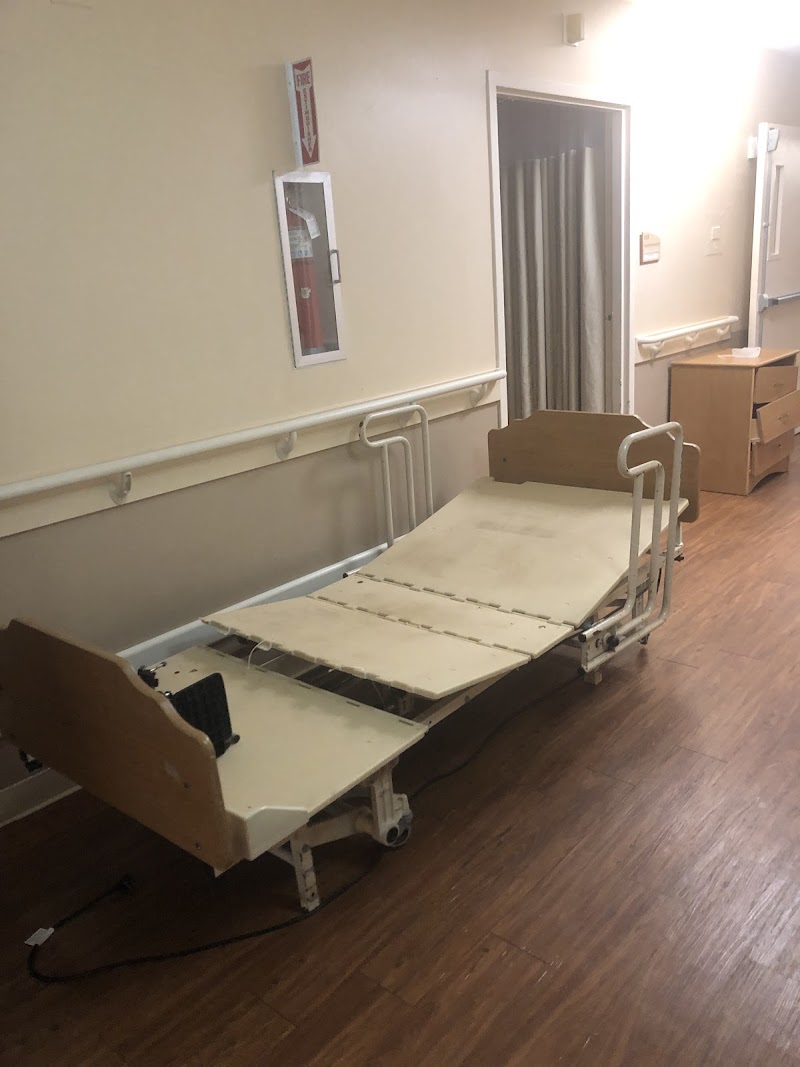
**NOTE- TERMS IN BRACKETS HAVE BEEN EDITED TO PROTECT CONFIDENTIALITY** 2) A record review showed that Resident #287 was admitted to the on 02/27/25 with diagnoses of Type 2 Diabetes, Altered Mental Status, and Anorexia. The admission Minimum Data Set (MDS) assessment dated [DATE], showed a Brief Interview of Mental Status (BIMS) score of 13, indicating the resident is cognitively intact. In an interview conducted on 03/03/25 at 10:55 AM, Resident #287 stated that she verbally asked a staff member 20 minutes ago for assistance to get out of bed to her wheelchair and is still waiting. This Surveyor then asked her if she could use the call light on her bed to call for assistance. Resident #287 pressed the round call light on her bed, but no light was noted outside her room. Continued observation in the nurse's station did not show any light or noise on the call light box for Resident #287's room. In an interview conducted on 03/03/25 at 11:30 AM, Resident #287 stated that she was still waiting to get out of bed and could not get any of the staff's attention. She then attempted to press the call light button again, but no light was noted outside her room or in the nurse's station. Record review showed that Resident #290 was admitted to the facility on [DATE] with diagnosis of a history of falling and Muscle Weakness. The admission Minimum Data Set (MDS) assessment dated [DATE], showed a Brief Interview of Mental Status (BIMS) score of 15, which is cognitively intact. In an interview conducted on 03/03/25 at 11:35 AM with Resident #290, she stated that the call light is not working sometimes, and she has to wait over an hour for staff to come into the room. She often calls the front desk nurse's station to ask for help when the call light does not work. In this interview, Resident #290 used the call light in front of the Surveyor, but no light was noted outside the room. About 3 minutes later, Resident #290 used the call light again, and a light was noted outside the room and in the nurse's station. On 03/05/25 at 8:35 AM, an observation was made of Resident #287 in bed with the call bell in reach, call bell pushed and no light outside of resident door and no sound at nursing station. On 03/05/25 at 8:40 AM, an observation was made of Resident #290 in bed with the call bell within reach. The call bell was pushed three times before the light outside the resident's door came on, and a sound was heard at the nursing station. During an interview conducted on 03/05/25 at 8:45 AM with Staff D, Certified Nursing Assistant who acknowledged that the call bell for Resident #287 did not work. She stated there should have been a light outside of the resident's door and a ring at the nursing station. During an interview conducted on 03/05/25 at 8:50 AM with Staff E, a Registered Nurse (RN) who stated she has worked at the facility for 2 years, she said that when a call bell is activated by a resident, it should light up outside of the resident's door and also ring at the nursing station. Based on observations, interviews and record review the facility failed to ensure all areas and equipment are clean and in good repair in 11 of 95 resident rooms and in 1 of 1 laundry rooms; and ensure functioning call lights for 2 of 188 resident occupied beds (Resident #290 and #287). The findings included: Review of the facility's policy titled, Physical Environment with an effective date of August 2024 included, in part, the following: A safe, clean, comfortable, and home-like environment is provided for each resident, allowing the use of personal belongings to the greatest extent possible. All essential mechanical, electrical, and resident care equipment is maintained in a safe operating condition through the facility's Preventive Maintenance Program. Assure an applicable working system is in place and within reach for the resident to summon assistance, including, but not limited to: Typical call light with cord. 1) During the initial tour completed on 03/03/25 from 9:30 AM to 11:00 AM, the following observations were noted: room [ROOM NUMBER], the air conditioning vents had a black substance. room [ROOM NUMBER], the air conditioning filter was covered with thick amount of dust/debris. room [ROOM NUMBER], Bed B, the privacy curtain had multiple reddish-brown stains. room [ROOM NUMBER], there were broken drawers at the bottom of 2 wardrobe closets. room [ROOM NUMBER], the air conditioning vents had a black substance. room [ROOM NUMBER], Bed B, there were pieces of laminate flooring that were dislodged. room [ROOM NUMBER], the air conditioning vents had a black substance; the air conditioning filter was covered with thick dust/debris; a hole was in the wall with crumbling plaster at the baseboard next to the bathroom door. room [ROOM NUMBER], the wall around the sink area at the baseboard had a hole in the wall and crumbling plaster. room [ROOM NUMBER], the air conditioning unit had a gap around the unit; and there were dark marks on the wall next to the air conditioning unit. room [ROOM NUMBER], there was missing paint on the bathroom wall; the air conditioning vents with black substance, and gap around the air conditioning unit, missing paint on wall nest to air conditioning unit. room [ROOM NUMBER], Bed B, there was missing paint on the wall behind the head of bed. room [ROOM NUMBER], bathroom had a overwhelming smell of urine. room [ROOM NUMBER], Bed A, the privacy curtain had multiple reddish-brown stains, and there was an overwhelming smell of urine. On 03/06/25 at 11:36 AM, a tour of the facility was conducted with the Administrator who acknowledged the areas of concern. She stated they have been working on air conditioning vent cleanings. 3) A review of documents provided by the NHA (Nursing Home Administrator) on 03/06/25 11:52 AM revealed :a dryer lint repair estimate dated 03/05/25 Another document stated the facility approved the estimate on 03/05/25 at 4:38 PM. There was no new repair estimate submitted for the air conditioner specific to the Laundry Clean Linen room [ROOM NUMBER]. There were no documents submitted for the repair of the Washer #3, Dyer #1 in the Clean Linen Room, and Washer #2 in the Dirty Linen Room. During a tour of the Laundry Room on 03/05/25 9:50 AM , Staff V, Housekeeping , who has been working in the facility for 45 years stated that the air conditioner (AC) unit in the Laundry Clean Linen room [ROOM NUMBER] has not been working for weeks. She did not remember when it stopped working, but stated she has a fan to keep herself cool and kept the room closed at all times. Observations revealed the lint box under Dryer #1 had few black lint materials stacked on the filter box. Staff V, Housekeeping added Dryer #1 was not working. Further observations revealed Dryer #2 had a few lint materials at the bottom, showing the filter cartridge was broken and not keeping the clothes lint attached to the filter, although the dryer was running and working. When asked regarding the cleanliness of the room, Staff V, Housekeeping stated it was done by Maintenance. When asked if she had informed the Facility Administration regarding the inoperable AC, Dryer #1, and Washer #3, she responded, The Housekeeping Manager knows. During a tour of the dirty linen room where they receive dirty linen from the facility, Washer #2 was not working. Dried rust was observed around the broken washer. Washer #1 was leaking water both in front of the machine and at the back. There was a bucket of brownish liquid behind Washer #1. Washer #1 also had rusty areas all around the machine and with an open area at the right back side of it. When the Housekeeping Manager was asked about the status of repair of the broken ac unit, washers and dryer, he stated he submitted them. When asked who maintained the washing machines, he responded, The Maintenance Staff. In an interview with Staff V, Housekeeping, she stated she uses gown and gloves when putting resident's clothes inside the washer and when taking them out of the washer. She added she is not responsible for the linen because another Housekeeping Staff does the resident's linen. A further observation of the ceiling vent on top of the dryer revealed dirt and blackish color. The Housekeeping Manager was asked regarding the Maintenance schedule record for the laundry rooms cleaning and maintenance. Until the end of the day 03/05/25 5:15 PM, no record was submitted. The NHA was informed that the record for cleaning and maintaining of Laundry Rooms were asked from Housekeeping Manager since morning and still was not received at 5:10 PM. In an interview with another Housekeeping Staff who only speaks a different language (Housekeeping Manager was the interpreter), she stated she does not use gloves when handling clothes from the dryer. She uses a gown all the time when she puts on clothes inside the dryer and when taking them out of the dryer. During a tour of this room, the door had a collection of dried-up lint on the metal hinge of the door. In an interview with the Housekeeping Manager on 03/05/25 10:00 AM, he stated that the request for repair for all the machines, and the ac unit had been submitted to the NH Administrator.
Nov 2024 1 deficiency
CONCERN (D) 📢 Someone Reported This

A family member, employee, or ombudsman was alarmed enough to file a formal complaint

Potential for Harm - no one hurt, but risky conditions existed

Room Equipment (Tag F0908)

Could have caused harm · This affected 1 resident

**NOTE- TERMS IN BRACKETS HAVE BEEN EDITED TO PROTECT CONFIDENTIALITY** Based on observations, record reviews, and interviews, the facility failed to provide an essential equipment with safe operating...

Read full inspector narrative →
**NOTE- TERMS IN BRACKETS HAVE BEEN EDITED TO PROTECT CONFIDENTIALITY** Based on observations, record reviews, and interviews, the facility failed to provide an essential equipment with safe operating condition, and failed to provide a safe, sanitary and comfortable environment for 2 of 2 sampled residents, Resident #4 and Resident #5, and random room observations, as evidenced by a leaking air conditioner with water pooling under Resident #4's bed and water with an offensive odor coming from the residents' bathroom / shower areas and additional offensive odors in the A-shower room and room [ROOM NUMBER]. The findings included: 1. Review of Resident # 4's electronic health record on 11/13/24 at 11:15 AM with Staff H, Clinical Reimbursement Specialist, revealed he was admitted on [DATE] following surgery for Physical Therapy and Rehabilitation. Review of the Minimum Data Set (MDS) assessment, Section C, revealed a Brief Interview of Mental Status (BIMS) score of 6, indicating severe impaired mental cognition. Section GG of the MDS revealed walking was not attempted due to medical condition. During an interview with Staff H on 11/13/24, she added Resident # 4's MDS was not completed, since he was recently admitted on [DATE]. Review of Resident #5's electronic record with Staff G, Clinical Reimbursement Specialist, on 11/13/24 at 11:08 AM, revealed he was admitted on [DATE]. The MDS, Section C, revealed Resident #6 had a BIMS score of 15, indicating intact mental cognition. Section GG showed walking was not attempted due to medical condition on review date of 11/03/24. Physical Therapy assessment was done on 11/02/24 per verification of Staff G, a Clinical Reimbursement Specialist. During a tour of the facility on 11/12/24 at 9:28 AM, Residents #4 and #5 were observed inside their room. A rectangular gray plastic pan (like a resident's bathing pan) was observed under a wall attached AC (Air Conditioner) unit. A warm temperature was immediately felt upon entrance to their room. Review of provided documentation, titled, Work History Report, submitted by Staff C, Maintenance Director, on 11/12/24 at 2:00 PM, with an HVAC-PTACS (heating, ventilation and air conditioning / packaged terminal air conditioner) category created on 11/12/24, and with due date time frame of 3 months, revealed that a preventive maintenance task of cleaning air filters, and repairs as needed, were marked completed on 11/07/24. Another preventive maintenance task including inspection of condenser coils, cleaning as required, cleaning air filters and repairs as needed on A, B, C, and D wings' room, were marked done on 11/01/24. On 11/12/24 at 9:40 AM, an interview was conducted with the Administrator and Director of Nursing (DON), who both stated the AC unit in these 2 residents' room had been fixed and was working. The rectangular gray plastic pan placed under the AC unit was to try and catch water condensation. The Administrator stated this room belongs to A wing. On 11/12/24 at 10:00 AM, an interview was conducted with Staff C, Maintenance Director, who stated he monitors the temperature of the facility, and the condensation on the AC vents are normal. On 11/12/24 at 1:30 PM, another interview was conducted with the Administrator who stated the water and discoloration on the AC ceiling vents are normal occurrences. On 11/12/24 at 2:00 PM, an interview was conducted with Staff B, the Housekeeping Director, who stated there are daily concierge rounds comprised of the facility's Unit Managers who checked and verified that each room is properly cleaned and maintained. On 11/12/24 at 3:30 PM, an interview was conducted with Staff D, CNA (Certified Nursing Assistant), who stated she believes there is no broken AC on A wing, because maintenance fixes any broken AC right away. On 11/13/24 at 9:25 AM, an interview was conducted with Resident #4 who stated he sees the puddles of water outside the rectangular gray pan under the AC unit every day and added that the room is warm. On 11/13/24 at 9:30 AM, an interview was conducted with Resident #4's visitor who stated she comes and visits Resident #4 every day and feels the warm air temperature inside the room. When asked about the water inside and outside the plastic pan and puddle under Resident #4's bed, she stated, It happens every day. This visitor added that staff would mop the floor, but the water puddle and flooding under and around the middle part of Resident #4's bed would come back immediately. She stated she is very careful in approaching Resident #4's bed because she does not want to slip and fall. She confirmed the water is coming from the wall-AC unit on the left side of Resident #4's bed. On 11/13/24 at 9:43 AM, an interview was conducted with Staff A, Housekeeping Staff, who has been working in the facility for 3 years. When asked if she had seen the water puddle and flooding around and under the Resident #4's bed and under the AC unit in this resident's room, she stated she 'heard the leak coming from a wall mounted AC unit' and has also 'seen the water puddle and flooding every time she cleans the room for several days.' Staff A added she reported the AC leakage and water flooding to a maintenance staff person who checked it on Monday (11/11/24 at 11:00 AM). During an observation conducted on 11/13/24 at 9:45 AM, a water puddle and poolinn of water were observed under the middle part of Resident #4's bed. A closer observation revealed the water was dripping from the wall mounted AC unit. There was a rectangular plastic gray pan located under the AC unit to the left of Resident #4's bed. Closer observation revealed the same water puddle and pooling of water were moving towards the bed of Resident #4's roommate, Resident #5. On 11/13/24 at 9:46 AM, continuing observation revealed when Staff H, CNA, opened the closed bathroom door, water gushed from the bathroom into the room, causing floor to pour unto the room floor on the foot part of Resident #5's bed. A few minutes later, Resident #5 came out from the bathroom and walked on a puddle of water. On 11/13/24 at 9:58 AM, in an interview with Resident #5, he stated the shower drain in their (Resident #4 and #5) room-bathroom does not work, causing water to come out from the bathroom into the inside of their room. Resident #5 stated he had been in the facility since last week, and he noticed the shower and bathroom drain were emitting a bad smell. On 11/13/24 at 10:03 AM, an interview was conducted with Resident #5's spouse who when asked about the water coming from the bathroom in the bedroom, she stated she was worried about Resident #5 slipping and falling due to water flooding in the room. She added the AC was leaking and flooding under Resident #4's bed, while the bathroom flooding goes around the foot part of her husband's (Resident #5) bed. She stated she did not want to complain, but believed the water flooding is dangerous for both Residents #4 and #5. She added the bathroom has a musty bad smell. On 11/13/24 at 11:10 AM, an additional interview was conducted with Resident #5, who was sitting on a wheelchair, and stated he told staff about the shower drain not working but nothing was done about it. He added it was hard for him to get the staff's attention regarding the water coming into his room and pooling on the floor. He thought there were not enough staff to care for all residents, especially concerning the water coming from the bathroom. He stated that he wanted to go home but needed more Physical Therapy, there was no shower curtain providing privacy, and nothing to stop the water from going inside the room. On 11/13/24 at 11:28 AM, an interview was conducted again the Maintenance Director who stated the AC company contracted by the facility repaired the AC unit in the room of Resident #4 and #5, but the grounds-keeping staff accidentally trimmed the outside AC parts. When asked for paperwork confirming dates when the AC unit was repaired, and the accidental outside-AC parts trimming, he stated he would provide them. No paperwork was provided to the surveyor by the end of the survey on 11/13/24 at 2:00 PM. On 11/13/24 at 11:45 AM, an additional interview with the Housekeeping Director revealed she that Residents #4 and #5's room was deeply cleaned on 10/28/24 before Resident #4 and Resident #5 were admitted . She added that deep cleaning involved stripping everything, such as removing resident from the room, room inspection from top to bottom and scrubbing windows, windowsills, bed rails, floors, walls, shower drain, toilet, and sink and washing privacy and bathroom curtains. When asked if she knew about water coming into this room, she stated none of the housekeeping staff had informed her. When asked if she performed residents room rounds, she stated she does random daily room inspection on each wing. When asked for the room numbers she randomly inspected on 11/12/24, she stated she would bring the paper documentation, but no documentation was provided to the time of survey exit. During an exit conference on 11/13/24 at 1:44 PM, the Administrator and DON were informed of the above findings. 2. On 11/12/24 at 11:45 AM, observations during tour of A wing, in the shower room, revealed a blackish and brownish discoloration on a beige colored AC vent on the ceiling. There was an ammonia musty and old-standing urine smell noted. 3. In room [ROOM NUMBER], observation during the same tour revealed a musty, ammonia smell inside the bathroom. When the tap water was turned on in the shower area and the sink, a stronger musty smell and old-standing urine odor were noted. During a second tour of room [ROOM NUMBER] with the Administrator on 11/12/24 at 5:10 PM, it was noted that the toilet base had been re-caulked, resealed and there was a strong disinfectant odor.
Nov 2023 10 deficiencies 2 Harm
SERIOUS (G)

Actual Harm - a resident was hurt due to facility failures

Deficiency F0692 (Tag F0692)

A resident was harmed · This affected 1 resident

**NOTE- TERMS IN BRACKETS HAVE BEEN EDITED TO PROTECT CONFIDENTIALITY** Based on observations, interviews, and record review, the facility failed to provide nutritional interventions in a timely manne...

Read full inspector narrative →
**NOTE- TERMS IN BRACKETS HAVE BEEN EDITED TO PROTECT CONFIDENTIALITY** Based on observations, interviews, and record review, the facility failed to provide nutritional interventions in a timely manner, failed to assist during dining, failed to ensure the accuracy of the scales, and failed to identify a significant weight loss for 2 of 4 sampled residents reviewed for nutrition (Resident #111 and Resident #143). The findings included: A review of the facility's policy titled Weight Management, dated October 2021, showed the following: the nutrition reassessment and modification to the existing plan of care may be indicated. The dietitian will reassess the nutritional needs and intake of the Resident with weight change. Appropriate recommendations will be documented in the medical record and via the dietitian recommendation form. The dietitian will track resident weights monthly to ensure that all significant weight changes are recognized. A review of the facility's policy titled Weight Management, dated October 2021, showed the following: Weights are completed on admission and readmission, then weekly for four weeks, then monthly unless the physician orders is to reweigh more frequently. The Director of Nursing and Dietitian are to review the monthly and readmission weights and identify any resident requiring reweighing. Weight Loss: All residents with weight loss of 5% in 30 days, 7.5% in 3 months, and 10% in 6 months require physician notification and resident/resident representative notification. Speech and Occupational Therapy are notified as needed. Documentation of notification(s) is documented in the progress note; the care plan and [NAME] are updated with interventions. 1) A record review showed that Resident #111 was admitted to the facility on [DATE] with diagnoses of Protein-calorie-malnutrition, Muscle weakness, and Unspecific falls. A review of the Order Summary Report showed the following: Regular diet with fortified foods dated 10/04/23, and Med Pass three times a day for nutritional supplement dated 10/04/23. The Minimum Data Set assessment dated [DATE] showed a Brief Interview of Mental Status (BIMS) score of 07, which indicated moderate to severe cognitive impairment. Section B of the MDS, under vision, showed severe impairment. Under section GG, for eating, it revealed that Resident #111 needs set up or clean up assistance only. In an observation conducted on 11/06/23 at 8:45 AM, the meal carts arrived at Unit C. Resident #111 received his breakfast tray that was placed on the side table at 8:48 AM. Resident #111 was noted asleep at that time. At 9:00 AM, the Resident was still asleep and the meal tray was untouched. At 9:10 AM, the meal was still untouched at the beside. Continued observation at 9:20 AM, which was 32 minutes later, still showed that Resident #111 was asleep with the meal tray 100% untouched. In an observation conducted on 11/06/23 at 12:50 PM, the meal cart arrived at the C Unit. At 1:10 PM, the lunch tray was brought into Resident #111's room by the staff, who started assisting Resident #111 with his lunch tray. Continued observation showed staff leaving the room [ROOM NUMBER] minutes later with the lunch tray 25% consumed. A review of the amount eaten on 11/06/23 documented by staff that Resident #111 ate 76% to 100% of his meals for breakfast and lunch, which was different from what was observed by the Surveyor. In an observation conducted on 11/07/23 at 8:50 AM, Resident #111 was in his room with Staff F, Certified Nursing Assistant (CNA), assisting the Resident with his breakfast meal. Resident #111 ate about 75% of his meal. In this observation, Staff F stated that Resident #111 needs assistance with his meals. In an observation conducted on 11/07/23 at 1:03 PM, Resident #111 was noted in his room with the lunch tray and no assistance from staff in the room. In this observation, Resident #111 was asked if he needed assistance with his meals and was not able to answer the Surveyor. Continued observation showed Staff F coming into the room to aid Resident #111 with his meal at 1:21 PM, which was 17 minutes later. She left the room with Resident #111's lunch tray 9 minutes later. In an observation conducted on 11/08/23 at 8:28 AM, Resident #111 was in his room eating the breakfast meal on his own. Staff B, the Licensed Practical Nurse, entered the room at 8:33 AM and sat near Resident #111, assisting him with the breakfast meal. Staff B was observed leaving the room at 8:52 AM, and the tray was observed to be 100% consumed. In this observation, she was asked by the Surveyor if Resident #111 needed assistance with his meals, and she said, he only needs cueuing. The Nutrition Evaluation Comprehensive dated 10/03/23 revealed the following: Resident #111's admission weight was 116.2 pounds with an Ideal Body Weight of 166 pounds, and his Body Mass Index (BMI) was noted at 16.7, which is underweight. It further showed that Resident #111 reported good appetite with 75 percent to 100 percent intake of meals. It further revealed that Resident #111 had inadequate oral intake, as evidenced by his BMI and signs of muscle wasting. Reviewing the Weights and Vitals Summary showed that only one weight was taken for Resident #111 on 10/04/23, and no other weights were recorded. The care plan initiated on 10/04/23 revealed the following: Resident #111 has a nutritional problem or potential nutritional problem related to Malnutrition, Low BMI, and nutritional supplements in place. To maintain weight, maintain nutritional intake, and monitor meal consumption, amount assistance needed with meals, and tolerance to diet/fluids. A progress therapy referral dated 10/03/23 revealed that Resident #111 has difficulty feeding self and is blind. He also needs assistance with eating, dressing, and toileting. In an observation conducted on 11/08/23 at 10:04 AM, the Surveyor requested that Resident #111's weight be taken. Resident #111 was taken by Staff E, Registered Dietitian, from Unit C to Unit A to be placed on the stationary scale. Staff E reported that the two Hoyer Lift scales that they have in the facility, are not working and they only have one stationary scale that is working on Unit A. Continued observation showed that Resident #111's weight was 106 pounds. This showed a weight loss from 116.2 pounds to 106 pounds, which was a significant weight loss of 9.8% in about one month. In an interview conducted on 11/08/23 at 10:00 AM, Staff B, Licensed Practical Nurse, stated that weights are usually decided between nursing and dietary and are taken right away after admission or the next day. When asked about the weight policy of the facility, she said, Let me check. She looked it up and reported that weights need to be taken on admission and every week after admission for one month. When asked who records the weight in the system, she said that it is done through communication between nursing and the dietary, and she thinks that the list is given to the Dietitians. She then said, If there is a specific form for the weights, I do not know. In an interview conducted on 11/08/23 at 12:20 PM with Staff E, Registered Dietitian, he was asked why Resident #111 did not have weekly weights since his admission on [DATE]. He stated, Looks like nursing did not do it. Staff E said that Resident #111 had a high nutritional risk since his BMI was very low. When asked by the Surveyor why Resident #111 has not been followed since his admission, he said that nursing did not report any poor intake of meals or any weight loss. Staff E then said I had been following up on his weekly weights, but they needed to be included, and that he addressed it in the morning meetings. He also stated that he gives the unit nurse manager a list of residents who need their weights taken, and even if he did not, they should be aware that their weekly weights still need to be included. When asked to clarify who is responsible for taking the weekly weights, he said that when residents get admitted , they have an order placed into the electronic system for weekly weights that need to be done. It is the responsibility of the admitting nurse or unit manager to verify that an order for weekly weights is placed upon admission. In an interview conducted on 11/08/23 at 4:20 PM, the Director of Nursing stated that in the morning meetings, Staff E will request the weights on residents that need to be done and are not done. Staff E provides them with a list of all weekly and monthly weights that are due for the day. In an interview with Staff V, the Minimum Data Set Coordinator, on 11/09/23 at 12:42 PM, stated that Resident #111 only needs set-up assistance with his eating. This means that the staff can bring the tray into the room, set it up for the Resident, and the Resident can eat on his own. Staff V further reported that this information is obtained by observing the residents, interviewing the staff, and reviewing documentation based on some evaluations. He further said that he observed the staff sitting near Resident #111 and that he could eat on his own. In an interview conducted on 11/09/23 at 12:55 PM with Staff U, CNA stated that Resident #111 needs assistance with all his meals and that a staff member has to sit with him during the meals. When asked by the Surveyor if Resident #111 could eat independently, she said, You need to feed the Resident. 2) Resident #143 was initially admitted to the facility on [DATE] and readmitted to the facility on [DATE] with diagnoses of Anemia, Diabetes, and Muscle weakness. The Order Summary Report showed an order for Boost Glucose Control three times a day for nutritional supplementation and record the percentage consumed dated 08/11/23. The Quarterly Minimum Data Set assessment dated [DATE] showed that Resident #143 has a BIMS score of 15, which indicated he is cognitively intact. Resident #143 was initially admitted to the facility on [DATE], readmitted on [DATE], readmitted on [DATE], readmitted on [DATE], and readmitted on [DATE]. A review of the Weight Log showed the following weights for Resident #143: on 03/17/23, a weight of 159.6 pounds, 122.0 pounds on 08/16/23, 124.2 pounds on 09/19/23 and dropped to 111.4 pounds on 10/05/23, which was 10% weight loss in less than a month. In an interview conducted on 11/07/23 at 1:10 PM, Resident #143 was noted eating his lunch meal in his room. He was observed eating 75% of his meals. In this observation, Resident #143 stated he used to get nutritional supplements (Boost) but has not gotten any in the last two weeks. He said that it was Boost with vanilla or chocolate flavors. Resident #143 stated that he needs to get more on his trays; sometimes, he feels insufficient and wants larger portions. In an observation conducted on 11/08/23 at 8:35 PM, Resident #143 was observed with his breakfast tray. Closer observation did not show any nutritional supplement on the tray. Resident #143 was observed eating 100% of his breakfast tray. In this observation, Resident #143 stated that he is not getting enough food and that he wants more. He then said, I can eat a lot. A Dietary progress note dated 10/06/23 revealed that Resident #143 had a good intake of meals between 75-100% of meals consumed. It showed that he is provided with Boost supplements three times a day. Further review did not show that the significant weight loss of 10% was addressed in this note. A Dietary progress note dated 10/13/23 revealed that Resident #143 had a good intake of meals between 75-100% of meals consumed. It showed that he is provided with Boost supplements three times a day. Further review did not show that the significant weight loss of 10% was addressed in this note. A Dietary progress note dated 10/20/23 revealed that Resident #143 had a good intake of meals between 75-100% of meals consumed. It showed that he is provided with Boost supplements three times a day. Further review did not show that the significant weight loss of 10% was addressed in this note. During an interview conducted on 11/08/23 at 9:55 AM with Staff G, Licensed Practical Nurse, who was asked when and how often a new resident is weighed, she stated they are weighed when they first come in and then weekly for four weeks, then monthly. During an interview conducted on 11/08/23 at 10:05 AM with Staff H, a Registered Nurse, who was asked when and how often a new resident is weighed, he stated the Resident is weighed right away on admission and then weekly on Tuesdays for at least four weeks so if there is any weight loss, they can correct it right away. In an interview conducted on 11/08/23 at 10:45 AM, Staff E stated that they only have two Hoyer lifts in the facility for taking the weights, with one not working and the other Hoyer lift broken all last week. They also have two stationary scales, with one not working, and the only stationary scale that is working is on Unit A. When asked who is responsible for the accuracy of the scales or calibration, he said, I do not know. In an observation conducted on 11/08/23 at 10:50 AM, the stationary scale showed that the scale was calibrated on 01/16/23 and that the next due date was supposed to be on 07/2023, which still needs to be done. In an interview conducted on 11/08/23 at 11:00 AM with Staff A, Unit Manager, it was stated that the Hoyer lift that was not working last week was just fixed and is now working. Staff E then said, Oh, I did not know that the Hoyer lift was fixed. In an interview conducted on 11/08/23 at 1:00 PM with Staff H, he stated that the nutritional supplements are taken from the supply room on the unit. He then proceeded to go into the supply room with the Surveyor. He said that before they run out of supplies, he will let staff know if they are low on a specific item. When asked who oversees ordering the nutritional supplies, he said it changes daily and that he did not know. He further said that he did not have a par-level list of what is needed on a daily or weekly basis and that he knows what is missing or what they are low stock on just by visually looking. He then said, for example, look at the Boost glucose control; we only have five bottles left. The Surveyor then said, Are you not going to let supply know that you are low, and he said, I will. An interview conducted on 11/08/23 at 4:27 PM with the Administrator revealed they purchased two new Hoyer lift scales that are in transit and that she rented the Hoyer lift scale for the A unit so they can take the weights. In an interview conducted on 11/08/23 at 4:35 PM with the Maintenance Director, he stated that he was unaware that the scales on the floor needed to be fixed or needed calibration. He further said that he could be contacted by staff, or the team could contact the vendor directly, but he was not aware of any vendors coming in to fix the scales. He further said that in May 2023, he reached out to his vendors, who came out and inspected all the scales, and any work orders were addressed at that time. In an interview conducted on 11/09/23 at 8:14 AM, Staff E stated that he did not see Resident #143 or speak to Resident #143 when he made his dietary progress notes on 10/06/23, 10/13/23, and 10/20/23. These notes were done after he reviewed Resident #143's nutritional progress in the Interdisciplinary Team meetings. When asked by the Surveyor if he was aware of the weight loss from 124.2 pounds to 111.4 pounds, he said yes. Staff E reported that he questioned the accuracy of the weight loss in the meetings and would follow up with a reweigh, but he never did. When asked why he did not go to see Resident #143, he said since he was eating well and meeting his nutritional needs, he did not. Regarding the dietary supplements, he stated that they are not placed on the meal trays but are given by nursing staff. In an interview conducted on 11/09/23 at 8:40 AM, the Corporate Dietitian stated that there are processes in place to ensure that weekly weights and monthly weights are done, and that is why they have the Interdisciplinary Team meetings to discuss any significant weight changes. Nursing takes the weights of all residents, and it is given back to the Dietitians to place them into the electronic system or the Unit Manager.
SERIOUS (G)

Actual Harm - a resident was hurt due to facility failures

Tube Feeding (Tag F0693)

A resident was harmed · This affected 1 resident

**NOTE- TERMS IN BRACKETS HAVE BEEN EDITED TO PROTECT CONFIDENTIALITY** Based on observations, interviews, and record review, the facility failed to monitor the nutritional status in a timely manner a...

Read full inspector narrative →
**NOTE- TERMS IN BRACKETS HAVE BEEN EDITED TO PROTECT CONFIDENTIALITY** Based on observations, interviews, and record review, the facility failed to monitor the nutritional status in a timely manner and failed to conduct weekly weights as per the facility's policy to identify a significant weight loss of 21% of body weight for 1 of 2 sampled residents reviewed for tube feeding (Resident #169). The findings included: A review of the facility's policy titled Weight Management, dated October 2021, showed the following: Weights are completed on admission and readmission, then weekly for four weeks, then monthly unless the physician orders is to reweigh more frequently. The Director of Nursing and Dietitian are to review the monthly and readmission weights and identify any resident requiring reweighing. Weight Loss: All residents with weight loss of 5% in 30 days, 7.5% in 3 months, and 10% in 6 months require physician notification and resident/resident representative notification. Speech and Occupational Therapy are notified as needed. Documentation of notification(s) is documented in the progress note; the care plan and [NAME] are updated with interventions. A review of the facility's policy titled Nutrition Assessment and Progress Note, dated January 2023, showed that Residents will receive a comprehensive nutrition assessment by a registered dietitian of an authorized designee. Assessment and documentation of nutritional concerns are recorded in a timely manner in the medical record. The nutrition assessment is an in-depth evaluation of objective and subjective data related to an individual's food and nutrient intake, lifestyle, and medical history. Reassessment is completed quarterly, annually, and with significant change or readmission as needed. Progress notes are completed for intermittent documentation as required and with changes in nutrition status or care. A review of the job description of the Dietitian dated August 1, 2020, showed the following: The Dietitian is primarily responsible for the assessment and evaluation of the Resident's nutritional needs, provides recommendations for nutritional needs, and monitors the Resident's nutritional status in skilled nursing facilities/assisted living facilities providing counseling to residents and family to promote health, wellness, and disease control. Complete nutritional initial, quarterly, annual, and significant Resident change reviews. Review monthly and weekly weights to determine residents who have had a significant change. Complete nutritional reviews monthly on high-risk residents (significant weight loss/ gain, pressure ulcer, hemodialysis, and tube feeding). Assess nutritional needs, diet restrictions, and current health plans to develop and implement dietary care plans and provide nutritional counseling. Resident #169 was initially admitted to the facility on [DATE] and readmitted on [DATE] with diagnoses of Cerebral infarction, Schizoaffective disorder, and bipolar disorder. Progress readmission noted dated 10/19/23 showed the following: a history of malnutrition and dysphagia and is full code. The Resident previously resided in an Assisted Living Facility. The order review report showed an order for enteral feeding with Jevity 1.5 (tube feeding formulary type) running at 70 ml (milliliters) an hour until a total volume of 1260 ml infused in 24 hours. May turn for care and services and to start at 2:00 PM, and to verify infusing every shift dated 10/19/23. Another order was noted for weekly weights, every seven days for four weeks. The order is not a practitioner order but an order that is part of the care plan by nursing staff dated 10/18/23. It further revealed to record weights under the weight tab in the electronic system and to reweigh for change of 5 pounds in the last seven days. In an observation conducted on 11/06/23 at 8:15 AM, Resident #169 was noted in the room with a tube feeding Jevity running at 70 ml an hour. The tube feeding bottle showed that it was started the day before, on 11/05/23, at 3:00 PM. Continued observation showed that the tube feeding bottle was at the 350 ml mark out of a 1000 ml capacity bottle. This observation indicated that 650 ml of formulary was infused in about 17 hours. In an observation conducted on 11/06/23 at 11:00 AM, the tube feeding was noted on hold, and the bottle was noted at the 250 ml level out of the 1000 ml capacity bottle. Continued observation at 12:30 PM revealed that the tube feeding was still on hold and was noted at the 250 ml level. This observation showed that 750 ml of formulary was infused in about 20 hours. In an observation conducted on 11/06/23 at 2:30 PM, the tube feeding was still on hold, and the bottle was noted at the 250 ml level out of the 1000 ml capacity bottle. This revealed that only 750 ml of tube feeding was provided to Resident #169 in about 24 hours. Resident #169 received 1123 calories, which is only 59% of their estimated energy needs in the last 24 hours. In an observation conducted on 11/07/23 at 9:30 AM, Resident #169 was noted in the room with the tube feeding running at 70 ml an hour. The tube feeding bottle was noted at the 450 ml level out of a 1000 ml capacity bottle. The tube feeding bottle was started on 11/06/23, the day before, at 4:00 PM. This showed that 550 ml of formulary was infused in the last 17.5 hours. In an observation conducted on 11/07/23 at 11:45 AM, Resident #169 was noted in the room with the tube feeding running at 70 ml an hour. The tube feeding bottle was noted at the 300 ml level out of a 1000 ml capacity bottle. The tube feeding bottle was started on 11/06/23, the day before, at 4:00 PM. This showed that 700 ml formulary was infused in the last 20 hours. In an observation conducted on 11/07/23 at 2:20 PM, Resident #169 was noted in the room with the tube feeding running at 70 ml an hour. The tube feeding bottle was still at the 300 ml level out of a 1000 ml capacity bottle. The tube feeding bottle was started on 11/06/23, the day before, at 4:00 PM. This showed that Resident #169 received 700 ml of tube feeding in the last 23 hours. This provided 1050 calories, which was 55% of Resident #169's estimated caloric needs. In an observation conducted on 11/07/23 at 4:10 PM, Resident #169 was noted in his room with the tube feeding running at 70 ml an hour. The tube feeding started at 4:00 PM on 11/07/23 and was at the 1000 ml capacity bottle. In an interview conducted on 11/07/23 at 4:11 PM, Staff D, Licensed Practical Nurse (LPN), stated that the earlier 7:00 AM to 3:00 PM shift changed the new tube feeding bag and that it was already running when she came for her shift today. She further said that Resident #169 tolerates his tube feeding. In an observation conducted on 11/08/23 at 7:14 AM, the tube feeding was noted at the 250 ml mark out of a 1000 ml capacity bottle. It started at 4:00 PM the day before, which was dated 11/07/23. In an interview conducted on 11/08/23 at 7:20 AM with Staff C, LPN stated that Resident #169's tube feeding was running all night and was only stopped for water flushes. Resident #169 is tolerating the tube feeding well with no issues. When asked by the Surveyor as to what is the tube feeding order for Resident #169, she said that the tube feeding starts at 2:00 PM and stops at 10:00 AM the following day. She then said let me check the electronic system to ensure I have it correct. After looking at Resident #169's tube feeding orders, she reported that the order would start at 2:00 PM and run until it reached 1260 ml. Staff C said it needed to run for 18 hours, paused, and then said, This seems too early. I am so used to the 10:00 AM, 2:00 PM routine. According to Staff C, she does not let the tube feeding bag empty to change to a new tube feeding bottle. She changed the tube-feeding bottle with some tube-feeding formulary left at the end of the bottle. A review of the weight log for Resident #169 showed the following: 117 pounds dated 10/07/23, 117 pounds dated 10/12/23, and a weight of 120 pounds, which was dated 10/18/23 after his readmission to the facility on [DATE]. Further review of the weights did not show any additional weights that were taken for Resident #169 after his readmission to the facility. The Medication Administration Record for November 2023 showed that the tube feeding was administered as per the above order with no issues documented. The Nutrition Evaluation Comprehensive, dated 10/19/23, revealed that Resident #169 estimated needs are at 1636-1909 calories a day, 68-82 grams of protein a day, and 1636-1909 ml of fluids a day. The above tube feeding order will provide 1890 calories a day, 80 grams of protein daily, and 1957 ml of fluids daily. It further revealed that Resident #169's Ideal Body Weight was at 148, and his Body Mass Index (BMI) was noted at 18.8, which is low. In an interview with Staff E, Registered Dietitian, on 11/08/23 at 9:09 AM, he stated when residents get initially admitted , their weight is taken as soon as possible. After the initial weight is taken, the Resident's weights are supposed to be done weekly for four weeks and monthly after that. If he does not have the weekly weight, he will request it from the nursing staff. High-risk residents are those residents who are on dialysis, with pressure ulcers, tube feeding, and residents with malnutrition. If a resident has malnutrition, it is because the nutritional guidelines identified them. Staff E further stated that the nursing staff would take the weights in each unit. At the beginning of the month, when most of the monthly weights are done, he gives the nursing staff on the unit the list of residents who need their weights taken. Nursing will sometimes place the weights into the electronic system, and sometimes, it is given to him to input the weights in the electronic system. When asked how he knows which residents are missing their monthly or weekly weights, he said that there is an entry form that allows you to see who is missing any weights or when the weights were taken on specific residents. He will run this report every morning, and as per nutritional guidelines, he will monitor any weight losses of 2% in one week, 5% in one month, 7.5% in 3 months, and 10% in 6 months. Staff E reported that for any of the above weight loss percentages, the electronic system will initiate a warning on the specific weight loss. He then said, Sometimes the weight loss warning gets cleared in the electronic system by the nursing staff. In an observation conducted on 11/08/23 at 1:11 PM, Resident #169's weight was taken as requested by the Surveyor. A Hoyer lift scale was used to take the weight of Resident #169. Continued observation showed Staff I and Staff J, Certified Nursing Assistants, were in the room to take the weight of Resident #169, which showed a weight of 94 pounds. Resident #169's weight of 94 pounds in 20 days showed a significant weight loss from 120 pounds to 94 pounds, which was a 21 percent weight loss. This showed that Resident #169's BMI dropped from 18.8 to 14. 7, which is underweight. In an interview conducted on 11/08/23 at 2:30 PM with Staff H, Registered Nurse, he stated that he is very familiar with Resident #169 and has been tolerating his tube feeding very well in the last few weeks with no issues. He did say that Resident #169 has the tendency to move around, and he would always check on him to make sure that he did not strangle himself with the tube feeding around him. Staff H further stated that the tube feeding has been following the Physician's orders and that he starts it at 2:00 PM before he leaves his shift. The tube feeding order is to run until 1260 ml, or the formula is infused in 24 hours, running at 70 ml an hour. If the tube feeding had not been flushing, dislodged, or obstructed, he would have contacted the doctor, which did not happen. In another interview conducted on 11/08/23 at 4:03 PM with Staff E, he was asked as to how many bottles of feeding formulary are infused if the next day, after 23-24 hours, there is still some formula left in the bottle, he stated that it is okay because the tube feeding bottles are 1500 ml capacity bottles. He then said that if the tube feeding ran for 18 hours, it should have been done after 18 hours unless they stopped it to provide care. When asked about the 21% weight loss on Resident #169 from his readmission on [DATE], he stated, The Resident clearly has something that we did not know about, and that is for the doctor to figure it out. Staff E then said that he would follow up on Resident #169 to order a new lab and see why he needs to utilize the formula. He only realized it today when Resident #169 was placed on the scale that he had such a significant weight loss in 3 weeks. He further said that he addresses the issues with weights in the morning meetings and that some managers are more effective than others in making sure that he has the weekly weights to complete the nutritional assessments. The Surveyor expressed concern that the significant weight loss was missed within 3 weeks, and Staff E then said, It is only one week that he missed the weight on Resident #169. In an interview conducted on 11/08/23 at 4:50 PM with the Director of Nursing (DON), she stated that they have morning meetings daily, and she was not aware that some residents needed weekly weights that were not done. According to DON, Staff E would provide nursing staff with a list of any residents who needed the weekly or the monthly weights done. The care plan, which was initiated on 10/06/23, showed the following: to obtain adequate nutrition and hydration by administrating the enteral feeding as ordered. It further revealed that Resident #169 is at nutritional risk related to malnutrition, dysphagia, and low BMI. In an interview conducted on 11/08/23 at 6:00 PM with the facility's Administrator, she was told of the findings and that Resident #169 has a significant weight loss of 21%. She was told by the Surveyor that weekly weights were not obtained on high-risk residents and that Resident #169's weight loss was identified because of the Surveyor's interventions. In an interview conducted on 11/09/23 at 11:00 AM with the facility's Medical Director, he stated that Resident #169 went to the hospital on [DATE] for peg tube placement after Resident #169 was observed with a dislodged tube feeding. He further noted that Resident #169 did not get any nutrition via tube feeding for 3-4 days while in the hospital and was already compromised nutritionally. The Medical Director reported that Resident #169 was tolerating his tube feeding after he was readmitted to the facility on [DATE]. He further questioned the significant weight loss for Resident #169 and stated that he would investigate further and order more labs for any underlying causes that may have been missing.
CONCERN (D)

Potential for Harm - no one hurt, but risky conditions existed

Safe Environment (Tag F0584)

Could have caused harm · This affected 1 resident

**NOTE- TERMS IN BRACKETS HAVE BEEN EDITED TO PROTECT CONFIDENTIALITY** Based on observations, interviews and record review the facility failed to ensure clean bed linens are provided to residents for...

Read full inspector narrative →
**NOTE- TERMS IN BRACKETS HAVE BEEN EDITED TO PROTECT CONFIDENTIALITY** Based on observations, interviews and record review the facility failed to ensure clean bed linens are provided to residents for 2 of 34 sampled residents sampled (Resident #10 and #137) and failed to ensure all areas and equipment are in good repair. The findings included: Review of the facility's policy titled Physical Environment with an effective date of 01/01/20 included: A safe, clean, comfortable, and home-life environment is provided for each resident/patient, allowing the use of personal belongings to the greatest extent possible. Sufficient space and equipment in dining, health services, recreation, and program areas are provided to enable staff to provide resident/patients with needed services. All essential mechanical, electrical, and resident/patient care equipment is maintained in safe operating condition through the facility's Preventative Maintenance Program. 1) Record review for Resident #10 revealed the resident was admitted to the facility on [DATE] with diagnoses that included: Reduced Mobility, Repeated Falls, and Muscle Weakness. Review of the Minimum Data Set (MDS) for Resident #10 dated 09/01/23 revealed a Brief Interview of Mental Status (BIMS) score of 15, indicating a cognitive response. During an observation conducted on 11/06/23 from 9:30 AM to 10:20 AM of Resident #10 lying in bed with a mechanical lift sling under the resident, it was noted there was no sheet covering the mattress and no sheets or blankets covering the resident (Photographic Evidence Obtained). During an interview conducted on 11/06/23 at 9:35 AM with Resident #10 who was asked why she had no blankets or sheets, she said the aid came to clean her up this morning and they were going to put her in the chair, but the aid just left her in the bed. The resident stated a lot of times they do not have any clean sheets. During an interview conducted on 11/06/23 at 10:20 AM with Staff W, Certified Nursing Assistant (CNA), who walked into Resident #10's room and stated she has worked at the facility since July 2023. When Staff W was asked why the resident was in the bed with no sheets or blankets, she stated she cleaned the resident this morning and was going to put her in the chair with the mechanical lift, but the other staff member was busy, and it takes two staff to use the mechanical lift, so she left the resident in the bed. When asked why the resident did not have any sheets or blankets while in the bed, she said there were not enough sheets on the cart, and she had to go get the sheets from another area. Staff W stated she left the resident in the bed with no sheets, and she apologized to the surveyor saying she made a mistake she should not have left the resident like that. 2) Record review for Resident #137 revealed the resident was originally admitted to the facility on [DATE] with the most recent readmission on [DATE] with diagnoses that included Encounter for Palliative Care, Muscle Weakness, and Unspecified Lack of Coordination. Review of the MDS for Resident #137 dated 10/11/23 revealed in Section C a BIMS score of 4, indicating severe cognitive impairment. On 11/06/23 at 9:53 AM, an observation was made of Resident #137 lying in bed with only a sheet wrapped around him and no blanket. The temperature of the room was cool. On 11/06/23 at 1:30 PM, an observation was made of Resident #137 who continued to lay in his bed with only a sheet and no blanket. During an interview conducted on 11/06/23 at 9:54 AM with Resident #137 who stated he was cold and asked for a blanket. The resident stated they took his blanket this morning and did not bring another because they said they do not have any. He stated he was cold. 3) During a tour conducted on 11/06/23 from 9:15 AM to 12:00 PM of the B-wing in the facility an observation was made of the following: In room [ROOM NUMBER] the bathroom ceiling exhaust fan was covered with rust and plaster crumbling around ceiling exhaust fan. In room [ROOM NUMBER] the wall between closets was missing a baseboard. In room [ROOM NUMBER] the wall next to the air conditioning unit had no baseboard, missing plaster. In room [ROOM NUMBER] 1 out of 3 of the bathroom lights were burnt out. In room [ROOM NUMBER] the bathroom wall under toilet tissue holder had crumbling plaster. In room [ROOM NUMBER] the nightstand located in the corner near the air conditioning unit had drawers misaligned and unable to close properly. In room [ROOM NUMBER] the air conditioning unit vents had a black mold like substance. 4) Review of the facility policy and procedure on 11/07/23 at 2 PM titled Laundry Services provided by the Administrator effective October 2021 documented in the Policy Statement: The facility will strive to protect residents and employees from facility-acquired infections and communicable disease to reduce the risk of cross-infection by utilizing hygienic practices for the handling and processing of soiled linens. Regardless of the use of in-house or off-site contract services, appropriate procedures will be followed to minimize potential healthcare associated and occupational risks associated with soiled linen handling .Procedure: 1. Clean washer and dryer outer surfaces daily with a disinfectant .12. Clean and disinfect all laundry areas routinely . During a Laundry Tour observation conducted on 11/07/23 at 11:27 AM with the facility District Manager, of dryer #1 and dryer #2, in the clean utility area, it was noted that there were multiple different areas located in both dryers, which contained a heavy, caked on, crusted, peeling, rust-colored, plastic-like amount of potentially- contaminated, melted dark matter and debris, along the inner drums of both dryers. (Photographic Evidence Obtained.) On 11/07/23 at 11:59 AM an interview was conducted, utilizing a interpreter, with Staff X, a laundry aide, in which she was asked if she knew what this melted, dried substance could be in the 1st and 2nd dryer drums, and whether or not she noticed it. Staff X acknowledged that the rust-colored areas had been present in the dryer drums as late as yesterday; with these two (2) dryers still currently being used for drying the resident's linen, towels and gowns. During an interview conducted with the Director of Maintenance on 11/07/23 at 2:46 PM, he also acknowledged that dryer #1 and dryer #2 had just recently been utilized for resident clothing as late as this past weekend and he stated that the inner dryer drums should be inspected and cleaned daily, as necessary, prior to placing resident clothing inside. Furthermore, he added that there was no specific check and clean schedule in place to do this. Dryer #1 and #2 drums were not cleaned off or cleaned out, until after surveyor intervention. The Administrator further recognized and acknowledged on 11/07/23 at 2:35 PM that the facility's dryer drums should have been cleaned and free from debris; this was not done.
CONCERN (D)

Potential for Harm - no one hurt, but risky conditions existed

ADL Care (Tag F0677)

Could have caused harm · This affected 1 resident

**NOTE- TERMS IN BRACKETS HAVE BEEN EDITED TO PROTECT CONFIDENTIALITY** Based on review of policy and procedure, observation, record review and interview, the facility failed to provide care and servi...

Read full inspector narrative →
**NOTE- TERMS IN BRACKETS HAVE BEEN EDITED TO PROTECT CONFIDENTIALITY** Based on review of policy and procedure, observation, record review and interview, the facility failed to provide care and services in accordance with activities of daily living including: nail grooming for 2 of 2 sampled residents observed, (Resident #327 and Resident #79). The findings included: Review of the facility policy and procedure on 11/08/23 at 2 PM for ADL: Supervision/Assistance provided by the Director of Nursing (DON) effective July 2021 indicated that 1. Each resident will be encouraged to be as independent as possible with ADLs. 2. Staff will provide assistance with ADL's whenever requested by resident. 3. Staff may assist residents with: c. Routine Hygiene/Grooming . 1) Resident #327, was admitted to the facility on [DATE] with diagnoses which included Carrier or Suspected Carrier of Methicillin Resistant Staphylococcus Aureus, Resistance to Multiple Antibiotics, Seizures, Hypertension and Dysphagia. She had a Brief Interview Mental Status (BIMS) score of 15, indicating cognitively intact. During an initial observational tour conducted on 11/06/23 at 9:15 AM, Resident #327 was observed with long, sharp, unkempt, dirty, fingernails on both hands. Photographic Evidence Obtained. On 11/06/23 at 9:18 AM, a brief interview was conducted with Resident #327 in which she stated to this Surveyor that she would like to have her fingernails cleaned by staff and she indicated that she had mentioned this to them, but she is still waiting. During a second observational tour conducted on 11/06/23 at 2:24 PM, Resident #327 was still observed with long, sharp, unkempt, dirty, fingernails on both hands. During a third observational tour conducted on 11/07/23 at 11:04 AM, Resident #327 was still observed with long, sharp, unkempt, dirty, fingernails on both hands. During a fourth observational tour conducted on 11/07/23 at 3:48 PM, Resident #327 was still observed with long, sharp, unkempt, dirty, fingernails on both hands. During a fifth observational tour conducted on 11/08/23 at 10:15 AM, Resident #327 was still observed with long, sharp, unkempt, dirty, fingernails on both hands. Record review of the Resident # 327's Monthly CNA ADL (Activities of Daily Living) Task Flowsheet Record dated 10/27/23 thru 11/07/23 revealed that the facility was documenting in the record that nail care was being provided for this resident, when it had not been. Record review of the Resident #327's Care plan initiated 10/26/23 indicated Focus: Activities of Daily Living (ADL): She requires assistance with personal hygiene cannot complete ADL tasks independently assistance of one (1) Interventions: Anticipate Resident # 327's (ADL) needs and provide assistance as needed Goal: Resident #327 will have ADL Needs anticipated and met by staff through next review. However, observations revealed Resident # 23's fingernail care had not been done, on the dates from 11/06/23 thru 11/08/23. An interview was conducted with Staff Y, a certified nursing assistant (CNA) on 11/08/23 at 10:46 AM, in which she revealed that they had not provided fingernail care to Resident #327, and she said that it is the responsibility of the CNAs to clean and trim the residents fingernails. She further acknowledged that the resident's fingernails were long, sharp, unkempt and dirty. An interview was conducted with Staff H, a Registered Nurse (RN) Supervisor, A-wing on 11/08/23 at 11:38 AM, regarding Resident #327's long, unkempt nails and she also agreed that Resident # 327's fingernails were long, sharp, unkempt and dirty. On 11/08/23 at 11:49 AM, an interview was conducted with Staff A, Registered Nurse (RN), Unit Manager (UM) for A-wing, regarding Resident #327's fingernails being long, sharp and untrimmed and they she agreed that it is the responsibility of the CNAs to clean and trim the residents nails and they further acknowledged that the resident's fingernails were long and that they should have been cleaned/trimmed/cut. 2) Resident #79, was admitted to the facility on [DATE] and re-admitted to the facility on [DATE] with diagnoses which included Pneumonia, Anxiety Disorder, Muscle Wasting and Atrophy, and Dysphagia. Resident #79 had a Brief Interview Mental Status listed as severely impaired. During an initial observational tour conducted on 11/06/23 at 9:49 AM, Resident #79 was with observed long, thick, dis-colored with some jagged edges, and unkempt fingernails on both hands, with the ring finger fingernail of her left hand observed to be pressing deeply into the inner palm of her left hand. Photographic Evidence Obtained. During a second observational tour conducted on 11/06/23 at 2:24 PM, Resident #79 was still observed with long, thick, discolored dis-colored with some jagged edges, and unkempt fingernails on both hands, with the ring finger fingernail of her left hand observed to be pressing deeply into the inner palm of her left hand. During a third observational tour conducted on 11/07/23 at 11:06 AM, Resident #79 was still observed with long, thick, discolored dis-colored with some jagged edges, and unkempt fingernails on both hands, with the ring finger fingernail of her left hand observed to be pressing deeply into the inner palm of her left hand. During a fourth observational tour conducted on 11/07/23 at 3:47 PM, Resident #79 was still observed with long, thick, discolored dis-colored with some jagged edges, and unkempt fingernails on both hands, with the ring finger fingernail of her left hand observed to be pressing deeply into the inner palm of her left hand. During a fifth observational tour conducted on 11/08/23 at 10:29 AM, Resident #79 was still observed with long, thick, discolored dis-colored with some jagged edges, and unkempt fingernails on both hands, with the ring finger fingernail of her left hand observed to be pressing deeply into the inner palm of her left hand. An interview was conducted with Staff Y, a certified nursing assistant (CNA) on 11/08/23 at 10:46 AM, in which she revealed that they had not provided fingernail care to Resident #79 and she said that it is the responsibility of the CNAs to clean and trim the residents fingernails. She further acknowledged that the resident's fingernails were long, thick, discolored and unkempt. An interview was conducted with Staff H, a Registered Nurse (RN Supervisor, A-wing on 11/08/23 at 11:40 AM, regarding Resident #79's long, thick, discolored and unkempt fingernails and she also agreed that Resident #79's fingernails were long, untrimmed and unkempt. Record review of the Resident #79's Monthly CNA ADL (Activities of Daily Living) Task Flowsheet Record dated 10/27/23 thru 11/07/23 revealed that the facility was documenting in the record that nail care was being provided for this resident, when it had not been. Record review of the Resident #79's Care plan for Rash initiated 03/06/23 and revised 08/22/23 indicated Focus: Activities of Daily Living (ADL): She requires assistance with personal hygiene Interventions: Avoid scratching and keep hands and body parts from excessive moisture .Goal: Resident #79 will have no complications from rash through the review date. However, Resident #79's fingernail care had not been done, on the dates from 11/06/23 thru 11/08/23; until after surveyor intervention. An interview was conducted with the Activities Director, on 11/08/23 at 10:19 AM in which she stated that her department has been providing fingernail manicures, as an Activity, for any residents who are able and want to attend Activities, done by either her or one of her assistants. However, she added that her department is not allowed to cut any of the resident's fingernails; they will file them only. She added that if her staff were to see a resident with long, dirty fingernails that she would alert the nurse and CNA of the wing or unit involved and to let them know to follow-up with the resident. The Director also acknowledged that Resident #327 and Resident #79's fingernails were both long, thick, discolored and unkempt. On 11/08/23 at 11:52 AM, an interview was conducted with Staff A, Registered Nurse (RN), Unit Manager (UM) for A-wing, regarding Resident #79's fingernails being long, thick, discolored and unkempt and they she agreed that it is the responsibility of the CNAs to clean and trim the residents nails and they further acknowledged that the resident's fingernails were long and that they should have been cleaned/trimmed/cut. On 11/08/23 at 1 PM, an interview was conducted with the DON regarding Resident ##327 and Resident #79's fingernails being long, sharp and untrimmed, and she also acknowledged that it is the responsibility of the CNAs to clean and trim the resident's nails and she further acknowledged that the resident's fingernails were long and that they should have been cleaned/trimmed/cut. There was no documented evidence in any of the records reviewed, indicating that either Resident #327 or Resident #79 had refused any personal (ADL) care. Resident # 79's fingernails were not cleaned and trimmed, until after surveyor intervention.
CONCERN (D)

Potential for Harm - no one hurt, but risky conditions existed

Deficiency F0687 (Tag F0687)

Could have caused harm · This affected 1 resident

**NOTE- TERMS IN BRACKETS HAVE BEEN EDITED TO PROTECT CONFIDENTIALITY** Based on observations, interviews, and record review the facility failed to provide proper treatment and care for good foot heal...

Read full inspector narrative →
**NOTE- TERMS IN BRACKETS HAVE BEEN EDITED TO PROTECT CONFIDENTIALITY** Based on observations, interviews, and record review the facility failed to provide proper treatment and care for good foot health in a timely manner for 1 out of 5 sampled residents reviewed for ADL (Activities of Daily Living) care (Resident #40). The findings included: Record review for Resident #40 revealed the resident was originally admitted to the facility on [DATE] and was readmitted to the facility on [DATE]. The resident's diagnoses included: Guillain-Barre Syndrome, Parkinson's Disease, and Abnormalities of Gait and Mobility. Review of the Minimum Data Set assessment for Resident #40 dated 10/02/23 revealed in a Brief Interview of Mental Status score of 14, indicating a cognitive response. Review of the Care Plan for Resident #40 dated 09/10/23 with a focus on the resident has an ADL (Activities of Daily Living) self-care performance deficit, weakness, recent hospitalization, and decline in function. The goals included OT (Occupational Therapy) are ordered and goals are established per the OT plan of care. PT (Physical Therapy) is ordered, and goals are established per the PT plan of care. Will Improve level of self-performance by next review. Will Maintain current level of self-performance with ADLs through next review. The interventions included: Converse with resident while providing care. Explain all procedures/tasks before starting. Observe for pain during activity and report to nursing if noted. Resident will be able to independently or sometimes independently perform ADL functions including but not limited to Personal Hygiene, Oral Care, Bathing, and Dressing. Anticipate Needs. Review of the admission Summary for Resident #40 dated 09/28/23 included: Patient admitted from hospital via stretcher accompanied by two medics. Patient transferred to bed with staff help. Patient noted with rash under bilateral armpit, under bilateral breast, redness to groin and sacrum, toenail long with white spots on nail bed, bilateral heels with redness. Patient lumbar region noted with sutures and dressing cover with border dressing, no drainage noted dressing re-enforce. Will continue to observe and proceed with plan of care. On 11/06/23 at 9:40 AM, an observation was made of Resident #40's toenails extending about 1 inch past the edge of the toes with jagged edges, a black spot was observed on the outer edge of the right great toenail (Photographic Evidence Obtained). During an interview conducted on 11/06/23 at 9:37 AM, Resident #40 stated she has been at the facility for 3 months and has been asking since she arrived here for her toenails to be cut and to be seen by a podiatrist because she has an ingrown toenail on her right big toe that sometimes has puss or bleeding. During an interview conducted on 11/09/23 at 9:55 AM with Staff Q, Licensed Practical Nurse (LPN) who stated she has worked at the facility for about 8 months. When asked if a resident has long jagged toenails what does staff do, she stated we do not cut the toenails, we would put in an order in the electronic medical record for the specific resident for a podiatry consult, that electronic order will generate a list that is accessible to the podiatrist, and he comes weekly to the facility or sooner if needed. When asked about an ingrown toenail or black spot on the toe near the nail, she said she would put the consult in for podiatrist and notify the physician. When asked about Resident #40's toenails and black spot on her right great toe, Staff Q LPN stated the resident was recently moved to this unit and when she noticed the toenail issues, she put an order in for a podiatry consult. Further record review revealed a Physician's Order for Resident #40 revealed an order dated 11/07/23 for Podiatry consult for elongated toenails.
CONCERN (D)

Potential for Harm - no one hurt, but risky conditions existed

Deficiency F0688 (Tag F0688)

Could have caused harm · This affected 1 resident

**NOTE- TERMS IN BRACKETS HAVE BEEN EDITED TO PROTECT CONFIDENTIALITY** Based on interviews, observations, and record review, the facility failed to ensure that services or treatment to increase range...

Read full inspector narrative →
**NOTE- TERMS IN BRACKETS HAVE BEEN EDITED TO PROTECT CONFIDENTIALITY** Based on interviews, observations, and record review, the facility failed to ensure that services or treatment to increase range of motion (ROM) and to prevent further decrease in ROM was provided as ordered for 1 of 2 sampled residents (Resident # 116 ) reviewed for ROM. The findings included. On 11/06/23 at 3:06 PM, Resident #116 was observed with contracture of his left hand. Resident #116 reported when questioned that he had a splint, but he did not get help to put it on. Resident #116 showed that the splint was in his nightstand's top drawer. Resident #116 also stated that he was supposed to wear it daily, but staff only puts it on twice a week. Resident #116 was diagnosed with: Hemiplegia and Hemiparesis Following Cerebral Infarction Affecting Left Non-Dominant Side; Major Depressive Disorder, Single Episode, Unspecified; Muscle Wasting And Atrophy, Not Elsewhere Classified, Multiple Sites; Muscle Weakness (Generalized); Muscle Wasting And Atrophy, Left Shoulder; Muscle Wasting And Atrophy, Right Shoulder. Review of the Minimum Data Set (MDS) assessment dated [DATE] revealed that Resident # 116's mental status was fairly intact scoring 14/15 on the Brief Interview for Mental Status score, indicating intact cognition. Section G of the MDS showed that Resident # 116 required extensive assistance for most activities of daily living (ADL) except for eating, for which he required supervision. Section O documented that therapeutic intervention was provided on 10/6/2022 and ended on 12/13/22. Review of the Nursing Care Plan (CP) dated 11/1/2023 revealed Resident #116 had ADL Self Care Performance Deficit; weakness, related to hemiplegia. He may require more assistance than allowing staff to render, due to recent hospitalization and decline in function As interventions, Resident #116 will: o have ADL Needs anticipated and met by staff through next review date o Improve level of self-performance by next review date. o Converse with Resident while providing care. o Explain all procedures/tasks before starting. o Observe pain during activity and report to nursing if noted. o have morning (AM) and hours of sleep (HS) ROUTINE CARE: Resident will be able to independently or sometimes independently perform ADL functions including but not limited to Personal Hygiene, Oral Care, Bathing, and Dressing. Encourage to perform at highest functional level. Staff will: o Anticipate the Resident's Needs o place Call Bell within reach while in room/ bathroom/shower room and remind to Use. o Provide Privacy for all care o Explain tasks to be performed including what resident will do and what staff will Do. Also, for o BED MOBILITY: Assist of 2 to turn and/or reposition is required. o BED MOBILITY: Resident will use enabler to assist in bed mobility. Review of the Physicians' orders (POS) dated 11/5/2023 revealed the following: Left resting hand splint to reduce future contracture, skin breakdown, and improve ROM. On in AM, off in PM. May remove for care, hygiene, meal services and ROM. Skin check prior to splint application and skin check after splint removal. Report any skin alteration noted to MD. The order further clarified that the Splint will be applied every day by day shift staff and it will be removed at night by evening shift staff (order active as of 11/06/2023 07:00). On 11/08/23 at 10:29 AM, Employee CC, a Licensed Practical Nurse, (LPN) said that Resident # 116 was supposed to wear the splint every morning after care. She informed that Nursing was supposed to verify whether the Certified Nursing Assistant (CNA) put it on for him. Employee M also stated that the resident could not put the splint on by himself. Finally, Employee M was not sure whether the CNAs were supposed to document when they put the splint on for Resident #116. On 11/08/23 at 12:06 PM, Employee DD, a Certified Nursing Assistant (CNA) assigned to care for Resident #116 reported that she has seen Resident #116 with something (a ball) in his hand that therapy gave to him, but she had not seen him wearing a splint. She said that she had never seen him wearing a splint. Review of the Task tab revealed that Resident #116 needed to have his splint on as per order. However, the direction was unclear (Splints- _____ (Type/Body Part) Splint daily for up to ___hours or per patient tolerance. May remove for care and meal services). Yet, some of the staff documented that they placed the splint during the Night shift instead of during the day shift, as follows: 11/5/2023 splint on during the 11:00 PM to 7:00 AM shift since it was documented at 22:33 PM. On 11/6/2023, the CNA Tasks record revealed documentation that the Resident wore the splint during the morning shift. However, observations conducted by the Surveyor contradicted that information. Resident #116 was not observed wearing the splint in the morning of 11/6/2023. On 11/08/23 at 2:26 PM., Employee EE, a CNA who worked in the morning from 7:00 AM-3:30 PM, said that she puts the splint on for Residents when she works with them. She however admitted that because she is new and floats from one unit to another, she does not always know what each patient requires. Employee O said that she knows that she is supposed to ask what is required for each patient. She says that she always put the splint for Resident #116 when she works with him, even though it may be late when she puts it on, because she said that she has a lot of patients to care for. On 11/7/2023, Resident #116 wore the splint in the morning and in the afternoon. The morning staff documented at 14:59 PM, that they assisted the resident and the evening staff also documented at 21:04 PM that the Splint was applied. On 11/08/23 at 3:57 PM, Resident #116 reiterated that they sometimes help him put the splint but not consistently. Resident #116 said sometimes, they do not put it on for days. He said even though he informs them that he needs it, they do not always put it on him. Resident #116 further stated that since the surveyor met with him that week, on 11/6/2023, they have been putting the splint on for him daily.
CONCERN (D)

Potential for Harm - no one hurt, but risky conditions existed

Incontinence Care (Tag F0690)

Could have caused harm · This affected 1 resident

**NOTE- TERMS IN BRACKETS HAVE BEEN EDITED TO PROTECT CONFIDENTIALITY** 2) Record review for Resident #53 revealed the resident was originally admitted to the facility on [DATE] with the most recent r...

Read full inspector narrative →
**NOTE- TERMS IN BRACKETS HAVE BEEN EDITED TO PROTECT CONFIDENTIALITY** 2) Record review for Resident #53 revealed the resident was originally admitted to the facility on [DATE] with the most recent readmission to the facility on [DATE]. The resident's diagnoses included: Urinary Tract Infection, Acute Cystitis Without Hematuria, and Obstructive and Reflux Uropathy. Review of the Minimum Data Set for Resident #53 dated 08/10/23 revealed in Section C a Brief Interview for Mental Status score of 5 indicating severe cognitive impairment. Review of the Physician's Orders for Resident #53 revealed an order dated 10/15/23 Urinary Catheter: Urinary catheter to drainage bag for diagnoses of Obstructive Uropathy every shift for observation. Review of the Physician's Orders for Resident #53 revealed an order dated 07/02/23 Urinary Catheter: Urinary catheter care daily and as needed every day-shift for Preventative Measure. Review of the Care Plan for Resident #53 dated 02/13/23 with a focus on indwelling catheter, the resident uses a Urinary catheter with risk for infection and/or complications: related to: Obstructive Uropathy. The goals were early identification & treatment of UTI (Urinary Tract Infection) and will minimize the risk of complications associated with catheter usage. The interventions included: Change drainage bag routinely & as needed. Use catheter bag that promotes privacy/dignity. Provide catheter care daily & as needed. Educate Resident/Family regarding catheterization & minimizing complications. Observe for signs/symptoms of discomfort on urination and frequency. Observe/document for pain/discomfort due to catheter. Observe/document/report to physician for signs/symptoms of UTI: pain, burning, blood-tinged urine, cloudiness, no output, deepening of urine color, increased pulse, increased temperature, Urinary frequency, foul smelling urine, fever, chills, altered mental status, change in behavior, change in eating patterns. Change drainage bag as needed. Change catheter as needed. Keep catheter tubing free of kinks. Keep drainage bag below level of bladder On 11/06/23 at 10:00 AM, an observation was made of Resident #53 lying in bed with a urinary catheter drainage bag handing from the frame of the bed. Upon closer observation the resident revealed the indwelling urinary tubing coming out of the resident's brief with and not anchored (Photographic Evidence Obtained). On 11/08/23 at 9:30 AM, an observation was made of Resident #53 lying in bed with a urinary catheter tubing that continues to not be anchored. During an interview conducted on 11/06/23 at 10:00 AM, Resident #53 was asked if his indwelling urinary catheter was anchored to his leg, he stated no there is nothing attached to the tubing. During an interview conducted on 11/08/23 at 9:35 AM with Resident #53 when asked if the indwelling urinary tubing was anchored to his leg, he stated no there is nothing, he lowered his blanket and pulled up his shorts to show the surveyor that the tubing is not anchored. During an interview conducted on 11/09/23 at 9:55 AM with Staff Q, Licensed Practical Nurse (LPN) who stated she has worked at the facility for about months. When asked about residents with an indwelling urinary catheter, she stated the drainage bag is hung from the side of the bed off of the floor and below the resident's bladder and the bag is covered for privacy. When asked if the tubing needs to be anchored to the resident's leg, she said yes with a leg strap. The LPN then confirmed that Resident #53 did not have his indwelling catheter tubing anchored. The LPN stated she will put a leg strap on the resident. During an interview conducted on 11/09/23 at 10:35 AM with Staff R Certified Nursing Assistant (CNA) who stated she has worked at the facility for 3 years. When asked if a resident with an indwelling urinary catheter needs to have the catheter tubing anchored, she said yes. When asked about Resident #53, the Staff R CNA stated he did not have a leg strap when she worked the other day, and she told the nurse. When asked why she did not put the leg strap on the resident to secure/anchor the catheter tubing when she noticed it she stated she cannot do that, that is for the nurse to do. Based on observation, interview and record review, the facility failed to 1) ensure that it properly and correctly positioned the Foley catheter tubing for 1 of 2 sampled residents observed and reviewed for Foley Catheters (Resident #160); and 2) failed to ensure that it properly anchored the Foley catheter for 2 of 2 sampled residents observed for Foley Catheters (Resident #160 and Resident #53). The findings included: 1) Resident #160 was originally admitted to the facility on [DATE] and was re-admitted to the facility on [DATE] with diagnoses which included Bacteriuria, Dementia, Diabetes Mellitus, Cerebral Infarction, Aphasia, Dysphasia, Hypertension, Atherosclerotic Heart Disease and Obstructive and Reflex Uropathy. He had a Brief Interview Mental Status listed as moderately impaired. On 09/28/23 Resident #160's Foley Indwelling catheter care plan documented, Keep drainage bag below level of bladder. During an initial observation conducted on 11/06/23 at 10:02 AM, Resident #160 was observed with his Foley catheter tubing wrapped and twisted around his bed side rail and positioned up above the location of his urinary bladder. The resident's assigned nurse for the day, as well as other staff members were observed entering and exiting the resident's room multiple times, over a period of more than two (2) hours, with no attempts made to try and reposition Resident #160's Foley catheter to the correct level below his bladder. During a second observation conducted on 11/06/23 at 11:48 AM, Resident #160 was observed with his Foley catheter tubing, now at a different even higher angle level above his bladder, for a period of more than one (1) hour, with the nurse in the room, at the time, performing a Glucometer check for a survey observation. During a third observation conducted on 11/07/23 at 9:54 AM, Resident #160's assigned Certified Nursing Assistant (CNA), was observed raising the resident's Foley catheter tubing high above the level of his bladder while re-adjusting it. During a brief interview conducted on 11/07/23 at 11:15 AM with Staff Z, a CNA she acknowledged that she did raise the Foley catheter above the level of the resident's bladder, when she should not have. Computerized record review noted orders for: Urinary Catheter for Obstructive uropathy, Retention and Bacteriuria . Further computerized record review revealed that Resident #160 had a recent previous order for Ertapenem Sodium Injection Solution Reconstituted 1 GM (Ertapenem Sodium) use one (1) gram intravenously (IV) one time a day for Bacteremia. An interview was conducted with Staff Y, a CNA on 11/08/23 at 10:46 AM), regarding the twisted Foley catheter and the fact that it was raised above the level of the resident's bladder and she acknowledged that it should not have been and needs to always remain low. An interview was conducted with Staff H, Registered Nurse (RN) Supervisor, A-wing on 11/08/23 at 11:40 AM regarding the twisted Foley catheter and the fact that it was raised above the level of the resident's bladder, and he acknowledged that it should not have been. An interview was also conducted with Staff A, Registered Nurse (RN), Unit Manager (UM) for A-wing, on 11/08/23 at 11:49 AM the twisted Foley catheter and that fact that it was raised above the level of the resident's bladder, and she also acknowledged that it should not have been. A side-by-side record review was conducted of the Foley Indwelling care plan with A, Registered Nurse (RN), Unit Manager (UM) for A-wing, in which it was noted or indicated to Keep drainage bag below level of bladder. The Director of Nursing (DON) further recognized and acknowledged on 11/08/23 at 1:18 PM that the resident's Foley catheter must always be free of kinks, and in proper position below the resident's bladder at all times; this was not done. A Foley catheter and pericare observation was conducted on 11/09/23 at 11:11 AM, Staff AA, CNA and Staff Y, CNA. Resident #160 provided permission for the surveyor to observe the Foley catheter tubing which was located underneath the resident's right thigh. However, it was not observed to be properly anchored in place with a leg strap. There was no anchor leg strap in place to remove. Neither, was there an anchor leg strap left at the resident's bedside. This fact was confirmed by both CNAs involved with the observation. The CNAs were both asked, after the procedure, if there was anything else that they may have forgotten or needed to do before completing this specific task. They initially could not answer and proceeded to cover the resident and began preparing to exit the room after cleaning and finishing up. On 11/09/23 12:04 PM, during a brief interview with Resident #160, he was asked if he had worn a leg strap as late as yesterday, and he responded, no. There was no documented evidence in any of the records reviewed, indicating that Resident #160 was resistant to care or had any refusals regarding care. On 11/09/23 at 12:08 PM, an interview was conducted with Staff H, Registered Nurse (RN) Supervisor A-wing, and with Staff A, Registered Nurse (RN), Unit Manager (UM) for A-wing, regarding the absent Foley leg strap anchor, they both acknowledged that the resident should have had one in place. The DON also recognized and acknowledged on 11/09/23 at 12:22 PM that the Foley catheter leg strap should have been in place.
CONCERN (D)

Potential for Harm - no one hurt, but risky conditions existed

Respiratory Care (Tag F0695)

Could have caused harm · This affected 1 resident

**NOTE- TERMS IN BRACKETS HAVE BEEN EDITED TO PROTECT CONFIDENTIALITY** Based on observations, interviews and record reviews, the facility failed to provide proper tracheostomy care and maintain a ste...

Read full inspector narrative →
**NOTE- TERMS IN BRACKETS HAVE BEEN EDITED TO PROTECT CONFIDENTIALITY** Based on observations, interviews and record reviews, the facility failed to provide proper tracheostomy care and maintain a sterile field for 1 of 1 sampled resident reviewed for tracheostomy care (Resident #74). The facility also failed to obtain a physician's order for oxygen for 1 of 3 sampled residents (Resident #79) and failed to properly document the use of oxygen for 1 out of 3 sampled residents (Resident #96) reviewed for respiratory care. The findings included: Review of the facility's policy titled, Tracheostomy Care, undated, and Tracheostomy Suctioning Competency Skills Checklist undated, revealed the following: Purpose: Tracheostomy care is the process of aseptically cleaning the tracheostomy tube and soma site. The buildup of mucus and rubbing of the tracheostomy tube can irritate the skin around the stoma. The skin around the stoma should be cleaned at least twice a day to prevent odor, irritation, and infection. Procedure: Gather the necessary equipment and proceed to the patient's room. Wash your hands after suctioning. Aseptically open the sterile saline/water and equally dispense it into two containers. Aseptically don sterile gloves. Follow universal precautions and use gown, gloves, & mask if needed. Precautions/Hazards: 1) Accidental decannulation. 2) Infection from poor aseptic technique. Tracheostomy Suctioning Competency Skills Checklist: Gather supplies: Suction kit, Extra sterile gloves, extra sterile 4x4's. Explain procedure to the resident and turn on the suction machine. Wash hands and apply gloves (soap and water or hand sanitizer). Open suction kit: place on top of non-permeable barrier. Don sterile gloves and other PPE (as indicated). Attach the catheter to the connecting tube, keeping the sterile hand on the catheter and the clean hand on the connecting tube. 1) A tracheostomy care observation was conducted on 11/08/23 1:12 PM with Staff K, Licensed Practical Nurse (LPN) for Resident #74. Staff K reviewed the physician's orders and gathered supplies from the medication storage room in a zippered bag. Staff K was joined by Staff L, Registered Nurse (RN). Staff L stated she was also the facility's staff educator. Staff K introduced herself to Resident #74 and advised that she was going to perform tracheostomy care. The resident's room door was closed for privacy. Staff K donned clean gloves and with one hand cleaned bedside tabletop while holding the supplies (in the zippered bag) in the other hand. While waiting for the tabletop to dry, an interview was conducted with Staff K. She stated that she had been working at the facility for 21 years. She also stated that she was the nurse that usually cared for Resident #74. Once the tabletop dried, she placed the zippered bag containing the supplies on the table and washed her hands. She returned to the bedside and retrieved a pulse oximeter from the pocket of her scrub top, donned clean gloves and placed the pulse oximeter on Resident #74's right index finger. The oxygen level read 97%. Staff K then removed her gloves (no hand sanitizing performed) and donned clean gloves. Then, she placed a Bio-hazard bag on the waste basket. She retrieved her face mask from her scrub top pocket and put it on. She removed her gloves (no hand sanitizing performed) and donned clean gloves. She took out all the supplies from the zippered bag and placed them on the table. The supplies included: 1 Tracheostomy care kit, 1 Suction kit, 1 disposable inner canula, 4 gauze 4x4 pads, 1 sterile normal saline container, 1 Tracheostomy tube holder, and 1 abdominal (ABD) pad. Without changing her gloves, Staff K opened the Tracheostomy kit and removed the sterile protector sheet to set up the sterile field. She placed the sterile sheet on top of the Suction and Tracheostomy kits and then removed the kits from underneath the sterile sheet. She opened the disposable inner cannula package and dumped it onto the sterile field. She ripped all 4 gauze packets together and attempted to drop them one at a time onto the sterile field. Some of the gauze packaging fell onto the sterile field and she removed it. At this time, Staff L stated that she would get another Tracheostomy kit and left the room. Then, Staff K continued to dump the other gauzes onto the sterile field. The surveyor asked Staff K if she was aware as to why Staff L went to get another Tracheostomy care kit. Staff K was unsure and continued to drop the gauze onto the sterile field. At 1:37 PM Staff L returned with another Tracheostomy care Kit and Suction kit. Staff L asked the surveyor if she could help Staff K, and the surveyor agreed. Staff L and Staff K washed their hands and donned clean gloves. Staff L told Staff K to throw everything away and to open the new tracheostomy care kit. Staff K removed her gloves (no hand sanitizing performed) and donned clean gloves. Staff K opened the Tracheostomy Care kit and removed the sterile sheet and as she was attempting to open it, she dropped the sterile sheet onto the floor. Staff L left the room again to get another Tracheostomy care kit. At 1:41 PM, Staff L returned with another Tracheostomy Care kit and asked if she could assist Staff K with the tracheostomy care. Under the direction of Staff L, Staff K proceeded with the reminder of Resident #74's Tracheostomy care. With Staff L's verbal instructions, Staff K continued to have difficulty with maintaining sterilization. Examples included the following: Staff K struggled to don the sterile gloves. The suction machine was not turned on prior to donning sterile gloves. Not performing hand sanitizing prior to donning clean gloves. Failed to identify non-sterile procedures versus sterile procedures in which she required assistance from Staff L. On 11/09/23 9:09 AM, an interview was conducted with Staff L, RN, and the Staff Educator. She stated she verbally reviewed the tracheostomy care steps with Staff K in the morning and then again prior to the Resident #74's tracheostomy care on 11/08/23 at 1:12 PM. Staff L stated she also went over the tracheostomy care procedure with Staff K after the observation and explained to her what went wrong. The surveyor explained that Staff K was unaware why Staff L went to retrieve another tracheostomy care kit the first time. Staff L was surprised and confirmed that Staff K will require education on sterilized field set-up and the overall tracheostomy care. This surveyor discussed these concerns with the Facility Administrator and the Director of Nursing (DON). 3) Record review for Resident #96 revealed the resident was originally admitted to the facility on [DATE] with the most recent readmission on [DATE]. The resident's diagnoses included: Atherosclerotic Heart Disease of Native Coronary Artery Without Angina Pectoris and Shortness of Breath. Review of the Physician's Orders for Resident #96 revealed an order dated 09/18/23 for oxygen at 2 LPM (Liters Per Minute) via nasal cannula as needed for SOB (Shortness of Breath). Review of the Treatment Administration Record for Resident #96 from 09/18/23 to 11/06/23 revealed no documentation of oxygen being administered. Review of O2 (Oxygen) Saturation under the Vital Signs tab in the electronic medical record for Resident #96 from 09/18/23 to 11/06/23 had documented on 09/18/23 and 09/19/23 the resident had oxygen via nasal canula. Review of the Care Plan for Resident #96 revealed a care plan dated 05/24/21 and a revised date of 09/19/23 with a focus on the resident has Oxygen Therapy related to SOB. The goal included the resident will experience minimal to no shortness of breath. The interventions included: Administer Oxygen as ordered (Refer to current POS/MAR for current order). Change and date respiratory equipment tubing weekly & prn. Encourage or assist with ambulation as indicated. Give medications as ordered by physician. Monitor/document side effects and effectiveness. Promote lung expansion and improve air exchange by positioning with proper body alignment. Report changes in respiratory status to physician. Special Equipment: Oxygen On 11/06/23 from 12:00 PM to 12:45 PM, an observation was conducted of Resident #96 wearing oxygen connected to an oxygen concentrator in his room. The oxygen concentrator had a beeping sound, upon closer observation the concentrator had an icon with an exclamation point inside a triangle lit up with a yellow light on next to an icon On 11/07/23 at 9:45 AM, an observation conducted of Resident #96 with an oxygen concentrator in his room with a beeping sound, upon a closer observation the concentrator with a yellow light on next to an icon with an exclamation point inside a triangle. On 11/08/23 at 1:40 PM, an observation conducted of Resident #96 with an oxygen concentrator in his room with a beeping sound, upon a closer observation the concentrator with a yellow light on next to an icon with an exclamation point inside a triangle. During an interview conducted on 11/06/23 at 12:10 PM with Resident #96 he was asked how often he wears oxygen, he said all the time, but sometimes he takes it off occasionally because it bothers his ears. When asked about the oxygen concentrator beeping, he said it does that sometimes. During an interview conducted on 11/08/23 at 1:45 PM with Staff S, Certified Nursing Assistant who stated she has worked at the facility since 2018. When asked if she has taken care of Resident #96, she said yes all of the time. When asked if Resident #96 wears oxygen, she said yes once in a while he will take it off. When asked about the oxygen concentrator for Resident #96 making a beeping noise, she said she never noticed it. During an interview conducted on 11/08/23 at 1:148 PM with Staff T, Registered Nurse, Unit Manager who stated she has worked at the facility for 2 years. When asked about the oxygen concentrator for Resident #96 beeping, she went into the room looked at the concentrator and said I will change it immediately it is not working properly. When asked if Resident #96 wears oxygen, she stated yes since he came back from the hospital the last time in September, he wears oxygen all of the time and occasionally takes it off. During an interview conducted on 11/08/23 at 2:20 PM with Staff BB, Registered Nurse who was asked if she has taken care of Resident #96 in the past she said yes, mostly she works the night shift. When asked if he receives oxygen she said yes, when asked how often she said most of the time every night. When asked where she documents the oxygen being used, she said it is documented on the TAR (Treatment Administration Record). 2) Review of facility policy and procedure on 11/08/23 at 1:30 PM for Oxygen Therapy provided by the (DON) dated 2013 indicated that Oxygen is a basic human need. Without it, we would not survive .Therefore .supplemental amounts are required to maintain normal body function Definition of Oxygen: 1) Oxygen is a drug which must be ordered by a physician .Initiation of Oxygen 1) Verify physician order . Resident #79 was initially admitted to the facility on [DATE] and re-admitted to the facility on [DATE] with diagnoses which included: Pneumonia, Anxiety Disorder, Muscle Wasting and Atrophy, and Dysphagia. Resident #79 had a Brief Interview Mental Status listed as (severely impaired). During an observational screening tour conducted on 11/06/23 at 9:51 AM Resident #79 was observed with Oxygen infusing at two (2) liters via Oxygen concentrator with no physician's orders for Oxygen therapy administration, on file since before her last re-admission to the facility. Photographic Evidence Obtained. A computerized record review was conducted of Resident #79's current physician's orders, but there was no current order noted for the Oxygen with parameters, for this resident. Neither were there any orders or other documentation written on Resident #79's Medication Administration Record (MAR) nor on the Treatment Administration Record (TAR). A computerized record review was conducted of Resident #79's Minimum Data Set (MDS) section O for assessment reference date of 08/21/23, in which it was also not captured that the resident was receiving Oxygen therapy for dates-of-service (DOS). Neither did a computerized record review of Resident #79's nursing care plan dated 08/21/23 reflect or capture any Oxygen therapy usage for this resident. However, record review of the nursing progress notes dated 05/15/23 thru 07/11/23 and again dated 09/23/23 thru 11/07/23, as well as the Oxygen saturation readings range 94% to 98%; both indicated or documented current Oxygen usage by this resident. There was no active order noted or obtained for Oxygen therapy, for Resident #79. On 11/06/23 at 2:25 PM, Resident #79 was still observed with Oxygen infusing at two (2) liters via Oxygen concentrator with no physician's orders for Oxygen therapy administration, on file. On 11/07/23 at 9:47 AM, Resident #79 was still observed with Oxygen infusing at two (2) liters via Oxygen concentrator with no physician's orders for Oxygen therapy administration, on file. On 11/07/23 at 3:47 PM Resident #79 was still observed with Oxygen infusing at two (2) liters via Oxygen concentrator with no physician's orders for Oxygen therapy administration, on file. On 11/08/23 at 11:01 AM Resident #79 was still observed with Oxygen infusing at two (2) liters via Oxygen concentrator with no physician's orders for Oxygen therapy administration, on file. On 11/08/23 at 11:40 AM, an interview was conducted with Staff H, a Registered Nurse (RN Supervisor, A-wing, in which he was asked the following three (3) questions regarding the resident's oxygen: 1) Is this resident on oxygen? He replied, Yes, on two (2) liters. 2) Did you have or get an order to administer this resident's oxygen? He stated, no. 3) If no, why not? Staff H, acknowledged that he did not take the time to verify whether or not the resident actually had an order for the oxygen. On 11/08/23 at 11:52 AM an interview was conducted with Staff A, Registered Nurse (RN), Unit Manager (UM) for A-wing, in which she was also asked the following three (3) questions regarding the resident's oxygen: 1) Is this resident on oxygen? She replied, Yes, on two (2) liters. 2) Did you have or get an order to administer this resident's oxygen? She stated, no. 3) If no, why not? Staff A, acknowledged that she did not take the time to verify whether or not the resident actually had an order for the oxygen. In fact, the oxygen order was not obtained for Resident #79, until after surveyor intervention. During an interview conducted on 11/08/23 at 1 PM, the Director of Nursing (DON) further acknowledged that Resident #79 should have had an oxygen order; this was not done.
CONCERN (D)

Potential for Harm - no one hurt, but risky conditions existed

Unnecessary Medications (Tag F0759)

Could have caused harm · This affected 1 resident

**NOTE- TERMS IN BRACKETS HAVE BEEN EDITED TO PROTECT CONFIDENTIALITY** Based on observation, interview, and record review; it was determined that the medication error rate was 7.59 percent, 2 medicat...

Read full inspector narrative →
**NOTE- TERMS IN BRACKETS HAVE BEEN EDITED TO PROTECT CONFIDENTIALITY** Based on observation, interview, and record review; it was determined that the medication error rate was 7.59 percent, 2 medication errors were identified while observing a total of 26 opportunities, affecting Resident #91 and Resident #479. The findings included: 1) On 11/07/23 at 8:52 AM, a medication pass observation was conducted with Registered Nurse (RN), Staff M for Resident #479. Staff M was observed preparing the resident's medications to include Advair Diskus Inhalation and 9 oral medications. Advair Diskus is a steroid and bronchodilator used for treatment of air flow. Staff M administered the 9 oral medications then gave the resident Advair to inhale. Resident #479 was not instructed to rinse her mouth out with water after inhaling. According to the prescribing information for Advair, after inhalation, the mouth should be rinsed out with water without swallowing to help reduce the risk of oropharyngeal candidiasis (yeast infection in the mouth). Resident #479 was initially admitted to the facility on [DATE] with diagnoses that included: Cerebral infarction, Hypertension and Hemiplegia. 2) On 11/07/23 at 9:20 AM, a medication pass observation was conducted with Licensed Practical Nurse (LPN), Staff N for Resident #91. Staff N was observed preparing the medications for Resident #91 to include 9 medications. Staff N administered the 9 medications to Resident #91. The medications that were administered to Resident #91 were reconciled to the Medication Administration Record (MAR). One of the medications prepared and given was Aspirin Tablet Chewable, 81milligrams (mg) by mouth instead of the medication that was prescribed which was Aspirin EC (enteric coated) 81mg 1 by mouth for prophylaxis. Resident #91 was admitted to the facility on [DATE] with diagnoses that included: Type 2 Diabetes Mellitus with Diabetic Chronic Kidney Disease, Gastrointestinal Hemorrhage, and End Stage Renal Disease. On 11/09/23 at 8:45 AM, an interview was conducted with the Director of Nurses (DON) apprising her of the medication pass observation and the reconciliation of the medications administered by Staff N. The DON verbalized understanding.
CONCERN (D)

Potential for Harm - no one hurt, but risky conditions existed

Deficiency F0924 (Tag F0924)

Could have caused harm · This affected 1 resident

Based on observation and interview the facility failed to equip the corridor between the therapy rooms with firmly secured handrails on each side. The findings included: Review of the facility's polic...

Read full inspector narrative →
Based on observation and interview the facility failed to equip the corridor between the therapy rooms with firmly secured handrails on each side. The findings included: Review of the facility's policy titled, Physical Environment with an effective date of 01/01/20 included A safe, clean, comfortable, and homelife environment is provided for each resident/patient. On 11/06/23 at 12:28 PM, an observation was made in the corridor with therapy rooms on each side with no handrails on either side of the corridor (Photographic Evidence Obtained). During an interview conducted on 11/08/23 at 2:00 PM with the Director of Maintenance who was asked about handrails, he said they have handrails throughout the building. When asked about no handrails in the corridor between the two therapy rooms, he said he never noticed there were no handrails in the corridor, he just changed the lights above the corridor to be brighter.
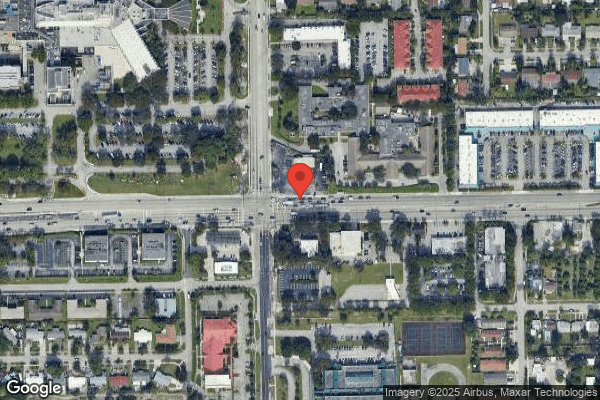
Jan 2023 1 deficiency
CONCERN (D) 📢 Someone Reported This

A family member, employee, or ombudsman was alarmed enough to file a formal complaint

Potential for Harm - no one hurt, but risky conditions existed

Comprehensive Care Plan (Tag F0656)

Could have caused harm · This affected 1 resident

**NOTE- TERMS IN BRACKETS HAVE BEEN EDITED TO PROTECT CONFIDENTIALITY** Based on interview and record review, the facility failed to develop and implement a comprehensive person-centered care plan for...

Read full inspector narrative →
**NOTE- TERMS IN BRACKETS HAVE BEEN EDITED TO PROTECT CONFIDENTIALITY** Based on interview and record review, the facility failed to develop and implement a comprehensive person-centered care plan for 1 of 1 sampled residents reviewed for tracheostomy (trach) (Resident #1). The findings included: Record review revealed Resident #1 was admitted to the facility on [DATE] with multiple readmissions. Record review revealed a comprehensive assessment dated [DATE] that documented the resident had mild cognitive impairment, and required total two-person assist with activities of daily living. The assessment further documented the resident received trach (hole in the neck to assist with breathing) care. A review of Resident #1's care plans did not address the resident's trach. An interview was conducted with the Director of Nursing (DON) on 01/03/23. The DON acknowledged the above.
Jul 2022 6 deficiencies
CONCERN (D)

Potential for Harm - no one hurt, but risky conditions existed

ADL Care (Tag F0677)

Could have caused harm · This affected 1 resident

**NOTE- TERMS IN BRACKETS HAVE BEEN EDITED TO PROTECT CONFIDENTIALITY** Based on observation, interview, and record review, the facility failed to address long fingernails for 1 of 3 sampled residents...

Read full inspector narrative →
**NOTE- TERMS IN BRACKETS HAVE BEEN EDITED TO PROTECT CONFIDENTIALITY** Based on observation, interview, and record review, the facility failed to address long fingernails for 1 of 3 sampled residents reviewed for Activities of Daily Living (ADL), Resident #370; and failed to ensure assistance during dining for 1 of 1 ampled residents, Resident #92. The findings included: 1. A review of the facility's policy titled ADL: Assistance dated July 2022 showed that staff would assist with ADLs per care plan for nail care and eating. A chart review for Resident #370 showed that he was admitted to the facility on [DATE] with diagnoses of Gastric Ulcer, Parkinson's Disease, and Hypertension. In an interview conducted on 07/18/22 at 10:10 AM, Resident #370 stated that he needed his fingernails cut and trimmed. He stated that he told the staff, but they did not do it. In this interview, Resident #370 fingernails were noted to be unkempt with an unidentified matter underneath the fingernails. In an observation conducted on 07/19/22 at 2:05 PM, Resident #370 was noted in his room. Closer observation showed that his fingernails were unkempt, with an unidentified matter underneath the fingernails. In this observation, Resident #370 stated that he needed his fingernails trimmed and asked if the Surveyor could cut his fingernails. In an observation conducted on 07/20/22 at 8:30 AM, Resident #370 was noted in his room. Closer observation showed that his fingernails were unkempt, with an unidentified matter underneath the fingernails. (photographic evidence obtained). The Minimum Data Set (MDS) assessment dated [DATE] showed that under section G, Resident #370 needed one person to assist with his grooming. Section C for Brief Interview of Mental Status (BIMS) showed a score of 15, which is cognitively intact. The Care Plan, which was initiated on 07/12/22, showed the following: Resident #370 needed to be monitored for Parkinson's complications of poor balance, poor coordination, and Tremors. It further showed that Resident #370 would be able to independently or sometimes independently perform ADL functions, including but not limited to Bed Mobility, Personal Hygiene, Oral Care, Bathing, Dressing, Transferring, Feeding, and Toileting. A review of the Certified Nursing Assistants charting for nail care showed that Resident #370 was provided with fingernail care on 07/15/22, 07/16/22, 07/17/22, and 07/19/22. In an interview conducted on 07/21/22 at 8:20 AM, Staff B, Certified Nursing Assistants, stated that Resident #370 requested that his fingernails be cut and that she was going to do it later today. She further said that she needed to find the nail clipper before cutting Resident #370's fingernails. 2. A chart review showed that Resident #92 was readmitted to the facility on [DATE] with Cognition Communication Deficit, Muscle Wasting, and Unspecific Protein-Calorie Malnutrition. An observation conducted on 07/18/22 at 12:42 PM brought the lunch tray into Resident #92's room. At 12:47 PM, staff came into the room to assist the Resident with her meal. In an observation conducted on 07/19/22 at 8:06 AM, Resident #92's Breakfast tray arrived in the room. Resident #92 was observed eating her Breakfast with no assistance from staff. At 8:30 AM, she ate 25% of her Breakfast. In an observation conducted on 07/20/22 at 8:07 AM, Staff F, Licensed Practical Nurse, was observed setting up the breakfast tray for Resident #92 and walking out of the room. At 8:35 AM, she only ate 20% of her meal. In an observation conducted on 07/21/22 at 8:35 AM, Resident #92 was observed in her room with the breakfast tray and no assistance from staff. The tray was 20% consumed (photographic evidence obtained). A review of the MDS assessment dated [DATE] showed that under Section H, for eating, Resident #92 needs extensive assistance with 1 person assistance. The care plan dated 06/06/22 showed that Resident #92 has a nutritional problem or potential for nutritional problems related to Protein-Calorie Malnutrition. It further showed to observe meal consumption and assist with meals. In an interview conducted on 07/21/22 at 8:22 AM, Staff A, Certified Nursing Assistance, stated that Resident #92 needs assistance with her meals.
CONCERN (D)

Potential for Harm - no one hurt, but risky conditions existed

Tube Feeding (Tag F0693)

Could have caused harm · This affected 1 resident

**NOTE- TERMS IN BRACKETS HAVE BEEN EDITED TO PROTECT CONFIDENTIALITY** Based on observations, interviews, and record review, the facility failed to ensure that enteral nutrition had been followed by ...

Read full inspector narrative →
**NOTE- TERMS IN BRACKETS HAVE BEEN EDITED TO PROTECT CONFIDENTIALITY** Based on observations, interviews, and record review, the facility failed to ensure that enteral nutrition had been followed by the practitioner's order and ensure that the tube feeding order was meeting the estimated needs for 2 of 3 sampled residents (Residents #371 and Resident #55) reviewed for tube feeding. The findings included: 1. A review of the facility's policy titled Weight Management dated October 2021 showed that weights are completed on admission and readmission, then weekly for four weeks, then monthly unless the physician orders are more frequent. In an observation conducted on 07/18/22 at 9:35 AM, Resident #371 was noted in his bed. Closer observation showed a tube feeding bottle with Jevity 1.5 (formulary) running at 50 ml (milliliters) an hour. The tube feeding started on 07/18/22 at 2:10 AM, with the tube feeding bottle at the 950 ml mark out of a 1000 ml bottle. In an observation conducted on 07/19/22 at 7:10 AM, Resident #371 was in his bed. Closer observation showed a tube feeding bottle with Jevity 1.5 almost empty. Closer observation showed that it was started on 07/18/22 at 2:45 PM at 70 ml an hour. Chart review showed Resident #371 was admitted on [DATE] with diagnoses of protein/calorie malnutrition, hemiplegia, and gastrostomy. A review of the weight log showed an admission weight of 131.22 pounds which was taken on 07/09/22. No other weights were documented since admission weight. The Nutrition Evaluation Comprehensive completed on 07/11/22, two days after admission, showed the following: Resident #371 is with pressure ulcer stage 3, and at malnutrition related to inadequate energy intake and signs of wasting. The tube feeding order was documented at Jevity 1.5 at 70 ml an hour for 18 hours. A review of the Physician's orders showed an enteral feed order for Jevity 1.5 Cal Continuous via a tube to infuse at a rate of 50 mL/hr. A total volume of 1000 ml was infused in 24 hours. May turn off for care/services and start at 2 PM. Verify infusing every shift and clear the pump when the total volume has infused. This order was written on 07/09/22 and discarded on 07/13/22. Another order was noted for enteral feeding Jevity 1.5 Cal via a tube to infuse at a 70 ml/hr rate. The total volume of 1260 ml was infused in 24 hours. May turn off for care/services and start at 2 PM. Verify infusing every shift and clear the pump when the total volume has infused. The order was dated 07/11/22. A review of the Medication Administration Record (MAR) for the month of July 2022 showed that Resident #371 was given tube feeding Jevity at 50 ml an hour on 07/09/22, 07/10/22, 07/11/22, and 07/12/22. A review of the care plan stated that Resident #371 has a nutritional problem or potential nutritional problem related to Pancreatic cancer, peg tube, and increased nutrient needs. In an interview conducted on 07/21/22 at 8:00 AM, Staff C, Registered Nurse, stated that Resident #371 tolerates his tube feeding rate and feeding. In an interview conducted on 07/21/22 at 8:10 AM, Staff D, Registered Nurse, stated that the tube feeding was running all night for Resident #371 with no issues. When asked what the tube feeding rate for Resident #371 is, she said, I need to look it up. In an interview with Staff E, Registered Dietitian, on 07/21/22 at 8:30 AM, he stated that the tube feeding at 50 ml an hour provided 1500 calories, 63.8 grams of protein, and 760 ml of water daily. He further said that the tube feeding rate met 84% of Resident #371's caloric needs and 86% of Resident #371's protein needs. When asked about a new weekly weight for the Resident, he stated that no weekly weight was taken yet. Staff E reported that when he realized Resident #371 was not receiving the correct tube feeding order, he alerted staff. 2. A chart review showed that Resident #55 was readmitted to the facility on [DATE] with diagnoses of Cerebral Vascular Disease, and Protein-Calorie Malnutrition. In an observation conducted on 07/18/22 at 10:35 AM, Resident #55 was noted in his bed. Closer observation showed a tube feeding bag with Jevity 1.5 at the 300 ml mark out of a 1000 ml bottle. The bottle started the day before, on 07/17/22, at 2 PM and ran at 50 ml an hour. In an observation conducted on 07/19/22 at 7:15 AM, Resident #55 was noted in his bed. Closer observation showed a tube feeding bag at the 300 ml mark out of a 1000ml bottle. The bottle was started the day before on 07/18/22 at 7 PM, running at 70 ml an hour. A review of the MAR showed the following orders for Resident #55: Enteral feeding Jevity 1.5 via a tube to infuse at a rate of 70 ml an hour with a total volume of 1400 ml infusing in 24 hours. May turn off for care/services, which was dated 07/18/22.Start at 2 PM. No order was noted for tube feeding Jevity 1.5 at 50 ml an hour. The Nutrition Evaluation Comprehensive completed on 07/18/22 showed that Resident #55 was receiving tube feeding Jevity 1.5 at 70 ml an hour times 20 hours. It further showed that maintenance is desired at this time and that the tube feeding provides 2100 calories and 89 grams of protein daily. The tube feeding that was running at 50 ml an hour observed on 07/18/22 was not meeting the estimated nutritional needs. In an interview conducted on 07/20/22 at 3:00 PM, with the Administrator, she was informed of the findings.
CONCERN (D)

Potential for Harm - no one hurt, but risky conditions existed

Deficiency F0698 (Tag F0698)

Could have caused harm · This affected 1 resident

**NOTE- TERMS IN BRACKETS HAVE BEEN EDITED TO PROTECT CONFIDENTIALITY** Based on record review and interview, the facility failed to ensure that 1 of 1 sampled residents (Resident #166) reviewed, who ...

Read full inspector narrative →
**NOTE- TERMS IN BRACKETS HAVE BEEN EDITED TO PROTECT CONFIDENTIALITY** Based on record review and interview, the facility failed to ensure that 1 of 1 sampled residents (Resident #166) reviewed, who requires dialysis, received services consistent with professional standards of practice that include the administration of physician ordered dialysis medications. The findings included: During the initial screening of facility residents on 07/18/22 at 10 AM, it was noted that the C-Wing Charge Nurse identified Resident #166 as a dialysis resident. It was further stated that the resident receives dialysis on Monday, Wednesday, and Friday (M/W/F), and leaves the facility for dialysis at approximately 9:30 AM -10 AM on these days and returns at approximately 4 PM - 4:30 PM on these days. Observation of Resident #166 on 07/18/22 at 9:45 AM, noted the resident to leave the facility via transportation van for the dialysis center. Review of the clinical record of Resident #166 noted the resident was admitted to the facility on [DATE], with the following diagnoses: End Stage Renal Disease, Protein -Calorie Malnutrition, HIV, Dysphagia, and History of Covid -19. Review of Quarterly MDS dated [DATE] noted the following: Section B: No speech, vision issues. Section C: BIMS (Brief Interview for Mental Status) score = 13 (No Cognition Issues) Section D (Mood): Feeling Down, Insomnia, Feeling Tired, Concentration and Speaking Slowly Section O: Dialysis Review of current physician medication orders noted the following: 07/06/22: Dialysis M/W/F with snack, resident Pick Up time 10 AM 05/04/22 - Sevelamer 800 mg (Phosphorus Binder) - 2 tabs BID on Tuesday/Thursday/Saturday and - 1 Tab with meals on Monday/Wednesday/ Friday/Sunday for ESRD Review of Progress Notes for Progress Notes for May, June, July of 2022 noted that the resident was documented to leave the facility for dialysis on Monday/Tuesday/Wednesday, at approximately 9:30 -10 AM and return to the facility at approximately 4-4:30 PM. During the review of the Clinical Record and Medication Administration Record for May 2022, June 2022, and July 2022 noted that the physician order for Sevelamer 800 mg - 1 Tab with meals on Monday, Wednesday, and Friday was not being administered as per physician orders for the 12 PM dose as evidenced by the following; May 2022: Documented as not administered on 05/25, 05/27, and 05/30 for the 12 PM dose. June 2022: Documented as not administered on 06/01, 06/03, 06/06, 06/08, 06/10, 06/15, 06/20, 06/24, 06/29. Documented as administered on 06/15, 06/22, and 06/27. July 2022: Documented as not administered on 07/01, 07/15, and 07/18. Documented as administered 07/04, 07/06, 07/08, 07/11, 07/13, and 07/20. During an interview with the facility's Assistant Director of Nursing (ADON) on 07/21/22, it was revealed that the facility was aware that the Sevelamer order needed to be clarified, however the physician was not contacted for clarification of the 12 PM dose on Monday, Wednesday, and Sunday. Specifically it was confirmed with the ADON that Resident #166 was not in the facility at 12 PM on dialysis days (Monday/Wednesday/Friday) PM dose and nursing staff was documenting the 12 dose administration and that the physician should have been notified for clarification when the 12 PM dose was held without physician orders.
CONCERN (D)

Potential for Harm - no one hurt, but risky conditions existed

Deficiency F0761 (Tag F0761)

Could have caused harm · This affected 1 resident

**NOTE- TERMS IN BRACKETS HAVE BEEN EDITED TO PROTECT CONFIDENTIALITY** 6) On 07/18/22 at 1:20 PM an observation was made in Resident #46's room revealing on her nightstand, a partial bottle of 70% ru...

Read full inspector narrative →
**NOTE- TERMS IN BRACKETS HAVE BEEN EDITED TO PROTECT CONFIDENTIALITY** 6) On 07/18/22 at 1:20 PM an observation was made in Resident #46's room revealing on her nightstand, a partial bottle of 70% rubbing alcohol and a partial bottle of witch hazel. During an interview conducted on 07/18/22 at 1:22 PM with Resident #46, she was asked if the rubbing alcohol and witch hazel were hers and she stated yes, she uses them to rub on her legs when they hurt. On 07/19/22 at 10:00 AM, an observation was made in Resident # 46's room on her nightstand was observed a partial bottle of 70% rubbing alcohol and a partial bottle of witch hazel. During an interview conducted on 07/20/22 at 10:25 AM with Staff J, RN, when asked if she was aware that Resident #46 had 70% rubbing alcohol and witch hazel on her nightstand, she stated no and will remove the items. Based on policy and procedure review, observation, interview and record review, it was determined that the facility failed to 1) ensure that it secured and locked un-ordered, and expired over-the-counter (OTC) medications for Resident # 97; 2) ensure that it secured and locked dry eye medication for Resident # 104; 3) ensure that it secured and locked a tube of Bacitracin Zinc Antibiotic ointment for Resident # 135, observed during an observational room tour; 4) promptly dispose of a prescription expired liquid medication in one (1) of four (4) medication rooms, medication room A-wing; 5) ensure that it promptly dispose of two (2) (OTC) stock Hemorrhoidal cream medications in one (1) of two (2) treatment carts, treatment cart A-wing during a Medication Storage Observation; and 6) discard one (1) bottle of 70% rubbing alcohol and one (1) bottle of Witch Hazel on Resident #46's bedroom nightstand. The findings included: Review of facility policy and procedure for Storage of Medications provided by the Director of Nursing (DON) effective date 09/18 indicated Policy: Medications and biologicals are stored properly, following manufacturer's or provider pharmacy recommendations, to maintain their integrity and to support safe effective drug administration. The medication supply shall be accessible only to licensed nursing personnel, pharmacy personnel, or staff members lawfully authorized to administer medications Outdated, contaminated, discontinued or deteriorated medications and those in containers that are cracked, soiled, or without secure closures are immediately removed from stock, disposed of according to procedures for medication disposal . Review of facility policy and procedure for Bedside Medication Storage provided by the (DON) effective date 09/18 indicated policy: Bedside Medication storage is permitted for residents who are able to self-administer medications, upon the written order of the prescriber and when it is deemed appropriate in the judgment of the nursing care center's interdisciplinary resident assessment team. Procedures 1. The interdisciplinary team (IDT) will review and approve resident competencies and understanding prior to permission of bedside storage of medications as established in the nursing care centers policies and procedures. 2. A written order for the bedside storage of medication is present in the resident's medical record. 3. Bedside storage of medications is indicated on the resident medication administration record (MAR) for the appropriate medications .4. Bedside medications storage is permitted only when it does not present a risk to confused residents who wander into the rooms of, or room with, residents. Lockable drawers or cabinets are required (unless otherwise specified by state regulation) 5. All nurses and nursing aides are required to report to the charge nurse on duty any medications found at the bedside not authorized for bedside storage and to give unauthorized medications to the charge nurse for return to the family or responsible party 1) During an initial observational room tour conducted on 07/18/22 at 9:42 AM, Resident # 97 was observed resting in bed watching television (T.V.) with three (3) over-the-counter (OTC) medications left at the bedside: an open used container of Icy Hot balm with an expiration date of 12/21, a half-empty bottle of 70% Isopropyl Rubbing Alcohol with an expiration date of 06/2023 and a half-empty un-dated container of Vaporizing rub sitting on Resident #97's bedside table. All medications were in plain sight, unsecured and accessible to other residents, staff members and visitors. Photographic evidence was obtained of the expired Icy Hot balm container, 70% Isopropyl Rubbing Alcohol bottle and Vaporizing rub container, all over (OTC) medications. Record review revealed resident # 97 was originally admitted to the facility on [DATE] with diagnoses which included Cerebrovascular Disease, Diabetes Mellitus Type II, Asthma, Hypertension and Major Depressive Disorder. She had a Brief Interview Mental Status (BIM) score of 14 (cognitively intact). During a brief interview with Resident #97 on 07/18/22 at 9:48 AM, an inquiry was made with Resident # 97 regarding the Icy Hot balm, Isopropyl Rubbing Alcohol and a half-empty un-dated container of Vaporizing rub on her bedside dresser, Resident #97 acknowledged they were there, and that she uses them whenever she needs them. During a second observation conducted on 07/18/22 at 2:02 PM, Resident #97's room was observed with three (3) (OTC) medications left at bedside: used container of Icy Hot balm with expiration date of 12/21, half-empty bottle of 70% Isopropyl Rubbing Alcohol with an expiration date of 06/2023 and half-empty un-dated container of Vaporizing rub sitting on the resident's bedside table. During a third observation conducted on 07/19/22 at 10:00 AM, Resident #97's room was observed with three (3) (OTC) medications left at bedside: used container of Icy Hot balm with expiration date of 12/21, half-empty bottle of 70% Isopropyl Rubbing Alcohol with an expiration date of 06/2023 and half-empty un-dated container of Vaporizing rub sitting on the resident's bedside table. During a fourth observation conducted on 07/19/22 at 1:07 PM, Resident #97's room was observed with three (3) (OTC) medications left at bedside: used container of Icy Hot balm with expiration date of 12/21, half-empty bottle of 70% Isopropyl Rubbing Alcohol with an expiration date of 06/2023 and half-empty un-dated container of Vaporizing rub sitting on the resident's bedside table. During a fifth observation conducted on 07/20/22 09:53 AM, PM Resident #97's room was still observed with three (3) (OTC) medications left at bedside: used container of Icy Hot balm with expiration date of 12/21, half-empty bottle of 70% Isopropyl Rubbing Alcohol with an expiration date of 06/2023 and half-empty un-dated container of Vaporizing rub sitting on the resident's bedside table. An interview was conducted on 07/20/22 at 10:11 AM with Resident #97's nurse, Staff G, a Licensed Practical Nurse (LPN), regarding the expired medication containers and bottles observed on Resident #97's bedside table and he acknowledged that the (OTC) medications should not have been there. There was no order included on Resident #97's Medication Administration Record (MAR) nor on the Treatment Administration Record (TAR) for any of the aforementioned (OTC) medications to be administered to this resident. 2) During an observational room tour conducted on 07/18/22 at 10:28 AM, Resident # 104 was observed sitting up in his bed watching (T.V.). It was further observed that he had an open (OTC) bottle of dry eye drops located on his bedside dresser with an expiration date of 02/2024. The medication was in plain sight, unsecured and accessible to other residents, staff members and visitors. (Photographic evidence was obtained of the bottle of (OTC) dry eye drop medication). Record review revealed resident # 104 was admitted to the facility on [DATE] with diagnoses which included Malignant Neoplasm of Bladder, Alcoholic Cirrhosis of Liver without Ascites, Idiopathic Peripheral Autonomic Neuropathy, Anemia, Anxiety Disorder, Hypertension, Heart Failure, Atrial Fibrillation, Chronic Obstructive Pulmonary Disease and Low Back Pain. He had a Brief Interview Mental Status (BIM) score of 14 (cognitively intact). During a brief interview with Resident #104 on 07/18/22 at 10:32 AM, an inquiry was made with Resident# 104 regarding the dry eye medication bottle on his bedside dresser, and Resident #104 replied that he brought it with him from home and added that he takes it whenever he needs it. During a second observational tour conducted on 07/18/22 at 12:03 PM, Resident #104's room was still observed with an open (OTC) bottle of dry eye drops located on his bedside dresser with an expiration date of 02/2024. An interview was conducted on 07/20/22 at 10:12 AM with Resident #104's nurse, Staff G, regarding the dry eye medication bottle observed on Resident #104's bedside table and he acknowledged that the (OTC) medication should not have been there. Further record review revealed there was no order on the Resident #104's Medication Administration Record (MAR) for this (OTC) medication to be administered to this resident. 3) During a subsequent observational room tour conducted on 07/18/22 at 10:45 AM, Resident # 135 was observed lying in bed on her right side with the T.V. on. It was observed that there was a used and un-dated tube of Bacitracin Zinc Antibiotic ointment located in a basket at the resident's bedside in plain sight, unsecured and accessible to other residents, staff members and visitors. (Photographic evidence was obtained of the tube of Bacitracin Zinc Antibiotic ointment (OTC) medication). Record review revealed Resident # 135 was admitted to the facility on [DATE] with diagnoses which included Pneumonia, Diabetes Mellitus with Diabetic Neuropathy, Atrial Fibrillation, Schizoaffective Disorder, Major Depressive Disorder, Hypertension and Gastrostomy Status. She had a Brief Interview Mental Status (BIM) score of 00 (severely impaired). During a second observation conducted on 07/18/22 at 1:32 PM, Resident #135's room was observed with a used and un-dated tube of Bacitracin Zinc Antibiotic ointment located in a basket at the resident's bedside. During a third observation conducted on 07/19/22 at 10:10 AM, Resident #135's room was observed with a used and un-dated tube of Bacitracin Zinc Antibiotic ointment located in a basket at the resident's bedside. During a fourth observation conducted on 07/19/22 at 1:07 PM, Resident #135's room was still observed with a used and un-dated tube of Bacitracin Zinc Antibiotic ointment located in a basket at the resident's bedside. An interview was conducted on 07/20/22 at 10:20 AM with Resident #135's nurse, Staff H, an (LPN), regarding the medication ointment tube observed on Resident #135's bedside table and she acknowledged that the medication tube should not have been there. Further record review revealed there was no order on the Resident #135's Medication Administration Record (MAR) nor on the Treatment Administration Record (TAR) for this (OTC) medication to be administered to this resident. Side-by-side record review was conducted with Staff I a Registered Nurse Unit Manager (RN/UM) of the B-wing, which indicated that neither Resident #97, Resident #104 nor Resident #135's hard copy chart nor their computerized Point-Click-Care (PCC) medical record indicated any of these residents had self-assessments completed in order for them to administer their own medications. During an interview conducted on 07/20/22 at 10:55 AM with Staff I, for the B-wing, she indicated that none of these residents self-administer any of their own medications and were never assessed to do so. In fact, the un-secured/assesible (OTC) medications were not removed from any of the above resident's bedsides, until after surveyor inquisition/intervention. 4) During a Medication Storage Observation conducted on 07/19/22 at 1:29 PM, of the Medication Room on the A-wing, with the Assistant Director of Nursing (ADON), it was observed that there was an approximately quarter (1/4) filled bottle of prescription Magic Mouthwash located in the refrigerator with an expiration date of 07/04/22 for a discharged resident who had been discharged home on [DATE]. (Photographic evidence was obtained of the quarter (1/4) filled bottle of Magic Mouthwash.) 5) Subsequently, during a Medication Storage Observation conducted on 07/19/22 at 1:37 PM, of the Treatment Cart on the A-wing, with the (ADON), it was noted that there were two (2) open/used tubes of stock Hemorrhoidal ointment, with expiration dates 03/2022, located in the top drawer of treatment cart A-wing. (Photographic evidence was obtained of the two (2) open/used tubes of stock Hemorrhoidal ointment.) On 07/19/22 at 1:58 PM An interview was conducted with the (ADON) who acknowledged that the expired medications should have all been promptly discarded. On 07/20/22 at 1:58 PM the Director of Nursing (DON) further acknowledged and recognized that the one (1) prescription medication and all of the (OTC) medications should not have been left at any of the resident's bedsides. She further acknowledged that all of the expired medications should have been promptly discarded.
CONCERN (E)

Potential for Harm - no one hurt, but risky conditions existed

Safe Environment (Tag F0584)

Could have caused harm · This affected multiple residents

**NOTE- TERMS IN BRACKETS HAVE BEEN EDITED TO PROTECT CONFIDENTIALITY** Based on observation and interview, it was determined that the facility failed to provide housekeeping and maintenance services ...

Read full inspector narrative →
**NOTE- TERMS IN BRACKETS HAVE BEEN EDITED TO PROTECT CONFIDENTIALITY** Based on observation and interview, it was determined that the facility failed to provide housekeeping and maintenance services necessary to maintain a sanitary, orderly, and comfortable interior on 4 (A-Wing, B-Wing, C-Wing, and D-Wing) of 4 residential wings. The findings included: During the initial observation tour of the facility, conducted by the survey team on 7/18/22 from 9 AM through 2 PM, and a subsequent environment tour conducted on 7/19/22 at 1 PM through 2:30 PM accompanied with the Administrator, Director of Maintenance, and Director of Housekeeping, the following were noted: room [ROOM NUMBER]: Electric bed control not working (A-bed) , large hole in wall around room sink light, wall corners in disrepair, and poor cable TV reception (2 - snowy reception). room [ROOM NUMBER]: Residents (2) complaining of roaches in bathroom, exterior of room chair seat cushion was soiled and stained, exterior of over-bed tables (2) were in disrepair, and room walls noted to have numerous small holes. room [ROOM NUMBER]: Room walls in disrepair and area of peeling paint, nightstand noted to have 2 broken drawers (B-bed). room [ROOM NUMBER]: Wall area around wall air-conditioner was soft and in disrepair, TV remote not working (B-bed), and cable TV reception poor (snowy). room [ROOM NUMBER]: Room wall noted to have area of peeling paint, bathroom sink requires re-caulking to the wall, bathroom nurse call light was wrapped around the wall handrail, large areas of tape stuck to bed comforter of A-bed. Room # 22: Room wall noted to have numerous, large black scuff marks. room [ROOM NUMBER]: Poor cable TV reception (snowy reception). room [ROOM NUMBER]: Room walls in disrepair and areas of peeling paint, and bathroom sink requires re-caulking to the wall. room [ROOM NUMBER]: Wall mounted air-conditioning sink leaking over floor area, and 2 broken dresser drawers (A-bed). room [ROOM NUMBER]: Wall mounted air-conditioning unit leaking over the floor area. room [ROOM NUMBER]: Over-bed tables (2) were noted to have exteriors in heavy disrepair, and soiled privacy curtain (A-bed). room [ROOM NUMBER]: Room walls in disrepair and areas of peeling paint. room [ROOM NUMBER]: Electric bed control not working (A-bed) , and exterior of bed rails in disrepair (A-bed). room [ROOM NUMBER]: Odorous stagnate water in sink drain, room wall noted to have areas of peeling paint, and room baseboards in disrepair. room [ROOM NUMBER]: Bathroom wall hand rails were rust laden, bathroom walls in disrepair, and bathroom mirror had areas of desilverization (black areas) . room [ROOM NUMBER]: Room air-conditioning unit not working and blowing hot air, and over-bed table exterior was in disrepair. room [ROOM NUMBER]: TV remote not working, and cable TV reception was poor (snowy). Laundry Area (clean folding room): The commercial wall mounted exhaust fan was dust laden . Following the tour, the findings were re-confirmed with the Administrator. During the review it was noted that the facility has a TEL's system available at the 4 nurses station for all staff to report housekeeping/maintenance issues via the computer. It was also noted that facility staff are trained for the use of the TEL's system during orientation, however it was stated that staff are not utilizing the TEL's system to report housekeeping and maintenance issues. 2) During the initial tour of the facility conducted on 07/18/22 at 12:00 PM, it was noted that multiple air conditioning vents in the ceiling of the C-and D wings were dirty and leaking-outside rooms [ROOM NUMBERS], outside the biohazard room on C-wing (by the nurse's station), outside room [ROOM NUMBER], outside room [ROOM NUMBER], outside room [ROOM NUMBER]. Also, in the ceiling outside room [ROOM NUMBER], an access panel appeared to be hanging slightly open. During an interview, the Maintenance Director was informed on 07/18/22 at 12:50 PM about the leaking vents. He replied that the vents leak due to the humidity in the air. The surveyor explained that the leaking can be hazardous as it causes the floor to become wet, which could potentially cause falls for residents and staff. The Maintenance Director agreed and asked the housekeeping staff to place Wet Floor signs under the leaking vents, which was done. However, when the meal carts came to the units with the lunch time trays, the signs were moved off to the side. The surveyor informed the Maintenance Director about the signs being moved, and he asked the housekeeping staff to put them back and not move them until the air conditioners were serviced. The Maintenance Director informed the surveyor that he would call the air conditioner company to have service completed. The surveyor asked for a copy of the work orders submitted to the maintenance department for the last 72 hours, this was provided by the facility Administrator. Review of the work orders revealed no requests had been made by the staff regarding the leaking air conditioning vents prior to surveyor intervention. During a tour of the facility, completed on 07/19/22 at 8:40 AM, it was noted by the surveyor that the air conditioning vents were still leaking and the wet floor signs were still in the hallway. During a tour of the facility completed on 07/20/22 at 9:00 AM, it was noted by the surveyor that the air conditioning vents were still leaking and the wet floor signs were still in the hallway. There were paper signs placed on the wet floor signs that said Do not remove.
CONCERN (E)

Potential for Harm - no one hurt, but risky conditions existed

Garbage Disposal (Tag F0814)

Could have caused harm · This affected multiple residents

Based on observation and interview, it was determined that the facility failed to dispose of garbage and refuse properly. The findings included: During the tour of the Garbage/Refuse area located in ...

Read full inspector narrative →
Based on observation and interview, it was determined that the facility failed to dispose of garbage and refuse properly. The findings included: During the tour of the Garbage/Refuse area located in the rear of the facility on 7/18/22 at 10 AM, accompanied with the Dietary Manager, it was noted that there was no garbage compactor, but there were 2 individual garbage/trash dumpster's and 1 cardboard/paper dumpster. Further observation of the dumpster's noted the ground areas to be littered with used, numerous Personal Protection Equipment (PPE), including gloves, aprons, and masks. It was also noted that the ground area around the dumpster's was littered with trash and garbage. The Dietary Manager stated that the Housekeeping Department is responsible for the daily cleaning of the Garbage/Refuse area and that the used PPE's and garbage and trash were from the nursing department. On 7/21/22 at 8 AM a subsequent observation was conducted of the facility's Garbage/Refuse area, and it was noted that the ground area was free of the used PPE equipment, however the area remained littered with numerous pieces of garbage and trash . Photographic Evidence obtained on 7/18/22 and 7/21/22.
Understanding Severity Codes (click to expand)
Life-Threatening (Immediate Jeopardy)
J - Isolated K - Pattern L - Widespread
Actual Harm
G - Isolated H - Pattern I - Widespread
Potential for Harm
D - Isolated E - Pattern F - Widespread
No Harm (Minor)
A - Isolated B - Pattern C - Widespread

Questions to Ask on Your Visit

  • "Can I speak with families of current residents?"
  • "What's your RN coverage like on weekends and overnight?"

Our Honest Assessment

Strengths
  • • 25% annual turnover. Excellent stability, 23 points below Florida's 48% average. Staff who stay learn residents' needs.
Concerns
  • • 26 deficiencies on record, including 2 serious (caused harm) violations. Ask about corrective actions taken.
  • • $36,089 in fines. Higher than 94% of Florida facilities, suggesting repeated compliance issues.
Bottom line: Mixed indicators with Trust Score of 60/100. Visit in person and ask pointed questions.

About This Facility

What is Deerfield Beach Center's CMS Rating?

CMS assigns DEERFIELD BEACH HEALTH AND REHABILITATION CENTER an overall rating of 4 out of 5 stars, which is considered above average nationally. Within Florida, this rating places the facility higher than 99% of the state's 100 nursing homes. This rating reflects solid performance across the metrics CMS uses to evaluate nursing home quality.

How is Deerfield Beach Center Staffed?

CMS rates DEERFIELD BEACH HEALTH AND REHABILITATION CENTER's staffing level at 4 out of 5 stars, which is above average compared to other nursing homes. Staff turnover is 25%, compared to the Florida average of 46%. This relatively stable workforce can support continuity of care.

What Have Inspectors Found at Deerfield Beach Center?

State health inspectors documented 26 deficiencies at DEERFIELD BEACH HEALTH AND REHABILITATION CENTER during 2022 to 2025. These included: 2 that caused actual resident harm and 24 with potential for harm. Deficiencies causing actual harm indicate documented cases where residents experienced negative health consequences.

Who Owns and Operates Deerfield Beach Center?

DEERFIELD BEACH HEALTH AND REHABILITATION CENTER is owned by a non-profit organization. Non-profit facilities reinvest revenue into operations rather than distributing to shareholders. The facility is operated by FLORIDA INSTITUTE FOR LONG-TERM CARE, a chain that manages multiple nursing homes. With 194 certified beds and approximately 184 residents (about 95% occupancy), it is a mid-sized facility located in POMPANO BEACH, Florida.

How Does Deerfield Beach Center Compare to Other Florida Nursing Homes?

Compared to the 100 nursing homes in Florida, DEERFIELD BEACH HEALTH AND REHABILITATION CENTER's overall rating (4 stars) is above the state average of 3.2, staff turnover (25%) is significantly lower than the state average of 46%, and health inspection rating (3 stars) is at the national benchmark.

What Should Families Ask When Visiting Deerfield Beach Center?

Based on this facility's data, families visiting should ask: "Can I visit during a mealtime to observe dining assistance and food quality?" "How do you handle medical emergencies, and what is your hospital transfer rate?" "Can I speak with family members of current residents about their experience?"

Is Deerfield Beach Center Safe?

Based on CMS inspection data, DEERFIELD BEACH HEALTH AND REHABILITATION CENTER has a clean safety record: no substantiated abuse findings (meaning no confirmed cases of resident harm), no Immediate Jeopardy citations (the most serious violation level indicating risk of serious injury or death), and is not on the Special Focus Facility watch list (a federal program monitoring the lowest-performing 1% of nursing homes). The facility has a 4-star overall rating and ranks #1 of 100 nursing homes in Florida. While no facility is perfect, families should still ask about staff-to-resident ratios and recent inspection results during their visit.

Do Nurses at Deerfield Beach Center Stick Around?

Staff at DEERFIELD BEACH HEALTH AND REHABILITATION CENTER tend to stick around. With a turnover rate of 25%, the facility is 21 percentage points below the Florida average of 46%. Low turnover is a positive sign. It means caregivers have time to learn each resident's needs, medications, and personal preferences. Consistent staff also notice subtle changes in a resident's condition more quickly. Registered Nurse turnover is also low at 23%, meaning experienced RNs are available to handle complex medical needs.

Was Deerfield Beach Center Ever Fined?

DEERFIELD BEACH HEALTH AND REHABILITATION CENTER has been fined $36,089 across 1 penalty action. The Florida average is $33,440. While any fine indicates a compliance issue, fines under $50,000 are relatively common and typically reflect isolated problems that were subsequently corrected. Families should ask what specific issues led to these fines and confirm they've been resolved.

Is Deerfield Beach Center on Any Federal Watch List?

DEERFIELD BEACH HEALTH AND REHABILITATION CENTER is not on any federal watch list. The most significant is the Special Focus Facility (SFF) program, which identifies the bottom 1% of nursing homes nationally based on persistent, serious quality problems. Not being on this list means the facility has avoided the pattern of deficiencies that triggers enhanced federal oversight. This is a positive indicator, though families should still review the facility's inspection history directly.