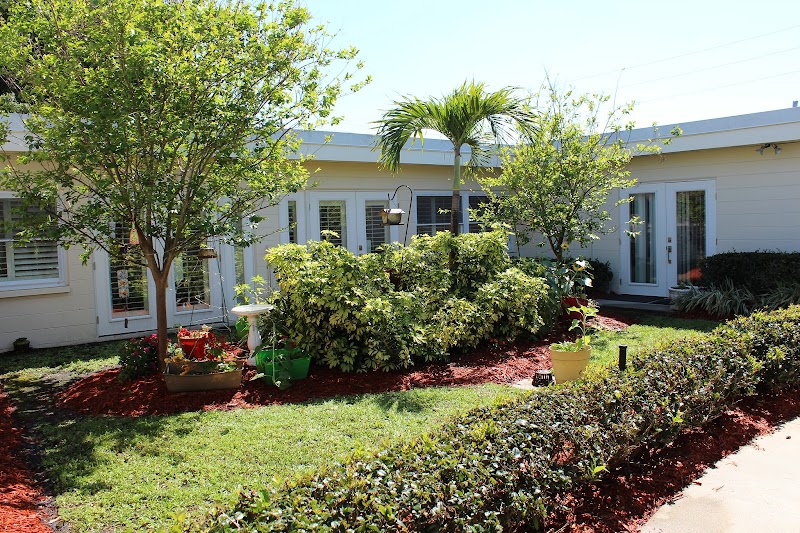
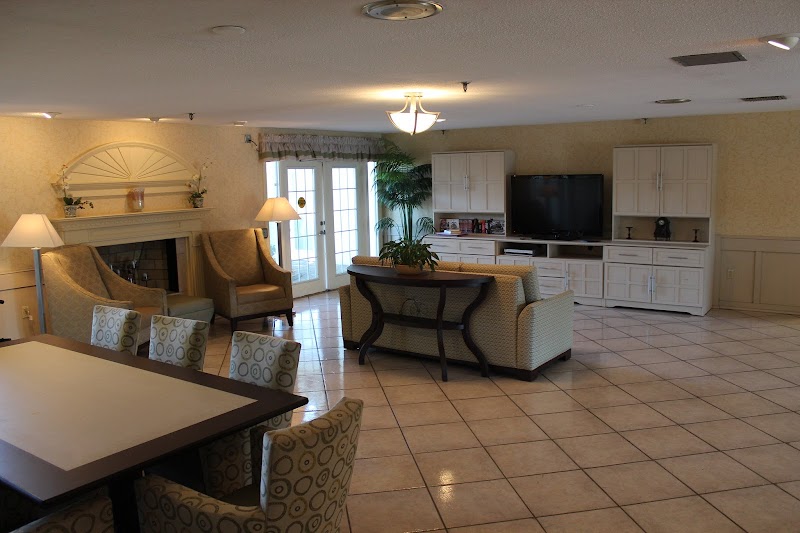
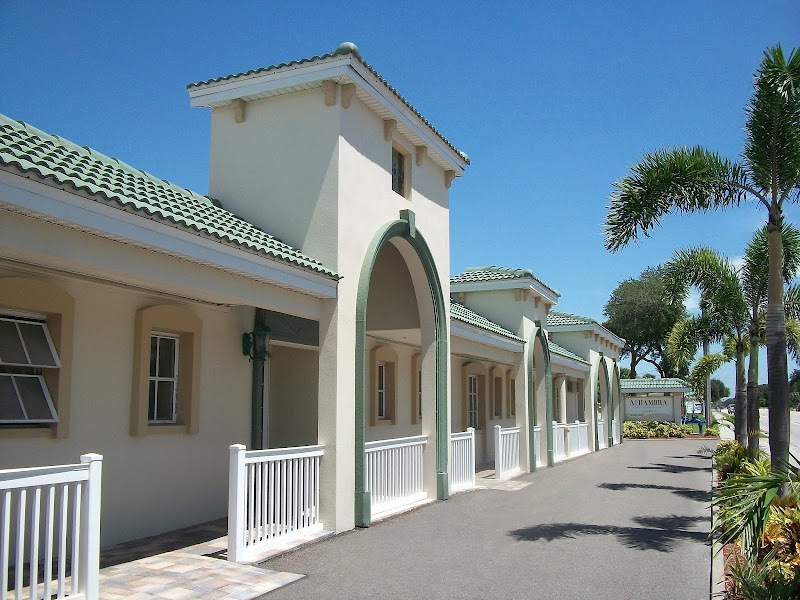
ALHAMBRA HEALTHCARE & REHABILITATION CENTER

7501 38TH AVE N, SAINT PETERSBURG, FL 33710 (727) 345-9307
For profit - Limited Liability company 60 Beds GOLD FL TRUST II Data: November 2025
Trust Grade
50/100
#450 of 690 in FL
Last Inspection: March 2025

Within standard 12-15 month inspection cycle. Federal law requires annual inspections.

Overview

Alhambra Healthcare & Rehabilitation Center has a Trust Grade of C, which means it is average and falls in the middle of the pack among facilities. It ranks #450 out of 690 in Florida, placing it in the bottom half, and #25 out of 64 in Pinellas County, indicating there are better local options available. The facility's trend is stable, with 18 issues reported consistently in both 2023 and 2025. Staffing is a concern, with a rating of 2 out of 5 stars and a turnover rate of 63%, significantly higher than the state average of 42%, which may impact the quality of care. Additionally, there were specific incidents where medications were not secured properly, and food safety standards were not met, such as improperly dated food items and an unlocked medication cart, which raises potential safety risks. Overall, while there are strengths such as no fines recorded, the facility has notable weaknesses that families should consider carefully.

Trust Score
C
50/100
In Florida
#450/690
Bottom 35%
Safety Record
Low Risk
No red flags
Inspections
Holding Steady
7 → 7 violations
Staff Stability
⚠ Watch
63% turnover. Above average. Higher turnover means staff may not know residents' routines.
Penalties
✓ Good
No fines on record. Clean compliance history, better than most Florida facilities.
Skilled Nurses
⚠ Watch
Each resident gets only 28 minutes of Registered Nurse (RN) attention daily — below average for Florida. Fewer RN minutes means fewer trained eyes watching for problems.
Violations
⚠ Watch
18 deficiencies on record. Higher than average. Multiple issues found across inspections.
★★☆☆☆
2.0
Overall Rating
★★☆☆☆
2.0
Staff Levels
★★★☆☆
3.0
Care Quality
★★☆☆☆
2.0
Inspection Score
Stable
2023: 7 issues
2025: 7 issues

The Good

  • Full Sprinkler Coverage · Fire safety systems throughout facility
  • No fines on record

Facility shows strength in fire safety.

The Bad

2-Star Overall Rating

Below Florida average (3.2)

Below average - review inspection findings carefully

Staff Turnover: 63%

17pts above Florida avg (46%)

Frequent staff changes - ask about care continuity

Chain: GOLD FL TRUST II

Part of a multi-facility chain

Ask about local staffing decisions and management

Staff turnover is elevated (63%)

15 points above Florida average of 48%

The Ugly 18 deficiencies on record

Jul 2025 1 deficiency
CONCERN (E) 📢 Someone Reported This

A family member, employee, or ombudsman was alarmed enough to file a formal complaint

Potential for Harm - no one hurt, but risky conditions existed

Deficiency F0761 (Tag F0761)

Could have caused harm · This affected multiple residents

Based on observation interviews and policy review, the facility did not ensure medications were stored and labeled appropriately in three medication carts (Split back, East front and [NAME] front) of ...

Read full inspector narrative →
Based on observation interviews and policy review, the facility did not ensure medications were stored and labeled appropriately in three medication carts (Split back, East front and [NAME] front) of three medication carts observed. Findings included: 1. An observation on 7/21/2025 at 2:25 P.M. of the Split Back Cart Medication Cart revealed an undated used bottle of Latanoprost eye drops, two undated Breo Inhalers and an undated Combivent inhaler. The boxes containing the Breo inhalers were labeled expires six weeks after opening and the Combivent inhaler was labeled expires three months after opening. The boxes did not show an opening date.An interview was conducted with Staff B, Licensed Practical Nurse (LPN) on 7/21/2025 at 2:32 P.M. She stated if she found medications that were not labeled in the medication cart, she would discuss it with the shift supervisor. She stated she never discards medications from the medication cart without speaking to a supervisor. The nurse placed all the undated medications back into the medication cart. Staff B, LPN stated it was her second day working at the facility and she did know what pharmacy they use. 2. An observation on 7/21/2025 at 2:37 P.M. of the East Front Medication Cart revealed a bottle of Ibuprofen which was opened. There was no date to indicate when the bottle was opened.An interview was conducted with Staff A, LPN on 7/21/2025 at 2:43 P.M. She stated the medication was probably opened today. Staff A proceeded to label the medication with a date of 7/21/2025. She stated she did not give this medication to any residents today. 3. An observation on 7/21/2025 at 3:00 P.M. of the [NAME] Front Medication Cart revealed an undated empty bottle of Omeprazole which was in the top drawer of the cart, an undated used bottle of Latanoprost eye drops, two undated used bottles of Loteprednol eye drops, an undated used bottle of Timolol eye drops and an undated used Breo Inhaler. The box the inhaler was stored in read, expires six weeks after opening. There was no date to indicate when the bottle was opened.An interview was conducted with the Director of Nursing (DON) on 7/21/2025 at 3:08 P.M. She said all medications should be labeled with the date it was opened and the expiration date. She said the inhalers always expire before the printed manufacturer's date on the inhaler box, if they are opened. She stated the facility had a lot of agency staff at this time, but they were trying to recruit permanent staff. The DON stated her expectations were for the nurses to follow the pharmacy's recommended expiration dates.A review of the facility policy titled Medication Labeling and Storage reviewed on 3/2023 revealed, The facility stores all medications and biologicals in locked compartments under proper temperature, humidity and light controls. Only authorized personnel have access to keys. The policy and interpretation and Implementation section titled, Medication Labeling showed: 1. Labeling of the medications and biological dispensed by the pharmacy is consistent with applicable federal and state requirements and currently accepted pharmaceutical practices. 2. The medication label includes, at a minimum: d: expiration date and g: appropriate instructions and precautions. 8: If the medication containers have missing, incomplete, improper or incorrect labels, contact the dispensing pharmacy for instructions regarding returning or destroying these items. A review of the facility policy titled, Pharmscript Storage of Medications revised on 8/2024 showed, Medications and biologicals are stored safely, securely, and properly, following manufacturer's recommendations or those of the supplier. The policy's General Guidance, reads, 8: Outdated, contaminated, or deteriorated medications and those in containers that are cracked, soiled, or without secure closures are immediately removed from inventory, disposed of according to procedures for medication disposal, and reordered from the pharmacy if a current order exists. The policy's Expiration Date (Beyond-Use Dating) reads, 3: Certain medications or package types, such as IV (Intravenous) solutions, multiple dose injectable vials, ophthalmics, nitroglycerin tablets, and blood sugar testing solutions and strips require an expiration date shorter than the manufacturer's expiration date once opened to ensure medication purity and potency. 5: When the manufacturer has specified a useable duration after opening (i.e. beyond use date, the nurse shall place a date opened sticker on the medication and record the date opened and the new date of expiration. The expiration date of the vial or container will be 30 days from opening, unless the manufacturer recommends another date or regulations/guidelines require different dating; b: If a vial or container is found without a stated date opened, the date opened will automatically default to the date dispensed and the expiration date will be calculated accordingly. 6: The nurse will check the expiration date of each medication before administering it. 8: All expired medications will be removed from the active supply and destroyed in accordance with facility policy, regardless of amount remaining.
Mar 2025 6 deficiencies
CONCERN (D)

Potential for Harm - no one hurt, but risky conditions existed

Safe Environment (Tag F0584)

Could have caused harm · This affected 1 resident

**NOTE- TERMS IN BRACKETS HAVE BEEN EDITED TO PROTECT CONFIDENTIALITY** Based on observations, interviews, and policy review, the facility did not ensure a safe, clean, and homelike environment in two...

Read full inspector narrative →
**NOTE- TERMS IN BRACKETS HAVE BEEN EDITED TO PROTECT CONFIDENTIALITY** Based on observations, interviews, and policy review, the facility did not ensure a safe, clean, and homelike environment in two resident rooms (#201 and #214) of 32 rooms in the facility. Findings included: During an observation and interview on 3/24/25 at 10:45 AM and 3/26/25 at 12:15 PM, in room [ROOM NUMBER], the resident stated the dark brown armoire's drawer is broken and will not open. The resident who resided in the room stated the furniture has not worked for a while and would like to be able to use the space. The face of the top drawer of the dark brown armoire was observed separated from the rest of the drawer on the left side facing the drawer. During an observation and interview on 3/24/25 at 11:00 AM and 3/26/205 at 9:00 AM, in room [ROOM NUMBER], the toilet base was not secured to the floor. Both residents of the room stated they utilized the toilet. During an interview on 3/25/25 at 10:45 AM, Staff D, Certified Nursing Assistant (CNA), stated both residents in room [ROOM NUMBER] utilized the bathroom with assistance. If the staff noticed anything in need of repair a work order should be placed in the facility electronic work order system. During an observation and interview on 3/26/25 at 9:15 AM, the Housekeeping Director (HD) stated housekeeping cleans the bathrooms daily. If the housekeeping staff notices anything in need of repair, the housekeeping staff would let them know, as the housekeeping staff do not have access to the facility electronic work order system. The HD stated being responsible for relaying the information to the Maintenance Director (MD) of the area of concern. The HD observed the toilet in room [ROOM NUMBER] and stated, oh yeah, that needs to be fixed. During an observation and interview at 3/26/25 at 9:30 AM, the MD confirmed not having a work order for room [ROOM NUMBER]. Upon entering the bathroom of room [ROOM NUMBER], the MD stated the toilet is not affixed to the floor and would need to be corrected. During an observation and interview at 3/26/25 at 12:26 PM, the MD confirmed not having any work orders for room [ROOM NUMBER]. Upon observation of the armoire in room [ROOM NUMBER], the MD confirmed it was in need of repair. A facility policy for Building/Equipment Maintenance was requested on 3/25/25 and 3/26/25, but no policy was provided by the facility. Photographic Evidence Obtained
CONCERN (D)

Potential for Harm - no one hurt, but risky conditions existed

Deficiency F0657 (Tag F0657)

Could have caused harm · This affected 1 resident

**NOTE- TERMS IN BRACKETS HAVE BEEN EDITED TO PROTECT CONFIDENTIALITY** Based on observations, record review, and interviews, the facility failed to develop an individualized plan of care to include g...

Read full inspector narrative →
**NOTE- TERMS IN BRACKETS HAVE BEEN EDITED TO PROTECT CONFIDENTIALITY** Based on observations, record review, and interviews, the facility failed to develop an individualized plan of care to include goals and interventions for two residents (#11 and #9) of forty two residents sampled. Findings included: 1. On [DATE] at 11:09 a.m., Resident #11 was observed reading a book while sitting in a wheelchair. An interview was attempted, however, she did not respond and continued to read her book. Her roommate stated Resident #11 is, Always reading, hard of hearing, and doesn't wear her hearing aids. A review of Resident #11's admission Record revealed an original admission date of [DATE] and a re-admission date of [DATE]. Further review of the admission record revealed the following diagnoses to include: unspecified dementia, unspecified severity, without behavioral disturbance, psychotic disturbance, mood disturbance, and anxiety, major depressive disorder, generalized anxiety, and post-traumatic stress disorder. A review of Resident #11's psychiatry notes, dated [DATE], [DATE], and [DATE], revealed the following, . History of Present Illness: This is a [AGE] years old patient with a past psychiatric history of depression, anxiety, dementia, insomnia and PTSD. PTSD (Post Traumatic Stress Disorder): The history suggests that this patient suffered from significant trauma resulting into nightmares, flashbacks, and hypervigilance in the past. These symptoms have caused significant distress and functional impairment to the patient. The symptoms have lasted for more than one months and have occurred without any substance abuse or organic brain pathology . Care Plan for PTSD diagnosis: Trauma: history of abuse from father (Both physical and sexual) as a child. Further review of psychiatry notes, dated [DATE], revealed the following, . PTSD Section: Twin died, mistreated by family (provided by facility) No triggers noted. Due to cognitive impairments associated with dementia the patient is unable to elaborate on current symptoms or provide detailed history. However, staff and caregivers report no observable PTSD symptoms, such as nightmares, hypervigilance, flashbacks, or avoidance behaviors. Care Plan for PTSD diagnosis: Trauma: history of abuse from father (Both physical and sexual) as a child. Triggers: Approach . Corrected/Confirmed Diagnosis: Added PTSD dx [diagnosis] and care plan in the chart: As pt [patient] has active symptoms of PTSD such as flashbacks, nightmares, hypervigilance, causing distress, I added PTSD dx. The trauma is Twin died, mistreated by family (provided by facility). The current triggers are not reported. A review of Resident #11's care plan, revised on [DATE], revealed the following: [Resident name] has risk or actual diagnosis of PTSD and has potential for re-traumatization R/T [related to] Childhood trauma: twin died, felt unloved by family. A review of goals revealed the following, Resident will remain free from episodes of re-traumatization AEB [as evidenced by]: (personalize) through the next review. Revision on: [DATE]. Target Date: [DATE]. Resident will remain free from episodes of re-traumatization AEB no flashbacks or upsetting dreams through the next review Target Date: [DATE], Resident will have minimal triggers of re-traumatization thru the next review. Target Date: [DATE], Resident will have minimal negative changes in thinking and mood through the next review Target Date: [DATE]. A review of interventions include the following, . Establish a relationship of trust with the resident, Date Initiated: [DATE], Created on: [DATE], . Provide calming and reassuring environment, Date Initiated: [DATE], Created on: [DATE], . Use calm approach. Explain action during cares. Date Initiated: [DATE], Created on: [DATE], . Avoid positioning yourself between the resident and the door Date Initiated: [DATE], Created on: [DATE] ., Provide female caregivers ONLY to assist with cares per resident/responsible party preference. Date Initiated: [DATE], Created on: [DATE]. Provide male caregivers ONLY to assist with cares per resident/responsible party preference. Date Initiated: [DATE], Created on: [DATE] . On [DATE] at 9:18 a.m., an interview was conducted with Staff C, Certified Nursing Assistant (CNA) who stated she looked at the care card to view a resident's diagnoses. Staff C, CNA stated she would go into the resident's electronic medical record or speak with the nurse to determine what their needs are. She stated she's not sure where to view in their chart how to approach a resident related to triggers for someone diagnosed with PTSD. She stated she thinks the care card or [NAME] would have that. She stated, The care card tells you everything about the resident. Staff C, CNA confirmed she hasn't had training or education related to PTSD. Regarding Resident #11, she stated she worked with the resident often. Staff C, CNA stated she didn't know the resident had PTSD and could not identify her triggers. On [DATE] at 9:56 a.m., an interview was conducted with the Social Services Director (SSD). He stated for residents with PTSD they, Determine the root cause and psych follows them. He stated for the diagnosis of PTSD, there is a care plan in place. The SSD stated the care plan included how to approach the person, their environment, avoid putting yourself in front of them and between the door, medication management as needed, observing for changes in behaviors, and psychiatry/psychology (psych) services as needed. He stated for sexual abuse or assault they determine if the resident feels comfortable with a male or female staff. The SSD stated the care plan, Has prefilled boxes to check off, however, they could be filled in. He stated he hasn't had to put individualized triggers for any PTSD care plans. Regarding Resident #11, the SSD stated he knows the resident has PTSD. He stated the resident told him her trauma stemmed from the loss of her twin, and she felt her family didn't love her. He stated he reviewed Resident #11's psych notes and confirmed the psych provider attended monthly interdisciplinary team meetings. The SSD stated he printed and looked at every psych note. He confirmed he had not seen the psych notes which included documentation related to physical and sexual abuse. The SSD confirmed Resident #11's care plan should include interventions related to approach and determining her preferences for care. 2. Review of the admission Record for Resident #9 revealed an admission date of [DATE] and a readmission on [DATE] with diagnoses to include hypertensive chronic kidney disease with stage 5 chronic kidney disease or end stage renal disease; end stage renal disease (ESRD); and dependence on renal dialysis. Review of the Minimum Data Set (MDS) from admission dated [DATE] revealed Resident #9 was on hemodialysis. Review of Resident #9's Order Summary Report dated [DATE] revealed the following orders: - [DATE]: Check dialysis access site for signs of infection (warmth, redness, tenderness or edema) when performing routine care at regular intervals every shift - [DATE]: Dialysis center to maintain dressing changes to dialysis access site. - [DATE]: If there is major bleeding from the access site, apply pressure to insertion site, contact emergency services and dialysis center period verify any clamps are closed on lumens if not an AV shunt. This is a medical emergency. Do not leave the resident alone until EMS (Emergency Medical Services) arrives. As needed for major bleeding. - [DATE]: Mild bleeding from the access site (post dialysis) can't be expected. For mild bleeding, reinforce pressure dressing. Contact the dialysis center or physician for further instructions. As needed for mild bleeding. - [DATE]: Remove pressure dressing after return from dialysis (enter dialysis days Monday Wednesday and Friday) per dialysis orders. In the evening every Monday, Wednesday, Friday. - [DATE]: Dialysis access site: (Left Upper Arm). Type of Access: Fistula. every shift - [DATE]: Dialysis Monday, Wednesday, Fridays; Pick up time: 11:30 am Center Address [listed address, phone, transportation company] every day shift every Monday, Wednesday, Friday. - [DATE]: Do not use the dialysis access site arm to take blood pressure, blood sample, administer IV (intravenous) fluids, or give injections. Left arm, every shift. - [DATE]: Palpate the dialysis fistula access site to feel the Thrill use stethoscope to hear the Bruit of blood flow through the access site. Left upper arm, every shift for fistula monitoring left upper arm. Review of Resident #9's care plan revealed a Focus area, Resident has potential for complications related to hemodialysis for treatment of ESRD. Shunt site is located: (Specify shunt location), Receives dialysis on: (Mon., Wed., Fri), Receives dialysis at: (insert dialysis center name, address, phone number), Date Initiated: [DATE], Revision on: [DATE]. Goal showed: Resident will remain free from avoidable complications related to hemodialysis thru the next review date. Target Date: [DATE]. During an interview on [DATE] at 11:45 a.m. the Minimum Data Set (MDS) Coordinator confirmed being responsible for updating and completing the care plans. The MDS Coordinator reviewed Resident #9's care plan for dialysis and stated I must have missed updating the information. The information should be updated and individualized as needed. During an interview on [DATE] at 9:28 a.m., the Director of Nursing (DON) stated in general staff are educated to, Look for behaviors and report behaviors to the nurse, the nurse reports to the doctor, and CNAs are educated on a, Need to know basis and it wouldn't be appropriate for them to go through diagnoses for each resident. The DON stated she was unaware of Resident 11's triggers but knew Resident #11 had PTSD. The DON confirmed PTSD triggers should be on the care plan and knowing the resident's and their triggers would assist the staff in knowing how to approach individuals. The DON confirmed care plans should be individualized and updated as needed. Review of the facility's policies and procedures dated revised [DATE] and titled Care Plans, Comprehensive Person-Centered revealed the following: Policy Statement: A comprehensive, person-centered care plan that includes measurable objectives and timetables to meet the resident's physical, psychosocial and functional needs is developed and implemented for each resident. Policy Interpretation and Implementation 1. The interdisciplinary team (IDT), in conjunction with the resident and his/her family or legal representative, develops and implements a comprehensive, person-centered care plan for each resident. . 3. The care plan interventions are derived from a thorough analysis of the information gathered as part of the comprehensive assessment. . 7. The comprehensive, person-centered care plan: a. includes measurable objectives and timeframes; b. describes the services that are to be furnished to attain or maintain the resident's highest practicable physical, mental, and psychosocial well-being, including: (1) services that would otherwise be provided for the above, but are not provided due to the resident exercising his or her rights, including the right to refuse treatment; (2) any specialized services to be provided as a result of PASARR recommendations; and (3) which professional services are responsible for each element of care; c. includes the resident's stated goals upon admission and desired outcomes; d. builds on the resident's strengths; and e. reflects currently recognized standards of practice for problem areas/conditions. 8. Services provided for or arranged by the facility and outlined in the comprehensive care plan are: a. provided by qualified persons; b. culturally competent; and c. trauma-informed. 9. Care plan interventions are chosen only after data gathering, proper sequencing of events, careful consideration of the relationship between the resident's problem areas and their causes, and relevant clinical decision making. 10. Assessments of residents are ongoing and care plans are revised as information about the residents and the residents' conditions change. 11. The interdisciplinary team reviews and updates the care plan: a. when there has been a significant change in the resident's condition; b. when the desired outcome is not met; c. when the resident has been readmitted to the facility from a hospital stay; and d. at least quarterly, in conjunction with the required quarterly MDS assessment. .
CONCERN (D)

Potential for Harm - no one hurt, but risky conditions existed

Deficiency F0699 (Tag F0699)

Could have caused harm · This affected 1 resident

**NOTE- TERMS IN BRACKETS HAVE BEEN EDITED TO PROTECT CONFIDENTIALITY** Based on observations, record review, and interviews, the facility failed to identify specific triggers related to post traumati...

Read full inspector narrative →
**NOTE- TERMS IN BRACKETS HAVE BEEN EDITED TO PROTECT CONFIDENTIALITY** Based on observations, record review, and interviews, the facility failed to identify specific triggers related to post traumatic stress disorder (PTSD) and develop an individualized plan of care to prevent re-traumatization for one resident (#11) of one residents reviewed for PTSD. Findings included: On [DATE] at 11:09 a.m., Resident #11 was observed reading a book while sitting in a wheelchair. An interview was attempted, however, she did not respond and continued to read her book. Her roommate stated Resident #11 is, Always reading, hard of hearing, and doesn't wear her hearing aids. A review of Resident #11's admission Record revealed an original admission date of [DATE] and a re-admission date of [DATE]. Further review of the admission record revealed the following diagnoses to include: unspecified dementia, unspecified severity, without behavioral disturbance, psychotic disturbance, mood disturbance, and anxiety, major depressive disorder, generalized anxiety, and post-traumatic stress disorder. A review of Resident #11's care plan, revised on [DATE], revealed the following: [Resident name] has risk or actual diagnosis of PTSD and has potential for re-traumatization R/T [related to] Childhood trauma: twin died, felt unloved by family. A review of goals revealed the following, Resident will remain free from episodes of re-traumatization AEB [as evidenced by]: (personalize) through the next review. Revision on: [DATE]. Target Date: [DATE]. Resident will remain free from episodes of re-traumatization AEB no flashbacks or upsetting dreams through the next review Target Date: [DATE], Resident will have minimal triggers of re-traumatization thru the next review. Target Date: [DATE], Resident will have minimal negative changes in thinking and mood through the next review Target Date: [DATE]. A review of interventions include the following, . Establish a relationship of trust with the resident, Date Initiated: [DATE], Created on: [DATE], . Provide calming and reassuring environment, Date Initiated: [DATE], Created on: [DATE], . Use calm approach. Explain action during cares. Date Initiated: [DATE], Created on: [DATE], . Avoid positioning yourself between the resident and the door Date Initiated: [DATE], Created on: [DATE] ., Provide female caregivers ONLY to assist with cares per resident/responsible party preference. Date Initiated: [DATE], Created on: [DATE]. Provide male caregivers ONLY to assist with cares per resident/responsible party preference. Date Initiated: [DATE], Created on: [DATE] . On [DATE] at 9:18 a.m., an interview was conducted with Staff C, Certified Nursing Assistant (CNA) who stated she looked at the care card to view a resident's diagnoses. Staff C, CNA stated she would go into the resident's electronic medical record or speak with the nurse to determine what their needs are. She stated she's not sure where to view in their chart how to approach a resident related to triggers for someone diagnosed with PTSD. She stated she thinks the care card or [NAME] would have that. She stated, The care card tells you everything about the resident. Staff C, CNA confirmed she hasn't had training or education related to PTSD. Regarding Resident #11, she stated she worked with the resident often. Staff C, CNA stated she didn't know the resident had PTSD and could not identify her triggers. On [DATE] at 9:28 a.m., an interview with the Director of Nursing (DON) revealed staff are educated, To look for behaviors. She stated she expected CNAs to report behaviors to the nurse, then the nurse would report to the provider. She stated CNAs are educated on a, Need to know basis. The DON stated it wouldn't be appropriate to specify diagnoses to staff for each resident. She stated if a resident was displaying behaviors, she'd tell staff to, Watch for certain behaviors and keep them on enhanced monitoring. The DON stated she doesn't know about Resident #11's triggers. She stated she knows the resident has PTSD. The DON stated she knows Resident #11's PTSD comes from, Military. The DON confirmed PTSD triggers should be on the care plan as she expected nurses to look there. She stated staff, Learn the residents and their triggers to identify how to approach. She stated Resident #11 doesn't have behaviors or outbursts, Only if she had a UTI [urinary tract infection]. The DON stated staff are provided general education about behaviors and behaviors being charted. On [DATE] at 9:56 a.m., an interview was conducted with the Social Services Director (SSD). He stated for residents with PTSD they, Determine the root cause and psych follows them. He stated for the diagnosis of PTSD, there is a care plan in place. The SSD stated the care plan included how to approach the person, their environment, avoid putting yourself in front of them and between the door, medication management as needed, observing for changes in behaviors, and psychiatry/psychology (psych) services as needed. He stated for sexual abuse or assault they determine if the resident feels comfortable with a male or female staff. The SSD stated the care plan, Has prefilled boxes to check off, however, they could be filled in. He stated he hasn't had to put individualized triggers for any PTSD care plans. Regarding Resident #11, the SSD stated he knows the resident has PTSD. He stated the resident told him her trauma stemmed from the loss of her twin, and she felt her family didn't love her. He stated he reviewed Resident #11's psych notes and confirmed the psych provider attended monthly interdisciplinary team meetings. The SSD stated he printed and looked at every psych note. He confirmed he had not seen the psych notes which included documentation related to physical and sexual abuse. The SSD confirmed Resident #11's care plan should include interventions related to approach and determining her preferences for care. A review of the facility's policy titled Trauma Informed Care revised [DATE] revealed the following: Purpose: To guide staff in appropriate and compassionate care specific to individuals who have experienced trauma. Preparation: 1. All staff are provided in-service training about trauma, its impact on health, and post-traumatic stress disorder in the context of the healthcare setting . General Guidelines: . 2. Trauma-informed care is culturally sensitive and person-centered. 3. Caregivers are taught strategies to help eliminate, mitigate, or sensitively address a resident's triggers .
CONCERN (E)

Potential for Harm - no one hurt, but risky conditions existed

Deficiency F0645 (Tag F0645)

Could have caused harm · This affected multiple residents

3. Review of Resident #6's admission Record showed an admit date of 11/13/2023 with a diagnosis of PTSD. Diagnoses of dissociative identity disorder and borderline personality disorder were added on ...

Read full inspector narrative →
3. Review of Resident #6's admission Record showed an admit date of 11/13/2023 with a diagnosis of PTSD. Diagnoses of dissociative identity disorder and borderline personality disorder were added on 6/25/2024 and a diagnosis of major depressive disorder was added on 10/16/2024. Review of Resident #6's Level I PASRR screen completed on 11/13/2024 showed in Section II: Other Indications for PASRR Screen Decision-Making, question 2. C. Adaption to change: The individual has serious difficulty in adapting to typical changes in circumstances associated with work, school, family, or social interaction, manifests agitation, exacerbated signs and symptoms associated with the illness, or withdrawal from the situation, or requires intervention by the mental health or judicial system, was checked no. Review of Resident #6's Psychology Subsequent Note dated 3/5/2025 revealed under Assessments and Plan, Resident #6 had a treatment objective to learn to adjust to living in the facility by building resiliency skills and engaging in enjoyable activities. Review of Resident #6's record did not reveal a Level II PASRR screen. 4. Review of Resident #13's admission Record showed an admit date of 11/16/2021. Diagnoses included bipolar disorder and major depressive disorder, added 8/15/2024; and dementia, added 2/4/2022. Review of Resident #13's Level I PASRR screen completed on 11/9/2024 showed in Section A. Mental Illness (MI) or suspected MI, bipolar disorder, depressive disorder, and unspecified dementia, unspecified severity, were checked. Section II showed, Question #5: Does the individual have a primary diagnosis of Dementia? The response was checked Yes. Section II: Other Indications for PASRR Screen Decision-Making also showed, A Level II PASRR evaluation must be completed if the individual has a primary diagnosis of dementia or related neurocognitive disorder, and a suspicion or diagnosis of a Serious Mental Illness, Intellectual Disability, or both. A Level II PASRR may only be terminated by the Level II PASRR evaluator. The facility did not complete a Level II PASRR screen for Resident #13. 5. Review of Resident #2's admission Record showed an admit date of 12/2/2020. Diagnoses included anxiety disorder, added 11/21/2024; major depressive disorder, added 10/16/2024; and schizoaffective disorder, added 9/9/2021. Review of Resident #2's Level I PASRR screen completed on 11/9/2024 showed in Section II: Other Indications for PASRR Screen Decision-Making, question 2. C. Adaption to change: The individual has serious difficulty in adapting to typical changes in circumstances associated with work, school, family, or social interaction, manifests agitation, exacerbated signs and symptoms associated with the illness, or withdrawal from the situation, or requires intervention by the mental health or judicial system, was checked no. Review of Resident #6's Psychology Subsequent Note dated 2/26/2025 revealed Resident #2 has been being seen for major depressive disorder, with a follow up scheduled for the following week due to the resident not feeling well. Review of Resident #2's record did not reveal a Level II PASRR screen. During an interview on 3/26/2025 at 1:14 PM, the Social Services Director (SSD) and the Director of Nursing (DON) confirmed being responsible for completing the PASRR screens. The SSD and DON confirmed according to the directions on the Decision-Making Screen, a Level II PASRR evaluation is needed if the resident has a primary or secondary diagnosis of dementia or related neurocognitive disorder, and a suspicion or diagnosis of a Serious Mental Illness, Intellectual Disability, or both. The SSD and DON continued to state they have never really thought of the questions being indicated for them to complete, and confirmed, in reading the questions in Section II, they should be completing the questions if the residents are being treated or have the characteristics on a continuing or intermittent basis. The SSD and DON confirmed in the examples above the sections should have been marked yes and then a Level II evaluation would have been indicated. Review of the facility's policy and procedures titled Preadmission Screening and Resident Review (PASRR) with a revision date of March 2019 showed: Policy Statement: It is the policy of the facility to assure that all residents admitted to the facility receive a Pre-admission Screening and Resident Review, in accordance with State and Federal Regulations. Policy Interpretation and Implementation: 1. All new admissions and readmissions are screened for mental disorders (MD), intellectual disabilities (ID) or related disorders (RD) per the Medicaid Pre-admission Screening and Resident Review (PASARR) process. a. The hospital or facility conducts a Level I PASRR screen for all potential admissions, regardless of payer source, to determine if the individual meets the criteria for a MD, ID or RD. b. If the level I screen indicates that the individual may meet the criteria for a MD, ID, or RD, he or she is referred to the state PASARR representative for the Level Il (evaluation and determination) screening process. (1) The social worker or designee is responsible for making referrals to the appropriate state designated authority. c. Upon completion of the Level Il evaluation, the state PASARR representative determines if the individual has a physical or men I condition, what specialized or rehabilitative services he or she needs, and whether placement in facility is appropriate. d. The state PASARR representative provides a copy of the report to the facility. e. The interdisciplinary team determines whether the facility is capable of meeting the needs and services of the potential resident that are outlined in the evaluation. f. Once a decision is made, the state PASARR representative, the potential resident and his or her representative are notified. Based on record review, review of policy and procedures, and interviews, the facility failed to ensure a Level II Pre-admission Screening and Resident Review (PASRR) screening was completed for five residents (#48, #29, #6, #13, and #2) of 15 residents sampled. Findings included: 1. A review of Resident #48's admission Record showed an admit date of 8/21/2023 with diagnoses of Post-Traumatic Stress Disorder (PTSD), unspecified dementia, alcohol abuse, and cocaine abuse. The diagnosis of major depressive disorder was added on 9/26/2024. A review of Resident #48's Level I PASRR screen completed on 11/13/2024 showed in Section A. Mental Illness (MI) or suspected MI, depressive disorder, substance abuse, and PTSD were checked. Section II showed, Question #5: Does the individual have a primary diagnosis of Dementia? The response was checked Yes. Section II: Other Indications for PASRR Screen Decision-Making also showed, A Level II PASRR evaluation must be completed if the individual has a primary diagnosis of dementia or related neurocognitive disorder, and a suspicion or diagnosis of a Serious Mental Illness, Intellectual Disability, or both. A Level II PASRR may only be terminated by the Level II PASRR evaluator. The facility did not complete a Level II PASRR screen for Resident #48. 2. A review of Resident #29's admission Record showed an admit date of 4/24/2024 with diagnoses of paranoid schizophrenia, unspecified psychosis not due to a substance or known physiological condition, and PTSD. A diagnosis of major depressive disorder was added on 8/15/2024. A review of Resident #29's Level I PASRR screen completed on 1/20/2025 showed in Section A. Mental Illness (MI) or suspected MI, depressive disorder, schizophrenia, and unspecified psychosis not due to a substance or known physiological condition and PTSD, checked. A review of Resident #29's most recent psychiatric progress note with a service date of 2/27/2025 showed the rationale behind diagnoses for schizophrenia as, the history of this patient shows that the patient has chronic inconsistent psychosis. These symptoms cause significant distress and functional impairment to the patient. The patient has had a history of psychosis for more than one month, causing emotional and behavioral disturbance for six months or more. A Level II PASRR screen was not completed for Resident #29 for his severe chronic serious mental illness of schizophrenia.
CONCERN (F)

Potential for Harm - no one hurt, but risky conditions existed

Staffing Information (Tag F0732)

Could have caused harm · This affected most or all residents

Based on observation and record review, the facility did not ensure up-to-date staffing information was posted on one day (3/24/25) of three days observed. Findings included: Upon entering the facili...

Read full inspector narrative →
Based on observation and record review, the facility did not ensure up-to-date staffing information was posted on one day (3/24/25) of three days observed. Findings included: Upon entering the facility on 3/24/25 at 9:00 AM, an observation was made of a posting titled, Daily Staffing Projection, dated 3/22/25 with census of 60. On 3/24/25 at 10:12 AM, the staffing posting was still not updated. Review of the facility's policy and procedure dated 11/19/2019 titled Nursing Services - Nurse Staffing Information showed: INTENT: It is the policy of the facility to make staffing information readily available in a readable format to residents and visitors at any given time. POLICY: 1. The facility will post the following information on a daily basis: a. Facility name. b. The current date. c. The total number and the actual hours worked by the following categories of licensed and unlicensed nursing staff directly responsible for resident care per shift: i. Registered nurses. ii. Licensed practical nurses or licensed vocational nurses (as defined under State law). iii. Certified nurse aides. d. Resident census. 2. The facility will post the nurse staffing data on a daily basis at the beginning of each shift. 3. Data must be posted as follows: a. Clear and readable format. b. In a prominent place readily accessible to residents and visitors. 4. The facility will, upon oral or written request, make nurse staffing data available to the public for review at a cost not to exceed the community standard. 5. The facility will maintain the posted daily nurse staffing data for a minimum of 18 months, or as required by State law, whichever is greater. Photographic Evidence Obtained
CONCERN (F)

Potential for Harm - no one hurt, but risky conditions existed

Food Safety (Tag F0812)

Could have caused harm · This affected most or all residents

Based on observations and interviews, the facility did not follow professional standards for food service safety as evidenced by food not maintained for safe consumption and improper labeling and dati...

Read full inspector narrative →
Based on observations and interviews, the facility did not follow professional standards for food service safety as evidenced by food not maintained for safe consumption and improper labeling and dating of food items in the main kitchen and dining room. Findings included: On 3/24/25 at 9:56 a.m., an initial tour of the facility's kitchen was conducted with the facility's Certified Dietary Manager (CDM). An observation of the dish machine area, that was in use by Staff E, Cook, revealed pliers with a red handle on the machine's base. Further observations on the top area of the dish machine revealed light brown colored crumbs and other food particles. An observation of the dish machine hood revealed multiple dark brown and black spots along the top and sides. The multiple spots observed appeared to be signs of rust. On 3/24/25 at 10:03 a.m., an observation of the walk-in cooler, conducted with the CDM, revealed strips of bacon in a clear storage bag with an open date of 3/17/25, but no use by date. The CDM identified the food as, Vegan bacon, and stated the staff should have kept the original package label to determine the expiration date. She proceeded to remove the vegan bacon strips. Observations of the right side of the walk-in cooler revealed a box of two large lettuce heads with leaves that were separated. The separated leaves had areas that were yellow, brown, and black in color. She proceeded to remove the separated lettuce leaves, while the other two lettuce heads were left in the box. Further observations of the right side of the walk-in cooler revealed a box of potatoes that had multiple blue, gray, and white spores/bio growth. The CDM proceeded to remove the box of potatoes. At 10:11 a.m., an interview with the CDM revealed the Kitchen Manager should be reviewing the walk-in cooler for proper storage of food and beverage items, to include labeling and dating. On 3/24/25 at 10:11 a.m., an observation of the reach-in refrigerator, identified as #2, was conducted with the CDM. Observations of reach-in #2 revealed a shallow pan containing lemons and limes that had multiple gray and black spots. The CDM was observed removing the pan with the lemons and limes. Further observations of reach-in #2 revealed a stick of butter was not properly sealed and the top part was exposed to the air. On 3/24/25 at 10:32 a.m., an observation of the refrigerator/freezer in the dining room area was conducted with the facility's Director of Nursing (DON). She stated the refrigerator/freezer was for resident's food. An observation of the refrigerator revealed a food item with a resident's name, but no date or other labeling. The DON could not confirm how long the food had been there. An observation of the freezer revealed two individual ice cream packages. The DON confirmed the ice cream was not provided by the facility. The DON confirmed the two ice cream items did not have a resident's name. On 3/25/25 at 12:48 p.m., an interview was conducted with the facility's Kitchen Manager. The Kitchen Manager stated the pliers observed on 3/24/25 on the dish machine base were potentially there since last week. He stated the dish machine pipe was being fixed by maintenance last week and the maintenance staff member was using those pliers. Regarding observations of the top part of the dish machine, he stated it's part of the cleaning schedule. He stated the staff member that used the dish machine is responsible for cleaning that area and, It should have been cleaned. Regarding the dish machine hood, the Kitchen Manager stated he's not sure when it's been cleaned as it's not part of the cleaning schedule. He stated, It's been overlooked. On 3/25/25 at 1:06 p.m., interviews were conducted with the Kitchen Manager and CDM. The Kitchen Manager stated all staff are responsible for proper storage, labeling, and dating and he conducted daily monitoring of storage, labeling, and dating. He stated the dietary staff's monthly meeting, conducted on 2/21/25 and 3/17/25, included topics such as labeling/dating and expectations for personal items. A review of the sign-in sheet revealed all staff attended. He stated he talked about storage, labeling, and dating every month. The Kitchen Manager stated reviews of the refrigerator/freezer in the dining room is on the cleaning list for dietary staff. He stated Certified Nursing Assistants (CNA's) are expected to label and date food/beverage items. The CDM stated items should be discarded if it's in there for more than 3 days or if items are not labeled or dated. She stated dietary staff are expected to review the refrigerator/freezer in the dining room at least once a day, as they have to put beverages in there. The Kitchen Manager stated he reviewed the refrigerator/freezer in the dining room once a day. A review of the facility's policy titled Labeling and Dating dated 8/12/23 revealed the following, Leftovers and opened foods shall be clearly labeled with date food item is to be discarded. Food items to be labeled and dated include items prepared in house and food items that are opened and stored for later use. (i.e. salad dressings, pickles, etc.). Further review of the policy, under Procedure, revealed the following, 1. 7 day shelf life including date of preparation -label includes: a. Name of food item, b. Discard date (to be discarded at end of 7th day) . 2. 30 day shelf life, usually applies to items that are shelf stable until opened - label includes: a. Name of food item if not clearly identified on container b. Discard date (i.e. opened 4/20, discard 5/30) . A review of the facility's policy titled Food Storage revealed the following, All food stock and food products are stored in a safe and sanitary manner. All food stock is dated and used on a first in, first out basis. A review of the facility's policy titled FIFO (First In First Out) revealed the following under Procedure, 1. Date all food items upon receipt. (If item has vendor delivery date label, further dating is not required unless individual cans, boxes, etc. are removed from the dated packaging) . 5. Food products are used by the expiration date, if not, food items are discarded. Photographic Evidence Obtained
Apr 2023 1 deficiency
CONCERN (D) 📢 Someone Reported This

A family member, employee, or ombudsman was alarmed enough to file a formal complaint

Potential for Harm - no one hurt, but risky conditions existed

Accident Prevention (Tag F0689)

Could have caused harm · This affected 1 resident

**NOTE- TERMS IN BRACKETS HAVE BEEN EDITED TO PROTECT CONFIDENTIALITY** Based on observations, interviews, and record review the facility failed to ensure measures were in place related to elopement p...

Read full inspector narrative →
**NOTE- TERMS IN BRACKETS HAVE BEEN EDITED TO PROTECT CONFIDENTIALITY** Based on observations, interviews, and record review the facility failed to ensure measures were in place related to elopement prevention for two (Residents #2 and #3) out of three residents sampled for elopement. Resident #2 eloped unwitnessed from the facility and protocols were not followed after the resident was found and returned. Elopement risk assessments were not completed at required intervals for Resident #3. Findings included: 1. A review of the facility incident log for February 2023 through 04/03/23 revealed one elopement incident: Resident #2 eloped on 03/28/23. Review of facility census for 04/03/23 revealed Resident #2 was residing in the facility on the [NAME] wing. Resident #2 was observed on 04/03/23 at 10:18 a.m. She was seated in a wheelchair on the [NAME] wing in front of the nurse's station. She appeared alert and calm. She was engageable but confused, oriented to self. She was not able to provide any information about eloping from the facility. There was an elopement alarm bracelet on her right ankle. An interview was conducted with Staff A, Registered Nurse (RN) on 04/03/23 at 10:47 a.m. She confirmed Resident #2 had gotten out of the facility but stated she would not consider it an elopement because a Certified Nursing Assistant (CNA) saw her outside. Regarding when this occurred, Staff A responded it had been the week prior. She stated on that day, one of the CNAs was looking out of a resident room window, saw Resident #2 sitting outside, and then they (2 CNAs) went and brought her back inside. Staff A identified the CNAs as Staff D and Staff E. Staff A was not certain of the date the elopement occurred, but said the time was between 3:25 p.m. and 3:40 p.m. She stated she had been Resident #2's nurse for the 7 a.m. - 3 p.m. shift that day, and Staff B, RN was assigned for the 3 p.m. to 11 p.m. shift. Staff A stated she informed Staff B Resident #2 had gotten out of the facility and was back inside before leaving for the day. She confirmed she was not involved in the event any further. Regarding how Resident #2 exited the facility, Staff A reported she thought she went out the front door but wasn't sure. Staff A stated, around that time we had paramedics coming in (the front door) for something else and I think in the commotion she went out. Staff A reported Resident #2 had not been known to be exit seeking. She confirmed Resident #2 had cognitive impairments and was alert with confusion. An interview was conducted with Staff C, Receptionist on 04/03/23 at 10:35 a.m. She confirmed she worked at the front desk in the facility lobby at the front door Monday - Friday, 8 a.m. - 5 p.m. She reported the front door was always locked and confirmed she was responsible for monitoring and opening the door and for getting coverage if she needed to leave the area. She reported when the door was locked it could not be opened unless a code was entered in the keypad next to the door or unless she opened it using an activation switch behind the front desk. She confirmed there were elopement alarm sensors at the door and the right panel of the door was an egress panel and would open and alarm after 15 seconds of pushing on it. Staff C confirmed Resident #2 had gotten out of the building the previous week, she could not be certain of the date but reported the time was between 3 p.m. and 3:30 p.m. She stated, I personally do not know which door she got out of, I just know she was found up here outside, she was trying to get out in the street, it was shift change. Staff C confirmed she was working at the front desk when Resident #2 eloped and stated she did not observe the resident in the lobby area or exiting the front door during that time. She stated facility CNAs brought the resident back inside and she heard from them she was found out front near the street. She reported Resident #2 did not have an elopement alarm bracelet at that time. Staff C confirmed she was familiar with Resident #2 and said, she is more on the confused side, she wheels herself around, she is pretty fast. Staff C reported during the time Resident #2 eloped, Emergency Medical Services (EMS) had come to the facility and there was commotion in front of the building and in the front door/lobby area while they entered with their equipment. A telephone interview was conducted with Staff D, CNA on 04/03/23 at 12:54 p.m. She confirmed Resident #2 had eloped from the facility the previous week, was not certain what date, but stated it happened between 3 p.m. and 4 p.m. Staff D reported she was not assigned care of Resident #2 when she eloped but she was in room [ROOM NUMBER] caring for another resident and looked out the window and saw Resident #2 sitting in her wheelchair outside in front of the facility, right there at the end of the pavement, she was just sitting there. Staff D said, when I saw her, I ran up out the room and yelled out that she was outside, so me and (Staff E, CNA) went outside to get her. Staff D reported Resident #2 was willing to come back inside. She stated she had never seen her exit seek and did not know of any other time she had left the building. Staff D reported Resident #2 did not have an elopement alarm bracelet when she eloped. Staff D reported Resident #2 was not in distress and was not injured when they got to her and brought her inside. She stated when they got her inside, she took Resident #2 to the nurse (Staff A, RN) and that was the end of her involvement. A telephone interview was conducted with Staff E, CNA on 04/03/23 at 1:11 p.m. She confirmed she was involved in bringing Resident #2 back inside the facility after she was seen outside by Staff D, CNA. She reported the elopement occurred on 03/28/23. She reported she had been working on East wing that day 7 a.m. - 3 p.m. and was clocking out at the time clock in the lobby at 3:35 p.m. when Staff D exited room [ROOM NUMBER] and reported Resident #2 had gotten out. Staff E said, I went to the front door and it was a little chaotic because a paramedic was coming in at that time, I stepped out the door to the right and saw (Resident #2) right by the driveway so I ran down, she had her brakes locked, she was right by the end of the driveway, she was just sitting there looking around, she asked me what I was doing and I told her I was there to take her back inside, she hesitated a little bit with me, she was a little agitated because she wasn't understanding what I was doing, she was dressed and had sneakers on, I brought her in the front door but the front by [NAME] (unit) was a little chaotic because of paramedics and fire department there so I brought her to the dining room where it was calmer, there were two other staff in the area plus another resident, I left then for the day. Staff E reported because she worked on the East wing, she had never been assigned to care for Resident #2, but she knew her from the dining room and being in the facility. Staff E said, I had seen her (Resident #2) sitting by the font door during the day right around the receptionist, never seen her push on the door, just sitting there looking around. Regarding which door Resident #2 exited on 03/28/23, she said I am assuming had to be the front door and reported when she (Staff E) was in the lobby clocking out, the receptionist was at the desk, the phone was going off a lot, if somebody entered the code to leave the building (open the front door) it is possible a resident could go out if the receptionist were having to attend to something else. A telephone interview was conducted with Staff B, RN, on 04/03/23 at 2:10 p.m. She confirmed she was assigned care of Resident #2 on 03/28/23 for the 3 p.m. to 11 p.m. shift. She confirmed she was aware that Resident #2 had gotten out of the building that day because when she was going down the hallway with her cart, Staff A, RN came to her and told her Resident #2 was outside. Staff B stated the conversation with staff A had to have been around 3:00 p.m. Staff B said, I guess (Staff A) had told the CNA to get her and she was then put in the dining room. Staff B said, I went down to the dining room, I assessed her, she seemed to be fine. Regarding whether she documented that assessment or took any other actions, Staff B stated she did not remember if she documented and said that day had quite a few things going on. Staff B sated she did not know anything about a facility protocol for actions a nurse was supposed to take post-elopement and said, I was not aware I was supposed to do anything, I thought responsibility was day shift and I did not think I was supposed to do anything additional; I just did her regular care for the shift. Staff B reported she did not contact Resident #2's responsible party about the elopement. Staff F reported she was not aware of any safety checks with Resident #2 after the incident and was not aware of any orders for an elopement alarm bracelet. Staff B said, she (Resident #2) was fine for the shift, not exit seeking at all. Review of Resident #2's medical record was conducted. The admission record revealed she was [AGE] years old, admitted to facility on 08/05/22 with diagnoses that included dementia. A family member was listed as the resident's responsible party. The most recent completed Minimum Data Set (MDS) assessment dated [DATE] was reviewed: section C revealed a Brief Interview for Mental Status (BIMS) score of 5 which meant the resident had severe cognitive impairment, section E revealed no wandering behavior, section G revealed Resident #2 required extensive physical assistance for transfers and locomotion on and off of the unit and was dependent on wheelchair for mobility, section P revealed no use of wander/elopement alarm. The most recent elopement risk evaluation prior to the elopement event was dated 03/13/23 and revealed a score of 2 which meant the resident was not at risk for elopement. The next elopement risk evaluation was dated 03/29/23 and revealed a score of 11 which meant the resident was at risk for elopement, and interventions documented for prevention included, Place picture in elopement book. Apply wanderguard, if facility has system available. Documentation on the evaluation revealed physician orders had been requested, family/responsible party had been notified per facility policy, and the care plan had been reviewed and updated. Physician orders revealed order for wanderguard (elopement alarm bracelet), start date/time 03/29/23 3:52 p.m.: Wanderguard - check placement and function q (every) shift for elopement risk. Review of the Treatment Administration Record (TAR) revealed initial documentation of wanderguard in place was evening shift on 03/29/23. Review of progress notes revealed no entries related to elopement on 03/28/23. The first note that made mention of the elopement had date and time of 03/29/23 1:40 p.m.: The IDT (interdisciplinary team) met to discuss the following care areas: Falls, Elopement. Elopement score indicates RISK FOR ELOPEMENT. Wanderguard orders are in place. Elopement book updated. Care plan/[NAME] updated . A late entry progress note titled Administrative Note effective date/time 03/29/23 08:45 a.m. written by the facility Administrator (NHA) documented, On 03/28/23 at approximately 8:45am, this writer received a message to call [Resident #2's] grandson, [name], upon arriving to the facility related to resident 'getting out'. Writer called [grandson name] immediately and explained the facility was investigating. When this writer had more information she would call him back. Writer stated that the resident was in the building and safe . An encounter note was documented by Resident #2's primary care physician (PCP), date/time of visit 03/29/23 1:00 p.m., and documented, Nursing staff asking to see patient today because she seems to be not herself. Patient is more confused .Per nursing staff patient wandered off facility. I do not know details at this time. Facility staff is investigating. Will order wanderguard. No behavioral problems. Patient is very pleasant and cooperative as always. A document titled PRN (as needed) Skin Check dated 03/29/23 revealed no new skin impairments. Resident #2's care plan revealed a focus area for elopement risk initiated 03/29/23, [Resident #2] has a potential for elopement due to: is exit seeking, wanders the unit & wanders near exit doors. Interventions in the care plan included, perform frequent observation of residents whereabouts every shift, provide redirection when observed going towards exit doors, apply wanderguard as ordered, include resident in elopement book, update physician and responsible party if resident elopes. A telephone interview was conducted with Resident #2's PCP on 04/04/23 at 11:35 a.m. The PCP confirmed she was also the Medical Director for the facility. She confirmed she was aware that Resident #2 had eloped from the facility. She reported she was informed about the elopement in the morning on 03/29/23 and said, when I came to the facility on Wednesday morning (03/29/23) I was told about it briefly, was one of the nurses who came to me, and she briefly mentioned what happened. The PCP reported after receiving that information from the nurse she went and assessed Resident #2. The PCP stated that she knew Resident #2 very well said, she does have dementia so the only thing that is reliable is what's happening in the moment, not 20 minutes ago. She confirmed Resident #2 was vulnerable because of her cognitive impairments. The PCP stated she verbally told the nurse (Staff A, RN) to put an elopement alarm bracelet on Resident #2 and also spoke to the facility Director of Nursing (DON) about getting an elopement alarm bracelet in place. Regarding whether actions taken in response to Resident #2's elopement met her expectations she responded, we should have known/been notified earlier, we should have known about it the moment it happened, that is typically the expectation. A telephone interview was conducted with Resident #2's grandson on 04/04/23 at 2:09 p.m. He confirmed he was the designated responsible party for the resident. He reported he was informed of the elopement the day after it occurred and stated the NHA contacted him on 03/29/23 and told him she didn't know about it until she had arrived for work at the facility on the morning of 03/29/23. He reported he asked the NHA about their procedure and that she told him they didn't do anything. He said, my biggest thing is that she was able to get out and she would have gotten hit by a car, that made me really angry, she has dementia. An interview was conducted with the NHA, DON and corporate Regional Nurse Consultant (RNC) on 04/03/23 at 2:32 p.m. They confirmed Resident #2 had eloped from the facility on 03/28/23 and reported their investigation had narrowed down the time of elopement (time from exit to return) to between 3:30 p.m. and 3:35 p.m. They reported their timeframe had come from staff statements and from EMS company reports: Resident #2's CNA, Staff G, reported she saw the resident seated on [NAME] wing in front of the nurse's station at 3:00 p.m. and then she clocked out for the day at 3:13 p.m. at the time clock in the lobby near the front door; a nurse working 7 am. to 3 p.m. shift on [NAME] wing clocked out at time clock in the lobby at 3:23 p.m. and did not see Resident #2 in the lobby or outside at that time; the EMS company was called by the facility at 3:24 p.m., they arrived and were entering the front door at 3:30 p.m.; Staff E, CNA was at the time clock in the lobby clocking out at 3:35 p.m. when she was notified by Staff D, CNA that Resident #2 was outside, she immediately ran outside and brought the resident back in. The reported Resident #2 was seated in her wheelchair at the street level in front of the facility at the end of the driveway. They stated her brakes were on and she was just sitting there watching what was going on. They reported Resident #2 had not been known to exit seek before. The NHA reported that it was usual for Resident #2 to sit in front of the nurse's station on [NAME] wing and said, she can propel herself with her wheelchair so there are times she will make her way and sit by the tree in the lobby but she does not try to go out the door, it is unusual to see her anywhere besides between the nurse's station and the lobby. The NHA confirmed Resident #2 had cognitive impairments and was confused and her baseline was alert and oriented to self. Regarding which door Resident #2 exited, they reported nobody had witnessed her leaving any door and the facility did not have a camera system. Based on lack of any witnesses, they used the location where she was found to narrow the most likely possibilities down to the front door or an exit door near room [ROOM NUMBER] on [NAME] wing. They reported they ruled out the exit door near room [ROOM NUMBER] because it was maintained locked with a code required for opening, and alarmed when opened, additionally there were gates to get through outside that door and the terrain was somewhat rough and difficult to navigate in a wheelchair and they did not feel Resident #2 would have been capable of navigating all those obstacles. They confirmed Staff C, Receptionist, was working at the front desk during the time Resident #2 eloped and her statement was that she did not see the resident in the lobby during that time but there was a lot of commotion in the area due to EMS arrival and entry with their personnel and equipment, the door was opened by Staff C for EMS to enter. The NHA confirmed the facility began investigating and reporting the incident as soon as she was made aware of it on 03/29/23. Regarding the delay in reporting and response, the NHA confirmed nobody reported it to her until 03/29/23. The NHA stated Staff B, RN should have notified the NHA and the DON, the PCP, and the family immediately on 03/28/23 and should have performed and documented a head-to-toe assessment including skin assessment, an elopement risk evaluation, and should have put in orders for an elopement alarm bracelet. The NHA confirmed none of these actions were done on 03/28/23. The NHA stated she herself was in the building at the time of Resident #2's elopement. Regarding how she hadn't been made aware of the incident despite being there on-site she responded, great question . there was a lot of commotion at that time, change of shift, EMS in the building, staff thinking they should go to their immediate supervisor instead of reporting to me. The NHA confirmed she was made aware of the elopement incident at 8:45 a.m. on 03/29/23 and she immediately began all response procedures including contacting Resident #2's family, reporting the incident, beginning investigation, and getting elopement alarm bracelet in place for Resident #2. Regarding whether any supervision measures were put in place for Resident #2 immediately after the elopement, the RNC reported hourly checks were done and revealed documentation which showed hourly checks documented beginning on 03/29/23 at 5:00 p.m. Review of facility policy titled, Wandering and Elopements, revision date March 2019 revealed: 2. If an employee observes a resident leaving the premises, he/she should: a. Attempt to prevent the resident from leaving in a courteous manner; b. Get help from other staff members in the immediate vicinity, if necessary; and c. Instruct another staff member to inform the Charge Nurse or Director of Nursing Services that a resident is attempting to leave or has left the premises. 4. When the resident returns to the facility, the Director of nursing Services or Charge Nurse shall: a. Examine the resident for injuries; b. Contact the attending Physician and report findings and conditions of the resident; c. Notify the resident's legal representative (sponsor); d. Notify search teams that the resident has been located; e. Complete and file and incident report; and f. Document relevant information in the resident's medical record. 2. On 04/03/23 at 10:45 a.m., Resident #3 was observed in the hallway sitting in her wheelchair asking another resident to take off her wanderguard. The wanderguard was observed on her left wrist. On 04/03/23 at 1:30 p.m., the resident was observed sitting in her wheelchair near the main entrance pushing on the door handle. The receptionist attempted to redirect the resident, but she continued to hold the door handle down. The receptionist called the nurse over to assist her to remove the resident from the entry way. On 04/04/23 at 4:50 p.m., Resident #3 was observed sitting in her wheelchair near the main entrance pushing on the door handle. Staff was able to redirect the resident. The admission Record revealed Resident #3 was initially admitted into the facility on [DATE] with diagnoses that included but were not limited to post traumatic stress disorder, generalized anxiety disorder, bipolar disorder, unspecified psychosis not due to substance or known physiological condition, and vascular dementia. Section C Cognitive Quarterly Minimum Data Set (MDS) dated [DATE] revealed Resident #3 had a Brief Interview for Mental Status (BIMS) score of 01 out of 15 indicating severe impairment. A review of the Order Summary Report with active orders as of 04/05/23 revealed the following orders: (03/30/22) Wanderguard every shift for poor safety awareness. Check function. (03/30/22) Wanderguard every shift. Check for placement. The Quarterly Nursing Comprehensive Evaluation dated 06/28/22 revealed Resident #3 had an elopement score of 2 indicating she was not at risk for elopement. The next elopement assessment was not completed until 03/30/23. The assessment indicated the resident was actively exit seeking. Resident #3 had an elopement risk score of 14 indicating at risk for elopement. A wanderguard was applied and the resident was added to the elopement book on all units and front door. On 04/04/23 at 4:39 p.m., the corporate Regional Nurse Consultant (RNC) reported she completed the elopement risk assessment on 03/30/23 because she saw the resident wander through the facility touching doors, hanging around the front door, and pushing on the handle on the door. She confirmed that prior to 03/30/23, the last elopement risk assessment was completed on 06/28/22. On 04/05/23 at 9:47 a.m., the RNC stated the elopement assessments should be completed quarterly. She stated there was a problem in Point Click Care because they should automatically populate. There was a glitch, but it was fixed towards the end of March. The Director of Clinical Services stated the elopement risk assessment should be completed at admission and every ninety days.
Jan 2023 6 deficiencies
CONCERN (D)

Potential for Harm - no one hurt, but risky conditions existed

Safe Environment (Tag F0584)

Could have caused harm · This affected 1 resident

**NOTE- TERMS IN BRACKETS HAVE BEEN EDITED TO PROTECT CONFIDENTIALITY** Based on observations and staff interviews, the facility failed to ensure a safe, clean, comfortable and homelike environment to...

Read full inspector narrative →
**NOTE- TERMS IN BRACKETS HAVE BEEN EDITED TO PROTECT CONFIDENTIALITY** Based on observations and staff interviews, the facility failed to ensure a safe, clean, comfortable and homelike environment to include one of one main hall through ways (East unit), and one of one main dining rooms, during three of three days observed (1/3/2023, 1/4/2023, and 1/5/2023). Findings included: 1. On 01/03/2023 at 10:00 a.m., the main throughway/hallway in the East 100 hall was observed with a section of flooring in disrepair with raised edges and sunken areas. The floor in disrepair was between resident rooms 104/106 and 103/105. The plastic/vinyl flooring was a different size and color as the original, not matching the rest of the floor, and were not glued down appropriately, causing trip hazards and feet scuffing risks. Observations on 01/03/2023 at 11:10 a.m., revealed an employee scuffed her feet while passing over the floor. She was observed to scuff over the raised sections of the plastic/vinyl flooring. Photographic evidence was taken. 01/03/2023 at 11:45 a.m., Staff A, Certified Nursing Assistant (CNA) and Staff B, CNA were in the main hallway walking toward the nursing station and clipped a raised portion of the floor, almost tripping. An interview with Staff B confirmed she had scuffed her feet on the floor between resident rooms 104/106 and 103/105. She also confirmed the flooring was not even and not glued all the way down. She did not remember how long ago the flooring was changed out and repaired. On 01/04/2023 between 8:15 a.m. and 10:45 a.m., two staff members were observed to scuff and slightly trip over the raised edges of the un-glued plastic/vinyl flooring. On 01/04/2023 at 12:30 p.m., Staff C, CNA was observed carrying a lunch meal tray from the tray cart and then down the 100 hall to resident room [ROOM NUMBER]. As she was walking, she slightly tripped and scuffed her feet, almost losing her footing. She looked down and shook her head and walked to room [ROOM NUMBER] to drop off the lunch tray. When she left the room she was asked about almost falling/tripping. She indicated she was not aware the floor was sticking up and she hit her feet on the edges. On 01/04/2023 at 8:15 a.m., the same floor area was observed with high traffic of both employees and residents. Residents were observed either walking on their own or with a rolling walker or were self propelling while in a wheelchair. There were two observations of various staff members who scuffed their feet on the sinking area of the floor and with parts of the flooring sticking up at the edges. Also, there were staff observed at 12:30 p.m. while passing meal trays in the area, who tripped slightly on the slightly raised corners of the flooring. On 01/05/2023 at 7:43 a.m., Staff A, CNA was observed to scuff her feet on the floor in the areas where it was slightly sunken. She was holding a meal tray and tripped slightly when walking through the area. She confirmed this happened at times but tried to remember the area was not even when walking on it. On 01/05/2023 at 12:40 p.m., an interview with the Maintenance Director and the Nursing Home Administrator (NHA) both revealed about three months ago (approximately 10/2022), the front lobby restroom toilets started to back up and they, along with outside services, worked to correct the problem. The NHA and Maintenance Director both revealed the problem expanded to other resident room bathrooms to include the low 100's. The Maintenance Director said they had an outside service investigate the problem and they suggested to put in vent plates in the main hallway in between resident rooms 103/105. He revealed they put in the vent plates and the problem still existed. The NHA said once the problem persisted, he along with Maintenance Department, tried to do an in house fix with the flooring that would not stay affixed to the ground. He revealed they tried various heavy duty double tapes, and heavy duty vinyl/plastics glue which did not work. He said around 12/29/2022, he received a outside service quote in order to correct the floor problem. The NHA revealed he provided the quote to the facility's corporate office and it was just finally approved as of 1/5/2023, which was during the state annual inspection. The NHA said he had no documentation to support continued monitoring of the floor area in question and that the flooring had been little by little becoming more unsecured to the floor, and causing scuffing and/or trip hazards. 2. On 01/03/2023 at 12:10 p.m., during a lunch meal observation in the main dining room, the room was observed with seven tables, and twelve residents seated at them in preparation for lunch. During the meal observation, there was a long section in the side of the room approximately thirty feet. This section had four sets of double glassed doors. The set of doors on the far left or (East) side of the room, and located near the television, were observed with heavy dust/debris build up on the doors, the plastic shutter blinds, the wall corners, and the windows themselves. Photographic evidence was taken. On 01/05/2023 at 12:45 p.m., an interview with the Housekeeping Director revealed he along with up to three other housekeeping staff were responsible for the general cleaning maintenance of the building to include residents spaces, specifically rooms, bathrooms, dining rooms, etc. The Housekeeping Director revealed the general cleaning of the main dining room was after each meal service which included wiping and sanitizing the tables, sweeping and mopping the entire floor, and cleaning and wiping high touch surfaces to include furniture, and window shutters. He also indicated his staff should be wiping down high touch surfaces as need and in between meal services if need be. The Housekeeping Director confirmed the large amount of dust and debris on the window shutters in the main dining room and indicated that those shutters should have been cleaned more often. On 01/05/2023 at 1:00 p.m. the Director of Nursing provided the Housekeeping Aide job description with a last revisit dated of 01/01/2015. The job description revealed; The primary and purpose of this position is to perform the day-to-day activities of the Environmental/Housekeeping Department in accordance with current, federal, state local standards, guidelines and regulations governing our facility, and may be directed by the Environmental Services Director and/or Administrator, to assure that our Facility is maintained in a clean, safe, and comfortable manner. Duties and Responsibilities include but not limited to: Administrative Functions - Ensure that work and cleaning schedules are followed as closely as practical. Safety and Sanitation - Ensure that assigned work areas are maintained on a clean, safe, comfortable, and attractive manner. - Report all hazardous conditions or equipment to your supervisor. Housekeeping Services - Perform day-to-day housekeeping functions as assigned. - Clean and polish furnishings, fixtures, ledges, room heating or cooling units, etc., in resident rooms, recreational areas, etc. daily as instructed. - Clean windows and mirrors in resident rooms, recreational areas, bathrooms, and entrance or exit ways. - Remove dirt, dust, grease, film, etc. from surfaces using proper cleaning or disinfecting solutions.
CONCERN (D)

Potential for Harm - no one hurt, but risky conditions existed

Comprehensive Care Plan (Tag F0656)

Could have caused harm · This affected 1 resident

**NOTE- TERMS IN BRACKETS HAVE BEEN EDITED TO PROTECT CONFIDENTIALITY** 2. Evaluation of the electronic medical record (EMR) for Resident #3 revealed she was initially admitted to the facility on [DAT...

Read full inspector narrative →
**NOTE- TERMS IN BRACKETS HAVE BEEN EDITED TO PROTECT CONFIDENTIALITY** 2. Evaluation of the electronic medical record (EMR) for Resident #3 revealed she was initially admitted to the facility on [DATE] with diagnoses including, but not limited to post-traumatic stress disorder (PTSD). An interview was conducted with Resident #3 on 01/03/2023 at 9:24 a.m. She was observed sitting in her wheelchair by the nurse's station, dressed for the day and with a blanket covering her lap. Resident #3 had a pleasant demeanor and was without behaviors or signs/symptoms of PTSD. A review of Resident #3's EMR Minimum Data Set (MDS) quarterly assessment dated [DATE] provided that Resident #3 had a brief interview for mental status (BIMS) conducted, with a total score of 15 indicating intact cognition. The MDS for Resident #3 included a patient health questionnaire (PHQ-9) with a total score of 9, indicating mild depression. The MDS for Resident #3 also documented active diagnoses that included PTSD. Behavior documentation was included in the MDS and stated that Resident #3 was without indicators of psychosis, had no behavioral symptoms (physical/verbal/other), and no rejection of care behaviors. Review of a Psychiatric Periodic Evaluation dated 09/15/2022 within Resident #3's EMR provided documentation from the medical provider that Resident #3 asserts that she has been having a lot of good days lately, but she still tends to focus on the negative memories of her past at times. The medical provider also documented that other than reliving the past verbal and emotional abuse issues from her past she has not had any other PTSD sxs [signs/symptoms] such as nightmares or hypervigilance. Review of an OBRA (omnibus budget reconciliation act) Social Service Evaluation dated 12/12/22, stated Resident #3 was followed by psychiatric services on a regular basis for depression and PTSD. Active physician orders for Resident #3 were reviewed in the EMR and included orders for Alprazolam (Xanax) 0.25 mg every 24 hours as needed for anxiety, Alprazolam 1 mg once daily for anxiety, and Guanfacine Hydrochloride (HCl) 2 mg once daily related to hypertension, among other active orders. However, upon review of a Psychiatric Periodic Evaluation dated 12/15/2022, the medical provider indicated in Resident #3's care plan Guanfacine 2 mg P.O. [by mouth] nightly for PTSD. Additionally on that visit, Resident #3 was stated to have a stable mood on her current medication regime, and she had denied any recent PTSD symptoms. Review of active care plans for Resident #3 as of 01/03/2023 provided a care plan with a focus of alteration in thought process related to periods of forgetfulness, age-related cognitive decline, with psych diagnoses of PTSD and bipolar disorder. Active interventions on this care plan included addressing Resident #3 by her preferred name, introducing self when speaking to resident, administering medications as ordered and observing for effectiveness and side effects, encouraging and allowing Resident #3 to make decisions regarding daily cares and educating on unsafe choices as needed, orienting Resident #3 to time or place as needed, providing occupation therapy and speech language pathology screens as needed, continuing psychiatric consultation as ordered, and observing for changes in Resident #3's cognitive function and notifying the physician if noted. Review of active care plans for Resident #3 as of 01/03/2023 did not reveal a plan of care dedicated exclusively to providing trauma-based care for Resident #3's active diagnoses of post-traumatic stress disorder. An interview was conducted with Resident #3 on 01/04/2023 at 12:02 p.m. Resident #3 was observed in her room lying in bed watching television. She stated she was waiting for lunch, and was observed to have a pleasant mood and demeanor. She was without any behaviors or observable symptoms of PTSD. An interview was conducted on 01/05/2023 at 11:46 a.m. with Staff G, Licensed Practical Nurse (LPN), regarding Resident #3's diagnosis of PTSD. Staff G stated that she was unaware of the resident's PTSD diagnosis and she had never seen the resident display any behaviors associated with PTSD. Upon re-review of active care plans for Resident #3 on 01/05/2023, a care plan was observed to have been initiated on 01/05/2023 with a focus of providing care for Resident #3's PTSD diagnosis related to childhood trauma and interventions were included that focused on providing trauma informed care. An interview was conducted on 01/05/2023 at 12:50 p.m. with Staff E, MDS/Care Plan Coordinator, and Staff H, Regional MDS Consultant. Staff E stated Resident #3's PTSD diagnosis was related to childhood trauma and flashbacks of verbal abuse from her mother. Staff E stated Resident #3 did not talk much about her flashbacks and typically did not have behaviors associated with PTSD. Staff E stated she thought the PTSD care plan initiated on 01/05/2023 had already been in place previously. Staff H stated the PTSD care plan was a fairly new care plan pathway and they did not become aware of the care plan option until around the time of the recent hurricanes in 2022. Staff E stated she was responsible for reviewing care plans on a daily basis related to provider's orders and then also quarterly for all residents. 3. A review of Resident #10's Psychiatric Periodic Evaluation, dated 12/1/22, indicated a diagnosis of Post-Traumatic Stress Disorder (PTSD). A review of the resident's care plan revealed there was no care plan in place for Trauma/PTSD. A review of admission records indicated Resident #10 was initially admitted [DATE] with a re-admission on [DATE] with diagnoses including alcohol abuse and recurrent depressive disorders. PTSD was not listed as a diagnosis in the resident's electronic medical record. A review of Resident #10's Minimum Data Set (MDS,) dated 12/6/22, revealed a Brief Interview for Mental Status (BIMS) score of 14, indicating he is cognitively intact. Section I, Active Diagnoses, in the MDS did not indicate a diagnosis of PTSD. A review of Resident #10's progress notes revealed a Physician Note on 1/20/22 stating the resident was being seen for an acute follow-up psychiatric visit per request for evaluation of nightmares. The note stated the resident reported having the same nightmare over and over for years, it consisted of him riding in a large bus that was traveling over a bend in the road and the bus fell off the bed and crashed. The nightmares woke the resident up and were frightening. The resident admitted to having past trauma and stated at the age of 15 he watched a car hit his mother which resulted in her death. He stated he vividly remembered the day he observed this. He reported he was working at an ice cream shop and his mother was crossing the street in a yellow coat. He reported frequently reliving this event throughout his life sometimes causing him anxiousness. He also reported hypervigilance to the physician. On 1/4/23 at 3:54 p.m. an interview was conducted with the Director of Nursing (DON.) She stated a new diagnosis can be entered into the medical record by the DON, the Assistant Director of Nursing (ADON,) the MDS Coordinator, or the physician. She stated if a resident had a new diagnosis it was discussed in morning meetings and would be added to the electronic medical record. On 1/4/23 at 5:22 p.m. an interview was conducted with Staff T, Registered Nurse (RN). When asked if Resident #10 had PTSD, she stated, Not that I know of. She stated the resident had depression but took medication for that and he was fine. A telephone interview was conducted with Staff S, Licensed Practical Nurse (LPN) on 1/5/23 at 8:11 a.m. Staff S confirmed he was regularly assigned to Resident #10 on night shift. He stated he had not witnessed the resident having nightmares. When asked if the resident had PTSD, he stated he knew the resident was in the military and served time in prison. Staff S said, I don't know what impact that had on him. He said the resident did get extremely agitated over wanting cigarettes. An interview was conducted with the DON and ADON on 1/5/23 at 8:44 a.m. When discussing the resident having falls, the ADON stated the resident was initially having falls related to nightmares. She said they had psychiatry see the resident. The ADON said the resident had PTSD from seeing his mom get killed. She also stated he spent 18 years in prison. She stated the psychiatrist adjusted the resident's medication. The DON stated after the medication was adjusted the resident went a long stretch with no falls. When asked why Resident #10 did not have a diagnosis or care plan related to PTSD, she stated, that is a good question. The DON was observed reviewing the resident's electronic medical record. The DON confirmed there was no PTSD diagnosis in the system. The ADON and DON confirmed they had known about the resident's PTSD. An interview was conducted with the MDS Coordinator on 1/5/23 at 9:29 a.m. She stated if the resident had a new diagnosis the doctor or nurse should let her know, then she would put the diagnosis and care plan in the system. She stated she did not know Resident #10 had a PTSD diagnosis. She confirmed there was no diagnosis or care plan related to Trauma/PTSD in the resident's medical record. She stated she was adding it immediately and would review everyone in the facility. A follow up interview was conducted with the DON on 1/5/23 at 9:37 a.m. The DON stated Resident #10's PTSD diagnosis, and nightmares were discussed several times at morning meetings. She stated the MDS Coordinator was present and should have known. The DON stated there were no notes for these meetings. On 1/5/23 at 11:45 a.m. an interview was conducted with Resident #10. The resident confirmed he did have nightmares. He repeated his recount of the nightmares as the physician previously noted. He stated they have improved with medication changes. A facility policy titled Care Planning-Interdisciplinary Team, dated September 2013, was reviewed. The policy stated the following: Our facility's Care Planning/Interdisciplinary Team is responsible for the development of an individual comprehensive care plan for each resident. Based on observations, record review, and interviews, the facility failed to ensure care planning with problem areas, goals, and interventions was developed for three (Residents #108, #3, and #10), of twenty residents related to contracture management, splint/bracing management, and PTSD/Trauma behavior management. Findings included: 1. On 12/3/2023 at 10:20 p.m. and 1:45 p.m., Resident #108 was observed in his room and seated in a wheelchair next to his bed. The call light was placed within his reach and he was dressed for the day. He appeared pleasant and had no immediate concerns. He was not presenting with any behaviors, pain or discomfort at the time of the visit and agreed to be interviewed. He was observed with a hard plastic splint on his left forearm up to his elbow that was held on with two expanding stretch fabric strips. He indicated he was right handed and had a contracture in his left arm due to a stroke in the past, and used the splint to manage his contracture. He said he put the splint on himself. Staff did not help him with it. The dresser positioned behind him was observed with two other types of arm/hand splints. He could not explain their use and said he used the one he had on. He confirmed the splint was not uncomfortable and took it off when he got uncomfortable. Resident #108 was not sure if staff were still helping him with contracture management to help reduce the risk for further decline of his left arm and hand. He said he was helped by therapy but they were no longer assisting him. On 12/04/2023 at 7:30 a.m., Resident #108 was observed in his room, lying in bed, and with the call light placed on his right side (dominant side and side without contracture). He was awake and not presenting with any behaviors, pain or discomfort. He was observed wearing his left arm splint. He said he would take it off shortly when he got his breakfast. He was asked about the other two splints that were placed on his dresser. He did not know why they were there. He was also not aware if the staff assisted him with the placing on and taking off the splint and did not believe they washed the splint either. At 8:07 a.m., Resident #108 was observed receiving his breakfast meal tray from staff. The staff set up the tray and positioned the plate in a manner where he could easily reach it with his right hand. His left splint/brace was observed lying on the over the bed table. He said the staff did not take off the splint but he was able to do it himself, but with great effort. On 12/04/2023 at 8:27 a.m., an interview was conducted with the Rehab Director, Staff D, related to Resident #108. He said Physical Therapy (PT)/Occupational Therapy (OT) did not currently have the resident on case load and would print out the discharge assessment for both PT/OT related to the resident. The Rehab Director confirmed the resident had developed a contracture on his left elbow and they had him on contracture management. He confirmed direct care staff were responsible for assisting him with his splint/brace daily. However, he believed the resident could don and doff it himself. The Rehab Director was not sure if the resident was care planned with interventions and goals with use of the splint/brace or care planned for contracture management. On 01/04/2023 at 9:24 a.m. an interview with the Minimum Data Set (MDS)/Care Plan Coordinator, Staff E revealed she was aware and knew Resident #108 to include his care and services. Staff E was asked about the resident's splint on the left arm/elbow. She confirmed he utilized the splint as tolerated. She said direct care staff should assist with the splint but the resident also put the device on and took it off himself. She was not sure who monitored his daily use of the splint/brace. She confirmed they had not developed care plan problem areas or care interventions related to the left elbow splint/brace. She confirmed the Care Planning/MDS department to include herself, had just realized there was no care planning for the splint and would make one with problem areas, goals, and interventions. The MDS/Care Plan Coordinator confirmed the resident was not currently on a restorative nursing program for contracture/range of motion management. On 01/04/2023 at 9:30 a.m., an interview with Staff F, Certified Nursing Assistant (CNA) revealed she knew Resident #108 was assigned to him at times. She confirmed he utilized a left arm splint/brace. She confirmed there were no care plan interventions related to the CNAs' responsibility to maintain and clean the splint/brace. She did not know who was responsible for monitoring the brace/splint use, skin issues, or how long he wore it during the shift. Staff F was asked about the other two splints that were placed on the resident's his dresser. She did not know what the splints were for and said they had been in the room over two to three weeks. A review of Resident #108's medical record revealed he was admitted to the facility on [DATE]. A review of the advance directives revealed Resident #108 was his own responsible party. A review of the diagnosis sheet revealed diagnoses to include: Cerebral Infarction, Rhabdomyolysis, Dysphagia, Muscle weakness, and Depression. There were no diagnoses listed to include contractures upon his admission. A review of the current Physician's Order Sheet (POS) dated for the month of 1/2023 revealed orders to include but not limited to: 1. Apply splint/brace (Left elbow extension splint), during daytime as tolerated and monitor skin integrity when applying and removing, every day and evening shift, with an order date of 12/19/2022; 2. Apply splint/brace L[eft] WHFO (Wrist, hand, finger orthosis) at night as tolerated, monitor skin integrity when applying and removing, every day and evening shift with an order date of 12/19/2022; 3. May participate in restorative program as needed and tolerated with an order dated of 6/27/2022. Review of the Minimum Data Set (MDS) most recent Quarterly assessment, dated 12/30/22022 revealed, Cognition/Brief Interview Mental Score or BIMS score - 15 of 15, which indicated intact cognition; Activities of Daily Living (ADL) - Bed Mobility at Extensive assistance with one person, Eating at Independent with One person assistance, Personal Hygiene at Extensive assistance with one person assistance; The ADL Functional Limitation Range of Motion section was not checked for limited ROM and indicated no limitation. Review of the Monthly Summary dated 11/06/2022 revealed Needs assistance with Personal Hygiene, Bed Mobility and Independent with Eating. Review of the Monthly Summary dated 12/06/2922 also revealed Needs assistance with Personal Hygiene, Bed Mobility and Independent with Eating. Review of the nurse progress notes dated, revealed: - 10/12/2022 09:52 (9:52 a.m.) - Care area review IDT - Eats independently, Resident is currently on adaptive eating equipment (Divided Plate). Wears a universal cuff to help with meals - 10/18/2022 07:58 (7:58 a.m.) - ITD met. Resident currently on adaptive equipment (divided plate). Wears a universal cuff to help with meals and has limited mobility/contractures. - 10/24/2022 21:18 (9:18 p.m.) MD progress note - Developed weakness in left arm and left leg was admitted to hospital and dx.(diagnosis) Cerebrovascular Accident (CVA). PT also with mild cognitive impairment dx. Encephalopathy. Pt stabilized and admitted to Skilled Nursing Facility (SNF). Continue with functional treatment (tx). CVA with Left side Hemi. Review of the Treatment Administration Record (TAR) dated for the month of 1/2023 revealed: Apply splint/brace (L elbow extension splint) during daytime as tolerated, monitor skin integrity when applying and removing, Every day and evening shift with original order date 12/19/2022. This was initiated as completed each shift. (Signed and initialed each day night and day shift all days in 1/2023). Also, apply splint/brace (L WHFO) at night as tolerated and day and night original order 12/19/2022 and (signed and initialed each day night and day shift days in 1/2023) Review of the 12/2022 TAR revealed the following: - Apply splint/brace (L elbow extension) during daytime as tolerated and monitor skin integrity when applying and removing every day and evening shift. Original order date 12/19/2022. It was documented by nursing each shift that skin was monitored. - Apply splint/brace (L WHFO) at night as tolerated and monitor skin integrity when applying and removing. Every day and evening shift. Original order date 12/19/2022. It was documented each shift the skin was monitored by nursing. A Multi-disciplinary Rehab Screening assessment dated [DATE] revealed - Change in condition to include: Change in ambulation/function mobility status, Change in Active Range of Motion (AROM)/Passive Range of Motion (PROM) or contracture status, Change in ability to feed self. A ROM Functional Limitation screen dated 06/28/2022 revealed - Upper extremity function (SHOULDER) ROM Left checked as Slight Limitation ROM; Right checked as No limitation; Upper extremity function (ELBOW) range of motion (ROM) Left checked as Minimal Limitation ROM; Right checked as No limitation. Comments - Left elbow PROM limited. A ROM/Function limitation screen dated 10/05/2022 revealed - Upper extremities (SHOULDER) ROM Left checked as Minimal Limitation in ROM; Right checked as No limitations (ELBOW) ROM Left checked as Minimal Limitation ROM; Right checked as No limitation A review of the Physical Therapy Discharge summary dated [DATE], revealed in the comments summary notes - E-Stim (Electrical muscle stimulation) applied to Left Lower Extremities (LLE) Quads in order to increase ROM, decrease muscle spasms, stimulate innervated muscles to cause a muscular contraction to strengthen and assist in functional activities. Pt and caregiver education on safety precautions and use of assistive devices in order to facility improved functional abilities. A review of the Occupational Therapy Discharge summary dated [DATE] revealed in the comments section - Pt will increase Left elbow extension to 120 degrees, will tolerate Left elbow extension splint and L WHFO for 8 hours in order to initiate wear schedule outside of therapy services, and to include: L WHFO 4 hours, Left elbow splint up to 2 hours. Interventions to include Left Upper Extremities (LUE) PROM in preparation for splinting and contracture prevention/management. The Care Planning policy and procedure dated 2001 revealed; Our facility's Care Planning/Interdisciplinary Team is responsible for the development of an individualized comprehensive care plan for each resident. The implementation section of the policy revealed; 1. A comprehensive care plan for each resident is developed within seven (7) days of completion of the resident assessment (MDS). #5. The mechanics of how the Interdisciplinary Team meets its responsibilities in the development of the interdisciplinary care plan. The Assistive Devices policy and procedure dated 2001 revealed; Our facility maintains and supervises the use of assistive devices and equipment for residents. The implementation section of the policy revealed; #3. Recommendations for the use of device and equipment are based on the comprehensive assessment and documented in the resident care plan. #6. The following factors are addressed to the extent possible to decrease the risk of avoidable accidents associated with devices and equipment. a. Appropriateness for resident condition - the resident is assessed for lower extremity strength, range of motion, balance and cognitive abilities when determining the safest use of devices and equipment. b. Personal fit - the equipment or device is set only according to its intended purpose and is measured to fit the resident's size and weight. c. Device condition - devices and equipment are maintained on schedule and according to manufacturer's instruction. d. Staff practices - staff are required to demonstrate competency on the use of devices and equipment and are available to assist and supervise residents as needed. The Resident Mobility and Range of Motion policy and procedure dated 2001 revealed; 1. Residents will not experience an avoidable reduction in range of motion (ROM), 2. Residents with limited Range of Motion will receive treatment and services to increase and/or prevent a further decrease in ROM, 3. Residents with limited mobility will receive appropriate services, equipment and assistance to maintain or improve mobility unless reduction in mobility is unavoidable. The implementation section of the policy revealed the following pertinent areas: #4 The care plan will be developed by the interdisciplinary team based on the comprehensive assessment, and will be revised as needed. #5 The care plan will include specific interventions, exercises and therapies to maintain, prevent avoidable decline in, and/or improve mobility and range of motion. #6 Interventions include therapies, the provision of necessary equipment, and/or exercise and will be based on professional standards of practice and be consistent with state laws and practices acts. #7 The care plan will include the type, frequency, and duration of interventions, as well as measurable goals and objectives. The resident and representative will be included in determining these goals and objectives. #8 Documentation of the resident's progress towards the goals and objectives will include attempts to address changes or decline I the resident's condition or needs.
CONCERN (D)

Potential for Harm - no one hurt, but risky conditions existed

ADL Care (Tag F0677)

Could have caused harm · This affected 1 resident

**NOTE- TERMS IN BRACKETS HAVE BEEN EDITED TO PROTECT CONFIDENTIALITY** Based on observations, interviews, and record review, the facility did not ensure activities of daily living (ADLs) related to s...

Read full inspector narrative →
**NOTE- TERMS IN BRACKETS HAVE BEEN EDITED TO PROTECT CONFIDENTIALITY** Based on observations, interviews, and record review, the facility did not ensure activities of daily living (ADLs) related to showers and hair care were provided for one (Resident #17) of three residents reviewed. Findings included: During a facility tour on 01/04/23 at 12:22 p.m., an interview was conducted with Resident #17. She stated she felt neglected. The resident said, look at my hair, it's like a lump of a nest. They haven't tried to assist me, no one has attempted to comb or brush my hair since I have been here. Resident #17 stated her hair was matted because they left her hair uncombed for a long time. The resident stated she had one shower that she could remember. She stated one of the CNAs told her she should cut her hair. Resident #17 said, I said No, they can take the time to comb it. It is not fair to me. I am dependent on staff for care. The resident stated she had not refused to shower. She stated there was one incident, the only one time she received a shower. The CNA was not comfortable with the lift. The resident stated they argued, and it made her mad. Resident #17 stated since the incident, no one had offered her a shower. Resident #17 stated she received a bed bath here and there. Resident #17 was admitted to the facility on [DATE] with diagnoses to include acute and chronic respiratory failure, unspecified whether with hypoxia or hypercapnia. A Minimum Data Set (MDS) dated [DATE], section C, showed a brief interview for mental status (BIMS) of 13, indicating intact cognition. Section G showed Resident #17 was dependent on staff for ADLs, including personal hygiene, toilet use and dressing. The resident was totally dependent on staff for bathing/showers, requiring two staff physical assist. Review of Resident #17's Certified Nurses' Aide (CNA) task log, under bathing task showed from 12/06/22 to 1/4/23 the resident received one shower documented on 12/24/22. The record showed three bed baths were offered during a 30-day period. A care plan for Resident #17 dated 10/13/22, showed Resident #17 had a self-care deficit with dressing, grooming, bathing related to generalized weakness and chronic pain. The resident participated with ADLs with cues from staff. Interventions included to gather and set up supplies for care, cue/encourage resident to participate in ADLs tasks, allow resident ample time to attempt/complete ADL task, provide hands on assistance with dressing, grooming, bathing, staff to anticipate resident's needs with ADLs decline in ADL function, and report to physician as indicated. An interview was conducted with Resident #17 on 01/03/23 at 10:10 a.m. Resident #17 was observed in her room lying in bed, facing the wall, her hair was noted uncombed, matted, and tangled in a clamp. The resident appeared disheveled and untidy. Resident #17 did not respond to the interview. On 01/03/23 at 12:42 p.m., Resident #17 was observed in her room during lunch. The resident was asked if she had received assistance with showers/bath. Resident #17 said, what assistance? The resident stated she had not received assistance with her hair. On 01/04/23 at 12:25 p.m., an interview was conducted with Staff I, CNA. She stated Resident #17 was dependent on staff for all care, and she did not get out of bed often. Staff I stated the resident did not typically refuse care, but you had to ask her what she needed. Staff I stated they count on her to initiate her care needs. Staff I stated the resident was alert and oriented, and made her needs known. Staff I stated she thought the resident received showers as scheduled. She stated she had not given her a shower or bath. On 01/04/23 at 12:32 p.m., an interview was conducted with Staff N, CNA. Staff N stated she worked with Resident #17 often and the resident was dependent on staff. Staff N stated the resident stayed in bed all the time, per her preference. Staff N stated they assisted the resident as needed. She stated she did not necessarily refuse care, but sometimes she was not compliant. Staff N stated she washed the resident off as needed, especially after changing her. Staff N stated she had not given Resident #17 a shower lately. On 01/04/23 at 12:34 p.m., an interview was conducted with Staff J, LPN. She stated the resident kept to herself and was not aware that she was refusing any care today. She stated the resident did refuse showers sometimes. She was scheduled to shower three times a week . Staff J showed the surveyor a shower schedule confirming Resident #17 should be showering three times a week if she wished, on Tuesdays, Thursdays, and Saturdays. Staff J stated on the day of scheduled shower, the CNA went to the room and offered the resident a shower/bath. If the resident refused a full bath or shower, but accepted a bed bath, they provided it. If the resident was refusing showers/baths, it would be noted in the CNA task log. Staff J said, No they do not document elsewhere. If you can't find it in the resident's EMR, then it is not there. Staff J stated Resident #17 came in with her hair put up in a bun and she just noticed last week that it was completely matted. Staff J stated she then asked the resident if she would like it combed. Staff J stated the resident said she preferred to go to a salon because it was already matted. Staff J stated the resident was upset because a CNA said they would cut it off. Staff J stated she did not know if they could take the resident to a salon, but social services would have to figure that out. An interview was conducted with the Director of Nursing (DON) on 01/04/23 at 3:25 p.m. The DON stated the resident refused showers which should be documented. She stated the CNAs should be documenting refusals and not document N/A (not applicable). The DON said, Not applicable should not be an option. She either showered or she did not. The DON stated she had initiated education for the CNAs who were documenting N/A and would have a discussion with the resident. The DON stated she discussed the resident's refusal to shower in October. The DON stated she did not remember specifically discussing Resident #17's hair and could not recall why the issue of her matted hair had not surfaced. The DON confirmed if a resident was refusing care, it should be documented. The DON stated the care plan should reflect the resident refused care, and appropriate interventions should be in place. The DON reviewed the CNA task log and saw only one documented shower. She stated, I get what you are saying, it does not look good. A follow-up was conducted on 01/04/23 at 03:42 p.m., with the Regional Clinical Nurse. She reviewed the shower task log and said, Yes, it makes sense she should be getting more showers or there should be more refusals documented. She stated it did make sense to care plan the refusals if there was a pattern. She reviewed the behavior log for the resident and confirmed there were no documented behaviors or shower/bath refusals. She stated she spoke to the resident and observed her hair was matted. She said, Oh, that's not good. I saw her hair. I can't believe it got that bad. Regional Clinical Nurse stated she spoke with Resident #17, and she expressed her preference to receive bed baths in the evenings. The Regional Clinical Nurse confirmed she would expect the resident's wishes to shower or receive a bath to be honored. Review of a facility policy, revised March 2018, showed residents will be provided with care treatment and services as appropriate to maintain or improve their ability to carry out ADLs. Residents who are unable to carry out ADLs independently will receive the services necessary to maintain good nutrition grooming and personal and oral hygiene. Residents will be provided with care treatment and services to ensure that their activities of daily living do not diminish unless the circumstance of their clinical condition demonstrates that diminishing ADLs are unavoidable. If residents with cognitive impairment or dementia resist care staff will attempt to identify the underlying cause of the problem and not just assume the resident is refusing or declining care. Approaching the resident in a different way or at a different time or having another staff member speak with the resident may be appropriate. A residents' ability to perform ADL's will be measured using clinical tools, including the MDS. [Total dependence] means full staff performance of an activity with no participation by resident for any aspect of the ADL activity. Resident was unwilling or unable to perform any part of the activity over entire seven-day look back. Interventions to improve or minimize resident's functional abilities will be in accordance with the resident's assessed needs, preferences, stated goals and recognized standards of practice. The resident's response to interventions will be monitored, evaluated, and revised as appropriate.
CONCERN (D)

Potential for Harm - no one hurt, but risky conditions existed

Deficiency F0745 (Tag F0745)

Could have caused harm · This affected 1 resident

**NOTE- TERMS IN BRACKETS HAVE BEEN EDITED TO PROTECT CONFIDENTIALITY** Based on observations, interviews, and record reviews, the facility did not ensure follow through on services related to a power...

Read full inspector narrative →
**NOTE- TERMS IN BRACKETS HAVE BEEN EDITED TO PROTECT CONFIDENTIALITY** Based on observations, interviews, and record reviews, the facility did not ensure follow through on services related to a power wheelchair were conducted in a timely manner for one (Resident #3) of two sampled residents. Findings included: An interview was conducted with Resident #3 on 01/03/2023 at 9:24 a.m The resident was observed dressed for the day in plain clothes with a blanket over her lap and positioned by the nursing station. Resident #3 stated she had returned from a radiation appointment that morning and when transported back to the facility she was placed by the nurse's station. Resident #3 stated that she would kill for a cup of coffee and that she had asked for a cup and was told by an aide that there was some in her room. Resident #3 stated that she was unable to wheel herself to her room and was waiting for a staff member to assist her. Resident #3 stated she had asked an aide to move her to her room but at the time the aide needed to provide assistance to a different resident. Resident #3 stated she had been a CNA for many years and understood that sometimes staff could be busy. A review of Resident #3's medical record provided an initial admission date of 6/25/2019 with diagnoses including, but not limited to, hemiplegia and hemiparesis following cerebral infarction affecting left non-dominant side, post-traumatic stress disorder, anxiety disorder, and neuromuscular dysfunction of bladder. A quarterly Minimum Data Set (MDS) dated [DATE], showed Resident #3 had a Brief Interview for Mental Status (BIMS) conducted, with a total score of 15 which indicated intact cognition. The MDS indicated Resident #3 required extensive assistance and a one-person physical assist for bed mobility, dressing, and toilet use, total dependence and two+ persons physical assistance for transfers, and independent with set-up help only for eating. On 01/03/2023 at 9:50 a.m., Resident #3 was observed sitting by the nurses' station in her wheelchair and stated she was still waiting to be assisted back to her room. On 01/03/2023 at 10:10 a.m., Resident #3 was observed sitting by the nurses' station in her wheelchair and stated she was still waiting to be assisted back to her room. An interview was conducted on 01/03/2023 at 10:28 a.m. with Resident #3 by the unit nurse's station. At which time, she stated she had not yet received coffee. She stated she spoke with the Dietary Manager just a few minutes prior and asked him for a cup, and he stated that he would have someone bring it to her. Resident #3 stated the Dietary Manager again passed by her several minutes later and stated he was surprised she still had not received a cup of coffee. Resident #3 then stated she would like to see about getting her morning appointments changed to a later time so she would be able to have coffee before leaving in the morning. On 01/03/2023 at 10:30 a.m., the Dietary Manager was observed walking down the hall with a covered cup of coffee and stated it was for Resident #3. An interview was conducted with Resident #3 on 01/04/2023 at 8:56 a.m The resident was observed dressed for the day and was up in her wheelchair by the nurse's station. Resident #3 stated she received breakfast that morning before leaving the facility for her daily radiation appointment and had also had a hot cup of coffee. Resident #3 stated she was down to receive an early breakfast before her appointments and this does occur. A review of active physician orders dated as of 01/04/2023 included, but were not limited to, Monday-Friday (daily) cancer center appointments for 28 radiation visits. Resident #3 was ordered to be sent with an information packet, Hoyer sling, and in need of any early breakfast tray as well as sending a bagged snack. An interview was conducted on 01/04/2023 at 12:02 p.m. with Resident #3 in her room. The resident was observed lying in bed with personal belongings in reach and she was watching television. She stated she had had her power wheelchair, which was in the facility positioned in the hall outside of the resident's room, for five or six years. She stated the power wheelchair was unusable because it had a low battery, the tilt back was broken, and she slid down in the chair which put her at risk of sliding out of the chair. She stated she would like to order a lap belt to aide in holding her in the chair, but per the Therapy Director, she would have to be able to operate the lap belt herself so that it would not be considered a restraint. Resident #3 stated she was completely paralyzed on her left side, including both her upper and lower extremities, but had use of her right arm with some decreased strength. She stated her posture had also become a problem and was the reason she slid out of the power wheelchair. She stated she was provided her current wheelchair, a manual wheelchair with a tilted back, possibly two months ago. Resident #3 called the manual wheelchair a torture chamber and stated that it was very uncomfortable for her to use. Resident #3 stated that since having to use the manual wheelchair she had become totally dependent on staff and others to help her get around and participate in activities like smoking or taking a leave of absence from the facility. Resident #3 stated that she was not currently working with therapy services but would like to get on the restorative therapy case load to help improve her posture. She stated she believed a social worker at the facility sent an application for a new electric wheelchair, but she was denied and was currently waiting to find out more about the status of fixing her unusable power wheelchair by way of having a friend complete the needed repairs. Review of a physician progress note dated 12/19/2022 stated Resident #3 had limited range of motion in the left upper and lower extremities with contracture on the left leg more than the right affecting her ability to flex and extend both hips. The resident was noted with left upper extremity weakness with significant difficulties with range of motion against gravity, and her range of motion was significantly impaired passively as well as actively in both legs with left hip external rotation and left knee flexion contracture. Review of a physician progress note dated 12/8/2022 stated Resident #3 required assistance to be moved in a regular wheelchair. The note indicated she had physical debility with a history of cerebrovascular accident (CVA) with left-sided weakness, both upper and lower extremity contractures and poor posture. Resident #3 was care planned to continue physical therapy (PT), occupational therapy (OT), and restorative therapy as needed and tolerated. The physician progress note stated Resident #3 used an electric wheelchair for mobility but was now unable because of poor posture and sliding down from the power wheelchair. Resident #3 was indicated to benefit from a new power wheelchair that tilted and paperwork for the power wheelchair was sent by social work to be approved. On 01/04/2023 at 5:15 p.m., an interview was conducted with the Director of Nursing (DON) regarding Resident #3's power wheelchair and Resident #3's concern over loss of independence related to having to utilize a manual wheelchair. The DON stated in 2022 the resident was evaluated on two or three separate occasions for safe use of her electric wheelchair, and she was deemed unsafe to utilize the mobility device. A review of medical documentation from 09/02/2022 entitled Seating/Mobility evaluation revealed that Resident #3 was referred for a power mobility assessment for positioning and drive system. Resident #3's goal at the time was to spend time up in the wheelchair to perform ADLs, while caregiver goals were to maximize Resident #3's safety and independence during ADL routine. Resident #3's current seating/mobility device was described as a right hand drive power wheelchair with a standard form wheelchair cushion and a standard wheelchair back. The reason provided for the updated evaluation was to accommodate Resident #3's postural changes. The Clinical Criteria section of the evaluation indicated Resident #3's environment supported the use of a power wheelchair and the resident had sufficient function/abilities to use the recommended equipment. The final recommendation of the evaluation was a power wheelchair with a tilt/recline positioning system. A review of Resident #3's medical record provided documentation of a physical medicine and rehabilitation follow up note dated 09/12/2022. The physician documented that a tilt in space motorized wheelchair may help Resident #3 to stay safer seated in her wheelchair without sliding down to floor due to inability to control bilateral hip flexion. The physician stated that such a device would allow Resident #3 to maintain a safer posture in her wheelchair, perform ADLs safer, and provide much needed independence to move around. A review of documentation uploaded into Resident #3's medical record provided a prescription dated 9/15/2022 for a power wheelchair with right hand joystick drive, power reclining and tilt-in-space features with custom pressure relieving cushion and trunk (lateral) support with adjustable footrest for a diagnosis of postural instability, left-sided hemiparesis and hemiplegia due to CVA. An interview was conducted on 01/05/2023 at 10:40 a.m. with the Therapy Director regarding Resident #3's evaluation and current mobility situation. Per the Therapy Director, Resident #3 had participated in therapy programs on a number of occasions in order to minimize contractures and improve quality of life. The Therapy Director stated Resident #3 would participate in therapy programs until she reached maximum potential, and then would be provided education for strengthening exercises that she should perform on her own. The resident often lacked follow through with these recommendations resulting in changes to her postural stability leading to her no longer being able to maintain posture while in the currently available power wheelchair. The Therapy Director reported he had met with the facility physician, the physiatrist/pain management provider, and Social Services, and had done a mobility evaluation in September 2022 which led to the prescription for the new power wheelchair device being obtained. The Therapy Director indicated that to his knowledge the only way Resident #3 can obtain a new power wheelchair is through Medicaid, and the Social Services Director sent all information to Medicaid. The Therapy Director stated that in the meantime, the safest available and equivalent option for Resident #3 is the standard manual wheelchair with reclined back. An interview was conducted on 01/05/2023 at 10:55 a.m. with the Social Services Director (SSD). He said all documentation regarding Resident #3's power wheelchair was sent to a durable medical equipment (DME) company, but the power wheelchair was not covered under Resident #3's insurance plan as she resided in a skilled nursing facility setting. The SSD indicated Resident #3's postural positioning was not appropriate to use her current power wheelchair and this information, along with the denial for a new chair, was provided back to the facility team. The SSD stated he discussed a self-pay option with the resident, with a new chair having an average cost of $5,000. The SSD also stated he recently spoke with Resident #3 about renting a power wheelchair and provided her with names and phone numbers for rental companies. The SSD described the normal process would be for therapy to make an assessment of the resident and recommend the appropriate equipment, and then social services would attempt to facilitate acquiring the recommended device. The SSD stated if they were unable to acquire the equipment, then the resident was notified which had happened. The SSD stated he probably did not have any documentation of these encounters with the DME company or the resident and his normal practice was to shred documentation after three to four months. The SSD stated he would not have scanned the documents into Resident #3's electronic medical record. On 01/05/2023 at 2:25 p.m., an interview was held with the Nursing Home Administrator who stated Resident #3 would be evaluated the following day by Occupational Therapy for assessment of safe positioning in a new chair. The Nursing Home Administrator stated this should have been completed sooner and education would be provided to the Social Services Director regarding responding to resident needs in a timely manner. A review of Resident #3's electronic medical record did not reveal any documentation from social services regarding follow up or resolution of the power wheelchair issue, nor was there documentation of information provided to Resident #3 regarding her power wheelchair situation from September through December 2022. Review of the job description for the facilities Social Services Director provided that administrative functions of the Social Services Director include, but are not limited to: plan, develop, organize, implement, evaluate, and direct the social services programs of the facility; develop and implement policies and procedures for the identification of medically related social and emotional needs of the resident; participate in community planning related to the interests of the facility and the services and needs of the resident; participate in discharge planning, development and implementation of social care plans and resident assessments; perform administrative requirements, such as completing necessary forms, reports, etc., and submitting such to the Administrator, as required; provide information to resident and families as to Medicare and Medicaid, and other financial assistance programs available to the resident; provide consultation to members of facility staff, community agencies, etc., in efforts to solve the needs and problems of the resident through the development of social services programs; maintain a quality working relationship with the medical profession and other health related facilities and organizations; coordinate social service activities with other departments, as necessary; assume the authority, responsibility, and accountability of directing the Social Service Department; and assure that social service progress notes are informative and descriptive of the services provided and of the resident's response to the service.
CONCERN (D)

Potential for Harm - no one hurt, but risky conditions existed

Medication Errors (Tag F0758)

Could have caused harm · This affected 1 resident

**NOTE- TERMS IN BRACKETS HAVE BEEN EDITED TO PROTECT CONFIDENTIALITY** Based on interview and record reviews, the facility failed to ensure behavior monitoring was in place for one (Resident #10) of ...

Read full inspector narrative →
**NOTE- TERMS IN BRACKETS HAVE BEEN EDITED TO PROTECT CONFIDENTIALITY** Based on interview and record reviews, the facility failed to ensure behavior monitoring was in place for one (Resident #10) of five residents on psychotropic medication reviewed for unnecessary medication. Findings included: A review of the admission records for Resident #10 indicated he was initially admitted on [DATE] and a re-admitted on [DATE] with diagnoses including recurrent depressive disorders. A review of physician orders revealed the following: Duloxetine HCL Dr sprinkle 40 mg. One time a day for depression. Date 11/29/22 A care plan review showed a care plan in place for the potential for adverse side effects related to the use of psychotropic medication. The interventions included observe for effectiveness of psychotropic medications, observe for adverse side effects related to psychotropic medication use, and observe for changes in mood/behavior. A review of Resident #10's electronic Medication Administration Record (eMAR) did not show any behavior or side effect monitoring in place for the resident's use of Duloxetine. On 1/3/23 a request was made to the Director of Nursing (DON) to provide documentation of behavior monitoring for Resident #10. An interview was conducted with the Regional Nurse Consultant on 1/4/23 at 5:33 p.m. She was observed reviewing Resident #10's medical record and was unable to find any indication behavior monitoring was in place. On 1/4/23 at 5:45 p.m. an interview was conducted with the DON. She provided behavior monitoring for Resident #10's previous stay in November 2022. The DON stated behavior monitoring was not done in December and it must have been missed when he was readmitted on [DATE]. She confirmed the behavior monitoring should have been in place. A review of Resident #10's Behavior Monitoring Flow Sheet for January 2023 indicated an order for behavior and side effect monitoring related to Duloxetine use was put in place on the night shift on 1/3/23. A facility policy titled Antipsychotic Medication Use, dated December 2016, was reviewed. The policy stated the following: 8. Diagnosis alone do not warrant the use of antipsychotic medication. In addition to the above criteria, antipsychotic medications will generally only be considered if the following conditions are also met: a. The behavioral symptoms present a danger to the resident or others, AND: (1) the symptoms are identified as being due to mania or psychosis or (2) behavioral interventions have been attempted and included in the plan of care, except in an emergency. 16. Staff will observe, document, and report to the Attending Physician information regarding the effectiveness of any interventions, including antipsychotic medications. 17. Nursing staff shall monitor for and report any of the following side effects and adverse consequences of antipsychotic medications to the Attending Physician: a. General/anticholinergic: constipation, blurred vision, dry mouth, urinary retention, sedation b. Cardiovascular: orthostatic hypotension, arrhythmias c. Metabolic: increase in total cholesterol/triglycerides, unstable or poorly controlled blood sugar, weight gain d. Neurologic: akathisia, dystonia, extrapyramidal effects, akinesia, or tardive dyskinesia, stroke or TIA.
CONCERN (F)

Potential for Harm - no one hurt, but risky conditions existed

Deficiency F0761 (Tag F0761)

Could have caused harm · This affected most or all residents

**NOTE- TERMS IN BRACKETS HAVE BEEN EDITED TO PROTECT CONFIDENTIALITY** Based on observations, interviews, and policy reviews, the facility failed to properly store and secure medications in two of th...

Read full inspector narrative →
**NOTE- TERMS IN BRACKETS HAVE BEEN EDITED TO PROTECT CONFIDENTIALITY** Based on observations, interviews, and policy reviews, the facility failed to properly store and secure medications in two of three medication carts, one medication stock room, one of three medication refrigerators, and for one (Resident #208) of one resident reviewed. Findings include: An observation was made on 1/4/23 at 4:11 p.m. of an unlocked medication cart on the [NAME] Back Unit. Two nurses were standing five feet away from the medication cart. At 4:15 p.m. both nurses had walked out of the hall and the cart remained unlocked. There were no nurses in sight of the cart and the medication cart was sitting in one of the main resident hallways. After four minutes had passed, a nurse on the opposite hall asked if there was a problem. She was notified the medication cart was unlocked. She stated she would call the nurse who was using the cart. At 4:20 p.m., Staff Q, Licensed Practical Nurse (LPN) walked to the unlocked medication cart. Staff Q stated she walked away from the cart because she had to go put orders in the computer. She said she is new to Long-Term Care and still trying to figure things out. She said she had worked in the facility for over a year. She confirmed she had training and knew she should lock the medication cart when not using it. (Photographic evidence obtained.) On 1/5/23 at 9:00 a.m. an audit was completed of the East Medication Storage room with the Director of Nursing (DON.) The DON stated over-the-counter medication was kept in Central Supply, not in the medication storage room. Central Supply was observed to have a locked, ventilated cabinet with medication inside. A random review of medication revealed 1 bottle of CO Q-10 that expired on 9/22, 2 bottles of Vitamin E 1000 IU that expired on 6/22, 2 bottles of Vitamin E 400 IU that expired on 9/22 and one that expired on 6/22, and 1 bottle of Docusate Calcium that expired on 9/22 and 10 that expired on 12/22. The DON stated the Central Supply Clerk should be checking the medications and cleaning them out every month. She stated there should not be expired medication in the cabinet. The DON mentioned that medications get delivered to the Supply Clerk's office. An interview was conducted with the Regional Nurse Consultant on 1/5/23 at 9:24 a.m. She stated medications should be cleaned out monthly and no expired medications should be in the storage area. On 1/5/23 at 11:30 a.m. a follow-up interview was conducted with the DON. She confirmed medications were delivered and sometimes kept in the Supply Clerk's office. The DON was observed walking in the Supply Clerk's office. The office was located on the East Hall and the door was unlocked. No one was in the office at that time. Two bottles of Sodium Chloride tablets were on the desk, 1 bottle of Vitamin B Complex, 1 bottle of Vitamin E, 1 bottle of Fiber tablets, and 1 bottle of Aspirin were sitting on top of a filing cabinet. A prescription bottle was observed to be sitting on the front of the desk. The bottle contained Humulin R 500 units/ml for Resident #208. The prescription was dated 8/30/21 and the vial of insulin expired 11/22. The DON stated she didn't know why the insulin was in there and stated there should not be any prescription medications in the office. A review of admission records revealed Resident #208 was admitted to the facility on [DATE] and was discharged on 9/11/21. A review of orders revealed an order for Humulin R U-500 Solution. Inject 100 units subcutaneously three times a day related to Type II Diabetes Mellitus. Order date 8/30/21. A telephone interview was conducted with the facility's Consultant Pharmacist on 1/5/23 at 12:30 p.m. The pharmacist stated expired medications or medications from discharged residents should be returned to the pharmacy. He stated this was the only facility he had seen that did not keep over-the-counter medication in the medication storage room. He stated he did not audit the supply room but did ensure the medications were locked and sealed. Regarding prescription insulin being in the Supply Clerk's office he stated, prescription medication should not be stored in there at all. On 1/5/23 at 12:45 p.m. the Regional Nurse Consultant was observed entering the Supply Clerk's office. The door was unlocked, no one was in the office, and three residents were sitting within 10 feet of the door. The Regional Consultant confirmed the presence of expired medication in the office. She said she didn't know why it was there and confirmed no prescription medication should be in the office. On 1/5/23 at 12:55 an interview was conducted with Staff R, Supply Clerk. She stated when over-the-counter medication was expired, she put it in her office to remind her to reorder it. She stated she forgot the insulin was on her desk. Staff R confirmed she was not a nurse. She said she had the insulin in her office because it needed a particular needle that she was trying to find. She stated she was having a hard time finding it, then the resident was discharged , and she forgot about it. A facility provided job description for Central Supply Clerk was reviewed. The job description stated the following: Administrative Functions -Organize storage, issue and delivery of supplies and equipment in accordance with established policies and procedures. -Ensure inventory is updated as required, when receiving and issuing supplies and equipment. -Ensure storage instructions are followed. Safety and Sanitation -Maintain supply and storage rooms in a safe, clean, and orderly condition. A facility policy titled Storage of Medications was reviewed. The policy stated the following: The facility stores all drugs and biologicals in a safe, secure, and orderly manner. 1. Drugs and biologicals used in the facility are stored in locked area, under proper temperature, light and humidity controls. Only persons authorized to order, store, manage and prepare and administer medications have access to locked medications. 4. Drug containers that have missing, incomplete, improper, or incorrect labels are returned to the pharmacy for proper labeling before storing. Over the Counter medications or supplies handled by authorized facility personnel are discontinued, outdated, or deteriorated drugs or biologicals are returned to the dispensing pharmacy, or source or destroy. 6. Compartments (including, but not limited to, drawers, cabinets, rooms, refrigerators, carts, and boxes) containing drugs and biologicals are locked when not in use. Unlocked medication carts are not left unattended.
Jul 2021 4 deficiencies
CONCERN (D)

Potential for Harm - no one hurt, but risky conditions existed

Grievances (Tag F0585)

Could have caused harm · This affected 1 resident

**NOTE- TERMS IN BRACKETS HAVE BEEN EDITED TO PROTECT CONFIDENTIALITY** Based on observations, interviews and record reviews, the facility failed to respond to a request for room change in a timely ma...

Read full inspector narrative →
**NOTE- TERMS IN BRACKETS HAVE BEEN EDITED TO PROTECT CONFIDENTIALITY** Based on observations, interviews and record reviews, the facility failed to respond to a request for room change in a timely manner for one of two residents reviewed (Resident #31). Findings included: A review of Resident #31's face sheet in the electronic medical record (EMR) revealed an original admission date of 12/07/19 and readmission on [DATE] with diagnoses that included cognitive communication deficit, post traumatic disorder (PTSD), generalized anxiety disorder, bipolar disorder, current episode manic without psychotic disorder, unspecified psychosis, insomnia, anxiety, vascular dementia, and cerebral infarction. A review Resident 31's quarterly MDS (minimum data set) dated 06/16/21 revealed a BIMS (Brief interview for mental status) score of 08, indicating moderate cognitive impairment. Section D, an assessment of mood indicated that Resident #31 did not report little interest or pleasure in doing things. Resident #31 reported feeling down, 7 out of 11 days of the month. Resident did not report trouble falling asleep or poor appetite. At the time of the assessment, Resident #31 denied feeling bad about herself and denied having trouble concentrating at the time. On 07/12/21 11:30 AM Resident #31 was observed in her room sitting in her wheelchair by her bed. Her TV was on but she was not watching it. Resident #31's eyes noted with tears coming down her face. She stated she was afraid everyone was talking about her. Resident #31 said, I do not know what happened, no one likes me here anymore. Resident #31 stated that staff reported that she hit her roommate. I don't remember doing that. Resident stated that maybe she got frustrated with her. Resident #31 said, my roommate makes noises all night and that is why I cannot sleep. Resident #31 stated that everyone knows this is a problem. Resident #31 stated she did not know why they do not put her roommate in her own room. Review of a psychological diagnostic interview conducted by a Licensed Clinical Social Worker (LCSW) on 5/6/21 revealed Resident #31 showed a review of mood symptoms to include depressed mood, fatigue/loss of energy, feeling bad about self and crying. Resident #31 was pleasant and cooperative with interview. She scored eight on the PHQ-9 (Patient Health Questionnaire-9) depression screening tool (indicating mild depression severity) endorsing feeling down, fatigue and feeling bad about herself. Staff report that patient has been intermittently sad and tearful regarding a friend leaving the facility. She did not mention that today. She was focused instead on pain in her shoulder and wanting to move to a different room due to undesirable behaviors of her roommate. she said she was having a test done on her shoulder. Progress notes indicate that she will have an MRI. Patient was seen in her room. She had just returned from engaging in program activities. She showed writer some of the things she had made in activities. She explained that she was also packing some of her things in hopes of moving to a different room. She denied anhedonia, feelings of helplessness or hopelessness, poor sleep or appetite, agitation, anxiety, delusions, or hallucinations, suicidal oh homicidal ideations. Her mood was fairly euthymic and affect was appropriate in range. She is a poor historian due to dementia. Much information was obtained from the chart. She was alert and oriented to person place month and situation. There were no observed delusions or hallucinations today. Cognition and memory seem somewhat impaired. Patient seems to have some anxiety related to health matters and coping with roommates at present. Patient was agreeable to psychotherapy. A psychotherapy note dated 06/15/21 created and signed by LCSW showed that Resident #31 was pleasant and cooperative with session. She was found sitting in her wheelchair watching Television. Staff report that patient has expressed a delusion that she feels she is being punished by roommates she is given. patient did not express this delusion to the writer today. She did say she worries about her roommate falling out of bed then being able to help her up. Explained to patient that she should never try to move other residents as she may hurt them more or hurt herself. She does enjoy facility activities however, the structure and guidance provided by the activities director might provide comfort in that situation. A psychiatric periodic evaluation conducted by a PA (Physician's Assistant) on 07/08/21 was noted documented in Resident #31's EMR (electronic medical record). Resident #31 was seen today for follow up psychiatric evaluation. Nursing staff report that for the last two weeks or so patient has been less social, moody, and anxious. She also yells out at times. It is questionable if she is depressed. No reported overt manic signs and symptoms of psychosis. Patient is reportedly sleeping well. No reported side effects to medications are noted. Recent psychology notes reports that patient was tearful and anxious during visit and tends to ruminate. Patient is seen in her room today. She is coloring. History is limited by dementia. Patient has loose association of thought and often answers questions out of context end thought process is circumstantial. She states that she feels depressed on and off and has periods of anxiousness and nervousness. She is very vague regarding the symptoms and is unable to accurately identify triggers or quantify the intensity of timing of symptoms. She denies auditory or visual hallucinations all paranoia. Medication's recommendations include, increase Zyprexa to 5 mg by mouth nightly for bipolar disorder with depressed mood. It is noted that this plan of care was discussed with nursing staff with recommendations for patient to be monitored more closely. Review of an encounter progress note created by the Psychiatric PA (physician assistant), dated 07/11/21 revealed Resident #31 is a [AGE] year-old female with a diagnosis of bipolar disorder, anxiety disorder, PTSD, and insomnia in the setting of dementia who is being seen today for acute follow up psychiatric evaluation. Nursing requested this acute tele-health evaluation on patient because patient hit her roommate this morning and facility wanted patient to be seen immediately by psychiatry to determine if patient is a potential threat or harm to others. Reportedly the incident was witnessed. Patient was separated from roommate without any problem. It has been determined that there will be a room change and patient and current roommate will no longer be sharing the same room. Since this incident patient has not exhibited any further aggressive behavior. Patient was last seen by psychiatry staff on 07/08/21 and at that time staff reported that patient was exhibiting emotional lability, moodiness, increased anxiousness, and possible symptoms of depression as well. Dose of Zyprexa was increased at that time which patient is reportedly tolerating. It is likely too soon to determine if medication is beneficial. No acute medical etiology identified to explain behavioral disturbances or symptoms. Patient is sitting in her room today in her wheelchair. She is pleasantly confused and appears to be close to her baseline. Patient is a poor historian secondary to dementia. She requires frequent redirection and cueing to stay on task, and memory impairment significantly limits history. She initially denies hitting her roommate and then admits doing this and states that she could not help it because her roommate makes noise all the time and it really bothers patient. Patient said, I just could not take it anymore. She is remorseful however for doing so. She denies having intent or plan to harm her roommate or anyone else. She denies suicidal ideation. She admits to feelings of sadness or depressed mood, but the details are vague at best. She states that she feels anxious when her roommate yells out and is disturbing to her. Care plan recommendation within the notes stated that Resident #31 does not appear to present a risk of harming her roommate, the general population or herself at this time. Resident was counseled on the importance of not touching or hitting other residents at any time. She was advised to seek the help of nursing staff if she should encounter any issues or problems involving other residents. Patient expressed understanding of this discussion. Encourage patient to express her thoughts and feelings to staff. No medication recommendations were made at this time. Discussed the plan of care with nursing staff. Nursing will promptly report any new or worrisome mood or behavioral problems to psychiatry. Specifically advised to watch patient closely for any further aggression. A review of an interview record dated 07/11/21 written by Staff B, CNA related to the incident revealed that Staff B, CNA was in Resident #31's room to pick up a lunch tray when she witnessed Resident #31 sitting in her wheelchair next to her roommate who was also in her wheelchair. Resident #31 reached over and flicked her roommate with the rubber band part of her face mask. Staff B, CNA immediately intervened and separated the two, reported incident to Staff C, charge nurse and contacted the NHA (nursing home administrator). An interview was conducted with Staff B, CNA on 07/15/21 at 12:28 PM. Staff B, CNA has worked at the facility for two years, and works with Resident #31 one to two times a week. Staff B, CNA stated that prior to the incident, Resident #31 was in her baseline behavior and there was no indication she would attack her roommate. Resident #31 complained of her roommate. Staff B, CNA stated that she was not aware of a formal complaint, but she knew her roommate has been making noises since she started working here, usually during care. Staff B, CNA stated that she spoke with Resident #31 after the incident and Resident #31 had said she was not trying to hurt her roommate. On 07/13/21 at 3:50 PM, An interview was conducted with Staff A, CNA who has worked at the facility for 4 years and works with Resident #31 almost daily. Staff A, CNA stated that staff had reported that Resident #31 has been having difficulty expressing what she wants, especially this week. Resident #31 usually attends activities until this week and she is generally a happy person. Staff A, CNA stated that she was not working when the incident happened but, Resident #31 had said that they told her she hit her roommate. Staff A, CNA said she saw Resident #31 crying and said, I comforted her and told her not to cry. She was fearful. Staff A, CNA said that Resident #31 was angry at herself because she hurt her roommate and now, she thinks everyone does not like her Staff A, CNA said she did not think staff dislike her. Staff A, CNA confirmed that Resident #31 had requested a room change but, it was not recently because her roommate can be loud and disruptive. Staff A, CNA said, her roommate makes a lot of noises especially during care. It can be frustrating. Staff A, CNA reported that Resident #31 is not violent. Staff A, CNA was not sure if the room request was granted. Staff A, CNA stated to request a room change, staff can tell the nurse on duty or SSD (social services director) and then DON (director of nursing) handles it. An interview was conducted with the Activities Director (AD) on 07/13/21 at 04:07 PM. AD reported that Resident #31 was resistant to attending activities today, but that she made it to the music activities this evening after pleading many times. The AD stated Resident #31 had told her that she did something over the weekend and everyone hated her. AD reported that Resident #31 was feeling nervous and did not want to come out of her room. AD said, This is out of her normal behavior. She is usually out and about, very happy and participates in activities. AD stated that Resident #31 had not complained about her roommate formally, but we all know her roommate can be noisy. AD stated that this issue had been discussed many times. An interview was conducted with SSD on 07/13/21 04:15 PM. SSD has worked with the company 6.5 years. The SSD stated that Resident #31 is seen by psych due to her Bipolar diagnosis and that they have noted increased confusion. Psych did a tele-call after the incident on Sunday to rule out safety for herself and others. Resident #31 reported to have snapped SSD said, she could not take her roommate's screaming anymore. Resident #31 has expressed remorse. SSD said, she has not expressed concerns with her roommate, but had filed grievances. Copies of the grievances were not available for review. SSD said, Resident #31 had made a verbal comment that her roommate had kept her up at night, screaming about 3 to 4 months ago. SSD said that he sees Resident #31 almost daily and found the behavior towards her roommate odd. SSD said, Resident #31 just snapped. SSD stated that if a resident want a room change, they come to him and request and the request is granted. SSD denied being aware of Resident #31's room change requests through psychology. SSD stated that he and the DON review the psychology notes. I may have only glanced and not read the notes fully. SSD confirmed that Resident #31's verbal report to him and psychology would have been reviewed as a grievance. An interview was conducted with the DON and NHA on 7/13/21 04:31 PM. The DON said she reached out to psych services for tele- health consult and a room change was initiated. The Incident was reported to DCF and an investigation was initiated. NHA stated Resident #31 has several diagnosis, is seeing psychology weekly, had med changes and her mood fluctuates. NHA reported that prior to incident, Resident #31 was not combative or aggressive. Resident #31 attends and participates in activities and does a lot on her own. She likes to color and draw. NHA stated that Resident #31's roommate has baseline behaviors of making noises during ADL care, and when roaming through the halls that may have triggered Resident #31. Resident #31 and her roommate has shared a room since January. The NHA confirmed that Resident #31 requested a room change at one time during or around March or April. NHA said that when a resident requests a room change, SSD will initiate the process, give them options and check resident's compatibility. There is no formal request but they write a progress note in PCC. SSD notifies DON /NHA. The NHA stated that Resident #31 was offered several choices of roommates, but she refused. When asked for documentation related to the room change request in March or April, the documentation was not presented. NHA confirmed that this request should have been documented in their grievances log. On 07/15/21 at 10:36 AM, an interview was conducted with Resident 31's HCS. HCS stated that she received a phone call on 7/11/21 and staff reported that Resident #31 had glazed her roommate and was yelling at her. HCS stated that she had not received any further information from the facility and was unaware the effect the incident had had on Resident #31. HCS stated that she knew resident #31's roommate was older and whenever they would attend to her, she would scream and that this bothered Resident #31. HCS stated that Resident #31 never mentioned wanting a new room or a new roommate but she sees psychology weekly. She likes the staff here and has never mentioned being afraid of the staff before. On 07/15/21 12:17 PM an interview was conducted with the PA. She first saw Resident #31 on 04/12/21 and has seen her about 7 times. Resident #31 also sees the LCSW as well and has seen her 5 times since 5/6/21. The PA stated that Resident #31 fluctuates with cognition and presents with confusion. She did a telehealth consult with Resident #31 and that she presented a little different, more paranoid and was more fearful of people because people knew what happened. Resident #31 had admitted hitting her roommate and was remorseful. Resident #31 did not present as a threat to self or others before. PA said of Resident #31 she could not take it anymore, roommate was screaming. She loved her roommate, but got tired of the yelling Resident #31 reported that a lot of people are looking at her differently, but she did not want to leave the facility. PA confirmed that today Resident #31 was less paranoid but was upset, crying intermittently but was not suicidal. She continues to be remorseful. Has no intent to harm herself or others. PA stated that she had ordered her Zyprexa to be increased to 5 mg and that she had ordered labs. PA confirmed that during one of the sessions, Resident #31 was completing the form to have her roommate moved. Resident #31 had said that if she needed help SSD would help. PA said, she said her roommate was disruptive because she was yelling. PA confirmed that she reported the incidents. PA said, Yes, notes are read by the facility. They should have received it as a report and followed their own protocol. PA confirmed that Resident #31 also brought it to LCSW several times and they share notes. PA stated the facility was made aware and their notes reflected it. On 07/15/21 03:35 PM an interview was conducted with the NHA and SSD. SSD confirmed that they had failed to respond to Resident #31's grievance to move out of her room due to roommate's noises. NHA confirmed that all staff are supposed to report and respond to grievances. SSD said that Resident #31's report to psychiatry was considered reporting a grievance. SSD said, yes, we should have reviewed the psych notes and acted accordingly. NHA stated that he had contacted Resident #31's HCS and room arrangements are being made for the two residents to have private rooms. A review of the facility's policy titled, Room change/Roommate Assignment, Revised May 2017, revealed a policy statement; changes in room or roommate assignment shall be made when the facility deems it necessary or when the resident requests to change. #8: Documentation of a room change is recorded in the resident's medical record #9: Inquiries concerning room changes should be referred to the administrator. A review for the facility's policy titled, grievances / complaints filing Revised April 2017, has a policy statement indicating that residents and their representatives have the right to file grievances either orally or in writing, to the facility staff or to the agency designated to hear grievances. The administrator and staff will make prompt efforts to resolve grievances to the satisfaction of the resident or the resident representative. The policy interpretation and implementation states that: #1: Any resident family member or appointed resident representative may file a grievance or complaint concerning care, treatment, behavior of other residents, staff members, theft of property, or any other concerns regarding his or her stay at the facility. Grievances may also be voiced or filed regarding care that has not been furnished. #5: Grievances and or complaints may be submitted orally or in writing and may be filed anonymously. #8: Upon receipt of a grievance and or complaint, the grievance officer will review and investigate the allegations and submit a written report of such findings to the administrator within five (5) working days of receiving the grievance and or complaint. #10: The grievance officer, administrator and staff will take immediate action to prevent further potential violations of residential rights while the alleged violation is being investigated. #14: The results of all grievances files, investigated and reported, will be maintained on file for a minimum of three years from the issuance of the grievance decision.
CONCERN (E)

Potential for Harm - no one hurt, but risky conditions existed

Safe Environment (Tag F0584)

Could have caused harm · This affected multiple residents

**NOTE- TERMS IN BRACKETS HAVE BEEN EDITED TO PROTECT CONFIDENTIALITY** Based on observation, interview, and record review the facility failed to ensure resident areas were maintained in safe, clean, ...

Read full inspector narrative →
**NOTE- TERMS IN BRACKETS HAVE BEEN EDITED TO PROTECT CONFIDENTIALITY** Based on observation, interview, and record review the facility failed to ensure resident areas were maintained in safe, clean, comfortable and homelike conditions related to wall bumpers at the base of the walls were not maintained in good repair and, a light fixture inside a resident's room directly over the head of the bed was not secured against the wall on two of two units. Findings included: 1. During a facility tour on 07/13/21 at 10:00 a.m. multiple wall bumpers located just above the baseboards were observed to be in disrepair, with metal edges exposed that residents could catch their feet or legs on while walking or self propelling in a wheel chair. The observations included: (photographic evidence obtained) 1. The wall bumper, attached to the base of the wall approximately a foot from the floor was observed outside of the conference room across from the 100-hallway nursing station detached from the wall by approximately half an inch, exposing the internal metal piece securing the bumper to the wall. 2. The wall bumper outside of room [ROOM NUMBER], located on right side below the name plaque at the base of the wall approximately a foot from the ground, was observed to be missing an end cap, exposing the internal metal piece securing the bumper to the wall. 3. The wall bumper between the 100-hallway nursing station and the clean linen closet located at the base of the wall approximately a foot from the ground was observed missing an end cap, exposing the internal metal piece securing the bumper to the wall. 4. The wall bumper on the left side of room [ROOM NUMBER], located at the base of the wall approximately a foot from the ground was observed missing an end cap, exposing the internal metal piece securing the bumper to the wall. 5. The wall bumper on the right side of room [ROOM NUMBER], located at the base of the wall approximately a foot from the ground was observed missing an end cap, exposing the internal metal piece securing the bumper to the wall. An interview on 07/14/21 at 11:48 a.m. with the Maintenance Director revealed work orders are entered into the online work order system, TELS, and reviewed daily. This is solely his responsibility. Facility staff are trained during the orientation process on procedures for entering work orders. The facility has implemented a process known as Angel Room Rounds which is where different rooms are assigned to different people for observation to identify any concerns, disrepair, and then the concerns are entered into the TELS system. The Administrator is responsible for these records. An interview on 07/14/21 at 12:21 p.m. with the Administrator revealed the Angel Room Rounds have not started and do not have a current official start date. The directive for the facility is that work orders are entered into TELS once the issue has been identified. Those work orders identified as safety concerns are prioritized to ensure completion. A tour of the facility was conducted on 07/14/21 at 12:36 p.m. with the Maintenance Director. The Maintenance Director observed and confirmed the wall bumpers were in disrepair and stated these bumpers are used to prevent residents from scrapping against the walls. The Maintenance Director stated the bumpers with missing end caps could result in a resident hitting themselves against the exposed metal/corners resulting in damage to the skin. He stated he was unaware of the bumpers being in disrepair and would expect staff to report these concerns for repairs to be made. 2. On 7/14/21 at 4:46 p.m. an observation was conducted inside of room [ROOM NUMBER]; the overbed light of the first bed near the door (A-bed) was detached from the wall by approximately three inches. The light was directly over the resident's bed where their head would be placed. Staff Member F, Registered Nurse (RN) confirmed the light was detached from the wall and stated it was due to pulling on the light cord. The Administrator was notified of and observed the light at approximately 5:20 p.m. on 7/14/21. He stated oh no, that's an easy fix as he pushed the light back against the wall. Immediately following the observation, the NHA instructed the Maintenance Director to grab a drill and screws. (Photographic evidence was obtained.) A record review of Work Orders . Completed work orders, dated 06/14/21 to 07/14/21, revealed no work orders completed related to the wall bumpers being in disrepair or requiring maintenance, or the detaching light fixture inside of room [ROOM NUMBER]. A record review of Work Orders . Open work orders, no date, revealed no work orders submitted from facility staff related to the wall bumpers being in disrepair or requiring maintenance, or the detaching light fixture inside of room [ROOM NUMBER]. A policy review of Maintenance Service, revised December 2020, revealed . Maintenance service shall be provided to all areas of the building, grounds, and equipment . 1. The Maintenance Director is responsible for maintaining the buildings, grounds, and equipment in a safe and operable manner at all times. 2. Functions of maintenance personnel include, but are not limited to: a. Maintaining the building in compliance with current federal, state, and local laws, regulations, and guidelines. b. Maintaining the building in good repair and free from hazards . f. Establishing priorities in providing repair service . h. Maintaining the grounds, sidewalks, parking logs, etc in good order. i. Providing routinely scheduled maintenance service to all areas. j. Others that may become necessary or appropriate. 3. The Maintenance Director is responsible for developing and maintaining a schedule of maintenance service to assure that the buildings, grounds, and equipment are maintained in a safe and operable manner . 8. The Maintenance Director is responsible for maintaining the following records/reports. k. Inspection of building; l. Work order requests; m. Maintenance schedules; n. Authorized vender listing; and o. Warranties and guarantees . 10. Maintenance personnel shall follow established safety regulations to ensure the safety and well-being of all concerned . A policy review of Work Orders, Maintenance, revised April 2010, revealed . Maintenance work orders shall be completed in order to establish a priority of maintenance service . 1. In order to establish a priority of maintenance service, work orders must be filled out and forwarded to the Maintenance Director. 2. It shall be the responsibility of the department directors to fill out and forward such work orders to the Maintenance Director. 3. A supply of work orders is maintained at each nurses' station. 4. Work order requests should be placed in the appropriate file basket at the nurses' station. Work orders are picked up daily. 5. Emergency requests will be given priority in making necessary repairs .
CONCERN (F)

Potential for Harm - no one hurt, but risky conditions existed

Food Safety (Tag F0812)

Could have caused harm · This affected most or all residents

Based on observation, interview, and record review the facility failed to ensure sanitizer solution used to clean food and non-food contact surfaces in the kitchen, which serviced two of two hallways,...

Read full inspector narrative →
Based on observation, interview, and record review the facility failed to ensure sanitizer solution used to clean food and non-food contact surfaces in the kitchen, which serviced two of two hallways, was at manufacturing concentration levels of 200-400 parts per million (ppm) to ensure equipment was sanitized prior to storage. Findings included: During a comprehensive kitchen tour on 07/15/21 at 10:00 a.m., with the Kitchen Manager and the Certified Dietary Manager (CDM), Staff H, [NAME] was observed standing at the 3-compartment sink in the process of cleaning dishes. The Kitchen Manager revealed the food-contact sanitizing solution used in the 3-compartment sink was quaternary ammonia. The process for the 3-compartment sink was to have the far-right hand compartment filled with soap, the middle compartment filled with water, and the left-hand compartment filled with the sanitizer solution. After the dishes have been placed in the sanitizer solution, the dishes are placed on the left-hand side storage area. An observation on 07/15/21 at 10:00 a.m. revealed food-contact equipment inside of the sanitizer compartment which included a whisk, a large pan, and a scoop. The Kitchen Manager retrieved quaternary ammonia test strips and measured the sanitizer concentration, which measured less than 200 parts per million (ppm). An observation of the sanitizer solution manufacturing instructions posted over the 3-compartment sink revealed the sanitizer solution requirement for effective surface sanitization was to measure between 200-400ppm. Photographic evidence was obtained. The Kitchen Manager confirmed the dishes inside of the sanitizer solution were not considered to be sanitized and required re-sanitization prior to clean storage. An interview on 07/15/21 at 10:00 a.m. with Staff H, [NAME] revealed the 3-compartment sink was filled with sanitizer solution about 6:00 a.m. in the morning and is usually changed after breakfast. Both the Kitchen Manager and the CDM confirmed the sanitizer solution was degraded. An observation on 07/15/21 at 10:06 a.m. revealed two buckets stored under the countertop on the bottom shelving next to the over/stove top. The CDM stated the red bucket is used to store sanitizer solution (quaternary ammonia) to clean food and non-food contact surfaces. The Kitchen Manager used a test strip and measured the sanitizer concentration level, which measured less than 200 ppm. The Kitchen Manager removed the red bucket and stated the process is to check the sanitizer concentration levels every two hours. Staff are able to track time by using the clock on the wall. The Kitchen Manager stated the sanitizer buckets were filled at the same time as the 3-compartment sink, around 6:00 a.m. A review of the manufacture's instructions for the kitchen 3-compartment sink cleaning and sanitization process, dated 2011, revealed . 5 SANITIZE . Submerge in SANITIZER sink for 1-2 minutes . 6 AIR DRY . remove from SANITIZER sink . Turn upside down to air dry . A Testing solution should be at room temperature . B Dip paper for 10 seconds. Don't shake . C Compare colors immediately with colors on the test strip package to determine ppm . D Testing solutions should be between 200-400 ppm . A policy review of Equipment, revised October 2019, revealed . it is the center policy that all foodservice equipment is clean, sanitary, and in proper working order . 1. The Dining Services Director will ensure that all equipment is routinely cleaned and maintained in accordance to manufacturer directions and training materials. 2. The Dining Services Director will ensure that all staff members are properly trained in the cleaning and maintenance of all equipment. 3. The Dining Services Director ensures that all food contact equipment is cleaned and sanitized after every use. 4. The Dining Services Director ensures that all non-food contact equipment is clean
CONCERN (F)

Potential for Harm - no one hurt, but risky conditions existed

Deficiency F0865 (Tag F0865)

Could have caused harm · This affected most or all residents

**NOTE- TERMS IN BRACKETS HAVE BEEN EDITED TO PROTECT CONFIDENTIALITY** Based on observation, interview and record review, it was determined the facility failed to provide Quality Assurance and Perfor...

Read full inspector narrative →
**NOTE- TERMS IN BRACKETS HAVE BEEN EDITED TO PROTECT CONFIDENTIALITY** Based on observation, interview and record review, it was determined the facility failed to provide Quality Assurance and Performance Improvement (QAPI) practice that demonstrated identification, monitoring and implementation of an effective Action Plan to improve findings of deficient practice on the annual survey conducted 7/15/2021 regarding cleanliness and food safety in the kitchen. Findings included: 1. On 7/15/2021 during a recertification survey deficient practice was identified in the kitchen and cited at F812 scope and severity of F. The findings were: During a comprehensive kitchen tour on 07/15/21 at 10:00 a.m., with the Kitchen Manager and the Certified Dietary Manager (CDM), Staff H, [NAME] was observed standing at the 3-compartment sink in the process of cleaning dishes. The Kitchen Manager revealed the food-contact sanitizing solution used in the 3-compartment sink was quaternary ammonia. The process for the 3-compartment sink was to have the far-right hand compartment filled with soap, the middle compartment filled with water, and the left-hand compartment filled with the sanitizer solution. After the dishes have been placed in the sanitizer solution, the dishes are placed on the left-hand side storage area. An observation on 07/15/21 at 10:00 a.m. revealed food-contact equipment inside of the sanitizer compartment which included a whisk, a large pan, and a scoop. The Kitchen Manager retrieved quaternary ammonia test strips and measured the sanitizer concentration, which measured less than 200 parts per million (ppm). An observation of the sanitizer solution manufacturing instructions posted over the 3-compartment sink revealed the sanitizer solution requirement for effective surface sanitization was to measure between 200-400ppm. Photographic evidence was obtained. The Kitchen Manager confirmed the dishes inside of the sanitizer solution were not considered to be sanitized and required re-sanitization prior to clean storage. An interview on 07/15/21 at 10:00 a.m. with Staff H, [NAME] revealed the 3-compartment sink was filled with sanitizer solution about 6:00 a.m. in the morning and is usually changed after breakfast. Both the Kitchen Manager and the CDM confirmed the sanitizer solution was degraded. An observation on 07/15/21 at 10:06 a.m. revealed two buckets stored under the countertop on the bottom shelving next to the over/stove top. The CDM stated the red bucket is used to store sanitizer solution (quaternary ammonia) to clean food and non-food contact surfaces. The Kitchen Manager used a test strip and measured the sanitizer concentration level, which measured less than 200 ppm. The Kitchen Manager removed the red bucket and stated the process is to check the sanitizer concentration levels every two hours. Staff are able to track time by using the clock on the wall. The Kitchen Manager stated the sanitizer buckets were filled at the same time as the 3-compartment sink, around 6:00 a.m. 2. During the revisit survey additional findings in the kitchen were: During a facility tour conducted with the Kitchen Manager (KM) on 09/16/21 at 09:39 a.m., an observation was made of an employee's personal keys, an opened breakfast bar food item and an opened drink on a food prepping counter. On the counter was a packet of napkins, a [NAME], and a tray. On a shelf below were food service items including trays, silverware, and packets of condiments. The KM stated that it was food prep area, personal items should not be there, it is not sanitary this is a food prep area and proceeded to remove the items. Photographic evidence was obtained. Immediately following the observation, an interview was conducted with Staff A on 09/16/21 at 09:39 a.m. Staff A stated that the items on the prepping table were hers. Staff A confirmed that employees should not store personal items on food prep areas and said Yes, I know I should not have placed them there. On 09/16/21 at 09:40 a.m., and observation was made of dirt, food crumbs and opened sugar packets on the shelves where clean dishes were stored. On 09/16/21 at 09:42 a tour of the walk-in cooler was conducted. An observation was made of a lunch bag stored on a shelf right above lunch meat stored on a tray. The KM stated that the bag belonged to Staff A, that he had spoken to her about storing her lunch in the employee's refrigerator located in the break room that personal foods should not be stored in here. On 09/16/21 at 09:52 a.m., an observation was made of food crumbs, debris, dust and grease built up on the floor behind the oven and on the wall adjacent to the oven. The floors underneath the dish machine were observed with dust, dirt, and food crumbs. Following this observation on 09/16/21 at 09:53 a.m., the KM stated that they were trying to keep the kitchen clean to keep pests out. KM said, this is why we had a problem with pests, but we are working on it. Review of cleaning checklists posted on the wall revealed two documents titled, employee cleaning list for the month of August 2021. The checklists were noted with missing documentation initials. The KM stated that the kitchen staff should be initialing after completing each cleaning task, the initials confirm that a cleaning task was completed. An interview was conducted on 09/16/21 at 09:57 a.m., with Staff B, Cook. Staff B stated that they all know not to bring personal items into the kitchen. Staff B stated that she had been trained to keep the kitchen clean. Staff B stated that she cleans the kitchen every day, but sometimes forgets to update the logs. During a second tour on 09/16/21 at 1:45 p.m., an observation was made of Staff B and the KM washing dishes after the lunch meal. An observation was made of a green bucket collecting water that was dripping from the shelf next to the dish sanitization machine. The bucket was noted about three-quarters full of dirty water. The KM stated that he put the bucket there to collect water because the shelf is slanted, and the water would otherwise run over the floors. The KM stated that he tried to remember to empty the bucket after each use, that this had been an on-going issue and the bucket is a quick fix. Photographic evidence was obtained. On 09/16/21 at 1:50 p.m., an observation was made of the KM carrying dirty dishes and placing them on the dishwasher racks, rinsing them and then running the dish sanitization machine. He then removed the washed dishes from the machine and after waiting 2-3 minutes carried the dry clean dishes from the cleaning area to the storage shelves. The KM was observed holding the clean dishes close to himself. Clean dishes were observed leaning on his body as he walked across the room to the storage shelf. The KM was observed going back and forth during the dishwashing process, repeating the observation. He stated that he should be wearing a clean disposable gown that he was contaminating the dishes because they were touching his personal clothes. The KM said, I should use the cart to transport the dishes. On 09/16/21 at 01:55 pm, the KM stated that they were behind on some of the tasks and staff should not be bringing personal items in here and they know it. The KM said, I know we need to clean all the areas and sign off. On 09/16/21 at 2:41 p.m., an interview was conducted with the KM and the NHA (nursing home administrator) who stated that he was made aware of concerns noted in the kitchen related to general housekeeping, personal property stored in food areas and cross contamination. The NHA stated that he had been aware there were some operational concerns in the kitchen and that he had spoken to the director of the contracting company. The NHA said, employees should not keep personal items in the kitchen where resident's food is prepared and said they would clean that kitchen. On 9/16/2021 at 3:45 pm the Nursing Home Administrator was interviewed regarding the facility QAPI program. He said they last met on 8/25/2021 and that their focus has been on the findings of the last annual survey.
Understanding Severity Codes (click to expand)
Life-Threatening (Immediate Jeopardy)
J - Isolated K - Pattern L - Widespread
Actual Harm
G - Isolated H - Pattern I - Widespread
Potential for Harm
D - Isolated E - Pattern F - Widespread
No Harm (Minor)
A - Isolated B - Pattern C - Widespread

Questions to Ask on Your Visit

  • "Why is there high staff turnover? How do you retain staff?"
  • "Can I speak with families of current residents?"
  • "What's your RN coverage like on weekends and overnight?"

Our Honest Assessment

Strengths
  • • No major safety red flags. No abuse findings, life-threatening violations, or SFF status.
  • • No fines on record. Clean compliance history, better than most Florida facilities.
Concerns
  • • 18 deficiencies on record. Higher than average. Multiple issues found across inspections.
  • • Grade C (50/100). Below average facility with significant concerns.
  • • 63% turnover. Above average. Higher turnover means staff may not know residents' routines.
Bottom line: Mixed indicators with Trust Score of 50/100. Visit in person and ask pointed questions.

About This Facility

What is Alhambra Healthcare & Rehabilitation Center's CMS Rating?

CMS assigns ALHAMBRA HEALTHCARE & REHABILITATION CENTER an overall rating of 2 out of 5 stars, which is considered below average nationally. Within Florida, this rating places the facility higher than 0% of the state's 100 nursing homes. A rating at this level reflects concerns identified through health inspections, staffing assessments, or quality measures that families should carefully consider.

How is Alhambra Healthcare & Rehabilitation Center Staffed?

CMS rates ALHAMBRA HEALTHCARE & REHABILITATION CENTER's staffing level at 2 out of 5 stars, which is below average compared to other nursing homes. Staff turnover is 63%, which is 17 percentage points above the Florida average of 46%. High turnover can affect care consistency as new staff learn residents' individual needs. RN turnover specifically is 91%, which is notably high. RNs provide skilled clinical oversight, so turnover in this role can affect medical care quality.

What Have Inspectors Found at Alhambra Healthcare & Rehabilitation Center?

State health inspectors documented 18 deficiencies at ALHAMBRA HEALTHCARE & REHABILITATION CENTER during 2021 to 2025. These included: 18 with potential for harm.

Who Owns and Operates Alhambra Healthcare & Rehabilitation Center?

ALHAMBRA HEALTHCARE & REHABILITATION CENTER is owned by a for-profit company. For-profit facilities operate as businesses with obligations to shareholders or private owners. The facility is operated by GOLD FL TRUST II, a chain that manages multiple nursing homes. With 60 certified beds and approximately 58 residents (about 97% occupancy), it is a smaller facility located in SAINT PETERSBURG, Florida.

How Does Alhambra Healthcare & Rehabilitation Center Compare to Other Florida Nursing Homes?

Compared to the 100 nursing homes in Florida, ALHAMBRA HEALTHCARE & REHABILITATION CENTER's overall rating (2 stars) is below the state average of 3.2, staff turnover (63%) is significantly higher than the state average of 46%, and health inspection rating (2 stars) is below the national benchmark.

What Should Families Ask When Visiting Alhambra Healthcare & Rehabilitation Center?

Based on this facility's data, families visiting should ask: "How do you ensure continuity of care given staff turnover, and what is your staff retention strategy?" "Can you walk me through typical staffing levels on day, evening, and night shifts?" "Can I visit during a mealtime to observe dining assistance and food quality?" "How do you handle medical emergencies, and what is your hospital transfer rate?" These questions are particularly relevant given the facility's high staff turnover rate and the below-average staffing rating.

Is Alhambra Healthcare & Rehabilitation Center Safe?

Based on CMS inspection data, ALHAMBRA HEALTHCARE & REHABILITATION CENTER has a clean safety record: no substantiated abuse findings (meaning no confirmed cases of resident harm), no Immediate Jeopardy citations (the most serious violation level indicating risk of serious injury or death), and is not on the Special Focus Facility watch list (a federal program monitoring the lowest-performing 1% of nursing homes). The facility has a 2-star overall rating and ranks #100 of 100 nursing homes in Florida. While no facility is perfect, families should still ask about staff-to-resident ratios and recent inspection results during their visit.

Do Nurses at Alhambra Healthcare & Rehabilitation Center Stick Around?

Staff turnover at ALHAMBRA HEALTHCARE & REHABILITATION CENTER is high. At 63%, the facility is 17 percentage points above the Florida average of 46%. Registered Nurse turnover is particularly concerning at 91%. RNs handle complex medical decisions and coordinate care — frequent RN changes can directly impact care quality. High turnover means new staff may not know residents' individual needs, medications, or preferences. It can also be disorienting for residents, especially those with dementia who rely on familiar faces. Families should ask: What is causing the turnover? What retention programs are in place? How do you ensure care continuity during staff transitions?

Was Alhambra Healthcare & Rehabilitation Center Ever Fined?

ALHAMBRA HEALTHCARE & REHABILITATION CENTER has no federal fines on record. CMS issues fines when nursing homes fail to meet care standards or don't correct problems found during inspections. The absence of fines suggests the facility has either maintained compliance or corrected any issues before penalties were assessed. This is a positive indicator, though families should still review recent inspection reports for the full picture.

Is Alhambra Healthcare & Rehabilitation Center on Any Federal Watch List?

ALHAMBRA HEALTHCARE & REHABILITATION CENTER is not on any federal watch list. The most significant is the Special Focus Facility (SFF) program, which identifies the bottom 1% of nursing homes nationally based on persistent, serious quality problems. Not being on this list means the facility has avoided the pattern of deficiencies that triggers enhanced federal oversight. This is a positive indicator, though families should still review the facility's inspection history directly.