APOLLO HEALTHCARE & REHABILITATION CENTER
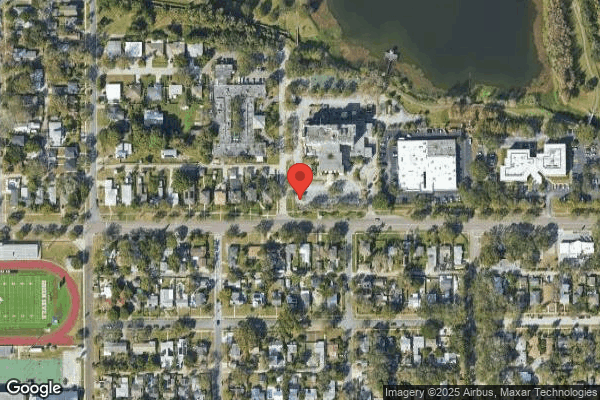

1000 24TH ST N, SAINT PETERSBURG, FL 33713 (727) 323-4711
For profit - Limited Liability company 99 Beds GOLD FL TRUST II Data: November 2025
Trust Grade
50/100
#452 of 690 in FL
Last Inspection: June 2024

Within standard 12-15 month inspection cycle. Federal law requires annual inspections.

Overview

Apollo Healthcare & Rehabilitation Center has a Trust Grade of C, which means it is average and in the middle of the pack compared to other facilities. It ranks #452 out of 690 in Florida, placing it in the bottom half of the state, and #26 out of 64 in Pinellas County, indicating there are only a few local options that are better. The facility is showing improvement, with issues decreasing from seven in 2024 to just one in 2025. Staffing is rated average with a 3/5 star rating, and the turnover rate is 49%, which is about the state average, suggesting that staff may not remain long-term but are stable enough. However, specific incidents of concern have been noted, including cold meals reported by residents and a lack of proper kitchen sanitation, which raises questions about the quality of care and food safety. Overall, while there are some strengths, such as no fines reported, the facility has areas needing significant improvement.

Trust Score
C
50/100
In Florida
#452/690
Bottom 35%
Safety Record
Low Risk
No red flags
Inspections
Getting Better
7 → 1 violations
Staff Stability
⚠ Watch
49% turnover. Above average. Higher turnover means staff may not know residents' routines.
Penalties
✓ Good
No fines on record. Clean compliance history, better than most Florida facilities.
Skilled Nurses
○ Average
Each resident gets 34 minutes of Registered Nurse (RN) attention daily — about average for Florida. RNs are the most trained staff who monitor for health changes.
Violations
⚠ Watch
21 deficiencies on record. Higher than average. Multiple issues found across inspections.
★★☆☆☆
2.0
Overall Rating
★★★☆☆
3.0
Staff Levels
★★★★☆
4.0
Care Quality
★★☆☆☆
2.0
Inspection Score
Stable
2024: 7 issues
2025: 1 issues

The Good

  • 4-Star Quality Measures · Strong clinical quality outcomes
  • Full Sprinkler Coverage · Fire safety systems throughout facility
  • No fines on record

Facility shows strength in quality measures, fire safety.

The Bad

2-Star Overall Rating

Below Florida average (3.2)

Below average - review inspection findings carefully

Staff Turnover: 49%

Near Florida avg (46%)

Higher turnover may affect care consistency

Chain: GOLD FL TRUST II

Part of a multi-facility chain

Ask about local staffing decisions and management

The Ugly 21 deficiencies on record

Jan 2025 1 deficiency
CONCERN (F) 📢 Someone Reported This

A family member, employee, or ombudsman was alarmed enough to file a formal complaint

Potential for Harm - no one hurt, but risky conditions existed

Deficiency F0804 (Tag F0804)

Could have caused harm · This affected most or all residents

Based on observations, interviews, and record review the facility failed to ensure proper temperatures and palatable meals were provided to two residents (#2, #6) out of three residents sampled. Find...

Read full inspector narrative →
Based on observations, interviews, and record review the facility failed to ensure proper temperatures and palatable meals were provided to two residents (#2, #6) out of three residents sampled. Findings included: 1. On 1/16/25 at 9:56 a.m., an observation of Resident #6 revealed he was lying in bed watching television. He stated every meal was cold. He stated meals are, Not even lukewarm. Resident #6 stated the food last night for dinner was cold. He described the meal he received as, A hamburger patty with a bun. Resident #6 stated, Happens all the time. A review of Resident #6's admission Record revealed an admission date of 12/16/24. The admission Record revealed diagnoses to include: sepsis, unspecified organism, muscle weakness (generalized), Type 2 Diabetes Mellitus without complications, atherosclerotic, and heart disease of native coronary artery without angina pectoris. A review of Resident #6's Comprehensive Minimum Data Set (MDS) Section C - Cognitive Patterns, dated 12/21/24, revealed a Brief Interview for Mental Status (BIMS) of 15, indicating the resident was cognitively intact. 2. On 1/16/25 at 10:19 a.m., an observation of Resident #2 revealed she was lying in bed, with the bedside table in front of her, and her family member was sitting at the foot of the bed. She stated the temperature of the food for every meal is cold. Resident #2 stated when she requests hot oatmeal for breakfast, It's cold. A review of Resident #2's admission Record revealed an admission date of 10/24/24. The admission Record revealed diagnoses to include: unspecified fracture of right femur, subsequent encounter for closed fracture with routine healing, cognitive communication deficit, Type 2 Diabetes Mellitus without complications, major depressive disorder, recurrent, moderate, muscle weakness (generalized), and chronic systolic (congestive) heart failure. A review of Resident #2's Comprehensive Minimum Data Set (MDS) Section C - Cognitive Patterns, dated 12/5/24, revealed a BIMS of 15, indicating the resident was cognitively intact. On 1/16/25 at 11:15 a.m., an interview with the Dietary Manager revealed was currently conducting food temperature audits. He stated he started the audits in December 2024. He stated residents were complaining that by the time they get their food, it's cold. The Dietary Manager stated most of the time the food is cold because the trays are sitting there. He provided an example related to residents who smoke. The Dietary Manager stated when residents go out to smoke, their meal is delivered, and when they return the food is cold. He stated another factor related to food being cold is, It's a waiting game on how fast the trays are going to be passed. The Dietary Manager stated when the meal cart gets to the floor the dietary staff let the nurse know, then the Certified Nursing Assistant (CNA's) start passing trays. He stated he's completed test trays and audits twice a week, and they are part of his normal process. The Dietary Manager confirmed he attended resident council meetings, and the main concerns have been about not receiving alternative/substitute meal choices. A test tray was requested and conducted with the Dietary Manager on 1/16/25. An observation of the lunch tray line revealed it started at 11:33 a.m. The Dietary Manager stated the Rapid hall is the first meal cart to go out. The two residents (#2 and #6), who expressed concerns about food being cold, reside in the Rapid hall. An observation of food temperatures being taken and recorded revealed the following: Carrots and peas - 185 degrees Fahrenheit (°F) Chicken - 172 °F Mashed potato - 162 °F Pureed protein - 160 °F Pureed vegetables - 168 °F White rice - 184 °F Further observations revealed the loading of the Rapid hall meal cart, with lunch meal trays, started at 11:39 a.m. and ended at 11:45 a.m. The meal cart traveled from the kitchen to the floor at 11:47 a.m., where staff were observed immediately delivering the trays to the residents. The last resident was provided their lunch meal tray at 12:02 p.m. An observation of the meal cart, with the Dietary Manager present, revealed the test tray was not there. He stated before the Rapid meal cart went out to the floor, he confirmed it was there. He stated a test tray could be sent on the South side meal cart as it hadn't been loaded yet. On 1/16/25 at 11:40 a.m., during the lunch meal service, an observation of the drying rack revealed insulated plate bases. During the meal tray line, trays were not observed with the insulated plate base. Dietary staff were observed putting the insulated lid, but not the plate base. An interview with the Dietary Manager revealed the plate warmer hasn't been working since the end of October 2024. He stated the previous Nursing Home Administrator (NHA) knew about the plate warmer not functioning. He stated she handled communication about the plate warmer. The Dietary Manager stated he's not sure if the current NHA knows about it. An observation of the dining area, which is currently under renovation, revealed a large machine covered with what appeared to be a tablecloth. He stated they have the machine in the dining area, while he was observed lifting up the cloth, but thought it had something to do with the parts as to why it was not fixed/functional. Observation of the South side meal cart revealed it was loaded with the first tray at 12:00 p.m. and the last tray at 12:09 p.m. Further observations revealed the cook was putting food in styrofoam takeout containers. The Dietary Manager stated they were doing that because in the morning the plates were knocked over, and many of them broke. He stated the food in the takeout containers were for the last meal cart. The South side meal cart was observed on the floor at 12:10 pm. The nurse was observed telling staff members about the meal cart being on the floor. At approximately 12:13 p.m., the first lunch tray was delivered, and the last tray was provided at 12:20 p.m. An observation of food temperatures being taken and recorded revealed the following: Chicken - 111 °F Carrots and peas - 125 °F Mashed potato - 141 °F An interview with the Dietary Manager revealed the temperatures were fine, except for the chicken. He stated he expected the chicken to be at 130 °F. A review of the resident council minutes could not be completed as the resident council president denied permission. A request for documentation about the plate warmer, to include a work order and communication related to the equipment not functioning, was made to the Dietary Manager and NHA. The requested documents were not provided by the facility. On 1/16/25 at 2:20 p.m., an interview with the NHA revealed he reached out to a staff member in purchasing regarding the plate warmer. He stated he also communicated with the Director of Maintenance (DOM). The DOM called the company, [Vendor name], who makes the parts. The NHA confirmed they have the equipment at the facility, but it's missing a part. He stated the DOM received a quote today for the part. The NHA stated today he was made aware the plate warmer was not functioning. A review of the facility policy titled, P&P [Policy and Procedure] Final Cooking Temperatures, issued 1/1/22 and revised 10/1/23 revealed the following: Policy: Food is to be cooked to specified temperatures and times to mitigate the presence of dangerous microorganisms. Food thermometers used to check food temperatures are clean, sanitized and calibrated for accuracy. The danger zone for food temperatures is above 41°F and below 135°F. This temperature range promotes the rapid growth of pathogenic microorganisms that cause foodborne illness. A review of the facility policy titled, P&P Equipment Care, issued 4/122, revealed the following: Policy: It will be the policy of this facility that staff shall properly use and care for the property, equipment and supplies that assigned and/or necessary for use in their work. Further review of the policy revealed the following under procedure, . 9. Equipment or other maintenance related needs should be communicated with supervisor, Maintenance Director or Executive Director. Communication may be done verbally if the appropriate personnel are present and able to remedy the concern. A communication system and/or maintenance tracking log can be utilized to communicate maintenance or repair needs for off shift or other desired needs.
Jun 2024 7 deficiencies
CONCERN (D)

Potential for Harm - no one hurt, but risky conditions existed

Grievances (Tag F0585)

Could have caused harm · This affected 1 resident

Based on interview and record review, the facility failed to file a grievance on behalf of one resident (#44) of one resident reviewed for grievances. Findings included: Review of Resident #44's admi...

Read full inspector narrative →
Based on interview and record review, the facility failed to file a grievance on behalf of one resident (#44) of one resident reviewed for grievances. Findings included: Review of Resident #44's admission Record showed admission to the facility on 4/30/24, with diagnoses to include metabolic encephalopathy, cognitive communication deficit, and dementia. An interview was conducted on 6/26/24 at 9:33 a.m. with Resident #44's family member. She said she reported to the facility concerns and had not received a response. The family member said one of the concerns was related to the death of Resident #44's roommate. In the presence of the family member, a member of the therapy team opened the roommate's curtain and said, oh she is dead and closed the curtain. The family member said this was immediately reported to the facility's leadership. The family member provided a written copy of concerns she discussed with the Director of Nursing (DON) earlier in the day. (Photographic Evidence Obtained.) An interview was conducted with the DON, Staff B, Licensed Practical Nurse (LPN), Unit Manager (UM), and Staff C, Social Services Director (SSD) on 6/27/24 at 11:36 a.m. Staff C said there had been two grievances filed for Resident #44 from the time of admission to the facility. Review of the facility's Receipt of Grievance/Concern for Resident #44, received on 6/20/24, initiated by a family member. The grievance description showed [Resident #44] does not use call light, recommend bell, [family member] approved. In the resolution section, the grievance was assigned to maintenance on 6/21/24 and the action taken to resolve the grievance showed provided bell on 6/26/24. The grievance was resolved on 6/26/24. The follow-up section of the form showed on 6/24/24 the family member was contacted and was satisfied with the resolution. The review section, the administrator signature section is unsigned and undated. Review of the facility's Receipt of Grievance/Concern for Resident #44, received on 6/20/24 initiated by a family member. The grievance description showed stated therapist was inconsiderate of resident's feelings when roommate passed away The resolution section showed the grievance was assigned to rehabilitation and nursing staff on 6/21/24. The action taken showed Psych will see resident for psychosocial wellbeing. Sensitivity education will be completed. The date resolved section was not completed. The follow-up section and review sections were not complete. A follow-up interview was conducted on 6/28/24 at 12:33 p.m. with Staff C, SSD. She said the facility's goal was to resolve grievances within 5 days. An interview was conducted on 6/28/24 at 12:40 p.m. with the Nursing Home Administrator (NHA). She said, grievances are not always documented. Review of the facility's policy titled, Grievance/Complaint, Filing, revised 5/2020 revealed: Policy Statement Resident and their representatives have a right to grievances, either orally or in writing, to the facility .The administrator and staff will make prompt efforts to resolve grievances to the satisfaction of the resident and/or representative. 1. Residents, family and resident representative have the right to voice or file grievances without discrimination or reprisal of any kind . .4. The administrator has delegated the responsibility of grievance and/or complaint investigation to the Grievance Officer who is the [Social Services Director.] 5. Upon receipt of a grievance and/or complaint, the grievance officer will review and investigate the allegations and submit a written report of such findings to the administrator within 5 working days of receiving the grievance and or complaint. .8. The resident, or person filing the grievance and/or complaint on behalf of the resident, will be informed verbally upon close of the investigation of the findings and the actions that will be taken to correct any identified problems. A written summary of the investigation will be provided to the resident/responsible party upon request.
CONCERN (D)

Potential for Harm - no one hurt, but risky conditions existed

Comprehensive Care Plan (Tag F0656)

Could have caused harm · This affected 1 resident

**NOTE- TERMS IN BRACKETS HAVE BEEN EDITED TO PROTECT CONFIDENTIALITY** Based on interview and record review, the facility failed to ensure advanced directive care plans were accurate or developed for...

Read full inspector narrative →
**NOTE- TERMS IN BRACKETS HAVE BEEN EDITED TO PROTECT CONFIDENTIALITY** Based on interview and record review, the facility failed to ensure advanced directive care plans were accurate or developed for three residents (#31, #4, #36) out of 41 sampled residents. Findings included: 1. Review of Resident #31's admission Record revealed she was admitted to the facility on [DATE], she received hospice services, and had medical diagnoses not limited to type 2 diabetes, major depressive disorder, and protein-calorie malnutrition. Review of Resident #31's physician order with a start date of 5/1/24 and no end date revealed DNR [do not resuscitate]. Review of Resident #31's [name of state] Do Not Resuscitate Order revealed Resident #31's power of attorney (POA) signed the document on 4/10/24 and Resident #31's physician signed the document on 4/11/24. Review of Resident #31's care plan with a revision date of 2/16/24 revealed [Resident #31] has expressed the following wishes regarding code status and has the following advanced directives in place: is Full Code, DPOA [durable power of attorney] for health care and finances. The goal revealed Resident's wishes regarding code status and advanced directives will be followed by staff. The intervention revealed Discuss Advanced Directives with resident and/or appointed health care representative. An interview was conducted with Staff C, Social Services Director (SSD), on 06/26/24 at 1:20 p.m. She said she was responsible for developing and revising advanced directive care plans. She said the care plan should be reflective of the resident's physician ordered code status. She said she had been in the SSD position since December 2024, and she had not created or revised any advance directive care plans. She reviewed Resident #31's physician orders and confirmed she had a physician's order for a DNR. Staff C, SSD reviewed Resident #31's care plans and confirmed she was care planned to be a full code. An interview was conducted on 06/26/24 at 2:03 p.m. with the Director of Nursing (DON). She said social service was responsible for the development and revision of advanced directive care plans and the care plan should be reflective of the physician's order. She reviewed Resident #31's physician orders and confirmed Resident #31 had orders in place for a DNR. She reviewed Resident #31's care plans and confirmed Resident #31 was care planned to be a full code before the advanced directive care plan was revised on 6/26/24. 2. Review of Resident #4's admission Record revealed she was initially admitted to the facility on [DATE] and readmitted back to the facility from an acute care hospital on 6/23/24 with medical diagnoses, not limited to, specified injuries of right elbow, seizures, unsteadiness on feet, major depressive disorder, mild intellectual disability, generalized anxiety disorder, and schizoaffective disorder, depressive type. Review of Resident #4's physician orders revealed an order with a start date of 6/23/24 and no end date for FULL CODE. Review of Resident #4's care plans on 06/25/24 at 2:45 p.m. revealed no advanced directive care plan was in place. Review of Resident #4's care plans on 06/26/24 at 12:56 p.m. revealed no advanced directive care plan was in place. Review of Resident #4's census revealed she was initially admitted to the facility on [DATE] discharged to the hospital on 6/19/24 and returned to the facility on 6/23/24. An interview was conducted with Staff C, Social Services Director (SSD), on 06/26/24 at 1:20 p.m. She reviewed Resident #4's medical record and confirmed the resident had a physician order in place for full code. Staff C, SSD reviewed Resident #4's care plans and confirmed she did not have an advanced directive care plan in place. An interview was conducted on 06/26/24 at 1:45 p.m. with the Nursing Home Administrator (NHA) and Staff L, Regional Nurse Consultant (RNC). They said social services and nursing were responsible for the development and revision of advanced directive care plans. They said advanced directive care plans should be reflective of the physician ordered code status. An interview was conducted on 06/26/24 at 2:03 p.m. with the Director of Nursing (DON). The DON reviewed Resident #4's physician orders and confirmed she was ordered to be a full code. She reviewed Resident #4's care plans and confirmed her advanced directive care plan as created on 6/26/24. 3. A review of Resident #36's admission Record revealed an original admission date of 11/18/22 and an admission date of 4/3/24. A review of Resident #36's Active Orders revealed a Do Not Resuscitate (DNR) with an order date of 4/3/24. A review of Resident #36's miscellaneous documents, under the category of Advanced Directives, revealed a [name of state] DNR order form signed by the resident and the physician. The [name of state] DNR order for Resident #36 showed a date of 1/9/24. On 6/26/24, a review of Resident #36's current care plan revealed a focus to include, [Resident #36] has expressed the following wishes regarding code status and has the following advanced directives in place: is Full Code, with an initiated date on 11/25/22 and created on 11/25/22. On 6/27/24 at 2:44 p.m., an interview with the Director of Nursing (DON) revealed advanced directive orders would be found under orders, the grey ribbon under the resident's picture, and a document scanned in the resident's electronic medical record. She stated she would expect the care plan to have the same information as the orders, the grey ribbon area and the scanned document. On 6/27/24, the Administrator provided the resident's current care plan which revealed a focus to include, [Resident #36] has expressed the following wishes regarding code status and has the following advanced directives in place: is DNR, with an initiated date of 11/15/22 and revised on 6/26/24. A review of the facility's policy titled, Advanced Directives, revised 9/2022, reflected the following under Policy Interpretation and Implementation: .2. Resident advance directive choices documented in electronic medical record. A review of the facility's policy titled, Care Planning - Interdisciplinary Team, revised 3/2022, reflected the following under Policy Interpretation and Implementation: .4. The resident, the resident's family and/or the resident's legal representative/guardian or surrogate are encouraged to participate in the development of and revisions to the resident's care plan. Surveyor: [NAME], Allegra
CONCERN (D)

Potential for Harm - no one hurt, but risky conditions existed

Deficiency F0688 (Tag F0688)

Could have caused harm · This affected 1 resident

Based on observation, interview, and record review, the facility failed to ensure splints were applied to prevent the decrease of range of motion for one resident (#35) of five sampled residents . Fi...

Read full inspector narrative →
Based on observation, interview, and record review, the facility failed to ensure splints were applied to prevent the decrease of range of motion for one resident (#35) of five sampled residents . Findings included: On 6/25/2024 at 10:57 a.m. Resident #35 was observed and interviewed. Resident #35 stated she was not able to utilize her left hand due to a stroke. Resident # 35's left hand was observed laying across the resident's abdomen in a fist. Resident #35 was unable to move her fingers and stated, it would be nice to have something keep my hand open, as it (hand) becomes 'smelly'. On 6/26/2024 at 11:17 a.m. Resident #35 was observed lying in bed with no splint on her left hand. Review of Resident #35's admission Record revealed an admission date of 6/7/2022 with diagnoses: flaccid hemiplegia affecting left nondominant side, cerebral infarction, and other co-morbidities. Review of Minimum Data Set (MDS) assessment, dated 5/16/2024, Section GG Functional Status revealed Resident #35 was dependent on staff with mobility and activities of daily living (ADL) performance and had functional limitations in range of motion on one side for upper extremity (shoulder, elbow, wrist, hand). Review of the Order Summary Report with active physician orders as of 6/28/2024 for Resident #35 revealed the following: Apply splint to left wrist after AM care. Doff before PM or as tolerated. Skin check to be done before/after application, order start date of 2/23/2024. The care plan for Resident #35 revealed a focus area for potential for complications related to contractures of: left (L) wrist; Date Initiated: 05/16/2024. Interventions revealed: Apply/remove splint/brace for joint protection as ordered Date Initiated: 05/16/2024 An interview was conducted with Staff K, Certified Nursing Assistant (CNA) on 6/25/2024 at 1:16 p.m. Staff K, CNA confirmed being assigned to Resident #35. Staff K, CNA stated Resident #35 did not wear splints. An interview was conducted with Staff G, Certified Nursing Assistant (CNA) on 6/26/2024 at 1:40 p.m. Staff G, CNA confirmed being assigned to Resident #35. Staff K, CNA stated Resident #35 did not wear splints. An interview was conducted with Staff H, Licensed Practical Nurse (LPN) on 6/27/2024 at 12:14 p.m. Staff H, LPN stated Resident #35 did not have splints. An interview was conducted with the Director of Rehabilitation (DOR) on 6/27/2024 at 12:20 p.m. The DOR stated Resident #35 was last on case load on 12/27/2023, at that time, Occupational Therapy recommended a left-hand splint. Resident #35 was able to tolerate and wear the splint. An interview was conducted with the Director of Nursing (DON) on 6/27/2024 at 12:44 p.m. The DON stated Resident #35 had a physician order for a left hand splint and her expectation was that Resident #35's left hand splint was on as ordered. Review of the facility's policy and procedures titled Resident Mobility and Range of Motion with a revised date of July 2017 revealed: Policy Statement: 1. Residents will not experience an avoidable reduction in range of motion (ROM). 2. Residents with limited range of motion will receive treatment and services to increase and/or prevent a further decrease in ROM. 3. Residents with limited mobility will receive appropriate services, equipment and assistance to maintain or improve mobility and less reduction in mobility is unavoidable. Policy interpretations and implementation: . 5. The care plan will include specific interventions, exercises and therapies to maintain, prevent avoidable decline in, and/or improve mobility and range of motion.
CONCERN (D)

Potential for Harm - no one hurt, but risky conditions existed

Garbage Disposal (Tag F0814)

Could have caused harm · This affected 1 resident

Based on observations and interview, the facility failed to dispose of garbage appropriately for two of two dumpsters outside of the kitchen. Findings included: On 6/25/2024 at 9:50 a.m., during the ...

Read full inspector narrative →
Based on observations and interview, the facility failed to dispose of garbage appropriately for two of two dumpsters outside of the kitchen. Findings included: On 6/25/2024 at 9:50 a.m., during the initial tour of the kitchen, with the dietary manager, an inspection of the dumpster area was conducted, and the following was noted. -Two dumpsters were noted in the rear parking area near the kitchen door. An extreme odor was present. The walls of both dumpsters were soiled with brown/black substance surrounding most of the dumpsters. The walls of the dumpster's appeared to be black although at the top of the dumpster's were yellow in color. The top of one dumpster lid was fully open and the other closed. The side door of both dumpster's was open and exposing the garbage inside, additionally there were multiple trash bags, crates and significant amounts of debris noted to be stored on the side and back of the dumpster's. The debris consisted of used incontinent products, plastic utensils, gloves, empty pill wrappers, plastic cups, lids, straws, and numerous garbage bags. (Photographic evidence obtained). During an interview on 6/25/2024 at 9:55 a.m., the dietary manager stated the lids of the dumpster's should be closed, even the ones on the side. The dietary manager continued to state the area around the dumpster's should be clean and debris free. The dietary manager stated the debris was discussed everyday in morning meeting, although nothing changes, and no one cleans up the debris. Review of the facility's policy and procedure titled Food-Related Garbage and Refuse Disposal dated October 2017 revealed: Policy Statement: Food-related garbage and refuse are disposed of in accordance with current state laws. Policy Interpretation and Implementation: 1. All food waste shall be kept in containers. 2. All garbage and refuse containers are provided with tight fitting lids or covers and must be kept covered when stored or not in continuous use. 3. Housekeeping personnel will empty garbage and refuse containers daily and will clean the containers at least daily on the outside and at least weekly on the inside, taking care not to contaminate food, equipment, utensils, or food preparation areas while cleaning. 4. Brushes used for washing garbage and refuse containers will not be used for any other purposes. Wastewater from such cleaning operations will be disposed of properly to prevent any contamination. 5. Garbage and refuse containing food waste will be stored in a manner that is inaccessible to pests. 6. Storage areas will be kept clean at all times and shall not constitute a nuisance. 7. Outside dumpster's provided by garbage pickup surfaces will be kept closed and free of surrounding litter.
CONCERN (E)

Potential for Harm - no one hurt, but risky conditions existed

Food Safety (Tag F0812)

Could have caused harm · This affected multiple residents

**NOTE- TERMS IN BRACKETS HAVE BEEN EDITED TO PROTECT CONFIDENTIALITY** Based on observation, interview, and record review, the facility failed to store, prepare, distribute, and serve food by profess...

Read full inspector narrative →
**NOTE- TERMS IN BRACKETS HAVE BEEN EDITED TO PROTECT CONFIDENTIALITY** Based on observation, interview, and record review, the facility failed to store, prepare, distribute, and serve food by professional standards for food service safety. Findings included: A tour of the main kitchen conducted on 6/25/2024 at 9:15 a.m. and accompanied by the Dietary Manager (DM) showed the following: 1. A rag was noted on the main production counter that was not in any buckets or solutions, the solution bucket was sitting on the counter. A personal jacket was on the second shelf of the counter, sitting on top of the lids, and bowls. (Photographic Evidence Obtained). 2. A garbage can with no lid was at the entrance, another trash receptacle with no lid was next to the sink near the tray line. The DM stated the garbage should have lids on when not in use. (Photographic Evidence Obtained). 3. The second shelf of the tray line had a container of bleach sitting out next to a basket with crackers and open boxes of hot chocolate mix. The DM stated the chemicals should not be stored there. (Photographic Evidence Obtained). 4. The cooks prep cooler had chopped green fruit and pulled pork in containers, covered. A sticker on the containers had red ineligible writing with no date on the fruit and no date on the pork. A bin of sandwiches (meat/cheese) was dated but the plastic wrap was not sealed. A white bag tied shut with a sticker titled [Name] Food dated 6/24. The DM stated the items should be dated and sealed, and the bag was one of the staff's food and that it was okay to have personal items in the cooking prep fridge. (Photographic Evidence Obtained). 5. The dry storage area had 2 boxes of chemicals and a bottle of a chemical stored at the entrance. The dietary manager immediately removed them and stated they should not be there. An open bottle of Teriyaki Marinade and Sauce dated 5/24/24, the label on the bottle stated Refrigerate after opening. The dietary manager was unaware the sauce needed to be refrigerated after opening. (Photographic Evidence Obtained). 6. The walk-in freezer had a build up of ice on the entire floor as soon as the door was open. Condensation was noted on the freezer ceiling, and the fans had ice build-up on them. Two bags of ice were open with the ice exposed. The DM stated the freezer had been doing this on a regular basis since he started. The DM said the Maintenance Director looked at the freezer but had not fixed it. (Photographic Evidence Obtained). 7. The can opener had a significant build-up of a black sticky substance and brown color running down the length tool. The DM stated the opener needed to be soaked and cleaned. (Photographic Evidence Obtained). 8. The pipe next to the stove had a build-up of grease and dust that was visible, the stove had a brown sticky substance running down the front, the oven doors had a brown sticky build-up on the outside and a black substance on the bottom corner. The cook stated the items needed to be cleaned. (Photographic Evidence Obtained). 9. Items stacked on shelves for drying were not open to air and were wet. (Photographic Evidence Obtained). During an interview on 6/25/2024 at 10:25 a.m. the DM stated the kitchen had come a long way and still had a way to go. The DM stated they did not have a cleaning schedule and one needed to be made. During an interview on 6/28/2024 at 11:00 a.m., the Nursing Home Administrator (NHA) was made aware of the findings. Review of the facility's policy and procedure titled Food Storage: Cold dated October 2019 revealed: Policy Statement: it is the centers policy to ensure all time/temperature control for safety (TCS), frozen and refrigerated food items common will be appropriately stored in accordance with guidelines of the FDA food code. Action steps: 1. The dining service director is responsible for storing all items 6 inches above the floor and 18 inches from the sprinkler unit. 5. The dining services director/cook ensures that all food items are stored properly in covered containers, labeled and dated and arranged in a manner to prevent cross contamination. Review of the facility's policy and procedures titled Food Storage-Dry Goods dated October 2019 revealed: Policy Statement: it is the centers policy to ensure all dry goods will be appropriately stored in accordance with guidelines of the FDA food code. Action steps: Dry Storage: 1. The dining services director or designee is responsible to store all items 6 inches above the floor on shelves. 6. The dining services director or designee ensures that the storage will be neat, arranged for easy identification, and date marked appropriate. 7. The dining services director will ensure that toxic materials are not stored with food. The facility's policy and procedures titled Environment dated October 2019 revealed: Policy: it is the center's policy that all food preparation areas, food service areas, and dining areas will be maintained in a clean and sanitary condition. Action steps: 1. The dining services director will ensure that the physical plant is maintained in a clean and sanitary manner, including floors, walls, ceilings, lighting, and ventilation. 2. The dining services director will ensure that all employees are knowledgeable of the proper procedures for cleaning all food services equipment and services. 3. The dining services director will ensure that all food contact surfaces are cleaned and sanitized after each use. 4. The dining service director will ensure that a routine cleaning schedule is in place for all cooking equipment, food storage areas, and surfaces. 5. The dining services director will ensure that all dining areas are cleaned and sanitized after each use, including table surfaces, chairs, and floors. 6. The dining service director will ensure that all trash is contained in covered leak proof containers that prevent cross contamination. 7. The dining services director will ensure that all trash is properly disposed, and external receptacles dumpsters and that the area is free of debris.
CONCERN (E)

Potential for Harm - no one hurt, but risky conditions existed

Infection Control (Tag F0880)

Could have caused harm · This affected multiple residents

Based on observation, interview, and record review,, the facility failed to implement and maintain an infection prevention and control program to mitigate and prevent the spread of infection related t...

Read full inspector narrative →
Based on observation, interview, and record review,, the facility failed to implement and maintain an infection prevention and control program to mitigate and prevent the spread of infection related to: 1) not ensuring staff were donning appropriate Personal Protective Equipment (PPE) when entering a resident room under contact isolation precautions for one (#23) of one sampled resident observed for contact isolation precautions, 2) not ensuring resident medical equipment had a cleanable surface for one resident (#43) of five sampled residents, and 3) not ensuring linen was transported and stored in a way to prevent contamination with seven of seven carts observed. Findings included: An observation was conducted on 6/25/2024 at 10:03 a.m. during the initial tour of the facility. Resident #23's room door had a blue 8 ½ by 11 (letter size) laminated paper sign that showed; Enhanced Barrier Precautions. The sign was hung on the door with mesh caddy with multiple pockets. The pockets contained gloves, isolation gowns, masks, and disinfecting wipes. (Photographic Evidence Obtained). On 6/26/2024 at 1:29 p.m., Staff G, Certified Nursing Assistant (CNA) was observed entering Resident #23's room. Staff G, CNA donned gloves prior to entering. Staff G, CNA stated Resident #23 needed to be assisted with incontinence care, Staff G, CNA provided privacy and closed the room door. Review of Resident #23's admission Record revealed a re-admission date of 4/11/2024 with diagnoses: pressure ulcer left hip, local infection of the skin and subcutaneous tissue, Methicillin Resistant Staphylococcus Aureus infection (MRSA) and other co-morbidities. Review of the Order Summary Report with active physician orders as of 6/28/2024 for Resident #23 revealed the following: Keflex 500 milligram every 8 hours for wound infection for 10 days, with an order date of 6/21/2024. Culture right hip wound due to drainage/infection ordered dated 6/21/2024. Contact isolation - MRSA infection dated 4/11/2024. During an interview on 6/26/2024 at 1:40 p.m., Staff G, CNA stated Resident #23 was on enhanced barrier precautions. Staff G did not know why Resident #23 was on precautions but said, she could find out. Staff G said she did not wear a gown while providing incontinent care to Resident #23 and with enhanced barrier precautions a gown should have been worn with direct care being provided. During an interview on 6/26/2024 at 4:50 p.m., Staff I, CNA stated resident #23 was on enhanced barrier precautions and only needed to have personal protective equipment worn when providing direct resident care. During an interview on 6/26/2024 at 1:55 p.m., Staff H, Licensed Practical Nurse (LPN) stated being responsible for Resident #23. Staff H stated Resident #23 had a wound and that was why the resident was on enhanced barrier precautions. These precautions only required gowns when providing direct resident care. Resident #23 had no signs or symptoms of an infection. An interview was conducted with the Director of Nursing (DON) on 6/28/2024 at 11:07 a.m. She confirmed she was the infection preventionist and said residents with a Methicillin-resistant Staphylococcus aureus (MRSA) infection in the wound should be on contact precautions for the duration of the antibiotics plus three extra days. She confirmed Resident # 23 had an infection in the wound, was on intravenous antibiotics for the infection and was getting an X-ray of the wound. During an observation on 6/25/2024 at 10:41 a.m., Resident #43 was observed lying in bed, in a fetal position with bilateral side rails in the upright position. The siderails had colored [Brand name] padding (i.e., pool noodle) surrounding the bed rail attached with silver tape. The [Brand name] padding was textured with numerous pores throughout. (Photographic Evidence Obtained). During an interview with the DON on 6/28/2024 at 11:07 a.m., she confirmed she was also the infection preventionist and confirmed Resident # 43 had pool noodles on her bed rails and said We just wipe them down with the 3-minute dry time wipe. I would have to ask environmental services what they use to clean them. During an interview with the Environmental Service Supervisor (EVS) on 6/28/2024 at 12:07 p.m., he stated the bed rails were just wiped down nothing special was used. On 6/25/2024 to 6/28/2024 at various times of the day the facility linen carts were noted to be torn, thread-bare, and hanging open. (Photographic Evidence Obtained). During an interview with the DON on 6/28/2024 at 11:18 a.m., she confirmed the linen carts needed to be replaced but they would be able to be wiped off, if needed. An interview on 6/28/2024 at 12:07 p.m. with the EVS revealed he did not have an issue with the linen carts. He stated he had not seen any holes or rips lately in the covers of the linen carts. The EVS stated he reviewed the linen carts once or twice a week. He stated he reviewed the linen carts when the staff went to the linen room to pick up items. He stated if the cart was broken, he would expect maintenance to make repairs. The EVS stated the linen carts were cleaned once or twice, every other week. He stated one of his staff or himself cleaned the linen carts. He stated none of the housekeeping staff have reported issues to him. Review of the facility's policy and procedures titled Isolation - Categories of Transmission-Based Precautions dated September 2022 revealed: Policy Statement: Transmission-based precautions are initiated when a resident develops signs and symptoms of a transmissible infection; Arrives for admission with symptoms of infection; Or has a laboratory confirmed infection; And is at risk of transmitting the infections to other residents. Policy Interpretation and Implementation: . 2. Transmission based precautions are additional measures that protect staff, visitors and other residents from becoming infected. These measures are determined by the specific pathogen and how it is spread from person to person. The three types of transmission-based precautions are contact, droplet and airborne. 3. The Centers for Disease control and prevention (CDC) maintains a list of diseases, modes of transmission and recommendation precautions. 4. The facility makes every effort to use the least restrictive approach to managing individuals with potentially communicable infections. Transmission based precautions are used only when the spread of infection cannot be reasonably prevented by less restrictive measures. 5. When a resident is placed on transmission-based precautions, appropriate notification is placed on the room entrance door and on the front of the chart so that personnel and visitors are aware of the need for and the type of precaution. a. Sign it informs the staff of the type of CDC precautions, instructions for use of PPE, and/or instructions to see a nurse before entering the room. b. Signs and notification comply with the resident's rights to confidentially or privacy. Contact precautions: 1. Contact precautions are implemented for residents known or suspected to be infected with microorganisms that can be transmitted by contact with the resident or indirect contact with environmental surfaces or resident care items in the residence environment. 2. Contact precautions are also used in situations when a resident is experiencing wound drainage, fecal incontinence or diarrhea, or other discharges from the body that cannot be contained and suggest an increased potential for extensive environmental contamination and risk of transmission of a pathogen, even before a specific Organism has been identified. 3. Contact precautions are used for residents infected or colonized with MDRO's in the following situations: a. When a resident has wounds, secretions, or excretions that are unable to be covered or contained and b. On units or in facilities where, despite attempts to control the spread of the MDRO, ongoing transmission is occurring. 7. Staff and visitors wear gloves (clean, non-sterile) when entering the room. 8. Staff and visitors wear a disposable gown upon entering room and remove before leaving the room and avoid touching potentially contaminated surface this with clothing after gown is removed.
CONCERN (F)

Potential for Harm - no one hurt, but risky conditions existed

Deficiency F0657 (Tag F0657)

Could have caused harm · This affected most or all residents

Based on observation, interview, and record review, the facility failed to ensure the notification and invitation to participate in the comprehensive care plan for two residents (#43 and #44) of two s...

Read full inspector narrative →
Based on observation, interview, and record review, the facility failed to ensure the notification and invitation to participate in the comprehensive care plan for two residents (#43 and #44) of two sampled residents. The findings include: Review of the admission Record for Resident #43 revealed an admission date of 3/2/2022 with diagnoses to include: dementia; major depressive disorder, moderate protein-calorie malnutrition, hypertension; and other co-morbidities. An interview was conducted with Resident #43's representative on 6/25/2024 at 2:11 p.m. Resident #43's representative stated, I did not know they had care plan meetings, I have not received any information about any meetings. Review of the admission Record for Resident #44 revealed an admission date of 4/30/2024, with diagnoses to include metabolic encephalopathy, cognitive communication deficit, dementia and other co-morbidities. An interview was conducted with Resident #44's representative on 6/26/2024 at 9:33 a.m. Resident #44's representative stated they have not received an invitation to attend care plan meetings. During an interview on 6/28/2024 at 10:34 a.m., Staff C, Social Services Director (SSD) stated the receptionist was responsible for completing the care plan meeting invitations. During an interview on 6/28/2024 at 10:40 a.m., Staff A, Receptionist said she had assisted with completing care plan meeting invitations in the past. Staff A stated this was no longer part of her responsibilities, the Minimum Data Set (MDS) nurse did this now. During an interview on 6/28/2024 at 11:10 a.m., Staff J, Licensed Practical Nurse (LPN), Minimum Data Set (MDS) Consultant stated the process for care plan meetings was as follows: the MDS nurse created a calendar 6-8 weeks out, the receptionist or SSD created and mailed the invitations to families/representatives. A copy of the invitation was scanned into the resident charts. The process was broken here, as this was not happening. Staff J stated not knowing why the process was not occurring as it was the expectation that the resident and resident representative be invited and encouraged to participate in the process. During an interview on 6/28/2024 at 12:30 p.m., the Director of Nursing (DON) stated the expectation was families and residents were invited to care plan meetings. Review of the facility's policies and procedures titled Care Planning - Interdisciplinary Team (IDT), not dated revealed: Policy Statement: The interdisciplinary team is responsible for the development of resident care plans. Policy interpretation and implementation: . 3. The IDT includes but is not limited to: . e. To the extent practicable, the resident and/or the resident's representative; and . 4. Resident, the resident's family and/or resident's legal representative/guardian or surrogate are encouraged to participate in the development of and revisions to the resident's care plan. 5. Care plan meetings are scheduled at the best time of the day for the resident and family when possible. 6. If it is determined that participation of the resident or representative is not practicable for development of the care plan, an explanation is documented in the medical record.
May 2023 3 deficiencies
CONCERN (E) 📢 Someone Reported This

A family member, employee, or ombudsman was alarmed enough to file a formal complaint

Potential for Harm - no one hurt, but risky conditions existed

Safe Environment (Tag F0584)

Could have caused harm · This affected multiple residents

**NOTE- TERMS IN BRACKETS HAVE BEEN EDITED TO PROTECT CONFIDENTIALITY** Based on observations, facility record review and staff interviews, the facility failed to ensure resident spaces to include 1. ...

Read full inspector narrative →
**NOTE- TERMS IN BRACKETS HAVE BEEN EDITED TO PROTECT CONFIDENTIALITY** Based on observations, facility record review and staff interviews, the facility failed to ensure resident spaces to include 1. Resident rooms floors 26 and 31 were cleaned and sanitary leaving soiled and sticky floors with refuse scattered around; 2. One of two activities/lounge rooms (South wing) observed with soiled towels placed on the seats of lounge chairs, and with a heavily gouged doorframe; and 3. Six of seventeen dining room chairs in disrepair and non cleanable. Findings included: On 5/15/2023 a first initial facility wide tour at 5:40 a.m. and tours at 10:00 and 1:00 p.m. revealed the following observations: 1. Resident room [ROOM NUMBER] bed (a) floor area was observed with a large spread of what appeared to be a black sticky substance. There was food debris all over the floor under the bed and in between the (a) and (b) bed. The trash can was also overflowing with refuse. Photographic evidence was taken. 2. Resident room [ROOM NUMBER] bed (a) was observed with a heavily soiled floor with a black sticky substance and with food debris. 3. Resident room [ROOM NUMBER] was observed with trash/refuse, food debris on the floor near the (b) bed area. The trash can in the room was also full and overflowing with refuse. 4. The South Wing Activity room/lounge area was observed with several tables and chairs. Two chairs were observed with what appeared to be soiled white towels either draped on the back of chair, or was placed on the seat of the chair. Photographic evidence was taken. 5. The South Wing Activity room/lounge area was observed with the entrance doorway/door frame heavily gouged and exposing the inner drywall and metal framing. The area in disrepair measured from off the floor approximately two feet in length and seven inches wide. 6. The main dining room was observed. There were 17 chairs at various tables. Observations revealed 6 of 17 chairs were not maintained with plastic/fabric seat areas ripped/torn and scrapped, leaving non cleanable surfaces. The areas were also heavily peeling. It appeared that residents utilize these chairs during dining. At 6:30 a.m. an interview with a housekeeper Staff K revealed that she comes on shift around 6:00 a.m. and there are usually not housekeepers during the late night shift. She revealed upon her and other housekeepers arrival, they only attempt to clean rooms for residents who are already awake, or clean other non resident spaces. Staff K revealed once she enters rooms to clean, she and other housekeeping staff will generally empty the trash cans, sweep the floor and mop if needed. She revealed there are times she comes in and there are soiled floors. She could not say for sure if the floors were soiled after the day crew left for the night, or if the floors were not cleaned prior to the end of their shift. Staff K was not sure why trash cans in resident rooms were full and overflowing, nor was she sure why there was sticky floors with food debris and other refuse in resident rooms at the time housekeeping arrived this a.m. The Housekeeping Director was not available for interview. Interview with the Nursing Home Administrator revealed they did not currently have any type of housekeeping or room cleaning policy and procedure. The Nursing Home Administrator confirmed he did not have any current maintenance facility work orders or current purchase orders that would indicate the facility was actively working on the above listed concerns. He confirmed the dining room chairs and indicated that he did not realize the chairs were that worn. The Nursing Home Administrator revealed that floor staff and housekeeping, or any other staff that see furniture in that condition, should report those concerns to maintenance once they see it. The Nursing Home Administrator confirmed there were six dining room chairs with seats that were not maintained and in disrepair.
CONCERN (E) 📢 Someone Reported This

A family member, employee, or ombudsman was alarmed enough to file a formal complaint

Potential for Harm - no one hurt, but risky conditions existed

Deficiency F0925 (Tag F0925)

Could have caused harm · This affected multiple residents

Based on observations, staff and resident interviews, and facility record review, the facility failed to maintain an effective pest control program related to small flying insects in areas to include:...

Read full inspector narrative →
Based on observations, staff and resident interviews, and facility record review, the facility failed to maintain an effective pest control program related to small flying insects in areas to include: One of one main dining rooms, the kitchen, the main activities room, and one of three unit station areas (south wing). Findings included: On 5/15/2023 During observations in the main dining room at 5:50 a.m., 10:00 a.m., during lunch meal service at 12:30 p.m. and again at 1:00 p.m., the main dining room was observed with over ten small flying insects near and at the sink area, near and at where the tray carts were stored near the kitchen entrance doors, and throughout the dining room at various tables. On 5/15/2023 during first tour of the kitchen at 5:50 a.m. and while interviewing the Kitchen Aide Staff A and the Kitchen [NAME] Staff B, the area near the dish machine and on the dish machine side table were two crates with what appeared to be food soiled bowls and cups. Also, there was a stack of seven food soiled plates in the same area. Upon interview with the Staff A and B, they both revealed that staff from the night before must not have washed all the dishes and that they were from the previous night's 5/14/2023 dinner meal service. Staff A and B confirmed several small flying insects flying around the crates of soiled eating ware. They were not sure where the insects came from but indicated the flying insects have been in the kitchen on and off for some time (exact timeframe not given). They also confirmed more flying insects under the dish machine carriage and near the floor drain. During the lunch meal service at 12:30 p.m. there were over ten residents seated at tables eating their lunch meal. It was further observed small flying insects were flying around tables where residents were seated as well as flying off and on resident meal trays. Random resident interviews with three residents who wished to remain confidential, revealed that the bug problem has been getting worse in the dining room and also in their rooms over the past few weeks. They have notified their nurse and maintenance director but with no resolution. On 5/15/2023 at 6:00 a.m. and 9:10 a.m. interviews with Direct care Staff G, H, I, and J, all revealed that they have noticed small flying insects, roaches, and ants in resident rooms, around the nurse stations, in the dining rooms, activities rooms and in the shower rooms. They were aware on how to report pests and have done so in the past but also revealed it does not appear that the pest control treatments are working. Staff G, H, I, and J, also revealed that residents do complain about bugs every so often. During the 7-3 shift on 5/15/2023 random resident interviews with five residents who all wished to remain as confidential interviews, all revealed that there are bugs to include small flying insects, ants and cockroaches throughout the building. They all indicated the pests have been ongoing for awhile and they have spoken to staff to include their nurse and maintenance director but pest control does not seem to get any better. On 5/15/2023 at 1:20 p.m. an interview with the Maintenance Director revealed the facility does have a current pest control service, which treats about once a week. He further revealed that he has made request calls for treatment other than scheduled visits with relation to ants, cockroaches and small flies. He confirmed through observation tour in the kitchen there were flying insects at and around the dish machine drain, the undercarriage of the dish washing machine, and in other areas throughout the kitchen. He revealed that he was planning on ordering an electronic fly trap which should take care of the insects in the kitchen. He was not sure where the insects were coming from, but did confirm that it had been reported from kitchen staff that the fly problem keeps coming back. The Maintenance Director also confirmed flying insects in the dining room, the south wing hall unit station and revealed he was not aware of them in those areas until just now. He did not know how or where the insects came from. On 5/15/2023 the Maintenance Director provided and explained the current pest control program contract and treatment log. The log indicated last routine pest treatment visits on: 3/7/234, 3/13/23, 3/21/23, 4/16/23, 4/21/23, 5/6/23, 5/7/23. The log indicated facility was trea ted for various pests to include ants, roaches, spiders. Specifically, the pest control company treated for flies on 5/6/203 and 5/7/2023. On 5/15/2023 The Nursing Home Administrator provided the Pest Control policy and procedure (not dated), for review. The Policy Statement revealed; Our facility shall maintain an effective pest control program. The Policy Interpretation and Implementation section of the policy revealed; 1. The facility maintains an on-going pest control program to ensure that the building is kept free of insects and rodents. 2. Pest control services to be provided by (named pest control company). 3. Windows are screened at all times. 4. Only approved FDA and EPA insecticides and rodenticides are permitted in the facility and all such supplies are stored in areas away from food storage areas. 5. Garbage and trash are not permitted to accumulate and are removed from the facility daily. 6. Maintenance services assist, when appropriate and necessary, in providing pest control services.
CONCERN (F) 📢 Someone Reported This

A family member, employee, or ombudsman was alarmed enough to file a formal complaint

Potential for Harm - no one hurt, but risky conditions existed

Food Safety (Tag F0812)

Could have caused harm · This affected most or all residents

Based on observations, facility record review, and staff interview, the facility failed to ensure kitchen spaces, kitchen equipment, and eating ware were maintained, clean and sanitary during two of t...

Read full inspector narrative →
Based on observations, facility record review, and staff interview, the facility failed to ensure kitchen spaces, kitchen equipment, and eating ware were maintained, clean and sanitary during two of two meal services observed. Observations included, 1. Ceiling tiles above food preparation tables were caked with dust and debris, 2. Dishes were not washed from the day before meal service, 3. Dish washing equipment rusted and eroding, 4. Meal trays served to residents soiled, cracked and chipped. Findings included: On 5/15/2023 at 5:50 a.m. the kitchen was toured and met with a Dietary Aide Staff A, who indicated she was recently transferred from another facility about two months ago. She revealed that this time of morning was her normal time when she comes in to work and works the kitchen for both the breakfast and lunch meal service. Also, in the kitchen was the a.m. and afternoon cook, Staff B. Staff B indicated he has been employed in the kitchen for about three years. Staff A and B both confirmed that they were the only two kitchen employees at the time and two others will be in by 6:30 a.m. Staff B revealed the tray line for the breakfast meal begins at around 7:30 a.m., and that tray carts go out to the halls. He also confirmed the community dining room is not open during the breakfast meal service. Staff A and B did not have names of the other staff who were due in at 6:30 a.m. Both Staff A and B were asked what time the Dietary Manager, Staff C arrives at the facility. They both revealed Staff C comes in at 9:00 a.m. or just after. They confirmed this was a normal occurrence for Staff C to come in at and after 9:00 a.m., which is after the entire breakfast meal service. While speaking with Staff A and B at 5:40 a.m. the following observations were made: 1. Five ceiling tiles/light covers at and near ceiling vents, located above the dish machine area and above the food prep table and steam table were observed caked with dust and debris. The areas with heavy debris were directly above where the cook was plating food from the steam table. Photographic evidence was taken. 2. The dish machine area to include the stainless steel dish return table was observed with two crates of soiled cups and bowls (approximately 20 cups and bowls total). It was determined that the crate of bowls and cups were from the previous dinner meal from 5/14/2023. Photographic evidence was taken. 3. The same area on the dish machine table was observed with 8 stacked soiled plates that also appeared to be from the previous meal service from 5/14/2023. Photographic evidence was taken. 4. The crates of soiled bowls and cups as well as the stack of plates were observed with over 5 small flying insects flying around the area and landing on the soiled bowls/plates/cups. There were also small flying insects flying around the floor drain and undercarriage of the dish washing machine. 5. Observations under the dish machine area revealed a metal heating booster, with what appeared to be a white soiled towel draped on it. Further observations revealed the top metal surface of the booster was heavily oxidized, rusted and with metal flaking off of it. The booster was also observed leaking a red rust type of liquid from the bottom of it, causing a red in color pooled liquid on the floor. The staining from the pooled liquid as well as the actual pool of liquid appeared to be longstanding and did not just happen during the observation. Upon lifting the soiled towel most of the top metal lid to the booster was heavily eaten away from rust and exposing the inside components, as well as not leaving a cleanable surface. Photographic evidence was taken. 6. There were many (over forty) black in color plastic trays used to hold plates of food, cups of liquid, napkins and eating utensils. These trays are sent out each meal to residents while either in their rooms or in the main dining room. At least twenty of these trays were observed in disrepair with what appeared to be white oxidation and with cracked and chipped off ends, leaving sharp edges. The kitchen was toured at 6:30 a.m., with the same above listed observations. Two addition kitchen aides, Staff D and E had just arrived and were preparing for the breakfast meal service. Staff D and E both confirmed that the Dietary Manager has not arrived at the facility yet, and does not usually arrive until after 9:00 a.m. Staff A, B, D, and E did not know why the Dietary Manager doesn't come in until 9:00 a.m. or after. Another kitchen cook, Staff F arrived at the facility around 7:15 a.m. Interviews with Staff A, B, D, E and F at that time revealed they were not sure why there were crates of soiled dishes on the dish washing machine rack, and that the previous night shift must not have collected and washed all the dishes. They all also confirmed there were small flying insects at and near the soiled dishes, as well as under the dish washing machine and the floor drain. They all indicated that they have had a small fly problem for awhile now, and that an outside company has come out to treat but the flies keep coming back. At 11:00 a.m. the kitchen was toured again and the Dietary Manager was still not in the building to speak with. Interviews with Staff A, B, D, and E at that time indicated there was a daily cleaning schedule with cleaning expectations, but they did not know where it was. None of the staff interviewed could explain how and when the Ceiling tiles/vents are cleaned, when dishes are expected to be cleaned by, why soiled towels were draped over eroding mechanical equipment, and when serving trays are observed for cleanliness and maintenance. On 5/15/2023 at 11:25 a.m. the kitchen was toured with the Nursing Home Administrator. He confirmed the above listed observations of concern and indicated he did not have any current plans or work/repair purchase orders, nor any listed kitchen renovations to show the areas were identified and being worked on. He further confirmed he could not at that time verify why there were areas not maintained and sanitary as the Dietary Manager had not come in yet to be interviewed. The Nursing Home Administrator revealed he would look for the kitchen cleaning schedule to provide for review. The Nursing Home Administrator as of 1:30 p.m. was not able to provide the daily kitchen cleaning schedule for review. Throughout the morning from 5:40 a.m., 7:30 a.m. and 11:25 a.m., The Director of Nursing, the Nursing Home Administrator and Dietary Kitchen staff were all asked to have the Dietary Manager speak to the State surveyor upon his arrival. However, as of 1:30 p.m., just prior to the survey inspection exit, the Dietary Manager was not available or made himself available for interview. It was determined the Dietary Manager was not in the building from at least 5:40 a.m. through to 1:00 p.m. It could not be confirmed what type of cleaning is performed either generally, or deep cleaned on a daily basis; nor was the day shift kitchen staff aware of what the cleaning schedule entailed. The Nursing Home Administrator revealed that it is the Maintenance Department's responsibility to clean the ceiling vents and ceiling tiles and indicated that the TELS system notifies when the ceiling vents are to be cleaned. However, he confirmed the ceiling vents and tiles surrounding the vents were caked with dust/debris. He confirmed the areas should be cleaned more frequently. Interview with the Maintenance Director at 1:35 p.m. confirmed the ceiling vents/tiles in the kitchen were soiled and dusty. He revealed that they needed to be cleaned more often and that kitchen staff should also help to make him aware if the vents/tiles need to be dusted. The Maintenance Director also confirmed the small flying insects and indicated this has been a recent ongoing problem and he has been looking to purchase electronic fly traps for the kitchen. He also indicated that the pest control comes in routinely to treat for pests. He confirmed they cannot have an effective pest control program if staff leave unwashed and soiled dishes overnight in the kitchen. The Nursing Home Administrator did not have a Kitchen Cleaning/Maintenance policy and procedure for review.
May 2022 7 deficiencies
CONCERN (D)

Potential for Harm - no one hurt, but risky conditions existed

Grievances (Tag F0585)

Could have caused harm · This affected 1 resident

Based on observation, interview and medical record review, the facility failed to ensure a grievance was responded to in a timely manner for one (#4) of thirty-four sampled residents. Findings includ...

Read full inspector narrative →
Based on observation, interview and medical record review, the facility failed to ensure a grievance was responded to in a timely manner for one (#4) of thirty-four sampled residents. Findings include: On 05/3/22 at 3:20 p.m. an interview was conducted with Resident #4 family members, who said they visit the resident four to five times a week and stay between two to three hours. Both family members spoke about the resident's missing upper dentures, stating it happened within a month after she was admitted to the facility, and they were never located. The family members confirmed they had reported the missing dentures to the Social Worker (SW) and the SW had provided a quoted cost for the teeth. The family members said they had called the SW to follow-up on the quoted cost, but the SW had not followed up with them. During the interview the resident smiled listening to her daughters speak. Resident #4 was noted with a cognitive deficit as she verbalized at times with confusion. When she spoke, no upper teeth were present with a few lower teeth in place. On 5/4/22 at 12:15 p.m. Resident #4 was observed sitting in bed eating her lunch meal. She smiled as she was eating a cup of pudding; the meal on the plate was not touched. The meat was in small pieces and the remaining food was of a soft texture. Review of the Grievance Tracking Log revealed on 11/04/2021 a concern was voiced by Resident #4's family member. The nature of the concern read Dental, missing items. The log indicated the Responsible Department was housekeeping (HSKING) and social services (SS). The Log's Resolution was omitted of any documentation. Medical record review reflected the admission Record for Resident #4. The form indicated the resident was admitted to the facility in late April 2021. The form contained a photograph of the resident smiling, which revealed she had upper teeth. On 5/5/22 at 10:48 a.m. an interview was conducted with the SW. She confirmed the Grievance Log indicated a concern about Resident #4's dentures. She stated it was about the resident seeing a dentist and other missing items, not missing dentures. The SW said she had informed the resident daughters that a dentist would see the resident in December, and it would cost $1200.00 to replace the dentures. She said that she had attempted to make an appointment for the dentist, stating I sent over the paperwork that was needed. But I was told they could not see her because of pending Medicaid. And Medicare will not cover dental services. The SW confirmed she was aware the resident had missing dentures. She said the last Administrator would always look at resident's inventory form, and she confirmed the resident did not have a completed inventory form when she was admitted . The SW said the facility was hesitant on replacing her dentures. The Nursing Home Administrator was present during the interview and stated we are paying for another resident's dentures. We'll pay for Resident #4's dentures. At 1:23 p.m. on 5/5/22, the SW reviewed Resident #4's admission Record form that contained a picture of the resident; the picture revealed the resident with upper teeth in place. The SW was unable to produce any documentation related to the resident's missing dentures nor any documentation of communication with the resident's family members. She additionally confirmed no dental services had been provided to the resident. Review of the facility-provided policy titled Grievances/Complaints, Filing, with a revision date of 5/2020 revealed: Policy Statement: Residents and their representative have to right to file grievances, either orally or in writing, to the facility staff or the agency designated to hear grievance (e.g., the State Ombudsman). The Administrator and staff will make prompt efforts to resolve grievances to the satisfaction of the resident and/or representative. Policy Interpretation and Implementation: 5. Upon receipt of a grievance and/or complaint, the Grievance Officer will review and investigate the allegations and submit a written report of such findings to the Administrator within five (5) working days of receiving the grievance and/or compliant. 7. The Administrator will review the findings with Grievance Officer to determine what corrective action, if any, need to be taken. 8. The resident, or the person filing the grievance and/or complaint on behalf of the resident, will be informed verbally upon close of the investigation of the findings and the actions that will be taken to correct any identified problems. A written summary of the investigation will be provided to the resident/responsible party upon request.
CONCERN (D)

Potential for Harm - no one hurt, but risky conditions existed

Deficiency F0655 (Tag F0655)

Could have caused harm · This affected 1 resident

**NOTE- TERMS IN BRACKETS HAVE BEEN EDITED TO PROTECT CONFIDENTIALITY** Based on interviews and record review, the facility failed to develop a baseline care plan related to falls for one (#395) of th...

Read full inspector narrative →
**NOTE- TERMS IN BRACKETS HAVE BEEN EDITED TO PROTECT CONFIDENTIALITY** Based on interviews and record review, the facility failed to develop a baseline care plan related to falls for one (#395) of thirty-four sampled residents. Findings include: A review of the clinical record for Resident #395 indicated a fall on 5/1/22, which resulted in the resident being sent to the hospital for evaluation. A review of the resident's care plans showed a care plan and interventions for falls risk was not initiated until 5/2/22. A review of admission records indicated Resident #395 had an initial admission date of 4/13/2022 and a re-admission date of 4/28/22 with diagnoses including anemia, unsteadiness on feet, muscle weakness, atrial fibrillation, and acute embolism and thrombosis of unspecified deep veins of right lower extremity. A review of Resident #395's admission Nursing Comprehensive Evaluation revealed a completion date of 4/14/22 by Staff A, Registered Nurse (RN,) Assistant Director of Nursing (ADON.) The evaluation indicated resident was not a fall risk. A review of the Baseline Care Plan/Summary indicated the following goal: I will remain free from fall related injury. The only intervention listed was, provide therapy to me as ordered. An updated evaluation or baseline care plan was not completed for the re-admission on [DATE]. A review of the resident's Medical Certification for Medicaid Long-Term Care Services and Patient Transfer Form (AHCA-3008) dated 4/20/22 for transfer on 4/28/22 indicated Resident #395 had a risk alert for falls. A review was conducted of Resident #395's Physical Therapy (PT) Evaluation and Plan of Treatment completed on 4/29/22. The evaluation indicated the resident was a fall risk. For standing balance the evaluation indicated resident's static standing was fair and dynamic standing was poor. Under Gait, the evaluation stated: Level Surfaces = Min (A); Distance Level Surfaces = 60 feet; Assistive Device = Front wheeled walker. The gait analysis indicated fall predictors including, reduced proactive balance, and reduced reactive balance. The evaluation also indicated: risk factors due to the documented physical impairments and associated functional deficits, the patient is at risk for; further decline in function and falls. An interview was conducted with Staff L, Physical Therapist on 05/05/22 at 3:04 p.m. Staff L explained the physical therapist must look at the AHCA-3008 form, but also do their own evaluation. He confirmed Resident #395 was evaluated on 4/29/22 by PT. Staff L confirmed the evaluation showed Resident #395 was a fall risk. The Physical Therapist explained the evaluation report related to gait. He stated the gait evaluation indicated resident can walk 60 feet with minimum assistance with a walker. He explained this is equivalent to a one person assist. Staff L stated the evaluation is typically performed in the resident's room and when the therapist finishes the evaluation, they educate the resident (if cognitively intact) on their safety and risks. Staff L said the therapist goes to the clinical staff prior to leaving the unit and lets them know the areas of concern and risks, including if the resident is a fall risk. An interview was conducted with Staff A, ADON on 5/4/22 at 3:32 p.m. Staff A stated when a resident comes to the facility a nursing evaluation is completed, if the resident scores a 10 or above they are considered a fall risk. If the AHCA-3008 form from the hospital transfer indicated they are a fall risk, but the nursing evaluation does not, they would put interventions in place. She confirmed she completed Resident #395's nursing evaluation on 4/14/22, stating the resident was alert and oriented and didn't score high enough to be a falls risk. Staff A reviewed the AHCA-3008 form and confirmed it stated the resident was a fall risk. On 5/5/22 at 11:55 a.m. interview was conducted with Resident #395's emergency contact, due to resident currently being in the hospital. The family member stated the resident had a scan of her head done at the hospital and there were no bleeds. An interview was conducted with Staff J, Licensed Practical Nurse (LPN) on 5/5/22 at 1:06 p.m. Staff J confirmed she cared for Resident #395 prior to her fall. She stated there were no fall interventions in place for the resident. She said, the resident seemed to move around ok, she never called for help, so I guess she moved around on her own. A review was conducted of the facility policy titled Falls and Fall Risk, Managing, dated March 2018. The policy stated: Based on previous evaluations and current data, the staff will identify interventions related to the resident's specific risks and causes to try to prevent the resident from falling and to try to minimize the complications from falling. A review was conducted of the facility policy titled Care Plans, Comprehensive Person-Centered, dated December 2016. The policy stated: A comprehensive, person-centered care plan that includes measurable objectives and timetables to meet the resident's physical, psychosocial and functional needs is developed and implemented for each resident. 2. The care plan interventions are derived from a thorough analysis of the information gathered as part of the comprehensive assessment.
CONCERN (D)

Potential for Harm - no one hurt, but risky conditions existed

Deficiency F0688 (Tag F0688)

Could have caused harm · This affected 1 resident

Based on observation, interview, and medical record review, the facility failed to ensure a splinting device was utilized for one (#48) out of three residents sampled for positioning and limited range...

Read full inspector narrative →
Based on observation, interview, and medical record review, the facility failed to ensure a splinting device was utilized for one (#48) out of three residents sampled for positioning and limited range of motion as evidenced by not scheduling the order accurately. Findings include: On 05/02/22 at 1:50 p.m. Resident #48 was observed in his wheelchair sitting in the street directly across from the facility entrance. He was alert and receptive to an interview. Resident #48 said that his left arm and hand did not work. He stated see as he picked up his left forearm and then let go of it as it dropped back on his lap. His left hand was contracted. Resident #48 confirmed he had a splint for his left-hand. He stated, the therapy department gave me one, but I can't put it on by myself. On 05/03/22 at 10:54 a.m. Resident #48 was in his bedroom; no splint was observed in place to his left hand. No splint was observed in his bedroom. On 05/03/22 at 1:00 p.m. Resident #48 was observed seated across the street from the facility with his peers; no splint was observed in place. On 05/04/22 at 3:00 p.m. Resident #48 was sitting in his bedroom with his splint lying on top of the bed. He confirmed it was his splint and said the therapy department are the ones that put it on. He denied the nurse or certified nursing assistants have ever applied it. He stated, they could do it; I just can't do it by myself. Medical record review of the admission Record form that revealed Resident #48 was admitted to the facility in March 2022. The diagnosis information listed hemiplegia and hemiparesis following cerebral infarction affecting left non-dominant side. Review of Physician orders revealed, Donn Left (L) hand splint in morning (AM) and doff in evening (PM) as tolerated. Splint may be removed as needed for activities of daily living (ADL), care and to check skin integrity dated 4/22/2022. On 05/04/22 at 4:00 p.m. an interview was conducted with the Director of the Therapy Department, who said she would follow-up in the morning about the resident's splint. Review of the Treatment Administration Record (TAR) dated April 2022 revealed the Physician order in place for the left-hand splint. The Hours/ scheduled section in the TAR for the donning and doffing were omitted. Further review of the TAR for May 2022 revealed the Physician order for the left-hand splint. The hours/schedule for May 2022 additionally reflected omitted data. On 5/5/22 at 9:50 a.m. a second interview was conducted with the Director of the Therapy Department. She stated The Occupational Therapist had input the order in the TAR for the splint. But the details time of on and off were not scheduled. She said the scheduling part is a separate area that was not added. The Director confirmed the TAR contained no documentation from April 2022 to 5/5/22 on the donning and doffing of the hand splint. She was asked for a copy of his assessment that would be conducted. No assessment was provided prior to the exit of the facility. On 5/05/22 at 2:00 p.m. during an interview with the Minimal Data Sheet Coordinator (DISC), she confirmed after review of Resident #48's care plans, no care plan was in place for the resident's splinting device.
CONCERN (D)

Potential for Harm - no one hurt, but risky conditions existed

Deficiency F0698 (Tag F0698)

Could have caused harm · This affected 1 resident

**NOTE- TERMS IN BRACKETS HAVE BEEN EDITED TO PROTECT CONFIDENTIALITY** Based on record review and interviews, the facility failed to ensure Dialysis Communication Forms were completed for one residen...

Read full inspector narrative →
**NOTE- TERMS IN BRACKETS HAVE BEEN EDITED TO PROTECT CONFIDENTIALITY** Based on record review and interviews, the facility failed to ensure Dialysis Communication Forms were completed for one resident (Resident #50) out of the sampled three residents. Findings include: A review of the admission Record revealed Resident #50 was initially admitted into the facility on [DATE] with diagnoses that included but were not limited to hypertensive chronic kidney disease with stage 5 chronic kidney disease or end stage renal disease and acute kidney failure. Section C Cognitive Patterns of the Minimum Data Set (MDS) dated [DATE] revealed Resident #50 had a Brief Interview for Mental Status (BIMS) score of 15 indicating cognitively intact. Section O of the MDS revealed the resident received dialysis while a resident. Review of Physician Orders for Resident #50 revealed: Diagnosis for dialysis: ESRD (End Stage Renal Disease) or Renal Failure Dialysis on Tuesday, Thursday, and Saturday A review of the Dialysis Communication Forms revealed no documentation was completed on 3/19/22, 03/22/22, 03/24/22, 03/26/22, 03/31/22, 04/16/22, 04/23/22, 04/26/22, and 05/03/22. A review of the Progress Notes from March to May 2022 did not reflect any documentation related to Resident #50 refusing to go to dialysis on the days the Dialysis Communication Forms were not completed. A review of the care plan related to dialysis initiated on 03/15/22 revealed the following intervention: Complete dialysis communication tool on dialysis days and review upon return form dialysis. On 05/05/22 at 9:33 a.m., during an interview with Staff J, Licensed Practical Nurse (LPN), she said she was responsible for completing the Dialysis Communication Forms and the forms are sent via fax. Staff J, LPN, reported she documents vital signs and medications administered. She stated Resident #50 was transferred from the South Unit and was not able to provide any additional Dialysis Communication Forms from that wing. On 05/04/22 at 11:27 a.m., the Regional Clinical Director confirmed that Resident #50 did not have any progress notes related to refusals for dialysis. He confirmed Dialysis Communication Sheets were not completed on the dates in question. On 05/05/22 at 9:27 a.m., the Director of Nursing (DON) reported the nurses should be completing the Dialysis Communication Forms prior to the resident going to dialysis and when the resident returned from dialysis.
CONCERN (D)

Potential for Harm - no one hurt, but risky conditions existed

Deficiency F0757 (Tag F0757)

Could have caused harm · This affected 1 resident

Based on observation, interview, and medical record review, the facility failed to prevent duplicate therapy for one (#48) of five sampled residents, as evidenced by the application of a topical nicot...

Read full inspector narrative →
Based on observation, interview, and medical record review, the facility failed to prevent duplicate therapy for one (#48) of five sampled residents, as evidenced by the application of a topical nicotine patch in conjunction with inhaled nicotine. Findings include: On 05/02/22 1:50 p.m. Resident # 48 was observed in his wheelchair sitting in the street directly across from the facility entrance. He was alert and receptive to an interview. The resident said he was waiting for a someone to come out and to bum a cigarette. He stated he smokes daily, but the administration says it can't be on the property. The resident said the facility holds the cigarettes at the receptionist desk in a locked box. On 05/03/22 at 1:00 p.m. Resident #48 was observed smoking a cigarette with his peers directly across the street from the facility. On 05/04/22 at 10:45 a.m. Resident #48 was observed across the street smoking a cigarette. Medical record review of the admission Record form revealed Resident #48 was admitted to the facility in March 2022. The diagnosis information listed hemiplegia and hemiparesis following cerebral infarction affecting left non-dominant side, type 2 diabetes mellitus, heart disease, and hypertension. Review of Physician orders revealed Nicotine Patch 24-hour 21 mg/24 HR apply 1 patch transdermally one time a day for smoking cessation/craving and remove per schedule. Apply 0900 Remove 0859 dated 3/29/2022. The medication administration record revealed daily administration of the patch. On 05/04/22 at 2:00 p.m. an interview was conducted with the Director of Nursing. Related to the nicotine patch, she stated he doesn't get that anymore. At 2:10 p.m. on 05/04/22, Resident #48 was observed in his bedroom, and confirmed he wears a nicotine patch; he said it was on his left arm. The resident said he smokes from 10 to 15 cigarettes a day, and stated, I'm aware of smoking while on the patch. I know I can have a heart attack. The Assistant Director of Nursing (ADON) was present and assisted the resident with his shirt to reveal a nicotine patch located on his left upper arm. At 2:24 p.m. on 05/04/22 an interview was conducted with Staff Member C. who was sitting at the entrance of the facility, and said she was filling in for the receptionist during her break. She opened a small tackle box that revealed five packages of cigarettes for Resident #48. She said when a resident leaves the facility for a Leave of Absence, they have to sign out on the 4 hour leave form. Staff C said she gives the residents their pack of cigarettes when they leave and locks them when they return. Staff C said they do not keep count on how many cigarettes the resident starts with or returns with. On 05/04/22 at 2:33 p.m. an interview was conducted with the Nursing Home Administrator. He stated he had spoken to Resident #48 about the risks of smoking and wearing the patch. He confirmed that there was documentation. Review of the Resident/Family Education Tool V2 dated 04/22/2022 revealed: Pt [patient] educated on the importance of smoking while on a smoking patch. Pt states he knows and doesn't need anyone telling him what to do. Writer explained the risk including return to hospital (RTH), pt. showed no interest. Writer asked pt. if he would like the smoking patch discontinued and he stated no, he wants the patch. MD [medical doctor] made aware. Review of Physician Progress Notes dated 04/18/2022 revealed: Treatment 8. Nicotine Dependence, cigarettes, with other nicotine-induced disorders. Notes: -History of [h/o] smoking 2 packs per day [ppd]. Agreeable to quit and so nicotine patch prescribed to help with cravings. Additionally, I informed him that he is not to smoke while using the patch. Expressed understanding. Nurse at bedside. On 05/04/22 at 3:45 p.m. an interview was conducted with the Regional Nurse and the Director of Nursing. The Regional Nurse stated, we are aware the resident is smoking while on the nicotine patch. And if you look under the resident family education tool you would find that. He stated. he was educated on smoking while on the nicotine patch. He is aware of the risk. If he wants the patch, it is his right. He knows the risk when he leaves the facility. The Regional Nurse said, the doctor knows about it, and he has the right on his leave of absence (LOA). The Regional Nurse further stated they have been aware of it for two weeks. On 05/04/2022 at 4:04 p.m. a phone interview was conducted with the facility Pharmacist. He said the nicotine patch is designed to aid with the side effects from the withdrawal of nicotine. He said if the facility does not know how much the resident is smoking, there are certain risks factors they should be aware of, such as increased heart rate and blood pressure. The Pharmacist said the Physician should be made aware the facility is administering the resident a nicotine patch while he is smoking. On 05/04/22 at 4:14 p.m. a phone interview was conducted with the Physician. She confirmed she knew Resident #48 and said that it sounded like him when informed the resident was smoking cigarettes. She said he is his own person, and we give education when we prescribe nicotine patches. The Physician stated, I recommend to the building the patch for an as needed basis or scheduled. Then added its best on an as needed basis. The Physician said the facility must have informed an on-call MD, as she was not aware. She confirmed she would have changed the nicotine patch order but said today was the first time the facility had notified her that the resident was smoking. She stated, If the resident wants to start smoking, I would stop the patch.
CONCERN (E)

Potential for Harm - no one hurt, but risky conditions existed

Deficiency F0761 (Tag F0761)

Could have caused harm · This affected multiple residents

**NOTE- TERMS IN BRACKETS HAVE BEEN EDITED TO PROTECT CONFIDENTIALITY** Based on observations and interviews, the facility failed to store medications in a locked compartment for one (East Unit) of fo...

Read full inspector narrative →
**NOTE- TERMS IN BRACKETS HAVE BEEN EDITED TO PROTECT CONFIDENTIALITY** Based on observations and interviews, the facility failed to store medications in a locked compartment for one (East Unit) of four medication carts, one (East Unit) of four wound treatment carts, two bags of pharmacy return medications, and failed to store controlled medication in separate locked compartment in one (Rapid Unit) of two medication storage rooms. Findings include: An observation was made on [DATE] at 10:15 a.m. of three bags of unsecured pharmacy return medication sitting on a cart in the East Unit nurses' station. This nurses' station was near the main entrance of the facility. All visitors must pass this station upon entering and leaving the facility. The nurses' station was also located on a main hall of resident rooms. An observation was made on [DATE] at 1:48 p.m. of the East Unit nurses' station. The three bags of medication remained unsecured, sitting on top of a wound treatment cart. One bag was labeled Used IV Pump and two bags were labeled Pharmacy Returns. The wound treatment cart was also unlocked with prescription medications in the drawer. No staff were in sight of the nurses' station (Photographic evidence obtained). An additional observation was made of the East Unit station nurses' station on [DATE] at 3:08 p.m. The pharmacy return bags remained unsecured on the wound treatment cart. The bags were opened and confirmed to be 37 bubble packs of resident medication. (Photographic evidence obtained). At that time, an interview was conducted with Staff I, Licensed Practical Nurse (LPN). Staff I stated the bags should be in the medication storage room on the Rapid Unit. She stated, pharmacy comes to pick the returns up around 3:00 p.m. and sometimes people forget they are in the storage room, so they get brought to the East Unit nurses' station or reception and left. She confirmed there was no place to lock the pharmacy return medications at the East Unit nurses' station and they should be locked up (Photographic evidence obtained). Staff I proceeded to take the medications to the locked medication storage room on the Rapid Unit. An interview was conducted on [DATE] at 3:20 p.m. with the Rapid Unit nurse, Staff J, LPN. Staff J confirmed all the pharmacy returns should be in the locked in the medication storage room and stated that is where she puts hers. She stated she never takes her pharmacy returns to the East nurses' station. She stated, they have to stay locked up. On [DATE] at 3:50 p.m. an observation was made of the East Unit medication cart. The medication cart was unlocked with no staff members in sight. Residents were moving through the hallway. Residents and visitors must pass this medication cart upon entering and exiting the building. This cart sits along a main resident hallway. On [DATE] at 3:55 p.m. an interview was conducted with Staff K, LPN. Staff K stated she knew the policy and the cart should be locked. She stated she had just started coming to this facility and the carts are different than what she is use too. She stated she forgot to push the button because she isn't used to the two-step locking process. An observation was completed of the Rapid Unit medication storage room on [DATE] at 10:55 a.m. The narcotics box was attached to the inside of the refrigerator; however, the box was unlocked with narcotics inside. The door to the storage room was locked and there was no additional lock on the refrigerator. An interview was conducted at that time with Staff J. Staff J confirmed narcotics were inside the narcotics box and the box was unlocked. She stated the box should be locked. Staff J locked the narcotics box and confirmed the lock functioned properly (Photographic evidence obtained). An interview was conducted on [DATE] at 12:46 p.m. with the Director of Nursing (DON). The DON stated medication should be stored properly and not expired. She stated medication carts should always be locked when left unattended. The DON confirmed pharmacy returns are picked up daily and the returns should be locked in one of the two medication storage rooms. The DON stated pharmacy return medications should not be left at the nurses' station or the front desk. The DON stated narcotics should be locked in a separate box which is secured to the refrigerator inside of the locked medication storage room. An observation was conducted on [DATE] at 9:06 a.m. at the East Unit nurses' station. The wound treatment cart was unlocked with medication in the top drawer. No staff are in sight; however, a resident and a visitor were observed walking past the cart. The Assistant Director of Nursing (ADON) provided a facility policy titled Storage of Medications, revised [DATE]. The policy stated: 1. Drugs and biologicals used in the facility are stored in locked compartments under proper temperature, light, and humidity controls. Only persons authorized to prepare and administer medications have access [NAME] locked medications. 3. Nursing staff is responsible for maintain medication storage and preparation areas in a clean, safe, and sanitary manner. 6. Compartments (including, but not limited to, drawers, cabinets, rooms, a refrigerators, carts, and boxes) containing drugs and biologicals are locked when not in use. Unlocked medication carts are not left unattended. 8. Schedule II-V controlled medications are store in separately locked, permanently affixed compartments. Access to controlled medication is separate from access to non-controlled medications.
CONCERN (F)

Potential for Harm - no one hurt, but risky conditions existed

Food Safety (Tag F0812)

Could have caused harm · This affected most or all residents

Based on observations, interviews, and record review, the facility failed to ensure one of one kitchen dish washing machines was maintained in accordance with manufacturer recommendations, related to ...

Read full inspector narrative →
Based on observations, interviews, and record review, the facility failed to ensure one of one kitchen dish washing machines was maintained in accordance with manufacturer recommendations, related to the wash and rinse temperature. Findings include: On 05/02/22 at 10:16 a.m., an initial tour of the kitchen was conducted with the Certified Dietary Manager (CDM). During the observed timeframe, two staff members were observed working in the dishwashing area. One staff member was observed placing soiled dishes on a crate to load into the dish machine and one staff member was removing clean dishes from a crate that had just came through the dish machine. The CDM was asked to demonstrate a washing/rinsing cycle. The following was observed: First Demonstration: The digital temperature panel indicated the wash cycle temperature reaching 132 degrees Fahrenheit; and the rinse cycle temperature reaching 114F. The CDM revealed he identified there was an issue with the dish machine this morning and called the dish washing machine repair company. The CDM was asked to provide confirmation of the work order submitted to the dish washing machine repair company. Second Demonstration: The digital temperature panel indicated the wash cycle temperature reaching 132 degrees Fahrenheit; and the rinse cycle temperature reaching 116 degrees Fahrenheit. Third Demonstration: The digital temperature panel indicated the wash cycle temperature reaching 132 degrees Fahrenheit; and the rinse cycle temperature reaching 118 degrees Fahrenheit. Continued observations of the dish machine revealed a specifications plate was not attached to the machine (photographic evidence obtained). This was confirmed by the CDM. The CDM stated he would pull paper products for lunch, and he would provide confirmation that the dish washing machine repair company was contacted this morning prior to the surveyor entering the kitchen. On 05/03/22 at 11:00 a.m., the CDM provided documentation from the dish washing machine repair company dated 05/02/22 at 11:58 am (after surveyor entered the kitchen). He reported he did not have any documentation that indicated the dish washing repair company was contacted prior to the survey. The work order dated 05/02/22 at 11:58 a.m. revealed the following: The rinse aid dispenser was over filled and had wrong (solid brilliance) rinse aid in the dispenser The rinse aid dispenser was leaking. Wash motor was leaking, rinse aid water line solenoid and the housing was faulty and corroded, and the incoming water line for dish machine was leaking. A rinse jet was clogged. Squeeze tubes were worn for chlorine sanitizer and rinse aid. The deter dispenser sensor was faulty. On 05/04/22 at 12:06 p.m., the CDM reported the dish washing machine repair company worked on the machine from 10:00 a.m. to 5:00 p.m. He stated he did not have documentation of when he initially put the work order in prior to the survey. On 05/04/22 at 2:36 p.m., the CDM reported he would check to see if the dish washing machine was a low temperature or high temperature machine. He stated the machine was leased so he did not know. On 05/04/22 at 3:00 p.m., the CDM reported he contacted the dish washing machine repair company and they reported the temperatures were in the work order he provided me. The work order indicated the wash temperature was 140 degrees Fahrenheit and the rinse temperature was 125 degrees Fahrenheit. The dish washing repair company also reported that the machine was low temperature, and they were going to order stickers indicating the manufacturers recommendation for temperatures. The CDM stated he would post signs in the kitchen with the recommended temperatures. On 05/05/22 at 1:14 p.m., the CDM stated he found the specifications plate and it was underneath the machine. The specifications plate read: Hot Water Sanitizing- 160 degrees Fahrenheit for the minimum wash tank temperature 180 degrees Fahrenheit for minimum final rinse temperature Chemical Sanitizing- 140 degrees Fahrenheit for the minimum wash tank temperature 120 degrees Fahrenheit for minimum final rinse temperature. On 05/05/22 at 10:18 a.m., the Administrator stated he would expect staff to not use the dish washing machine and use paper products until the machine was fixed. The policy provided by the facility Ware Washing dated October 2019 revealed the following: 2. The Dining Services Director ensures that all the dish machine water temperatures are maintained in accordance with manufacturer recommendations for high temperature or low temperature machines.
Dec 2020 3 deficiencies
CONCERN (D)

Potential for Harm - no one hurt, but risky conditions existed

Comprehensive Care Plan (Tag F0656)

Could have caused harm · This affected 1 resident

Based on observations, staff interview and medical record review, the facility failed to ensure care plan interventions related to placement of fall mats were consistently implemented while resident w...

Read full inspector narrative →
Based on observations, staff interview and medical record review, the facility failed to ensure care plan interventions related to placement of fall mats were consistently implemented while resident was in bed for one of twenty-eight sampled residents, (#49), with a risk of falls. Findings included: On 12/13/2020 at 11:30 a.m. 12:50 p.m., 1:45 p.m. and 2:14 p.m., Resident #49 was observed in her room and lying in bed while on her side and facing the wall window. The bed was against the wall and there was a floor mat placed upright against the wall between the bed and the wall. There was no fall mat placed on the floor on the right side of the bed. It appeared that staff did not place the fall mat on the floor while the resident was in bed. During the above-mentioned observation times, Resident #49's roommate was in the room and in bed. The room was also observed with a staff member seated in a chair next to Resident #49's roommate, and was conducting 1:1 supervision. On 12/14/2020 during medical record review, it was determined that Resident #49 was admitted to the facility for long term care on 5/15/2020, per the admission Record. Review of the advance directives revealed Resident #49 had a Power of Attorney/Decision maker in place. Review of the diagnosis sheet found diagnoses to include, but not limited to: Dementia, Abnormality of Gait, Difficulty in walking and Glaucoma. Review of the most current Minimum Data Set (MDS) assessment, Quarterly and dated 11/25/2020, revealed Resident #49's Cognition/BIMS (Brief Interview Mental Status) score was 10 of 15, indicating moderately impaired. Review of the most current Physician's Order Sheet (POS) for the month of 12/2020 found the resident was ordered the following: Floor Mat x 1 on side of bed every shift with an original order date of 6/7/2020. Review of the nurse progress notes dated 9/22/2020, 9/25/2020, 10/2/2020, 10/4/2020, 11/7/2020, 11/9/2020, and 11/19/2020 revealed that the resident was either found sitting or found crawling on the floor. It was determined that the resident was identified and documented with behaviors of getting out of bed and placing self on the floor. Review of the current care plans with an initiate date of 11/27/2020 revealed the following problem area: 1. Behavior problem related to crawling out of bed/playing with her feces increased agitation/anxiety 2. Risk for falls related to fall history, limited mobility, unaware of safety needs with interventions to include but not limited to: Floor mats/Landing strips x 1 at bedside per Physician's Order on 6/8/2020. On 12/16/2020 at 10:30 a.m. an interview with the East Unit Manager, who had Resident #49 on her assignment hall, revealed that Resident #49 did have a bed positioned up against the wall and there was supposed to be a floor fall mat on the right side of the bed at all times when she was in bed. The Unit Manager was asked if this was the same for weekends as well and she confirmed that it was. The Unit Manager was not aware of the fall mat not being in place on the floor when Resident #49 was in bed on Sunday, 12/13/2020. The Unit Manager was asked if the staff member who was doing 1:1 supervision with Resident #49's roommate would know Resident #49's care plan, and if she would have known that Resident #49 was to have the fall mat placed on the floor when she was in bed. The Unit Manager indicated that the person doing 1:1 supervision for the roommate would not know of the care plans and interventions for others in the room. On 12/16/2020 at 12:00 p.m. an interview with the Director of Nursing confirmed that the fall floor mat should always be placed on the floor when Resident #49 was in bed. The weekend Certified Nursing Assistant who worked 12/13/2020 during the 7-3 shift could not be reached for interview. The Director of Nursing did not have a fall floor mat policy for review.
CONCERN (D)

Potential for Harm - no one hurt, but risky conditions existed

Incontinence Care (Tag F0690)

Could have caused harm · This affected 1 resident

Based on interview with the resident and facility staff, and review of the resident's medical record and facility policy, the facility failed to provide ordered treatment to promote bowel regularity t...

Read full inspector narrative →
Based on interview with the resident and facility staff, and review of the resident's medical record and facility policy, the facility failed to provide ordered treatment to promote bowel regularity to one Resident (#16), of 28 sampled residents. Findings included: During the initial tour of the facility, on 12/13/2020 beginning at 11 a.m., Resident #16 reported that he was uncomfortable and was not able to move his bowels. The resident's aide (Staff A) entered the room, and after speaking with the resident, left the room and reported that she would return to provide care. At approximately 12:30 p.m., the resident was observed sitting up in bed, but leaning to the right and supported on his right elbow, with his over bed table half way across the bed. On the table was his lunch, with half of his sandwich eaten. The resident was observed fidgeting in bed, and reaching for, then pulling back his hand, from his sandwich. When asked if he was okay, he didn't answer. When asked if the aide had helped him out, he reported no and began to curse the aide and the facility. As several nurses and supervisors were in the hall to assist with passing the lunch trays to residents, they were asked to come in to speak with the resident. The resident hedged when asked if the aide had come in and finally said he thought maybe she had. One of the nurses asked the aide to come in and speak with the resident. As Staff A, aide left the room, the surveyor asked what was happening. Staff A said she was going for supplies and the resident had confirmed that he was having trouble moving his bowels. Approximately 30 minutes later, the aide exited the room with several clear plastic bags of used supplies and linens, confirmed the resident had moved his bowels with the outcome of a large BM. A review was conducted of the Minimum Data Set Quarterly Assessment, dated 09/22/2020, which indicated the resident's BIMS (Brief Interview for Mental Status) score was a 9, indicating the resident's cognition was moderately impaired. The resident's Activities of Daily Living reflected extensive assistance with two staff for toilet use. He was assessed as being frequently incontinent of bowel. The resident had care plans developed initially on 05/06/2018 with a revision date of 08/27/2020, for the Focus area of Bowel incontinence. It reflected that Resident #16 was at risk for complications, and receives medication to ease bowel movements daily. A second care plan was noted for the Focus area of potential for constipation or for loose stools related to decreased motility and use/side effects of medication. Interventions for both care plans included: monitor bowel movement status; notify nurse of signs and symptoms of constipation; follow facility protocol for bowel management. A review was conducted of the nursing aide's documentation of the resident's bowel movements (BMs) for December 2020. From 12/03/2020 until 12/15/2020, the resident had three small BMs (on 12/11, 12/12 and 12/15); one medium BM (on 12/05) and one large BM (on 12/13). It was documented that the resident did not have a BM from 12/06 until 12/10, a total of 5 days. Review of the physician's orders for Resident #16 revealed orders (order date 04/27/2018) for Milk of Magnesia Suspension 400 mg/5 ml - give 30 ml by mouth every 24 hours as needed for no BM in 3 days at bedtime. Review of the Medication Administration Record for December 2020 revealed the listing for the Milk of Magnesia to be given if no BM in 3 days. There was no documentation that the medication had been given, even though it was documented that the resident had not had a BM for five days in a row. In an interview with the Nurse Unit Manager (Staff C) and the Nurse Educator (Staff B) on 12/16/2020, beginning at 9:35 a.m., the facility's electronic medical record was described as being able to send an alert to the nurse based on the nursing aide's documentation. It was explained that the medical record software would trigger an alert to the nurse, which would need to be acted upon before a subsequent note or action could be taken. During the interview, the nurses confirmed there didn't seem to have been an alert sent to the nurse, as the prn (as necessary) medication had not been given and there was no nurse's note explaining why not. The nurse's notes for the month of December were reviewed and noted for documentation that the resident received milk of magnesia on 12/01/2020 for no BM in 3 days. There were no nurse's notes after 12/01/20 related to the documentation that the resident had not had a BM in over 3 days. The facility's policy, Bowel Management (revised 07/2015) was reviewed and noted: It will be the standard of the facility to ensure the residents have regular bowel movements with no significant time frame between bowel movements (usually three days, unless inconsistent with resident's routine bowel habit.)
CONCERN (D)

Potential for Harm - no one hurt, but risky conditions existed

Food Safety (Tag F0812)

Could have caused harm · This affected 1 resident

Based on observation and staff interview, the facility failed to ensure the kitchen was maintained in a sanitary manner related to outdated product, fan coverings in the walk-in refrigerator coated wi...

Read full inspector narrative →
Based on observation and staff interview, the facility failed to ensure the kitchen was maintained in a sanitary manner related to outdated product, fan coverings in the walk-in refrigerator coated with a black wet residue, packages stored in the walk-in freezer, and a microwave oven with uncleanable inside surfaces. Findings included: During the initial tour of the main kitchen, on 12/13/2020 beginning at 9:55 a.m., a bread rack was observed full of packaged bread. Observation of the packaged loaves of bread revealed use by dates on the packages indicated several loaves of bread were out of date. Four loaves of wheat bread had a use by date of 11/18/20; five loaves of wheat bread had a use by date of 11/06/2020; thirteen loaves of wheat bread had a use by date of 12/03/2020; and one half of a bag of hotdog rolls had a use by date of 11/20/2020. The Cook, Staff D, who had been identified as being in charge, reported when asked why there was so much bread that was out of date, that most of the residents don't like the wheat bread so it doesn't get used. The walk-in refrigerator had containers of food that were out of date. A large zip-lock bag of diced ham was dated 12/03 and a container of rice pudding was dated 12/08. The cook reported that bagged product in the refrigerator is usually kept for 5-7 days before being thrown out. A container half full of sour cream with a manufacturer's date of 11/03 was noted without a date indicating when it had been opened. Staff D reported that they followed the manufacturer's date as to when to discard an item, but then confirmed there was no date as to when the product was opened, so there was no way to know how long it should be kept. In the back of the walk-in refrigerator, the two protective plastic cages around the fans were noted to be soiled with a black, wet, fuzzy residue, some of which had broken off and was streaming out from the cage with the air from the fan. Inside of the walk-in freezer two boxes of product, one containing biscuits and one containing meat patties, were noted with the bag inside of the box, open to the air. Staff D confirmed the boxes should have been closed up and the product inside not open to the cold air. In the dining room adjacent to the kitchen a microwave oven was noted on the counter. The inside edge of the frame of the microwave oven was noted to have peeling enamel, exposing a rusted surface. On the back wall of the microwave oven, the enamel coating was noted to have come off, exposing a rusted surface. The back wall was also noted to be an off gray-black color. (photographic evidence obtained) In an interview with the Dietary Manager, conducted on 12/15/2020 at approximately 12:00 p.m., it was confirmed that staff should be looking at the dates of the products and dating when products are opened, to be sure they were discarded when appropriate.
Understanding Severity Codes (click to expand)
Life-Threatening (Immediate Jeopardy)
J - Isolated K - Pattern L - Widespread
Actual Harm
G - Isolated H - Pattern I - Widespread
Potential for Harm
D - Isolated E - Pattern F - Widespread
No Harm (Minor)
A - Isolated B - Pattern C - Widespread

Questions to Ask on Your Visit

  • "Can I speak with families of current residents?"
  • "What's your RN coverage like on weekends and overnight?"

Our Honest Assessment

Strengths
  • • No major safety red flags. No abuse findings, life-threatening violations, or SFF status.
  • • No fines on record. Clean compliance history, better than most Florida facilities.
Concerns
  • • 21 deficiencies on record. Higher than average. Multiple issues found across inspections.
  • • Grade C (50/100). Below average facility with significant concerns.
Bottom line: Mixed indicators with Trust Score of 50/100. Visit in person and ask pointed questions.

About This Facility

What is Apollo Healthcare & Rehabilitation Center's CMS Rating?

CMS assigns APOLLO HEALTHCARE & REHABILITATION CENTER an overall rating of 2 out of 5 stars, which is considered below average nationally. Within Florida, this rating places the facility higher than 0% of the state's 100 nursing homes. A rating at this level reflects concerns identified through health inspections, staffing assessments, or quality measures that families should carefully consider.

How is Apollo Healthcare & Rehabilitation Center Staffed?

CMS rates APOLLO HEALTHCARE & REHABILITATION CENTER's staffing level at 3 out of 5 stars, which is average compared to other nursing homes. Staff turnover is 49%, compared to the Florida average of 46%.

What Have Inspectors Found at Apollo Healthcare & Rehabilitation Center?

State health inspectors documented 21 deficiencies at APOLLO HEALTHCARE & REHABILITATION CENTER during 2020 to 2025. These included: 21 with potential for harm.

Who Owns and Operates Apollo Healthcare & Rehabilitation Center?

APOLLO HEALTHCARE & REHABILITATION CENTER is owned by a for-profit company. For-profit facilities operate as businesses with obligations to shareholders or private owners. The facility is operated by GOLD FL TRUST II, a chain that manages multiple nursing homes. With 99 certified beds and approximately 94 residents (about 95% occupancy), it is a smaller facility located in SAINT PETERSBURG, Florida.

How Does Apollo Healthcare & Rehabilitation Center Compare to Other Florida Nursing Homes?

Compared to the 100 nursing homes in Florida, APOLLO HEALTHCARE & REHABILITATION CENTER's overall rating (2 stars) is below the state average of 3.2, staff turnover (49%) is near the state average of 46%, and health inspection rating (2 stars) is below the national benchmark.

What Should Families Ask When Visiting Apollo Healthcare & Rehabilitation Center?

Based on this facility's data, families visiting should ask: "Can I visit during a mealtime to observe dining assistance and food quality?" "How do you handle medical emergencies, and what is your hospital transfer rate?" "Can I speak with family members of current residents about their experience?"

Is Apollo Healthcare & Rehabilitation Center Safe?

Based on CMS inspection data, APOLLO HEALTHCARE & REHABILITATION CENTER has a clean safety record: no substantiated abuse findings (meaning no confirmed cases of resident harm), no Immediate Jeopardy citations (the most serious violation level indicating risk of serious injury or death), and is not on the Special Focus Facility watch list (a federal program monitoring the lowest-performing 1% of nursing homes). The facility has a 2-star overall rating and ranks #100 of 100 nursing homes in Florida. While no facility is perfect, families should still ask about staff-to-resident ratios and recent inspection results during their visit.

Do Nurses at Apollo Healthcare & Rehabilitation Center Stick Around?

APOLLO HEALTHCARE & REHABILITATION CENTER has a staff turnover rate of 49%, which is about average for Florida nursing homes (state average: 46%). Moderate turnover is common in nursing homes, but families should still ask about staff tenure and how the facility maintains care continuity when employees leave.

Was Apollo Healthcare & Rehabilitation Center Ever Fined?

APOLLO HEALTHCARE & REHABILITATION CENTER has no federal fines on record. CMS issues fines when nursing homes fail to meet care standards or don't correct problems found during inspections. The absence of fines suggests the facility has either maintained compliance or corrected any issues before penalties were assessed. This is a positive indicator, though families should still review recent inspection reports for the full picture.

Is Apollo Healthcare & Rehabilitation Center on Any Federal Watch List?

APOLLO HEALTHCARE & REHABILITATION CENTER is not on any federal watch list. The most significant is the Special Focus Facility (SFF) program, which identifies the bottom 1% of nursing homes nationally based on persistent, serious quality problems. Not being on this list means the facility has avoided the pattern of deficiencies that triggers enhanced federal oversight. This is a positive indicator, though families should still review the facility's inspection history directly.