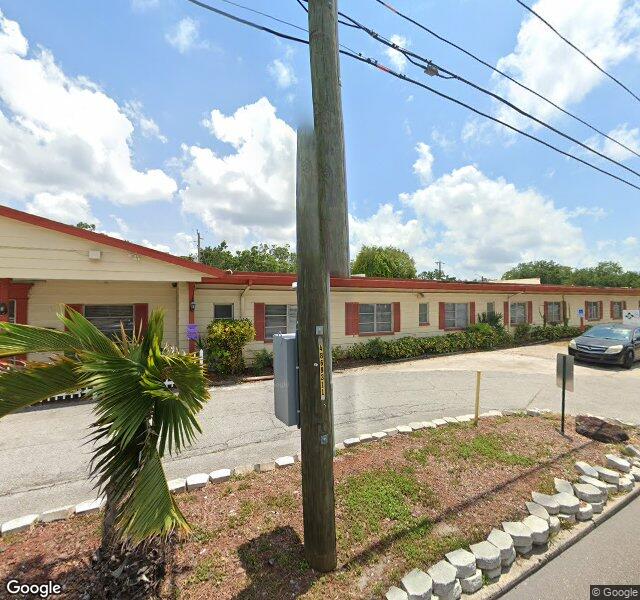
SOUTH HERITAGE HEALTH & REHABILITATION CENTER

718 LAKEVIEW AVE S, SAINT PETERSBURG, FL 33705 (727) 894-5125
Non profit - Corporation 74 Beds SENIOR HEALTH SOUTH Data: November 2025
Trust Grade
5/100
#674 of 690 in FL
Last Inspection: February 2025

Within standard 12-15 month inspection cycle. Federal law requires annual inspections.

Overview

South Heritage Health & Rehabilitation Center has received a Trust Grade of F, indicating significant concerns about the quality of care provided. Ranked #674 out of 690 facilities in Florida places it in the bottom half, and #62 out of 64 in Pinellas County shows that only one local option is better. The facility's trend is worsening, with the number of issues increasing from 7 in 2023 to 17 in 2025. Staffing is average with a rating of 3 out of 5 stars and a turnover rate of 51%, which is concerning. They have incurred $90,405 in fines, higher than 91% of Florida facilities, which suggests ongoing compliance problems. While the facility provides average RN coverage, there are serious concerns as indicated by findings of neglect, including a resident who sustained a hip fracture after an unwitnessed fall and another resident who did not receive proper transfer assistance according to their care plan. Overall, while there are some strengths, such as average staffing ratings, the numerous significant issues highlight serious weaknesses that families should consider carefully.

Trust Score
F
5/100
In Florida
#674/690
Bottom 3%
Safety Record
High Risk
Review needed
Inspections
Getting Worse
7 → 17 violations
Staff Stability
⚠ Watch
51% turnover. Above average. Higher turnover means staff may not know residents' routines.
Penalties
✓ Good
$90,405 in fines. Lower than most Florida facilities. Relatively clean record.
Skilled Nurses
○ Average
Each resident gets 31 minutes of Registered Nurse (RN) attention daily — about average for Florida. RNs are the most trained staff who monitor for health changes.
Violations
⚠ Watch
25 deficiencies on record. Higher than average. Multiple issues found across inspections.
★☆☆☆☆
1.0
Overall Rating
★★★☆☆
3.0
Staff Levels
★★★★☆
4.0
Care Quality
★☆☆☆☆
1.0
Inspection Score
Stable
2023: 7 issues
2025: 17 issues

The Good

  • 4-Star Quality Measures · Strong clinical quality outcomes
  • Full Sprinkler Coverage · Fire safety systems throughout facility
  • No fines on record

Facility shows strength in quality measures, fire safety.

The Bad

1-Star Overall Rating

Below Florida average (3.2)

Significant quality concerns identified by CMS

Staff Turnover: 51%

Near Florida avg (46%)

Higher turnover may affect care consistency

Federal Fines: $90,405

Well above median ($33,413)

Moderate penalties - review what triggered them

Chain: SENIOR HEALTH SOUTH

Part of a multi-facility chain

Ask about local staffing decisions and management

The Ugly 25 deficiencies on record

2 actual harm
Sept 2025 1 deficiency 1 Harm
SERIOUS (G) 📢 Someone Reported This

A family member, employee, or ombudsman was alarmed enough to file a formal complaint

Actual Harm - a resident was hurt due to facility failures

Free from Abuse/Neglect (Tag F0600)

A resident was harmed · This affected 1 resident

**NOTE- TERMS IN BRACKETS HAVE BEEN EDITED TO PROTECT CONFIDENTIALITY** Based on interview and record review, the facility failed to protect the resident's right to be free from neglect for one reside...

Read full inspector narrative →
**NOTE- TERMS IN BRACKETS HAVE BEEN EDITED TO PROTECT CONFIDENTIALITY** Based on interview and record review, the facility failed to protect the resident's right to be free from neglect for one resident (#1) out of seven sampled residents. Resident #1 sustained an unwitnessed fall on 08/21/25 and was not assessed after the fall. Resident #1 complained of hip pain on 08/23/25, an X-ray was obtained on 08/24/25 and Resident #1 was transferred to a higher level of care due to a right hip fracture on 08/24/25 and required surgical intervention.Findings included: An interview was conducted with Resident #2 on 09/02/2025 at 10:08a.m. Resident #2 was the roommate of Resident #1 and recalled the events of 08/21/2025 when Resident #1 had a fall. She stated the night of her roommate's fall; she was starting to fall asleep when she heard a loud sound and heard her roommate grunting ouch. Resident #2 said she remembered seeing her roommate in her wheelchair near the door shortly before the fall, but she was unsure as to what she was doing when the actual fall occurred. After she heard her roommate grunting ouch she immediately pushed her call light to get help and began yelling out for help. Resident #2 said it took ten minutes for staff to respond. Resident #2 stated she heard someone come into the room and then call for a second person to assist. She assumed the facility was following their protocol and taking care of the roommate until two days later when other staff members asked her if Resident #1 had fallen. Resident #2 said after the fall she had mentioned to staff, more than once, that her roommate seemed to be in pain and then she later found out she had broken her hip.An interview was attempted with Resident #1 on 09/02/25 at 9:25 AM, 1:30 PM, and 2:45 PM. Resident #1 was in bed with eyes closed for all three interview attempts.Review of Resident #1's admission Record revealed an admission date of 01/14/25 and readmitted on [DATE]. Resident #1's diagnoses included fracture of unspecified part of the neck of right femur with an onset date of 08/27/25. Other diagnoses included muscle weakness, reactive arthropathies, unspecified site., dementia without behavioral disturbances, osteoarthritis, anxiety disorder, arthritis, abnormalities of gait and mobility, lack of coordination, and metabolic encephalopathy. Review of Resident #1's Minimum Data Set (MDS), dated [DATE], Section C Cognitive Patterns, revealed a Brief Interview for Mental Status (BIMS) score of 11 out of 15 indicating moderate cognitive impairment. Review of Resident #1's medical record did not reveal any documentation or assessments related to a fall on 08/21/25.Review of Resident #1's progress notes revealed the following:On 08/23/25 at 10:10 AM a late entry note revealed, Resident's [family] was called at 10:07AM. I informed [family] that [Resident #1's] hip was broken and asked him what hospital he wanted her sent out to, .said [Hospital].On 08/23/25 at 5:00 PM revealed The Change In Condition/s reported on this CIC [change in condition] are/were: Falls.On 08/23/25 at 5:12 PM revealed Resident has a fall in room according to roommate. Resident is c/o [complaint of] Right hip/pelvis pain when leg is moved. MD [Medical Doctor] called and X-Ray ordered.On 08/23/25 at 5:20 PM a late entry note revealed Resident's [family] was called also and made aware that X-ray was being done due to possible fall with injuries. Pain medication was given Tylenol 500mg [milligrams] two tabs for pain with effective results. Resident stopped crying out and was lying in bed quietly.On 08/24/25 at 10:17 AM revealed Resident is being sent out to [Hospital] due to fracture of right hip.On 8/27/25 at 7:15 PM revealed patient returned from hospital via stretcher accompanied by EMS [Emergency medical Service] team.On 8/28/25 at 3:38 AM revealed, Resident status post right hip hemiarthroplasty with multiple sutures on right hip clean dry dressing intact. Abdominal binder in place due to replacement of peg tube that was dislodged while in hospital. Resident in bed at this time wither periods of moaning. PRN [as needed] medication administered for pain. Will continue to monitor.A review of Resident #1's hospital records revealed the following Assessment/Plan: Patient presented to hospital initially after sustaining a hip fracture after ground-level fall, underwent repair on 8/25/2025. Indication for surgery: Right displaced femoral neck fracture. Scheduled Procedure: 8/25/25 12:30 PM right hip hemiarthroplasty.Fortunately her PEG tube has become dislodged.will plan for EGD [esophagogastroduodenoscopy] with PEG [percutaneous endoscopic gastrostomy] insertion today, 8/26/2025.Risks, benefits and alternatives of endoscopic procedure discussed.including but not limited to infection, bleeding, perforation and need for surgery or repeat procedures or blood transfusion or hospitalization. Other risks include complications related to sedation. Death is a rare event.An interview was conducted on 09/02/2025 at 1:20 PM with the Nursing Home Administrator (NHA), Director of Nursing (DON), and the Risk Manager. The NHA stated around 11:20 p.m. on Sunday 08/23/2025 she received a phone call notifying her that Resident #1 had fallen a few days prior and had been experiencing pain. Orders for an x-ray had been put in and the next morning the x-ray showed the resident to have a hip fracture. The NHA stated at that point they immediately began an investigation, filed an injury of unknown origin report was filed. Their investigation revealed the resident did have a fall, but the nurse who was assigned to Resident #1, Staff F, Registered Nurse (RN), put the resident back in bed with the assistance of the Certified Nursing Assistant (CNA), but never completed the post-fall assessment as was required by the facilities protocol. No documentation about the fall was made and the nurse did not notify anyone after the fall. The Risk Manager stated all fall precautions were in place prior to the resident falling, however they recognized room for improvement on what happened after the fall. The NHA stated Resident #1 went to the hospital, had hip surgery, came back to the facility and had been kept comfortable with pain medication.An interview was conducted with the DON on 09/02/2025 at 2:35 PM. The DON stated her expectation for the staff after finding a resident on the floor after an unwitnessed fall would be a full post-fall assessment be performed with neuro checks and range of motion to the extremities before ever moving that resident back into bed. The DON said if Resident #1 was complaining of any pain or if there was any suspected injury they should have immediately called 911 and not moved the resident at all. The DON said in the instance of Resident #1's fall on 08/21/25, the DON should have been notified as well as the NHA, the doctor, and family or responsible party. The DON said she knew the ball was definitely dropped in Resident #1's situation and unfortunately, they had to let go of three nurses because of it. An attempt was made on 09/02/25 to interview Resident #1's physician as well as Staff F, RN via phone. Neither the Physician nor Staff F, RN, returned the call. Review of the facility's Fall and Injury Reduction Policy, with an effective date of March 2023 revealed: The facility has designated and implemented processes, which strive to reduce the risk for falls and injuries.This policy guides the identification, implementation of appropriate interventions, and management. It is expected that this policy will assist the facility with reducing the likelihood of a fall or injury while maintaining or maximizing dignity and independence through education of staff and residents, early identification of risk factors by collecting data, identifying resident behavior which may increase the likelihood of such occurrence.Guidelines.Status Post witnessed/unwitnessed Fall or observed on floor eventNurse will evaluate the resident for signs/symptoms of injury.Do no[sic] move the resident from the floor until a nurse has evaluated.If no signs/symptoms of injury assist resident from floor using a Mechanical lift unless resident is can actively assist in getting off the floor.Notification of Resident/patient Change in ConditionNurses will notify the resident/residents representative., if there is a crucial/significant change in the resident condition. If the change in the resident's condition is not crucial or significant, the resident's Physician, resident representative or legal representative will be notified at the earliest convenient time during regular business hours.Procedure1. Notify the Physician resident/resident representative, and case management when indicated, if there is a significant change in condition, regardless of the time of day.a. If the nurse responsible for the care of the resident is remaining with the resident and is unable to place the telephone calls, another nurse will place the calls.2. Document the Nurses' Notes, the time notification was made and the names of the person(s) to whom you spoke.Serious Injury1. If there are signs/symptoms of serious injury,Signs/symptoms of a serious injury, may include, but not limited to:a. fracture/broken/displaced bone,b. head injury identified by change in mental status, change in neuro checks such as one pupil larger than the other, experience weakness, numbness, decreased coordination, convulsions, or seizure, have slurred speech or unusual behavior have a headache that gets worse and does not go away or vomit repeatedly.c. Skin or tissue injury with blood loss greater than that of a skin tear or minor injury, etc.Provide first aide if needed.2. Ask the resident and/or witnesses what happened.3. Obtain vital signs and document in the medical record.4. Start neurological checks.5. Notify Supervisor6. Notify physician with evaluation and request further instruction.7. Notify the resident representative of the fall, new intervention, and/or care given, or location transferred.8. Update the care plan with new intervention, communicate to the care staff to the oncoming nurses and C.N. A's during shift-to-shift report.9. Verify the newly determined interventions have been implemented10. Educate resident/resident representative/ family, as appropriate.11. Document the event in the medical record. Review of the facility's Clinical Guidelines Manual, with an effective date of October 2021 revealed, Notification of Resident/Patient Change in ConditionPolicyNurses will notify the resident/resident representative, if there is a crucial/significant change in the resident condition. If the change in the resident's condition is not crucial or significant, the resident's Physician, resident representative or legal representative will be notified at the earliest convenient time during regular business hours.Procedure1. Notify the Physician resident/resident representative, and case management when indicated, if there is a significant change in condition, regardless of the time of day.a. If the nurse responsible for the care of the resident is remaining with the resident and is unable to place the telephone calls, another nurse will place the calls.2. Document the Nurses' Notes, the time notification was made and the names of the person(s) to whom you spoke.
Apr 2025 5 deficiencies 1 Harm
SERIOUS (G) 📢 Someone Reported This

A family member, employee, or ombudsman was alarmed enough to file a formal complaint

Actual Harm - a resident was hurt due to facility failures

Free from Abuse/Neglect (Tag F0600)

A resident was harmed · This affected 1 resident

**NOTE- TERMS IN BRACKETS HAVE BEEN EDITED TO PROTECT CONFIDENTIALITY** Based on observations, record reviews, and interviews, the facility failed to protect the resident's right to be free from negle...

Read full inspector narrative →
**NOTE- TERMS IN BRACKETS HAVE BEEN EDITED TO PROTECT CONFIDENTIALITY** Based on observations, record reviews, and interviews, the facility failed to protect the resident's right to be free from neglect by not ensuring one resident (#1) of three sampled residents, was provided transfer assistance in accordance with the resident's ability, care plan, facility policy, and/or the mechanical lifts manufacturer's recommendation, resulting in harm to Resident #1. Findings included: Review of Resident #1's medical record revealed Resident #1 was admitted to the facility on [DATE]. The electronic medical record included diagnoses not limited to hemiplegia and hemiparesis following cerebral infarction affecting left non-dominant side, subsequent encounter for closed fracture with routine healing (created 3/1/23), and displaced transverse fracture of shaft of left femur subsequent encounter for closed fracture with routine healing (created 3/28/25). Review of Resident #1's quarterly Minimum Data Set (MDS) assessment dated [DATE] revealed the resident's Brief Interview of Mental Status (BIMS) score was 15/15, indicating an intact cognition. The resident had Range of Motion (ROM) impairment on one upper extremity and bilateral lower extremities. The resident utilized a wheelchair for mobility, requiring substantial/maximum assistance for bed mobility, and was dependent upon staff for sitting to lying, lying to sitting, and for bed-to-chair transferring. The resident did not ambulate and the sit-to-stand ability was not applicable. The comprehensive assessment revealed the resident had frequent pain requiring scheduled and as needed pain medication. The resident was shown to have had a fall in the last month prior to admission/entry or reentry, no falls in the last 2-6 months, and had a fracture related to a fall in the 6 months prior to admission/entry or reentry. Review of Resident #1's care plan showed the resident had an Activities of Daily Living self-care performance deficit due to a cerebrovascular accident (CVA), weakness, unsteady gait, impaired mobility, decreased strength, recent fracture, and reduced mobility. The included interventions showed the resident was a total mechanical lift to chair of 2 assist with a large sling size (revised on 3/27/25). The history of the original care plan, created 6/7/23, showed the resident was a mechanical lift to chair of 2 without specifying a sling size, on 6/3/24 the resident was a mechanical lift to chair with 2 assist, revised on 2/12/25 to dependent, without mention of type of transfer to be utilized. Review of the facility Incident Log revealed Resident #1 had a fall incident on 3/23/25. A Change in Condition Evaluation, effective 3/23/25 at 7:40 p.m., revealed the resident had a fall and complained of left leg pain. The pain was chronic, intermittent, and needed either an x-ray or ultrasound for evaluation. The physician recommended the resident be sent to hospital for further evaluation and treatment. Review of the Situation, Background, Appearance, and Review and Notify, dated 3/23/25, revealed Resident #1 had a fall with worsening of chronic pain in the front left thigh and front left knee and rated the intensity of pain 7 of 10. The summary of staff observation and evaluation revealed the resident was complaining of left leg pain, pain condition was chronic, it was intermittent, and a need for x-ray or ultrasound for evaluation. The primary care clinician recommended at 7:30 p.m. to send patient to hospital for further evaluation and treatment. Review of a Progress Note, effective 3/23/25 at 8:18 p.m., revealed Resident #1 complained of left leg pain after sliding from the chair to the floor. The nurse did not find any neurological abnormalities other than pain and after 30 minutes the resident continued to have a 9 out of 10 rating of pain and around 8:15 p.m. the resident was sent to hospital for evaluation. Review of the acute care facility's physician attestation signed on 3/24/25 at 5:51 a.m., date of service on 3/23/25 at 10:23 p.m., revealed a trauma consultation for Resident #1 with a significant past medical history of hypertension, cerebrovascular accident (CVA) with left-sided deficits who presented with left-sided leg pain after falling off of her lift and onto her knees. The note revealed the resident did not walk at baseline and was unable to inform the physician on how long it had been since last walked. The workup in the Emergency Department (ED) included x-rays of the left ankle, femur, knee, and tibia/fibula with hip and pelvis x-rays. The results showed an acute fracture of the mid to distal femoral shaft with intra-articular extension to the knee joint with a large knee effusion. The resident was stable enough to be admitted to the trauma surgery floor and placed in 15-pound traction to the left lower extremity. The trauma consults History & Physical, dated 3/23/25 at 10:23 p.m. showed the resident presented status post (s/p) fall from mechanical lift, complaining of left leg pain with obvious deformity. The patient reported having not walked in several years since having a stroke. Review of an acute care facility's Orthopedic Surgery Daily Progress Note dated 3/25/25 at 8:28 a.m. revealed Resident #1 was seen and examined at bedside. The note showed the orthopedic injury was a left closed femoral shaft fracture with a left femur retrograde intramedullary nailing on 3/24/25. The assessment showed the surgical dressing was to stay on operative sites until postoperative day 7 and the resident was essentially bedbound at baseline, was non-ambulatory, and utilized a mechanical lift for transfers at baseline Review of the acute care facility's Geriatric consult on 3/26/25 at 9:10 a.m. noted the resident was seen status post (s/p) fall from mechanical lift when getting out of wheelchair with left femur fracture and extension into the knee joint and possible posterior left calcaneous fracture. Review of Resident #1s Psychiatric Periodic Evaluation note dated 4/2/25 showed Social Services reported the resident recently had a fall which resulted in a hospitalization. The resident was found lying in bed watching television and when asked about the recent fall the resident informed the provider of being dropped from the mechanical lift while she was being transferred from her bed to her wheelchair. She reported that she broke her left femur and had to have surgery. The resident reported having a lot of pain since the fall and believed current pain medication was effective. The resident voiced frustration about her recent fall and broken femur but said she was happy to know the aide who dropped her was fired, voiced confidence with other staff, and denied anxiety or fear of having to use mechanical lift. An interview was conducted with Resident #1 on 4/23/25 at 10:40 a.m. The resident voiced her leg was hurting and began rubbing top of her left leg. The resident reported recently having surgery on left leg due to the girl decided to pivot her from the bed to wheelchair, then dropped her. The resident reported staff did not use the mechanical lift. The resident reported having rod in her leg. Resident #1 stated, I swear she didn't [use the mechanical lift]. If she had, I wouldn't be sitting in pain. The resident reported the CNA always used the mechanical lift with two people prior to the event. The resident stated the CNA picked her up to put her in the chair and dropped her. The resident stated to the staff, oh my leg, oh my leg, and informed the staff member of having to go to the hospital, before the nurse and CNA picked her up floor. After the staff members left, the resident reported propelling herself to the nursing station and informed the nurse of needing to go to the hospital. A telephone interview was conducted on 4/23/25 at 1:39 p.m. with the facility's Risk Manager Consultant (RMC). The RMC reported at the time of Resident #1s fall with resulting injury on 3/23/25, the previous Director of Nursing, Staff C, Registered Nurse (RN) was the Risk Manager. The RMC reported receiving a call on Tuesday 3/25/25 notifying her of a fall with fracture occurring over the weekend. Staff C, RN was asked where the investigation was and shared with RMC the statements gathered included the resident was transferred to her wheelchair and fell out of the chair after the Staff B, CNA was making the resident's bed. The RMC stated out of precaution, Staff C, RN was informed to do more additional investigation. The RMC stated Staff B, CNA completed a reenactment with Staff C, RN how the resident was transferred and exactly when the resident fell. Staff B, CNA confirmed during the reenactment of transferring the resident by herself. Staff B, CNA said after the resident transfer, Resident #1 slipped out of the chair and fell. The CNA was suspended for not following facility protocol for a 2-person mechanical lift transfer. The RMC directed someone from the facility to speak with the resident. The admission Director spoke to Resident #1 and reported the resident confirmed Staff B, CNA did everything right and the resident slipped from chair, not the lift. The facility received Resident #1's hospital records, which revealed the resident fell from the mechanical lift, at which time an immediate reporting was initiated. The resident informed the RMC, during a hospital interview she was almost to the chair and had fallen from the lift sling and confirmed Staff B, CNA, was the only aide present. The nurse, Staff A, RN, was interviewed and confirmed the lift was in the room, but did not see the transfer. An interview was conducted on 4/23/25 at 2:44 p.m. with Staff A, RN. The staff member confirmed being the nurse assigned to Resident #1 on the evening of 3/23/25 and was at the nursing station. Staff A, RN reported Staff B, CNA tried to pull the resident up with the mechanical lift. The CNA informed Staff A, RN of the fall and Staff A, RN observed the resident on the floor next to the bed and the mechanical lift was present. Resident #1 told Staff A, RN, It's not her fault and she slid and fell. Staff A, RN confirmed the resident, after returning from hospital, lied and was trying to protect Staff B, CNA. Staff A, RN stated he heard the mechanical lift may have messed up and the resident fell from the lift. The staff member re-enacted the positioning of the resident and confirmed the resident was sitting on crossed ankles, however, when describing the position, he said the right leg was bent in front of the resident and the left leg was bent back. Staff A, RN, said when the resident was on the floor, he and Staff B, CNA lifted the resident up off floor without the use of a mechanical lift. Staff B, CNA informed Staff A, RN the resident slid from the wheelchair and he informed the primary doctor and Director of Nursing (DON) of the fall, telling the DON the resident said she slid from the wheelchair and did not want to blame the CNA. Staff A, RN confirmed Staff B, CNA did not ask for assistance with the mechanical lift prior to the incident. An interview was conducted on 4/23/25 at 4:24 p.m. with the Nursing Home Administrator (NHA) and the Regional Nurse Consultant (RNC). The NHA reported not being at the facility for Resident #1's fall with injury. The NHA stated Staff B, CNA was supposed to have another person to assist with the transfer of Resident #1 but did the transfer by herself. The resident fell, the resident heard a pop, the nurse assessed the resident, and the resident went to the hospital. The incident happened on 3/23/25 at 7:00 p.m. and on 3/24/25 the facility was notified the resident suffered a fracture, however, the resident expressed falling out of the wheelchair. On 3/26/25, through the facility Quality Assurance Assessment and Compliance review of the fall to include review of hospital records, it was determined Resident #1 fell from the mechanical lift onto her knees. The NHA stated the resident said something different in the hospital when interviewed by staff. On 3/25/25, a return demonstration of the incident was completed by Staff B, CNA for Staff C, RN, who was the previous Director of Nursing (DON). The re-enactment showed Staff B, CNA did not transfer the resident with a second person. The review of the facility's investigation revealed the following staff member statements: - 3/27/25 unknown time: Resident #1 reported I was going from chair to bed, I was almost in bed, when I slipped out of [mechanical lift] sling She said the CNA thought she was playing as they goof around. Nurse came in and helped pick her up. Per the statement, she picked me up then nurse came and picked me up. The statement was written by the Risk Management Consultant (RMC) - 3/23/25: Staff B, CNA wrote two statements, reporting the staff member was putting Resident #1 in chair with mechanical lift and the resident did not have footrests, so they slowly slid out of the wheelchair. - 3/23/25: Staff A, RN reported Staff B, CNA called out to him and witnessed Resident #1 next to her wheelchair. Resident #1 described to him that while the CNA was transferring, the resident slipped from the chair. Staff A, RN assessed the resident's pain, her injury, and received orders to send the resident to the hospital. - 3/26/25: A second interview of Staff A, RN conducted by RMC. The staff member confirmed the mechanical lift was in the resident's room on 3/23/25. Staff A, RN informed the RMC Resident #1 reported slipping from the wheelchair and it was not the CNA's fault. No one else was in the room, the mechanical lift was next to the bed, the wheelchair was next to bed, and the bed was in the lowest position. Staff B, CNA reported transferring the resident to the wheelchair and the resident slid out of the chair. The staff member reported he and Staff B, CNA put the resident in bed, put pain cream on her leg, and the resident stated she thought something popped. Staff A, RN and Staff B, CNA physically lifted the resident to bed after the assessment. The staff member reported the resident was wearing long silky pants and t-shirt and the resident resisted pulling up her pant leg because it hurt. During an interview on 4/23/25 at 12:10 p.m., the DON stated she was told Resident #1 slid out of the mechanical lift and both the resident and CNA informed the facility investigator of being transferred with one-person. During an interview on 4/23/25 at 12:19 p.m., Staff E, Registered Nurse/Unit Manager (RN/UM) reported not being at the facility on 3/23/25 but returned on 3/24/25. She stated based on many different stories, the CNA transferred Resident #1 and the resident ended up getting injured. The staff member reported the resident required a mechanical lift prior to the incident. Staff E, RN/UM stated everybody gets education regarding transferring during orientation and the CNA documentation system, which every CNA has access to, allowed staff to know how to transfer a resident. During an interview on 4/23/25 at 5:02 p.m., the Nursing Home Administrator (NHA) stated Staff A, RN and Staff B, CNA should have used a mechanical lift to get Resident #1 off the floor following the resident's fall. During an interview on 4/23/25 at 5:13 p.m., the Registered Nurse Consultant (RNC) confirmed Staff B, CNA was suspended on 3/25/25 after it was identified there was not a second person assisting with the transfer of Resident #1. An interview was conducted on 4/24/25 at 9:44 a.m. with Staff G, Physical Therapist (PT). The staff member stated Resident #1 was receiving both physical and occupational therapy. The resident used to be able to transfer years ago but declined due to motivation and wanting to use the mechanical lift. Staff G, PT reported Resident #1has been totally dependent on transfers for over a year and had a stroke on the left side and developed a contracture in the leg. Staff G, PT stated since Resident #1's injury from her fall, She's in so much pain, she can't stretch [her leg] like she used to. The resident was scheduled for 8 weeks of therapy but, most likely will extend care because of more that needs to be done. Review of the facility policy titled Abuse Prevention Program, last changed November 2024, revealed under Policy, the facility has designated implemented processes, which strive to reduce the risk of abuse, neglect, exploitation, mistreatment, and misappropriation of resident's property. These policies guide the identification, management, and reporting of suspected, or alleged, abuse, neglect, mistreatment, and exploitation. It is expected that these policies will assist the facility with reducing the risk of abuse, neglect, expectation, and misappropriation of residence property through education of staff and residents, as well as earlier identification of staff burnout, or resident behavior which may increase the likelihood of such events. The policy defined neglect as Failure of the facility, its employees or service providers to provide goods and services to a resident that are necessary to avoid physical harm, pain, mental anguish or emotional distress. Review of the policy titled Safe Operation of Resident Lifts Policy and Procedure, effective March 2022, revealed Facility is a low-lift environment. Use of Mechanical Lifts occur per the resident's care plan and otherwise indicated. . 1. Operation of mechanical lift: a. Refer to manufacturer lift manual. . 3. Training on use of mechanical lift a. Staff will be trained at orientation and annually with the competency and skills check off on the proper use of mechanical lifts. Review of the manufacturer manual for the mechanical lift revealed BEFORE using this product, this manual MUST be read and saved for future reference. The procedures in this manual MUST be performed by a qualified technician. The manual showed: . 7. Patient Lifting: - 7.1 Preparing the Lift for Use. -- Although [Brand Name] recommends that two assistants be used for all lifting preparation, transferring from and transferring to procedures, our equipment will permit proper operation by one assistant. The use of one assistant is based on the evaluation of the healthcare professional for each individual case. Review of the policy titled Fall and Injury Reduction Policy, effective March 2023, revealed under Policy, the facility has designated and implemented processes, which drive to reduce the risk for falls and injuries. This policy guides the identification, implementation of appropriate interventions and management. It is expected that this policy will assist the facility with reducing the likelihood of a fall or injury while maintaining or maximizing dignity and independence through education of staff and residents, early identification of risk factors by collecting data, identifying resident behavior which may increase the likelihood of such an occurrence. The policy revealed the following Guidelines: . Status Post witnessed/unwitnessed Fall or observed on floor event. 1. Nurse will evaluate the resident for signs/ symptoms of injury. 2. Do not move the resident from the floor until a nurse has evaluated. 3. If no signs/ symptoms of injury assist resident from floor using a Mechanical lift unless resident is can actively assist in getting off the floor.
CONCERN (D) 📢 Someone Reported This

A family member, employee, or ombudsman was alarmed enough to file a formal complaint

Potential for Harm - no one hurt, but risky conditions existed

Notification of Changes (Tag F0580)

Could have caused harm · This affected 1 resident

Based on record review and interviews, the facility did not ensure the designated representative/emergency contact was notified regarding a change in condition, related to an accident resulting in hos...

Read full inspector narrative →
Based on record review and interviews, the facility did not ensure the designated representative/emergency contact was notified regarding a change in condition, related to an accident resulting in hospitalization, for one resident (#1) of three residents sampled. Findings included: A review of Resident #1's admission Record revealed an original admission date of 3/1/23 and a re-admission date of 3/28/25. Review of the admission Record revealed diagnoses to include displaced transverse fracture of shaft of left femur, subsequent encounter for closed fracture with routine healing, hemiplegia and hemiparesis following cerebral infarction affecting left non-dominant side, other lack of coordination, weakness, unsteadiness on feet, need for assistance with personal care, contracture, left knee, unspecified fracture of left lower leg, and subsequent encounter for closed fracture with routine healing. A review of Resident #1's admission Record revealed her family member (EC) is the emergency contact/recipient for verbal patient health information (PHI). A review of Resident #1's skilled nursing facility (SNF)/nursing facility (NF) to hospital transfer form, dated 3/23/25, revealed the resident is documented as the resident representative and was notified of the transfer/aware of clinical situation. Further review of the form revealed no documentation of a family member being notified of the transfer to the hospital. A review of Resident #1's Situation-Background-Assessment-Recommendation (SBAR) Communication Form dated 3/23/25 and completed by Staff A, Registered Nurse (RN), did not reveal documentation under name of family/health care agent notified. A review of Resident #1's Progress Notes dated 3/23/25 at 8:18 p.m. revealed the resident was discharge to the hospital after she sustained a fall and was complaining of pain. The Progress Notes did not reveal documentation the family member/emergency contact was notified or contacted related to the resident's change in condition. On 4/23/25 at 10:40 a.m., an interview with Resident #1 and her family member revealed the family member did not find out, until a week later, Resident #1 was in the hospital. The family member stated, no one knew. He said he called the facility the day she was in the hospital and was told she was at a doctor's appointment. The family member said he called the facility again to see if Resident #1 was back from the doctor's appointment, and was told they didn't know where she was and someone signed her out. On 4/23/25 at 2:44 p.m., an interview was conducted with Staff A, RN. He said he was assigned to Resident #1 the day she fell and went to the hospital on 3/23/25. He confirmed he communicated with the Director of Nursing (DON) immediately about the change in condition and also notified the physician who gave orders to discharge the resident to the hospital. On 4/24/25 at 2:29 p.m., a phone interview was conducted with Resident #1's family member, who is her emergency contact (EC). She stated, I was made aware of the fall later. She said Resident #1 called her to tell her she was in the hospital, but the facility did not call her. She said Resident #1 called her on 3/24/25, while she was in the hospital, and told her she had fallen. The EC said the facility normally called her when there was an issue, but this time they did not. She stated, I'm supposed to be her first call when she goes to the hospital or if she has an emergency. She said when she initially talked to Resident #1, she didn't specify which hospital because, She was out of it. The EC stated, I had to call around and find out which hospital. The EC said she called another resident at the facility to find out where Resident #1 was. She confirmed she called the facility and was told Resident #1 was at [Hospital name], but she wasn't there. She found out Resident #1 was at another hospital. On 4/25/25 at 11:39 a.m., an interview was conducted with the Director of Nursing (DON). She said staff are supposed to call the family when there is a change in condition and complete a risk event note, where they are supposed to call the family, and doctor, and document. The DON said risk events are reviewed the next morning at the clinical meeting. They review the event note to see if the family was notified. She stated, They should be documenting in the medical record about that notification. A review of Resident #1's risk event note was conducted with the DON on her computer. She said usually under action is where staff is supposed to document the family notification. She confirmed she did not see notification to the family when Resident #1 went to the hospital. A review of the facility's policy titled Notification of Resident/Patient Change in Condition, effective October 2021, revealed the following under Policy: Nurses will notify the resident/resident representative, if there is a crucial/significant change in the resident condition. The policy revealed under Procedure: 1. Notify the Physician resident/resident representative, and case management when indicated, if there is a significant change in condition, regardless of the time of day. 2. Document the Nurses' Notes, the time notification was made and the names of the person(s) to whom you spoke.
CONCERN (D) 📢 Someone Reported This

A family member, employee, or ombudsman was alarmed enough to file a formal complaint

Potential for Harm - no one hurt, but risky conditions existed

Pharmacy Services (Tag F0755)

Could have caused harm · This affected 1 resident

Based on observations, record reviews, and interviews, the facility failed to maintain an accurate accounting of narcotic medication for one resident (#1) of one resident sampled for the administratio...

Read full inspector narrative →
Based on observations, record reviews, and interviews, the facility failed to maintain an accurate accounting of narcotic medication for one resident (#1) of one resident sampled for the administration of pain medication. Findings included: On 4/23/25 at 10:40 a.m. Resident #1 was observed sitting in the Dining Room with a family member. The resident reported her legs and hands were hurting while rubbing the top of left leg and the oxy was not working. The resident reported a recent surgery to the left leg due to a staff member pivoting her to transfer. Review of Resident #1s quarterly Minimum Data Set (MDS) assessment, dated1/8/25, revealed a Brief Interview of Mental Status score of 15 of 15, indicating the resident was cognitively intact. The assessment revealed Resident #1 was dependent upon staff for sit to lying, lying to sit, and bed to chair transferring. The assessment showed the resident received scheduled and as needed pain medication for occasional pain. Review of Resident #1s April Medication Administration Record (MAR) revealed the following orders: - Ordered 3/28/25: Oxycodone oral tablet 5 milligram (mg) - Give 1 tablet by mouth every 4 hours as needed for pain. Discontinued on 4/7/25. - Ordered 4/7/25: Oxycodone oral tablet 10 mg - Give 1 tablet by mouth every 4 hours as needed for pain. Review of Resident #1s Controlled Drug Declining Inventory Sheet for Oxycodone Immediate Release (IR) 5 mg tablets revealed 40 tablets were received on 4/1/25 and 24 tablets were to be disposed of on 4/7/25, showing the resident received 16 tablets between 4/1/25 and 4/7/25. A review of Resident #1s April MAR showed the resident received 12 doses of 5 mg Oxycodone. A comparison of the residents' MAR and inventory sheet revealed staff documented the resident received doses of oxycodone on 4/5/25 at 10:25 a.m., 2:30 p.m., and 7:00 p.m. and a dose on 4/6/25 at 10:00 a.m., which were not recorded on the MAR. Review of Resident #1s Controlled Drug Declining Inventory Sheet for Oxycodone 10 mg tablets revealed 42 tablets was received on 4/7/25 with one tablet remaining for disposal on 4/24/25, showing the resident received 41 doses of the medication. The resident's April MAR showed the resident received 32 doses of Oxycodone 10 mg, revealing a discrepancy of 9 doses. Review of the inventory sheet showed staff documented the resident received a dose on the following days and times, which were not recorded on the MAR: 4/8/25 at 8:00 p.m., 4/12/25 at 10:00 a.m., 4/14/25 at 8:32 a.m., 4/16/25 at 2:00 p.m., 4/17/25 at 9:30 a.m., 4/19/25 at 10:00 a.m. and 4:00 p.m., 4/20/25 at 4:08 p.m., and a third dose on 4/23/25 (unreadable time). The following doses recorded discrepancies in the times of administration when compared with MAR and inventory sheet: - 4/11/25 per MAR administered at 6:00 a.m., inventory sheet recorded time of 7:30 a.m. - 4/13/25 per MAR administered at 9:41 a.m., inventory sheet recorded time as 9:00 a.m. - 4/14/25 per MAR administered at 4:25 p.m., inventory sheet recorded time as 5:00 p.m. The inventory sheet revealed a disclosure reading: For every dose of a drug listed under the Controlled Substances Act, the information required below must be given in full. The information must be filled in at the time the drug is administered and not at some future date. Failure to do so is punishable under law by fine or imprisonment or both. Ink or indelible pencil must be used. An interview was conducted on 4/25/25 at 12:11 p.m. with the Director of Nursing (DON). The DON stated staff are to document in the electronic record and the inventory sheet when the medication was administered. She reviewed Resident #1s April MAR and the 5 mg and 10 mg Oxycodone inventory sheets and confirmed the discrepancies between the documentation on MAR and the inventory sheets. Review of the policy titled Medication Administration - Controlled Substances dated 11/17 revealed under Policy, Controlled Medications are substances that have an accepted medical use (medications which fall under U.S. Drug Enforcement Agency (DEA) Schedules II-V), have a potential for abuse, ranging from low to high, and may also lead to physical or psychological dependency. These medications are subject to special handling, storage, disposal, and record keeping at the nursing care center, in accordance with federal and state laws and regulations. The policy revealed under Procedures: . 2. The Director of Nursing and the Consultant Pharmacist establish a system of records of receipt and disposition of all controlled drugs in sufficient detail to enable an accurate reconciliation, and determine that drug records are in order and then an account of all controlled drugs that's maintained and periodically reconciled. . 4. When in controlled medication is administered, the licensed nurse administering the medication immediately enters the following information on the accountability record and removing dust from controlled storage: (Note: refer to state regulations for particulars regarding scheduled classes and proper storage.) a. Date and time of administration. b. Amount administered c. Signature of the nurse administering the dose 5. Administer the controlled medication and document dose administration on the MAR.
CONCERN (E) 📢 Someone Reported This

A family member, employee, or ombudsman was alarmed enough to file a formal complaint

Potential for Harm - no one hurt, but risky conditions existed

Deficiency F0726 (Tag F0726)

Could have caused harm · This affected multiple residents

**NOTE- TERMS IN BRACKETS HAVE BEEN EDITED TO PROTECT CONFIDENTIALITY** Based on observations, record reviews, and interviews the facility failed to provide nursing staff with the competencies and ski...

Read full inspector narrative →
**NOTE- TERMS IN BRACKETS HAVE BEEN EDITED TO PROTECT CONFIDENTIALITY** Based on observations, record reviews, and interviews the facility failed to provide nursing staff with the competencies and skills to provide appropriate nursing services to one resident (#1) of three sampled residents related to 1.) not providing a safe mechanical lift transfer which resulted in a severe bodily injury, 2.) not accurately documenting the administrations of controlled medications, and 3.) failed to notify the emergency contact of the resident requiring a transfer to an acute care facility following a fall. Findings included: 1. Review of the facility's reportable log showed an event involving Resident #1 occurred on 3/23/25. The event resulted in Fracture/Dislocation/transfer outside. Review of the Situation, Background, Appearance, and Review and Notify, dated 3/23/25, revealed Resident #1 had a fall with worsening of chronic pain in the front left thigh and front left knee and rated the intensity of pain 7 of 10. The summary of staff observation and evaluation revealed the resident was complaining of left leg pain, pain condition was chronic, it was intermittent, and a need for x-ray or ultrasound for evaluation. The primary care clinician recommended at 7:30 p.m. to send patient to hospital for further evaluation and treatment. Review of a Progress Note, effective 3/23/25 at 8:18 p.m., revealed Resident #1 complained of left leg pain after sliding from the chair to the floor. The nurse did not find any neurological abnormalities other than pain and after 30 minutes the resident continued to have a 9 out of 10 rating of pain and around 8:15 p.m. the resident was sent to hospital for evaluation. Review of the acute care facility's physician attestation signed on 3/24/25 at 5:51 a.m., date of service on 3/23/25 at 10:23 p.m., revealed a trauma consultation for Resident #1 with a significant past medical history of hypertension, cerebrovascular accident (CVA) with left-sided deficits who presented with left-sided leg pain after falling off of her lift and onto her knees. The note revealed the resident did not walk at baseline and was unable to inform the physician on how long it had been since last walked. The workup in the Emergency Department (ED) included x-rays of the left ankle, femur, knee, and tibia/fibula with hip and pelvis x-rays. The results showed an acute fracture of the mid to distal femoral shaft with intra-articular extension to the knee joint with a large knee effusion. The resident was stable enough to be admitted to the trauma surgery floor and placed in 15-pound traction to the left lower extremity. The trauma consults History & Physical, dated 3/23/25 at 10:23 p.m. showed the resident presented status post (s/p) fall from mechanical lift, complaining of left leg pain with obvious deformity. The patient reported having not walked in several years since having a stroke. Review of an acute care facility's Orthopedic Surgery Daily Progress Note dated 3/25/25 at 8:28 a.m. revealed Resident #1 was seen and examined at bedside. The note showed the orthopedic injury was a left closed femoral shaft fracture with a left femur retrograde intramedullary nailing on 3/24/25. The assessment showed the surgical dressing was to stay on operative sites until postoperative day 7 and the resident was essentially bedbound at baseline, was non-ambulatory, and utilized a mechanical lift for transfers at baseline. Review of Resident #1's medical record revealed Resident #1 was admitted to the facility on [DATE]. The electronic medical record included diagnoses not limited to hemiplegia and hemiparesis following cerebral infarction affecting left non-dominant side, subsequent encounter for closed fracture with routine healing (created 3/1/23), and displaced transverse fracture of shaft of left femur subsequent encounter for closed fracture with routine healing (created 3/28/25). Review of Resident #1's quarterly Minimum Data Set (MDS) assessment dated [DATE] revealed the resident's Brief Interview of Mental Status (BIMS) score was 15/15, indicating an intact cognition. The resident had Range of Motion (ROM) impairment on one upper extremity and bilateral lower extremities. The resident utilized a wheelchair for mobility, requiring substantial/maximum assistance for bed mobility, and was dependent upon staff for sitting to lying, lying to sitting, and for bed-to-chair transferring. The resident did not ambulate and the sit-to-stand ability was not applicable. The comprehensive assessment revealed the resident had frequent pain requiring scheduled and as needed pain medication. The resident was shown to have had a fall in the last month prior to admission/entry or reentry, no falls in the last 2-6 months, and had a fracture related to a fall in the 6 months prior to admission/entry or reentry. Review of Resident #1's care plan showed the resident had an Activities of Daily Living self-care performance deficit due to a cerebrovascular accident (CVA), weakness, unsteady gait, impaired mobility, decreased strength, recent fracture, and reduced mobility. The included interventions showed the resident was a total mechanical lift to chair of 2 assist with a large sling size (revised on 3/27/25). The history of the original care plan, created 6/7/23, showed the resident was a mechanical lift to chair of 2 without specifying a sling size, on 6/3/24 the resident was a mechanical lift to chair with 2 assist, revised on 2/12/25 to dependent, without mention of type of transfer to be utilized. An interview was conducted with Resident #1 on 4/23/25 at 10:40 a.m. The resident voiced her leg was hurting and began rubbing top of her left leg. The resident reported recently having surgery on left leg due to the girl decided to pivot her from the bed to wheelchair, then dropped her. The resident reported staff did not use the mechanical lift. The resident reported having rod in her leg. Resident #1 stated, I swear she didn't [use the mechanical lift]. If she had, I wouldn't be sitting in pain. The resident reported the CNA always used the mechanical lift with two people prior to the event. The resident stated the CNA picked her up to put her in the chair and dropped her. The resident stated to the staff, oh my leg, oh my leg, and informed the staff member of having to go to the hospital, before the nurse and CNA picked her up floor. After the staff members left, the resident reported propelling herself to the nursing station and informed the nurse of needing to go to the hospital. A telephone interview was conducted on 4/23/25 at 1:39 p.m. with the facility's Risk Manager Consultant (RMC). The RMC reported at the time of Resident #1s fall with resulting injury on 3/23/25, the previous Director of Nursing, Staff C, Registered Nurse (RN) was the Risk Manager. The RMC reported receiving a call on Tuesday 3/25/25 notifying her of a fall with fracture occurring over the weekend. Staff C, RN was asked where the investigation was and shared with RMC the statements gathered included the resident was transferred to her wheelchair and fell out of the chair after the Staff B, CNA was making the resident's bed. The RMC stated out of precaution, Staff C, RN was informed to do more additional investigation. The RMC stated Staff B, CNA completed a reenactment with Staff C, RN how the resident was transferred and exactly when the resident fell. Staff B, CNA confirmed during the reenactment of transferring the resident by herself. Staff B, CNA said after the resident transfer, Resident #1 slipped out of the chair and fell. The CNA was suspended for not following facility protocol for a 2-person mechanical lift transfer. The RMC directed someone from the facility to speak with the resident. The admission Director spoke to Resident #1 and reported the resident confirmed Staff B, CNA did everything right and the resident slipped from chair, not the lift. The facility received Resident #1's hospital records, which revealed the resident fell from the mechanical lift, at which time an immediate reporting was initiated. The resident informed the RMC, during a hospital interview she was almost to the chair and had fallen from the lift sling and confirmed Staff B, CNA, was the only aide present. The nurse, Staff A, RN, was interviewed and confirmed the lift was in the room, but did not see the transfer. An interview was conducted on 4/23/25 at 2:44 p.m. with Staff A, RN. The staff member confirmed being the nurse assigned to Resident #1 on the evening of 3/23/25 and was at the nursing station. Staff A, RN reported Staff B, CNA tried to pull the resident up with the mechanical lift. The CNA informed Staff A, RN of the fall and Staff A, RN observed the resident on the floor next to the bed and the mechanical lift was present. Resident #1 told Staff A, RN, It's not her fault and she slid and fell. Staff A, RN confirmed the resident, after returning from hospital, lied and was trying to protect Staff B, CNA. Staff A, RN stated he heard the mechanical lift may have messed up and the resident fell from the lift. The staff member re-enacted the positioning of the resident and confirmed the resident was sitting on crossed ankles, however, when describing the position, he said the right leg was bent in front of the resident and the left leg was bent back. Staff A, RN, said when the resident was on the floor, he and Staff B, CNA lifted the resident up off floor without the use of a mechanical lift. Staff B, CNA informed Staff A, RN the resident slid from the wheelchair and he informed the primary doctor and DON of the fall, telling the DON the resident said she slid from the wheelchair and did not want to blame the CNA. Staff A, RN confirmed Staff B, CNA did not ask for assistance with the mechanical lift prior to the incident. Review of the policy titled Fall and Injury Reduction Policy, effective March 2023, revealed under Policy, the facility has designated and implemented processes, which drive to reduce the risk for falls and injuries. This policy guides the identification, implementation of appropriate interventions and management. It is expected that this policy will assist the facility with reducing the likelihood of a fall or injury while maintaining or maximizing dignity and independence through education of staff and residents, early identification of risk factors by collecting data, identifying resident behavior which may increase the likelihood of such an occurrence. Review of the policy titled Safe Operation of Resident Lifts Policy and Procedure, effective March 2022, revealed Facility is a low-lift environment. Use of Mechanical Lifts occur per the resident's care plan and otherwise indicated. . 1. Operation of mechanical lift: a. Refer to manufacturer lift manual. . 3. Training on use of mechanical lift a. Staff will be trained at orientation and annually with the competency and skills check off on the proper use of mechanical lifts. Review of the manufacturer manual for the mechanical lift revealed BEFORE using this product, this manual MUST be read and saved for future reference. The procedures in this manual MUST be performed by a qualified technician. The manual showed: . 7. Patient Lifting: - 7.1 Preparing the Lift for Use. -- Although [Brand Name] recommends that two assistants be used for all lifting preparation, transferring from and transferring to procedures, our equipment will permit proper operation by one assistant. The use of one assistant is based on the evaluation of the healthcare professional for each individual case. 2. Review of Resident #1s April Medication Administration Record (MAR) revealed the following orders: - Ordered 3/28/25: Oxycodone oral tablet 5 milligram (mg) - Give 1 tablet by mouth every 4 hours as needed for pain. Discontinued on 4/7/25. - Ordered 4/7/25: Oxycodone oral tablet 10 mg - Give 1 tablet by mouth every 4 hours as needed for pain. Review of Resident #1s Controlled Drug Declining Inventory Sheet for Oxycodone Immediate Release (IR) 5 mg tablets revealed 40 tablets were received on 4/1/25 and 24 tablets were to be disposed of on 4/7/25, showing the resident received 16 tablets between 4/1/25 and 4/7/25. A review of Resident #1s April MAR showed the resident received 12 doses of 5 mg Oxycodone. A comparison of the residents' MAR and inventory sheet revealed staff documented the resident received doses of oxycodone on 4/5/25 at 10:25 a.m., 2:30 p.m., and 7:00 p.m. and a dose on 4/6/25 at 10:00 a.m., which were not recorded on the MAR. Review of Resident #1s Controlled Drug Declining Inventory Sheet for Oxycodone 10 mg tablets revealed 42 tablets was received on 4/7/25 with one tablet remaining for disposal on 4/24/25, showing the resident received 41 doses of the medication. The resident's April MAR showed the resident received 32 doses of Oxycodone 10 mg, revealing a discrepancy of 9 doses. Review of the inventory sheet showed staff documented the resident received a dose on the following days and times, which were not recorded on the MAR: 4/8/25 at 8:00 p.m., 4/12/25 at 10:00 a.m., 4/14/25 at 8:32 a.m., 4/16/25 at 2:00 p.m., 4/17/25 at 9:30 a.m., 4/19/25 at 10:00 a.m. and 4:00 p.m., 4/20/25 at 4:08 p.m., and a third dose on 4/23/25 (unreadable time). The following doses recorded discrepancies in the times of administration when compared with MAR and inventory sheet: - 4/11/25 per MAR administered at 6:00 a.m., inventory sheet recorded time of 7:30 a.m. - 4/13/25 per MAR administered at 9:41 a.m., inventory sheet recorded time as 9:00 a.m. - 4/14/25 per MAR administered at 4:25 p.m., inventory sheet recorded time as 5:00 p.m. The inventory sheet revealed a disclosure reading: For every dose of a drug listed under the Controlled Substances Act, the information required below must be given in full. The information must be filled in at the time the drug is administered and not at some future date. Failure to do so is punishable under law by fine or imprisonment or both. Ink or indelible pencil must be used. An interview was conducted on 4/25/25 at 12:11 p.m. with the Director of Nursing (DON). The DON stated staff are to document in the electronic record and the inventory sheet when the medication was administered. She reviewed Resident #1s April MAR and the 5 mg and 10 mg Oxycodone inventory sheets and confirmed the discrepancies between the documentation on MAR and the inventory sheets. Review of the policy titled Medication Administration - Controlled Substances dated 11/17 revealed under Policy, Controlled Medications are substances that have an accepted medical use (medications which fall under U.S. Drug Enforcement Agency (DEA) Schedules II-V), have a potential for abuse, ranging from low to high, and may also lead to physical or psychological dependency. These medications are subject to special handling, storage, disposal, and record keeping at the nursing care center, in accordance with federal and state laws and regulations. The policy revealed under Procedures: . 2. The Director of Nursing and the Consultant Pharmacist establish a system of records of receipt and disposition of all controlled drugs in sufficient detail to enable an accurate reconciliation, and determine that drug records are in order and then an account of all controlled drugs that's maintained and periodically reconciled. . 4. When in controlled medication is administered, the licensed nurse administering the medication immediately enters the following information on the accountability record and removing dust from controlled storage: (Note: refer to state regulations for particulars regarding scheduled classes and proper storage.) a. Date and time of administration. b. Amount administered c. Signature of the nurse administering the dose 5. Administer the controlled medication and document dose administration on the MAR. 3. A review of Resident #1's skilled nursing facility (SNF)/nursing facility (NF) to hospital transfer form, dated 3/23/25, revealed the resident is documented as the resident representative and was notified of the transfer/aware of clinical situation. Further review of the form revealed no documentation of a family member being notified of the transfer to the hospital. A review of Resident #1's Situation-Background-Assessment-Recommendation (SBAR) Communication Form dated 3/23/25 and completed by Staff A, Registered Nurse (RN), did not reveal documentation under name of family/health care agent notified. A review of Resident #1's Progress Notes dated 3/23/25 at 8:18 p.m. revealed the resident was discharge to the hospital after she sustained a fall and was complaining of pain. The Progress Notes did not reveal documentation the family member/emergency contact was notified or contacted related to the resident's change in condition. On 4/23/25 at 10:40 a.m., an interview with Resident #1 and her family member revealed the family member did not find out, until a week later, Resident #1 was in the hospital. The family member stated, no one knew. He said he called the facility the day she was in the hospital and was told she was at a doctor's appointment. The family member said he called the facility again to see if Resident #1 was back from the doctor's appointment, and was told they didn't know where she was and someone signed her out. On 4/23/25 at 2:44 p.m., an interview was conducted with Staff A, RN. He said he was assigned to Resident #1 the day she fell and went to the hospital on 3/23/25. He confirmed he communicated with the Director of Nursing (DON) immediately about the change in condition and also notified the physician who gave orders to discharge the resident to the hospital. On 4/24/25 at 2:29 p.m., a phone interview was conducted with Resident #1's family member, who is her emergency contact (EC). She stated, I was made aware of the fall later. She said Resident #1 called her to tell her she was in the hospital, but the facility did not call her. She said Resident #1 called her on 3/24/25, while she was in the hospital, and told her she had fallen. The EC said the facility normally called her when there was an issue, but this time they did not. She stated, I'm supposed to be her first call when she goes to the hospital or if she has an emergency. She said when she initially talked to Resident #1, she didn't specify which hospital because, She was out of it. The EC stated, I had to call around and find out which hospital. The EC said she called another resident at the facility to find out where Resident #1 was. She confirmed she called the facility and was told Resident #1 was at [Hospital name], but she wasn't there. She found out Resident #1 was at another hospital. On 4/25/25 at 11:39 a.m., an interview was conducted with the Director of Nursing (DON). She said staff are supposed to call the family when there is a change in condition and complete a risk event note, where they are supposed to call the family, and doctor, and document. The DON said risk events are reviewed the next morning at the clinical meeting. They review the event note to see if the family was notified. She stated, They should be documenting in the medical record about that notification. A review of Resident #1's risk event note was conducted with the DON on her computer. She said usually under action is where staff is supposed to document the family notification. She confirmed she did not see notification to the family when Resident #1 went to the hospital. A review of the facility's policy titled Notification of Resident/Patient Change in Condition, effective October 2021, revealed the following under Policy: Nurses will notify the resident/resident representative, if there is a crucial/significant change in the resident condition. The policy revealed under Procedure: 1. Notify the Physician resident/resident representative, and case management when indicated, if there is a significant change in condition, regardless of the time of day. 2. Document the Nurses' Notes, the time notification was made and the names of the person(s) to whom you spoke.
CONCERN (F) 📢 Someone Reported This

A family member, employee, or ombudsman was alarmed enough to file a formal complaint

Potential for Harm - no one hurt, but risky conditions existed

Deficiency F0727 (Tag F0727)

Could have caused harm · This affected most or all residents

Based on record review and interviews, the facility did not ensure a Registered Nurse (RN) was providing services for eight consecutive hours a day, seven days a week, for the period of 4/6/25 to 4/12...

Read full inspector narrative →
Based on record review and interviews, the facility did not ensure a Registered Nurse (RN) was providing services for eight consecutive hours a day, seven days a week, for the period of 4/6/25 to 4/12/25. Findings included: A review of the staff schedule dated 4/5/25 - 4/6/25 revealed the nursing staff on each shift (10:45 p.m. - 7:15 a.m., 6:45 a.m. - 3:15 p.m., and 2:45 p.m. - 11:15 p.m.) were all Licensed Practical Nurses (LPNs) and RN was indicated next to a staff name that was crossed out. On 4/24/25 at 3:34 p.m., an interview was conducted with the Director of Nursing (DON). She said the facility completed their staffing based on census to determine how many Certified Nursing Assistants (CNAs) and nurses they need per day. She said between calling and requesting off, they haven't had enough staff on certain days and she finds out afterwards when staff do not come in, After the fact. She confirmed the facility is supposed to have an RN on duty and, Maybe the RN called off that day. She said she doesn't know because she was out of town. The DON said when she was out of town, a DON from another building came to assist with coverage. A review of the facility's policy titled Staffing, effective August 2024, revealed the following: Policy: The Administrator and Director of Nursing are responsible to ensure sufficient nursing staff to provide nursing and related services to attain or maintain the highest practicable, physical, mental and psychosocial well-being of each resident, as required by federal law and sufficient staff to meet applicable state law requirements (including minimum staffing ratios). Staffing is monitored on an ongoing basis through reviews conducted by the Facility. The facility Administrator and Director of Nursing should evaluate staffing on a daily basis. Procedure: . 1. Monitor the census and resident special care needs daily. 4. Develop daily staffing patterns that allocate positions per unit, per shift, and by assignment. Ongoing Monitoring: 1. Monitor open positions and call offs throughout the day and respond to staffing needs as needed.
Feb 2025 11 deficiencies
CONCERN (D)

Potential for Harm - no one hurt, but risky conditions existed

Deficiency F0645 (Tag F0645)

Could have caused harm · This affected 1 resident

**NOTE- TERMS IN BRACKETS HAVE BEEN EDITED TO PROTECT CONFIDENTIALITY** Based on record review and interviews the facility did not ensure Preadmission Screening and Resident Review (PASARR) Level I sc...

Read full inspector narrative →
**NOTE- TERMS IN BRACKETS HAVE BEEN EDITED TO PROTECT CONFIDENTIALITY** Based on record review and interviews the facility did not ensure Preadmission Screening and Resident Review (PASARR) Level I screens were completed accurately for three residents (#64, #65, and #40) out of sixteen sampled residents. Findings included: Review of admission Records showed Resident #64 was admitted on [DATE] with diagnoses including post-traumatic stress disorder. Review of Resident #64's physician orders showed an order for Bupropion HCL ER 150mg for depression. Review of Resident #64's Care plans revealed a focus area of Psychotropic medication use related to antidepressant to manage depression, dated 12/9/24. Review of Resident #64's PASARR Level I screen, dated 11/8/24, did not indicate the resident had any mental illness or suspected mental illness. An interview was conducted on 2/12/25 at 5:15 p.m. with the Director of Nursing (DON). She reviewed resident #64's PASARR Level 1 screen and confirmed it was not correct and should have been updated. An interview was conducted on 2/12/25 at 5:24 p.m. with the admission Director. She stated upon admission she ensured every resident had a PASARR Level 1 screen but did not check for accuracy. The admission Director said nursing should check for accuracy of the diagnoses and information, she had not had any training to do that. 2. Review of Resident #65's admission record revealed an original admission date of 12/5/24, and a re-admission date of 1/1/25. With diagnoses to include multiple sclerosis, other lack of coordination, weakness, vitamin deficiency, unspecified, benign prostatic hyperplasia without lower urinary tract symptoms, and depression, unspecified. Review of Resident #65's Level I PASARR, dated 12/5/24, under Section I-Part A MI (Mental Illness) or suspected MI, revealed the diagnosis of depression was not indicated. Review of Resident #65's current care plan revealed the following, Psychotropic med [Medication]: [Resident name] uses psychotropic medications r/t [related to] Antidepressant to manage: depression Anticonvulsant for neuropathic pain, with an initiated/revision date of 12/13/2024. Review of Resident #65's Comprehensive Minimum Data Set (MDS) dated [DATE], Section I - Active Diagnoses, revealed depression was indicated under psychiatric/mood disorder. Section N - Medications revealed antidepressant was indicated. Review of Resident #40's admission Record revealed an admission date of 1/7/25 with diagnoses to include cerebral infarction, unspecified, weakness, anxiety disorder, unspecified, polyneuropathy, unspecified, and chronic pain syndrome. Review of Resident #40's Level I PASARR, dated 2/24/23, under Section I-Part A MI or suspected MI, revealed the diagnosis of anxiety was not indicated. Review of Resident #40's Comprehensive MDS dated [DATE], Section I - Active Diagnoses, revealed anxiety disorder was indicated under psychiatric/mood disorder. Section N - Medications - revealed antianxiety was indicated. On 2/12/25 at 5:15 p.m., an interview and review of Resident #65 and #40's PASSARs was conducted with the Director of Nursing (DON). She stated she was responsible for PASSAR review and updating if needed. The DON stated the Level I PASSAR is reviewed upon admission. She stated for newly admitted resident's, the admissions staff member should verify their Level I PASSAR is accurate. The DON stated she updated Level I PASSAR's based on the resident's diagnoses and medication. She stated when the MDS assessment is completed, she initiates the resident review. The DON stated if the resident is not a new admission, she would update the Level I PASSAR and/or submit for a Level II PASSAR if there is a new diagnosis, medication, or if the resident's behavior changed. Review of Resident #65's Level I PASSAR, with the DON, revealed it should have been checked on admission. She stated the diagnosis of depression should have been indicated on the Level I PASSAR and she confirmed it needed to be updated. Review of Resident #40's Level I PASSAR, with the DON, revealed it should have been checked on admission. She stated the diagnosis of anxiety should have been indicated on the Level I PASSAR and she confirmed it needed to be updated. Review of a facility policy and procedure titled PASARR Requirement Level I & Level II revealed the following, Policy . Preadmission screening will be conducted prior to admission as the PASARR process is a federally mandated pre-admission screening program required to be performed on all individuals prior to admission to a Nursing Home. The screening is reviewed by admission for suspicion of serious mental illness & intellectual disability to ensure appropriate placement in the least restrictive environment & to identify the need to provide applicants with needed specialized services. Further review of the policy revealed the following, Procedure . 2. Determine if a serious mental illness &/or intellectual disability or a related condition exists while reviewing the PASARR form completed by the Acute Care Facility. (Trigger for Level II completion).
CONCERN (D)

Potential for Harm - no one hurt, but risky conditions existed

Comprehensive Care Plan (Tag F0656)

Could have caused harm · This affected 1 resident

**NOTE- TERMS IN BRACKETS HAVE BEEN EDITED TO PROTECT CONFIDENTIALITY** Based on observation interview and record review, the facility failed to develop a contracture management splinting care plan wi...

Read full inspector narrative →
**NOTE- TERMS IN BRACKETS HAVE BEEN EDITED TO PROTECT CONFIDENTIALITY** Based on observation interview and record review, the facility failed to develop a contracture management splinting care plan with goals and interventions for one (#45) of thirty-two sampled residents. Findings included: Review of the current care plan for Resident #45 with next review date of 5/27/2025 revealed an ADL focus - [Resident #45] has an ADL Self Care Performance Deficit r/t (related to) weakness, impaired mobility, activity intolerance, multiple comorbidities, with interventions in place as reviewed. The review showed there was no care plan problem area with goals and interventions related to contracture management and use of a Right-hand splint/orthotic. Further, there were no other assessments, progress notes, Medication Administration Record and Treatment Administration Record for months 1/2025 and 2/205 revealing treatment for contracture management with use of Right-hand splint/orthotic. On 2/11/2025 at 9:45 a.m. Resident #45 was noted in his room and seated in a wheelchair next to his bed. On top of the dresser was observed with a blue color hand splint/orthotic. Observation of Resident #45 revealed he was not wearing any splint/orthotic on either of his hands. The resident revealed he was knowledgeable of the hand splint/orthotic and that he has worn it at times. He could not explain why staff had not assisted him with the splint/orthotic on his Right hand. His right hand was observed with the last two-digit fingers contracted. He was observed to use his Left-hand fingers to stretch out the two fingers on his Right hand due to lack of movement. Continued interview with Resident #45 confirmed the splint/orthotic was his and it was to help with the pain. He could not remember when he first started wearing the splint/orthotic, but he did say staff have to put it on for him. On 2/11/2025 at 1:45 p.m. Resident #45 was observed in his room and seated in his wheelchair. He was observed not wearing any splints/orthotics on either of his hands, and the blue splint/orthotic was still placed on top of the dresser under the television. On 2/11/2025 at 2:20 p.m. Resident #45 was noted self-propelling while in his wheelchair down the hall to the outside courtyard. He was noted using both hands and feet to propel himself. He was again noted not wearing a hand splint/orthotic on either of his hands. Observation in his room revealed the hand splint/orthotic was still on top of the dresser. The resident was not offered or assisted with the orthotic during the entire 7 a.m.-3 p.m. On 2/12/2025 at 7:30 a.m. and 8:17 a.m. Resident #45 was noted in his room, lying in bed and not wearing any splints/orthotics on either of his hands. The orthotic hand splint was observed in the same place on top of the dresser in his room. On 2/12/2025 at 10:07 a.m. Resident #45 self-propelled out of his room while seated in his wheelchair. He was observed not wearing any splints/orthotics on either of his hands. The room was observed with his splint/orthotic placed on the over the bed table. A Certified Nursing Assistant (CNA) Staff B was in the room cleaning and changing linen. She was not observed assisting the resident with the splint before he left the room. On 2/12/2025 at 10:00 a.m. and at 11:45 a.m. Resident #45 was not wearing an orthotic on either of his hands. Observations in the room revealed a blue hand splint/orthotic placed on the over the bed table, on top of a closed container of food. Resident #45 was again observed in his room seated in his wheelchair next to his bed on 2/12/25 at 1:30 p.m., 2:00 p.m. and at 2:45 p.m. and not wearing a hand splint/orthotic on his Right hand. The splint was still observed placed on top of the dresser. Resident #45 was asked about the splint, and he said, they don't put that thing on me anymore. On 2/12/2025 at 2:45 a.m. an interview with Staff B, CNA confirmed she had remembered seeing the hand splint in the room on the dresser. She stated it was not the responsibility of nursing staff to put it on and or take it off. She revealed it was the responsibility of Occupational Therapy (OT) staff to do that. She again could not say where the hand splint/orthotic went, and that it was no longer in the room. Review of the medical record revealed Resident #45 was admitted to the facility on [DATE] and readmitted on [DATE] with diagnoses to include but not limited to muscle wasting, unsteady on feet, muscle wasting atrophy. Review of the most current modification significant change Minimum Data Set (MDS) dated [DATE], revealed - Cognition - a Brief Interview Mental Status (BIMS) score of 13 of 15, which indicated the resident was able to be interviewed related to his medical care and services. Behaviors - none documented as exhibited during this timeframe. ADL (Activities of Daily Living) showed - Upper Extremity documented as Impairment on both sides and use of wheelchair. The resident required substantial/maximal staff assistance for showering/bathing, personal hygiene and upper body dressing. The resident was dependent for putting shoes/socks. Active Diagnosis - CVA (Cerebrovascular accident)/Stroke. Review of the current POS (point of service) for the month of 2/2025 for OT (Occupational Therapy) and PT (Physical Therapy) revealed there were no orders related to use of an orthotic or hand splint for Resident #45 to use on his Right hand. Review of the Occupational Therapy Recertification and Updated Plan of Treatment for certification period 2/12/2025 - 3/13/2025, revealed admission diagnosis to include Muscle wasting and Atrophy, and Lack of Coordination. The Summary revealed LTG (long term goal) LTC goal #7.0 - Continue with patient will wear Right hand grip splint to prevent worsening risk of contractures for 5-6 hours as tolerated with skin checks to be provided, with a baseline start date/order date of 11/14/2024 and updated previous 1/29/2025 date with 3-4 hours wear as tolerated. Review of the progress summary of the assessment revealed; Maximum improvement is yet to be attained and patient is compliant with POT. On 2/12/2025 at 12:52 p.m. an interview with the Occupational Therapist Staff C revealed she is currently seeing the resident on OT caseload. Staff C revealed OT picked the resident up for caseload regarding wearing of Right-hand grip splint to prevent worsening risk of contractures for 5-6 hours as tolerated with skin checks to be provided. Staff C revealed this intervention baseline started on 1/14/2025 and it was the responsibility of therapy staff to don and doff the splint daily at this point. She revealed they did not actually receive the Right-hand splint until 1/22/2025. Staff C revealed this splint was ordered and OT is monitoring the use of, application of, participation from resident on a daily basis. On 2/13/2025 at 2:00 p.m., the Director of Nursing (DON) and Nursing Home Administrator (NHA) provided for review a delivery ticket showing the Right-hand splint was delivered and started for resident use on 1/22/2025. The NHA, and Staff C, Occupational Therapist could not show documentation to support application of, offering of, use of the Right-hand splint/orthotic use since 1/22/2025. Review of the facility policy titled Care plan, effective February 2024 showed the facility shall support that each resident must receive, and the facility must provide the necessary care and services to attain or maintain the highest practicable physical, mental, and psychosocial well-being, in accordance with the comprehensive assessment and plan of care. The facility shall assess and address care issues that are relevant to individual residents, to include, but not limited to, monitoring resident condition, and responding with appropriate interventions. The comprehensive care plan is an interdisciplinary communication tool. It includes measurable objectives, and time frames and describes the services that are to be furnished to attain or maintain the resident's highest practicable physical, mental, and psychosocial well-being. The care plan is reviewed and revised periodically, and the services provided or arranged are consistent with each resident's written plan of care. The overall care plan should be oriented towards: 1. Preventing avoidable declines in functioning or functional levels or otherwise clarifying why another goal takes precedence (e.g., palliative approaches in end-of-life situation, coordination with Hospice plan of care). Managing risk factors to the extent possible or indicating the limits of such interventions. a. Addressing ways to try to preserve and build upon a resident's strengths, needs, personal, and cultured preferences. b. Applying current standards of practice in the care planning process. c. Evaluating treatment of measurable objectives, timetables, and outcomes of care. d. Respecting the resident's right to choose to decline treatment, request treatment, or discontinue treatment. e. Offering alternative treatments, as applicable. 2. Using an appropriate interdisciplinary approach to care plan development to improve the resident's functional abilities. a. Involving the resident to have a role in care planning even if adjudged incompetent, and the resident's family and / or other resident representatives as appropriate to participate in the development and implementation of his or her person-centered plan of care. b. Assessing and planning for care to meet the resident's medical, nursing, mental, and psychosocial needs. d . Addressing additional care planning areas that are relevant to meeting the resident's needs in the long-term care setting. Procedure revealed: 2. Update to Care Plans a. Ongoing updates to care plans are added by a member of the IDT, as needed. 3. Dates and documentation on the care plan a. New, revised, or discontinued problems, goals, or interventions are dated for the date the documentation was made. 5. Comprehensive Plan of Care a. The comprehensive care plan is developed by members of the IDT and the resident, resident's family , or representative, as appropriate, in conjunction with completion of the Admission, Annual, Significant Change in Assessment or other comprehensive assessment, and the associated Care Area Assessments. b. The comprehensive care plan describes or includes: i. The services that are to be furnished and goals that reflect the Resident's wishes, choices, and exercise of rights. vi. Adequate information provided to make informed choices regarding treatment.
CONCERN (D)

Potential for Harm - no one hurt, but risky conditions existed

Deficiency F0676 (Tag F0676)

Could have caused harm · This affected 1 resident

Based on observation interviews and record review, the facility failed to ensure nail care was provided to a resident who needed assistance for one (#55) of three residents reviewed for activities of ...

Read full inspector narrative →
Based on observation interviews and record review, the facility failed to ensure nail care was provided to a resident who needed assistance for one (#55) of three residents reviewed for activities of daily living (ADL). Findings included: On 2/11/25 at 10:06 a.m. an observation of Resident #55 revealed he was laying down in bed, facing the window. The resident's hands were observed and revealed long, untrimmed fingernails on both hands with dark brown/black debris underneath three of his nails. Resident #55 stated he could not recall when he last received nail care. He stated he wanted his nails trimmed. On 2/12/25 at 9:42 a.m., an observation of Resident #55 revealed the same concerns observed on 2/11/25. (Photographic Evidence Obtained) Review of Resident #55's admission record revealed an admission date of 6/28/24 with diagnoses to include muscle wasting and atrophy, not elsewhere classified, multiple sites, type 2 diabetes mellitus without complications, other lack of coordination, other abnormalities of gait and mobility, unsteadiness on feet, schizoaffective disorder, unspecified, and major depressive disorder, single episode, unspecified. Review of Resident #55's current care plan revealed the following, [Resident name] has an ADL Self Care Performance Deficit r/t [related to] recent hosp. [hospital] stay, with an initiated date of 6/28/24 and revision date of 8/9/24. Interventions to include, Personal hygiene - assist of 1 Date Initiated: 10/02/2024. Further review of Resident #55's record revealed there was no documentation related to refusing nail care. Review of Resident #55's quarterly Minimum Data Set (MDS) assessment, Section GG - Functional Abilities, dated 12/18/24, indicated the following, Personal Hygiene . Supervision or touching assistance. A progress note dated 10/30/24 showed, Resident agreed to take a shower today, nail care and shave also completed at that time. Resident stated he sometimes refuses showers because staff comes too early to give showers, he prefers to have his showers after lunch. Further review of Resident #55's progress notes from 1/21/25 to current revealed there was no documentation related to nail care to include providing or refusing nail care. Review of Resident #55's tasks related to nail care, dated 1/15/25 to 2/2/25, revealed no documentation that nail care was provided. Further review of the tasks related to nail care revealed documentation showing - No Nail Care, or a few times it was documented, Resident Refused. There was no other documentation related to nail care from 2/2/25 to 2/13/25. Review of the facility's shower schedule revealed the following, When showering residents the C.N.A. [Certified Nursing Assistant] is responsible for providing assistance with all grooming including shaving and nail care. Further review of the shower schedule revealed Resident #55's scheduled days are Tuesday and Friday. Review of the facility's weekly grooming schedule revealed the following, . Wednesday - Nail care - All resident's nails should be clean and trimmed. On 2/13/25 at 10:05 a.m., an interview was conducted with Staff I, CNA. She stated CNAs provided nail care to include cleaning and trimming. She stated if the resident has diabetes the nurse completed nail care. Staff I, CNA stated nail care is documented on the kiosk for daily ADL tasks. She stated if the resident refused, CNAs are expected to report to the nurse and document in their tasks. She stated documentation of, No Nail Care, on the tasks means it wasn't done or the resident completed it themselves and the CNA didn't assist. Staff I, CNA stated completing Resident #55's nail care, Is a challenge. She stated when she offered to assist with nail care, Resident #55 will tell her no. Staff I, CNA stated she tells the nurse when the resident refuses. On 2/13/25 at 10:57 a.m., an interview was conducted with the Director of Nursing (DON). She stated if a resident refused ADL care, she expected the CNA to tell the nurse, and the nurse should be documenting in the electronic Medication Administration Record (eMAR) or progress notes. She stated if the resident is refusing care, to include nail care, That should be care planned. The DON stated, No Nail Care, indicated in the tasks means the resident refused and no nail care was provided. She stated she did not know why Resident #55 did not have a care plan related to nail care refusal as they've known about the refusals since October 2024, due to a grievance. She stated she hasn't observed Resident #55's nails recently. On 2/13/25 at 11:03 a.m., an interview with the DON revealed she couldn't locate current shower sheets for Resident #55. The shower sheets observed were from 11/2024. On 2/13/25 at 2:34 p.m., an interview was conducted with the Social Services Director (SSD) related to a grievance dated 9/22/24 from Resident #55. She stated the resident wanted his fingernails cut. She stated she communicated with the nursing department and asked a staff member to cut his fingernails. Another grievance was reviewed with the SSD, dated 10/30/24, related to Resident #55's nails, skin and shaving. She stated the grievance was initiated by the resident's family member. The SSD stated Resident #55 refused care at times. She stated they figured out it was the timing of when nail care, and other ADL assistance, was being provided. The SSD stated part of the resolution was the DON educated the resident on the shower schedule. She stated the grievance was resolved and Resident #55's nails were cut. The SSD confirmed he should have a care plan for refusing ADL's, to include nail care, and could not confirm if he has one. On 2/13/25 at 2:01 p.m., the DON stated the facility does not have an ADL policy and she expected staff to follow the resident's care plan. Review of a facility policy and procedure titled, Care Plan - Interdisciplinary Plan of Care Interim to Meeting, dated February 2024, revealed the following, Policy . The care is reviewed and revised periodically, and the services provided or arranged are consistent with each resident's written plan of care. Further review of the policy revealed the following, . 2. Update to Care Plans a. Ongoing updates to care plans are added by a member of the IDT (interdisciplinary team), as needed.
CONCERN (D)

Potential for Harm - no one hurt, but risky conditions existed

Tube Feeding (Tag F0693)

Could have caused harm · This affected 1 resident

Based on interviews, observations, and record reviews the facility failed to provide enteral nutrition per physician orders for one (#220) out of five residents with enteral nutrition orders. Finding...

Read full inspector narrative →
Based on interviews, observations, and record reviews the facility failed to provide enteral nutrition per physician orders for one (#220) out of five residents with enteral nutrition orders. Findings included: An interview and observation was conducted with Resident #220 on 2/11/2025 at 10:25 a.m. Resident #220 was lying in bed, looking out the window. Resident #220 said his enteral feeding had not been on for a while. Upon observation of the enteral feeding pump, it was noted it was not running, the [brand name] 1.5 calorie bottle was observed with approximately 450 ml (milliliters) of enteral feeding remaining of the 1000 ml bottle. The date 2/10/25 was the only other piece of information seen written on the label that was not from the manufacturer. An interview and observation was conducted with Resident #220 on 2/11/2025 at 4:10 p.m. Resident #220 was lying in bed, listening to the TV. Resident #220 said the enteral pump had not been running. Observation of the enteral feeding pump confirmed it was not running, the [brand name] 1.5 calorie bottle was observed with approximately 450 ml of enteral feeding remaining of the 1000 ml bottle. The date 2/10/25 appearing as the same 2/10/25 seen at the 10:25 a.m. visit, the bottle was observed with the following information written on the label: Resident #220 name, 2/11/2025, 12:10 a.m., and 65 ml/hour. An interview and observation was conducted with Resident #220 on 2/12/2025 at 9:37 a.m. and 11:50 a.m. Resident #220's enteral feeding pump was not powered on and not running. The enteral feeding formula was observed hanging with approximately 875 ml of formula in the bottle. The bottle label was observed with the following writing: Resident #220 name, date: 2/12/25 at 5 AM, 65 ml. Resident #220 stated the pump has not been running. An interview and observations was conducted with Resident #220 on 2/13/2025 at 10:10 a.m. Resident #220 stated the bottle was taken down earlier in the morning. Upon observation no bottle was observed on the enteral pump and the pump was powered off. During an interview on 2/13/2025 at 10:15 a.m. Staff J, Registered Nurse (RN) stated Resident #220 had an order for continuous feeding at 65 ml/hr. (milliliter/hour) and flushes every 6 hours of 250 ml of water. Staff J, RN confirmed removing Resident #220's enteral feed bottle earlier in the shift, while passing medications to the room. Staff J, RN stated she needed to replace the bottle and was waiting to finish the medication pass. Staff J, RN stated she would be finished with the medication pass in about an hour. On 2/13/2025 at 11:50 a.m. Resident #220's enteral pump was noted off and no formula was hanging. On 2/13/2025 at 2:20 p.m. Resident #220's enteral pump was noted to be on and running. The label of the bottle showed: Resident #220's name, Room number, Date: 2/13, product name, rate: 65 ml/hr., volume:1300 Time:1400. During an interview on 2/13/2025 at 11:22 a.m. the Registered Dietitian (RD) stated the order is for 65 ml/hr. to be infusing for a total of 1300 ml. The calculation for the needs of the resident are based on the formula running for 20 hours, 4 hours is given for care/services to be completed when the formula is not running. The RD stated the review of the information above is concerning as the resident missed nutrition. She said, We will need to contact the physician. During an interview on 2/13/2025 at 2:05 p.m. the Director of Nursing (DON) stated being concerned about how the tube feeding was being handled, stating, would need to investigate the handling of Resident #220's orders. The DON's expectation is that the nurses follows the physician's orders. Review of Resident #220's admission record revealed an original admission date of 2/4/2025 with diagnoses to include malignant neoplasm of larynx, chronic obstructive pulmonary disease, and other co-morbidities. Review of Resident #220's physician orders revealed an order dated 2/10/2025 for enteral feed: Jevity 1.5 Cal continuous via tube to infuse at a rate of 65 ml/hr. for a total volume of 1300 ml infused in 24 hours. Review of Resident #220's physician orders revealed an order dated 2/10/2025 to flush enteral tube with 250 ML of water every 6 hours for hydration. Review of Resident #220's progress notes from 2/10/2025 to 2/13/2025 revealed an absence of entries regarding the enteral feeding. Review of the facility's policy and procedures titled: nutrition - enteral/parental nutrition & hydration dated effective October 2021 revealed under overview - Enteral/Parental nutrition and hydration palliative care will focus on the resident/patient's enjoyment, relief of symptoms, and maintenance of energy and strength. Optimizing nutritional status to delay decline will be an appropriate goal only if in accordance with resident/patient or legal guardian's wish.
CONCERN (D)

Potential for Harm - no one hurt, but risky conditions existed

Drug Regimen Review (Tag F0756)

Could have caused harm · This affected 1 resident

**NOTE- TERMS IN BRACKETS HAVE BEEN EDITED TO PROTECT CONFIDENTIALITY** Based on record review and interviews the facility did not ensure pharmacy recommendations were implemented for two residents (#...

Read full inspector narrative →
**NOTE- TERMS IN BRACKETS HAVE BEEN EDITED TO PROTECT CONFIDENTIALITY** Based on record review and interviews the facility did not ensure pharmacy recommendations were implemented for two residents (#64 and #2) out of five residents sampled for unnecessary medications. Findings included: Review of the admission records showed Resident #64 was admitted on [DATE] with diagnoses including chronic obstructive pulmonary disease (COPD). Review of Resident #64's physician orders showed an order for Breo Ellipta Inhalation Aerosol Power Breath Activated 200-25 mcg/act. 1 inhalation one time a day for asthma, dated 12/2/24. Review of Resident #64's Consultant Pharmacist's Medication Regimen Review, dated 12/6/24 showed the following: This resident is receiving Breo. Steroid inhalers can cause oral thrush which may be minimized by rinsing the mouth with water after each dose of the inhaler. Please consider adding the following verbiage to the order as a reminder. Rinse mouth with water and spit back into cup after use. The recommendation was not signed and there was no indication it was reviewed and completed. Review of physician orders on 2/11/25 showed the order had not been changed or updated to add the recommended verbiage. Review of the admission record showed Resident #2 was admitted on [DATE] with diagnoses including chronic obstructive pulmonary disease (COPD), Respiratory Disorders, Epilepsy, Mild protein-calorie malnutrition, major depressive disorder, anxiety, restless legs syndrome, metabolic acidosis, hypertension and other co-morbidities. Review of Resident #2's physician orders showed an order for Topiramate 50 mg (milligram) give twice a day for weight management, dated 8/28/24. Review of Resident #2's consultant pharmacist's medication regimen review dated 11/1/24 to 11/4/24 showed the following: Please clarify the following incomplete orders: Please document BP [blood pressure] to assess need/use of prn (as needed) midodrine every 8 hours. Clarify/update dx [diagnosis] of use on Lamictal to SZ [seizure] Instead of weight management Review of physician orders on 2/12/25 showed the order had not been changed or updated to add the recommended verbiage. Review of Resident #2's consultant pharmacist's medication regimen review dated 8/23/2024 showed the following: rather than offering the treatment as an adult after reviewing the current medications, please consider evaluating use of medications for possible discontinuation or change it as it has a high potential for causing or contributing to falls and possible fracture . ASA (aspirin) 81mg (milligram) daily; Lipitor 80mg hs (hours of sleep) (assess for lower dose, Lipid panel, and CPK (creatine phosphokinase) level ; FML (fluorometholone) (blurred vision); Remeron 30mg hs-assess for gdr (gradual dose reduction); Zyprexa 7.5mg hs-assess for gdr; Requip 0.25mg hs-monitor for dizziness, weakness muscle cramps vertigo; Klonopin 0.5mg bid-assess for gdr; Keppra 750mg bid (check renal fxn [frataxin]), Protonix 40mg bid (may cause dizziness); Topamax 25mg bid-monitor renal fxn monitor for dizziness weakness (clarify dx[diagnosis] of use); gabapentin 300mg tid [three times daily]-monitor renal fxn monitor for dizziness weakness tremor blurred vision; Midodrine 5mg tid hold for SBP>110; Norco 5/325mg one tablet every 6 hours prn. The provider checked the box: disagree and wrote see psych note from 8/28/24 for reasoning, dated 8/28/24. Review of Resident #2's psych note dated 8/28/24 showed current psychiatric medications: Zyprexa 7.5mg hs; Remeron 30mg hs; Klonopin 0.5mg every 12 hours; and reasoning for medically needed medication. No other medications were reviewed or mentioned. Review of physician orders on 2/12/25 showed the orders had not been changed or updated to add the recommended verbiage. During an interview on 2/13/2025 at 1:34 p.m. the Director of Nursing (DON) reviewed the pharmacy recommendations for Resident #2 and #64. She verified the pharmacy recommendation had not been addressed and should have been referred to the physician for follow-up. The facility did not provide the requested policy and procedure for Pharmacy Recommendations. Class III
CONCERN (D)

Potential for Harm - no one hurt, but risky conditions existed

Unnecessary Medications (Tag F0759)

Could have caused harm · This affected 1 resident

Based on observation, record review, interview and policy review the facility failed to ensure the medication error rate was less than 5.0%. Thirty medications opportunities were observed, and three m...

Read full inspector narrative →
Based on observation, record review, interview and policy review the facility failed to ensure the medication error rate was less than 5.0%. Thirty medications opportunities were observed, and three medication errors were identified for three residents (#32, #36, #11) of three residents observed. These errors constituted a 10.0% medication error rate. Findings included: An observation was conducted during medication administration for Resident #32 on 2/12/25 at 9:20 a.m. with Staff F, Licensed Practical Nurse (LPN). Staff F prepared and administered the following medications: -Vitamin B-12 500 mcg (microgram) x 1tablet -Cetirizine HCL 10 mg (milligram) x 1tablet -Folic Acid 1 mg x 1 tablet -Famotidine 20 mg x 1 tablet -Allopurinol 300mg x 1 tablet -Acetaminophen 500 mg x 2 tablets. Review of Resident #32's physician orders showed the following: -Claritin Oral tablet 10 mg. Give 1 tablet by mouth one time a day for allergic rhinitis, dated 11/28/23. There was no order for Cetirizine HCL 10 mg x 1. Review of Resident #32's Medication Administration Record (MAR) showed Claritin Oral tablet 10 mg was signed off as given. An interview was conducted on 2/12/25 at 12:43 p.m. with Staff F, LPN. She reviewed Resident #32's orders and looked in her medication cart. She confirmed the medication order was Claritin and she accidently grabbed the Cetirizine and administered it. She said she didn't realize she had administered the wrong medication. Staff F demonstrated that both medications in were in the medication cart close together. An observation was conducted during medication administration for Resident #36 on 2/12/25 at 9:50 a.m. with Staff F, LPN. Staff F prepared and administered the following medications: -Artificial tears 1 drop each eye -Docusate sodium 100 mg x 1 tablet -Aspirin 81mg x 1 tablet -Vit B 12 500 mcg x 1 tablet -Eliquis 5 mg x 1 tablet -Spironolactone 25 mg x 1 tablet -Fluoxetine HCL 10 mg x 1 tablet -Famotidine 10 mg x 1 tablet -Metoprolol ER 25 mg x 1 tablet -Entresto 49-51 mg Was not in the medication cart. -Aspercreme Lidocaine cream 4% -Breyna inhaler 160mcg/4.5 mg 2 puffs Review of Resident #36's physician orders showed the following: -Entresto oral tablet 49-51 mg. Give 1 tablet by mouth two times a day for essential (primary) hypertension, dated 9/30/24. Review of Resident #36's MAR showed Staff F documented 5, which indicated to hold/see nurse note, on 2/12/25 for the 9:00 a.m. administration of Entresto. Review of Resident #36's nurse notes showed a note dated 2/12/25 at 9:50 a.m. showing Entresto was awaiting pharmacy. There was no documentation a doctor was notified the resident did not receive the medication. An interview was conducted with a representative from the facility's delivery pharmacy on 2/12/25 at 3:29 p.m. The representative said Resident #36's Entresto had not been reordered until the evening of 2/11/25. An interview was conducted on 2/12/25 at 3:12 p.m. with Resident #36's primary care physician (PCP). She stated she had not been notified Resident #36 did not receive their ordered Entresto. The PCP said sometimes her Nurse Practitioner (NP) is called. An interview was conducted on 2/13/25 at 4:06 p.m. with Resident #36's NP. The NP said she had not been made aware Resident #36 did not receive her Entresto the morning of 2/12/25. An observation was conducted during medication administration for Resident #11 on 2/12/25 at 10:08 a.m. with Staff G, LPN. Staff G prepared and administered the following medications: -Risperidone 1mg/ml. 1.5 ml -Levothyroxine 125 mcg x 1 tablet -Amantadine HCL 100mg x 1 capsule -Diazepam 5mg x 1 tablet -Lamotrigine 100 mg x 2 tablet -Diltiazem ER 120 mg x1 capsule -Carbidopa levodopa 25-100mg x 1 tablet -Docusate Sodium 100 mg x 1 tablet -Multi-vitamin x 1 tablet -Levetiracetam (Keppra) 500 mg x 1tablet -Divalproex DR 125 mg x 4 capsules -Aspirin 81 mg chewable x 1 tablet When the nurse poured the Risperidone, she confirmed the amount poured was 1.5 ml. All medications were crushed/opened and administered to the resident dissolved in to drink, per orders. Review of Resident #11's physician orders showed the following: -Risperidone oral solution 1 mg/ml. Give 1 ml by mouth one time a day related to schizoaffective disorder, Give 1 mg q a.m. (in the morning). Dated 7/31/24. -Risperidone oral solution 1mg/ml. Give 1.5 ml by mouth at bedtime related to schizoaffective disorder. Dated 4/11/24. An interview was conducted on 2/12/25 at 12:47 p.m. with Staff G, LPN. Staff G reviewed the orders for Resident #11. Immediately upon review, Staff G realized the mistake that had been made. She confirmed she administered 1.5 ml to Resident #11 instead of the ordered 1.0 ml. Staff G showed the screen of her electronic charting system that listed the 9:00 a.m. order as Risperidone oral solution 1mg/ml. Give 1 ml by mouth one time a day related to schizoaffective disorder. Underneath that it showed Dispensed Supply: RISPERIDONE 1 MG/ML SOLUTION. GIVE 1.5 ML (S) BY MOUTH DAILY AT BEDTIME. Staff G said she read the bottom of the 9:00 a.m. order and saw give 1.5 ml so that is what she administered. She said she did not know why the bedtime order showed up on the 9:00 a.m. order. An interview was conducted on 2/12/25 at 12:55 p.m. with the Director of Nursing (DON). The DON was observed reviewing Staff G's computer screen with Resident #11's orders. She said she did not know why the orders showed up with the bedtime order linked with the morning order. She said she could see why it could lead to a mistake, and she was going to see if it could be fixed. The DON also reviewed the orders for Resident #32. She confirmed Cetirizine cannot be administered in place of Claritin. She said Cetirizine should only be administered if the doctor was called and the order was changed. The DON said the doctor should be notified of any missed medications or medication errors. Review of a facility policy titled Medication Administration General Guidelines, dated 09/18, showed: Policy - Medications are administered as prescribed in accordance with manufacturers' specifications, good nursing principles and practices and only by persons legally authorized to do so. Personnel authorized to administer medications do so only after they have familiarized themselves with the medication. Procedures - Medication Preparation: 3. Prior to administration, review and confirm medication orders for each individual resident on the Medication Administration Record. Compare the medication and dosage schedule on the resident's MAR with the medication label. If the label and MAR are different, and the container is not flagged indicating a change in directions, or if there is any other reason to question the dosage or directions, the prescriber's orders are checked for the correct dosage schedule. Apply a direction change sticker to label if directions have changed from the current label. Medication Administration: 1. Medications are administered in accordance with written orders of the prescriber. If a dose seems excessive considering the resident's age and condition, or a medication order seems to be unrelated to the resident's current diagnosis or condition, the nurse calls the provider pharmacy for clarification prior to the administration of the medication. If necessary, the nurse contacts the prescriber for clarification. This interaction with the pharmacy and the resulting order clarification are documented in the nursing notes and elsewhere in the medical record as appropriate. 9. Verify medication is correct three (3) times before administering the medication. a. When pulling medication package from med cart b. When dose is prepared. c. Before dose is administered. (Photographic Evidence Obtained)
CONCERN (D)

Potential for Harm - no one hurt, but risky conditions existed

Infection Control (Tag F0880)

Could have caused harm · This affected 1 resident

**NOTE- TERMS IN BRACKETS HAVE BEEN EDITED TO PROTECT CONFIDENTIALITY** Based on observation, interview and record review facility did not ensure proper infection control practices for one resident (#...

Read full inspector narrative →
**NOTE- TERMS IN BRACKETS HAVE BEEN EDITED TO PROTECT CONFIDENTIALITY** Based on observation, interview and record review facility did not ensure proper infection control practices for one resident (#64) out of sixteen sampled residents related to scabies treatment. Findings included: An observation and interview was conducted on 2/11/25 at 11:03 a.m. with Resident #64. She was observed to have raised several scabbed spots covering both legs. She said she had been itching. A follow-up interview was conducted with Resident #64 on 2/13/25 at 11:55 a.m. The resident said she was still itching. She explained the bumps and itching started on her arms and chest then moved to her legs. She said when she lays down her back was starting to itch. She said the nurse puts medication on that helps some. Review of admission record showed Resident #64 was admitted on [DATE] with diagnoses including peripheral vascular disease and chronic pain syndrome. Review of Resident #64's 1/2/25 quarterly Minimum Data Set (MDS) Section C, Cognitive patterns showed the resident had a Brief Interview for Mental Status (BIMS) score of 15, indicating she was cognitively intact. Review of Resident #64's progress notes showed the following: -1/6/25 6:20 a.m. Resident observed with red raised areas on chest and bilateral arms also complains of itch. PRN (as needed) Benadryl given. Will reach out to MD (medical doctor) for advice. -1/7/25 10:21 p.m. Resident ID Betamethasone Valerate External Cream 0.1 %. NARN at this time. Reddened rash remains to bilateral upper extremities and chest region. Encouraged resident to refrain from scratching, as tolerated. VS WNL (vital signs within normal limits). Afebrile. Patient is currently resting in bed. Safety precautions in place. No signs of pain, discomfort, or distress. Current plan of care will continue. Review of Resident #64's primary care provider (PCP) notes dated 1/14/25 showed, However tast [sic] week I did start her on Permethrin and a topical steroid for suspected scabies dermatitis. Today rash and pruritus have improved tremendously. Assessments listed scabies as primary, and treatment showed new pruritic maculopapular rash consistent with scabies dermatitis. Responded well to Permethrin and topical steroid. CTM [continue to monitor]. Ensure proper hygiene Review of Resident #64's physician orders for January 2025 showed the following: -Permethrin External Cream 5 % (Permethrin) Apply to torso and bilateral arms topically one time only for pediculosis, scabies for 1 day. Leave on for 10 hours prior to washing off. Dated 1/7/25. Review of Resident #64's Medication Administration Record (MAR) for January 2025 showed the order for Permethrin External Cream ordered 1/7/25 was documented as X meaning Did Not Occur. Further review of Resident #64's progress notes showed the following: -2/4/25 8:19 a.m. Patient complains of itching on arms. Betamethasone d/c'd (discontinued). -2/4/25 11:45 a.m. Resident was notified of getting a new roommate. Resident stated ok. Review of Resident #64's PCP notes, dated 2/4/25, showed However today she notes a recurrent rash on chest and arms similar to the rash she had a few weeks ago. Assessments listed scabies as primary, and treatment showed Recurrent pruritic maculopapular rash consistent with scabies dermatis [sic]. Responded well to Permethrin and topical steroid in the past. Will resume this and also add Ivermectin. Review of Resident #64's physician orders for February 2025 showed the following: -Diphenhydramine HCl Oral Tablet 50 MG (Diphenhydramine HCl) Give 50 mg by mouth as needed for Itching. Dated 2/4/25. -Ivermectin Oral Tablet 3 MG (Ivermectin) Give 15 mg by mouth two times a day for Anti-parasitic. Dated 2/4/25-2/12/25. Review of Resident #64's Medication Administration Record (MAR) for February 2025 showed the resident requested and received the PRN Diphenhydramine for itching six out of eight days from 2/4-2/11/25. The Ivermectin order to be administered twice a day from 2/4-2/12/25 was only administered nine out of the fifteen times it was ordered. Three times (2/5, 2/8, 2/9/25 morning dose) it was documented as X meaning Did Not Occur, once (2/4/25 evening dose) documented as 9 meaning Other/See Nurse Notes, and once (2/11/25 morning dose) as 5 meaning Hold/See Nurse Notes. Review of Resident #64's MAR Progress notes showed: -2/4/25 5:07 p.m. eMar -(electronic) Medication Administration Note: Ivermectin Oral Tablet 3 MG Give 15 mg by mouth two times a day for Anti-parasitic- on order. -2/5/25 9:41 a.m. eMar - Medication Administration Note: Ivermectin Oral Tablet 3 MG Give 15 mg by mouth two times a day for Anti-parasitic - med is not in RX Now. -2/8/25 3:41 p.m. eMar - Medication Administration Note: Ivermectin Oral Tablet 3 MG Give 15 mg by mouth two times a day for Anti-parasitic - med completed. 2/9/25 3:47 p.m. eMar - Medication Administration Note: Ivermectin Oral Tablet 3 MG Give 15 mg by mouth two times a day for Anti-parasitic - medication complete. 2/9/25 8:08 p.m. eMar - Medication Administration Note: Ivermectin Oral Tablet 3 MG Give 15 mg by mouth two times a day for Anti-parasitic - on order. 2/11/25 9:31 a.m. eMar - Medication Administration Note: Ivermectin Oral Tablet 3 MG Give 15 mg by mouth two times a day for Anti-parasitic - awaiting pharmacy. An interview was conducted on 2/13/25 at 1:32 p.m. with Staff G, LPN. She said she is a regular nurse for Resident #64. She said she hadn't heard anything about scabies, but she said they do put some cream on the resident for itching. An interview was conducted on 2/13/25 at 12:36 p.m. with Staff D, Registered Nurse (RN)/Unit Manager (UM). Staff D said Resident #64's rash had started smaller and is now all over. She said the resident had Ivermectin and they are going to get a dermatologist consult. Staff D said she didn't think the doctor was saying possible scabies. She said if they thought it was scabies the resident would be in a room by herself and would be isolated while they did treatment for three days. She said during that time all of her clothes would be rewashed, and her room would have a deep cleaning. Staff D then reviewed Resident #64's providers notes and said OMG [oh my god] She said if she had known the resident wouldn't have gotten a roommate. Staff D also said it is a waste to do the treatment without cleaning her room and belongings. An interview was conducted on 2/13/25 at 12:24 p.m. with the Housekeeping Manager. He stated there had been no request to deep clean a room related to infections or bugs. He said they had only been doing their scheduled deep cleanings and daily cleanings of rooms. He said the only requests he had was to clean rooms when a resident relocated to another room or was discharged . He said rooms are scheduled to be deep cleaned every 3-4 weeks. He explained a deep clean as wiping down everything you can reach, move nightstands and cleaning under/behind them, wiping down the bed frame and mattress if the resident is out of bed and if they do not want to get up they clean under it and wipe down the poles. He said a deep clean does not include changing privacy curtains. He said he rounds to check for curtains that are dirty and need to be changed and they are changed when a resident discharged . The housekeeping manager said there had been no request to do a special clean of Resident #64's room. An interview was conducted on 2/13/25 at 1:06 p.m. with the Director of Nursing (DON). She said she had not heard anything about Resident #64 being treated for possible scabies. The DON reviewed the resident's provider notes and said she had no idea. An interview was conducted on 2/13/25 at 12:59 p.m. with the Nursing Home Administrator (NHA). She said she had not been aware of any scabies or potential scabies in the facility. She said if they were treating someone for scabies staff should follow the facility's policy. Review of a facility policy titled Scabies: Management, dated October 2021, showed: Policy: The facility will strive to identify the early stages of potential resident infestation with scabies during daily personal care and weekly skin assessments. It is important to remember that the first time a person gets scabies they usually have no symptoms. Symptoms can typically take 4-8 weeks to develop after they are infested; however, they can still spread scabies during this time. Excessive scratching can lead to bacterial infection of the irritated skin. Secondary skin infections often obscure the rash of scabies, which makes correct diagnosis difficult. Scabies - In the elderly, infestation can result in a generalized dermatitis or sometimes with extensive scaling and crusting. When mites are present and occasionally itching is completely absent, which creates a highly contagious situation. a. Because a large number of mites inhabit the sloughed skin. Scales, scabies is highly contagious with prolonged direct skin to skin contact. b. The large number of mites involved may hasten the sensitization process, allowing symptoms to surface in as short a time as seven days. Procedure 1. Include any history or clinical findings consistent with scabies in the preadmission assessment. 2. Conduct a thorough visual assessment of the entire skin surface upon admission. 3. Implement Contact Precautions (due to the communicability of scabies) until a diagnosis is confirmed by a physician, nurse practitioner. a. A private room is indicated but if this is not possible, obtain a physician's order to treat the roommate. b. Utilize a private room for the resident who cannot use good hygiene c. May cohort residents during an outbreak. 4. Wear long sleeve gowns during close contact with the resident, their clothing, or bed linens. Cover wrist area by the gown and pull the gloves over the cuff. 5. Obtain an order for the treatment of scabies and apply as directed. -Most common topical treatment is 5% Permethrin cream or equivalent often Ivermectin or equivalent for oral use. -Treatment of roommates and close contacts that the resident might have had prolonged skin to skin contact with for an outbreak is recommended. -Contacts who have had prolonged skin-to-skin contact with the infested person, should be treated. -Retreatment may be necessary if itching continues more than 2-4 weeks after treatment or if new burrows or rash continue to appear. -Coordinate treatment of residents with scabies and contacts for the treatment to be effective per physician order. -Additional prophylaxis is determined case-by-case according to the Medical Director or the local Public Health Department. 6. Require infested (symptomatic) employees to remain off work until 24 hours after treatment. 7.Double bag clothes, bedding, privacy curtains and towels (in the room) used by the resident prior to treatment Place in laundry hamper and transport to laundry. a. Laundry personnel should follow Standard Precautions and use hot water for washing. Scabies mite generally do not survive more than 2 to 3 days away from human skin. 8. Place all items that cannot be laundered in a plastic bag. Maintain items in plastic bag for 7 days before using. 9. Request housekeeping thoroughly clean the infected resident's room and thoroughly vacuum upholstered furniture. 10. Place resident in contact precautions and encourage resident to remain in room for 24 hours post treatment if possible. 11. Discontinue steps 3 - 4 24 hours after treatment 12. Retreat with ordered medication one week later. - Itching may last for one week or more after treatment has killed the mites. - The risk of transmission between treatments is possible. 13. Notify hospital/health care facility before the transferred or discharged , if known or suspected scabies in the resident being transferred or discharged to that facility.
CONCERN (E)

Potential for Harm - no one hurt, but risky conditions existed

Safe Environment (Tag F0584)

Could have caused harm · This affected multiple residents

**NOTE- TERMS IN BRACKETS HAVE BEEN EDITED TO PROTECT CONFIDENTIALITY** Based on observations, interviews and facility record review, the facility failed to ensure resident spaces and equipment were m...

Read full inspector narrative →
**NOTE- TERMS IN BRACKETS HAVE BEEN EDITED TO PROTECT CONFIDENTIALITY** Based on observations, interviews and facility record review, the facility failed to ensure resident spaces and equipment were maintained in a sanitary manner in two of two units (Main, West), during three of three days observed (2/11/2025, 2/12/2025, and 2/13/2025). Findings included: On 2/11/2025 at 10:55 a.m. 2/12/2025 at 8:30 a.m. and 2/3/2025 at 11:00 a.m. the following was observed: 1. Resident room [ROOM NUMBER] bathroom was observed with a recent wall repair between the sink and the toilet. It was further observed a white panel approximately two feet by two feet covering a hole in the wall. The panel was observed torn off the wall. The bathroom was also observed without a trash can, and the toilet tank was observed without a lid. Photographic evidence was taken. 2. Resident room [ROOM NUMBER] shared bathroom was observed with a metal glove box holder affixed to the wall on the left side of the sink wall. The metal box was observed heavily rusting and with paint chipped and peeling, leaving a non-cleanable surface; The bathroom door (inside) was observed with heavy chipping, peeling and leaving injury hazard and non-cleanable surface. On 2/13/2025 at 2:00 p.m. an interview with the Director of Maintenance (DOM) and the housekeeping director. Both confirmed they were not aware of the above listed areas of concern. They both confirmed the concerns and revealed they should have been made aware by either nursing staff who are in the rooms, as well as housekeeping staff who clean the spaces. (Photographic Evidence Obtained) 3-An observation was conducted on 2/11/25 at 10:18 a.m. in room [ROOM NUMBER]. The cove base was coming off the wall behind the bed. There was a plastic glove box holder hanging on the wall that was broken with pieces missing. A resident in the room said the box had been broken for over a month. An observation was conducted on 2/11/25 at 10:26 a.m. in room [ROOM NUMBER]. There was a large patch on the wall under the window that had been repaired but not painted. The windowsill had a broken tile with a piece missing. The room also contained an armchair with the top of the covering material rubbed off, creating a non-cleanable surface. An observation and interview was conducted on 2/13/25 at 2:06 p.m. with the Regional [NAME] President. She was observed going to room [ROOM NUMBER] and looking at the broken glove box. She said it should be removed and not be on the wall broken. She also confirmed the cove base should not be coming off the wall. She was then observed entering room [ROOM NUMBER] and inspecting the room. She said the patch on the wall should have been painted and the broken tile repaired. She also confirmed the armchair was a non-cleanable surface and should be removed. On 2/11/2025 at 10:10 a.m. room [ROOM NUMBER]'s bathroom was observed with a brown substance surrounding the toilet base on the floor. The substance was on both sides of the toilet and the base of the toilet did not appear to be sealed. On 2/11/2025 at 9:52 a.m. room [ROOM NUMBER]'s toilet base was observed not to be sealed at the base and a brown substance surrounded the toilet. On 2/11/2025 at 10:02 a.m. the shower room on Main Unit was observed with door not closing, the shower chair had pink/brown bio-growth on all four of the legs of the shower chair. Under the seat of the chair, there was a brown substance. The shower stall had pink/brown bio-growth in the grout of the shower. On 2/11/2025 at 10:14 a.m. the bathroom between room [ROOM NUMBER] and room [ROOM NUMBER] (shared bathroom of 4 residents) was observed with the following: the light did not function properly, the toilet paper roll holder was not available. The toilet paper was observed sitting on the back of the toilet and the shower had brownish bio-growth on the shower tiles. On 2/12/2025 at 11:50 a.m. the bathroom of room [ROOM NUMBER] had an uncovered toilet plunger sitting next to the toilet. The above observations above were still observed on 2/13/2025 at 9:00 a.m. (Photographic Evidence Obtained) 4. On 2/11/25 at 10:14 a.m., an observation of the privacy curtain in room [ROOM NUMBER] revealed multiple dark orange stains along the middle and bottom part of the curtain. An observation of the bathroom in room [ROOM NUMBER] revealed the light fixture in the ceiling had multiple black spots/debris. Further observations of the bathroom revealed the lining of the bathroom floor had cracked tiles and black particles/debris in between the tiles. On 2/11/25 at 10:59 a.m., an observation of room [ROOM NUMBER] revealed the handrail of the B-bed was detached and resting on the wall. Observations of the floor by the B-bed revealed a large black hole with cracked/missing tile. An observation of the bathroom in room [ROOM NUMBER] revealed the shower head was detached and laying in a bed pan on a shower chair. Further observations of the bathroom revealed a bed pan, which contained water and the end of the shower hose inside the pan. Observations of the soap and toilet paper holder revealed it was rusted and oxidized as evidenced by green and white residue/spots, (Photographic Evidence Obtained). On 2/12/25 at 9:48 a.m., observations of room [ROOM NUMBER] and 134 had the same concerns observed on 2/11/25. An interview with Resident #16 revealed the handrail detached from the bed had been like that, For a couple of days. On 2/13/25 at 12:20 p.m., an interview and review of work orders was conducted with the Director of Maintenance (DOM). A review of work orders from 11/1/24 to 2/11/25 revealed room [ROOM NUMBER]'s work orders were not related to the floor, the detached bed handrail or bathroom concerns. The DOM stated he was not aware of the observations in room [ROOM NUMBER]. He stated the hole in the floor and detached handrail could have occurred when the previous bed was replaced with the current hospice bed. He stated an outside company brought and installed the hospice bed for Resident #16. The DOM stated he expected staff to put a work order in regarding the observations in room [ROOM NUMBER]. He stated he completed rounds every Friday and picked a few rooms to round. He could not confirm when the last time room [ROOM NUMBER] was included in his rounds. The DOM stated he was not aware of the environment concerns in room [ROOM NUMBER]. He stated he looked at bathrooms during rounds. He stated all staff had access to the work order system, with an automatic log-in. The DOM stated when staff communicate to him about an environment concern, he encouraged them to put a work order in. On 2/13/25 at 1:25 p.m., an interview with the Housekeeping Manager revealed each housekeeping staff had their own section of the facility they were responsible for. He stated the housekeeping team was considered fully staffed. An observation of the privacy curtain in room [ROOM NUMBER] was conducted with the Housekeeping Manager. He stated he could replace the curtain today. The Housekeeping Manager stated he wasn't aware of the stained privacy curtain. A review of the facility's policy titled, Physical Environment, effective date August 2024, revealed the following, Policy - A safe, clean, comfortable, and home-like environment is provided for each resident, allowing the use of personal belongings to the greatest extent possible . (Photographic Evidence Obtained)
CONCERN (E)

Potential for Harm - no one hurt, but risky conditions existed

Grievances (Tag F0585)

Could have caused harm · This affected multiple residents

**NOTE- TERMS IN BRACKETS HAVE BEEN EDITED TO PROTECT CONFIDENTIALITY** Based on observation interview and record review, the facility did not ensure prompt efforts were made to resolve grievances for...

Read full inspector narrative →
**NOTE- TERMS IN BRACKETS HAVE BEEN EDITED TO PROTECT CONFIDENTIALITY** Based on observation interview and record review, the facility did not ensure prompt efforts were made to resolve grievances for two (#33 and #13) of six residents sampled. Findings included: During an interview on 2/12/2025 at 9:20 a.m. Resident #33 stated during the hurricane evacuation their wheelchair was lost. Resident #33 stated speaking to the Social Service Director (SSD) upon returning from the evacuation, as the chair given is not as wide as the prior chair. Resident #33 stated notifying the SSD that someone else was in the chair (as Resident #33's name was on the chair). Resident #33 stated not having any resolution as Resident #33 is still in this chair that was too small and preferred the wider chair. Review of the grievance log from September 2024 to January 2025 showed an absence of grievances for Resident #33. 2.On 2/11/25 at 10:44 a.m., an observation of Resident #13 revealed he was sitting in his wheelchair to the left of the bed, by the door. He expressed concerns related to his wheelchair bearings that needed to be fixed. He stated he goes out every day and sometimes his wheelchair gets stuck, and he had difficulty rolling. Resident #13 stated he had been telling staff, for a couple of months. He stated he was offered a new wheelchair, but that's not what he wanted. Resident #13 stated purchasing a new wheelchair, Is it not fixing the problem. Resident #13 stated, The bearings just need to be fixed, that's all I want. He stated he asked for the, Bill of sale, for the new wheelchair, and it was not provided to him. During the interview, Resident #13 called for his nurse Staff E, Registered Nurse (RN) who confirmed staff were aware of his concerns. Review of Resident #13's admission record revealed an original admission date of 3/9/21 and re-admission date of 7/27/23 with diagnoses to include other lack of coordination, unsteadiness on feet, other abnormalities of gait and mobility, unspecified lack of coordination, and generalized muscle weakness. Review of Resident #13's quarterly Minimum Data Set (MDS), Section C - Cognitive Patterns, dated 1/1/25, revealed a Brief Interview for Mental Status (BIMS) score of 15, indicating cognitively intact. Review of the grievance/concern log for January 2025 revealed a grievance for Resident #13, on 1/14/25, related to environment. Further review of the log revealed Resident #13's grievance was resolved on 1/14/25. The grievance did not show documented concerns relate to the wheelchair. Review of Resident #13's progress notes on 1/29/25 revealed the following, Resident was given a new wheelchair which was personally ordered for him, which he decline to use. resident stated that he does not want a new chair. Review of work orders from 1/1/24 to 2/11/25, provided by the Director of Maintenance (DOM), revealed the following, Wheelchair Bearing . Resident [room number] Wheelchair . Assigned To DOM. Further review of this work order revealed no documentation of the date it was submitted or a completion date. On 2/13/25 at 12:20 p.m., an interview and review of work orders was conducted with the DOM. He stated the work order for Resident #13's wheelchair bearing was communicated to him on 1/10/25. The DOM stated the resident told him his wheelchair bearing, Was going out. He stated a new wheelchair was ordered, but Resident #13 refused. The DOM stated, We don't mess with personal items. He stated he could order the part needed, if the serial number on the wheelchair was legible. The DOM stated he could order the part through direct supply and an, outside company, could possibly fix it. He stated he had not tried to order a replacement part for the wheelchair, but confirmed the facility could do it. On 2/13/25 at 2:44 p.m., an interview was conducted with the Social Services Director (SSD) related to Resident #13's grievance on 1/14/25. She stated the Resident said the wheels were loose on his wheelchair, making it hard to ambulate down the hallway. The SSD stated herself, the business office and the NHA were aware of and were involved with the related grievance. She stated they offered him a new wheelchair, with his permission, and it was ordered. The SSD stated, He wants his own wheelchair to be fixed. She stated maintenance was looking into purchasing the part to see if his wheelchair can be fixed. The SSD stated, I'm not sure what happened, but I will have to get with maintenance on that. Regarding resolution of the grievance, the SSD confirmed, It isn't what he wanted. Review of the facility policy titled Grievance/ Concern Management, effective February 2021, revealed the following, Policy . These rights also include the right to prompt efforts by the facility to resolve resident concerns, including concerns/grievances with respect to the behavior of other residents. Further review of the policy revealed the following, .5. The Social Services Representatives/Grievance Official in collaboration with the NHA [Nursing Home Administrator] will be responsible for assigning the concern to the appropriate department for investigation. Social Services will monitor and document resident/family satisfaction upon completion of the investigation and the summary of findings/conclusion. 6. The department involved will document the concern and record the resident/resident representative's satisfaction with the resolution to the concern. 13. Social Services staff will provide information regarding compliance line information for unresolved concerns.
CONCERN (E)

Potential for Harm - no one hurt, but risky conditions existed

Deficiency F0761 (Tag F0761)

Could have caused harm · This affected multiple residents

**NOTE- TERMS IN BRACKETS HAVE BEEN EDITED TO PROTECT CONFIDENTIALITY** 2. On 2/11/25 at 11:00 a.m. the Main unit was observed with a long hallway with resident rooms and other unidentified rooms. An ...

Read full inspector narrative →
**NOTE- TERMS IN BRACKETS HAVE BEEN EDITED TO PROTECT CONFIDENTIALITY** 2. On 2/11/25 at 11:00 a.m. the Main unit was observed with a long hallway with resident rooms and other unidentified rooms. An unidentified room between resident rooms [ROOM NUMBERS] was observed with the door closed. There was no signage indicating what the space was. The door was unlocked. Upon entrance, the room was noted very small, and it appeared to be an employee's office. Further observations revealed there was no staff in the room. Upon glancing at the floor to the right of the door when it was opened, revealed a cardboard box with many cards of medications. The box was not labeled as to what the medications were. There was no nursing staff in, at, nor around this unlocked space. Further observations revealed residents ambulate or self-propel while seated in a wheelchair past this room which was in a high traffic area. Some residents who reside on this hallway were noted with confusion and dementia and ambulate at and near this unlocked space. There were observations of two residents who were seated in wheelchairs, and who were with cognition deficits, going in and out from rooms that were not theirs. Photographic evidence was taken of the room and unsecured medications. On 2/11/25 at 12:00 p.m. the unlocked room with unsecured medications was observed unlocked, unsupervised and the box of cards of medications were still accessible to anyone walking by the space. An interview with the West/Main Unit Manager Staff D, RN on 2/11/25 at 12:11 p.m. revealed the space/office between resident rooms [ROOM NUMBERS] was her personal office. Staff D stated the office door is usually locked and monitored and a key was needed to access it. When asked about the room being unlocked with open box of medications on the ground yesterday, she stated that the box of medications were go backs and they have a process for how they return them. Staff D, RN stated that yesterday she was right in the middle of getting that form completed before moving the box to the medication room where it usually stays secured until the pharmacy picks up. She explained that there were no narcotics in the box but stated she understands the potential issues that could arise from having the medications in her office unlocked and accessible by any foot traffic in that hall, specifically several cognitively impaired residents near the office. Based on observation interview and policy review, facility did not ensure medication was stored appropriately on three out of three units in the facility related to medication in resident rooms on the north and main units, unsecured medication is an office on the central unit, and improperly stored medication in two medication carts on the north and central units. Findings included: An audit of the central medication cart and interview was conducted on 2/12/25 at 3:34 p.m. with Staff H, Licensed Practical Nurse (LPN). The cart contained a bottle of Sodium Bicarbonate 10 gr (grain) that had been opened on 11/30/23 and expired on 01/2025. The drawers of the cart had dirt, debris, pieces of packaging, rubber bands, and glucose test strips in them. Staff H said the night shift is supposed to clean the medication cart and check them for expired medication. She agreed the cart was dirty and said night shift obviously hadn't cleaned it. An audit of the north medication cart and interview was conducted on 2/12/25 at 3:48 p.m. with Staff E, Registered Nurse (RN). The medication cart contained a box of Bisacodyl suppositories that expired 1/2025. There was one loose pill in the medication cart. The narcotics drawer contained a box of medical gloves being stored with the medication. Another drawer contained medication being stored in the same compartments as plastic bags, syringes, and lancets. Staff E confirmed the box of Bisacodyl suppositories was expired and said she would dispose of them. She confirmed there should be no loose medication in the cart, but she was unaware the medication could not be stored in the same compartment as other items. An observation was conducted on 2/13/25 at 3:00 p.m. of a medication cart on the central hall unlocked with no staff in sight. Residents were ambulating and self-propelling in the hall. 3. On 2/11/2025 at 10:12 a.m. and 2/13/2025 10:21 a.m. an observation occurred of Resident #221's inhaler on the over the bed table and later on the nightstand. Review of Resident #221's physician orders did not reveal an order for self-administration order. On 2/11/2025 at 9:54 a.m. and 2/13/2025 at 10:22 a.m. an observation occurred of Resident #54's over the bed table, in front of the resident, an inhaler (with the prescription label affixed) and a bottle of anti-diarrheal medication. Review of Resident #54's physician orders did not reveal an order for self-administration. (Photographic Evidence Obtained) During an interview on 2/13/25 at 1:34 p.m. the Director of Nursing (DON) stated no residents in the facility have an order for self-administration of medications. DON stated no residents in the facility should have any medications on the bedside, over the bed table or in their rooms in general. The expectation would be that the staff member who notes the medication would alert the nurse, and the nurse would educate, remove the medication from the bedside, and notify the physician for orders if necessary. Review of the facility's policy and procedures titled: Medication Storage - Storage of Medication dated 09/18 showed: 4.1 Storage of Medication Policy: Medications and biologicals are stored properly, following manufacturer's or provider pharmacy recommendations, to maintain their integrity and to support safe effective drug administration. The medication supply shall be accessible only to licensed nursing personnel, pharmacy personnel, or staff members lawfully authorized to administer medications. Procedures: 1. The provider pharmacy dispenses medications in containers that meet state and federal labeling requirements, including requirements of good manufacturing practices established by the United States Pharmacopeia (USP). Medications are to remain in these containers and stored in a controlled environment. This may include such containers as medication carts, medication rooms, medication cabinets, or other suitable containers. 2. Controlled medications must be stored separately from non-controlled medications. The access system (key, security codes) used to lock Schedule IJ medications and other medications subject to abuse, cannot be the same access system used to obtain the nonscheduled medications. Schedule Il medications and preparations must be stored in a separately locked permanently affixed compartment. (See Section 4.2 - Controlled Medication Storage.) 3. In order to limit access to prescription medications, only licensed nurses, pharmacy staff, and those lawfully authorized to administer medications (such as medication aides) are allowed access to medication carts. Medication rooms, cabinets and medication supplies should remain locked when not in use or attended by persons with authorized access. 4. Internally administered medications are stored separately from medications used externally such as lotions, creams, ointments, and suppositories. 5. Intravenously administered medications are stored separately from orally administered medications, under appropriate temperature and sterility conditions, and following the manufacturer's recommendations. 6. Eye medications are stored separately from ear medications and inhalers, etc. 7. Medications for oral inhalation are stored in the dispensed containers following manufacturer guidelines for positioning and priming. 8. Medications for nasal inhalation are stored in dispensed containers following manufacturer guidelines for positioning and priming. The following information is provided as general guidelines for proper storage of specific nasal inhaler products and is not meant to be all inclusive. 9. Potentially harmful substances (such as urine test reagent tablets, household poisons, cleaning supplies, disinfectants) are clearly identified and stored in an area separate from medications. 10. Medications requiring storage at room temperature are kept at temperatures ranging from 15°C (59°F) to 30°C (86°F). Controlled room temperature is defined as 20°C (68°F to 25 °C (77°F). 11.Medications requiring refrigeration or temperatures between 2°C (36°F) and 8°C (46°F) are kept in a refrigerator with a thermometer to allow temperature monitoring. Medications requiring storage in a cool place may be refrigerated unless otherwise directed on the label as cool temperatures are those between 8°C (46°F) and 15°C (59°F). A temperature log or tracking mechanism is maintained to verify that temperature has remained within accepted limits. 12. Insulin products should be stored in the refrigerator until they are opened. Note the date on the label for insulin vials and pens when first used. The opened insulin vial may be stored in refrigerator or at room temperature. Opened insulin pens must be stored at room temperature. Do not freeze insulin. If insulin has been frozen, do not use. (Refer to Section 9.10 - Medications with Shortened Expiration Dates) 13. Refrigerated medications should be kept in closed and labeled containers, with internal medications separated from external medications and all medications segregated from fruit juices, applesauce, and other foods used in administering medications. Any other foods such as employee lunches and activity department refreshments should not be stored in this refrigerator. The refrigerator should be kept clean and frost-free. To protect refrigerated medications from freezing, store them away from the freezer section. 14. Outdated, contaminated, discontinued or deteriorated medications and those in containers that are cracked, soiled, or without secure closures are immediately removed from stock, disposed of according to procedures for medication disposal (Refer to Section 5 - Disposal of Medications, Syringes and Needles), and reordered from the pharmacy (Refer to Section 3.2 - Ordering and Receiving Non-Controlled Medications), if a current order exists. 15. Medication storage should be kept clean, well lit, organized and free of clutter. 16. Medication storage conditions are monitored on a regular basis as a random quality assurance (QA) check. As problems are identified, recommendations are made for corrective action to be taken. 3.On 2/11/25 at 11:05 a.m. an observation of Resident #65's bedside table revealed a clear, plastic medicine cup with medicine inside. The plastic medicine cup appeared to have approximately six different colored pills. During the interview Resident #65 said, I was supposed to take the medications. He stated he would take them now. Review of Resident #65's admission record revealed the following diagnoses: multiple sclerosis, other lack of coordination, weakness, vitamin deficiency, unspecified, benign prostatic hyperplasia without lower urinary tract symptoms, and depression, unspecified. Review of Resident #65's Active Orders revealed the following under pharmacy, Baclofen Oral Tablet 5 MG [milligrams] (Baclofen) Give 1 tablet by mouth every 12 hours for musculoskeletal therapy Celebrex Oral Capsule 200 MG (Celecoxib) Give 1 capsule by mouth one time a day for DJD [Degenerative Joint Disease] Cyanocobalamin Oral Tablet (Cyanocobalamin) Give 1000 mcg [micrograms] by mouth one time a day for hematopoietic therapy Ergocalciferol Oral Capsule 1.25 MG (50000 UT [upper-level intake]) (Ergocalciferol) Give 1 capsule by mouth one time a day every 7 day(s) for vitamin supplement Folic Acid Oral Tablet 1 MG (Folic Acid) Give 1 mg by mouth one time a day for preventive measures Glatiramer Acetate Subcutaneous Solution Prefilled Syringe 40 MG/ML [milliliters] (Glatiramer Acetate) Inject 40 mg subcutaneously one time a day every Wed related to MULTIPLE SCLEROSIS (G35) Lyrica Oral Capsule 100 MG (Pregabalin) *Controlled Drug* Give 1 capsule by mouth three times a day for nerve pain for 30 Days Tamsulosin HCl [hydrochloride] Oral Capsule 0.4 MG (Tamsulosin HCl) Give 1 capsule by mouth one time a day for prostate Tramadol HCl Oral Tablet 50 MG (Tramadol HCl) *Controlled Drug* Give 50 mg by mouth four times a day for Acute Pain Tylenol Extra Strength Oral Tablet 500 MG (Acetaminophen)Give 2 tablet by mouth every 6 hours as needed for Pain, headache or fever (Temp GREATER than 100.4F [Fahrenheit]). Review of Resident #65's physician orders did not reveal an order for self-administration order. Review of a care plan for Resident #65 initiated on 12/2024 did not shower a focus related to self-administration of medications.
CONCERN (F)

Potential for Harm - no one hurt, but risky conditions existed

Room Equipment (Tag F0908)

Could have caused harm · This affected most or all residents

Based on observation staff interview and facility record review, the facility failed to ensure the kitchen dish washing machine was operating at optimum levels, to include excessive concentration with...

Read full inspector narrative →
Based on observation staff interview and facility record review, the facility failed to ensure the kitchen dish washing machine was operating at optimum levels, to include excessive concentration with the chemical sanitizer delivery, in one of one facility kitchen, during one (2/11/25) of three days observed. Findings included: On 2/11/2025 at 9:08 a.m. the facility's kitchen was toured with the Dietary Manager, Staff A. Staff A, the only staff member in the kitchen demonstrated on how the dish washing machine is used. He revealed he had primed the machine for operation just minutes before. Staff A revealed the dish washing machine was a Low Temperature operation and indicated the wash temperature was to reach 120 degrees F. (Fahrenheit), and the final rinse was to reach 120 degrees F. Staff A continued to say the machine has a chemical chlorine agent delivery system and the chemical chlorine sanitizer should be measured between 50 - 100 Parts Per Million (PPM), via litmus testing strip. Review of the dish machine's specification plate attached to the bottom frame revealed the machine is operated at Low Temperature/Chemical Sanitizer and with Wash temperature to reach 120 degrees F., the Rinse temperature to reach 120 degrees F., and the Chemical Sanitizer to be at a range of 50 ppm. The machine did not identify a range, but revealed ppm must be at least 50. On 2/11/2025 at 9:15 a.m. Staff A ran a rack of soiled bowls through the dirty side of the dish machine and through to the inside. The machine wash temperature reached 120 + degrees F., and the rinse temperature reached 120 + degrees F., After the machine had ran it's cycle, the rack of cleaned bowls was pulled out from the clean side of the machine. Staff A had a bottle of litmus test strips and used a clean, unused white test strip. He mentioned the ppm should be within a range of 50 and 100. He was able to show the test strip bottle with a color legend, showing light purple in color less ppm, and very dark purple in color more ppm. Staff A then placed the clean unused test strip on a clean bowl that had some puddling of water on, and it immediately turned very dark purple. He revealed he had a problem with the test strip and asked if he could do another demonstration. On 2/11/2025 at 9:19 a.m. Staff A ran another rack of bowls and immediately when the test strip touched the water, it turned from white to a very dark purple. Staff A held the test strip bottle showing the color ranges and placed the tested strip on the bottle which revealed the test strip chemical chlorine sanitizer was a very dark purple, well over the range of 100 ppm. Staff A confirmed this observation. Photographic evidence Obtained. At the time, Staff A did not say what he and his dietary staff would do with the dishes that had already been ran through the dish machine the morning of 2/11/2025. The dishes were not rewashed through the three-compartment sink, nor was there plastic eating ware used until the dish machine was evaluated by the machine's maintenance technician. Staff A and dietary staff operated and used the machine after the lunch meal service, after the dinner meal service on 2/11/2025, as well as again after the breakfast meal service on 2/12/2025. Staff A revealed he had tested the chemical chlorine sanitizer prior to each use on 2/11/2025 and 2/12/2025, and the test strip still read the chemical chlorine sanitizer delivery system was still too concentrated and still above 100 ppm. The Dietary Manager, Staff A revealed the facility's county Department of Health inspection occurred on 1/24/2025. The report revealed a violation to include chlorine sanitizer in dish machine not at proper minimum strength of 50-100 ppm. Use manual sanitation until dish machine is repaired. Staff A confirmed the machine technician came out and repaired the machine about two days later. Staff A was not aware the dish machine's chemical chlorine sanitizer delivery system was not overconcentrating, until it was observed on 2/11/2025. Also, he did not have any documentation of in-services/education to his staff related to dish washing machine operation since the health department inspection. On 2/13/2025 at 1:00 p.m. an interview with the Dietary Manager, Staff A, and upon request, revealed he did not have the facility's dish washing machine operations manual, nor did he have a policy with relation to the dish washing machine's operating procedure.
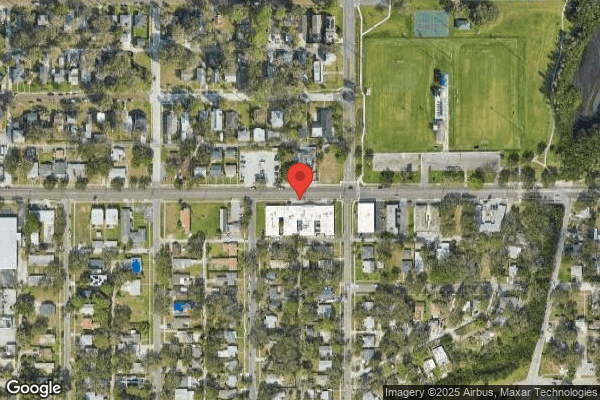
Feb 2023 7 deficiencies
CONCERN (D)

Potential for Harm - no one hurt, but risky conditions existed

Notification of Changes (Tag F0580)

Could have caused harm · This affected 1 resident

**NOTE- TERMS IN BRACKETS HAVE BEEN EDITED TO PROTECT CONFIDENTIALITY** Based on observation, interview, and medical record review the facility failed to provide timely notification to the physician f...

Read full inspector narrative →
**NOTE- TERMS IN BRACKETS HAVE BEEN EDITED TO PROTECT CONFIDENTIALITY** Based on observation, interview, and medical record review the facility failed to provide timely notification to the physician for one resident (#17) out of two residents, who were dependent on staff for total enteral nutritional support by way of a gastrostomy tube and enteral feedings, related to a significant weight loss of 38.6 pounds within a 26 day period. Findings included: On 02/07/23 9:40 a.m. Resident #17 was observed lying flat in his bed with the head of the bed (HOB) flat. He was receptive to an interview when approached. The resident's stomach was exposed revealing a gastrostomy tube that was attached to a enteral feeding machine. The machine was turned on and a bottle of Glucerna 1.2 was observed to be hanging with the pump running at 100 cc (cubic centimeters) per hour. At that time, a certified nursing assistant entered the room and said he was going to provide the resident with his morning activities of daily living (ADLs). On 02/07/2023 at 10:13 a.m. Resident #17 stated, I had loose stools, an indicated that happened a few days a week. The enteral machine remained running with the HOB flat. The resident denied any discomfort when asked and was able to utilize the bed control and elevated his head to a 20-degree angle. Resident #17 confirmed he had lost weight and denied it was planned. He said he did not understand why he had lost weight as he confirmed he had been receiving the enteral feeding. A review of the admission Record reflected Resident #17 resided at the facility for seven years. The resident's diagnoses included a gastrostomy feeding tube, dysphagia, oropharyngeal and pharyngoesophageal phase, esophageal obstruction, gastritis, schizoaffective disorder, bipolar type, and unspecified psychosis. Review of a Nutritional Risk Evaluation dated 2/6/23 revealed Resident #17 had weights taken by the facility and documented on 08/08/2022 the resident weighed 232 pounds (lbs); on 10/10/2022 the resident weighed 233.2 lbs; on 11/11/2022 the resident weighed 234 lbs; and on 12/05/2022 the resident weighed at 195.6 lbs. The resident had a significant weight loss of 36.4 lbs in three months indicating a 15% loss and 38.4 lbs in one month or a 16% loss. Significant weight loss is considered to be 10% or more in 3 months or 5% or more in one month. Review of the Nutrition Evaluation, Quarterly, dated 12/05/2022, revealed the most recent weight as 195.6, and height as 74.0 (6.2 inches), and BMI (Body Mass Index): 25 Estimated Nutritional Needs-2667-3112 calories. Tube Feeding RX(prescription)/Order: Bolus 2 cartons Glucerna 1.2 4x (times)/day for 1896 ml (milliliter) formula or 2280 calorie (kcal) daily. Weight Review: 30 Days: pounds (lbs.) 8/8: 232, 90 Days (lbs.): 234.6, 180 Days: (lbs.) 3/7: 232. Chewing/Swallowing comments: NPO (nothing by mouth) with enteral feeding for all nutrition & hydration needs. Skin Integrity: no pressure sores noted. The Nutrition Summary: Per documentation: NPO enteral feeding for all nutrition and hydration needs. Diabetic formula ordered to assist with glucose control, remains on diabetic meds (medications). Currently with a BMI (Body Mass Index) of 25.1 which indicates overweight status, not of concern due to advanced age. Weight is down with a 1.4% loss in 1 month, 15.7 % loss in 3 months, and a 16.6% loss in 6 months. No issues tolerating enteral feed noted. States he is getting 2 cartons of enteral feeding four times a day (4x/day) but still feels hungry. Denies nausea, vomiting or diarrhea (N/V/D). Receptive to changing to continuous feeding as he prefers to stay in bed. Nutrition Interventions: Noted moderate protein calorie malnutrition as evidenced by mild loss of fat (loss of orbital fat pads, prominent eyebrow bone) and moderate muscled loss (protruding clavicle, bilateral temporal wasting). The RD (Registered Dietician) assessment did not identify a possible cause that could have contributed to a significant weight loss. There was no reference to lab values or medication changes that could have reflected an infection the resident's body was fighting. Prior enteral feeding physician orders, dated 06/17/2021, read as: Four times a day Enteral Feed: Glucerna 1.2 calorie (cal) 8 oz (ounce) ARC Bolus Peg Tube. Administer 474 milliliter (ml) bolus (2 cartons) 4 times a day per 24 hours during waking hours. Total Volume to infuse 1896 ml/24 hour (hr.) for a total of 2280 cal per day. The order was discontinued on 12/05/2022. Findings revealed Resident #17 had received this order of enteral feeding for 18 months without a significant weight change noted. On 12/05/2022 new physician orders for the enteral feeding read as: Glucerna 1.2 at 100ml/hr. x 20 hr for 2000 ml formula daily. A Nutrition Risk Evaluation, Monthly note written by the Registered Dietitian (RD), dated 02/06/2023, read: Weight Status: Current weight 02/06/2023 at 202.4 No significant (sig) weight change in 1 month but 13.5% loss in 3 months and 12.8 % loss in 6 months. On 02/08/2023 at 1:30 p.m. an interview was conducted with the facility's Registered Dietitian (RD) who confirmed her progress note had said Resident #17 was getting his enteral feeding as ordered at two cartons 4 times a day. She said she looked back at his records and denied he had any nausea, vomiting or diarrhea that would have attributed to a significant weight change. The RD stated, He is receiving 2400 calories, verse the 2280 calories before. She confirmed Resident #17 was not on a weight loss diet nor did he desire to lose weight. She said the resident told her he wanted his weight back up. The RD said she notified the Director of Nursing (DON) of the resident's weight loss during their nutrition meeting. When asked if the physician was notified of the weight loss in December 2022 she stated, I did not call the doctor, the DON calls him. The RD went on to say Resident #17 was receiving an additional 120 calories per day by a continuous 20 hour infusion. She stated, For some reason his absorption rate had changed with the bolus. The RD was asked whether an investigation had been conducted to determine why the 38.6-pound weight loss in 26 days. The RD reported the facility had the weight scales checked and labs were performed. The RD added they had checked the resident's thyroid 4 level and found it was elevated. She added the increase in the thyroid 4 level could have contributed to a weight loss. The RD confirmed she did not check the enteral feeding supply to determine if the supplies were being administered as ordered. Review of laboratory results, dated 12/30/2022, for a Thyroid panel T4 Total result 12.56 indicated it was high with a normal reference range of 6.09 to 12.23. The T3 Uptake indicated it was high at 48.7 with a normal reference range of 32.0 to 48.4. Laboratory results on 01/12/2023 for a TSH-3rd Generation TSH showed a result of 1.779 which indicated it was within normal limits. Review of the medical record did not reveal the physician was notified of the change in condition related to the significant weight loss. A review of the physician progress notes for Resident #17 revealed a follow up note, dated 12/06/2022. The note did not contain any documentation related to the resident's significant weight loss. A physician progress note, dated 12/13/2022, did not contain any documentation related to the resident's significant weight loss. A physician progress note, dated 12/20/2022, from the Advanced Registered Nurse Practitioner, did not contain any documentation related to the resident's significant weight loss. A physician progress note, dated 12/21/2022, revealed the section titled, History of Present Illness, documented the patient (Resident #17) was being seen today for evaluation and treatment of memory loss. Pt. (patient) was examined at the facility. Memory immediate, recent, and remote is poor, so is attention. Further review of medical record from 11/11/2022 to 12/05/2022 did not reveal a mental, physical, nor medication health change that would have attributed to a significant 38.6-pound weight loss in 26 days. On 02/08/2023 at 1:40 p.m. an interview was conducted with the Director of Nursing (DON) who confirmed they investigated the weight loss for Resident #17. On 02/08/2023 at 2:00 p.m., the DON, was asked about the resident's 38.6 lb. weight loss in 26 days, and if the physician had been notified. The DON stated, I thought the Assistant Director of Nursing (ADON) put a note in. On 02/08/2023 at 2:46 p.m. an interview was conducted with the Nursing Home Administrator (NHA), who reported there had been no investigation related to Resident #17's significant weight loss. The RD, who was present, said after they changed his tube feeding to a continuous infusion, he started to gain weight back, so they did not feel a gastrointestinal (GI) consult was needed. At the time, the NHA confirmed it should have been reported as an adverse event. On 02/08/2023 at 3:41 p.m. a copy of the facility policy was provided on notification of a change in condition. The NHA stated, We did not do an investigation related to his weight loss. We changed his order and saw a positive response. Which resulted in a weight gain. So, it did not trigger an investigation because the change in the order caused him to regain weight. She additionally stated, [Resident #17] knew how much he was supposed to get and confirmed it was provided. On 02/09/2023 at approximately 9:00 a.m. the facility provided a copy of a physician progress note, dated 12/20/2022. The progress note was not in Resident #17's paper or electronic record the day prior. This additional progress note indicated the resident had been seen by the ANRP and the Primary Physician on 12/20/2022. The progress note provided the morning of 02/09/2023 and dated 12/20/2022 read, under Section #3: Dysphagia as late effect of cerebral aneurysm strictly nothing by mouth (npo) continue PEG tube feeds, changed to continuous which I think is medically necessary to tolerate this volume, improving weight loss, periodically followed by speech therapy. A [AGE] year-old male patient seen in nursing facility for a follow up He has a PEG, and has been losing weight 233 lbs. 10/10/22 to 196 on 12/5. staff contacted me and I asked for them to discontinue the bolus feeding and do continuous to see if better tolerated higher volume. Since then, he had gained about 3 lbs. as of 12/12, and increased to 199 lbs. on 12/19. The progress note was electronically signed 02/08/2023. On 02/09/2023 at 10:07 a.m. a phone interview was conducted with Resident #17's physician, who confirmed he knew the resident. The Physician said the facility had called him yesterday (02/08/2023) and requested his progress note from 12/20/2022. He confirmed the progress note dated from 12/20/2022 and electronically signed on 02/08/2023. He again confirmed he was late in getting the progress note to the facility. When asked about the 38.6 pound weight loss within a 26 day period he stated, Am suspicious in general a lot of times. Of not trusting in data that was fixed by the numbers, not making sense. He said he had put in an intervention. I think at that time he was feeling overly full, his stomach was upset, he has an esophageal stricture. When asked why the documentation of residuals did not reflect an increase in residuals during that time frame, he did not respond to the question. He confirmed the facility had called him and he was notified of the weight loss. The physician was asked how a resident that is totally dependent on staff to provide all of his nutritional and enteral feeding could have lost 38.6 pounds within a short period of time. The physician went on to say it could have been from COVID. He said a significant weight change could have been attributed to the resident getting COVID during their outbreak in October 2022. Further medical record review reflected Resident #17 had tested positive for COVID on 01/06/2022. Resident #17 was then tested in October 2022, during their outbreak, and on 10/18/2022 he tested negative. Review of a facility policy titled, Notification of Resident/Patient Change in Condition, effective October 2021, revealed: Nurses will notify the resident/resident representative, if there is a crucial/significant change in the resident condition. If the change in the resident's condition is not crucial or significant, the resident's Physician, resident representative or legal representative will be notified at the earliest convenient time during regular business hours. Procedure 1. Notify the Physician resident/resident representative, and case management when indicated, if there is a significant change in condition, regardless of the time of day . 2. Document the Nurses' Notes, the time notification was made and the names of the persons to whom you spoke.
CONCERN (D)

Potential for Harm - no one hurt, but risky conditions existed

Deficiency F0583 (Tag F0583)

Could have caused harm · This affected 1 resident

**NOTE- TERMS IN BRACKETS HAVE BEEN EDITED TO PROTECT CONFIDENTIALITY** Based on observation, interview and record review, the facility failed to ensure personal privacy was maintained for one residen...

Read full inspector narrative →
**NOTE- TERMS IN BRACKETS HAVE BEEN EDITED TO PROTECT CONFIDENTIALITY** Based on observation, interview and record review, the facility failed to ensure personal privacy was maintained for one resident (#34) out of 22 residents sampled. Findings included: An interview and observation was conducted at 9:10 a.m. on 02/07/2023 with Resident #34. Resident #34 was observed well-groomed, sitting up in her wheelchair watching TV. During the room observation it was observed that Resident #34's room door was off the hinges and could not close shut to give Resident #34 privacy. Resident #34 said she did not like that her room door was not able to close shut because whenever a CNA (certified nursing assistant) provides her with personal care, she feels like someone can walk in her room and see her getting dressed. Resident #34 said her room door has not been able to shut close for a while, and she has reported her concerns to the CNAs, but nothing had been done about it. Review of the admission Record revealed Resident # 34 was admitted on [DATE] with diagnoses to include chronic obstructive pulmonary disease, unspecified, acute pulmonary edema, muscle wasting and atrophy, and acquired absence of right leg above knee. Review of the Minimum Data Set (MDS), dated [DATE], Section C- Cognitive Patterns showed Resident #34's Brief Interview for Mental Status (BIMS) score of a 14, indicating intact cognition. On 02/09/2023 at 9:08 a.m. an interview was conducted with Staff A, CNA. Staff A stated Resident #34's door hasn't been able to shut for months. Staff A said that despite letting someone in Administration know about Resident #34's door, nothing was done. Staff A said when helping Resident #34 with her ADLs (activities of daily living), she places a bedside table in front of the door so that no one can walk in. On 02/09/2023 at 11:46 a.m. an interview was conducted with the Maintenance Director. He confirmed that he was responsible for most of the repairs inside the building. He further confirmed that he did not fix Resident #34's door until Life Safety conducted their inspection and told him that Resident #34's door needed to be repaired. Review of the facility policy titled, Resident admission Agreement, Right [NAME] of Rights, dated 1/2012, showed: (19) - You have the right to personal privacy and confidentiality of your personal and clinical records. Personal privacy includes privacy in accommodations, medical treatment, written and telephone communications, personal care, visits, and meetings of family and residential groups, but this does not require facility to provide a private room.
CONCERN (D)

Potential for Harm - no one hurt, but risky conditions existed

Food Safety (Tag F0812)

Could have caused harm · This affected 1 resident

Based on observation, interview and record review, the facility failed to maintain kitchen equipment in a clean manner by not ensuring three drip trips were free from grease for one of one stove in on...

Read full inspector narrative →
Based on observation, interview and record review, the facility failed to maintain kitchen equipment in a clean manner by not ensuring three drip trips were free from grease for one of one stove in one of one kitchen. Findings included: On 02/02/2023 at 9:00 a.m. an initial tour of the kitchen was conducted with the Dietary Manager and revealed three unclean drip trays on top of the stove. The three drip trays were observed with grease piled up on the foil liner. On 02/02/2023 at 9:10 a.m., an interview was conducted with the Dietary Manager. The Dietary Manager said the kitchen staff should have checked and changed the drip tray liners at the end of their shift. The Dietary Manager said the drip trays should be deep cleaned weekly and the drip tray foil should be changed out every evening. Review of the facility policy and procedure titled, Cleaning and Sanitation, dated September 2021, showed the facility promotes a clean and sanitary environment for its employees, residents and visitors. The entire Food and equipment, walls. floors, ceilings, equipment, and utensils are clean, sanitized and in good working order. Local, State and Federal regulations are followed to assure a safe and sanitary Nutrition Services Department. 1. Food Service Manager will review the completed Food and Nutrition Services Cleaning Schedule to ensure the kitchen equipment is in operation 3. Inspect kitchen sanitation Daily, Weekly and Monthly using the Kitchen Sanitation Checklist. 7. Follow appropriate procedures for washing and sanitizing kitchen equipment.
CONCERN (D)

Potential for Harm - no one hurt, but risky conditions existed

Deficiency F0849 (Tag F0849)

Could have caused harm · This affected 1 resident

**NOTE- TERMS IN BRACKETS HAVE BEEN EDITED TO PROTECT CONFIDENTIALITY** Based on observation, interview, and medical record review the facility failed to collaborate with the hospice agency related to...

Read full inspector narrative →
**NOTE- TERMS IN BRACKETS HAVE BEEN EDITED TO PROTECT CONFIDENTIALITY** Based on observation, interview, and medical record review the facility failed to collaborate with the hospice agency related to current plans of care for one resident (#8) out of one resident sampled with hospice services. Findings included: An interview was conducted with Resident #8 on 2/7/23 at 11:07 a.m. The resident stated she was on hospice. She stated an aide and nurse come to see her, but she didn't know how often. A review of admission Record indicated Resident #8 was admitted on [DATE] with a re-admission date of 11/3/22. Her diagnoses included malignant neoplasm of overlapping sites of unspecified bronchus and lung and hemiplegia and hemiparesis following cerebral infarction. A review of the active physician orders as of 2/9/23 revealed an order for hospice services for a diagnosis of lung cancer, dated 2/16/22. Resident #8's facility care plan, initiated on 2/16/22 and revised on 2/06/23, showed the following: Terminal Diagnosis. [Resident #8] is diagnosed with a terminal condition and is at risk for loss of dignity during dying process related to the terminal diagnosis of: Lung Cancer. Supportive care only. [Hospice Agency and Team Identifier]. The Interventions included to: Collaborate with hospice team to ensure the resident's spiritual, emotional, intellectual, physical and social needs are met and collaborate with the Interdisciplinary team to develop a plan of care that promotes the resident's spiritual, emotional, intellectual, physical and social needs. A review of Resident #8's Minimum Data Set (MDS), completed 11/8/22, Section O Special Treatments, Procedures and Programs section, indicated the resident was not receiving hospice care. A review of Resident #8's hard copy medical records revealed a Hospice Face Sheet, but no hospice care plan or current visit notes. An interview was conducted with Staff E, Registered Nurse (RN) on 2/8/23 at 3:20 p.m. Staff E stated hospice notes are kept in the hard chart, there is no separate hospice book. She stated hospice usually comes earlier in the day and she works a later shift. An interview was conducted with the Regional Nurse Consultant on 2/8/23 at 3:40 p.m. She reviewed Resident #8's hard chart. She stated there were notes from October and November, but nothing from December to current. When asked about a hospice care plan she stated the facility care plan had a hospice care plan, but there was not a separate care plan from hospice services. An interview was conducted with the Director of Nursing (DON) on 2/8/23 at 4:26 p.m. She stated she does not coordinate with outside services and stated maybe social services or the MDS Coordinator does. On 2/8/23 at 4:28 p.m. the Social Services Director stated she does not have anything to do with coordinating with hospice and stated maybe the MDS Coordinator does. An interview was conducted with Staff G, RN/MDS Coordinator on 2/8/23 at 4:49 p.m. She stated the only documentation she could find about hospice being invited to a care plan meeting was from February and April of 2022. She stated, Oh wow, when she could not find anything further. She stated she has only been in the position a couple of months. An interview was conducted with the Nursing Home Administrator (NHA) on 2/9/23 at 9:17 a.m. The NHA stated she spoke with the hospice team and they said the resident is not on full hospice. She stated she will need to speak with the person that comes to the facility to see why they are not leaving any notes. She confirmed the notes should be in the facility. An interview was conducted with Staff C, RN on 2/9/23 at 11:20 a.m. Staff C, RN stated the hospice nurse and aide do come to see Resident #8. She stated, I wouldn't say there is coordination of care but they ask us if we need anything. Staff C, RN stated she has never seen a hospice care plan or hospice notes for Resident #8. An interview was conducted with the DON on 2/10/23 at 4:54 p.m. The DON stated she didn't know why hospice notes were not being left at the facility and she confirmed there is no hospice care plan. She stated, To be honest, I have never seen them here. She said she is newer in the facility, but going forward there will be someone to coordinate with hospice. She stated she didn't know hospice wasn't really coordinating with nurses. A facility policy titled, Hospice, dated October 2021, was reviewed. The policy stated the following: Upon request by a patient or physician, the facility will coordinate care services for a licensed Hospice Agency of the patient's choice. Guidelines 2. Communicate, establish, and agree upon a coordinated Interdisciplinary Plan of Care. a. Assure the Plan of Care reflects the hospice philosophy. 4. Assure a registered nurse from hospice is designated to coordinate the implementation of the Plan of Care between the Hospice Agency and the facility.
CONCERN (E)

Potential for Harm - no one hurt, but risky conditions existed

Safe Environment (Tag F0584)

Could have caused harm · This affected multiple residents

**NOTE- TERMS IN BRACKETS HAVE BEEN EDITED TO PROTECT CONFIDENTIALITY** Based on observations, interviews, and policy review the facility did not ensure a safe, clean, and homelike environment in nine...

Read full inspector narrative →
**NOTE- TERMS IN BRACKETS HAVE BEEN EDITED TO PROTECT CONFIDENTIALITY** Based on observations, interviews, and policy review the facility did not ensure a safe, clean, and homelike environment in nine resident rooms (108, 117, 116, 119, 123, 124, 126, 127, and 121) out of 34 rooms and four bathrooms (110, 123, 124 & 125, and 126 & 127) out of 22 bathrooms, one hall (Main) out of three halls, and one patio (dining area) out of two patios observed. Findings included: An observation was made on 2/7/23 at 9:10 a.m. of rooms [ROOM NUMBERS]. Both rooms had closet doors that were not on the tracks. (Photographic Evidence Obtained.) An observation was made on 2/7/23 at 10:23 a.m. in room [ROOM NUMBER]. On the wall under the window there was a broken plastic box with exposed wires on the wall. (Photographic Evidence Obtained.) An observation was made on 2/7/23 at 10:41 a.m. in room [ROOM NUMBER]. On the wall under the window there was broken/cracked plaster/drywall. The window was not sealed up and there were open gaps to the outside. (Photographic Evidence Obtained.) An observation was made on 2/9/23 at 10:44 a.m. in the bathroom of room [ROOM NUMBER]. The sink was loose and uncaulked and the toilet was elevated with a [NAME] and not caulked around the bottom. An observation was made on 2/7/23 at 10:51 a.m. in room [ROOM NUMBER]. There was a broken bedside tray table in the bathroom, broken/cracked plaster on the wall under the window, a cracked plastic wall guard near bed A, and a missing baseboard and cracked tiles on the wall near the TV stand. (Photographic Evidence Obtained.) An observation was made on 2/7/23 at 11:39 a.m. in the bathroom between room [ROOM NUMBER] and 125. There was a wet, stained bath towel hanging from the shower rod and a used, wet washcloth lying on the sink. On 2/9/23 at 12:42 a.m. a wet, stained towel was hanging from the shower rod, a wet towel was spread on the bathroom floor, a wet washcloth remained on the sink, and a wet washcloth was lying on the sink drainpipe. Also, on 2/7/23, in room [ROOM NUMBER] the privacy curtain had a brown substance splattered on it as well as dirt. This curtained remained in place on 2/9/23. (Photographic Evidence Obtained.) An observation was made on 2/7/23 at 11:45 a.m. in the bathroom between room [ROOM NUMBER] and 127. Above the sink in the bathroom paint and plaster had peeled off the wall and above the toilet paint had peeled off and was bubbling up. (Photographic Evidence Obtained.) Also, in room [ROOM NUMBER] a closet door was missing. In room [ROOM NUMBER] the privacy curtain between A and B bed had two large splatters of a brown substance. The soiled privacy curtain remained in place on 2/9/23. (Photographic Evidence Obtained.) An observation was made on 2/7/23 at 1:47 p.m. of the patio off of the dining area, which is unlocked and accessible to residents. One resident was currently sitting on the patio. There was a no smoking sign on the wall, but multiple cigarette butts were observed around the patio, as well as what appeared to be ash marks on the wall where cigarettes are being put out. There were also multiple plastic drink lids and trash piles that had been swept up and not removed. The patio remained in this condition on 2/8/23 and 2/9/23. Also, on the inside of the door there is an exposed electronic box attached the automatic door. (Photographic Evidence Obtained.) On 2/8/23 and 2/9/23 the blinds in room [ROOM NUMBER] were observed to be bent and broken. On 2/9/23 at 1:04 p.m. a large stain on the ceiling was observed in the hall near room [ROOM NUMBER]. (Photographic Evidence Obtained.) On 2/9/23 at 11:56 a.m. an interview was conducted with the Nursing Home Administrator (NHA) and the Director of Plant Operations. The NHA stated they have a concierge program five days a week. The department heads go into each resident room and look for maintenance needed, oxygen tubing, and other issues. A list was provided of items the staff look for. This list included: broken items, needs painting, room dirty, bathroom mess, furniture issues, and curtain issues. An interview was conducted with Staff B, Certified Nursing Assistant (CNA) on 2/9/23 at 2:15 p.m. Staff B, CNA stated the department heads do room rounds daily. She said if staff find items that need maintenance, they enter it in the (electronic work order) system for the maintenance department. Staff B, CNA stated dirty linen should not be left in a resident room; it should be bagged immediately and taken out. On 2/9/23 at 2:30 p.m. a facility tour was conducted with the NHA and Director of Plant Operations. They were shown all the concerns listed above. The Maintenance Director stated he was unaware of these issues and stated they are not being reported to him. The NHA stated she would have expected these issues to have been found on the concierge rounds. She stated she will be doing re-training on the rounds and what is expected. She also stated she will re-train staff on using the (electronic work order) system. The NHA confirmed these items are concerning. As for the dirty patio off of the dining area, the NHA stated they have a few residents that are non-compliant with smoking. She confirmed the marks on the walls appear to be ashes and didn't know why they haven't been cleaned off. On 2/9/23 at 3:05 p.m. the NHA stated the facility does not have a policy for maintenance or housekeeping. She also stated she would talk with the Director of Plant Operations to see what caused the stain on the ceiling outside of room [ROOM NUMBER]. A follow-up interview was conducted with the NHA on 2/10/23 at 9:12 a.m. She stated in November (2022) they had noticed some things that needed to be repaired. At that time they did a QAPI (Quality Assurance and Program Improvement) on environment and did a facility wide audit. She stated none of the items observed on our facility tour had been captured in that audit. She again confirmed these items had not been captured in concierge rounds. She stated all items are now added to a list to be repaired. A facility policy titled, Concierge Program, dated April 1, 2021, showed: The role of the concierge program is a daily review of the rooms for environmental concerns. The NHA or designee is responsible for oversight of the Concierge Program. Procedure: 1. Visit schedule: Daily 2. Focus: Housekeeping cleanliness, maintenance concerns . 5. Present Concierge Visit Took at the morning meeting to the NHA or designee. A facility provided job description titled, Director of Plant Operation was reviewed. The job description stated the following: The Director of Plant Operations is responsible for the overall maintenance of the facility and provides direction for all related to plant operations. The Director of Plant Operations ensures the facility, equipment and utilities are maintained in good working order and facility grounds are properly maintained in accordance with facility policies and State and Federal regulations. Essential Duties and Responsibilities: -Perform minor repairs and supervise the day-to-day repair, improvement, and preventative maintenance of the facility to ensure that machines continue to run smoothly, building systems operate efficiently, or the physical condition of facility does not deteriorate.
CONCERN (E)

Potential for Harm - no one hurt, but risky conditions existed

Pressure Ulcer Prevention (Tag F0686)

Could have caused harm · This affected multiple residents

**NOTE- TERMS IN BRACKETS HAVE BEEN EDITED TO PROTECT CONFIDENTIALITY** 2. An observation was made on 2/8/2023 at 9:59 a.m. of Resident #30. Resident #30 was lying in bed with pressure relieving boots...

Read full inspector narrative →
**NOTE- TERMS IN BRACKETS HAVE BEEN EDITED TO PROTECT CONFIDENTIALITY** 2. An observation was made on 2/8/2023 at 9:59 a.m. of Resident #30. Resident #30 was lying in bed with pressure relieving boots on both feet. He was also noted to have a gauze dressing on both feet. A review of active physician orders for February 2023 did not reveal any orders for wound care for the left or right foot. A review of the admission Record indicated Resident #30 was admitted on [DATE] and re-admitted on [DATE] with diagnoses including legal blindness, type II diabetes mellitus, and pruritus. A review of discontinued physician orders revealed an order to apply skin prep to blister left heel every shift until resolved. The order date was 1/17/23 and with a discontinued date of 1/19/23. There were no previous orders for the right heel/foot. A review of the Skin Grid for Pressure Ulcers form indicated wound care was completed on Resident #30's left and right heels on 1/31/23 and 2/7/23. There were two wounds on the left heel which were noted to have increased in size between 1/31/23 and 2/7/23. On 1/31/23 left heel wound #1 was 2.9 cm (centimeters) in length and 4.5 cm in width with a small amount of drainage. On 2/7/23 left heel wound #1 was 6.5 cm in length and 5.5 cm in width with a moderate amount of drainage. On 1/31/23 left heel wound #2 was 1.5 cm in length and 1.0 cm in width and on 2/7/23 left heel wound #2 was 1.8 cm in length and 1.5 cm in width. A review of progress notes did not show any notes indicating a provider was notified of the worsening wounds at any point. On 2/9/23 wound care orders were entered. The orders were as follows: -Cleanse area to left heel with normal saline, pat dry. Apply med honey to wound bed, then apply calcium alginate and cover with ABD pad and wrap with gauze wrap for wound healing daily and PRN (as needed). -Cleanse right heel with normal saline, pat dry. Apply skin prep, wrap with gauze wrap and sterile gauze for protection daily and PRN. An interview was conducted with Staff C, Registered Nurse (RN) on 2/10/2023 at 11:24 a.m. Staff C, RN stated when the wound care nurse is out, the nurse assigned to the resident does wound care. She stated she did wound care for Resident #30 the last two days. An interview was conducted with the Director of Nursing (DON) on 2/10/2023 at 3:29 p.m. The DON checked Resident #30's orders and confirmed there were not any wound care orders in place prior to 2/9/23. She said according to the Skin Grid for Pressure Ulcers, wound care was completed on 1/31 and 2/7/23 with no order in place. The DON reviewed the wound measurements and confirmed the wound had increased in size. She stated she was unable to find any notes indicating a provider had been notified. She confirmed there should have been orders in place and a provider should have been notified. A follow-up interview was conducted with Staff C, RN on 2/10/23 at 3:40 p.m. Staff C, RN stated the unit manager (Staff D) told the nurses to do the wound care for Resident #30. She stated she had looked in the medical record for the order and didn't see it. She said she was just doing what she was told and didn't know why the order wasn't there. Staff C, RN stated the resident originally had a large blister on his heel that popped over a week ago. She said the nurses started doing daily skin prep, dressing and wrap. When asked if the provider had been notified she stated the unit manager (Staff D) would have been the one to call the provider. An interview was conducted with Staff D, RN/Unit Manager (UM) on 2/10/23 at 3:45 p.m. Regarding Resident #30's heel wounds, she stated staff were just wrapping it and keeping it dry. Staff D, RN/UM stated she does not recall telling anyone to do daily care besides keeping it wrapped. She stated the doctor should have been notified, but she doesn't know if he was. She reviewed the resident's wound notes and confirmed wound care was completed on 1/31/23 and 2/7/23 and there were no orders in place. Staff D, RN/UM stated she forgot to put in the alginate order for 2/7/23. She said she didn't know why the order wasn't put in for the 1/31/23 treatment. 3. A review of the admission Record indicated Resident #7 was admitted to the facility on [DATE]. Residents #7's current diagnoses include cerebral palsy, paraplegia, mild protein calorie malnutrition, pressure ulcer left heal stage 3 and pressure ulcer left buttock unstageable. Both of these pressure wounds were acquired during her stay in the facility. A review of the wound care notes on 2/9/23 indicated the last wound care note in the medical record was on 1/24/23. A review of the physician orders revealed the following: 1-Cleanse coccyx wound with normal saline, pat dry, apply skin prep to peri wound. Apply Santyl to wound base and cover with dry dressing daily and PRN. Dated 9/6/22. 2-Cleanse right buttock wound with normal saline, pat dry, and apply skin prep to peri wound. Apply wound gel to base and cover with dry dressing daily and PRN. Dated 11.8.22. 3-Left lateral foot wound #2. Cleanse with normal saline, pat dry and apply Santyl to base then cover with a dry dressing daily and PRN. Dated 10/18/22. 4-Left lateral foot wound. Cleanse wound with normal saline, pat dry and apply skin prep to base then cover with a dry dressing daily and PRN. Dated 11/2/22. A review of the January and February 2023 electronic Treatment Administration Records (eTAR) revealed the following: From February 1st through the 9th order numbers 1, 2, 3, and 4 were completed 8 out of 9 times. From January 1st through the 31st order numbers 1,2,3, and 4 were completed 30 out of 31 times. A review of care plans revealed a care plan for: Actual Wound: [Resident #7] has an actual wound to, and right buttocks, UST left great toe, left lateral foot. The care plan was updated on 2/6/23. Interventions included: -Treatment as ordered. -Monitor wound weekly of location, highest stage and/or visual state. Measure length, width, depth, color of drainage, color of wound bed, presence of odor, tunneling or undermining. Review for improvements, report declines to MD. A review of Resident #7's Skin Grid for Pressure Ulcers was conducted with the following findings: Left lateral foot #1 On 11/8/22 the left lateral foot wound #1 was noted to have an odor, with no odor the previous weeks noted. On 1/17/22 the wound was 0.7 cm in length and 1.0 cm in length. On 1/24 the wound was 2.0 cm in length and 2.5 cm in length. On 1/31/23 the wound was 2.9 cm in length and 2.5 cm in width. On 2/7/23 the wound was 3.0 cm in length and 2.5 cm in width. Coccyx Wound On 1/31/23 the wound was 4.0 cm in length and 0.7 cm in width. On 2/7/23 the wound was 4.5 cm in length and 0.7 cm in width. Right Hip Wound Wound care and measurements were completed on 1/31 and 2/7/23. A review of physician orders and progress notes revealed the following: A note on 11/8/22 indicated the wound had no signs of infection. The odor was not mentioned in the note. A note on 1/24/23 indicated a new right hip abrasion with pink tissue, no drainage, coccyx wound base with red tissue, small amount of pink drainage, increased in wound sizes, left later food wound base #1 with granulated tissue, small amount of pink drainage, increased in sizes, no signs of infection. MD was notified. There were no further progress notes to indicate the MD had been notified of the continued increase in wound sizes after 1/24/23. There was no wound care order in place for the hip wound that was treated on 1/31 and 2/7/23. An interview was conducted with the DON on 2/10/23 at 4:48 p.m. The DON reviewed Resident #7's medical record and confirmed there are no more recent wound care notes than 1/24/23. She stated there should be notes in the record and the doctor should have been notified of the increased wound sizes. As for the odor noted on the Skin Grid for Pressure Ulcers on 11/8/22, she stated the progress note should have mentioned the odor and she wasn't sure why it didn't. She did say they round for wound care as a group and one person does the Skin Grid and another does the progress notes. A facility policy titled, Wound Prevention and Treatment Overview, dated October 2021, was reviewed. The policy stated the following: The facility also recognizes that the most vigilant nursing care may not prevent the development &/or worsening of ulcers in high-risk categories. In those cases, efforts will be directed at the following: -Managing risk factors. -Providing therapeutic interventions. -Providing treatment. A resident with ulcers will receive continued preventive interventions & necessary treatment and services to promote healing & prevent infection. Wound characteristics will be documented by measuring length, width & depth in centimeters. Additional documentation shall also include: -Color of drainage. -Wound bed color. -Odor. -Amount of drainage. -Wound bed tissue type -Tunneling/undermining with depth if applicable. Based on observation, interview, and medical record review the facility failed to ensure care and services were provided in accordance with professional standards of practice for facility acquired pressure injuries for one resident (#1) by not seeking surgical intervention in a timely manner and for not ensuring orders were in place and followed for wound care for two residents (#30 and #7) of a total of three residents sampled. Findings included: 1. On 02/07/23 at 10:00 a.m. Resident #1 was observed in bed with an air mattress in place. On 02/08/23 at 10:16 a.m. a phone interview was conducted with Resident #1's representative and has been with him for over ten years. When asked about the intensity his wounds she said the physician was talking about a skin graft to the buttock's wounds. She said she was looking forward to the procedure so he (Resident #1) would be able to get out of bed more often, and that she could take him outside during their visits. A record review of the admission Record form revealed Resident #1 has resided at the facility for twenty years. The diagnosis information description listed type 2 diabetes mellitus, pressure ulcer left heel unstageable 2023, pressure ulcer of right heel unstageable 11/15/2022, pressure ulcer of right buttock unstageable 08/01/2022, pressure ulcer left buttock stage 3 08/01/2022, and pressure ulcer of right hip unspecified stage 01/01/2021. Review of the Skin Grid for Pressure Ulcers Initial Identification, dated 09/13/2022, showed: Present on admission: no. Site Left buttock #2 Highest Stage; unstageable (US) Length (in centimeter (cm)) 4.0, Width (in cm) 2.0 Depth: unable to determine (UTD). Measurements dated on 12/20/2022 Highest Stage; unstageable (US) Length (in centimeter (cm)) 3.9, Width (in cm) 2.0 Depth: UTD. Measurements dated on 02/07/2023 Highest Stage; unstageable (US) Length (in centimeter (cm)) 6.3, Width (in cm) 2.5 Depth: UTD Review of the Skin Grid for Pressure Ulcers Initial Identification, dated 10/18/2022, showed: Present on admission: no. Site Left buttock #3 stage: US, Length (in cm) : omitted, Width (in cm) omitted, Depth: omitted Measurements dated on 12/20/2022 Highest Stage; unstageable (US) Length (in centimeter (cm)) 9.5, Width (in cm) 3.0 Depth: unable to determine (UTD). Measurements dated on 01/31/2023 Highest Stage; unstageable (US) Length (in centimeter (cm)) 9.5, Width (in cm) 6.5 Depth: UTD. Review of progress notes, dated on 02/10/2023 at 11:33 a.m. showed: Note Text: Resident seen today for weekly wound assessment. Wounds as follow: right buttock wound base with granulate and slough tissue, increased in length, no change in width size, mod (moderate) amt. (amount) of pink drainage. Right buttock wound base #2 with granulated, slough, and necrotic tissue, mod amt. of pink drainage, increased in length and width. MD agrees with Pig Skin Graft that [name of Representative] suggested. Will have to follow up (f/U) with plastic surgeon. Signed by Staff F, Registered Nurse (RN). On 02/10/2023 at 10:44 a.m. an interview was conducted with the Director of Nursing (DON) who said she thought they were waiting for his insurance approval. She stated she was not sure and would get back to the surveyor. She then indicated at that time another staff member was following up with the approval. On 02/10/2023 at 11:14 a.m. an interview was conducted with Staff F, RN and she said she has known Resident #1 for over thirteen years. She said Resident #1 gets frustrated when asked to lay in on his side. He has limited ability to turn, and his skin is thin, and it easily breaks down. When asked about the resident's ordered skin graft she stated, It will benefit him. The areas would be closed; that way he will have a less chance for infection. She confirmed he was on an antibiotic just in December 2022 as his wounds to the buttock had developed an odor. Staff F said that way he would be able to get out of his bed and room more frequently. She stated I think it will help him more mentally too. Staff F stated, He likes to talk with other peers and enjoys leaving his room. She confirmed since the wounds developed; he was not able to get out of his bed. If he does, its only for a short period of time. Staff F confirmed she was responsible for performing weekly wound rounds with the DON, and stated, We all make rounds together. She said part of the process includes calling the family and updating them on the wounds and progress. Staff F said that she would talk with Resident #1's [Representative] weekly. She said the [Representative] had requested an order for a pig skin graft. She told me she knew someone that had one and it was successful. Staff F, said on 12/23/2022 I called for the authorization for the graft, and that included paperwork that had to be filled out and signed by the [Representative], Advanced Registered Nurse Practitioner, and the primary Physician. Staff F said the paperwork and required signatures were completed on 01/12/2023, and that same day she faxed the paperwork to [State Agency] for prior authorization. She added on 01/18/2023 she resent the information a second time to [State Agency] to make sure it was received. Staff F said that she is still waiting for a call back. She then went on to say she had been on a medical leave of absence and came to the facility today after the DON had called her. She said her last day of work was on 01/25/2023, and confirmed, as of today, she was not sure if there had been a call back from the [State Agency] with an authorization. She has not followed up due to her current leave status. Staff F indicated the DON would have been the one to follow up with the authorization during her medical leave. She said the [State Agency], she had spoken to, informed her that it would take a while for it to be processed. Staff F was unable to recall who she had spoken to, and indicated there was no phone number to call, only a fax number. On 02/10/2023 at 11:38 a.m. an interview was conducted with the Nursing Home Administrator (NHA) and she said she was familiar Resident #1's order for a skin graft. She said she had asked the Business Office Manager (BOM) to try to push it along. She said it was a couple of weeks ago. On 02/10/2022 at 11:45 a.m. the NHA was present during an interview that was conducted with the BOM and when asked about Resident #1's authorization for a skin graft she stated, No, I have not been talking with the insurance company. On 02/10/23 at 12:44 p.m. a call was placed to Resident #1's Physician and he confirmed he knew Resident #1 and asked is this about the graft? He said we have been dealing with it for over three weeks now, and we're waiting for approval from the insurance. Then we need to find someone to take the insurance. The Physician confirmed he needs the graft sooner than later, and the graft at the stage of his wounds would be beneficial for him. The Physician stated, This is only option he has left. He said he was not that old and then confirmed it was a psychosocial issue more than anything. The Physician was informed it took the facility twenty-three days to complete and fax paperwork to the [State Agency] for prior authorization, and since 1/18/2023 no one had followed up with the [State Agency] for the prior authorization. The Physician, at that time, stated, That is a problem .It's a nightmare even finding someone to perform the procedure. The Physician then reiterated no one will see him unless insurance is approved. On 02/10/23 at 2:46 p.m. an observation of the pressure injuries was conducted with Staff C, RN. She indicated the dressing was changed daily but due to the drainage it at times will need to be replaced. Resident #1 was alert and receptive to the observation once he was repositioned to his left side the dressing was noted not covering the injury. Staff C, RN said she would need to replace the secondary dressing. Staff C, RN removed the dressing that revealed a left wound with an open area the size of a golf ball, the depth of the area could not be visualized without a flashlight, the edges on the left side of the open area from 12 o'clock to 6 were rolled under/migrated down. The right side of the open area; a second open area was noted as attached to the golf sized area. The open area revealed, from 12 o'clock to 5 o'clock, a bright red beefy colored tissue, the area extended toward the right buttock and appeared over two inches in width and three inches in length, with macerated edges. Just below the open areas on the right buttock, three separate distinctive purple colored areas were present on the intact skin, and the areas ranged from a quarter to a fifty cent piece in size. The right buttock contained an open area that presented three inches wide and over four inches in length, the edges were macerated. On 02/20/2023 at 5:10 p.m. the DON denied the facility used outside wound care services. The DON indicated the last time Resident #1 had received professional wound care services was in May 2021.
CONCERN (E)

Potential for Harm - no one hurt, but risky conditions existed

Drug Regimen Review (Tag F0756)

Could have caused harm · This affected multiple residents

Based on observation, interview, and medical record review, the facility failed to ensure medications were administered without irregularities and followed as ordered for one resident (#1) out of five...

Read full inspector narrative →
Based on observation, interview, and medical record review, the facility failed to ensure medications were administered without irregularities and followed as ordered for one resident (#1) out of five residents sampled as evidenced by failing to follow blood pressure parameters. Findings included: On 02/07/2023 at 10:00 a.m. Resident #1 was observed lying in bed and receptive to an interview, his speech was difficult at time to understand and he appeared thin and frail. Review of the admission Record indicated Resident #1 resided at the facility for twenty years. The diagnoses included atherosclerotic heart disease of native coronary without angina pectoris, hypertension, chronic kidney disease stage 3, and hypotension. Review of the February 2023 physician orders revealed an order for: Midodrine HCL oral tablet give 10 mg (milligrams) by mouth three times a day related to HYPOTENSION, UNSPECIFIED, give if BP (blood pressure) is Less than 90/60, dated 09/15/2022. Review of the January 2023 Medication Administration Record (MAR) showed the Midodrine HCL administrations as: 01/01/2023 at 6:00 a.m. (0600) Blood Pressure (BP) documented at 98/60, at 1:00 p.m. (1300) BP 128/74, and at 5:00 p.m. (1700) BP at 131/88. The documented BP reflected the blood pressure was greater than 90/60 and Midodrine HCL should have been held per the physician ordered parameters. Further review of the January 2023 MAR revealed Midodrine was administered as follows: -01/02/2023 at 1:00 p.m. BP 110/62, and at 5:00 p.m. BP 110/62, -01/03/2023 at 6:00 a.m. BP 104/64, and at 1:00 p.m. BP 110/62, -01/04/2023 at 1:00 p.m. BP 110/68, -01/05/2023 at 6:00 a.m. BP 90/70, and at 1:00 p.m. BP 128/60, -01/06/2023 the 6:00 a.m. dosage and BP was omitted and administered at 1:00 p.m. BP 128/60, -01/07/2023 at 5:00 p.m. BP 98/60, -01/08/2023 at 1:00 p.m. BP 112/68, -01/09/2023 the 6:00 a.m. dosage and BP was omitted and administered at 1:00 p.m. BP 100/60, and at 5:00 p.m. BP 100/60, -01/10/2023 at 1:00 p.m. BP 100/60. -01/11/2023 the 6:00 a.m. dosage was held for BP 90/58 - parameters indicated it should have been given, at 1:00 p.m. it was administered at 1:00 p.m. BP 100/60, -01/13/2023 at 1:00 p.m. BP 98/68, -01/15/2023 at 1:00 p.m. BP 131/78 and at 5:00 p.m. BP 131/78, -01/17/2023 at 1:00 p.m. BP 95/68, -01/18/2023 at 1:00 p.m. BP 95/67, -01/21/2023 at 1:00 p.m. BP 136/78 and at 5:00 p.m. BP 108/60, -01/23/2023 at 5:00 p.m. BP 107/76, -01/24/2023 at 1:00 p.m. BP 98/66, and -01/26/2023 at 1:00 p.m. BP 90/68. Review of the February 2023 MAR revealed Midodrine was administered as follows: -02/02/2023 at 1:00 p.m. BP 96/62, -02/03/2023 at 1:00 p.m. BP 100/78 and given at 5:00 p.m. BP 110/62, -02/07/2023 revealed Midodrine was held at 1:00 p.m. for BP 73/42 and held at 5:00 p.m. for BP 99/54. The forty-day look back reflected Midodrine was administered 30 times when the BP parameters indicated it was, to be held, 2 omissions of the medications without BP being performed, and Midodrine was held three times when it should have been administered. On 02/09/2023 at 4:07 p.m. an interview was conducted with the Director of Nursing (DON) she confirmed it was her expectation a blood pressure medication that has ordered parameters should be followed as ordered. On 02/10/2023 at 12:44 p.m. a phone interview was conducted with Resident #1's physician who confirmed he knew the resident and had been his physician for a while. He was unaware the ordered Midodrine was not being given as ordered. When informed the parameters were not being followed he stated, They're doing the opposite of what the order states to do. The Physician confirmed it was his expectation that his orders are followed as written and would be following up with the facility. Review of the Medication Record Review (MRR) for recommendations created between 11/1/2022 and 11/14/2022 for Resident #1 read, The resident is receiving Midodrine 10 mg three times a day (tid) hold if systolic blood pressures (SBP) less than 90/60 millimeters of mercury (mm Hg). Please consider discontinuing/decreasing the order for midodrine or change to as needed (prn) status. Nursing will monitor for any recurring symptoms. The facility provided a second MMR for Resident #1 dated 1/11/2023 that documented, This resident is receiving Midodrine 10 mg tid hold if systolic blood pressures (SBP) less than 90/60 millimeters of mercury (mm Hg). Please consider discontinuing/decreasing the order for midodrine or change to prn status. Nursing will monitor for any recurring symptoms. On 02/10/2023 at 3:44 p.m. a phone interview was conducted with the Pharmacist who confirmed she provides monthly record review services at the facility. She said part of her process was to review the physician orders and make recommendations. When asked about Resident #1's blood pressure medication Midodrine and the parameters she stated, Sometimes certain places don't do parameters. She confirmed she reviews the medication administration record and stated, If I identify a discrepancy, I will address it in the letter. The Pharmacist said she had addressed the Midodrine two separate times to change it or discontinue it. She stated she can recommend a change in the medication, but the Physician will not always follow the recommendation. She stated, I wanted them to change the (Midodrine) order to PRN (as needed). The Pharmacist denied she had documented in her recommendation that the medication was being administered outside of the ordered parameters. The Pharmacist stated, I was aware it was a concern and to adjust the order. The Pharmacist then stated, I don't know when the blood pressure it taken. If it is taken before the medication or not. She indicated that was why she had not notified the DON of the discrepancies. On 02/10/2023 at 4:07 p.m. an interview was conducted with Staff E, Registered Nurse (RN) and she confirmed she provides Resident #1 his blood pressure medication. She stated she always takes the BP herself and does this right before giving the medication. Review of the agreement titled, PHARMACY SERVICES AGREEMENT SCHEDULE 2 Consulting Services and Charges, revealed: 1. Consulting Services: Pharmacy shall provide the consulting services set forth below (the Consulting Services). Where so indicated, a qualitied licensed pharmacist (the Consultant Pharmacist) shall perform such services. 2. Standard Services: (a) On a monthly basis, during the previously scheduled visit to the Customer, a Consultant Pharmacist shall perform a medication regiment review (MRR) for each Resident on active Customer census on the visit date. (b) within 48 hours after conducting the MRR, the Pharmacist or Consultant Pharmacist shall provide the MRR report to Client's Administrator/Executive Director and the Director of Nursing. When irregularities are noted, the MRR report documenting such irregularities will be provided to the Client's Administrator/Executive Director and the Director of Nursing. Review of the policy titled, Medication Monitoring Medication Regimen Review and Reporting, dated 2007, showed under 8.1 MEDICATION REGIMEN REVIEW AND REPORTING the policy as, Medication Regimen Review (MMR) or Drug Regimen Review is a thorough evaluation of the medication regimen of a resident with the goal of promoting positive outcomes and minimizing the adverse consequences and potential risks associates with medication. The MRR includes review of the medication record in order to prevent, identify, report, and resolve medication-related problems, medication errors, or other irregularities. The MRR also involves collaborating with other members of the IDT [interdisciplinary team], including the resident, their family, and /or resident representative.
May 2021 1 deficiency
CONCERN (E)

Potential for Harm - no one hurt, but risky conditions existed

Pressure Ulcer Prevention (Tag F0686)

Could have caused harm · This affected multiple residents

Based on observation, interview and record & policy review, the facility failed to identify and provide wound care effectively for tunneling or undermining wounds for one (#8) of three sampled residen...

Read full inspector narrative →
Based on observation, interview and record & policy review, the facility failed to identify and provide wound care effectively for tunneling or undermining wounds for one (#8) of three sampled residents with identified pressure sores; failed to ensure wound care visits were completed as ordered; and failed to identify a special air loss mattress was set in accordance with Resident #8's wound care needs, impacting the healing potential for the only resident with worsening wounds. Findings Included: Review of the facility CMS form 672, Resident Census & Conditions of Residents, revealed one resident, Resident #8, with worsened pressure ulcers. Review of Resident's #8's medical record did not reflect any wound care or physician notes. Review of the electronic record did not reveal any of the physician notes for wound care or from the facility physician related to wound care. The Director of Nursing (DON) confirmed she was unable to locate any documents for outpatient wound care and physician notes for Resident #8 and requested the notes were sent to the facility on 5/18/21 at 9:45 a.m. The DON confirmed the resident was going to wound care, since January, and was not sure why they did not have any information from his visits. Observation of Resident #8 on 5/17/21 at 9:30 a.m., found the resident sitting up in bed working on a math book. The resident's air mattress was observed on static mode (low air loss therapy in which all cells maintain constant support). Observation of Resident #8 on 5/18/21 at 12:15 p.m., found the resident sitting up in bed with his lunch tray in front of him. The air mattress was set on static mode. Observation of Resident #8 on 5/19/21 at 2:45 p.m., found the resident sitting up in bed working in his math book and using his calculator. He stated he works on it daily. The air mattress was set on static mode. An observation of Resident #8's wound care was made on 5/20/21 at 8:31 a.m. with Staff Member A, Registered Nurse (RN), and the Assistant Director of Nursing (ADON). Staff member A, RN started on the resident's right hip. The peri area was observed purple/red in color about the size of the 6 x 6 bordered gauze dressing. The wound was cleaned with Dakins solution one time in a circular motion. Staff member A, doffed gloves, washed and donned gloves then cut the calcium alginate larger than the wound and laid it on top of the wound. While getting the normal saline soaked gauze for the second wound, the calcium alginate fell off the pressure wound. Staff member A, removed the calcium alginate and cleaned the wound one more time in a circular motion with Dakins solution. Doffed the gloves, washed hands and donned gloves. Staff member A, cut another piece of calcium alginate and placed it over the wound, without inserting into the wound where potential tunneling was observed. Staff member A, then cleaned the small bleeding wound below the pressure wound with normal saline, doffed gloves, washed her hands and donned gloves to apply hydrogel to the area and dressed the two wounds with one 6 x 6 bordered gauze dressing. The ADON was assisting and stated the wound did appear to have tunneling and would need to be measured and observed by the physician. Observation of the left buttock pressure dressing on 5/20/21 at 9:06 a.m., revealed a 4 x 4 bordered dressing with the calcium alginate observed folded in a square under the dressing, ( wound is oval shaped). The dressing, brief and pull sheet was observed with moderate yellow drainage. The peri area of the wound was observed excoriated with some scabbing and was purplish red in color. Staff member A, doffed gloves, washed hands and donned gloves then cleaned the pressure wound one time with Dakins solution in a circular motion. Doffed gloves, washed hands and donned gloves to cut the calcium alginate in a rectangular shape, the wound was more oval shaped, and laid the calcium alginate on top of the wound. The ADON was assisting with positioning and suggested Staff member A cut the calcium alginate to the size of the wound and tuck it in to the wound where potential tunneling was observed. Staff member A then applied the rectangular shaped calcium alginate on top of the wound and used a 4 x 4 bordered dressing and placed the sticky area directly on top of the excoriated skin. The calcium alginate was observed outside the gauze under the dressing. Staff member A stated she was finished with the dressing except changing the resident's brief and sheets. When asked if the dressing was appropriate to the size of the wound and excoriated skin, the ADON, said the dressing should be larger so the tape was not sitting on the excoriated skin and suggested Staff member A, left the room to go get a larger dressing to avoid the excoriated skin. The ADON stated the peri area should have skin prep applied to keep the skin from breaking down and stated the calcium alginate should be placed in the wound and packed under the skin if there is tunneling to aid in healing. Staff member A, left the room and obtained the supplies to redress the left buttock wound. Upon return, washed her hands, donned gloves then cleaned the wound one time with Dakins soaked gauze, doffed the gloves, washed hands and donned gloves then applied the rectangular calcium alginate over the wound and dressed the wound. The resident's bed was set on static mode. The nurse and ADON could not say if that was the correct setting for the resident. The ADON walked out into the hall after the dressing change on 5/20/21 at 9:15 a.m. and observed the orders for the dressings and confirmed the orders did not contain skin prep to the peri area and stated the second wound on the right hip was trauma, related to the tape from the dressing. The ADON confirmed the wound appeared to have tunneling and should be packed with calcium alginate and the nurse should have cleaned the wound three times not one time. The ADON confirmed the wound should be packed if tunneling was present and confirmed the calcium alginate should be placed in the wound not set on top of the wound with the edges outside the wound. During an interview with the DON on 5/20/21 at 9:40 a.m., she confirmed she did not know how to work the resident's air mattress and stated the company came out to set the mattress and took care of the mattress. The DON stated the facility did not monitor the mattress or settings and would not know if the settings were wrong. The DON provided an email of what the correct setting should be for Resident #8's mattress on 5/20/21 at 1:05 p.m. which stated the final therapy setting should be AP-redistribution for the Air force 1000 bed that was delivered on 4/29/21. Observation of the resident's bed with the DON on 5/20/21 at 1:02 p.m. revealed the setting on the bed at static low air loss. The DON confirmed that was the incorrect setting. Photographic evidence obtained. Review of the outpatient wound care center progress notes, dated 5/5/21, revealed the resident's left ischial tuberosity measured length 4.2 cm x width 3.9 cm with a depth of 1.5 cm, wound tunnel location 6, wound tunnel size 4.4 cm, undermining location 12-6, undermining size 1.8 cm. Wound description -drainage/exudate, wound drainage- serosanguineous, wound drainage - moderate. Review of the right ischial tuberosity on 5/5/21 measured length 3.9 cm x 2.8 cm with a depth of 1.5 cm, wound tunnel location 12, wound tunnel size 2.0 cm, drainage/exudate, open. Drainage- serosanguineous, small amount of drainage. Review of the facility skin grid for pressure ulcers, dated 5/4/21, revealed length 4.3cm x 5.5 cm width, depth of 0.2 cm. no tunneling or undermining documented. Review of the facility skin grid for pressure ulcers dated 5/4/21, for the right hip revealed a length of 4.0 cm x 2.5 cm with a depth of 0.2 cm. No undermining or tunneling noted. Review of the outpatient wound care center progress notes, date 4/21/21, revealed left ischial tuberosity measured length 3.5 cm x 3.5 cm with a depth of 1.0 cm. Tunnel location at 6, tunnel size of 1 cm. Review of the right ischial tuberosity on 4/21/21 measured length 4.0 cm x 3.0 cm with a depth of 1.0 cm, undermining at 12, measure 1.5 cm. Impression and plan: Both of his ischial tuberosity wounds are worse. I am afraid that he is not getting proper offloading at his institution. Instructions were given regarding offloading and dressing changes. See again in one week. Review of the facility skin grid for pressure ulcers for the left buttock revealed on 4/20/21, length 2.3 cm x 2.5 cm, depth is unable to determine, moderate drainage, no tunneling or undermining noted. Review of the facility skin grid for pressure ulcers for the right hip revealed on 4/20/21, length 2.9 cm x 2.5 cm, depth is 0.2 cm, no tunneling or undermining noted. Review of the outpatient wound care center progress, notes date 3/31/21, revealed left ischial tuberosity measured length 2.6 cm x 2.5 cm with a depth of 0.6 cm. Tunnel location at 12 and 6, tunnel size of 3.6 cm. Review of the right ischial tuberosity on 3/31/21, measured length 1.9 cm x 1.0 cm with a depth of 0.5 cm, undermining at 9 and 3, measure 1.0 cm. See again in one week. Review of the facility skin grid for pressure ulcers for the left buttock revealed on 3/30/21, length 3.5 cm x 2.0 cm, depth is 0.2 cm, no tunneling or undermining noted. Review of the facility skin grid for pressure ulcers for the right hip revealed on 3/30/21, length 2.0 cm x 1.0 cm, depth is 0.2 cm, no tunneling or undermining noted. Review of the outpatient wound care center progress notes, dated 3/17/21, revealed a narrative note: Informed patient's caretaker who comes to the appointment needs to make every single weekly appointment because his wound is getting worse. Doctor states the wound looks like it is not being offloaded enough. Educated caretaker on offloading the area and making sure patient is being turned and offloaded properly. Review of the outpatient wound care center progress notes, dated 3/17/21, revealed the left ischial tuberosity measured length 2.8 cm x 2.3 cm with a depth of 0.8 cm. Review of the outpatient wound care center progress notes, dated 3/17/21, revealed the right ischial tuberosity measured length 2.6 cm x 0.9 cm with a depth of 0.3 cm. Review of the impression and plan: The resident has stage IV pressure wounds to bilateral ischiums. Unfortunately these are not improving and offloading is inadequate. Orders are given for more aggressive offloading. Review of the facility skin grid for pressure ulcers for the left buttock revealed on 3/16/21, a length of 3.2 cm x 2.2 cm with a depth of 0.2 cm. Review of the facility skin grid for pressure ulcers for the right hip revealed on 3/16/21, a length 2.4 cm x 1.5 cm with a depth of 0.2 cm. Review of the physician progress notes from 5/10/21 revealed the wounds are to continue with Dakins solution packing, change every day. Review of the physician progress notes from 5/3/21 revealed to continue Dakins solution packing change every day. Offloading is being done with frequent turns. Treatment: if he has continued deterioration would consider doing a wound culture after discussion with DON and would consider systemic antibiotics at that time. Review of the physician orders, dated 4/28/21, read: clean right hip wound with Dakins solution. cover wound bed with calcium alginate and apply dry dressing everyday for wound healing. Review of the physician order, dated 4/28/21, read: clean left buttock with Dakins solution. Cover wound every day shift with calcium alginate and cover with dry dressing for wound healing. Review of the physician order, dated 5/19/21, read: right hip #2. Cleanse area with normal saline, pat dry, apply hydrogel, and cover with dry dressing. Review of skin grid - other skin problems revealed on 5/19/21, a right hip #2 wound measured length 1 cm x width 2.5 cm x depth of 0.1 cm, abrasion/trauma related. Review of the care plan, revised on 5/20/21, revealed the resident had an actual wound related to immobility, non compliance with plan of care. Pressure areas to right hip and left buttocks. Goal to promote wound healing through review date, revised on 5/19/21. Minimize wound infection from developing through the review date, initiated on 5/19/21. Interventions include schedule and transport to wound specialist as needed initiated on 5/19/21. Encourage/assist with frequent repositioning initiated on 5/19/21. Support surface to bed: air mattress to bed. Check placement and function every shift, initiated on 9/9/20, and revised on 5/19/21. Treatment as ordered (Refer to orders for current order). Premedicated as indicated, initiated on 9/9/20. Monitor wound weekly of location, highest stage, and or visual stage. Measure length, width, and depth, color of drainage, color of wound bed, presence of odor, tunneling or undermining, review for improvements, report declines to doctor, dated 9/9/20. During an interview with the Director of Nursing (DON) on 5/19/21 at 4:20 p.m., she stated the facility had transportation issues and could not get the resident to wound care, but, did not have any documentation related to why or if a follow up appointment was made. During an interview with the DON on 5/20/21 at 8:22 a.m., she confirmed she did not have any documentation to show the resident went to wound care as ordered on 4/7/21 and 4/14/21. The DON confirmed she would expect the resident to go to outpatient wound care as ordered and if he did not for any reason, she would want to see notes and follow up. During an interview with the Nurse practitioner (ARNP) on 5/20/21 at 9:45 a.m., she confirmed she had not observed the resident's wound but if the wound had tunneling and undermining she confirmed the wound should be packed and the calcium alginate should be placed in the wound not around the wound. She also confirmed the peri wound should be treated with a barrier cream to prevent breakdown. A phone interview was conducted on 5/20/21 at 10:12 a.m., with the physician taking care of Resident #8's wounds. He stated he was in last week and would be in later today. He confirmed he did see the resident's wounds and stated the resident stopped going to the outpatient wound care due to his wounds getting worse. The physician was unaware the resident did not go to his appointments, as ordered, and had not observed wound care to ensure accuracy of the care. The physician confirmed that he started Dakins solution due to odor and to decrease biogrowth in the wound on 5/3/21. The physician stated the wound had redness and had some colonization with early infection and they were able to stop it. The physician stated the resident had about 3 mm of tunneling and would expect the wound to be packed so the wound could heal from the inside out. The physician stated the resident did not have excoriation around the wound and would expect the dressing change to include a saline rinse with Dakins soaked into the packing material to fill the tunneling and would not expect the dressing to sit directly on the excoriated skin. During an interview with Staff member B, Unit Manager on 5/20/21 at 10:56 a.m., she stated she did not round with the physician on 5/10/21 and put orders in the computer from another nurse and could not remember which one. Staff member B confirmed the order was the same as previous, so, she did not change it in the computer and confirmed she was not aware the wound should have been packed. During a phone interview with the wound care center on 5/20/21 at 11:45 a.m., she stated the facility had transportation problems and was notified that transportation had come too early and left the facility before the resident was seen. The manager at the wound care center stated the policy was to get transport to sign they received the information and the facility was called as a back up to assure the orders are completed. If an order was for three times a week it would really be four times as we would also complete wound care here. A phone interview was conducted on 5/20/21 at 12:52 p.m., with the nurse practitioner who saw the resident. She stated the resident had not been coming to his appointments as ordered and was not being offloaded and the wounds would get worse. The nurse practitioner stated the facility transport would leave the resident on a stretcher that was not big enough for him for three to four hours on occasion. The nurse practitioner stated the resident needed to be turned more and that he should not be on an air mattress set at static. The nurse practitioner confirmed the facility had received the physician orders for each visit and kept calling as they would misplace them and ask for another copy. She confirmed the facility would give the orders to the care giver that was with the resident. During an interview with the DON and Regional Nurse Consultant (RNC) on 5/20/21 at 11:18 a.m., the DON stated she had not seen the physician note from 5/10/21 as she never received the notes until yesterday on 5/19/21 when they were requested. The DON stated she had completed competencies on the nurses that do wound care and would come up with a process between the physician and nurses to ensure orders were followed. The RNC confirmed no one used the standard batch orders for wound care and stated wound care should include skin prep on the peri wound. She would make sure the staff were inserviced with a wound care company to make sure they were assessing and documenting the wound correctly. Review of facility policy for wound prevention and treatment overview revised on 10/2011, two pages, revealed: The facility implements the following interventions to prevent the development of pressure ulcers: Identify residents/patients at risk and the specific factors placing them at risk them implement and individualized plan of care based on the identified factors. Reduce occurrence of pressure over bony prominence's to minimize injury. Protect against the adverse effects of external mechanical forces. Increase the awareness of ulcer prevention through educational programs. The facility has developed prevention and treatment protocols. A resident with ulcers will receive continued preventative interventions and necessary treatment and services to promote healing and prevent infection. Wound characteristics will be documented by measuring length, width and depth in centimeters. Additional documentation shall also include: color of drainage, wound bed color, odor, amount of drainage, wound bed tissue type, and tunneling/undermining with depth if applicable. Procedure: 4) communicate interventions to staff. 5. Review and revise plan of care as needed. 7. Review skin integrity on a weekly basis as a proactive approach enabling facility staff to identify changes in skin integrity/condition. Review of facility policy for physician orders, undated, 4.3.1, three pages revealed: 2. Assure physician's order include the drug or treatment and a correlating medical diagnosis or reason. 5. Clarify unclear written orders by reviewing with the physician and documenting clarification on the Physician telephone order form as an orders clarification. 13. Confirm the accuracy of all orders. Review all orders daily in the clinical meeting to assure accuracy in transcription and errors of omission. 15. Review orders from a physician other than the attending with the attending physician prior to implementation unless the attending physician has given previous written direction to accept the specialist/consultant orders.
Understanding Severity Codes (click to expand)
Life-Threatening (Immediate Jeopardy)
J - Isolated K - Pattern L - Widespread
Actual Harm
G - Isolated H - Pattern I - Widespread
Potential for Harm
D - Isolated E - Pattern F - Widespread
No Harm (Minor)
A - Isolated B - Pattern C - Widespread

Questions to Ask on Your Visit

  • "What safeguards are in place to prevent abuse and neglect?"
  • "Can I speak with families of current residents?"
  • "What's your RN coverage like on weekends and overnight?"

Our Honest Assessment

Strengths
  • • Licensed and certified facility. Meets minimum state requirements.
Concerns
  • • Multiple safety concerns identified: Federal abuse finding, 2 harm violation(s), $90,405 in fines. Review inspection reports carefully.
  • • 25 deficiencies on record, including 2 serious (caused harm) violations. Ask about corrective actions taken.
  • • $90,405 in fines. Extremely high, among the most fined facilities in Florida. Major compliance failures.
  • • Grade F (5/100). Below average facility with significant concerns.
Bottom line: This facility has a substantiated abuse finding. Extreme caution advised. Explore alternatives.

About This Facility

What is South Heritage Health & Rehabilitation Center's CMS Rating?

CMS assigns SOUTH HERITAGE HEALTH & REHABILITATION CENTER an overall rating of 1 out of 5 stars, which is considered much below average nationally. Within Florida, this rating places the facility higher than 0% of the state's 100 nursing homes. A rating at this level reflects concerns identified through health inspections, staffing assessments, or quality measures that families should carefully consider.

How is South Heritage Health & Rehabilitation Center Staffed?

CMS rates SOUTH HERITAGE HEALTH & REHABILITATION CENTER's staffing level at 3 out of 5 stars, which is average compared to other nursing homes. Staff turnover is 51%, compared to the Florida average of 46%. RN turnover specifically is 60%, which is notably high. RNs provide skilled clinical oversight, so turnover in this role can affect medical care quality.

What Have Inspectors Found at South Heritage Health & Rehabilitation Center?

State health inspectors documented 25 deficiencies at SOUTH HERITAGE HEALTH & REHABILITATION CENTER during 2021 to 2025. These included: 2 that caused actual resident harm and 23 with potential for harm. Deficiencies causing actual harm indicate documented cases where residents experienced negative health consequences.

Who Owns and Operates South Heritage Health & Rehabilitation Center?

SOUTH HERITAGE HEALTH & REHABILITATION CENTER is owned by a non-profit organization. Non-profit facilities reinvest revenue into operations rather than distributing to shareholders. The facility is operated by SENIOR HEALTH SOUTH, a chain that manages multiple nursing homes. With 74 certified beds and approximately 59 residents (about 80% occupancy), it is a smaller facility located in SAINT PETERSBURG, Florida.

How Does South Heritage Health & Rehabilitation Center Compare to Other Florida Nursing Homes?

Compared to the 100 nursing homes in Florida, SOUTH HERITAGE HEALTH & REHABILITATION CENTER's overall rating (1 stars) is below the state average of 3.2, staff turnover (51%) is near the state average of 46%, and health inspection rating (1 stars) is much below the national benchmark.

What Should Families Ask When Visiting South Heritage Health & Rehabilitation Center?

Based on this facility's data, families visiting should ask: "What safeguards and monitoring systems are in place to protect residents from abuse or neglect?" "Can I visit during a mealtime to observe dining assistance and food quality?" "How do you handle medical emergencies, and what is your hospital transfer rate?" "Can I speak with family members of current residents about their experience?" These questions are particularly relevant given the substantiated abuse finding on record.

Is South Heritage Health & Rehabilitation Center Safe?

Based on CMS inspection data, SOUTH HERITAGE HEALTH & REHABILITATION CENTER has documented safety concerns. The facility has 1 substantiated abuse finding (meaning confirmed case of resident harm by staff or other residents). The facility has a 1-star overall rating and ranks #100 of 100 nursing homes in Florida. Families considering this facility should ask detailed questions about what corrective actions have been taken since these incidents.

Do Nurses at South Heritage Health & Rehabilitation Center Stick Around?

SOUTH HERITAGE HEALTH & REHABILITATION CENTER has a staff turnover rate of 51%, which is about average for Florida nursing homes (state average: 46%). Moderate turnover is common in nursing homes, but families should still ask about staff tenure and how the facility maintains care continuity when employees leave.

Was South Heritage Health & Rehabilitation Center Ever Fined?

SOUTH HERITAGE HEALTH & REHABILITATION CENTER has been fined $90,405 across 1 penalty action. This is above the Florida average of $33,983. Fines in this range indicate compliance issues significant enough for CMS to impose meaningful financial consequences. Common causes include delayed correction of deficiencies, repeat violations, or care failures affecting resident safety. Families should ask facility leadership what changes have been made since these penalties.

Is South Heritage Health & Rehabilitation Center on Any Federal Watch List?

SOUTH HERITAGE HEALTH & REHABILITATION CENTER is not on any federal watch list. The most significant is the Special Focus Facility (SFF) program, which identifies the bottom 1% of nursing homes nationally based on persistent, serious quality problems. Not being on this list means the facility has avoided the pattern of deficiencies that triggers enhanced federal oversight. This is a positive indicator, though families should still review the facility's inspection history directly.