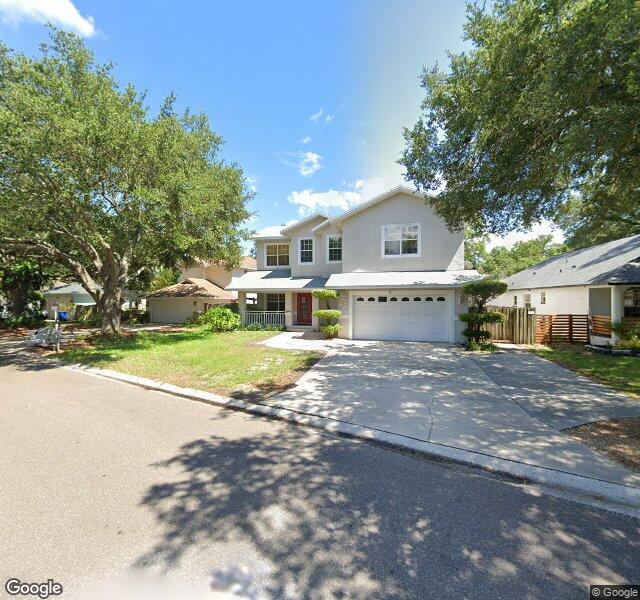
VIVO HEALTHCARE ST PETERSBURG

521 69TH AVE N, SAINT PETERSBURG, FL 33702 (727) 526-7000
For profit - Limited Liability company 96 Beds VIVO HEALTHCARE Data: November 2025 2 Immediate Jeopardy citations
Trust Grade
0/100
#682 of 690 in FL
Last Inspection: July 2025

Inspected within the last 6 months. Data reflects current conditions.

Overview

Vivo Healthcare in St. Petersburg has received a Trust Grade of F, indicating significant concerns about its operations and care quality. It ranks #682 out of 690 facilities in Florida, placing it in the bottom half statewide, and it is the lowest-ranked facility in Pinellas County. The trend is worsening, with issues increasing dramatically from just one in 2024 to 25 in 2025. While staffing is rated average with a 3/5 rating, the turnover rate is concerning at 72%, well above the state average. There have been serious fines totaling $142,574, which is higher than 93% of Florida facilities, indicating ongoing compliance issues. However, despite these weaknesses, the facility does have a decent quality measures rating of 4/5. Specific incidents from inspections include a critical failure to ensure safe discharge planning for a resident, leading to their return to an unsafe home environment, and a lack of proper assessments for residents prior to admission. Families should weigh these significant concerns against the facility's average staffing levels and quality measures when making a decision.

Trust Score
F
0/100
In Florida
#682/690
Bottom 2%
Safety Record
High Risk
Review needed
Inspections
Getting Worse
1 → 25 violations
Staff Stability
⚠ Watch
72% turnover. Very high, 24 points above average. Constant new faces learning your loved one's needs.
Penalties
⚠ Watch
$142,574 in fines. Higher than 84% of Florida facilities, suggesting repeated compliance issues.
Skilled Nurses
○ Average
Each resident gets 32 minutes of Registered Nurse (RN) attention daily — about average for Florida. RNs are the most trained staff who monitor for health changes.
Violations
⚠ Watch
42 deficiencies on record. Higher than average. Multiple issues found across inspections.
★☆☆☆☆
1.0
Overall Rating
★★★☆☆
3.0
Staff Levels
★★★★☆
4.0
Care Quality
★☆☆☆☆
1.0
Inspection Score
Stable
2024: 1 issues
2025: 25 issues

The Good

  • 4-Star Quality Measures · Strong clinical quality outcomes
  • Full Sprinkler Coverage · Fire safety systems throughout facility
  • No fines on record

Facility shows strength in quality measures, fire safety.

The Bad

1-Star Overall Rating

Below Florida average (3.2)

Significant quality concerns identified by CMS

Staff Turnover: 72%

26pts above Florida avg (46%)

Frequent staff changes - ask about care continuity

Federal Fines: $142,574

Well above median ($33,413)

Significant penalties indicating serious issues

Chain: VIVO HEALTHCARE

Part of a multi-facility chain

Ask about local staffing decisions and management

Staff turnover is very high (72%)

24 points above Florida average of 48%

The Ugly 42 deficiencies on record

2 life-threatening
Jul 2025 23 deficiencies
CONCERN (D)

Potential for Harm - no one hurt, but risky conditions existed

Resident Rights (Tag F0550)

Could have caused harm · This affected 1 resident

**NOTE- TERMS IN BRACKETS HAVE BEEN EDITED TO PROTECT CONFIDENTIALITY** Based on observations, record reviews and interviews the facility failed to ensure dignity was provided related to residents hav...

Read full inspector narrative →
**NOTE- TERMS IN BRACKETS HAVE BEEN EDITED TO PROTECT CONFIDENTIALITY** Based on observations, record reviews and interviews the facility failed to ensure dignity was provided related to residents having private access to a phone for two residents (#47 and #40) out of 21 sampled residents, and failed to ensure dignity was provided during meals in one of two dining rooms and failed to ensure dignity was provided related to standing while assisting one resident (#35) of 21 sampled residents.Findings Included: 1. During an interview on 07/01/2025 at 10:15 a.m., Resident #47 stated he had an issue last night with staff not allowing him to have a private phone call in the dining room. He stated he was on the phone when a staff member came in and told him he was not allowed to be in the dining room at that time. I had to hang up with the person I was speaking with and go back to my room. I would like a private area to have a conversation where my phone gets service at. Review of Resident #47's admission record revealed an admission date of 05/01/2025. Resident #47 was admitted to the facility with diagnosis to include depression, attention-deficit hyperactivity disorder, and personal history of traumatic brain injury.Review of Resident #47's Medicare 5-day Minimum Data Set (MDS) dated [DATE] revealed Section C. Cognitive Patterns, a Brief Interview Mental Status (BIMS) score of 14 out of 15 showing intact cognition.During an interview on 07/01/2025 at 10:44 a.m., the Social Services Director (SSD) stated Resident #47 was talking on the phone in the dining room, with his girlfriend and a staff member told him he could not be in there by himself. I'm not sure why the staff member told him he could not go in the dining room. Residents are allowed to go in the dining room.During an interview on 07/02/2025 at 3:15 p.m., the Nursing Home Administrator (NHA) stated Yes, Resident #47 should have been allowed to stay in the dining room for his conversation.2. On 06/30/25 at 12:41 p.m. Resident #40 was observed at the nurses' station on the second floor trying to utilize the telephone. Several staff members were observed asking Resident #40 if assistance was needed, each time Resident #40 said no. Resident #40 appeared to be getting frustrated with the staff and kept looking over his/her shoulder. Staff kept asking and remained at the nurses' station as Resident #40 was trying to dial. Resident #40 stated, I know what I am doing. The resident was not offered another option for privacy. During an interview on 07/01/25 at 8:46 a.m. Staff J, Certified Nursing Assistant (CNA) stated the residents are able to utilize the phone at the nurses' station if they don't have a cell phone. During an interview on 07/01/25 at 4:09 p.m. Staff I, CNA stated the residents are able to utilize the phone at the nurses' station. During an interview on 07/01/25 at 4:52 p.m. Staff F, Licensed Practical Nurse (LPN) stated most residents have their own cell phones otherwise they can use the phone at the nurses' station.3. On 06/29/25 at 12:10 p.m. Resident #35 was observed sitting in a wheelchair, with the lunch meal on the over bed table and Staff H, CNA, standing in front of the over the bed table assisting Resident #35 with the meal. During an interview on 07/01/25 at 4:09 p.m. Staff I, CNA, confirmed standing while assisting Resident #35 with the meal on 06/29/25 during lunch. Staff I, CNA stated there is not a chair in the resident's room, not supposed to sit on the resident's bed and would have had to go down to the activity room to get a chair. I just felt like standing. Staff I, CNA, confirmed standing most of the time when assisting residents with their meals. 4. On 06/29/25 at 12:25 p.m. five residents were observed in the second-floor activity/dining room waiting for tray delivery. Three of the five residents received trays from the first cart that arrived to the dining room. Two residents who were sitting together, at a separate table from the other residents, were not served their trays. One of the two residents who had not received their meal tray was heard requesting to eat. Trays had not arrived to the dining room before 12:40 p.m. when the surveyor left. During an interview on 06/29/25 at 12:35 p.m. Staff H, CNA stated the second cart for the floor has those residents' trays, the other cart comes later, about 30 minutes or so. The trays are in order of room number only.On 07/01/25 at 11:52 a.m. eight residents were observed in the second-floor activity/dining room. Three residents were seated at a table (table 1), one resident alone at a table (table 2), and another three residents at another table (table 3). Table 1 and 2 were served with their meals and were able to begin the dining experience. Table 3 was not served their meals at this time. During an interview on 07/01/25 at 12:00 p.m. Staff I, CNA stated the second cart for the floor has those three residents' trays on them, their trays come later, in the second cart. The second cart has the other half of the floor's trays, arrives about 30 minutes after the first cart. The trays are in order of the residents' room number only.During an interview on 07/01/25 at 5:00 p.m. Staff G, Licensed Practical Nurse (LPN)/Unit Manager (UM), stated staff should be seated when assisting residents with meals and residents should be served at the same time. During an interview on 07/02/25 at 1:13 p.m. the Director of Nursing (DON) stated the expectation is for residents to be served together and staff should be seated while assisting residents with the meal.Review of the facility's policy and procedure titled Promoting/Maintaining Resident Dignity, dated 01/2025 revealed: Policy: It is the practice of this facility to protect and promote resident rights and treat each resident with respect and dignity as well as care for each resident in a manner and in an environment, that maintains or enhances resident's quality of life by recognizing each resident's individuality. Compliance Guidelines: 1. All staff members are involved in providing care to residents to promote and maintain resident dignity and respect resident rights.
CONCERN (D) 📢 Someone Reported This

A family member, employee, or ombudsman was alarmed enough to file a formal complaint

Potential for Harm - no one hurt, but risky conditions existed

Notification of Changes (Tag F0580)

Could have caused harm · This affected 1 resident

**NOTE- TERMS IN BRACKETS HAVE BEEN EDITED TO PROTECT CONFIDENTIALITY** Findings included: 1. During an interview on 06/29/25 at 10:52 AM Resident #32 stated having concerns regarding not receiving me...

Read full inspector narrative →
**NOTE- TERMS IN BRACKETS HAVE BEEN EDITED TO PROTECT CONFIDENTIALITY** Findings included: 1. During an interview on 06/29/25 at 10:52 AM Resident #32 stated having concerns regarding not receiving medications as ordered by the physician. Review of the admission Record for Resident #32 revealed an admission on [DATE] and re-admitted on [DATE] with the following diagnosis: urinary tract infections (UTI), paraplegia, multi-drug-resistant infection, bell's palsy, low back pain, pain, other intervertebral disc displacement, lumbar region, female pelvic inflammatory disease, muscle spasm, need for assistance with personal care, hereditary idiopathic neuropathy, and other co-morbidities. Review of Resident #32's Minimum Data Set (MDS) assessment, dated 04/08/25, revealed Section C Cognitive Patterns, revealed a score of 14 out 15 on the Brief Interview for Mental Status (BIMS) assessment, indicating the resident was cognitively intact. Review of Resident #32's physician order dated to 06/23/2025 at 09:49 AM for INVanz Injection Solution Reconstituted 1 gram (GM) to be given intravenously at bedtime for UTI for 10 days. Review of Resident #32's Medication Administration Record (MAR) revealed: documentation of number 9 indicating Other/See Progress Notes on 06/23, 24, 25, & 29/2025. The progress notes revealed: 6/23/2025 at 21:02 Note Text: INVanz Injection Solution Reconstituted 1 GM, medication not available, called pharmacy. 6/24/2025 at 22:15 Note Text: INVanz Injection Solution Reconstituted 1 GM, on order6/25/2025 no entry found 6/26/2025 at 06:59 Note Text: INVanz Injection Solution Reconstituted 1 GM, this was to be ran on previous shift6/29/2025 at 21:55 Note Text: INVanz Injection Solution Reconstituted 1 GM, Called pharmacy, medication on order.Review of Resident #32's medical record, including assessment/evaluations, progress and physician notes, no documentation was found to show the physician had been notified of the medication not being available/administered. During an interview on 07/01/25 at 04:52 PM Staff F, Licensed Practical Nurse (LPN) stated the process when receiving a new order for medication from the physician is to, input the order into the computer which notifies the pharmacy of the need for delivery. If the medication is available in our emergency medication bank, we can pull the medication from the bank and administer. If the medication is not in the bank, we contact the pharmacy and see when the medication will be delivered, the medication can always be sent STAT (immediately, within 4 hours). We then contact the physician with the information and see if there are new orders to follow. Staff F, LPN confirmed the physician would need to be contacted if the medication is not available or for any reason not administered to the resident. During an interview on 07/01/25 at 05:00 PM with Staff G, LPN/Unit Manager (UM) stated if medication is not available or administered the physician should be notified. Documentation should show notification to the physician and if any new orders were received. During an interview on 07/02/25 at 01:13 PM the Director of Nursing (DON) confirmed Resident #32's medical record did not have documentation of the medication being administered and lacked documentation the physician was notified. The DON stated the expectation is for medication to be administered as the physician orders, if the order cannot be carried out the physician should be notified. During an interview on 07/02/25 at 07:37 PM the physician to Resident #32 stated the facility had not notified him of the medication not being available nor administered. The physician stated, the facility should have contacted me, especially with the resident's issues with infections being resistant to multiple drugs. New orders need to be placed.2. During an interview on 06/30/25 at 03:30 PM the resident representative (RR) to Resident #338 stated the facility left a voice mail, on 01/31/25 at 02:00 PM stating Resident #338 had obtained a scratch on the elbow, nothing serious and a band aid was applied, no need to call back. The next call I received was on 02/01/25 at 2:00 AM when the hospital called and informed us Resident #338 was in the Intensive Care Unit (ICU) and requested permission to place a central line. Review of the admission Record for Resident #338 revealed an admission on [DATE] with the following diagnosis: hepatic encephalopathy, hypertension, other pancytopenia, need for assistance with personal care and other co-morbidities. Review of Resident #338's progress notes revealed: -01/28/25 at 11:01 PM Interdisciplinary Team (IDT) met to discuss fall on 01/27/25. No other documentation exists regarding 01/27/25 fall including notification to physician or RR. -01/31/25 at 02:59 PM Change of Condition (COC) resident had an increase in confusion. Notifications occurred to the physician and RR. -01/31/25 at 07:33 PM COC resident had a fall. No documentation of notification to physician or RR. -02/01/25 at 03:54 AM the resident was sent to the hospital. No notification to the RR. During an interview on 07/02/25 at 01:13 PM the DON confirmed Resident #338's record did not show notification to the RR for Resident #338's COC on 01/27/25, 01/31/25 at 07:33 PM and the 02/01/25 transfer to the hospital. The DON stated the expectation is for RR be notified of any change in condition of the resident. Review of the facility's policy and procedure titled Notification of Changes, revised 5/2024 revealed: Policy: The purpose of this policy is to ensure the facility promptly informs the resident, consults the resident's physician; and notifies, consistent with his or her authority, the resident's representative when there is a change requiring notification . The facility must inform the resident, consult with the resident's physician and/or notify the resident's family member or legal representative when there is a change requiring such notification. Circumstances requiring notification include:1. Accidentsa. Any accident with or without injury.b. Potential to require physician intervention.2. Significant change in the resident's physical, mental or psychosocial condition such as deterioration in health, mental or psychosocial status. This may include:a. Life-threatening conditions, orb. Clinical complications.3. Circumstances that require a need to alter treatment. This may include:a. New treatment.b. Discontinuation of current treatment due to:i. Adverse consequences.ii. Acute condition.iii. Exacerbation of a chronic condition.4. A transfer or discharge of the resident from the facility Additional considerations:1. Competent individuals:a. The facility must still contact the resident's physician and notify resident's representative, if known.b. A family that wishes to be informed would designate a member to receive calls.c. When a resident is mentally competent, such a designated family member should be notified of significant changes in the resident's health status because the resident may not be able to notify them personally, especially in the case of sudden illness or accident.
CONCERN (D)

Potential for Harm - no one hurt, but risky conditions existed

Deficiency F0583 (Tag F0583)

Could have caused harm · This affected 1 resident

Based on observations and interviews, the facility failed to ensure privacy of resident information on one floor (1st) out of two floors in the facility.Findings Included: An observation was conducted...

Read full inspector narrative →
Based on observations and interviews, the facility failed to ensure privacy of resident information on one floor (1st) out of two floors in the facility.Findings Included: An observation was conducted on 6/30/25 at 12:27 p.m. in the 100 [NAME] Hall of a medication cart with the computer screen unlocked. A resident's private information was visible to anyone in the hall and there was no staff member present. An interview was conducted on 6/30/25 at 12:29 p.m. with Staff M, Licensed Practical Nurse (LPN). Staff M, LPN returned to her medication cart and confirmed she left the screen unlocked with a resident's medical record displayed. Staff M, LPN said she only walked away to get a blood pressure cuff. She confirmed the screen should have been locked. An observation was conducted on 7/1/25 at 10:15 a.m. of a resident's lab order sitting face up on the upper counter of the first-floor nurses' station. No staff were working at the counter. An observation was conducted on 7/1/25 at 11:51 a.m. of a medication cart on the 100 East Hall with no staff present. There was a piece of paper face up on top of the medication cart that contained multiple residents' private information. An observation was conducted on 7/1/25 at 6:20 p.m. of a medication cart on the 100 East Hall with no staff present. There was an empty medication bubble pack sitting face up on the top with a resident's name and prescription information. An interview was conducted on 7/2/25 at 6:20 p.m. with Staff R. LPN/Unit Manager (UM). Staff R, LPN/UM was brought to the medication cart where she confirmed the medication bubble pack should not have been left sitting on the top of the cart. She said the top of the card with resident information should have been torn off and put in the shred bin. Staff R, LPN/UM stated, It is a HIPPA [Health Insurance Portability and Accountability] problem. Staff R, LPN/UM said the nurse assigned to the cart was on break. Staff R, LPN/UM said staff are educated on the privacy of resident information.An interview was conducted on 7/02/25 08:36 p.m. with the Nursing Home Administrator (NHA). She said resident information should be face down and not visible. The NHA confirmed resident information should not be left on medication carts and on the high counter of the nurse's station when staff aren't present.The facility did not provide the requested policy related to privacy of resident information by the survey exit.
CONCERN (D)

Potential for Harm - no one hurt, but risky conditions existed

Quality of Care (Tag F0684)

Could have caused harm · This affected 1 resident

**NOTE- TERMS IN BRACKETS HAVE BEEN EDITED TO PROTECT CONFIDENTIALITY** Based on observations, interviews, and record review, the facility did not ensure quality care and services were provided to one...

Read full inspector narrative →
**NOTE- TERMS IN BRACKETS HAVE BEEN EDITED TO PROTECT CONFIDENTIALITY** Based on observations, interviews, and record review, the facility did not ensure quality care and services were provided to one resident (#33) out of thirty-six residents reviewed related to physician orders for intravenous (IV) site dressing changes. Findings included:On 6/29/25 at 10:06 a.m., an observation of Resident #33 revealed he was sitting up in bed with the television on and looking at his personal cell phone. Further observation of the resident revealed a central line IV site on his right chest with the dressing dated 6/18/25. Further observation of the dressing revealed an initial that appeared to be, AN. Photographic evidence obtained with the permission of Resident #33.On 6/30/25 at 10:21 a.m., an observation of Resident #33 revealed the central line IV site on his right chest dressing was still dated 6/18/25.On 6/30/25 at 10:23 a.m., an interview was conducted with Staff F, Licensed Practical Nurse (LPN). She said Resident #33 declined for staff to remove the central IV line. Staff F, LPN said he wanted to go to his doctor outside the facility to remove the central IV line. She stated, He handles his own affairs and transportation. She said the floor nurse's do the flushes. She stated, That's on the orders. Staff L, LPN stated, I have not been here, but I got verbal report, about Resident #33 refusing to let nursing staff change the dressing or remove the central IV line. She said she had not documented that, but it should be documented in Resident #33's progress notes by other staff.A review of Resident #33's admission record revealed an original admission date of 4/11/25 and re-admission date of 5/29/25. Further review of the admission record revealed diagnoses to include muscle wasting and atrophy, not elsewhere classified, multiple sites, muscle weakness (generalized), severe sepsis with septic shock, adjustment disorder with mixed anxiety and depressed mood, other malaise, and dependence on wheelchair. A review of Resident #33's Minimum Data Set (MDS), dated [DATE], showed a Brief Interview for Mental Status (BIMS) score of 14 out of 15, cognitively intact.A review of Resident #33's physician's orders revealed the following:- Change midline IV dressing 24 hours post insertion, then every (q) week and as needed (PRN) for IV site care use securement device with each dressing change. Start date 6/3/25 and no end date.- Change midline IV dressing 24 hours post insertion, then q week and PRN one time a day every 7 days for IV site care use securement device with each dressing change. Start date 6/4/25 and no end date.A review of Resident #33's progress notes revealed the following to include:- 6/18/25, Changed right chest central line dressing w/o [without] diff [different] Primary nurse at BS [bedside]. No s/s [signs and symptoms] of infection. Pt [patient] tol [tolerate] well. Pt friend at BS. Call bell in reach.-6/23/25, Pt sitting up in bed visitor at bs. Right chest central line IV drsg [dressing] clean, dry & intact. No c/o [complaint] pain or s/s of distress. Call bell in reach.-6/28/25, The Change In Condition/s [CIC] reported on this CIC Evaluation are/were: Fever . Nursing observations, evaluation, and recommendations are: CNA [certified nursing assistant] summoned this writer to [room number].Pt laying in bed. Flushed face & pt stated i feel hot inside my body but cold outside my body . Primary Care Provider Feedback: Primary Care Provider responded with the following feedback: A. Recommendations: Send to ER [emergency room] for r/o [rule out] sepsis and remove Central line .-6/28/25, Resident returned from ER with no new orders . Right central line drsg CDI [clean, dry, and intact], no redness nor warmth noted.A review of progress notes revealed no documentation from 6/18/25 to 6/30/25 of Resident #33 refusing the central line IV dressing changes or care.A review of Resident #33's June medication administration record (MAR) and treatment administration record (TAR) revealed the orders for changing the midline IV dressing was marked as completed on 6/4/25, 6/11/25, 6/18/25, and 6/25/25.On 7/1/25 at 4:39 p.m., an interview with Staff G, LPN/Unit Manager (UM) was conducted. She said the 3:00 p.m. - 11:00 p.m. Registered Nurse (RN) supervisor was completing all the dressings, changing foley bags, and overseeing infection control. Staff G, LPN/UM said Resident #33's central IV dressing was supposed to be changed every 7 days. She stated, From my understanding it was being done. Staff G, LPN/UM said she knows the dressing changes were completed because of the documentation and the RN supervisor told her. She said she was not aware the central line IV dressing had not been changed since 6/18/15. Staff G, LPN/UM said she should have been made aware and there should be documentation. She stated, I wouldn't know any other way.On 7/1/25 at 5:13 p.m., a phone interview was conducted with the 3:00 p.m. - 11:00 p.m. RN supervisor. She said she previously was the infection preventionist (IP). The RN supervisor said Resident #33 didn't want the central line taken out by any of the nurses. She stated she did not document refusals and, I just heard about it. She said the Advanced Registered Nurse Practitioner (ARNP) removed the central line. She stated, The doctors and everyone knew, that he did not want the central IV line to be taken out. She said the last time she changed his dressing was when she was the IP. The RN supervisor said that it was most likely the beginning of June 2025. She confirmed the physician order was for the dressing change to be completed every 7-10 days. She stated she could not confirm when the last time she completed the dressing change was but, I always put my initial. She said Resident #33 always let her change the dressing. She stated, It should not have been more than 7-10 days to change it.On 7/02/25 at 11:33 a.m., an interview was conducted with the Director of Nursing (DON). She said the assigned nurse is responsible for completing the care and dressing change of the central IV line. She said if Resident #33's MAR and TAR were checked off as completed, she expected it would have been done. The DON said Resident #33 does refuse care and dressing changes. She stated, He only wants the MD [Medical Doctor] or NP [Nurse Practitioner] to touch the dressing. The DON said she expected there to be documented refusals about not wanting anyone except for the MD and the NP to change the central line IV dressing. She reviewed the progress notes and confirmed she didn't see any documentation.A policy on following physician orders was requested but not provided by the facility by the survey exit.
CONCERN (D)

Potential for Harm - no one hurt, but risky conditions existed

Deficiency F0688 (Tag F0688)

Could have caused harm · This affected 1 resident

**NOTE- TERMS IN BRACKETS HAVE BEEN EDITED TO PROTECT CONFIDENTIALITY** Based on observations, interviews, and record review the facility failed to provide appropriate bathing equipment for three resi...

Read full inspector narrative →
**NOTE- TERMS IN BRACKETS HAVE BEEN EDITED TO PROTECT CONFIDENTIALITY** Based on observations, interviews, and record review the facility failed to provide appropriate bathing equipment for three residents (#32, #11, & #2) out of three sampled residents.Findings included: On 06/29/25 at 10:17 a.m. Resident #2 was observed in a Geri-chair at the nurses' station with a staff member. Resident #2's hair was not brushed and looked unwashed. Review of the admission Record for Resident #2 revealed an admission on [DATE] with the following diagnosis: dementia with behavioral disturbance, schizophrenia, seizures, major depressive disorder, anxiety disorder, need for assistance with personal care, reduced mobility, drug induced subacute dyskinesia, and other co-morbidities. Review of Resident #2's physician visit dated: 05/31/25 revealed: Resident is alert and oriented to self only, able to answer short questions. Review of Resident #2's MDS assessment, dated 04/05/25, revealed: Section GG, Functional Status indicated Resident #2 required total assistance with shower/bathe self, rolling side to side in bed, sit to lying, and for chair/bed to chair transfer. Review of Resident #2's care plan, initiated on 10/13/24, revealed a Focus area of:The resident has an ADL self-care performance deficit. Interventions/Tasks: .Bathing/showering: The resident requires assistance with bathing/showering . On 06/29/25 at 10:49 a.m. and 06/30/25 at 01:00 p.m. Resident #11 was observed in bed, bilateral hand contractures, both hands bent with fingers to the palms. There was a strong yeast like odor, especially strong near the resident. On 06/29/25 at 10:49 a.m. Resident #11 stated a shower would be nice. Review of the admission Record for Resident #11 revealed an admission on [DATE] and re-admitted on [DATE] with the following diagnosis: epilepsy, lymphedema, peripheral vascular disease, chronic obstructive pulmonary disease (COPD), delusional disorders, muscle wasting and atrophy, need for assistance with personal care, other reduced mobility and other co-morbidities. Review of Resident #11's Psychiatry Progress Note dated: 06/26/25 revealed: Cognition: Summary: Resident #11 is alert and oriented to self and setting. Thought processes are linear and goal directed. She demonstrates adequate social cognition, though she displays limited insight into her delusional thought content. Judgment and impulse control remain intact during evaluation. Review of Resident #11's MDS assessment, dated 06/27/25, revealed Section GG, Functional Status indicated Resident #11 required total assistance with shower/bathe self, rolling side to side in bed, sit to lying, and for chair/bed to chair transfer. Review of Resident #11's care plan, initiated on 05/20/21, revealed a Focus area of:- Resident #11 has pain symptoms related to: neuropathy, buttock wound, history of fracture of right trochanter, impaired mobility, Resident is able to communicate pain to staff. Interventions/Tasks: . Observe for proper body alignment when in bed/ chair; assist with repositioning as needed.- Resident #11 has a self-care deficit with dressing, grooming, bathing related to (r/t): generalized weakness, limited endurance due to contractures of legs and chronic pain issues. Interventions/Tasks: Utilize mechanical lift with staff assist of two for transfers. Provide hands-on assistance with dressing, grooming, and bathing as needed . Encourage resident to take rest breaks during ADL tasks as needed for SOB (shortness of breath)/fatigue .-Resident #11 has a strength in cognitive function as evidence by (AEB) is oriented to person, place, and time. Short term (ST)/Long Term (LT) memory are intact. Is able to make daily decisions independently.-Resident #11 has an ADL self-care performance deficit r/t musculoskeletal impairment. Interventions/Tasks: .Toileting hygiene: The resident requires (assistance) with toileting hygiene. Bathing/showering: The resident requires (assistance) with bathing/showering. Lying to sitting: Resident requires (assistance) with sitting to lying. Sit to stand: Resident requires (assistance) with sitting to standing. Chair to bed transfer: The resident requires (assistance) with transfers from chair to bed. Toilet transfer: The resident requires (assistance) with toilet transfers. Tub/shower transfer: The resident requires (assistance) with transfers in and out of the tub/shower. Transfer: The resident requires mechanical lift with two staff for transfers . 3. During an observation and interview conducted on 06/29/25 at 10:52 a.m. Resident #32 was lying in bed, hair unwashed. Resident #32 stated they never shower me, only bed baths. During an observation and interview conducted on 07/01/25 at 07:58 a.m. Resident #32 was lying in bed, unwashed. Resident #32 confirmed not being offered a shower yet, they have no way to get me up. Review of the admission Record for Resident #32 revealed an admission on [DATE] and re-admitted on [DATE] with the following diagnoses: paraplegia, urinary tract infections, multi-drug resistant, bell's palsy, low back pain, pain, other intervertebral disc displacement, lumbar region, female pelvic inflammatory disease, muscle spasm, need for assistance with personal care, hereditary idiopathic neuropathy, and other co-morbidities. Review of Resident #32's Minimum Data Set (MDS) assessment, dated 04/08/25, revealed Section C Cognitive Patterns, a score of 14 out of 15 on the Brief Interview for Mental Status (BIMS) assessment, indicating the resident was cognitively intact. Section GG, Functional Status indicated Resident #32 required substantial/maximal assistance with shower/bathe self, rolling side to side in bed, sit to lying, and totally dependent on staff for chair/bed to chair transfer. Review of Resident #32's care plan, initiated on 10/12/24, revealed a focus area of:-Resident #32 has an Activities of Daily Living (ADL) self-care performance deficit related to bell's palsy, paraplegia, limited range of motion (ROM) to bilateral ankles. Interventions/Tasks revealed: bathing/showering: The resident requires total assistance with bathing/showering. Roll left to right: The resident requires total assistance to roll left to right; chair to bed transfer: The resident requires total assistance with transfers from chair to bed. Toilet transfer: The resident requires total assistance with toilet transfers. Tub/shower transfer: The resident requires total assistance with transfers in and out of the tub/shower. Transfer: The resident requires a mechanical lift with two staff for transfers.-Resident #32 is at risk for altered level of comfort/pain paraplegia, wound, muscle spasms, neuropathy, endometriosis, bell's palsy, and lumbar pain. Interventions/Tasks revealed: Evaluate the effectiveness of pain interventions, as needed. Review for compliance, alleviating symptoms, dosing schedules and resident satisfaction with results, impact on functional ability and impact on cognition. Monitor/document for side effects of pain medication. Observe for constipation; new onset or increased agitation, restlessness, confusion, hallucinations, dysphoria; nausea; vomiting; dizziness and falls. Report occurrences to the physician. Monitor/record/report to Nurse any signs and symptoms of non-verbal pain: Changes in breathing (noisy, deep/shallow, labored, fast/slow); vocalizations (grunting, moans, yelling out, silence); mood/behavior (changes, more irritable, restless, aggressive, squirmy, constant motion); eyes (wide open/narrow slits/shut, glazed, tearing, no focus); face (sad, crying, worried, scared, clenched teeth, grimacing) body (tense, rigid, rocking, curled up, thrashing). Observe and report changes in usual routine, sleep patterns, decrease in functional abilities, decrease ROM, withdrawal or resistance to care. During an interview on 07/01/25 at 04:09 p.m., Staff I, Certified Nursing Assistant (CNA) stated there is a shower schedule in the shower book at the nurses' station. Usually, residents are bathed two times per week unless residents request additional baths. Staff I, CNA stated if a resident is not able or does not want to sit up straight in a shower chair, we just take buckets to them as we only have shower chairs, we do not have a reclining chair or bed. During an interview on 07/01/25 at 04:15 p.m. Staff F, Licensed Practical Nurse (LPN) stated residents are usually showered two times per week, or as residents' request. The CNAs complete the showers; the nurses only receive information from the CNA if the resident has a skin issue. We don't have a shower bed. We utilize a shower chair, or the resident receives a bed bath if they cannot sit up. During an interview on 07/01/25 at 04:33 p.m., Staff G, LPN/Unit Manager (UM) stated the floor has a total lift for residents who cannot sit up in the shower chair. We do not have a shower chair that reclines or a shower bed that would allow the resident to lie back. If a resident refuses, then the nurse should be notified, and documentation of the refusal should be made. Then a bed bath would be offered after the refusal is documented. During an interview on 07/01/25 at 04:42 p.m., Staff K, CNA stated residents who need or want to lie down, don't have a shower bed. We just give bed baths. During an interview on 07/02/25 at 01:13 p.m., the Director of Nursing (DON) stated the expectation is for residents to receive a shower or bath. If the facility does not have a shower bed or reclining chair then we would need to request the Nursing Home Administrator (NHA) for the equipment needed, a bed bath is fine for a short period of time. We would need to meet with therapy to ask for recommendations on assistance and what is safest for the resident. During an interview on 07/02/25 at 12:32 p.m. the Director of Rehabilitation (DOR) stated there are several residents that the shower chair is not an appropriate option for, as it would not be safe for the residents not being able to sit up in the shower chair. Review of the facility's policy and procedure titled Accommodation of Needs dated revised 09/01/23 revealed: Policy: The facility will treat each resident with respect and dignity and will evaluate and make reasonable accommodations for the individual needs and preferences of a resident, except when the health and safety of the individual or other residents would be endangered.Policy Explanation and Compliance Guidelines:1. The facility will make reasonable accommodations to individualize the resident's physical environment including their personal bathroom and bedroom and the common living areas within the facility.2. The facility will ensure that common areas frequented by residents are accommodating physical limitations and enhance their abilities to maintain independence.3. Facility staff shall make efforts to reasonably accommodate the needs and preferences of the resident as they make use of their physical environment.4. Based on individual needs and preferences, the facility will assist the resident in maintaining and/or achieving independent functioning, dignity, and well-being to the extent possible.
CONCERN (D)

Potential for Harm - no one hurt, but risky conditions existed

Deficiency F0692 (Tag F0692)

Could have caused harm · This affected 1 resident

**NOTE- TERMS IN BRACKETS HAVE BEEN EDITED TO PROTECT CONFIDENTIALITY** Based on interviews and record review the facility did not ensure monitoring and interventions were put in place related to a si...

Read full inspector narrative →
**NOTE- TERMS IN BRACKETS HAVE BEEN EDITED TO PROTECT CONFIDENTIALITY** Based on interviews and record review the facility did not ensure monitoring and interventions were put in place related to a significant weight loss for one resident (#44) out of three residents reviewed for nutrition.Findings included: Review of admission Records showed Resident #44 was admitted on [DATE] with diagnoses including end stage renal disease and unspecified protein-calorie malnutrition. Review of Resident #44's weights showed the resident had a post-dialysis weight of 163.9 pounds (lbs.) on 5/21/25 and a post-dialysis weight of 149.6 lbs. on 6/16/25, showing an 8.72% weight loss in less than 30 days. Review of Resident #44's Mini Nutritional Assessment, dated 5/20/25, showed the resident had not had any weight loss in the previous 3 months. The assessment also indicated the resident was at risk of malnutrition. Review of Resident #44's Progress Notes did not show any dietary notes since the nutrition assessment on 5/20/25. An interview was conducted on 7/1/25 at 2:45 p.m. with the Registered Dietician (RD) that sees Resident #44 at the dialysis center. The RD said Resident #44 had a pretty significant weight loss in the past month. The RD said they provided what nutrition support they can at the dialysis center, but the facility should have been tracking the resident's weight loss and put interventions in place. The RD said the weight loss Resident #44 had was not due to normal dialysis fluctuations. The RD at the dialysis center said she attempted to reach Staff S, RD at the facility on 6/16/25 and did not receive a return call. She said she reached back out to Staff S, RD on 6/22/25 and was able to speak with her about the resident's weight loss. The RD from the dialysis center said her records showed Resident #44 had a weight of 162.5 lbs. on 6/6/25 and a weight of 149.6 on 6/30/25, showing a 7.94% weight loss in 24 days. An interview was conducted on 7/2/25 at 11:04 a.m. with Staff T, RD and the Regional Dietician. Staff T said typically when a resident had weight loss it triggered in the electronic medical record and was linked to the progress notes. The Regional Dietician reviewed Resident #44's medical record confirmed there had been no documentation the resident was being followed for weight loss. She said she would have expected to see a note from Staff S, RD, especially if the dialysis center reached out to her about weight concerns for the resident. Review of a facility policy titled Weight Monitoring, revised 1/2025, showed:Policy:Based on the resident's comprehensive assessment, the facility will ensure that the highest level of nutritional status, such as usual body weight or desirable body weight range, unless the resident's clinical condition demonstrates that this is not possible or resident preferences indicate otherwise.Compliance Guidelines:Weight can be a useful indicator of nutritional status. Significant unintended changes in weight (loss or gain) or insidious weight loss (gradual unintended weight loss over a period of time) may indicate a nutritional problem.1. The facility will utilize a systemic approach to optimize a resident's nutritional status. This process includes:a. Identifying and assessing each resident's nutritional status and risk factors.b. Evaluating/analyzing the assessment informationc. Developing and consistently implementing pertinent approaches.d. Monitoring the effectiveness of interventions and revising them as necessary 8. Documentation:a. The physician and family or responsible party should be informed of a significant change in weight.b. The physician may order nutritional interventions and should be encouraged to document the diagnosis or clinical condition that may be contributing to the weight loss.c. The Registered Dietician or Dietary Manger should be consulted to assist with interventions; actions are recorded in the nutrition progress notes.d. Observations pertinent to the resident's weight status should be recorded in the medical record as appropriate.e. The interdisciplinary plan of care communicates care instructions to staff.
CONCERN (D)

Potential for Harm - no one hurt, but risky conditions existed

Deficiency F0776 (Tag F0776)

Could have caused harm · This affected 1 resident

**NOTE- TERMS IN BRACKETS HAVE BEEN EDITED TO PROTECT CONFIDENTIALITY** Based on observation, record review and interviews, the facility failed to ensure a Calcium Tomography Angiography (CTA) was com...

Read full inspector narrative →
**NOTE- TERMS IN BRACKETS HAVE BEEN EDITED TO PROTECT CONFIDENTIALITY** Based on observation, record review and interviews, the facility failed to ensure a Calcium Tomography Angiography (CTA) was competed for one (Resident #4) out of 21 residents sampled.Findings Included: During an interview on 06/30/2025 at 10:29 a.m., Resident #4 stated she was supposed to have a cat (CT) scan completed on Friday (06/27/2025) at 8:00 a.m. When I asked transportation about the appointment on Friday, I was told he cannot just take me to appointments. The CT is supposed to be done before I see my Vascular Surgeon on Wednesday (07/01/2025) so that he can review it and schedule my surgery. Now I am afraid the CT is not going to be scheduled in time for my appointment on Wednesday. I was told it would be rescheduled but no one has told me if it has been rescheduled. Review of Resident #4's admission record revealed an admission date of 06/04/2025. Resident #4 was admitted to the facility with diagnosis to include unspecified sequelae of cerebral infarction, muscle weakness (generalized), altered mental status, personal history of other venous thrombosis and embolism, personal history of transient ischemic attack (TIA), and cerebral infarction without residual deficits, cerebral infarction, anxiety disorder, and other specified peripheral vascular diseases. Review of Resident #4's admission Minimum Data Set (MDS) dated [DATE] revealed, Section C. Cognitive Patterns, a Brief Interview Mental Status (BIMS) score of 15 out of 15 showing intact cognition. Review of Resident #4's Orders Revealed:-Start Date: 06/17/2025 Discontinued 06/26/2025Appointment at Bayfront [NAME] Imaging for the CTA with contrast on June 27th at 8:30 a.m. but must arrive at 8:00 a.m. must have nothing by mouth (NPO) after midnight drink plenty of water the day before. Make sure Resident #4 comes with a medication list and script for the CTA every night shift for procedure until 06/27/2025 23:59 do paperwork and make sure up and ready for pick up.-Start Date: 06/17/2025 Discontinued: 06/30/2025Follow up with the vascular surgeon office. To go over the CTA results with the resident. During an interview on 06/30/2025 at 10:40 a.m., the Nursing Home Administrator (NHA) stated there was a miscommunication with the new transportation person on Friday. They spoke with Resident #4 on Friday and told her they would reschedule the appointment as soon as possible. I was not made aware of the missed appointment until 4:00 p.m., on Friday and it was too late for us to reschedule it. During an interview on 07/02/2025 at 3:03 p.m., the NHA stated I did a grievance on Friday for Resident #4's missed appointment. Her appointment has been rescheduled for tomorrow (07/03/2025) and transportation is aware. The vascular surgeon appointment had to be rescheduled because she missed the CT appointment. The facility was asked to provide a policy related to radiology and diagnostic services and transportation and it was not provided by the end of survey.
CONCERN (D)

Potential for Harm - no one hurt, but risky conditions existed

Menu Adequacy (Tag F0803)

Could have caused harm · This affected 1 resident

**NOTE- TERMS IN BRACKETS HAVE BEEN EDITED TO PROTECT CONFIDENTIALITY** Based on observation, interviews, and record review the facility failed to ensure menus were provided to one resident (#53) out ...

Read full inspector narrative →
**NOTE- TERMS IN BRACKETS HAVE BEEN EDITED TO PROTECT CONFIDENTIALITY** Based on observation, interviews, and record review the facility failed to ensure menus were provided to one resident (#53) out of eight residents sampled. Findings included: During an interview on 06/29/2025 at 2:23 p.m., Resident #53 stated they used to bring me an alternative menu to order from, but they stopped doing that. They give me entirely too much chicken. During an observation on 06/29/2025 at 2:23 p.m., hanging on Resident #53's wall was an activity calendar. No food menu was observed in Resident #53's rooms. Review of Resident #53's admission record revealed an admission date of 01/03/2025. Resident #53 was admitted with diagnosis to include complete traumatic amputation at level between right hip and knee, generalized anxiety disorder, acquired absence of left leg above knee, unspecified complications of amputation stump, acquired absence of right leg above knee, and paraplegia. Review of Resident #53's Annual Minimum Data Set (MDS) dated [DATE], Section C. Cognitive Patterns, a Brief Interview for Mental Status (BIMS) score of 15 out of 15 showing intact cognition. Review of Resident #53's orders revealed:Consistent Carbohydrate Diet (CCHO) diet regular texture, thin consistency, and large portions. During an interview on 06/30/2025 at 3:47 p.m., Staff P, Certified Nurse Assistant (CNA), stated we have regular residents who get an alternate meal. If a resident wants an alternate meal, they have to ask the CNA and they can fill out the form. Menu items are posted in the hallway. During an interview on 06/30/2025 at 4:00 p.m., Certified Dietary Manager (CDM), stated they have an always available menu residents can request when there is something on the menu they do not want. The resident can fill out a form and it is submitted to the kitchen. Menu items are posted in the hallway. Menu items are not posted in individual residents' rooms. During an interview on 07/02/2025 at 3:03 p.m., the Nursing Home Administrator (NHA), stated she was not sure if anyone passes out menus to residents in their rooms. The residents can ask the CNA what is on the menu. If a resident wants something else to eat, they can request an alternate meal. The CNA fills out the form and then gives it to the kitchen. No policy was provided by the facility relating to this cite.
CONCERN (D)

Potential for Harm - no one hurt, but risky conditions existed

Deficiency F0809 (Tag F0809)

Could have caused harm · This affected 1 resident

**NOTE- TERMS IN BRACKETS HAVE BEEN EDITED TO PROTECT CONFIDENTIALITY** Based on observations, interviews, and record review the facility failed to offer a snack to residents who want to eat at non-tr...

Read full inspector narrative →
**NOTE- TERMS IN BRACKETS HAVE BEEN EDITED TO PROTECT CONFIDENTIALITY** Based on observations, interviews, and record review the facility failed to offer a snack to residents who want to eat at non-traditional times or outside scheduled meal service times for one resident (#439) out of 8 residents sampled for dining and the Resident Council.Findings included: During the Resident Council (RC) meeting on 06/30/25 at 10:03 a.m. with eight regularly attending oriented residents, they stated not receiving or being offered snacks. The RC continued to state sometimes the first floor has some sandwiches, but it is not always available, or the facility runs out. The facility recently has not had them available. During an interview on 06/29/25 at 10:00 a.m., Resident #439 said he is supposed to get snacks like a sandwich and some fruit in between meals but they do not give it to him. He stated if he asks for a snack they bring a couple packs of cookies. Review of Resident #439's admission record revealed an admission date of 06/23/2025. Resident #439 was admitted to the facility with diagnoses to include muscle wasting and atrophy, not elsewhere classified, multiple Sites, immune deficiency syndrome, unspecified cirrhosis of liver, and unspecified protein-calorie malnutrition. Review of Resident #439's 5-Day Medicare Minimum Data Set (MDS) dated [DATE] revealed Section C. Cognitive Patterns, a Brief Interview for Mental Status (BIMS) score of 14 out 15 showing intact cognition. Review of Resident #439's orders revealed: No Added Salt (NAS) diet mechanical soft texture, thin consistency. During an interview on 06/30/2025 at 3:47 p.m., Staff P, Certified Nurse Assistant (CNA) stated they have snacks in the nourishment room. They have half peanut butter and jelly sandwiches, crackers, and cookies. Residents are given snacks when they ask for them. The kitchen closes at 7:00 p.m., they give us half sandwiches, and they go quickly. We run out of snacks a few times a week. When we run out of snacks I go and buy the resident something to eat from the store with my personal money. During an interview on 06/30/2025 at 3:50 p.m., the Dietary Director stated they provide snacks at 10:00 a.m., 2:00 p.m., and at the end of the dietary shifts. They provide peanut butter and jelly sandwiches (PBJ), cookies, crackers, puddings, milk and juices. Those are kept in the nourishment rooms. They make 15 sandwiches cut in half for each floor. She is aware of only a couple of times when there were concerns about not having enough snacks. There is one resident who eats all the sandwiches on her own. The kitchen closes at 7:00 p.m., but there is a key on site, where staff can go into the kitchen to get snacks for the residents. During an interview on 06/30/2025 at 4:00 p.m., the [NAME] Dietician stated, snacks are provided at 10:00 a.m., 2:00 p.m., and bedtime. The dietary staff prepares the snacks and keeps them at a par level. She was not sure what the par level was. She is not aware of any issues with snacks being available. I don't know why there wouldn't be snacks available for residents. Review of the facility policy dated to 2/2024 titled Offering/Serving Snacks revealed, Policy: The facility is committed to supporting the nutritional well-being and preferences of all residents by offering nourishing and appropriate snacks at designated times throughout the day. Snacks are considered an essential part of resident care and are offered consistently to ensure adequate caloric intake, accommodate medical needs, and enhance resident satisfaction.1. Selection: snacks will be appropriate to each resident's dietary needs, including therapeutic diets, textures, allergies, and preferences. A variety of snack options will be rotated regularly and include both sweet and savory items, as well as beverages when appropriate. 2. Distribution: snacks will be offered to residents in their rooms or served in common areas depending on facility activities and individual preferences. Bedtime snacks may be distributed directly by dietary or nursing staff, depending on availability and staffing coordination . Staff responsibilities: Dietary Aides: Responsible for preparing and delivering snacks at scheduled times. Nursing staff: may assist in distributing bedtime snacks and ensuring residents on special diets receive appropriate items. Registered Dietitian: Overseas the appropriateness of snack offerings in accordance with residents nutrition care plans. Resident rights: residents have the right to refuse snacks and to request alternative snack items that meet their preferences and dietary needs. Efforts should be made to honor reasonable requests within the scope of the facilities capabilities.
CONCERN (D)

Potential for Harm - no one hurt, but risky conditions existed

Medical Records (Tag F0842)

Could have caused harm · This affected 1 resident

**NOTE- TERMS IN BRACKETS HAVE BEEN EDITED TO PROTECT CONFIDENTIALITY** Based on observation, record review and interviews, the facility did not ensure medical records were accurate, related to the lo...

Read full inspector narrative →
**NOTE- TERMS IN BRACKETS HAVE BEEN EDITED TO PROTECT CONFIDENTIALITY** Based on observation, record review and interviews, the facility did not ensure medical records were accurate, related to the location of a wound, for one resident (#33) of thirty-six residents reviewed.Findings included: On 6/29/25 at 10:06 a.m., an observation of Resident #33 revealed he was sitting up in bed, with the television on, and looking at his personal phone. He had a sheet over his legs, however, both feet were exposed. Observations of Resident #33's feet revealed he had a wound on his left great toe. Resident #33's toe wound seemed to be healed as evidenced by dry, scabbing skin. A review of Resident #33's admission record revealed an original admission date of 4/11/25 and re-admission date of 5/29/25. Further review of the admission record revealed diagnoses to include muscle wasting and atrophy, not elsewhere classified, multiple sites, unspecified protein-calorie malnutrition, muscle weakness (generalized), adjustment disorder with mixed anxiety and depressed mood, other malaise, and dependence on wheelchair. A review of Resident #33's Minimum Data Set (MDS), dated [DATE], showed a Brief Interview for Mental Status (BIMS) score of 14, cognitively intact. A review of Resident #33's progress notes revealed the following to include:- 5/8/25, Resident made facility aware that while on unsupervised LOA [leave of absence] during bus ride, the bus stopped and resident in wc [wheelchair] fell forward to the floor. Resident stated he was being transferred to [hospital name]. Bed hold and ACHA [Agency for Healthcare Administration] form completed and sent to [hospital name] via fax, along with resident face sheet and necessary medical papers for transfer. Nurse to nurse completed with ER [emergency room] nurse. Emergency contact notified and updated on resident status.-5/8/25, Resident returned from the hospital at 21.55 [9:55 p.m.] and laceration of right grate toe without nail damage. skin assessments done.-5/9/25, Resident on anti-biotics sulfamethoxazole-trimethoprim twice a day for 14 day or until infection completed. for prevent infection right grate toe infection.-5/10/25, Resident continues to be on ABT [antibiotic] prophylactically for infection in his right great toe. ABT tolerates well. Resident continues to be monitored.-5/11/25, .Resident Observation & [and] Intervention: . Right toe wound. ABT prophylaxis,-5/19/25, Order received from APRN [Advanced Practice Registered Nurse] [Provider name] to remove resident's stitches from R [right] great toe. A review of Resident #33's assessments revealed the following:- Nursing - Skin Check Weekly Head to Toe . Effective Date: 5/9/25 . New Skin Impairment . Does the resident have new skin impairment 1. Yes . Site 51) Right toe(s) Description stiches on L [left] toe .- Nursing - Daily Skilled Note . Effective Date: 5/11/25 . 13. Resident Response to Treatments & [and] Additional Comments A. Record Resident Response to Treatment & Additional Comments: Right toe wound. ABT prophylaxis . On 7/1/25 at 4:39 p.m., an interview was conducted with Staff G, Licensed Practical Nurse (LPN)/Unit Manager (UM). She said Resident #33 sustained a toe injury when he went on a leave of absence (LOA). Staff G, LPN/UM said she thinks he fell in the transport, went to the hospital, and was treated. She said the treatment was continued at the facility. Staff G, LPN/UM said she wasn't aware the documentation in Resident #33's medical record is about the right great toe, and not the left. She said he's only had one toe wound, so it had to be the left one. On 7/1/25 at 4:44 p.m., a follow-up interview and observation was conducted with Resident #33. He said his right great toe has never had a wound. Resident #33 gave permission to take photographic evidence of the healed great toe wound on his left foot. On 7/2/25 at 11:42 a.m., an interview was conducted with the Director of Nursing (DON). She said she saw Resident #33's toe wound yesterday, and it has healed. She confirmed he sustained the toe injury on LOA while on the bus. She confirmed the wound was on his left great toe, not his right. The DON said Resident #33 hasn't had any injuries or wounds on his right toe. A review of the facility's policy titled, Documentation in Medical Record, with an implemented date of 3/24 and a revised date of 1/25 revealed the following, Each resident's medical record shall contain an accurate representation of the actual experiences of the resident and include enough information to provide a picture of the resident's progress through complete, accurate, and timely documentation. Further review of the policy under policy explanation and compliance guidelines revealed the following, .3. Principles of documentation include but are not limited to: .b. Documentation shall be accurate, relevant, and complete, containing sufficient details about the resident's care and/or responses to care. (Photographic Evidence Obtained.)
CONCERN (D)

Potential for Harm - no one hurt, but risky conditions existed

Room Equipment (Tag F0908)

Could have caused harm · This affected 1 resident

Based on observation, record review and interview the facility failed to ensure equipment was functioning and timely follow-up and submission of work orders related to the automatic patio door, dish m...

Read full inspector narrative →
Based on observation, record review and interview the facility failed to ensure equipment was functioning and timely follow-up and submission of work orders related to the automatic patio door, dish machine, walk-in freezer, and first floor nourishment room refrigerator.Findings included: 1. During multiple observations from 06/29/2025 thru 07/02/2025, the glass doors leading to and from the outside patio were observed to be stuck open or not functioning to open. During an observation on 06/30/2025 at 2:55 p.m., multiple residents were observed pushing the handicap button in the hallway to the door leading to the courtyard. The door did not open. During an observation on 06/30/2025 at 2:57 p.m., an unidentified staff member was observed pushing the handicap button under the covered outside walkway and the door did not open. During an interview on 06/30/2025 at 2:55 p.m., Staff N, Certified Nursing Assistant (CNA) stated the door has been like that for a while. During an interview on 07/02/2025 at 11:30 a.m., Staff O, CNA stated the buttons on the doors work but the doors get stuck. The doors have been like that for a few months. During an interview on 07/02/2025 at 3:46 p.m., the Maintenance Director stated We know the doors leading to and from the patio are not working. The door is expensive, and the company wants two quotes to fix it. Both doors open if you push the button, the switch might have been turned off and that is why the button was not working. During the Resident Council (RC) meeting on 06/30/25 at 10:03 a.m. with eight regularly attending, oriented residents, they stated the doors exiting the facility onto the courtyard have been broken for months now. The doors being broken make it difficult to get back into the facility from the courtyard. 2. On 6/29/25 at 9:16 a.m., an initial tour of the kitchen was conducted with Staff A, Cook. An observation of the dish machine revealed it was not in use. Staff A, [NAME] said it had not been working for two weeks. She said they are serving food on foam take out boxes, foam cups for beverages, and residents are provided with plastic utensils. On 6/29/25 at 11:53 a.m., an observation of the dining room for the lunch meal revealed food was served in foam boxes and bowls, beverages in foam cups, and residents had plastic utensils. On 6/29/25 at 12:04 p.m., an interview was conducted with Staff C, Certified Nursing Assistant (CNA). She said she normally assisted in the dining room. Staff C, CNA said residents have been receiving food in foam boxes for the last 2-3 days. She said there is an issue with the dish machine. On 7/2/25 at 2:05 PM the CDM provided e-mail communication about the dish machine. A review of the electronic communication, dated 7/2/25, revealed the following, .Just wanted to recap our service on 6/24 - there was an issue with the Motor overload system failing in the machine. Due to not having the part on hand I was not able to execute the repair. This part controls the electrical conductivity that powers the whole system, which I was not able to get up and running or override . The facility did not provide the requested invoice or documentation from the vendor on 6/24/25, which is when the CDM said it was identified the dish machine was not functioning. 3. On 6/29/25 at 9:28 a.m., an observation of the walk-in freezer, to the right of the freezer's fan unit, revealed a white rectangular bin that had ice buildup covering the bottom. On 6/29/25 at 12:32 p.m., an interview was conducted with the Certified Dietary Manager (CDM). She said the walk-in freezer had condensation, causing water to drip, therefore she put a pan three weeks ago to prevent the water from leaking on the food. The CDM said the unit fan is working properly. She stated, It's the condensation that is causing the build-up. The CDM said there is a work order for the freezer. 4. On 6/29/25 at 12:43 p.m., an observation of the first-floor nourishment room was conducted with the CDM. She said the refrigerator had not been working since 6/27/25. The CDM stated, There is a work order for that. A review of open work orders revealed the following to include:- walking freezer ice built up . Status InProgress . open date 6/29/25 1:24 PM .- Freezer Door . Status InProgress . open date 6/30/25 8:00 AM .- Dish Machine Not Working . Status InProgress . open date 6/29/25 1:04 PM . On 7/2/25 at 10:36 a.m., an interview was conducted with the CDM regarding the work order for the walk-in freezer opened on 6/30/25. She stated, The heating strip around the freezer door has gone bad. The issue is with the door. She said the maintenance staff thinks the freezer door is potentially causing condensation and water to drip. She said on 6/24/25 she was aware the dish machine was not working. The CDM said she and the maintenance staff called the vendor and spoke with the local representative. The CDM said the representative came out on the same day, 6/24/25, and determined it was an electrical issue. She said the vendor's representative spoke with the nursing home administrator (NHA) who said it is a rental and cannot be fixed. The CDM confirmed the vendor picked up the dish machine on 7/1/25. A review of work orders with the CDM revealed there is no documentation related to the first floor nourishment room refrigerator. Review of the facility's policy and procedure titled Preventative Maintenance Program dated 9/1/2025 revealed: Policy: A Preventative Maintenance Program shall be developed and implemented to ensure the provision of a safe, functional, sanitary, and comfortable environment for residents, staff, and the public. Policy Explanation and Compliance Guidelines: 1. The Maintenance Director is responsible for developing and maintaining a schedule of maintenance services to ensure that the buildings, grounds, and equipment are maintained in a safe and operable manner. 2. The Maintenance Director shall assess all aspects of the physical plant to determine if Preventative Maintenance (PM) is required. Required PM may be determined from manufacturer's recommendations, maintenance requests, grand rounds, life safety requirements, or experience. 3. If preventative maintenance is required, the Maintenance Director shall decide what tasks need to be completed and how often to complete them. 4. The Maintenance Director shall develop a calendar to assist with keeping track of all tasks. 5. Documentation shall be completed for all tasks and kept in the Maintenance Director's office for at least three years.
CONCERN (E)

Potential for Harm - no one hurt, but risky conditions existed

Deficiency F0558 (Tag F0558)

Could have caused harm · This affected multiple residents

**NOTE- TERMS IN BRACKETS HAVE BEEN EDITED TO PROTECT CONFIDENTIALITY** Based on observations, interviews, and record review, the facility failed to ensure reasonable accommodations were made to ensur...

Read full inspector narrative →
**NOTE- TERMS IN BRACKETS HAVE BEEN EDITED TO PROTECT CONFIDENTIALITY** Based on observations, interviews, and record review, the facility failed to ensure reasonable accommodations were made to ensure three residents (#32, #11, & #2) of three residents reviewed were able to shower. Findings included: On 06/29/25 at 10:17 a.m. Resident #2 was observed in a Geri-chair at the nurses' station with a staff member. Resident #2's hair was not brushed and looked unwashed. Review of the admission Record for Resident #2 revealed an admission on [DATE] with the following diagnosis: dementia with behavioral disturbance, schizophrenia, seizures, major depressive disorder, anxiety disorder, need for assistance with personal care, reduced mobility, drug induced subacute dyskinesia, and other comorbidities. Review of Resident #2's physician visit dated: 05/31/25 revealed: Resident is alert and oriented to self only, able to answer short questions. Review of Resident #2's MDS assessment, dated 04/05/25, revealed: Section GG, Functional Status indicated Resident #2 required total assistance with shower/bathe self, rolling side to side in bed, sit to lying, and for chair/bed to chair transfer. Review of Resident #2's care plan, initiated on 10/13/24, revealed a Focus area of: The resident has an ADL self-care performance deficit. Interventions/Tasks: .Bathing/showering: The resident requires assistance with bathing/showering .On 06/29/25 at 10:49 a.m. and 06/30/25 at 01:00 p.m. Resident #11 was observed in bed, bilateral hand contractures, both hands bent with fingers to the palms. There was a strong yeast like odor, especially strong near the resident. On 06/29/25 at 10:49 a.m. Resident #11 stated a shower would be nice. Review of the admission Record for Resident #11 revealed an admission on [DATE] and re-admitted on [DATE] with the following diagnosis: epilepsy, lymphedema, peripheral vascular disease, chronic obstructive pulmonary disease (COPD), delusional disorders, muscle wasting and atrophy, need for assistance with personal care, other reduced mobility and other comorbidities. Review of Resident #11's Psychiatry Progress Note dated: 06/26/25 revealed: Cognition: Summary: Resident #11 is alert and oriented to self and setting. Thought processes are linear and goal directed. She demonstrates adequate social cognition, though she displays limited insight into her delusional thought content. Judgment and impulse control remain intact during evaluation.Review of Resident #11's MDS assessment, dated 06/27/25, revealed Section GG, Functional Status indicated Resident #11 required total assistance with shower/bathe self, rolling side to side in bed, sit to lying, and for chair/bed to chair transfer. Review of Resident #11's care plan, initiated on 05/20/21, revealed a Focus area of:- Resident #11 has pain symptoms related to: neuropathy, buttock wound, history of fracture of right trochanter, impaired mobility, Resident is able to communicate pain to staff. Interventions/Tasks: . Observe for proper body alignment when in bed/ chair; assist with repositioning as needed.- Resident #11 has a self-care deficit with dressing, grooming, bathing related to (r/t): generalized weakness, limited endurance due to contractures of legs and chronic pain issues. Interventions/Tasks: Utilize mechanical lift with staff assist of two for transfers. Provide hands-on assistance with dressing, grooming, and bathing as needed . Encourage resident to take rest breaks during ADL tasks as needed for SOB (shortness of breath)/fatigue . -Resident #11 has a strength in cognitive function as evidence by (AEB) is oriented to person, place, and time. Short term (ST)/Long Term (LT) memory are intact. Is able to make daily decisions independently.-Resident #11 has an ADL self-care performance deficit r/t musculoskeletal impairment. Interventions/Tasks: .Toileting hygiene: The resident requires (assistance) with toileting hygiene. Bathing/showering: The resident requires (assistance) with bathing/showering. Lying to sitting: Resident requires (assistance) with sitting to lying. Sit to stand: Resident requires (assistance) with sitting to standing. Chair to bed transfer: The resident requires (assistance) with transfers from chair to bed. Toilet transfer: The resident requires (assistance) with toilet transfers. Tub/shower transfer: The resident requires (assistance) with transfers in and out of the tub/shower. Transfer: The resident requires mechanical lift with two staff for transfers .During an observation and interview conducted on 06/29/25 at 10:52 a.m. Resident #32 was lying in bed, hair unwashed. Resident #32 stated they never shower me, only bed baths. During an observation and interview conducted on 07/01/25 at 07:58 a.m. Resident #32 was lying in bed, unwashed. Resident #32 confirmed not being offered a shower yet, they have no way to get me up. Review of the admission Record for Resident #32 revealed an admission on [DATE] and re-admitted on [DATE] with the following diagnoses: paraplegia, urinary tract infections, multi-drug resistant, bell's palsy, low back pain, pain, other intervertebral disc displacement, lumbar region, female pelvic inflammatory disease, muscle spasm, need for assistance with personal care, hereditary idiopathic neuropathy, and other co-morbidities. Review of Resident #32's Minimum Data Set (MDS) assessment, dated 04/08/25, revealed Section C Cognitive Patterns, a score of 14 out of 15 on the Brief Interview for Mental Status (BIMS) assessment, indicating the resident was cognitively intact. Section GG, Functional Status indicated Resident #32 required substantial/maximal assistance with shower/bathe self, rolling side to side in bed, sit to lying, and totally dependent on staff for chair/bed to chair transfer. Review of Resident #32's care plan, initiated on 10/12/24, revealed a focus area of: -Resident #32 has an Activities of Daily Living (ADL) self-care performance deficit related to bell's palsy, paraplegia, limited range of motion (ROM) to bilateral ankles. Interventions/Tasks revealed: bathing/showering: The resident requires total assistance with bathing/showering. Roll left to right: The resident requires total assistance to roll left to right; chair to bed transfer: The resident requires total assistance with transfers from chair to bed. Toilet transfer: The resident requires total assistance with toilet transfers. Tub/shower transfer: The resident requires total assistance with transfers in and out of the tub/shower. Transfer: The resident requires a mechanical lift with two staff for transfers. -Resident #32 is at risk for altered level of comfort/pain paraplegia, wound, muscle spasms, neuropathy, endometriosis, bell's palsy, and lumbar pain. Interventions/Tasks revealed: Evaluate the effectiveness of pain interventions, as needed. Review for compliance, alleviating symptoms, dosing schedules and resident satisfaction with results, impact on functional ability and impact on cognition. Monitor/document for side effects of pain medication. Observe for constipation; new onset or increased agitation, restlessness, confusion, hallucinations, dysphoria; nausea; vomiting; dizziness and falls. Report occurrences to the physician. Monitor/record/report to Nurse any signs and symptoms of non-verbal pain: Changes in breathing (noisy, deep/shallow, labored, fast/slow); vocalizations (grunting, moans, yelling out, silence); mood/behavior (changes, more irritable, restless, aggressive, squirmy, constant motion); eyes (wide open/narrow slits/shut, glazed, tearing, no focus); face (sad, crying, worried, scared, clenched teeth, grimacing) body (tense, rigid, rocking, curled up, thrashing). Observe and report changes in usual routine, sleep patterns, decrease in functional abilities, decrease ROM, withdrawal or resistance to care. During an interview on 07/01/25 at 04:09 p.m., Staff I, Certified Nursing Assistant (CNA) stated there is a shower schedule in the shower book at the nurses' station. Usually, residents are bathed two times per week unless residents request additional baths. Staff I, CNA stated if a resident is not able or does not want to sit up straight in a shower chair, we just take buckets to them as we only have shower chairs, we do not have a reclining chair or bed. During an interview on 07/01/25 at 04:15 p.m. Staff F, Licensed Practical Nurse (LPN) stated residents are usually showered two times per week, or as residents' request. The CNAs complete the showers; the nurses only receive information from the CNA if the resident has a skin issue. We don't have a shower bed. We utilize a shower chair, or the resident receives a bed bath if they cannot sit up. During an interview on 07/01/25 at 04:33 p.m., Staff G, LPN/Unit Manager (UM) stated the floor has a total lift for residents who cannot sit up in the shower chair. We do not have a shower chair that reclines or a shower bed that would allow the resident to lie back. If a resident refuses, then the nurse should be notified, and documentation of the refusal should be made. Then a bed bath would be offered after the refusal is documented. During an interview on 07/01/25 at 04:42 p.m., Staff K, CNA stated residents who need or want to lie down, don't have a shower bed. We just give bed baths. During an interview on 07/02/25 at 01:13 p.m., the Director of Nursing (DON) stated the expectation is for residents to receive a shower or bath. If the facility does not have a shower bed or reclining chair then we would need to request the Nursing Home Administrator (NHA) for the equipment needed, a bed bath is fine for a short period of time. We would need to meet with therapy to ask for recommendations on assistance and what is safest for the resident. During an interview on 07/02/25 at 12:32 p.m. the Director of Rehabilitation (DOR) stated there are several residents that the shower chair is not an appropriate option for, as it would not be safe for the residents not being able to sit up in the shower chair. Review of the facility's policy and procedure titled Accommodation of Needs dated revised 09/01/23 revealed: Policy: The facility will treat each resident with respect and dignity and will evaluate and make reasonable accommodations for the individual needs and preferences of a resident, except when the health and safety of the individual or other residents would be endangered.Policy Explanation and Compliance Guidelines:1. The facility will make reasonable accommodations to individualize the resident's physical environment including their personal bathroom and bedroom and the common living areas within the facility.2. The facility will ensure that common areas frequented by residents are accommodating physical limitations and enhance their abilities to maintain independence.3. Facility staff shall make efforts to reasonably accommodate the needs and preferences of the resident as they make use of their physical environment.4. Based on individual needs and preferences, the facility will assist the resident in maintaining and/or achieving independent functioning, dignity, and well-being to the extent possible.
CONCERN (E)

Potential for Harm - no one hurt, but risky conditions existed

Safe Environment (Tag F0584)

Could have caused harm · This affected multiple residents

**NOTE- TERMS IN BRACKETS HAVE BEEN EDITED TO PROTECT CONFIDENTIALITY** Based on interviews, observations, and record review, the facility failed to ensure the residents had a clean and homelike envir...

Read full inspector narrative →
**NOTE- TERMS IN BRACKETS HAVE BEEN EDITED TO PROTECT CONFIDENTIALITY** Based on interviews, observations, and record review, the facility failed to ensure the residents had a clean and homelike environment for two (1st and 2nd floors) of two floors toured.Findings included: 1. On 6/29/25 at 10:01 a.m., a tour of the 2nd floor, east wing was conducted. An observation of room [ROOM NUMBER] revealed the baseboard between the sink and the bathroom door was peeling from the wall. On 6/29/25 at 10:46 a.m., an observation of the bathroom in room [ROOM NUMBER] revealed a section of the floor's surface material was missing a piece about three to four inches in length. Further observations of the bathroom floor revealed multiple cracks that started to open. On 6/29/25 at 11:05 a.m., an observation of room [ROOM NUMBER]'s window area, by the B bed, revealed missing and cracked tile towards the left side. Further observations of the left side of the window had multiple areas of chipped paint and sections where the wall material was missing. On 6/29/25 at 11:15 a.m., an observation of room [ROOM NUMBER], by the D bed, revealed multiple wadded paper towels underneath the air conditioning (a/c) unit. Further observations of room [ROOM NUMBER], by the D bed, revealed the dresser had cloth-like material folded into a square underneath the front right leg. An interview with the resident revealed that area leaks water when it rains which is why he put the paper towels there. He said the dresser is unstable and he put the cloth-like material there to prevent it from wobbling. On 6/30/25 at 9:34 a.m., an observation of room [ROOM NUMBER] revealed the a/c unit had a rolled-up towel underneath. The resident removed the towel which revealed an opening, about 1.5 to 2 inches in width, across the length of the a/c unit. The resident said he put the towel there because when it rains water leaks out from that area. Further observations of the window area revealed the tile on the right corner had missing pieces and was cracked. Further observations of the bathroom in room [ROOM NUMBER] revealed the grab bars connected to the toilet were rusted and oxidized with multiple areas of dark brown and orange stains, particularly around the hinges. Further observations of the grab bars revealed they were loose and unstable. An observation of the soap dispenser in the bathroom revealed it was loose, tilted to the right, and coming off where it was mounted to the wall. On 6/30/25 at 9:42 a.m., an observation of the second-floor nurse's station revealed the right and left corners of the desk had exposed metal pieces, that were slightly sharp and jagged to the touch. On 6/30/25 at 1:12 p.m., a tour of the 1st floor east unit was conducted. An observation of room [ROOM NUMBER] revealed the baseboard was separated from the wall underneath the sink. An observation in the hallway, to the left of room [ROOM NUMBER], the lower part of the wall in the alcove, revealed a piece of wood propped on the baseboard of the wall. On 6/30/25 at 2:01 p.m., an observation of room [ROOM NUMBER] revealed the top drawer of the dresser, by the B bed, was off the plastic tracks and slanted to the left. On 7/1/25 at 10:07 a.m., an observation in the bathroom of room [ROOM NUMBER] revealed a plastic bag tied up sitting in the corner. An uncovered toilet plunger was observed next to the toilet. The over the toilet riser had a dried pink in colored substance on the seat. The tile wall adjacent to the toilet had small, drips of a dried white substance covering the lower portion of the wall, the metal handrail had rust. The ceiling over the toilet was peeling, drooping and had unpainted patches. In the shower behind the faucet was an opening in the tile. The faucet at the top of the shower was capped off, a hand-held sprayer was at waist height. One of the Resident's complained of not being able to stand to shower due to the height of the spicket. The sink in the bathroom had a hole near the piping. A review of completed work orders, from 6/1/25 - 7/1/25, for the 2nd floor east wing revealed the following to include:- . Toilet seat rusting . 210B . Open date 6/30/2025 12:25 PM Closed Date 6/20/2025 1:05 PM .- . Please check dresser [Resident name] reported dresser tipped over . 215DD .Open Date 6/26/2025 9:06 AM Closed Date 6/27/2025 2:40 PM . The plastic clips that stop the drawers from coming off the tracks have broken off. A review of open work orders, from 6/1/25 - 7/1/25, for the 2nd floor east wing revealed the following to include:- .AC Seal needs Checked . 210B . Open Date 6/30/2025 1:28 PM .- . Broken Tile on window seal . 210B . Open Date 6/30/2025 1:29 PM .- . Drain in bathroom not screwed in Check Toilet and Sink areas please . 210B . 6/30/25 1:37 PM .- . Check All AC Seals Residents using towels underneath AC units . Building Wide . 6/30/25 1:29 PM . On 7/2/25 at 3:42 p.m., an interview was conducted with the Environmental Services (EVS) Director. She said bathrooms and bedrooms are cleaned twice a day. Photographic evidence was reviewed with the EVS Director who said the removable toilet observed on 7/1/25 in room [ROOM NUMBER], with pink colored liquid, should have been cleaned by housekeeping staff. She stated, If it's stool then nursing cleans that. The EVS Director said the plunger outside the bag in room [ROOM NUMBER] should not have been like that. She stated, It looks like it was in the bag initially, someone used it and didn't put it back. On 7/2/25 at 3:48 p.m., an interview was conducted with the Director of Maintenance (DOM) and Housekeeping/Maintenance Regional Director. The DOM said he didn't know about the environment concerns in room [ROOM NUMBER] prior to 6/30/25. He said he expected staff to put a work order in when the issues were identified. The DOM said he thinks room [ROOM NUMBER], D bed, received a new dresser on 6/27/25. He said the Maintenance Assistant was supposed to replace the dresser. A review of the work order opened on 6/30/25 regarding building wide a/c units needed to be sealed was conducted with the DOM. He stated, The administrator said residents are saying there are leaks. He said they started on the work orders but have not finished yet. The DOM said the maintenance team just found out about the a/c seal concerns. He stated, If it wasn't in [work order system] we didn't know about it. 2. On 06/29/25 between 09:26 AM and 02:00 PM the following were observed during the initial facility tour: -room [ROOM NUMBER] bathroom - the toilet safety rails were rusted, and a square plastic container sitting on the floor next to the toilet with a toilet bowl brush inside. -room [ROOM NUMBER] bathroom - the toilet safety rails were rusted, and an uncovered toilet plunger was sitting next to the toilet. -room [ROOM NUMBER] closet was not accessible to either resident. -room [ROOM NUMBER] bathroom - the toilet safety rails were rusted, and an uncovered toilet plunger was sitting next to the toilet. The wall next to the toilet including the light switch was soiled with a brown substance.-room [ROOM NUMBER] - the wall adjacent to the footboard of the bed, had two holes above the cove base.-room [ROOM NUMBER] wheelchair armrests were cracked, and leg rest had a beige cloth wrapped around, creating an uncleanable surface. -room [ROOM NUMBER] the upper portion of the wall behind the door had a hole approximately 2 feet wide and 8 height. -room [ROOM NUMBER] bathroom - the toilet safety rails were rusted, and an uncovered toilet plunger was sitting next to the toilet. -room [ROOM NUMBER] bottom drawer of the built in dresser was flakey with a sticky substance-room [ROOM NUMBER] bathroom - call light did not have a pull cord; a cow bell was observed hanging from the safety rail next to the toilet. The shower safety rail has a brown substance running down the tile. The shower head had water continuously dripping. The tub had black bio growth along the tile connecting the wall to the tub. The wheelchair in the bathroom had armrests that were torn exposing foam, and a hole was observed in the seat cushion. -room [ROOM NUMBER] bathroom lacked water faucets to the shower/tub (the facility did not have a communal shower). Resident 110b stated it would be nice not to have to shower in another resident's bathroom. The cove base beneath the sink was separated from the wall. During an interview on 07/02/25 at 03:44 p.m. the EVS Director confirmed the toilet plungers are expected to be covered and toilet brushes should not be left in the bathrooms. During an interview and observation tour on 07/02/25 between 04:10 p.m. and 4:50 p.m. with the Maintenance Director and the Regional Environmental Director the following were confirmed: -room [ROOM NUMBER] bathroom - the toilet safety rails were rusted, and a square plastic container sitting on the floor next to the toilet with a toilet bowl brush inside. -room [ROOM NUMBER] bathroom - the toilet safety rails were rusted, and an uncovered toilet plunger was sitting next to the toilet. -room [ROOM NUMBER] closet was not accessible to either resident. -room [ROOM NUMBER] bathroom - the toilet safety rails were rusted, and an uncovered toilet plunger was sitting next to the toilet. The wall next to the toilet including the light switch was soiled with a brown substance.-room [ROOM NUMBER] - the wall adjacent to the footboard of the bed, had two holes above the cove base.-room [ROOM NUMBER] wheelchair armrests were cracked, and leg rest had a beige cloth wrapped around, creating an uncleanable surface. -room [ROOM NUMBER] the upper portion of the wall behind the door had a hole approximately 2 feet wide and 8 height. -room [ROOM NUMBER] bathroom - the toilet safety rails were rusted, and an uncovered toilet plunger was sitting next to the toilet. -room [ROOM NUMBER] bottom drawer of the built in dresser was flakey with a sticky substance-room [ROOM NUMBER] bathroom - call light did not have a pull cord; a cow bell was observed hanging from the safety rail next to the toilet. The shower safety rail has a brown substance running down the tile. The shower head had water continuously dripping. The tub had black bio growth along the tile connected the wall to the tub. The wheelchair in the bathroom had armrests that were torn exposing foam, and a hole was observed in the seat cushion. -room [ROOM NUMBER] bathroom lacked water faucets to the shower/tub (the facility did not have a communal shower). The cove base beneath the sink was separated from the wall. The Maintence Director stated not being aware of the areas and they would need to be corrected. Review of the facility's policy and procedure titled Routine Cleaning and Disinfection, with a revised date of 01/2025 revealed: Policy: It is the policy of this facility to ensure the provision of routine cleaning and disinfection in order to provide a safe, sanitary environment and to prevent the development and transmission of infections to the extent possible .Policy Explanation and Compliance Guidelines:1. Routine cleaning and disinfection of frequently touched or visibly soiled surfaces will be performed in common areas, resident rooms, and at the time of discharge .4. Routine surface cleaning and disinfection will be conducted with a detailed focus on visibly soiled surfaces and high touch areas to include, but not limited to:a. Toilet flush handlesb. Bed railsc. Tray tablesd. Call buttonse. TV remotef. Telephonesg. Toilet seatsh. Monitor control panels, touch screens and cablesi. Resident chairsj. IV polesk. Sinks and faucetsl. Light switches m. Doorknobs and levers .13. Cleaning of walls, blinds and window curtains will be conducted when visibly soiled. Review of the facility's policy titled Preventative Maintenance Program with a revised date of 01/2025 revealed: Policy: A Preventative Maintenance Program shall be developed and implemented to ensure the provision of a safe, functional, sanitary, and comfortable environment for residents, staff, and the public.Policy Explanation and Compliance Guidelines:1. The Maintenance Director is responsible for developing and maintaining a schedule of maintenance services to ensure that the buildings, grounds, and equipment are maintained in a safe and operable manner.2. The Maintenance Director shall assess all aspects of the physical plant to determine if Preventative Maintenance (PM) is required. Required PM may be determined from manufacturer's recommendations, maintenance requests, grand rounds, life safety requirements, or experience.3. If preventative maintenance is required, the Maintenance Director shall decide what tasks need to be completed and how often to complete them . (Photographic Evidence Obtained)
CONCERN (E)

Potential for Harm - no one hurt, but risky conditions existed

Grievances (Tag F0585)

Could have caused harm · This affected multiple residents

**NOTE- TERMS IN BRACKETS HAVE BEEN EDITED TO PROTECT CONFIDENTIALITY** Based on observations, record reviews and interviews, the facility failed to ensure the grievance process was followed for two r...

Read full inspector narrative →
**NOTE- TERMS IN BRACKETS HAVE BEEN EDITED TO PROTECT CONFIDENTIALITY** Based on observations, record reviews and interviews, the facility failed to ensure the grievance process was followed for two residents (#4 and #47) out of 21 residents sampled and for the Resident Council members.Findings Included: 1.During an interview on 06/30/2025 at 10:29 a.m., Resident #4 stated she was supposed to have a Cat (CT) scan completed on Friday (06/27/2025) at 8:00 a.m. I spoke with the Administrator on Friday and this morning about it. I was told it would be rescheduled but no one has told me if it has been rescheduled. I’m afraid it will not be completed in time for my appointment with my surgeon on Wednesday. Review of Resident #4's admission record revealed an admission date of 06/04/2025. Resident #4 was admitted to the facility with diagnosis to include unspecified sequelae of cerebral infarction, muscle weakness (generalized), altered mental status, personal history of other venous thrombosis and embolism, personal history of transient ischemic attack (TIA), and cerebral infarction without residual deficits, cerebral infarction, anxiety disorder, and other specified peripheral vascular diseases. Review of Resident #4's admission Minimum Data Set (MDS) dated [DATE] revealed, Section C. Cognitive Patterns, a Brief Interview Mental Status (BIMS) score of 15 out of 15 showing intact cognition. Review of the Grievance Log for June 2025 revealed no grievances for Resident #4. During an interview on 07/02/2025 at 3:03 p.m., the NHA stated I did a grievance on Friday for Resident #4's missed appointment. 2.During an interview on 07/01/2025 at 10:15 a.m., Resident #47 stated he had an issue last night with staff not allowing him to have a private phone call in the dining room. He stated he was on the phone when a staff member came in and told him he was not allowed to be in the dining room at that time. I spoke with a nurse last night about it and was told that my rights were violated. I was not told if it was filed as a grievance. No one has come to speak with me. Review of Resident #47's admission record revealed an admission date of 05/01/2025. Resident #47 was admitted to the facility with diagnosis to include depression, attention-deficit Hyperactivity disorder, and personal history of traumatic brain injury. Review of Resident #47's Medicare 5-day MDS dated [DATE] revealed Section C. Cognitive Patterns, a BIMS score of 14 out of 15 showing intact cognition. During an interview on 07/01/2025 at 10:36 a.m., the Social Services Director (SSD) stated if a staff on the night shift takes a grievance they fill out a form and put it under his or the administrator's door and then they will review them the next day. I did not have any grievances in my office this morning. During an interview on 07/01/2025 at 10:48 a.m., the Nursing Home Administrator (NHA) stated I did not have any grievances left for me this morning. During an interview on 7/01/2025 at 11:14 a.m. Staff M, Licensed Practical Nurse (LPN), stated a grievance is a genuine complaint about a process or something in the facility. Any person or resident can file a grievance. I would try to correct the concern first. If they were not satisfied with the outcome then then I would go to a grievance. To file a grievance there is a form you give to them to fill it out. 3. During a Resident Council (RC) meeting conducted on 06/30/25 at 10:03 a.m. with eight participants, who regularly attend the Resident Council Meetings. The group confirmed ongoing complaints related to the patio doors being broken and pests. The RC stated staff do not complete grievances for them, the resident has to fill out the form. The RC stated this is too hard and does not understand why they could not complete the forms for them. Review of the RC meeting minutes revealed: - On 4/17/25 at 2:00 p.m. revealed: Old Business from the 3/27/25 meeting: Call lights not being answered in March 2025, no hot water, resident garbage cans not emptied routinely. New Business: Nursing: Call lights are still not been answering in a timely manner. Maintenance: Still not getting hot water in the rooms, wheelchairs need washing. - On 5/19/25 at 2:00 p.m. revealed: New Business: pest control service - On 6/19/25 at 2:00 p.m. revealed: New Business: garbage needs emptying often Review of the Grievance Log for April 2025 to June 2025 did not reveal any concerns from RC. During an interview on 06/30/25 at 01:10 p.m. the Life Enrichment Director (LED) confirmed assisting the RC with the meetings, including writing the minutes. The LED stated does not complete a grievance form when issues arise out of RC. During a follow up interview on 06/30/25 at 01:30 p.m. the RC President stated the facility has improved on certain things (call light response) but not on most concerns raised by the group and does not follow up with the group. During an interview on 07/02/25 at 02:21 p.m. the SSD said anyone can complete a grievance. A resident does not have to write the form out. If a resident has a concern that is voiced to a staff member the staff member should complete the form. The form is given to me or the NHA for follow up and tracking. The SSD confirmed there were no grievances from RC for April, May, and June 2025. During an interview on 07/02/25 at 03:15 p.m. the NHA stated not being aware of the RC concerns. If the RC has a concern a grievance form should be completed to ensure follow up. Review of the facility's policy and procedure titled “Resident and Family Grievances” with a review date of 1/2025 revealed: Policy: It is the policy of this facility to support each resident's and family member's right to voice grievances without discrimination, reprisal or fear of discrimination or reprisal. Definitions: Prompt efforts to resolve include facility acknowledgment of a complaint/grievance and actively working toward resolution of that complaint/grievance. Policy Explanation and Compliance Guidelines: . 4. A resident or family member may voice grievances with respect to care and treatment which has been furnished as well as that which has not been furnished, the behavior of staff and other residents, and other concerns regarding their LTC (Long Term Care) facility stay. 7. Grievances may be voiced in the following forums: a. Verbal complaint to a staff member or Grievance Officer. b. Written complaint to a staff member or Grievance Officer. c. Written complaint to an outside party. d. Verbal complaint during resident or family council meetings. e. Via the company toll free Compliance Line (if applicable). 10. Procedure: a. The staff member receiving the grievance will record the nature and specifics of the grievance on the designated grievance form, or assist the resident or family member to complete the form. i. Take any immediate actions needed to prevent further potential violations of any resident right. ii. Report any allegations involving neglect, abuse, injuries of unknown source, and/or misappropriation of resident property immediately to the administrator and follow procedures for those allegations. b. Forward the grievance form to the Grievance Officer as soon as practicable. c. The Grievance Officer will take steps to resolve the grievance, and record information about the grievance, and those actions, on the grievance form. i. Steps to resolve the grievance may involve forwarding the grievance to the appropriate department manager for follow up. ii. All staff involved in the grievance investigation or resolution should make prompt efforts to resolve the grievance and return the grievance form to the Grievance Officer. Prompt efforts include acknowledgment of complaint/grievances and actively working toward a resolution of that complaint/grievance. iii. All staff involved in the grievance investigation or resolution will take steps to preserve the confidentiality of files and records relating to grievances, and will share them only with those who have a need to know. d. The Grievance Officer, or designee, will keep the resident appropriately apprised of progress towards resolution of the grievances. 11. Evidence demonstrating the results of all grievances will be maintained for a period of no less than 3 years from the issuance of the grievance decision. 12. The facility will make prompt efforts to resolve grievances…14. The facility will make prompt efforts to resolve grievances. 15. When resolving a grievance, Department Managers/Social Services/Designee should consider the following approaches when contacting a Resident/Responsible Party: a. Thank the resident/responsible party for bringing the grievance to your attention. Treat the customer with empathy, courtesy, patience, honesty and fairness. b. Speak to the Resident/Responsible Party in person if possible c. Show the Resident/Responsible Party that you clearly understand their grievance by listening and taking notes and ask questions to clarify the situation. d. Do not jump to conclusions, apportion blame, or become defensive. e. Summarize back to the Resident/Responsible Party your understanding of the problem. f. Respond to the problem quickly, tell the Resident/Responsible Party how the grievance will be handled and tell them when they can expect a response. g. Speak to the Resident/Responsible Party regarding the centers resolution and politely ask if they are satisfied with the results. h. Social Services/Designee/Department managers should document all contacts, follow up actions until grievance is resolved.17. All Grievances should be documented on the Grievance Log and maintained per retention policy…
CONCERN (E)

Potential for Harm - no one hurt, but risky conditions existed

Accident Prevention (Tag F0689)

Could have caused harm · This affected multiple residents

Based on observations and interviews the facility did not ensure one courtyard out of one was free from accident hazards.Findings included: An observation was conducted on 7/1/25 at 8:45 a.m. of an op...

Read full inspector narrative →
Based on observations and interviews the facility did not ensure one courtyard out of one was free from accident hazards.Findings included: An observation was conducted on 7/1/25 at 8:45 a.m. of an open side gate that goes from the maintenance and housekeeping areas to the road. The gate had a sign directed to keep the gate closed. There were no staff in sight. An observation was conducted on 7/1/25 at 12:00 p.m. in the courtyard of the facility. There were no staff in the courtyard and the side gate was open. Upon walking through the side gate, it was discovered there was a small house, unlocked. The small house was observed to contain chemicals and equipment for cleaning. There was also a maintenance shed with an open door that contained tools, equipment, and boxes. The grassy area outside the small house and maintenance shed had miscellaneous carts and equipment. The side gate going from the small house and maintenance shed to the road on the side of the facility was also propped open. The gate had a red sign that read Keep gate closed. Both gates being opened allowed any residents in the courtyard access to the road. No staff were observed in the small house or maintenance area. Upon returning to the courtyard through the open gate, two residents were observed sitting outside in wheelchairs with no staff present. There was a cart sitting by a table under an umbrella that was observed to be unlocked. The cart was observed to contain cigarettes, lighters, and other miscellaneous items. An interview was conducted on 7/1/25 at 12:04 p.m. with the Activities Director (AD) who walked outside to the courtyard. The AD said the staff member that was responsible for the smoking cart was on their break. She said she did not think the cart should have been unlocked, but she didn't really know. She said she wouldn't leave it unlocked. The AD said she is not responsible for the cart, and she did not have anything to do with smoking apart from bringing residents outside. The AD was then observed walking away from the area, leaving the cart unlocked and returning into the facility. An observation and interview were conducted on 7/1/25 at 12:06 p.m. with the Nursing Home Administrator (NHA) and the Assistant NHA (ANHA). The NHA and ANHA exited the facility into the courtyard and walked up to the smoking cart. The NHA confirmed the cart was unlocked and the expectation is for the cart to be locked when a staff member is not present. The NHA stated she was not aware if the gate from the courtyard to the small house and maintenance area was able to lock or not. At 12:10 p.m. the ANHA was observed going to the open gate in the courtyard. She stated the gate is able to latch but not lock and confirmed the gate was difficult to latch. She said the staff must lift the gate into the latch. The ANHA confirmed all the doors to the small house and maintenance shed were open and unlocked with chemicals and other equipment. The ANHA stated the area should be restricted to staff only and would immediately begin staff education. The ANHA also stated the gate from that area to the road should remain closed and always locked. During an observation on 06/30/2025 at 12:10 p.m., one resident was observed sitting in the courtyard. No staff were observed in the area. During an observation on 06/30/2025 at 5:30 p.m., four residents were observed in the courtyard area. No staff were observed in the area. During an observation on 06/30/2025 at 2:55 p.m., Multiple residents were observed pushing the handicap button in the hallway to the door leading to the courtyard. The door did not open. During an observation on 06/30/2025 at 2:57 p.m., An unidentified staff member was observed pushing the handicap button under the covered outside walkway and the door did not open. During an interview on 06/30/2025 at 2:55 p.m., Staff N, Certified Nursing Assistant (CNA) stated the door has been like that for a while. During an interview on 07/02/2025 at 11:30 a.m., Staff O, CNA stated the courtyard closes during mealtimes and after 11 p.m. Residents can come to the outside area with a responsible party. The outside area is closed if there is lightning, thunder and rain. She was not sure about them closing the area if it is too hot or who monitors it for being too hot outside for residents. The buttons on the doors work but the doors get stuck. The doors have been like that for a few months. During an interview on 07/02/2025 at 11:20 a.m., the Director of Nursing stated the outside area is closed during meals. Residents are not allowed to smoke during these times. Residents can go out to the area and do not need to be accompanied by anyone. She was not if anyone monitors the temperatures outside to determine if it is too hot for residents to be in the courtyard. She was not aware of any concerns with the doors leading to or from the patio not working. During an interview on 07/02/2025 at 3:46 p.m., the Maintenance Director stated We know the doors leading to and from the patio are not working. The door is expensive, and the company wants two quotes to fix it. Both doors open if you push the button, the switch might have been turned off and that is why the button was not working. Review of the facility policy dated 9/1/2023, titled Accidents and Supervision revealed Policy: The resident environment will remain as free of accident hazards as is possible. Each resident will receive adequate supervision and assistive devices to prevent accidents. This includes: 1. Identifying hazard(s) and risk(s). 2. Evaluating and analyzing hazard(s) and risk(s). 3. Implementing interventions to reduce hazard(s) and risk(s). 4. Monitoring for effectiveness and modifying interventions when necessary.
CONCERN (E)

Potential for Harm - no one hurt, but risky conditions existed

Drug Regimen Review (Tag F0756)

Could have caused harm · This affected multiple residents

**NOTE- TERMS IN BRACKETS HAVE BEEN EDITED TO PROTECT CONFIDENTIALITY** Based on record review and interviews, the facility did not ensure medication reviews and recommendations from the pharmacy cons...

Read full inspector narrative →
**NOTE- TERMS IN BRACKETS HAVE BEEN EDITED TO PROTECT CONFIDENTIALITY** Based on record review and interviews, the facility did not ensure medication reviews and recommendations from the pharmacy consultant were addressed and side effect/behavior monitoring was not in place for three residents (#3, #47 and #14) of five residents reviewed for unnecessary medications. Findings included: 1. A review of Resident #3's admission record revealed an original admission date of 1/4/02, initial admission date of 9/1/22, and a re-admission date of 5/7/25. Further review of the admission record revealed diagnoses to include generalized anxiety disorder, dementia in other diseases classified elsewhere, unspecified severity, with other behavioral disturbance, other Alzheimer's disease, major depressive disorder, recurrent, moderate, anxiety disorder, unspecified convulsions, and unspecified psychosis not due to a substance or known physiological condition. A review of Resident #3's physician orders revealed the following to include: - levetiracetam oral tablet, give 500 milligrams (mg) by mouth two times a day related to unspecified convulsions, with a start date of 6/27/25. - abilify oral tablet 10 mg (aripiprazole) give 1 tablet by mouth at bedtime for unspecified psychosis, with a start date of 5/14/25. - carbamazepine 200mg tablet (tab) give 1 tablet orally two times a day related to conversion disorder with seizures or convulsions, with a start date of 5/8/25. - Nuedexta 20-10mg cap give 1 capsule orally two times a day related to pseudobulbar affect, with a start date of 5/8/25. - lorazepam 0.5mg tab give 1 tablet orally two times a day related to adjustment disorder with anxiety, with a start date of 5/8/25. Further review of physician's orders revealed no behavior or side effect monitoring orders were put in place until 6/30/25. A review of Resident #3's care plan revealed the following to include: - [Resident #3] has hx [history] of behavior problems, such as becoming verbally abusive and even physically combative at times. Res.[resident]is known to use derogatory names/racial slurs towards staff at times. He often uses profanity and may curse at staff and at roommates when he is angry. Date initiated: 10/12/2013 Revision on 04/25/2018, with interventions that included the following, Monitor behavior episodes and attempt to determine underlying cause. Consider location, time of day, persons involved, and situations. Document behavior and potential causes. Date initiated 10/12/2013 . - [Resident #3] is at risk for alteration in Mood State r/t [related to] hx of depression and anxiety. Res.[Resident] has hx of becoming aggressive at times. He will try to grab your hand and then squeeze it very hard. Date Initiated: 10/12/20 . with interventions that include the following, Administer medications as ordered. Monitor/document for side effects and effectiveness. Date Initiated: 10/12/2013 Revision on: 09/14/2016 . Monitor/record/report to MD [medical doctor] prn [as needed] mood patterns s/sx [signs and symptoms] of depression, anxiety, sad mood as per facility behavior monitoring protocols. Date Initiated: 10/12/2013 Revision on: 09/14/2016 . A review of the pharmacist medication regimen review (MRR) recommendations, dated 5/9/25 and 6/9/25, revealed the following, Nurse recommendation: Please consider adding an AIMS [abnormal involuntary movement scale] assessment and antipsychotic medication behavior and side effect monitoring orders; Abilify . Further review of the pharmacist MRR recommendations on 5/9/25 and 6/9/25 revealed the following response from the Assistant Director of Nursing (ADON) dated 6/30/25, Agree: Please write order. On 7/1/25 at 2:08 p.m., an interview was conducted with the [NAME] President (VP) of Clinical Services. She confirmed Resident #3 was started on an antipsychotic medication on 5/14/25. She stated on 6/30/25 she identified that behavior monitoring wasn't present for Resident #3 and completed, A house audit. The VP of Clinical Services said there were 18 residents identified that did not have side effect and/or behavior monitoring. On 7/1/25 at 2:34 p.m., a phone interview was conducted with the consulting pharmacist. He stated, Antipsychotic medications need behavior and side effect monitoring. He said he expected the pharmacist recommendations to be completed within 30 days or less. On 7/2/25 at 11:47 a.m., an interview with the Director of Nursing (DON) was conducted regarding Resident #3's physician orders for side effect and behavior monitoring started on 6/30/25. She stated, I can't explain why the order wasn't placed. She stated the facility completed an audit on 6/30/25, To fix and create baseline of everything. She stated the order, Should have been added. She said during morning meetings, they add side effect and behavior monitoring for residents that require it. She stated, We are developing a process, but we didn't get to do it the way we wanted to. The DON said they have educated the nurses on what to do if they get an order for medications that require side effect and behavior monitoring. She stated, The nurses need to do behavior monitoring because they are the ones putting in orders. The DON stated, It should be standard of care. 2. Review of Resident #14’s admission record showed Resident #14 was admitted on [DATE] with diagnoses including depression and seizures. Review of Resident #14's Consultant Pharmacist Medication Regiment Review showed the following recommendations: - 3/10/25. Please consider adding antidepressant/anxiolytic medication behavior monitoring orders: Librax/Trazadone. This recommendation was not signed as acknowledged until 6/30/25, after the information was requested from the facility. No behavior monitoring was put in place until 5/31/25. - 3/28/25. Please consider adding antidepressant medication behavior monitoring orders: Paxil This recommendation was signed on 6/30/25, after the information was requested. No behavior monitoring was put in place until 5/31/25. - 5/6/25. Divalproex sodium oral tablet DR [delayed release] 500 mg. Give 1 tablet by mouth 2 x day for seizures. consider ammonia and valproic acid level. This recommendation was not addressed until 6/30/25, after the information was requested from the facility. - 5/17/25. Resident has a duplicate order for Fioricet capsule 50-300-40 mg. This recommendation was not addressed until 6/30/25, after the information was requested from the facility. An interview was conducted 7/2/25 5:52 p.m. with the DON and the Assistant Director of Nursing (ADON). They stated they realized pharmacy recommendations were not being completed and requested them from the pharmacy. The DON said pharmacy recommendations are sent to her. The ADON and DON said they are establishing a process to complete the recommendations. They confirmed the recommendations that were requested were not completed and signed until after the request was made. The DON said they found a lot of pharmacy recommendations that were not addressed. The DON said once the recommendations are received from the pharmacy, she would like them to be completed within a week. An interview was conducted on 7/2/25 at 7:37 p.m. with the facility's Medical Director. He was not aware the pharmacist recommendations were not being followed up on and he would expect the recommendations to have been sent to the providers to be addressed. Review of Resident #47's admission record revealed an admission date of 05/01/2025. Resident #47 was admitted to the facility with diagnosis to include Depression, Attention-Deficit Hyperactivity Disorder, and personal history of traumatic brain injury, and personal history of venous thrombosis and embolism. Review of Resident #47's Medicare 5-day Minimum Data Set (MDS) dated [DATE] revealed Section N. Medications Anticoagulant. Review of Resident #47's orders revealed: Start Date: 05/01/2025 Xarelto Oral Tablet 2.5 milligrams MG (Rivaroxaban) Give 1 tablet by mouth one time a day for anticoagulant. No orders for side effect monitoring for anticoagulant medication were found. Review of Resident #47's Care Plan Dated 05/02/2025 revealed: Focus: The resident is on anticoagulant therapy related to deep vein thrombosis (DVT)/history of DVT. Interventions: Administer medications as ordered by physician; Monitor for side effects and effectiveness every shift; Labs as ordered. Report abnormal lab results to the physician. Review of Resident #47's Medication Regimen Review (MRR) dated 05/17/2025 revealed, Physician Recommendation: Xarelto Oral Tablet 2.5 MG (Rivaroxaban) Give 1 tablet by mouth one time a day for anticoagulant; please evaluate 2.5 mg every day dose for DVT Prophylaxis, 2.5 mg dose is usually dosed twice a day, and recommended DVT Prophylaxis dose is 10 mg daily. The other box was checked, response (handwritten note) continue Xarelto Oral Tablet 2.5 MG once a day left lower extremity DVT status post inferior vena cava (IVC) filter. The pharmacist recommendation was not signed by Assistant Director of Nursing (ADON) until 06/30/2025. Review of Resident #47's progress notes revealed no documentation related to the MRR dated 05/17/2025. During an interview on 07/02/2025 at 2:35 p.m., the Consultant Pharmacist stated anticoagulants require side effect monitoring. MRR's are labeled for who they are intended for such as Nursing or the Physician. During an interview on 07/02/2025 at 6:23 p.m., the DON and ADON stated Resident #47 should have side effect monitoring for his anticoagulant. ADON stated she is the one who wrote the MRR response for Resident #47. I usually document how I was notified by the physician for the response. She reviewed Resident #47's MRR dated 05/17/2025 and stated it does not state if this was a phone or verbal response from the physician and should. She reviewed Resident #47's progress notes and stated, there is no note in there either. Review of the facility policy dated 09/2023, titled Pharmacy Services, revealed Policy: It is the policy of this facility to ensure that pharmaceutical services, whether employed by the facility or under an agreement, are provided to meet the needs of each resident, are consistent with state and federal requirements, and reflect current standards of practice. 1. The facility will provide pharmaceutical services to include procedures that assure the accurate acquiring, receiving, dispensing, and administering of all routine and emergency drugs and biologicals to [NAME] the needs of each resident, are consistent with state and federal requirements, and reflect current standards of practice .4. The licensed pharmacist will collaborate with facility leadership and staff to coordinate pharmaceutical services within the facility, guide development and evaluation of pharmaceutical services procedures, and help the facility identify comma evaluate comma and resolve pharmaceutical concerns which affect residents care, medical care, or quality of life such as the: a. Provision of consultative services by a licensed pharmacist as necessary; and b. Coordination of the pharmaceutical services if multiple pharmaceutical service providers are utilized .7. The pharmacist is responsible for helping the facility obtain and maintain timely and appropriate pharmaceutical services that support residents' health care needs, goals and quality of life that are consistent with current standards of practice and meet the state and federal requirements.
CONCERN (E)

Potential for Harm - no one hurt, but risky conditions existed

Unnecessary Medications (Tag F0759)

Could have caused harm · This affected multiple residents

Based on observations, interviews, and record review, the facility did not ensure the medication error rate was below 5% for two residents (#85 and #27) out of five residents sampled for medication ad...

Read full inspector narrative →
Based on observations, interviews, and record review, the facility did not ensure the medication error rate was below 5% for two residents (#85 and #27) out of five residents sampled for medication administration. This resulted in five errors out of 26 medication administration opportunities for a medication error rate of 19.23%.Findings Included: An observation was conducted on 6/29/25 at 9:16 a.m. of medication administration with Staff V, Licensed Practical Nurse (LPN). Staff V was observed preparing and administering the following medications for Resident #85:1-Pregabalin 50 mg (milligrams) one capsule2-Hydralazine 100 mg one tablet3-Metoprolol Tartrate 25 mg one tablet4-Amlodipine 10 mg one tablet5-Vitamin C 500 mg one tablet6-Saccharomyces probiotic one capsule7-Aspirin 81 mg one tablet8-Sodium Bicarb 5g (gram) (325mg) two tablets9-Lantus pen 100 u/ml (units per milliliter), five units Reconciliation of Resident #85's physician orders showed the following orders:-Polysaccharide Iron Complex Capsule 150 mg. Give 1 capsule by mouth one time a day. Start date 6/18/25.-Lantus SoloStar 100 unit/ml pen injection. Inject 8 units subcutaneously two times a day related to diabetes mellitus. Hold for blood glucose less than 100. Start date 6/20/25.-No order was found for saccharomyces probiotic During the medication administration Staff V, LPN did not administer polysaccharide iron complex and did administer Saccharomyces probiotic, which there was no order for. Staff V was observed turning the dial on the Lantus pen injector to seven units. Staff V said she should administer five units but dialed the pen to seven units then pushes a little out to prime it and she then administered the injection to the resident. An observation was conducted on 7/2/25 at 9:15 a.m. of a medication administration with Staff R, Licensed Practical Nurse (LPN). Staff R was observed preparing and administering the following medications for Resident #27:1-Metformin 500 mg one tablet2-Sertraline 100 mg one tablet3-Gabapentin 100 mg two capsules Reconciliation of Resident #27's physician orders showed the following orders:-Metformin HCL 500 mg. Give 1 tablet via g-tube one time a day for diabetes mellitus. Start date 6/12/25.-Sertraline HCL 100 mg. Give 1 tablet via g-tube one time a day for depression. Start date 6/12/25. During the medication administration Staff R, LPN was observed crushing the metformin and sertraline separately and putting each in a cup with water. The medications were not stirred well and did not dissolve in the water. After completion of the medication administration the two cups that contained metformin and sertraline were observed to have a significant amount of medication remaining in the bottom of the cup. The cups were disposed of upon completion of medication administration with significant amount of medication left in each cup. Staff R said sometimes there is residual left in the bottom of the cups, and it looked like it was the skin of the metformin remaining. I could have added more water and given the medication. (Photographic evidence obtained) An interview was conducted on 7/2/25 at 8:18 p.m. with the Director of Nursing (DON). The DON reviewed Resident #85's medical record and confirmed he did not have an order for a probiotic and should have been administered the ordered iron. The DON also confirmed nurses are not educated to prime the insulin pen by dialing up two extra units and then pushing a little out then administering. The DON confirmed Resident #85's order was for eight units of Lantus. The DON reviewed pictures of the medication cups that contained metformin and sertraline for Resident #27. She said the nurse should have added more water, stirred the medication and administered it. The DON confirmed Resident #27 did not receive the full dose of metformin and sertraline that had been ordered. Review of a facility policy titled Medication Administration, revised 1/2025, showed:Policy:Medications are administered by licensed nurses, or other staff who are legally authorized to do so in this state, as ordered by the physician and in accordance with professional standards of practice, in a manner to prevent contamination or infection.Policy Explanation and Compliance Guidelines:10. Review MAR [Medication Administration Record] to identify medication to be administered.11. Compare medication source (bubble pack, vial, etc.) with MAR to verify resident name, medication name, form, dose, route, and time .14. Administer medication as ordered in accordance with manufacturer specifications.
CONCERN (E)

Potential for Harm - no one hurt, but risky conditions existed

Food Safety (Tag F0812)

Could have caused harm · This affected multiple residents

Based on observations, record review, and interviews, the facility did not follow professional standards for food service safety in the kitchen as evidenced by: a) staff did not add sanitizer solution...

Read full inspector narrative →
Based on observations, record review, and interviews, the facility did not follow professional standards for food service safety in the kitchen as evidenced by: a) staff did not add sanitizer solution to the three-compartment sink; b) refrigerator and freezer temperatures were not recorded; c) hand hygiene was not performed during a change of tasks; and d) fruits and vegetables were not maintained to prevent spoilage.Findings included: On 6/29/25 at 9:15 a.m., an initial tour of the kitchen was conducted with Staff A, Cook. The Certified Dietary Manager (CDM) was not present for the initial tour. On 6/29/25 at 9:23 a.m., an observation of the refrigerator and freezer temperature logs revealed the afternoon temperatures were not documented on 6/26/25, 6/27/25, and 6/28/25. On 6/29/25 at 9:25 a.m., an observation of the walk-in refrigerator revealed a clear bag of shredded lettuce, on a rack, that appeared wilted, soggy and with moisture build-up. Further observations of the refrigerator revealed a box of tomatoes that appeared soft and mushy, with visible dents. Several of the tomatoes had spots with a white, fuzzy outline and dark gray centers. Another observation of a rack in the refrigerator had an open crate with eight cucumbers, one had been used as evidenced by a plastic covering at the end of it, that had multiple white and dark gray spores. On 6/29/25 at 9:28 a.m., an observation of the walk-in freezer, to the right of the freezer's fan unit, revealed a white rectangular bin that had ice buildup covering the bottom. On 6/29/25 at 9:31 a.m., an observation revealed Staff B, Dietary Assistant, was at the three-compartment sink. There were kitchen items and cookware in the first sink. At 9:33 a.m. Staff A, [NAME] checked the sanitizing solution in the last sink with a test strip. The color on the test strip indicated a reading of zero parts per million (PPM). At 9:42 a.m., Staff A, [NAME] attempted to check the sanitizing solution again, but the test strip indicated the same reading observed at 9:33 a.m. Staff A, [NAME] stated, It's supposed to be 200. On 6/29/25 at 12:32 p.m., an interview was conducted with the CDM. She said the walk-in freezer had condensation, causing water to drip, therefore she put a pan three weeks ago to prevent the water from leaking on the food. The CDM said the unit fan is working properly. She stated, It's the condensation that is causing the build-up. The CDM said there is a work order for the freezer. Regarding the three-compartment sink, she stated, It works but the solution doesn't dispense well. She said the staff needed to manually add the solution. The CDM said she educated them today on how to do that. On 7/1/25 at 11:27 a.m., Staff A, [NAME] was observed putting food from the tray line into foam takeout containers. She was observed stopping that task to take food temperatures for lunch. Staff A, [NAME] was not observed performing hand hygiene before taking food temperatures. A review of open work orders, with a date of 6/29/25 at 1:24 p.m., revealed the following description, Walking freezer ice built up. Further review of open work orders, with a date of 6/30/25 at 8:00 a.m., revealed the following description, Freezer Door. On 7/2/25 at 10:16 a.m., follow-up interviews were conducted with the CDM and the Regional Registered Dietitian (RD) present. She said the cook is responsible for recording refrigerator and freezer temperatures. On the days observed with no documentation of the refrigerator and freezer temperatures, the CDM said the afternoon cook was responsible for that. She stated, They know they have to do that because it's in their job description. She said she reviewed the temperature logs every day, with the exception of weekends she is not working. The CDM said if she's not working on weekends, the cook is considered the supervisor and expected to check and review the temperature logs. The CDM said there is a designated staff member who completed the stocking task every Tuesday. She said she received a delivery every Tuesday and Friday. She stated, On Friday's leading into the weekend I make sure it's done. She said she reviewed the walk-in refrigerator Monday through Friday, and the cook is responsible on the weekends. The CDM said she rejects the food if it doesn't look good and gives it back to the vendor. She stated, When I checked them on Friday, they were not like that. The Regional RD stated the produce can, Turn that quickly from Friday to Sunday because of the heat and humidity, they don't last long. They both said the breaking down process of the produce could have started on the delivery truck to the facility's kitchen. Regarding the work order for the walk-in freezer opened on 6/30/25, she stated, The heating strip around freezer door has gone bad. The issue is with the door. She said the maintenance staff thinks the freezer door is potentially causing condensation and water to drip. The CDM said the dietary staff receive education and in-service on the three-compartment sink as a new hire. She said the cook should have manually dispensed the sanitizer in the third sink. She stated, If it's reading zero, it means there's no chemical in it. The CDM said she expected dietary staff should be performing hand hygiene between each task. She said when touching ready to eat food, the staff should be washing their hands and using gloves. She confirmed Staff A, [NAME] should have washed her hands prior to taking the meal temperatures. Photographic evidence obtained. A review of the facility's policy titled, Hand Hygiene, revealed the following, All staff will perform proper hand hygiene procedures to prevent the spread of infection to other personnel, residents, and visitors. This applies to all staff working in all locations within the facility. Further review of the policy under, Policy Explanation and Compliance Guidelines, revealed the following, 1. Staff will perform hand hygiene when indicated, using proper technique consistent with accepted standards of practice . A review of the facility's policy titled, Food Safety Requirements, with an implemented date of 3/25 and a revised date of 9/25 revealed the following, . Food will also be stored, prepared, distributed and served in accordance with professional standards for food service safety. Further review of the policy under, Policy Explanation and Compliance Guidelines, revealed the following, 1. Food safety practices shall be followed throughout the facility's entire food handling process. This process begins when food is received from the vendor and ends with delivery of the food to the resident. Elements of the process include the following: .b. Storage of food in a manner that helps prevent deterioration or contamination of the food, including from growth of microorganisms. f. Employee hygienic practices. 3. Facility staff shall inspect all food, food products, and beverages for safe transport and quality upon delivery/receipt and ensure timely and proper storage. c. Refrigerated storage - . Practices to maintain safe refrigerated storage include: i. Monitoring food temperatures and functioning of refrigeration equipment daily and at routine intervals during all hours of operation; .7. Staff shall adhere to safe hygienic practices to prevent contamination of foods from hands or physical objects. a. Staff shall wash hands according to facility procedures. A review of the facility's policy titled, Handwashing Guidelines for Dietary Employees, with an implemented date of 3/1/25 and a revised date of 9/1/25, revealed the following under compliance guidelines, . Frequency of Handwashing: Dietary employees shall clean their hands and exposed portions of their arms immediately before engaging in food preparation including working with exposed food, clean equipment and utensils, and unwrapped single service and single use articles and also in the following situations: . f. While preparing food, as often as necessary to remove soil and contamination and to prevent cross contamination when changing tasks . A review of the facility's policy titled, Date Marking for Food Safety, revealed the following under policy explanation and compliance guidelines, . 6. The Head Cook, or designee, shall be responsible for checking the refrigerator daily for food items that are expiring, and shall discard accordingly. 7. The Dietary Manager, or designee, shall spot check refrigerators weekly for compliance, and document accordingly. Corrective action shall be taken as needed.
CONCERN (E)

Potential for Harm - no one hurt, but risky conditions existed

Garbage Disposal (Tag F0814)

Could have caused harm · This affected multiple residents

Based on observations and interviews, the facility did not follow requirements for food service safety in two of two dumpsters as evidenced by garbage was not properly contained and the area was not m...

Read full inspector narrative →
Based on observations and interviews, the facility did not follow requirements for food service safety in two of two dumpsters as evidenced by garbage was not properly contained and the area was not maintained in a sanitary condition.Findings included: On 6/29/25 at 9:38 a.m., an observation of the dumpster area, conducted with Staff A, Cook, revealed the lids were not closed on two of two dumpsters. An observation of the dumpster, specifically for cardboard boxes, revealed boxes protruding out of the top and not broken down as indicated on the signage. An observation of the second dumpster revealed the two doors were not covering the exposed bags containing refuse. The two dumpsters observed were located on top of dirt, leaves, and gravel rather than a non-porous surface. On 7/2/25 at 10:53 a.m., an interview was conducted with the Certified Dietary Manager (CDM). She said the lids of the dumpsters should be closed. A review of photographic evidence obtained on 6/29/25 of the dumpsters and the surrounding area was conducted with the CDM. The CDM stated, It's an issue. She said all staff members are responsible for maintaining the cleanliness of the dumpster area and properly storing the garbage. The CDM said she is ultimately responsible. She stated, Staff should be checking the dumpster lids. Photographic Evidence Obtained. A review of the facility's policy titled, Disposal of Garbage and Refuse, with an implemented date of 3/25 and a revised date of 9/1/25, revealed the following under policy explanation and compliance guidelines, .3. Refuse containers and dumpsters kept outside the facility shall be designed and constructed to have tightly fitting lids, doors, or covers. Containers and dumpsters shall be kept covered when not being loaded. Surrounding area shall be kept clean so that accumulation of debris and insect/rodent attractions are minimized .
CONCERN (E)

Potential for Harm - no one hurt, but risky conditions existed

Infection Control (Tag F0880)

Could have caused harm · This affected multiple residents

**NOTE- TERMS IN BRACKETS HAVE BEEN EDITED TO PROTECT CONFIDENTIALITY** Based on observation, record review and interviews, the facility failed to follow infection control practices related to staff w...

Read full inspector narrative →
**NOTE- TERMS IN BRACKETS HAVE BEEN EDITED TO PROTECT CONFIDENTIALITY** Based on observation, record review and interviews, the facility failed to follow infection control practices related to staff with artificial nails, an ice scoop in the ice not in the holder, hand hygiene during medication distribution and transmission-based precautions were followed for Resident #82.Based on observation, record review and interviews, the facility failed to follow infection control practices related to staff with artificial nails, an ice scoop in the ice not in the holder, hand hygiene during medication distribution and transmission-based precautions were followed for Resident #82. Findings Included: During an observation on 06/29/2025 at 12:11 p.m., Staff Q, Certified Nurse Assistant (CNA) was observed with artificial nails protruding past the tips of her fingers. 06/30/2025 at 10:50 a.m., the Assistant Director of Nursing (ADON) and Infection Preventionist (IP) was observed with artificial nails protruding past the tips of her fingers During an interview on 7/2/25 at 6:49 p.m., the Director of Nursing (DON) stated nails should be cut short, length should not be over the fingernail tip. Nails was not a high focus area yet. We will educate staff on this. Review of the undated facility policy titled Suitable Work Clothes/Personal Grooming revealed Employees providing direct patient care must abide by the following guidelines to ensure personal and resident safety .No acrylic nails are permitted for direct caregivers and nails should not be over fingertip length as evidenced by the back of the hand. 2. On 6/29/25 at 10:50 a.m., an observation of room [ROOM NUMBER] revealed a contact precaution sign on the door with no personal protective equipment (PPE) on the door or in the hallway. Further observation of room [ROOM NUMBER] revealed a housekeeping staff member went into the room without putting PPE on. On 6/29/25 at 10:51 a.m., an interview was conducted with Staff D, Licensed Practical Nurse (LPN). She said Resident #82 is on contact precautions. On 6/29/25 at 10:55 a.m., an interview was conducted with Staff E, Housekeeping Assistant. She confirmed she did not put PPE on when she entered room [ROOM NUMBER]. Staff E, Housekeeping Assistant said she did not need to put PPE on because none of the residents in that room required it. She said the residents leave that room all the time. Staff E, Housekeeping Assistant stated, I think it's an old sign because a resident previously in that room was very sick. On 6/30/25 at 10:22 a.m., an observation of room [ROOM NUMBER] revealed a contact precaution sign on the door with PPE hanging next to it. An interview was conducted with Staff F, LPN and she confirmed Resident #82 was on contact precautions. He was not in his room at the time of the observation. Staff F, LPN said he is in the common area participating in an activity. A review of Resident #82's admission record revealed an admission date of 4/23/25. Further review of the admission record revealed diagnoses to include muscle wasting and atrophy, not elsewhere classified, multiple sites, respiratory conditions due to other specified external agents, emphysema, unspecified, unsteadiness on feet, cognitive communication deficit, need for assistance with personal care, pneumonia, unspecified organism, and unspecified dementia, unspecified severity, with other behavioral disturbance. A review of Resident #82's physician's orders revealed the following to include: - human papillomavirus (HPV) contact precautions every shift for HPV, with a start date of 6/12/25. - imiquimod external cream 5% apply to groin topically at bedtime every Monday, Thursday, Saturday for HPV for 7 days leave on for 8 hours then wash with soap and water, with a start date of 6/28/25 and end date of 7/5/25. A review of Resident #82's progress notes revealed the following: - 6/12/25, . Chief Complaint / Nature of Presenting Problem: Skin lesion of groin area, low back pain post med [medication] addition . History Of Present Illness: Pt [patient] seen today with nurse for Skin lesion of groin area, low back pain post med addition. Pt was started on doxycycline and bacitracin for groin abscess and is seen for follow-up. Nurse today reports minimal change. Plan: Skin lesion: appears to be HPV wart. d/c [discontinue] doxycycline and bacitracin add podofilox 0.5% gel q [every] 12hr [hours] x [for] 3days. hold off for 4 days, then repeat again for 3 more days . - 6/14/25, . Using enhanced barrier precautions. Resident is OOB [out of bed] walking around the unit with no exit seeking/elopement behaviors. - 6/15/25, . Using enhanced barrier precautions. Resident is OOB walking around the unit with no exit seeking/elopement behaviors. - 6/15/25, . Using enhanced barrier precautions. - 6/19/25, . Chief Complaint / Nature of Presenting Problem: F/u [follow-up] HPV wart . He was started on imiquimod cream for HPV wart and is seen for follow-up. Plan: HPV wart: improving podofilox order changed to imiquimod due to cost concerns. Cont. (continue) imiquimod 5% cream, to be applied at hs [bedtime] to wart for 8 hours and then rinsed off daily, stop 7/4/25. -6/23/25, . History Of Present Illness: . He also has a HPV wart on his groin area that has been treated topically. Facility staff states that the area has improved and wound care is following. Patient seen and examined in his room sit up in bed no acute distress patient denies complaints although he is a poor historian. On 7/2/25 at 11:52 a.m., an interview was conducted with the Director of Nursing (DON). She said for contact precautions PPE should be worn by all staff. The DON said they recently started education, about 3-4 weeks ago, on topics to include PPE training, enhanced barrier precautions, transmission-based precautions, and donning and doffing demonstrations/competencies. She said it's on-going training that's included in weekly and monthly education. The DON said they started the education because of new staff and management. She confirmed that it is okay for Resident #82 to leave the room and walk around. She stated, If it is something contained they can walk around. She said because of the location of the warts, it is considered contained. The DON confirmed all staff should be wearing PPE when entering the room because Resident #82 is on contact precautions. 3. An observation was conducted on 6/30/25 at 12:27 p.m. of a cart with an ice chest in the 100 [NAME] hall. The ice chest was observed to contain ice and had an ice scoop sitting down in the ice. The cover for the scoop was on the second shelf of the cart. An observation was made on 6/30/25 at 12:34 p.m. of a resident walking up to the ice chest and opening the lid. A staff member came to assist him and told him he needed a new cup. The staff member retrieved a new cup, used the scoop from inside the ice chest to fill the cup, then placed the scoop in the holder on the second shelf of the cart. An interview was conducted on 7/2/25 at 6:28 p.m. with the facility's Infection Preventionist (IP). The IP said an ice scoop should not be stored in the ice; it should be in a cover outside of the ice chest. She said if the scoop was in the ice chest the ice was contaminated. 3. An observation was made on 7/2/25 at 9:15 a.m. of medication administration with Staff R, LPN/UM (Licensed Practical Nurse/Unit Manager). Staff R was observed pulling medication out of the medication cart, crushing the medication, entering the resident rooms, prepping the g-tube, checking for residual, and administering medications without performing hand hygiene. An interview was conducted on 7/2/25 at 10:20 a.m. with Staff R, LPN/UM. When asked about not performing hand hygiene prior to administering medications in the g-tube, she said normally she did hand hygiene before starting the medication process, then she gathers medication, goes to the room, does everything with the resident, then does hand hygiene at the end. An interview was conducted on 7/2/25 at 6:28 p.m. with the facility's Infection Preventionist (IP). The IP said hand hygiene should be performed by nurses before and after medications are administered and should be completed after prepping medication and prior to a nurse giving medications in a resident's g-tube. Review of a facility policy titled Transmission-Based (Isolation) Precautions, implemented 3/1/25, showed: Policy: It is our policy to take appropriate precautions to prevent transmission of pathogens, based on the pathogens' modes of transmission. For training and quick referencing purposes, a summary of precautions is contained at the end of this policy. Policy Explanation and Compliance Guidelines: 8. Contact Precautions- a. Intended to prevent transmission of pathogens that are spread by direct or indirect contact with the resident or the resident's environment. . c. Healthcare personnel caring for residents on Contact Precautions wear a gown and gloves for all interactions that may involve contact with the resident or potentially contaminated areas in the resident's environment. d. Donning personal protective equipment (PPE) upon room entry and discarding before exiting the room is done to contain pathogens, especially those that have been implicated in transmission through environmental contamination (e.g. VRE, C. difficile, noroviruses and other intestinal tract pathogens, RSV). Review of a facility policy titled Hand Hygiene, revised 1/2025 showed: All staff will perform proper hand hygiene procedures to prevent the spread of infection to other personnel, residents, and visitors. This applies to all staff working in all locations within the facility. Review of a facility policy titled Medication Administration, revised 1/2025, showed: Policy: Medications are administered by licensed nurses, or other staff who are legally authorized to do so in this state, as ordered by the physician and in accordance with professional standards of practice, in a manner to prevent contamination or infection. Policy Explanation and Compliance Guidelines: 4. Wash hands or ABR prior to administering medication per facility protocol and product. Review of a facility policy titled Infection Prevention and Control Program, revised 1/2025, showed: Policy: This facility has established and maintains an infection prevention and control program designed to provide a safe, sanitary, and comfortable environment and to help prevent the development and transmission of communicable diseases and infections as per accepted national standards and guidelines.
CONCERN (F)

Potential for Harm - no one hurt, but risky conditions existed

Deficiency F0645 (Tag F0645)

Could have caused harm · This affected most or all residents

**NOTE- TERMS IN BRACKETS HAVE BEEN EDITED TO PROTECT CONFIDENTIALITY** Based on observations, interviews, and record reviews, the facility did not ensure Preadmission Screening and Resident Review (P...

Read full inspector narrative →
**NOTE- TERMS IN BRACKETS HAVE BEEN EDITED TO PROTECT CONFIDENTIALITY** Based on observations, interviews, and record reviews, the facility did not ensure Preadmission Screening and Resident Review (PASRR) Level I screens were updated and/or Level II's were submitted for seven residents (#37, #14, #11, #2, #63, #69, #47) out of seven reviewed for PASRRs to ensure they were appropriate to admit to the facility. Findings included: 1. Review of admission Records showed Resident #37 was admitted on [DATE] and readmitted on [DATE] with diagnoses including schizophrenia, mood disorder due to known physiological condition, generalized anxiety disorder, cocaine abuse, irritability and anger, and personal history of other mental and behavioral disorders. Review of Resident #37's PASRR Level I Screen, dated 10/31/23, Section A. MI (Mental Illness) or suspected MI showed schizophrenia and substance abuse. Services: Did not indicate resident was currently or had previously received services for MI. Question #1 in Section II, Is there an indication the individual has or may have had a disorder resulting in functional limitations in major life activities that would otherwise be appropriate for the individual's development stage? was documented as No. Section IV, PASRR Screen Completion, showed No diagnosis or suspicion of Serious Mental Illness or Intellectual Disability indicated. Level II PASRR evaluation not required. An updated Level I Screen, dated 1/9/25, in Section A. MI (Mental Illness) or suspected MI anxiety disorder was added. Services: now showed Currently receiving services for MI. Section IV, PASRR Screen Completion, showed No diagnosis or suspicion of Serious Mental Illness or Intellectual Disability indicated. Level II PASRR evaluation not required. Review of Resident #37's medical records did not reveal a Level II PASRR. Review of Resident #37's Order Summary Report showed: -Lithium Carbonate Oral Tablet. Give 150 mg (milligram) by mouth one time a day for bipolar disorder. Dated 5/8/25. -Seroquel XR (extended release) Oral Tablet Extended Release 24 Hour 300 mg. Give 1 tablet by mouth two times a day related to schizophrenia, unspecified. Dated 2/5/25. -Valproic Acid Oral Capsule 250 mg. Give 1 capsule by mouth two times a day for Schizophrenia. Dated 11/3/23. Review of Resident #37's Psychological Services Psychosocial Evaluation, dated 4/22/25, showed -Does patient's condition result in significant impairment in social functioning? Yes -Does patient's condition result in significant impairment in psychological functioning? Yes -Does patient's condition result in significant impairment in emotional functioning? Yes -Comprehensive Trauma Screening noted unable/unwilling to answer. -Session Summary noted Declined therapy services. Review of Resident #37's progress notes showed: -2/2/25 CNAs [Certified Nursing Assistant] told Writer that resident had just pulled a switchblade on a resident. They explained another resident was not moving fast enough out of his way and the resident pulled out his switchblade and said, 'I'll cut your throat you don't know who you are messing with x [times] 2. CNA separated them and they went their separate ways. The resident then came back to the nures's [sic] station and said 'see' while showing the knife to the CNAs and then to [sic] went to his room. Writer came around the corner and was told about the incident. Writer then went with another nurse to resident's room. Writer spoke to resident and then asked him for the switchblade. Resident had no issues giving Writer the knife. Resident then began telling Writer his criminal history while getting agitated, breathing heavy, and telling Writer how he could kill a man with a pen. Writer told him to stay away from other resident so he won't make any impulsive decisions. He said ok and that he doesn't want the knife back, but he will talk to the DON about it. Writer notified Administrator and was told to call the police. Psych was called and notified of the situation. When the police arrived this Writer explained what happened and the police explained due to resident's illness and long-term status that hemore [sic] that likely will not be prosecuted. The police went to the room to speak with him, and he became a bit aggressive with his speech and was all over the place not answering their questions about the incident that had just happened. Police came out ofthe [sic] room and said he needs to go and if psych was involved. Writer called the Psych APRN [Advanced Practice Registered Nurse] and received order for resident to be [involuntarily hospitalization]. Writer notified [family member]. Review of Resident #37's Certificate of Professional Initiating Involuntary Examination, dated 2/2/25 showed The patient presents with psychosis, significant agitation, he is aggressive, threatening staff and other residents. He pulled out a switch blade on another resident and threatened to kill him. It is noted that this patient has a hx [history] of violent offenses. The patient presents as a danger to others within the facility, he is requiring a higher level of care for safety. Review of Resident #37's medical records did not reveal a Level II PASRR after the involuntarily hospitalization on 2/2/25. Further Review of Resident #37's progress notes showed: -5/30/25 Writer walking hall down to end of 1 East. Res. [resident] had a plate of bbq ribs, uncovered sitting in the left side of the hall, directly opposite of his chair across the hall. Writer bent down to pick up plate for resident, as she thought it had been dropped. Resident began yelling profanities at writer, shaking his fist in writer's face, relaying to not touch his food that was blocking the hall path. Fellow staff came to the incident and were able to redirect and calm resident down. Writer walked away backto [sic] 1 West, her scheduled hall. An observation was conducted on 7/2/25 at approximately 10:30 a.m. Resident #37 was at the front desk of the facility cussing and yelling about his check not being at the facility. Staff escorted him back toward his room and he could be heard yelling as he went down the hall. 2. Review of admission Records showed Resident #14 was admitted on [DATE] with diagnoses including major depressive disorder, generalized anxiety disorder, unspecified psychosis not due to a substance or known physiological condition, adjustment disorder with anxiety, other psychoactive substance abuse, and epilepsy. Review of Resident #14's PASRR Level I Screen, dated 2/24/25, Section A. MI (Mental Illness) or suspected MI, showed only depressive disorder and substance abuse. Under related conditions, epilepsy was not indicated. The services section indicated Resident #14 was currently receiving services for MI. Question #1 in Section II, Is there an indication the individual has or may have had a disorder resulting in functional limitations in major life activities that would otherwise be appropriate for the individual's development stage? was documented as No. Section IV, PASRR Screen Completion, showed No diagnosis or suspicion of Serious Mental Illness or Intellectual Disability indicated. Level II PASRR evaluation not required. Review of Resident #14's medical records did not reveal a Level II PASRR. Review of Resident #14's Order Summary Report showed: -Bupropion HCl (Hydrochloride) oral tablet 75 mg. Give 2 tablets by mouth two times a day for depression. Dated 6/11/2025. -Levetiracetam oral tablet 500 mg. Give 3 tablets by mouth every 12 hours for seizures. Dated 6/9/25. -Paroxetine HCL oral tablet 40 mg. Give 1 tablet by mouth one time a day for depression. Dated 6/9/25. -Trazadone HCL oral tablet 100 mg. Give 150 mg by mouth at bedtime for insomnia. Dated 6/28/25. -Zolpidem Tartrate 5 mg. Give 5 mg by mouth at bedtime for insomnia. Dated 6/10/25. Review of Resident #14's Psychological Services Psychosocial Evaluation, dated 4/22/25, showed -Does patient's condition result in significant impairment in social functioning? Yes -Does patient's condition result in significant impairment in psychological functioning? Yes -Does patient's condition result in significant impairment in emotional functioning? Yes -Will patient's condition deteriorate if patient does not participate in psychotherapy or if treatment discontinues? Yes Review of Resident #14's Psychological Services Progress note, dated 5/8/25, showed: Stressors/changes in mental status: recurrent trauma memories are resurfacing. Stabilization of Symptoms- Objectives worked on during this session diet/exercise/health and depression. Disposition/Rationale for continued treatment: Symptoms require more attention Goal- Decrease symptoms of depression that are being triggered by memories of past traumas. Interventions- Patient was able to practice redirecting negative-intrusive thought patterns during the session. Response- Patient was able to identify that he was feeling better by talking about his concerns. 'I'm glad I have decided to talk about the things that have been bothering me. I guess I can use this to help me.' Review of Resident #14's Psychological [NAME] Progress note, dated 5/27/25, showed: Stressors/changes in mental status: Recent hospitalization for seizure. Stabilization of Symptoms- Objectives worked on during this session sleep patterns, diet/exercise/health, depression, anxiety. Disposition/Rationale for continued treatment: Symptoms require more attention Goal- Continue to address symptoms of depression & anxiety. Intervention- Coping skills-supportive therapy. Response- Patient reported, 'I'm dressed.' 'I can't sleep.' Responded well to therapy session. Review of Resident #14's medical record did not show any progress notes from Psychological Services after 5/27/25. Review of Resident #14's Progress notes showed: -6/7/25 2:30 p.m. It was reported to this writer that this resident was in the front lobby anxious and agitated and told the receptionist that he was leaving even if he has to smash the glass on the front entry door to get out. Office personnel was able to calm this resident down and get him to come back to the unit but instead this resident went out to the court yard and placed left arm over the fence and was attempting to climb across the fence Writer was informed this resident had his left arm across in an attempt to climb across the fence but was stopped by the nursing staff that was out in the court yard. This resident was escort[sic] with no difficulty back to the unit to this writer. Resident stated, 'he was leaving, even if it means climbing over the fence.' Body check was done with noted dry red abrasion area 3cm [centimeters] x 3cm to this anterior forearm. Resident denies pain. Writer was able to talk with this resident and calm him down. 1:1 [one on one] monitoring initiated. Psych, DON and resident family to be made awar [sic]. -6/8/25 3:20 a.m. Resident started taking lithium 150 mg 7-6-25 resident is having nightmares and screaming out. Resident also stated that his step father is here and was trying to lock him in a closet. Reassured resident that the stepfather was not here and he was safe and in no danger. Resident is in bed resting at this time with call light in reach. -6/8/25 3:04 p.m. Resident was wanting to sign LOA [Leave of Absence] with another resident's friend. Informed the resident that this writer would need to speak to the resident's friend prior to him leaving to review the LOA process. Resident's friend did not want to accept responsibility for the resident upon arrival. Resident became angry threatening to leave AMA [against medical advice]. Informed psych and physician who felt resident was not able to leave AMA safely and determined [involuntarily hospitalization] was appropriate. 911 and Police were called as resident continued to be aggressive about leaving the building. Resident signed bed hold policy and transfer form and was transferred to the hospital for evaluation. Resident stated he did not want to return to any facility that he just wanted to live on his own. -6/9/25 6:57 p.m. Resident arrived to facility via [transportation company] . Review of Resident #14's medical records did not reveal a Level II PASRR after the involuntarily hospitalization on 6/8/25. Further Review of Resident #14's progress notes showed: -6/16/25 Resident in to speak regarding recent med changes for psych mgmt. [Management] States his mood is currently stable however, would like to see psych regarding dreams that awaken him during the night. Current medication regimen reviewed and agreed on by resident. Psych notified to see resident on next visit-resident okay with time frame. -6/18/25 9:57 a.m. Spoke with psych after his meeting with resident. Discuss psychosocial changes within the last few weeks. Resident mood status range from helplessness and hopelessness to manic to aggressive ness [sic] and agitation. Resident mood today is calm, however, noted to have confabulation and fabricating stories that are verified not true. Psych services in and adjusted mediations prior. NP [nurse practitioner] states resident has anxiety and depression, PTSD [post-traumatic stress disorder], TBI [traumatic brain injury], along with personality disorder with unspecified psychosis. PoC [plan of care] conts [continues] at this time. Recent change to Wellbutrin as resident requested this is previous effective dose. POC conts. -6/19/25 12:59 p.m. Resident approached writer requesting anxiety medication. Call placed to [name] psych ARNP [Advanced Registered Nurse Practitioner], per NP [Nurse Practitioner] medication list is in review. No medication changes at this time, resident notified. No s/s [signs/symptoms] of anxiety noted at this time. Mood is stable. Review of Resident #14's Care Plan showed a focus area of The resident has tendencies to not use w/c [wheelchair] and use walker; [Resident #14] has tendencies to fabricate stores. Becomes verbally agitated and expresses his desire to leave the facility when personal requests are not immediately met. Date initiated; 6/20/25. Interventions included anticipate and meet the resident's needs and assist the resident to develop more appropriate methods of coping and interacting (when agitation occurs). Encourage the resident to express feelings appropriately. An interview was conducted on 7/2/25 at 5:45 p.m. with Resident #14. He said it had helped him to have therapy and have someone to talk to. He said it was hard for him to trust someone, and he had been talking to the Licensed Mental Health Counselor (LMHC) and telling her things no one knew but his brother. Resident #14 said he needed someone to talk to, and he felt like his anxiety had got worse, and he wasn't sleeping as well since therapy stopped. Resident #14 said he hoped someone would come to talk to him soon. An interview was conducted on 7/2/25 at 8:02 p.m. with the Director of Nursing (DON). The DON said with Resident #14 she saw more of an agitation with him wanting to maintain his independence. She stated, what I see is outbursts and agitation. The DON said the resident's outbursts and agitation weren't frequent but weren't far between either. An interview was conducted on 7/2/25 at 3:12 p.m. with the Nursing Home Administrator (NHA). The NHA said Resident #14 had not seen psychology for therapy since the end of May. She said she had anticipated the new psychology company to start in June because they had done credentialing, but then things changed. The NHA said psychology had not been in the building since May to see residents. An interview was conducted on 7/2/25 at 5:25 p.m. with the Licensed Mental Health Counselor (LMHC) that had been seeing residents at the facility prior to June 2025. The LMHC said Resident #14 would participate in therapy apart from a couple of visits he said he was fine. The LMHC said it is the resident's choice to do therapy or not. She said Resident #14 was consistently doing psychotherapy in May 2025. The LMHC said it is difficult to know if missing therapy would have set Resident #14 back, but like a lot of clients at the facility the more access they have to counseling the better. She said Resident #14 is definitely someone that could use all the help he can get. The LMHC said she had completed an evaluation on Resident #37, but he did not participate in psychotherapy. An interview was conducted on 7/2/25 at 1:06 p.m. with the NHA. She said in the morning clinical meetings all new admissions are reviewed as well as anyone that had a change, such as a recent involuntary hospitalizations, new diagnosis, or return to hospital. The NHA said if a resident needed a PASRR Level II the DON and MDS (Minimum Data Set) Coordinator would assist with those requests. The NHA said on 6/17/25 during a QAPI meeting they talked about problems with PASRRs but there had been no audits completed and the process to correct the problems had not been started. The NHA said when PASRR Level I screens are reviewed in clinical meetings, they look at the diagnoses that are marked, the answers to the questions in Section II, and if it is a provisional admission. The NHA said pretty much anyone with a diagnosis on the PASRR Level I screen should be screened for a Level II, for example if a resident had schizophrenia or had an inpatient hospitalization (involuntary hospitalization). She said for a resident already in the facility, new diagnosis, or if something happened that affected the resident's daily life would potentially trigger a PASRR Level II. The NHA said she believed the DON had access to the PASRR system to do any updates. She said the facility Social Services Director (SSD) is not a licensed social worker so he cannot do the PASRRs. The NHA reviewed Resident #37's PASRR and said she thought he had a involuntary hospitalization in February 2025 and the fact he didn't have a Level II PASRR would have been caught when they started their audits. An interview was conducted on 7/2/25 at 1:50 a.m. with the DON. The DON said she did not have access to the PASRR system to do updates or request Level II PASRRs. The DON said the Assistant Director of Nursing (ADON) was the only person with access to the system. The DON had the ADON join the interview. The ADON said she had not done PASRR updates in two years and no longer had access to update them or request Level II PASRRs. The DON and ADON both stated during clinical meetings they only review PASRR Level I screens to ensure the residents had them and they are not a provisional admission. The DON said they did not check the Level I PASRRs for accuracy; we literally just look to see it is there and not provisional. The DON then stated no one in the facility had access to the PASRR system to update Level I screens or request Level 3. Review of the admission Record for Resident #11 revealed an admission on [DATE] and re-admitted on [DATE] with the following diagnosis: epilepsy, delusional disorders, major depressive disorder, anxiety, muscle wasting and atrophy, lymphedema, peripheral vascular disease, chronic obstructive pulmonary disease (COPD), need for assistance with personal care, other reduced mobility and other co-morbidities. Review of Resident #11's MDS assessment, dated 06/27/25, revealed resident did not have a Level II PASRR. Review of Resident #11's PASRR Level I Assessment, dated 05/11/16 did not reveal a qualifying mental health diagnosis marked in section I A. A level II PASRR should be completed due to the qualifying diagnoses. Nor was a PASRR completed for re-admission on [DATE]. 4. Review of the admission Record for Resident #2 revealed an admission on [DATE] with the following diagnosis: Dementia with behavioral disturbance, Schizophrenia, Seizures, Major Depressive Disorder, Anxiety Disorder, Need for Assistance with personal Care, Reduced Mobility, drug induced subacute dyskinesia, and other co-morbidities. Review of Resident #2's MDS assessment, dated 01/04/24, revealed: Level 2 PASRR was not marked. Review of Resident #2’s PASRR Level I assessment dated [DATE] revealed a qualifying mental health diagnosis marked in section I A. and yes was marked in Section II. A level II PASRR should be completed due to the qualifying diagnoses. A Level 2 PASRR was not revealed in the record for this time frame. Nor was a PASRR completed for re-admission on [DATE]. Review of Resident #2's Level 2 Florida PASRR/MI Level II Determination Summary dated 07/10/13 revealed resident is in need of services. It is recommended a new Level II request be submitted again if there are any significant change in mood or behavior. Review of Resident #2's nurse note dated 04/16/25 revealed resident having significant behavior changes. Durning an interview on 07/02/25 at 01:27 p.m. the NHA stated Resident #11 & #2 should have had new Level II PASRR submitted. 5. A review of Resident #63's admission record revealed an original admission date of 2/1/23, and a re-admission date of 9/29/24. Further review of the admission record revealed diagnoses to include schizoaffective disorder, bipolar type, other specified depressive episodes, major depressive disorder, recurrent, unspecified, bipolar disorder, current episode depressed, mild, generalized anxiety disorder. A review of Resident #63's physician's orders revealed the following to include: - bupropion hydrochloride (HCI) extended release (ER) oral tablet 150 milligrams (mg), give 150 mg by mouth one time a day for depression. - Klonopin oral tablet 0.5 mg (clonazepam), give 1 tablet by mouth two times a day for anxiety. A review of Resident #63's care plan revealed the following to include: - [Resident name] has the potential for adverse side effects related to the use of psychotropic medications: antianxiety for tx [treatment] of anxiety and antidepressant for depression. - The resident uses antidepressant medication r/t [related to] diagnosis of bipolar depression. - The resident uses anti-anxiety medications r/t anxiety. - The resident has a mood problem r/t recent hospitalizations, deconditioning, and medical decline, bipolar disorder and anxiety disorder. - The resident has depression r/t diagnosis of bipolar depression, history of negative interactions with son, recent hospitalizations with medical decline. A review of Resident #63's PASRR, level I screen, dated 1/30/23, revealed the following diagnoses were marked under section A, bipolar disorder and alcohol (ETOH). No other diagnoses are indicated on the PASRR, Level 1. A review of Resident #63's medical record revealed no documentation of a PASRR, Level II submission or results. 6. A review of Resident #69's admission record revealed an original admission date of 8/7/23, and a re-admission date of 10/12/24. Further review of the admission record revealed diagnoses to include unspecified dementia, unspecified severity, with other behavioral disturbance (primary diagnosis), brief psychotic disorder, unspecified dementia, unspecified severity, without behavioral disturbance, psychotic disturbance, mood disturbance, and anxiety, other Alzheimer's disease, and dementia in other diseases classified elsewhere, unspecified severity, without behavioral disturbance, psychotic disturbance, mood disturbance, and anxiety. A review of Resident #69's physician's orders revealed the following to include: - Aricept oral tablet 10 mg (donepezil hydrochloride), give 1 tablet by mouth at bedtime related to unspecified dementia, unspecified severity, with other behavioral disturbance. - Depakote oral tablet delayed release 250 MG (Divalproex Sodium), give 1 tablet by mouth two times a day for mood disorder. -Zyprexa oral tablet 5 mg (olanzapine), give 5 mg by mouth at bedtime related to brief psychotic disorder. A review of Resident #69's care plan revealed the following to include: - [Resident name] has a potential for alteration in thought process r/t: dx [diagnoses] of dementia. - The resident has impaired cognitive function/dementia or impaired thought processes r/t non-Alzheimer's dementia with behaviors. - The resident has a mood problem r/t dementia with behavioral symptoms. receives anticonvulsant for mood disorder. A review of Resident #69's PASRR, Level I screen, dated 8/6/23, revealed no diagnoses were marked under section A. Under section II, question 5, the answer no, is marked as dementia not being a primary diagnosis. No other diagnoses are indicated on the PASRR, Level 1. A review of Resident #69's medical record revealed no documentation of a PASRR, Level II submission or results. On 7/2/25 at 1:06 p.m., an interview was conducted with the NHA. The NHA confirmed Residents #63 and #69 do not have a PASRR, Level II submission initiated by the facility. 7. Review of Resident 47's admission record revealed an admission date of 05/01/2025. Resident #47 was admitted to the facility with diagnosis to include Depression, Attention-Deficit Hyperactivity Disorder, and Personal History of Traumatic Brain Injury. Review of Resident #47's PASRR Level 1 dated 05/01/2025 revealed it was blank. During an interview on 07/02/2025 at 12:03 p.m., the Social Services Director (SSD) stated he has been here for a month and has not done any PASRR's. I don’t have any PASRR's in here. During an interview on 07/02/2025 at 1:15 p.m., the Nursing Home Administrator (NHA) stated they review newly admitted residents PASRR's during the morning meetings. She stated Resident #47's PASRR should have his diagnoses listed on it. Review of the facility policy dated 9/1/2023, titled Resident Assessment-Coordination with PASRR program revealed, Policy: This facility coordinates assessments with the pre admission screening and resident review (PASRR) program under Medicaid to ensure that individuals with a mental disorder, intellectual disability, or a related condition receives care and services in the most integrated setting appropriate to their needs.
CONCERN (F)

Potential for Harm - no one hurt, but risky conditions existed

Staffing Information (Tag F0732)

Could have caused harm · This affected most or all residents

Based on observation, record review and interviews, the facility failed to post the Daily Nursing Staffing form appropriately for four out of four days. Findings Included: During multiple observations...

Read full inspector narrative →
Based on observation, record review and interviews, the facility failed to post the Daily Nursing Staffing form appropriately for four out of four days. Findings Included: During multiple observations from 06/29/2025 thru 07/02/2025 revealed the Daily Nursing Staffing form was not posted on the 2nd floor. During an observation on 06/29/2025 at 9:15 a.m., the Daily Nursing Staffing form for Day Registered Nurse (RN) total Number and Actual Hours was blank. The Daily Staff Form for Evening Licensed Practical Nurse (LPN) was blank for total number and actual hours. (Photographic evidence obtained) During an observation on 07/01/2025 at 8:52 a.m., the Daily Nursing Staffing form for Evening Licensed Practical Nurse (LPN) was blank for total number and actual hours. During an interview on 07/02/2025 at 4:50 p.m., the Staffing Coordinator stated nurses work 12 hours, and the nurses for the evening hours are included in the night and day hours. Before I leave on Friday, I do a rough estimate of the form to reflect what is scheduled. If there are any call outs over the weekends, I update the form on Mondays because there is no one else on the weekends to update it. I never thought about having the form posted on the second floor. I was always told to post it on the first floor. Review of the facility policy titled Nurse Staffing Posting Information, Dated 3/1/2025 revealed, Policy: It is the policy of this facility to make nurse staffing information readily available in a readable format to residents and visitors at any given time . D. The total number and the actual hours worked by the following categories of licensed and unlicensed nursing staff directly responsible for resident care per shift i. Registered nurses; ii. Licensed practical nurses/licensed vocational nurses; iii. Certified nurse aides 4. A copy of the schedule will be available to all supervisors to ensure the information posted is up to date and current. A. The information shall reflect staff absences on that shift due to call outs and illness. After the start of each shift, actual hours will be updated to reflect such.
CONCERN (F)

Potential for Harm - no one hurt, but risky conditions existed

Deficiency F0925 (Tag F0925)

Could have caused harm · This affected most or all residents

**NOTE- TERMS IN BRACKETS HAVE BEEN EDITED TO PROTECT CONFIDENTIALITY** Based on observations, interviews, and record review the facility did not maintain an effective pest control program to prevent ...

Read full inspector narrative →
**NOTE- TERMS IN BRACKETS HAVE BEEN EDITED TO PROTECT CONFIDENTIALITY** Based on observations, interviews, and record review the facility did not maintain an effective pest control program to prevent pests on one floor (1st) out of two floors in the facility.Findings included: An observation was conducted on 6/29/25 at 11:13 a.m. in room [ROOM NUMBER] of three flies on a resident's bed. There were also gnats observed to be flying around the room. The residents in the room stated the flies and gnats have been an ongoing problem. An observation was conducted on 6/29/25 at 11:20 a.m. in room [ROOM NUMBER] of ants crawling on two tables, in the trash can, and on the wall by the window. The resident in the room stated the ants had been there a few days and he had notified staff members, including Staff U, Certified Nursing Assistant (CNA). An observation was conducted on 6/29/25 at 12:25 p.m. in room [ROOM NUMBER] of gnats flying around the residents' over bed tray tables. The resident in 115 bed C said the gnats had been a problem and you cannot eat without them flying around your food and mouth. An observation was conducted on 7/2/25 at 10:58 a.m. of the bathroom between rooms [ROOM NUMBERS] had webs with bugs in them along the ceiling/wall joint over the window. Throughout the survey, gnats were observed daily in the first-floor halls, resident rooms, conference rooms, and nurses' station. Throughout the survey there were daily observations of the door from the first-floor main corridor to the outside courtyard being propped open, allowing pests to enter. Vegetation outside the building was also observed to be overgrown. During a Resident Council Meeting on 6/30/25 at 10:03 a.m., the resident council members had concerns of continuing pests in the facility. An interview was conducted on 6/30/25 at 1:05 p.m. with the Maintenance Director. He was asked for the pest control service reports, and he did not know what that was. He provided a logbook that had initials and a date showing pest control came. He said he would have to ask if there were service reports. An interview was conducted on 6/30/25 at 1:16 p.m. with Staff U, CNA. Staff U said if a staff member saw bugs or a resident told them there were bugs, she thought it was maybe put in the [Vendor] Maintenance System, but she really wasn't sure what to do. The maintenance director provided the pest control service reports for review. A [Pest Control Company] Service Report, dated 6/25/25, for a standard, semi-monthly service showed:Open Actions from Previous Service-Fly light not working. Location: kitchen. Recommendation: Replace unit. Date entered 5/12/25.-Door open when not in use. Location: Common Area Hallway. Recommendation: Close doors. Date entered 4/30/25.-Door gap. Location: Patient Care Areas. Recommendation: Add/replace weather stripping. Date entered 3/31/25.A [Pest Control Company] Service Report, dated 6/26/25, mosquito-monthly service showed:-Overgrown vegetation. Location: Exterior. Recommendation: Cut vegetation. Date entered 3/29/25. An interview was conducted on 7/2/25 at 3:45 p.m. with the Maintenance Director. He stated he had not seen the [Pest Control Company] Service Reports because they are not given to him. The Maintenance Director stated he did not know they put recommendations in the reports, and he had not seen the recommendations or completed them. The Maintenance Director said the door in the first-floor main corridor, going to the courtyard, is broken and that did not help with the fly problem. He said they did not have any interventions in place to try to prevent flies from coming in until the door is fixed. He said they only ask staff to close the door. When asked if the fly lights were on in the facility, the Maintenance Director said I cannot say yes, cannot say no.The Pest Control Policy was requested and had not been provided prior to survey ending.
Feb 2025 2 deficiencies
CONCERN (D) 📢 Someone Reported This

A family member, employee, or ombudsman was alarmed enough to file a formal complaint

Potential for Harm - no one hurt, but risky conditions existed

Comprehensive Care Plan (Tag F0656)

Could have caused harm · This affected 1 resident

**NOTE- TERMS IN BRACKETS HAVE BEEN EDITED TO PROTECT CONFIDENTIALITY** Based on interview and record review, the facility failed to ensure care plans were accurate or developed for two residents (#2,...

Read full inspector narrative →
**NOTE- TERMS IN BRACKETS HAVE BEEN EDITED TO PROTECT CONFIDENTIALITY** Based on interview and record review, the facility failed to ensure care plans were accurate or developed for two residents (#2, #3) out of three sampled residents. Findings included: 1. Review of Resident #2's admission Record showed she was admitted to the facility on [DATE] with diagnoses to include senile degeneration of the brain, major depressive disorder, generalized anxiety disorder, heart failure, muscle wasting, weakness and reduced mobility. Review of Resident #2's medical record showed she was discovered to have bruising to her right shoulder and right side of her head on 01/15/25. Resident #2 was sent to the hospital for further evaluation. Further review of the medical record showed the resident was treated in the emergency room on [DATE] and was found to have a right clavicle fracture. During an interview with the Nursing Home Administrator (NHA) on 02/13/25 at 2:11 p.m., she stated through her investigation it was discovered the resident was observed by a staff member on the floor on the side of her bed. She stated the staff member failed to report the fall. Review of Resident #2's care plan with a revision date of 08/03/24 revealed The resident is at risk for falls related to: decreased cognition, decreased mobility, history of falls, impaired decision making, poor communication/comprehension, psychoactive drug use, frequent attempts to rise without staff assistance. The goal revealed the risk for falls with major injury will be minimized through next review. The intervention revealed the following: -Assist resident with mobility -Evaluate Resident's environment to identify factors known to increase risk of falls with a revision date of 02/10/25 -Hospice to do medication review for increased pain/anxiety needs with an initiation date of 02/10/25. -Pommel cushion to wheelchair with a revision date of 02/10/25. -Therapy screen with a revision date of 02/10/25. -[Resident #2] is to be encouraged to be in activities of choice or in common areas when up with an initiation date of 02/13/25. A review of the active care plans on 02/13/25 at 3:12 p.m. was conducted with the NHA and the Director of Nursing (DON). The DON stated no interventions were put into place after the first fall on 01/15/25. The DON stated they were supposed to put a cushion on her chair. The DON confirmed the care plan should have been updated to reflect fall interventions. He confirmed the care plan was how the staff were able to know the plan of care for the resident. 2. Review of Resident #3's admission Record showed she was admitted to the facility on [DATE] with diagnoses to include hereditary ataxia, cerebral infarction, cerebral palsy, Parkinson's disease, muscle wasting, reduced mobility, dementia and anxiety disorder. Review of Resident #3's medical record revealed the resident had a fall on 01/08/25 and 01/16/25. Review of Resident #3's care plan with a revision date of 09/29/24 revealed [Resident #3] has had actual falls and/or related to injury . The goal revealed Resident will minimize risk of fall related injuries with staff intervention thru the next review date. The interventions revealed the following: -Keep all personal items within reach with a revision date of 02/13/25. -Offer to assist resident to get out of bed . with a revision date of 02/13/25 During an interview with the DON on 02/13/25 at 3:25 p.m., he stated after the fall on 01/08/25 the intervention was for the resident to be up in common area while woke and the intervention for the fall on 01/16/25 was for the resident to be up in common area while woke and to have personal items in reach. No interventions were put in place after each fall on the care plan. They were revised on 2/13/25.
CONCERN (D) 📢 Someone Reported This

A family member, employee, or ombudsman was alarmed enough to file a formal complaint

Potential for Harm - no one hurt, but risky conditions existed

Accident Prevention (Tag F0689)

Could have caused harm · This affected 1 resident

**NOTE- TERMS IN BRACKETS HAVE BEEN EDITED TO PROTECT CONFIDENTIALITY** Based on observations, interviews and record review, the facility failed to ensure adequate supervision was provided for two res...

Read full inspector narrative →
**NOTE- TERMS IN BRACKETS HAVE BEEN EDITED TO PROTECT CONFIDENTIALITY** Based on observations, interviews and record review, the facility failed to ensure adequate supervision was provided for two residents (#2, #3) of three residents sampled for fall accidents. Findings include: 1. Review of Resident #2's admission Record showed Resident was admitted to the facility on [DATE] with diagnoses to include senile degeneration of the brain, major depressive disorder, generalized anxiety disorder, heart failure, muscle wasting, weakness and reduced mobility. Review of Resident #2's medical record showed she was discovered to have bruising to her right shoulder and right side of her head on 01/15/25. Resident #2 was sent to the hospital for further evaluation. Further review of the medical record showed the resident was treated in the emergency room on [DATE] and was found to have a right clavicle fracture. During an interview with the Nursing Home Administrator (NHA) on 02/13/25 at 2:11 p.m., she stated through her investigation it was discovered the resident was observed by a staff member on the floor on the side of her bed. She stated the staff member failed to report the fall. Review of Resident #2's fall risk evaluation dated 01/17/25 showed a score of 14 indicating the resident is a high fall risk. Review of Resident #2's medical record showed she had another fall on 02/10/25. A progress note dated 02/10/25 stated Resident during last rounds before shift change was found on the bedside mat with bed in lowest position. Resident assisted back to bed by three staff members . Resident placed into Geri chair at nurses' station . Review of a progress note dated 02/13/25 stated IDT [ interdisciplinary team] team met to discuss resident change of plane on 2/10 where resident was found sitting on floor mats. Resident is to be encouraged to be in activities of choice or in common areas. A review of the active care plans on 02/13/25 at 3:12 p.m. was conducted with the NHA and the Director of Nursing (DON) present. The DON stated no interventions were put into place after the first fall on 01/15/25. The DON stated they were supposed to put a cushion on her chair. The DON confirmed the care plan should have been updated to reflect fall interventions. He confirmed the care plan was how the staff were able to know the plan of care for the resident. 2. An observation of Resident #3 was conducted on 02/13/25 at 09:30 a.m. She was observed in the common area at the end of the hall by herself sitting in a wheelchair watching tv. No staff were present. On 02/13/25 at 12:45 p.m., Resident #3 was observed asleep in her room while sitting in her wheelchair next to her bed. Review of Resident #3's admission Record showed she was admitted to the facility on [DATE] with diagnoses to include hereditary ataxia, cerebral infarction, cerebral palsy, Parkinson's disease, muscle wasting, reduced mobility, dementia and anxiety disorder. Review of a fall risk evaluation completed after 12/23/24 showed a fall risk score of 11 which indicated a high fall risk. Review of Resident #3's medical record revealed on 01/08/25, she was observed lying on her back next to her bed on the floor. Review of a Progress note dated 01/09/25 stated Resident was observed lying on her back next to her bed on the floor. the incident was unwitnessed. Writer assessed resident assisting staff to transfer resident back to bed writer continued assessing resident no new injuries noted at this time . Review of a progress note dated 01/13/25 stated IDT team met to discuss fall on 1/8/25 to discuss fall with resident. IDT team discuss to get labs on resident, ensure that resident is up in chair in activities / common areas when woke. Review of a progress note dated 01/16/25, stated This writer observed the resident lying on the floor in a prone position next to her bed. When questioned, the resident stated, I was trying to turn off the TV. The resident's left side of her cheek and lip is swollen. The resident can move her mouth and she denies mouth and jaw pain. The resident c/o [complains of] a headache. The new order send the patient to ED was for treatment and evaluation. Review of the hospital physician notes from 01/16/25 showed the resident was admitted to the hospital for a subarachnoid bleed, subdural hematoma and facial trauma. During an interview with the DON on 02/13/25 at 3:25 p.m., he stated after the fall on 01/08/25 the intervention was for the resident to be up in the common area while woke. The intervention for the fall on 01/16/25 was for the resident to be up in the common area while woke and to have personal items in reach. No interventions were put in place after each fall on the care plan. They were revised on 2/13/25. The DON went on to state residents with a high risk score of 8 or higher should be supervised by staff while in common areas. The common area is at the end of the hall. The DON stated Resident #3 was a high fall risk and she should be supervised while not in her bed. He stated it would not be appropriate for Resident #3 to be in the common area unsupervised and it would not be appropriate for Resident #3 to be sitting in her wheelchair next to her bed asleep. A review of policy titled Accidents and Supervision dated September 2023 with a revision date of April 2024 revealed the following: Policy: The resident environment will remain as free of accident hazards as is possible. Each resident will receive adequate supervision and assistive devices to prevent accidents. This includes: 1. Identifying hazard(s) and risk(s). 2. Evaluating and analyzing hazard(s) and risk(s). 3. Implementing interventions to reduce hazard(s) and risk(s).4. Monitoring for effectiveness and modifying interventions when necessary.
May 2024 1 deficiency
CONCERN (D) 📢 Someone Reported This

A family member, employee, or ombudsman was alarmed enough to file a formal complaint

Potential for Harm - no one hurt, but risky conditions existed

Report Alleged Abuse (Tag F0609)

Could have caused harm · This affected 1 resident

**NOTE- TERMS IN BRACKETS HAVE BEEN EDITED TO PROTECT CONFIDENTIALITY** Based on record review, interview, and review of the facility's policy Abuse Investigation and Reporting the facility failed to ...

Read full inspector narrative →
**NOTE- TERMS IN BRACKETS HAVE BEEN EDITED TO PROTECT CONFIDENTIALITY** Based on record review, interview, and review of the facility's policy Abuse Investigation and Reporting the facility failed to immediately report an allegation of abuse, upon resident disclosure, for one resident (Resident #2) of three residents reviewed for abuse. Findings included: A review of the admission Record showed Resident #2 was admitted to the facility on [DATE] with diagnoses that included but not limited to Acute kidney failure, insomnia, unspecified dementia, severity without behavioral disturbance, major depressive disorder, recurrent and anxiety disorder. Review of the Quarterly Minimum Date Set dated 01/24/24 showed Section C- Cognitive Patterns Resident #2 had a Brief Interview of Mental Status (BIMS) of 07 (cognitively impaired). Section I- Active Diagnoses showed Resident #2 had Non-Alzheimer's Dementia and Depression. Review of Resident #2's care plan showed: Focus - [Resident #2] has a potential for re-traumatization related to recent traumatic experience: being attacked by another resident. Goal: - Resident will remain free from episodes of re-traumatization AEB: (personalize) through the next review. - Resident will remain free from episodes of re-traumatization AEB no flashbacks or upsetting dreams through the next review. Interventions: - Establish a relationship of trust with the resident. - Encourage participation in activities of choice. - Use a calm approach. Explain action during cares. - Observe changes in mood/behavior; update physician if noted. Review of a facility's reportable dated 12/16/23 revealed Resident #2 was observed being physically and verbally abused by Staff L Certified Nursing Assistant (CNA) on 12/16/23. Further review of the witness statements revealed: - A witness statement provided by Staff S, Registered Nurse (RN) who witnessed the abuse of resident #2 showed On 12/16/23 at approximately 1400 hours, I witnessed a [Staff L] CNA grab resident [Resident #2] by her arm and pull her close to him stating things about what she is going to do, specifically say what now bitch? CNA was previously upset because the resident came to me claiming he had grabbed her wrists and hurt her. I did not see any new markings. Resident is confused and an elopement risk, traveling about the unit speaking to multiple people. Photographic evidence obtained. - A witness statement provided by Staff T Registered Nurse (RN) Nurse Supervisor (NS) showed, [Staff S RN] reported to writer that she observed [Staff L CNA] approach 202B [Resident #2] and stated, What now Bitch while holding resident's arm. Writer then spoke with [Staff L CNA] about the matter. He stated that he knew who had reported the issue. He was then escorted from the facility. - A witness statement provided by Staff L Certified Nursing Assistant (CNA) dated 12/16/24 showed, I was up on the 2nd floor and [Resident #2] tried to escape out the back door and I had to keep her from going out the back and I tried to take her room nurse was missing and CNA's. During an interview on 05/29/24 at 12:21 p.m., Staff S RN stated Resident #2 had disclosed to her, the morning of 12/26/23, that Staff L CNA had grabbed Resident #2's arms and hurt her. Staff S RN stated that Resident #2 had dementia and was confused. Staff S RN stated she did complete a skin assessment on Resident #2 after the abuse allegation was disclosed but did not see any markings on Resident #2's arms. Staff S RN stated knowing Resident #2 had dementia and confusion and Staff L CNA, you wouldn't think it to be true however, when I saw [Staff L CNA] that afternoon on 12/16/24 grab Resident #2's wrist and say What now Bitch I thought this looks like the allegation could be true so I immediately reported abuse to [Staff T RN, Nurse Supervisor). Staff S RN stated that she had provided a written statement to the facility prior to leaving for the day on 12/16/23. During an interview on 05/29/24 at 3:30 p.m., the Director of Nursing (DON) stated the incident with Resident #2 and Staff L CNA occurred over a weekend. The DON stated that she did not investigate this allegation of abuse because at the time of the incident the previous Administrator was the Risk Manager. The DON reviewed the facility's reportable of the incident with the Team of Surveyors. The DON, after reviewing Staff S RN witness statement, stated that she would have expected Staff S RN to have reported Resident #2's allegation of abuse the morning of 12/16/23 at disclosure. The DON stated that it was not the facility's policy to wait to observe abuse before reporting abuse. The DON stated that Staff S RN should have reported the allegation of abuse that morning at which time Staff L CNA would have been suspended upon investigation. Review of the facility's policy Abuse Investigation and Reporting revised date July 2017 showed, All reports of resident abuse, neglect, exploitation, misappropriate of resident property, mistreatment and/or injuries of unknown source (abuse) shall be promptly reported to local, state and federal agencies and thoroughly investigated by the facility.
Feb 2023 2 deficiencies 2 IJ
CRITICAL (J) 📢 Someone Reported This

A family member, employee, or ombudsman was alarmed enough to file a formal complaint

Immediate Jeopardy (IJ) - the most serious Medicare violation

Free from Abuse/Neglect (Tag F0600)

Someone could have died · This affected 1 resident

**NOTE- TERMS IN BRACKETS HAVE BEEN EDITED TO PROTECT CONFIDENTIALITY** Based on observation of a resident's private home, interviews to include facility staff members and contracted therapists, law e...

Read full inspector narrative →
**NOTE- TERMS IN BRACKETS HAVE BEEN EDITED TO PROTECT CONFIDENTIALITY** Based on observation of a resident's private home, interviews to include facility staff members and contracted therapists, law enforcement officers, an Adult Protective Investigator (API), the Psychiatric Physician Assistant (PA), a Physician, members of the community, and the Medical Director, and record reviews to include hospital and facility clinical records, the Abuse Protection and Response Policy, the Discharge Summary and Plan policy, the Social Services Director (SSD) job description and the Nursing Home Administrator (NHA) job description, the facility neglected to conduct an assessment of a discharge location and develop and implement a discharge plan to ensure the needs and safety could be met for one (Resident #2) of seven residents reviewed for transfer/discharge. The facility neglected to follow their policy and procedures and as mandatory reporters failed to report the concern of possible self neglect to Adult Protective Services (APS) which likely led to Resident #2's death. Resident #2 was discharged to her private residential home, which was deemed to be unsafe (extreme hoarding, trash, animal feces, fleas, and rats). On 02/03/2023, Resident #2 was driven home in the facility van by facility staff. Upon arrival to the home, the facility's Driver contacted facility staff via telephone to report concerns about leaving the resident. The Driver reported that the resident's yard was littered with trash and a multitude of various items which were piled to excess and blocking safe entry into the resident's home. The driver was instructed to contact Law Enforcement (LE) and leave the resident at the home. Eleven days after the facility discharged Resident #2 she was found deceased inside of the home. The facility's failure to provide Resident #2 with the necessary goods and services to attain or maintain her well-being upon discharge, and neglecting to take action to report this unsafe discharge resulted in findings of Immediate Jeopardy occurring on 02/03/2023. The immediacy was removed on 02/24/2023 after verification of the implementation of removal actions. The scope and severity was reduced to a D (no actual harm with potential for more that minimal harm). Findings included: Refer to F660 Review of the facility's undated policy and procedure titled Abuse Protection and Response Policy revealed Abuse will not be tolerated by anyone, including staff. The health center Administrator is responsible for assuring that patient safety, including freedom from risk of abuse, holds the highest priority. The Administrator had designated the following individual as the health center's Abuse Prevention Coordinator: The name of the Social Services Director was crossed out manually with the name of the 1st Floor Unit Manager and the facility's Administrator handwritten in. Interview with the Interim Director of Nursing providing this policy and procedure on 2/24/2023 at approximately 6:00 p.m. revealed the change to the Abuse Prevention Coordinator from the SSD to the 1st floor Unit Manager and Administrator was made that day (2/24/2023). Continued review of the policy revealed the following: Definitions: Abuse: The willful infliction of injury, unreasonable confinement, intimidation, or punishment, with resulting physical harm, pain, or mental anguish. Abuse also includes the deprivation by an individual, including a caretaker, of goods or services that are necessary to attain or maintain physical, mental and psychosocial well-being. Instances of abuse of all residents, irrespective of any mental or physical condition, cause physical harm, pain or mental anguish . Willful as used in this definition of abuse, means the individual must have acted deliberately, not that the individual must have intended to inflict injury or harm. Neglect: is the failure of the facility, its employees, or service providers to provide goods and services to our resident that are necessary to avoid physical harm, pain, mental anguish, or emotional distress. The TRAINING section revealed the facility will train all staff, through orientation and ongoing education in abuse prevention and response. In-service training will include at a minimum: What constitutes abuse and neglect as well as the reporting system established by the facility without fear of reprisal or discrimination. The IDENTIFICATION section revealed any resident event that is reported to any staff by other staff or any other person will be considered as a possible abuse if it meets any of the following criteria: d. Any complaint of deprivation by an individual caregiver of goods and services necessary to attain or maintain physical, mental, and psychological well-being . Procedure: Any and all staff observing or hearing about such events will report the event immediately to the ABUSE HOTLINE AT [PHONE NUMBER]. The event will also be reported immediately to the Social Worker (Abuse Prevention Coordinator), Director of Nursing, or Administrator. Any and all employees are empowered to initiate immediate action as appropriate to protect a resident. Events requiring the reporting of abuse to the Abuse Hotline must also be reported to the local police. Review of the facility's policy and procedure titled Discharge Summary and Plan revised December 2016 revealed a Policy Statement of: When a resident's discharge is anticipated, a discharge summary and post-discharge plan will be developed to assist the resident to adjust to his/her new living environment. Policy interpretation and implementation: 1. When the facility anticipates a resident's discharge to a private residence, a discharge summary and a post-discharge plan will be developed which will assist the resident to adjust to his or her new living environment. 4. Every resident will be evaluated for his or her discharge needs and will have an individualized post-discharge plan. 5. The p [NAME]-discharge plan will be developed by the care planning/interdisciplinary team with the assistance of the resident and his or her family and will include: a. Where the individual plans to reside; b. Arrangements that have been made for follow up care and services; c. A description of the resident's stated discharge goals; d. The degree of caregiver/support person availability, capacity, and capability to perform required care; e. How the interdisciplinary team will support the resident or representative in the transition to post-discharge care; f. What factors may make the resident vulnerable to preventable readmission; and g. How those factors will be addressed. 6. The discharge plan will be reevaluated based on changes in the resident's condition or needs prior to discharge. 7. The resident/representative will be involved in the post-discharge planning process and informed of the final post-discharge plan. 8. Resident's will be asked about their interest in returning to the community. If the resident indicates an interest in returning to the community, he or she will be referred to local agencies and support services that can assist in accommodating the resident's post-discharge preferences. 9. If it is determined that returning to the community is not feasible, it will be documented why this is the case and who made the determination. 10. Resident's transferring or who are discharged to a home health agency will be assisted in selecting a post-acute care provider that is relevant and applicable to the resident's goals of care and treatment preferences. 13. Social Services Coordinator or designee will oversee discharge planning. a. Communicating with Resident and caregivers for discharge planning. b. Communicating with the primary care physician for discharge, durable medical equipment, prescriptions, etc. c. Home health services, if needed. 14. A copy of the following will be provided to the resident and receiving facility and a copy will be filed in the resident's records. a. An evaluation of the resident's discharge needs. b. The post-discharge plan; and c. The discharge summary. Review of Resident #2's clinical record revealed hospital records, which accompanied Resident #2 on admission to the facility were present. Review of the hospital documentation revealed she was admitted on [DATE] with a diagnosis of psychosis. A review of the 11/16/22 7:38 AM history of present illness/medical history revealed patient is [AGE] year old female domiciled in a home alone with no known prior histories. Arrives from another hospital after being treated for ground level fall under [NAME] Act 52 (petition initiating an ex-parte involuntary examination in which a facility may hold a patient up to seventy-two hours for the examination and evaluation) for failure to thrive. Per [NAME] Act 52 the patient is a hoarder with rats and fleas in her home. She has had a dislocated knee and was found wedged between junk items in her garage and had been there for several days. She refuses care or treatment and is in a position where she is failing to thrive. No one resides with her and has no assistance. Per the ED (Emergency Department) Note, the patient presented from home via EMS (Emergency Medical Services) after ground level fall two days ago, states was unable to get up on her own. Police presented to her home for welfare check. They found her home in extreme disarray with animal feces and trash throughout the home. She has poor social support. Current history of present illness: Patient alert and oriented times 4, thought process linear, answering questions appropriately. Patient heavily minimizes her situation and psychiatric symptoms. She reports that she came into the hospital because she fell, but minimized the situation at her home. She reports she is not able to cook, but obtains her daily chicken salad from a nearby store, which she was able to walk to. She denied loss of appetite, but then described about 16 pounds of unintended weight loss in the last year. Patient reported that most of her family were in Russia, but reports good social support here with other Russians who she helps out with their English. The social/developmental history notes living situation: reports living alone in a home, per chart- home, is not in livable condition. Unknown at this time if Department of Children and Family (DCF) Services case filed. Denies Family members in area/social support. The patient's weight in the hospital was 102 pounds. Her insight/judgment: insight fair, judgment limited/poor. Her assessment included an addendum diagnosis of major depressive disorder, single episode, severe, without psychosis. A hospital consultation note dated 11/16/2022 indicated the hospital referring physician requested a consultation for Medial Management from the physician who also served as the Medical Director for the Skilled Nursing Facility. Review of the consultation revealed the chief complaint was inability to care for self. The history of present illness was: this [AGE] year old white female with past medical history of hypertension, chronic constipation, chronic pain syndrome of the right knee with chronic degenerative changes and deformity, secondary to history of prior proximal tibia fracture, history of osteomyelitis and osteoporosis with history of Tuberculosis (TB) in the right femur. Arrived via EMS to hospital located near Resident #2's home in [NAME] county on November 12th, 2022 at 1721 hours (5:21 PM). This occurred due to a ground level fall. Per ER (Emergency Room) provider, patient fell two days prior, unable to get up, arrived due to a welfare check. Reportedly found home in disarray, animal feces trash throughout the home. She was evaluated by tele-psych. Reportedly per the [NAME] Act 52 the patient's house was in disarray with fleas and cat feces around the house. Most of her medical history was obtained from medical records secondary to poor historian. The patient reports to this provider: I am from Russia. I moved here 28 years ago. I'm here because of my knee. The physician's impression included: 1. Inability to care for self. Case management to follow. 6. Protein malnourished, BMI (Body Mass Index) 16.5. 7. Weakness and deconditioning. Physical Therapy/Occupational Therapy, fall precautions. A review of the PASRR (Pre-admission Screening Record Review) Level II form dated 11/28/22 revealed the resident had a diagnosis of Major Depressive Disorder Single Episode Severe without Psychotic Features. The patient was exhibiting serious difficulty with interpersonal functioning, concentration, and adaptation to change. The patient has had psychiatric treatment more intensive than outpatient care. The Level II documented the patient was allegedly a hoarder with rats and fleas in her home. She was reported to have dislocated her knee. And was found in her garage, where she had been for several days. She refused care or treatment and was in a position where she was failing to thrive. Based on a clinical review of the submitted documentation and information, this individual is considered to have a serious mental illness as defined for PASRR. Specifically, this individual does have a major mental disorder with associated significant symptoms. Service recommendations: Information provided for the review, nursing facility placement is considered to be appropriate, once she is psychiatrically cleared, due to the patient's need for medical care and medication management. It appears that these services cannot be effectively provided in a less restrictive environment at this time. It is recommended that every effort be made to transition the patient to a less restrictive setting such as returning home with appropriate home health services or community services, or an assisted living facility that can meet the patient's medical and psychiatric needs, once the patient has stabilized, should this be indicated by the patient's treating physician. It is recommended that the following rehabilitative services of a lesser intensity than specialized services are added to the patient's comprehensive person centered nursing care plan: psychiatric medication management and individual therapy. The patient should be encouraged to participate in socialization and enrichment activities appropriate for her level of functioning. She should also be closely monitored by nursing staff at the nursing facility to ensure her safety and the safety of others. Given her history and the possible risk of relapse, care staff should monitor for an increase in depressive symptoms and report any problems to the treatment team. Should there be a significant change in her mental status, it is recommended that an additional level 2 review be conducted. Interview on 2/22/2023 at 3:51 p.m. with the facility's Driver revealed she had worked at the facility for about a month and Resident #2 was the first resident she had taken home. The Driver reported that on 2/3/23 she went to Resident #2's room, and the 1st Floor Unit Manager was assisting the resident to pack her belongings. The Driver stated the resident was taking everything. It could be the smallest thing, but she was taking it. I wheeled the resident down to the van and loaded her up in the van without incident. We chatted a little on the drive and she told me she had children. The Driver stated that when she arrived at the home, it looked like someone was being evicted from the property. There was stuff everywhere, wheelchairs, garbage, clothes. The garage was broken with the door stuck in the middle. I don't know what all was in there but it was a lot of stuff. I thought, I hope this isn't her stuff. I said to the resident, is this your house? She said yes, and I said there's a lot of stuff out here. Do you see all of this? The resident said yes like it was normal, and she wasn't alarmed about it. She said I am going to get out, and I am going to have the people from the church come and help me get that stuff together. In my mind, I am thinking she can't stay here. I saw the next door neighbor outside and told her, I am supposed to be dropping her off. The neighbor said, it's even worse inside. I said I can't leave her here so I called the facility and spoke to the 1st Floor Unit Manager. I sent her one picture I think. It was blurry, I don't have it anymore. The 1st Floor Unit Manager didn't know what to do so she called the Social Worker I think to get some direction. I stayed in the van with the resident. I thought, I need to bring her back so I start driving down the street back to the facility, and the resident was saying I can't go back. I don't have any money. I said ok, but do you want to go back? The resident said no, I don't want to go back. I want to stay at my house. The 1st Floor Unit Manager called me back and said I needed to go back to the house and call the police. I drove back to the front of her house and called 911. I gave them the information and they said a deputy would call me. I got a phone call back from a Deputy. He described the resident to me and asked if that was why I was calling. I said, I am trying to figure out what to do. She can't get in the garage or the front door. The Deputy said, do not go inside. There are rats everywhere with a very little trail to get through the house. He said it is worse inside then outside. He said he was very familiar with Resident #2. I asked can we take her somewhere? He said no, she is able bodied and she is going to do what she wants to do. He told me, she is going to get loud and there is nothing you can do about it. I said she already is starting to get loud as resident was getting fidgety and saying, let me out. He said unfortunately you're going to have to just let her out. I got out of the van to talk to the neighbor, while the resident was in the van saying it's my house and I'm going in. I told her she wasn't going in. The neighbor said she has electric and pays her bills. I didn't see any lights on, but I could see the fan motor moving on top of the house. When the resident realized I didn't want to let her out of the van, she asked me to take her to the neighbor's house across the street. I knocked on the door but there was no answer. Shortly thereafter, the daughter came home and said her mom would be home soon. The resident wanted to get out of the van so I had to let her out. She instructed me to put her belongings in the w/c she had in front of her house. It was getting dark and cold outside, I tried to zip the resident's jacket but it wouldn't zip. I asked the resident if she was hungry because she had a big bag of food from the facility and asked her to get back in the van because it was cold. The resident told her, I'm not getting in. The Driver got back in the van to stay warm and waited for the neighbor to come home. The Driver reported she was really worried about leaving the resident so she kept calling the phone numbers for the NHA and SSD that the 1st Floor Unit Manager gave her, but nobody was answering. At one point, I did get a call back [from the NHA], but when I answered they just hung up. I tried to call many times and I'm pretty sure I left messages too. As I am waiting, I see the resident scooting in her w/c across the street. She stood up and started going through her belongings on the yard. She found a jacket in the yard, put it on, and zipped it. I tried again to get the resident to eat, but she didn't want anything. I thought, the neighbor isn't coming, the resident won't go with me, and the NHA and SSD aren't calling me back. I didn't know what to do. I was there for a very long time, and it was starting to get dark outside by now. I started to drive away and that's when I heard honking. It was the neighbor. She said hold on, I have a Power of Attorney (POA) paper and just need two witnesses and then I can help fix this mess. The neighbor said if she can get the paper signed to be POA, she can clean up the resident's house, and get her into another facility tomorrow. The Driver was cautious but went with the neighbor to another neighbor's house. The husband answered and said no, they are not going to be a witness. The neighbor went to the resident and asked her to sign and initial the paperwork so she could help her. The resident questioned the neighbor about the document. The neighbor was honest and explained it to the resident. The resident said I'm not signing that and started to head for her house, stating she was going in. I tried to explain to the resident she could not go in because the Deputy said it was full of rats. I said they can really hurt you when you're sleeping. The resident said I have a computer room I can sleep in. I'll just close the door and the rats won't get me. The neighbor said she would get the resident to sign and the resident could stay with her on her couch that night. The neighbor said the whole neighborhood tries to take care of the resident. I asked if the resident had a phone to call her kids. The neighbor said she doesn't have kids, and she doesn't have a phone. The neighbor informed the Driver the resident's husband and mom that lived with her had died and that's when things started to get really bad and they've just gotten worse. When the Driver heard the resident didn't have kids like she told me she did, and she didn't have a phone I was even more concerned. I offered to leave a phone with the resident because I had an extra phone but the neighbor said she had given her a phone before, and she doesn't want it. It just gets lost in all of her stuff. The resident was going towards her house and standing up and I didn't know what to do. The neighbor said she would have the resident stay with her and nobody from the facility was calling me back so I left. The Driver estimated that she spent about 3 hours at the resident's home before she finally left. The Driver stated she never got a call back from the NHA or SSD, and when she got back to the facility that night (it was a Friday) everyone was gone. The following Monday, the 1st Floor Unit Manager apologized for what happened. The Driver told the 1st Floor Unit Manager, there has to be a better way for when a resident goes home. The 1st Floor Unit Manager said sorry again and really didn't know what the Driver would have to do because that was not her role. The Driver said she didn't speak to anyone at the facility about it again until around 2/18/23 when the RNC asked her about it for a statement. A follow up interview was conducted with the Driver on 2/23/23 at 8:40 a.m. to see if Deputy mentioned an open case with Department of Children and Families (DCF) or anything similar. The Driver stated, he didn't mention anything about DCF, no. Interview on 2/23/23 at 1:14 PM with the facility's SSD revealed her normal procedure for new admissions is to meet with the resident right away. She reported that she usually skims through the medical record before meeting the resident for some history but could not recall anything that stood out in Resident #2's record. The SSD stated when I initially met with the resident she told me a lot about herself. She told me she was from Russia and came to the United States (U.S.) for a better life. She was a teacher and was fluent in several languages. The resident reported that Russia was a really bad place so she came here to the U.S. and found out it was bad here too, The resident did not elaborate about what was bad in either place. The SSD stated that when she asked the resident the first question regarding past trauma as part of her assessment, the resident said to her, no honey and changed the subject. The SSD stated she did not attempt to ask the resident any additional questions related to past traumas and did not re-approach her at another time for any information. The SSD recalled from her initial visit, the resident was adamant she going to go home. The SSD stated she tried to discuss ALF's with her, but the resident told her she had been in places like that before and just wanted to go home. The SSD was informed of the information that accompanied the resident to the facility from the admitting hospital relating to unsafe home conditions. The SSD stated she did not know anything about this and never came to know of her home conditions prior to her discharge on [DATE]. The SSD recalled having a care plan meeting with the resident prior to her discharge with the 1st Floor Unit Manager, the Rehab Director, the treating therapists, the Minimum Data Set (MDS) coordinator, and the NHA. The SSD reported that nobody said anything about her previous living conditions during the care plan meeting where they discussed discharge planning. She knew the resident lived alone and reported she would have definitely done a wellness check if I had known [referring to the resident's unsafe living conditions]. When asked who would perform a wellness check, she said DCF for one and the police can also do a wellness check. If I knew about it, I would have made arrangements for that before the resident went home. The SSD stated she was not aware of the resident having any behaviors while she was in the facility. She stated the resident knew what she wanted, and what she didn't want. After this discharge, I was made aware that sometimes she would refuse medications. I was not made aware of any hoarding behaviors when she was here, but she knew that housekeeping would go in her room frequently. The SSD reported the resident had no visitors to her knowledge, but she told me that the Russian church helped her with anything she needed. The resident reported to the SSD that she had been living at wheelchair (w/c) level before she came to the facility, and she would go shopping in her w/c and described how she did this. The SSD recalled that on 02/03/2023 she received a call from the NHA and maybe the facility's Driver, but she was unsure who the 2nd person on the telephone line was. She stated it was mostly the NHA talking. The Driver was at the resident's home and there were garbage bags outside of the resident's home and up to the walkway of the home. The Driver was concerned and wanted to know what should be done. She stated she was not sent any pictures of the resident's home, but she told the NHA and Driver they should notify the police because there was clearly a situation and the resident could not be left alone outside of her home. The SSD stated she did not hear anything more about that call. Nothing was mentioned about taking the resident back or leaving her there. She stated, I just made the suggestion to call the police, calling DCF did not come up. The SSD reported that she does not ask the resident about working utilities or the condition of the home. She stated I just find out where they come from, if there is family or if they live alone, if we can assist with anything but in general, it was the physician and therapy that decide if they are ready for discharge. The SSD reported that she was not aware of the facility conducting any home evaluations since she has been working in Social Services for the past 4 years. The SSD was asked what home health (HH) agency was contacted to provide the resident with services. The SSD reported the resident's insurance required the community Primary Care Physician (PCP) to write the orders for the HH to be approved. The resident told the SSD she didn't want home health and wasn't letting anyone in her home. The resident would not tell her the name of her community PCP and said she will see the doctor when she needs to. I did not inform the resident's doctor or the ordering doctor that the resident was not going to have Home Health. I am not sure if anyone else told the Doctor. I know the APRN for the Attending Physician was familiar with the resident and had no concerns with her going home. The APRN was not informed by her that HH would not be provided. Pictures of the outside of Resident #2's home taken by an Adult Protective Investigator on 2/14/23, the day she was found deceased in her home were shown to the SSD. The SSD stated had she known about the living conditions, this would have affected her discharge planning. The SSD stated Yes it would, but who am I to tell an 80 something year old woman she can't go to her home. Interview with the NHA on 2/22/2023 at 5:08 P.M revealed she had been the facility's NHA since May 17th, 2022, and became licensed as a NHA in February of 2022. The NHA remembered introducing herself to Resident #2 when she arrived (on 12/26/22). The resident was Russian and the NHA was also Russian. The NHA was asked if she recalled any behaviors or concerns about the resident during her stay. The NHA recalled one time there was a smell coming from her room and housekeeping found a plate of food under her bed. There was also some reports that she would take things like wheelchair (w/c) cushions from another resident that didn't belong to her, but we could get it back. She didn't recall any major reports related to Resident #2 and was aware that she was discharging on 2/3/23. She confirmed that she had been asked to participate in the resident's care plan meeting a couple of days before the discharge because therapy didn't think it was safe for her to discharge home. The NHA stated she went to try and translate in Russian what therapy was telling her in case there was a language barrier, but the resident was very adamant that she wanted to go home. The NHA felt that the Therapy Director did not think it was safe because she had improved but maybe she could get even better. The NHA did not know if the resident was going home because insurance was no longer going to pay or if it was because she always wanted to go home. The NHA stated we made sure she was getting home safely with her meds, her discharge papers, and a w/c which I think she already had at home. The NHA was aware that the resident wasn't going to have HH services because she was refusing to have a PCP at home. The NHA was aware of the resident's home condition from the hospital paperwork. The NHA stated I understand this, and it was her choice to go back to that place and that was how she lived. She was alert and oriented. The NHA did not know if the resident had utilities i.e. electric, water, access to a telephone or food. The NHA stated she had a BIMS of 11 (moderately impaired cognition) in her discharge MDS so it wasn't a concern of her taking care of herself. Psych had seen her and the attending physician knew the resident. The NHA stated, people collect stuff, and they don't clean, but again that is their own choice. Of course an ALF would be more appropriate but basically, she was adamant she doesn't want to go that route. The NHA recalled the phone call with the 1st Floor Unit Manager on 2/3/23 informing her the facility's Driver called saying the resident's front yard was very trashed, and the Driver didn't feel comfortable leaving her outside. I added the SSD to the call with the 1st Floor Unit Manager. The SSD said based on the front yard, we don't know what's inside so the SSD said to call 911. The Driver called 911 and the Deputy refused to come out and said the resident was alert and oriented, and it was her right to live that way. The NHA reported she never questioned Resident #2's mental ability. The NHA recalled the Driver trying to call her, but she didn't recognize the number. Following this, the 1st Floor Unit Manager called the Driver back to tell her to call Law Enforcement. The NHA did not recall receiving pictures of the front of Resident #2's house. The NHA stated the Sheriff was aware of the resident and the resident's ways. We cannot bring her back to the facility because she was adamant about going home. The first step is to go to police and they refused to come out and the resident said the church would come out and help her clean. The NHA confirmed that nobody tried to reach anyone from the church, and they didn't know what church the resident was even referring to. The NHA was asked if this was a safe, orderly, and appropriate discharge. The NHA stated, the resident was her own person and it was confirmed by our Medical Director, his APRN, and the Deputy this was how she[TRUNCAT
CRITICAL (J) 📢 Someone Reported This

A family member, employee, or ombudsman was alarmed enough to file a formal complaint

Immediate Jeopardy (IJ) - the most serious Medicare violation

Deficiency F0660 (Tag F0660)

Someone could have died · This affected 1 resident

**NOTE- TERMS IN BRACKETS HAVE BEEN EDITED TO PROTECT CONFIDENTIALITY** Based on observation of a resident's private home, hospital and facility clinical record review, policy and procedure review and...

Read full inspector narrative →
**NOTE- TERMS IN BRACKETS HAVE BEEN EDITED TO PROTECT CONFIDENTIALITY** Based on observation of a resident's private home, hospital and facility clinical record review, policy and procedure review and interviews to include facility staff members and contracted therapists, law enforcement officers, an Adult Protective Investigator (API), the Psychiatric Physician Assistant (PA), a Physician, members of the community, and the Medical Director, it was determined the facility failed to develop and implement an effective discharge planning process for one (Resident #2) of seven residents reviewed for transfer/discharge. Resident #2 was discharged back to her private residential home, which was deemed to be unsafe (extreme hoarding, trash, animal feces, fleas, and rats). The facility did not discuss with the resident or document the risks of being discharged back to a known unsafe living environment. The facility made no attempt to assess the resident's home environment prior to the resident's discharge to ensure a safe and smooth transition. The facility did not attempt to identify State local contact agencies and/or the resident's local church support congregation to provide possible support systems and services for the resident prior to discharge. The facility did not notify Adult Protective Services to report possible abuse or neglect at the time of discharge back to an environment where the resident lived alone and had no services planned for continuity of care, monitoring, or interventions in place to address her unsafe home environment. On 02/03/2023, Resident #2 was driven home in the facility van by facility staff. Upon arrival to the home, the facility's Driver contacted facility staff via telephone to report concerns about leaving the resident. The driver reported that the resident's yard was littered with trash and a multitude of various items which were piled to excess and blocking safe entry into the resident's home. The driver was instructed to contact Law Enforcement (LE) and leave the resident at the home. Eleven days after the facility discharged Resident #2 she was found deceased inside of the home. The facility's failure to implement an effective discharge planning process resulted in findings of Immediate Jeopardy occurring on 02/03/2023. The immediacy was removed on 02/24/2023 after verification of the implementation of removal actions. The scope and severity was reduced to a D (no actual harm with potential for more that minimal harm). Findings included: Refer to F600 Review of the hospital records, which accompanied Resident #2 on admission to the facility, revealed an admission date to the hospital of 11/15/22 with an admitting diagnosis of psychosis. A review of the 11/16/22 7:38 AM history of present illness/medical history revealed patient is [AGE] year old female domiciled in a home alone with no known prior histories. Arrives from another hospital after being treated for ground level fall under [NAME] Act 52 (petition initiating an ex-parte involuntary examination in which a facility may hold a patient up to seventy-two hours for the examination and evaluation)for failure to thrive. Per [NAME] Act 52 the patient is a hoarder with rats and fleas in her home. She has had a dislocated knee and was found wedged between junk items in her garage and had been there for several days. She refuses care or treatment and is in a position where she is failing to thrive. No one resides with her and has no assistance. Per the ED (Emergency Department) Note, the patient is an [AGE] year old female presenting from home via EMS (Emergency Medical Services) after fall. Reports ground level fall two days ago, states was unable to get up on her own. Police presented to her home for welfare check. They found her home in extreme disarray with animal feces and trash throughout the home. She was noted to have a deformity on her right knee, however she states this was chronic. She has poor social support. Current history of present illness: Patient seen and examined, calm, cooperative, alert and oriented times 4, thought process linear, answering questions appropriately. Patient heavily minimizes her situation and psychiatric symptoms. She reports that she came into the hospital because she fell, but minimized the situation at her home. She reports that she is not able to cook, but obtains her daily chicken salad from a nearby store on US Highway 19, which she was able to walk to. She denied loss of appetite, but then described about 16 pounds of unintended weight loss in the last year. Patient reported that most of her family were in Russia, but reports good social support here with other Russians who she helps out with their English. The social/developmental history notes living situation: reports living alone in a home, per chart- home, is not in livable condition. Unknown at this time if Department of Children and Family (DCF) Services case filed. Family members in area/social support: denies. The patient's weight in the hospital was 102 pounds. Her insight/judgment: insight fair, judgment limited/poor. Her assessment included an addendum diagnosis of major depressive disorder, single episode, severe, without psychosis. A hospital consultation note dated 11/16/2022 indicated the hospital referring physician requested a consultation for Medial Management from the physician who served as the Medical Director for the Skilled Nursing Facility. Review of the consultation revealed the chief complaint was inability to care for self. The history of present illness was: this [AGE] year old white female with past medical history of hypertension, chronic constipation, chronic pain syndrome of the right knee with chronic degenerative changes and deformity, secondary to history of prior proximal tibia fracture, history of osteomyelitis and osteoporosis with history of Tuberculosis (TB) in the right femur. Arrived via EMS to hospital located near Resident #2's home in [NAME] county on November 12, 2022 at 1721 hours (5:21 PM). This occurred due to a ground level fall. Per ER (Emergency Room) provider, patient fell two days prior, unable to get up, arrived due to a welfare check. Reportedly found home in disarray, animal feces trash throughout the home. She was evaluated by tele-psych. Per tele-psych, vague historian. Reportedly per the [NAME] Act 52 the patient's house was in disarray with fleas and cat feces around the house. Most of her medical history was obtained from medical records secondary to poor historian. The patient reports to this provider: I am from Russia. I moved here 28 years ago. I'm here because of my knee. The physician's impression included: 1. Inability to care for self. Case management to follow. 6. Protein malnourished, BMI (Body Mass Index) 16.5. 7. Weakness and deconditioning. Physical Therapy/Occupational Therapy, fall precautions. A review of the PASRR (Pre-admission Screening Record Review) Level I form signed by the hospital Licensed Mental Health Counselor (LMHC) and dated 11/23/22 revealed: The patient had a mental illness (MI) of Depressive Disorder. She was currently receiving services for MI. Findings were based on: documented history, behavioral observations, individual/legal representation/or family support, and medications. The following questions were answered with a yes: 1. Is there an indication the individual has or may have had a disorder resulting in functional limitations in major life activities that would otherwise be appropriate for the individuals developmental stage? 2. Does the individual typically have or may have had at least one of the following characteristics on a continuing or intermittent basis? A. Interpersonal Functioning: The individual has serious difficulty interacting appropriately and communicating effectively with other persons, has a possible history of altercations, evictions, fear of strangers, avoidance of interpersonal relationships, social isolation, or has been dismissed from employment. B. Concentration, persistence and pace: the individual has serious difficulty in sustaining focused attention for long enough period to permit the completion of tasks commonly found in work settings or in work life structured activities occurring in school or home settings, manifests difficulties in concentration, inability to complete simple tasks within an established time period, makes frequent errors, or requires assistance in the completion of these tasks. C. Adaptation to change: The individual has serious difficulty in adapting to typical changes in circumstances associated with work, school, family, or social interaction, manifests, agitation, exacerbated signs and symptoms associated with the illness, or withdrawal from the situation, or requires intervention by the mental health or judicial system. 3. Is there an indication that the individual has received recent treatment for a mental illness with an indication that the individual has experienced at least one of the following? A. Psychiatric treatment more intensive than outpatient care? A review of the PASRR Level 2 screening dated 11/28/22 revealed: The summary of medical and social history included: According to the psychiatric evaluation with history and physical of 11/16/22, the patient was admitted under a [NAME] Act for failure to thrive. The patient was allegedly a hoarder with rats and fleas in her home. She was reported to have dislocated her knee. And was found in her garage, where she had been for several days. She refused care or treatment and was in a position where she was failing to thrive. According to the psychiatric progress note of 11/23/22, the mental status examination included the following observations: She was alert; She was oriented x 4; Appearance was appropriate; Mood was mildly depressed; Her affect was congruent with thought content; Behavior was passive; Attitude was open; . She denied hallucinations; Short term memory was intact; attention and concentration were adequate; . fund of knowledge was poor; Her insight was fair; And her judgment was limited and poor. The patient was reportedly demonstrating mild improvement . The patient had no reported history of tobacco, substance, or alcohol abuse. The available record indicated that the patient has a social support network that includes friends. The record indicated that the patient's strengths include access to care . The available record also did not appear to reflect the patient's level of capability in monitoring her health and nutritional status, or self-administering and scheduling medical treatment. The patient's ability with Activities of Daily Living (ADL's) were not specifically addressed in the available record . Based on a clinical review of the submitted documentation and information, this individual is considered to have a serious mental illness as defined for PASRR . Specifically, this individual does have a major mental disorder with associated significant symptoms . Service recommendations: Information provided for the review, nursing facility placement is considered to be appropriate, once she is psychiatrically cleared, due to the patient's need for medical care and medication management. It appears that these services cannot be effectively provided in a less restrictive environment at this time. It is recommended that every effort be made to transition the patient to a less restrictive setting such as returning home with appropriate home health services or community services, or an assisted living facility that can meet the patient's medical and psychiatric needs, once the patient has stabilized, should this be indicated by the patient's treating physician. . It is recommended that the following rehabilitative services of a lesser intensity than specialized services are added to the patient's comprehensive person centered nursing care plan: psychiatric medication management and individual therapy. The patient should be encouraged to participate in socialization and enrichment activities appropriate for her level of functioning. She should also be closely monitored by nursing staff at the nursing facility to ensure her safety and the safety of others. Given her history and the possible risk of relapse, care staff should monitor for an increase in depressive symptoms and report any problems to the treatment team. Should there be a significant change in her mental status, it is recommended that an additional level 2 review be conducted A review of the facility's admission Record revealed the resident was admitted to the facility on [DATE] from the hospital. The resident was listed as her own responsible party with no emergency contacts noted. Active Diagnoses all dated 12/26/22 included: muscle wasting and atrophy (not elsewhere classified multiple sites), Essential Hypertension, Age related osteoporosis without current pathological fracture, chronic pain syndrome, and major depressive disorder (single episode unspecified). Review of the social services admission evaluation, which began the discharge planning process revealed the Social Services Director (SSD) met with the resident on 12/27/22 (one day post admission). The SSD documented the admission diagnosis as major depressive disorder, psychosis. It was noted the resident previously lived alone and had no assistance in the previous setting. She had a wheelchair and cane at home and the resident's overall discharge goal was to discharge to the community. The resident had no children and per the resident, had no family or community support to list. The resident reported no drug or alcohol abuse and refused to participate in the brief trauma questionnaire. The mental health status section of the form listed a diagnosis of depression. With the history of treatment documented as: Zoloft (an antidepressant medication). This section documented referral to psychiatry and psychology. There was an area to check if the PASRR Level II was initiated and it was unchecked. The comments section of the form stated resident is alert and oriented to person, place and time upon interview. Previously lived alone in her single level home and plans to return there when appropriate. Resident is not interested in long term care or assisted living options. Resident confirmed full code status and does not wish to place any advanced directives. Resident is her own responsible party and capable of giving informed consent to participate in her health care decision making. The form noted that the Brief Interview for Mental Status (BIMS), cognitive function, and PHQ-9 (9 question Patient Health Questionnaire used as a diagnostic tool to screen for the presence and severity of depression) was conducted by therapy staff. The social services admission evaluation contained no information relating to the resident's prior home conditions contained in the hospital records and the Level II PASRR screening, which were present in the resident's medical records. A review of a progress note dated 12/28/22 by an Advanced Practice Registered Nurse (APRN) who works with Resident #2's Attending Physician revealed the resident was seen for initial evaluation. The history of present illness (HPI) includes information relating to the recent hospitalization on a [NAME] Act 52. The note states patient was reported to be a hoarder with rats and fleas in her home and very neglected state of being. The patient is currently reporting weakness in her lower extremities with muscle strength 3/5. Patient continues to require assistance with physical and occupational therapy, around the clock supervision, ADL performance, medication administration, and transportation to medical appointments to prevent hospitalization. Will obtain basic labs in subsequent visits and monitor closely. The progress notes a social history with reports of drinking red wine, living home alone where she was found to be hoarding to extreme extent and DCF was looking into the case. Patient denies family support. A 2nd progress note was completed on 12/30/22 by a Physician working in the practice with Resident #2's Attending Physician. The reason for this appointment was documented as an initial history and physical. This note indicated that the resident was admitted to the facility after a hospitalization with inability to care for herself. It contained the APRN's 12/28/22 social history of drinking red wine, living home alone with hoarding to extreme extent, DCF involvement and no family support. The treatment plan included: Chronic pain syndrome with notes to increase physical activity, stretching and strengthening exercises; Depressive disorder with single episode in remission with notes to continue on Zoloft 50 mg one tablet orally once a day and; Essential Hypertension with notes to continue Norvasc tablet 5 mg one tablet once a day and continue Lisinopril tablet 5 mg one tablet once a day with discussion of a blood pressure goal of less than 130/80. Advised to monitor blood pressure closely for the next few weeks and call the office if readings are consistently higher than 130/80. The note made no mention of discharge plans at this time. A review of the 01/08/2023 admission Minimum Data Set (MDS) assessment revealed a BIMS of 13 (intact cognition) with no behavioral symptoms noted. The resident's height was 66 inches and weight was 129 pounds. The resident participated in the assessment. The resident had no guardian or legally authorized representative. The overall expectation was to be discharged to the community and the resident was the resource for this information. The MDS indicated that active discharge planning was already occurring for the resident to return to the community. No referrals had been made to the local contact agency. Review of the care plan related to discharge initiated on 12/27/22, revised on 12/27/22, and last reviewed on 1/31/23 revealed Resident #2 is here for short stay placement: r/t [related to] major depressive d/o [disorder]. Resident/representative clearly expresses desire to discharge from facility. Plans to discharge facility when medically cleared. The care plan goal was for resident to participate in the discharge planning process throughout stay to ensure safe discharge. This care plan included only one intervention. Assess future placement setting to determine if resident's needs will be met. The position responsible for the intervention was listed as social services (SS). The care plan contained no information related to any behaviors. A baseline care plan/summary with an effective date of 1/18/2023 revealed the following relevant information: My initial discharge plan: return to home. Thinking ability/Judgment initial goal: I will improve with my thinking/judgment abilities. Dressing, grooming, bathing initial, goal: I will improve my self-care abilities. Falls/mobility initial goals: I will make improvements with my mobility. Discharge initial goal: I. Will participate in my discharge planning process throughout my stay. Short term interventions: A. Evaluate my future discharge setting to determine if it is appropriate. B. Update me on my progress toward discharge. C. Determine my need for outside services; Contact my provider and set up my services. D. Obtain my discharge orders from my doctor when appropriate. The document was electronically signed on 01/18/2023 by the 1st Floor Unit Manager/Licensed Practical Nurse (LPN). Review of Resident #2's clinical record revealed she was seen for a psychiatric evaluation on 01/13/23 by a Psychiatric Physician Assistant (PA). The note indicated occasional use of alcohol. Discussion with the patient revealed she denied any past psychiatric admissions, however, records indicated multiple [NAME] Acts, with the most recent one ordered secondary to failure to thrive. Review of the chief complaint/nature of presenting problem/history of present illness revealed a review of the hospital records was conducted and included notes of the resident being found by EMS followed a fall which occurred 2 days prior. The police presented to her home for a welfare check and found her wedged between junk items in her garage surrounded by animal feces and trash. She did not sustain any injuries but eventually was involuntarily [NAME] Acted due to failure to thrive. While the resident persistently denied any psychiatric symptoms, she noted a 16 pound unintentional weight loss in the past year per the hospital records, but she also informed the PA of a 69 pound weight loss. Per staff interview, the patient was compliant with her psychiatric medications and plan of care. The PA conducted a PHQ-9 Evaluation with a total score of three (no action required if less than 5). The patient's short term memory was noted to be fair, long term memory was good, concentration was fair, insight was fair, and judgment was fair-impaired. Her fund of knowledge was intact and she was alert and oriented to person, place, and time. The PA diagnosis was moderate episode of recurrent major depressive disorder. The PA recommended the resident to continue taking the antidepressant medication at the same dose and discussed with nursing staff to monitor for changes in mood and behavior and contact psychiatry if patient begins to exhibit any signs of worsening depression, anxiety, sleep, appetite or psychotic symptoms. The goal was to reduce polypharmacy, keep patient at the lowest effective dose of medications, and to prevent future hospitalizations. A second visit was conducted by the Psychiatric PA on 1/27/23, just one week prior to discharge on [DATE]. The reason for the visit was: Primary Care Physician (PCP)/staff request. The information obtained during the visit was from the patient, chart review, and nursing staff. The chief complaint/nature of presenting problem was depression, paranoia. The history of present illness noted staff requested patient to be evaluated today for strange behaviors and paranoia. Staff reported patient has been urinating in containers and keeping them in her room. They also reported she has been hoarding food items in her drawers and in her closet. Staff reported she is cooperative with care and medications. She was initially cooperative during the visit, but then became more guarded and agitated when psychiatric related questions were asked. She stated, Who sent you? Are you from the Secret Service? Patient became paranoid and refused to answer any other questions regarding depression, anxiety, sleep, appetite, or psychotic symptoms. The patient reported, I am fine, I do not need psychiatry. The mental status examination revealed the resident appeared calm, cooperative, with good eye contact, and was guarded. She was alert and oriented to person, place, and time, speech was coherent. Her mood appeared euthymic. affect was paranoia, guarded, thought process was organized, hallucinations were denied, delusions was paranoid, short term memory was fair, long term memory was good, concentration was fair, insight was fair, judgment was fair-impaired. Diagnoses for this visit included moderate episode of recurrent major depressive disorder and paranoia. Recommendations were: 1) Continue on the antidepressant at the same dose, discuss with nursing staff to monitor patient for changes in mood and behavior, and contact psychiatry if patient begins to exhibit any worsening signs or psychotic symptoms; 2) Paranoia/possible delusions - patient may have more underlying psychiatric illness than depression. Staff reports her home exhibited signs of hoarding. Now she is displaying paranoia and possible delusions. Will continue to monitor and not start on any antidepressants at this time; 3) Goal-To reduce polypharmacy, keep the patient on the lowest effective dose of medications, and prevent future hospitalizations and; 4) Will follow-up in two to four weeks or as needed. The form was electronically signed by the PA on 2/2/23. A review of a Psychology Evaluation conducted 2/1/23 by the facility's consulting Licensed Clinical Social Worker (LCSW) revealed the reason for referral/chief complaint was increased depression. History of present illness revealed patient was an [AGE] year old female brought here for knee problems. She was referred for assessment due to reports of depression. Staff description of patient behavior was noncompliant with no additional details noted. The history was obtained from the patient, chart review, and nursing staff. The evaluation contained no information related to the recent hospitalization or unsafe home environment the resident had been removed from. A review of systems revealed a loss of interest but no anxiety, psychotic symptoms or other concerns were noted. The mental status exam revealed the resident was calm, cooperative, alert to person, place, and time. Her speech was coherent, mood was irritable, thought process organized, hallucinations and delusions were none, and suicidal/homicidal ideations were marked no. The resident's insight was fair, judgment was fair, short term and long term memory was fair, and concentration was fair. A PHQ-9 was conducted by the LCSW. The resident scored a 3 (nearly every day) for the following questions: Little interest or pleasure in doing things. Feeling down, depressed or hopeless. Feeling tired or having little energy. The total score was 9 (an increase of 6 points from the PHQ-9 conducted on 1/13/23 by the Psychiatric PA). The summary of the session noted the patient was brought here for knee problems. She denied any history of substance use or anxiety but did report a history of depression. She stated her depression was increased right now due to her medical condition and was unsure what makes it better or worse at this time. Patient feels like she has been harassed since being in the U.S. due to being from Russia. She is not attending any activities at this time, but states she would like to go. Patient used to use swimming as a coping skill before injury but now isolates in her room. Patient plans to return home after physical therapy where she lives by herself. Patient declined therapy and said she doesn't need it at this time. The patient's prognosis was fair and the treatment plan indicated the patient declined psychotherapy. The note was electronically signed on 02/05/2023. Review of Physical Therapy (PT) notes revealed a PT Evaluation and Plan of Treatment was conducted on 12/27/22. The Evaluation included a review of the hospital documentation to noting the resident had a fall, was unable to get up for 2 days, and was found during a welfare check. The resident's home environment was noted to be in disarray with animal feces, fleas and trash throughout the home. Complexities/Co-Morbidities impacting treatment included age, complicated medical history, concomitant cognition deficits, multiple diagnoses, multiple medications, unstable psych history, and interaction of conditions. The anticipated discharge plan was Other (patient reports she would like to return home, however, unable to care for self at the time. DC TBD [discharge to be determined]). A review of the PT Discharge Summary conducted 2/2/2023 revealed the resident did not meet the following long term goals: Safe ambulation on level surfaces to 150 feet using a Four Wheel [NAME] (FWW) with supervised assistance and 10% verbal Cues for safety. On 1/26/23, the resident was ambulating 15 feet with contact guard assistance and 75% verbal cues. On 2/2/2023 the resident refused to perform the ambulation task daily. Patient will increase dynamic standing balance supported to improve independence with functional mobility and reduce fall risks. On 2/2/23 the resident was marked poor in relation to meeting this goal with a comment of refusal to perform standing activity. Patient will propel manual w/c on various surfaces with modified independence (MI) level in order to improve independence with locomotion and increase activity tolerance for distances of greater than 300 feet. On 2/2/2023 the resident was able to propel 200 feet on even and uneven surfaces with the comment that patient was able to perform task with multiple rest breaks. The summary since the start of care noted patient was resistant to participating in skilled PT services on a daily basis. Continue to educate and patient required excessive encouragement to participate in out of bed (OOB) activity. Discharge status and recommendations: Patient discharged to live alone in private residence. (Skilled PT service recommend LTC [Long Term Care] patient refuses and stated only want to go home. Patient have been educated on therapy recommendation). Prognosis to Maintain CLOF [current level of function] = Good with strong family support. Functional Bed Mobility = MI; Transfers = MI; Level Surfaces = N/A. Stairs = DNT [did not test] Community Mobility DNT. Discharge Recommendations: Home exercise program. Review of the Occupational Therapy (OT) Evaluation and Plan of Treatment dated 12/27/22 revealed the resident's hospital history and unsafe home environment were documented under the history/complexities. The anticipated discharge plan was Other (Unknown at this time). Review of the OT Discharge summary dated [DATE] revealed the resident did not meet the following goals: Safe performance of upper and lower body bathing with set-up assistance with use of AE (adaptive equipment) and 0% Verbal Cues for correct hand/foot placement without loss of balance (LOB) was marked as DNT (did not test) on 12/27/22, 2/1/23, and 2/2/23 with the comment patient refusing. Safe and efficiently perform lower body dressing with MI with use of AE in order to perform lower body ADL's with increased independence and safety was marked as DNT on 2/1/2023 and 2/2/23. With the comment refusing. Safely perform functional activities of choice for 1 hour in order to facilitate increased participation with functional daily activities. The resident performed 20 minutes on 1/26/23, 30-60 seconds on 2/1/23, and on 2/2/23 15 minutes. Continued review of the discharge summary revealed the patient was resistant and refused the majority of treatment and education leading up to discharge. Recommend discharge to ALF. Review of Resident #2's physician order dated 1/31/23 for discharge and signed by the Physician who visited the resident on 12/30/22 revealed: Discharge from facility to home. Follow up with Primary Care Physician (PCP) 7-10 days from discharge. May discharge with remaining medications including narcotics. Home Health Care (HHC): Skilled Nursing (SN)/Physical Therapy (PT)/Occupational Therapy (OT). Durable Medical Equipment (DME): standard manual wheelchair. No specialized services at this time. Review of all facility progress notes contained in Resident #2's medical record revealed the following notes of interest: A daily skilled note by the 1st floor Unit Manager dated 1/18/2023 showed no mood indicators observed, no behaviors observed, argumentative at times. An Interdisciplinary Team (IDT) narrative late entry note made on 1/26/23 by the MDS coordinator for 1/18/23 revealed the IDT met with resident to discuss functional status, goals, and discharge plans. Resident plans to discharge home when ready. Plan of care updated. A narrative nurses note by the 1st Floor Unit Manager dated 2/3/2023 revealed the resident was discharged home accompanied by staff transportation. Resident went with all remaining medications and personal items. A total of four Social Service progress notes were recorded during the resident's stay from 12/26/2023 - 02/03/2023. 1. 12/27/2022 2:53 PM Narrative note: resident is alert and oriented to person, place, and time upon interview. Resident previously lived alone in her single level home and plans to return there when appropriate. Resident is not interested in long term care or assisted living options. Resident confirms full code status and does not wish to place any advanced directives. Resident is her own responsible party and capable of giving informed consent to participate in her health care decision making. 2. 12/27/2022 3:08 PM Resident declined to participate in brief trauma questionnai[TRUNCATED]
Feb 2023 10 deficiencies
CONCERN (D)

Potential for Harm - no one hurt, but risky conditions existed

Report Alleged Abuse (Tag F0609)

Could have caused harm · This affected 1 resident

**NOTE- TERMS IN BRACKETS HAVE BEEN EDITED TO PROTECT CONFIDENTIALITY** Based on interviews, record review and policy review the facility failed to ensure a reported allegation of abuse was reported f...

Read full inspector narrative →
**NOTE- TERMS IN BRACKETS HAVE BEEN EDITED TO PROTECT CONFIDENTIALITY** Based on interviews, record review and policy review the facility failed to ensure a reported allegation of abuse was reported for one resident (#154) out of 31 one sampled residents. Findings included: A facility policy titled Abuse Protection and Response Policy, undated, was reviewed. The policy stated the following: Abuse, as hereafter defined, will not be tolerated by anyone, including staff, patients, volunteers, family members, or legal guardians, friends, or any other individuals. The health center Administrator is responsible for assuring that patient safety, including freedom from risk of abuse, holds the highest priority. Verbal Abuse: the use of oral, written or gestured language that willfully includes disparaging and derogatory terms to residents or their families, or within their hearing distance regardless of their age, ability to comprehend, or disability. Identification: Policy: Any resident event that is reported to any staff by patient, family, other staff or any other person will be considered as a possible abuse if it meets any of the following criteria: e. Any complaint of the use of oral, written or gestured language that willfully includes disparaging and derogatory terms to residents or their families, or within their hearing distance. Procedure: Any and all staff observing or hearing about such events will report the event immediately to the Abuse Hotline at [PHONE NUMBER]. The event will also be reported immediately to the Social Worker, Director of Nursing, or Administrator. Any and all employees are empowered to initiate immediate action as appropriate to protect a resident. Investigation: Policy: Any employee having either direct or indirect knowledge of any event that might constitute abuse must report the event immediately. Policy: All events reported as possible abuse will be investigated to determine whether abuse did not take place. The facility will have evidence to demonstrate that a thorough investigation has been completed. Protection: Policy: Patients will be protected from harm during an investigation. Policy: Staff person or persons suspected of abuse will be suspended immediately pending result of investigation. On 2/14/23 at 9:30 a.m. an interview was conducted with Resident #154. The resident stated there was a nurse in the facility that called him a cripple and a cracker. He said the problems with this nurse began when they had a misunderstanding about him wanting his blood sugar checked and getting insulin. The resident stated the day that happened, he felt off and wanted his blood sugar checked. He said he was told his nurse was downstairs, so he went downstairs and had the nurse on the first floor check his blood sugar. He went back upstairs and told Staff L, RN, she then told him she didn't have the keys to the medication cart with his insulin in it. He felt like she wasn't helping him. He said Staff L, RN got angry and went downstairs and yelled at the nurse that took the resident's blood sugar. Resident #154 said since that incident, Staff L, Registered Nurse (RN), has been verbally abusive to him, telling him he will never be anything but a cripple, calling him a cracker and cussing at him. The resident said he reported this to the Nursing Home Administrator (NHA) and the head nurse. Resident #154 stated Staff L, RN turned it around on him and said he was the racist and said he called her the N word. He said the NHA never spoke with him about the alleged verbal abuse he reported to her, but did come up to his room and told him if his behavior continued, he would have to move somewhere else. Resident #154 said he has never used the N word and never would because he is not racist at all. The resident stated he gets along with the other nurses and aides. He added that when Staff L, RN works upstairs, where he resides, he will not leave his room. He added that it makes him very uncomfortable when she is upstairs. The resident stated Staff L, RN has baited him, telling him Come on call me n***** call me n*****. The resident stated he is worried about telling this surveyor about this because he is scared the facility will retaliate and throw him out. He reiterated he is worried about Staff L, RN working on the second floor. Resident #154 said he doesn't think his report to the NHA of verbal abuse was ever looked at. He added that this happened in the last month or two. A review of admission Record indicated Resident #154 was admitted on [DATE] and readmitted on [DATE] with diagnoses including Type II diabetes mellitus, hemiplegia and hemiparesis following cerebral infarction, and hypertension. The resident's Minimum Data Set (MDS,) dated 12/8/22, Section C, Cognitive Patterns, indicated a Brief Interview for Mental Status (BIMS) score of 14, indicating the resident is cognitively intact. A review of Resident #154's electronic medical record revealed a progress note from Staff L, RN on 12/24/22 stating the resident refused to take medication, resident attempted to play one nurse against another. Writer explained to resident, after checking that his blood sugar is 231. She said she would administer insulin once she obtained the keys to the medication cart where the insulin is. The resident went to another nurse and complained of not feeling well and was lightheaded due to his blood sugar. His blood sugar was checked again and was 280. The resident was argumentative with writer, attempts to redirect unsuccessful. An additional progress note was entered on 1/10/23 by Social Services. The note stated the NHA and Social Services Director (SSD) met with the resident at bedside to discuss his concerns as well as concerns expressed by other residents, nursing staff, and a visitor who witnessed the resident using profanity and racial slurs with staff members and even seeking them out and following them using this language in loud tones. Resident stated he does not like the nursing staff on second floor. NHA and SSD offered resident a room change to the first floor with different staff, closer to the Director of Nursing (DON), unit manager, and administration to address his concerns. Resident was belligerent in loud tones and stated, I'm not moving. Resident also refused to do an official grievance for any issues he states he is having with staff. NHA and SSD informed resident that if his behaviors continue, we will have to find him another center, as we do not tolerate these behaviors here and it has become a concern and disturbance to multiple residents and now their family members. Resident verbalized understanding. An interview was conducted with Staff L, RN on 2/14/23 at 3:44 p.m. Staff L, RN denied any verbal abuse towards Resident #154. She stated the resident had inappropriate behavior and did a lot of name calling. Staff L, RN said if Resident #154 wants something and you don't move fast enough, it is a problem for him. An additional note was entered on 1/10/23 stating the resident was being referred to psych (psychological) services for increased behaviors. An interview was conducted with Staff L, RN on 2/14/23 at 3:44 p.m. Staff L, RN denied any verbal abuse towards Resident #154. She stated the resident had inappropriate behavior and did a lot of name calling. Staff L, RN said if Resident #154 wants something and you don't move fast enough, it is a problem for him. An interview was conducted with the NHA and SSD on 2/14/23 at 4:19 p.m. The NHA stated on the same day she and the SSD went to talk to the resident about his behaviors (1/10/23,) the resident had been coming down the hallway towards her office. She stated the resident told her there was a staff member calling him inappropriate names. The NHA said, He likes to stir up drama. The NHA said she told the resident they need to go to social services, and he didn't want to. She stated, It is concerning but he didn't want to file a grievance. The SSD said when she and the NHA went to speak with the resident on 1/10/23, he was not wound up, he was just telling her he didn't say the N word. The NHA stated the resident didn't want to tell her anything. When asked if she went back and tried to speak with Resident #154 about the staff member calling him names, when he was not upset; she stated, Not about this particular situation. The NHA confirmed there was no investigation completed regarding Resident #154's allegation of verbal abuse by a staff member, the staff member was not suspended, and no reports had been filed. The SSD said she was unaware of the resident reporting verbal abuse to the NHA. She said when she and the NHA went to speak with the resident on 1/10/23 she was only aware of the resident's reported behavior. The SSD said if someone had reported to her the staff were calling them names and they were concerned about retaliation she absolutely would have reported it. She stated no one reported anything about this to her. The NHA and SSD confirmed an allegation of verbal abuse should be investigated even without a grievance being filed. A review of facility staffing beginning 1/10/23 to 2/15/23 revealed Staff L, RN had been scheduled to work on the second floor, where the resident resides, 14 times since he reported the verbal abuse to the NHA. Four of those times (1/17/23, 1/19/23, 1/30/23 and 2/5/23), Staff L, RN was directly providing care to Resident #154 and one other time (1/29/23) Staff L, RN was the floor supervisor.
CONCERN (D)

Potential for Harm - no one hurt, but risky conditions existed

Investigate Abuse (Tag F0610)

Could have caused harm · This affected 1 resident

**NOTE- TERMS IN BRACKETS HAVE BEEN EDITED TO PROTECT CONFIDENTIALITY** Based on interviews, record review and policy review the facility failed to ensure a reported allegation of abuse was investigat...

Read full inspector narrative →
**NOTE- TERMS IN BRACKETS HAVE BEEN EDITED TO PROTECT CONFIDENTIALITY** Based on interviews, record review and policy review the facility failed to ensure a reported allegation of abuse was investigated for one resident (#154) out of 31 one sampled residents. Findings included: On 2/14/23 at 9:30 a.m. an interview was conducted with Resident #154. The resident stated there was a nurse in the facility that called him a cripple and a cracker. He said the problems with this nurse began when they had a misunderstanding about him wanting his blood sugar checked and getting insulin. The resident stated the day that happened, he felt off and wanted his blood sugar checked. He said he was told his nurse was downstairs, so he went downstairs and had the nurse on the first floor check his blood sugar. He went back upstairs and told Staff L, RN, she then told him she didn't have the keys to the medication cart with his insulin in it. He felt like she wasn't helping him. He said Staff L, RN got angry and went downstairs and yelled at the nurse that took the resident's blood sugar. Resident #154 said since that incident, Staff L, Registered Nurse (RN), has been verbally abusive to him, telling him he will never be anything but a cripple, calling him a cracker and cussing at him. The resident said he reported this to the Nursing Home Administrator (NHA) and the head nurse. Resident #154 stated Staff L, RN turned it around on him and said he was the racist and said he called her the N word. He said the NHA never spoke with him about the alleged verbal abuse he reported to her, but did come up to his room and told him if his behavior continued, he would have to move somewhere else. Resident #154 said he has never used the N word and never would because he is not racist at all. The resident stated he gets along with the other nurses and aides. He added that when Staff L, RN works upstairs, where he resides, he will not leave his room. He added that it makes him very uncomfortable when she is upstairs. The resident stated Staff L, RN has baited him, telling him Come on call me n***** call me n*****. The resident stated he is worried about telling this surveyor about this because he is scared the facility will retaliate and throw him out. He reiterated he is worried about Staff L, RN working on the second floor. Resident #154 said he doesn't think his report to the NHA of verbal abuse was ever looked at. He added that this happened in the last month or two. A review of admission Record indicated Resident #154 was admitted on [DATE] and readmitted on [DATE] with diagnoses including Type II diabetes mellitus, hemiplegia and hemiparesis following cerebral infarction, and hypertension. The resident's Minimum Data Set (MDS,) dated 12/8/22, Section C, Cognitive Patterns, indicated a Brief Interview for Mental Status (BIMS) score of 14, indicating the resident is cognitively intact. A review of Resident #154's electronic medical record revealed a progress note from Staff L, RN on 12/24/22 stating the resident refused to take medication, resident attempted to play one nurse against another. Writer explained to resident, after checking that his blood sugar is 231. She said she would administer insulin once she obtained the keys to the medication cart where the insulin is. The resident went to another nurse and complained of not feeling well and was lightheaded due to his blood sugar. His blood sugar was checked again and was 280. The resident was argumentative with writer, attempts to redirect unsuccessful. An additional progress note was entered on 1/10/23 by Social Services. The note stated the NHA and Social Services Director (SSD) met with the resident at bedside to discuss his concerns as well as concerns expressed by other residents, nursing staff, and a visitor who witnessed the resident using profanity and racial slurs with staff members and even seeking them out and following them using this language in loud tones. Resident stated he does not like the nursing staff on second floor. NHA and SSD offered resident a room change to the first floor with different staff, closer to the Director of Nursing (DON), unit manager, and administration to address his concerns. Resident was belligerent in loud tones and stated, I'm not moving. Resident also refused to do an official grievance for any issues he states he is having with staff. NHA and SSD informed resident that if his behaviors continue, we will have to find him another center, as we do not tolerate these behaviors here and it has become a concern and disturbance to multiple residents and now their family members. Resident verbalized understanding. An additional note was entered on 1/10/23 stating the resident was being referred to psych (psychological) services for increased behaviors. An interview was conducted with the NHA and SSD on 2/14/23 at 4:19 p.m. The NHA stated on the same day she and the SSD went to talk to the resident about his behaviors (1/10/23,) the resident had been coming down the hallway towards her office. She stated the resident told her there was a staff member calling him inappropriate names. The NHA said, He likes to stir up drama. The NHA said she told the resident they need to go to social services, and he didn't want to. She stated, It is concerning but he didn't want to file a grievance. The SSD said when she and the NHA went to speak with the resident on 1/10/23, he was not wound up, he was just telling her he didn't say the N word. The NHA stated the resident didn't want to tell her anything. When asked if she went back and tried to speak with Resident #154 about the staff member calling him names, when he was not upset; she stated, Not about this particular situation. The NHA confirmed there was no investigation completed regarding Resident #154's allegation of verbal abuse by a staff member, the staff member was not suspended, and no reports had been filed. The SSD said she was unaware of the resident reporting verbal abuse to the NHA. She said when she and the NHA went to speak with the resident on 1/10/23 she was only aware of the resident's reported behavior. The SSD said if someone had reported to her the staff were calling them names and they were concerned about retaliation she absolutely would have reported it. She stated no one reported anything about this to her. The NHA and SSD confirmed an allegation of verbal abuse should be investigated even without a grievance being filed. A review of facility staffing beginning 1/10/23 to 2/15/23 revealed Staff L, RN had been scheduled to work on the second floor, where the resident resides, 14 times since he reported the verbal abuse to the NHA. Four of those times (1/17/23, 1/19/23, 1/30/23 and 2/5/23), Staff L, RN was directly providing care to Resident #154 and one other time (1/29/23) Staff L, RN was the floor supervisor. A facility policy titled Abuse Protection and Response Policy, undated, was reviewed. The policy stated the following: Abuse, as hereafter defined, will not be tolerated by anyone, including staff, patients, volunteers, family members, or legal guardians, friends, or any other individuals. The health center Administrator is responsible for assuring that patient safety, including freedom from risk of abuse, holds the highest priority. Verbal Abuse: the use of oral, written or gestured language that willfully includes disparaging and derogatory terms to residents or their families, or within their hearing distance regardless of their age, ability to comprehend, or disability. Identification: Policy: Any resident event that is reported to any staff by patient, family, other staff or any other person will be considered as a possible abuse if it meets any of the following criteria: e. Any complaint of the use of oral, written or gestured language that willfully includes disparaging and derogatory terms to residents or their families, or within their hearing distance. Procedure: Any and all staff observing or hearing about such events will report the event immediately to the Abuse Hotline at [PHONE NUMBER]. The event will also be reported immediately to the Social Worker, Director of Nursing, or Administrator. Any and all employees are empowered to initiate immediate action as appropriate to protect a resident. Investigation: Policy: Any employee having either direct or indirect knowledge of any event that might constitute abuse must report the event immediately. Policy: All events reported as possible abuse will be investigated to determine whether abuse did not take place. The facility will have evidence to demonstrate that a thorough investigation has been completed. Protection: Policy: Patients will be protected from harm during an investigation. Policy: Staff person or persons suspected of abuse will be suspended immediately pending result of investigation.
CONCERN (D)

Potential for Harm - no one hurt, but risky conditions existed

Assessment Accuracy (Tag F0641)

Could have caused harm · This affected 1 resident

Based on medical record review, observation and staff interviews, the facility failed to ensure the Quarterly Minimum Data Set Assessment (MDS) accurately reflected the resident's status for the use o...

Read full inspector narrative →
Based on medical record review, observation and staff interviews, the facility failed to ensure the Quarterly Minimum Data Set Assessment (MDS) accurately reflected the resident's status for the use of an opioid received for one resident (#51) of five sampled residents. Findings included: On 02/13/2023 at 11:38 a.m. Resident #51 said she had been at the facility for a short period of time after she had fallen and fractured her shoulder. She confirmed she had pain and rated it as a number 7 out of a total of 10, with 10 rated at the highest level of pain. She stated they had given her Tylenol for pain. She stated they told me they did not get the pain medication in right away. She went on to say they would give it to me in the hospital routine, but here she had to ask for it. She said that some of the nurses will ask her if she has pain and will give me a pain medication. She said the other night it took the nurse eight hours to get one for her. Review of the admission Record indicated Resident #51 had been at the facility for less than two weeks. The diagnoses included unspecified fracture of upper end of right humerus, subsequent encounter for fracture with routine healing. Medical record review of current physician orders for February 2023 showed an order for Hydrocodone-Acetaminophen oral tablet 5-325 mg (milligrams) give 1 tablet by mouth every 6 hours as needed for pain, dated 02/01/2023. Review of the Controlled Drug Disposition forms revealed a makeshift form, a single piece of white paper. This single piece of white paper documented Resident #51's name, the medication name Hydrocodone dated 2/1/23, Total 12. It indicated the amount on hand as 1. On 2/14/23 Staff L, RN was asked about the makeshift form used as a Controlled Drug Disposition record and she stated, the resident was admitted with pain medication from a different pharmacy. That was why there was not a disposition form. She left the cart at that time and returned with a Controlled Drug Disposition form. Staff L then stapled the form on the back of the white piece of paper. Review of the February 2023 Medication Administration Record (MAR) reflected from 02/01/2023 to 02/07/2023 that on one day, 02/05/2023, Resident #51 had received the Hydrocodone-acetaminophen. Further review of the makeshift Control Drug Disposition form from 02/01/2023 to 02/07/2023, reflected Resident #51 had received a total of 5 Hydrocodone (opioid) in five days. Review of the Minimum Data Set (MDS) Assessment ,Reference Date (ARD)/Target date 2023-02-08, showed in Section N - Medications showed: Medication Received: Days: Opioid= 1. The MDS did not accurately reflect the administration according to the makeshift disposition form. On 02/15/2023 at 8:35 a.m. Staff K, RN was observed as she removed an opioid from the medication cart. She documented it on the Controlled Drug Disposition form and then documented in the MAR. She stated, I haven't been a nurse that long. I was trained you have to chart the medication in both places. On 02/16/2023 at 1:47 p.m. an interview was conducted with Staff J, Registered Nurse (RN)/Minimum Data Set (MDS) Coordinator. She said her part of her process was to look at the MAR. She said it was not a part of her process to look at the Controlled Drug Disposition form. Staff J confirmed the one dose of opioid she documented did not reflect accurately on the MDS for Resident #51. Review of the policy titled, MDS Completion and Submission Timeframes, dated July 2017, showed: Policy Statement Our facility will conduct and submit resident assessment in accordance with current federal and state submission timeframes. Policy Interpretation and Implementation 1. The Assessment Coordinator or designee is responsible for ensuring that resident assessments are submitted to CMS QIES Assessment Submission and Processing (ASAP) system in accordance with federal and state guidelines.
CONCERN (D)

Potential for Harm - no one hurt, but risky conditions existed

Comprehensive Care Plan (Tag F0656)

Could have caused harm · This affected 1 resident

**NOTE- TERMS IN BRACKETS HAVE BEEN EDITED TO PROTECT CONFIDENTIALITY** Based on observation, interview, and record review the facility failed to develop a comprehensive care plan related to smoking f...

Read full inspector narrative →
**NOTE- TERMS IN BRACKETS HAVE BEEN EDITED TO PROTECT CONFIDENTIALITY** Based on observation, interview, and record review the facility failed to develop a comprehensive care plan related to smoking for two residents (#202 and #206) of three residents sampled for smoking. Findings included: 1. Review of the admission Record showed Resident #206 was admitted to the facility on [DATE] with diagnoses to include other psychoactive substance abuse, metabolic encephalopathy. Resident #206 was observed in the smoking area on 2/15/23 at 1:35 p.m. with other residents and two staff members present who were providing smoking materials. Resident #206 was interviewed in his room on 02/16/23 at 12:48 p.m. and said he can go out in his wheelchair to smoke whenever he wants. Staff keep his cigarettes for him, but he has no trouble getting a cigarette when he wants one. Review of Resident #206's medical record showed a Smoking Evaluation was completed on 1/28/23 by Staff K, RN. Results of the smoking evaluation were documented as resident requires supervise/assist while smoking due to poor eyesight, resident must be supervised by staff, volunteer, or family member at all times when smoking, and that resident must request smoking materials from staff. Review of Resident #206's comprehensive care plan, initiated on 10/25/22, indicated a Focus area documented as [Resident #206] is legally blind he enjoys music, going outdoors and reading. Interventions included to offer to take outdoors, and use of clock method to describe where items are located. Further review of Resident #206's care plan did not include a Focus area for smoking nor did it include interventions to ensure the safety of Resident #206 when smoking. Staff I, Certified Nursing Assistant (CNA) was interviewed on 02/16/23 at 12:46 p.m. Staff I said Resident #206 spends most of his time in a wheelchair but he is pretty independent and goes out to smoke by himself. Staff I said residents are supervised when smoking but he was unsure if there are specific instructions for individual residents. During an interview with the Interim Director of Nursing (IDON) on 02/16/23 at 9:17 a.m. she stated that residents who smoke should be care planned for it. 2. Review of the admission Record showed Resident #202 was admitted to this facility on 12/2/22 with diagnoses to include multiple fractures. Resident #202 was observed in the smoking area on 2/15/23 at 1:35 p.m. with other residents and two staff members present who were providing smoking materials. Resident #202 was interviewed on 02/16/23 at 12:33 p.m. and said he can go out to smoke any time he wants until 11:00 p.m. and he enjoys the freedom to go out whenever he wants. Review of Resident #202's comprehensive care plan, initiated 12/5/22, did not include a Focus area for smoking nor did it include interventions to ensure the safety of Resident #202 when smoking. Staff J, RN/Minimum Data Set (MDS) Coordinator was interviewed on 02/16/23 at 4:19 p.m. Staff J stated residents should have smoking in their care plan. If it's not there it should be. She stated that she would review the care plans for Resident #202 and Resident #206 and if it wasn't there she would get those in. Staff J indicated that nursing was supposed to give her a list to update, but it has not happened yet. Review of the policy titled, Care Planning - Interdisciplinary Team, revised December 2016, showed the Policy Statement as, A comprehensive, person-centered care plan that includes measurable objectives and timetables to meet the resident's physical, psychosocial and functional needs is developed and implemented for each resident. Review of the policy titled, Resident Smoking Policies, undated, showed under Procedure the following: Residents who smoke will have a plan of care related to this activity.
CONCERN (D)

Potential for Harm - no one hurt, but risky conditions existed

Deficiency F0697 (Tag F0697)

Could have caused harm · This affected 1 resident

**NOTE- TERMS IN BRACKETS HAVE BEEN EDITED TO PROTECT CONFIDENTIALITY** 2. During an interview on 02/13/2023 at 12:56 p.m. Resident #255 stated that a couple weeks ago the facility got Resident #255's...

Read full inspector narrative →
**NOTE- TERMS IN BRACKETS HAVE BEEN EDITED TO PROTECT CONFIDENTIALITY** 2. During an interview on 02/13/2023 at 12:56 p.m. Resident #255 stated that a couple weeks ago the facility got Resident #255's prescription pain medication and put them in the Unit Manager's office. Resident #255 stated then the Unit Manager was not present in the facility over the weekend and they could not get the pain medications because the medication was locked up in the office. A review of Resident #255's admission Record showed a diagnosis of chronic pain. A review of the February 2023 physician orders revealed an order, dated 08/01/22, as, Oxycodone-APAP 10-325MG (milligram) Give 1 tablet orally every 6 hours as needed for pain. Review of a care plan showed a Focus of chronic back pain and leg pain, revised on 2/21/18. Interventions included to consult per physician orders. In review of the Medication Administration Record (MAR) for January 2023, Oxycodone was not administered to Resident #255 for the days of 01/26/2023, 01/27/2023, 01/28/2023 and 01/29/2023. The January 2023 MAR also showed that Resident #255 was administered Oxycodone at least once a day until that four day period when it was not administered. An additional physician order, dated 06/24/2020, showed, Evaluate Resident for pain by using appropriate scale: 0 -no pain, 1-3 mild, 4-6 moderate, 7-10 severe. Record location if noted every shift. The January 2023 MAR showed on 01/28/23 and 01/29/2023 there was no pain assessment conducted to evaluate Resident #255's pain levels. Review of the Medicare Five Day Minimum Data Set (MDS), dated [DATE], showed in Section C Cognitive Patterns that Resident #255 had a Brief Interview for Mental Status (BIMS) score of 15 out of 15, indicating intact cognition. It showed in Section N Medications that Resident #255 received seven days of opioids during the look back and was on a pain regimen. A pain evaluation, dated 07/30/2022, showed Resident #255 had aching in the lower extremities with rest and pain medication to alleviate pain. During an interview on 02/15/2023 at 3:45 p.m., Staff C Licensed Practical Nurse (LPN) stated that narcotics are always kept in the medication cart locked in the narcotics box. Staff C, LPN stated the facility did not store narcotics in offices. Staff C, LPN stated that if anything; a written script could be in an office but never the medication. Staff C, LPN stated no recollection of a script being found or held in an office for Resident #255. Staff C, LPN reviewed Resident #255's January MAR and confirmed that Resident #255 did not receive Oxycodone for the dates of 01/26/2023, 01/27/2023, 01/28/2023 and 01/29/2023. During an interview on 02/15/2023 at 3:48 p.m., Staff G Registered Nurse (RN) stated the incident where Resident #255 did not get her pain medication for a four day period may have been a pharmacy issue. Staff G, RN stated the facility had issues with the pharmacy getting the medications to the facility. Staff G, RN stated that pharmacy issues occurred, Many, many times. Staff G, RN stated that every time an RN calls to see where the medication was the pharmacy always stated the medication would be on the next delivery and then the medication never arrived. During an interview on 02/16/2023 at 9:40 a.m., Staff A, LPN stated Resident #255 always asked for her pain medications. Staff A, LPN stated if Resident #255 didn't get the pain medication it was probably because of pharmacy delays. Staff A, LPN stated that multiple nurses can call on a medication and each time the nurses are told the medication would be on the next run but then the medication would not be. During an interview on 02/16/2023 at 10:30 a.m. Interim Director of Nursing (IDON) stated if Resident #255 received an Oxycodone on any day between 01/26/2023 through 01/29/2023 then the medication should have been documented when given. The IDON confirmed the order stated, Evaluate resident for pain by using the appropriate scale: 0: No pain; 1-3: Mild Pain; 4-6: Moderate pain; 7-10: Severe pain. Record location if noted & intervene PRN (as needed). every shift. The IDON confirmed Oxycodone was not administered to Resident #255 and acknowledged that Resident #255 was administered Oxycodone every day before and after the four day absence. Interim DON also confirmed staff did not assess Resident #255 for pain as the physician order stated during the morning shift on the dates of 01/28/23 and 01/29/23. During an interview on 02/16/2023 at 4:25 p.m. the Consulting Pharmacist stated there should be no reason why Resident #255 should have to go for four days without a pain medication. The Consulting Pharmacist stated that medications should be received by the pharmacy and given in a timely manner. The Consulting Pharmacist stated that staff at the facility can always reach out to the Consulting Pharmacist, an assigned representative and even the pharmacy if there were medication delivery problems. The Consulting Pharmacist stated that she was not aware any residents were not receiving their medications in a timely manner. Based on observation, interview, and medical record review the facility failed to follow professional standards of practice for pain management for two residents (#51 and #255) out of 6 residents sampled for pain as evidenced by not reordering a controlled substance in a timely manner. Findings included: 1.On 02/13/2023 at 11:38 a.m. Resident #51 said she had been at the facility for a short period of time after she had fallen and fractured her shoulder. She confirmed she had pain and rated it a number 7 out of a total of 10 ,with 10 rated at the highest level of pain. She stated they had given her Tylenol for pain. She stated they told me they did not get the pain medication in right away. She went on to say they would give it to me in the hospital routine, but here she had to ask for it. Resident #51 stated, The other night it took the nurse eight hours to get me one. I don't know why I am having to wait extended periods of time for pain medication. She stated just this past Friday (02/10/2023), around lunch time, she asked the nurse for a pain medication. She said she didn't see the nurse the rest of the day. She stated, I called the front desk and left a message. I called the Director of Nursing's office and was told she had just left the facility and that was at 4:00 p.m. Resident #51 stated, Finally an aide came in my room after 4:00 p.m. to answer my call light, that I had on for hours it seemed. I told her I needed something for pain. That was when I was finally given something. Resident #51 said that only some of the nurses will ask her if she has pain. On 02/13/2023 at 12:00 p.m. an interview was conducted with Staff L, Registered Nurse (RN). When informed Resident #51 was having pain she stated, She didn't tell me. Review of the admission Record indicated Resident #51 had been at the facility for less than two weeks. The diagnoses included unspecified fracture of upper end of right humerus, subsequent encounter for fracture with routine healing, and personal history of malignant of breast. The admission Record indicated she was admitted for short term rehabilitation. Medical record review of current physician orders for February 2023 showed an order for Hydrocodone-Acetaminophen oral tablet 5-325 mg (milligrams) give 1 tablet by mouth every 6 hours as needed for pain, dated 02/01/2023. Review of Minimum Data Set (MDS), dated [DATE], indicated in Section C-Cognitive Patterns the Brief Interview for Mental Status (BIMS) score for Resident #51 was a total score of 14, which indicates the resident was cognitively intact. On 02/14/2023 at 1:15 p.m. Resident #51 was sitting in her bed and smiled when approached. When asked about her pain she stated, They gave me Tylenol this morning. The nurse told me they ran out of the strong one. I would rather have had the stronger one then the Tylenol. She stated the Tylenol helped a bit. Resident #51 said the strong one lasts almost the day. She rated her pain at a number 7 out of a total of 10. She said when she was going through her breast cancer, she was told not to take Tylenol, but I can take it now only if I have to for pain. Resident #51 went on to say that her [family member's] stomach bled from taking too much Tylenol, and said, I don't want the same thing to happen to me. On 02/14/2023 at 1:20 p.m. an interview was conducted with Staff L, RN. She stated that they are still waiting for [Resident #51's] narcotic (controlled substance). She said the pharmacy has two runs a day, and if they were completely out, we can pull it out of the EDK (emergency drug kit). She went on to say Resident #51 was a new resident, and she doesn't think she (Resident #51) has been seen by the pain MD (doctor) yet. Staff L said she gave her Tylenol this morning and it usually helps her and she had no further complaints. On 02/15/2023 at 1:15 p.m. Resident #51 was sitting up in her bed holding her right arm. She stated she had not had a pain pill today. She stated, I'm supposed to ask for it. She stated her pain level was a 6 right now and if the pain medication was available, she would take it. She added, I don't think it's here yet. Resident #51 denied the nurse asked her if she was having any pain. On 02/15/2023 at 1:20 p.m. Staff M, Licensed Practical Nurse (LPN) stated the resident did not tell me she had pain. When informed Resident #51 reported a pain level of 6, at that time, Staff M reviewed the Medication Administration Record (MAR) and confirmed Resident #51 had a current order for Hydrocodone, but the medication was not in the medication cart. When asked about the process of ordering narcotics, Staff M stated, when a resident runs out you notify, they pharmacy. She said if there are no current refills you call the MD. Staff L, RN said it did not look like there was a stop date for the medication. She said if it was re-ordered yesterday, it should be here by now. Further medical record review from 02/13/2023 to 02/16/2023 indicated the pharmacy, and the physician had not been contacted for a refill. On 02/16/2023 at 12:52 p.m. a phone interview was conducted with Resident #51's Physician, who confirmed he knew the resident was at the facility for short term rehabilitation. He confirmed she needed her prescribed pain medication and the facility should have them available for her. He indicated this was not acceptable practice and stated, They should have called me. On 02/16/2023 at 1:35 p.m. a phone interview was conducted with the Interim Director of Nursing (IDON) who indicated she was unaware of Resident #51's unrelieved pain and the delay in reordering the Hydrocodone. She confirmed narcotics should be reordered timely. On 02/16/2023 at 4:25 p.m. a phone interview was conducted with the Consulting Pharmacist, who indicated she was not aware that the pharmacy was not providing pain medications to the facility in a timely manner. She stated, Usually when the facility calls; the pharmacy gets the meds to the facility. I will have to call the pharmacy to see what is wrong. The Consulting Pharmacist said if a prescription runs out call a doctor first for new a prescription refill. If I am in the facility and notified of it, I will call the pharmacy to make sure of what is going on . She confirmed it was her expectation they (facility) should just call the pharmacy for a refill. The pharmacy will then direct them on what to do next. She stated, The pharmacy is open 24 hours a day and would be able to alleviate all delays. Review of the facility policy titled, Pain-Clinical Protocol, dated March 2018, showed: Assessment and Recognition 1. The Physician and staff will identify individuals who have pain or who are at risk for having pain a. This includes reviewing known diagnosis and conditions that commonly cause pain. Treatment/Management 1. With input from the resident to the extent possible, the physician and staff will establish goals of pain treatment. 2. The physician will order appropriate non-pharmacologic and medication interventions to address the individual's pain. Monitoring 1. The staff will reassess the individual's pain and related consequences at regular intervals, at least every shift for acute pain or significant changes in level of chronic pain and at least weekly in stable conditions.
CONCERN (D)

Potential for Harm - no one hurt, but risky conditions existed

Deficiency F0849 (Tag F0849)

Could have caused harm · This affected 1 resident

Based on observation, interview, and medical record review the facility failed to ensure that outside services were collaborated for one resident (#56) out of one resident receiving hospice services. ...

Read full inspector narrative →
Based on observation, interview, and medical record review the facility failed to ensure that outside services were collaborated for one resident (#56) out of one resident receiving hospice services. Findings included: On 02/13/2023 at 12:12 p.m. Resident #56 was sitting on the side of her bed and verbalized a concern about not being able to leave the facility on her own like her roommate. Resident noted with cognitive deficit at that time stating, To just leave for a while. She said she knew she was receiving hospice services but could not recall the last time someone visited her. Review of Resident #56's admission Record form indicated her last admission was two months ago with the primary payer as Hospice. The Hospice Face Sheet showed diagnoses of malignant neoplasm of unspecified (unsp.) part of unspecified bronchus or lung, secondary and unspecified malignant neoplasm of lymph node. On 02/16/2023 at 1:12 p.m. an interview was conducted with Staff N, Licensed Practical Nurse (LPN)/Unit Manager (UM). She stated, The hospice nurse and aide come one day a week. She was unsure what day of the week. She went on to say Resident #56 was transferred from the lower unit two weeks ago. Staff N stated, she had not talked to the hospice nurse. On 02/16/2023 at 1:35 p.m. an interview was conducted with the Director of Nursing (DON) she said the facility was in the process of going paper free. She stated, The hospice notes and care plan would be in the electronic medical record (EMR) under miscellaneous. Review of the miscellaneous section in Resident #56's EMR did not reflect a hospice note nor plan of care. On 02/16/2023 at 2:00 p.m. and interview was conducted with Staff J, Registered Nurse (RN)/MDS Coordinator (Minimum Data Set). She stated, The resident's first admission assessment was performed on 12/22/2022. At that time, she was unable locate the Interdisciplinary Plan of Care to identify who had attended the meeting. She indicted one was always done. Staff J was observed going through a stack of Interdisciplinary Plan of Care sign in sheets without locating one. She additionally checked the EMR without success. Staff J confirmed she was the one who sets up the dates of the care plan meetings, and she contacts any outside services of the pending meetings. She said she did remember the meeting and that hospice did not attend. She then added she was not sure why hospice did not attend. Staff J was asked for a copy of the facility plan of care for Resident #56 that would reflect current hospice services. Staff J was not able to find one and stated, I must have for forgot to start one. Staff J confirmed she was the one responsible for the care plan. On 02/16/2023 at 2:48 p.m. Staff J provided a copy of Resident #56's Interdisciplinary Care Plan Review form sign in sheet. She confirmed the form contained her name, the unit manager and the resident. Staff J stated, I did not call hospice and notify them of the meeting. They will notify me of a care plan meeting, that has been the past process. I don't know how they were doing it before I got here. She went on to say the prior MDS nurse was gone before she started. She indicated she was not aware when hospice visits the facility. On 02/16/2023 at 2:55 p.m. an interview was conducted with Staff C, LPN UM. She confirmed Resident #56 had resided on her unit before she was transferred. Staff C said hospice was coming in weekly to see the resident, but then it changed to every other week because they were having staffing issues. Staff C said she had talked with the hospice nurse about the resident's plan of care. She confirmed she did not document in the resident's medical record that would reflect the coordination of services. On 02/16/2023 at 3:15 p.m. the DON stated, I reached out to hospice, they have sent their care plan. She said the resident has only been here for two months, and confirmed an initial care plan meeting was held. She went on to state, Hospice did not need to be involved with the initial care plan. The facility provided a copy of a Hospice Registered Nurse note, dated 02/08/2023. The note indicated a visit was conducted for Resident #56. The noted was omitted of any care or coordination of services with the facility staff. Review of the facility's policy titled, Hospice Program, revised July 2017, showed the Policy Statement as: Hospice services are available to residents at the end of life. Policy Interpretation and Implementation. 12. Our facility has designated (name - omitted) (title - omitted) to coordinate care provided to the resident by the facility staff and the hospice staff. a. Collaborating with hospice representatives and coordinating facility staff participation in the hospice care planning process for resident receiving these services. b. Communicating with the hospice representatives and other healthcare providers participating in the provision of care. 13. Coordinated care plans for resident receiving hospice services will include the most recent hospice plan of care as well as the care and services provided by our facility. Review of the Hospice- Nursing Facility Services Agreement, dated 5/1/2019, showed: Agreements In consideration of the Recitals and mutual agreements that follow, the parties agree to the following terms and conditions. 1. Definitions. (e) Hospice Plan of Care means a written care plan established, maintained, reviewed and modified, if necessary at intervals identified by the Hospice, Hospice Interdisciplinary Group (IDG) in coordination with Facility and each Hospice Patient's attending physician, if any. The Hospice Plan of Care must reflect goals of each Hospice Patient and his or her family and interventions based on the problems identified in each Hospice Patients assessments. The Hospice Plan of care will reflect the participation of the Hospice, Facility, a Hospice Patient and his or her family to the extent possible. Specifically, the Hospice Plan of Care includes: (i) identification of the Hospice Services, including interventions. (ii) a statement of the cope and frequency of such Hospice Services and Facility Services. (iii) measurable outcomes anticipated from implanting and coordinating the Hospice Plan of care. (e) Coordination of Care (page 5 of 19) (i) General. Facility shall participate in any meetings, when requested by Hospice for the coordination of services provided to Hospice Patients. Hospice and Facility shall communicate with one another regularly and as needed for each particular Hospice Patient. Each party is responsible for documenting such communications in its respective clinical records to ensure needs of Hospice Patients are met 24 hours per day. (ii) Design of Hospice Plan of care. In accordance with applicable federal and state laws and regulations, Facility shall coordinate with the Hospice in developing a Hospice Plan of Care for each patient that is consistent with the hospice philosophy and is responsive to the unique of each Hospice Patient and his or her expressed desire for hospice care. Facility will notify Hospice of all scheduled care plan meetings, including date and time.
CONCERN (E)

Potential for Harm - no one hurt, but risky conditions existed

Deficiency F0698 (Tag F0698)

Could have caused harm · This affected multiple residents

**NOTE- TERMS IN BRACKETS HAVE BEEN EDITED TO PROTECT CONFIDENTIALITY** Based on observation, interview and record review the facility failed to ensure shared communication between the facility and th...

Read full inspector narrative →
**NOTE- TERMS IN BRACKETS HAVE BEEN EDITED TO PROTECT CONFIDENTIALITY** Based on observation, interview and record review the facility failed to ensure shared communication between the facility and the dialysis facility for three residents (#203, #208 and #209) of three residents sampled for dialysis care. Findings included: 1. The admission Record showed Resident #203 was admitted to the facility on [DATE]. The Dialysis Communication binder for Resident #203 was reviewed on 02/15/23 at 1:04 p.m. Review of dialysis communication forms for the dates of 2/11/23 and 2/14/23 showed the post dialysis portion of the form, Section 3 To be completed on return from dialysis, was not completed. 2. Review of Resident #208's Dialysis Communication binder revealed the resident had dialysis appointments on 2/15, 2/13, 2/10, 2/8, 2/6, 2/3, and 2/1. The Dialysis Communication forms Sections 2 To be filled out by Dialysis Center and post dialysis Section 3 were not completed on any of the dialysis days listed above. 3. Review of Resident #209's Dialysis Communication binder revealed the resident had dialysis appointments on 2/15, 2/13, 2/10, 2/8, 2/6, 1/16, 1/13 and 1/11 of 2023. The Dialysis Communication form, Section 3, was not completed on any of the forms for the dates listed above. Staff A, Licensed Practical Nurse (LPN) was interviewed on 02/15/23 at 11:16 a.m. Staff A, LPN was shown the Dialysis Binder for Resident #208 and she stated she only works days and residents don't return from dialysis appointments during her shift. Staff A said residents come back in the evening and she is not sure what is supposed to happen when residents return from dialysis. Staff B, Assistant Director of Nursing was asked about the missing information on the communication forms in Resident #208's Dialysis Binder on 02/15/23 at 11:45 a.m. Staff B stated the form is supposed to be completed when residents return from dialysis. Staff B took the binder to consult with the Director of Nursing. She returned and stated the information was available in the electronic medical record. The electronic medical record was reviewed and no post dialysis progress notes were identified related to the dialysis days of 2/15, 2/13, 2/10, 2/8, 2/6, 2/3, and 2/1 of 2023. Resident progress notes for Residents #208 and #209 were reviewed with Staff C, LPN/Unit Manager on 02/16/23 at 2:56 p.m. Staff C stated when residents return from dialysis they are supposed to have their vital signs documented in the electronic medical record. After reviewing the nursing progress notes, Staff C confirmed that post dialysis notes were not consistently documented for Residents #208 and #209. Review of the policy titled, Hemodialysis Access Care, revised September 2010, did not provide procedures for post dialysis assessment.
CONCERN (E)

Potential for Harm - no one hurt, but risky conditions existed

Pharmacy Services (Tag F0755)

Could have caused harm · This affected multiple residents

Based on observation, interview, medical record review, and review of the policy for Drug Diversion, the facility failed to ensure the disposition of controlled medications reflected accurate accounti...

Read full inspector narrative →
Based on observation, interview, medical record review, and review of the policy for Drug Diversion, the facility failed to ensure the disposition of controlled medications reflected accurate accounting and record keeping for three residents (#52, #59, and #51) out of six residents sampled for pain. Findings included: 1.On 2/13/2023 at 11:30 a.m. Resident # 52 was in the hallway asking if she could have a pain medication. Staff L, Registered Nurse (RN) stated she already had one this morning. Staff L was asked why Resident #52's Controlled Drug Disposition Form for the Hydrocodone APAP 5-325 mg (milligram) reflected her last dosage was given on 02/12/2023 at 10:00 a.m. Staff L looked at the form, and then changed the number 2 to a number 3, indicating three doses had been given. On 2/14/2023 at 12:33 p.m. a review was conducted of the Control Drug Disposition book that revealed an empty bubble card for Resident #52. The card read for Hydrocodone APAP 5-325 mg and was then compared to the Controlled Drug Disposition form that reflected the amount remaining count as 1. On 2/14/2023 at 12:35 p.m. an interview was conducted with Staff L, RN and she stated, I just finished signing the log. She confirmed the medication was administered on 2/14/2023 at 8:29 a.m. and she failed to sign the out the dosage on the Control Drug Disposition form. 2. On 2/14/2023 at 1:09 p.m. a medication observation pass was conducted alongside Staff L, RN as she prepared Resident #59's medications. She removed one oxycodone IR 5 mg from the bubble card and proceeded to document the medication on the Control Drug Disposition form. She was observed signing out an 8:30 a.m. dosage and a 1:09 p.m. dosage at that same time. When asked, she confirmed she signed out both doses at that same time. Review of Resident #59's physician orders for February 2023 showed an order for Oxycodone HCI tablet 5 mg give one table by mouth every 4 hours as needed for severe pain 7-10, dated 10/07/2022. Review of the Control Drug Disposition form and the February 2023 Medication Administration Record (MAR) did not match. The MAR reflected omitted documentation on 02/06 of one administration and the Control Drug Disposition showed one administration; on 02/07 three separate administrations were omitted on the MAR and shown on the Control Drug Disposition; on 02/09 four separate administrations were omitted on the MAR and shown on the Control Drug Disposition; on 02/10 two of the three administrations were omitted on the MAR and shown on the Control Drug Disposition; on 02/12 two of the four administrations were omitted on the MAR, on 02/13 two of the three administrations were omitted on the MAR, and on 02/14 two of three administrations were omitted on the MAR. 3. Medical record review of Resident #51's February 2023 physician orders showed an order, dated 02/01/2023, for Hydrocodone-Acetaminophen oral tablet 5-325 mg give 1 tablet by mouth every 6 hours as needed for pain. Review of the Controlled Drug Disposition form revealed a makeshift form of a single piece of white paper. The paper documented Resident #51's name, the medication name hydrocodone dated 2/1/23, Total 12. It indicated the amount on hand as 1. Review of the Control Drug Disposition form revealed on 02/02/2023 at 8:45 p.m. one dosage of hydrocodone was administered, it was omitted of a signature of the person who gave the pill, and on 02/03/23 at 9:45 a.m. one tablet was administered with an omitted signature. Further review of the Control Drug Disposition form reflected the administration on 02/05 at 9:00 a.m. and at 9:00 p.m., on 02/06 at 9:00 a.m. and at 8:00 p.m., on 02/07 at 9:00 a.m., 0n 02/08 at 4:20 p.m., on 02/09 at 9:00 a.m., on 02/10 at 9:00 a.m., on and on 02/12 at 3:00 p.m. Review of the February 2023 MAR showed Hydrocodone-Acetaminophen oral tablet 5-325 mg was administered on 02/05 at 8:45 a.m. (0845) and at 8:45 p.m. (2056), on 02/08 at 4:19 p.m. (1619) and on 02/12 at 2:46 p.m. (1446). Which indicated the MAR was omitted of seven documented doses. On 02/15/2023 at 2:13 p.m. Interim Director of Nursing confirmed there was a discrepancy in the narcotic documentation and counts and an investigation was started along with suspending staff. The Interim Director of Nursing confirmed the MAR and the Controlled Drug Disposition forms should match. She indicated education would be immediately provided to the licensed staff members. On 02/16/2023 at 4:25 p.m. a phone interview was conducted with the Consulting Pharmacist who confirmed she performs audits of the control medications when at the facility. She indicated she was not aware that the Controlled Drug Disposition form did not match what was documented in the MAR. The Pharmacist stated, They should match. She said they need to additionally document in the MAR. She said she does not match the Disposition form with the MAR. The Consulting Pharmacist stated, That nurse should sign the narcotics out right when they give it. Review of the policy titled, Controlled Substance Prescription, dated 09-2018, showed: Policy medications included in the Drug Enforcement Administration (DEA) classification as controlled substances and medications classified as controlled substances by state law are subject to special ordering, receipt, and recordkeeping requirements in the facility, in accordance with federal and state laws and regulations. The Director of Nursing and the contracted consultant pharmacist maintain the facility's compliance with the federal and state laws and regulations in the handling of controlled medications.
CONCERN (F)

Potential for Harm - no one hurt, but risky conditions existed

Food Safety (Tag F0812)

Could have caused harm · This affected most or all residents

Based on observation, interview, policy review and photographic evidence the facility failed to store food in accordance with professional standards for food service safety. The facility failed to lab...

Read full inspector narrative →
Based on observation, interview, policy review and photographic evidence the facility failed to store food in accordance with professional standards for food service safety. The facility failed to label and date food items in both the walk in freezer and dry storage area. The facility failed to ensure the refrigerator and freezer temperature logs were completed. The facility failed to ensure the dishwasher temperature gauges were in good working order in one of one kitchen with the potential to affect 73 out of a census of 75 residents. Findings included: An observation on 02/13/23 at 10:40 a.m. showed both the refrigerator and freezer temperature logs were hanging up on the wall outside of the walk in refrigerator and walk in freezer. The freezer temperature log showed no temperature for the morning of 02/09/23 and no additional freezer temperatures documented for 02/10/23 to 02/13/23. The refrigerator temperature log showed no refrigerator temperatures documented for days of 02/10/23 and 02/12/23. There was no evening refrigerator temperatures documented for the day 02/11/23. (Photographic Evidence Obtained) An immediate interview on 02/13/23 at 10:40 a.m. was conducted with the Dietary Manager (DM) who stated, Those should have been done. An observation on 02/13/23 at 10:45 a.m., showed the walk in freezer contained four packages of frozen meat not labeled or dated. In addition, a frozen bag of diced green peppers bag was not dated. (Photographic Evidence Obtained) During an immediate interview, on 02/13/23 at 10:45 a.m. the DM identified one bag of diced up ham and stated that all meats should be labeled and dated when taken out of the manufacturer's box. The DM stated all food items should have been labeled and dated. An observation on 02/13/23 10:50 a.m. showed a plastic bin in the dry storage area that contained two bags of yellow rice cereal and an additional half of a bag that was opened and not labeled or dated. (Photographic Evidence Obtained) During an immediate interview on 02/13/23 at 10:50 a.m. the DM identified the cereal and did not know when the cereal would be out of date. The DM stated the bin should have been labeled and dated to know this information. Multiple observations on 02/13/23 at 10:52 a.m., 10:55 a.m. and at 11:02 a.m. showed the dishwasher temperature gauges did not move when the dishwasher ran. The wash cycle gauge showed at 120 degrees and did not move during any of the three observed wash cycles. The rinse gauge during the rinse cycle never moved off the temperature of 104 degrees during both the rinse cycle and when not in use. The rinse cycle temperature gauge appeared to be loose and wobbly. (Photographic Evidence Obtained) During an immediate interview on 02/13/23 at 11:02 a.m. the DM stated the wash cycle gauge should have moved above 120 degrees and did not. The DM stated, the rinse cycle gauge was not working properly because the gauge is very loose and not working. The DM stated the dishwasher maintenance company was coming to the facility today. The DM stated the dishwasher gauges work and sometimes they do not, but the dishwasher maintenance will look at it and fix it. The DM confirmed the dishwasher gauges did not work properly during the three observations. A review of the facility's policy titled, Food Storage- Dry Goods, with a revision date of October 2019, showed, The Dining Services Director or designee ensures that the storage will be neat, arranged for easy identification and date marked as appropriate. A review of the facility's policy titled, Food Storage: Cold, with a revision date of October 2019, showed, The Dining Services Director/Cook insures all food items are stored properly in covered containers, labeled and dated and arranged in a manner to prevent cross contamination. A review of the facility's policy titled, Ware Washing, with a revision date of October 2019 showed, The Dining Services Director insures that all the dish machine water temperatures are maintained in accordance with manufacture recommendations for high temperature or low temperature machines.
CONCERN (F)

Potential for Harm - no one hurt, but risky conditions existed

Deficiency F0919 (Tag F0919)

Could have caused harm · This affected most or all residents

On 2/15/23 starting at 1:00 p.m. an interview was conducted with the Interim Director of Nursing (IDON). The IDON was asked what back-up plan the facility had in place due to the call light system was...

Read full inspector narrative →
On 2/15/23 starting at 1:00 p.m. an interview was conducted with the Interim Director of Nursing (IDON). The IDON was asked what back-up plan the facility had in place due to the call light system was not functioning. The DON was surprised and stated she was not aware the system wasn't working, and no one had told her, there had been an issue. The DON immediately went to the 1st floor and then the 2nd floor to investigate. The DON confirmed both floors did not have a functioning call bell system at that time. An interview was conducted with Resident #190 on 2/15/23 at 1:10 p.m. Resident #190 stated she had been hitting her call bell for 45 to 60 minutes and no one had come. On 2/15/23 at 1:50 p.m. the residents on 2 [NAME] were given manual bells to ring in place of the call bell system. This was 50 minutes after the facility was notified the call bell system was not functioning. A facility policy titled, Call Light Maintenance, undated, was reviewed. The policy stated the following: Purpose: To maintain call light system in working order to respond to resident's requests and needs. Procedure: 1. Staff to report any malfunction to Administrator, DON and Maintenance immediately. 2. If call light is not in working order, place bell in room by bedside as well as bathroom until call light is fixed. Based on observation, interview and policy review the facility failed to ensure the call bell system was working and available on two of two floors for a census of 75 residents. Findings included: During an observation on 02/15/23 at 12:45 p.m., Resident #200 was in the door of his room. He stated he had been trying to get someone to come to his room, but his call bell wasn't working. He wasn't sure how long he had been trying to get assistance. Resident #200's call bell was tested as well as call bells in the rooms around his. It was discovered that no call bells were working on the second floor (both East and [NAME] wings). During an interview on 02/15/23 at 12:55 p.m., Staff D, Licensed Practical Nurse (LPN) stated that none of the call lights are working on the second floor. Staff D, LPN stated that she was just told the call bell system wasn't working by another staff member about five minutes ago. Staff D, LPN pointed out the maintenance staff down the hallway and stated, They are working on it now. During an interview on 02/15/23 at 1:02 p.m., Staff E, Maintenance Supervisor stated the maintenance staff were not aware the call bell system was not working and thanked the survey team for bringing the issue to their attention. During an observation on 02/15/23 at 1:04 p.m. Resident #257 was seen at the nurses' station informing a nurse that the call bell in their room was not working and no staff came to the room when the call bell was pushed about a half an hour ago. During an interview on 02/15/23 at 1:05 p.m., Staff D, LPN stated she assumed maintenance was on the second floor to fix the call bell system. Staff D, LPN stated that she was made aware of the call bell system malfunction by the Staff G, Registered Nurse (RN) on the floor and assumed the Maintenance Department knew of the call bell issue. An observation on 02/15/23 at 1:20 p.m., Second Floor, East had no staff present with no working call bell system. There were no staff present on Second Floor East until 1:26 p.m. when Staff G, Registered Nurse (RN) went room to room and delivered hand bells. At this time, due to the fire system also malfunctioning, the fire doors were closed, completely separating this unit from the nurses' station. During an interview on 02/15/23 at 1:40 p.m. Resident #257 stated that he mashed the call light and waited. Resident #257 stated after waiting a little while he pushed the call light button again and went to look outside the room door to see if the light was on. Resident #257 stated that as he looked to see if the light was on the outside of the door Staff E, Maintenance Supervisor walked by so Resident #257 informed Staff E that the call light was not working. Resident #257 stated Staff E responded, I will get to it in a little bit. Resident #257 stated he informed maintenance that the call bell was not working approximately around 12:30 p.m. Resident #257 stated he waited about a half an hour and then went to the nurses' station to let them know the call bell was not working.
Jun 2021 4 deficiencies
CONCERN (D)

Potential for Harm - no one hurt, but risky conditions existed

Deficiency F0657 (Tag F0657)

Could have caused harm · This affected 1 resident

**NOTE- TERMS IN BRACKETS HAVE BEEN EDITED TO PROTECT CONFIDENTIALITY** Based on observation, interview, and record review the facility failed to ensure that the plan of care for one resident (#61) ou...

Read full inspector narrative →
**NOTE- TERMS IN BRACKETS HAVE BEEN EDITED TO PROTECT CONFIDENTIALITY** Based on observation, interview, and record review the facility failed to ensure that the plan of care for one resident (#61) out of 40 sampled residents was updated to reflect the use of a mechanical lift for transfers. Findings included: An observation was conducted on 06/09/21 at 2:05 p.m. in Resident #61's room of Staff E, Certified Nursing Assistant (CNA) transferring Resident #61 into bed using a mechanical lift. The resident was suspended in the air by a sling and being moved to his bed from his wheelchair, which was positioned a few feet away from the foot of his bed. Staff E was the only staff member in the room and was performing the transfer alone. Staff E said that she knew she was supposed to have two staff members present to perform transfers with a mechanical lift but, said she had been in the middle of weighing the resident using the lift when he requested to go to bed. Staff E confirmed that she had also performed the task of weighing the resident using the lift by herself without assist of another person and stated, because I work alone. Staff E confirmed that she had been trained by the facility that two trained staff members were required to perform transfers using a mechanical lift. Review of Resident #61's medical record revealed that he had been admitted to the facility on [DATE] with diagnoses that included hemiplegia (loss of strength or paralysis on one side of the body following a stroke. The most recent Minimum Data Set (MDS) completed 05/07/21 revealed a Brief Interview for Mental Status (BIMS) of 13, which meant that the resident was cognitively intact. The MDS also revealed that the resident was totally dependent on the physical assist of two or more persons for all transfers. The CNA task list revealed only the following information regarding transfer status: Res. (resident) has rt (right) sided weakness .Res. needs assist with bed mobility and transfers. Resident #61's care plan initiated on 2/23/21, revealed a focus area for fall risk that included only the following interventions related to transfers: Supervise during transfers .assist as needed .Provide hands on assist with transfers . Physical Therapy documentation dated 6/10/21 revealed that the resident was Dependent for transfers. An interview was conducted with the facility Director of Nursing (DON) on 06/11/21 at 12:33 p.m. Regarding Resident #61's transfer status and she said, I think he's a two people transfer. She consulted the medical record and said, I see here he's a [mechanical] transfer .no wait .here it's saying requires staff assist to transfer, what I'm not seeing is how many staff or lift. The DON confirmed that the plan of care did not reveal that a mechanical lift should be used to transfer the resident, and that it was not listed on the CNA informational task list and should have been. She said, when they weigh him, they use the [mechanical] lift because it has a scale on it .should always be two people when using the lift because anything can happen. The DON said, if lift is being used it needs to be reflected in the record .why it is being used, needed .that is something they (CNAs) need to let the nurse know so we can see if change in condition and update it in the care plan. The DON stated that the process should have been for a CNA to tell a nurse that a lift was needed to transfer Resident #61 which would have triggered a Physical Therapy evaluation of his transfer status, a change to the Minimum Data Set (MDS), update to the CNA task list, and update to the care plan. The DON confirmed this process should have happened for Resident #61. A review of facility policy titled, Care Plans, Comprehensive Person-Centered, revised 12/2016 revealed, 13. Assessments of residents are ongoing and care plans are revised as information about the resident s and the residents' conditions change. 14. The Interdisciplinary Team must review and update the care plan: a. When there has been a significant change in the resident's condition . A review of the facility policy titled, Lifting Machine, Using a Mechanical revised 07/2017 revealed: 1. At least two (2) nursing assistants are needed to safely move a resident with a mechanical lift.
CONCERN (D)

Potential for Harm - no one hurt, but risky conditions existed

Unnecessary Medications (Tag F0759)

Could have caused harm · This affected 1 resident

**NOTE- TERMS IN BRACKETS HAVE BEEN EDITED TO PROTECT CONFIDENTIALITY** Based on observation, interview and record review, the facility did not ensure that the medication error rate was below 5.00%. A...

Read full inspector narrative →
**NOTE- TERMS IN BRACKETS HAVE BEEN EDITED TO PROTECT CONFIDENTIALITY** Based on observation, interview and record review, the facility did not ensure that the medication error rate was below 5.00%. A total of twenty-eight medications were observed administered and two errors were identified for two residents (#2 and #51) of three residents observed. These errors constituted a medication error rate of 7.14% percent. Findings included: An observation of second floor medication administration on 6/10/2021 at 8:15 a.m., resulted in Staff A, Licensed Practical Nurse (LPN), not providing Resident #2 with water to rinse her mouth after she was administered Trelegy Ellipta Aerosol Powder Breath Activated 100-62.5-25 MCG/INH, after she took one puff from the inhaler. An immediate interview was conducted at 8:29 a.m., with Staff A who stated, She (Resident #2) usually drinks water after I give her the medication. The medication label printed by the pharmacy read Rinse mouth after use. Record review of the active physician orders for June 2021 for the Resident #2 read, Trelegy Ellipta Aerosol Powder Breath Activated 100-62.5-25 MCG, 1 Puff inhale orally one time a day. A further record review for Resident #2 indicated she was admitted on [DATE] with multiple diagnoses that included Chronic Obstructive Pulmonary Disease with (Acute) Exacerbation (COPD). On 06/10/2021 at 9:38 a.m., an observation was conducted of Staff B, LPN administering medication to Resident #51. During the administration late medication of Humalog Solution (Insulin Lispro) Inject 3 ml (milliliters) subcutaneously with meals for Diabetes to be administered at 08:00 a.m. the screen on Electronic Medication Record (EMAR) was red denoting a late medication in the EMAR. Staff B was asked why the medication was not administered, and she indicated that she arrived at the facility for assignment at 9:00 a.m. and could not sign into the computer until 9:15 a.m. She further revealed that she would mark on the EMAR a hold noted by code 5, for the insulin medication, and call the physician. During an immediate record review and reconciliation of medications observed to be administered to Resident #51 by Staff B, it was determined that the following medication was not administered; Humalog Solution (Insulin Lispro), To Inject three (3) ml subcutaneously with meals for Diabetes to be administered at 08:00 a.m. with meals, which was not provided and administered during breakfast meal for Resident #51. An interview was conducted with the Assistant Director of Nursing (ADON), and Staff C, LPN/Unit Manager (UM) on 06/10/2021 at 11:17 a.m. The ADON and UM were notified of the medication administration observations made of Staff A, LPN for Resident #2, and of Staff B, LPN for Resident #51. The UM stated, The instructions on the medications need to be read a little more carefully. The ADON revealed that the facility needs to educate the nursing staff further related to medication administration. The ADON further stated, My expectation is that all medications are to be given on time. On 6/11/2021 at 1:05 p.m., a telephone interview was conducted with the Pharmacy Consultant. The Pharmacy Consultant stated, All meds (medications) are to be given on time and the insulin medication should have been given with meals. A facility provided policy titled, Administering Medications, revision date April 2019, read under Policy Heading, Medications are administered in a safe and timely manner, and as prescribed. Policy Interpretation and Implementation 4. Medications are administered in accordance with prescriber orders, including any required time frame. 7. Medications are administered within one (1) hour of their prescribed time, unless otherwise specified (for example, before and after meal orders.)
CONCERN (D)

Potential for Harm - no one hurt, but risky conditions existed

Deficiency F0761 (Tag F0761)

Could have caused harm · This affected 1 resident

Based upon observation, interview, and record review the facility failed to appropriately secure medications in two medication carts (2W and 2E) of four medication carts. Findings included: A review ...

Read full inspector narrative →
Based upon observation, interview, and record review the facility failed to appropriately secure medications in two medication carts (2W and 2E) of four medication carts. Findings included: A review of the facility's policy and procedure titled, Storage of Medications, effective November 2020, included under Policy Heading: The facility shall store all drugs and biologicals in a safe, secure, and orderly manner. Under Policy Interpretation and Implementation was included: 2. Drugs and biologicals shall be stored in the packaging containers or other dispensing systems in which they are received. On 06/10/21 at 3:47 p.m. an observation of the medication cart on 2W included one loose white pill, and a clear gel capsule located in the second drawer from the top of the medication cart. Staff B, Licensed Practical Nurse (LPN) confirmed the presence of the unsecured tablets. On 06/10/21 at 4:00 p.m. an observation of the medication cart on 2E included one white loose tablet in the second drawer, and one yellow round tablet in the third drawer from the top of the medication cart. Staff D, LPN confirmed the presence of the unsecured medications. (Photographic Evidence Obtained) On 06/10/21 at 4:23 p.m., an interview with the Director of Nursing (DON) was conducted, and the DON was informed of the observations made of the medication carts located on the second floor of the facility. She stated, There should be no loose medications in the med carts. On 06/11/21 at 1:05 p.m., a telephone interview was conducted with the pharmacy consultant. During the interview, the Pharmacy Consultant stated, The nurses are supposed to be checking medication carts for loose pills.
CONCERN (E)

Potential for Harm - no one hurt, but risky conditions existed

Report Alleged Abuse (Tag F0609)

Could have caused harm · This affected multiple residents

**NOTE- TERMS IN BRACKETS HAVE BEEN EDITED TO PROTECT CONFIDENTIALITY** Based on record reviews, interviews, and a review of the facility policy, the facility failed to ensure allegations related to v...

Read full inspector narrative →
**NOTE- TERMS IN BRACKETS HAVE BEEN EDITED TO PROTECT CONFIDENTIALITY** Based on record reviews, interviews, and a review of the facility policy, the facility failed to ensure allegations related to verbal, physical, and sexual abuse were reported immediately to the governing agency in accordance with the State law for five residents (#133, #72, #3, #56 and #7) out of the sampled 40 residents. Findings included: 1. A review of the admission Record revealed that Resident #133 was admitted to the facility on [DATE] with diagnoses that included anxiety disorder, and bipolar disorder with current episode manic severe with psychotic features. Section C Cognitive Patterns of the Quarterly Minimum Data Set (MDS) dated [DATE] indicated that Resident #133 had a Brief Interview for Mental Status (BIMS) score of 12 out of 15, indicating moderately impaired. Section E Behaviors indicated that the resident had verbal behavioral symptoms directed toward others for one to three days per week. A review of the progress notes revealed the following: 04/08/21 17:29 (5:29 p.m.) The police arrived to take the resident because she was a danger to other resident; 04/08/21 16:26 (4:26 p.m.) The police were contacted to [NAME] Act the resident due to behavior problems; 04/08/21 12:22 [Resident #133] was using her walker to try to push another resident down. She made two attempts; 04/08/21 12:05 [Resident #133] was observed nudging another resident with her walker; 04/07/21 14:56 (2:56 p.m.) The resident was noted yelling out to the gentleman across the hall to come into her room several times and she was also noted in room [ROOM NUMBER] sitting on the bed kissing the resident; 04/05/21 13:48 (1:48 p.m.) [Resident #133] was observed in hallway and took her walker and started ramming it into another resident; 04/04/21 15:23 (3:23 p.m.) The resident appeared to be showing interest in one of the male residents on the unit and another resident who was walking down to the restorative area; 03/02/21 15:19 (3:19 p.m.) [Resident #133] was standing over her roommate (#72) yelling at her. The care plan initiated 04/06/21 indicated that Resident #133 displayed episodes of inappropriate sexual behaviors of attempting to touch staff and/or residents' private areas and sexual comments to staff and/or residents. The interventions included but were not limited to provide for the safety of other residents. The Certificate of Professional Initiating Involuntary Examination dated 04/08/21 revealed that Resident #133 had erratic behaviors and impulses that escalated over the last few weeks. The resident was aggressive and had pushed down an elderly patient. Resident #133 was also trying to touch a male resident in private areas. The resident had been hypersexual. Resident #133 was also pushing her walker into others. On 06/11/21 at 5:07 p.m., the Director of Nursing (DON) stated that Resident #133 was manic schizophrenic. Resident #133 shared a room with Resident #72. Resident #72 stated she opened her eyes and Resident #133 was standing over her yelling and using profanity. On the day Resident #133 was baker acted (4/08/21) she tried to ram a resident with her walker. There was a staff member that stopped Resident #133 from hitting the resident. She was also baker acted because she attempted to touch Resident #3's private area. Resident #133 would get up and pace up and down the hallway daily. Resident #3 was in the restorative area. Resident #133 liked Resident #3 and she thought that they were a couple. Resident #133 attempted to touch Resident #3's private area, but she did not touch him. There was a restorative aide that came over and stopped her and asked her to go to her room. Resident #3 just laughed and smiled about it. The DON reported that while a staff member was on the medication cart, Resident #133 passed by her and touched her on the bottom and breasts. Resident #133 was trying to push her walker into others. The DON stated she did not report the incidents because Resident #133 didn't touch the residents that she only attempted too. A review of the admission Record revealed that Resident #72 was admitted to the facility on [DATE] with diagnoses of legal blindness and major depressive disorder. Section C Cognitive Patterns of the MDS dated [DATE] indicated that Resident #72 had a BIMS score of 12 out of 15, indicating the resident was moderately impaired. A review of the admission Record revealed that Resident #3 was admitted to the facility on [DATE] with diagnoses that included unspecified dementia without behavioral disturbance, anxiety disorder, and schizophrenia. Section C Cognitive Patterns of the MDS dated [DATE], indicated that the resident had a BIMS score of 05 out of 15, indicating severe impairment. On 06/11/21 at 5:26 p.m., Staff F, Physician Assistant, reported that Resident #133 was starting to show signs of manic episodes. She was concerned she would lash out at someone. Staff F reported that Resident #133 had touched a staff member inappropriately. She touched the nurse's breast. She kept lingering around the male residents. Resident #133 was showing behaviors like she was sexually promiscuous. On 06/11/21 at 6:15 p.m., the DON stated she was not made aware of Resident #133 kissing another resident. She stated that she did not do an investigation and did not report it. On 06/11/21 at 6:20 p.m., Staff G, Licensed Practical Nurse (LPN), reported the resident (#133) was doing fine and suddenly, she walked up behind her and asked her if she could feel or touch her breast. Staff G stated she told her that it was inappropriate. Resident #133 came back down the hall and grabbed her buttocks and she told her that that was inappropriate and not to touch her again. Staff G stated that Resident #133 likes to take over the hallway with her walker. Staff G reported that Resident #133 was sitting in the restorative room with a male resident (Resident #3) and kissed him. She stated that she probably reported it to a supervisor. Staff G stated she reported it to someone but was not sure who she reported it to. 2. The Grievance/Concern Report dated 05/02/21 revealed that Resident #56 stated he woke up with his roommate next to him touching his leg. He asked Resident #7 to step away and he stepped away. He was not sure if he was trying to wake him up. On 06/11/21 at 12:49 p.m., Resident #56 reported that he was asleep and woke up to his roommate's hand on his upper thigh. The resident stated he told Resident #7 to get away from him. Resident #56 stated that Resident #7 did not say anything and just walked away. A review of the admission Record revealed that Resident #56 was admitted into the facility on [DATE] with diagnoses that included a history of traumatic brain injury and cognitive communication deficit. Section C Cognitive Patterns of the annual Minimum Data Set (MDS) dated [DATE] indicated that Resident #56 had a BIMS score of 14 out of 15 indicating the resident was cognitively intact. Section E Behaviors indicated that the resident did not have any behaviors. A Psychiatric Evaluation completed on 05/05/21 indicated that staff requested the resident to be seen due to recent a grievance made. Patient (#56) reported that another resident (#7) inappropriately touched him. Staff reports no behavioral issues, agitation, or aggression. There are no reported signs of psychosis including delusions, hallucinations, paranoia, or self dialogue. Patient stated he feels better now that he is in a different room from his previous roommate. A review of the admission Record revealed that Resident #7 was admitted to the facility on [DATE] with diagnoses that included major depressive disorder, anxiety disorder, and bipolar disorder. Section C Cognitive Patterns of the annual MDS dated [DATE] indicated that Resident #7 had a BIMS score of 14 out of 15, indicating the resident was cognitively intact. On 06/11/21 at 10:49 a.m., the Social Services Director (SSD) reported that she was made aware of the grievance filed by Resident #56. The grievance was initiated by Staff H, Registered Nurse (RN), Weekend Supervisor. The SSD reported that she was informed that Resident #56 requested a room change because Resident #7's roommate touched his leg while he was sleeping. The Administrator and DON conducted the investigation. On 06/11/21 at 11:03 a.m., the DON reported that the incident happened on the weekend. Resident #56 reported that he felt a touch on the thigh that woke him up. Resident #56 stated he thought the roommate touched him. The DON reported that Resident #7 gets up through the night and paces and does not sleep. Resident #56 stated he was uncomfortable and wanted to change his room. The DON reported that she did not speak with any other residents because he does not go to other patients' rooms, and he does talk to any other residents. The DON stated that she did not report the incident to the governing agencies in accordance with State Law. On 06/11/21 at 1:21 p.m., Staff F, Physician Assistant, stated that Resident #56 reported to her that when he woke up Resident #7's hand was on his leg. Staff F stated that Resident #56 stuck to his story and did not change his story. On 06/11/21 at 3:53 p.m., the Administrator reported if Resident #56 stated that the touching was inappropriate, he would have called it in and notified the family. On 6/11/21 the Assistant Director of Nursing provided the reportable logs for review from January 2021 to March 2021 and confirmed the facility had no reportables since March 2021. The policy titled, Abuse Investigation and Reporting revised July 2017 indicated the following: All reports of resident abuse, neglect exploitation, misappropriation of resident property, mistreatment and/or injuries of unknown source (abuse) shall be promptly reported to local, state and federal agencies and thoroughly investigated by facility management. Findings of abuse investigations will also be reported. Reporting 1. All alleged violations involving abuse, neglect, exploitation, or mistreatment, including injuries of an unknown source and misappropriation of property will be reported to the facility Administrator, or his/her designee, to the following persons or agencies: a. The State licensing/certification agency responsible for surveying/licensing the facility; b. The local/State Ombudsman c. The Resident's Representative of Record; d. Adult Protective Services; e. Law enforcement officials; f. The resident's Attending Physician; and g. The facility Medical Director. 2. An alleged violation of abuse, neglect, exploitation or mistreatment will be reported immediately, but not later than: a. Two hours if the alleged violation involves abuse or has resulted in serious bodily injury; or b. Twenty-four hours if the alleged violation does not involve abuse and has not resulted in serious bodily injury.
Understanding Severity Codes (click to expand)
Life-Threatening (Immediate Jeopardy)
J - Isolated K - Pattern L - Widespread
Actual Harm
G - Isolated H - Pattern I - Widespread
Potential for Harm
D - Isolated E - Pattern F - Widespread
No Harm (Minor)
A - Isolated B - Pattern C - Widespread

Questions to Ask on Your Visit

  • "What changes have you made since the serious inspection findings?"
  • "Why is there high staff turnover? How do you retain staff?"
  • "Can I speak with families of current residents?"
  • "What's your RN coverage like on weekends and overnight?"

Our Honest Assessment

Strengths
  • • Licensed and certified facility. Meets minimum state requirements.
Concerns
  • • Multiple safety concerns identified: 2 life-threatening violation(s), $142,574 in fines. Review inspection reports carefully.
  • • 42 deficiencies on record, including 2 critical (life-threatening) violations. These warrant careful review before choosing this facility.
  • • $142,574 in fines. Extremely high, among the most fined facilities in Florida. Major compliance failures.
  • • Grade F (0/100). Below average facility with significant concerns.
Bottom line: Trust Score of 0/100 indicates significant concerns. Thoroughly evaluate alternatives.

About This Facility

What is Vivo Healthcare St Petersburg's CMS Rating?

CMS assigns VIVO HEALTHCARE ST PETERSBURG an overall rating of 1 out of 5 stars, which is considered much below average nationally. Within Florida, this rating places the facility higher than 0% of the state's 100 nursing homes. A rating at this level reflects concerns identified through health inspections, staffing assessments, or quality measures that families should carefully consider.

How is Vivo Healthcare St Petersburg Staffed?

CMS rates VIVO HEALTHCARE ST PETERSBURG's staffing level at 3 out of 5 stars, which is average compared to other nursing homes. Staff turnover is 72%, which is 26 percentage points above the Florida average of 46%. High turnover can affect care consistency as new staff learn residents' individual needs. RN turnover specifically is 78%, which is notably high. RNs provide skilled clinical oversight, so turnover in this role can affect medical care quality.

What Have Inspectors Found at Vivo Healthcare St Petersburg?

State health inspectors documented 42 deficiencies at VIVO HEALTHCARE ST PETERSBURG during 2021 to 2025. These included: 2 Immediate Jeopardy (the most serious level, indicating potential for serious harm or death) and 40 with potential for harm. Immediate Jeopardy findings are rare and represent the most serious regulatory concerns. They require immediate corrective action.

Who Owns and Operates Vivo Healthcare St Petersburg?

VIVO HEALTHCARE ST PETERSBURG is owned by a for-profit company. For-profit facilities operate as businesses with obligations to shareholders or private owners. The facility is operated by VIVO HEALTHCARE, a chain that manages multiple nursing homes. With 96 certified beds and approximately 88 residents (about 92% occupancy), it is a smaller facility located in SAINT PETERSBURG, Florida.

How Does Vivo Healthcare St Petersburg Compare to Other Florida Nursing Homes?

Compared to the 100 nursing homes in Florida, VIVO HEALTHCARE ST PETERSBURG's overall rating (1 stars) is below the state average of 3.2, staff turnover (72%) is significantly higher than the state average of 46%, and health inspection rating (1 stars) is much below the national benchmark.

What Should Families Ask When Visiting Vivo Healthcare St Petersburg?

Based on this facility's data, families visiting should ask: "What changes have been made since the serious inspection findings, and how are you preventing similar issues?" "How do you ensure continuity of care given staff turnover, and what is your staff retention strategy?" "Can I visit during a mealtime to observe dining assistance and food quality?" "How do you handle medical emergencies, and what is your hospital transfer rate?" These questions are particularly relevant given the facility's Immediate Jeopardy citations and the facility's high staff turnover rate.

Is Vivo Healthcare St Petersburg Safe?

Based on CMS inspection data, VIVO HEALTHCARE ST PETERSBURG has documented safety concerns. Inspectors have issued 2 Immediate Jeopardy citations (the most serious violation level indicating risk of serious injury or death). The facility has a 1-star overall rating and ranks #100 of 100 nursing homes in Florida. Families considering this facility should ask detailed questions about what corrective actions have been taken since these incidents.

Do Nurses at Vivo Healthcare St Petersburg Stick Around?

Staff turnover at VIVO HEALTHCARE ST PETERSBURG is high. At 72%, the facility is 26 percentage points above the Florida average of 46%. Registered Nurse turnover is particularly concerning at 78%. RNs handle complex medical decisions and coordinate care — frequent RN changes can directly impact care quality. High turnover means new staff may not know residents' individual needs, medications, or preferences. It can also be disorienting for residents, especially those with dementia who rely on familiar faces. Families should ask: What is causing the turnover? What retention programs are in place? How do you ensure care continuity during staff transitions?

Was Vivo Healthcare St Petersburg Ever Fined?

VIVO HEALTHCARE ST PETERSBURG has been fined $142,574 across 1 penalty action. This is 4.1x the Florida average of $34,505. Fines at this level are uncommon and typically indicate a pattern of serious deficiencies, repeated violations, or failure to correct problems promptly. CMS reserves penalties of this magnitude for facilities that pose significant, documented risk to resident health or safety. Families should request specific documentation of what issues led to these fines and what systemic changes have been implemented.

Is Vivo Healthcare St Petersburg on Any Federal Watch List?

VIVO HEALTHCARE ST PETERSBURG is not on any federal watch list. The most significant is the Special Focus Facility (SFF) program, which identifies the bottom 1% of nursing homes nationally based on persistent, serious quality problems. Not being on this list means the facility has avoided the pattern of deficiencies that triggers enhanced federal oversight. This is a positive indicator, though families should still review the facility's inspection history directly.