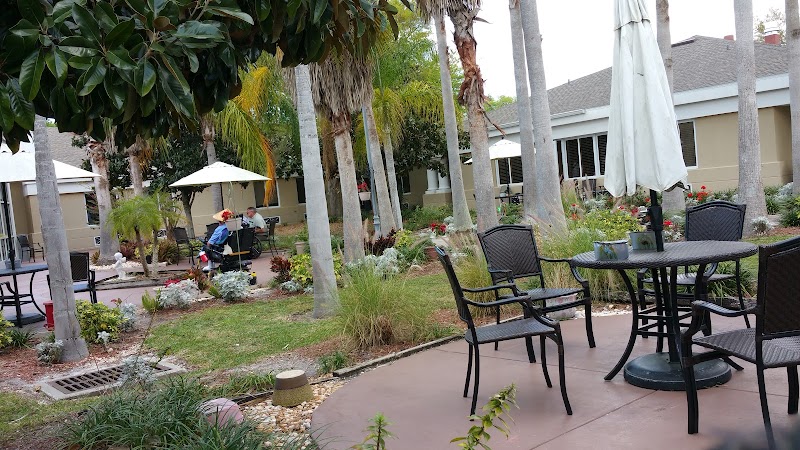
AVIATA AT SARASOTA

1507 S TUTTLE AVE, SARASOTA, FL 34239 (941) 366-0336
For profit - Limited Liability company 120 Beds AVIATA HEALTH GROUP Data: November 2025
Trust Grade
35/100
#467 of 690 in FL
Last Inspection: December 2024

Within standard 12-15 month inspection cycle. Federal law requires annual inspections.

Overview

Aviata at Sarasota has received a Trust Grade of F, indicating significant concerns about the facility's quality of care. It ranks #467 out of 690 nursing homes in Florida, placing it in the bottom half of the state, and #14 out of 30 in Sarasota County, suggesting only 13 facilities are ranked lower locally. The facility's trend is stable, with 12 issues reported in both 2023 and 2024, which is concerning. Staffing is average with a 3/5 star rating, but the turnover rate of 53% is higher than the Florida average, indicating staff may not stay long enough to build strong relationships with residents. There were also significant fines totaling $41,885, which is higher than 79% of facilities in Florida, suggesting ongoing compliance problems. Specific incidents reported by inspectors include a serious failure to provide necessary care and supervision for a resident with dementia, resulting in neglect, and another instance where three residents did not receive adequate grooming and hygiene care, leading to poor living conditions. Additionally, there were concerns about food safety practices in the kitchen, which could affect all residents. While the facility has some strengths, such as good quality measures, the weaknesses regarding care deficiencies and management practices are notable and should be carefully considered by families.

Trust Score
F
35/100
In Florida
#467/690
Bottom 33%
Safety Record
Moderate
Needs review
Inspections
Holding Steady
12 → 12 violations
Staff Stability
⚠ Watch
53% turnover. Above average. Higher turnover means staff may not know residents' routines.
Penalties
⚠ Watch
$41,885 in fines. Higher than 84% of Florida facilities, suggesting repeated compliance issues.
Skilled Nurses
○ Average
Each resident gets 33 minutes of Registered Nurse (RN) attention daily — about average for Florida. RNs are the most trained staff who monitor for health changes.
Violations
⚠ Watch
32 deficiencies on record. Higher than average. Multiple issues found across inspections.
★★☆☆☆
2.0
Overall Rating
★★★☆☆
3.0
Staff Levels
★★★★☆
4.0
Care Quality
★★☆☆☆
2.0
Inspection Score
Stable
2023: 12 issues
2024: 12 issues

The Good

  • 4-Star Quality Measures · Strong clinical quality outcomes
  • Full Sprinkler Coverage · Fire safety systems throughout facility
  • No fines on record

Facility shows strength in quality measures, fire safety.

The Bad

2-Star Overall Rating

Below Florida average (3.2)

Below average - review inspection findings carefully

Staff Turnover: 53%

Near Florida avg (46%)

Higher turnover may affect care consistency

Federal Fines: $41,885

Above median ($33,413)

Moderate penalties - review what triggered them

Chain: AVIATA HEALTH GROUP

Part of a multi-facility chain

Ask about local staffing decisions and management

The Ugly 32 deficiencies on record

2 actual harm
Dec 2024 12 deficiencies
CONCERN (D)

Potential for Harm - no one hurt, but risky conditions existed

Deficiency F0558 (Tag F0558)

Could have caused harm · This affected 1 resident

. Based on observation, staff and resident interviews and review of facility policies and procedures, the facility failed to ensure 1(Resident #21) of 1 resident reviewed had a wheelchair in good work...

Read full inspector narrative →
. Based on observation, staff and resident interviews and review of facility policies and procedures, the facility failed to ensure 1(Resident #21) of 1 resident reviewed had a wheelchair in good working repair and was safe for resident use. The findings included: The facility policy Wheelchair (w/c) Repair-Electric Wheelchairs documented, Each resident requiring the use of a w/c will be provided the appropriate chair to maintain their highest level of functioning. All chairs will be maintained in a safe operating condition. When identified that the w/c is in need of repair, the staff will notify rehab to obtain a replacement w/c while the chair is being repaired. Preventive maintenance of each w/c should be done on a regular basis and the Director of Environmental Services should keep a log of this. On 12/10/24 at 12:59 p.m., Resident #21 was observed in his w/c, and said he needed a new w/c because his required repair. The resident got up from the w/c and it was observed to have a broken back support that did not provide the necessary support. The arm rests were frayed and covered in black tape. The seat was torn, frayed and tattered. He said he had requested a new w/c multiple times and has not received one. Resident #21 said he felt the w/c was dangerous and not safe. He said he was worried he could fall backwards due to the lack of support with the w/c. On 12/10/24 at 4:47 p.m., during an interview, the Regional Nurse Consultant (RNC) said she and the Director of Nursing did assess the residents w/c. The RNC said they were not aware of the condition of the resident's w/c, and would order him a new w/c. On 12/11/24 at 10:52 a.m., during an interview, the Maintenance Director (MD) said he is notified of things in need of repair in the facility electronic Tell's system. He said the staff are to report repairs using the Tell's system. The MD said there was no log at this time where staff can write their concerns for maintenance. The MD said the process for broken w/c's was to take it to the therapy department and they would determine if the w/c was able to be repaired or needed to be replaced. He said Resident #21 had reported to him for days that he needed a new w/c, and I told him to go to therapy, there was no way that chair could be fixed. On 12/11/24 at 11:55 a.m., during an interview, the Maintenance Director said, he inspected Resident #21's w/c and went to therapy to obtain a new w/c. The MD said he threw the old w/c in the garbage because there was no way to repair the w/c so he replaced it. Photographic evidence obtained. .
CONCERN (D)

Potential for Harm - no one hurt, but risky conditions existed

Safe Environment (Tag F0584)

Could have caused harm · This affected 1 resident

**NOTE- TERMS IN BRACKETS HAVE BEEN EDITED TO PROTECT CONFIDENTIALITY** On 12/9/24 at 9:15 a.m., during initial observations of the 400 hall on the South Unit, the following was noted: 3. room [ROOM N...

Read full inspector narrative →
**NOTE- TERMS IN BRACKETS HAVE BEEN EDITED TO PROTECT CONFIDENTIALITY** On 12/9/24 at 9:15 a.m., during initial observations of the 400 hall on the South Unit, the following was noted: 3. room [ROOM NUMBER] the top to the toilet tank was missing. There was a wash basin on the floor with a roll of toilet paper, in it. 4. room [ROOM NUMBER] there was a plunger on the floor next to the toilet and a wash basin on the floor. 5. room [ROOM NUMBER] there was a wash basin on the floor under the sink. There were three bottles of personal care liquids and an adult brief on the sink in a shared bathroom. 6. room [ROOM NUMBER] there was a wash basin on the floor under the sink in a shared bathroom. 7. room [ROOM NUMBER] there were 2 urinals hanging from the trash can. There was peeling paper, exposing the dry wall next to the head of the bed. 8. room [ROOM NUMBER] there was a urinal with urine in it hanging inside of the trash can. There was oxygen tubing lying across the trash can. On 12/9/24 at 10:00 a.m., during an interview, Certified Nursing Assistant Staff O said he did not know why the urinal was in the garbage and said he thought the resident liked having it there. Photographic evidence obtained. Based on observations, interviews, and record review the facility failed to provide appropriate housekeeping services to ensure the facility remained in good repair, and ensure facility staff were aware of how to report needed repairs to the maintenance staff. The findings included: 1. On 12/09/24 at 10:52 a.m., a large brown stain was observed on the carpet in the living room area adjacent to room [ROOM NUMBER]. There was a tear in the carpet noted with carpet material being frayed and sticking up above the carpet. The area of carpet torn was approximately 2 to 3 inches wide. On 12/11/24 at 3:17 p.m., during an interview, the Housekeeping Director said the stain in the 507-living area pod was caused by the air conditioner leaking. The Housekeeping Director said he had talked to maintenance about replacing the carpet. On 12/11/24 at 3:21 p.m., during an interview, the Maintenance Director said his plan is to replace all the carpets with hardwood flooring. The Maintenance Director said he has a hard time getting the approval to do the work. 2. On 12/10/24 at 9:43 a.m., an observation of room [ROOM NUMBER] showed the light behind the bed was not working. There was a vanity over a dresser in front of the room in which one of the four light bulbs were not working. Resident #104 said the light over her bed had not been working since she moved into the room [ROOM NUMBER] months ago. On 12/11/24 at 11:05 a.m., during an interview, the Maintenance Director was asked how staff report needed repairs to maintenance. The Maintenance Director said as of about three weeks ago the facility had switched to using Tells to communicate repairs electronically. He said he did not know if staff had been in-serviced on using the Tells system. On 12/12/24 at 10:03 a.m., during an interview Certified Nursing Assistant, Staff D, said she would use the maintenance book at the nurse's station to communicate to maintenance a repair was needed. On 12/12/24 at 10:10 a.m., during an interview Registered Nurse, Staff E said she would document the repair needed in the maintenance book at the nurse's station. On 12/12/24 at 10:15 a.m., during an interview Registered Nurse, Staff F said she would notify maintenance by documenting in the maintenance book at the nurse's station.
CONCERN (D)

Potential for Harm - no one hurt, but risky conditions existed

Deficiency F0645 (Tag F0645)

Could have caused harm · This affected 1 resident

**NOTE- TERMS IN BRACKETS HAVE BEEN EDITED TO PROTECT CONFIDENTIALITY** Based on interview and record review, the facility failed to ensure a Pre-admission Screening and Record Review (PASARR) Level I...

Read full inspector narrative →
**NOTE- TERMS IN BRACKETS HAVE BEEN EDITED TO PROTECT CONFIDENTIALITY** Based on interview and record review, the facility failed to ensure a Pre-admission Screening and Record Review (PASARR) Level I and Level II were conducted prior to admission to the facility for 1 resident diagnosed with serious mental illness (#79) of 2 residents reviewed for PASARR. The findings included: Review of Resident #79's medical record revealed original admission to the facility on 9/1/22. The physician's orders dated 9/2/22 included psychiatry and psychology (consultations) as needed. The psychiatric diagnoses present on admission included: major depressive disorder, recurrent, mild on 9/1/22; psychophysiologic insomnia on 9/1/22. On 1/11/23, the physician ordered that the resident be sent to the emergency room related to altered mental status (AMS) including hallucinations, delusional and combative behaviors. On 1/11/23 the facility added the diagnosis of psychotic disorder with delusions due to known physiological condition. On 1/14/23 the facility added the diagnosis of major depressive disorder, single episode, severe with psychotic features. On 2/27/23 the facility added the diagnosis of anxiety disorder, unspecified. Review of the psychiatric consult note from [area hospital] dated 1/12/23 revealed the resident was hospitalized for behavioral disturbances at the nursing facility. The patient was noted to become emotionally unstable in the emergency room and started yelling with obvious auditory hallucinations. Review of the facility comprehensive assessment dated [DATE] Section A revealed Resident #79 had entered the facility from a general hospital and was not evaluated for PASARR Level II for indications of serious mental illness. Review of Section I of the assessment revealed Resident #79 had diagnoses of anxiety, depression, and psychosis. Review of the physician's orders revealed active orders for the antipsychotic medications Haloperidol 1 milligrams (mg) every 6 hours as needed for agitation, nausea/vomiting, hiccups; Seroquel 50mg every 12 hours as needed for psychosis/paranoia related to psychotic disorder with delusions due to known physiological condition; and Seroquel XR 50mg in the evening. Review of the psychiatrist consultation dated 11/22/24, revealed Resident #79 was seen for a gradual dose reduction (GDR) of psychiatric medications, which is recommended for the age group. The psychiatrist concluded the GDR was not recommended and the resident would become unstable if medications were reduced. Resident #79's diagnoses for consultation included: Psychotic disorder with delusions due to known physiological condition. On 12/10/24 at 9:20 a.m., a review of Resident #79's medical record at the facility including paper chart and electronic health record revealed there was no PASARR Level I screening or PASARR Level II screening for Resident #79. 12/12/24 at 3:25 p.m., during an interview, the Social Services Director (SSD) said he could not locate a PASARR Level I screening in the medical record. He said he thinks the resident has some mental illness. He said before the resident was admitted to the facility, the resident was not receiving any special services for mental illness. The SSD said there is no PASARR Level I in the chart. He said there is no PASARR Level II in the chart. He said he is not qualified to perform the pre-admission screening. He said he looked in the medical record department for any indication a Level I was completed, and he said he did not find one. On 12/12/24 5:33 p.m., during an interview, the Administrator said a PASARR Level I should be in the chart. He said it is the responsibility of the nursing team to make sure the PASARRs are in the chart when the resident is admitted . .
CONCERN (D)

Potential for Harm - no one hurt, but risky conditions existed

Comprehensive Care Plan (Tag F0656)

Could have caused harm · This affected 1 resident

**NOTE- TERMS IN BRACKETS HAVE BEEN EDITED TO PROTECT CONFIDENTIALITY** . Based on interview and record review, the facility failed to formulate a comprehensive resident-centered care plan that includ...

Read full inspector narrative →
**NOTE- TERMS IN BRACKETS HAVE BEEN EDITED TO PROTECT CONFIDENTIALITY** . Based on interview and record review, the facility failed to formulate a comprehensive resident-centered care plan that included the services required to ensure proper functioning and maintenance including monitoring, testing, and ways to identify potential problems or complications for 2 (Residents #9, and #22) of 2 reviewed in the facility who had implanted cardiac pacemakers. The findings included: Review of the Policy for Pacemaker, monitoring of Resident, revised 9/5/17, nursing services will coordinate and assist with pacemaker checks for residents with pacemakers. The procedures included identifying residents with pacemakers and obtaining an order from the physician for routine scheduled pacemaker checks based on manufacturer or physician's order or recommendation. Document in the medical chart. Review of the Policy for Plans of Care revised 9/25/17: The procedures included developing a comprehensive plan of care including measurable objectives and timetables to meet the resident's medical needs that are identified in the comprehensive assessment. The interdisciplinary team shall ensure the plan of care addresses any resident needs and that the plan is oriented toward attaining or maintaining the highest physical, mental and psychosocial well-being. The person-centered care plan may include but is not limited to the following: Services to attain or maintain the highest practicable physical, mental, and psychosocial well-being as required by state and federal regulatory requirements; and individualized interventions that honor the resident's preferences and promote achievement of the resident's goals. Review of the Hospital Cardiology Consult Note for Resident #9 dated 8/4/24 revealed Resident #9 was an [AGE] year-old with a history of atrial fibrillation, prior pacemaker implantation, and non-sustained ventricular tachycardia (fast heart rate). If stable, the plan included conservative management. Resident #9 was discharged from the hospital and admitted to the facility on [DATE]. The quarterly resident assessment completed by the facility on 11/13/24 revealed diagnoses including hypertension and hyperlipidemia, renal (kidney) insufficiency, diabetes, and hemiplegia or hemiparesis (paralysis on one side of the body). There was no diagnoses listed for atrial fibrillation or presence of cardiac pacemaker in the resident assessment. Review of the physician's order summary for Resident #9 revealed there was the presence of a cardiac pacemaker. There were no instructions or orders for the care of the device. Review of the comprehensive care plan for Resident #9 initiated on 8/22/24 revealed the resident wished to remain in the facility for long-term care. The interventions included to encourage the resident to discuss feelings and concerns .; establish a pre-discharge plan .; and evaluate and discuss with the resident or the representative the prognosis for independent or assisted living; identify, discuss and address limitations, risks, benefits, and needs for maximum independence. There were no interventions in the care plan for maintaining the proper functioning of the cardiac pacemaker. Review of Resident #9's nutrition care plan revealed the resident was at risk of malnutrition related to the presence of the pacemaker. The interventions included did not specify instructions to ensure the proper care of the pacemaker. Review of Resident #9's care plan for advanced directives initiated on 8/22/24 revealed the resident did not want cardiopulmonary resuscitation and maintained a Do Not Resuscitate (DNR) status at the facility. The care plan interventions for the DNR status did not include any interventions for the cardiac pacemaker. Review of Resident #9's care plan for terminal prognosis initiated on 12/9/24 revealed comfort, dignity, and autonomy will be maintained at the highest level through the review dated. Interventions included working cooperatively with the hospice team to ensure physical needs are met. There were no interventions or instructions regarding the cardiac pacemaker. On 12/9/24 at 11:31 a.m., Resident #9 was observed in the bedroom. The resident's room did not contain a remote cardiac monitoring device for the pacemaker that would send signals to the doctor's office for monitoring the resident's heart rate. On 12/9/24 at 1:37 p.m., during an interview with Resident #9's health care surrogate, she said the pacemaker was checked in the hospital. She said before that, the resident had not been to the cardiologist in about 2 years. She said she attends the care plan meetings, but the facility has not mentioned any pacemaker checks or cardiology appointments scheduled for Resident #9. She said she does not know anything about the current care or plan for the pacemaker. 12/12/24 9:31 a.m., during an interview with Licensed Practical Nurse (LPN) Staff Q, she said she worked at the facility since March 2024. She said she works on different units in the facility and had taken care of Resident #9 in the past. She said she was not aware of any residents in the facility with pacemakers and usually does not deal with pacemakers. She said she would check the vital signs frequently if the resident had a pacemaker. On 12/12/24 at 9:41 a.m., during an interview with the Minimum Data Set (MDS) Coordinator, she said she is part of the interdisciplinary team and attends the morning meetings with the team. She said the 24-hour report is discussed as well as new orders and she makes sure care planning interventions are initiated when necessary. She verified the pacemaker diagnosis on the physician's order summary. She said there should be a care plan for the cardiac pacemaker. She looked through the resident's electronic and paper medical chart and said there was no care plan or order for routine checks. She said there should be a care plan and that she would add one. On 12/12/24 at 10:17 a.m., during an interview with the Director of Nursing (DON), she said she would expect to see physician's orders for cardiology follow-up and order from the physician for heart rate range, trouble shooting and maintenance. She said she could not find any information other than that listed in the hospital record. The resident does not have a care plan for maintenance of the device. Review of the medical record for Resident #22 revealed and admission to the facility on [DATE]. The annual comprehensive assessment dated [DATE] revealed diagnoses of atrial fibrillation (irregular heartbeat), coronary artery disease, hypertension, and hyperlipidemia. The diagnoses did not include the presence of a cardiac pacemaker. Resident #22's physician order summary revealed the diagnosis of presence of cardiac pacemaker. There were no orders for checking or maintaining the device. Review of the care plans for Resident #22 revealed ones for congestive heart failure, fluid overload related to heart failure, and anticoagulant therapy related to atrial fibrillation and coronary artery disease. None of the care plans had instructions for how the facility was providing care and services for the resident's pacemaker. On 12/12/24 at 10:45 a.m., during an interview, the MDS coordinator confirmed Resident #22 medical record at the facility did not include a care plan for maintenance of the resident's implanted cardiac pacemaker. .
CONCERN (D)

Potential for Harm - no one hurt, but risky conditions existed

Deficiency F0685 (Tag F0685)

Could have caused harm · This affected 1 resident

**NOTE- TERMS IN BRACKETS HAVE BEEN EDITED TO PROTECT CONFIDENTIALITY** . Based on observation, review of clinical records and resident and staff interviews, the facility failed to assist in making an...

Read full inspector narrative →
**NOTE- TERMS IN BRACKETS HAVE BEEN EDITED TO PROTECT CONFIDENTIALITY** . Based on observation, review of clinical records and resident and staff interviews, the facility failed to assist in making an appointment with a practitioner specializing in the treatment of vision impairments and failed to ensure the resident's glasses were in good repair for 1(Resident #95) of 1 resident reviewed for vision loss. The findings included: Review of the clinical record revealed resident #95 had diagnoses including morbid obesity, type 2 diabetes and acute vision changes. On 12/10/24 at 10:24 a.m., Resident #95 was observed with broken glasses that were taped together on both sides of the arms to the frame. Resident #95 said he has requested to see the eye doctor multiple times, but is told he needs to wait because his insurance does not cover it. Resident #95 said I can only tape them so much before they break completely. I don't see why it is so hard to get an appointment. I was sent to the hospital on [DATE] because the pain in my left eye was so bad, and they sent me back here. I can't see well out of my left eye, and I don't see well out of the right eye, just shadows. Review of the physician orders revealed a standing order for Optometry/ophthalmology as needed. The clinical record showed on 11/27/24 Resident #95 was sent to the local emergency department for evaluation of the left eye visual disturbance. The Discharge summary dated [DATE] documented the resident would require additional ophthalmologic workups. High suspect of patient's visual changes would either be related to hypertensive retinopathy or diabetic retinopathy. Pt appears to have poor insight in regards to his overall health and social situation. Pt has the belief that all of his medical symptoms should be completely resolved and or treated by the time he leaves the hospital. Pt notes good improvement of the vision along his left eye and along with improved visual acuity of the right eye. Recommend ophthalmology evaluation when possible given weekend holiday, it is possible that care may be faster on a outpatient basis. The discharge summary instructed to follow up with ophthalmology to schedule appointment. Review of the clinical record showed no documentation the resident had been seen by the ophthalmologist and no documentation the follow up appointment had been arranged. On 12/11/24 at 8:45 a.m., during an interview the Social Service Director (SSD) said it was difficult to find a physician to accept Resident #95's medical insurance. The SSD said the facility did have an eye doctor who will see residents at the facility, and he was responsible for scheduling the in house appointments with the eye doctor. The SSD said he knew the residents' eyeglasses were broken and new ones were coming in the mail. The eye doctor sends the eyeglasses by mail and will e-mail me a copy of the visit with the resident. The SSD said he would contact the eye doctor to see when Resident #95's glasses would arrive. Review of the SSD progress note with a date of 12/11/24 at 9:11 a.m., documented SS emailed the eye doctor to follow up on glasses of when going to be delivered. On 12/11/24 at 11:21 a.m., during an interview the SSD said he was not able to locate any information regarding new glasses for the resident. I emailed the eye doctor and I'm waiting to hear back. The nurses are helping to make appointments, but he does not have the follow up appointment scheduled right now. He was sent to the hospital recently and they said his eyes were fine there was nothing wrong with his eyes. The SSD said the Director of Nursing (DON) would schedule the follow up appointment with the ophthalmologist. On 12/11/24 at 11:35 a.m., during an interview an interview the DON said the resident reported a problem with his vision and he wanted to go to the eye specialist. When we contacted the eye doctor the resident no longer had insurance and could not be seen. The resident had recently changed his insurance to a different company, and it did not include a vision program. I spoke to the resident and I let him know what was going on with the appointment and the resident said he did have a vision plan with the new insurance and he would look for the card. I told him I would schedule the appointment if he could find his insurance card. He said he wanted to go to the ER on [DATE], he said he could not locate the insurance cards. I told him the facility would pay for the appointment and at that time he said he did not want to wait, and he wanted to go to the emergency room (ER). I tried to educate him that the ER was for emergencies, and he might not get the care he is seeking (an eye specialist) but he insisted to go so we had to send him. Since he returned, we are trying to schedule an appointment for him and I believe the nurse is working on it. As for the glasses, I was not aware they were taped on both sides. The SSD is the one who handles routine eye visits and appointments for eyeglasses.
CONCERN (D)

Potential for Harm - no one hurt, but risky conditions existed

Incontinence Care (Tag F0690)

Could have caused harm · This affected 1 resident

**NOTE- TERMS IN BRACKETS HAVE BEEN EDITED TO PROTECT CONFIDENTIALITY** . Based on observation, interview, and record review the facility failed to ensure one (Resident #104) urinary catheter was sec...

Read full inspector narrative →
**NOTE- TERMS IN BRACKETS HAVE BEEN EDITED TO PROTECT CONFIDENTIALITY** . Based on observation, interview, and record review the facility failed to ensure one (Resident #104) urinary catheter was secured to allow a free flow of urine to the catheter bag and prevent movement and pulling of the catheter line. Consistent pressure and pulling on the catheter line has a potential to cause irritation to the urethra and contribute to increased urinary tract infections. The findings included: According to the Center for Disease Control 2009 Catheter-Associated Urinary Tract Infections (CAUTI) Prevention Guideline it is strongly recommended to properly secure urinary catheters after insertion to prevent movement and urethral traction [pressure, or pulling]. Resident #104 is a [AGE] year-old female admitted to the facility on [DATE] with a history of Spinal Cord Compression, Intervertebral Disc Degeneration, Neuromuscular Dysfunction of the Bladder, Major Depressive Disorder, Anxiety Disorder Severe Protein Malnutrition, and Constipation. The Quarterly Minimum Data Set, dated [DATE], Section C shows a Brief Mental Interview Status (BIMS) of 15 which shows no cognitive deficits. Section H shows Resident #104 has an indwelling urinary catheter. Resident #104 is care planned for an indwelling urinary catheter related to a Neurogenic Bladder. The goal is for the resident to be free from catheter related trauma through the review date of 1/11/25. The intervention listed did not include to secure the catheter to prevent movement and pulling. The [NAME] (communication tool used to communicate to aide's resident's daily needs) did not list catheter care or securing the catheter to the resident's leg. On 12/10/24 at 9:46 a.m., Resident #104's catheter line was observed to be unsecured to the resident. Resident #104 said she has not had a catheter strap attached to her to secure the catheter all week. On 12/12/24 at 10:40 a.m., the urinary catheter was observed not secured to the resident's leg. Resident #104 verified staff had not attempted to place catheter strap to secure the catheter line. On 12/12/24 at 10:55 a.m., during an interview, Registered Nurse, Staff E said catheter straps were available to secure catheter lines of resident's with urinary catheters. RN Staff E said she was not aware Resident #104 did not have a catheter strap in place. On 12/12/24 at 11:00 a.m., during an interview the Central Supply Aide verified catheter straps were available for residents with catheters. .
CONCERN (D)

Potential for Harm - no one hurt, but risky conditions existed

Staffing Information (Tag F0732)

Could have caused harm · This affected 1 resident

. Based on observation, interview, an record review, the facility failed to post nursing staff two consecutive days and failed to post accurate numbers of nursing staff on two additional days. The fi...

Read full inspector narrative →
. Based on observation, interview, an record review, the facility failed to post nursing staff two consecutive days and failed to post accurate numbers of nursing staff on two additional days. The findings Included: On 12/9/24 at 9:10 a.m., the federal posting was observed in the lobby of the facility. The last posted date noted was 12/6/24. Review of the federal postings for 11/16/24, and 11/17/24 showed on both dates there were 13 Certified Nursing Assistants (CNA) listed as working on the morning, and the evening shifts. Review of the two-week staffing hours provided by the facility showed on 11/16/24 there were 12 CNA's working on both the morning and evening shift. On 11/17/24 there were 12 CNA's working on the morning shift, and 11 working on the evening shift. On 12/11/24 at 9:50 a.m., during an interview, the Staffing Coordinator said it was the responsibility of the weekend supervisor to update the federal postings on the weekends because she did not work on the weekends. .
CONCERN (D)

Potential for Harm - no one hurt, but risky conditions existed

Deficiency F0761 (Tag F0761)

Could have caused harm · This affected 1 resident

. Based on observations, review of facility policies and procedures and staff interviews, the facility failed to ensure medications were stored in a safe and secure manner within the facility, includi...

Read full inspector narrative →
. Based on observations, review of facility policies and procedures and staff interviews, the facility failed to ensure medications were stored in a safe and secure manner within the facility, including medication carts and resident rooms. The findings included: The facility policy N-853 Medication- Oral Administration of, documented Prepare medication for one resident at a time . Do not use the resident room or bed number as a resident identifier as these may change. Document the administration and acceptance or decline of all medications administered. 1. On 12/9/24 at 9:05 a.m., during an observation of the North medication Cart #2 with Licensed Practical Nurse Staff H, in the top drawer of the cart were three clear, plastic medication cups with unidentified pills. One medication cup had crushed medications in apple sauce. Two other medication cups were stacked on top of each other. The LPN removed the top pill cup with 6 unidentified pills. The bottom pill cup had 7 unidentified pills. The medication cups had room numbers on each cup of medications. The LPN said the residents were not in their rooms so I put the medications in the drawer so I could administer them later. Photographic evidence obtained. 2. On 12/9/24 at 10:36 a.m., Resident #59 was observed with a medication cup containing 1 whole white pill and a half of a white pill in a medication cup on his bedside table. There was an unidentified and unlabeled inhaler with the unidentified pills. Photographic evidence obtained. On 12/10/24 at 11:10 a.m., Resident #59 was noted to have his top nightstand drawer open and 3 medications were observed stored in the drawer: one Symbicort inhaler160/4.5. Fluticasone Propionate nasal spray, 50 micrograms per spray. A bottle of Besivance antibiotic eye drops. Photographic evidence obtained. Review of the clinical record revealed Resident #59 did not have an order to self administer the medications. .
CONCERN (D)

Potential for Harm - no one hurt, but risky conditions existed

Deficiency F0925 (Tag F0925)

Could have caused harm · This affected 1 resident

**NOTE- TERMS IN BRACKETS HAVE BEEN EDITED TO PROTECT CONFIDENTIALITY** Based on observation, interview and record review the facility failed to ensure an effective pest control program to prevent fly...

Read full inspector narrative →
**NOTE- TERMS IN BRACKETS HAVE BEEN EDITED TO PROTECT CONFIDENTIALITY** Based on observation, interview and record review the facility failed to ensure an effective pest control program to prevent flying insects and roaches within the facility. The findings Included: Resident #104 is a [AGE] year-old female who was admitted to the facility on [DATE]. Resident #104's quarterly MDS dated [DATE] shows a BIMS score of 15 which shows no cognitive deficits. On 12/10/24 at 9:43 a.m. Observation's in Resident #104's room noted small insects were flying around the resident's bed in room [ROOM NUMBER]. Resident #104 said she had seen the flying insects in her room for at least two weeks. Resident #104 said she has roaches coming in her room from around the air conditioner. Resident #78 is a [AGE] year-old male who was admitted to the facility on [DATE]. The Annual Minimum Data Set (MDS) dated [DATE] shows Resident #78 had a Brief Mental Interview Status (BIMS) score of 13 which shows his cognition to be intact. On 12/10/24 at 11:35 a.m., during an interview, Resident #78 said he sees roaches in his room at times. Small flying insects were observed flying around the resident's bed in room [ROOM NUMBER]. Resident said he had seen the flying insects around his trash can in his room near his bed for the last year. On 12/11/24 at 11:05 a.m., during an interview, the Director of Maintenance said it was an ongoing battle to keep pests out of the building. He said the sleeves around the air conditioner units in the rooms have been stripped out and it leaves openings in the rooms for insects to get in the building. On 12/12/24 at 11:00 a.m., the Director of Maintenance only could provide documentation of the pest control company's report of treatment for November of 2024. Documentation had been requested for the last three months. There was no documentation on the November report to show the pest control company was treating flying insects in resident's rooms. On 12/12/24 at 1:00 p.m., the pest control logbook at the nurse's station on the 600 hallway showed the last time the pest control company was at the facility was on 12/9/24. rooms [ROOM NUMBERS] were not listed in the logbook to be treated for pests. .
CONCERN (E) 📢 Someone Reported This

A family member, employee, or ombudsman was alarmed enough to file a formal complaint

Potential for Harm - no one hurt, but risky conditions existed

Deficiency F0602 (Tag F0602)

Could have caused harm · This affected multiple residents

. Based on review of the clinical record, review of facility policy and procedures, and resident and staff interviews, the facility failed to protect residents from misappropriation of resident proper...

Read full inspector narrative →
. Based on review of the clinical record, review of facility policy and procedures, and resident and staff interviews, the facility failed to protect residents from misappropriation of resident property when controlled medications were unaccounted for 1(Resident #45). On 2/13/24 it was reported Resident #45's Hydrocodone-Acetaminophen 5 milligrams (mg)-325 mg, 75 tablets were unaccounted for. The facility failed to account for all controlled medications to prevent loss or diversion. On 8/5/24 controlled medications were signed out on the narcotic declining drug inventory sheet as administered for 3(Resident #12, # 42, and #27) who were alert and oriented and reported they had not received the medications that were documented. On 10/2/24 Resident #63 reported he received a medication that was not his Oxycodone- Acetaminophen 10 mg-325 mg and had not requested the as needed medication from the nurse who documented it was administered. The findings included: The facility policy N-1265 Abuse, Neglect, Exploitation and Misappropriation documented It is inherent in the nature and dignity of each resident at the center that he or she be afforded basic human rights, including the right to be free from abuse, neglect, mistreatment, exploitation and or misappropriation of property. The management of the facility recognizes these rights and hereby establishes the following statements, policies, and procedures to protect these rights and to establish a disciplinary policy which results in the fair and timely treatment of occurrences of resident abuse. Misappropriation of resident property is the deliberate misplacement, exploitation, or wrongful, temporary, permanent use of a residence belongings or money without the residents consent. Employee misappropriation includes but is not limited to: diversion of residents medication(s) including but not limited to controlled substances for staff use or personal gain. The facility policy N-861 Acceptance of Controlled Drugs documented, Controlled drugs will be delivered to the facility by the pharmacy in a sealed, tamper proof container. One nurse will sign for the container on the pharmacy delivery sheet. The container will remain sealed until a second nurse is available to open and validate the contents. 2 nurses will open the controlled drug container and reconcile the controlled drugs including but not limited to: correct medication, dosage, amounts. Controlled medications are then placed into the medication carts by the nurses. If discrepancies are found during reconciliation notify the pharmacy and the director of nursing. Discrepancies may include but are not limited to: missing controlled drugs incorrect quantities, damaged containers or seals, tote is open or there is evidence of tampering. 1. Review of the facility investigation documented on 2/13/24 Resident #45's Hydrocodone-Acetaminophen 5 milligrams (mg)-325 mg, 75 tablets were unaccounted for. Licensed Practical Nurse (LPN) Staff E attempted to administer Hydrocodone-Acetaminophen 5 mg-325 mg to Resident #45, but was not able to locate the medication in the medication cart. Staff E contacted the pharmacy to order the medication and was notified of a delivery of 75 tablets on 2/6/23. The medication was signed as received on the pharmacy manifest on 2/6/24 by LPN Staff L. Staff E notified Unit Manager LPN Staff M and a search of the facilities five medication carts and two medication rooms was conducted. Staff M contacted the pharmacy to confirm the medication was delivered to the facility. The Hydrocodone-Acetaminophen 5 mg-325 mg, 75 tablets were not located. The advanced practice registered nurse (APRN) was contacted for a new order for the missing medication. The facility did not substantiate the investigation due to the allegation was refuted by evidence collected during the investigation. Based on staff and resident interview and full house audit on current residents receiving narcotics ensured no other narcotic medication were misplaced. The facility investigation was inconclusive. Review of the witness statement written by LPN Staff L with a date of 2/14/24 documented I gave the med's to assigned on that cart. I cannot remember anything after that. Review of the phone interview witness statement dated 2/19/24 received by the Regional Nurse Consultant for LPN Staff P documented, She thinks she remembers receiving narcotics from Staff L but cannot verify or remember if anything was for Resident #45. Review of the Pharmacy delivery form documented 75 Oxycodone 10 mg tabs were delivered and signed for by LPN Staff L. On 12/11/24 at 9:30 a.m., the Director of Nursing (DON) said resident interviews were conducted on LPN Staff L's assignment and no other residents receiving pain medications had any issues. Staff L is no longer employed with us. Staff P was the nurse Staff L said she gave the medications to, and she is no longer here either. The DON said the process when the pharmacy delivers medications to the facility a nurse signs electronically, that the medications were received. The pharmacy keeps the record, but a copy is in our electronic dashboard system. We did notify the pharmacy the Hydrocodone was missing and they will follow up. The investigation is a facility thing. I think we found the medication but there is no documentation it was found. We never had to replace it because we found it in the pharmacy bag that is returned to the pharmacy. We searched the medication rooms and did not find the medication until later. The DON confirmed there was no documentation stating the facility had located the medication. The DON said we interviewed all the residents when the medication was not discovered, and we closed the investigation out. She said the root cause of the missing 75 tablets of Hydrocodone/Acetaminophen 5/325 was the nurses were not having a witness when they sign the narcotics in and out, so we implemented that they need to have a second nurse witness. Education was provided with the nurses on the policy of having 2 nurses sign for the medications. Review of the facilities resident interview sheets consisted of the residents name and the question are you receiving your pain medication? circle yes/no. No dates, no time and no signatures were on the facility audits. Review of the education in-service provided on 2/14/23 by the Unit Manager LPN Staff M, specified 2 nurses will sign all narcotic sheets when received from pharmacy and before entering the sheet into the narcotic binder. Nine nurses including the presenter signed the attendance sheet. LPN Staff M signed for nine nurses who were provided with a phone call regarding the policy. On 12/11/24 at 1:46 p.m., Resident #45 said she was informed by the facility staff her pain medication was missing. She said she had pain in her back, and they did not have her medication that evening. She said she was informed that if she wanted a refill, she would have to pay for the medication. Resident #45 said that is not my problem, they need to find out who took my medications, the nurse is the one with the keys not me. I can't unlock the cart. On 12/11/24 at 2:19 p.m., LPN Staff M showed the plastic bag the medications go into for return to the pharmacy. She said the pharmacy delivers medications daily and collects the go back bags. 2. On 12/9/24 at 11:50 a.m., RN Staff J, he said was working on 8/6/24 and when I came in and counted the cart with LPN Staff I, and the count was good. I noted residents who don't ask for controlled medications had received them. Resident #12 never complains of pain and I saw that Tramadol 50 mg was signed off on the declining controlled drug count sheet and one hour later a Hydrocodone/Acetaminophen 5/325 mg was signed off as well. Both medications were scheduled every 4 hours as needed and Resident #12 received the 2 medications 1 hour apart. I asked the resident, and he said he never requested a pain pill. Resident #27 had two Oxycodone 20 mg tablets removed from the medication card but only one tablet was signed out. Resident #42 had one Ativan 0.5 mg removed from a full card of 25 tablets. Resident #42 has never used the medication, he never asks for it. I looked at the count sheets and I thought something was suspicious because I asked the residents, and they all said they did not receive the medications. I went to the DON with my concerns, and we conducted an audit of all the medication carts to make sure the controlled medication count sheets were accurate. We interviewed the residents, and they said they never requested the medications and did not receive them. On 12/9/24 at 2:00 p.m., Resident #12 he said he remembers the nurse who said she gave me Tramadol and Hydrocodone. She said I asked for the pills and I never asked for the medication, and she never gave me anything. I didn't get any medications that night. Resident #12 said the nurse tried to say she gave them to him but he did not receive them. He said They sign it out and say they give it but they don't. It is our word against the nurses. 3. On 8/5/24 at 9:04 p.m., LPN Staff I documented she administered one Oxycodone 20 mg tablet to Resident #27. The facility reviewed the declining narcotic count sheet and a new card of 25 pills showed 2 tablets were removed, leaving a total of 23 pills left in the card. The facility was not able to locate the missing Oxycodone 20 mg. 4. On 8/5/24 at 00:00 LPN Staff I documented she administered one Ativan 0.5 mg (medication used to treat anxiety or agitation) to Resident #42. The medication was scheduled as needed. Review of the declining controlled medication count sheet revealed the pharmacy delivered 25 tablets on 6/29/24. The facility verified the medication was removed from the medication card and declining narcotic count sheet had been filled out correctly but the resident said he did not ask for the medication or receive it. On 12/10/24 at 10:53 a.m., Resident #42 said I know I have not ever requested an Ativan from any nurse here. That night, I don't remember the exact date, but the nurse said she gave me an Ativan and I asked for it, but she never gave me anything. I think maybe she took it or gave it to someone else but not me. The resident said RN Staff J had asked him if he requested and received the Ativan, and I told him I did not get an Ativan from the nurse. On 12/11/24 at 8:30 a.m., the DON said she investigated the event of 8/5/24 with the medications for Residents #12, #27 and #42. She said it was the night shift nurse, Staff J who found the discrepancies with medications which were signed out for residents who do not usually receive them. The DON said, with Resident #12, Staff I had signed the declining narcotic count sheet for a Tramadol 50 mg at 9:00 p.m., and an hour later at 10:00 p.m., a Oxycodone/325 was signed out. Staff J said the resident never asks for the medications and asked him if he had received them. The resident said he had not received them and did not ask for them. The DON said, we checked the count sheet, and the Tramadol and Oxycodone were signed out. I interviewed LPN Staff I and she said she gave it because Resident #12 had asked for it. I interviewed Resident #12 and he said he did not receive the medications, and did not ask for them. He has the capacity to know if he received the medications or not. The DON said, Resident #27 had an unopened card of Oxycodone 20 mg tablets. There were 25 tablets. Staff I gave 1 tablet but, 23 tablets were left indicating Staff I gave 2 pills. She said she only gave one. I interviewed the resident but she could not recall how many pills she received that night. The declining narcotic control count sheet indicated 23 tablets remained. Resident #42 had Ativan .5 mg ordered as need, and one tablet was signed out at 00:00 by Staff I on 8/6/24. Staff J said the resident had never asked for an Ativan before and asked the resident and he said he did not request it or receive it. The DON said, with these three residents identified, we interviewed the nurse and realized she had made multiple medication errors that night. I was not able to determine if she took the medications or gave them to other residents or to the right residents. Staff I said, she had a horrible night with family issues and said she probably should have called off. She said she kept leaving the unit to cry and was upset. Staff I said she gave the medications to Resident #12, #27 and #42. After the investigation I was not able to identify what happened. Staff I did not come in for her scheduled interview and did not show up for her scheduled shift. I attempted to contact her multiple times but she did not return my calls. The DON said the root cause was inconclusive. The facility was not able to substantiate medication diversion. 5. Review of the facility investigation revealed on 10/2/24 at 6:30 a.m., Resident #63 reported a potential discrepancy in his medication administration to the facility nurse, LPN Staff S. He reported he received 3 pills in the medication cup, including his scheduled levothyroxine and Gabapentin. The third pill was marked with a G and numbers, and did not match the appearance of his prescribed as needed Hydrocodone-Acetaminophen 10/325 mg. He suspected the pill was not his prescribed pain medication. Resident #63 reported to the DON and the Social Service Director, that LPN Staff N entered his room and stated she had his morning medications and a pain medication. The resident said he did not request the as needed pain medication. Resident #63 said the Nurse handed him the cup and left the room. The facility investigation was documented as inconclusive. On 12 /9/24 at 12:30 p.m., during an interview, Resident #63 said on 10/2/24, I remember that day very well. LPN Staff N brought me 3 pills in a cup. I identified 2 of them, they were correct. The third one she said was my pain pill. I know I get Hydrocodone 10/325 and the pill has an M on it with some numbers. She gave me a round pill with the letter G on. My pain medication is not round it is long and white. I keep up with my medications, you have to so when things like this happen you are aware. The DON said it was a Tylenol pill that she gave me, I don't know what it was but I refused to take it. There was no Hydrocodone given to me that night. I filed a grievance regarding the incident. I know my medications; you have to be able to look at your pills and know what you are getting. You have to be your own advocate. Review of the medication administration record for October 2024 documented at 10:20 p.m., on 10/2/24 the nurse signed the Hydrocodone-Acetaminophen 10/325 mg was administered to Resident #63. On 12/9/24 at 12:00 p.m., review of Resident #63's pain medication with LPN Staff R. The Hydrocodone-Acetaminophen 10/325 did have the letter M 367 inscribed on the tablet. On 12/11/24 at 08:30 a.m., during an interview, the DON said on 10/2/24 Resident #63 reported to the nurse he received a medication with the letter G on the round tablet. He did have an order for Gabapentin and levothyroxine that he takes at 6:00 a.m. He said the nurse gave him a cup with three pills and said one was a pain pill but he never asked for a pain pill. We did a pain scale and reviewed his medication. He described the pill and one of the nurses determined it was a Mucinex tablet. One of the nurses knew what the Mucinex tablets we have in stock look like and that is what he described. He did not have an order for Mucinex. I don't know if he received the medication it was inconclusive to me. I did not know if the resident took the medication or the nurse did. The DON said she did not do education with the staff as it was an isolated situation. On 12/12/24 at 9:28 a.m., The Quality Assurance Performance Improvement (QAPI) binder was reviewed with the Administrator, and the DON. There was no documentation in the binder of anything discussed in the monthly QAPI meetings. There was no documentation for February and March 2024 regarding the missing tablets of Hydrocodone/Acetaminophen 5/325 75 for Resident #45, and no plan of correction. The DON said we did not bring it to QAPI because we found the medication later but we have no documentation the medication was found. I educated the staff on the 2 person system for checking in medications received from the pharmacy and when removing narcotics from the cart. There were no QAPI notes regarding the reportable event of 8/6/24 with missing narcotics for Residents #12, #27 and #42. The Administrator said he did not know about the missing Hydrocodone/Acetaminophen 5/325 75 for Resident #45 because he was hired in March 2024. There was no QAPI discussion for the 10/2/24 reported incident of Resident #63 receiving a Mucinex tablet in place of the Oxycodone 10/325 mg tablet. I knew about that, he received a Mucinex tablet and not the pain medication. He said, I am not a nurse so I don't know about medications, I leave that for the DON to handle. The Administrator said he kept typed notes in the electronic record for the QAPI meetings because his handwriting was not good but he was not able to find any QAPI notes for the medication diversion. He said the DON handled the QAPI for the reported event on 8/6/24. It was a newly hired nurse, and we reported it. He confirmed there was no documentation of the incident discussed in QAPI. The Administrator said he reported it to the State agency, that is it. The Administrator said we discovered it was newly hired nurses who made medication mistakes so the DON and I are interviewing the new hires and we are more intuitive. If we get a bad feeling about the person or something does not feel right, we don't hire them. On 12/12/24 at 10:20 a.m., the DON she said everything with the medications was traced back to newly hired nurses not our nurses. I did education and I believe it was effective, but I understand there is no documentation of the outcome. It was not taken to QAPI because it was not our nurses who were making the mistakes so there was not anything we could have done for that. I don't see how we could have. We found the missing medications for Resident #45 but we did not document it when they were found. The incident on 8/5/24 occurred because Staff I was a new nurse. We completed assessments of the residents. The DON confirmed the declining narcotic sheets for Resident #27, #12 had the dates crossed out and another date written over it. The DON said that was another error Staff I made that evening. On 12/12/24 at 5:01 p.m., in a telephone interview, the Pharmacy Consultant said he is at the facility monthly and reviews the resident charts and medications and makes recommendations. He said he was not made aware of the missing 75 Oxycodone 5/325 tablets for Resident #45. He said this is the first time I'm hearing about it. I did not know. The Pharmacy Consultant was informed of the event on 8/5/24 of controlled medications signed out to Resident #12, #27 and on 8/6/24 signed out for Resident #42 who reported they had not received the medications. He said Oh gosh I did not know, no one mentioned any of this to me. The Consultant said he was not aware of Resident #63's concern with his pain medication and confirmed the Hydrocodone 10/325 mg did have the letter M and numbers on the tablet. He said I did not know about any of this. If needed I could have worked with the facility to make suggestions on how to prevent the problems. If needed I would have been in QAPI.
CONCERN (E) 📢 Someone Reported This

A family member, employee, or ombudsman was alarmed enough to file a formal complaint

Potential for Harm - no one hurt, but risky conditions existed

Pharmacy Services (Tag F0755)

Could have caused harm · This affected multiple residents

. Based on staff interviews, and review of the facility policy and procedures, the facility failed to implement a system to account for periodic reconciliation and disposition of all controlled substa...

Read full inspector narrative →
. Based on staff interviews, and review of the facility policy and procedures, the facility failed to implement a system to account for periodic reconciliation and disposition of all controlled substances. The findings included: The facility Policy N-864 Control Drug Reconciliation Random Audit documented The facility in coordination with the licensed pharmacist provides for: A system of medication records that enables periodic accurate reconciliation and accounting for controlled medications. Prompt identification of loss or potential diversion of controlled substances and determination of the extent of the loss or potential diversion of controlled medications. On 12/11/24 at 10:15 a.m., during an interview, the Director of Nursing (DON) said the process for narcotic medications was to have two nurses' sign when narcotics are received and two nurses sign when the medication is discontinued or the medication card is empty. The DON said she collects the discontinued medications from the medication carts weekly, the nurse and I sign the declining count sheet and then I place the medications in a double locked drawer here. The DON said the pharmacist and I destroy the medications once a month. The DON said she was not able to reconcile the controlled medications currently stored in the locked drawer. She said I would have to open the drawer, pull the count sheets and look at the medication cards to tell you that. The DON confirmed she had no process in place to provide an accurate accounting of the medications kept in a locked drawer in her office. .
CONCERN (E) 📢 Someone Reported This

A family member, employee, or ombudsman was alarmed enough to file a formal complaint

Potential for Harm - no one hurt, but risky conditions existed

Deficiency F0760 (Tag F0760)

Could have caused harm · This affected multiple residents

. Based on review of the clinical record, review of facility policies and procedures, and resident and staff interviews, the facility failed to ensure accuracy of medication administration for 17(Resi...

Read full inspector narrative →
. Based on review of the clinical record, review of facility policies and procedures, and resident and staff interviews, the facility failed to ensure accuracy of medication administration for 17(Residents #122, #222, #70, #41, #97, #13, #92, #10, #61, #8, #46, #67, #74, #12, #27, #63 and #42) of 17 residents reviewed for significant medication errors. The findings included: The facility policy N-861 Acceptance of Controlled Drugs documented, Controlled drugs will be delivered to the facility by the pharmacy in a sealed, tamper proof container. One nurse will sign for the container on the pharmacy delivery sheet. The container will remain sealed until a second nurse is available to open and validate the contents. 2 nurses will open the controlled drug container and reconcile the controlled drugs including but not limited to: correct medication, dosage, amounts. Controlled medications are then placed into the medication carts by the nurses. If discrepancies are found during reconciliation, notify the pharmacy and the director of nursing. Discrepancies may include but are not limited to: missing controlled drugs incorrect quantities, damaged containers or seals, tote is open or there is evidence of tampering. 1. On 12/9/24 at 11:50 a.m., during an interview, Registered Nurse (RN) Staff J, said he was working on 8/6/24. He said, when I came in and counted the cart with LPN Staff I, the count was good. I noted residents who never request controlled medications had received them. Resident #12 never complained of pain and I saw that Tramadol 50 mg was signed off on the declining controlled drug count sheet. One hour later a Hydrocodone/Acetaminophen 5/325 mg was signed off as well. Both medications were scheduled every 4 hours as needed and Resident #12 received the 2 medications, 1 hour apart. I asked the resident, and he said he never requested a pain pill. Resident #27 had two Oxycodone 20 mg tablets removed from the medication card but only one tablet was signed out. Resident #42 had one Ativan 0.5 mg removed from a full card of 25 tablets. Resident #42 has never used the medication, he never asks for it. I looked at the count sheets and I thought something was suspicious because I asked the residents, and they all said they did not receive the medications. I went to the DON with my concerns, and we conducted an audit of all the medication carts to make sure the controlled medication count sheets were accurate. We interviewed the residents, and they said they never requested the medications and did not receive them. 2. On 12/9/24 at 2:00 p.m., during an interview, Resident #12 he said he remembers the nurse who said she gave me Tramadol and Hydrocodone. She said I asked for the pills and I never asked for the medication, and she never gave me anything. I didn't get any medications that night. Resident #12 said the nurse tried to say she gave them to him but he did not receive them. He said They sign it out and say they give it but they don't. It is our word against the nurses. 3. On 8/5/24 at 9:04 p.m., LPN Staff I documented she administered one Oxycodone 20 mg tablet to Resident #27. The facility reviewed the declining narcotic count sheet and a new card of 25 pills showed 2 tablets were removed, leaving a total of 23 pills left in the card. The facility was not able to locate the missing Oxycodone 20 mg. 4. On 8/6/24 at 00:00 LPN Staff I documented she administered one Ativan 0.5 mg (medication used to treat anxiety or agitation) to Resident #42. The medication was scheduled as needed. Review of the declining controlled medication count sheet revealed the pharmacy delivered 25 tablets on 6/29/24. The facility verified the medication was removed from the medication card and the declining narcotic count sheet had been filled out correctly but the resident said he did not ask for the medication or receive it. On 12/10/24 at 10:53 a.m., during an interview, Resident #42 said I know I have not ever requested an Ativan from any nurse here. That night, I don't remember the exact date, but the nurse said she gave me an Ativan and I asked for it, but she never gave me anything. I think maybe she took it or gave it to someone else but not me. The resident said RN Staff J had asked him if he requested and received the Ativan, and I told him I did not get an Ativan from the nurse. On 12/11/24 at 8:30 a.m., the DON said she investigated the event of 8/5/24 with the medications for Residents #12, #27 and #42. She said it was the night shift nurse, Staff J who found the discrepancies with medications signed out for residents who do not usually receive them. Regarding Resident #12, The DON said Staff J saw he had a Tramadol 50 mg at 9:00 p.m., and an hour later at 10:00 p.m., a Oxycodone/325 was signed out. Staff J said the resident never asks for the medications and asked him if he had received them. The resident said he had not received them and did not ask for them. We checked the count sheet, and the Tramadol and Oxycodone were signed out. I interviewed LPN Staff I and she said she gave it because Resident #12 had asked for it. I interviewed Resident #12 and he said he did not receive the medications, and did not ask for them. He has the capacity to know if he received the medications or not. With Resident #27 she had an unopened card of 25 Oxycodone 20 mg tablets. The nurse gave 1 tablet but 23 tablets were left indicating Staff I gave 2 pills but she said she only gave one. I interviewed the resident but she could not recall how many pills she received that night. Resident #42 had Ativan 0.5 mg as need and one tablet was signed out at 00:00 by Staff I. Staff J said the resident had never asked for an Ativan before and asked the resident and he said he did not request it or receive it. With Residents #12, #27 and #42 we identified the errors. When we interviewed the nurse we realized she had made multiple medication errors that night. I was not able to determine if she took the medications or gave them to other residents or to the right residents. She said she had a horrible night with family issues and said she probably should have called off. She said she kept leaving the unit to cry and was upset. Staff I said she gave the medications to Resident #12, #27 and #42. After the investigation I was not able to identify what happened. All the residents on her assignment had medication errors and they did not receive their scheduled medications. LPN Staff I signed the medications as administered for all scheduled medications for the residents on her assignment. She said she gave the medications to Residents #122, # 222, #70, #41, #97, #13, #92, #10, #61, #8, #46, #67, and #74 and signed the Medication Administration Record (MAR). We interviewed the residents who were alert and they said they did not receive any medication from the nurse. The Mars were signed on 8/5/24 for Residents #122, #222, #70, #41, #97, #13, #92, #10, #61, #8, #46, #67, and #74 that the medications were administered, but the residents denied receiving any medications. 5. Review of the facility investigation revealed on 10/2/24 at 6:30 a.m., Resident #63 reported a potential discrepancy in his medication administration to the facility nurse LPN Staff S. He reported he received 3 pills in a medication cup, including his scheduled levothyroxine and Gabapentin. The third pill was marked with a G and numbers and did not match the appearance of his prescribed as needed Hydrocodone-Acetaminophen 10/325 mg. He suspected the pill was not his prescribed pain medication. Resident #63 reported to DON and Social Service Director, that LPN Staff N entered his room and stated she had his morning medications and a pain medication. The resident said he did not request the as needed pain medication. Resident #63 said the Nurse handed him the cup and left the room. Facility investigation was documented as inconclusive. On 12 /9/24 at 12:30 p.m., in an interview, Resident #63 said on 10/2/24, I remember that day very well. LPN Staff N brought me 3 pills in a cup. I identified 2 of them, they were correct. The third one she said was my pain pill. I know I get Hydrocodone 10/325 and the pill has an M on it with some numbers. She gave me a round pill with the letter G on. My pain medication is not round it is long and white. I keep up with my medications, you have to so when things like this happen you are aware. The DON said it was a Tylenol pill that she gave me, I don't know what it was but I refused to take it. There was no Hydrocodone given to me that night. I filed a grievance regarding the incident. I know my medications; you have to be able to look at your pills and know what you are getting. You have to be your own advocate. Review of the medication administration record for October 2024 documented at 10:20 p.m., on 10/2/24 the nurse signed the Hydrocodone-Acetaminophen 10/325 mg was administered to Resident #63. On 12/9/24 at 12:00 p.m., review of Resident #63's pain medication with LPN Staff R. The Hydrocodone-Acetaminophen 10/325 did have the letter M 367 inscribed on the tablet. On 12/11/24 at 8:30 a.m., during an interview, the DON said on 10/2/24 Resident #63 reported to the nurse he received a medication with the letter G on the round tablet. He did have an order for Gabapentin and levothyroxine that he takes at 6:00 a.m. He said the nurse gave him a cup with three pills, and said one was a pain pill but he never asked for a pain pill. We obtained a pain scale and reviewed his medication. He described the pill and one of the nurses determined it was a Mucinex tablet. One of the nurses knew what the Mucinex tablets we have in stock look like and that is what he described. He did not have an order for Mucinex. I don't know if he received the medication it was inconclusive to me. I did not know if the resident took the medication or the nurse did. The DON said she did not do education with the staff as it was an isolated situation. .
Sept 2023 1 deficiency
CONCERN (D) 📢 Someone Reported This

A family member, employee, or ombudsman was alarmed enough to file a formal complaint

Potential for Harm - no one hurt, but risky conditions existed

Deficiency F0760 (Tag F0760)

Could have caused harm · This affected 1 resident

Based on record review, staff and resident interviews, review of facility policies, the facility failed to ensure medications were administered as scheduled for 1(Resident #999) of 3 residents reviewe...

Read full inspector narrative →
Based on record review, staff and resident interviews, review of facility policies, the facility failed to ensure medications were administered as scheduled for 1(Resident #999) of 3 residents reviewed for medication administration. The failure to administer medications accurately places the residents at risk for adverse health consequences, sub-optimal therapy, or pharmacological effects. The findings included: The facility policy Administering Medications (revised 4/19) documented, Medications are administered in a safe and timely manner, and as prescribed . Medications are administered in accordance with prescriber orders, including any required time frames. If a drug is withheld, refused or given at a time other than the scheduled time, the individual administering the medication shall initial and circle the Medication Administration record (MAR) space provided for that drug and dose. Review of the clinical record revealed Resident #999 had an admission date of 11/22/22 with diagnoses including Parkinson's disease and history of falling. The Quarterly Minimum Data Set (standardized assessment tool that measures health status in nursing home residents) with an assessment reference date of 8/26/23 documented Resident #999's cognitive skills for daily decision making were intact. On 9/18/23 at 9:37 a.m., Resident #999 said there are days he does not receive his scheduled Parkinson's medication. The resident said he needs the medication and without it he gets stiff and rigid and has difficulty moving. The record showed a physician order dated 5/16/23 documented Rytary (Carbidopa-Levodopa) oral capsule extended release 23.75-95 milligrams (mg), give 3 capsules by mouth four times a day for Parkinson's. Give before meals. The medication was scheduled for administration at 6:30 a.m., 11:30 a.m., 4:30 p.m., and 10:30 p.m. Review of the Medication Administration Record (MAR) for the month of August 2023, showed no documentation Resident #999 received the scheduled dose of Rytary extended release on 8/13/23, 8/16/23, and 8/23/23 at 6:30 a.m., and on 8/29/23 at 4:30 p.m. The MAR did not document why the medication was omitted. Review of the MAR for the month of September 2023 showed no documentation Resident #999 received the scheduled dose of Rytary extended release on 9/6/23 and 9/7/23 at 6:30 a.m. There was no documentation the medication was administered on 9/17/23 at 4:30 p.m., and 10:30 p.m. The resident's record showed no documentation of why the medication was not administered and no documentation the physician was notified of the missed doses. On 9/18/23 at 1:30 p.m., the Director of Nursing confirmed Resident #999 did not consistently receive the Rytary extended release as ordered by the physician.
Mar 2023 11 deficiencies
CONCERN (D)

Potential for Harm - no one hurt, but risky conditions existed

Deficiency F0578 (Tag F0578)

Could have caused harm · This affected 1 resident

**NOTE- TERMS IN BRACKETS HAVE BEEN EDITED TO PROTECT CONFIDENTIALITY** Based on record review, staff, resident and resident representative interview, the facility failed to inform and assist with for...

Read full inspector narrative →
**NOTE- TERMS IN BRACKETS HAVE BEEN EDITED TO PROTECT CONFIDENTIALITY** Based on record review, staff, resident and resident representative interview, the facility failed to inform and assist with formulation and/or revision of advance directives for 2 (Resident #45, Resident #26) of 3 residents surveyed for advance directive. The findings included: Review of the policy Advanced Directives Effective 10/25/2018, revised 11/14/23 reads, Upon admission, Social Service Director or Business Development Coordinator/designee will: a) Communicate to the resident and/or resident representative his or her right to make choices concerning health care treatments, including life sustaining treatments. b) Determine whether the resident has an advanced directive and, if not determine if the resident wishes to establish and advanced directive. c) Document in the resident's record via the Advanced Directive Discussion Form that the resident and/or resident representative has been apprised of his or her right to formulate an advanced directive . 5. Advanced Directive will be reviewed: Quarterly Hospice Admission Additional Times as need or requested by the resident/ resident representative. Reviews are designed to: Identify and clarify the content and intent of the existing care instructions, and whether one resident wishes to change or continue theses instructions. Identify situations where health care decisions making is needed. Review the resident's condition, mental capacity to make health care decisions and existing choices and continue to modify approaches. Any changes to advanced directives will require a new Advanced Directive Discussion Document to be completed and placed in the medical record. The previous document to be filed in the thinned record. 1. Resident #45 was admitted to the facility on [DATE] with a history of Traumatic Brain injury, Hypertension, and severe Dementia. The resident is aphasic (unable to speak), and dependent upon staff for mobility, toileting, and personal care. Resident #45 has contractures (deformity and rigidity) of all extremities. Review of Resident #45's weights showed a slow decline in weight from 4/26/22 to 3/3/23. The documentation in the clinical record revealed the resident was unable to make his own medical decision and his spouse was the Health Care Proxy. On 3/21/23 at 4:15 p.m., observation of Resident #45 revealed a growth underneath his upper lip when the resident opened his mouth for oral care and eating. On 3/22/23 at 4:15 p.m. Resident #45's spouse stated no one at the facility had spoken with her regarding what decisions she would make regarding her husbands end of life care. She stated she was no sure if she would want her husband to have a feeding tube to sustain his life. She said she would have to think about it. On 3/22/23 at approximately 4:30 p.m., the Social Service Director stated Resident #45 had a DNR (Do not Resuscitate) in place. The Social Service Director said he was not sure if the resident's spouse would want a feeding tube or mechanical ventilation to sustain the life of the resident. He had not spoken with Resident #45's spouse regarding choices in her husband's end of life care during her last care plan conference and annual comprehensive assessment on 1/20/23. There was currently no documentation regarding the resident's end of life choices. 2. Resident #26 was admitted to the facility on [DATE] with a history of Chronic pain, and renal failure. On 3/21/23 at 2:24 p.m., Resident #26 said since his admission at the facility, no one had asked him about his choices regarding advance directives. The resident said he did not ever want to be placed on mechanical ventilation and would like to initiate a living will. The clinical record lacked documentation of discussion of advance directive for resident #26, including whether the resident wished to formulate an advance directive. On 3/22/23 at 4:20 p.m., the Social Service Director stated on admission he would ask residents for any advance directives they had in place at the time of admission. He said he did not discuss with residents their choice for end-of-life care. He stated he would offer legal documents if residents asked for them. On 3/23/23 at approximately 10:30 a.m., the survey team requested documentation of discussion of advance directive for Resident #26, including whether the resident wished to formulate an advance directive. The Social worker did not supply the requested documentation during survey.
CONCERN (D)

Potential for Harm - no one hurt, but risky conditions existed

Assessment Accuracy (Tag F0641)

Could have caused harm · This affected 1 resident

**NOTE- TERMS IN BRACKETS HAVE BEEN EDITED TO PROTECT CONFIDENTIALITY** Based on observation, record review, review of the Resident Assessment Instrument (RAI), staff, and resident representative inte...

Read full inspector narrative →
**NOTE- TERMS IN BRACKETS HAVE BEEN EDITED TO PROTECT CONFIDENTIALITY** Based on observation, record review, review of the Resident Assessment Instrument (RAI), staff, and resident representative interviews, the facility failed to ensure the comprehensive assessment accurately reflected the resident's oral status for 1 (Resident #45) of 3 residents sampled for dental services. The findings included: Review of the Resident Assessment Instrument (RAI) manual (Gather information on resident's strength and needs to be addressed in a care plan) version 3.0 revealed poor oral health has a negative impact on quality of life, overall health, nutritional status. Oral mass is a swollen or raised lump, bump, or nodule on any oral surface. May be hard or soft, and with or without pain. The steps for assessment included, Conduct exam of the resident's lips and oral cavity . Visually observe and feel all oral surfaces including lips, gums, tongue, palate, mouth floor, and cheek lining. Check for abnormal mouth tissue . The assessor should use his or her gloved fingers to adequately feel for masses or loose teeth . Review of the clinical record revealed Resident #45 was admitted to the facility on [DATE] with a history of Traumatic Brain injury, Hypertension, and severe Dementia. The resident was aphasic (unable to speak), and dependent upon staff for mobility, toileting, and personal care. Resident #45 has contractures (deformity and rigidity) of all extremities. A nursing progress note dated 7/20/22 at 11:45 a.m. read, contacted [physician] regarding resident wife concern over growth under his upper lip with a small amount of bleeding noted. Awaiting orders, wife aware. A nursing progress note dated 7/27/22 at 2:08 p.m. reads, Appointment made for . ENT [Ear, nose, throat] for growth on upper lip. September 12th at 130 p.m. Review of the Annual Minimum Data Set (MDS) assessment dated [DATE] showed Resident #45 had no mass in his oral cavity. On 3/21/23 at 9:16 a.m., Resident #45's spouse stated he's had a growth under his upper lip for a long time. She said she had told staff about the growth several times . On 3/21/23 at 4:15 p.m., observation of Resident #45 revealed an irregular shaped growth protruding from underneath his upper lip when the resident opened his mouth for oral care and eating. On 3/21/23 at 4:20 p.m., the MDS Coordinator said she did not lift the resident's lip, and did not see the growth when she completed the annual assessment on 1/20/23. On 3/21/23 at 4:40 p.m. the Regional Nurse Consultant said the mass should have been assessed, and documented on the annual comprehensive assessment.
CONCERN (D)

Potential for Harm - no one hurt, but risky conditions existed

Comprehensive Care Plan (Tag F0656)

Could have caused harm · This affected 1 resident

**NOTE- TERMS IN BRACKETS HAVE BEEN EDITED TO PROTECT CONFIDENTIALITY** Based on observation, staff and resident interview and record review the facility failed to ensure residents' participation in c...

Read full inspector narrative →
**NOTE- TERMS IN BRACKETS HAVE BEEN EDITED TO PROTECT CONFIDENTIALITY** Based on observation, staff and resident interview and record review the facility failed to ensure residents' participation in care plan for 2 (Resident #4 and #26) of 13 residents reviewed for care planing. The findings included: 1. The facility policy titled Plans of Care, (N-1015) effective 9/25/2017 noted, an individualized person-centered plan of care will be established by the interdisciplinary team (IDT) with the resident and/or resident representatives to the extent practicable and updated in accordance with state and federal regulatory requirements. Clinical record review revealed Resident #4 was admitted on [DATE]. Diagnoses included paraplegia (paralysis of the lower body), and hypertension. The Quarterly Minimum Data Set (MDS) assessment dated [DATE] noted the resident's cognition was intact. On 3/21/23 at 10:41 a.m., Resident #4 was observed in bed. He said he has not had a care plan meeting in quite some time. Resident #4 said being involved in his care was very important and he had a list of things to discuss at the next care plan meeting. On 3/22/23 at 10:26 a.m., Resident #4 said he has a urology appointment in four weeks and he's supposed to follow up with the oncologist this week but didn't know who was coordinating his care. On 3/22/23 at 5:04 p.m., The Social Worker said care plan meetings are held twice a week and are scheduled through the Minimum Data Set (MDS) coordinator. On 3/22/23 at 5:10 p.m., The corporate MDS coordinator said the last care plan meeting for Resident #4 was held on 7/1/2021. She said she was not able to locate any other care plan meeting for Resident #4. 2. Clinical record review revealed Resident #26 was admitted to the facility on [DATE] with a history of chronic pain. Review of the Minimum Data Set (MDS) assessments revealed Resident #26 had an unplanned discharge to an acute care hospital on [DATE] and returned to the facility on [DATE]. On 3/21/23 11:09 a.m., Resident #26 said he had not had a care plan conference since being admitted to the facility. He said the facility changed his pain medications without telling him. On 3/23/23 at 1:40 p.m., the Director of Nursing said Resident #26 had not had a care plan meeting since his admission in November 2022. She said the meeting scheduled for November 2022 did not occur since the resident was hospitalized at the time. She verified the facility had not held a care plan meeting with Resident #26 since his return from the hospital on [DATE].
CONCERN (D)

Potential for Harm - no one hurt, but risky conditions existed

Quality of Care (Tag F0684)

Could have caused harm · This affected 1 resident

Based on record review and staff interview, the facility failed to coordinate care and services and obtain timely necessary appointment with an outside specialist for 1 (Resident #26) of 6 residents r...

Read full inspector narrative →
Based on record review and staff interview, the facility failed to coordinate care and services and obtain timely necessary appointment with an outside specialist for 1 (Resident #26) of 6 residents reviewed for compliance with physician's order. The findings included: On 3/23/23, clinical record review for Resident #26 revealed a physician's order dated 1/9/23 for a nephrology (kidney) referral for a diagnosis of stage 3, nearly 4 renal failure, and an order for a neurology referral dated 1/10/23 for a diagnosis of chronic daily headaches with ringing in the ears and head. The clinical record lacked documentation the facility followed through and obtained the necessary nephrology, and neurology appointments for the resident. On 3/23/23 at 9:00 a.m., the Director of Nursing verified the facility had not scheduled the appointments as per the physician's orders.
CONCERN (D)

Potential for Harm - no one hurt, but risky conditions existed

Deficiency F0761 (Tag F0761)

Could have caused harm · This affected 1 resident

Based on observation, record review, staff and resident interviews, the facility failed to implement processes to identify and ensure the proper storage of medications at residents' bedside for 3 (#67...

Read full inspector narrative →
Based on observation, record review, staff and resident interviews, the facility failed to implement processes to identify and ensure the proper storage of medications at residents' bedside for 3 (#67, #98 and #101) of 3 residents observed with unsecured medications at the bedside. The findings included: Review of facility policy titled Storage and Expiration dating of Medications, Biologicals effective 12/1/07 with the last revision date of 7/21/22 states under General Storage Procedures, the facility should ensure that all medications and biologicals, including treatment items, are securely stored in a locked cabinet/cart or locked medication room that is inaccessible by residents and visitors. Under Bedside Medication Storage heading the policy states facility should not administer/provide medications or biologicals without a Physician/Prescriber order and approval by the interdisciplinary care team and facility administration; facility should store bedside medication or biologicals in a locked compartment within the resident's room; facility should ensure that only facility representatives and the appropriate resident maintains the keys, access cards, electronic codes, or combinations which open the locked compartment. 1. On 3/20/23 at 10:06 a.m., Resident #98 was observed having Nicotine gum stored on a dresser in his room. He said he has been chewing it for about a month. He said, all the staff know I have it. Medical record review for Resident #98 reveals no Physician order for Nicotine gum and no assessment with approval for self-administration of medications. 2. On 3/20/23 at 10:28 a.m., Resident #101 had a bottle of eye vitamins stored on the bedside table. He said he had been taking them for the past two months. Photographic evidence obtained 3. On 3/20/23 at 12:28 p.m., Resident #67 had a bottle of vitamins and a tub of pain relief cream stored on the bedside table. He said he takes the vitamins daily and uses the pain relief cream on his leg. He said his wife brought the medications. Photographic evidence obtained On 3/22/23 at 3:54 p.m., Registered Nurse (RN) Staff G Unit Manager verified the unsecured medications at Resident #67's bedside. She said she was unaware the resident had medications at the bedside, and staff should have identified them. On 3/23/23 at 1:35 p.m., Certified Nursing Assistant (CNA) Staff I said she was not aware Residents #98 and #101 had medications at the bedside. She said she was from a staffing agency and had not received any in-service training at the facility related to unsecured medications stored at the bedside. On 3/23/23 at 11:36 a.m., the Director of Nursing (DON) said no current residents have authorization to store medications at the bedside. On 3/23/23 at 1:43 p.m., RN Staff J said she was from a staffing agency and had not receive any education related to self administration of medications or medications stored at the bedside.
CONCERN (D)

Potential for Harm - no one hurt, but risky conditions existed

Deficiency F0883 (Tag F0883)

Could have caused harm · This affected 1 resident

**NOTE- TERMS IN BRACKETS HAVE BEEN EDITED TO PROTECT CONFIDENTIALITY** Based on interviews and record reviews, the facility failed to administer the annual influenza vaccine to 1 (Resident #412) 5 re...

Read full inspector narrative →
**NOTE- TERMS IN BRACKETS HAVE BEEN EDITED TO PROTECT CONFIDENTIALITY** Based on interviews and record reviews, the facility failed to administer the annual influenza vaccine to 1 (Resident #412) 5 residents reviewed for immunization. The findings included: Review of the facility policy for Influenza vaccine revised March 2022, between October 1st and March 31st each year, the influenza vaccine shall be offered to residents ., unless the vaccine is medically contraindicated or the resident .has already been immunized. Review of the admission Record for Resident #412 revealed the resident was admitted to the facility on [DATE] and was his own responsible health care decision maker. Resident #412's diagnoses included seizures, obesity, arthritis, colostomy, knee pain, and muscle weakness. On 3/21/23 at 4:50 p.m., Resident #412 said he was admitted a few weeks ago and signed the consent for the influenza vaccine. The resident said the facility has not given the flu vaccine yet and he is wondering what is going on. Review of Resident #412's Influenza Vaccine Consent form revealed Resident #412 gave the facility permission to administer the Influenza vaccine on 3/9/23. Review of Resident #412's Medication Administration Record (MAR) for March 2023 revealed the facility did not vaccinate Resident #412 for the flu, as the resident had consented. On 3/23/23 at 12:00 p.m., the Unit Manager said the admitting nurse obtains the consent for the influenza vaccine when the resident is admitted . The chart is reviewed, and the vaccine is given to residents who want it. On 3/23/23 at 12:10 p.m., the Assisted Director of Nursing (ADON) confirmed Resident #412 signed the flu consent on 3/9/23. The ADON confirmed there were no contraindications for Resident #412 to receive the influenza vaccine and the resident had not received the annual dose previously. The ADON confirmed the facility had not given the flu vaccine to Resident #412. The ADON verified Resident #412 should have received the flu vaccine already but did not.
CONCERN (D)

Potential for Harm - no one hurt, but risky conditions existed

Deficiency F0887 (Tag F0887)

Could have caused harm · This affected 1 resident

**NOTE- TERMS IN BRACKETS HAVE BEEN EDITED TO PROTECT CONFIDENTIALITY** Based on interviews and record reviews, the facility failed to administer the COVID-19 vaccine to 1 (Resident #412) of 5 residen...

Read full inspector narrative →
**NOTE- TERMS IN BRACKETS HAVE BEEN EDITED TO PROTECT CONFIDENTIALITY** Based on interviews and record reviews, the facility failed to administer the COVID-19 vaccine to 1 (Resident #412) of 5 residents reviewed for COVID-19 immunization. The findings included: Review of the facility policy COVID-19 Vaccine - Resident with a revision date of 11/17/21: 1. COVID-19 vaccinations will be offered to residents .unless such immunization is medically contraindicated, the individual has already been immunized during this time period, or the individual refuses to receive the vaccine. 3. a. In case of lack of availability of the COVID-19 vaccine or other issue with he availability leading to an inability to implement the COvID-19 vaccine program, the center will document the attempts to order vaccines .including Long Term Care (LTC) pharmacies and the state health department. Review of the admission Record for Resident #412 revealed the resident was admitted to the facility on [DATE] and was his own responsible health care decision maker. Resident #412's diagnoses included seizures, obesity, arthritis, colostomy, knee pain, and muscle weakness. On 3/21/23 at 4:50 p.m., Resident #412 said he was admitted a few weeks ago, signed the consent for the COVID-19 vaccine and has not received it yet. Review of Resident #412's COVID-19 Vaccine Consent form revealed Resident #412 gave the facility permission to administer the vaccine on 3/9/23. The consent form revealed Resident #412 had not received a previous dose of the vaccine and did not have any risk factors that would prohibit getting the COVID-19 vaccine. Review of Resident #412's Medication Administration Record for March 2023 revealed the facility had not administered COVID-19 vaccine to Resident #412. On 3/23/23 at 12:00 p.m., the Unit Manager said the admitting nurse obtains the consents for the COVID-19 vaccine when the resident is admitted . The chart is reviewed, and the vaccine is given to the residents who want it. On 3/23/23 at 12:10 p.m., the Assisted Director of Nursing (ADON) confirmed Resident #412 signed the COVID-19 consent on 3/9/23. The ADON confirmed there were no contraindications for Resident #412 to receive the vaccine and the resident had not received it previously. The ADON confirmed Resident #412 should have received the COVID-19 vaccine but did not. On 3/23/23 03:30 p.m., the Director of Nursing (DON) said the COVID-19 vaccine consent is obtained and they order the vaccine within 3-5 days. The resident would get vaccinated within a week.
CONCERN (E)

Potential for Harm - no one hurt, but risky conditions existed

Deficiency F0679 (Tag F0679)

Could have caused harm · This affected multiple residents

Based on observations, interviews, and record review the facility failed to implement an individualized in room activity program to support the physical, mental, and psychosocial well-being of 1 (Resi...

Read full inspector narrative →
Based on observations, interviews, and record review the facility failed to implement an individualized in room activity program to support the physical, mental, and psychosocial well-being of 1 (Resident #45) of 21 residents dependent on staff to meet their needs. The findings included: Clinical record review revealed Resident #45's most recent admission to the facility was 1/19/21 with a history of Traumatic Brain injury, Hypertension, and severe Dementia. The resident was aphasic (unable to speak) and dependent on staff for mobility, toileting, and personal care. Resident #45 has contractures (deformity and rigidity) of all extremities. Resident #45's activity care plan dated 5/21/19 noted the resident was dependent on staff in meeting emotional, intellectual, and social needs related to daily leisure as evidenced by cognitive deficits. The care plan noted the resident needed bedside/in-room visits and activities if unable to attend out of room events. On 3/20/23 at 11:11 a.m., and 3:40 p.m., 3/21/23 at 9:35 a.m., and 4:10 p.m., Resident #45 was observed in bed. The resident was aphasic and not responsive to verbal stimuli. The television was not on and there was no radio in the resident's room. On 3/22/23 at 9:30 a.m. the Activities Director verified Resident #45 did not get out of bed very often. She said the resident's wife visits several times a week. The Activities Director verified Resident #45 was care planed for in room visits and they should be documented in an electronic progress notes. After reviewing the electronic clinical record with the Activities Director, she verified the last documented one-to-one activity for Resident #45 was dated 10/21/22. On 3/22/23 at 10:33 a.m., Resident #45's wife said she has not seen any staff members providing one-to-one activities with her husband. She said her husband was a minister and he loved gospel music. On 3/22/23 at 11:15 a.m., the Regional Nurse Consultant provided a list of 21 residents which she said were dependent on staff for one-to-one activities. She said she could not locate documentation of one-to-one visits for the 21 residents listed.
CONCERN (E) 📢 Someone Reported This

A family member, employee, or ombudsman was alarmed enough to file a formal complaint

Potential for Harm - no one hurt, but risky conditions existed

Deficiency F0800 (Tag F0800)

Could have caused harm · This affected multiple residents

Based on observation, review of facility policy, and procedures, resident and staff interviews, the facility failed to ensure menus were developed and prepared to meet resident choices, and nutritiona...

Read full inspector narrative →
Based on observation, review of facility policy, and procedures, resident and staff interviews, the facility failed to ensure menus were developed and prepared to meet resident choices, and nutritional needs. The facility failed to identify and document resident preferences and respond to them. The findings included: Facility policy JCSG Policy 005, revised 9/2017, titled Dining and Food Preferences, was obtained. The policy stated individual dining, food, and beverage preferences are identified for all residents/patients. The Dining Services Director or designee will interview the resident or representative to complete a food preference interview. The purpose of identifying individual preferences is for dining location, meal times, including meal times outside of the routine schedule, and food and beverage preferences. The food preference interview will be entered into the medical record. The Registered Dietitian or other clinically qualified nutrition professional will review and, after consultation with the resident, will enter information pertinent to the individual meal plan into the plan of care. The individual tray ticket will identify all food items appropriate for the resident based on diet order, allergies, intolerances, and preferences. On 3/21/23 at 11:26 a.m., during a group interview, Residents #39, #54, #6, #23, #18, #40, #14, #60, #57, and #1 said the dietary staff would leave a tray of snacks at each nursing station prior to closing the kitchen each day to be given to the diabetic residents at night. The residents said when they asked the night shift staff the facility only provided snacks for diabetic residents at night. They said there was no snack available at night for non-diabetics. The night shift staff told them they could only have left over snacks from the diabetic snacks. Review of the food committee meeting minutes from September 2022 through February 2023 showed residents repeatedly reported concerns about food quality, temperature, and lack of choices. Comments included, Residents hoped to see more choices of protein, more variety, and sandwiches at night, We are tired of pork and turkey, the sausage needed to be cooked more, we want yogurt added to the menu, the toast is served hard, the food is served cold, and the chicken is dry, we want bananas. During the February meeting, the residents again complained of cold food and the trays sitting in the hallway waiting to be passed for a long time. The resident council meeting on 2/1/23 noted a food committee meeting was scheduled for residents, who stated they have numerous concerns. The resident council meeting on 3/1/23 noted a dietary staff stopped briefly for an introduction and informed the council that he was addressing food and dietary concerns. On 3/21/23 at 1:15 p.m., the Registered Dietitian (RD) stated she reviewed and approved the facility menus on 1/31/23. She stated the menus are prepared by corporate, and she would prefer to see more protein and fresh items. She stated 100% pure fruit juice is offered at each meal and is counted as the fruit option. She confirmed no low-sugar or sugar-free juices or snacks for the diabetic residents were available. On 3/22/23 at 12:00 p.m., the delivery of lunch trays pass on the 100 hall was observed with the Dietary Manager. Lemonade was served to all residents. The dietary manager stated the beverage preferences were listed on the meal ticket. Review of random meal tickets with the manager confirmed no beverage preferences were listed, and no residents on the 100 hall were offered a choice of beverage. On 3/22/23 at 2:10 p.m., a follow-up interview was conducted with the dietary manager and the regional district food manager. The dietary manager stated she had been in this position for a week. She reviewed the dietary committee minutes yesterday. The menu comes from corporate, and she does not have any control over that. Yogurt is available if residents ask for it. She said she did not have documentation of meetings with residents or their preferences. She said they generally don't get fruit. Residents can pick an alternative before the meal cut off time. The regional manager confirmed salad was not available as an alternate. Alternates were only available for lunch and dinner, not breakfast. He agreed the juices as currently served are not 100% pure juice and are not an equal substitution for a fruit serving. On 3/23/23 at 10:10 a.m., Certified Nursing Assistant (CNA) Staff K, she said the kitchen staff delivered a snack tray to each nursing station before closing the kitchen for the night. The snack trays contained snacks for diabetic residents and a few extra snacks on the tray. She said there were never enough snacks to give to all the residents who requested a snack before the dietary staff left. On 3/23/23 at 11:07 a.m., the RD stated one fruit serving would be the equivalent of eight ounces of 100% juice, and there were 30 diabetic residents in the building. The regional food service director present during the interview stated juice is offered at all three meals. He confirmed if residents requested juice, they were served juice in a 6-ounce cup that was half full, providing 3 ounces of juice, which is less than half of a fruit serving. Residents were unaware they needed to request juice or that it was available. The RD confirmed all residents were getting the same juice with sugar without regard to diet orders. The RD stated that diabetic residents should only have sugar-free juices, which she had not seen here. The juice was approved as a fruit serving. Residents should be offered choices of beverage. The RD confirmed only lemonade (not sugar-free) was available on the beverage cart on the north hall. The RD stated there were not enough beverages on the cart to serve all the residents. On 3/23/23 at 10:18 a.m., Resident #1 stated, no one has met with me regarding food choices or preferences. I would really like it if someone did. I like fruit and salad. We hardly ever get fruit. They only have vinegar and oil dressing. The old dining manager would make sure we had French dressing. I liked that a lot. On 3/23/23 at 10:28 a.m., Licensed Practical Nurse (LPN), Staff A, stated many residents have said there is not enough food, and they don't like the food. All she can do is pass it on to the dietary manager. On 3/23/23 at 12:12 p.m., The 500-hall meal delivery was observed. Each resident received lemonade and coffee. The residents were not offered a choice of beverage. On 3/23/23 at 2:14 p.m., the administrator stated he was aware of the resident food concerns and was trying to address them. On 3/23/23 at 3:58 p.m., the Director of Nursing (DON) stated the facility should be offering sugar-free pudding and a good protein snack at night. Sugar-free snacks should be available to those that have diabetes. Diabetic residents should not drink juice, period. We give snacks at 10:00 a.m. and 2:00 p.m., and a bedtime snack is provided. Snacks should be offered to everyone. The minimum expectation is for the CNA to take the snacks and pass them out immediately when they arrive on the unit.
CONCERN (E)

Potential for Harm - no one hurt, but risky conditions existed

QAPI Program (Tag F0867)

Could have caused harm · This affected multiple residents

**NOTE- TERMS IN BRACKETS HAVE BEEN EDITED TO PROTECT CONFIDENTIALITY** Based on record review and staff interview the facility failed to implement effective corrective actions for deficiencies identi...

Read full inspector narrative →
**NOTE- TERMS IN BRACKETS HAVE BEEN EDITED TO PROTECT CONFIDENTIALITY** Based on record review and staff interview the facility failed to implement effective corrective actions for deficiencies identified on the recertification survey completed on 3/23/23. The findings included: 1. On 5/9/23, review of the recertification survey completed 3/23/23 revealed Resident #45 had a mass in his oral cavity that was identified as early as 7/20/22. The annual MDS with an assessment reference date of 1/20/23 incorrectly noted there was no mass in the oral cavity of Resident #45. Further review revealed no evidence the annual MDS for Resident #45 had been modified to correct the deficiency. 2. On 5/9/23, review of the recertification survey completed 3/23/23 revealed Resident #26 had not had a care plan conference since being admitted to the facility on [DATE]. On 5/8/23 at approximately 9: 30 a.m. Resident #26 said he has still not had a care plan conference. Record review of Resident #26 revealed no evidence a care plan conference had occurred with Resident #26. 3. On 5/9/23, review of the recertification survey completed on 5/9/23 revealed the facility failed to administer the annual influenza vaccine to Resident #412. The facility was to re-educate licensed nurses on the components of the regulation with an emphasis on ensuring residents are offered and if consented receive the requested vaccine. On 5/9/23, record review of Resident #500 revealed a consent signed by Resident #500 on 4/21/23 to receive the pneumococcal vaccine. An order was written on 4/24/23 for administration of the vaccine. Further review revealed the vaccine was not administered until 5/8/23 after surveyor's request for documentation the resident received the pneumococcal vaccination as requested. On 5/9/23 at approximately 2:00 p.m., the facility Director of Nursing said a nurse was supposed to administer the vaccine on 4/24/23 but did not and somehow the order dropped off. She said after surveyor inquiry about the vaccine, the facility noted the vaccine had not been given and another order was written on 5/8/23 to administer the vaccine. 4. On 5/9/23, review of the recertification survey completed on 3/23/23 revealed A half-full pitcher of red juice was observed in the walk-in refrigerator. The pitcher was not labeled or dated. On 5/9/23 at approximately 9:30 a.m., during a tour of the kitchen with the kitchen manager, two opened gallon jugs of mile were observed in the walk-in cooler. There was no date opened on the jugs of milk. On 5/9/23 at approximately 2:30 p.m. the Administrator confirmed the facility had failed to implement and monitor corrective actions for deficiencies identified on the recertification survey completed on 3/23/23.
CONCERN (F) 📢 Someone Reported This

A family member, employee, or ombudsman was alarmed enough to file a formal complaint

Potential for Harm - no one hurt, but risky conditions existed

Food Safety (Tag F0812)

Could have caused harm · This affected most or all residents

Based on observation, record review, and interview, the facility failed to store food in accordance with professional standards for food service safety. The facility also failed to ensure regular clea...

Read full inspector narrative →
Based on observation, record review, and interview, the facility failed to store food in accordance with professional standards for food service safety. The facility also failed to ensure regular cleaning of ice machines to prevent buildup of dust and bio growth. This had the potential to affect all 113 residents who reside in the facility and consume an oral diet. The finding included: The facility policy titled Food Storage stated all time/temperature control for safety (TCS) foods, frozen and refrigerated, will be appropriately stored in accordance with guidelines of the FDA Food Code. All foods will be labeled, dated, and arranged in a manner to prevent cross-contamination. The facility policy titled Snacks revised 9/2017, stated all snacks will be properly stored for time and temperature control, as appropriate. The Food and Drug Administration guide, effective March 2017, stated, Never thaw food at room temperature, such as on the countertop. On 3/20/23 at 9:17 a.m., during the initial kitchen tour, a bag of fish was observed open defrosting on the prep table at room temperature. Dietary Staff person D confirmed food is not to be defrosted at room temperature. Photographic evidence obtained A half-full pitcher of red juice was observed in the walk-in refrigerator. The pitcher was not labeled or dated. Dietary Staff D said the pitcher contained tomato juice and should have been dated. On 3/22/23 at 3:34 p.m., water was observed dripping over large amount of black and grey bio-growth covering the sides and back of the ice maker in the main kitchen. The maintenance director confirmed the observation and said the ice machines are cleaned monthly. He said the ice machine was last cleaned on 3/4/23. Photographic evidence obtained On 3/22/23 at 3:38 p.m., A snack tray containing pudding and peanut butter and jelly sandwiches was observed sitting on the counter of the north hall pantry. The maintenance director commented the room air temperature was about 80 degrees. Photographic evidence obtained On 3/22/23 at 4:10 p.m., The regional food service director said the snack tray with the pudding was delivered to the north nursing station just before 2:00 p.m. He said the pudding needed to be refrigerated. Nursing should have served the pudding to the residents or put the pudding in the refrigerator. On 3/22/23 at 3:39 p.m., the north hall ice maker was observed with the maintenance director. The Ice in the bin was discolored, and a black object was noted in the ice. The Maintenance director said he did not know what the object was. The internal wires were covered with dust; the internal components had a large amount of corrosion and debris. Photographic evidence obtained On 3/23/23 at 3:58 p.m., The Director of Nursing stated, We pass snacks at 10:00 a.m. and 2:00 p.m. The minimal expectation is for the certified nursing assistant to take the snacks and pass them out immediately. The snacks should not sit in the pantry for one to two hours.
Aug 2021 8 deficiencies 2 Harm
SERIOUS (G)

Actual Harm - a resident was hurt due to facility failures

Free from Abuse/Neglect (Tag F0600)

A resident was harmed · This affected 1 resident

Based on observation, review of the facility's abuse and neglect policy and procedure, record review, and staff interview, the facility failed to protect one (Resident #19) of one sampled vulnerable r...

Read full inspector narrative →
Based on observation, review of the facility's abuse and neglect policy and procedure, record review, and staff interview, the facility failed to protect one (Resident #19) of one sampled vulnerable resident with dementia from neglect by failing to provide supervision, to ensure the necessary care and services were provided. The findings included: The facility policy N-1265, Abuse, Neglect, Exploitation and Misappropriation (revised 11/28/17) specified, It is inherent in the nature and dignity of each resident at the center that he/she be afforded basic human rights, including the right to be free from abuse, neglect, mistreatment and exploitation .neglect is the failure of the center, it's employees or service providers to provide goods and services to a resident that are necessary to avoid physical harm, pain, mental anguish, or emotional distress. A review of the clinical record for Resident #19 documented a care plan indicating Resident #19 had an Activities of Daily Living (ADL) self-care performance deficit due to confusion and dementia. The care plan interventions noted Resident #19 required extensive assistance of 1 for bathing, dressing, and toileting. The care plan also documented Resident #19 had alteration in communication related to severe dementia, confusion/delusions and his needs must be anticipated by staff. On 8/10/21 at 9:41 a.m., Resident #19 was observed in his room standing next to his bed eating breakfast with his fingers. The linen on the bed was soaked with urine and the room had a pungent odor of urine. Resident #19 had a hospital gown tied around his neck and hanging down his chest. The incontinent brief was overly saturated with urine and feces and was pulling down to the resident's knees. Resident #19's fingernails extended approximately ½ inch from the base with dark brown substance underneath. He had facial hair growth of approximately three days. He was not able to answer questions. On 8/10/21 at 12:35 p.m., in a second observation Resident #19 was observed lying face down across the head of the bed with his toes touching the floor. The resident was not dressed, he was shivering, and the incontinent brief remained oversaturated with urine and feces. The overbed table had capsized into the bed and Resident #19 was holding onto it with the left hand. The meal tray was in the bed with the dishware, utensils and breakfast food items scattered in the bed. The bed linen was soaking wet and soiled. The room remained with a strong smell of urine. The surveyor turned on the call light and called for assistance from the doorway. No staff was observed in the 4 hallways to assist Resident #19. On 8/10/21 at 12:50 p.m., staff had not responded to the call light and surveyor's calls for assistance for the resident. Resident #19's room was directly across from the nurses' station. Licensed Practical Nurse (LPN) Staff R was observed at the nurses' station. Resident #19's call light remained on and was clearly visible and audible at the nurse's station. LPN Staff R did not respond to the call light or the surveyor's request for immediate assistance for Resident #19. Upon request for assistance, LPN Staff R said she would find a Certified Nursing Assistant (CNA) to help but they were currently busy delivering lunch meal trays to the residents and walked away. LPN Staff R did not go in the room to evaluate Resident #19 and did not send a CNA for help despite the request for assistance. On 8/10/21 at 12:55 p.m., the North Wing Unit Manager LPN Staff I donned personal protective equipment (PPE) and entered Resident #19's room. Staff I left the room and called out for help. Resident #19 remained face down across the head of the bed and shivering. On 8/10/21 at 12:58 p.m. Staff I activated the emergency call signal and stayed with Resident #19. On 8/10/21 at 1:00 p.m., LPN Staff I instructed LPN Staff R to assist her. They pulled up the resident from the bed and placed him in a wheelchair. A large area of red discoloration was observed across the resident's chest. Resident #19 was still shaking, complained he was cold, and said his chest was hurting. On 8/10/21 at 1:05 p.m., CNA Staff K removed the wet linen. The mattress remained visibly wet. CNA Staff K placed clean linen on the wet mattress and assisted Resident #19 back to bed. On 8/10/21 at 1:15 p.m., in an interview CNA Staff K said she usually worked as an activity's assistant and was assigned to screen visitors that day at the rear entrance of the facility. She said on 8/10/21 at 10:00 a.m., she was pulled to work as a CNA on the South Unit but did not realize Resident #19 was assigned to her. CNA Staff K said she looked at the board, missed Resident #19's room and did not provide care to the resident until she was called to the room at 1:05 p.m. CNA Staff K said the night shift CNA had already left and she did not get report on her assigned residents. On 8/10/21 at 1:30 p.m., in an interview, LPN Staff R said she administered medications to Resident #19 at approximately 9:30 a.m. and did not check on him again. LPN Staff R said she was from an agency, did not know Resident #19 and walked away from the interview. On 8/11/21 at 10:00 a.m., a review of the Physician progress note dated 8/10/21 documented, Patient (Resident #19) is seen for a fall. It involved his bedside table; he may have fallen on the floor on his right side. When I saw him, he was on the bed on his right side. Nurse is concerned of Patient's positioning and cough. Patient denies pain. Pt [patient] does have dementia. The Physician ordered a chest x-ray and to continue to monitor the resident. On 8/11/21 at 3:43 p.m., in an interview, the Director of Nursing reviewed the clinical record and confirmed there was no documentation Resident #19 received CNA care on 8/9/21 after 11:59 p.m., through 8/10/21 until 1:05 p.m. She verified the lack of oversight on the unit with agency nurse assigned to the resident.
SERIOUS (G)

Actual Harm - a resident was hurt due to facility failures

ADL Care (Tag F0677)

A resident was harmed · This affected 1 resident

**NOTE- TERMS IN BRACKETS HAVE BEEN EDITED TO PROTECT CONFIDENTIALITY** Based on observation, record review, staff and resident interviews, the facility failed to provide the necessary care and servic...

Read full inspector narrative →
**NOTE- TERMS IN BRACKETS HAVE BEEN EDITED TO PROTECT CONFIDENTIALITY** Based on observation, record review, staff and resident interviews, the facility failed to provide the necessary care and services to maintain grooming and personal hygiene for 3 (Resident #19, #42 and #63) of 17 sampled residents. The findings included: 1. A review of the clinical record for Resident #19 documented a care plan indicating Resident #19 had an Activities of Daily Living (ADL) self-care performance deficit due to confusion and dementia. The care plan interventions noted Resident #19 required extensive assistance of 1 for bathing, dressing, and toileting. The care plan also documented Resident #19 had alteration in communication related to severe dementia, confusion/delusions and his needs must be anticipated by staff. On 8/10/21 at 9:41 a.m., Resident #19 was observed in his room standing next to his bed eating breakfast with his fingers. The linen on the bed was soaked with urine and the room had a pungent odor of urine. Resident #19 had a hospital gown tied around his neck and hanging down his chest. The incontinent brief was overly saturated with urine and feces and was pulling down to the resident's knees. Resident #19's fingernails extended approximately ½ inch from the base with dark brown substance underneath. He had facial hair growth of approximately three days. He was not able to answer questions. On 8/10/21 at 12:35 p.m., in a second observation Resident #19 was observed lying face down across the head of the bed with his toes touching the floor. The resident was not dressed, he was shivering, and the incontinent brief remained oversaturated with urine and feces. The overbed table had capsized into the bed and Resident #19 was holding onto it with the left hand. The meal tray was in the bed with the dishware, utensils and breakfast food items scattered in the bed. The bed linen was soaking wet and soiled. The room remained with a strong smell of urine. The surveyor turned on the call light and called for assistance from the doorway. No staff was observed in the 4 hallways to assist Resident #19. On 8/10/21 at 12:50 p.m., staff had not responded to the call light and surveyor's calls for assistance for the resident. Resident #19's room was directly across from the nurses' station. Licensed Practical Nurse (LPN) Staff R was observed at the nurses' station. Resident #19's call light remained on and was clearly visible and audible at the nurse's station. LPN Staff R did not respond to the call light or the surveyor's request for immediate assistance for Resident #19. LPN Staff R said she would find a Certified Nursing Assistant (CNA) to help but they were currently busy delivering lunch meal trays to the residents and walked away. LPN Staff R did not go in the room to evaluate Resident #19 and did not send a CNA for help despite repeated requests for assistance. On 8/10/21 at 12:55 p.m., the North Wing Unit Manager LPN Staff I donned personal protective equipment (PPE) and entered Resident #19's room. Staff I left the room and called out for help. Resident #19 remained face down across the head of the bed and shivering. On 8/10/21 at 12:58 p.m. Staff I activated the emergency call signal and stayed with Resident #19. On 8/10/21 at 1:00 p.m., LPN Staff I instructed LPN Staff R to assist her. They pulled up the resident from the bed and placed him in a wheelchair. A large area of red discoloration was observed across the resident's chest. Resident #19 was still shaking, complained he was cold, and said his chest was hurting. On 8/10/21 at 1:05 p.m., CNA Staff K removed the wet linen. The mattress remained visibly wet. CNA Staff K placed clean linen on the wet mattress and assisted Resident #19 back to bed. On 8/10/21 at 1:15 p.m., in an interview CNA Staff K said she usually worked as an activity's assistant and was assigned to screen visitors that day at the rear entrance of the facility. She said on 8/10/21 at 10:00 a.m., she was pulled to work as a CNA on the South Unit but did not realize Resident #19 was assigned to her. CNA Staff K said she looked at the board, missed Resident #19's room and did not provide care to the resident until she was called to the room at 1:05 p.m. CNA Staff K said the night shift CNA had already left and she did not get report on her assigned residents. On 8/10/21 at 1:30 p.m., in an interview, LPN Staff R said she administered medications to Resident #19 at approximately 9:30 a.m. and did not check on him again. LPN Staff R said she was from an agency, did not know Resident #19 and walked away from the interview. On 8/11/21 at 10:00 a.m., a review of the Physician progress note dated 8/10/21 documented, Patient (Resident #19) is seen for a fall. It involved his bedside table; he may have fallen on the floor on his right side. When I saw him, he was on the bed on his right side. Nurse is concerned of Patient's positioning and cough. Patient denies pain. Pt [patient] does have dementia. The Physician ordered a chest x-ray and to continue to monitor the resident. On 8/11/21 at 3:43 p.m., in an interview, the Director of Nursing reviewed the clinical record and confirmed there was no documentation Resident #19 received CNA care on 8/9/21 after 11:59 p.m., through 8/10/21 until 1:05 p.m. She verified the lack of oversight on the unit with agency nurse assigned to the resident. 2. A review of the clinical record for Resident #42 documented diagnoses of morbid obesity, left and right hip contractures, and was not able to ambulate. The clinical record showed a care plan that specified the resident required extensive assistance with his activities of daily living (ADL) care. On 8/9/21 at 12:02 p.m., Resident #42 was observed in bed with two urinals hanging above his head from the trapeze bar (used to help a person reposition in bed). One urinal was approximately halfway filled with urine. Resident #42 said no one would come to empty them when he put the call light on. Resident #42 said he would wait over 30 minutes to an hour for assistance and was concerned the urinal would fall and urine would spill on his head. Resident #42 said he always placed the urinals on the trapeze bar so he could reach them. On 8/10/21 at 10:34 a.m., in an interview Resident #42 said his roommate had a different Certified Nursing Assistant (CNA) assigned to his care. Resident #42 said when his roommate's CNA was in the room helping his roommate, he asked to empty the urinal, but the CNA refused. Resident #42 said the roommate's CNAs told him they were not assigned to his care and instructed him to put his call light on. The resident said he put call light on, and no one would come. Resident #42 said his main concern was, the staff did not help him when they were in the room to assist his roommate. On 8/10/21 at 10:40 a.m., in an interview, CNA Staff L said, what he is saying is true, I've seen it with my own eyes. If (Resident # 42) asked the roommate's CNA for assistance with something, they tell him, I don't have you and walk out. Staff L said she had worked at the facility a long time and that was what the other CNAs did. Staff L said when she was assigned the split assignment, and Resident #42 needed something she would do it for him. Staff L said many of the agency CNAs just walked right out of the room, they didn't want to mess with him if they were not assigned to him. On 8/11/21 at 9:59 a.m., in an interview the South Unit Manager LPN Staff T said she split the room to even out the CNA assignments. Staff T said she was not aware of a problem with the split room assignment. Staff T said Resident #42 would make up stories and it was in his care plan that he had that behavior. 3. On 8/10/21 at 11:39 a.m., in an interview, Resident #63 said she wished she could get a bed bath and have her hair washed. She said she could not remember the last time her hair was washed. She said she had even asked for a good bed bath, but they did not give her one. Resident #63 denied receiving showers since she did not get out of bed. On 8/10/21 at 11:40 a.m., observed Resident #63 laying in her bed with her head slightly elevated. Her hair was pulled up on top her head, looked stringy and unkempt. The Resident was alert, she was dressed in hospital gown and covered with a sheet. A review of Resident #63's medical record, showed the resident was scheduled for bathing or showering twice a week on Tuesday and Friday. The Certified Nursing Assistant (CNA) [NAME] (area where care need is described), recorded the resident preferred bed baths and required assist of 1 staff member for the task. Review of Resident #63's documented bathing schedule recorded in the prior 28 days the resident received 2 bed baths (7/29/21 and 8/3/21) and a shower on 8/7/21 and 8/8/21. On 8/11/21 at 10:50 a.m., in interview, the LPN South Unit Manager Staff T said she reviewed the CNA documentation for the prior 28 days and verified the lack of documentation Resident #63 received a shower or bed bath as scheduled twice a week. LPN Staff T said the resident did not like showers so she should have received bed baths which would include washing her hair.
CONCERN (D)

Potential for Harm - no one hurt, but risky conditions existed

Deficiency F0688 (Tag F0688)

Could have caused harm · This affected 1 resident

**NOTE- TERMS IN BRACKETS HAVE BEEN EDITED TO PROTECT CONFIDENTIALITY** Based on observation, record review, and staff interview, the facility failed to provide Restorative Nursing Program as recommen...

Read full inspector narrative →
**NOTE- TERMS IN BRACKETS HAVE BEEN EDITED TO PROTECT CONFIDENTIALITY** Based on observation, record review, and staff interview, the facility failed to provide Restorative Nursing Program as recommended by Rehabilitation Therapy to prevent decline and maintain abilities with Activities of Daily Living (ADLs) for 1 (Resident #38) of 2 residents reviewed. This has the potential to lead to a decline in functional ability. The findings included: The facility Restorative Nursing Services policy (RN-100, revised 8/24/17) directs: Restorative Nursing will be provided to residents as indicated upon evaluation to assist in achieving the highest practicable level of physical functioning as possible. The procedure includes: Therapy may refer a resident to restorative upon discharge from therapy services as deemed appropriate. When being referred by a therapist: Therapist will complete Communication to Restorative Nursing Form Therapist will review with the Restorative Aid After review, the Therapist, Restorative Nurse and Restorative Aide will sign the form. On 8/9/21 at 9:35 a.m., on 8/9/21 at 1:30 p.m., on 8/10/21 at 12:12 p.m., on 8/10/21 2:25 p.m., and on 8/11/21 10:00 a.m., Resident #38 was observed lying in bed on his back. Resident #38 was observed randomly throughout the survey, and no staff was noted to be doing exercises with him. Review of Resident #38's clinical record indicated he was re-admitted on [DATE] and received Physical Therapy (PT), Occupational Therapy (OT), and Speech Therapy (ST). He was discharged from PT/OT and ST. A Restorative Nursing Program (RNP) referral was made on 7/21/21 for upper extremities therapeutic exercises. The Restorative Nursing Program included upper and lower extremities exercises with a goal to maintain Bilateral Upper Extremities (BUE) and Bilateral Lower Extremities (BLE) strength. The form bore a staff member's signature verifying the person received training on the procedure for the Restorative program developed by the Physical and Occupational therapists. On 8/12/21 at 9:30 a.m., in an interview, Director of Rehabilitation Services stated Resident #38 was discharged from therapy on 7/21/21 and recommendations were given to the Restorative Department. On 8/12/21 at 11:23 a.m., in an interview the Nursing Restorative Aide (NRA) Staff S said Resident #38 did not appeared on the list of residents who completed the restorative nursing program or on the list of residents currently receiving restorative nursing services. On 8/12/21 at 12:15 p.m., in an interview, the North Wing Unit Manager Staff I and the Restorative Aide Staff S confirmed Resident #38 was not on a RNP.
CONCERN (D)

Potential for Harm - no one hurt, but risky conditions existed

Accident Prevention (Tag F0689)

Could have caused harm · This affected 1 resident

Based on record review, facility policy review, and staff and resident interviews, the facility failed to have documentation of a fall investigation to ensure adequate preventive interventions for 1 (...

Read full inspector narrative →
Based on record review, facility policy review, and staff and resident interviews, the facility failed to have documentation of a fall investigation to ensure adequate preventive interventions for 1 (Resident #5) of 2 residents reviewed for falls. The findings included: Review of the facility policy and procedure, Fall Management, revised 7/29/19 which stated, . A fall refers to unintentionally coming to rest on the ground, floor, or other lower level, but not as a result of an overwhelming external force (e.g., [for example] resident pushes another resident). An episode where a resident lost his/her balance and would have fallen, if not for another person or if her or she had not caught him/herself, is considered a fall. On 8/9/21, at 9:35 a.m., Resident #5 was observed in a wheelchair by her bed. The bed was not in the lowest position. At the time of the observation, Resident #66 (Resident #5's roommate) said Resident #5 sustained a fall the evening before. She said, I put on my call bell when I saw her falling. No one came so I also put on her call bell. Then when still no one came to help her, I went to the hall and got the nurse. Resident #5 confirmed during the roommate's interview she fell the evening before. On 8/9/21 clinical record review showed Resident #5 had an admission date of 4/30/21, with diagnosis including generalized muscle weakness and lack of coordination. Resident #5's care plan for fall showed an update on 5/6/21 to include interventions for actual fall. Review of incidents and accidents report did not show any falls for Resident #5. The Facility Matrix (identifies pertinent care categories) documented resident #5 had a fall. Records reviewed for Resident #66 documented a Brief Interview for Mental Status (BIMS) score of 13 indicating intact cognitive response ability. On 8/11/21, at 9:00 a.m., in an interview Certified Nursing Assistant (CNA) Staff E assigned to Resident #5 said she received report on 8/9/21 in the morning Resident #5 sustained a fall on 8/8/21 in the evening. CNA Staff E said, I checked her all over on Monday (8/9/21) when I gave her a shower and I did not see any bruises on her. On 8/11/21, at 9:26 a.m., in an interview Registered Nurse (RN) Staff F said, As far as I know Resident #5 did not fall. I was not told she had fallen on Sunday (8/8/21) in report Monday (8/9/21) morning. On 8/11/21 at 1:33 p.m., in a telephone interview Licensed Practical Nurse (LPN) Staff G said she was assigned to Resident #5 on 8/8/21 from 7:00 p.m. to 7:00 a.m. LPN Staff G said, Around 8:00 p.m., Resident #66 alerted me that Resident #5 was falling out of her bed. I went to the room and saw Resident #5 off the bed with her head, arm, and shoulder still on the bed. Since she wasn't fully off the bed, I did not consider it a fall. LPN Staff G confirmed Resident #5 was in an unsafe position and unable to get herself back into bed. She said she was unable to assist her alone and called for a CNA to help return Resident #5 back to bed. LPN Staff G said, I work for the agency, but I don't know which CNA assisted me. I don't think it was the CNA assigned to Resident #5. LPN Staff G said, Now that I think about it, I guess it was a fall and I should have reported it. I will in the future. I did not pass on the information to the oncoming nurse the next morning. On 8/11/21 at 1:56 p.m., in an interview Resident #66 confirmed Resident #5 fell out of bed on Sunday (8/8/21) evening and was fully on the floor. Resident #66 said, She waited so long for help hanging off the bed that she slid fully to the floor. On 8/12/21, at 9:45 a.m., in an interview Unit Manager LPN Staff I said, As soon as I heard that there might have been a fall, I went to speak with Resident #66 who told me that Resident #5 had a fall on Sunday (8/8/21) evening. Resident #66 is alert and with it. She knows what is going on. I started an investigation. I spoke to the nurse assigned and the CNA. The Director of Nursing (DON) will determine if it was a fall or not. On 8/12/21, at 11:04 a.m., in an interview the DON said, I heard about the incident but did not consider it a fall after speaking to the nurse assigned. If she had fallen, she would have called her son, and he would have called me. On 8/12/21 review of Resident #5's medical record revealed no documentation of the incident of 8/8/21. On 8/12/21, at 2:00 p.m., the DON and Unit manager LPN Staff I confirmed they did not have any additional nursing documentation regarding the incident.
CONCERN (D)

Potential for Harm - no one hurt, but risky conditions existed

Incontinence Care (Tag F0690)

Could have caused harm · This affected 1 resident

**NOTE- TERMS IN BRACKETS HAVE BEEN EDITED TO PROTECT CONFIDENTIALITY** Based on observation, record review, resident and staff interview, the facility failed to maintain a suprapubic catheter in a sa...

Read full inspector narrative →
**NOTE- TERMS IN BRACKETS HAVE BEEN EDITED TO PROTECT CONFIDENTIALITY** Based on observation, record review, resident and staff interview, the facility failed to maintain a suprapubic catheter in a safe and sanitary manner or notify the physician of symptoms of a suspected urinary tract infection (UTI) for 1(Resident #50) of 1 resident sampled with an indwelling catheter. The findings included: A review of the clinical record for Resident #50 revealed hospital admission on [DATE] through 6/17/21, with a diagnosis of catheter associated urinary tract infection. The record indicated Resident #50 was a paraplegic (paralysis of the lower part of the body). The Clinical record showed a care plan for a suprapubic catheter (catheter inserted through the abdomen into the bladder), with the goal the resident would have no sign or symptoms of a UTI. The interventions were to monitor for signs or symptoms of discomfort and to notify the physician, suprapubic catheter care as ordered, and monitor for pain or discomfort. On 8/9/21 at 9:33 a.m., and 8/10/21 at 2:39 p.m., Resident #50 was observed in his room in bed. The catheter tubing was on the floor. **Photographic Evidence Obtained** On 8/11/21 at 1:16 p.m., in an interview the South Unit Manager, Licensed Practical Nurse (LPN) Staff T said Resident #50 cared for his own suprapubic catheter and would change it himself. LPN Staff T said sometimes the resident would throw it on the floor. On 8/12/21 at 10:02 a.m., during an observation, Resident #50's catheter drainage bag was on the floor and was full of urine. On 8/12/21 at 10:03 a.m., in an interview Resident #50 said he went to the doctor every month to have his suprapubic catheter changed. Resident #50 said, I'm paralyzed from the waist down and I can't move too good. Resident #50 said he did not touch the catheter drainage bag and when the staff emptied it, they hung it back on the bed frame. Resident #50 said he did not put the drainage bag on the floor. Resident #50 said he's had the suprapubic catheter for a long time and has been telling the staff for several days of a burning in his bladder and was certain it was a urinary tract infection. On 8/12/21 at 10:37 a.m., in an interview LPN Staff M said the resident put the drainage bag on the floor. Staff M declined to address the urinary catheter drainage bag stored on the floor and continued to walk down the hall. On 8/12/21 at 11:18 a.m., in an interview, the South Unit Manager LPN Staff T said she was aware Resident #50 has been complaining of bladder pain for a few days and thought he had a urinary tract infection (UTI). Staff T said she had called the physician but was not able to reach him. Review of the nursing progress notes for 8/9/21 through 8/12/21 did not show documentation of attempts to contact the Physician regarding Resident #50's report of bladder pain.
CONCERN (D)

Potential for Harm - no one hurt, but risky conditions existed

Safe Environment (Tag F0921)

Could have caused harm · This affected 1 resident

Based on observation and resident and staff interview, the facility failed to ensure a safe, comfortable, and home like environment for 1 (Resident #43) of 2 residents sampled. The findings included: ...

Read full inspector narrative →
Based on observation and resident and staff interview, the facility failed to ensure a safe, comfortable, and home like environment for 1 (Resident #43) of 2 residents sampled. The findings included: On 8/9/21 at 3:25 p.m., Resident #43 was observed in his room sitting in his wheelchair. The resident pointed to his bathroom and said there were towels on the floor. Resident #43 said the shower pipe has been leaking for several weeks and the staff placed the towels on the floor. On 8/9/21 at 3:30 p.m., observation of the bathroom shower showed a slow, steady leak from the shower handle. The ceiling tile above the door, was partially off, exposing the duct. **Photographic Evidence Obtained** On 8/10/21 at 9:57 a.m., during an observation, the ceiling tile in front of Resident #43's door remained partially off exposing the duct. Wet towels were on the bathroom floor. Resident #43 said the bathroom leak has been going on for over 2 weeks and the staff put the towels there to soak up the water. Resident #43 said he toilets himself and staff placed the towels on the floor to keep him from slipping. On 8/11/21 at 1:23 p.m., in an interview, the Maintenance Director said to repair the leaking pipes in Resident #43's bathroom they would have to turn off the water for the entire facility. The Maintenance Director said he was trying to coordinate a time and day with nursing and dietary staff to turn the water off to fix the leak. On 8/11/21 at 2:00 p.m., in an interview, the Maintenance Director said he was not able to fix the leak in Resident #43's room himself and a plumber was notified but would not be able to repair it for 2 weeks.
CONCERN (E)

Potential for Harm - no one hurt, but risky conditions existed

Deficiency F0761 (Tag F0761)

Could have caused harm · This affected multiple residents

**NOTE- TERMS IN BRACKETS HAVE BEEN EDITED TO PROTECT CONFIDENTIALITY** Based on observation and staff interview, the facility failed to properly discard expired, over the counter medication in 1 of 2...

Read full inspector narrative →
**NOTE- TERMS IN BRACKETS HAVE BEEN EDITED TO PROTECT CONFIDENTIALITY** Based on observation and staff interview, the facility failed to properly discard expired, over the counter medication in 1 of 2 medication rooms reviewed. This had the potential to administer expired medication to Residents. Additionally, 3 of 3 carts observed in the North and South wings were found with loose pills at the bottoms of the carts. The findings included: The facility policy and procedure, 5.3 Storage and Expiration Dating of Medications, Biologicals, Syringes and Needles, revised [DATE], indicated, (4) Facility should ensure that medications and biologicals that: (1) have and expired date on the label; (2) have been retained longer than recommended by manufacturer or supplier guidelines; or (3) have been contaminated or deteriorated, are stored separate from other medications until destroyed or returned to pharmacy or supplier. Facility should follow manufacturer/supplier guidelines for opened medications. (5.2) Medications with manufacturer's expiration date expressed in month and year (e.g. [for example] [DATE]) will expire the last day of the month. The facility policy and procedure 6.6 Emergency Medication Supplies (Emergency Kits) revised [DATE] indicated, . Facility staff breaking the lock or tamper evident seal on the emergency kit should replace the lock with a tamper-evident lock or seal provided by the pharmacy and located in the emergency kit. On [DATE] at 1:31 p.m., observation of the North Wing medication room with the North Unit Manager Staff I revealed four bottles of Senna-Plus with an expiration date of 5/21; one bottle of Senna-Plus with an expiration date of 4/21; three bottles of Vitamin B6 with an expiration date of 4/21; four bottles of Vitamin B12 with an expiration date of 5/21; three bottles of Vitamin B12 with an expiration of 7/21. The Emergency Drawer Kit (EDK) for insulin was not sealed. The findings were confirmed with North Unit Manager (UM) Staff I. On [DATE] at 3:00 p.m., observation of Medication Cart #3 on North Wing with Licensed Practical Nurse (LPN) Staff W revealed four loose, unidentifiable pills at the bottom of the cart. LPN Staff W acknowledged the findings. On [DATE] at 3:27 p.m., observation of Cart #1 on South Wing with LPN Staff V revealed five loose, unidentifiable pills in the bottom of the cart. LPN Staff V acknowledged the findings. On [DATE] at 3:30 p.m., observation of Cart #1 on the North Wing with Registered Nurse (RN) Staff F revealed six loose, unidentifiable pills in the bottom of the cart. RN Staff F acknowledged the findings.
CONCERN (E)

Potential for Harm - no one hurt, but risky conditions existed

Deficiency F0887 (Tag F0887)

Could have caused harm · This affected multiple residents

Based on record review and staff interview, the facility failed to implement policies and procedures to ensure residents and staff were offered the COVID vaccine, educated on the risk and benefits of ...

Read full inspector narrative →
Based on record review and staff interview, the facility failed to implement policies and procedures to ensure residents and staff were offered the COVID vaccine, educated on the risk and benefits of the vaccine, informed regarding additional dose requirements, and given the opportunity to refuse the COVID-19 vaccine. The findings included: Review of the facility's Policy and Procedure for COVID-19 Vaccine (IC-352) with an effective Date of 8/3/21 noted, 1. COVID-19 vaccinations will be offered to staff and resident (or their representative if they cannot make health care decisions) per CDC [Centers for Disease Control] and/or FDA [Food and Drug Administration] guidelines unless such immunization is medically contraindicated, the individual has already been immunized during this time period or the individual refuses to receive the vaccine. Staff and residents/representatives will be educated on the COVID-19 vaccine they are offered, in a manner they can understand, including information on the benefits and risks consistent with CDC and/or FDA information. This education will at a minimum include the FDA EUA [Emergency Use Authorization] fact sheet for the vaccine(s) being offered until such time that the CDC creates a vaccine information sheet. On 8/11/21 facility infection control record review showed 40 current residents and 55 current employees have declined or not received the COVID-19 vaccination. The facility failed to have documentation the residents and employees were educated on the COVID-19 vaccine, including information on the benefits and risks of the vaccine. On 8/11/21 at 3:25 p.m., in an interview the Director of Nursing (DON) said the facility had not done education to each of the resident or current staff who had declined the COVID-19 vaccination. She said she knew it was to be done and would start implementing the education when offering the next round of vaccine.
Understanding Severity Codes (click to expand)
Life-Threatening (Immediate Jeopardy)
J - Isolated K - Pattern L - Widespread
Actual Harm
G - Isolated H - Pattern I - Widespread
Potential for Harm
D - Isolated E - Pattern F - Widespread
No Harm (Minor)
A - Isolated B - Pattern C - Widespread

Questions to Ask on Your Visit

  • "Can I speak with families of current residents?"
  • "What's your RN coverage like on weekends and overnight?"

Our Honest Assessment

Strengths
  • • Licensed and certified facility. Meets minimum state requirements.
Concerns
  • • 32 deficiencies on record, including 2 serious (caused harm) violations. Ask about corrective actions taken.
  • • $41,885 in fines. Higher than 94% of Florida facilities, suggesting repeated compliance issues.
  • • Grade F (35/100). Below average facility with significant concerns.
Bottom line: Trust Score of 35/100 indicates significant concerns. Thoroughly evaluate alternatives.

About This Facility

What is Aviata At Sarasota's CMS Rating?

CMS assigns AVIATA AT SARASOTA an overall rating of 2 out of 5 stars, which is considered below average nationally. Within Florida, this rating places the facility higher than 0% of the state's 100 nursing homes. A rating at this level reflects concerns identified through health inspections, staffing assessments, or quality measures that families should carefully consider.

How is Aviata At Sarasota Staffed?

CMS rates AVIATA AT SARASOTA's staffing level at 3 out of 5 stars, which is average compared to other nursing homes. Staff turnover is 53%, compared to the Florida average of 46%. RN turnover specifically is 57%, which is notably high. RNs provide skilled clinical oversight, so turnover in this role can affect medical care quality.

What Have Inspectors Found at Aviata At Sarasota?

State health inspectors documented 32 deficiencies at AVIATA AT SARASOTA during 2021 to 2024. These included: 2 that caused actual resident harm and 30 with potential for harm. Deficiencies causing actual harm indicate documented cases where residents experienced negative health consequences.

Who Owns and Operates Aviata At Sarasota?

AVIATA AT SARASOTA is owned by a for-profit company. For-profit facilities operate as businesses with obligations to shareholders or private owners. The facility is operated by AVIATA HEALTH GROUP, a chain that manages multiple nursing homes. With 120 certified beds and approximately 105 residents (about 88% occupancy), it is a mid-sized facility located in SARASOTA, Florida.

How Does Aviata At Sarasota Compare to Other Florida Nursing Homes?

Compared to the 100 nursing homes in Florida, AVIATA AT SARASOTA's overall rating (2 stars) is below the state average of 3.2, staff turnover (53%) is near the state average of 46%, and health inspection rating (2 stars) is below the national benchmark.

What Should Families Ask When Visiting Aviata At Sarasota?

Based on this facility's data, families visiting should ask: "Can I visit during a mealtime to observe dining assistance and food quality?" "How do you handle medical emergencies, and what is your hospital transfer rate?" "Can I speak with family members of current residents about their experience?"

Is Aviata At Sarasota Safe?

Based on CMS inspection data, AVIATA AT SARASOTA has a clean safety record: no substantiated abuse findings (meaning no confirmed cases of resident harm), no Immediate Jeopardy citations (the most serious violation level indicating risk of serious injury or death), and is not on the Special Focus Facility watch list (a federal program monitoring the lowest-performing 1% of nursing homes). The facility has a 2-star overall rating and ranks #100 of 100 nursing homes in Florida. While no facility is perfect, families should still ask about staff-to-resident ratios and recent inspection results during their visit.

Do Nurses at Aviata At Sarasota Stick Around?

AVIATA AT SARASOTA has a staff turnover rate of 53%, which is 7 percentage points above the Florida average of 46%. Moderate turnover is common in nursing homes, but families should still ask about staff tenure and how the facility maintains care continuity when employees leave.

Was Aviata At Sarasota Ever Fined?

AVIATA AT SARASOTA has been fined $41,885 across 6 penalty actions. The Florida average is $33,498. While any fine indicates a compliance issue, fines under $50,000 are relatively common and typically reflect isolated problems that were subsequently corrected. Families should ask what specific issues led to these fines and confirm they've been resolved.

Is Aviata At Sarasota on Any Federal Watch List?

AVIATA AT SARASOTA is not on any federal watch list. The most significant is the Special Focus Facility (SFF) program, which identifies the bottom 1% of nursing homes nationally based on persistent, serious quality problems. Not being on this list means the facility has avoided the pattern of deficiencies that triggers enhanced federal oversight. This is a positive indicator, though families should still review the facility's inspection history directly.